
Muslim Travel Guide Iran Tehran: Friday Prayer, Closed Mosques and Flower-Bird Embroidery
Reposted from the web
Summary: This Iran Muslim travel guide follows a Friday in Tehran, when nearby mosques and the bazaar were closed, then returns after Jumu'ah day to see a small mosque, flower-and-bird embroidery, a Shia-themed image, and the practical challenge of carrying cash in Iran.
I landed in Tehran, Iran, on a Thursday night and woke up the next morning on Friday, which is the Jumu'ah day. However, I found the doors of the mosque near where I was staying were locked tight.
(Photo 1) Not only that, but a large mosque the motorcycle taxi driver took me to, Imam Khamenei Mosque, was also closed. I ran to all the nearby mosques, but not a single one was open. I noticed that only a few shops at the entrance of the bazaar were open, while everything inside was completely shut.
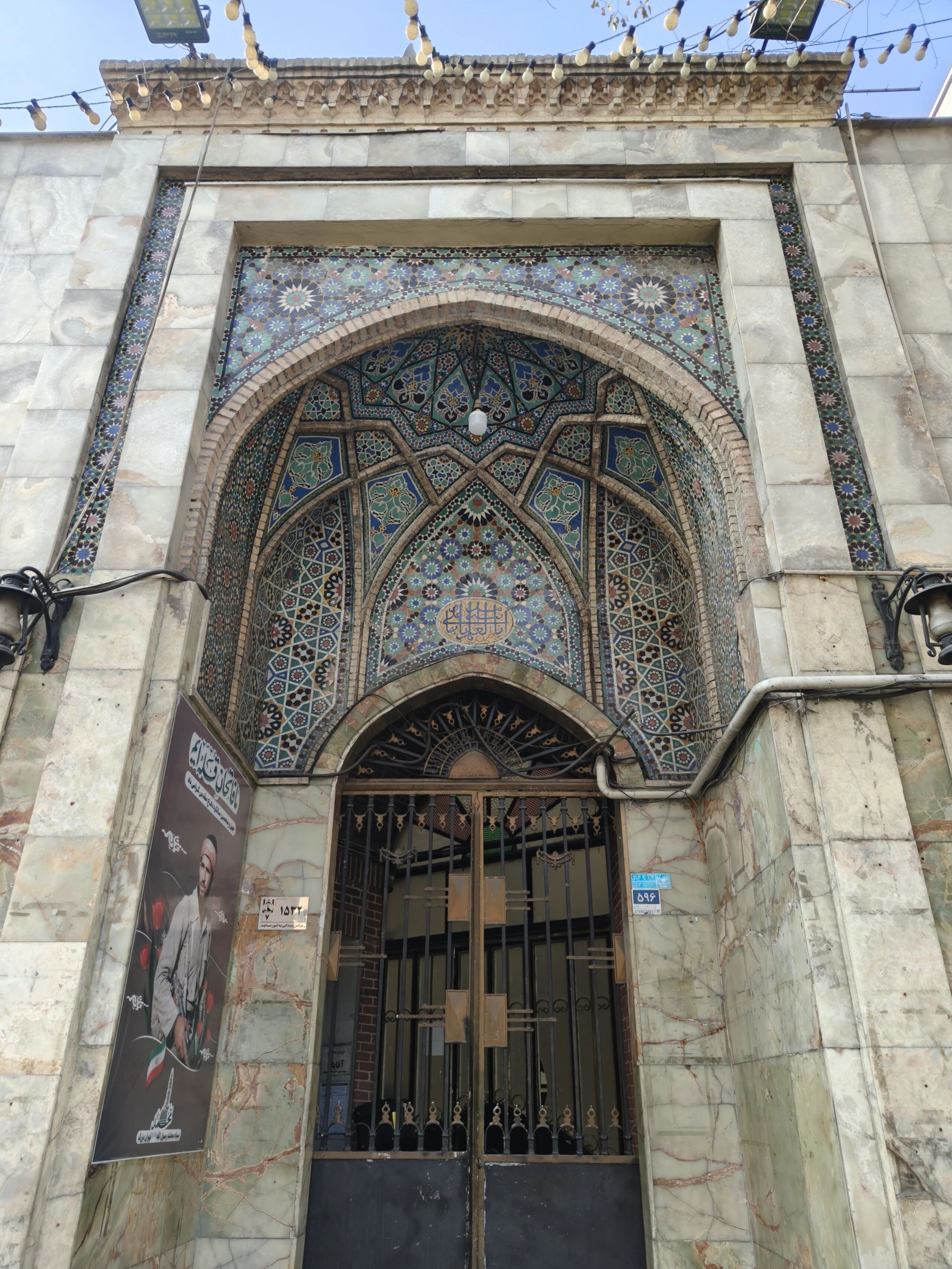
I was totally confused as to why the mosques were all closed on the day of congregational prayer, so I just walked around until I reached the area near Golestan Palace. I met a guy who spoke English and later found out he was a tour guide. He told me that only one mosque in Tehran stays open on Fridays, while all the others are closed.
This way, everyone can gather together in one place for prayer. So that was it. Actually, I had heard of similar things before, where some small mosques do not hold the noon Jumu'ah prayer on Fridays. The worshippers from those mosques then have to go to a larger mosque further away to attend the congregational prayer.
But I still cannot understand why a place like Tehran, with its huge population and large city area, only keeps one mosque open on Fridays.
I went back after Friday, and the mosque was indeed open, and the bazaar was packed with people. I went to the small mosque near where I was staying again. I found some banners hanging inside, decorated with flowers and birds.
(Photos 5 and 6) A long-tailed bird and a small bird are tucked between the calligraphy.
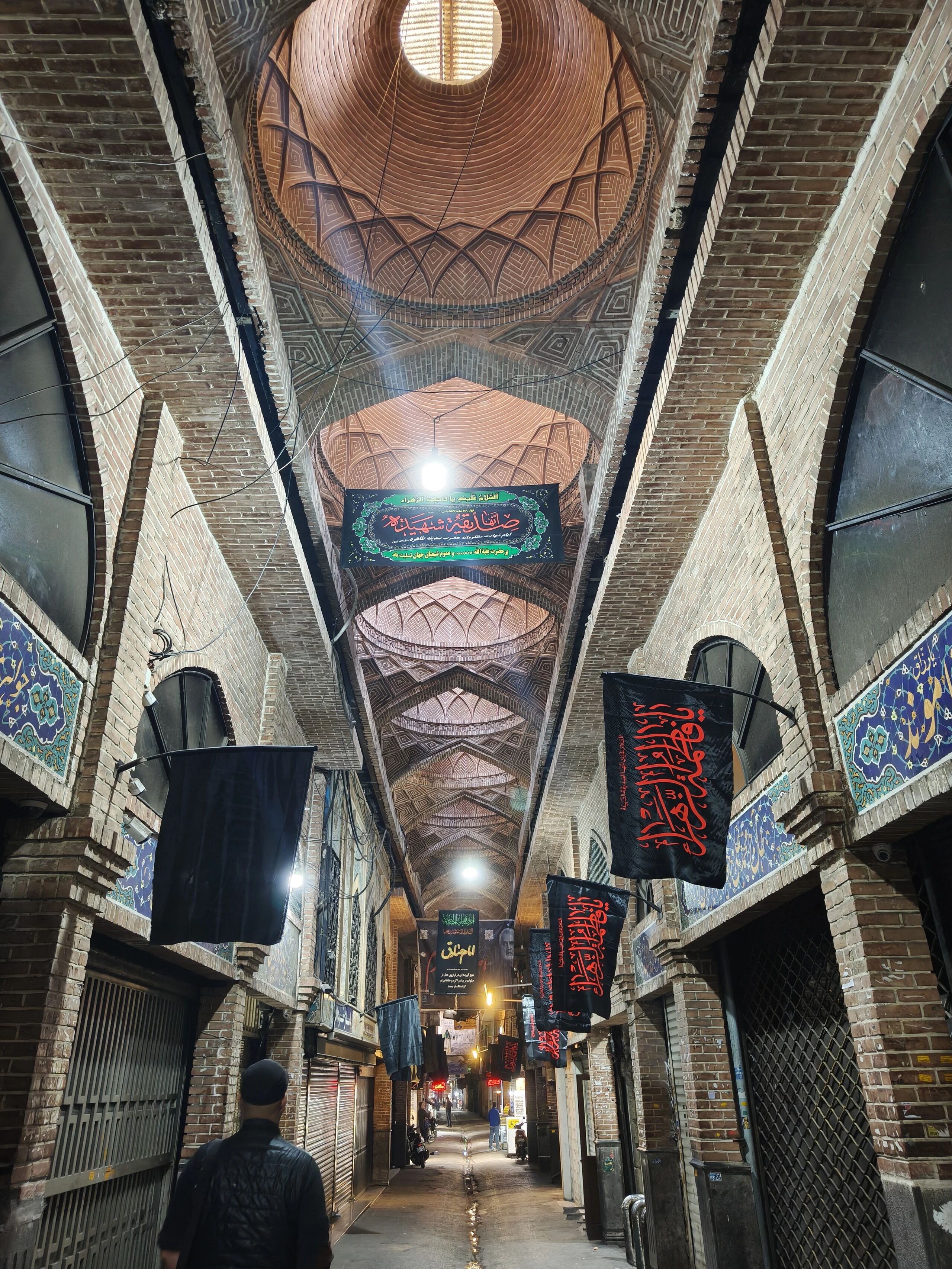
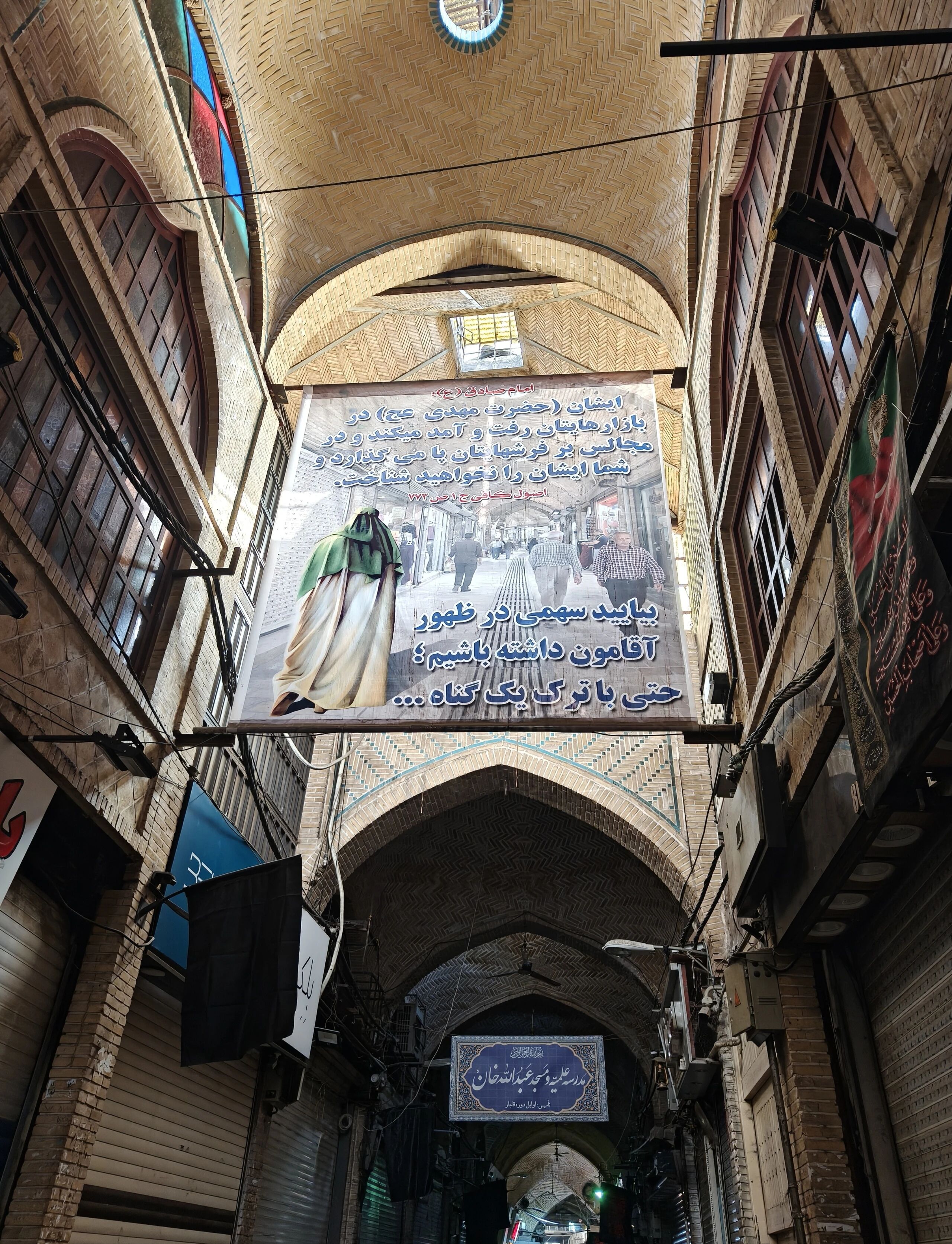
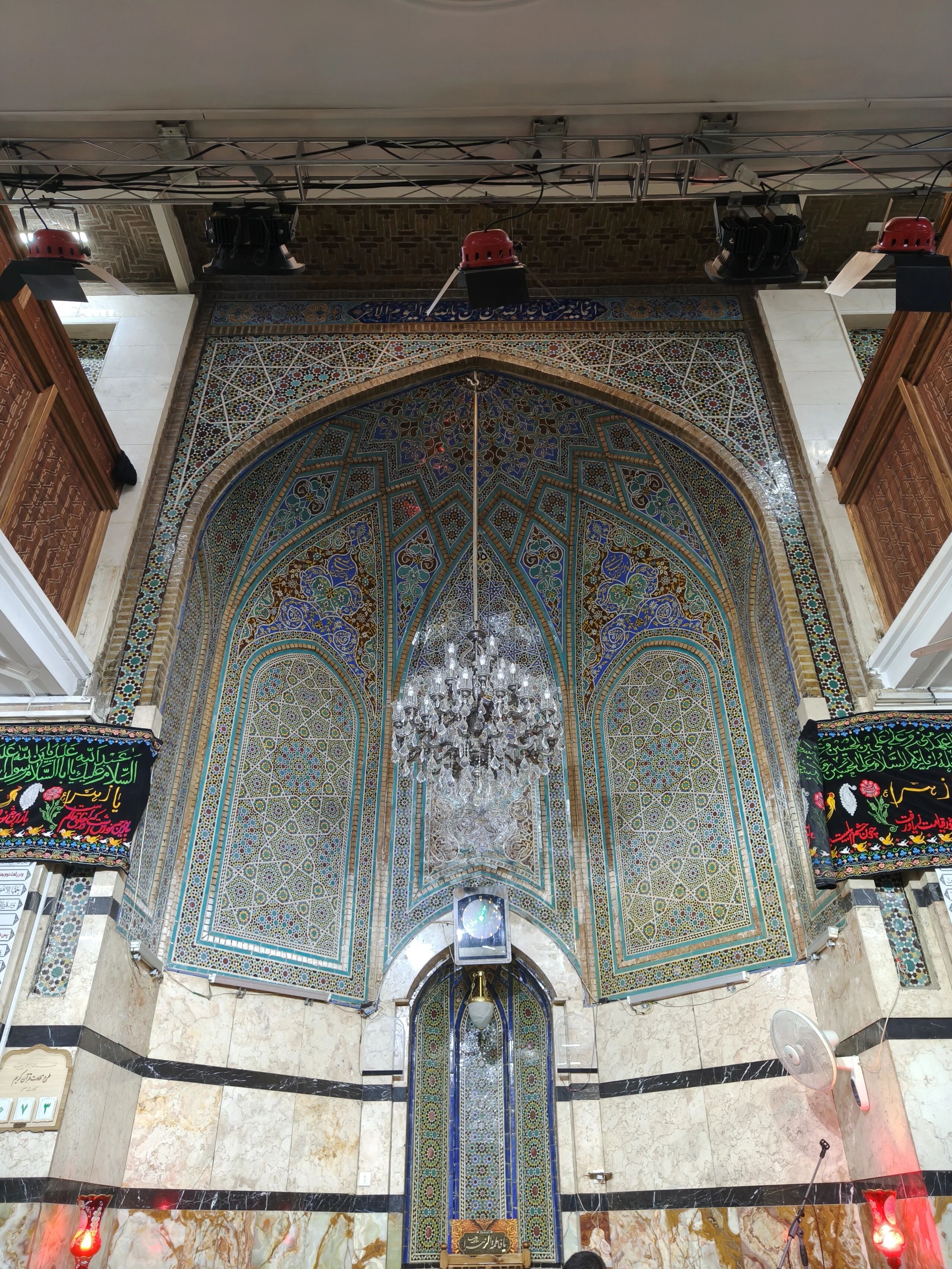
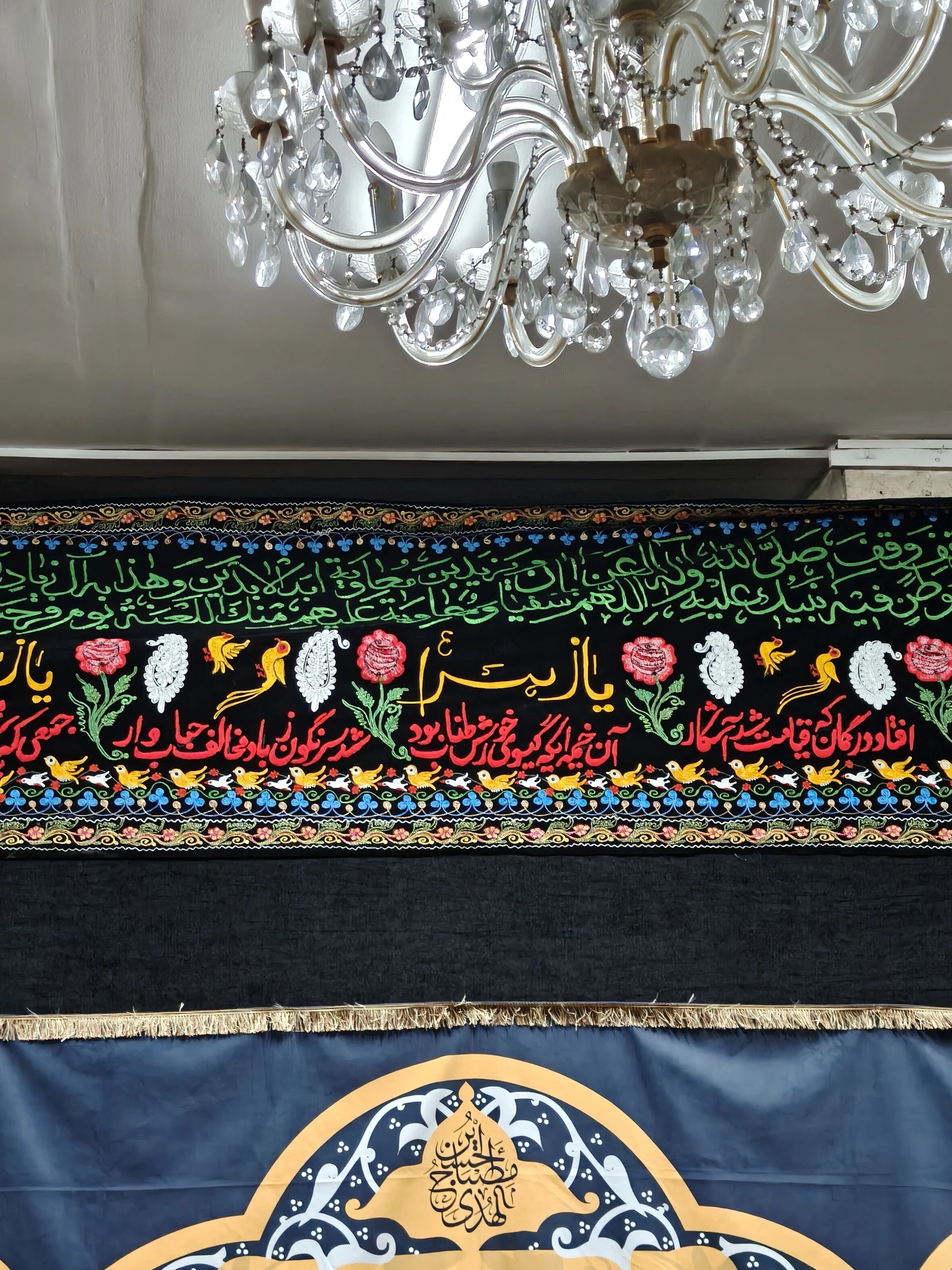
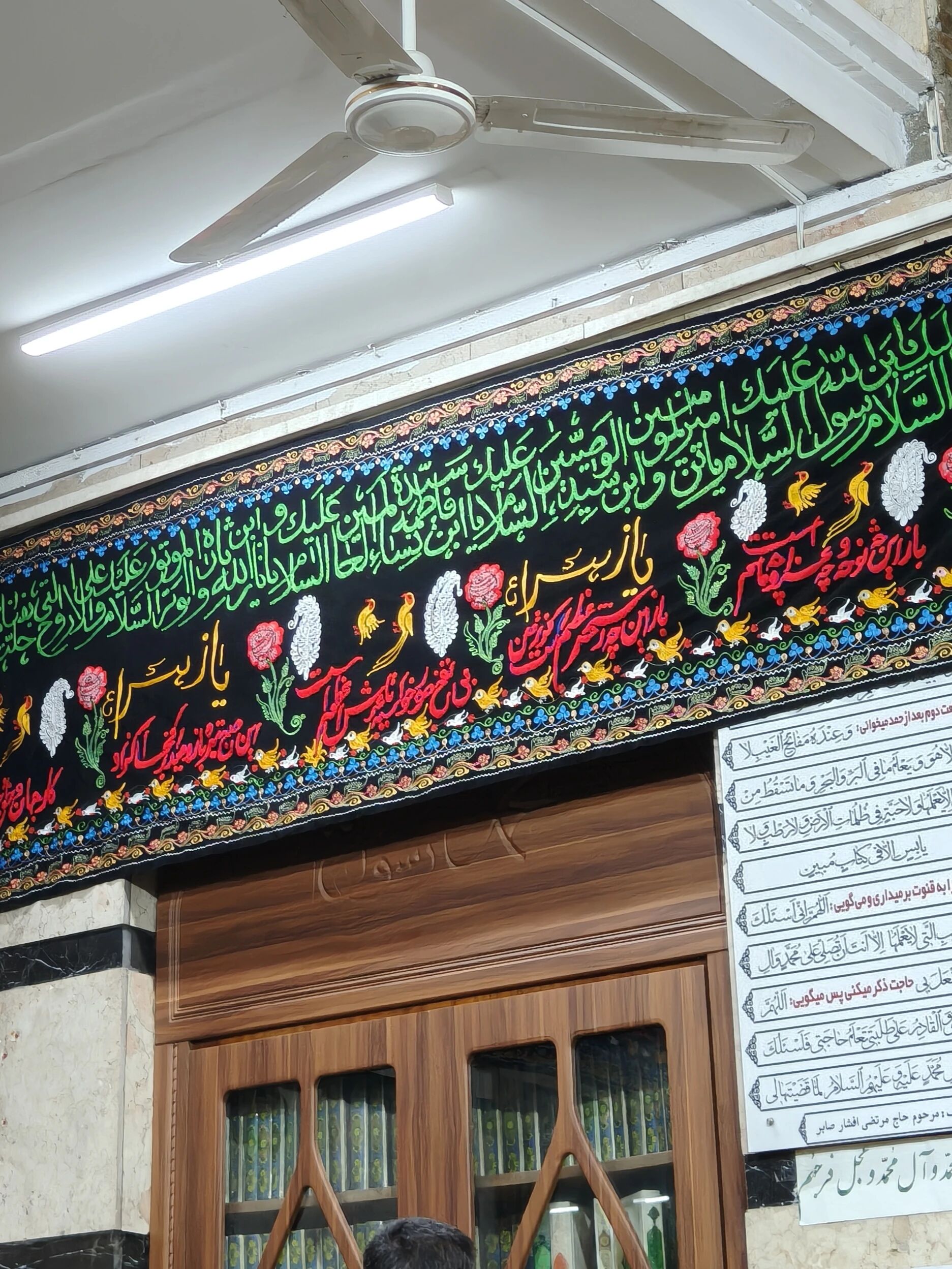
Generally speaking, animal images are not allowed inside a mosque, but in real life, you can still see some decorative animal figures.
For example, some ancient mosques in China still have roof beasts on their ridges, and there is a madrasa in Central Asia with a lion carrying the sun on its gate.
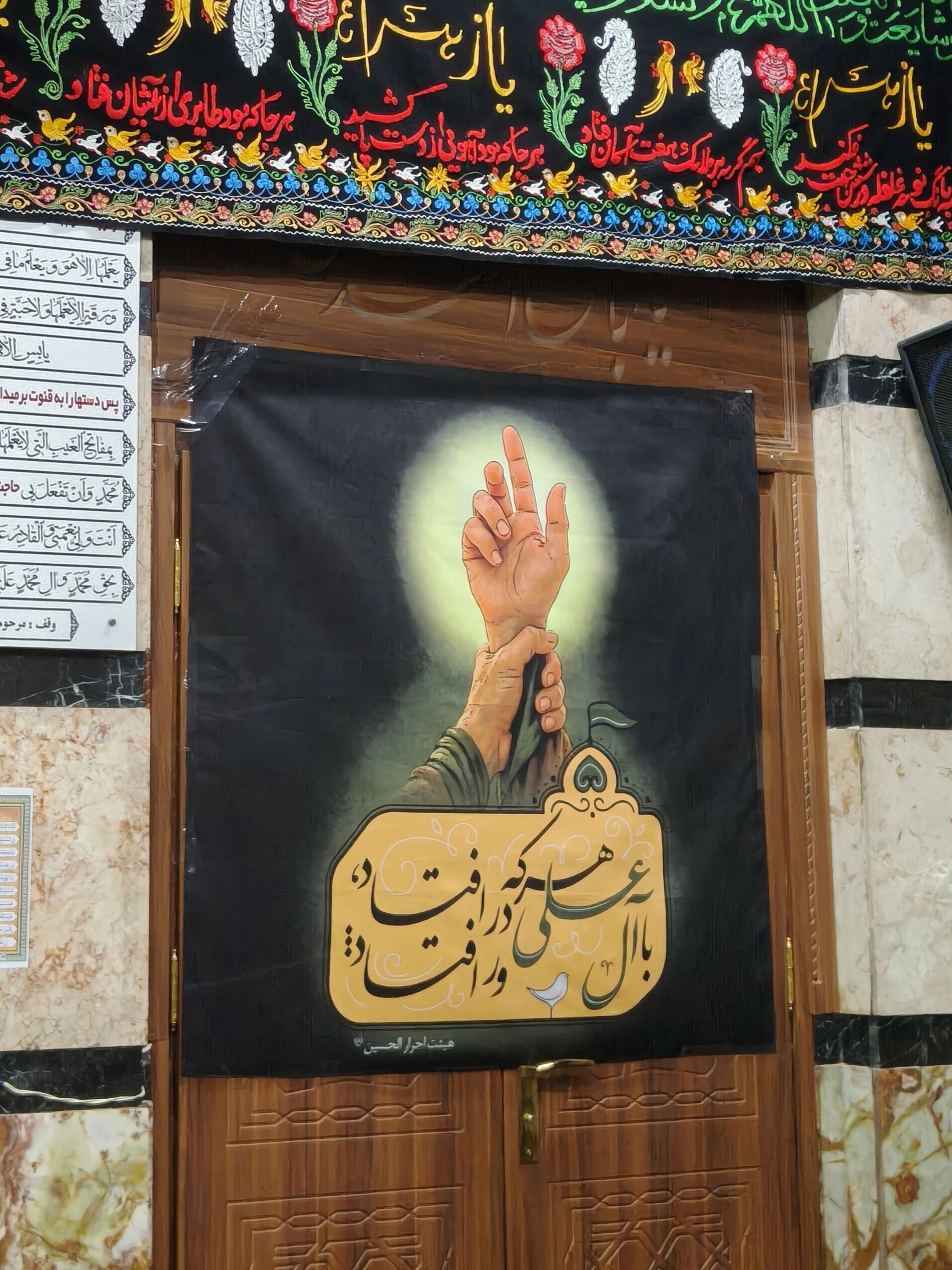
Besides the embroidery, I also saw a hanging painting like the one in photo 7 inside the main hall. The painting shows one hand grabbing another hand by the wrist and raising it up. This likely shows the scene where the Prophet Muhammad raised his cousin Ali as his successor.
After finishing my namaz, I went near the British Embassy to exchange money, though money does not last long here. I exchanged 240 US dollars, and it was gone in two days without me spending much. ATM machines in Iran do not accept Visa cards, UnionPay, or WeChat Pay.
As foreigners, we have to bring enough US dollars in cash to exchange there, then carry several bundles of cash around in our bags. It is still very inconvenient.
Summary: This Iran Muslim travel guide follows a Friday in Tehran, when nearby mosques and the bazaar were closed, then returns after Jumu'ah day to see a small mosque, flower-and-bird embroidery, a Shia-themed image, and the practical challenge of carrying cash in Iran.
I landed in Tehran, Iran, on a Thursday night and woke up the next morning on Friday, which is the Jumu'ah day. However, I found the doors of the mosque near where I was staying were locked tight.
(Photo 1) Not only that, but a large mosque the motorcycle taxi driver took me to, Imam Khamenei Mosque, was also closed. I ran to all the nearby mosques, but not a single one was open. I noticed that only a few shops at the entrance of the bazaar were open, while everything inside was completely shut.
I was totally confused as to why the mosques were all closed on the day of congregational prayer, so I just walked around until I reached the area near Golestan Palace. I met a guy who spoke English and later found out he was a tour guide. He told me that only one mosque in Tehran stays open on Fridays, while all the others are closed.
This way, everyone can gather together in one place for prayer. So that was it. Actually, I had heard of similar things before, where some small mosques do not hold the noon Jumu'ah prayer on Fridays. The worshippers from those mosques then have to go to a larger mosque further away to attend the congregational prayer.
But I still cannot understand why a place like Tehran, with its huge population and large city area, only keeps one mosque open on Fridays.
I went back after Friday, and the mosque was indeed open, and the bazaar was packed with people. I went to the small mosque near where I was staying again. I found some banners hanging inside, decorated with flowers and birds.
(Photos 5 and 6) A long-tailed bird and a small bird are tucked between the calligraphy.
Generally speaking, animal images are not allowed inside a mosque, but in real life, you can still see some decorative animal figures.
For example, some ancient mosques in China still have roof beasts on their ridges, and there is a madrasa in Central Asia with a lion carrying the sun on its gate.
Besides the embroidery, I also saw a hanging painting like the one in photo 7 inside the main hall. The painting shows one hand grabbing another hand by the wrist and raising it up. This likely shows the scene where the Prophet Muhammad raised his cousin Ali as his successor.
After finishing my namaz, I went near the British Embassy to exchange money, though money does not last long here. I exchanged 240 US dollars, and it was gone in two days without me spending much. ATM machines in Iran do not accept Visa cards, UnionPay, or WeChat Pay.
As foreigners, we have to bring enough US dollars in cash to exchange there, then carry several bundles of cash around in our bags. It is still very inconvenient.
