
China Mosque Travel Guide: Hui Muslim Plaques, Couplets and Islamic Calligraphy (101-150)
Reposted from the web
Summary: China Mosque Travel Guide: Hui Muslim Plaques, Couplets and Islamic Calligraphy (101-150) is presented here as a firsthand travel account in clear English, beginning with this scene: Tian Rui was a Hui Muslim from Taiyuan, Shanxi. He was the son of Tian Yongtong, a military jinshi scholar from the 28th year of the Qianlong reign. The account keeps its focus on Forbidden City, Islamic Art, Persian Culture while preserving the names, places, food, and historical details from the Chinese source.
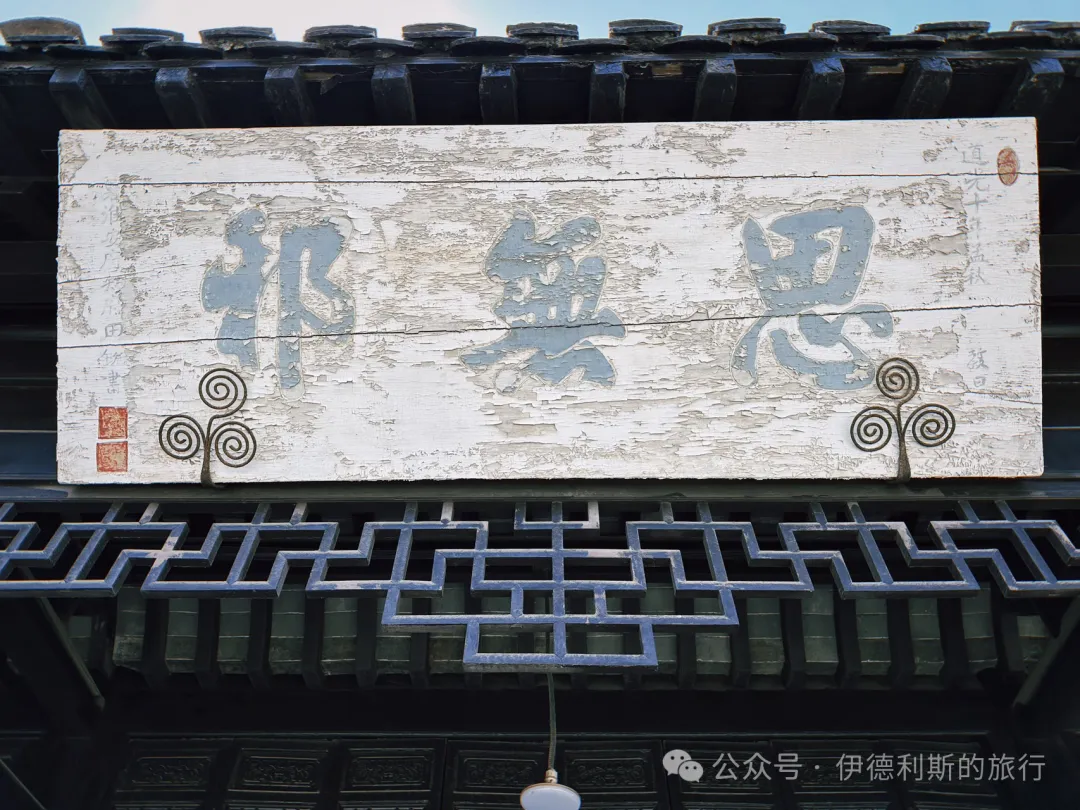
101. 'Think No Evil' (siwuxie) plaque at Hexia Mosque in Huai'an.
An auspicious day in the first month of autumn, the 10th year of the Daoguang reign.
Inscribed by Tian Rui, Prefect of Huai'an.
Tian Rui was a Hui Muslim from Taiyuan, Shanxi. He was the son of Tian Yongtong, a military jinshi scholar from the 28th year of the Qianlong reign. He served as Prefect of Huai'an and Yangzhou and wrote a poetry collection called 'Yigai Pavilion Poetry Drafts' (Yigaiting Shichao).
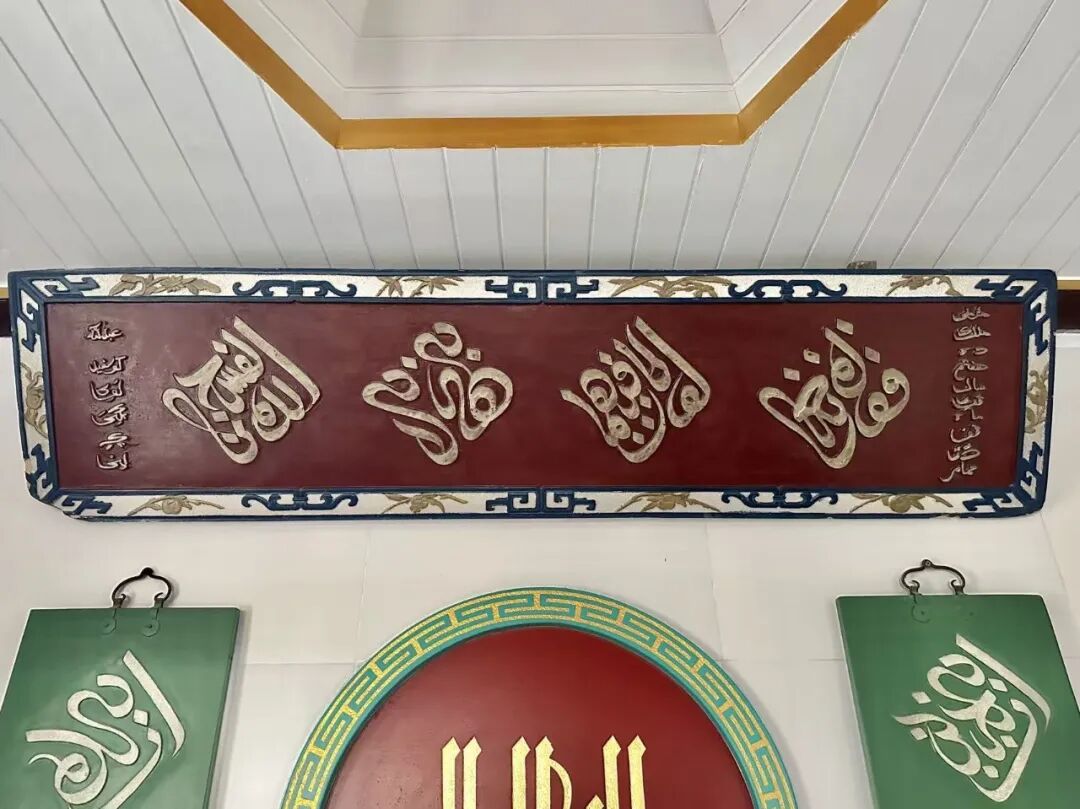
102. Plaque in Arabic, Persian, and Xiao'erjing script at Yancheng Mosque.
Completed on an auspicious day in the eighth lunar month, the 17th year of the Republic of China.
Respectfully erected by Abdullah Yang Lüji.
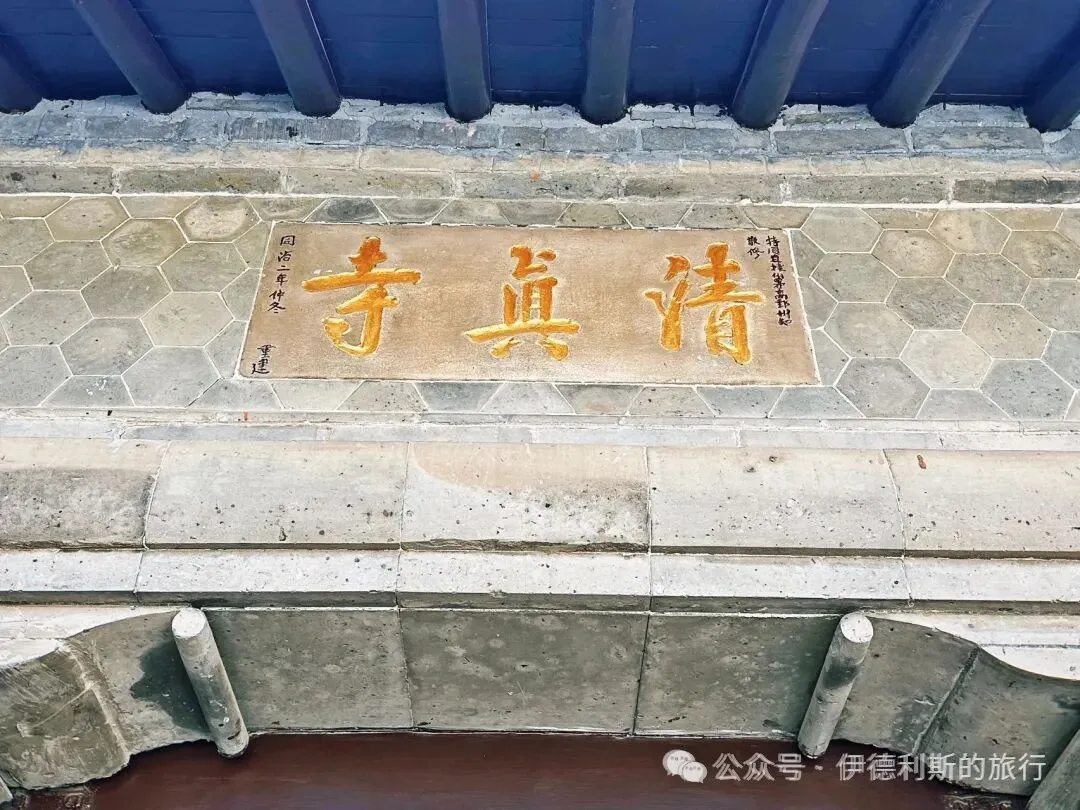
103. 'Mosque' (Qingzhensi) plaque at Gaoyou Mosque.
Respectfully inscribed by Jingxiu, Magistrate of the Zhili Department of Gaoyou.
Rebuilt in the middle of winter, the 2nd year of the Tongzhi reign of the Qing Dynasty.
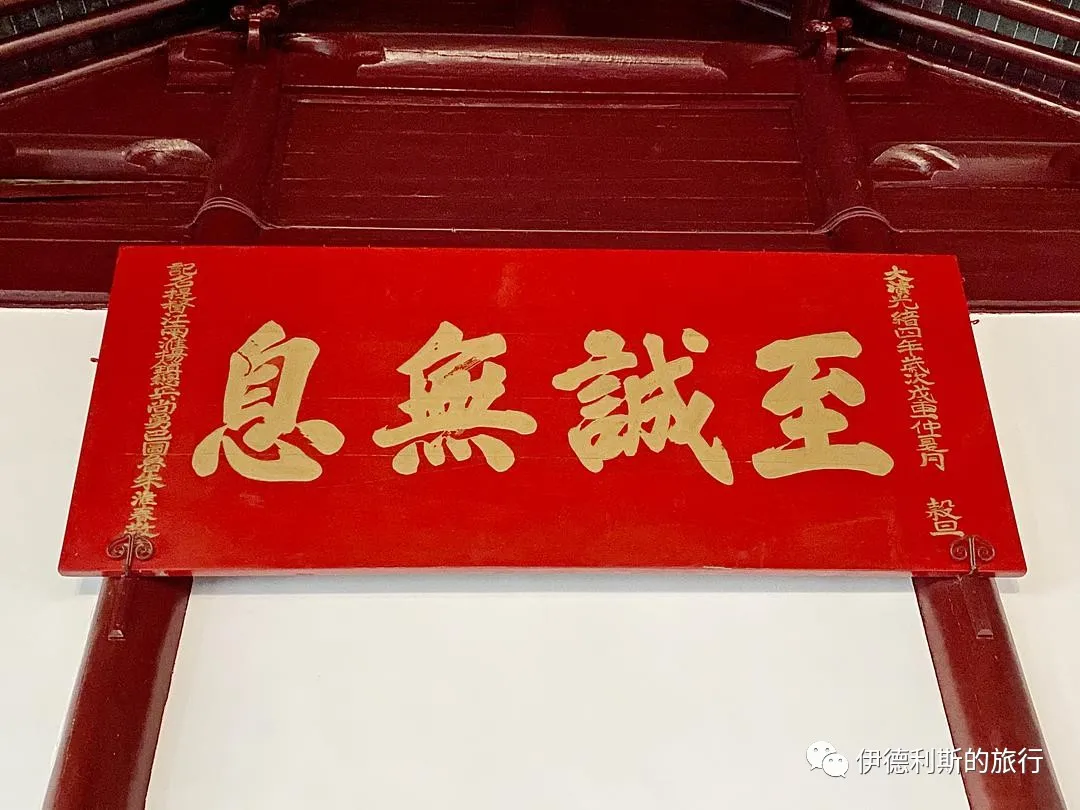
104. 'Utmost Sincerity Never Ceases' (zhichengwuxi) plaque at Xianhe Mosque in Yangzhou.
An auspicious day in the middle of summer, the Wuyin year, the 4th year of the Guangxu reign of the Great Qing Dynasty.
Respectfully erected by Zhu Huaisen, a nominated provincial commander-in-chief and regional commander of the Huai-Yang garrison, who held the title of Shangyong Baturu.
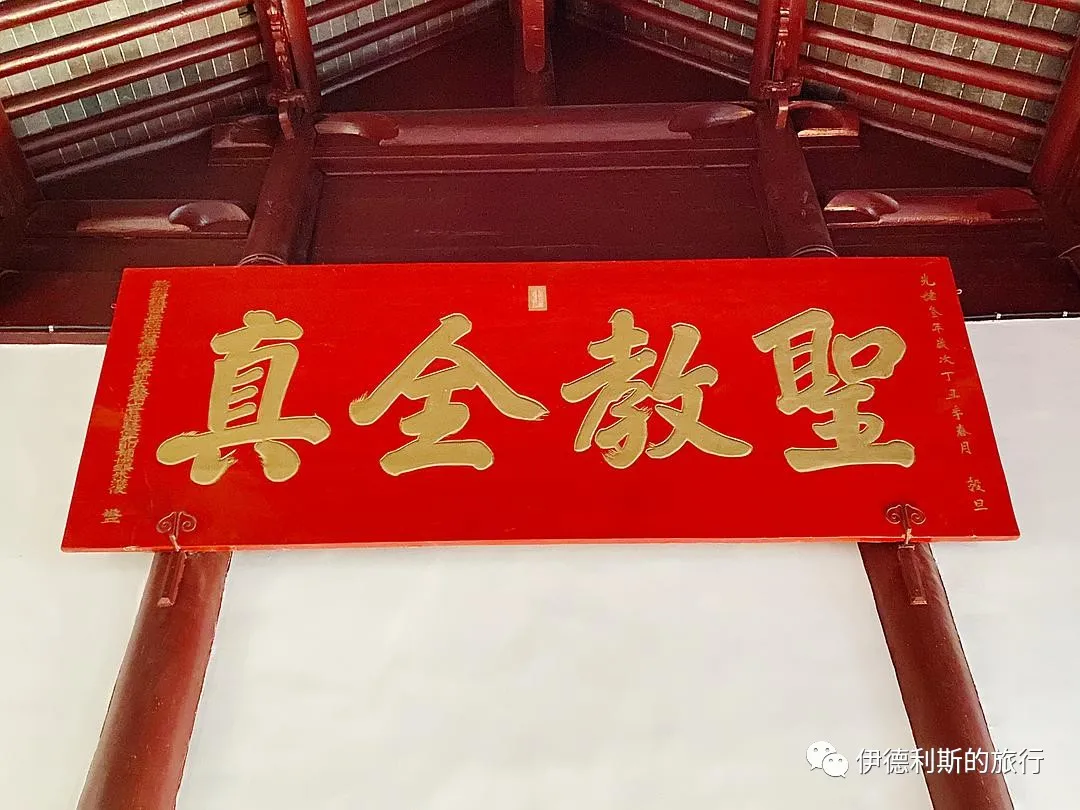
105. 'The Holy Religion is Entirely True' (shengjiaoquanzhen) plaque at Xianhe Mosque in Yangzhou.
An auspicious day in the spring month, the Dingchou year, the 3rd year of the Guangxu reign.
Inscribed by Zhu Huaijun, a guerrilla commander of the Qianshan Battalion in Anhui, who held the rank of provincial commander-in-chief and was in charge of the New Army of the Liangjiang Governor-General.
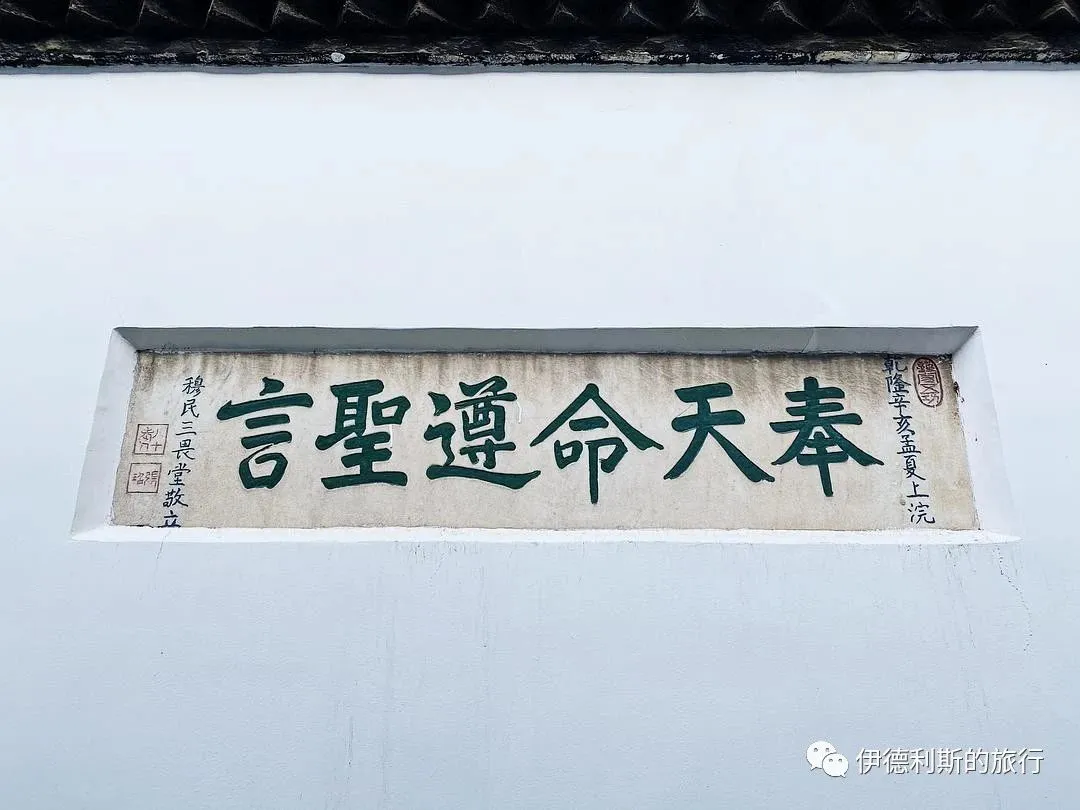
106. Xianhe Mosque in Yangzhou: 'Obey the decree of heaven and follow the holy word'
Early summer, the year of Xinhai in the Qianlong reign
Respectfully erected by the Sanwei Hall of the Muslim community
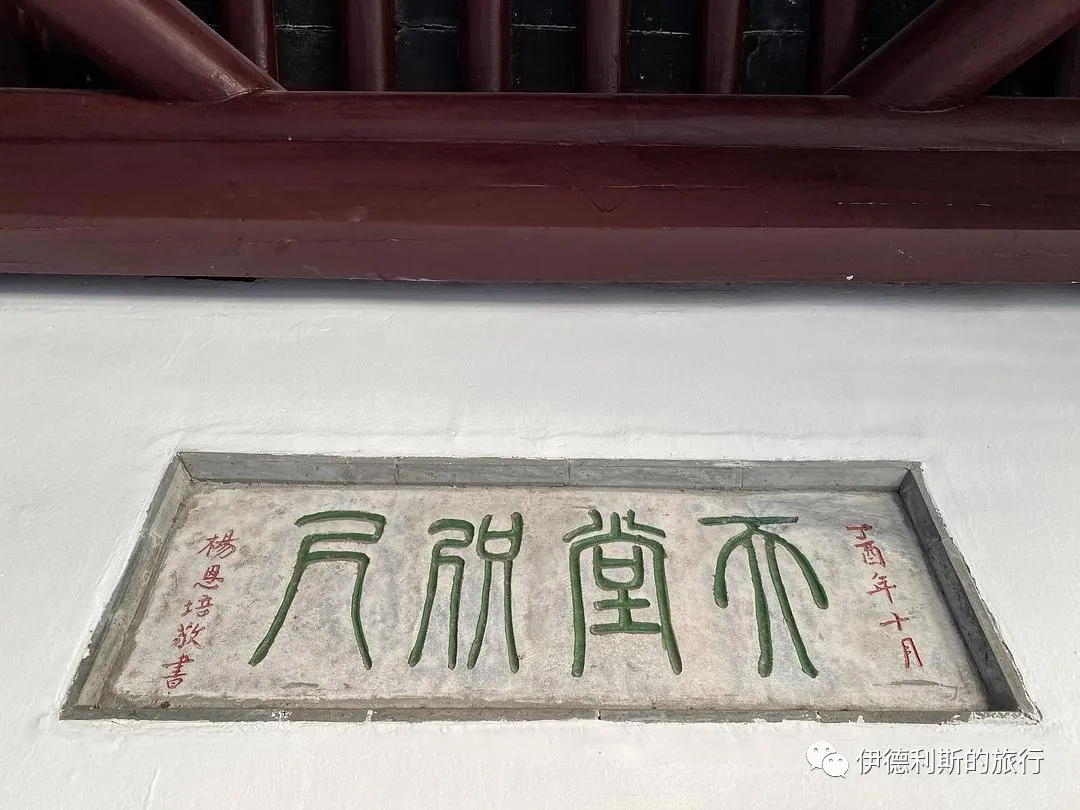
107. Xianhe Mosque in Yangzhou: 'Heaven is close at hand'
The tenth month of the Dingyou year (the 42nd year of the Qianlong reign of the Qing Dynasty)
Calligraphy by Yang Enpei
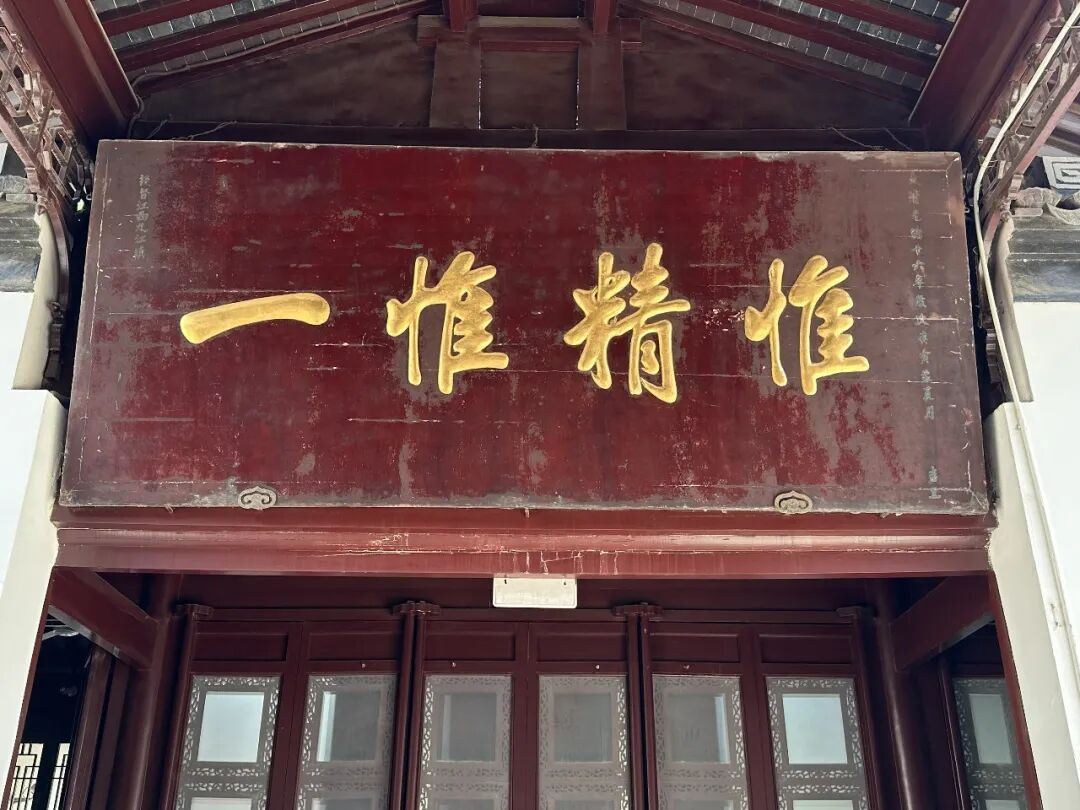
108. Jingjue Mosque in Nanjing: 'Only pure, only one'
An auspicious day in the first month of summer, the Gengyin year, the 16th year of the Guangxu reign of the Great Qing Dynasty
Commander of the Jiujiang Garrison in Jiangxi
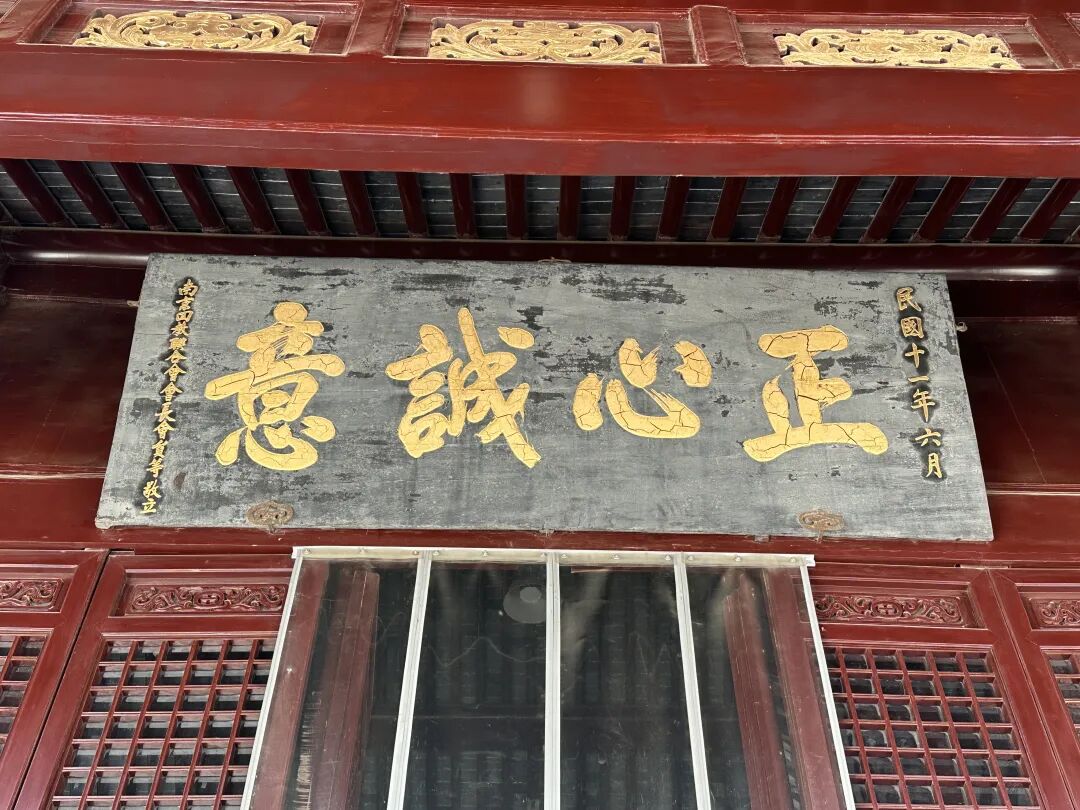
109. Jingjue Mosque in Nanjing: 'Rectify the heart and be sincere'
June, the 11th year of the Republic of China
Respectfully erected by the president and members of the Nanjing Islamic Association
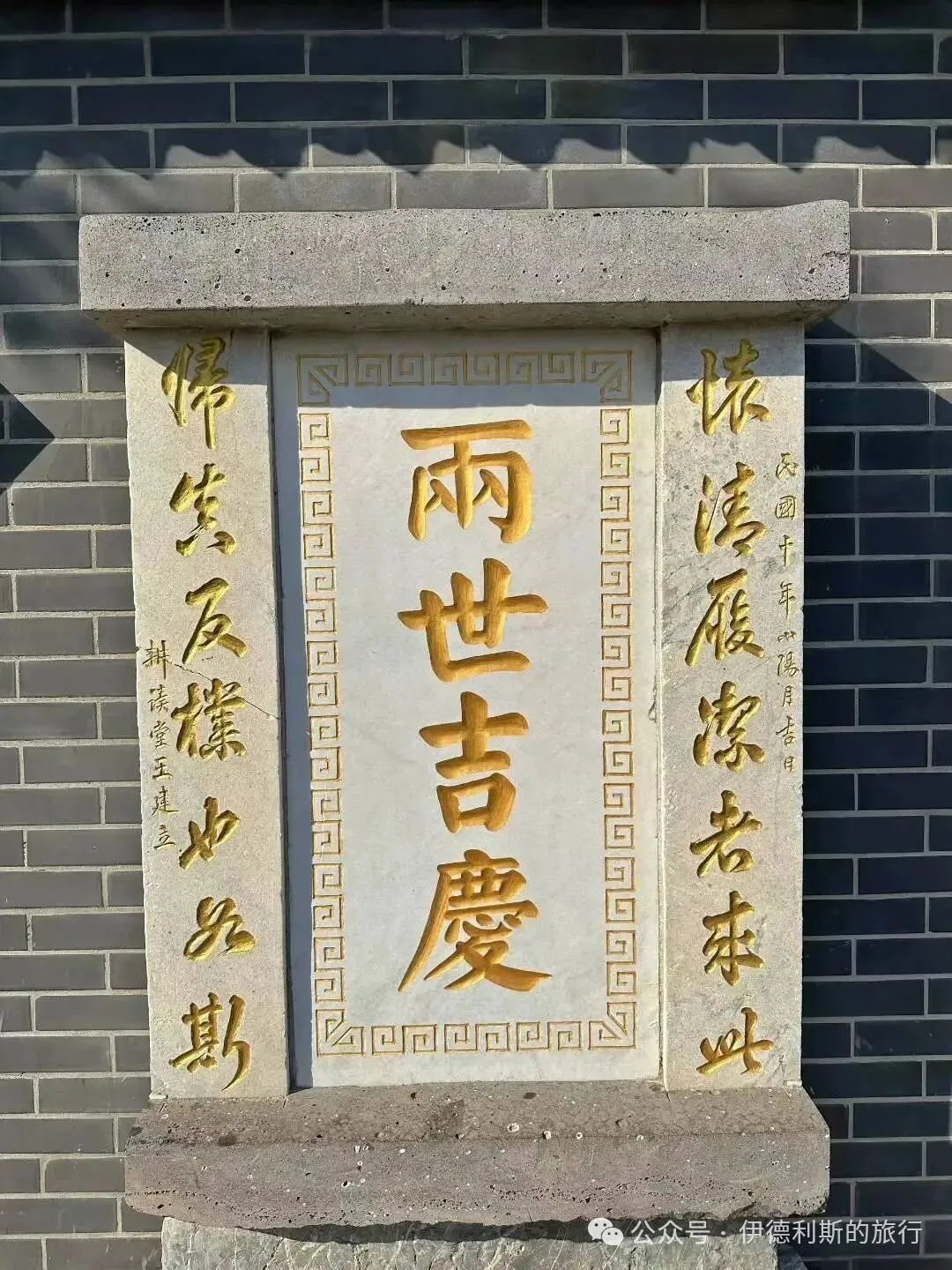
110. Nanmen Mosque in Liuhe, Nanjing
Cherish purity and walk in cleanliness as if in the afterlife
Return to the truth and simplicity just like this
An auspicious day in the tenth lunar month, the 10th year of the Republic of China
Wang Jianli of Gengdu Hall
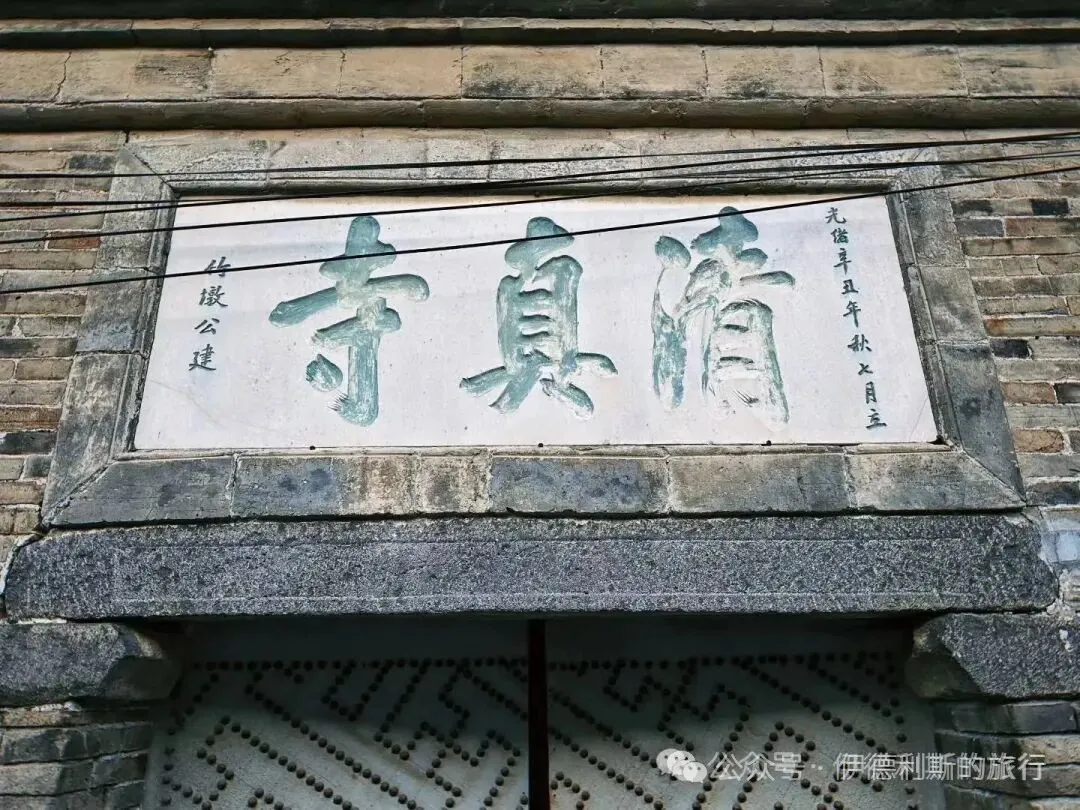
111. Mosque (qingzhensi) at Zhuzhen Mosque in Nanjing
Erected in the seventh lunar month of the Xinchou year of the Guangxu reign
Built by Zhu Dun
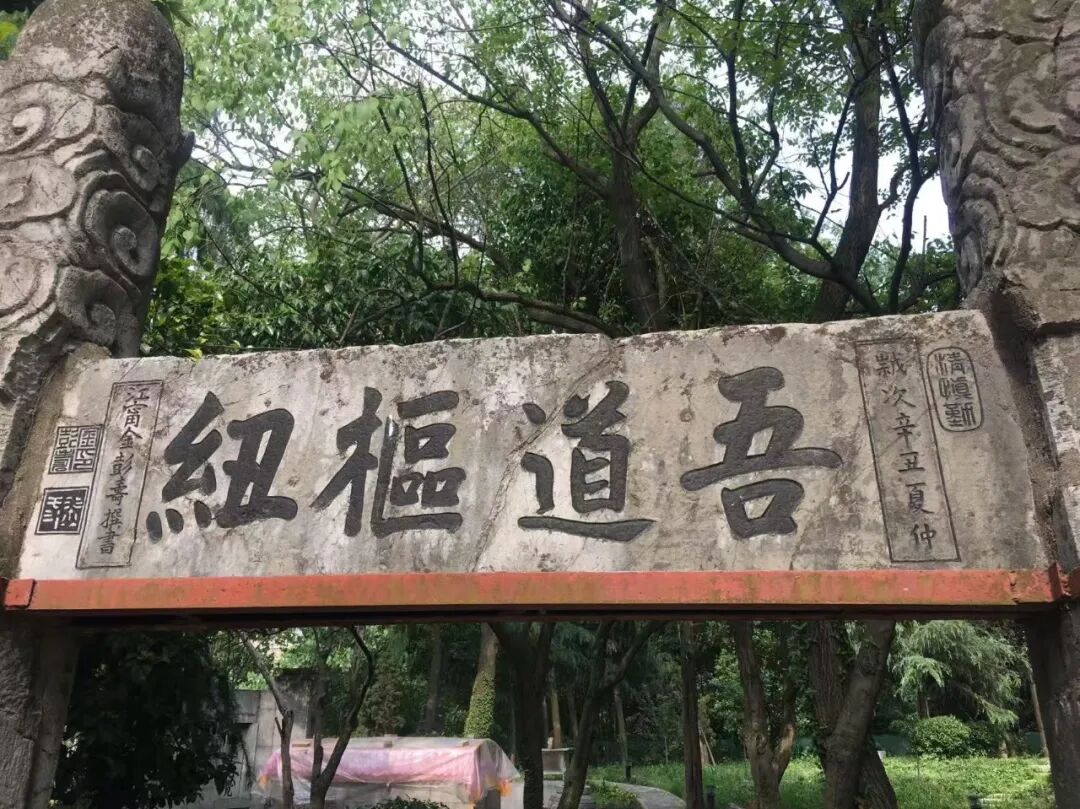
112. "Pivot of My Way" at the tomb of Liu Zhi in Nanjing
Mid-summer of the Xinchou year (27th year of the Guangxu reign)
Written by Jin Pengshou of Jiangning
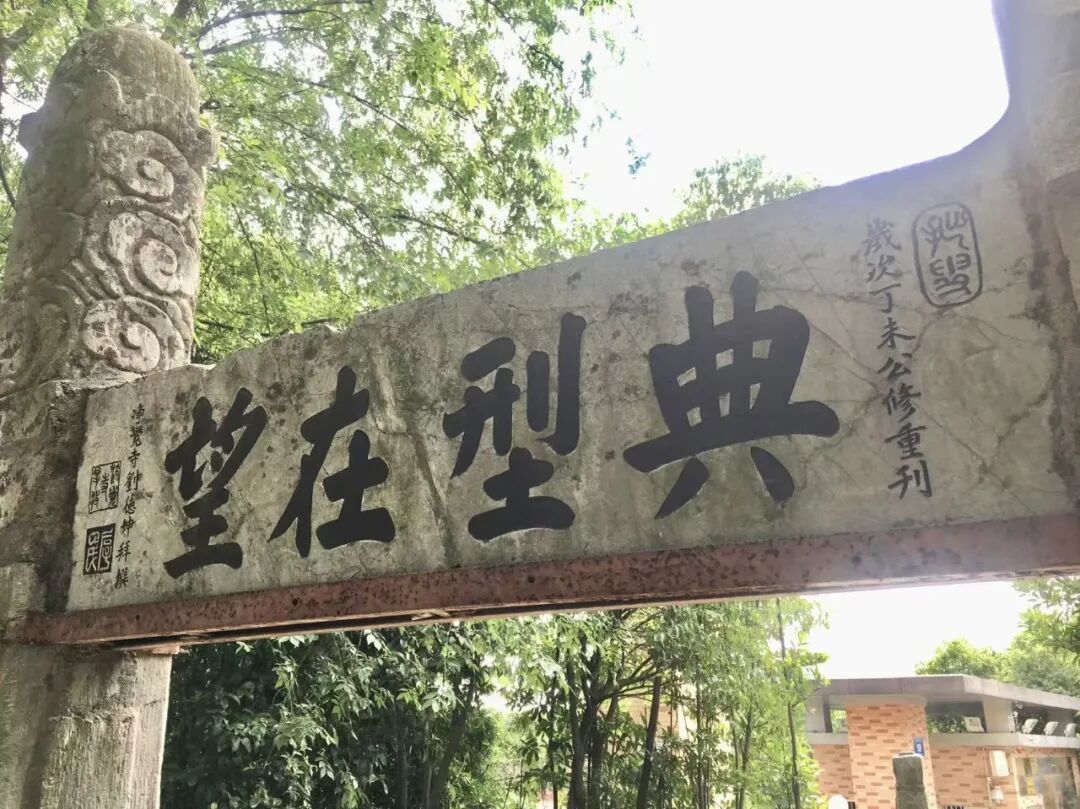
113. "A Model for Posterity" at the tomb of Liu Zhi in Nanjing
Reprinted by the public in the Dingwei year (33rd year of the Guangxu reign)
Respectfully written by Liu Dekun of Jingjue Mosque
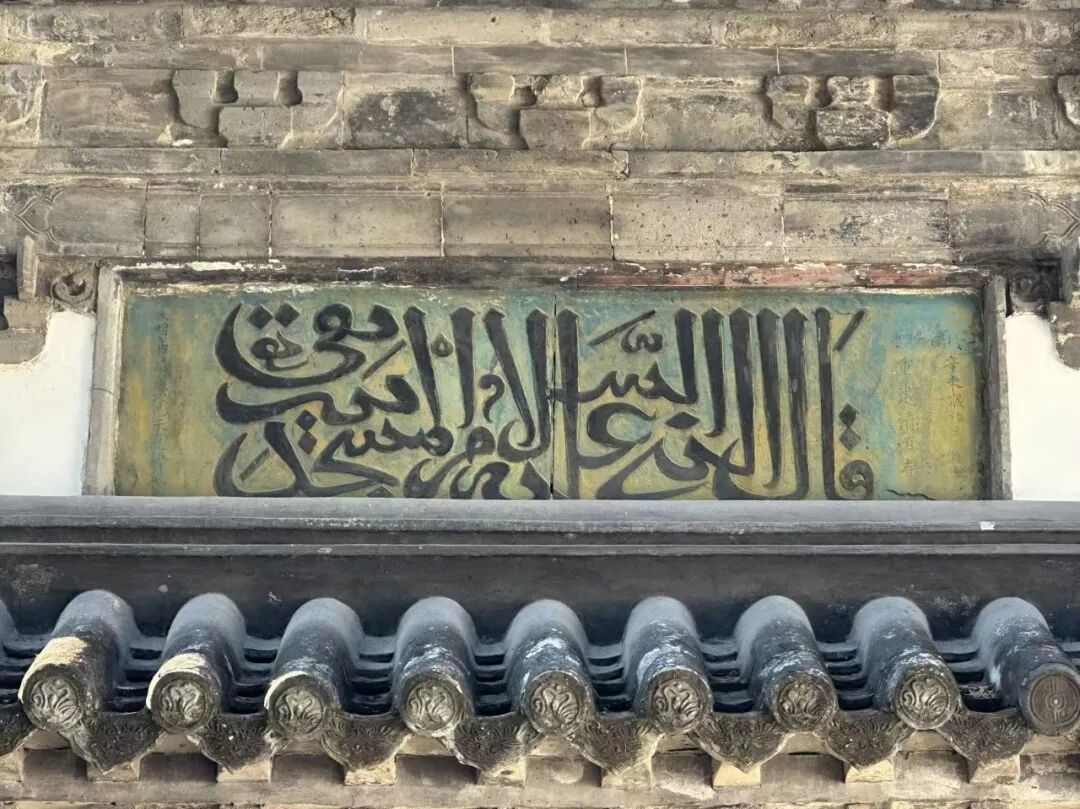
114. Arabic plaque at the ancient mosque in Songjiang, Shanghai
Restored by Zhang Yunsheng in the Xinwei year
Rebuilt Qingshen Mosque
An auspicious day in the fifth lunar month of the Yiwei year of the Jiajing reign of the Great Ming Dynasty
The stele was erected in the Yiwei year of the Ming Jiajing reign (1535). The restoration by Zhang Yunsheng took place in a Xinwei year. It is confirmed that there is no 'Xinwei' year in the Jiajing era. Therefore, the renovation of the mosque likely took place in the sixth year of the Zhengde era (1511).
The inscription refers to the mosque as 'Qingshen Mosque,' which is a unique occurrence.
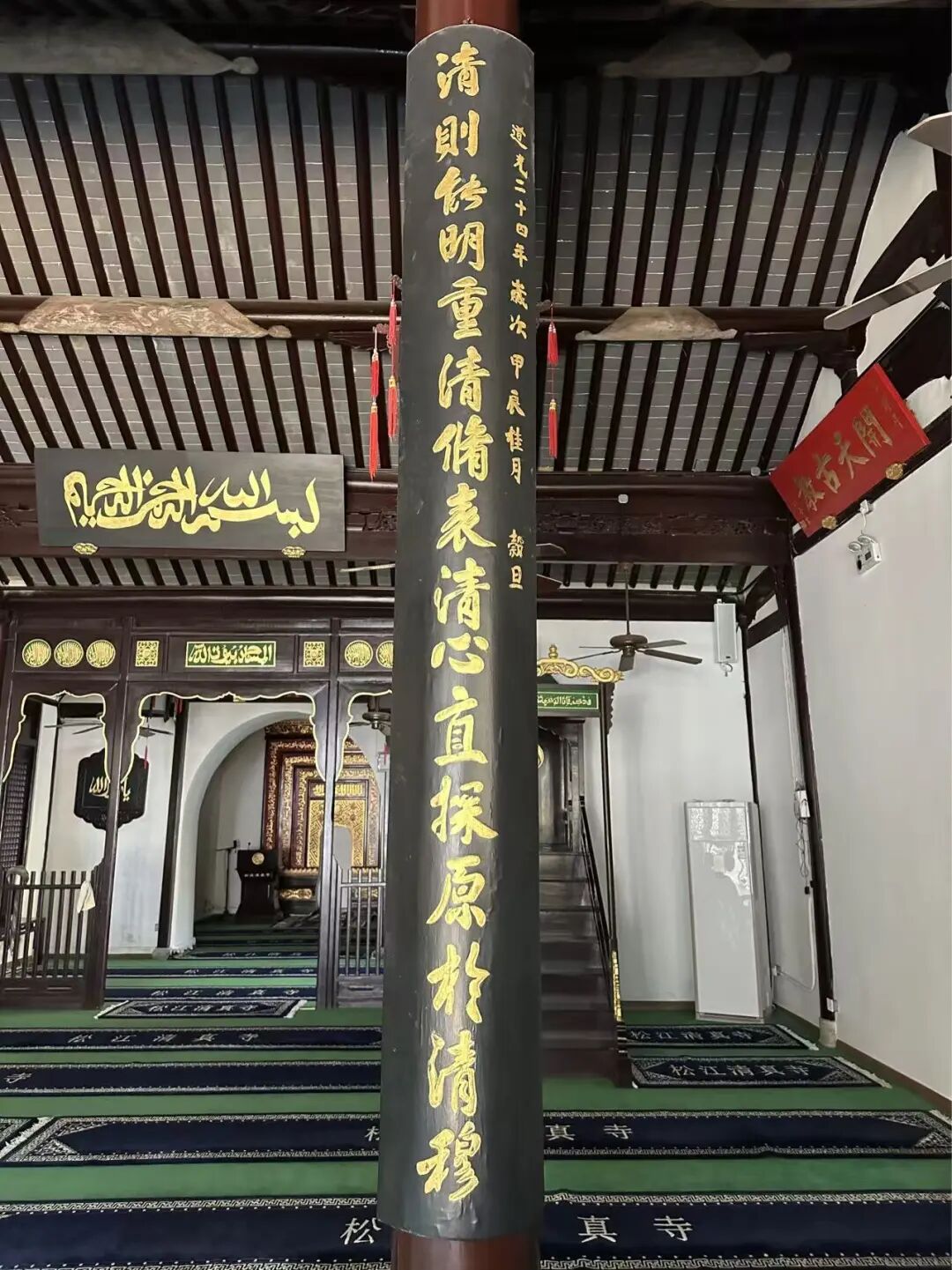
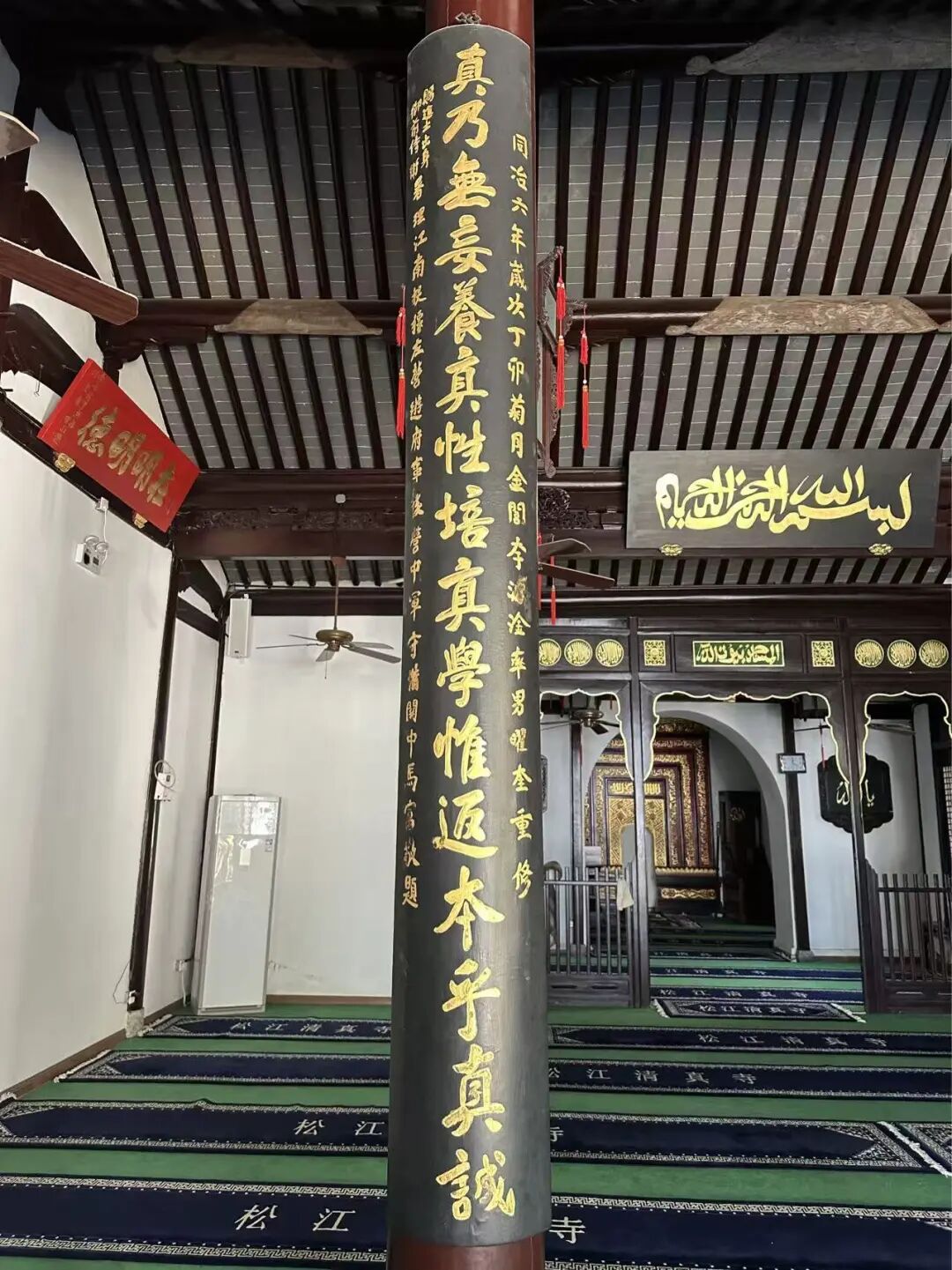
115. Ancient Mosque in Songjiang, Shanghai
Purity brings clarity, focus on pure cultivation to show a pure heart, and directly explore the origin of pure majesty.
Truth is without falsehood, nurture a true nature and cultivate true learning, only by returning to the root can one find true sincerity.
An auspicious day in the eighth lunar month of the Jia-Chen year, the 24th year of the Daoguang era.
Renovated in the ninth lunar month of the Ding-Mao year, the sixth year of the Tongzhi era, by Li Lügan, a follower of the faith from Jinchang, and his son Yaokui.
Inscribed by Ma Fujing, a presented scholar (jinshi), imperial guard, acting commander of the left battalion of the Jiangnan military, and garrison commander of the Ninghou battalion.
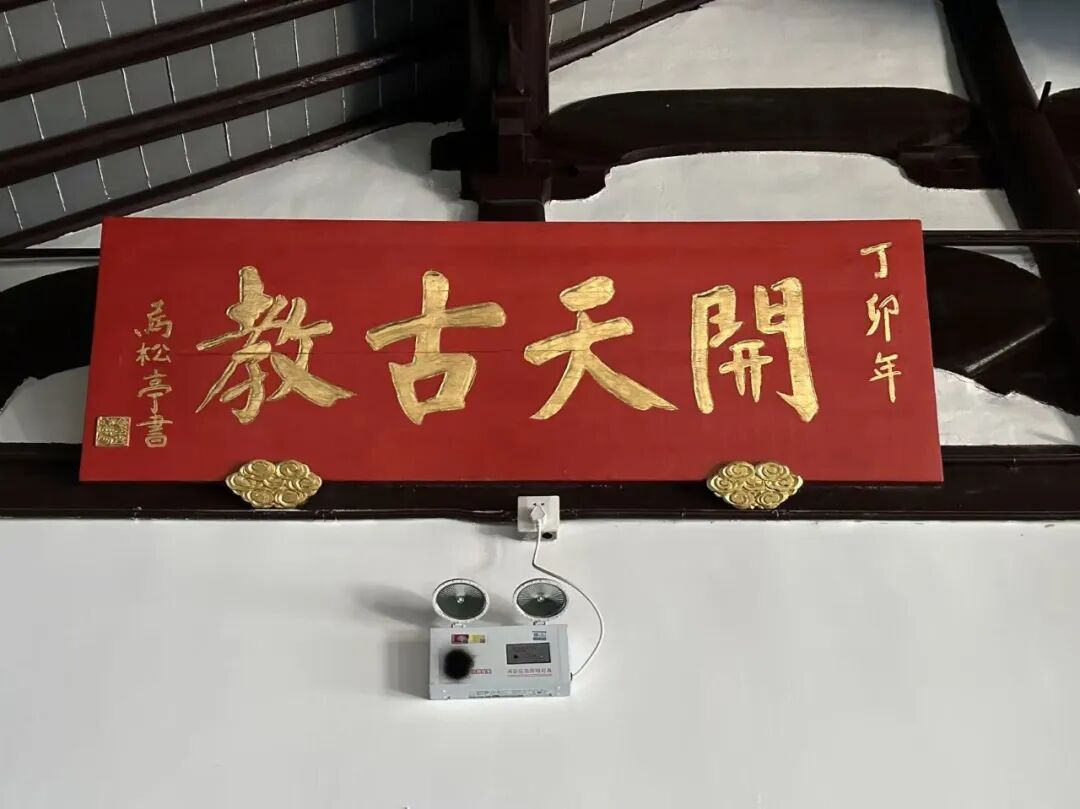
116. 'Ancient Faith from the Beginning' at the Ancient Mosque in Songjiang, Shanghai
Ding-Mao year.
Calligraphy by Ma Songting.
Ma Songting (1895–1992) is known alongside Wang Jingzhai, Ha Decheng, and Da Pusheng as one of the four great modern imams of China.
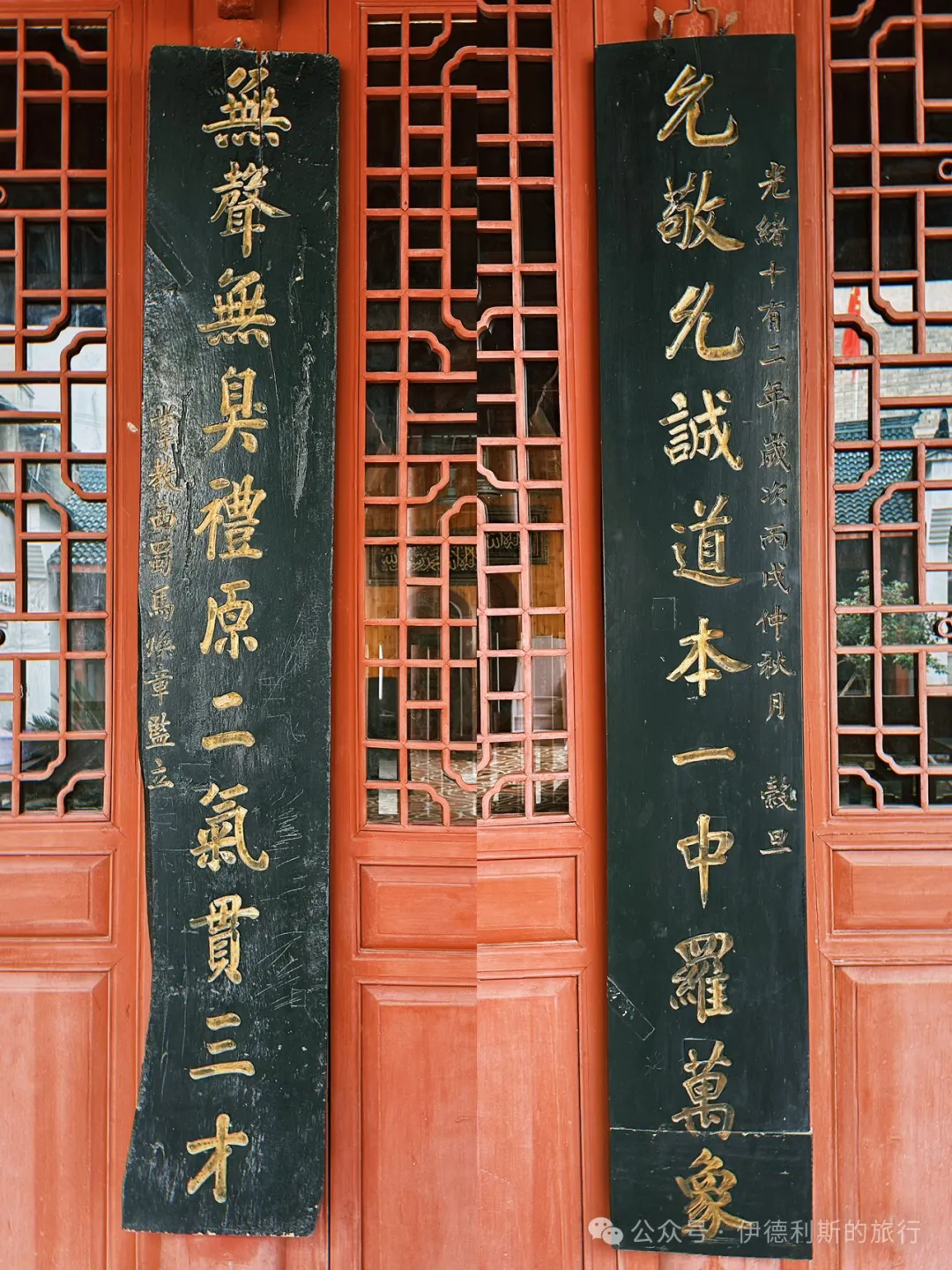
117. Mosque in Lishui, Zhejiang
Sincere and respectful, the Way is rooted in the middle, encompassing all things.
Silent and scentless, the ritual originates from the two energies that permeate the three realms.
An auspicious day in the autumn of the Bingxu year, the 12th year of the Guangxu reign.
Erected by Ma Huanzhang, the imam (zhangjiao) from Western Sichuan.
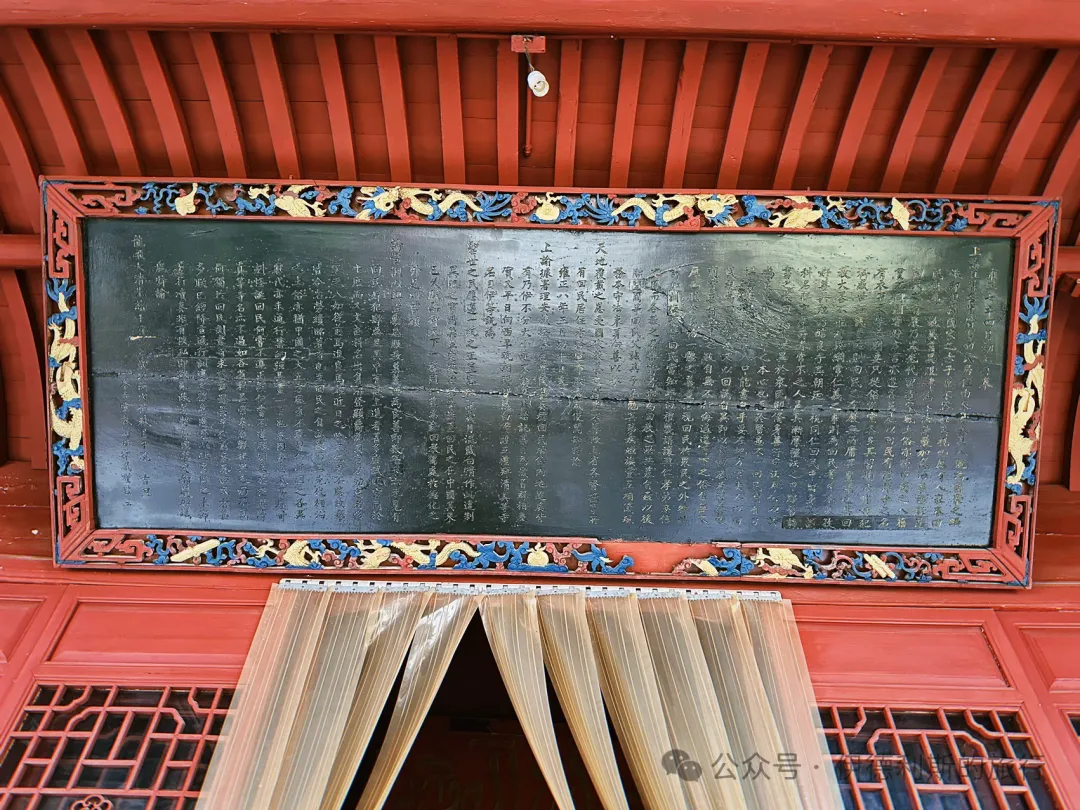
118. The Yongzheng Imperial Edict at the Lishui Mosque in Zhejiang.
An auspicious day in the middle of the second month of autumn in the Bingxu year, the 12th year of the Guangxu reign of the Great Qing.
Respectfully supervised and erected by the mosque's imam, Ma Huanzhang.
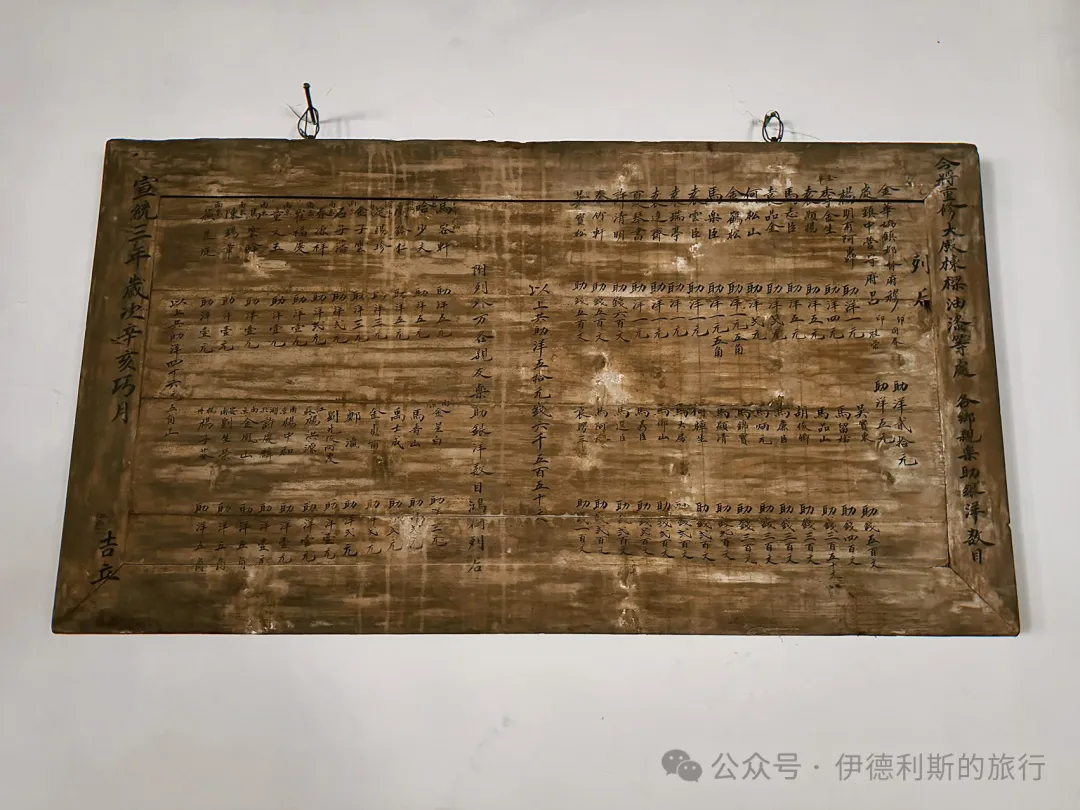
119. Donation plaque at the Lishui Mosque in Zhejiang.
Auspiciously erected in the seventh month of the Xinhai year, the third year of the Xuantong reign.
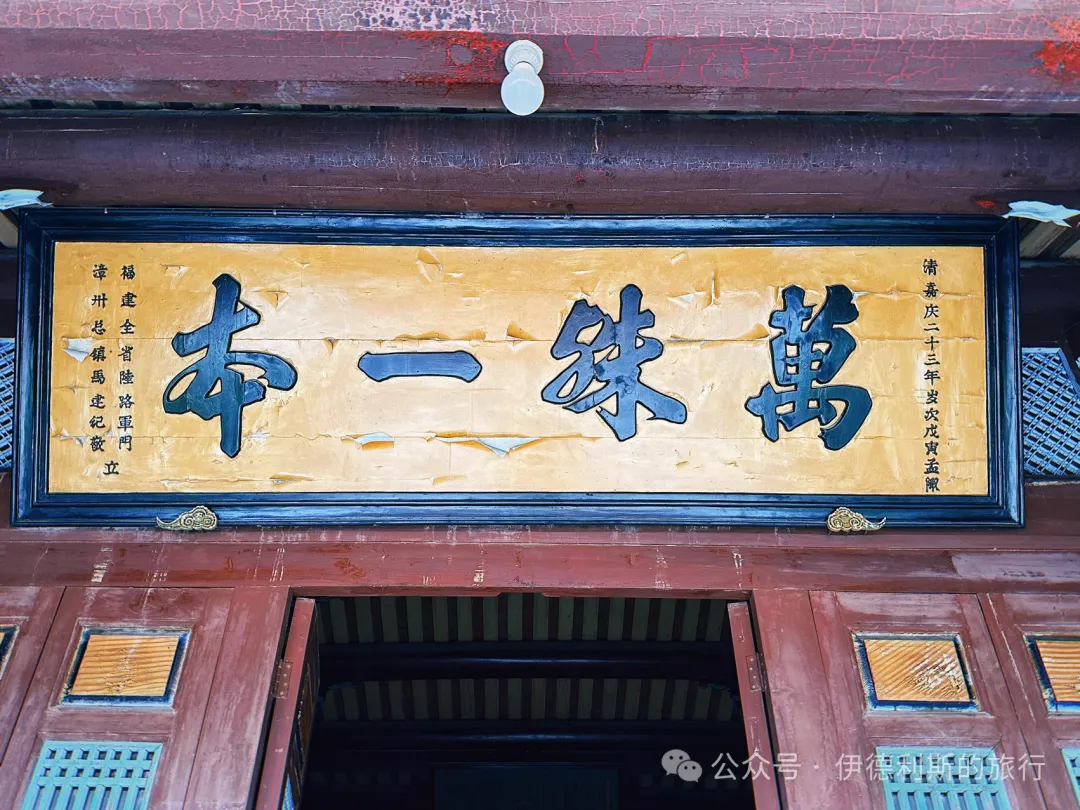
120. The 'Ten Thousand Differences, One Origin' plaque at the Qingjing Mosque in Quanzhou.
The first month of the Wuyin year, the 23rd year of the Jiaqing reign of the Qing dynasty.
The Land Forces Command of Fujian Province.
Respectfully erected by Ma Jianji, the Zhangzhou Garrison Commander.
Ma Jianji was a Hui Muslim from Sichuan. While serving in Fujian during the Jiaqing reign, he renovated the Qingjing Mosque and the Lingshan Sacred Tomb, and carved an inscription on the Wind-Moving Rock at Lingshan.
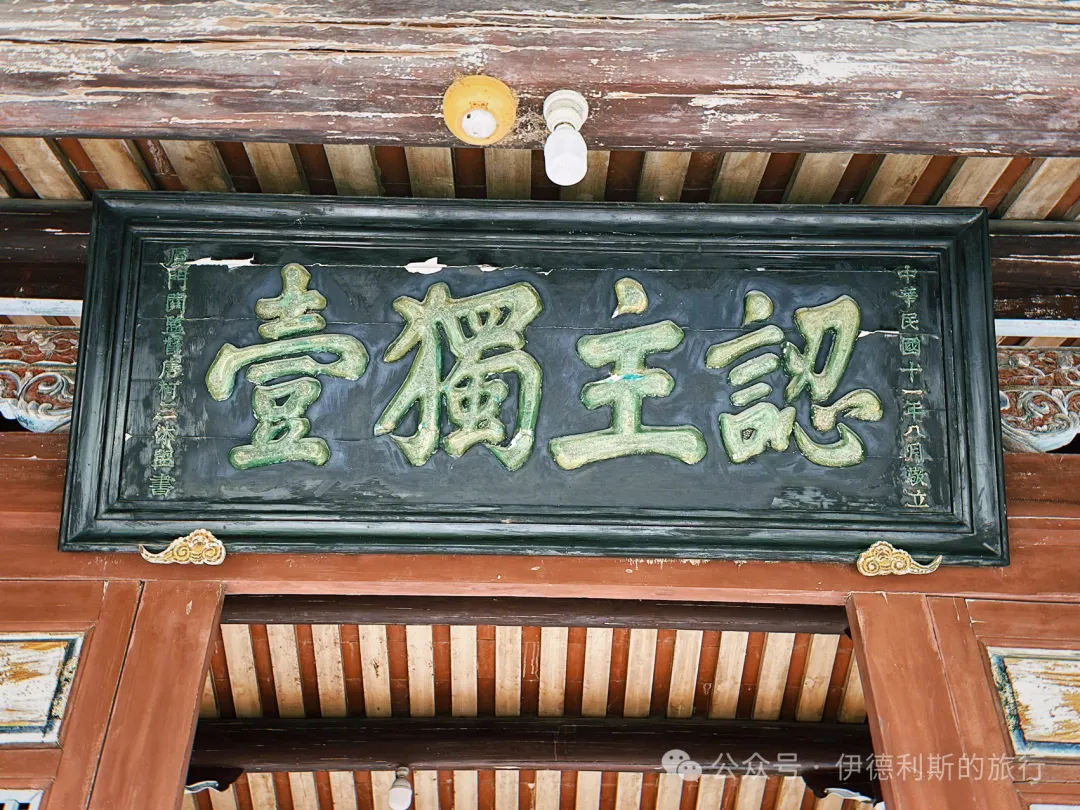
121. The 'Recognize the Oneness of Allah' plaque at the Qingjing Mosque in Quanzhou.
Respectfully presented in the eighth month of the 11th year of the Republic of China.
Written by Tang Kesan, Superintendent of the Xiamen Customs, after ritual washing.
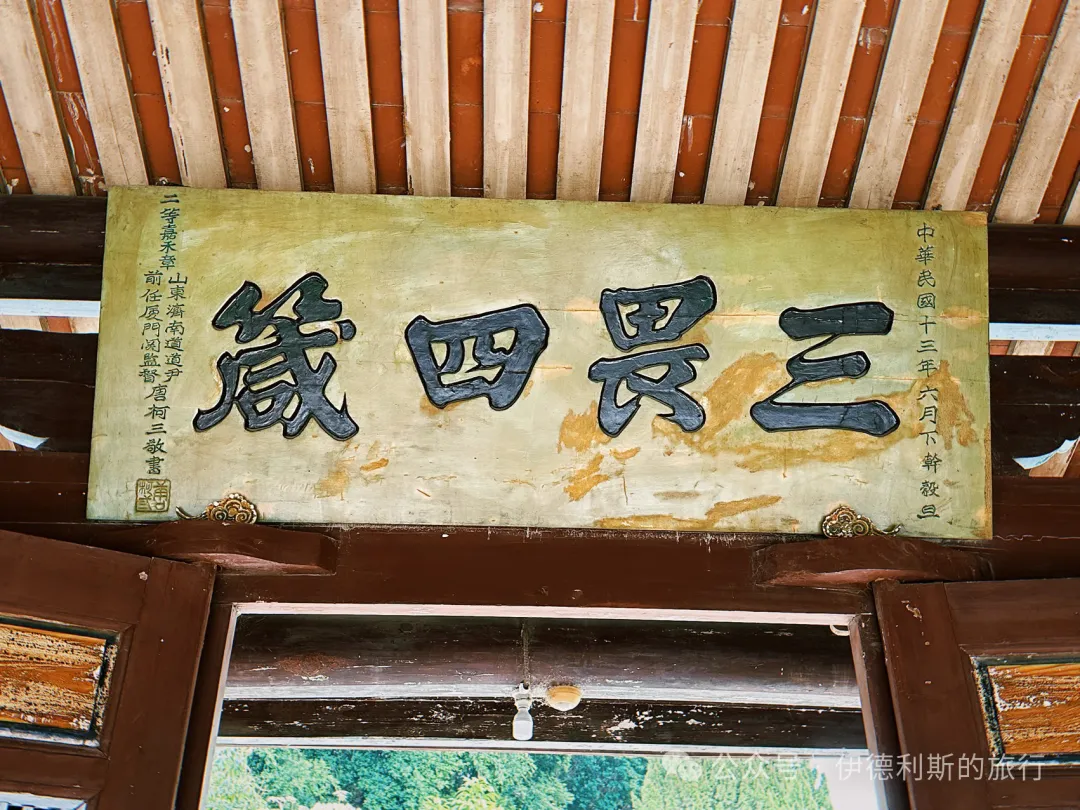
122. The 'Three Fears and Four Admonitions' plaque at the Qingjing Mosque in Quanzhou.
An auspicious day in the latter part of the sixth month of the thirteenth year of the Republic of China.
Second-class Golden Grain Medal recipient, Intendant of the Jinan Circuit in Shandong, and former Superintendent of the Xiamen Customs, Tang Kesan respectfully wrote this.
The original plaque was destroyed between the 1960s and 1970s; this is a replica.
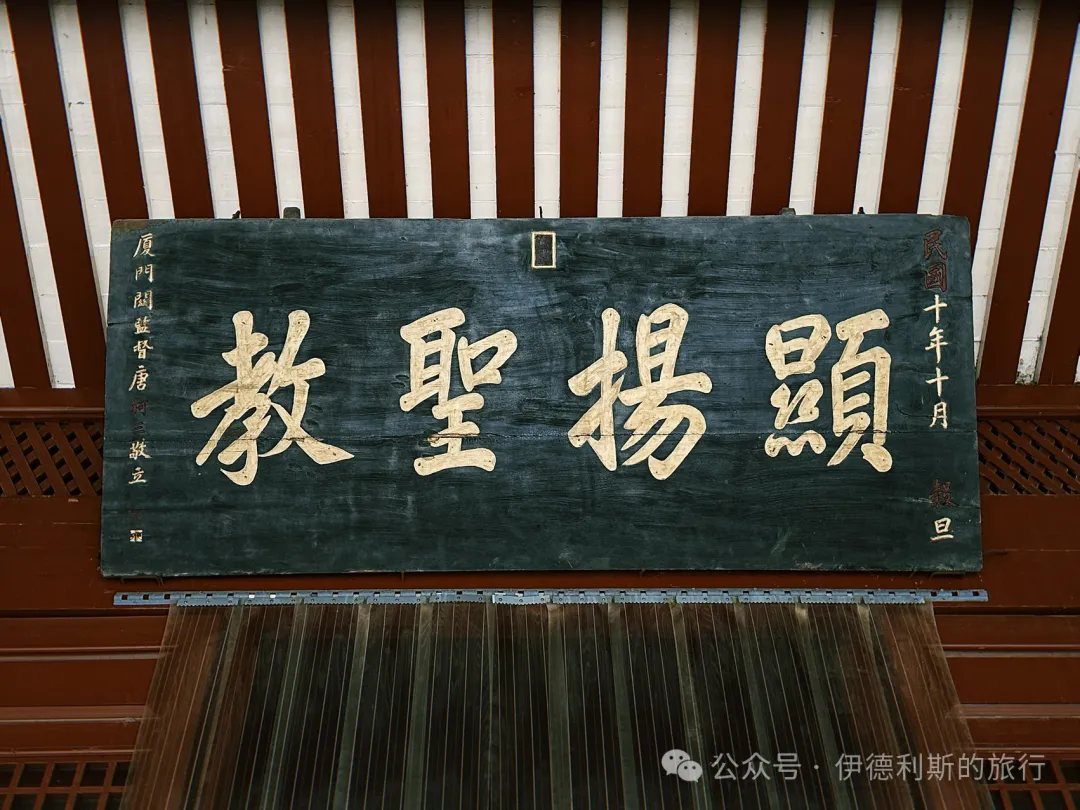
123. Fuzhou Mosque, 'Promoting the Holy Teachings'.
An auspicious day in the tenth month of the tenth year of the Republic of China.
Respectfully erected by Tang Kesan, Superintendent of Xiamen Customs.
After Tang Kesan became the Superintendent of Xiamen Customs in 1919, he worked hard to revive the faith in Fujian. He donated significant funds to the Fuzhou Mosque, Xiamen Mosque, and Quanzhou Qingjing Mosque. He also encouraged the descendants of local Fujian scripture readers to return to the faith and serve in the mosques.
124. Zhaoqing West Mosque, 'Always Remember the Lord's Grace'.
An auspicious day in mid-summer of the Wuxu year of the Daoguang reign.
Respectfully carved by Li Xianyang, acting Lieutenant Colonel of the Guangdong and Guangxi Governor's Front Battalion.
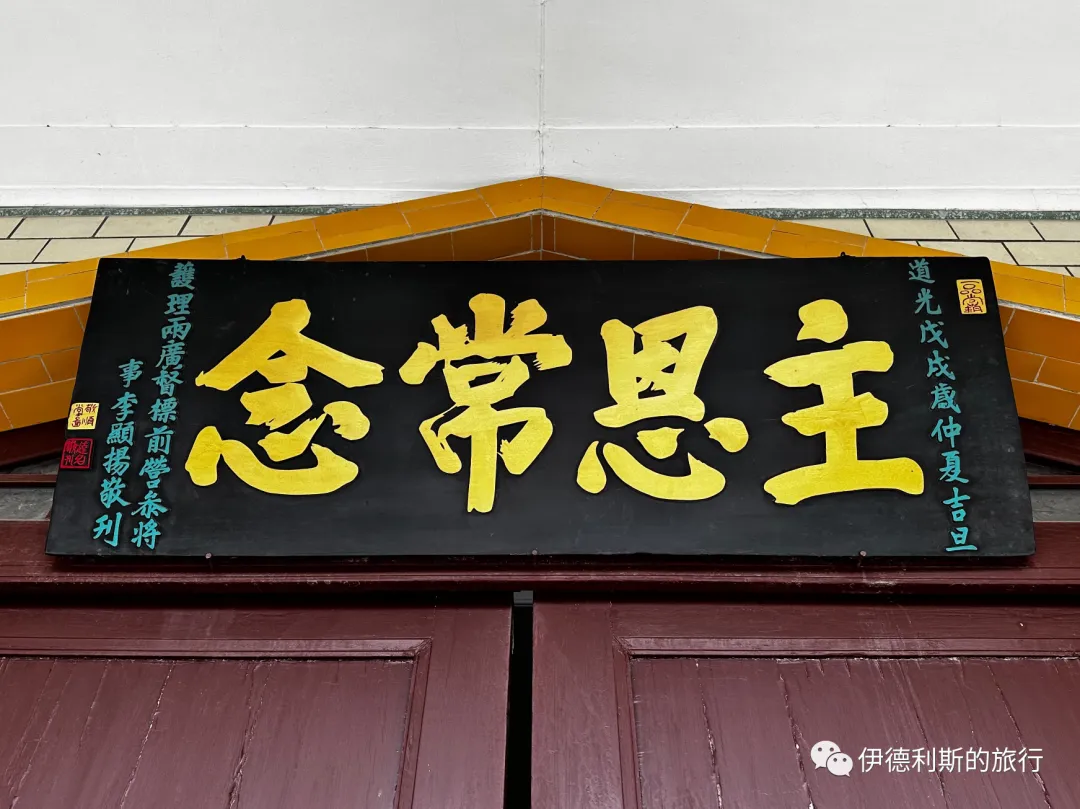
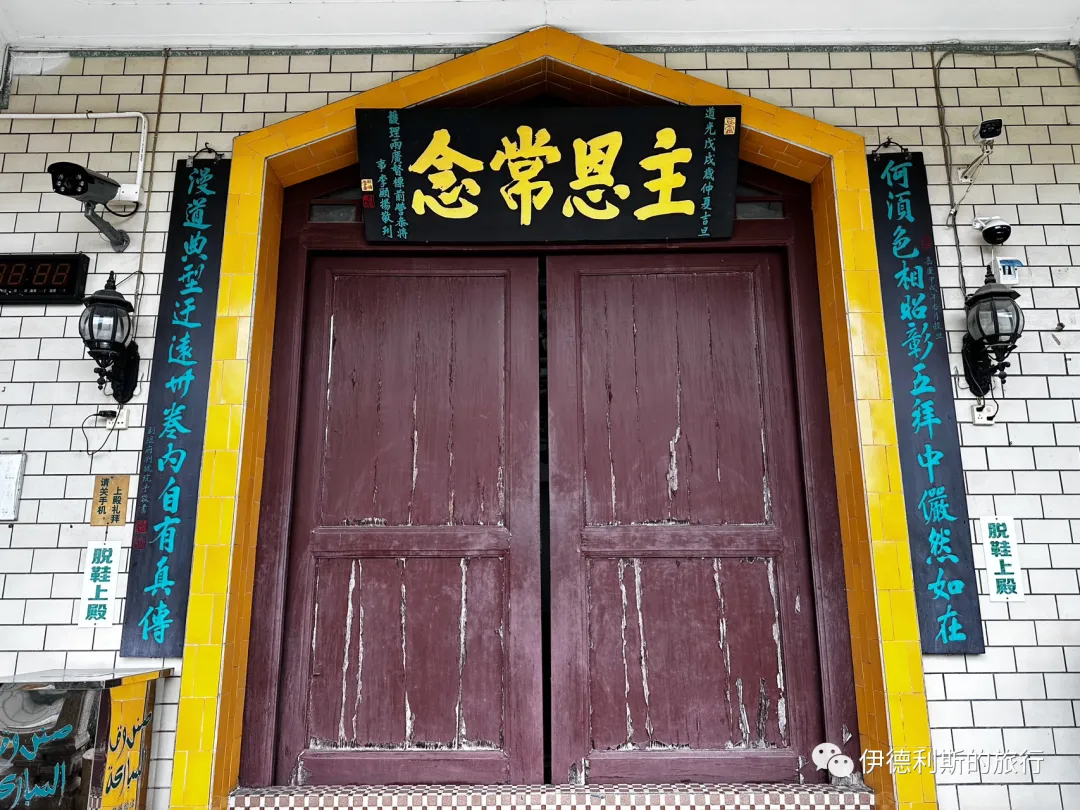
125. Zhaoqing West Mosque.
Why look for visible signs when in the five daily prayers, one feels as if Allah is truly present?
Do not say the traditions are distant, for within the thirty volumes of the Quran, the true teachings are found.
An auspicious day in the lucky month of the Jiaxu year of the Jiaqing reign.
Respectfully written by Vice Commander Liu Hu after washing his hands.
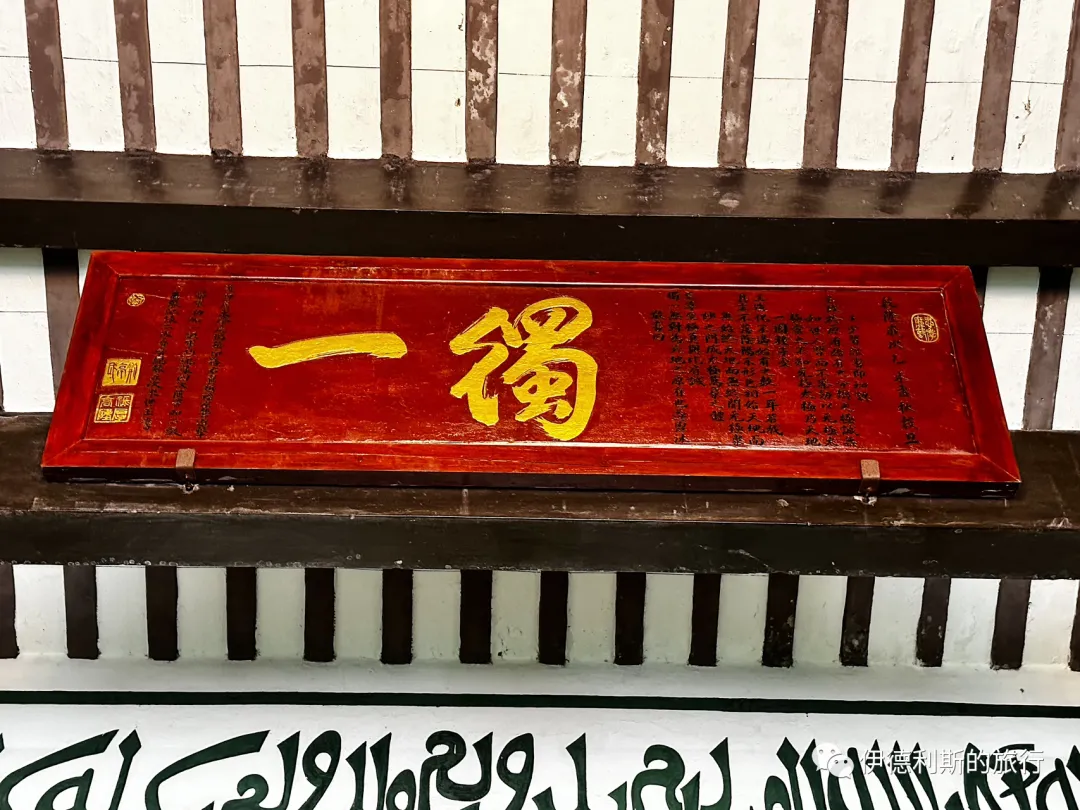
126. Zhaoqing East Mosque, 'The Only One'.
An auspicious day in the first month of autumn in the Yiwei year of the Qianlong reign.
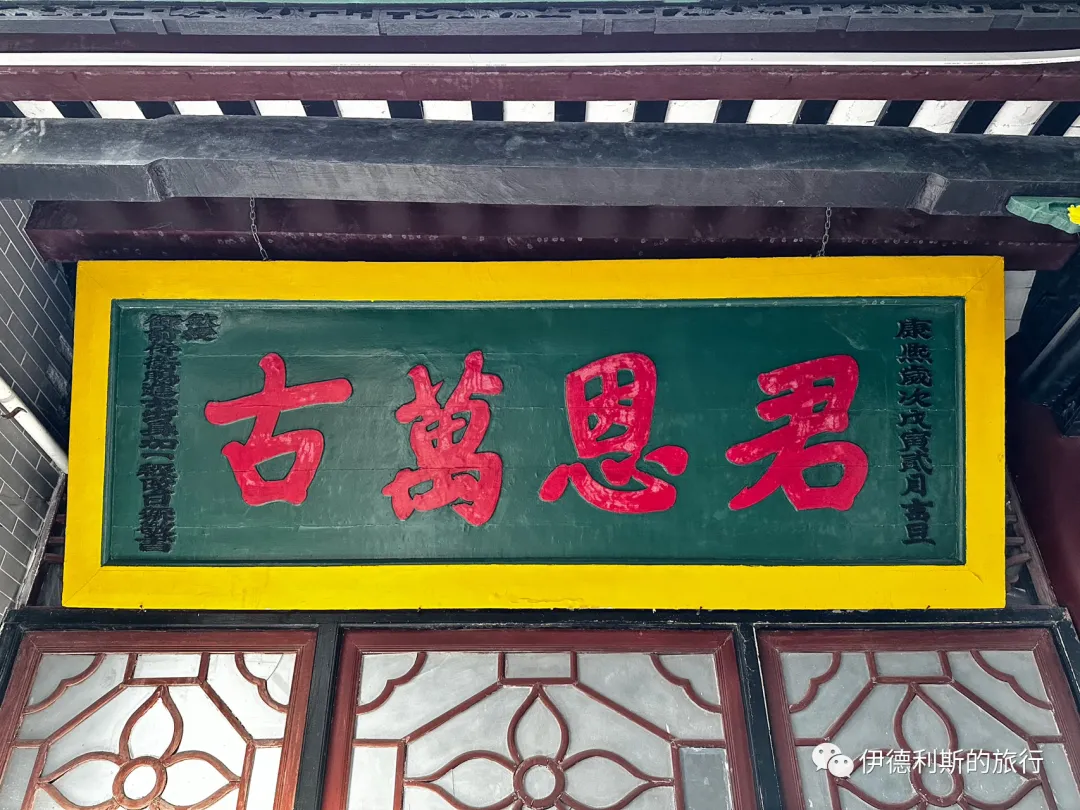
127. Huaisheng Mosque in Guangzhou: 'The Emperor's Grace Lasts Forever'.
An auspicious day in the second month of the Wuyin year of the Kangxi reign.
Respectfully written by Gai Rixin, an imperial guard appointed by the Emperor, who was granted the status of Jinshi and promoted by one rank.
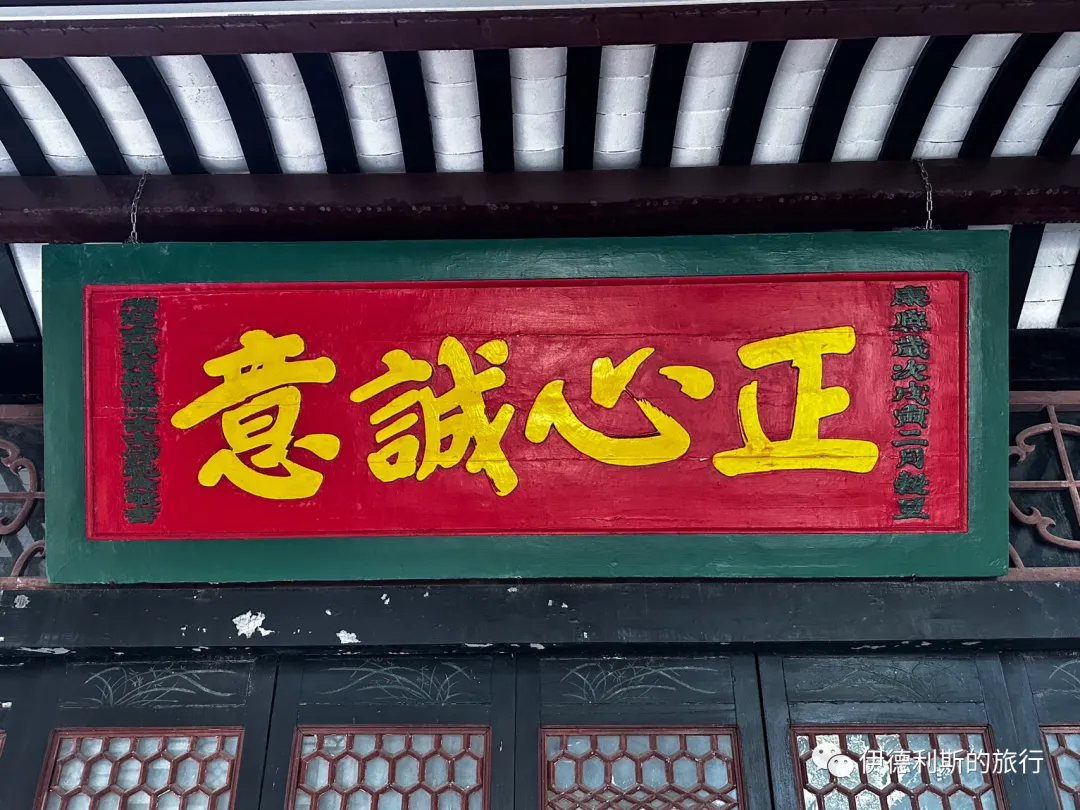
128. Huaisheng Mosque in Guangzhou: 'Rectify the Heart and Be Sincere'.
An auspicious day in the second month of the Wuyin year of the Kangxi reign.
Respectfully written by Tie Fanjin, a Jinshi degree holder and bachelor of the Hanlin Academy.
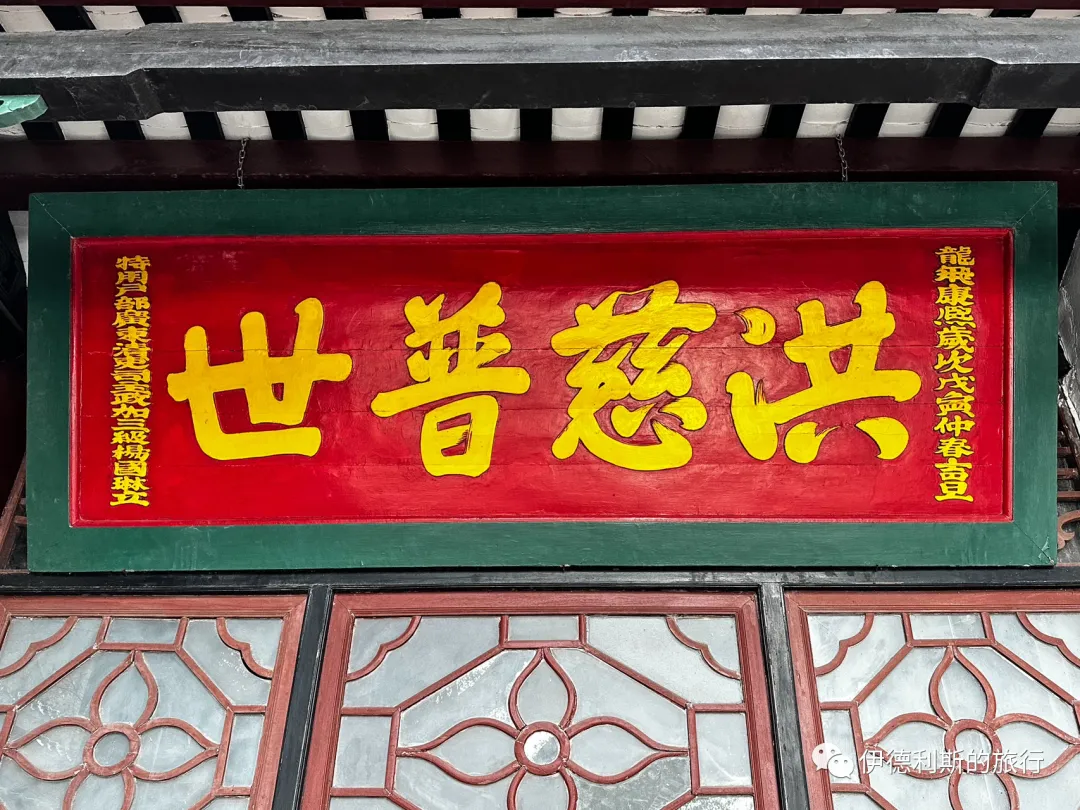
129. Huaisheng Mosque in Guangzhou: 'Great Mercy for the Whole World'.
An auspicious day in the second month of spring in the Wuyin year of the Kangxi reign.
Erected by Yang Guolin, a director of the Guangdong Department of the Ministry of Revenue, who was promoted by three ranks.
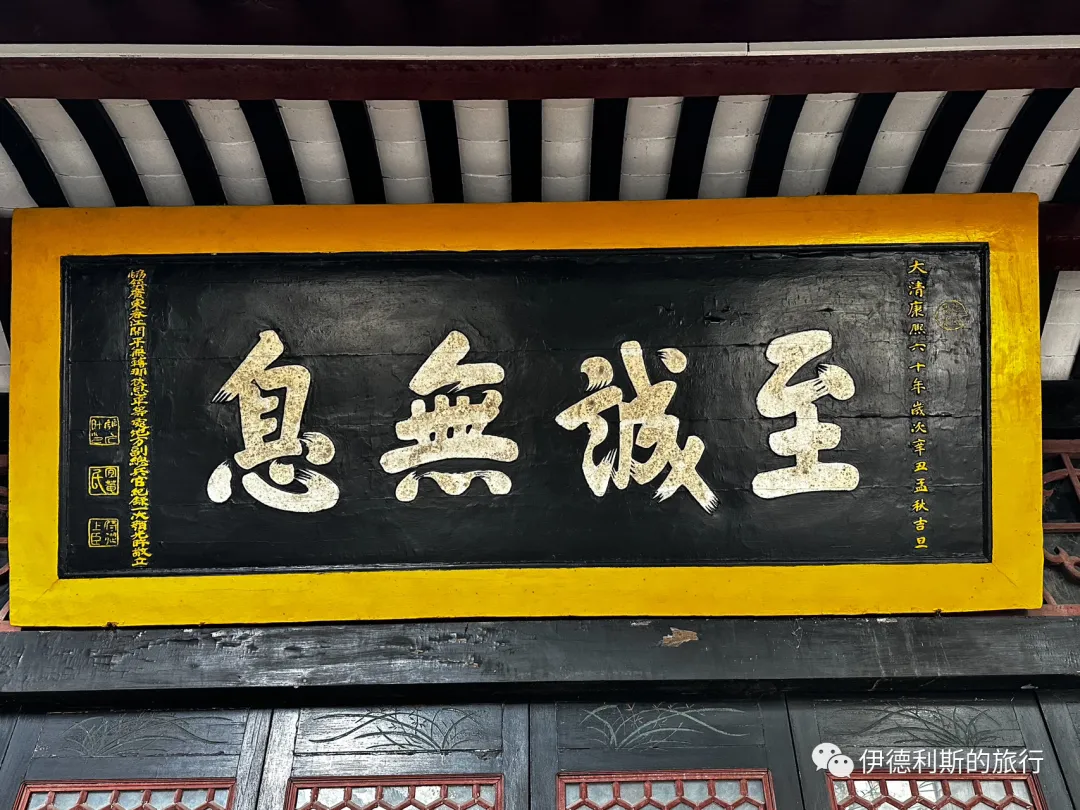
130. Huaisheng Mosque in Guangzhou: 'Utmost Sincerity Never Ceases'.
An auspicious day in the first month of autumn in the Xinchou year, the 60th year of the Kangxi reign of the Great Qing Dynasty.
Respectfully erected by Yan Guangwu, a deputy commander in charge of the Guangdong Chunjiang, Kaiping, Nafu, and Enping regions, who was awarded one merit record.
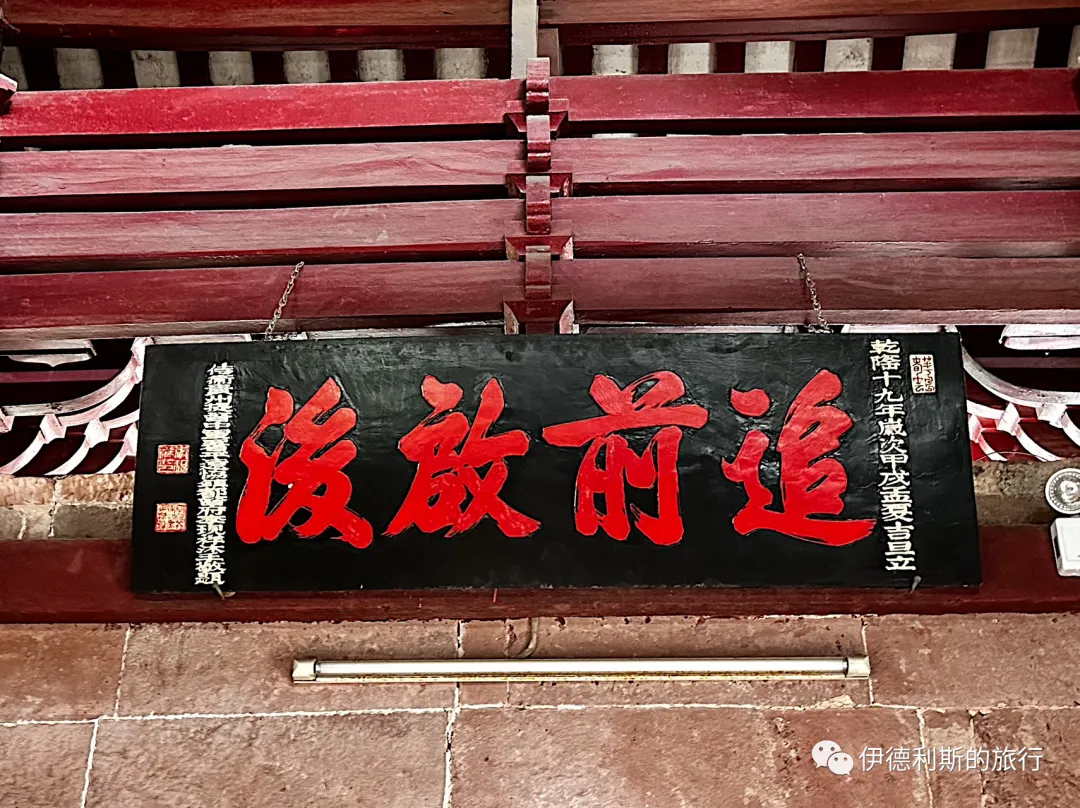
131. Huaisheng Mosque in Guangzhou: 'Follow the Past and Inspire the Future'.
Erected on an auspicious day in the first month of summer in the Jiaxu year, the 19th year of the Qianlong reign.
Respectfully inscribed by Li Xianxiang, an imperial guard and commander-in-chief of the Guizhou military, who served as the acting deputy commander of the Pingyuan garrison.
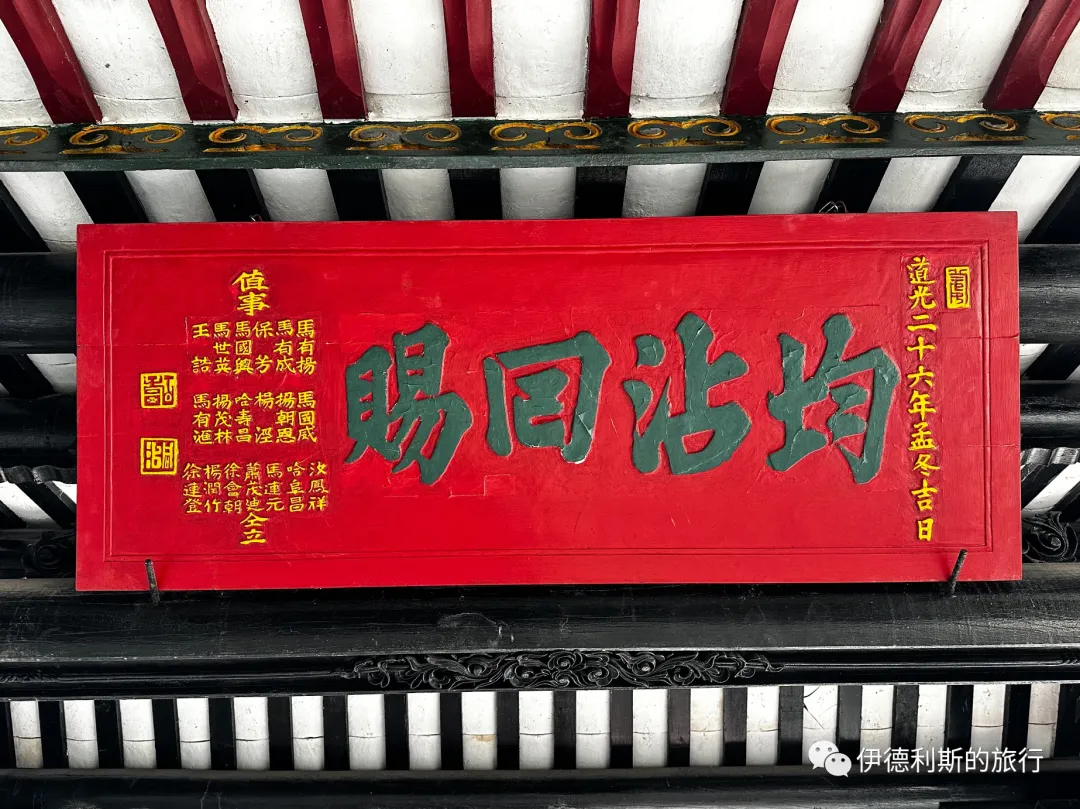
132. Huaisheng Mosque in Guangzhou: "Sharing in Allah's Blessings"
An auspicious day in the first month of winter, 26th year of the Daoguang reign.
Erected by the committee members together.
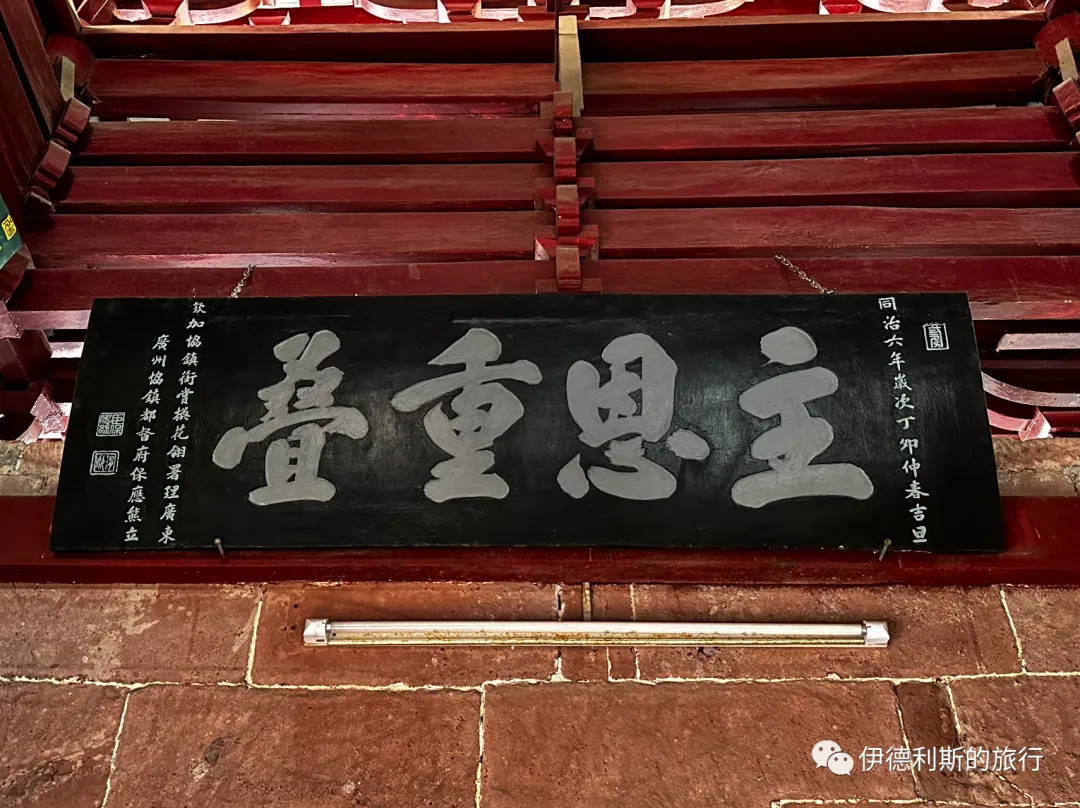
133. Huaisheng Mosque in Guangzhou: "Abundant Blessings from the Lord"
An auspicious day in the second month of spring, 6th year of the Tongzhi reign, year of Dingmao.
Erected by Bao Yingxiong, acting Guangzhou Brigade Commander, holding the rank of Assistant Brigade Commander and awarded the peacock feather.
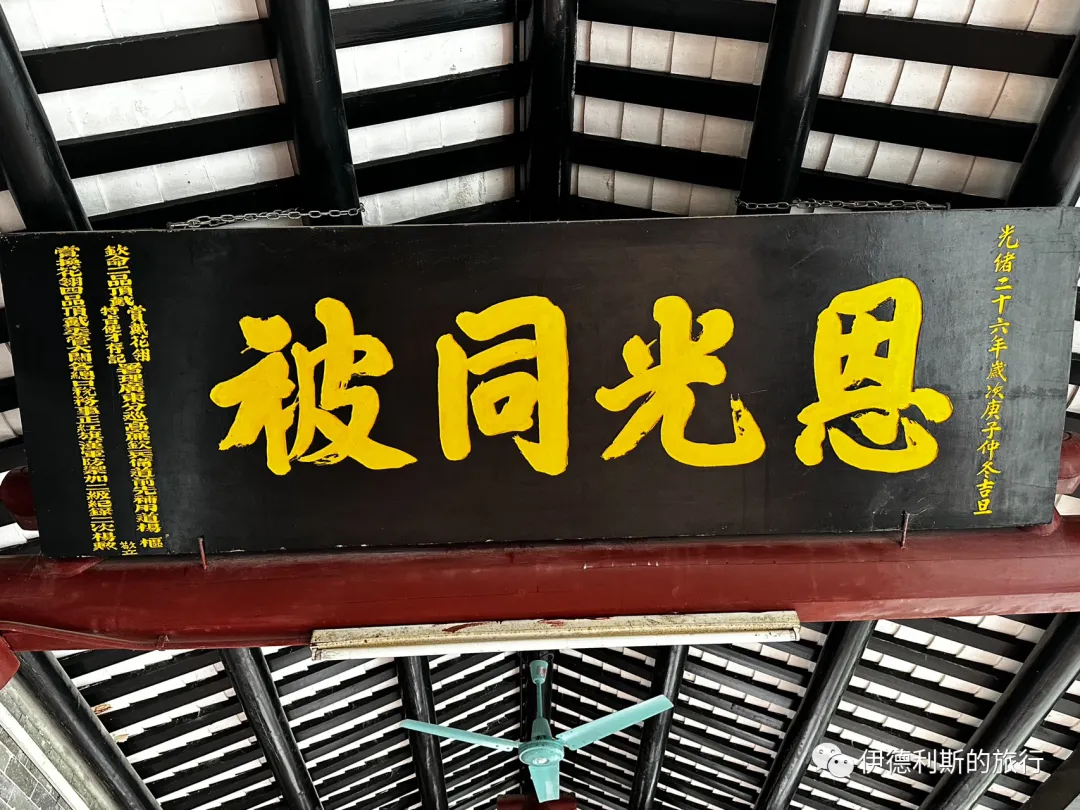
134. Huaisheng Mosque in Guangzhou: "Grace Shines Upon All"
An auspicious day in the second month of winter, 26th year of the Guangxu reign, year of Gengzi.
Erected by Yang Shu, acting Guangdong Circuit Intendant for Gaozhou and Lianzhou, holding a second-rank button and awarded the peacock feather, and Yang Xun, a defense officer of the Plain Red Banner Han Army, holding a fourth-rank button and awarded the peacock feather.
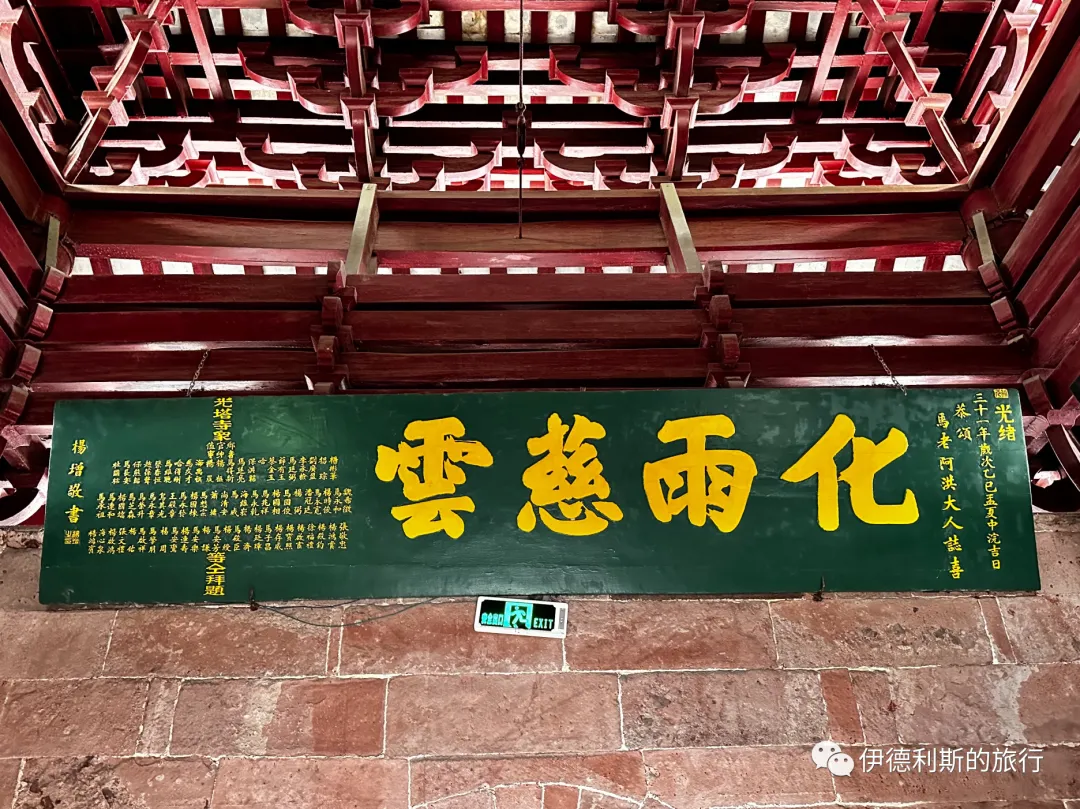
135. Huaisheng Mosque in Guangzhou: "Merciful Clouds and Nourishing Rain"
An auspicious day in the middle of the first month of summer, 31st year of the Guangxu reign, year of Yisi.
Respectfully dedicated to celebrate the joy of Imam Ma.
Offered by the officials, gentry, elders, and committee members of the Lighthouse Mosque (Guangta Si).
Calligraphy by Yang Zeng.
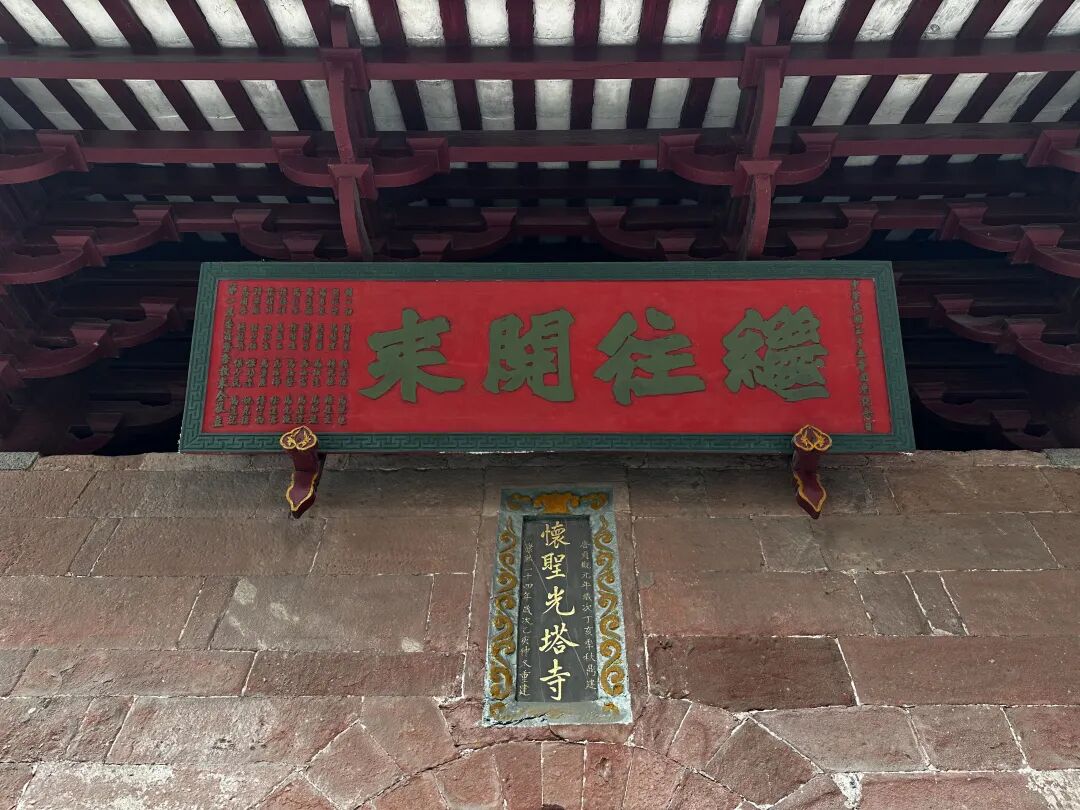
136. Huaisheng Mosque in Guangzhou: "Carrying Forward the Past and Opening Up the Future"
National Day, 35th year of the Republic of China.
Erected respectfully by the first committee members and all the followers of the faith.
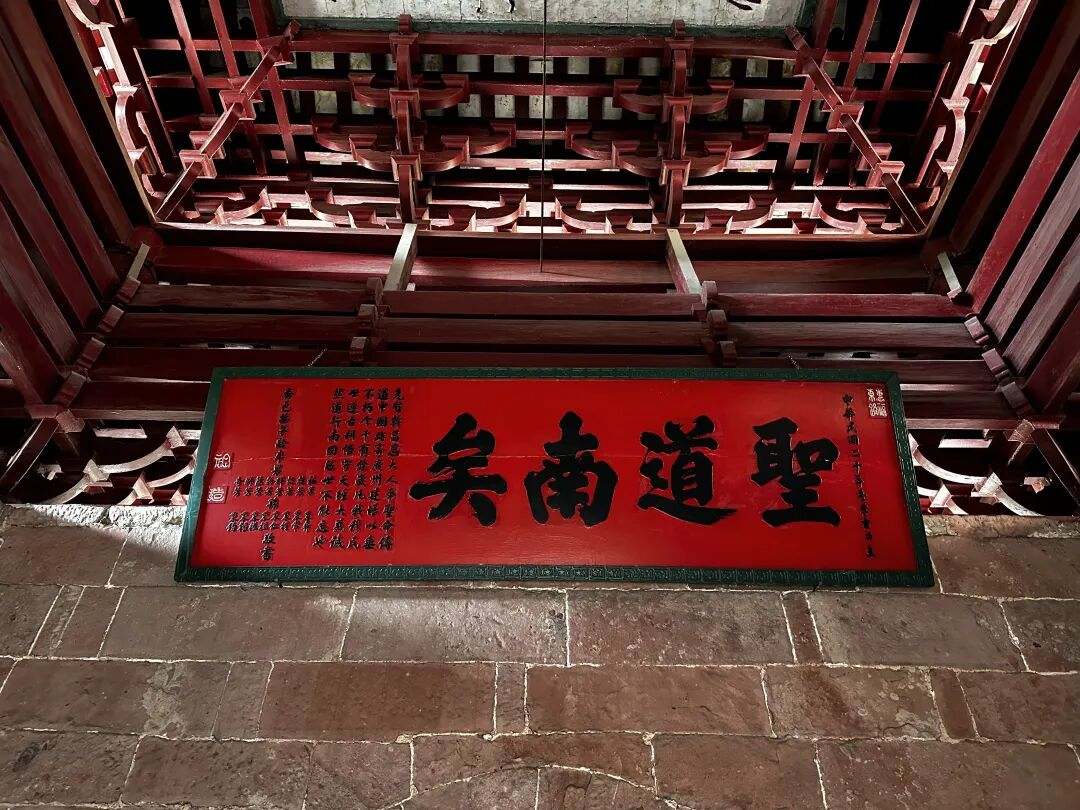
137. The 'Holy Path to the South' plaque at Huaisheng Mosque in Guangzhou.
Erected on an auspicious day in the winter of the 20th year of the Republic of China.
The venerable Sahaba Waqqas followed the Prophet's command to spread the faith in China. He left his mark in Guangzhou and built a tower that has stood for over a thousand years. All of us Muslims follow the ancient traditions and uphold the great principles of the Quran. We truly carry this path in the south and will never forget it for as long as we live.
Respectfully inscribed by Yang Mengling of Panyu, along with his sons Youfang, Guifang, Qunfang, Shifang, Yinfang, Lianfang, Qifang, and his grandsons Bingyi, Bingchang, Bingren, Bingshu, Bingquan, Bingtao, and Bingjun.
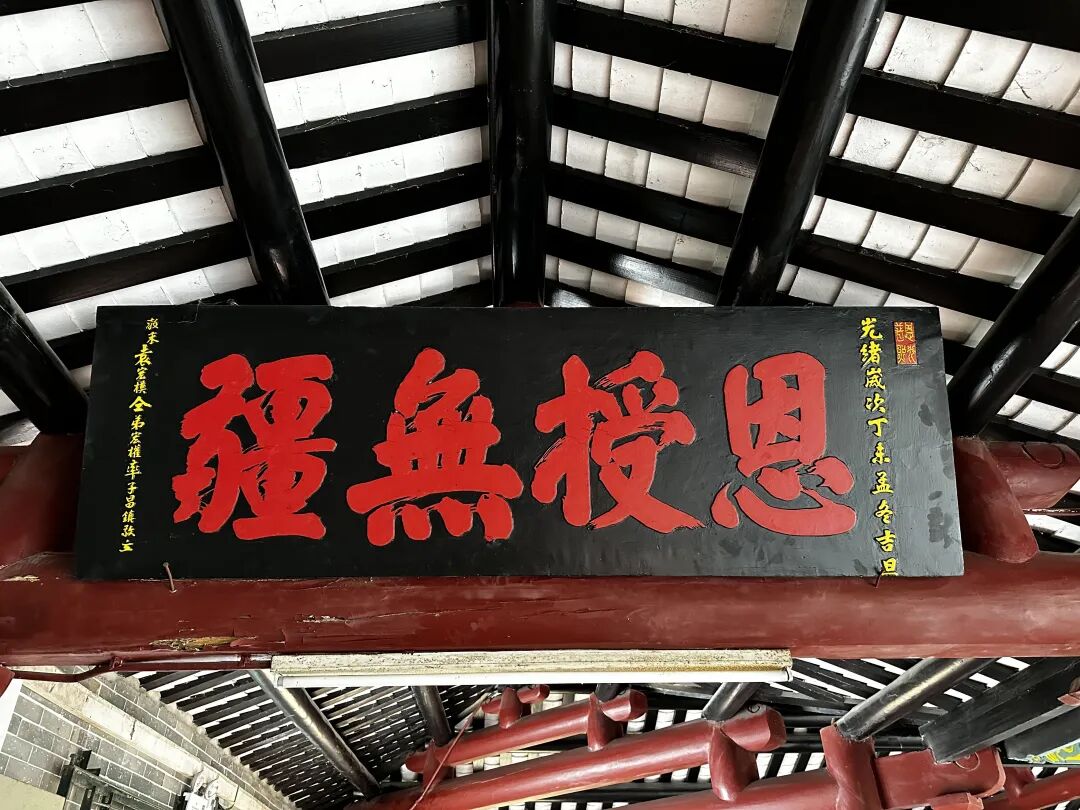
138. The 'Boundless Grace Bestowed' plaque at Huaisheng Mosque in Guangzhou.
An auspicious day in the first month of winter in the Dingwei year of the Guangxu reign.
Respectfully erected by follower Yuan Hongmo, his younger brother Hongquan, and his son Changzhen.
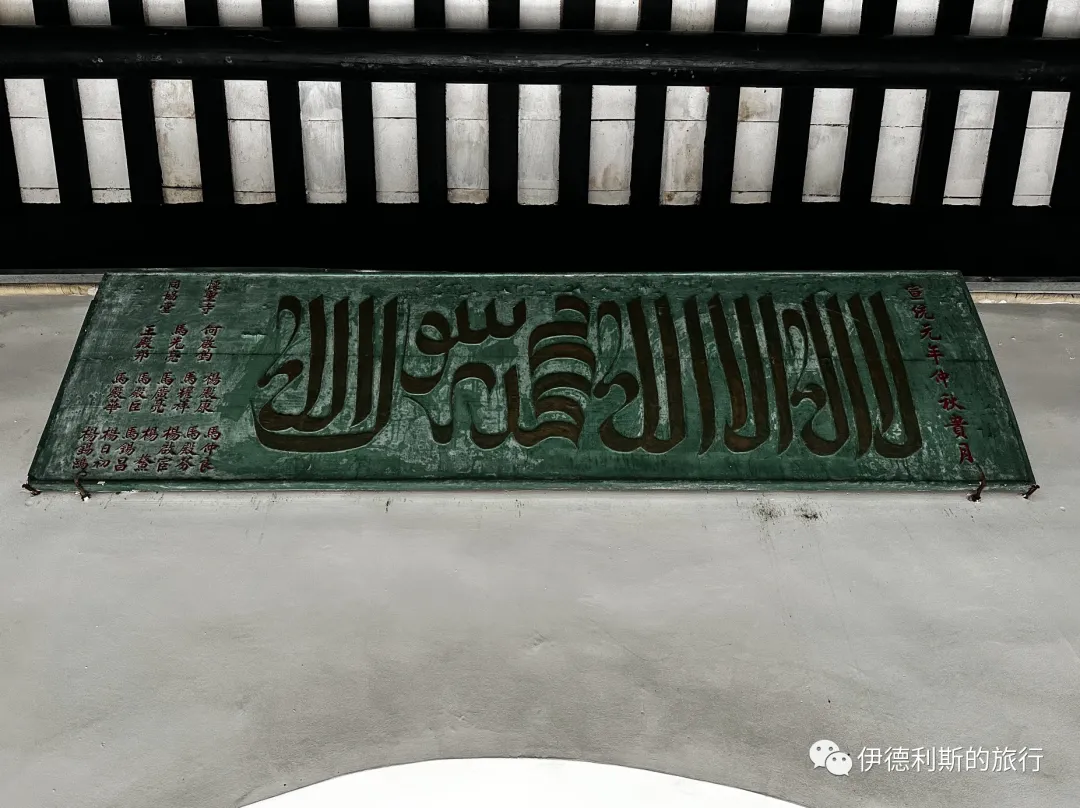
139. Arabic plaque at the Ancient Tomb of the Worthies in Guangzhou.
The second month of autumn in the first year of the Xuantong reign.
The members of the Tongxie Hall at Huaisheng Mosque.
140. Arabic plaque at the Ancient Tomb of the Worthies in Guangzhou.
An auspicious day in the first month of winter in the Gengxu year of the second year of the Xuantong reign.
Erected together by the members of the Guangta Heyi Hall.
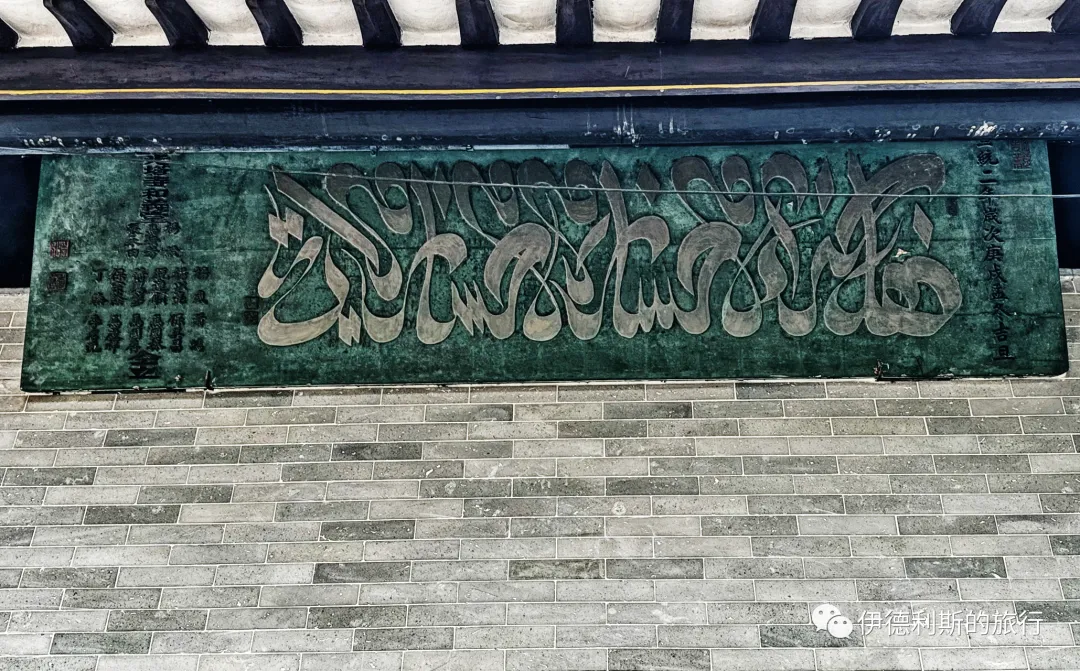
141. 'Guard Our Pure Truth' plaque at the Ancient Tomb of the Worthies in Guangzhou.
An auspicious day in June, the fourth year of the Republic of China.
Since our ancestors from the West (Wanheshi) arrived in the East over a thousand years ago, we have followed our religious rules and never dared to break them. Recently, some young people have misunderstood the idea of freedom of belief, and their marriages and diets have started to ignore our religious rules. I fear that people's hearts are worsening and our holy faith is fading away. I have carefully chosen these four characters to write on the plaque as a reminder to our community. I hope everyone carefully follows the teachings of the scriptures and respects the examples set by our ancestors. If we do this, we will not be sinners against our people, and our faith will be fortunate.
Respectfully inscribed by Cai Chunheng from Wanbei, Major General of the Army, Director of the Guangdong Water Police Department, and recipient of the Third Class Order of the Golden Grain.
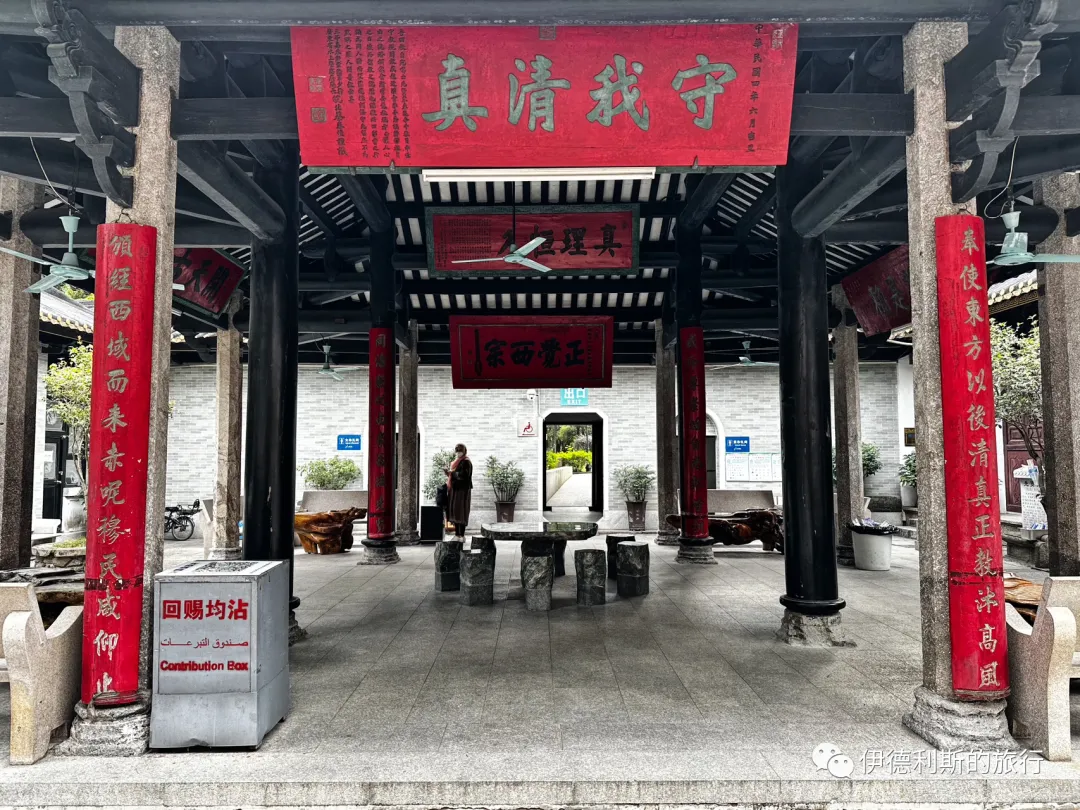
142. The plaque 'Zhengjue Xizong' at the Ancient Tomb of the Worthies in Guangzhou.
An auspicious day in the first month of summer, the tenth year of the Jiaqing reign (Yichou year).
Erected by Xu Wenmo, a hereditary brave official with the title of Admiral, Jiyong Baturu, and Commander of the land and water forces in the Gao, Lian, and Luo regions of Guangdong, who has received military honors twenty-two times.
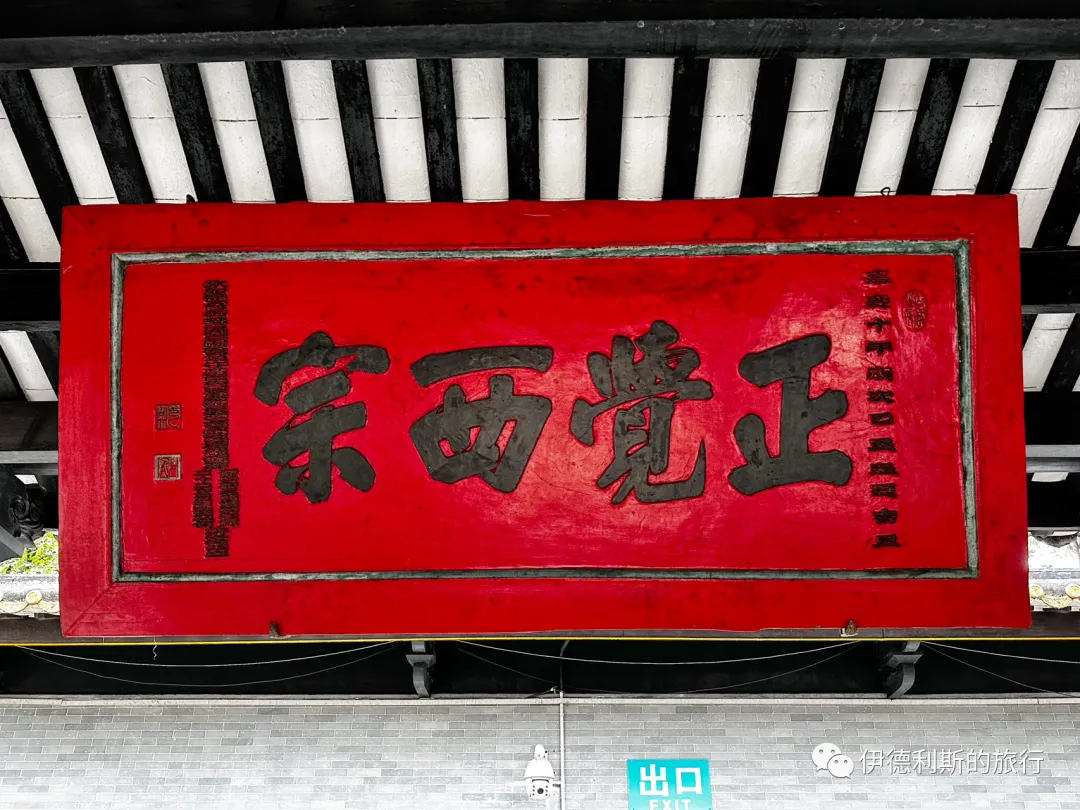
143. The plaque 'Chanyang Shilai' at the Ancient Tomb of the Worthies in Guangzhou.
An auspicious day in March, the second year of the Republic of China.
Respectfully erected by Ma Bonian and others.
Respectfully written by Ma Yongkuan.
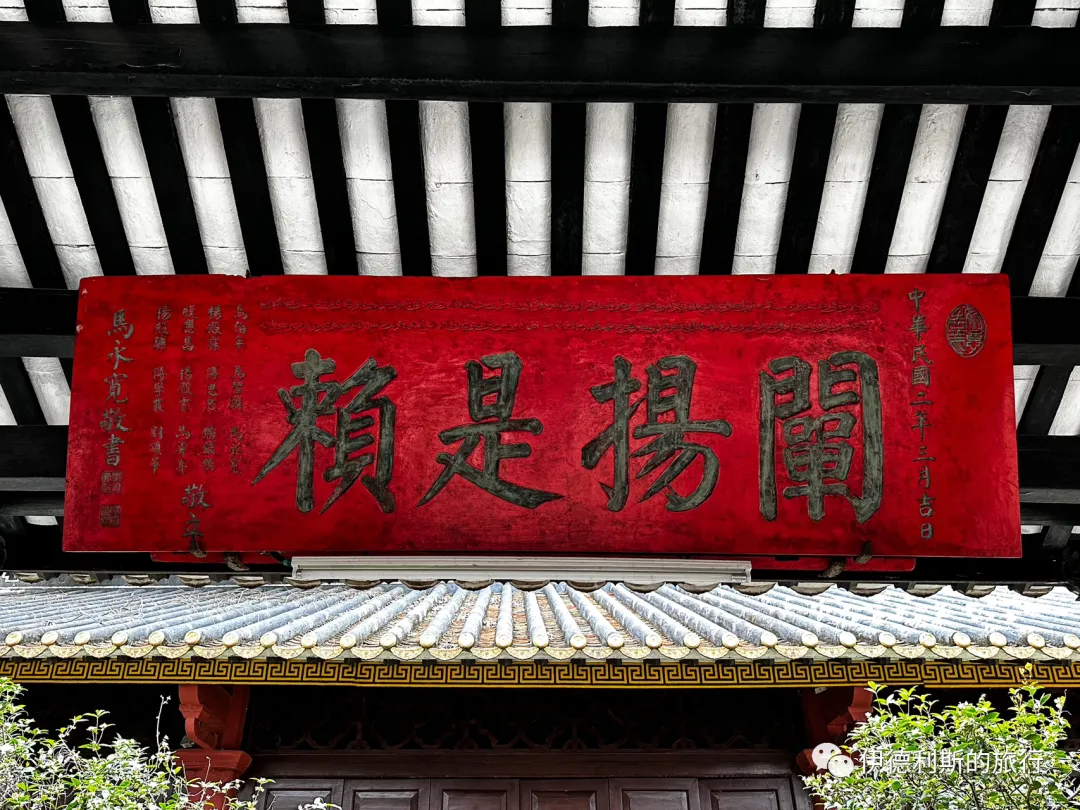
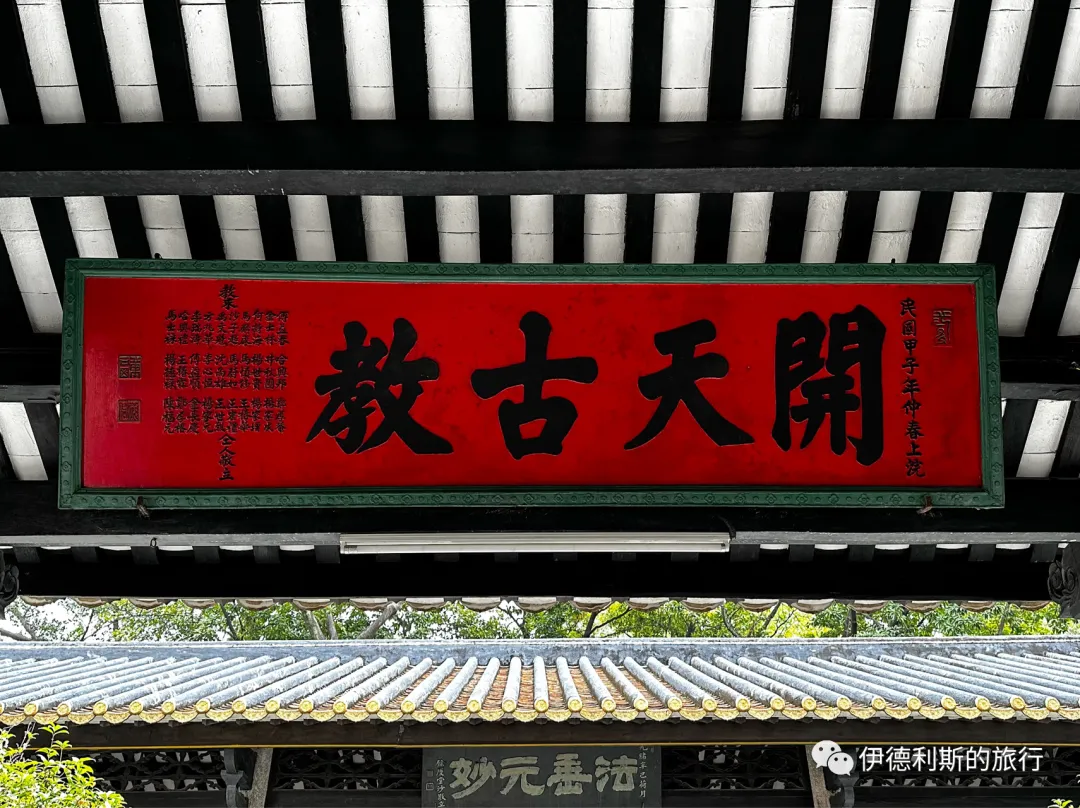
144. The plaque 'Kaitian Gujiao' at the Ancient Tomb of the Worthies in Guangzhou.
The first ten days of the second month of spring, the Jiazi year of the Republic of China.
Respectfully erected by the humble members of the faith.
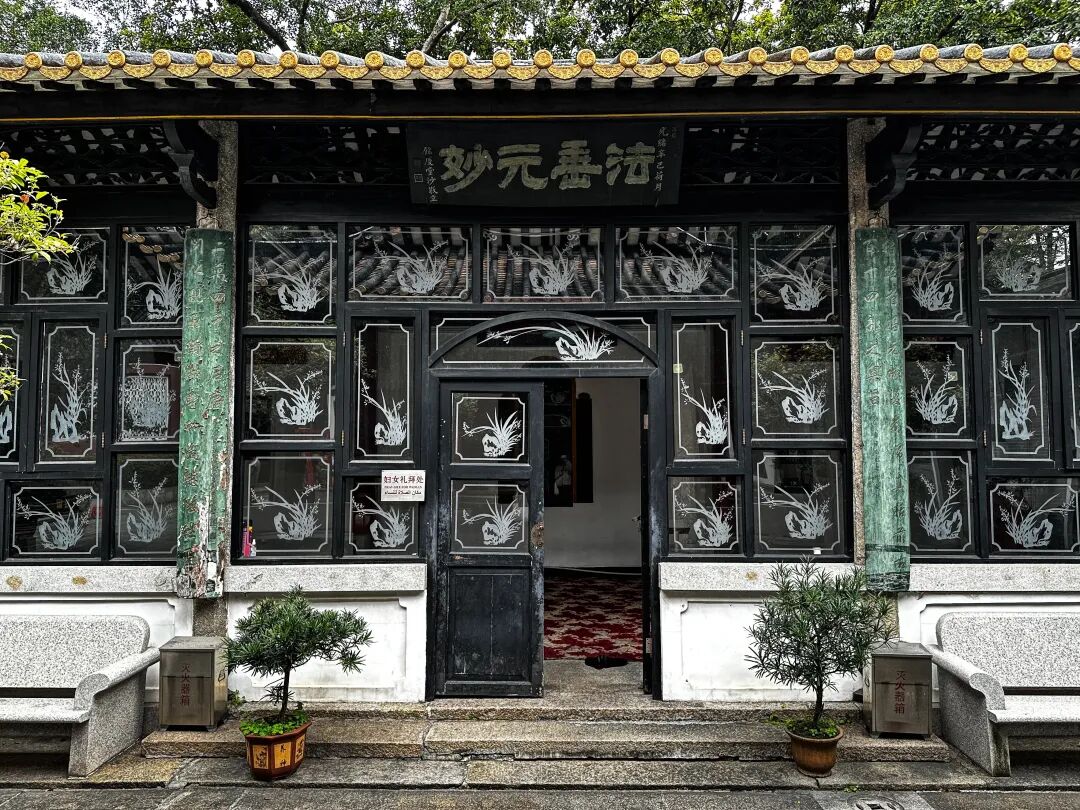
145. The Ancient Tomb of the Worthies in Guangzhou, with the inscription 'The Law Extends to the Origin of Wonders' (Fa Chui Yuan Miao).
The sixth lunar month of the Xinsi year in the Guangxu reign.
Respectfully erected by Sha Jing of Qingyu Hall.
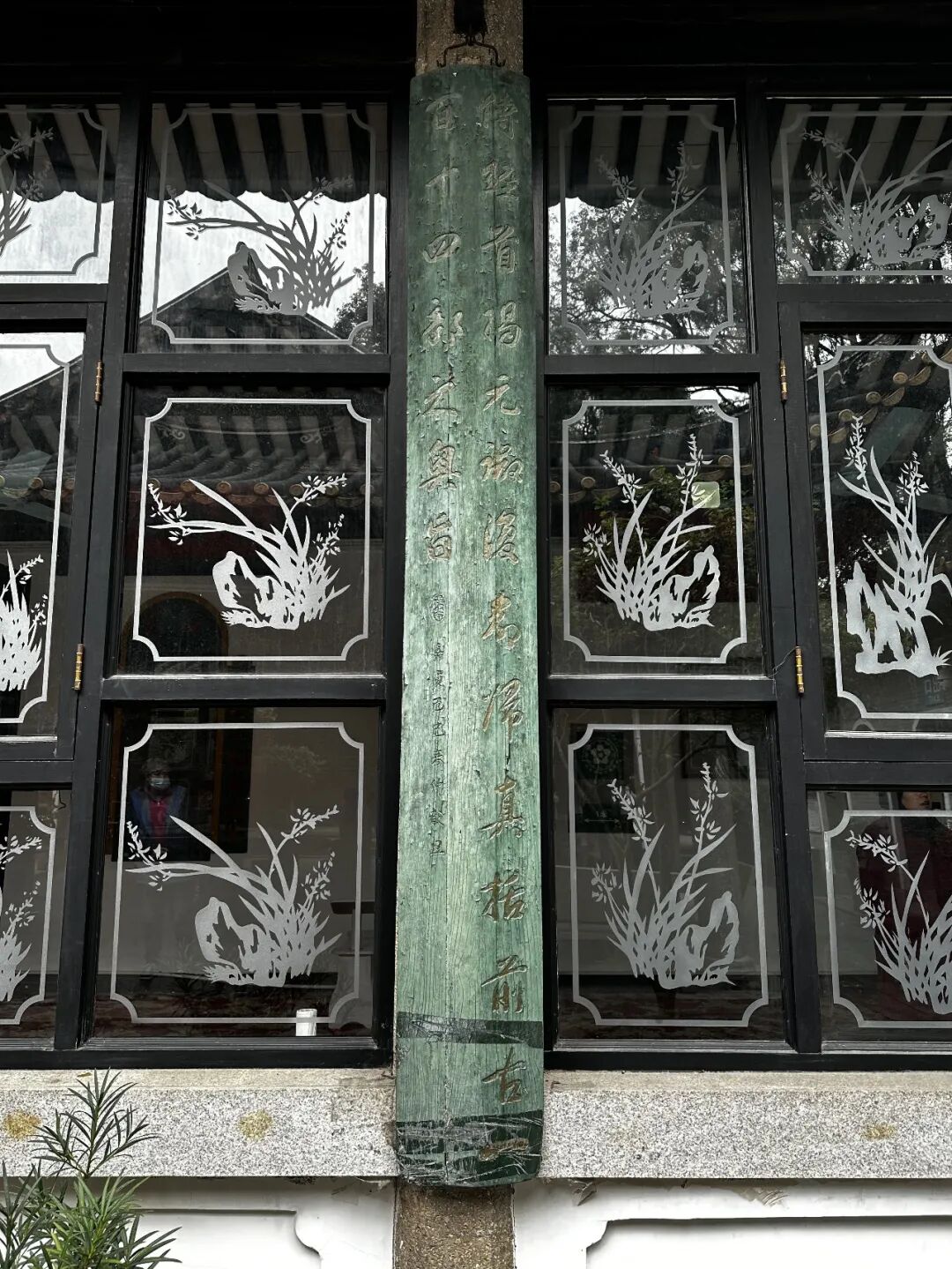
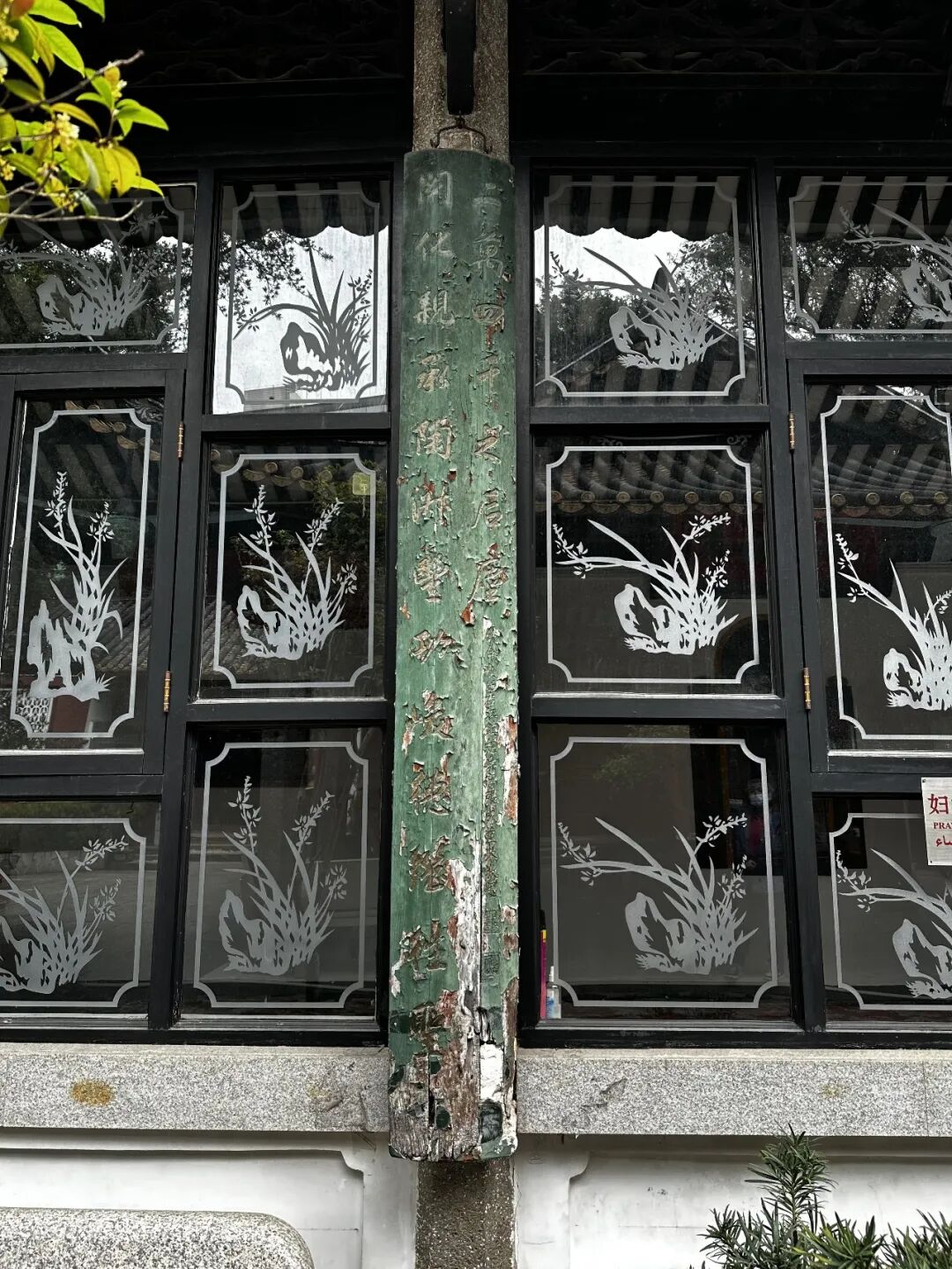
146. The Ancient Tomb of the Worthies in Guangzhou.
He was the first to spread the scriptures, a sign of returning to the truth, encompassing the profound meanings of the 140 ancient volumes.
He personally received the teachings to transform and educate, with great achievements and noble virtues, following in the footsteps of the 124,000 past saints.
Respectfully inscribed by Zhang Cheng, the Imperial-appointed Commander-in-Chief of the Youjiang Town in Guangxi, after ritual purification.
An auspicious day in the second month of spring in the Jisi year of the Jiaqing reign.
148. The Ancient Tomb of the Worthies in Guangzhou, with the inscription 'Looking Up to High Virtue' (Gao Feng Yang Zhi).
Respectfully erected on the Winter Solstice of the first year of the Yongzheng reign.
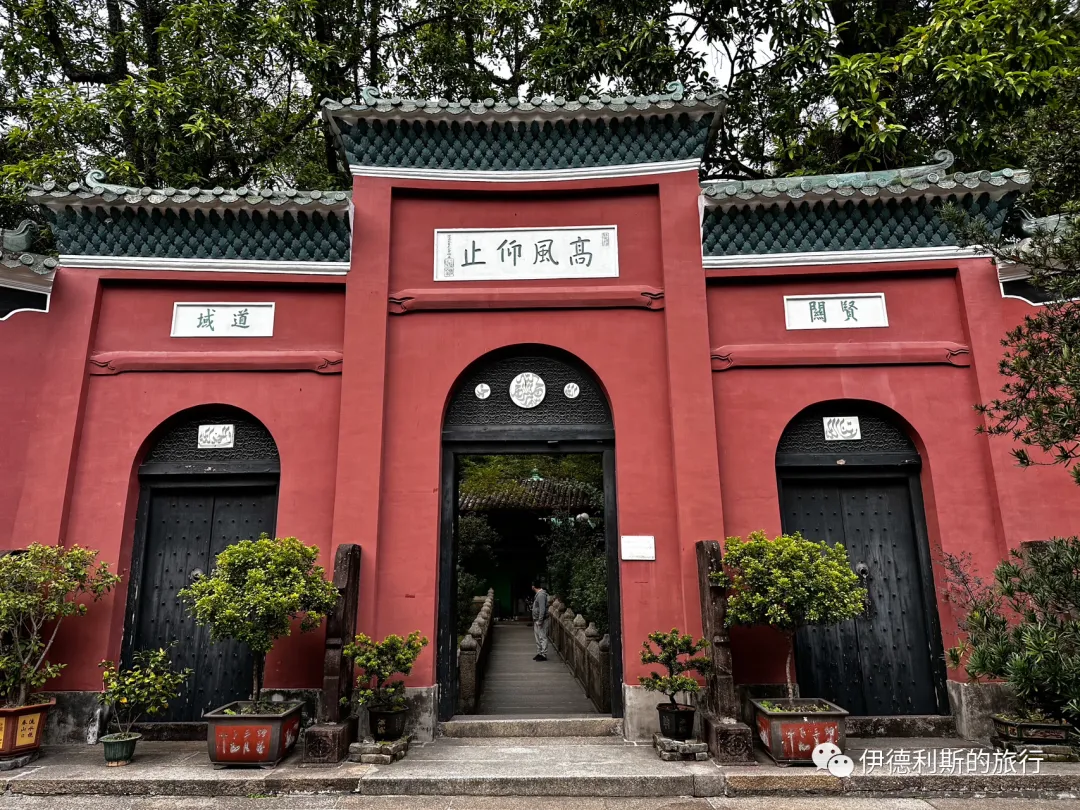
148. The Ancient Tomb of the Worthies in Guangzhou.
He spread the holy teachings in the southern lands, passed down through generations, strictly following the 30 volumes of sacred instructions.
He established a virtuous reputation in eastern Guangdong, standing tall and independent, admired by all for thousands of years as a model.
Built in the summer of the Jiawu year of the Guangxu reign.
Respectfully inscribed by Cai Jinzhang, the Imperial-granted Commander-in-Chief of the Guangdong Land Forces, titled Kengsenge Batulu.
149. The Ancient Tomb of the Worthies in Guangzhou, with the inscription 'Looking Afar to the Long Journey' (Chang Zhan Yuan Xing).
An auspicious day in the first month of autumn, in the Yiwei year of the Guangxu reign.
Respectfully erected by Xu Yingzhong, head of the Huaisheng Mosque, together with Ma Shikui of the Diegan Hall and others.
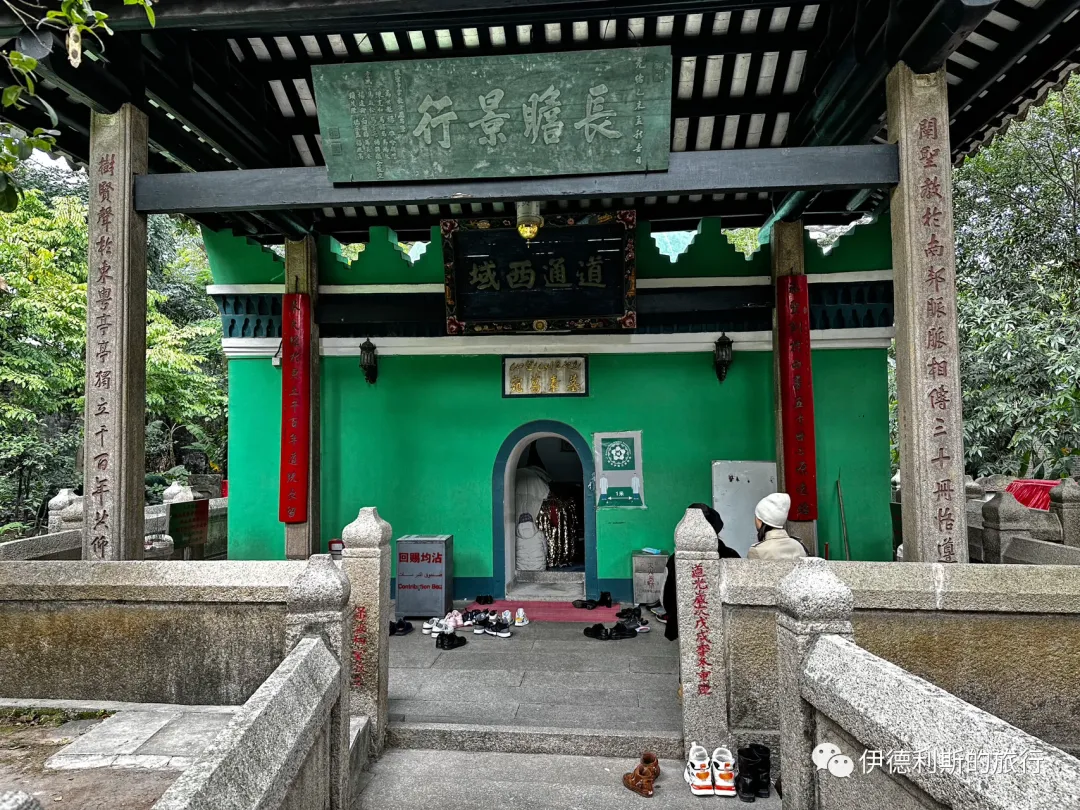
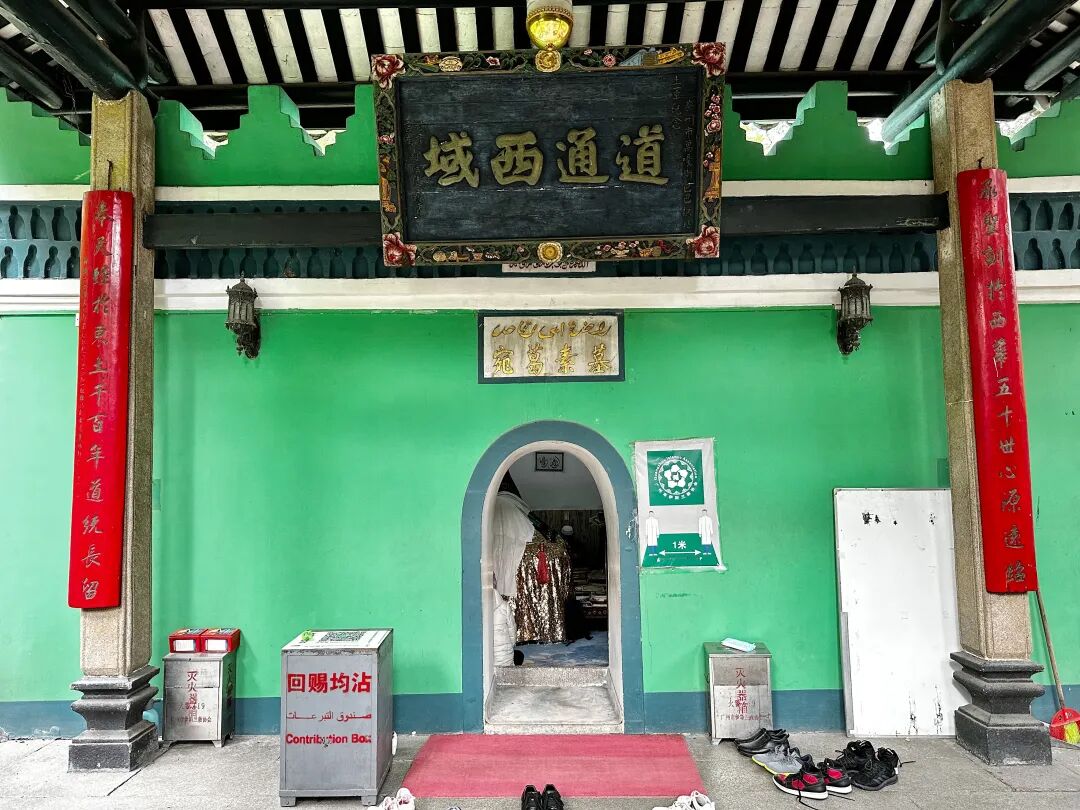
150. Ancient Tombs of the Worthies in Guangzhou.
Receiving the holy teachings in the West, the spiritual lineage has been passed down for fifty generations.
Upholding the heavenly scriptures in the East, the tradition remains for thousands of years.
An auspicious day in the second month of spring, in the Bingyin year, the eleventh year of the Jiaqing reign.
Respectfully written and composed by Hu Changqing from Guilin, a presented scholar (jinshi) by imperial decree, former bachelor of the Hanlin Academy, and official of the first rank.
Appreciating plaques and couplets from the faith (1-50 pieces).
Appreciating mosque plaques and couplets (51-100 pieces)
Summary: China Mosque Travel Guide: Hui Muslim Plaques, Couplets and Islamic Calligraphy (101-150) is presented here as a firsthand travel account in clear English, beginning with this scene: Tian Rui was a Hui Muslim from Taiyuan, Shanxi. He was the son of Tian Yongtong, a military jinshi scholar from the 28th year of the Qianlong reign. The account keeps its focus on Forbidden City, Islamic Art, Persian Culture while preserving the names, places, food, and historical details from the Chinese source.
101. 'Think No Evil' (siwuxie) plaque at Hexia Mosque in Huai'an.
An auspicious day in the first month of autumn, the 10th year of the Daoguang reign.
Inscribed by Tian Rui, Prefect of Huai'an.
Tian Rui was a Hui Muslim from Taiyuan, Shanxi. He was the son of Tian Yongtong, a military jinshi scholar from the 28th year of the Qianlong reign. He served as Prefect of Huai'an and Yangzhou and wrote a poetry collection called 'Yigai Pavilion Poetry Drafts' (Yigaiting Shichao).
102. Plaque in Arabic, Persian, and Xiao'erjing script at Yancheng Mosque.
Completed on an auspicious day in the eighth lunar month, the 17th year of the Republic of China.
Respectfully erected by Abdullah Yang Lüji.
103. 'Mosque' (Qingzhensi) plaque at Gaoyou Mosque.
Respectfully inscribed by Jingxiu, Magistrate of the Zhili Department of Gaoyou.
Rebuilt in the middle of winter, the 2nd year of the Tongzhi reign of the Qing Dynasty.
104. 'Utmost Sincerity Never Ceases' (zhichengwuxi) plaque at Xianhe Mosque in Yangzhou.
An auspicious day in the middle of summer, the Wuyin year, the 4th year of the Guangxu reign of the Great Qing Dynasty.
Respectfully erected by Zhu Huaisen, a nominated provincial commander-in-chief and regional commander of the Huai-Yang garrison, who held the title of Shangyong Baturu.
105. 'The Holy Religion is Entirely True' (shengjiaoquanzhen) plaque at Xianhe Mosque in Yangzhou.
An auspicious day in the spring month, the Dingchou year, the 3rd year of the Guangxu reign.
Inscribed by Zhu Huaijun, a guerrilla commander of the Qianshan Battalion in Anhui, who held the rank of provincial commander-in-chief and was in charge of the New Army of the Liangjiang Governor-General.
106. Xianhe Mosque in Yangzhou: 'Obey the decree of heaven and follow the holy word'
Early summer, the year of Xinhai in the Qianlong reign
Respectfully erected by the Sanwei Hall of the Muslim community
107. Xianhe Mosque in Yangzhou: 'Heaven is close at hand'
The tenth month of the Dingyou year (the 42nd year of the Qianlong reign of the Qing Dynasty)
Calligraphy by Yang Enpei
108. Jingjue Mosque in Nanjing: 'Only pure, only one'
An auspicious day in the first month of summer, the Gengyin year, the 16th year of the Guangxu reign of the Great Qing Dynasty
Commander of the Jiujiang Garrison in Jiangxi
109. Jingjue Mosque in Nanjing: 'Rectify the heart and be sincere'
June, the 11th year of the Republic of China
Respectfully erected by the president and members of the Nanjing Islamic Association
110. Nanmen Mosque in Liuhe, Nanjing
Cherish purity and walk in cleanliness as if in the afterlife
Return to the truth and simplicity just like this
An auspicious day in the tenth lunar month, the 10th year of the Republic of China
Wang Jianli of Gengdu Hall
111. Mosque (qingzhensi) at Zhuzhen Mosque in Nanjing
Erected in the seventh lunar month of the Xinchou year of the Guangxu reign
Built by Zhu Dun
112. "Pivot of My Way" at the tomb of Liu Zhi in Nanjing
Mid-summer of the Xinchou year (27th year of the Guangxu reign)
Written by Jin Pengshou of Jiangning
113. "A Model for Posterity" at the tomb of Liu Zhi in Nanjing
Reprinted by the public in the Dingwei year (33rd year of the Guangxu reign)
Respectfully written by Liu Dekun of Jingjue Mosque
114. Arabic plaque at the ancient mosque in Songjiang, Shanghai
Restored by Zhang Yunsheng in the Xinwei year
Rebuilt Qingshen Mosque
An auspicious day in the fifth lunar month of the Yiwei year of the Jiajing reign of the Great Ming Dynasty
The stele was erected in the Yiwei year of the Ming Jiajing reign (1535). The restoration by Zhang Yunsheng took place in a Xinwei year. It is confirmed that there is no 'Xinwei' year in the Jiajing era. Therefore, the renovation of the mosque likely took place in the sixth year of the Zhengde era (1511).
The inscription refers to the mosque as 'Qingshen Mosque,' which is a unique occurrence.
115. Ancient Mosque in Songjiang, Shanghai
Purity brings clarity, focus on pure cultivation to show a pure heart, and directly explore the origin of pure majesty.
Truth is without falsehood, nurture a true nature and cultivate true learning, only by returning to the root can one find true sincerity.
An auspicious day in the eighth lunar month of the Jia-Chen year, the 24th year of the Daoguang era.
Renovated in the ninth lunar month of the Ding-Mao year, the sixth year of the Tongzhi era, by Li Lügan, a follower of the faith from Jinchang, and his son Yaokui.
Inscribed by Ma Fujing, a presented scholar (jinshi), imperial guard, acting commander of the left battalion of the Jiangnan military, and garrison commander of the Ninghou battalion.
116. 'Ancient Faith from the Beginning' at the Ancient Mosque in Songjiang, Shanghai
Ding-Mao year.
Calligraphy by Ma Songting.
Ma Songting (1895–1992) is known alongside Wang Jingzhai, Ha Decheng, and Da Pusheng as one of the four great modern imams of China.
117. Mosque in Lishui, Zhejiang
Sincere and respectful, the Way is rooted in the middle, encompassing all things.
Silent and scentless, the ritual originates from the two energies that permeate the three realms.
An auspicious day in the autumn of the Bingxu year, the 12th year of the Guangxu reign.
Erected by Ma Huanzhang, the imam (zhangjiao) from Western Sichuan.
118. The Yongzheng Imperial Edict at the Lishui Mosque in Zhejiang.
An auspicious day in the middle of the second month of autumn in the Bingxu year, the 12th year of the Guangxu reign of the Great Qing.
Respectfully supervised and erected by the mosque's imam, Ma Huanzhang.
119. Donation plaque at the Lishui Mosque in Zhejiang.
Auspiciously erected in the seventh month of the Xinhai year, the third year of the Xuantong reign.
120. The 'Ten Thousand Differences, One Origin' plaque at the Qingjing Mosque in Quanzhou.
The first month of the Wuyin year, the 23rd year of the Jiaqing reign of the Qing dynasty.
The Land Forces Command of Fujian Province.
Respectfully erected by Ma Jianji, the Zhangzhou Garrison Commander.
Ma Jianji was a Hui Muslim from Sichuan. While serving in Fujian during the Jiaqing reign, he renovated the Qingjing Mosque and the Lingshan Sacred Tomb, and carved an inscription on the Wind-Moving Rock at Lingshan.
121. The 'Recognize the Oneness of Allah' plaque at the Qingjing Mosque in Quanzhou.
Respectfully presented in the eighth month of the 11th year of the Republic of China.
Written by Tang Kesan, Superintendent of the Xiamen Customs, after ritual washing.
122. The 'Three Fears and Four Admonitions' plaque at the Qingjing Mosque in Quanzhou.
An auspicious day in the latter part of the sixth month of the thirteenth year of the Republic of China.
Second-class Golden Grain Medal recipient, Intendant of the Jinan Circuit in Shandong, and former Superintendent of the Xiamen Customs, Tang Kesan respectfully wrote this.
The original plaque was destroyed between the 1960s and 1970s; this is a replica.
123. Fuzhou Mosque, 'Promoting the Holy Teachings'.
An auspicious day in the tenth month of the tenth year of the Republic of China.
Respectfully erected by Tang Kesan, Superintendent of Xiamen Customs.
After Tang Kesan became the Superintendent of Xiamen Customs in 1919, he worked hard to revive the faith in Fujian. He donated significant funds to the Fuzhou Mosque, Xiamen Mosque, and Quanzhou Qingjing Mosque. He also encouraged the descendants of local Fujian scripture readers to return to the faith and serve in the mosques.
124. Zhaoqing West Mosque, 'Always Remember the Lord's Grace'.
An auspicious day in mid-summer of the Wuxu year of the Daoguang reign.
Respectfully carved by Li Xianyang, acting Lieutenant Colonel of the Guangdong and Guangxi Governor's Front Battalion.
125. Zhaoqing West Mosque.
Why look for visible signs when in the five daily prayers, one feels as if Allah is truly present?
Do not say the traditions are distant, for within the thirty volumes of the Quran, the true teachings are found.
An auspicious day in the lucky month of the Jiaxu year of the Jiaqing reign.
Respectfully written by Vice Commander Liu Hu after washing his hands.
126. Zhaoqing East Mosque, 'The Only One'.
An auspicious day in the first month of autumn in the Yiwei year of the Qianlong reign.
127. Huaisheng Mosque in Guangzhou: 'The Emperor's Grace Lasts Forever'.
An auspicious day in the second month of the Wuyin year of the Kangxi reign.
Respectfully written by Gai Rixin, an imperial guard appointed by the Emperor, who was granted the status of Jinshi and promoted by one rank.
128. Huaisheng Mosque in Guangzhou: 'Rectify the Heart and Be Sincere'.
An auspicious day in the second month of the Wuyin year of the Kangxi reign.
Respectfully written by Tie Fanjin, a Jinshi degree holder and bachelor of the Hanlin Academy.
129. Huaisheng Mosque in Guangzhou: 'Great Mercy for the Whole World'.
An auspicious day in the second month of spring in the Wuyin year of the Kangxi reign.
Erected by Yang Guolin, a director of the Guangdong Department of the Ministry of Revenue, who was promoted by three ranks.
130. Huaisheng Mosque in Guangzhou: 'Utmost Sincerity Never Ceases'.
An auspicious day in the first month of autumn in the Xinchou year, the 60th year of the Kangxi reign of the Great Qing Dynasty.
Respectfully erected by Yan Guangwu, a deputy commander in charge of the Guangdong Chunjiang, Kaiping, Nafu, and Enping regions, who was awarded one merit record.
131. Huaisheng Mosque in Guangzhou: 'Follow the Past and Inspire the Future'.
Erected on an auspicious day in the first month of summer in the Jiaxu year, the 19th year of the Qianlong reign.
Respectfully inscribed by Li Xianxiang, an imperial guard and commander-in-chief of the Guizhou military, who served as the acting deputy commander of the Pingyuan garrison.
132. Huaisheng Mosque in Guangzhou: "Sharing in Allah's Blessings"
An auspicious day in the first month of winter, 26th year of the Daoguang reign.
Erected by the committee members together.
133. Huaisheng Mosque in Guangzhou: "Abundant Blessings from the Lord"
An auspicious day in the second month of spring, 6th year of the Tongzhi reign, year of Dingmao.
Erected by Bao Yingxiong, acting Guangzhou Brigade Commander, holding the rank of Assistant Brigade Commander and awarded the peacock feather.
134. Huaisheng Mosque in Guangzhou: "Grace Shines Upon All"
An auspicious day in the second month of winter, 26th year of the Guangxu reign, year of Gengzi.
Erected by Yang Shu, acting Guangdong Circuit Intendant for Gaozhou and Lianzhou, holding a second-rank button and awarded the peacock feather, and Yang Xun, a defense officer of the Plain Red Banner Han Army, holding a fourth-rank button and awarded the peacock feather.
135. Huaisheng Mosque in Guangzhou: "Merciful Clouds and Nourishing Rain"
An auspicious day in the middle of the first month of summer, 31st year of the Guangxu reign, year of Yisi.
Respectfully dedicated to celebrate the joy of Imam Ma.
Offered by the officials, gentry, elders, and committee members of the Lighthouse Mosque (Guangta Si).
Calligraphy by Yang Zeng.
136. Huaisheng Mosque in Guangzhou: "Carrying Forward the Past and Opening Up the Future"
National Day, 35th year of the Republic of China.
Erected respectfully by the first committee members and all the followers of the faith.
137. The 'Holy Path to the South' plaque at Huaisheng Mosque in Guangzhou.
Erected on an auspicious day in the winter of the 20th year of the Republic of China.
The venerable Sahaba Waqqas followed the Prophet's command to spread the faith in China. He left his mark in Guangzhou and built a tower that has stood for over a thousand years. All of us Muslims follow the ancient traditions and uphold the great principles of the Quran. We truly carry this path in the south and will never forget it for as long as we live.
Respectfully inscribed by Yang Mengling of Panyu, along with his sons Youfang, Guifang, Qunfang, Shifang, Yinfang, Lianfang, Qifang, and his grandsons Bingyi, Bingchang, Bingren, Bingshu, Bingquan, Bingtao, and Bingjun.
138. The 'Boundless Grace Bestowed' plaque at Huaisheng Mosque in Guangzhou.
An auspicious day in the first month of winter in the Dingwei year of the Guangxu reign.
Respectfully erected by follower Yuan Hongmo, his younger brother Hongquan, and his son Changzhen.
139. Arabic plaque at the Ancient Tomb of the Worthies in Guangzhou.
The second month of autumn in the first year of the Xuantong reign.
The members of the Tongxie Hall at Huaisheng Mosque.
140. Arabic plaque at the Ancient Tomb of the Worthies in Guangzhou.
An auspicious day in the first month of winter in the Gengxu year of the second year of the Xuantong reign.
Erected together by the members of the Guangta Heyi Hall.
141. 'Guard Our Pure Truth' plaque at the Ancient Tomb of the Worthies in Guangzhou.
An auspicious day in June, the fourth year of the Republic of China.
Since our ancestors from the West (Wanheshi) arrived in the East over a thousand years ago, we have followed our religious rules and never dared to break them. Recently, some young people have misunderstood the idea of freedom of belief, and their marriages and diets have started to ignore our religious rules. I fear that people's hearts are worsening and our holy faith is fading away. I have carefully chosen these four characters to write on the plaque as a reminder to our community. I hope everyone carefully follows the teachings of the scriptures and respects the examples set by our ancestors. If we do this, we will not be sinners against our people, and our faith will be fortunate.
Respectfully inscribed by Cai Chunheng from Wanbei, Major General of the Army, Director of the Guangdong Water Police Department, and recipient of the Third Class Order of the Golden Grain.
142. The plaque 'Zhengjue Xizong' at the Ancient Tomb of the Worthies in Guangzhou.
An auspicious day in the first month of summer, the tenth year of the Jiaqing reign (Yichou year).
Erected by Xu Wenmo, a hereditary brave official with the title of Admiral, Jiyong Baturu, and Commander of the land and water forces in the Gao, Lian, and Luo regions of Guangdong, who has received military honors twenty-two times.
143. The plaque 'Chanyang Shilai' at the Ancient Tomb of the Worthies in Guangzhou.
An auspicious day in March, the second year of the Republic of China.
Respectfully erected by Ma Bonian and others.
Respectfully written by Ma Yongkuan.
144. The plaque 'Kaitian Gujiao' at the Ancient Tomb of the Worthies in Guangzhou.
The first ten days of the second month of spring, the Jiazi year of the Republic of China.
Respectfully erected by the humble members of the faith.
145. The Ancient Tomb of the Worthies in Guangzhou, with the inscription 'The Law Extends to the Origin of Wonders' (Fa Chui Yuan Miao).
The sixth lunar month of the Xinsi year in the Guangxu reign.
Respectfully erected by Sha Jing of Qingyu Hall.
146. The Ancient Tomb of the Worthies in Guangzhou.
He was the first to spread the scriptures, a sign of returning to the truth, encompassing the profound meanings of the 140 ancient volumes.
He personally received the teachings to transform and educate, with great achievements and noble virtues, following in the footsteps of the 124,000 past saints.
Respectfully inscribed by Zhang Cheng, the Imperial-appointed Commander-in-Chief of the Youjiang Town in Guangxi, after ritual purification.
An auspicious day in the second month of spring in the Jisi year of the Jiaqing reign.
148. The Ancient Tomb of the Worthies in Guangzhou, with the inscription 'Looking Up to High Virtue' (Gao Feng Yang Zhi).
Respectfully erected on the Winter Solstice of the first year of the Yongzheng reign.
148. The Ancient Tomb of the Worthies in Guangzhou.
He spread the holy teachings in the southern lands, passed down through generations, strictly following the 30 volumes of sacred instructions.
He established a virtuous reputation in eastern Guangdong, standing tall and independent, admired by all for thousands of years as a model.
Built in the summer of the Jiawu year of the Guangxu reign.
Respectfully inscribed by Cai Jinzhang, the Imperial-granted Commander-in-Chief of the Guangdong Land Forces, titled Kengsenge Batulu.
149. The Ancient Tomb of the Worthies in Guangzhou, with the inscription 'Looking Afar to the Long Journey' (Chang Zhan Yuan Xing).
An auspicious day in the first month of autumn, in the Yiwei year of the Guangxu reign.
Respectfully erected by Xu Yingzhong, head of the Huaisheng Mosque, together with Ma Shikui of the Diegan Hall and others.
150. Ancient Tombs of the Worthies in Guangzhou.
Receiving the holy teachings in the West, the spiritual lineage has been passed down for fifty generations.
Upholding the heavenly scriptures in the East, the tradition remains for thousands of years.
An auspicious day in the second month of spring, in the Bingyin year, the eleventh year of the Jiaqing reign.
Respectfully written and composed by Hu Changqing from Guilin, a presented scholar (jinshi) by imperial decree, former bachelor of the Hanlin Academy, and official of the first rank.
Appreciating plaques and couplets from the faith (1-50 pieces).
Appreciating mosque plaques and couplets (51-100 pieces)
