
Hidden Halal Gem in Shanghai: A Foodie's Guide to Century-Old Haipai Muslim Cuisine
[Internet Repost]
Shanghai's Best-Kept Halal Secret: An In-Depth Review of a Century-Old Haipai Muslim Institution's Paper-Thin Beef Tongue and Fork-Tender Braised Beef
Abstract:
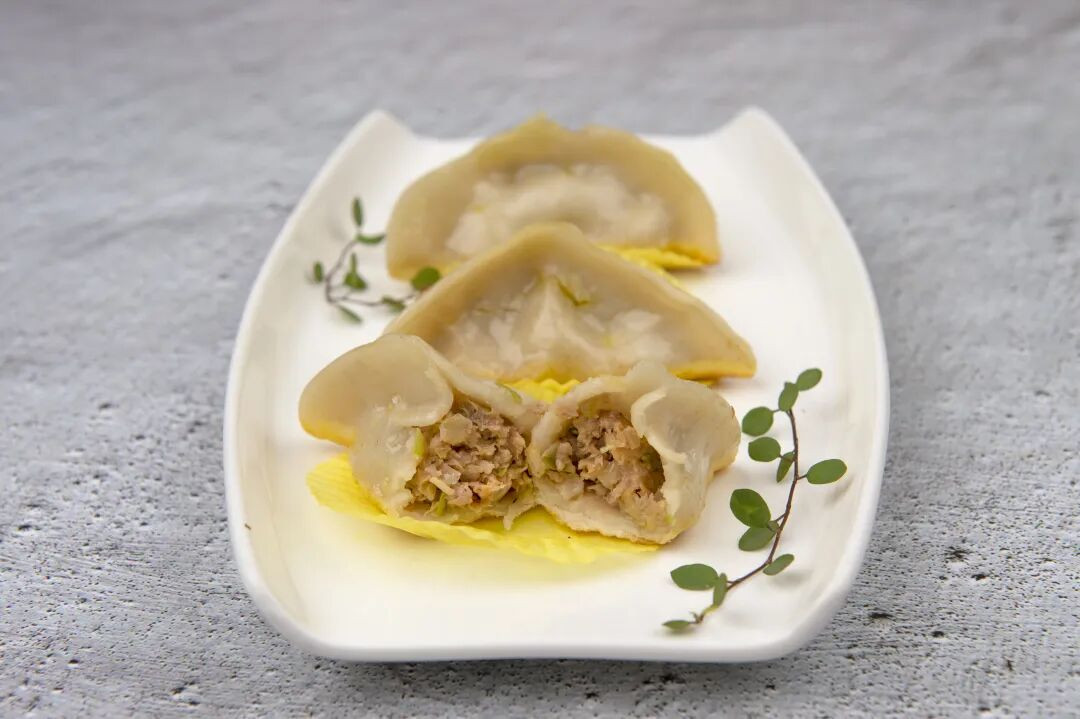
An exclusive tasting at the Atlantic Restaurant inside the legendary Pearl Hotel (Mingzhu Dafandian Qingzhen Canting)—a hidden veteran of Shanghai-style (Haipai) Halal dining. We review their signature paper-thin sliced cold beef tongue, the East-meets-West fork-tender braised beef served with cutlery, and classic rich, savory hot dishes that showcase Shanghai's unique, refined Halal culinary style.
Finding a Halal spot in Shanghai isn't hard—you can grab piping-hot shengjianbao (crispy pan-fried soup buns) or beef guotie (crispy beef potstickers) dripping with juice on almost any corner, accompanied by bowls of beef soup floating with chopped scallions. But if you're hunting for a place that elevates Halal food to that signature 'old Shanghai refined dining' level, you need a local foodie to show you the ropes. Last week, an old-school Shanghainese colleague at the office practically forced this place on me, patting his chest and swearing, 'Go here and you won't be disappointed.' He dragged me straight to the Atlantic Restaurant tucked inside the Pearl Hotel. The moment I pushed open the door, my eyes lit up: the ceiling featured warm, glowing star-and-crescent chandeliers with a cozy, retro vibe, and the corners were fitted with well-worn, glossy Republic-era solid wood dining tables, right down to the old-school, meticulous tablecloths. As soon as we sat down, I heard an auntie at the next table call out in authentic Shanghainese, 'Boss, bring us a 'Niuri Chongtian' (towering beef feast)!' That vibrant neighborhood energy mixed with such classic elegance instantly won me over.
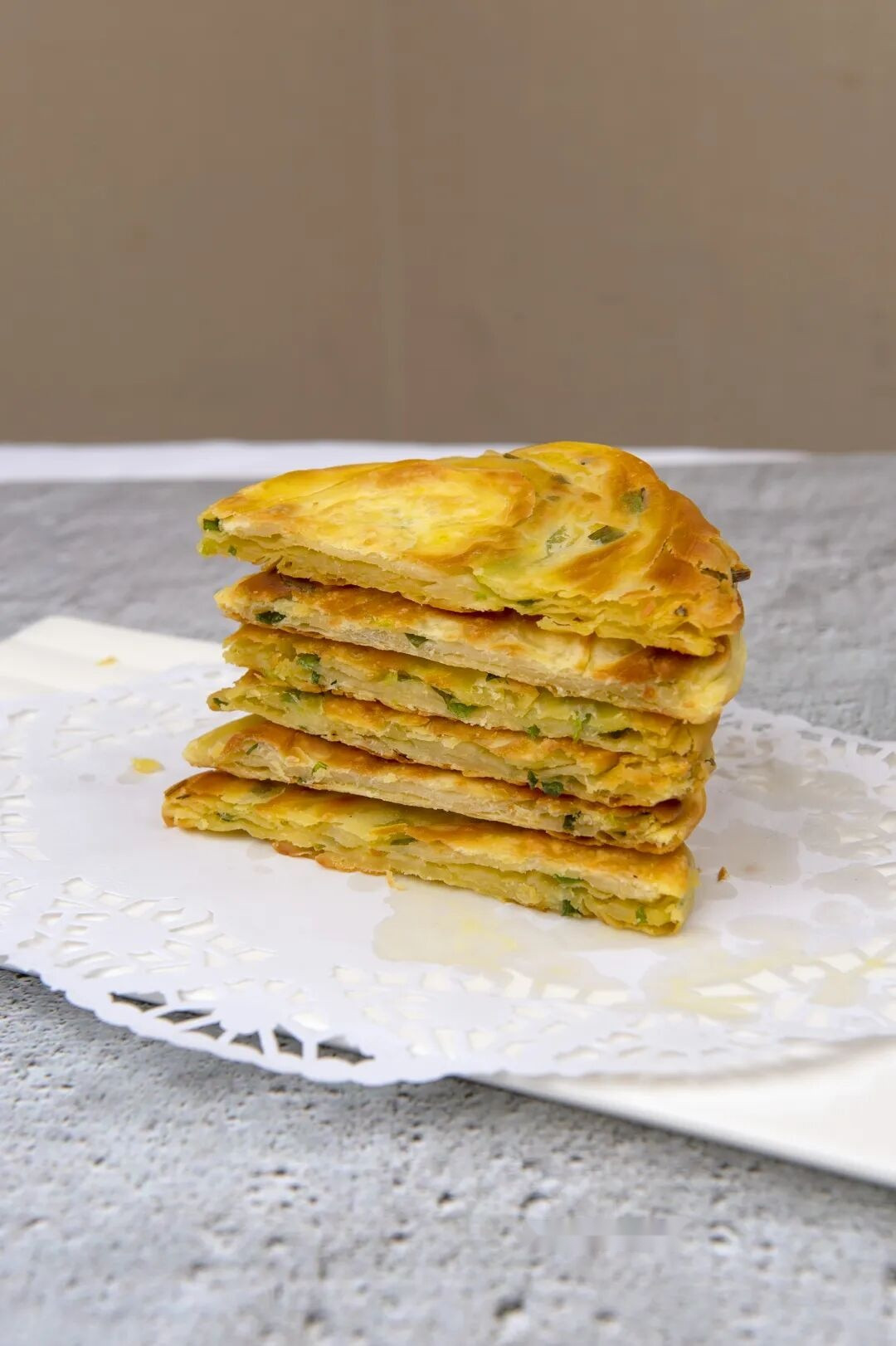
During a break between dishes, I chatted with Head Chef Zhao Hao and learned that this low-key spot holds a century-old heritage of Shanghai's Haipai Halal cuisine. After Shanghai opened as a treaty port in the 19th century, Muslim merchants flocked to the city, and Halal dining gradually evolved from roadside street stalls into grand banquet feasts. Back in the day on Fuzhou Road, this restaurant was an absolute powerhouse with lines stretching around the block. Later, it relocated to the Pearl Hotel, becoming one of the rare veteran spots in Shanghai where you can experience an authentic Haipai Halal banquet. Chef Zhao rolled up his sleeves and laughed, 'People always think Halal food is either casual street snacks or rugged Northwest-style chow. We wanted to make 'refined' Halal food so everyone could taste its delicate side!' I completely believed him the moment the first dish hit the table.
The starter, 'Xiaohe Xiangcuyou Ban Niushew' (alleyway vinegar and oil tossed beef tongue), completely shattered my preconceptions of Halal cold dishes. Every beef tongue dish I'd had before was either heavily braised and dense or char-grilled—always hot and hearty. But this version? The beef tongue was sliced paper-thin, glowing a translucent pinkish-white, submerged in glistening seasoned oil and vinegar, and dotted with specks of cracked black pepper. The plating looked just like an appetizer at a high-end Western restaurant. I picked up a slice and popped it into my mouth: first came the fresh, crisp notes of olive oil, followed by the bright tang of rice vinegar carrying the fruity aroma of black vinegar. Deep down, the beef tongue was bouncy and tender, releasing a faint hint of cumin as I chewed. It wasn't greasy at all. I immediately told my colleague, 'The flavor is unreal—so refreshing I can't stop using my chopsticks!'
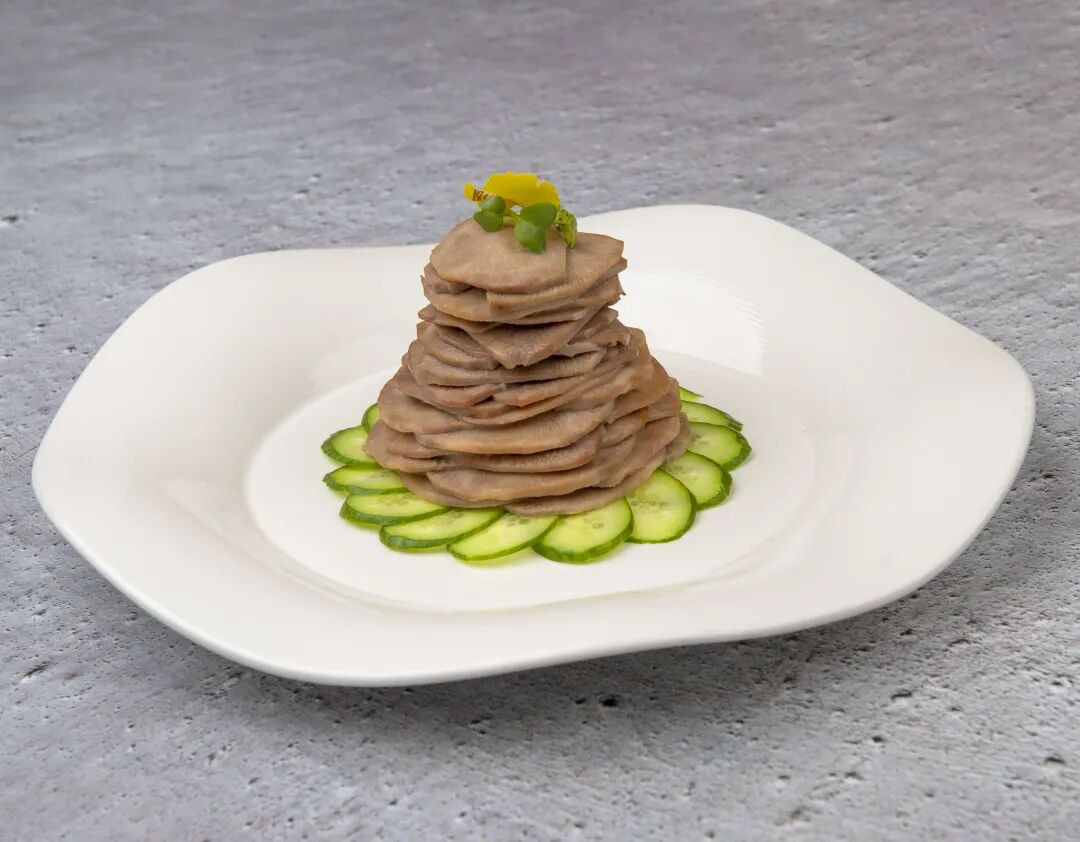
Chef Zhao came over to share the secret, explaining the East-meets-West touches hidden in the dish: the beef tongue is first boiled until tender in master stock spiced with Sichuan peppercorns, scallions, and ginger, then immediately plunged into ice water for a full 50 minutes. That hot-and-cold shock is what locks in the springy crunch. Skipping traditional soy sauce, the seasoning relies on extra virgin olive oil and Italian balsamic vinegar—a pairing that respects Halal guidelines while perfectly hitting the Shanghainese sweet spot for 'refreshing, tangy, and grease-cutting' flavors. A Shanghai auntie at our table nodded approvingly, raising her teacup to declare, 'This goes so well with huangjiu (yellow rice wine)! It's way lighter than red-braised pork, making it the ultimate comfort food for summer.'
If the cold dish was a breath of fresh air, the arrival of 'Niuri Chongtian' (towering beef feast) hijacked the entire restaurant's attention. A massive cow skull served as the base, piled high with a solid three pounds of hand-pulled beef cheek meat forming a small mountain nearly half a meter wide, taking up half the table. The server had just set it down when a kid at the next table slammed his hand on the table and yelled, 'So cool!' Adults whipped out their phones to snap away, and even an uncle from two tables over wandered over to see what the commotion was about. With a grand entrance like that, it more than lived up to its name meaning 'towering beef' or 'soaring success.'
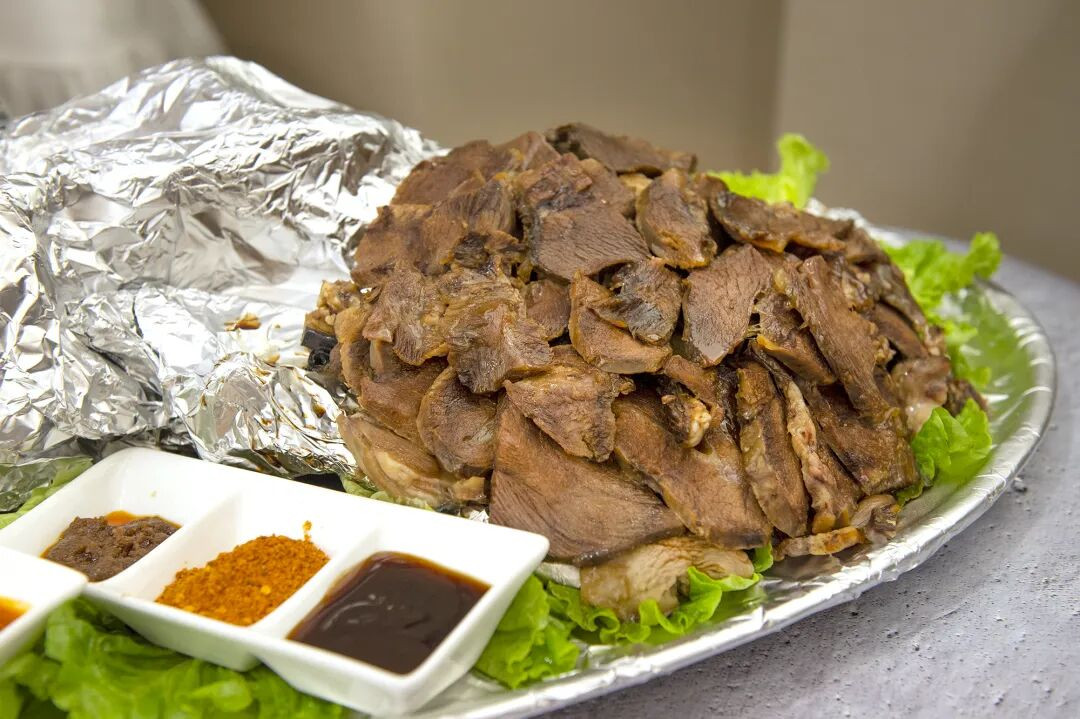
The best part is the generous, honest portion size. Chef Zhao explained that while many restaurants pad this dish with scraps, they refuse to compromise, using whole beef cheeks from Inner Mongolia slow-braised in master stock for four hours. 'This pot of master stock is a three-generation family treasure. We don't use any taboo ingredients; all the rich umami comes from beef bones and chicken feet, spiked with nearly 60 kinds of spices, including ginseng and angelica root. We have someone standing guard over the fire every single day.' I picked up a thick-cut piece of meat, revealing shimmering gelatinous collagen inside. It melted on the tongue, falling off the bone without turning mushy, carrying rich savory notes blended with subtle herbal aromas. Dipped in house-made chili paste, it just got better the more you chewed. A guy in our group gnawed on a piece and said, 'I always felt Halal beef wasn't quite satisfying enough, but this plate could easily feed three of us until we're stuffed. So worth it!'
I expected the roasted lamb leg to be the rugged, family-style Northwest version, but it arrived exuding refined elegance. Sourced from Ordos, the lamb leg is first braised tender in a blend of herbs, brushed with a secret sauce, and roasted until the skin is lightly charred and sizzling with oil. The deep reddish skin wrapped around tender meat releases juices at the touch of a knife. Chef Zhao explained they chose Ordos lamb specifically for its mild gaminess, pre-marinating it in a blended fruit-and-vegetable juice made from celery and onions, then roasting it with precise temperature control to guarantee crispy skin and succulent meat. As someone terrified of mutton gaminess, I couldn't stop eating piece after piece—the rich meat flavor laced with the subtle sweetness of fruits and veggies made it completely grease-free!
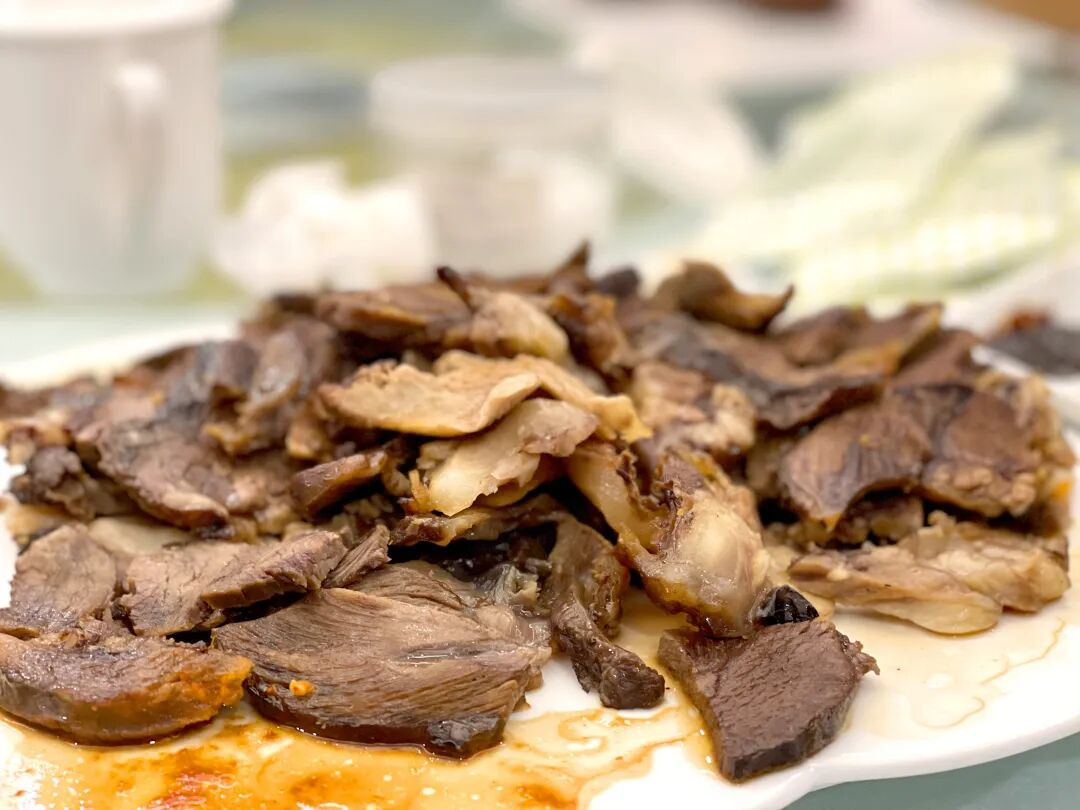
The biggest surprise was the 'Pearl Slow-Braised Beef,' which actually arrived at the table with a knife and fork! Imported marbled beef was cut into cubes, seared until golden brown on the outside, and then simmered on low heat until fully flavored, served alongside sweet chestnuts and pumpkin to cut through the richness. Slicing through it gently with a knife released a sizzle of piping-hot meat juices. The lean-to-fat ratio was spot-on, and the meat was tender without feeling dry. Chef Zhao smiled, mentioning he used to study Cantonese cuisine and wanted to experiment with crossover styles when transitioning to Halal cooking, combining Western plating with Cantonese braising techniques. It became an instant hit, with plenty of young diners coming just to photograph the dish for their social feeds.
To wrap up the meal, they brought out a bowl of house-made yogurt and a beef pastry. The yogurt was thick enough to hold a spoon upright, topped with sweetened red beans and crushed walnuts, while the flaky pastry shattered at the first bite, revealing a savory, flavorful beef filling. Gazing out at the Shanghai streetscape through the window, savoring the blend of authentic Halal roots, Shanghai refinement, and Western delicacy, I finally understood the magic of 'Haipai Halal'—it's not forced fusion, but rather a seamless blending of flavors into something uniquely delicious.
Before leaving, I scanned the dining room: elderly men in white caps leisurely sipping tea, young folks filming videos with the roasted lamb leg, and a family of three sharing a kids' meal. Chef Zhao walked me to the door and said, 'We just want people to realize that Halal food isn't just for a specific group. Whether it's a family gathering or a hangout with friends, locals in Shanghai can come here and have a great time.'
Have you discovered any hidden Halal gems in Shanghai? Are you into the street-side potsticker shops, or upscale veteran spots hidden inside major hotels? Drop your secret spots in the comments—I'll pick 3 lucky followers to win an Atlantic Restaurant yogurt voucher so you can taste this one-of-a-kind Haipai Halal flavor for yourselves~
Shanghai's Best-Kept Halal Secret: An In-Depth Review of a Century-Old Haipai Muslim Institution's Paper-Thin Beef Tongue and Fork-Tender Braised Beef
Abstract:
An exclusive tasting at the Atlantic Restaurant inside the legendary Pearl Hotel (Mingzhu Dafandian Qingzhen Canting)—a hidden veteran of Shanghai-style (Haipai) Halal dining. We review their signature paper-thin sliced cold beef tongue, the East-meets-West fork-tender braised beef served with cutlery, and classic rich, savory hot dishes that showcase Shanghai's unique, refined Halal culinary style.
Finding a Halal spot in Shanghai isn't hard—you can grab piping-hot shengjianbao (crispy pan-fried soup buns) or beef guotie (crispy beef potstickers) dripping with juice on almost any corner, accompanied by bowls of beef soup floating with chopped scallions. But if you're hunting for a place that elevates Halal food to that signature 'old Shanghai refined dining' level, you need a local foodie to show you the ropes. Last week, an old-school Shanghainese colleague at the office practically forced this place on me, patting his chest and swearing, 'Go here and you won't be disappointed.' He dragged me straight to the Atlantic Restaurant tucked inside the Pearl Hotel. The moment I pushed open the door, my eyes lit up: the ceiling featured warm, glowing star-and-crescent chandeliers with a cozy, retro vibe, and the corners were fitted with well-worn, glossy Republic-era solid wood dining tables, right down to the old-school, meticulous tablecloths. As soon as we sat down, I heard an auntie at the next table call out in authentic Shanghainese, 'Boss, bring us a 'Niuri Chongtian' (towering beef feast)!' That vibrant neighborhood energy mixed with such classic elegance instantly won me over.
During a break between dishes, I chatted with Head Chef Zhao Hao and learned that this low-key spot holds a century-old heritage of Shanghai's Haipai Halal cuisine. After Shanghai opened as a treaty port in the 19th century, Muslim merchants flocked to the city, and Halal dining gradually evolved from roadside street stalls into grand banquet feasts. Back in the day on Fuzhou Road, this restaurant was an absolute powerhouse with lines stretching around the block. Later, it relocated to the Pearl Hotel, becoming one of the rare veteran spots in Shanghai where you can experience an authentic Haipai Halal banquet. Chef Zhao rolled up his sleeves and laughed, 'People always think Halal food is either casual street snacks or rugged Northwest-style chow. We wanted to make 'refined' Halal food so everyone could taste its delicate side!' I completely believed him the moment the first dish hit the table.
The starter, 'Xiaohe Xiangcuyou Ban Niushew' (alleyway vinegar and oil tossed beef tongue), completely shattered my preconceptions of Halal cold dishes. Every beef tongue dish I'd had before was either heavily braised and dense or char-grilled—always hot and hearty. But this version? The beef tongue was sliced paper-thin, glowing a translucent pinkish-white, submerged in glistening seasoned oil and vinegar, and dotted with specks of cracked black pepper. The plating looked just like an appetizer at a high-end Western restaurant. I picked up a slice and popped it into my mouth: first came the fresh, crisp notes of olive oil, followed by the bright tang of rice vinegar carrying the fruity aroma of black vinegar. Deep down, the beef tongue was bouncy and tender, releasing a faint hint of cumin as I chewed. It wasn't greasy at all. I immediately told my colleague, 'The flavor is unreal—so refreshing I can't stop using my chopsticks!'
Chef Zhao came over to share the secret, explaining the East-meets-West touches hidden in the dish: the beef tongue is first boiled until tender in master stock spiced with Sichuan peppercorns, scallions, and ginger, then immediately plunged into ice water for a full 50 minutes. That hot-and-cold shock is what locks in the springy crunch. Skipping traditional soy sauce, the seasoning relies on extra virgin olive oil and Italian balsamic vinegar—a pairing that respects Halal guidelines while perfectly hitting the Shanghainese sweet spot for 'refreshing, tangy, and grease-cutting' flavors. A Shanghai auntie at our table nodded approvingly, raising her teacup to declare, 'This goes so well with huangjiu (yellow rice wine)! It's way lighter than red-braised pork, making it the ultimate comfort food for summer.'
If the cold dish was a breath of fresh air, the arrival of 'Niuri Chongtian' (towering beef feast) hijacked the entire restaurant's attention. A massive cow skull served as the base, piled high with a solid three pounds of hand-pulled beef cheek meat forming a small mountain nearly half a meter wide, taking up half the table. The server had just set it down when a kid at the next table slammed his hand on the table and yelled, 'So cool!' Adults whipped out their phones to snap away, and even an uncle from two tables over wandered over to see what the commotion was about. With a grand entrance like that, it more than lived up to its name meaning 'towering beef' or 'soaring success.'
The best part is the generous, honest portion size. Chef Zhao explained that while many restaurants pad this dish with scraps, they refuse to compromise, using whole beef cheeks from Inner Mongolia slow-braised in master stock for four hours. 'This pot of master stock is a three-generation family treasure. We don't use any taboo ingredients; all the rich umami comes from beef bones and chicken feet, spiked with nearly 60 kinds of spices, including ginseng and angelica root. We have someone standing guard over the fire every single day.' I picked up a thick-cut piece of meat, revealing shimmering gelatinous collagen inside. It melted on the tongue, falling off the bone without turning mushy, carrying rich savory notes blended with subtle herbal aromas. Dipped in house-made chili paste, it just got better the more you chewed. A guy in our group gnawed on a piece and said, 'I always felt Halal beef wasn't quite satisfying enough, but this plate could easily feed three of us until we're stuffed. So worth it!'
I expected the roasted lamb leg to be the rugged, family-style Northwest version, but it arrived exuding refined elegance. Sourced from Ordos, the lamb leg is first braised tender in a blend of herbs, brushed with a secret sauce, and roasted until the skin is lightly charred and sizzling with oil. The deep reddish skin wrapped around tender meat releases juices at the touch of a knife. Chef Zhao explained they chose Ordos lamb specifically for its mild gaminess, pre-marinating it in a blended fruit-and-vegetable juice made from celery and onions, then roasting it with precise temperature control to guarantee crispy skin and succulent meat. As someone terrified of mutton gaminess, I couldn't stop eating piece after piece—the rich meat flavor laced with the subtle sweetness of fruits and veggies made it completely grease-free!
The biggest surprise was the 'Pearl Slow-Braised Beef,' which actually arrived at the table with a knife and fork! Imported marbled beef was cut into cubes, seared until golden brown on the outside, and then simmered on low heat until fully flavored, served alongside sweet chestnuts and pumpkin to cut through the richness. Slicing through it gently with a knife released a sizzle of piping-hot meat juices. The lean-to-fat ratio was spot-on, and the meat was tender without feeling dry. Chef Zhao smiled, mentioning he used to study Cantonese cuisine and wanted to experiment with crossover styles when transitioning to Halal cooking, combining Western plating with Cantonese braising techniques. It became an instant hit, with plenty of young diners coming just to photograph the dish for their social feeds.
To wrap up the meal, they brought out a bowl of house-made yogurt and a beef pastry. The yogurt was thick enough to hold a spoon upright, topped with sweetened red beans and crushed walnuts, while the flaky pastry shattered at the first bite, revealing a savory, flavorful beef filling. Gazing out at the Shanghai streetscape through the window, savoring the blend of authentic Halal roots, Shanghai refinement, and Western delicacy, I finally understood the magic of 'Haipai Halal'—it's not forced fusion, but rather a seamless blending of flavors into something uniquely delicious.
Before leaving, I scanned the dining room: elderly men in white caps leisurely sipping tea, young folks filming videos with the roasted lamb leg, and a family of three sharing a kids' meal. Chef Zhao walked me to the door and said, 'We just want people to realize that Halal food isn't just for a specific group. Whether it's a family gathering or a hangout with friends, locals in Shanghai can come here and have a great time.'
Have you discovered any hidden Halal gems in Shanghai? Are you into the street-side potsticker shops, or upscale veteran spots hidden inside major hotels? Drop your secret spots in the comments—I'll pick 3 lucky followers to win an Atlantic Restaurant yogurt voucher so you can taste this one-of-a-kind Haipai Halal flavor for yourselves~
