

Muslim Culture China
Ultimate Guide to Halal Food & Muslim Culture in Shanghai: Top 10 Iconic Spots
Articles • Hasan09 posted the article • 0 comments • 9 views • 1 days ago
Ultimate Guide to Shanghai's Top 10 Halal Restaurants: A Fusion of Shanghai Classics and Authentic Northwest Flavors
Abstract:
A comprehensive curation of Shanghai's ten most iconic Halal dining institutions, evaluated through word-of-mouth reputation, historical legacy, and distinct flavor profiles. From the classic Shanghai-style hot pot at Hongchangxing and Pingliang Road's Yixinzhai, to Northwest and Xinjiang standouts like Yixiang Dunhuang Tower and Yershari, this guide showcases the rich depth of the magic city's Halal culinary scene.
As an international metropolis, Shanghai brings together food cultures from all over China and the world. Halal dining, with its unique dietary standards and distinct flavor profiles, has become an indispensable part of the city's culinary map. Based on public acclaim, signature dishes, and cultural fusion, we’ve put together a list of ten representative Halal restaurants in Shanghai (in no particular order) to give food lovers a diverse dining reference.
1. Xiyu Feast (Tianshan Branch) Located on Tianshan Road West in Changning District, this long-standing Xinjiang spot is famous for its authentic dapanji (big plate spicy chicken) and shouzhua fan (Xinjiang hand-grabbed rice). They fly their lamb straight from Xinjiang, so it's super tender with zero gamey flavor, and their secret-spice lamb skewers are absolute perfection. Their signature nang bao rou (crispy flatbread soaked in rich lamb stew) soaks up all that savory broth, showing off the delicious clash between rugged Northwest cooking and fine-tuned technique. The dining room is decked out in full Uyghur style, and they even put on traditional folk song and dance performances at night—making it a super popular spot to soak up some Xinjiang culture.
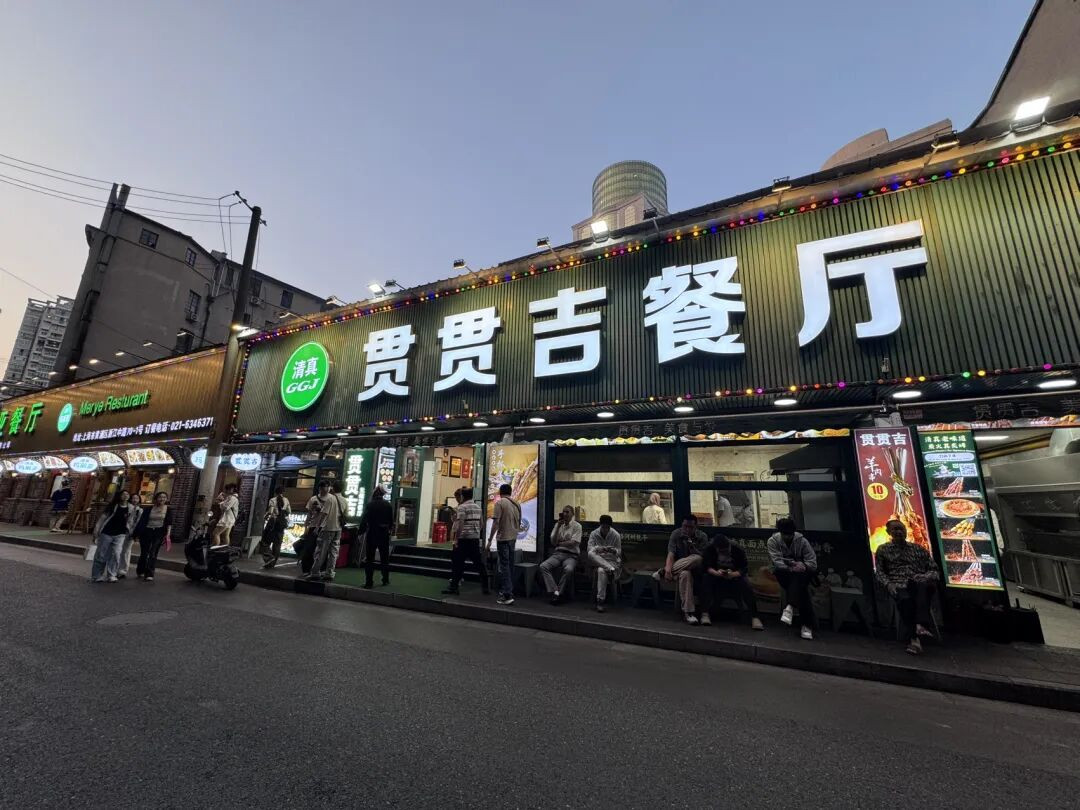
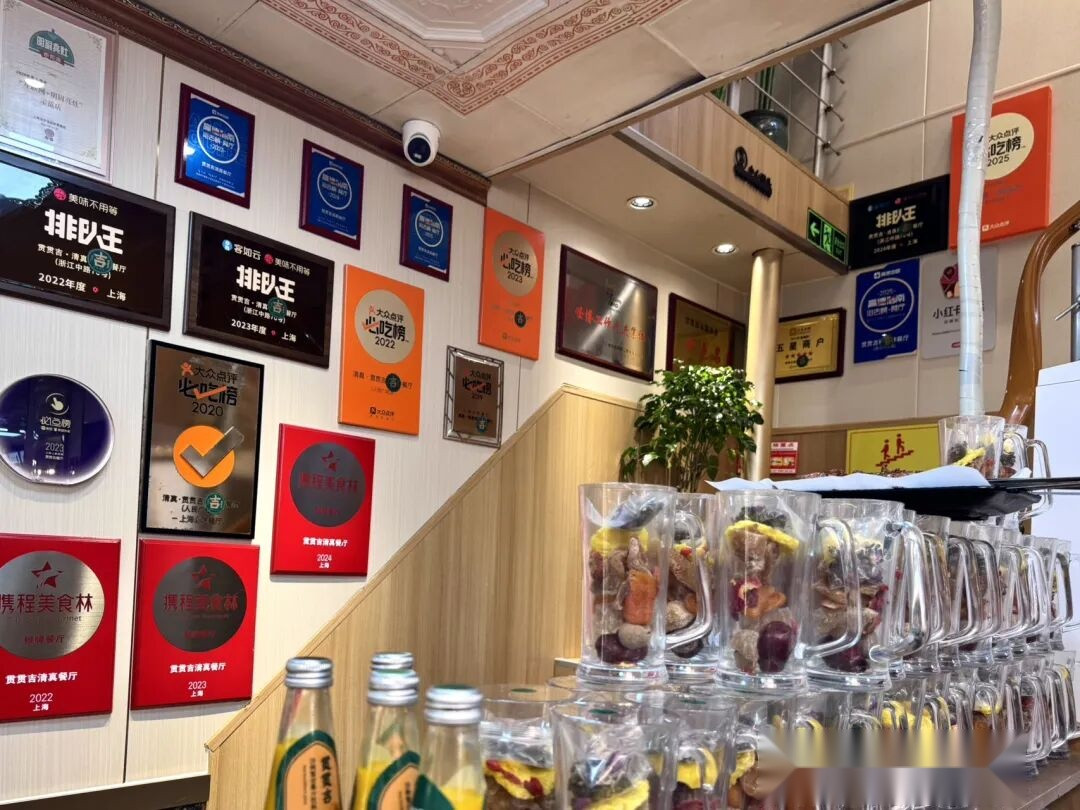
2. Guanguanji Muslim Restaurant (Zhejiang Middle Road Branch) Just steps away from East Nanjing Road, this century-old institution holds a special place in the history of Shanghai's Muslim food scene. Their niurou jianbao (pan-fried beef dumplings) and hot-and-sour soup are an absolute power couple; the dumplings come out with a golden, crispy bottom crust, packed with hand-minced beef and bursting with soup. They still use traditional Halal dim sum techniques for classics like majiang liangpi (cold skin noodles in sesame sauce) and yangrou xiaolongbao (steamed beef soup dumplings). With super budget-friendly prices, it's a huge hit with both locals and travelers.
3. Yershari (Multiple Branches) As a go-to chain for Xinjiang cuisine, Yershari has won over the younger crowd with consistently great food and sleek, modern interiors. A must-try is their Shihezi liangpi (refreshing cold skin noodles) which totally steals the show with its smooth texture and zesty sweet-and-sour dressing, alongside napaliyong (a creative fusion dessert pairing Xinjiang cheese with French pastry techniques). Most branches are right in bustling commercial hubs, making them ideal for casual hangouts with friends or quick business lunches.
4. Bayi Laoye Xinjiang Cuisine (Hongkou Football Stadium Branch) Known for massive, hearty portions and wallet-friendly prices, their signature jiazi rou (rack-of-lamb roasted on an iron frame) has to be ordered in advance—whole racks of lamb slow-roast on a rig, and the visual is honestly jaw-dropping. Their yogurt is house-fermented, drizzled with honey and topped with crushed nuts to cut through the richness and wake up your appetite. The walls are plastered with photos of the Xinjiang landscape, giving off major prairie vibes.
5. Hongchangxing (Yunnan South Road Branch) Established way back in 1891, this time-honored national brand is legendary for its traditional copper-pot mutton hot pot. They use old-school charcoal-heated copper pots, slicing the lamb paper-thin so it cooks in seconds and hits different when dipped in rich sesame paste. Their jiang niurou (braised beef shank) is cured to perfection with marbling that looks like abstract art, earning it a feature on the hit show *A Bite of China*. Retaining its Republic of China-era interior design, dining here is a double dose of nostalgia and incredible food.
6. Alijia (Pudong New Area Branch) Specializing in Northwest flavors and creative fusion dishes, their huangmi babao fan (millett sticky rice pudding) steams up Ningxia goji berries, raisins, and glutinous millet for a sweet-without-being-cloying treat. Their suantang feiniu (sour soup beef) stars Qinghai yak beef in a zesty broth simmered with wild mountain peppers and tomatoes. The restaurant features an open glass kitchen where diners can watch noodle chefs pull hand-spun "one-strand noodles" live on the spot.
7. Yixiang Dunhuang Tower (Zhongshan North Road Branch) A dedicated house of Lanzhou beef noodles where the noodles are hand-pulled to order in eight different thicknesses—from ultra-fine "maoxi" to flat "jiuye" styles—and the broth is simmered from beef bones and over thirty spices for a solid 10 hours or more. Paired with aromatic, chili-packed yopo lazi oil that brings serious aroma without blowing your head off, it’s the closest thing to real-deal Lanzhou flavor. They also serve up Northwest street snacks like gray pea soup and tianpeizi (fermented sweet oats).
8. Silk Road Halal Restaurant (Jing'an Temple Commercial Hub) A high-end spot themed around Silk Road culture, blending culinary traditions from Central Asia and the Middle East. Their "Persian roasted lamb leg" is marinated in saffron and pomegranate juice, leaving the meat crazy tender and juicy, while the baklava dessert packs flaky layers of phyllo dough and crushed walnuts, finished off with a drizzle of rose syrup for pure dessert luxury. The atmosphere is upscale and refined, making it a stellar pick for banquets or anniversary dates.
9. Ma Jinlong Mala Tang (Multiple Branches) Flipping the script on traditional mala tang spots, this Halal chain offers two killer broth bases: rich beef bone and tangy tomato, with every single ingredient fully Halal-certified. You’ve gotta try their signature beef meatballs and handmade fish tofu, and the dipping sauce station hooks you up with Northern staples like sesame paste and fermented Chinese chive flower sauce. It’s an unbeatable value at around 30 RMB per person.
10. Xibeilang BBQ (Shouning Road Branch) A legendary late-night Halal BBQ spot on Shanghai's bustling food street. They use Ningxia Tan sheep for their mutton skewers, grilling them over open coals with a generous dusting of cumin and chili flakes for that ultimate smoky street-food vibe. Their summer-exclusive whole roasted lamb needs to be booked three days in advance, and pairing it with nang flatbread and onions is an absolute feast. Open until 2 AM, it’s an absolute mecca for late-night snack seekers.
The Cultural Fusion of Halal Dining in Shanghai: Shanghai's Halal spots don't just cater to the dietary needs of Muslims—they’ve evolved into vibrant cultural bridges connecting different communities. For instance, when Hongchangxing brought traditional Beijing-style mutton hot pot to Shanghai, they tweaked the sesame paste ratio to match local palates; similarly, Yershari upgraded their presentation style to align with modern urban aesthetics. This kind of "localized" innovation is the ultimate proof of Shanghai culture's inclusive spirit.
Practical Tips: For some of the older heritage spots, try to beat the rush hour to avoid long lines—like Guanguanji, which regularly has a wait during lunch. Northwest portions are notoriously generous, so we recommend 3-4 people share a single order of dapanji. Also, during major holidays like Eid al-Fitr, several restaurants drop special festive menus, so it's always a good idea to call ahead and confirm. view all
Ultimate Guide to Shanghai's Top 10 Halal Restaurants: A Fusion of Shanghai Classics and Authentic Northwest Flavors
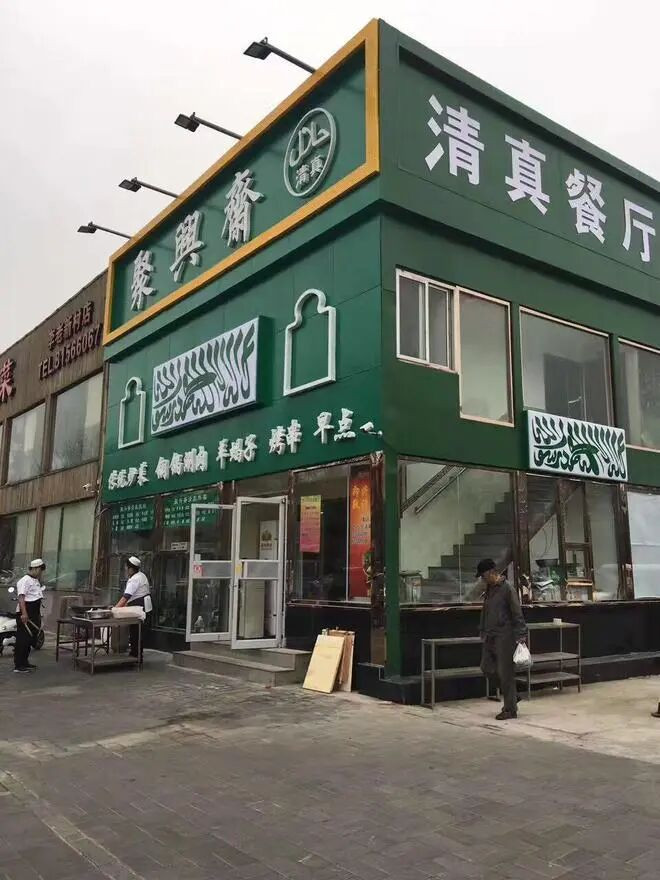
Abstract:
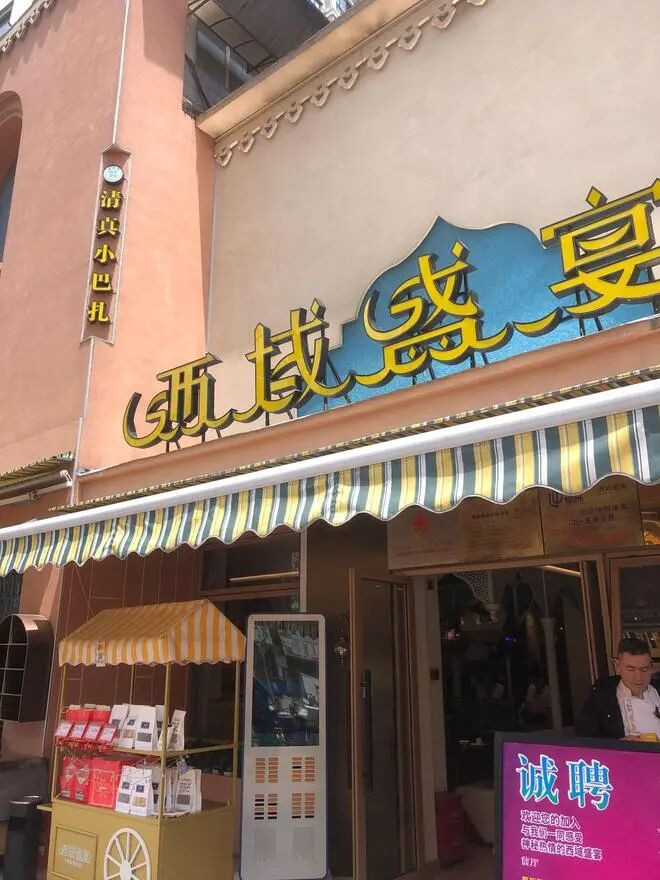
A comprehensive curation of Shanghai's ten most iconic Halal dining institutions, evaluated through word-of-mouth reputation, historical legacy, and distinct flavor profiles. From the classic Shanghai-style hot pot at Hongchangxing and Pingliang Road's Yixinzhai, to Northwest and Xinjiang standouts like Yixiang Dunhuang Tower and Yershari, this guide showcases the rich depth of the magic city's Halal culinary scene.
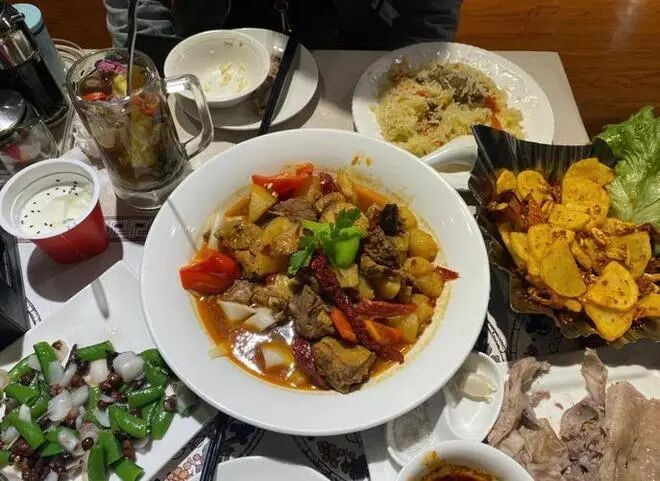
As an international metropolis, Shanghai brings together food cultures from all over China and the world. Halal dining, with its unique dietary standards and distinct flavor profiles, has become an indispensable part of the city's culinary map. Based on public acclaim, signature dishes, and cultural fusion, we’ve put together a list of ten representative Halal restaurants in Shanghai (in no particular order) to give food lovers a diverse dining reference.
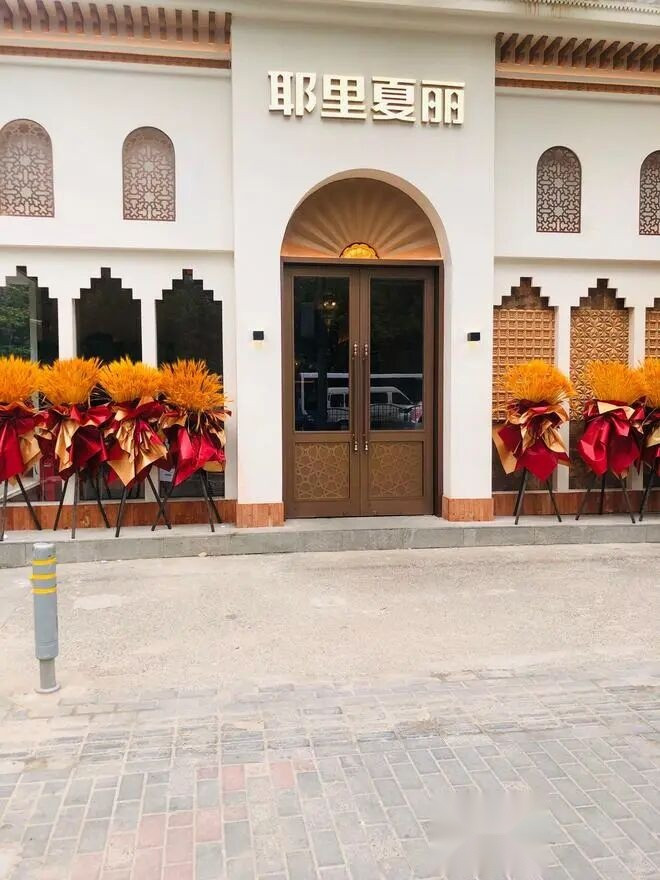
1. Xiyu Feast (Tianshan Branch) Located on Tianshan Road West in Changning District, this long-standing Xinjiang spot is famous for its authentic dapanji (big plate spicy chicken) and shouzhua fan (Xinjiang hand-grabbed rice). They fly their lamb straight from Xinjiang, so it's super tender with zero gamey flavor, and their secret-spice lamb skewers are absolute perfection. Their signature nang bao rou (crispy flatbread soaked in rich lamb stew) soaks up all that savory broth, showing off the delicious clash between rugged Northwest cooking and fine-tuned technique. The dining room is decked out in full Uyghur style, and they even put on traditional folk song and dance performances at night—making it a super popular spot to soak up some Xinjiang culture.
2. Guanguanji Muslim Restaurant (Zhejiang Middle Road Branch) Just steps away from East Nanjing Road, this century-old institution holds a special place in the history of Shanghai's Muslim food scene. Their niurou jianbao (pan-fried beef dumplings) and hot-and-sour soup are an absolute power couple; the dumplings come out with a golden, crispy bottom crust, packed with hand-minced beef and bursting with soup. They still use traditional Halal dim sum techniques for classics like majiang liangpi (cold skin noodles in sesame sauce) and yangrou xiaolongbao (steamed beef soup dumplings). With super budget-friendly prices, it's a huge hit with both locals and travelers.
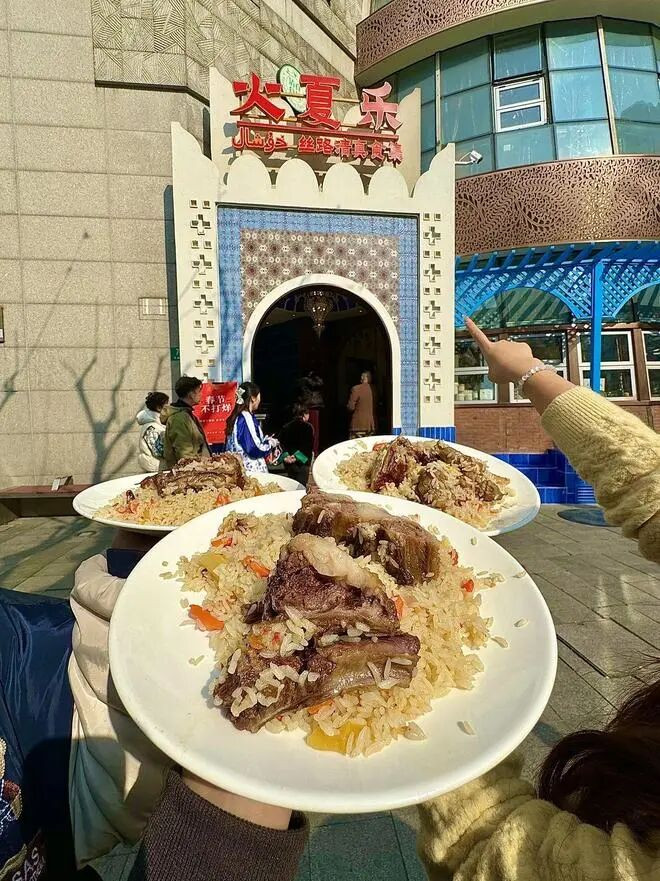
3. Yershari (Multiple Branches) As a go-to chain for Xinjiang cuisine, Yershari has won over the younger crowd with consistently great food and sleek, modern interiors. A must-try is their Shihezi liangpi (refreshing cold skin noodles) which totally steals the show with its smooth texture and zesty sweet-and-sour dressing, alongside napaliyong (a creative fusion dessert pairing Xinjiang cheese with French pastry techniques). Most branches are right in bustling commercial hubs, making them ideal for casual hangouts with friends or quick business lunches.
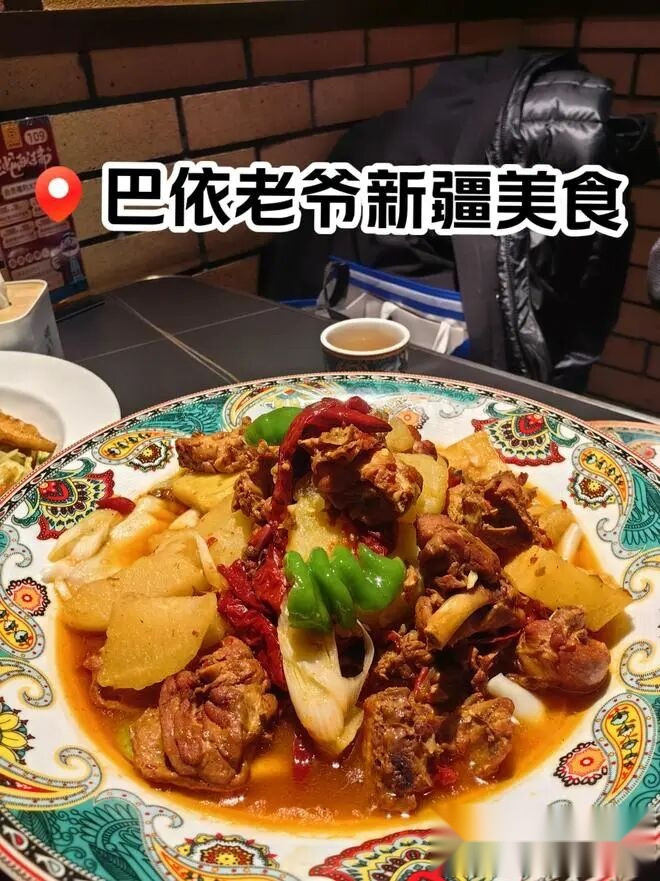
4. Bayi Laoye Xinjiang Cuisine (Hongkou Football Stadium Branch) Known for massive, hearty portions and wallet-friendly prices, their signature jiazi rou (rack-of-lamb roasted on an iron frame) has to be ordered in advance—whole racks of lamb slow-roast on a rig, and the visual is honestly jaw-dropping. Their yogurt is house-fermented, drizzled with honey and topped with crushed nuts to cut through the richness and wake up your appetite. The walls are plastered with photos of the Xinjiang landscape, giving off major prairie vibes.
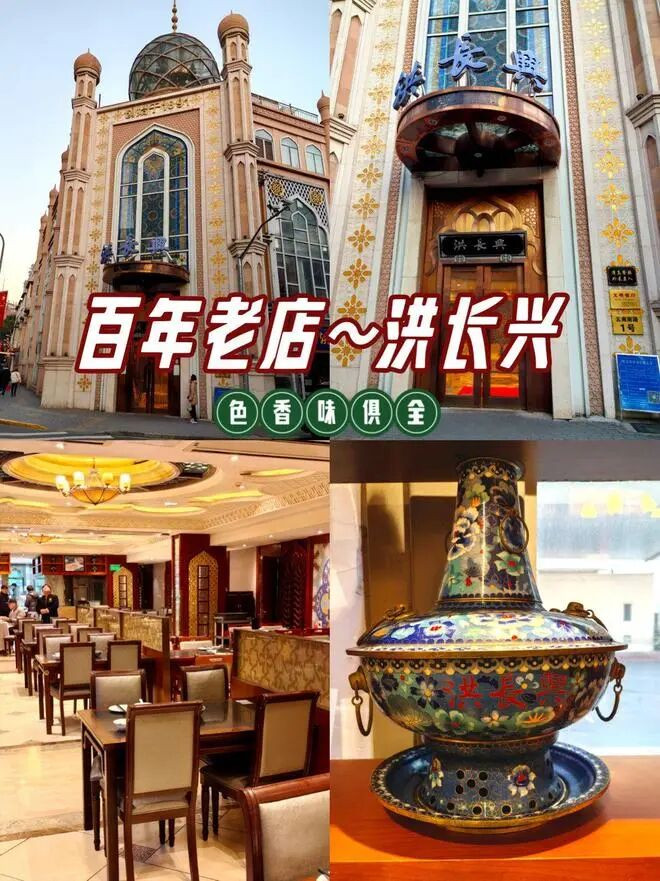
5. Hongchangxing (Yunnan South Road Branch) Established way back in 1891, this time-honored national brand is legendary for its traditional copper-pot mutton hot pot. They use old-school charcoal-heated copper pots, slicing the lamb paper-thin so it cooks in seconds and hits different when dipped in rich sesame paste. Their jiang niurou (braised beef shank) is cured to perfection with marbling that looks like abstract art, earning it a feature on the hit show *A Bite of China*. Retaining its Republic of China-era interior design, dining here is a double dose of nostalgia and incredible food.
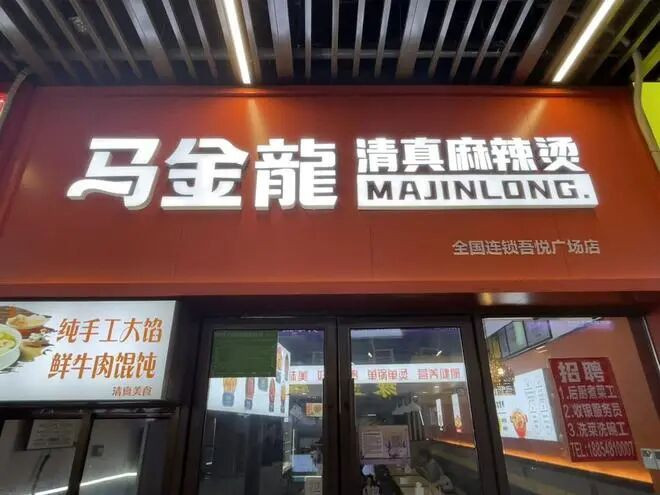
6. Alijia (Pudong New Area Branch) Specializing in Northwest flavors and creative fusion dishes, their huangmi babao fan (millett sticky rice pudding) steams up Ningxia goji berries, raisins, and glutinous millet for a sweet-without-being-cloying treat. Their suantang feiniu (sour soup beef) stars Qinghai yak beef in a zesty broth simmered with wild mountain peppers and tomatoes. The restaurant features an open glass kitchen where diners can watch noodle chefs pull hand-spun "one-strand noodles" live on the spot.
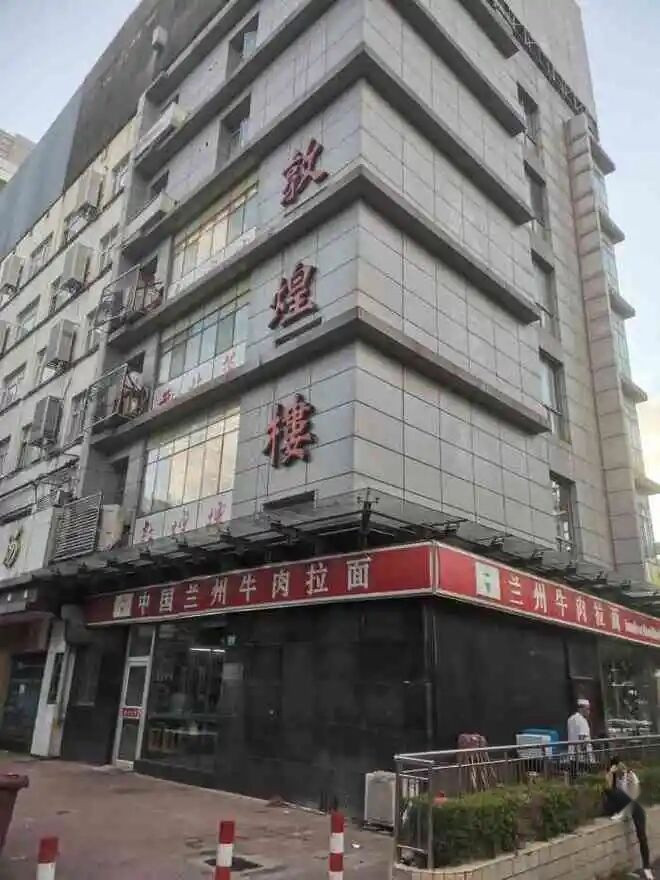
7. Yixiang Dunhuang Tower (Zhongshan North Road Branch) A dedicated house of Lanzhou beef noodles where the noodles are hand-pulled to order in eight different thicknesses—from ultra-fine "maoxi" to flat "jiuye" styles—and the broth is simmered from beef bones and over thirty spices for a solid 10 hours or more. Paired with aromatic, chili-packed yopo lazi oil that brings serious aroma without blowing your head off, it’s the closest thing to real-deal Lanzhou flavor. They also serve up Northwest street snacks like gray pea soup and tianpeizi (fermented sweet oats).
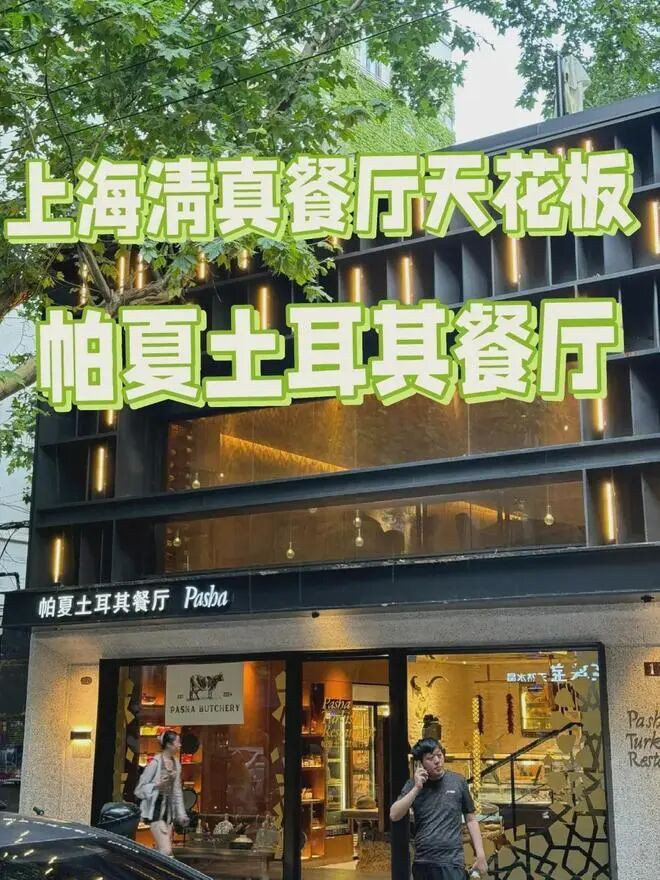
8. Silk Road Halal Restaurant (Jing'an Temple Commercial Hub) A high-end spot themed around Silk Road culture, blending culinary traditions from Central Asia and the Middle East. Their "Persian roasted lamb leg" is marinated in saffron and pomegranate juice, leaving the meat crazy tender and juicy, while the baklava dessert packs flaky layers of phyllo dough and crushed walnuts, finished off with a drizzle of rose syrup for pure dessert luxury. The atmosphere is upscale and refined, making it a stellar pick for banquets or anniversary dates.
9. Ma Jinlong Mala Tang (Multiple Branches) Flipping the script on traditional mala tang spots, this Halal chain offers two killer broth bases: rich beef bone and tangy tomato, with every single ingredient fully Halal-certified. You’ve gotta try their signature beef meatballs and handmade fish tofu, and the dipping sauce station hooks you up with Northern staples like sesame paste and fermented Chinese chive flower sauce. It’s an unbeatable value at around 30 RMB per person.
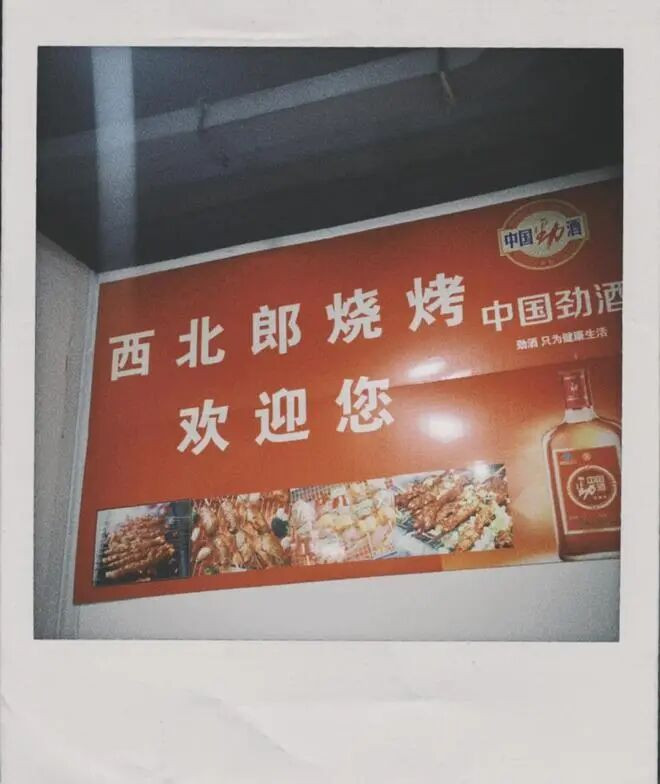
10. Xibeilang BBQ (Shouning Road Branch) A legendary late-night Halal BBQ spot on Shanghai's bustling food street. They use Ningxia Tan sheep for their mutton skewers, grilling them over open coals with a generous dusting of cumin and chili flakes for that ultimate smoky street-food vibe. Their summer-exclusive whole roasted lamb needs to be booked three days in advance, and pairing it with nang flatbread and onions is an absolute feast. Open until 2 AM, it’s an absolute mecca for late-night snack seekers.
The Cultural Fusion of Halal Dining in Shanghai: Shanghai's Halal spots don't just cater to the dietary needs of Muslims—they’ve evolved into vibrant cultural bridges connecting different communities. For instance, when Hongchangxing brought traditional Beijing-style mutton hot pot to Shanghai, they tweaked the sesame paste ratio to match local palates; similarly, Yershari upgraded their presentation style to align with modern urban aesthetics. This kind of "localized" innovation is the ultimate proof of Shanghai culture's inclusive spirit.
Practical Tips: For some of the older heritage spots, try to beat the rush hour to avoid long lines—like Guanguanji, which regularly has a wait during lunch. Northwest portions are notoriously generous, so we recommend 3-4 people share a single order of dapanji. Also, during major holidays like Eid al-Fitr, several restaurants drop special festive menus, so it's always a good idea to call ahead and confirm.
Shanghai Halal Food Showdown: Guanguanji vs. Maria on Zhejiang Middle Road
Articles • Hasan09 posted the article • 0 comments • 8 views • 1 days ago
Shanghai Zhejiang Middle Road Halal Mutton Showdown: Comprehensive Review of Refined Guanguanji and Rugged Maria Halal Restaurants
Abstract:
An in-depth review of Guanguanji and Maria, two powerhouse Halal eateries running neck-and-neck on Shanghai's famous Halal food street, Zhejiang Middle Road. We compare shouzhua yangrou (hand-grabbed lamb), spiced skewers, signature mutton offal soup, and staple carbs to give meat lovers and Halal foodies a clear guide on where to eat.
On Shanghai's famous Halal food street, Zhejiang Middle Road, Guanguanji and Maria stand side-by-side. One is delicate, the other rugged, and both are so crazy good it's impossible to pick a favorite. For a pilgrimage site of heavy-hitting meat eaters, adding these two heavyweights to the lineup is a total game-changer!
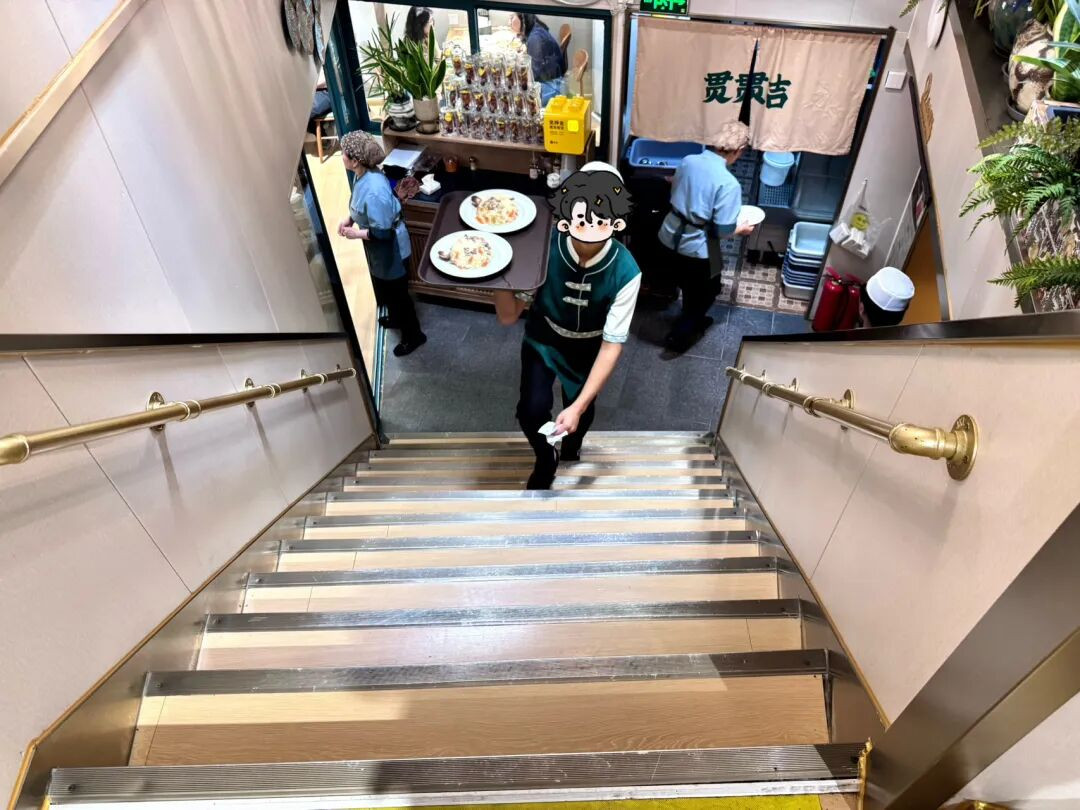
Guanguanji's dining room is a little cramped, but it's kept super clean and tidy.
That's the best thing about Halal spots—they're obsessively clean and reassuring. Even with tons of meat traffic coming through every day, the floor is totally grease-free and your shoes won't stick.
They don't serve alcohol here, and there's no rowdy shouting. Everyone just keeps their heads down and focuses on crushing their meat.
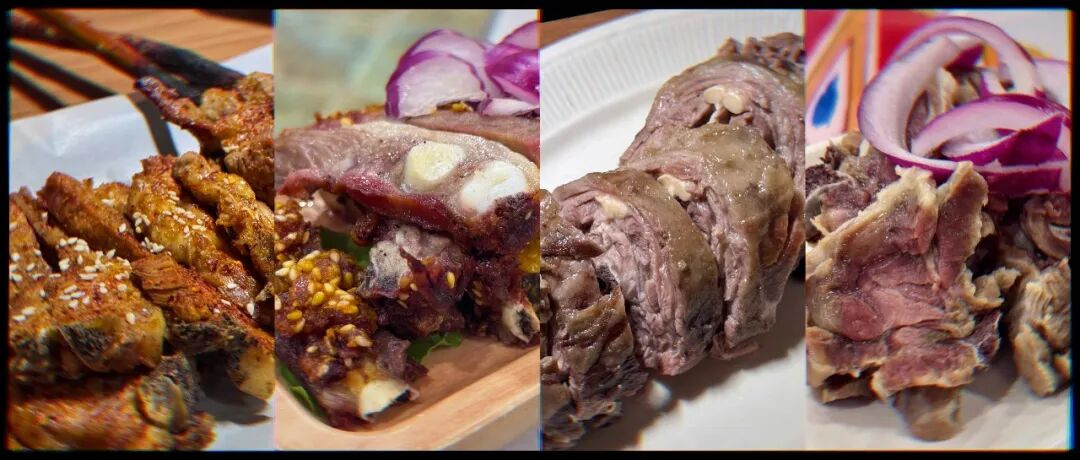
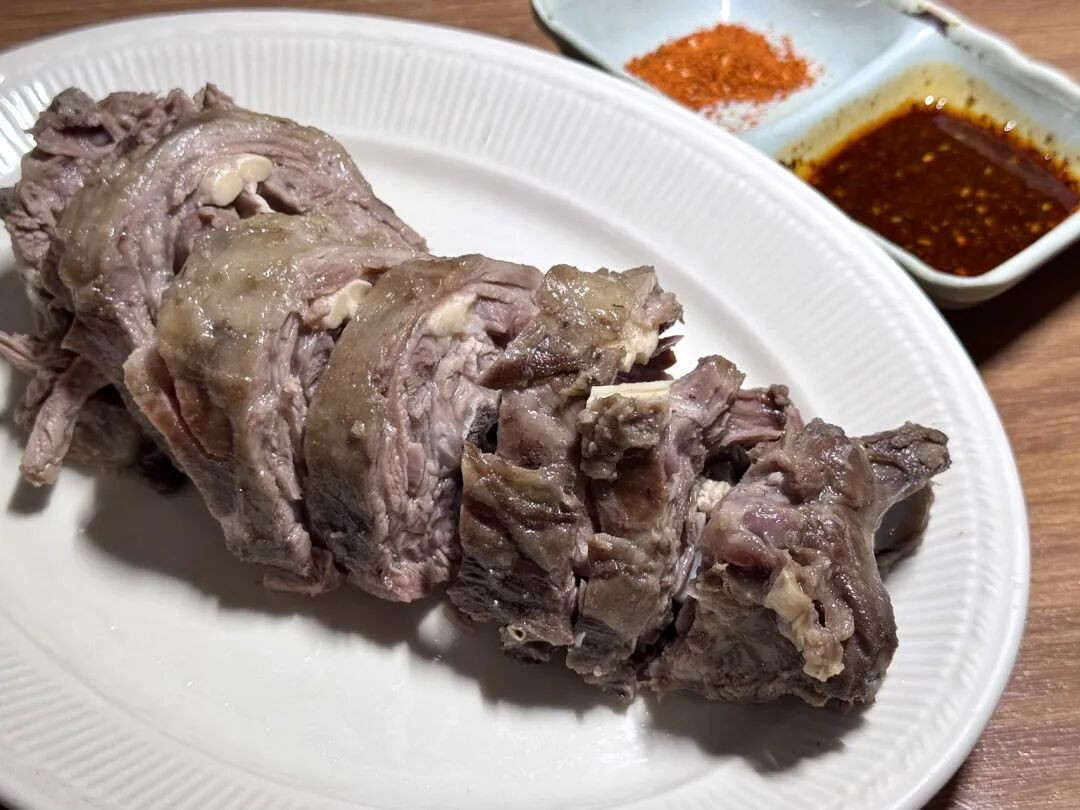
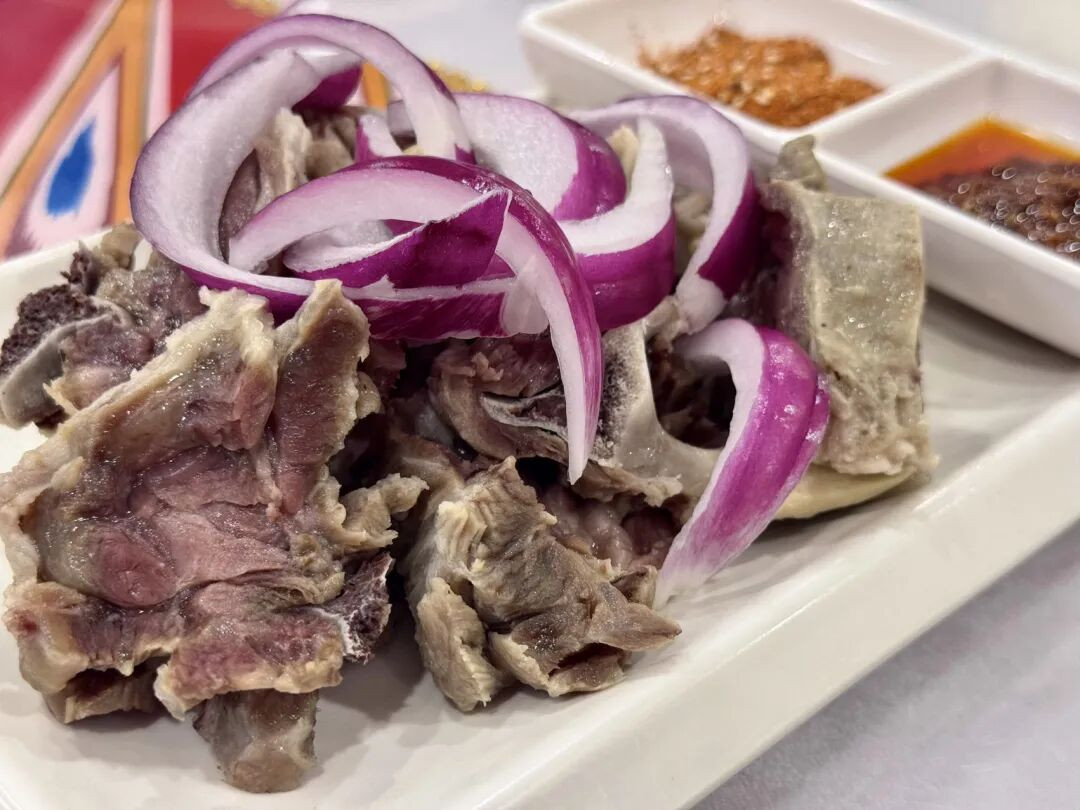
Ever since I tried hand-grabbed lamb neck, I totally quit ordering regular cuts like lamb ribs or leg meat. Whenever I walk in, I order a pound of lamb neck right off the bat.
You can tell right when it hits the table that these are big, thick-necked sheep, but the meat is just as tender as a spring lamb. The connective tissue has an amazing chew, the lean meat is drop-dead tender, and a tiny bit of fat steps in to pull off the ultimate flavor combo.
Because they use mature sheep, the rich, savory flavor of the mutton is way deeper—pure deliciousness without a hint of gaminess.
The salt is applied with sniper-like precision. That salty baseline draws out the deep meaty aroma without ever stealing the spotlight. This is the absolute peak form of salt and meat dancing together.
The spinal marrow hidden right in the middle of the neck bones can be easily fished out with your chopsticks. It's as creamy as fugu milt—a totally unexpected jackpot you just don't get with baby lamb necks.
Compared to the neck, the red-willow lamb skewers are firmer and fatter, hugging the red-willow twigs and roasted to a smoky, charred finish.
The roast lamb ribs are surprisingly light, seasoned with just a touch of salt and chili—pure fragrance without the burn.
The whole meat-eating progression builds naturally: from lean to fat, from boiled to grilled. It's pure meat from start to finish. So satisfying!
At most, pair it with a plate of cold tossed spinach—low on salt, a tiny bit tangy, with a faint tingle of Sichuan pepper. It's crisp and refreshing, giving your palate a break when the meat gets heavy. Absolute perfection.
Unlike Guanguanji's light and delicate style, Maria Restaurant's dishes are unapologetically bold and wild.
As a Xinjiang restaurant, Maria not only has plenty of elbow room, but you can also drink bowls of liquor here.
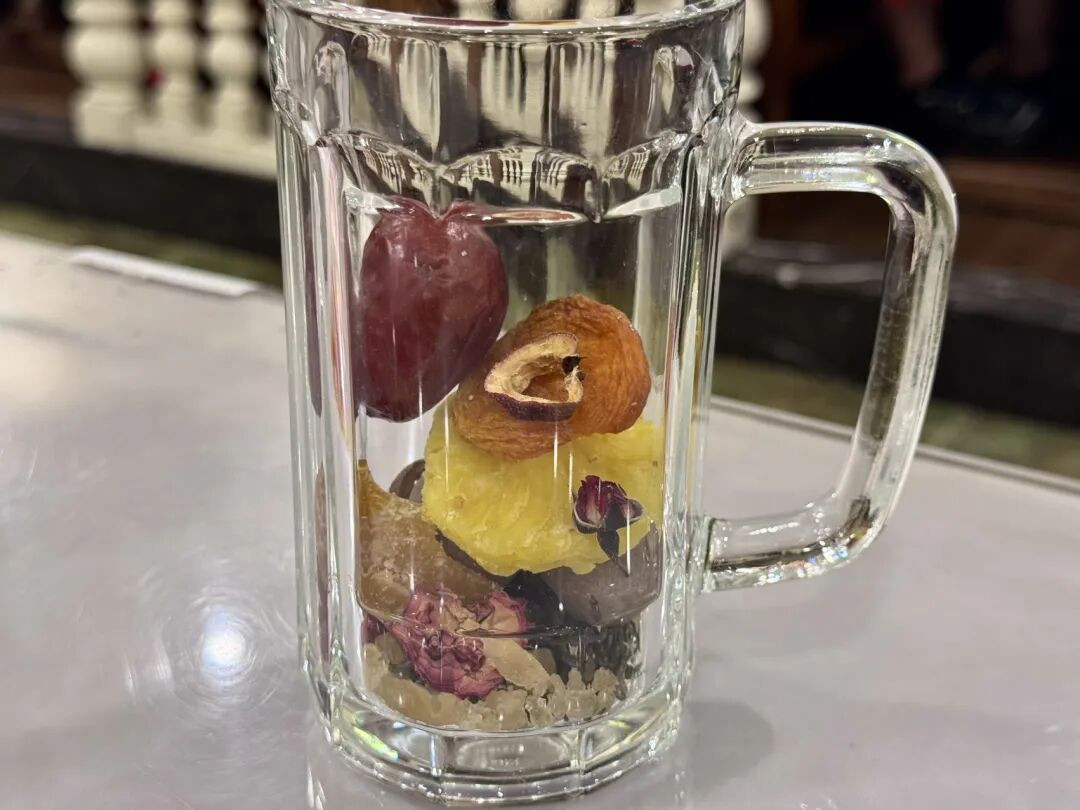
Or sip massive mugs of loaded eight-treasure tea (babao cha).
As the province with the highest per capita mutton consumption in China, Xinjiang's obsession with lamb is baked into its DNA, and their pursuit of bold mutton flavor is relentless—meaning it's gotta have that gamey kick.
Maria's hand-grabbed lamb neck leans all the way into that philosophy. Heavy-handed salt punches up a massive meaty flavor, and every single pull unleashes a flood of savory aromas. That tiny hint of gaminess actually wakes up your primal carnivorous instincts.
Maybe because we only ordered half a pound, we didn't get the prized middle section of the neck like at Guanguanji, but gnawing on the sinewy tail-end pieces of the neck had a wild charm of its own.
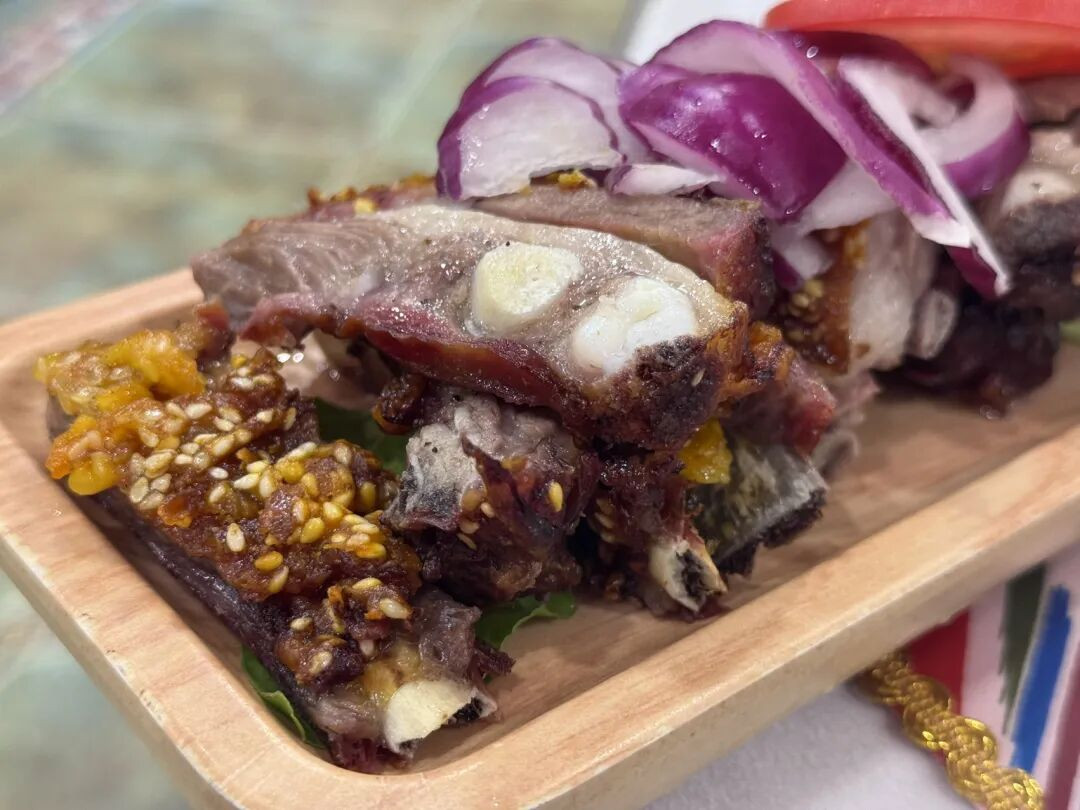
The roast lamb ribs are similarly heavy on the seasoning and dripping with lamb fat, but eating them is an absolute thrill.
I've always lived by the culinary gospel of 'salty fish, bland meat'—light seasoning usually preserves the original flavor best. Maria's salt-heavy attack kind of blew my mind; maybe mutton's aggressive streak actually needs a heavy hand of salt to fully come alive.
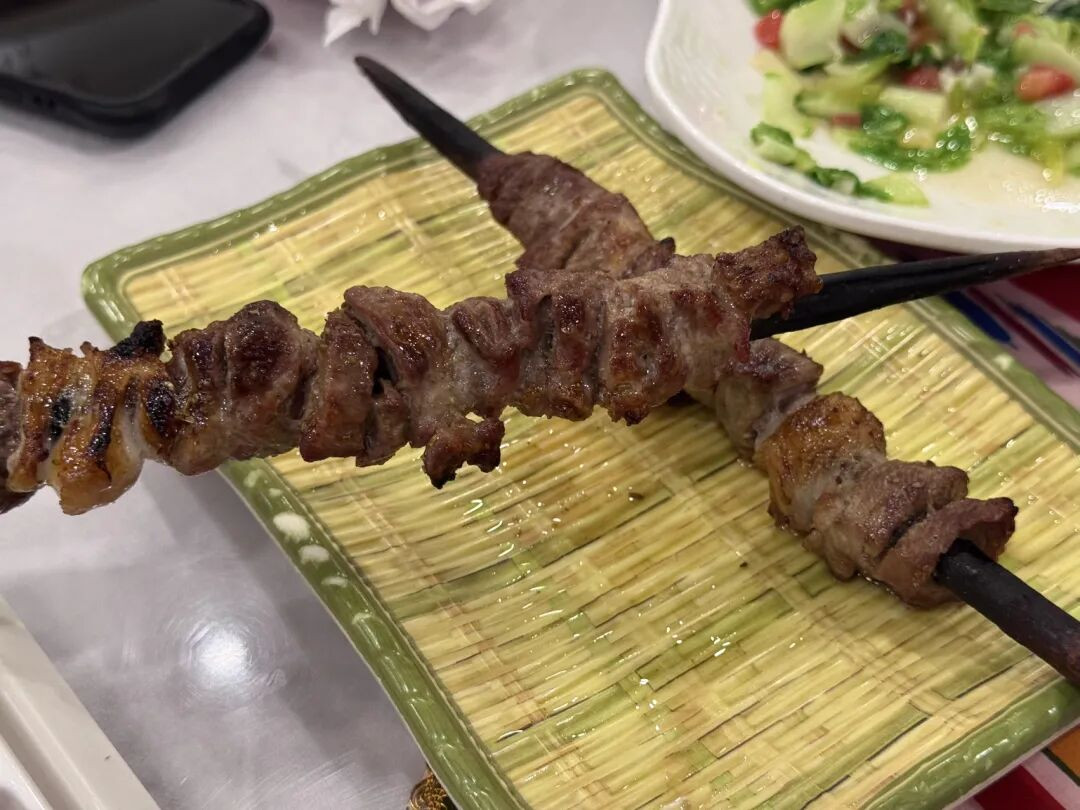
The red-willow skewers and grilled lamb kidneys bring that same wild sodium punch. The funky aroma inherent to kidneys is completely beaten into submission—a tiny bit of heavy-handed salt traded for a 10-out-of-10 rush.
Per tradition, we ordered a token plate of vegetables to reset the palate, and hit an unexpected jackpot. The natural sweetness of sun-ripened tomatoes made the tender Shanghai bok choy taste a hundred times better.
Freshly steamed thin-skinned baozi take fifteen minutes to hit the table, but they come highly recommended.
Make sure to slurp the soup out of these right away—it's the rich, fatty essence of the lamb, piping hot,鲜香 (savory and aromatic) and deeply satisfying.
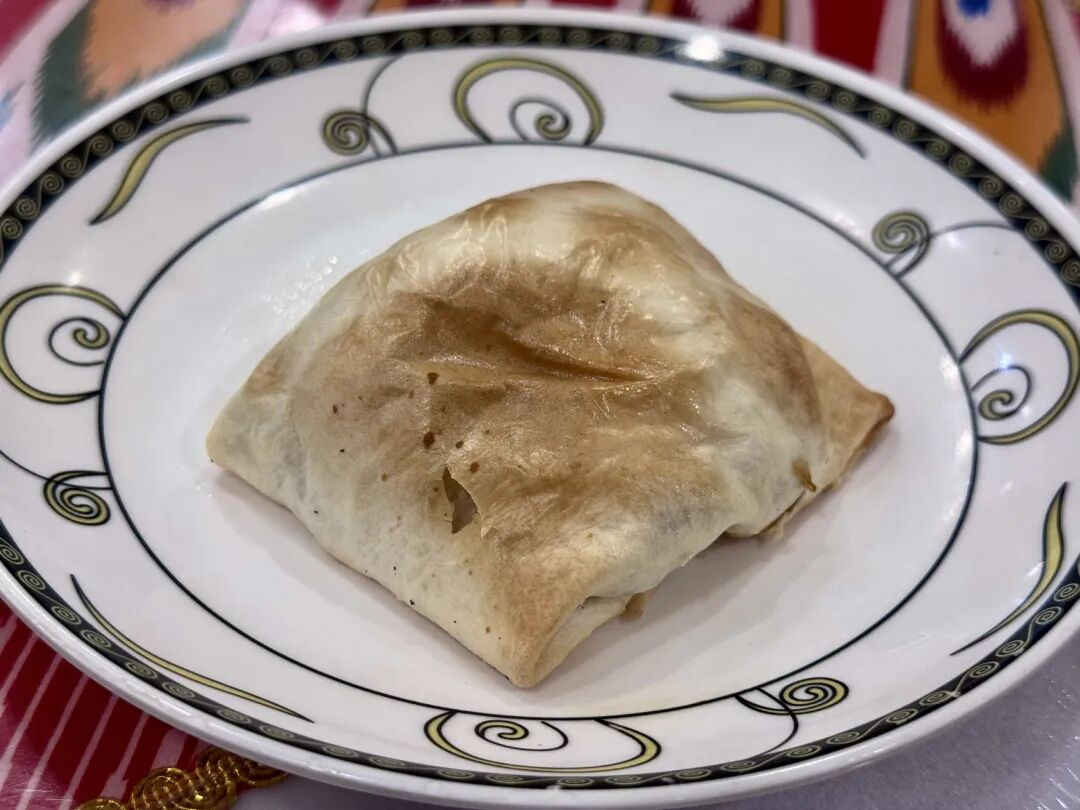
The baked beef buns (kaobaozi) are similarly thin-skinned and stuffed to the brim, but your luck with the texture is a total crapshoot since they bake them fresh batch by batch. If you want that crackling, juice-bomb version straight from the oven, you have to time it right with a fresh batch coming out. To play it safe, stick to the steamed buns.
Final verdict:
Guanguanji's mutton is gentle, serene, and delicious—giving off the delicate grace of the Jiangnan region beyond the Great Wall.
Maria's mutton is rugged, wild, and delicious—carrying the epic majesty of the smoke rising over the vast desert.
The end. view all
Shanghai Zhejiang Middle Road Halal Mutton Showdown: Comprehensive Review of Refined Guanguanji and Rugged Maria Halal Restaurants
Abstract:
An in-depth review of Guanguanji and Maria, two powerhouse Halal eateries running neck-and-neck on Shanghai's famous Halal food street, Zhejiang Middle Road. We compare shouzhua yangrou (hand-grabbed lamb), spiced skewers, signature mutton offal soup, and staple carbs to give meat lovers and Halal foodies a clear guide on where to eat.
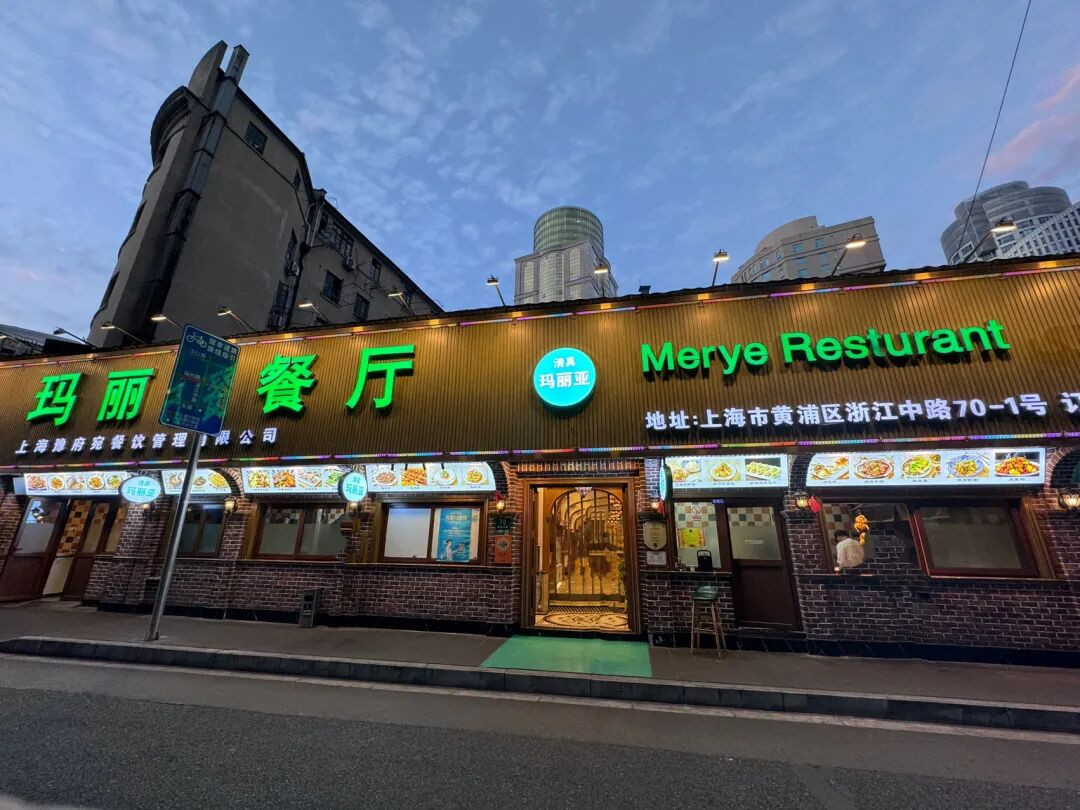
On Shanghai's famous Halal food street, Zhejiang Middle Road, Guanguanji and Maria stand side-by-side. One is delicate, the other rugged, and both are so crazy good it's impossible to pick a favorite. For a pilgrimage site of heavy-hitting meat eaters, adding these two heavyweights to the lineup is a total game-changer!
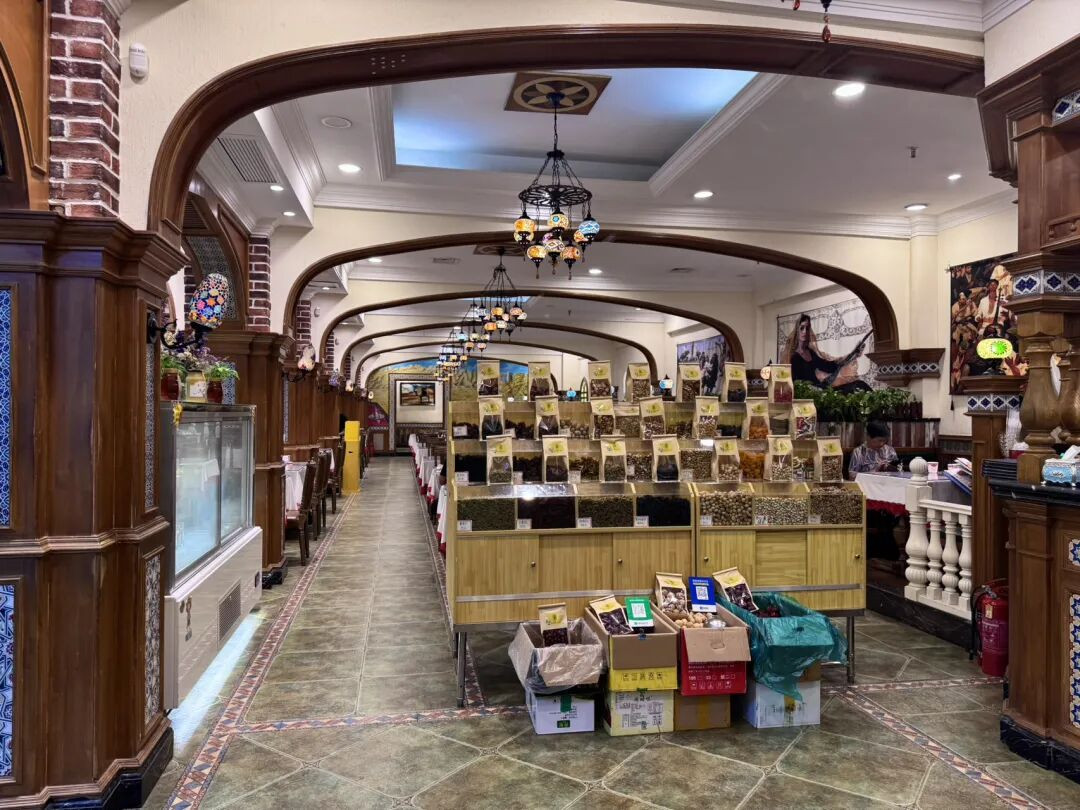
Guanguanji's dining room is a little cramped, but it's kept super clean and tidy.
That's the best thing about Halal spots—they're obsessively clean and reassuring. Even with tons of meat traffic coming through every day, the floor is totally grease-free and your shoes won't stick.
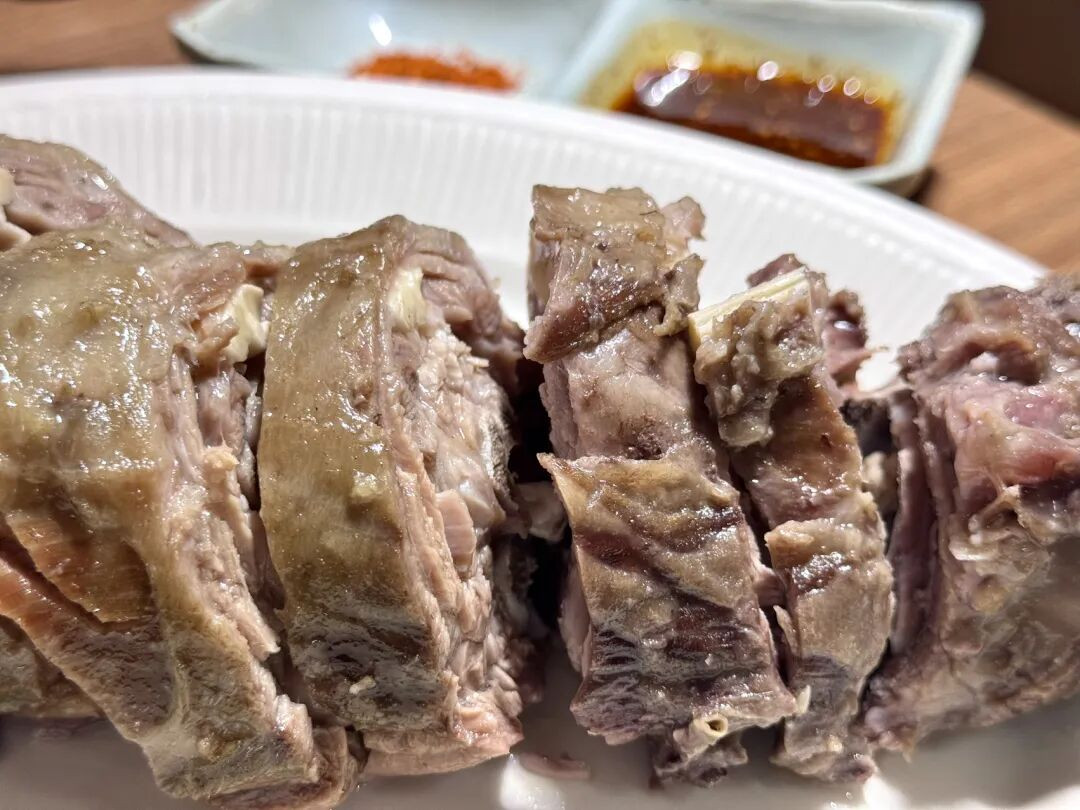
They don't serve alcohol here, and there's no rowdy shouting. Everyone just keeps their heads down and focuses on crushing their meat.
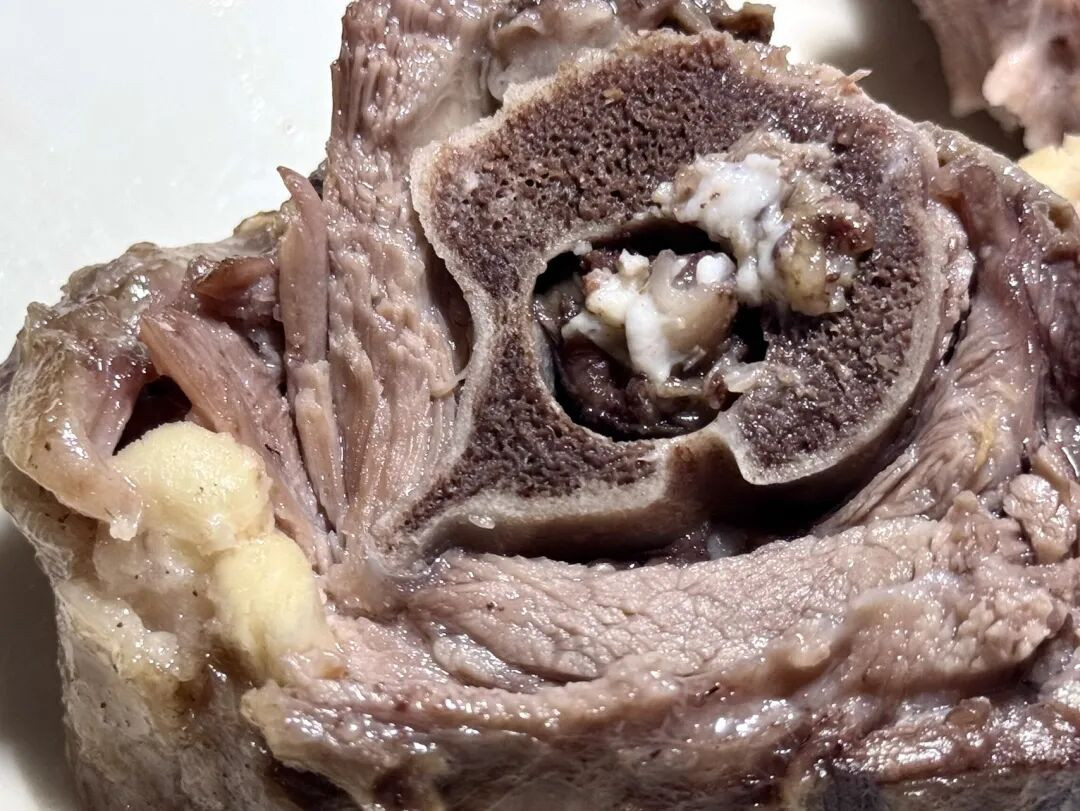
Ever since I tried hand-grabbed lamb neck, I totally quit ordering regular cuts like lamb ribs or leg meat. Whenever I walk in, I order a pound of lamb neck right off the bat.
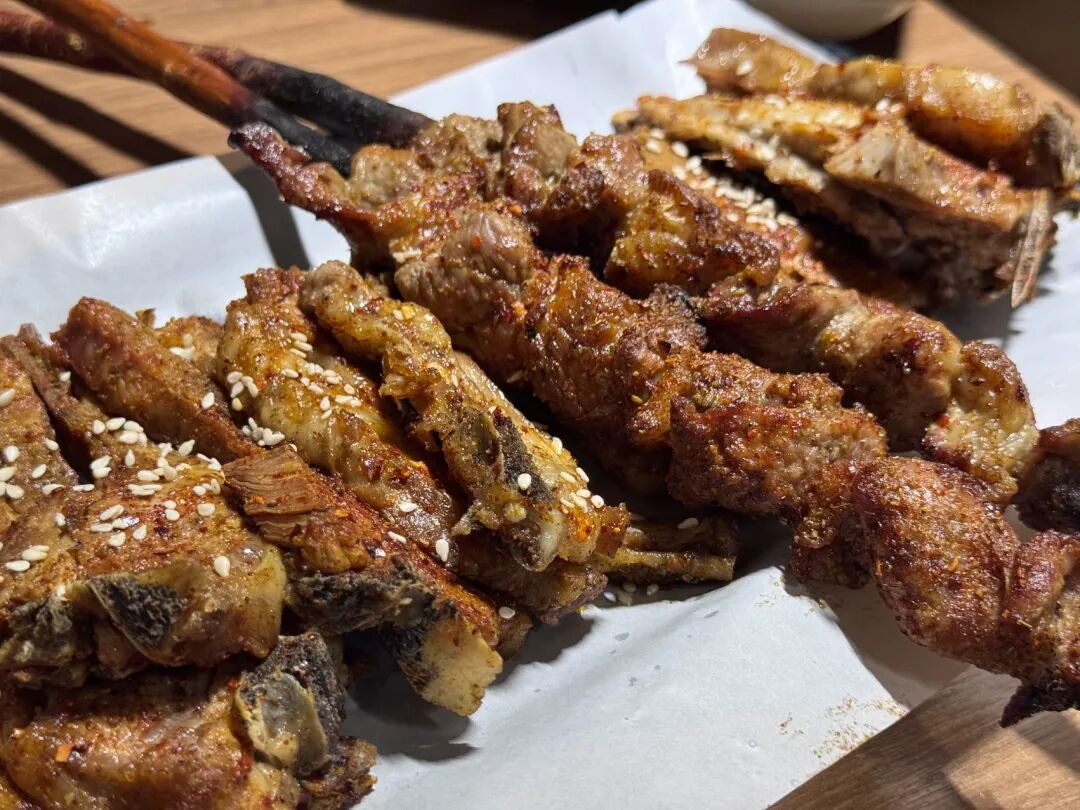
You can tell right when it hits the table that these are big, thick-necked sheep, but the meat is just as tender as a spring lamb. The connective tissue has an amazing chew, the lean meat is drop-dead tender, and a tiny bit of fat steps in to pull off the ultimate flavor combo.
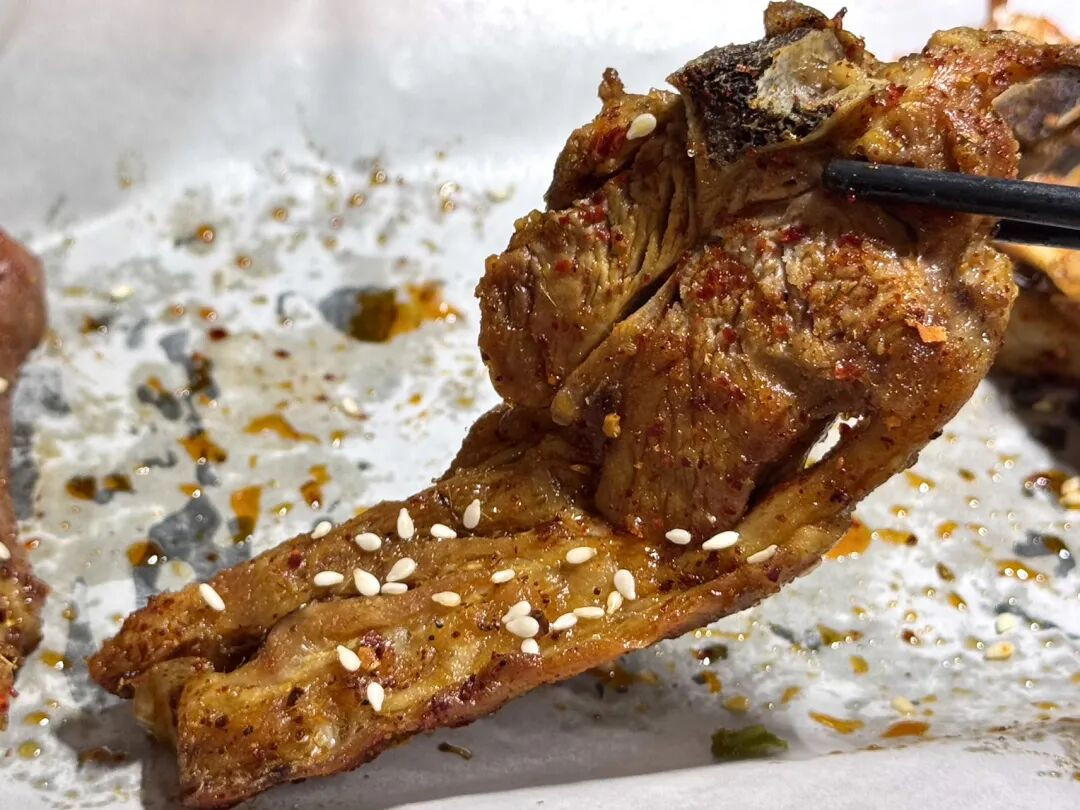
Because they use mature sheep, the rich, savory flavor of the mutton is way deeper—pure deliciousness without a hint of gaminess.
The salt is applied with sniper-like precision. That salty baseline draws out the deep meaty aroma without ever stealing the spotlight. This is the absolute peak form of salt and meat dancing together.
The spinal marrow hidden right in the middle of the neck bones can be easily fished out with your chopsticks. It's as creamy as fugu milt—a totally unexpected jackpot you just don't get with baby lamb necks.
Compared to the neck, the red-willow lamb skewers are firmer and fatter, hugging the red-willow twigs and roasted to a smoky, charred finish.
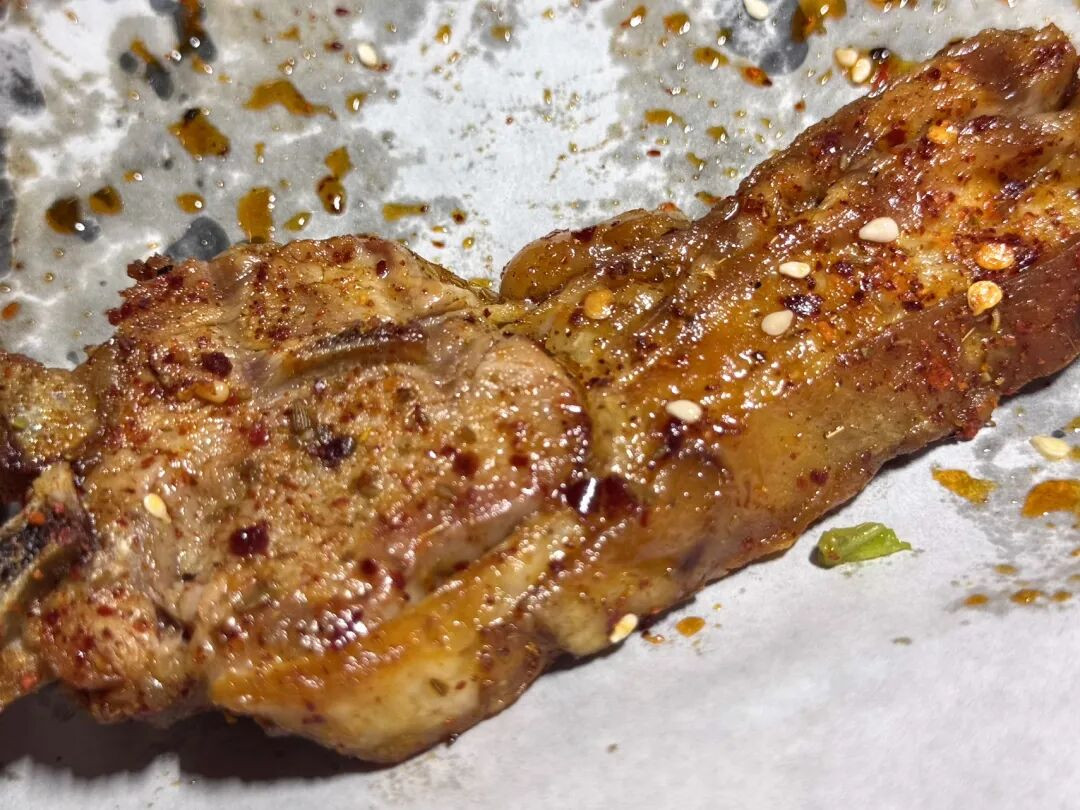
The roast lamb ribs are surprisingly light, seasoned with just a touch of salt and chili—pure fragrance without the burn.
The whole meat-eating progression builds naturally: from lean to fat, from boiled to grilled. It's pure meat from start to finish. So satisfying!
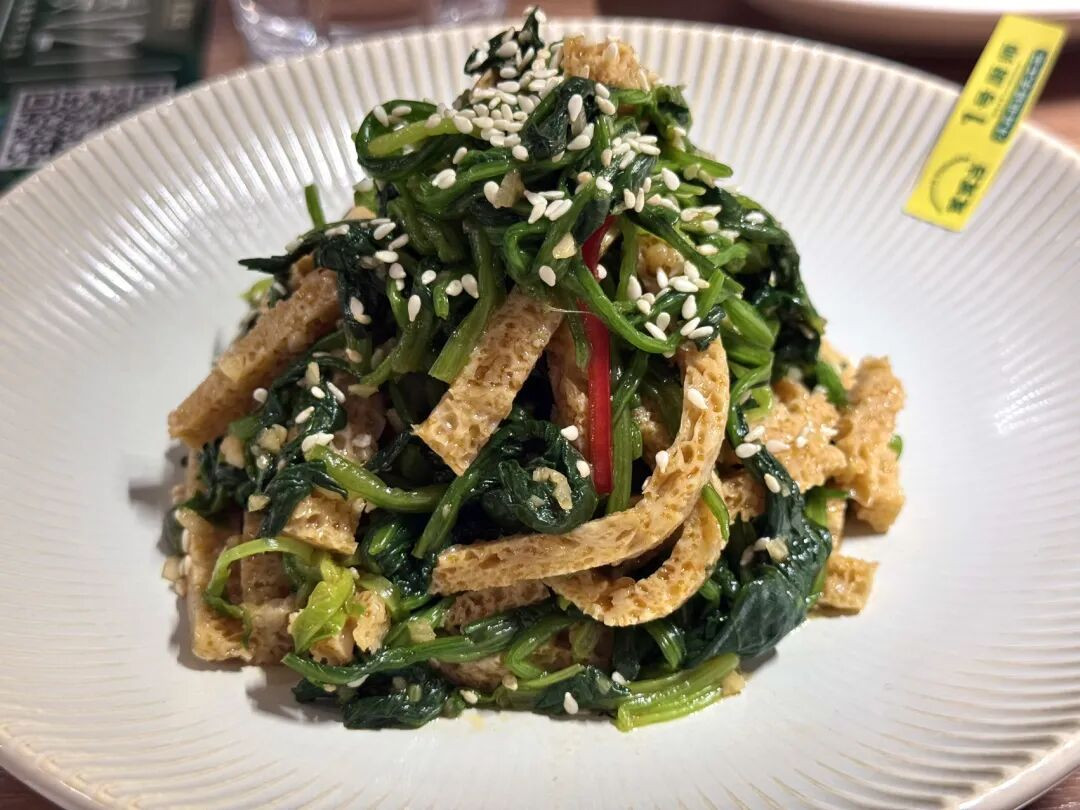
At most, pair it with a plate of cold tossed spinach—low on salt, a tiny bit tangy, with a faint tingle of Sichuan pepper. It's crisp and refreshing, giving your palate a break when the meat gets heavy. Absolute perfection.
Unlike Guanguanji's light and delicate style, Maria Restaurant's dishes are unapologetically bold and wild.
As a Xinjiang restaurant, Maria not only has plenty of elbow room, but you can also drink bowls of liquor here.
Or sip massive mugs of loaded eight-treasure tea (babao cha).
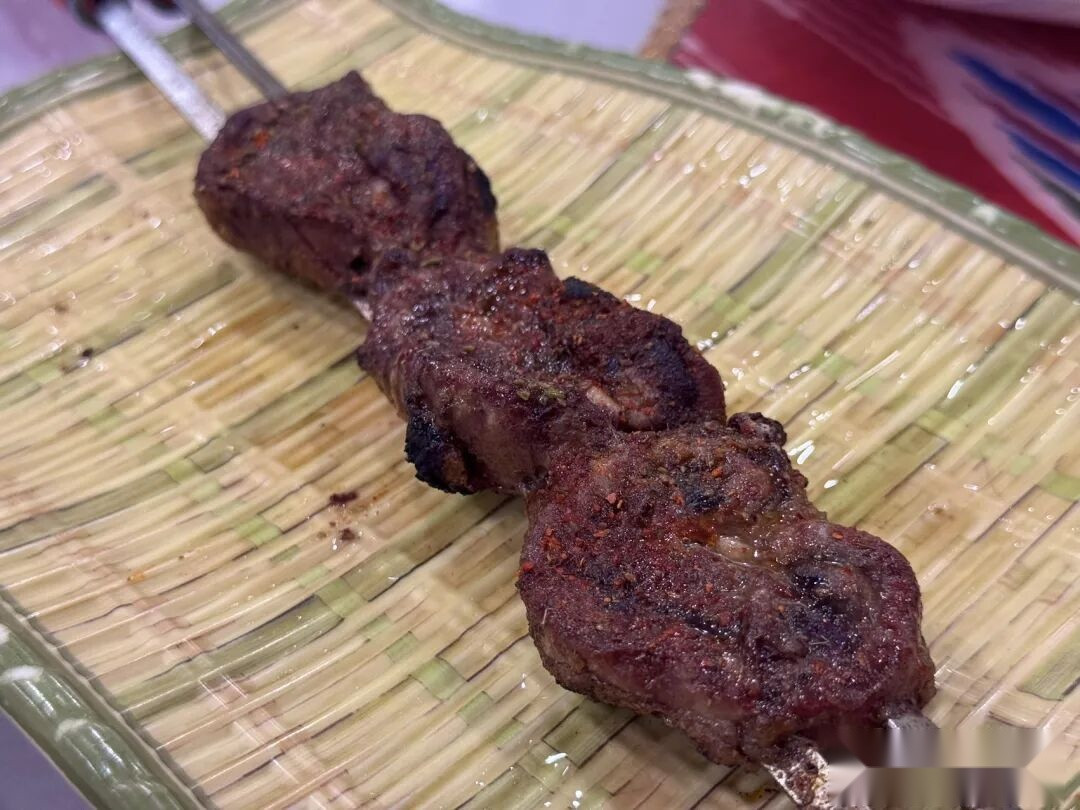
As the province with the highest per capita mutton consumption in China, Xinjiang's obsession with lamb is baked into its DNA, and their pursuit of bold mutton flavor is relentless—meaning it's gotta have that gamey kick.
Maria's hand-grabbed lamb neck leans all the way into that philosophy. Heavy-handed salt punches up a massive meaty flavor, and every single pull unleashes a flood of savory aromas. That tiny hint of gaminess actually wakes up your primal carnivorous instincts.
Maybe because we only ordered half a pound, we didn't get the prized middle section of the neck like at Guanguanji, but gnawing on the sinewy tail-end pieces of the neck had a wild charm of its own.
The roast lamb ribs are similarly heavy on the seasoning and dripping with lamb fat, but eating them is an absolute thrill.
I've always lived by the culinary gospel of 'salty fish, bland meat'—light seasoning usually preserves the original flavor best. Maria's salt-heavy attack kind of blew my mind; maybe mutton's aggressive streak actually needs a heavy hand of salt to fully come alive.
The red-willow skewers and grilled lamb kidneys bring that same wild sodium punch. The funky aroma inherent to kidneys is completely beaten into submission—a tiny bit of heavy-handed salt traded for a 10-out-of-10 rush.
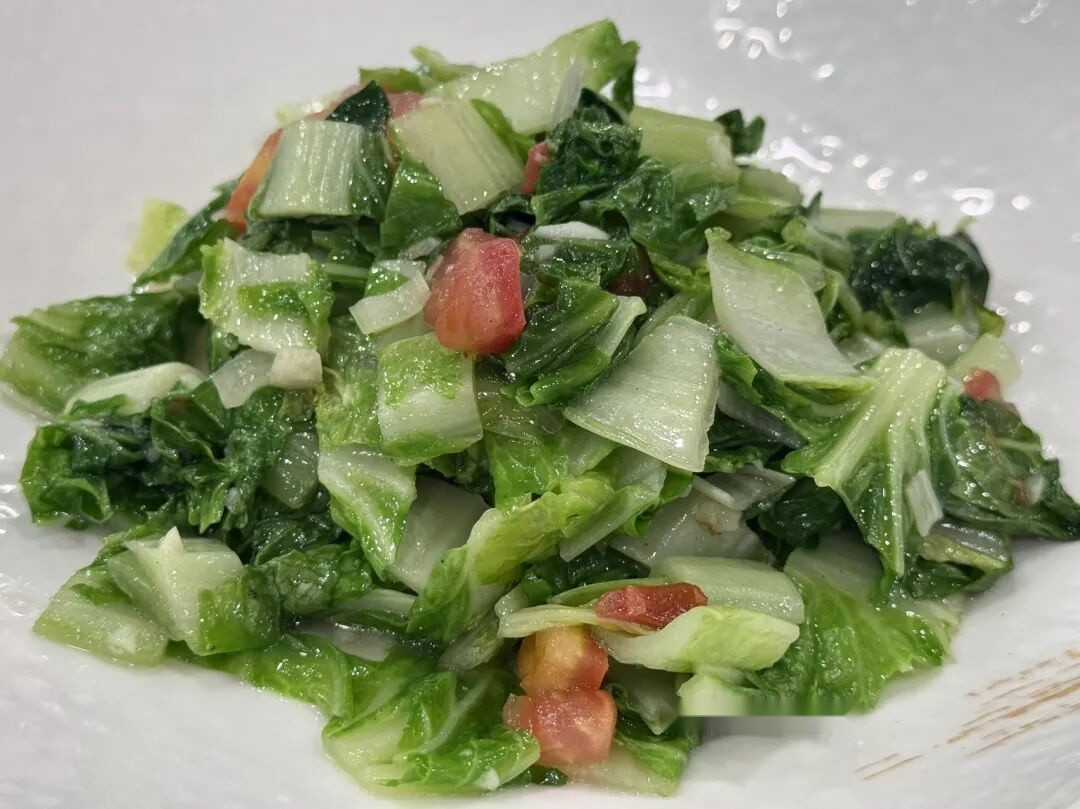
Per tradition, we ordered a token plate of vegetables to reset the palate, and hit an unexpected jackpot. The natural sweetness of sun-ripened tomatoes made the tender Shanghai bok choy taste a hundred times better.
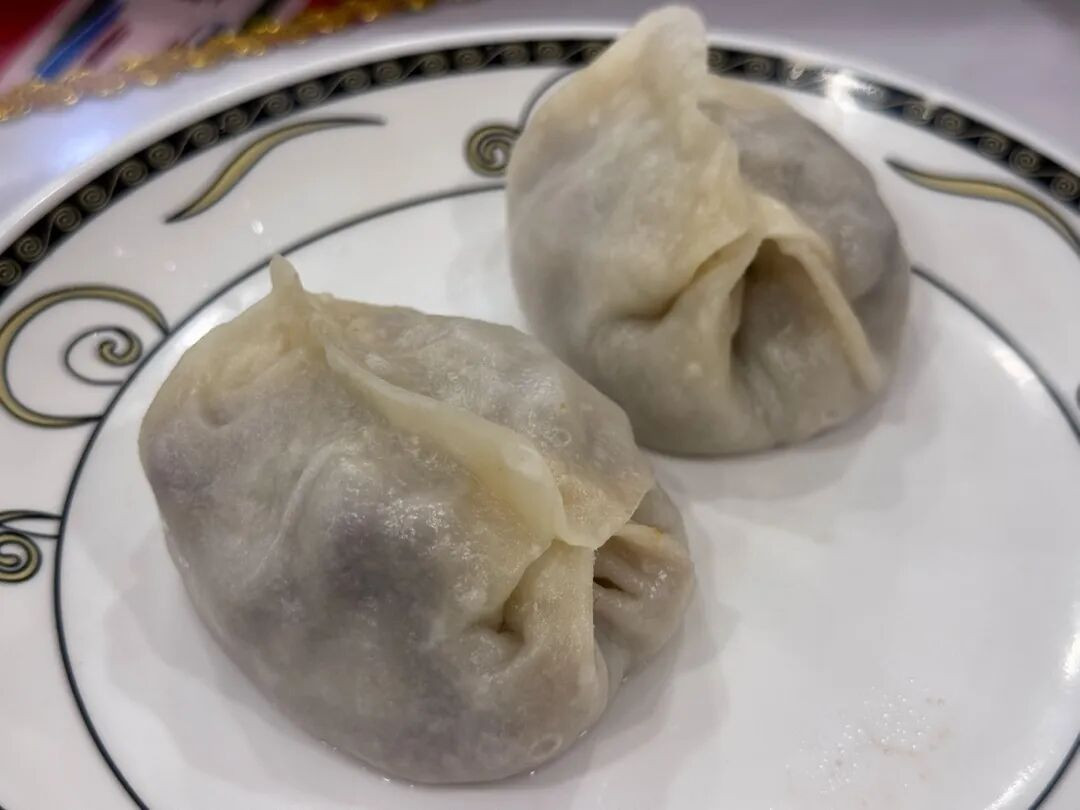
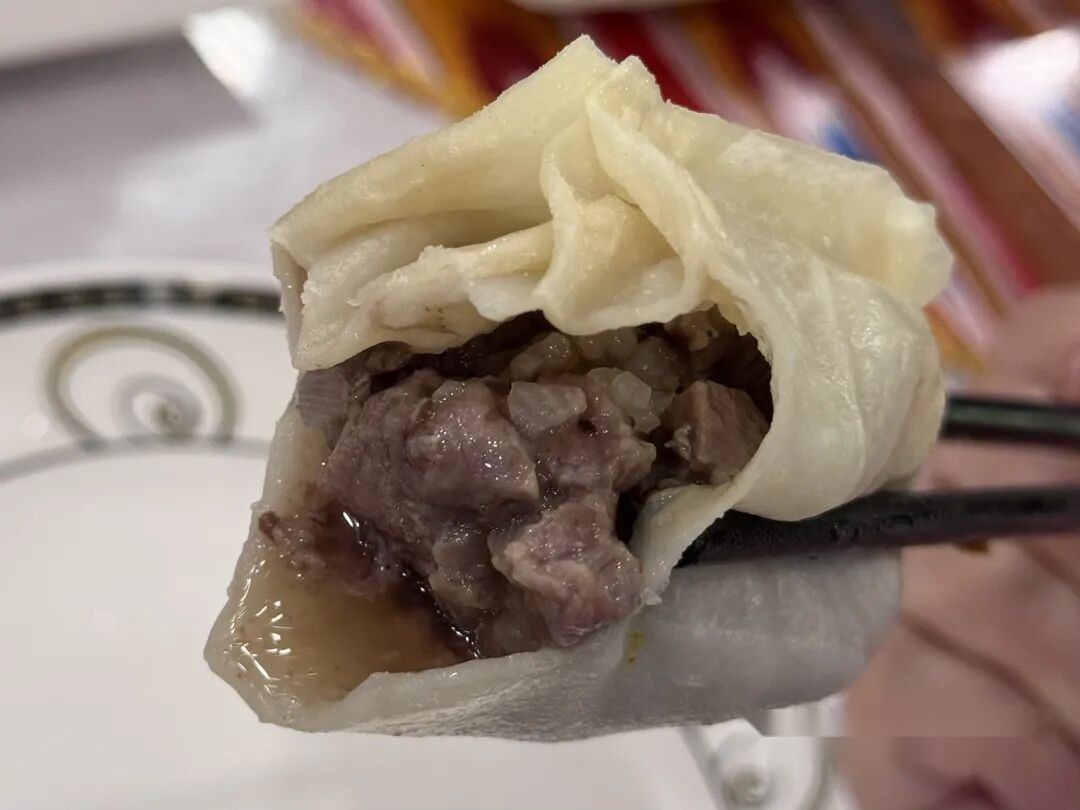
Freshly steamed thin-skinned baozi take fifteen minutes to hit the table, but they come highly recommended.
Make sure to slurp the soup out of these right away—it's the rich, fatty essence of the lamb, piping hot,鲜香 (savory and aromatic) and deeply satisfying.
The baked beef buns (kaobaozi) are similarly thin-skinned and stuffed to the brim, but your luck with the texture is a total crapshoot since they bake them fresh batch by batch. If you want that crackling, juice-bomb version straight from the oven, you have to time it right with a fresh batch coming out. To play it safe, stick to the steamed buns.
Final verdict:
Guanguanji's mutton is gentle, serene, and delicious—giving off the delicate grace of the Jiangnan region beyond the Great Wall.
Maria's mutton is rugged, wild, and delicious—carrying the epic majesty of the smoke rising over the vast desert.
The end.
Hidden Halal Gem in Shanghai: A Foodie's Guide to Century-Old Haipai Muslim Cuisine
Articles • Hasan09 posted the article • 0 comments • 8 views • 1 days ago
Shanghai's Best-Kept Halal Secret: An In-Depth Review of a Century-Old Haipai Muslim Institution's Paper-Thin Beef Tongue and Fork-Tender Braised Beef
Abstract:
An exclusive tasting at the Atlantic Restaurant inside the legendary Pearl Hotel (Mingzhu Dafandian Qingzhen Canting)—a hidden veteran of Shanghai-style (Haipai) Halal dining. We review their signature paper-thin sliced cold beef tongue, the East-meets-West fork-tender braised beef served with cutlery, and classic rich, savory hot dishes that showcase Shanghai's unique, refined Halal culinary style.
Finding a Halal spot in Shanghai isn't hard—you can grab piping-hot shengjianbao (crispy pan-fried soup buns) or beef guotie (crispy beef potstickers) dripping with juice on almost any corner, accompanied by bowls of beef soup floating with chopped scallions. But if you're hunting for a place that elevates Halal food to that signature 'old Shanghai refined dining' level, you need a local foodie to show you the ropes. Last week, an old-school Shanghainese colleague at the office practically forced this place on me, patting his chest and swearing, 'Go here and you won't be disappointed.' He dragged me straight to the Atlantic Restaurant tucked inside the Pearl Hotel. The moment I pushed open the door, my eyes lit up: the ceiling featured warm, glowing star-and-crescent chandeliers with a cozy, retro vibe, and the corners were fitted with well-worn, glossy Republic-era solid wood dining tables, right down to the old-school, meticulous tablecloths. As soon as we sat down, I heard an auntie at the next table call out in authentic Shanghainese, 'Boss, bring us a 'Niuri Chongtian' (towering beef feast)!' That vibrant neighborhood energy mixed with such classic elegance instantly won me over.
During a break between dishes, I chatted with Head Chef Zhao Hao and learned that this low-key spot holds a century-old heritage of Shanghai's Haipai Halal cuisine. After Shanghai opened as a treaty port in the 19th century, Muslim merchants flocked to the city, and Halal dining gradually evolved from roadside street stalls into grand banquet feasts. Back in the day on Fuzhou Road, this restaurant was an absolute powerhouse with lines stretching around the block. Later, it relocated to the Pearl Hotel, becoming one of the rare veteran spots in Shanghai where you can experience an authentic Haipai Halal banquet. Chef Zhao rolled up his sleeves and laughed, 'People always think Halal food is either casual street snacks or rugged Northwest-style chow. We wanted to make 'refined' Halal food so everyone could taste its delicate side!' I completely believed him the moment the first dish hit the table.
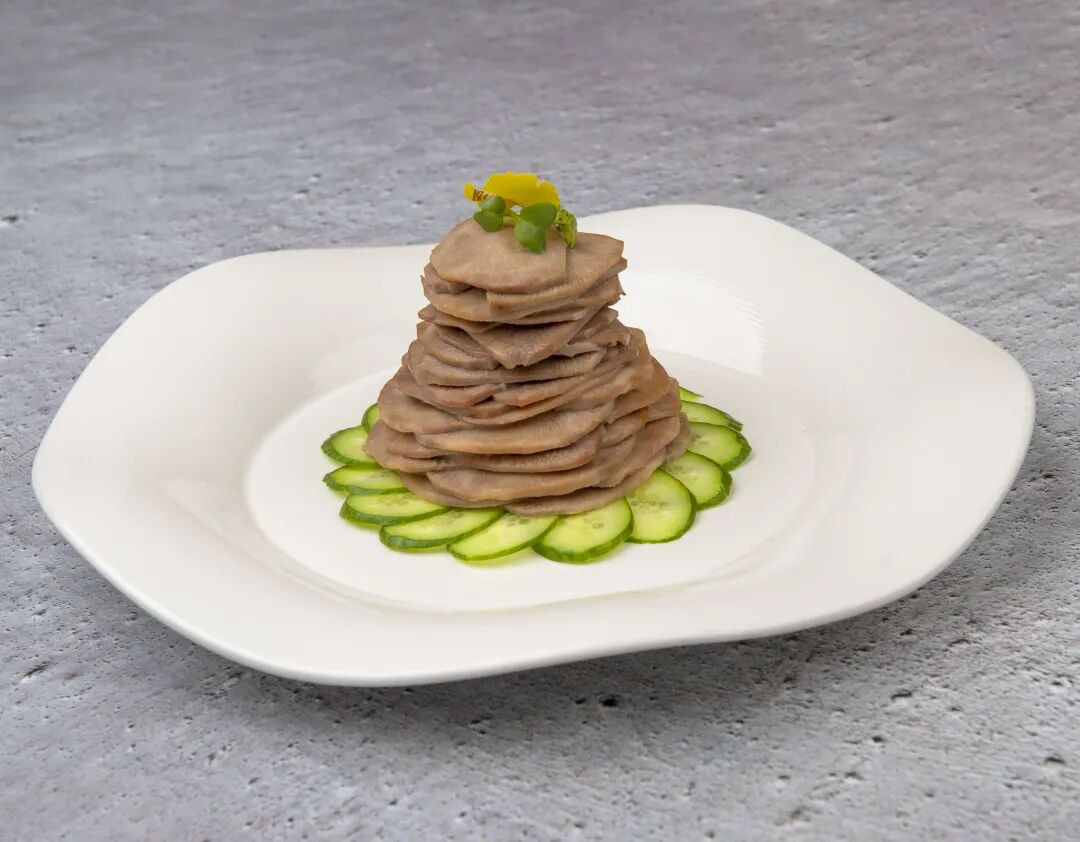
The starter, 'Xiaohe Xiangcuyou Ban Niushew' (alleyway vinegar and oil tossed beef tongue), completely shattered my preconceptions of Halal cold dishes. Every beef tongue dish I'd had before was either heavily braised and dense or char-grilled—always hot and hearty. But this version? The beef tongue was sliced paper-thin, glowing a translucent pinkish-white, submerged in glistening seasoned oil and vinegar, and dotted with specks of cracked black pepper. The plating looked just like an appetizer at a high-end Western restaurant. I picked up a slice and popped it into my mouth: first came the fresh, crisp notes of olive oil, followed by the bright tang of rice vinegar carrying the fruity aroma of black vinegar. Deep down, the beef tongue was bouncy and tender, releasing a faint hint of cumin as I chewed. It wasn't greasy at all. I immediately told my colleague, 'The flavor is unreal—so refreshing I can't stop using my chopsticks!'
Chef Zhao came over to share the secret, explaining the East-meets-West touches hidden in the dish: the beef tongue is first boiled until tender in master stock spiced with Sichuan peppercorns, scallions, and ginger, then immediately plunged into ice water for a full 50 minutes. That hot-and-cold shock is what locks in the springy crunch. Skipping traditional soy sauce, the seasoning relies on extra virgin olive oil and Italian balsamic vinegar—a pairing that respects Halal guidelines while perfectly hitting the Shanghainese sweet spot for 'refreshing, tangy, and grease-cutting' flavors. A Shanghai auntie at our table nodded approvingly, raising her teacup to declare, 'This goes so well with huangjiu (yellow rice wine)! It's way lighter than red-braised pork, making it the ultimate comfort food for summer.'
If the cold dish was a breath of fresh air, the arrival of 'Niuri Chongtian' (towering beef feast) hijacked the entire restaurant's attention. A massive cow skull served as the base, piled high with a solid three pounds of hand-pulled beef cheek meat forming a small mountain nearly half a meter wide, taking up half the table. The server had just set it down when a kid at the next table slammed his hand on the table and yelled, 'So cool!' Adults whipped out their phones to snap away, and even an uncle from two tables over wandered over to see what the commotion was about. With a grand entrance like that, it more than lived up to its name meaning 'towering beef' or 'soaring success.'
The best part is the generous, honest portion size. Chef Zhao explained that while many restaurants pad this dish with scraps, they refuse to compromise, using whole beef cheeks from Inner Mongolia slow-braised in master stock for four hours. 'This pot of master stock is a three-generation family treasure. We don't use any taboo ingredients; all the rich umami comes from beef bones and chicken feet, spiked with nearly 60 kinds of spices, including ginseng and angelica root. We have someone standing guard over the fire every single day.' I picked up a thick-cut piece of meat, revealing shimmering gelatinous collagen inside. It melted on the tongue, falling off the bone without turning mushy, carrying rich savory notes blended with subtle herbal aromas. Dipped in house-made chili paste, it just got better the more you chewed. A guy in our group gnawed on a piece and said, 'I always felt Halal beef wasn't quite satisfying enough, but this plate could easily feed three of us until we're stuffed. So worth it!'
I expected the roasted lamb leg to be the rugged, family-style Northwest version, but it arrived exuding refined elegance. Sourced from Ordos, the lamb leg is first braised tender in a blend of herbs, brushed with a secret sauce, and roasted until the skin is lightly charred and sizzling with oil. The deep reddish skin wrapped around tender meat releases juices at the touch of a knife. Chef Zhao explained they chose Ordos lamb specifically for its mild gaminess, pre-marinating it in a blended fruit-and-vegetable juice made from celery and onions, then roasting it with precise temperature control to guarantee crispy skin and succulent meat. As someone terrified of mutton gaminess, I couldn't stop eating piece after piece—the rich meat flavor laced with the subtle sweetness of fruits and veggies made it completely grease-free!
The biggest surprise was the 'Pearl Slow-Braised Beef,' which actually arrived at the table with a knife and fork! Imported marbled beef was cut into cubes, seared until golden brown on the outside, and then simmered on low heat until fully flavored, served alongside sweet chestnuts and pumpkin to cut through the richness. Slicing through it gently with a knife released a sizzle of piping-hot meat juices. The lean-to-fat ratio was spot-on, and the meat was tender without feeling dry. Chef Zhao smiled, mentioning he used to study Cantonese cuisine and wanted to experiment with crossover styles when transitioning to Halal cooking, combining Western plating with Cantonese braising techniques. It became an instant hit, with plenty of young diners coming just to photograph the dish for their social feeds.
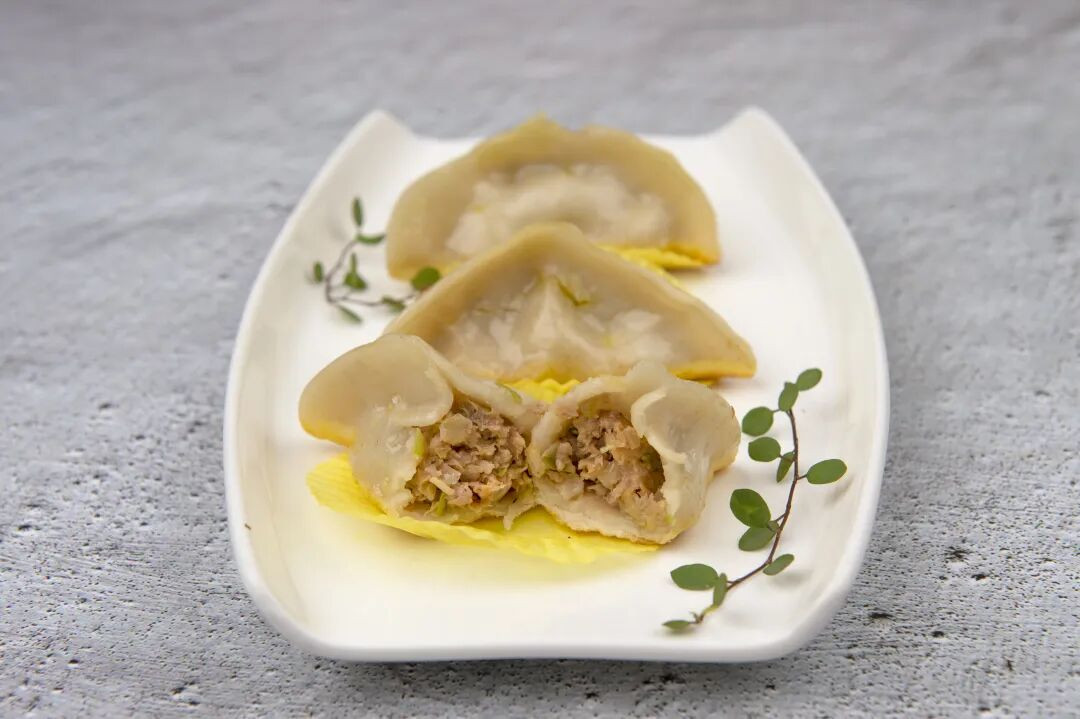
To wrap up the meal, they brought out a bowl of house-made yogurt and a beef pastry. The yogurt was thick enough to hold a spoon upright, topped with sweetened red beans and crushed walnuts, while the flaky pastry shattered at the first bite, revealing a savory, flavorful beef filling. Gazing out at the Shanghai streetscape through the window, savoring the blend of authentic Halal roots, Shanghai refinement, and Western delicacy, I finally understood the magic of 'Haipai Halal'—it's not forced fusion, but rather a seamless blending of flavors into something uniquely delicious.
Before leaving, I scanned the dining room: elderly men in white caps leisurely sipping tea, young folks filming videos with the roasted lamb leg, and a family of three sharing a kids' meal. Chef Zhao walked me to the door and said, 'We just want people to realize that Halal food isn't just for a specific group. Whether it's a family gathering or a hangout with friends, locals in Shanghai can come here and have a great time.'
Have you discovered any hidden Halal gems in Shanghai? Are you into the street-side potsticker shops, or upscale veteran spots hidden inside major hotels? Drop your secret spots in the comments—I'll pick 3 lucky followers to win an Atlantic Restaurant yogurt voucher so you can taste this one-of-a-kind Haipai Halal flavor for yourselves~ view all
Shanghai's Best-Kept Halal Secret: An In-Depth Review of a Century-Old Haipai Muslim Institution's Paper-Thin Beef Tongue and Fork-Tender Braised Beef
Abstract:
An exclusive tasting at the Atlantic Restaurant inside the legendary Pearl Hotel (Mingzhu Dafandian Qingzhen Canting)—a hidden veteran of Shanghai-style (Haipai) Halal dining. We review their signature paper-thin sliced cold beef tongue, the East-meets-West fork-tender braised beef served with cutlery, and classic rich, savory hot dishes that showcase Shanghai's unique, refined Halal culinary style.
Finding a Halal spot in Shanghai isn't hard—you can grab piping-hot shengjianbao (crispy pan-fried soup buns) or beef guotie (crispy beef potstickers) dripping with juice on almost any corner, accompanied by bowls of beef soup floating with chopped scallions. But if you're hunting for a place that elevates Halal food to that signature 'old Shanghai refined dining' level, you need a local foodie to show you the ropes. Last week, an old-school Shanghainese colleague at the office practically forced this place on me, patting his chest and swearing, 'Go here and you won't be disappointed.' He dragged me straight to the Atlantic Restaurant tucked inside the Pearl Hotel. The moment I pushed open the door, my eyes lit up: the ceiling featured warm, glowing star-and-crescent chandeliers with a cozy, retro vibe, and the corners were fitted with well-worn, glossy Republic-era solid wood dining tables, right down to the old-school, meticulous tablecloths. As soon as we sat down, I heard an auntie at the next table call out in authentic Shanghainese, 'Boss, bring us a 'Niuri Chongtian' (towering beef feast)!' That vibrant neighborhood energy mixed with such classic elegance instantly won me over.
During a break between dishes, I chatted with Head Chef Zhao Hao and learned that this low-key spot holds a century-old heritage of Shanghai's Haipai Halal cuisine. After Shanghai opened as a treaty port in the 19th century, Muslim merchants flocked to the city, and Halal dining gradually evolved from roadside street stalls into grand banquet feasts. Back in the day on Fuzhou Road, this restaurant was an absolute powerhouse with lines stretching around the block. Later, it relocated to the Pearl Hotel, becoming one of the rare veteran spots in Shanghai where you can experience an authentic Haipai Halal banquet. Chef Zhao rolled up his sleeves and laughed, 'People always think Halal food is either casual street snacks or rugged Northwest-style chow. We wanted to make 'refined' Halal food so everyone could taste its delicate side!' I completely believed him the moment the first dish hit the table.
The starter, 'Xiaohe Xiangcuyou Ban Niushew' (alleyway vinegar and oil tossed beef tongue), completely shattered my preconceptions of Halal cold dishes. Every beef tongue dish I'd had before was either heavily braised and dense or char-grilled—always hot and hearty. But this version? The beef tongue was sliced paper-thin, glowing a translucent pinkish-white, submerged in glistening seasoned oil and vinegar, and dotted with specks of cracked black pepper. The plating looked just like an appetizer at a high-end Western restaurant. I picked up a slice and popped it into my mouth: first came the fresh, crisp notes of olive oil, followed by the bright tang of rice vinegar carrying the fruity aroma of black vinegar. Deep down, the beef tongue was bouncy and tender, releasing a faint hint of cumin as I chewed. It wasn't greasy at all. I immediately told my colleague, 'The flavor is unreal—so refreshing I can't stop using my chopsticks!'
Chef Zhao came over to share the secret, explaining the East-meets-West touches hidden in the dish: the beef tongue is first boiled until tender in master stock spiced with Sichuan peppercorns, scallions, and ginger, then immediately plunged into ice water for a full 50 minutes. That hot-and-cold shock is what locks in the springy crunch. Skipping traditional soy sauce, the seasoning relies on extra virgin olive oil and Italian balsamic vinegar—a pairing that respects Halal guidelines while perfectly hitting the Shanghainese sweet spot for 'refreshing, tangy, and grease-cutting' flavors. A Shanghai auntie at our table nodded approvingly, raising her teacup to declare, 'This goes so well with huangjiu (yellow rice wine)! It's way lighter than red-braised pork, making it the ultimate comfort food for summer.'
If the cold dish was a breath of fresh air, the arrival of 'Niuri Chongtian' (towering beef feast) hijacked the entire restaurant's attention. A massive cow skull served as the base, piled high with a solid three pounds of hand-pulled beef cheek meat forming a small mountain nearly half a meter wide, taking up half the table. The server had just set it down when a kid at the next table slammed his hand on the table and yelled, 'So cool!' Adults whipped out their phones to snap away, and even an uncle from two tables over wandered over to see what the commotion was about. With a grand entrance like that, it more than lived up to its name meaning 'towering beef' or 'soaring success.'
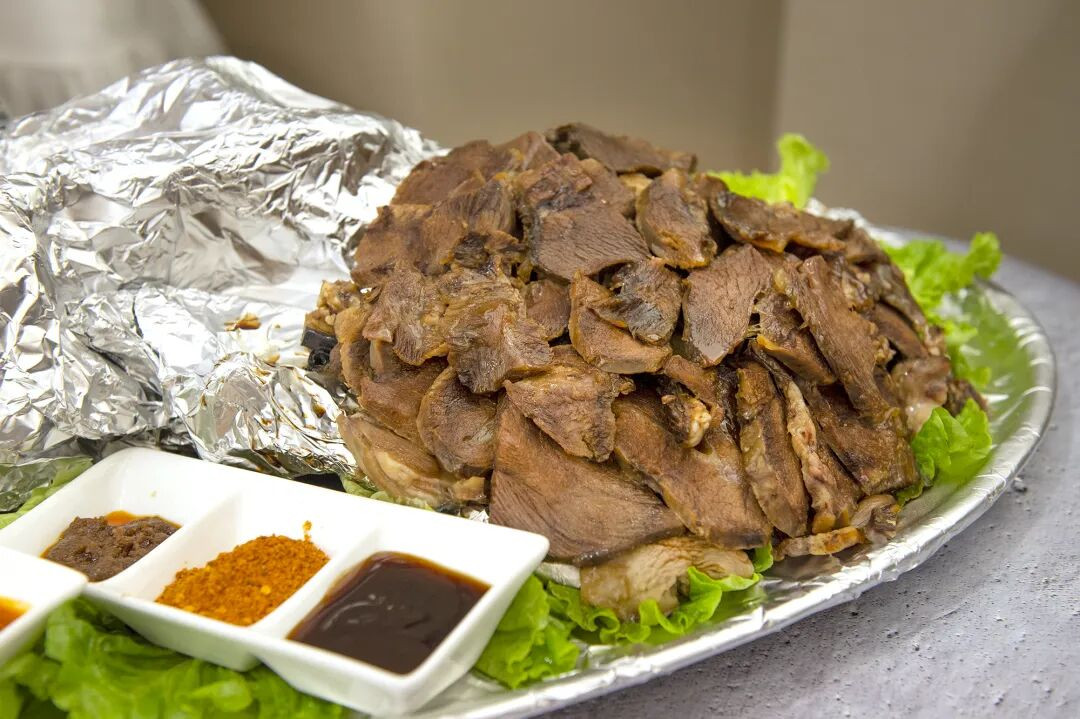
The best part is the generous, honest portion size. Chef Zhao explained that while many restaurants pad this dish with scraps, they refuse to compromise, using whole beef cheeks from Inner Mongolia slow-braised in master stock for four hours. 'This pot of master stock is a three-generation family treasure. We don't use any taboo ingredients; all the rich umami comes from beef bones and chicken feet, spiked with nearly 60 kinds of spices, including ginseng and angelica root. We have someone standing guard over the fire every single day.' I picked up a thick-cut piece of meat, revealing shimmering gelatinous collagen inside. It melted on the tongue, falling off the bone without turning mushy, carrying rich savory notes blended with subtle herbal aromas. Dipped in house-made chili paste, it just got better the more you chewed. A guy in our group gnawed on a piece and said, 'I always felt Halal beef wasn't quite satisfying enough, but this plate could easily feed three of us until we're stuffed. So worth it!'
I expected the roasted lamb leg to be the rugged, family-style Northwest version, but it arrived exuding refined elegance. Sourced from Ordos, the lamb leg is first braised tender in a blend of herbs, brushed with a secret sauce, and roasted until the skin is lightly charred and sizzling with oil. The deep reddish skin wrapped around tender meat releases juices at the touch of a knife. Chef Zhao explained they chose Ordos lamb specifically for its mild gaminess, pre-marinating it in a blended fruit-and-vegetable juice made from celery and onions, then roasting it with precise temperature control to guarantee crispy skin and succulent meat. As someone terrified of mutton gaminess, I couldn't stop eating piece after piece—the rich meat flavor laced with the subtle sweetness of fruits and veggies made it completely grease-free!
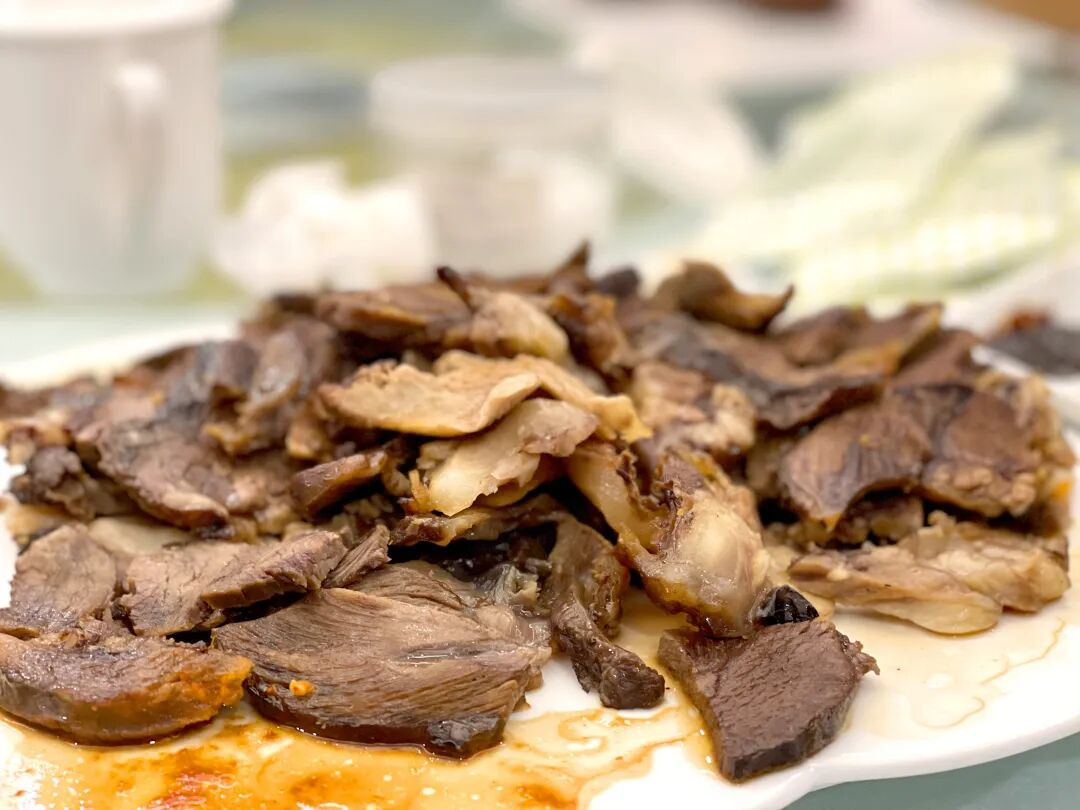
The biggest surprise was the 'Pearl Slow-Braised Beef,' which actually arrived at the table with a knife and fork! Imported marbled beef was cut into cubes, seared until golden brown on the outside, and then simmered on low heat until fully flavored, served alongside sweet chestnuts and pumpkin to cut through the richness. Slicing through it gently with a knife released a sizzle of piping-hot meat juices. The lean-to-fat ratio was spot-on, and the meat was tender without feeling dry. Chef Zhao smiled, mentioning he used to study Cantonese cuisine and wanted to experiment with crossover styles when transitioning to Halal cooking, combining Western plating with Cantonese braising techniques. It became an instant hit, with plenty of young diners coming just to photograph the dish for their social feeds.
To wrap up the meal, they brought out a bowl of house-made yogurt and a beef pastry. The yogurt was thick enough to hold a spoon upright, topped with sweetened red beans and crushed walnuts, while the flaky pastry shattered at the first bite, revealing a savory, flavorful beef filling. Gazing out at the Shanghai streetscape through the window, savoring the blend of authentic Halal roots, Shanghai refinement, and Western delicacy, I finally understood the magic of 'Haipai Halal'—it's not forced fusion, but rather a seamless blending of flavors into something uniquely delicious.
Before leaving, I scanned the dining room: elderly men in white caps leisurely sipping tea, young folks filming videos with the roasted lamb leg, and a family of three sharing a kids' meal. Chef Zhao walked me to the door and said, 'We just want people to realize that Halal food isn't just for a specific group. Whether it's a family gathering or a hangout with friends, locals in Shanghai can come here and have a great time.'
Have you discovered any hidden Halal gems in Shanghai? Are you into the street-side potsticker shops, or upscale veteran spots hidden inside major hotels? Drop your secret spots in the comments—I'll pick 3 lucky followers to win an Atlantic Restaurant yogurt voucher so you can taste this one-of-a-kind Haipai Halal flavor for yourselves~
Halal Shanghai Guide: Weimin Halal Restaurant Breakfast & Authentic Beef Broth
Articles • Hasan09 posted the article • 0 comments • 8 views • 1 days ago
State-Owned Quality and Public Service: Morning Breakfast and Beef Consommé at Weimin Halal Restaurant, Owned by the Shanghai Mutton and Beef Company
Summary:
A look into the early morning routine at Weimin Halal Restaurant, directly managed by the Shanghai Mutton and Beef Company. Featuring freshly made, generously stuffed beef buns served alongside piping-hot, authentic beef consommé provided free of charge by the restaurant, showcasing the heartwarming community dedication of a veteran state-owned Halal eatery.
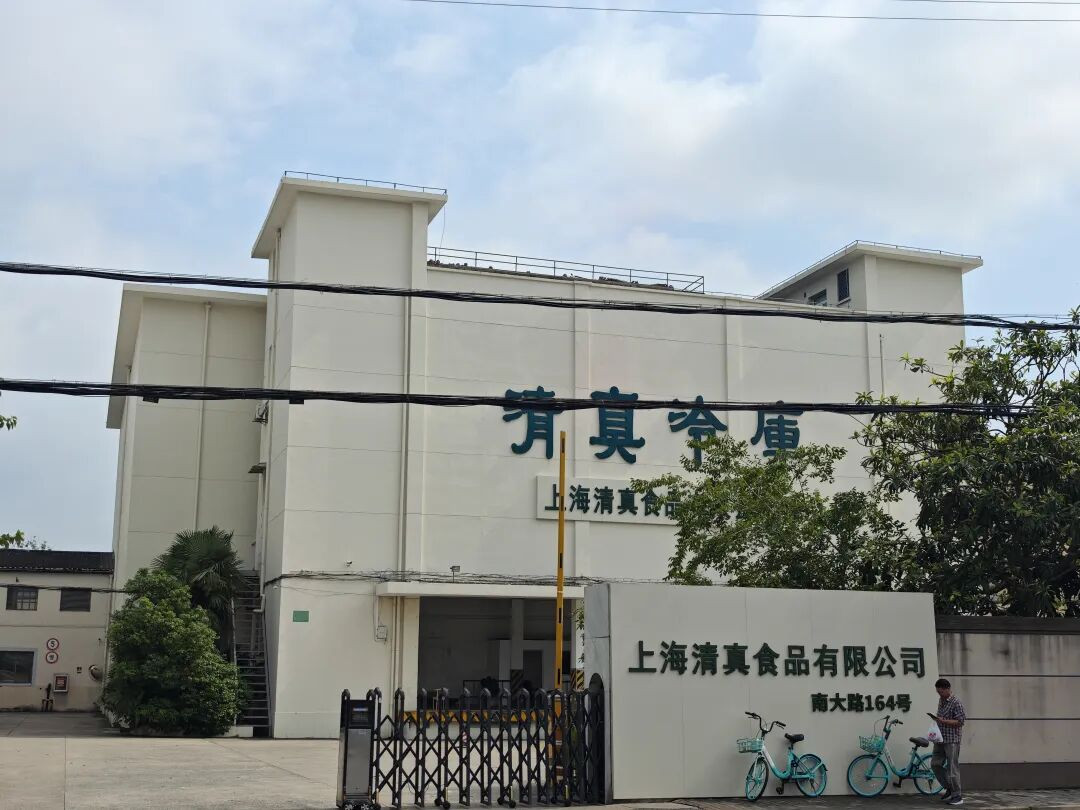
The Shanghai Mutton and Beef Company is Shanghai's largest producer of Halal mutton and beef, meaning the ingredients are exceptionally fresh.
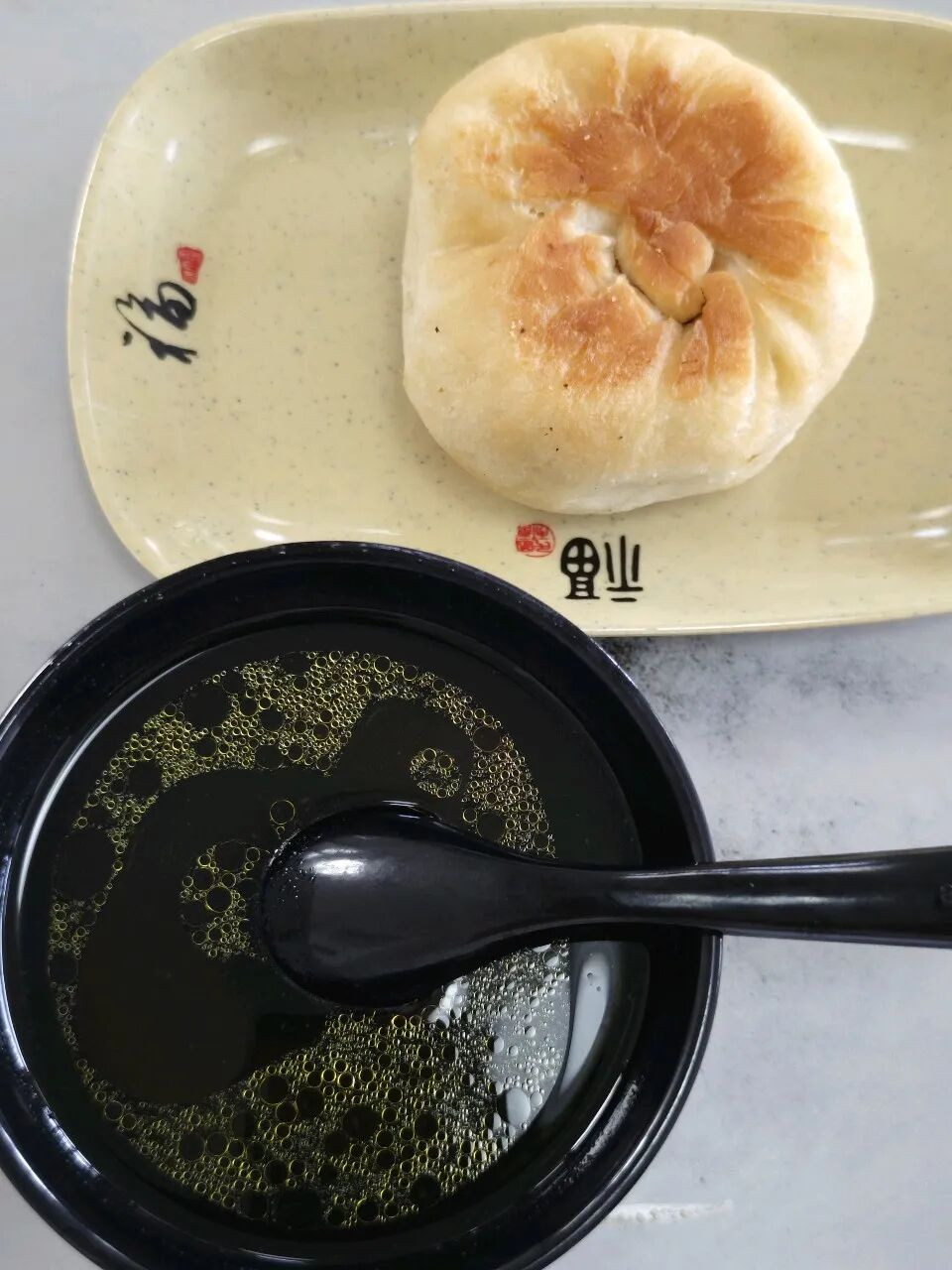
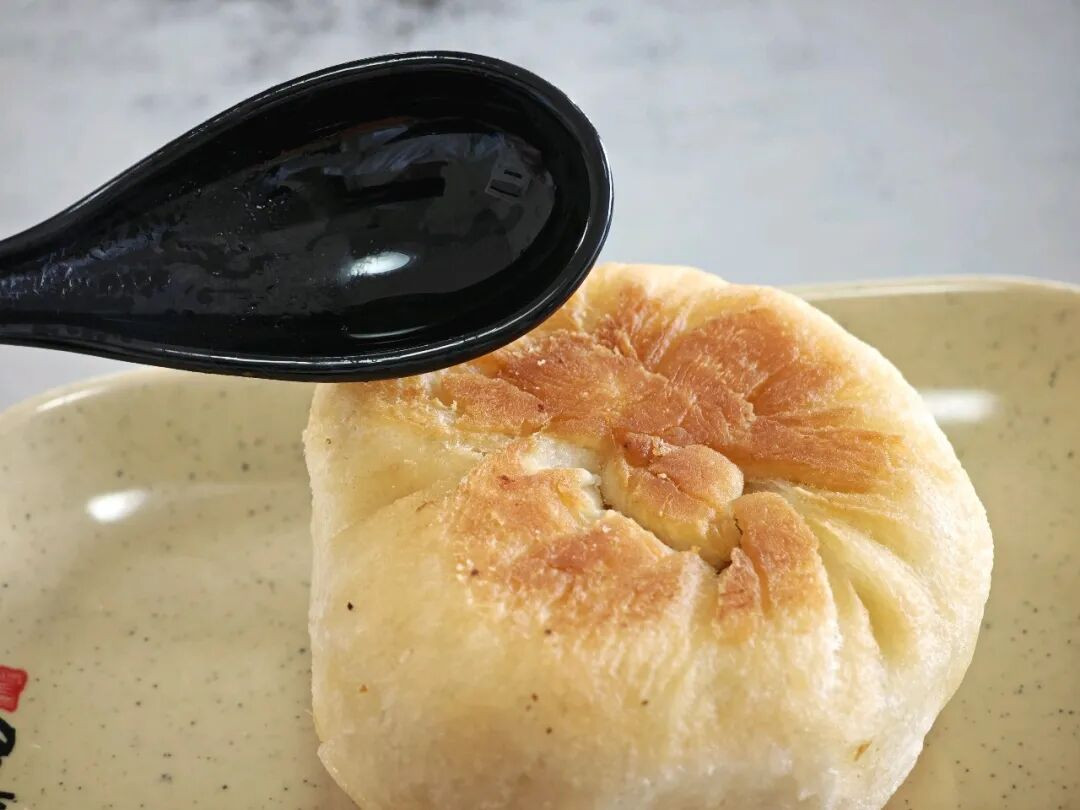
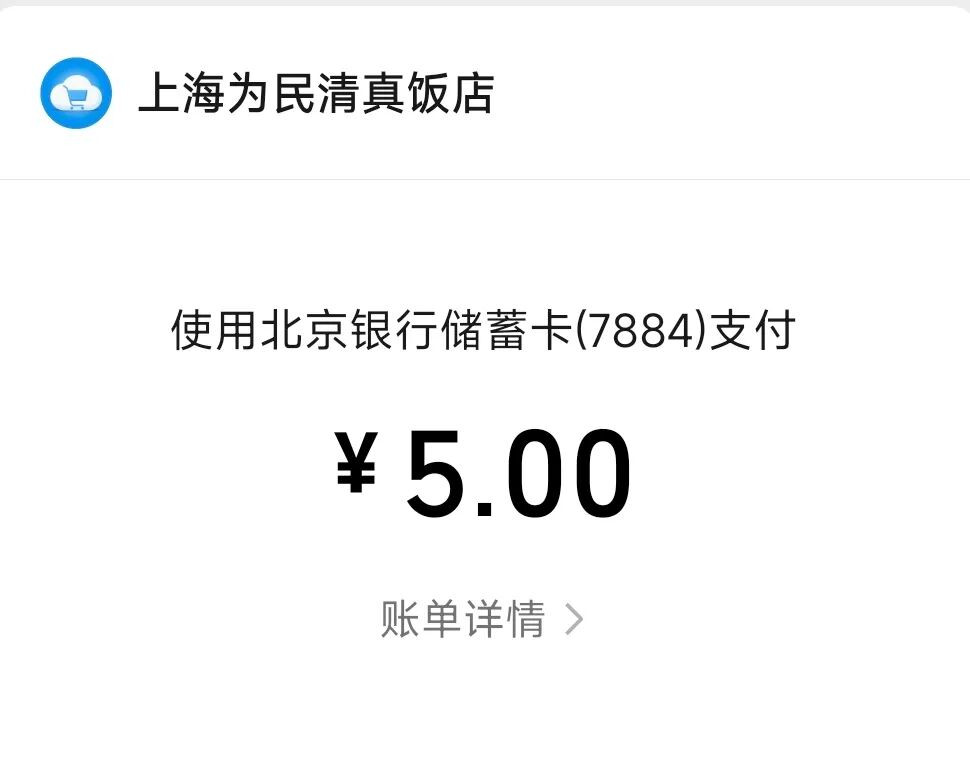
Morning breakfast: a beef bun paired with beef consommé (Note: the consommé is free). view all
State-Owned Quality and Public Service: Morning Breakfast and Beef Consommé at Weimin Halal Restaurant, Owned by the Shanghai Mutton and Beef Company
Summary:
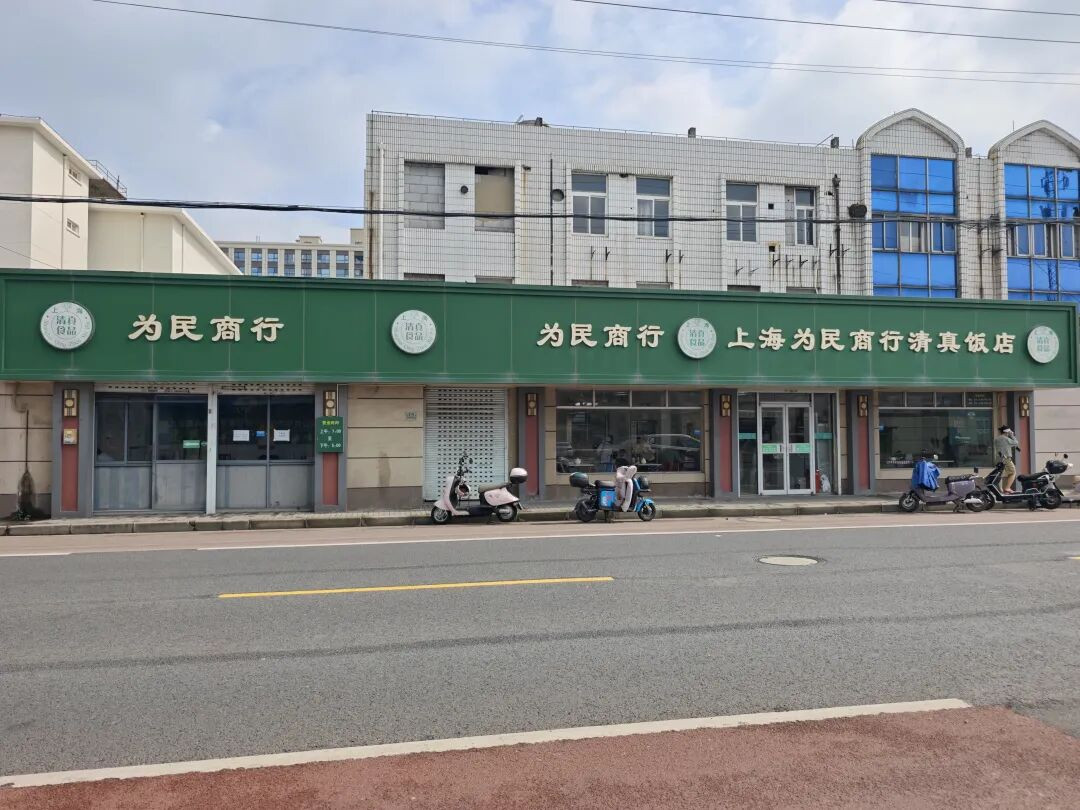
A look into the early morning routine at Weimin Halal Restaurant, directly managed by the Shanghai Mutton and Beef Company. Featuring freshly made, generously stuffed beef buns served alongside piping-hot, authentic beef consommé provided free of charge by the restaurant, showcasing the heartwarming community dedication of a veteran state-owned Halal eatery.
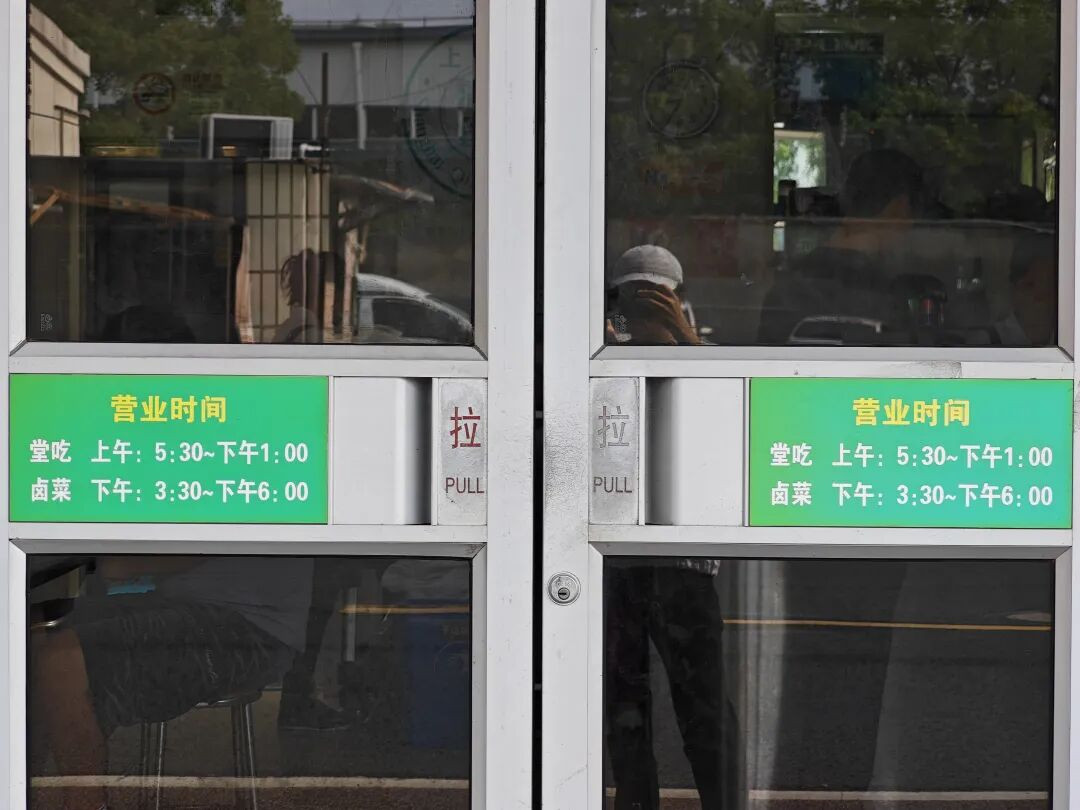
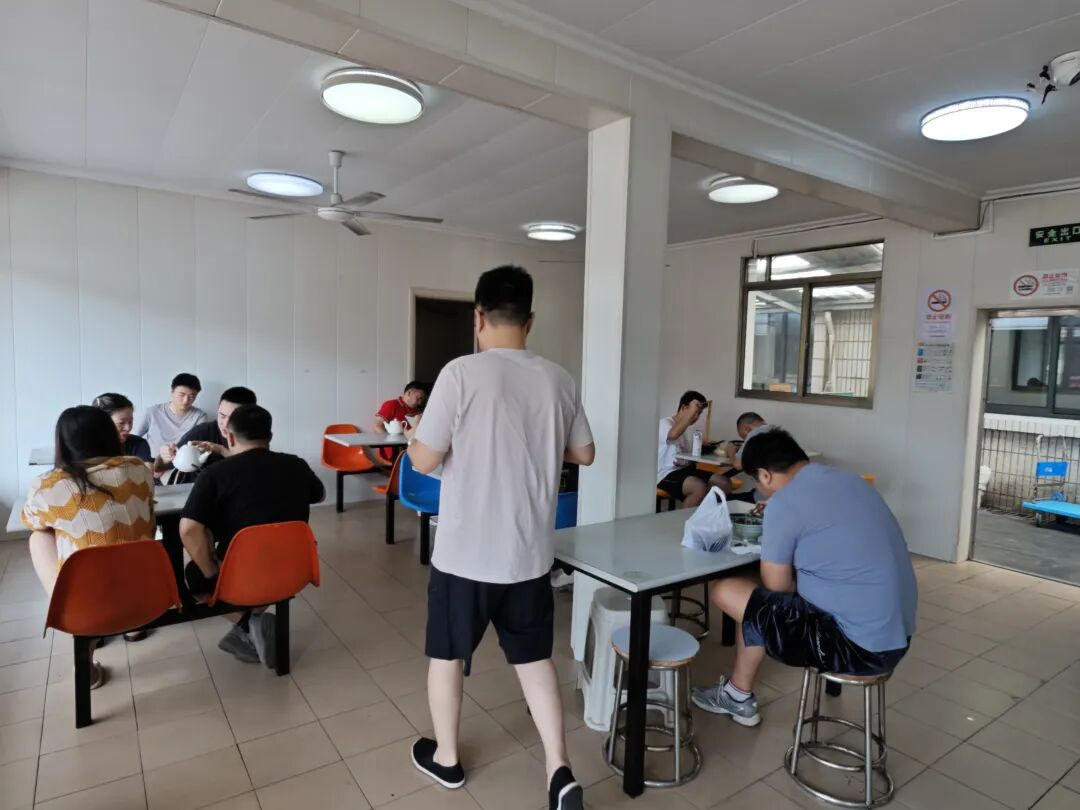
The Shanghai Mutton and Beef Company is Shanghai's largest producer of Halal mutton and beef, meaning the ingredients are exceptionally fresh.
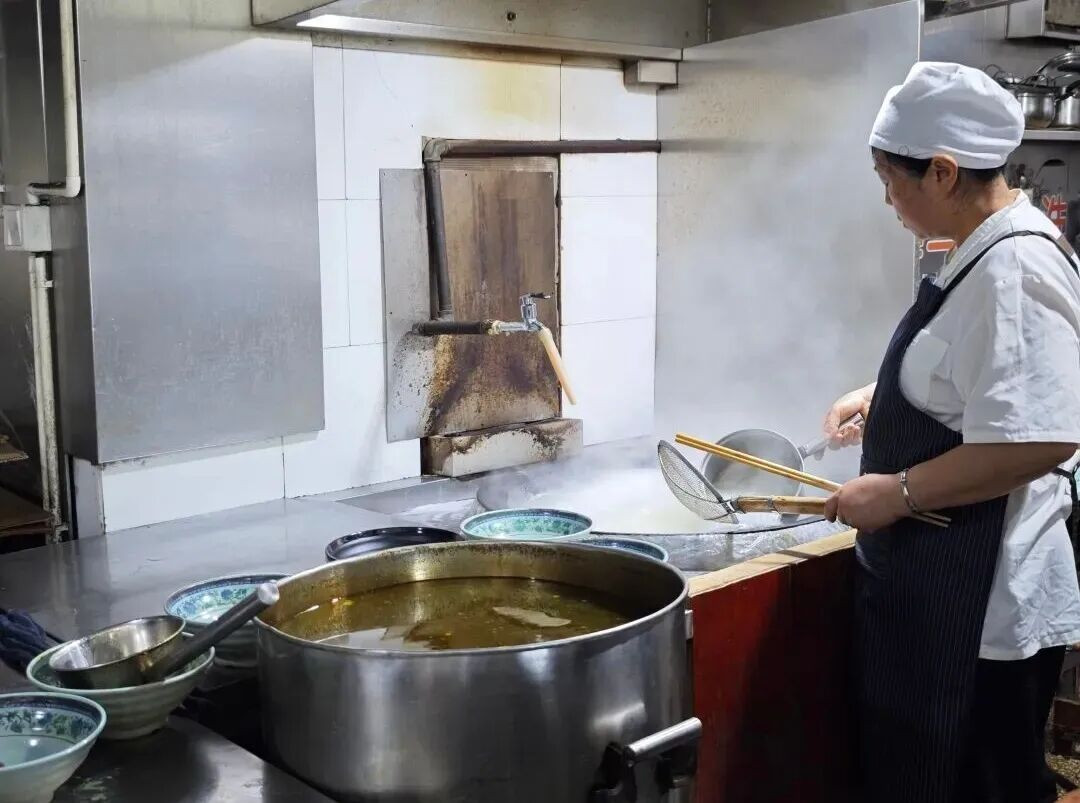
Morning breakfast: a beef bun paired with beef consommé (Note: the consommé is free).
The Ultimate Halal Shanghai Guide: Best Niurou Jianbao, Hidden Mosques & Muslim Food Culture
Articles • Hasan09 posted the article • 0 comments • 8 views • 1 days ago
Shanghai's Budget Carb Ceiling: Field-Testing the Golden Crispy Crusts and Juicy Fillings of Shanghai's Iconic Halal Niurou Jianbao
Summary:
A deep dive into Shanghai's most seductive "national-level" Halal carb creation—niurou jianbao (pan-fried beef buns). We put the frying technique, thickness of the golden crispy bottom crust, and the beef filling ratios of historic brands and street food legends head-to-head to bring food lovers the ultimate flavor roundup.
In Shanghai's niurou jianbao scene,
every single bun has its own legend.
They sizzle and flip in the oil pan
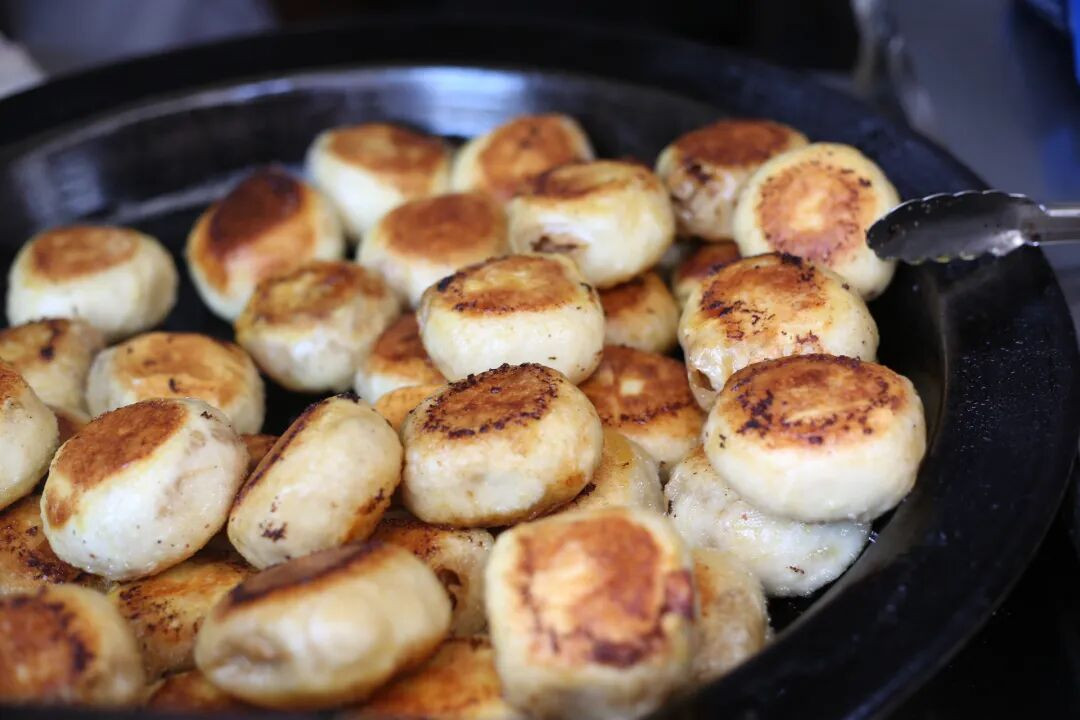
until the wrapper is crispy and the beef aroma fills the air.
This edition recommends the 8 absolute best niurou jianbao spots.
Step inside,
and the air doesn't just carry the scent of beef—
it's packed with mouthwatering toasted aromas.
1. Shanghai Yixinzhai
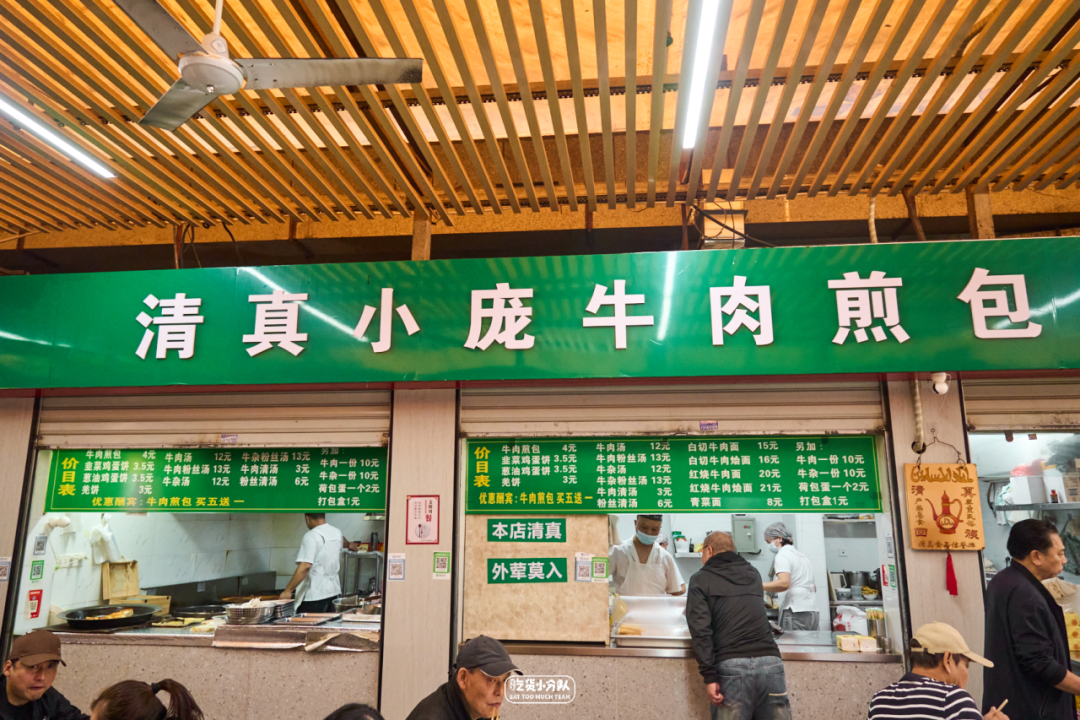
2. Qingzhen Xiaopang Niurou Jianbao
3. Shanghai Weimin Shanghang Halal Restaurant
4. Hujia Shuang Guotie (Hujia Double-Sided Potstickers)
5. Crispy Niurou Jianbao · Huainan Beef Soup
6. The Milk-Drinking Crispy Flatbread
7. Chunyuan · Siruchun
8. Hongchangxing
"A 60+ Year Intangible Cultural Heritage Niurou Jianbao"
5 RMB / 1 piece
When people talk about Shanghai niurou jianbao, Yixinzhai is usually the first name that pops into mind. That's right—this legendary spot is an "Intangible Cultural Heritage Shop" and "Shanghai's #1 Niurou Jianbao." Moving a legendary 4,000 buns a day through 64 years of ups and downs, it's still wildly popular.
From older Shanghai aunties and uncles to young foodies chasing internet hype for social media check-ins, whether you're here for pure nostalgia or a viral food hunt, you've got to bow your head and wait in line for Yixinzhai's heritage buns.
The Nostalgia of Old Yangpu
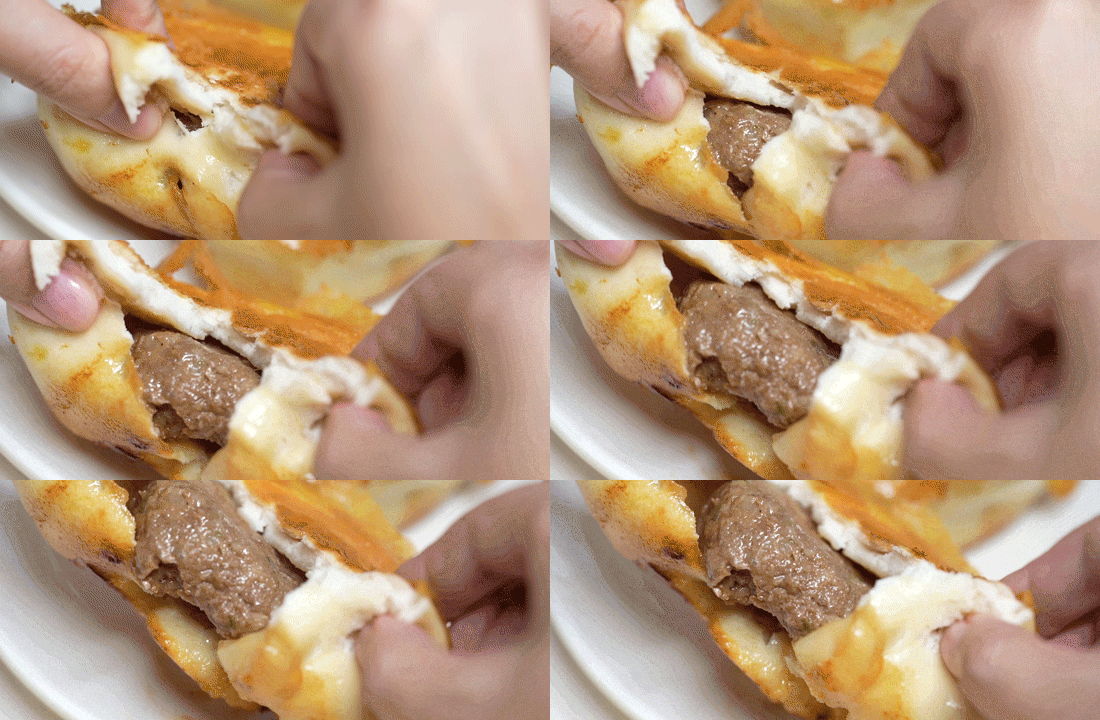
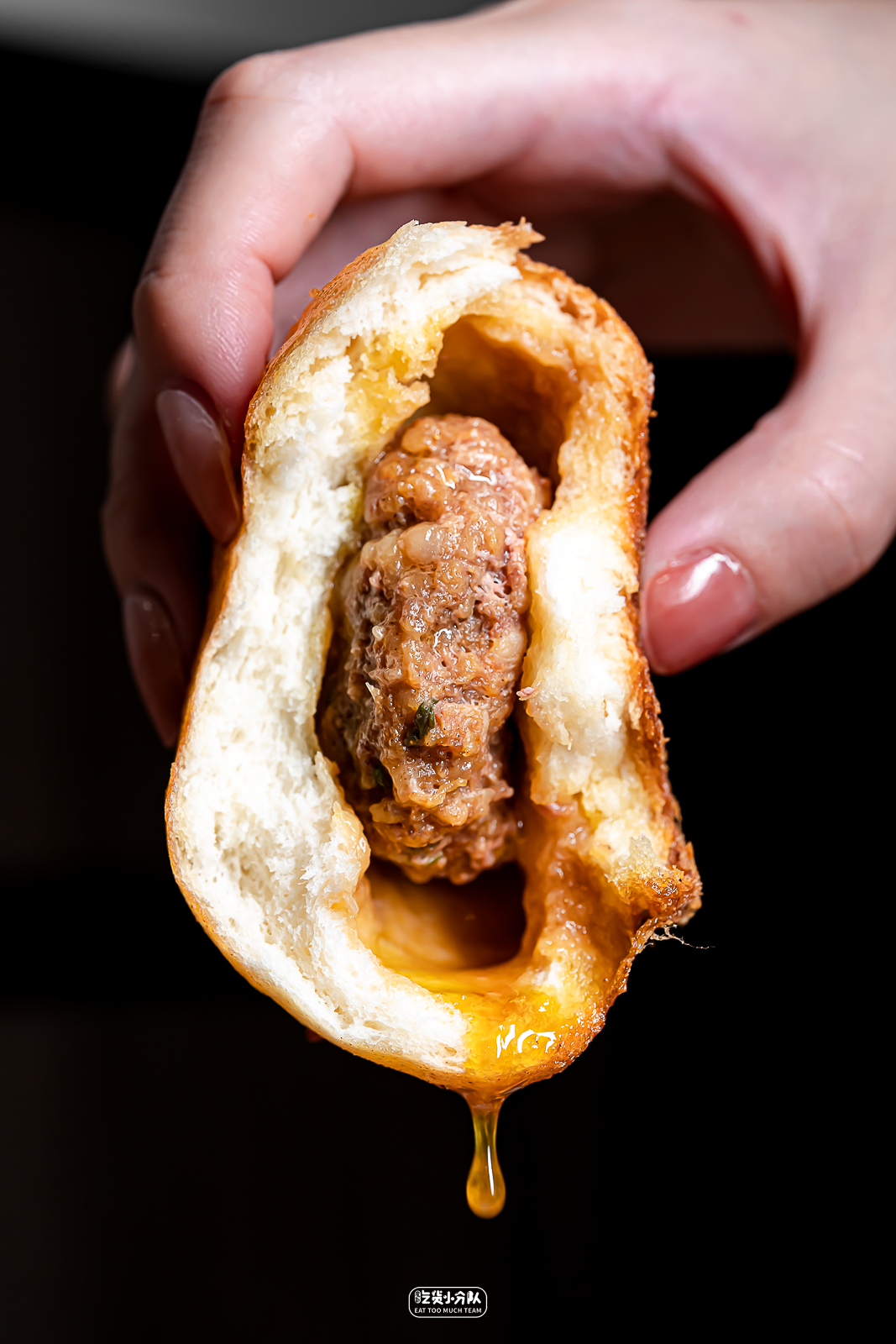
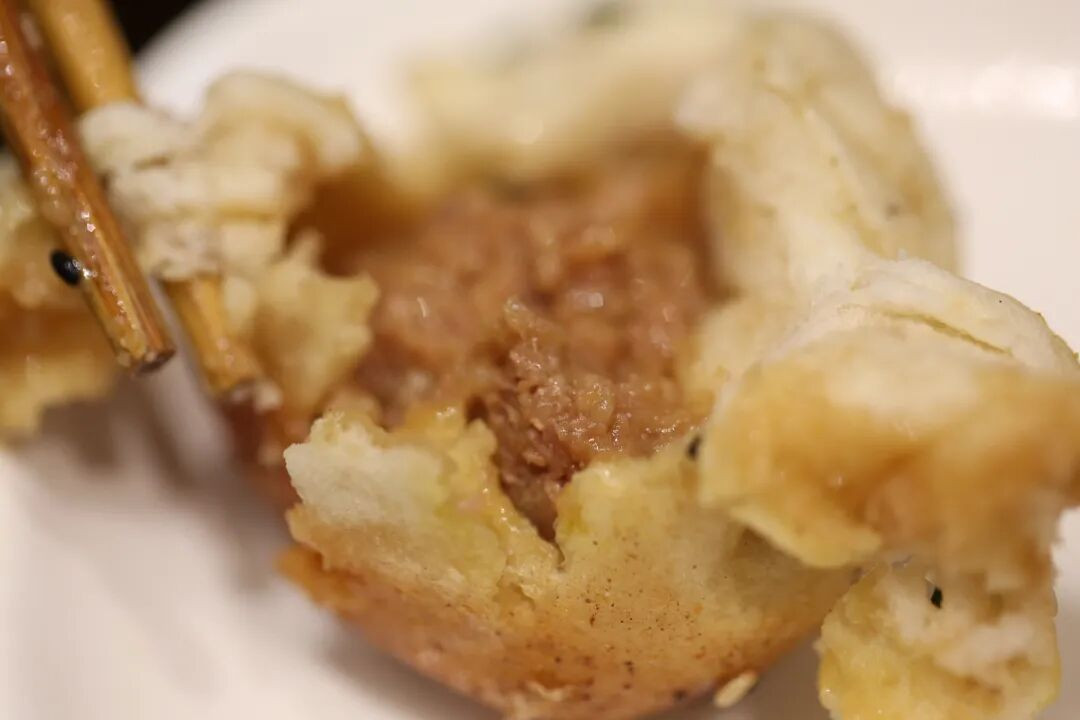
If you want a jianbao that's dripping with juice and pure romance, Yixinzhai takes the crown. Fresh out of the frying pan, these buns are golden-brown on both sides, with a satisfying crunch. Bite through the skin, and a gusher of soup bursts from the tear, rich in beef flavor and subtly sweet, melting right into the dough's earthy aroma. It's impossible not to love them. Even though it's already the undisputed king of Shanghai niurou jianbao, old-school Yangpu foodies still argue that the flavor back in the day was peerless. With every juicy, enduring bite, Yixinzhai's jianbao chronicles the changing face of the city.
One-Click Navigation | Shanghai Yixinzhai (Pingliang Road Branch)
Address | No. 1625 Pingliang Road, Daqiao Subdistrict (Near Ningguo Road)
Hours | 7:00 AM - 9:00 PM
A 30-Year Neighborhood Staple in the Yangpu Wet Market
A Massive 4 RMB Bun That Shatters Your Wallet's Limits
5 RMB / 1 piece
Word has it that besides Yixinzhai, there's another god-tier Yangpu niurou jianbao hidden gem you simply have to try. Dominating the wet market scene and reigning supreme as the ultimate morning rush-hour snack, they only sell until noon. Made with the boss's secret recipe, this oversized niurou jianbao has made a huge name for itself across Yangpu. Honestly, handing over just 4 RMB for a massive meat bun makes you feel a little guilty—especially when it's pure beef and literally bursts with soup?
"Our shop has been here since the day this wet market opened. At first, we only sold raw beef, but then folks from back home living in Shanghai started craving hometown-style buns, so we opened this joint." It's a family-run affair: the husband works the wok, the wife runs the cash register, and the morning crowd is mostly regulars. Chatting about daily life with the boss's family makes for a super cozy vibe.
A Low-Key Shaolin Master of Jianbao with Killer Looks and Chops
Boss Pang is dead serious about ingredient freshness, exclusively sourcing premium chuck flap (meizi rou) from big yellow cattle, keeping strict standards on slaughter times, origin, and cattle age. Sticking to traditional cast-iron pan-frying, he relies on over 20 years of mastery over heat control, wok airflow, timing, wrist pressure, and oil amounts to make sure every single bun hits peak flavor. Take a bite, and the texture genuinely feels a bit more rustic and muscular than your average niurou jianbao. As you sink your teeth in, the juices soak right into the wrapper, supercharging the savory fats. Take a gentle little sip of the soup—it's an instant out-of-body experience.
One-Click Navigation | Qingzhen Xiaopang Niurou Jianbao
Address | Right-hand side inside the Global Company Food Street, west side of Lejiafu Agricultural Products Market, No. 9 Yongji Road, Yangpu District
Hours | 6:00 AM - 12:00 PM
*Niurou jianbao are 4 RMB each, buy 5 get 1 free. They sell out completely as soon as they come out of the pan before 9:00 AM. The boss doesn't do delivery apps, and supply cannot be guaranteed after 12:00 PM.
"Shanghai's Most 'Bovine' Canteen:
Halal Jianbao, Slaughtered at Midnight, Sold Out by Afternoon"
3.5 RMB / 1 piece
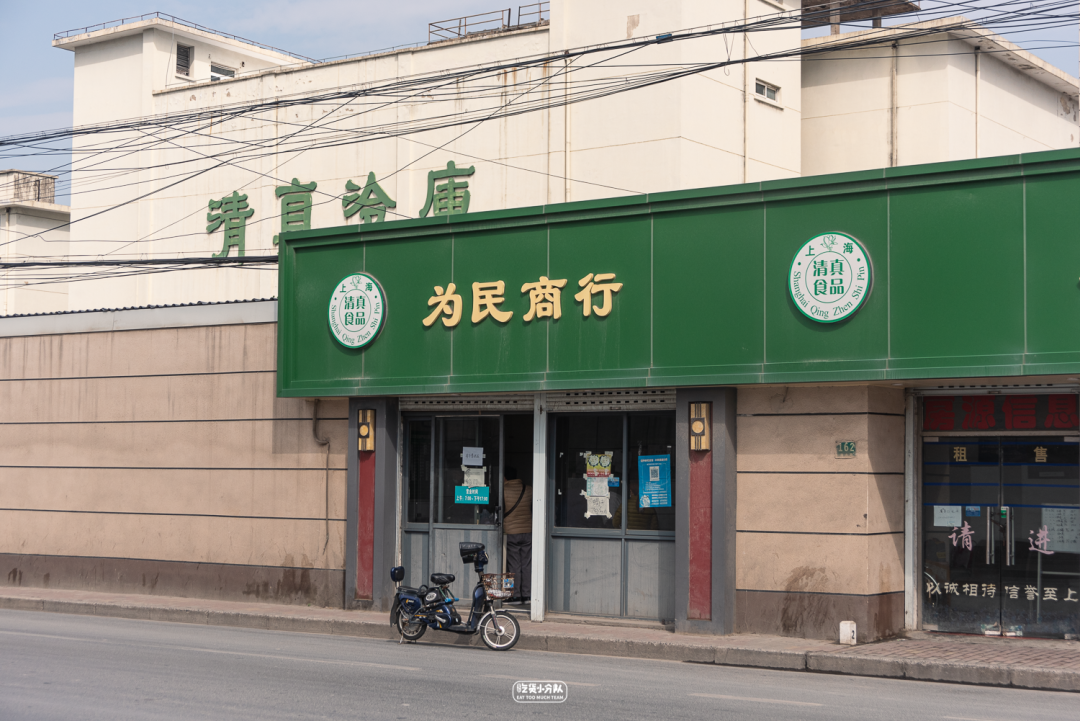
With a history stretching over 30 years, this beef and mutton "canteen" is a state-owned restaurant under the Shanghai Beef and Mutton Company. The kitchen starts buzzing here right after midnight, but they shut their doors at 1:00 PM sharp. The restaurant owns its own slaughterhouse, taking just 20 minutes from slaughter to table to guarantee mind-blowing freshness. Backed by a massive Halal cold storage facility and slaughterhouse, they're the only operation of their kind in Shanghai.
The Mandatory "Soup-Bomb Bun"
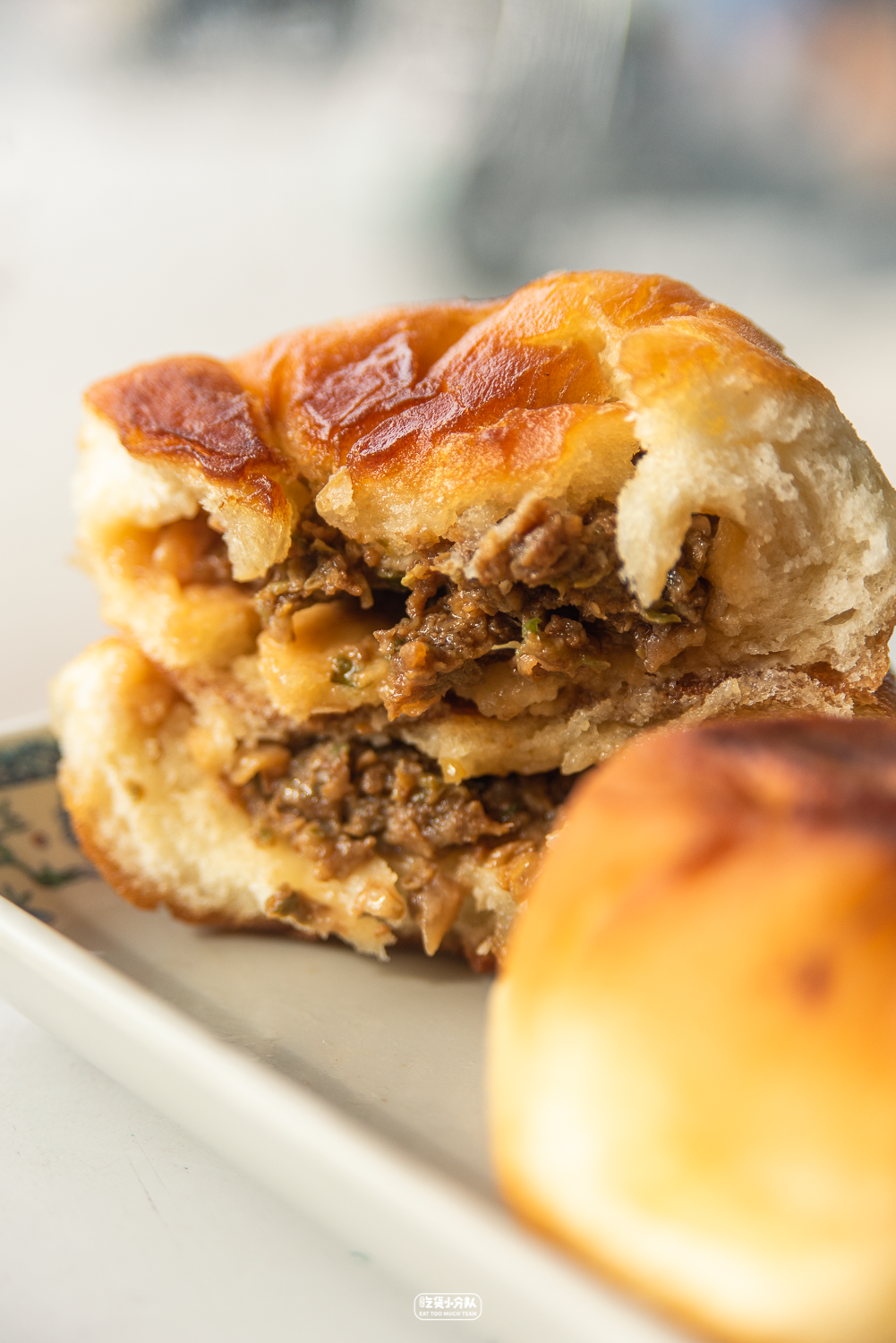
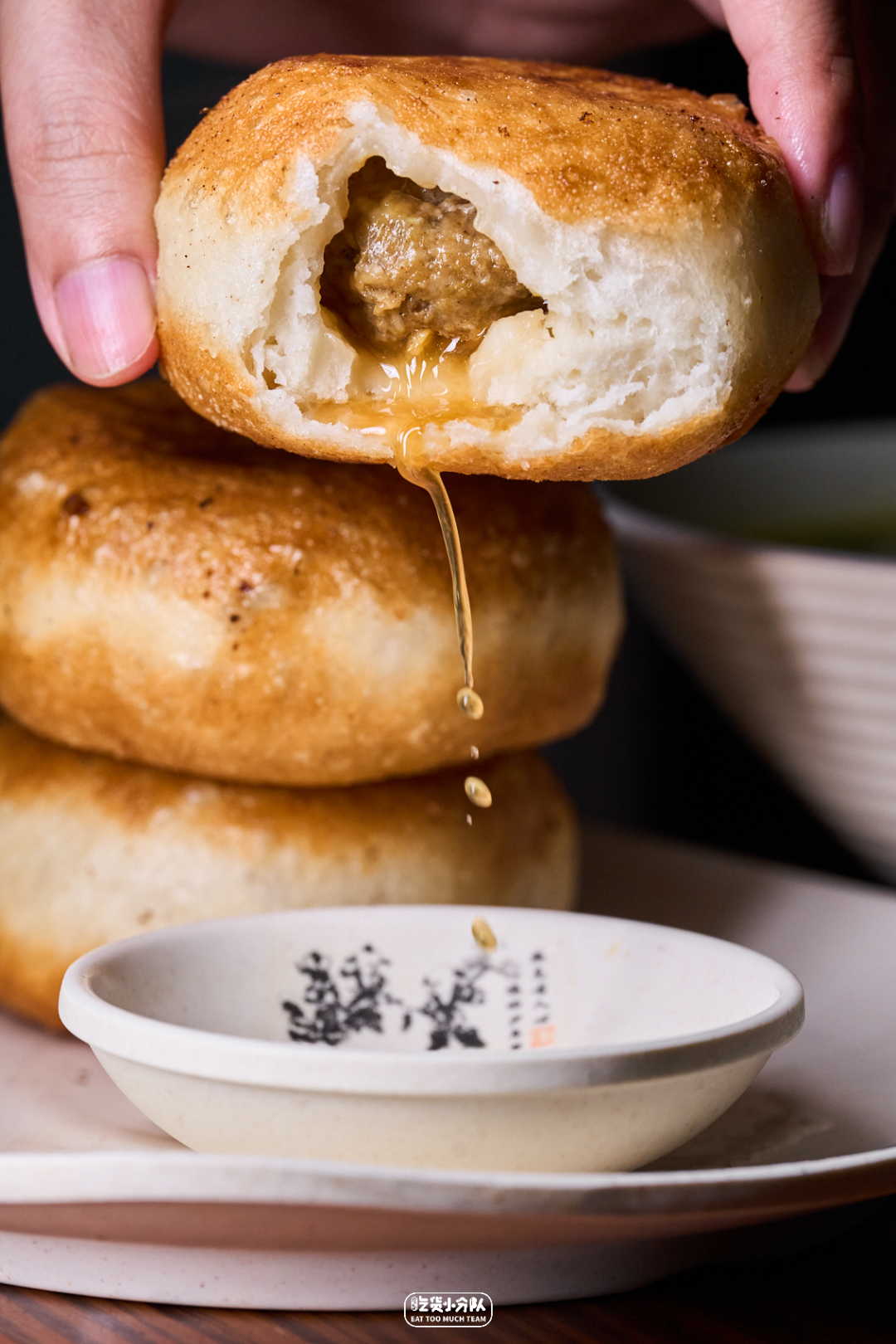
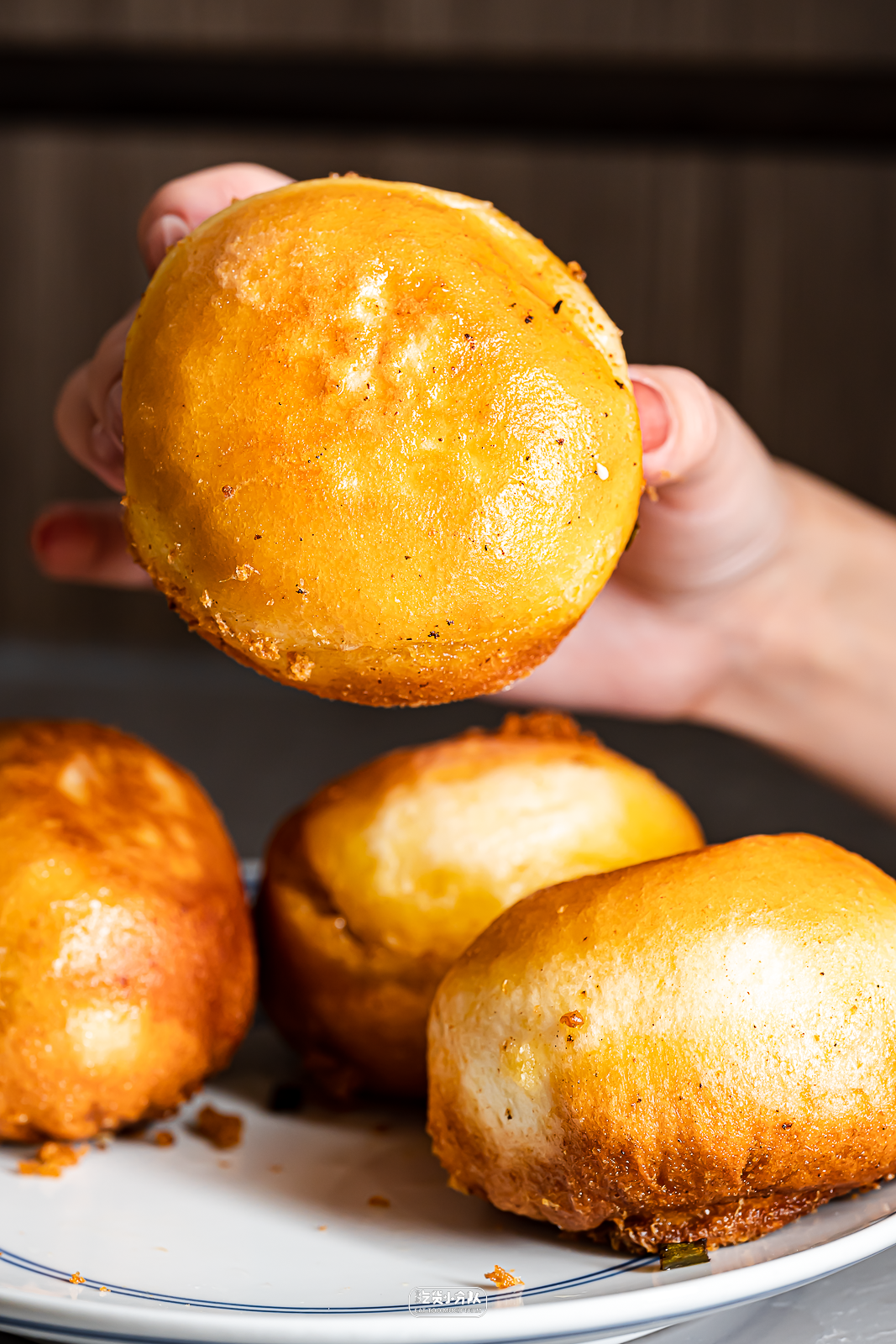
Their niurou jianbao go for 4 RMB each and are practically mandatory for every customer who walks through the door—you'll often see people walking out having "wholesale-purchased" massive bags of them. These buns are huge, roughly the size of a soup bowl, with golden-brown wrappers boasting a slight char, thick and packed with flavor. Don't let the thick skin fool you: the beef filling is generous, and the meat juices burst out with a gentle squeeze. The filling is loaded with fragrant scallions, and the fluffy leavened dough drinks up the pure essence of the beef broth. Every single bite is deliciously sinful.
One-Click Navigation | Shanghai Weimin Shanghang Halal Restaurant (Nanda Road Branch)
Address | No. 162 Nanda Road, Baoshan District
Hours | 5:00 AM - 1:00 PM, 3:30 PM - 6:30 PM
"Their Signature is Guotie,
But Dianshang Reviews Hyping Up the Niurou Jianbao Are Everywhere"
4 RMB / 1 piece
This little shop focuses on guotie (crispy beef potstickers), but their niurou jianbao unexpectedly went viral and earned rave reviews from all over. What started as a tiny 3-square-meter stall has grown into its current size. Passed down from father to son with over 30 years of craftsmanship, they've kept the original ingredients and recipes intact, so every bite still tastes just like childhood.
Uncompromising Dedication to Old-School Craftsmanship
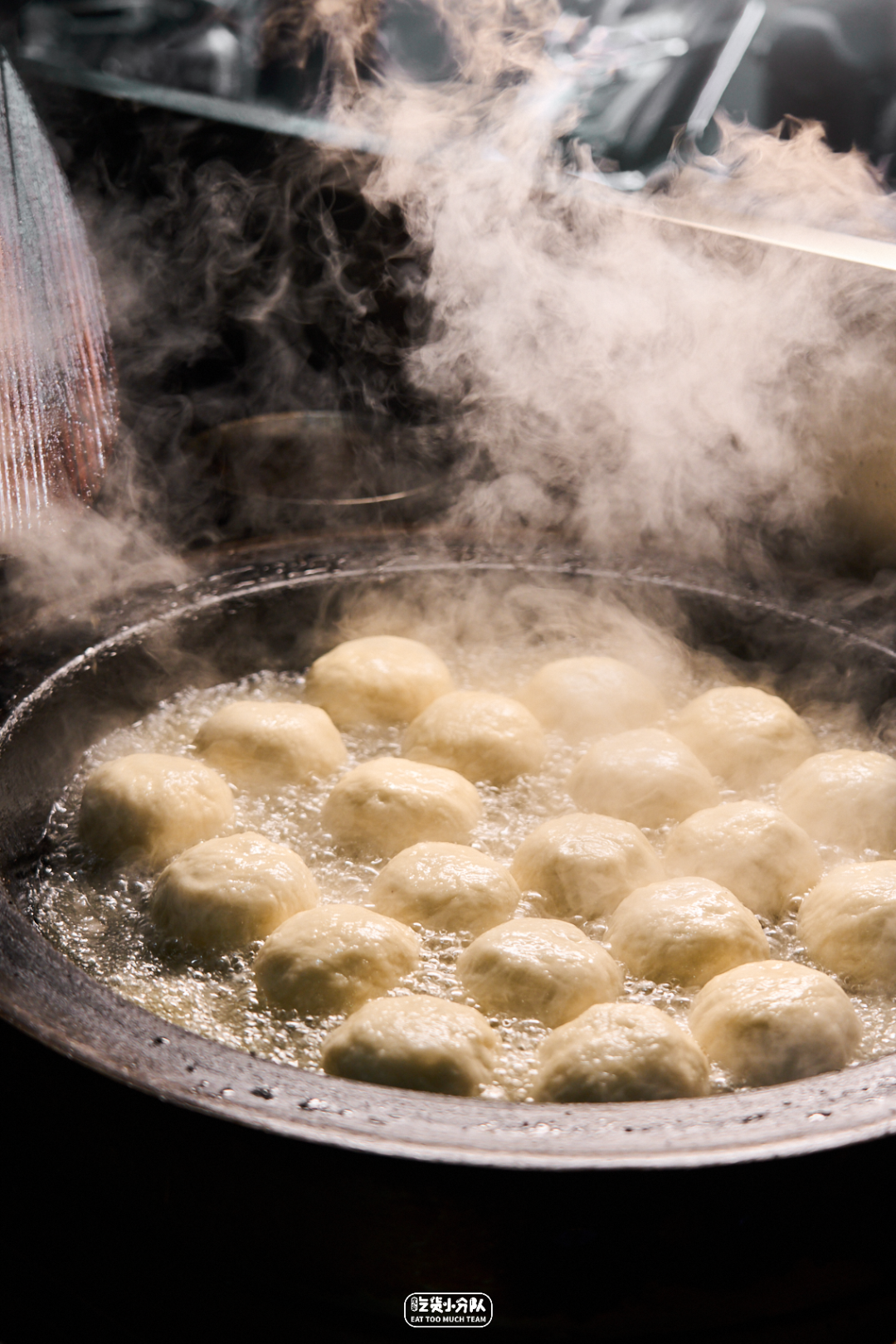
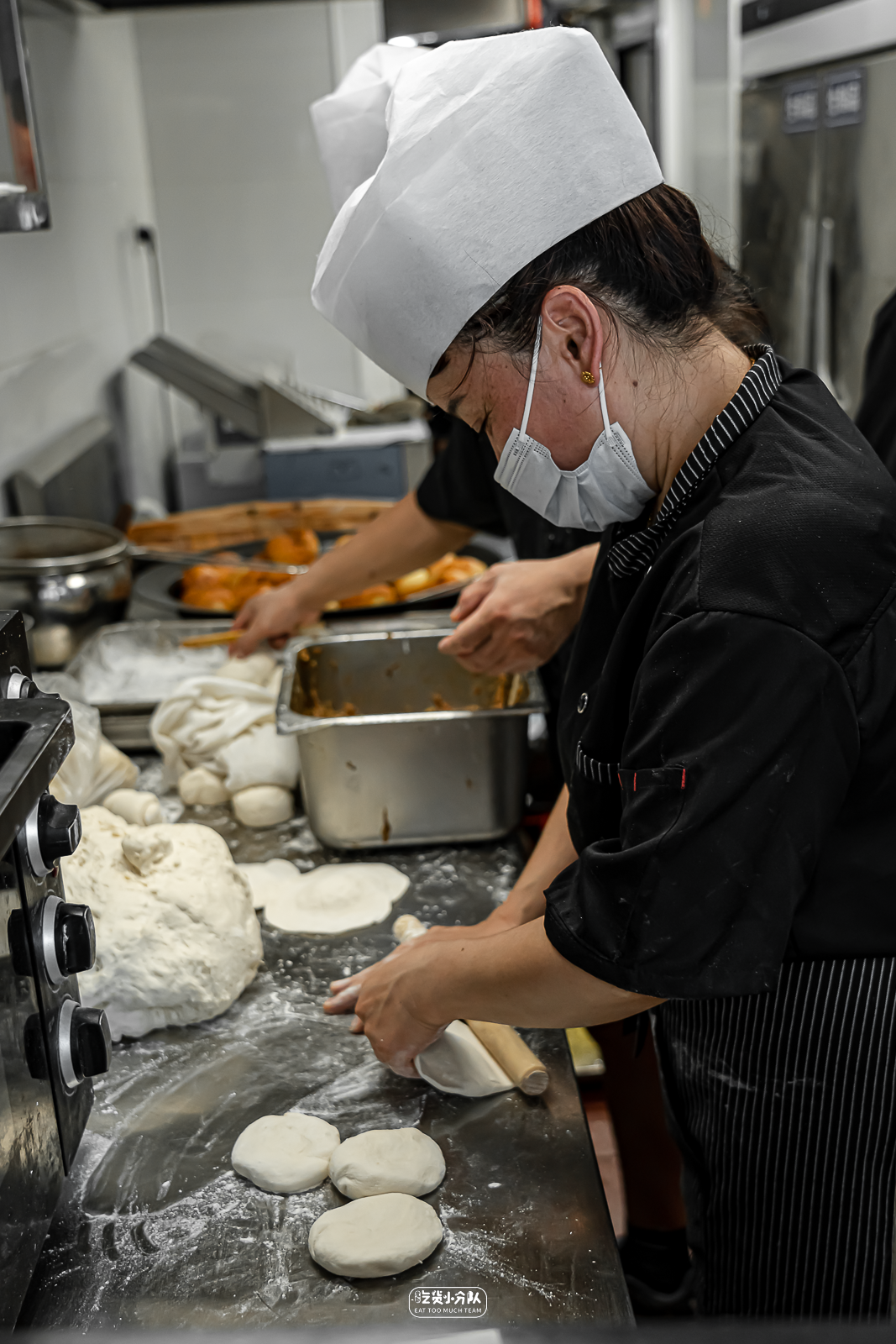
While waiting for our batch to finish, we watched these little guys go through a secondary proofing and a steam bath in the wok, plumping up their wrappers quite a bit. While other shops might rely on a starch slurry to give their buns a cosmetic makeover, Hujia sticks to pure, unadulterated methods, letting the jianbao achieve golden, crispy perfection through the most authentic, traditional frying techniques. It's almost like they're teasing us: "Hey, I'm the real deal—don't compare me to those chemically enhanced impostors!"
One-Click Navigation | Hujia Shuang Guotie
Address | No. 235-1 Zhongshan North Road, Jing'an District
Hours | 6:00 AM - 19:00
"The Undisputed King of Dianping's
Shanghai Niurou Jianbao Rankings"
5 RMB / 1 piece
Sitting pretty in the top three of Dianping's charts, this veteran niurou jianbao spot on Guangdong Road has been open for around 20 years. Watching it climb from 1.8 RMB to 5 RMB is basically a masterclass in tracking inflation. The number of jianbao they sell every day could wrap around the earth—well, at least wrap around the block three times. Their pickiness when it comes to ingredients is basically a beauty pageant audition, ensuring the word "integrity" is baked into every single bun.
"Kids Who Grew Up Eating Our Jianbao All Hit 6 Feet Tall"
The raw ingredients are hand-picked from the top-tier beef brisket sold on Niurou Street right across the street. The ingredient costs are high, using a lean-to-fat ratio that gives the meat a tight, springy texture with serious bite. Plus, they're loaded with nutrition—the boss proudly brags that the kids who grew up eating their buns all ended up standing over 1.9 meters tall and make prime basketball team material~
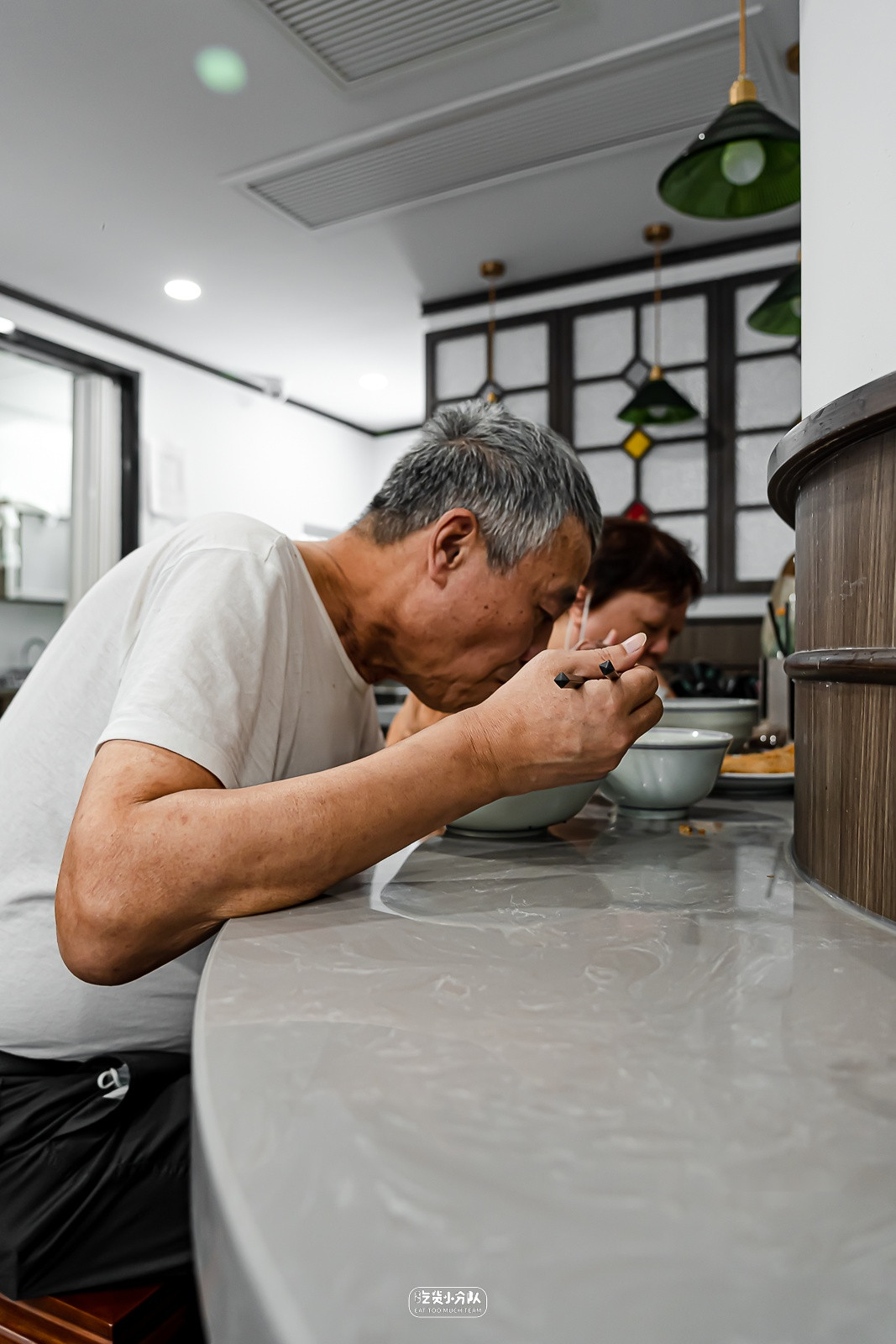
The owner shares that customers regularly roll up and buy 10, 20, or even 30 buns at a time. The furthest regular lives out in Qingpu, taking a two-hour subway ride just to buy them, while their biggest single customer once snapped up 120. The day we visited, we ran into an older Shanghai uncle who had made a special trip all the way from Pudong to "wholesale" a batch. He used to live in the neighborhood, and even though he got relocated during urban renewal, he still comes back every single week.
One-Click Navigation | Crispy Niurou Jianbao · Huainan Beef Soup (Guangdong Road Branch)
Address | No. 577 Guangdong Road, Huangpu District
Hours | 6:00 AM - 19:00
*The shop's payment systems are totally globalized, making it super easy for international friends to pay.
"The Queue Monster Hiding in Taopu"
10 RMB / 3 pieces
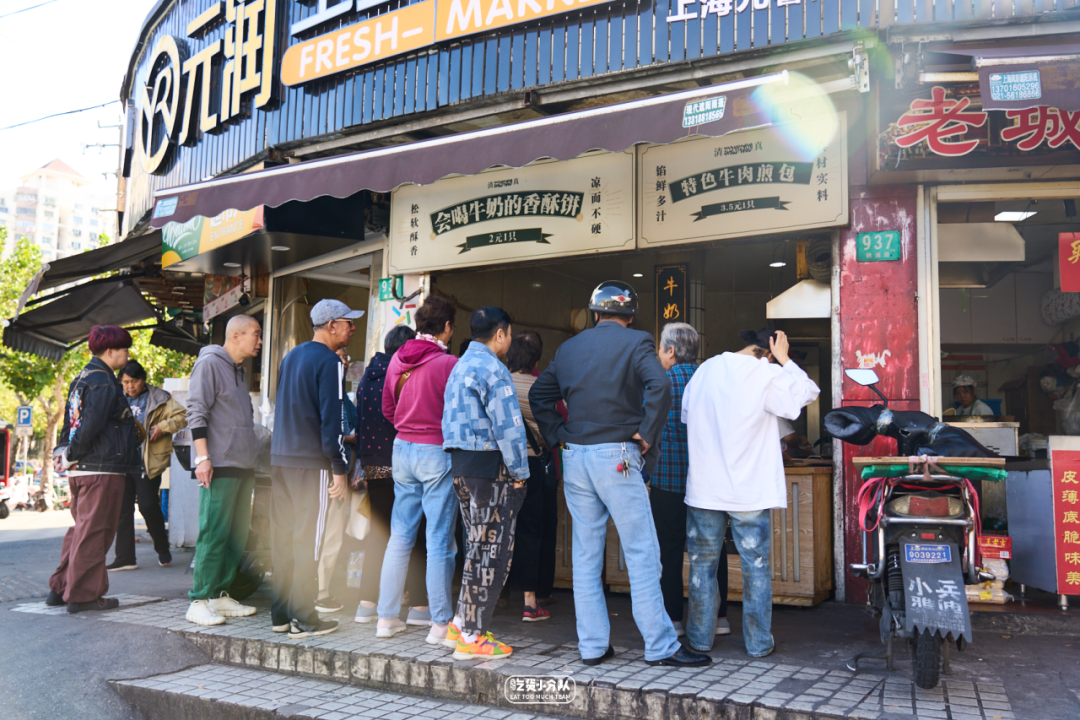
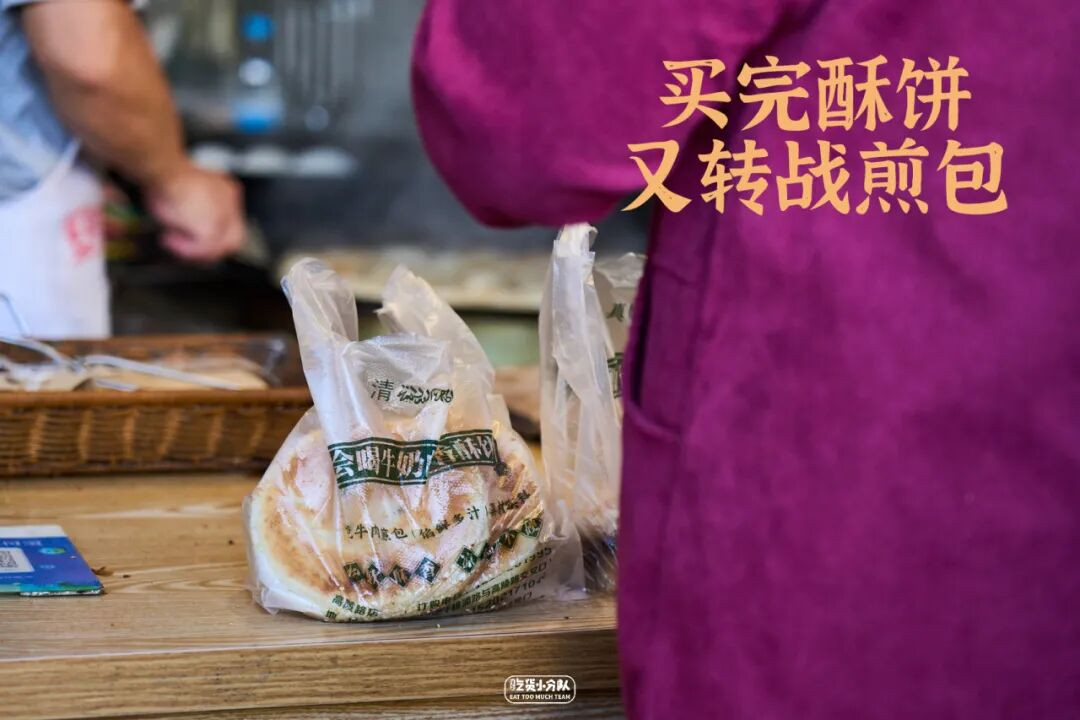
Located right at the corner of Gaoling Road and Taopu Road, this pastry shop is the "heavyweight boxing champion of Taopu breakfasts." Their milk-infused crispy flatbread is the signature item, but their niurou jianbao have surprisingly turned into massive bestsellers. By the time we arrived around 9:00 AM, the line was already winding down the block. They run two separate lines—one for the crispy flatbread and one for the jianbao—and plenty of people finish buying their flatbreads only to jump right back into the jianbao queue.
"I drove all the way out here from Fenghang today,
I make it a point to come at least once a month anyway!"
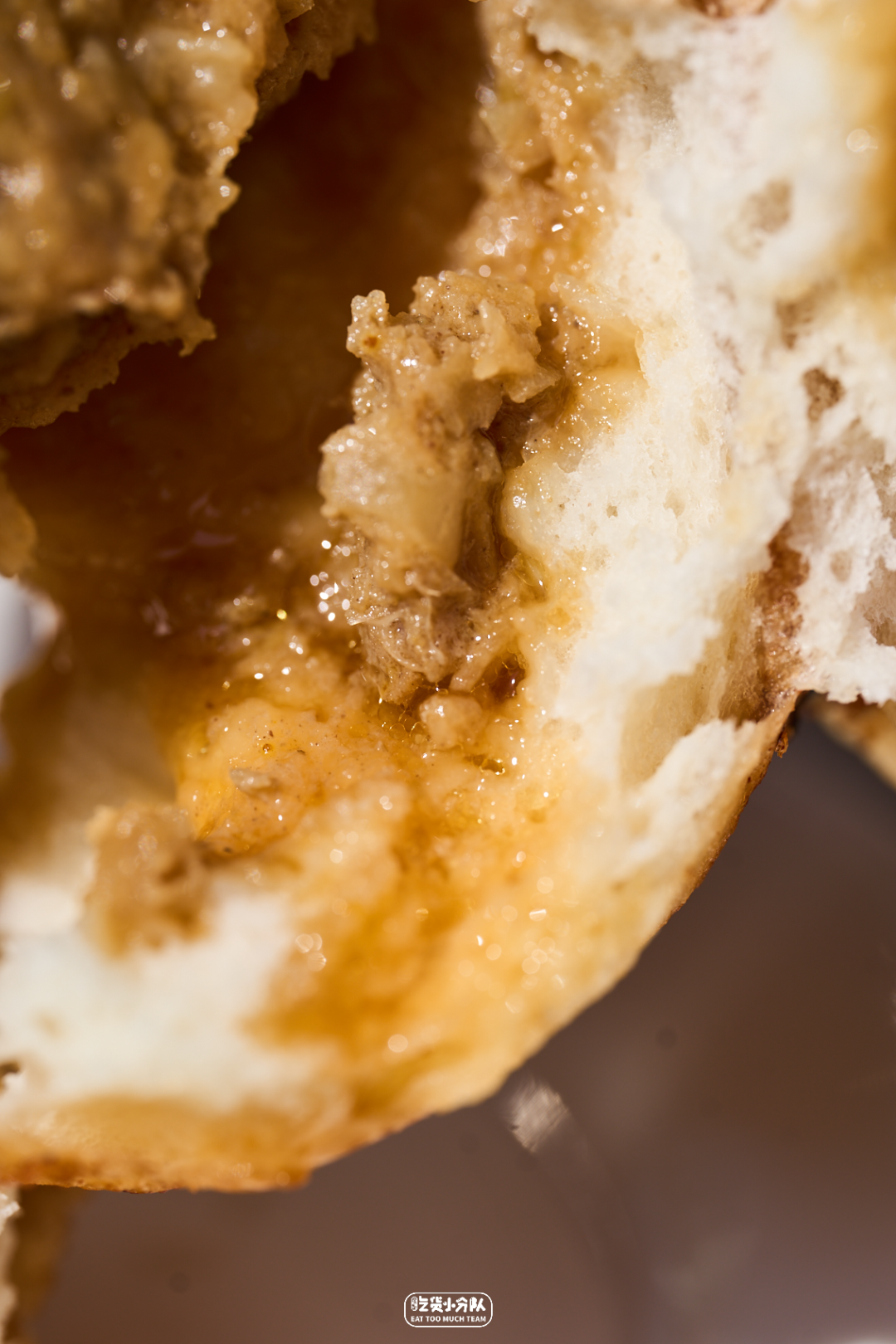
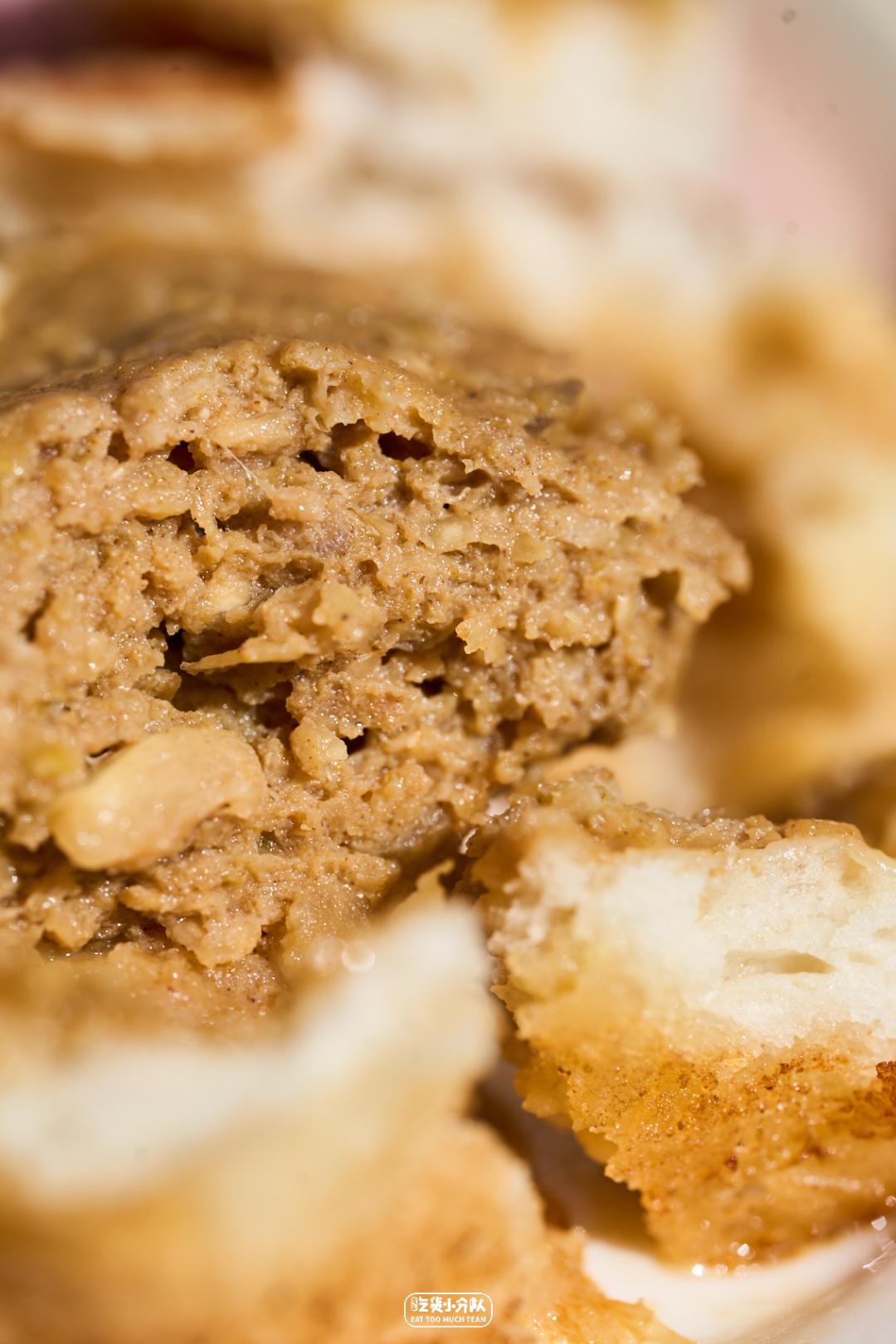
Their niurou jianbao are the ultimate value champions, practically mandatory for every diner who walks through the door. You'll constantly spot customers walking away with massive "wholesale" bags of them. The buns are hefty, with golden-brown wrappers carrying a slight char, thick and bursting with flavor. Don't let the thick skin fool you: the beef filling is packed tight, and the broth explodes at the slightest pinch. The filling is swimming in scallion aroma, and the fluffy leavened dough drinks up the rich essence of the beef juice. Every bite is pure, sinful satisfaction.
One-Click Navigation | The Milk-Drinking Crispy Flatbread
Address | No. 937 Taopu Road, Putuo District
Hours | 7:00 AM - 12:00 PM, 2:30 PM - 6:30 PM
*Niurou jianbao are only sold during morning hours.
"I've Dreamed About This for 20 Years—Turns Out It Still Tastes Exactly the Same"
4.5 RMB / 1 piece
Chunyuan, a historic heritage brand that shuttered over 20 years ago due to urban redevelopment, made a glamorous comeback in 2022, reopening after merging with another century-old institution, Siruchun. The shop brought back their original master chefs, putting beloved neighborhood staples like wontons and guotie back on tables after decades away, while also dropping brand-new items like niurou jianbao.
This old-school jianbao recipe from Chunyuan hasn't changed in 20 years. Steeped in the glory of a legacy brand and carrying forward its original flavor profile, it's an absolute must-try.
An Old Brand Reopened, Reclaiming a 20-Year-Old Recipe
The restaurant's regulars are mostly senior aunties and uncles who have carried a torch for this flavor from two decades ago. This niurou jianbao was specially developed for these loyal customers, blending traditional and modern palates. The veteran chefs tweaked the filling proportions over and over again to nail the local Shanghai palate, locking in the rich beef flavor while tossing in a hint of northern Chinese scallions (jingcong) to banish any gamey notes. Beneath the crunchy crust lies a reservoir of rich beef soup—take one bite and the aftertaste lingers endlessly. "I spent 20 years thinking about this, and coming back to eat these jianbao, it really does taste like the old days." Even on a weekday afternoon, the dining room is packed to the gills.
One-Click Navigation | Chunyuan · Siruchun (Fuxing Park Branch)
Address | No. 183 Chongqing South Road, Huangpu District
Hours | 6:30 AM - 2:00 PM, 4:30 PM - 7:00 PM
"A 1981 Internet-Famous Icon:
The Niurou Jianbao from a Century-Old Halal Institution"
5 RMB / 1 piece
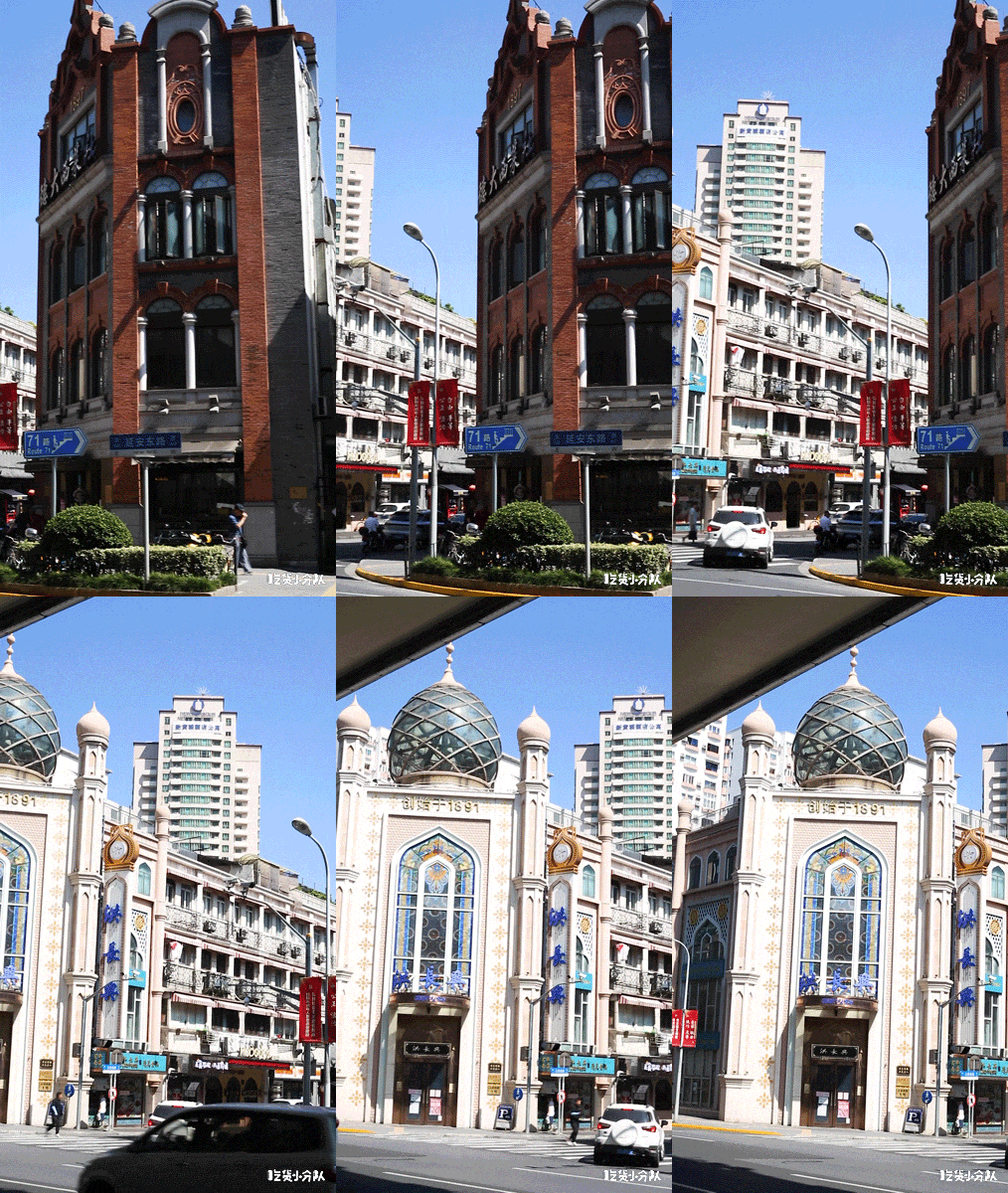
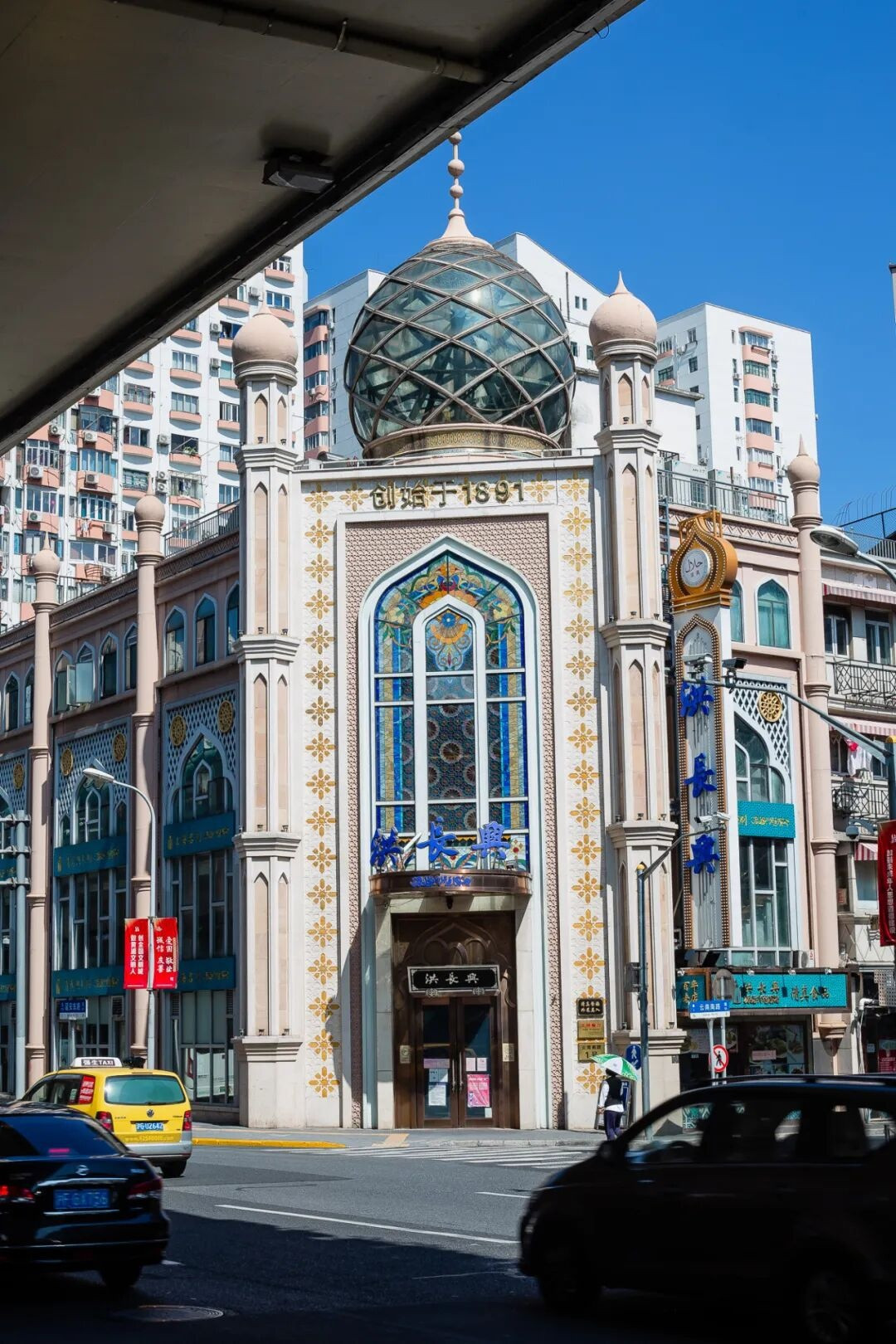
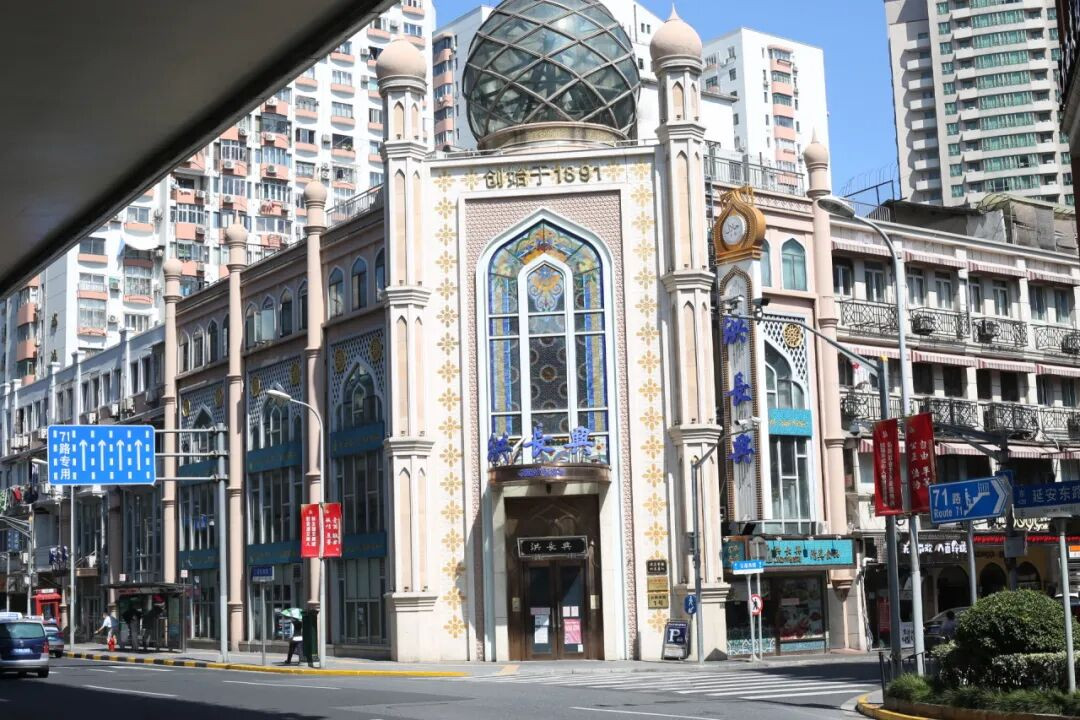
Dominating the number one spot on Yunnan Road South is Hongchangxing, founded way back in 1891 right on the corner of Yan'an Road. This place holds childhood-to-adulthood memories for generations of Shanghai locals. Two decades ago, Yunnan Road was the absolute go-to destination for family dinners.
Housed in a striking building with distinct ethnic architecture, the spacing between floors screams old-school Shanghai vibes. It's the real deal—a genuine Halal establishment. Their freshly sliced mutton hot pot (regi yangrou) is exceptionally authentic with knife-work to match, and their niurou jianbao are a massive specialty made with certified Halal beef. On top of that, they run a fantastic takeout window stocked with Halal pastries and cold-cut deli meats.
The Meat is Sourced from Authentic Halal Beef Rib and Neck Cuts
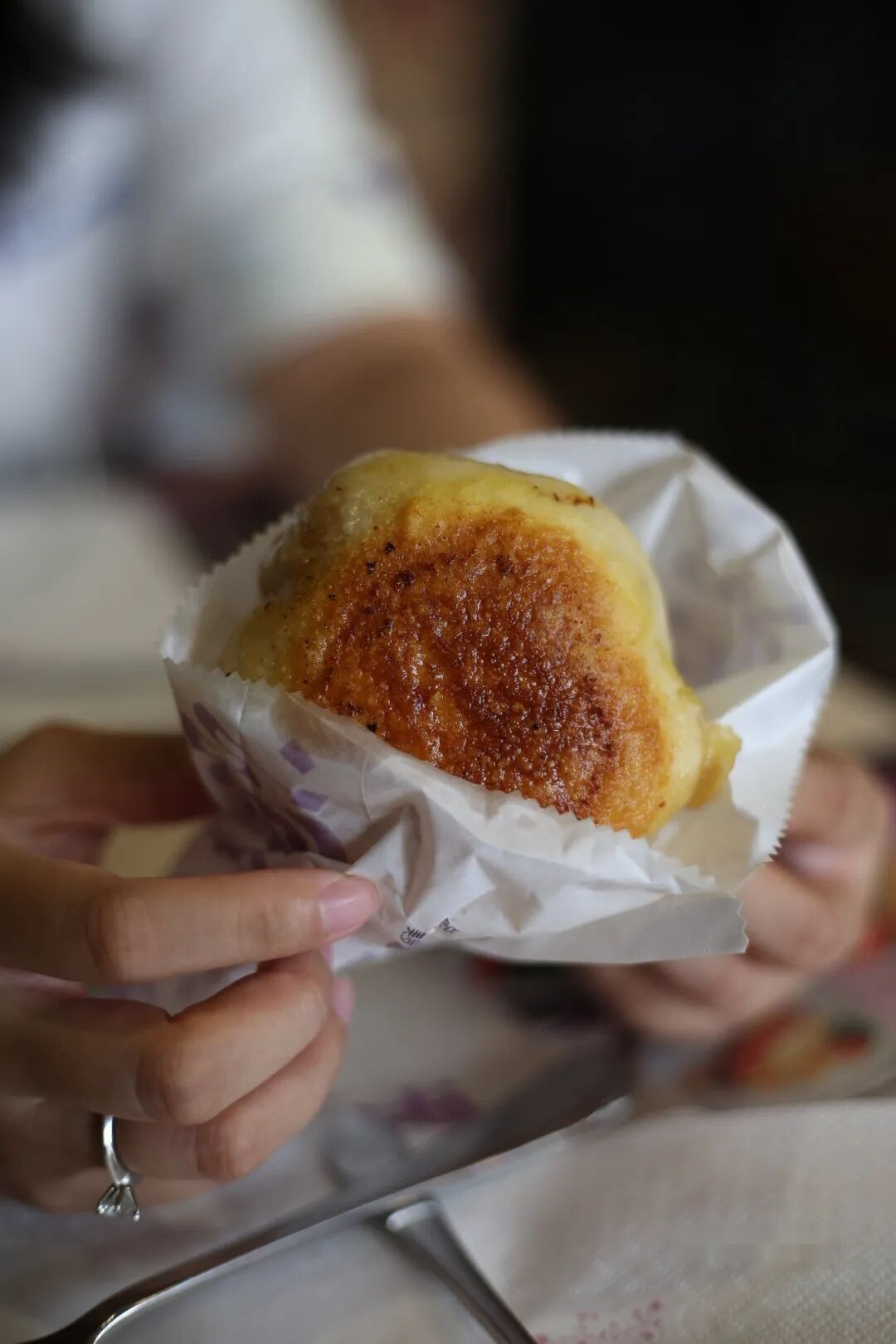
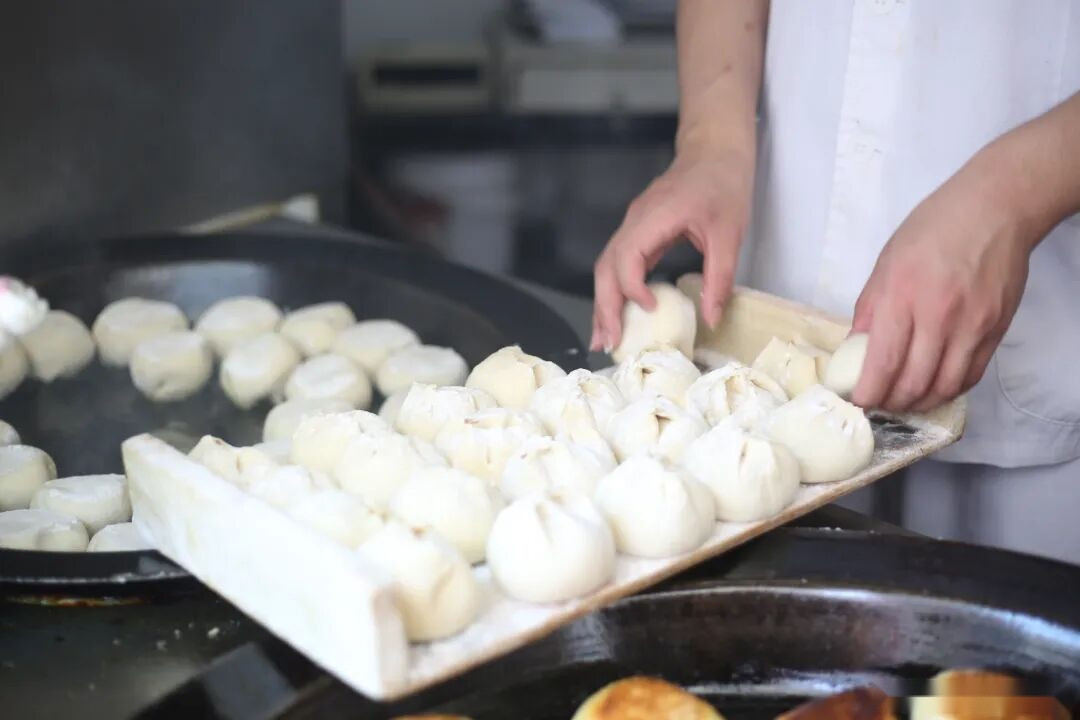
Hongchangxing's niurou jianbao are the absolute ancestors of the Shanghai food scene. The filling uses authentic Halal beef brisket and neck cuts, blended with a custom mix of spices. Thin-skinned and stuffed to bursting, every bite is pure meat—tender and swimming with juice. You can clearly taste a whisper of curry powder folded into the filling to brighten the flavor profile. It's just the right amount, adding incredible flavor depth while keeping the beef filling from ever feeling greasy. As the weather cools down, you'll want to grab them straight out of the pan and eat them immediately for peak deliciousness.
One-Click Navigation | Hongchangxing (Yunnan South Road Branch)
Address | No. 1 Yunnan Road South, Huangpu District
Hours | 11:00 AM - 2:00 PM, 5:00 PM - 8:00 PM
Let's Chat!
Which Shanghai niurou jianbao spot is your absolute favorite?
Drop your picks in the comments below! view all
Shanghai's Budget Carb Ceiling: Field-Testing the Golden Crispy Crusts and Juicy Fillings of Shanghai's Iconic Halal Niurou Jianbao

Summary:
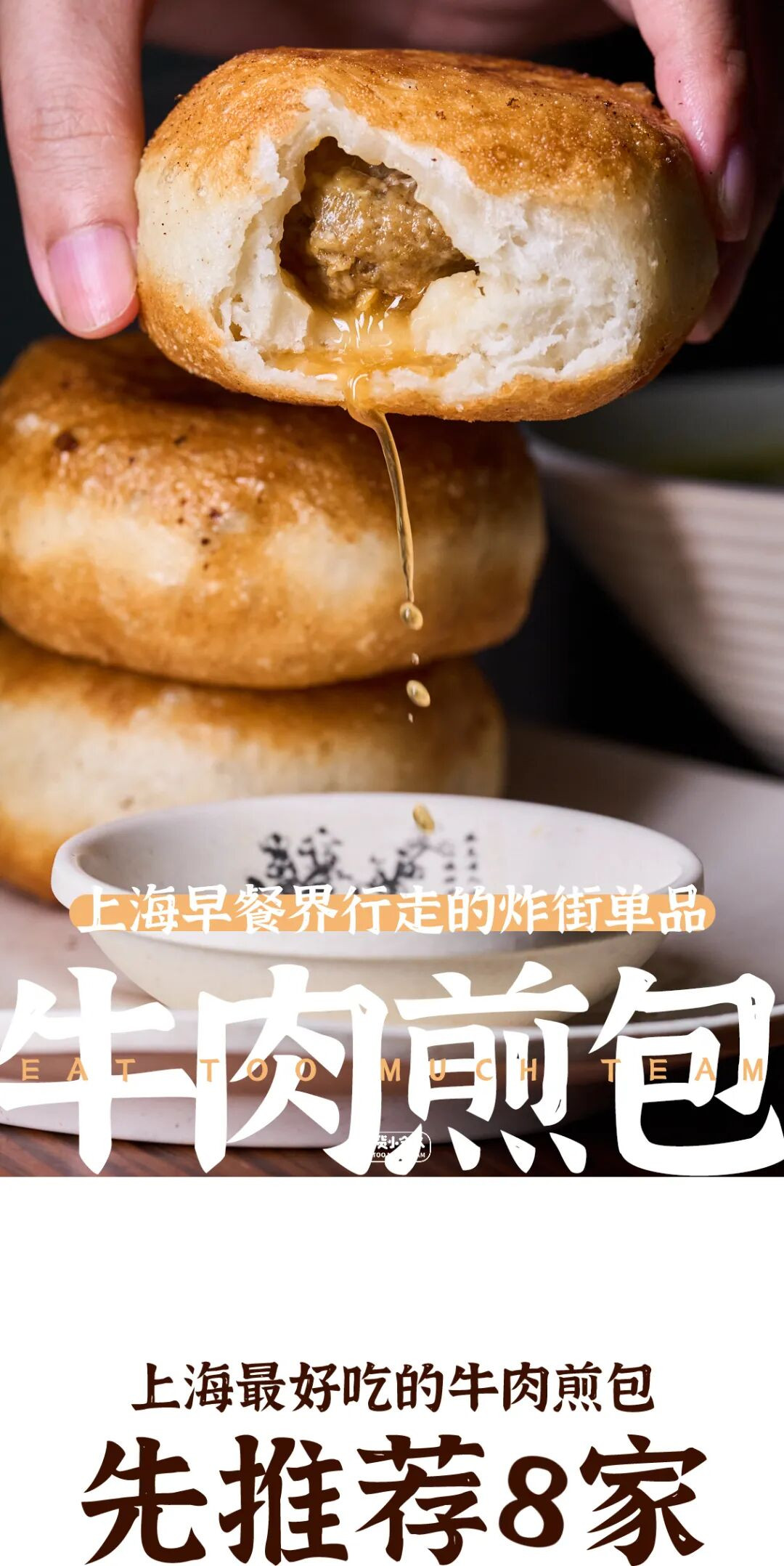
A deep dive into Shanghai's most seductive "national-level" Halal carb creation—niurou jianbao (pan-fried beef buns). We put the frying technique, thickness of the golden crispy bottom crust, and the beef filling ratios of historic brands and street food legends head-to-head to bring food lovers the ultimate flavor roundup.
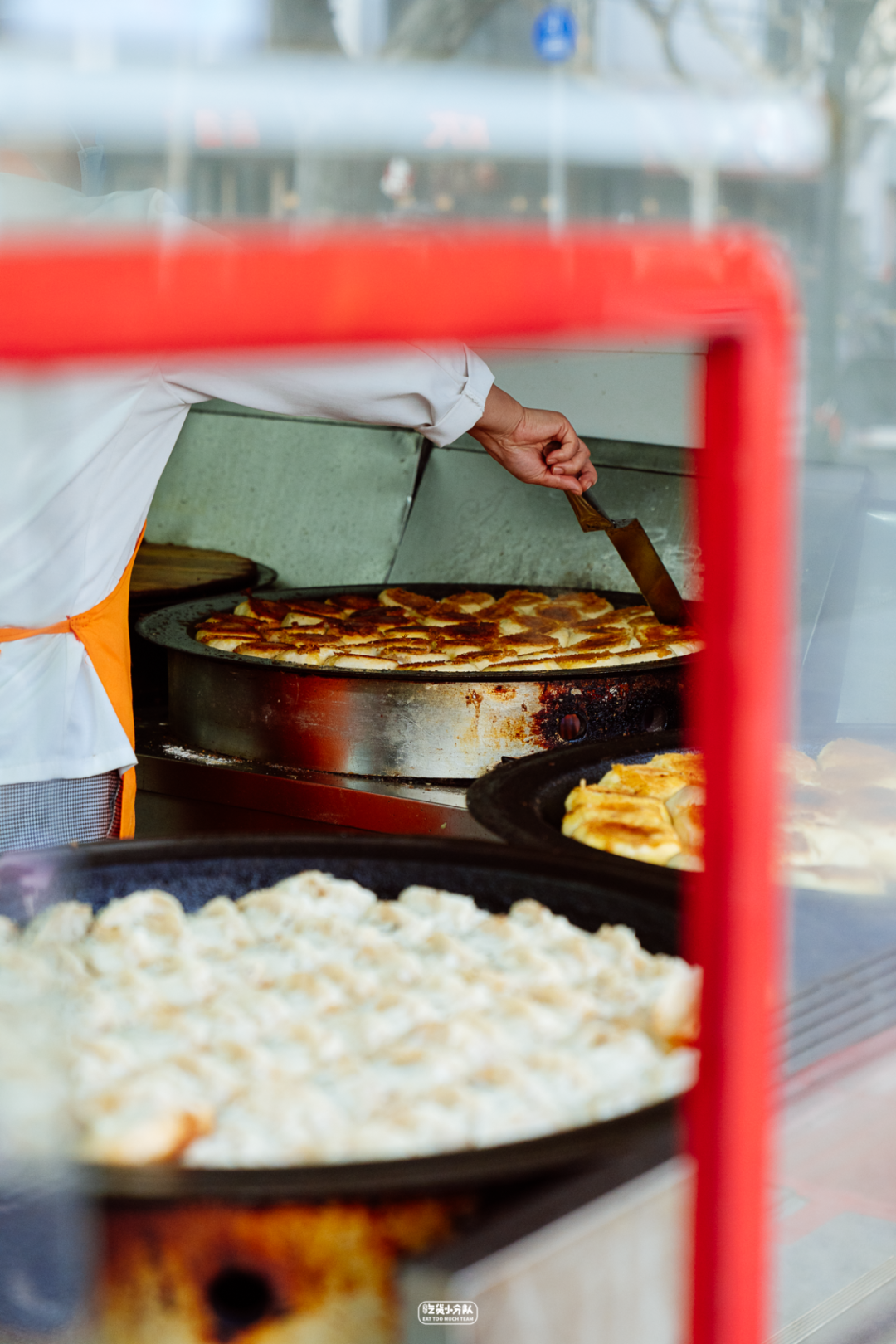
In Shanghai's niurou jianbao scene,
every single bun has its own legend.
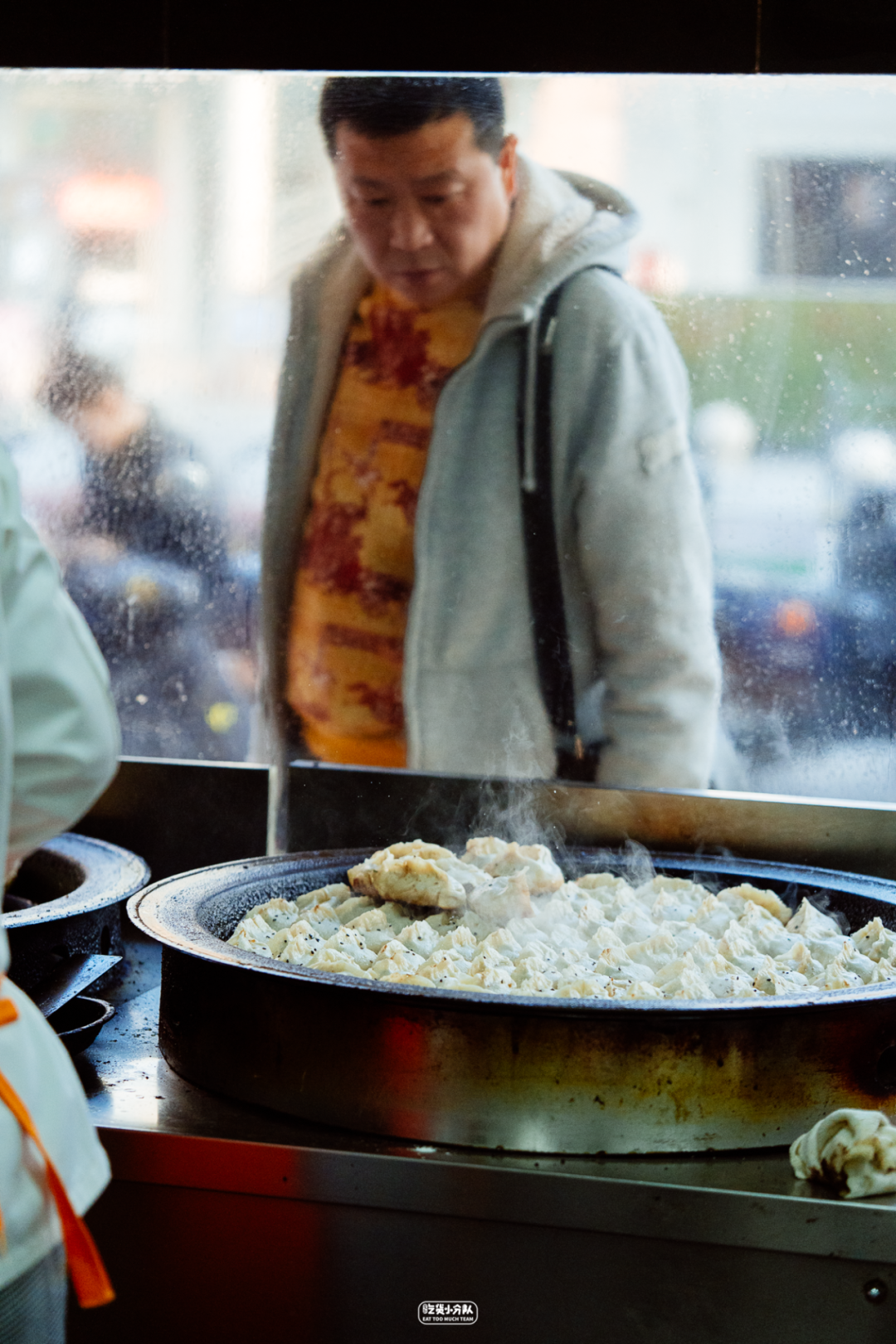
They sizzle and flip in the oil pan
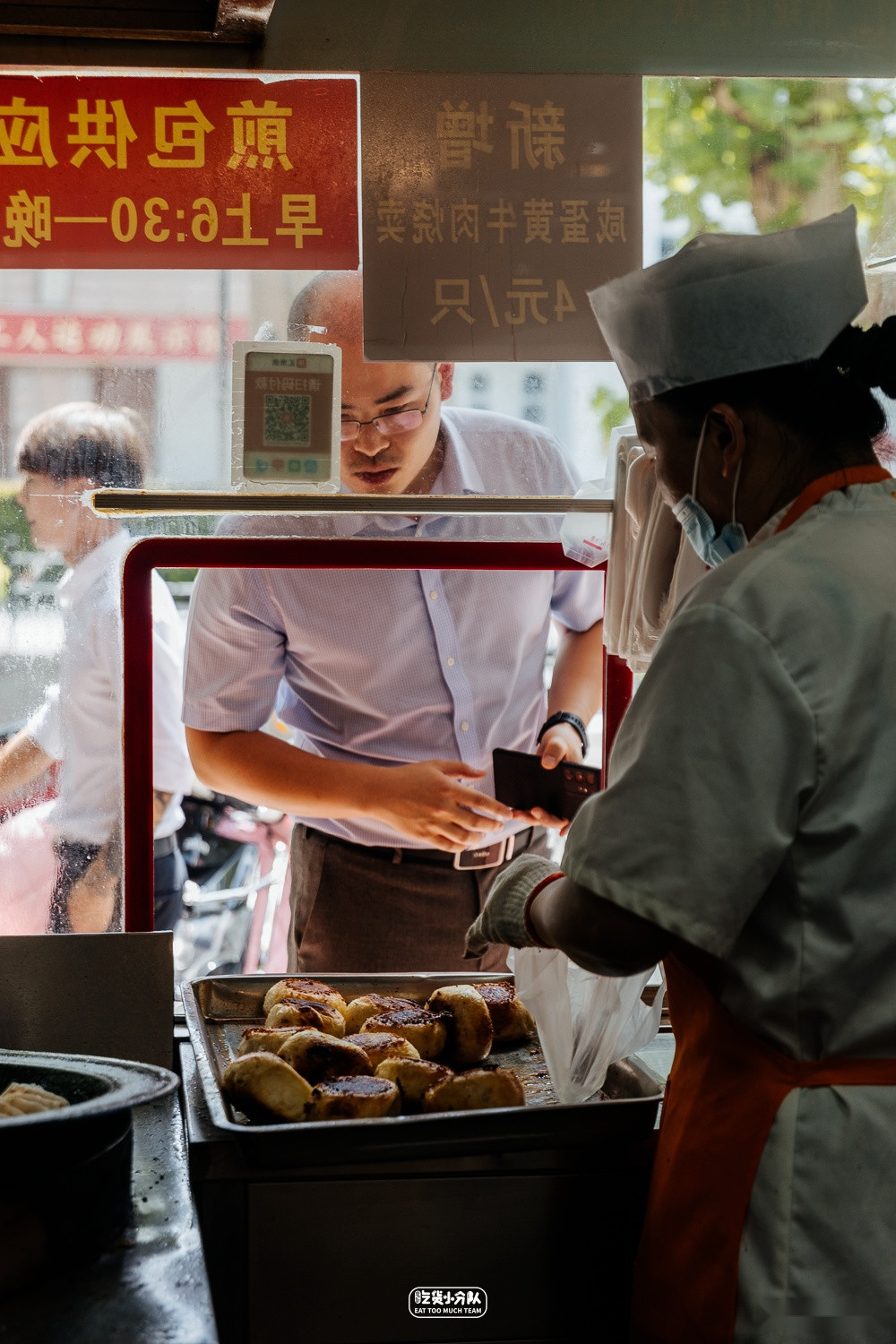
until the wrapper is crispy and the beef aroma fills the air.
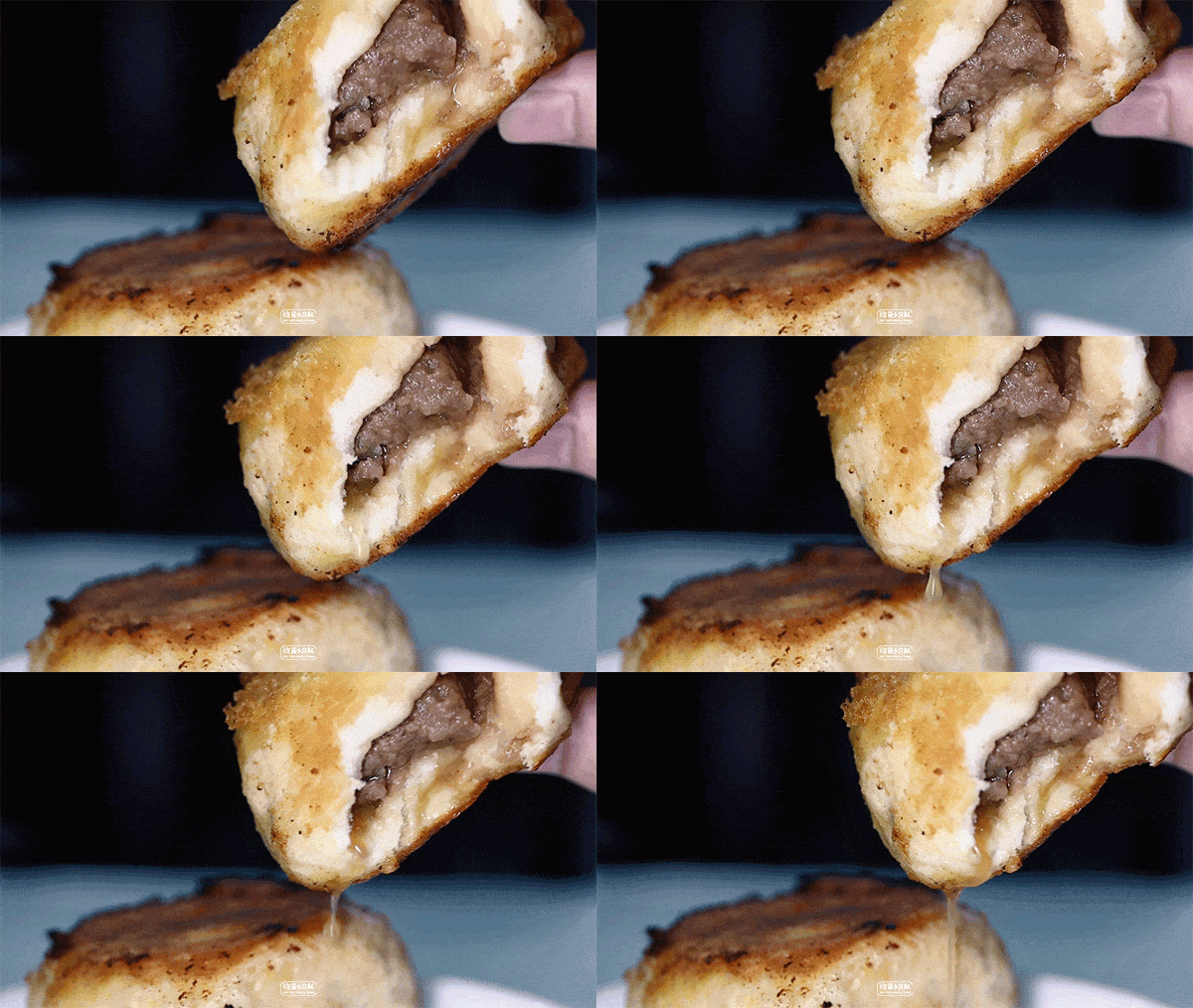
This edition recommends the 8 absolute best niurou jianbao spots.
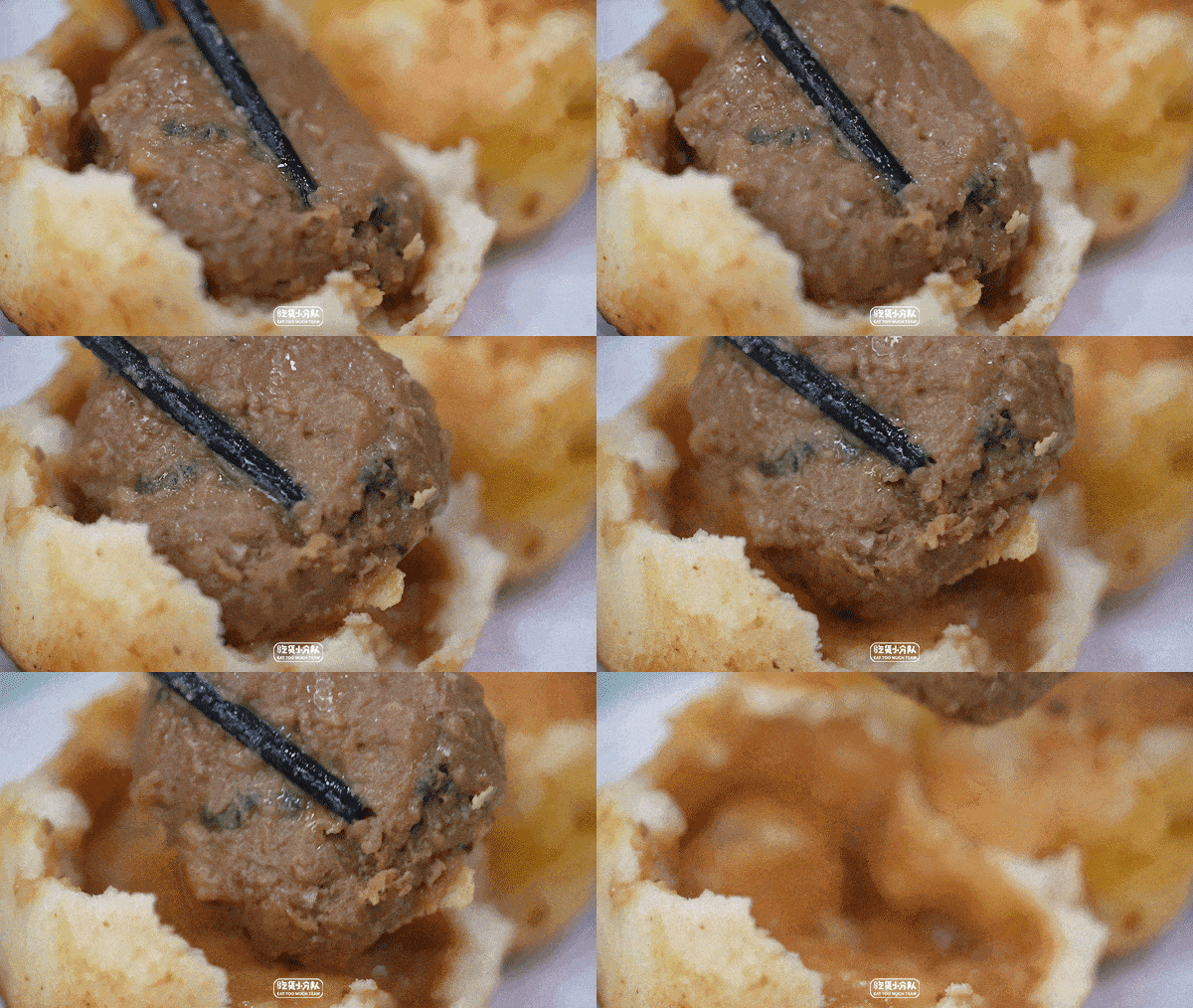
Step inside,
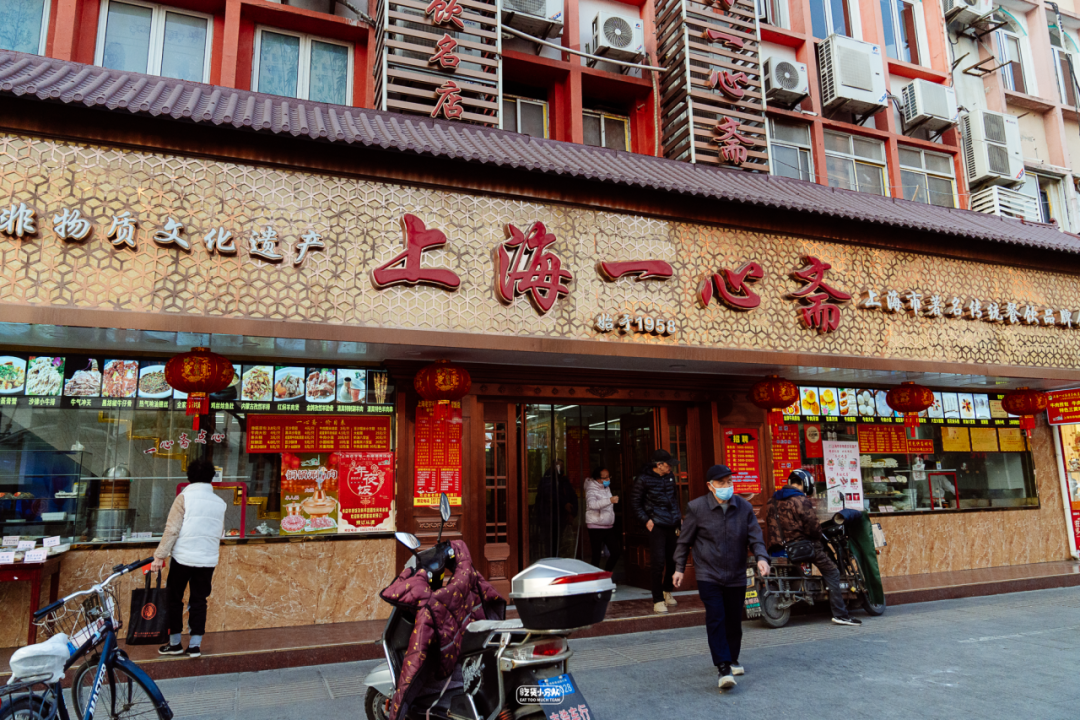
and the air doesn't just carry the scent of beef—
it's packed with mouthwatering toasted aromas.
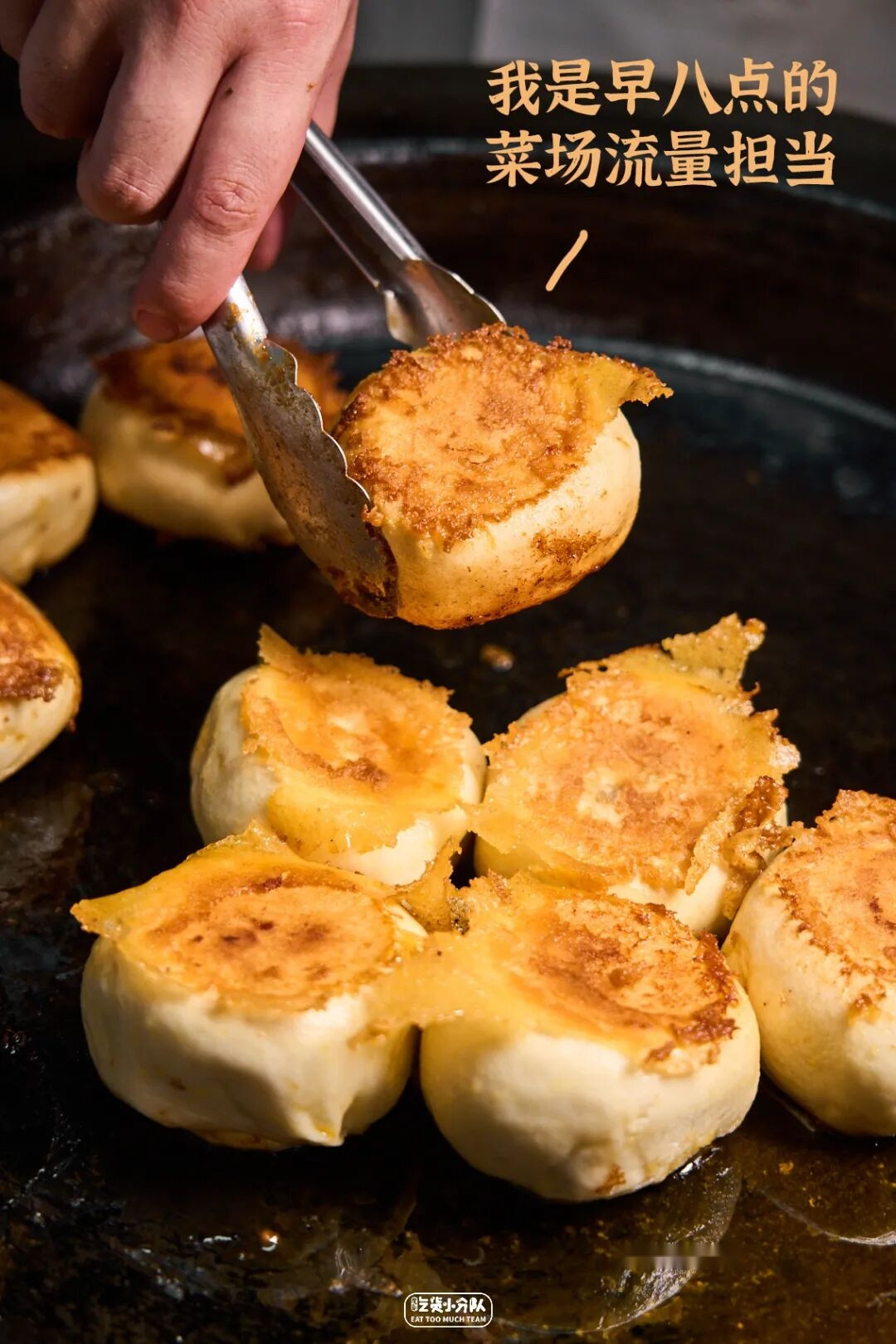
1. Shanghai Yixinzhai
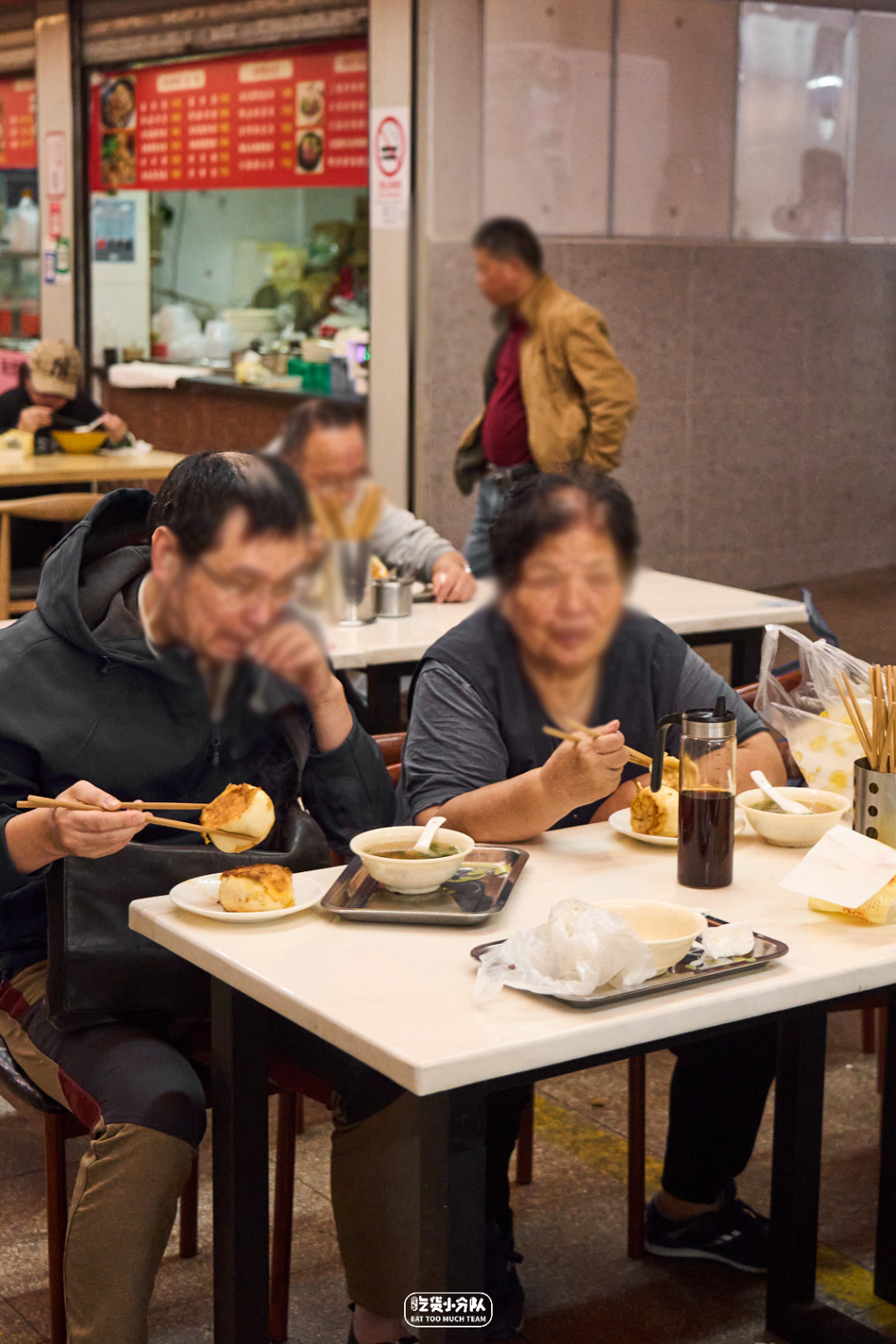
2. Qingzhen Xiaopang Niurou Jianbao
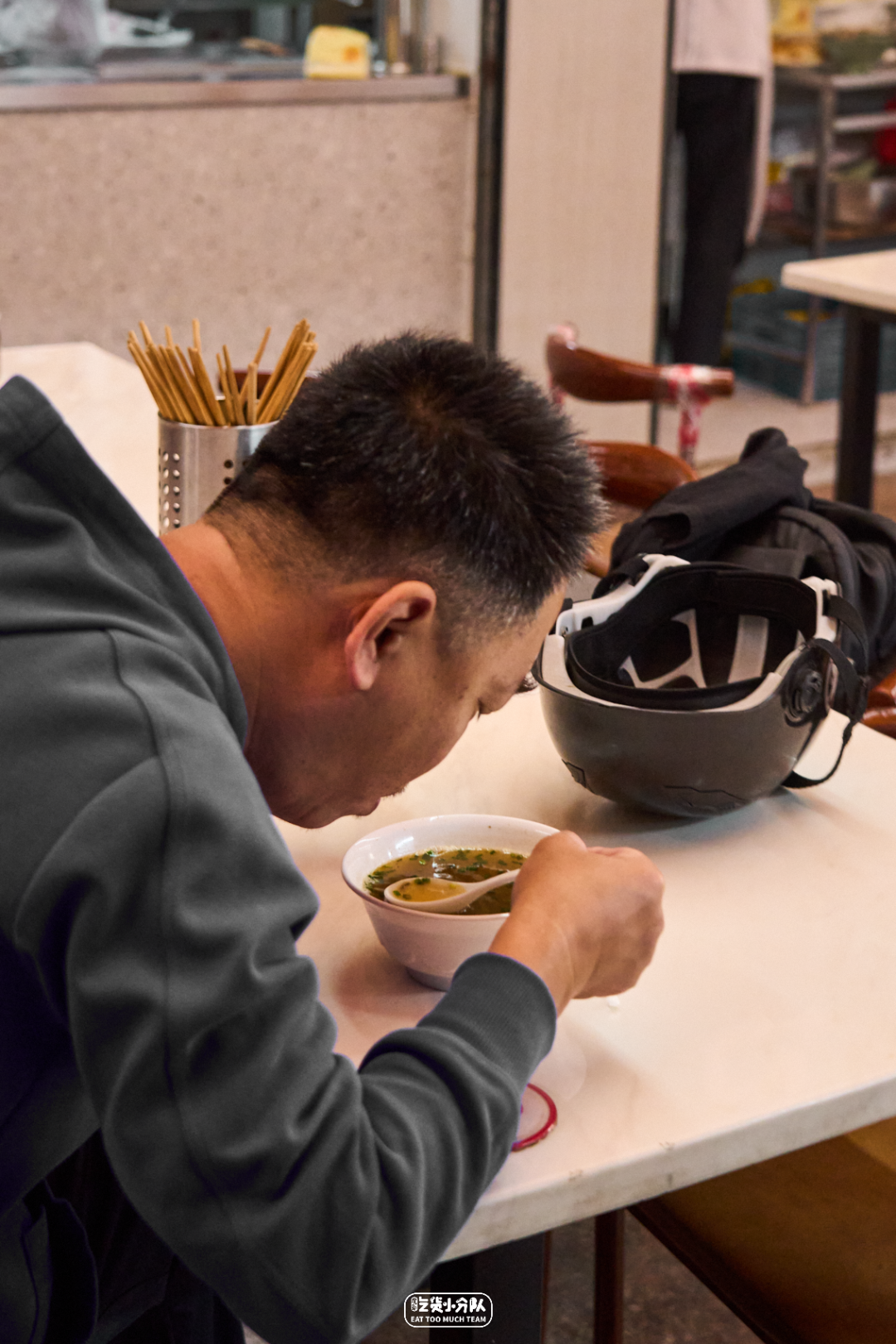
3. Shanghai Weimin Shanghang Halal Restaurant
4. Hujia Shuang Guotie (Hujia Double-Sided Potstickers)
5. Crispy Niurou Jianbao · Huainan Beef Soup
6. The Milk-Drinking Crispy Flatbread
7. Chunyuan · Siruchun
8. Hongchangxing
"A 60+ Year Intangible Cultural Heritage Niurou Jianbao"
5 RMB / 1 piece
When people talk about Shanghai niurou jianbao, Yixinzhai is usually the first name that pops into mind. That's right—this legendary spot is an "Intangible Cultural Heritage Shop" and "Shanghai's #1 Niurou Jianbao." Moving a legendary 4,000 buns a day through 64 years of ups and downs, it's still wildly popular.
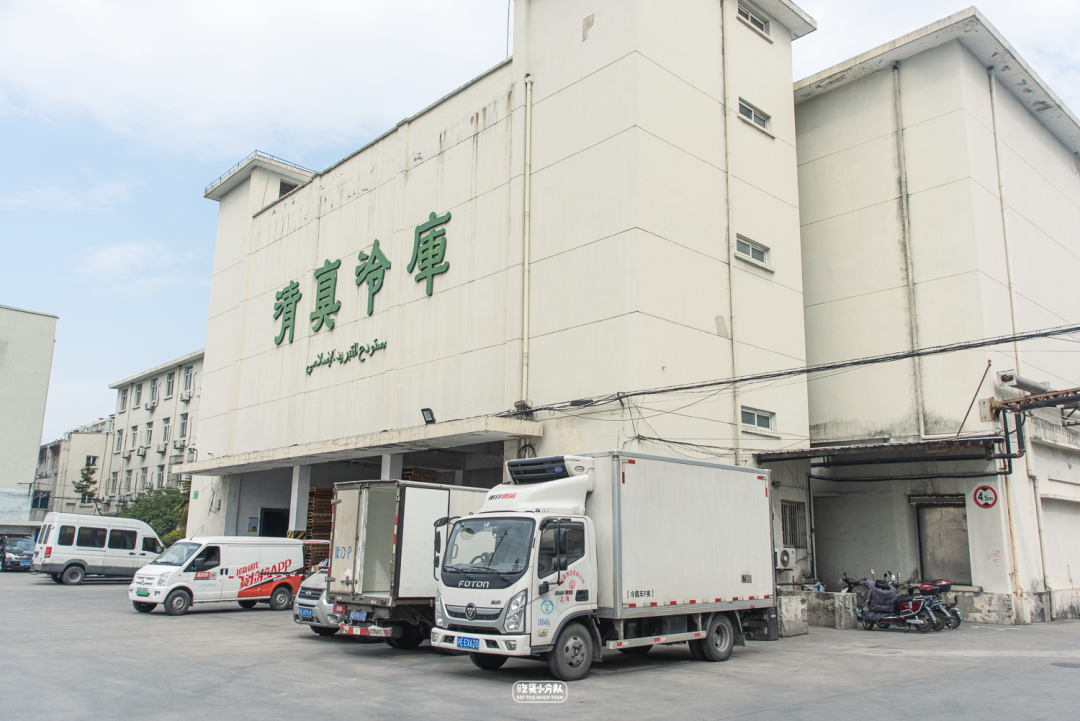
From older Shanghai aunties and uncles to young foodies chasing internet hype for social media check-ins, whether you're here for pure nostalgia or a viral food hunt, you've got to bow your head and wait in line for Yixinzhai's heritage buns.
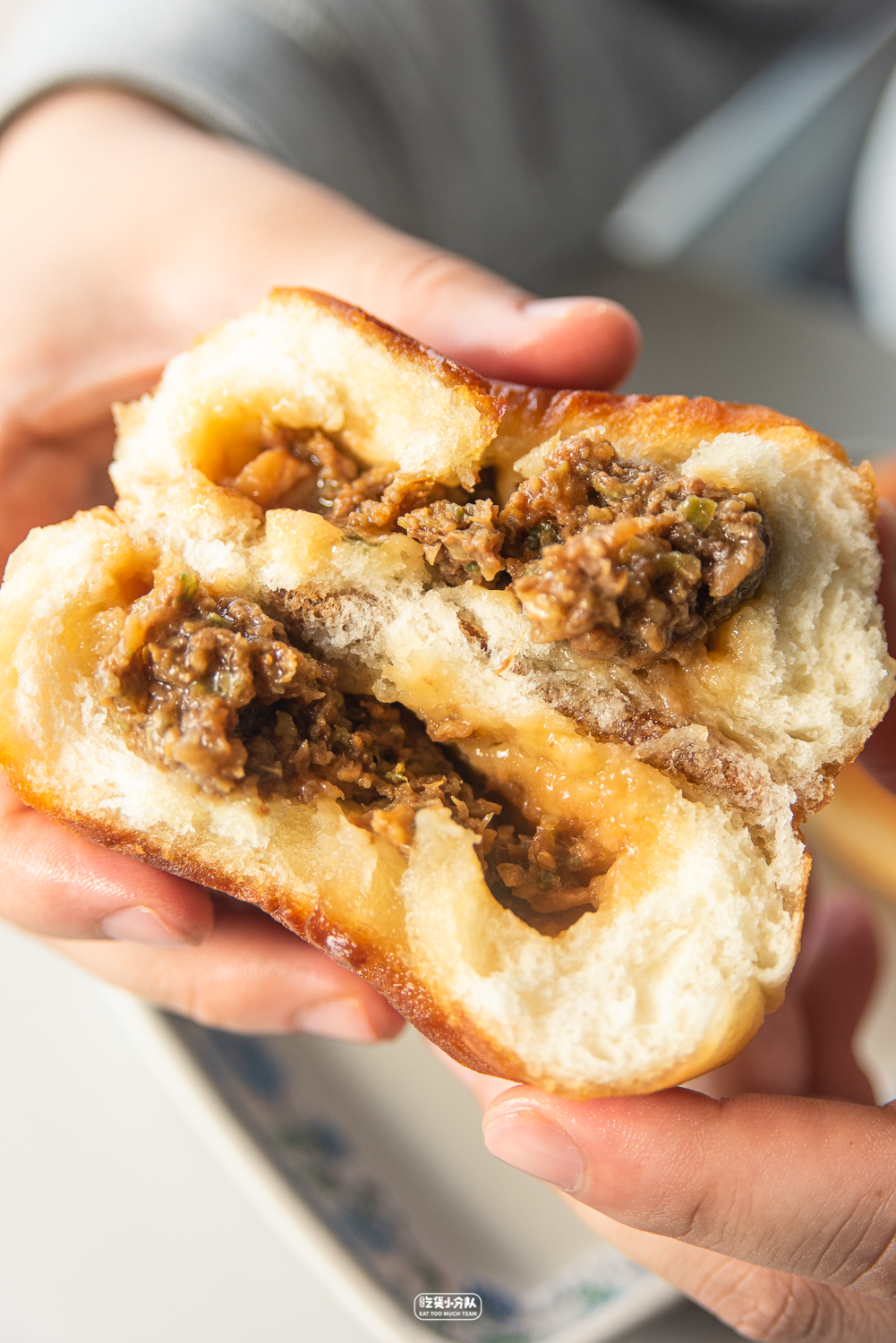
The Nostalgia of Old Yangpu
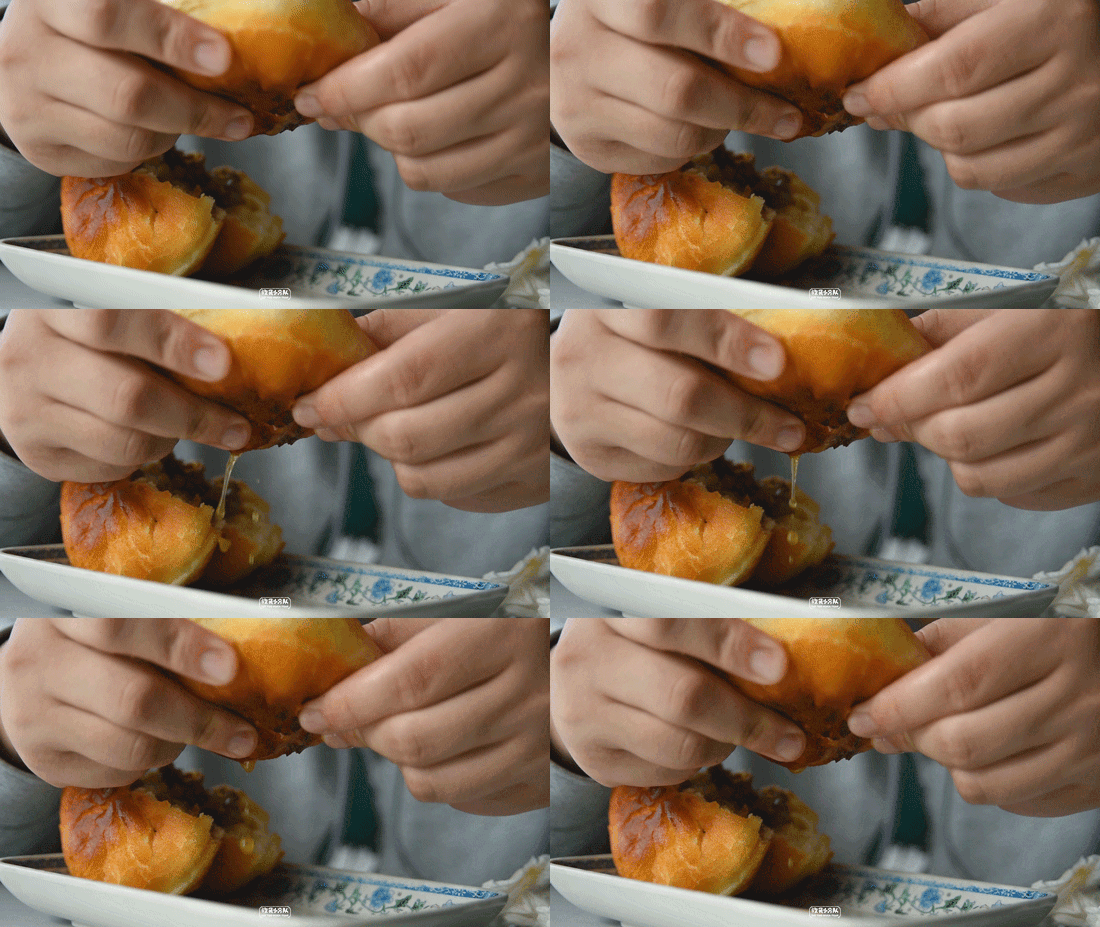
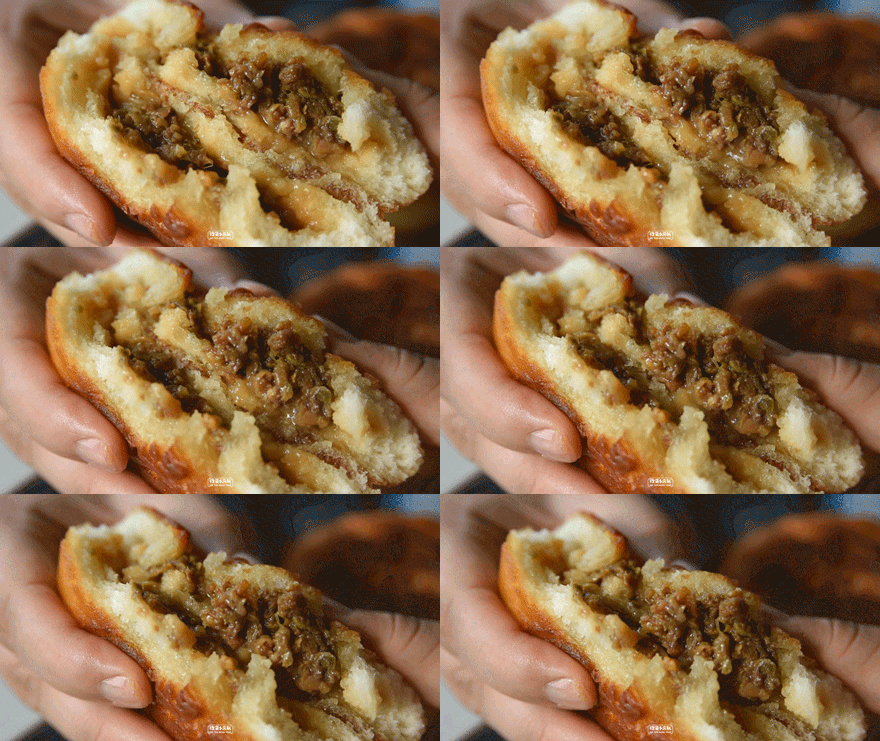
If you want a jianbao that's dripping with juice and pure romance, Yixinzhai takes the crown. Fresh out of the frying pan, these buns are golden-brown on both sides, with a satisfying crunch. Bite through the skin, and a gusher of soup bursts from the tear, rich in beef flavor and subtly sweet, melting right into the dough's earthy aroma. It's impossible not to love them. Even though it's already the undisputed king of Shanghai niurou jianbao, old-school Yangpu foodies still argue that the flavor back in the day was peerless. With every juicy, enduring bite, Yixinzhai's jianbao chronicles the changing face of the city.
One-Click Navigation | Shanghai Yixinzhai (Pingliang Road Branch)
Address | No. 1625 Pingliang Road, Daqiao Subdistrict (Near Ningguo Road)
Hours | 7:00 AM - 9:00 PM
A 30-Year Neighborhood Staple in the Yangpu Wet Market
A Massive 4 RMB Bun That Shatters Your Wallet's Limits
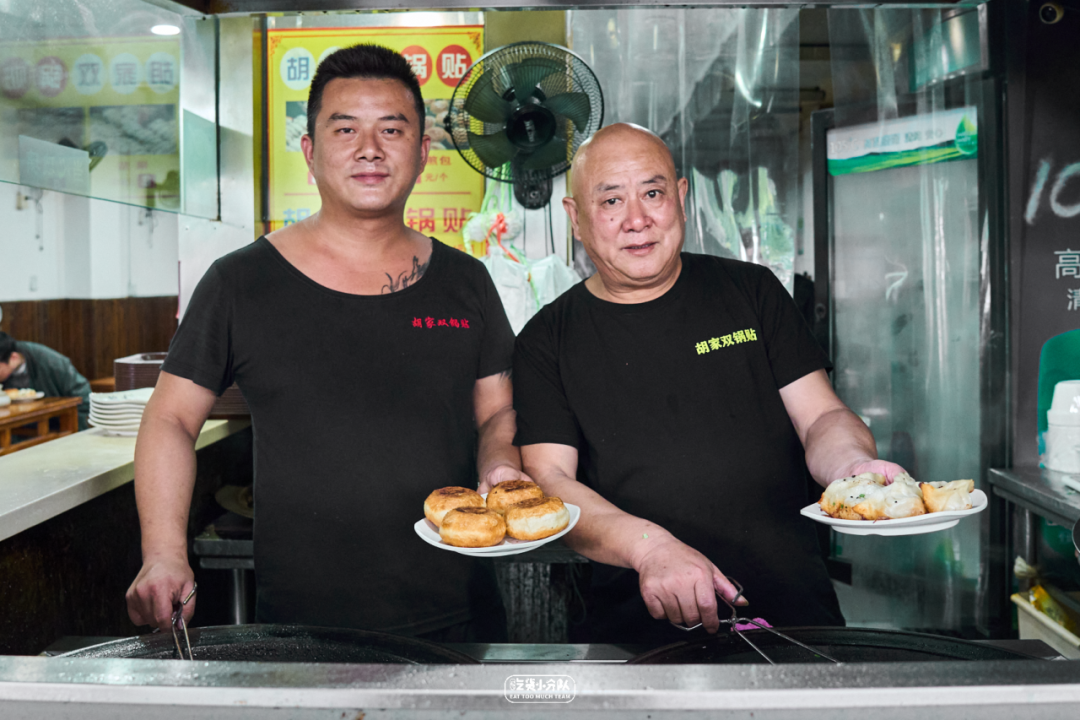
5 RMB / 1 piece
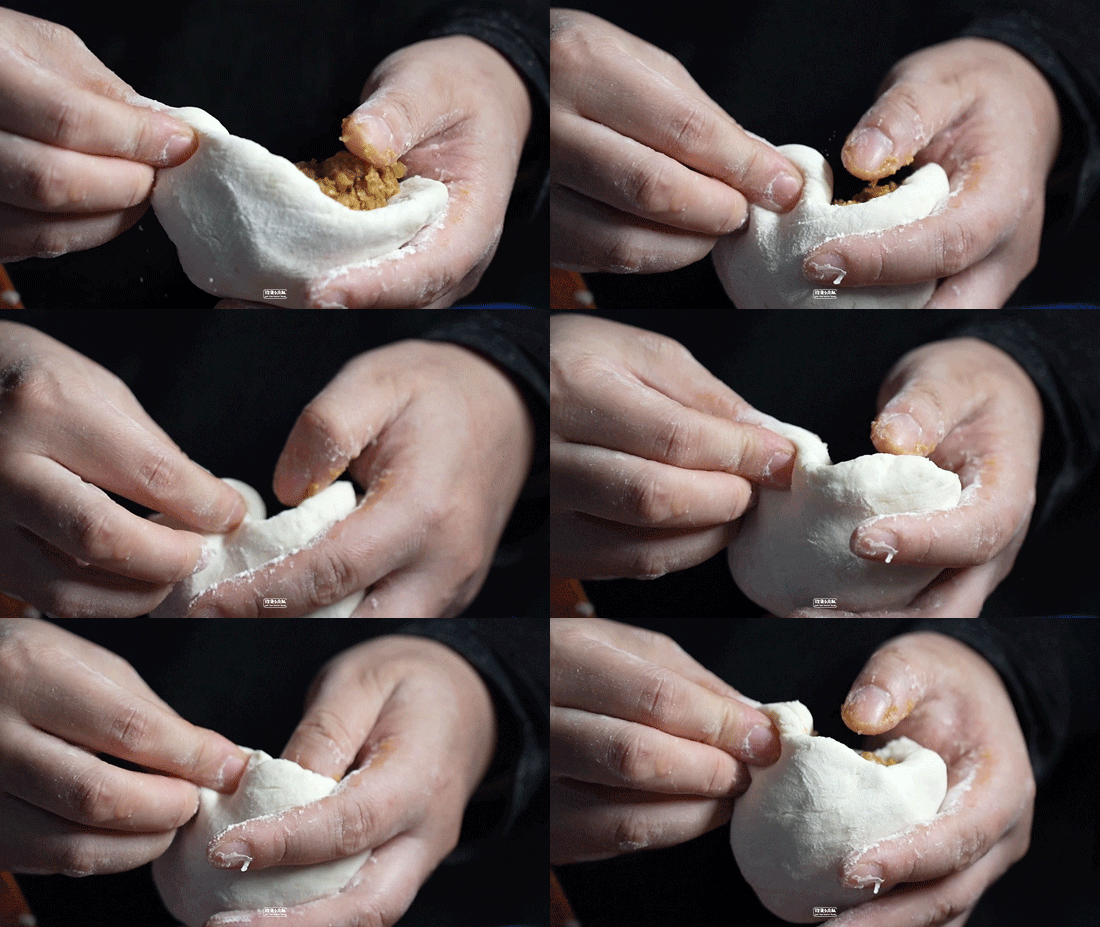
Word has it that besides Yixinzhai, there's another god-tier Yangpu niurou jianbao hidden gem you simply have to try. Dominating the wet market scene and reigning supreme as the ultimate morning rush-hour snack, they only sell until noon. Made with the boss's secret recipe, this oversized niurou jianbao has made a huge name for itself across Yangpu. Honestly, handing over just 4 RMB for a massive meat bun makes you feel a little guilty—especially when it's pure beef and literally bursts with soup?
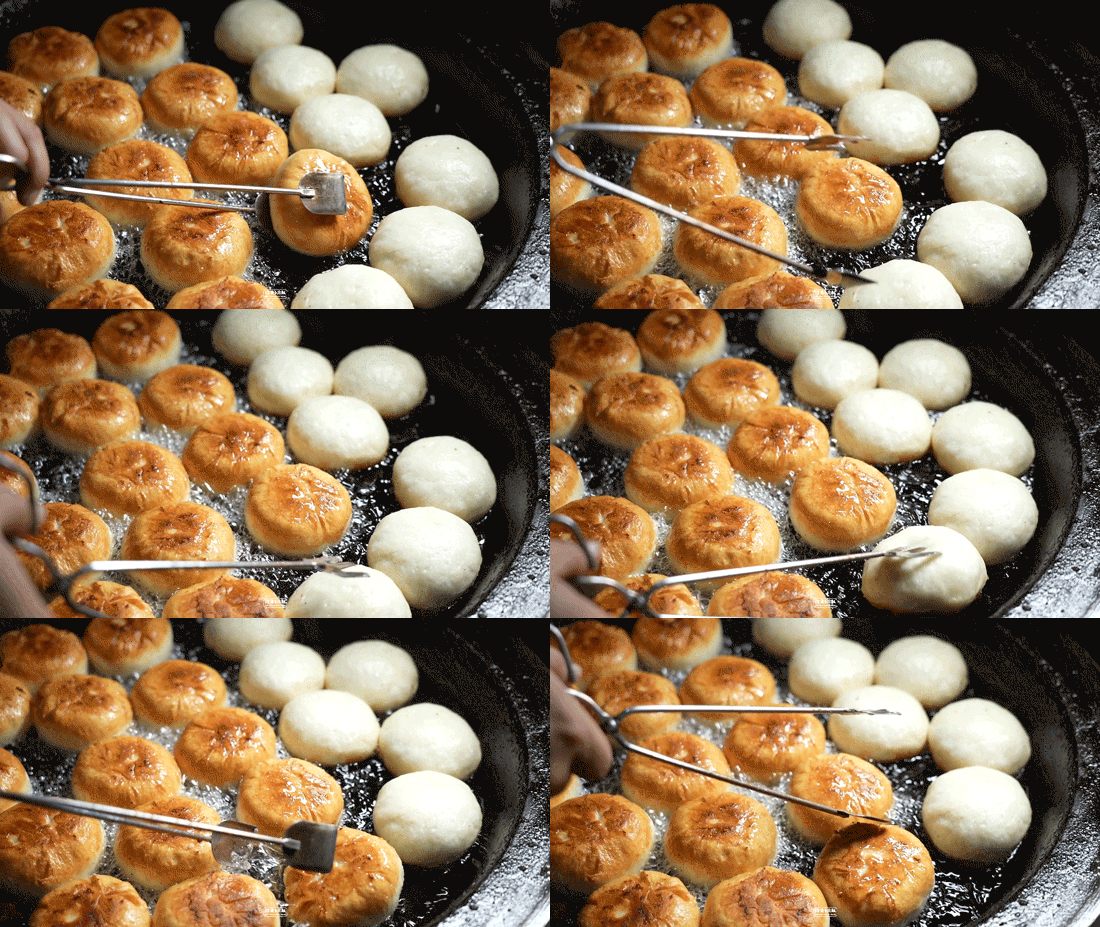
"Our shop has been here since the day this wet market opened. At first, we only sold raw beef, but then folks from back home living in Shanghai started craving hometown-style buns, so we opened this joint." It's a family-run affair: the husband works the wok, the wife runs the cash register, and the morning crowd is mostly regulars. Chatting about daily life with the boss's family makes for a super cozy vibe.
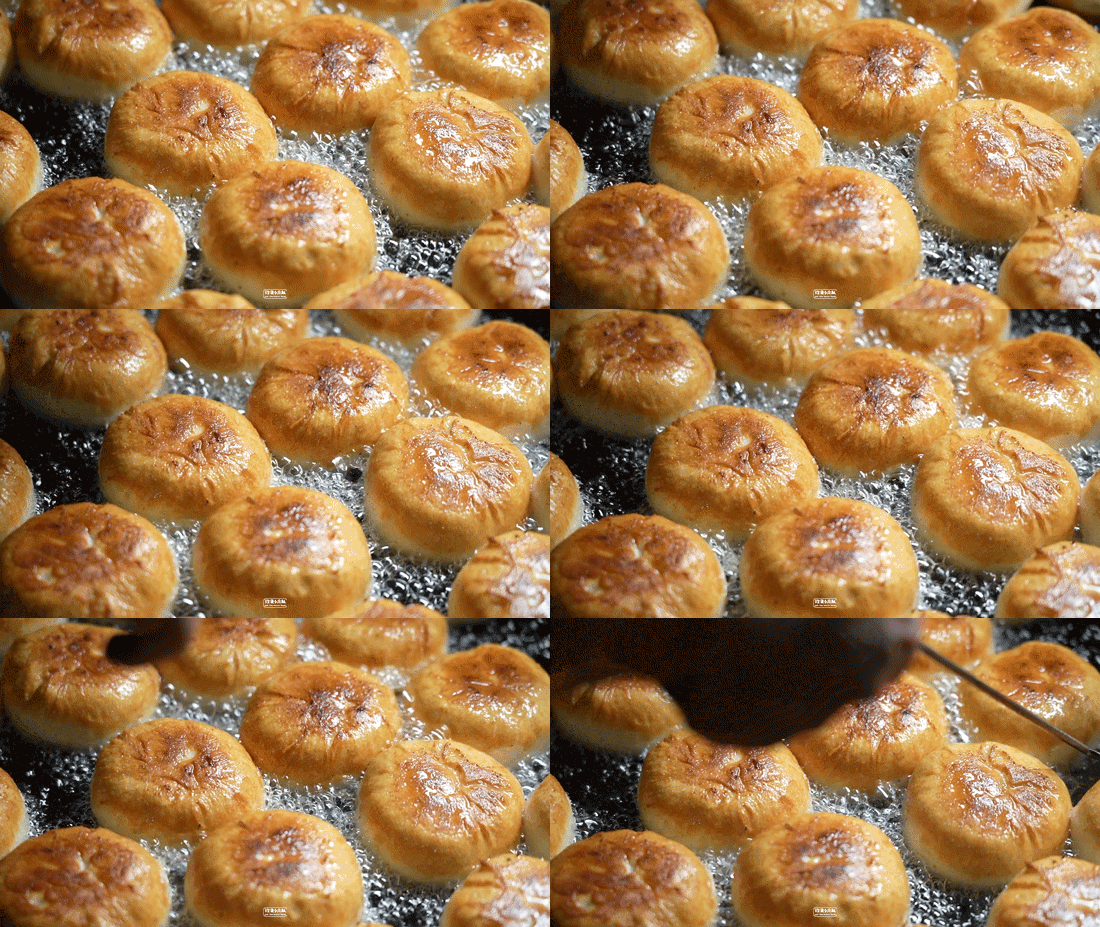
A Low-Key Shaolin Master of Jianbao with Killer Looks and Chops
Boss Pang is dead serious about ingredient freshness, exclusively sourcing premium chuck flap (meizi rou) from big yellow cattle, keeping strict standards on slaughter times, origin, and cattle age. Sticking to traditional cast-iron pan-frying, he relies on over 20 years of mastery over heat control, wok airflow, timing, wrist pressure, and oil amounts to make sure every single bun hits peak flavor. Take a bite, and the texture genuinely feels a bit more rustic and muscular than your average niurou jianbao. As you sink your teeth in, the juices soak right into the wrapper, supercharging the savory fats. Take a gentle little sip of the soup—it's an instant out-of-body experience.
One-Click Navigation | Qingzhen Xiaopang Niurou Jianbao
Address | Right-hand side inside the Global Company Food Street, west side of Lejiafu Agricultural Products Market, No. 9 Yongji Road, Yangpu District
Hours | 6:00 AM - 12:00 PM
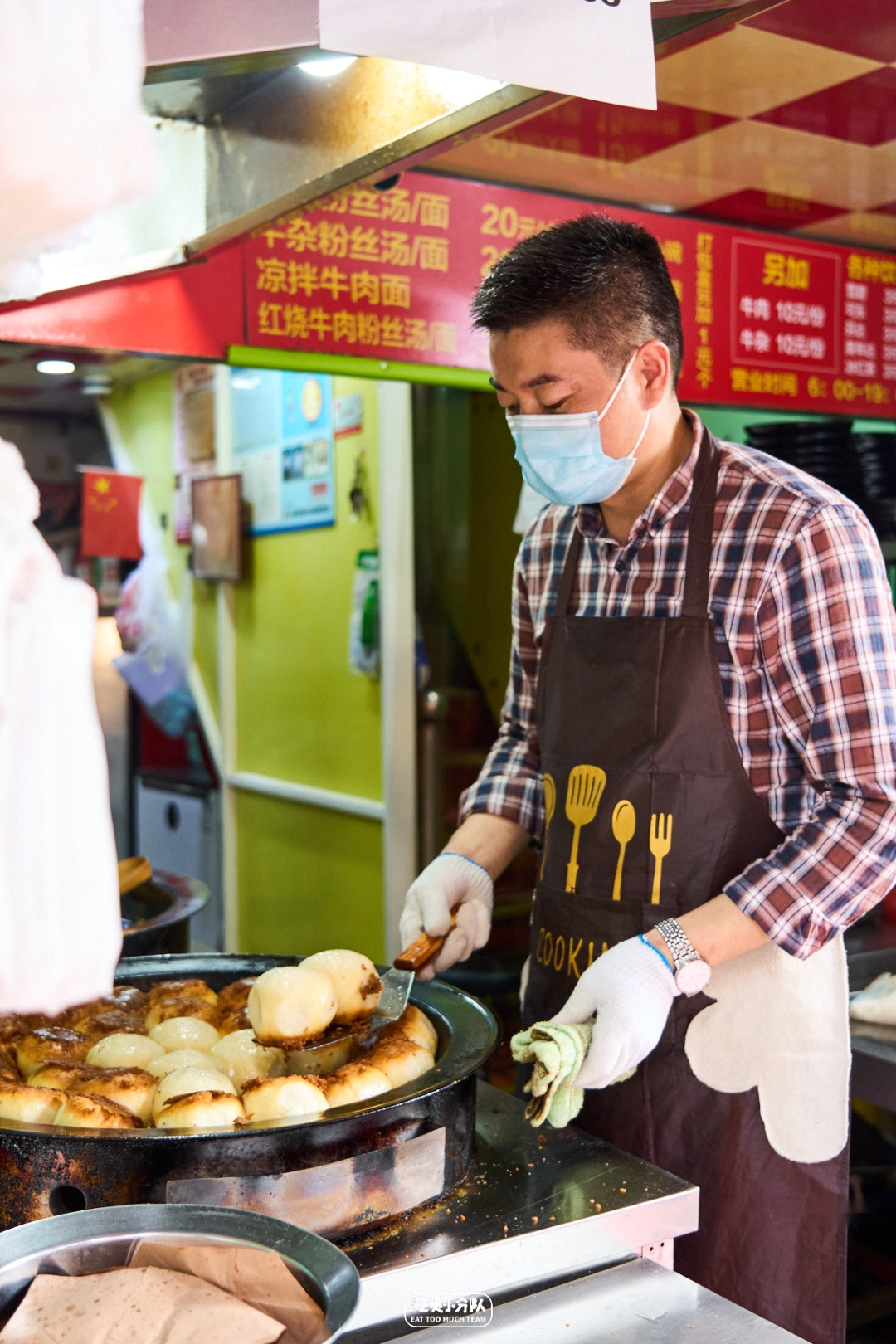
*Niurou jianbao are 4 RMB each, buy 5 get 1 free. They sell out completely as soon as they come out of the pan before 9:00 AM. The boss doesn't do delivery apps, and supply cannot be guaranteed after 12:00 PM.
"Shanghai's Most 'Bovine' Canteen:
Halal Jianbao, Slaughtered at Midnight, Sold Out by Afternoon"
3.5 RMB / 1 piece
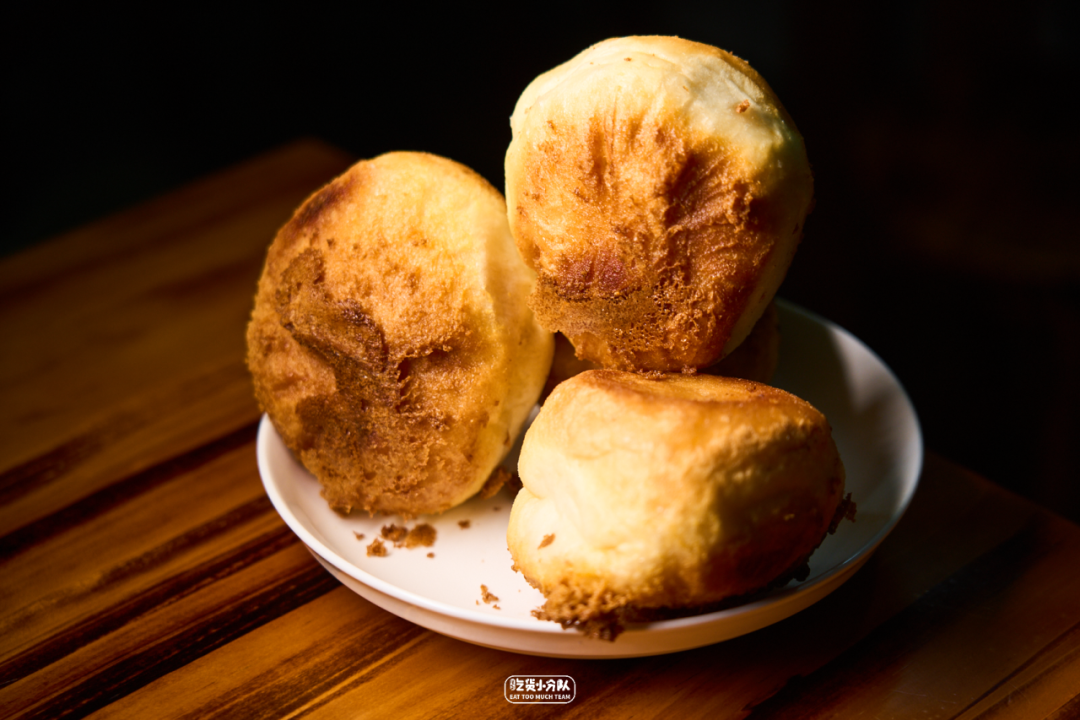
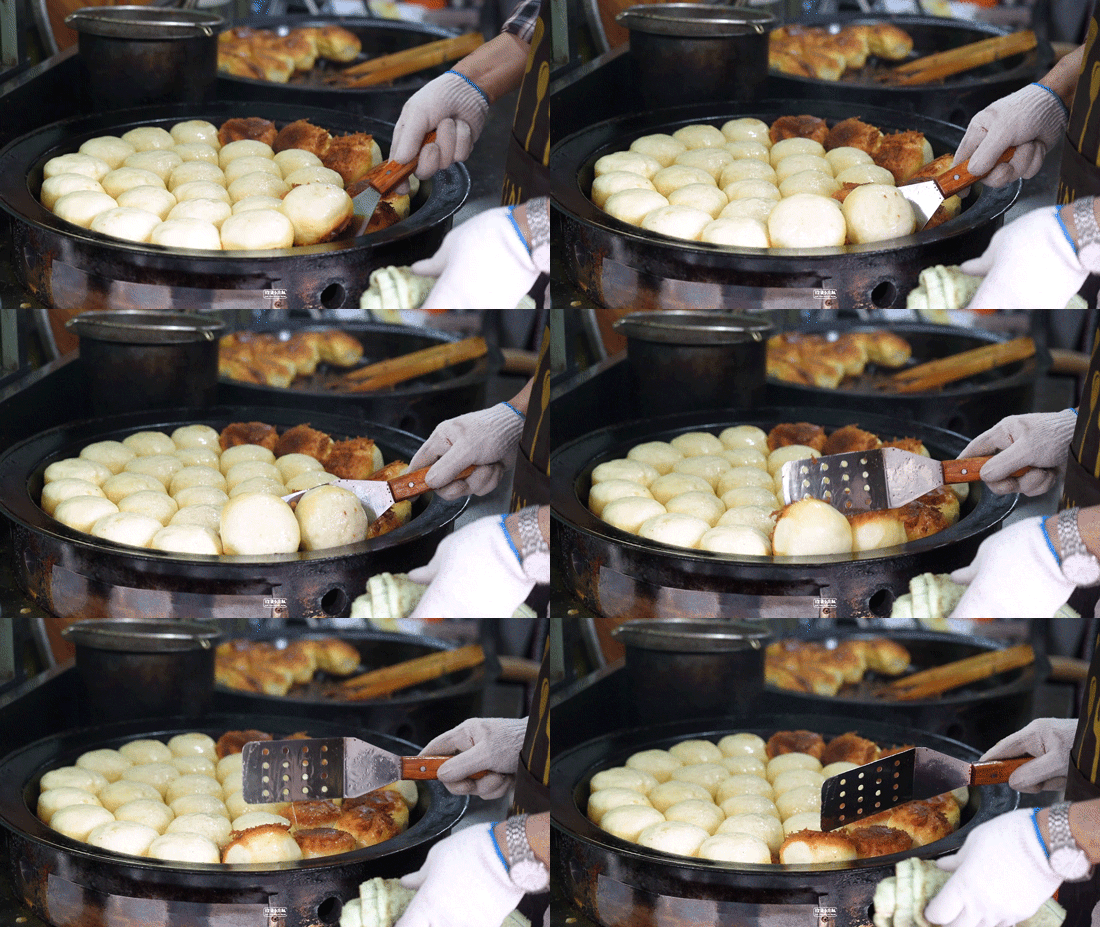
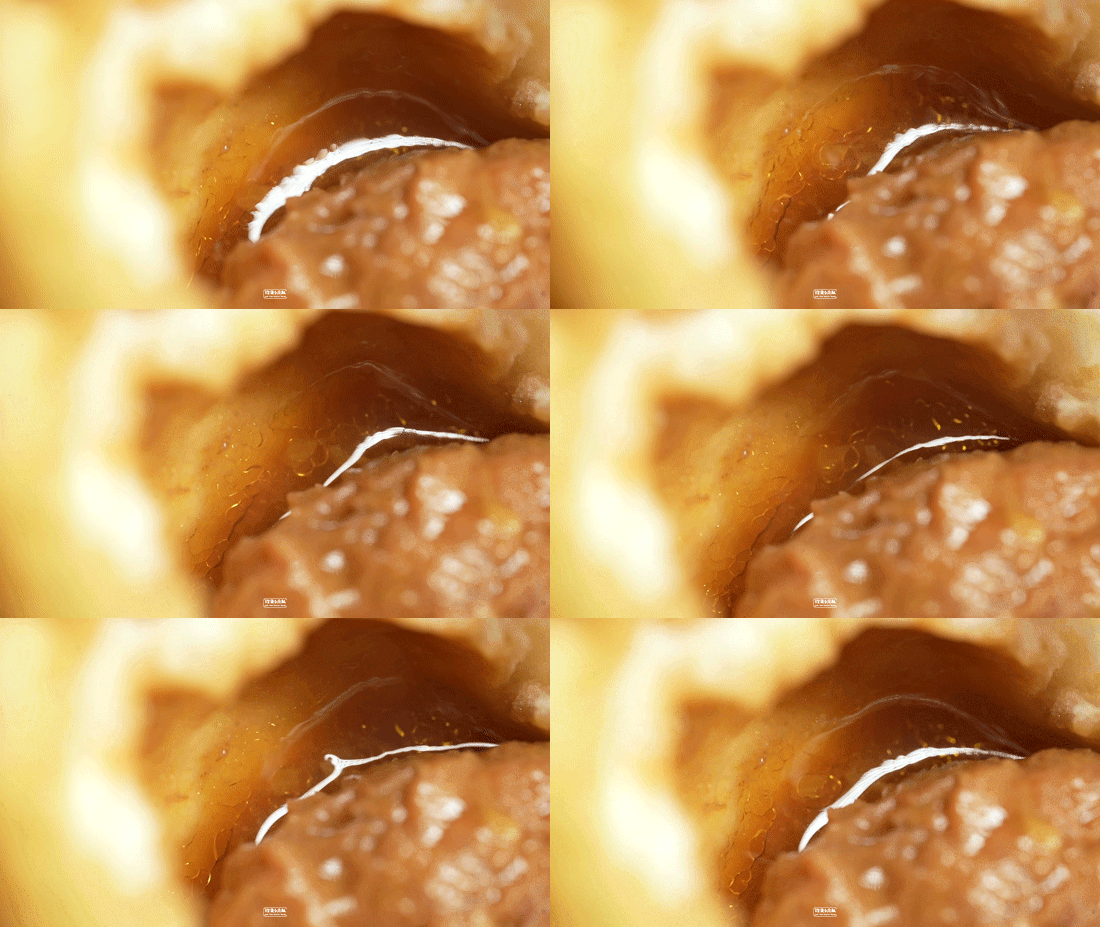
With a history stretching over 30 years, this beef and mutton "canteen" is a state-owned restaurant under the Shanghai Beef and Mutton Company. The kitchen starts buzzing here right after midnight, but they shut their doors at 1:00 PM sharp. The restaurant owns its own slaughterhouse, taking just 20 minutes from slaughter to table to guarantee mind-blowing freshness. Backed by a massive Halal cold storage facility and slaughterhouse, they're the only operation of their kind in Shanghai.
The Mandatory "Soup-Bomb Bun"
Their niurou jianbao go for 4 RMB each and are practically mandatory for every customer who walks through the door—you'll often see people walking out having "wholesale-purchased" massive bags of them. These buns are huge, roughly the size of a soup bowl, with golden-brown wrappers boasting a slight char, thick and packed with flavor. Don't let the thick skin fool you: the beef filling is generous, and the meat juices burst out with a gentle squeeze. The filling is loaded with fragrant scallions, and the fluffy leavened dough drinks up the pure essence of the beef broth. Every single bite is deliciously sinful.
One-Click Navigation | Shanghai Weimin Shanghang Halal Restaurant (Nanda Road Branch)
Address | No. 162 Nanda Road, Baoshan District
Hours | 5:00 AM - 1:00 PM, 3:30 PM - 6:30 PM
"Their Signature is Guotie,
But Dianshang Reviews Hyping Up the Niurou Jianbao Are Everywhere"
4 RMB / 1 piece
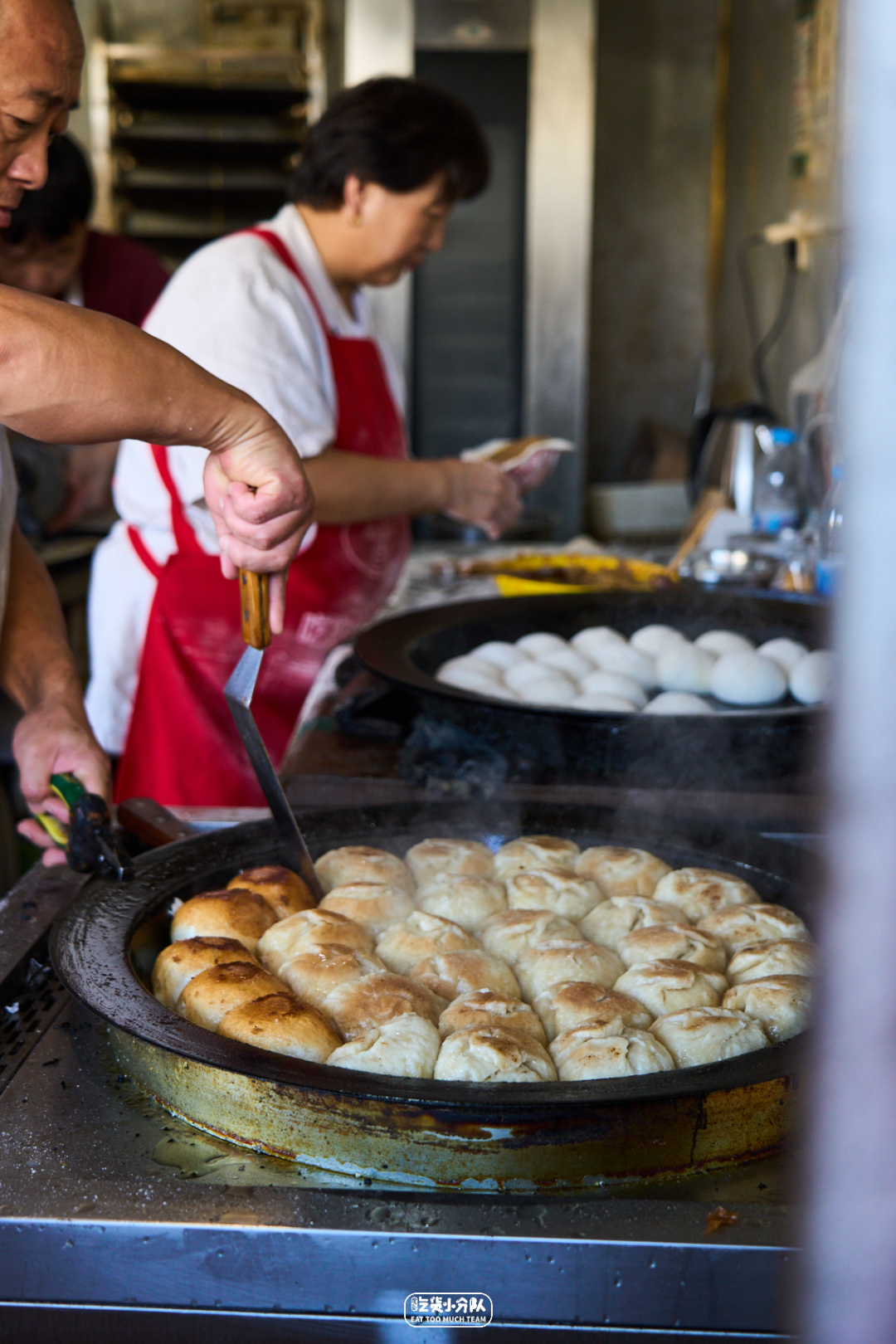
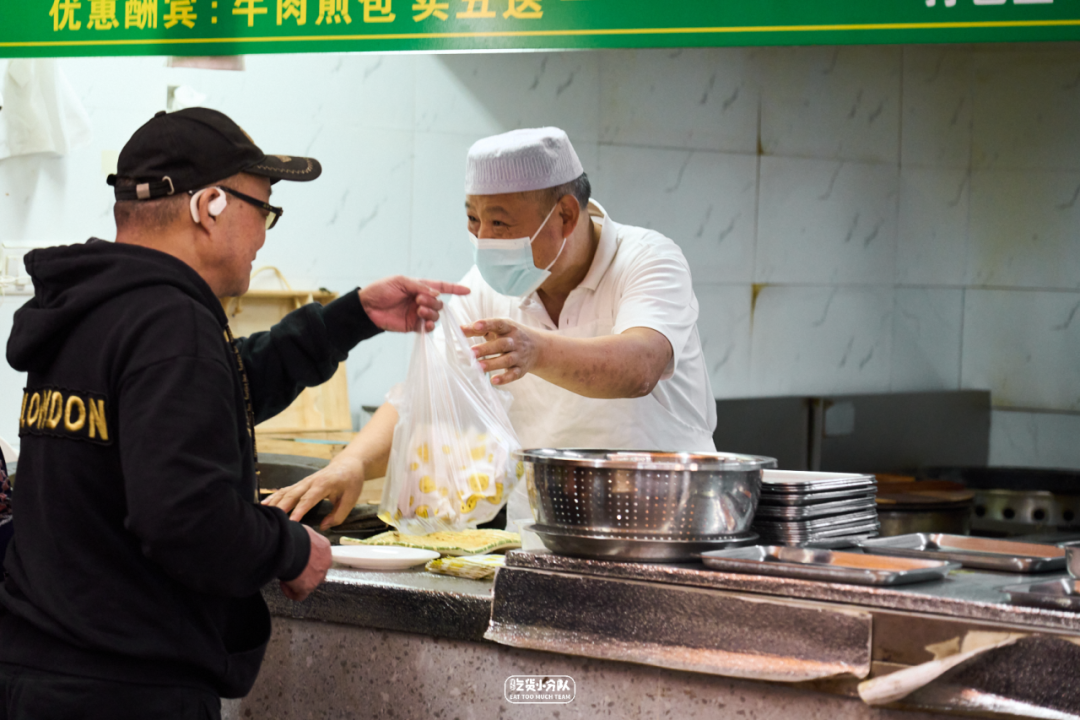
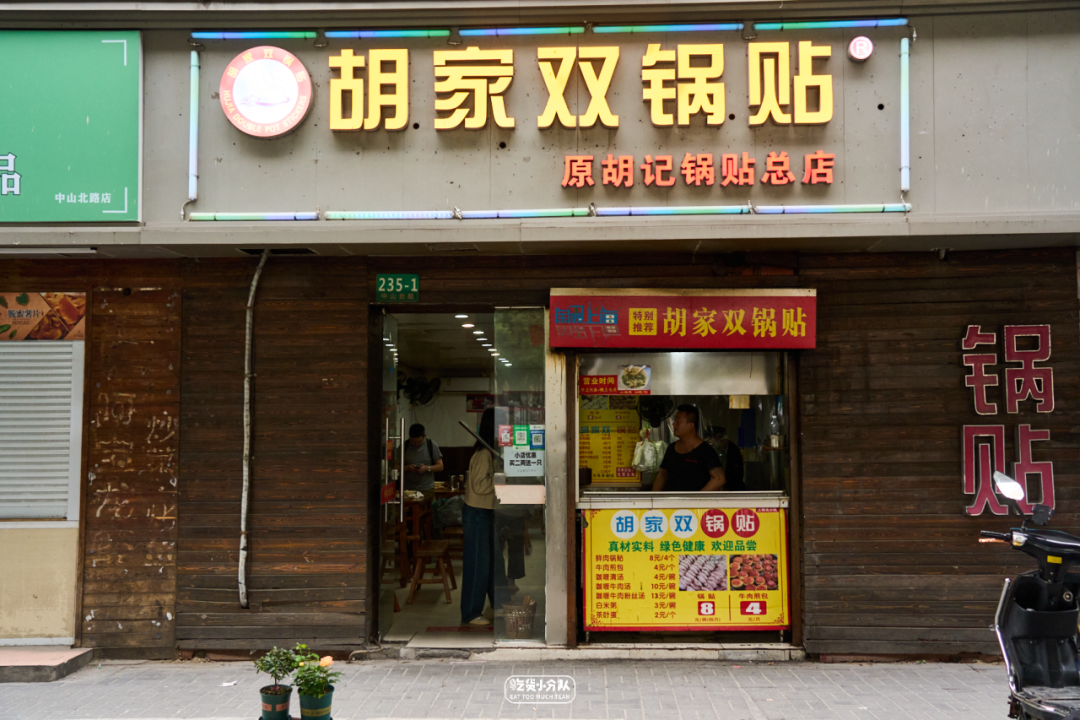
This little shop focuses on guotie (crispy beef potstickers), but their niurou jianbao unexpectedly went viral and earned rave reviews from all over. What started as a tiny 3-square-meter stall has grown into its current size. Passed down from father to son with over 30 years of craftsmanship, they've kept the original ingredients and recipes intact, so every bite still tastes just like childhood.
Uncompromising Dedication to Old-School Craftsmanship
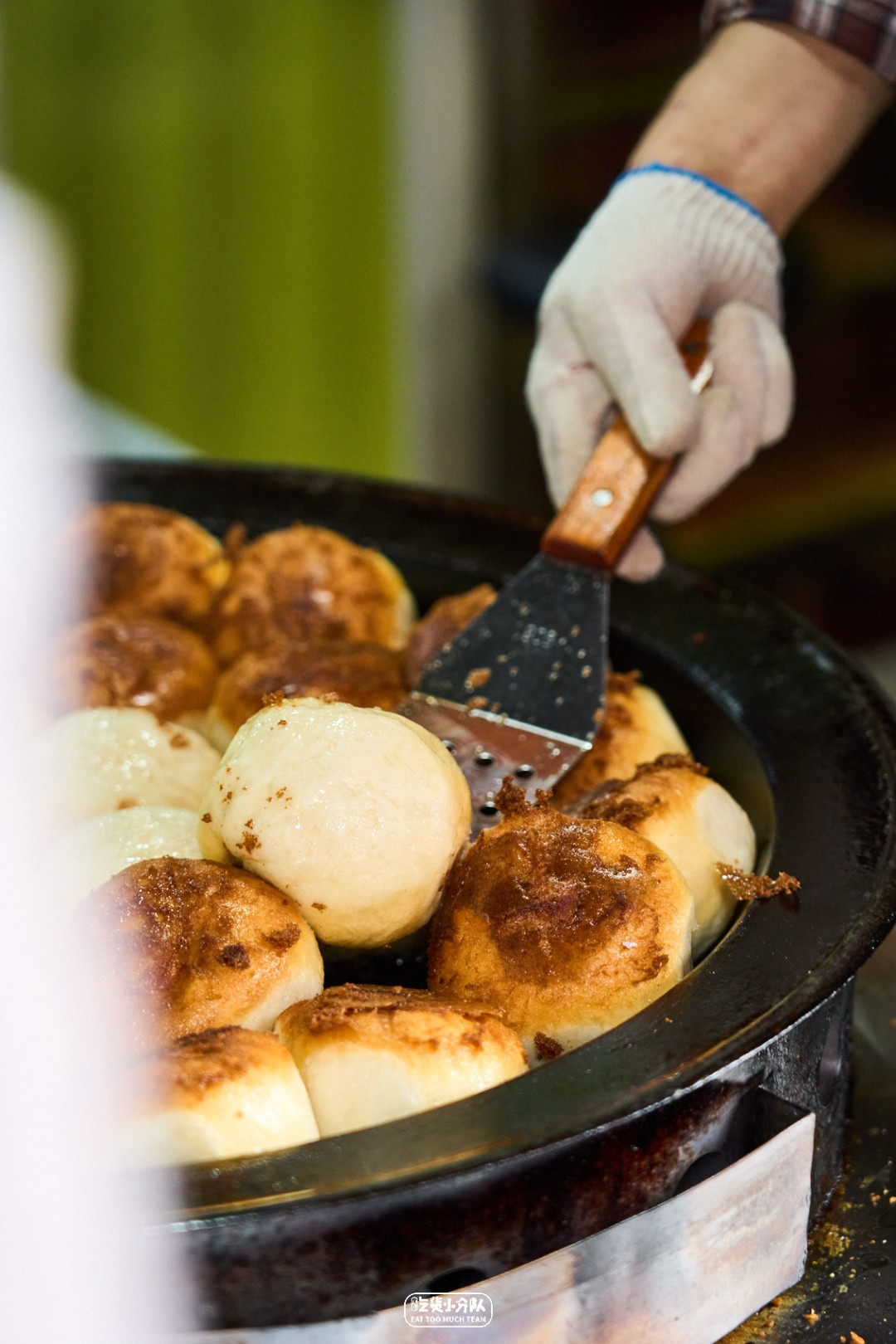
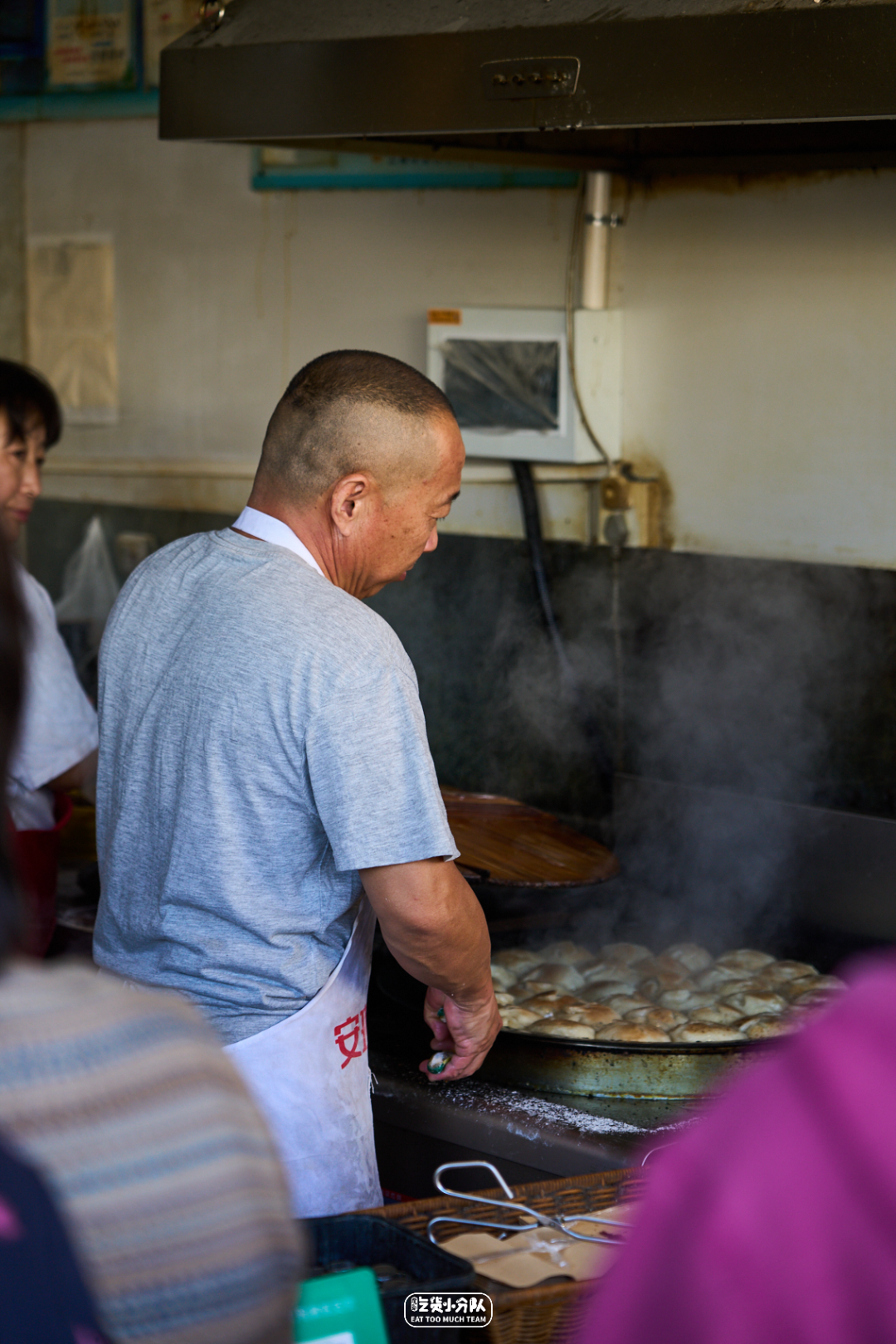
While waiting for our batch to finish, we watched these little guys go through a secondary proofing and a steam bath in the wok, plumping up their wrappers quite a bit. While other shops might rely on a starch slurry to give their buns a cosmetic makeover, Hujia sticks to pure, unadulterated methods, letting the jianbao achieve golden, crispy perfection through the most authentic, traditional frying techniques. It's almost like they're teasing us: "Hey, I'm the real deal—don't compare me to those chemically enhanced impostors!"
One-Click Navigation | Hujia Shuang Guotie
Address | No. 235-1 Zhongshan North Road, Jing'an District
Hours | 6:00 AM - 19:00
"The Undisputed King of Dianping's
Shanghai Niurou Jianbao Rankings"
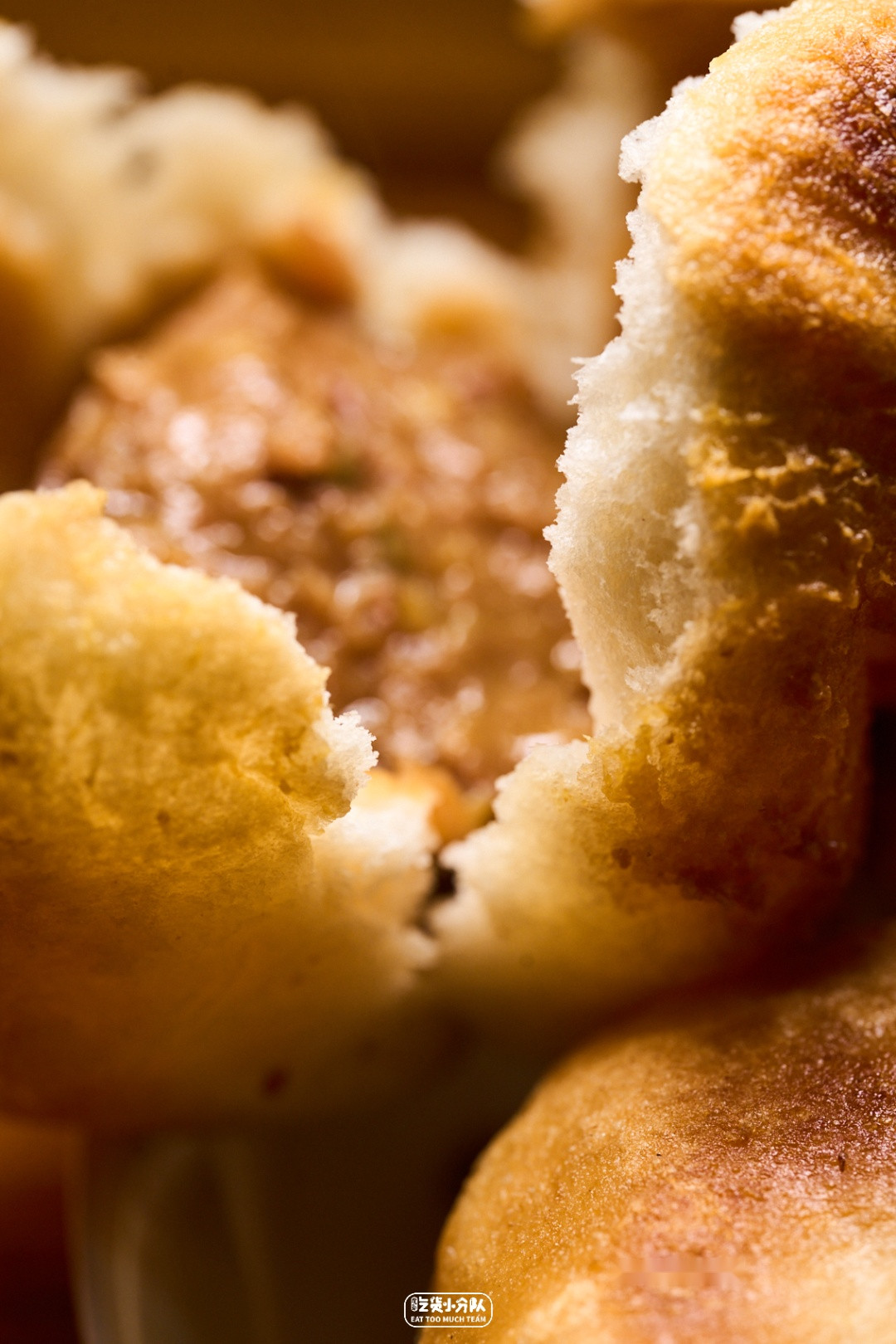
5 RMB / 1 piece
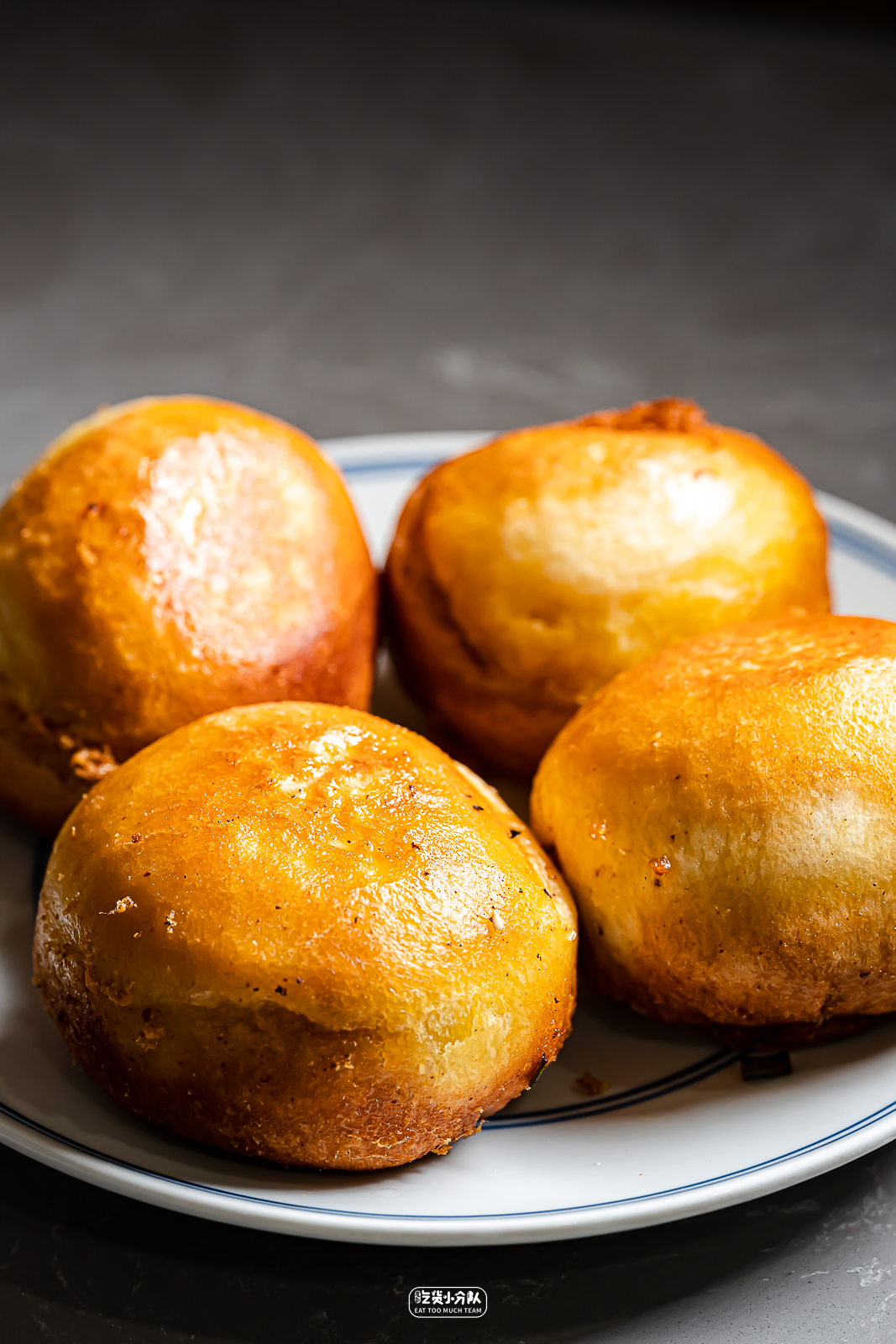
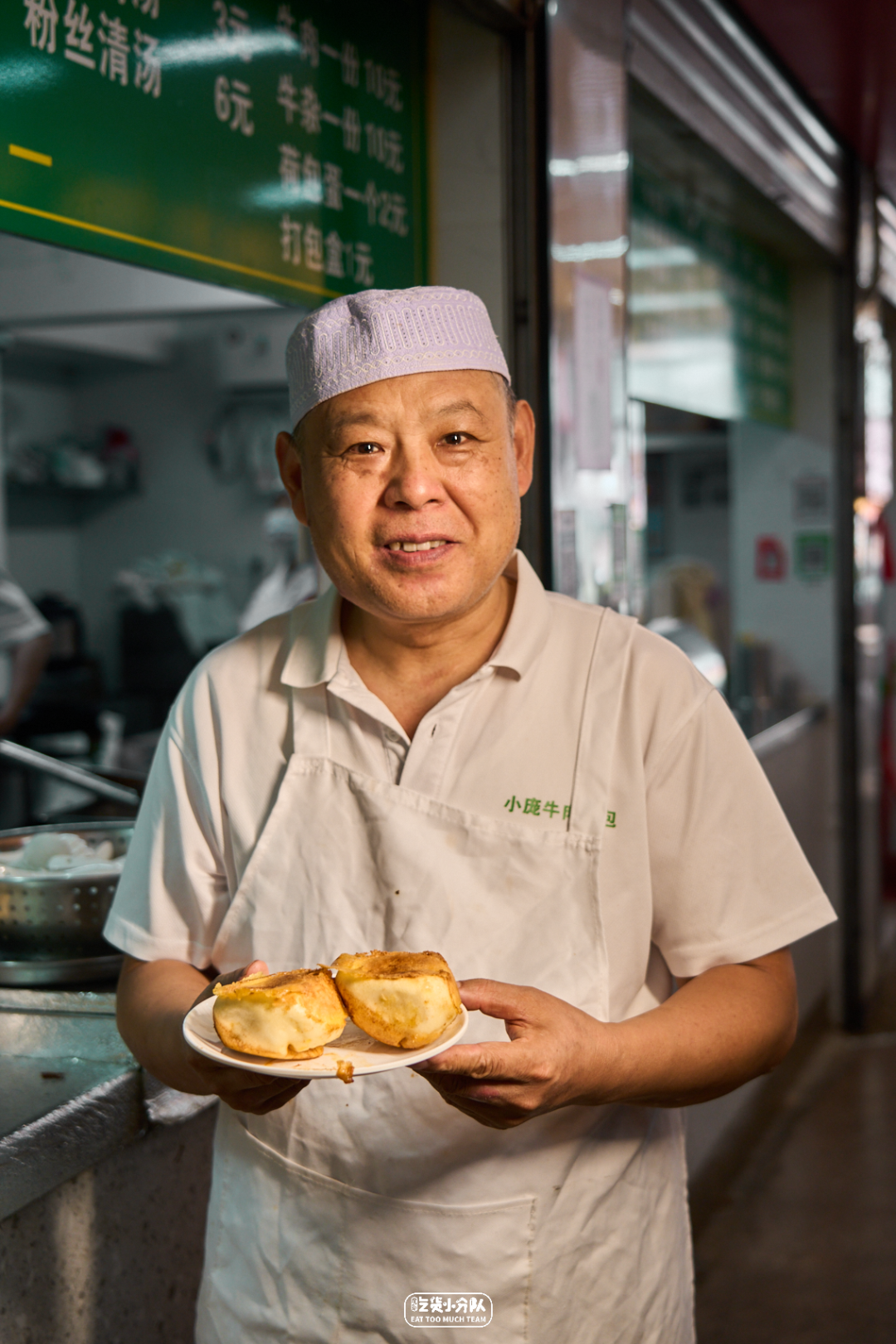
Sitting pretty in the top three of Dianping's charts, this veteran niurou jianbao spot on Guangdong Road has been open for around 20 years. Watching it climb from 1.8 RMB to 5 RMB is basically a masterclass in tracking inflation. The number of jianbao they sell every day could wrap around the earth—well, at least wrap around the block three times. Their pickiness when it comes to ingredients is basically a beauty pageant audition, ensuring the word "integrity" is baked into every single bun.
"Kids Who Grew Up Eating Our Jianbao All Hit 6 Feet Tall"
The raw ingredients are hand-picked from the top-tier beef brisket sold on Niurou Street right across the street. The ingredient costs are high, using a lean-to-fat ratio that gives the meat a tight, springy texture with serious bite. Plus, they're loaded with nutrition—the boss proudly brags that the kids who grew up eating their buns all ended up standing over 1.9 meters tall and make prime basketball team material~
The owner shares that customers regularly roll up and buy 10, 20, or even 30 buns at a time. The furthest regular lives out in Qingpu, taking a two-hour subway ride just to buy them, while their biggest single customer once snapped up 120. The day we visited, we ran into an older Shanghai uncle who had made a special trip all the way from Pudong to "wholesale" a batch. He used to live in the neighborhood, and even though he got relocated during urban renewal, he still comes back every single week.
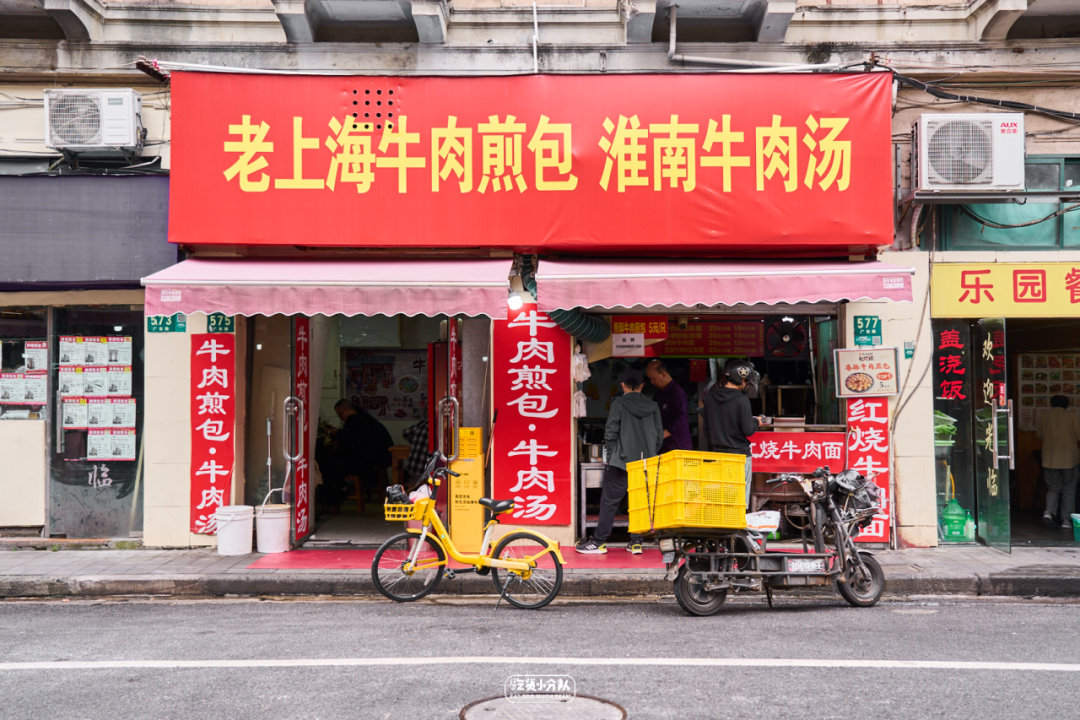
One-Click Navigation | Crispy Niurou Jianbao · Huainan Beef Soup (Guangdong Road Branch)
Address | No. 577 Guangdong Road, Huangpu District
Hours | 6:00 AM - 19:00
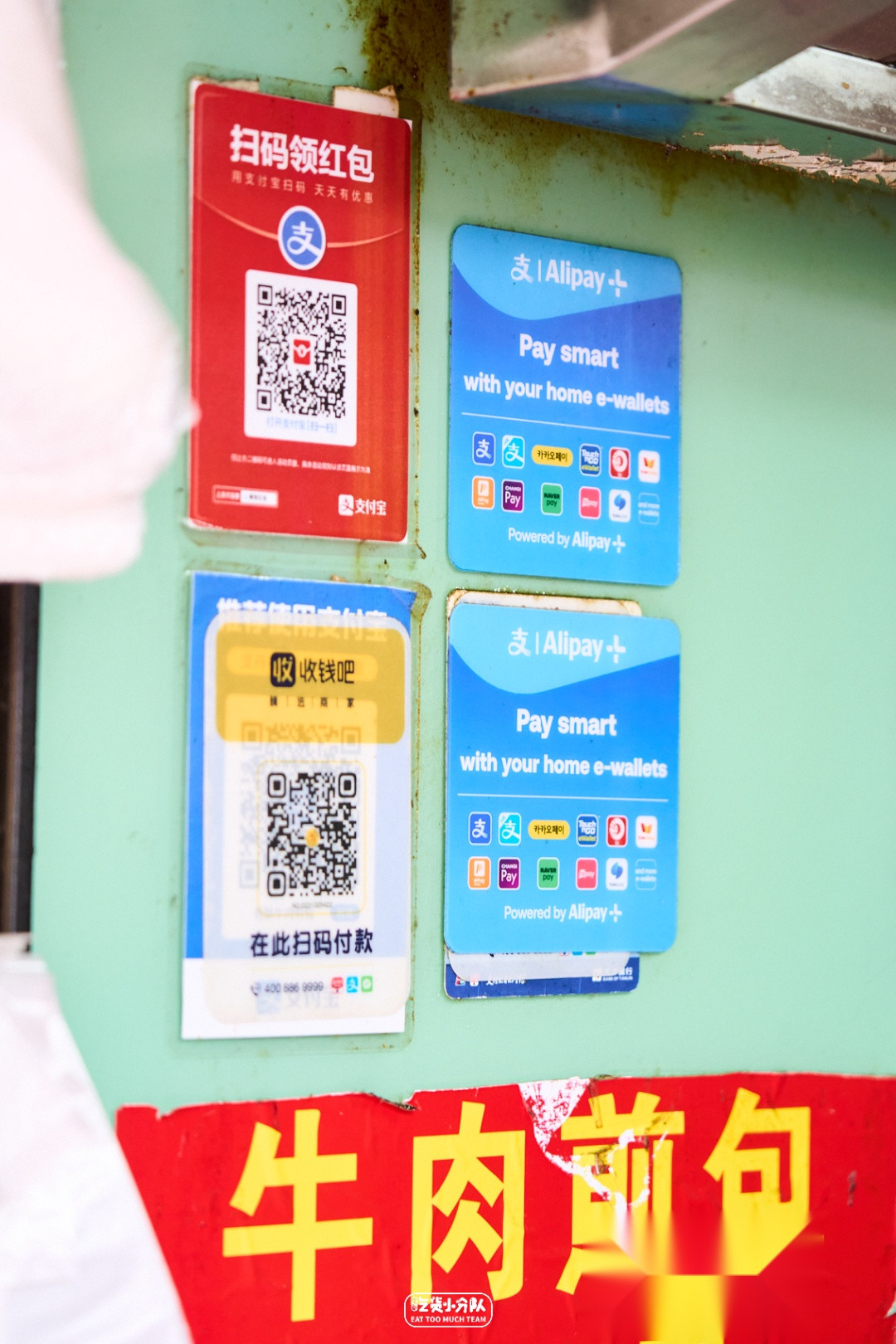
*The shop's payment systems are totally globalized, making it super easy for international friends to pay.
"The Queue Monster Hiding in Taopu"
10 RMB / 3 pieces
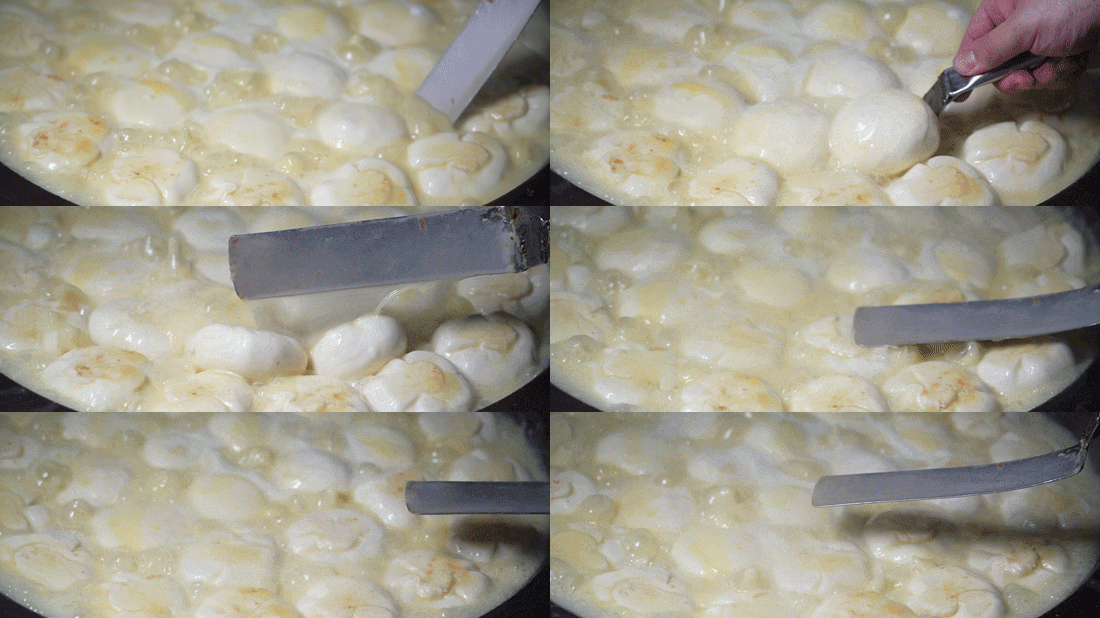
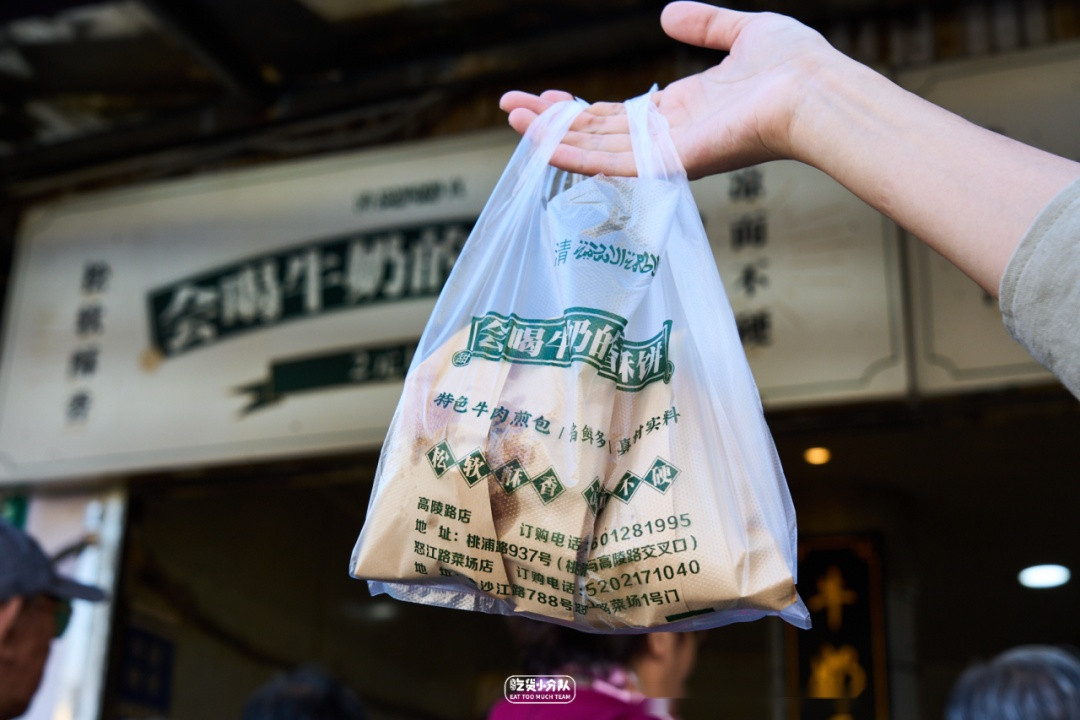
Located right at the corner of Gaoling Road and Taopu Road, this pastry shop is the "heavyweight boxing champion of Taopu breakfasts." Their milk-infused crispy flatbread is the signature item, but their niurou jianbao have surprisingly turned into massive bestsellers. By the time we arrived around 9:00 AM, the line was already winding down the block. They run two separate lines—one for the crispy flatbread and one for the jianbao—and plenty of people finish buying their flatbreads only to jump right back into the jianbao queue.
"I drove all the way out here from Fenghang today,
I make it a point to come at least once a month anyway!"
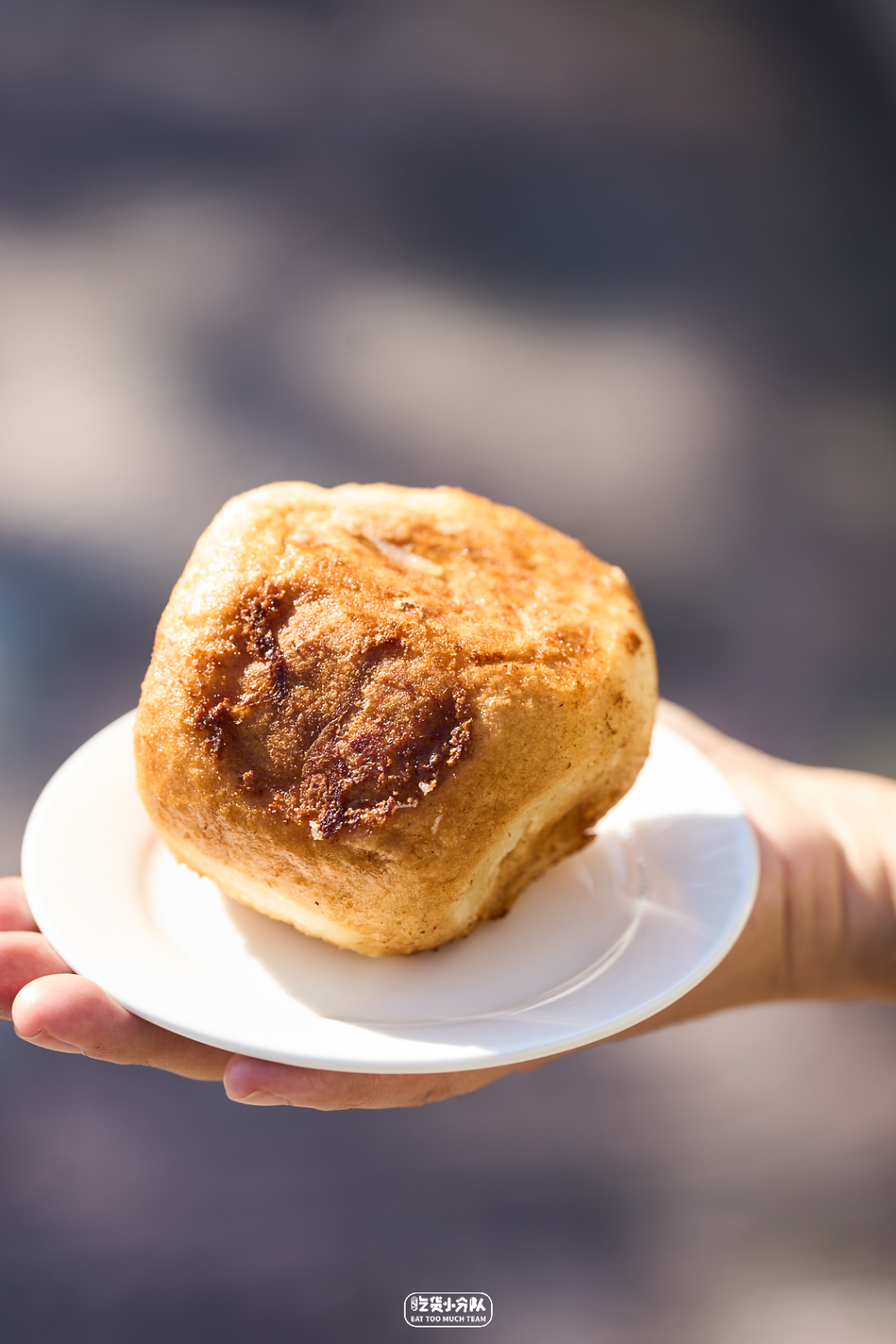
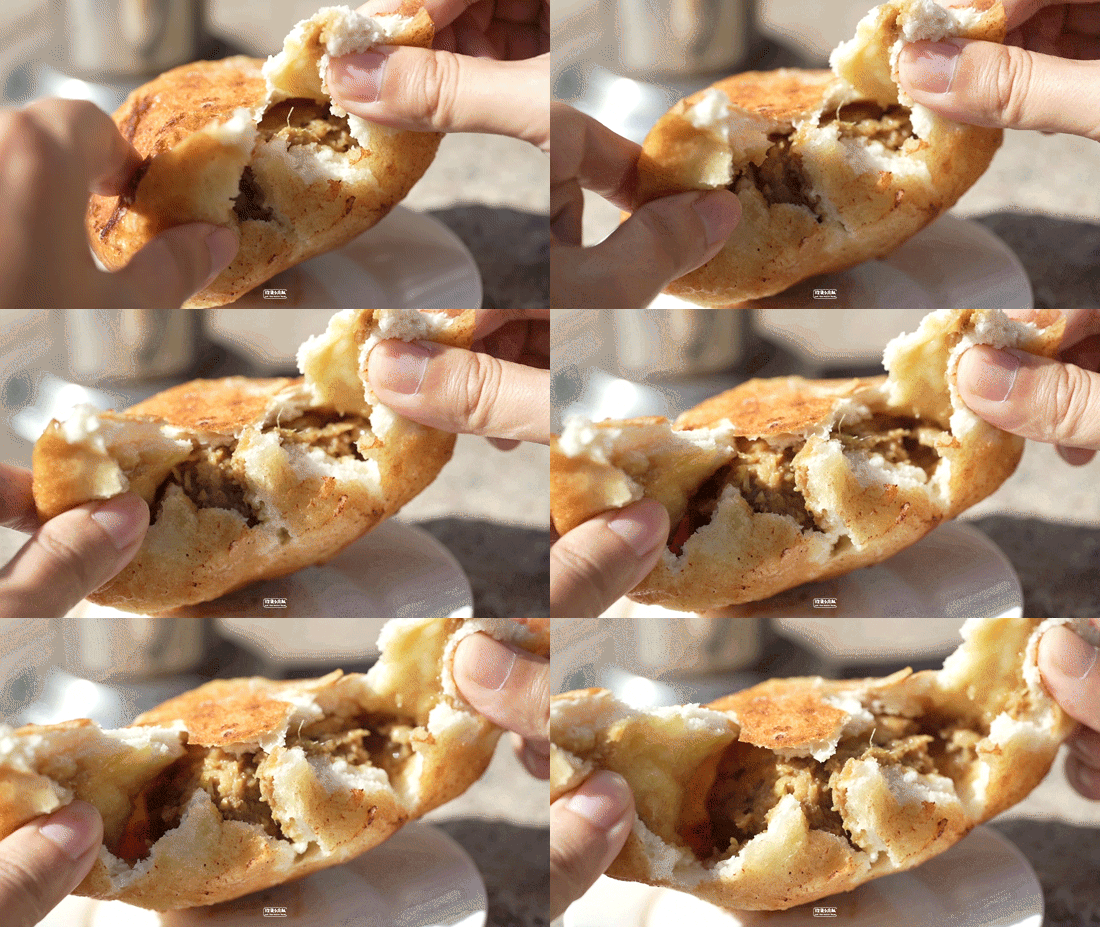
Their niurou jianbao are the ultimate value champions, practically mandatory for every diner who walks through the door. You'll constantly spot customers walking away with massive "wholesale" bags of them. The buns are hefty, with golden-brown wrappers carrying a slight char, thick and bursting with flavor. Don't let the thick skin fool you: the beef filling is packed tight, and the broth explodes at the slightest pinch. The filling is swimming in scallion aroma, and the fluffy leavened dough drinks up the rich essence of the beef juice. Every bite is pure, sinful satisfaction.
One-Click Navigation | The Milk-Drinking Crispy Flatbread
Address | No. 937 Taopu Road, Putuo District
Hours | 7:00 AM - 12:00 PM, 2:30 PM - 6:30 PM
*Niurou jianbao are only sold during morning hours.
"I've Dreamed About This for 20 Years—Turns Out It Still Tastes Exactly the Same"
4.5 RMB / 1 piece
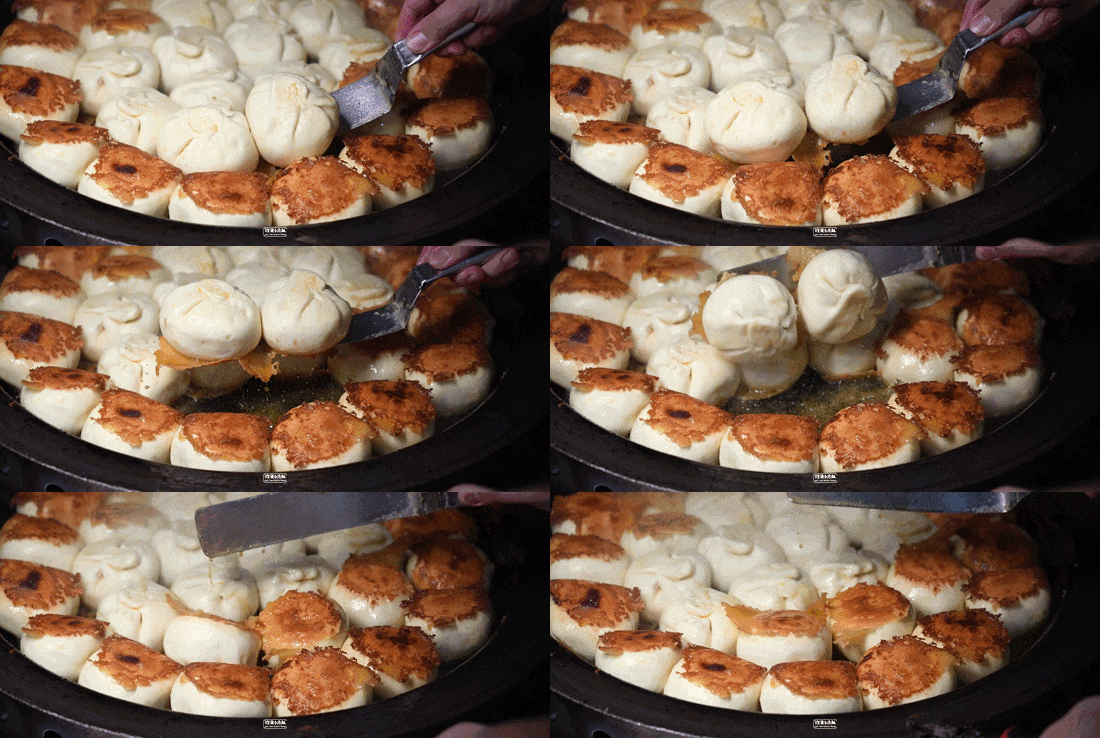
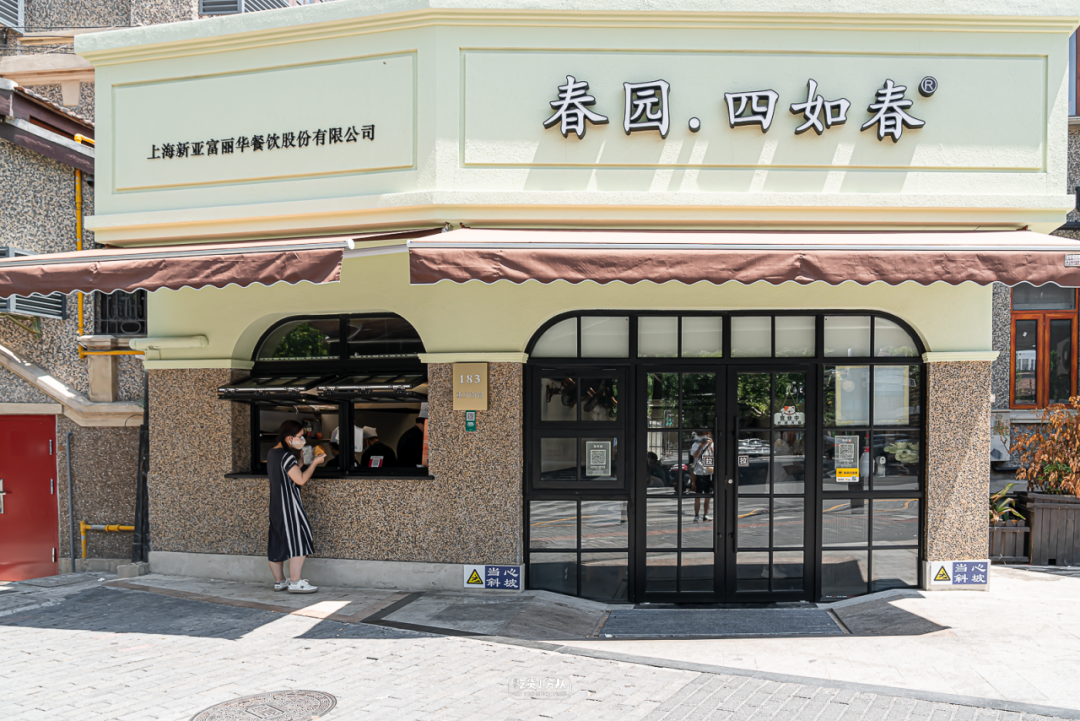
Chunyuan, a historic heritage brand that shuttered over 20 years ago due to urban redevelopment, made a glamorous comeback in 2022, reopening after merging with another century-old institution, Siruchun. The shop brought back their original master chefs, putting beloved neighborhood staples like wontons and guotie back on tables after decades away, while also dropping brand-new items like niurou jianbao.
This old-school jianbao recipe from Chunyuan hasn't changed in 20 years. Steeped in the glory of a legacy brand and carrying forward its original flavor profile, it's an absolute must-try.
An Old Brand Reopened, Reclaiming a 20-Year-Old Recipe
The restaurant's regulars are mostly senior aunties and uncles who have carried a torch for this flavor from two decades ago. This niurou jianbao was specially developed for these loyal customers, blending traditional and modern palates. The veteran chefs tweaked the filling proportions over and over again to nail the local Shanghai palate, locking in the rich beef flavor while tossing in a hint of northern Chinese scallions (jingcong) to banish any gamey notes. Beneath the crunchy crust lies a reservoir of rich beef soup—take one bite and the aftertaste lingers endlessly. "I spent 20 years thinking about this, and coming back to eat these jianbao, it really does taste like the old days." Even on a weekday afternoon, the dining room is packed to the gills.
One-Click Navigation | Chunyuan · Siruchun (Fuxing Park Branch)
Address | No. 183 Chongqing South Road, Huangpu District
Hours | 6:30 AM - 2:00 PM, 4:30 PM - 7:00 PM
"A 1981 Internet-Famous Icon:
The Niurou Jianbao from a Century-Old Halal Institution"
5 RMB / 1 piece
Dominating the number one spot on Yunnan Road South is Hongchangxing, founded way back in 1891 right on the corner of Yan'an Road. This place holds childhood-to-adulthood memories for generations of Shanghai locals. Two decades ago, Yunnan Road was the absolute go-to destination for family dinners.
Housed in a striking building with distinct ethnic architecture, the spacing between floors screams old-school Shanghai vibes. It's the real deal—a genuine Halal establishment. Their freshly sliced mutton hot pot (regi yangrou) is exceptionally authentic with knife-work to match, and their niurou jianbao are a massive specialty made with certified Halal beef. On top of that, they run a fantastic takeout window stocked with Halal pastries and cold-cut deli meats.
The Meat is Sourced from Authentic Halal Beef Rib and Neck Cuts
Hongchangxing's niurou jianbao are the absolute ancestors of the Shanghai food scene. The filling uses authentic Halal beef brisket and neck cuts, blended with a custom mix of spices. Thin-skinned and stuffed to bursting, every bite is pure meat—tender and swimming with juice. You can clearly taste a whisper of curry powder folded into the filling to brighten the flavor profile. It's just the right amount, adding incredible flavor depth while keeping the beef filling from ever feeling greasy. As the weather cools down, you'll want to grab them straight out of the pan and eat them immediately for peak deliciousness.
One-Click Navigation | Hongchangxing (Yunnan South Road Branch)
Address | No. 1 Yunnan Road South, Huangpu District
Hours | 11:00 AM - 2:00 PM, 5:00 PM - 8:00 PM
Let's Chat!
Which Shanghai niurou jianbao spot is your absolute favorite?
Drop your picks in the comments below!
Ultimate Guide to Halal Food & Muslim Culture in Shanghai: Top 10 Iconic Spots
Articles • Hasan09 posted the article • 0 comments • 9 views • 1 days ago
Ultimate Guide to Shanghai's Top 10 Halal Restaurants: A Fusion of Shanghai Classics and Authentic Northwest Flavors
Abstract:
A comprehensive curation of Shanghai's ten most iconic Halal dining institutions, evaluated through word-of-mouth reputation, historical legacy, and distinct flavor profiles. From the classic Shanghai-style hot pot at Hongchangxing and Pingliang Road's Yixinzhai, to Northwest and Xinjiang standouts like Yixiang Dunhuang Tower and Yershari, this guide showcases the rich depth of the magic city's Halal culinary scene.
As an international metropolis, Shanghai brings together food cultures from all over China and the world. Halal dining, with its unique dietary standards and distinct flavor profiles, has become an indispensable part of the city's culinary map. Based on public acclaim, signature dishes, and cultural fusion, we’ve put together a list of ten representative Halal restaurants in Shanghai (in no particular order) to give food lovers a diverse dining reference.
1. Xiyu Feast (Tianshan Branch) Located on Tianshan Road West in Changning District, this long-standing Xinjiang spot is famous for its authentic dapanji (big plate spicy chicken) and shouzhua fan (Xinjiang hand-grabbed rice). They fly their lamb straight from Xinjiang, so it's super tender with zero gamey flavor, and their secret-spice lamb skewers are absolute perfection. Their signature nang bao rou (crispy flatbread soaked in rich lamb stew) soaks up all that savory broth, showing off the delicious clash between rugged Northwest cooking and fine-tuned technique. The dining room is decked out in full Uyghur style, and they even put on traditional folk song and dance performances at night—making it a super popular spot to soak up some Xinjiang culture.
2. Guanguanji Muslim Restaurant (Zhejiang Middle Road Branch) Just steps away from East Nanjing Road, this century-old institution holds a special place in the history of Shanghai's Muslim food scene. Their niurou jianbao (pan-fried beef dumplings) and hot-and-sour soup are an absolute power couple; the dumplings come out with a golden, crispy bottom crust, packed with hand-minced beef and bursting with soup. They still use traditional Halal dim sum techniques for classics like majiang liangpi (cold skin noodles in sesame sauce) and yangrou xiaolongbao (steamed beef soup dumplings). With super budget-friendly prices, it's a huge hit with both locals and travelers.
3. Yershari (Multiple Branches) As a go-to chain for Xinjiang cuisine, Yershari has won over the younger crowd with consistently great food and sleek, modern interiors. A must-try is their Shihezi liangpi (refreshing cold skin noodles) which totally steals the show with its smooth texture and zesty sweet-and-sour dressing, alongside napaliyong (a creative fusion dessert pairing Xinjiang cheese with French pastry techniques). Most branches are right in bustling commercial hubs, making them ideal for casual hangouts with friends or quick business lunches.
4. Bayi Laoye Xinjiang Cuisine (Hongkou Football Stadium Branch) Known for massive, hearty portions and wallet-friendly prices, their signature jiazi rou (rack-of-lamb roasted on an iron frame) has to be ordered in advance—whole racks of lamb slow-roast on a rig, and the visual is honestly jaw-dropping. Their yogurt is house-fermented, drizzled with honey and topped with crushed nuts to cut through the richness and wake up your appetite. The walls are plastered with photos of the Xinjiang landscape, giving off major prairie vibes.
5. Hongchangxing (Yunnan South Road Branch) Established way back in 1891, this time-honored national brand is legendary for its traditional copper-pot mutton hot pot. They use old-school charcoal-heated copper pots, slicing the lamb paper-thin so it cooks in seconds and hits different when dipped in rich sesame paste. Their jiang niurou (braised beef shank) is cured to perfection with marbling that looks like abstract art, earning it a feature on the hit show *A Bite of China*. Retaining its Republic of China-era interior design, dining here is a double dose of nostalgia and incredible food.
6. Alijia (Pudong New Area Branch) Specializing in Northwest flavors and creative fusion dishes, their huangmi babao fan (millett sticky rice pudding) steams up Ningxia goji berries, raisins, and glutinous millet for a sweet-without-being-cloying treat. Their suantang feiniu (sour soup beef) stars Qinghai yak beef in a zesty broth simmered with wild mountain peppers and tomatoes. The restaurant features an open glass kitchen where diners can watch noodle chefs pull hand-spun "one-strand noodles" live on the spot.
7. Yixiang Dunhuang Tower (Zhongshan North Road Branch) A dedicated house of Lanzhou beef noodles where the noodles are hand-pulled to order in eight different thicknesses—from ultra-fine "maoxi" to flat "jiuye" styles—and the broth is simmered from beef bones and over thirty spices for a solid 10 hours or more. Paired with aromatic, chili-packed yopo lazi oil that brings serious aroma without blowing your head off, it’s the closest thing to real-deal Lanzhou flavor. They also serve up Northwest street snacks like gray pea soup and tianpeizi (fermented sweet oats).
8. Silk Road Halal Restaurant (Jing'an Temple Commercial Hub) A high-end spot themed around Silk Road culture, blending culinary traditions from Central Asia and the Middle East. Their "Persian roasted lamb leg" is marinated in saffron and pomegranate juice, leaving the meat crazy tender and juicy, while the baklava dessert packs flaky layers of phyllo dough and crushed walnuts, finished off with a drizzle of rose syrup for pure dessert luxury. The atmosphere is upscale and refined, making it a stellar pick for banquets or anniversary dates.
9. Ma Jinlong Mala Tang (Multiple Branches) Flipping the script on traditional mala tang spots, this Halal chain offers two killer broth bases: rich beef bone and tangy tomato, with every single ingredient fully Halal-certified. You’ve gotta try their signature beef meatballs and handmade fish tofu, and the dipping sauce station hooks you up with Northern staples like sesame paste and fermented Chinese chive flower sauce. It’s an unbeatable value at around 30 RMB per person.
10. Xibeilang BBQ (Shouning Road Branch) A legendary late-night Halal BBQ spot on Shanghai's bustling food street. They use Ningxia Tan sheep for their mutton skewers, grilling them over open coals with a generous dusting of cumin and chili flakes for that ultimate smoky street-food vibe. Their summer-exclusive whole roasted lamb needs to be booked three days in advance, and pairing it with nang flatbread and onions is an absolute feast. Open until 2 AM, it’s an absolute mecca for late-night snack seekers.
The Cultural Fusion of Halal Dining in Shanghai: Shanghai's Halal spots don't just cater to the dietary needs of Muslims—they’ve evolved into vibrant cultural bridges connecting different communities. For instance, when Hongchangxing brought traditional Beijing-style mutton hot pot to Shanghai, they tweaked the sesame paste ratio to match local palates; similarly, Yershari upgraded their presentation style to align with modern urban aesthetics. This kind of "localized" innovation is the ultimate proof of Shanghai culture's inclusive spirit.
Practical Tips: For some of the older heritage spots, try to beat the rush hour to avoid long lines—like Guanguanji, which regularly has a wait during lunch. Northwest portions are notoriously generous, so we recommend 3-4 people share a single order of dapanji. Also, during major holidays like Eid al-Fitr, several restaurants drop special festive menus, so it's always a good idea to call ahead and confirm. view all
Ultimate Guide to Shanghai's Top 10 Halal Restaurants: A Fusion of Shanghai Classics and Authentic Northwest Flavors
Abstract:
A comprehensive curation of Shanghai's ten most iconic Halal dining institutions, evaluated through word-of-mouth reputation, historical legacy, and distinct flavor profiles. From the classic Shanghai-style hot pot at Hongchangxing and Pingliang Road's Yixinzhai, to Northwest and Xinjiang standouts like Yixiang Dunhuang Tower and Yershari, this guide showcases the rich depth of the magic city's Halal culinary scene.
As an international metropolis, Shanghai brings together food cultures from all over China and the world. Halal dining, with its unique dietary standards and distinct flavor profiles, has become an indispensable part of the city's culinary map. Based on public acclaim, signature dishes, and cultural fusion, we’ve put together a list of ten representative Halal restaurants in Shanghai (in no particular order) to give food lovers a diverse dining reference.
1. Xiyu Feast (Tianshan Branch) Located on Tianshan Road West in Changning District, this long-standing Xinjiang spot is famous for its authentic dapanji (big plate spicy chicken) and shouzhua fan (Xinjiang hand-grabbed rice). They fly their lamb straight from Xinjiang, so it's super tender with zero gamey flavor, and their secret-spice lamb skewers are absolute perfection. Their signature nang bao rou (crispy flatbread soaked in rich lamb stew) soaks up all that savory broth, showing off the delicious clash between rugged Northwest cooking and fine-tuned technique. The dining room is decked out in full Uyghur style, and they even put on traditional folk song and dance performances at night—making it a super popular spot to soak up some Xinjiang culture.
2. Guanguanji Muslim Restaurant (Zhejiang Middle Road Branch) Just steps away from East Nanjing Road, this century-old institution holds a special place in the history of Shanghai's Muslim food scene. Their niurou jianbao (pan-fried beef dumplings) and hot-and-sour soup are an absolute power couple; the dumplings come out with a golden, crispy bottom crust, packed with hand-minced beef and bursting with soup. They still use traditional Halal dim sum techniques for classics like majiang liangpi (cold skin noodles in sesame sauce) and yangrou xiaolongbao (steamed beef soup dumplings). With super budget-friendly prices, it's a huge hit with both locals and travelers.
3. Yershari (Multiple Branches) As a go-to chain for Xinjiang cuisine, Yershari has won over the younger crowd with consistently great food and sleek, modern interiors. A must-try is their Shihezi liangpi (refreshing cold skin noodles) which totally steals the show with its smooth texture and zesty sweet-and-sour dressing, alongside napaliyong (a creative fusion dessert pairing Xinjiang cheese with French pastry techniques). Most branches are right in bustling commercial hubs, making them ideal for casual hangouts with friends or quick business lunches.
4. Bayi Laoye Xinjiang Cuisine (Hongkou Football Stadium Branch) Known for massive, hearty portions and wallet-friendly prices, their signature jiazi rou (rack-of-lamb roasted on an iron frame) has to be ordered in advance—whole racks of lamb slow-roast on a rig, and the visual is honestly jaw-dropping. Their yogurt is house-fermented, drizzled with honey and topped with crushed nuts to cut through the richness and wake up your appetite. The walls are plastered with photos of the Xinjiang landscape, giving off major prairie vibes.
5. Hongchangxing (Yunnan South Road Branch) Established way back in 1891, this time-honored national brand is legendary for its traditional copper-pot mutton hot pot. They use old-school charcoal-heated copper pots, slicing the lamb paper-thin so it cooks in seconds and hits different when dipped in rich sesame paste. Their jiang niurou (braised beef shank) is cured to perfection with marbling that looks like abstract art, earning it a feature on the hit show *A Bite of China*. Retaining its Republic of China-era interior design, dining here is a double dose of nostalgia and incredible food.
6. Alijia (Pudong New Area Branch) Specializing in Northwest flavors and creative fusion dishes, their huangmi babao fan (millett sticky rice pudding) steams up Ningxia goji berries, raisins, and glutinous millet for a sweet-without-being-cloying treat. Their suantang feiniu (sour soup beef) stars Qinghai yak beef in a zesty broth simmered with wild mountain peppers and tomatoes. The restaurant features an open glass kitchen where diners can watch noodle chefs pull hand-spun "one-strand noodles" live on the spot.
7. Yixiang Dunhuang Tower (Zhongshan North Road Branch) A dedicated house of Lanzhou beef noodles where the noodles are hand-pulled to order in eight different thicknesses—from ultra-fine "maoxi" to flat "jiuye" styles—and the broth is simmered from beef bones and over thirty spices for a solid 10 hours or more. Paired with aromatic, chili-packed yopo lazi oil that brings serious aroma without blowing your head off, it’s the closest thing to real-deal Lanzhou flavor. They also serve up Northwest street snacks like gray pea soup and tianpeizi (fermented sweet oats).
8. Silk Road Halal Restaurant (Jing'an Temple Commercial Hub) A high-end spot themed around Silk Road culture, blending culinary traditions from Central Asia and the Middle East. Their "Persian roasted lamb leg" is marinated in saffron and pomegranate juice, leaving the meat crazy tender and juicy, while the baklava dessert packs flaky layers of phyllo dough and crushed walnuts, finished off with a drizzle of rose syrup for pure dessert luxury. The atmosphere is upscale and refined, making it a stellar pick for banquets or anniversary dates.
9. Ma Jinlong Mala Tang (Multiple Branches) Flipping the script on traditional mala tang spots, this Halal chain offers two killer broth bases: rich beef bone and tangy tomato, with every single ingredient fully Halal-certified. You’ve gotta try their signature beef meatballs and handmade fish tofu, and the dipping sauce station hooks you up with Northern staples like sesame paste and fermented Chinese chive flower sauce. It’s an unbeatable value at around 30 RMB per person.
10. Xibeilang BBQ (Shouning Road Branch) A legendary late-night Halal BBQ spot on Shanghai's bustling food street. They use Ningxia Tan sheep for their mutton skewers, grilling them over open coals with a generous dusting of cumin and chili flakes for that ultimate smoky street-food vibe. Their summer-exclusive whole roasted lamb needs to be booked three days in advance, and pairing it with nang flatbread and onions is an absolute feast. Open until 2 AM, it’s an absolute mecca for late-night snack seekers.
The Cultural Fusion of Halal Dining in Shanghai: Shanghai's Halal spots don't just cater to the dietary needs of Muslims—they’ve evolved into vibrant cultural bridges connecting different communities. For instance, when Hongchangxing brought traditional Beijing-style mutton hot pot to Shanghai, they tweaked the sesame paste ratio to match local palates; similarly, Yershari upgraded their presentation style to align with modern urban aesthetics. This kind of "localized" innovation is the ultimate proof of Shanghai culture's inclusive spirit.
Practical Tips: For some of the older heritage spots, try to beat the rush hour to avoid long lines—like Guanguanji, which regularly has a wait during lunch. Northwest portions are notoriously generous, so we recommend 3-4 people share a single order of dapanji. Also, during major holidays like Eid al-Fitr, several restaurants drop special festive menus, so it's always a good idea to call ahead and confirm.
Shanghai Halal Food Showdown: Guanguanji vs. Maria on Zhejiang Middle Road
Articles • Hasan09 posted the article • 0 comments • 8 views • 1 days ago
Shanghai Zhejiang Middle Road Halal Mutton Showdown: Comprehensive Review of Refined Guanguanji and Rugged Maria Halal Restaurants
Abstract:
An in-depth review of Guanguanji and Maria, two powerhouse Halal eateries running neck-and-neck on Shanghai's famous Halal food street, Zhejiang Middle Road. We compare shouzhua yangrou (hand-grabbed lamb), spiced skewers, signature mutton offal soup, and staple carbs to give meat lovers and Halal foodies a clear guide on where to eat.
On Shanghai's famous Halal food street, Zhejiang Middle Road, Guanguanji and Maria stand side-by-side. One is delicate, the other rugged, and both are so crazy good it's impossible to pick a favorite. For a pilgrimage site of heavy-hitting meat eaters, adding these two heavyweights to the lineup is a total game-changer!
Guanguanji's dining room is a little cramped, but it's kept super clean and tidy.
That's the best thing about Halal spots—they're obsessively clean and reassuring. Even with tons of meat traffic coming through every day, the floor is totally grease-free and your shoes won't stick.
They don't serve alcohol here, and there's no rowdy shouting. Everyone just keeps their heads down and focuses on crushing their meat.
Ever since I tried hand-grabbed lamb neck, I totally quit ordering regular cuts like lamb ribs or leg meat. Whenever I walk in, I order a pound of lamb neck right off the bat.
You can tell right when it hits the table that these are big, thick-necked sheep, but the meat is just as tender as a spring lamb. The connective tissue has an amazing chew, the lean meat is drop-dead tender, and a tiny bit of fat steps in to pull off the ultimate flavor combo.
Because they use mature sheep, the rich, savory flavor of the mutton is way deeper—pure deliciousness without a hint of gaminess.
The salt is applied with sniper-like precision. That salty baseline draws out the deep meaty aroma without ever stealing the spotlight. This is the absolute peak form of salt and meat dancing together.
The spinal marrow hidden right in the middle of the neck bones can be easily fished out with your chopsticks. It's as creamy as fugu milt—a totally unexpected jackpot you just don't get with baby lamb necks.
Compared to the neck, the red-willow lamb skewers are firmer and fatter, hugging the red-willow twigs and roasted to a smoky, charred finish.
The roast lamb ribs are surprisingly light, seasoned with just a touch of salt and chili—pure fragrance without the burn.
The whole meat-eating progression builds naturally: from lean to fat, from boiled to grilled. It's pure meat from start to finish. So satisfying!
At most, pair it with a plate of cold tossed spinach—low on salt, a tiny bit tangy, with a faint tingle of Sichuan pepper. It's crisp and refreshing, giving your palate a break when the meat gets heavy. Absolute perfection.
Unlike Guanguanji's light and delicate style, Maria Restaurant's dishes are unapologetically bold and wild.
As a Xinjiang restaurant, Maria not only has plenty of elbow room, but you can also drink bowls of liquor here.
Or sip massive mugs of loaded eight-treasure tea (babao cha).
As the province with the highest per capita mutton consumption in China, Xinjiang's obsession with lamb is baked into its DNA, and their pursuit of bold mutton flavor is relentless—meaning it's gotta have that gamey kick.
Maria's hand-grabbed lamb neck leans all the way into that philosophy. Heavy-handed salt punches up a massive meaty flavor, and every single pull unleashes a flood of savory aromas. That tiny hint of gaminess actually wakes up your primal carnivorous instincts.
Maybe because we only ordered half a pound, we didn't get the prized middle section of the neck like at Guanguanji, but gnawing on the sinewy tail-end pieces of the neck had a wild charm of its own.
The roast lamb ribs are similarly heavy on the seasoning and dripping with lamb fat, but eating them is an absolute thrill.
I've always lived by the culinary gospel of 'salty fish, bland meat'—light seasoning usually preserves the original flavor best. Maria's salt-heavy attack kind of blew my mind; maybe mutton's aggressive streak actually needs a heavy hand of salt to fully come alive.
The red-willow skewers and grilled lamb kidneys bring that same wild sodium punch. The funky aroma inherent to kidneys is completely beaten into submission—a tiny bit of heavy-handed salt traded for a 10-out-of-10 rush.
Per tradition, we ordered a token plate of vegetables to reset the palate, and hit an unexpected jackpot. The natural sweetness of sun-ripened tomatoes made the tender Shanghai bok choy taste a hundred times better.
Freshly steamed thin-skinned baozi take fifteen minutes to hit the table, but they come highly recommended.
Make sure to slurp the soup out of these right away—it's the rich, fatty essence of the lamb, piping hot,鲜香 (savory and aromatic) and deeply satisfying.
The baked beef buns (kaobaozi) are similarly thin-skinned and stuffed to the brim, but your luck with the texture is a total crapshoot since they bake them fresh batch by batch. If you want that crackling, juice-bomb version straight from the oven, you have to time it right with a fresh batch coming out. To play it safe, stick to the steamed buns.
Final verdict:
Guanguanji's mutton is gentle, serene, and delicious—giving off the delicate grace of the Jiangnan region beyond the Great Wall.
Maria's mutton is rugged, wild, and delicious—carrying the epic majesty of the smoke rising over the vast desert.
The end. view all
Shanghai Zhejiang Middle Road Halal Mutton Showdown: Comprehensive Review of Refined Guanguanji and Rugged Maria Halal Restaurants
Abstract:
An in-depth review of Guanguanji and Maria, two powerhouse Halal eateries running neck-and-neck on Shanghai's famous Halal food street, Zhejiang Middle Road. We compare shouzhua yangrou (hand-grabbed lamb), spiced skewers, signature mutton offal soup, and staple carbs to give meat lovers and Halal foodies a clear guide on where to eat.
On Shanghai's famous Halal food street, Zhejiang Middle Road, Guanguanji and Maria stand side-by-side. One is delicate, the other rugged, and both are so crazy good it's impossible to pick a favorite. For a pilgrimage site of heavy-hitting meat eaters, adding these two heavyweights to the lineup is a total game-changer!
Guanguanji's dining room is a little cramped, but it's kept super clean and tidy.
That's the best thing about Halal spots—they're obsessively clean and reassuring. Even with tons of meat traffic coming through every day, the floor is totally grease-free and your shoes won't stick.
They don't serve alcohol here, and there's no rowdy shouting. Everyone just keeps their heads down and focuses on crushing their meat.
Ever since I tried hand-grabbed lamb neck, I totally quit ordering regular cuts like lamb ribs or leg meat. Whenever I walk in, I order a pound of lamb neck right off the bat.
You can tell right when it hits the table that these are big, thick-necked sheep, but the meat is just as tender as a spring lamb. The connective tissue has an amazing chew, the lean meat is drop-dead tender, and a tiny bit of fat steps in to pull off the ultimate flavor combo.
Because they use mature sheep, the rich, savory flavor of the mutton is way deeper—pure deliciousness without a hint of gaminess.
The salt is applied with sniper-like precision. That salty baseline draws out the deep meaty aroma without ever stealing the spotlight. This is the absolute peak form of salt and meat dancing together.
The spinal marrow hidden right in the middle of the neck bones can be easily fished out with your chopsticks. It's as creamy as fugu milt—a totally unexpected jackpot you just don't get with baby lamb necks.
Compared to the neck, the red-willow lamb skewers are firmer and fatter, hugging the red-willow twigs and roasted to a smoky, charred finish.
The roast lamb ribs are surprisingly light, seasoned with just a touch of salt and chili—pure fragrance without the burn.
The whole meat-eating progression builds naturally: from lean to fat, from boiled to grilled. It's pure meat from start to finish. So satisfying!
At most, pair it with a plate of cold tossed spinach—low on salt, a tiny bit tangy, with a faint tingle of Sichuan pepper. It's crisp and refreshing, giving your palate a break when the meat gets heavy. Absolute perfection.
Unlike Guanguanji's light and delicate style, Maria Restaurant's dishes are unapologetically bold and wild.
As a Xinjiang restaurant, Maria not only has plenty of elbow room, but you can also drink bowls of liquor here.
Or sip massive mugs of loaded eight-treasure tea (babao cha).
As the province with the highest per capita mutton consumption in China, Xinjiang's obsession with lamb is baked into its DNA, and their pursuit of bold mutton flavor is relentless—meaning it's gotta have that gamey kick.
Maria's hand-grabbed lamb neck leans all the way into that philosophy. Heavy-handed salt punches up a massive meaty flavor, and every single pull unleashes a flood of savory aromas. That tiny hint of gaminess actually wakes up your primal carnivorous instincts.
Maybe because we only ordered half a pound, we didn't get the prized middle section of the neck like at Guanguanji, but gnawing on the sinewy tail-end pieces of the neck had a wild charm of its own.
The roast lamb ribs are similarly heavy on the seasoning and dripping with lamb fat, but eating them is an absolute thrill.
I've always lived by the culinary gospel of 'salty fish, bland meat'—light seasoning usually preserves the original flavor best. Maria's salt-heavy attack kind of blew my mind; maybe mutton's aggressive streak actually needs a heavy hand of salt to fully come alive.
The red-willow skewers and grilled lamb kidneys bring that same wild sodium punch. The funky aroma inherent to kidneys is completely beaten into submission—a tiny bit of heavy-handed salt traded for a 10-out-of-10 rush.
Per tradition, we ordered a token plate of vegetables to reset the palate, and hit an unexpected jackpot. The natural sweetness of sun-ripened tomatoes made the tender Shanghai bok choy taste a hundred times better.
Freshly steamed thin-skinned baozi take fifteen minutes to hit the table, but they come highly recommended.
Make sure to slurp the soup out of these right away—it's the rich, fatty essence of the lamb, piping hot,鲜香 (savory and aromatic) and deeply satisfying.
The baked beef buns (kaobaozi) are similarly thin-skinned and stuffed to the brim, but your luck with the texture is a total crapshoot since they bake them fresh batch by batch. If you want that crackling, juice-bomb version straight from the oven, you have to time it right with a fresh batch coming out. To play it safe, stick to the steamed buns.
Final verdict:
Guanguanji's mutton is gentle, serene, and delicious—giving off the delicate grace of the Jiangnan region beyond the Great Wall.
Maria's mutton is rugged, wild, and delicious—carrying the epic majesty of the smoke rising over the vast desert.
The end.
Hidden Halal Gem in Shanghai: A Foodie's Guide to Century-Old Haipai Muslim Cuisine
Articles • Hasan09 posted the article • 0 comments • 8 views • 1 days ago
Shanghai's Best-Kept Halal Secret: An In-Depth Review of a Century-Old Haipai Muslim Institution's Paper-Thin Beef Tongue and Fork-Tender Braised Beef
Abstract:
An exclusive tasting at the Atlantic Restaurant inside the legendary Pearl Hotel (Mingzhu Dafandian Qingzhen Canting)—a hidden veteran of Shanghai-style (Haipai) Halal dining. We review their signature paper-thin sliced cold beef tongue, the East-meets-West fork-tender braised beef served with cutlery, and classic rich, savory hot dishes that showcase Shanghai's unique, refined Halal culinary style.
Finding a Halal spot in Shanghai isn't hard—you can grab piping-hot shengjianbao (crispy pan-fried soup buns) or beef guotie (crispy beef potstickers) dripping with juice on almost any corner, accompanied by bowls of beef soup floating with chopped scallions. But if you're hunting for a place that elevates Halal food to that signature 'old Shanghai refined dining' level, you need a local foodie to show you the ropes. Last week, an old-school Shanghainese colleague at the office practically forced this place on me, patting his chest and swearing, 'Go here and you won't be disappointed.' He dragged me straight to the Atlantic Restaurant tucked inside the Pearl Hotel. The moment I pushed open the door, my eyes lit up: the ceiling featured warm, glowing star-and-crescent chandeliers with a cozy, retro vibe, and the corners were fitted with well-worn, glossy Republic-era solid wood dining tables, right down to the old-school, meticulous tablecloths. As soon as we sat down, I heard an auntie at the next table call out in authentic Shanghainese, 'Boss, bring us a 'Niuri Chongtian' (towering beef feast)!' That vibrant neighborhood energy mixed with such classic elegance instantly won me over.
During a break between dishes, I chatted with Head Chef Zhao Hao and learned that this low-key spot holds a century-old heritage of Shanghai's Haipai Halal cuisine. After Shanghai opened as a treaty port in the 19th century, Muslim merchants flocked to the city, and Halal dining gradually evolved from roadside street stalls into grand banquet feasts. Back in the day on Fuzhou Road, this restaurant was an absolute powerhouse with lines stretching around the block. Later, it relocated to the Pearl Hotel, becoming one of the rare veteran spots in Shanghai where you can experience an authentic Haipai Halal banquet. Chef Zhao rolled up his sleeves and laughed, 'People always think Halal food is either casual street snacks or rugged Northwest-style chow. We wanted to make 'refined' Halal food so everyone could taste its delicate side!' I completely believed him the moment the first dish hit the table.
The starter, 'Xiaohe Xiangcuyou Ban Niushew' (alleyway vinegar and oil tossed beef tongue), completely shattered my preconceptions of Halal cold dishes. Every beef tongue dish I'd had before was either heavily braised and dense or char-grilled—always hot and hearty. But this version? The beef tongue was sliced paper-thin, glowing a translucent pinkish-white, submerged in glistening seasoned oil and vinegar, and dotted with specks of cracked black pepper. The plating looked just like an appetizer at a high-end Western restaurant. I picked up a slice and popped it into my mouth: first came the fresh, crisp notes of olive oil, followed by the bright tang of rice vinegar carrying the fruity aroma of black vinegar. Deep down, the beef tongue was bouncy and tender, releasing a faint hint of cumin as I chewed. It wasn't greasy at all. I immediately told my colleague, 'The flavor is unreal—so refreshing I can't stop using my chopsticks!'
Chef Zhao came over to share the secret, explaining the East-meets-West touches hidden in the dish: the beef tongue is first boiled until tender in master stock spiced with Sichuan peppercorns, scallions, and ginger, then immediately plunged into ice water for a full 50 minutes. That hot-and-cold shock is what locks in the springy crunch. Skipping traditional soy sauce, the seasoning relies on extra virgin olive oil and Italian balsamic vinegar—a pairing that respects Halal guidelines while perfectly hitting the Shanghainese sweet spot for 'refreshing, tangy, and grease-cutting' flavors. A Shanghai auntie at our table nodded approvingly, raising her teacup to declare, 'This goes so well with huangjiu (yellow rice wine)! It's way lighter than red-braised pork, making it the ultimate comfort food for summer.'
If the cold dish was a breath of fresh air, the arrival of 'Niuri Chongtian' (towering beef feast) hijacked the entire restaurant's attention. A massive cow skull served as the base, piled high with a solid three pounds of hand-pulled beef cheek meat forming a small mountain nearly half a meter wide, taking up half the table. The server had just set it down when a kid at the next table slammed his hand on the table and yelled, 'So cool!' Adults whipped out their phones to snap away, and even an uncle from two tables over wandered over to see what the commotion was about. With a grand entrance like that, it more than lived up to its name meaning 'towering beef' or 'soaring success.'
The best part is the generous, honest portion size. Chef Zhao explained that while many restaurants pad this dish with scraps, they refuse to compromise, using whole beef cheeks from Inner Mongolia slow-braised in master stock for four hours. 'This pot of master stock is a three-generation family treasure. We don't use any taboo ingredients; all the rich umami comes from beef bones and chicken feet, spiked with nearly 60 kinds of spices, including ginseng and angelica root. We have someone standing guard over the fire every single day.' I picked up a thick-cut piece of meat, revealing shimmering gelatinous collagen inside. It melted on the tongue, falling off the bone without turning mushy, carrying rich savory notes blended with subtle herbal aromas. Dipped in house-made chili paste, it just got better the more you chewed. A guy in our group gnawed on a piece and said, 'I always felt Halal beef wasn't quite satisfying enough, but this plate could easily feed three of us until we're stuffed. So worth it!'
I expected the roasted lamb leg to be the rugged, family-style Northwest version, but it arrived exuding refined elegance. Sourced from Ordos, the lamb leg is first braised tender in a blend of herbs, brushed with a secret sauce, and roasted until the skin is lightly charred and sizzling with oil. The deep reddish skin wrapped around tender meat releases juices at the touch of a knife. Chef Zhao explained they chose Ordos lamb specifically for its mild gaminess, pre-marinating it in a blended fruit-and-vegetable juice made from celery and onions, then roasting it with precise temperature control to guarantee crispy skin and succulent meat. As someone terrified of mutton gaminess, I couldn't stop eating piece after piece—the rich meat flavor laced with the subtle sweetness of fruits and veggies made it completely grease-free!
The biggest surprise was the 'Pearl Slow-Braised Beef,' which actually arrived at the table with a knife and fork! Imported marbled beef was cut into cubes, seared until golden brown on the outside, and then simmered on low heat until fully flavored, served alongside sweet chestnuts and pumpkin to cut through the richness. Slicing through it gently with a knife released a sizzle of piping-hot meat juices. The lean-to-fat ratio was spot-on, and the meat was tender without feeling dry. Chef Zhao smiled, mentioning he used to study Cantonese cuisine and wanted to experiment with crossover styles when transitioning to Halal cooking, combining Western plating with Cantonese braising techniques. It became an instant hit, with plenty of young diners coming just to photograph the dish for their social feeds.
To wrap up the meal, they brought out a bowl of house-made yogurt and a beef pastry. The yogurt was thick enough to hold a spoon upright, topped with sweetened red beans and crushed walnuts, while the flaky pastry shattered at the first bite, revealing a savory, flavorful beef filling. Gazing out at the Shanghai streetscape through the window, savoring the blend of authentic Halal roots, Shanghai refinement, and Western delicacy, I finally understood the magic of 'Haipai Halal'—it's not forced fusion, but rather a seamless blending of flavors into something uniquely delicious.
Before leaving, I scanned the dining room: elderly men in white caps leisurely sipping tea, young folks filming videos with the roasted lamb leg, and a family of three sharing a kids' meal. Chef Zhao walked me to the door and said, 'We just want people to realize that Halal food isn't just for a specific group. Whether it's a family gathering or a hangout with friends, locals in Shanghai can come here and have a great time.'
Have you discovered any hidden Halal gems in Shanghai? Are you into the street-side potsticker shops, or upscale veteran spots hidden inside major hotels? Drop your secret spots in the comments—I'll pick 3 lucky followers to win an Atlantic Restaurant yogurt voucher so you can taste this one-of-a-kind Haipai Halal flavor for yourselves~ view all
Shanghai's Best-Kept Halal Secret: An In-Depth Review of a Century-Old Haipai Muslim Institution's Paper-Thin Beef Tongue and Fork-Tender Braised Beef
Abstract:
An exclusive tasting at the Atlantic Restaurant inside the legendary Pearl Hotel (Mingzhu Dafandian Qingzhen Canting)—a hidden veteran of Shanghai-style (Haipai) Halal dining. We review their signature paper-thin sliced cold beef tongue, the East-meets-West fork-tender braised beef served with cutlery, and classic rich, savory hot dishes that showcase Shanghai's unique, refined Halal culinary style.
Finding a Halal spot in Shanghai isn't hard—you can grab piping-hot shengjianbao (crispy pan-fried soup buns) or beef guotie (crispy beef potstickers) dripping with juice on almost any corner, accompanied by bowls of beef soup floating with chopped scallions. But if you're hunting for a place that elevates Halal food to that signature 'old Shanghai refined dining' level, you need a local foodie to show you the ropes. Last week, an old-school Shanghainese colleague at the office practically forced this place on me, patting his chest and swearing, 'Go here and you won't be disappointed.' He dragged me straight to the Atlantic Restaurant tucked inside the Pearl Hotel. The moment I pushed open the door, my eyes lit up: the ceiling featured warm, glowing star-and-crescent chandeliers with a cozy, retro vibe, and the corners were fitted with well-worn, glossy Republic-era solid wood dining tables, right down to the old-school, meticulous tablecloths. As soon as we sat down, I heard an auntie at the next table call out in authentic Shanghainese, 'Boss, bring us a 'Niuri Chongtian' (towering beef feast)!' That vibrant neighborhood energy mixed with such classic elegance instantly won me over.
During a break between dishes, I chatted with Head Chef Zhao Hao and learned that this low-key spot holds a century-old heritage of Shanghai's Haipai Halal cuisine. After Shanghai opened as a treaty port in the 19th century, Muslim merchants flocked to the city, and Halal dining gradually evolved from roadside street stalls into grand banquet feasts. Back in the day on Fuzhou Road, this restaurant was an absolute powerhouse with lines stretching around the block. Later, it relocated to the Pearl Hotel, becoming one of the rare veteran spots in Shanghai where you can experience an authentic Haipai Halal banquet. Chef Zhao rolled up his sleeves and laughed, 'People always think Halal food is either casual street snacks or rugged Northwest-style chow. We wanted to make 'refined' Halal food so everyone could taste its delicate side!' I completely believed him the moment the first dish hit the table.
The starter, 'Xiaohe Xiangcuyou Ban Niushew' (alleyway vinegar and oil tossed beef tongue), completely shattered my preconceptions of Halal cold dishes. Every beef tongue dish I'd had before was either heavily braised and dense or char-grilled—always hot and hearty. But this version? The beef tongue was sliced paper-thin, glowing a translucent pinkish-white, submerged in glistening seasoned oil and vinegar, and dotted with specks of cracked black pepper. The plating looked just like an appetizer at a high-end Western restaurant. I picked up a slice and popped it into my mouth: first came the fresh, crisp notes of olive oil, followed by the bright tang of rice vinegar carrying the fruity aroma of black vinegar. Deep down, the beef tongue was bouncy and tender, releasing a faint hint of cumin as I chewed. It wasn't greasy at all. I immediately told my colleague, 'The flavor is unreal—so refreshing I can't stop using my chopsticks!'
Chef Zhao came over to share the secret, explaining the East-meets-West touches hidden in the dish: the beef tongue is first boiled until tender in master stock spiced with Sichuan peppercorns, scallions, and ginger, then immediately plunged into ice water for a full 50 minutes. That hot-and-cold shock is what locks in the springy crunch. Skipping traditional soy sauce, the seasoning relies on extra virgin olive oil and Italian balsamic vinegar—a pairing that respects Halal guidelines while perfectly hitting the Shanghainese sweet spot for 'refreshing, tangy, and grease-cutting' flavors. A Shanghai auntie at our table nodded approvingly, raising her teacup to declare, 'This goes so well with huangjiu (yellow rice wine)! It's way lighter than red-braised pork, making it the ultimate comfort food for summer.'
If the cold dish was a breath of fresh air, the arrival of 'Niuri Chongtian' (towering beef feast) hijacked the entire restaurant's attention. A massive cow skull served as the base, piled high with a solid three pounds of hand-pulled beef cheek meat forming a small mountain nearly half a meter wide, taking up half the table. The server had just set it down when a kid at the next table slammed his hand on the table and yelled, 'So cool!' Adults whipped out their phones to snap away, and even an uncle from two tables over wandered over to see what the commotion was about. With a grand entrance like that, it more than lived up to its name meaning 'towering beef' or 'soaring success.'
The best part is the generous, honest portion size. Chef Zhao explained that while many restaurants pad this dish with scraps, they refuse to compromise, using whole beef cheeks from Inner Mongolia slow-braised in master stock for four hours. 'This pot of master stock is a three-generation family treasure. We don't use any taboo ingredients; all the rich umami comes from beef bones and chicken feet, spiked with nearly 60 kinds of spices, including ginseng and angelica root. We have someone standing guard over the fire every single day.' I picked up a thick-cut piece of meat, revealing shimmering gelatinous collagen inside. It melted on the tongue, falling off the bone without turning mushy, carrying rich savory notes blended with subtle herbal aromas. Dipped in house-made chili paste, it just got better the more you chewed. A guy in our group gnawed on a piece and said, 'I always felt Halal beef wasn't quite satisfying enough, but this plate could easily feed three of us until we're stuffed. So worth it!'
I expected the roasted lamb leg to be the rugged, family-style Northwest version, but it arrived exuding refined elegance. Sourced from Ordos, the lamb leg is first braised tender in a blend of herbs, brushed with a secret sauce, and roasted until the skin is lightly charred and sizzling with oil. The deep reddish skin wrapped around tender meat releases juices at the touch of a knife. Chef Zhao explained they chose Ordos lamb specifically for its mild gaminess, pre-marinating it in a blended fruit-and-vegetable juice made from celery and onions, then roasting it with precise temperature control to guarantee crispy skin and succulent meat. As someone terrified of mutton gaminess, I couldn't stop eating piece after piece—the rich meat flavor laced with the subtle sweetness of fruits and veggies made it completely grease-free!
The biggest surprise was the 'Pearl Slow-Braised Beef,' which actually arrived at the table with a knife and fork! Imported marbled beef was cut into cubes, seared until golden brown on the outside, and then simmered on low heat until fully flavored, served alongside sweet chestnuts and pumpkin to cut through the richness. Slicing through it gently with a knife released a sizzle of piping-hot meat juices. The lean-to-fat ratio was spot-on, and the meat was tender without feeling dry. Chef Zhao smiled, mentioning he used to study Cantonese cuisine and wanted to experiment with crossover styles when transitioning to Halal cooking, combining Western plating with Cantonese braising techniques. It became an instant hit, with plenty of young diners coming just to photograph the dish for their social feeds.
To wrap up the meal, they brought out a bowl of house-made yogurt and a beef pastry. The yogurt was thick enough to hold a spoon upright, topped with sweetened red beans and crushed walnuts, while the flaky pastry shattered at the first bite, revealing a savory, flavorful beef filling. Gazing out at the Shanghai streetscape through the window, savoring the blend of authentic Halal roots, Shanghai refinement, and Western delicacy, I finally understood the magic of 'Haipai Halal'—it's not forced fusion, but rather a seamless blending of flavors into something uniquely delicious.
Before leaving, I scanned the dining room: elderly men in white caps leisurely sipping tea, young folks filming videos with the roasted lamb leg, and a family of three sharing a kids' meal. Chef Zhao walked me to the door and said, 'We just want people to realize that Halal food isn't just for a specific group. Whether it's a family gathering or a hangout with friends, locals in Shanghai can come here and have a great time.'
Have you discovered any hidden Halal gems in Shanghai? Are you into the street-side potsticker shops, or upscale veteran spots hidden inside major hotels? Drop your secret spots in the comments—I'll pick 3 lucky followers to win an Atlantic Restaurant yogurt voucher so you can taste this one-of-a-kind Haipai Halal flavor for yourselves~
Halal Shanghai Guide: Weimin Halal Restaurant Breakfast & Authentic Beef Broth
Articles • Hasan09 posted the article • 0 comments • 8 views • 1 days ago
State-Owned Quality and Public Service: Morning Breakfast and Beef Consommé at Weimin Halal Restaurant, Owned by the Shanghai Mutton and Beef Company
Summary:
A look into the early morning routine at Weimin Halal Restaurant, directly managed by the Shanghai Mutton and Beef Company. Featuring freshly made, generously stuffed beef buns served alongside piping-hot, authentic beef consommé provided free of charge by the restaurant, showcasing the heartwarming community dedication of a veteran state-owned Halal eatery.
The Shanghai Mutton and Beef Company is Shanghai's largest producer of Halal mutton and beef, meaning the ingredients are exceptionally fresh.
Morning breakfast: a beef bun paired with beef consommé (Note: the consommé is free). view all
State-Owned Quality and Public Service: Morning Breakfast and Beef Consommé at Weimin Halal Restaurant, Owned by the Shanghai Mutton and Beef Company
Summary:
A look into the early morning routine at Weimin Halal Restaurant, directly managed by the Shanghai Mutton and Beef Company. Featuring freshly made, generously stuffed beef buns served alongside piping-hot, authentic beef consommé provided free of charge by the restaurant, showcasing the heartwarming community dedication of a veteran state-owned Halal eatery.
The Shanghai Mutton and Beef Company is Shanghai's largest producer of Halal mutton and beef, meaning the ingredients are exceptionally fresh.
Morning breakfast: a beef bun paired with beef consommé (Note: the consommé is free).
The Ultimate Halal Shanghai Guide: Best Niurou Jianbao, Hidden Mosques & Muslim Food Culture
Articles • Hasan09 posted the article • 0 comments • 8 views • 1 days ago
Shanghai's Budget Carb Ceiling: Field-Testing the Golden Crispy Crusts and Juicy Fillings of Shanghai's Iconic Halal Niurou Jianbao
Summary:
A deep dive into Shanghai's most seductive "national-level" Halal carb creation—niurou jianbao (pan-fried beef buns). We put the frying technique, thickness of the golden crispy bottom crust, and the beef filling ratios of historic brands and street food legends head-to-head to bring food lovers the ultimate flavor roundup.
In Shanghai's niurou jianbao scene,
every single bun has its own legend.
They sizzle and flip in the oil pan
until the wrapper is crispy and the beef aroma fills the air.
This edition recommends the 8 absolute best niurou jianbao spots.
Step inside,
and the air doesn't just carry the scent of beef—
it's packed with mouthwatering toasted aromas.
1. Shanghai Yixinzhai
2. Qingzhen Xiaopang Niurou Jianbao
3. Shanghai Weimin Shanghang Halal Restaurant
4. Hujia Shuang Guotie (Hujia Double-Sided Potstickers)
5. Crispy Niurou Jianbao · Huainan Beef Soup
6. The Milk-Drinking Crispy Flatbread
7. Chunyuan · Siruchun
8. Hongchangxing
"A 60+ Year Intangible Cultural Heritage Niurou Jianbao"
5 RMB / 1 piece
When people talk about Shanghai niurou jianbao, Yixinzhai is usually the first name that pops into mind. That's right—this legendary spot is an "Intangible Cultural Heritage Shop" and "Shanghai's #1 Niurou Jianbao." Moving a legendary 4,000 buns a day through 64 years of ups and downs, it's still wildly popular.
From older Shanghai aunties and uncles to young foodies chasing internet hype for social media check-ins, whether you're here for pure nostalgia or a viral food hunt, you've got to bow your head and wait in line for Yixinzhai's heritage buns.
The Nostalgia of Old Yangpu
If you want a jianbao that's dripping with juice and pure romance, Yixinzhai takes the crown. Fresh out of the frying pan, these buns are golden-brown on both sides, with a satisfying crunch. Bite through the skin, and a gusher of soup bursts from the tear, rich in beef flavor and subtly sweet, melting right into the dough's earthy aroma. It's impossible not to love them. Even though it's already the undisputed king of Shanghai niurou jianbao, old-school Yangpu foodies still argue that the flavor back in the day was peerless. With every juicy, enduring bite, Yixinzhai's jianbao chronicles the changing face of the city.
One-Click Navigation | Shanghai Yixinzhai (Pingliang Road Branch)
Address | No. 1625 Pingliang Road, Daqiao Subdistrict (Near Ningguo Road)
Hours | 7:00 AM - 9:00 PM
A 30-Year Neighborhood Staple in the Yangpu Wet Market
A Massive 4 RMB Bun That Shatters Your Wallet's Limits
5 RMB / 1 piece
Word has it that besides Yixinzhai, there's another god-tier Yangpu niurou jianbao hidden gem you simply have to try. Dominating the wet market scene and reigning supreme as the ultimate morning rush-hour snack, they only sell until noon. Made with the boss's secret recipe, this oversized niurou jianbao has made a huge name for itself across Yangpu. Honestly, handing over just 4 RMB for a massive meat bun makes you feel a little guilty—especially when it's pure beef and literally bursts with soup?
"Our shop has been here since the day this wet market opened. At first, we only sold raw beef, but then folks from back home living in Shanghai started craving hometown-style buns, so we opened this joint." It's a family-run affair: the husband works the wok, the wife runs the cash register, and the morning crowd is mostly regulars. Chatting about daily life with the boss's family makes for a super cozy vibe.
A Low-Key Shaolin Master of Jianbao with Killer Looks and Chops
Boss Pang is dead serious about ingredient freshness, exclusively sourcing premium chuck flap (meizi rou) from big yellow cattle, keeping strict standards on slaughter times, origin, and cattle age. Sticking to traditional cast-iron pan-frying, he relies on over 20 years of mastery over heat control, wok airflow, timing, wrist pressure, and oil amounts to make sure every single bun hits peak flavor. Take a bite, and the texture genuinely feels a bit more rustic and muscular than your average niurou jianbao. As you sink your teeth in, the juices soak right into the wrapper, supercharging the savory fats. Take a gentle little sip of the soup—it's an instant out-of-body experience.
One-Click Navigation | Qingzhen Xiaopang Niurou Jianbao
Address | Right-hand side inside the Global Company Food Street, west side of Lejiafu Agricultural Products Market, No. 9 Yongji Road, Yangpu District
Hours | 6:00 AM - 12:00 PM
*Niurou jianbao are 4 RMB each, buy 5 get 1 free. They sell out completely as soon as they come out of the pan before 9:00 AM. The boss doesn't do delivery apps, and supply cannot be guaranteed after 12:00 PM.
"Shanghai's Most 'Bovine' Canteen:
Halal Jianbao, Slaughtered at Midnight, Sold Out by Afternoon"
3.5 RMB / 1 piece
With a history stretching over 30 years, this beef and mutton "canteen" is a state-owned restaurant under the Shanghai Beef and Mutton Company. The kitchen starts buzzing here right after midnight, but they shut their doors at 1:00 PM sharp. The restaurant owns its own slaughterhouse, taking just 20 minutes from slaughter to table to guarantee mind-blowing freshness. Backed by a massive Halal cold storage facility and slaughterhouse, they're the only operation of their kind in Shanghai.
The Mandatory "Soup-Bomb Bun"
Their niurou jianbao go for 4 RMB each and are practically mandatory for every customer who walks through the door—you'll often see people walking out having "wholesale-purchased" massive bags of them. These buns are huge, roughly the size of a soup bowl, with golden-brown wrappers boasting a slight char, thick and packed with flavor. Don't let the thick skin fool you: the beef filling is generous, and the meat juices burst out with a gentle squeeze. The filling is loaded with fragrant scallions, and the fluffy leavened dough drinks up the pure essence of the beef broth. Every single bite is deliciously sinful.
One-Click Navigation | Shanghai Weimin Shanghang Halal Restaurant (Nanda Road Branch)
Address | No. 162 Nanda Road, Baoshan District
Hours | 5:00 AM - 1:00 PM, 3:30 PM - 6:30 PM
"Their Signature is Guotie,
But Dianshang Reviews Hyping Up the Niurou Jianbao Are Everywhere"
4 RMB / 1 piece
This little shop focuses on guotie (crispy beef potstickers), but their niurou jianbao unexpectedly went viral and earned rave reviews from all over. What started as a tiny 3-square-meter stall has grown into its current size. Passed down from father to son with over 30 years of craftsmanship, they've kept the original ingredients and recipes intact, so every bite still tastes just like childhood.
Uncompromising Dedication to Old-School Craftsmanship
While waiting for our batch to finish, we watched these little guys go through a secondary proofing and a steam bath in the wok, plumping up their wrappers quite a bit. While other shops might rely on a starch slurry to give their buns a cosmetic makeover, Hujia sticks to pure, unadulterated methods, letting the jianbao achieve golden, crispy perfection through the most authentic, traditional frying techniques. It's almost like they're teasing us: "Hey, I'm the real deal—don't compare me to those chemically enhanced impostors!"
One-Click Navigation | Hujia Shuang Guotie
Address | No. 235-1 Zhongshan North Road, Jing'an District
Hours | 6:00 AM - 19:00
"The Undisputed King of Dianping's
Shanghai Niurou Jianbao Rankings"
5 RMB / 1 piece
Sitting pretty in the top three of Dianping's charts, this veteran niurou jianbao spot on Guangdong Road has been open for around 20 years. Watching it climb from 1.8 RMB to 5 RMB is basically a masterclass in tracking inflation. The number of jianbao they sell every day could wrap around the earth—well, at least wrap around the block three times. Their pickiness when it comes to ingredients is basically a beauty pageant audition, ensuring the word "integrity" is baked into every single bun.
"Kids Who Grew Up Eating Our Jianbao All Hit 6 Feet Tall"
The raw ingredients are hand-picked from the top-tier beef brisket sold on Niurou Street right across the street. The ingredient costs are high, using a lean-to-fat ratio that gives the meat a tight, springy texture with serious bite. Plus, they're loaded with nutrition—the boss proudly brags that the kids who grew up eating their buns all ended up standing over 1.9 meters tall and make prime basketball team material~
The owner shares that customers regularly roll up and buy 10, 20, or even 30 buns at a time. The furthest regular lives out in Qingpu, taking a two-hour subway ride just to buy them, while their biggest single customer once snapped up 120. The day we visited, we ran into an older Shanghai uncle who had made a special trip all the way from Pudong to "wholesale" a batch. He used to live in the neighborhood, and even though he got relocated during urban renewal, he still comes back every single week.
One-Click Navigation | Crispy Niurou Jianbao · Huainan Beef Soup (Guangdong Road Branch)
Address | No. 577 Guangdong Road, Huangpu District
Hours | 6:00 AM - 19:00
*The shop's payment systems are totally globalized, making it super easy for international friends to pay.
"The Queue Monster Hiding in Taopu"
10 RMB / 3 pieces
Located right at the corner of Gaoling Road and Taopu Road, this pastry shop is the "heavyweight boxing champion of Taopu breakfasts." Their milk-infused crispy flatbread is the signature item, but their niurou jianbao have surprisingly turned into massive bestsellers. By the time we arrived around 9:00 AM, the line was already winding down the block. They run two separate lines—one for the crispy flatbread and one for the jianbao—and plenty of people finish buying their flatbreads only to jump right back into the jianbao queue.
"I drove all the way out here from Fenghang today,
I make it a point to come at least once a month anyway!"
Their niurou jianbao are the ultimate value champions, practically mandatory for every diner who walks through the door. You'll constantly spot customers walking away with massive "wholesale" bags of them. The buns are hefty, with golden-brown wrappers carrying a slight char, thick and bursting with flavor. Don't let the thick skin fool you: the beef filling is packed tight, and the broth explodes at the slightest pinch. The filling is swimming in scallion aroma, and the fluffy leavened dough drinks up the rich essence of the beef juice. Every bite is pure, sinful satisfaction.
One-Click Navigation | The Milk-Drinking Crispy Flatbread
Address | No. 937 Taopu Road, Putuo District
Hours | 7:00 AM - 12:00 PM, 2:30 PM - 6:30 PM
*Niurou jianbao are only sold during morning hours.
"I've Dreamed About This for 20 Years—Turns Out It Still Tastes Exactly the Same"
4.5 RMB / 1 piece
Chunyuan, a historic heritage brand that shuttered over 20 years ago due to urban redevelopment, made a glamorous comeback in 2022, reopening after merging with another century-old institution, Siruchun. The shop brought back their original master chefs, putting beloved neighborhood staples like wontons and guotie back on tables after decades away, while also dropping brand-new items like niurou jianbao.
This old-school jianbao recipe from Chunyuan hasn't changed in 20 years. Steeped in the glory of a legacy brand and carrying forward its original flavor profile, it's an absolute must-try.
An Old Brand Reopened, Reclaiming a 20-Year-Old Recipe
The restaurant's regulars are mostly senior aunties and uncles who have carried a torch for this flavor from two decades ago. This niurou jianbao was specially developed for these loyal customers, blending traditional and modern palates. The veteran chefs tweaked the filling proportions over and over again to nail the local Shanghai palate, locking in the rich beef flavor while tossing in a hint of northern Chinese scallions (jingcong) to banish any gamey notes. Beneath the crunchy crust lies a reservoir of rich beef soup—take one bite and the aftertaste lingers endlessly. "I spent 20 years thinking about this, and coming back to eat these jianbao, it really does taste like the old days." Even on a weekday afternoon, the dining room is packed to the gills.
One-Click Navigation | Chunyuan · Siruchun (Fuxing Park Branch)
Address | No. 183 Chongqing South Road, Huangpu District
Hours | 6:30 AM - 2:00 PM, 4:30 PM - 7:00 PM
"A 1981 Internet-Famous Icon:
The Niurou Jianbao from a Century-Old Halal Institution"
5 RMB / 1 piece
Dominating the number one spot on Yunnan Road South is Hongchangxing, founded way back in 1891 right on the corner of Yan'an Road. This place holds childhood-to-adulthood memories for generations of Shanghai locals. Two decades ago, Yunnan Road was the absolute go-to destination for family dinners.
Housed in a striking building with distinct ethnic architecture, the spacing between floors screams old-school Shanghai vibes. It's the real deal—a genuine Halal establishment. Their freshly sliced mutton hot pot (regi yangrou) is exceptionally authentic with knife-work to match, and their niurou jianbao are a massive specialty made with certified Halal beef. On top of that, they run a fantastic takeout window stocked with Halal pastries and cold-cut deli meats.
The Meat is Sourced from Authentic Halal Beef Rib and Neck Cuts
Hongchangxing's niurou jianbao are the absolute ancestors of the Shanghai food scene. The filling uses authentic Halal beef brisket and neck cuts, blended with a custom mix of spices. Thin-skinned and stuffed to bursting, every bite is pure meat—tender and swimming with juice. You can clearly taste a whisper of curry powder folded into the filling to brighten the flavor profile. It's just the right amount, adding incredible flavor depth while keeping the beef filling from ever feeling greasy. As the weather cools down, you'll want to grab them straight out of the pan and eat them immediately for peak deliciousness.
One-Click Navigation | Hongchangxing (Yunnan South Road Branch)
Address | No. 1 Yunnan Road South, Huangpu District
Hours | 11:00 AM - 2:00 PM, 5:00 PM - 8:00 PM
Let's Chat!
Which Shanghai niurou jianbao spot is your absolute favorite?
Drop your picks in the comments below! view all
Shanghai's Budget Carb Ceiling: Field-Testing the Golden Crispy Crusts and Juicy Fillings of Shanghai's Iconic Halal Niurou Jianbao
Summary:
A deep dive into Shanghai's most seductive "national-level" Halal carb creation—niurou jianbao (pan-fried beef buns). We put the frying technique, thickness of the golden crispy bottom crust, and the beef filling ratios of historic brands and street food legends head-to-head to bring food lovers the ultimate flavor roundup.
In Shanghai's niurou jianbao scene,
every single bun has its own legend.
They sizzle and flip in the oil pan
until the wrapper is crispy and the beef aroma fills the air.
This edition recommends the 8 absolute best niurou jianbao spots.
Step inside,
and the air doesn't just carry the scent of beef—
it's packed with mouthwatering toasted aromas.
1. Shanghai Yixinzhai
2. Qingzhen Xiaopang Niurou Jianbao
3. Shanghai Weimin Shanghang Halal Restaurant
4. Hujia Shuang Guotie (Hujia Double-Sided Potstickers)
5. Crispy Niurou Jianbao · Huainan Beef Soup
6. The Milk-Drinking Crispy Flatbread
7. Chunyuan · Siruchun
8. Hongchangxing
"A 60+ Year Intangible Cultural Heritage Niurou Jianbao"
5 RMB / 1 piece
When people talk about Shanghai niurou jianbao, Yixinzhai is usually the first name that pops into mind. That's right—this legendary spot is an "Intangible Cultural Heritage Shop" and "Shanghai's #1 Niurou Jianbao." Moving a legendary 4,000 buns a day through 64 years of ups and downs, it's still wildly popular.
From older Shanghai aunties and uncles to young foodies chasing internet hype for social media check-ins, whether you're here for pure nostalgia or a viral food hunt, you've got to bow your head and wait in line for Yixinzhai's heritage buns.
The Nostalgia of Old Yangpu
If you want a jianbao that's dripping with juice and pure romance, Yixinzhai takes the crown. Fresh out of the frying pan, these buns are golden-brown on both sides, with a satisfying crunch. Bite through the skin, and a gusher of soup bursts from the tear, rich in beef flavor and subtly sweet, melting right into the dough's earthy aroma. It's impossible not to love them. Even though it's already the undisputed king of Shanghai niurou jianbao, old-school Yangpu foodies still argue that the flavor back in the day was peerless. With every juicy, enduring bite, Yixinzhai's jianbao chronicles the changing face of the city.
One-Click Navigation | Shanghai Yixinzhai (Pingliang Road Branch)
Address | No. 1625 Pingliang Road, Daqiao Subdistrict (Near Ningguo Road)
Hours | 7:00 AM - 9:00 PM
A 30-Year Neighborhood Staple in the Yangpu Wet Market
A Massive 4 RMB Bun That Shatters Your Wallet's Limits
5 RMB / 1 piece
Word has it that besides Yixinzhai, there's another god-tier Yangpu niurou jianbao hidden gem you simply have to try. Dominating the wet market scene and reigning supreme as the ultimate morning rush-hour snack, they only sell until noon. Made with the boss's secret recipe, this oversized niurou jianbao has made a huge name for itself across Yangpu. Honestly, handing over just 4 RMB for a massive meat bun makes you feel a little guilty—especially when it's pure beef and literally bursts with soup?
"Our shop has been here since the day this wet market opened. At first, we only sold raw beef, but then folks from back home living in Shanghai started craving hometown-style buns, so we opened this joint." It's a family-run affair: the husband works the wok, the wife runs the cash register, and the morning crowd is mostly regulars. Chatting about daily life with the boss's family makes for a super cozy vibe.
A Low-Key Shaolin Master of Jianbao with Killer Looks and Chops
Boss Pang is dead serious about ingredient freshness, exclusively sourcing premium chuck flap (meizi rou) from big yellow cattle, keeping strict standards on slaughter times, origin, and cattle age. Sticking to traditional cast-iron pan-frying, he relies on over 20 years of mastery over heat control, wok airflow, timing, wrist pressure, and oil amounts to make sure every single bun hits peak flavor. Take a bite, and the texture genuinely feels a bit more rustic and muscular than your average niurou jianbao. As you sink your teeth in, the juices soak right into the wrapper, supercharging the savory fats. Take a gentle little sip of the soup—it's an instant out-of-body experience.
One-Click Navigation | Qingzhen Xiaopang Niurou Jianbao
Address | Right-hand side inside the Global Company Food Street, west side of Lejiafu Agricultural Products Market, No. 9 Yongji Road, Yangpu District
Hours | 6:00 AM - 12:00 PM
*Niurou jianbao are 4 RMB each, buy 5 get 1 free. They sell out completely as soon as they come out of the pan before 9:00 AM. The boss doesn't do delivery apps, and supply cannot be guaranteed after 12:00 PM.
"Shanghai's Most 'Bovine' Canteen:
Halal Jianbao, Slaughtered at Midnight, Sold Out by Afternoon"
3.5 RMB / 1 piece
With a history stretching over 30 years, this beef and mutton "canteen" is a state-owned restaurant under the Shanghai Beef and Mutton Company. The kitchen starts buzzing here right after midnight, but they shut their doors at 1:00 PM sharp. The restaurant owns its own slaughterhouse, taking just 20 minutes from slaughter to table to guarantee mind-blowing freshness. Backed by a massive Halal cold storage facility and slaughterhouse, they're the only operation of their kind in Shanghai.
The Mandatory "Soup-Bomb Bun"
Their niurou jianbao go for 4 RMB each and are practically mandatory for every customer who walks through the door—you'll often see people walking out having "wholesale-purchased" massive bags of them. These buns are huge, roughly the size of a soup bowl, with golden-brown wrappers boasting a slight char, thick and packed with flavor. Don't let the thick skin fool you: the beef filling is generous, and the meat juices burst out with a gentle squeeze. The filling is loaded with fragrant scallions, and the fluffy leavened dough drinks up the pure essence of the beef broth. Every single bite is deliciously sinful.
One-Click Navigation | Shanghai Weimin Shanghang Halal Restaurant (Nanda Road Branch)
Address | No. 162 Nanda Road, Baoshan District
Hours | 5:00 AM - 1:00 PM, 3:30 PM - 6:30 PM
"Their Signature is Guotie,
But Dianshang Reviews Hyping Up the Niurou Jianbao Are Everywhere"
4 RMB / 1 piece
This little shop focuses on guotie (crispy beef potstickers), but their niurou jianbao unexpectedly went viral and earned rave reviews from all over. What started as a tiny 3-square-meter stall has grown into its current size. Passed down from father to son with over 30 years of craftsmanship, they've kept the original ingredients and recipes intact, so every bite still tastes just like childhood.
Uncompromising Dedication to Old-School Craftsmanship
While waiting for our batch to finish, we watched these little guys go through a secondary proofing and a steam bath in the wok, plumping up their wrappers quite a bit. While other shops might rely on a starch slurry to give their buns a cosmetic makeover, Hujia sticks to pure, unadulterated methods, letting the jianbao achieve golden, crispy perfection through the most authentic, traditional frying techniques. It's almost like they're teasing us: "Hey, I'm the real deal—don't compare me to those chemically enhanced impostors!"
One-Click Navigation | Hujia Shuang Guotie
Address | No. 235-1 Zhongshan North Road, Jing'an District
Hours | 6:00 AM - 19:00
"The Undisputed King of Dianping's
Shanghai Niurou Jianbao Rankings"
5 RMB / 1 piece
Sitting pretty in the top three of Dianping's charts, this veteran niurou jianbao spot on Guangdong Road has been open for around 20 years. Watching it climb from 1.8 RMB to 5 RMB is basically a masterclass in tracking inflation. The number of jianbao they sell every day could wrap around the earth—well, at least wrap around the block three times. Their pickiness when it comes to ingredients is basically a beauty pageant audition, ensuring the word "integrity" is baked into every single bun.
"Kids Who Grew Up Eating Our Jianbao All Hit 6 Feet Tall"
The raw ingredients are hand-picked from the top-tier beef brisket sold on Niurou Street right across the street. The ingredient costs are high, using a lean-to-fat ratio that gives the meat a tight, springy texture with serious bite. Plus, they're loaded with nutrition—the boss proudly brags that the kids who grew up eating their buns all ended up standing over 1.9 meters tall and make prime basketball team material~
The owner shares that customers regularly roll up and buy 10, 20, or even 30 buns at a time. The furthest regular lives out in Qingpu, taking a two-hour subway ride just to buy them, while their biggest single customer once snapped up 120. The day we visited, we ran into an older Shanghai uncle who had made a special trip all the way from Pudong to "wholesale" a batch. He used to live in the neighborhood, and even though he got relocated during urban renewal, he still comes back every single week.
One-Click Navigation | Crispy Niurou Jianbao · Huainan Beef Soup (Guangdong Road Branch)
Address | No. 577 Guangdong Road, Huangpu District
Hours | 6:00 AM - 19:00
*The shop's payment systems are totally globalized, making it super easy for international friends to pay.
"The Queue Monster Hiding in Taopu"
10 RMB / 3 pieces
Located right at the corner of Gaoling Road and Taopu Road, this pastry shop is the "heavyweight boxing champion of Taopu breakfasts." Their milk-infused crispy flatbread is the signature item, but their niurou jianbao have surprisingly turned into massive bestsellers. By the time we arrived around 9:00 AM, the line was already winding down the block. They run two separate lines—one for the crispy flatbread and one for the jianbao—and plenty of people finish buying their flatbreads only to jump right back into the jianbao queue.
"I drove all the way out here from Fenghang today,
I make it a point to come at least once a month anyway!"
Their niurou jianbao are the ultimate value champions, practically mandatory for every diner who walks through the door. You'll constantly spot customers walking away with massive "wholesale" bags of them. The buns are hefty, with golden-brown wrappers carrying a slight char, thick and bursting with flavor. Don't let the thick skin fool you: the beef filling is packed tight, and the broth explodes at the slightest pinch. The filling is swimming in scallion aroma, and the fluffy leavened dough drinks up the rich essence of the beef juice. Every bite is pure, sinful satisfaction.
One-Click Navigation | The Milk-Drinking Crispy Flatbread
Address | No. 937 Taopu Road, Putuo District
Hours | 7:00 AM - 12:00 PM, 2:30 PM - 6:30 PM
*Niurou jianbao are only sold during morning hours.
"I've Dreamed About This for 20 Years—Turns Out It Still Tastes Exactly the Same"
4.5 RMB / 1 piece
Chunyuan, a historic heritage brand that shuttered over 20 years ago due to urban redevelopment, made a glamorous comeback in 2022, reopening after merging with another century-old institution, Siruchun. The shop brought back their original master chefs, putting beloved neighborhood staples like wontons and guotie back on tables after decades away, while also dropping brand-new items like niurou jianbao.
This old-school jianbao recipe from Chunyuan hasn't changed in 20 years. Steeped in the glory of a legacy brand and carrying forward its original flavor profile, it's an absolute must-try.
An Old Brand Reopened, Reclaiming a 20-Year-Old Recipe
The restaurant's regulars are mostly senior aunties and uncles who have carried a torch for this flavor from two decades ago. This niurou jianbao was specially developed for these loyal customers, blending traditional and modern palates. The veteran chefs tweaked the filling proportions over and over again to nail the local Shanghai palate, locking in the rich beef flavor while tossing in a hint of northern Chinese scallions (jingcong) to banish any gamey notes. Beneath the crunchy crust lies a reservoir of rich beef soup—take one bite and the aftertaste lingers endlessly. "I spent 20 years thinking about this, and coming back to eat these jianbao, it really does taste like the old days." Even on a weekday afternoon, the dining room is packed to the gills.
One-Click Navigation | Chunyuan · Siruchun (Fuxing Park Branch)
Address | No. 183 Chongqing South Road, Huangpu District
Hours | 6:30 AM - 2:00 PM, 4:30 PM - 7:00 PM
"A 1981 Internet-Famous Icon:
The Niurou Jianbao from a Century-Old Halal Institution"
5 RMB / 1 piece
Dominating the number one spot on Yunnan Road South is Hongchangxing, founded way back in 1891 right on the corner of Yan'an Road. This place holds childhood-to-adulthood memories for generations of Shanghai locals. Two decades ago, Yunnan Road was the absolute go-to destination for family dinners.
Housed in a striking building with distinct ethnic architecture, the spacing between floors screams old-school Shanghai vibes. It's the real deal—a genuine Halal establishment. Their freshly sliced mutton hot pot (regi yangrou) is exceptionally authentic with knife-work to match, and their niurou jianbao are a massive specialty made with certified Halal beef. On top of that, they run a fantastic takeout window stocked with Halal pastries and cold-cut deli meats.
The Meat is Sourced from Authentic Halal Beef Rib and Neck Cuts
Hongchangxing's niurou jianbao are the absolute ancestors of the Shanghai food scene. The filling uses authentic Halal beef brisket and neck cuts, blended with a custom mix of spices. Thin-skinned and stuffed to bursting, every bite is pure meat—tender and swimming with juice. You can clearly taste a whisper of curry powder folded into the filling to brighten the flavor profile. It's just the right amount, adding incredible flavor depth while keeping the beef filling from ever feeling greasy. As the weather cools down, you'll want to grab them straight out of the pan and eat them immediately for peak deliciousness.
One-Click Navigation | Hongchangxing (Yunnan South Road Branch)
Address | No. 1 Yunnan Road South, Huangpu District
Hours | 11:00 AM - 2:00 PM, 5:00 PM - 8:00 PM
Let's Chat!
Which Shanghai niurou jianbao spot is your absolute favorite?
Drop your picks in the comments below!