
Shanghai Halal Food Showdown: Guanguanji vs. Maria on Zhejiang Middle Road
[Internet Repost]
Shanghai Zhejiang Middle Road Halal Mutton Showdown: Comprehensive Review of Refined Guanguanji and Rugged Maria Halal Restaurants
Abstract:
An in-depth review of Guanguanji and Maria, two powerhouse Halal eateries running neck-and-neck on Shanghai's famous Halal food street, Zhejiang Middle Road. We compare shouzhua yangrou (hand-grabbed lamb), spiced skewers, signature mutton offal soup, and staple carbs to give meat lovers and Halal foodies a clear guide on where to eat.
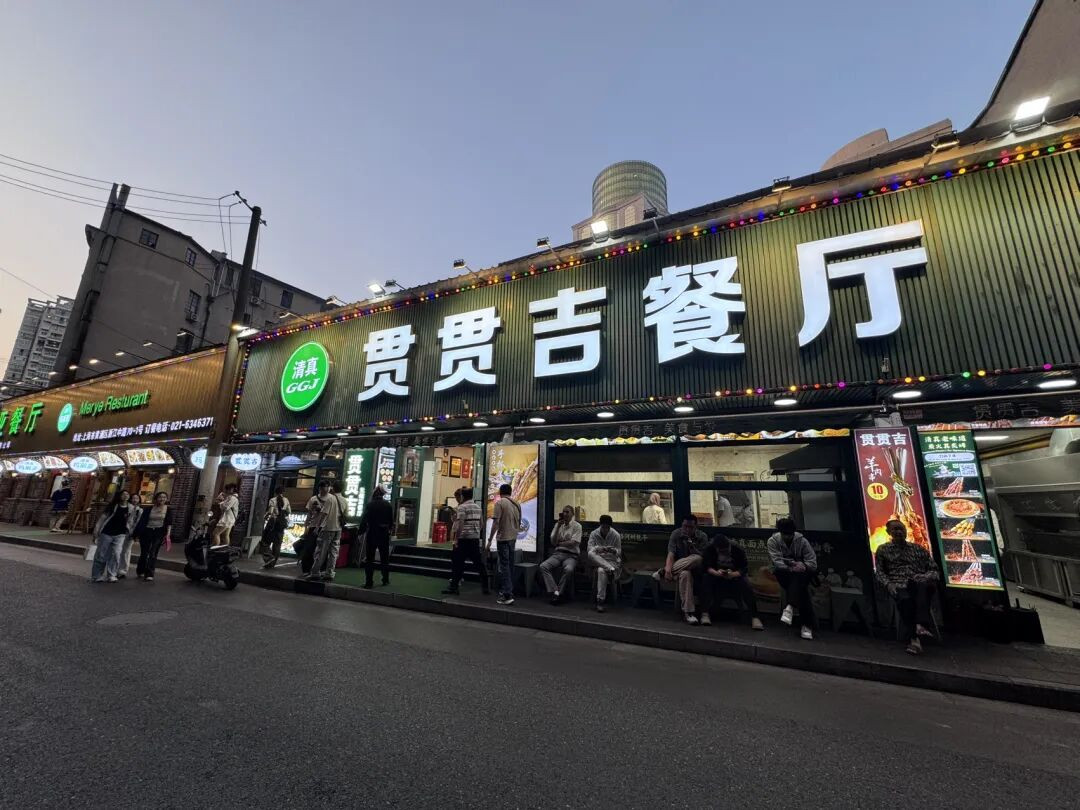
On Shanghai's famous Halal food street, Zhejiang Middle Road, Guanguanji and Maria stand side-by-side. One is delicate, the other rugged, and both are so crazy good it's impossible to pick a favorite. For a pilgrimage site of heavy-hitting meat eaters, adding these two heavyweights to the lineup is a total game-changer!
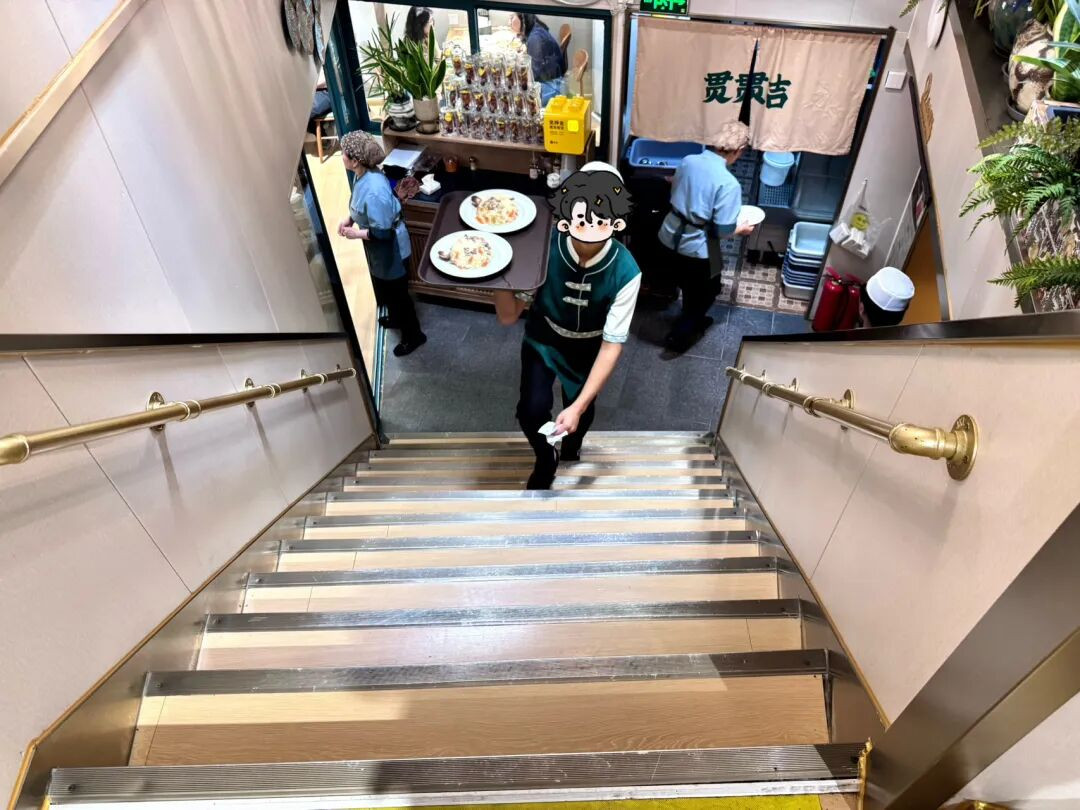
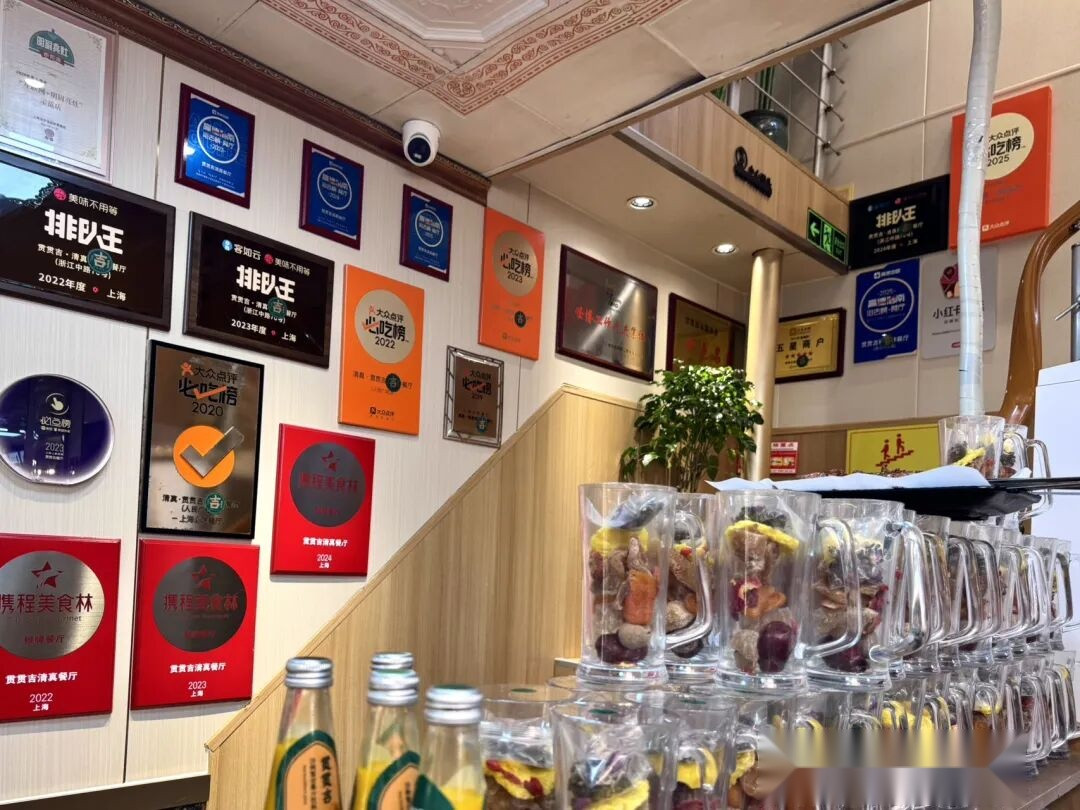
Guanguanji's dining room is a little cramped, but it's kept super clean and tidy.
That's the best thing about Halal spots—they're obsessively clean and reassuring. Even with tons of meat traffic coming through every day, the floor is totally grease-free and your shoes won't stick.
They don't serve alcohol here, and there's no rowdy shouting. Everyone just keeps their heads down and focuses on crushing their meat.
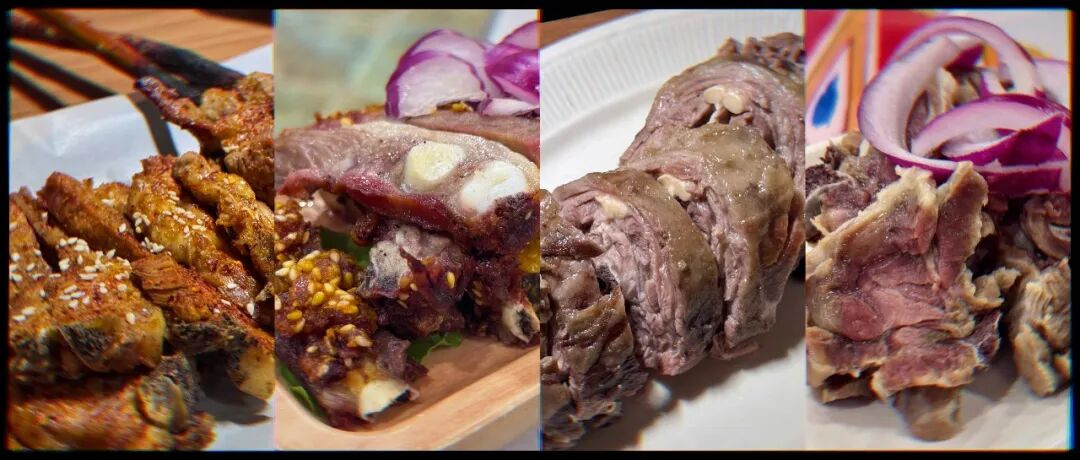
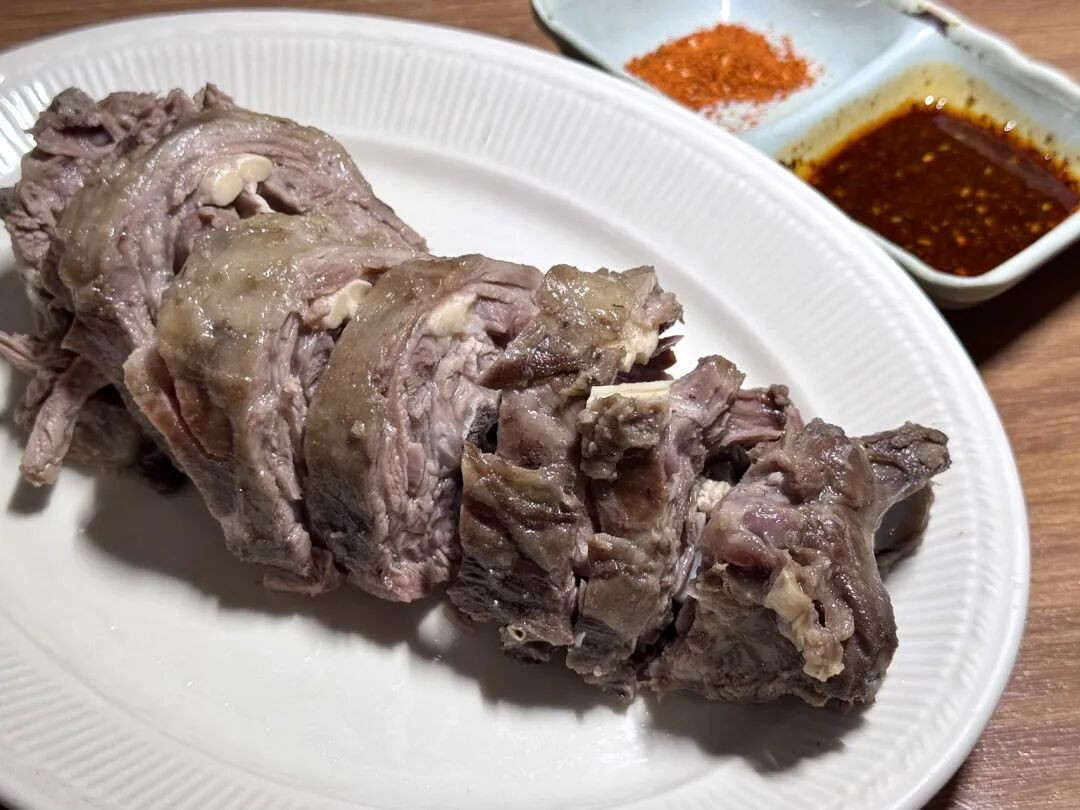
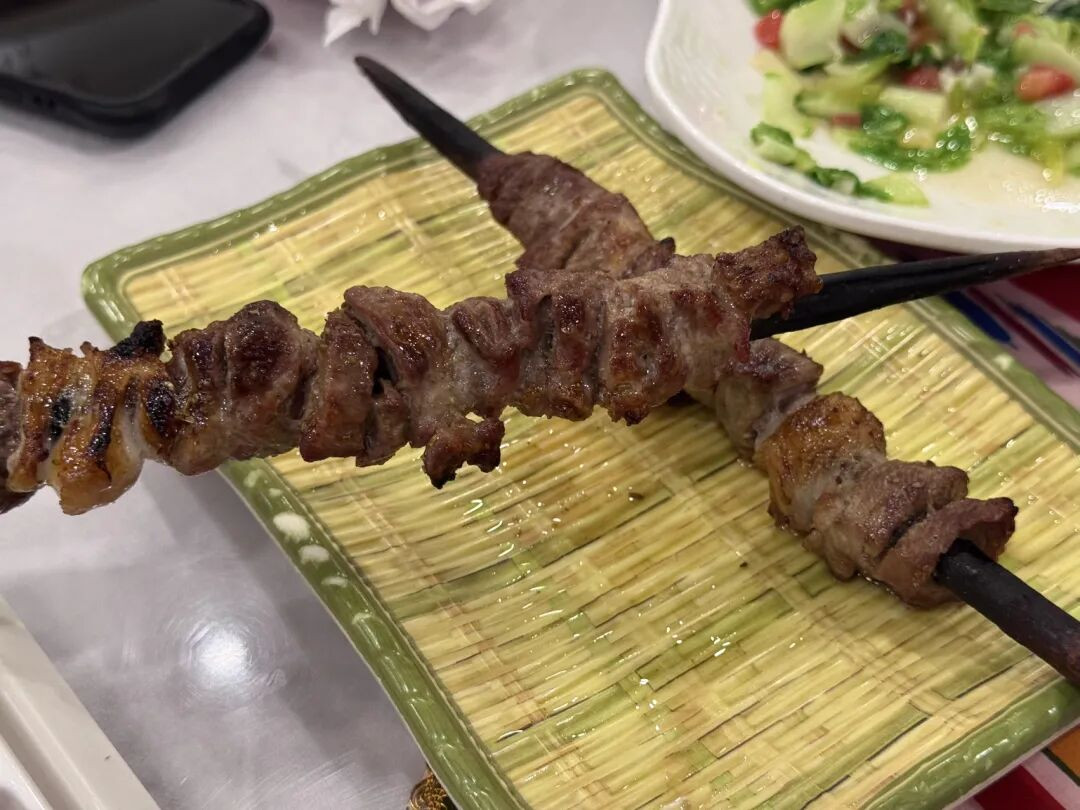
Ever since I tried hand-grabbed lamb neck, I totally quit ordering regular cuts like lamb ribs or leg meat. Whenever I walk in, I order a pound of lamb neck right off the bat.
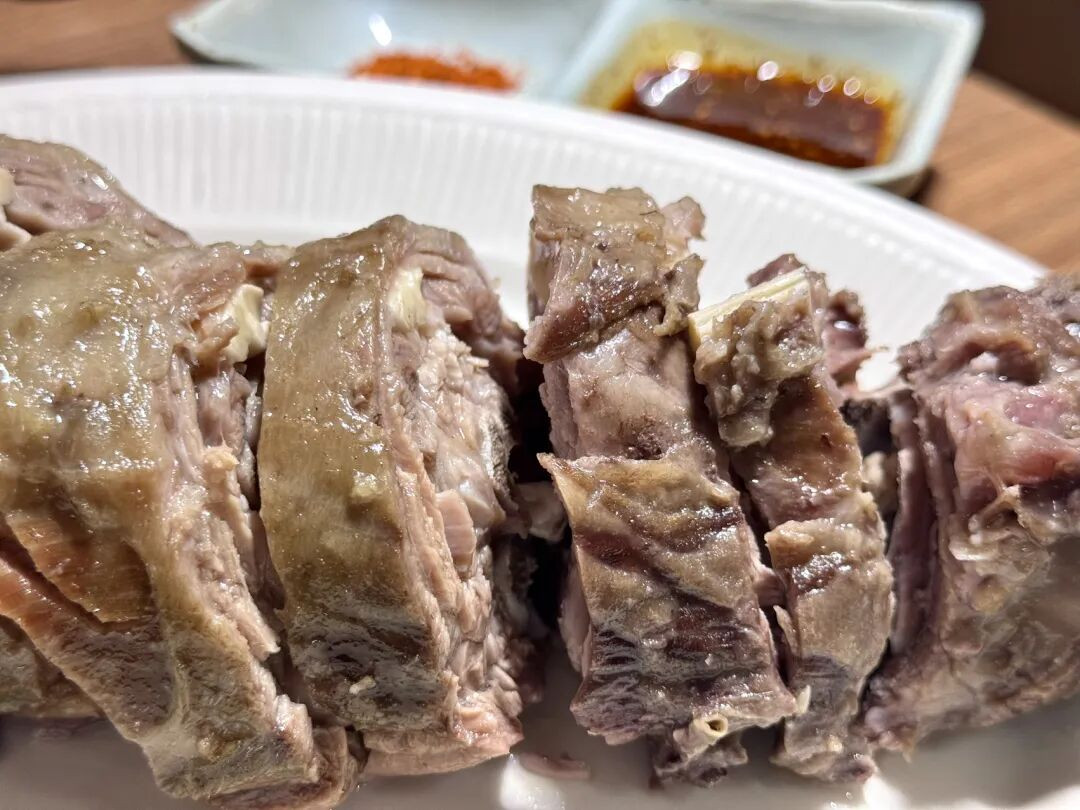
You can tell right when it hits the table that these are big, thick-necked sheep, but the meat is just as tender as a spring lamb. The connective tissue has an amazing chew, the lean meat is drop-dead tender, and a tiny bit of fat steps in to pull off the ultimate flavor combo.
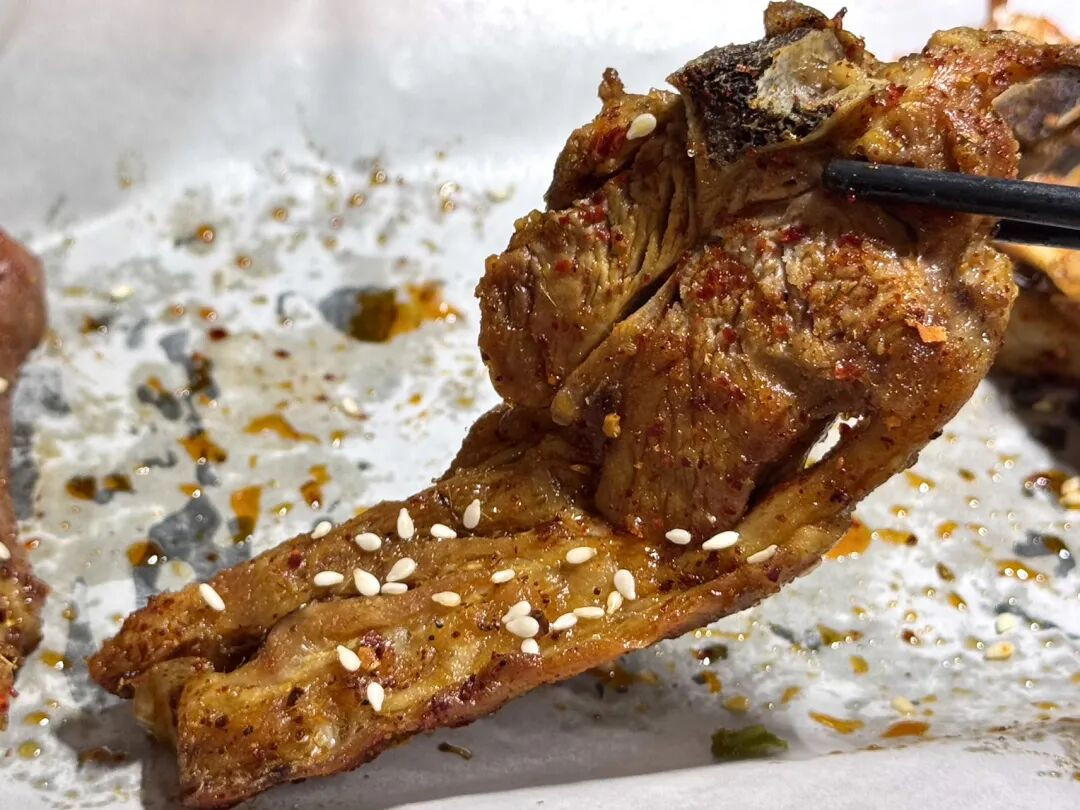
Because they use mature sheep, the rich, savory flavor of the mutton is way deeper—pure deliciousness without a hint of gaminess.
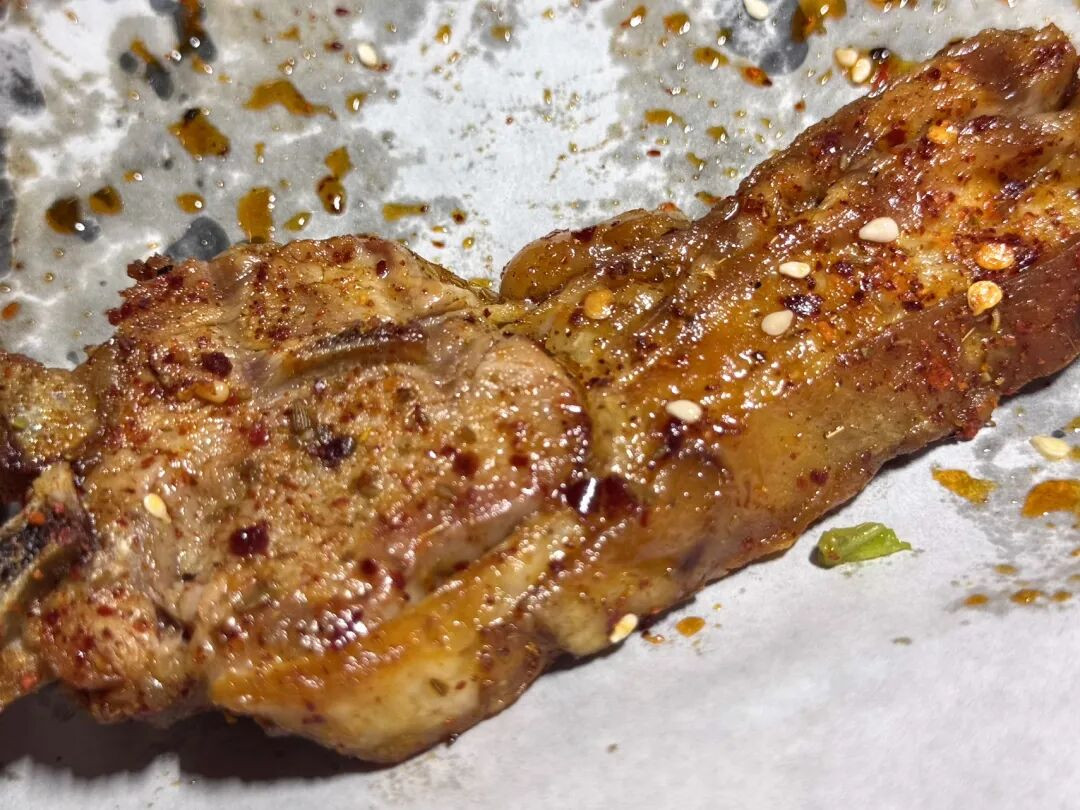
The salt is applied with sniper-like precision. That salty baseline draws out the deep meaty aroma without ever stealing the spotlight. This is the absolute peak form of salt and meat dancing together.
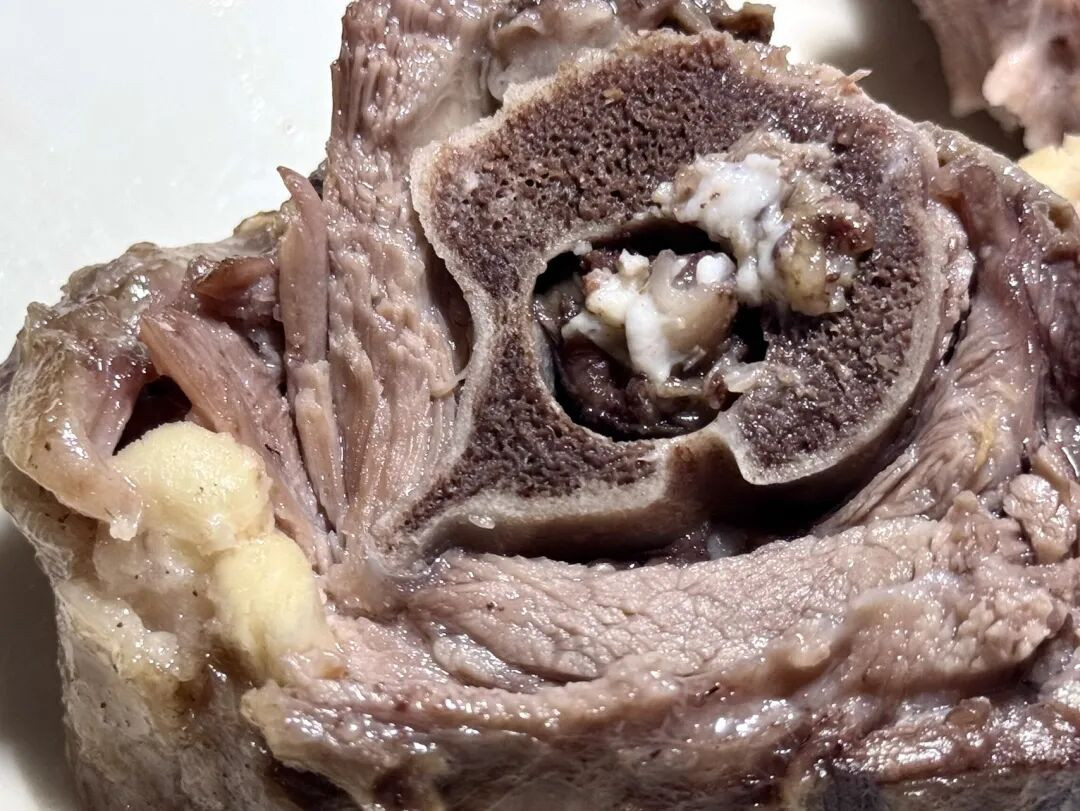
The spinal marrow hidden right in the middle of the neck bones can be easily fished out with your chopsticks. It's as creamy as fugu milt—a totally unexpected jackpot you just don't get with baby lamb necks.
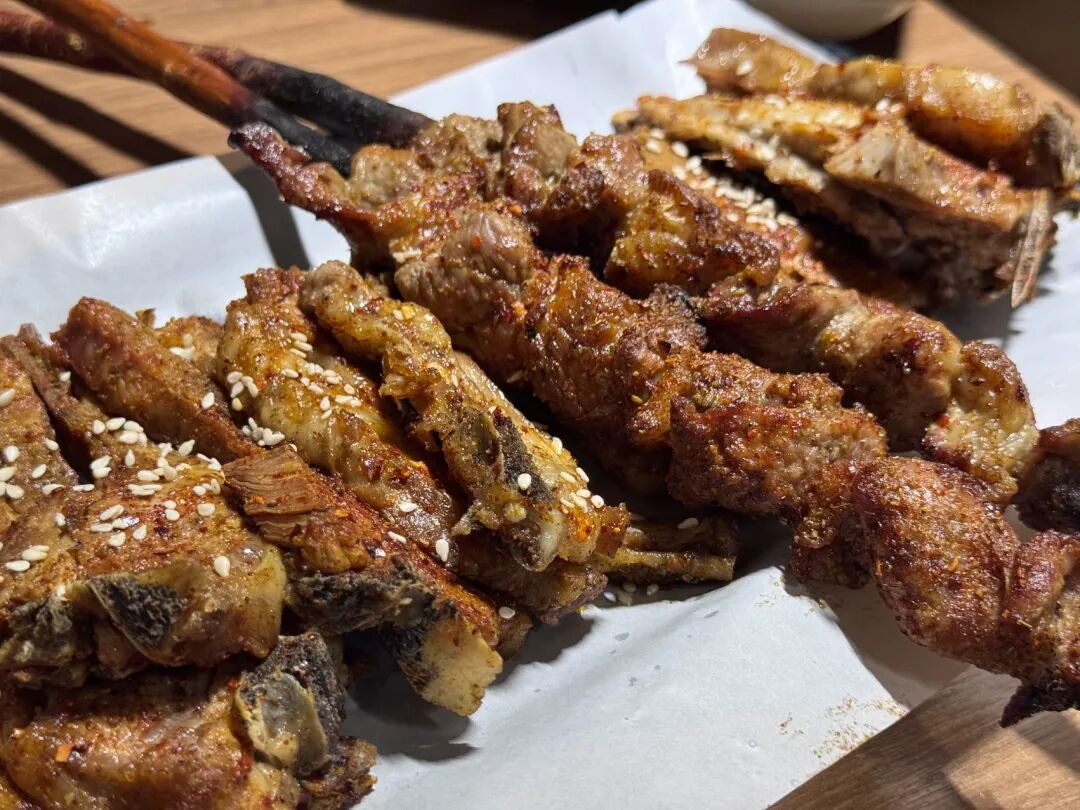
Compared to the neck, the red-willow lamb skewers are firmer and fatter, hugging the red-willow twigs and roasted to a smoky, charred finish.
The roast lamb ribs are surprisingly light, seasoned with just a touch of salt and chili—pure fragrance without the burn.
The whole meat-eating progression builds naturally: from lean to fat, from boiled to grilled. It's pure meat from start to finish. So satisfying!
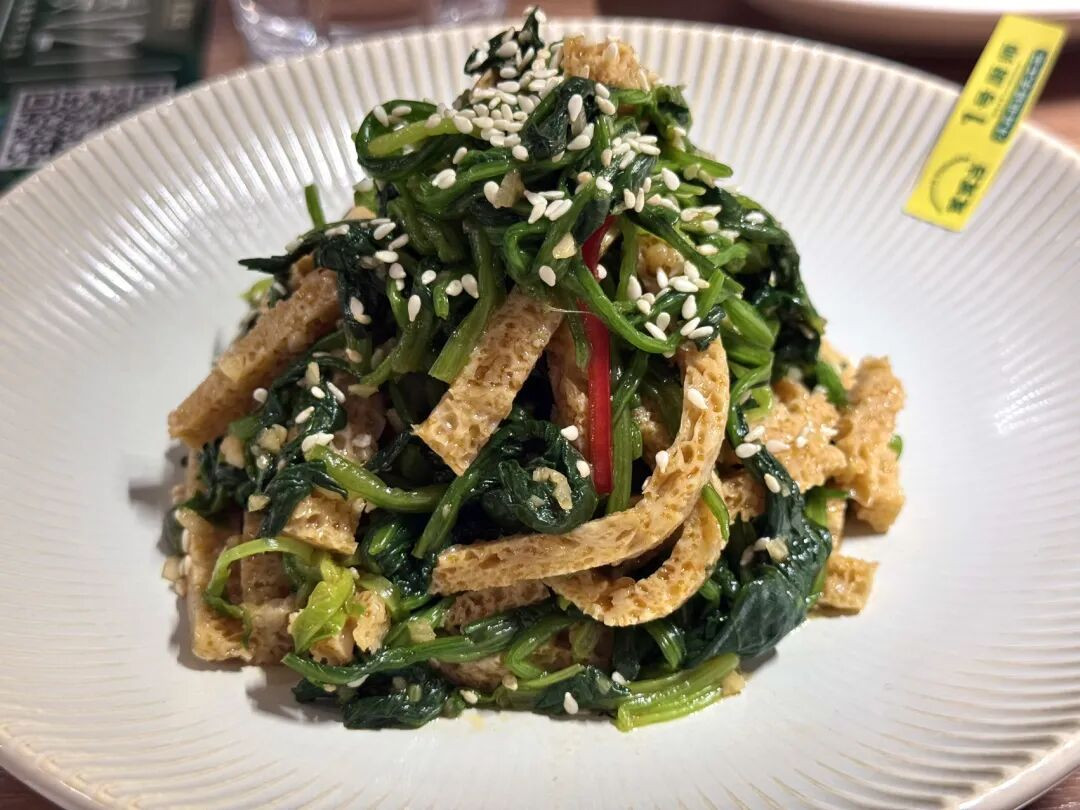
At most, pair it with a plate of cold tossed spinach—low on salt, a tiny bit tangy, with a faint tingle of Sichuan pepper. It's crisp and refreshing, giving your palate a break when the meat gets heavy. Absolute perfection.
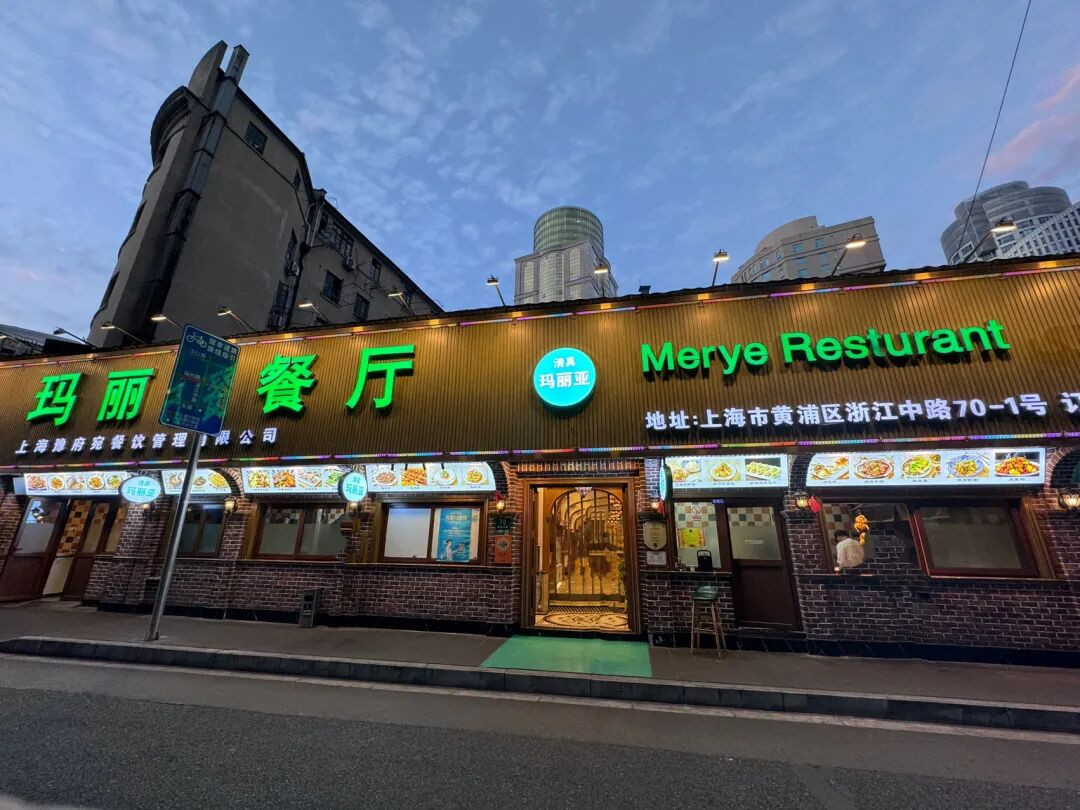
Unlike Guanguanji's light and delicate style, Maria Restaurant's dishes are unapologetically bold and wild.
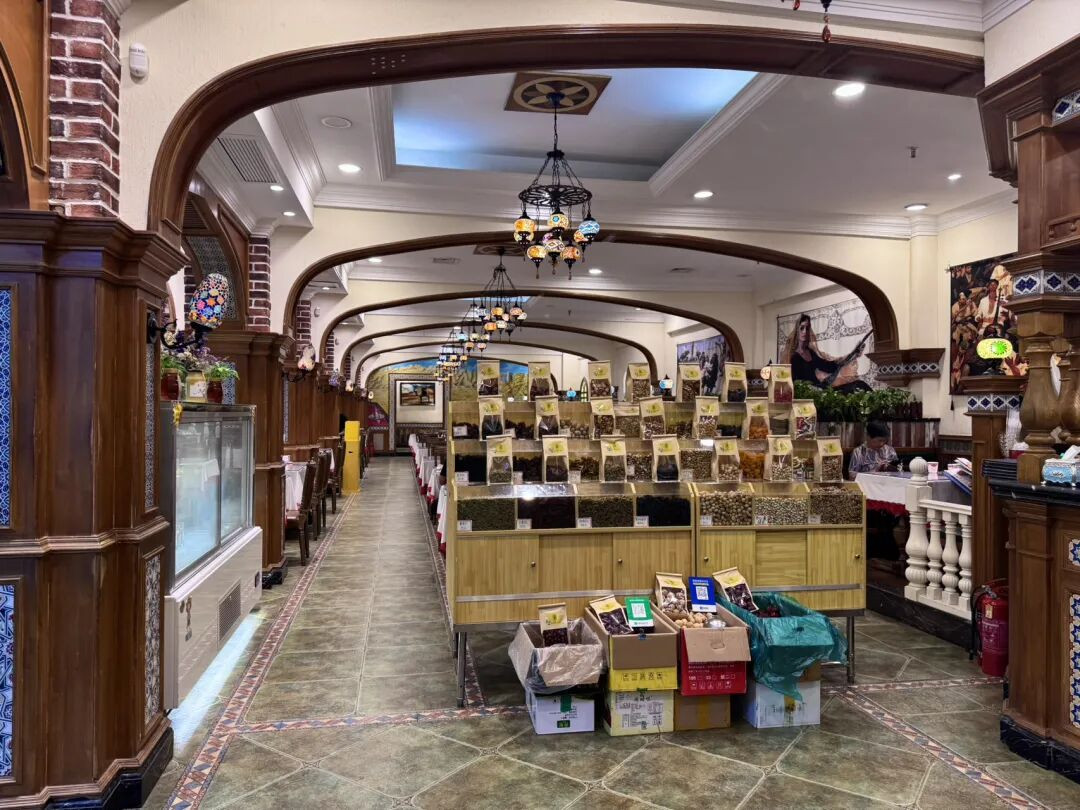
As a Xinjiang restaurant, Maria not only has plenty of elbow room, but you can also drink bowls of liquor here.
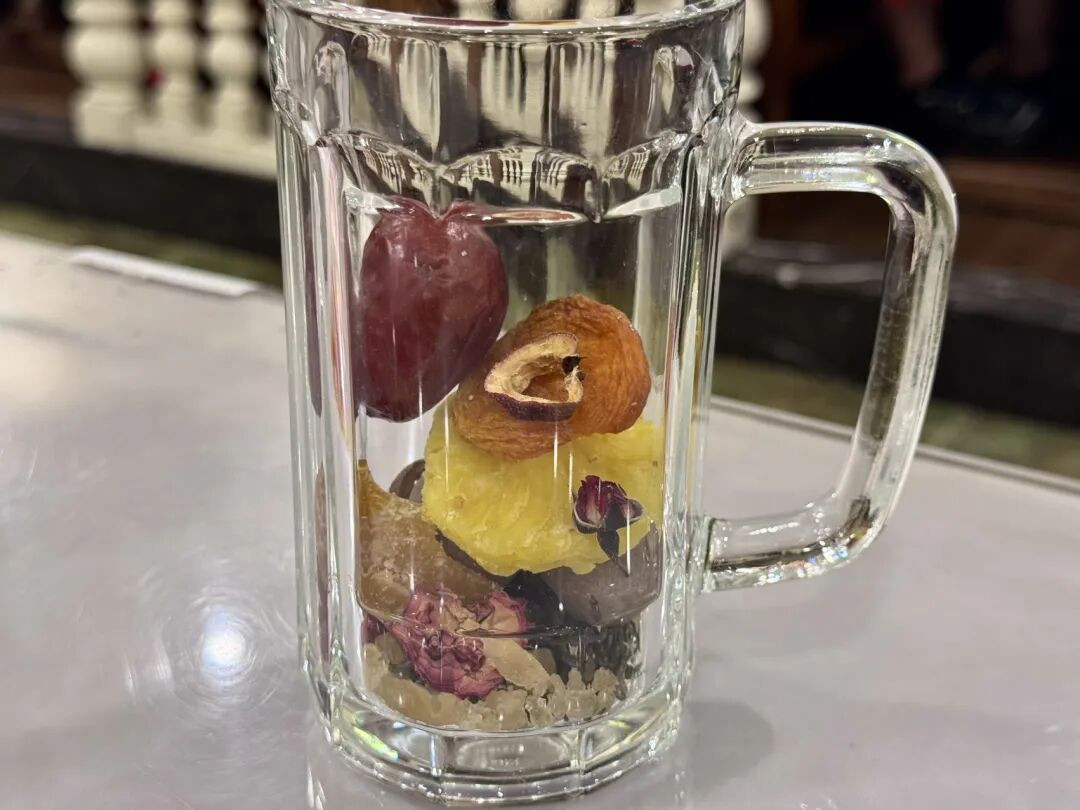
Or sip massive mugs of loaded eight-treasure tea (babao cha).
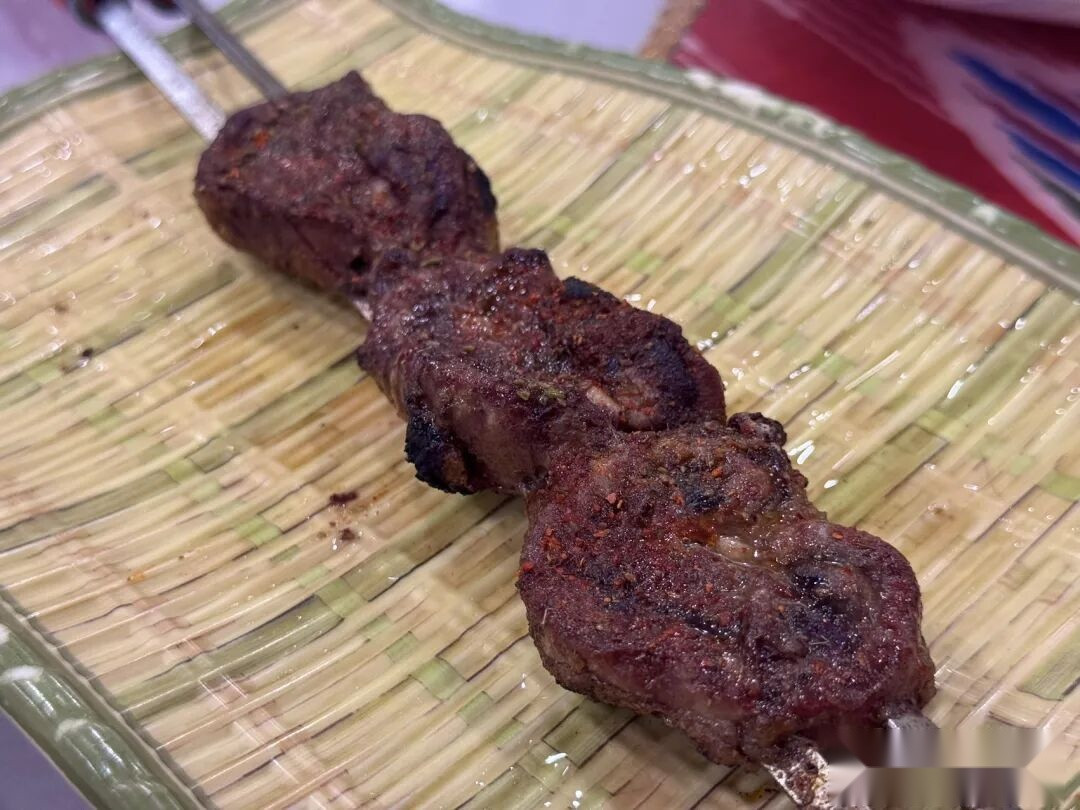
As the province with the highest per capita mutton consumption in China, Xinjiang's obsession with lamb is baked into its DNA, and their pursuit of bold mutton flavor is relentless—meaning it's gotta have that gamey kick.
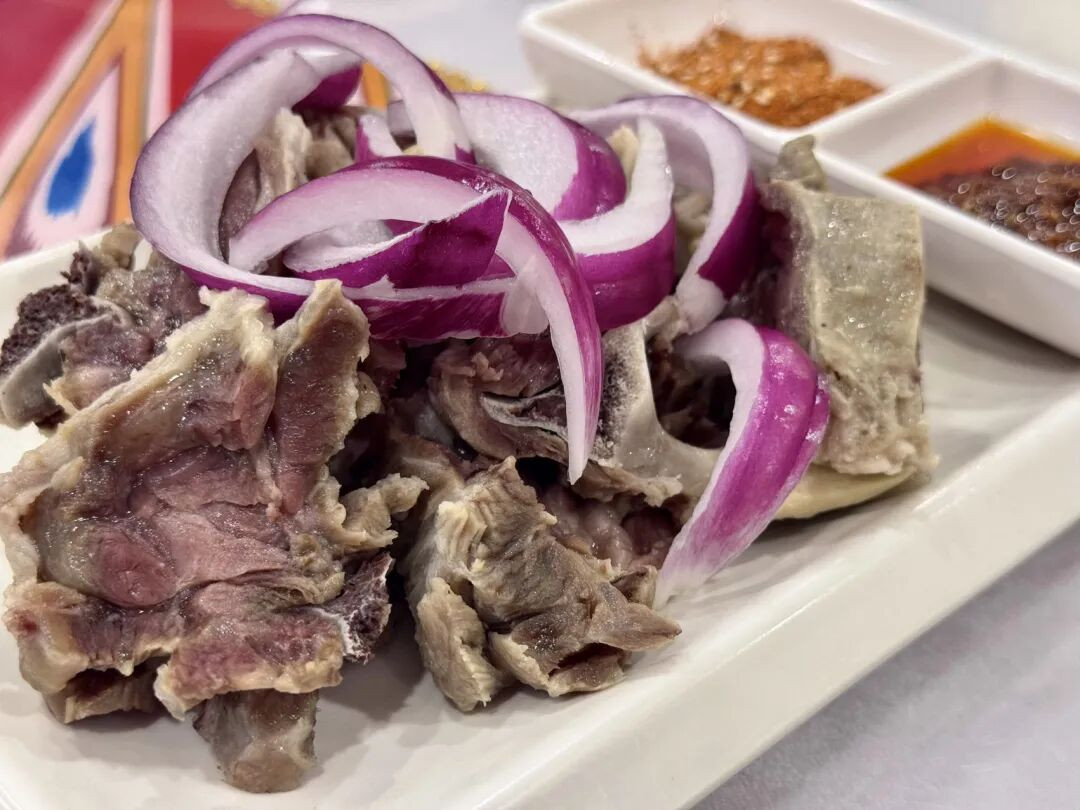
Maria's hand-grabbed lamb neck leans all the way into that philosophy. Heavy-handed salt punches up a massive meaty flavor, and every single pull unleashes a flood of savory aromas. That tiny hint of gaminess actually wakes up your primal carnivorous instincts.
Maybe because we only ordered half a pound, we didn't get the prized middle section of the neck like at Guanguanji, but gnawing on the sinewy tail-end pieces of the neck had a wild charm of its own.
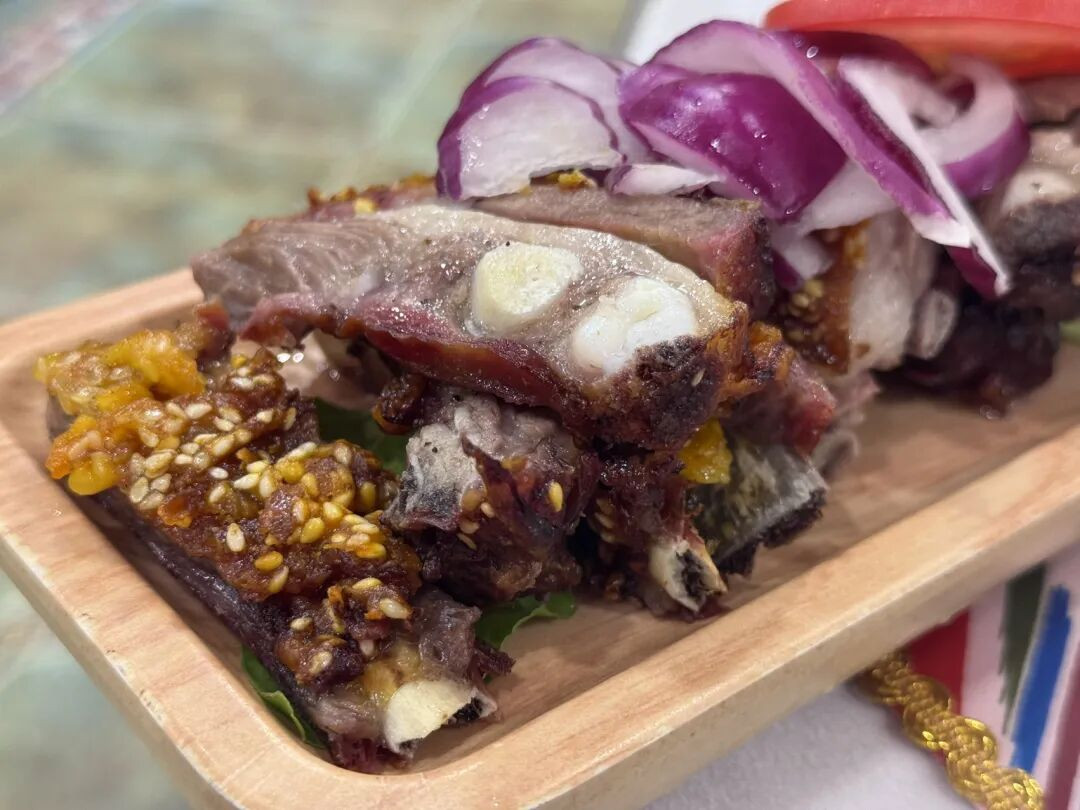
The roast lamb ribs are similarly heavy on the seasoning and dripping with lamb fat, but eating them is an absolute thrill.
I've always lived by the culinary gospel of 'salty fish, bland meat'—light seasoning usually preserves the original flavor best. Maria's salt-heavy attack kind of blew my mind; maybe mutton's aggressive streak actually needs a heavy hand of salt to fully come alive.
The red-willow skewers and grilled lamb kidneys bring that same wild sodium punch. The funky aroma inherent to kidneys is completely beaten into submission—a tiny bit of heavy-handed salt traded for a 10-out-of-10 rush.
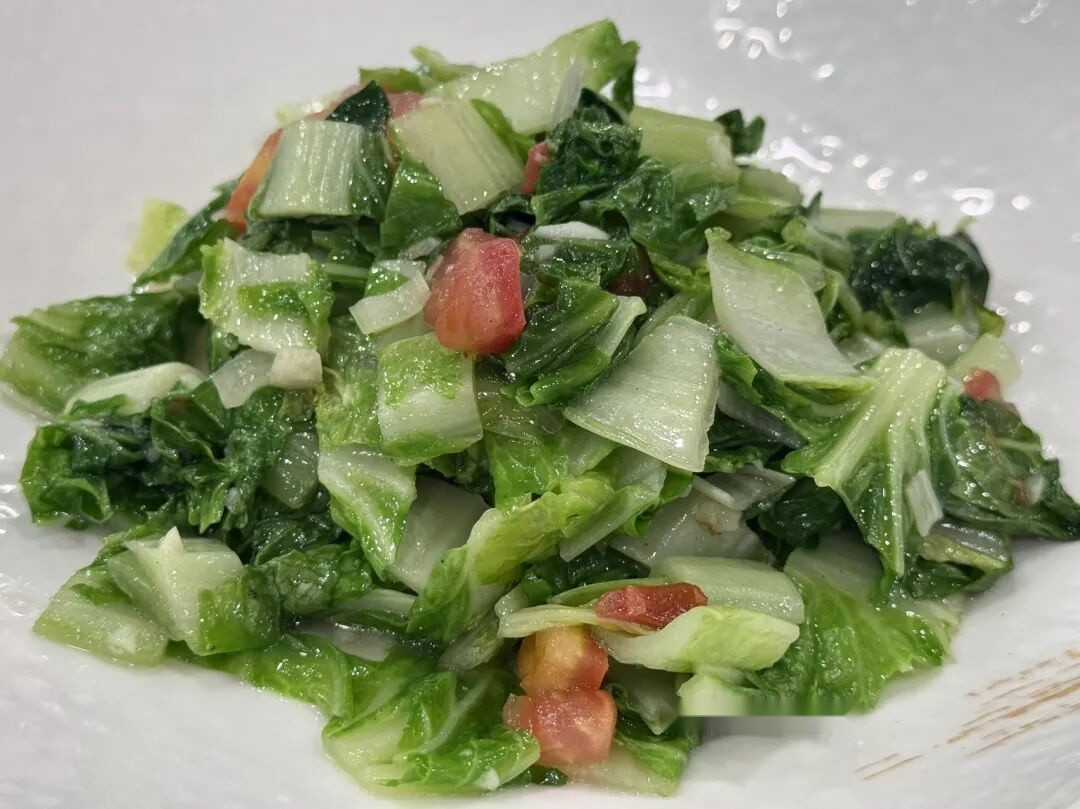
Per tradition, we ordered a token plate of vegetables to reset the palate, and hit an unexpected jackpot. The natural sweetness of sun-ripened tomatoes made the tender Shanghai bok choy taste a hundred times better.
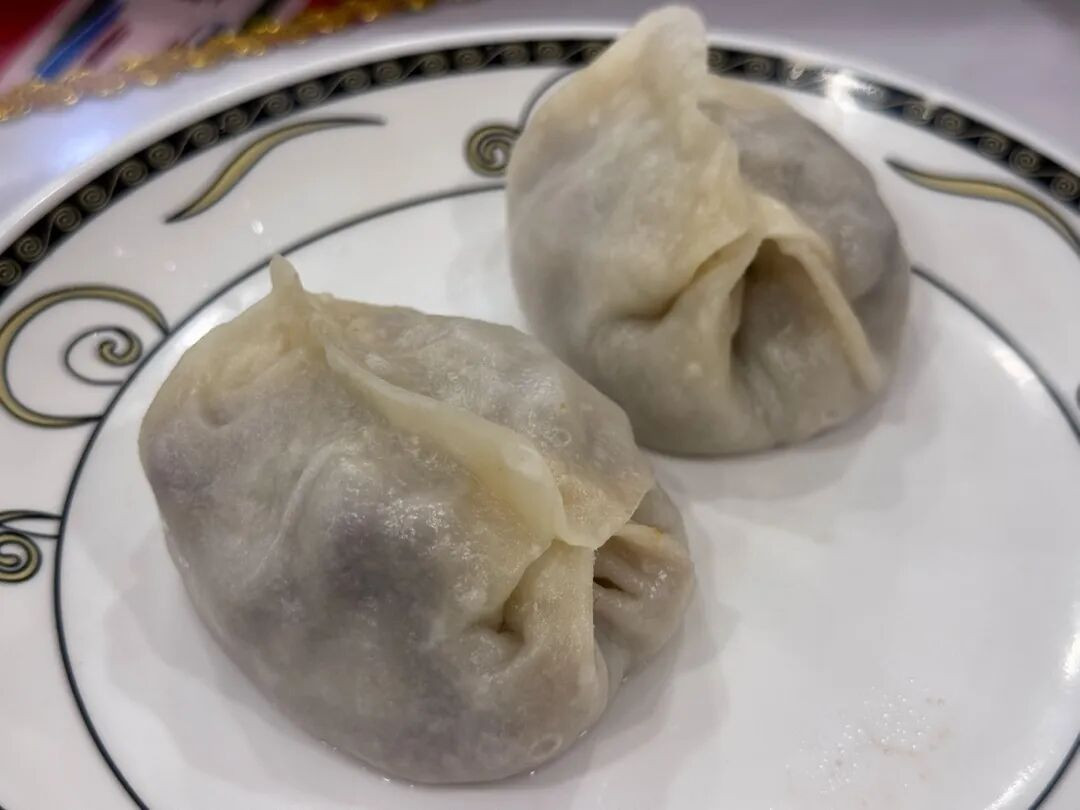
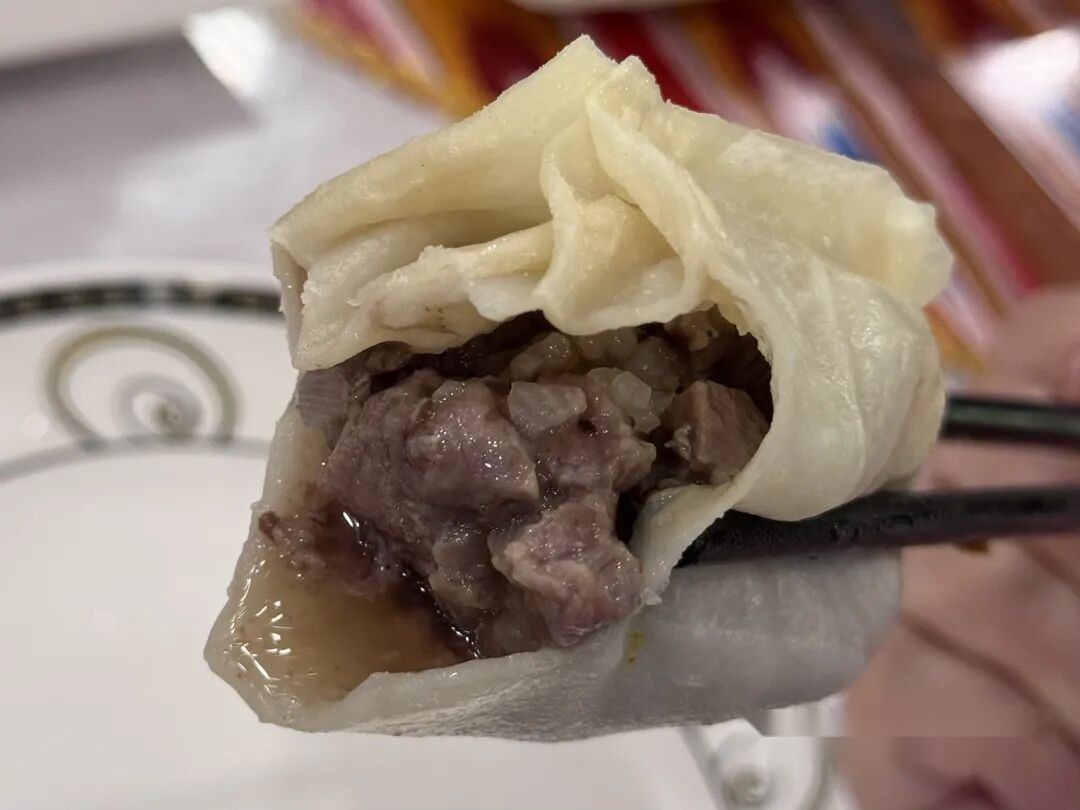
Freshly steamed thin-skinned baozi take fifteen minutes to hit the table, but they come highly recommended.
Make sure to slurp the soup out of these right away—it's the rich, fatty essence of the lamb, piping hot,鲜香 (savory and aromatic) and deeply satisfying.
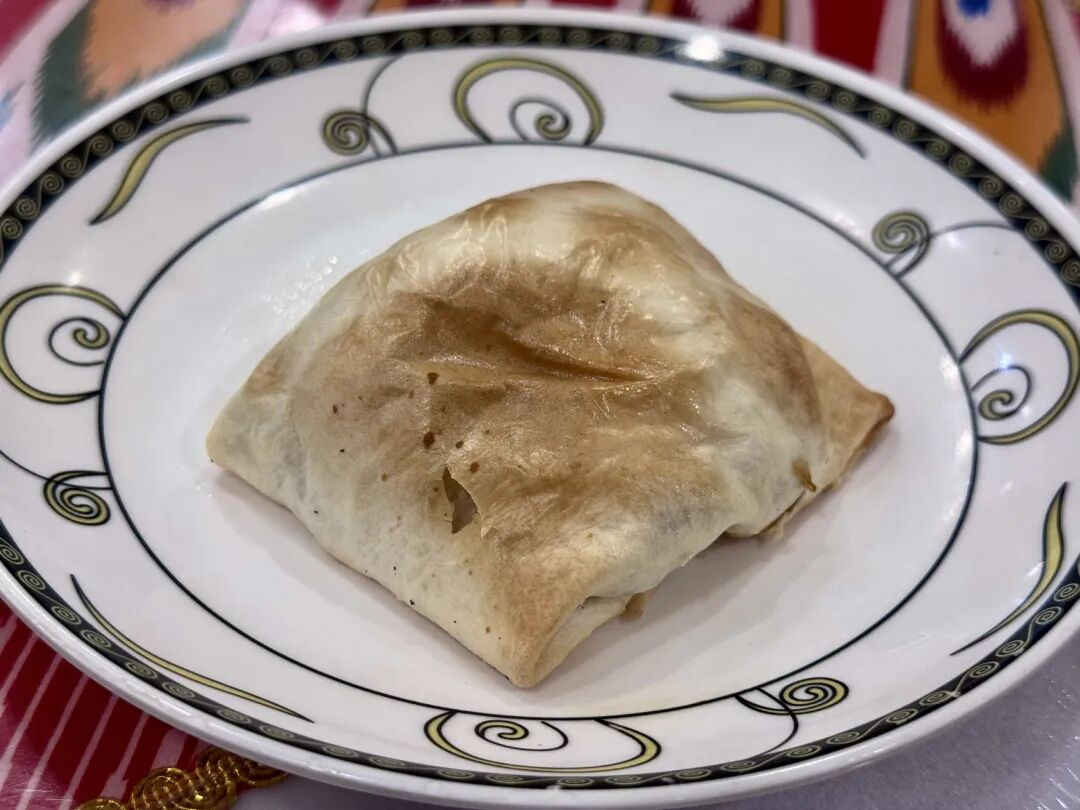
The baked beef buns (kaobaozi) are similarly thin-skinned and stuffed to the brim, but your luck with the texture is a total crapshoot since they bake them fresh batch by batch. If you want that crackling, juice-bomb version straight from the oven, you have to time it right with a fresh batch coming out. To play it safe, stick to the steamed buns.
Final verdict:
Guanguanji's mutton is gentle, serene, and delicious—giving off the delicate grace of the Jiangnan region beyond the Great Wall.
Maria's mutton is rugged, wild, and delicious—carrying the epic majesty of the smoke rising over the vast desert.
The end.
Shanghai Zhejiang Middle Road Halal Mutton Showdown: Comprehensive Review of Refined Guanguanji and Rugged Maria Halal Restaurants
Abstract:
An in-depth review of Guanguanji and Maria, two powerhouse Halal eateries running neck-and-neck on Shanghai's famous Halal food street, Zhejiang Middle Road. We compare shouzhua yangrou (hand-grabbed lamb), spiced skewers, signature mutton offal soup, and staple carbs to give meat lovers and Halal foodies a clear guide on where to eat.
On Shanghai's famous Halal food street, Zhejiang Middle Road, Guanguanji and Maria stand side-by-side. One is delicate, the other rugged, and both are so crazy good it's impossible to pick a favorite. For a pilgrimage site of heavy-hitting meat eaters, adding these two heavyweights to the lineup is a total game-changer!
Guanguanji's dining room is a little cramped, but it's kept super clean and tidy.
That's the best thing about Halal spots—they're obsessively clean and reassuring. Even with tons of meat traffic coming through every day, the floor is totally grease-free and your shoes won't stick.
They don't serve alcohol here, and there's no rowdy shouting. Everyone just keeps their heads down and focuses on crushing their meat.
Ever since I tried hand-grabbed lamb neck, I totally quit ordering regular cuts like lamb ribs or leg meat. Whenever I walk in, I order a pound of lamb neck right off the bat.
You can tell right when it hits the table that these are big, thick-necked sheep, but the meat is just as tender as a spring lamb. The connective tissue has an amazing chew, the lean meat is drop-dead tender, and a tiny bit of fat steps in to pull off the ultimate flavor combo.
Because they use mature sheep, the rich, savory flavor of the mutton is way deeper—pure deliciousness without a hint of gaminess.
The salt is applied with sniper-like precision. That salty baseline draws out the deep meaty aroma without ever stealing the spotlight. This is the absolute peak form of salt and meat dancing together.
The spinal marrow hidden right in the middle of the neck bones can be easily fished out with your chopsticks. It's as creamy as fugu milt—a totally unexpected jackpot you just don't get with baby lamb necks.
Compared to the neck, the red-willow lamb skewers are firmer and fatter, hugging the red-willow twigs and roasted to a smoky, charred finish.
The roast lamb ribs are surprisingly light, seasoned with just a touch of salt and chili—pure fragrance without the burn.
The whole meat-eating progression builds naturally: from lean to fat, from boiled to grilled. It's pure meat from start to finish. So satisfying!
At most, pair it with a plate of cold tossed spinach—low on salt, a tiny bit tangy, with a faint tingle of Sichuan pepper. It's crisp and refreshing, giving your palate a break when the meat gets heavy. Absolute perfection.
Unlike Guanguanji's light and delicate style, Maria Restaurant's dishes are unapologetically bold and wild.
As a Xinjiang restaurant, Maria not only has plenty of elbow room, but you can also drink bowls of liquor here.
Or sip massive mugs of loaded eight-treasure tea (babao cha).
As the province with the highest per capita mutton consumption in China, Xinjiang's obsession with lamb is baked into its DNA, and their pursuit of bold mutton flavor is relentless—meaning it's gotta have that gamey kick.
Maria's hand-grabbed lamb neck leans all the way into that philosophy. Heavy-handed salt punches up a massive meaty flavor, and every single pull unleashes a flood of savory aromas. That tiny hint of gaminess actually wakes up your primal carnivorous instincts.
Maybe because we only ordered half a pound, we didn't get the prized middle section of the neck like at Guanguanji, but gnawing on the sinewy tail-end pieces of the neck had a wild charm of its own.
The roast lamb ribs are similarly heavy on the seasoning and dripping with lamb fat, but eating them is an absolute thrill.
I've always lived by the culinary gospel of 'salty fish, bland meat'—light seasoning usually preserves the original flavor best. Maria's salt-heavy attack kind of blew my mind; maybe mutton's aggressive streak actually needs a heavy hand of salt to fully come alive.
The red-willow skewers and grilled lamb kidneys bring that same wild sodium punch. The funky aroma inherent to kidneys is completely beaten into submission—a tiny bit of heavy-handed salt traded for a 10-out-of-10 rush.
Per tradition, we ordered a token plate of vegetables to reset the palate, and hit an unexpected jackpot. The natural sweetness of sun-ripened tomatoes made the tender Shanghai bok choy taste a hundred times better.
Freshly steamed thin-skinned baozi take fifteen minutes to hit the table, but they come highly recommended.
Make sure to slurp the soup out of these right away—it's the rich, fatty essence of the lamb, piping hot,鲜香 (savory and aromatic) and deeply satisfying.
The baked beef buns (kaobaozi) are similarly thin-skinned and stuffed to the brim, but your luck with the texture is a total crapshoot since they bake them fresh batch by batch. If you want that crackling, juice-bomb version straight from the oven, you have to time it right with a fresh batch coming out. To play it safe, stick to the steamed buns.
Final verdict:
Guanguanji's mutton is gentle, serene, and delicious—giving off the delicate grace of the Jiangnan region beyond the Great Wall.
Maria's mutton is rugged, wild, and delicious—carrying the epic majesty of the smoke rising over the vast desert.
The end.
