
The 130-Year History of Shanghai Halal Cuisine: Where Jiangnan Meets Northwest Flavors
[Internet Repost]
The 130-Year History of Shanghai Halal Cuisine: Where Jiangnan Meets Northwest Flavors
Abstract:
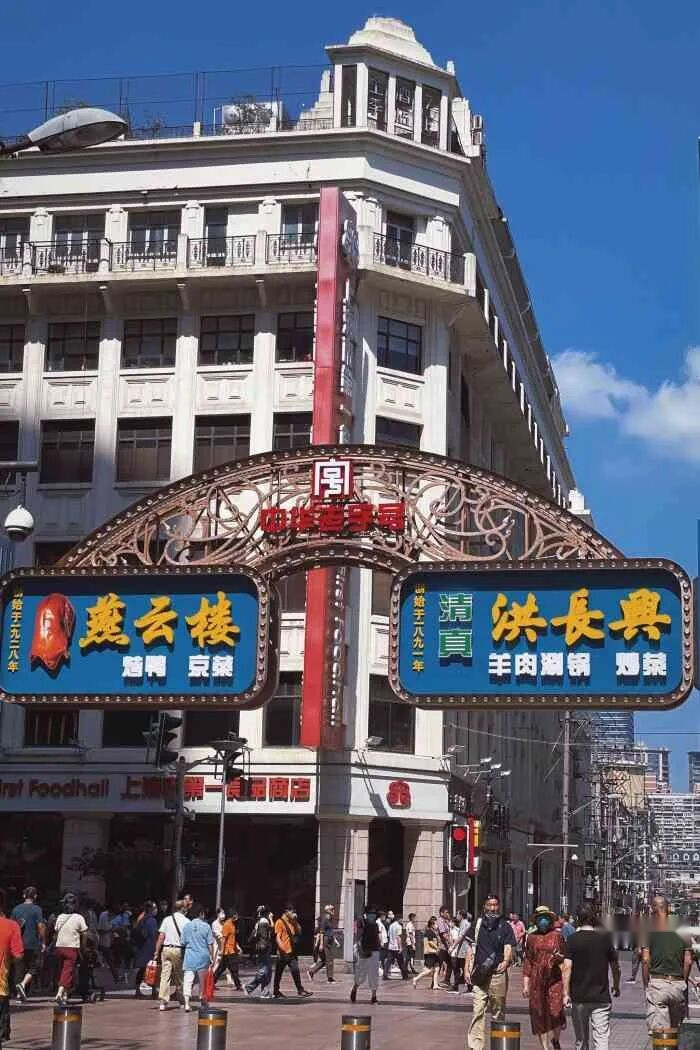
A detailed look at the fusion and evolution of Shanghai-style Halal cuisine over the past 130 years. Exploring the collision and combination of traditional Hui Muslim cooking with local Shanghainese and Western culinary techniques, showcasing the historical landscape and cultural heritage from classic Halal heritage dishes to modern Halal banquets.
Introduction
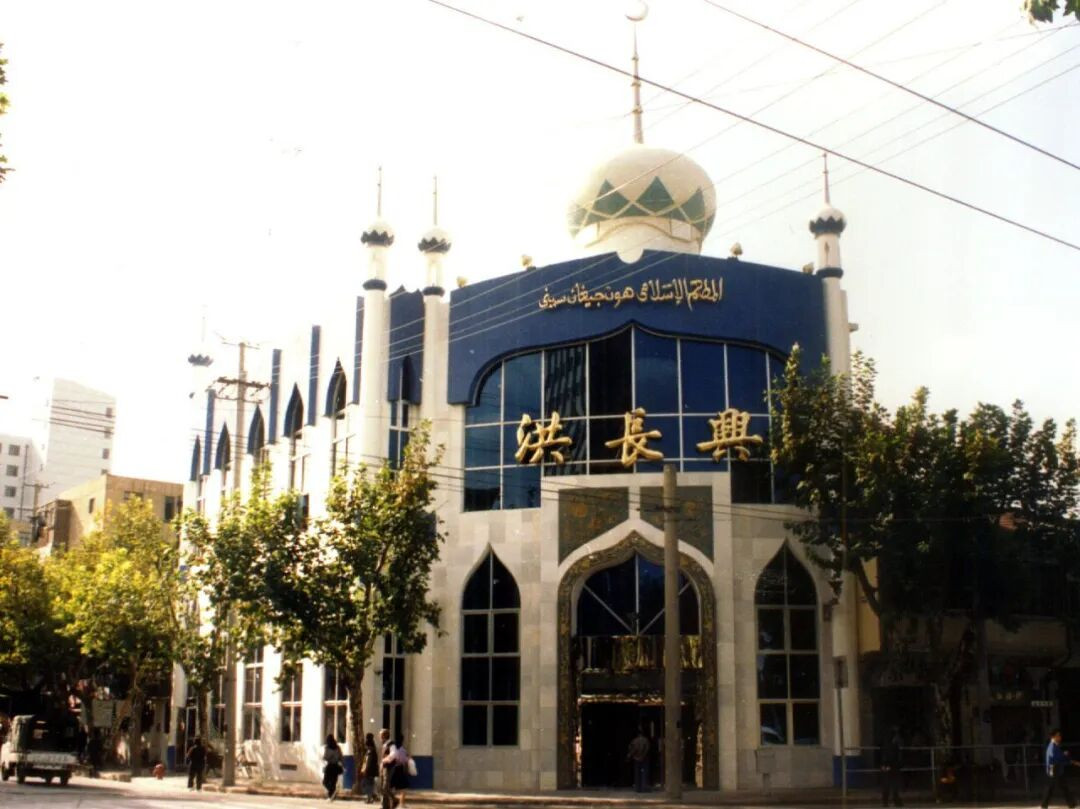
Hearing about Shanghai-style Halal cuisine for the very first time, I couldn't help but gasp—Shanghai people really know how to eat!
The Vibe of the Magic City, the Gentleness of Hui Cuisine
By | Ma Tao
Arriving in the Magic City of Shanghai this time, I landed right in the middle of a continuous drizzle. Locals told me it had been raining on and off for two weeks straight.
The rain in the Magic City is so soft and gentle, lacking any bite—nothing like the sudden, torrential downpours in Shenzhen. Still, it didn't dampen the crowds of tourists strolling along both sides of the streets.
A few light drizzles, nothing to worry about. On past trips to the Magic City, I always came and went in a rush.
Whenever I grabbed a meal with coworkers to save time, we’d just head straight to the noodle shop downstairs from the office. This time, however, I wanted to track down some authentic local Hui Muslim cuisine.
As luck would have it, I recently met a new friend named Ma, and we hit it off right away, chatting away like old friends.
Though we were total strangers at first, a simple, peaceful greeting instantly brought out an incredible sense of warmth and kindness.
I asked him, "Are there any local Hui Muslim restaurants in Shanghai? I mean the kind of time-honored local spots, not just Lanzhou ramen or Xinjiang joints."
He immediately told me, "There’s a century-old Halal restaurant right near the Bund called Hongchangxing. It’s fantastic, you should definitely check it out."
After all these years, I had no idea the Magic City even had local Hui Muslim dining. I made up my mind right then and there—I had to go for lunch.
That morning, after wrapping up a client meeting near Songjiang, I hailed a cab back to downtown so I could head straight there for lunch. Even a full hour-long car ride couldn't mask my excitement.
The car pulled up at a busy intersection. The moment I stepped out, I caught that familiar aroma of mutton, though a little voice in my head muttered: *Please don't let this just be the same old dishes I always see.*
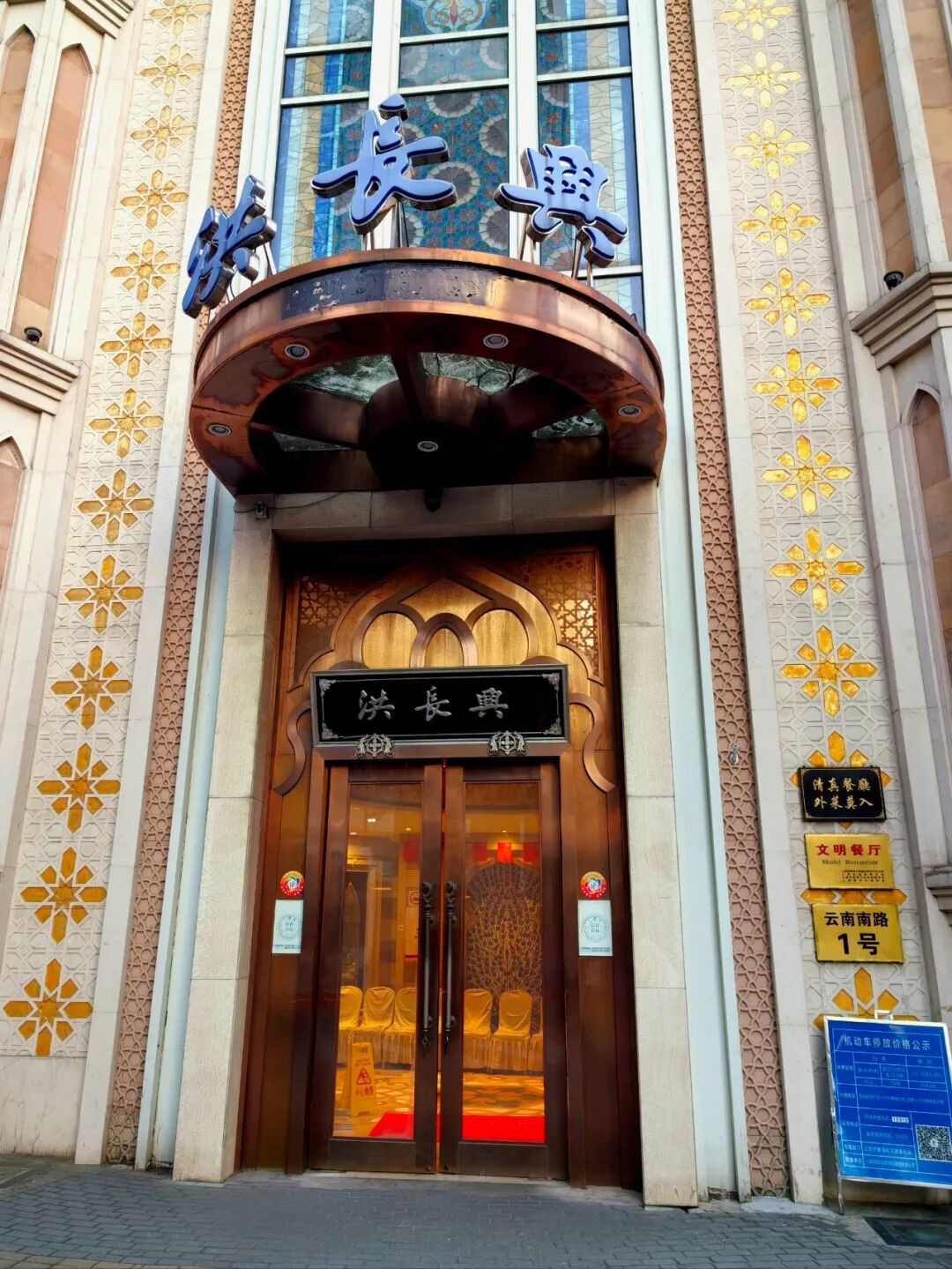
The restaurant's storefront is super distinctive: a deep blue sign resting above a brass-trimmed, circular glass entryway.
The left and right sides are covered in beige tiles, with clean, symmetrical geometric patterns stretching all the way from the ground up to the ceiling.
At the very top sits an Arabian-style spire, brimming with architectural beauty.
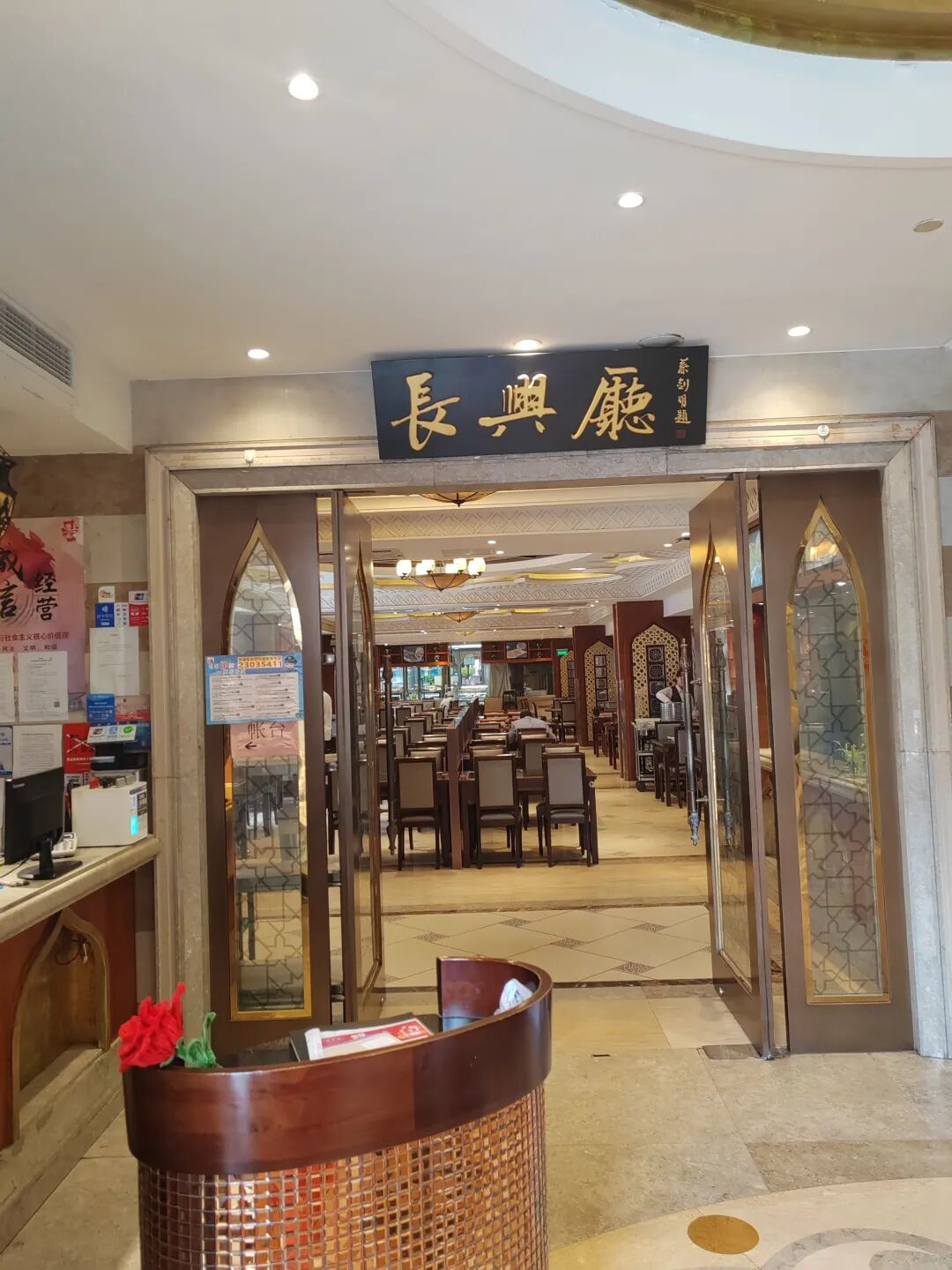
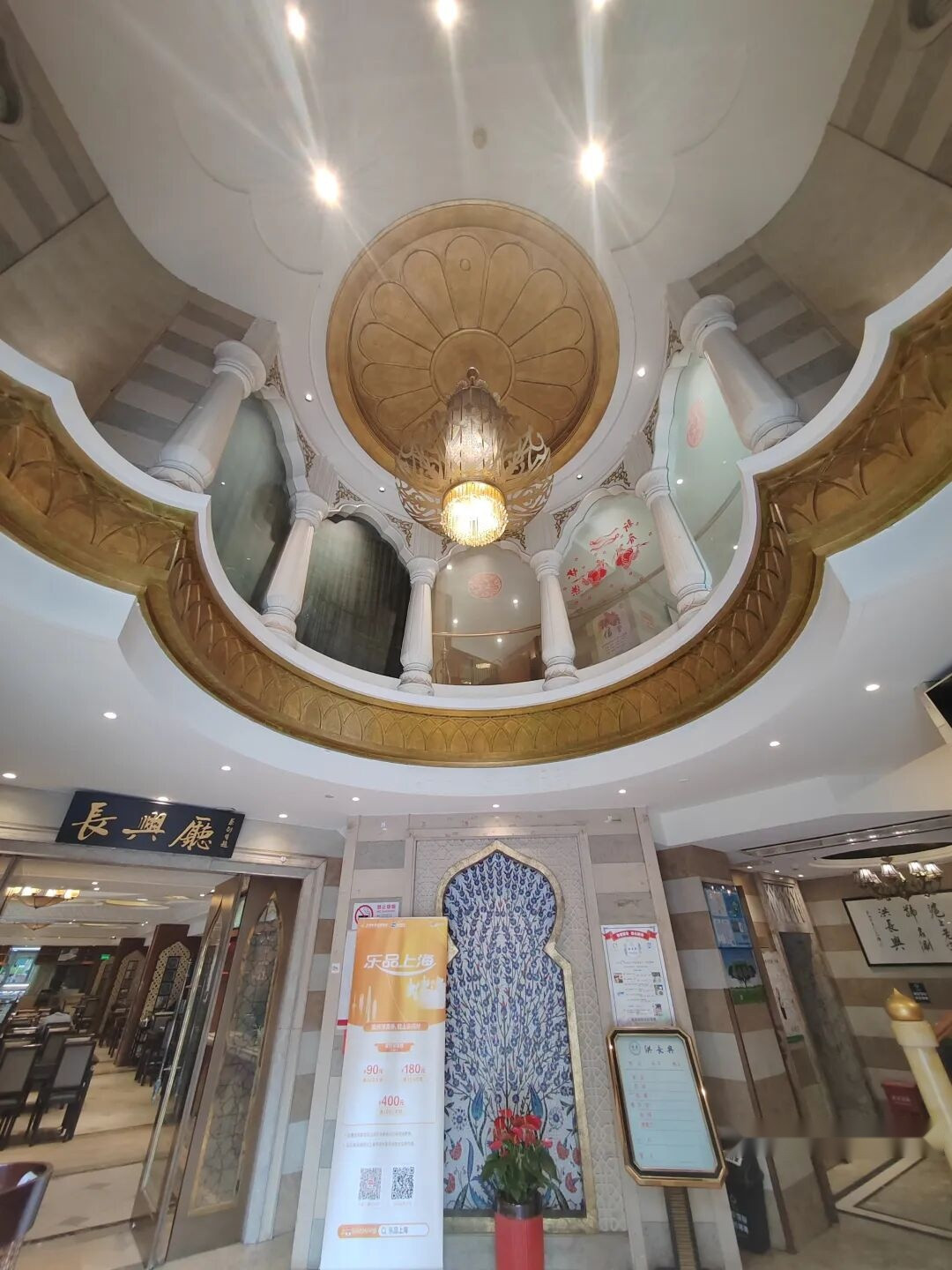
Walking through the front doors, you step into a circular, hollowed-out foyer. The cashier's station is on your left, a marble staircase leading up to the second floor is on your right, and just three or four steps straight ahead takes you right into the main dining hall.
The hall is staffed by plenty of servers with calm, serene expressions. The second they saw me walk in, they warmly rushed over and handed me a thick menu.
The tables and chairs in the hall are a rich, dark brown, giving the space a solid, substantial feel. I picked a four-person table by the window and sat down.
Since it was already around 1:00 PM, past peak lunchtime, there were only one or two other tables occupied.
Perfect—I actually prefer a quieter dining atmosphere anyway. Plus, it meant the food would definitely come out fast.
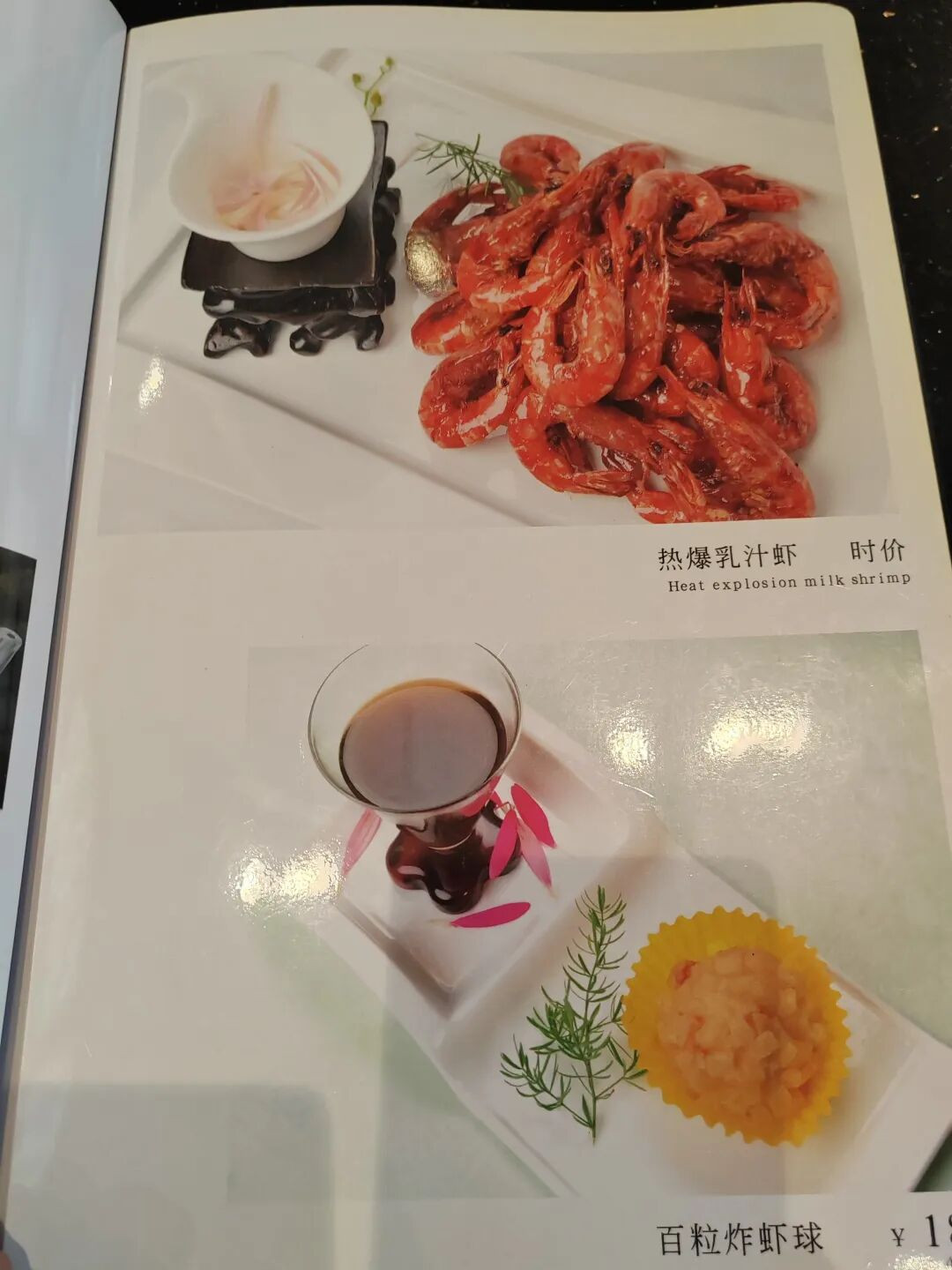
I eagerly flipped open the menu, and the very first page told me I had come to the right place.
Sure enough, unlike traditional Hui Muslim spots, the dishes jumping out at me weren't the usual dapanji (big plate spicy chicken), shouzhua yangrou (Lanzhou hand-grabbed lamb), or braised beef strips.
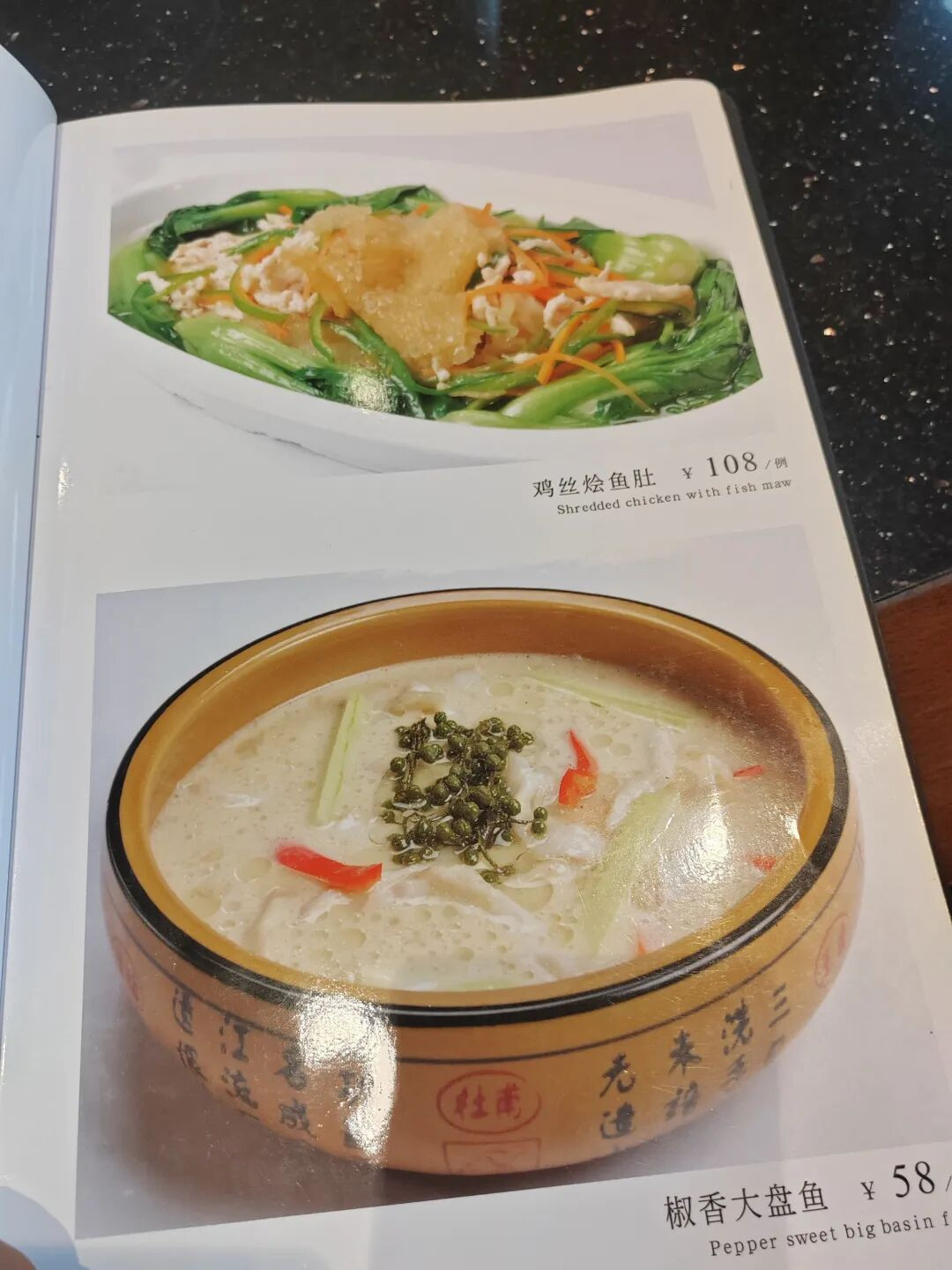
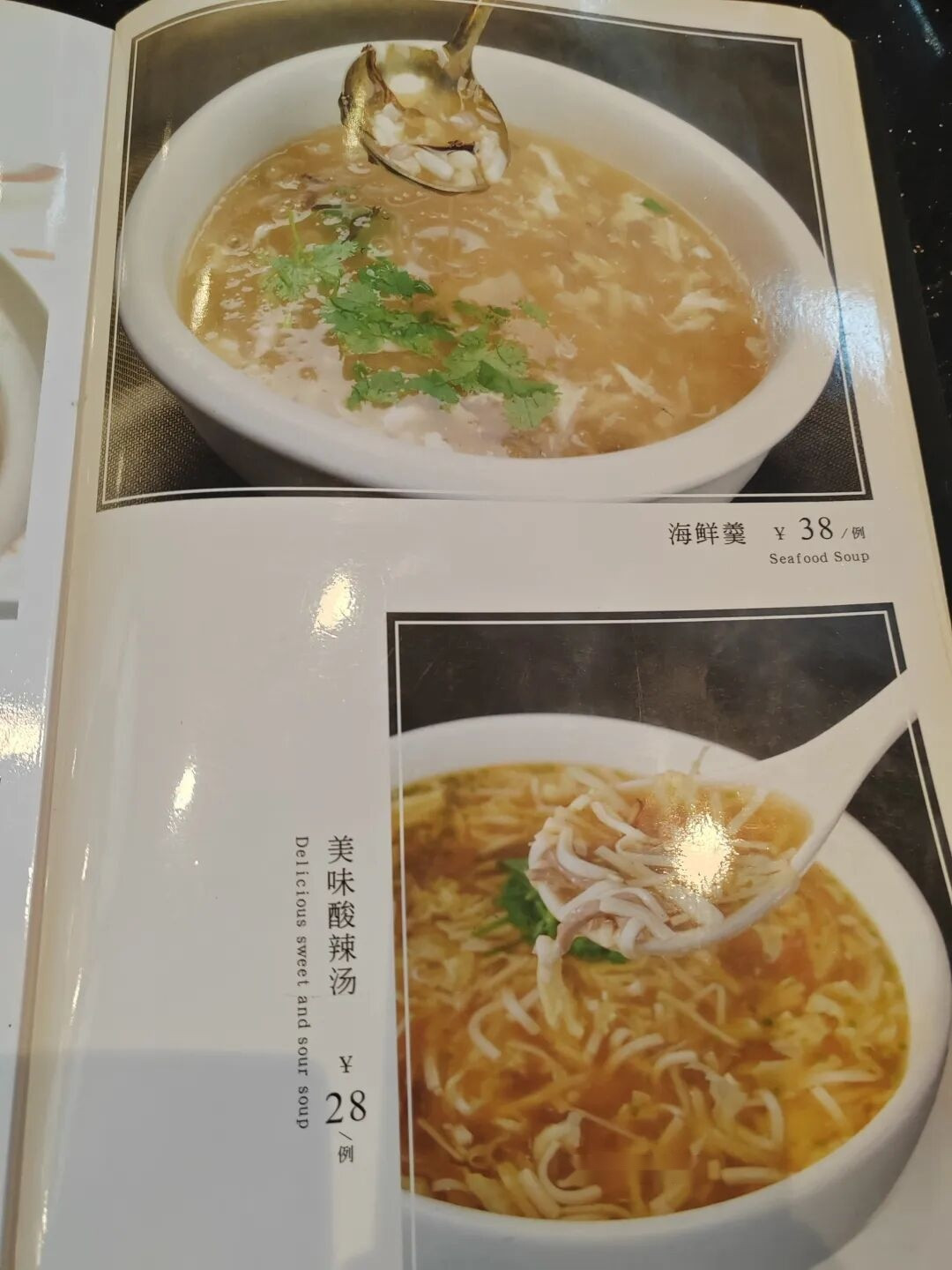
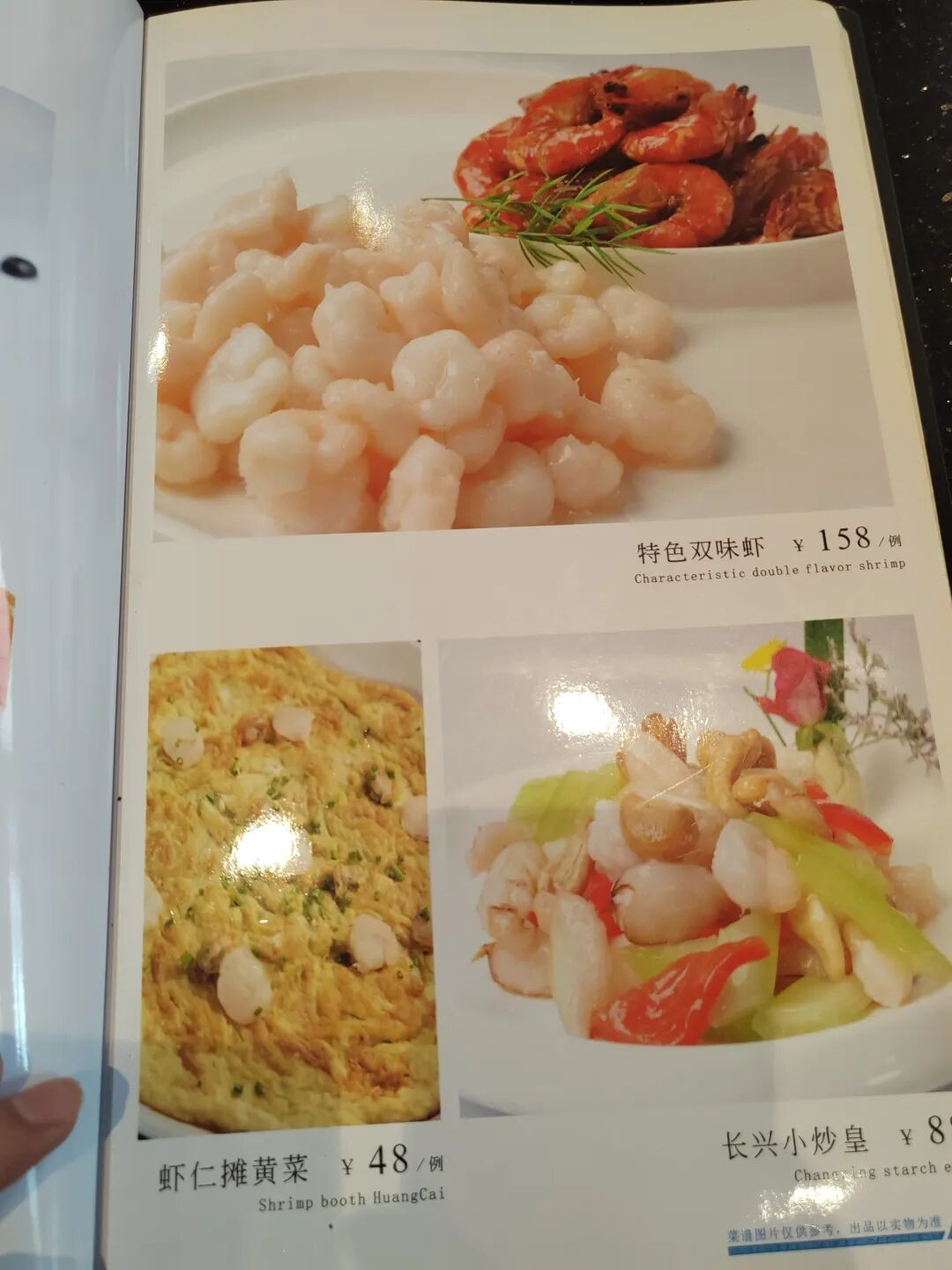
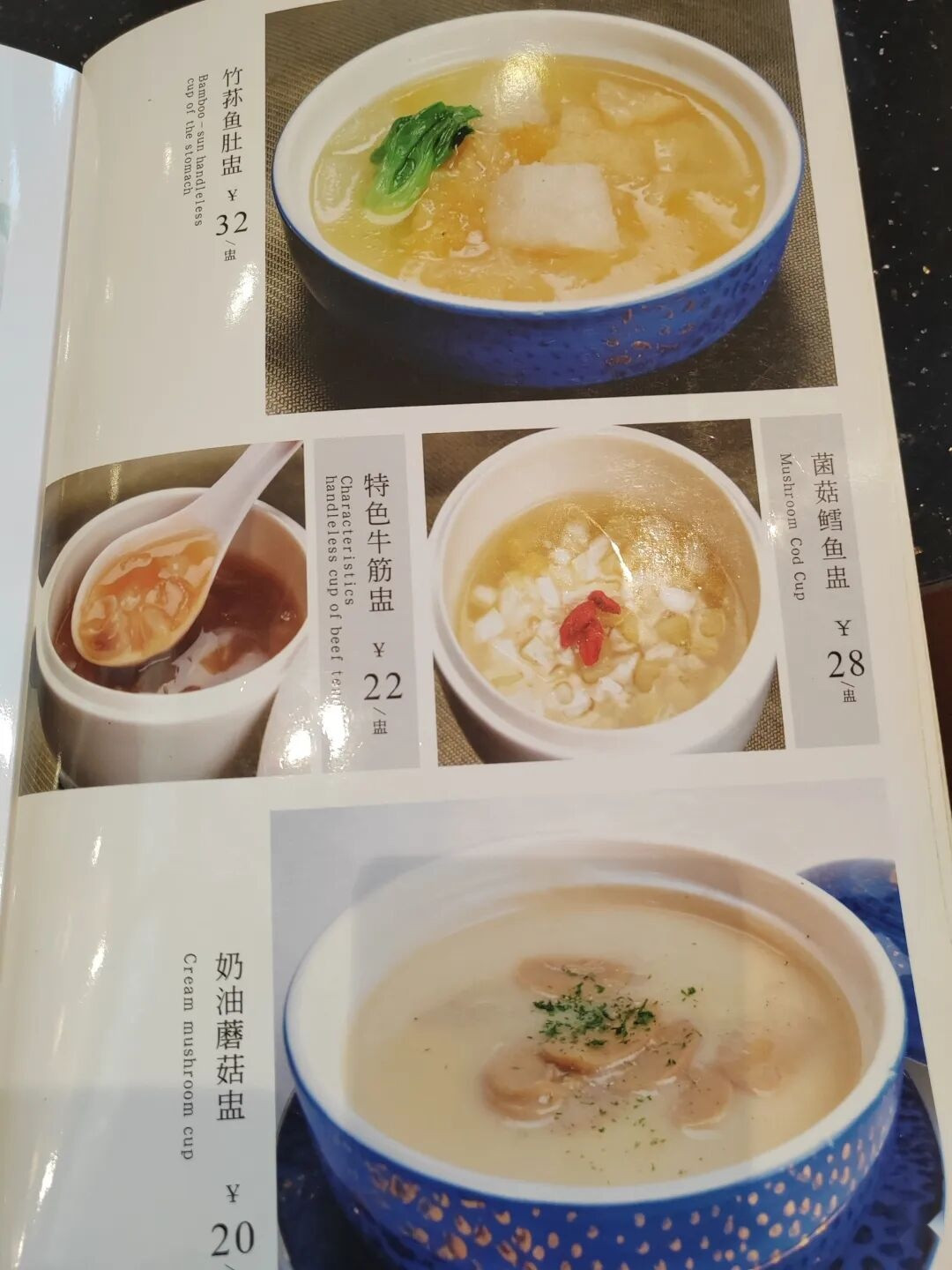
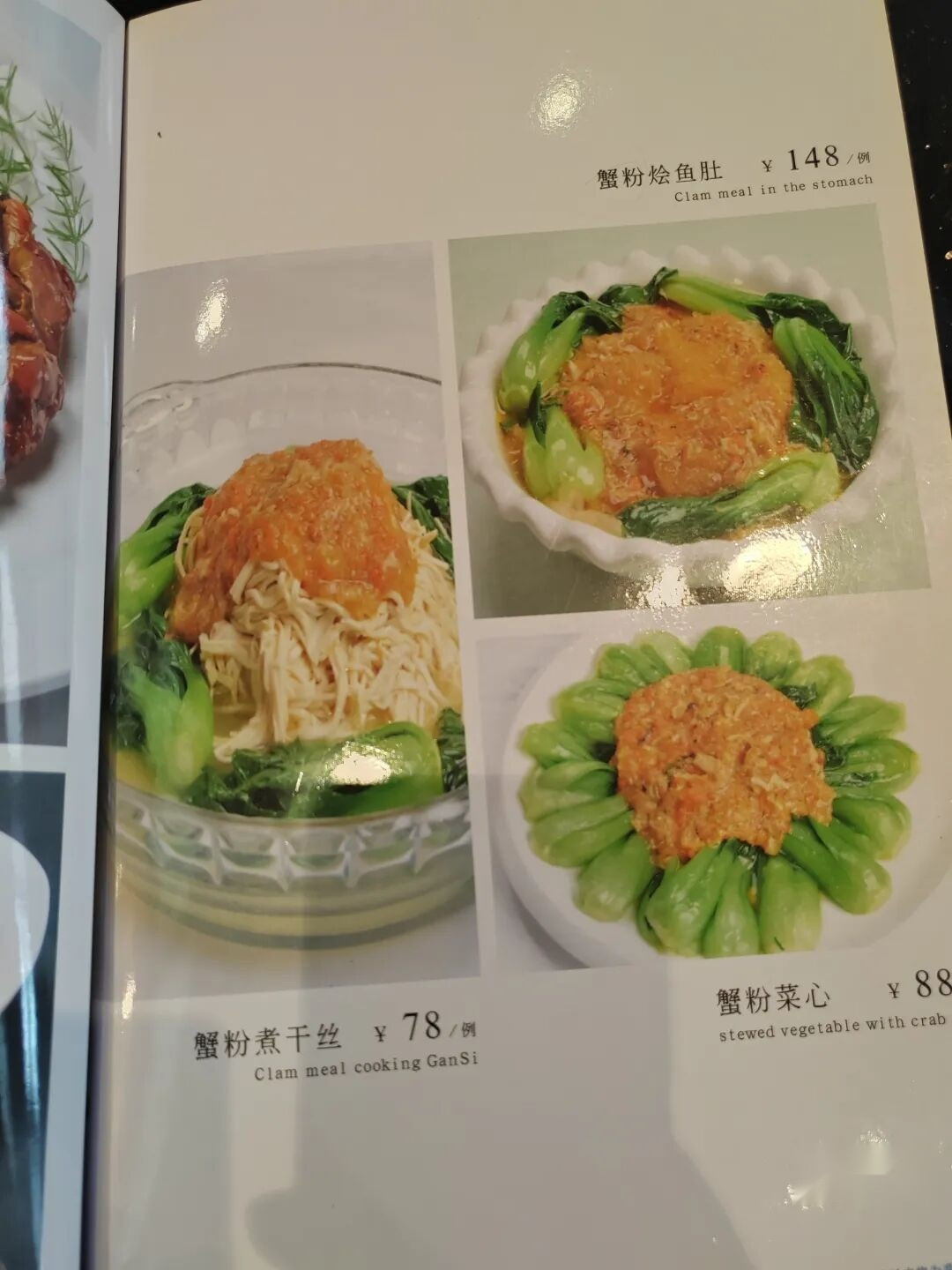
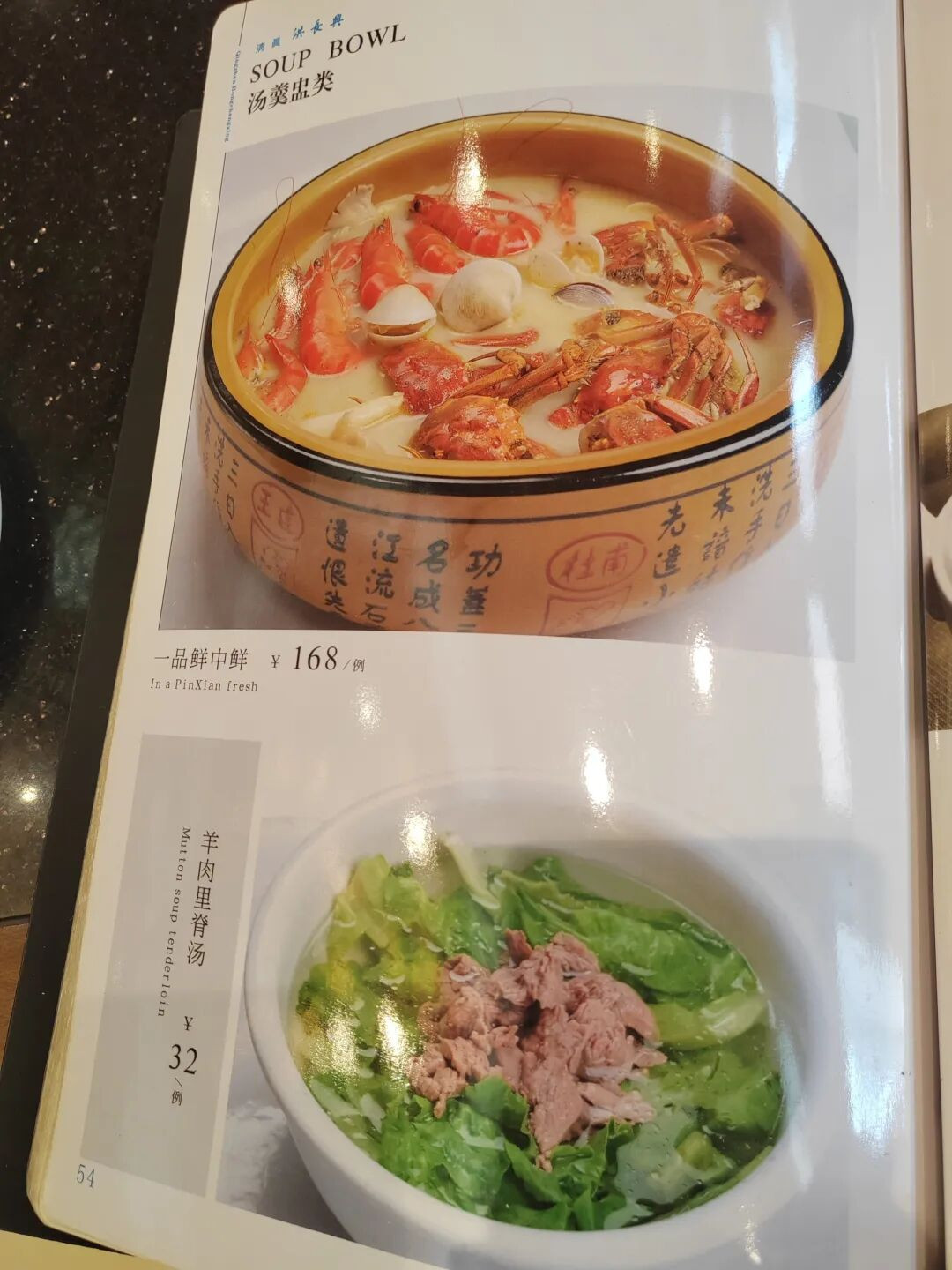
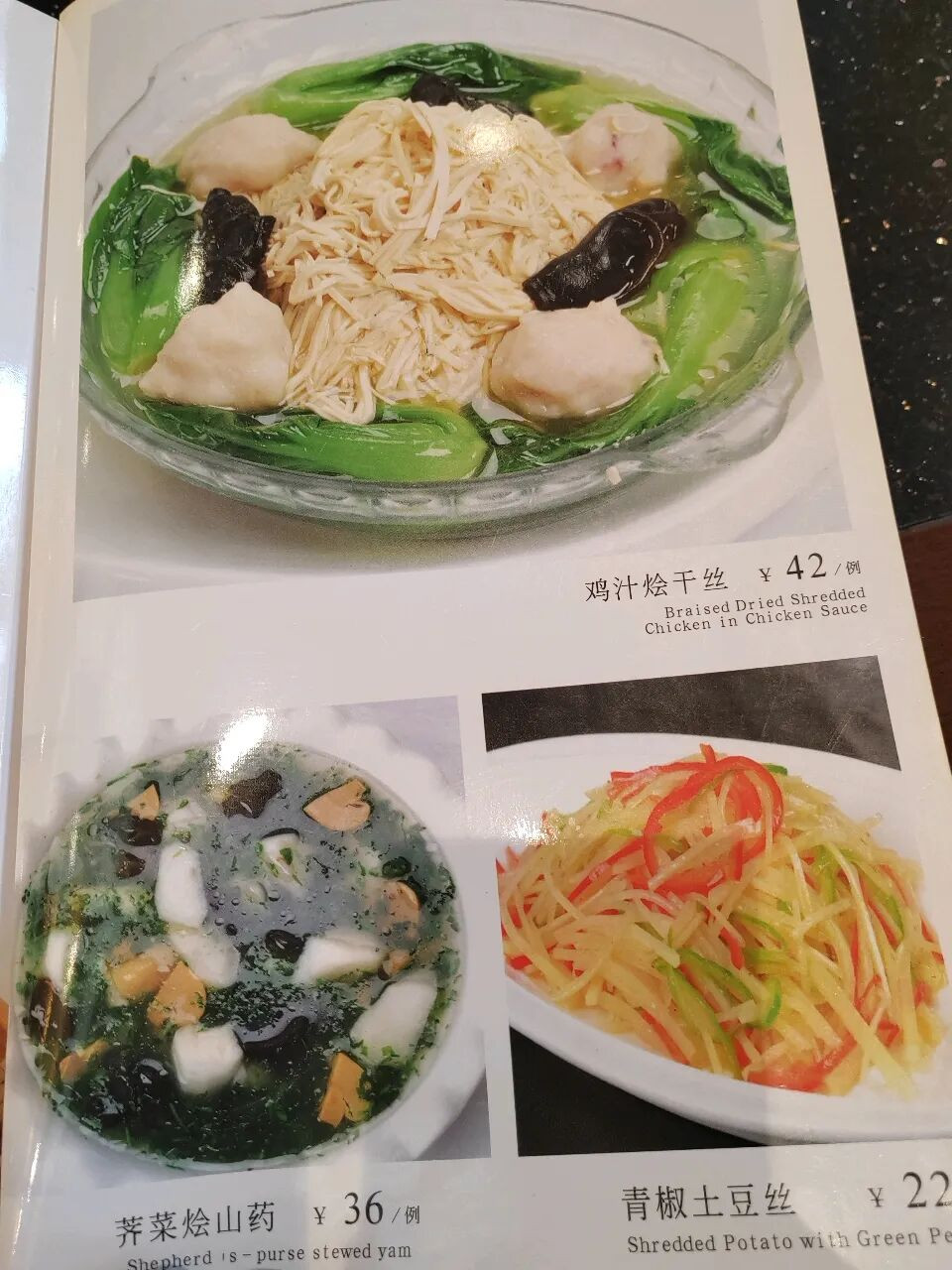
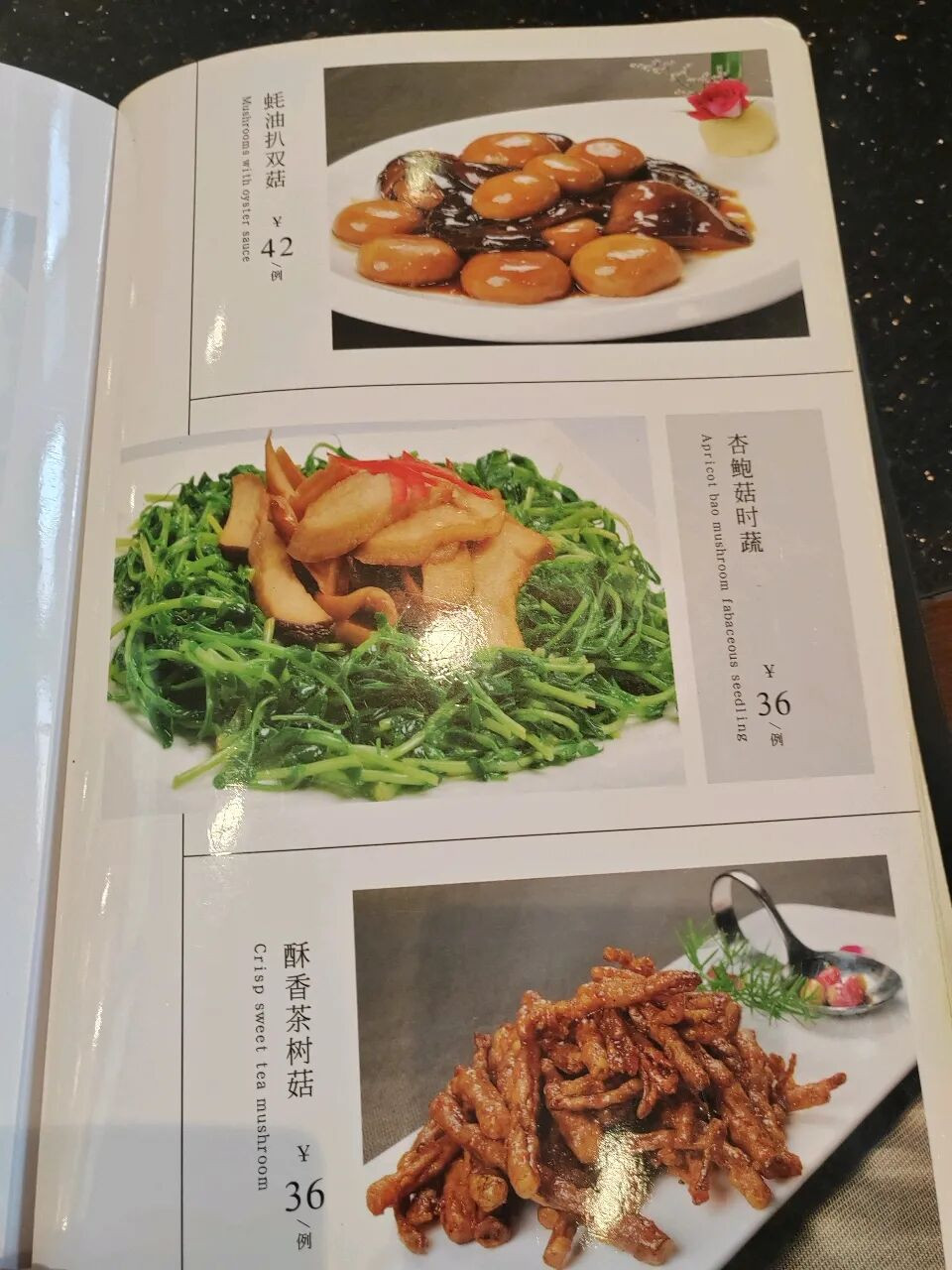
The menu featured amazingly unique dishes: hot explosive smoked fish, beef tendon aspic, jade-green oxtail, salt-and-pepper silver sturgeon, shredded chicken with braised beef tripe, pepper-scented big plate fish, specialty dual-flavor shrimp, shrimp scrambled with egg yolks, Changxing special stir-fry, hot explosive milk-sauce shrimp, hundred-ball fried shrimp spheres, crab roe braised dried tofu threads, crab roe braised fish maw, crab roe hearts of bok choy, crab roe tofu, hairy crab with rice cakes, oyster-sauce braised dual mushrooms, crispy tea tree mushrooms, chicken broth braised dried tofu threads, shepherd's purse braised Chinese yam, supreme fresh-in-fresh soup, mutton tenderloin soup, bamboo fungus fish maw double-boiler soup, specialty beef tendon double-boiler soup, mushroom cod double-boiler soup, creamy mushroom double-boiler soup, seafood chowder, and savory hot-and-sour soup.
There were literally 25 dish names on that list that I had never heard of in my entire life.
Dishes like hairy crab with rice cakes and Changxing special stir-fry—whether looking at the ingredients or the cooking methods—were an absolute novelty to someone like me, whose palate has been shaped by northern wheat noodles and northeastern rice for years.
Some of the dishes sounded vaguely familiar at first glance, but when you leaned in close, you realized they weren't what you thought; you didn't really know them at all.
It turned out these dishes used ingredients we northerners are totally familiar with, yet prepared them with a distinctly unique Shanghai local twist—like the beef tendon aspic and jade-green oxtail.
I couldn't help but gasp internally: Shanghai people really know how to eat! As a northerner staring at menu items packed with such rich colors, aromas, and flavors, my heart fluttered over and over again.
Turns out dining can actually be this refined. No wonder the ancients always said, "Never tire of fine foods, nor of finely chopped delicacies."
Having lived in Shenzhen for so many years as a "new Shenzhener," I got used to the relative lack of food variety there, where the Halal options are mostly limited to Northwest, Northeast, and Henan styles.
I was amazed to find a Hui Muslim restaurant with such a low-key luxury vibe right in the middle of such a bustling district. What kind of story was hidden behind it?
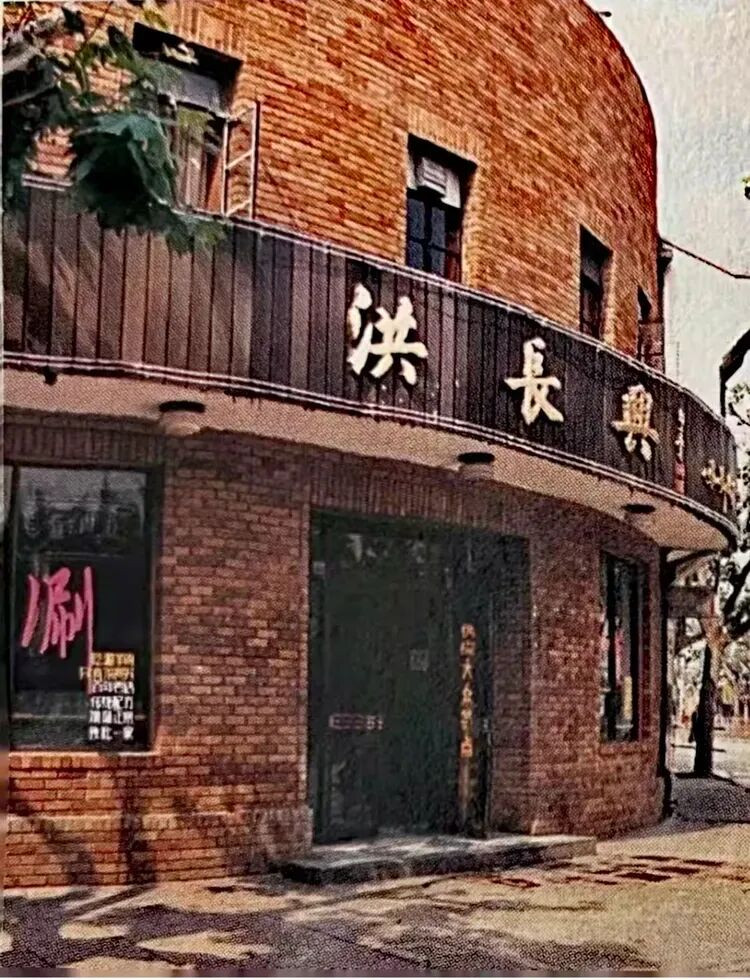
So I looked it up, and turns out Hongchangxing was founded in 1891, boasting a history of over 130 years—a true, bona fide century-old institution.
Its birth comes with a little-known piece of Hui Muslim history. Back in 1891, Shanghai didn't have a single Halal restaurant.
When the Beijing opera troupe led by Ma Lianliang's uncle, Ma Cili, and aunt, Ma Xiuying, came to Shanghai to perform, the troupe had many Hui Muslim actors who struggled to find suitable meals.
To solve the actors' dining problem, Ma Lianliang's second uncle, Ma Chunqiao, rented a street-front property on Luzon Road and opened the "Ma Family Troupe Kitchen."
At the same time, they also provided meals for gem merchants visiting Shanghai to do business. And just like that, the very first Halal restaurant in Shanghai's history was born.
After running the business in Shanghai for a few years, Ma Chunqiao grew familiar with the daily habits of the locals. Noticing that Shanghai winters were especially damp and chilly,
he decided to introduce Beijing-style instant-boiled mutton (hot pot) to Shanghai, and it turned out to be a massive hit. Instant-boiled mutton thus became a staple winter delicacy in Shanghai and the signature dish of the Halal industry.
In 1918, when Ma Chunqiao returned to Beijing, he gifted the shop to his close Hui Muslim friend, Hong Sanba, renamed it "Hongchangxing," and brought in famous Beijing Halal chefs to focus on mutton hot pot, laying the century-old foundation for "Shanghai's Legendary Hot Pot."
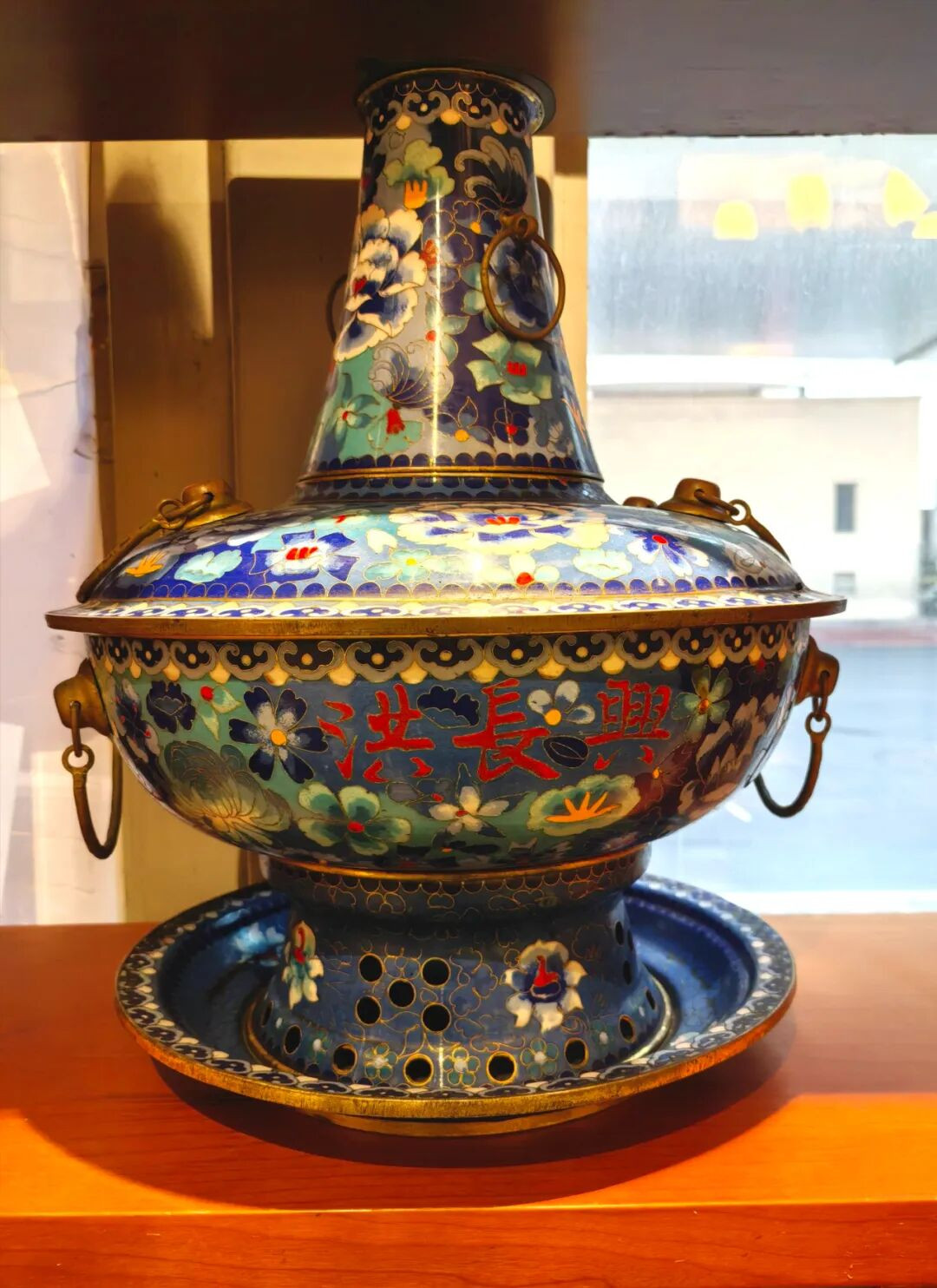
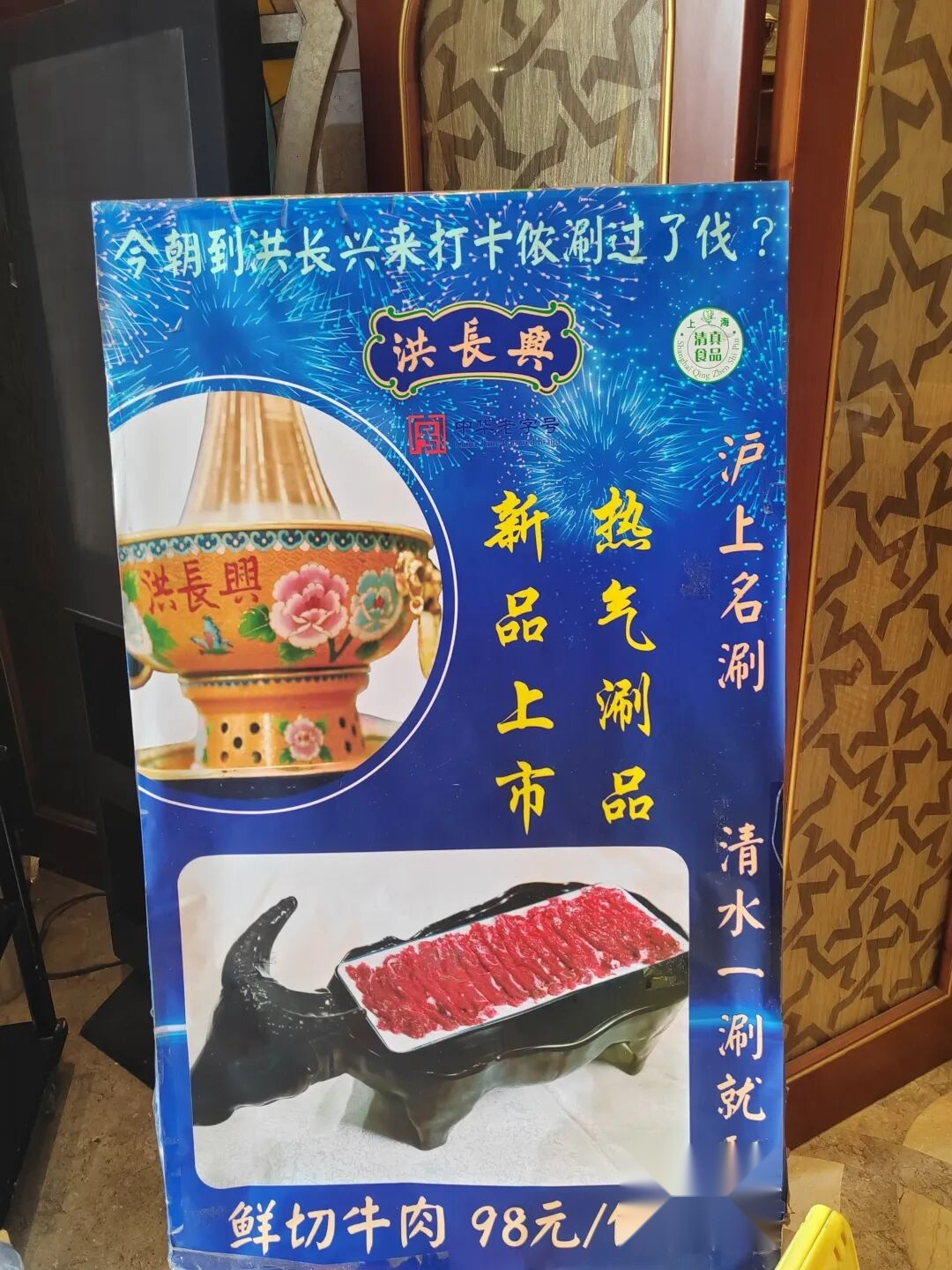
Today, the promotional roll-up banner greeting you right as you walk in still proudly features "Instant-Boiled Mutton." Having weathered a century of prosperity, Hongchangxing is famous for its strict ingredient selection and meticulous craftsmanship.
The absolute core ingredient for hot pot is the mutton, and Hongchangxing carefully selects 7- to 8-month-old castrated rams from Huzhou, ensuring the meat is tender without any gamey odor.
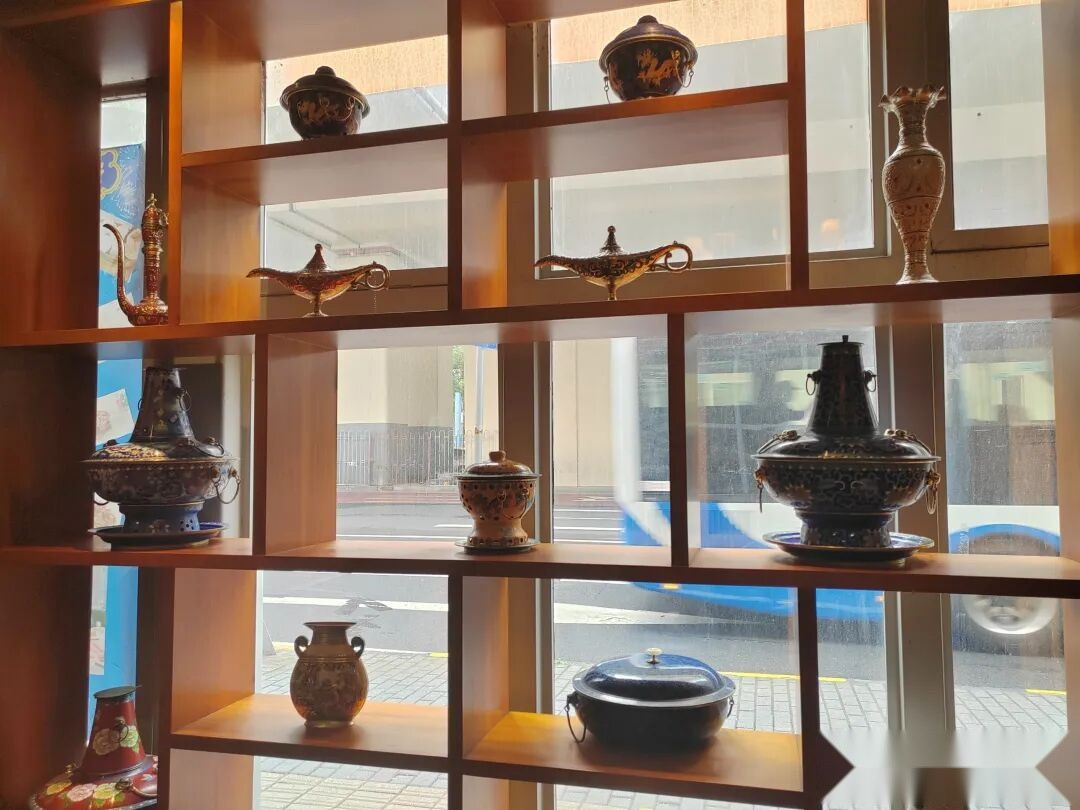
Traditional charcoal-fired red copper pots paired with a clear broth highlight the pure, natural flavor of the mutton, echoing northern Beijing's hot pot style from the south, each with its own unique charm.
They still preserve their signature "copper pot hot pot" tradition to this day, and their Shanghai-style Halal cuisine remains completely unique across the entire Chinese restaurant industry.
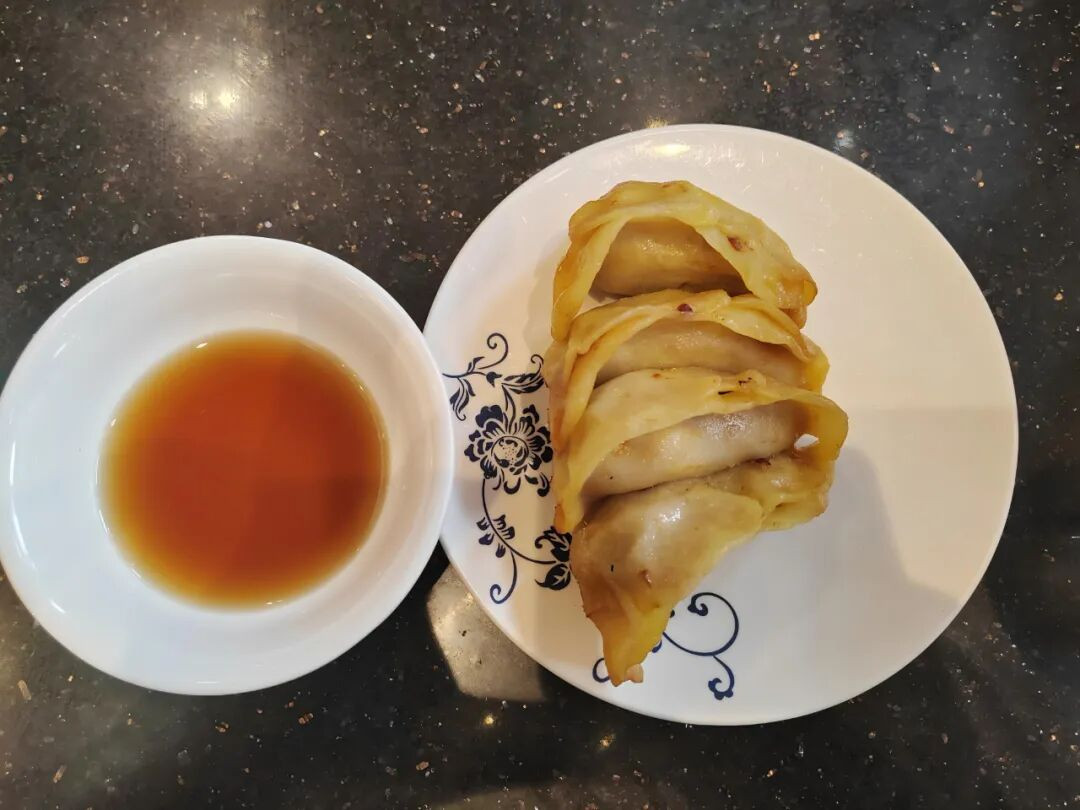
With all that said, let's get down to business: I ordered three dishes and a staple: hot explosive smoked fish, signature hand-shredded chicken, chicken broth braised dried tofu threads, minced pork in a clay pot, and pan-fried beef potstickers.
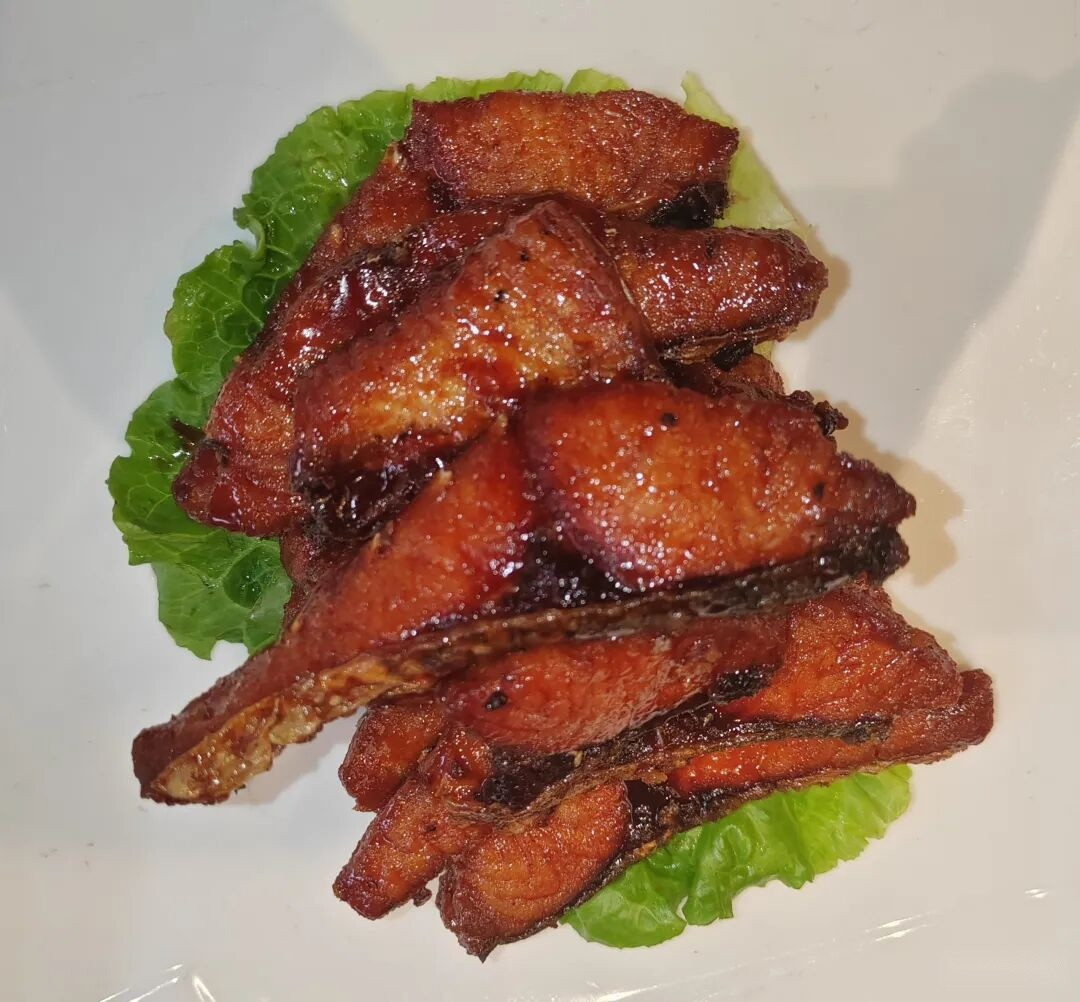
Eating smoked fish for the very first time, I found the fish meat wonderfully firm—it must have been deep-fried—wrapped in a rich glaze with a dense texture, offering a savory and spicy flavor profile with a hint of subtle sweetness. Truly a masterpiece of culinary craftsmanship!
It turns out this dish involves a pretty complex process: the fish must first be cut and marinated, then fried twice, and finally submerged in a specially prepared sauce so it fully absorbs the flavors, making every bite incredibly rich and complex.
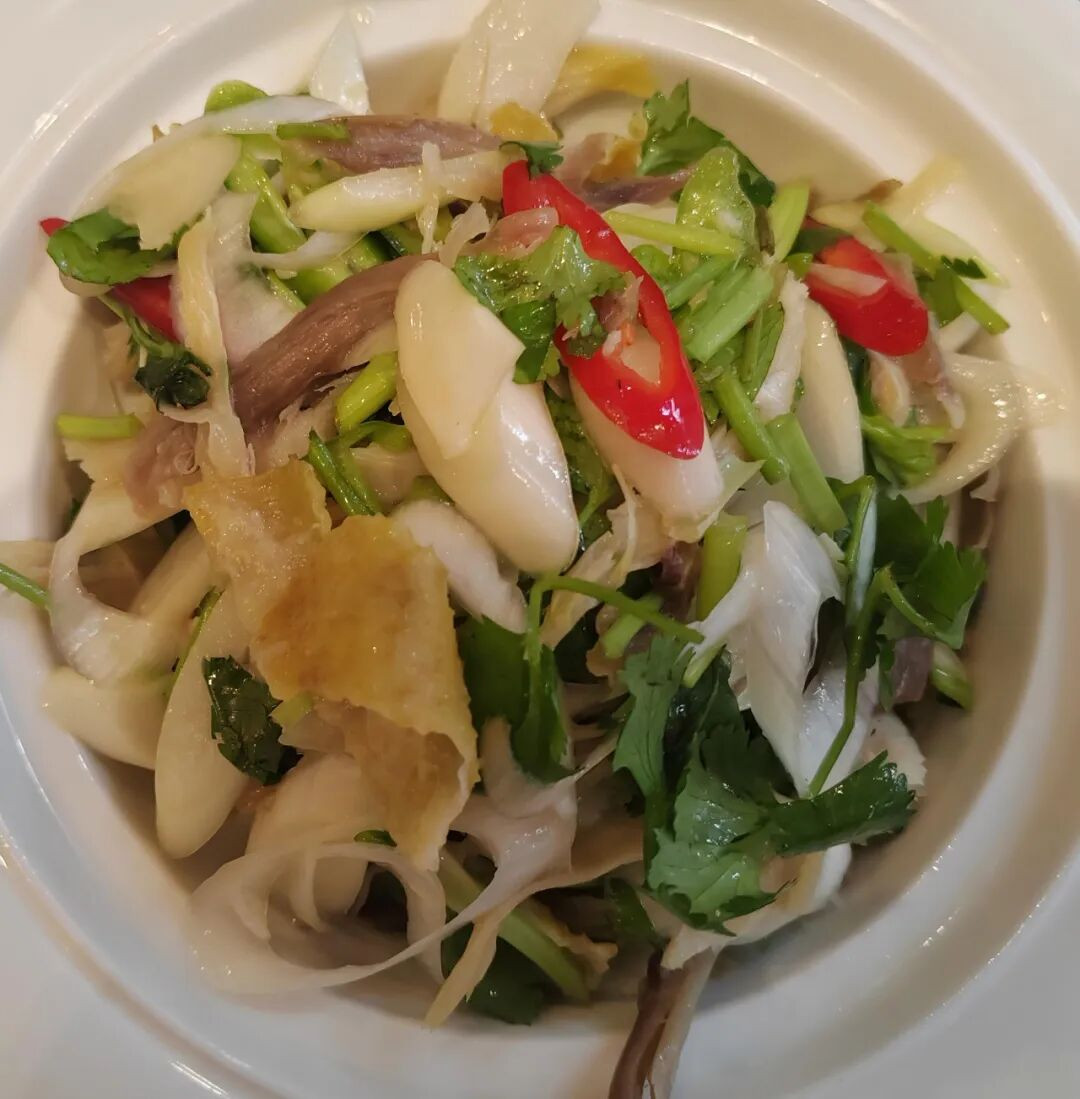
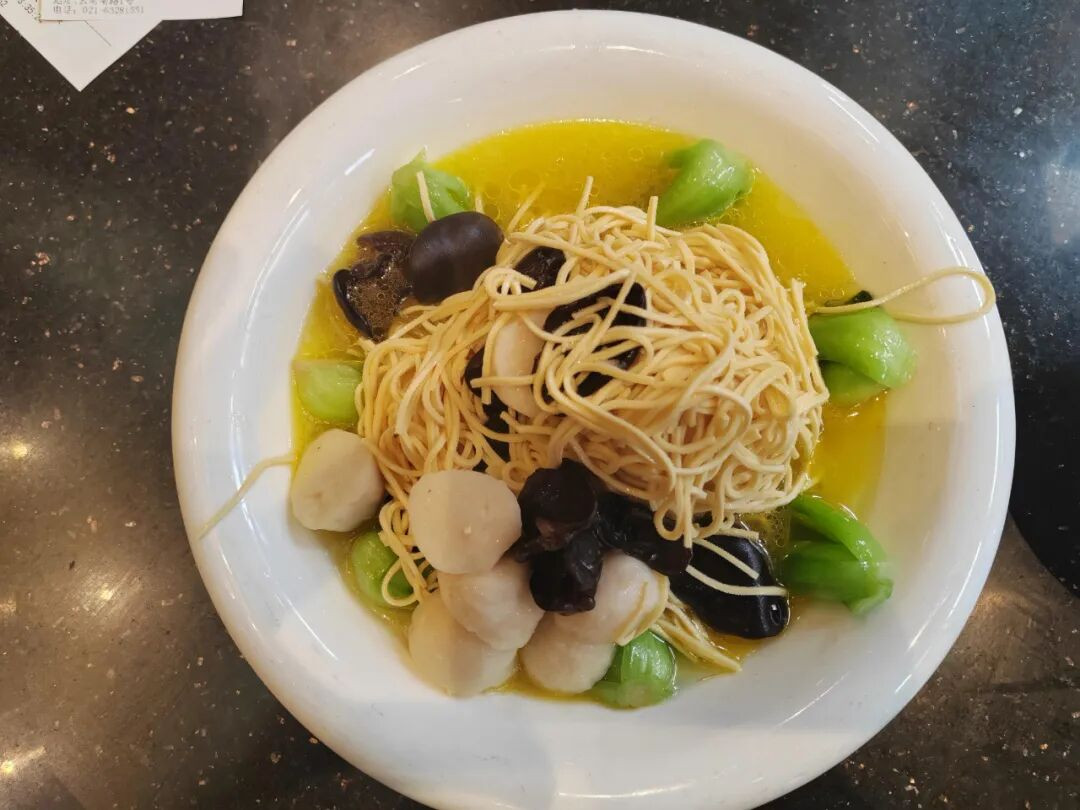
Another dish that totally blew me away was the chicken broth braised dried tofu threads, featuring golden broth blanketed over shredded dried tofu, black woodear mushrooms, shiitake mushrooms, and baby bok choy hearts.
This dish shares the same philosophical soul as the "one clear, two white, three red, four green" standard of Lanzhou beef noodles—seemingly light and simple in broth, but the instant savory punch hits your palate and completely awakens your taste buds.
I took a huge mouthful of the tofu threads—pure bliss—followed by a bite of the bok choy heart, which had already fully absorbed the essence of the chicken broth. The saltiness was just right, leaving the rich, savory flavor lingering on my lips and teeth.
Then a bite of the shiitake mushroom, immediately chased by a sip of the piping-hot chicken broth. That feeling is simply impossible to put into words.
Hongchangxing is a Shanghai-style Halal restaurant with a story to tell, and a Hui Muslim eatery with genuine character.
Spanning a century, standing strong through the test of time, staying true to quality ingredients, and constantly innovating—that, I believe, is the fundamental reason this restaurant remains so genuinely beloved.
The 130-Year History of Shanghai Halal Cuisine: Where Jiangnan Meets Northwest Flavors
Abstract:
A detailed look at the fusion and evolution of Shanghai-style Halal cuisine over the past 130 years. Exploring the collision and combination of traditional Hui Muslim cooking with local Shanghainese and Western culinary techniques, showcasing the historical landscape and cultural heritage from classic Halal heritage dishes to modern Halal banquets.
Introduction
Hearing about Shanghai-style Halal cuisine for the very first time, I couldn't help but gasp—Shanghai people really know how to eat!
The Vibe of the Magic City, the Gentleness of Hui Cuisine
By | Ma Tao
Arriving in the Magic City of Shanghai this time, I landed right in the middle of a continuous drizzle. Locals told me it had been raining on and off for two weeks straight.
The rain in the Magic City is so soft and gentle, lacking any bite—nothing like the sudden, torrential downpours in Shenzhen. Still, it didn't dampen the crowds of tourists strolling along both sides of the streets.
A few light drizzles, nothing to worry about. On past trips to the Magic City, I always came and went in a rush.
Whenever I grabbed a meal with coworkers to save time, we’d just head straight to the noodle shop downstairs from the office. This time, however, I wanted to track down some authentic local Hui Muslim cuisine.
As luck would have it, I recently met a new friend named Ma, and we hit it off right away, chatting away like old friends.
Though we were total strangers at first, a simple, peaceful greeting instantly brought out an incredible sense of warmth and kindness.
I asked him, "Are there any local Hui Muslim restaurants in Shanghai? I mean the kind of time-honored local spots, not just Lanzhou ramen or Xinjiang joints."
He immediately told me, "There’s a century-old Halal restaurant right near the Bund called Hongchangxing. It’s fantastic, you should definitely check it out."
After all these years, I had no idea the Magic City even had local Hui Muslim dining. I made up my mind right then and there—I had to go for lunch.
That morning, after wrapping up a client meeting near Songjiang, I hailed a cab back to downtown so I could head straight there for lunch. Even a full hour-long car ride couldn't mask my excitement.
The car pulled up at a busy intersection. The moment I stepped out, I caught that familiar aroma of mutton, though a little voice in my head muttered: *Please don't let this just be the same old dishes I always see.*
The restaurant's storefront is super distinctive: a deep blue sign resting above a brass-trimmed, circular glass entryway.
The left and right sides are covered in beige tiles, with clean, symmetrical geometric patterns stretching all the way from the ground up to the ceiling.
At the very top sits an Arabian-style spire, brimming with architectural beauty.
Walking through the front doors, you step into a circular, hollowed-out foyer. The cashier's station is on your left, a marble staircase leading up to the second floor is on your right, and just three or four steps straight ahead takes you right into the main dining hall.
The hall is staffed by plenty of servers with calm, serene expressions. The second they saw me walk in, they warmly rushed over and handed me a thick menu.
The tables and chairs in the hall are a rich, dark brown, giving the space a solid, substantial feel. I picked a four-person table by the window and sat down.
Since it was already around 1:00 PM, past peak lunchtime, there were only one or two other tables occupied.
Perfect—I actually prefer a quieter dining atmosphere anyway. Plus, it meant the food would definitely come out fast.
I eagerly flipped open the menu, and the very first page told me I had come to the right place.
Sure enough, unlike traditional Hui Muslim spots, the dishes jumping out at me weren't the usual dapanji (big plate spicy chicken), shouzhua yangrou (Lanzhou hand-grabbed lamb), or braised beef strips.
The menu featured amazingly unique dishes: hot explosive smoked fish, beef tendon aspic, jade-green oxtail, salt-and-pepper silver sturgeon, shredded chicken with braised beef tripe, pepper-scented big plate fish, specialty dual-flavor shrimp, shrimp scrambled with egg yolks, Changxing special stir-fry, hot explosive milk-sauce shrimp, hundred-ball fried shrimp spheres, crab roe braised dried tofu threads, crab roe braised fish maw, crab roe hearts of bok choy, crab roe tofu, hairy crab with rice cakes, oyster-sauce braised dual mushrooms, crispy tea tree mushrooms, chicken broth braised dried tofu threads, shepherd's purse braised Chinese yam, supreme fresh-in-fresh soup, mutton tenderloin soup, bamboo fungus fish maw double-boiler soup, specialty beef tendon double-boiler soup, mushroom cod double-boiler soup, creamy mushroom double-boiler soup, seafood chowder, and savory hot-and-sour soup.
There were literally 25 dish names on that list that I had never heard of in my entire life.
Dishes like hairy crab with rice cakes and Changxing special stir-fry—whether looking at the ingredients or the cooking methods—were an absolute novelty to someone like me, whose palate has been shaped by northern wheat noodles and northeastern rice for years.
Some of the dishes sounded vaguely familiar at first glance, but when you leaned in close, you realized they weren't what you thought; you didn't really know them at all.
It turned out these dishes used ingredients we northerners are totally familiar with, yet prepared them with a distinctly unique Shanghai local twist—like the beef tendon aspic and jade-green oxtail.
I couldn't help but gasp internally: Shanghai people really know how to eat! As a northerner staring at menu items packed with such rich colors, aromas, and flavors, my heart fluttered over and over again.
Turns out dining can actually be this refined. No wonder the ancients always said, "Never tire of fine foods, nor of finely chopped delicacies."
Having lived in Shenzhen for so many years as a "new Shenzhener," I got used to the relative lack of food variety there, where the Halal options are mostly limited to Northwest, Northeast, and Henan styles.
I was amazed to find a Hui Muslim restaurant with such a low-key luxury vibe right in the middle of such a bustling district. What kind of story was hidden behind it?
So I looked it up, and turns out Hongchangxing was founded in 1891, boasting a history of over 130 years—a true, bona fide century-old institution.
Its birth comes with a little-known piece of Hui Muslim history. Back in 1891, Shanghai didn't have a single Halal restaurant.
When the Beijing opera troupe led by Ma Lianliang's uncle, Ma Cili, and aunt, Ma Xiuying, came to Shanghai to perform, the troupe had many Hui Muslim actors who struggled to find suitable meals.
To solve the actors' dining problem, Ma Lianliang's second uncle, Ma Chunqiao, rented a street-front property on Luzon Road and opened the "Ma Family Troupe Kitchen."
At the same time, they also provided meals for gem merchants visiting Shanghai to do business. And just like that, the very first Halal restaurant in Shanghai's history was born.
After running the business in Shanghai for a few years, Ma Chunqiao grew familiar with the daily habits of the locals. Noticing that Shanghai winters were especially damp and chilly,
he decided to introduce Beijing-style instant-boiled mutton (hot pot) to Shanghai, and it turned out to be a massive hit. Instant-boiled mutton thus became a staple winter delicacy in Shanghai and the signature dish of the Halal industry.
In 1918, when Ma Chunqiao returned to Beijing, he gifted the shop to his close Hui Muslim friend, Hong Sanba, renamed it "Hongchangxing," and brought in famous Beijing Halal chefs to focus on mutton hot pot, laying the century-old foundation for "Shanghai's Legendary Hot Pot."
Today, the promotional roll-up banner greeting you right as you walk in still proudly features "Instant-Boiled Mutton." Having weathered a century of prosperity, Hongchangxing is famous for its strict ingredient selection and meticulous craftsmanship.
The absolute core ingredient for hot pot is the mutton, and Hongchangxing carefully selects 7- to 8-month-old castrated rams from Huzhou, ensuring the meat is tender without any gamey odor.
Traditional charcoal-fired red copper pots paired with a clear broth highlight the pure, natural flavor of the mutton, echoing northern Beijing's hot pot style from the south, each with its own unique charm.
They still preserve their signature "copper pot hot pot" tradition to this day, and their Shanghai-style Halal cuisine remains completely unique across the entire Chinese restaurant industry.
With all that said, let's get down to business: I ordered three dishes and a staple: hot explosive smoked fish, signature hand-shredded chicken, chicken broth braised dried tofu threads, minced pork in a clay pot, and pan-fried beef potstickers.
Eating smoked fish for the very first time, I found the fish meat wonderfully firm—it must have been deep-fried—wrapped in a rich glaze with a dense texture, offering a savory and spicy flavor profile with a hint of subtle sweetness. Truly a masterpiece of culinary craftsmanship!
It turns out this dish involves a pretty complex process: the fish must first be cut and marinated, then fried twice, and finally submerged in a specially prepared sauce so it fully absorbs the flavors, making every bite incredibly rich and complex.
Another dish that totally blew me away was the chicken broth braised dried tofu threads, featuring golden broth blanketed over shredded dried tofu, black woodear mushrooms, shiitake mushrooms, and baby bok choy hearts.
This dish shares the same philosophical soul as the "one clear, two white, three red, four green" standard of Lanzhou beef noodles—seemingly light and simple in broth, but the instant savory punch hits your palate and completely awakens your taste buds.
I took a huge mouthful of the tofu threads—pure bliss—followed by a bite of the bok choy heart, which had already fully absorbed the essence of the chicken broth. The saltiness was just right, leaving the rich, savory flavor lingering on my lips and teeth.
Then a bite of the shiitake mushroom, immediately chased by a sip of the piping-hot chicken broth. That feeling is simply impossible to put into words.
Hongchangxing is a Shanghai-style Halal restaurant with a story to tell, and a Hui Muslim eatery with genuine character.
Spanning a century, standing strong through the test of time, staying true to quality ingredients, and constantly innovating—that, I believe, is the fundamental reason this restaurant remains so genuinely beloved.
