
A Foodie’s Guide to Late Qing Hangzhou Hui Muslim Cuisine & Historic Mosques
[Internet Repost]
A Historical Study of Hui Muslim Diet and Customs in Late Qing Hangzhou: Traditional Halal Spiritual Dining and Changes in Everyday Hui Life
Abstract:
Based on late Qing and Republican-era historical documents and folkloric records, this study examines the characteristics of Halal cuisine and the spiritual lifestyle of Hangzhou's Hui Muslim community. It explores how Hangzhou's Halal dining scene persevered and evolved while blending into Jiangnan local culture, showcasing a unique Hui culinary tradition.
A Muslim's everyday life is intimately connected to their religious faith, meaning many Hui customs reflect both daily routines and religious practices. We previously touched upon the Hui customs in Hangzhou recorded by Yuan dynasty scholars (click to view details), though unfortunately, such records became quite scarce after the Yuan dynasty. By the late Qing dynasty, however, relevant documents increased once again. Works specifically chronicling Hangzhou customs—such as *Hangsu Yifeng* (Remnants of Hangzhou Customs), *Wulin Zashi Shi* (Miscellaneous Poetry on Wulin), and *Shuo Hangzhou* (Talking About Hangzhou)—contain varying degrees of documentation. We will cite and discuss these one by one, comparing them briefly with Yuan dynasty records where possible.

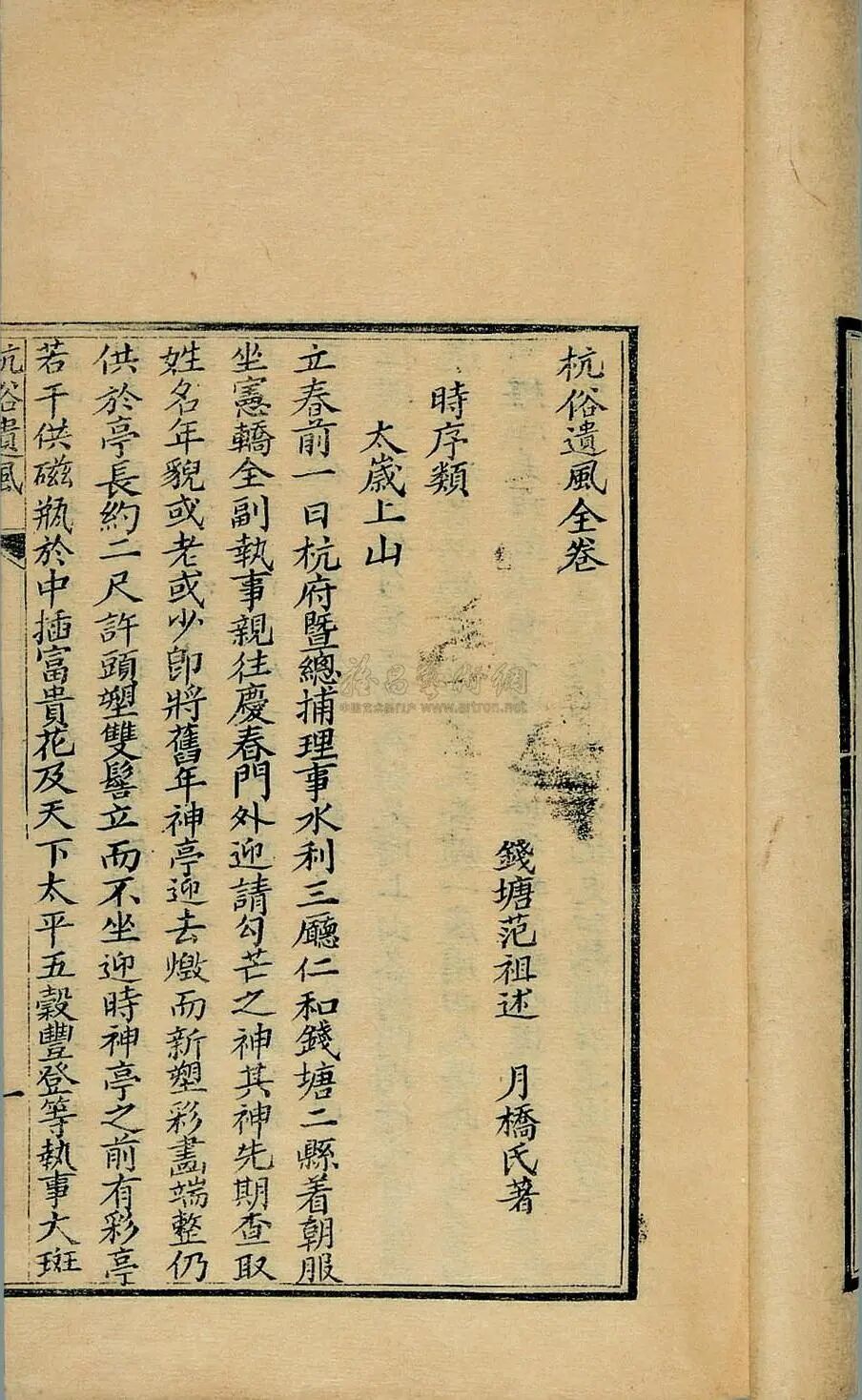
▲ *Hangsu Yifeng* (Remnants of Hangzhou Customs)
*Hangsu Yifeng* is a collection of notes written during the Tongzhi era of the late Qing dynasty. It features a dedicated section on "Dietary Categories," which records "lamb soup and rice":
"Lamb soup and rice restaurants sell exclusively lamb products and rice, priced at six or four wen per bowl. There are also lamb soup noodles starting at six or eight wen per bowl, depending on the diner's preference. The lamb is skinned, deboned, stewed until tender, and chopped into chunks, priced at four wen per piece, available in salted-and-peppered or plain styles. Additionally, offal such as intestines, lungs, and hearts are chopped, mixed with broth, and served in a bowl, known as *zashui* (mixed offal soup)—six wen for a single bowl, fourteen wen for a double bowl. Small bites like kidneys, livers, spines, brains, intestines, stomachs, trotters, tongue, and *taijitu* (lamb brain shaped like a Taiji symbol) cost twenty-eight wen per plate; fourteen wen is also accepted for a single diner. Meat pieces: if eating two pieces, it costs only six cash. Dried sliced meat can be ordered by the plate in any amount, or put into broth to make sliced meat soup. Major dishes like braised meat and *zashui* all center around lamb. The only alcohol served is *gaoliang* (sorghum liquor). Dim sum options include shredded pork, spring pancakes, water dumplings, and *shaomai* (steamed lamb dumplings), all available. Side dishes and noodle broth cost two cash per plate or basin. These shops do not open in the summer because of the heat."
This book also has a supplementary edition compiled by the Liuyi Bookstore in Hangzhou in 1928, with slightly different wording and an added paragraph:
"Lamb soup and rice restaurants are Hui Muslim eateries specializing exclusively in lamb products. Rice is six or four wen per bowl. There are also lamb soup noodles starting at a minimum of six or eight wen per bowl, at the diner's convenience. The lamb is skinned, deboned, stewed until tender, and chopped into pieces, priced at four wen per piece, with options for salt-and-pepper or plain. Furthermore, intestines, lungs, hearts, and other offal are chopped, added to broth, and served in a bowl called *zashui* (mixed offal soup)—six wen for a single bowl, fourteen wen for a double bowl. Small plates of kidneys, liver, spine, brain, intestines, stomach, trotters, tongue, *taijitu*, etc., cost twenty-eight cash per plate; fourteen cash is also sold for a single person. Piece meat: eating two pieces costs only six cash. Dried sliced meat can be ordered by the plate in any quantity, or added to soup to make sliced meat soup. Their main dishes, such as braised meat and *zashui*, never stray from the lamb. The only wine is *gaoliang*. Dim sum includes shredded pork, spring pancakes, boiled dumplings, and *shaomai*, all available. Side dishes per plate and noodle broth per basin are two cash each. They simply do not open in the summer due to the heat."
Note that there were no more than two or three such lamb soup and rice restaurants within the city walls, and none outside. Those who loved the taste of lamb flocked to them. However, in recent years, prices have risen to more than ten times their former levels. I recall in my youth, I entered and took a seat accompanying my late father; there were five of us in total, and the cost was a mere four hundred cash, while our table was already littered with cups and plates in disarray, showing just how cheap the cost of living was back then. From January to March, business stops, known as 'resting for the summer.' This is because little lambs are just conceiving around this time, and incoming goods are scarce. By June, business resumes because the hotter the weather gets, the more delicious the lamb soup tastes; it never stops because of the heat, leaving not a single empty seat. As the autumn winds begin to blow, business gradually cools down. People in this trade have a saying: 'Work for one summer, eat for the whole winter,' meaning their profits are so hefty that winter is nothing to worry about.
The added phrase "Hui Muslim eatery" explicitly points out that this was Hui cuisine. *Hangsu Yifeng* records classic Hui dining—all kinds of dishes related to lamb. However, using a large amount of sheep offal such as intestines, lungs, hearts, livers, stomachs, and brains as ingredients seems somewhat different from strict Islamic dietary requirements. Mr. He Hong, drawing on Republican-era literature, textualized that "taijitu" refers to sheep brain.
The late Qing work *Hangsu Yiqing Suijin* also contains records regarding lamb soup and rice:

"Lamb meat is not sold in the summer. At the Hui mosque and Western region eateries, people eat chicken wontons and lamb meatballs in the summer; shrimp, vinegar fish, and quick-fried dishes are all available. People of the faith go to eat them, while most people of the greater faith do not go."
"People of the greater faith" refers to Han Chinese; this is spoken from the perspective of the Hui people.
Both *Hangsu Yifeng* and *Hangsu Yiqing Suijin* state that lamb was not sold in the summer, whereas the supplementary section of the 1926 *Hangsu Yifeng* emphasizes that summer was actually the prime season for selling lamb soup and rice. So, was lamb food sold in the summer or not? Mr. He Hong has discussed this question. Based on the recollections of Gao Yang and Yu Pingbo, they did eat it, suggesting that habits had changed. While people did not eat it during the late Qing and early Republic, eating lamb in the summer became the norm by the Republican era.
There are quite a few records concerning Hangzhou lamb soup and rice from the Republican era, such as *Xihu Mingsheng Kuailan* (Quick Tour of West Lake Scenic Spots) and *Shuo Hangzhou*, while *Zengding Xihu Youlan Zhinan* (Expanded Guide to Touring West Lake) records lamb stall rice. Lamb stall rice and lamb soup rice were presumably the same thing.
Regarding late Qing Hui cuisine in Hangzhou, local poets also described it in their verses. For instance, the famous bibliophile Ding Bing included a poem titled *Huihui Tang Jiansu* (Pan-Fried Pastry at the Hui Mosque) in his *Wulin Zashi Shi*:
"Offering flour to the heavens, pan-fried to make pastries; the religion of Tianfang is unlike all others.
Facing west in the grand hall, they share in prayer; dying and receiving thin burials, they follow its precepts.
Anointing the crown with ghee is a place for choosing Buddha; Roman Catholicism became the starting point.
Laughing that few people enter my gate, *bopan* and *xuanhuang* interpret the *Erya* dictionary."
This poem describes *youxiang* (fried Hui pastry), but also records other Hui customs. Ding Bing's son, Ding Lizhong, wrote *Wulin Shishi Yin* (Chants on the Markets of Wulin), which includes the poem *Huihui Tang Qian Ye Shouhe Chaoshi* (Ye Shouhe Confectionery in Front of the Hui Mosque):
"Pearls of flour ground to a jade-like polish, outshining frost and snow, newly kneaded by hand.
If you ask whose dim sum is the most refined, it is Ye Shouhe in front of the mosque."
This also describes Hui pastries. Hangzhou still has a Halal food shop named "Ye Shouhe" to this day.
Editors | Wu Yiquan, Liu Junping
- Article Source -
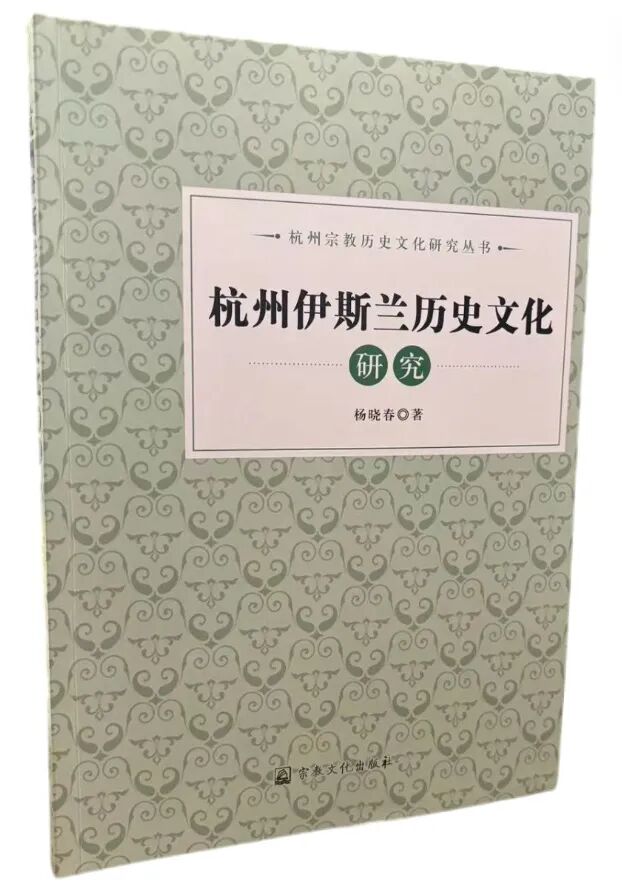
"Research on the Islamic History and Culture of Hangzhou"
A Historical Study of Hui Muslim Diet and Customs in Late Qing Hangzhou: Traditional Halal Spiritual Dining and Changes in Everyday Hui Life
Abstract:
Based on late Qing and Republican-era historical documents and folkloric records, this study examines the characteristics of Halal cuisine and the spiritual lifestyle of Hangzhou's Hui Muslim community. It explores how Hangzhou's Halal dining scene persevered and evolved while blending into Jiangnan local culture, showcasing a unique Hui culinary tradition.
A Muslim's everyday life is intimately connected to their religious faith, meaning many Hui customs reflect both daily routines and religious practices. We previously touched upon the Hui customs in Hangzhou recorded by Yuan dynasty scholars (click to view details), though unfortunately, such records became quite scarce after the Yuan dynasty. By the late Qing dynasty, however, relevant documents increased once again. Works specifically chronicling Hangzhou customs—such as *Hangsu Yifeng* (Remnants of Hangzhou Customs), *Wulin Zashi Shi* (Miscellaneous Poetry on Wulin), and *Shuo Hangzhou* (Talking About Hangzhou)—contain varying degrees of documentation. We will cite and discuss these one by one, comparing them briefly with Yuan dynasty records where possible.
▲ *Hangsu Yifeng* (Remnants of Hangzhou Customs)
*Hangsu Yifeng* is a collection of notes written during the Tongzhi era of the late Qing dynasty. It features a dedicated section on "Dietary Categories," which records "lamb soup and rice":
"Lamb soup and rice restaurants sell exclusively lamb products and rice, priced at six or four wen per bowl. There are also lamb soup noodles starting at six or eight wen per bowl, depending on the diner's preference. The lamb is skinned, deboned, stewed until tender, and chopped into chunks, priced at four wen per piece, available in salted-and-peppered or plain styles. Additionally, offal such as intestines, lungs, and hearts are chopped, mixed with broth, and served in a bowl, known as *zashui* (mixed offal soup)—six wen for a single bowl, fourteen wen for a double bowl. Small bites like kidneys, livers, spines, brains, intestines, stomachs, trotters, tongue, and *taijitu* (lamb brain shaped like a Taiji symbol) cost twenty-eight wen per plate; fourteen wen is also accepted for a single diner. Meat pieces: if eating two pieces, it costs only six cash. Dried sliced meat can be ordered by the plate in any amount, or put into broth to make sliced meat soup. Major dishes like braised meat and *zashui* all center around lamb. The only alcohol served is *gaoliang* (sorghum liquor). Dim sum options include shredded pork, spring pancakes, water dumplings, and *shaomai* (steamed lamb dumplings), all available. Side dishes and noodle broth cost two cash per plate or basin. These shops do not open in the summer because of the heat."
This book also has a supplementary edition compiled by the Liuyi Bookstore in Hangzhou in 1928, with slightly different wording and an added paragraph:
"Lamb soup and rice restaurants are Hui Muslim eateries specializing exclusively in lamb products. Rice is six or four wen per bowl. There are also lamb soup noodles starting at a minimum of six or eight wen per bowl, at the diner's convenience. The lamb is skinned, deboned, stewed until tender, and chopped into pieces, priced at four wen per piece, with options for salt-and-pepper or plain. Furthermore, intestines, lungs, hearts, and other offal are chopped, added to broth, and served in a bowl called *zashui* (mixed offal soup)—six wen for a single bowl, fourteen wen for a double bowl. Small plates of kidneys, liver, spine, brain, intestines, stomach, trotters, tongue, *taijitu*, etc., cost twenty-eight cash per plate; fourteen cash is also sold for a single person. Piece meat: eating two pieces costs only six cash. Dried sliced meat can be ordered by the plate in any quantity, or added to soup to make sliced meat soup. Their main dishes, such as braised meat and *zashui*, never stray from the lamb. The only wine is *gaoliang*. Dim sum includes shredded pork, spring pancakes, boiled dumplings, and *shaomai*, all available. Side dishes per plate and noodle broth per basin are two cash each. They simply do not open in the summer due to the heat."
Note that there were no more than two or three such lamb soup and rice restaurants within the city walls, and none outside. Those who loved the taste of lamb flocked to them. However, in recent years, prices have risen to more than ten times their former levels. I recall in my youth, I entered and took a seat accompanying my late father; there were five of us in total, and the cost was a mere four hundred cash, while our table was already littered with cups and plates in disarray, showing just how cheap the cost of living was back then. From January to March, business stops, known as 'resting for the summer.' This is because little lambs are just conceiving around this time, and incoming goods are scarce. By June, business resumes because the hotter the weather gets, the more delicious the lamb soup tastes; it never stops because of the heat, leaving not a single empty seat. As the autumn winds begin to blow, business gradually cools down. People in this trade have a saying: 'Work for one summer, eat for the whole winter,' meaning their profits are so hefty that winter is nothing to worry about.
The added phrase "Hui Muslim eatery" explicitly points out that this was Hui cuisine. *Hangsu Yifeng* records classic Hui dining—all kinds of dishes related to lamb. However, using a large amount of sheep offal such as intestines, lungs, hearts, livers, stomachs, and brains as ingredients seems somewhat different from strict Islamic dietary requirements. Mr. He Hong, drawing on Republican-era literature, textualized that "taijitu" refers to sheep brain.
The late Qing work *Hangsu Yiqing Suijin* also contains records regarding lamb soup and rice:
"Lamb meat is not sold in the summer. At the Hui mosque and Western region eateries, people eat chicken wontons and lamb meatballs in the summer; shrimp, vinegar fish, and quick-fried dishes are all available. People of the faith go to eat them, while most people of the greater faith do not go."
"People of the greater faith" refers to Han Chinese; this is spoken from the perspective of the Hui people.
Both *Hangsu Yifeng* and *Hangsu Yiqing Suijin* state that lamb was not sold in the summer, whereas the supplementary section of the 1926 *Hangsu Yifeng* emphasizes that summer was actually the prime season for selling lamb soup and rice. So, was lamb food sold in the summer or not? Mr. He Hong has discussed this question. Based on the recollections of Gao Yang and Yu Pingbo, they did eat it, suggesting that habits had changed. While people did not eat it during the late Qing and early Republic, eating lamb in the summer became the norm by the Republican era.
There are quite a few records concerning Hangzhou lamb soup and rice from the Republican era, such as *Xihu Mingsheng Kuailan* (Quick Tour of West Lake Scenic Spots) and *Shuo Hangzhou*, while *Zengding Xihu Youlan Zhinan* (Expanded Guide to Touring West Lake) records lamb stall rice. Lamb stall rice and lamb soup rice were presumably the same thing.
Regarding late Qing Hui cuisine in Hangzhou, local poets also described it in their verses. For instance, the famous bibliophile Ding Bing included a poem titled *Huihui Tang Jiansu* (Pan-Fried Pastry at the Hui Mosque) in his *Wulin Zashi Shi*:
"Offering flour to the heavens, pan-fried to make pastries; the religion of Tianfang is unlike all others.
Facing west in the grand hall, they share in prayer; dying and receiving thin burials, they follow its precepts.
Anointing the crown with ghee is a place for choosing Buddha; Roman Catholicism became the starting point.
Laughing that few people enter my gate, *bopan* and *xuanhuang* interpret the *Erya* dictionary."
This poem describes *youxiang* (fried Hui pastry), but also records other Hui customs. Ding Bing's son, Ding Lizhong, wrote *Wulin Shishi Yin* (Chants on the Markets of Wulin), which includes the poem *Huihui Tang Qian Ye Shouhe Chaoshi* (Ye Shouhe Confectionery in Front of the Hui Mosque):
"Pearls of flour ground to a jade-like polish, outshining frost and snow, newly kneaded by hand.
If you ask whose dim sum is the most refined, it is Ye Shouhe in front of the mosque."
This also describes Hui pastries. Hangzhou still has a Halal food shop named "Ye Shouhe" to this day.
Editors | Wu Yiquan, Liu Junping
- Article Source -
"Research on the Islamic History and Culture of Hangzhou"
