
Dali Hui Muslim Stone Inscriptions: The Sanxiang Guildhall and Yunnan Islamic Heritage
[Internet Repost]
Selected Stone Inscriptions of the Dali Hui Muslims: Record of the Newly Built Sanxiang Guildhall and the Traditions of Yunnan Hui Guildhalls, Commerce, and Philanthropy
Abstract: This article compiles the key points from "Selected Stone Inscriptions of the Dali Hui Muslims: Record of the Newly Built Sanxiang Guildhall and the Traditions of Yunnan Hui Guildhalls, Commerce, and Philanthropy," maintaining the original paragraph and image order. It is ideal for readers and researchers looking up long-tail keywords related to Dali Hui stone inscriptions, the Sanxiang Guildhall, and Yunnan Hui Muslims.
Record of the Newly Built Sanxiang Guildhall - Erected jointly by the gentry of Sanxiang on an auspicious day in July, the 2nd Year of the Republic of China
The origin of the Sanxiang Guildhall dates back over thirty years. Shortly after the Hui uprisings were pacified, our elders noted that because the three townships (Sanxiang) were scattered about, coming into the walled city for official business left us with nowhere to host guests or gather. This caused all kinds of inconveniences and bottlenecks. Therefore, a public office was established at Xiangshui Pass in Yucheng, which lasted for over thirty years. Everyone from Sanxiang coming into the city on official business stayed there. In February of the first year of the Republic (1912), Commander Yinquan was stationed in Yu and ordered the Sanxiang gentry to hand over the public office located at Xiangshui Pass to the Hui Muslims to use as a mosque, while reallocating the abandoned office of the county school to serve as the Sanxiang administrative base. In addition, Wang Tingzhi from the Islamic community contributed 300 silver taels for renovation costs. At the time, gentlemen Yang Shangpei, Zhao Panyuan, Yan Zhenggui, Zhang Ximing, Du Hua, Duan Lingyun, Zhao Zhonghe, Yang Zhou, Li Zhifa, Zhang Liangheng, and Yang Xin held discussions and decided to build a brand-new guildhall on the abandoned county school grounds that had been allocated to Sanxiang. Construction was voted on and started, but the renovation funds fell short. Worried that the project would grind to a halt, everyone racked their brains to raise funds. We managed to secure 900-odd taels in cash, allowing the front section—four-sided with a single corner—to finally be completed. Afterward, Mr. Yang Yucang and I were elected as guildhall managers, and we went on to add a second-story meeting room, a kitchen, and stables, while also stocking all necessary daily utensils. Using the rental income from the guildhall's public farmland and the rent from the front rooms to cover Sanxiang's operating expenses, and using the back rooms as our office, we finally had a place with proper hospitality and a place to stay. Those who come after us will continue to maintain and expand this place, ensuring the scale of the guildhall grows grander day by day, with no end in sight.
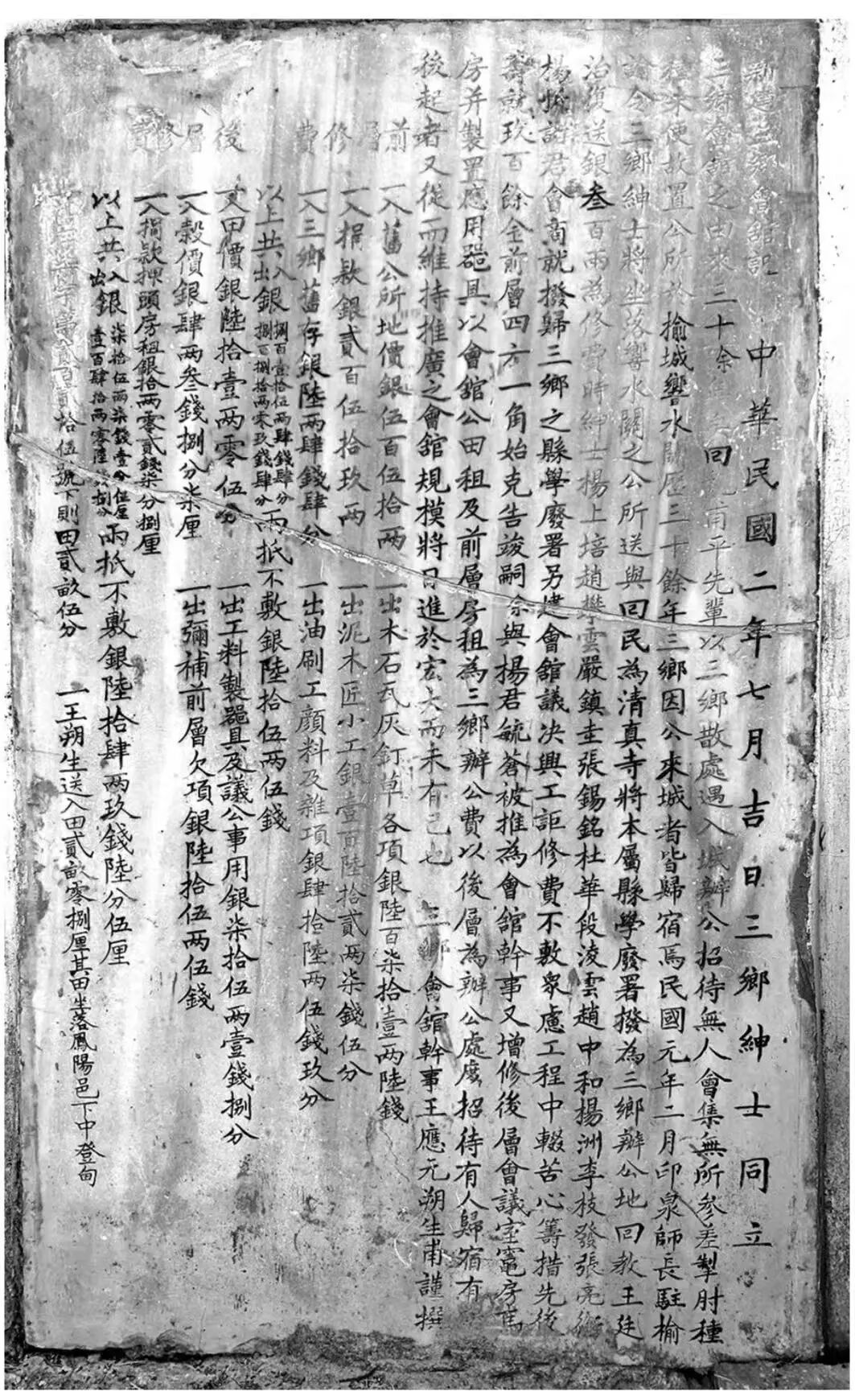
Carefully written by Wang Yingyuan, manager of the Sanxiang Guildhall, on the first day of the lunar month.
Front Section Renovation Expenses
Income: 550 silver taels for the land purchase of the old public office. Expenses: 671 silver taels and 6 mian for lumber, stone, tiles, lime, nails, and straw. Income: 259 silver taels in donations. Expenses: 162 silver taels and 75 wen for mason, carpenter, and laborer wages. Income: 6 silver taels and 44 wen in old Sanxiang savings. Expenses: 46 silver taels and 95 wen for paint, painting labor, pigments, and miscellaneous items.
Total income came to 815 silver taels and 44 wen, while total expenses came to 880 silver taels and 94 wen, leaving a deficit of 65.5 silver taels.
Rear Section Renovation Expenses
Income: 61 silver taels and 5 wen from farmland sales. Expenses: 75 silver taels and 18 wen for labor, materials, equipment making, and public affairs meetings. Income: 4 silver taels, 38 qian, and 7 li from grain sales. Expenses: 65.5 silver taels to cover the previous section's deficit. Income: 10 silver taels, 27 qian, and 8 li from donation deposits and room rent.
Total income came to 75 silver taels, 71 qian, and 5 li, while total expenses came to 140 silver taels, 68 qian, and 5 li, leaving a deficit of 64 silver taels, 96 qian, and 5 li.
Property deeds: One old holding of lower-grade farmland at Chai Zi No. 225, measuring 2 mu and 5 fen; one plot of 2 mu and 8 li contributed by Wang Shuosheng. These fields are located in Xiadengdian, Fengyangyi.
Notes:
This stele is currently located inside the West Gate Mosque in Dali Old Town. It stands 120 centimeters tall and 68 centimeters wide.
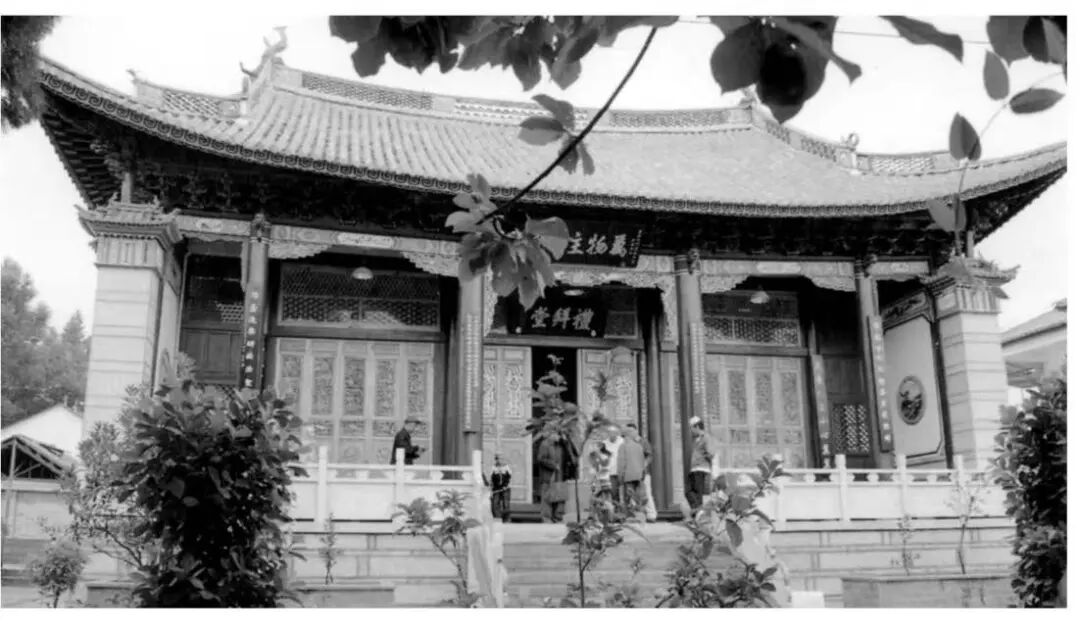
The Dali West Gate Mosque was called the "Changqingli Mosque" during the Qing Dynasty, and is commonly known as the West Gate Mosque. It is one of the oldest mosques in Dali. During the Xianfeng and Tongzhi eras of the Qing Dynasty, Du Wenxiu's "Grand Teaching Academy" was established here, and China's first woodblock-printed Quran was also completed here. After the uprising failed, it was confiscated by the local Qing authorities and later converted into the "Sanxiang Guildhall." Sanxiang refers to the historical townships of "Guilou Township," "Fengyang Township," and "Qingbi Township." For many years, the Hui Muslims of the old town continuously fought to reclaim the mosque. In the first year of the Republic, Commander Li Genren (style name Yinquan) was stationed in Dali to garrison the area. He agreed to let the Hui Muslims take back the mosque that rightfully belonged to them. Although the stele inscription frames this as being "given to the Hui people," Mr. Wang Tingzhi of the Yunnan Islamic Progressive Association actually donated 300 silver taels as compensation, making it a disguised buyback. The gentry of the three townships then selected a new site to build the new Sanxiang Guildhall. This stele records this historical legal case and details the itemized expenses for rebuilding the Sanxiang Guildhall.
This stele also serves as an important reference for studying the administrative changes of the three townships in Dali County and the history of its guildhalls.
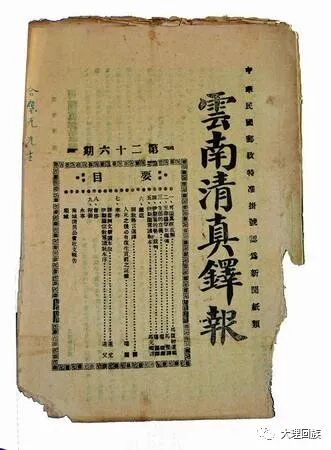
Regarding this history, the Dali County Branch of the Islamic Association's official dispatch (1941, Document No. 65) also records: "In the first year of the Republic, Commander Li Yinquan, the commander of the 2nd Division and current supervisory commissioner of Yunnan and Guizhou, traveled west on an inspection tour and stationed his headquarters in Dali. The Hui Muslims petitioned outside his headquarters, pleading for the return of their original mosque. Commander Li already agreed, but it was subsequently blocked by local reactionary gentry and failed to materialize, resulting only in the return of the single Changqingli Mosque." (See *Collected Works of Mr. Ma Yuan of Dali*, page 20)
Wang Tingzhi, style name Xiangchen, was a native of Kunming, Yunnan, a Hui Muslim, and an army lieutenant general born in 1882 (the 8th year of the Guangxu reign under the Qing Dynasty). He graduated from the 6th infantry and engineering class of the Imperial Japanese Army Academy. Upon returning to China, he served as a Yunnan engineering battalion commander, regiment commander, commander of the 6th Infantry Regiment, head of the engineering department at the Yunnan Military Academy, and commander of the 1st Brigade of the 1st Yunnan Division. In 1915, during the Yunnan National Protection Uprising, he served as a military counselor for the National Protection Army. After the establishment of the 5th Army of the National Protection Army, he served as commander of its 1st Regiment, and later as an advisor to the Yunnan Military Governor's Office. At the time, he also served as the vice president of the Yunnan Islamic Progressive Association.
(Recorded by Ma Zhihong)
Selected Stone Inscriptions of the Dali Hui Muslims: Record of the Newly Built Sanxiang Guildhall and the Traditions of Yunnan Hui Guildhalls, Commerce, and Philanthropy
Abstract: This article compiles the key points from "Selected Stone Inscriptions of the Dali Hui Muslims: Record of the Newly Built Sanxiang Guildhall and the Traditions of Yunnan Hui Guildhalls, Commerce, and Philanthropy," maintaining the original paragraph and image order. It is ideal for readers and researchers looking up long-tail keywords related to Dali Hui stone inscriptions, the Sanxiang Guildhall, and Yunnan Hui Muslims.
Record of the Newly Built Sanxiang Guildhall - Erected jointly by the gentry of Sanxiang on an auspicious day in July, the 2nd Year of the Republic of China
The origin of the Sanxiang Guildhall dates back over thirty years. Shortly after the Hui uprisings were pacified, our elders noted that because the three townships (Sanxiang) were scattered about, coming into the walled city for official business left us with nowhere to host guests or gather. This caused all kinds of inconveniences and bottlenecks. Therefore, a public office was established at Xiangshui Pass in Yucheng, which lasted for over thirty years. Everyone from Sanxiang coming into the city on official business stayed there. In February of the first year of the Republic (1912), Commander Yinquan was stationed in Yu and ordered the Sanxiang gentry to hand over the public office located at Xiangshui Pass to the Hui Muslims to use as a mosque, while reallocating the abandoned office of the county school to serve as the Sanxiang administrative base. In addition, Wang Tingzhi from the Islamic community contributed 300 silver taels for renovation costs. At the time, gentlemen Yang Shangpei, Zhao Panyuan, Yan Zhenggui, Zhang Ximing, Du Hua, Duan Lingyun, Zhao Zhonghe, Yang Zhou, Li Zhifa, Zhang Liangheng, and Yang Xin held discussions and decided to build a brand-new guildhall on the abandoned county school grounds that had been allocated to Sanxiang. Construction was voted on and started, but the renovation funds fell short. Worried that the project would grind to a halt, everyone racked their brains to raise funds. We managed to secure 900-odd taels in cash, allowing the front section—four-sided with a single corner—to finally be completed. Afterward, Mr. Yang Yucang and I were elected as guildhall managers, and we went on to add a second-story meeting room, a kitchen, and stables, while also stocking all necessary daily utensils. Using the rental income from the guildhall's public farmland and the rent from the front rooms to cover Sanxiang's operating expenses, and using the back rooms as our office, we finally had a place with proper hospitality and a place to stay. Those who come after us will continue to maintain and expand this place, ensuring the scale of the guildhall grows grander day by day, with no end in sight.
Carefully written by Wang Yingyuan, manager of the Sanxiang Guildhall, on the first day of the lunar month.
Front Section Renovation Expenses
Income: 550 silver taels for the land purchase of the old public office. Expenses: 671 silver taels and 6 mian for lumber, stone, tiles, lime, nails, and straw. Income: 259 silver taels in donations. Expenses: 162 silver taels and 75 wen for mason, carpenter, and laborer wages. Income: 6 silver taels and 44 wen in old Sanxiang savings. Expenses: 46 silver taels and 95 wen for paint, painting labor, pigments, and miscellaneous items.
Total income came to 815 silver taels and 44 wen, while total expenses came to 880 silver taels and 94 wen, leaving a deficit of 65.5 silver taels.
Rear Section Renovation Expenses
Income: 61 silver taels and 5 wen from farmland sales. Expenses: 75 silver taels and 18 wen for labor, materials, equipment making, and public affairs meetings. Income: 4 silver taels, 38 qian, and 7 li from grain sales. Expenses: 65.5 silver taels to cover the previous section's deficit. Income: 10 silver taels, 27 qian, and 8 li from donation deposits and room rent.
Total income came to 75 silver taels, 71 qian, and 5 li, while total expenses came to 140 silver taels, 68 qian, and 5 li, leaving a deficit of 64 silver taels, 96 qian, and 5 li.
Property deeds: One old holding of lower-grade farmland at Chai Zi No. 225, measuring 2 mu and 5 fen; one plot of 2 mu and 8 li contributed by Wang Shuosheng. These fields are located in Xiadengdian, Fengyangyi.
Notes:
This stele is currently located inside the West Gate Mosque in Dali Old Town. It stands 120 centimeters tall and 68 centimeters wide.
The Dali West Gate Mosque was called the "Changqingli Mosque" during the Qing Dynasty, and is commonly known as the West Gate Mosque. It is one of the oldest mosques in Dali. During the Xianfeng and Tongzhi eras of the Qing Dynasty, Du Wenxiu's "Grand Teaching Academy" was established here, and China's first woodblock-printed Quran was also completed here. After the uprising failed, it was confiscated by the local Qing authorities and later converted into the "Sanxiang Guildhall." Sanxiang refers to the historical townships of "Guilou Township," "Fengyang Township," and "Qingbi Township." For many years, the Hui Muslims of the old town continuously fought to reclaim the mosque. In the first year of the Republic, Commander Li Genren (style name Yinquan) was stationed in Dali to garrison the area. He agreed to let the Hui Muslims take back the mosque that rightfully belonged to them. Although the stele inscription frames this as being "given to the Hui people," Mr. Wang Tingzhi of the Yunnan Islamic Progressive Association actually donated 300 silver taels as compensation, making it a disguised buyback. The gentry of the three townships then selected a new site to build the new Sanxiang Guildhall. This stele records this historical legal case and details the itemized expenses for rebuilding the Sanxiang Guildhall.
This stele also serves as an important reference for studying the administrative changes of the three townships in Dali County and the history of its guildhalls.
Regarding this history, the Dali County Branch of the Islamic Association's official dispatch (1941, Document No. 65) also records: "In the first year of the Republic, Commander Li Yinquan, the commander of the 2nd Division and current supervisory commissioner of Yunnan and Guizhou, traveled west on an inspection tour and stationed his headquarters in Dali. The Hui Muslims petitioned outside his headquarters, pleading for the return of their original mosque. Commander Li already agreed, but it was subsequently blocked by local reactionary gentry and failed to materialize, resulting only in the return of the single Changqingli Mosque." (See *Collected Works of Mr. Ma Yuan of Dali*, page 20)
Wang Tingzhi, style name Xiangchen, was a native of Kunming, Yunnan, a Hui Muslim, and an army lieutenant general born in 1882 (the 8th year of the Guangxu reign under the Qing Dynasty). He graduated from the 6th infantry and engineering class of the Imperial Japanese Army Academy. Upon returning to China, he served as a Yunnan engineering battalion commander, regiment commander, commander of the 6th Infantry Regiment, head of the engineering department at the Yunnan Military Academy, and commander of the 1st Brigade of the 1st Yunnan Division. In 1915, during the Yunnan National Protection Uprising, he served as a military counselor for the National Protection Army. After the establishment of the 5th Army of the National Protection Army, he served as commander of its 1st Regiment, and later as an advisor to the Yunnan Military Governor's Office. At the time, he also served as the vice president of the Yunnan Islamic Progressive Association.
(Recorded by Ma Zhihong)
