

Yunnan Mosques
Halal Food Guide Dali: Authentic Yunnan Hui Muslim Food, Xizhou Mosque and Erhai Travel
Articles • yusuf908 posted the article • 0 comments • 221 views • 2026-05-22 22:09
Summary: This Dali halal food guide follows a family road trip around Erhai Lake, Dali Ancient City, Xizhou, local mosques, halal rice noodles, flower cakes, Bai-Hui Muslim culture, and practical food notes for Muslim travelers in Yunnan.
A Guide to Halal Food in Dali is presented here as a firsthand travel account in clear English, beginning with this scene: I have been to Dali twice. The first time was in the winter of 2016. I was single then and took a train from Beijing to Lhasa by myself. The account keeps its focus on Dali Mosques, Chinese Muslims, Muslim Travel while preserving the names, places, food, and historical details from the Chinese source.
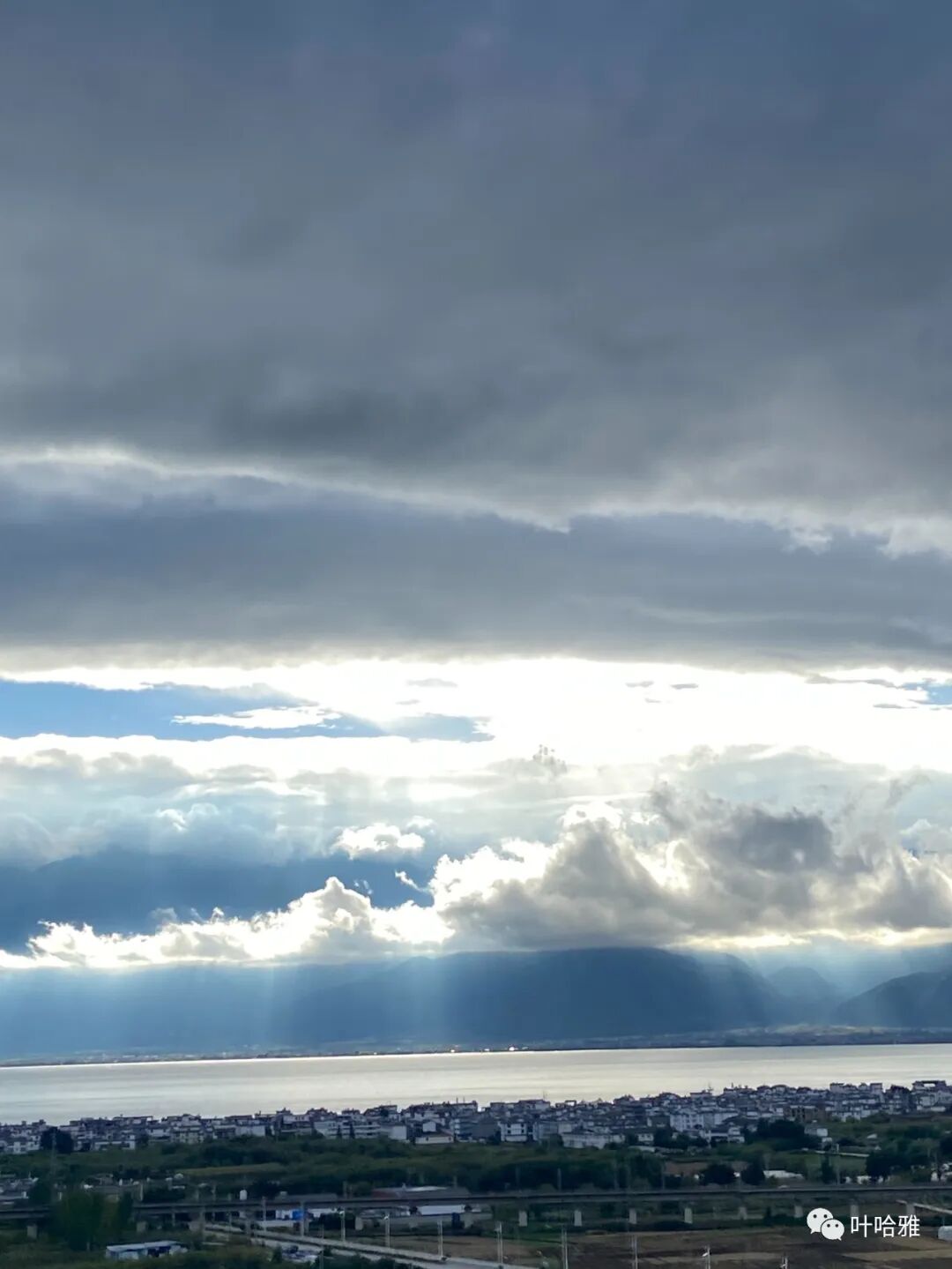
I have been to Dali twice. The first time was in the winter of 2016. I was single then and took a train from Beijing to Lhasa by myself. After spending eight days in Tibet, I could not stand the dry winter air or the lack of good food. I took a long-distance bus from Lhasa for three days and two nights to Shangri-La in Yunnan, then traveled to Dali. I stayed at an inn in the Dali Ancient City and spent two days visiting seven mosques.
Dali is actually very large. Besides the Dali Ancient City, there are several other ancient towns nearby. Since I felt transportation was inconvenient during my first visit, my family of three drove from Beijing all the way to the southwest this time. We visited Xizhou, Eryuan, Yangbi, and Weishan in Dali. All these places have very traditional and beautiful ancient towns and old mosques.
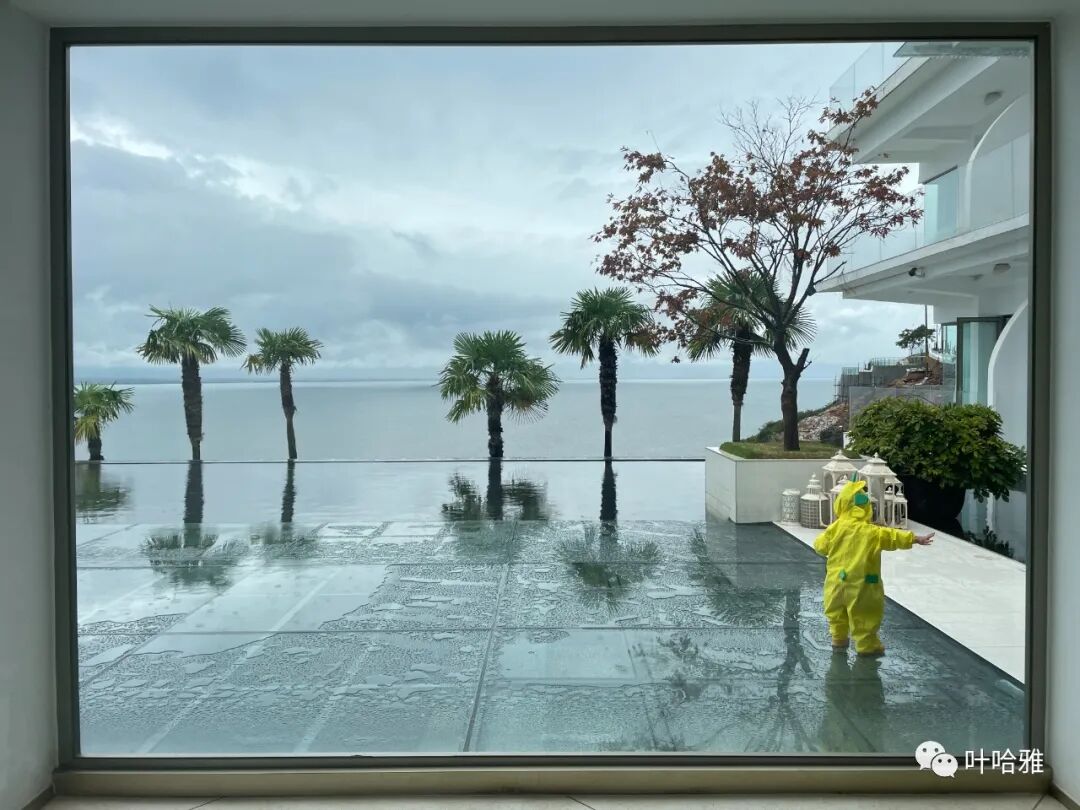
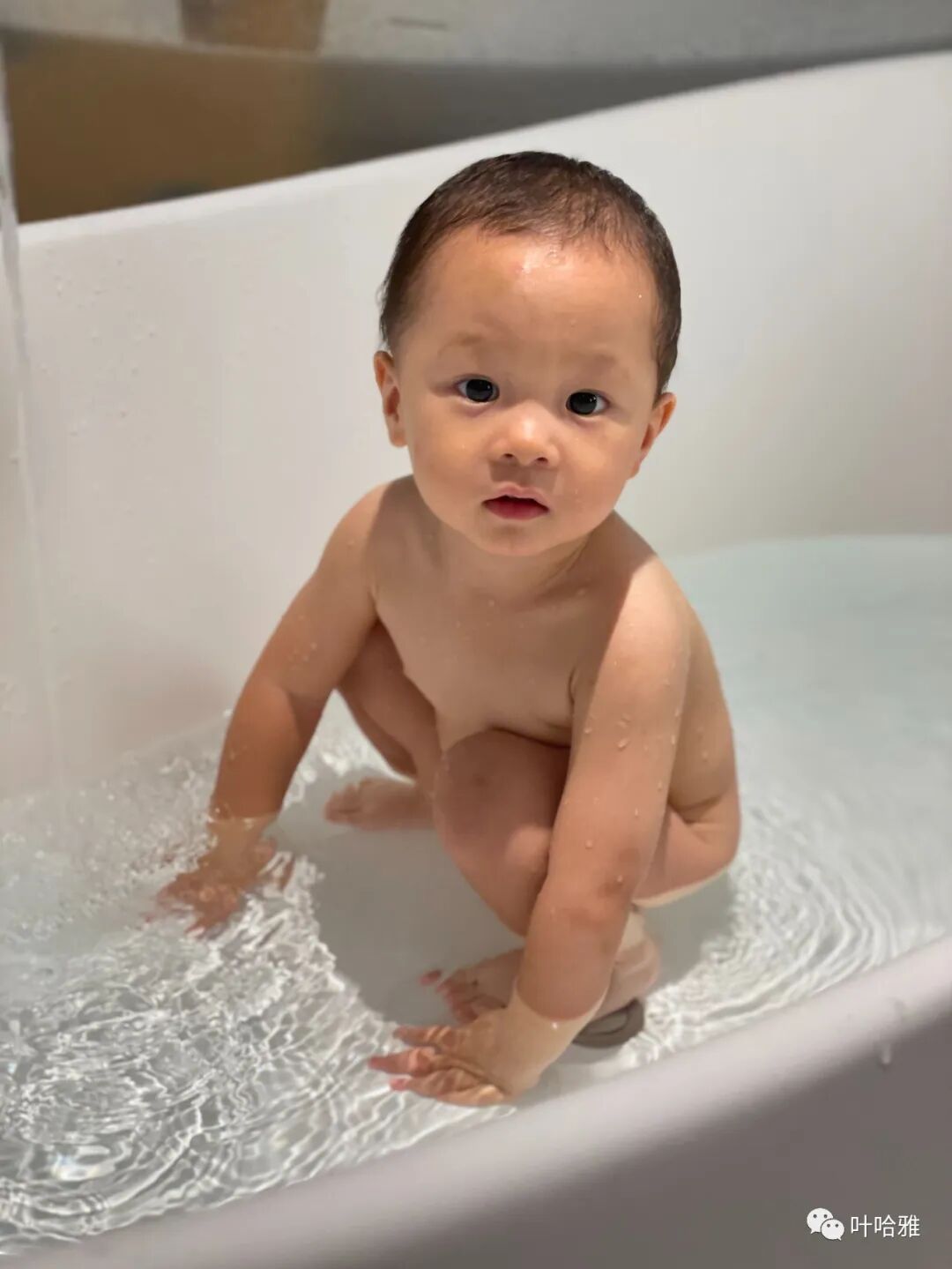
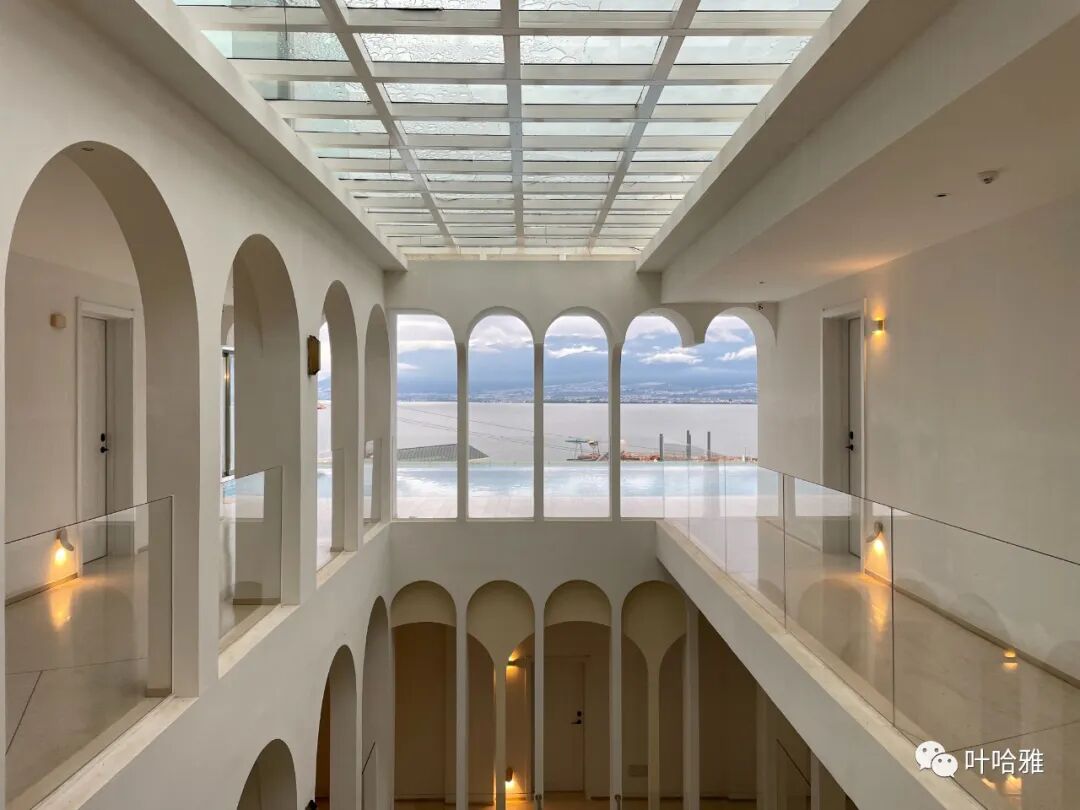
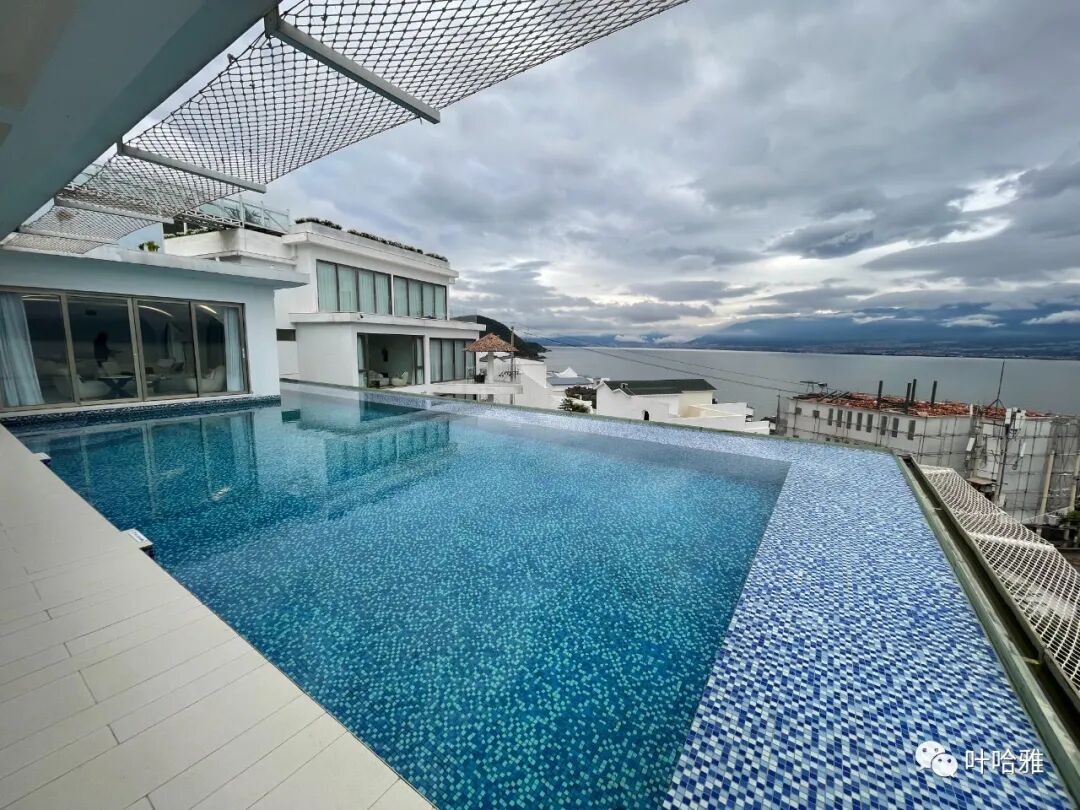
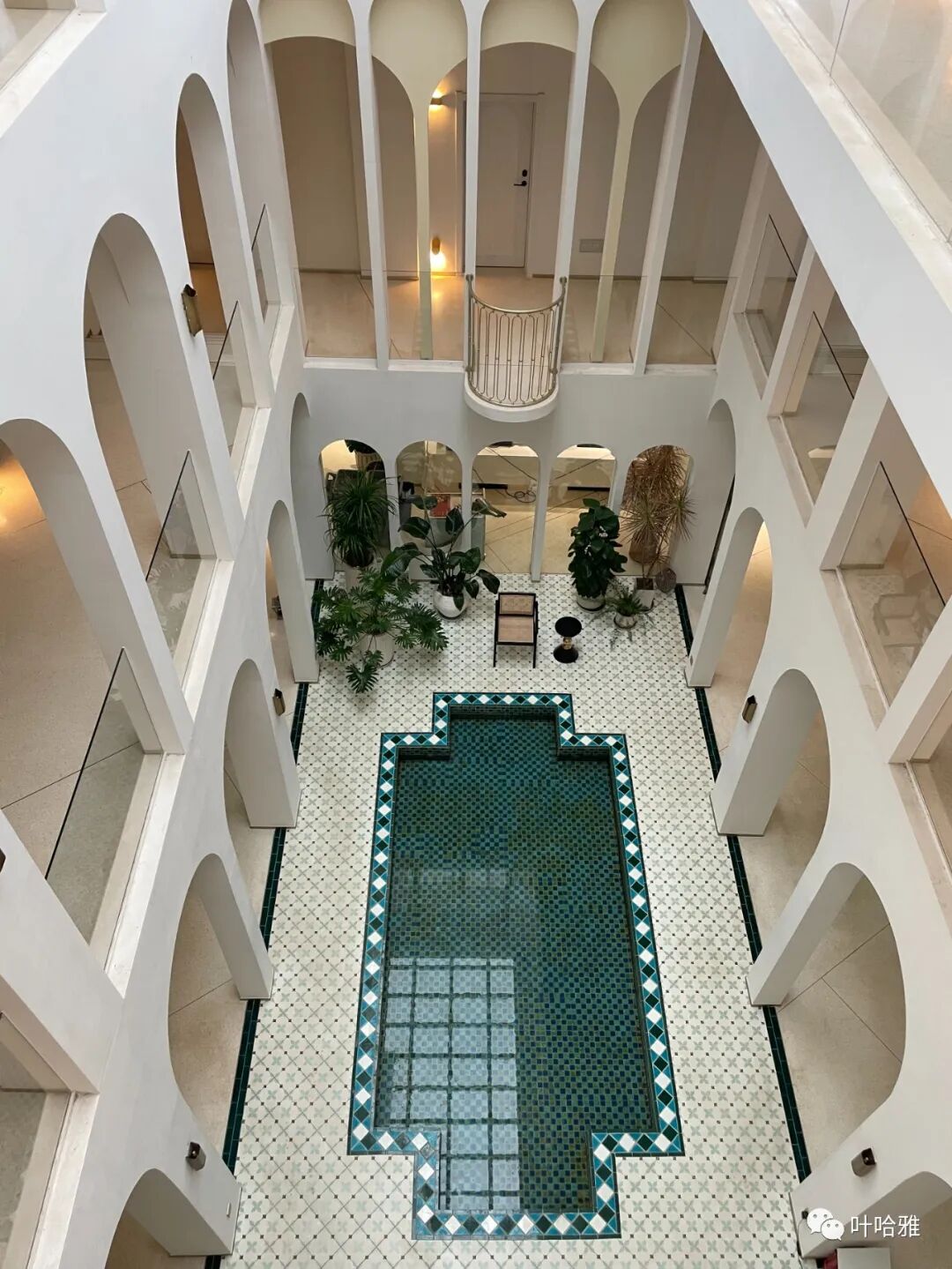
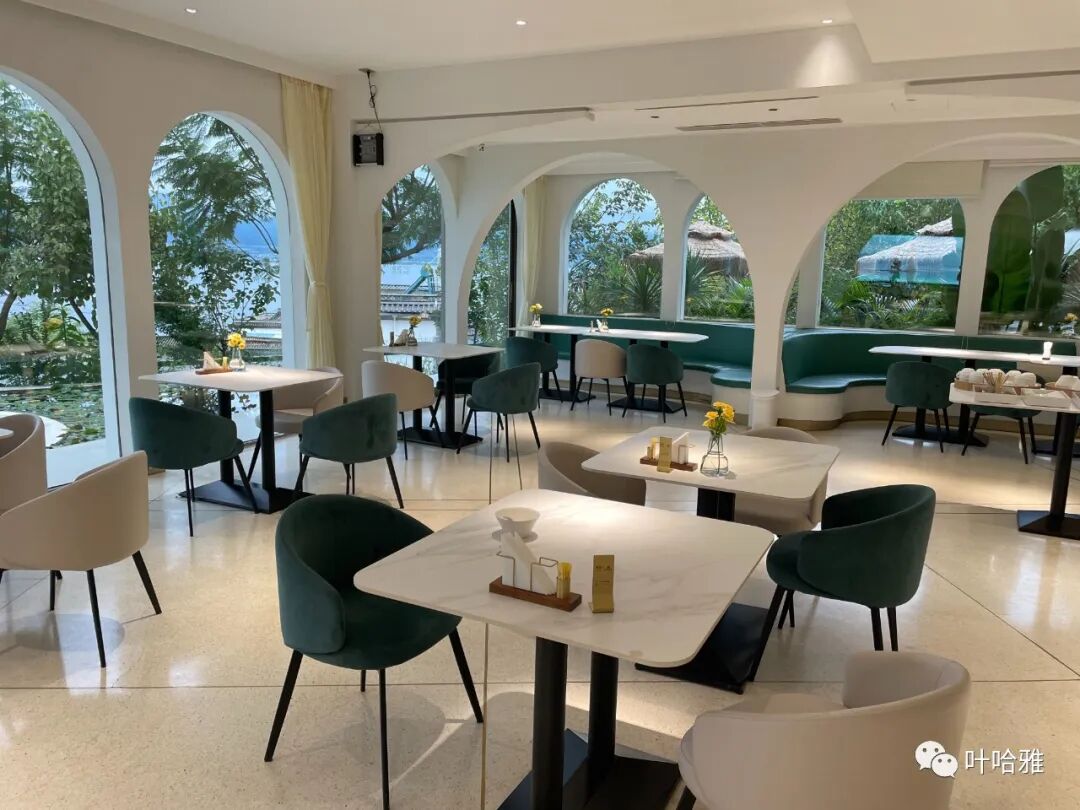
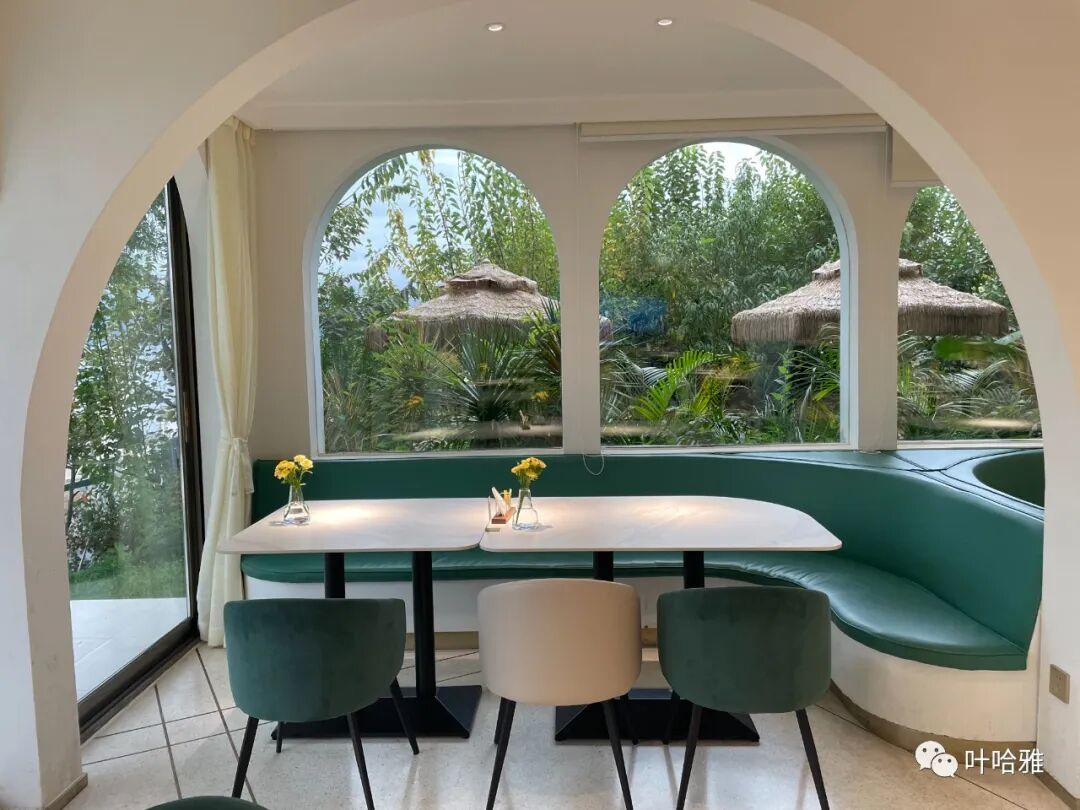
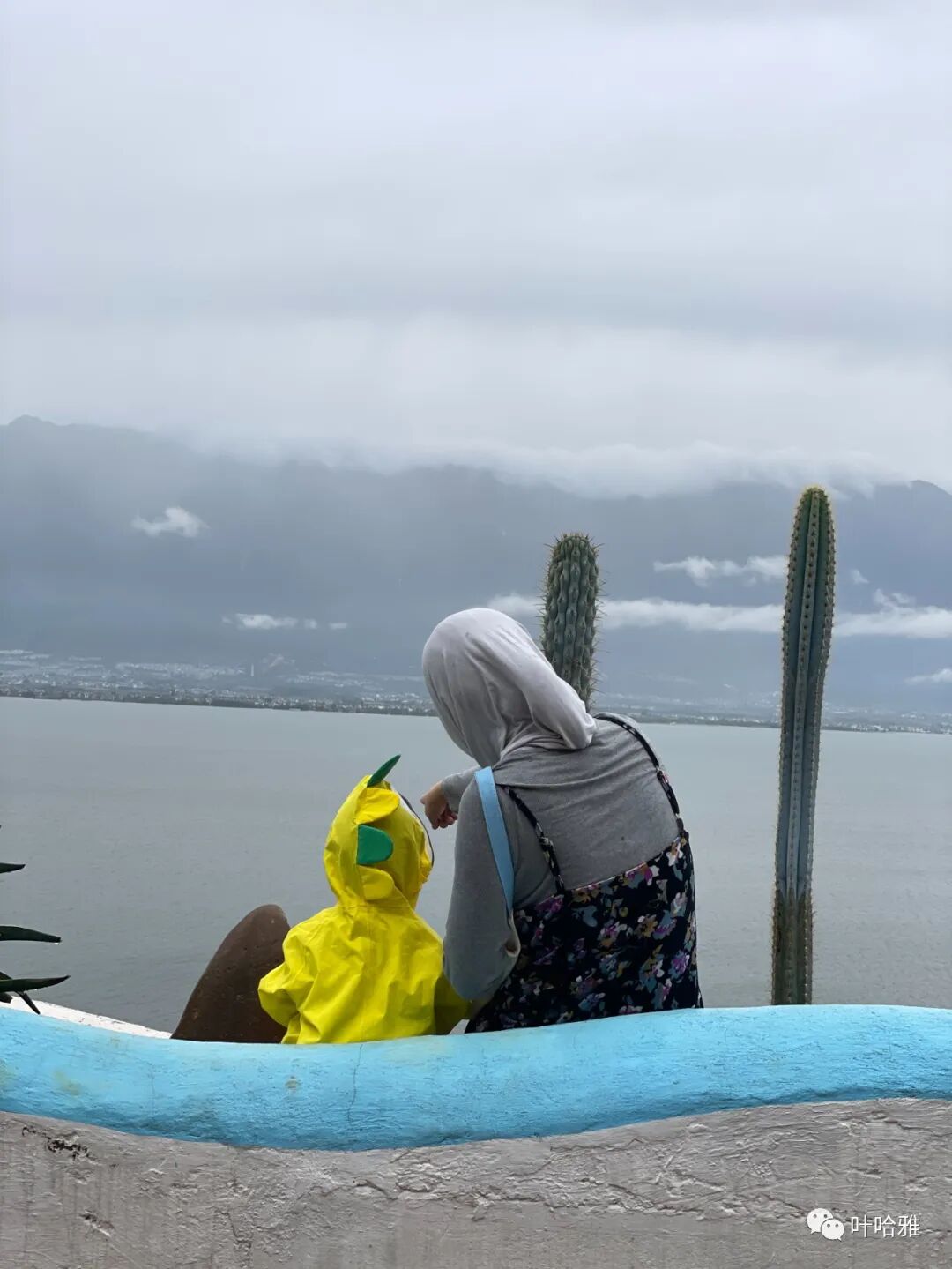
When I traveled alone before, I could make do with anything, and a cheap inn for a few dozen yuan was enough. Now that I travel with Fahim, I have higher standards for accommodation. The room needs to be as large as possible with a big bed, and it is best to have a bathtub and a swimming pool because my son loves playing in the water. We chose to stay one night at the Dali Yuewan Villa Half-Mountain Sea View Hotel on the east side of Erhai Lake. From the hotel terrace, you can overlook the full view of Erhai Lake. It also has an infinity pool and offers free photography services.
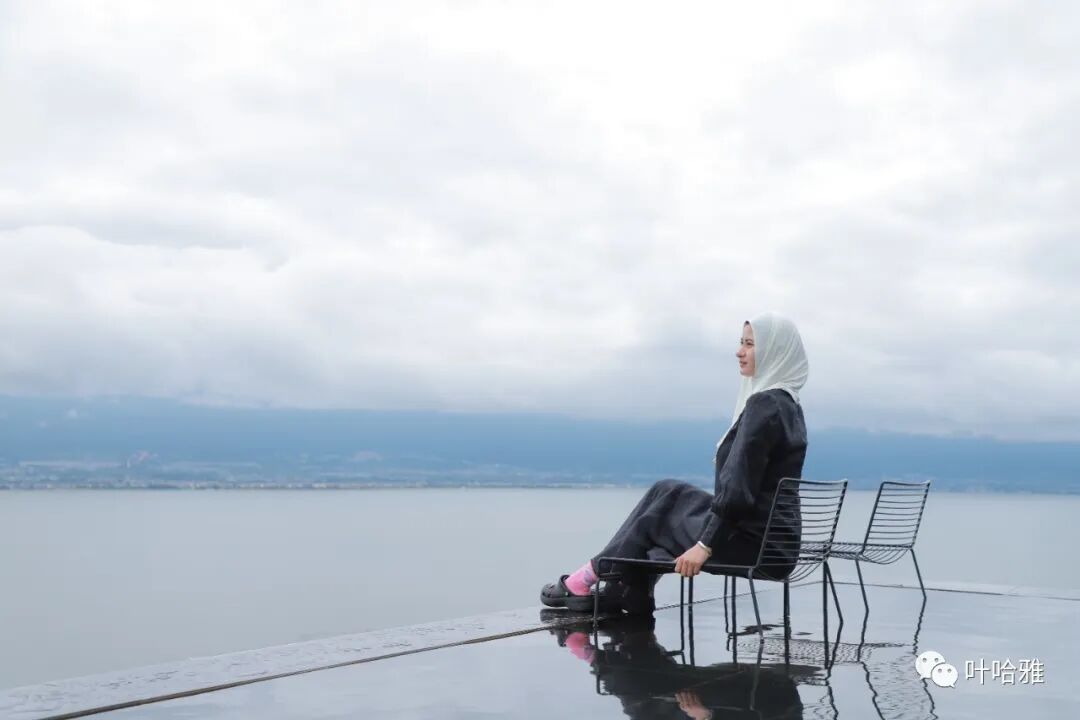
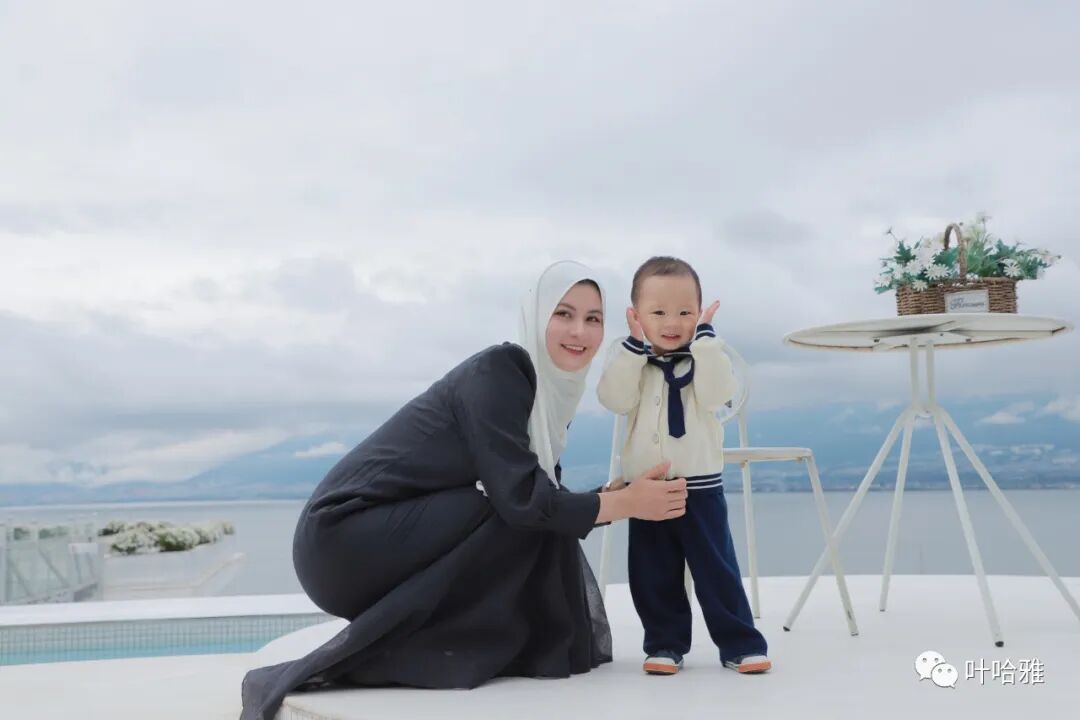
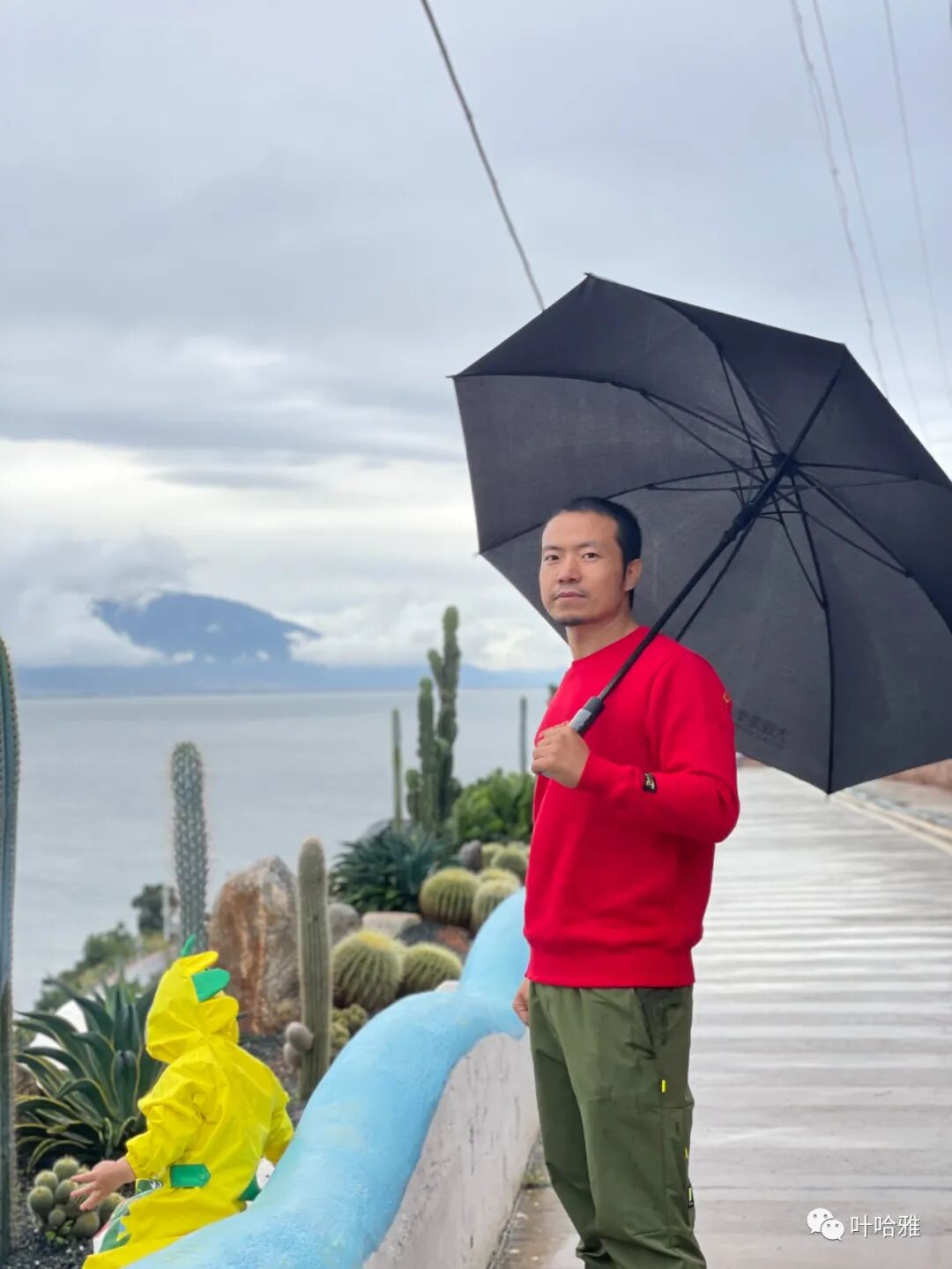
It is worth noting that the east side is more than ten kilometers away from the Dali Ancient City. There are only two or three halal restaurants around the east side, so it is not as convenient as the area near the ancient city on the west side. If you do not have a car, I suggest staying near the ancient city. However, the scenery on the east side is more beautiful, the hotel environments are better, and there are many trendy cafes.
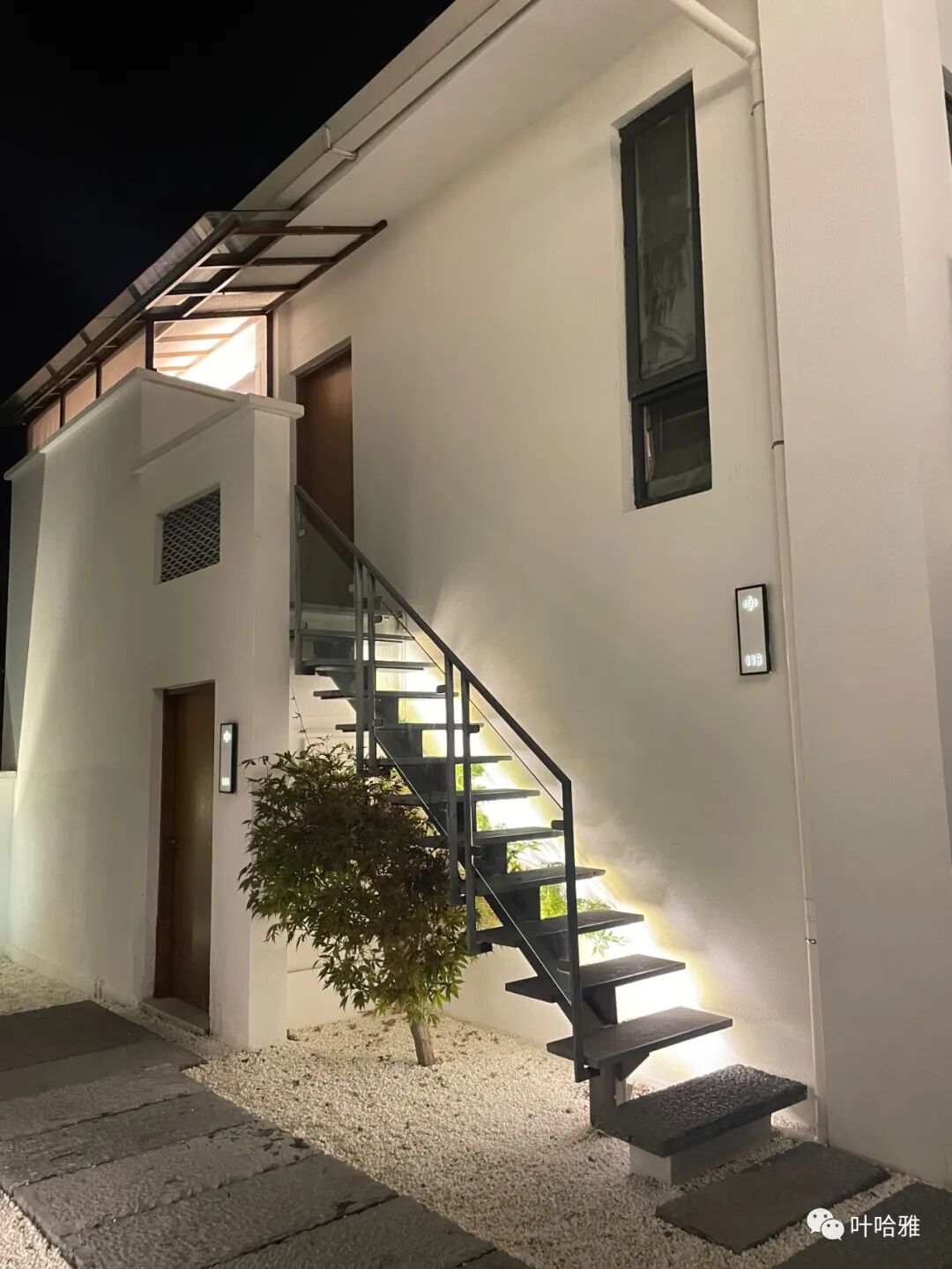
After finishing our family time taking photos at the popular tourist spots on the east side, we moved into the ancient city on the second day. We stayed at The One Courtyard (THE ONE Gu Cheng Yi Hao Yuan). The hotel is located right at the entrance of the ancient city, making it very convenient. If you are driving, be aware that the ancient city has traffic restrictions during the day. Cars inside can only leave and cannot enter. You must wait until after 8:00 PM to drive into the hotel parking lot in the ancient city.
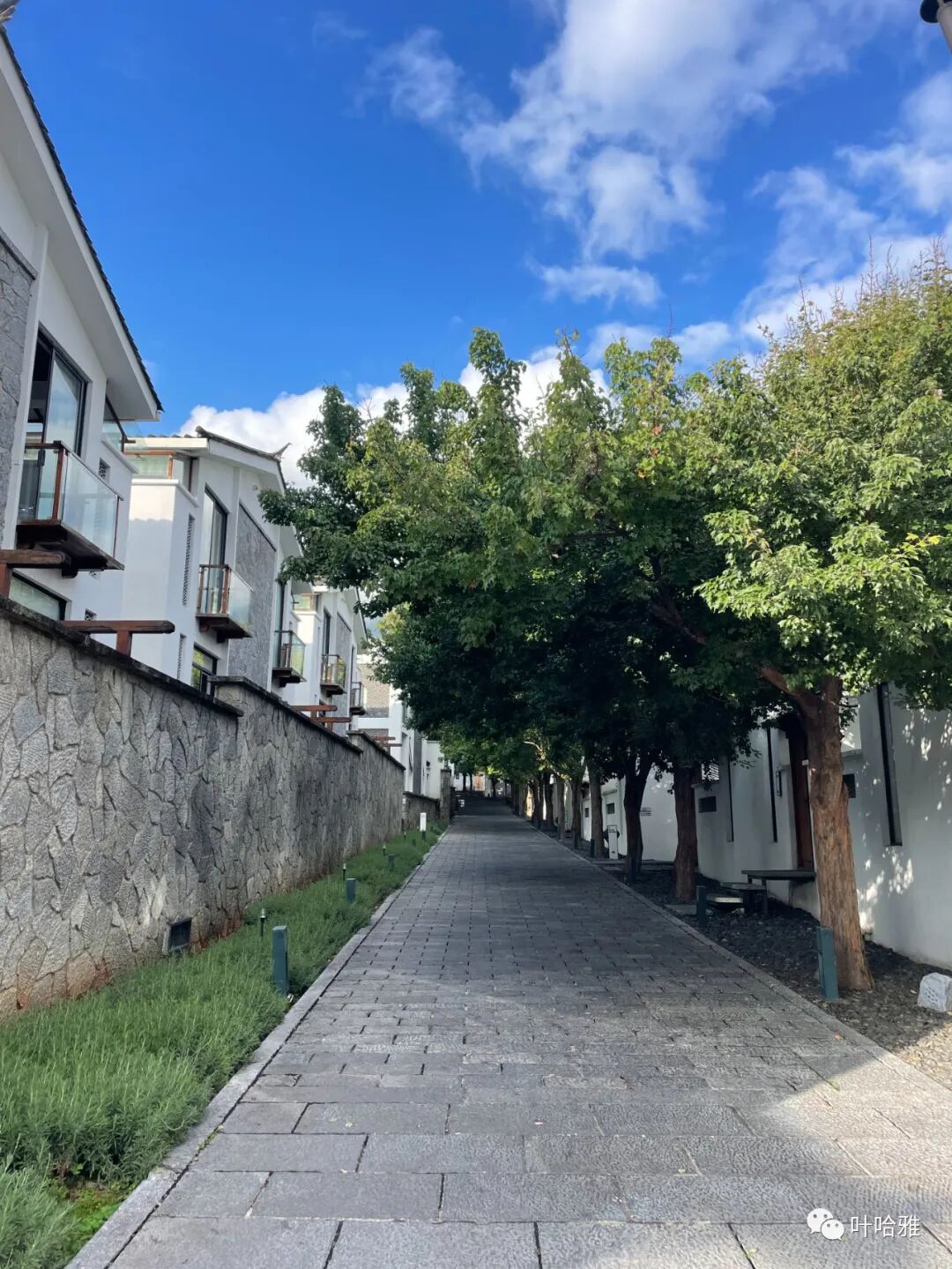
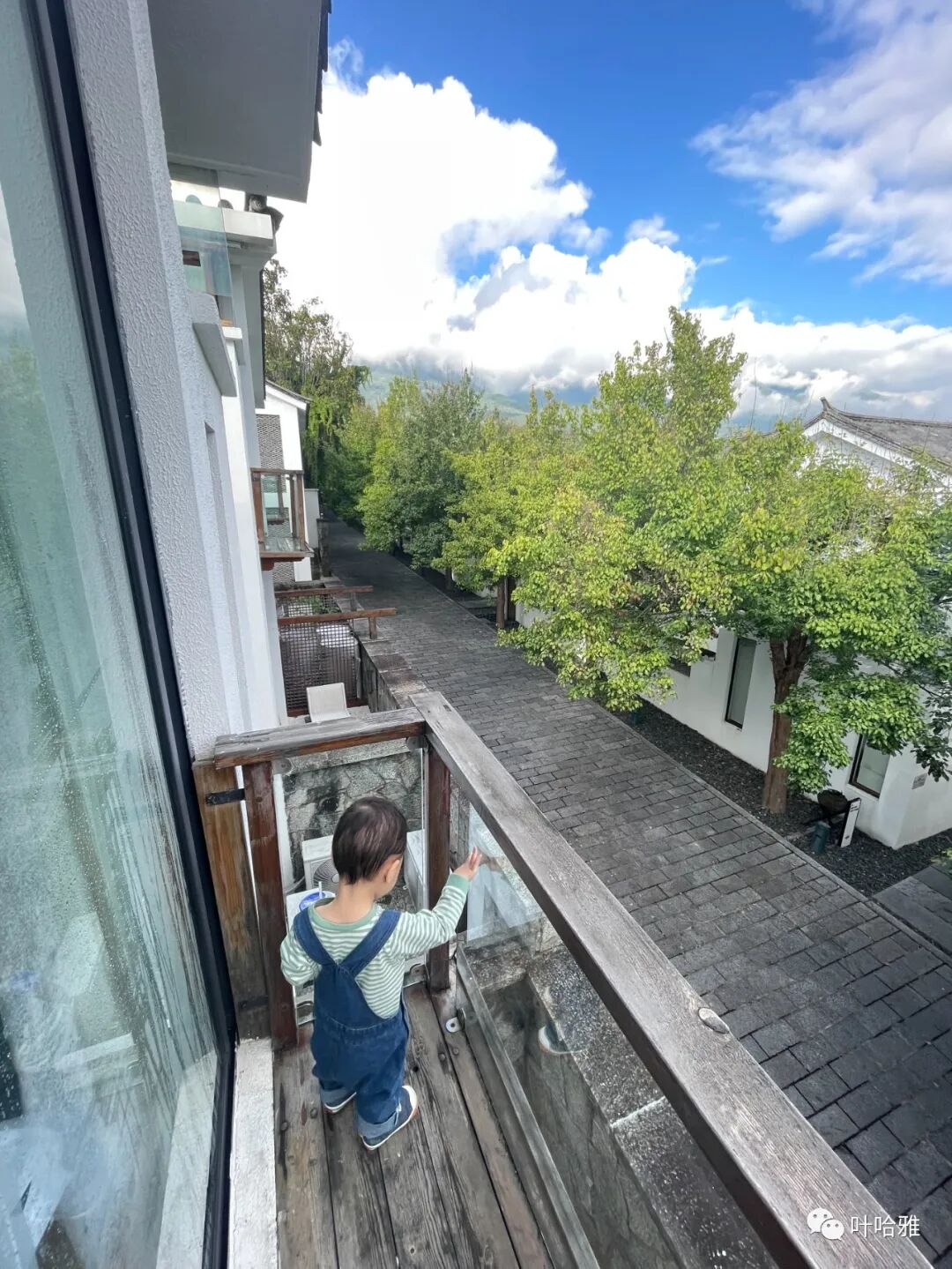
The big bathtub in the room kept Fahim busy playing all night, and the pebbles in the courtyard kept him busy playing all morning.
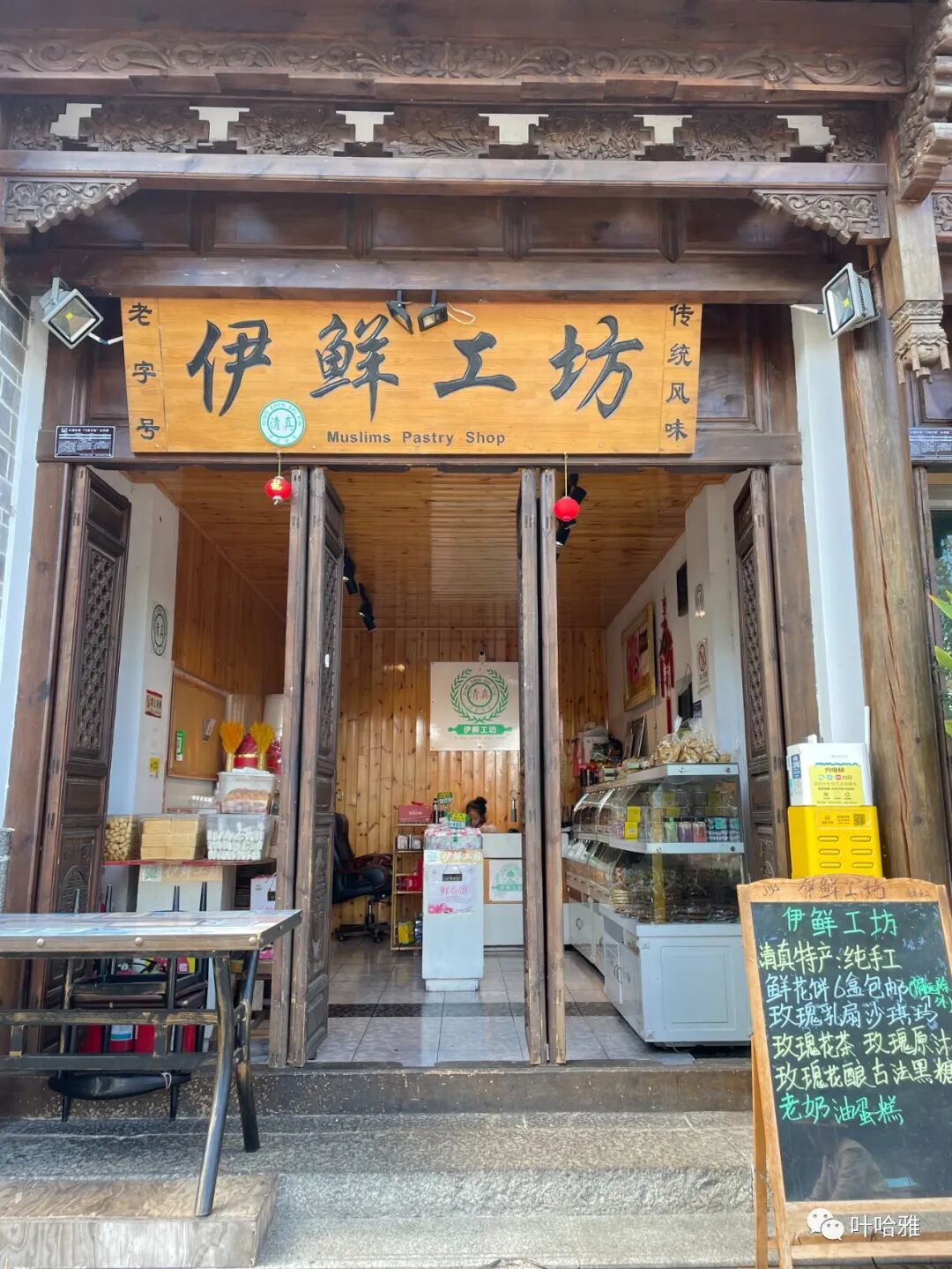
While riding a three-person bicycle in the ancient city, we passed the South Gate Mosque and saw this shop called Yixian Workshop. We bought some flower cakes (xianhuabing), which were surprisingly delicious—better than the ones we bought elsewhere later. They were 4 yuan each, with just the right amount of sweetness, and were both flaky and soft.
We bought maltose rice (maiyatangfan) from a Hui Muslim stall on the side of the road in the ancient city. It is a Yunnan specialty that is cold, refreshing, and sweet.
Dali Ancient City South Gate Mosque.
The South Gate Mosque in Dali was first built during the Yuan Dynasty and is one of the one hundred ancient mosques in the country. Before the failure of the Du Wenxiu Uprising, the mosque was located on Cangping Street, which was recorded in The Travel Diaries of Xu Xiake. After the Du Wenxiu Uprising failed, the mosque and its 120 mu of mosque land were confiscated as rebel property by the Qing government's liquidation committee. The mosque was converted into a City God Mosque, and in 1944, it was changed into a local court. The current South Gate Mosque is located inside the Dali Ancient City.
Salam Rice Noodle Shop
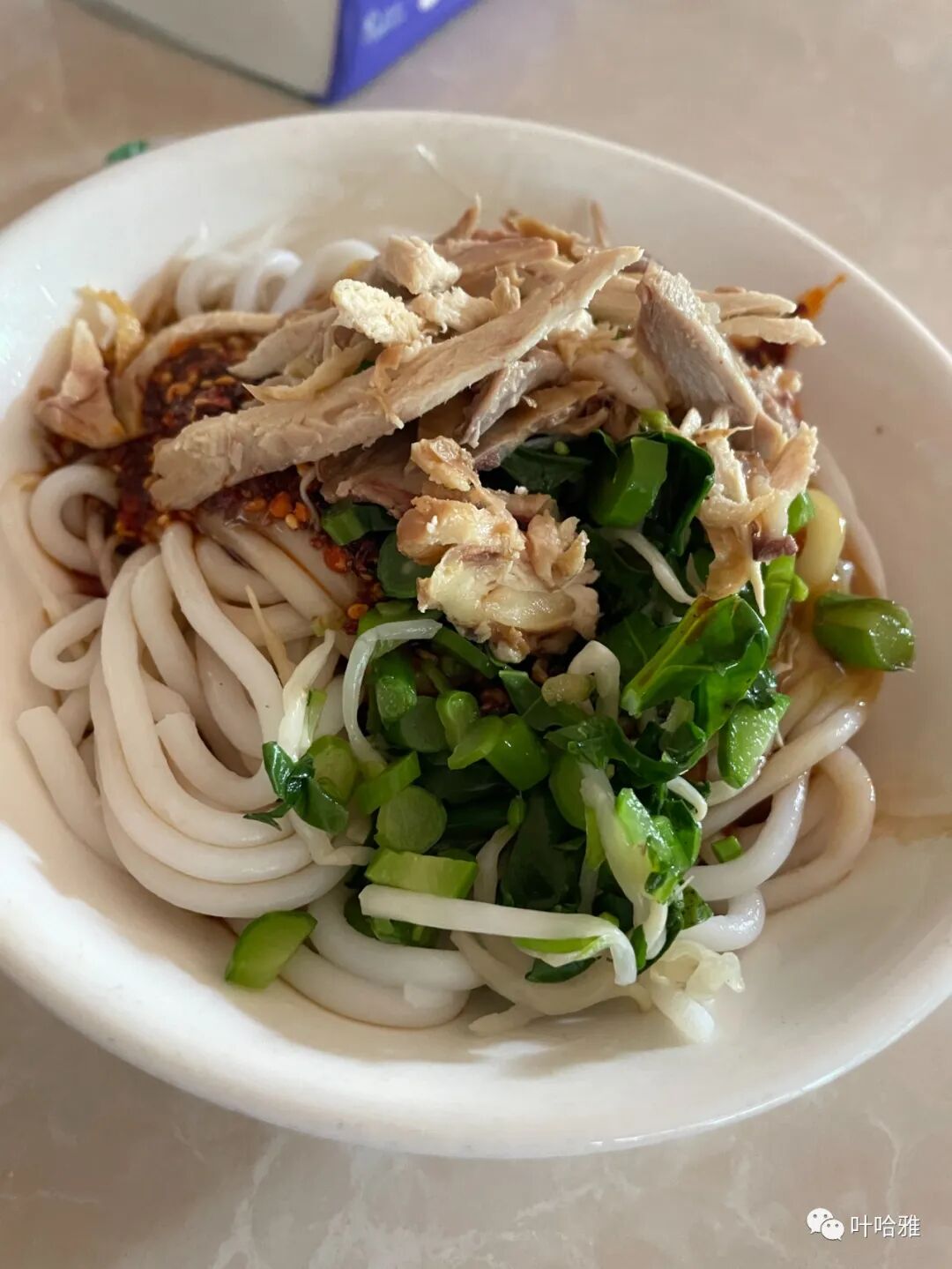
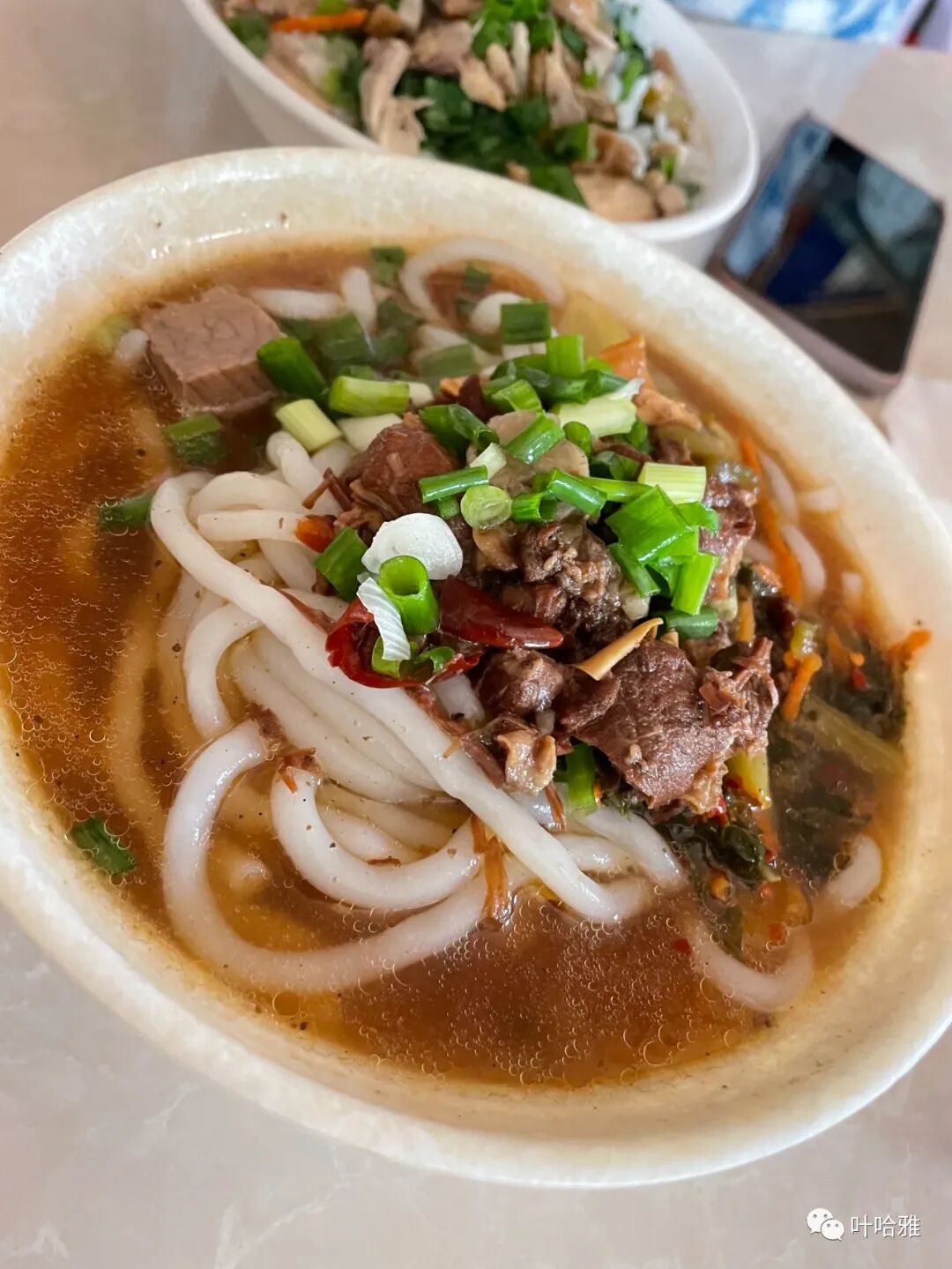
This small shop near the south gate of Dali Ancient City sells rice noodles (mixian), rice cakes (ersi), and rice soup. They do not sell alcohol, and their cold chicken rice noodles are excellent.
Dried beef (niuganba) hangs from the ceiling beams, which is a specialty meat for Hui Muslims in Yunnan.
Youfeng Courtyard
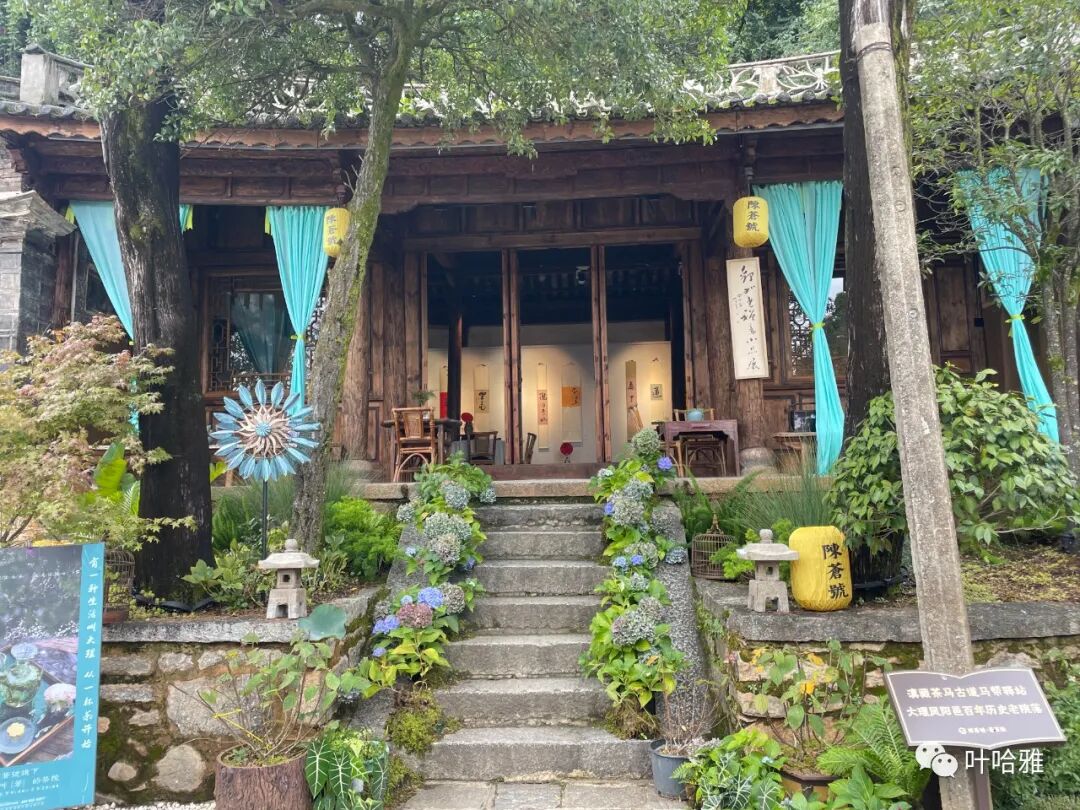
Youfeng Courtyard is a filming location for the TV show Meet Yourself starring Liu Yifei. I have not seen it, but my wife told me all about it.
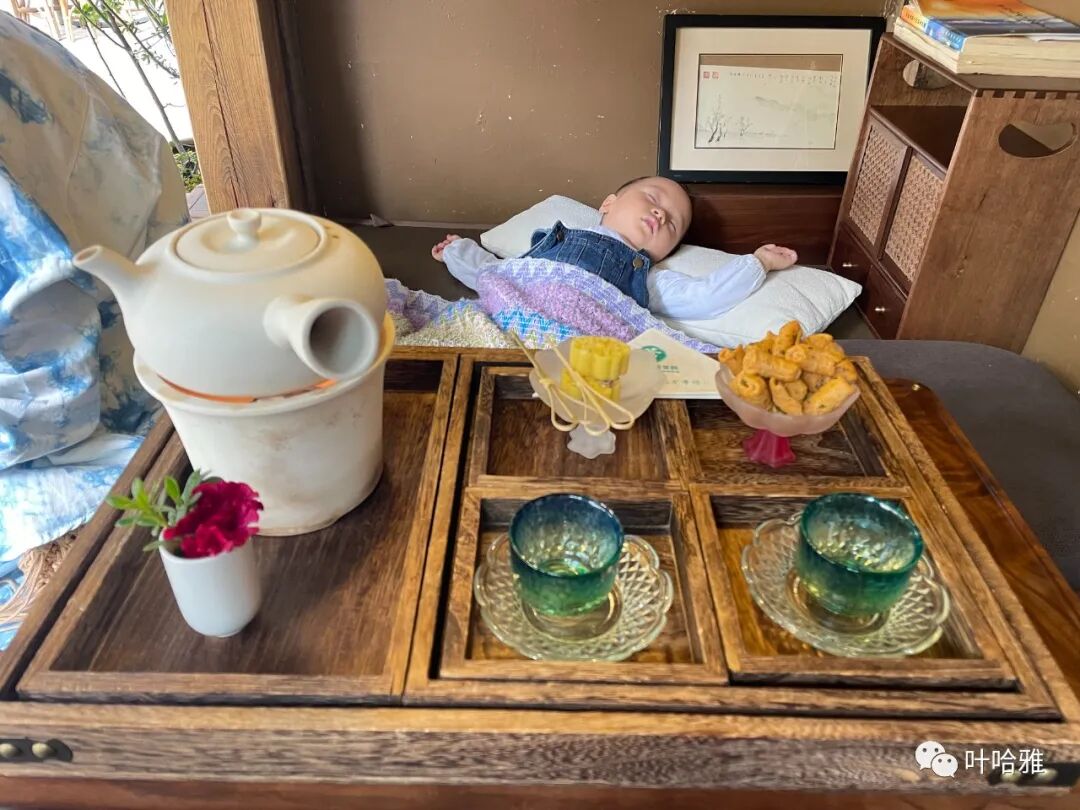
We happened upon a teahouse next to the courtyard and sat there for the afternoon. While Fahim took a nap, we enjoyed tea in the courtyard.
Dali City has eighteen mosques, not counting the rest of Dali Prefecture. Contact information is in the table below.
Dali City Fengyi Mosque
Fengyi Mosque was built during the Qing Dynasty, and the current building was renovated in 2001.
Xiaguan Mosque
Xiaguan Mosque was built in 1915, and the current building was renovated in 2004.
Nanwuliqiao Mosque
Nanwuliqiao is a Hui Muslim village less than three kilometers from Dali Ancient City. The village has a street dedicated to halal food (Nanwuliqiao Qingzhen Meishi Yitiaojie). The Nanwuliqiao mosque is also the largest mosque in Dali, first built in the tenth year of the reign of Mongke Khan of the Yuan Dynasty (1233).
In Yunnan, there is a custom where locals invite guests from afar to stand in the first row near the imam during namaz, as they want to offer the best spot to their guests.
Nanwuliqiao Halal Food Street
I took these photos in 2016. The signs have changed now, but it is still a halal food street. There is much more halal food here than in Dali Ancient City, and there are fewer tourists and more locals.
I recommend trying the Dai-style barbecue, because it is hard to find halal versions once you leave Dali.
Dali Zhihua Mosque
Zhihua Mosque was first built during the Hongwu period of the Ming Dynasty, and the current building was completed in 2000.
Dali Ximen Mosque
The history of Ximen Mosque dates back to the Yuan Dynasty. It was first built in the 15th year of the Zhiyuan reign (1278), making it over 700 years old. It was built by Qilie Zuocheng, a general under the Yunnan King Sayyid Ajjal Shams al-Din Omar, and is considered one of the oldest mosques in Yunnan.
Du Wenxiu, a leader of the ethnic uprisings in Yunnan during the late Qing Dynasty, once founded the Duzhangjiao School at Ximen Mosque.
Xiadui Mosque
Xiadui Village is also a Hui Muslim village. The mosque was first built during the Qianlong period of the Qing Dynasty, and this is the place where Du Wenxiu died as a martyr.
As a late Qing dynasty ethnic leader who fought against the Qing, Du Wenxiu was slandered by his enemies for colluding with foreign powers, setting up his own base, and establishing an independent state, all based on a flyer that once circulated in Yunnan. I once found foreign language documents to research this issue.
Regarding several issues of Du Wenxiu's foreign relations: in foreign documents, two issues concerning the Hui Muslim uprising were long debated. One was why Yunnan Hui Muslims were called Pan-thay, and the other was the issue of the Dali Islamic State. The content of a flyer and the nature of a regime are two different things. A regime's nature might be reflected in a flyer, but judging a regime solely based on one flyer is still problematic. Baber and Gill both asked the Dali Hui Muslims about the Islamic State and the title of Sultan. They reached the same conclusion: the title of Sultan was completely foreign to everyone. Except for two or three imams, the locals never used it to address their leader, and no one even knew the name Suleiman.
Therefore, the issue of the Dali Islamic State actually stemmed from this flyer. Clearly, the purpose of distributing this flyer was to incite Hui Muslims in other regions to join the resistance against Qing rule. Its content represented the views and tendencies of a very small number of imams. Du Wenxiu's views on religion were not that narrow, and the flyer did not represent the nature of the Dali Hui Muslim regime.
Du Wenxiu advocated that the three religions should be of one heart and united as one. This meant Islam, Buddhism, and the Yi people's religion.
Yitianyuan Halal Cuisine, Dali Branch.
The main restaurant is in Kunming, and the Dali branch has been operating for 11 years. It is a relatively large Yunnan restaurant.
This is a photo of a napkin taken in 2016; it certainly wouldn't be designed like this today.
I had stir-fried beef (xiaochao huangniurou) and fried milk fan (zha rushan). This was my first time trying fried milk fan, a deep-fried dairy snack invented by Hui Muslims.
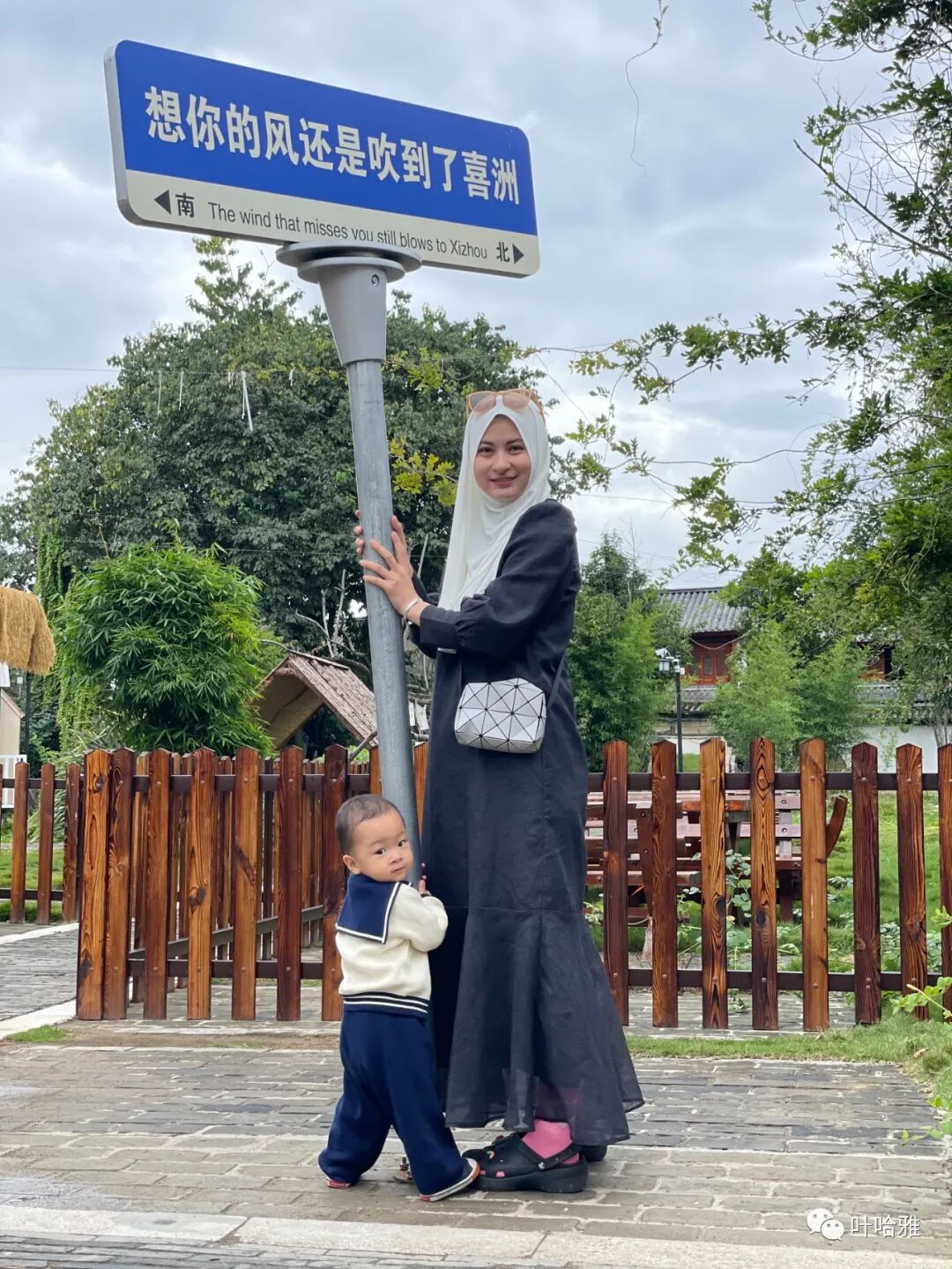
Xizhou Ancient Town
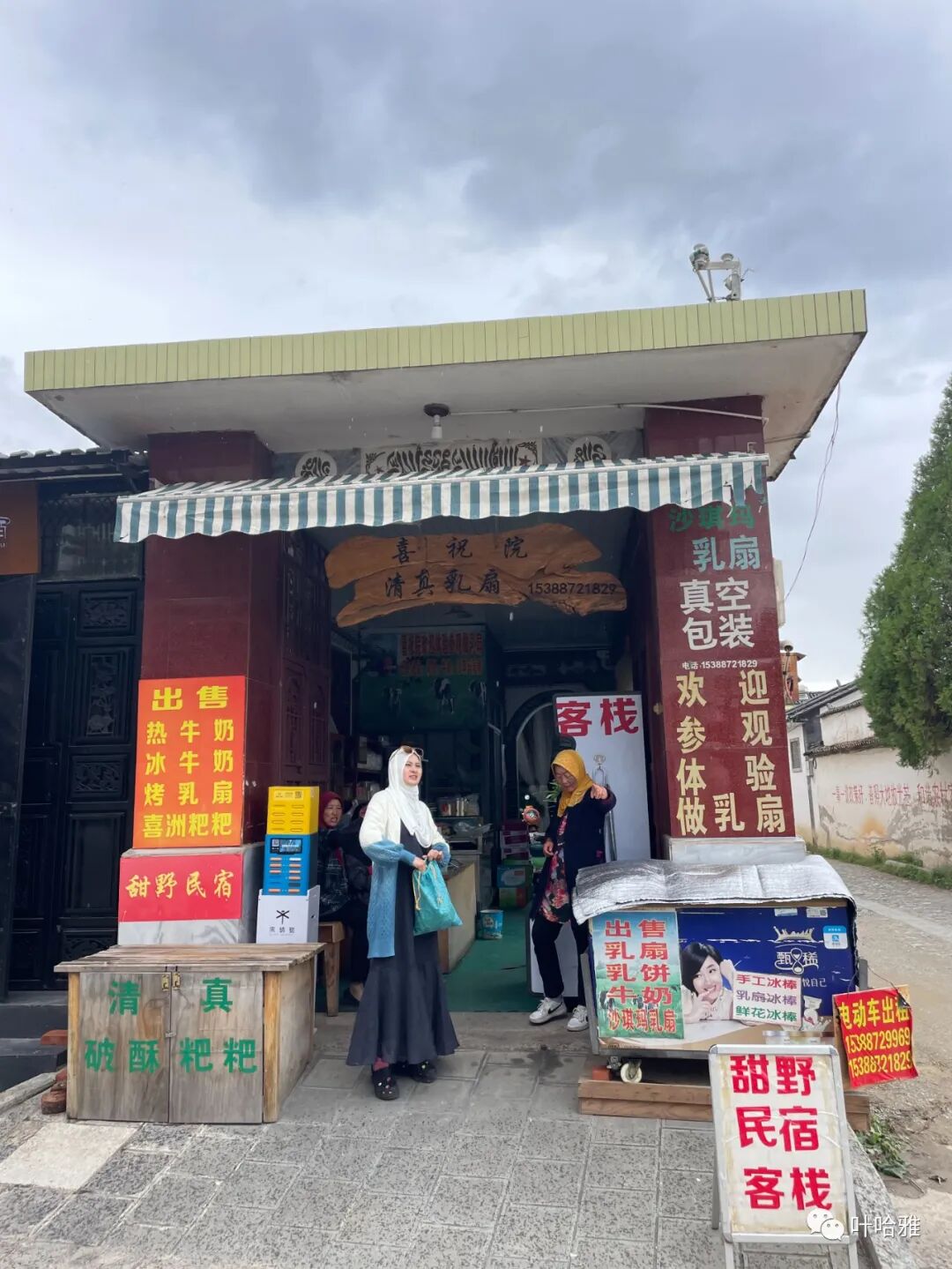
There are not many Islamic elements left in Xizhou Ancient Town. Only one old mosque remains, along with a few halal snack shops. Most Hui Muslims in Xizhou live outside the ancient town.
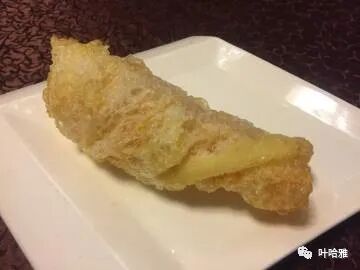
Xizhou has a local snack called Xizhou flaky flatbread (xizhou posu baba). It is a large, deep-fried bun made by both Hui and Han people.
In the morning, we ate rice noodles (mixian) at Shajia Shop inside Xizhou Ancient Town. They serve local-style rice noodles with original broth cooked in a copper pot. You can add your own toppings, which works well for us since we can choose non-spicy options. Their chicken soup is delicious, and the owner kindly gave us a small bowl of noodles for Fahim.
Fahim really loves slurping noodles, and he enjoyed this meal.
After finishing our noodles, we wandered around the Windy Courtyard (youfeng xiaoyuan) in the ancient town.
Fahim really liked the blue Xizhou fridge magnets in the ancient town and played in front of a shop for half an hour.
I also tried grilled milk fan (kao rushan) in Xizhou for the first time, and I think it tastes better than the fried version.
Xizhou Mosque
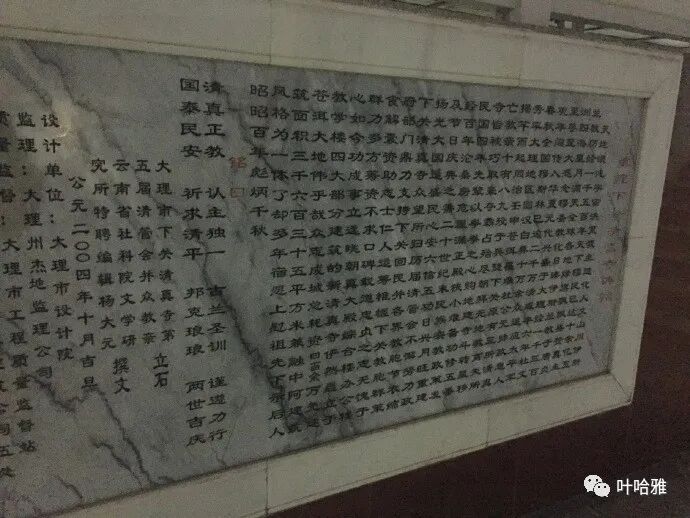
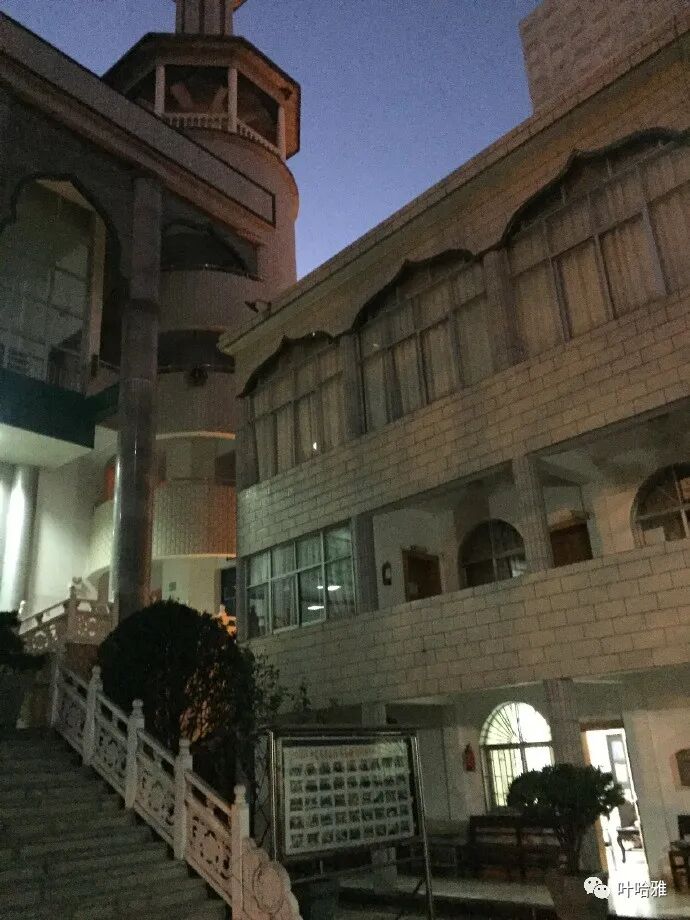
Xizhou originally had two mosques, the Ma Family Mosque and the Zhang Family Mosque. After the Dali regime failed, they were confiscated as rebel property. By the end of the Qing Dynasty and the beginning of the Republic of China, Hui Muslims chose representatives to ask local gentry to return Zhangjia Mosque. Since Zhangjia Mosque had been expanded and turned into a God of Wealth Hall (Caishendian), the local government gave the Hui Muslims a different plot of land to build a mosque. After several years of fundraising, the mosque was completed in 1922, and the prayer hall was expanded in 2004.
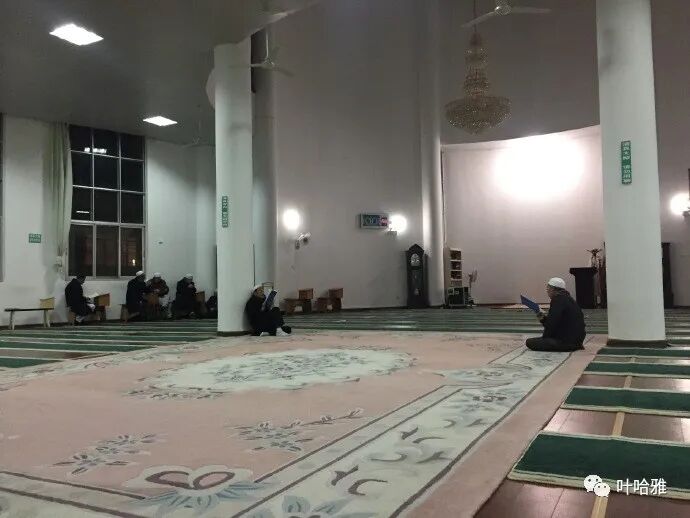
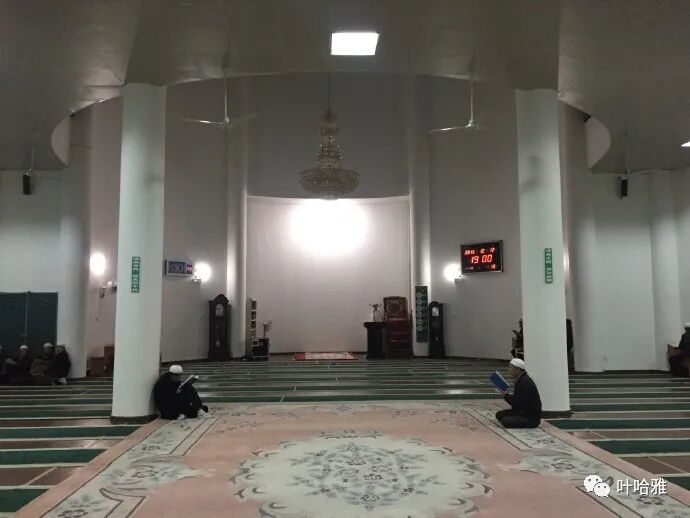
I attended Jumu'ah prayer in Xizhou. There are not many Hui Muslims here, and as usual, everyone sat in a circle to recite the Suole before the prayer.
The prayer plaques (dua pai) are still on the doorways of the houses in the old town.
Shipang Village
Shipang Village is a settlement where Bai and Hui Muslims live together. These Bai-Hui Muslims are Hui Muslims who have adopted Bai culture. They wear Bai clothing and practice Islam, but their ID cards list them as Hui Muslims. We arrived just as the rice was turning yellow, creating a vast golden field. It had just rained, and the distant mountains were wrapped in mist. It is a great place for photos, and since there are almost no tourists, you can enjoy the beautiful scenery in peace.
Many Hui Muslims have lived here since the Qing Dynasty. After intermarrying with the Bai people, they started speaking the Bai language, so I found I could not understand the locals. The Bai-style clothing is mostly seen in the small square headscarves, but now only a few elderly people wear them, and you rarely see them on the street.
Shipang Mosque
Shipang Mosque was first built in 1896. It was destroyed in a massacre in the past, which left the area without a mosque for a long time. view all
Summary: This Dali halal food guide follows a family road trip around Erhai Lake, Dali Ancient City, Xizhou, local mosques, halal rice noodles, flower cakes, Bai-Hui Muslim culture, and practical food notes for Muslim travelers in Yunnan.
A Guide to Halal Food in Dali is presented here as a firsthand travel account in clear English, beginning with this scene: I have been to Dali twice. The first time was in the winter of 2016. I was single then and took a train from Beijing to Lhasa by myself. The account keeps its focus on Dali Mosques, Chinese Muslims, Muslim Travel while preserving the names, places, food, and historical details from the Chinese source.
I have been to Dali twice. The first time was in the winter of 2016. I was single then and took a train from Beijing to Lhasa by myself. After spending eight days in Tibet, I could not stand the dry winter air or the lack of good food. I took a long-distance bus from Lhasa for three days and two nights to Shangri-La in Yunnan, then traveled to Dali. I stayed at an inn in the Dali Ancient City and spent two days visiting seven mosques.
Dali is actually very large. Besides the Dali Ancient City, there are several other ancient towns nearby. Since I felt transportation was inconvenient during my first visit, my family of three drove from Beijing all the way to the southwest this time. We visited Xizhou, Eryuan, Yangbi, and Weishan in Dali. All these places have very traditional and beautiful ancient towns and old mosques.
When I traveled alone before, I could make do with anything, and a cheap inn for a few dozen yuan was enough. Now that I travel with Fahim, I have higher standards for accommodation. The room needs to be as large as possible with a big bed, and it is best to have a bathtub and a swimming pool because my son loves playing in the water. We chose to stay one night at the Dali Yuewan Villa Half-Mountain Sea View Hotel on the east side of Erhai Lake. From the hotel terrace, you can overlook the full view of Erhai Lake. It also has an infinity pool and offers free photography services.
It is worth noting that the east side is more than ten kilometers away from the Dali Ancient City. There are only two or three halal restaurants around the east side, so it is not as convenient as the area near the ancient city on the west side. If you do not have a car, I suggest staying near the ancient city. However, the scenery on the east side is more beautiful, the hotel environments are better, and there are many trendy cafes.
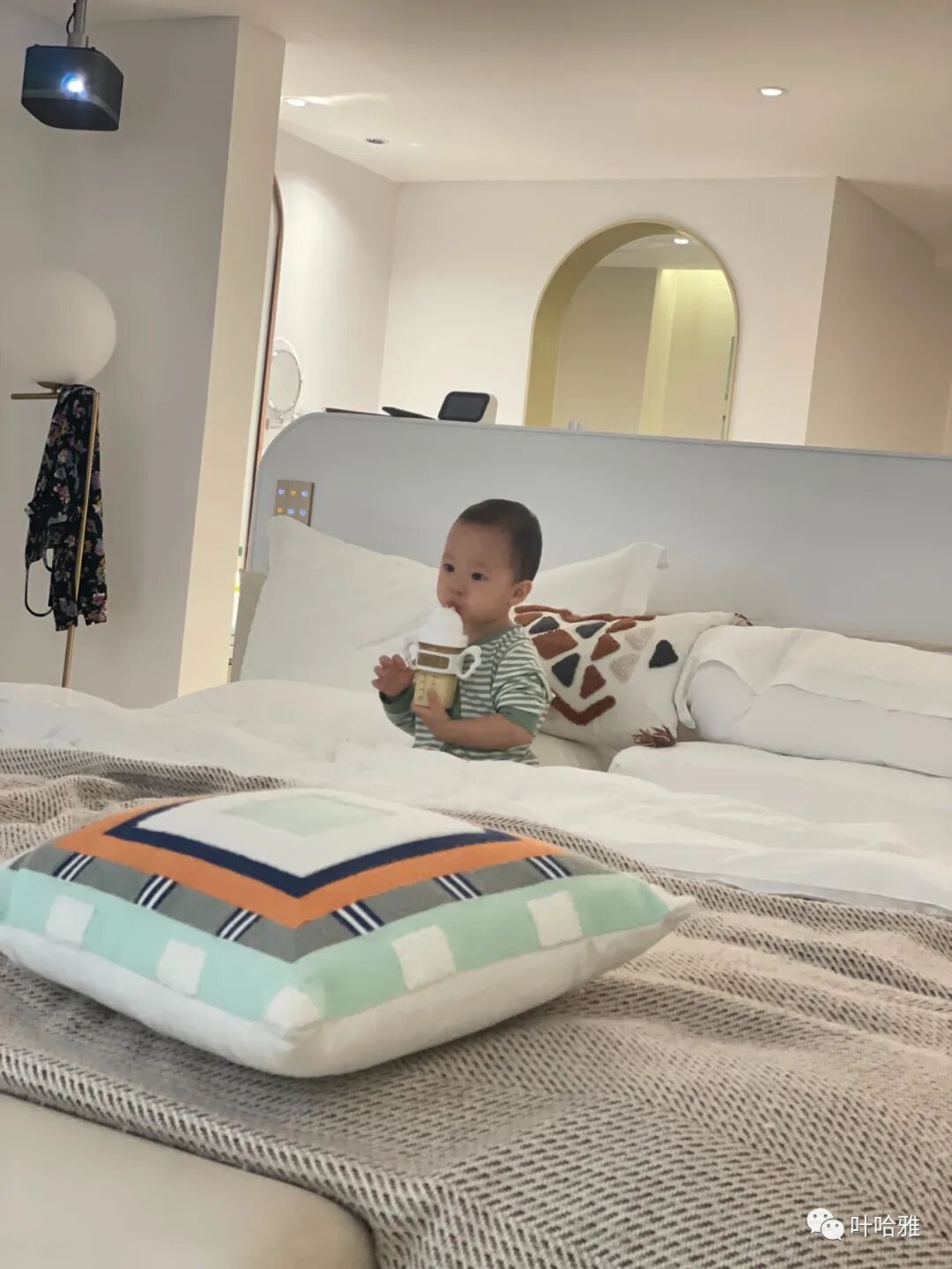
After finishing our family time taking photos at the popular tourist spots on the east side, we moved into the ancient city on the second day. We stayed at The One Courtyard (THE ONE Gu Cheng Yi Hao Yuan). The hotel is located right at the entrance of the ancient city, making it very convenient. If you are driving, be aware that the ancient city has traffic restrictions during the day. Cars inside can only leave and cannot enter. You must wait until after 8:00 PM to drive into the hotel parking lot in the ancient city.
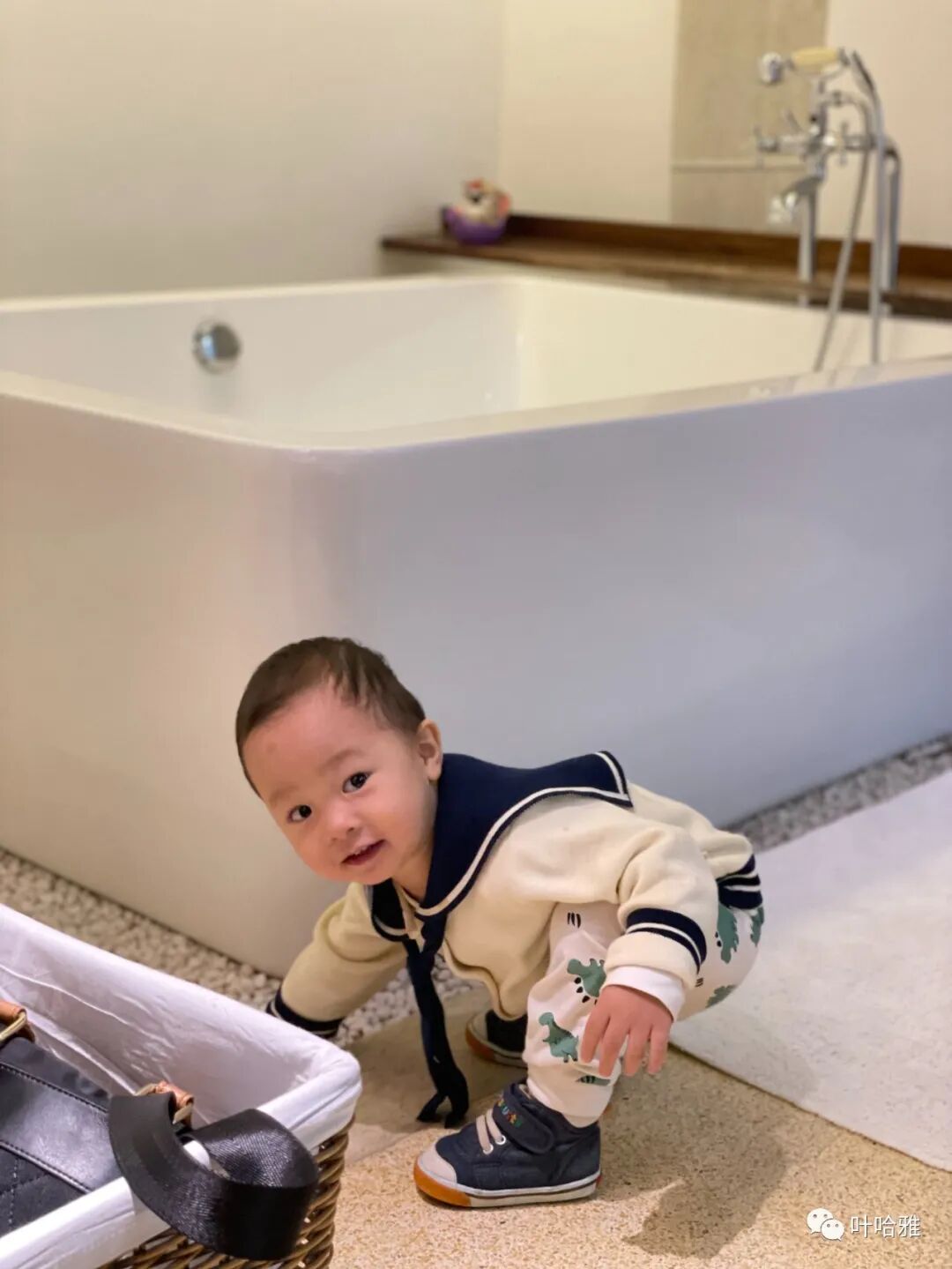
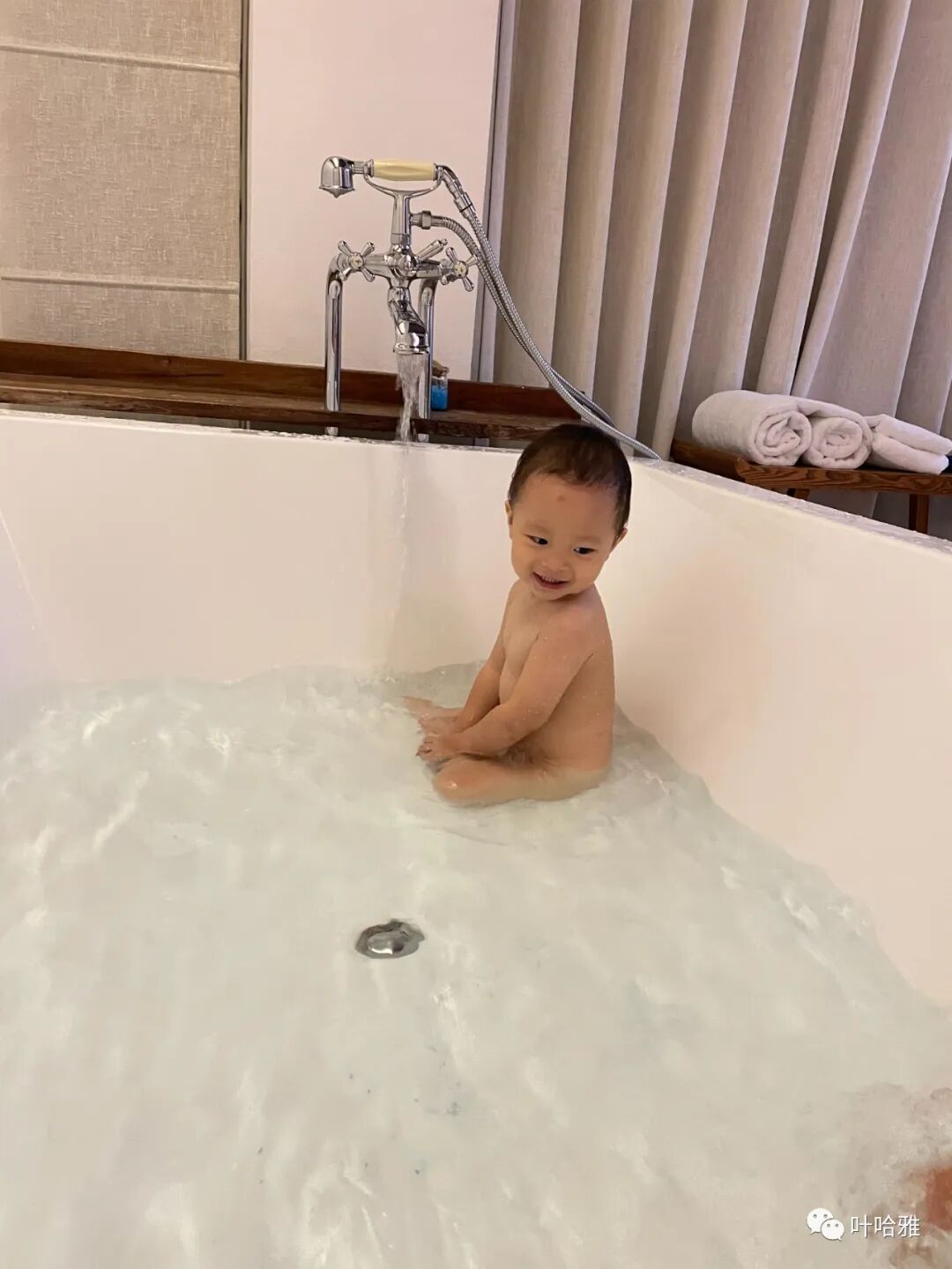
The big bathtub in the room kept Fahim busy playing all night, and the pebbles in the courtyard kept him busy playing all morning.
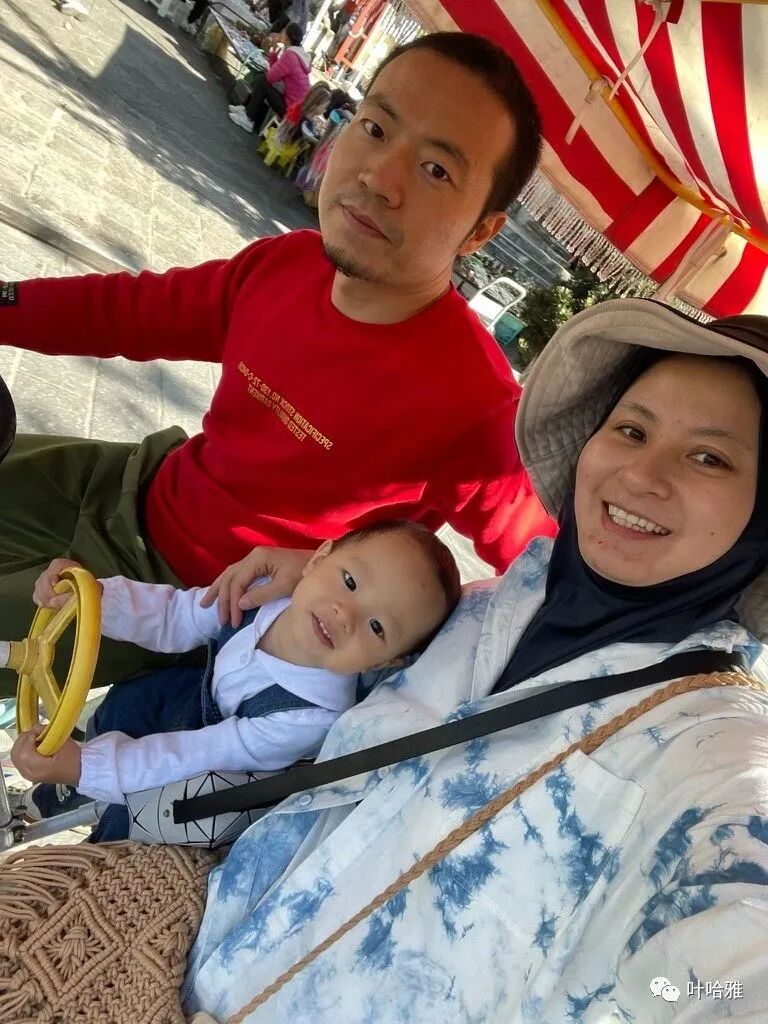
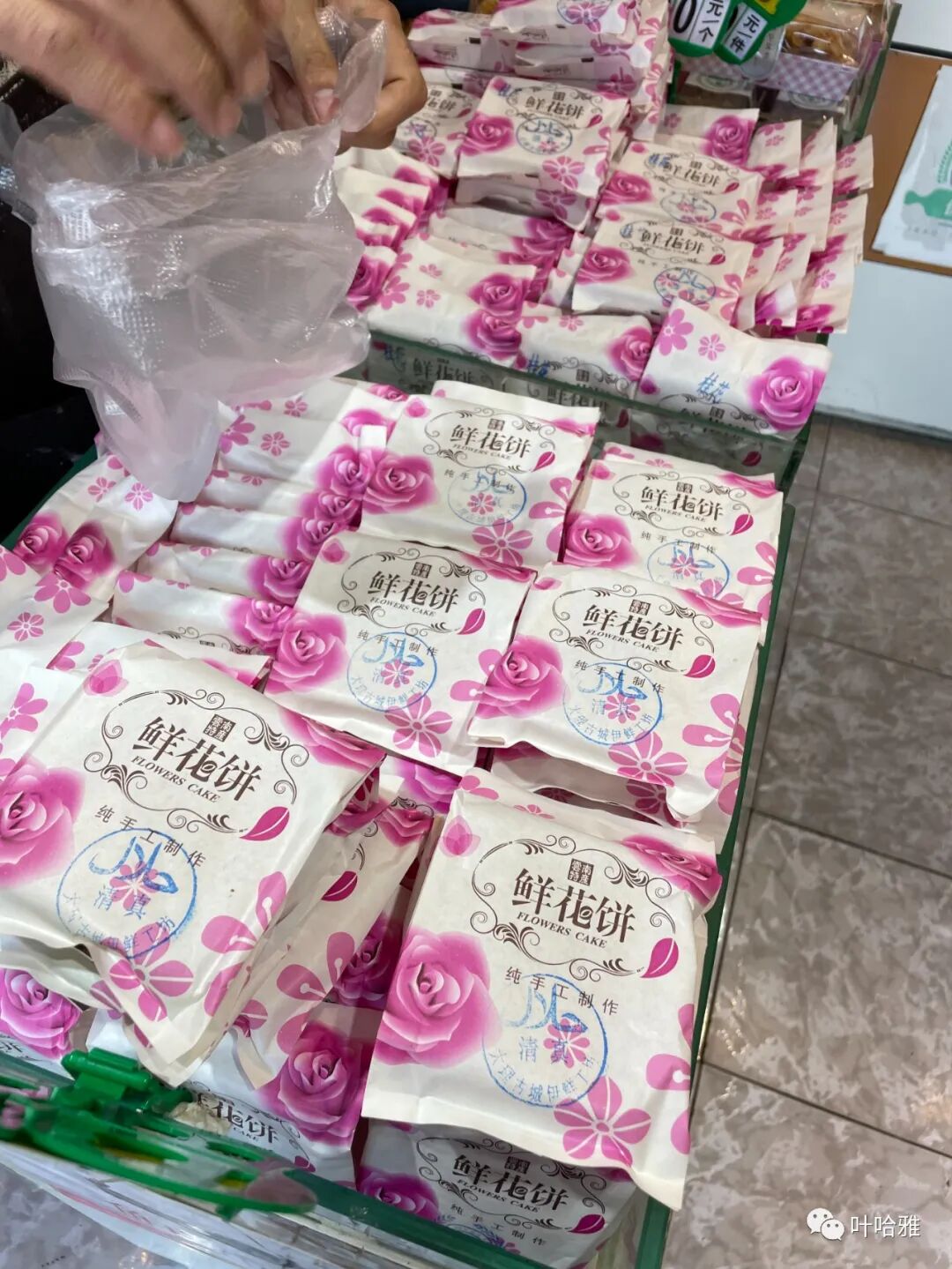
While riding a three-person bicycle in the ancient city, we passed the South Gate Mosque and saw this shop called Yixian Workshop. We bought some flower cakes (xianhuabing), which were surprisingly delicious—better than the ones we bought elsewhere later. They were 4 yuan each, with just the right amount of sweetness, and were both flaky and soft.
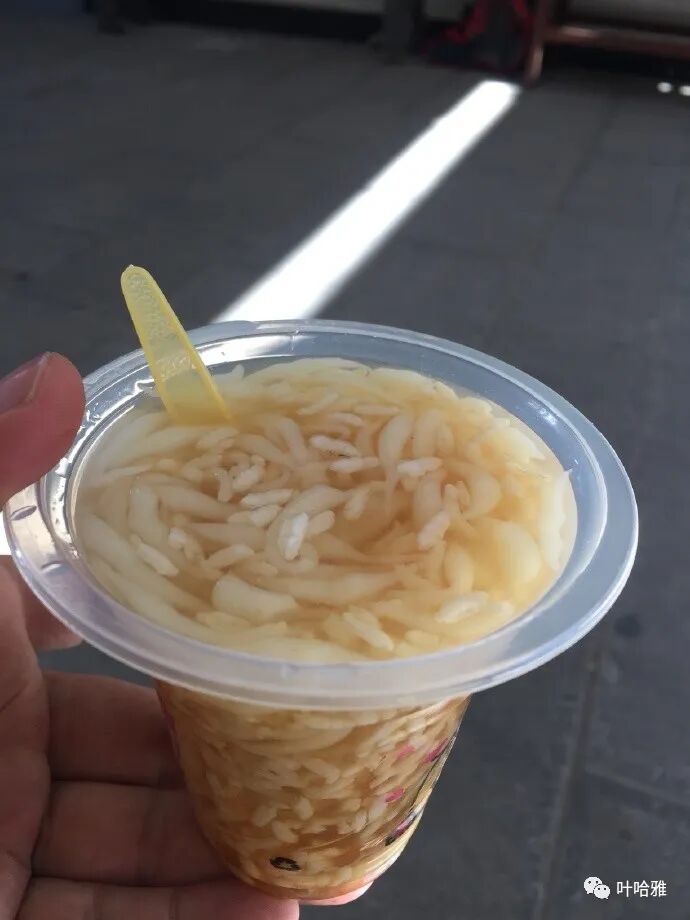
We bought maltose rice (maiyatangfan) from a Hui Muslim stall on the side of the road in the ancient city. It is a Yunnan specialty that is cold, refreshing, and sweet.
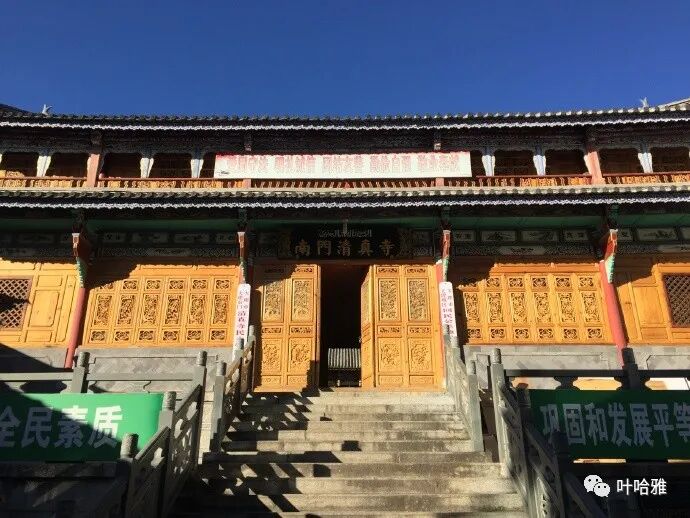
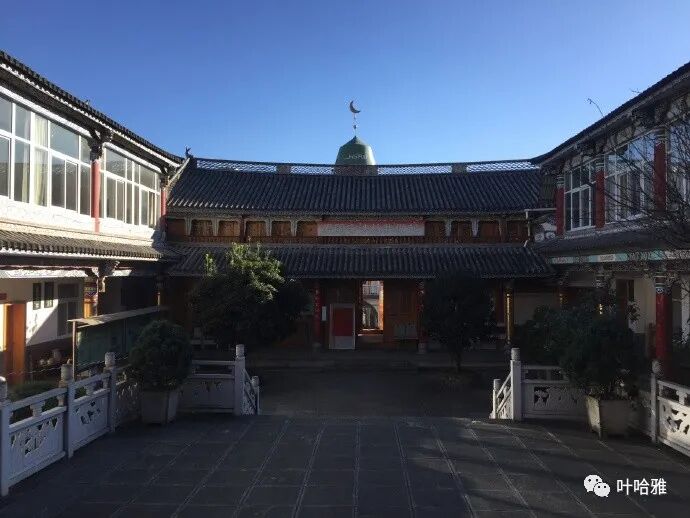
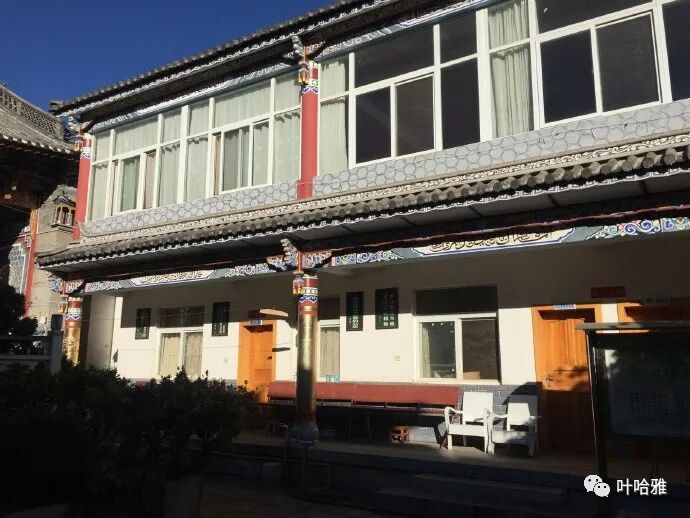
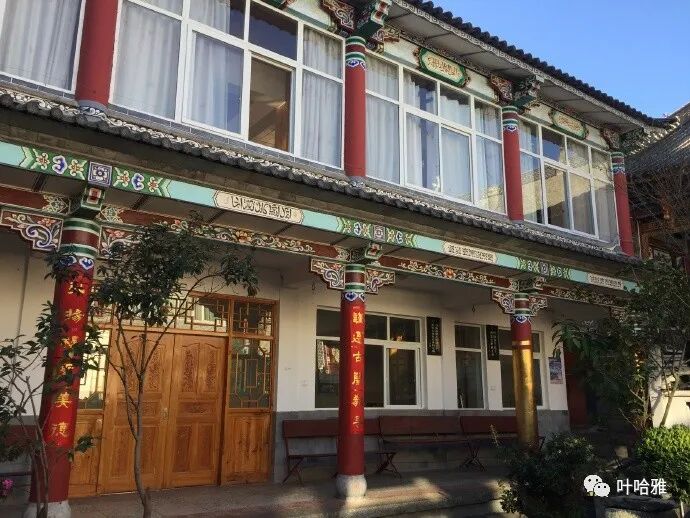
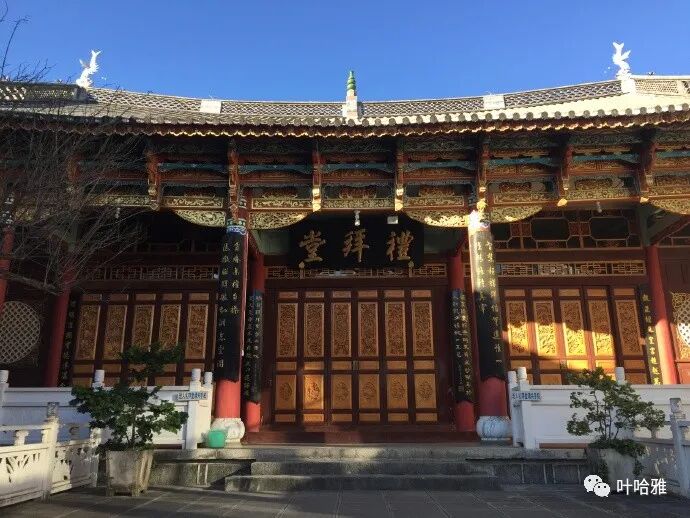
Dali Ancient City South Gate Mosque.
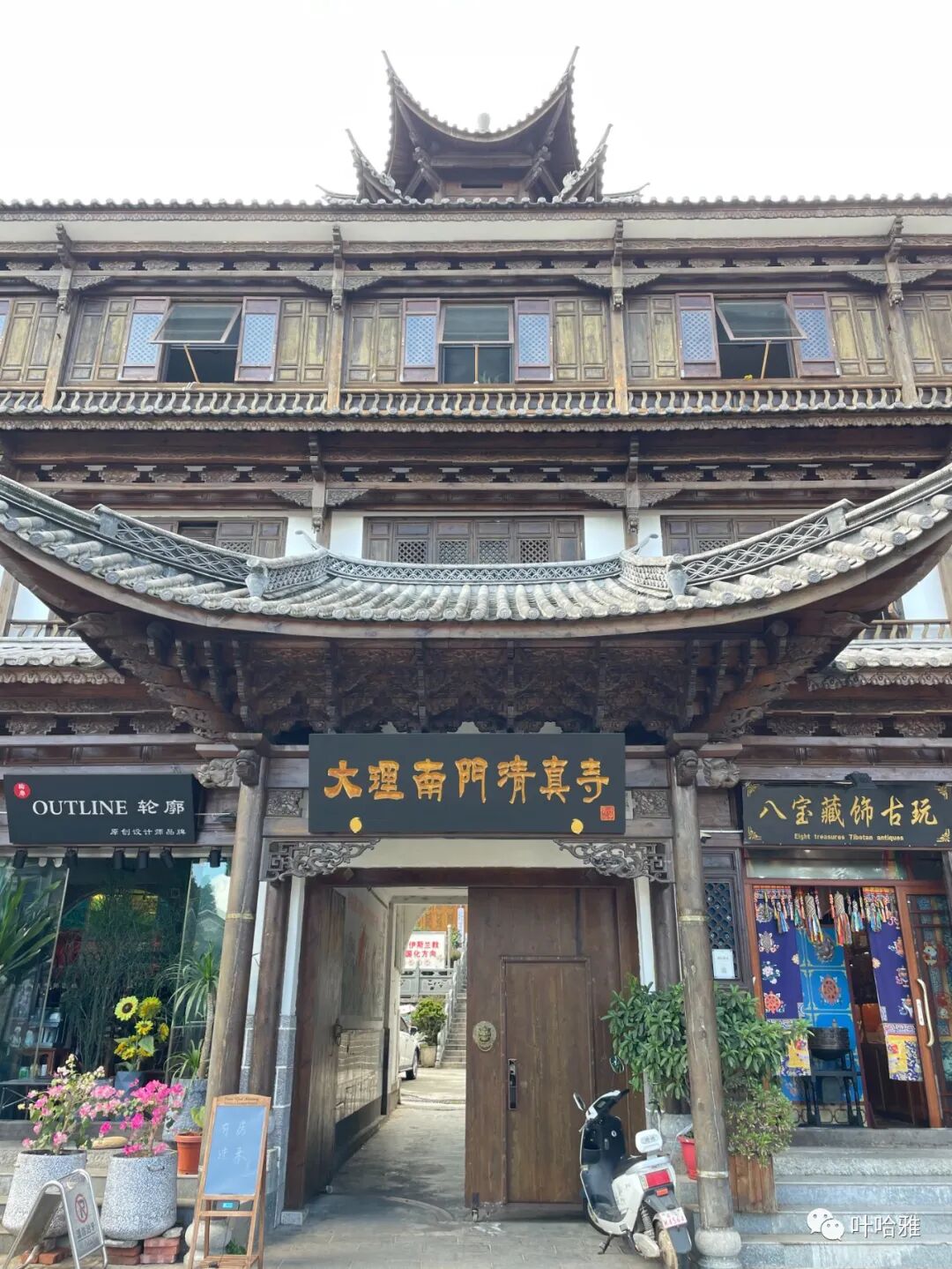
The South Gate Mosque in Dali was first built during the Yuan Dynasty and is one of the one hundred ancient mosques in the country. Before the failure of the Du Wenxiu Uprising, the mosque was located on Cangping Street, which was recorded in The Travel Diaries of Xu Xiake. After the Du Wenxiu Uprising failed, the mosque and its 120 mu of mosque land were confiscated as rebel property by the Qing government's liquidation committee. The mosque was converted into a City God Mosque, and in 1944, it was changed into a local court. The current South Gate Mosque is located inside the Dali Ancient City.
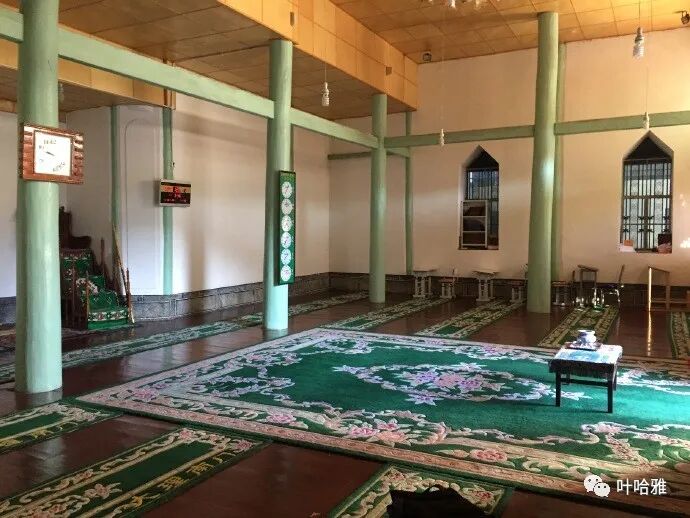
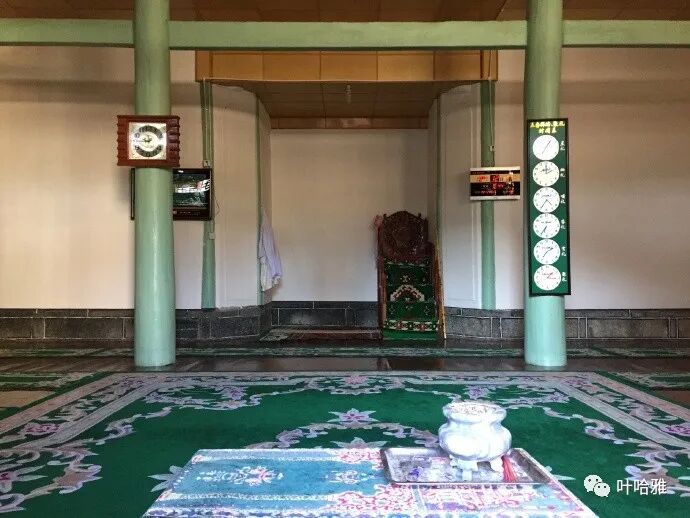
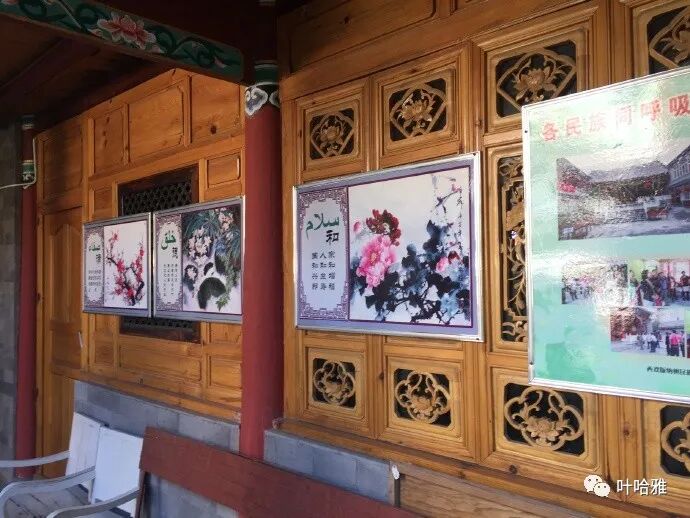
Salam Rice Noodle Shop
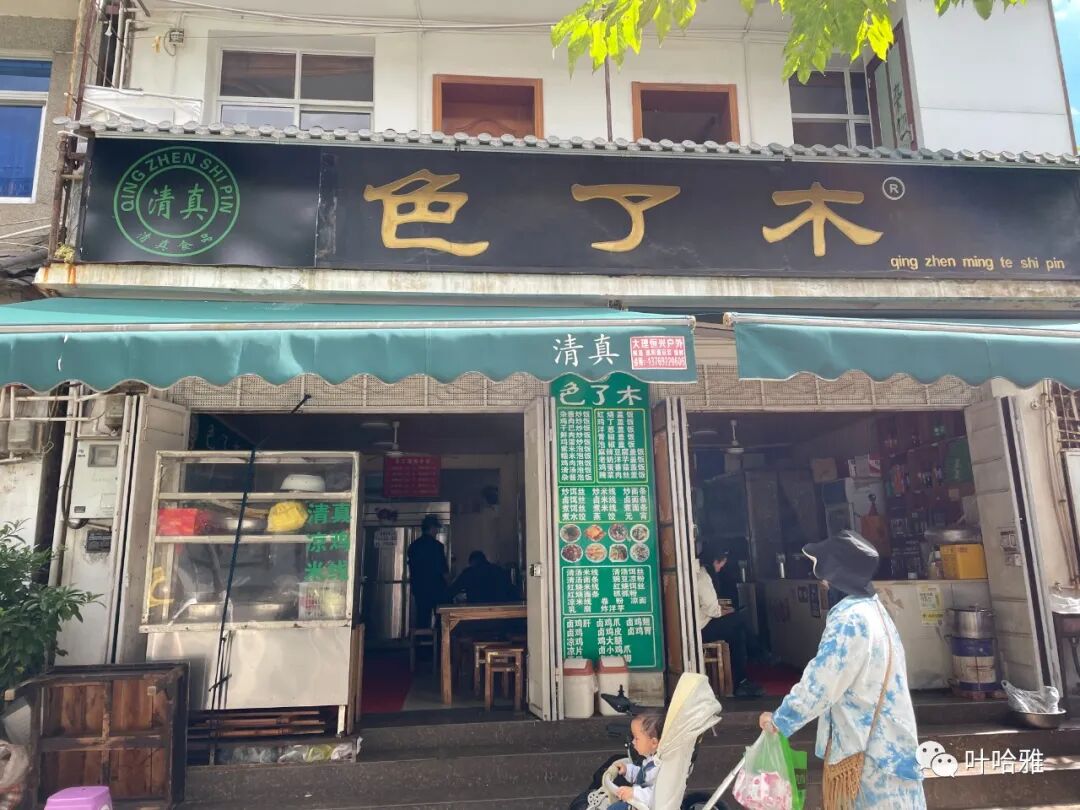
This small shop near the south gate of Dali Ancient City sells rice noodles (mixian), rice cakes (ersi), and rice soup. They do not sell alcohol, and their cold chicken rice noodles are excellent.
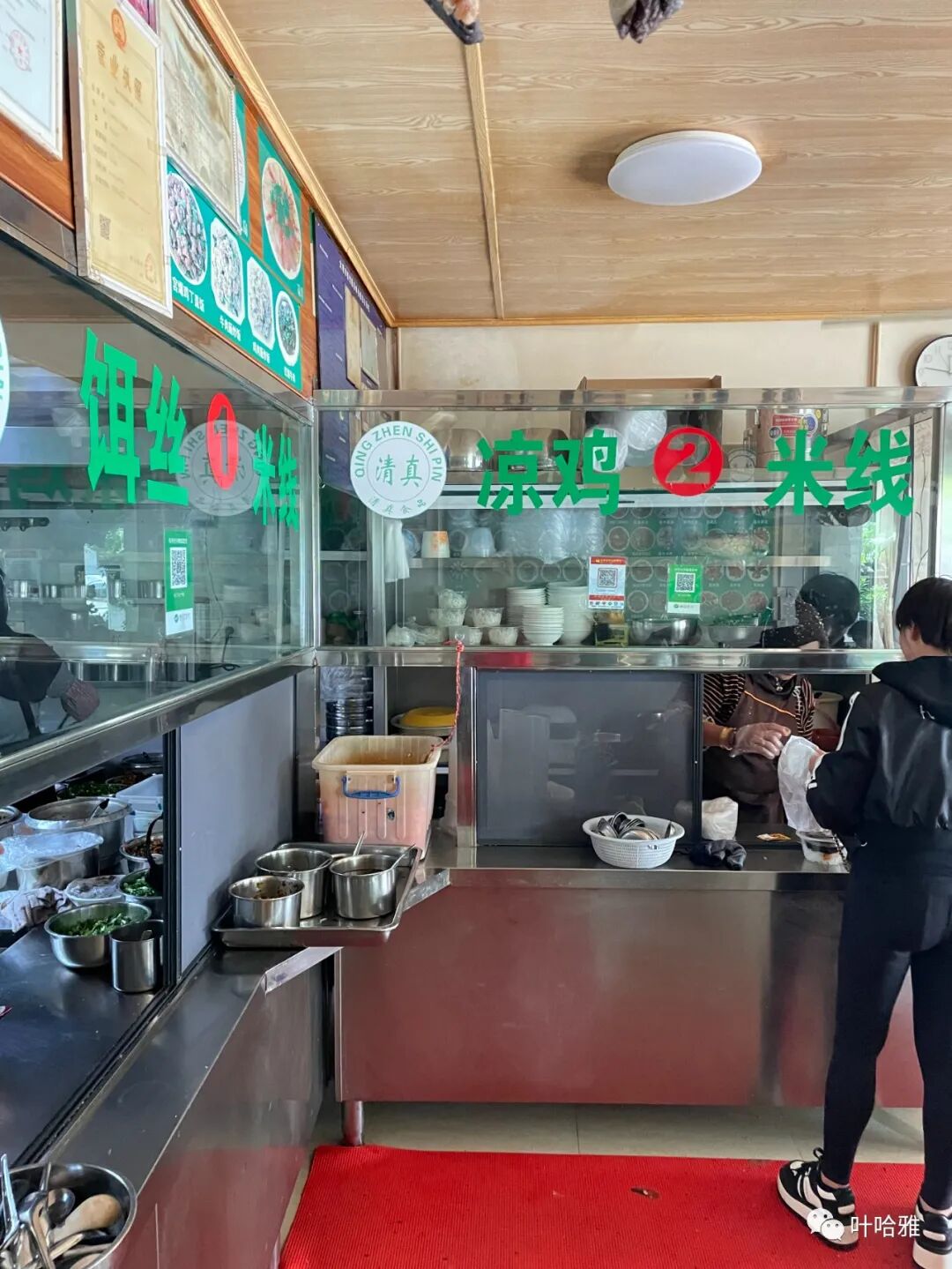
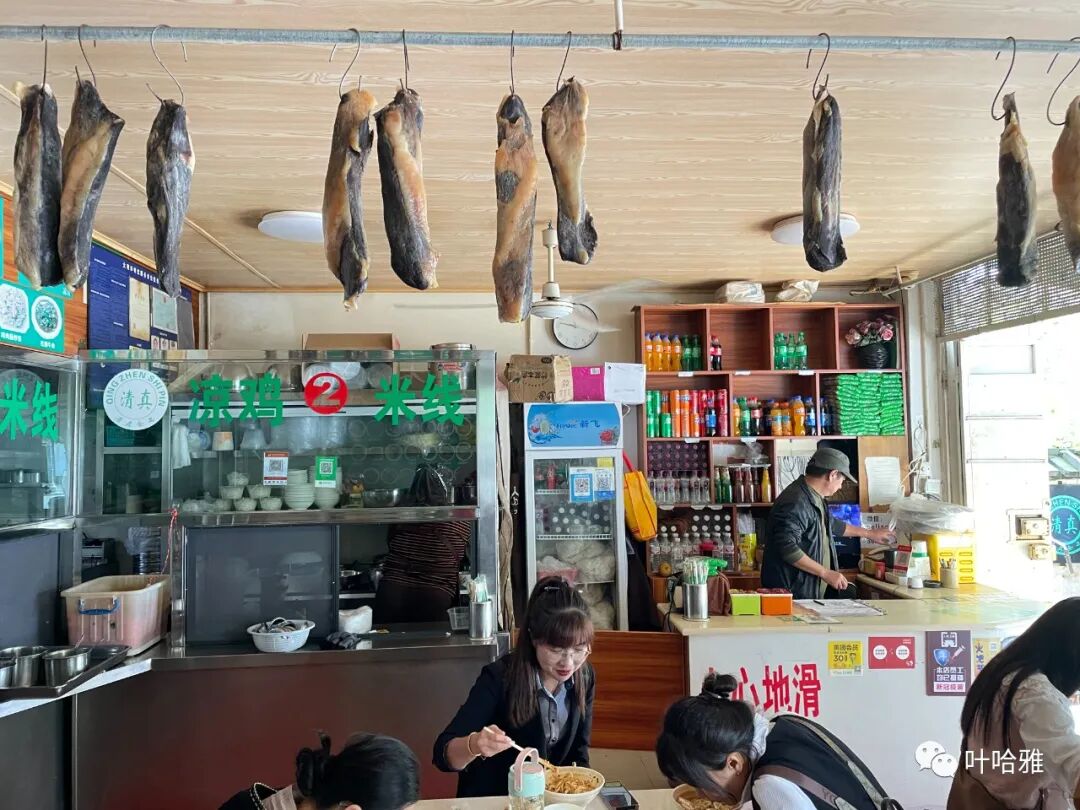
Dried beef (niuganba) hangs from the ceiling beams, which is a specialty meat for Hui Muslims in Yunnan.
Youfeng Courtyard
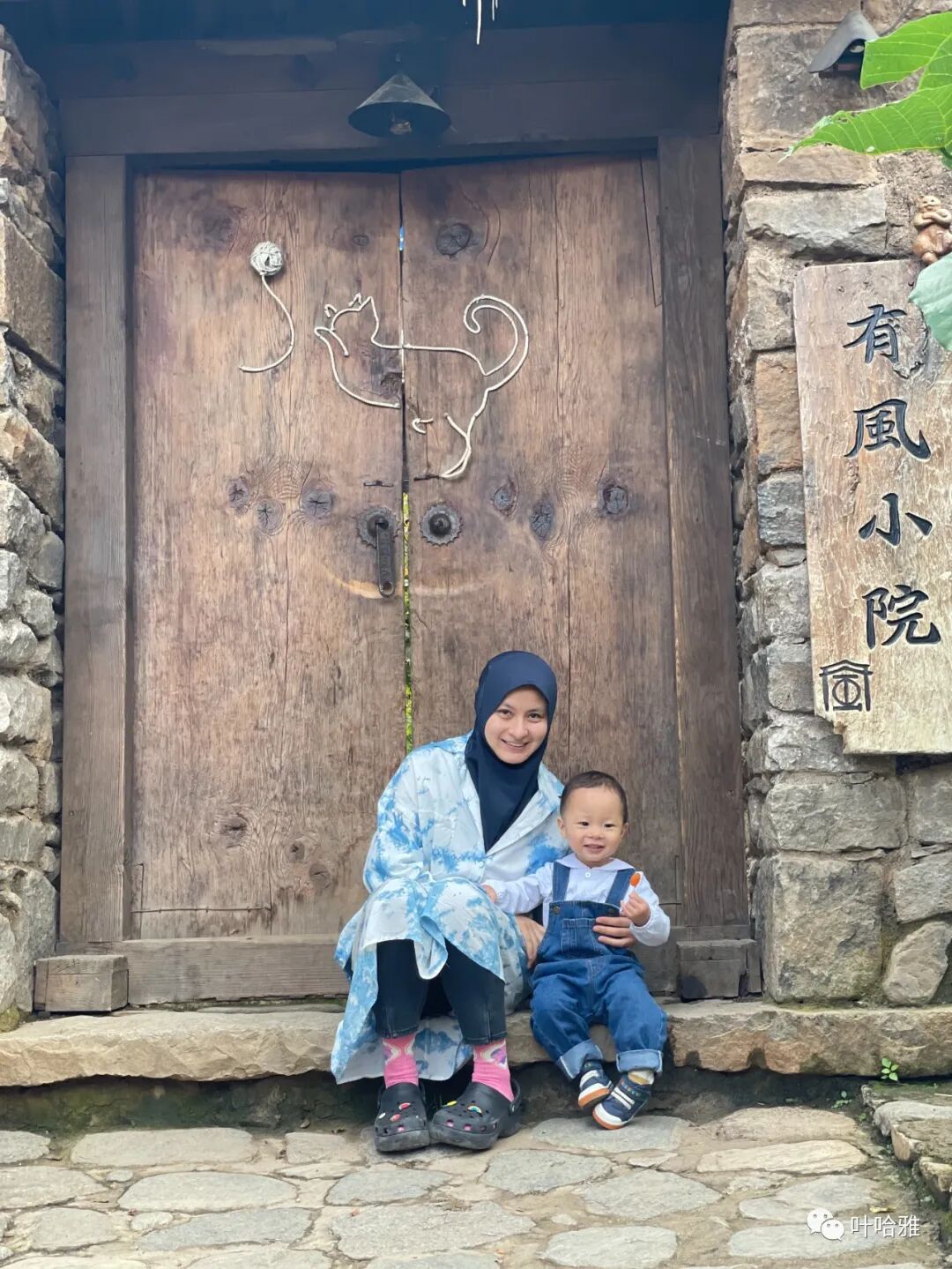
Youfeng Courtyard is a filming location for the TV show Meet Yourself starring Liu Yifei. I have not seen it, but my wife told me all about it.
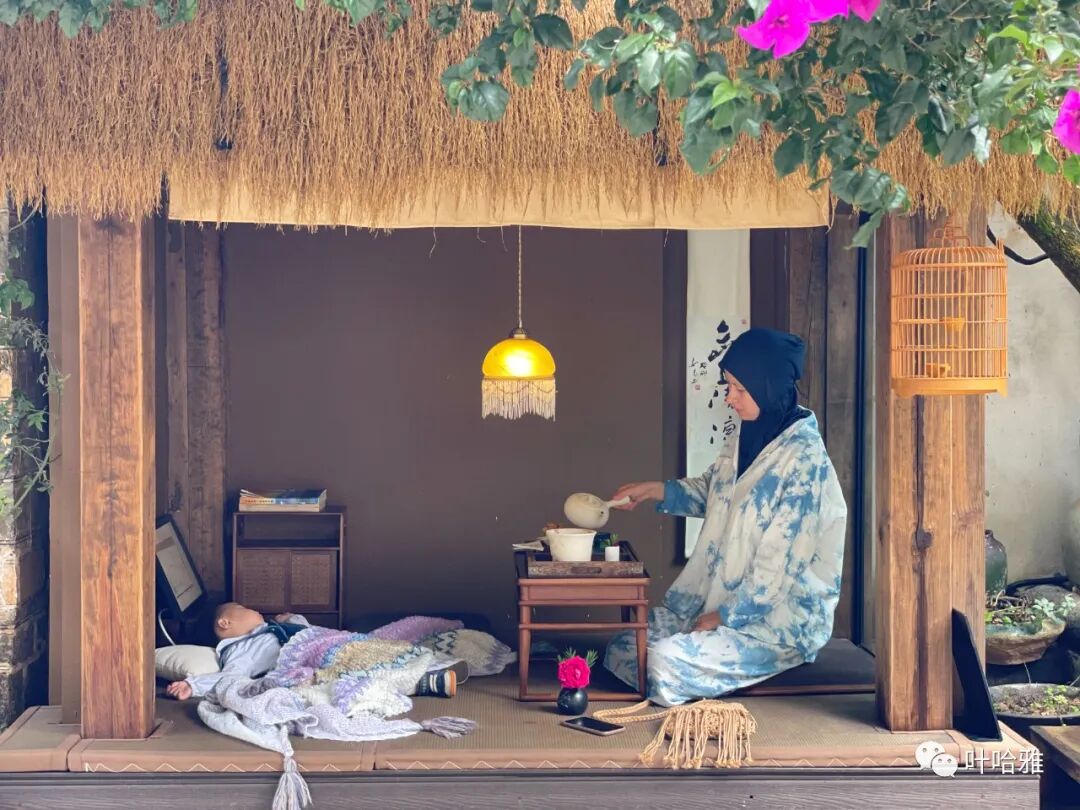
We happened upon a teahouse next to the courtyard and sat there for the afternoon. While Fahim took a nap, we enjoyed tea in the courtyard.
Dali City has eighteen mosques, not counting the rest of Dali Prefecture. Contact information is in the table below.
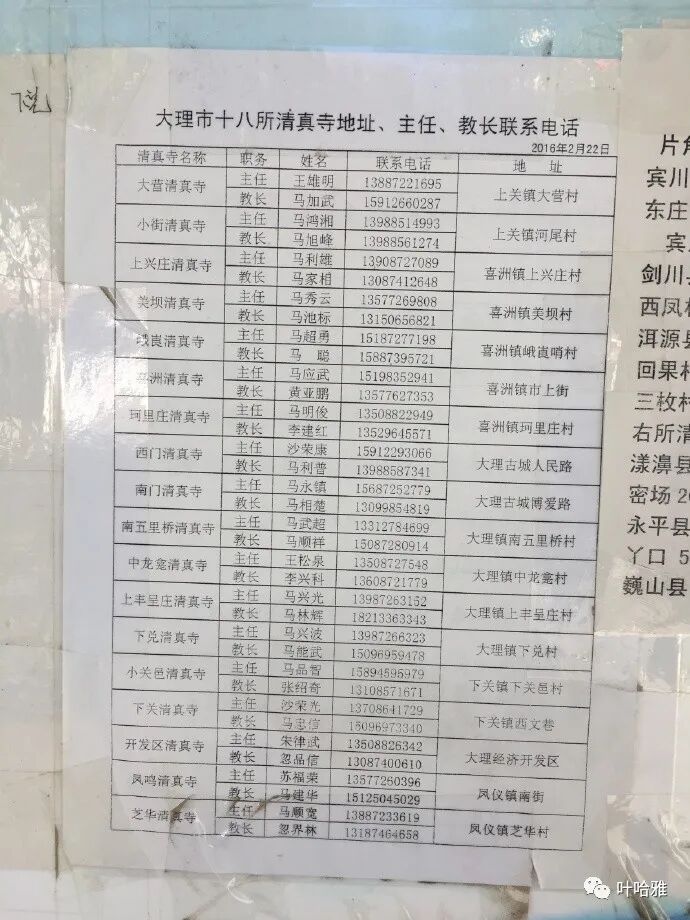
Dali City Fengyi Mosque
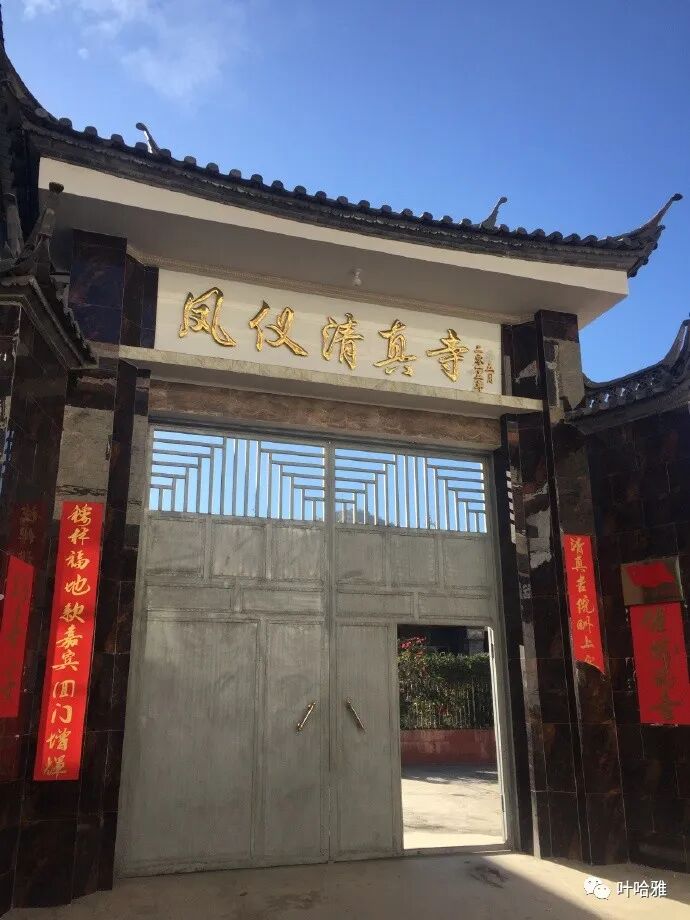
Fengyi Mosque was built during the Qing Dynasty, and the current building was renovated in 2001.
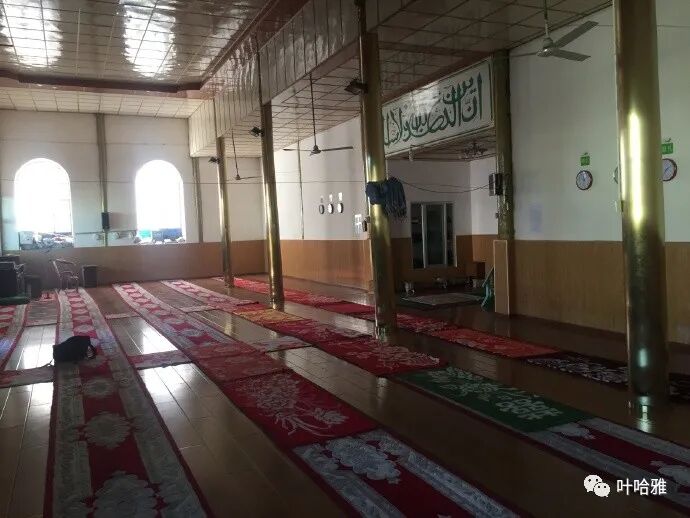
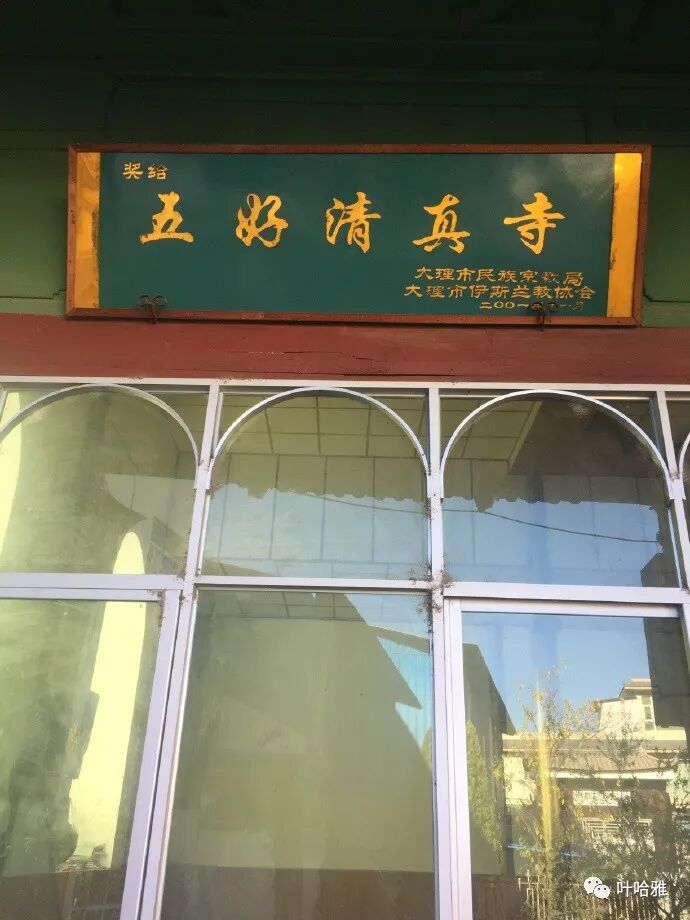
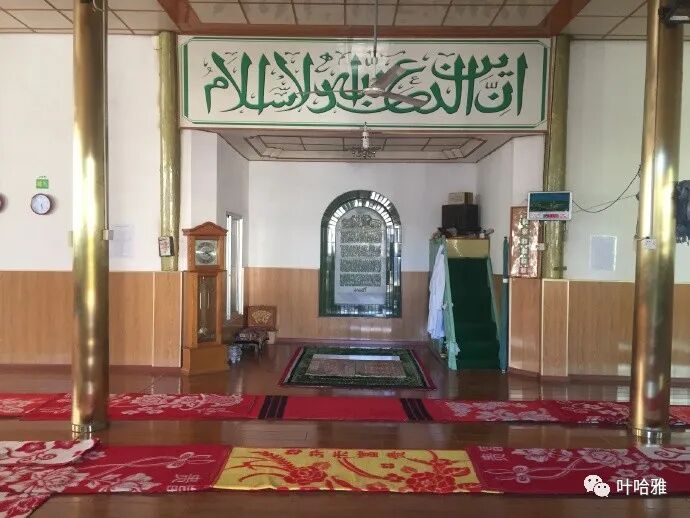
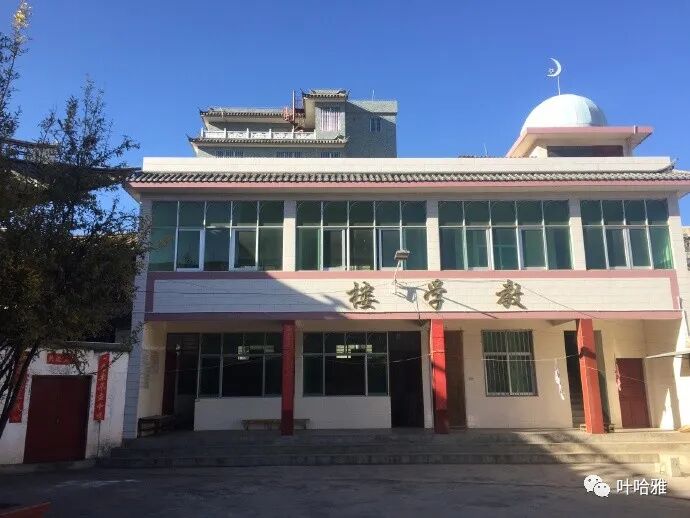
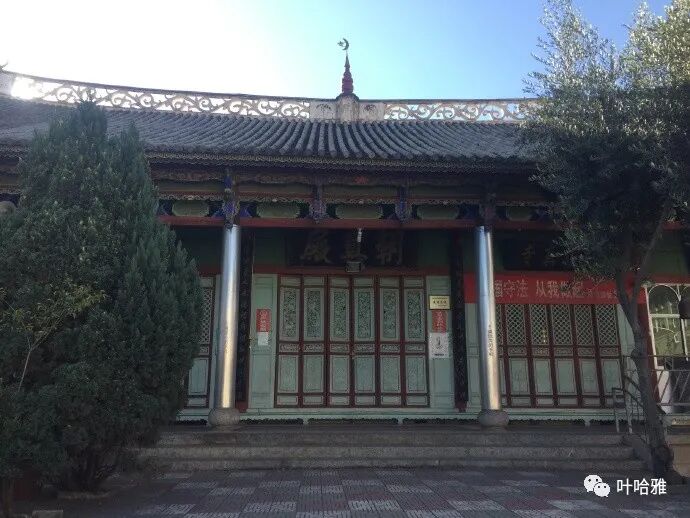
Xiaguan Mosque
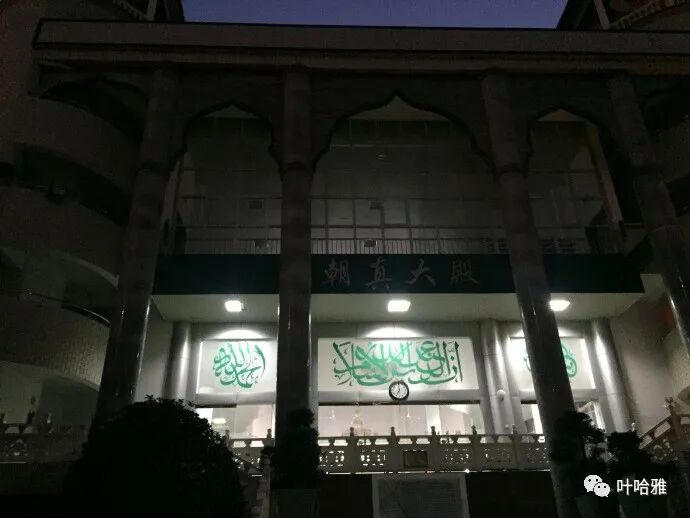
Xiaguan Mosque was built in 1915, and the current building was renovated in 2004.
Nanwuliqiao Mosque
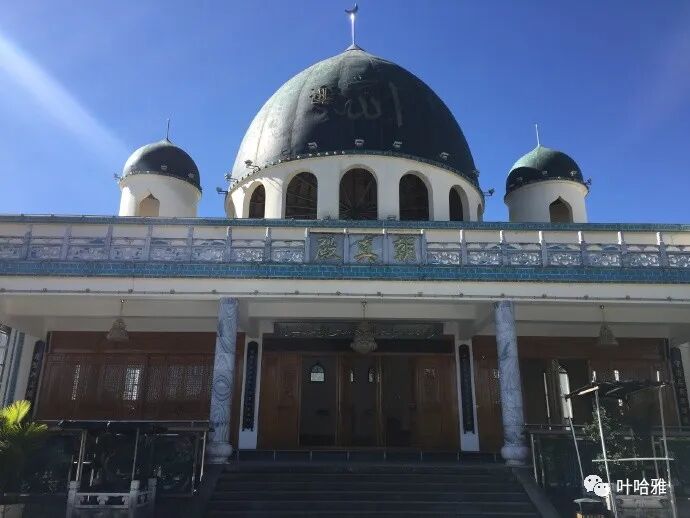
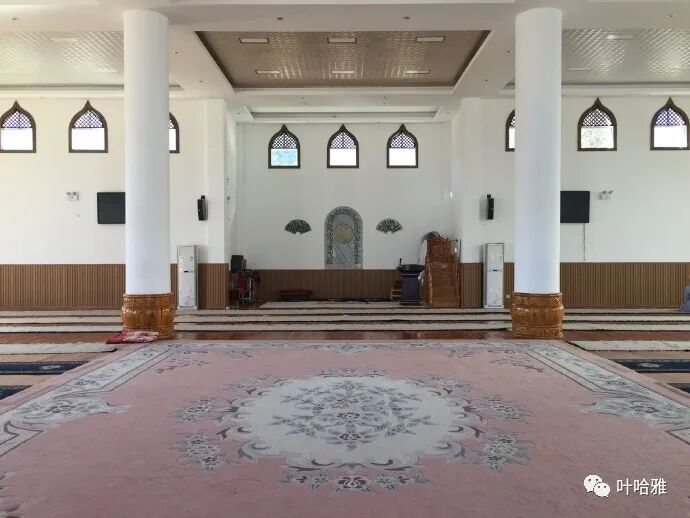
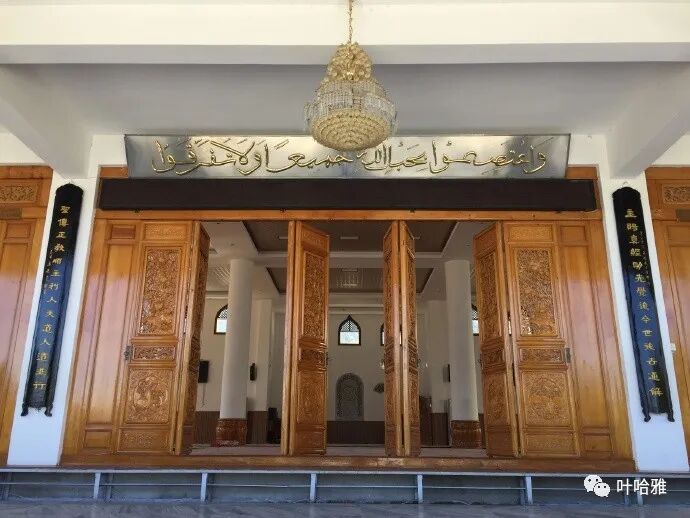
Nanwuliqiao is a Hui Muslim village less than three kilometers from Dali Ancient City. The village has a street dedicated to halal food (Nanwuliqiao Qingzhen Meishi Yitiaojie). The Nanwuliqiao mosque is also the largest mosque in Dali, first built in the tenth year of the reign of Mongke Khan of the Yuan Dynasty (1233).
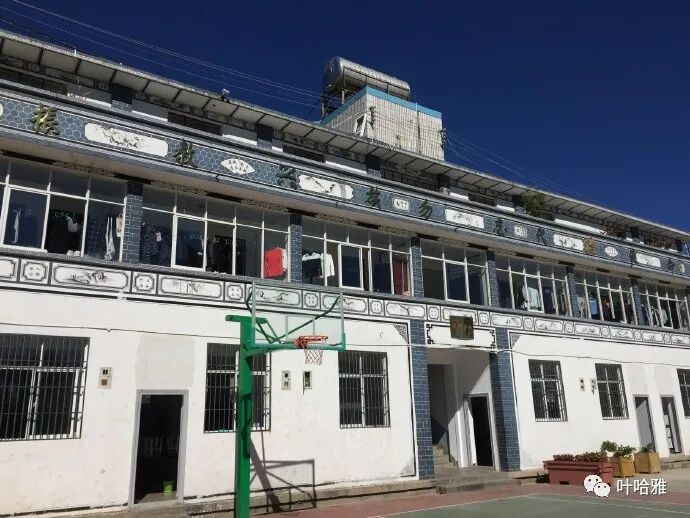
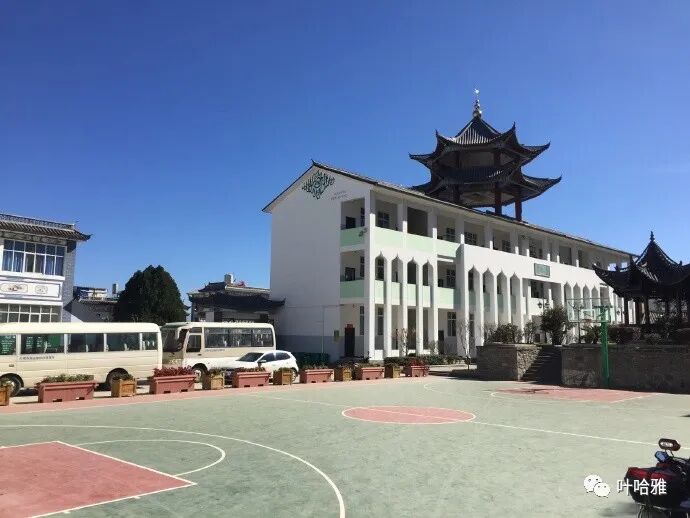
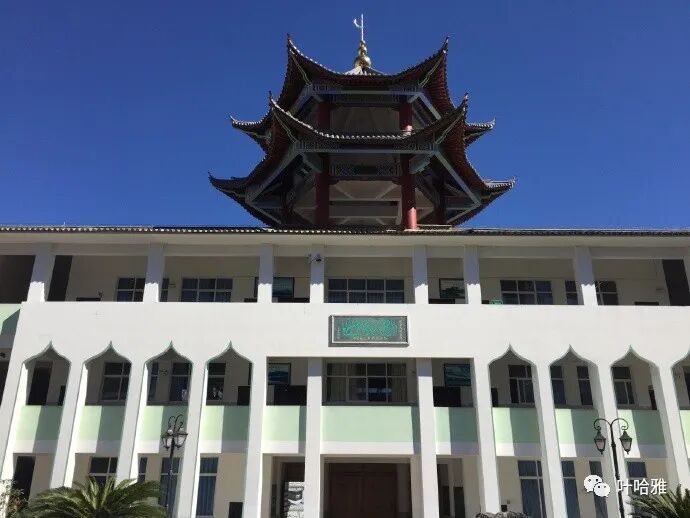
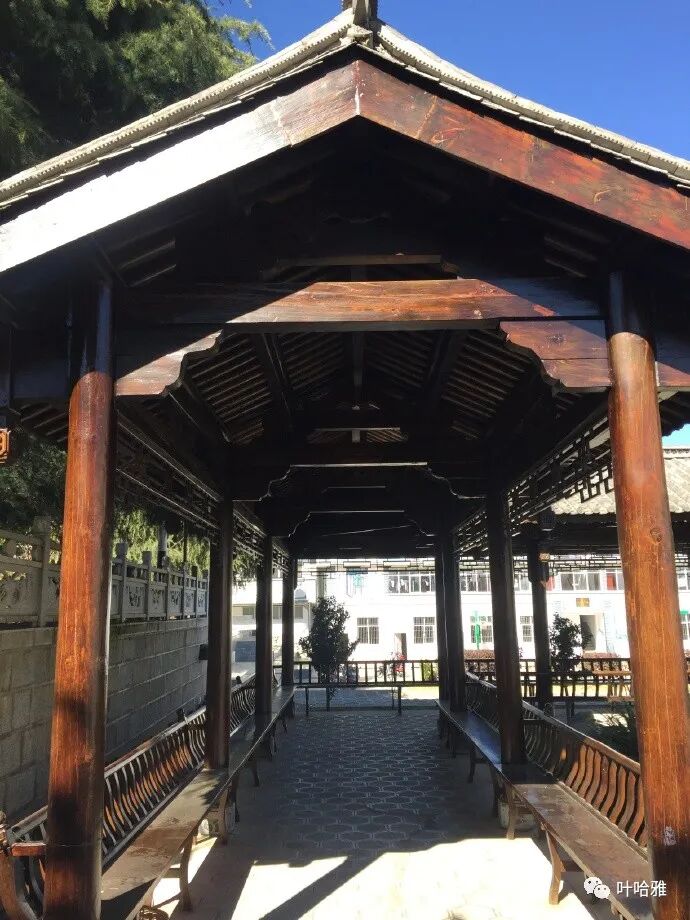
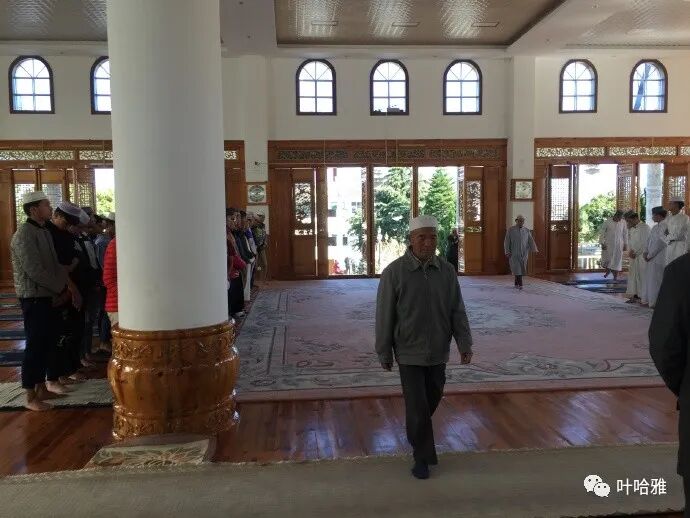
In Yunnan, there is a custom where locals invite guests from afar to stand in the first row near the imam during namaz, as they want to offer the best spot to their guests.
Nanwuliqiao Halal Food Street
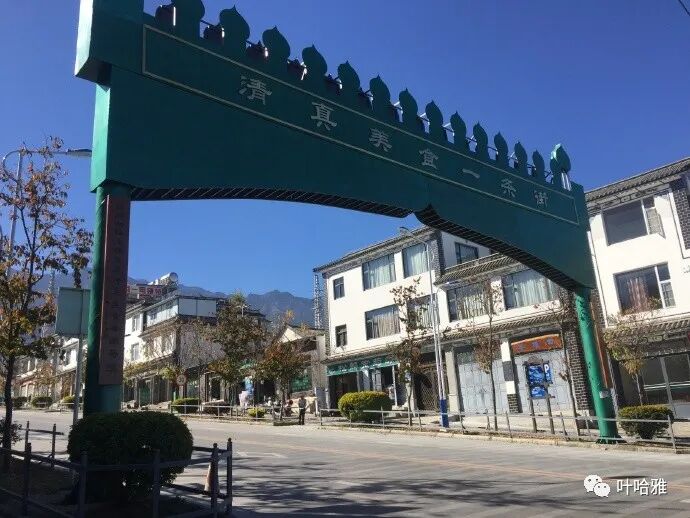
I took these photos in 2016. The signs have changed now, but it is still a halal food street. There is much more halal food here than in Dali Ancient City, and there are fewer tourists and more locals.
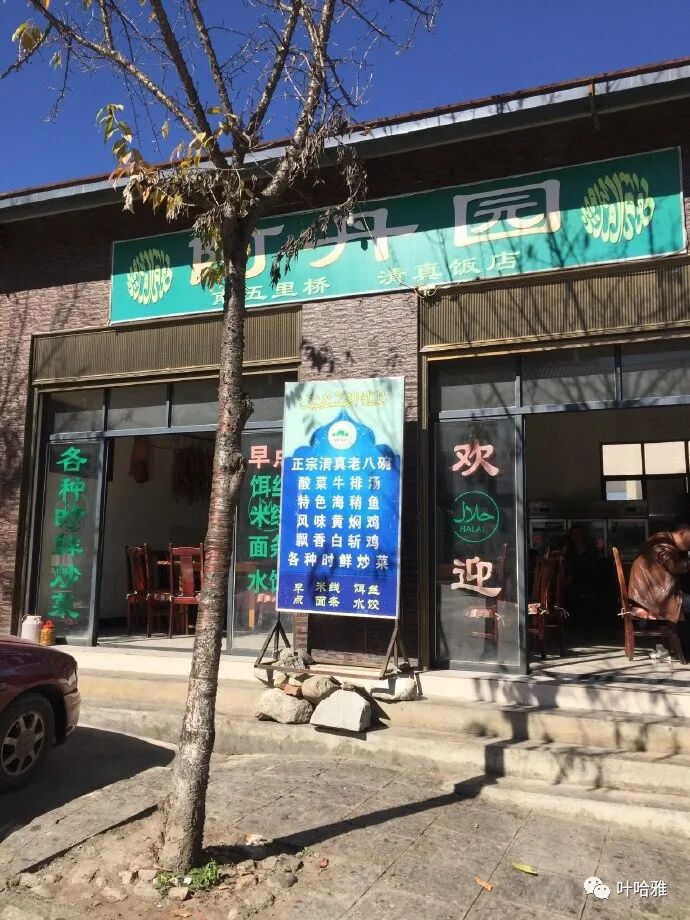
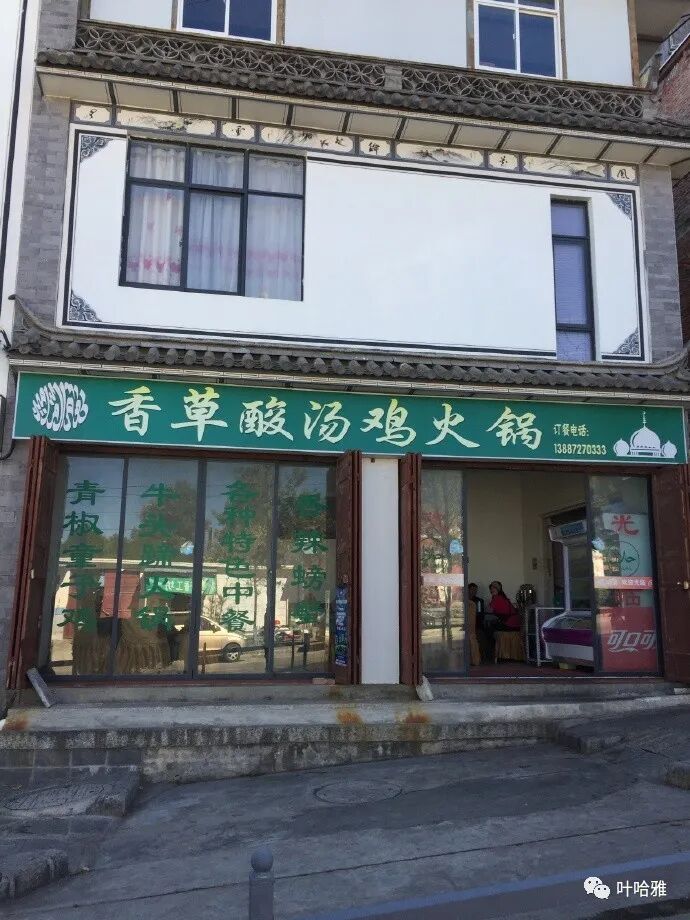
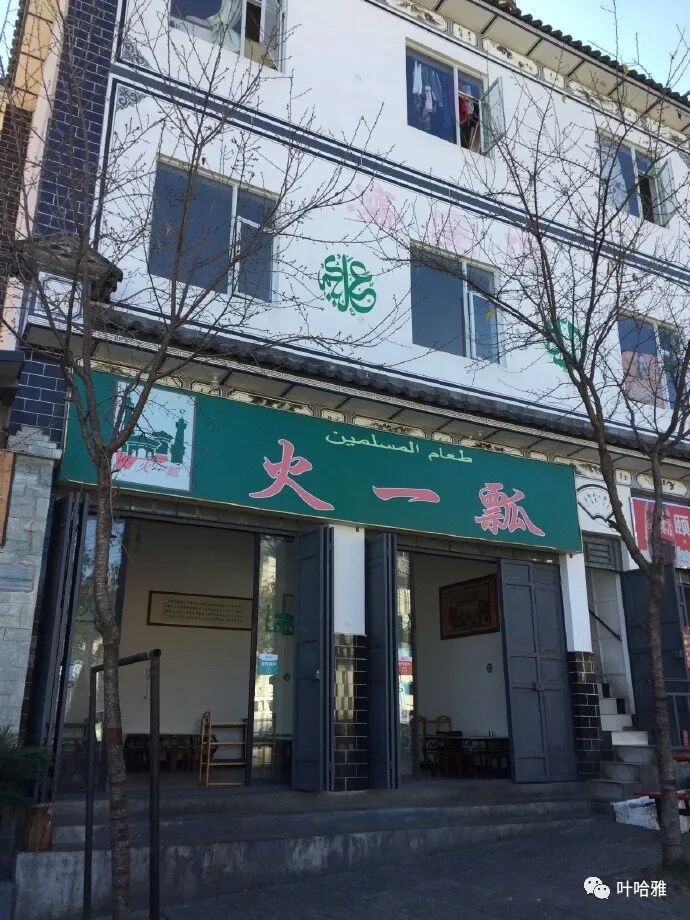
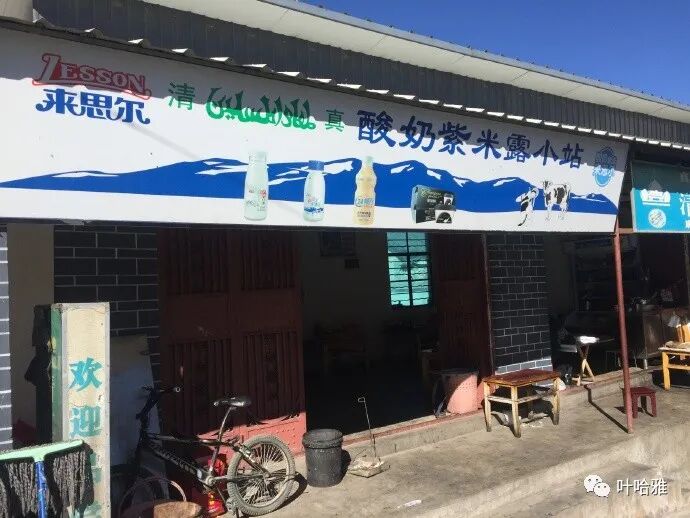
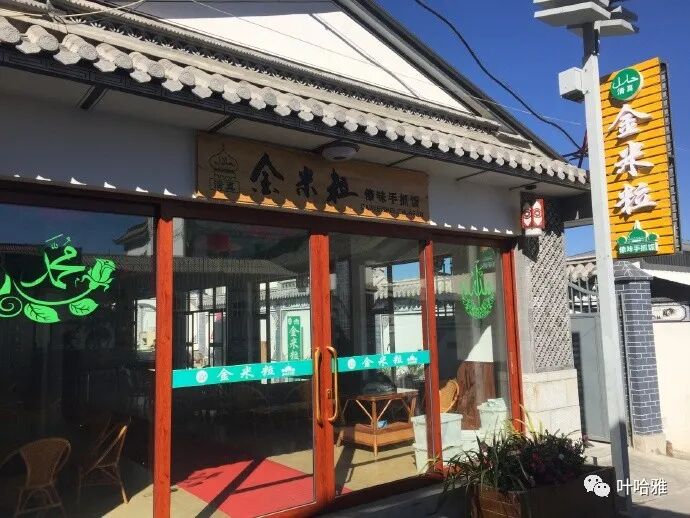
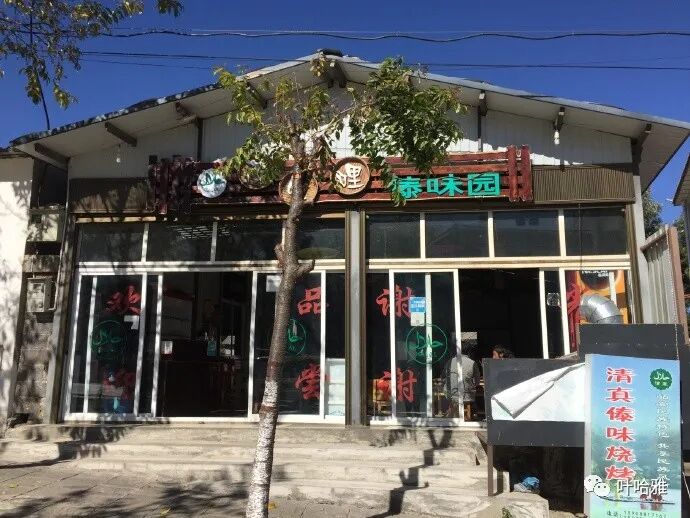
I recommend trying the Dai-style barbecue, because it is hard to find halal versions once you leave Dali.
Dali Zhihua Mosque
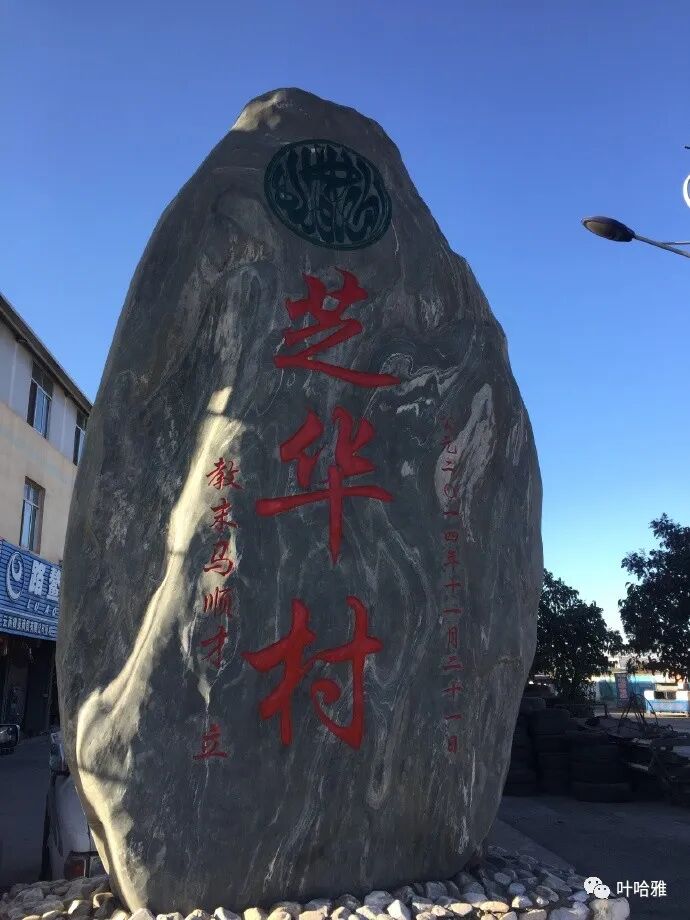
Zhihua Mosque was first built during the Hongwu period of the Ming Dynasty, and the current building was completed in 2000.
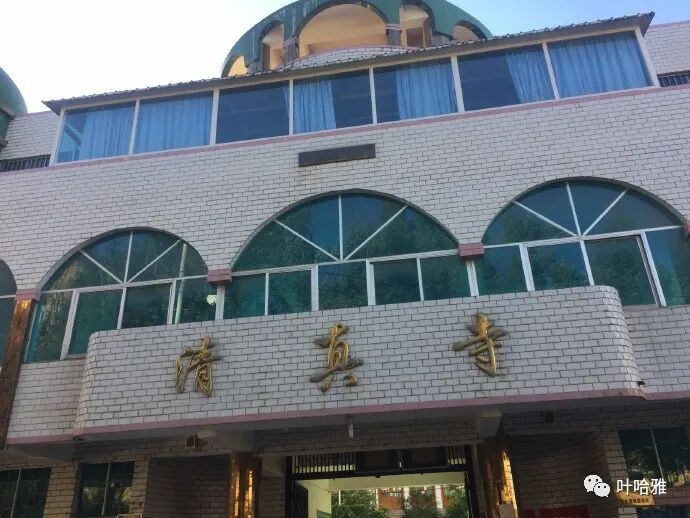
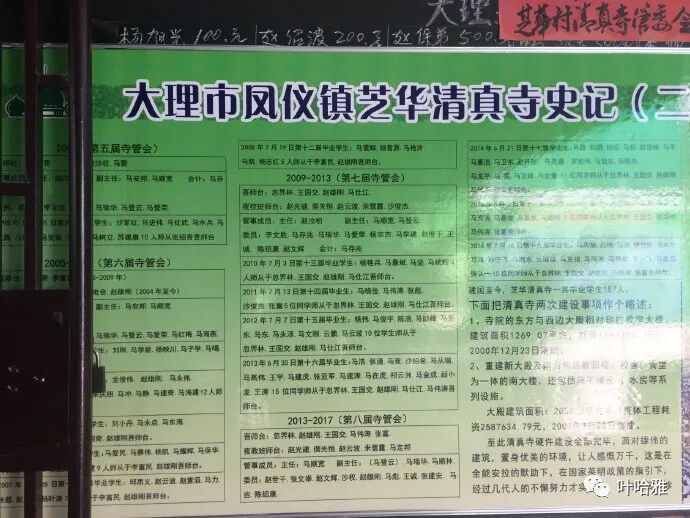
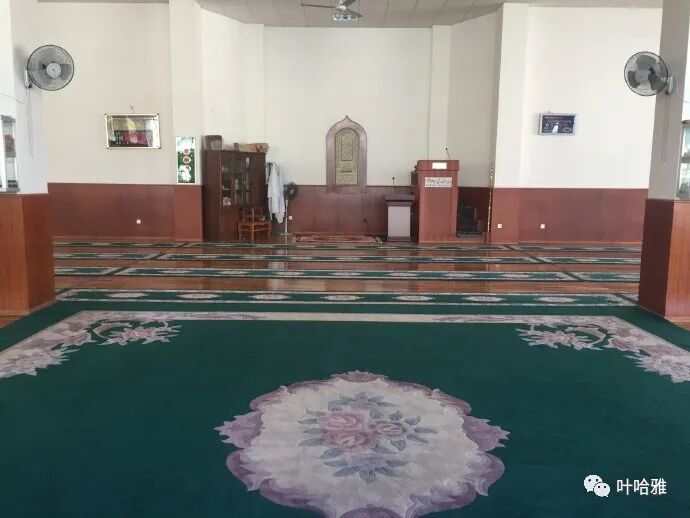
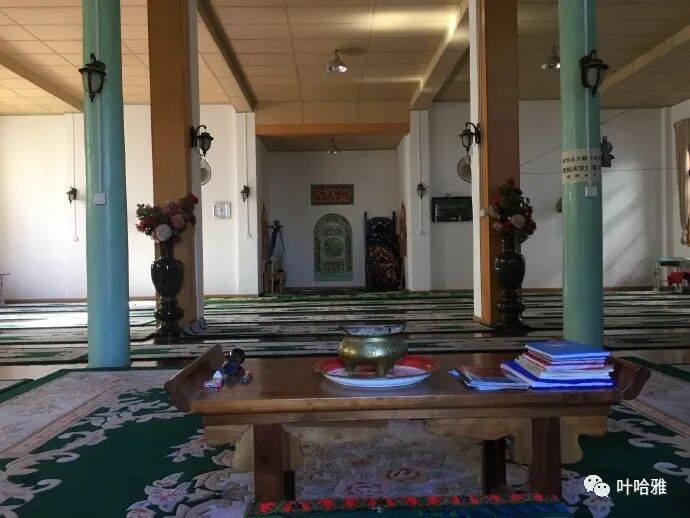
Dali Ximen Mosque
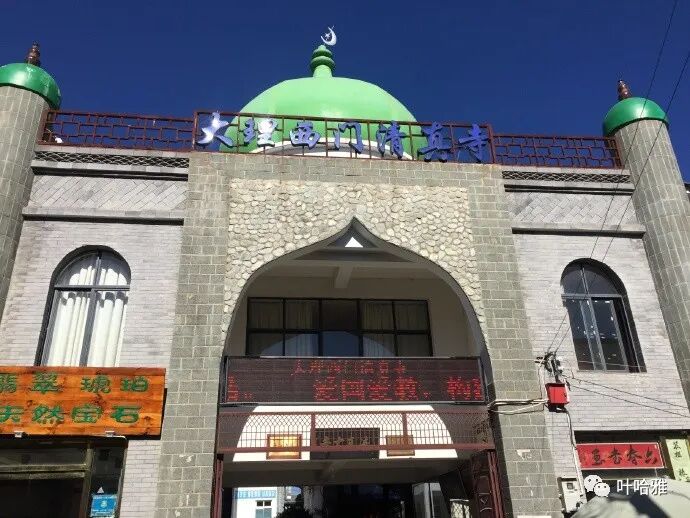
The history of Ximen Mosque dates back to the Yuan Dynasty. It was first built in the 15th year of the Zhiyuan reign (1278), making it over 700 years old. It was built by Qilie Zuocheng, a general under the Yunnan King Sayyid Ajjal Shams al-Din Omar, and is considered one of the oldest mosques in Yunnan.
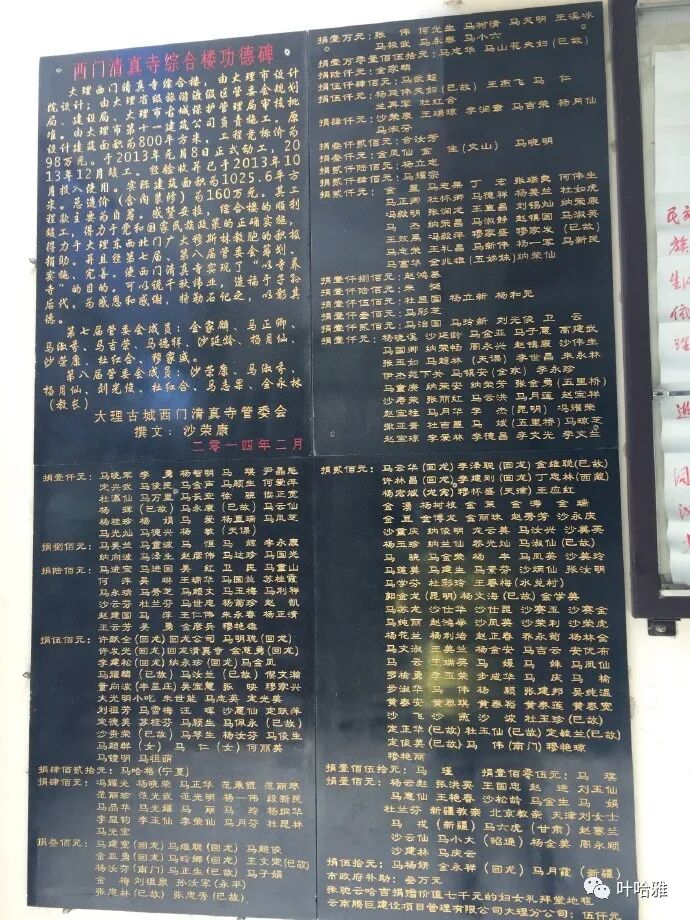
Du Wenxiu, a leader of the ethnic uprisings in Yunnan during the late Qing Dynasty, once founded the Duzhangjiao School at Ximen Mosque.
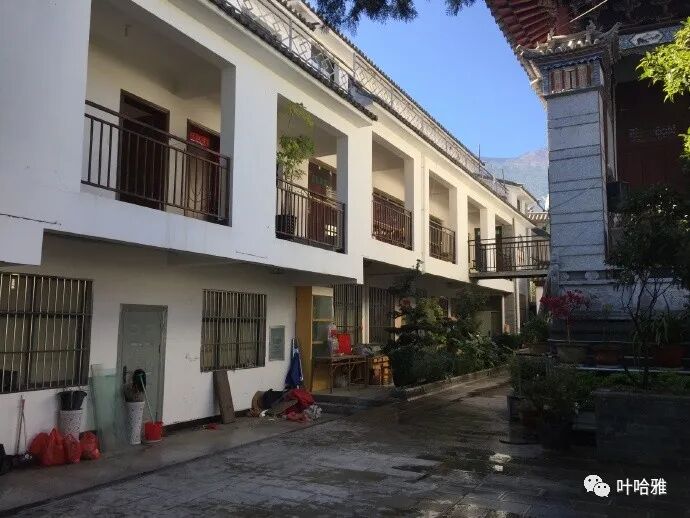
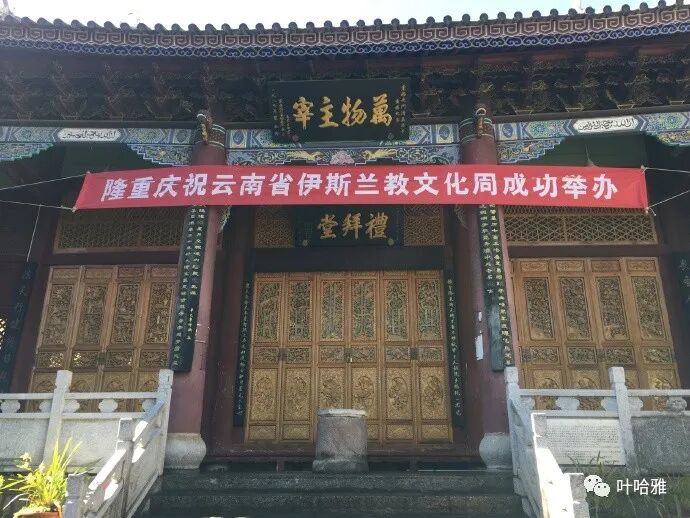
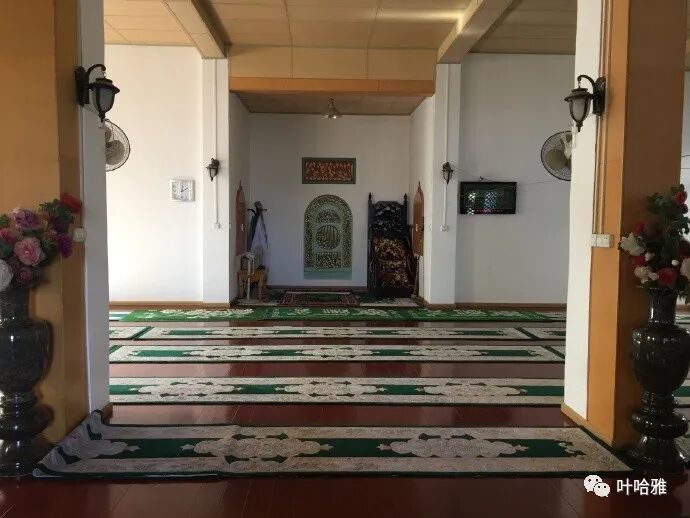
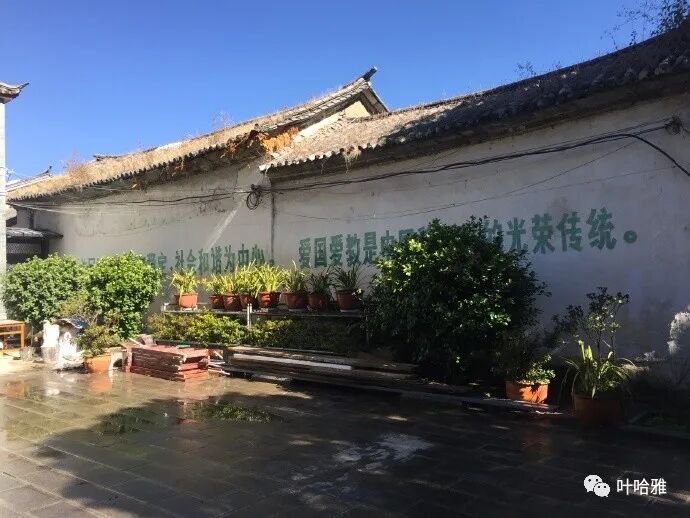
Xiadui Mosque
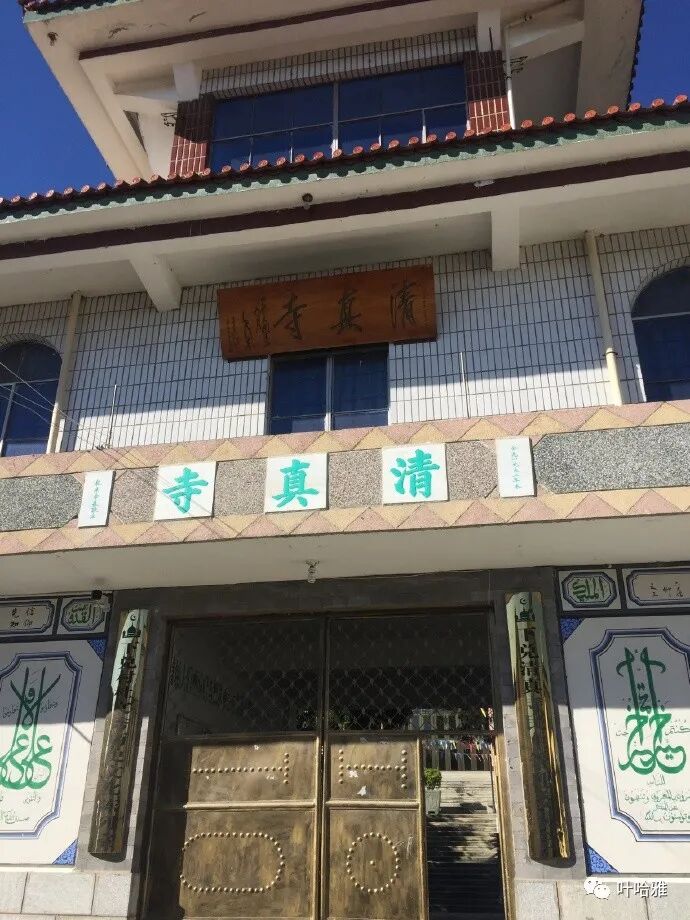
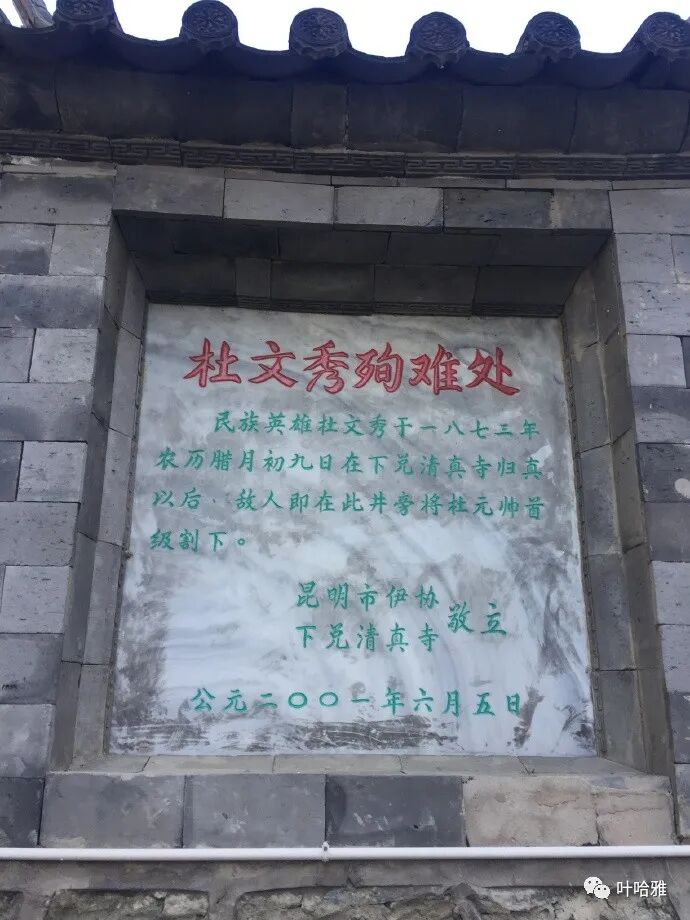
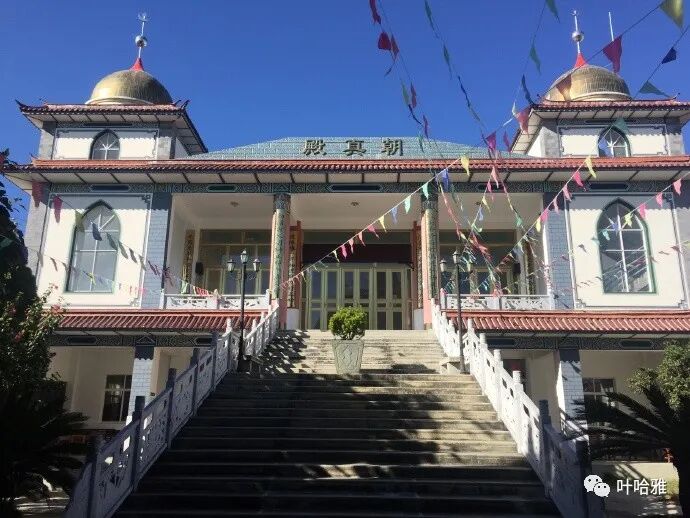
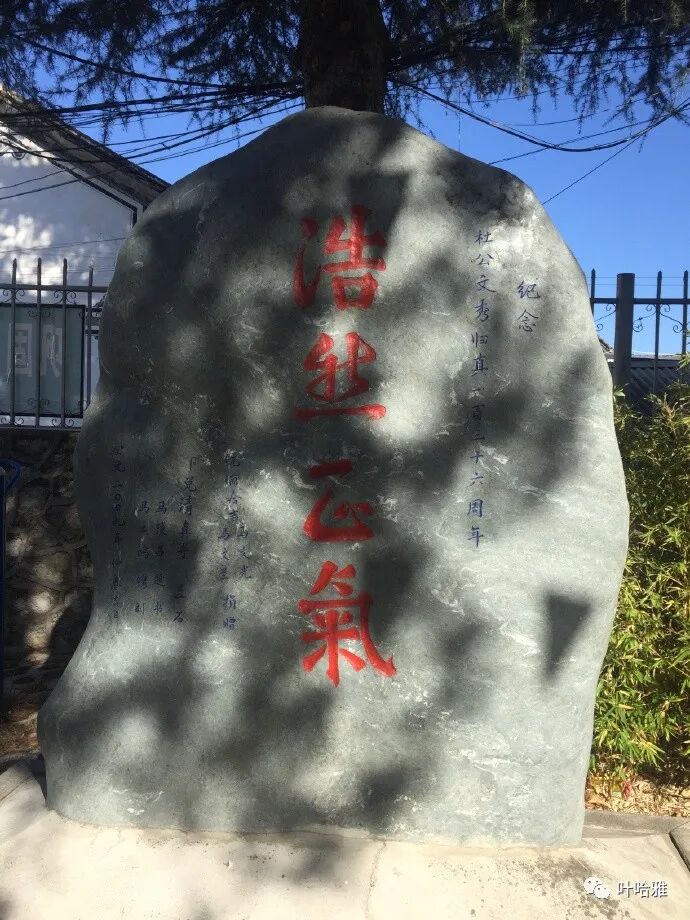
Xiadui Village is also a Hui Muslim village. The mosque was first built during the Qianlong period of the Qing Dynasty, and this is the place where Du Wenxiu died as a martyr.
As a late Qing dynasty ethnic leader who fought against the Qing, Du Wenxiu was slandered by his enemies for colluding with foreign powers, setting up his own base, and establishing an independent state, all based on a flyer that once circulated in Yunnan. I once found foreign language documents to research this issue.
Regarding several issues of Du Wenxiu's foreign relations: in foreign documents, two issues concerning the Hui Muslim uprising were long debated. One was why Yunnan Hui Muslims were called Pan-thay, and the other was the issue of the Dali Islamic State. The content of a flyer and the nature of a regime are two different things. A regime's nature might be reflected in a flyer, but judging a regime solely based on one flyer is still problematic. Baber and Gill both asked the Dali Hui Muslims about the Islamic State and the title of Sultan. They reached the same conclusion: the title of Sultan was completely foreign to everyone. Except for two or three imams, the locals never used it to address their leader, and no one even knew the name Suleiman.
Therefore, the issue of the Dali Islamic State actually stemmed from this flyer. Clearly, the purpose of distributing this flyer was to incite Hui Muslims in other regions to join the resistance against Qing rule. Its content represented the views and tendencies of a very small number of imams. Du Wenxiu's views on religion were not that narrow, and the flyer did not represent the nature of the Dali Hui Muslim regime.
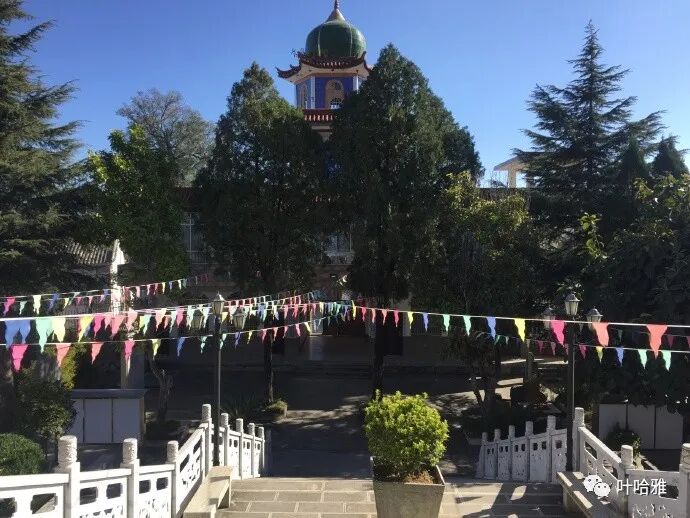
Du Wenxiu advocated that the three religions should be of one heart and united as one. This meant Islam, Buddhism, and the Yi people's religion.
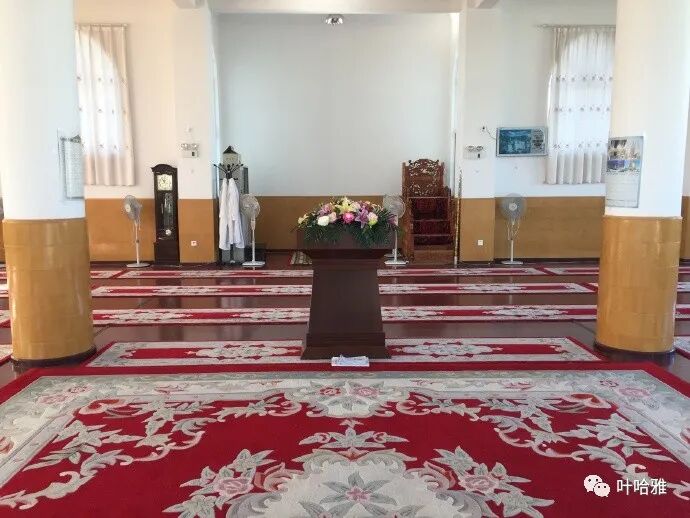
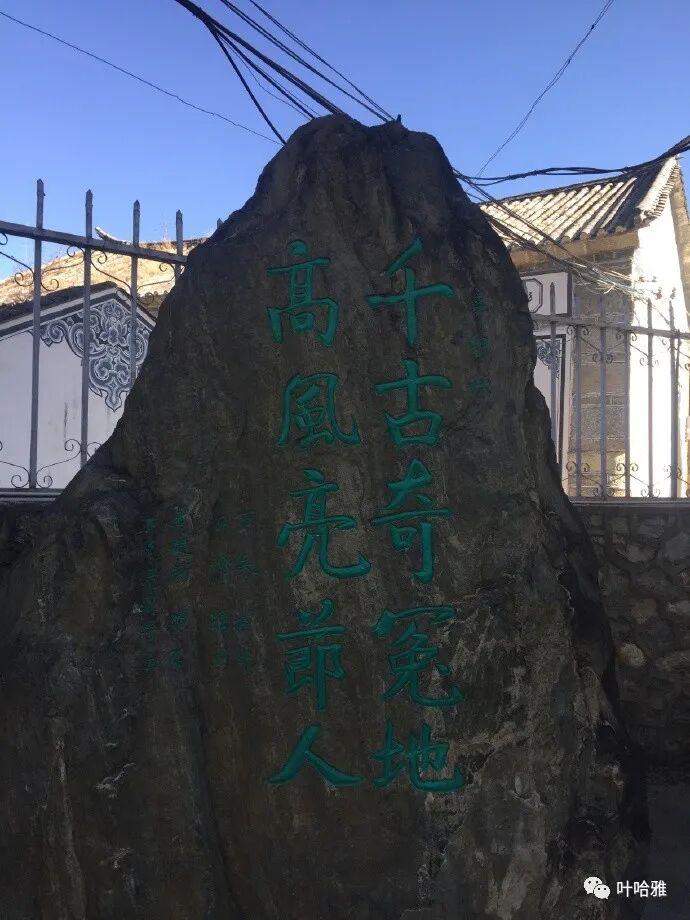
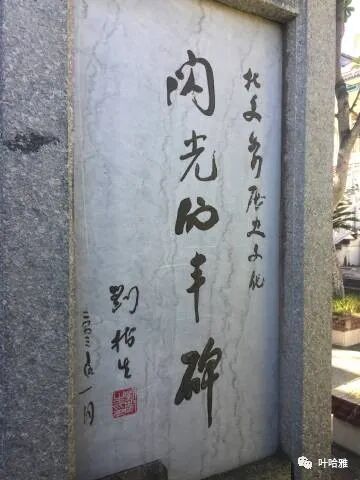
Yitianyuan Halal Cuisine, Dali Branch.
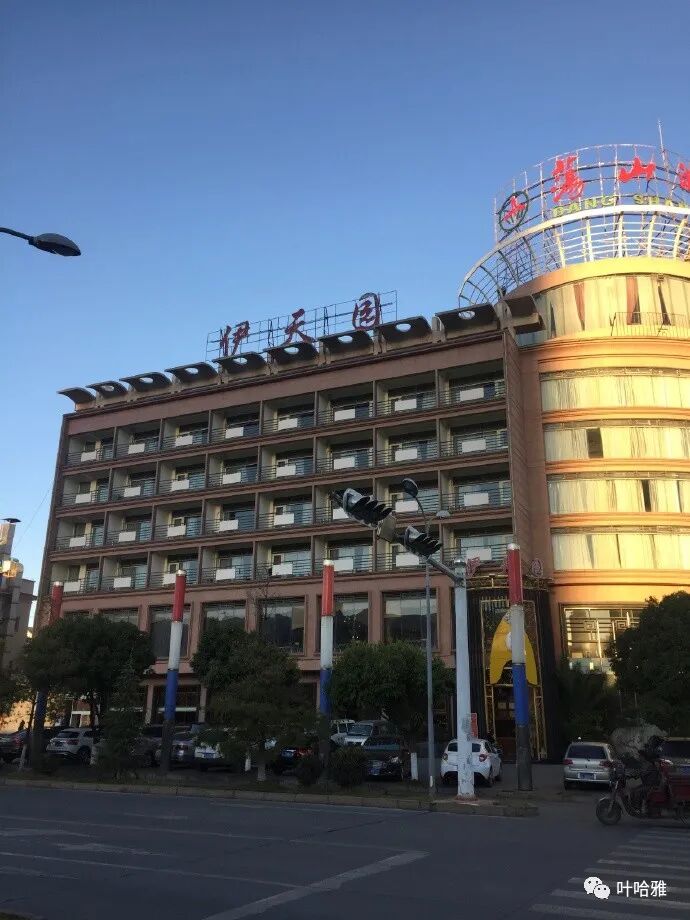
The main restaurant is in Kunming, and the Dali branch has been operating for 11 years. It is a relatively large Yunnan restaurant.
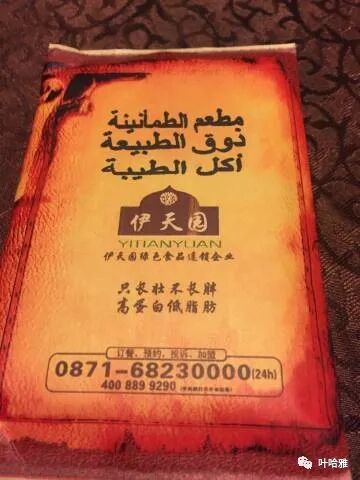
This is a photo of a napkin taken in 2016; it certainly wouldn't be designed like this today.
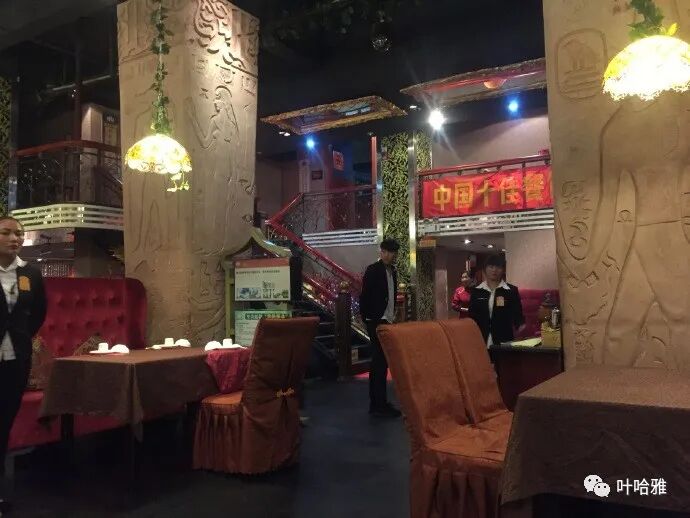
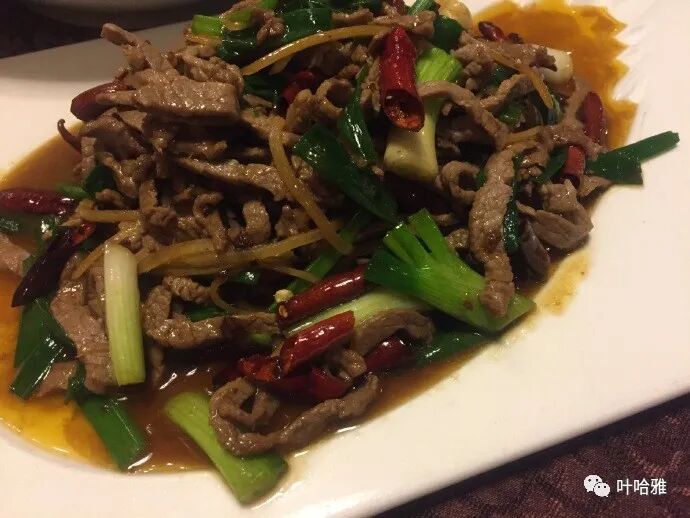
I had stir-fried beef (xiaochao huangniurou) and fried milk fan (zha rushan). This was my first time trying fried milk fan, a deep-fried dairy snack invented by Hui Muslims.
Xizhou Ancient Town
There are not many Islamic elements left in Xizhou Ancient Town. Only one old mosque remains, along with a few halal snack shops. Most Hui Muslims in Xizhou live outside the ancient town.
Xizhou has a local snack called Xizhou flaky flatbread (xizhou posu baba). It is a large, deep-fried bun made by both Hui and Han people.
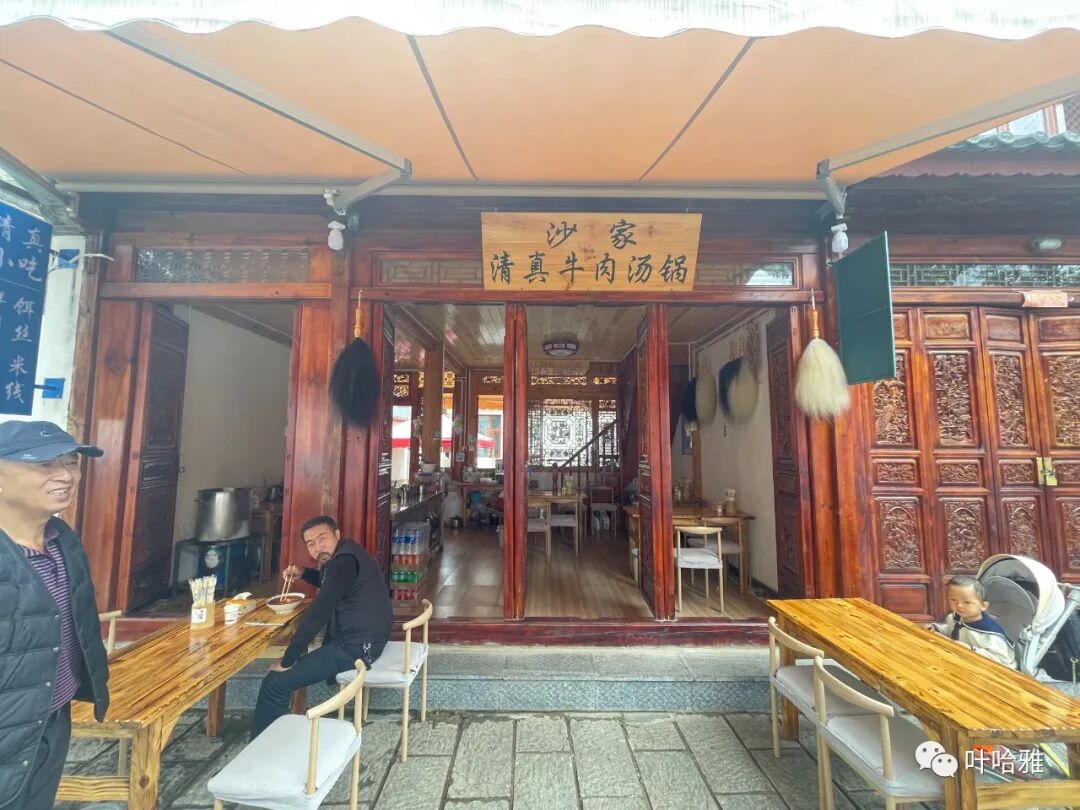
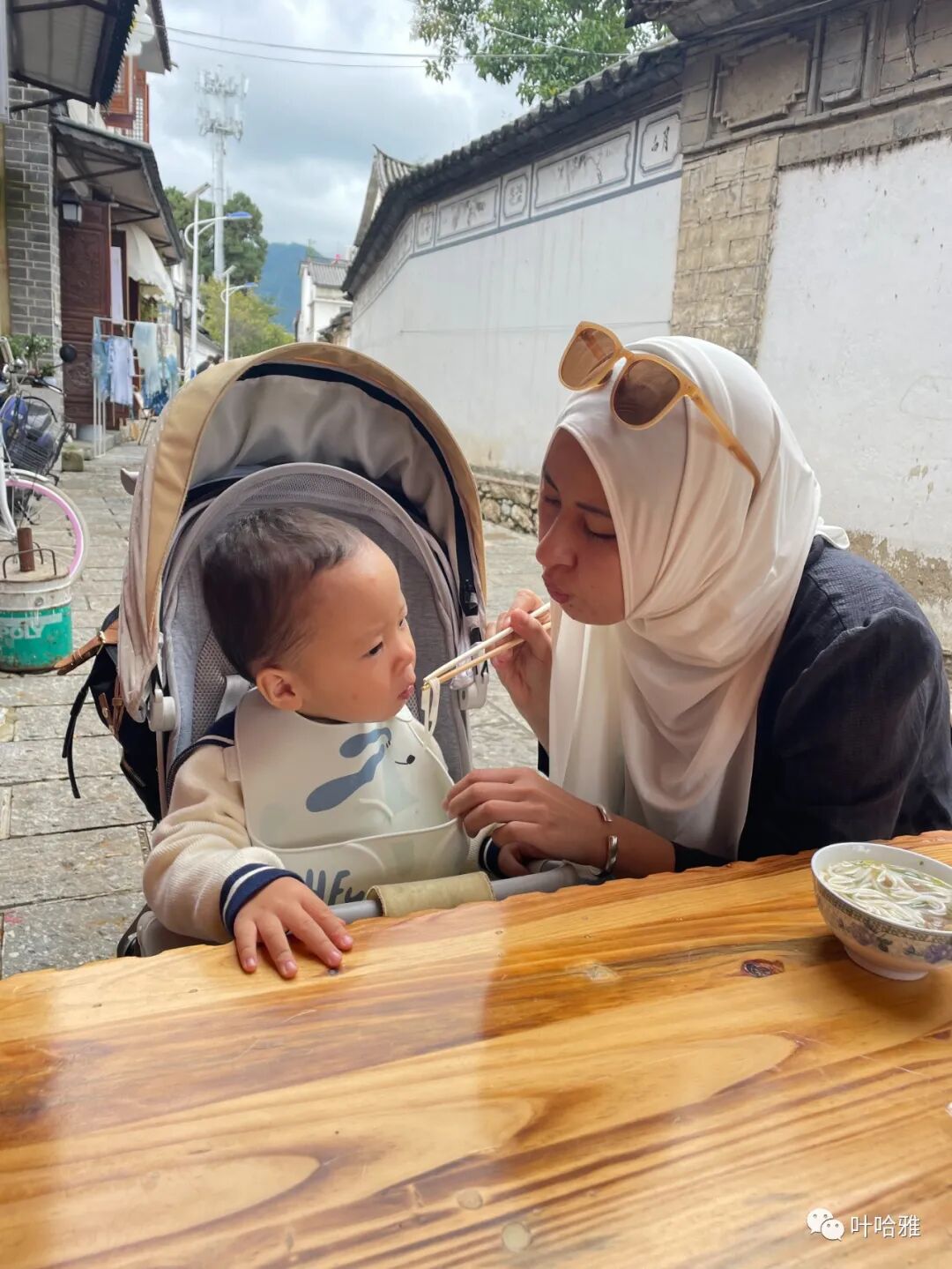
In the morning, we ate rice noodles (mixian) at Shajia Shop inside Xizhou Ancient Town. They serve local-style rice noodles with original broth cooked in a copper pot. You can add your own toppings, which works well for us since we can choose non-spicy options. Their chicken soup is delicious, and the owner kindly gave us a small bowl of noodles for Fahim.
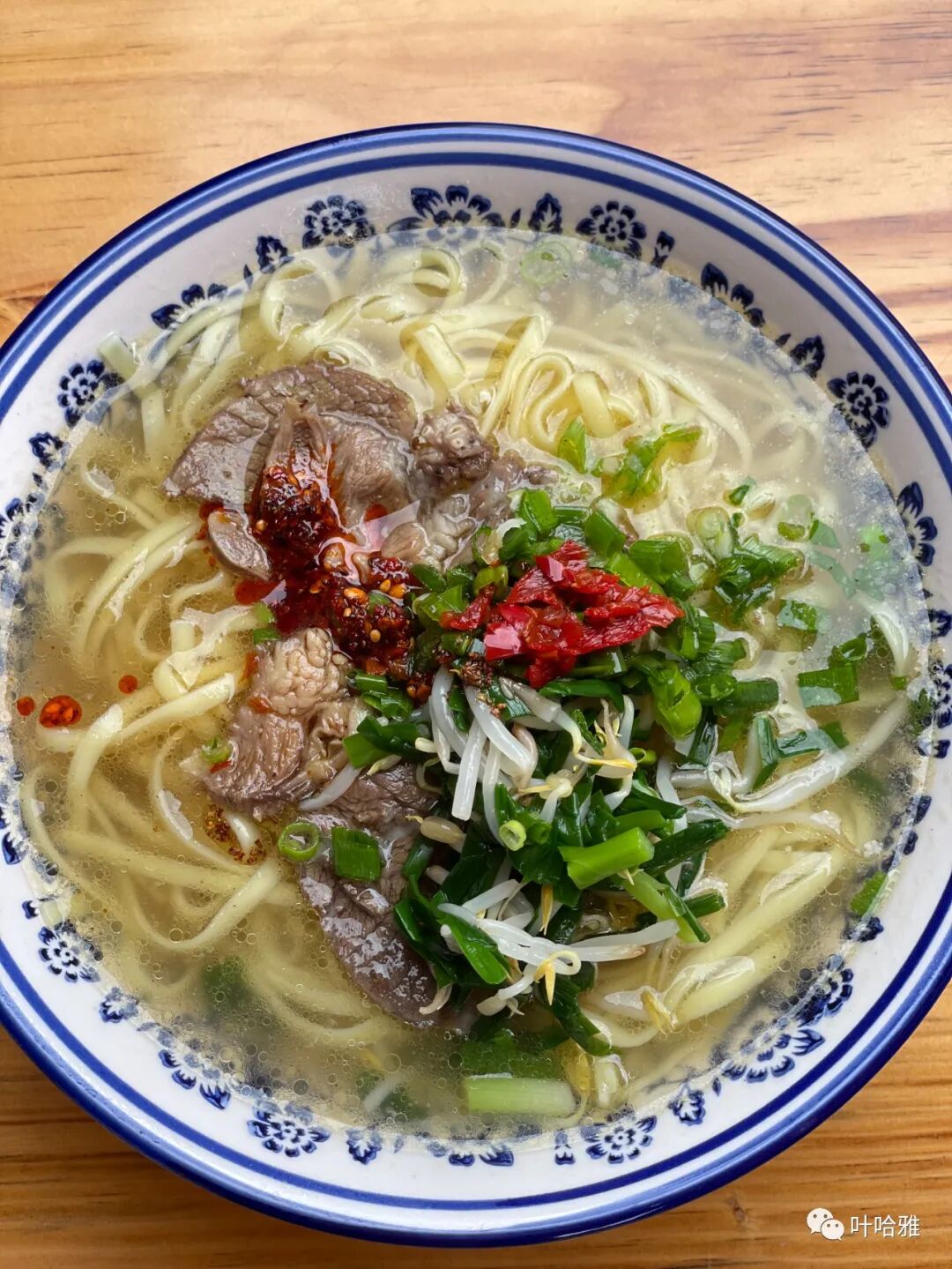
Fahim really loves slurping noodles, and he enjoyed this meal.
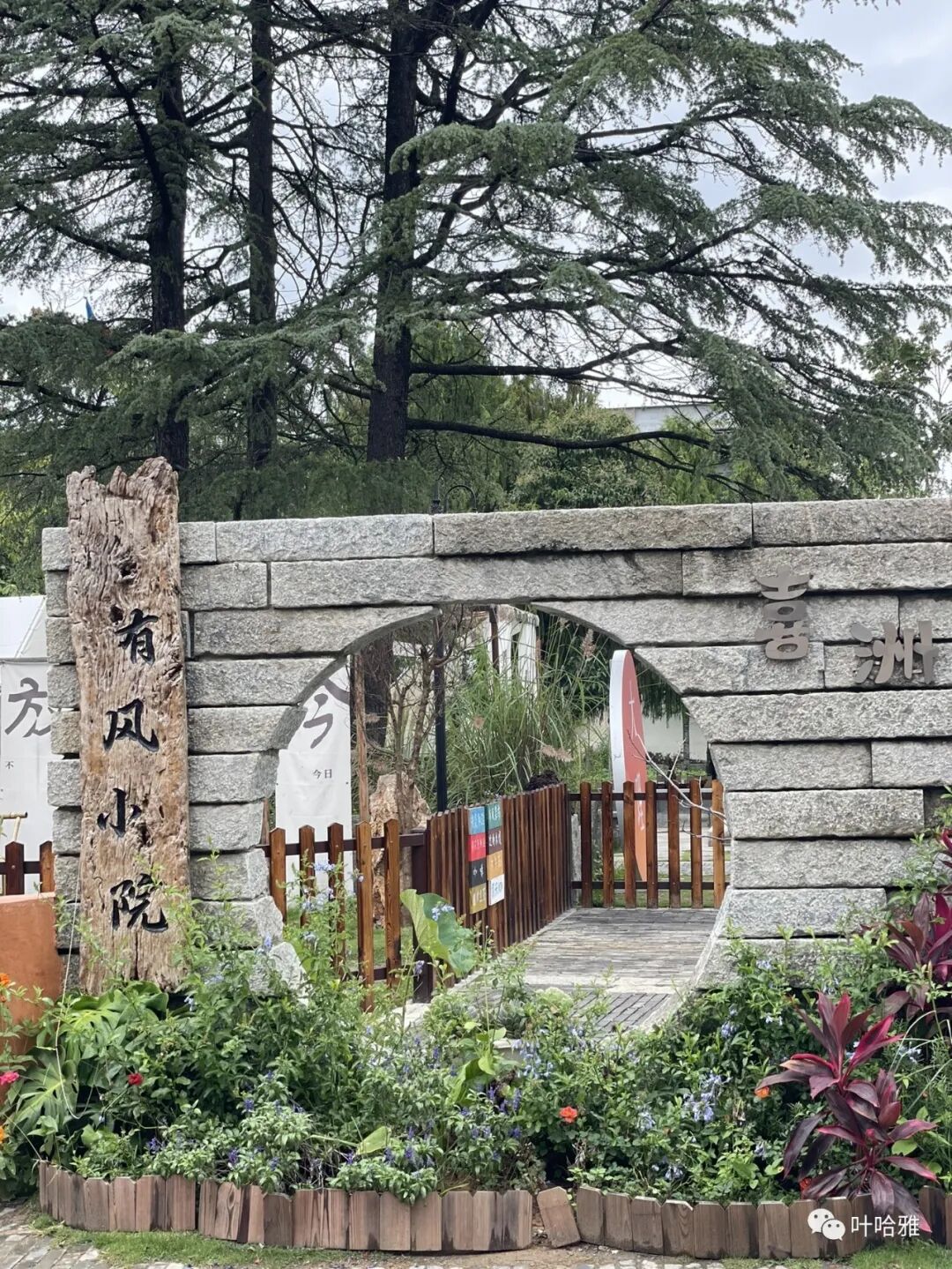
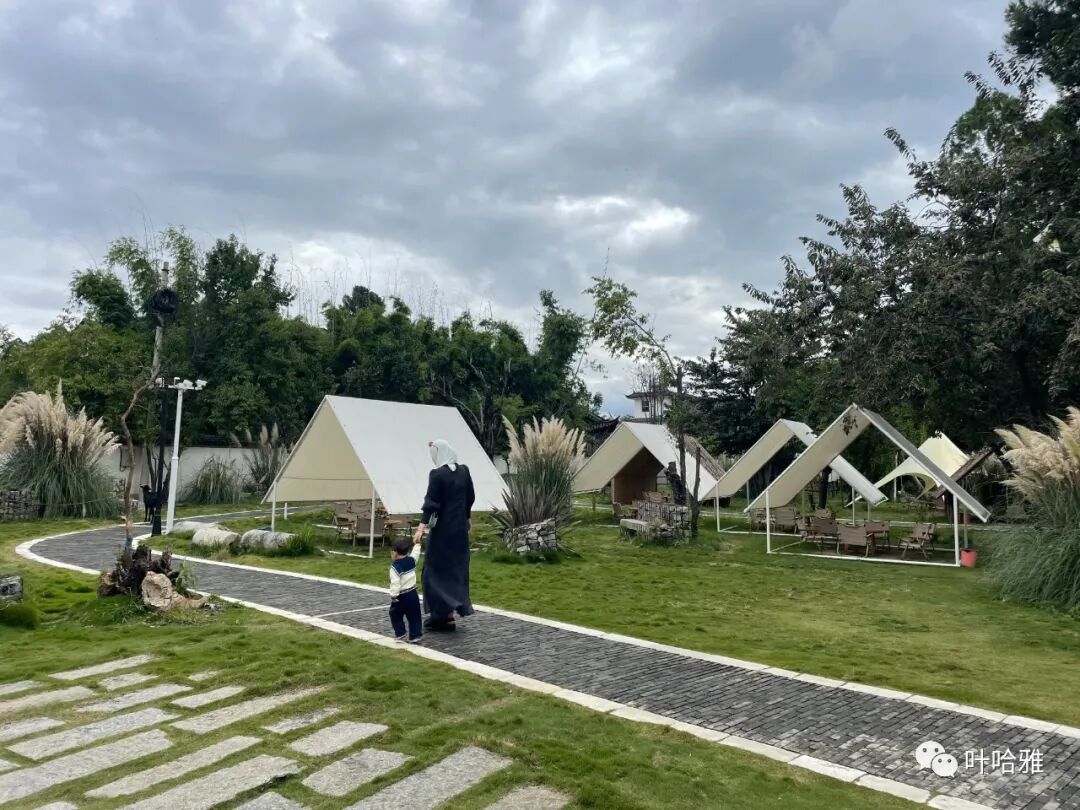
After finishing our noodles, we wandered around the Windy Courtyard (youfeng xiaoyuan) in the ancient town.
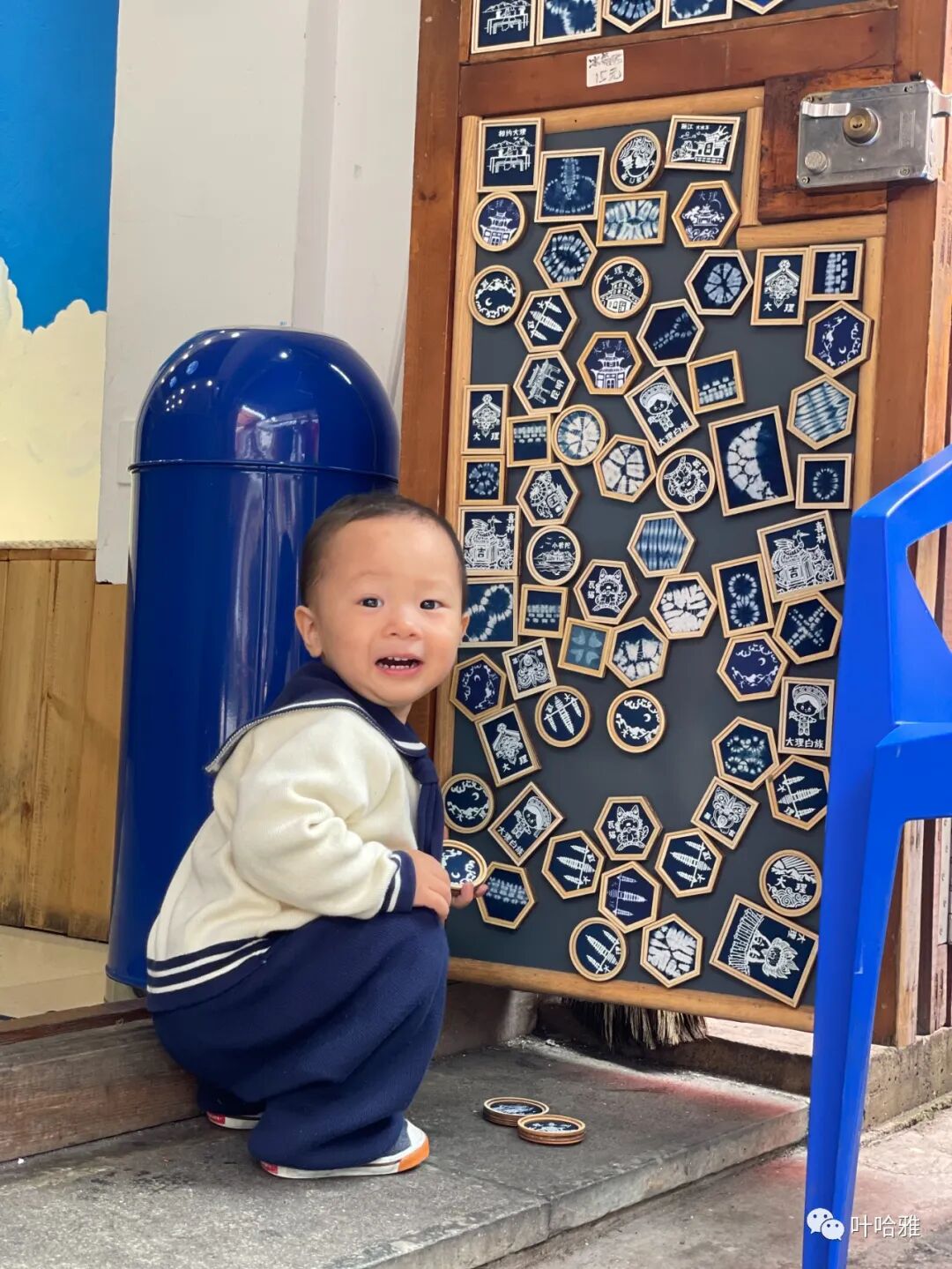
Fahim really liked the blue Xizhou fridge magnets in the ancient town and played in front of a shop for half an hour.
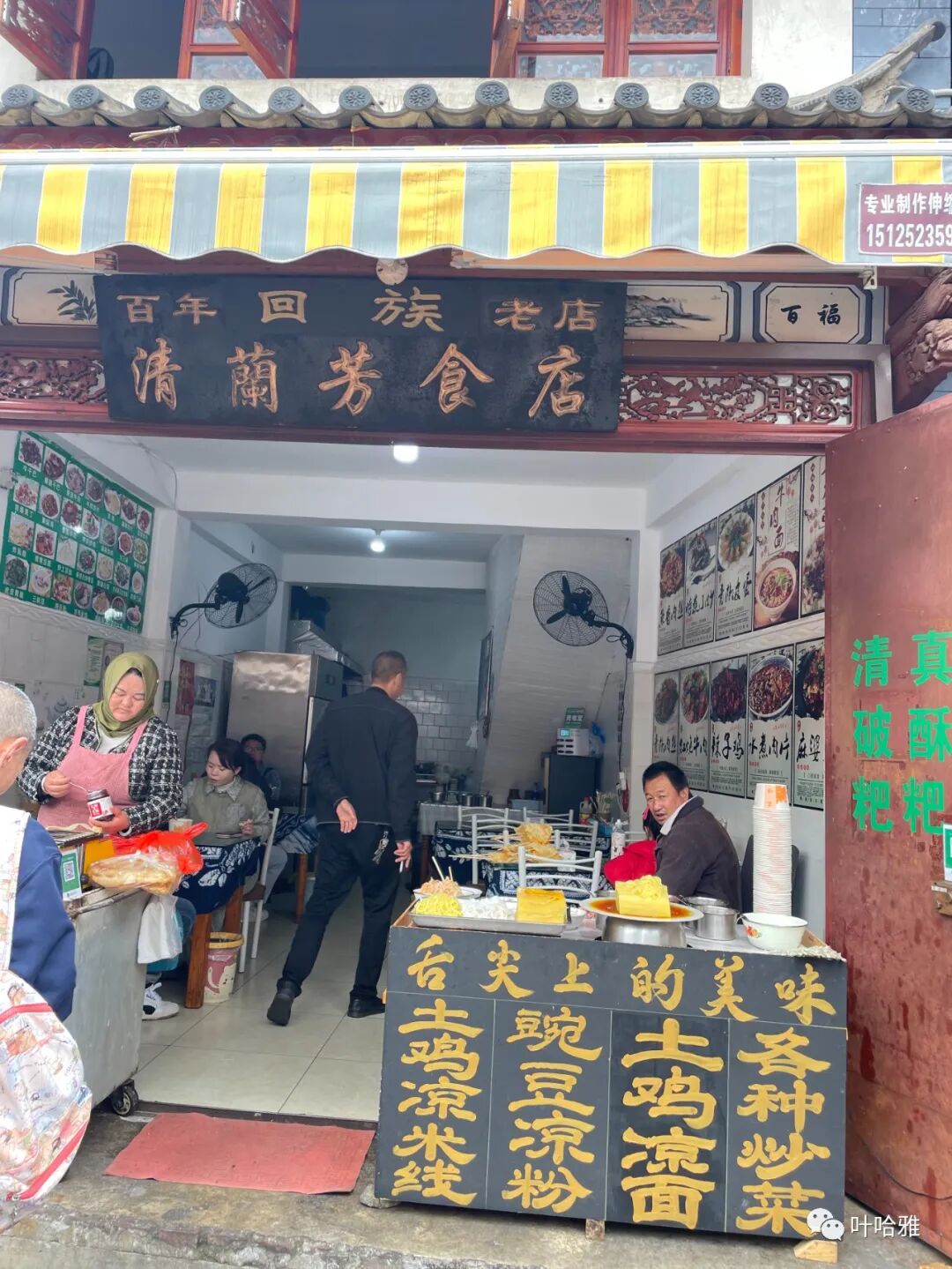
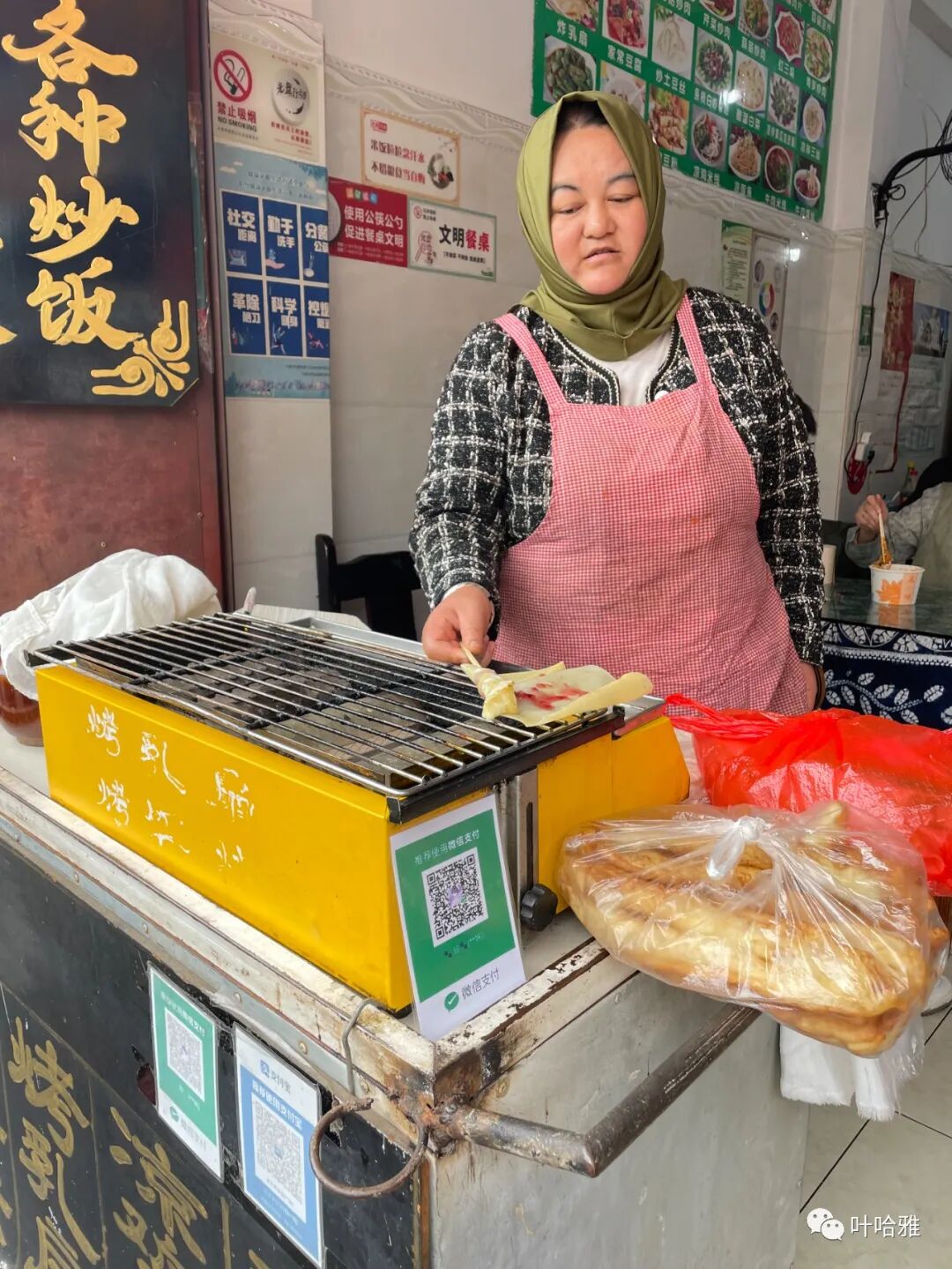
I also tried grilled milk fan (kao rushan) in Xizhou for the first time, and I think it tastes better than the fried version.
Xizhou Mosque
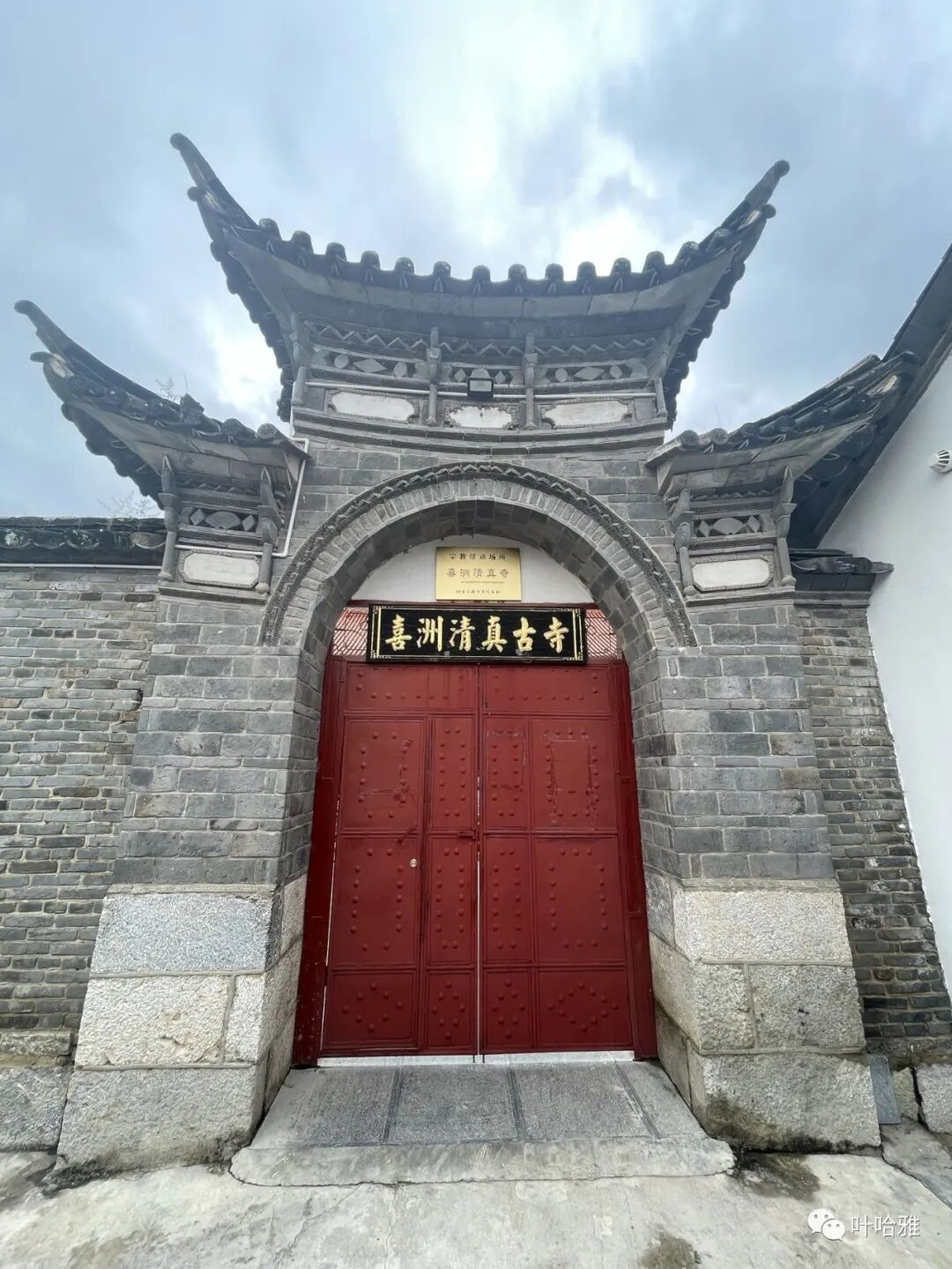
Xizhou originally had two mosques, the Ma Family Mosque and the Zhang Family Mosque. After the Dali regime failed, they were confiscated as rebel property. By the end of the Qing Dynasty and the beginning of the Republic of China, Hui Muslims chose representatives to ask local gentry to return Zhangjia Mosque. Since Zhangjia Mosque had been expanded and turned into a God of Wealth Hall (Caishendian), the local government gave the Hui Muslims a different plot of land to build a mosque. After several years of fundraising, the mosque was completed in 1922, and the prayer hall was expanded in 2004.
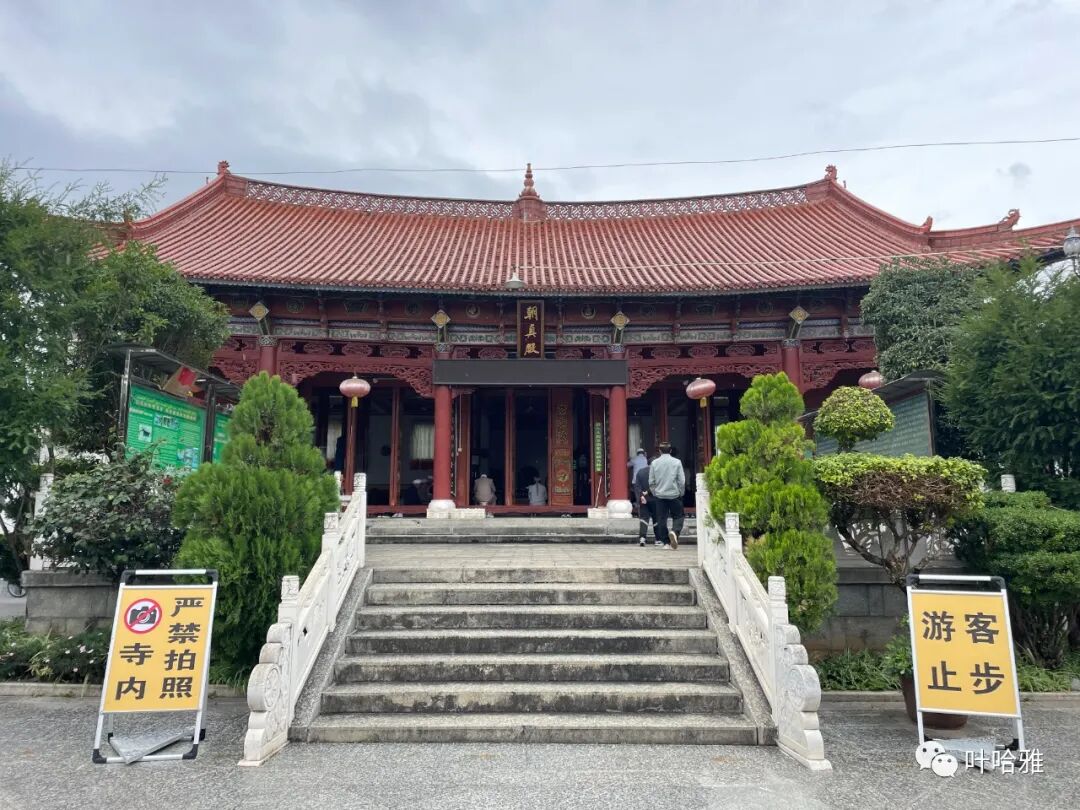
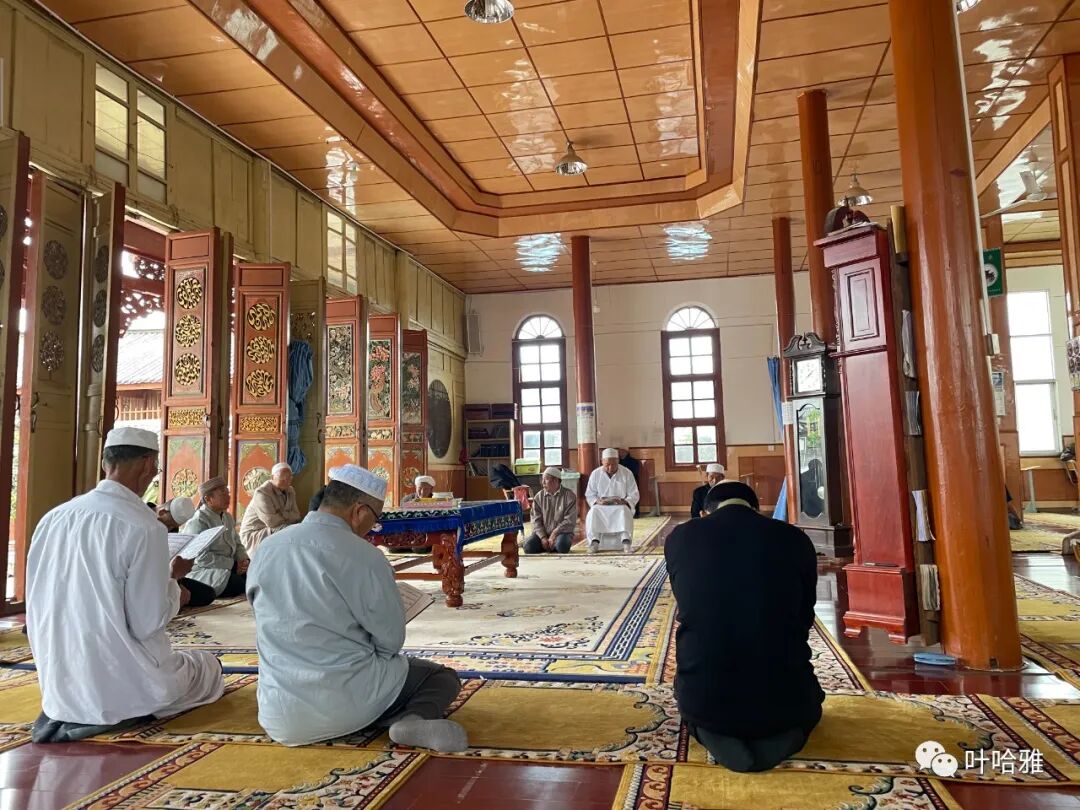
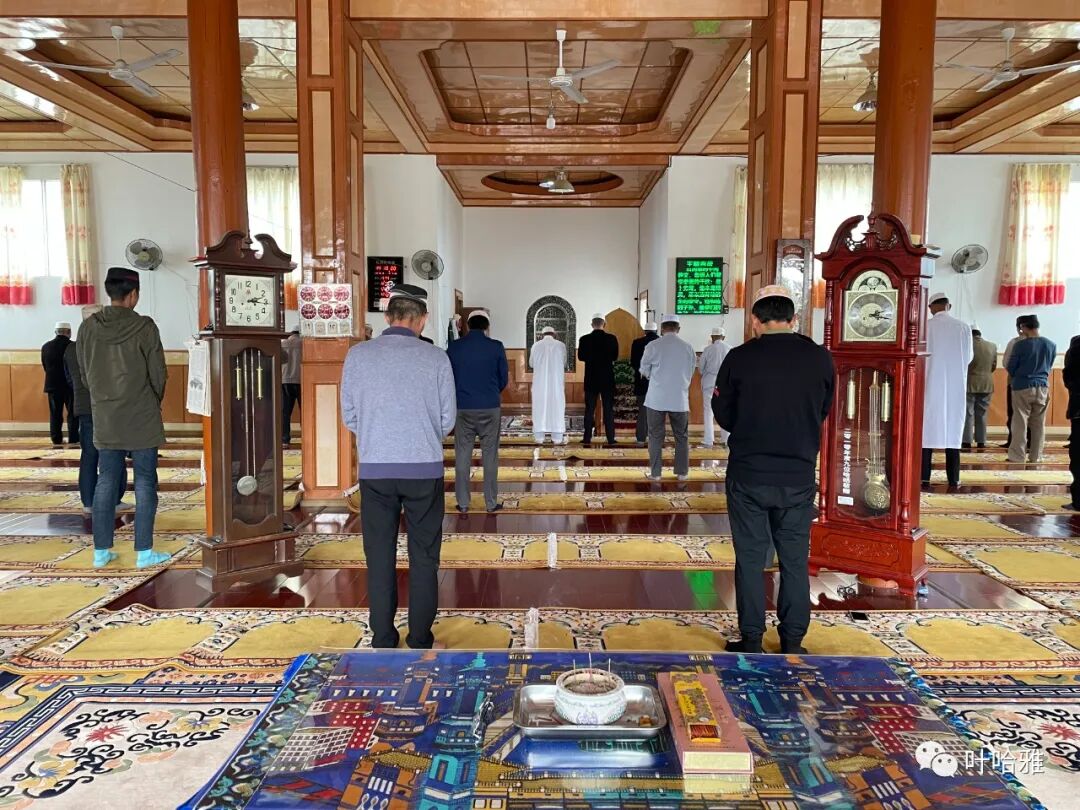
I attended Jumu'ah prayer in Xizhou. There are not many Hui Muslims here, and as usual, everyone sat in a circle to recite the Suole before the prayer.
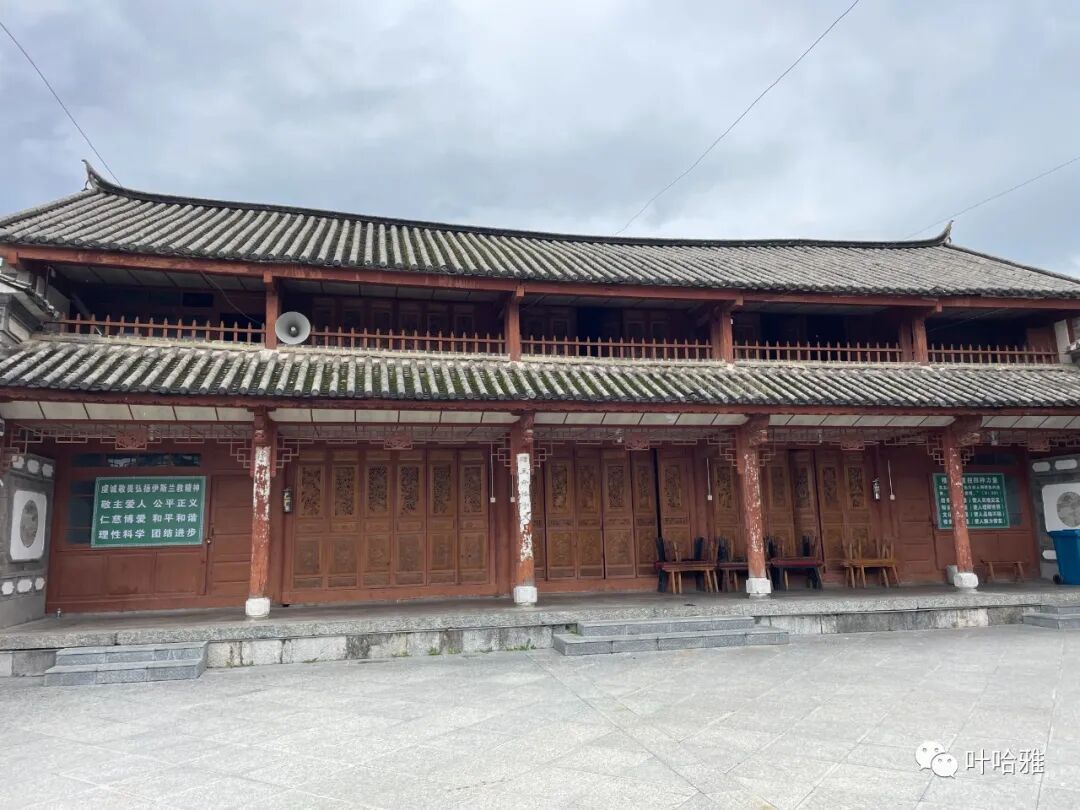
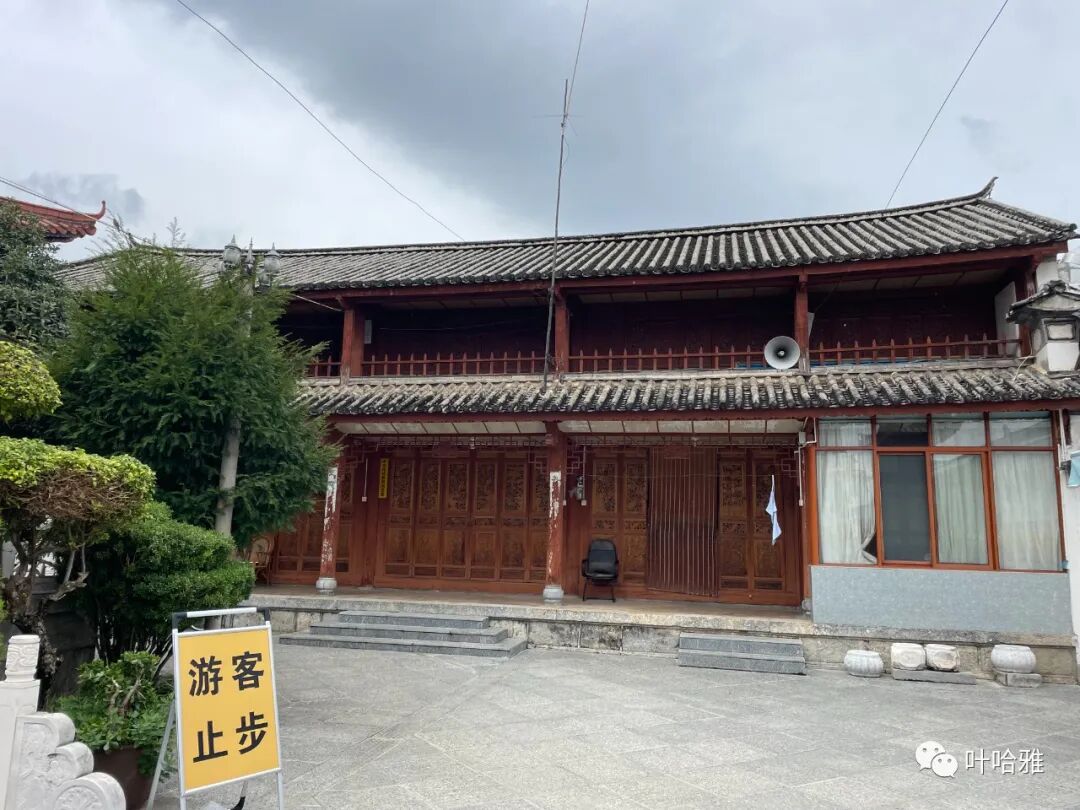
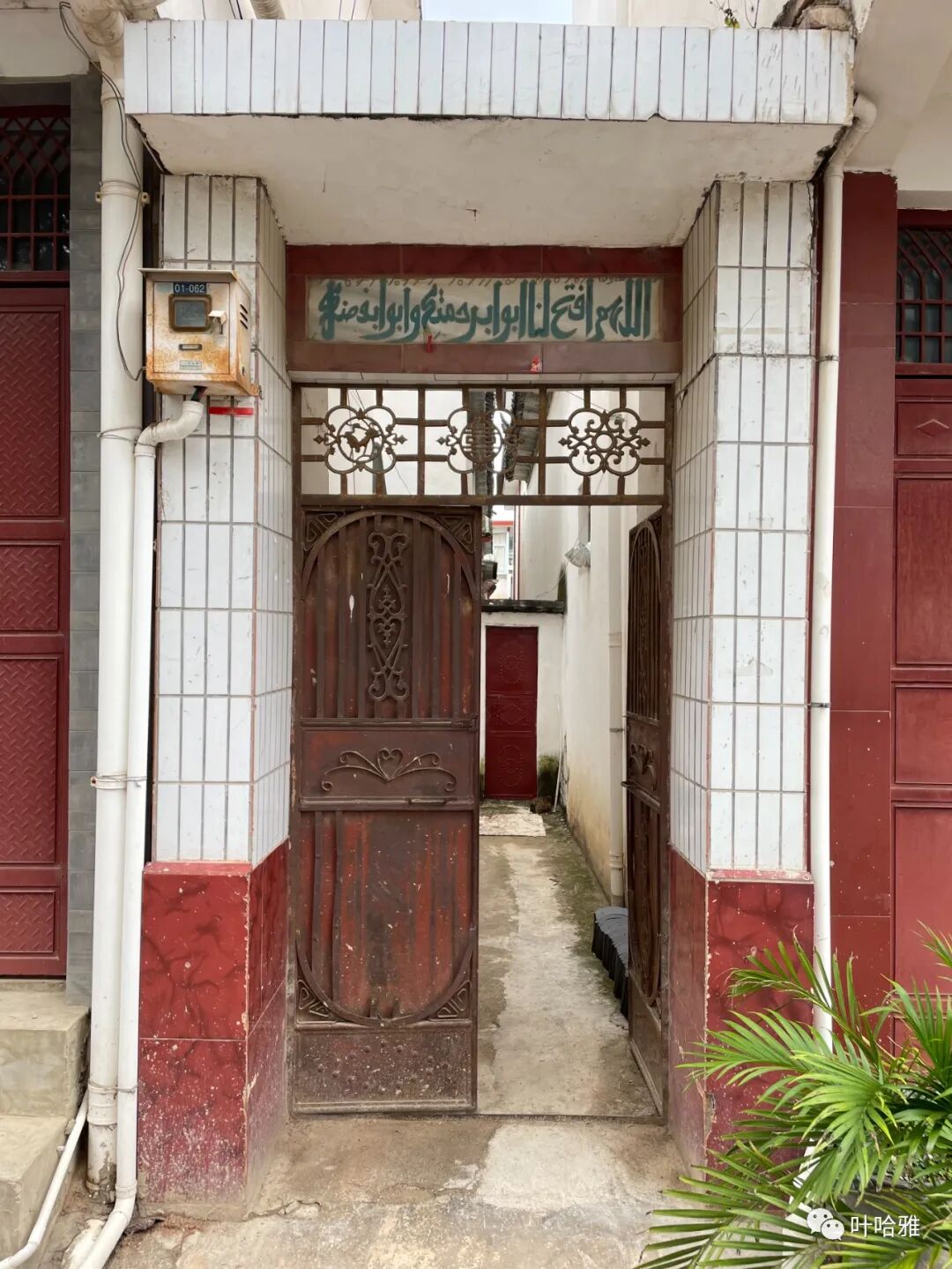
The prayer plaques (dua pai) are still on the doorways of the houses in the old town.
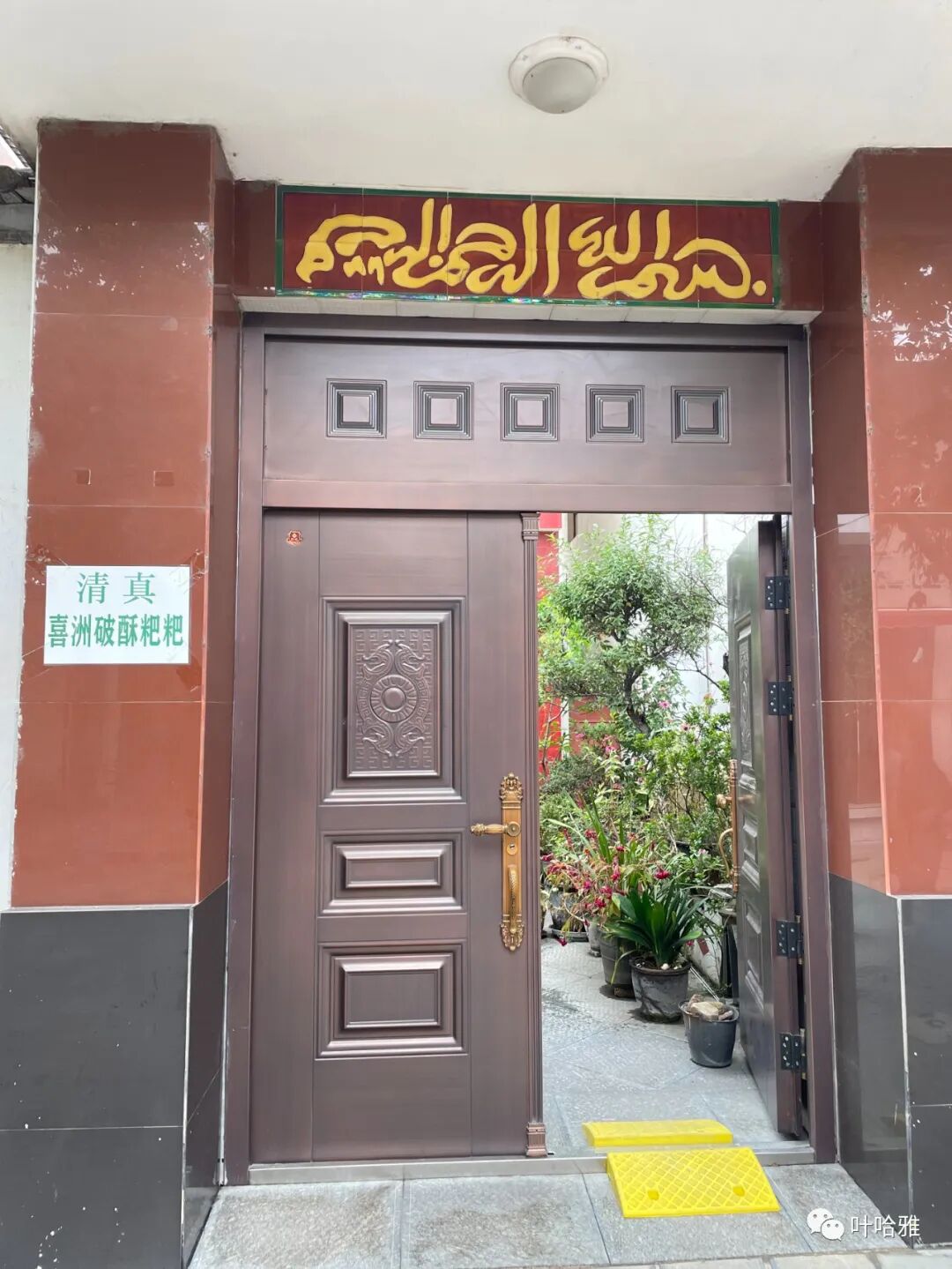
Shipang Village
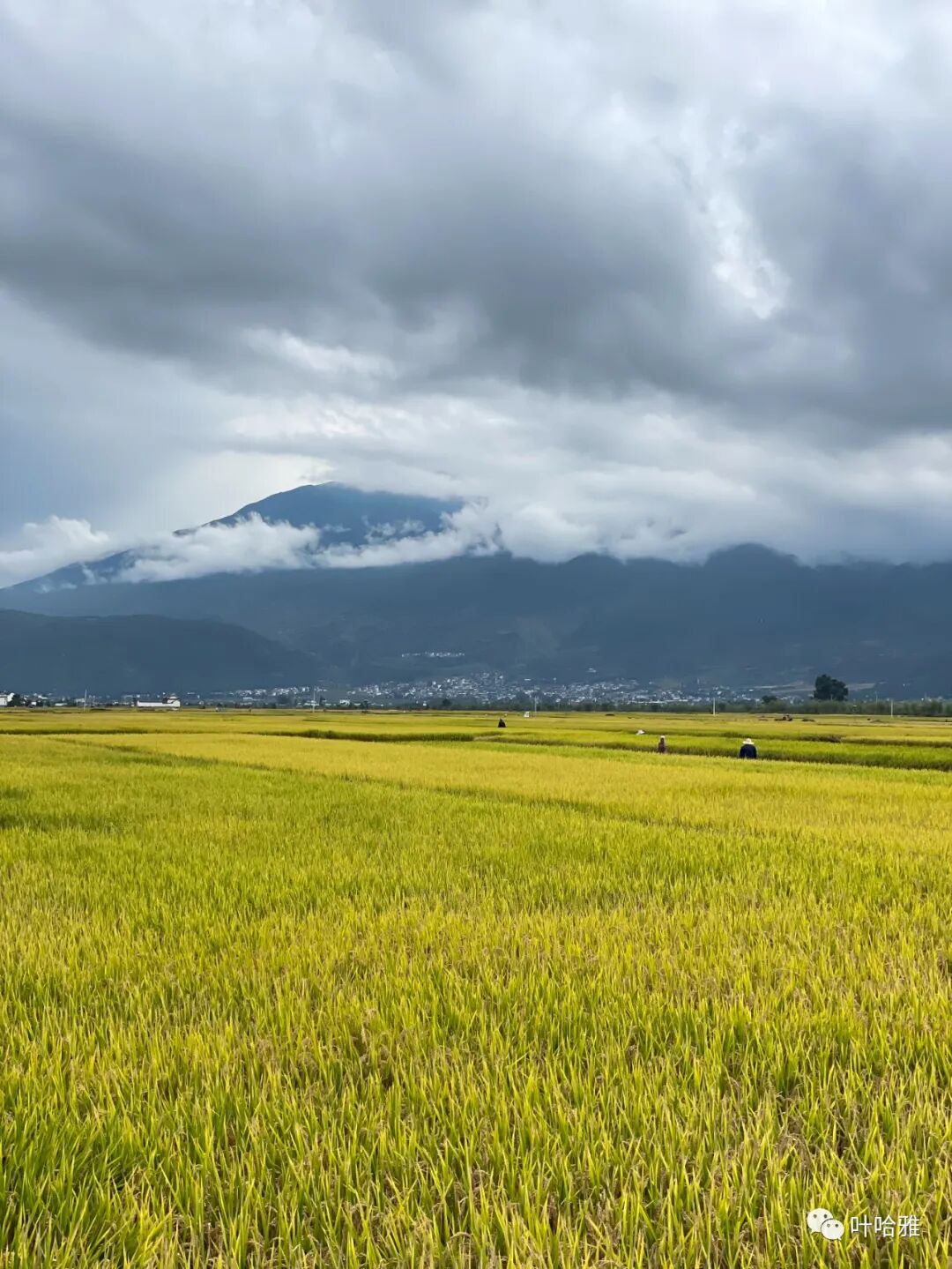
Shipang Village is a settlement where Bai and Hui Muslims live together. These Bai-Hui Muslims are Hui Muslims who have adopted Bai culture. They wear Bai clothing and practice Islam, but their ID cards list them as Hui Muslims. We arrived just as the rice was turning yellow, creating a vast golden field. It had just rained, and the distant mountains were wrapped in mist. It is a great place for photos, and since there are almost no tourists, you can enjoy the beautiful scenery in peace.
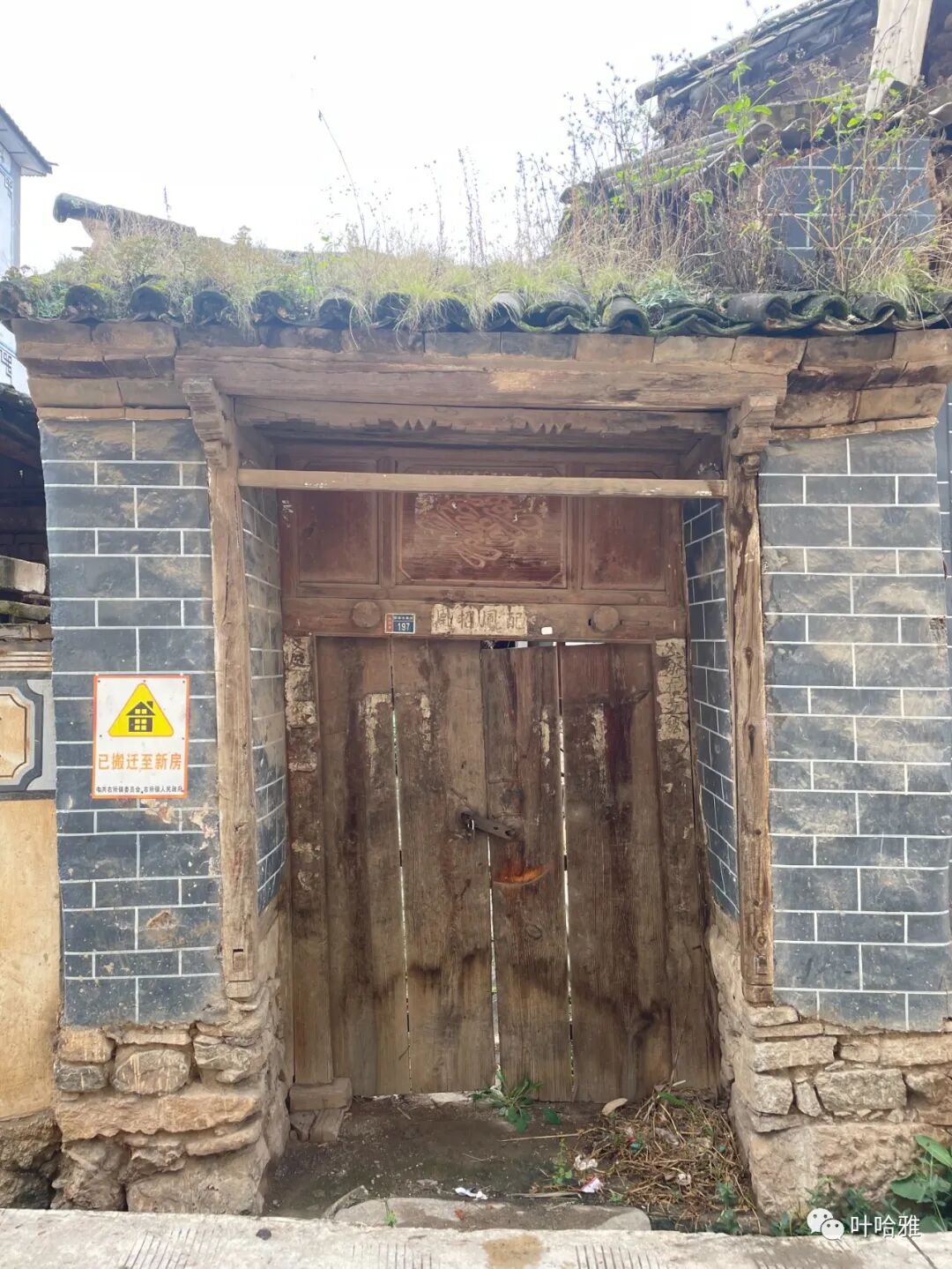
Many Hui Muslims have lived here since the Qing Dynasty. After intermarrying with the Bai people, they started speaking the Bai language, so I found I could not understand the locals. The Bai-style clothing is mostly seen in the small square headscarves, but now only a few elderly people wear them, and you rarely see them on the street.
Shipang Mosque
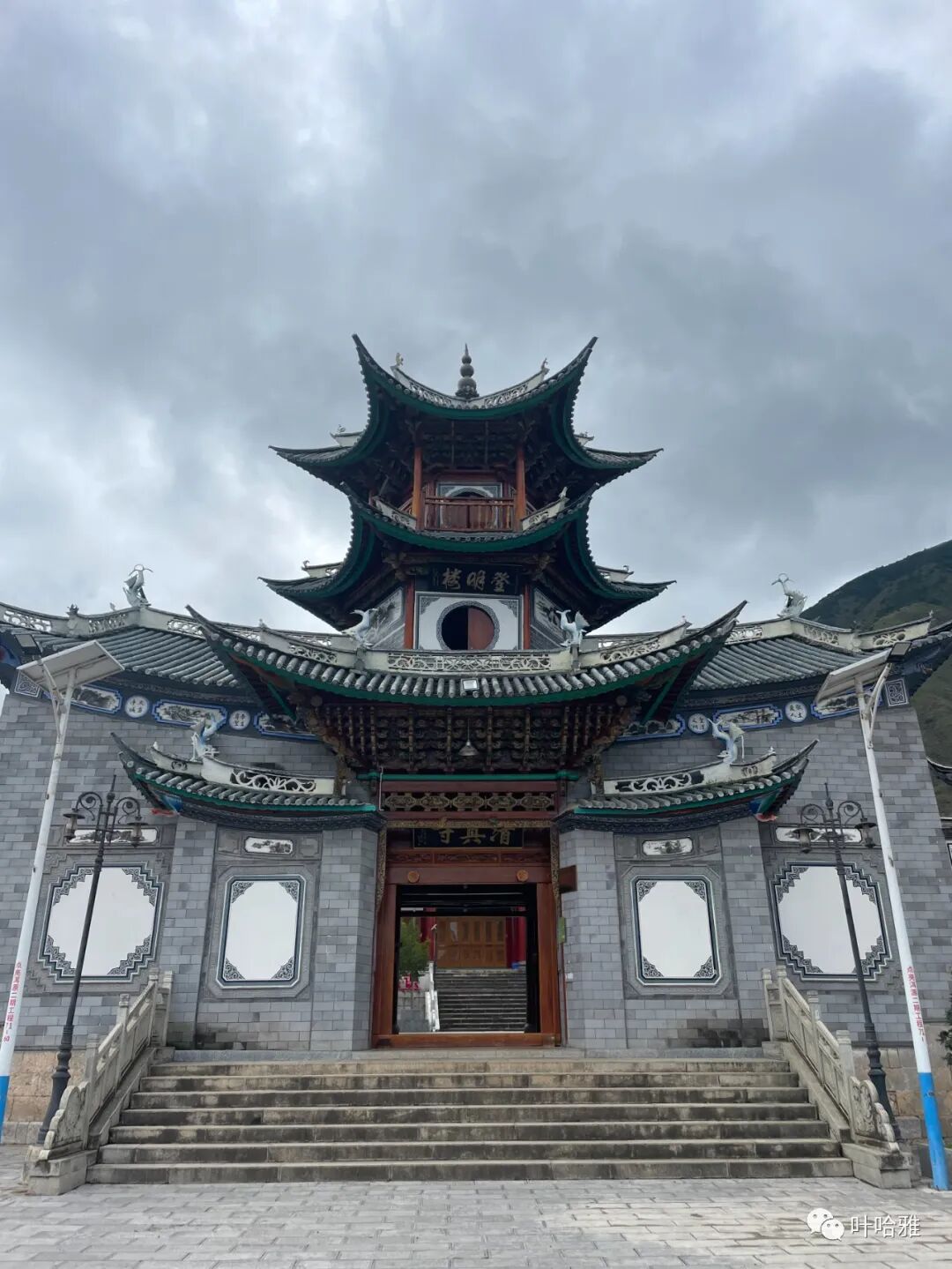
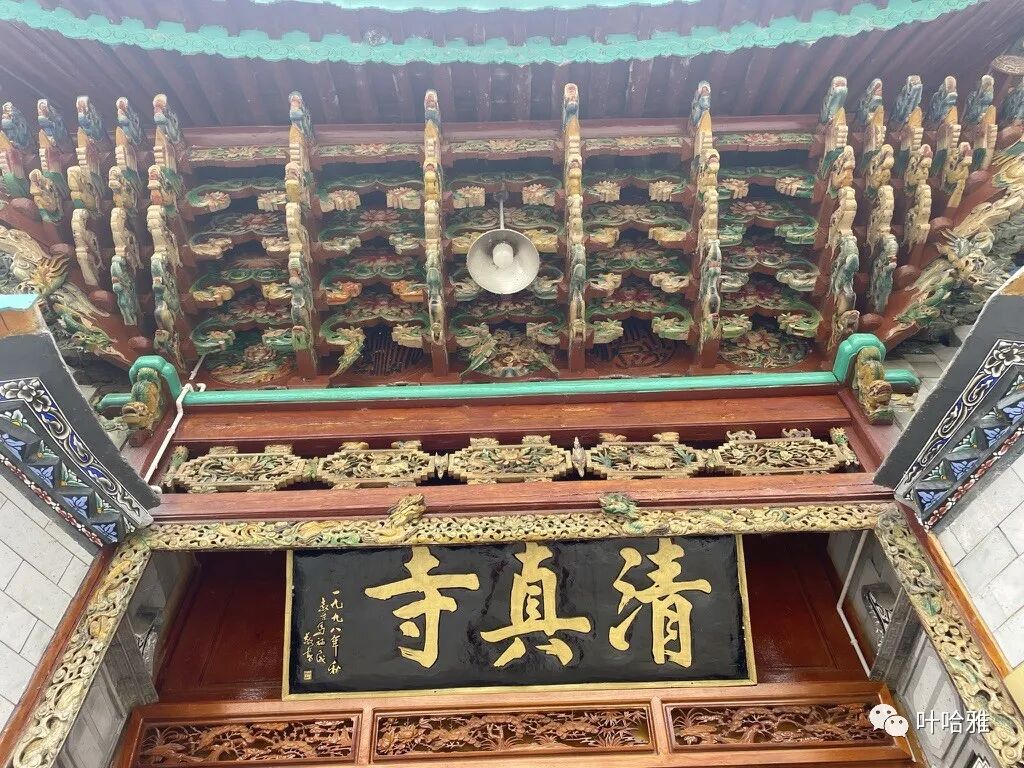
Shipang Mosque was first built in 1896. It was destroyed in a massacre in the past, which left the area without a mosque for a long time.
Halal Food Guide Dali: Weishan Hui Muslim Villages and Yunnan Mosque Food Map
Articles • yusuf908 posted the article • 0 comments • 130 views • 2026-05-22 21:34
Summary: This Dali halal food guide closes the Weishan section with halal sign notes, Hui Muslim village context, remaining food-map leads, and the onward road trip toward Jianshui in Yunnan.
Dali Halal Food Map is presented here as a firsthand travel account in clear English, beginning with this scene: The halal signs in Weishan County look just like the ones in Ningxia. The account keeps its focus on Dali Mosques, Chinese Muslims, Muslim Travel while preserving the names, places, food, and historical details from the Chinese source.
The halal signs in Weishan County look just like the ones in Ningxia.
Our halal trip to Dali has come to an end for now. Even though this was my second visit, there are still many halal spots I haven't seen, so I will definitely come back again. After leaving Dali, we headed south toward our next stop, Jianshui. view all
Summary: This Dali halal food guide closes the Weishan section with halal sign notes, Hui Muslim village context, remaining food-map leads, and the onward road trip toward Jianshui in Yunnan.
Dali Halal Food Map is presented here as a firsthand travel account in clear English, beginning with this scene: The halal signs in Weishan County look just like the ones in Ningxia. The account keeps its focus on Dali Mosques, Chinese Muslims, Muslim Travel while preserving the names, places, food, and historical details from the Chinese source.
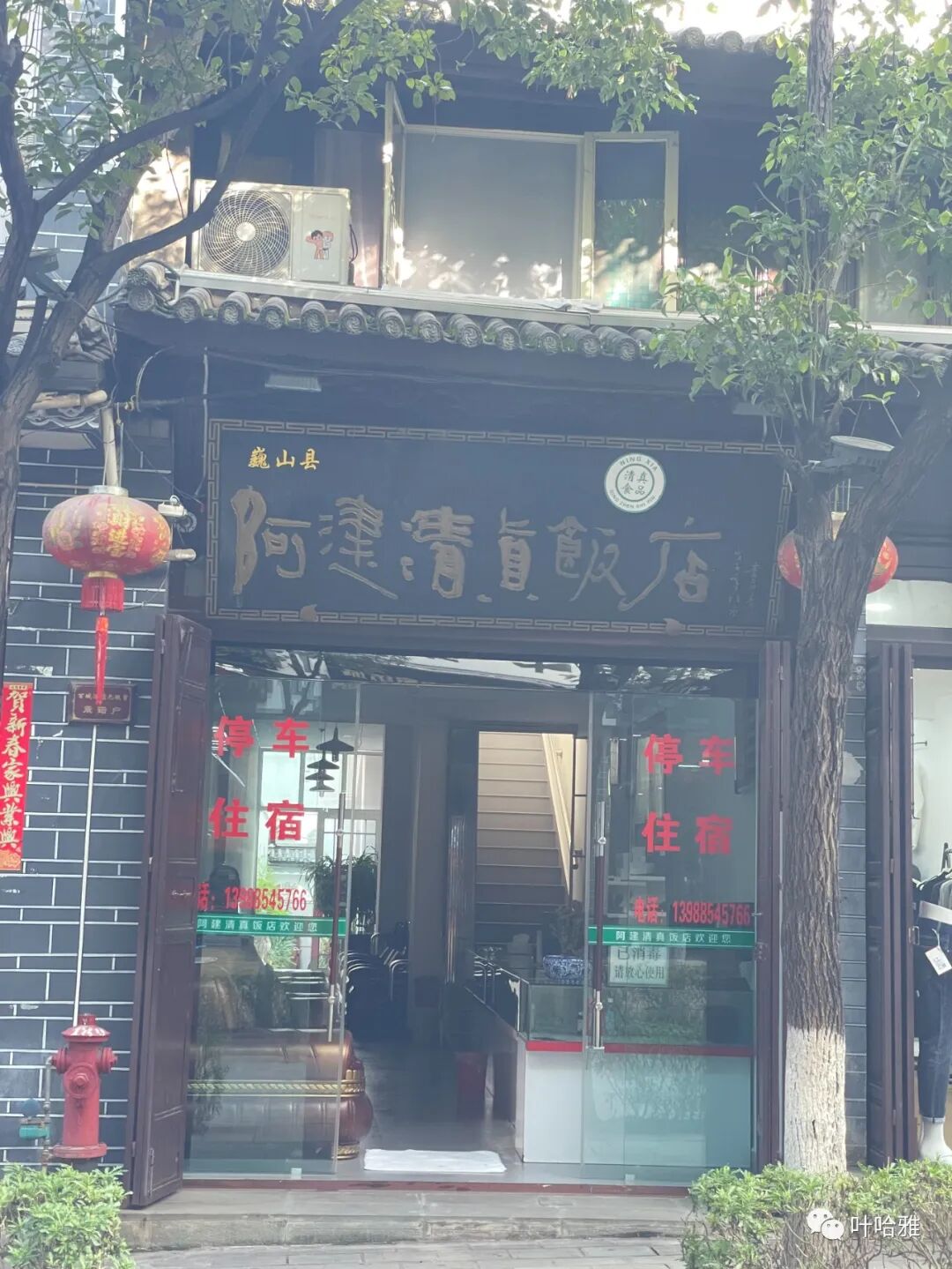
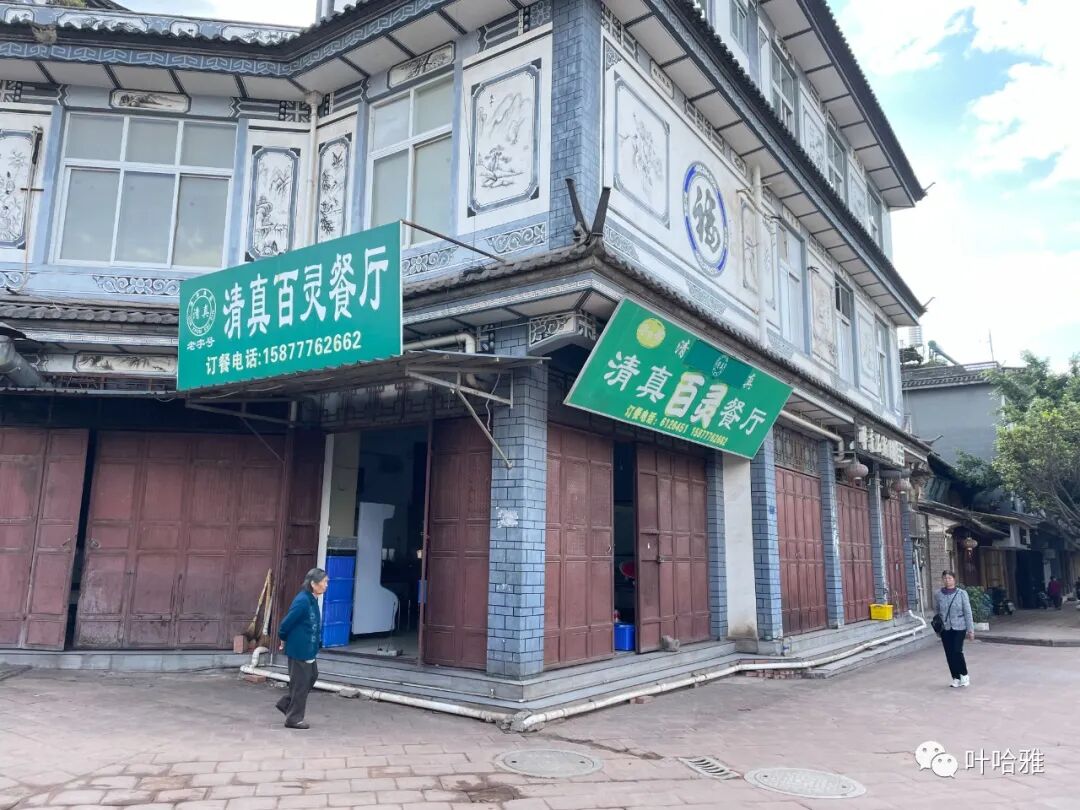
The halal signs in Weishan County look just like the ones in Ningxia.
Our halal trip to Dali has come to an end for now. Even though this was my second visit, there are still many halal spots I haven't seen, so I will definitely come back again. After leaving Dali, we headed south toward our next stop, Jianshui.
Halal Travel Guide: Northern Thailand — Yunnan Mosques and Hui Communities (Part 1)
Articles • ali2007fr posted the article • 0 comments • 146 views • 2026-05-19 02:59
Summary: Northern Thailand has Yunnanese Hui Muslim communities whose mosque neighborhoods still show the memory of migration, trade, and borderland life. This first part of Day 3 records the mosques, settlements, and local community details in clear English while keeping the source facts and images.
During the May Day holiday in 2023, I visited the mosque communities (fang) of the Yunnan Hui Muslims in Northern Thailand. On the first day, led by Master Ma Ruqi, a third-generation Thai Yunnan Hui Muslim, we visited four mosque communities in the Chiang Mai city area: Chang Khlan, Wang He, Jing Zhen, and Nurul. I posted about this in 'A Pilgrimage to Northern Thai Yunnan Mosque Communities (Day 1)'. On the second day, Master Ma drove us north to visit several mosque communities in the refugee villages of the former Northern Thai isolated army. We went to Mae Salong, the main base of the isolated army, and finally reached Mae Sai, the second-largest settlement of Yunnan Hui Muslims in Northern Thailand. I posted about this in 'A Pilgrimage to Northern Thai Yunnan Mosque Communities (Day 2)'. On the third day, we left Mae Sai and headed south back to Chiang Mai, visiting several mosque communities in Chiang Rai to wrap up this pilgrimage to the Yunnan mosque communities of Northern Thailand.
Mae Sai
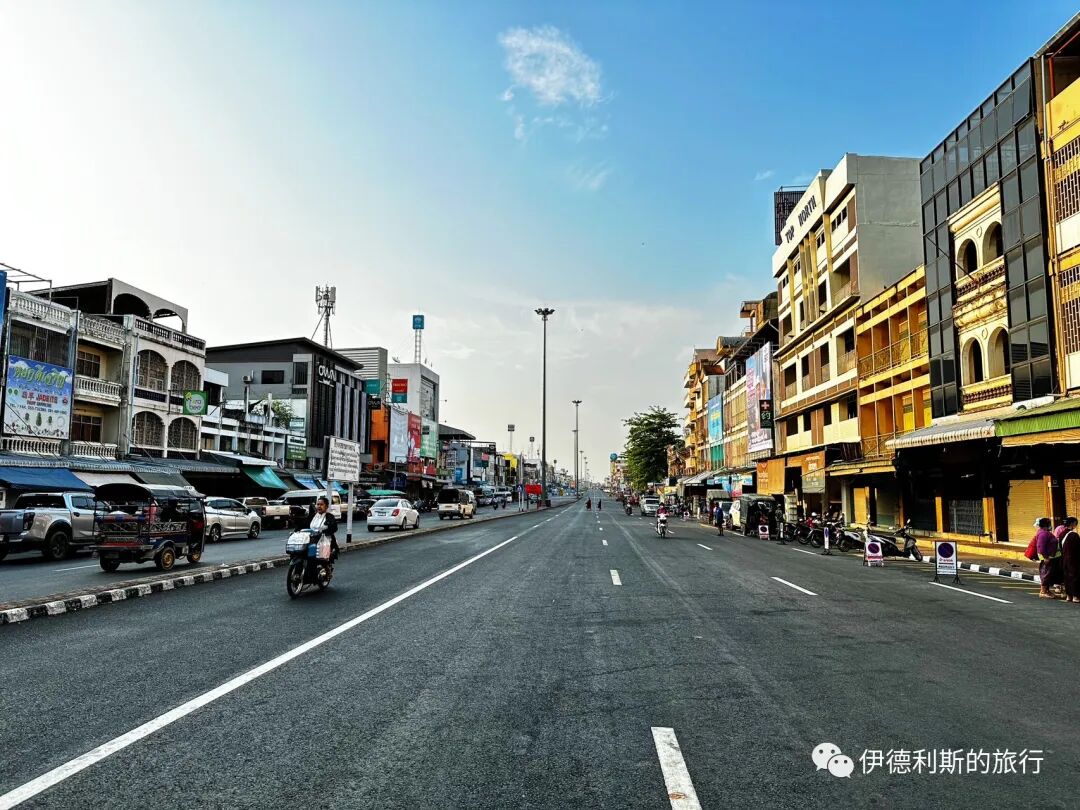
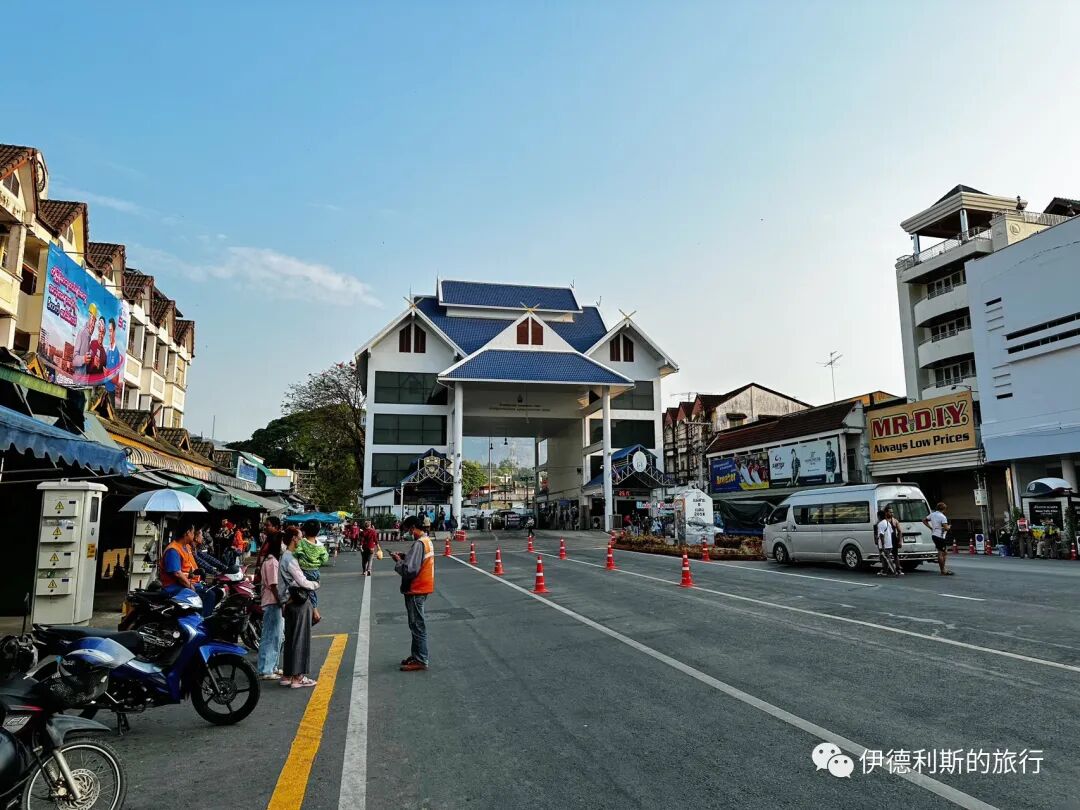
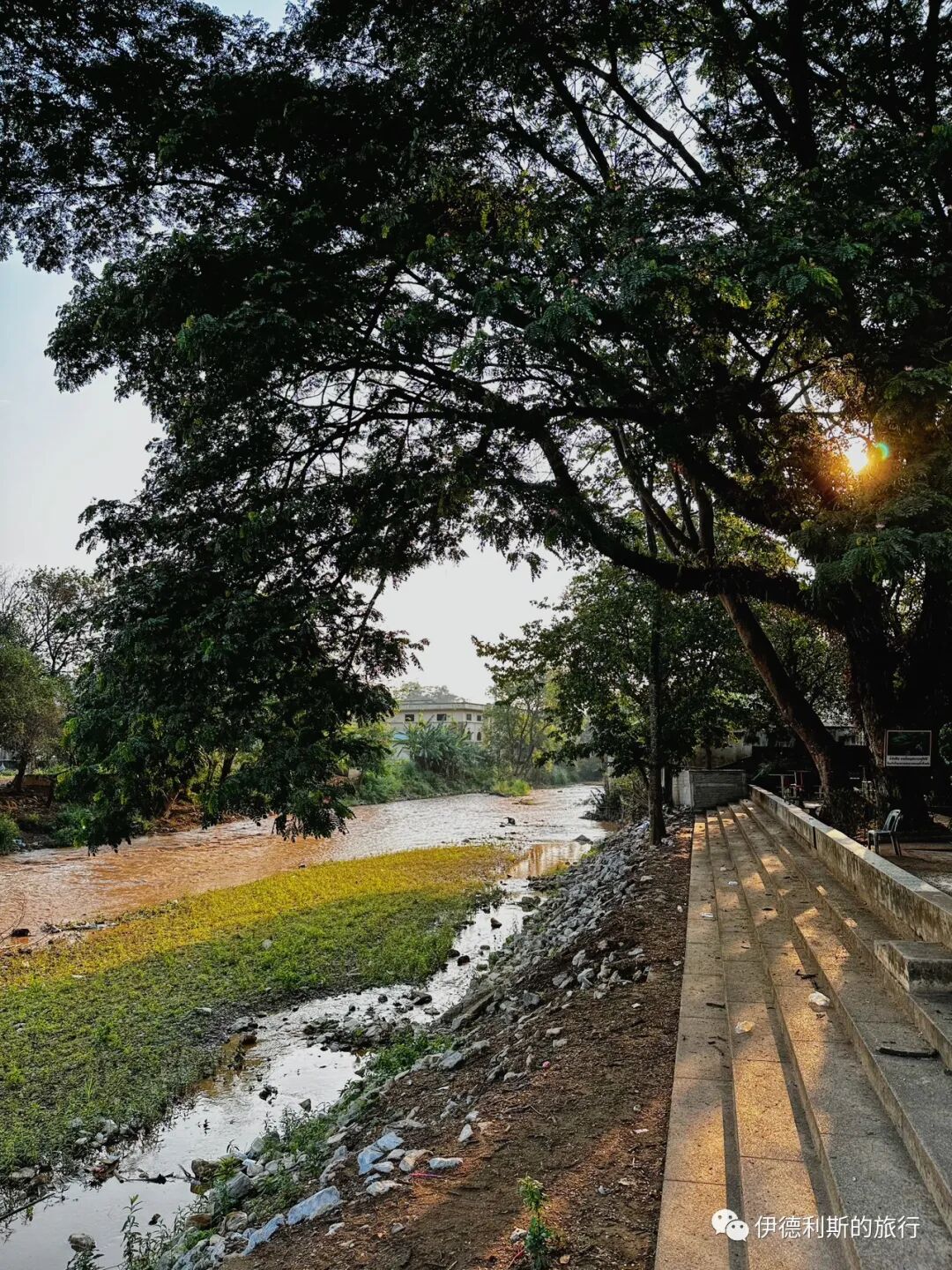
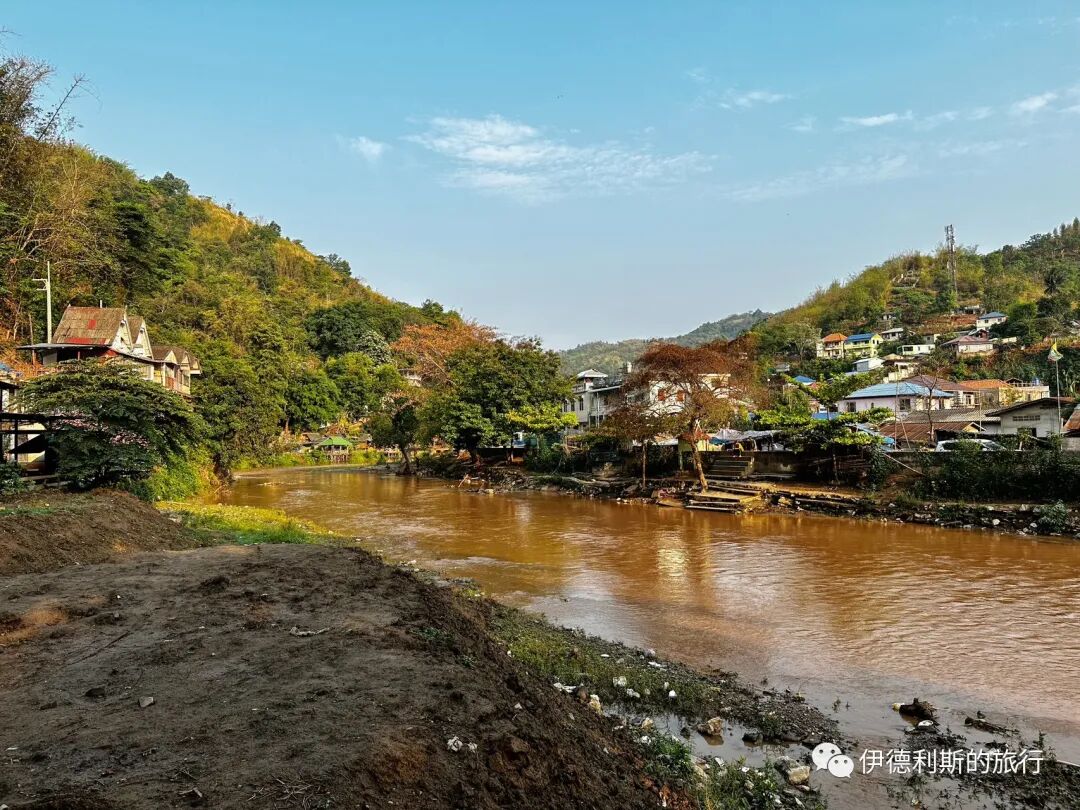
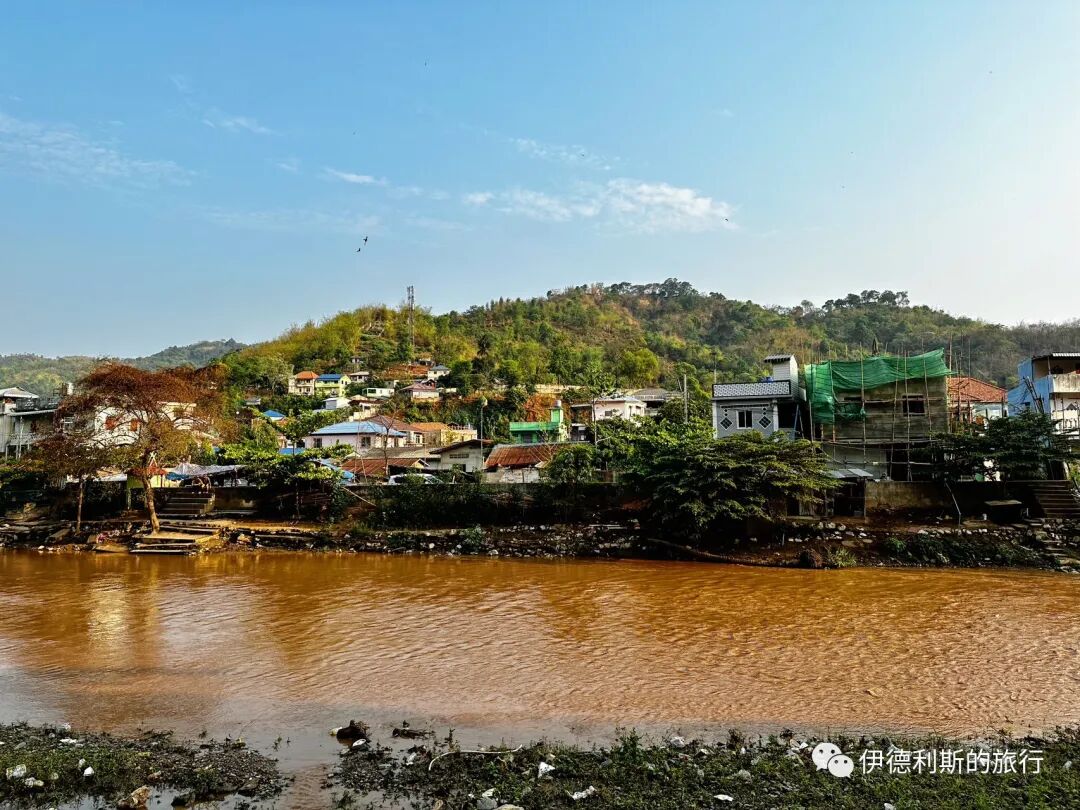
The third day of our journey began in Mae Sai, the northernmost town in Thailand. Early in the morning, we went to see the Mae Sai border crossing to Myanmar. It was closed for over two years and only reopened this February, so it is busy again now. Not far to the west of the border, you can see the Myanmar town of Tachileik across the Mae Sai River. Development there is clearly a bit behind Thailand. Many Yunnan Hui Muslims also live in Tachileik, and there is a Yunnan mosque there. I hope to have the chance to visit it in the future.
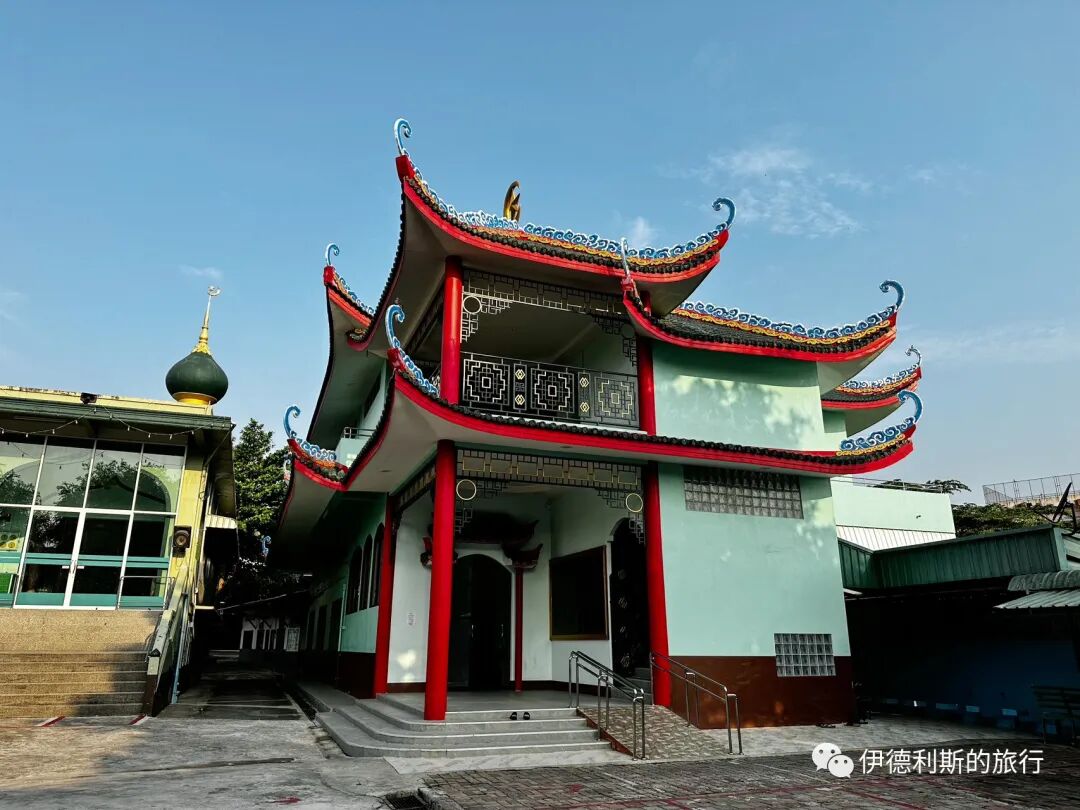
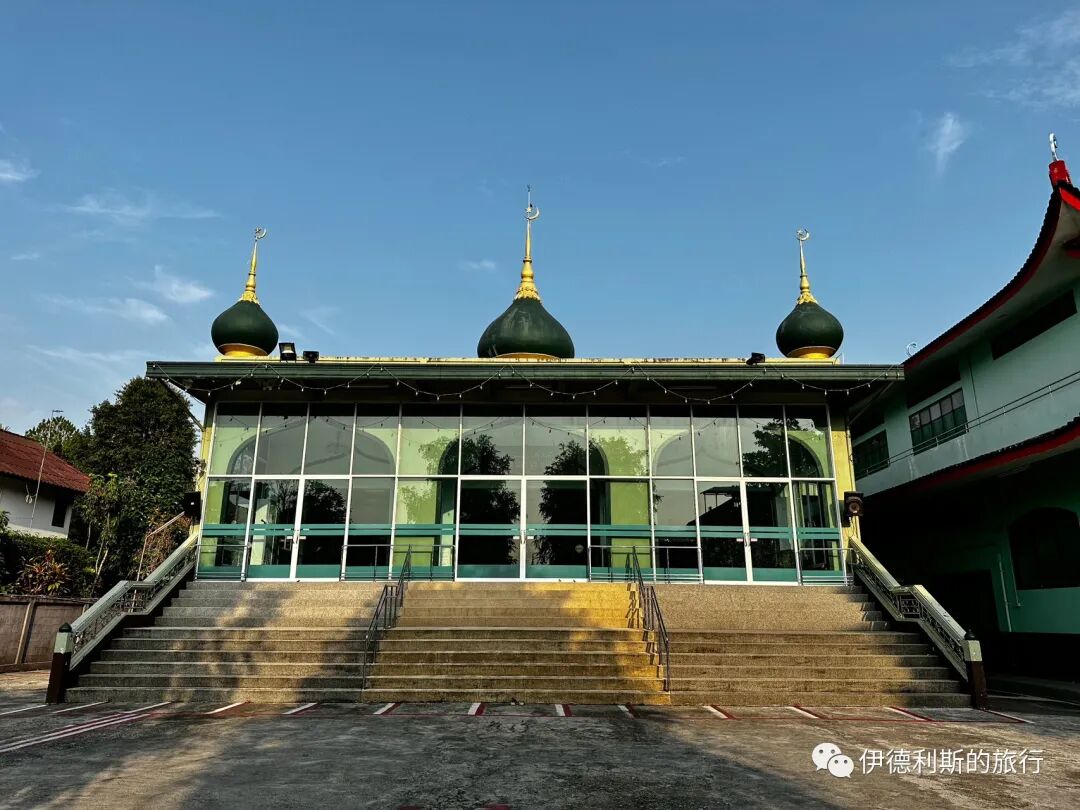
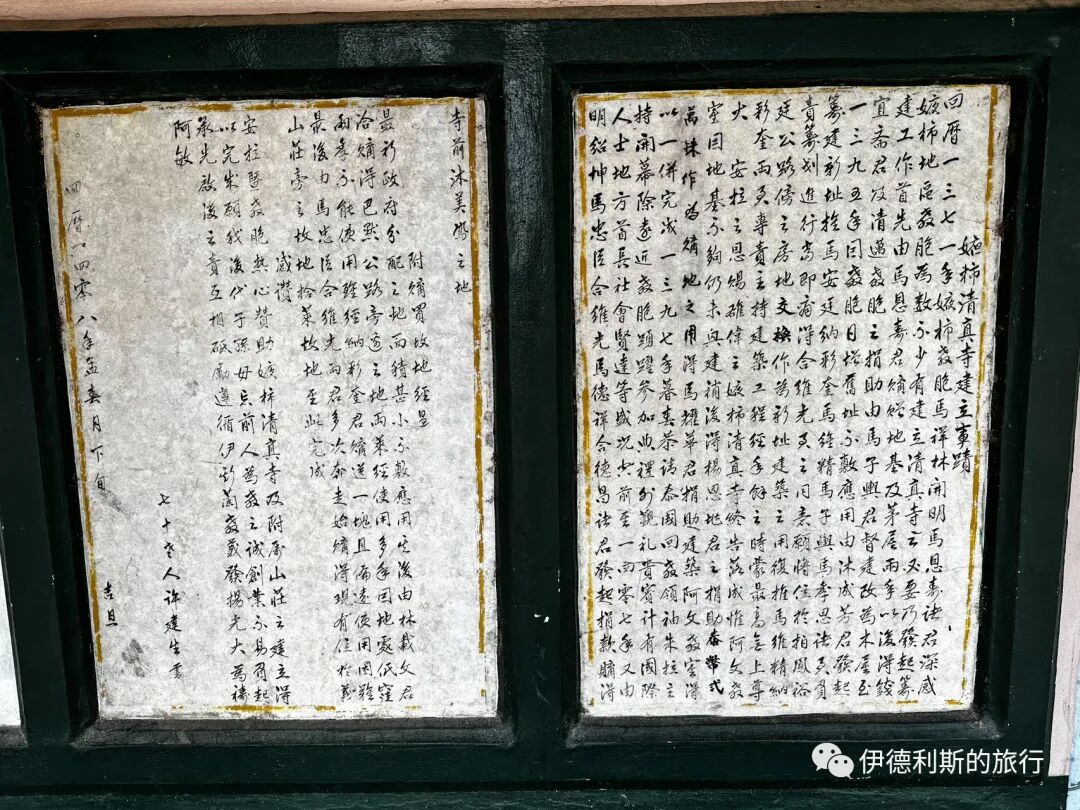
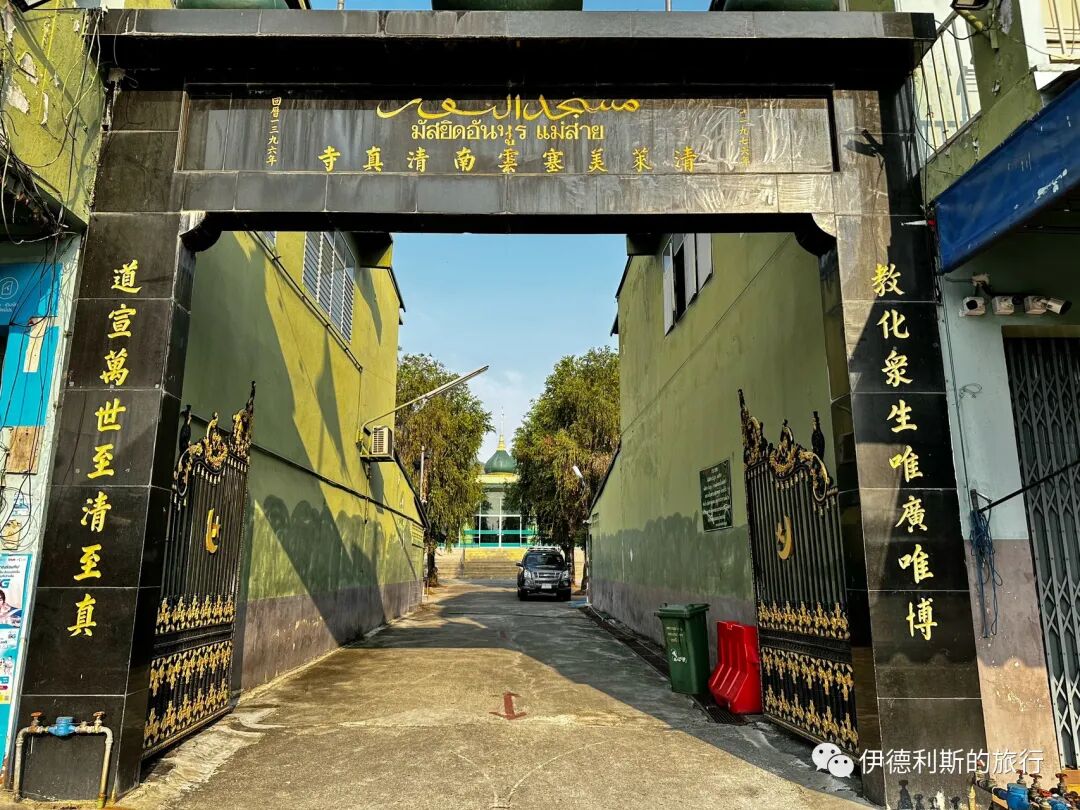
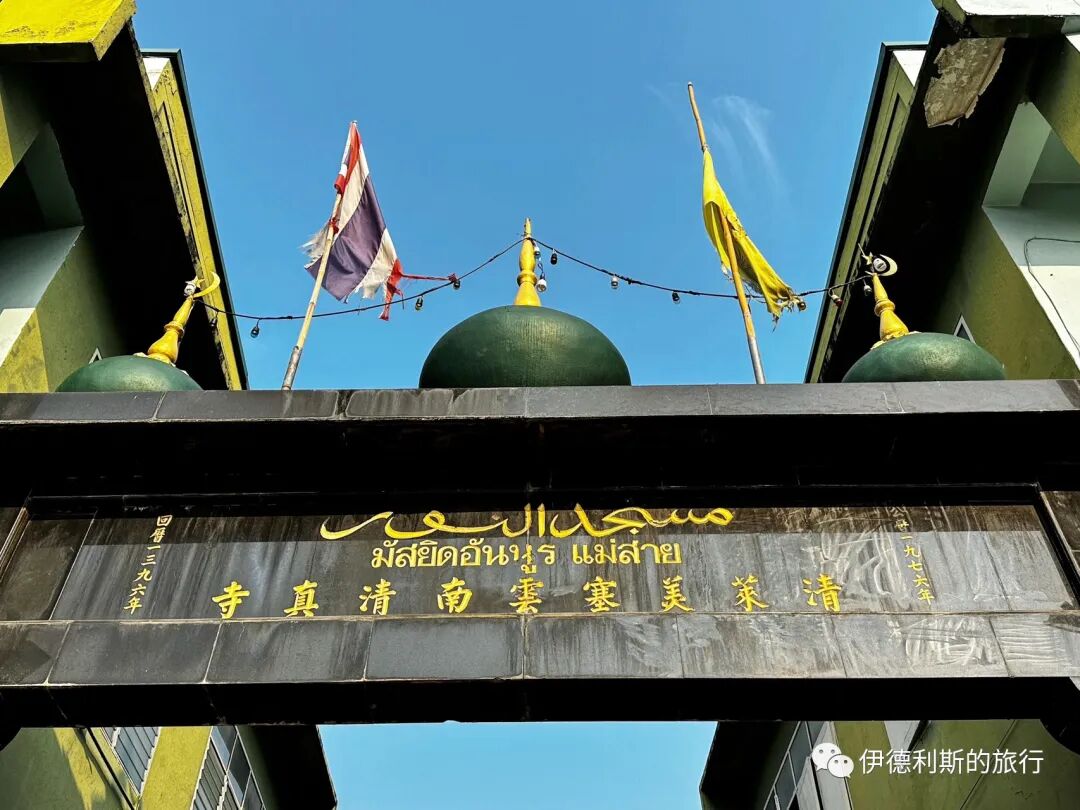
Next, we went to visit the Mae Sai Yunnan Mosque. Although Mae Sai has been a necessary stop for Yunnan horse caravans heading south to Chiang Mai since the late Qing Dynasty, it was not until 1952 that Yunnan Hui Muslims Ma Xianglin and Ma Enshou initiated the construction of a mosque. The original mosque was just a thatched hut. Later, with donations from Qian Yizhai and fellow Muslims in Chiang Mai, Ma Zixing oversaw its reconstruction into a wooden building. In 1975, because the number of Yunnan Hui Muslims in Mae Sai was growing, the old mosque could not hold everyone. Mu Chengfang, a Hui Muslim from Dazhuang, Kaiyuan, Yunnan, initiated a move to the current location next to the main road. Ma Weijing and Na Caikui oversaw the construction of the current steel and concrete building.
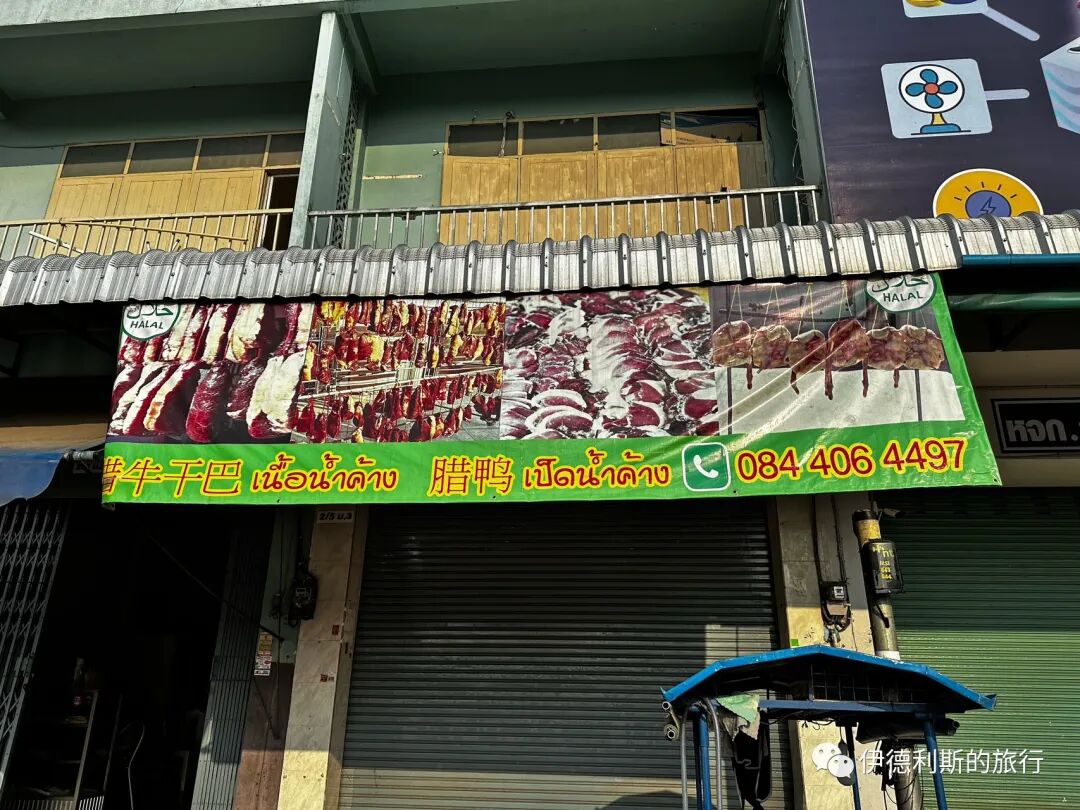
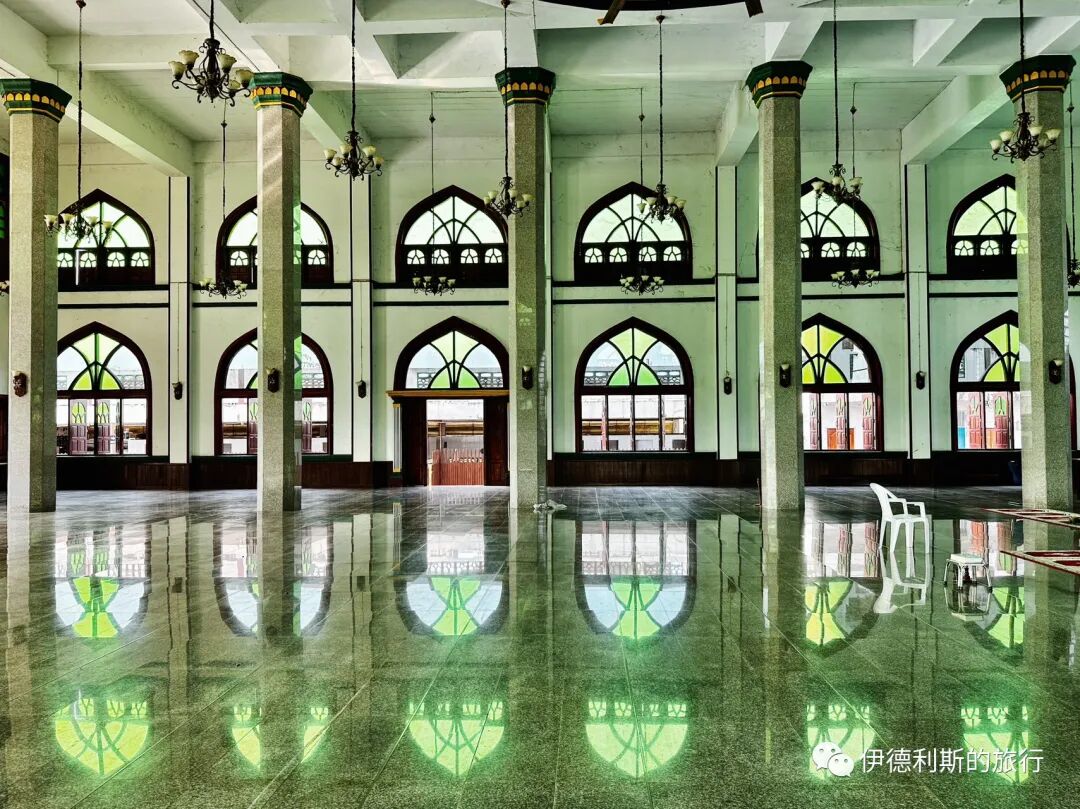
The prayer hall of the Mae Sai Yunnan Mosque, with shops selling dried beef jerky (la niuganba) and dried duck (la ya) at the entrance.
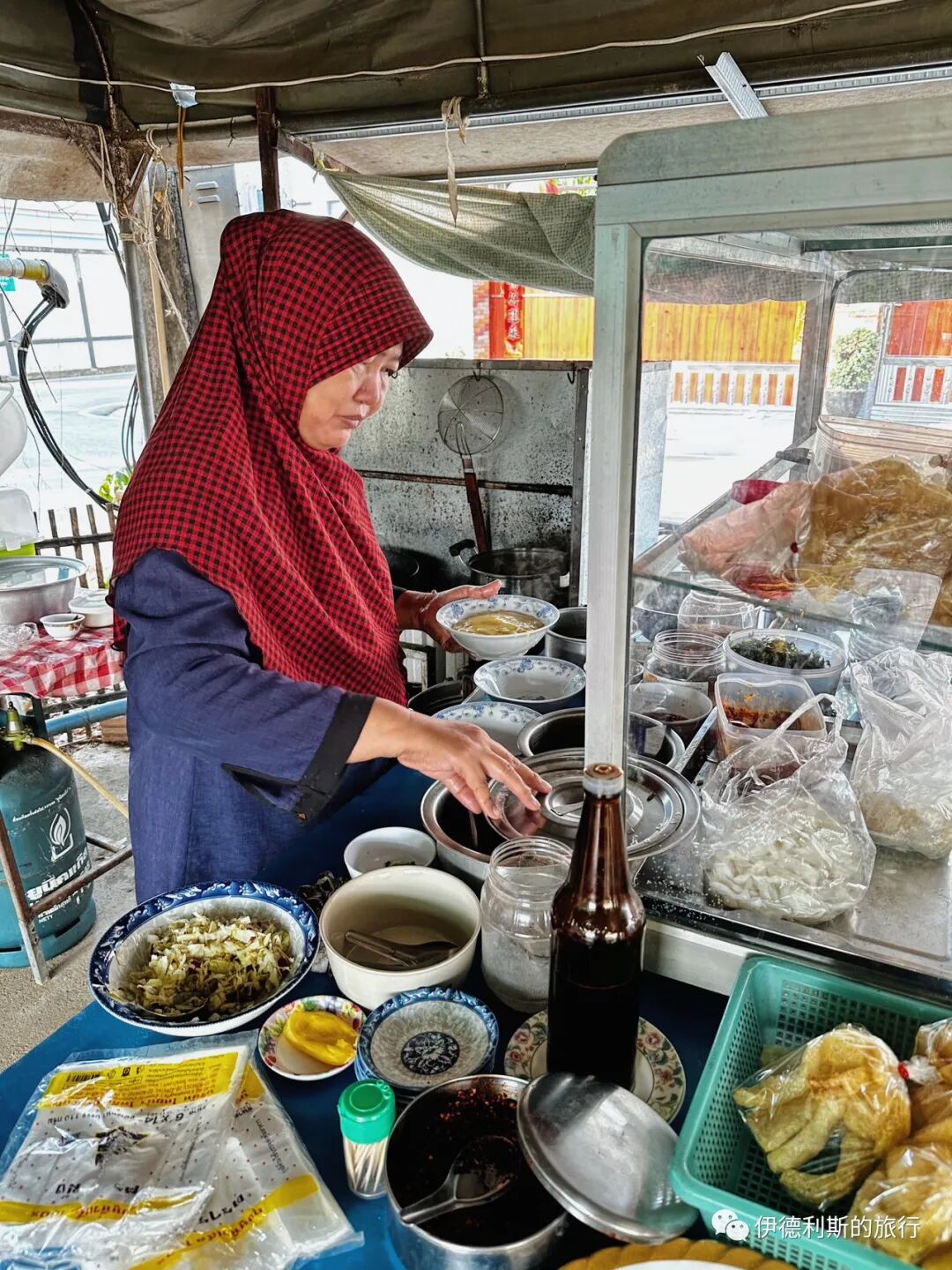
We had breakfast in an alley where Yunnan Hui Muslims live in Mae Sai. We could order in Mandarin, as the Yunnan Hui Muslims here speak both the Yunnan dialect and Mandarin fluently. We ate thick pea porridge (xi doufen) with rice noodles (migan) and braised beef noodles, which used minced meat (rou saozi) instead of chunks of meat. The owner's son is young but has already graduated as a hafiz. Hui Muslims here start systematic religious studies from a young age, which helps pass their faith down from generation to generation.
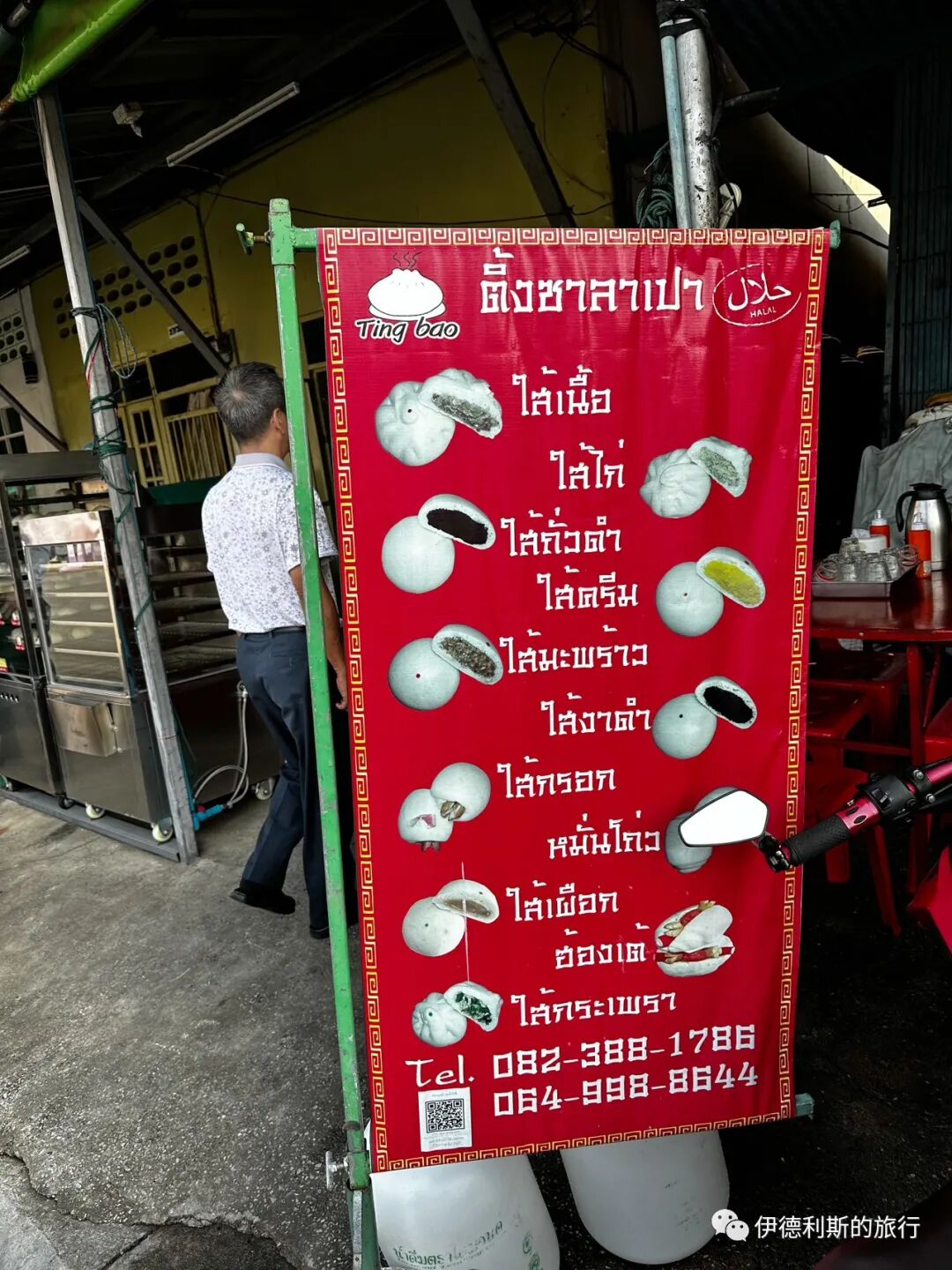
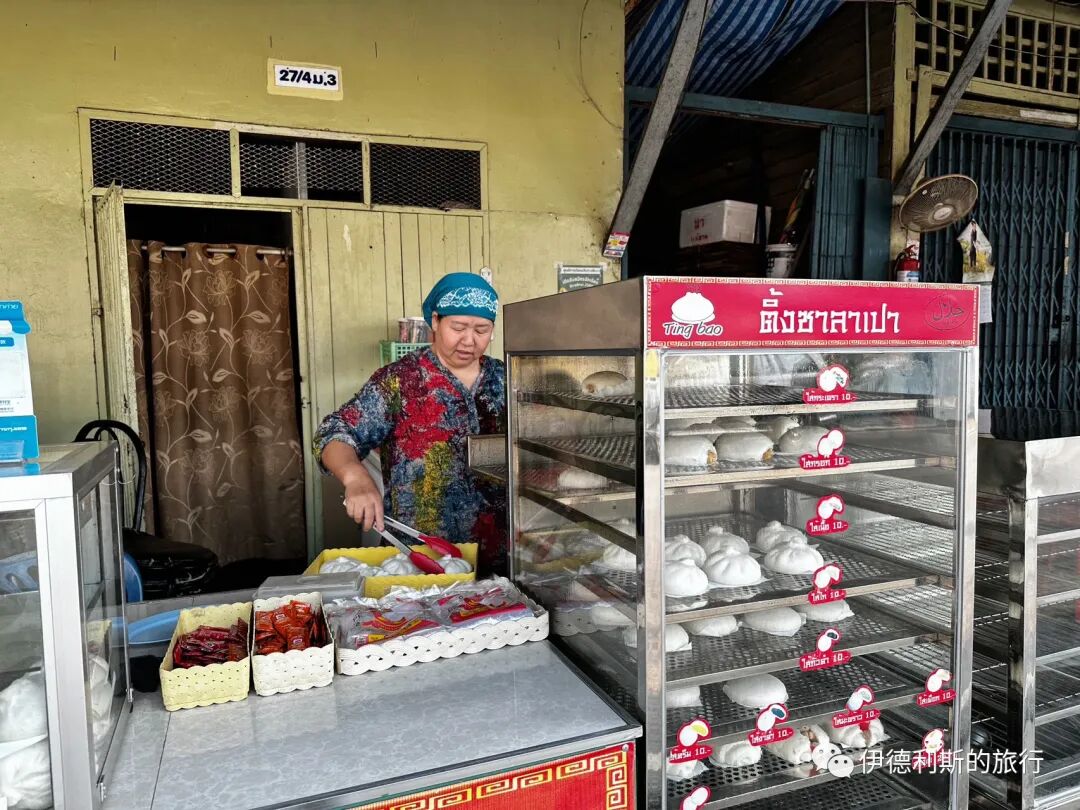
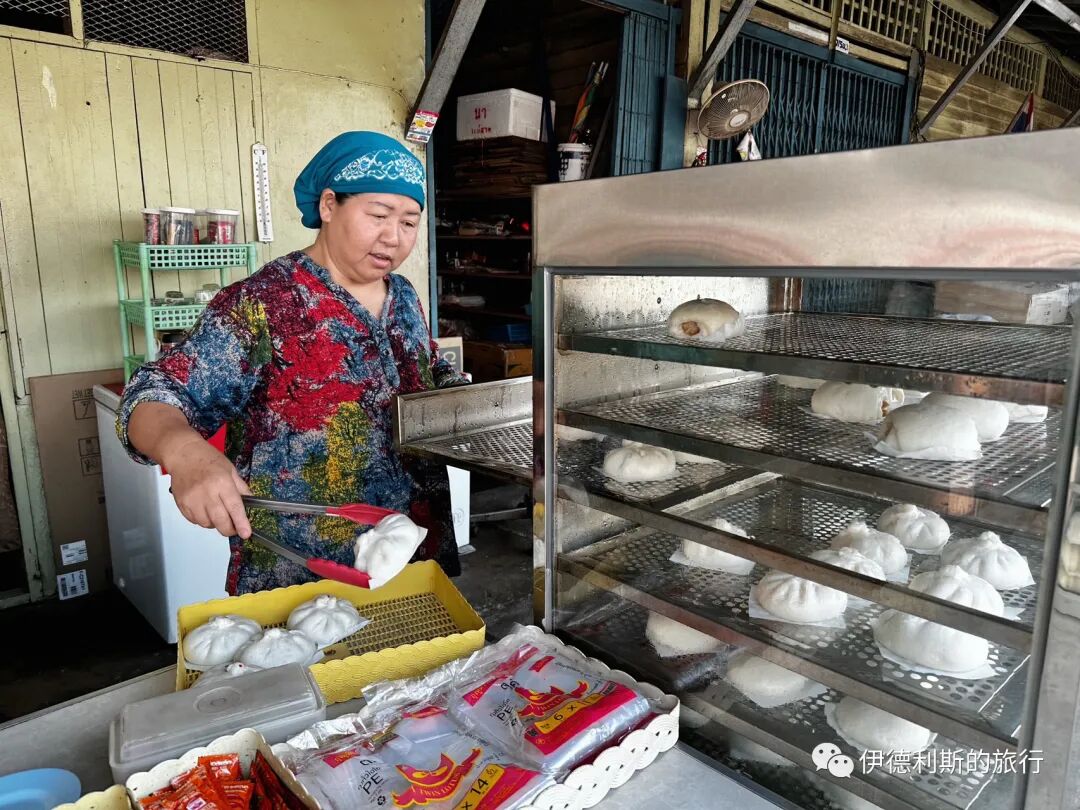
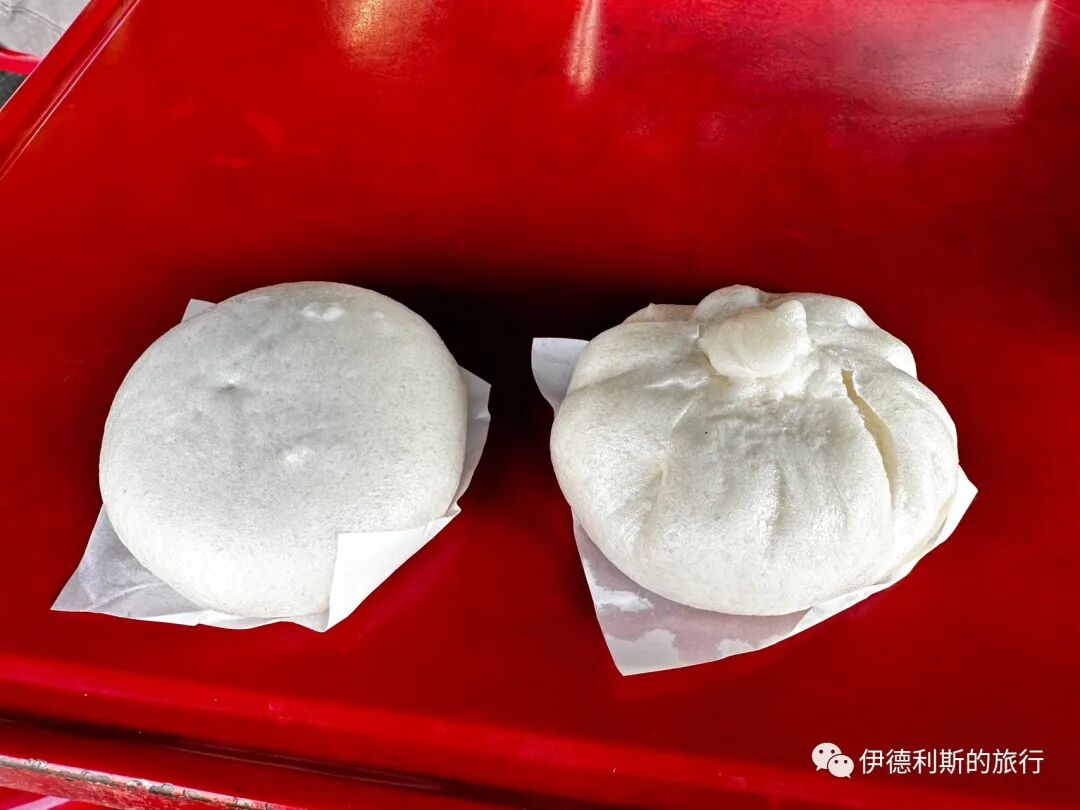
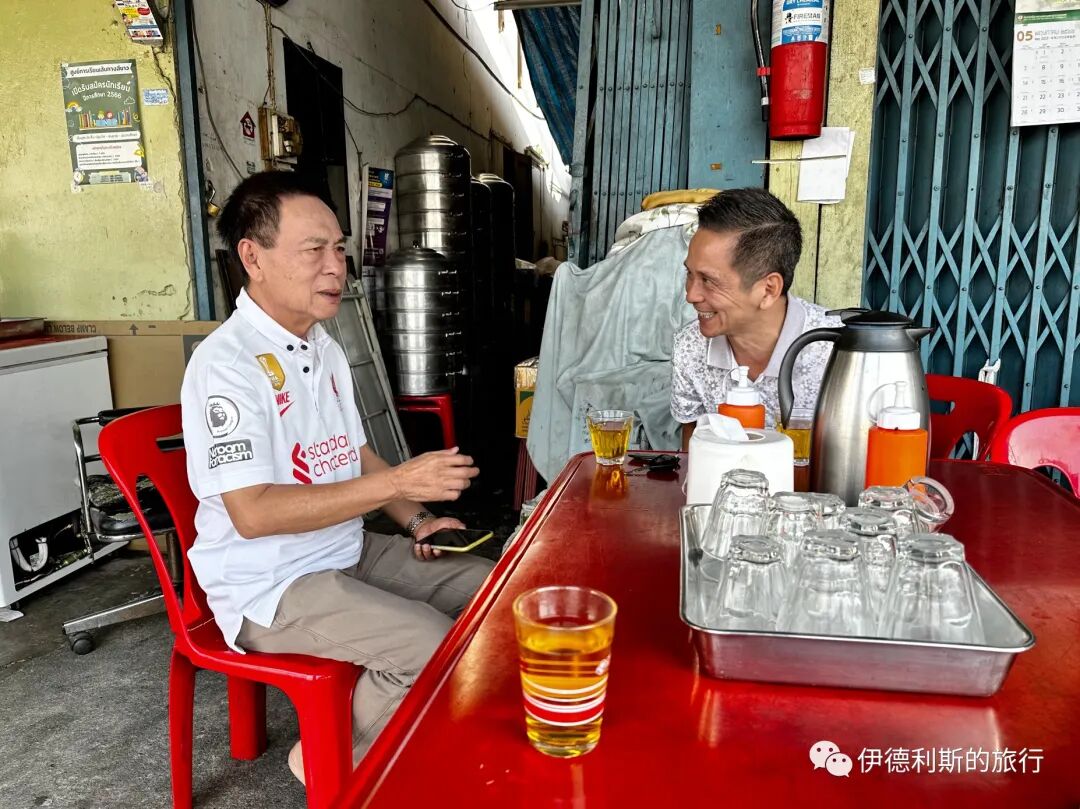
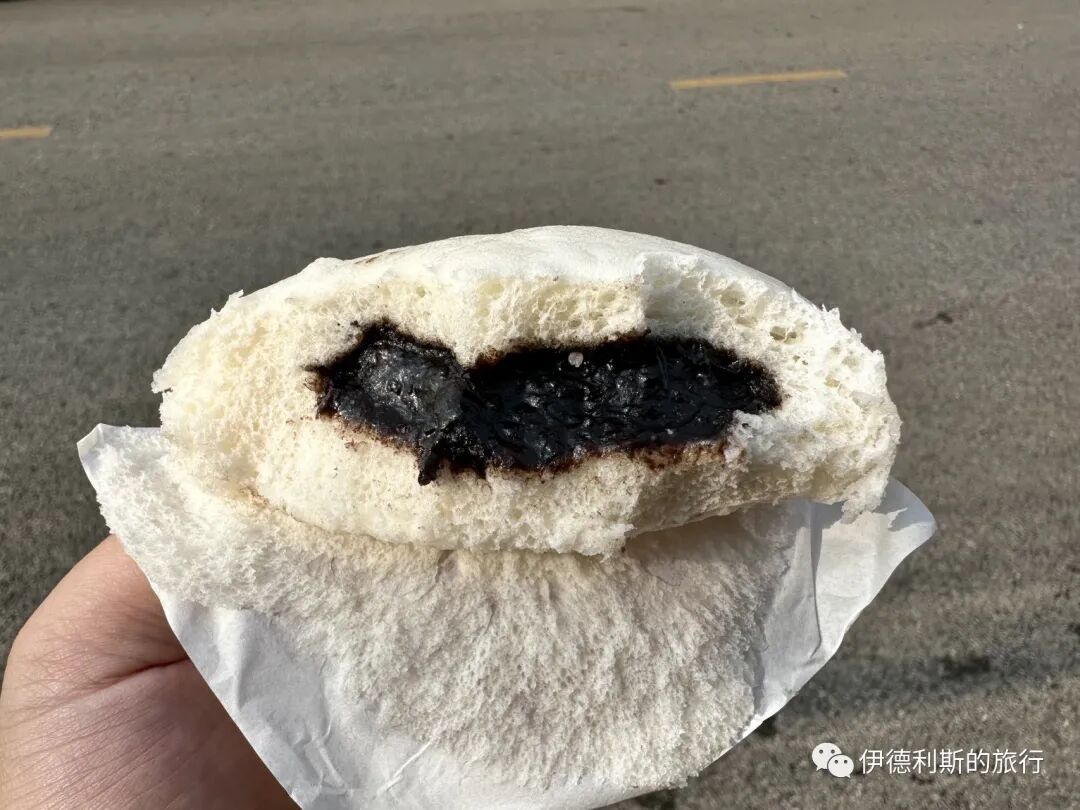
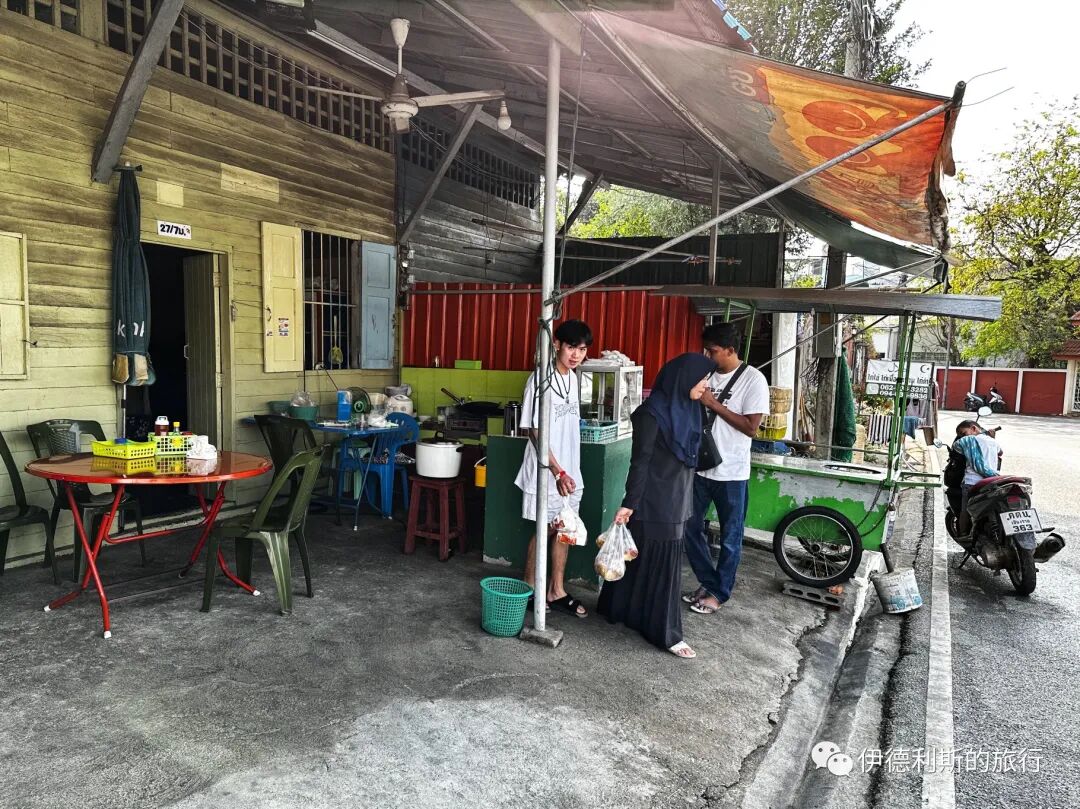
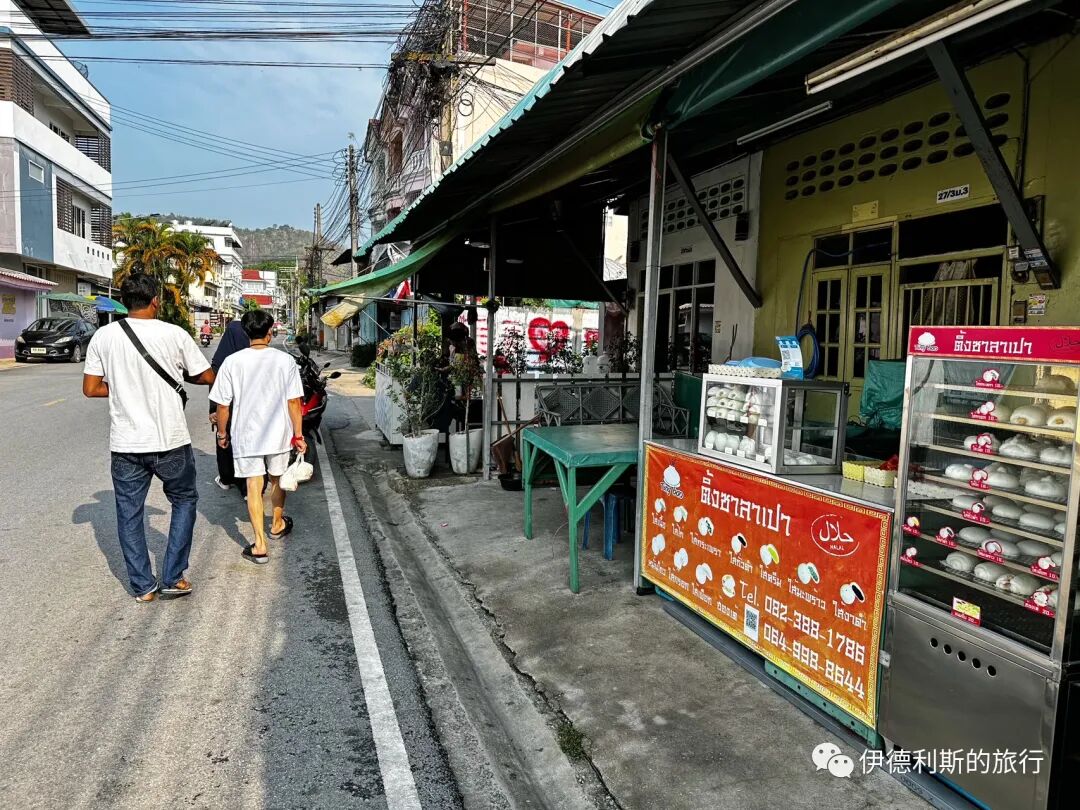
Then we went to the old site of the Yunnan Mosque in Mae Sai to eat sweet buns (tangbao). After the Yunnan Mosque moved to its new location in 1975, the old site remained mosque property, and the storefronts along the street still sell snacks. We ate brown sugar and perilla seed-filled sweet buns (tangbao) at a Hui Muslim shop in the middle of the street, and we drank tea and chatted with everyone for a while. Also, the shop next door run by a South Asian friend (dosti) selling roti flatbread is doing very well.
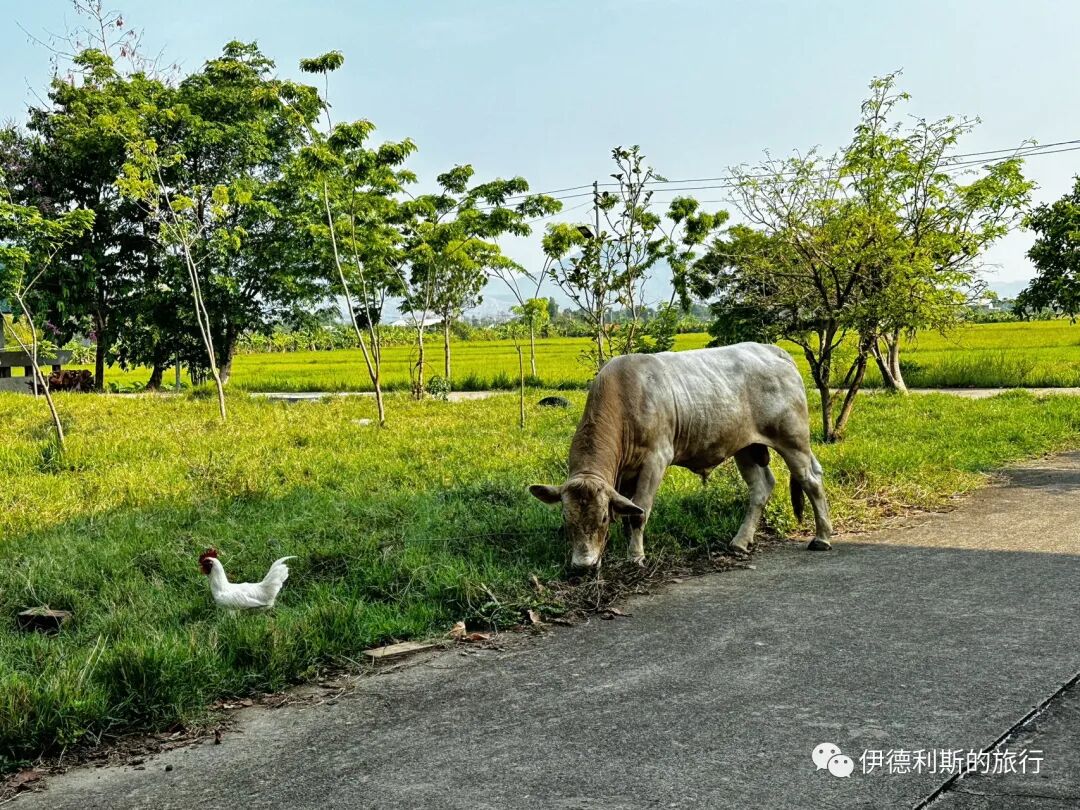
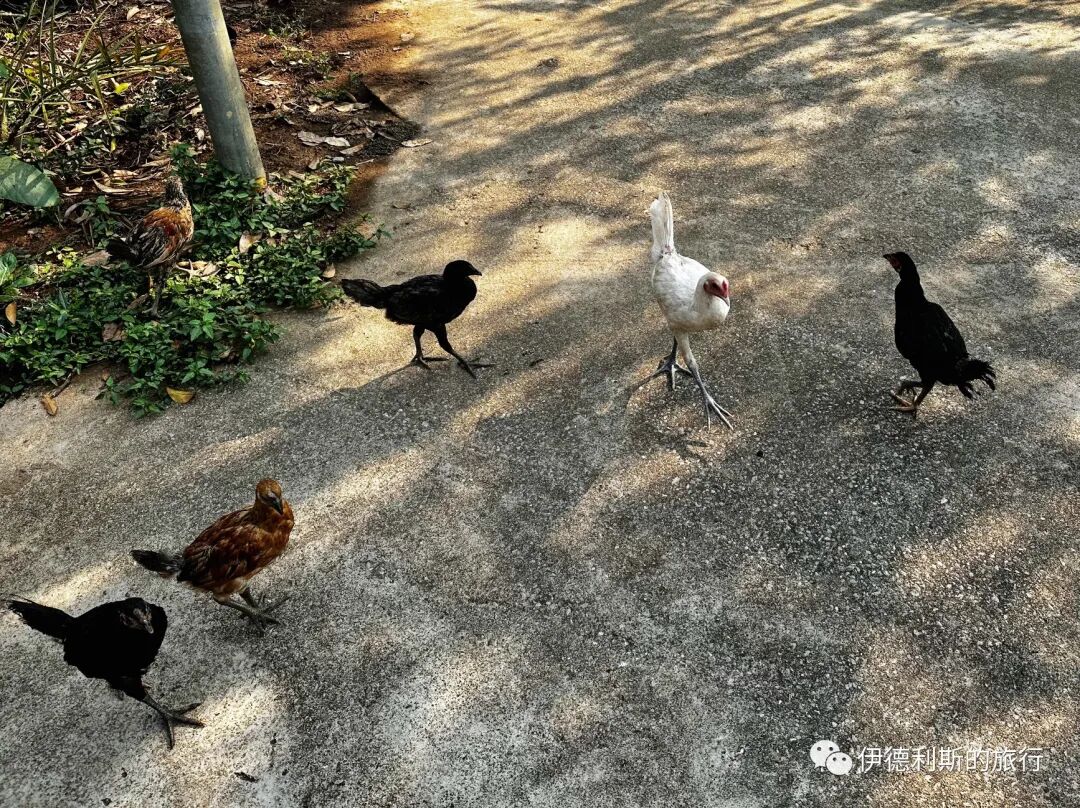
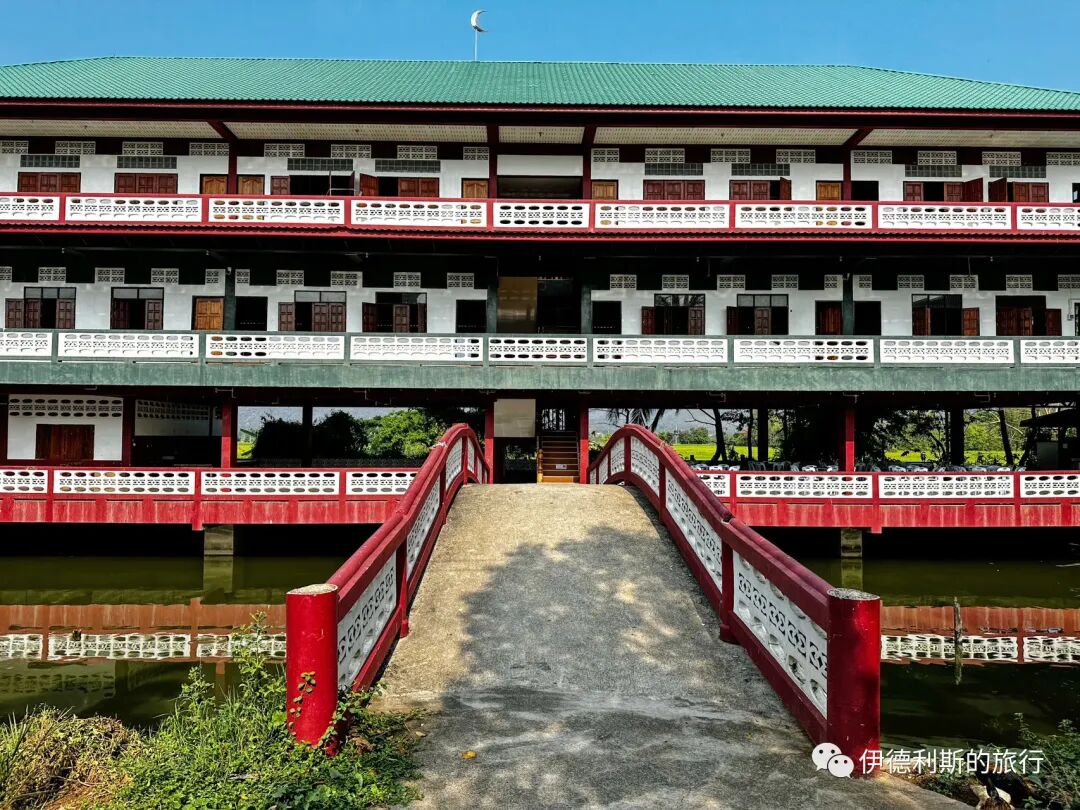
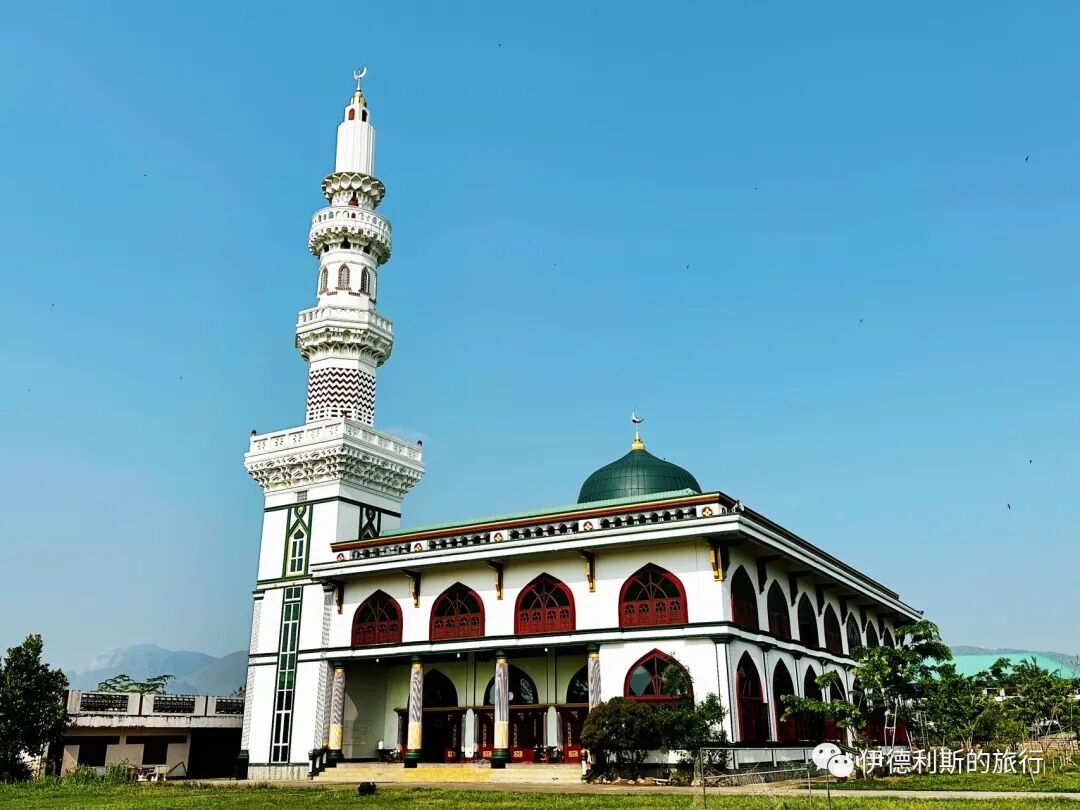
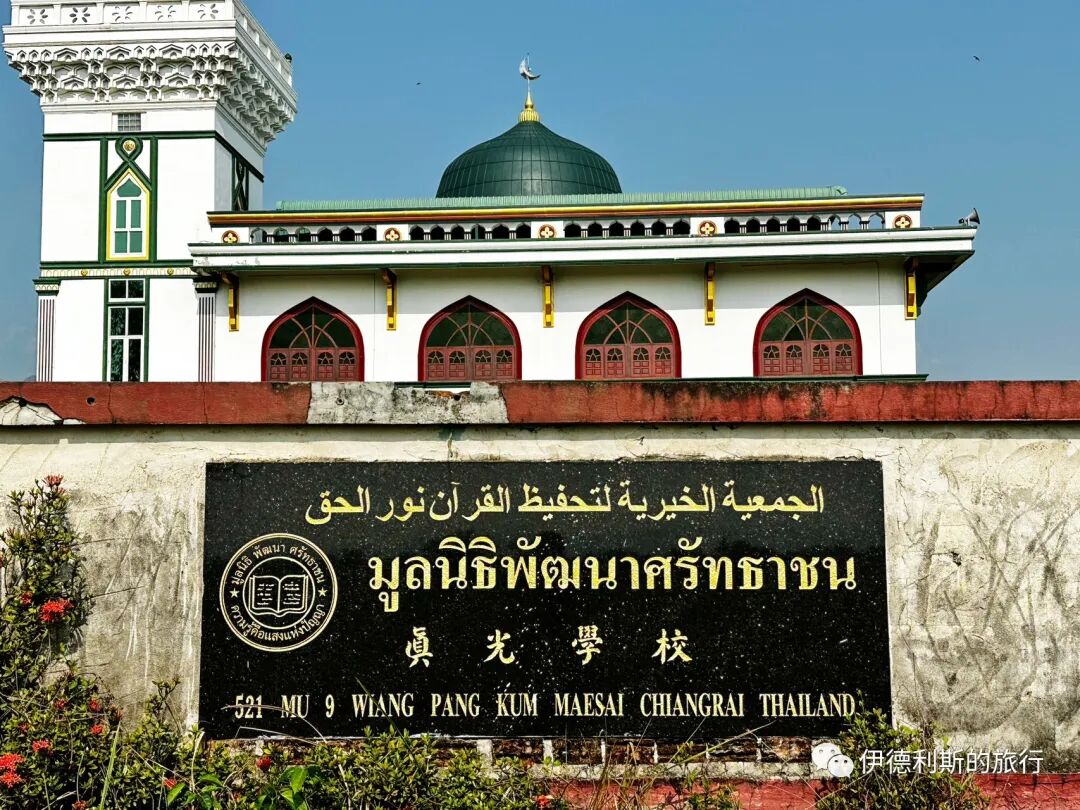
After breakfast, we arrived at Zhenguang School on the outskirts of Mae Sai. This is a school founded by Hui Muslims specifically to train hafiz. The students here include not only local Muslims but also many from other parts of Thailand and even China. It was summer break when we visited, so the students were away. Only the cows being prepared for Eid al-Adha and the chickens the students usually eat were wandering leisurely around the courtyard. The environment here is truly wonderful. Surrounded by endless rice fields and far from the noise of the city, it is a perfect place to focus on studies.
Golden Triangle
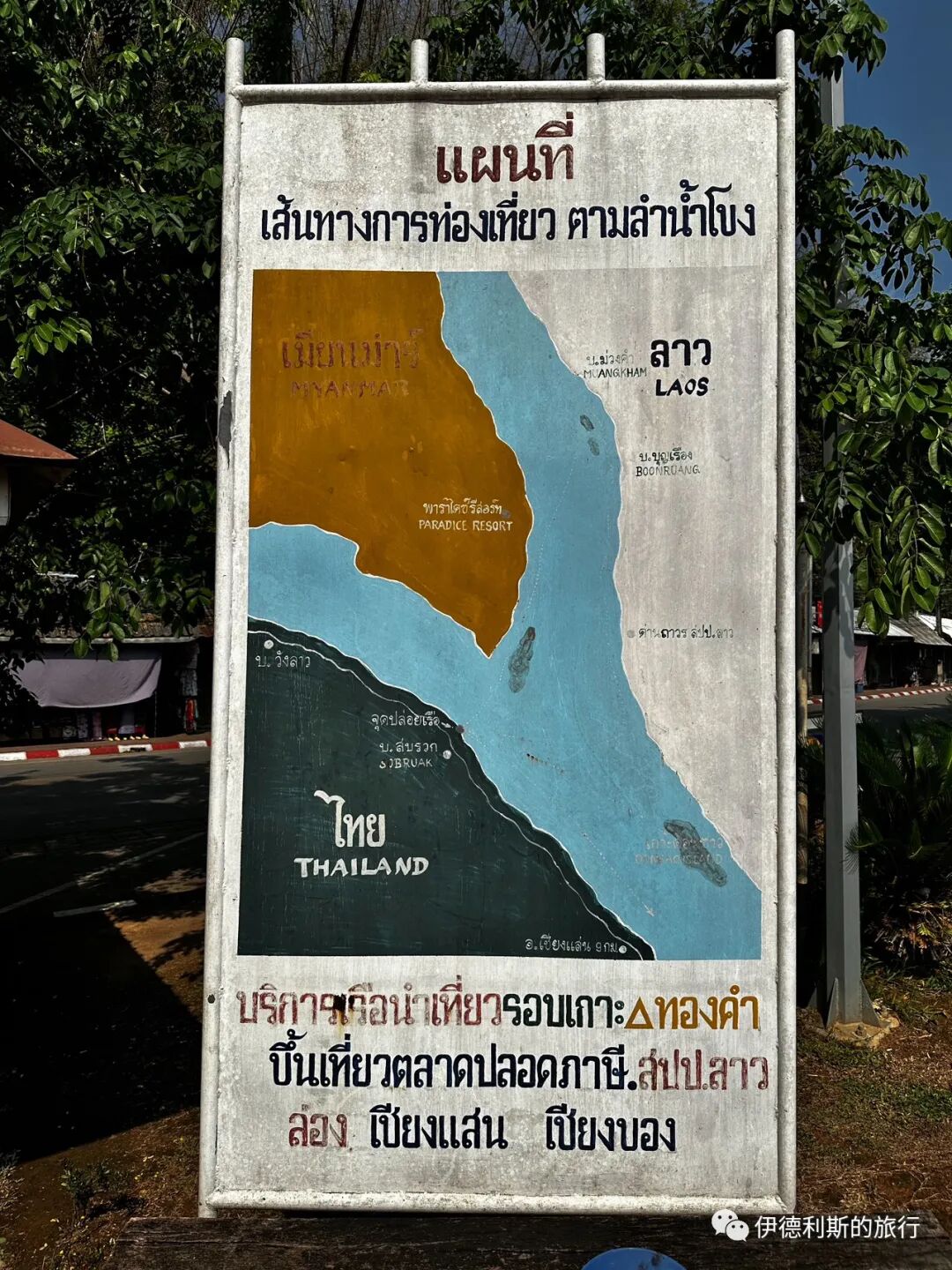
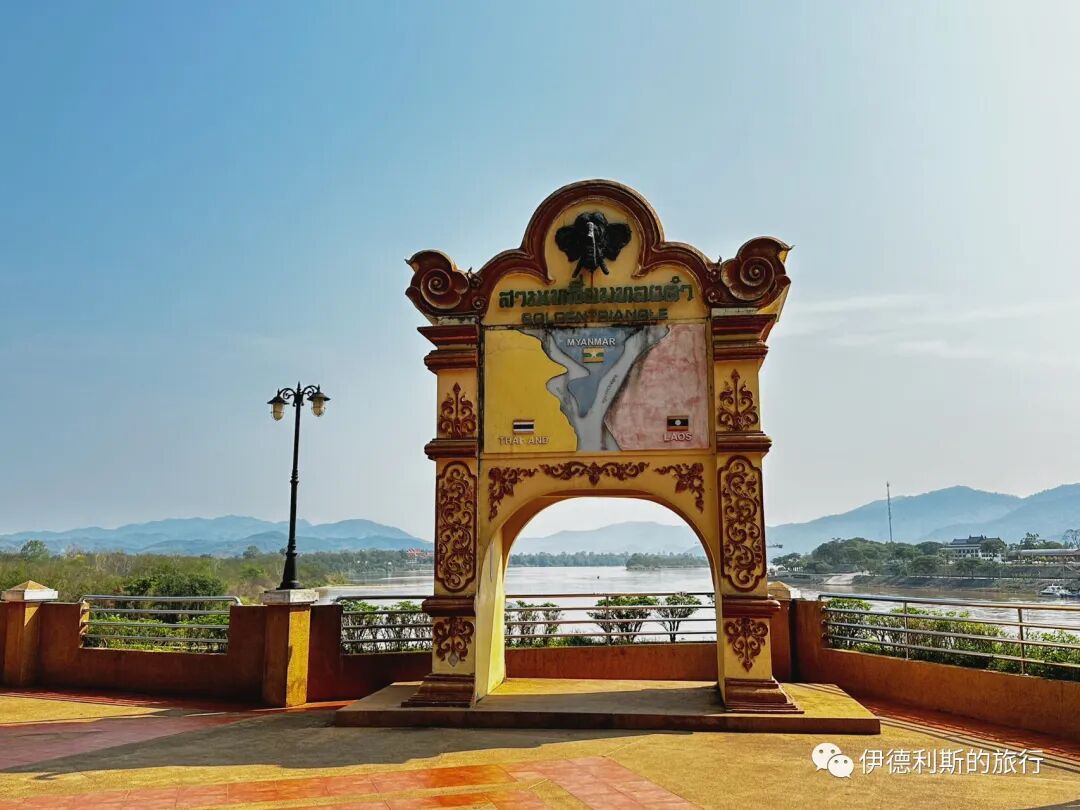
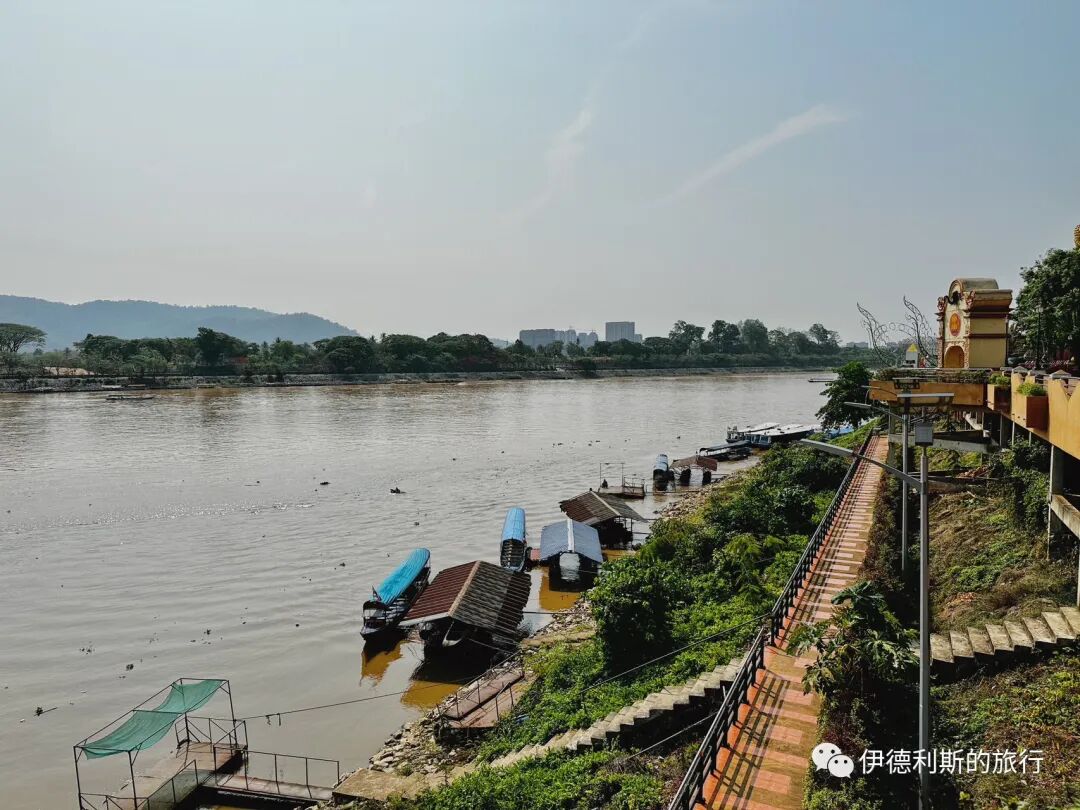
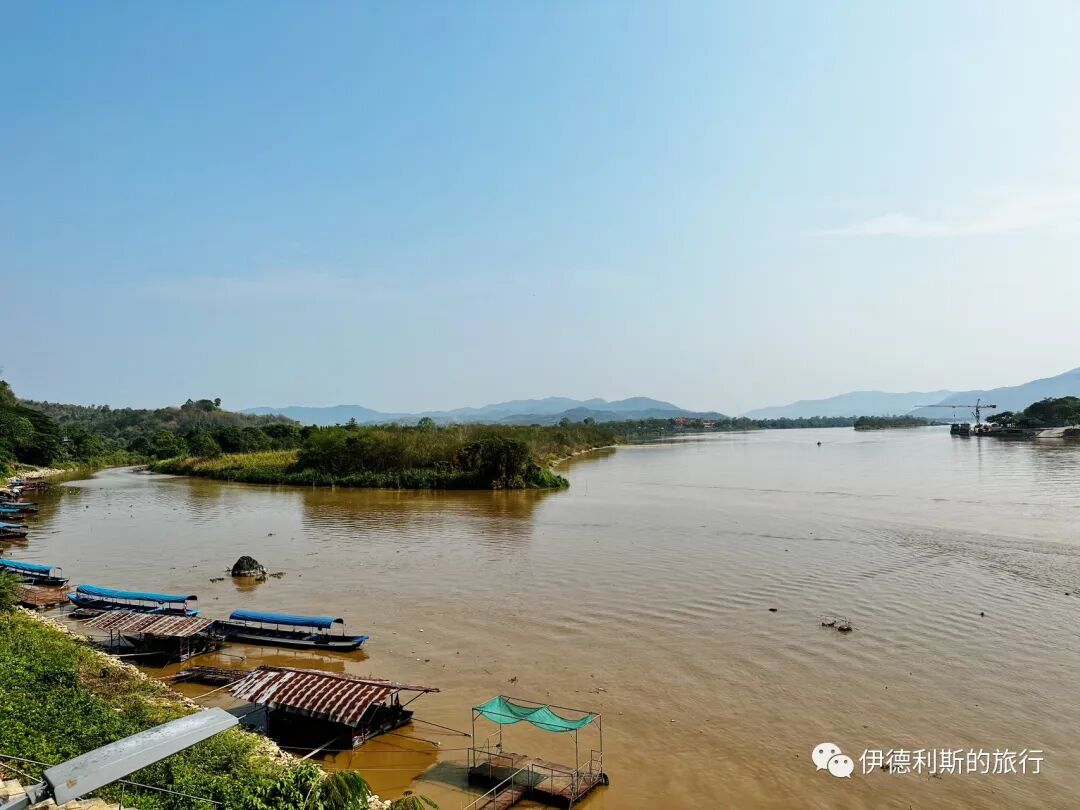
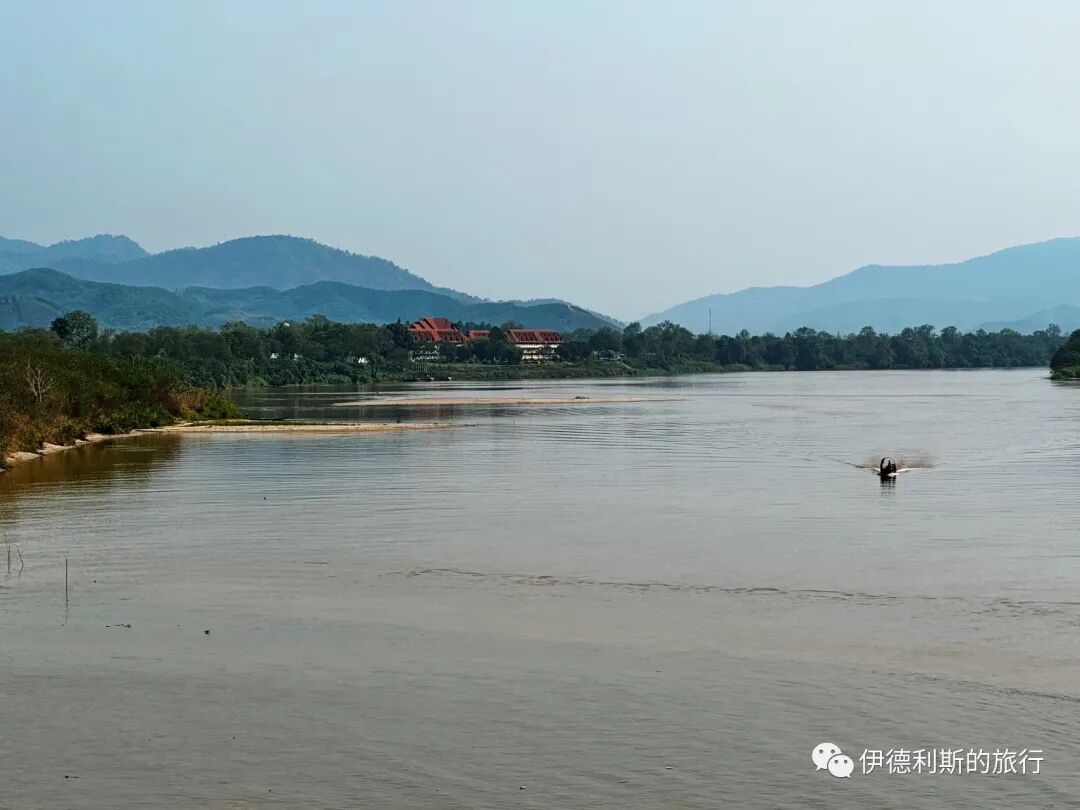
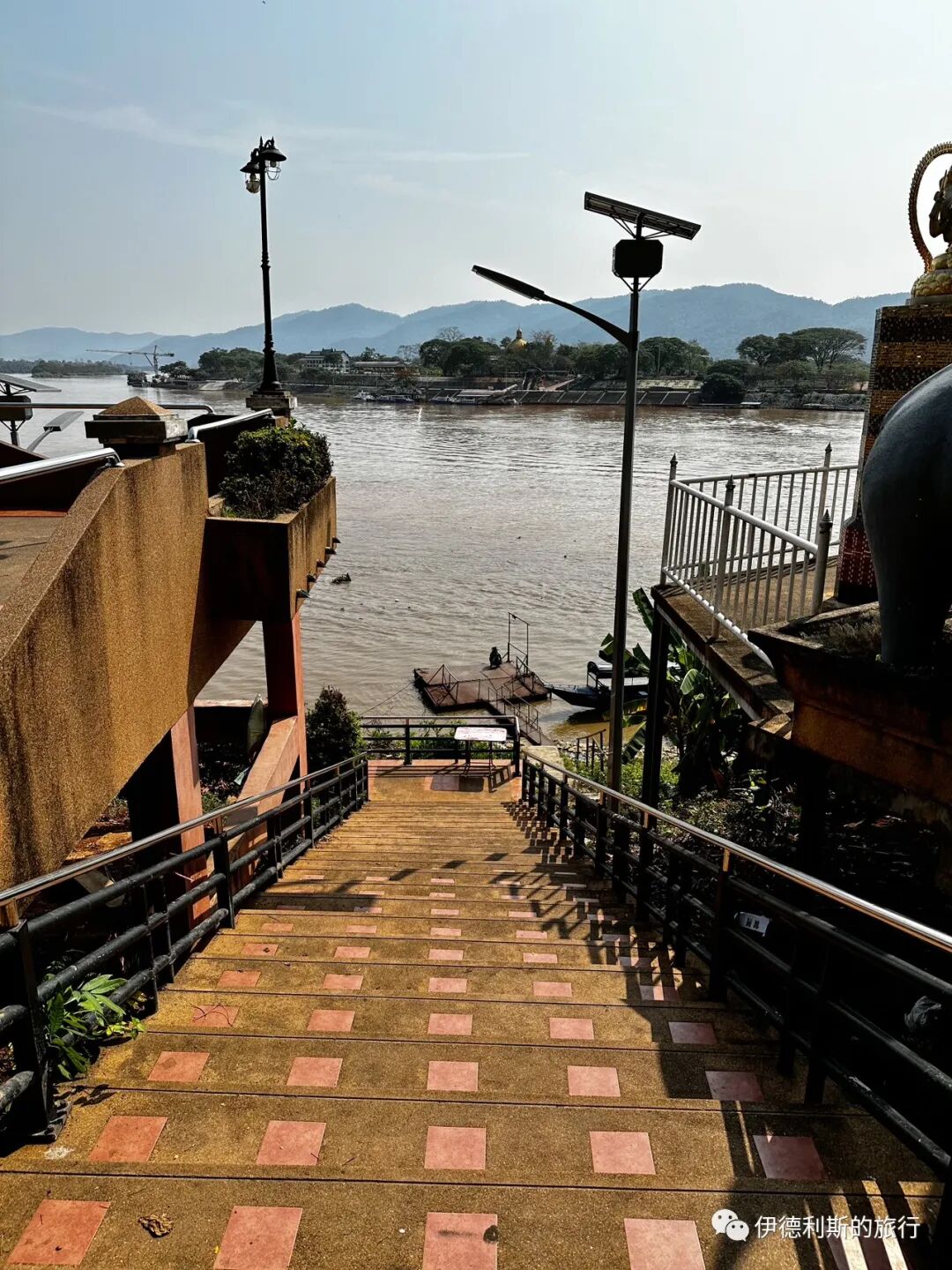
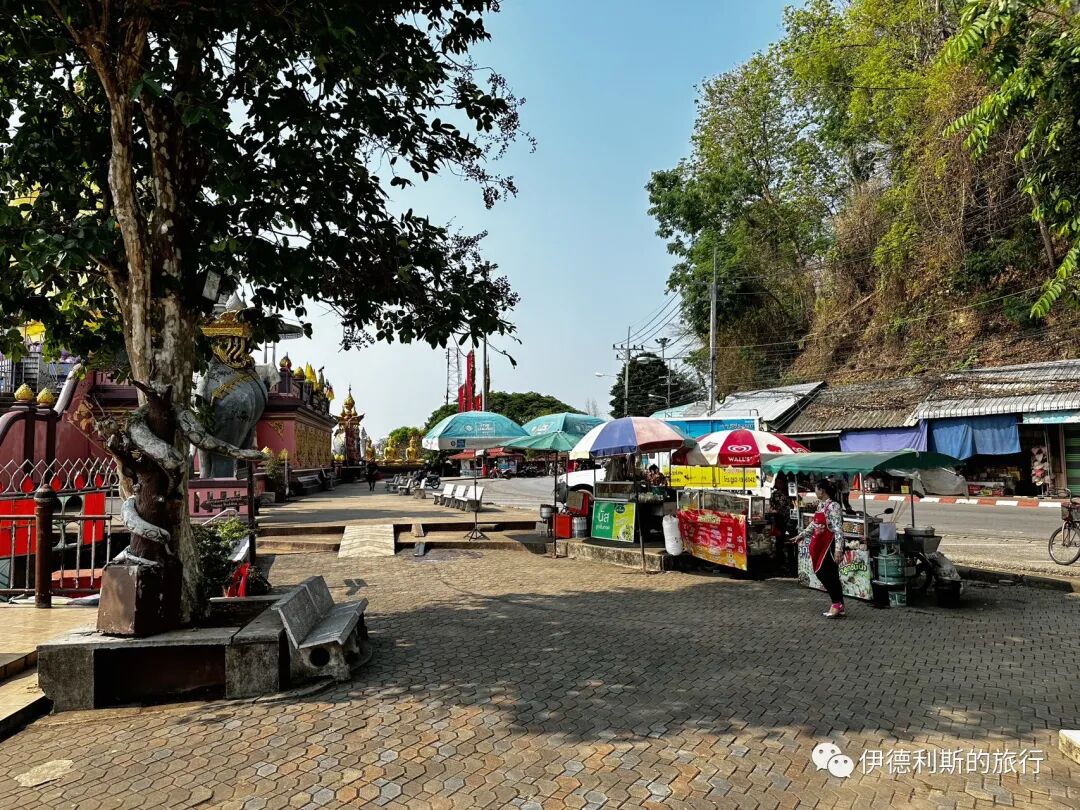
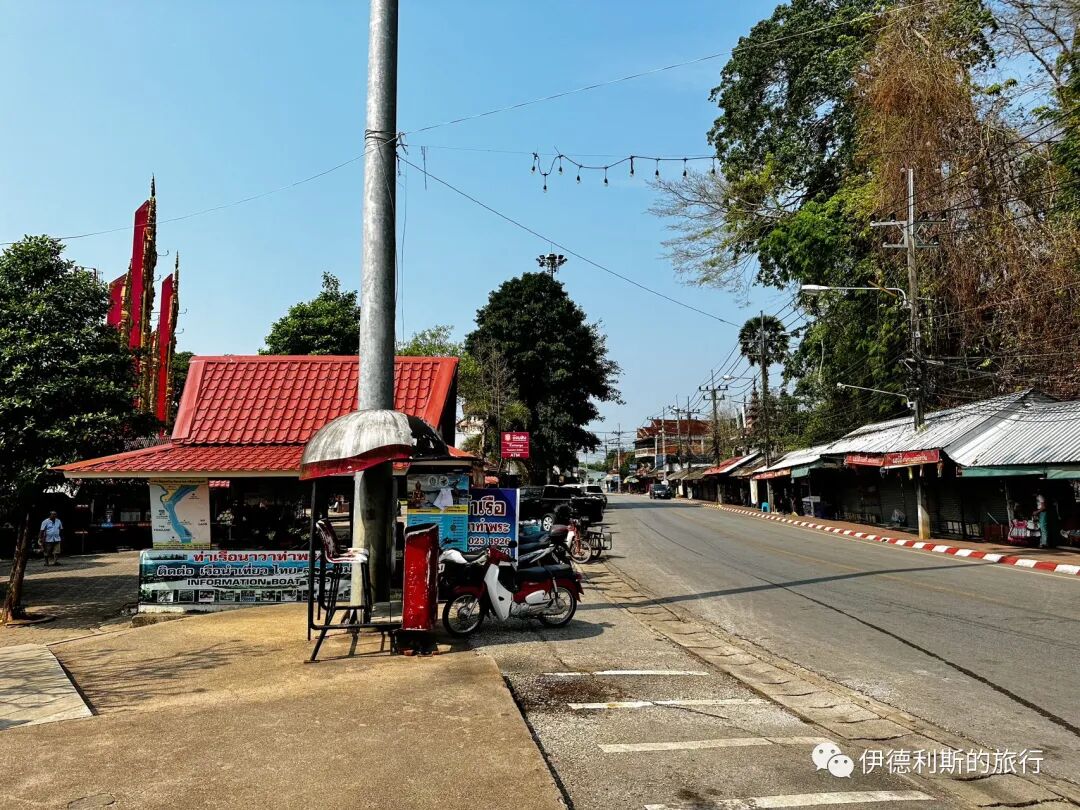
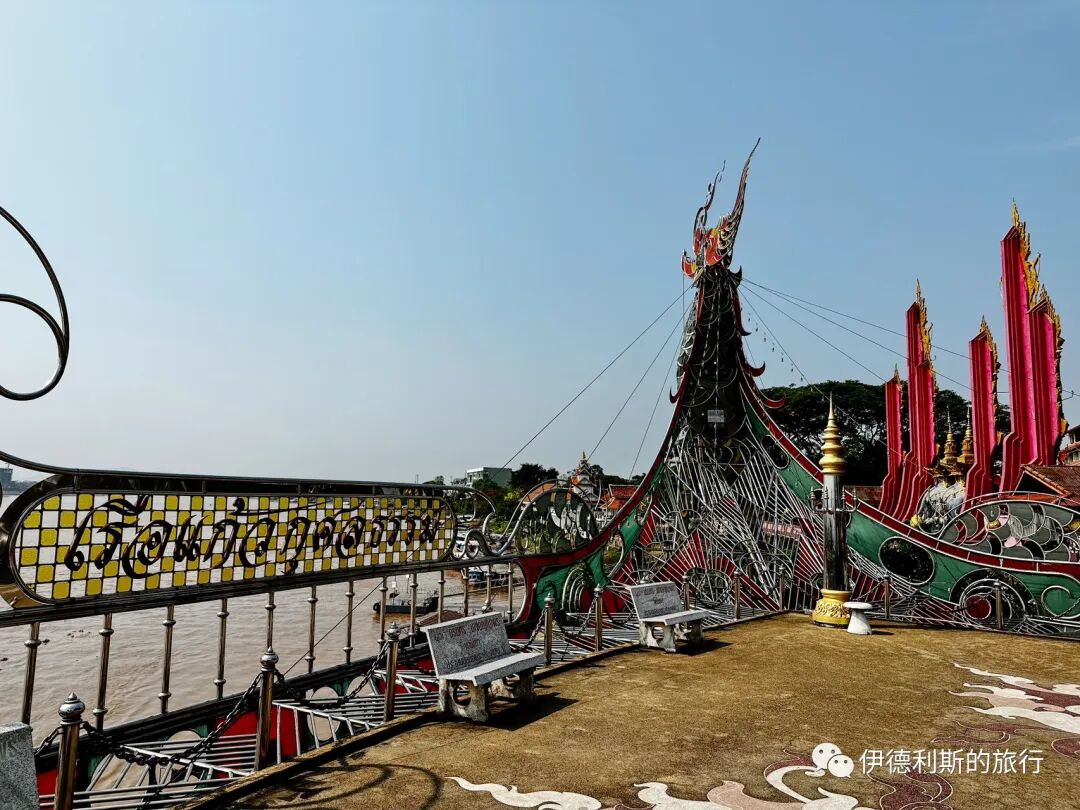
Leaving Zhenguang School, we went to the border where Thailand, Laos, and Myanmar meet, which is the famous Golden Triangle. Standing on the banks of the Mekong River, you can see casinos in Myanmar and Laos on the opposite side. Since gambling is banned in Thailand, there is only a Golden Triangle Park here, where many tourists stop to take photos.
Chiang Rai
Leaving the Golden Triangle, we headed toward Chiang Rai city. We first visited a South Asian Fatima Pakuk mosque near the Chiang Rai airport. Although it looks like a residential courtyard from the outside, it is decorated very beautifully once you step inside. It is very interesting that there is a large treehouse at the mosque entrance. This is my first time seeing a treehouse inside a mosque, a sight you only find in tropical regions.
I visited two other South Asian mosques in Chiang Rai city; one is black and one is white, both clean and tidy. The black one was built by Pakistani descendants, and it is really rare to see a black mosque around here. Both mosques have lounge chairs on the front porch of the main hall. It feels so comfortable to lie there and catch the breeze.
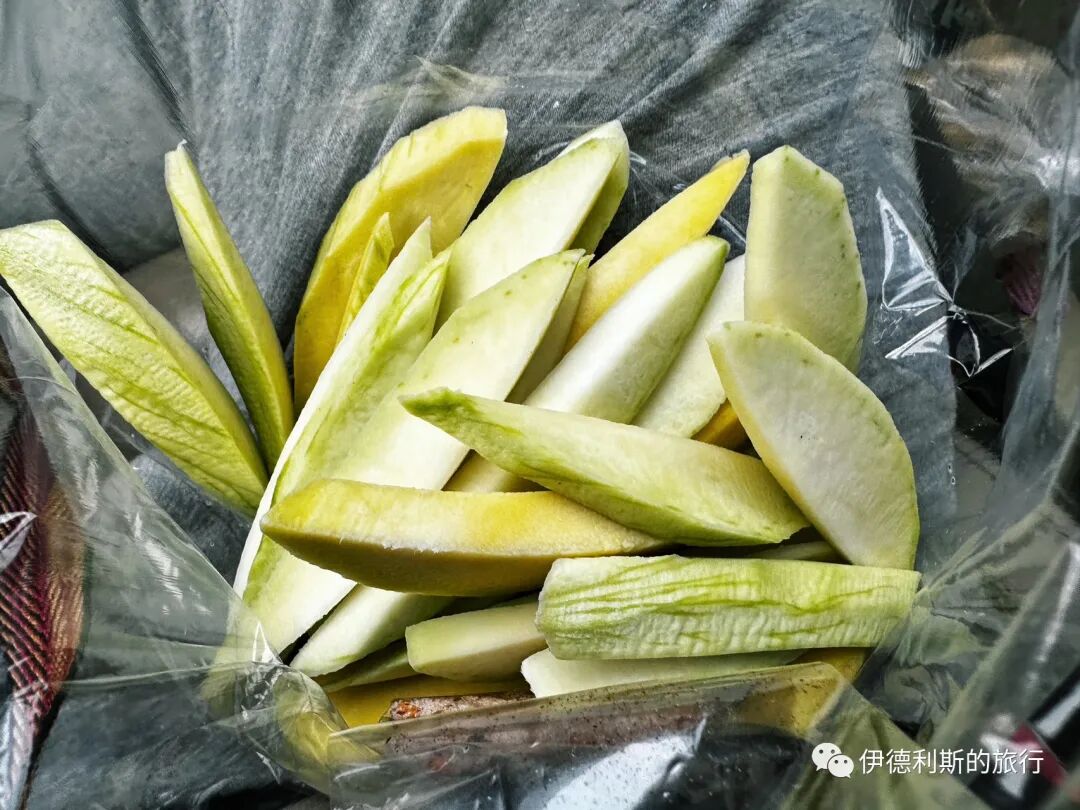
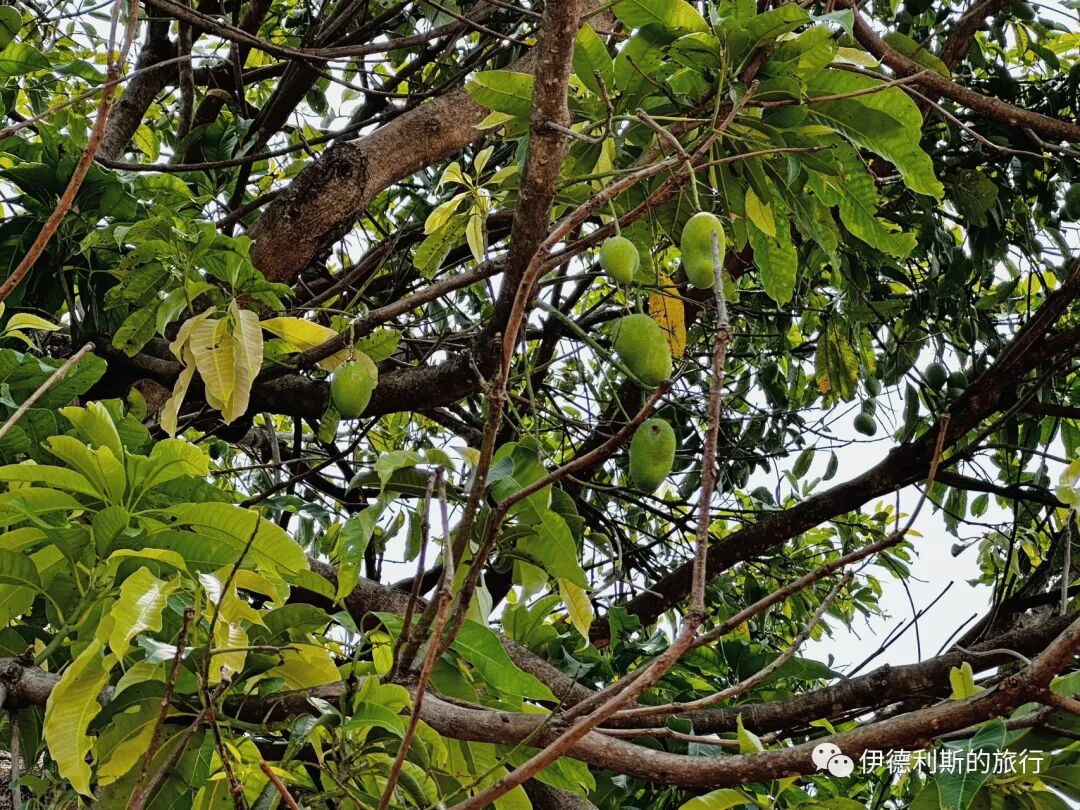
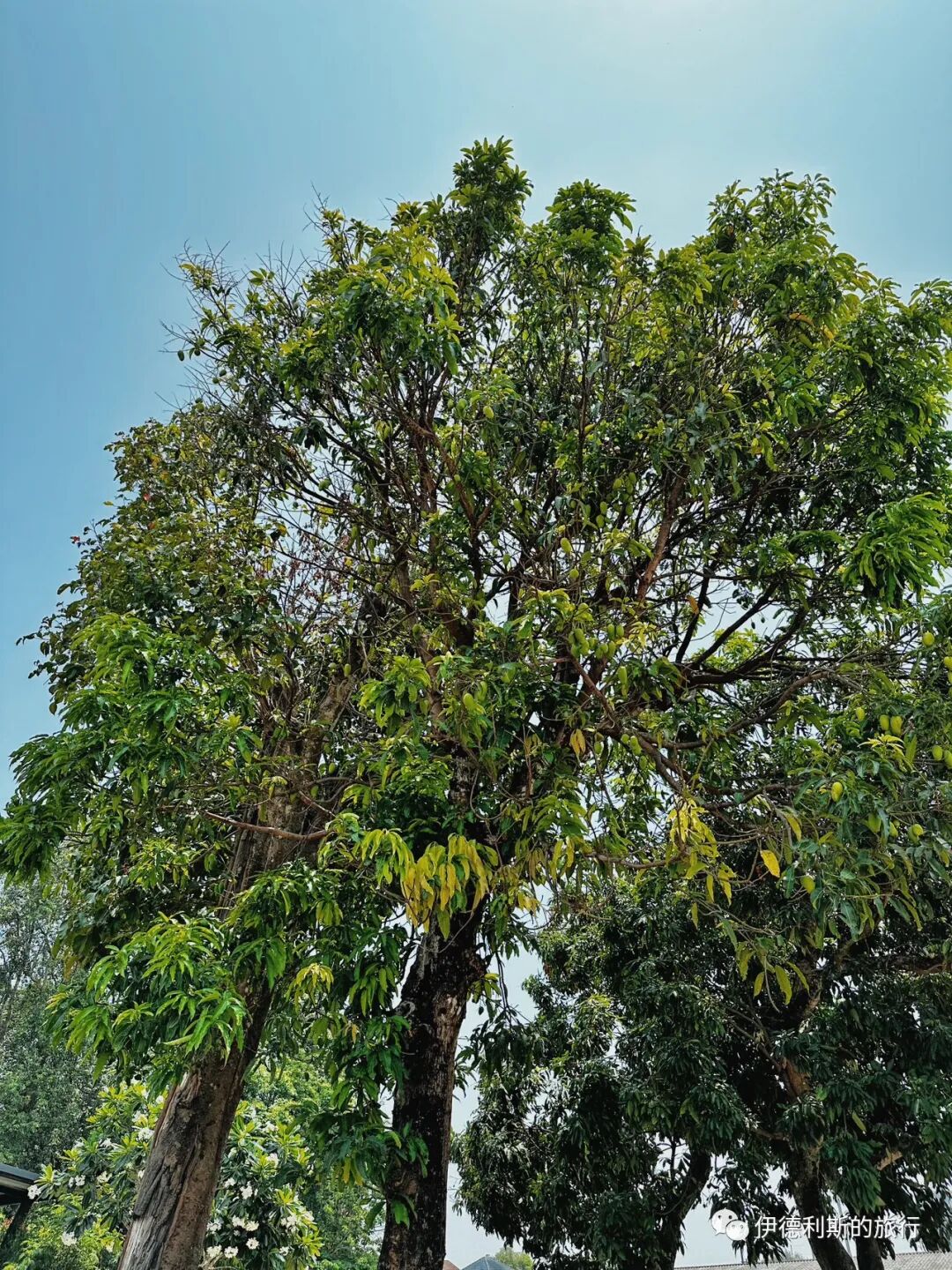
There are mango trees everywhere in Chiang Rai. Inside the Pakistani mosque, you can look up and see green mangoes filling the trees. We bought a bag of sliced green mangoes on the street. Dipping them in dry seasoning is delicious, crisp, and tasty.
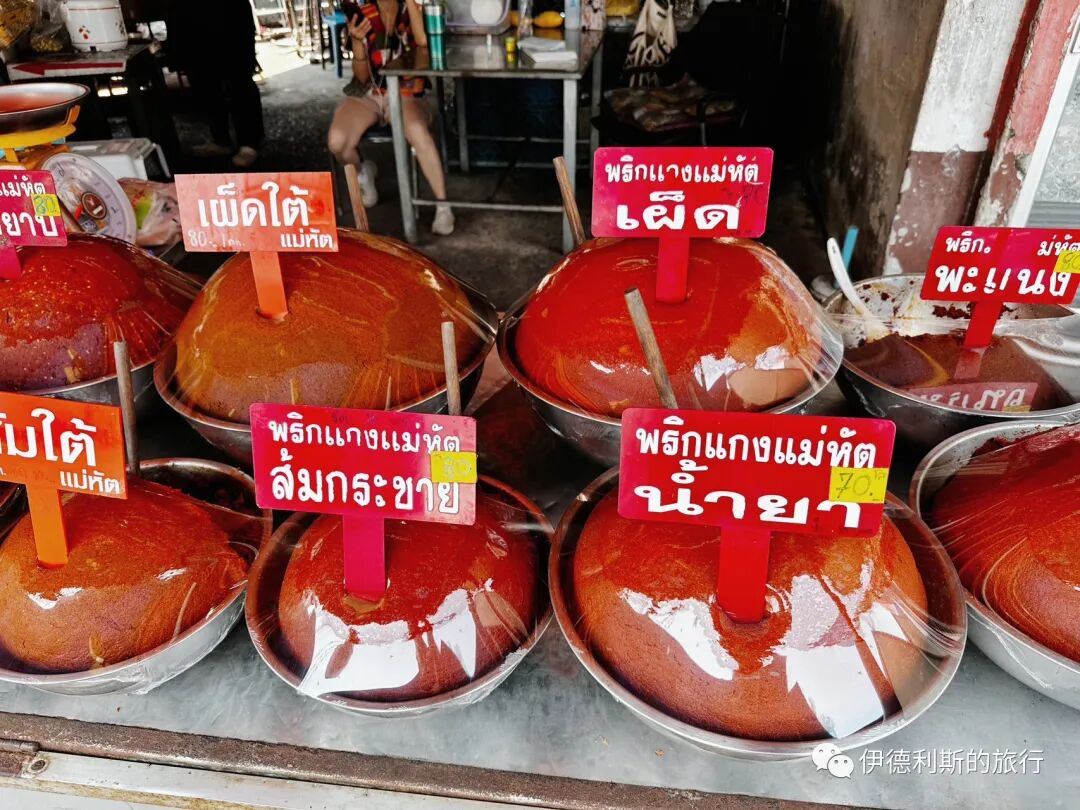
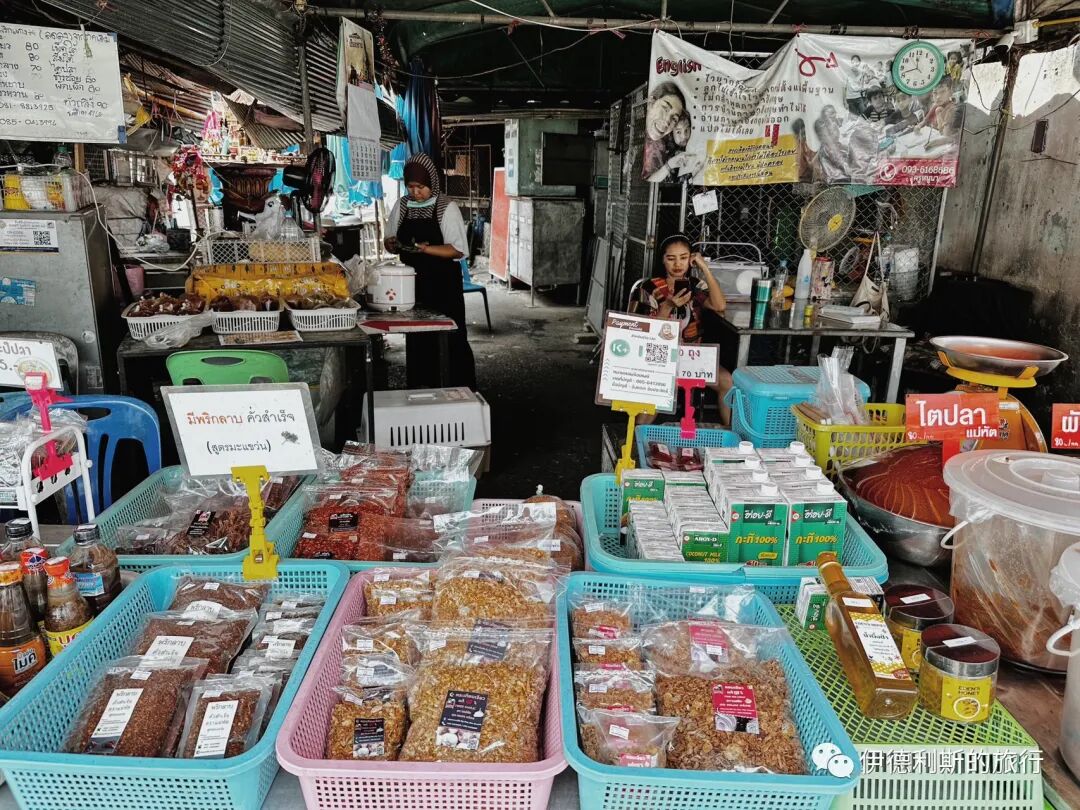
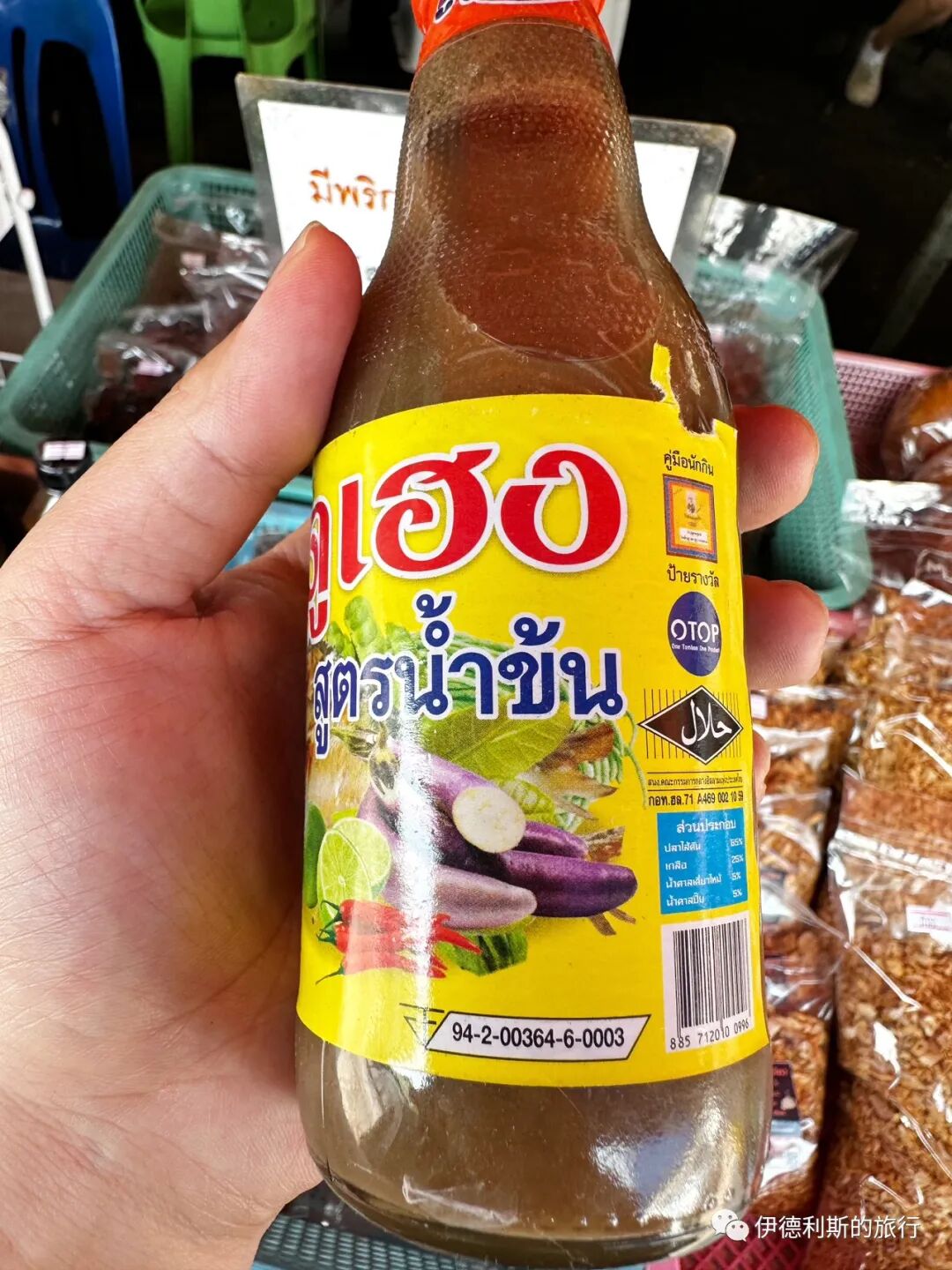
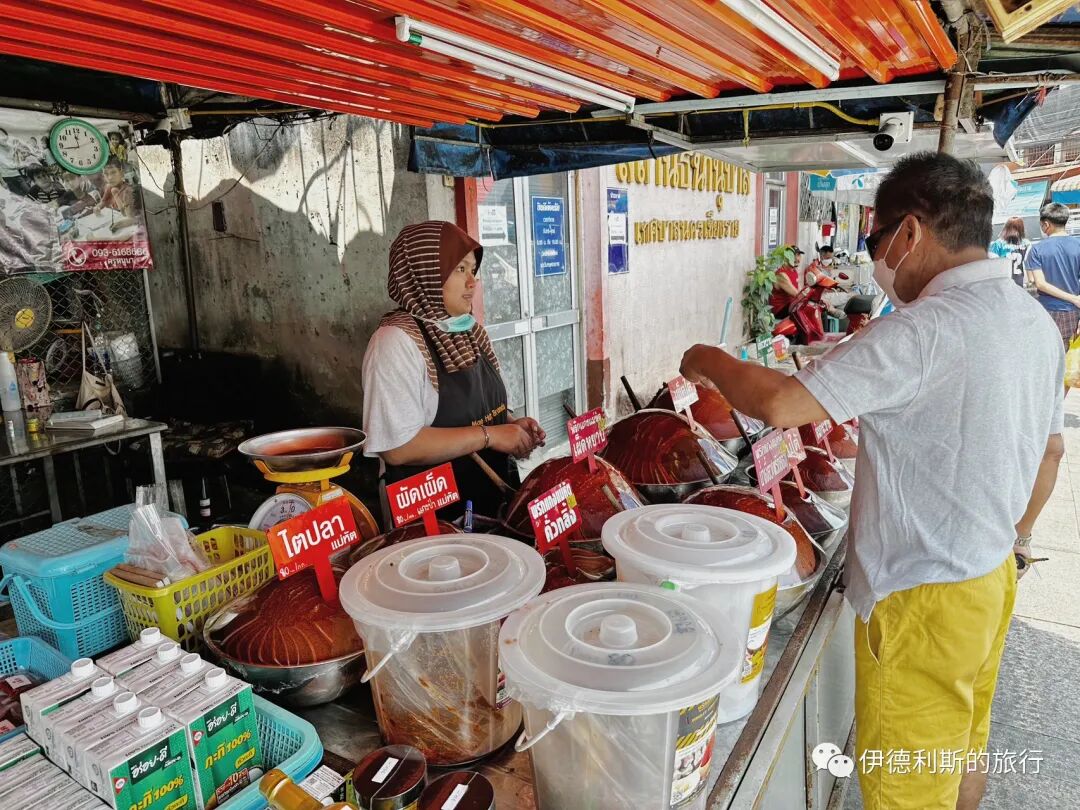
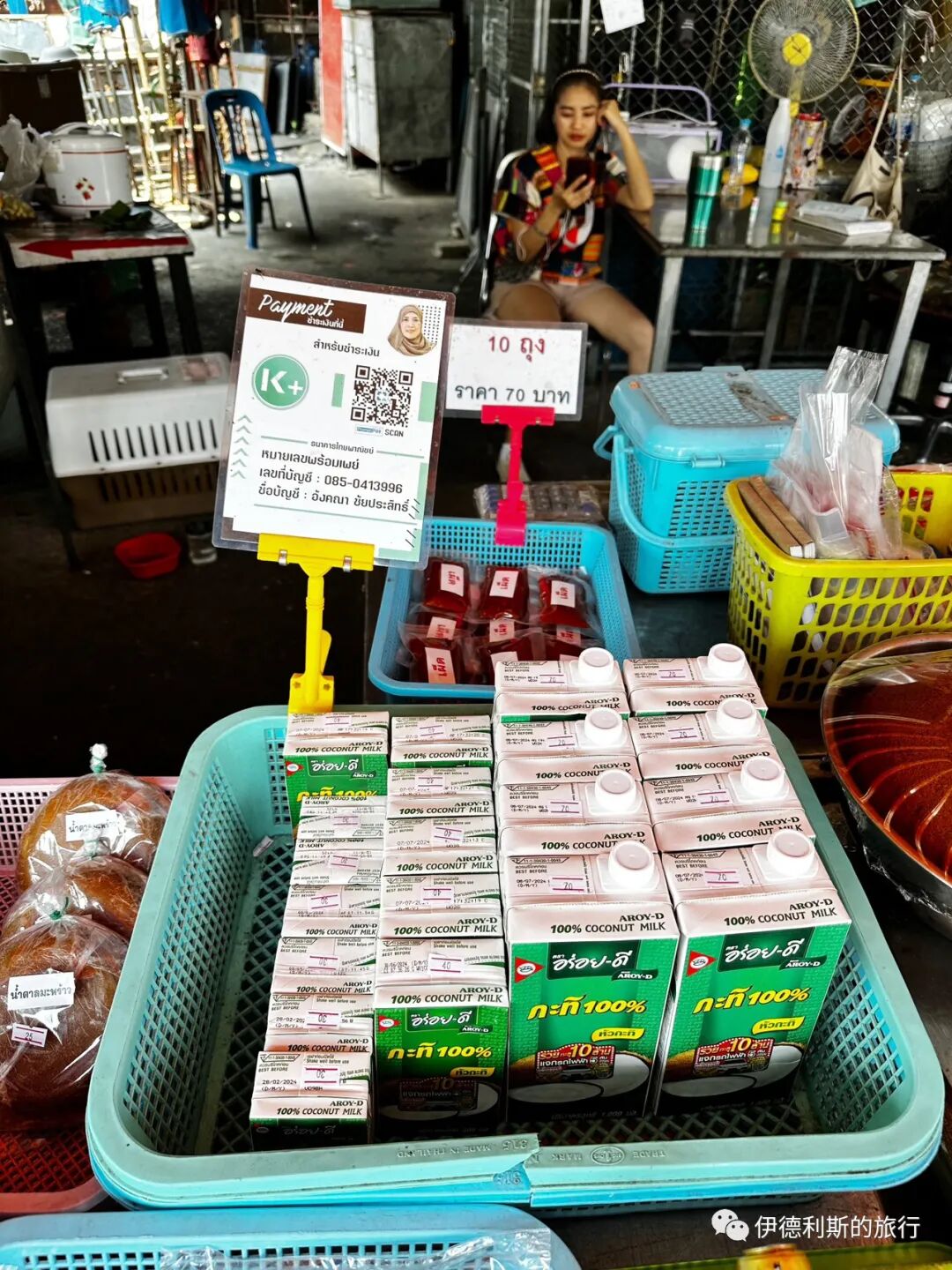
We arrived in downtown Chiang Rai and found a halal stall specializing in various spicy sauces. The variety of spicy sauces in Thai food is amazing. They are mostly sweet and spicy, which I quite enjoy.
At noon, we had lunch at the largest Yunnan Hui Muslim restaurant in Chiang Rai city. The restaurant is called Yunnan Restaurant. The owner's surname is Na, and his ancestral home is Guanyi in Jianshui. The founder of the restaurant was surnamed Ma, who was owner Na's father-in-law. He spent 50 years preparing Yunnan halal banquets in Northern Thailand. Most Yunnan Hui Muslims in Northern Thailand, including our chartered driver Master Ma, have eaten at owner Ma's banquets and helped out in the kitchen. Owner Ma had two daughters who both married two brothers. Both sons-in-law inherited owner Ma's business, running two Yunnan restaurants in Chiang Mai and Chiang Rai respectively. The one we ate at in Chiang Rai is run by the younger brother.
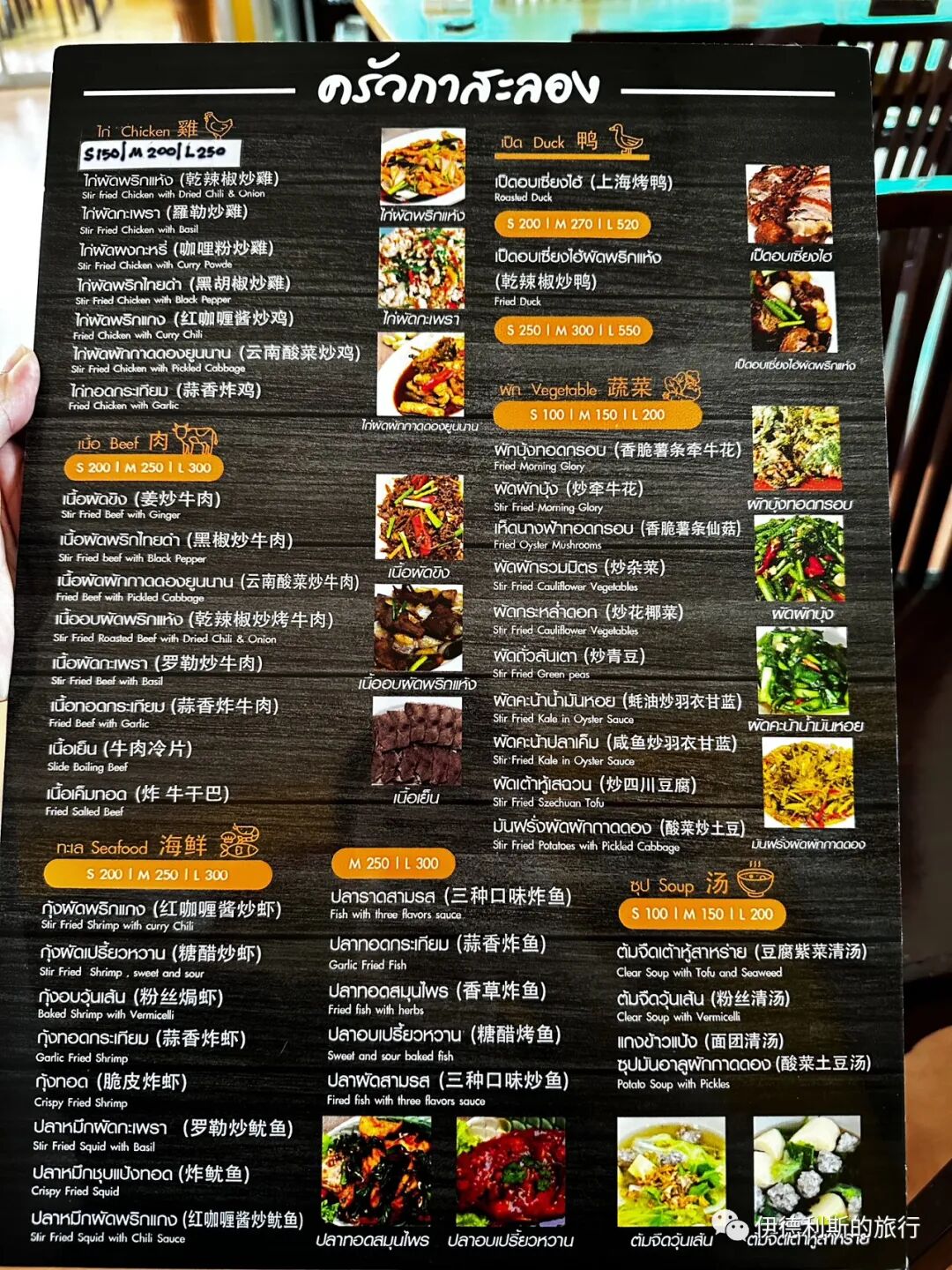
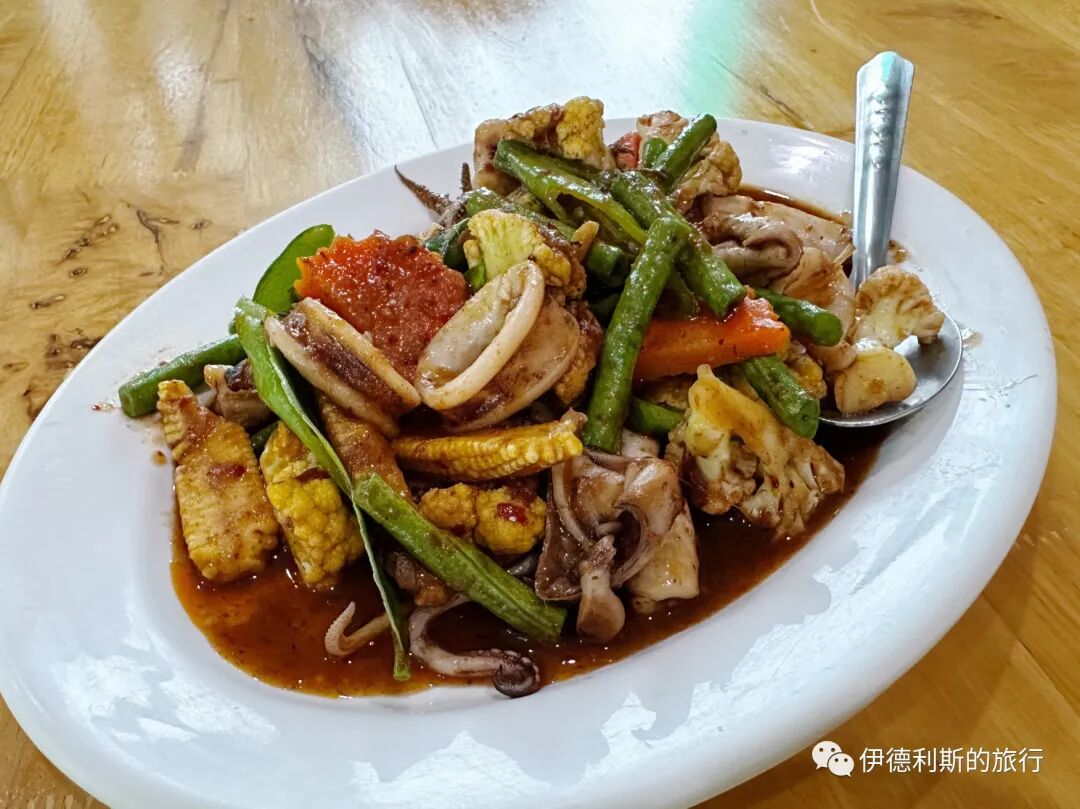
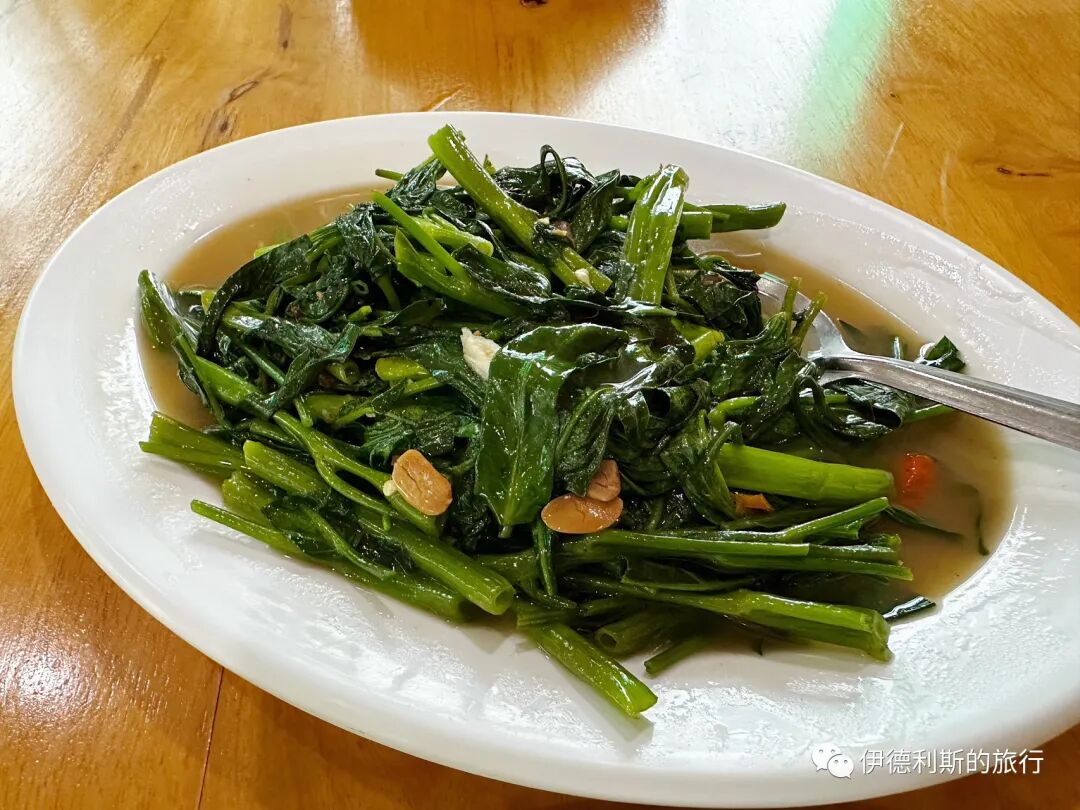
The restaurant menu has Chinese, which makes ordering very convenient. We ordered stir-fried squid with red curry paste, stir-fried morning glory, fried fish with three kinds of sauces, and stir-fried beef with ginger strips. Hui Muslims here have kept traditional Yunnan halal food but added many Thai spices and cooking methods. They have developed a unique style of Northern Thai Yunnan halal cuisine that tastes different from the halal food we ate in Yunnan.
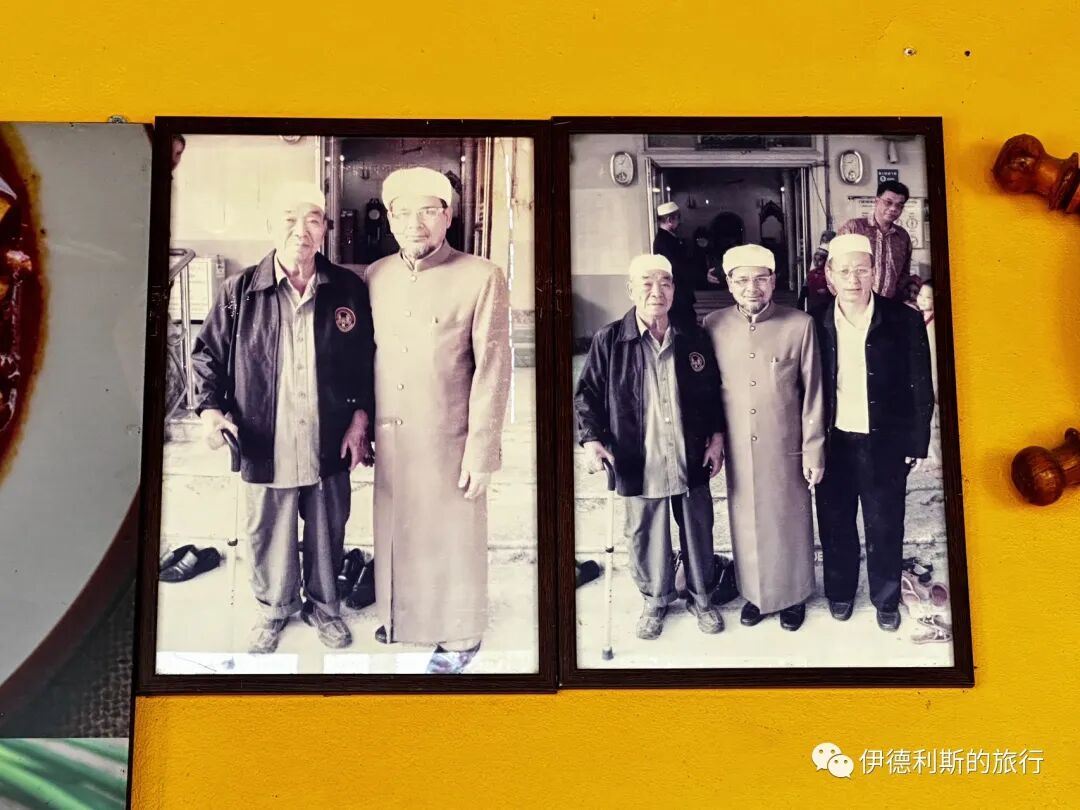
We arrived at the Yunnan mosque (lishen) in Chiang Rai city, and the elders at the mosque greeted us warmly.
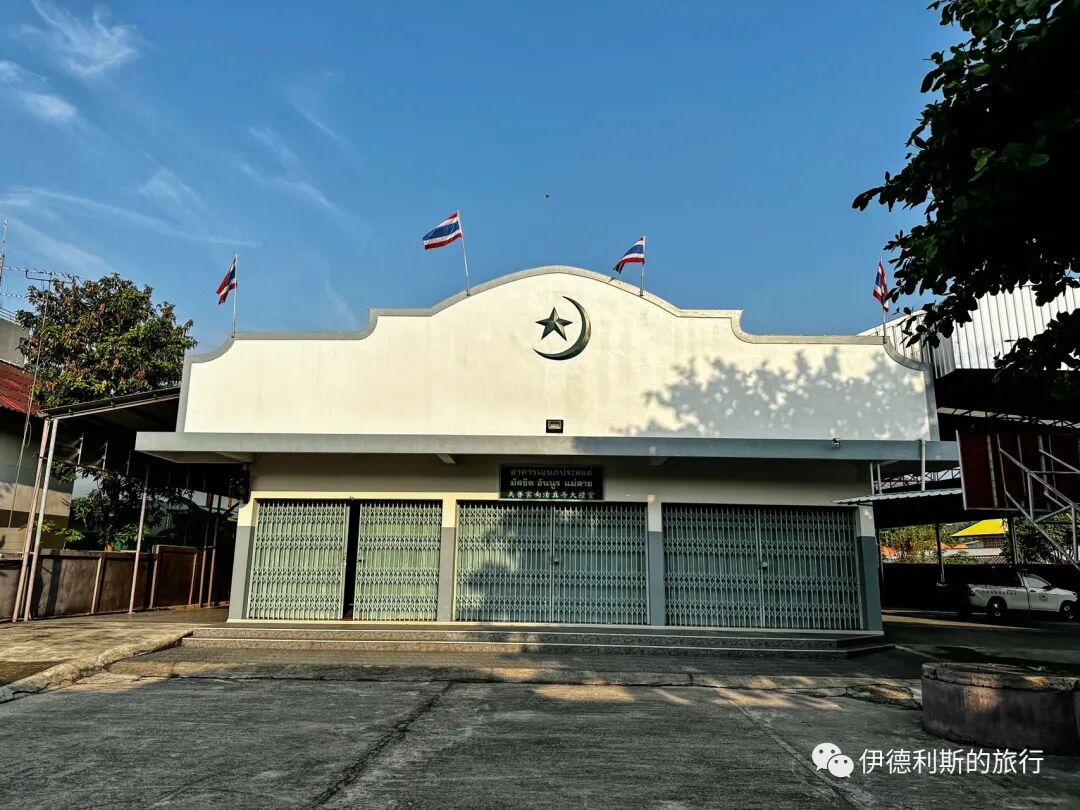
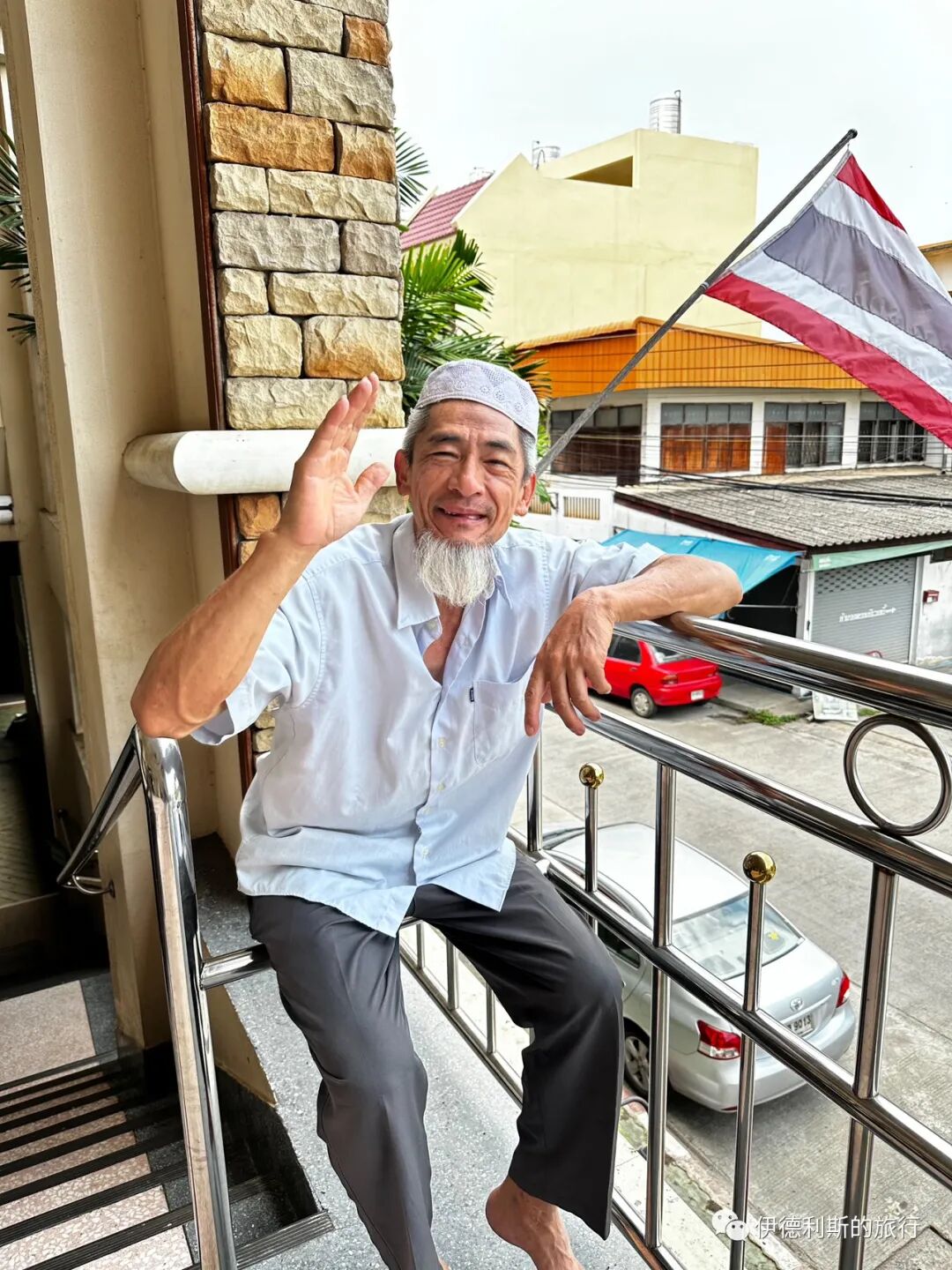
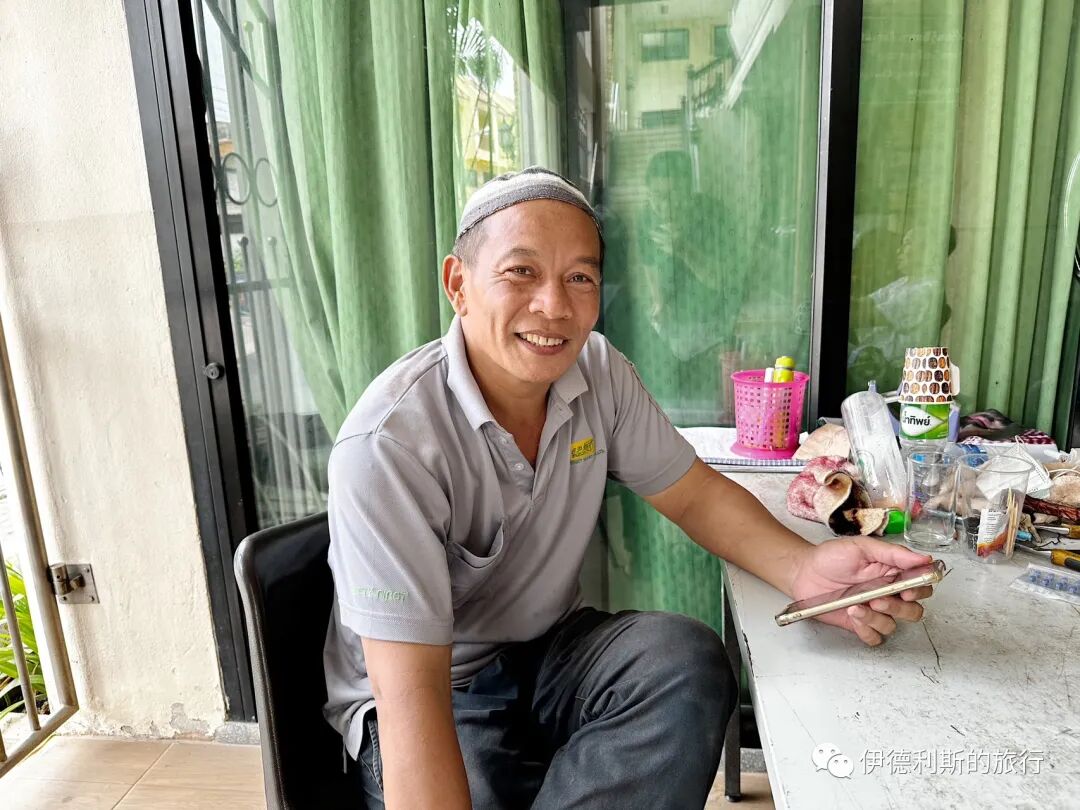
Although the total number of Hui Muslims in Chiang Rai city is much smaller than in Chiang Mai or Mae Sai, this was an important hub for the Yunnan Hui Muslim horse caravans trading in Northern Thailand. It is the oldest existing Yunnan mosque in Northern Thailand.
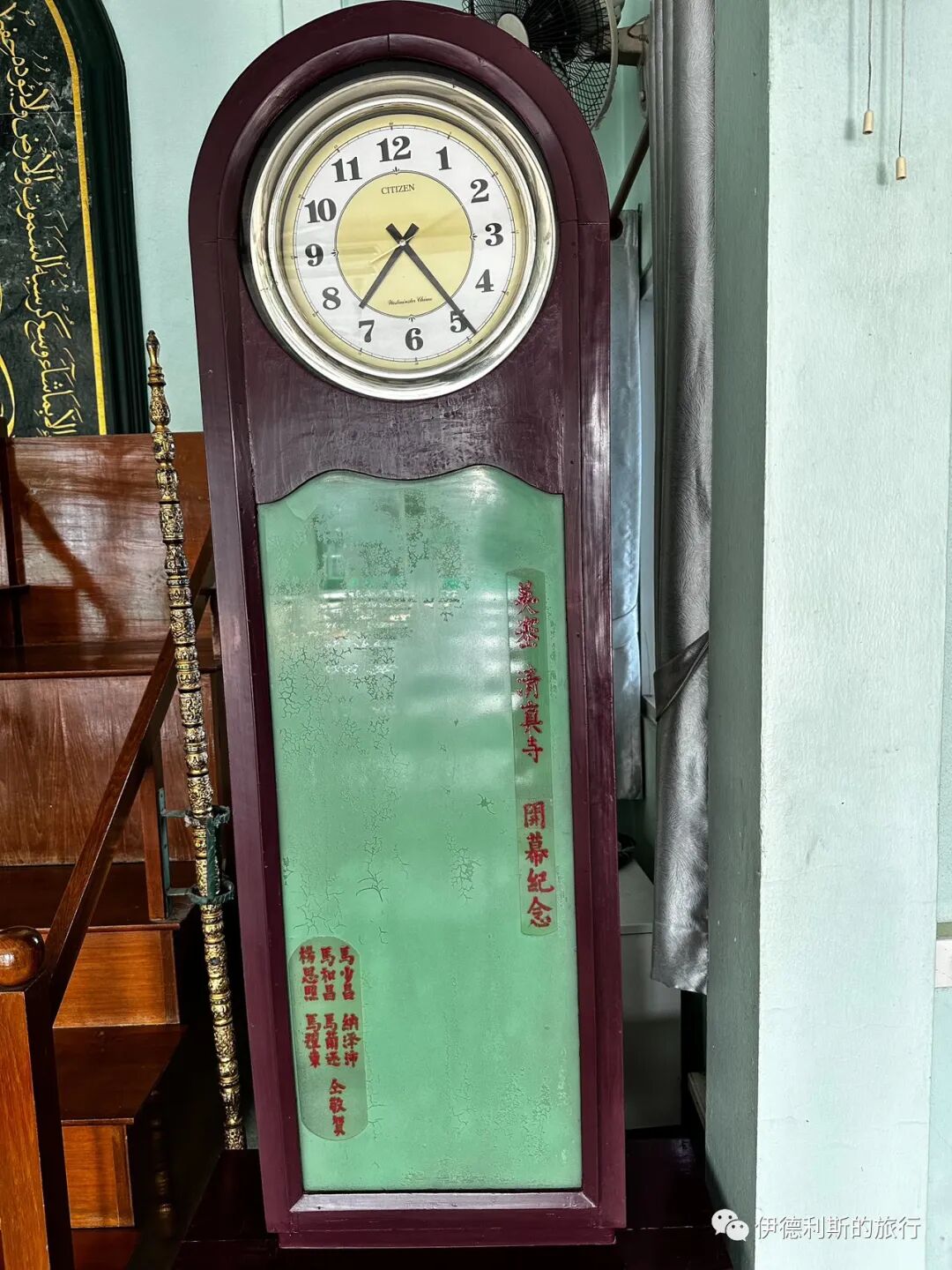
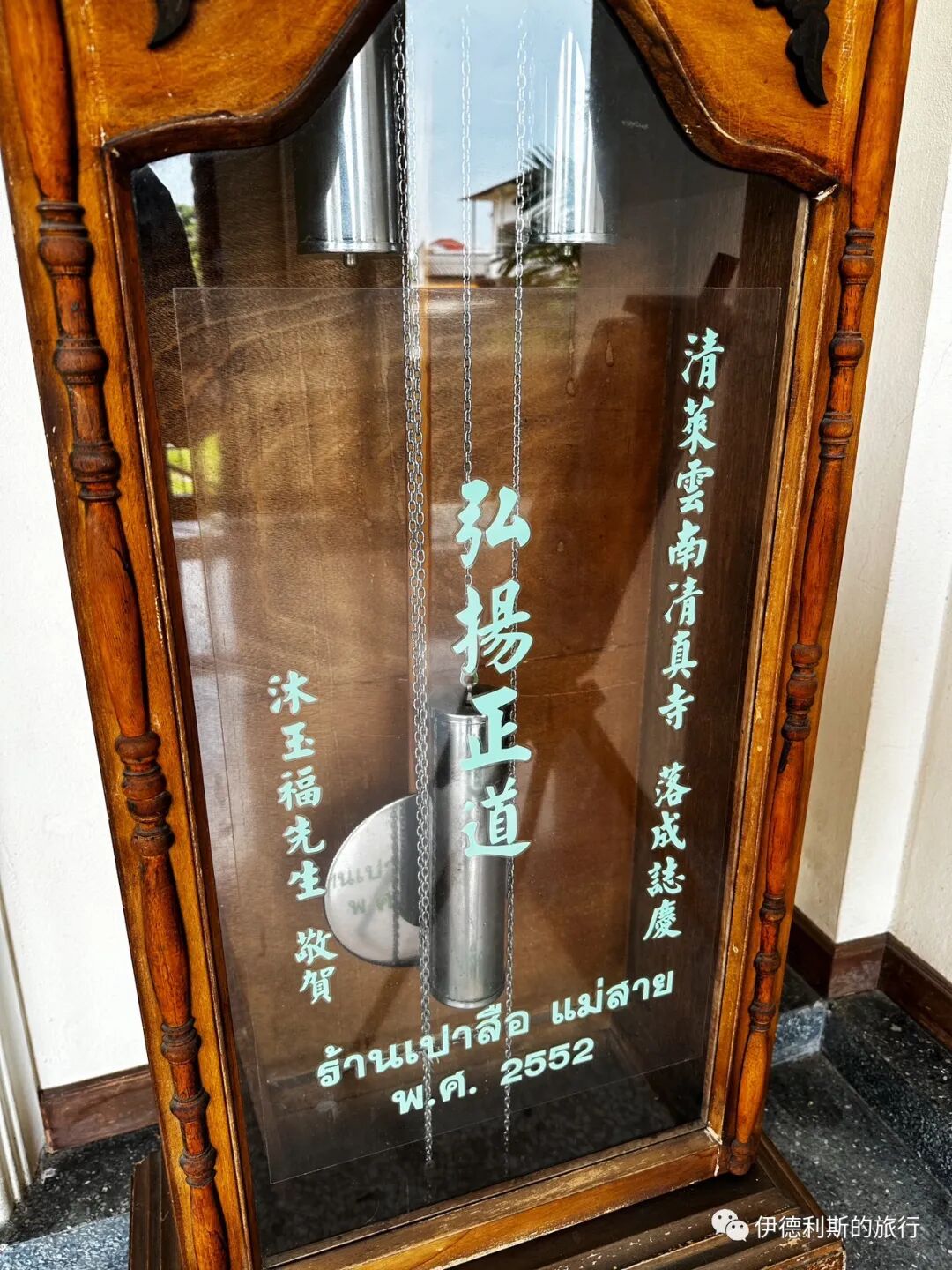
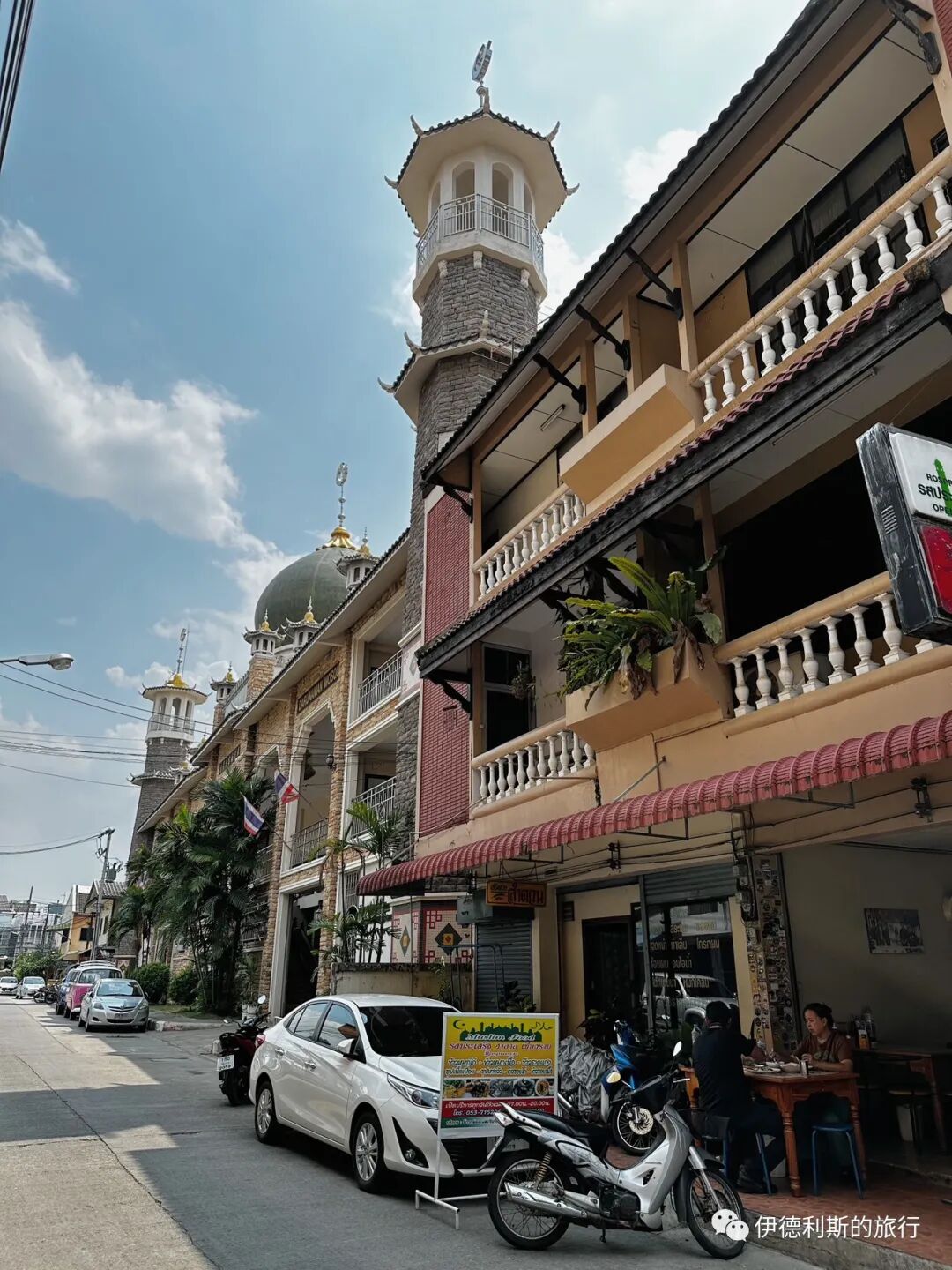
The Chiang Rai Yunnan mosque was built in 1910, seven years earlier than the Chiang Mai Wang He mosque built in 1917. The current building was rebuilt in 2009 and is the largest of all the Yunnan mosques in Northern Thailand. The dome in the center of the mosque is in Mughal style, and the tops of the minarets on both sides are Chinese-style pavilions. This represents the harmony between South Asian Muslims and Chinese Muslims in Northern Thailand. The entrance to the main hall has the words 'Gate of Ritual' and 'Path of Etiquette' written on it, along with a couplet that reads: 'Quiet mosque, quiet place, quiet thoughts, silently praise Allah; pure heart, pure origin, pure worship, purely follow the scriptures.' In front of the main hall door is a grandfather clock donated to the mosque by Mr. Mu Yufu, inscribed with the words 'Promote the Righteous Path'.
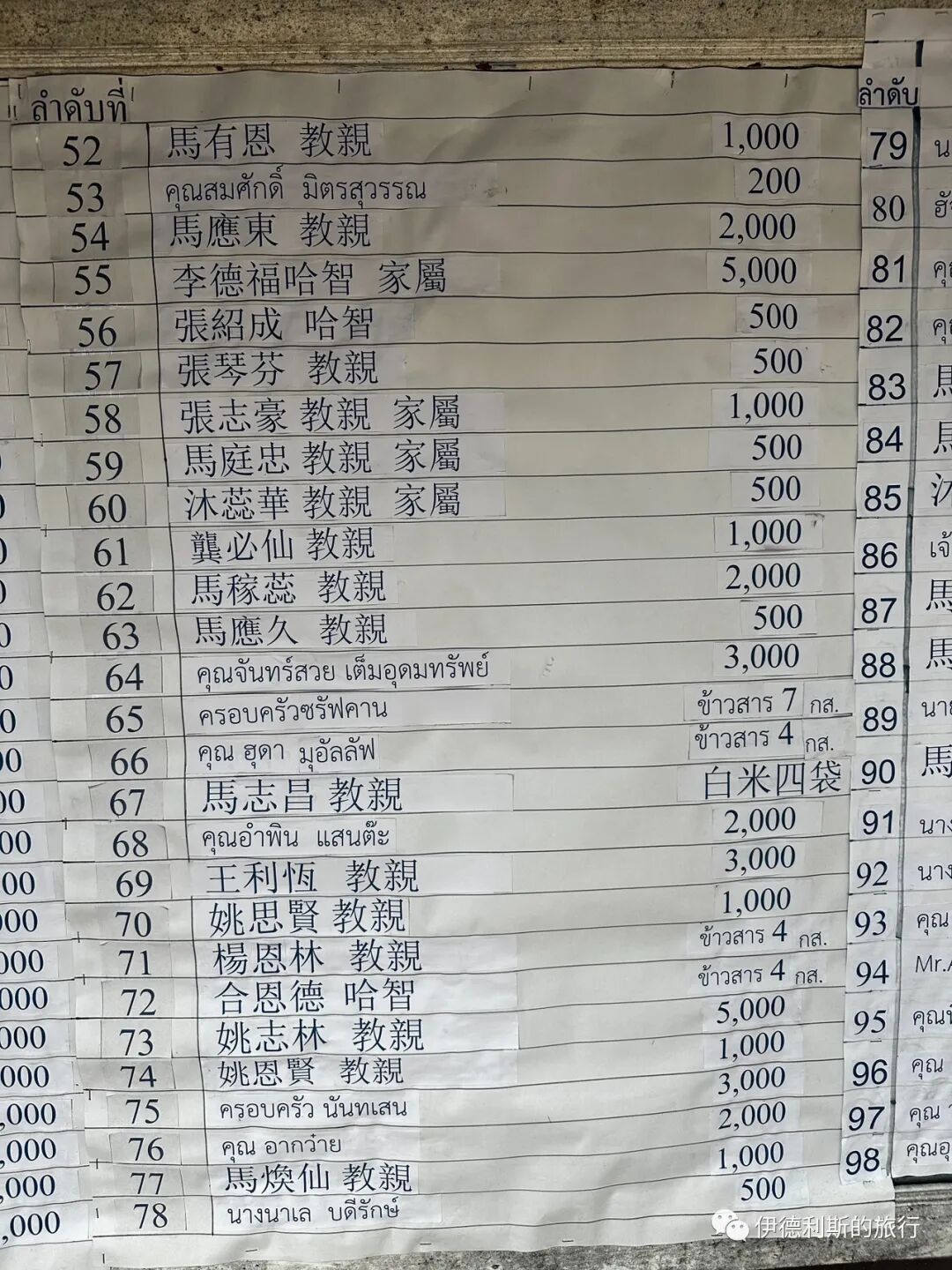
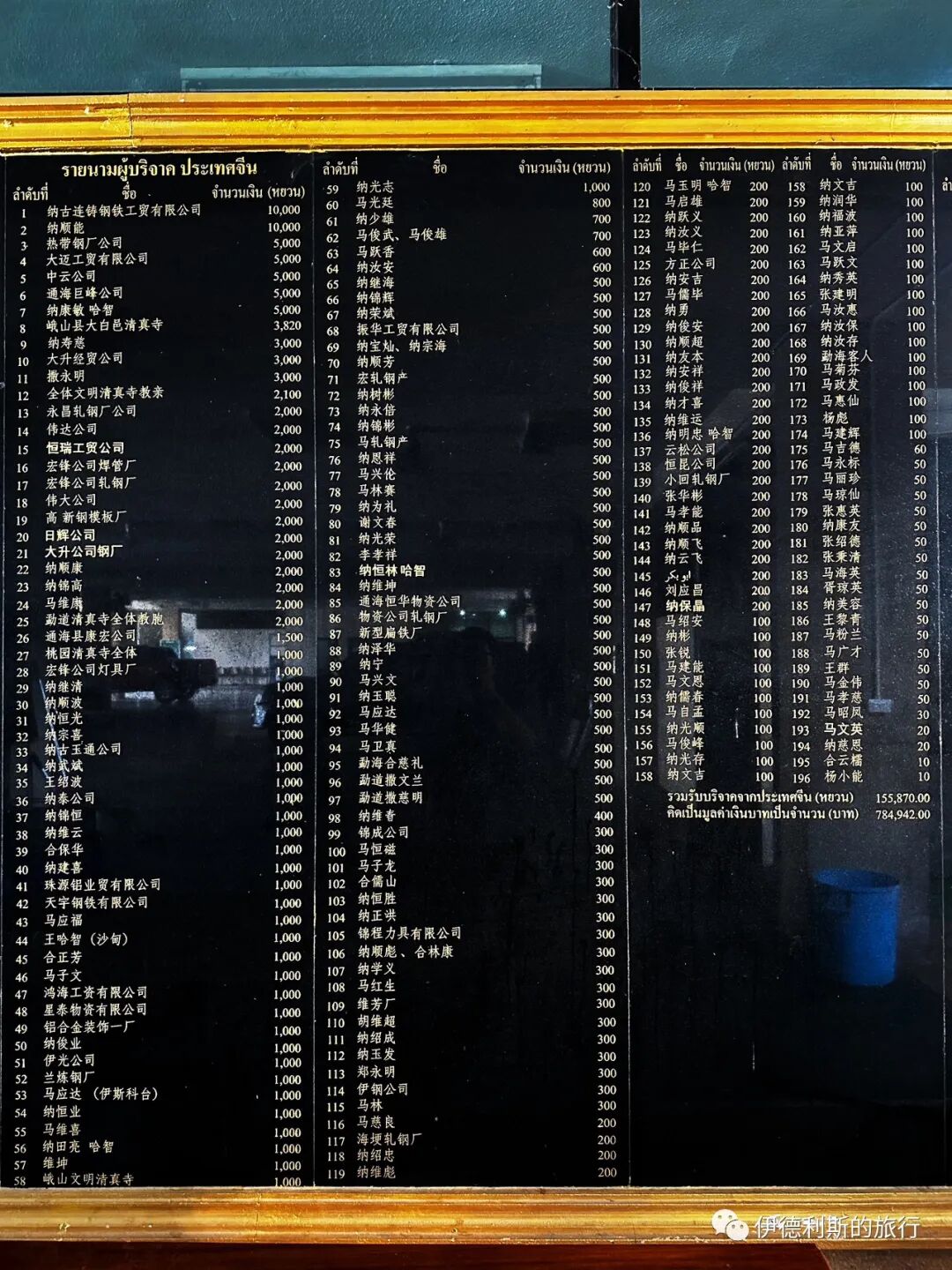
The first floor of the mosque is engraved with the names of those who donated to the reconstruction. Among them, 196 people are from Yunnan, many of whom are from Najiaying, Tonghai, and Menghai.
The alley and snack stalls at the entrance of the Chiang Rai Yunnan mosque.
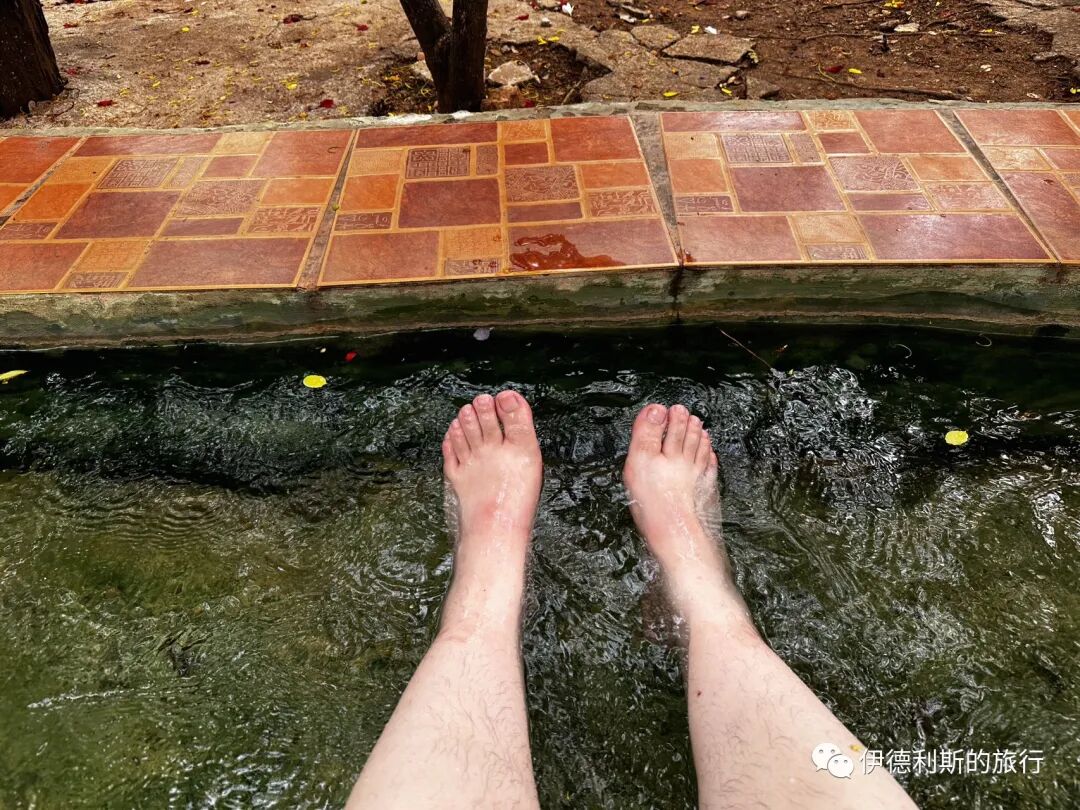
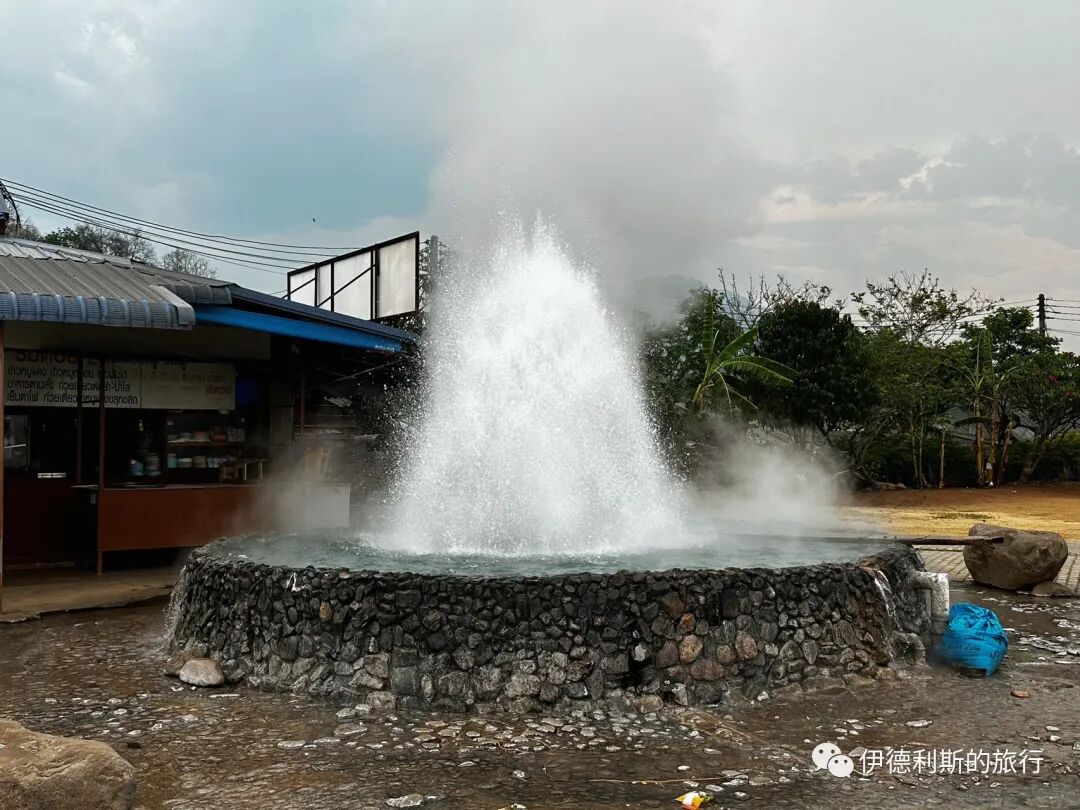
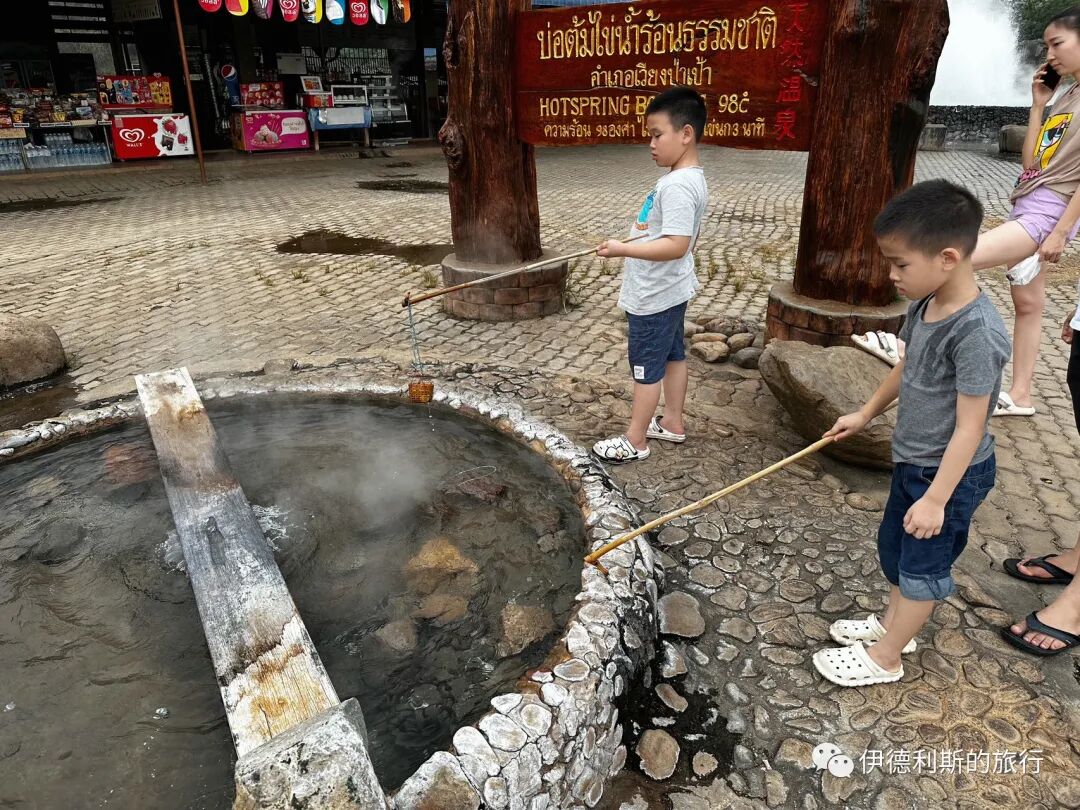
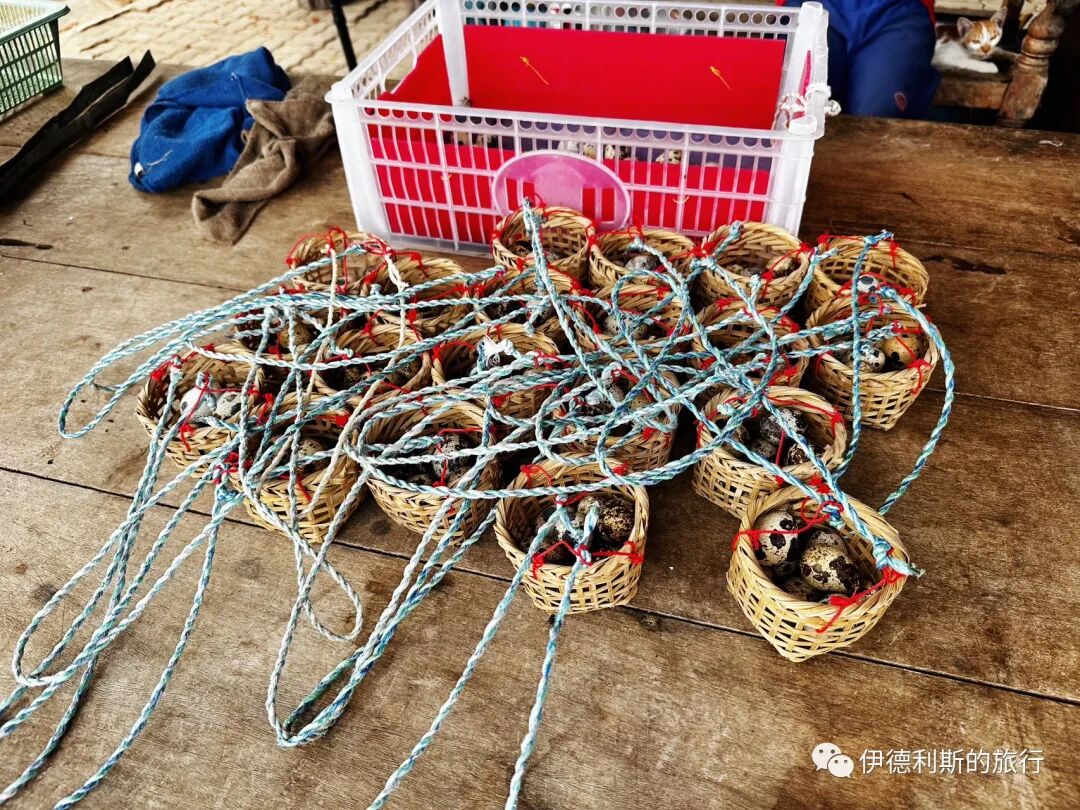
On the way from Chiang Rai to Chiang Mai, you will pass the Chiang Rai hot springs, where many people stop to take a break. The hot springs here are right by the side of the road, and you do not need to buy a ticket. There are springs of various temperatures. The hottest ones gush out like boiling water, and you can boil chicken eggs and quail eggs in them, which children really enjoy. You can soak your feet in the cooler springs. The water temperature drops as it flows from the source, so it is very comfortable to find a spot with the perfect temperature and soak for a while.
Back to Chiang Mai.
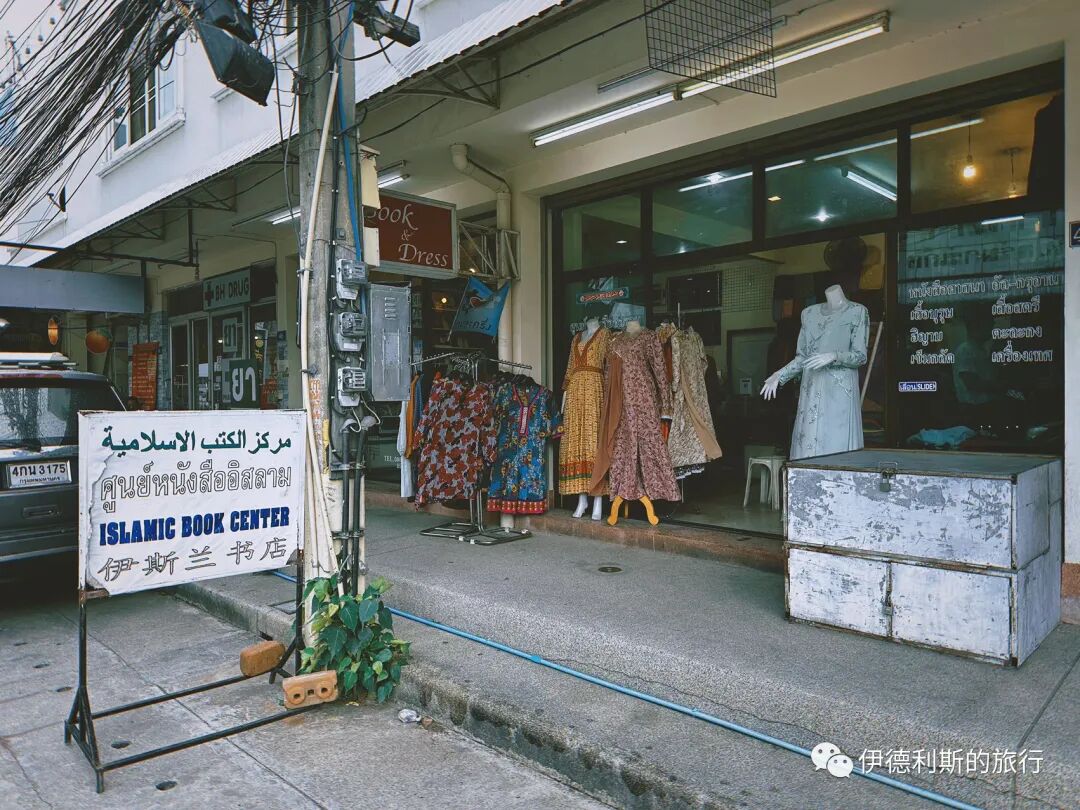
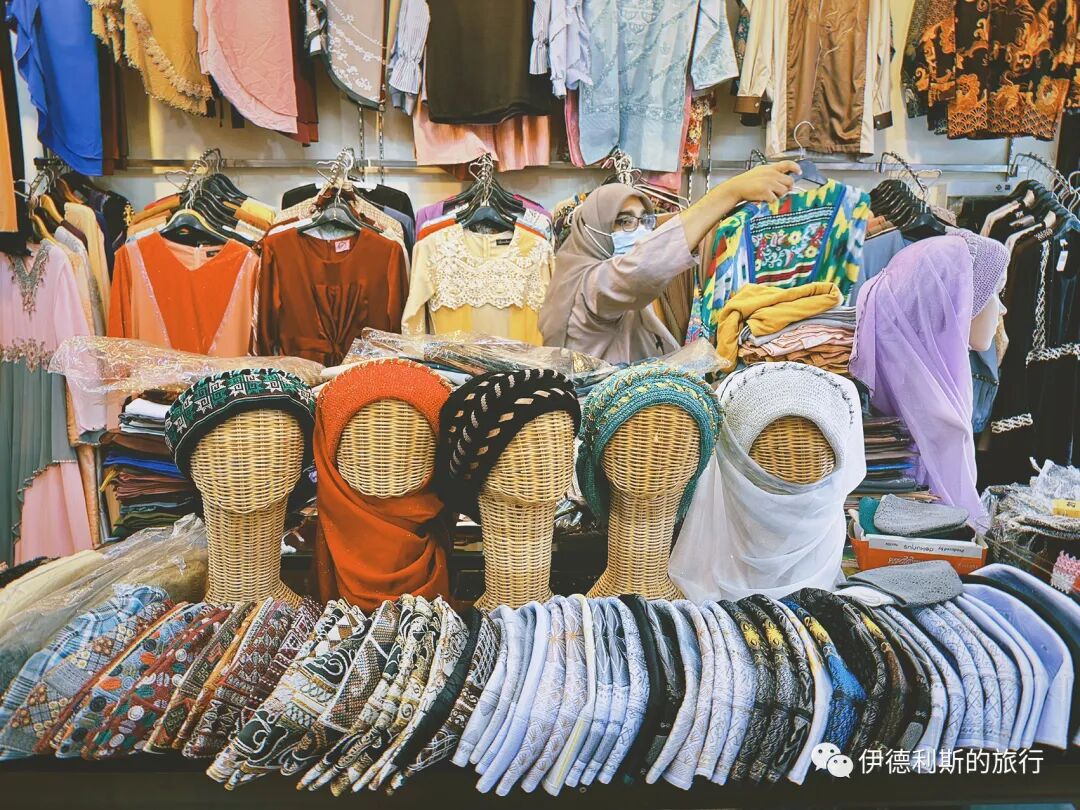
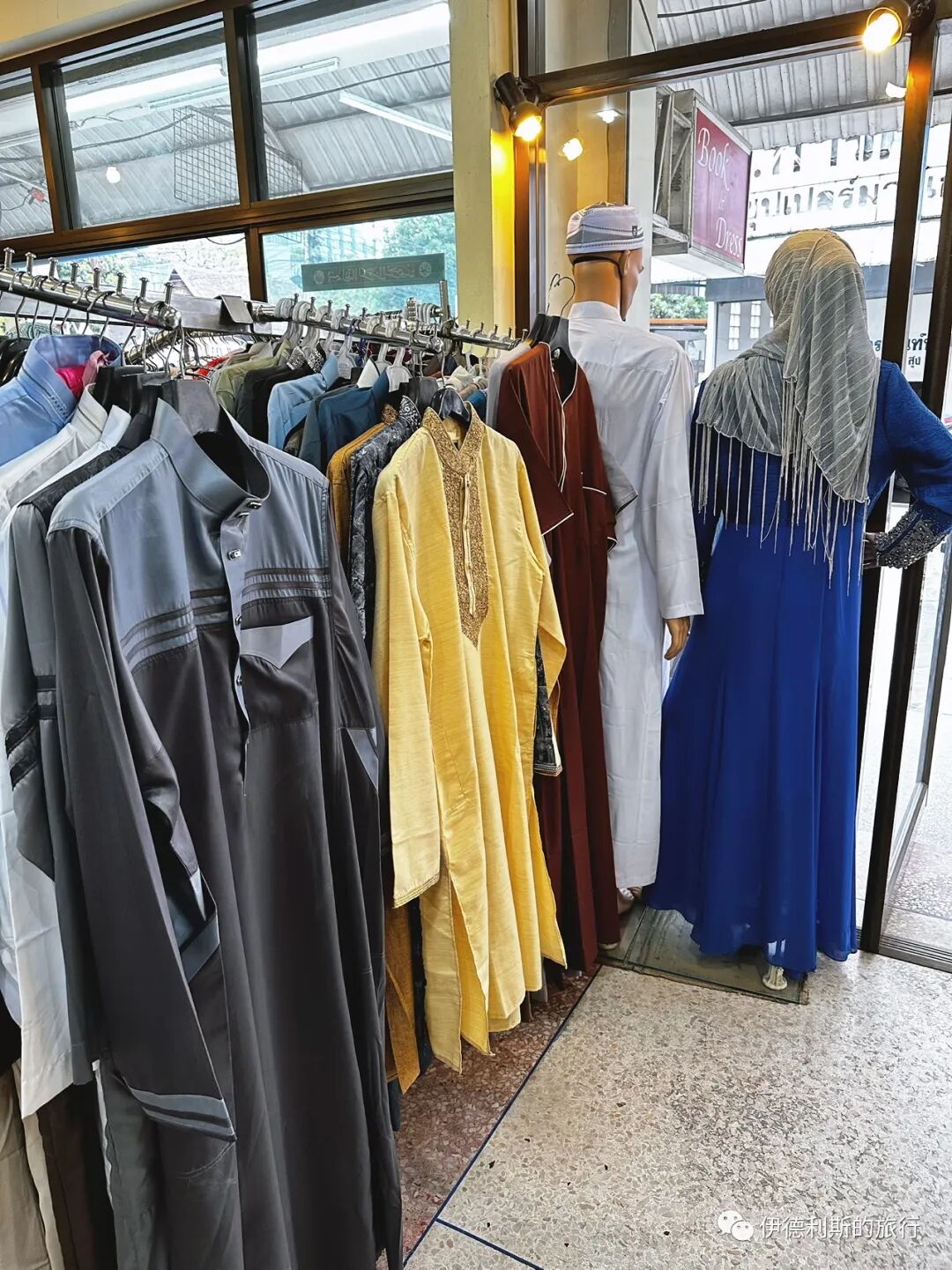
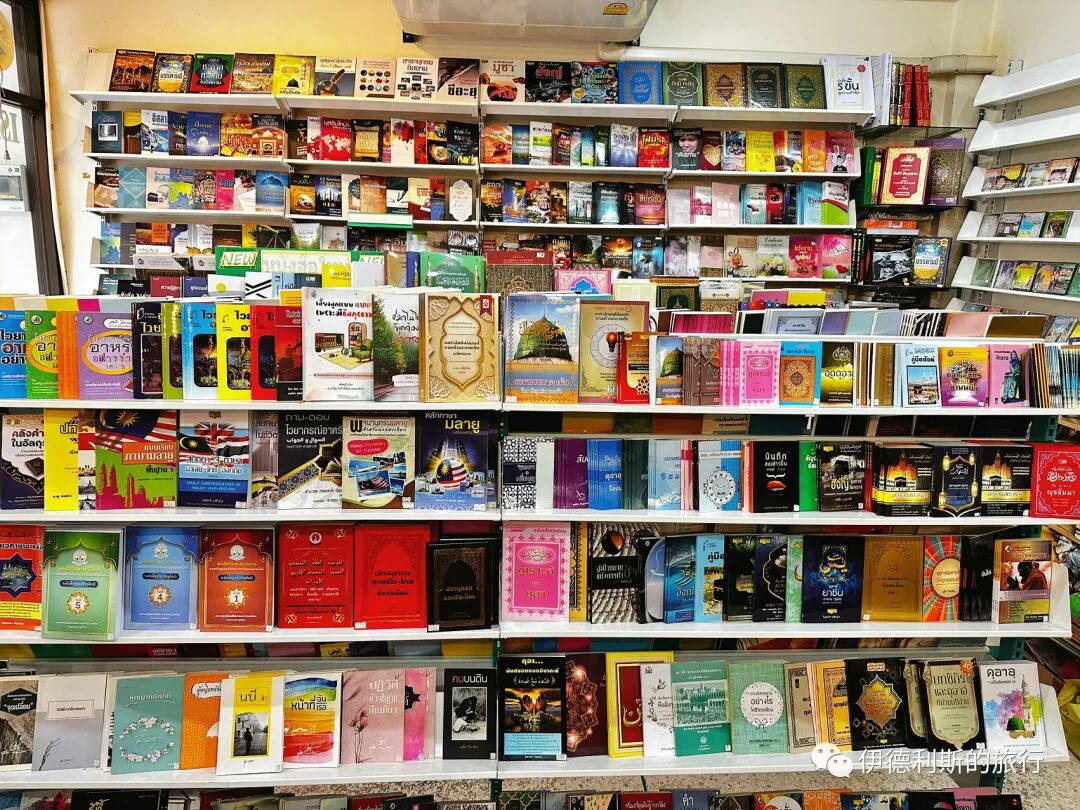
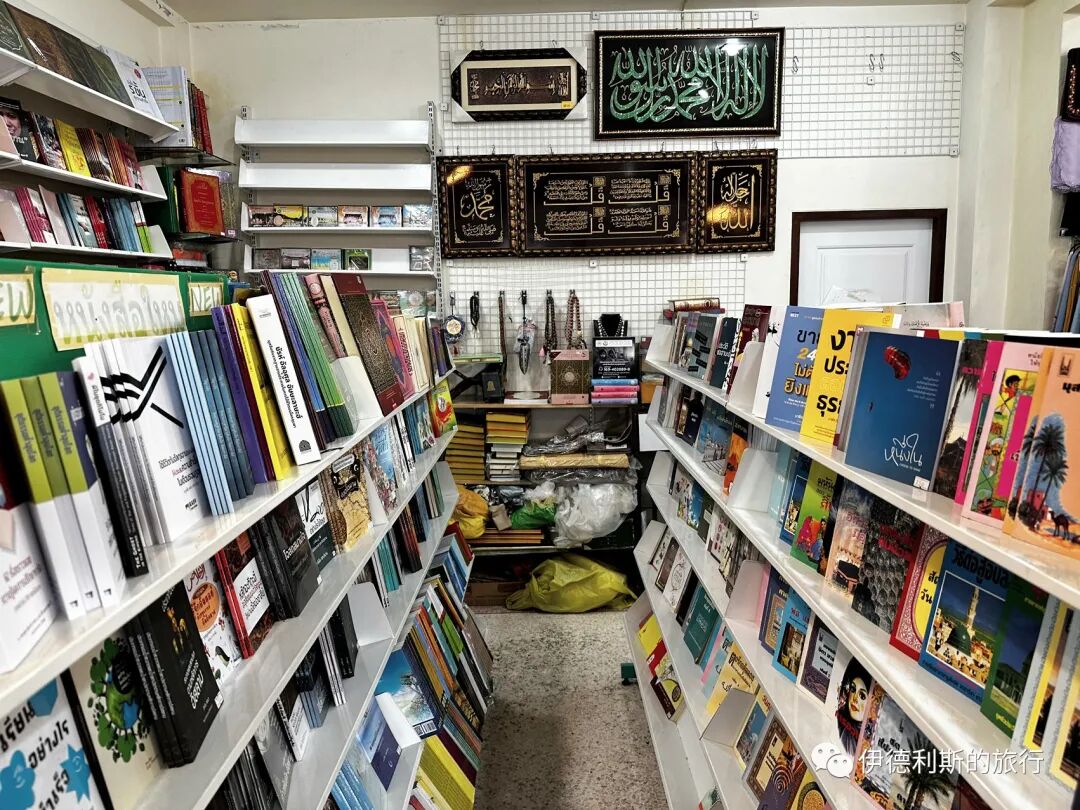
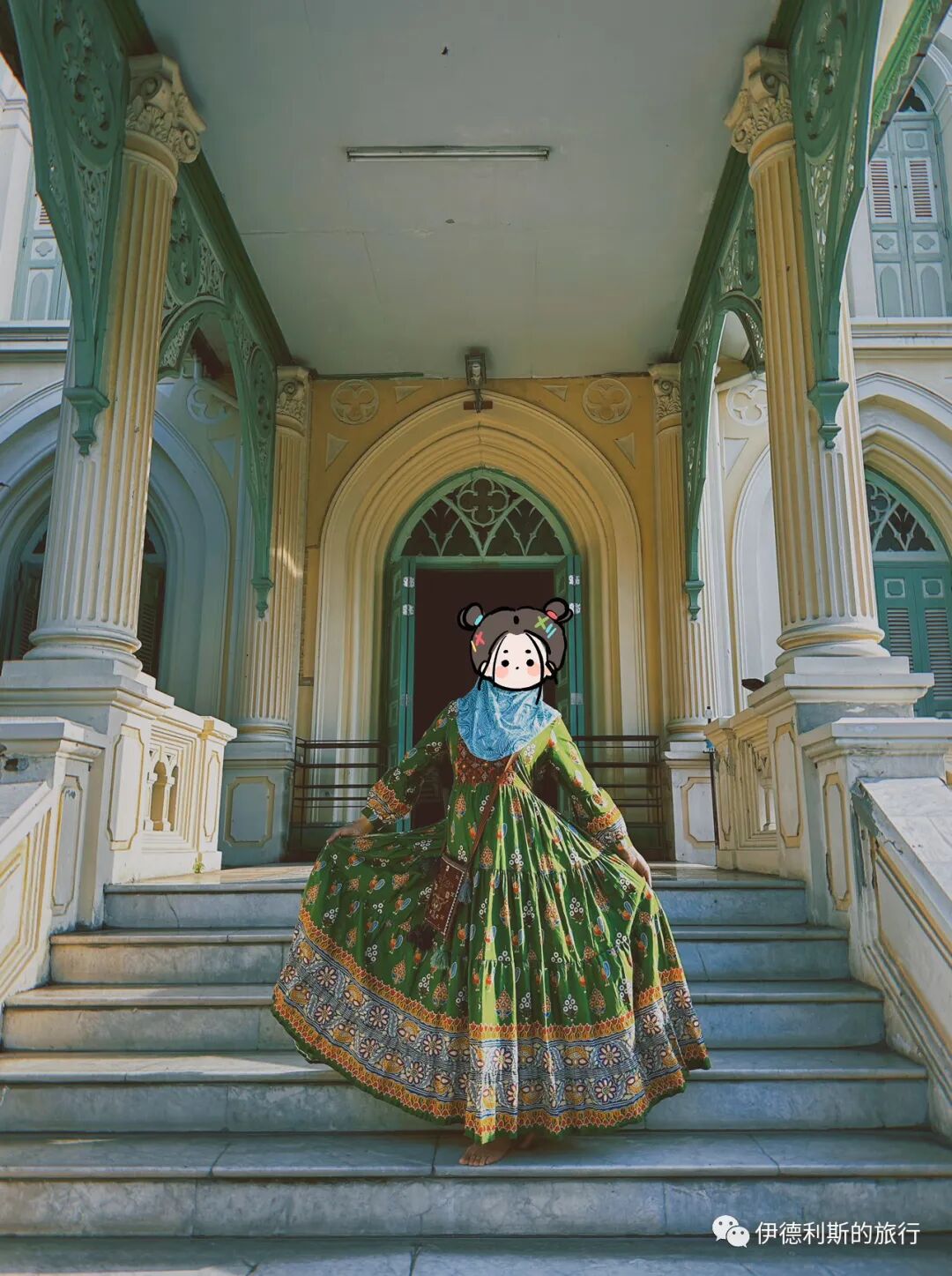
At noon, we returned to the Chiang Mai Wang He mosque (lishen) and then walked around the shops at the entrance. This shop is run by the daughter of Mustafa, the grand imam of the Nurul mosque in Chiang Mai. I bought CDs and hats here back in 2017. This time, Zainab bought a beautiful long dress made from local fabric that is very high quality. We took some lovely photos in it in Bangkok. view all
Summary: Northern Thailand has Yunnanese Hui Muslim communities whose mosque neighborhoods still show the memory of migration, trade, and borderland life. This first part of Day 3 records the mosques, settlements, and local community details in clear English while keeping the source facts and images.
During the May Day holiday in 2023, I visited the mosque communities (fang) of the Yunnan Hui Muslims in Northern Thailand. On the first day, led by Master Ma Ruqi, a third-generation Thai Yunnan Hui Muslim, we visited four mosque communities in the Chiang Mai city area: Chang Khlan, Wang He, Jing Zhen, and Nurul. I posted about this in 'A Pilgrimage to Northern Thai Yunnan Mosque Communities (Day 1)'. On the second day, Master Ma drove us north to visit several mosque communities in the refugee villages of the former Northern Thai isolated army. We went to Mae Salong, the main base of the isolated army, and finally reached Mae Sai, the second-largest settlement of Yunnan Hui Muslims in Northern Thailand. I posted about this in 'A Pilgrimage to Northern Thai Yunnan Mosque Communities (Day 2)'. On the third day, we left Mae Sai and headed south back to Chiang Mai, visiting several mosque communities in Chiang Rai to wrap up this pilgrimage to the Yunnan mosque communities of Northern Thailand.
Mae Sai
The third day of our journey began in Mae Sai, the northernmost town in Thailand. Early in the morning, we went to see the Mae Sai border crossing to Myanmar. It was closed for over two years and only reopened this February, so it is busy again now. Not far to the west of the border, you can see the Myanmar town of Tachileik across the Mae Sai River. Development there is clearly a bit behind Thailand. Many Yunnan Hui Muslims also live in Tachileik, and there is a Yunnan mosque there. I hope to have the chance to visit it in the future.
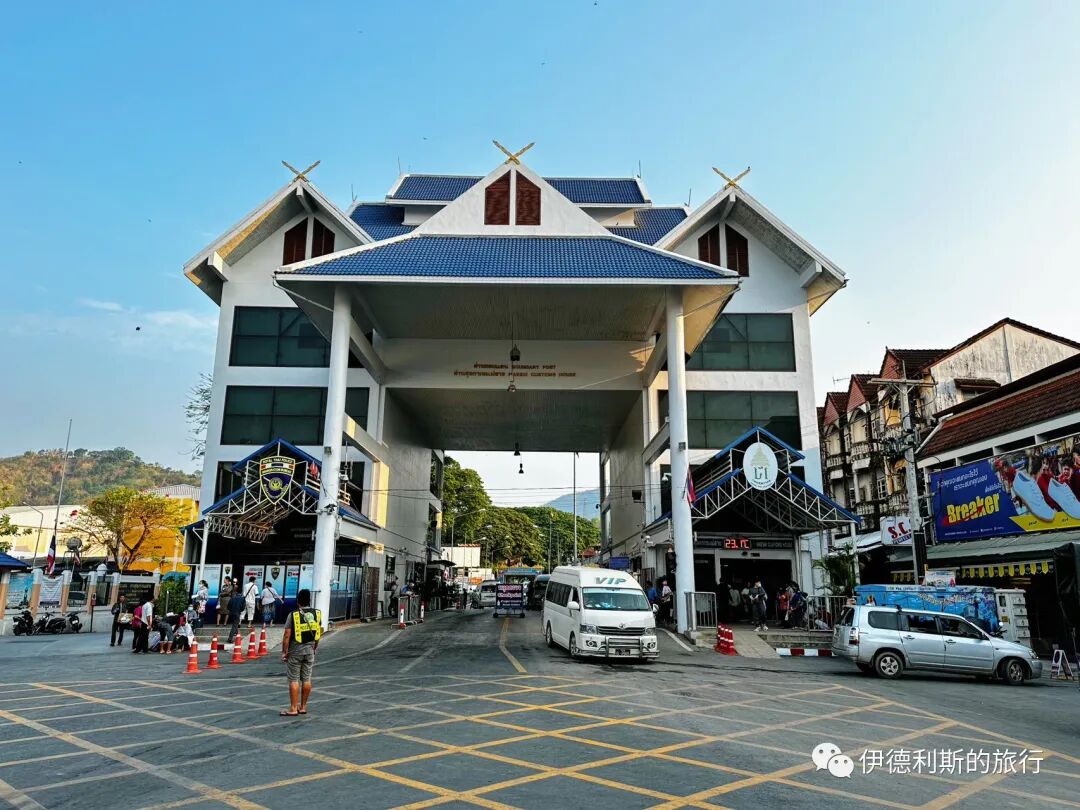
Next, we went to visit the Mae Sai Yunnan Mosque. Although Mae Sai has been a necessary stop for Yunnan horse caravans heading south to Chiang Mai since the late Qing Dynasty, it was not until 1952 that Yunnan Hui Muslims Ma Xianglin and Ma Enshou initiated the construction of a mosque. The original mosque was just a thatched hut. Later, with donations from Qian Yizhai and fellow Muslims in Chiang Mai, Ma Zixing oversaw its reconstruction into a wooden building. In 1975, because the number of Yunnan Hui Muslims in Mae Sai was growing, the old mosque could not hold everyone. Mu Chengfang, a Hui Muslim from Dazhuang, Kaiyuan, Yunnan, initiated a move to the current location next to the main road. Ma Weijing and Na Caikui oversaw the construction of the current steel and concrete building.
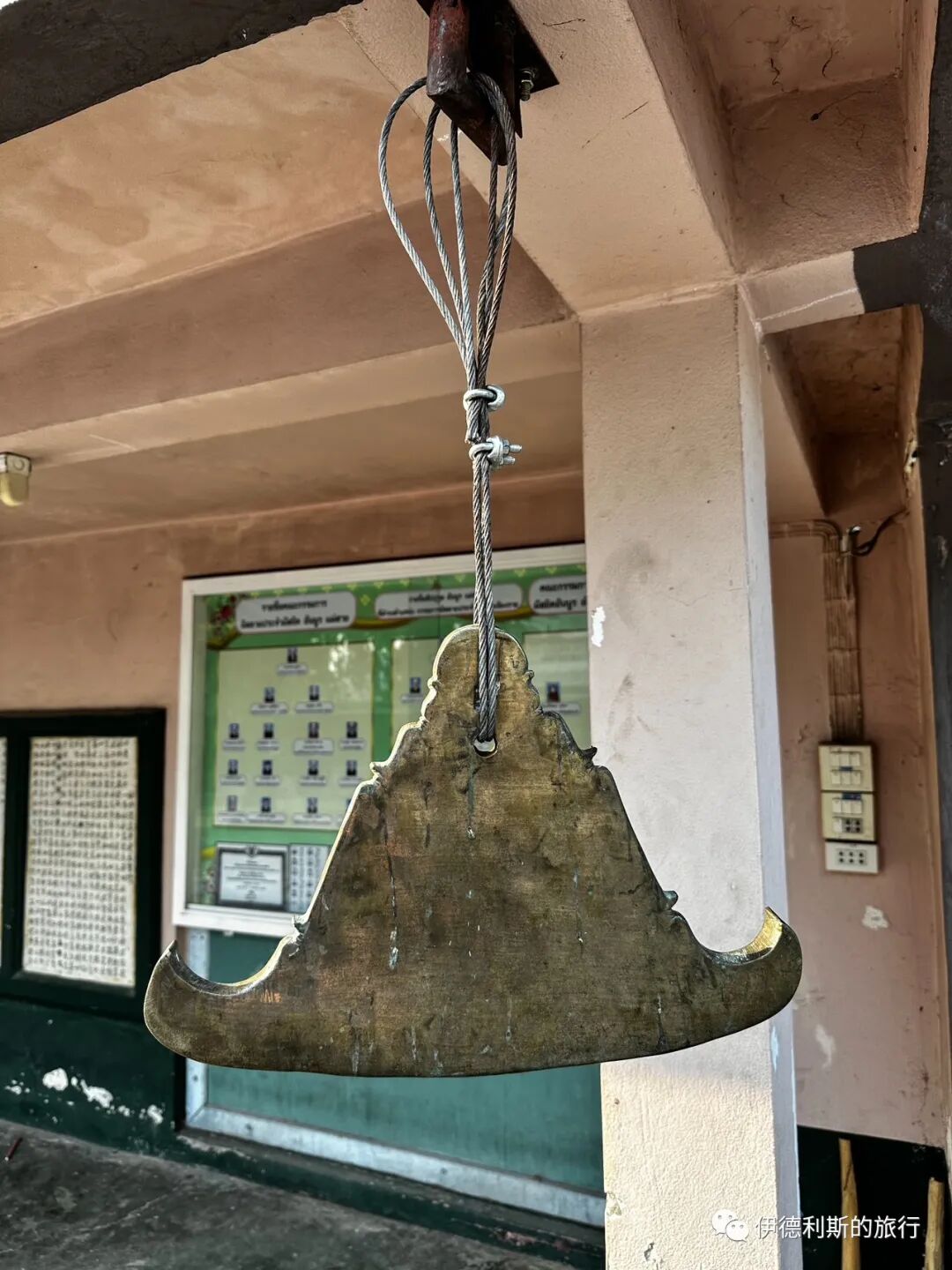
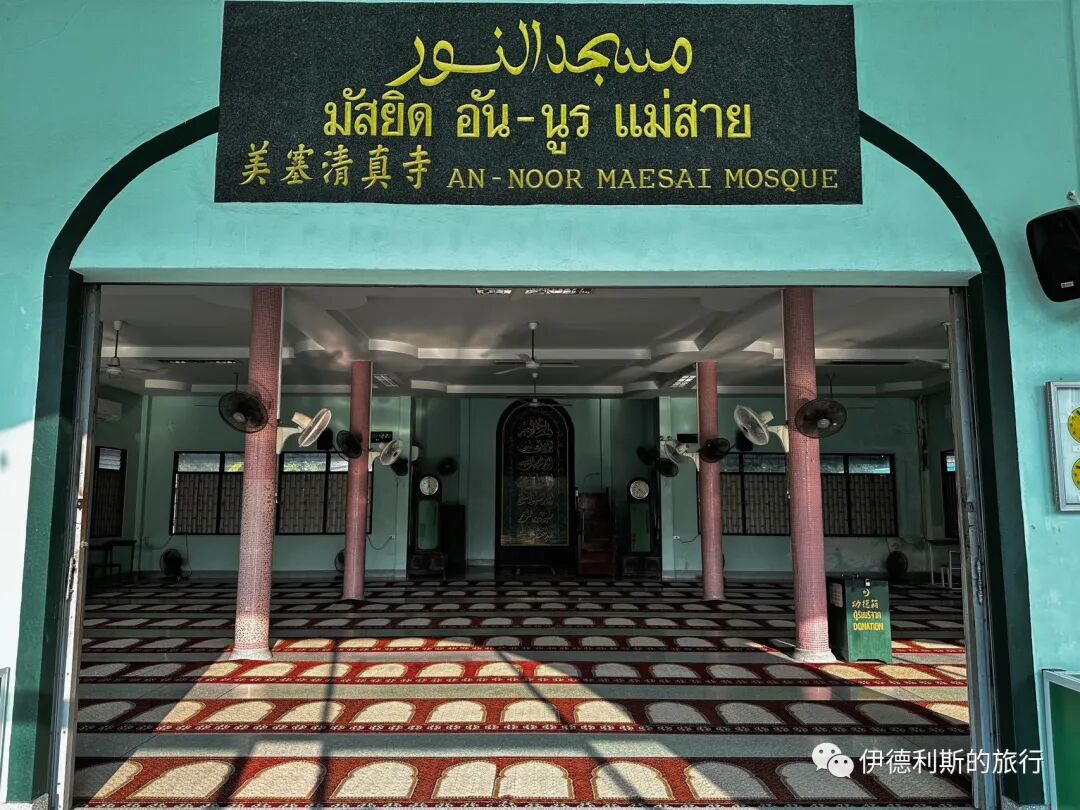
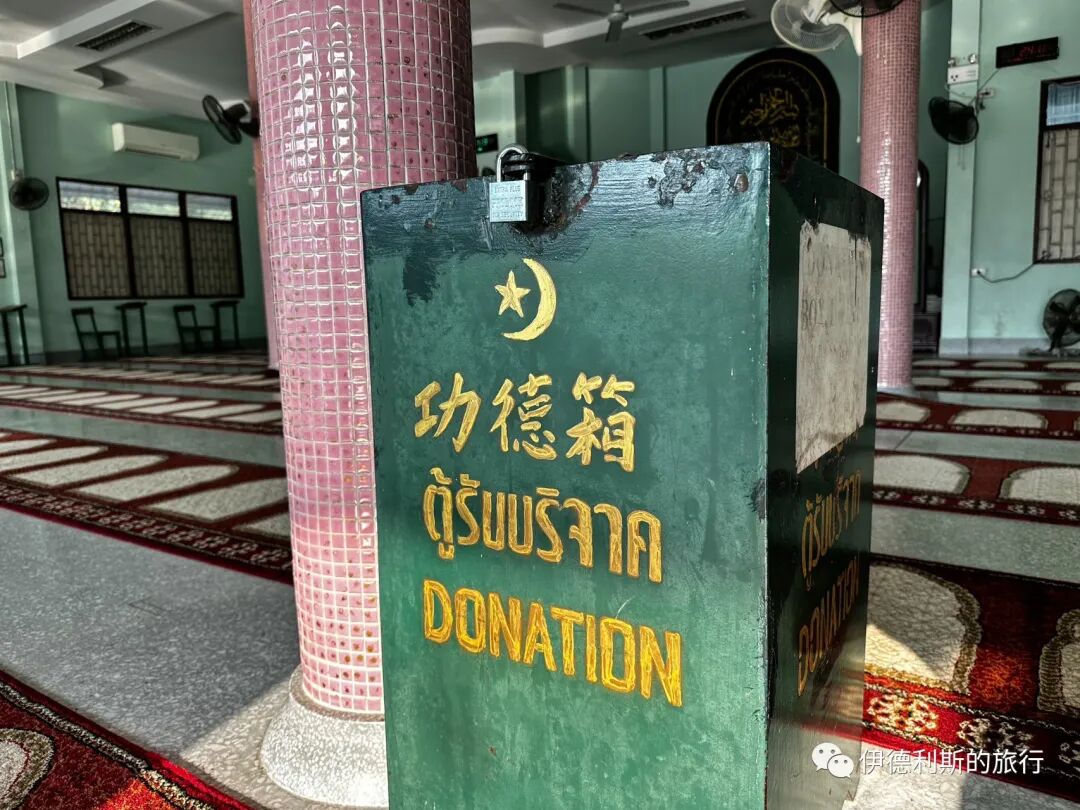
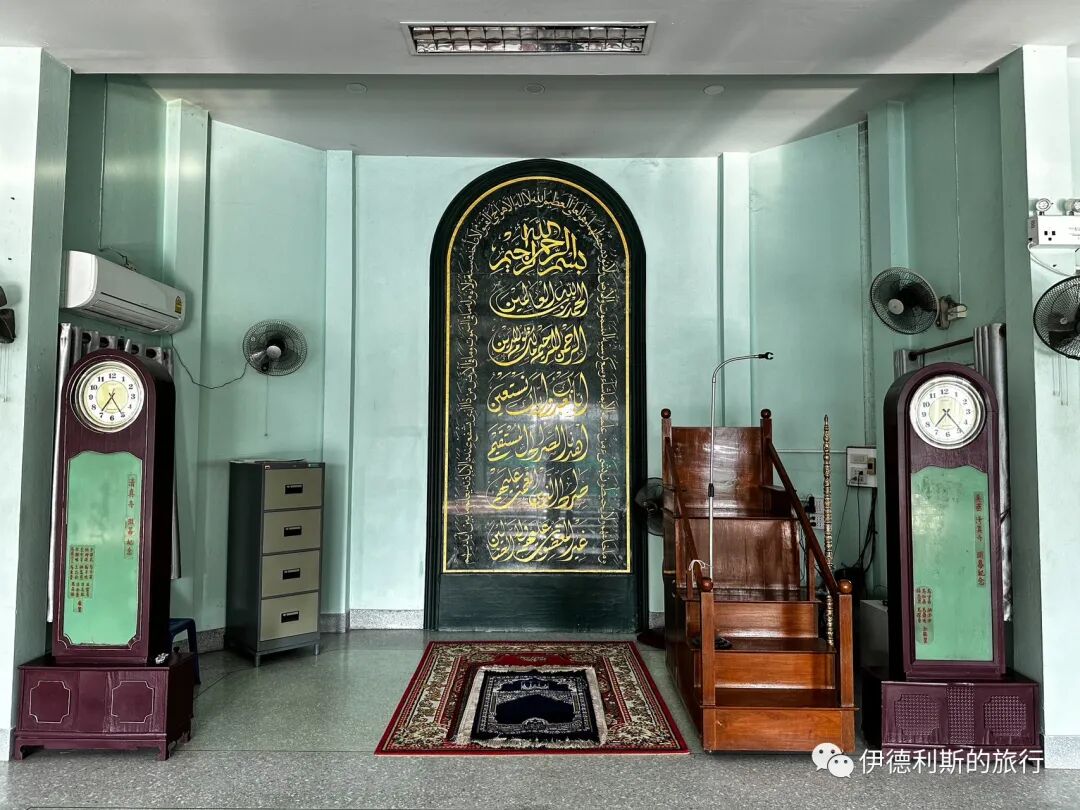
The prayer hall of the Mae Sai Yunnan Mosque, with shops selling dried beef jerky (la niuganba) and dried duck (la ya) at the entrance.
We had breakfast in an alley where Yunnan Hui Muslims live in Mae Sai. We could order in Mandarin, as the Yunnan Hui Muslims here speak both the Yunnan dialect and Mandarin fluently. We ate thick pea porridge (xi doufen) with rice noodles (migan) and braised beef noodles, which used minced meat (rou saozi) instead of chunks of meat. The owner's son is young but has already graduated as a hafiz. Hui Muslims here start systematic religious studies from a young age, which helps pass their faith down from generation to generation.
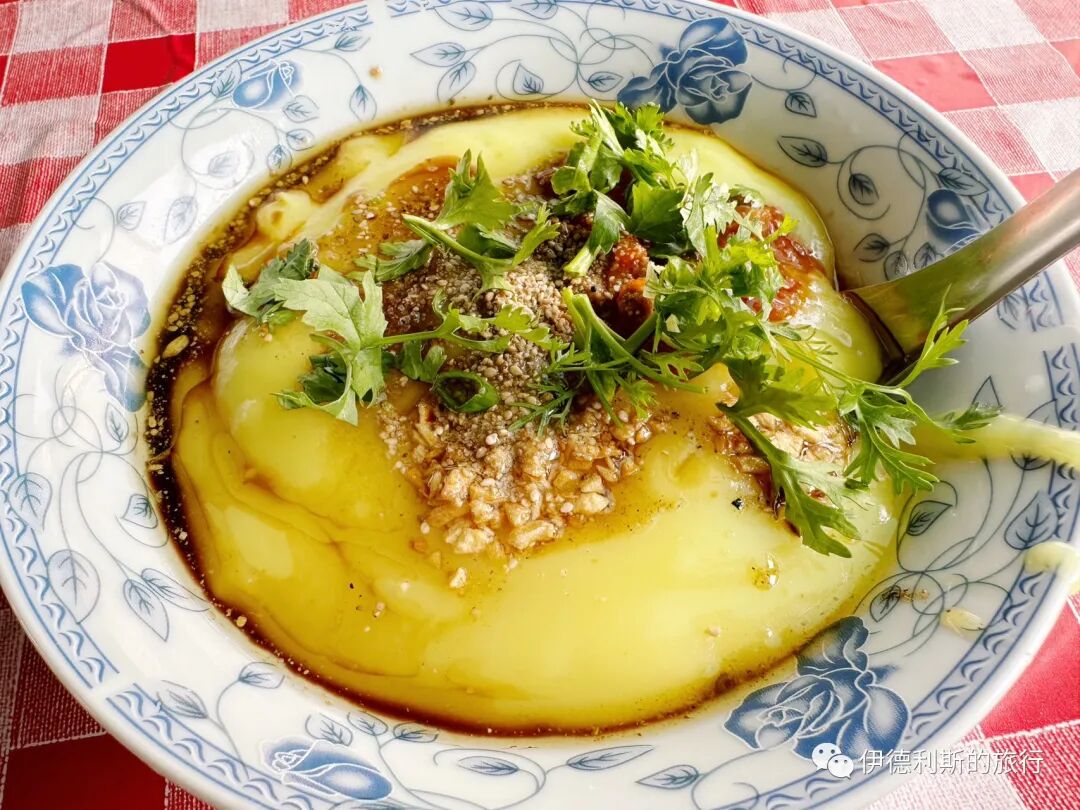
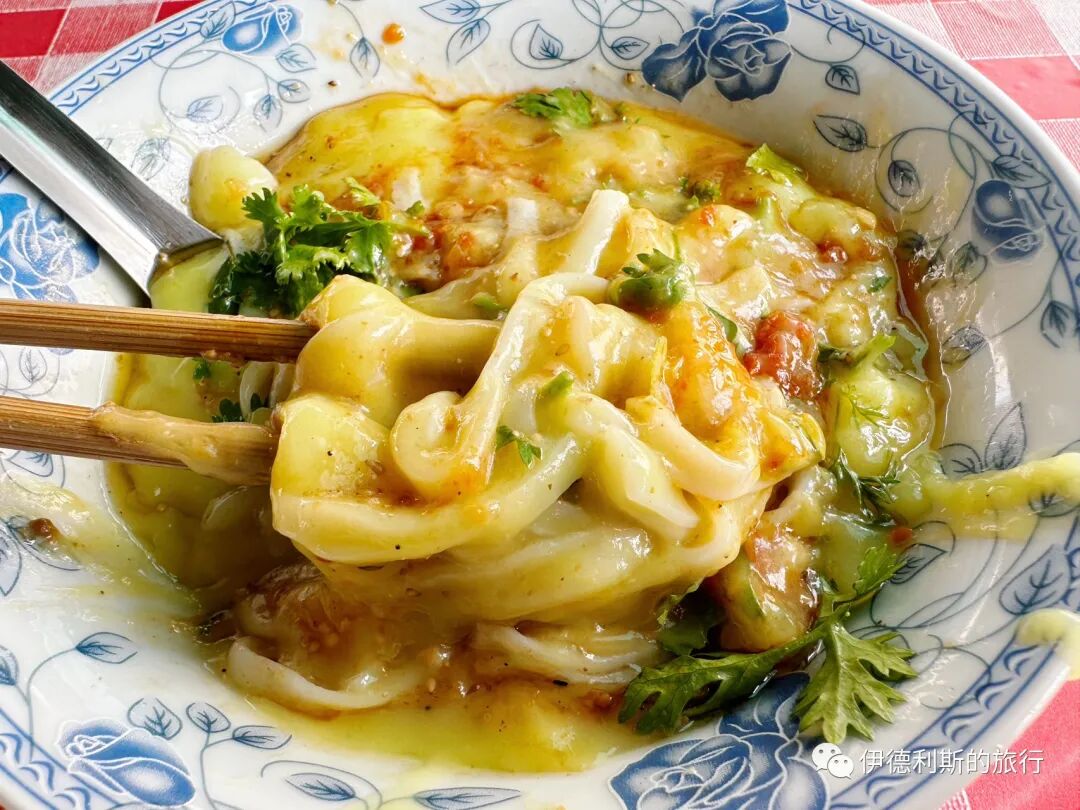
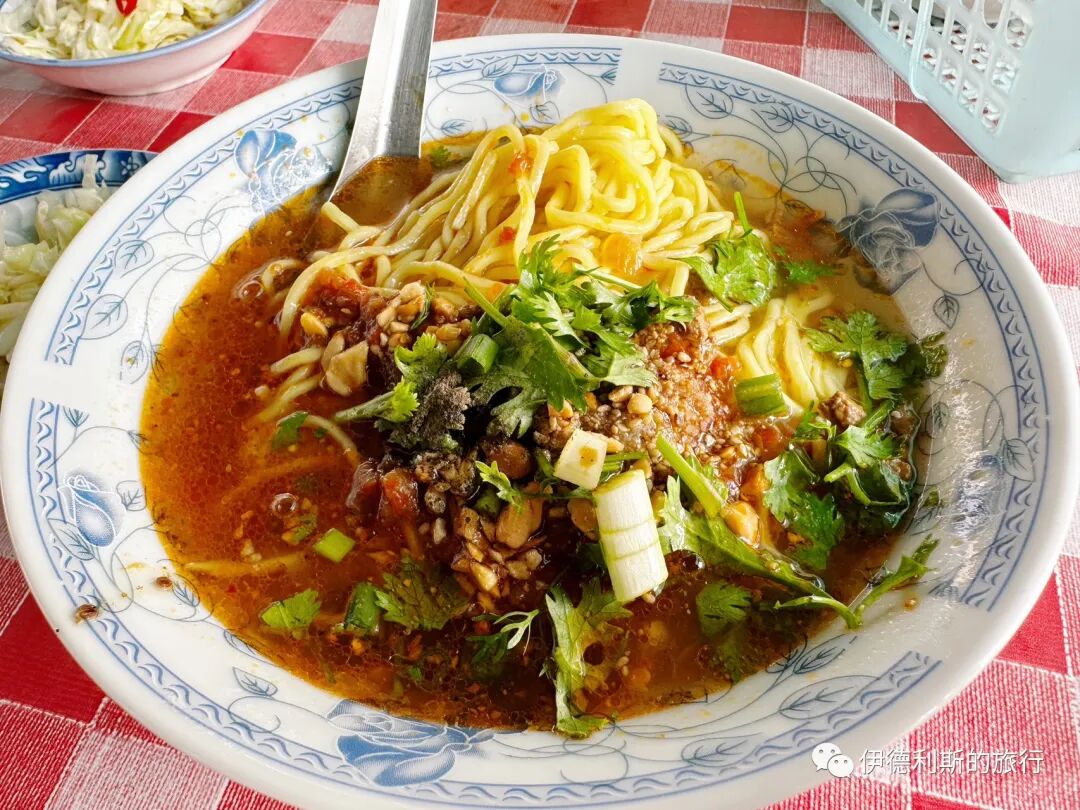
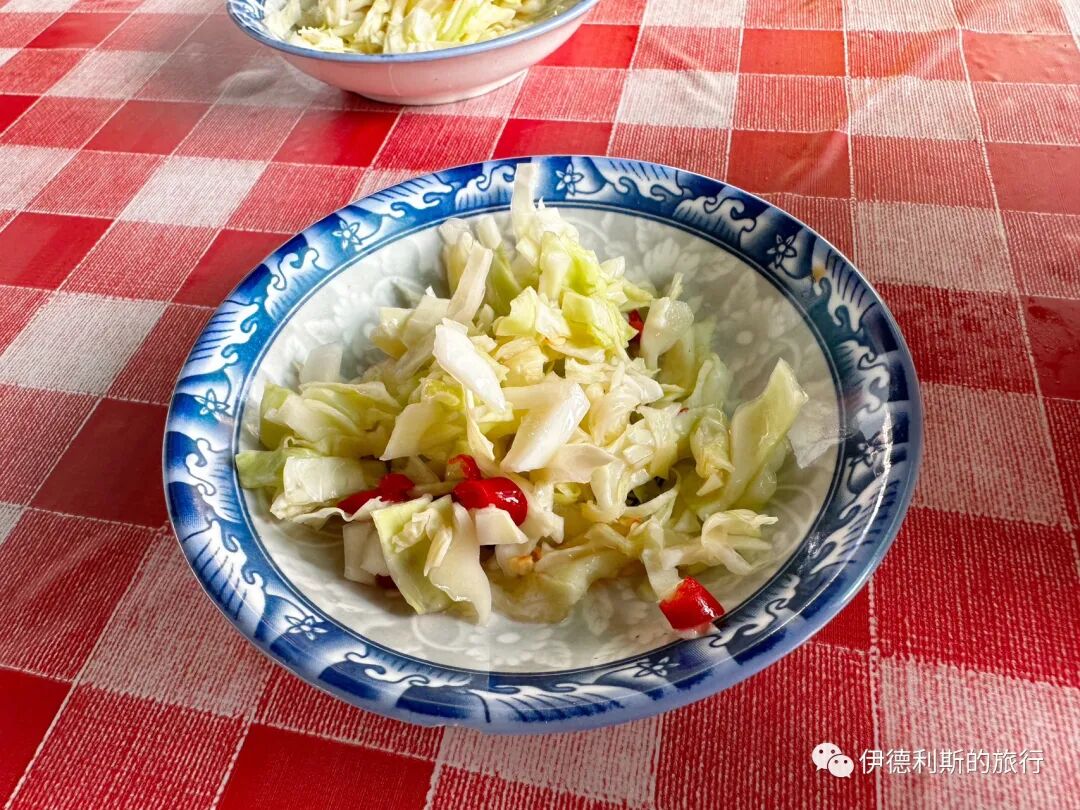
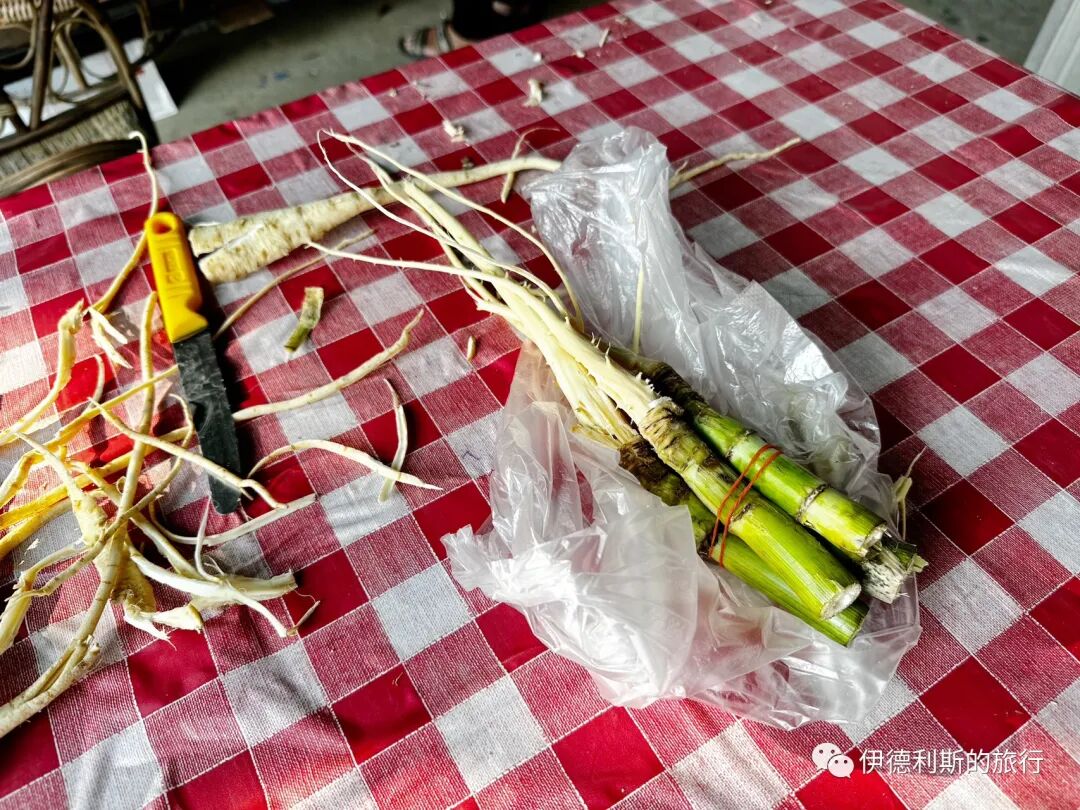
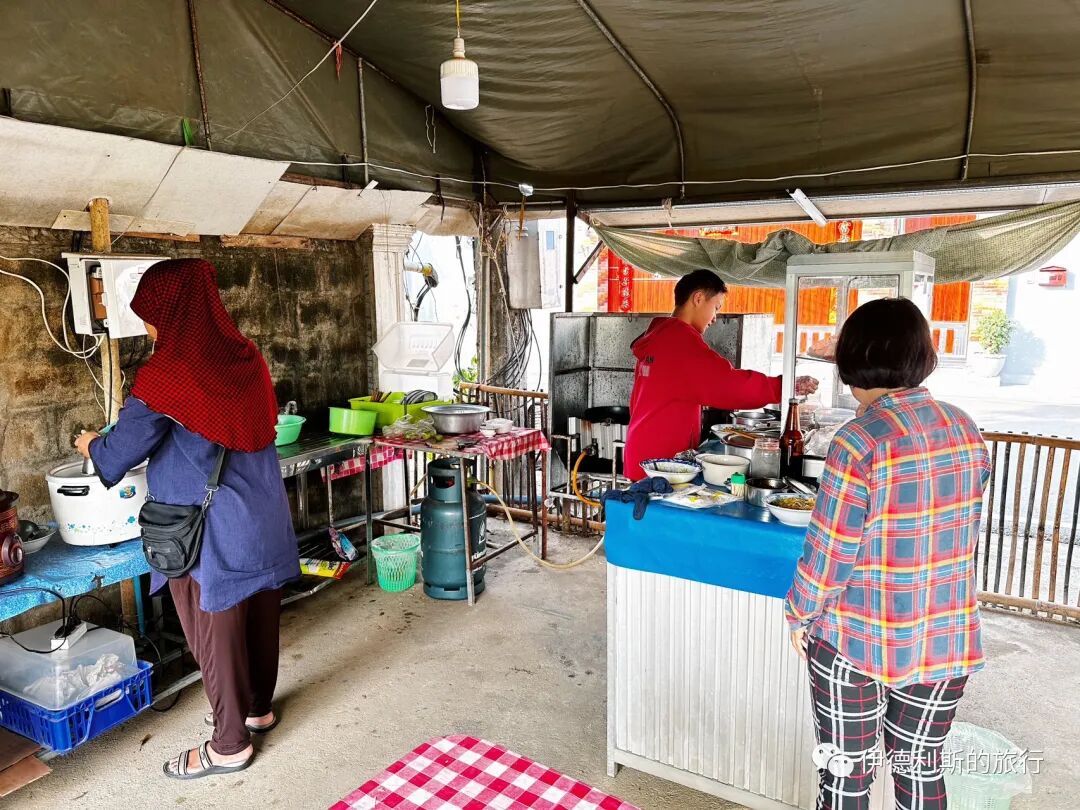
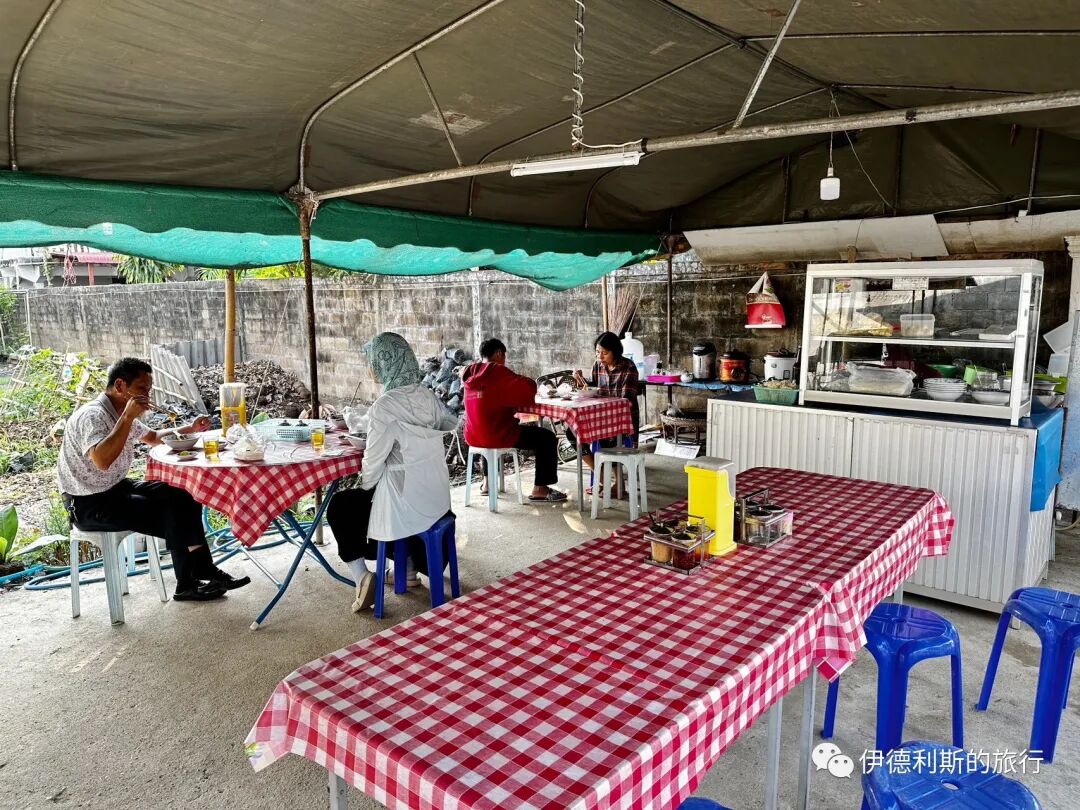
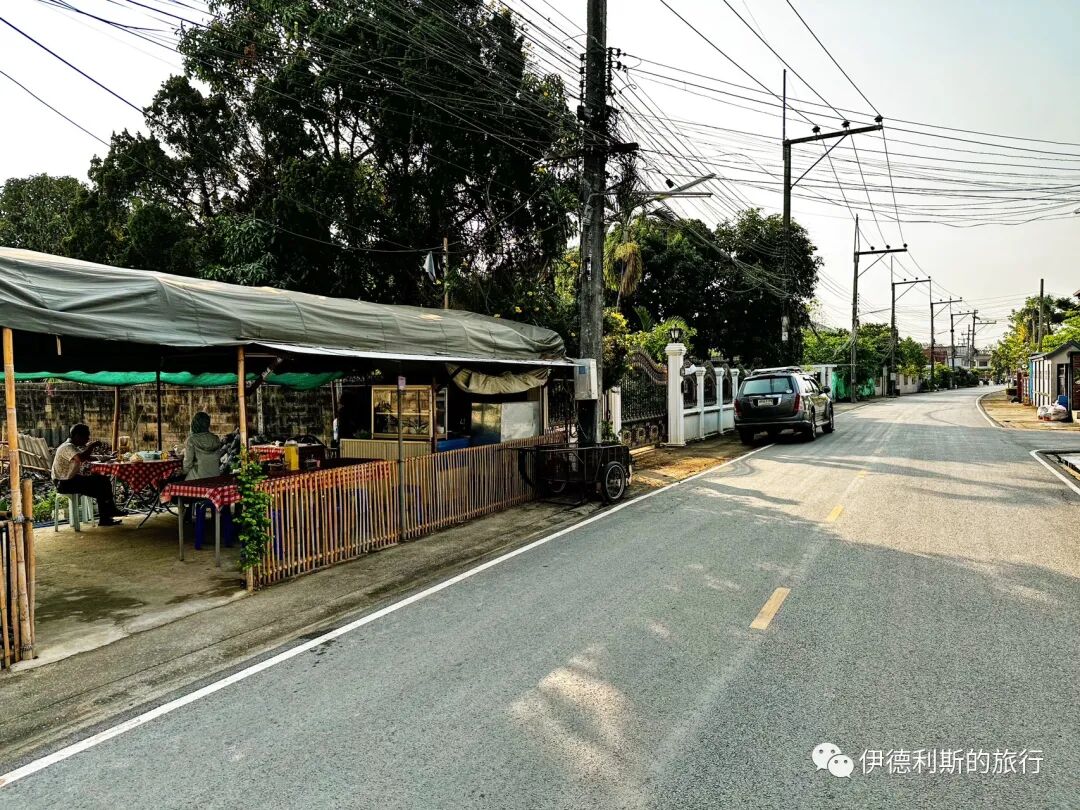
Then we went to the old site of the Yunnan Mosque in Mae Sai to eat sweet buns (tangbao). After the Yunnan Mosque moved to its new location in 1975, the old site remained mosque property, and the storefronts along the street still sell snacks. We ate brown sugar and perilla seed-filled sweet buns (tangbao) at a Hui Muslim shop in the middle of the street, and we drank tea and chatted with everyone for a while. Also, the shop next door run by a South Asian friend (dosti) selling roti flatbread is doing very well.
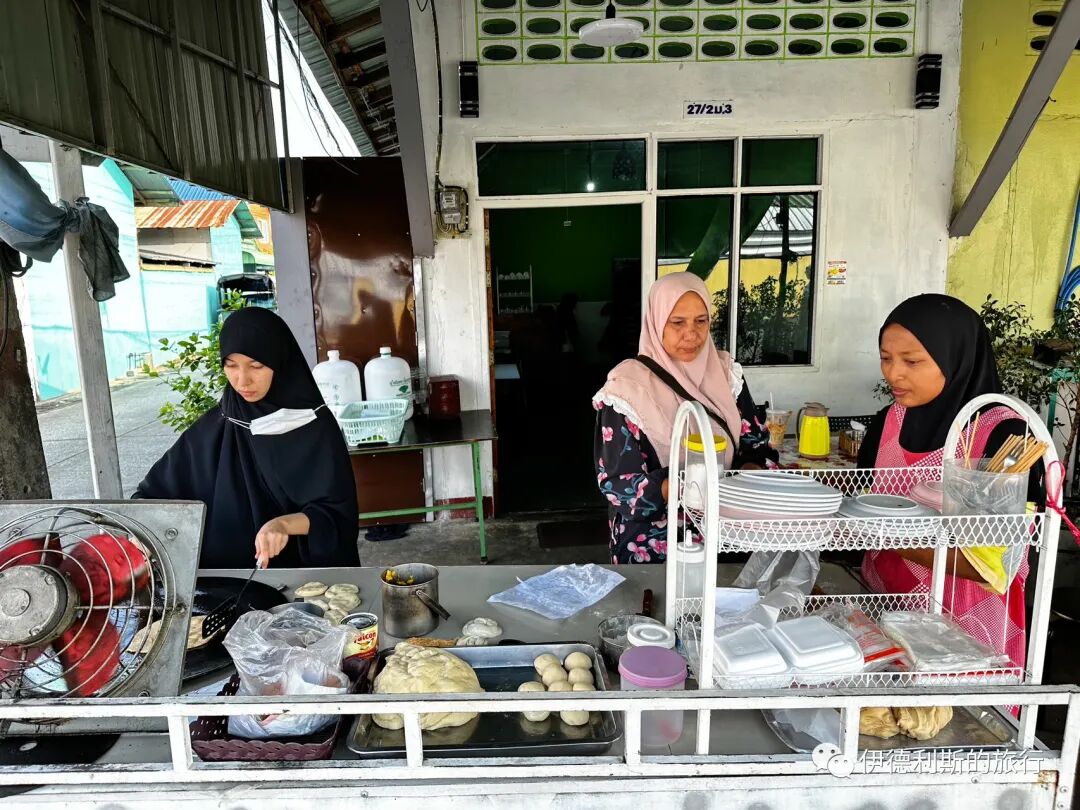
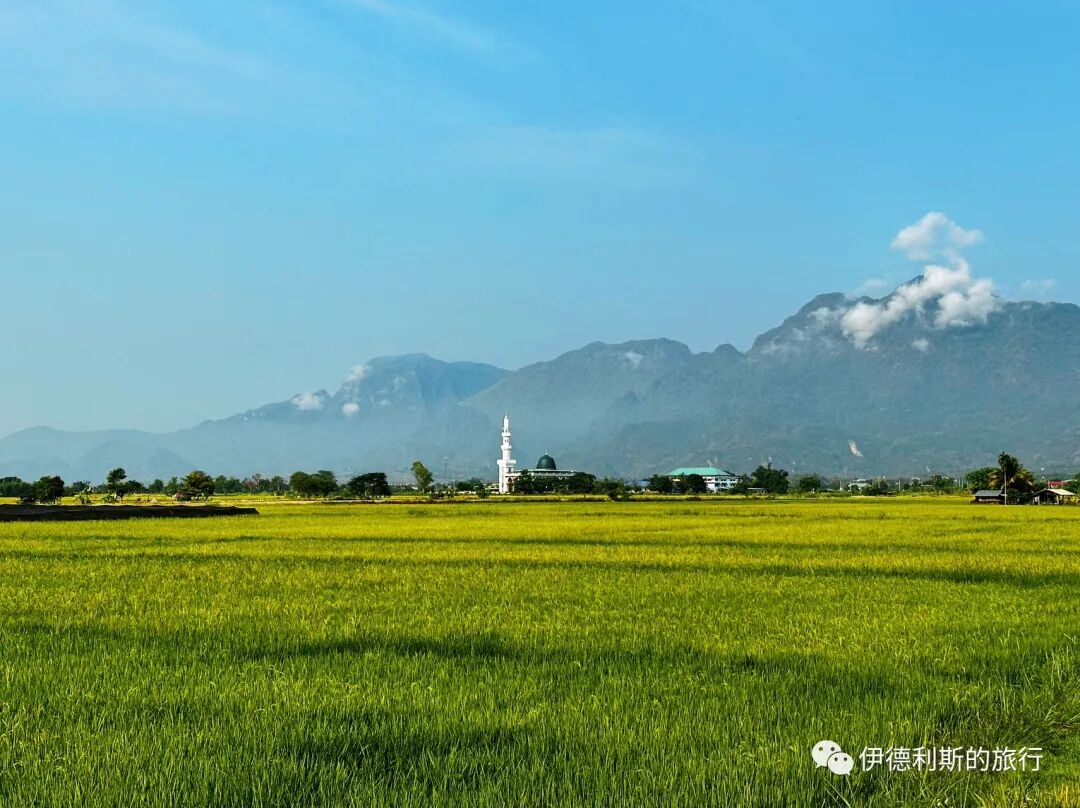
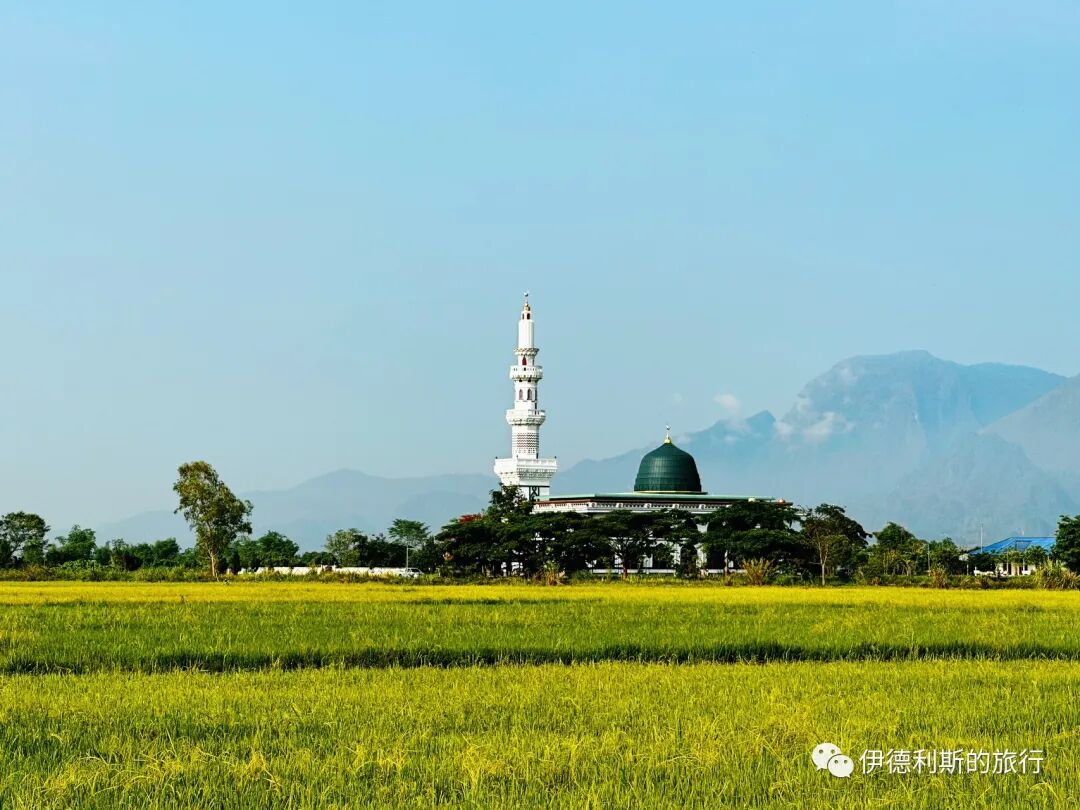
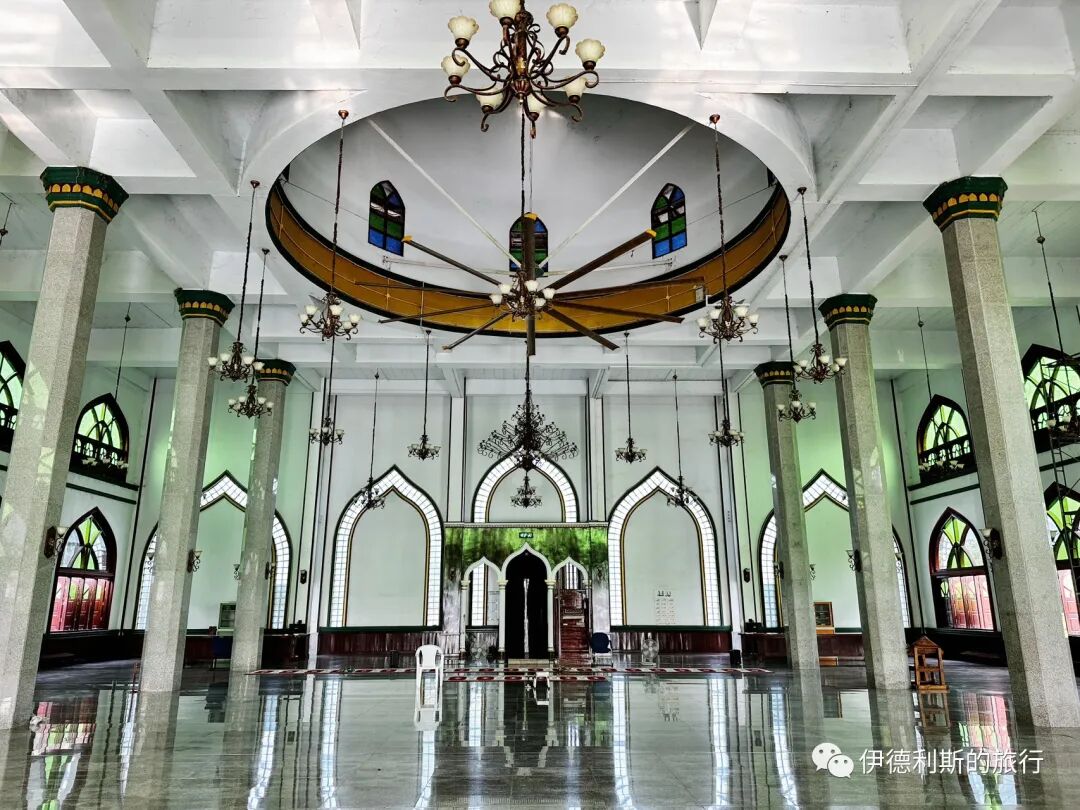
After breakfast, we arrived at Zhenguang School on the outskirts of Mae Sai. This is a school founded by Hui Muslims specifically to train hafiz. The students here include not only local Muslims but also many from other parts of Thailand and even China. It was summer break when we visited, so the students were away. Only the cows being prepared for Eid al-Adha and the chickens the students usually eat were wandering leisurely around the courtyard. The environment here is truly wonderful. Surrounded by endless rice fields and far from the noise of the city, it is a perfect place to focus on studies.
Golden Triangle
Leaving Zhenguang School, we went to the border where Thailand, Laos, and Myanmar meet, which is the famous Golden Triangle. Standing on the banks of the Mekong River, you can see casinos in Myanmar and Laos on the opposite side. Since gambling is banned in Thailand, there is only a Golden Triangle Park here, where many tourists stop to take photos.
Chiang Rai
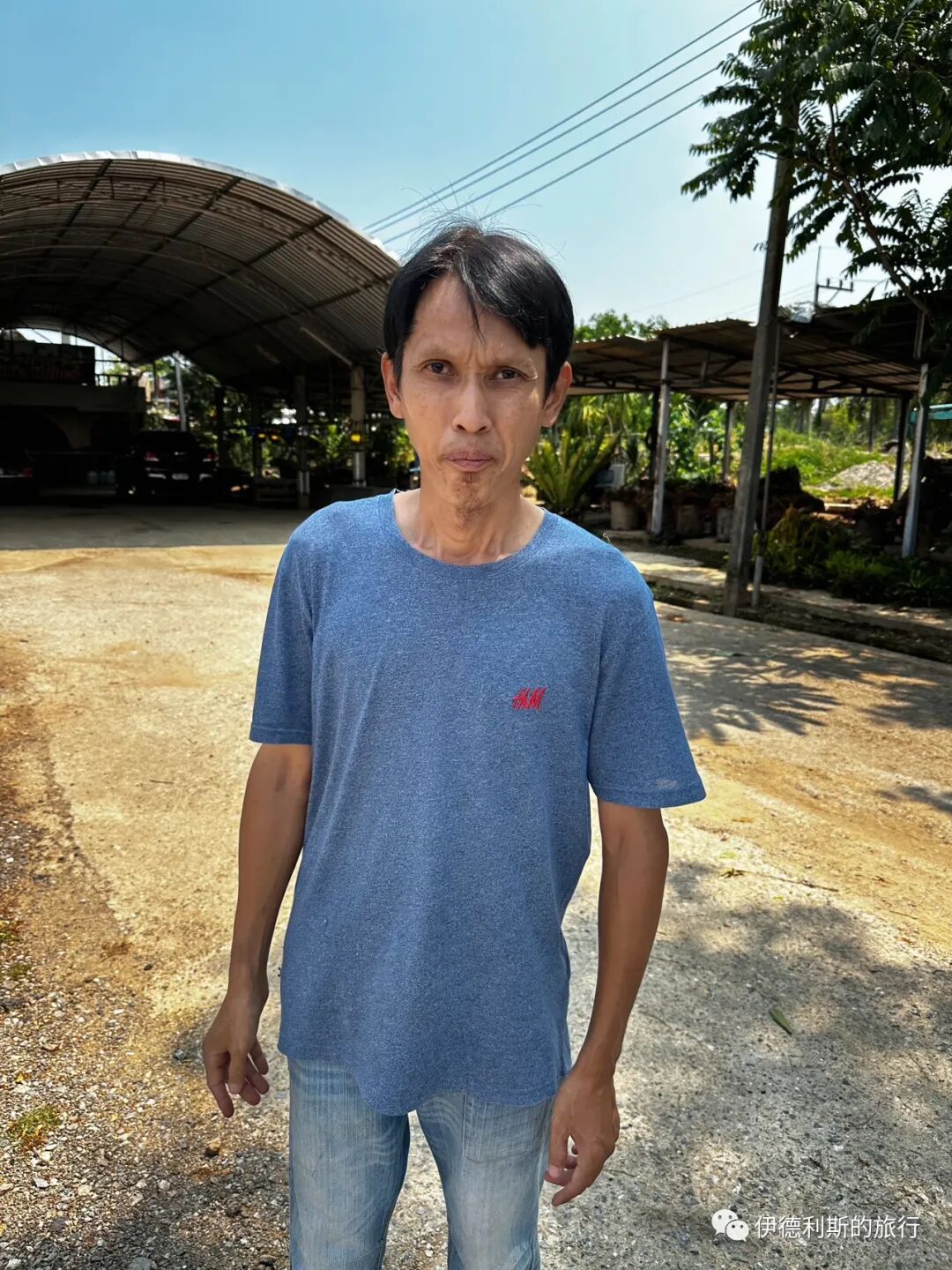
Leaving the Golden Triangle, we headed toward Chiang Rai city. We first visited a South Asian Fatima Pakuk mosque near the Chiang Rai airport. Although it looks like a residential courtyard from the outside, it is decorated very beautifully once you step inside. It is very interesting that there is a large treehouse at the mosque entrance. This is my first time seeing a treehouse inside a mosque, a sight you only find in tropical regions.
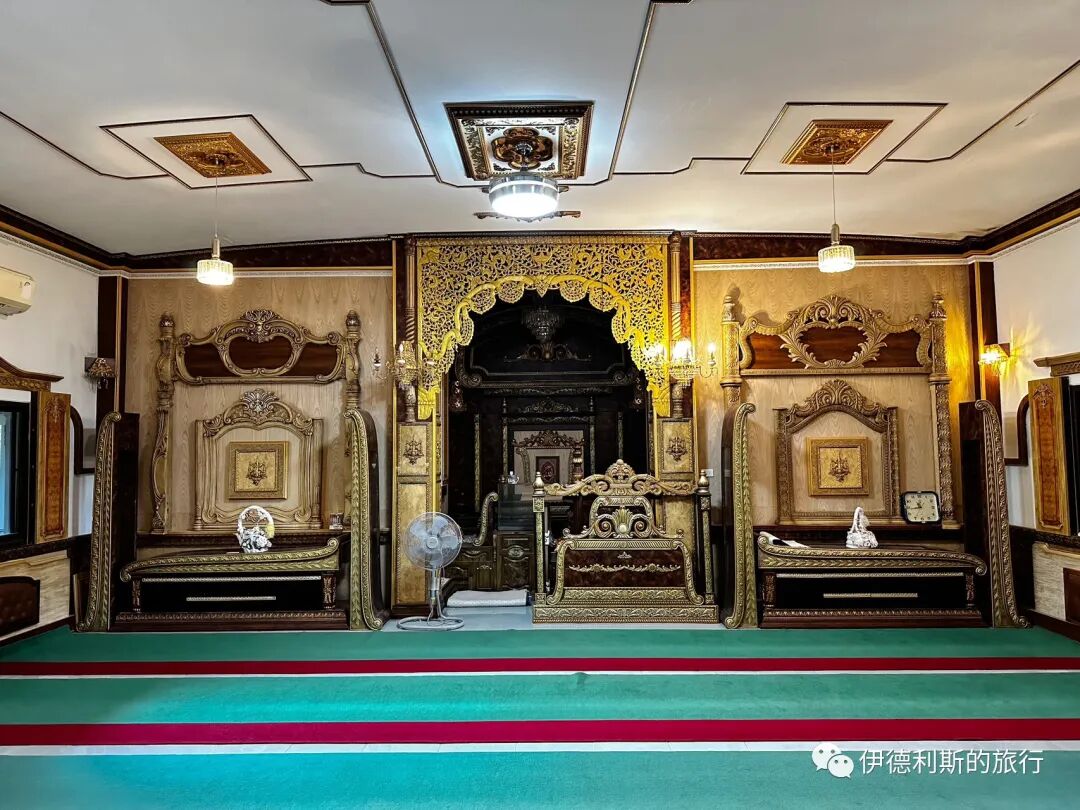
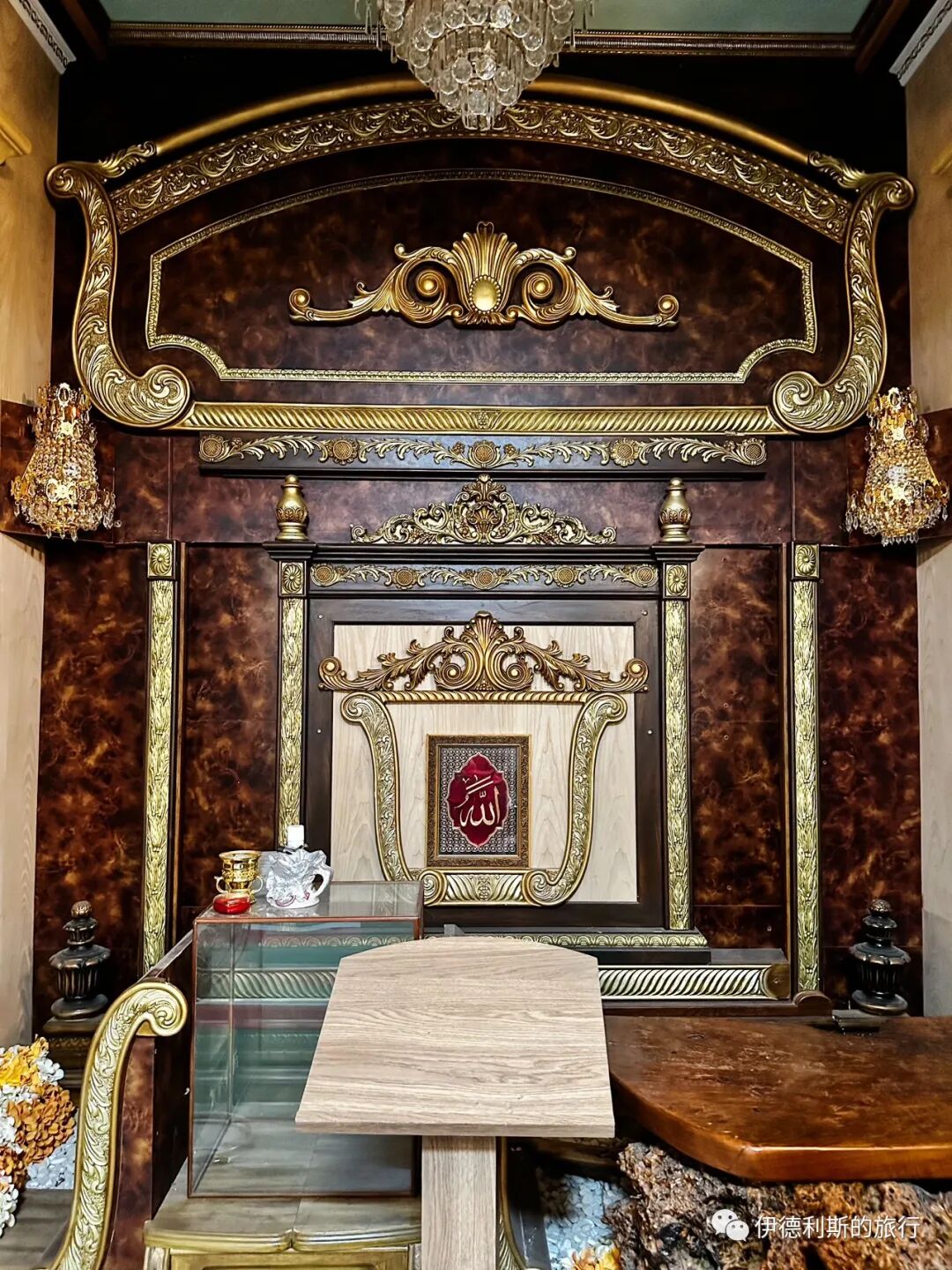
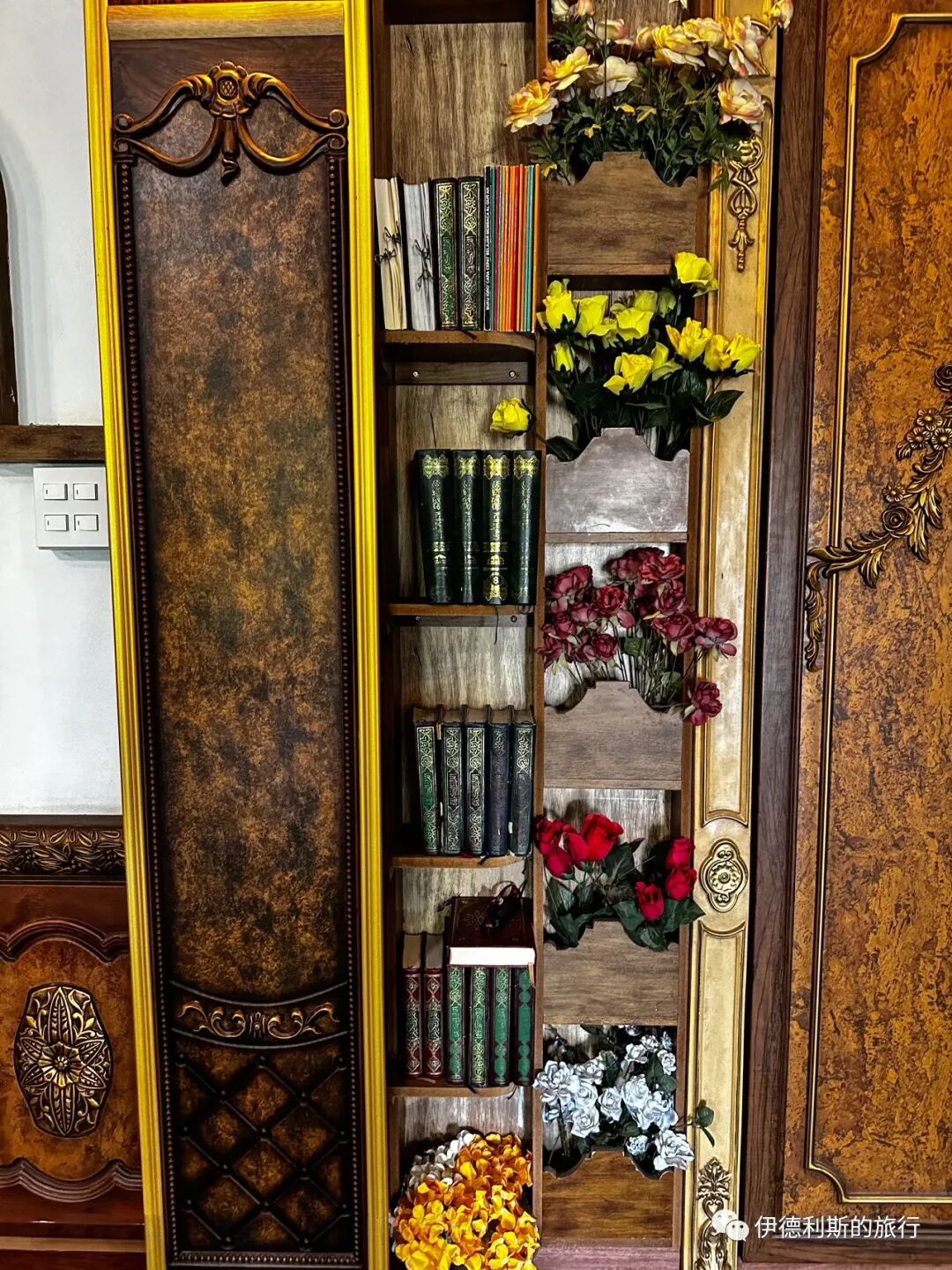
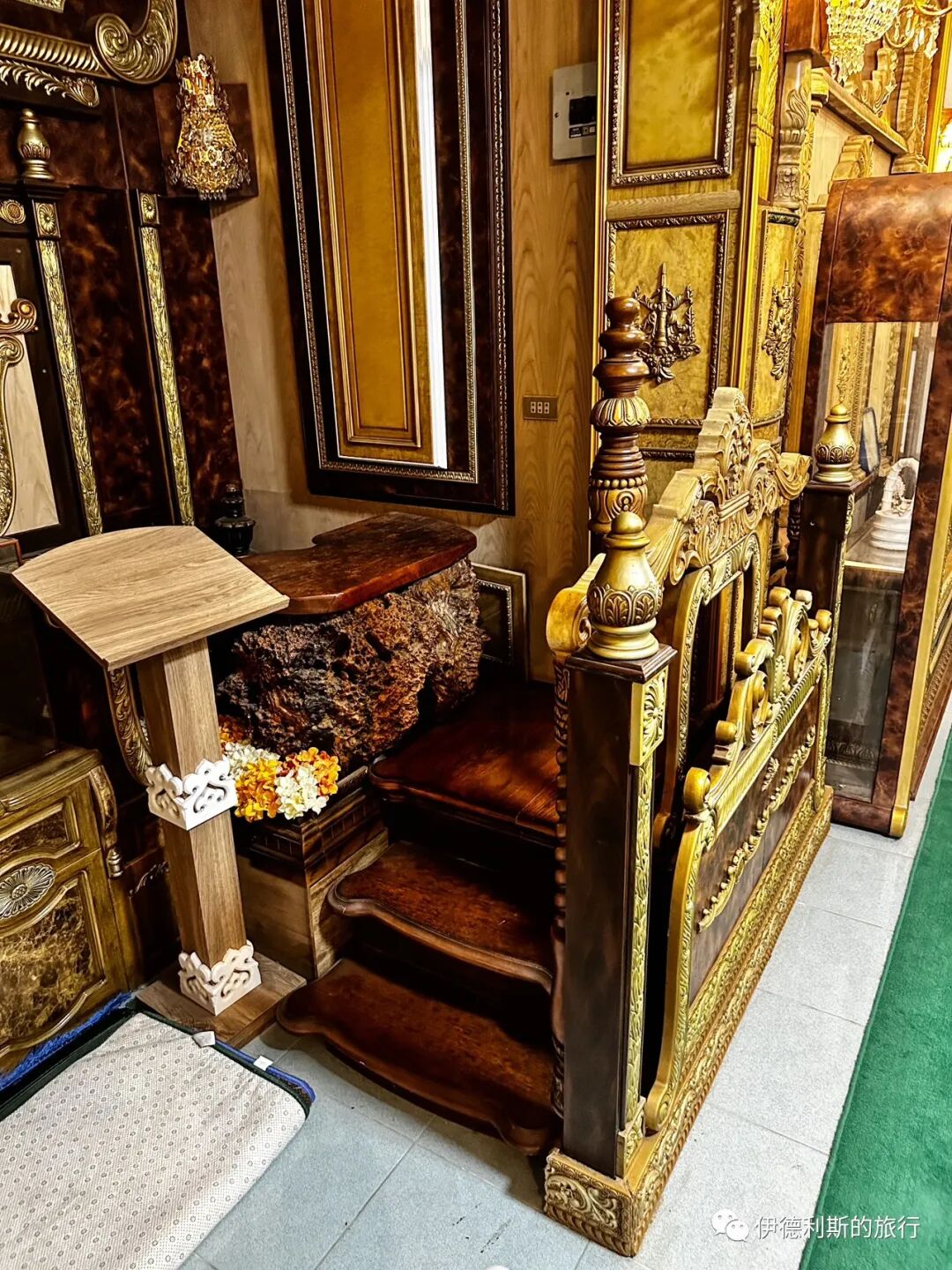
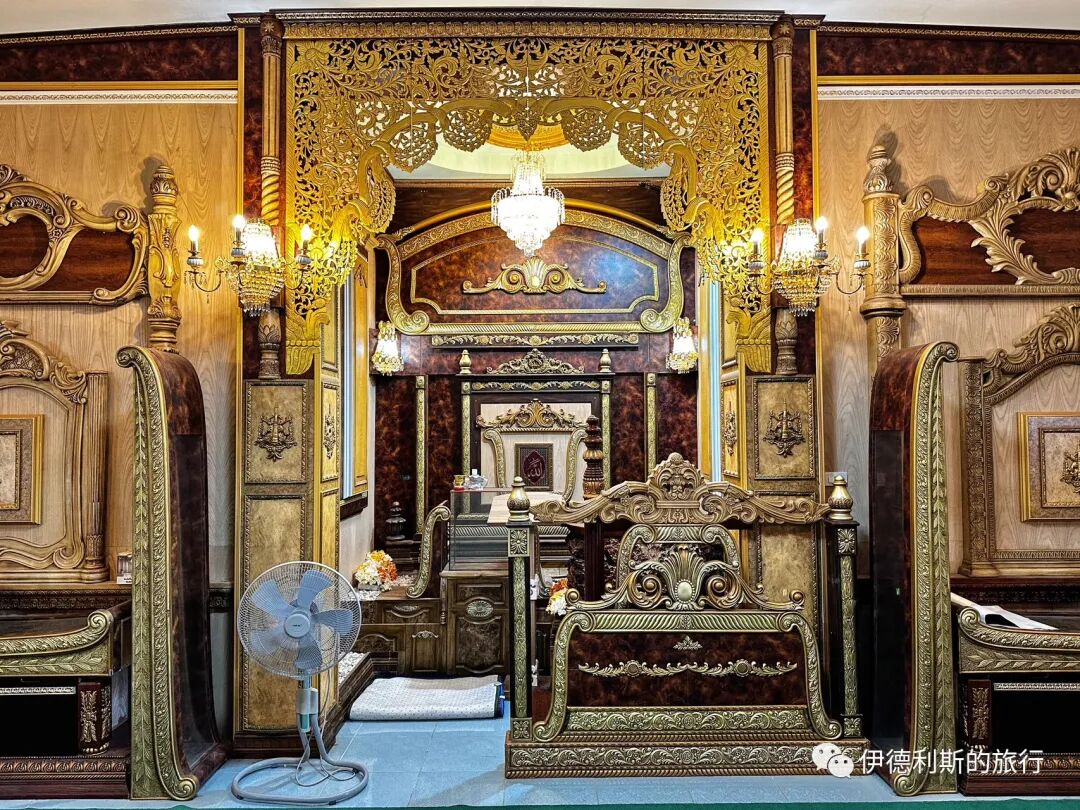
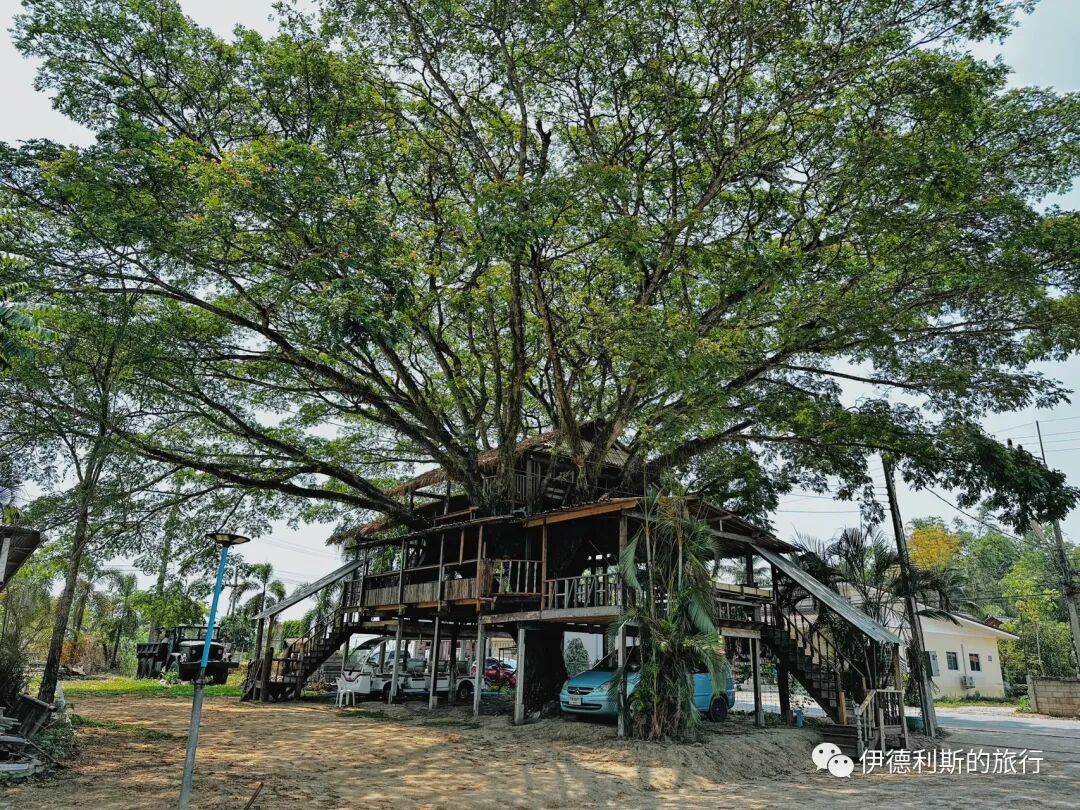
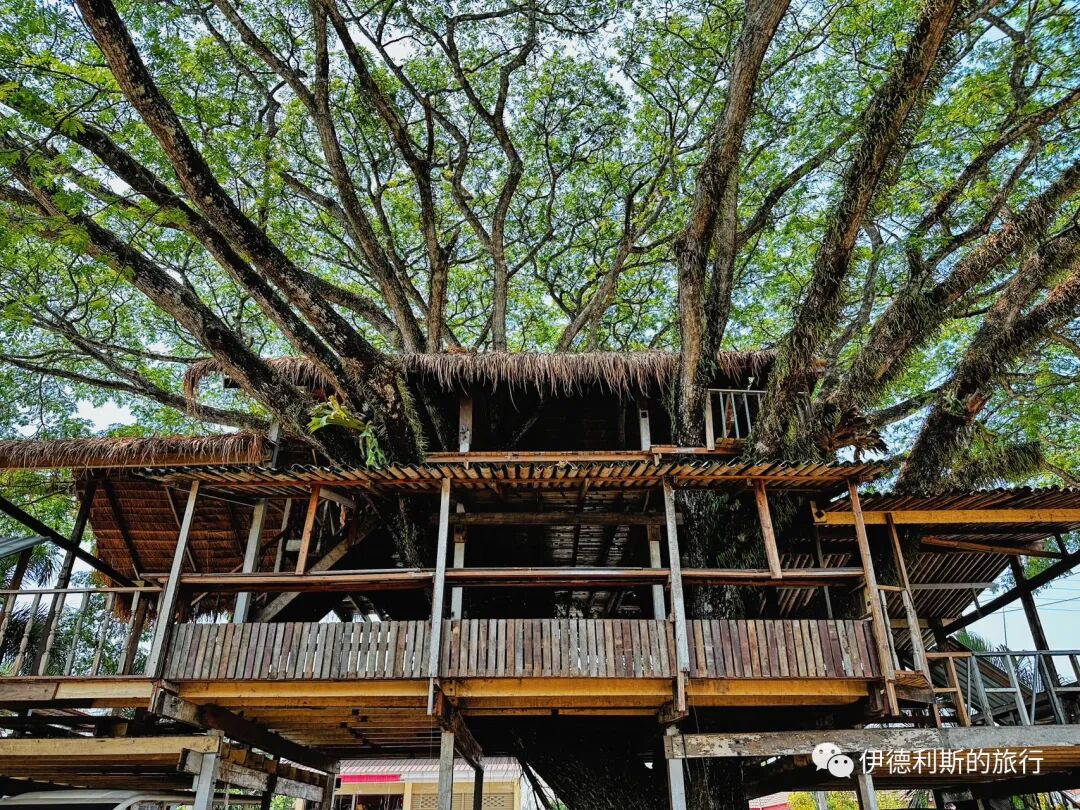
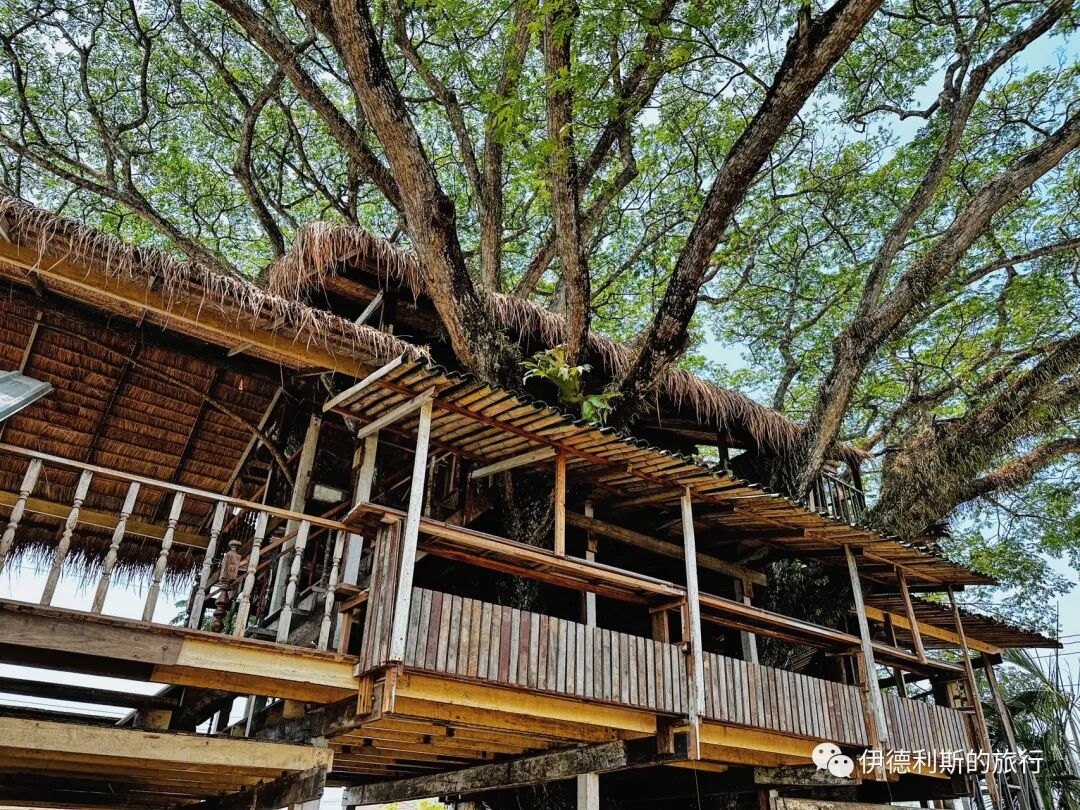
I visited two other South Asian mosques in Chiang Rai city; one is black and one is white, both clean and tidy. The black one was built by Pakistani descendants, and it is really rare to see a black mosque around here. Both mosques have lounge chairs on the front porch of the main hall. It feels so comfortable to lie there and catch the breeze.
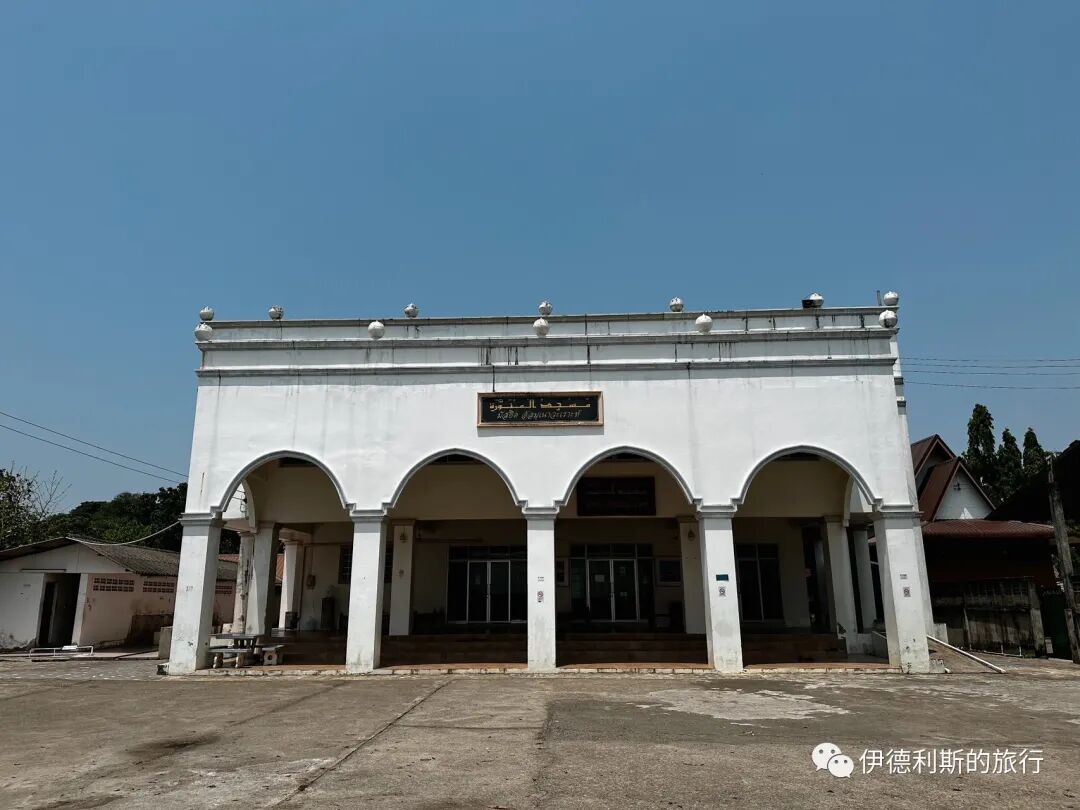
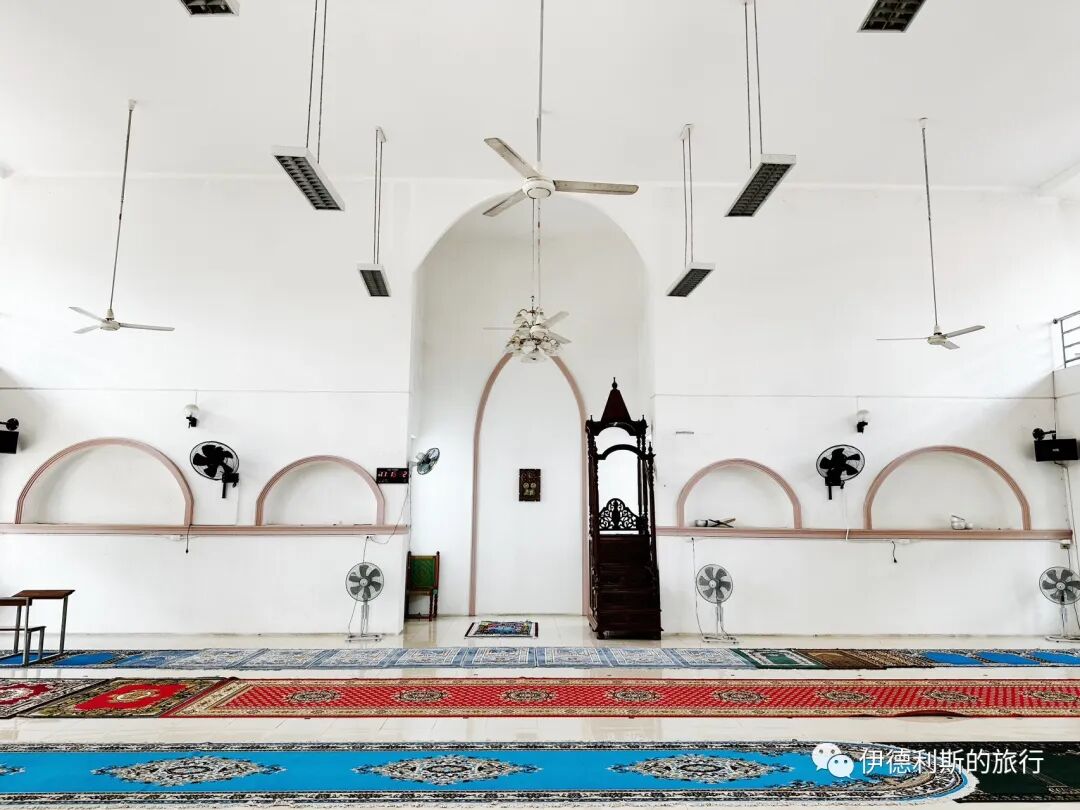
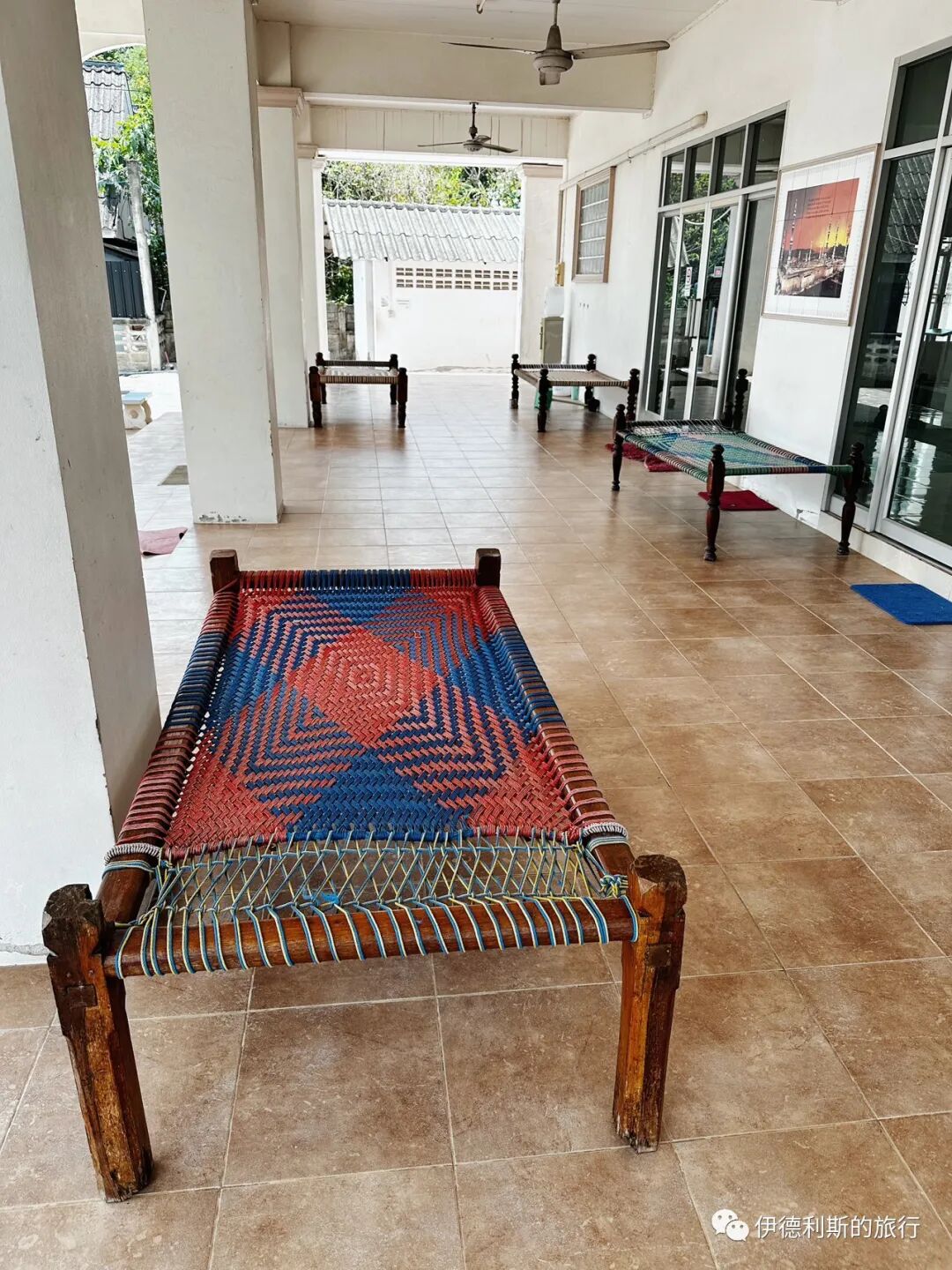
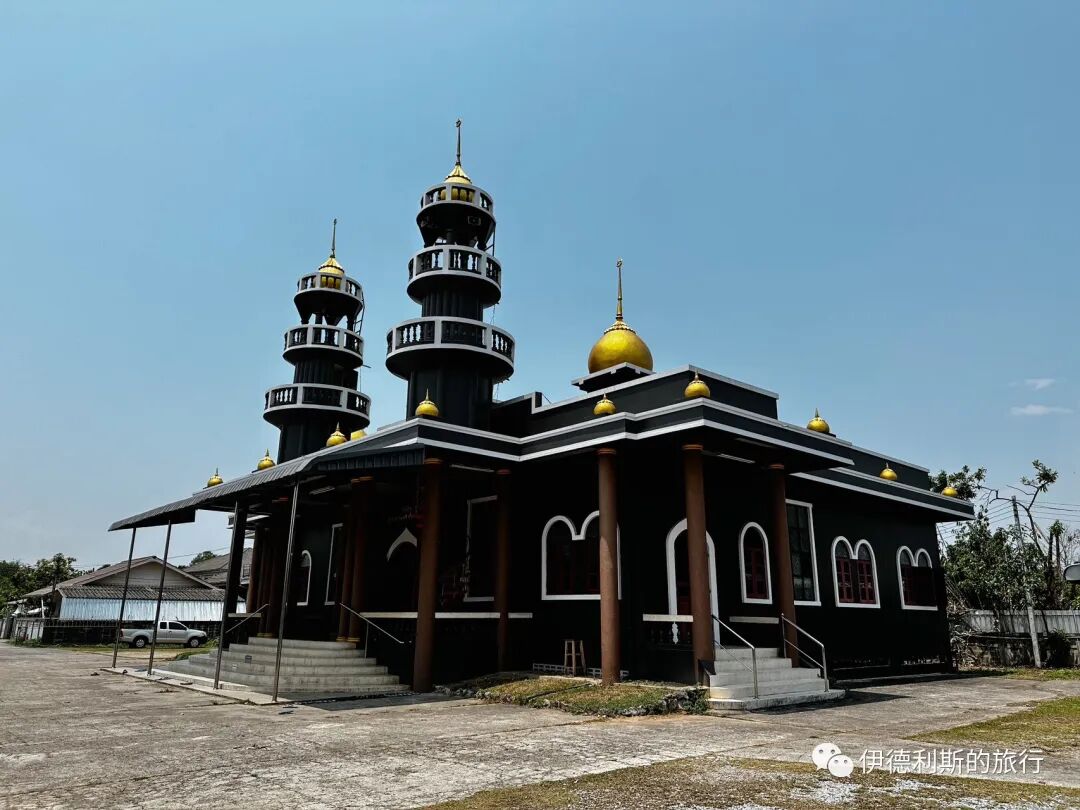
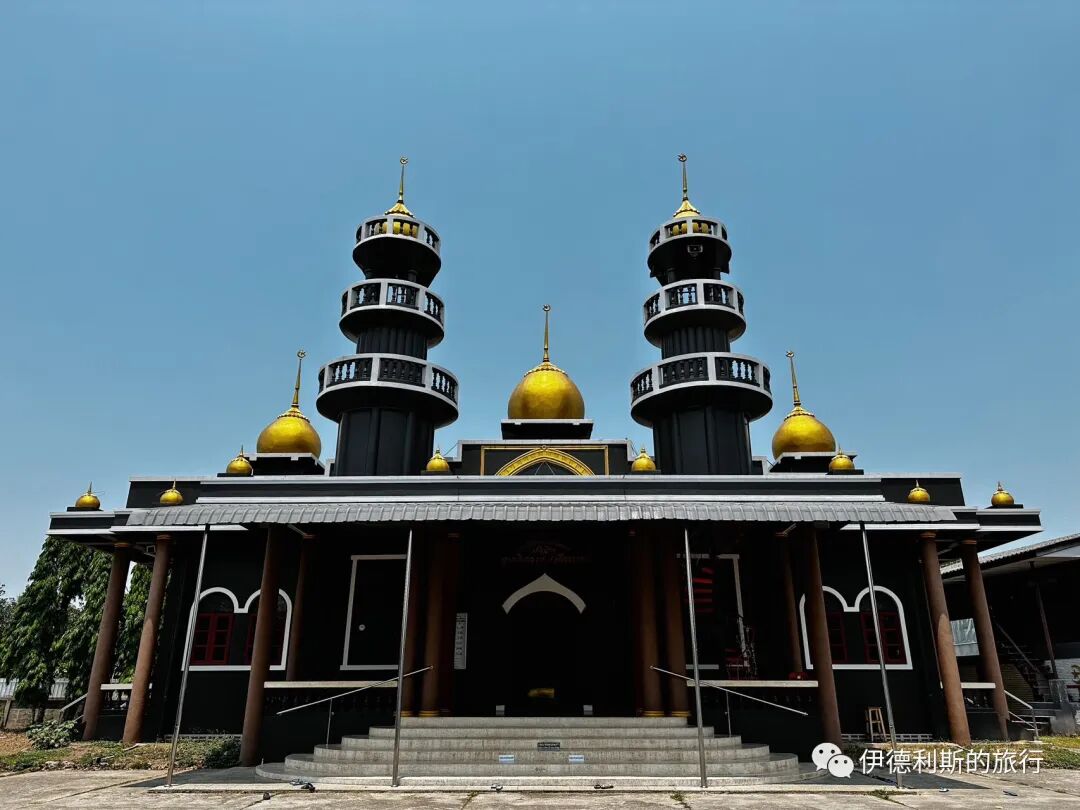
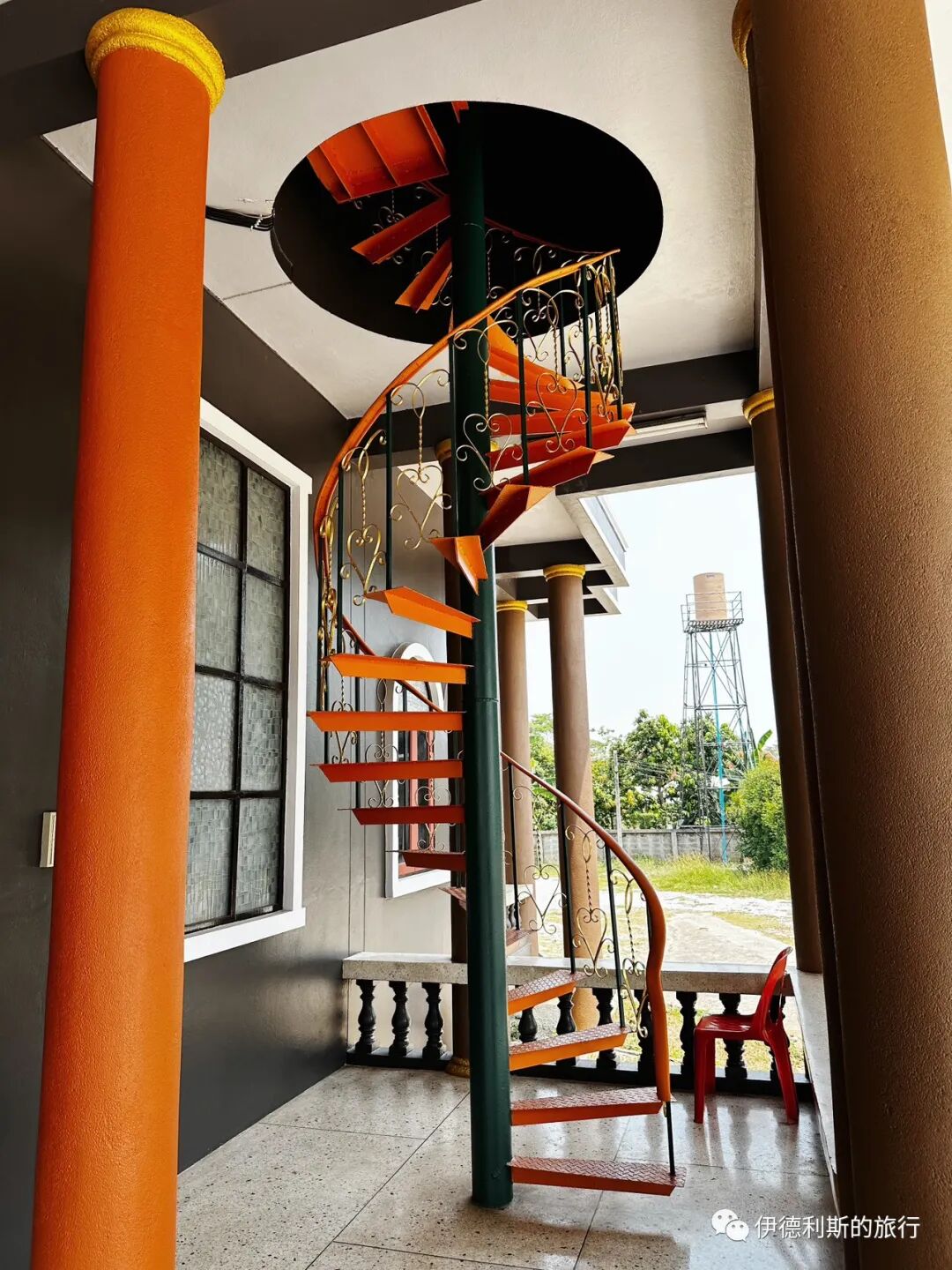
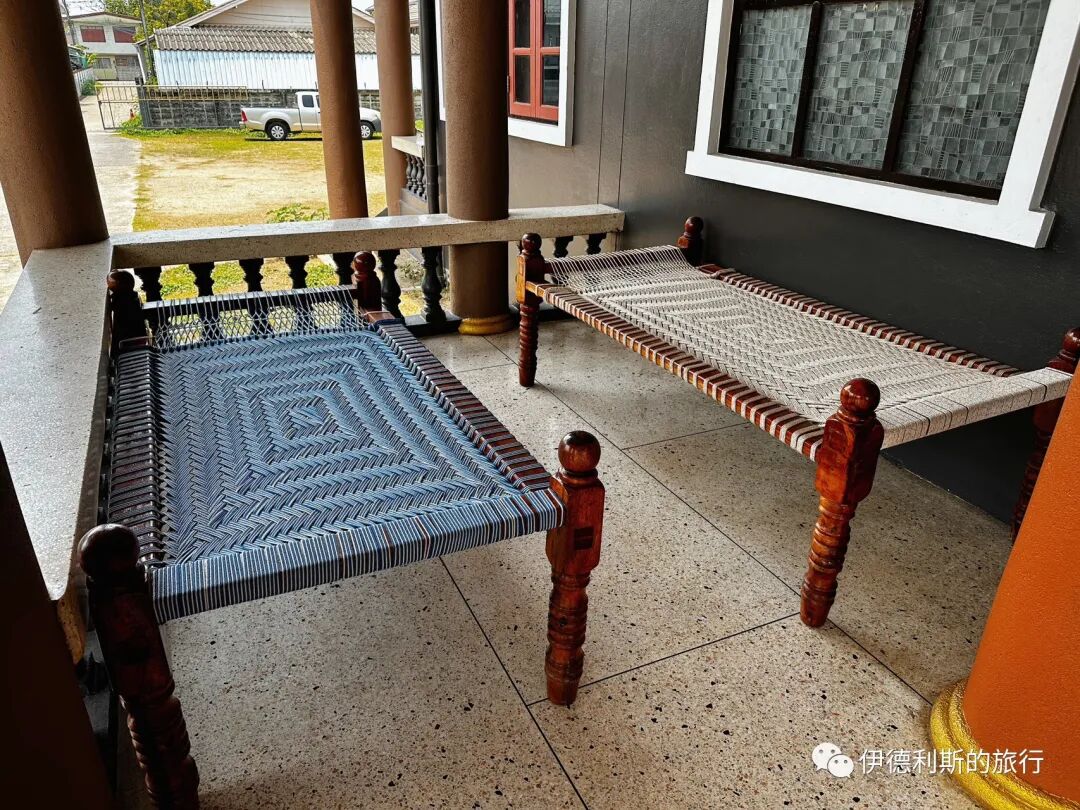
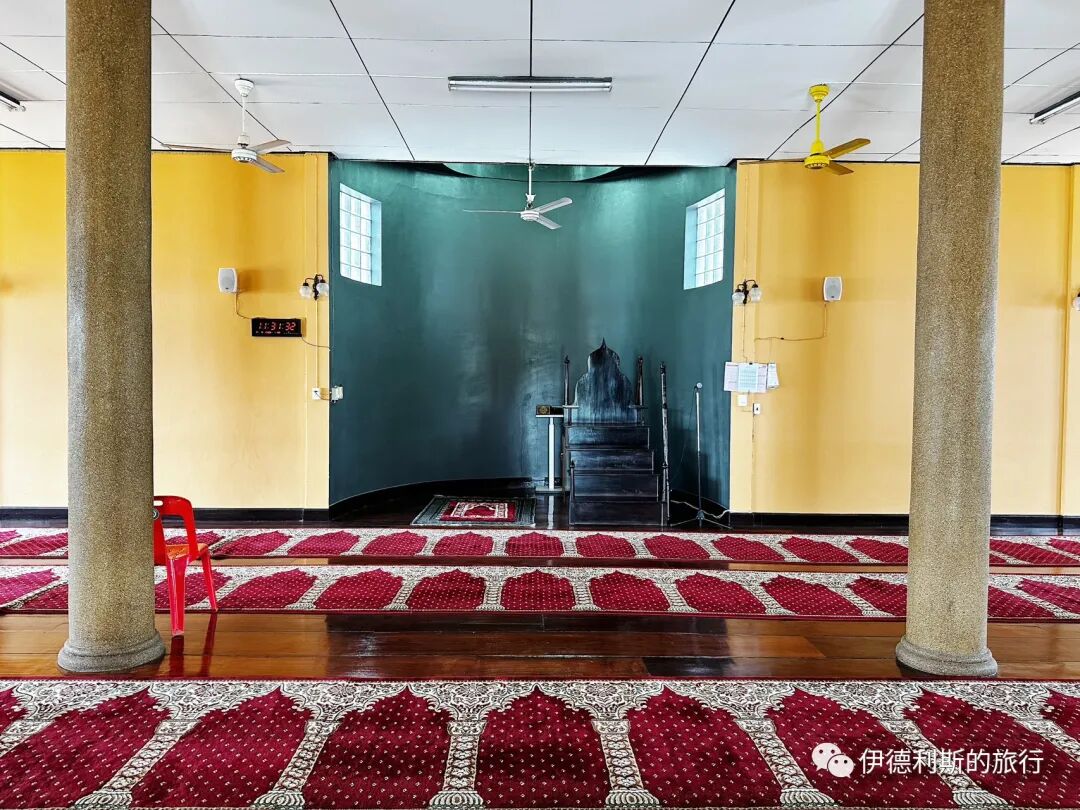
There are mango trees everywhere in Chiang Rai. Inside the Pakistani mosque, you can look up and see green mangoes filling the trees. We bought a bag of sliced green mangoes on the street. Dipping them in dry seasoning is delicious, crisp, and tasty.
We arrived in downtown Chiang Rai and found a halal stall specializing in various spicy sauces. The variety of spicy sauces in Thai food is amazing. They are mostly sweet and spicy, which I quite enjoy.
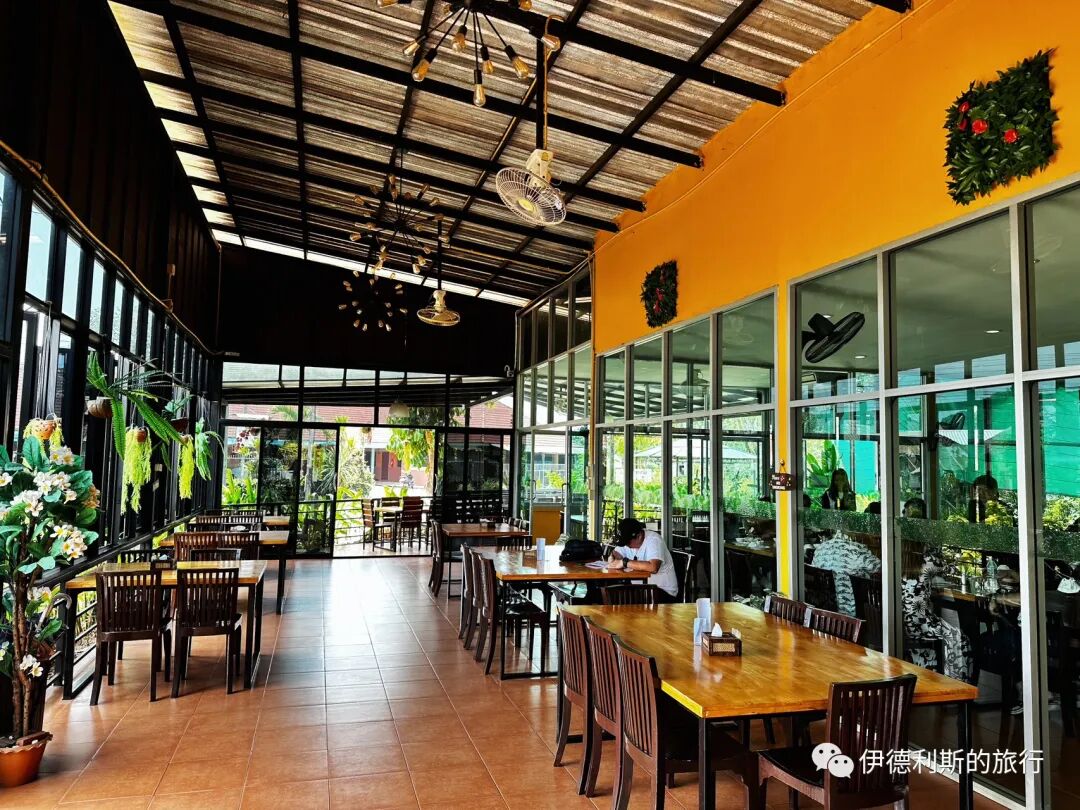
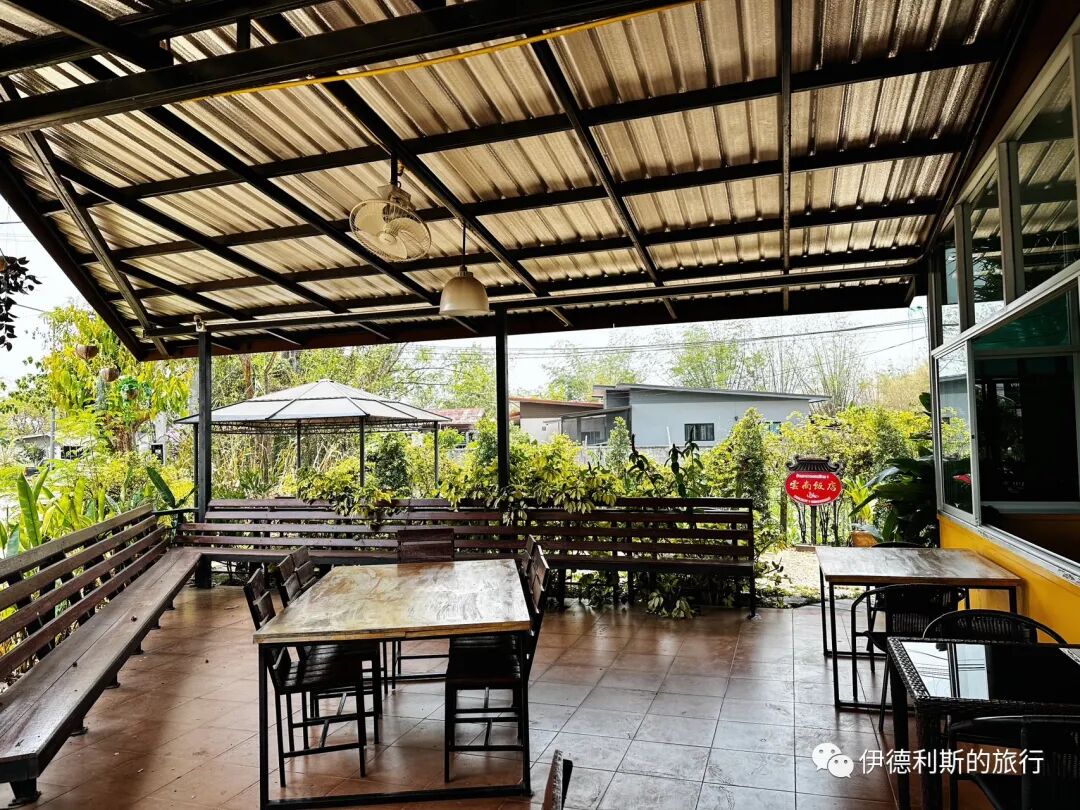
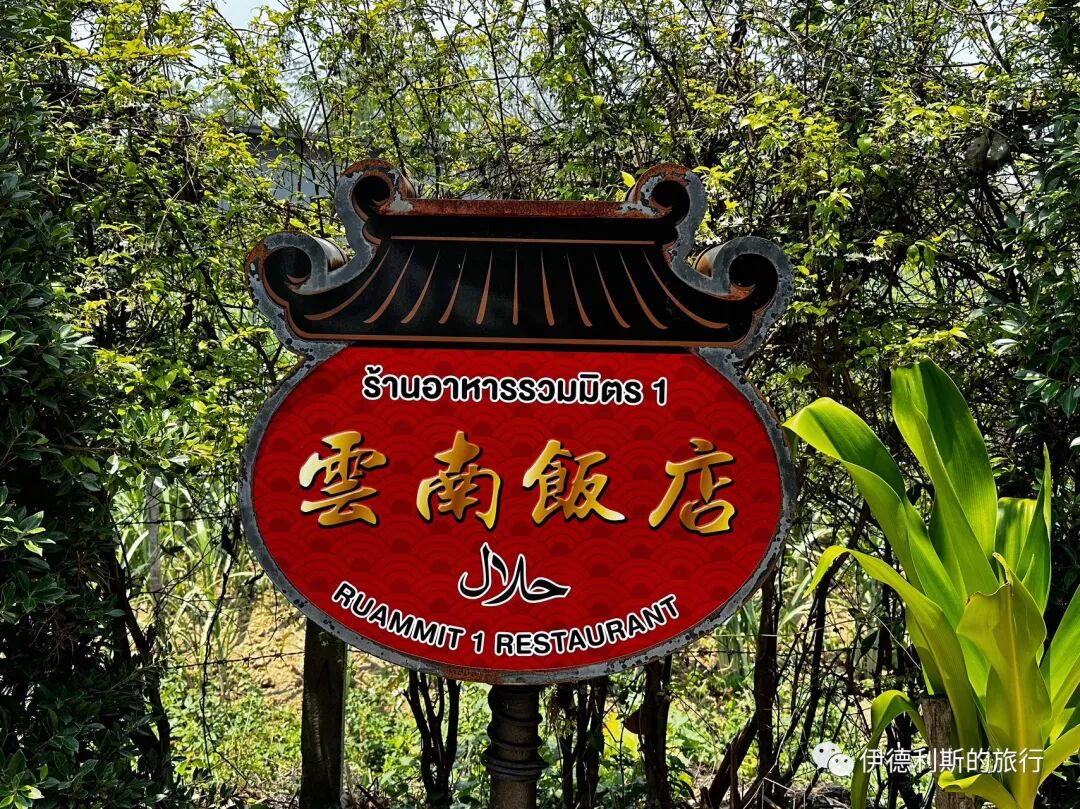
At noon, we had lunch at the largest Yunnan Hui Muslim restaurant in Chiang Rai city. The restaurant is called Yunnan Restaurant. The owner's surname is Na, and his ancestral home is Guanyi in Jianshui. The founder of the restaurant was surnamed Ma, who was owner Na's father-in-law. He spent 50 years preparing Yunnan halal banquets in Northern Thailand. Most Yunnan Hui Muslims in Northern Thailand, including our chartered driver Master Ma, have eaten at owner Ma's banquets and helped out in the kitchen. Owner Ma had two daughters who both married two brothers. Both sons-in-law inherited owner Ma's business, running two Yunnan restaurants in Chiang Mai and Chiang Rai respectively. The one we ate at in Chiang Rai is run by the younger brother.
The restaurant menu has Chinese, which makes ordering very convenient. We ordered stir-fried squid with red curry paste, stir-fried morning glory, fried fish with three kinds of sauces, and stir-fried beef with ginger strips. Hui Muslims here have kept traditional Yunnan halal food but added many Thai spices and cooking methods. They have developed a unique style of Northern Thai Yunnan halal cuisine that tastes different from the halal food we ate in Yunnan.
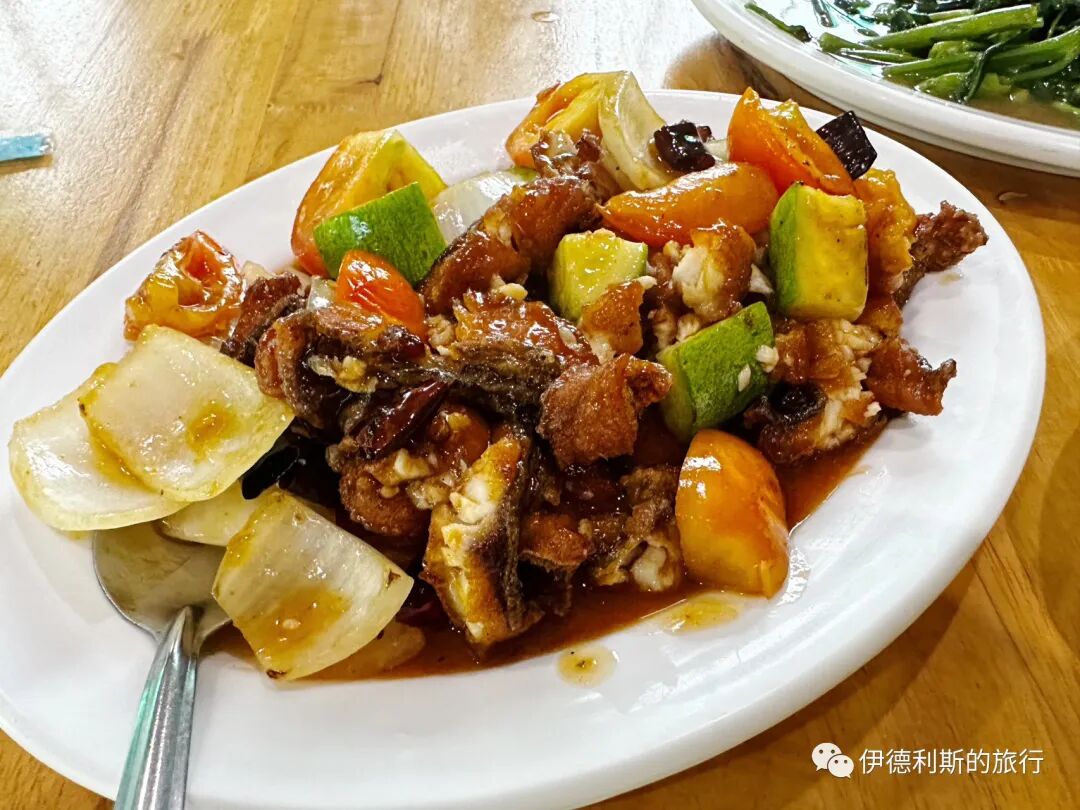
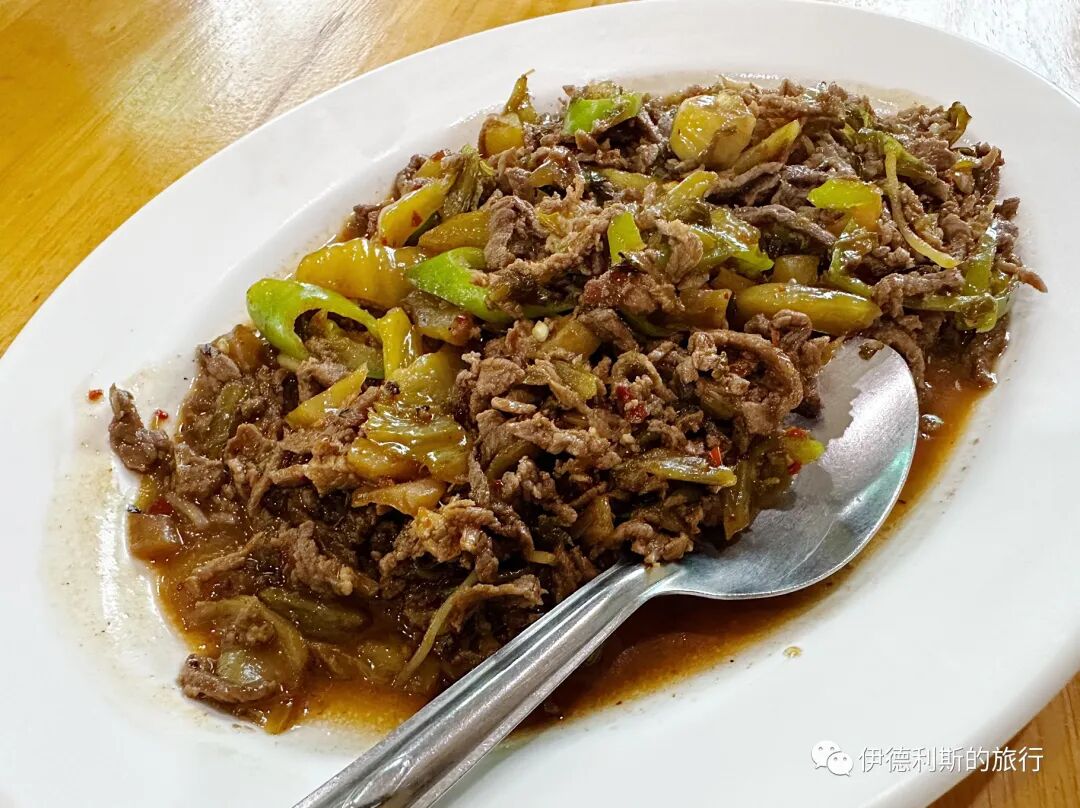
We arrived at the Yunnan mosque (lishen) in Chiang Rai city, and the elders at the mosque greeted us warmly.
Although the total number of Hui Muslims in Chiang Rai city is much smaller than in Chiang Mai or Mae Sai, this was an important hub for the Yunnan Hui Muslim horse caravans trading in Northern Thailand. It is the oldest existing Yunnan mosque in Northern Thailand.
The Chiang Rai Yunnan mosque was built in 1910, seven years earlier than the Chiang Mai Wang He mosque built in 1917. The current building was rebuilt in 2009 and is the largest of all the Yunnan mosques in Northern Thailand. The dome in the center of the mosque is in Mughal style, and the tops of the minarets on both sides are Chinese-style pavilions. This represents the harmony between South Asian Muslims and Chinese Muslims in Northern Thailand. The entrance to the main hall has the words 'Gate of Ritual' and 'Path of Etiquette' written on it, along with a couplet that reads: 'Quiet mosque, quiet place, quiet thoughts, silently praise Allah; pure heart, pure origin, pure worship, purely follow the scriptures.' In front of the main hall door is a grandfather clock donated to the mosque by Mr. Mu Yufu, inscribed with the words 'Promote the Righteous Path'.
The first floor of the mosque is engraved with the names of those who donated to the reconstruction. Among them, 196 people are from Yunnan, many of whom are from Najiaying, Tonghai, and Menghai.
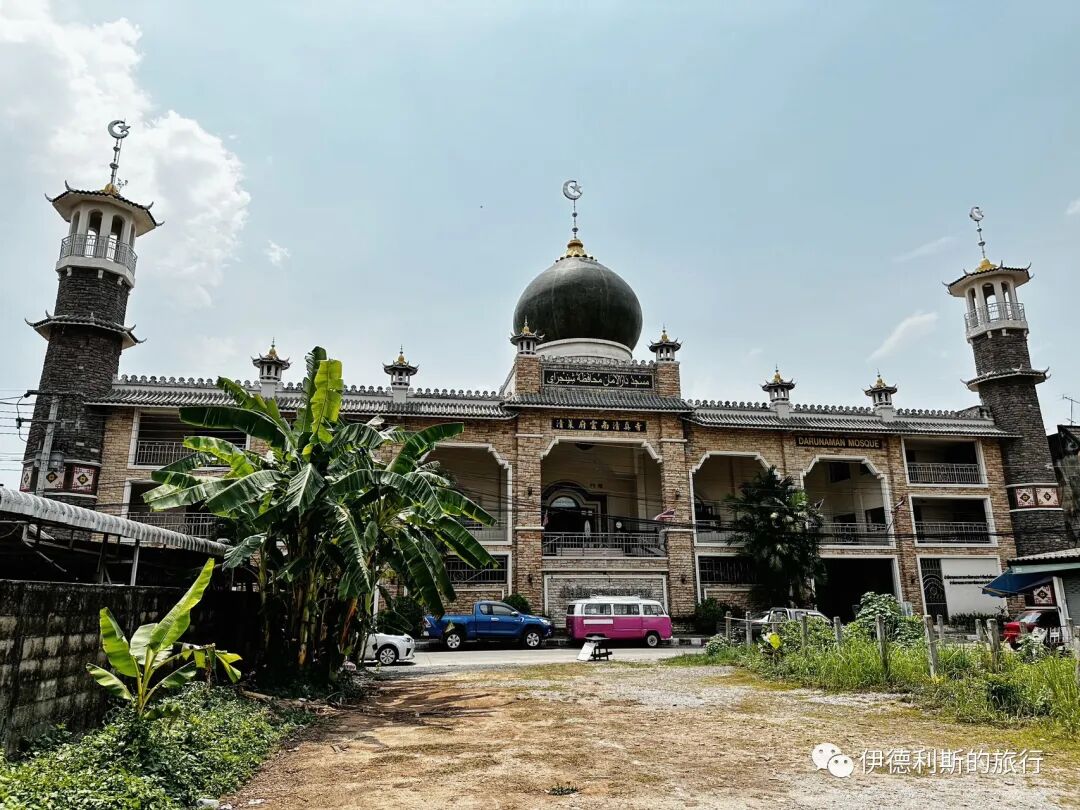
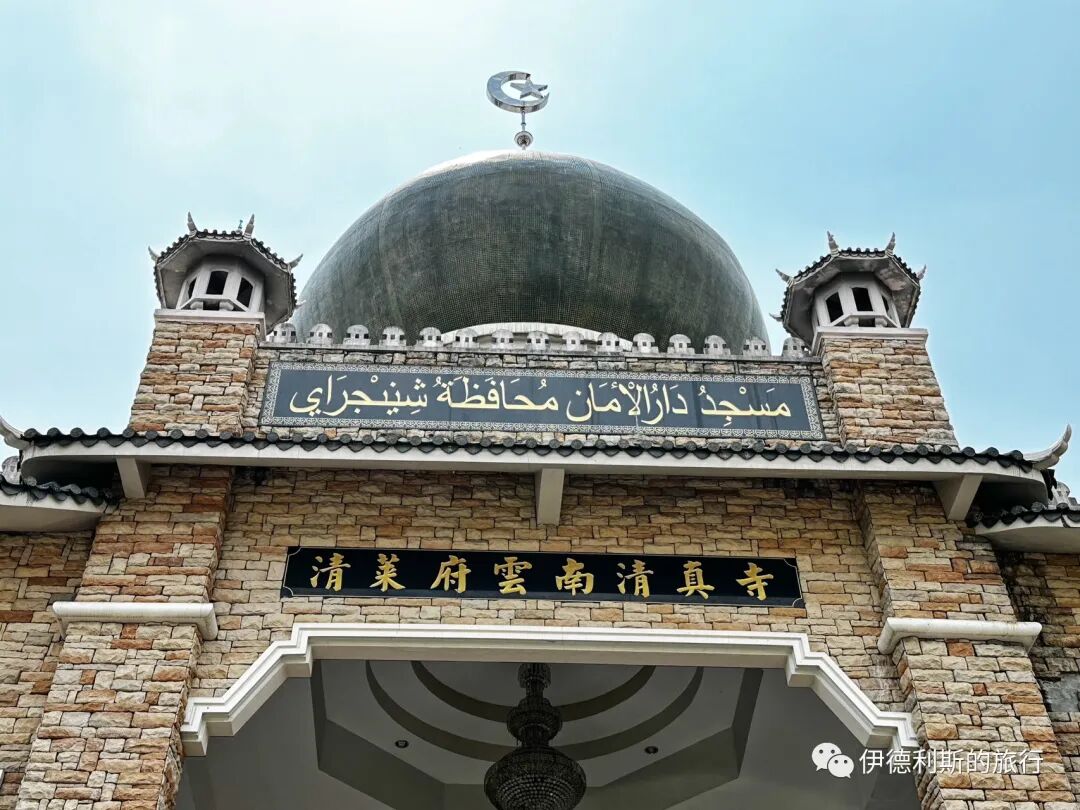
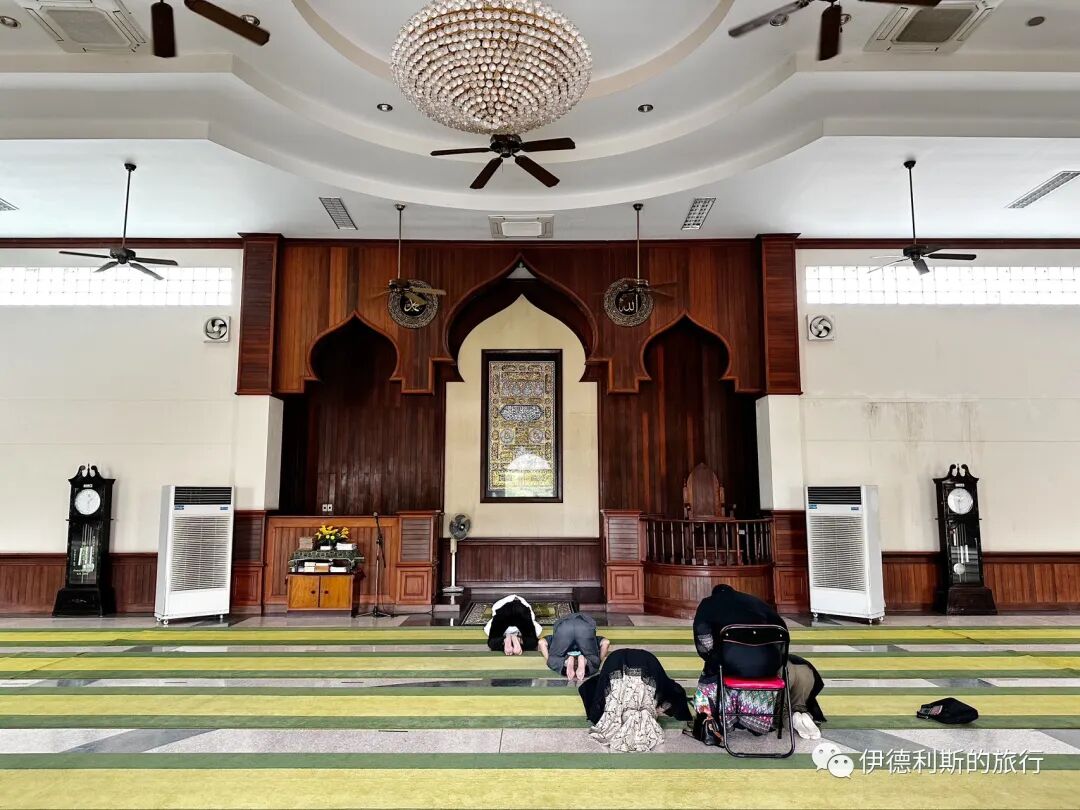
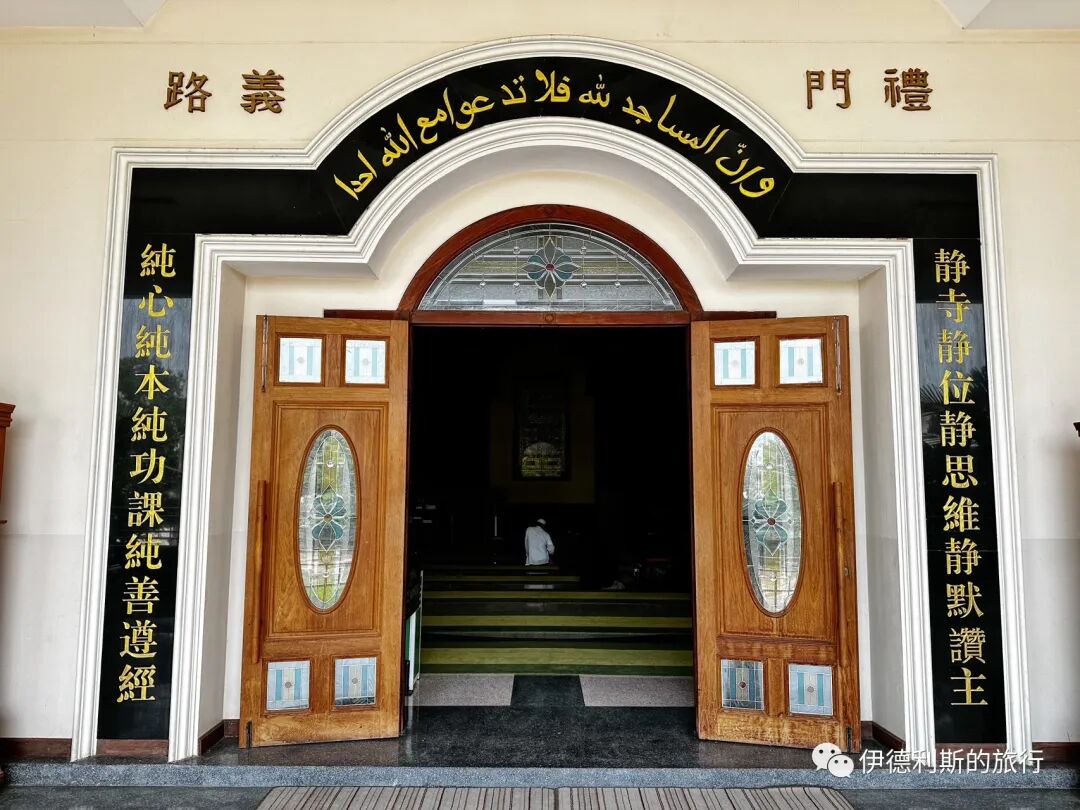
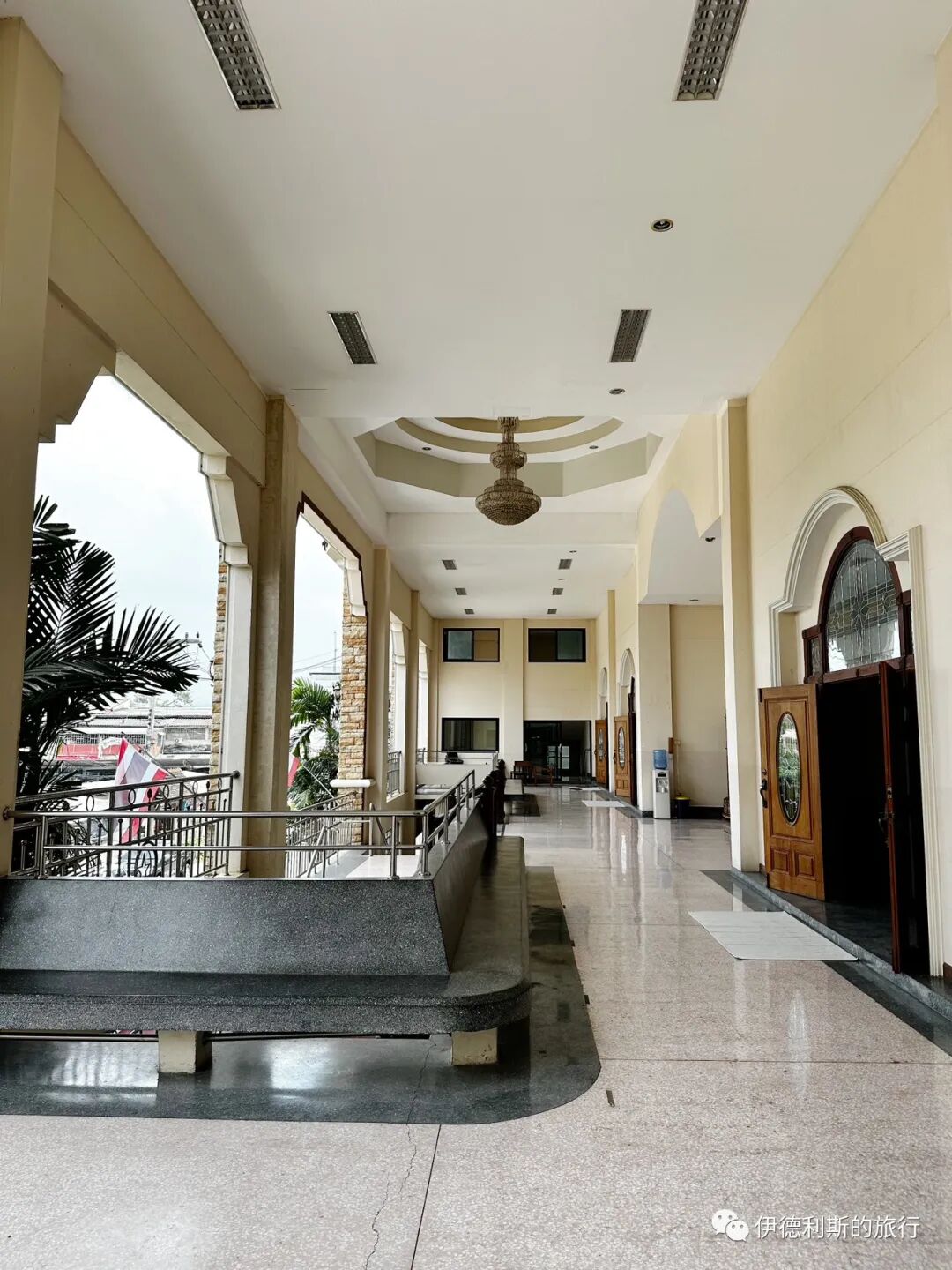
The alley and snack stalls at the entrance of the Chiang Rai Yunnan mosque.
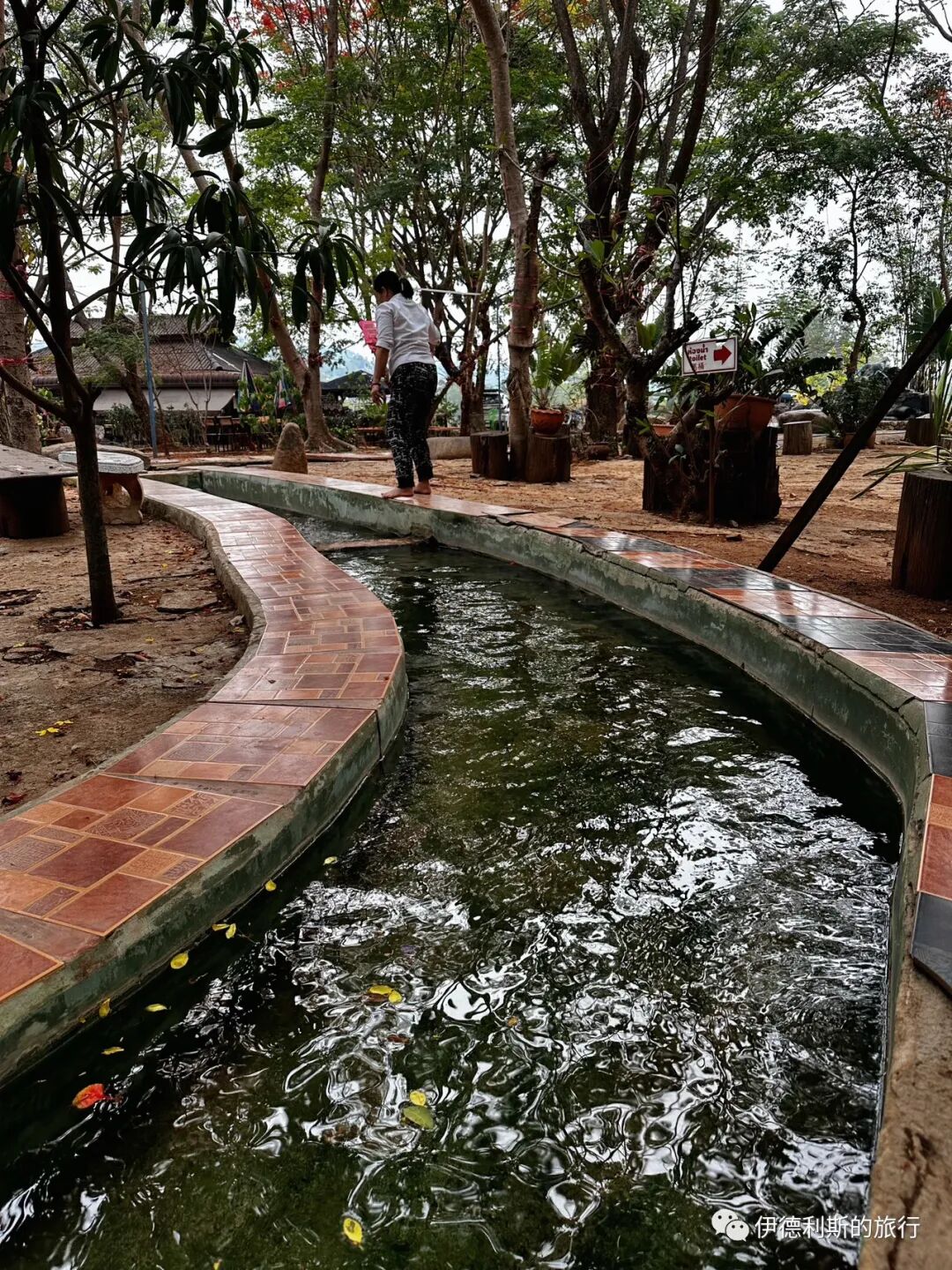
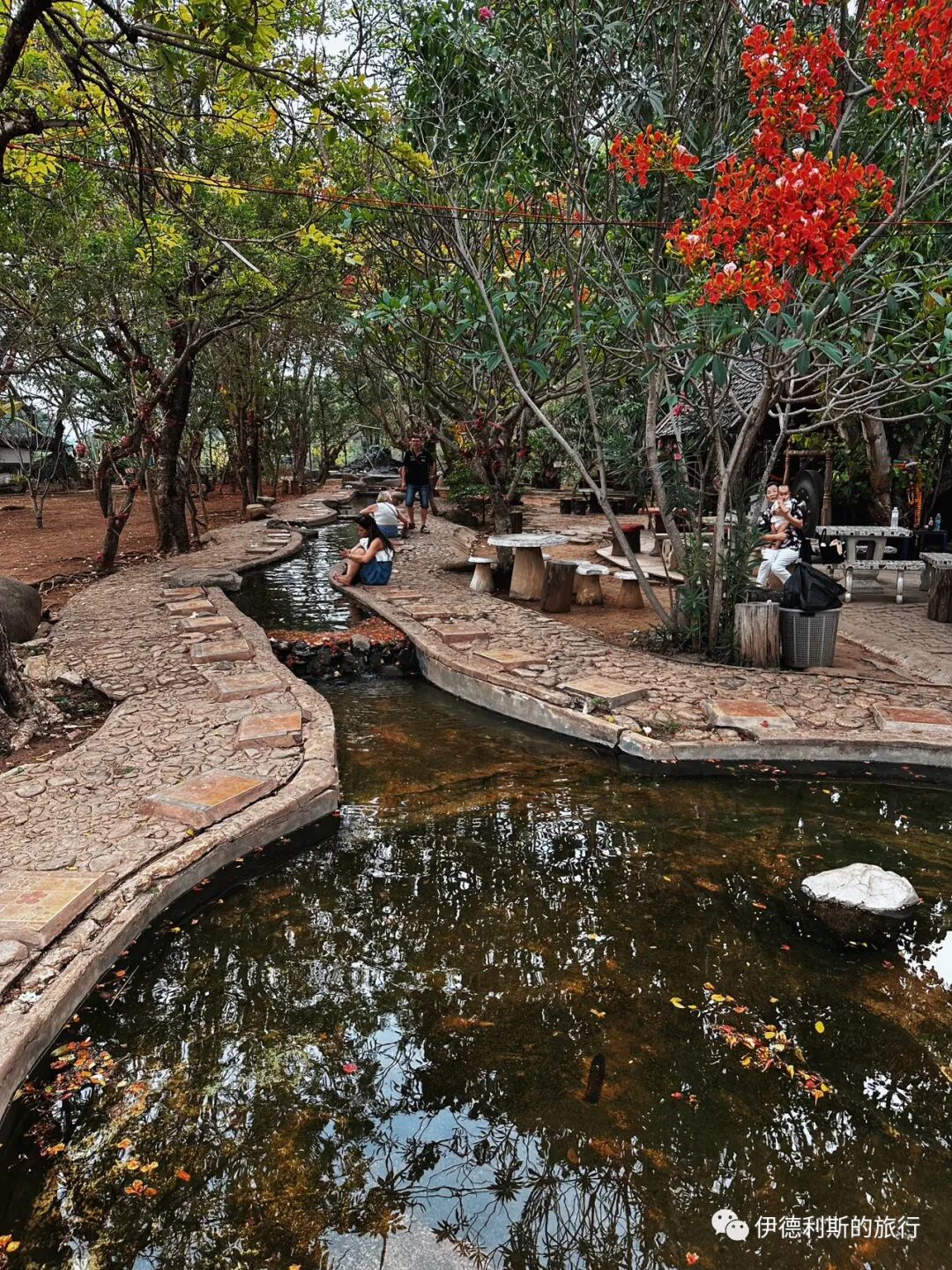
On the way from Chiang Rai to Chiang Mai, you will pass the Chiang Rai hot springs, where many people stop to take a break. The hot springs here are right by the side of the road, and you do not need to buy a ticket. There are springs of various temperatures. The hottest ones gush out like boiling water, and you can boil chicken eggs and quail eggs in them, which children really enjoy. You can soak your feet in the cooler springs. The water temperature drops as it flows from the source, so it is very comfortable to find a spot with the perfect temperature and soak for a while.
Back to Chiang Mai.
At noon, we returned to the Chiang Mai Wang He mosque (lishen) and then walked around the shops at the entrance. This shop is run by the daughter of Mustafa, the grand imam of the Nurul mosque in Chiang Mai. I bought CDs and hats here back in 2017. This time, Zainab bought a beautiful long dress made from local fabric that is very high quality. We took some lovely photos in it in Bangkok.
Halal Travel Guide: Northern Thailand — Yunnan Mosques and Hui Communities (Part 2)
Articles • ali2007fr posted the article • 0 comments • 153 views • 2026-05-19 02:59
Summary: Northern Thailand has Yunnanese Hui Muslim communities whose mosque neighborhoods still show the memory of migration, trade, and borderland life. This second part of Day 3 follows the route through local mosques and village scenes with the original photos and sequence kept intact.
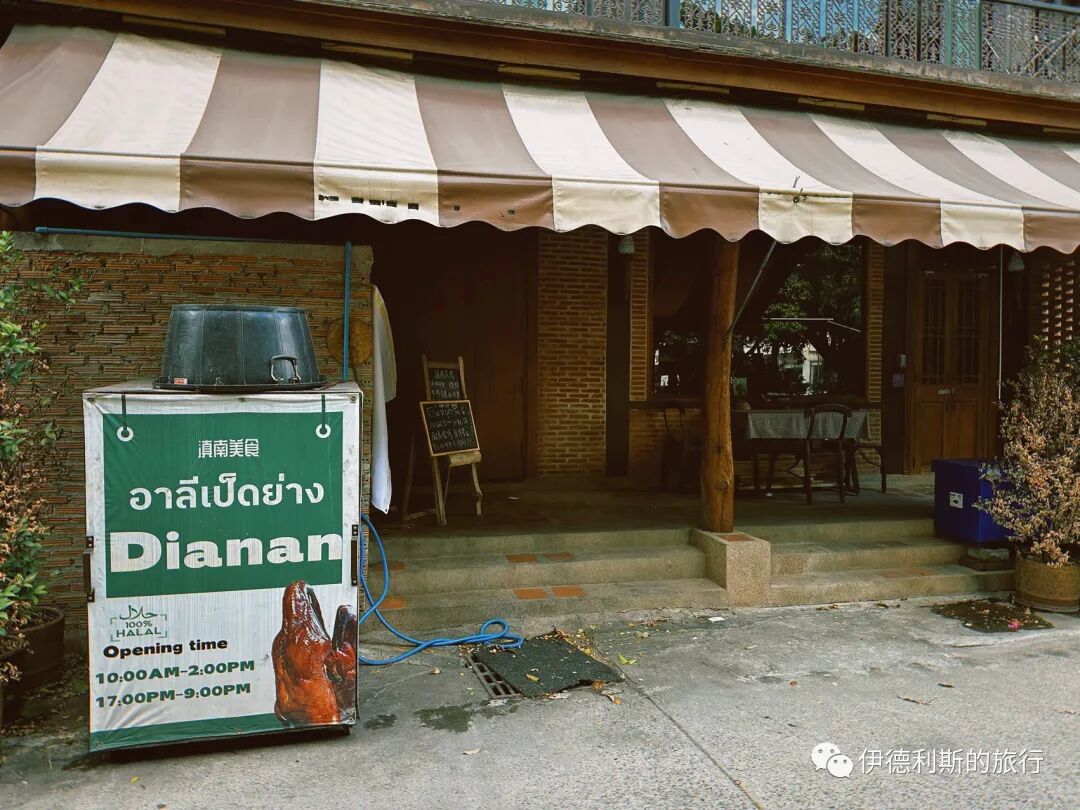
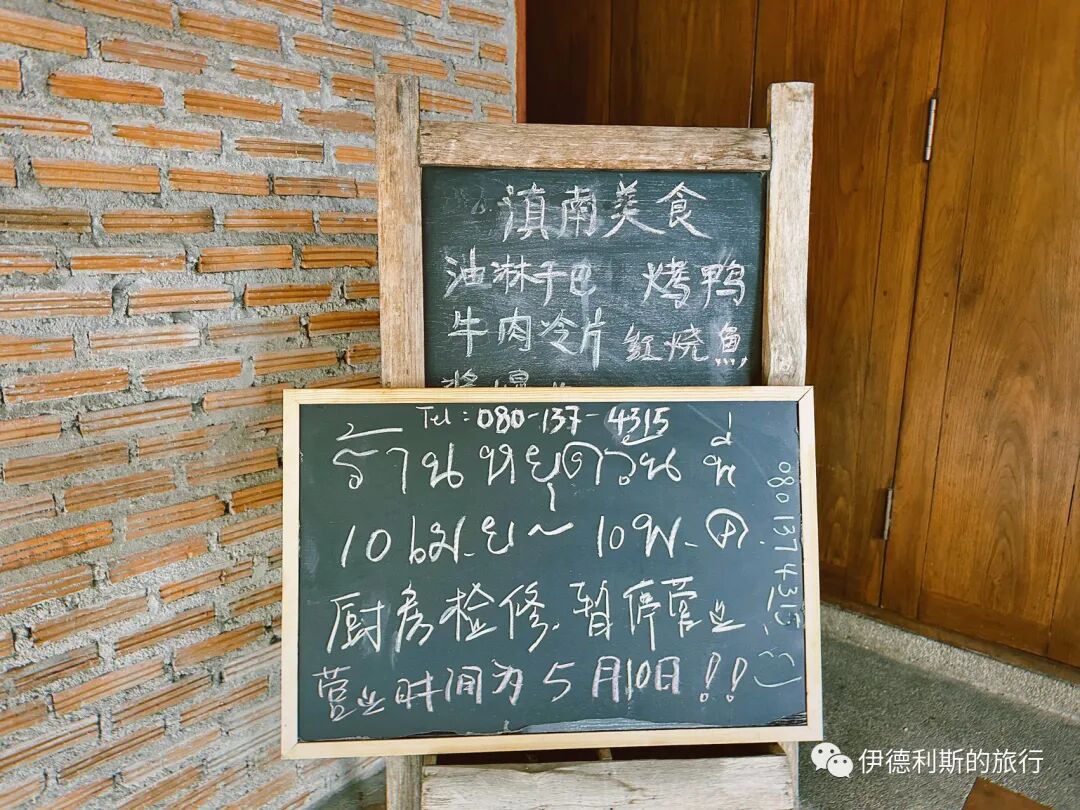
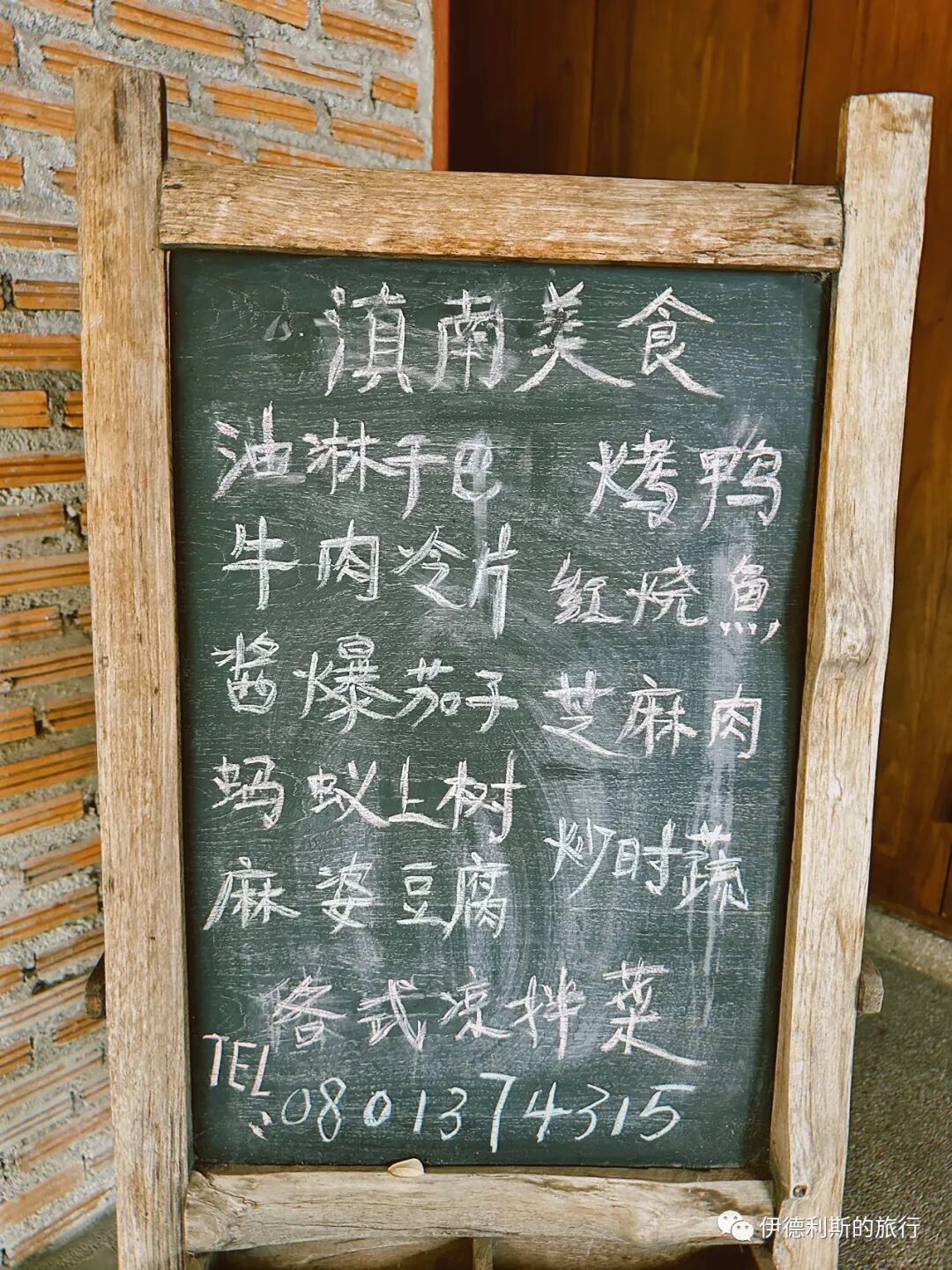
We went for a late lunch in Chiang Mai. We wanted to try the Yunnan-style food recommended by our driver, Mr. Ma, but the kitchen was closed for maintenance. Mr. Ma said the owner is from Shadian and runs the most authentic Yunnan Hui Muslim restaurant in Chiang Mai, with very little fusion with Thai food. I recommend that fellow Muslims (dost) visiting Chiang Mai give it a try.
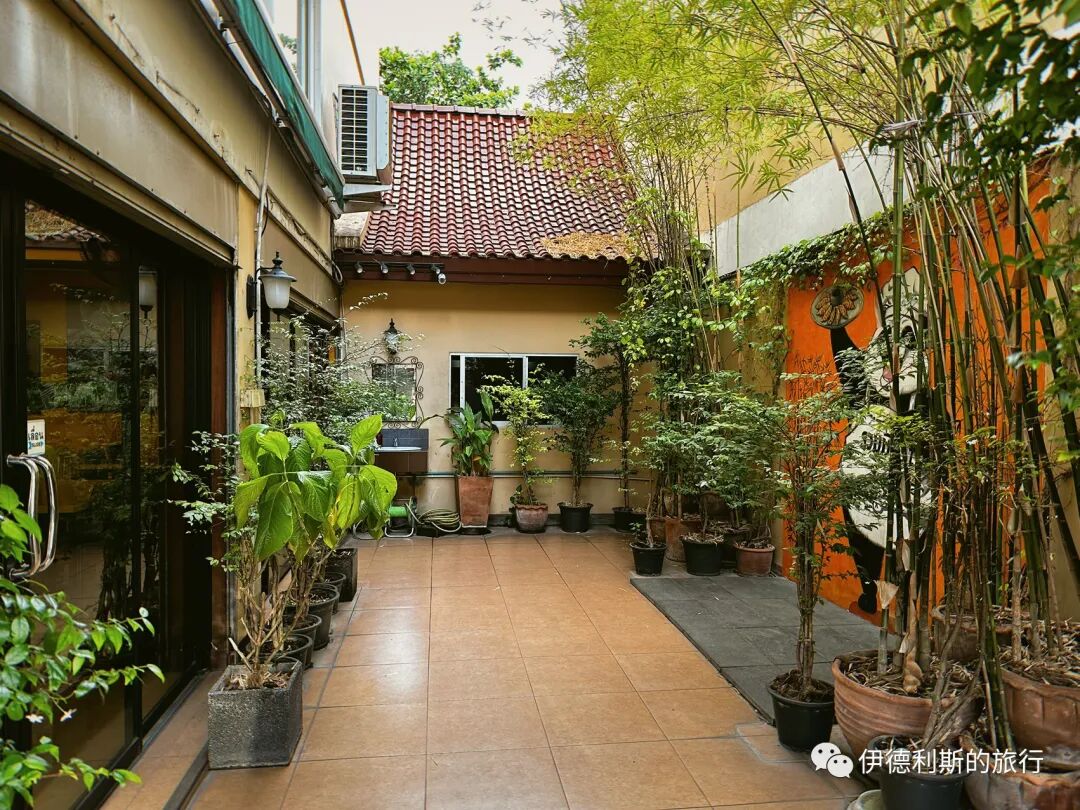
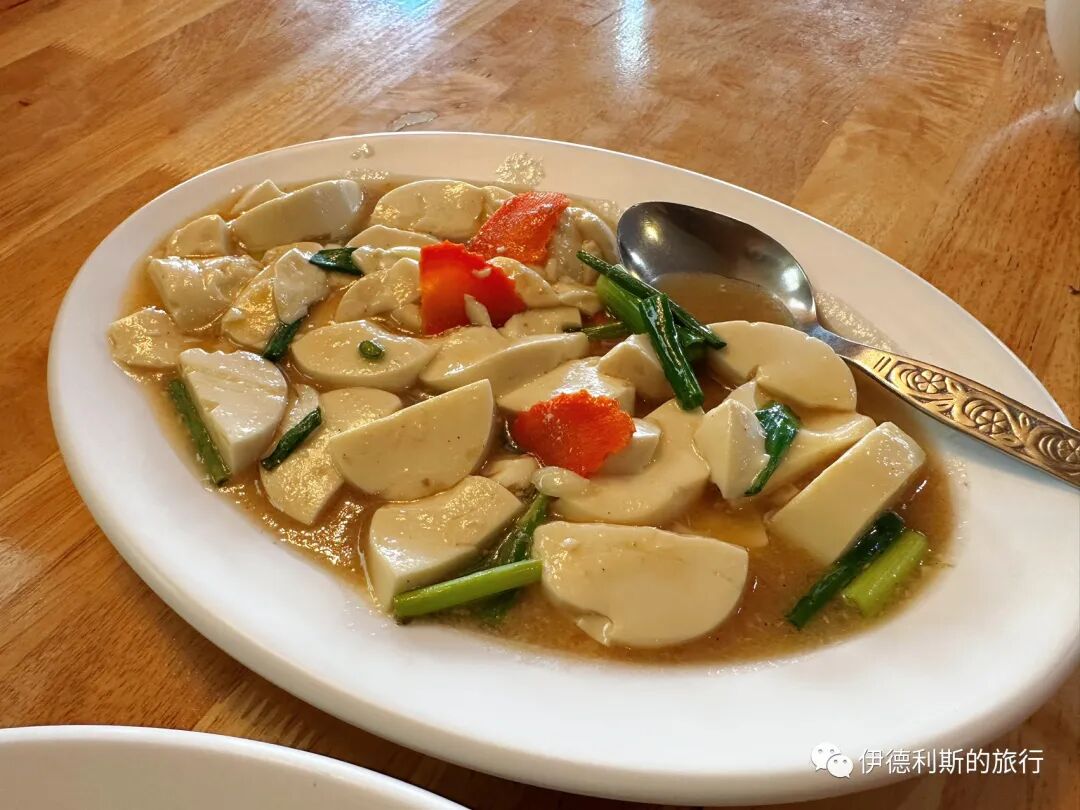
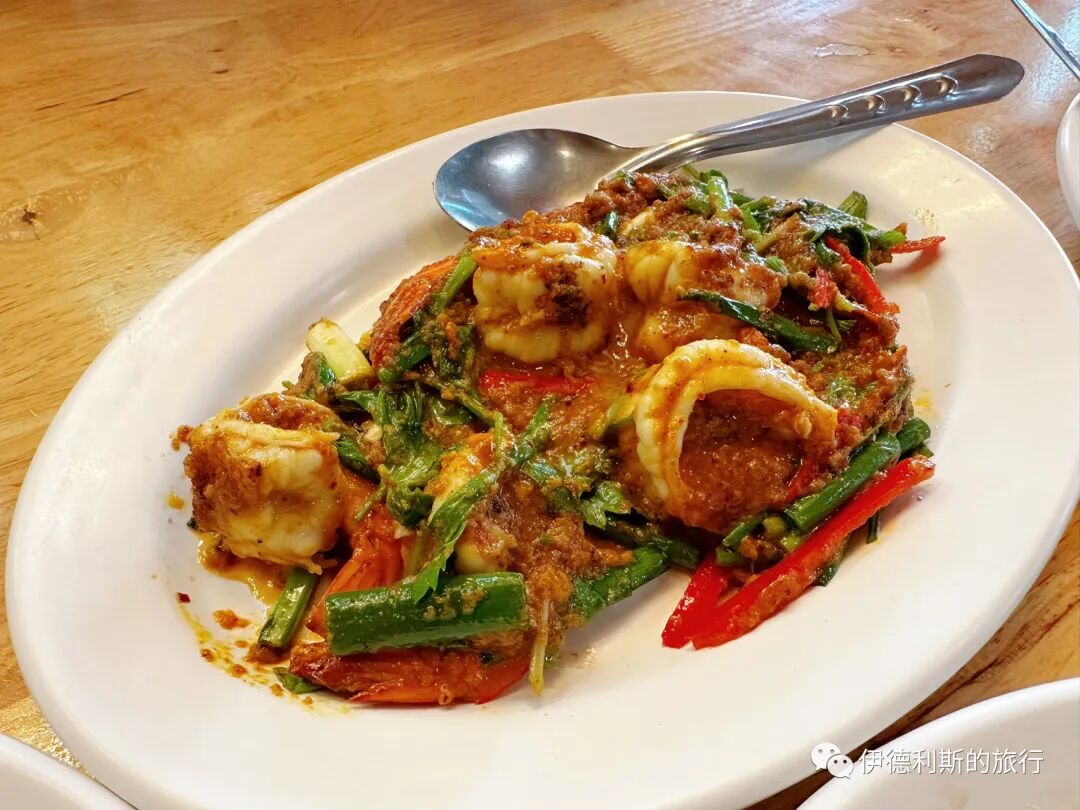
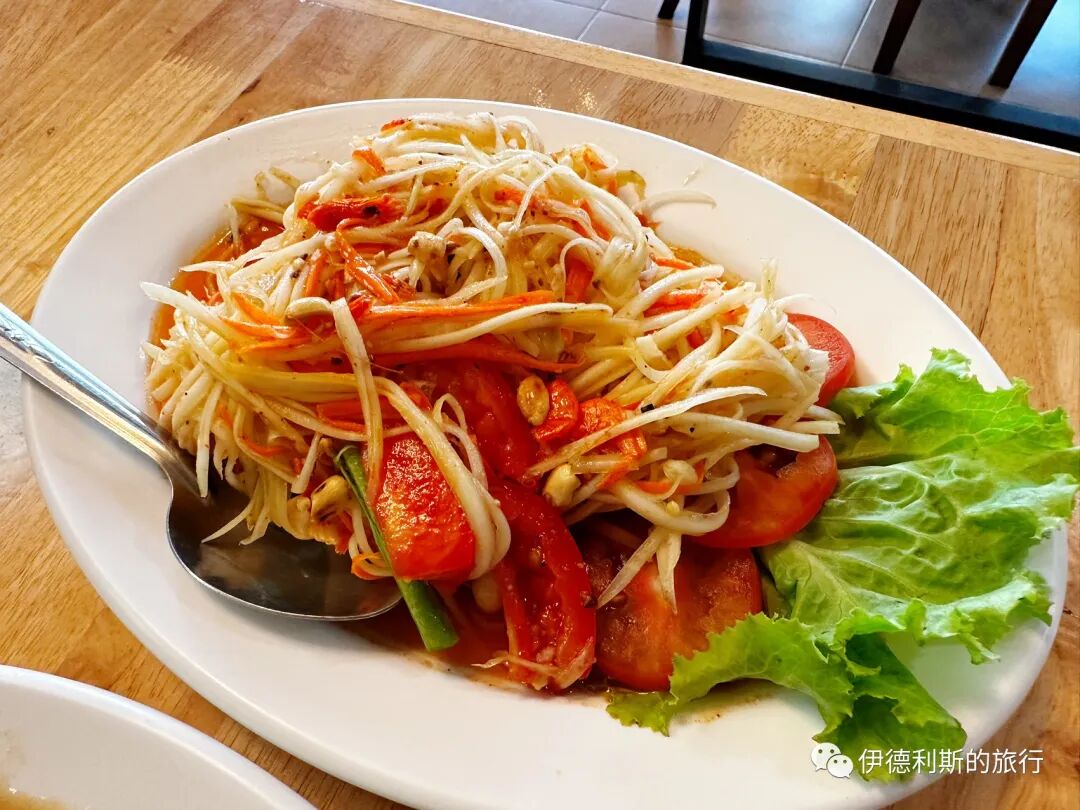
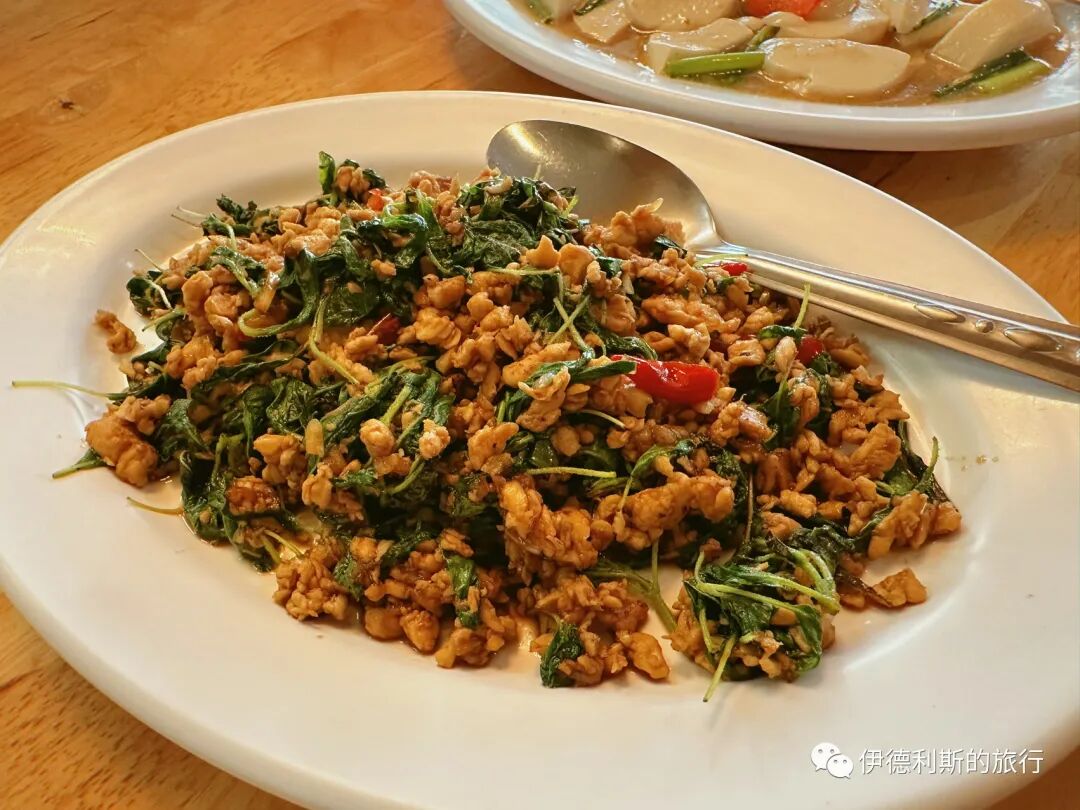
We ended up at another Yunnan restaurant in Chiang Mai run by the brother of the owner of the place we ate at in Chiang Rai. We chatted with Mr. Na for a while, and his Mandarin was very fluent. They specialize in organic vegetables and pesticide-free wild greens. Their style is the unique blend of Yunnan halal food and Thai cuisine created by Hui Muslims in Northern Thailand. We ordered stir-fried chicken with basil (buhe chaoji), stir-fried tofu, spicy green papaya salad, and shrimp stir-fried with Thai red chili paste. Many restaurants we visited in Northern Thailand let you choose between small, medium, and large portions. Ordering four small dishes is perfect for two travelers. view all
Summary: Northern Thailand has Yunnanese Hui Muslim communities whose mosque neighborhoods still show the memory of migration, trade, and borderland life. This second part of Day 3 follows the route through local mosques and village scenes with the original photos and sequence kept intact.
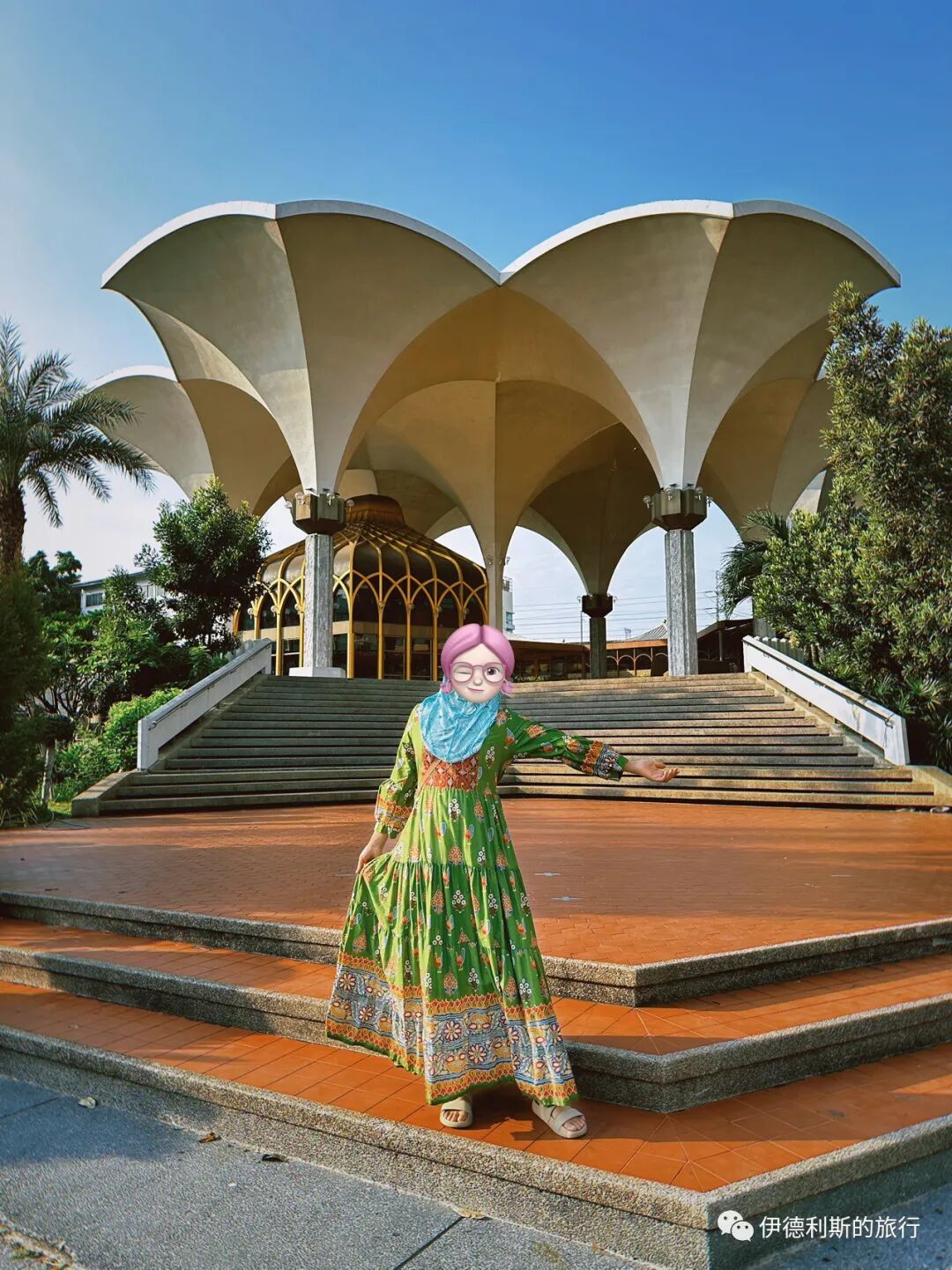
We went for a late lunch in Chiang Mai. We wanted to try the Yunnan-style food recommended by our driver, Mr. Ma, but the kitchen was closed for maintenance. Mr. Ma said the owner is from Shadian and runs the most authentic Yunnan Hui Muslim restaurant in Chiang Mai, with very little fusion with Thai food. I recommend that fellow Muslims (dost) visiting Chiang Mai give it a try.
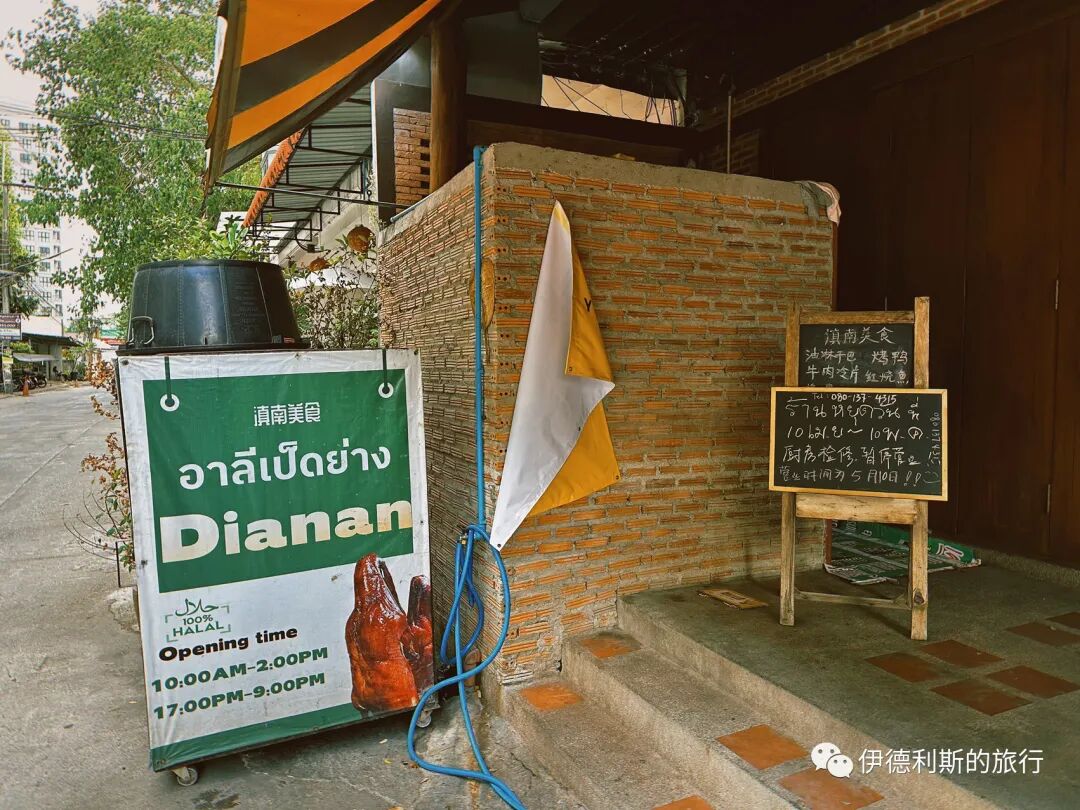
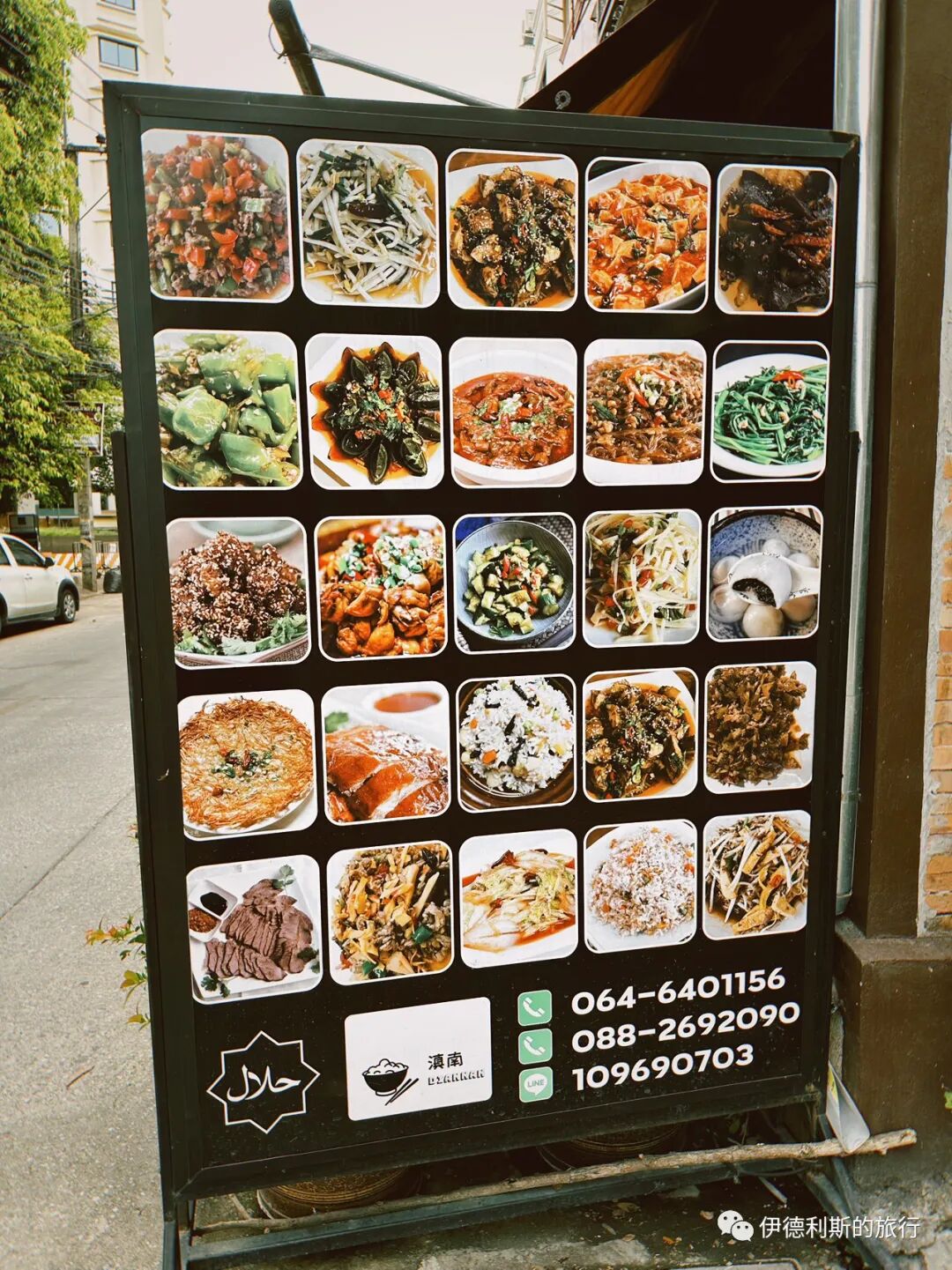
We ended up at another Yunnan restaurant in Chiang Mai run by the brother of the owner of the place we ate at in Chiang Rai. We chatted with Mr. Na for a while, and his Mandarin was very fluent. They specialize in organic vegetables and pesticide-free wild greens. Their style is the unique blend of Yunnan halal food and Thai cuisine created by Hui Muslims in Northern Thailand. We ordered stir-fried chicken with basil (buhe chaoji), stir-fried tofu, spicy green papaya salad, and shrimp stir-fried with Thai red chili paste. Many restaurants we visited in Northern Thailand let you choose between small, medium, and large portions. Ordering four small dishes is perfect for two travelers.
Halal Travel Guide: Northern Thailand — Yunnan Mosques and Hui Communities (Part 1)
Articles • ali2007fr posted the article • 0 comments • 166 views • 2026-05-19 02:47
Summary: Northern Thailand has old Yunnanese Hui Muslim communities whose mosque neighborhoods still carry the memory of migration, trade, and borderland life. This firsthand account follows the first half of the second day through mosques, settlements, and local Muslim community scenes while preserving the original photos and sequence.
During the May Day holiday in 2023, I visited the mosque communities (sifang) of Hui Muslims from Yunnan in Northern Thailand. On the first day, led by Master Ma Ruqi, a third-generation Thai Hui Muslim from Yunnan, we visited four mosque communities in the Chiang Mai city area: Chang Khlan, Wat Ket, Jingzhen, and Nurul. I posted about this in 'A Pilgrimage to Northern Thai Yunnan Mosque Communities (Day 1)'. On the second day, Master Ma drove us north to visit several mosque communities in the refugee villages of the former isolated army. We went to Mae Salong, the main base of the isolated army, and finally reached Mae Sai, the northernmost border crossing between Thailand and Myanmar, which is also the second-largest settlement for Hui Muslims from Yunnan in Northern Thailand.
Breakfast in Chiang Mai
On the second morning, we first had breakfast at a halal restaurant run by Hui Muslims from Yunnan in the southeast of Chiang Mai's old city. The owner's Yunnan dialect sounded very familiar, and we had no trouble ordering in Mandarin. I ate their chicken fat rice (ji you fan) back in 2017. This time, I had rice cakes (erkua), wontons (huntun), and steamed buns (baozi). The rice cakes were topped with braised beef, the wontons were in chicken soup, and the steamed buns were filled with pickled vegetables and meat. The standard side dishes here are limes, small shallots, and pickled vegetables. I found them very refreshing and appetizing.
Date Palm Plantation
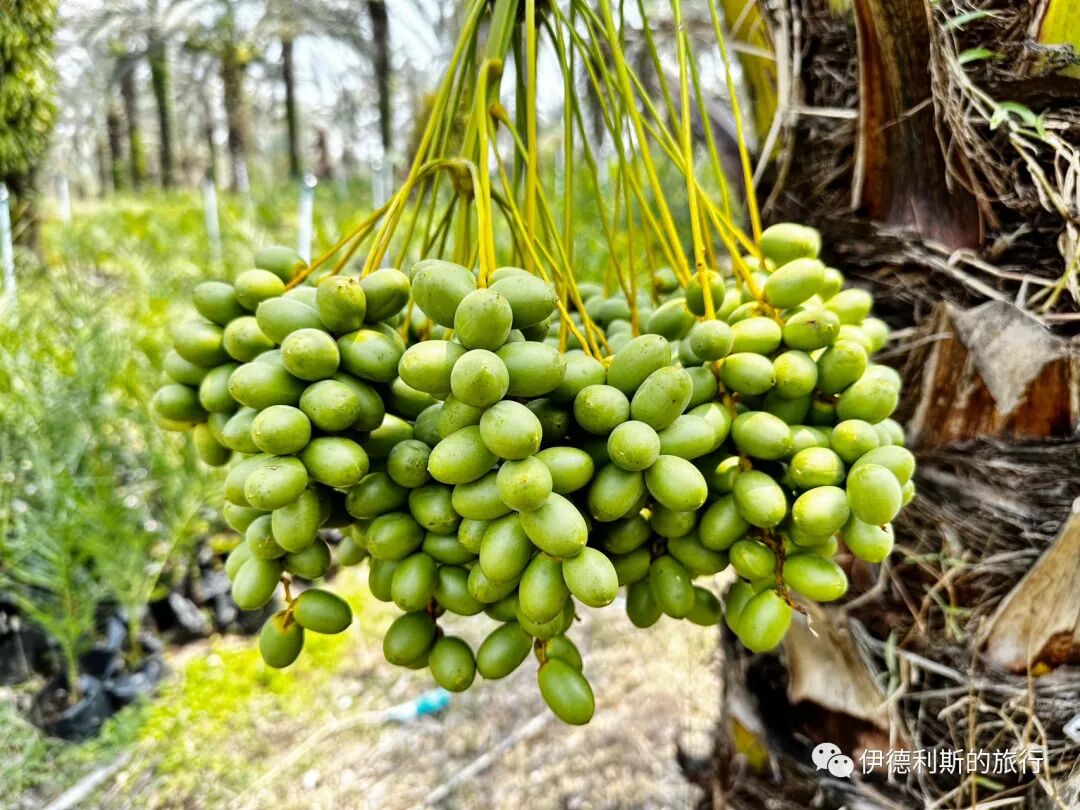
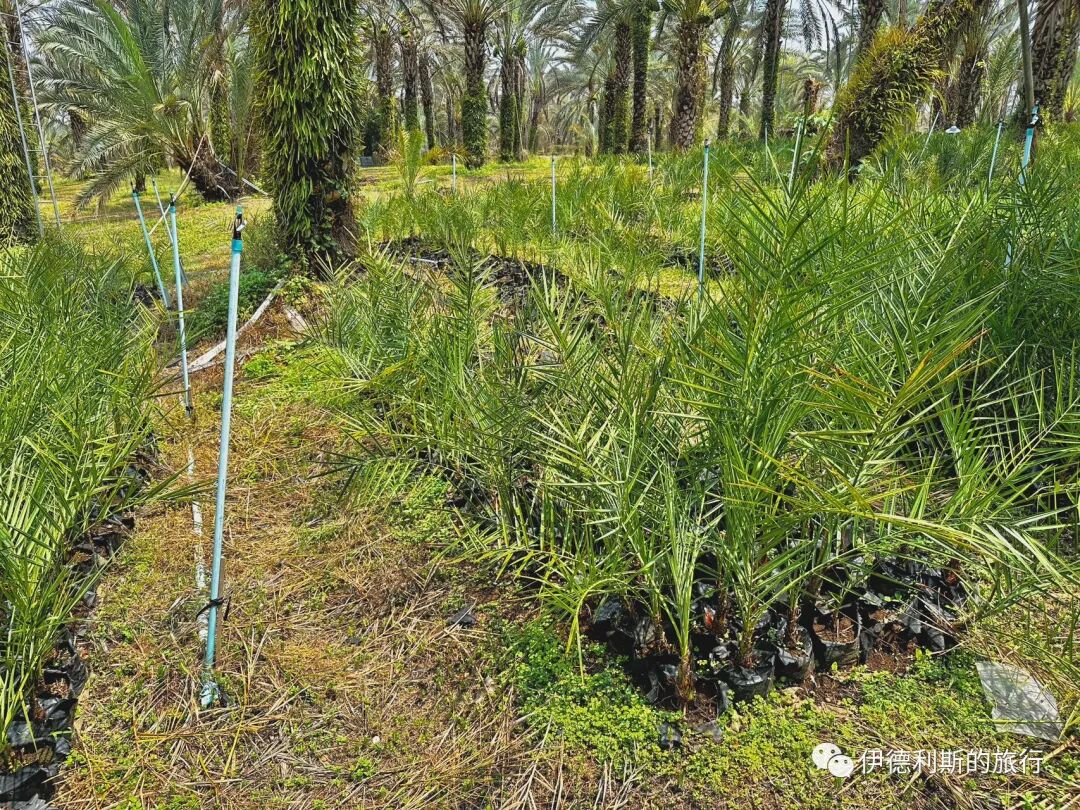
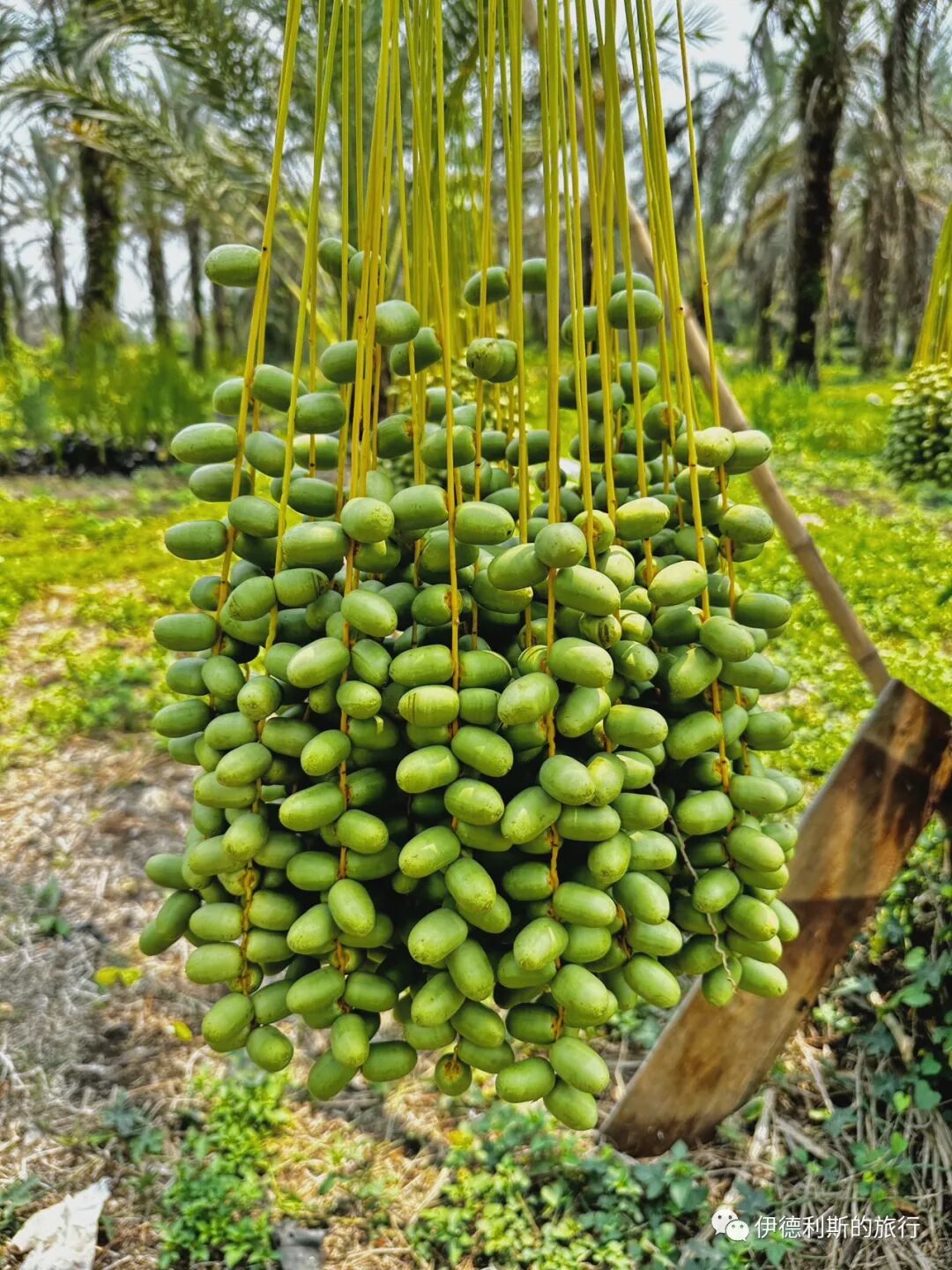
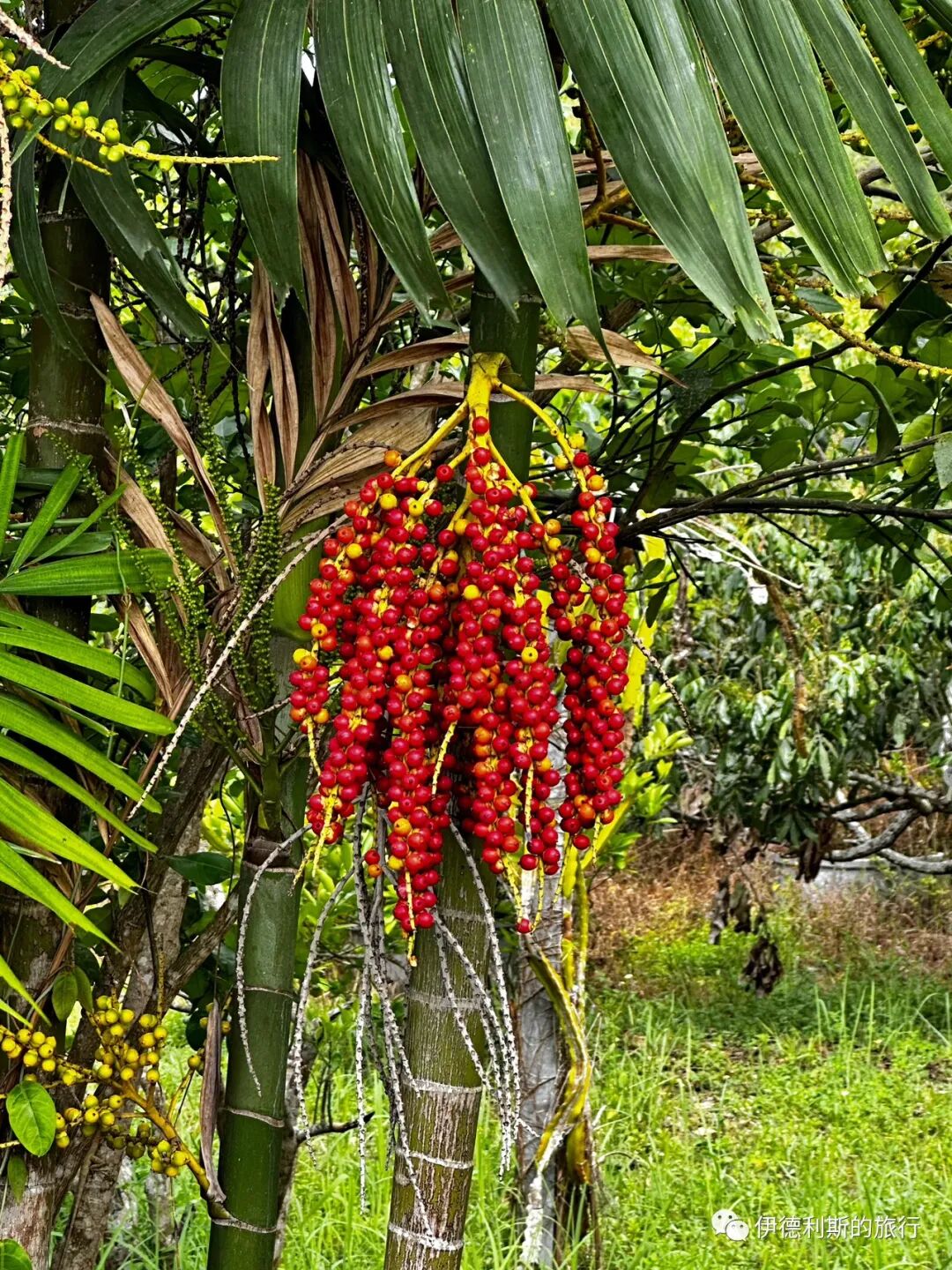
Driving north from Chiang Mai through a mountainous area, you will see a date palm plantation by the side of the road, not far from the Wang Pha National Park. Praise be to Allah, after constant efforts and attempts, Thai people have successfully grown date palms in Chiang Mai. Now Thai Muslims can eat locally grown dates. This was also my first time seeing a date palm orchard up close.
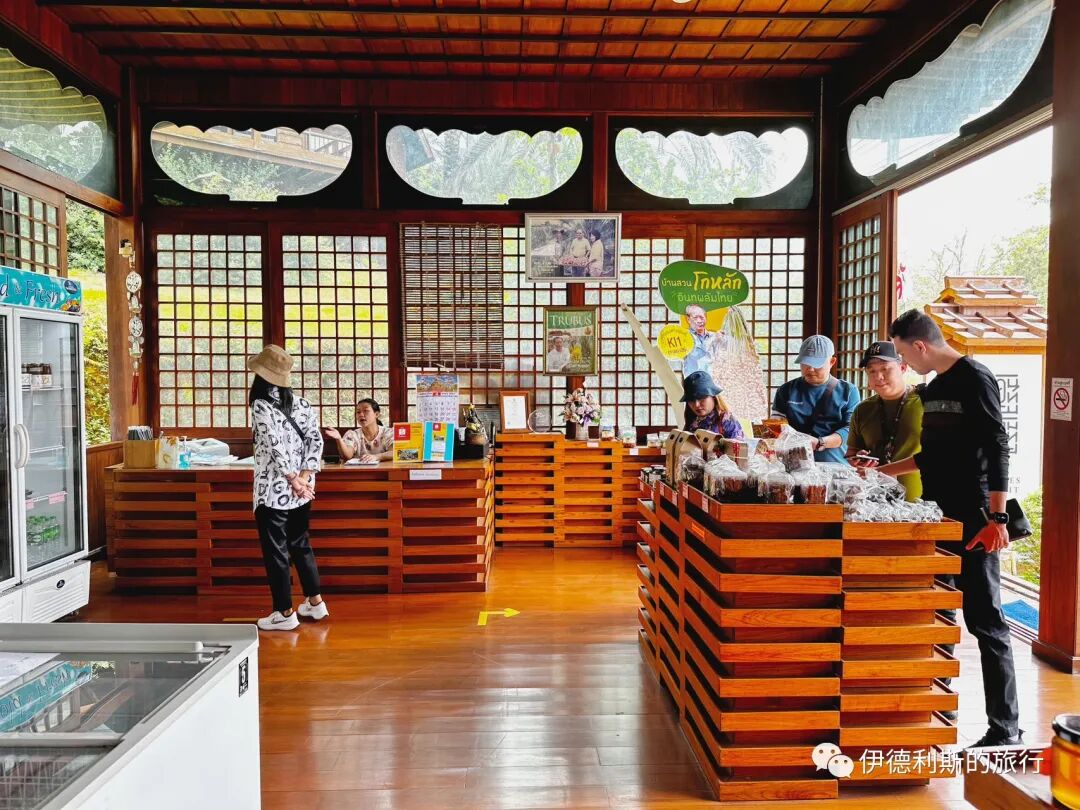
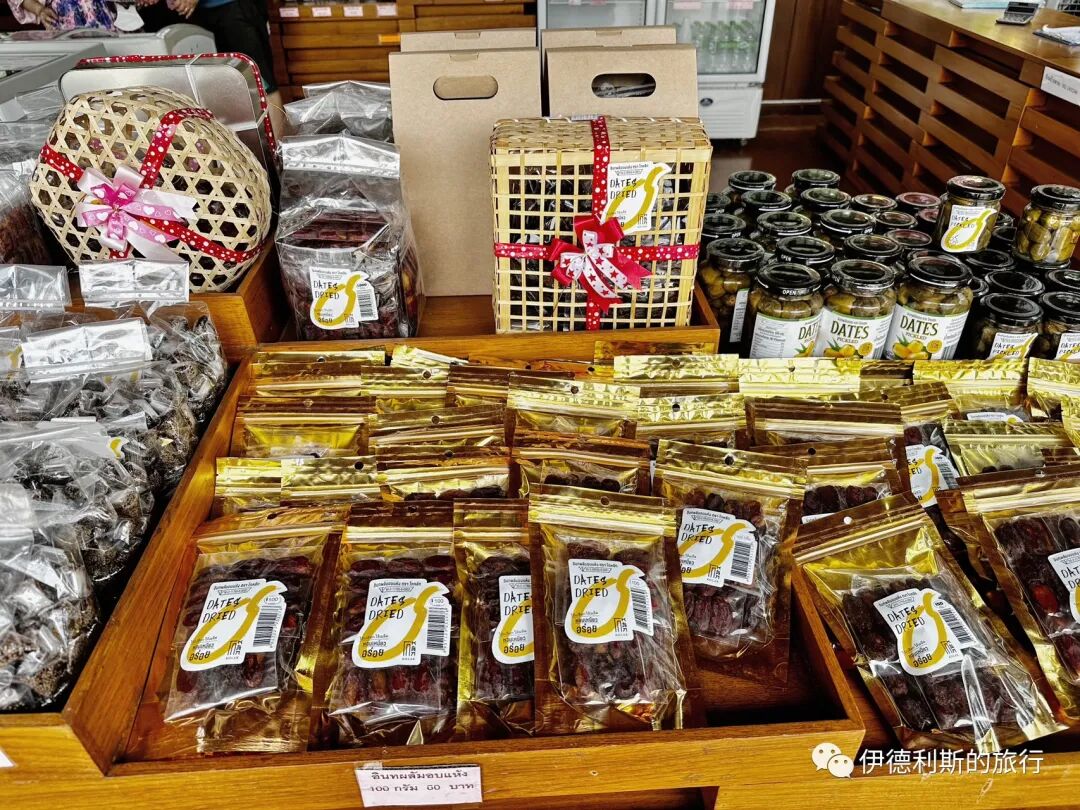
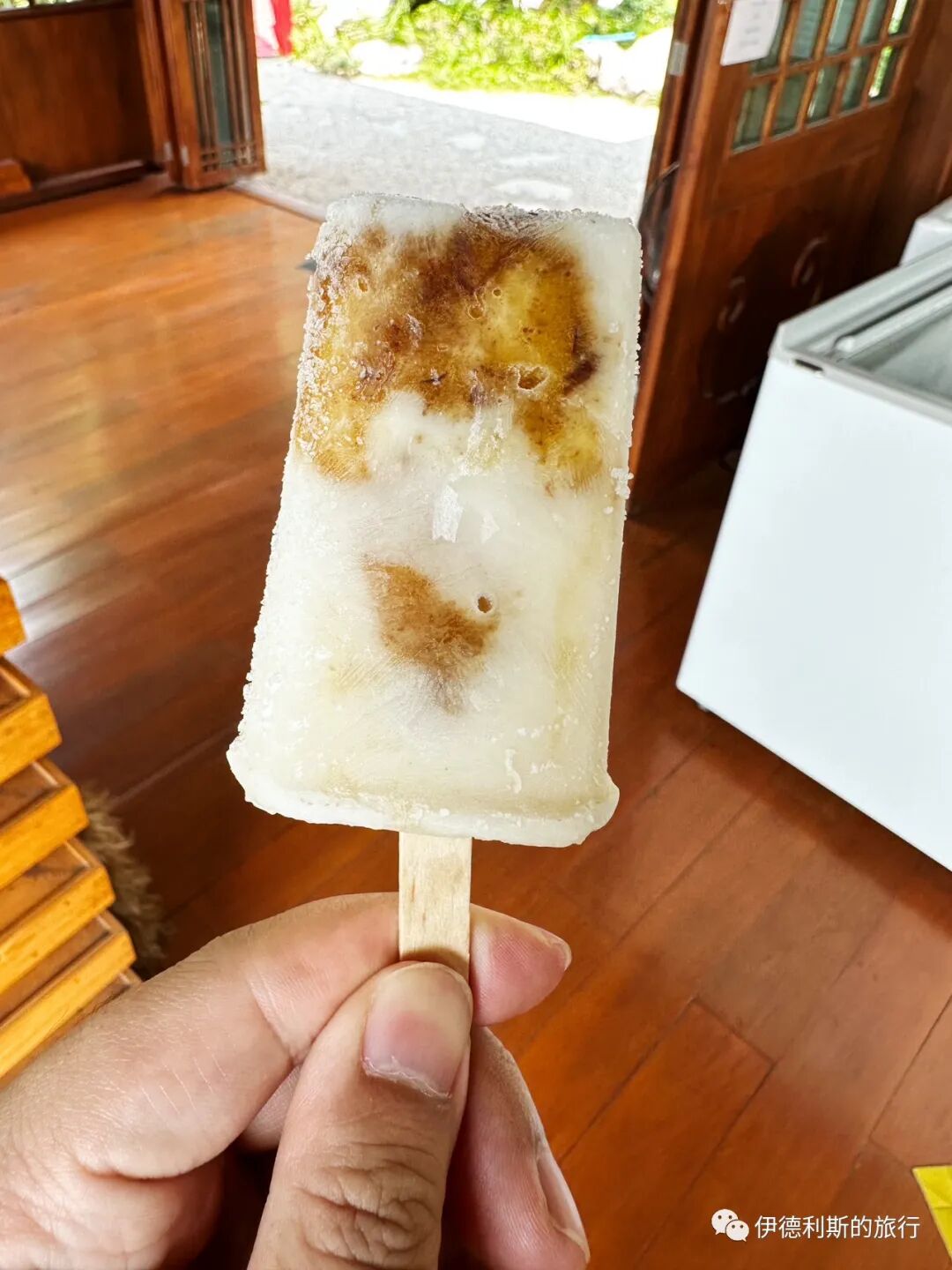
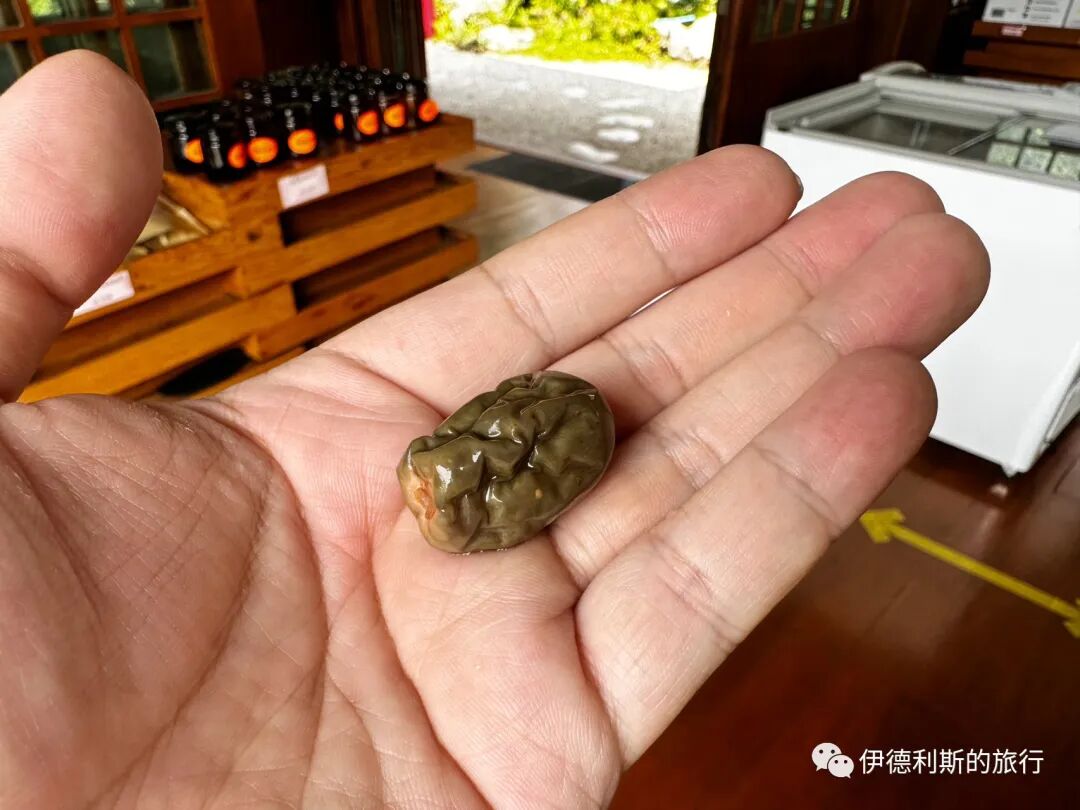
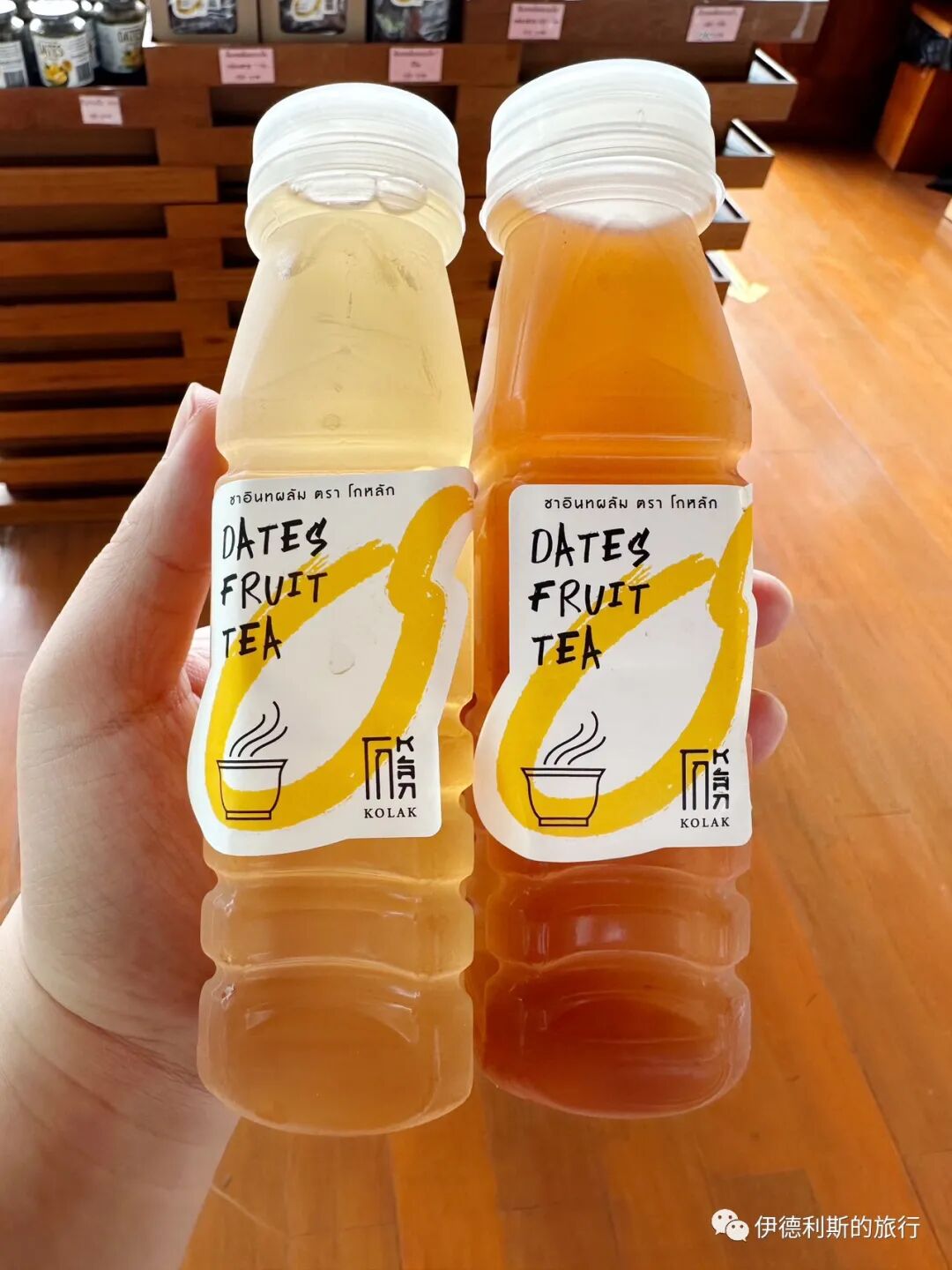
Although the dates in Chiang Mai do not ripen until July or August and I could not eat fresh ones this time, the orchard had a wide variety of date products. There were dried dates, date juice, date ice cream, canned dates, and more. We tried the date juice and date ice cream, and both were quite delicious! The dates in the canned dates were crunchy and had a light fragrance, which was a bit of a surprise.
Wanyang Village
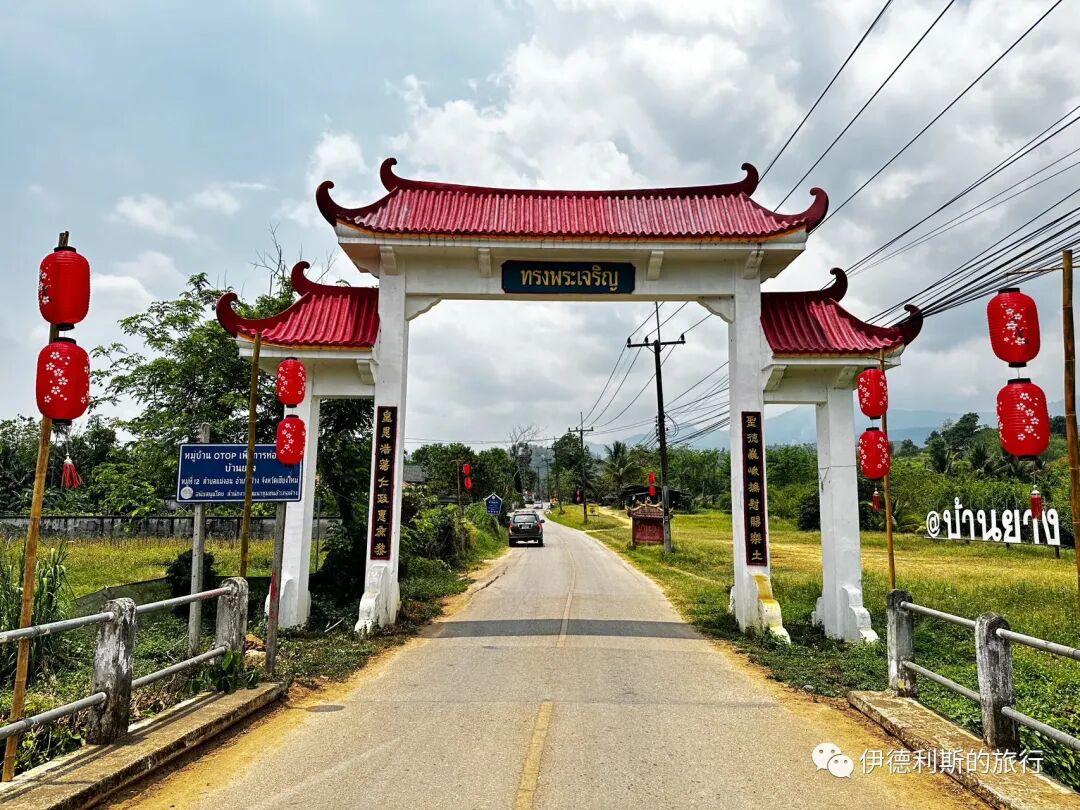
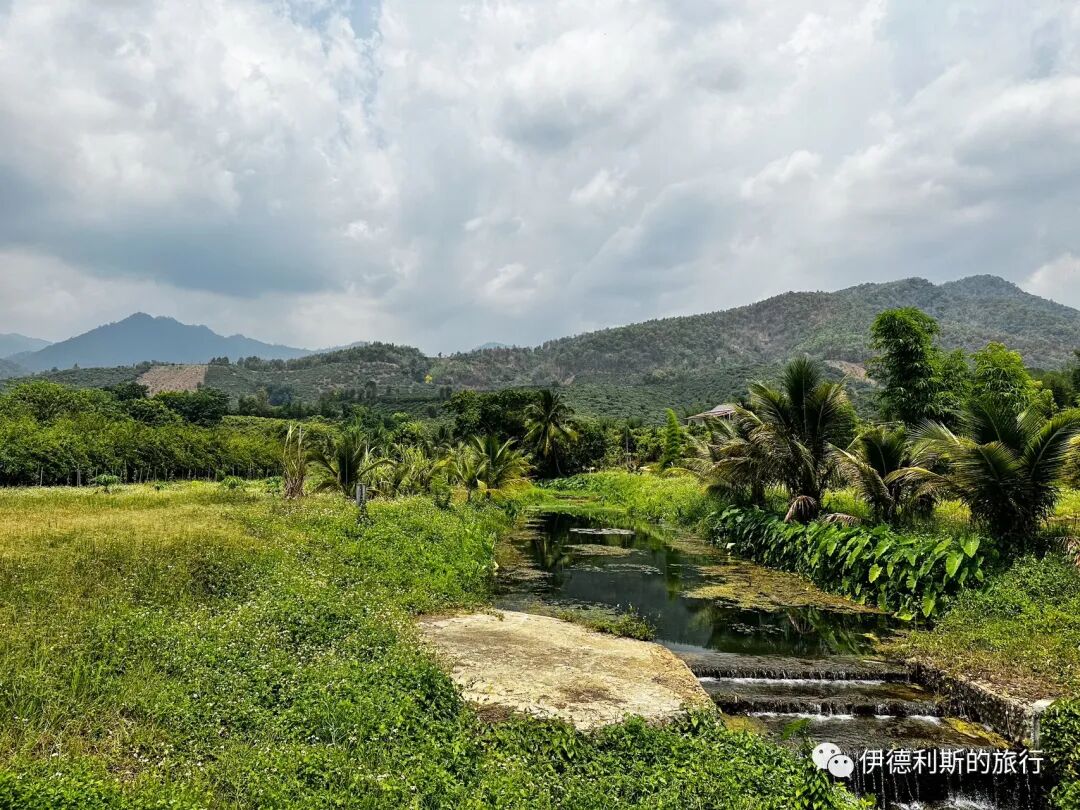
Heading north, I reached the first Hui mosque community on the Thai-Myanmar border: Wanyang Village in Fang District, founded by the descendants of refugees who followed the 93rd Division of the Lost Army in Northern Thailand. The Lost Army in Northern Thailand began in 1950 with the 237th and 93rd Divisions of the Nationalist Army, who retreated from Yunnan into Myanmar along with their families and many refugees.
After 1951, the number of families, merchants, horse caravans, and civilians arriving from Yunnan grew, but constant attacks by the Myanmar military forced them to retreat into the mountains along the Thai border, which is when Wanyang was established. These refugees first lived in bamboo and thatch huts, relying on primitive slash-and-burn farming to grow corn and rice. They were not allowed to enter or leave towns freely, making it very difficult to earn a living.
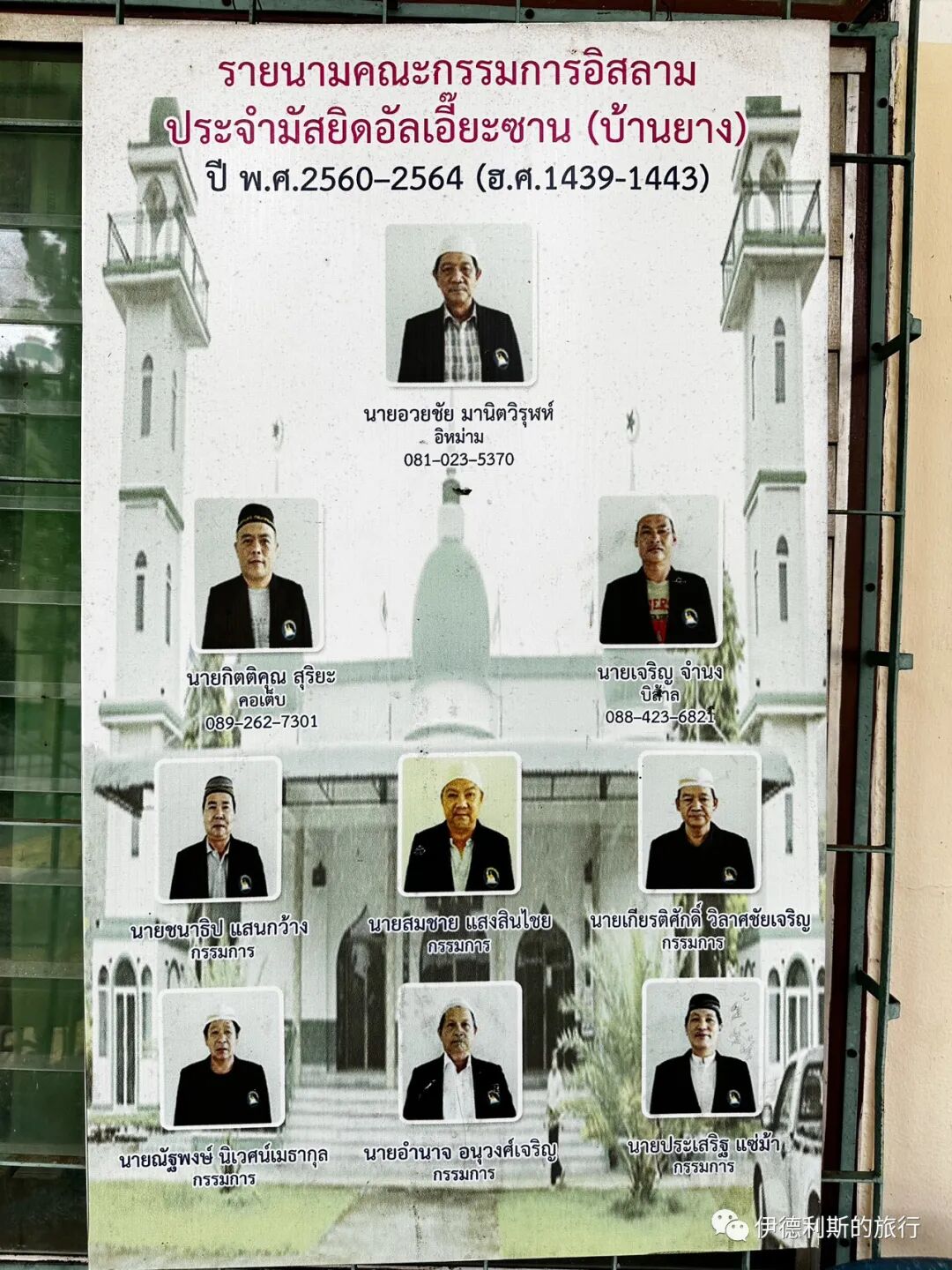
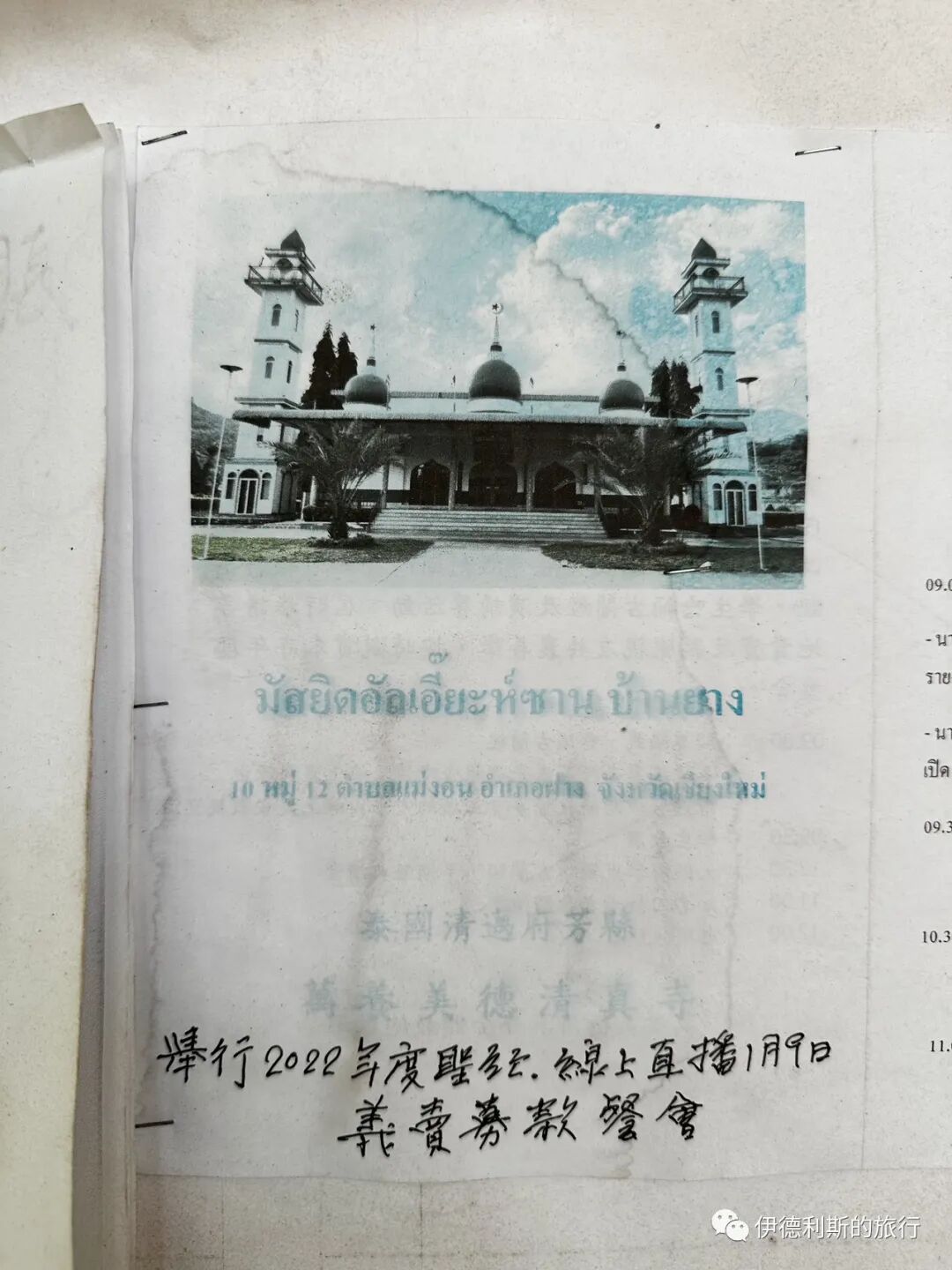
Some Yunnan Hui Muslim mosques in Northern Thailand like to use pleasant two-character religious terms for their names, such as Jingzhen Mosque in Chiang Mai, Meide Mosque in Wanyang, Jiqing Mosque in Hefei, Chengxin Mosque in Fang District, and Ciai Mosque in Daduan, all of which sound very auspicious. Among these Yunnan mosques, I think Wanyang's Meide Mosque is the most beautiful; the environment is excellent, with lush greenery that makes it feel like a garden.
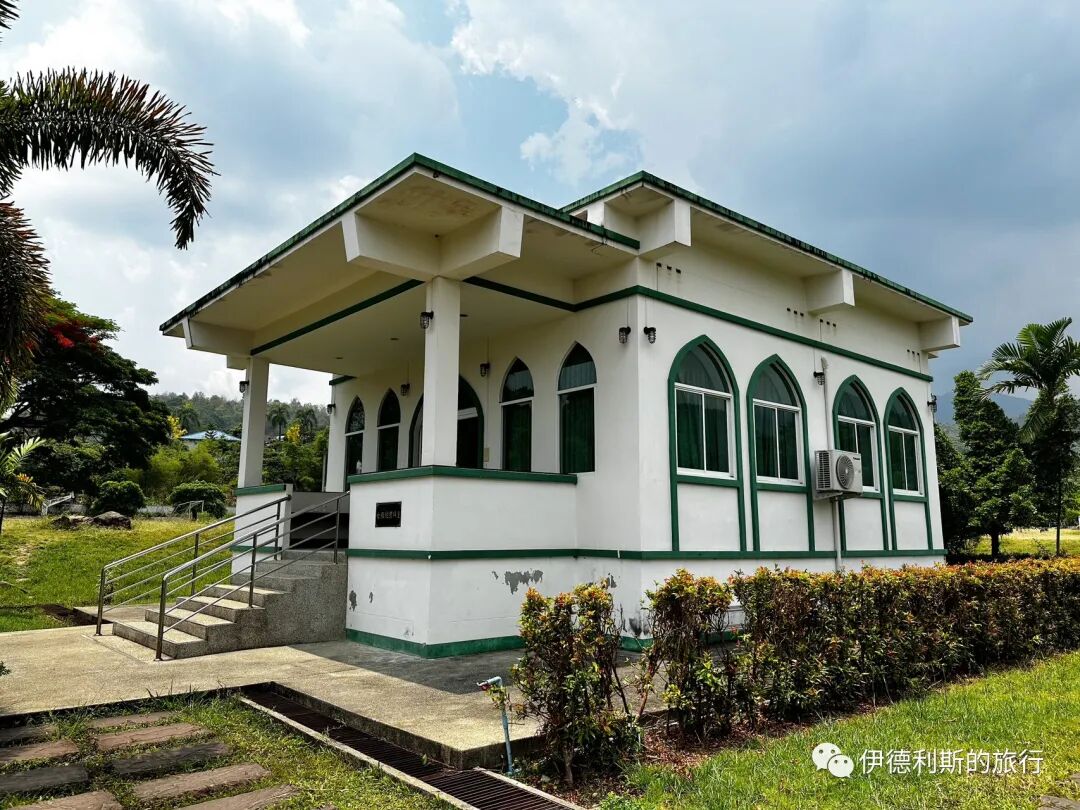
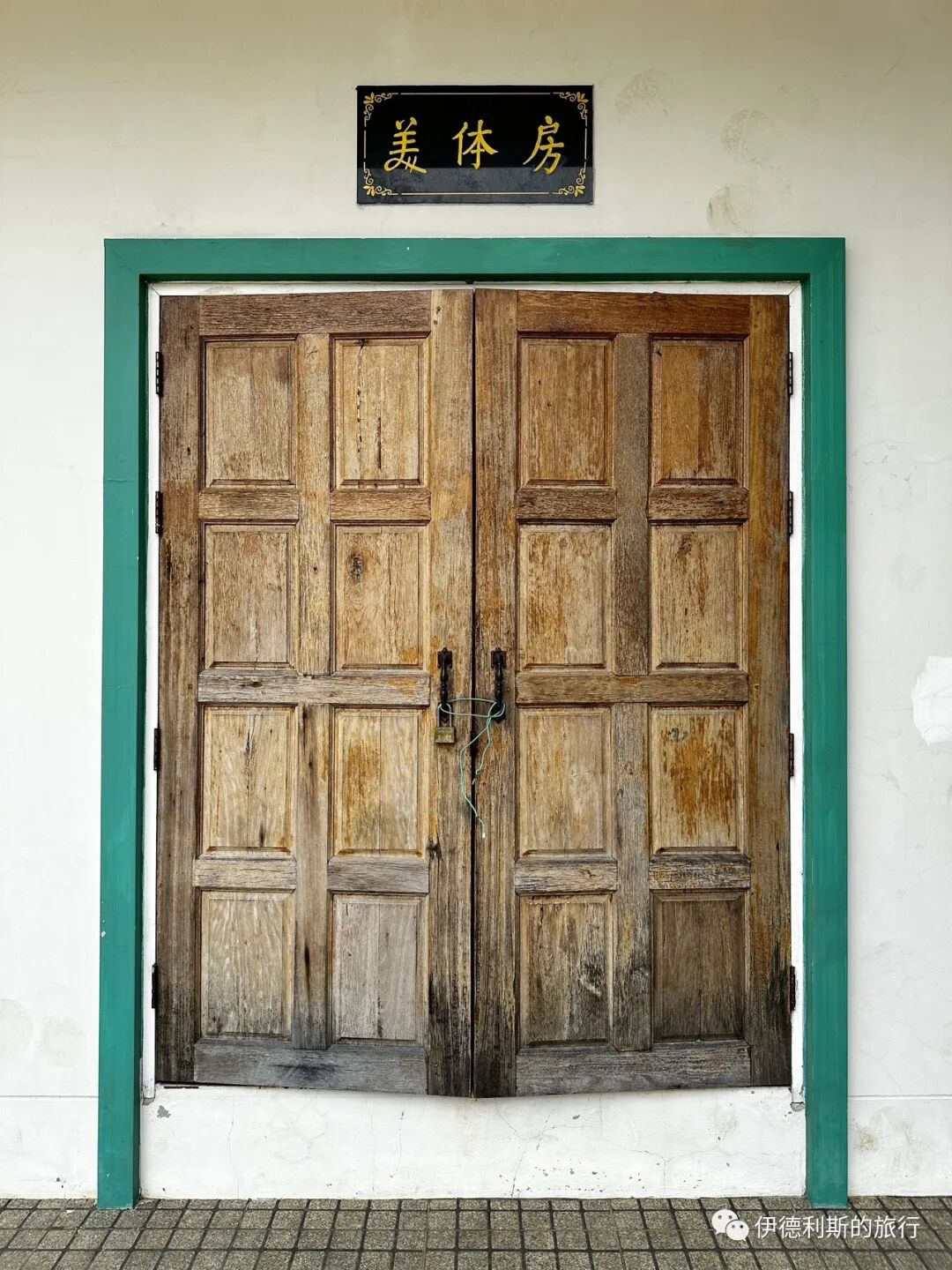
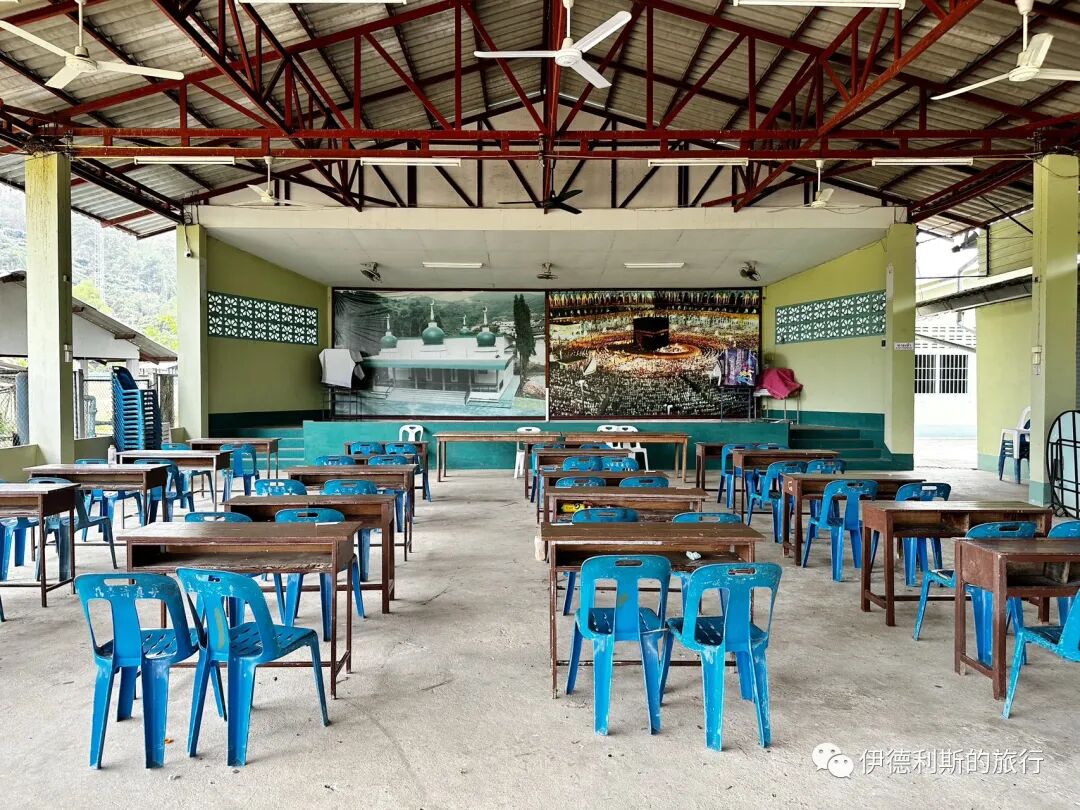
At Wanyang Meide Mosque, I saw the Arabic school, the women's prayer hall, the funeral room (meiti fang), and the event hall; it was my first time seeing the word for funeral (maiti) written as meiti, and I think this translation is quite good.
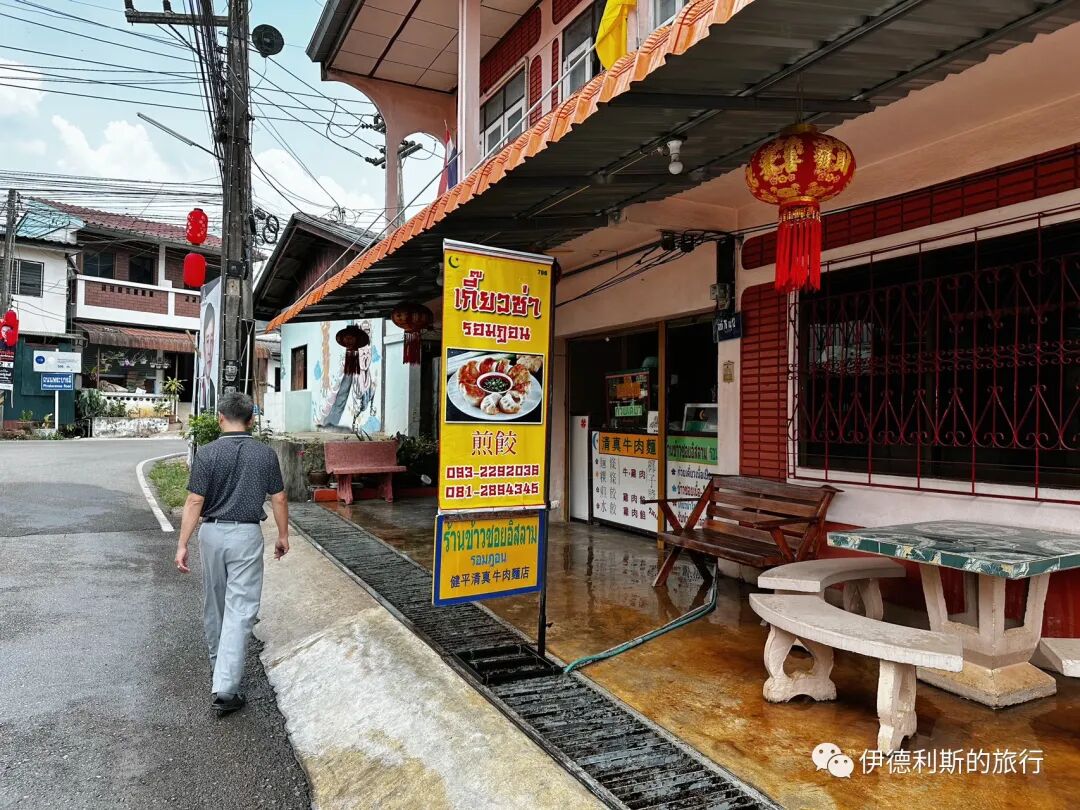
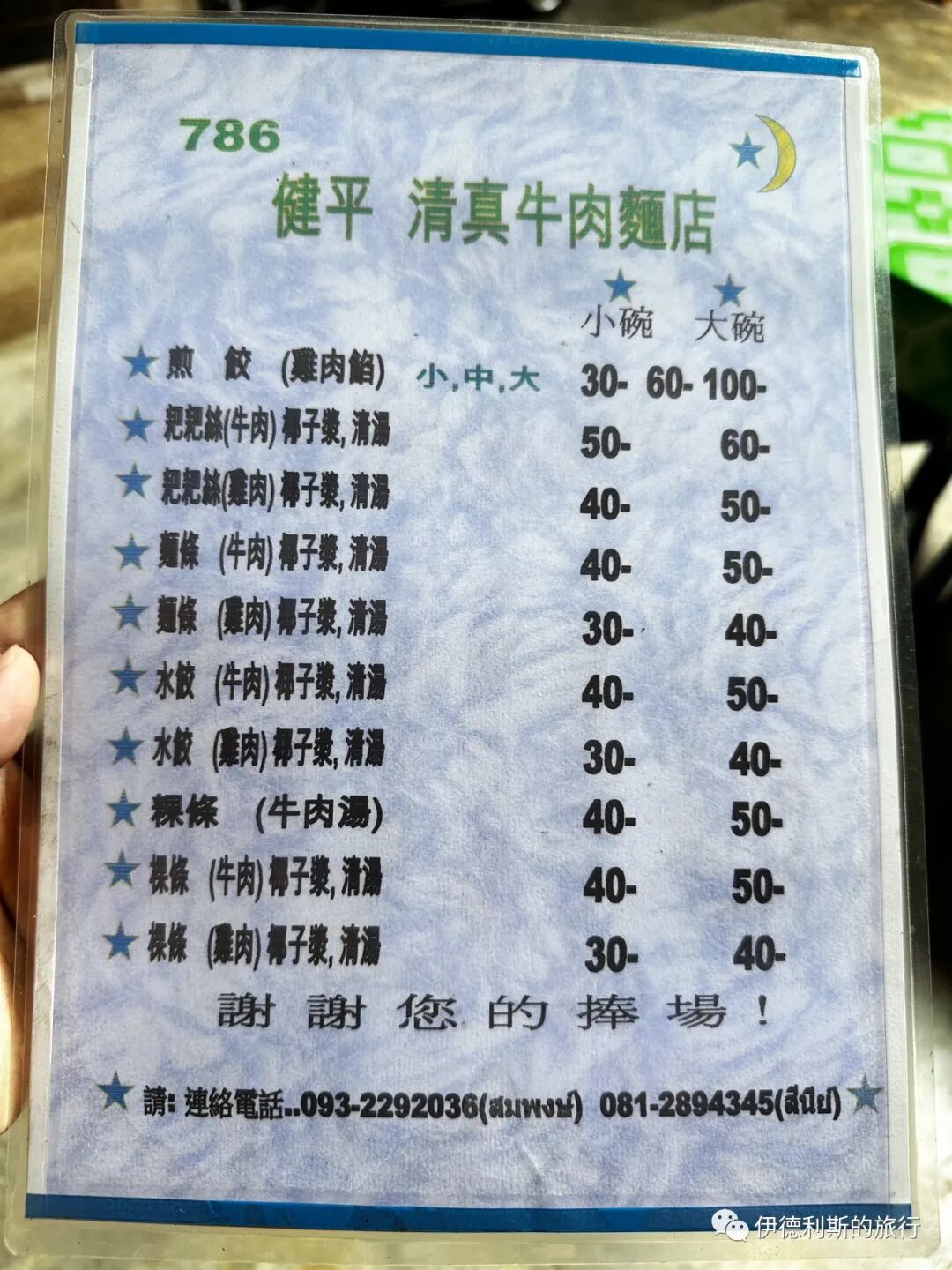
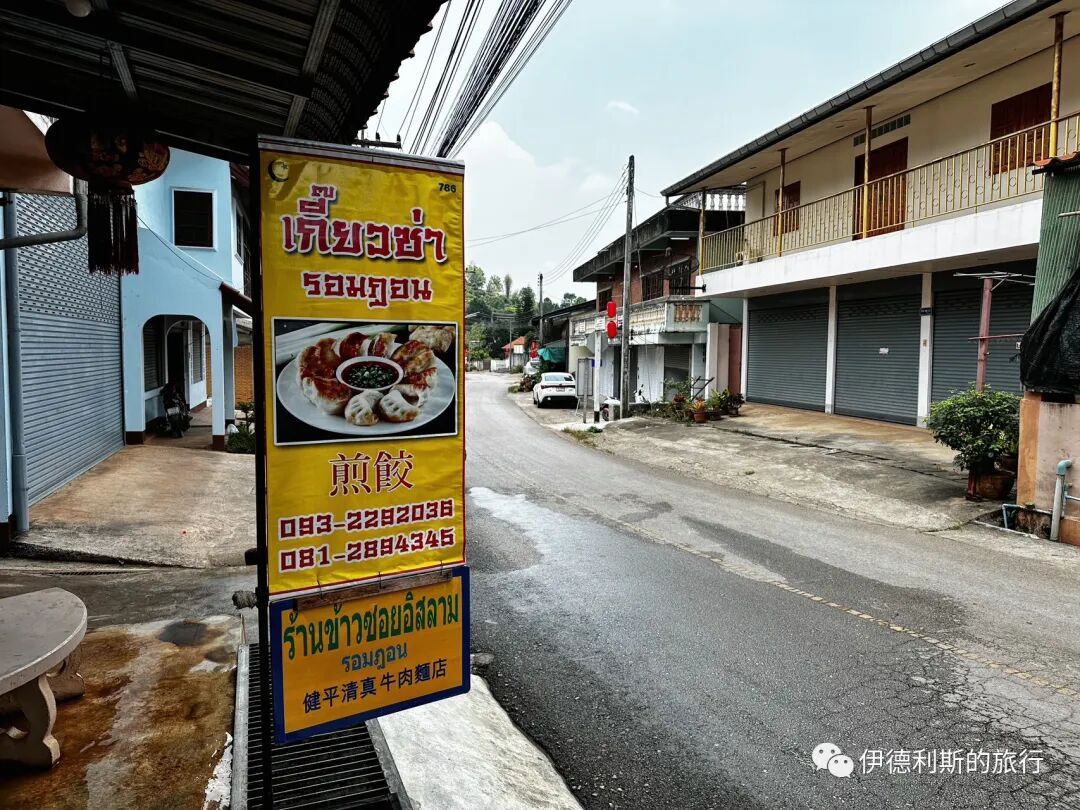
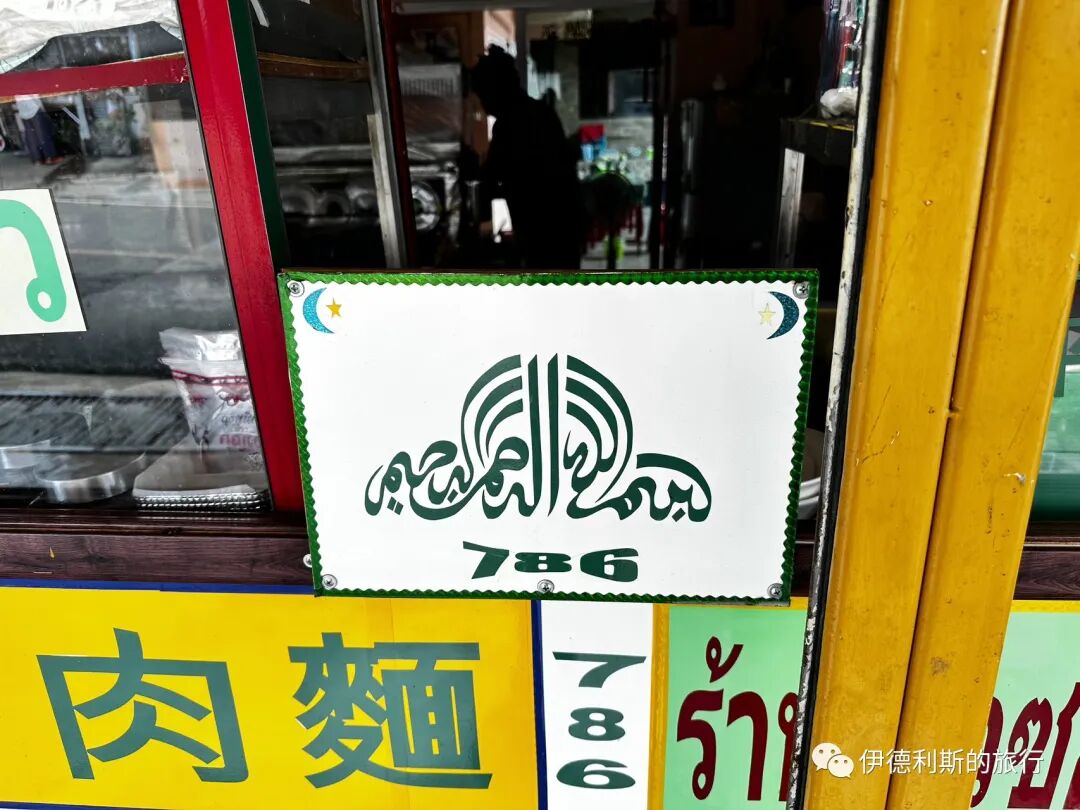
At noon, I went to a Yunnan Hui Muslim restaurant in Wanyang Village called Jianping Beef Noodle Shop and ate pan-fried dumplings (jianjiao), rice noodles (babasi), and beef noodles, served with the standard Northern Thai sides of pickled vegetables, onions, and lime. The rice noodles (babasi) are a type of flat rice noodle topped with traditional beef sauce, and you can choose between the traditional Yunnan Hui Muslim clear broth or the Northern Thai coconut milk broth. The pan-fried dumplings (jianjiao) were filled with chicken and chives, and I feel that pan-fried dumplings are also very common in Yunnan communities in Northern Thailand.
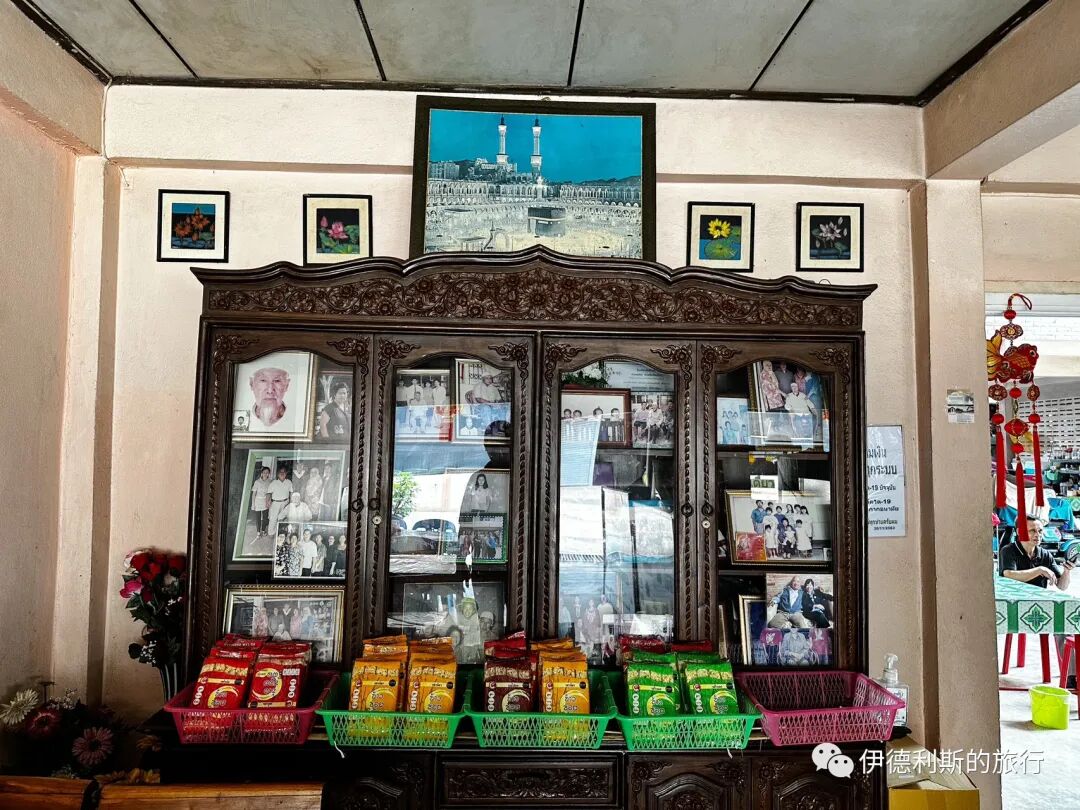
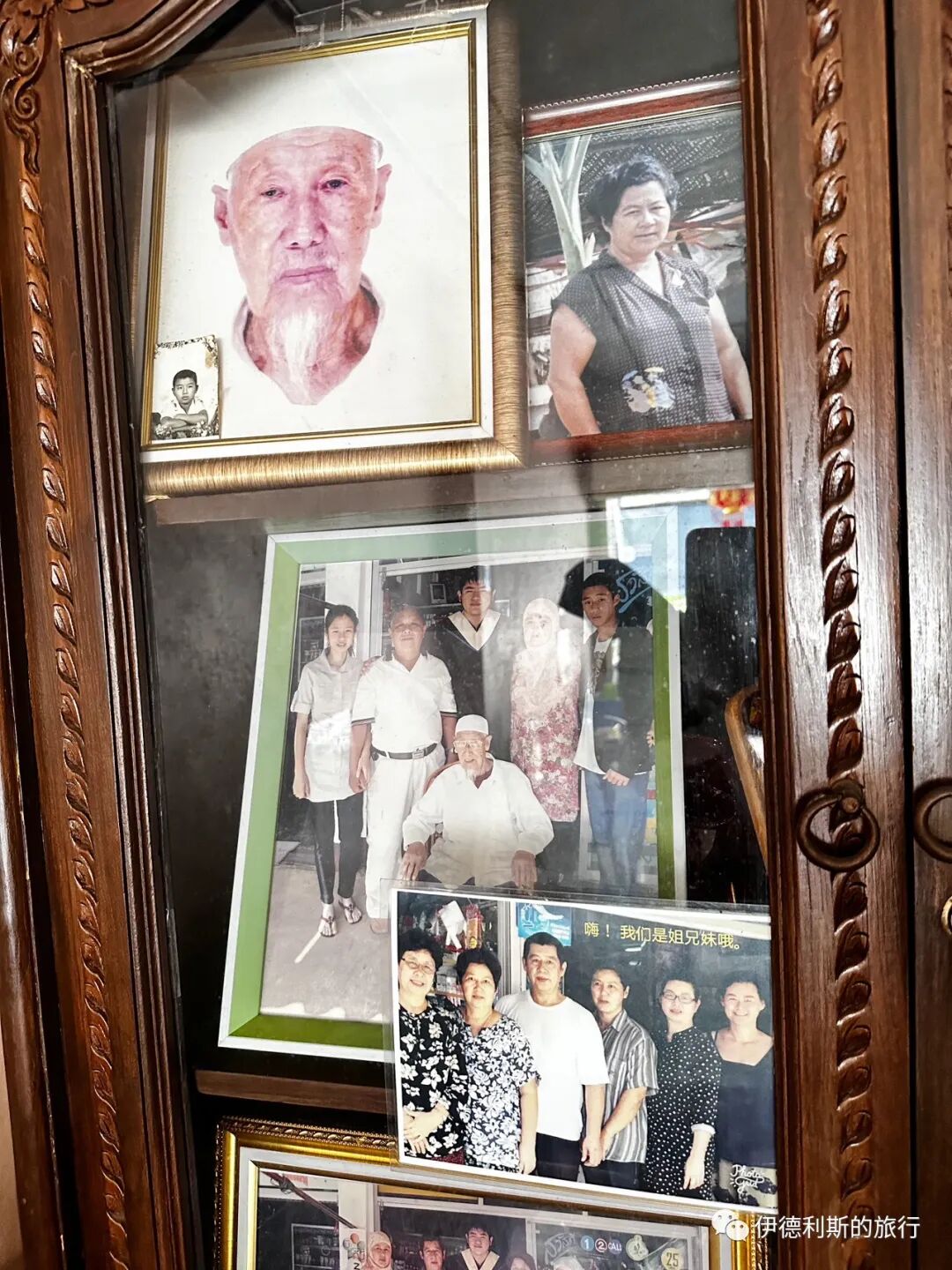
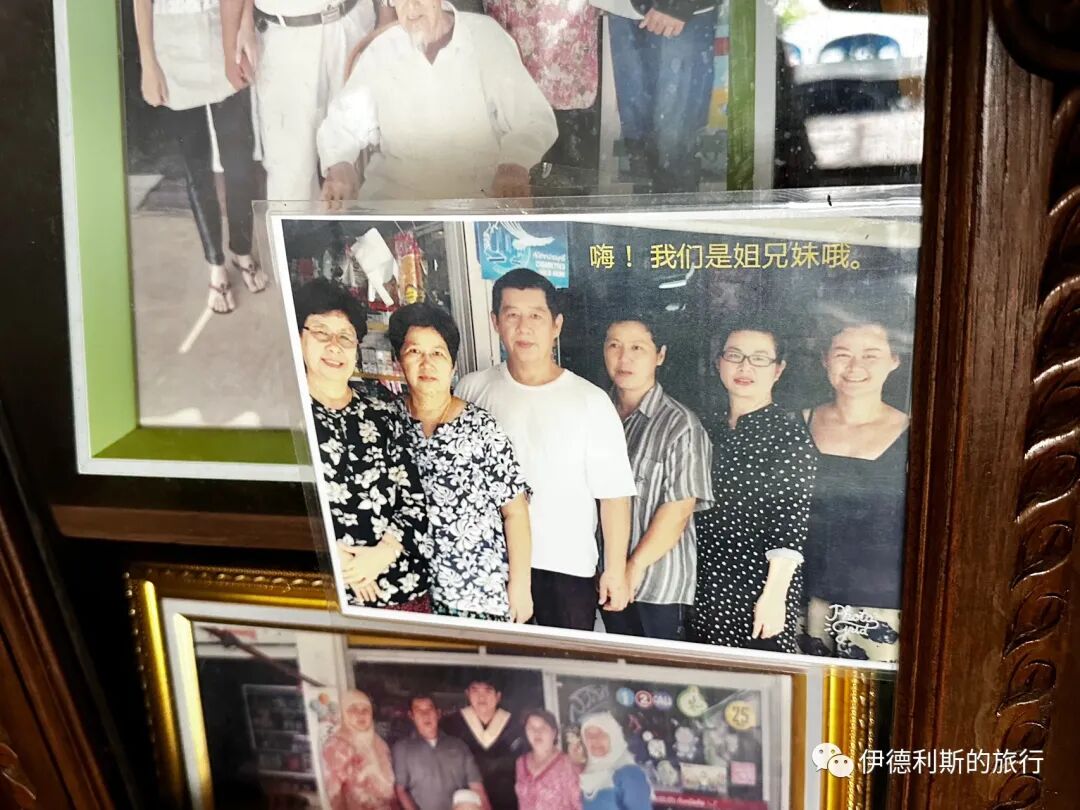
The shop displays family photos of the owner.
Hefei Village
After leaving Wanyang Village, we arrived at the second Yunnan Hui mosque community on the Thai-Myanmar border, Hefei Village, to pray at the village's Jiqing Mosque. Like Wanyang Village, Hefei Village was established after the 1950s by refugees who fled here from Yunnan through Myanmar.
Hefei Jiqing Mosque features Chinese calligraphy and traditional Chinese-style Arabic calligraphy, including a plaque that reads 'The Way Spans Past and Present' (Dao Guan Gu Jin), which was respectfully erected by Ma Junguo when the mosque was rebuilt in 1965.
I met a group of young Hafiz reciting the Quran in the mosque. Life has been hard in northern Myanmar recently, so some Burmese Muslims send their children to study at Jiqing Mosque. These children spend several years practicing constantly to become qualified Hafiz.
The back door of Hefei Jiqing Mosque leads to a cemetery. You can see that the ancestors of the local community came from places like Shadian, Jianshui, and Fengqing County in Lancang, Yunnan. The mosque's donation record book (nietiebu) shows that the main family names in this community are Ma, Na, Li, and Yang.
Fang District town
After leaving Hefei, we went to the third Yunnan-style mosque on the Thai-Myanmar border, Chengxin Mosque in the town of Fang District, Chiang Mai Province. Chengxin Mosque was built in 1975 by Yunnan Hui Muslims living in Fang District town. It makes it easier for Yunnan Hui Muslims from nearby villages to attend to business in town. Chengxin Mosque has fewer ancestral records (gaomu) than the surrounding villages, and the mosque itself is quite small. It is currently led by an imam who moved from Myanmar, and his family lives right in the mosque. The imam's daughter speaks Mandarin. We chatted with her about daily life, which was very interesting.
Similar to Thailand, the origins of Muslims in Myanmar vary from north to south. In the far north live the Panthay people, descendants of Yunnan Hui Muslim caravans. In the far south live the Pashu people, who are of Malay descent. The central region is mainly home to Burmese Muslims, formed by intermarriage between South Asians and local Burmese people. In 1660, some Mughal soldiers followed the son of Emperor Shah Jahan to Arakan. They later became royal archers for the Mrauk U Kingdom of Arakan and ruled the area for decades between the late 17th and early 18th centuries. The descendants of these Mughal troops are known as the Kaman people, one of the ethnic groups officially recognized by Myanmar.
Daduan Village
Leaving Fang District town, we arrived at the northernmost Yunnan-style mosque in Chiang Mai, Ciai Mosque in Daduan. We are now just a stone's throw from Myanmar. The newly built women's hall at Ciai Mosque is beautiful. The first floor is a prayer hall, and the second floor is a classroom.
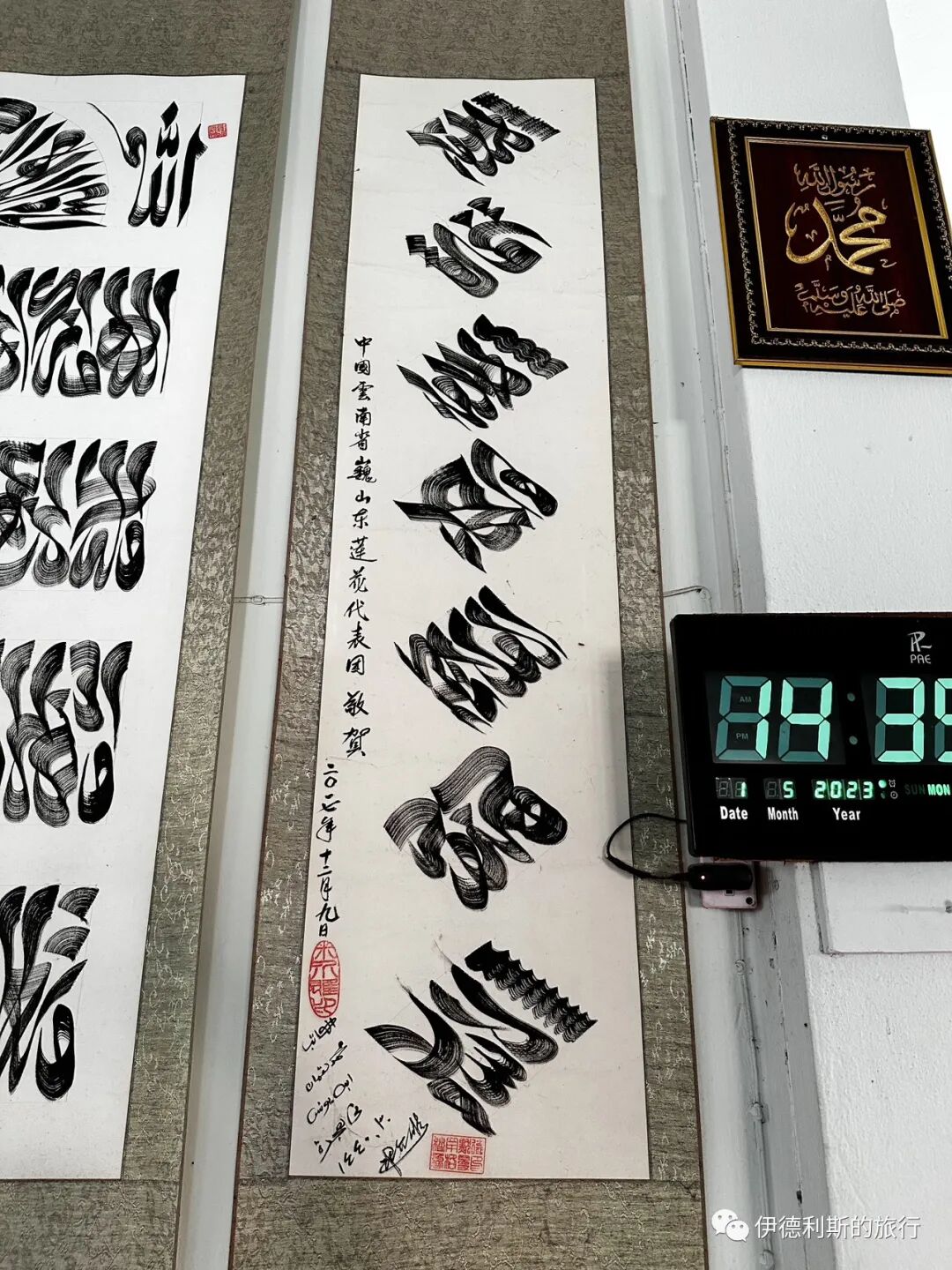
Inside the main hall of Daduan Ciai Mosque, there is a traditional Weishan-style Arabic calligraphy scroll gifted in 2017 by Donglianhua Village in Weishan, Dali. Thanks to the internet, many Hui Muslims from Yunnan living in Northern Thailand have reconnected with their relatives back home, and the two sides are now in closer contact. Among the Hui Muslims from Yunnan living along the Thai-Myanmar border, Weishan in Dali, Tonghai in Yuxi, and Shadian in Honghe are the main ancestral homes.
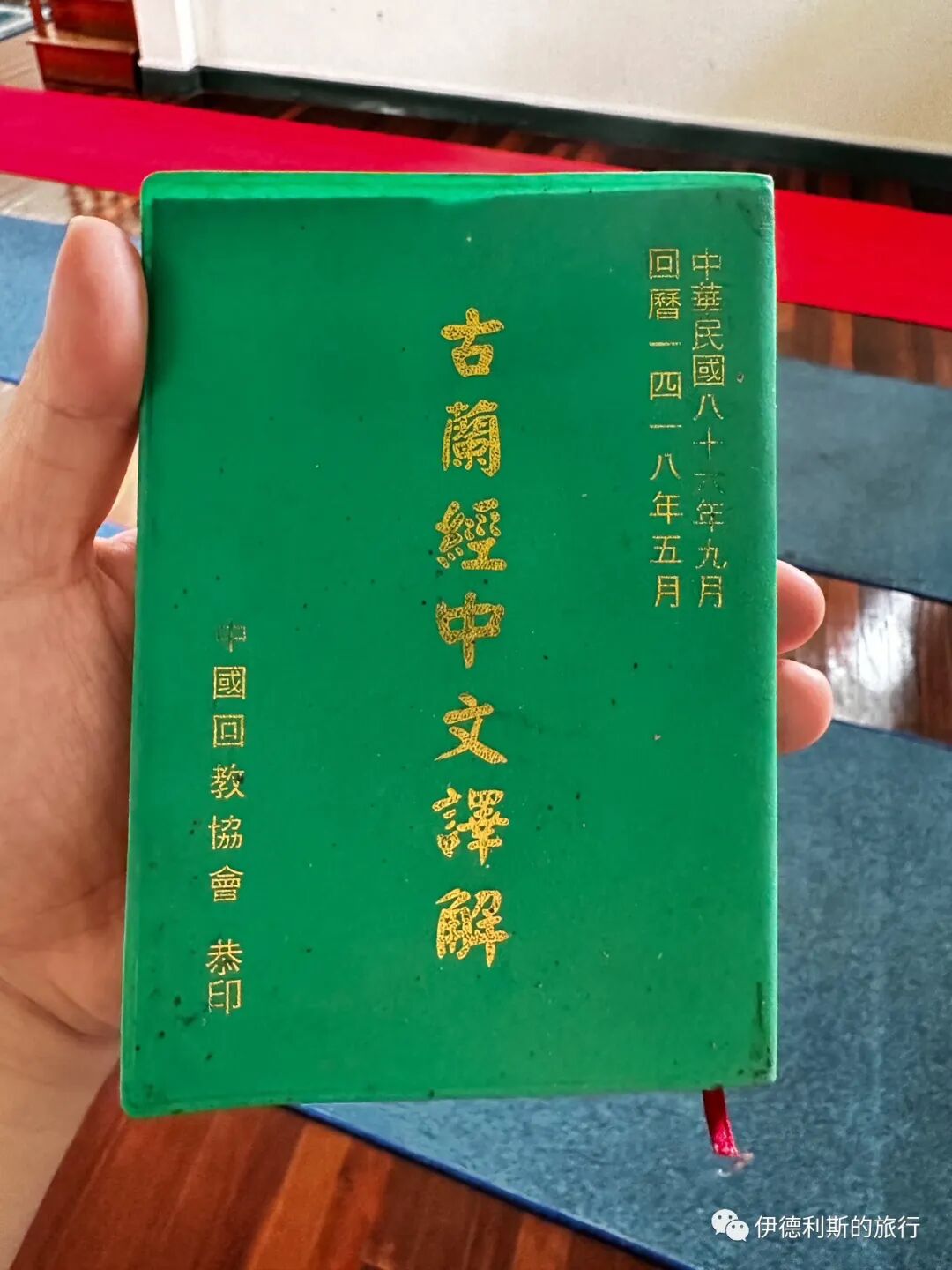
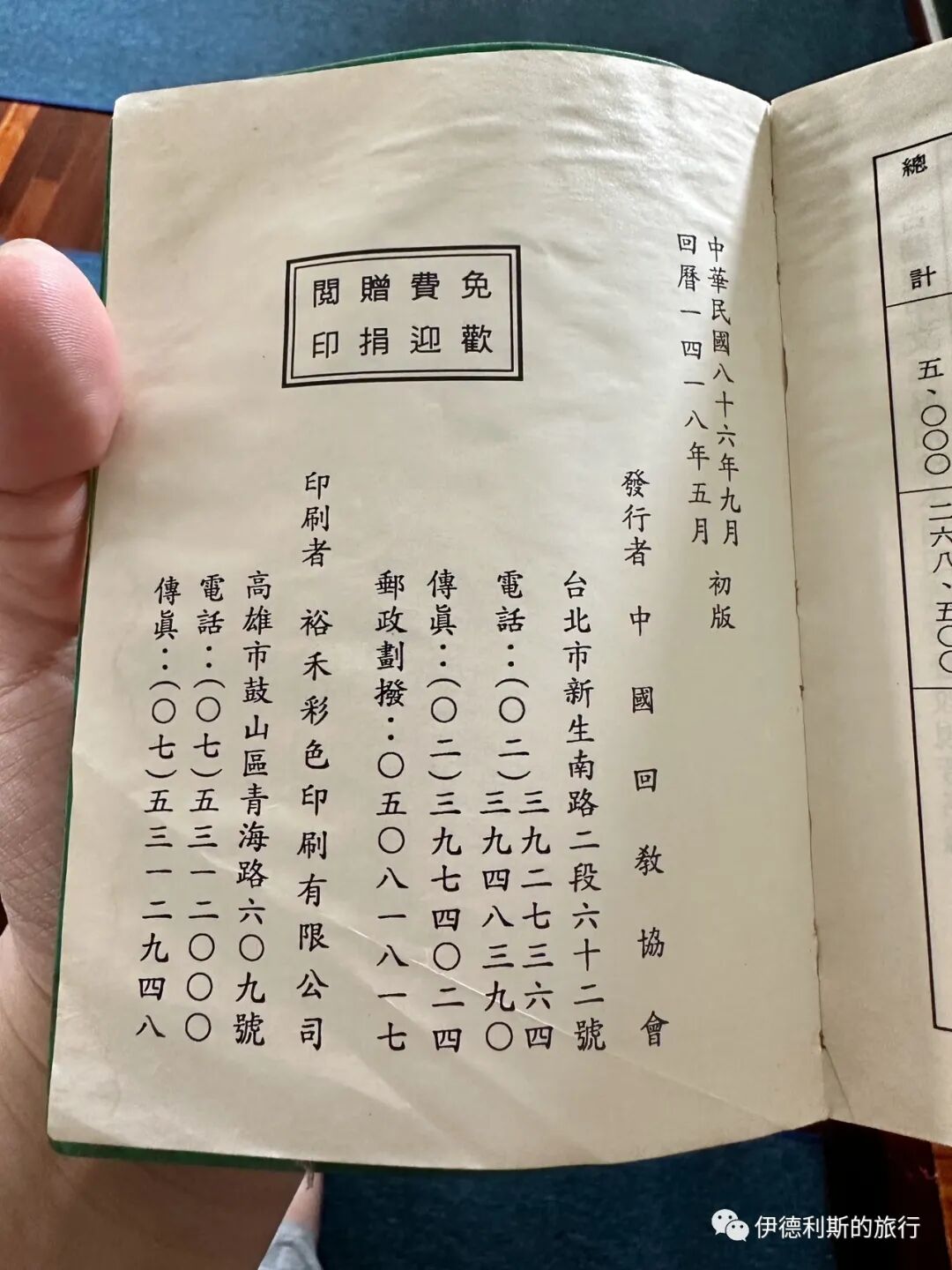
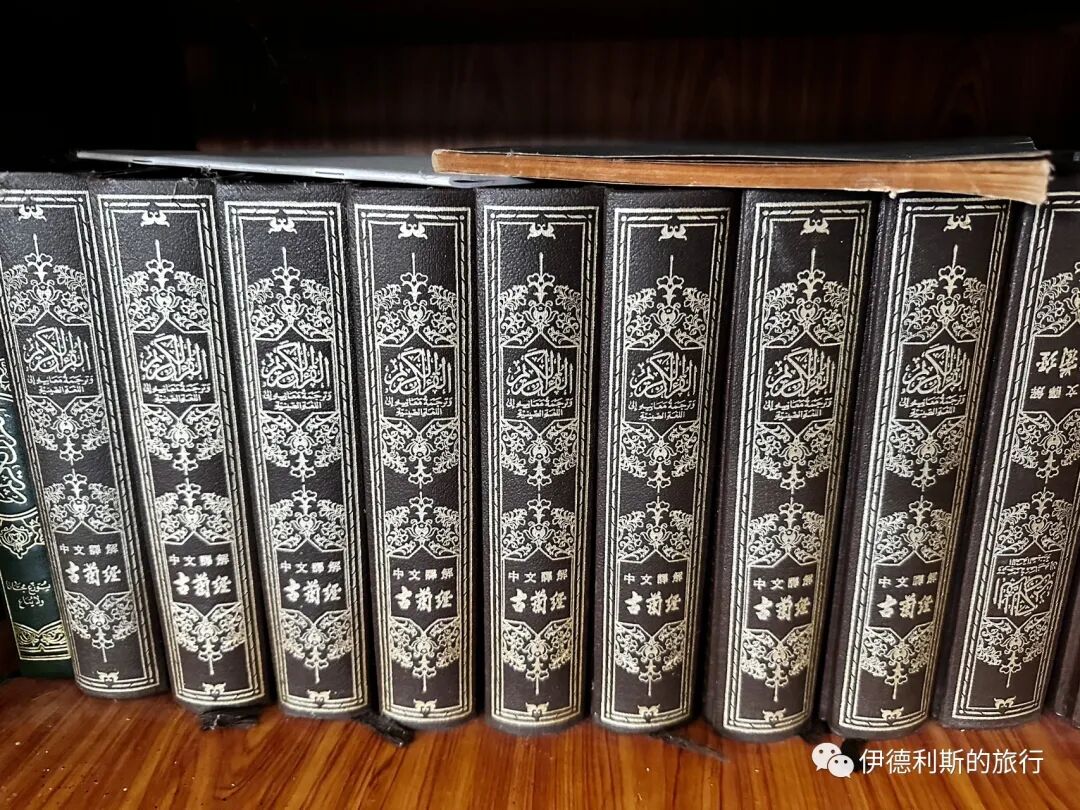
The mosque also has copies of scriptures translated into Chinese that were donated by Taiwan. In 1984, Thailand ordered the isolated army in Northern Thailand to disarm and placed them under military control. They banned Chinese-language education and replaced Chinese schools with Thai-language schools. However, the refugees insisted on learning Chinese. They sent their children to Thai schools during the day, but still had them secretly study Chinese in the early morning and at night. Over time, Thailand stopped strictly enforcing these restrictions.
Inside the mosque hangs a photo of Panghsang Mosque, which was gifted by the Panghsang Hui Muslim Association in Myanmar in 2014. Master Ma told me that in 2014, various Yunnan-style mosques in Northern Thailand were invited by Panghsang Mosque to attend their mosque renovation celebration. Panghsang is the capital of the Wa State in Myanmar. It connects to the Meng'a border crossing in Yunnan and is one of the places where Myanmar-based Hui Muslims from Yunnan live.
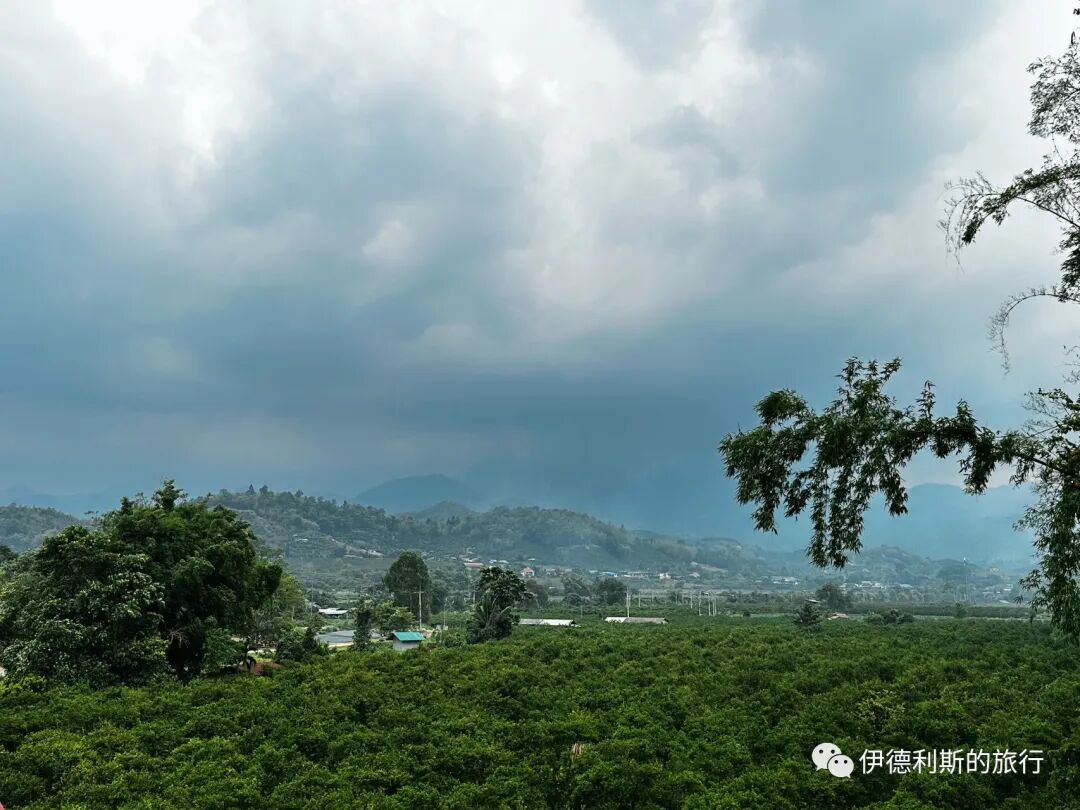
At the Thai-Myanmar border, the mountain on the other side is in Myanmar.
Mae Salong
Continuing north, we left Chiang Mai Province and entered Chiang Rai Province.
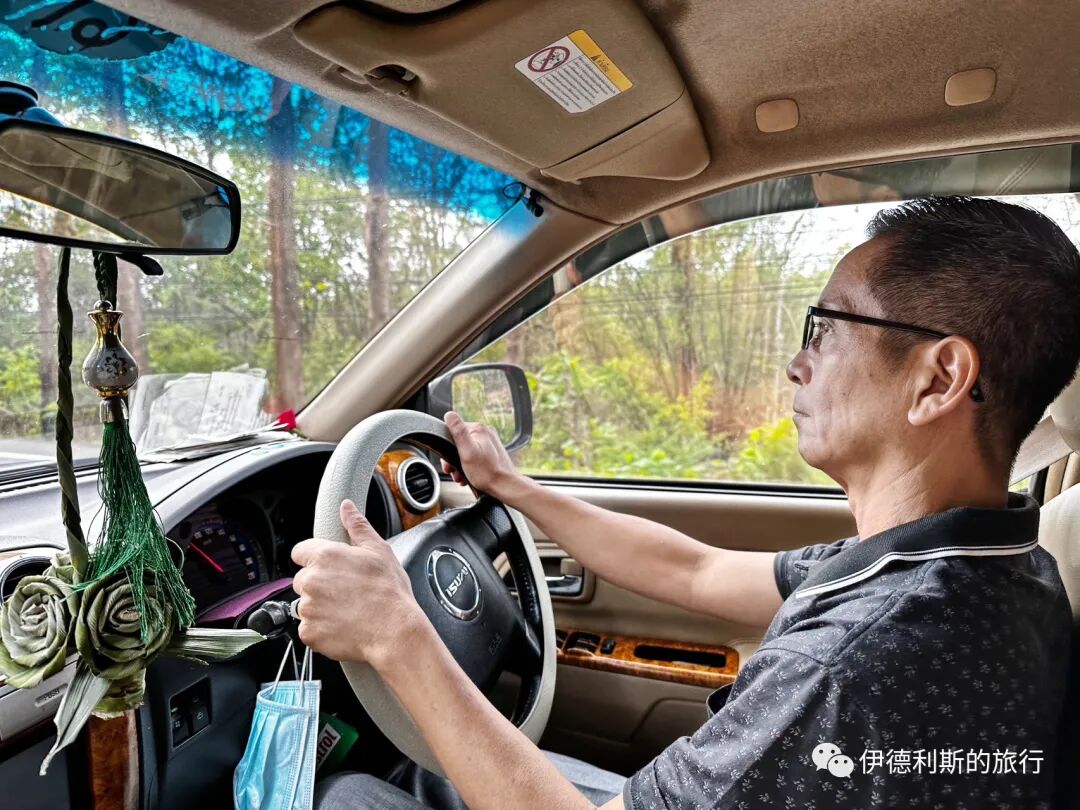
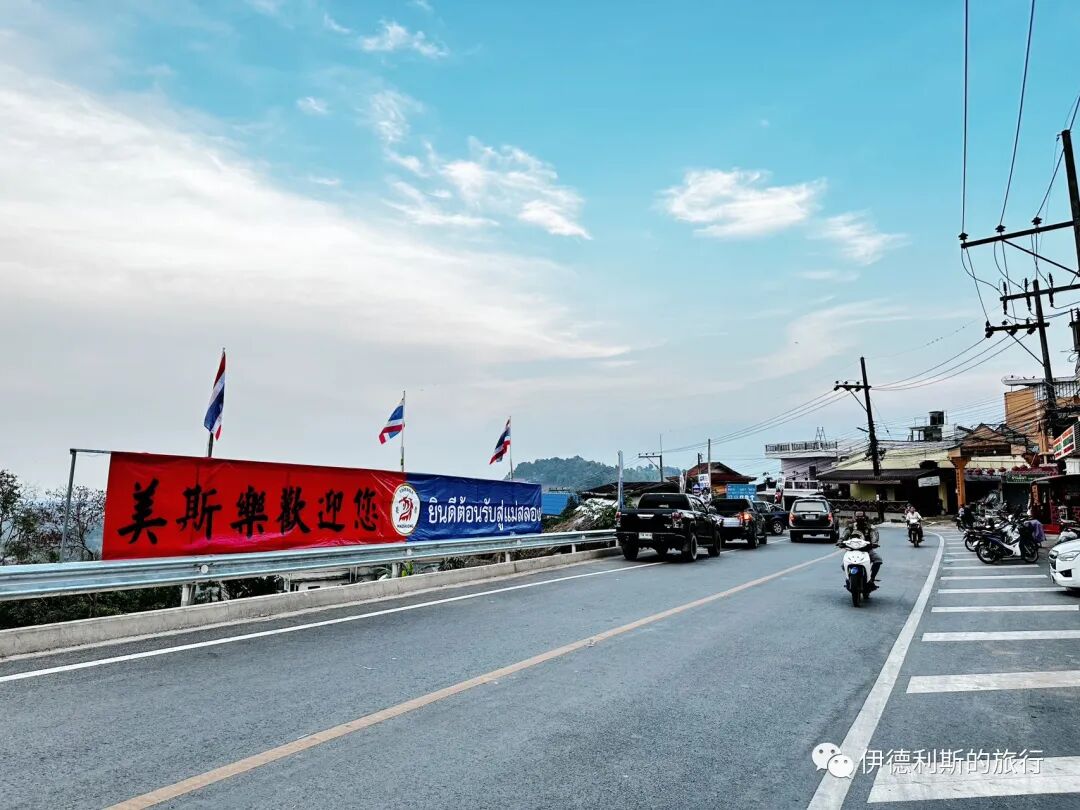
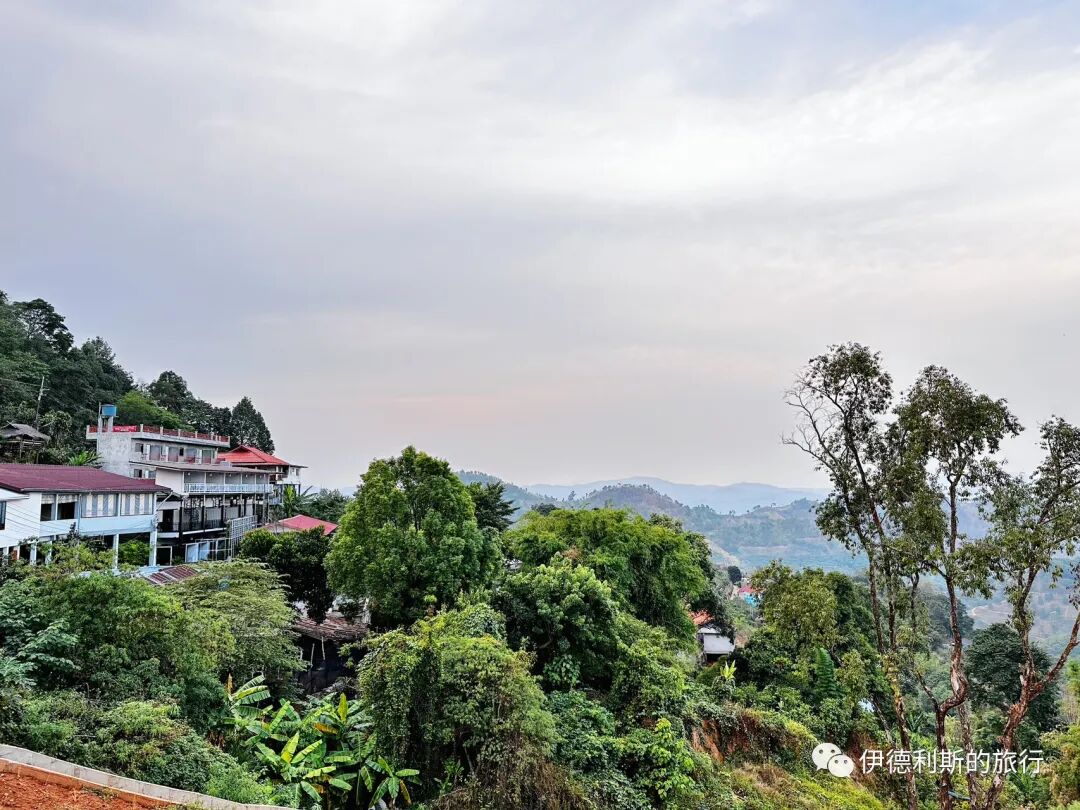
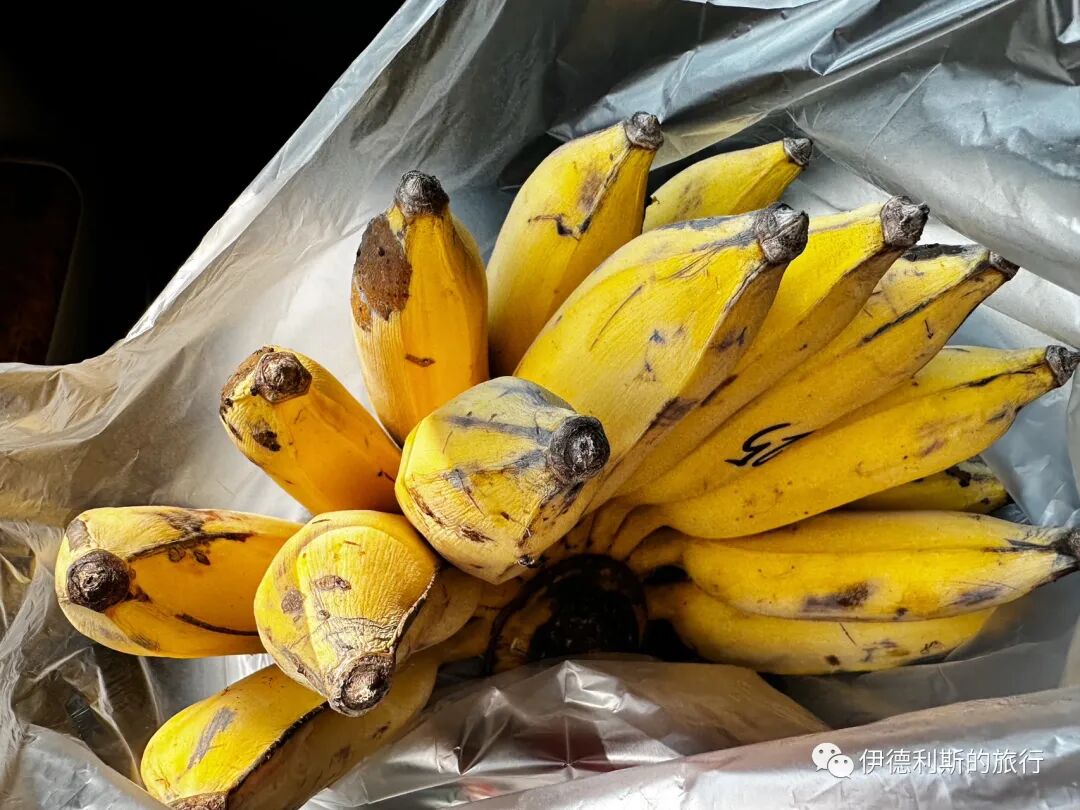
We drove deep into the jungle along the steep, winding roads of the Thai-Myanmar border. Along the way, I bought a huge bunch of super sweet bananas from a local grandmother for one yuan. We finally arrived at Mae Salong, the base camp of the isolated army in Northern Thailand. Master Ma said he has been driving this mountain road for 30 years. At first, it was all dirt, and you had to use tire chains in the winter. It is much easier to drive now that the road has been paved, but it still requires extreme caution if you are not used to it.
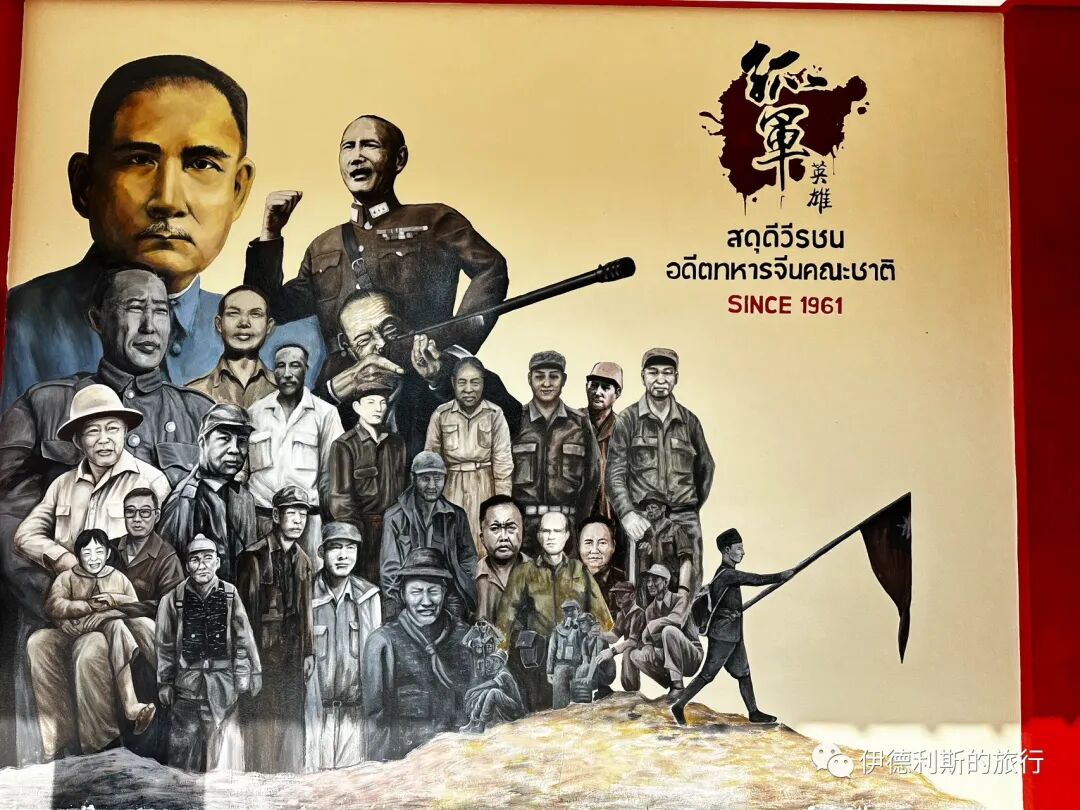
After the isolated army withdrew to Taiwan for the second time in 1961, the remaining 3rd and 5th Armies gave up their status as Nationalist soldiers and retreated from Myanmar into the border area of Northern Thailand near Myanmar. From then on, they were known as the isolated army in Northern Thailand.
At that time, the 3rd and 5th Armies did not command each other. Their supplies were cut off, and each had to find a place to live in the jungles of Northern Thailand. Unlike the 3rd Army commander Li Wenhuan, who had a background as a businessman, the 5th Army commander Duan Xiwen was a graduate of the Yunnan Military Academy and did not know how to do business. This caused the 5th Army to fall into a desperate situation for a time. In 1963, Myanmar confiscated the property of overseas Chinese. The Tachileik Special Goods Company at the Thai-Myanmar border crossing had a large amount of stock that they asked the 5th Army to transport. The 5th Army used this to collect escort fees and also bought and sold goods for profit, which temporarily solved their supply problem. After this, the 5th Army headquarters moved into Mae Salong, which guards the mountain pass. They built bamboo and grass huts there for the soldiers and their families to live in.
Because the soil in Mae Salong was not fertile, the terraced fields they cleared could not provide enough food for the soldiers, so life was very difficult in the early days. By the 1980s, most houses were built with bamboo and mud walls and topped with tin roofs. In 1981, the isolated army defeated the Thai Communist Party at Doi Khao Ya. They finally gained legal status, with the soldiers becoming Thai citizens and their families becoming legal resident immigrants. After that, the isolated army laid down their weapons, and Mae Salong changed from a military camp into a northern Thai Chinese village.
The people of Mae Salong put down their guns and started tea plantation businesses. The climate in the northern Thai mountains is perfect for growing tea, and there were already many wild Assam black tea trees there. Since some of the soldiers had been tea merchants back home in Yunnan and knew how to grow tea, they quickly started many tea plantations in Mae Salong. Besides the local wild tea trees, they introduced many varieties like Pu'er and Oolong. Today, Mae Salong has become a tourist destination filled with tea plantations. Every year between the Mid-Autumn Festival and the Spring Festival, many Thai people enjoy coming here to escape the heat and go on vacation. view all
Summary: Northern Thailand has old Yunnanese Hui Muslim communities whose mosque neighborhoods still carry the memory of migration, trade, and borderland life. This firsthand account follows the first half of the second day through mosques, settlements, and local Muslim community scenes while preserving the original photos and sequence.
During the May Day holiday in 2023, I visited the mosque communities (sifang) of Hui Muslims from Yunnan in Northern Thailand. On the first day, led by Master Ma Ruqi, a third-generation Thai Hui Muslim from Yunnan, we visited four mosque communities in the Chiang Mai city area: Chang Khlan, Wat Ket, Jingzhen, and Nurul. I posted about this in 'A Pilgrimage to Northern Thai Yunnan Mosque Communities (Day 1)'. On the second day, Master Ma drove us north to visit several mosque communities in the refugee villages of the former isolated army. We went to Mae Salong, the main base of the isolated army, and finally reached Mae Sai, the northernmost border crossing between Thailand and Myanmar, which is also the second-largest settlement for Hui Muslims from Yunnan in Northern Thailand.
Breakfast in Chiang Mai
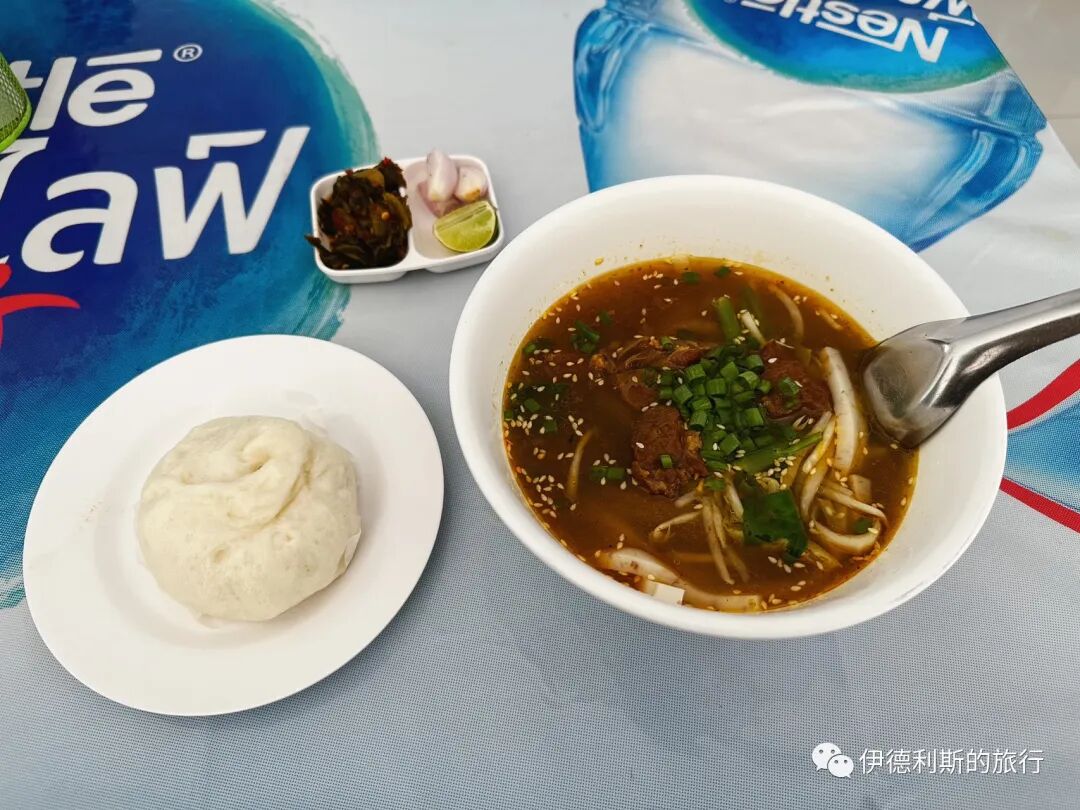
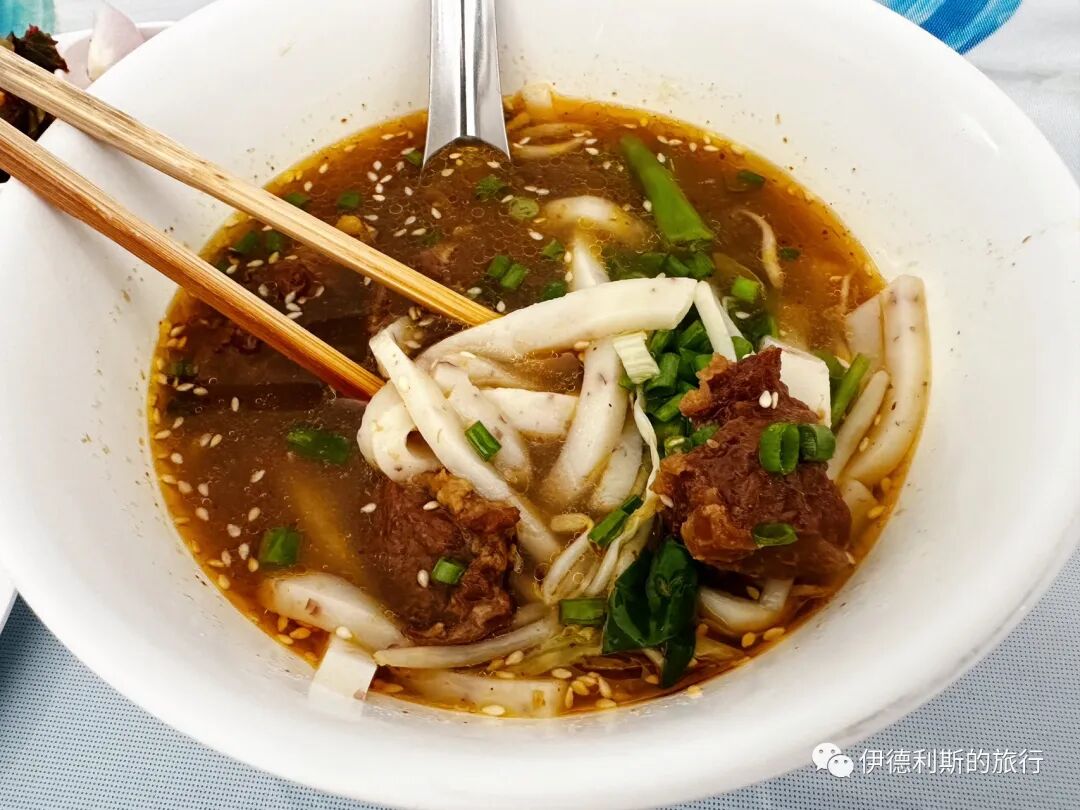
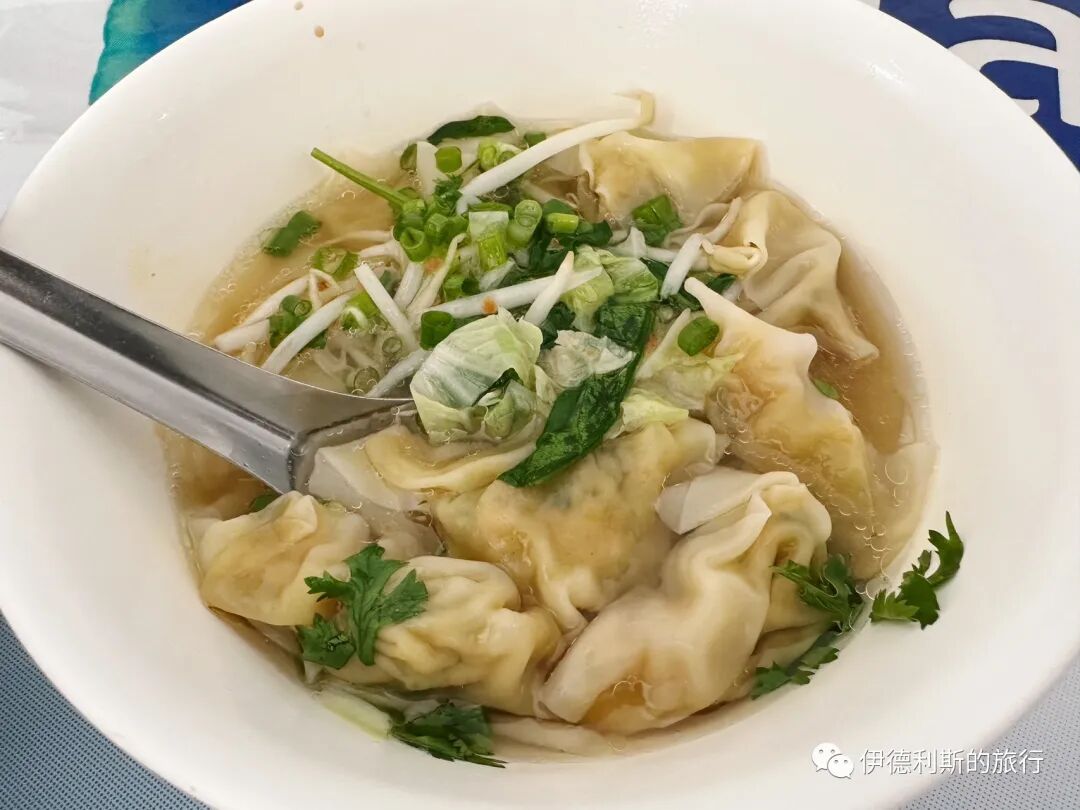
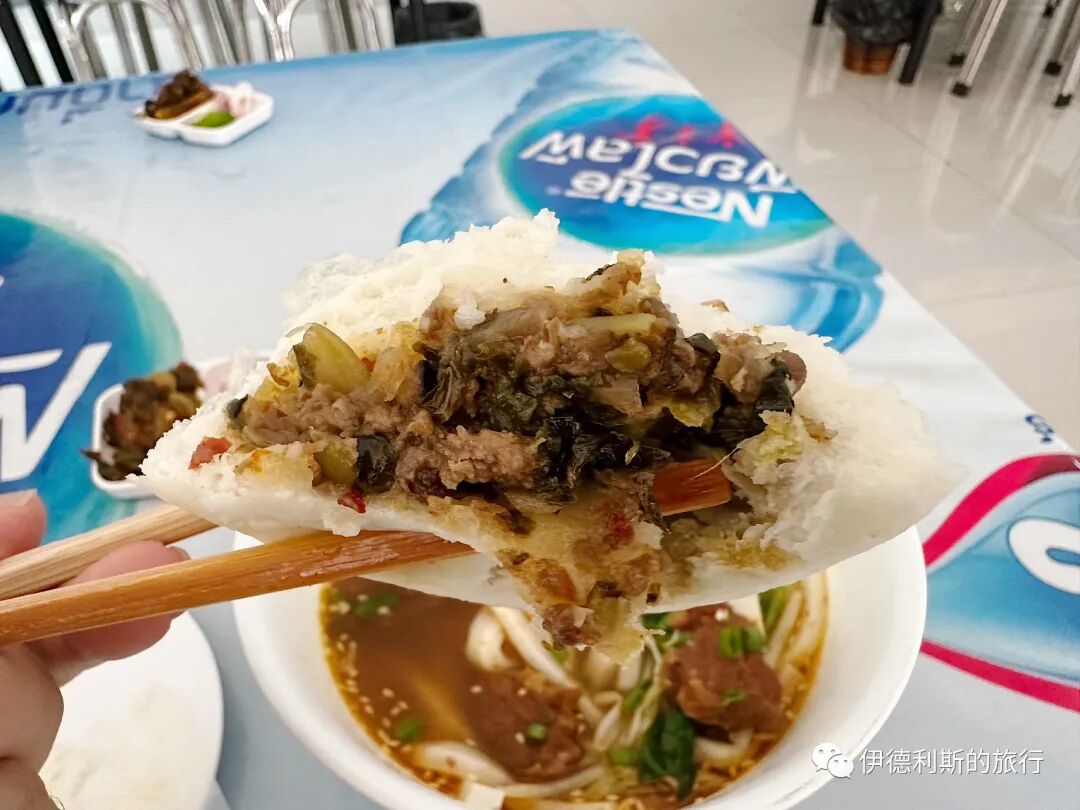
On the second morning, we first had breakfast at a halal restaurant run by Hui Muslims from Yunnan in the southeast of Chiang Mai's old city. The owner's Yunnan dialect sounded very familiar, and we had no trouble ordering in Mandarin. I ate their chicken fat rice (ji you fan) back in 2017. This time, I had rice cakes (erkua), wontons (huntun), and steamed buns (baozi). The rice cakes were topped with braised beef, the wontons were in chicken soup, and the steamed buns were filled with pickled vegetables and meat. The standard side dishes here are limes, small shallots, and pickled vegetables. I found them very refreshing and appetizing.
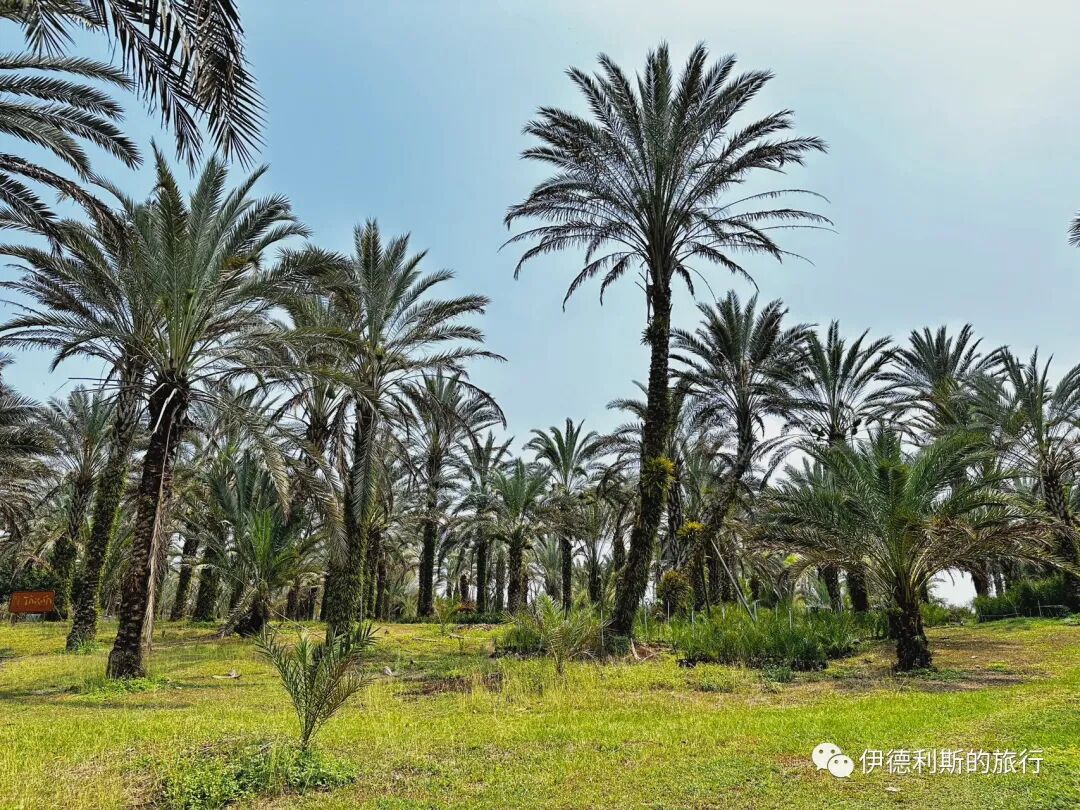
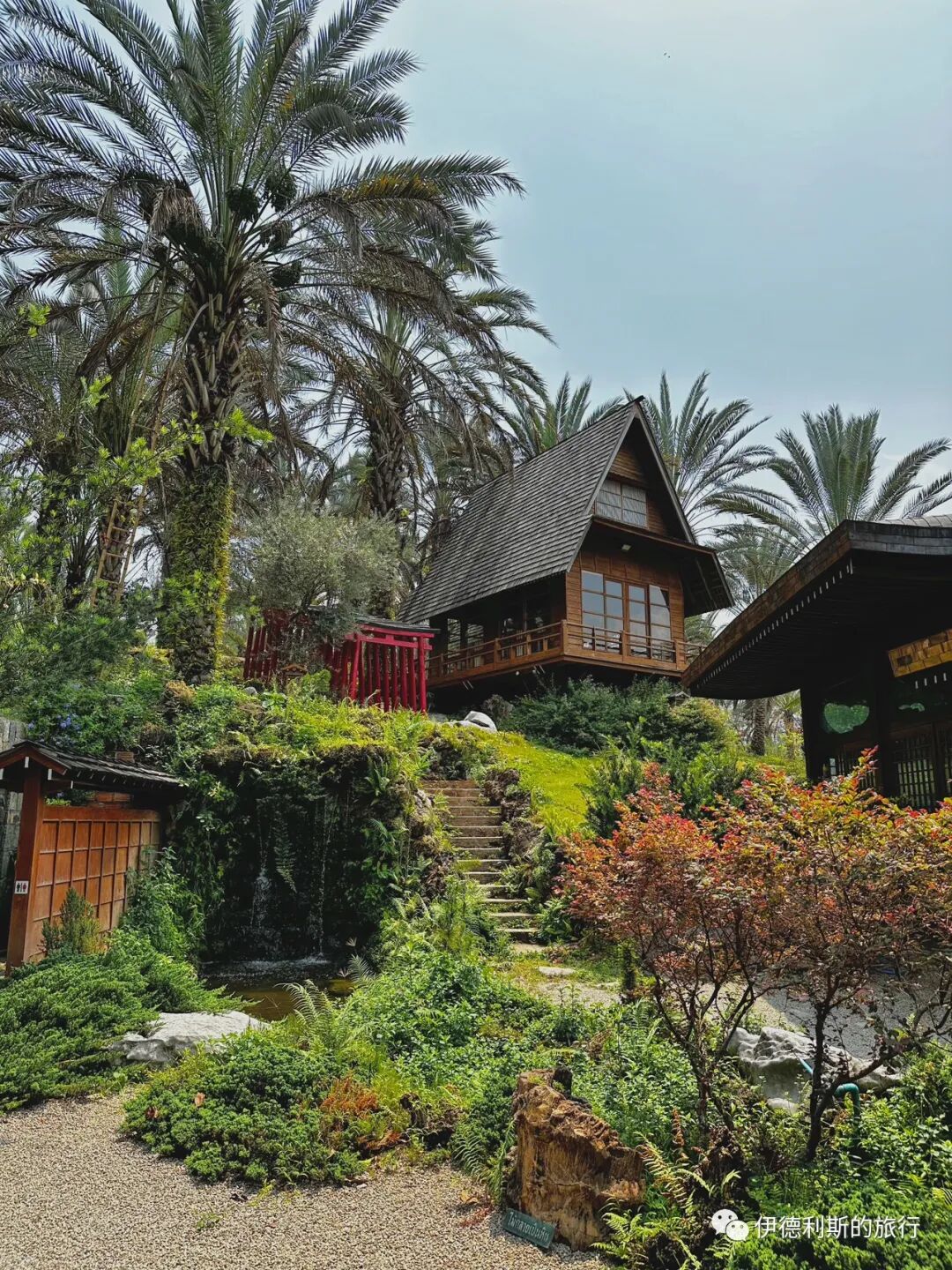
Date Palm Plantation
Driving north from Chiang Mai through a mountainous area, you will see a date palm plantation by the side of the road, not far from the Wang Pha National Park. Praise be to Allah, after constant efforts and attempts, Thai people have successfully grown date palms in Chiang Mai. Now Thai Muslims can eat locally grown dates. This was also my first time seeing a date palm orchard up close.
Although the dates in Chiang Mai do not ripen until July or August and I could not eat fresh ones this time, the orchard had a wide variety of date products. There were dried dates, date juice, date ice cream, canned dates, and more. We tried the date juice and date ice cream, and both were quite delicious! The dates in the canned dates were crunchy and had a light fragrance, which was a bit of a surprise.
Wanyang Village
Heading north, I reached the first Hui mosque community on the Thai-Myanmar border: Wanyang Village in Fang District, founded by the descendants of refugees who followed the 93rd Division of the Lost Army in Northern Thailand. The Lost Army in Northern Thailand began in 1950 with the 237th and 93rd Divisions of the Nationalist Army, who retreated from Yunnan into Myanmar along with their families and many refugees.
After 1951, the number of families, merchants, horse caravans, and civilians arriving from Yunnan grew, but constant attacks by the Myanmar military forced them to retreat into the mountains along the Thai border, which is when Wanyang was established. These refugees first lived in bamboo and thatch huts, relying on primitive slash-and-burn farming to grow corn and rice. They were not allowed to enter or leave towns freely, making it very difficult to earn a living.
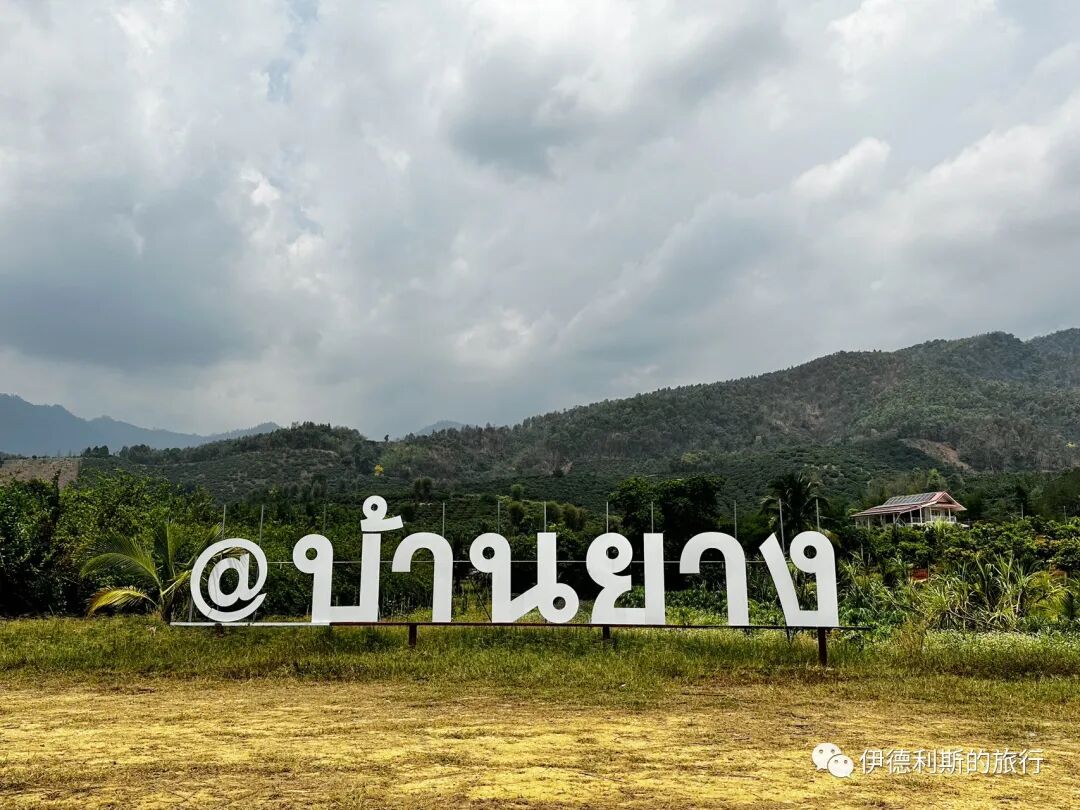
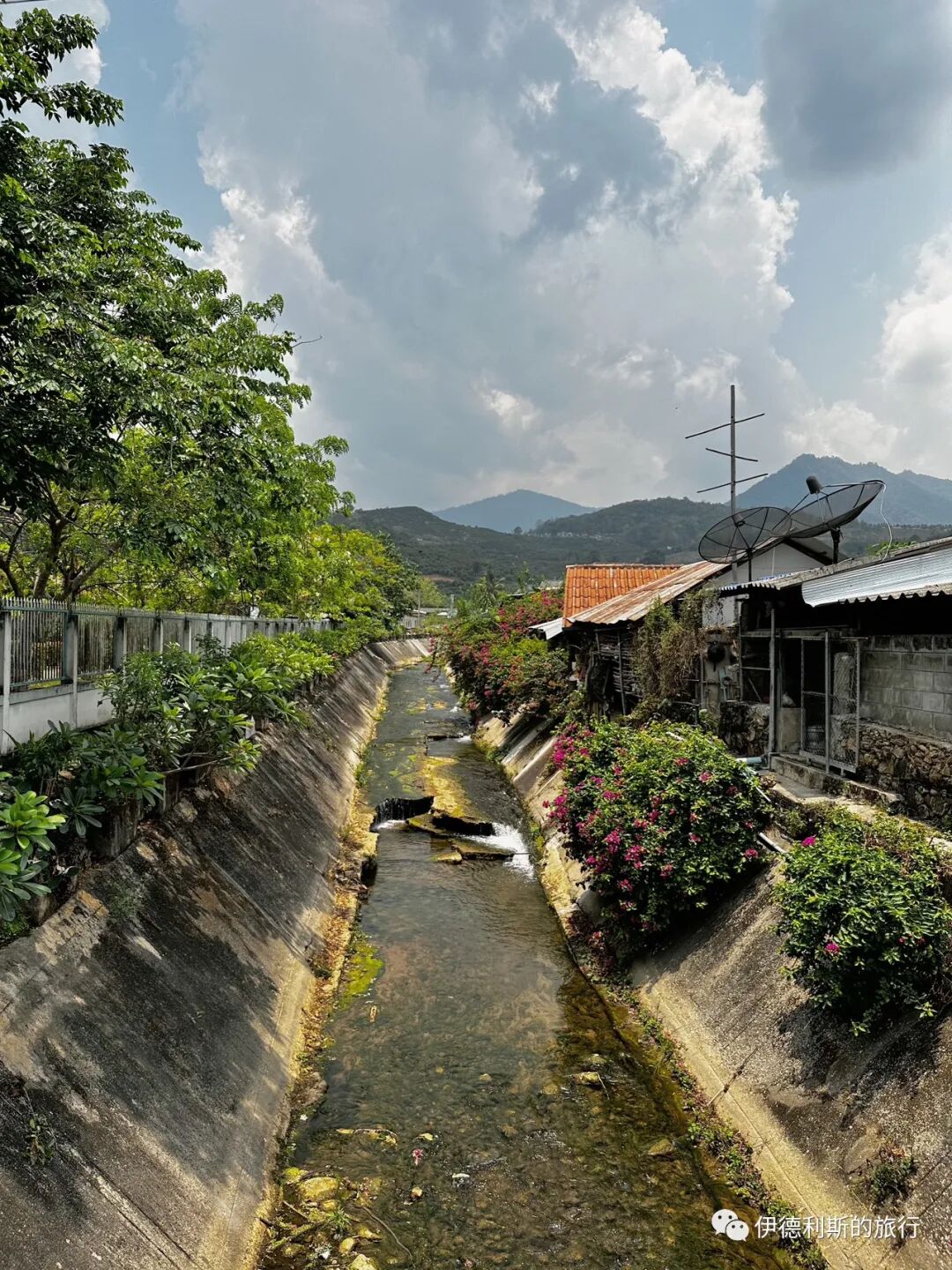
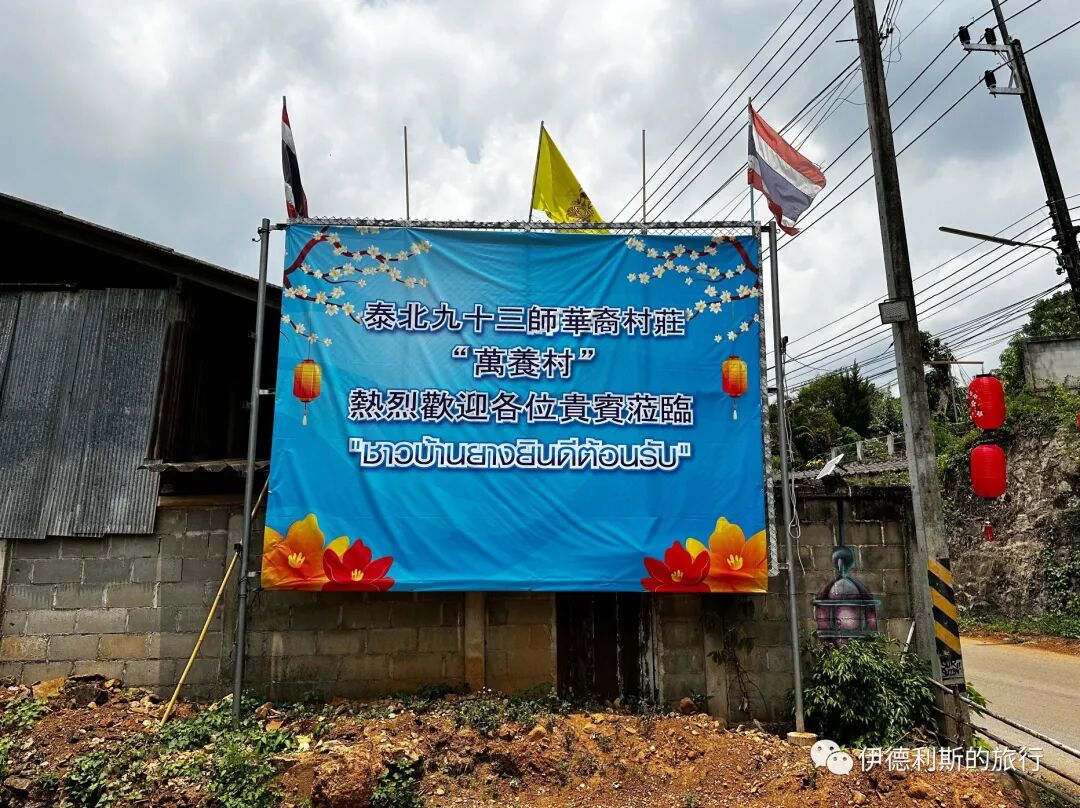
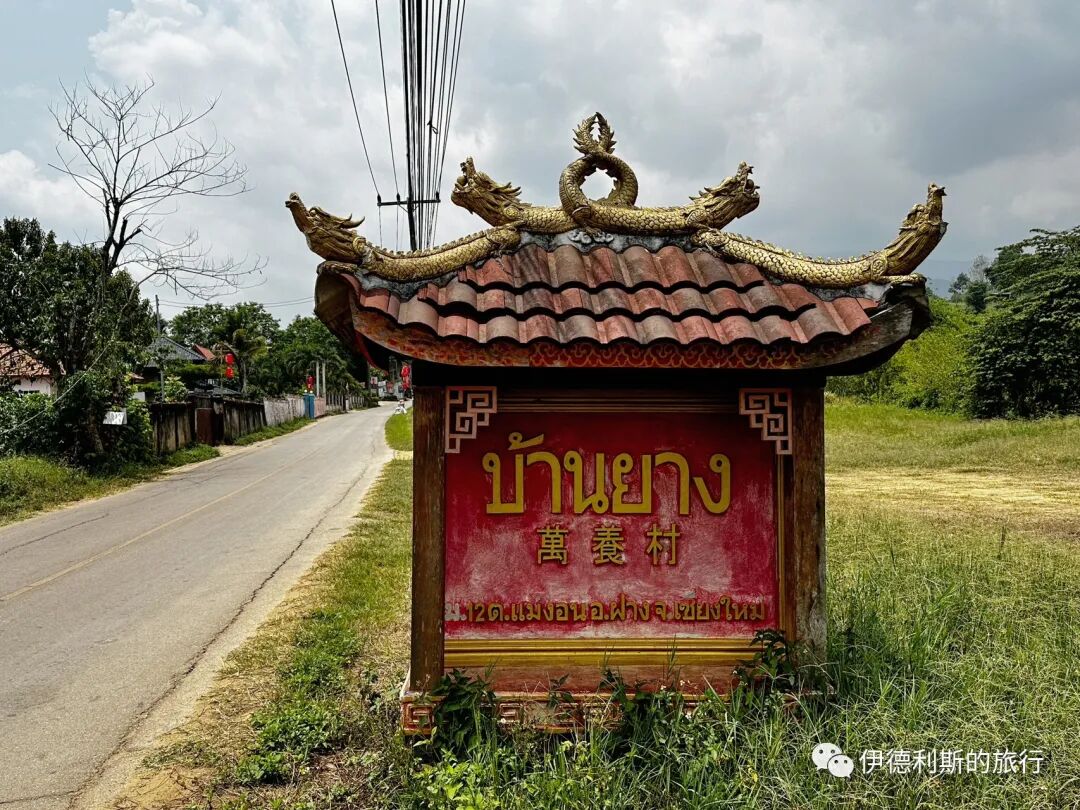
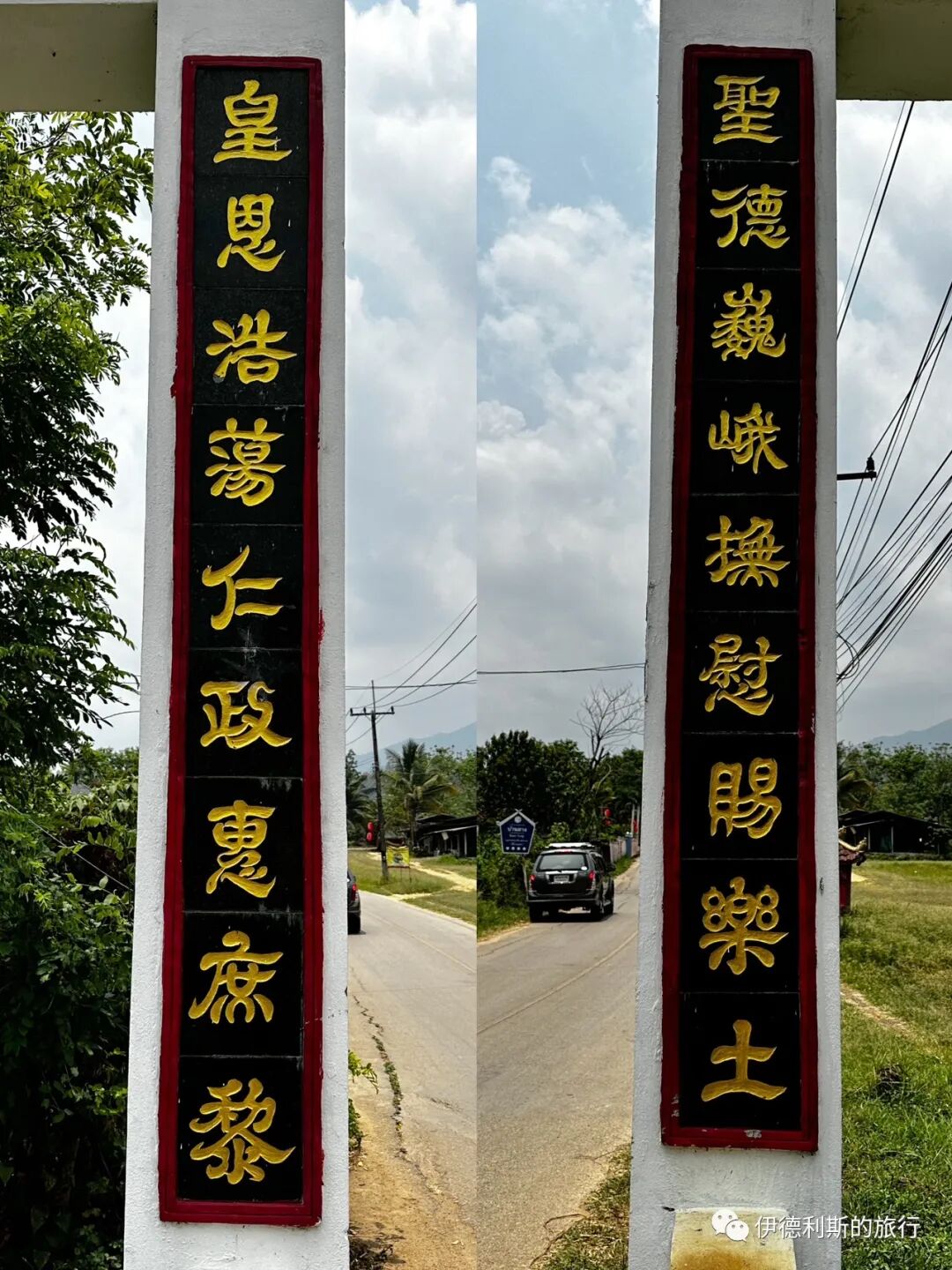
Some Yunnan Hui Muslim mosques in Northern Thailand like to use pleasant two-character religious terms for their names, such as Jingzhen Mosque in Chiang Mai, Meide Mosque in Wanyang, Jiqing Mosque in Hefei, Chengxin Mosque in Fang District, and Ciai Mosque in Daduan, all of which sound very auspicious. Among these Yunnan mosques, I think Wanyang's Meide Mosque is the most beautiful; the environment is excellent, with lush greenery that makes it feel like a garden.
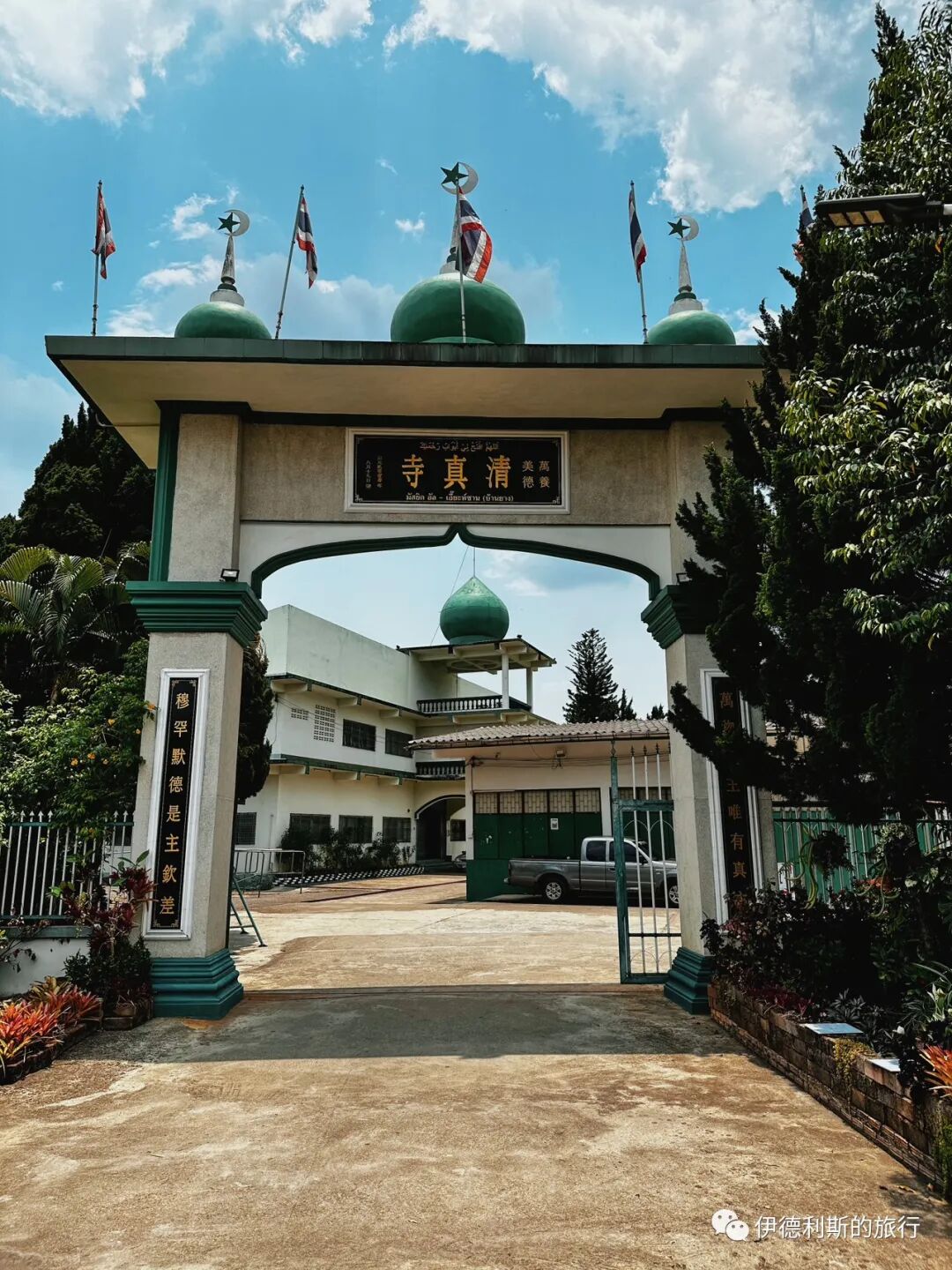
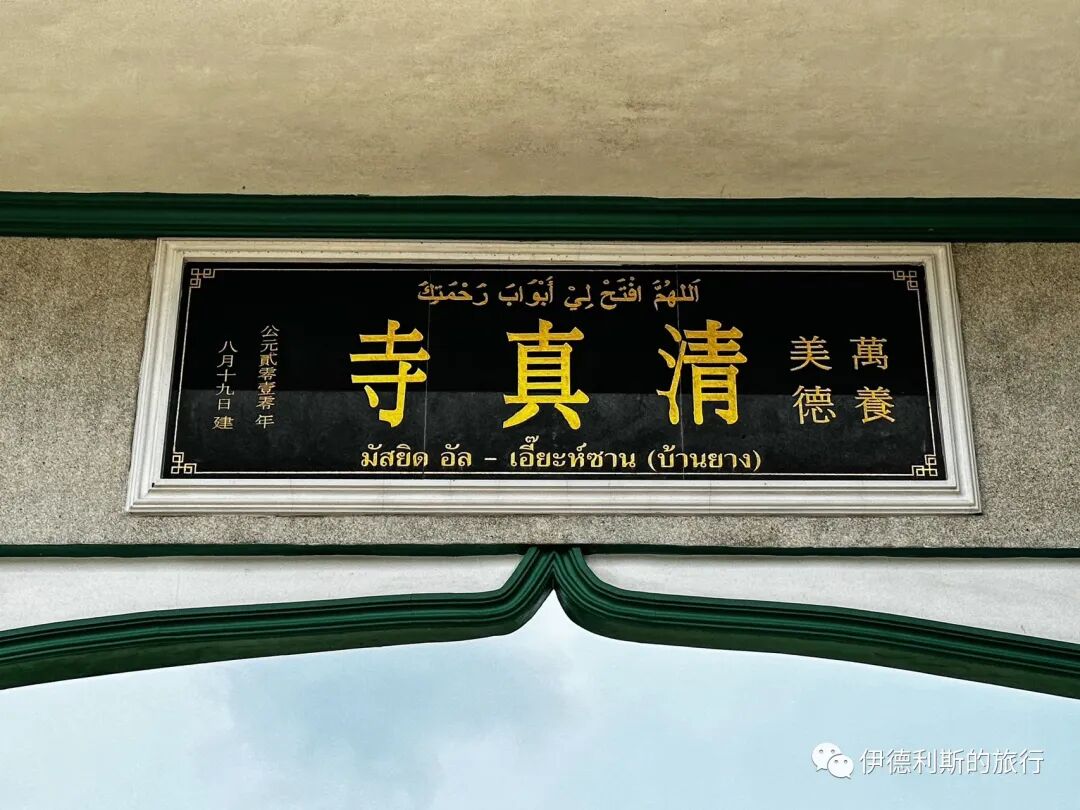
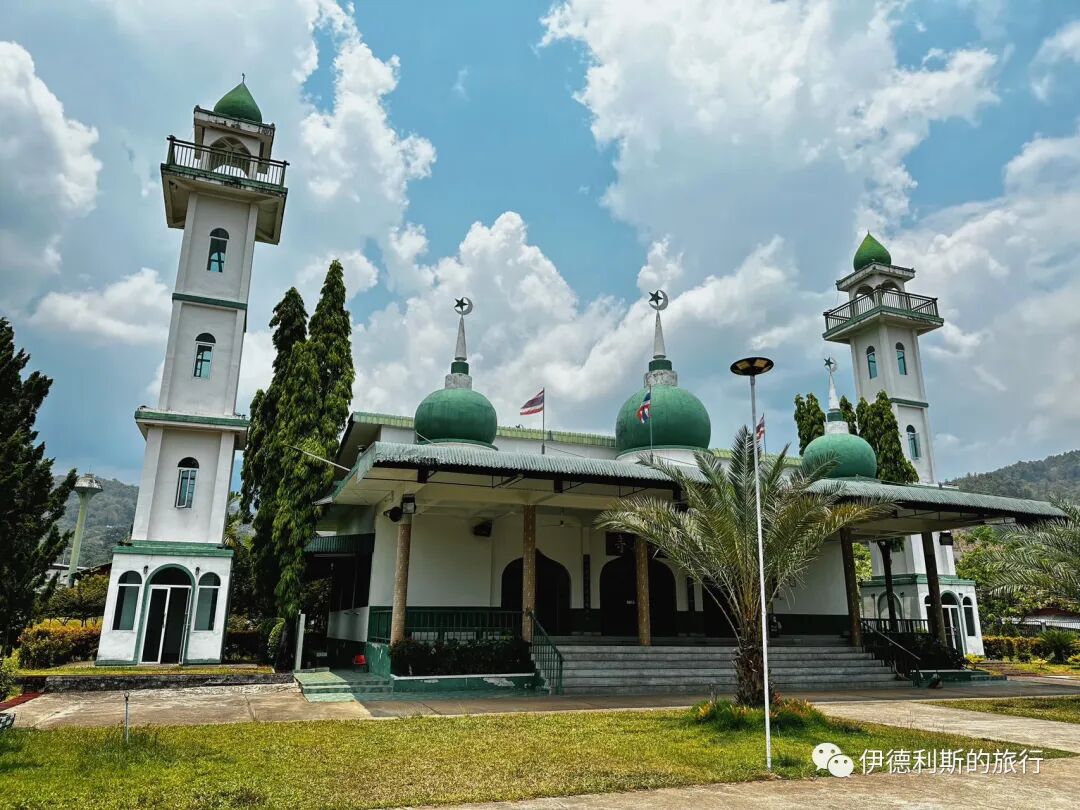
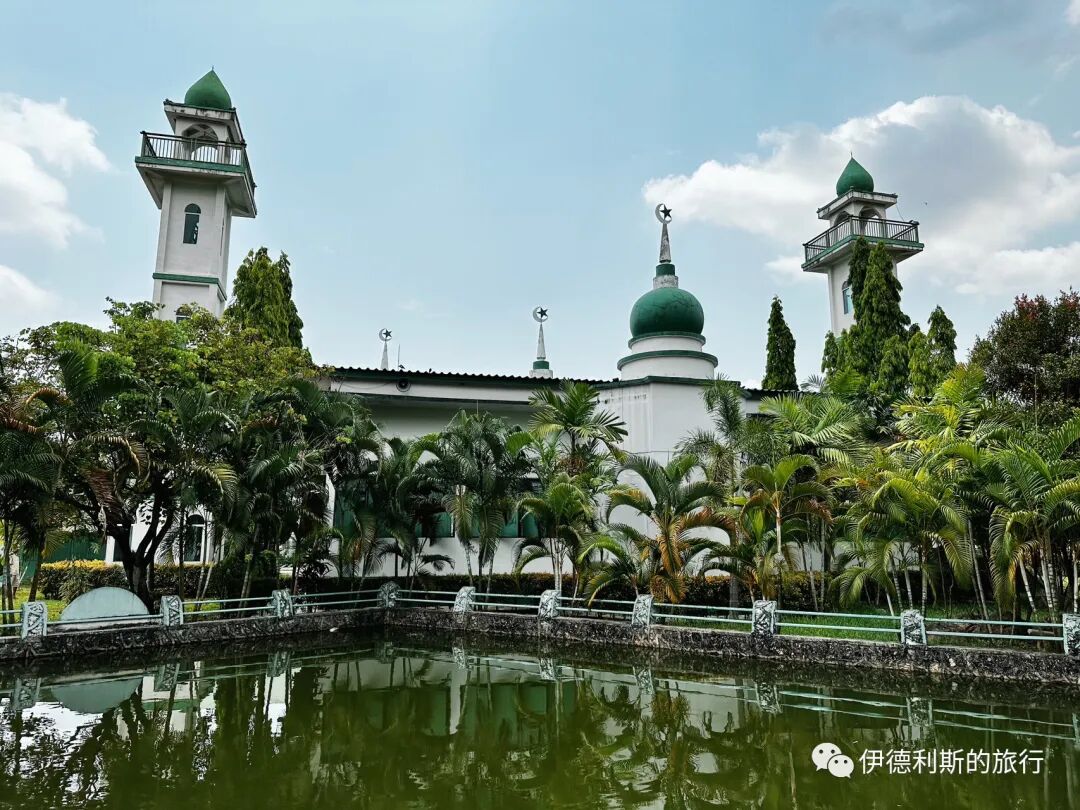
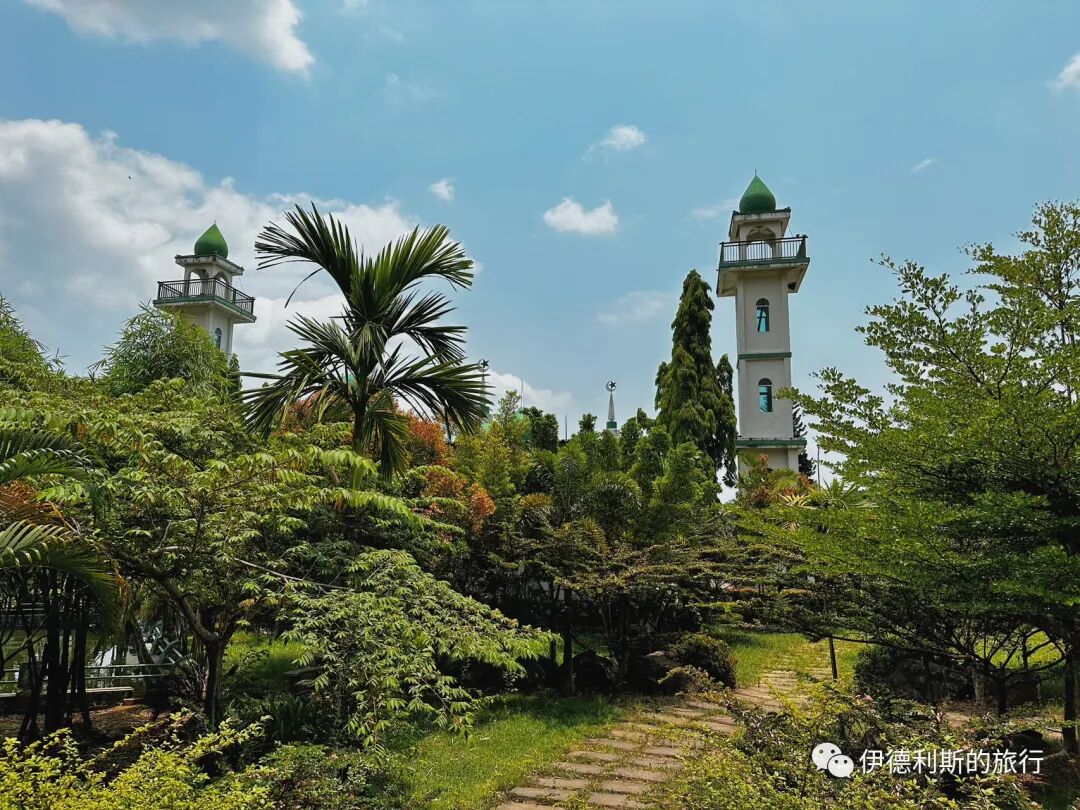
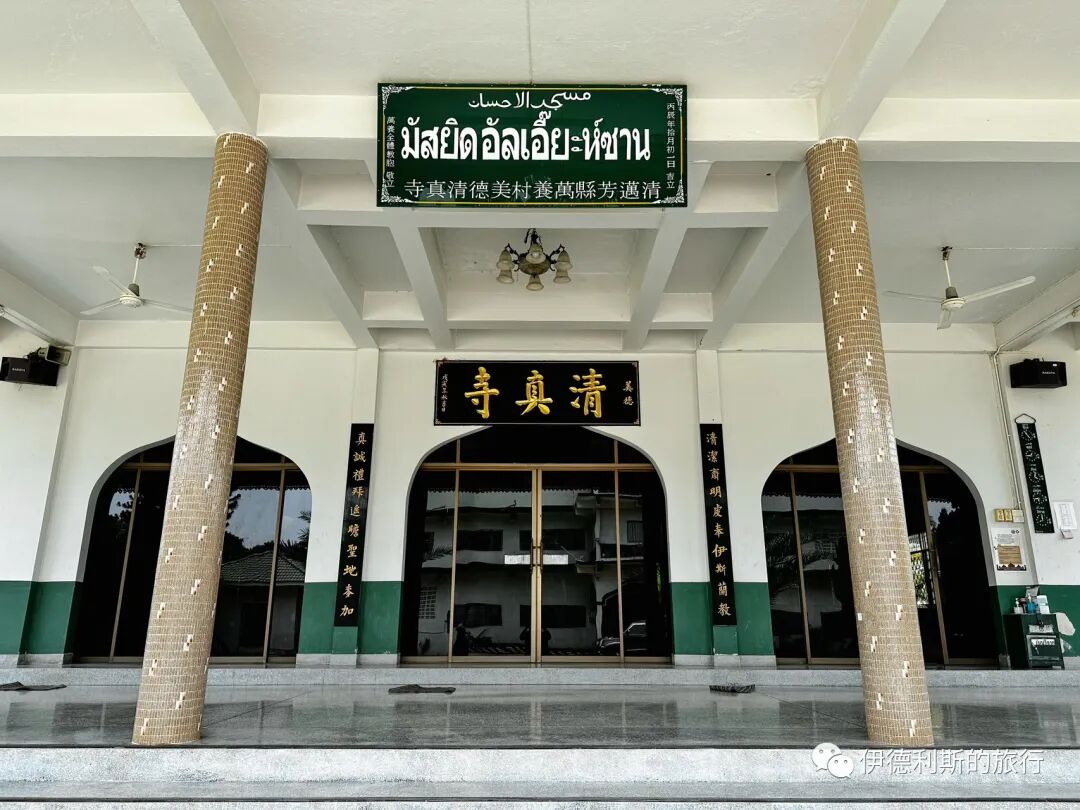
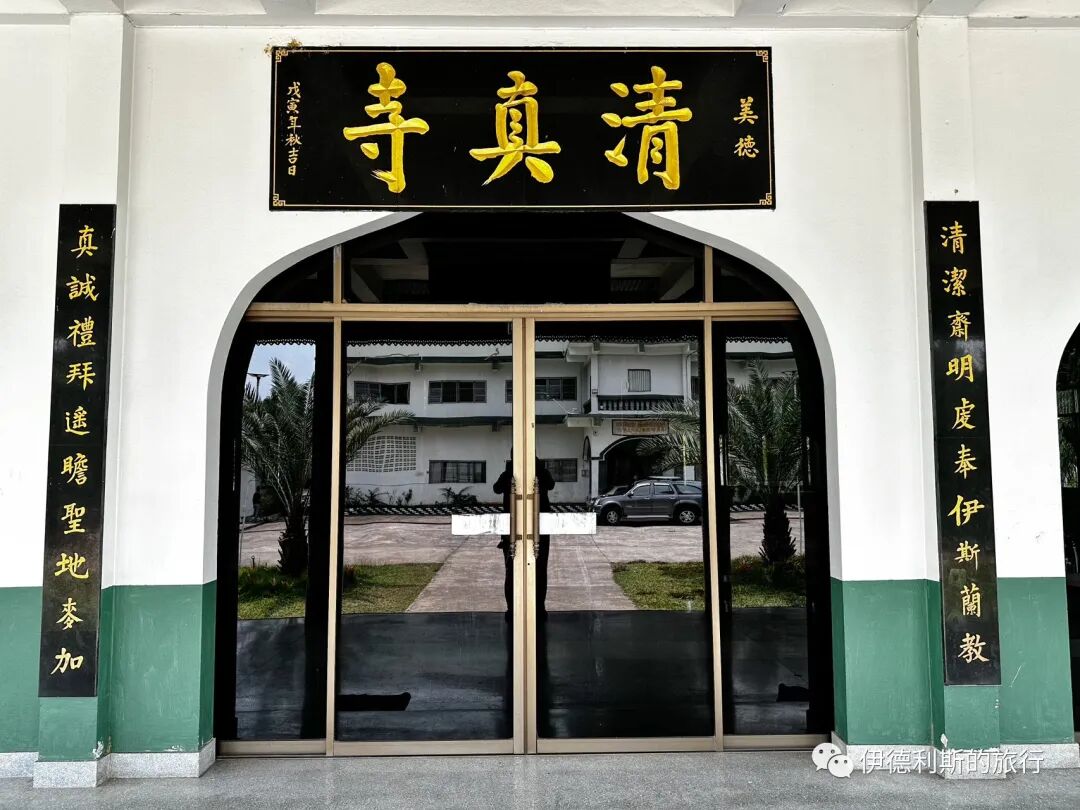
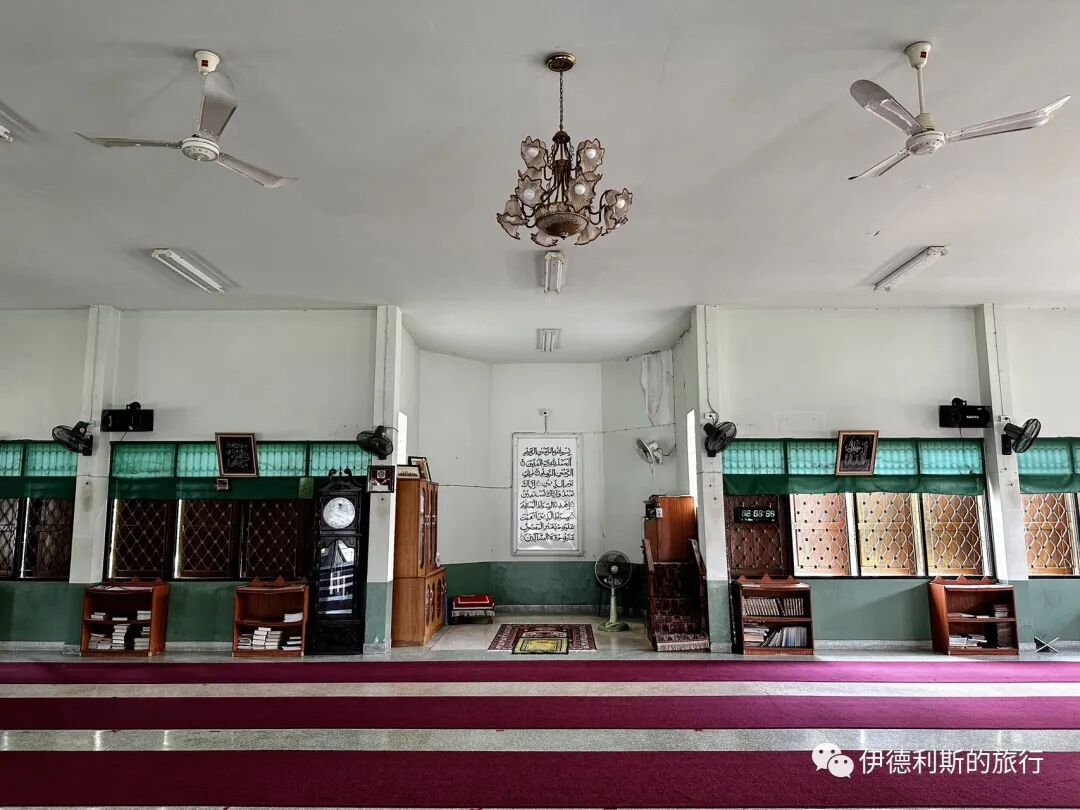
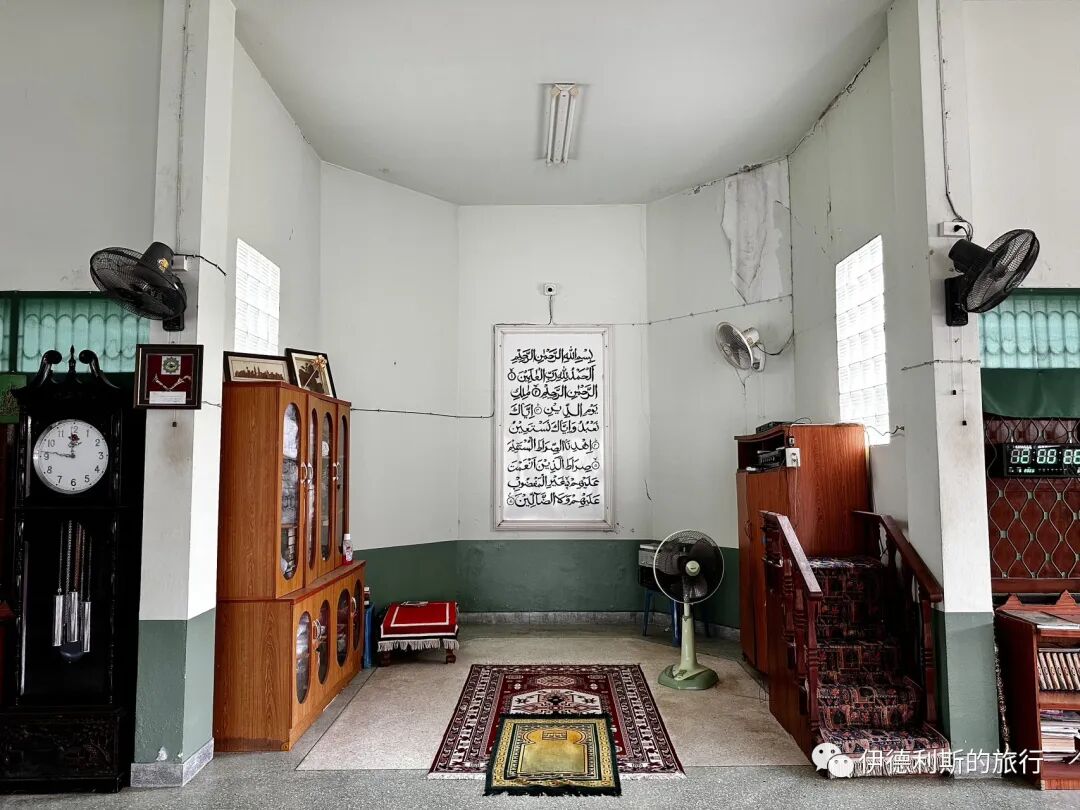
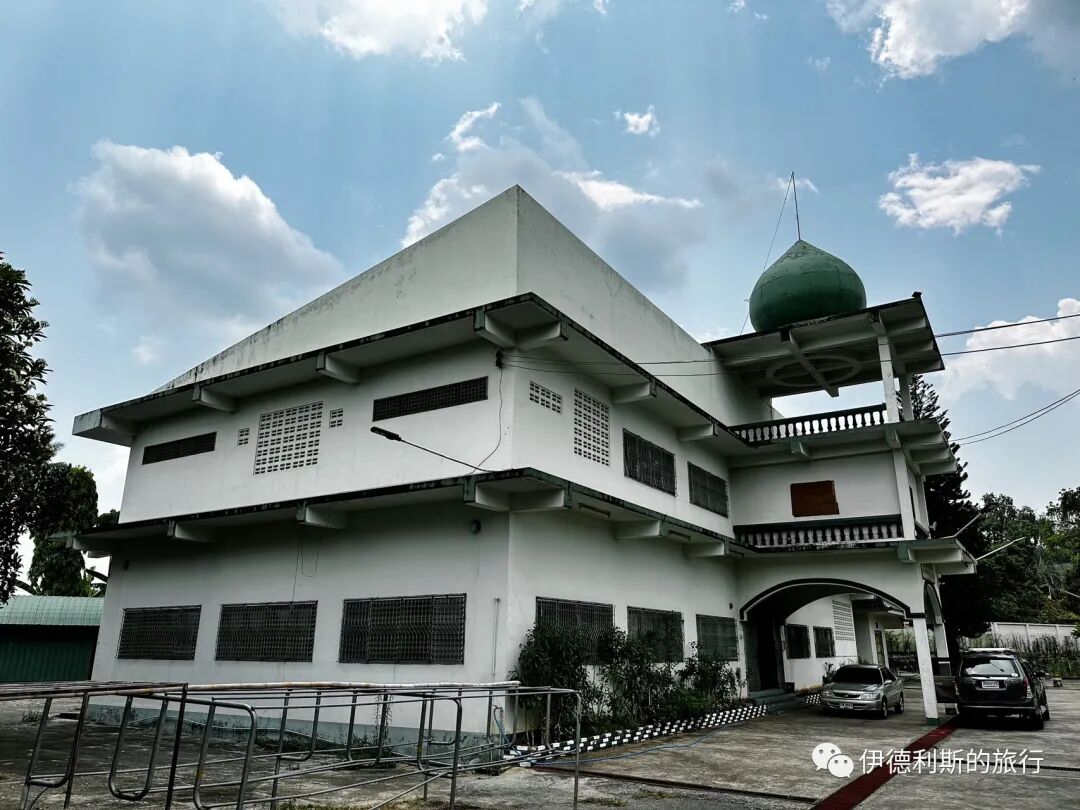
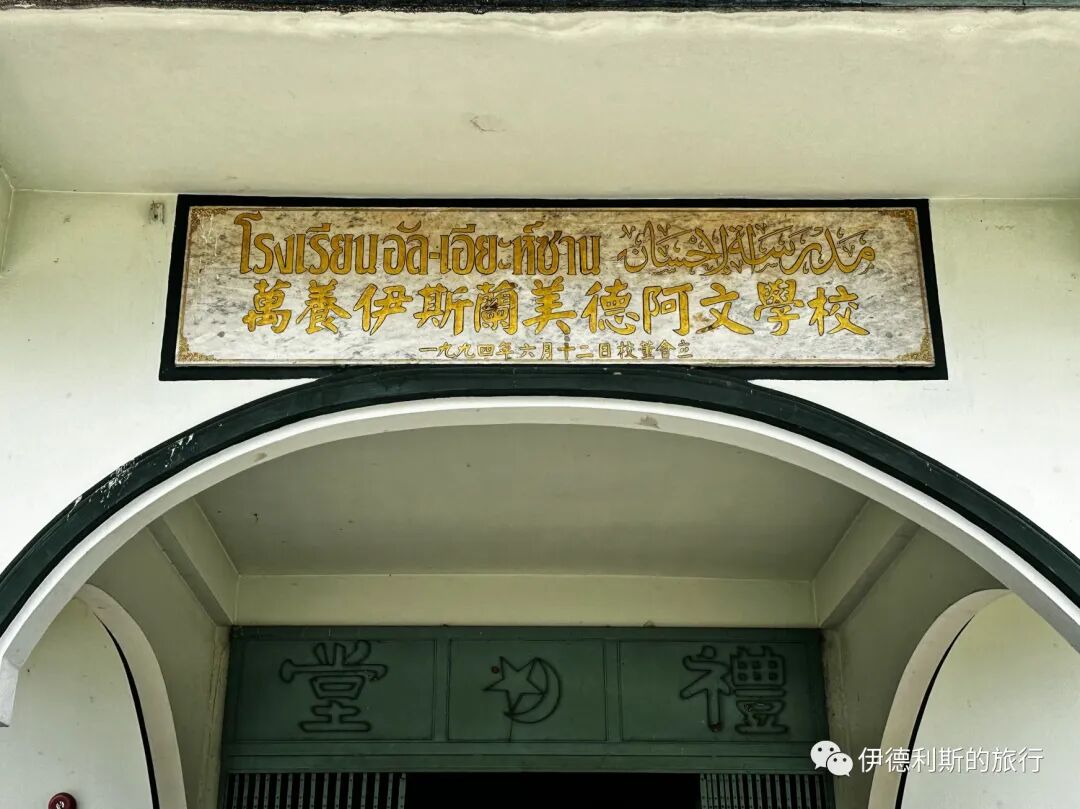
At Wanyang Meide Mosque, I saw the Arabic school, the women's prayer hall, the funeral room (meiti fang), and the event hall; it was my first time seeing the word for funeral (maiti) written as meiti, and I think this translation is quite good.
At noon, I went to a Yunnan Hui Muslim restaurant in Wanyang Village called Jianping Beef Noodle Shop and ate pan-fried dumplings (jianjiao), rice noodles (babasi), and beef noodles, served with the standard Northern Thai sides of pickled vegetables, onions, and lime. The rice noodles (babasi) are a type of flat rice noodle topped with traditional beef sauce, and you can choose between the traditional Yunnan Hui Muslim clear broth or the Northern Thai coconut milk broth. The pan-fried dumplings (jianjiao) were filled with chicken and chives, and I feel that pan-fried dumplings are also very common in Yunnan communities in Northern Thailand.
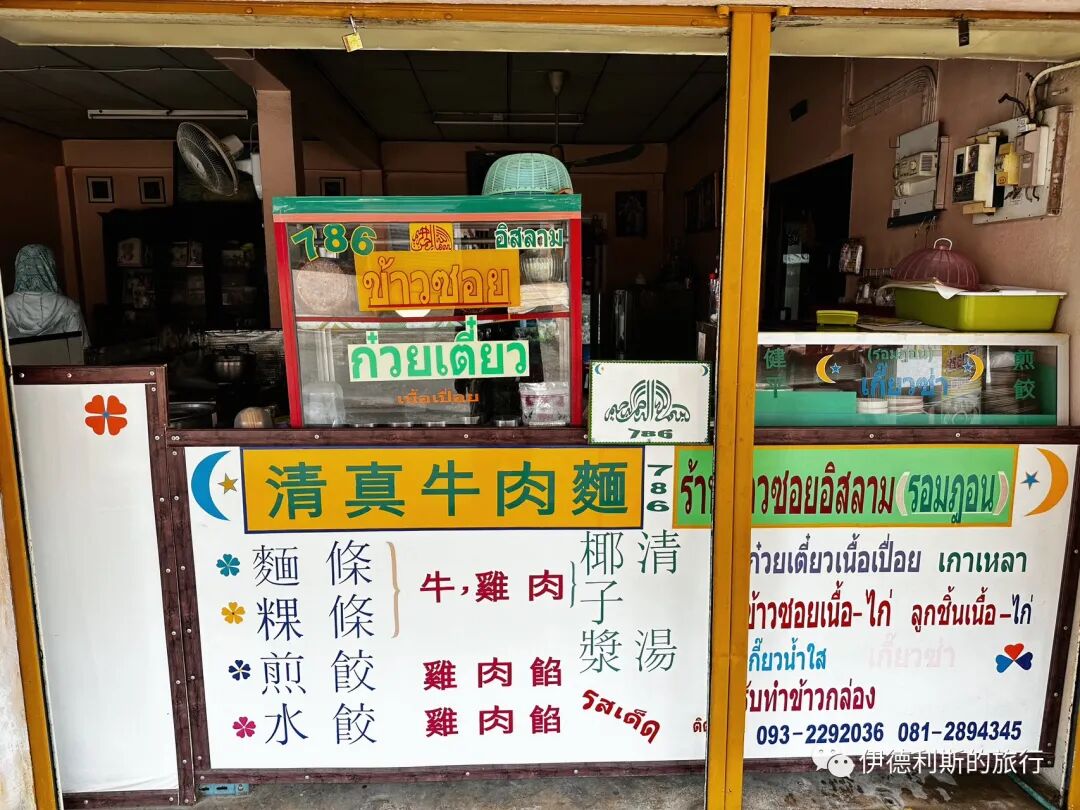
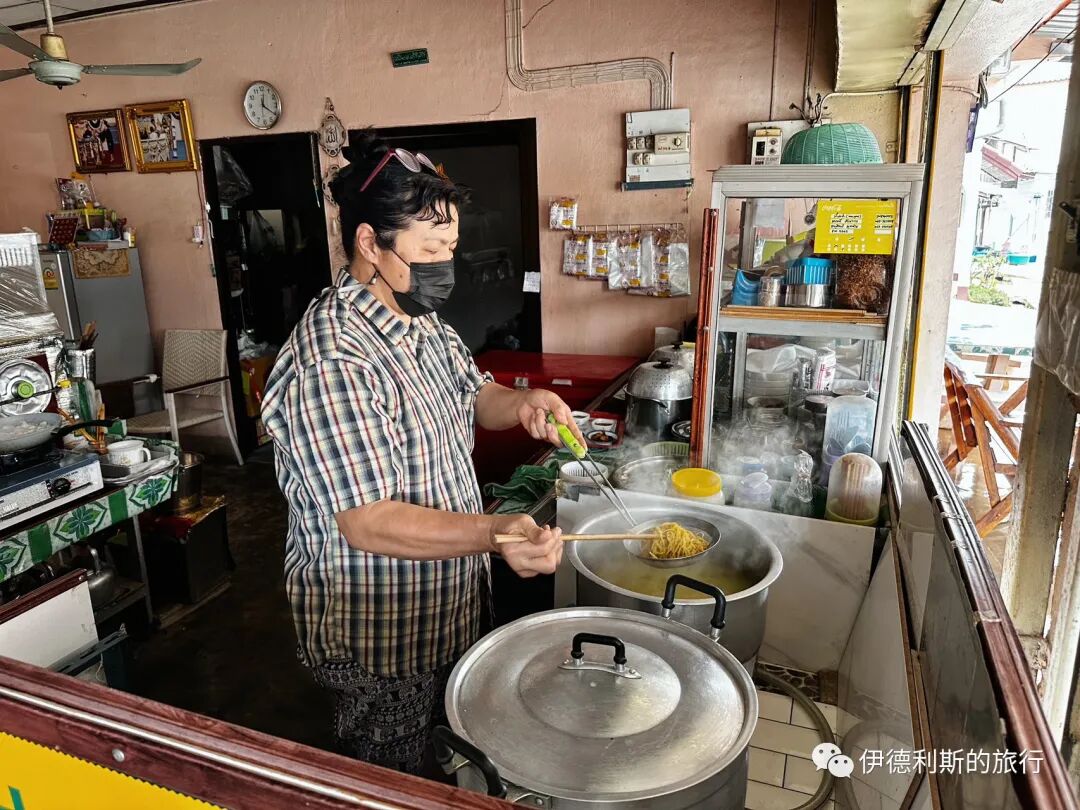
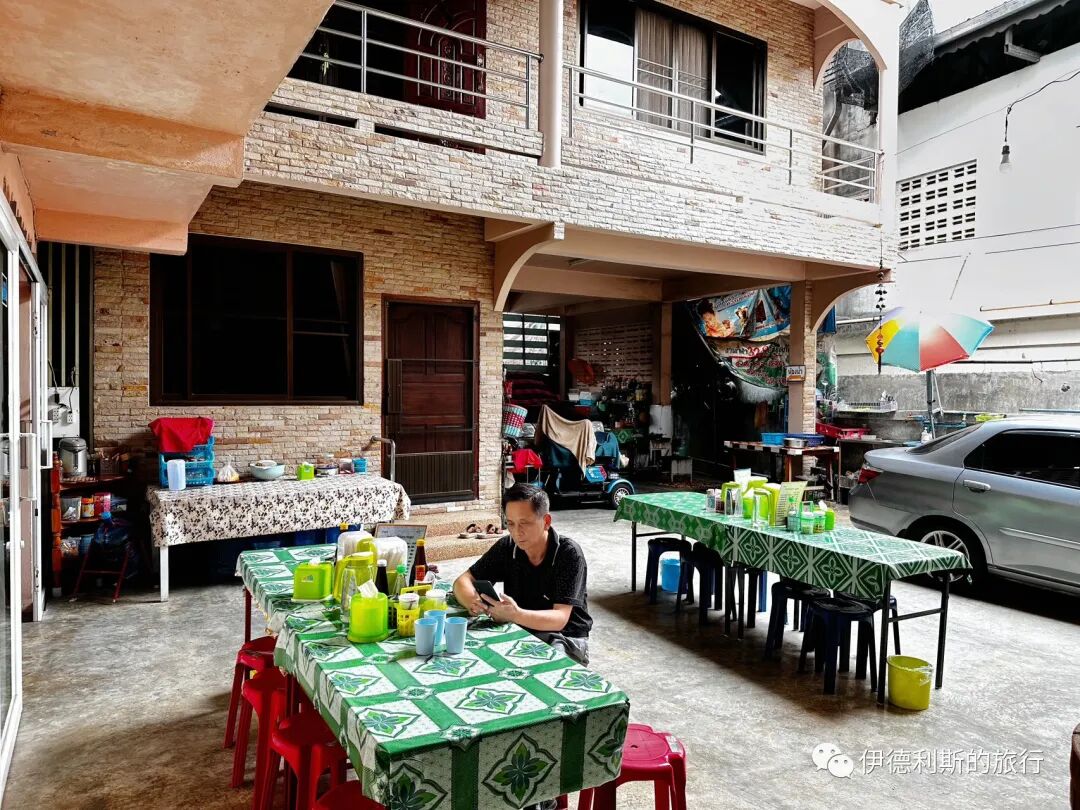
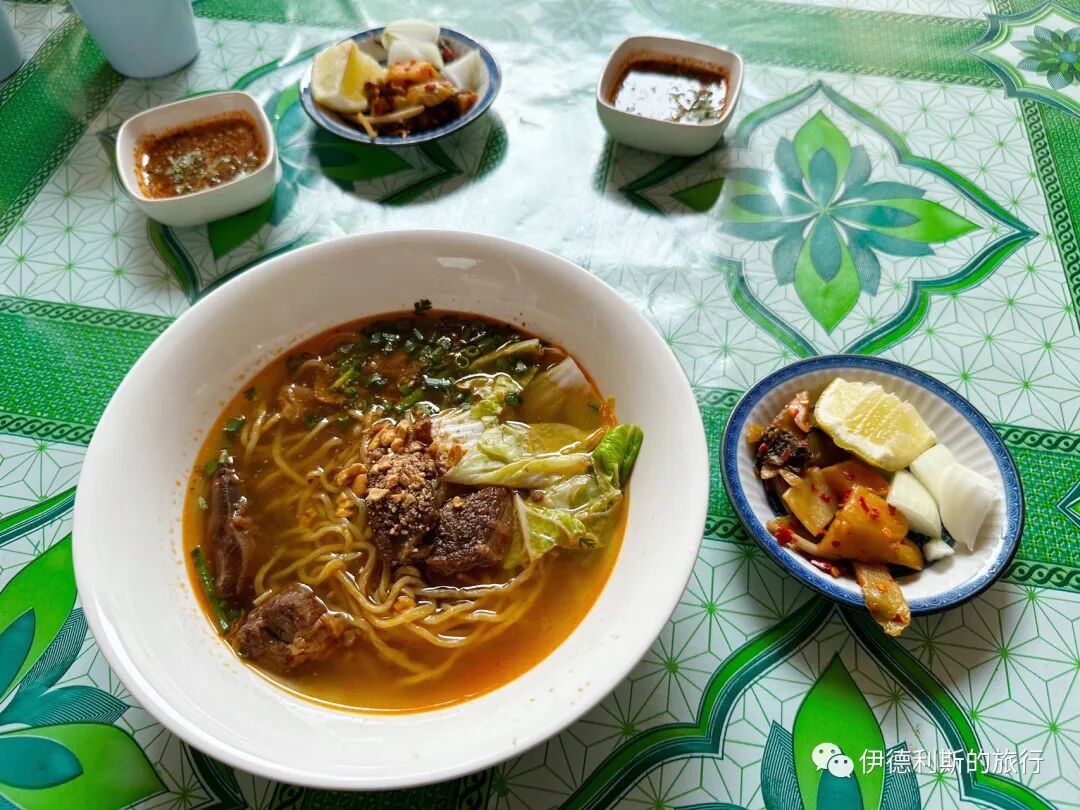
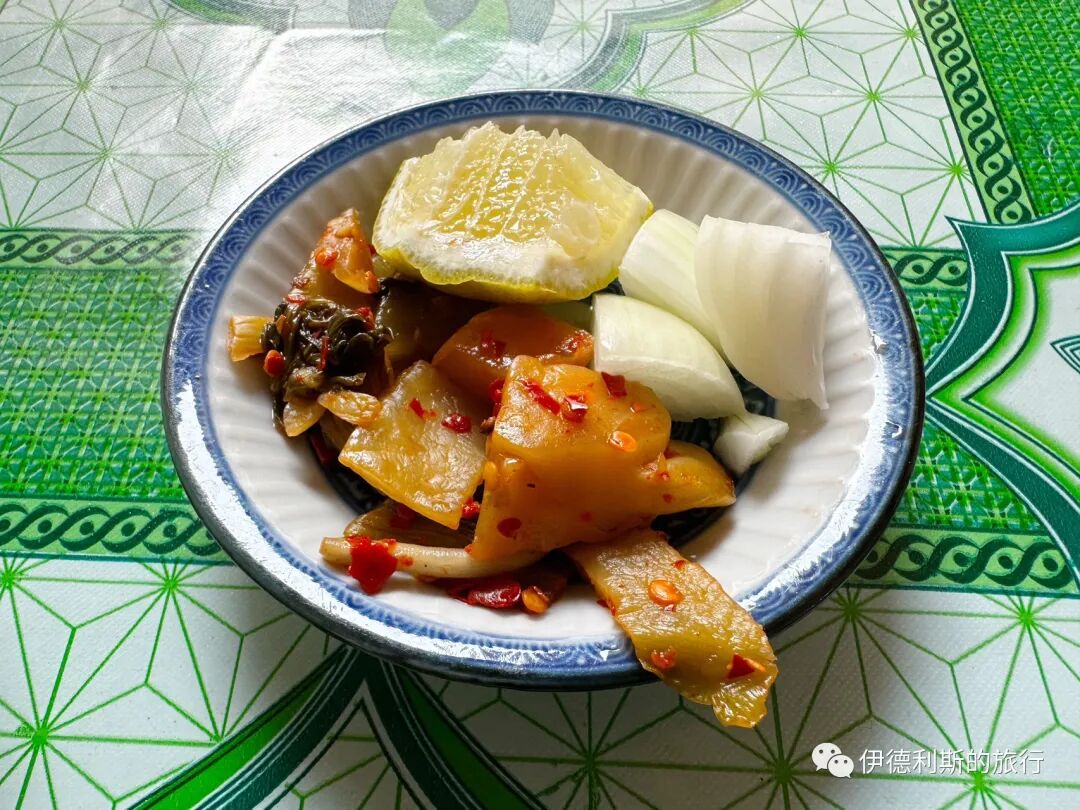
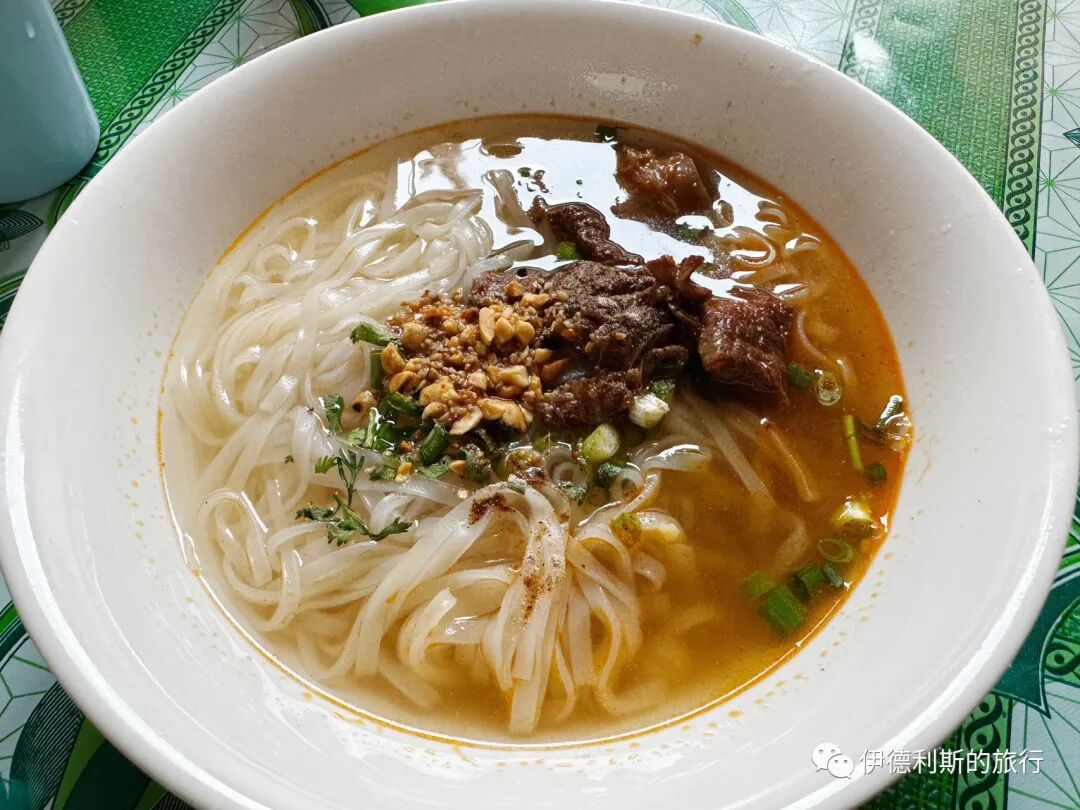
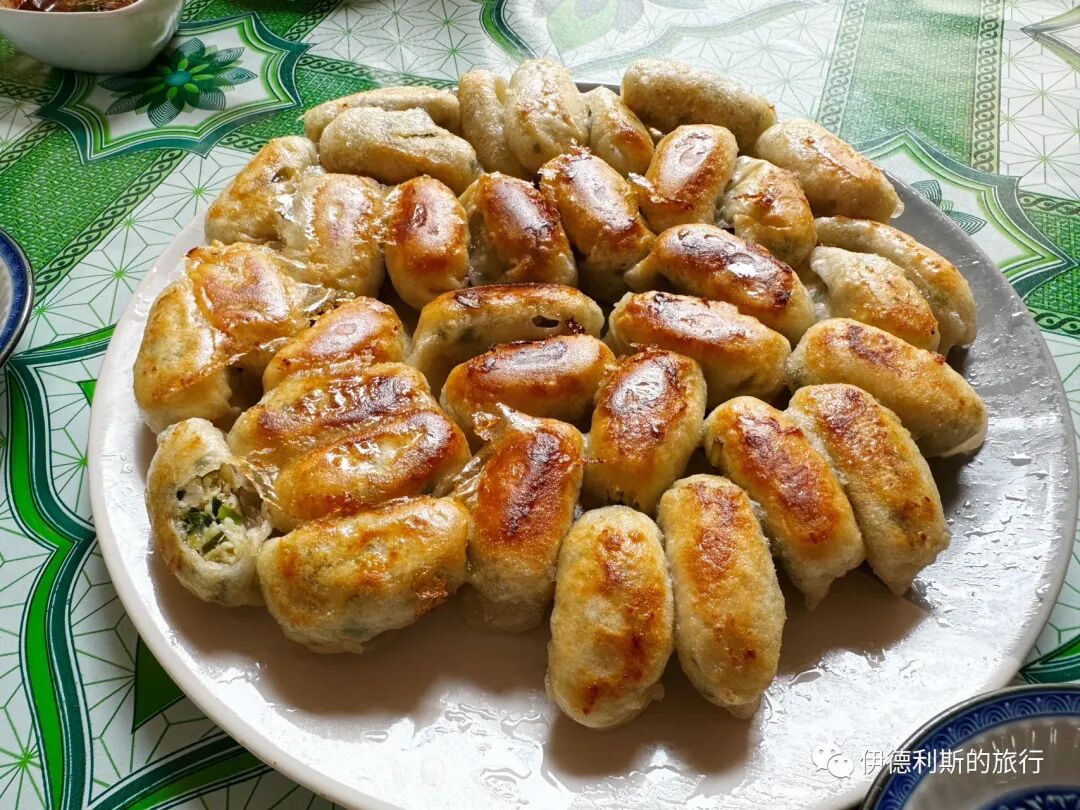
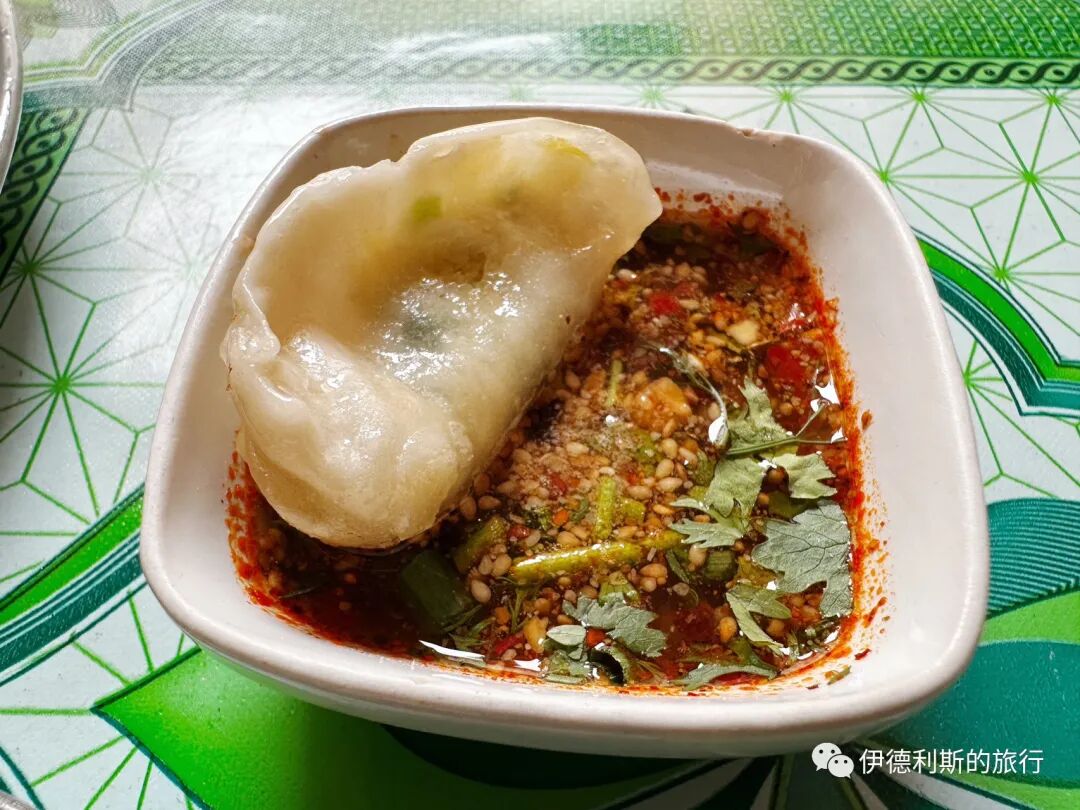
The shop displays family photos of the owner.
Hefei Village
After leaving Wanyang Village, we arrived at the second Yunnan Hui mosque community on the Thai-Myanmar border, Hefei Village, to pray at the village's Jiqing Mosque. Like Wanyang Village, Hefei Village was established after the 1950s by refugees who fled here from Yunnan through Myanmar.
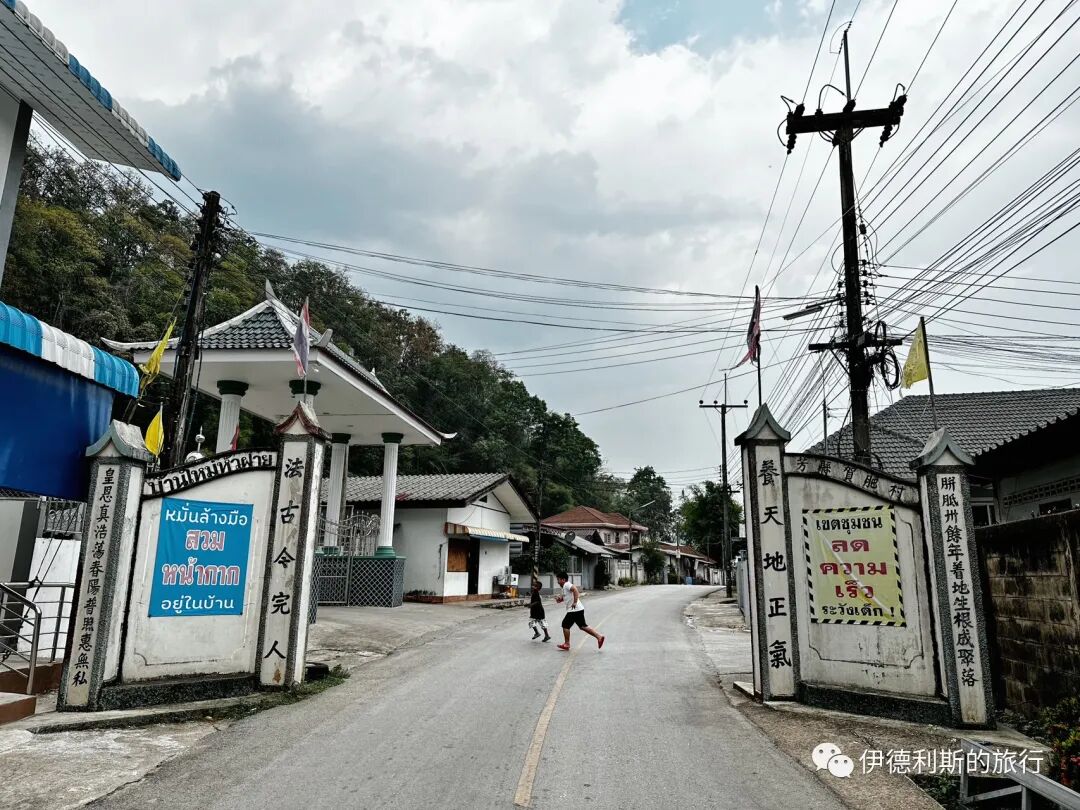
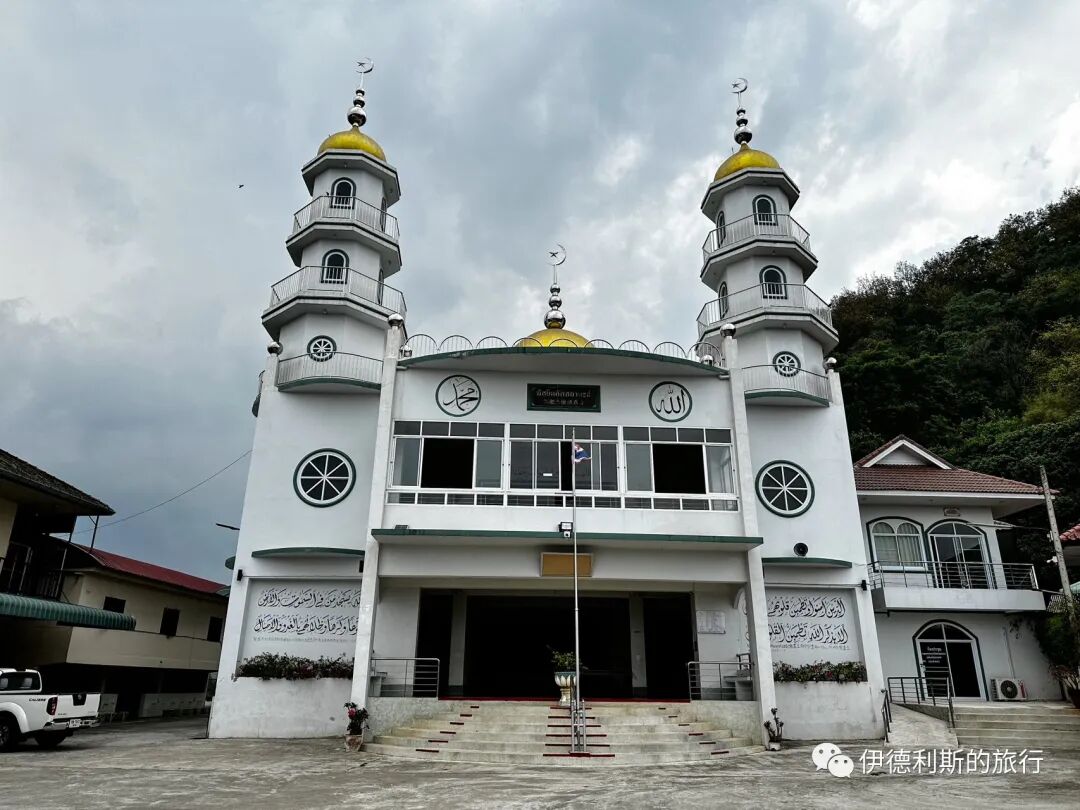
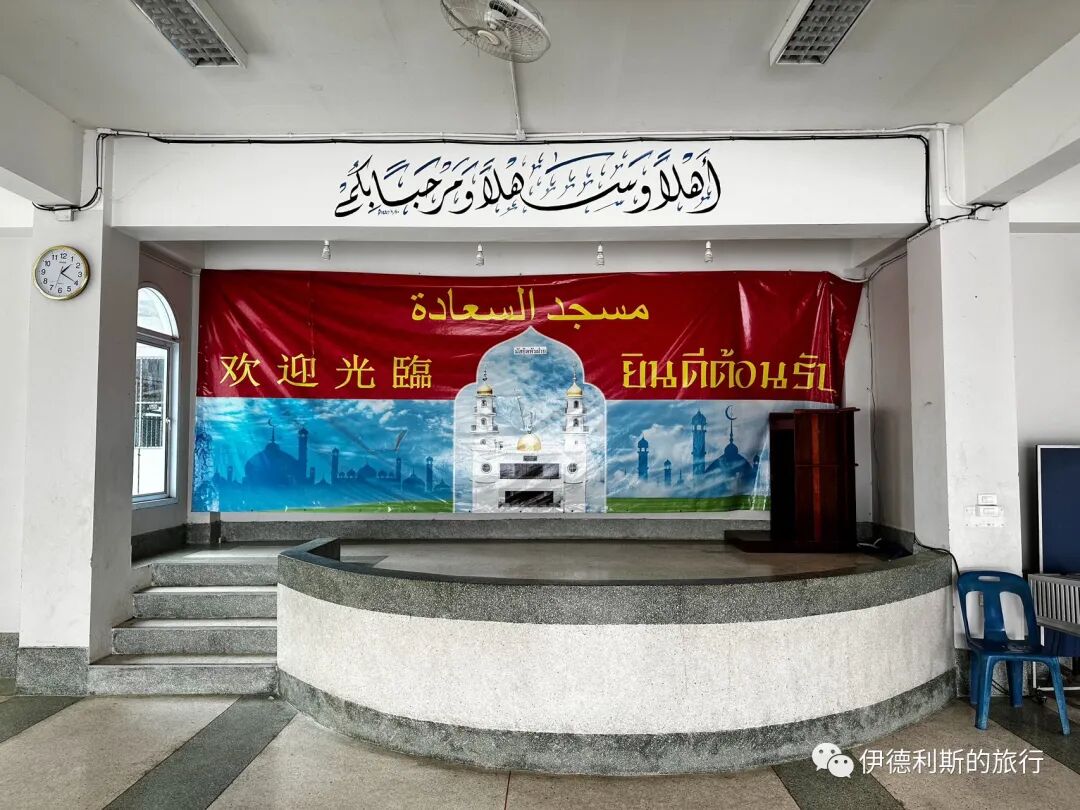
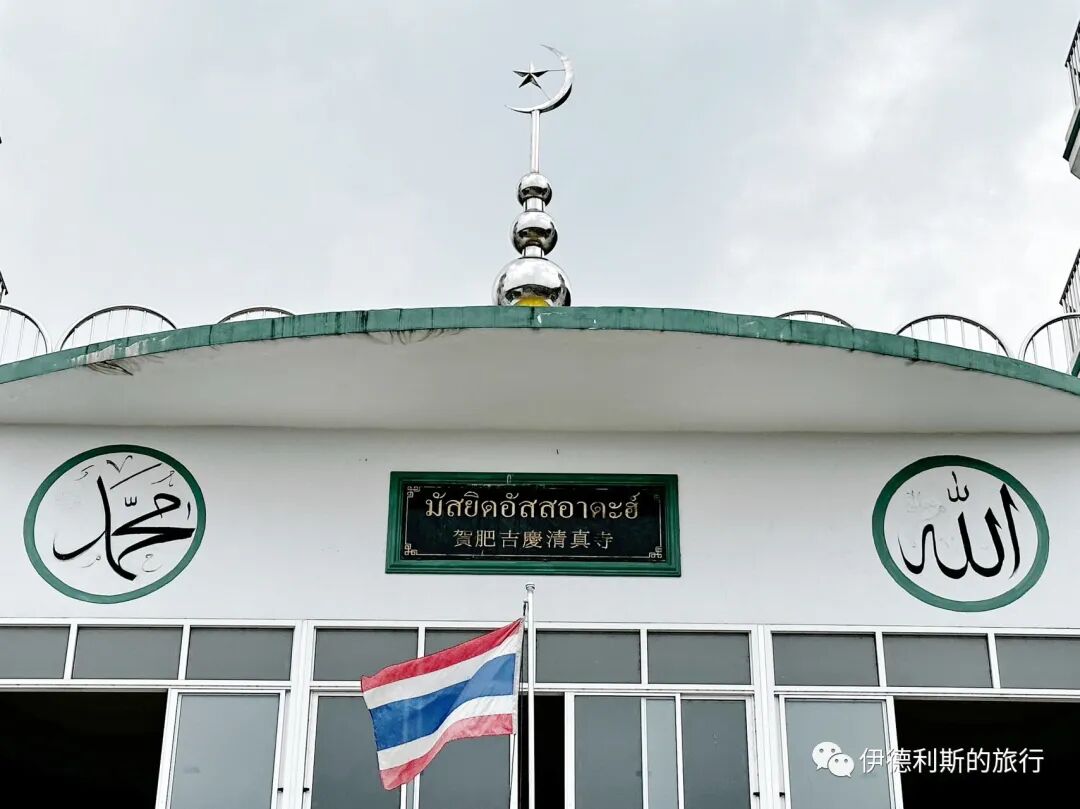
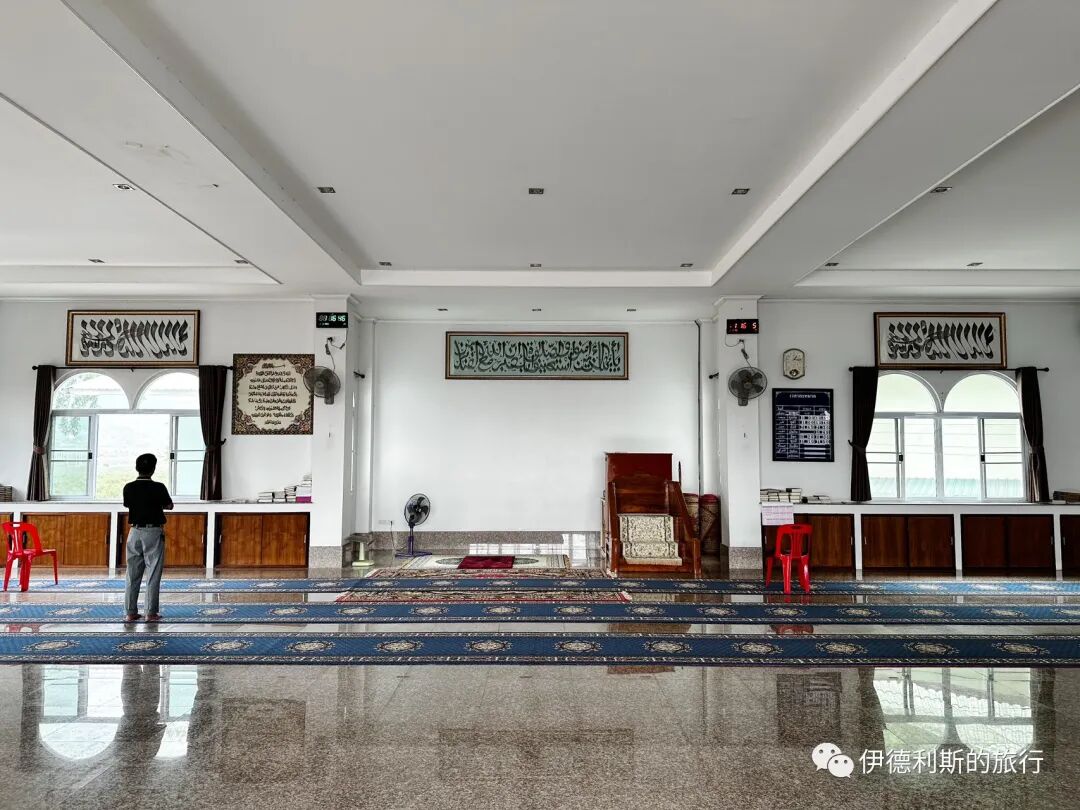
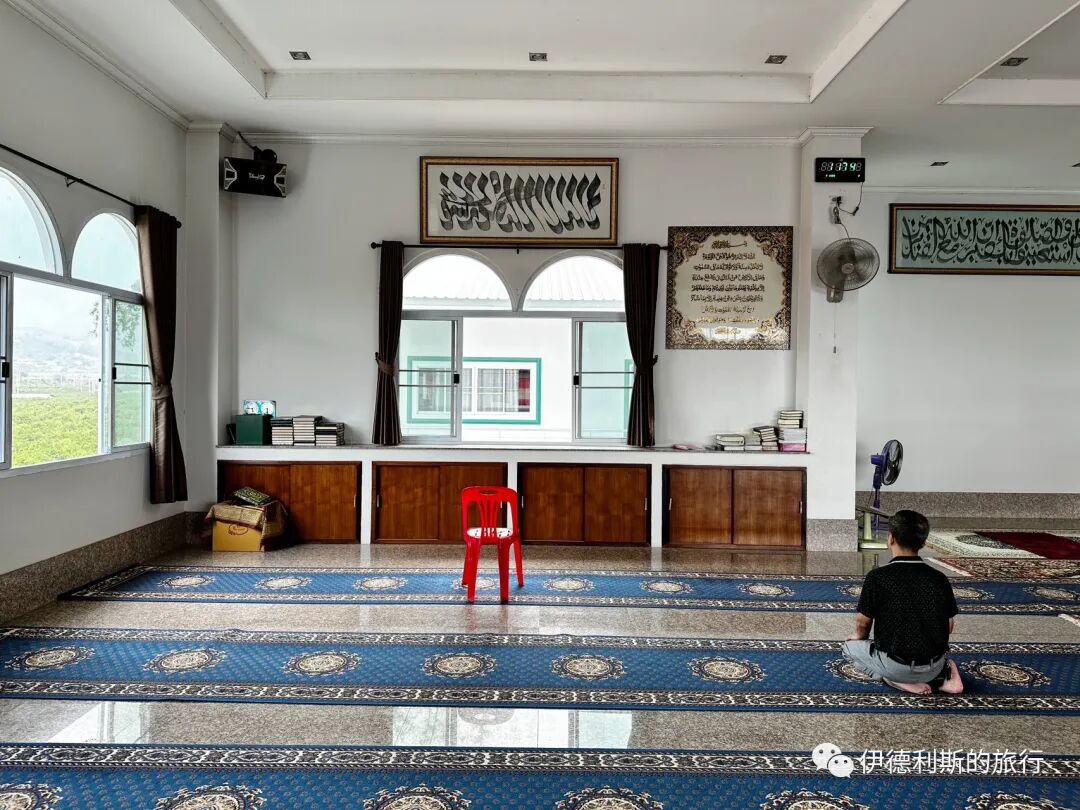
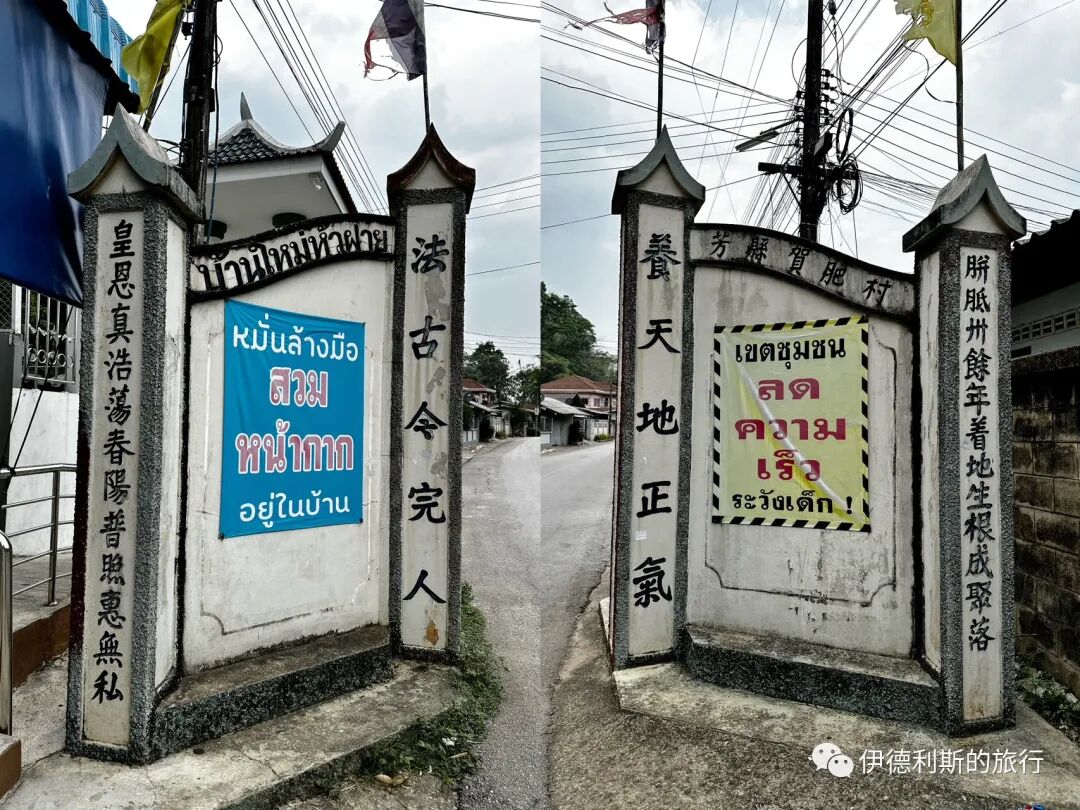
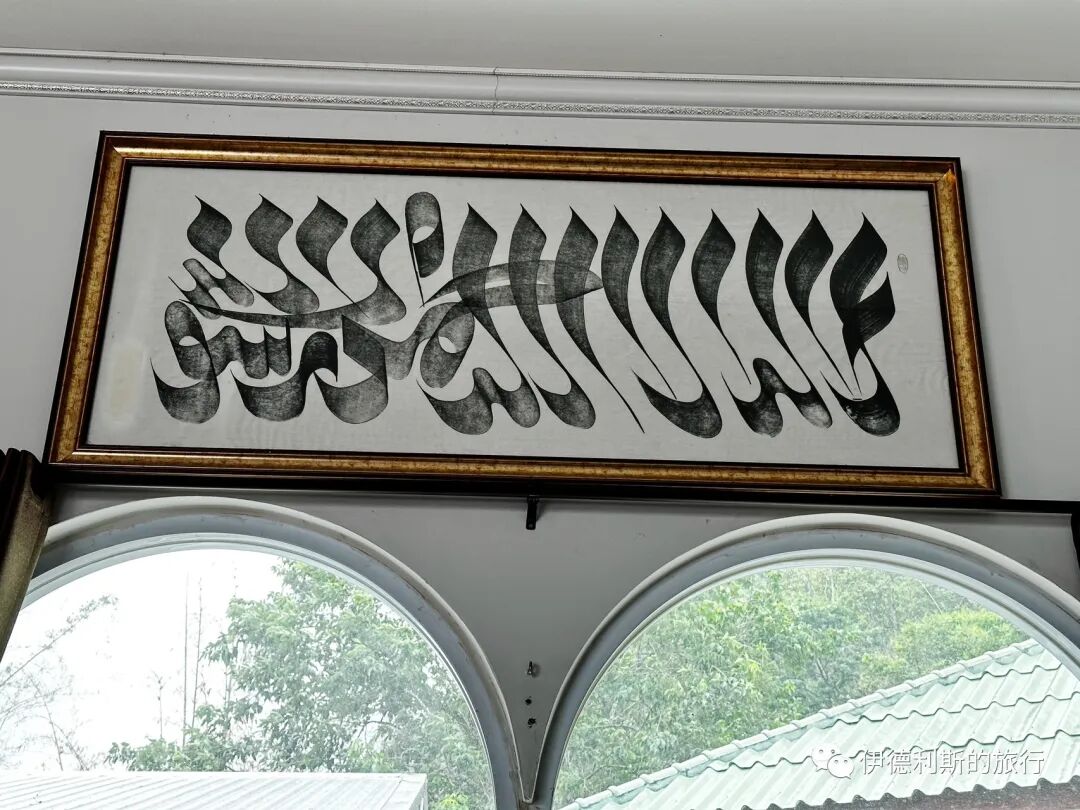
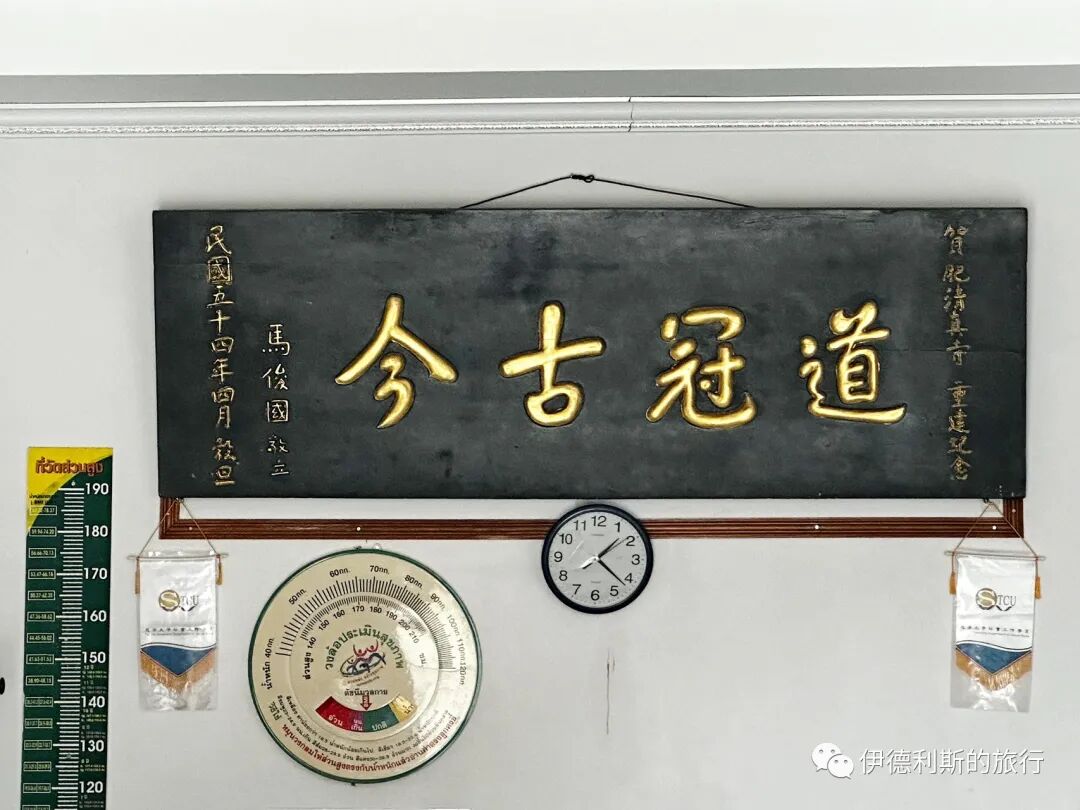
Hefei Jiqing Mosque features Chinese calligraphy and traditional Chinese-style Arabic calligraphy, including a plaque that reads 'The Way Spans Past and Present' (Dao Guan Gu Jin), which was respectfully erected by Ma Junguo when the mosque was rebuilt in 1965.
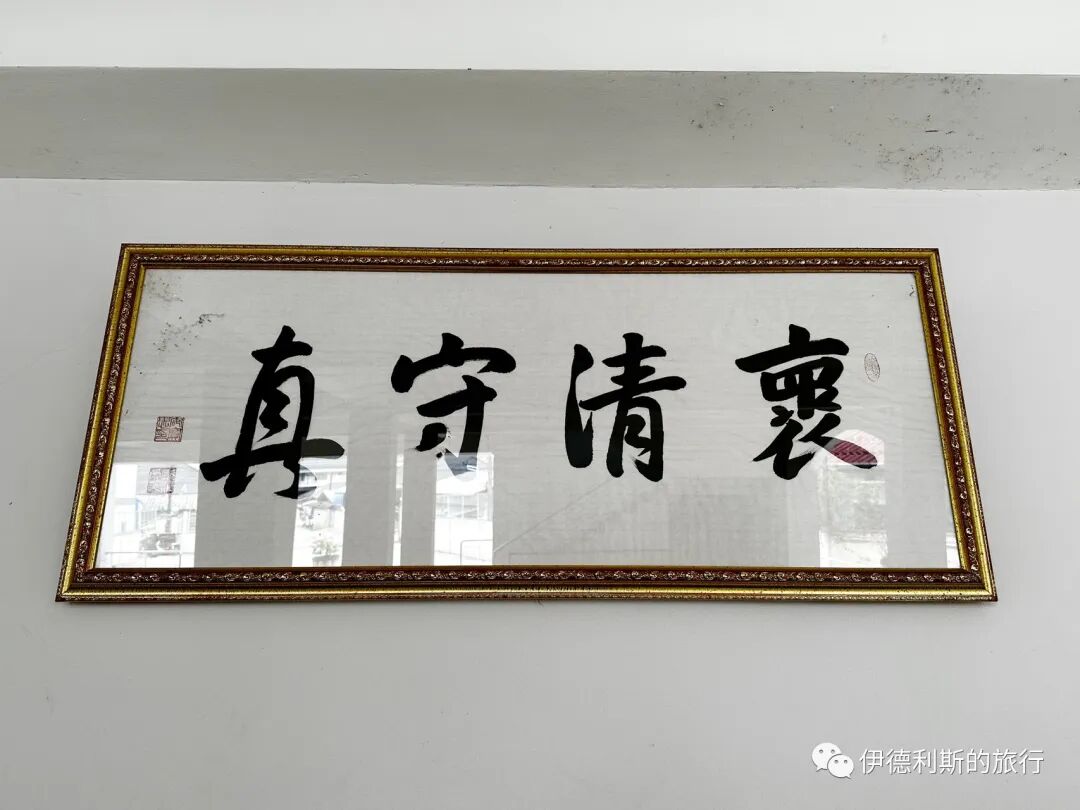
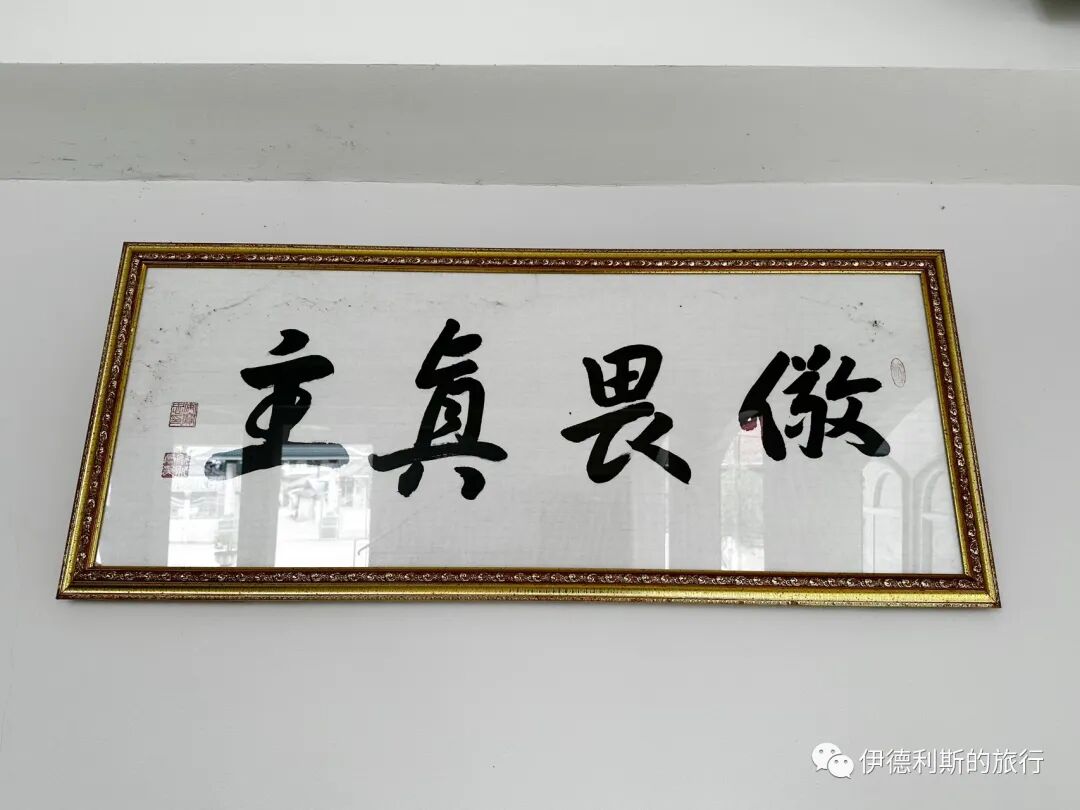
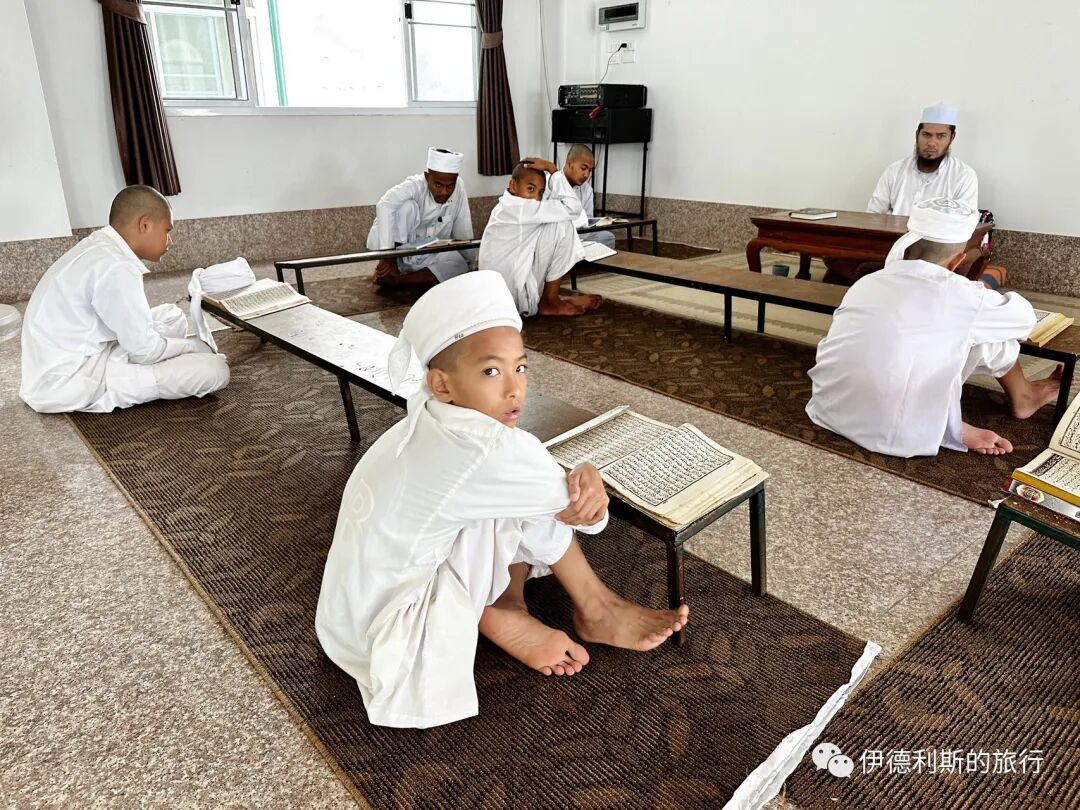
I met a group of young Hafiz reciting the Quran in the mosque. Life has been hard in northern Myanmar recently, so some Burmese Muslims send their children to study at Jiqing Mosque. These children spend several years practicing constantly to become qualified Hafiz.
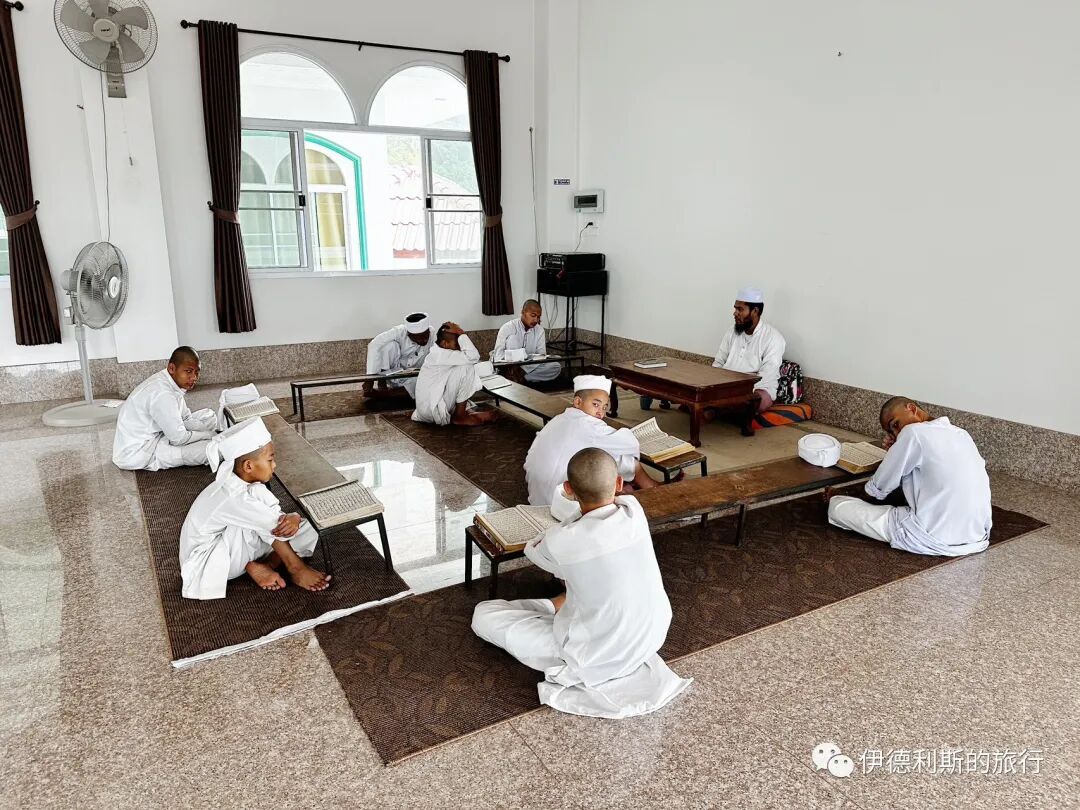
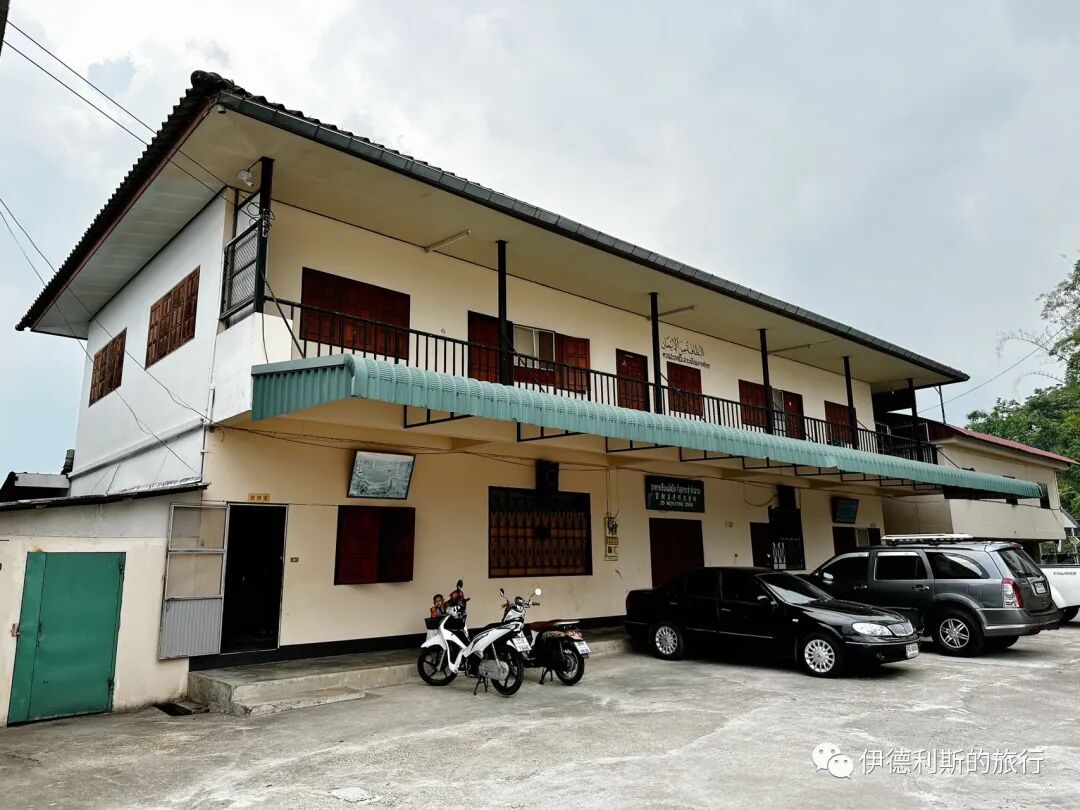
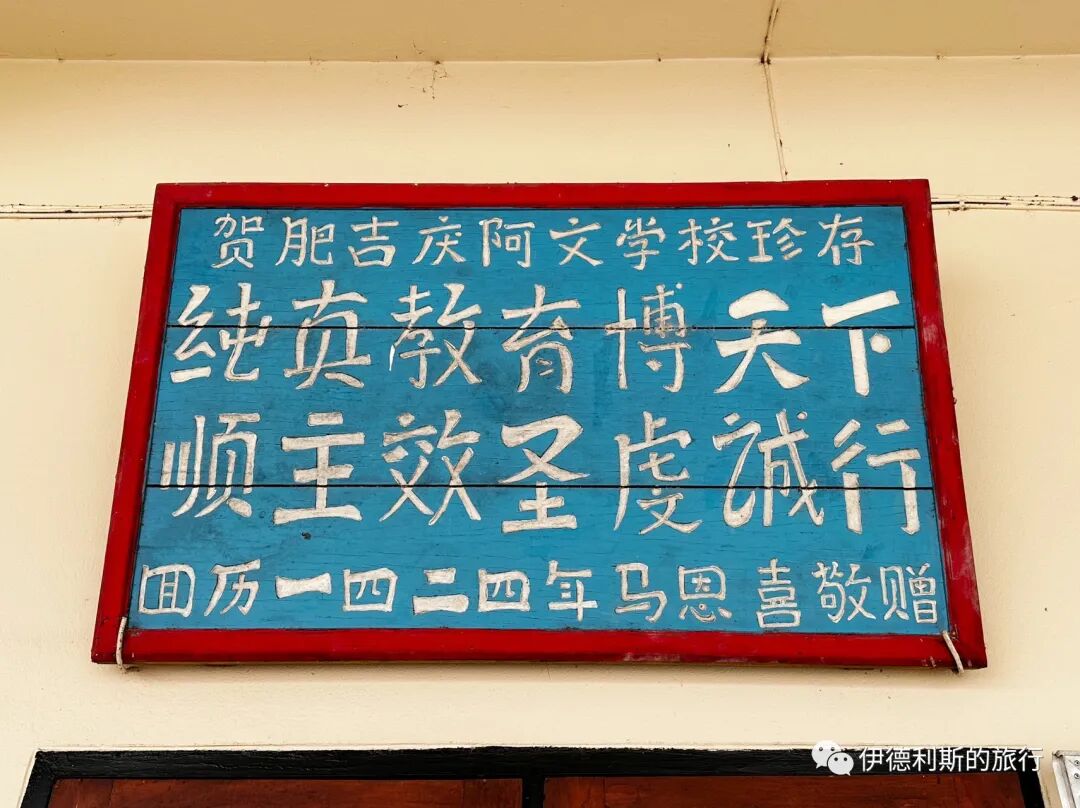
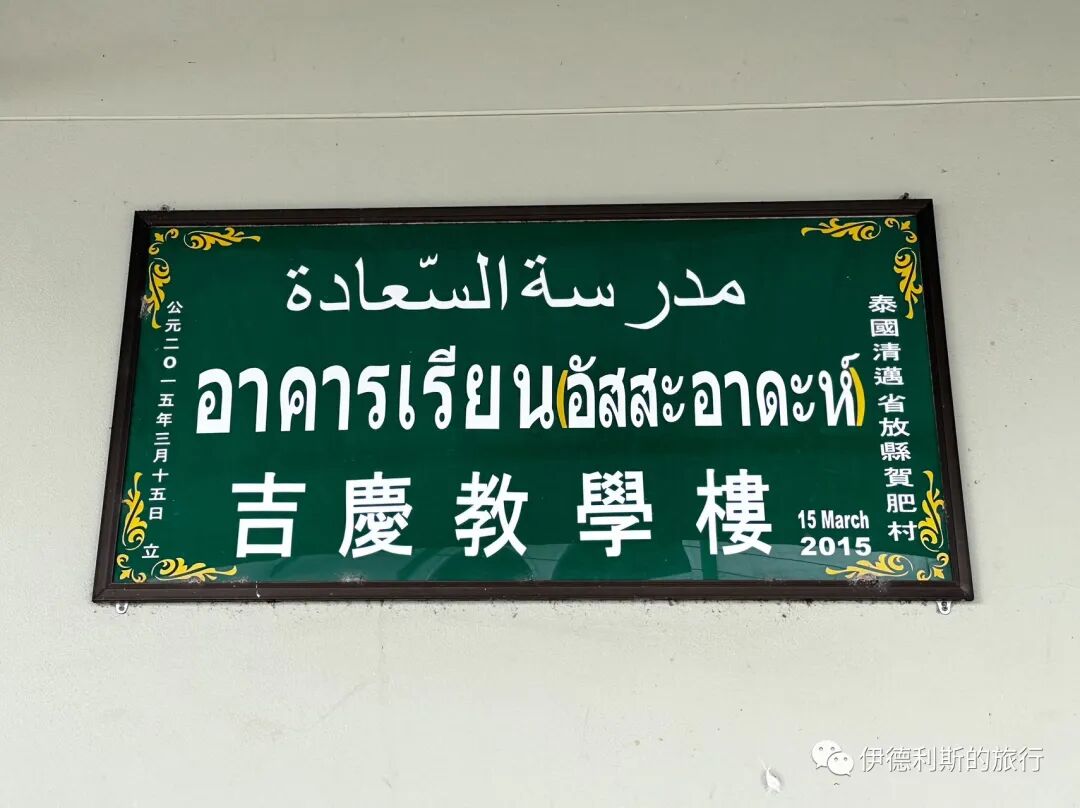
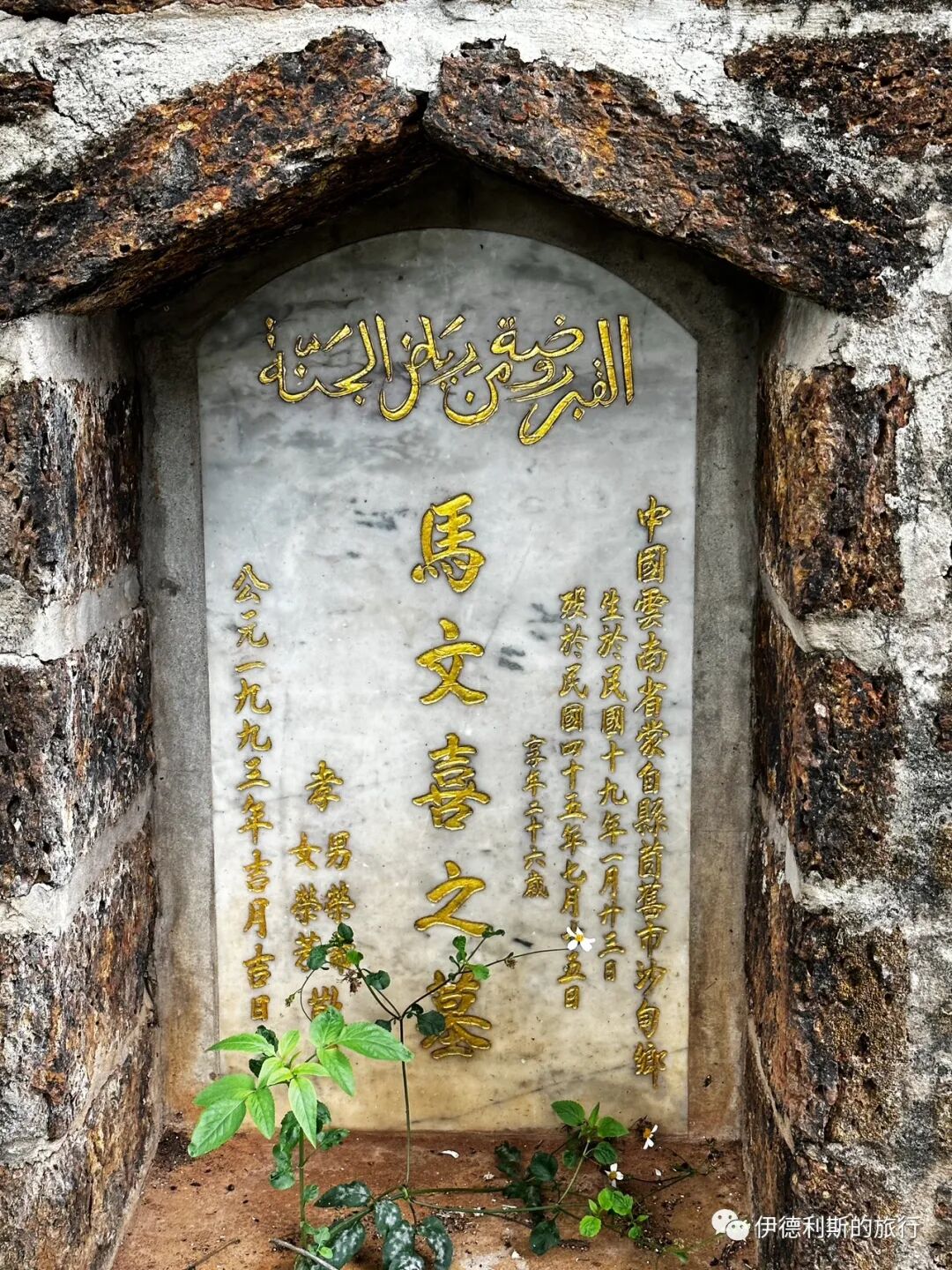
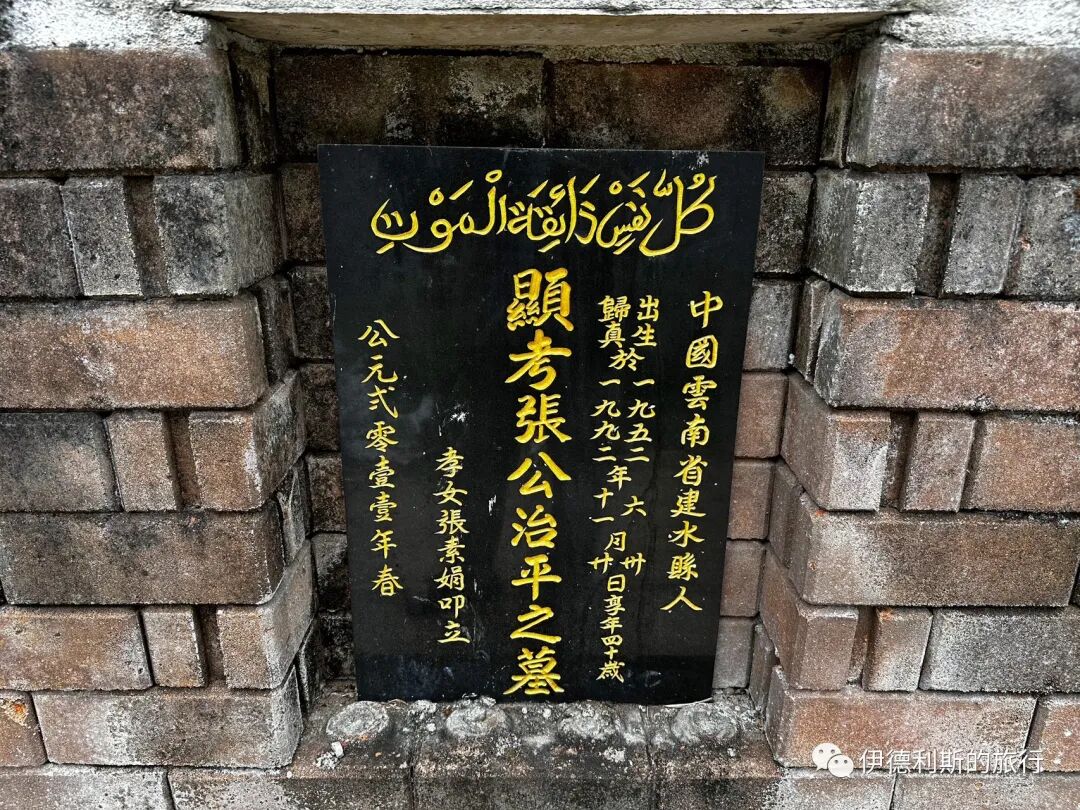
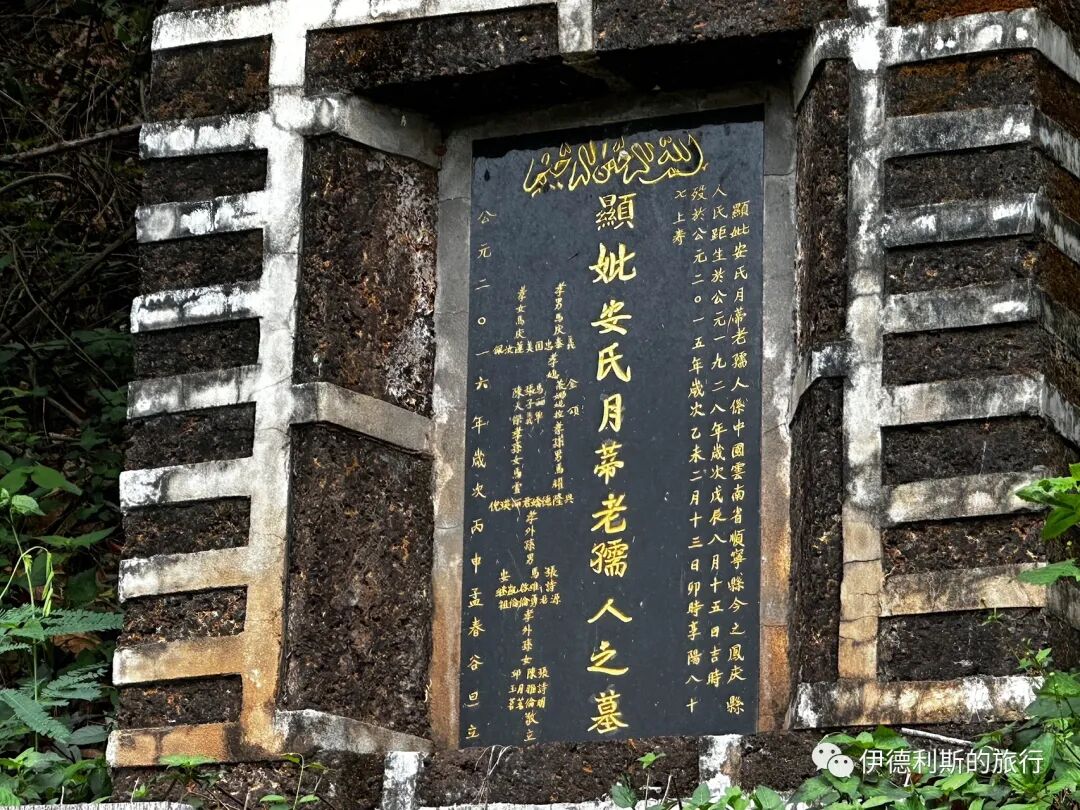
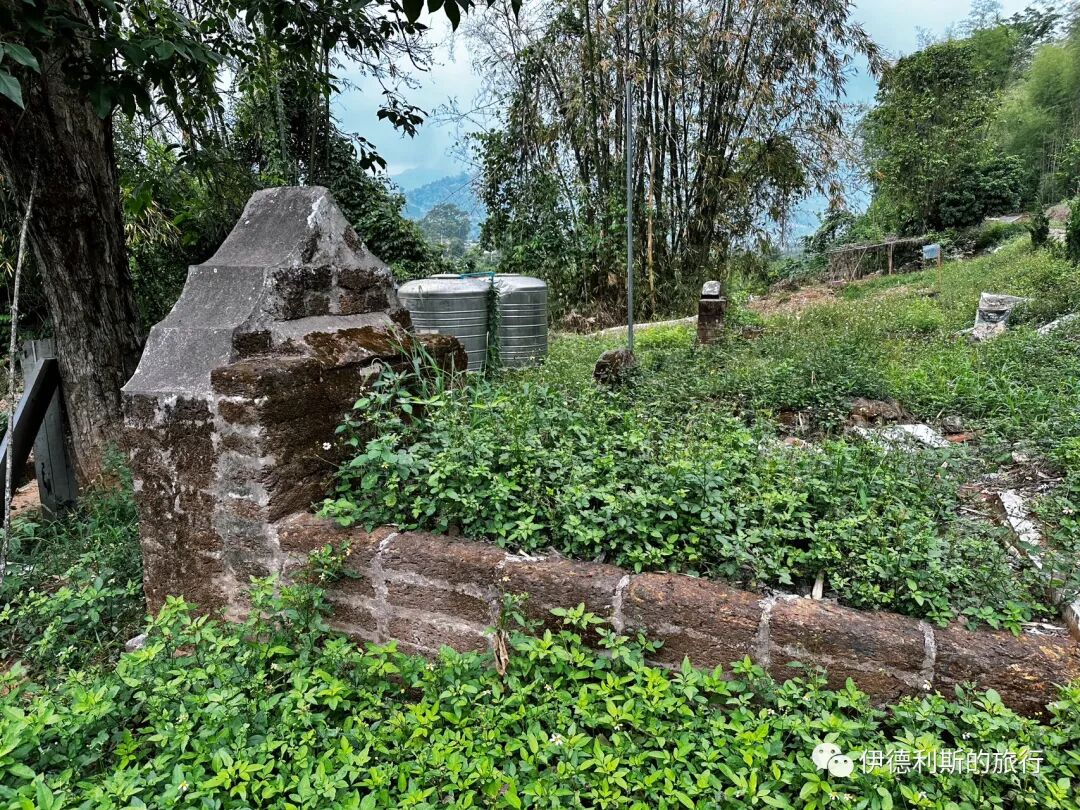
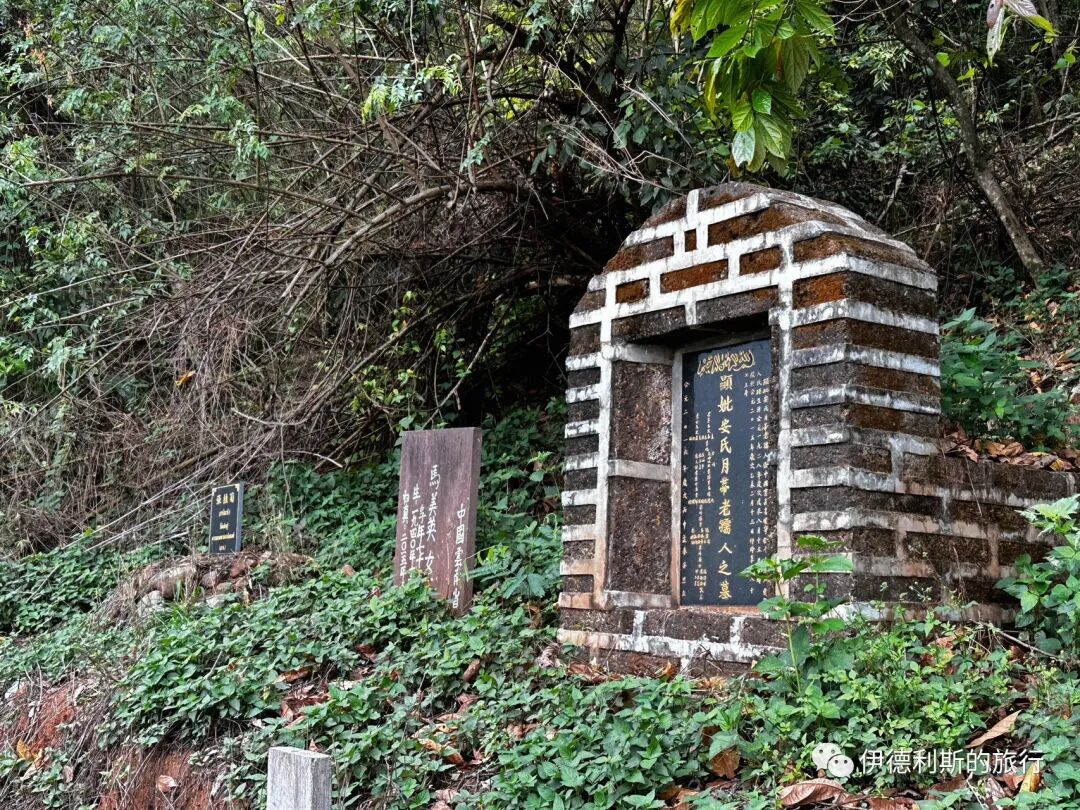
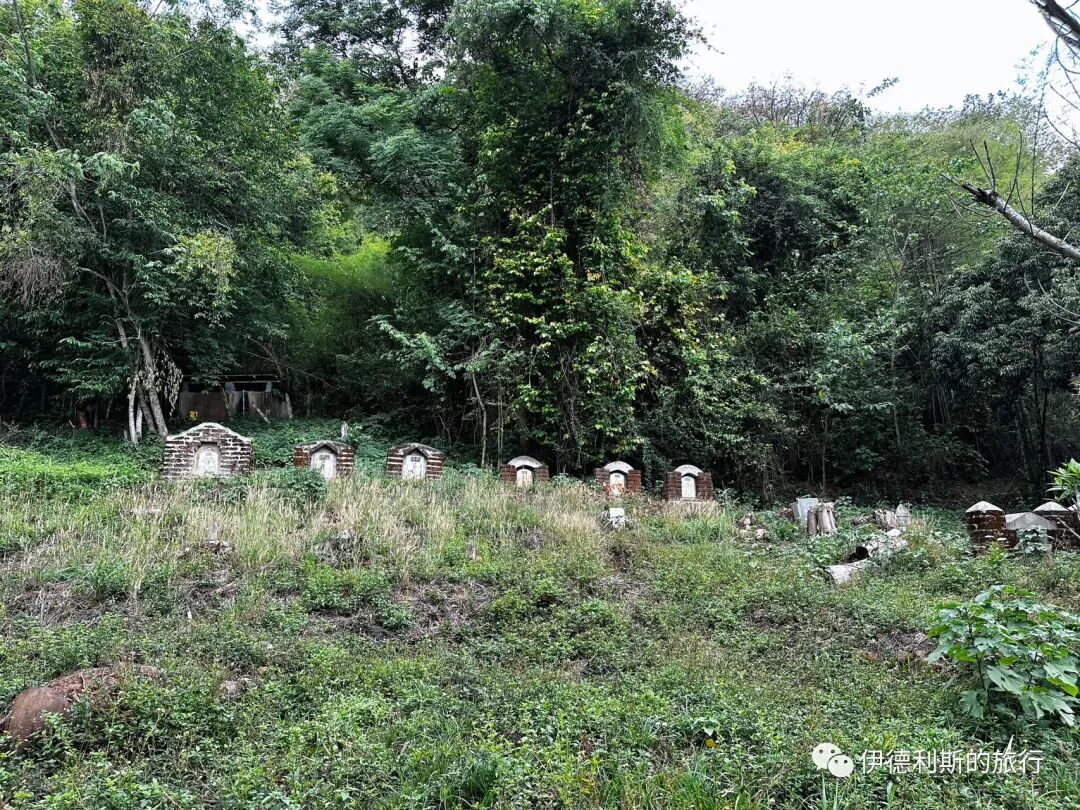
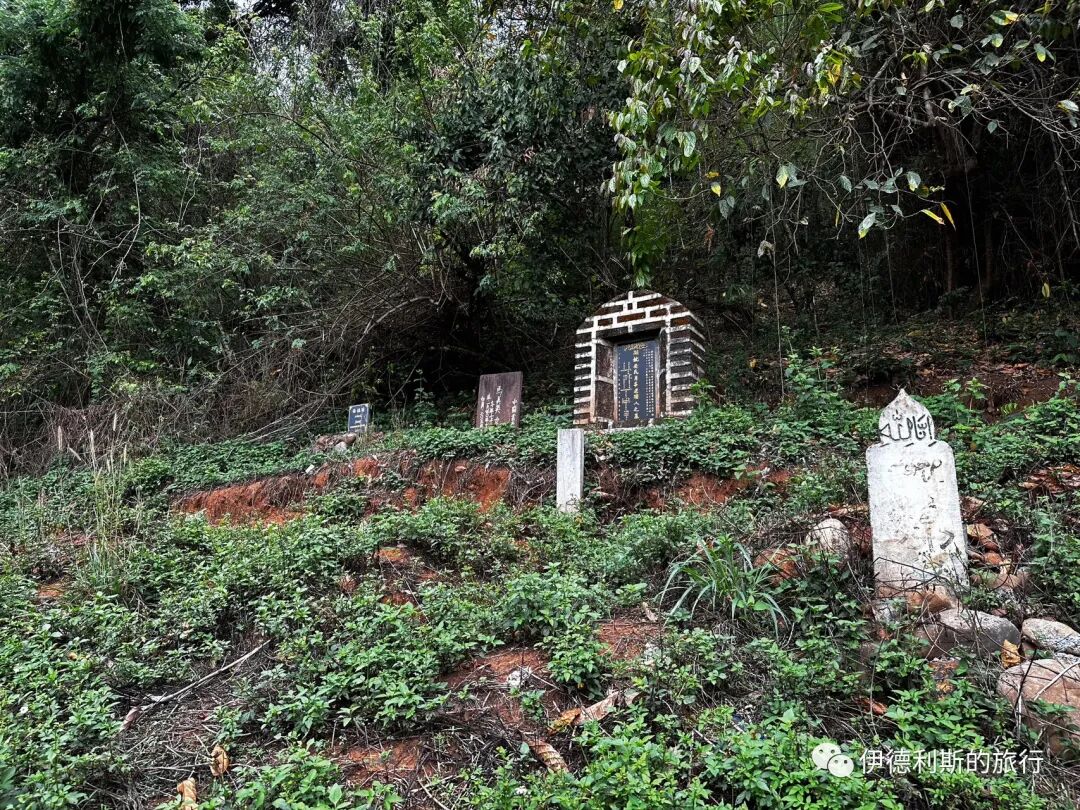
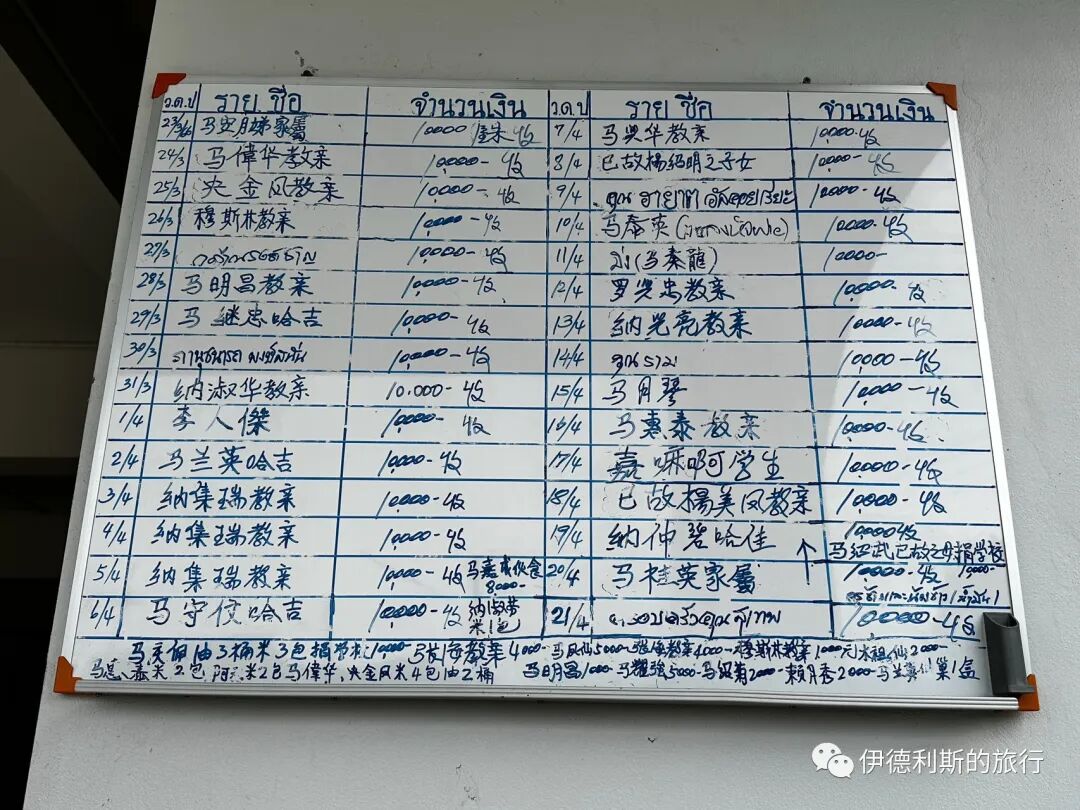
The back door of Hefei Jiqing Mosque leads to a cemetery. You can see that the ancestors of the local community came from places like Shadian, Jianshui, and Fengqing County in Lancang, Yunnan. The mosque's donation record book (nietiebu) shows that the main family names in this community are Ma, Na, Li, and Yang.
Fang District town
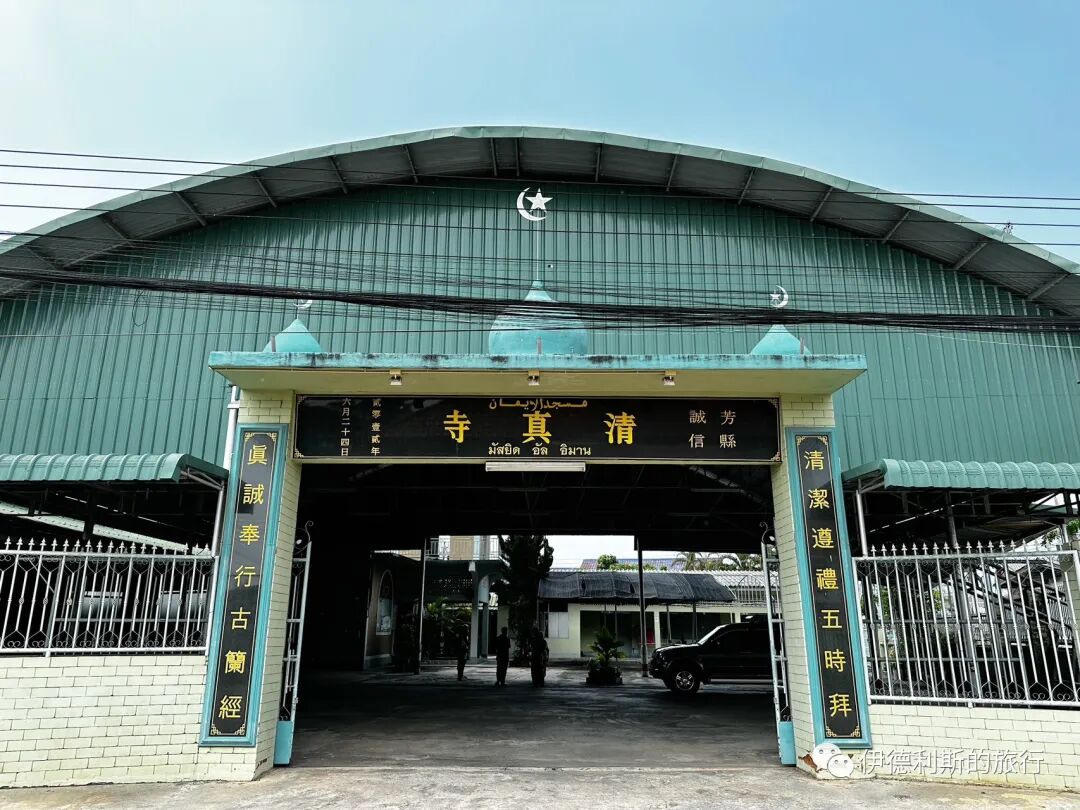
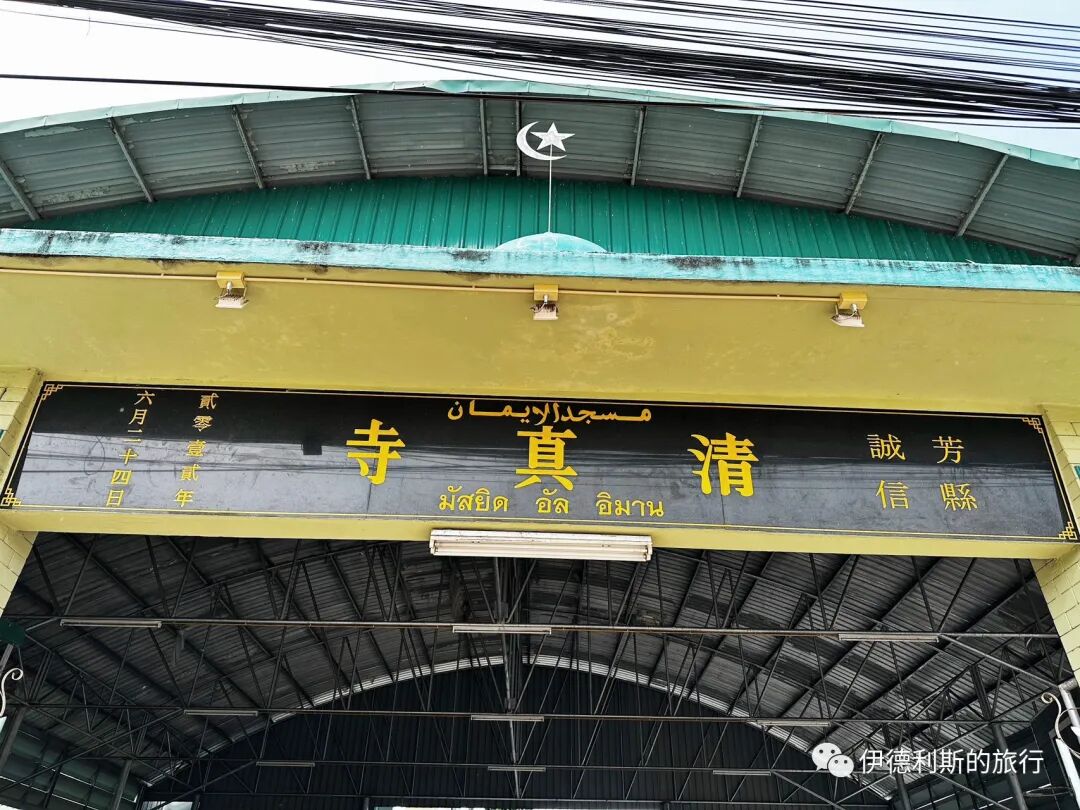
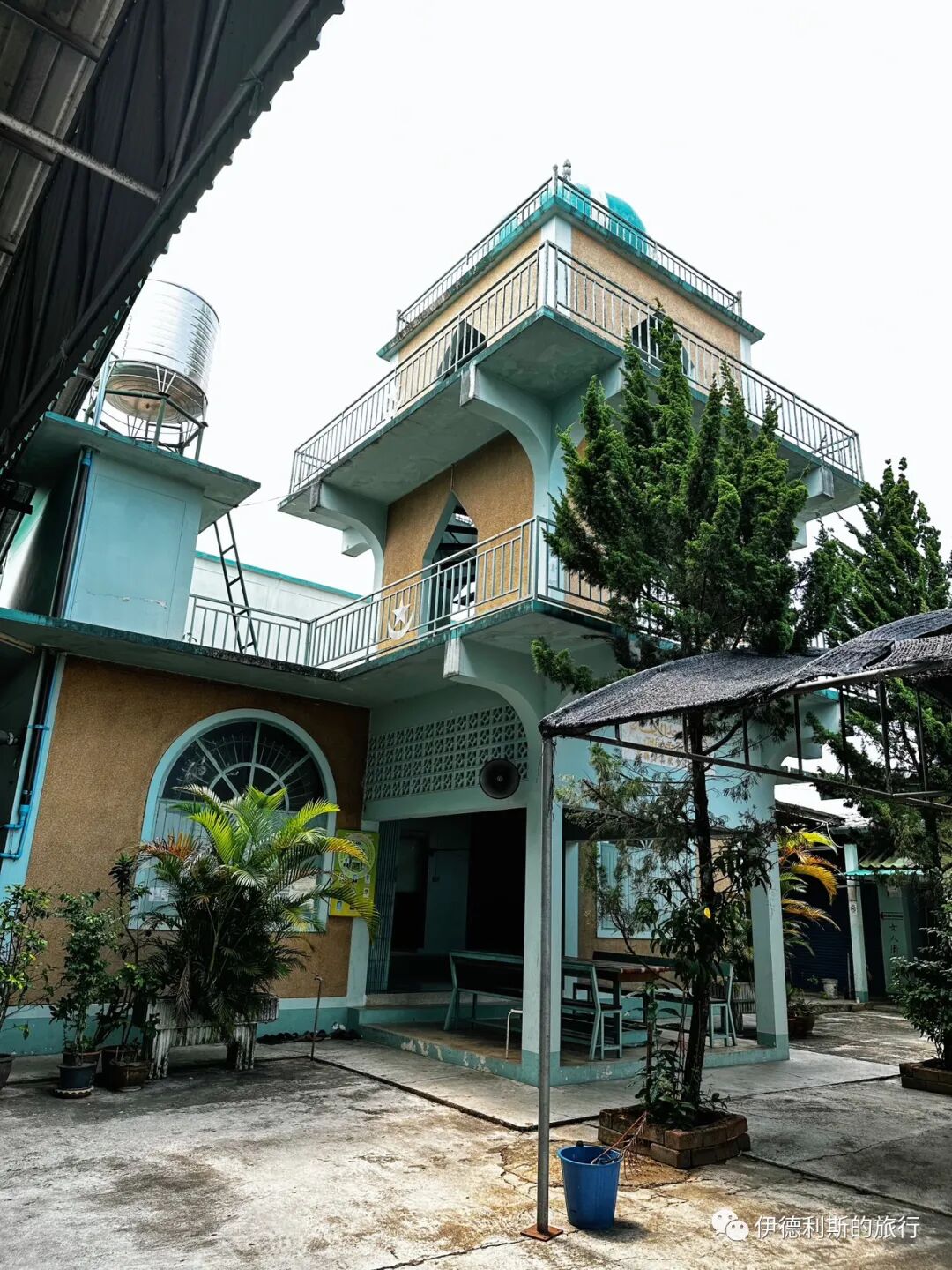
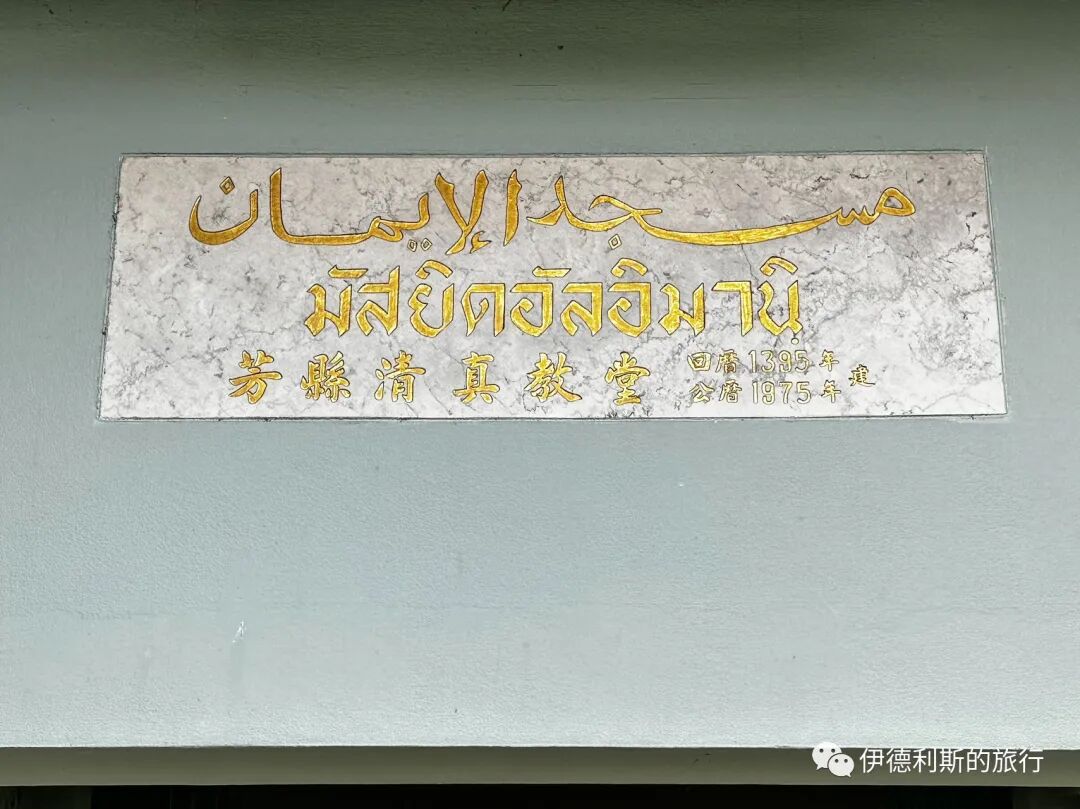
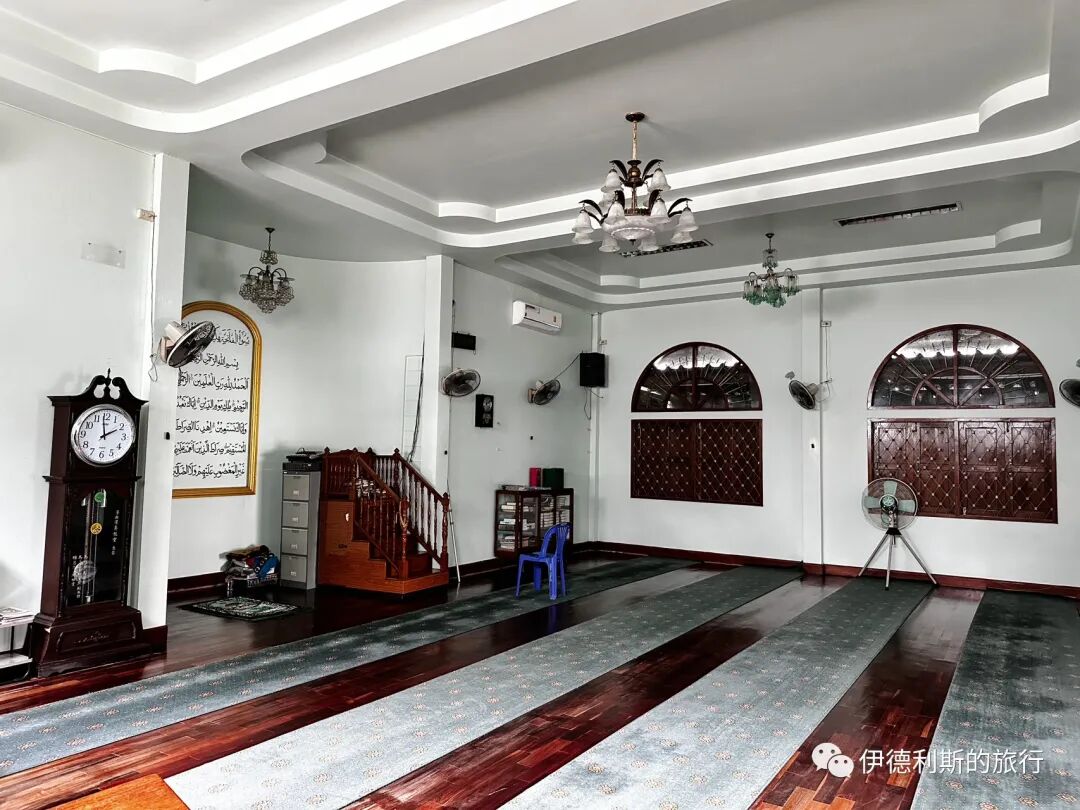
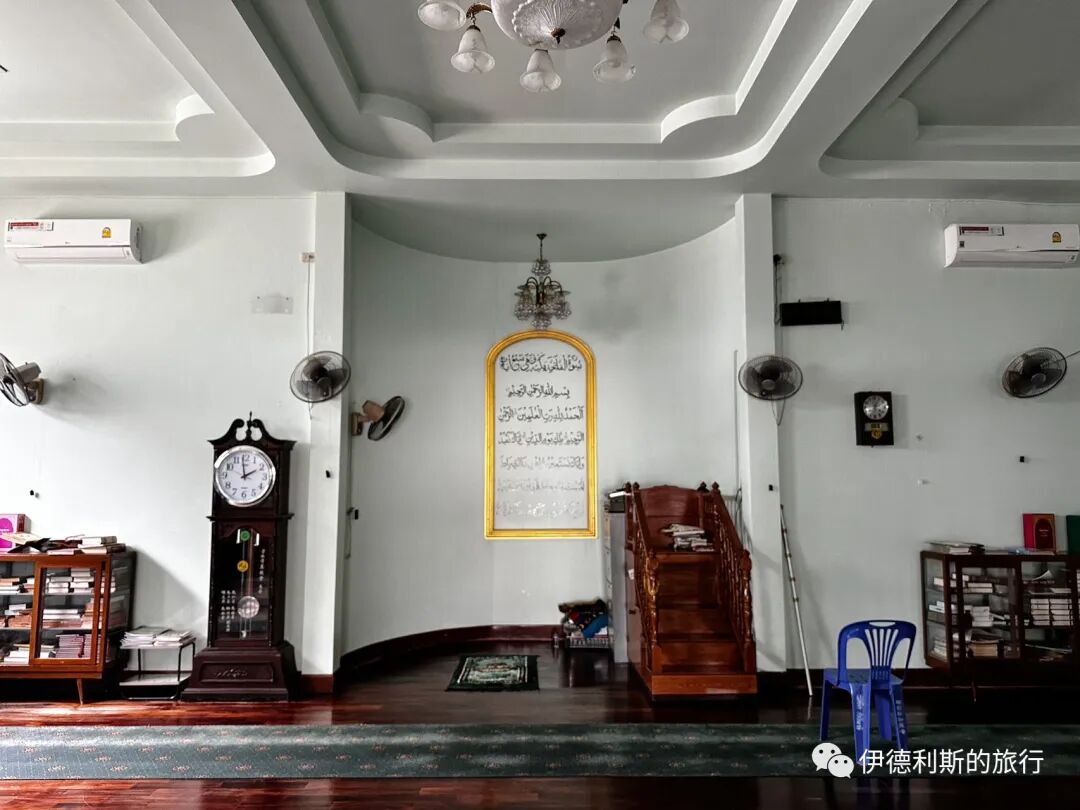
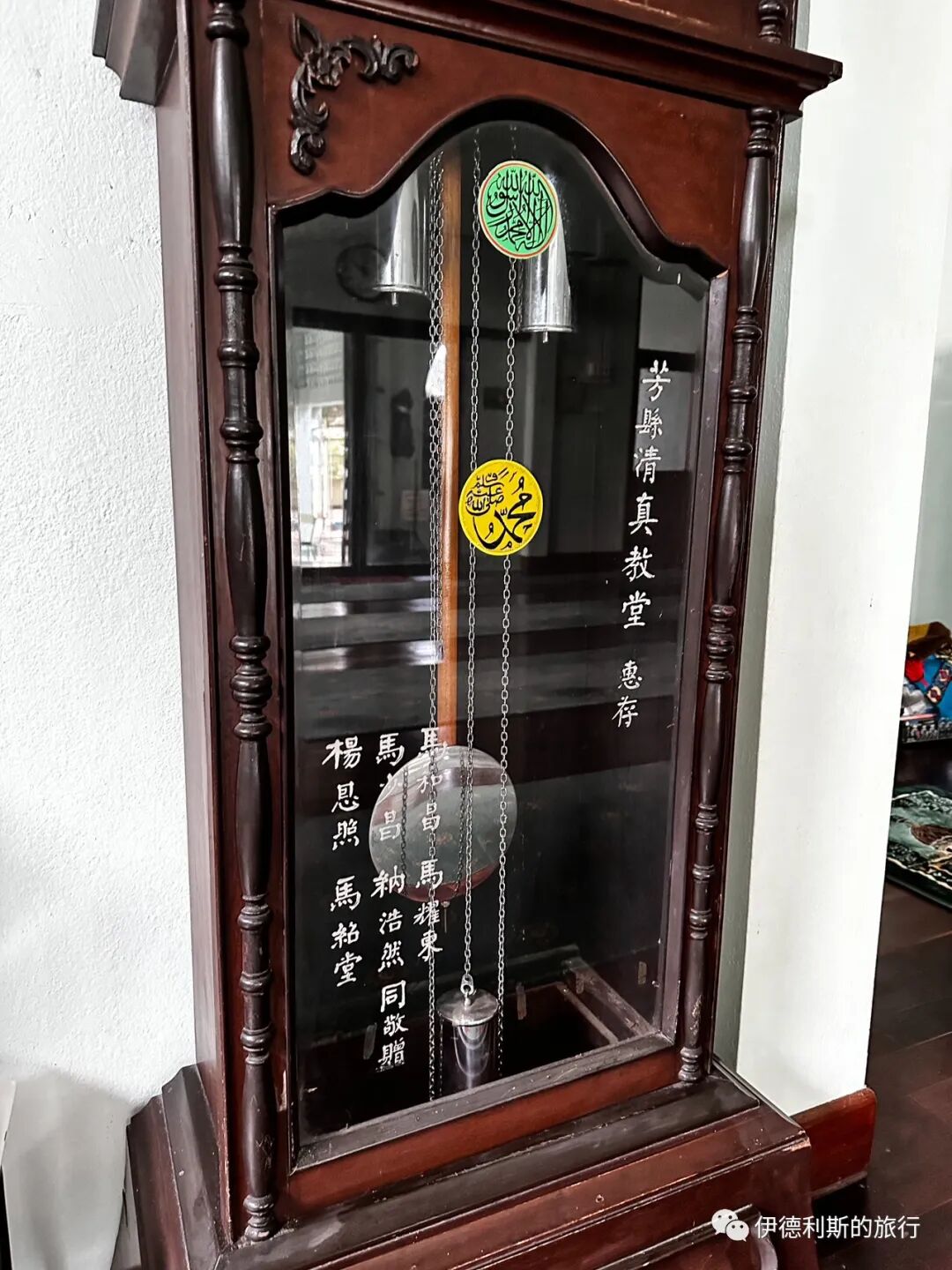
After leaving Hefei, we went to the third Yunnan-style mosque on the Thai-Myanmar border, Chengxin Mosque in the town of Fang District, Chiang Mai Province. Chengxin Mosque was built in 1975 by Yunnan Hui Muslims living in Fang District town. It makes it easier for Yunnan Hui Muslims from nearby villages to attend to business in town. Chengxin Mosque has fewer ancestral records (gaomu) than the surrounding villages, and the mosque itself is quite small. It is currently led by an imam who moved from Myanmar, and his family lives right in the mosque. The imam's daughter speaks Mandarin. We chatted with her about daily life, which was very interesting.
Similar to Thailand, the origins of Muslims in Myanmar vary from north to south. In the far north live the Panthay people, descendants of Yunnan Hui Muslim caravans. In the far south live the Pashu people, who are of Malay descent. The central region is mainly home to Burmese Muslims, formed by intermarriage between South Asians and local Burmese people. In 1660, some Mughal soldiers followed the son of Emperor Shah Jahan to Arakan. They later became royal archers for the Mrauk U Kingdom of Arakan and ruled the area for decades between the late 17th and early 18th centuries. The descendants of these Mughal troops are known as the Kaman people, one of the ethnic groups officially recognized by Myanmar.
Daduan Village
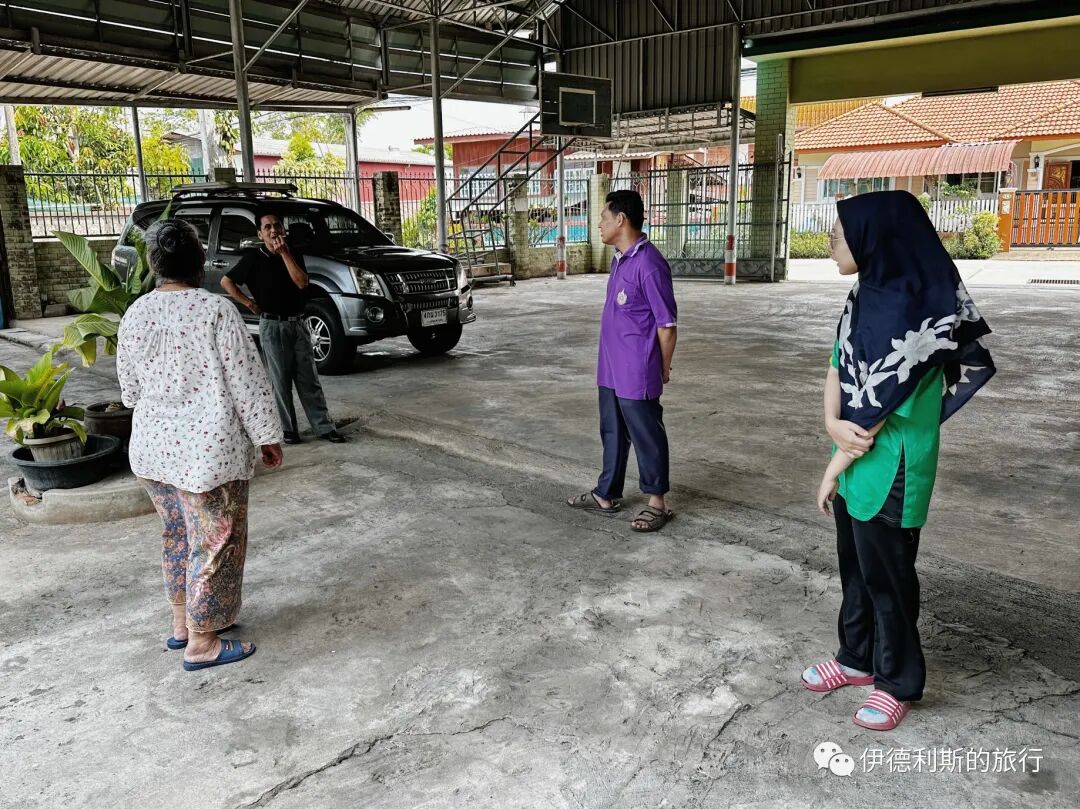
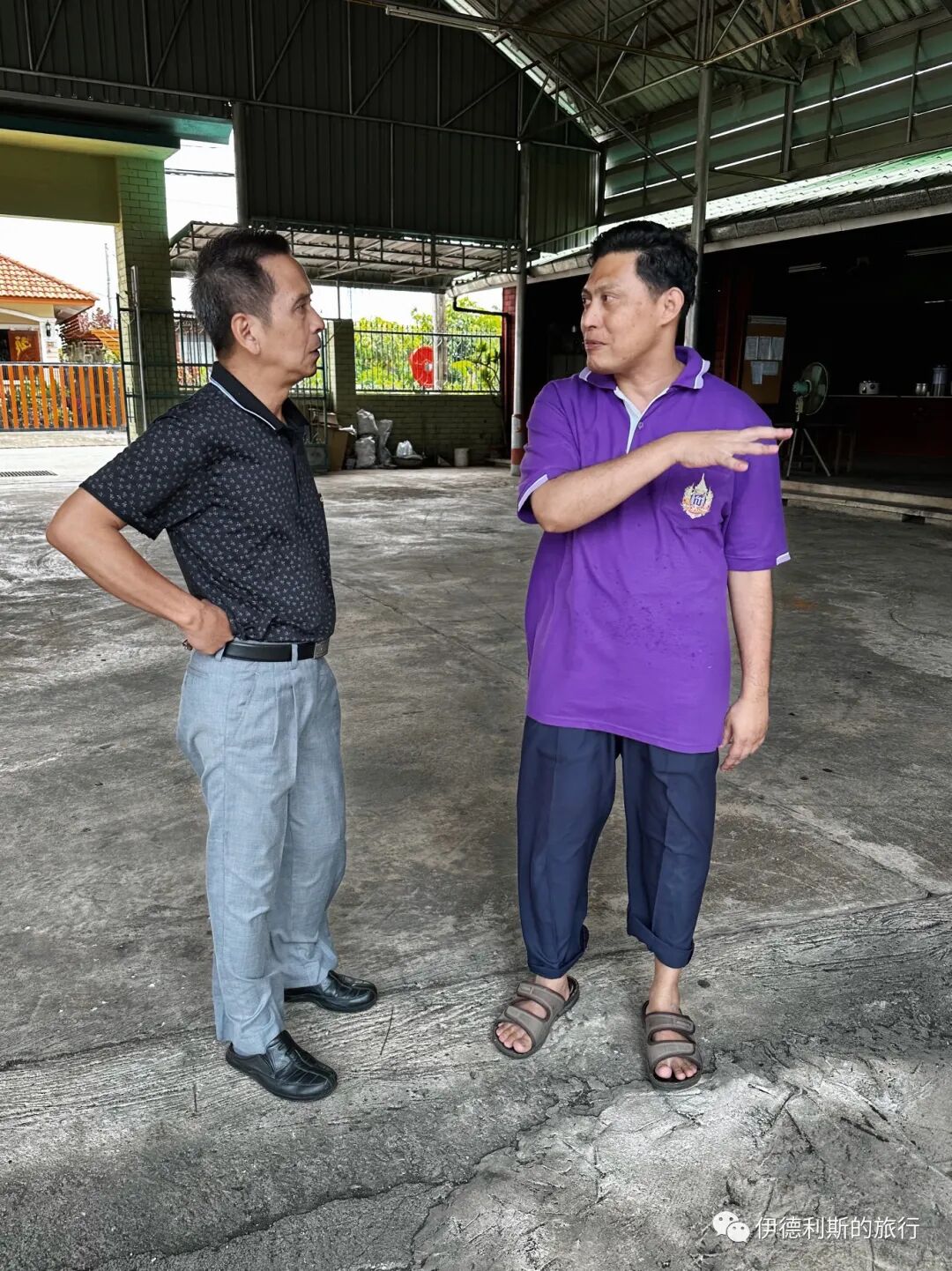
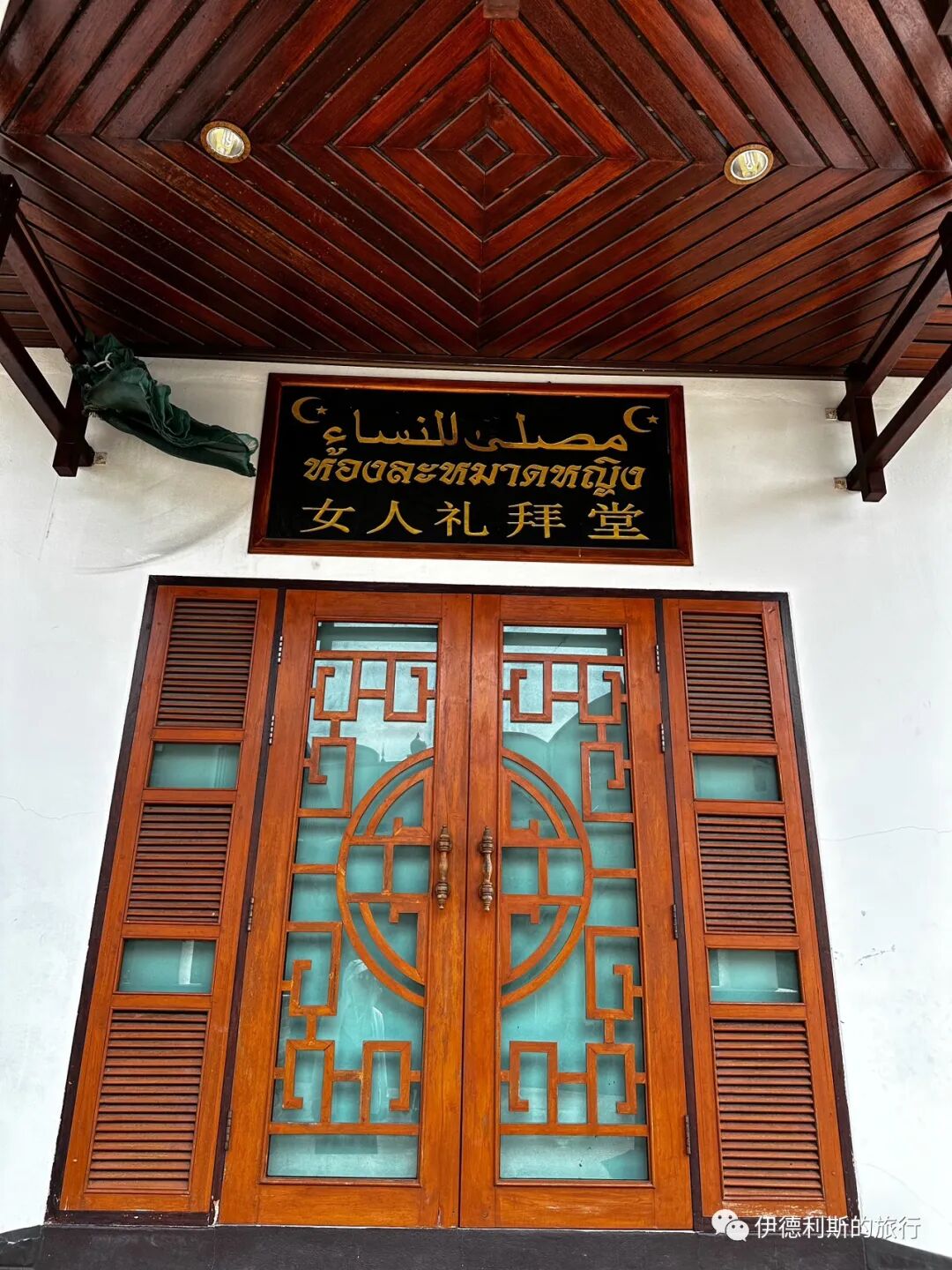
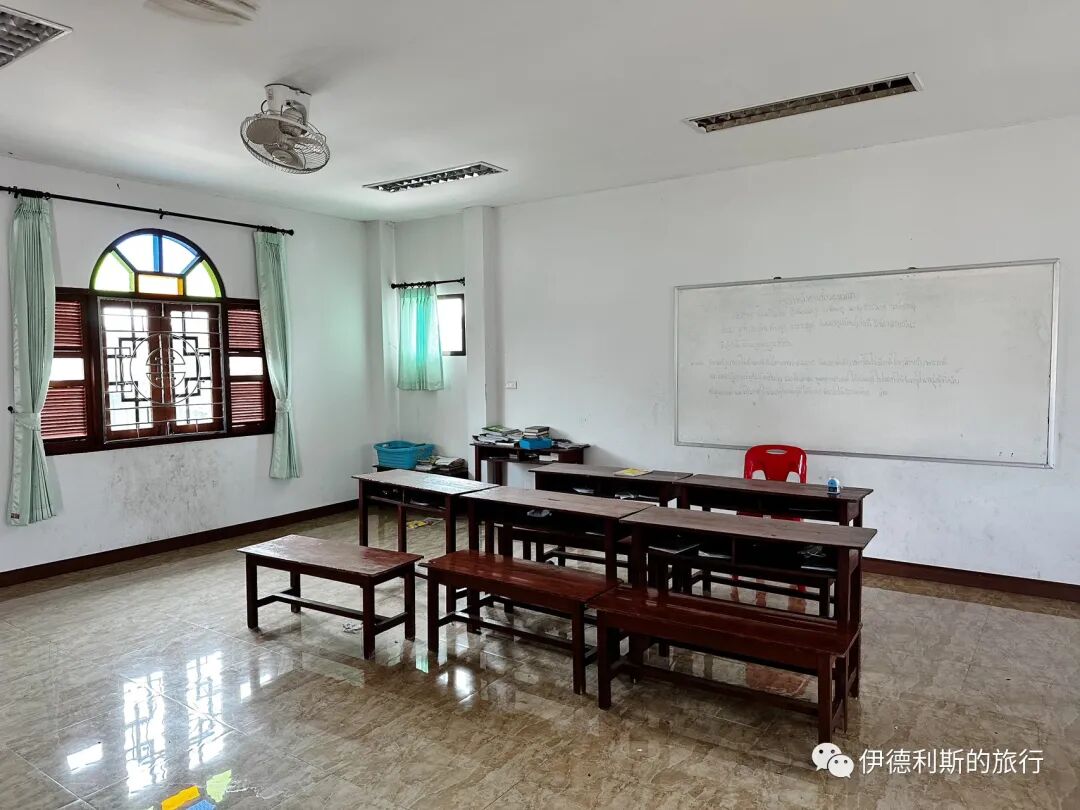
Leaving Fang District town, we arrived at the northernmost Yunnan-style mosque in Chiang Mai, Ciai Mosque in Daduan. We are now just a stone's throw from Myanmar. The newly built women's hall at Ciai Mosque is beautiful. The first floor is a prayer hall, and the second floor is a classroom.
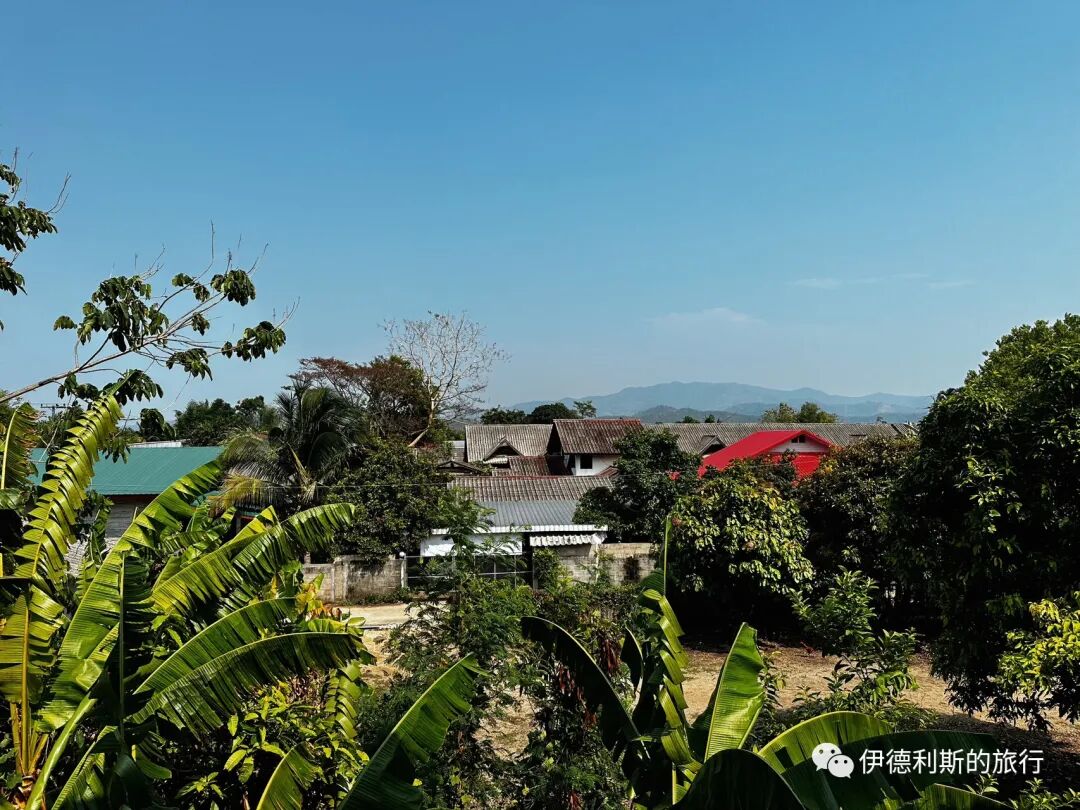
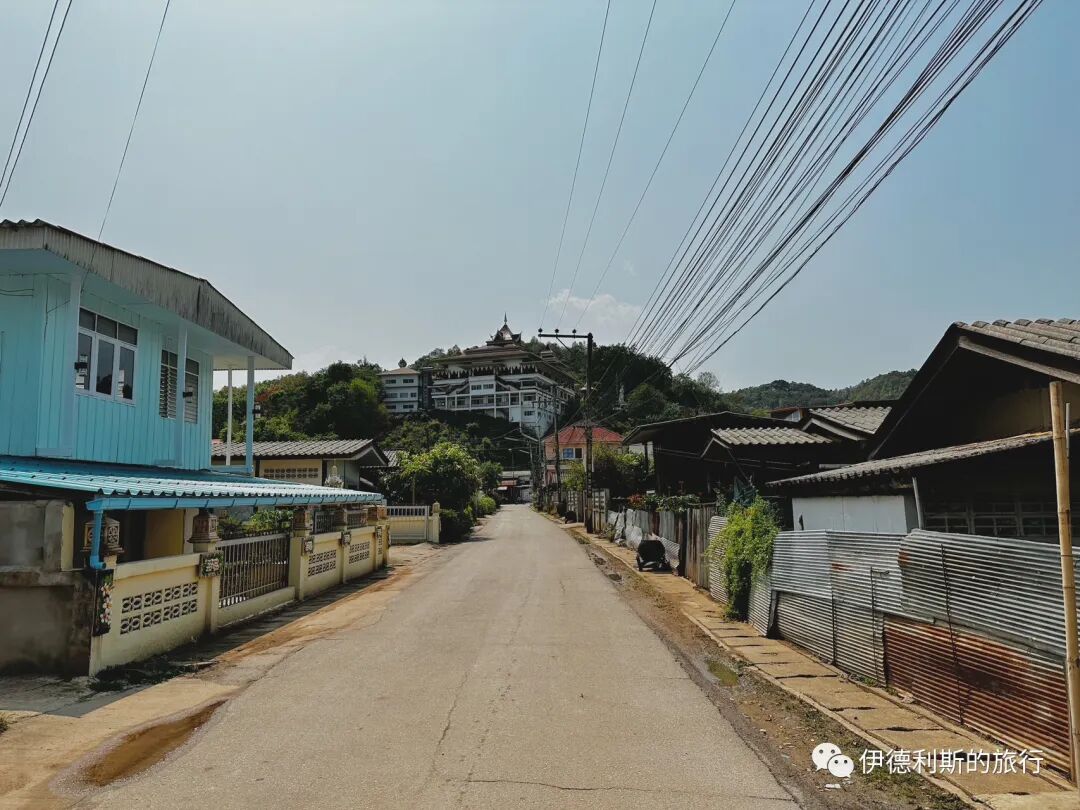
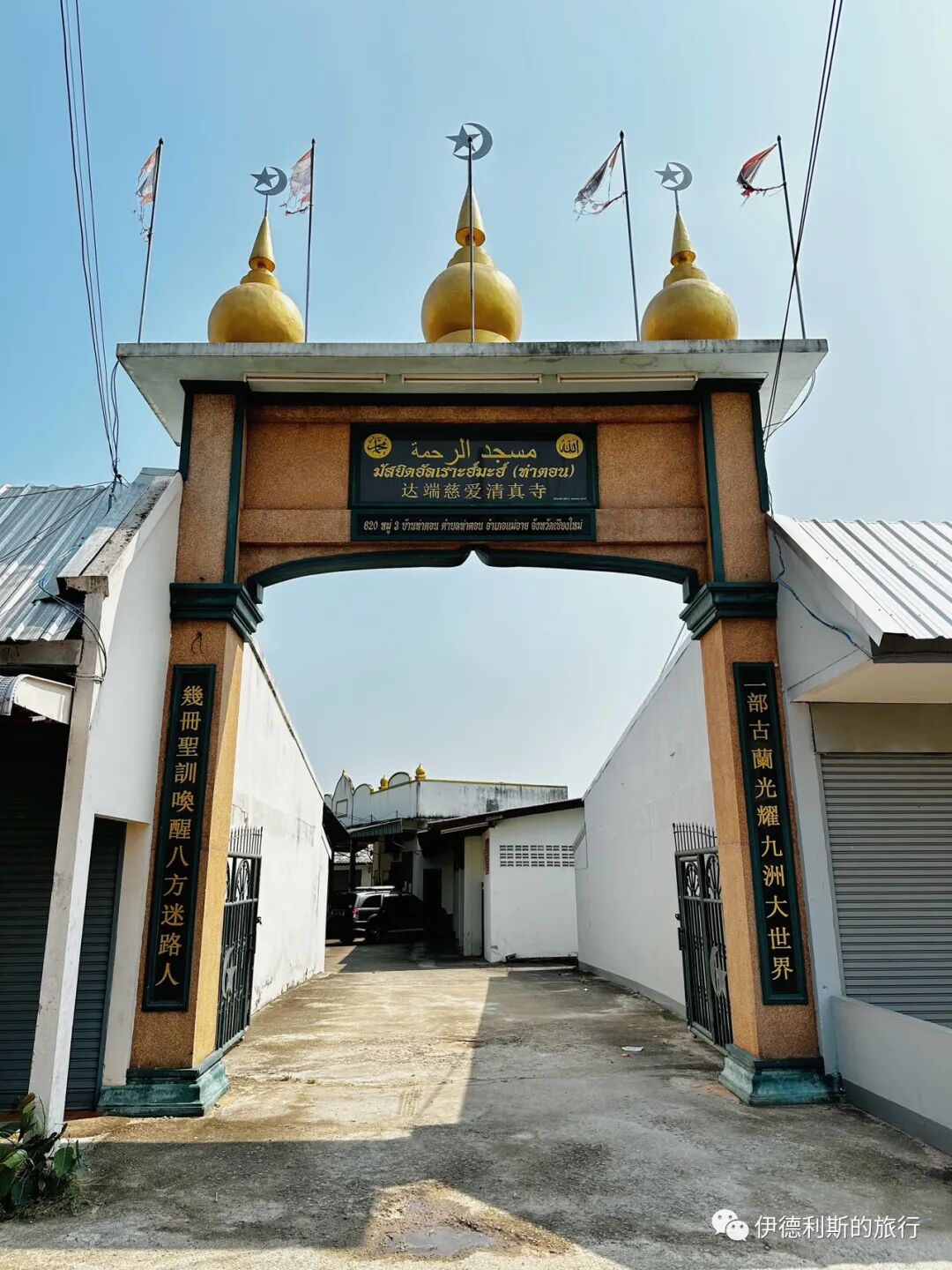
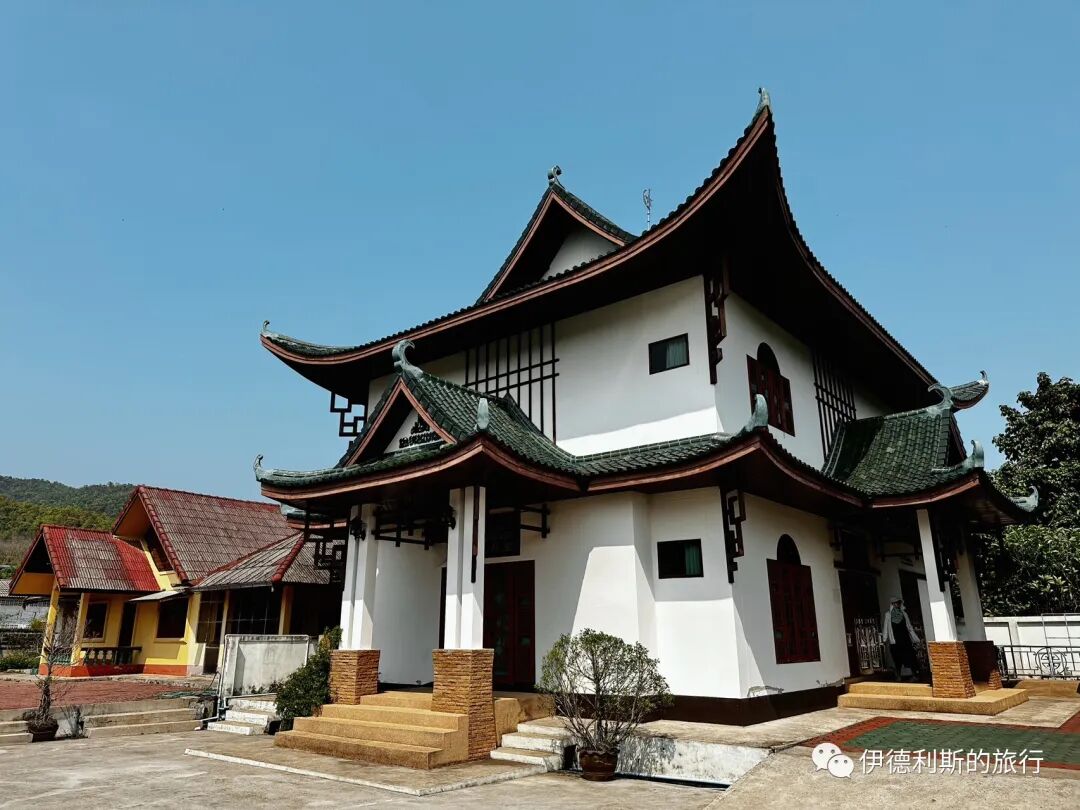
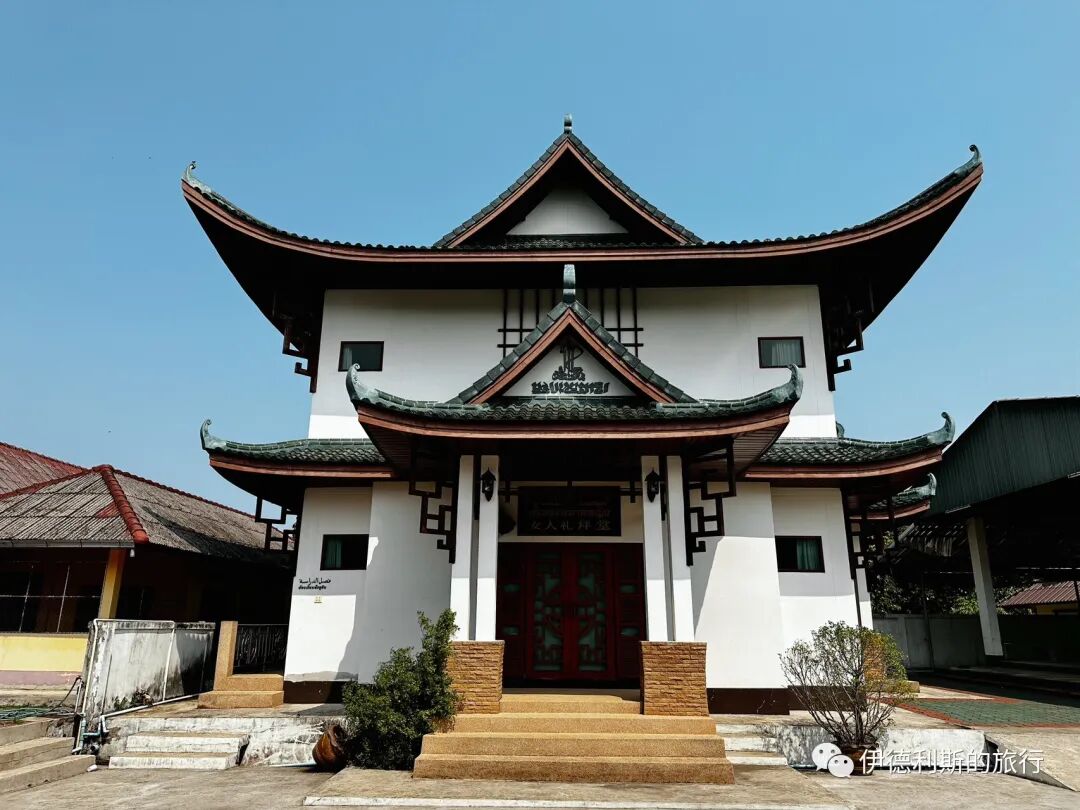
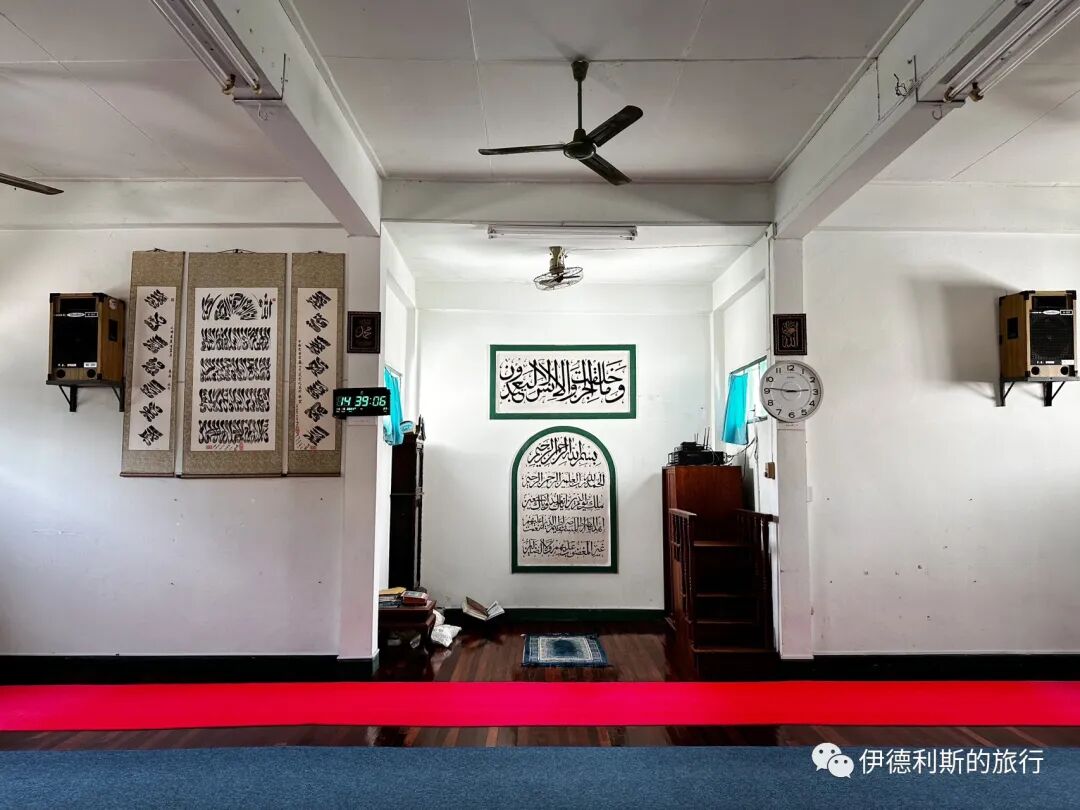
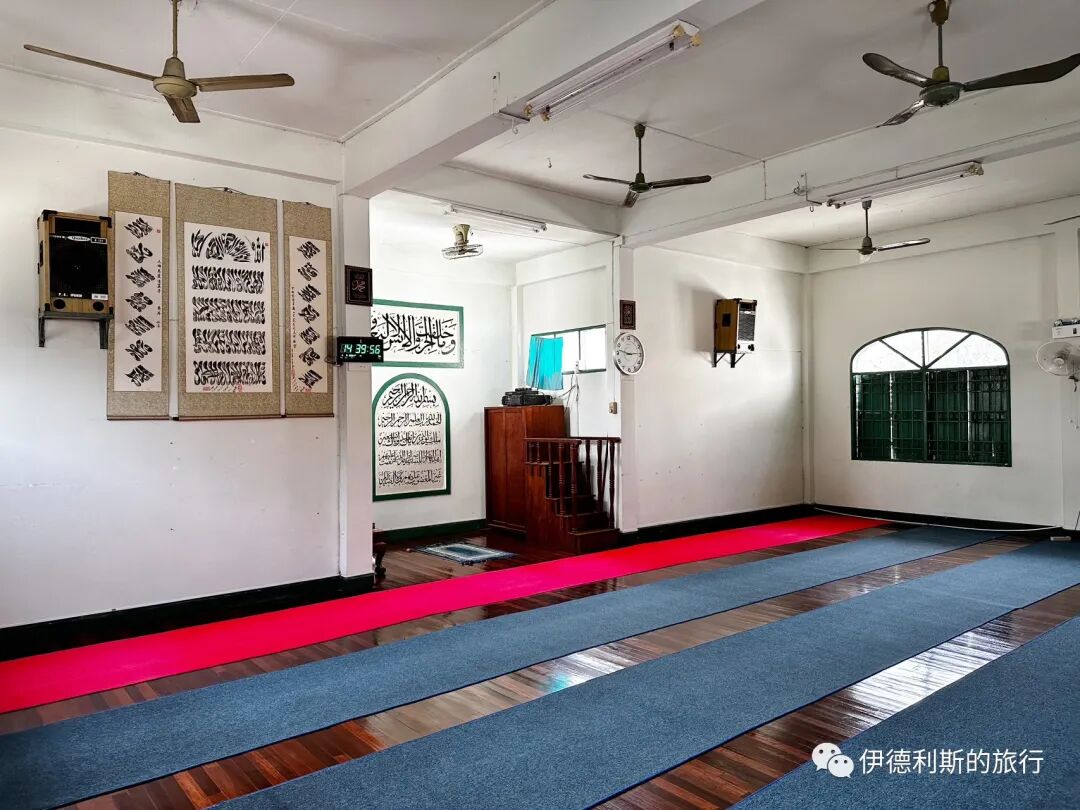
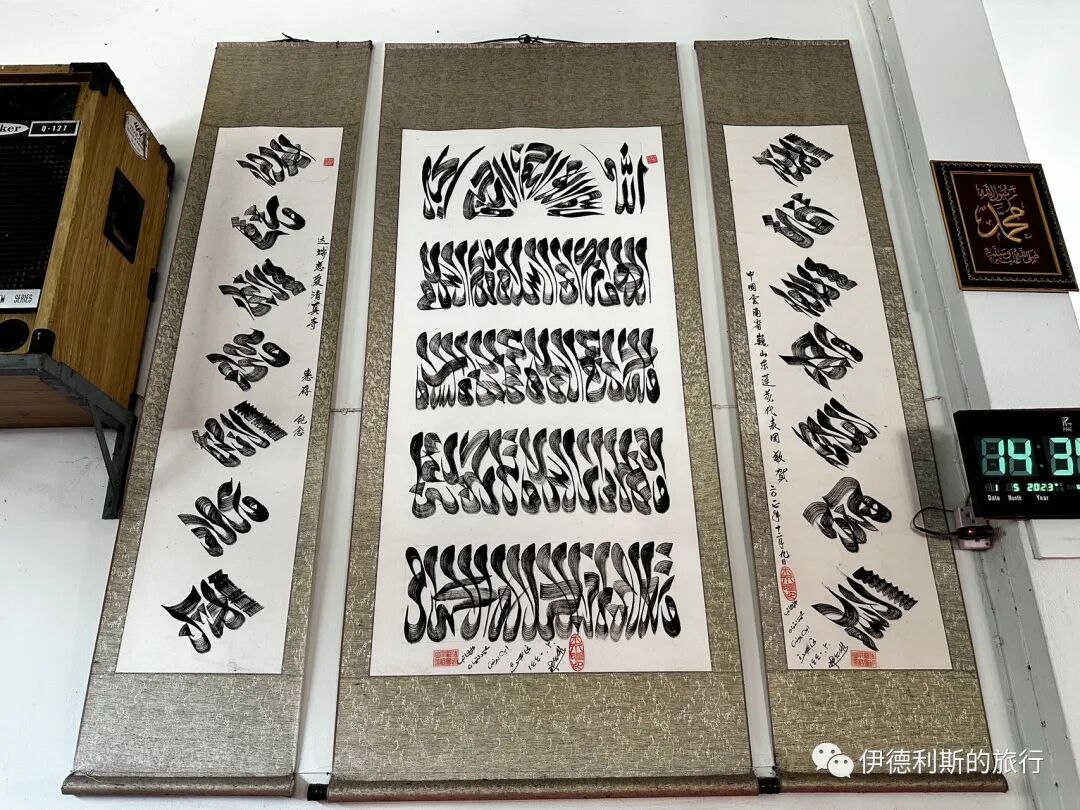
Inside the main hall of Daduan Ciai Mosque, there is a traditional Weishan-style Arabic calligraphy scroll gifted in 2017 by Donglianhua Village in Weishan, Dali. Thanks to the internet, many Hui Muslims from Yunnan living in Northern Thailand have reconnected with their relatives back home, and the two sides are now in closer contact. Among the Hui Muslims from Yunnan living along the Thai-Myanmar border, Weishan in Dali, Tonghai in Yuxi, and Shadian in Honghe are the main ancestral homes.
The mosque also has copies of scriptures translated into Chinese that were donated by Taiwan. In 1984, Thailand ordered the isolated army in Northern Thailand to disarm and placed them under military control. They banned Chinese-language education and replaced Chinese schools with Thai-language schools. However, the refugees insisted on learning Chinese. They sent their children to Thai schools during the day, but still had them secretly study Chinese in the early morning and at night. Over time, Thailand stopped strictly enforcing these restrictions.
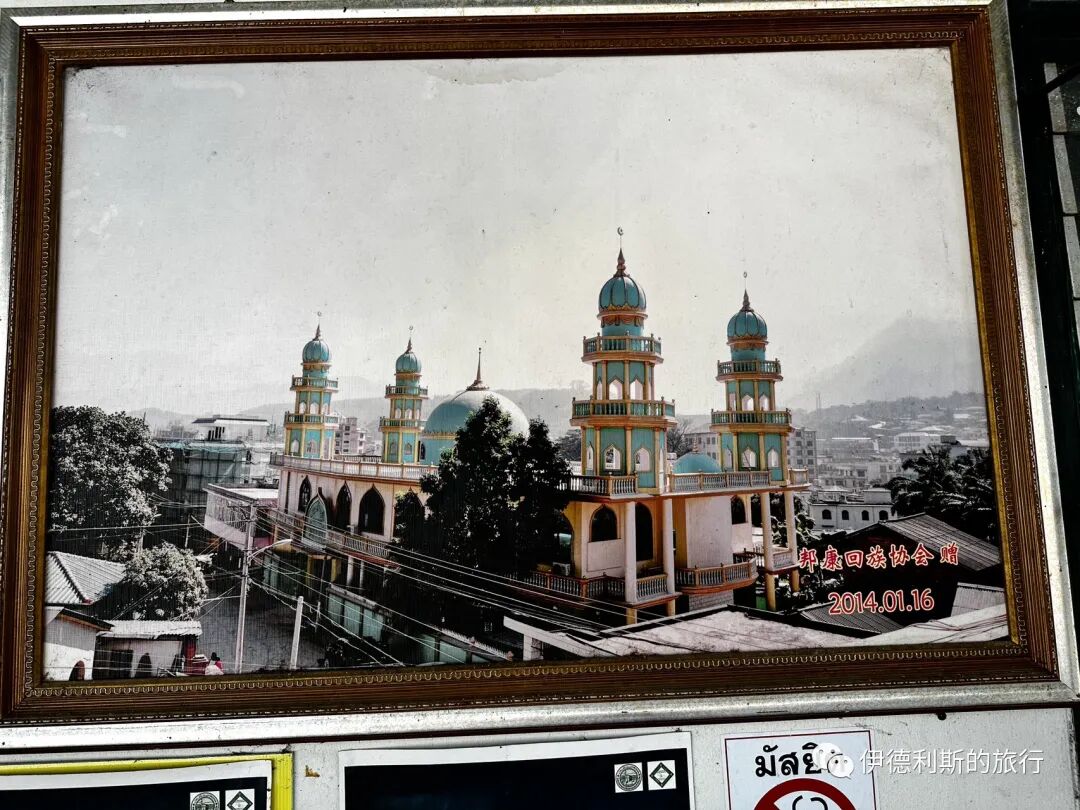
Inside the mosque hangs a photo of Panghsang Mosque, which was gifted by the Panghsang Hui Muslim Association in Myanmar in 2014. Master Ma told me that in 2014, various Yunnan-style mosques in Northern Thailand were invited by Panghsang Mosque to attend their mosque renovation celebration. Panghsang is the capital of the Wa State in Myanmar. It connects to the Meng'a border crossing in Yunnan and is one of the places where Myanmar-based Hui Muslims from Yunnan live.
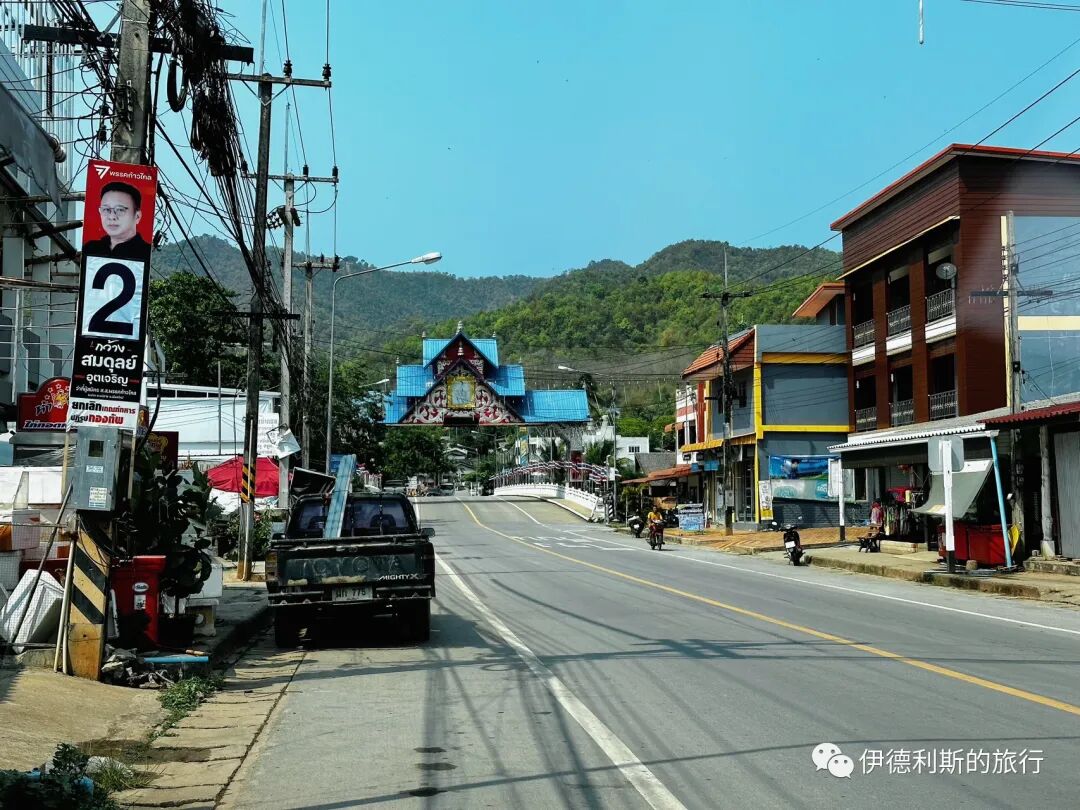
At the Thai-Myanmar border, the mountain on the other side is in Myanmar.
Mae Salong
Continuing north, we left Chiang Mai Province and entered Chiang Rai Province.
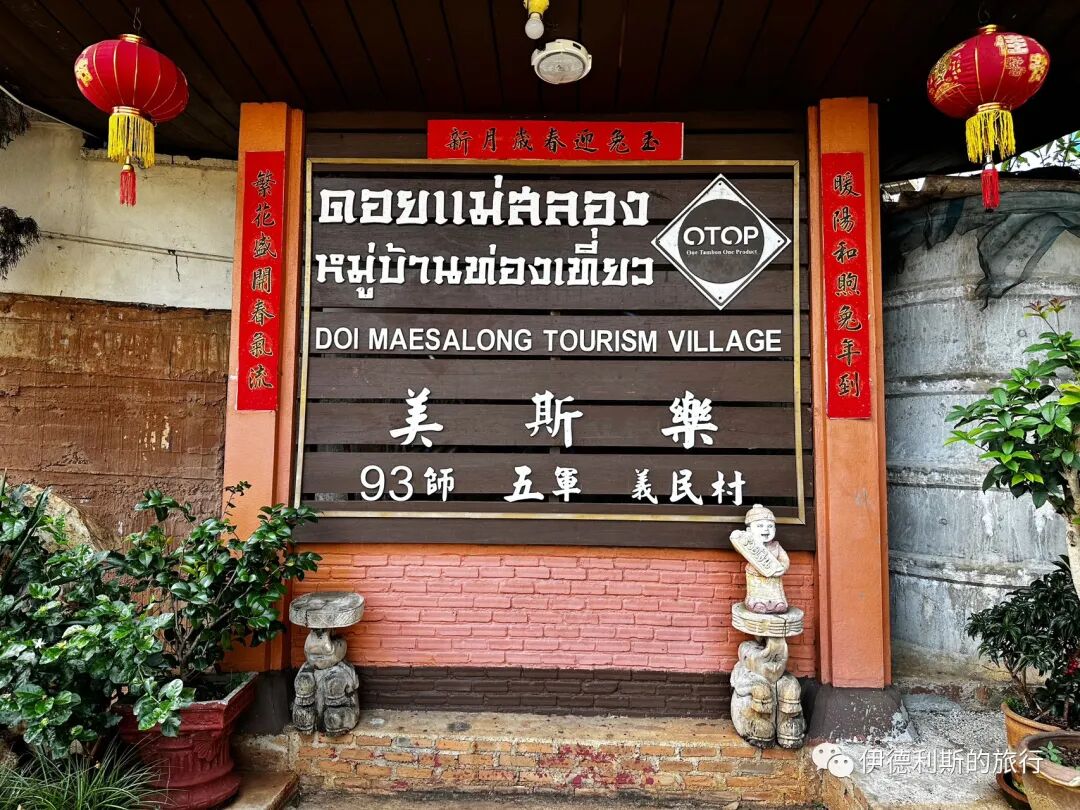
We drove deep into the jungle along the steep, winding roads of the Thai-Myanmar border. Along the way, I bought a huge bunch of super sweet bananas from a local grandmother for one yuan. We finally arrived at Mae Salong, the base camp of the isolated army in Northern Thailand. Master Ma said he has been driving this mountain road for 30 years. At first, it was all dirt, and you had to use tire chains in the winter. It is much easier to drive now that the road has been paved, but it still requires extreme caution if you are not used to it.
After the isolated army withdrew to Taiwan for the second time in 1961, the remaining 3rd and 5th Armies gave up their status as Nationalist soldiers and retreated from Myanmar into the border area of Northern Thailand near Myanmar. From then on, they were known as the isolated army in Northern Thailand.
At that time, the 3rd and 5th Armies did not command each other. Their supplies were cut off, and each had to find a place to live in the jungles of Northern Thailand. Unlike the 3rd Army commander Li Wenhuan, who had a background as a businessman, the 5th Army commander Duan Xiwen was a graduate of the Yunnan Military Academy and did not know how to do business. This caused the 5th Army to fall into a desperate situation for a time. In 1963, Myanmar confiscated the property of overseas Chinese. The Tachileik Special Goods Company at the Thai-Myanmar border crossing had a large amount of stock that they asked the 5th Army to transport. The 5th Army used this to collect escort fees and also bought and sold goods for profit, which temporarily solved their supply problem. After this, the 5th Army headquarters moved into Mae Salong, which guards the mountain pass. They built bamboo and grass huts there for the soldiers and their families to live in.
Because the soil in Mae Salong was not fertile, the terraced fields they cleared could not provide enough food for the soldiers, so life was very difficult in the early days. By the 1980s, most houses were built with bamboo and mud walls and topped with tin roofs. In 1981, the isolated army defeated the Thai Communist Party at Doi Khao Ya. They finally gained legal status, with the soldiers becoming Thai citizens and their families becoming legal resident immigrants. After that, the isolated army laid down their weapons, and Mae Salong changed from a military camp into a northern Thai Chinese village.
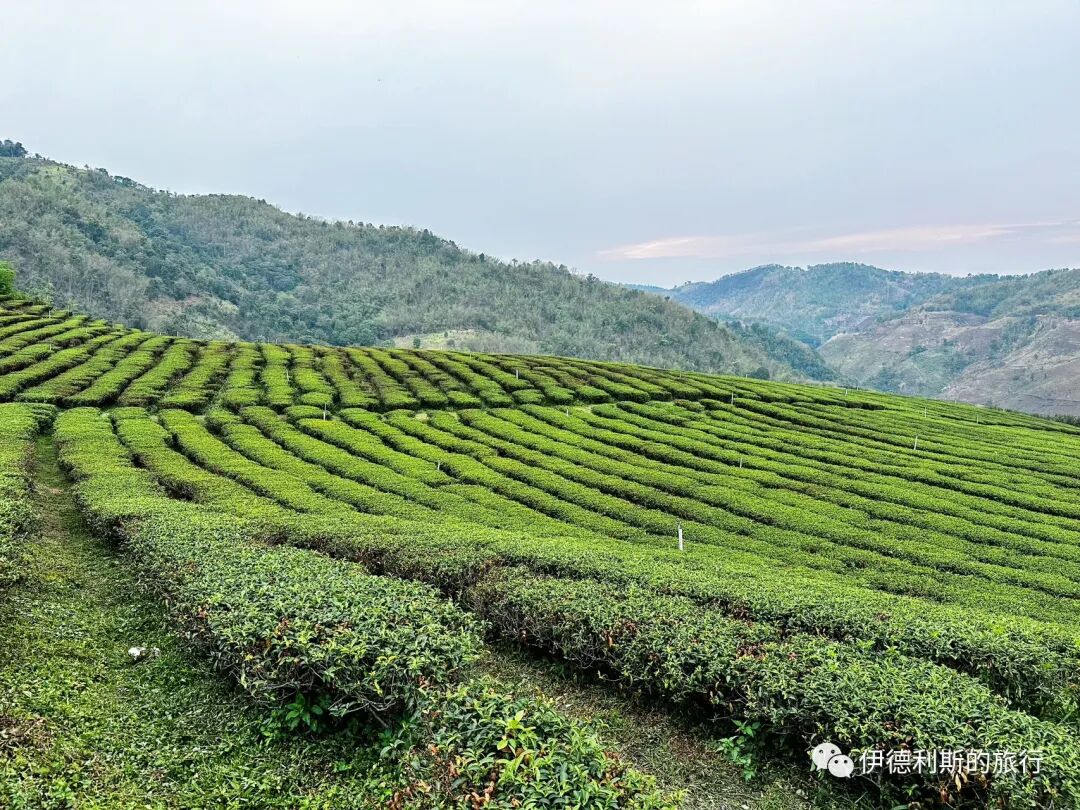
The people of Mae Salong put down their guns and started tea plantation businesses. The climate in the northern Thai mountains is perfect for growing tea, and there were already many wild Assam black tea trees there. Since some of the soldiers had been tea merchants back home in Yunnan and knew how to grow tea, they quickly started many tea plantations in Mae Salong. Besides the local wild tea trees, they introduced many varieties like Pu'er and Oolong. Today, Mae Salong has become a tourist destination filled with tea plantations. Every year between the Mid-Autumn Festival and the Spring Festival, many Thai people enjoy coming here to escape the heat and go on vacation.
Halal Travel Guide: Northern Thailand — Yunnan Mosques and Hui Communities (Part 2)
Articles • ali2007fr posted the article • 0 comments • 145 views • 2026-05-19 02:47
Summary: Northern Thailand has old Yunnanese Hui Muslim communities whose mosque neighborhoods still carry the memory of migration, trade, and borderland life. This firsthand account follows the second day of the route through local mosques, village streets, and community history while preserving the original photos and sequence.
The Mae Salong Mosque was built in the 1960s by Hui Muslims from Yunnan who were part of the 5th Division of the Lost Army in Northern Thailand. The first imam, Yang Guoqing, worked in the 5th Division's intelligence department. He led the community through the toughest years from the 1960s to the 1980s, seeing the mosque evolve from a bamboo hut to a tin-roofed wooden structure, and finally to the current reinforced concrete building. Haji Majisi, who held the rank of Major General in the army, was one of the three founding elders of the Mae Salong Mosque. He worked tirelessly to raise funds for the mosque's reconstruction, contributing both his own money and effort selflessly. The first imam to lead prayers at the mosque was Haji Wang Zhenliang, who was originally a merchant from Yunnan.
Today, there are still over a dozen households of the mosque's community (gaomu) in Mae Salong, though many live in Taiwan during the tourism off-season. The current imam is a Hmong convert to Islam. He is very grateful that fellow believers (dost) have come to preach in the deep mountains of Northern Thailand, which has led some local Hmong people to return to the faith.
Inside the mosque, there is a Ramadan donation record (nieti bu) posted on the wall. It shows that the community is primarily made up of people with the surname Ma, along with others named Yang, Dong, Yao, Mu, Wang, He, Jiang, and Zhang. The mosque also displays the wedding stage from earlier this year, where local community member Ma Zhenqiang married Ani, a Thai convert to Islam. It must have been a very lively event, and if Allah wills, I hope to attend a wedding of the Yunnanese Hui Muslims in Thailand one day.
Inside the main prayer hall of the Mae Salong Mosque, there is Arabic calligraphy gifted by a folk culture delegation of Yunnan Hui Muslims.
There is also a group photo of local youth taken in the old wooden prayer hall during a past Eid al-Fitr.
There are two Yunnanese Hui Muslim restaurants in Mae Salong, and we had dinner at one of them, the Shanlima Restaurant. Our driver, Mr. Ma, and the owner's son were classmates at the Jingzhen School in Chiang Mai. The owner was away when we visited, so we only met his wife and son-in-law, both of whom are Thai converts to Islam. The owner's wife can speak a little Yunnanese, so at first, we thought she was a Yunnanese Hui Muslim.
Dining in Mae Salong, deep in the mountains, is all about fresh ingredients. We ordered stir-fried black-bone chicken with ginger strips, braised beef offal (niuzapa hu), a cold salad of fresh tea leaves, and luffa tips. Many families in Mae Salong village raise black-bone chickens. You can usually only find this type of chicken in the mountains; the meat is very firm and tastes delicious. The cold salad of fresh tea leaves is a specialty of Mae Salong, and it was my first time trying it. The fresh tea leaves are crisp, and the light tea fragrance is very refreshing.
We also didn't expect to find fried milk curd (rushan) in Thailand. It was fried thin and crispy, not greasy at all, and even better than what I had eaten in Weishan, Dali before! Master Ma said this was likely brought over by Yunnan Hui Muslims from Myanmar, who still keep the craft of frying milk curd.
Sharing the menu from Shanlima Restaurant in Mae Salong; wild bitter melon is also one of their specialties.
Besides Shanlima, Mae Salong has another Yunnan Hui Muslim restaurant called Mina Halal Restaurant. Since it is the off-season, the owner went to Taiwan. She will likely return after the Mid-Autumn Festival when the peak tourist season begins, so only the staff are running it now. If I have the chance to visit Mae Salong again, I will go and try their food.
Mae Sai
In the evening, we traveled from Mae Salong to Mae Sai, a border port city on the Thai-Myanmar border at the northernmost tip of Thailand. Mae Sai now has over 200 households of Yunnan Hui Muslims, making it the second-largest settlement of Yunnan Hui Muslims in Northern Thailand outside of Chiang Mai.
We drank tea and chatted with the elders at the Yunnan Mosque in Mae Sai, and we had no trouble communicating in Mandarin. Although Mae Sai has been a necessary stop for Yunnan horse caravans heading south to Chiang Mai since the late Qing Dynasty, the mosque was not initiated and built until 1952 by Yunnan Hui Muslims Ma Xianglin and Ma Enshou. The original mosque was just a thatched hut, but it was later rebuilt into a wooden structure under the supervision of Ma Zixing, thanks to donations from Qian Yizhai and fellow believers in Chiang Mai. In 1975, as the number of Yunnan Hui Muslims in Mae Sai grew, the old mosque could no longer accommodate everyone. Mu Chengfang initiated a move to the current location next to the main road, and Ma Weijing and Na Caikui oversaw the construction of the current steel and concrete building.
In the evening, we visited the South Asian Mosque in Mae Sai for namaz. According to Master Ma, there are currently 70 to 80 local South Asian Muslim households in Mae Sai, plus over 200 households of Myanmar-born Muslims who moved here from Myanmar to make a living due to poverty. There are about 50 poor students from Myanmar in this mosque. The mosque provides them with free food, housing, and education, which is very moving.
After coming down from Hufu Beach, we had spicy barbecue (shaokao) from a Yunnan Hui Muslim shop in Mae Sai for a late-night snack. We had no trouble communicating in Mandarin. They run the shop right at their own front door. You have to make several turns off the main road to find it, and we never would have spotted it without Master Ma leading the way. The barbecue doesn't have beef or lamb. It is mostly chicken gizzards, chicken hearts, and various types of sausages. They brush on plenty of Sichuan peppercorn water and chili sauce. We chose the mild spice level, and it was still very satisfying.
While walking around the streets of Mae Sai at night, we saw a Thai Muslim roast duck shop across from the Yunnan mosque. It was still busy at midnight. It turns out Thai people really love eating roast duck too. The Chinese community in Mae Sai is mainly made up of three groups: Yunnan Han people, Yunnan Hui Muslims, and Chaoshan people. Both the Yunnan and Chaoshan groups have their own Chinese-language schools. The Yunnan Hui Muslims here attend three types of schools: Thai schools, Chinese schools, and religious schools (jingxue). Because of this, they grow up knowing Thai, Chinese, and Arabic. view all
Summary: Northern Thailand has old Yunnanese Hui Muslim communities whose mosque neighborhoods still carry the memory of migration, trade, and borderland life. This firsthand account follows the second day of the route through local mosques, village streets, and community history while preserving the original photos and sequence.
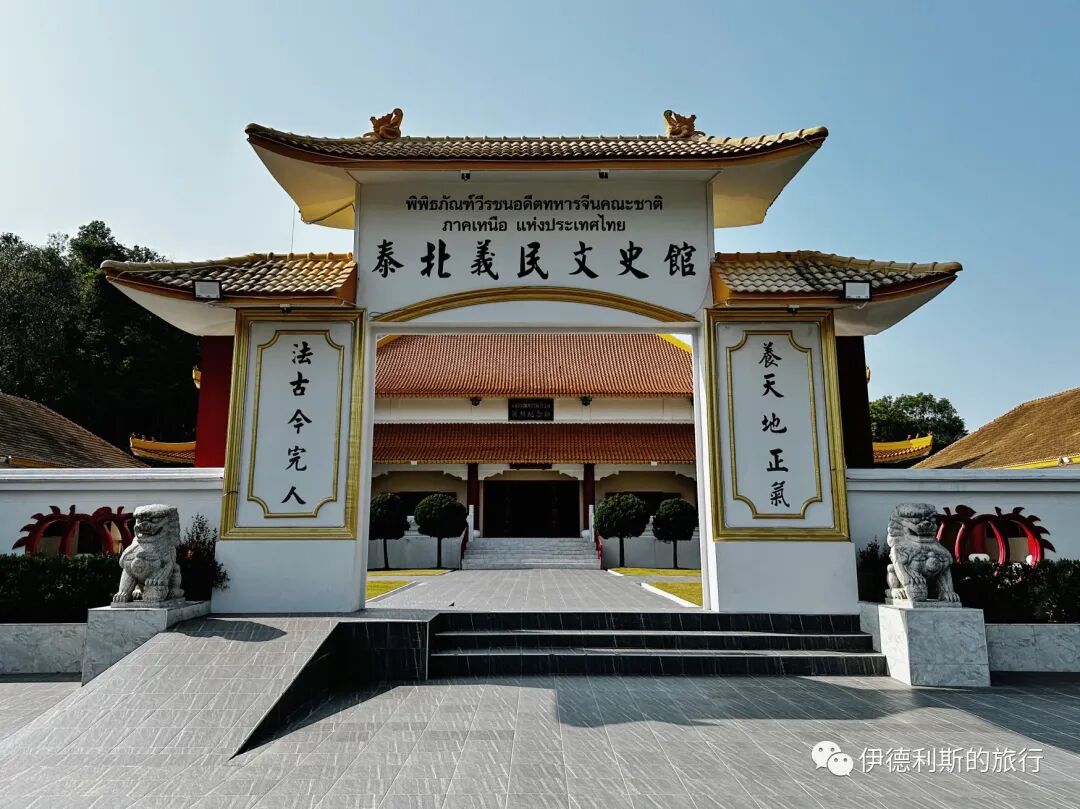
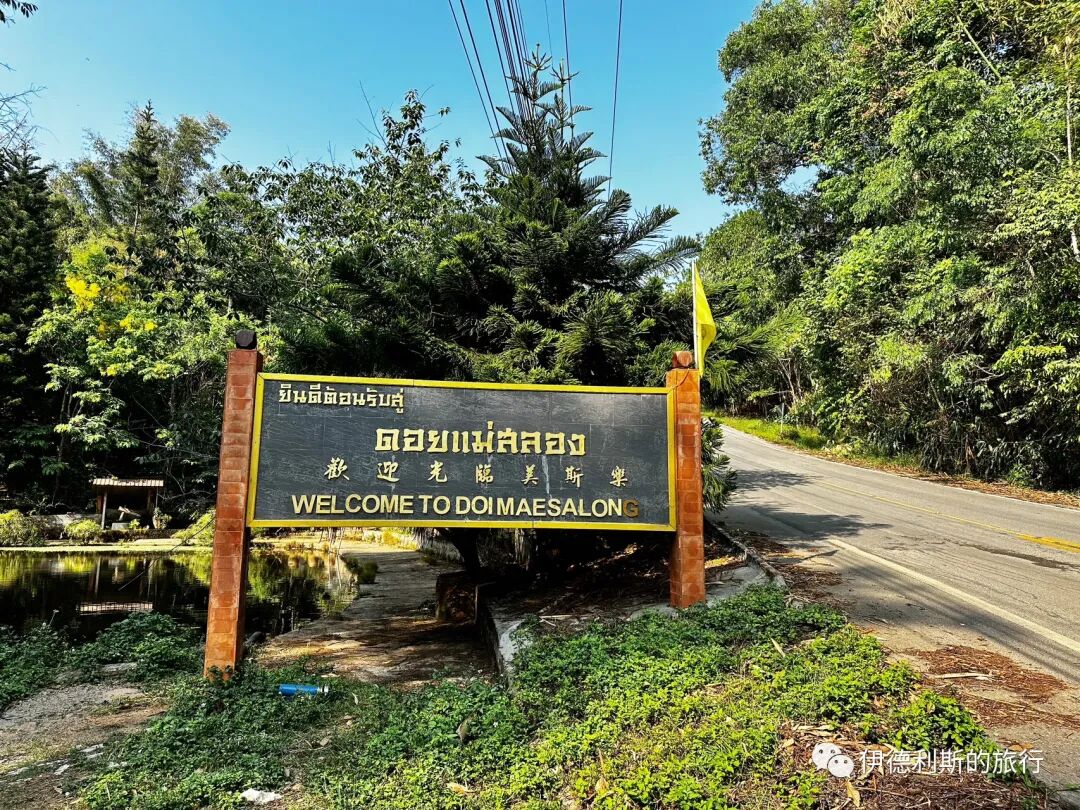
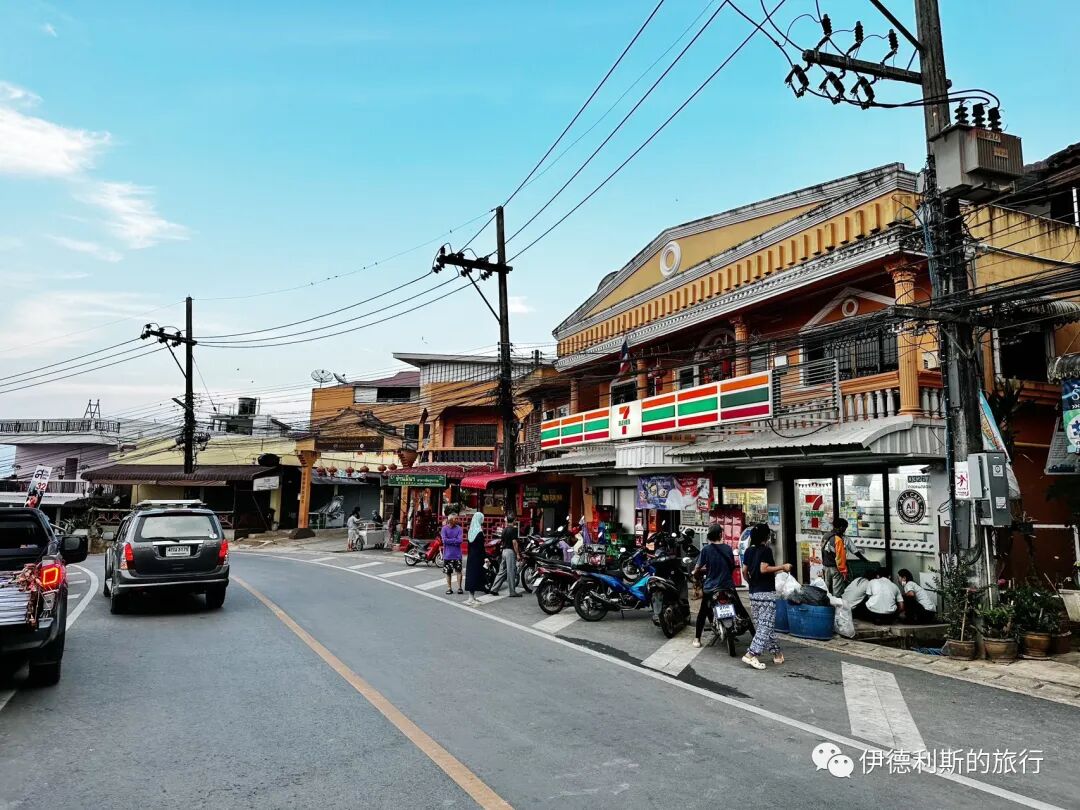
The Mae Salong Mosque was built in the 1960s by Hui Muslims from Yunnan who were part of the 5th Division of the Lost Army in Northern Thailand. The first imam, Yang Guoqing, worked in the 5th Division's intelligence department. He led the community through the toughest years from the 1960s to the 1980s, seeing the mosque evolve from a bamboo hut to a tin-roofed wooden structure, and finally to the current reinforced concrete building. Haji Majisi, who held the rank of Major General in the army, was one of the three founding elders of the Mae Salong Mosque. He worked tirelessly to raise funds for the mosque's reconstruction, contributing both his own money and effort selflessly. The first imam to lead prayers at the mosque was Haji Wang Zhenliang, who was originally a merchant from Yunnan.
Today, there are still over a dozen households of the mosque's community (gaomu) in Mae Salong, though many live in Taiwan during the tourism off-season. The current imam is a Hmong convert to Islam. He is very grateful that fellow believers (dost) have come to preach in the deep mountains of Northern Thailand, which has led some local Hmong people to return to the faith.
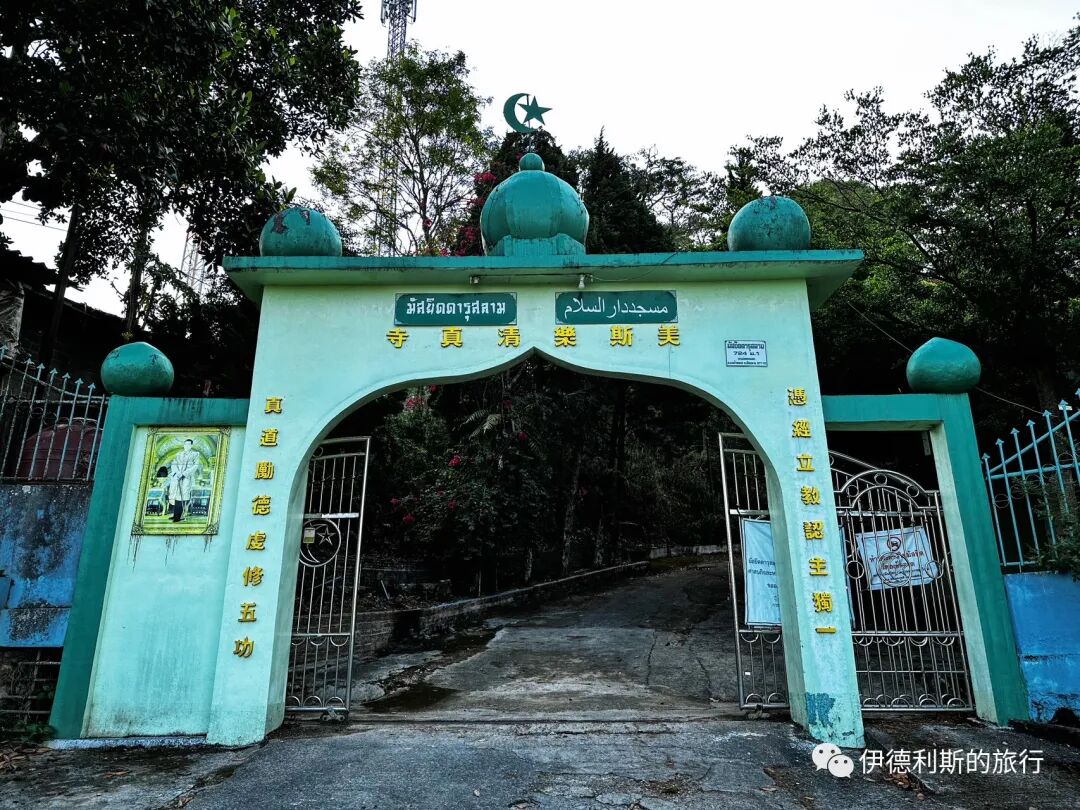
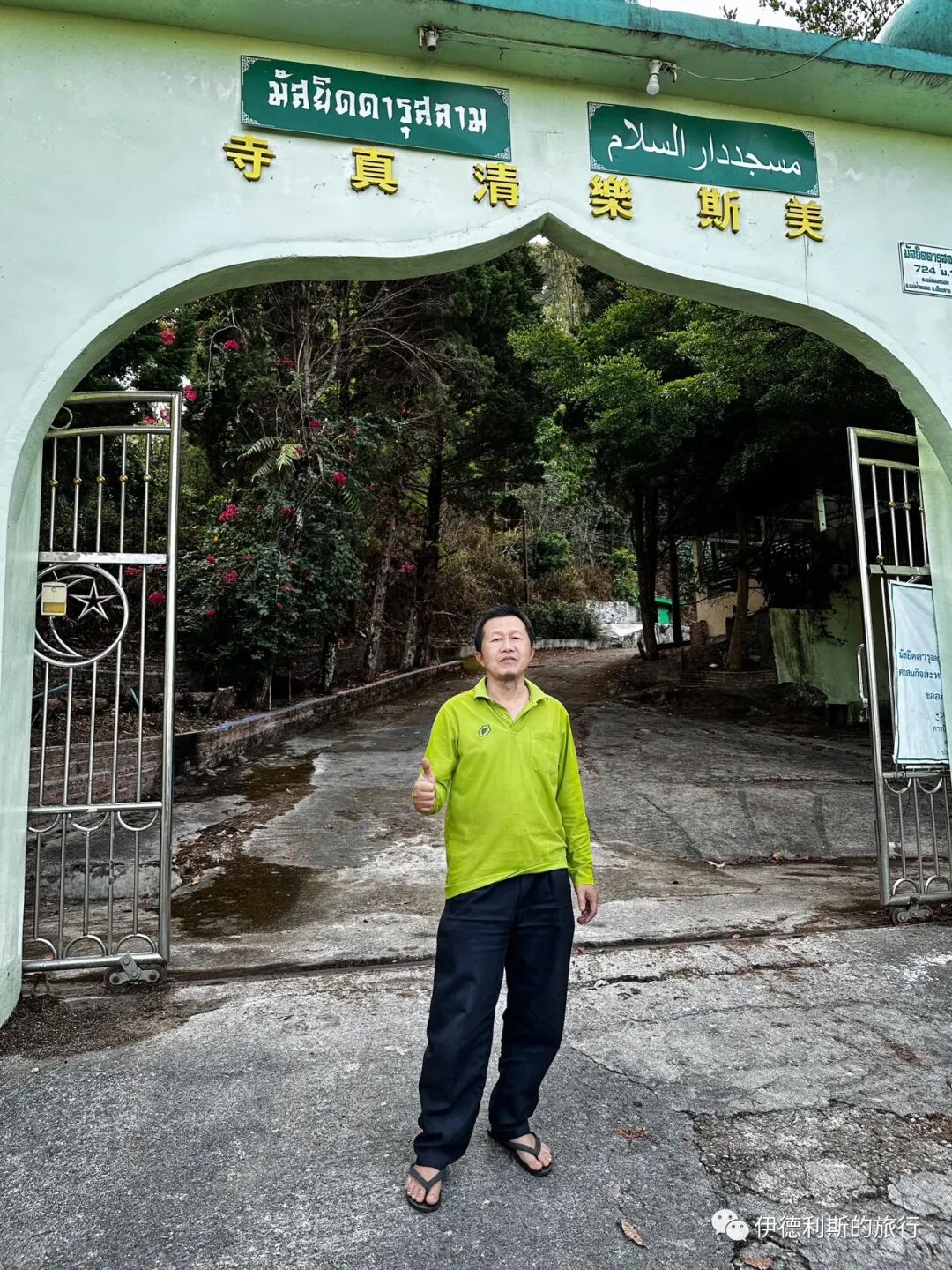
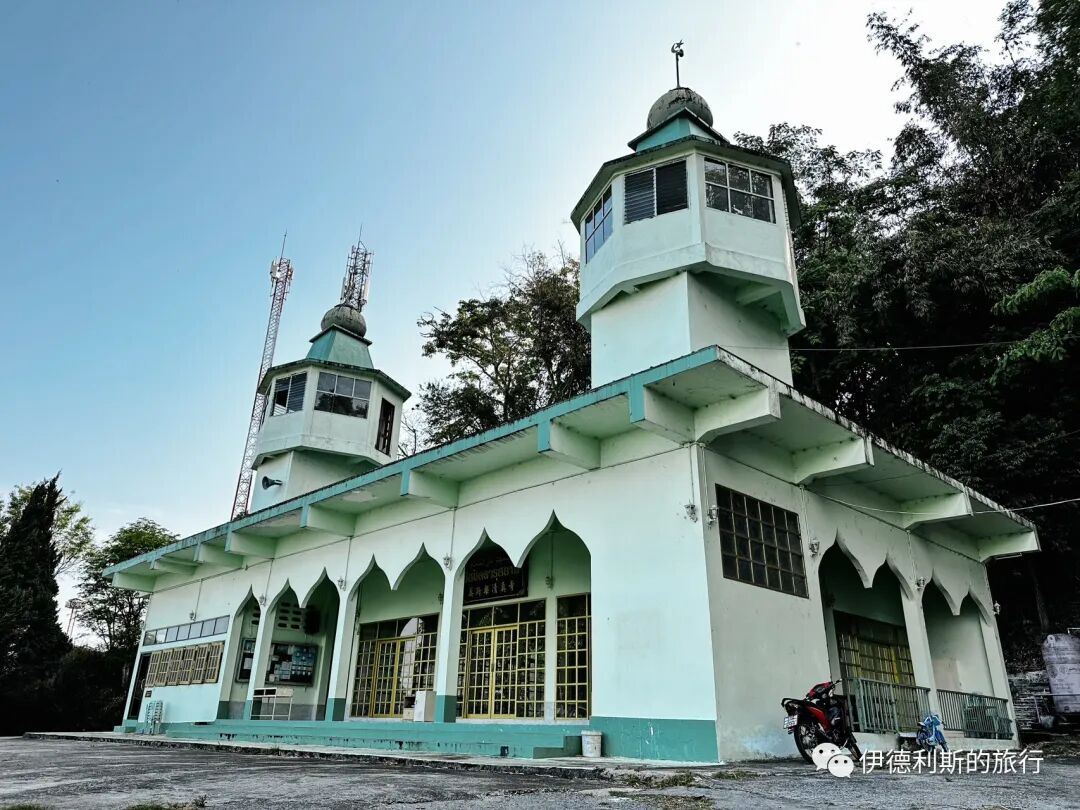
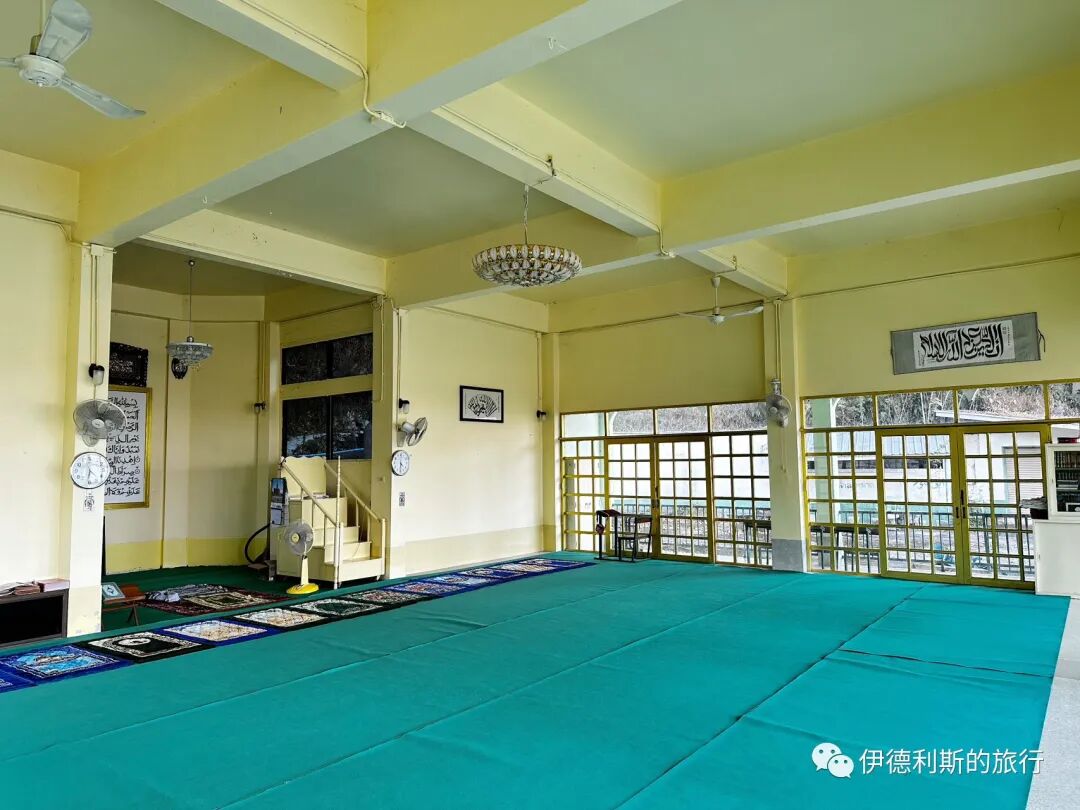
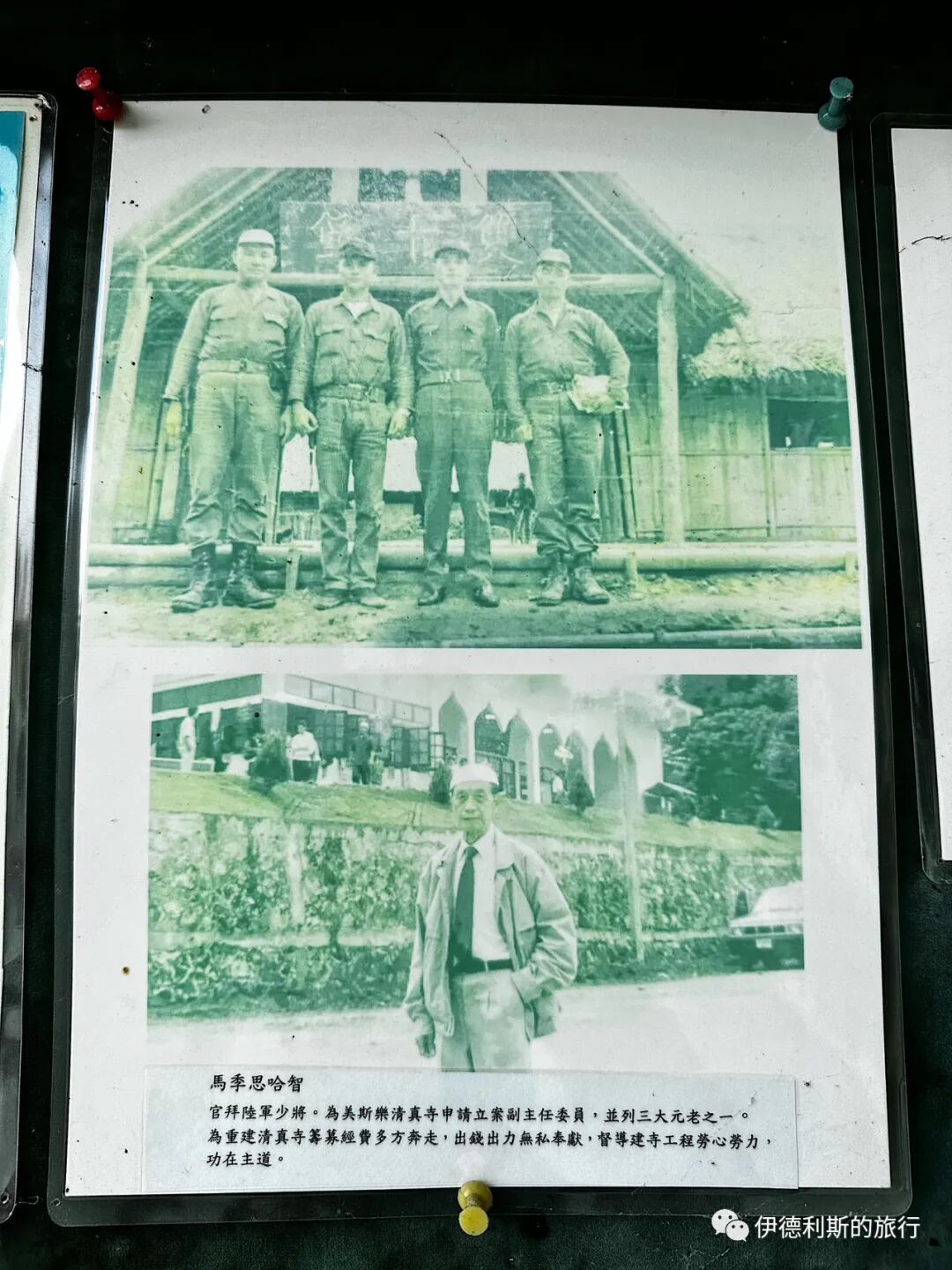
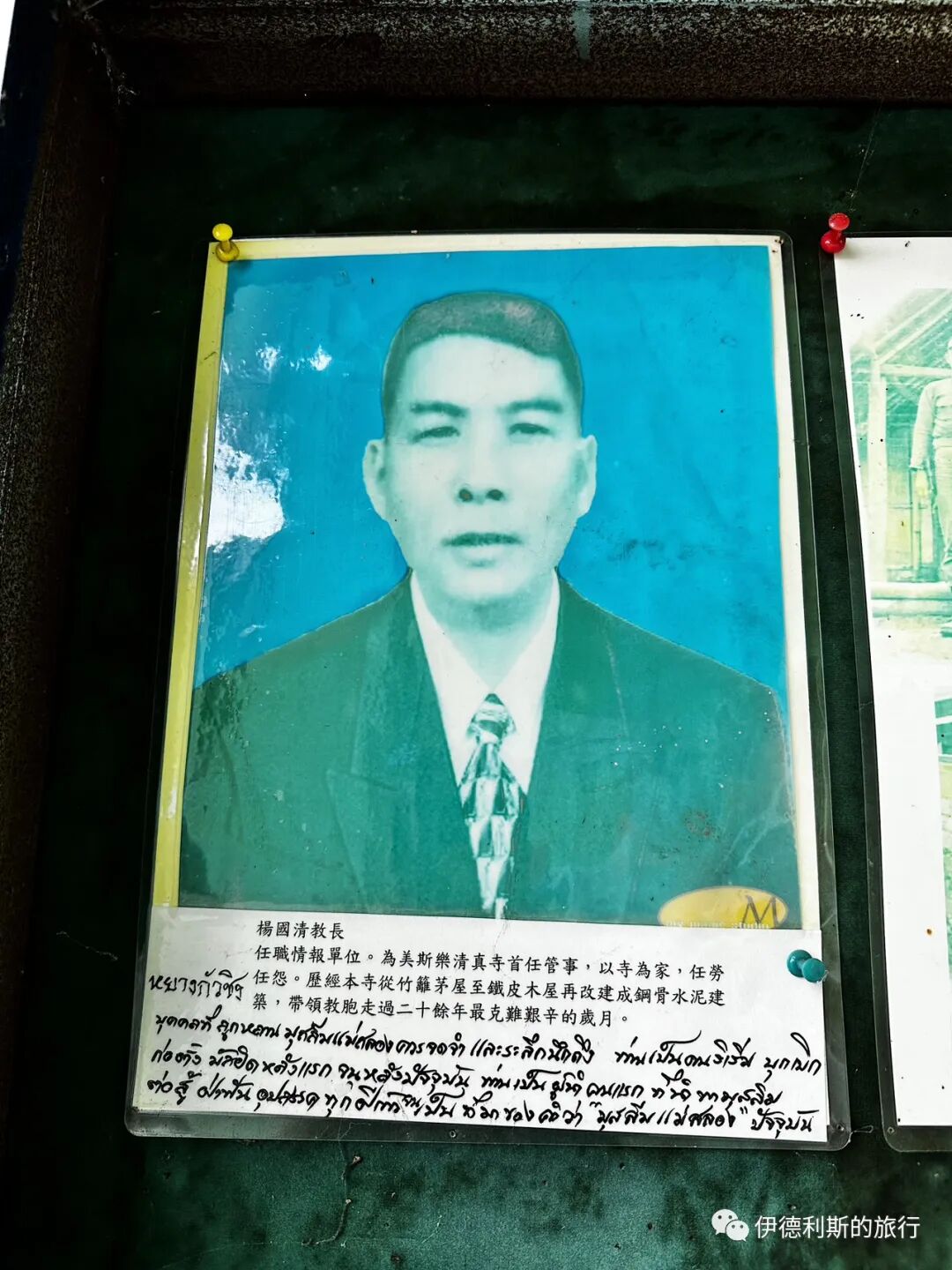
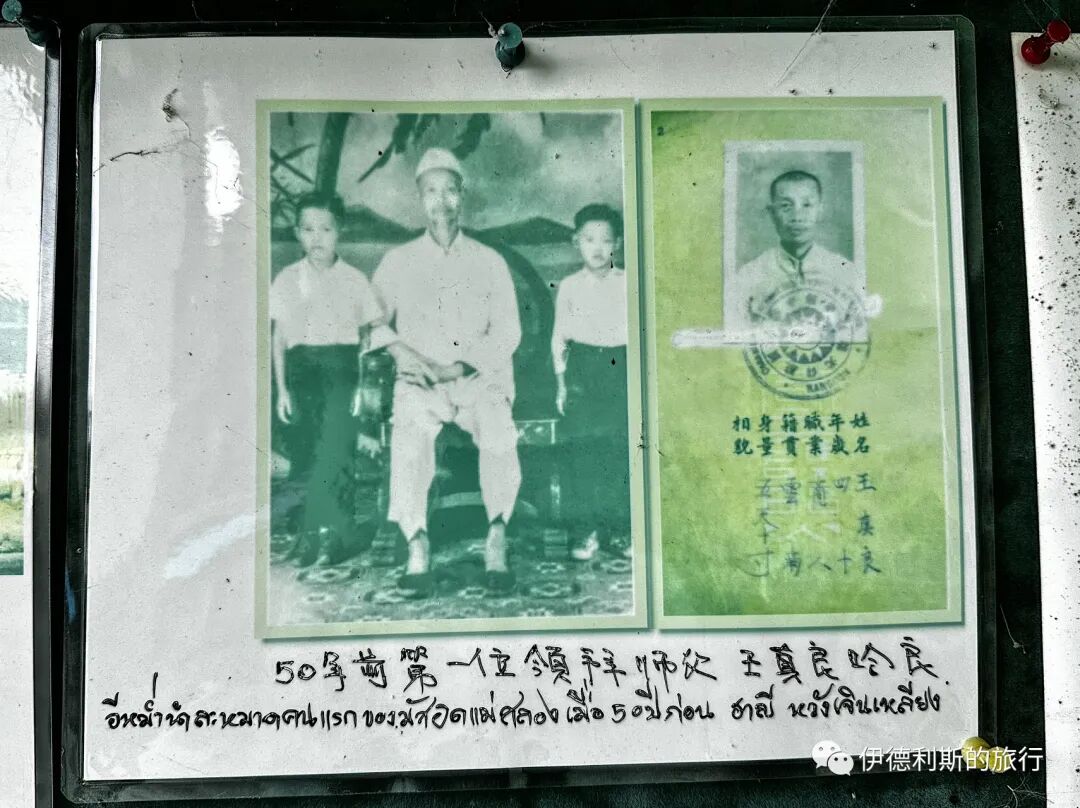
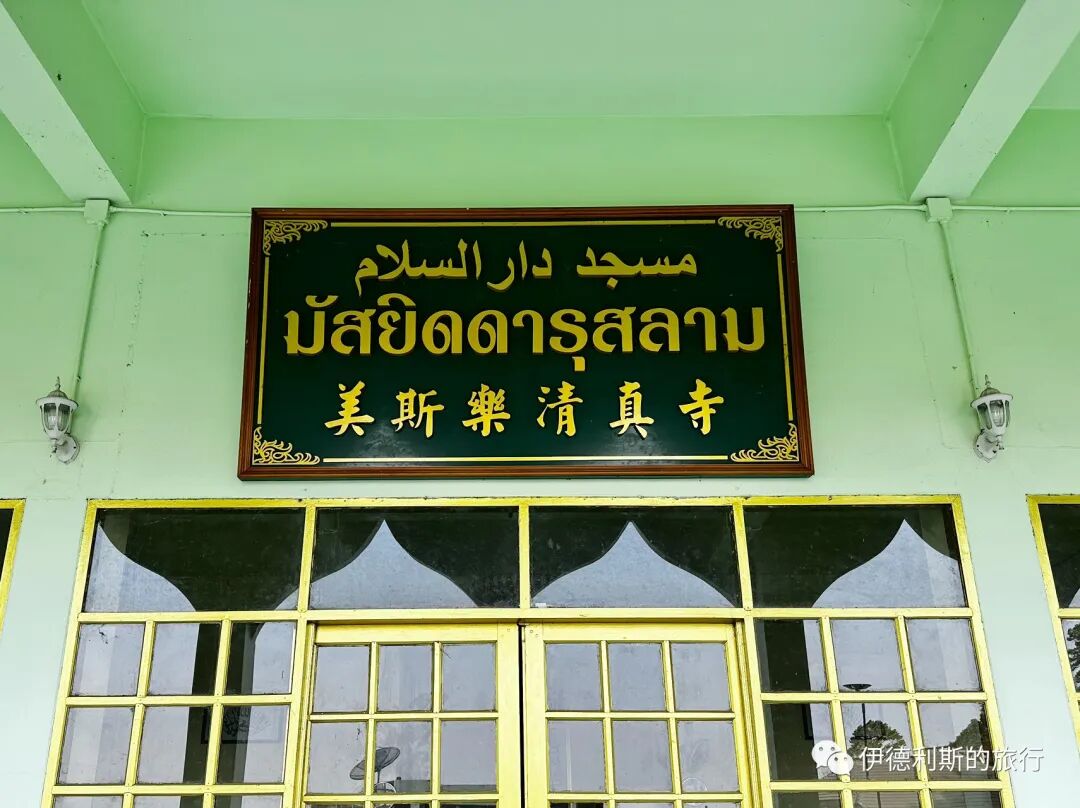
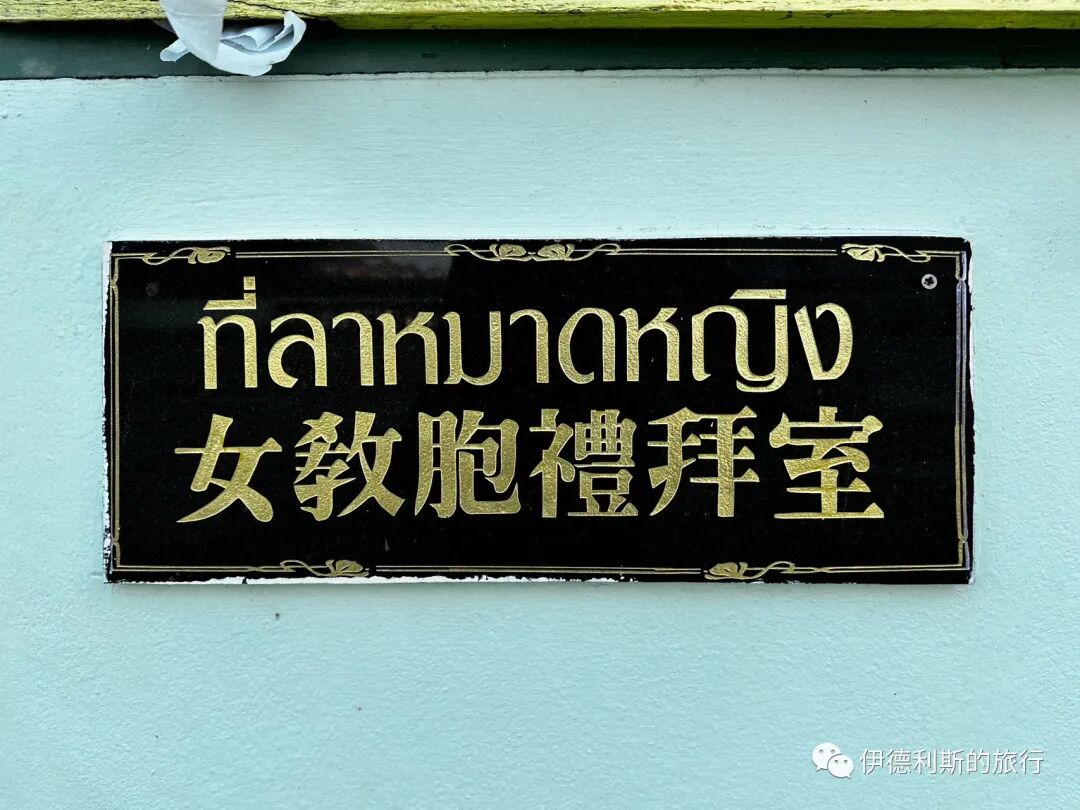
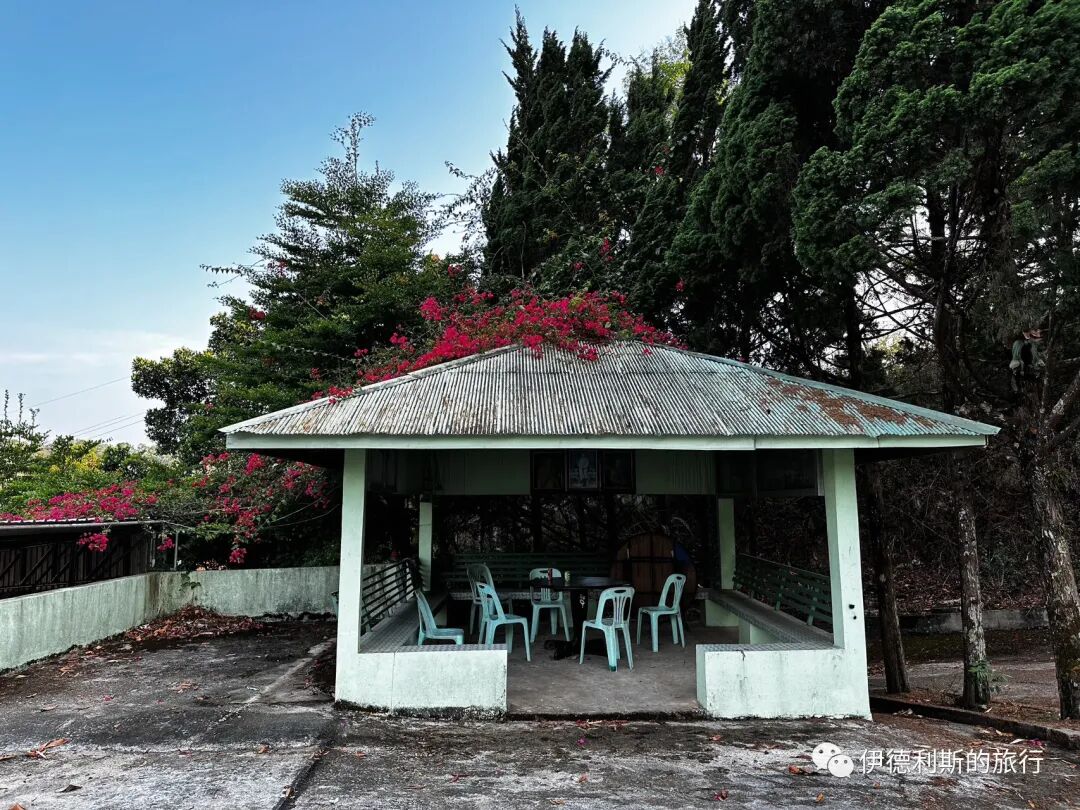
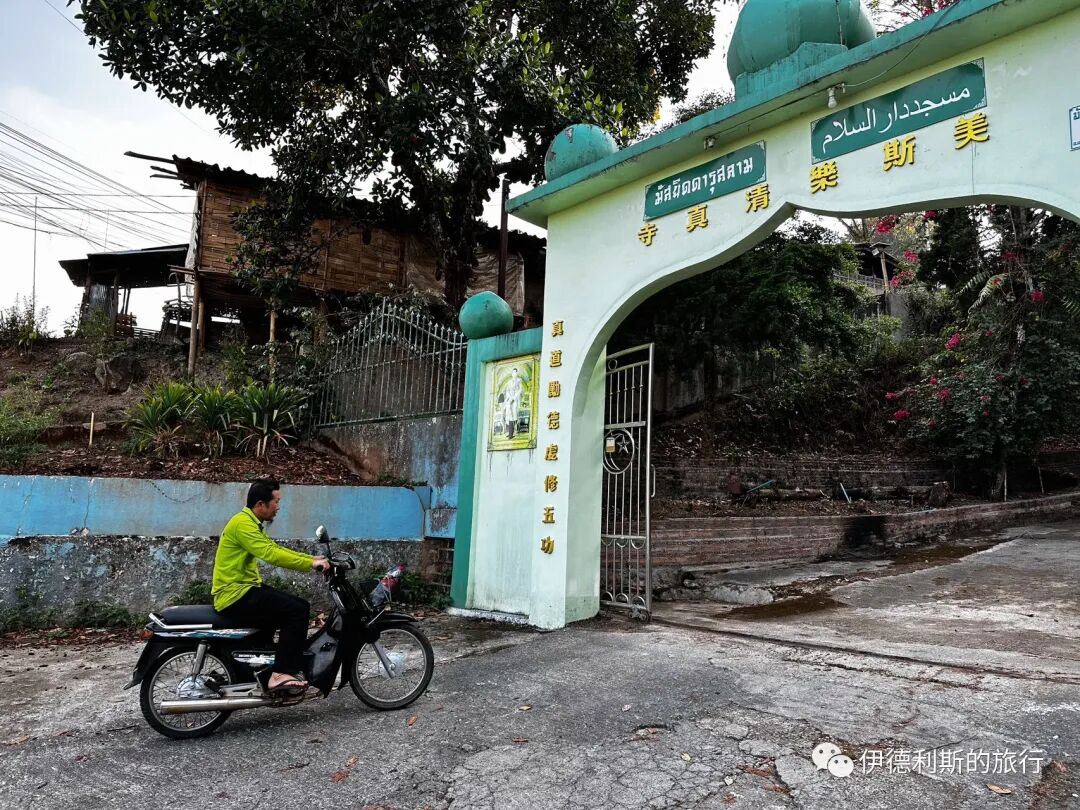
Inside the mosque, there is a Ramadan donation record (nieti bu) posted on the wall. It shows that the community is primarily made up of people with the surname Ma, along with others named Yang, Dong, Yao, Mu, Wang, He, Jiang, and Zhang. The mosque also displays the wedding stage from earlier this year, where local community member Ma Zhenqiang married Ani, a Thai convert to Islam. It must have been a very lively event, and if Allah wills, I hope to attend a wedding of the Yunnanese Hui Muslims in Thailand one day.
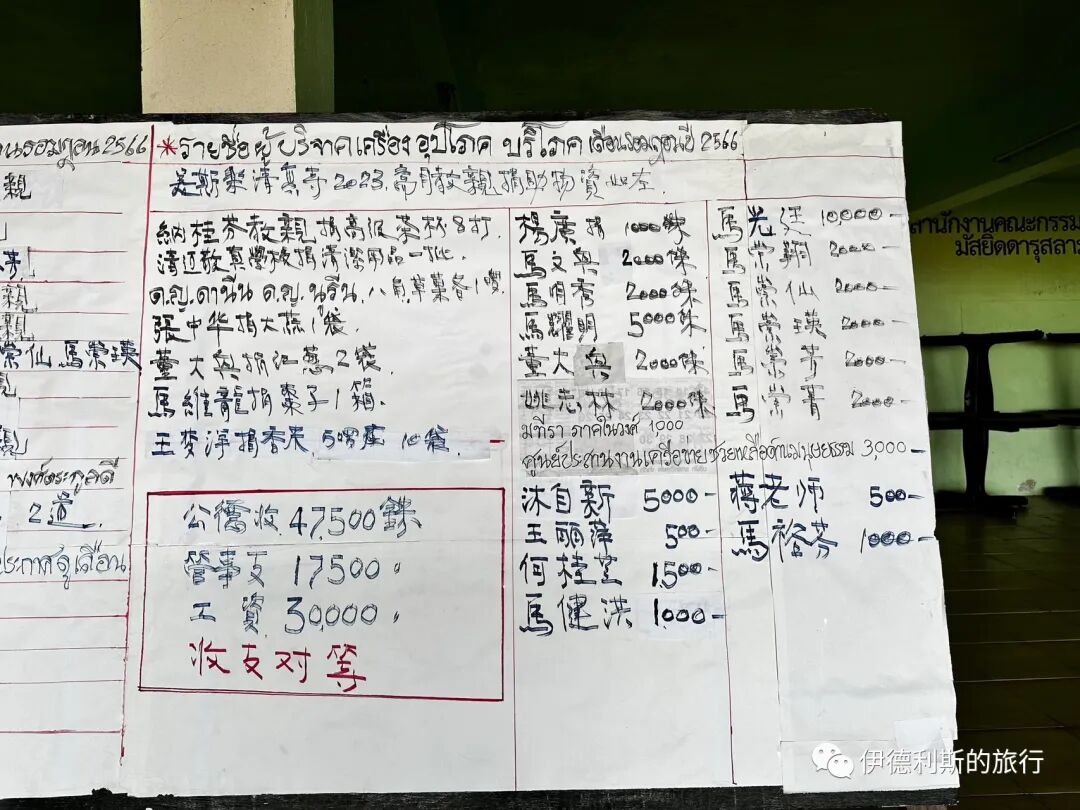
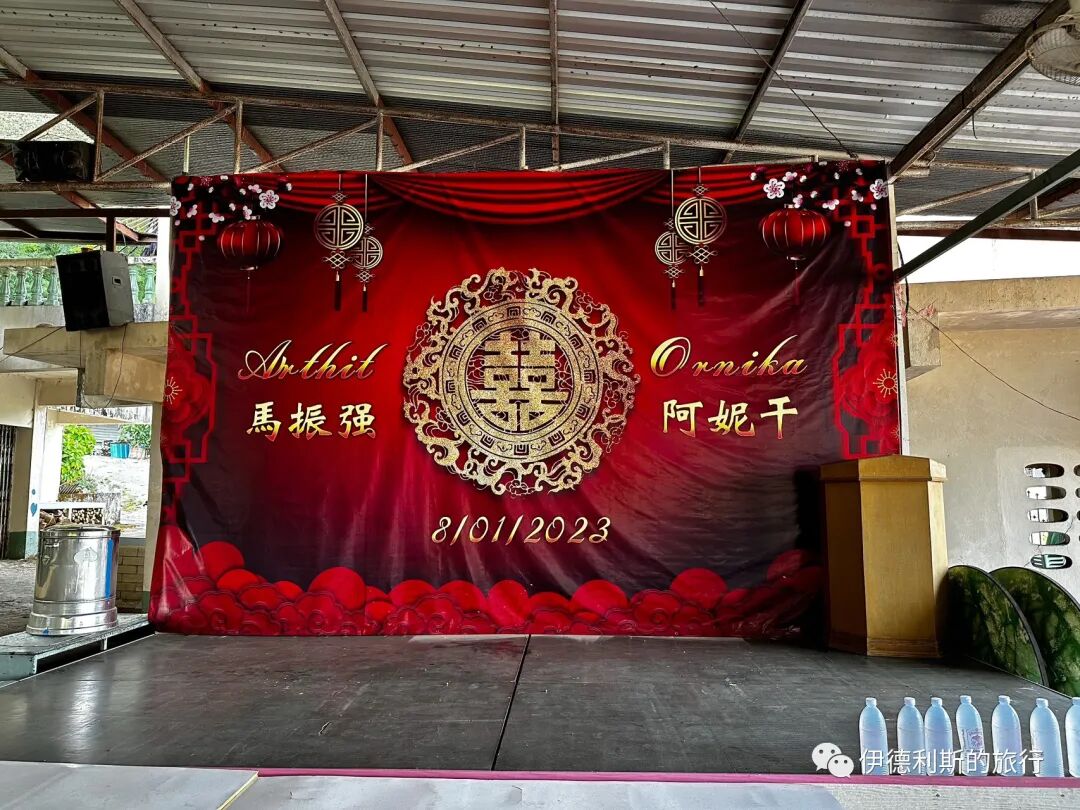
Inside the main prayer hall of the Mae Salong Mosque, there is Arabic calligraphy gifted by a folk culture delegation of Yunnan Hui Muslims.
There is also a group photo of local youth taken in the old wooden prayer hall during a past Eid al-Fitr.
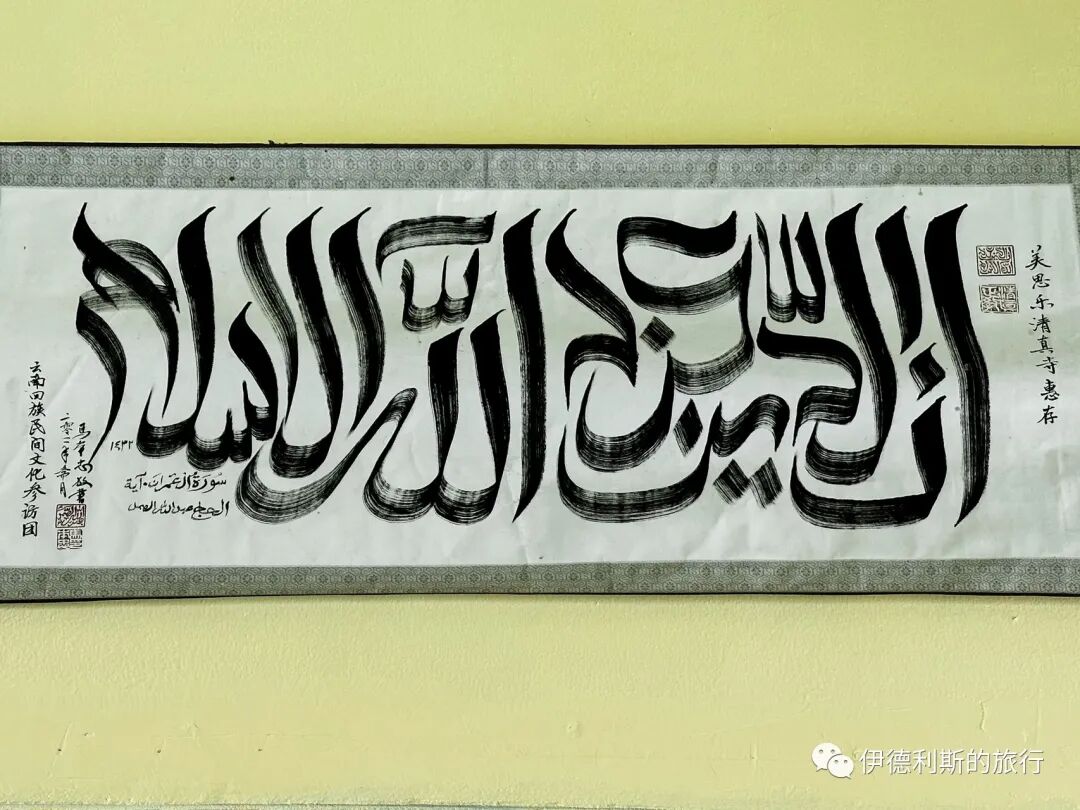
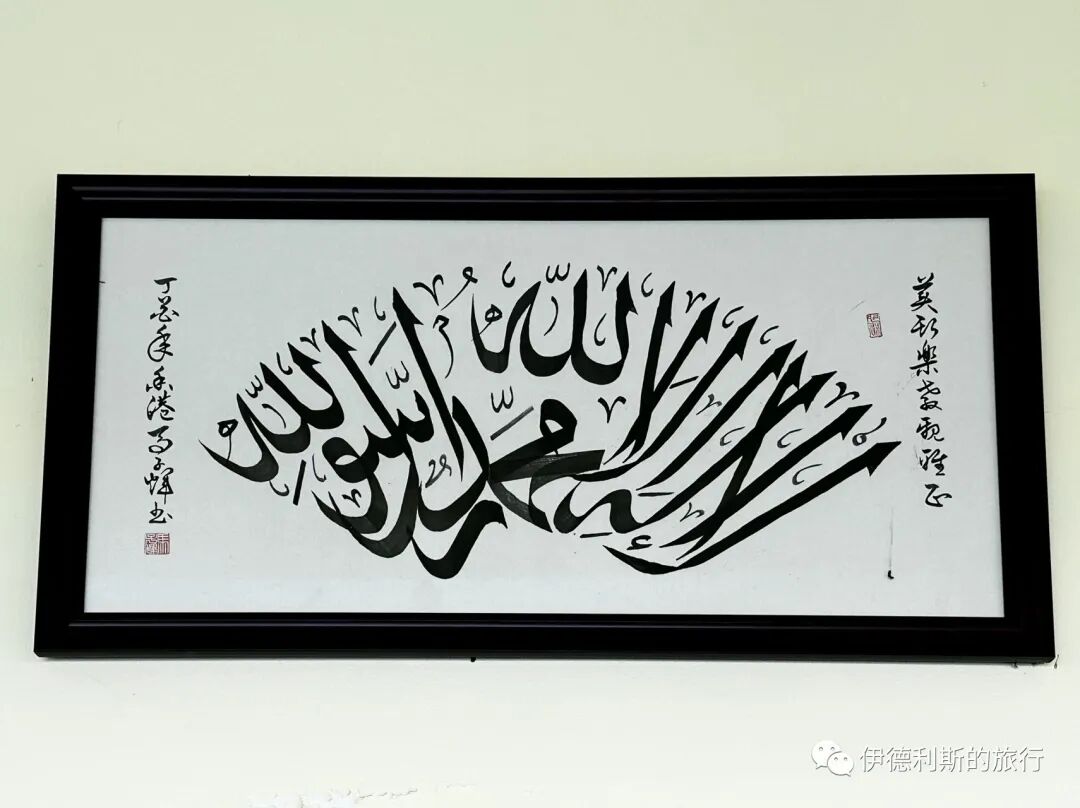
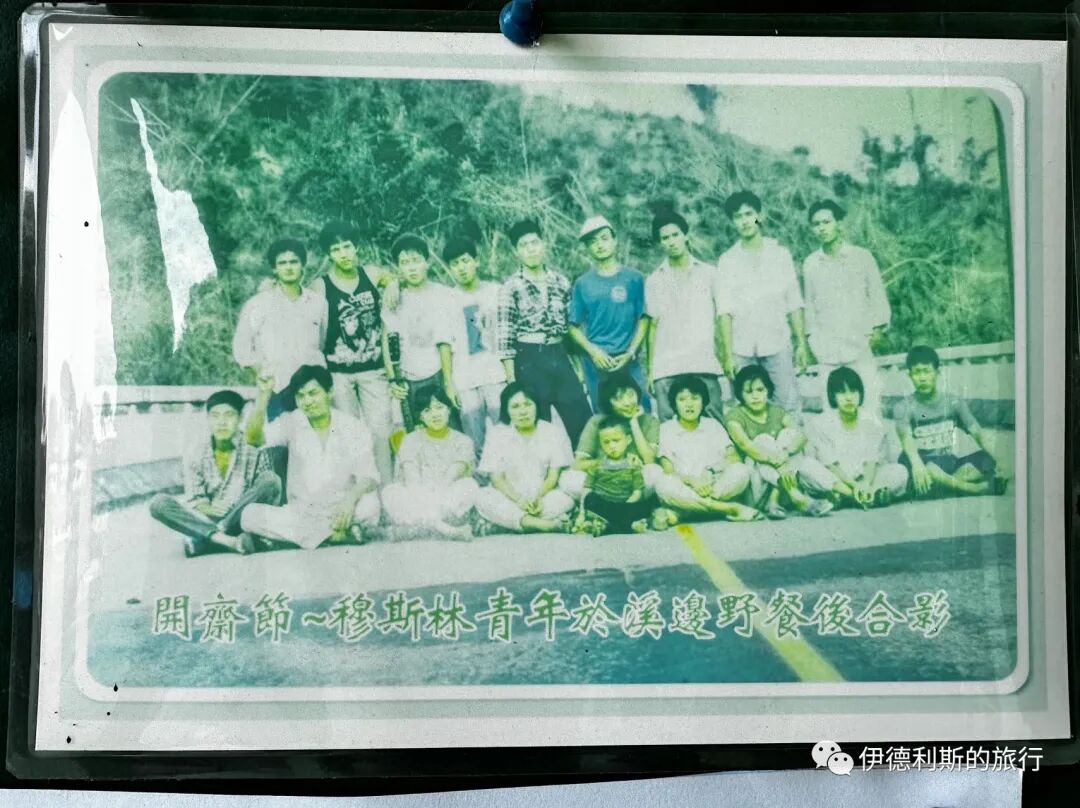
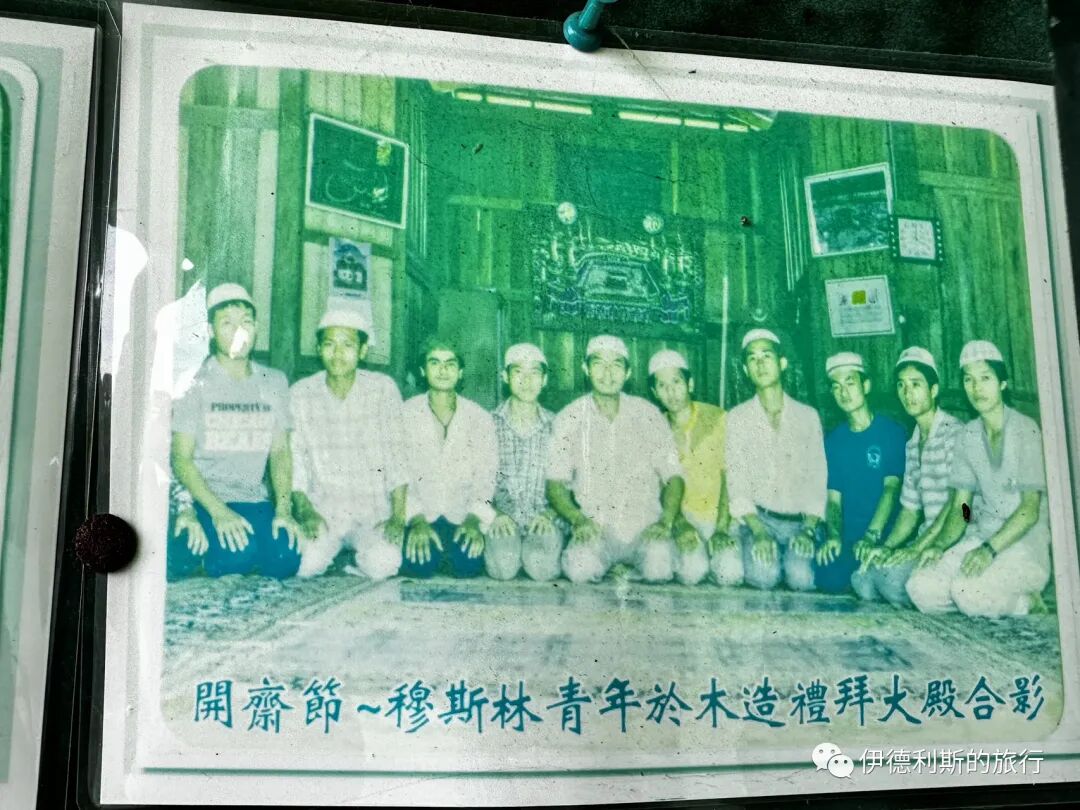
There are two Yunnanese Hui Muslim restaurants in Mae Salong, and we had dinner at one of them, the Shanlima Restaurant. Our driver, Mr. Ma, and the owner's son were classmates at the Jingzhen School in Chiang Mai. The owner was away when we visited, so we only met his wife and son-in-law, both of whom are Thai converts to Islam. The owner's wife can speak a little Yunnanese, so at first, we thought she was a Yunnanese Hui Muslim.
Dining in Mae Salong, deep in the mountains, is all about fresh ingredients. We ordered stir-fried black-bone chicken with ginger strips, braised beef offal (niuzapa hu), a cold salad of fresh tea leaves, and luffa tips. Many families in Mae Salong village raise black-bone chickens. You can usually only find this type of chicken in the mountains; the meat is very firm and tastes delicious. The cold salad of fresh tea leaves is a specialty of Mae Salong, and it was my first time trying it. The fresh tea leaves are crisp, and the light tea fragrance is very refreshing.
We also didn't expect to find fried milk curd (rushan) in Thailand. It was fried thin and crispy, not greasy at all, and even better than what I had eaten in Weishan, Dali before! Master Ma said this was likely brought over by Yunnan Hui Muslims from Myanmar, who still keep the craft of frying milk curd.
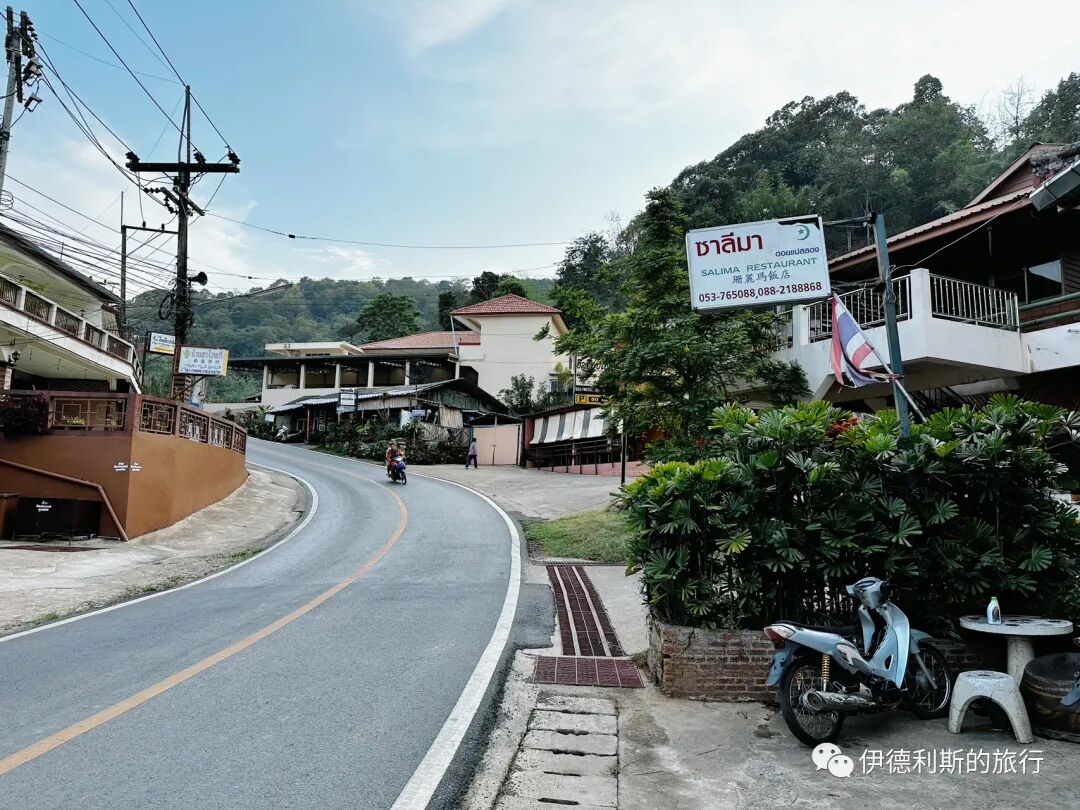
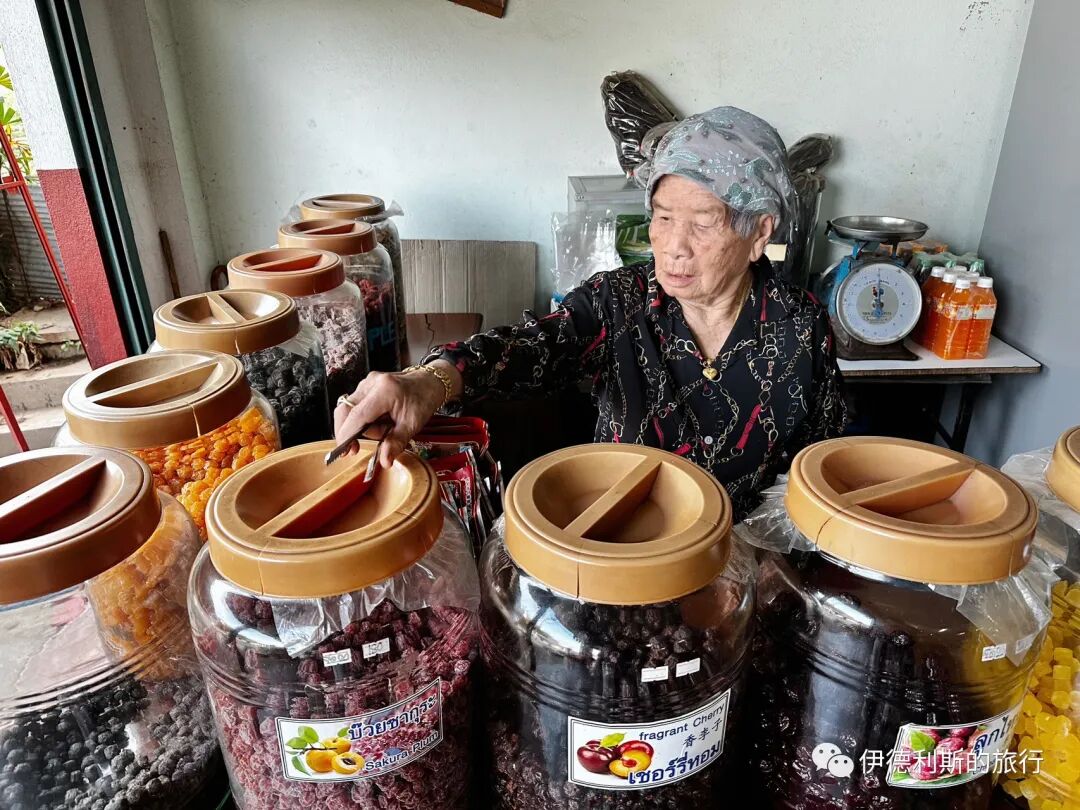
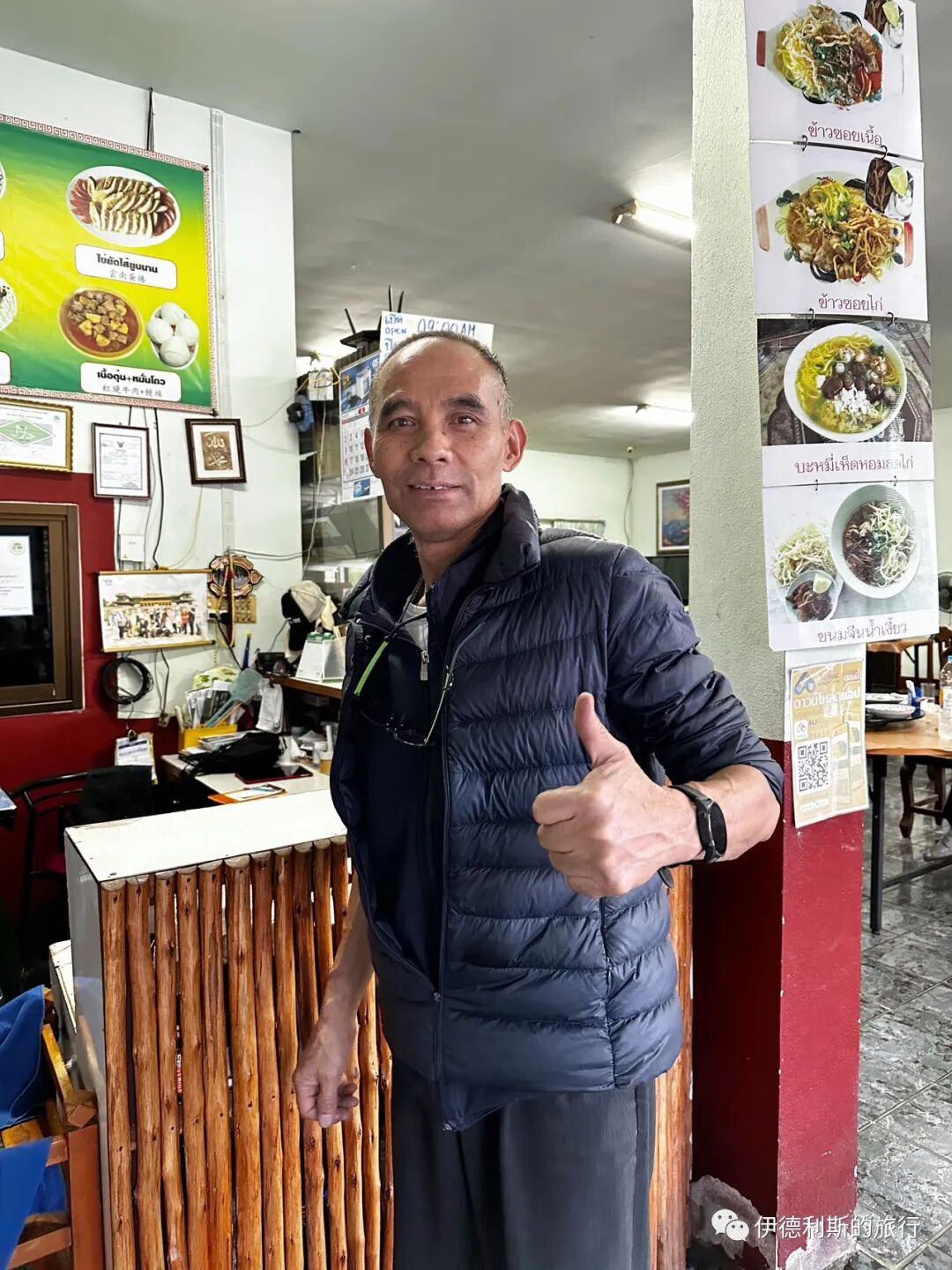
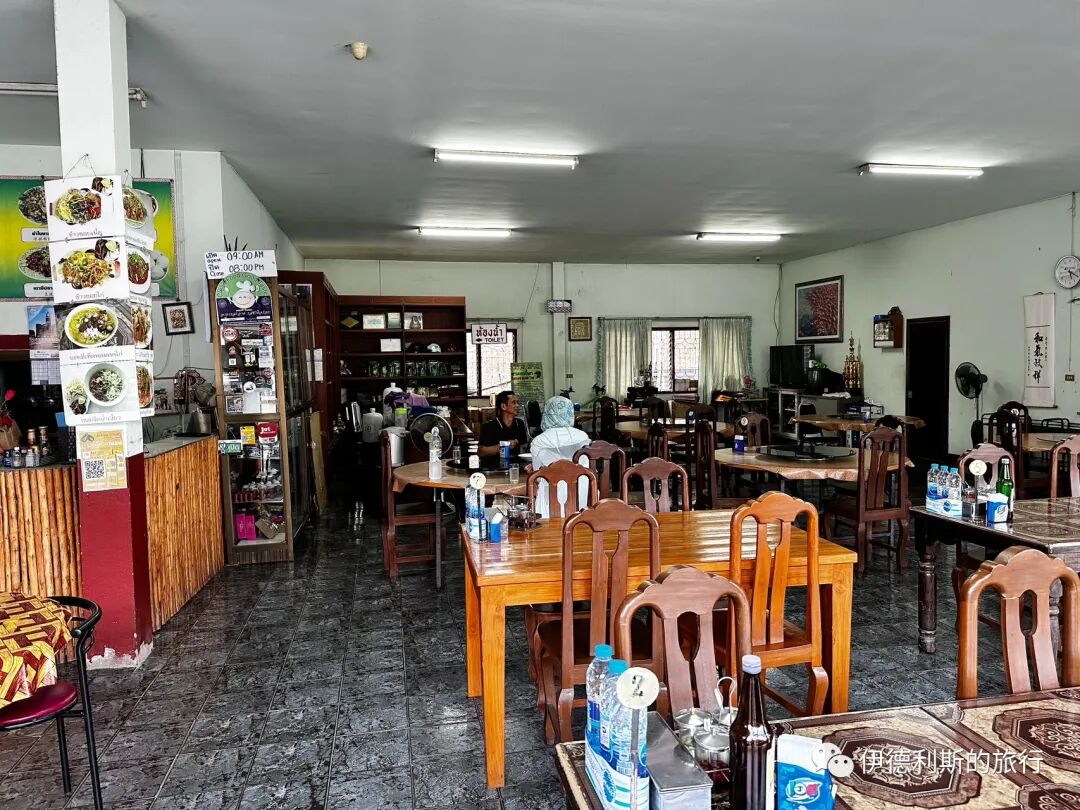
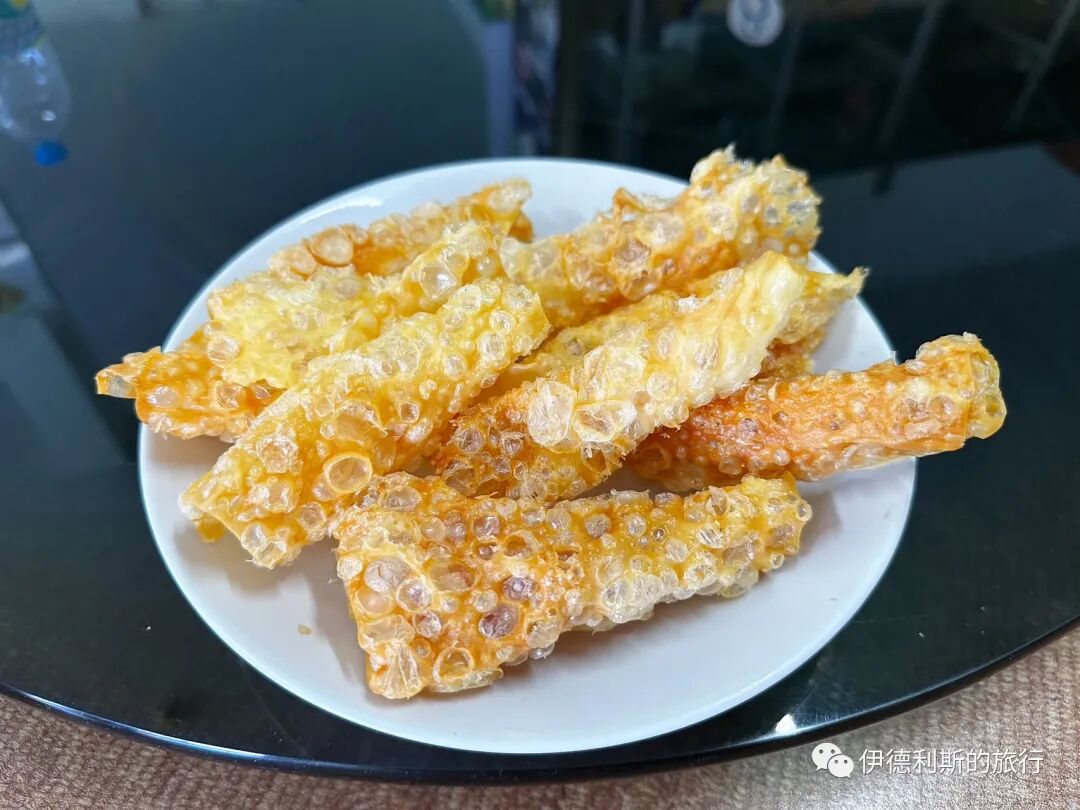
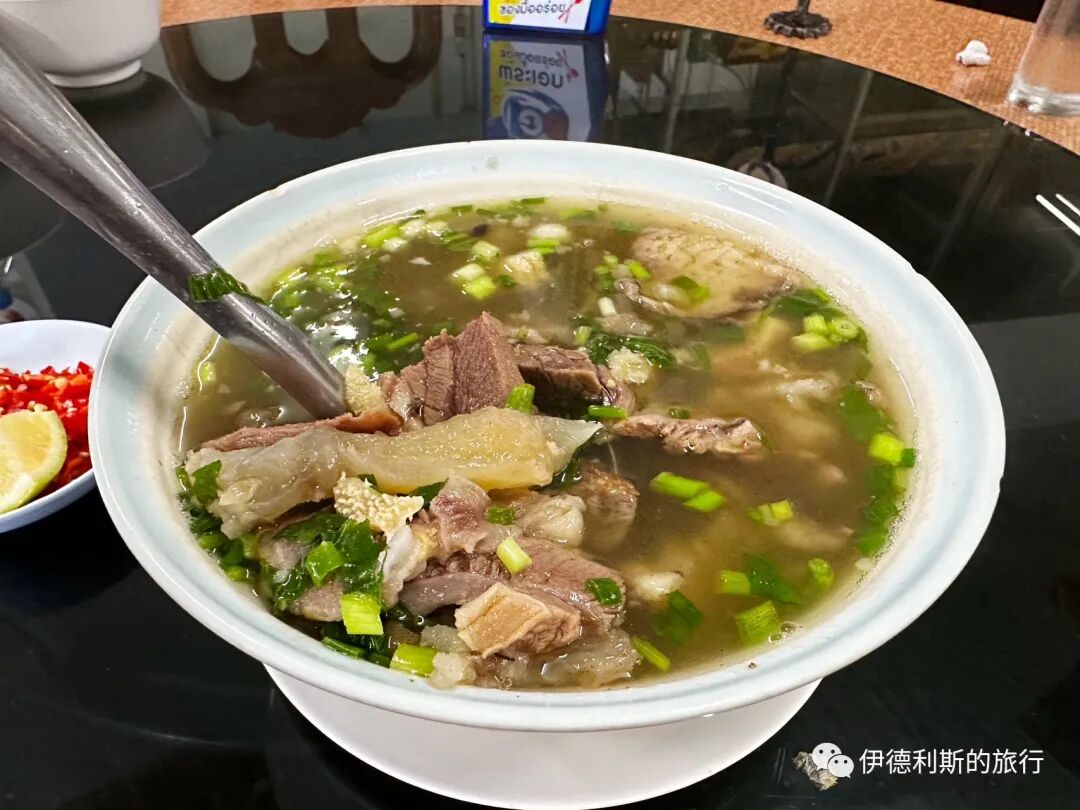
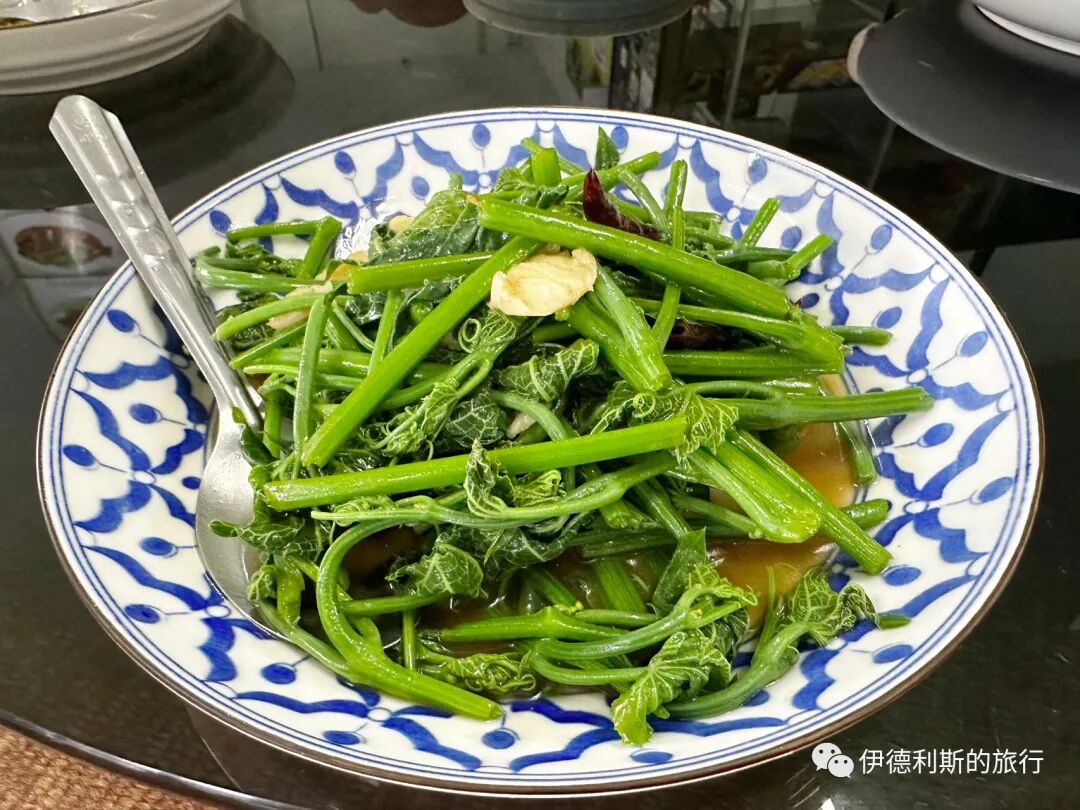
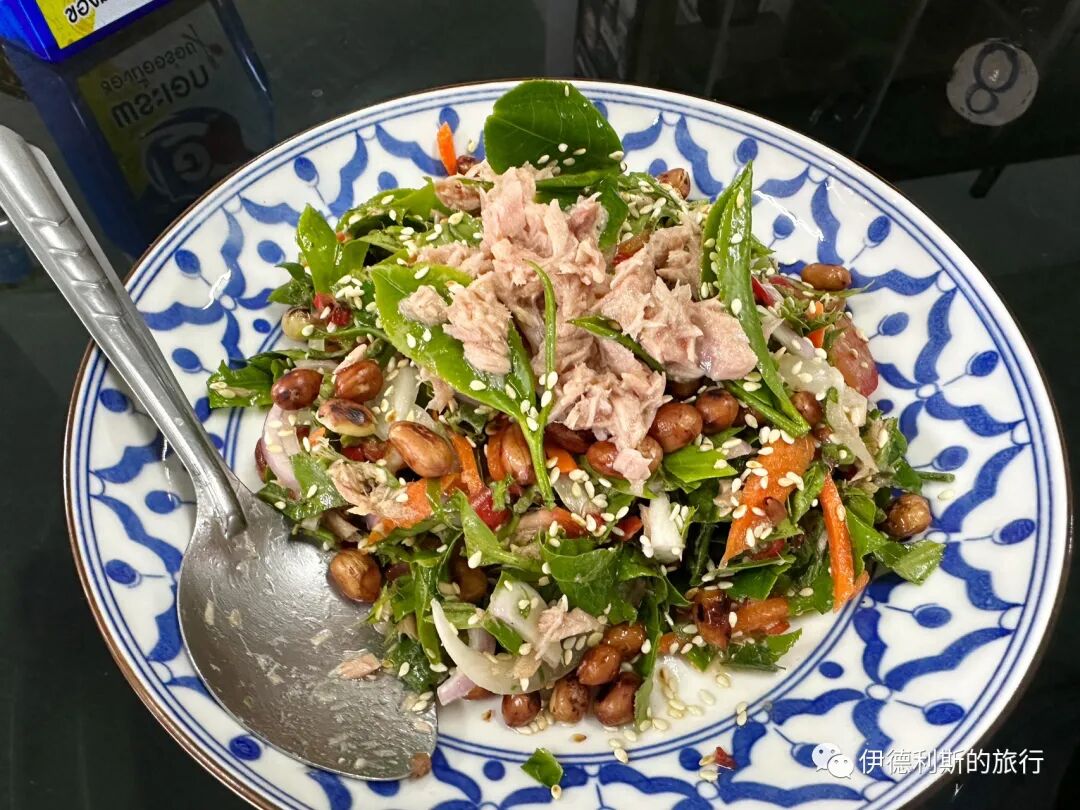
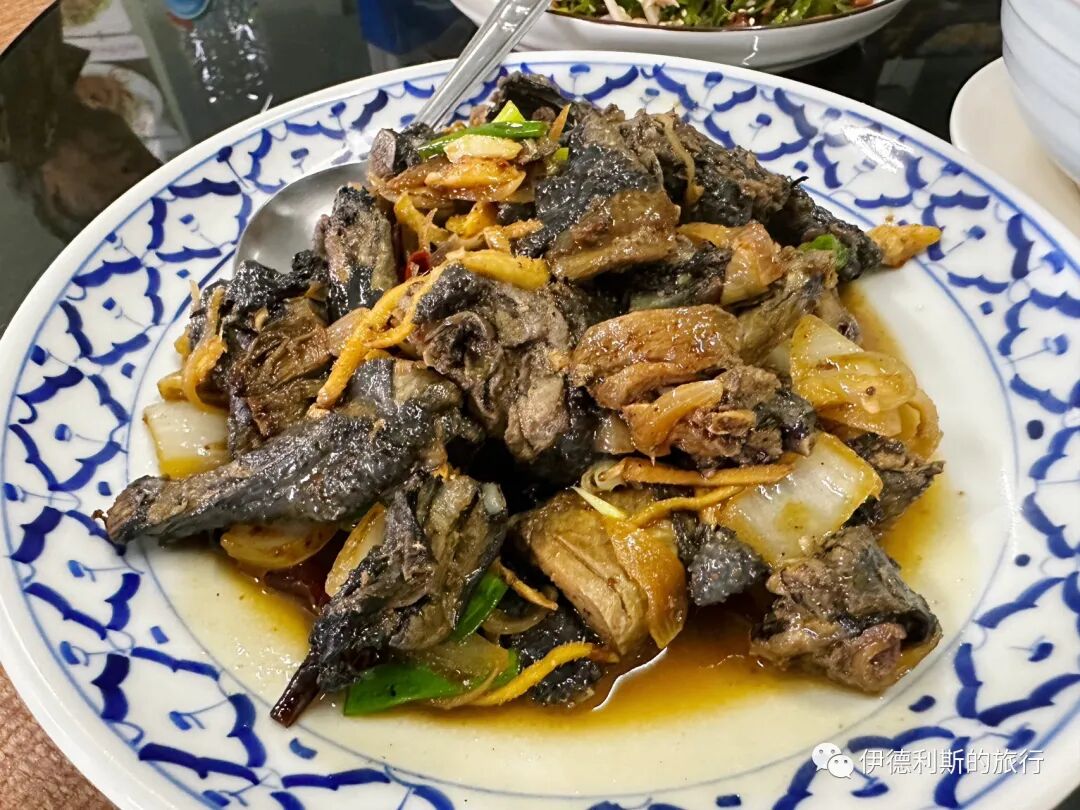
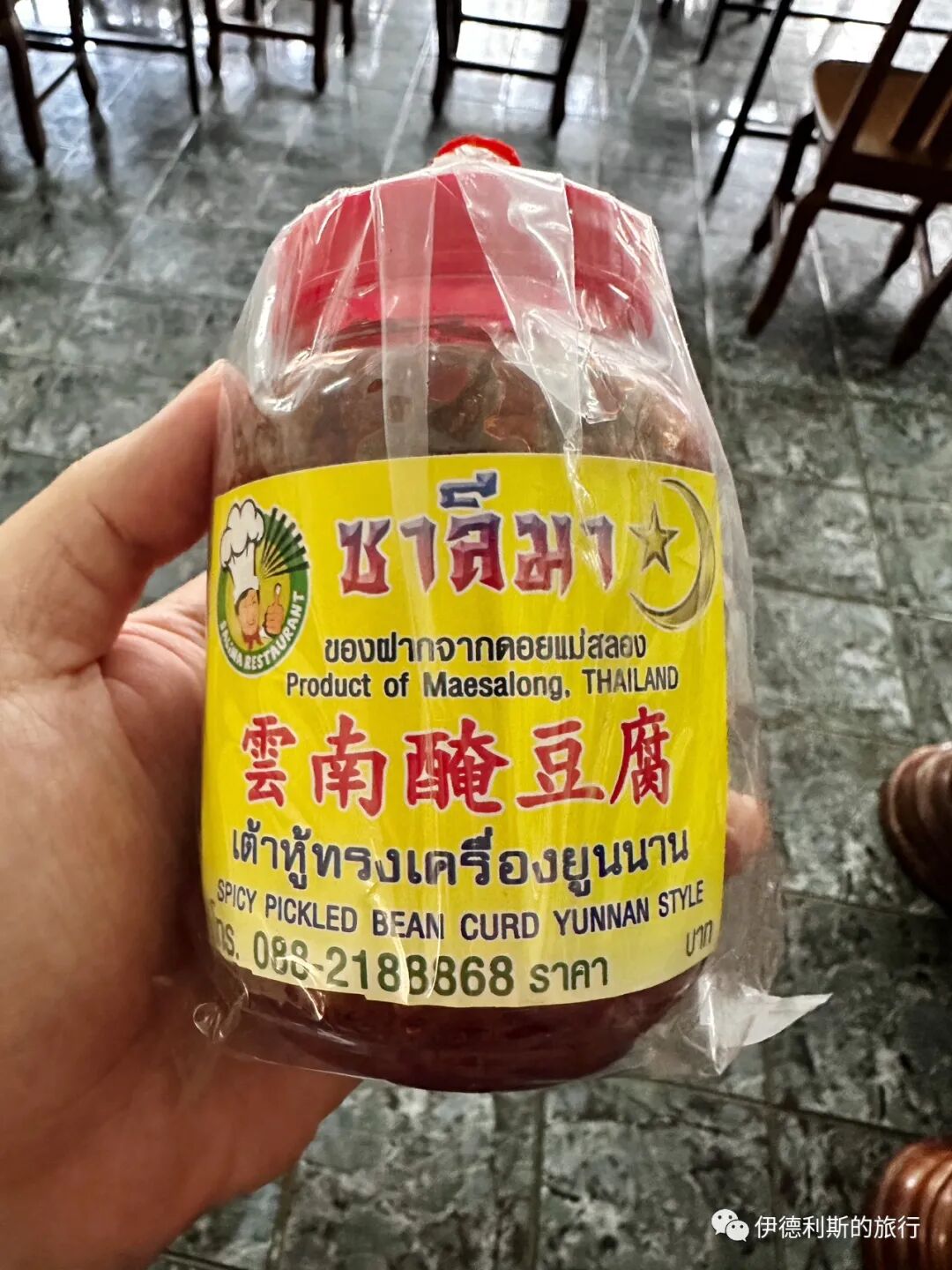
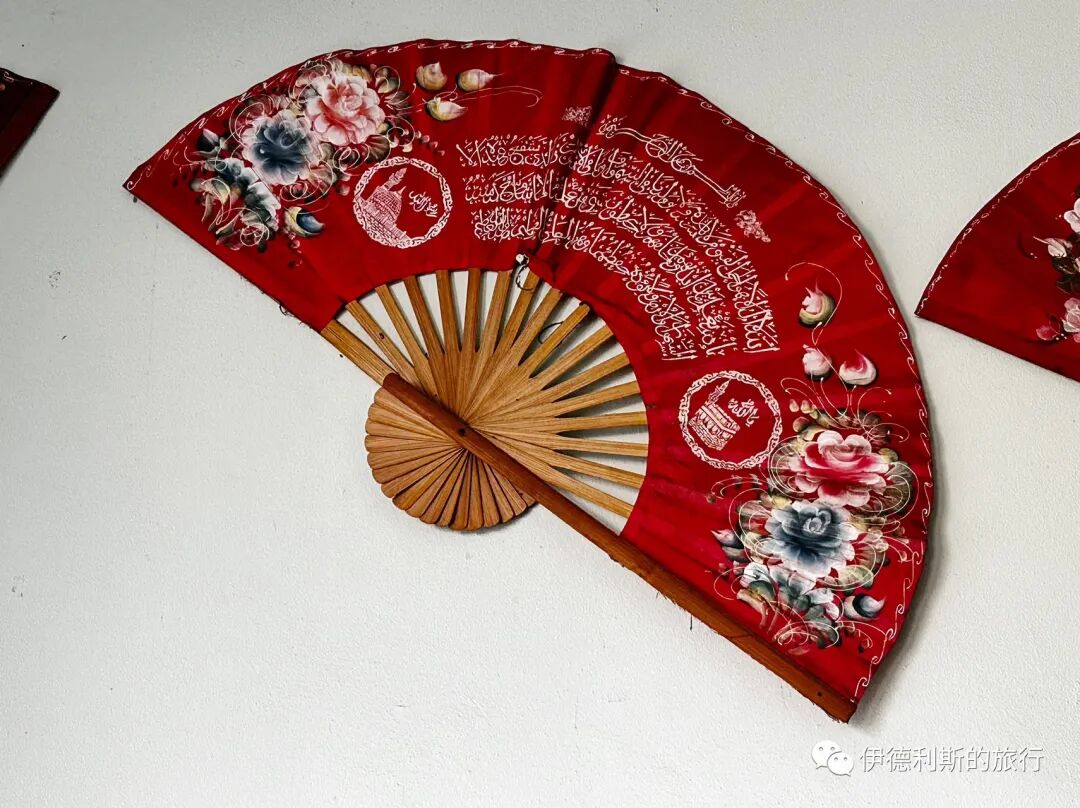
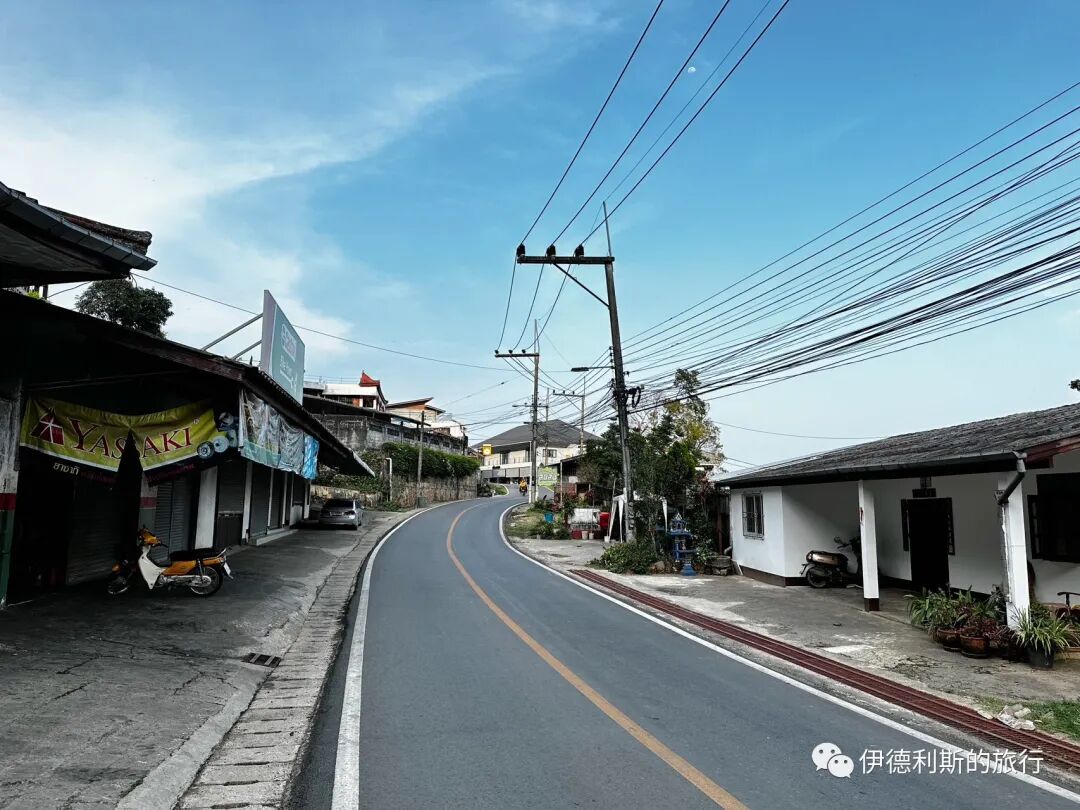
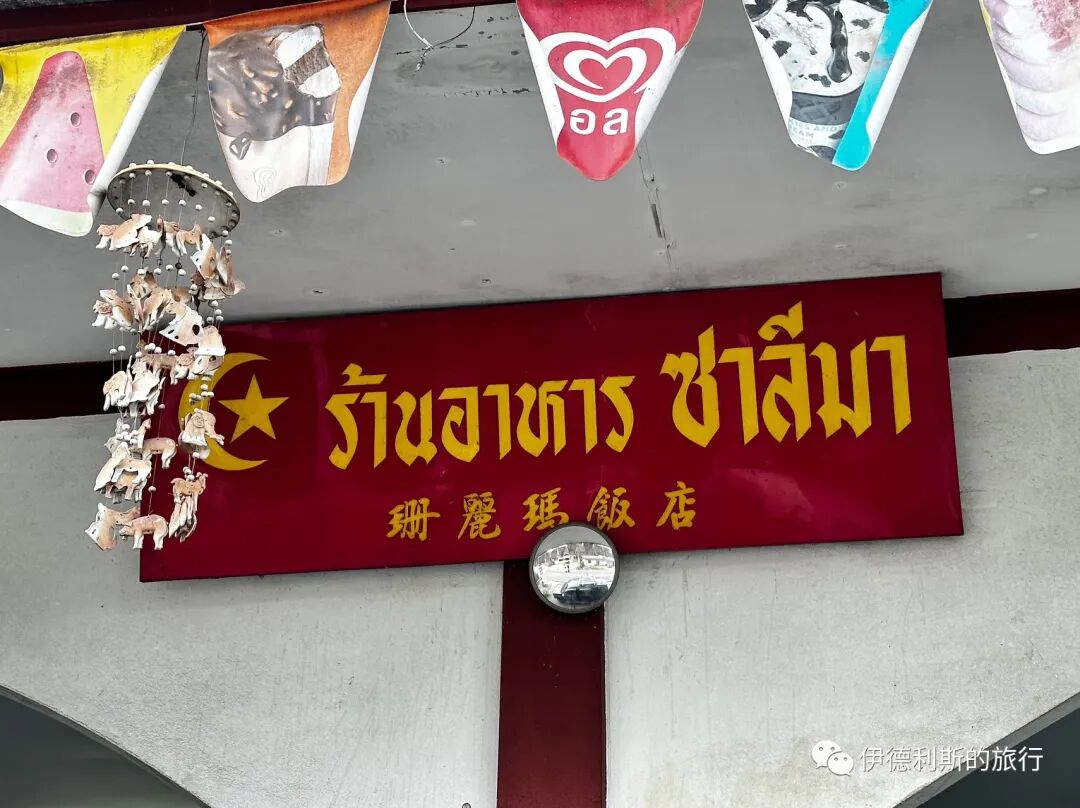
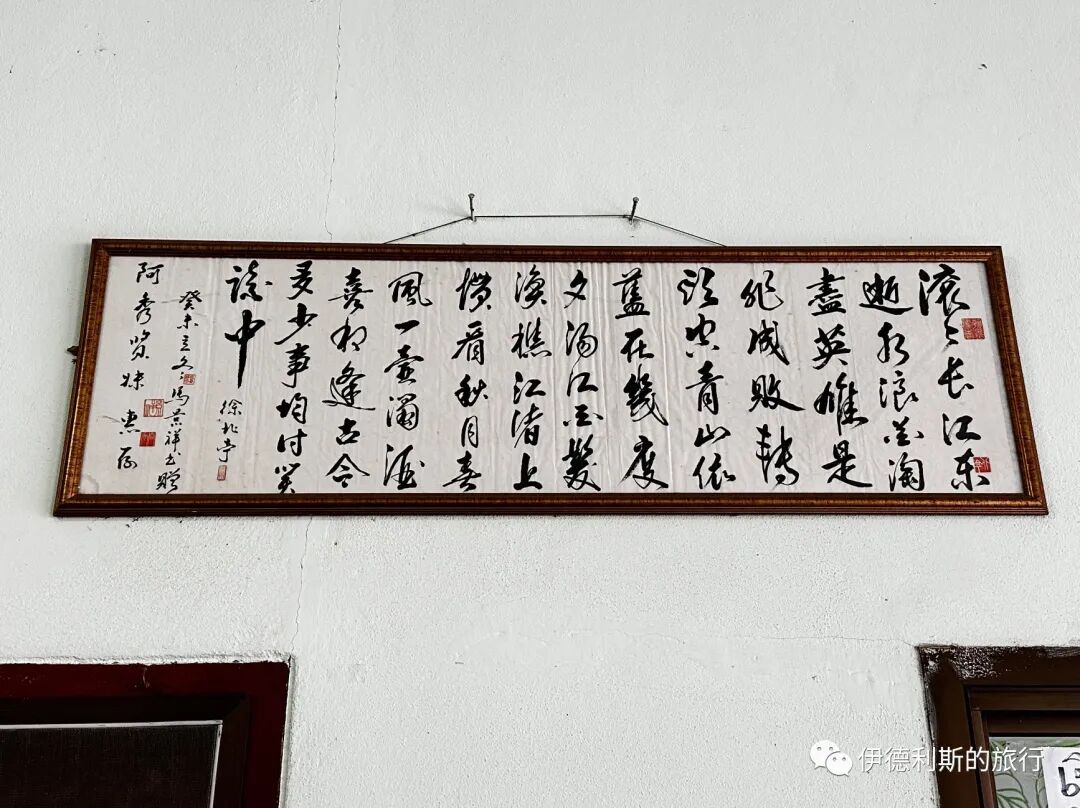
Sharing the menu from Shanlima Restaurant in Mae Salong; wild bitter melon is also one of their specialties.
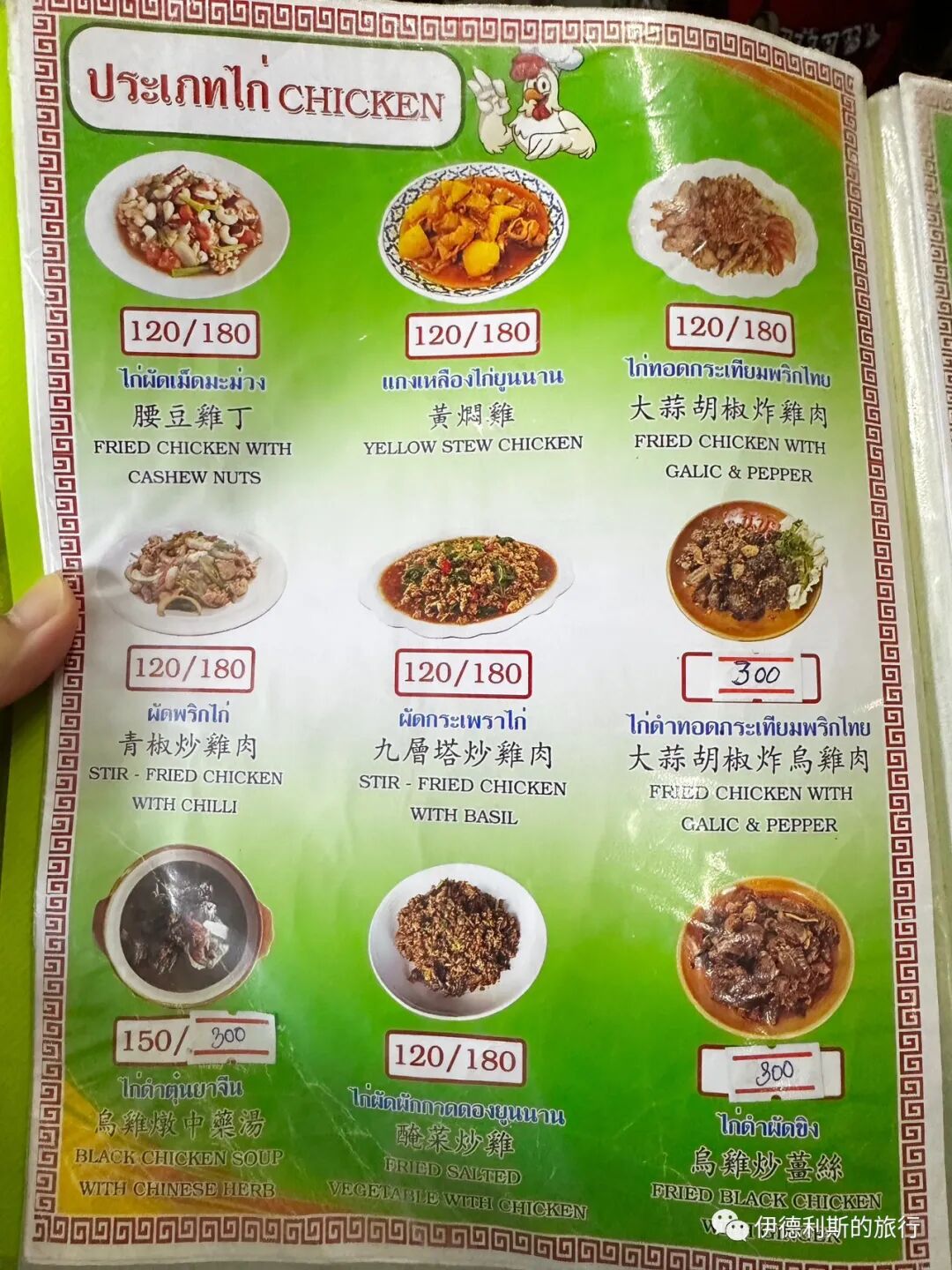
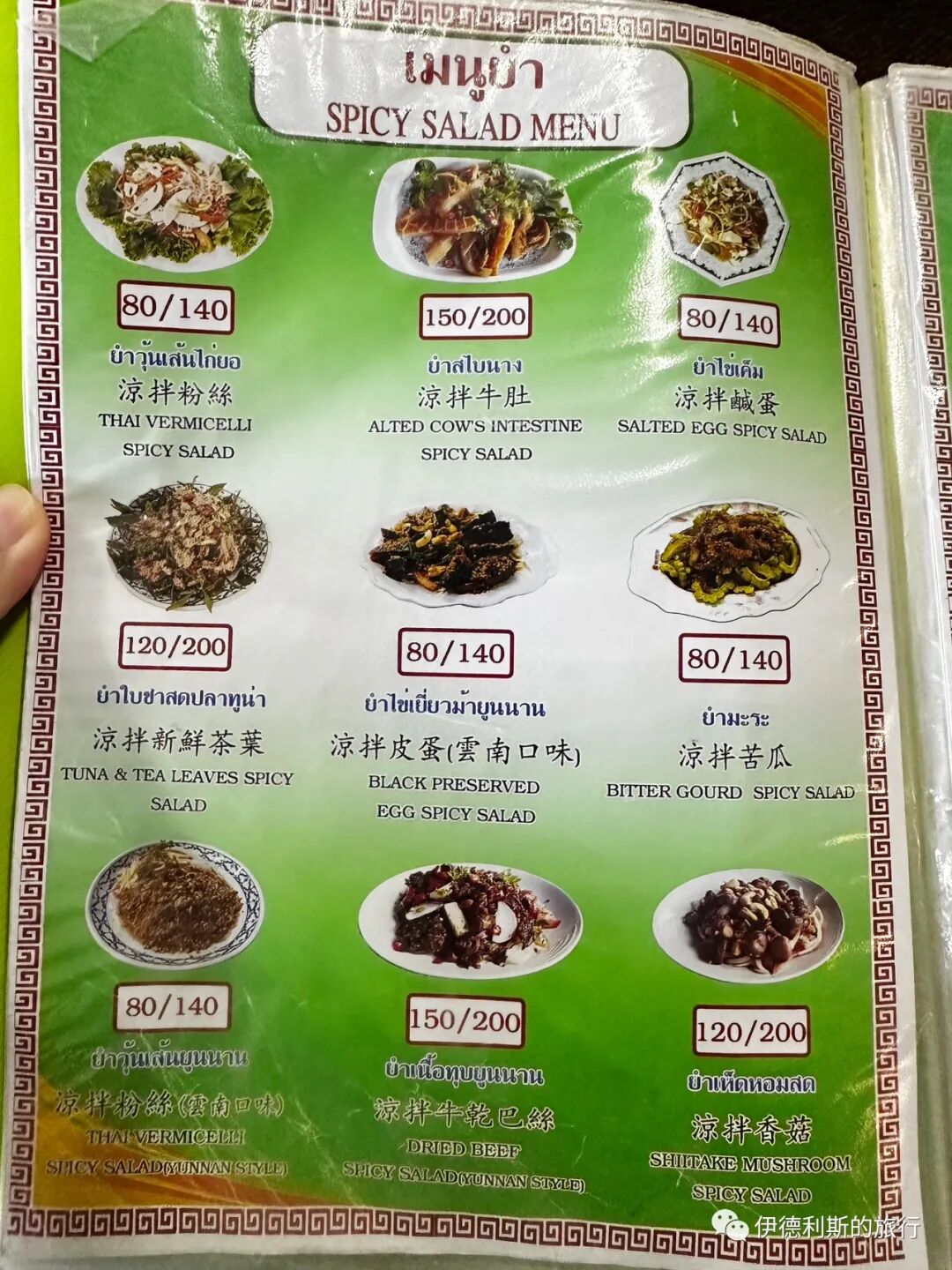
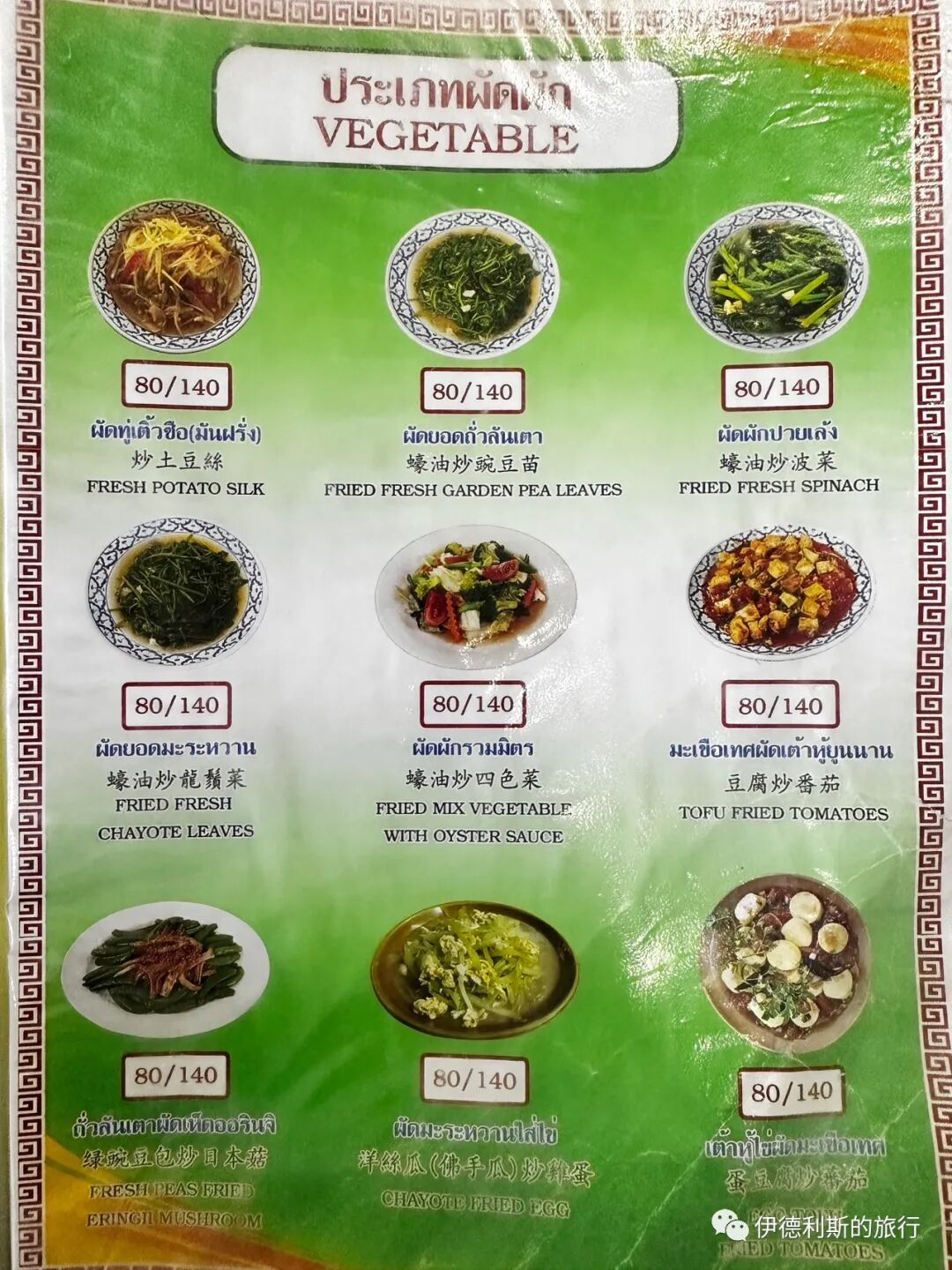
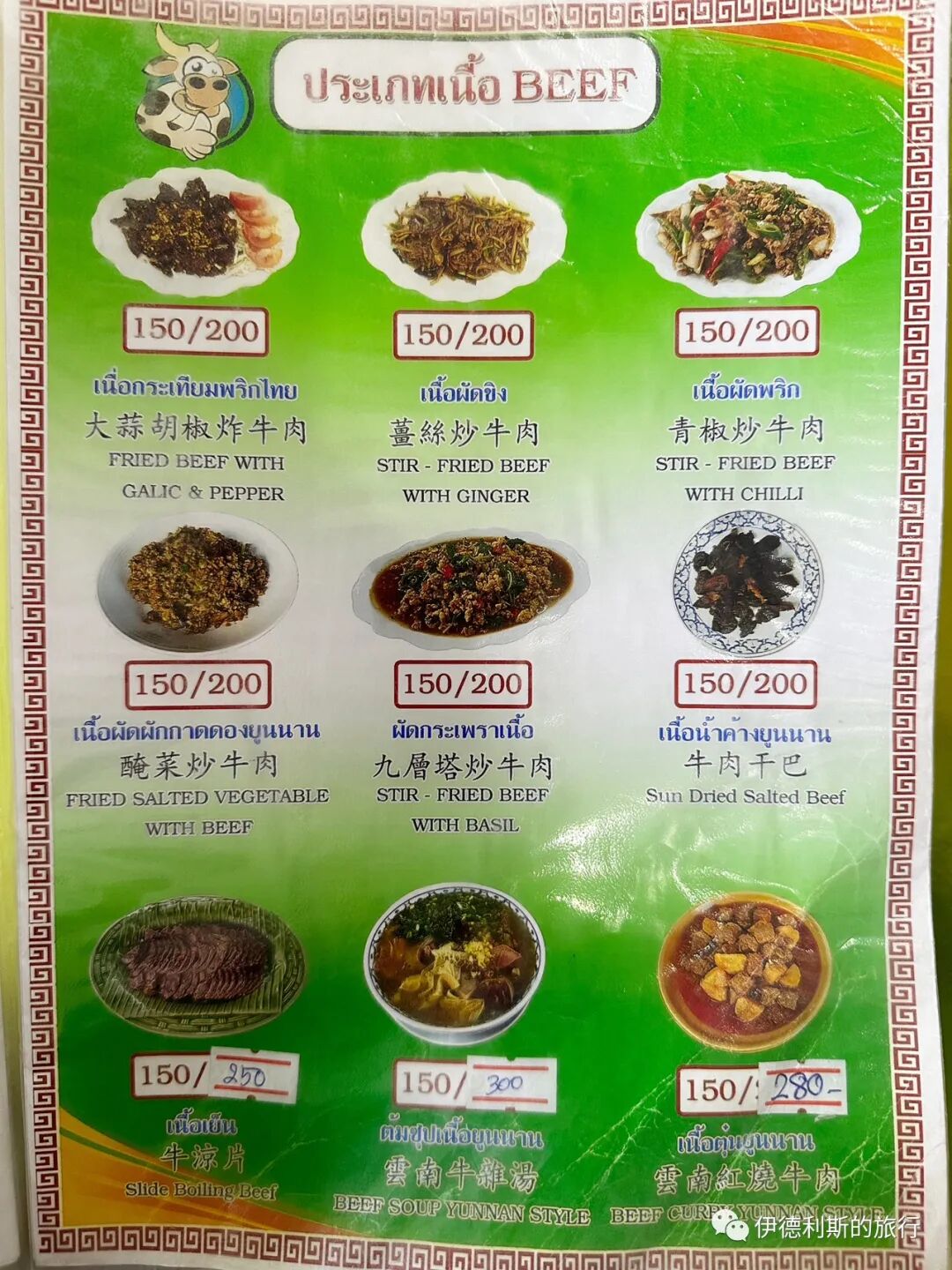
Besides Shanlima, Mae Salong has another Yunnan Hui Muslim restaurant called Mina Halal Restaurant. Since it is the off-season, the owner went to Taiwan. She will likely return after the Mid-Autumn Festival when the peak tourist season begins, so only the staff are running it now. If I have the chance to visit Mae Salong again, I will go and try their food.
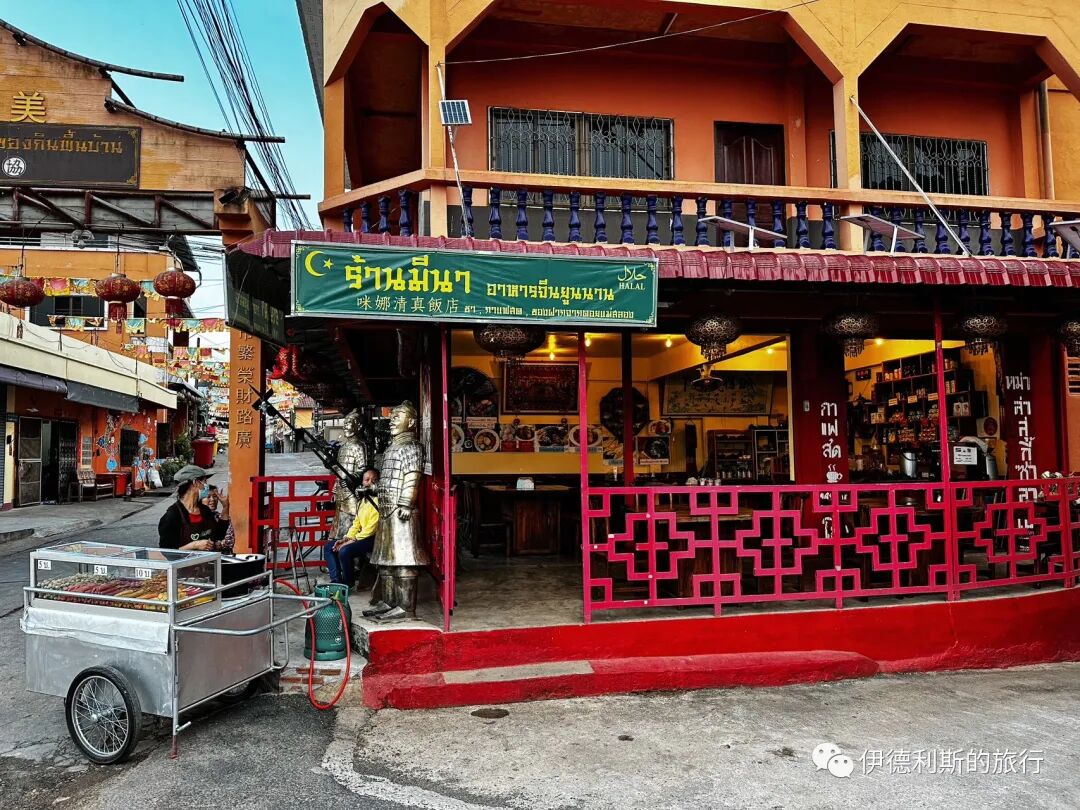
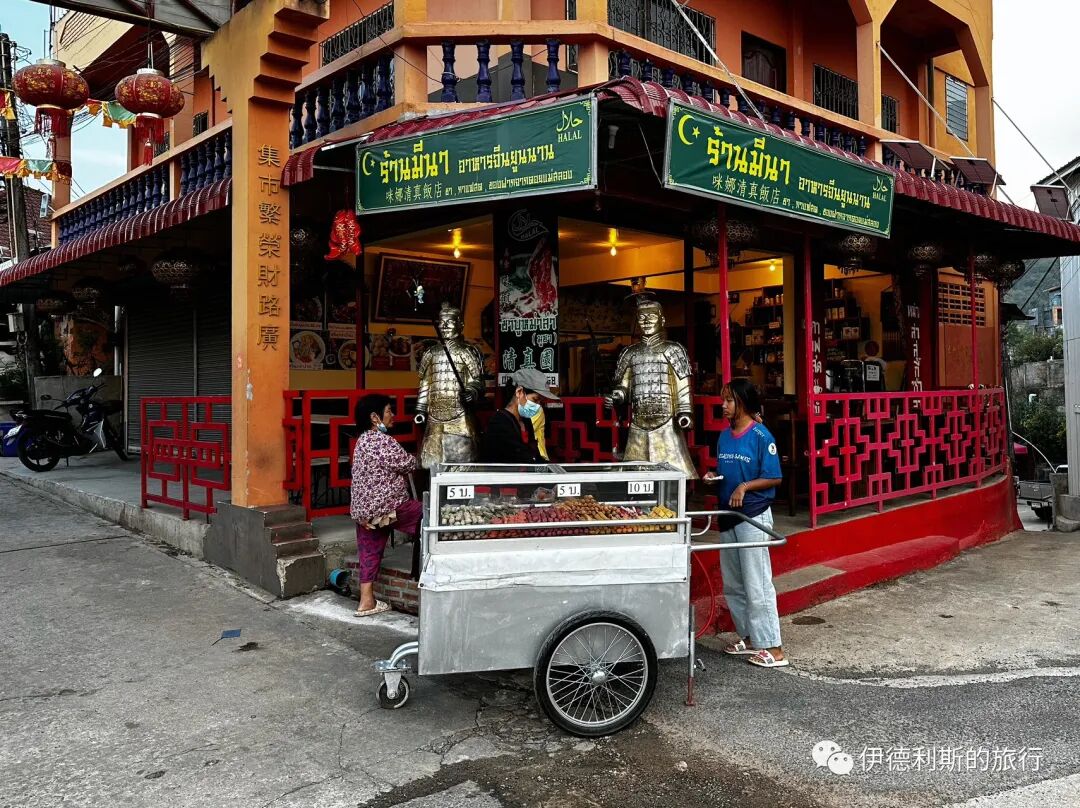
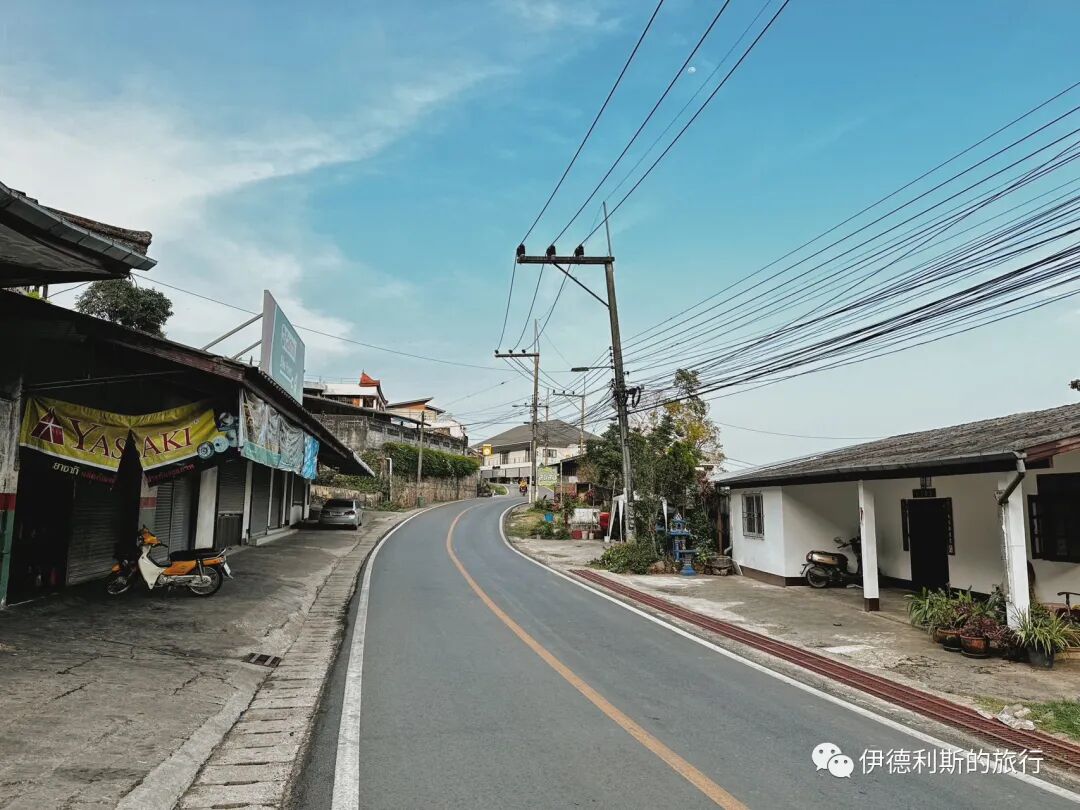
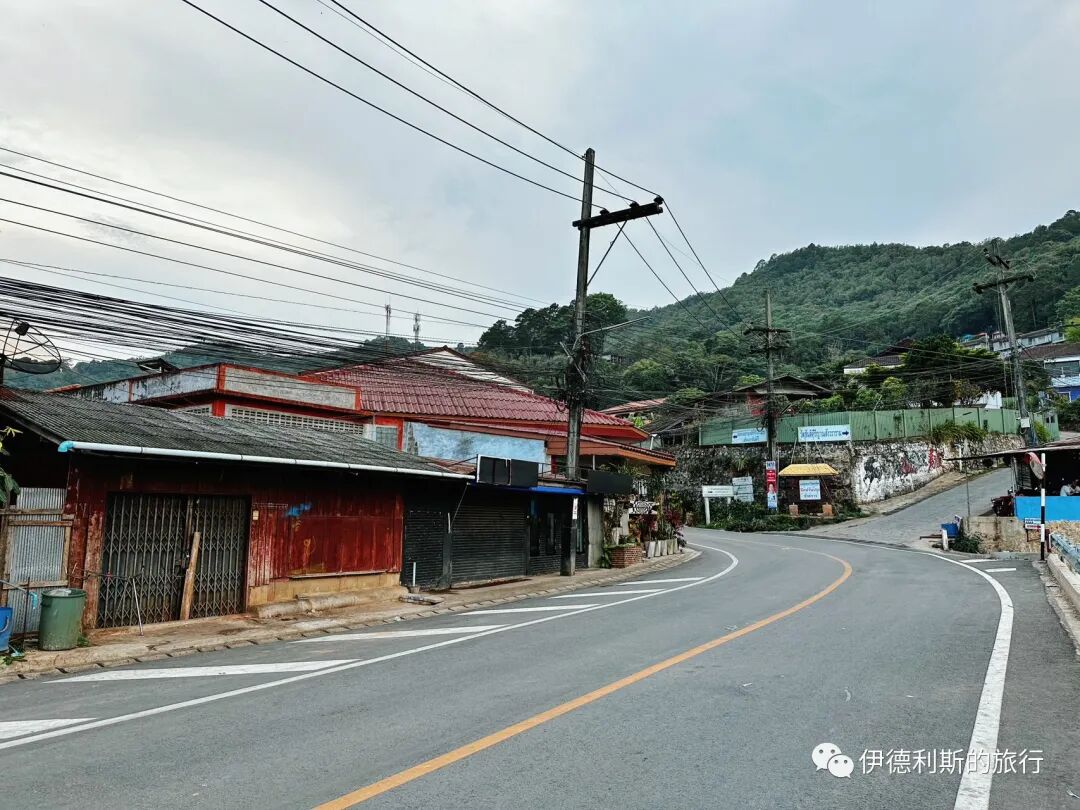
Mae Sai
In the evening, we traveled from Mae Salong to Mae Sai, a border port city on the Thai-Myanmar border at the northernmost tip of Thailand. Mae Sai now has over 200 households of Yunnan Hui Muslims, making it the second-largest settlement of Yunnan Hui Muslims in Northern Thailand outside of Chiang Mai.
We drank tea and chatted with the elders at the Yunnan Mosque in Mae Sai, and we had no trouble communicating in Mandarin. Although Mae Sai has been a necessary stop for Yunnan horse caravans heading south to Chiang Mai since the late Qing Dynasty, the mosque was not initiated and built until 1952 by Yunnan Hui Muslims Ma Xianglin and Ma Enshou. The original mosque was just a thatched hut, but it was later rebuilt into a wooden structure under the supervision of Ma Zixing, thanks to donations from Qian Yizhai and fellow believers in Chiang Mai. In 1975, as the number of Yunnan Hui Muslims in Mae Sai grew, the old mosque could no longer accommodate everyone. Mu Chengfang initiated a move to the current location next to the main road, and Ma Weijing and Na Caikui oversaw the construction of the current steel and concrete building.
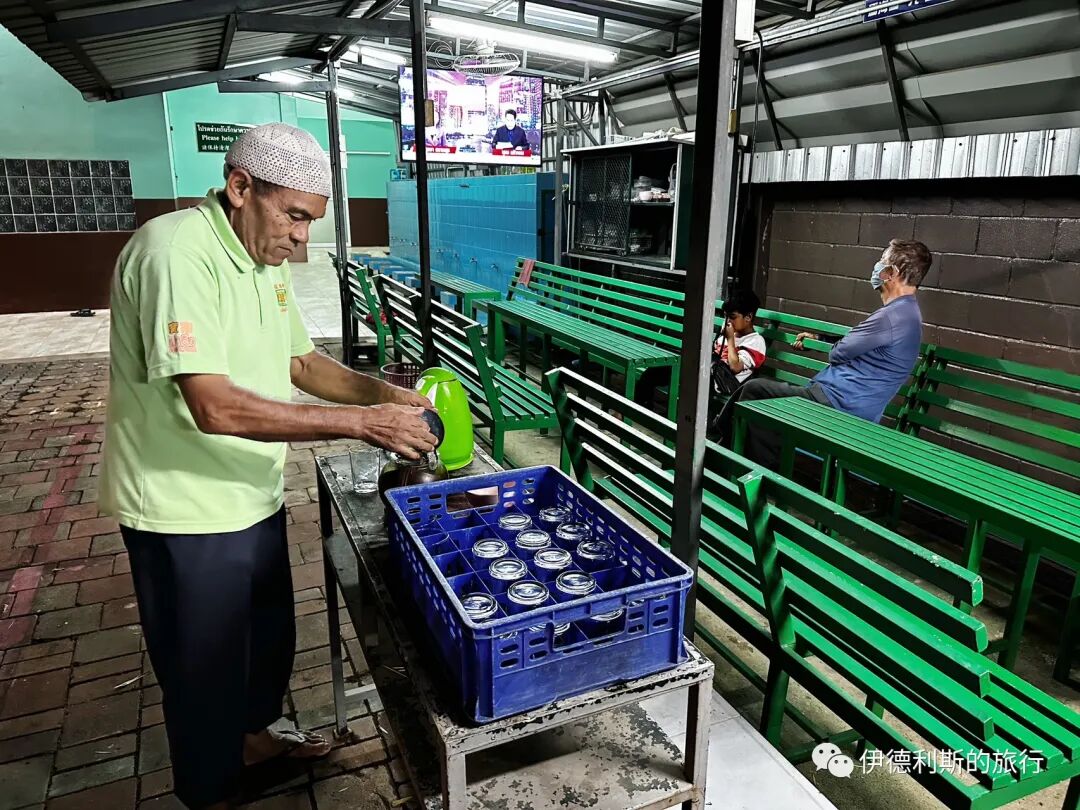
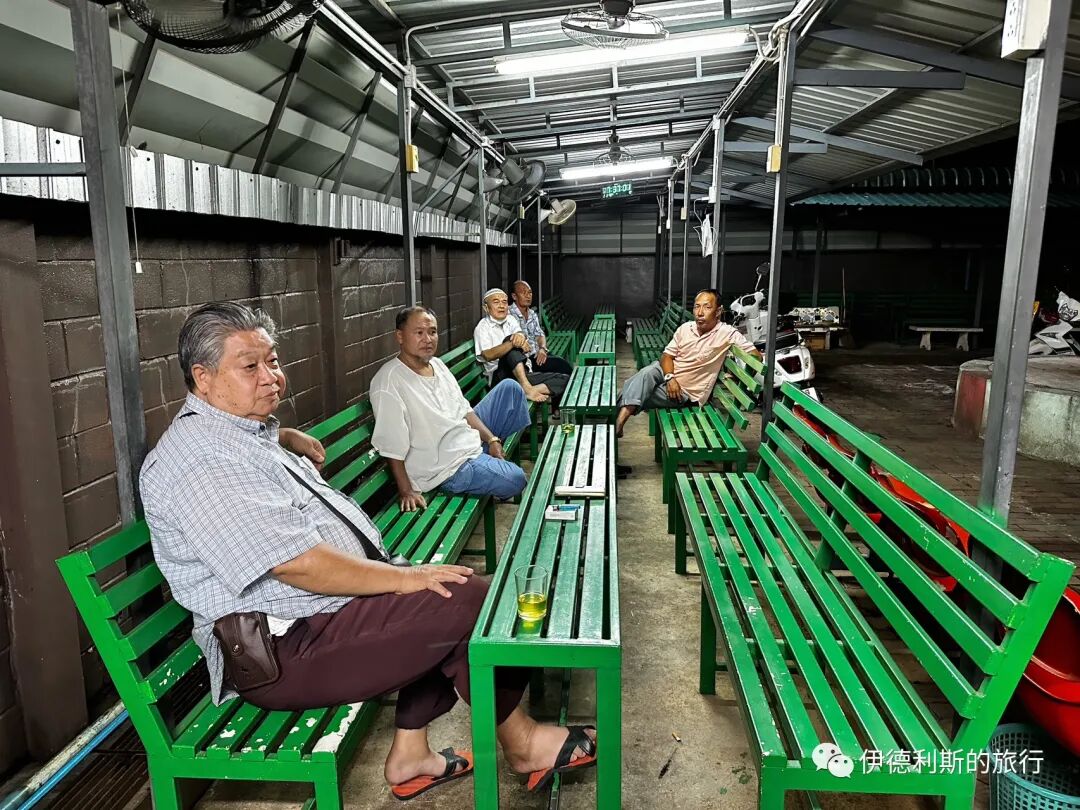
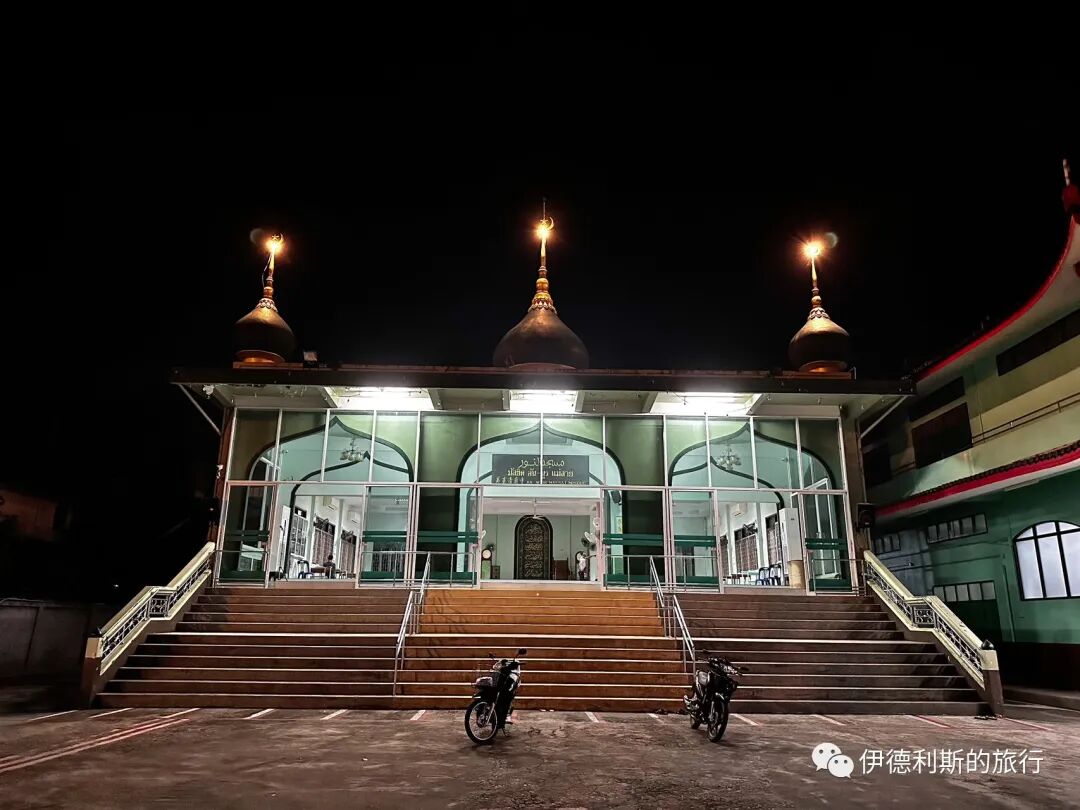
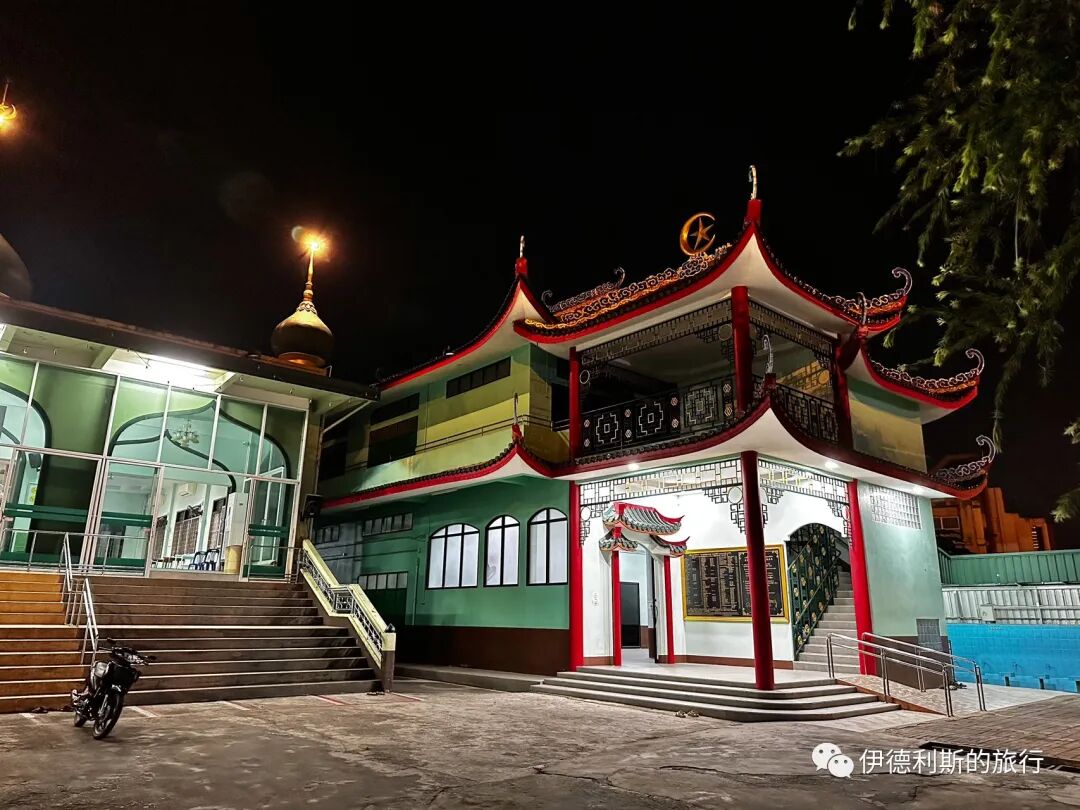
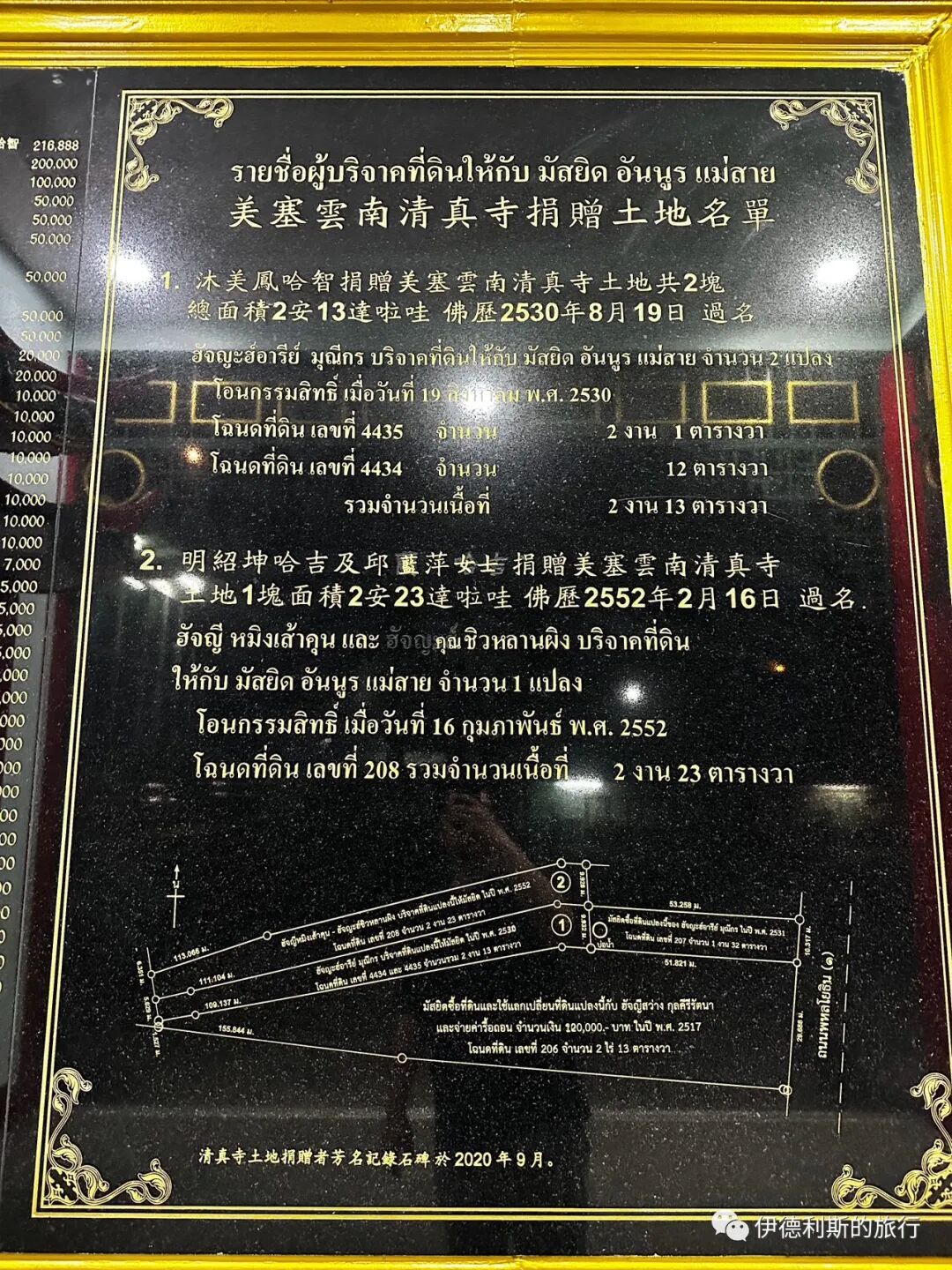
In the evening, we visited the South Asian Mosque in Mae Sai for namaz. According to Master Ma, there are currently 70 to 80 local South Asian Muslim households in Mae Sai, plus over 200 households of Myanmar-born Muslims who moved here from Myanmar to make a living due to poverty. There are about 50 poor students from Myanmar in this mosque. The mosque provides them with free food, housing, and education, which is very moving.
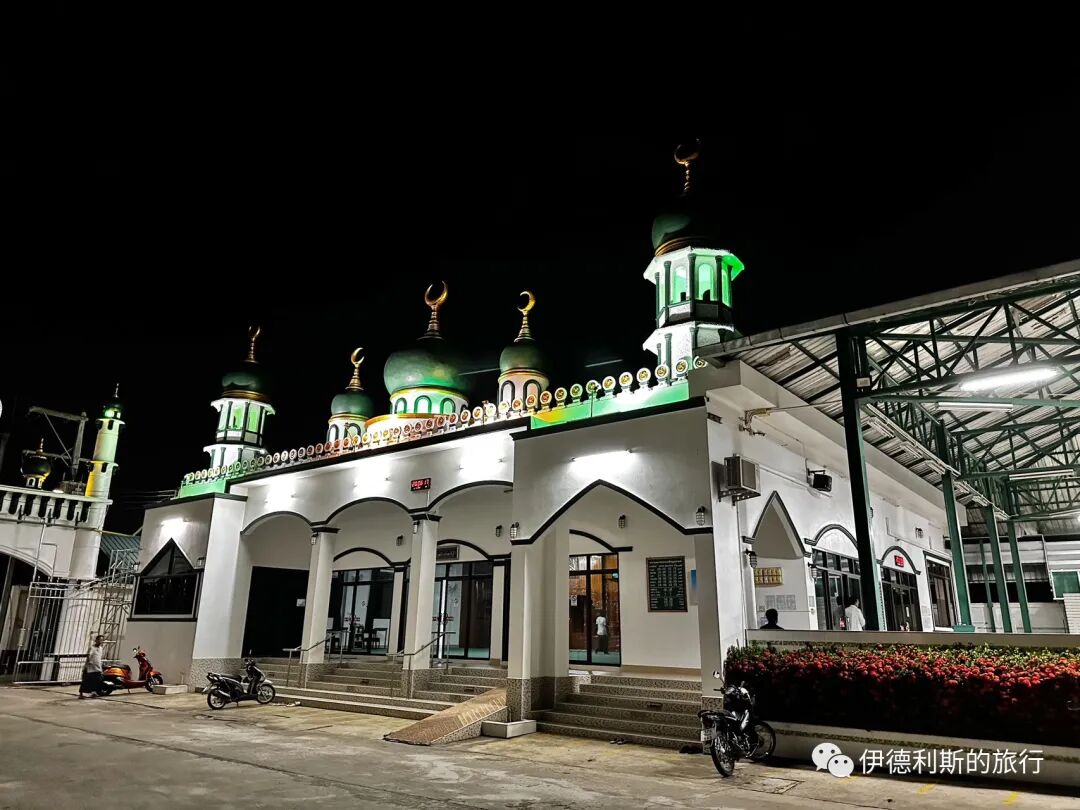
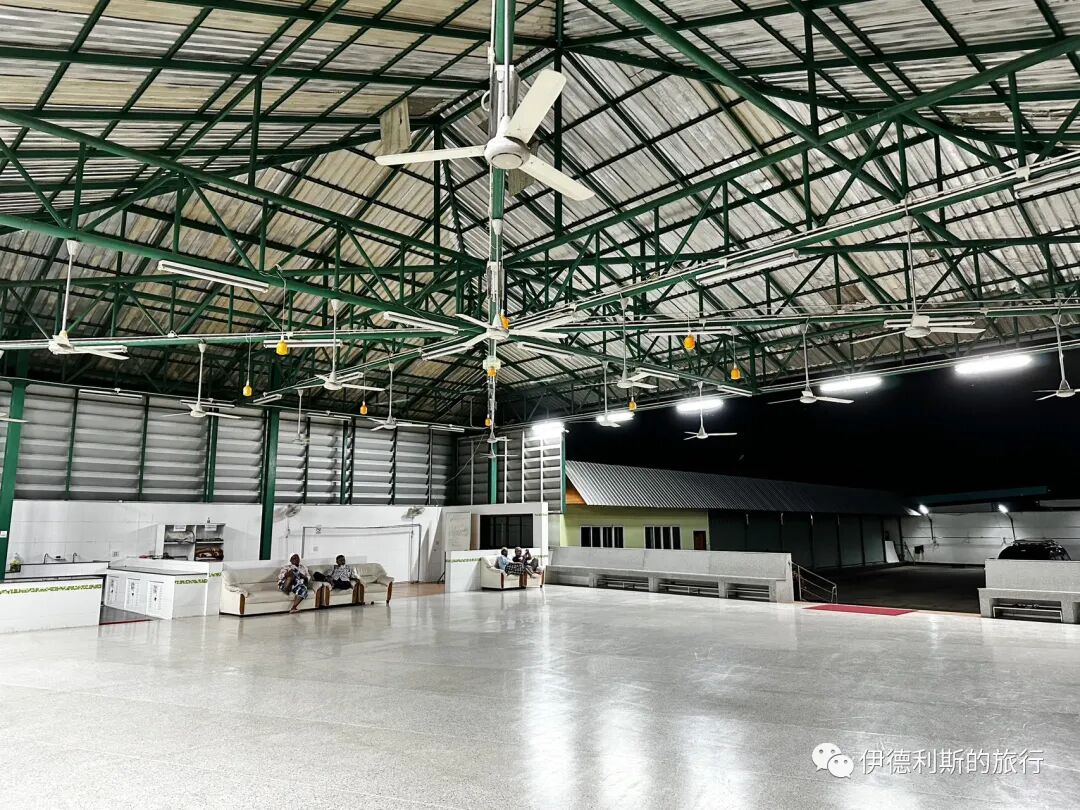
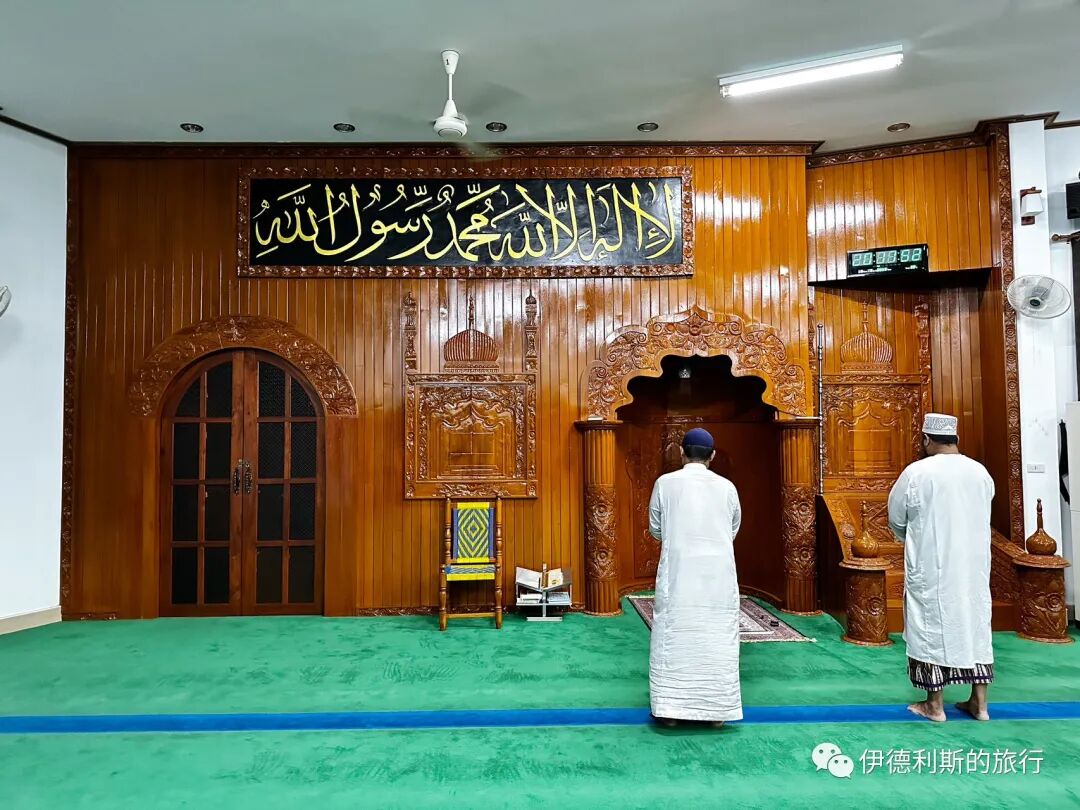
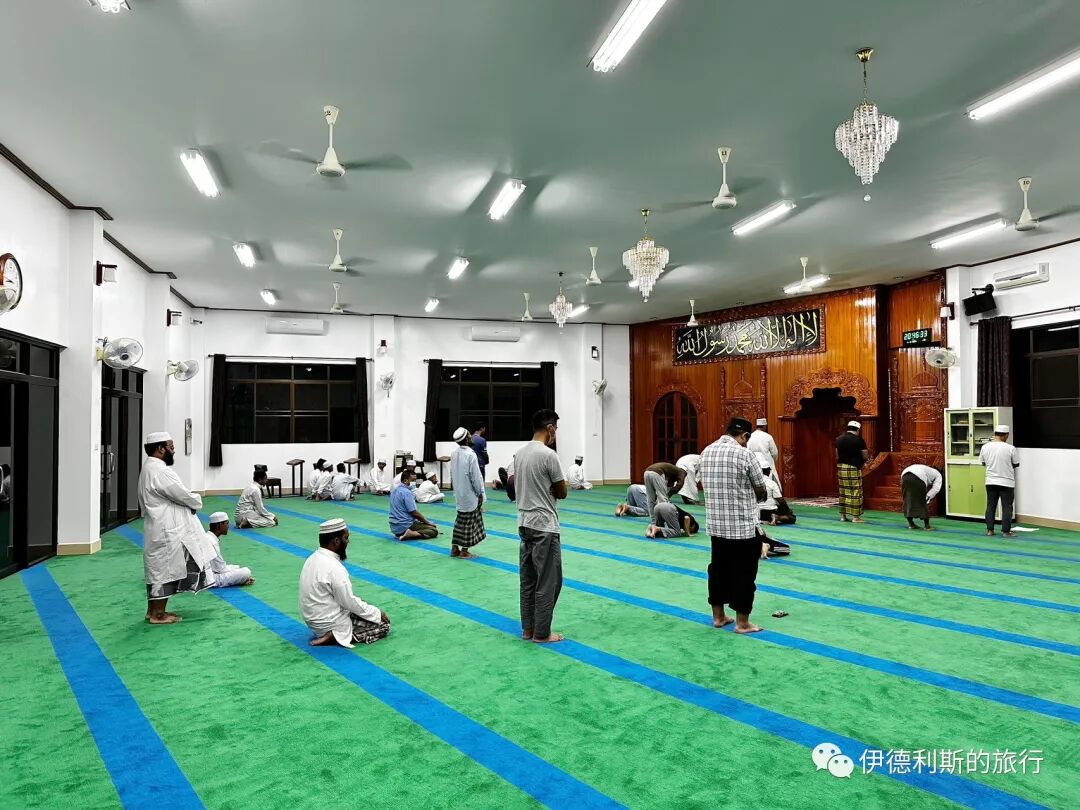
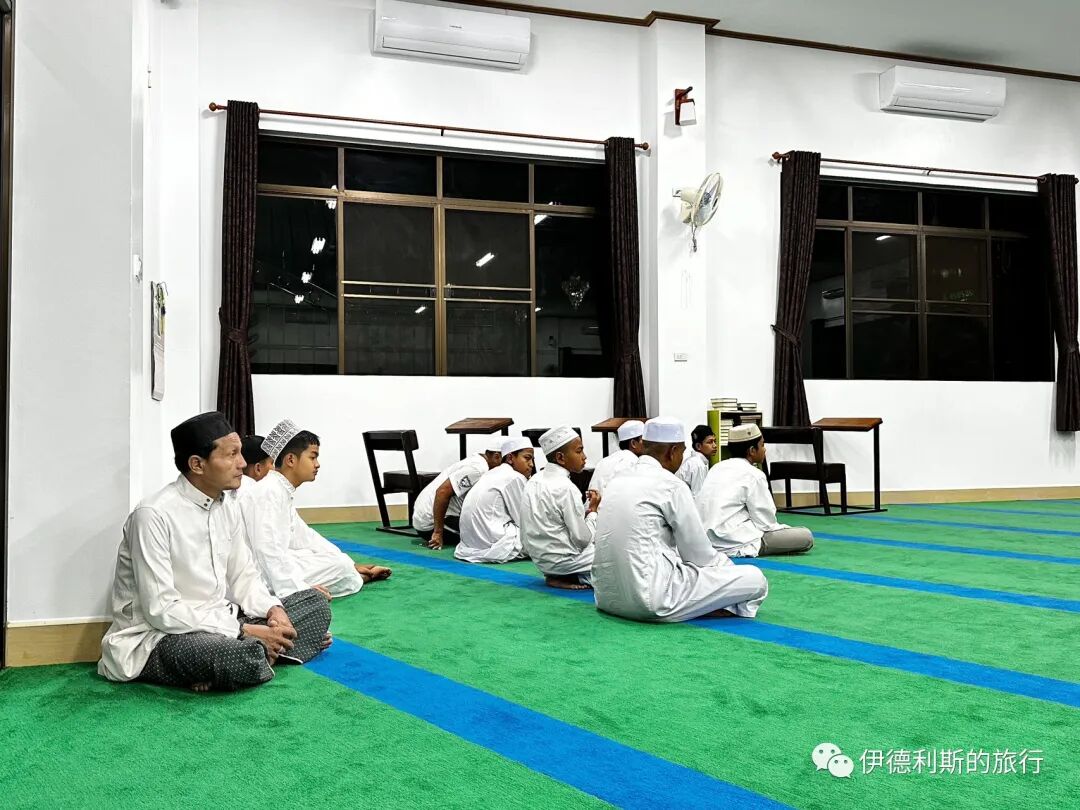
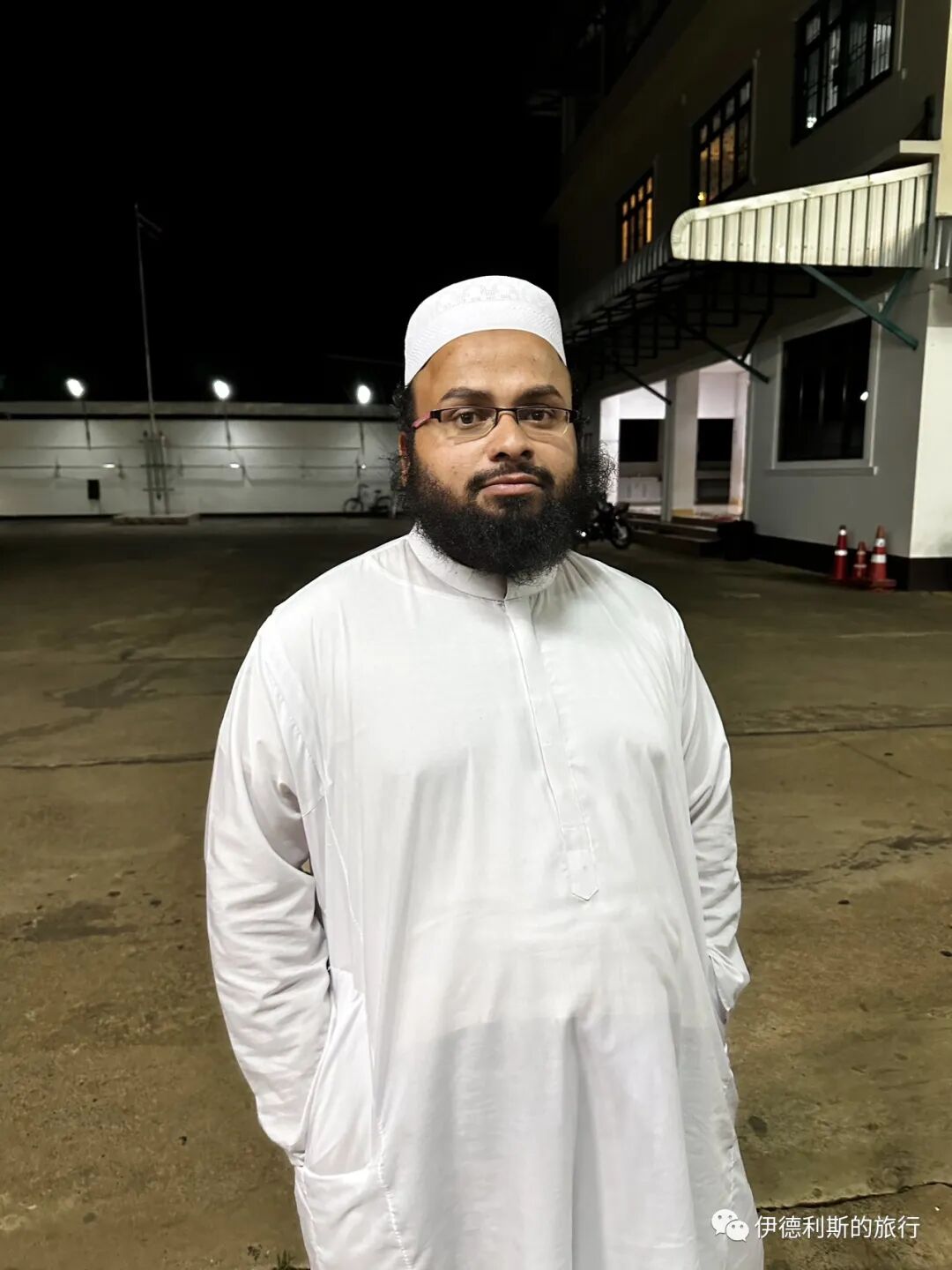
After coming down from Hufu Beach, we had spicy barbecue (shaokao) from a Yunnan Hui Muslim shop in Mae Sai for a late-night snack. We had no trouble communicating in Mandarin. They run the shop right at their own front door. You have to make several turns off the main road to find it, and we never would have spotted it without Master Ma leading the way. The barbecue doesn't have beef or lamb. It is mostly chicken gizzards, chicken hearts, and various types of sausages. They brush on plenty of Sichuan peppercorn water and chili sauce. We chose the mild spice level, and it was still very satisfying.
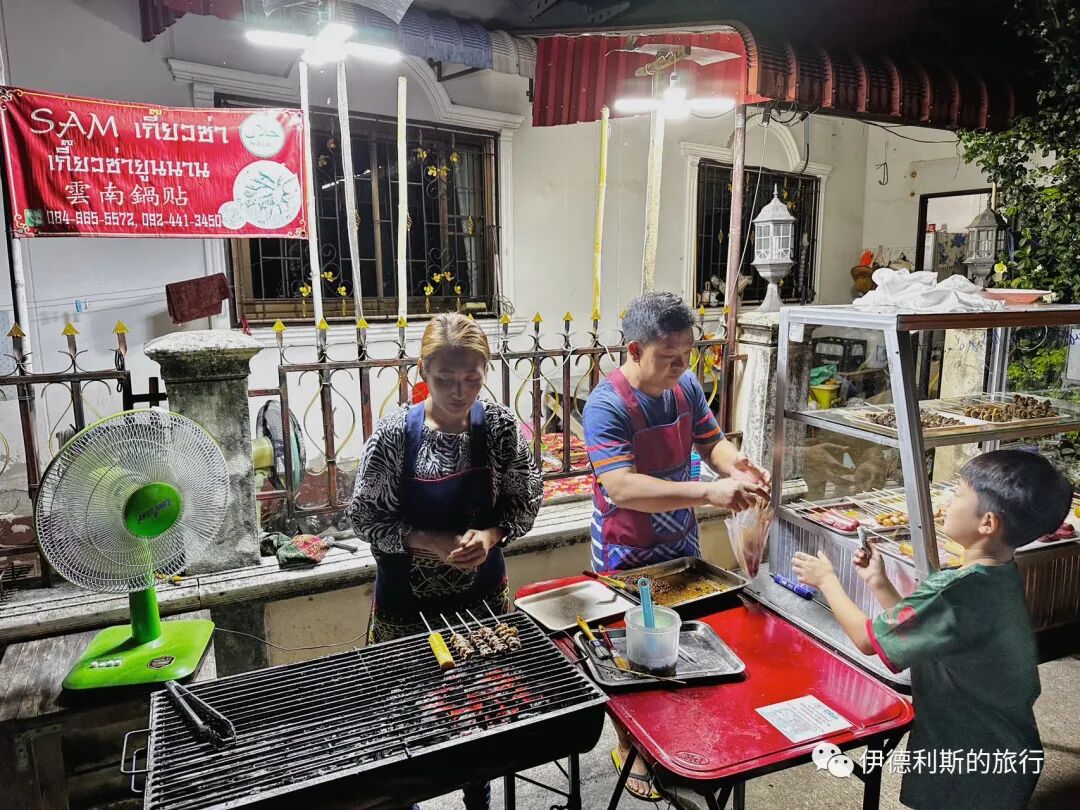
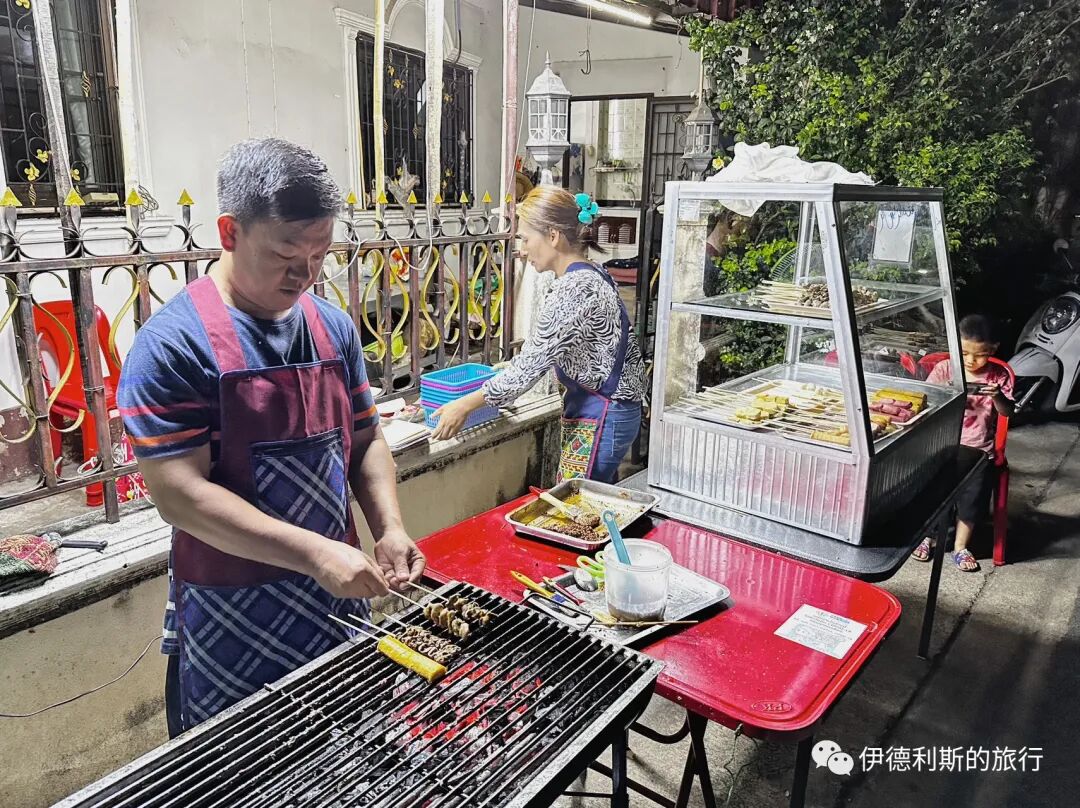
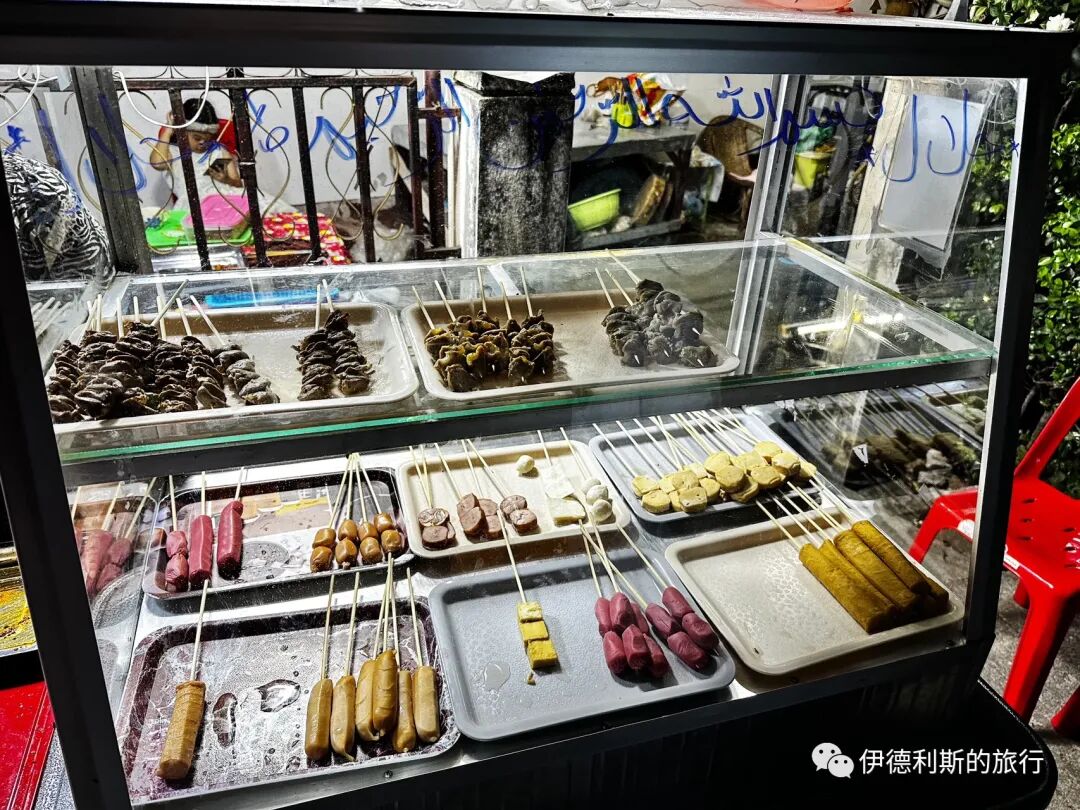
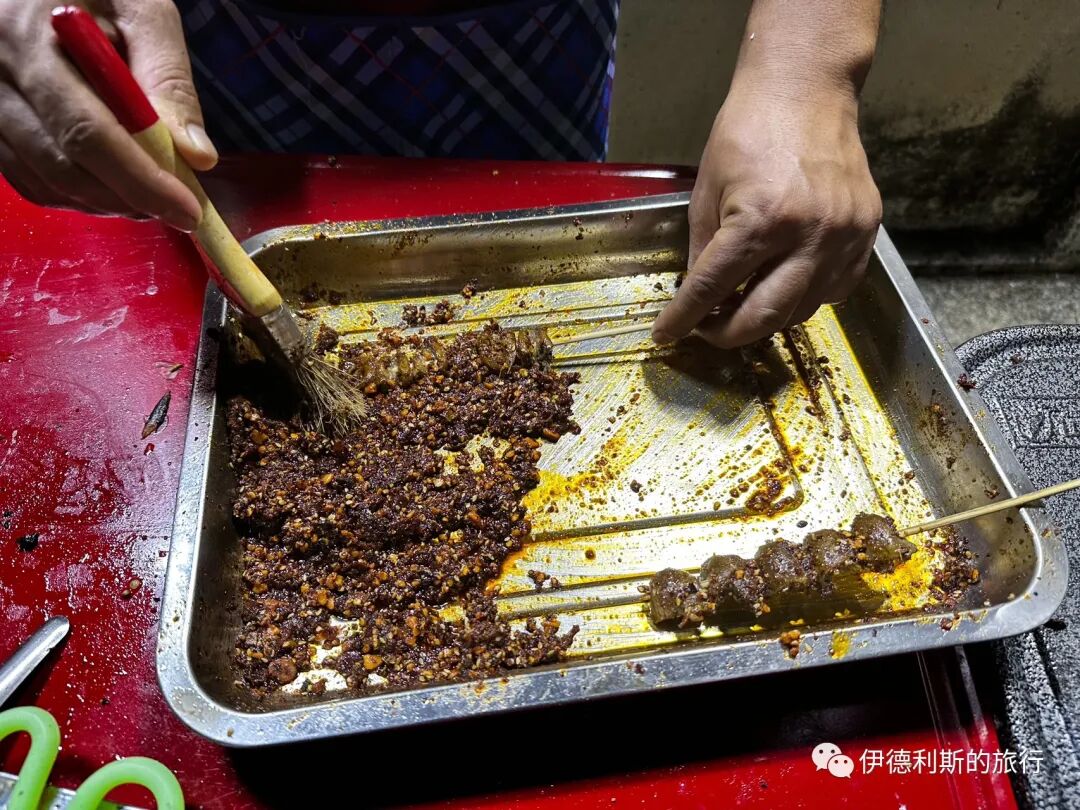
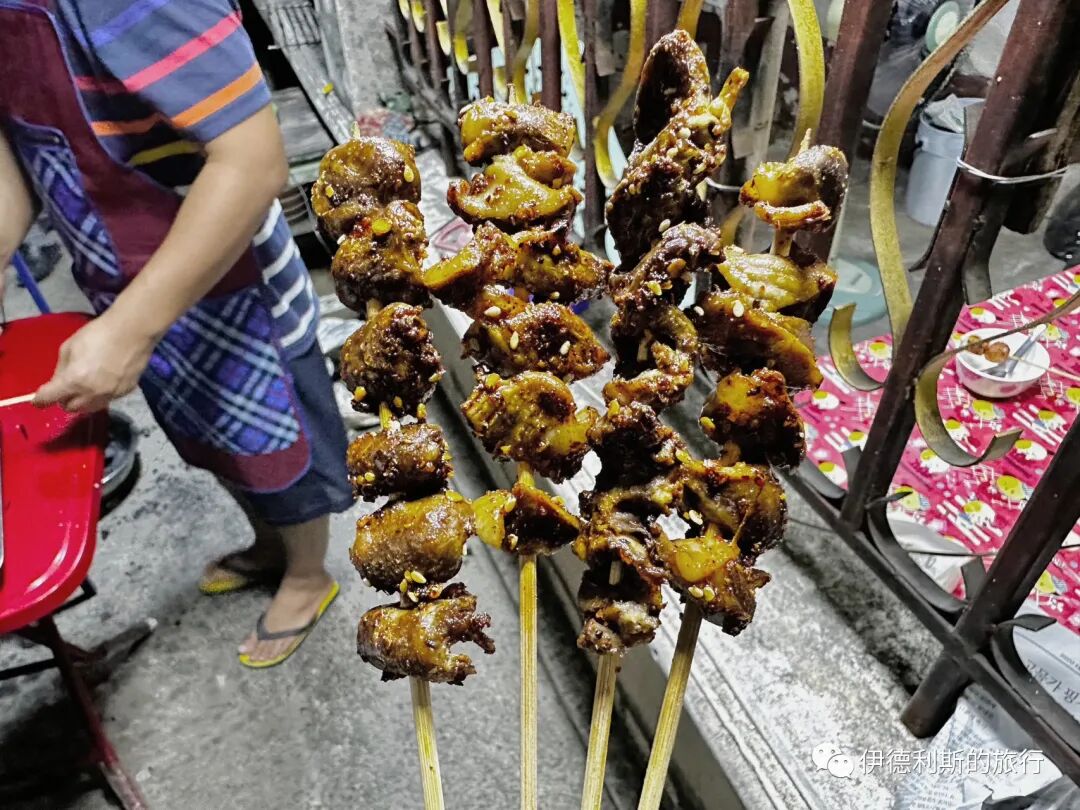
While walking around the streets of Mae Sai at night, we saw a Thai Muslim roast duck shop across from the Yunnan mosque. It was still busy at midnight. It turns out Thai people really love eating roast duck too. The Chinese community in Mae Sai is mainly made up of three groups: Yunnan Han people, Yunnan Hui Muslims, and Chaoshan people. Both the Yunnan and Chaoshan groups have their own Chinese-language schools. The Yunnan Hui Muslims here attend three types of schools: Thai schools, Chinese schools, and religious schools (jingxue). Because of this, they grow up knowing Thai, Chinese, and Arabic.
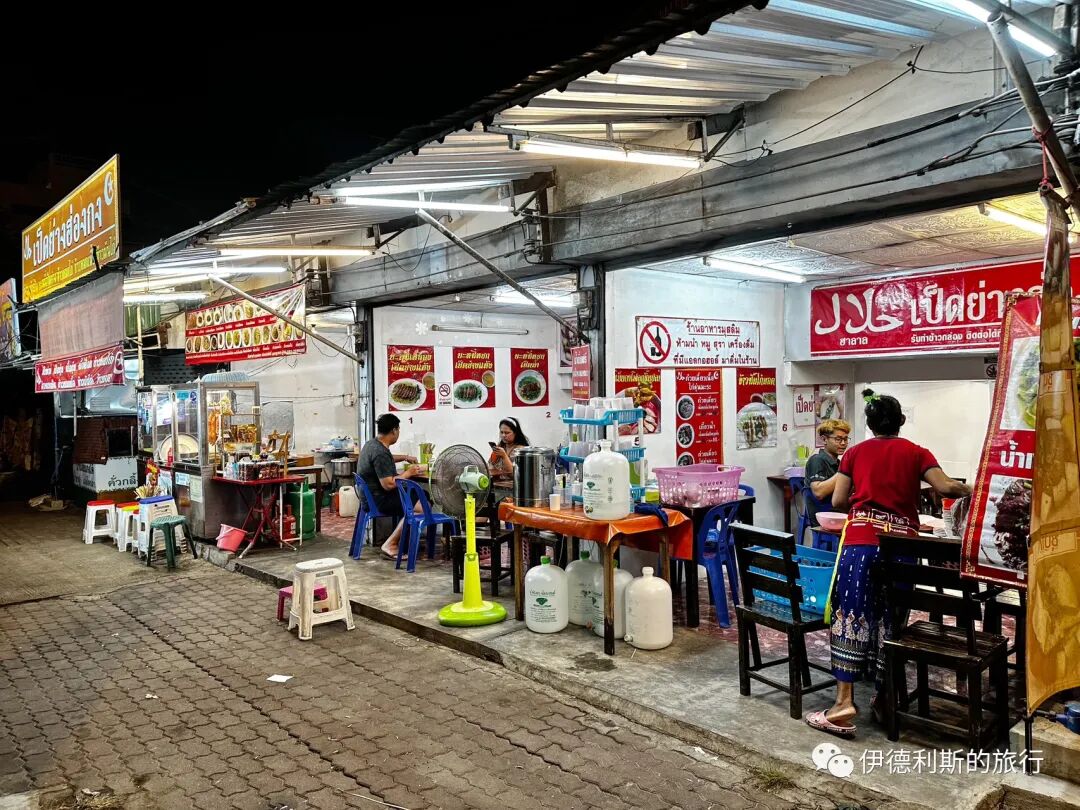
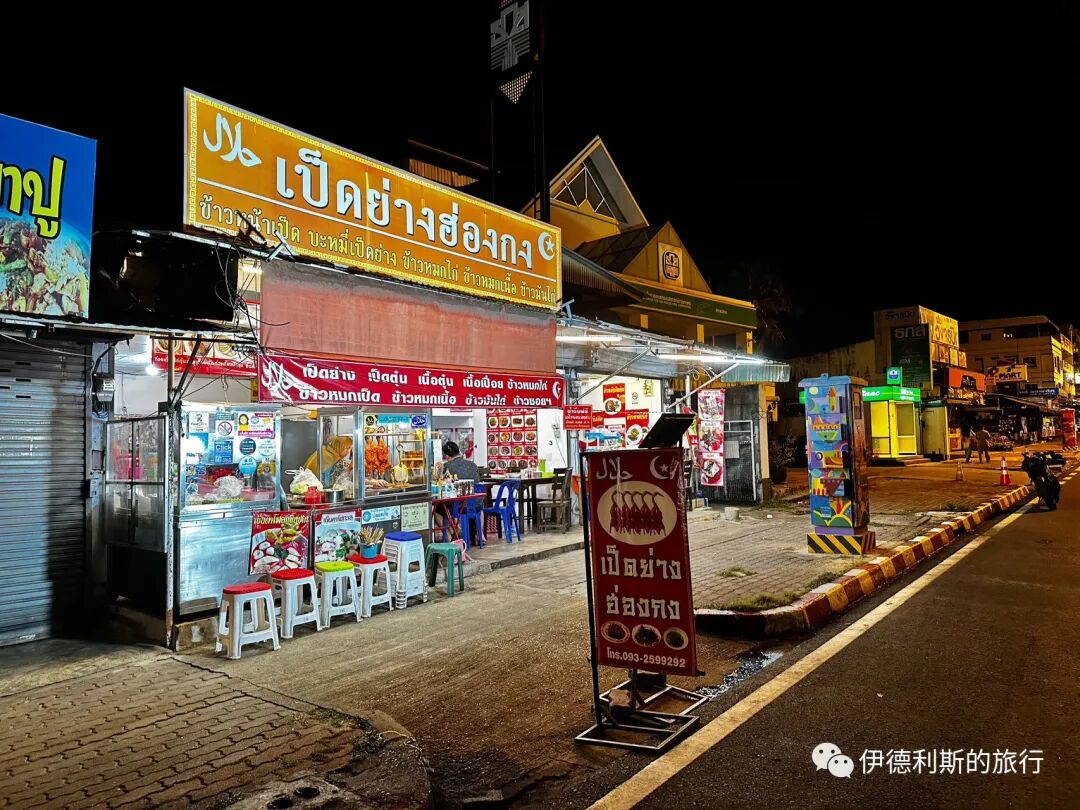
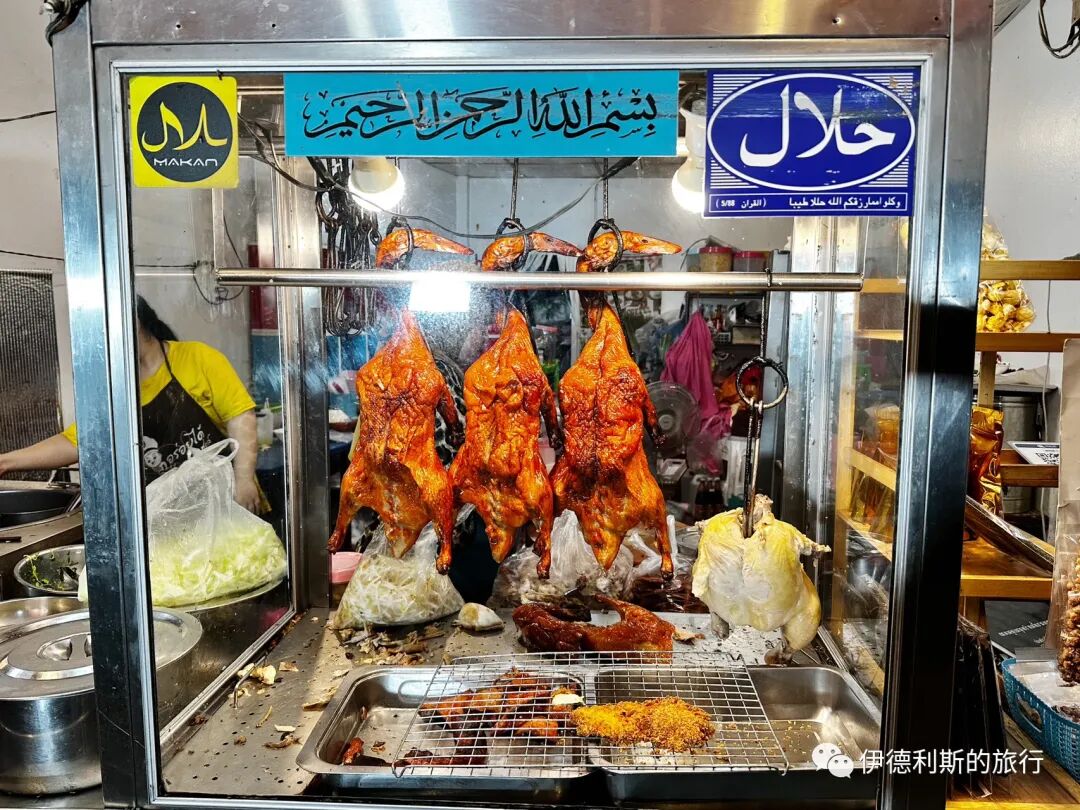
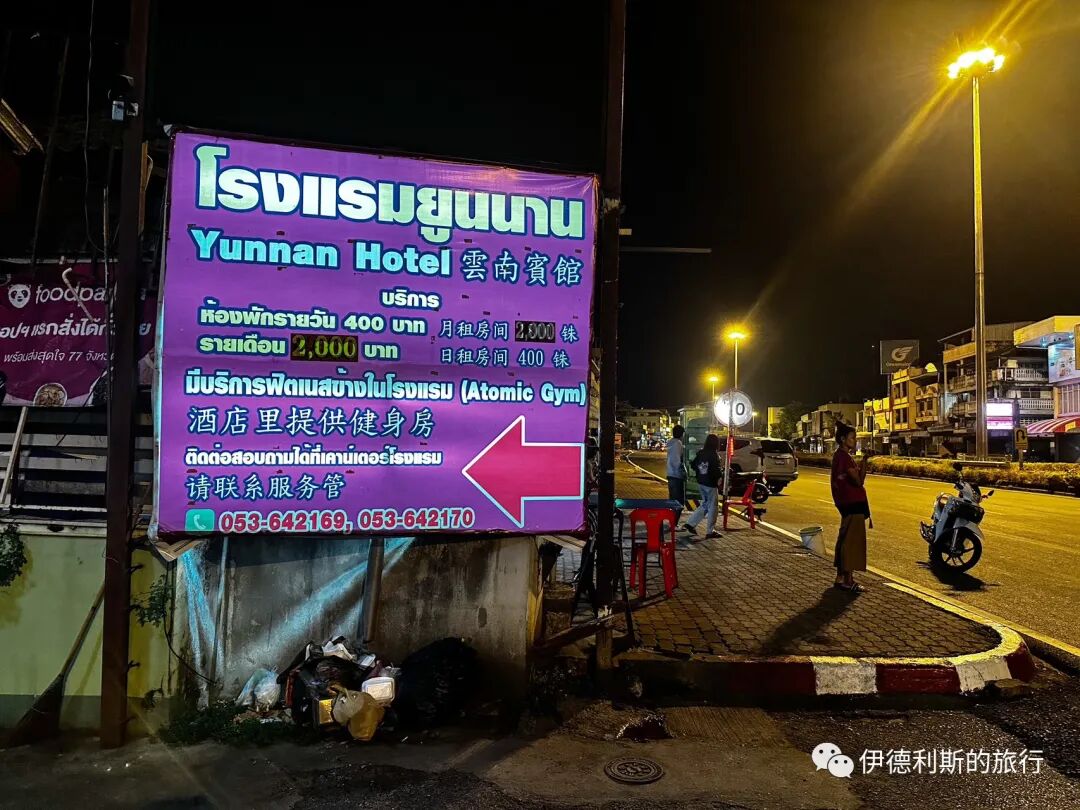
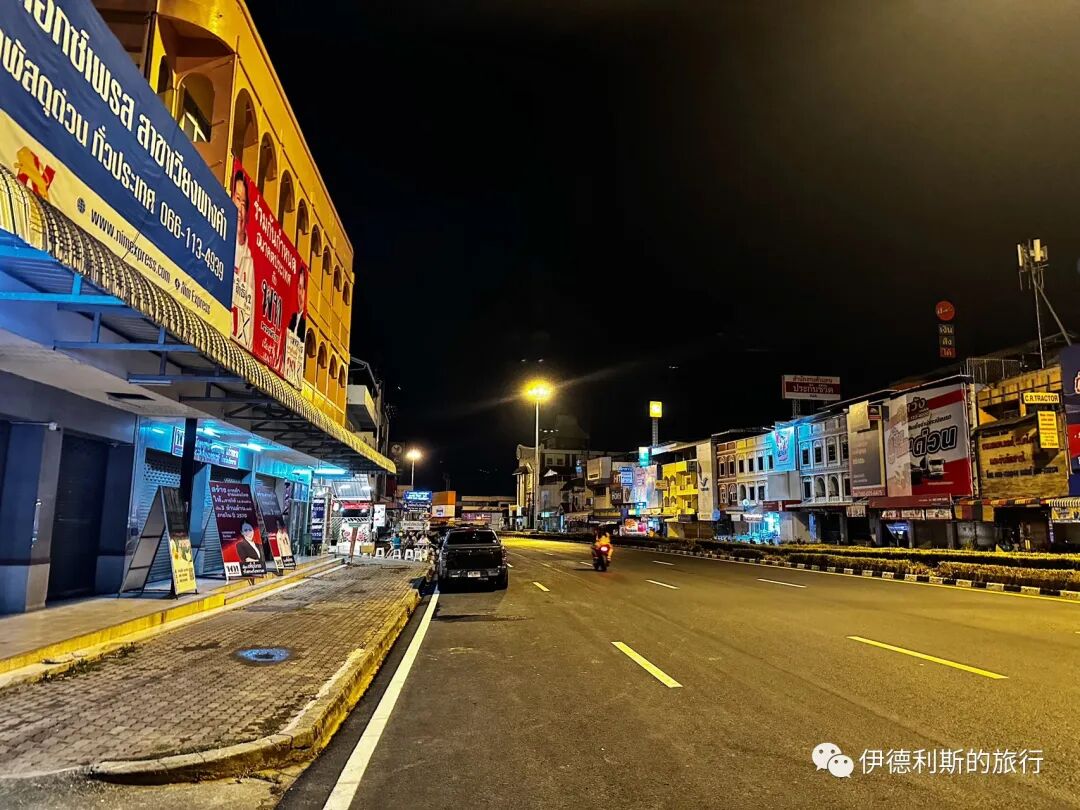
Halal Travel Guide: Northern Thailand — Yunnan-Style Mosques and Hui Muslims
Articles • ali2007fr posted the article • 0 comments • 155 views • 2026-05-18 22:07
Summary: Northern Thailand — Yunnan-Style Mosques and Hui Muslims is presented here as a firsthand travel account in clear English, beginning with this scene: During the May Day holiday in 2023, I traveled to Thailand. A key part of my trip was visiting the mosques (si-fang) of the Yunnanese Hui Muslims in Northern Thailand. The account keeps its focus on Northern Thailand, Yunnan Mosques, Hui Muslims while preserving the names, places, food, and historical details from the Chinese source.
During the May Day holiday in 2023, I traveled to Thailand. A key part of my trip was visiting the mosques (si-fang) of the Yunnanese Hui Muslims in Northern Thailand. I visited Chiang Mai in 2017 and went to four mosques in the city, where I also caught the lively Friday market (Jumu'ah bazaar). I am very grateful that this time we connected with Ma Ruqi, a local Yunnanese Hui Muslim driver in Northern Thailand. He will drive us on a tour of the Yunnanese mosques in the region.
Master Ma is a third-generation Yunnanese Hui Muslim immigrant. His grandparents came from Yunnan to Northern Myanmar for business in the early 20th century and later settled there. After the military government took power in Myanmar in 1962, they closed the borders and the economy stalled. Master Ma's parents then moved from Northern Myanmar to settle in Santikhiri (Manxingdie) in Northern Thailand. Santikhiri is located on a transport route along the Thai-Myanmar border and was once the base for the drug lord Khun Sa. Master Ma was born there. Master Ma's family lived in Santikhiri until 1996, when they moved to the Thai-Myanmar border city of Mae Sai at the foot of the mountain. Master Ma lived in Taiwan for nearly twenty years, where he married and had children. However, he felt that life in Taiwan did not suit his habits as well as Thailand, so he eventually returned.
We arrived in Chiang Mai on the afternoon of April 30. Master Ma took us to a restaurant in the Chang Khlan mosque neighborhood to eat Northern Thai curry noodles (khao soi) and Thai-style chicken rice (khao mok gai). They also served tamarind juice and roselle juice.
Master Ma explained that the owner of this shop is of Pakistani descent and has lived in Chiang Mai for five generations. The grandmother in the picture is from the third generation. Her descendants have married local Thai people and are fully integrated into Thai society.
Northern Thai curry noodles are the most famous yellow egg noodles in Chiang Mai. Research suggests they were created when the Shan people from Northern Myanmar migrated to Chiang Mai and combined their food culture with that of the Yunnanese Hui Muslims. The dish contains both fried egg noodles and boiled egg noodles; the fried ones are sprinkled on top, while the boiled ones are in the soup. The soup is like a mild yellow curry. It uses turmeric, ginger, coconut milk, soy sauce, and palm sugar. When eating, you add pickled mustard greens, lime, and shallots.
Thai-style chicken rice (khao mok gai) was formed when South Asian Muslims brought the method of making South Asian biryani rice to Thailand and blended it with local spices, resulting in a lighter flavor. To make it, you marinate the chicken overnight in yogurt, turmeric, and various spices. Then, you fry the chicken until golden brown, add stewing spices, and cook it with the rice. It is served with cucumber, Thai sweet chili sauce, and a bowl of chicken soup.
Besides South Asian and Malay residents, a few Hui Muslim families from Yunnan also live in the Chang Khlan mosque neighborhood. The owner of the grocery store across from the mosque is a relative of Master Ma. It is fascinating to hear them chat, switching seamlessly between Thai, Yunnan dialect, and Mandarin.
Due to the unstable situation in Myanmar in recent years, some Burmese Muslims have also moved to the Chang Khlan mosque neighborhood to live. We happened to run into some young Burmese Muslim men buying drinks at the grocery store. On Chang Khlan Road next to the mosque, there is a row of halal snack shops mostly run by Burmese Muslims. They love to chew betel nut, and the women apply a paste made from ground yellow wood branches and water called thanaka to their faces to prevent mosquito bites and cool down.
We visited the center of the Chang Khlan mosque neighborhood in Chiang Mai, Thailand—the Chang Khlan Mosque. The Chang Khlan mosque neighborhood is mainly made up of South Asian and Malay Muslims. Between 1826 and 1885, Britain gradually incorporated Myanmar into British India. During this period, South Asian Muslims under British Indian rule continuously traveled to Myanmar to make a living, and they arrived in Chiang Mai to settle in the mid-19th century. From 1891 to 1895, the Pahang Uprising occurred on the Malay Peninsula. The rebel army eventually failed and retreated into Siam, and some Malay Muslims were exiled to Chiang Mai. They intermarried with the local South Asian Muslims, and their descendants speak Thai and have integrated into Thai society. After the 20th century, the Thai people's name for these Thai-speaking Muslims gradually changed from Khaek (foreigner) to Thai-Islam (Thai Muslim).
In the afternoon, we went from Chang Khlan Mosque to Ban Ho Mosque. We first looked at the old house of Haji Zheng Chonglin across from Ban Ho Mosque, which is the most important historical site for Hui Muslims in Chiang Mai. Every Friday morning, a lively Jumu'ah bazaar is held in the courtyard of the old house, but it is quite quiet at other times.
During this visit, I discovered a new information board in the courtyard that introduces people of Yunnan descent and the Ho (Hò) people in Thai and English. People say when Yunnan horse caravans first communicated with locals in Northern Thailand, they often answered with 'hao, hao' (good, good). The locals used 'Ho' to refer to these Yunnan horse caravan merchants, and it later became the name for all people of Yunnan descent in Northern Thailand.
In the 19th century, Yunnan horse caravans controlled the trade route from Yunnan through Northern Myanmar to Northern Thailand. They transported tea, silk, hardware, and copperware to Northern Thailand and brought cotton and tobacco back to Yunnan. In the late 19th and early 20th centuries, King Rama V of Thailand vigorously developed the economy, which led many Hui Muslim horse caravans to come to Chiang Mai. In 1904, Zheng Chonglin, a caravan merchant from Yuxi, Yunnan, and a descendant of Zheng He, established the Da Ma Dian (Big Horse Inn) east of Chiang Mai city, which became the main base for Yunnanese caravans in Chiang Mai. Many Yunnanese Hui Muslims from the caravans came to live near the inn, and the Wang He community began to form.
Zheng Chonglin was born in 1884 in Daying, Yuxi, Yunnan, and followed his elders in the caravan trade between Yunnan, Thailand, and Myanmar from a young age. He was once commissioned by King Rama VI of Thailand to organize a caravan team in northern Thailand, taking on the transport of all supplies for the railway construction from Bangkok to Lampang. In 1910, when the site for Chiang Mai Airport was chosen, it was the horse farm that the Yunnanese caravans had jointly purchased and used for many years. Zheng Chonglin donated the land on behalf of the Yunnanese caravans, and it is now Thailand's second-largest international airport. Because of his great contributions to Thailand, King Rama VI bestowed the first-rank title of Khun (Tang Kun) upon Zheng Chonglin in 1914, making him the leader of the Yunnanese community in northern Thailand. He married Nu, the daughter of a local chieftain in Tak Province, and they had five sons and five daughters. In 1967, Zheng Chonglin went on the Hajj and passed away peacefully in Mecca at the age of 83.
At the Wang He Mosque (Wang He Si) in Chiang Mai, many of the elders here can speak Mandarin and the Yunnan dialect, and the mihrab features traditional Yunnan-style Arabic calligraphy.
In the early 20th century, Zheng Chonglin was rewarded by the Chiang Mai chieftain with a piece of land east of Chiang Mai city, where he built his residence, the Zheng Mansion (Zheng Fu). In 1907, Zheng Chonglin built a prayer room at the Zheng Mansion, and many Yunnanese Hui Muslims in Chiang Mai would come to the mansion for their worship. In 1917, led by Zheng Chonglin, everyone pooled their money to buy the land opposite the Zheng Mansion and built the Wang He Mosque.
During the 1950s and 1960s, many Yunnanese Hui Muslims arrived in Chiang Mai to settle, and the number of congregants at the Wang He Mosque increased significantly. In 1966, three Hajjis—Hu Ranmao, Ma Ruqi, and Ma Wanzhang—led the effort to rebuild the Wang He Mosque into the current reinforced concrete structure.
Ma Ruqi was the owner of the Ma Ruqi Courtyard in Donglianhua Village, Weishan, Dali. He settled in Chiang Mai after 1954, worked in the local specialty trade, was passionate about public welfare, and was appointed president of the Thai-Chinese Chamber of Commerce in 1974. Today, Ma Ruqi's descendants in Dali still live in the Ma Ruqi Courtyard and have opened a restaurant and guesthouse. I highly recommend visiting to experience it; you can refer to my record from earlier this year, 'The Three Hui Muslim Caravan Courtyards in Donglianhua Village, Weishan, Dali'.
Hu Ranmao was an important leader of the Wang He Mosque community after Zheng Chonglin. He was born in 1914 in Xiaoweigeng Village, Weishan, Dali, and served as the principal of his hometown's Muguang School in 1934. He worked in the horse caravan trade between Thailand and Myanmar in the 1940s and settled in Chiang Mai in 1953. In the 1970s, he helped found the Chiang Mai Islamic Committee and served two consecutive terms as its chairman. During his lifetime, Hu Ranmao was received by the King of Thailand many times and was honored with the royal title of Yong Fooanant.
In the afternoon, I went to the night market at Tha Phae Gate in Chiang Mai. A cultural event was happening in front of Tha Phae Gate, where I saw a performance of the local Chiang Mai victory drum (desheng gu).
Then I went to Chiang Mai's second Yunnan-style mosque, Masjid Attaqwa, located in the San Pa Khoi area east of the Ping River. Many Yunnan Hui Muslims came to Chiang Mai via northern Myanmar in the 1950s and 1960s. As the original Wang He Mosque became crowded, Haji Hu Ranmao led the construction of Masjid Attaqwa to the east of Wang He in 1970. The mihrab inside Masjid Attaqwa features traditional Yunnan-style Arabic calligraphy, and the cartoons drawn by the children in the weekend class are very cute.
There are several Yunnan snack shops at the mosque entrance. In 2017, I ate authentic Yunnan pea jelly (wandoufen) here. This time, I saw a new restaurant that says 'Yunnan Banlong Wanyang Muslim Home Cooking'. Banlong is located in the Wa Mountains of the Kokang region in northern Myanmar. It is a community formed in the 1870s after General Ma Linyu of Du Wenxiu's army led his troops there and were taken in by the Wa tribe. It was later renamed 'Bannong'. Wanyang is a village established in the 1950s after the 93rd Division of the Nationalist Army moved to northern Thailand.
Opposite Masjid Attaqwa is Attaqwa School, the most important Islamic school in Chiang Mai and northern Thailand. Our driver, Mr. Ma, is a graduate of this school. It was summer vacation in May, so most teachers and students were away. We met a teacher who stayed at the school and gave a donation (nietie) to the school. According to Mr. Ma, this teacher is a Malay from southern Thailand and a graduate of the Islamic University of Madinah, and he is a very skilled teacher.
Attaqwa School was initiated by Haji Hu Ranmao in the 1960s and opened in 1970. It teaches Arabic, the Quran and Hadith, and religious knowledge, while providing free food and housing. When Attaqwa School was first established, most students were local Yunnan Hui Muslims from Chiang Mai. Later, because of its high teaching standards and free food and housing, it attracted Muslims from all over northern Thailand, southern Thailand, and Myanmar to study there. For half a century, Jingzhen School has played a vital role in the development of the faith in Thailand. It is a major reason why young and middle-aged Hui Muslims in northern Thailand can still hold fast to their faith today.
In the evening, we performed the evening prayer (namaz) at Nurul Mosque, located outside the White Elephant Gate (Chang Phuak Gate) in northern Chiang Mai. When I visited Chiang Mai in 2017, the mosque was being rebuilt, and now the new building is just finished. We met Grand Imam Mustafa here. He was the teacher of Master Ma when he attended Jingzhen School 30 years ago. He is highly respected throughout the entire Muslim community in Chiang Mai. Grand Imam Mustafa's daughter runs an Islamic bookstore at the entrance of Wang He Mosque. We visited it before we left, and I will share more about it later.
Like the Chang Khlan Mosque community, the Nurul Mosque community is a South Asian one. Many ancestors of the Haw Muslims (gaomu) came from Bangladesh. They arrived in Chiang Mai via Myanmar to trade during the British India period in the 19th century and later made a living by raising cattle. During the Partition of India and Pakistan in 1947, more Bengali Muslims moved here to escape the chaos. After the 1960s, Chiang Mai banned cattle from entering the city. Some Haw Muslims moved to the Chang Khlan Mosque community, which is further from the old city. Because of this, the number of Haw Muslims at Nurul Mosque is now the smallest among the four mosque communities in downtown Chiang Mai.
We had dinner at a Yunnan-style restaurant next to Wang He Mosque. The restaurant is owned by Na Zhongwei, a board member of Wang He Mosque, and the building itself is property of the mosque. Although the Yunnan restaurant has been open for many years, it only moved to its current location recently. It is very convenient to eat there after visiting Wang He Mosque.
We ordered stir-fried holy basil beef (dapao niurou), steamed sea bass, pumpkin tips, and stir-fried tofu puffs. You can choose the portion size for dishes here, and some even come in small, medium, or large sizes, which is perfect for tourists. Hui Muslims from Yunnan have lived in Chiang Mai for over a hundred years, and their tastes have changed. For example, the sour and spicy levels are much stronger than what you would find in Yunnan. In Yunnan, a purely vegetarian dish like pumpkin tips usually wouldn't have chili, but in Thailand, they definitely add chili to it.
Besides being a bit spicy, I really love the food of the Yunnan Hui Muslims in Thailand. I especially love the stir-fried holy basil beef; it goes so well with rice. Holy basil (dapao) is also known as sacred basil. It is native to South Asia and widely grown in the tropical regions of Southeast Asia. Stir-frying meat with holy basil leaves is a famous Thai dish. This tofu stir-fried in a sour and spicy sauce is also delicious. The balance of sour, sweet, and spicy is just right.
Then, on Chang Khlan Road, we found an Emirati restaurant. It had a sign in Chinese that read 'Arabic food, Indian food, Chinese food, Italian food.' It is the most 'Maritime Silk Road' restaurant I have ever seen, haha. view all
Summary: Northern Thailand — Yunnan-Style Mosques and Hui Muslims is presented here as a firsthand travel account in clear English, beginning with this scene: During the May Day holiday in 2023, I traveled to Thailand. A key part of my trip was visiting the mosques (si-fang) of the Yunnanese Hui Muslims in Northern Thailand. The account keeps its focus on Northern Thailand, Yunnan Mosques, Hui Muslims while preserving the names, places, food, and historical details from the Chinese source.
During the May Day holiday in 2023, I traveled to Thailand. A key part of my trip was visiting the mosques (si-fang) of the Yunnanese Hui Muslims in Northern Thailand. I visited Chiang Mai in 2017 and went to four mosques in the city, where I also caught the lively Friday market (Jumu'ah bazaar). I am very grateful that this time we connected with Ma Ruqi, a local Yunnanese Hui Muslim driver in Northern Thailand. He will drive us on a tour of the Yunnanese mosques in the region.
Master Ma is a third-generation Yunnanese Hui Muslim immigrant. His grandparents came from Yunnan to Northern Myanmar for business in the early 20th century and later settled there. After the military government took power in Myanmar in 1962, they closed the borders and the economy stalled. Master Ma's parents then moved from Northern Myanmar to settle in Santikhiri (Manxingdie) in Northern Thailand. Santikhiri is located on a transport route along the Thai-Myanmar border and was once the base for the drug lord Khun Sa. Master Ma was born there. Master Ma's family lived in Santikhiri until 1996, when they moved to the Thai-Myanmar border city of Mae Sai at the foot of the mountain. Master Ma lived in Taiwan for nearly twenty years, where he married and had children. However, he felt that life in Taiwan did not suit his habits as well as Thailand, so he eventually returned.
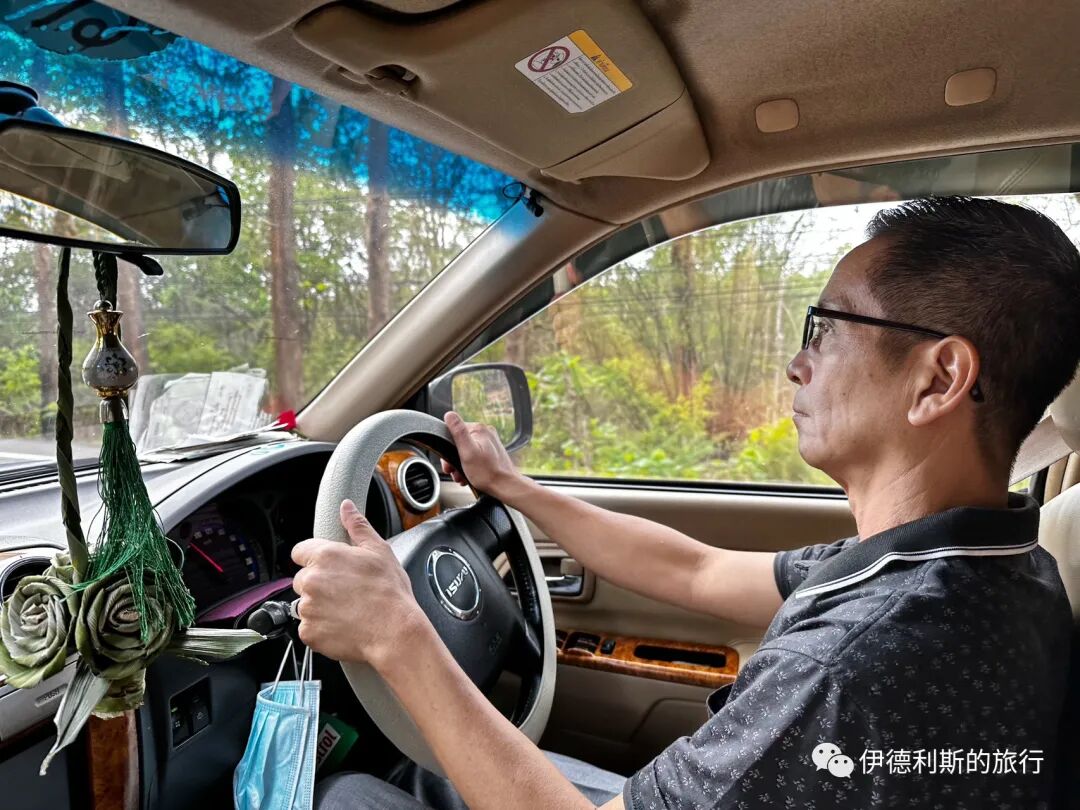
We arrived in Chiang Mai on the afternoon of April 30. Master Ma took us to a restaurant in the Chang Khlan mosque neighborhood to eat Northern Thai curry noodles (khao soi) and Thai-style chicken rice (khao mok gai). They also served tamarind juice and roselle juice.
Master Ma explained that the owner of this shop is of Pakistani descent and has lived in Chiang Mai for five generations. The grandmother in the picture is from the third generation. Her descendants have married local Thai people and are fully integrated into Thai society.
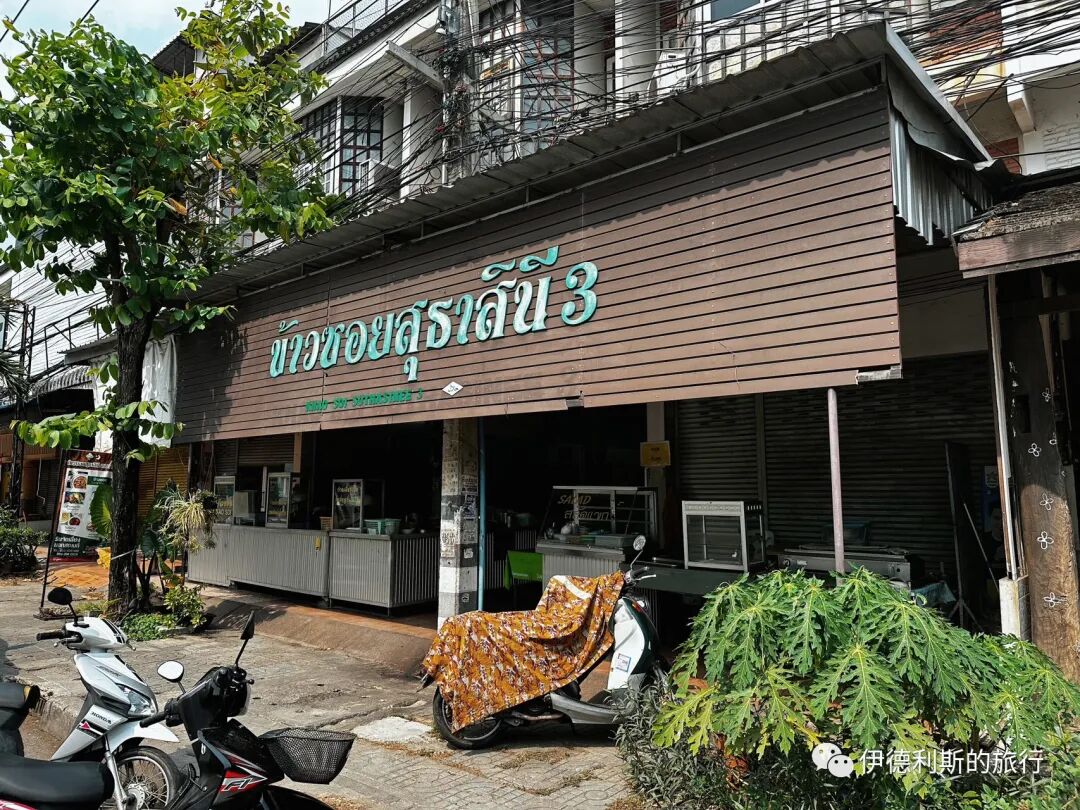
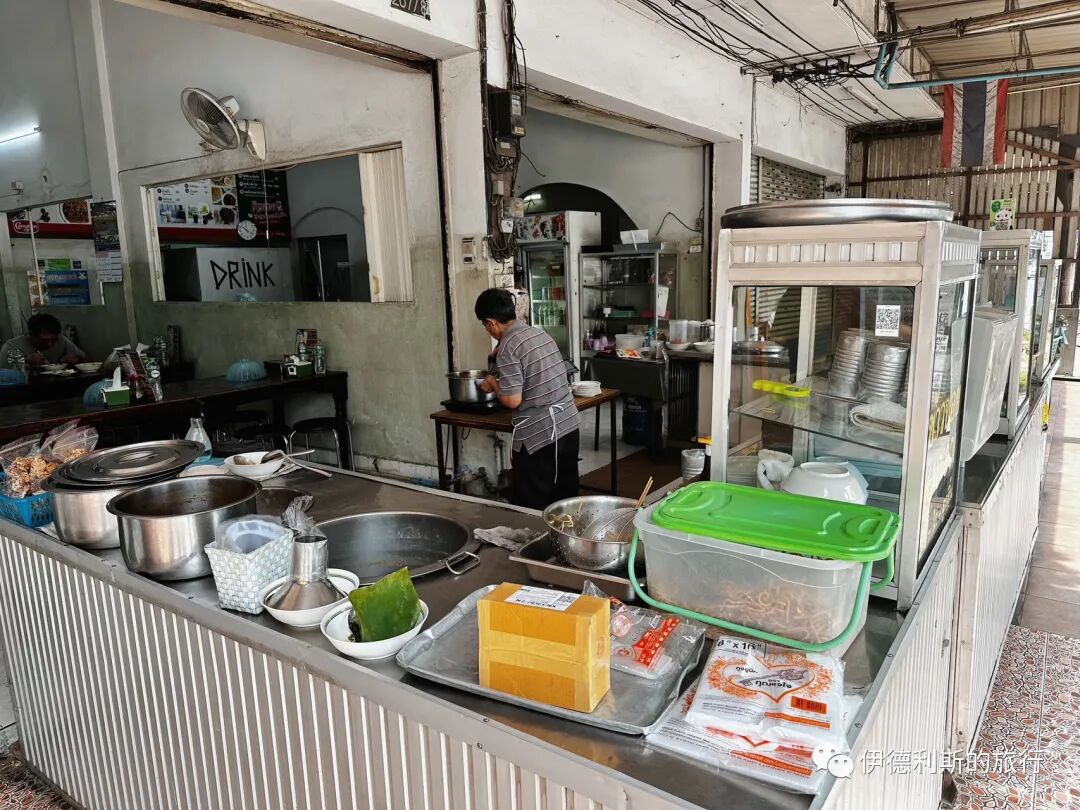
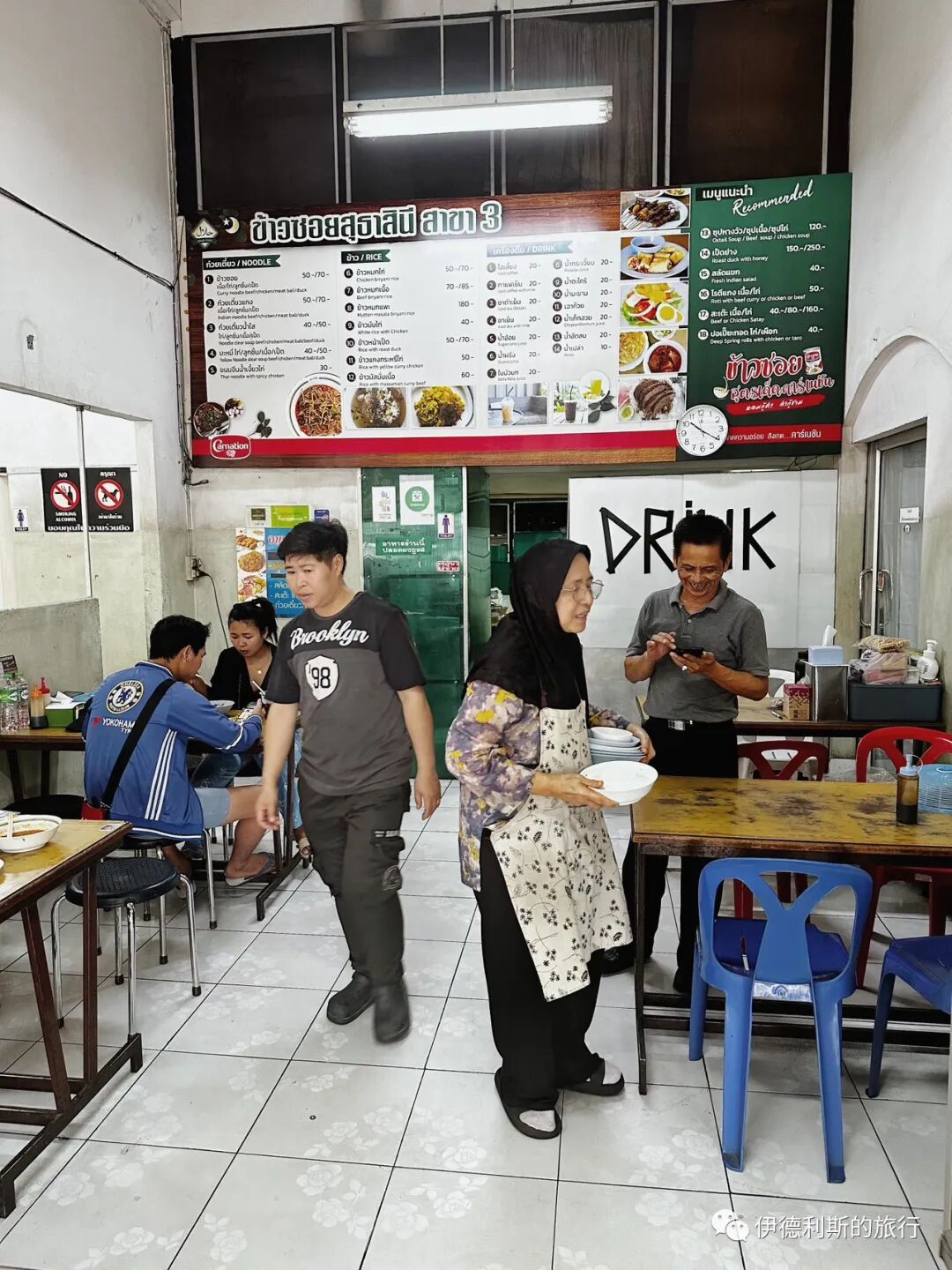
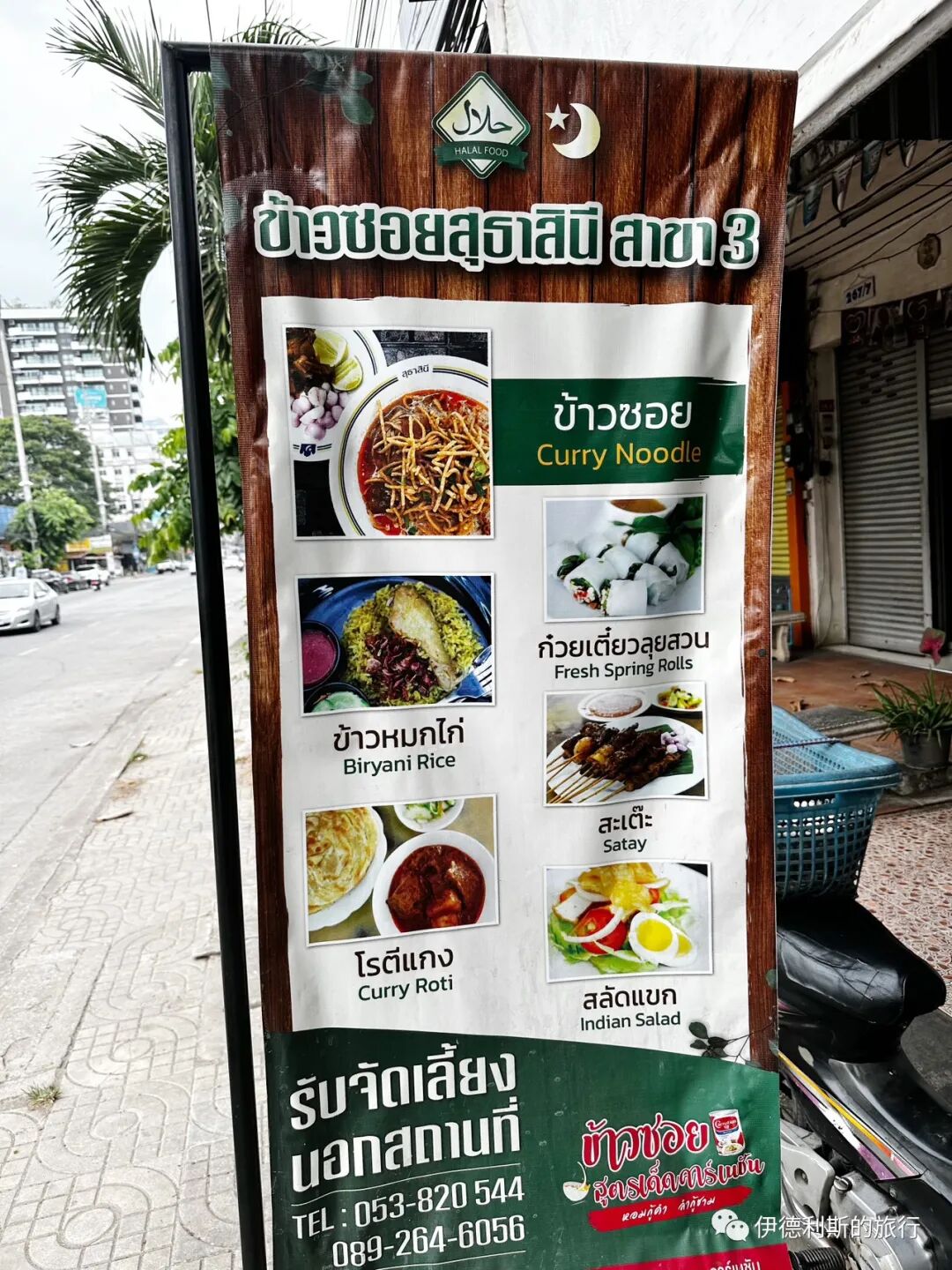
Northern Thai curry noodles are the most famous yellow egg noodles in Chiang Mai. Research suggests they were created when the Shan people from Northern Myanmar migrated to Chiang Mai and combined their food culture with that of the Yunnanese Hui Muslims. The dish contains both fried egg noodles and boiled egg noodles; the fried ones are sprinkled on top, while the boiled ones are in the soup. The soup is like a mild yellow curry. It uses turmeric, ginger, coconut milk, soy sauce, and palm sugar. When eating, you add pickled mustard greens, lime, and shallots.
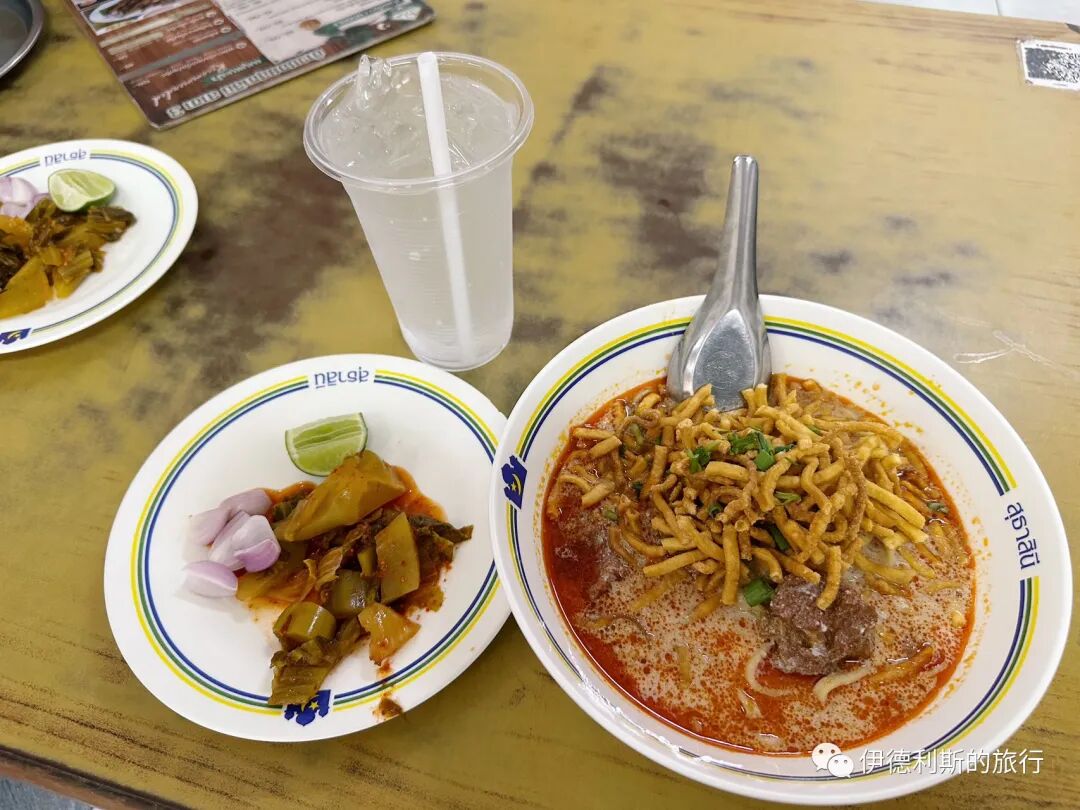
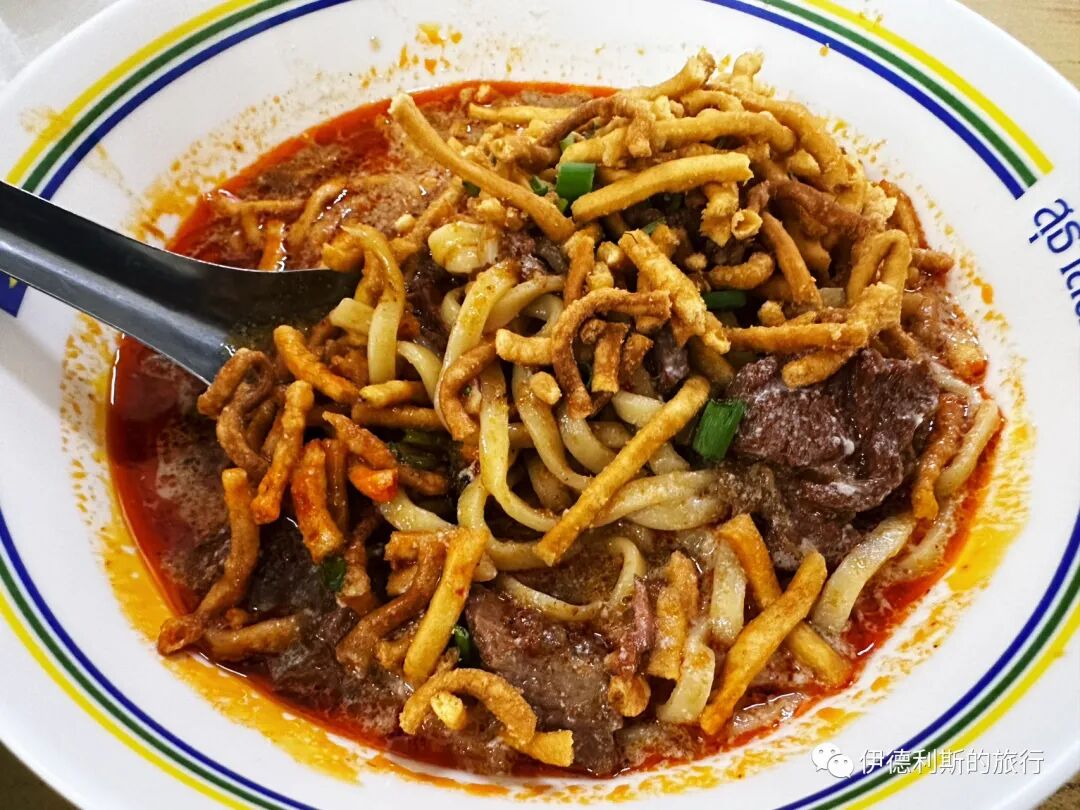
Thai-style chicken rice (khao mok gai) was formed when South Asian Muslims brought the method of making South Asian biryani rice to Thailand and blended it with local spices, resulting in a lighter flavor. To make it, you marinate the chicken overnight in yogurt, turmeric, and various spices. Then, you fry the chicken until golden brown, add stewing spices, and cook it with the rice. It is served with cucumber, Thai sweet chili sauce, and a bowl of chicken soup.
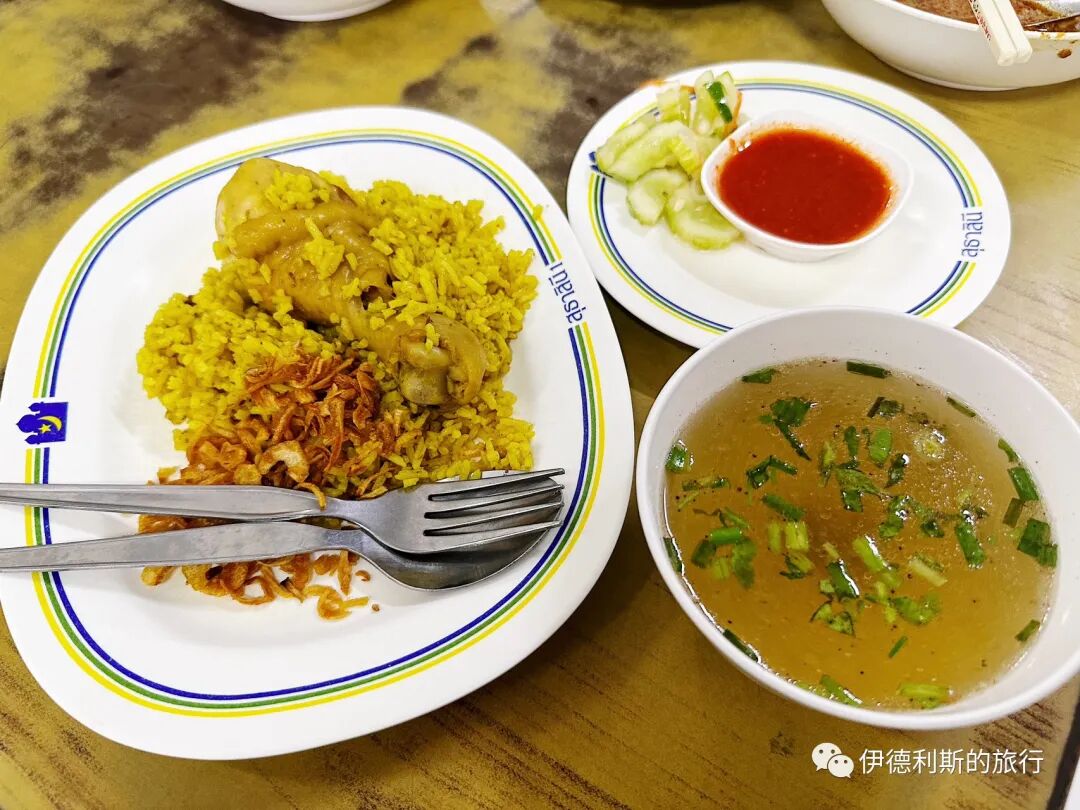
Besides South Asian and Malay residents, a few Hui Muslim families from Yunnan also live in the Chang Khlan mosque neighborhood. The owner of the grocery store across from the mosque is a relative of Master Ma. It is fascinating to hear them chat, switching seamlessly between Thai, Yunnan dialect, and Mandarin.
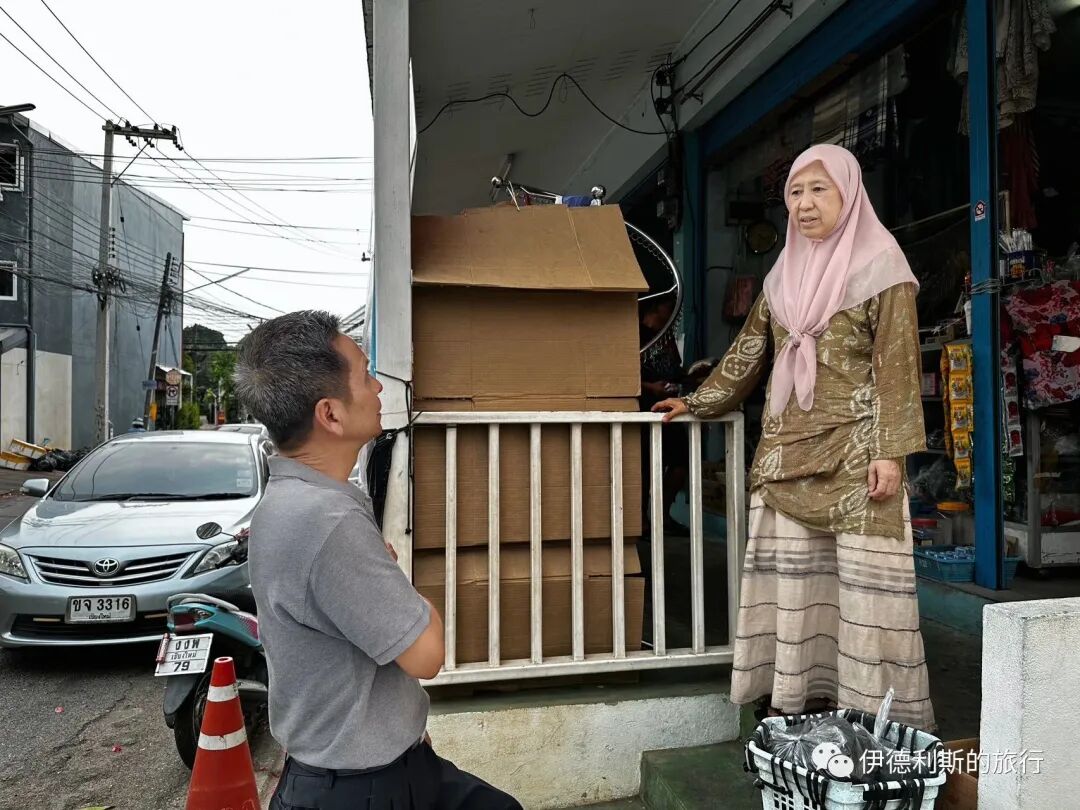
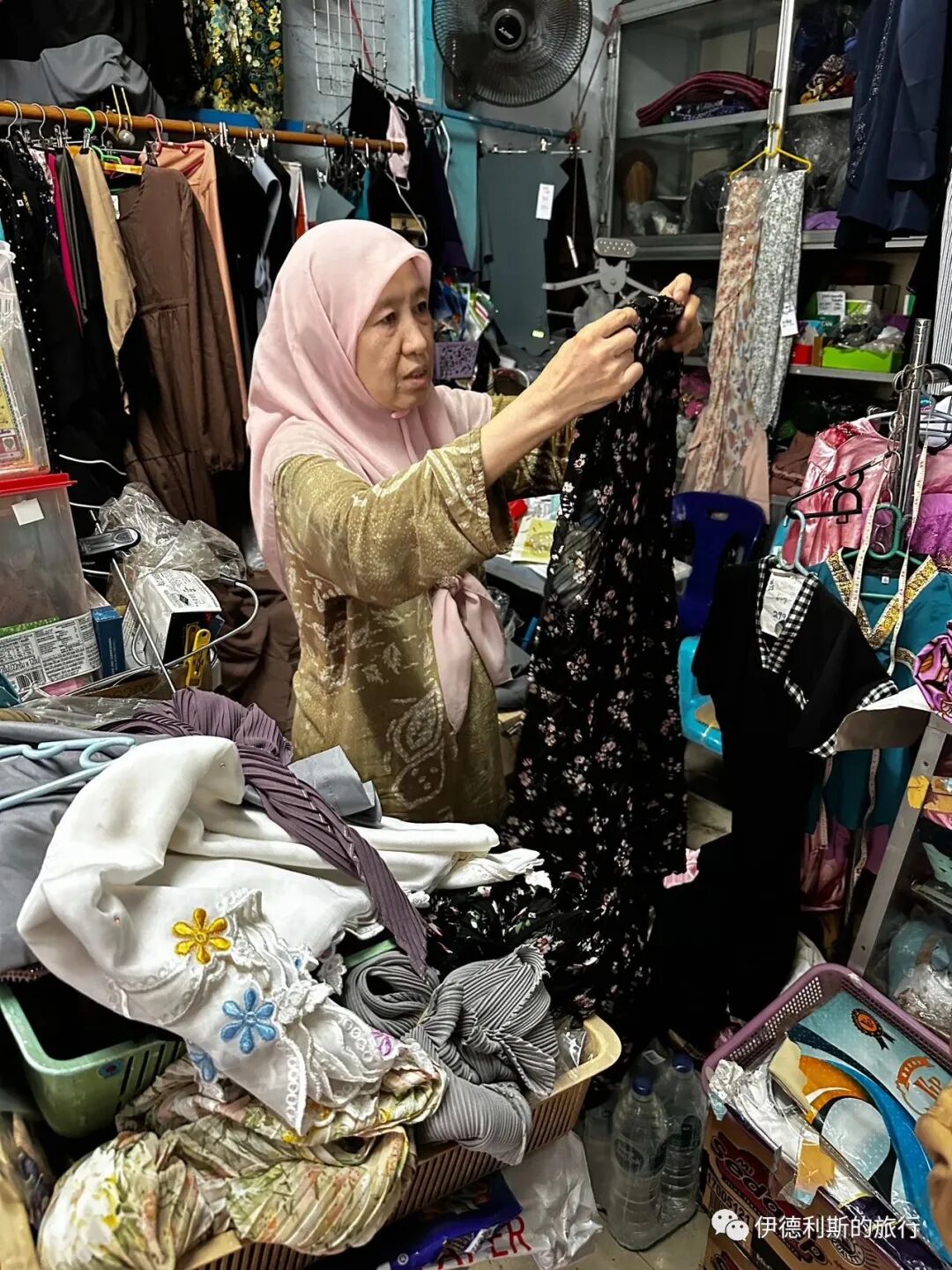
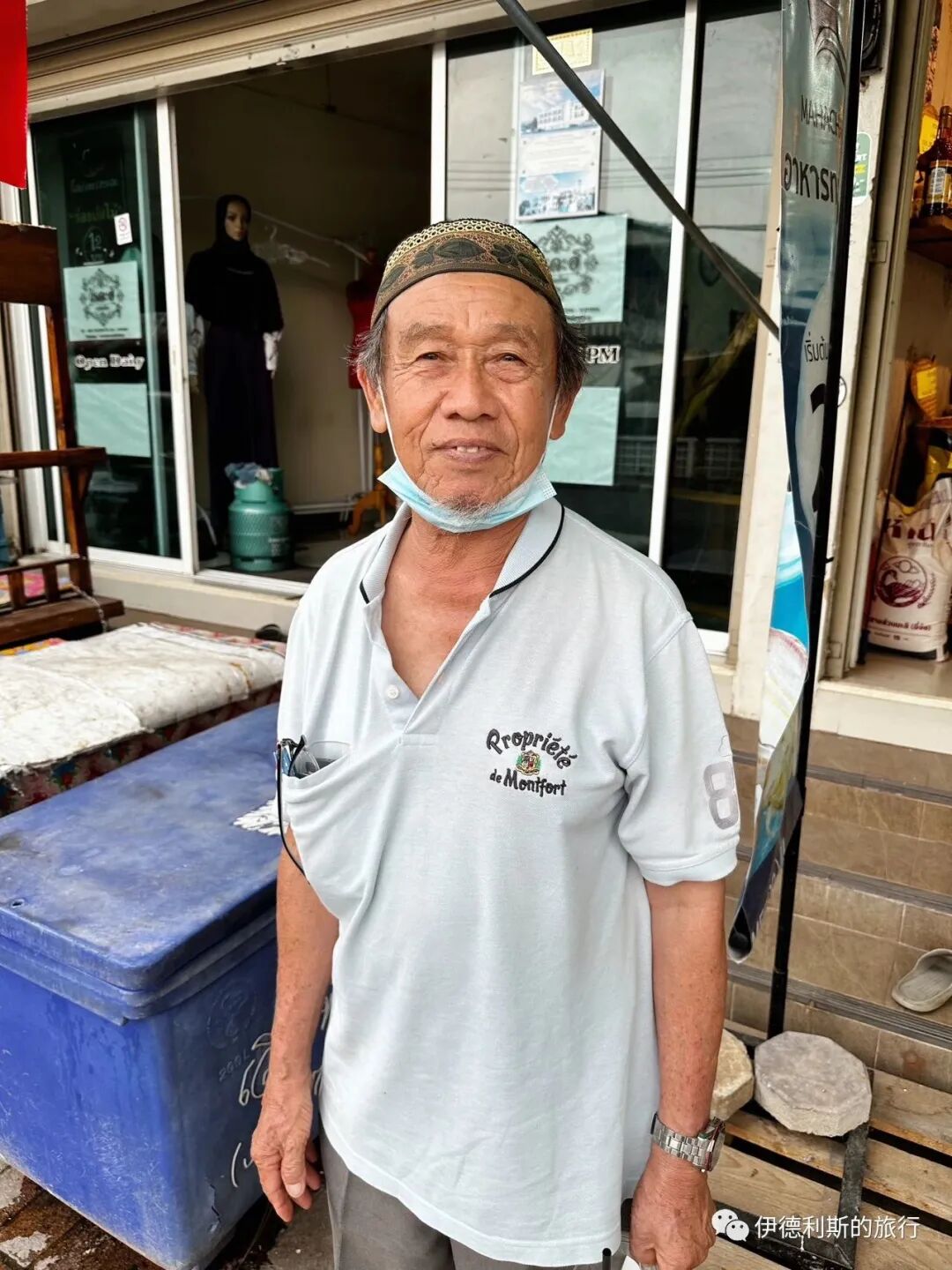
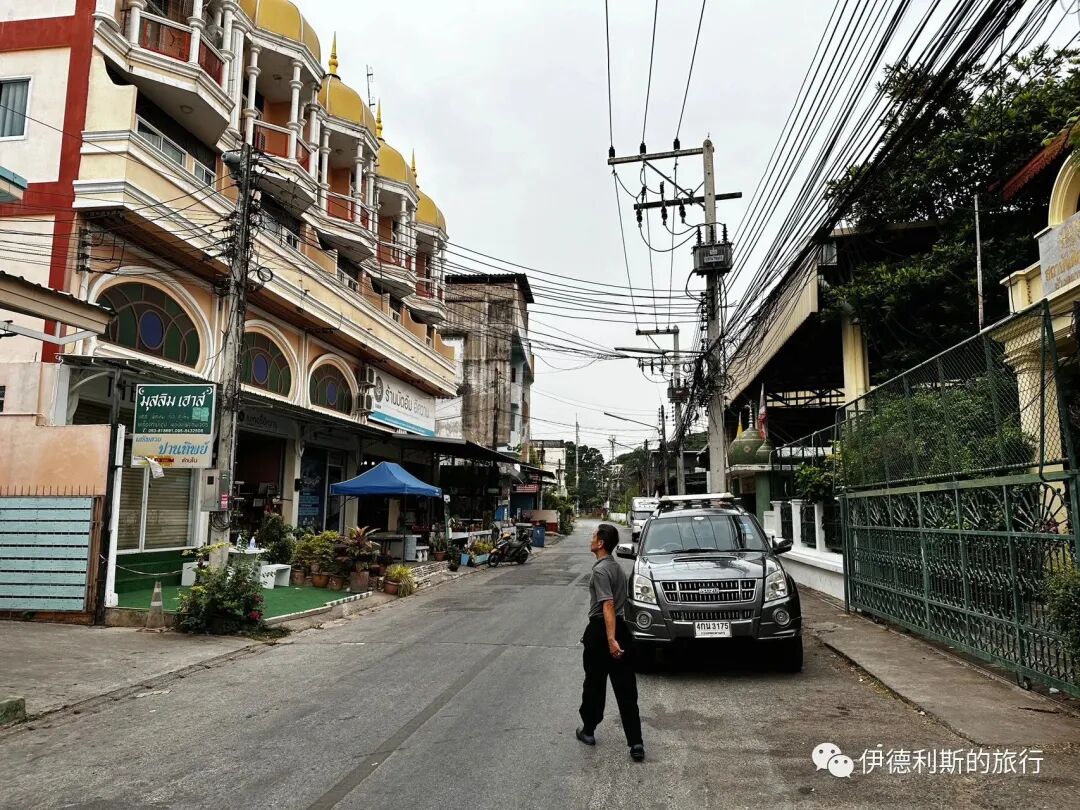
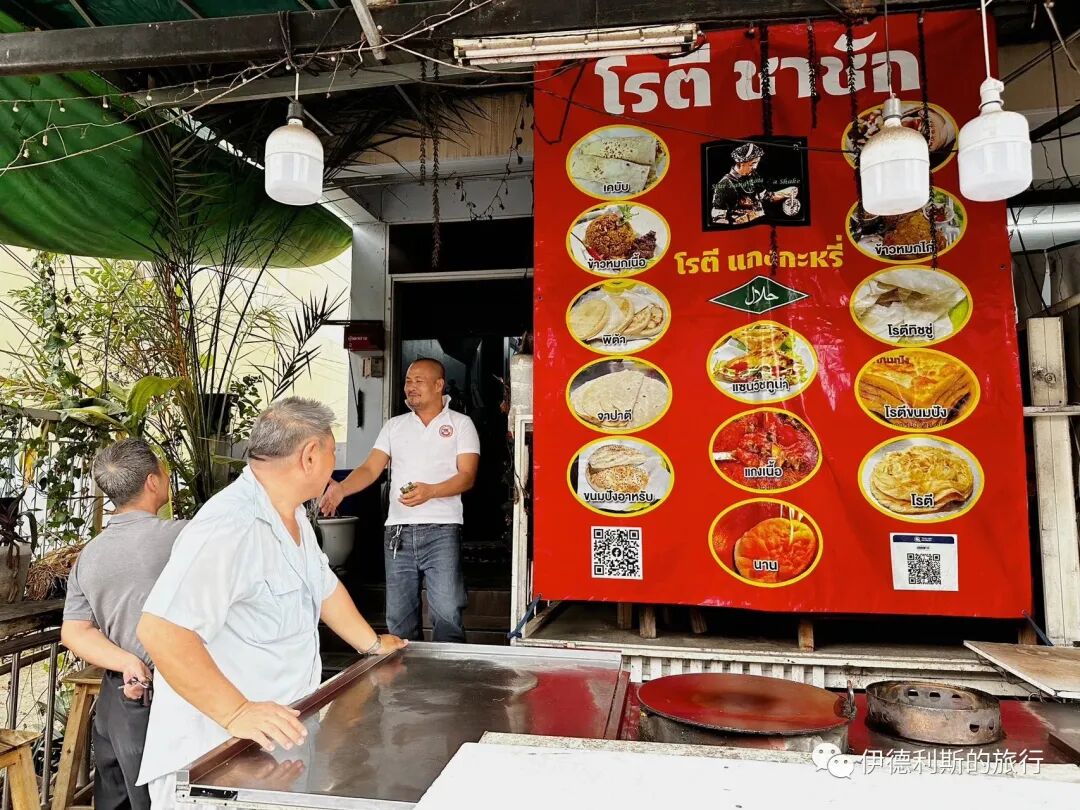
Due to the unstable situation in Myanmar in recent years, some Burmese Muslims have also moved to the Chang Khlan mosque neighborhood to live. We happened to run into some young Burmese Muslim men buying drinks at the grocery store. On Chang Khlan Road next to the mosque, there is a row of halal snack shops mostly run by Burmese Muslims. They love to chew betel nut, and the women apply a paste made from ground yellow wood branches and water called thanaka to their faces to prevent mosquito bites and cool down.
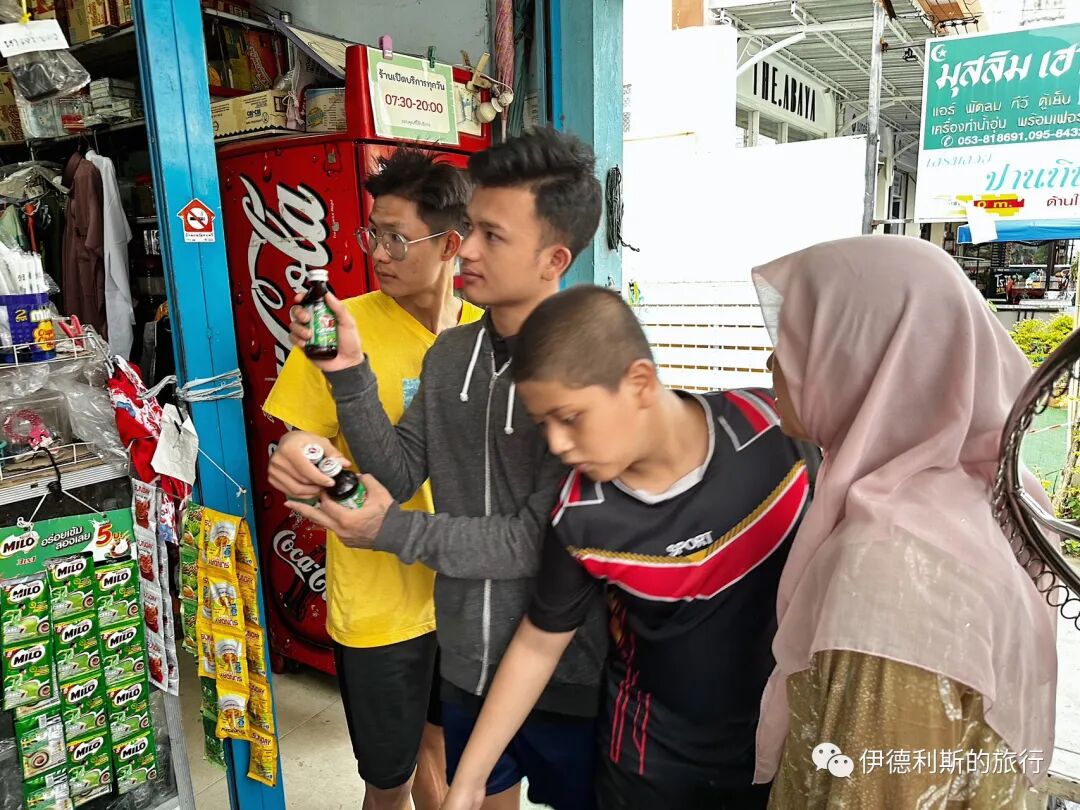
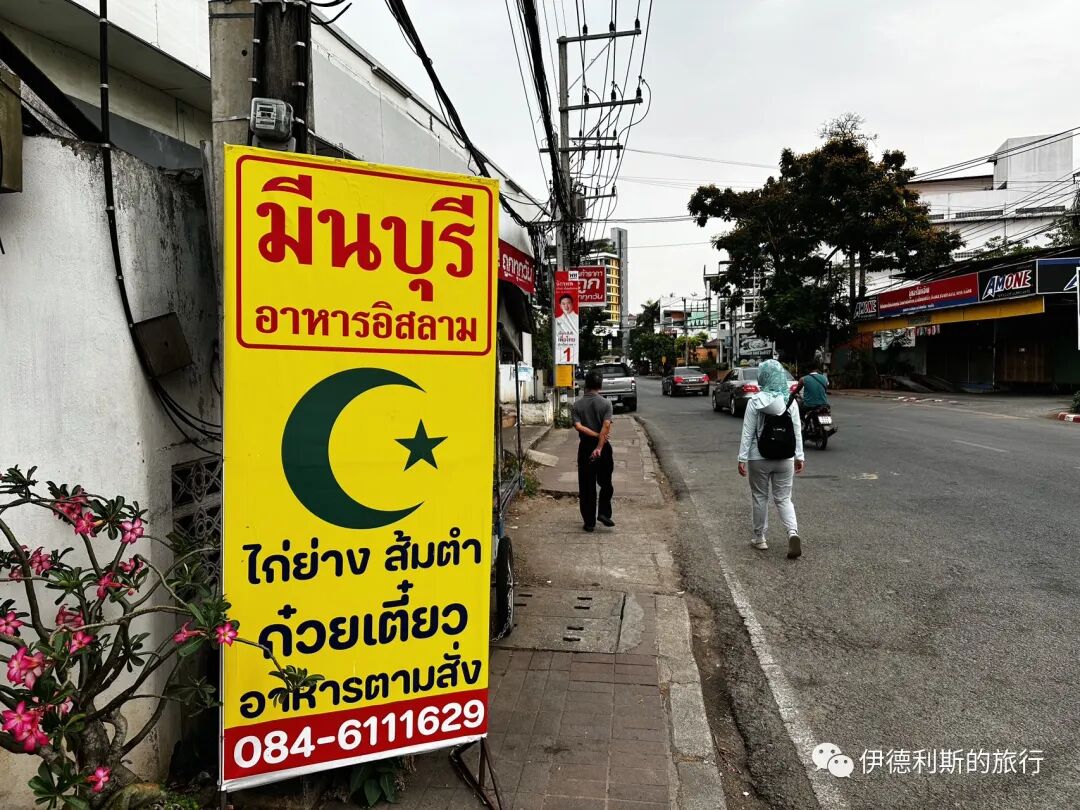
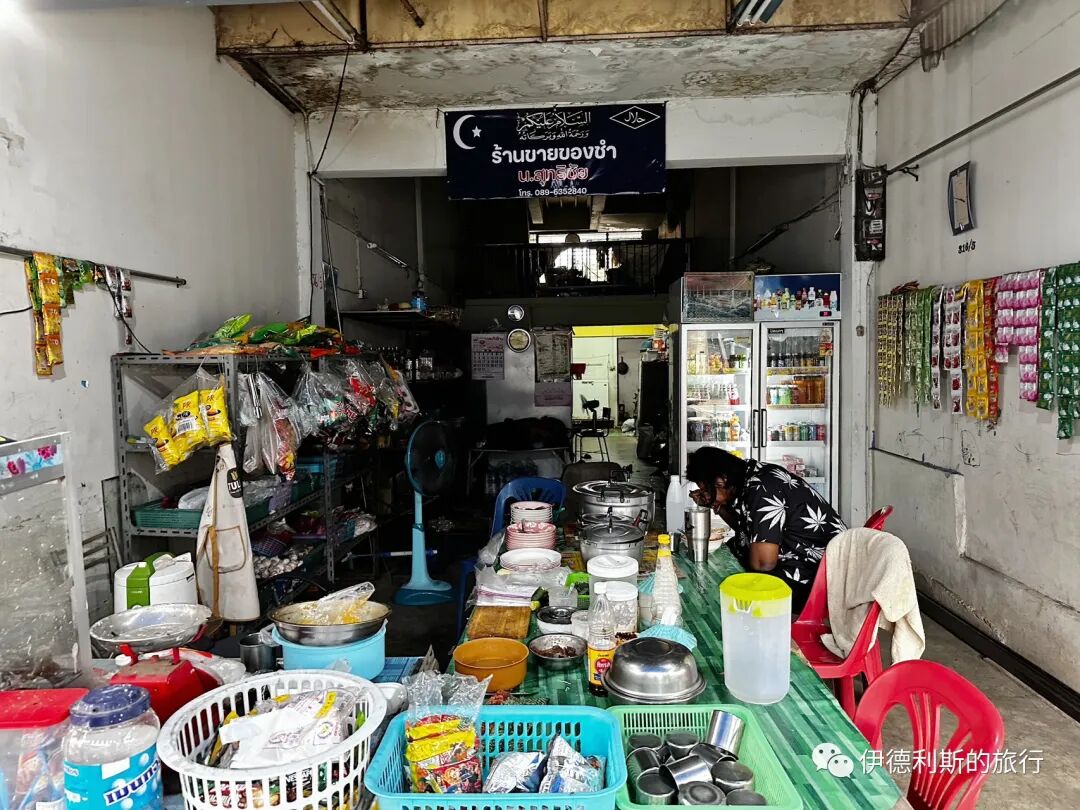
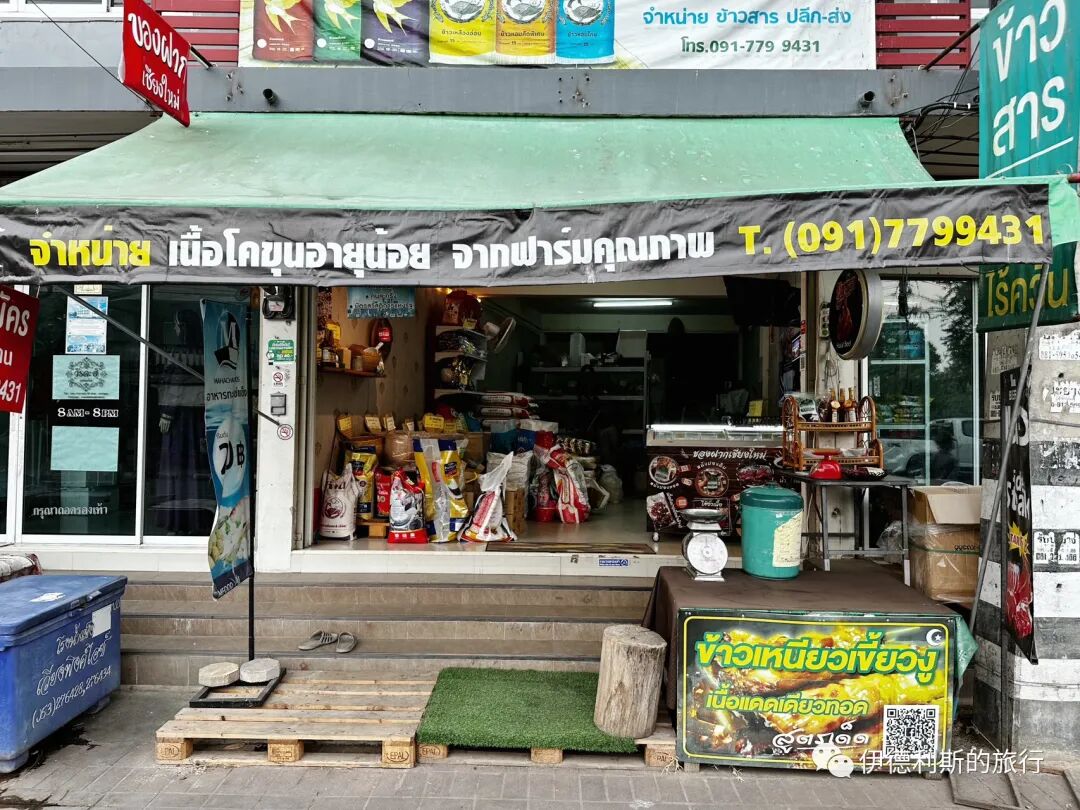
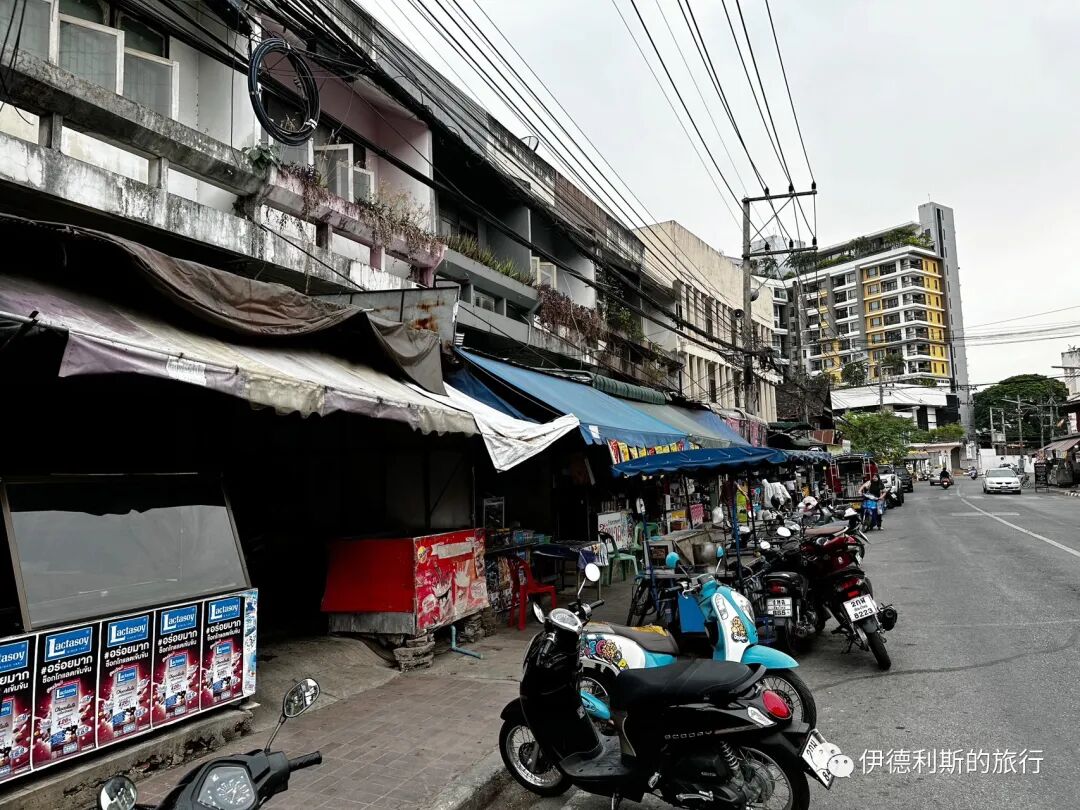
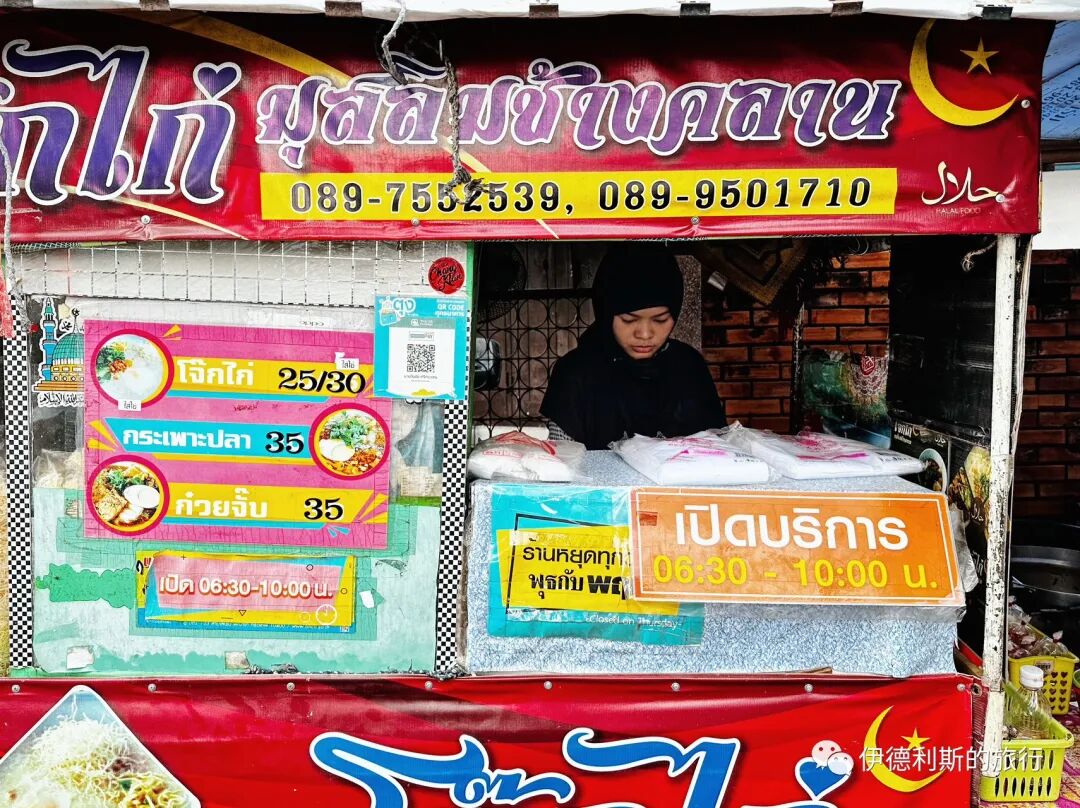
We visited the center of the Chang Khlan mosque neighborhood in Chiang Mai, Thailand—the Chang Khlan Mosque. The Chang Khlan mosque neighborhood is mainly made up of South Asian and Malay Muslims. Between 1826 and 1885, Britain gradually incorporated Myanmar into British India. During this period, South Asian Muslims under British Indian rule continuously traveled to Myanmar to make a living, and they arrived in Chiang Mai to settle in the mid-19th century. From 1891 to 1895, the Pahang Uprising occurred on the Malay Peninsula. The rebel army eventually failed and retreated into Siam, and some Malay Muslims were exiled to Chiang Mai. They intermarried with the local South Asian Muslims, and their descendants speak Thai and have integrated into Thai society. After the 20th century, the Thai people's name for these Thai-speaking Muslims gradually changed from Khaek (foreigner) to Thai-Islam (Thai Muslim).
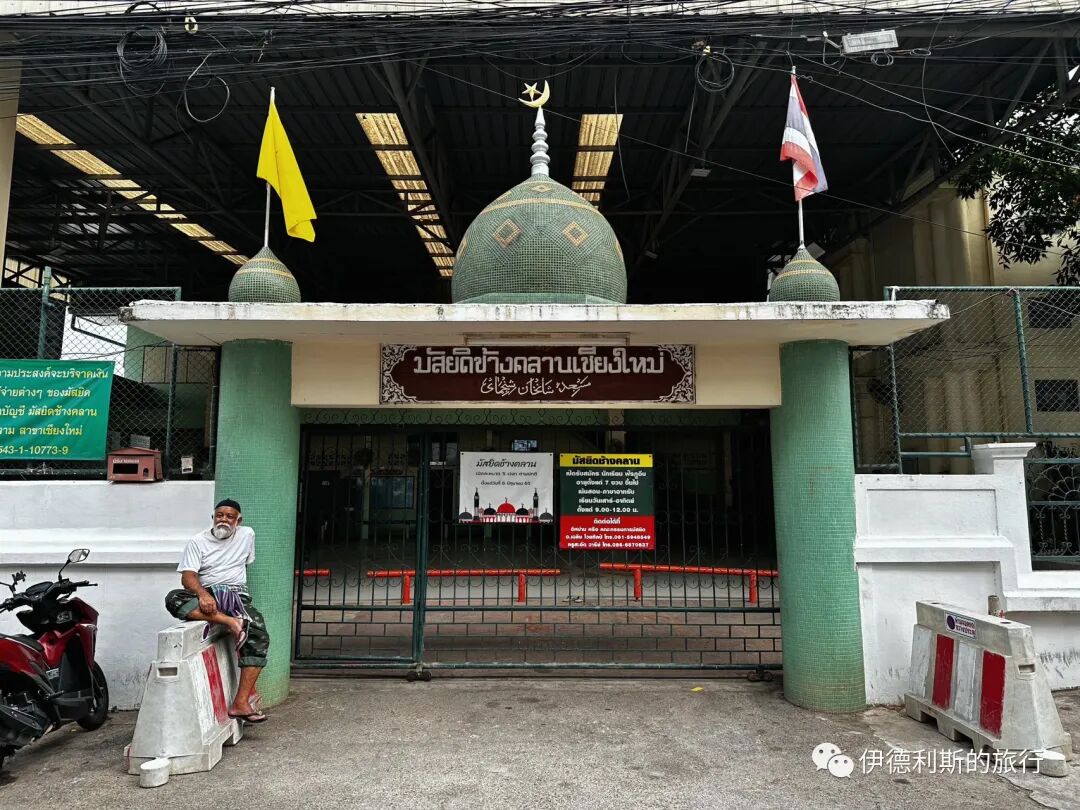
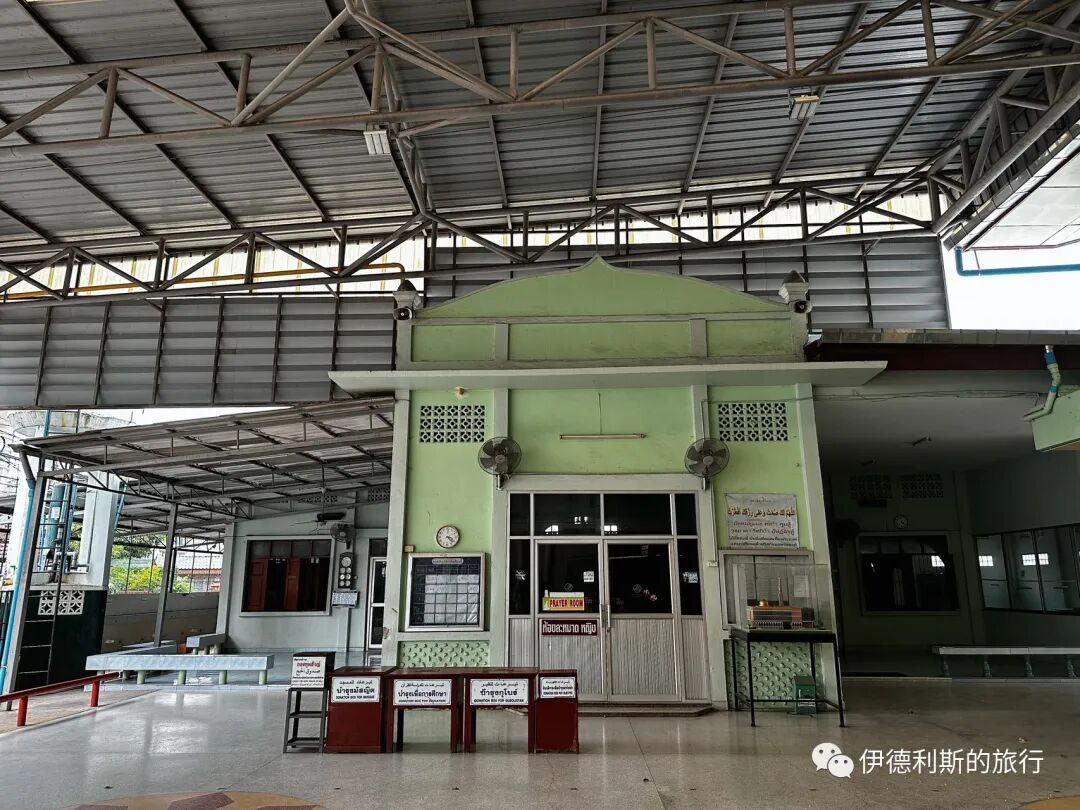
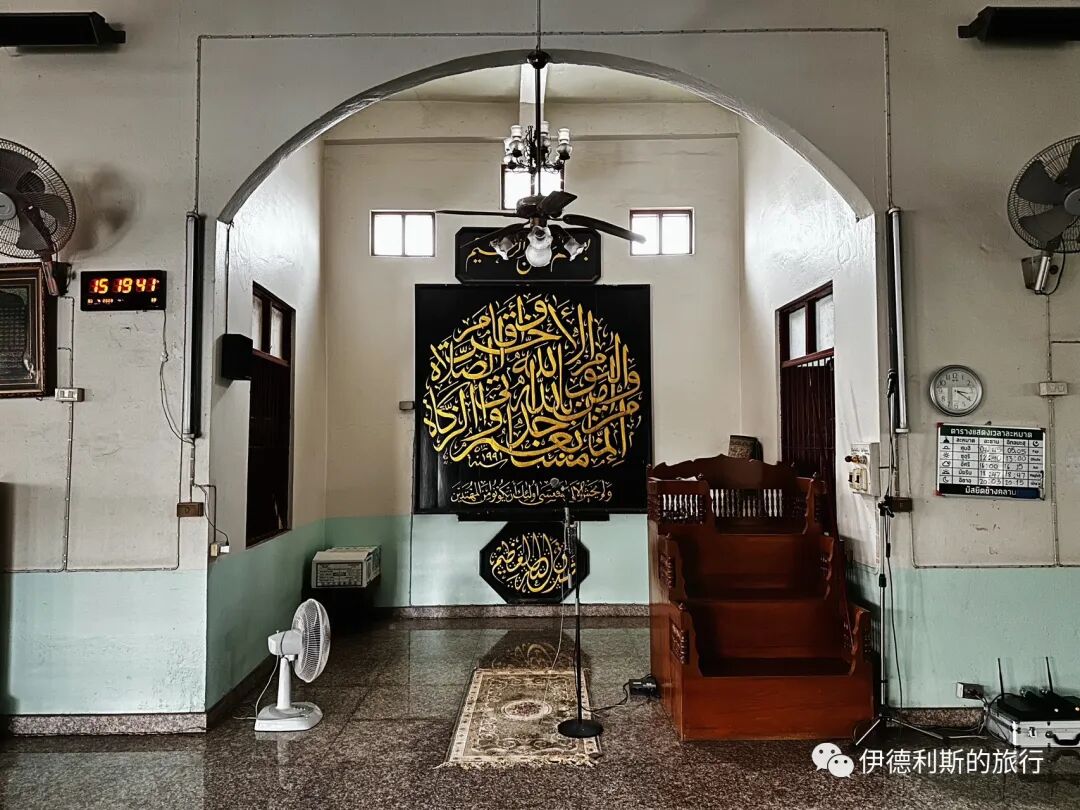
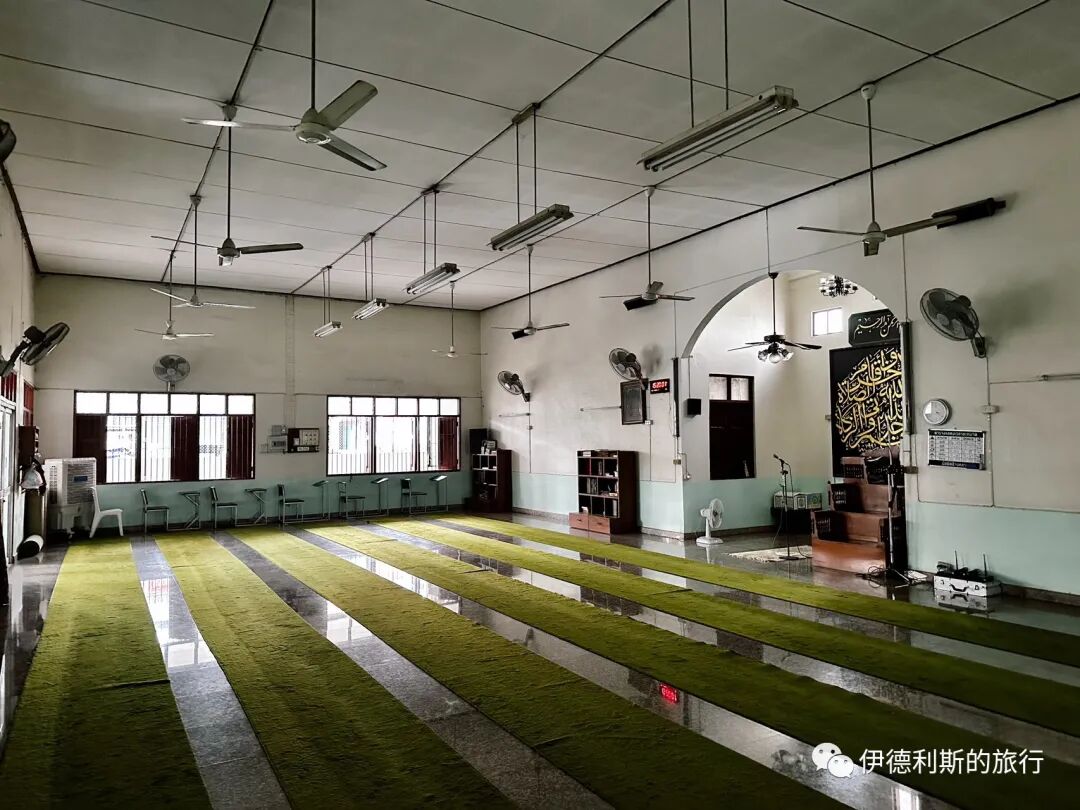
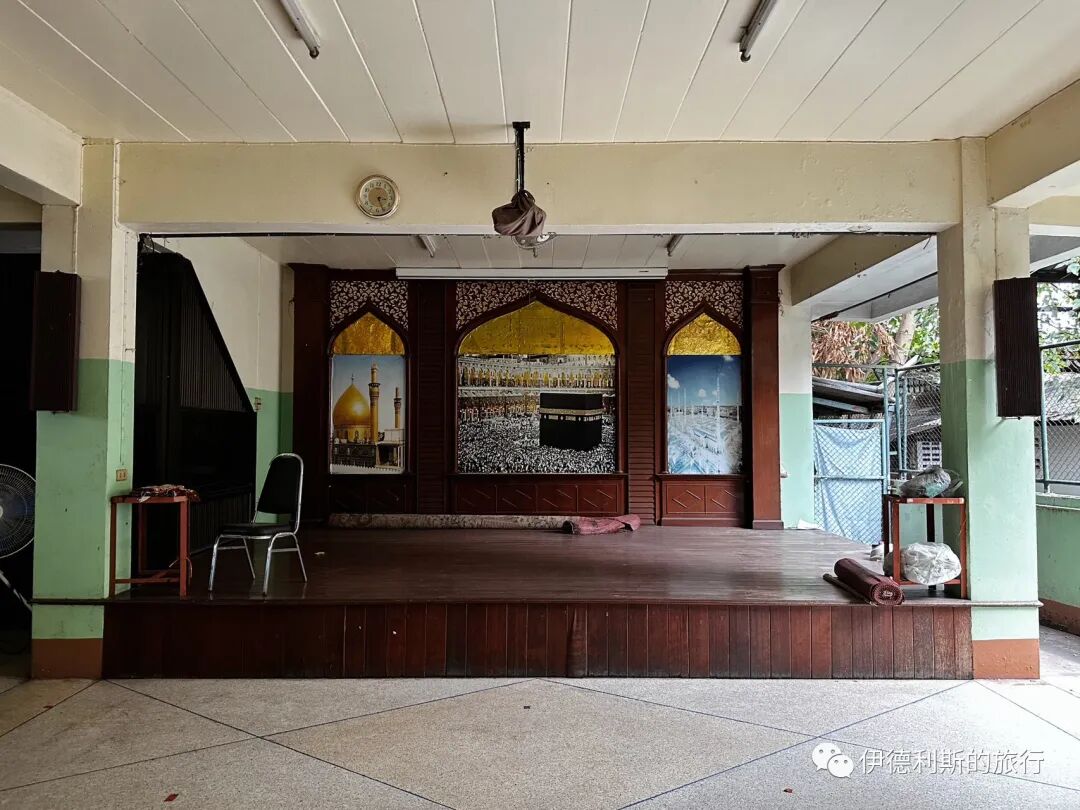
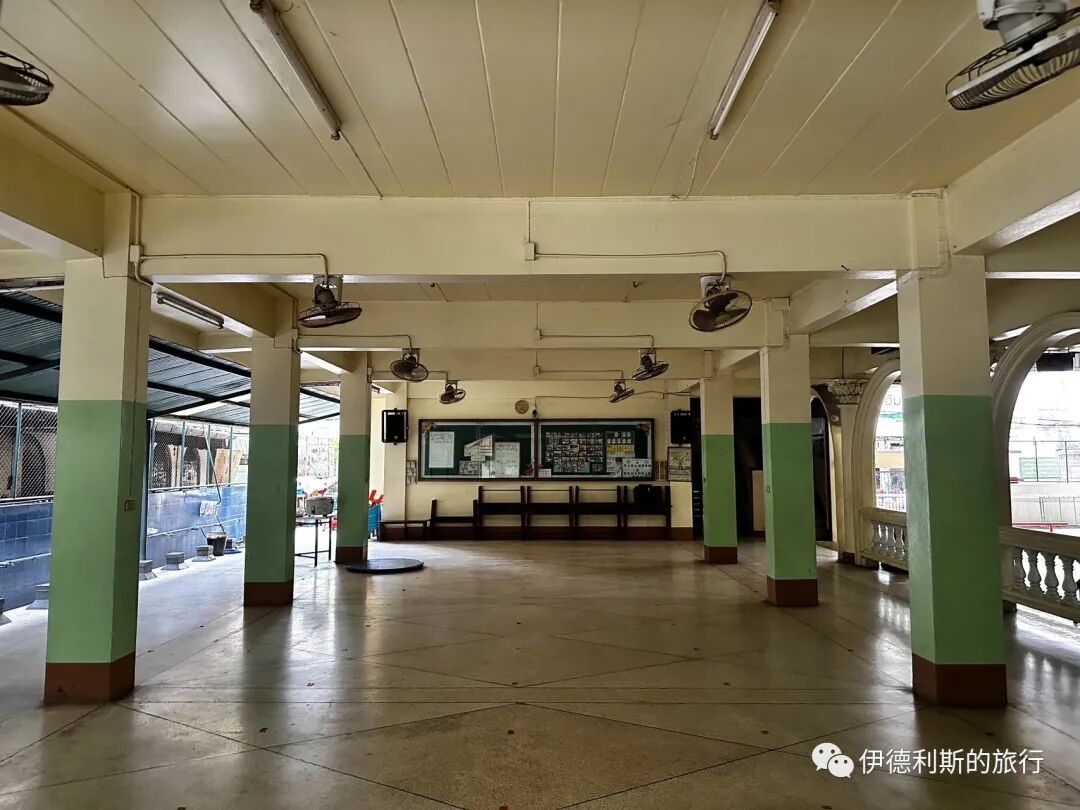
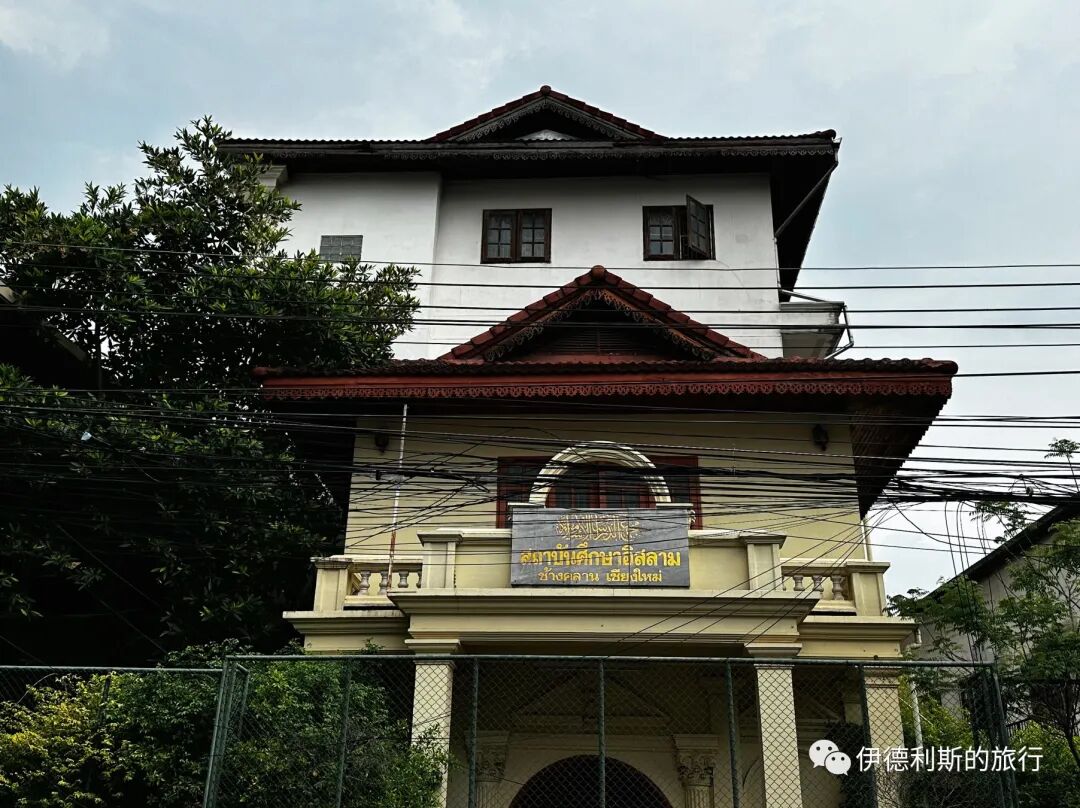
In the afternoon, we went from Chang Khlan Mosque to Ban Ho Mosque. We first looked at the old house of Haji Zheng Chonglin across from Ban Ho Mosque, which is the most important historical site for Hui Muslims in Chiang Mai. Every Friday morning, a lively Jumu'ah bazaar is held in the courtyard of the old house, but it is quite quiet at other times.
During this visit, I discovered a new information board in the courtyard that introduces people of Yunnan descent and the Ho (Hò) people in Thai and English. People say when Yunnan horse caravans first communicated with locals in Northern Thailand, they often answered with 'hao, hao' (good, good). The locals used 'Ho' to refer to these Yunnan horse caravan merchants, and it later became the name for all people of Yunnan descent in Northern Thailand.
In the 19th century, Yunnan horse caravans controlled the trade route from Yunnan through Northern Myanmar to Northern Thailand. They transported tea, silk, hardware, and copperware to Northern Thailand and brought cotton and tobacco back to Yunnan. In the late 19th and early 20th centuries, King Rama V of Thailand vigorously developed the economy, which led many Hui Muslim horse caravans to come to Chiang Mai. In 1904, Zheng Chonglin, a caravan merchant from Yuxi, Yunnan, and a descendant of Zheng He, established the Da Ma Dian (Big Horse Inn) east of Chiang Mai city, which became the main base for Yunnanese caravans in Chiang Mai. Many Yunnanese Hui Muslims from the caravans came to live near the inn, and the Wang He community began to form.
Zheng Chonglin was born in 1884 in Daying, Yuxi, Yunnan, and followed his elders in the caravan trade between Yunnan, Thailand, and Myanmar from a young age. He was once commissioned by King Rama VI of Thailand to organize a caravan team in northern Thailand, taking on the transport of all supplies for the railway construction from Bangkok to Lampang. In 1910, when the site for Chiang Mai Airport was chosen, it was the horse farm that the Yunnanese caravans had jointly purchased and used for many years. Zheng Chonglin donated the land on behalf of the Yunnanese caravans, and it is now Thailand's second-largest international airport. Because of his great contributions to Thailand, King Rama VI bestowed the first-rank title of Khun (Tang Kun) upon Zheng Chonglin in 1914, making him the leader of the Yunnanese community in northern Thailand. He married Nu, the daughter of a local chieftain in Tak Province, and they had five sons and five daughters. In 1967, Zheng Chonglin went on the Hajj and passed away peacefully in Mecca at the age of 83.
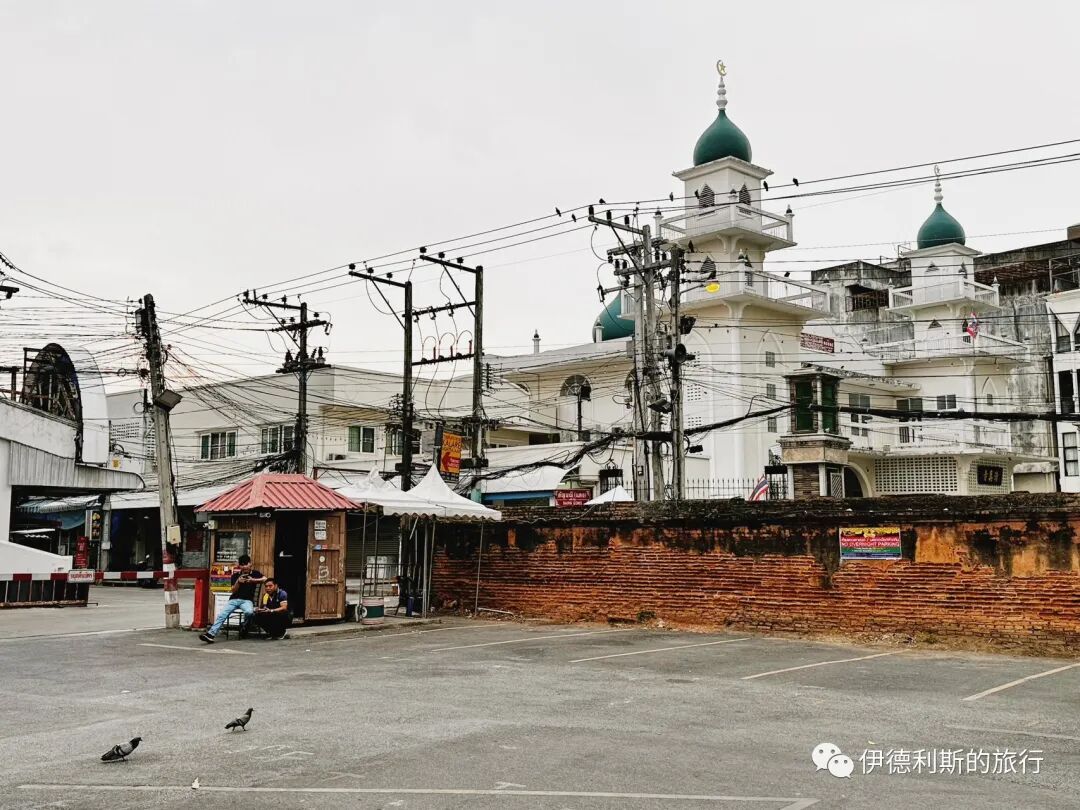
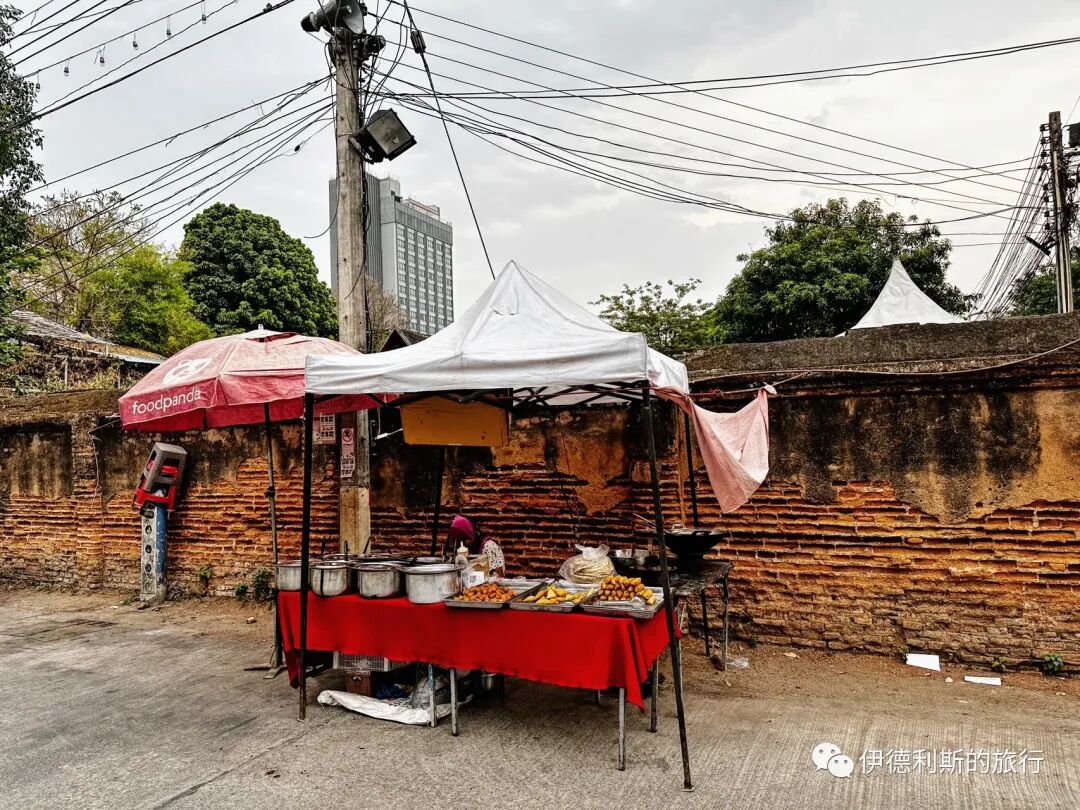
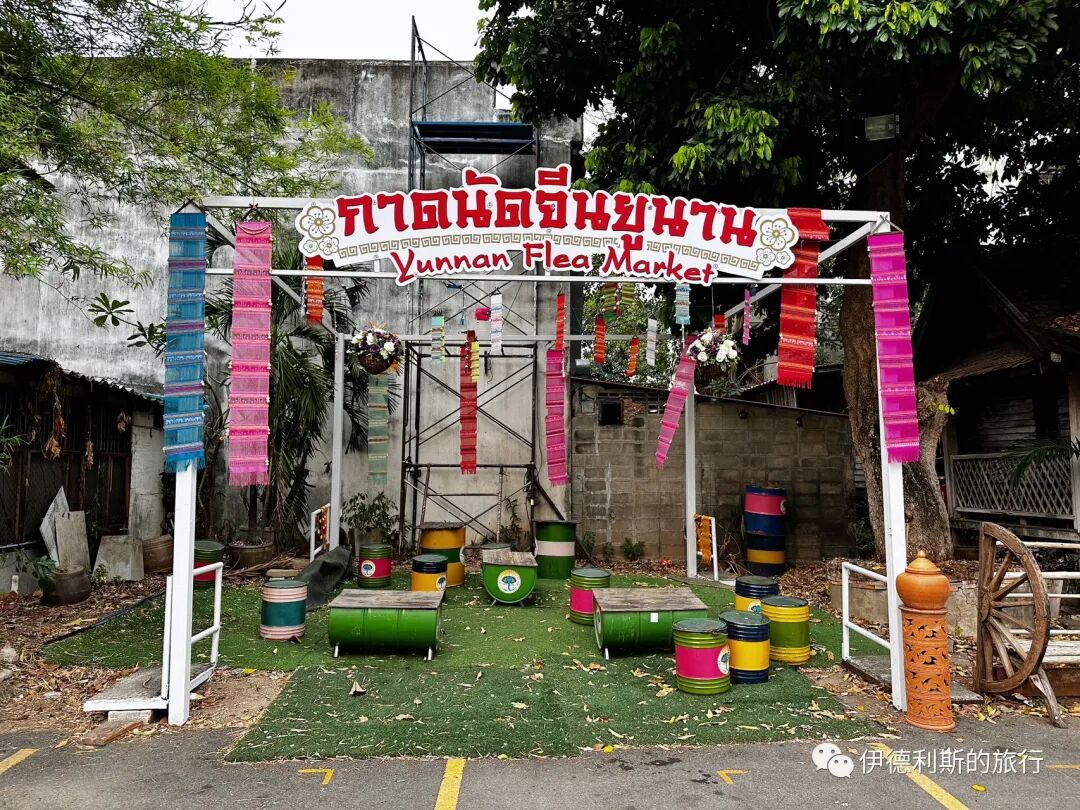
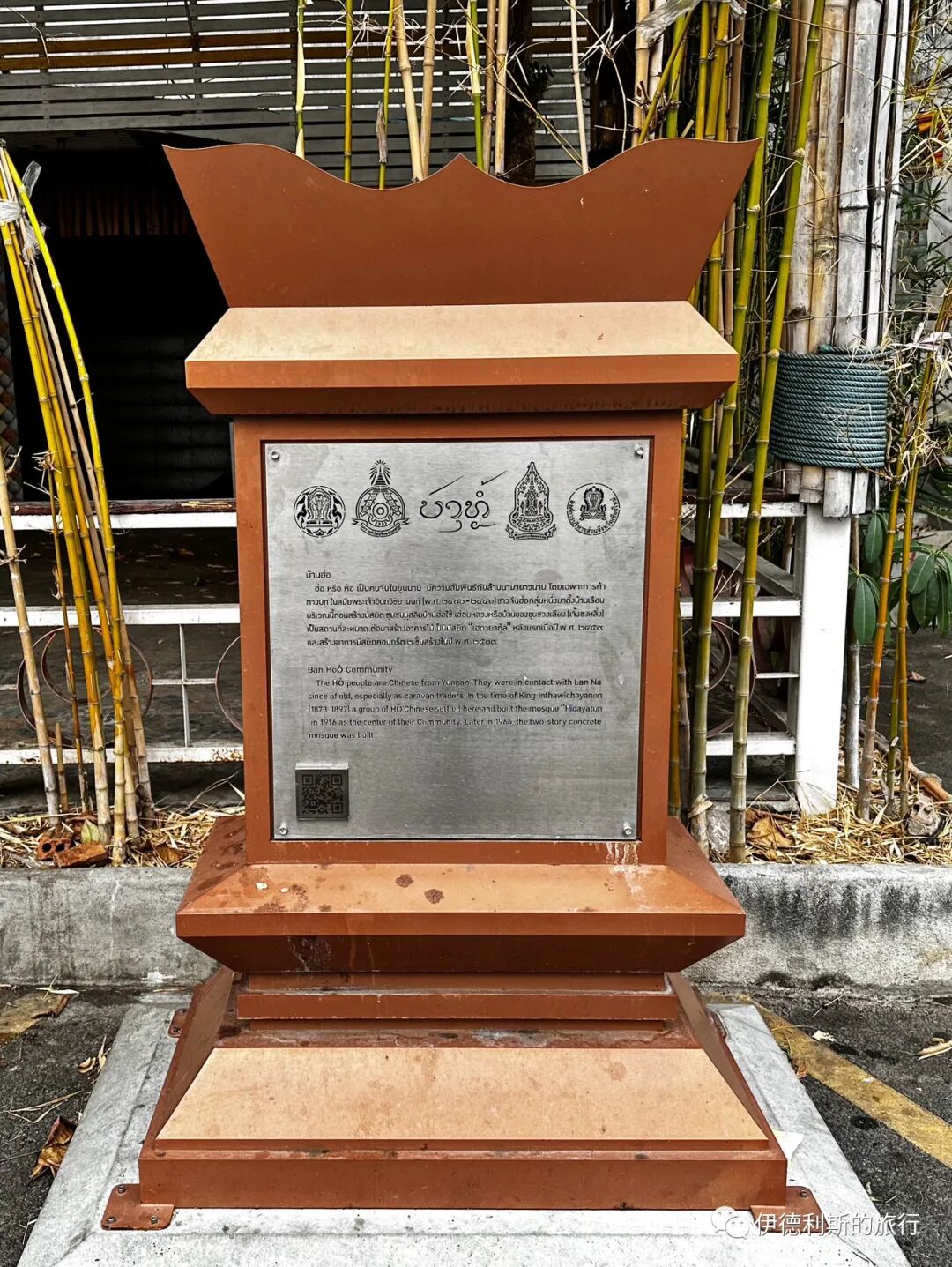
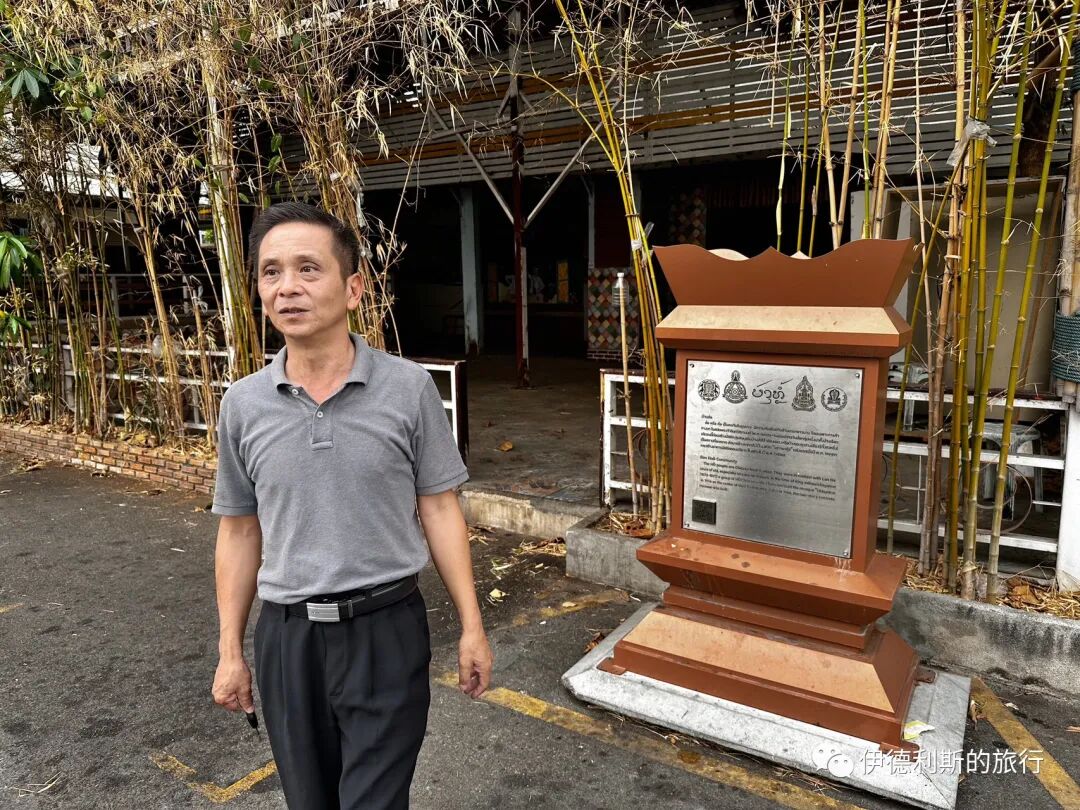
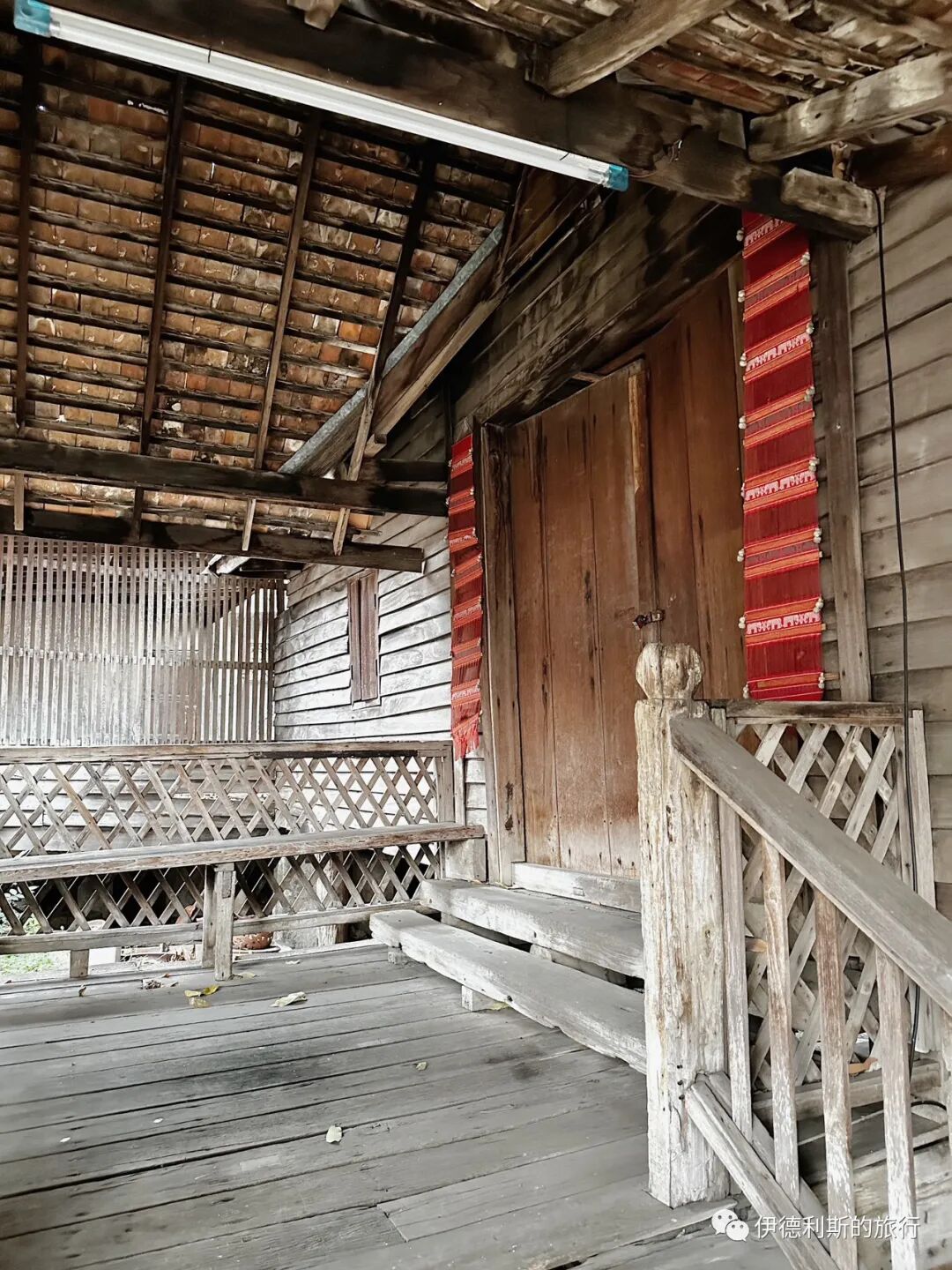
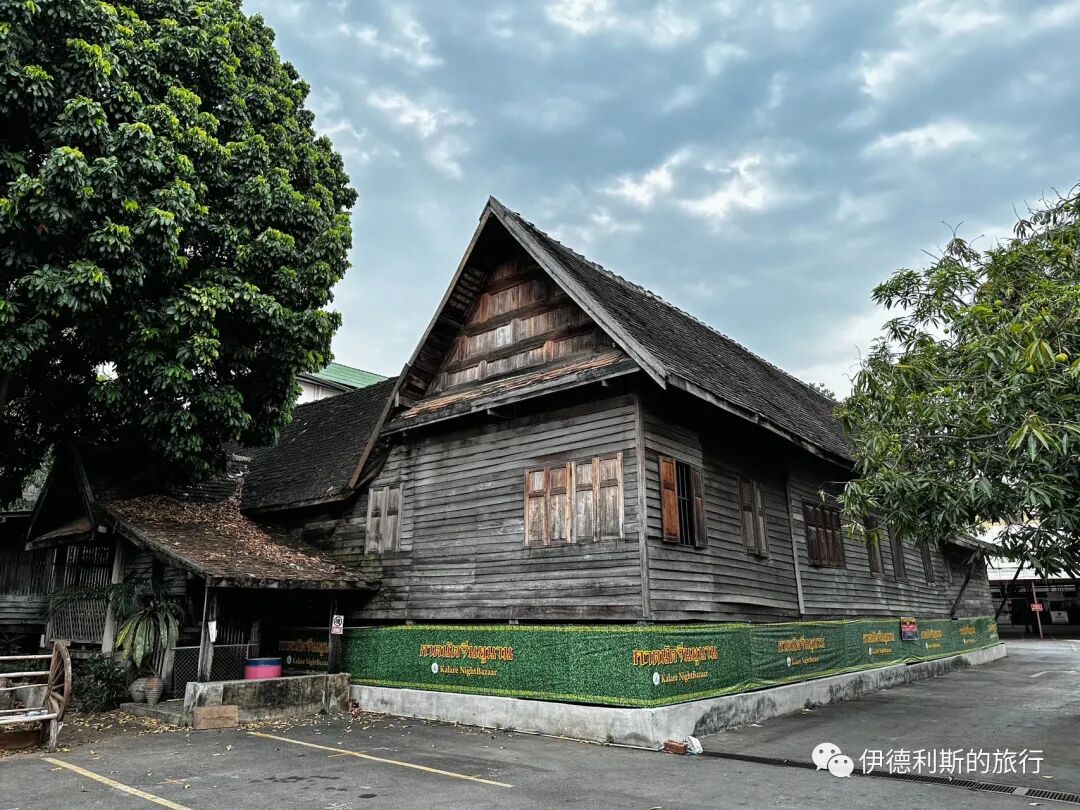
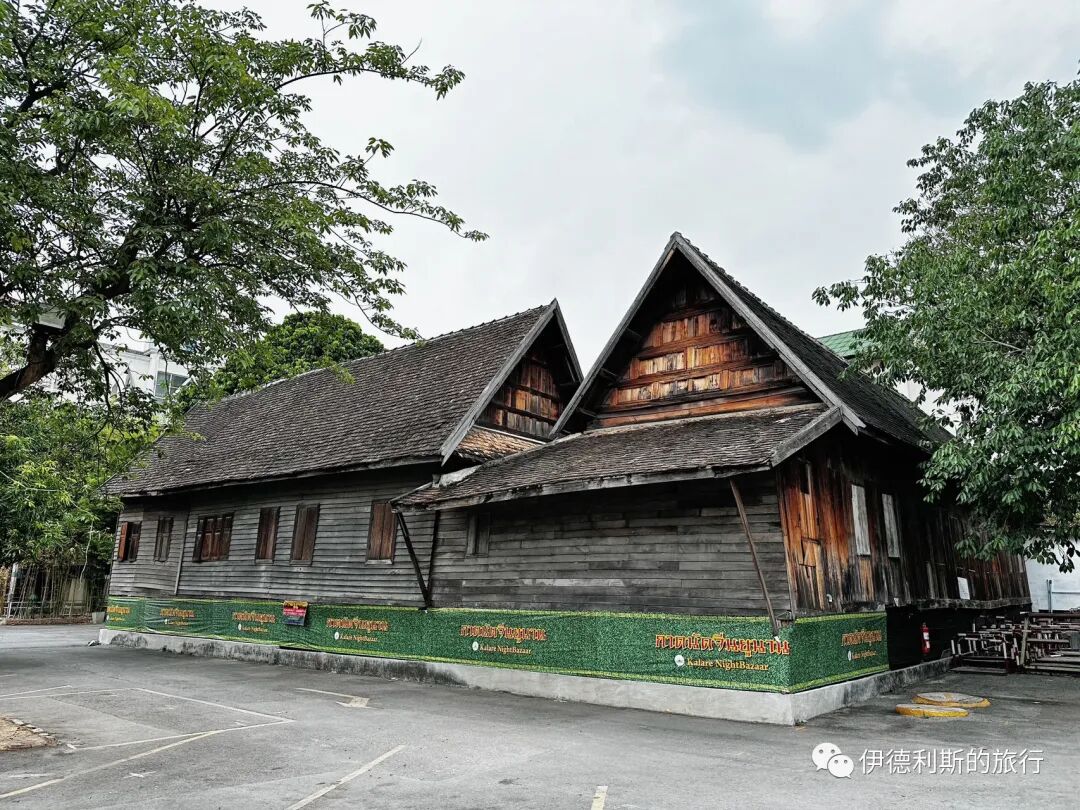
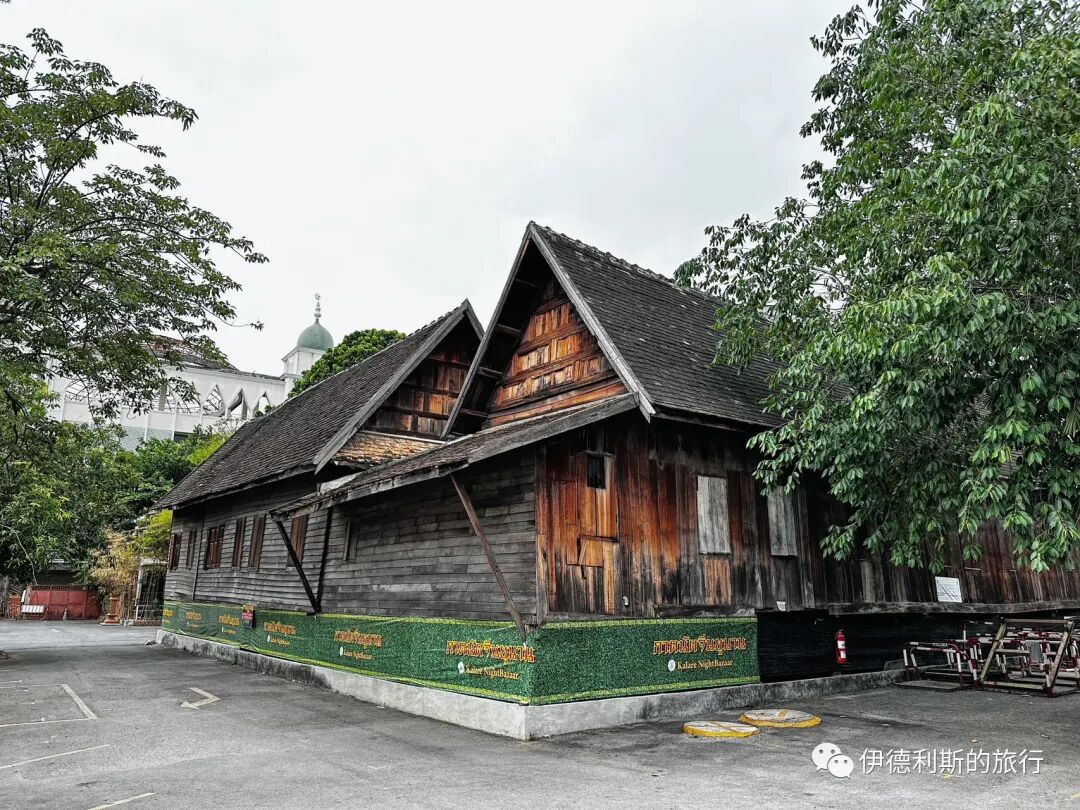
At the Wang He Mosque (Wang He Si) in Chiang Mai, many of the elders here can speak Mandarin and the Yunnan dialect, and the mihrab features traditional Yunnan-style Arabic calligraphy.
In the early 20th century, Zheng Chonglin was rewarded by the Chiang Mai chieftain with a piece of land east of Chiang Mai city, where he built his residence, the Zheng Mansion (Zheng Fu). In 1907, Zheng Chonglin built a prayer room at the Zheng Mansion, and many Yunnanese Hui Muslims in Chiang Mai would come to the mansion for their worship. In 1917, led by Zheng Chonglin, everyone pooled their money to buy the land opposite the Zheng Mansion and built the Wang He Mosque.
During the 1950s and 1960s, many Yunnanese Hui Muslims arrived in Chiang Mai to settle, and the number of congregants at the Wang He Mosque increased significantly. In 1966, three Hajjis—Hu Ranmao, Ma Ruqi, and Ma Wanzhang—led the effort to rebuild the Wang He Mosque into the current reinforced concrete structure.
Ma Ruqi was the owner of the Ma Ruqi Courtyard in Donglianhua Village, Weishan, Dali. He settled in Chiang Mai after 1954, worked in the local specialty trade, was passionate about public welfare, and was appointed president of the Thai-Chinese Chamber of Commerce in 1974. Today, Ma Ruqi's descendants in Dali still live in the Ma Ruqi Courtyard and have opened a restaurant and guesthouse. I highly recommend visiting to experience it; you can refer to my record from earlier this year, 'The Three Hui Muslim Caravan Courtyards in Donglianhua Village, Weishan, Dali'.
Hu Ranmao was an important leader of the Wang He Mosque community after Zheng Chonglin. He was born in 1914 in Xiaoweigeng Village, Weishan, Dali, and served as the principal of his hometown's Muguang School in 1934. He worked in the horse caravan trade between Thailand and Myanmar in the 1940s and settled in Chiang Mai in 1953. In the 1970s, he helped found the Chiang Mai Islamic Committee and served two consecutive terms as its chairman. During his lifetime, Hu Ranmao was received by the King of Thailand many times and was honored with the royal title of Yong Fooanant.
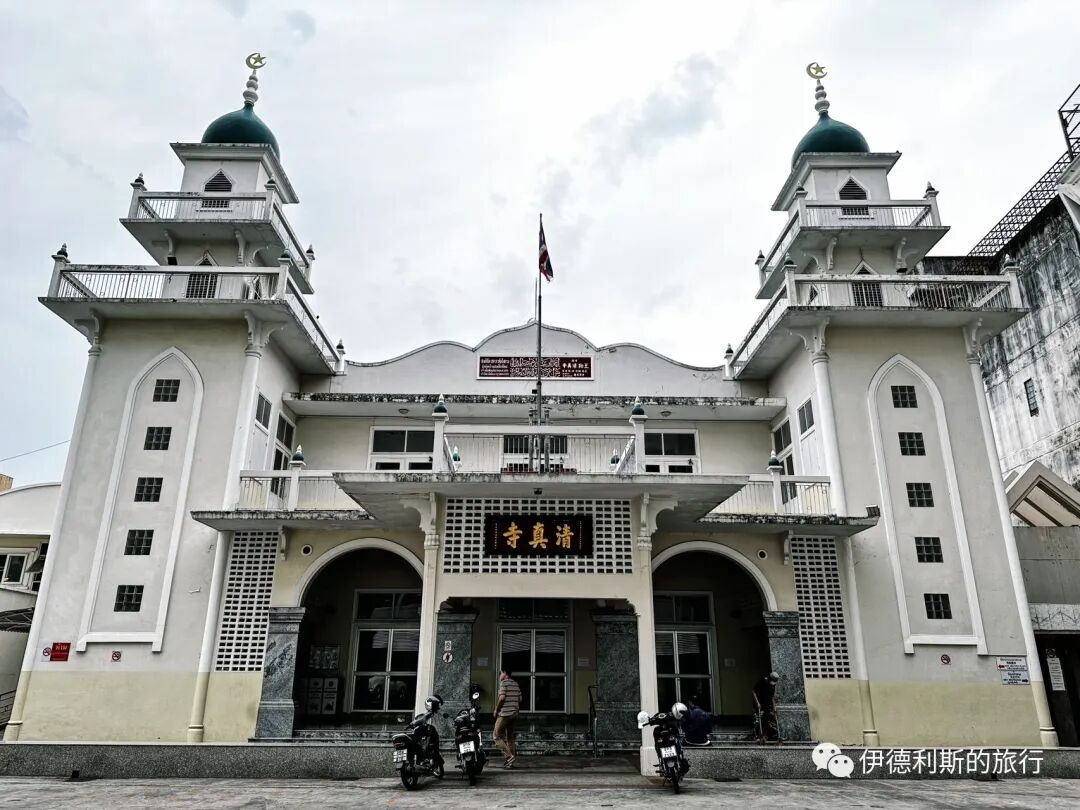
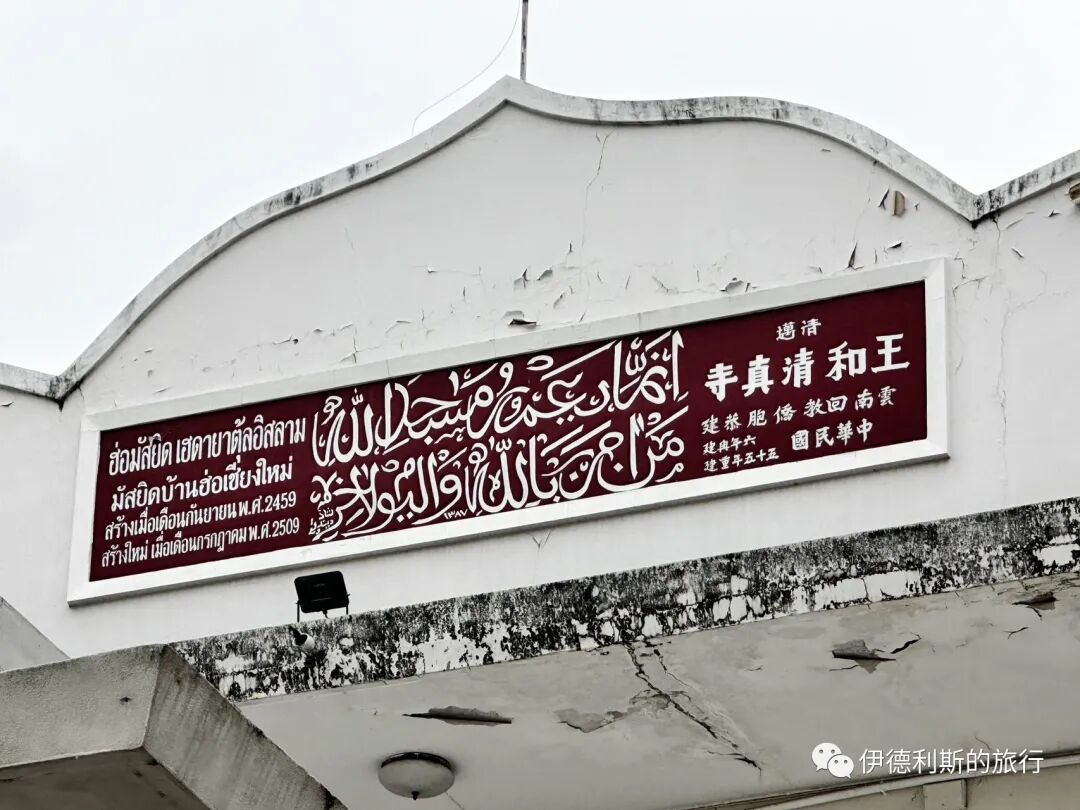
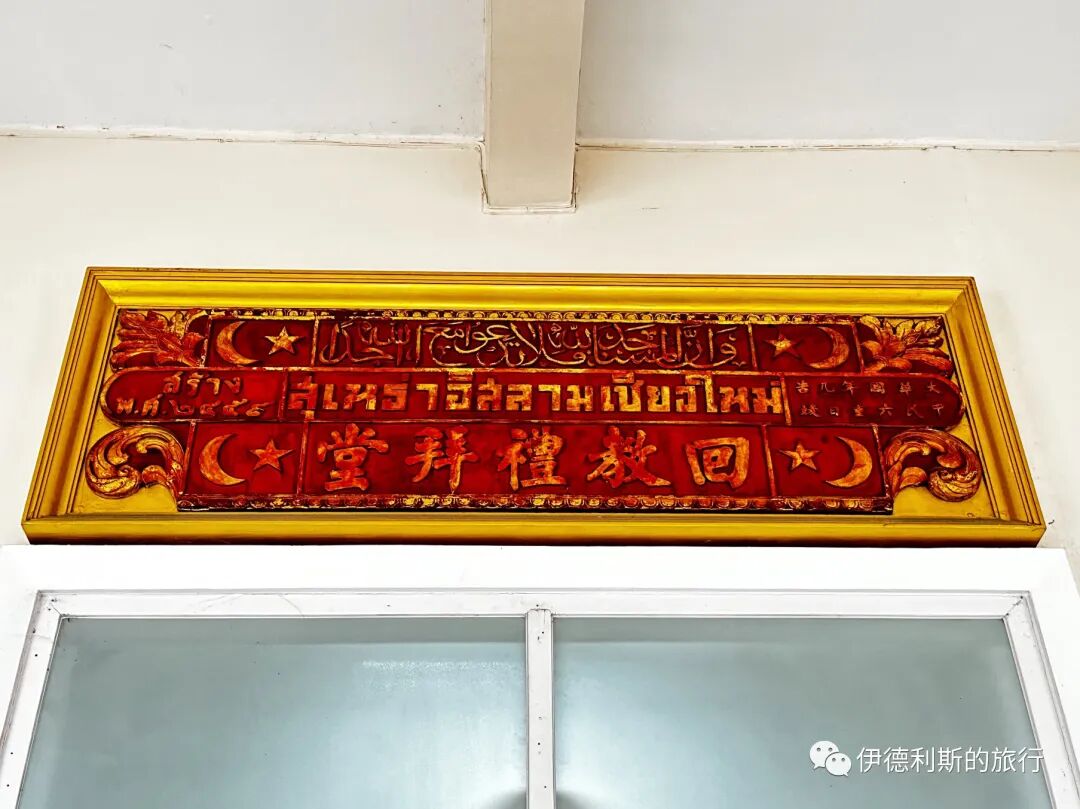
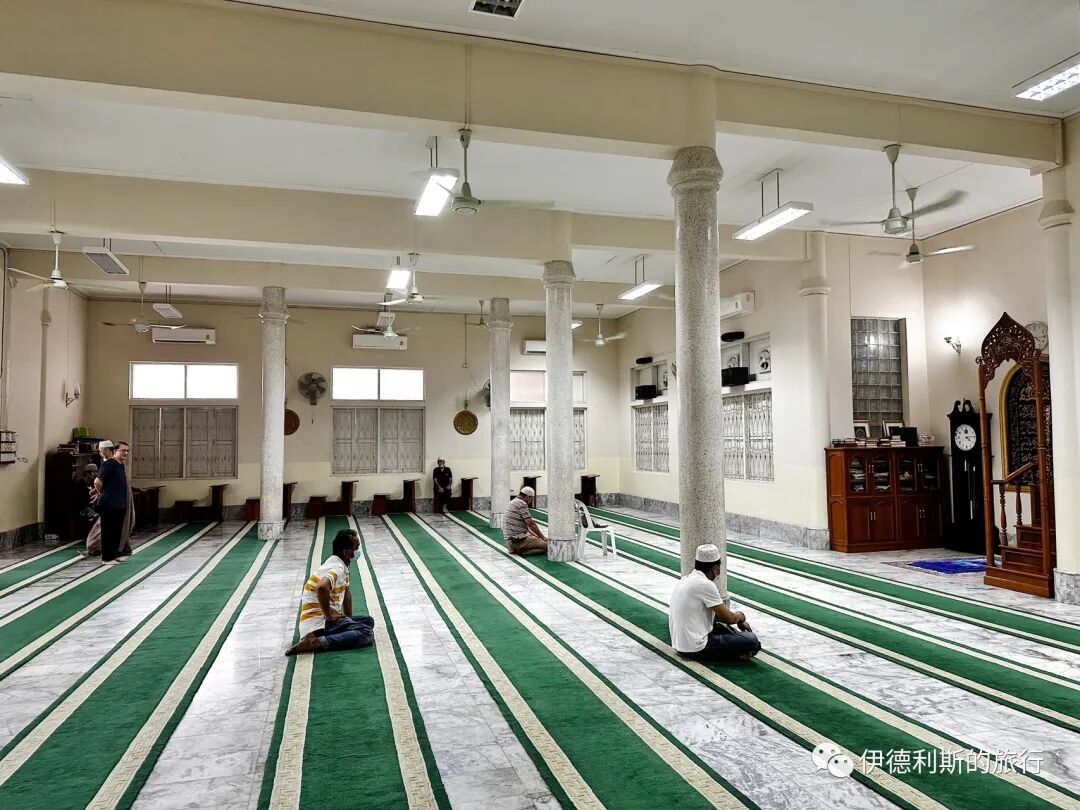
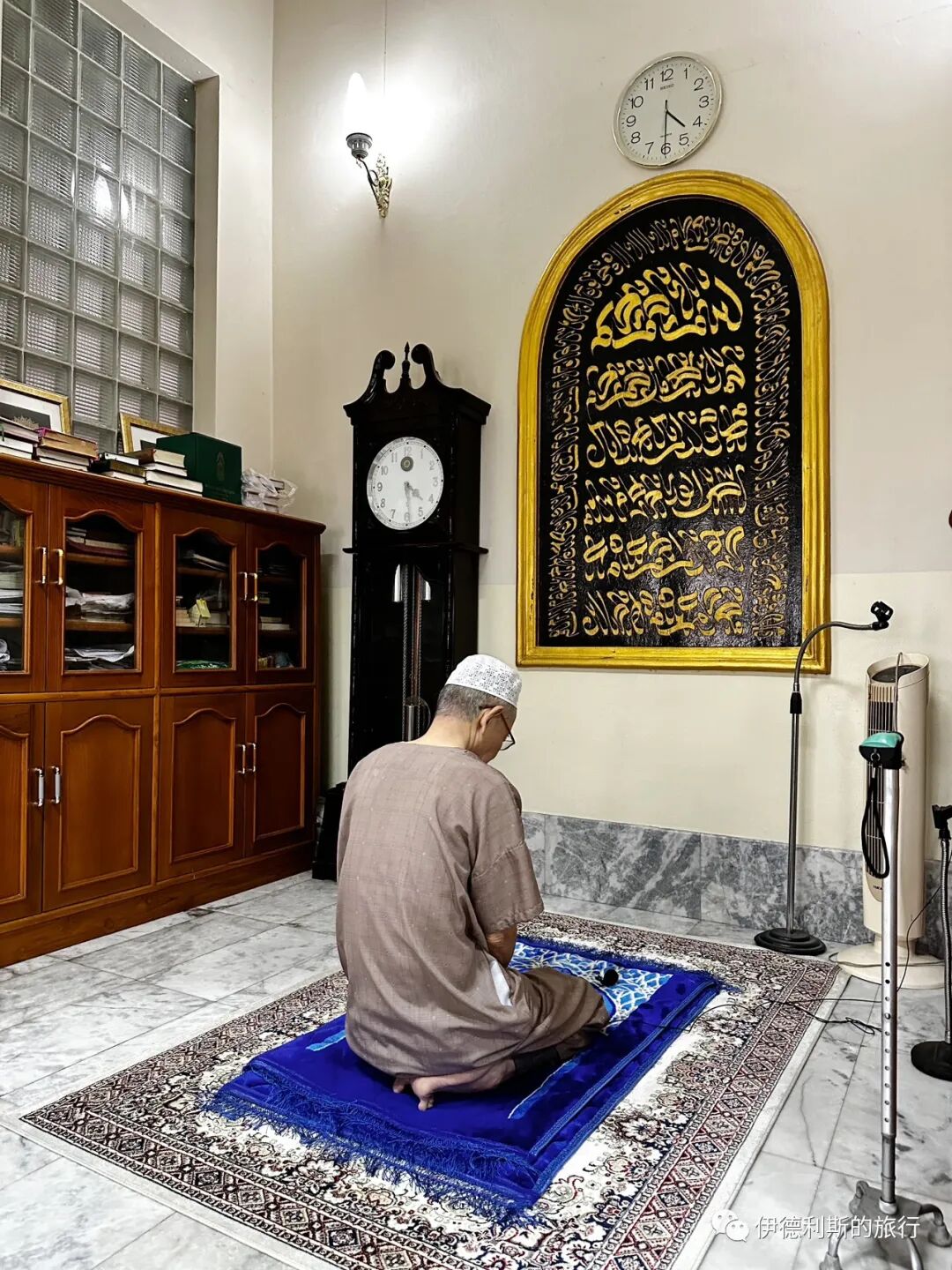
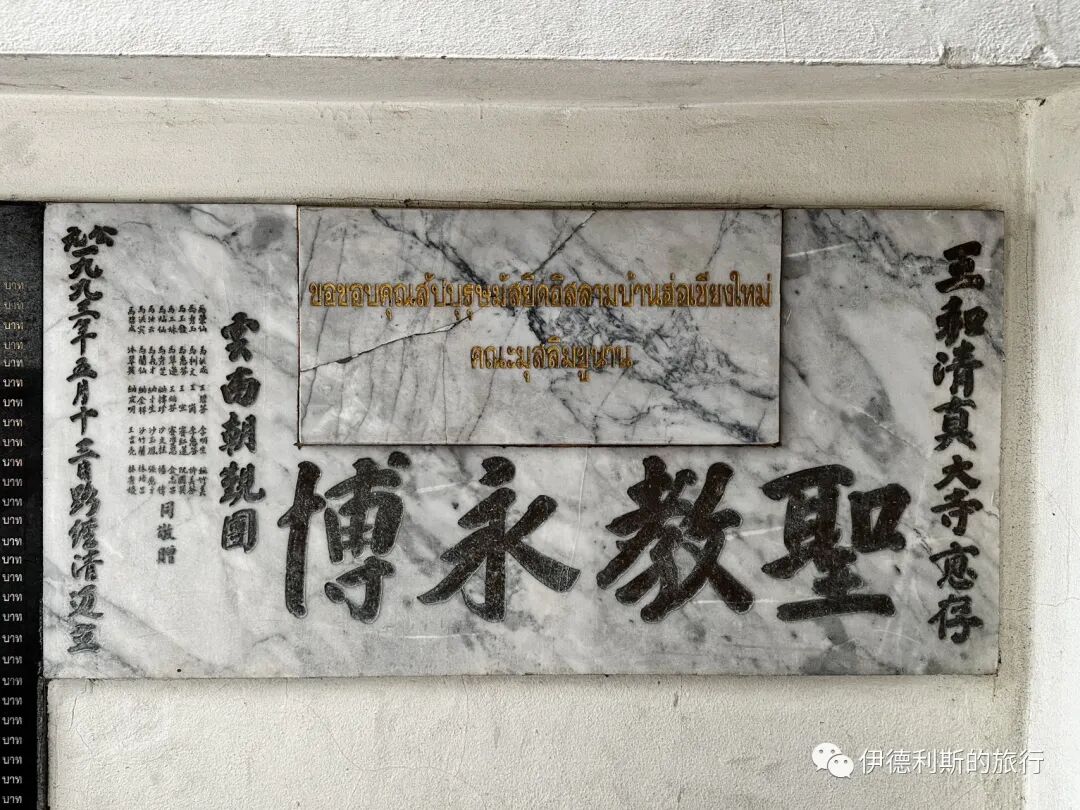
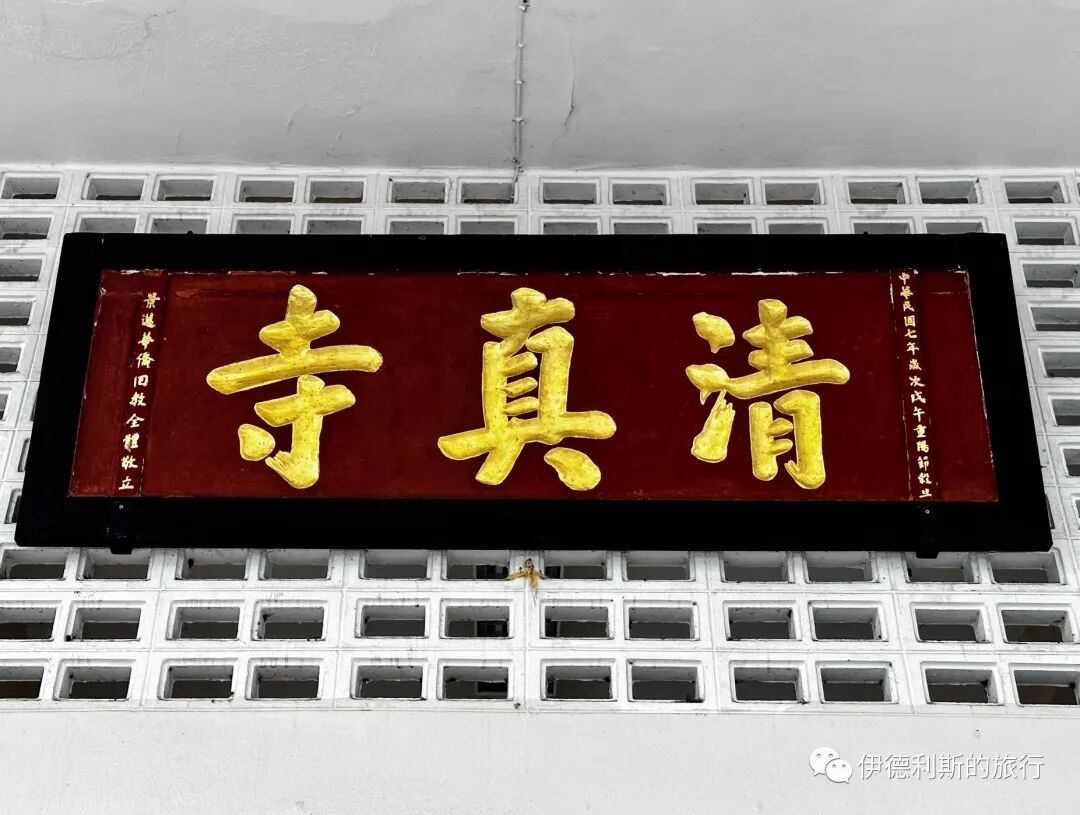
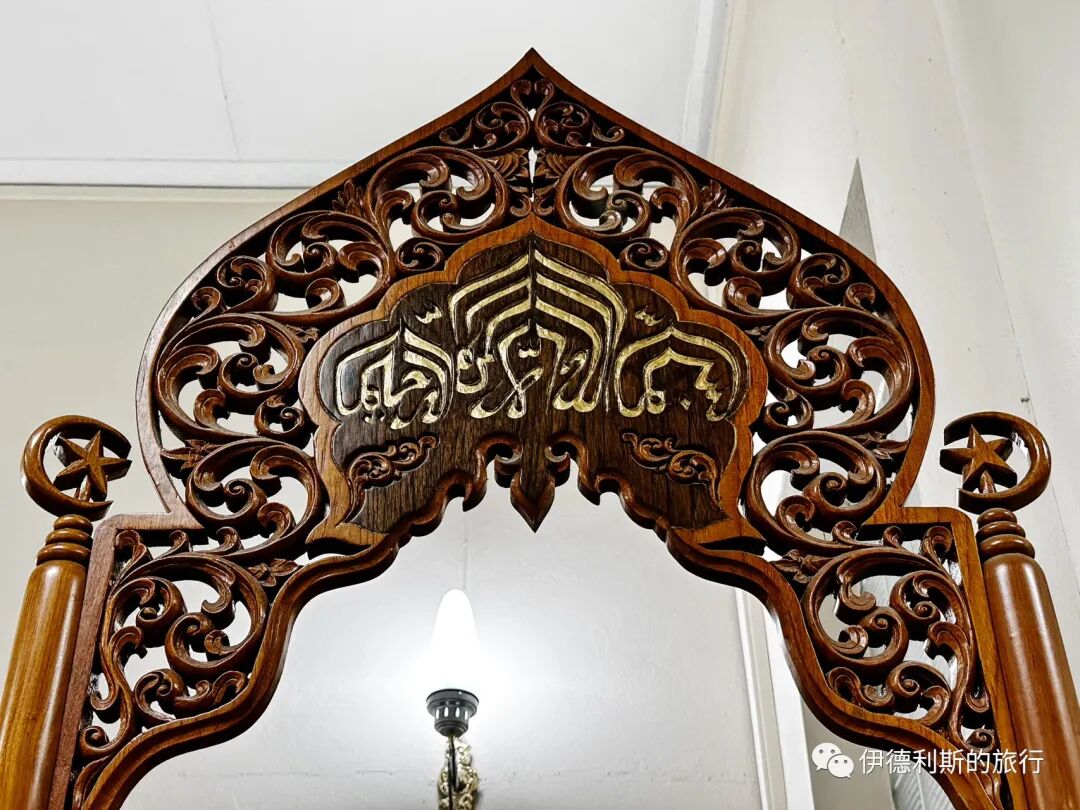
In the afternoon, I went to the night market at Tha Phae Gate in Chiang Mai. A cultural event was happening in front of Tha Phae Gate, where I saw a performance of the local Chiang Mai victory drum (desheng gu).
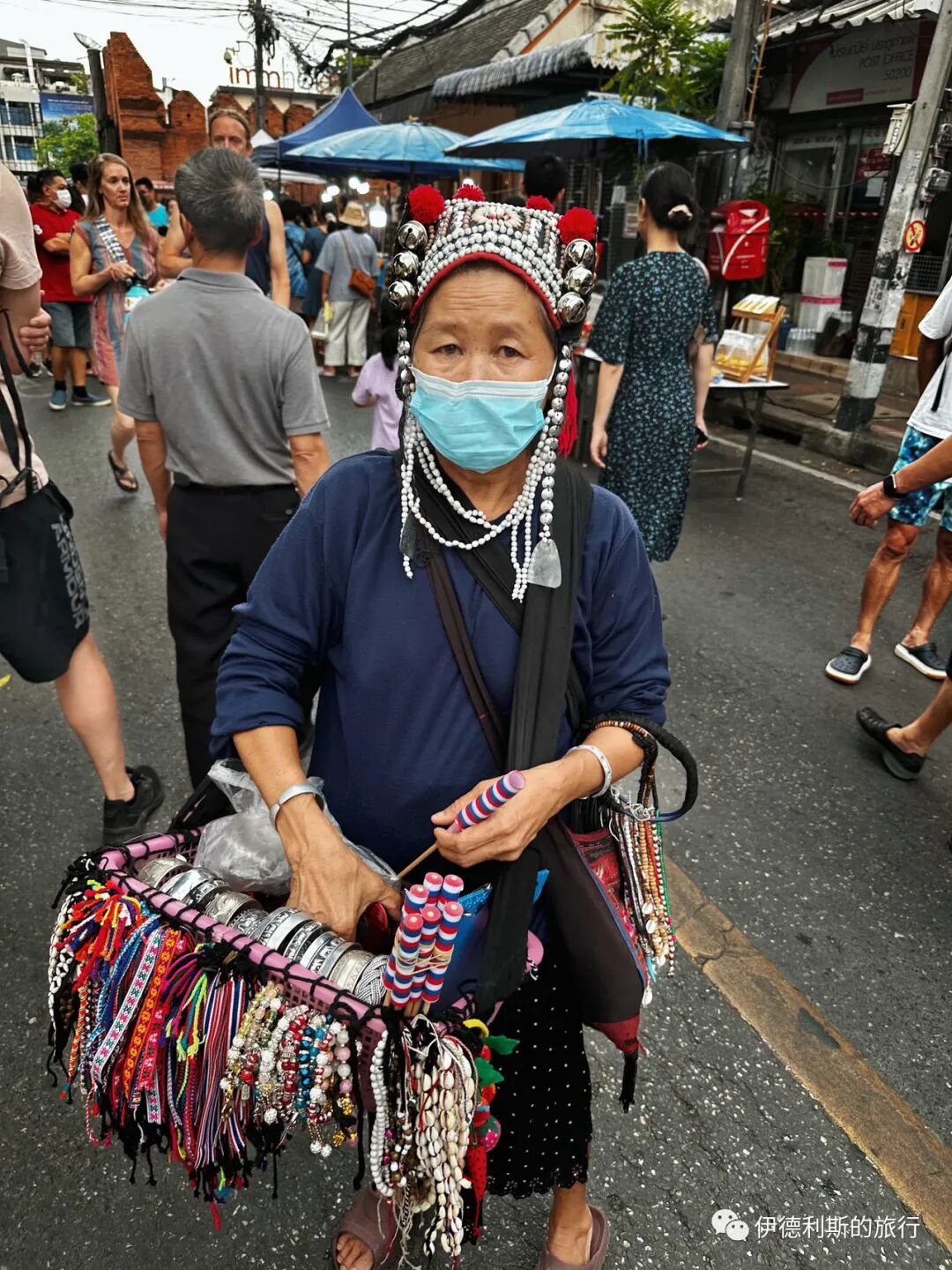
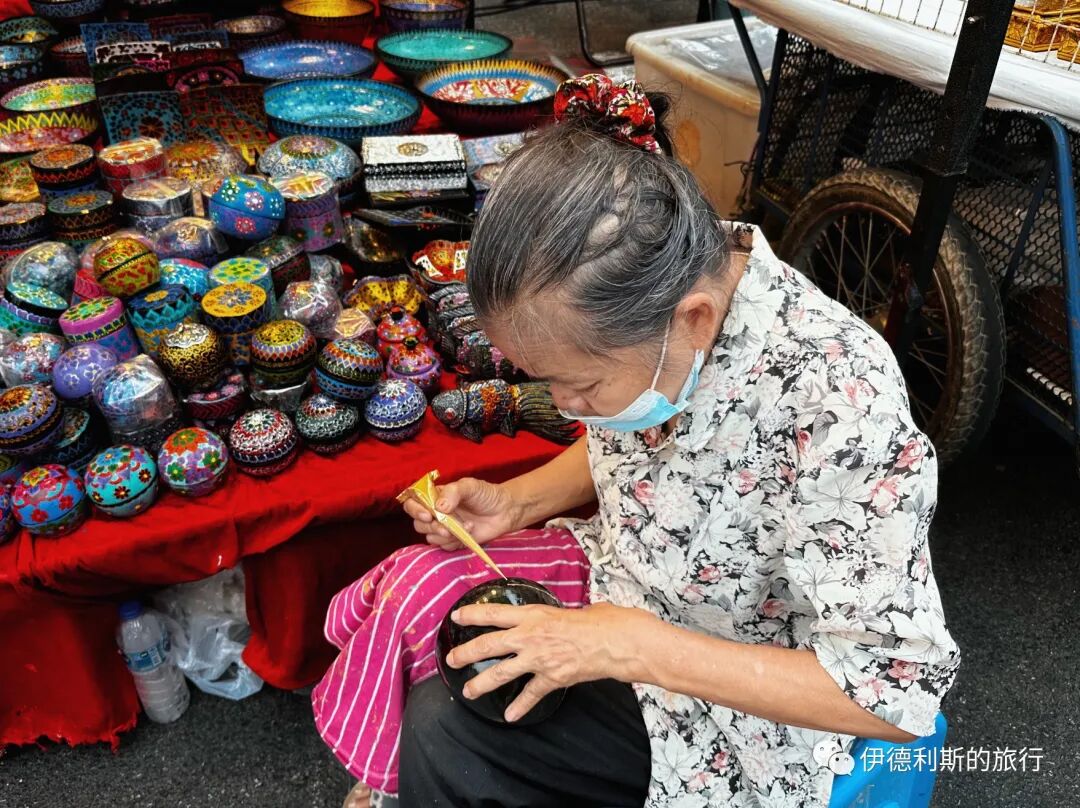
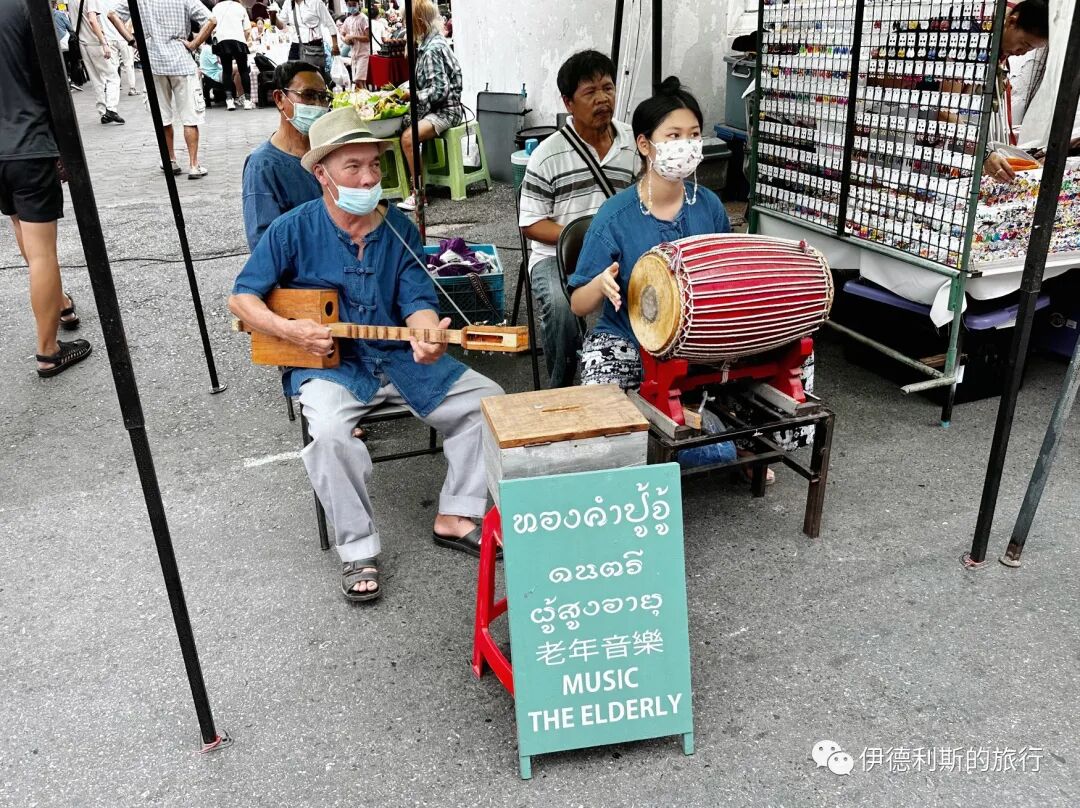
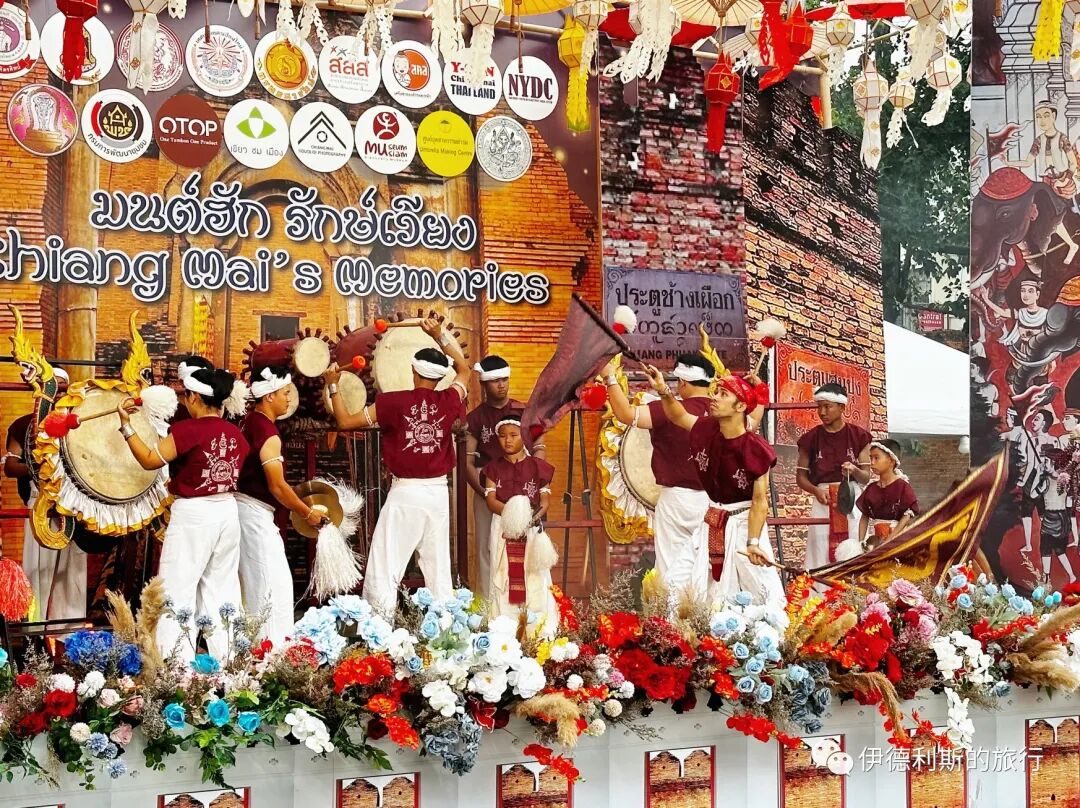
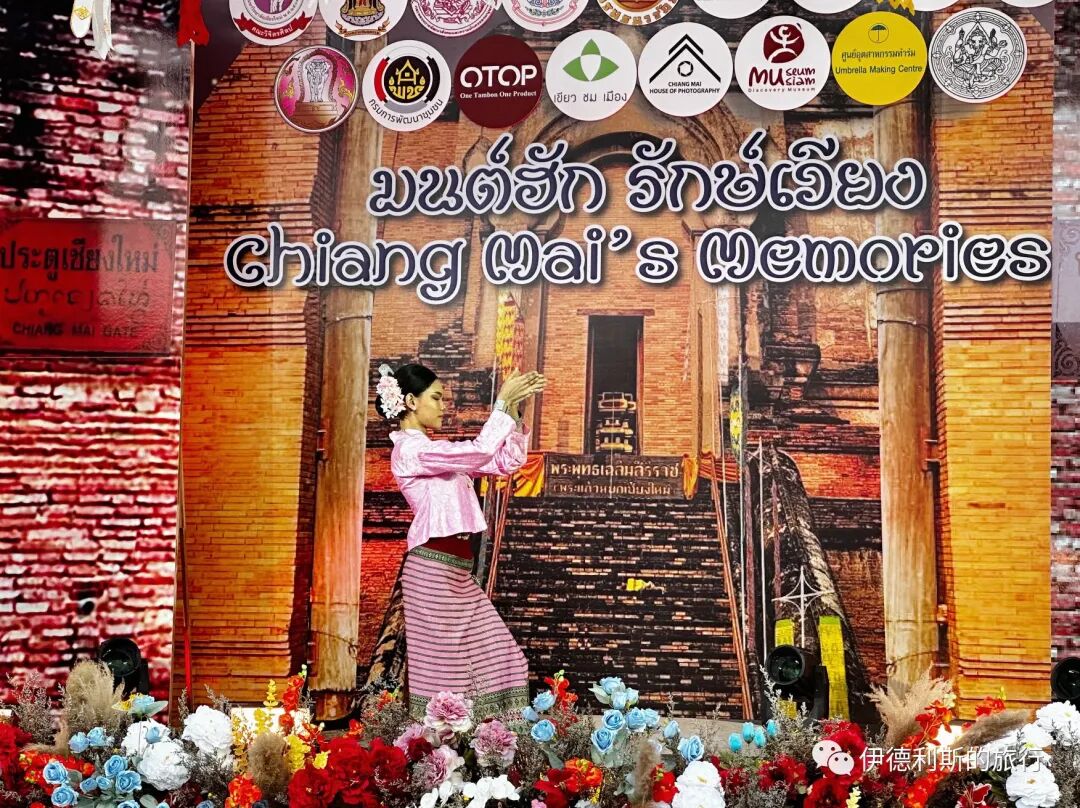
Then I went to Chiang Mai's second Yunnan-style mosque, Masjid Attaqwa, located in the San Pa Khoi area east of the Ping River. Many Yunnan Hui Muslims came to Chiang Mai via northern Myanmar in the 1950s and 1960s. As the original Wang He Mosque became crowded, Haji Hu Ranmao led the construction of Masjid Attaqwa to the east of Wang He in 1970. The mihrab inside Masjid Attaqwa features traditional Yunnan-style Arabic calligraphy, and the cartoons drawn by the children in the weekend class are very cute.
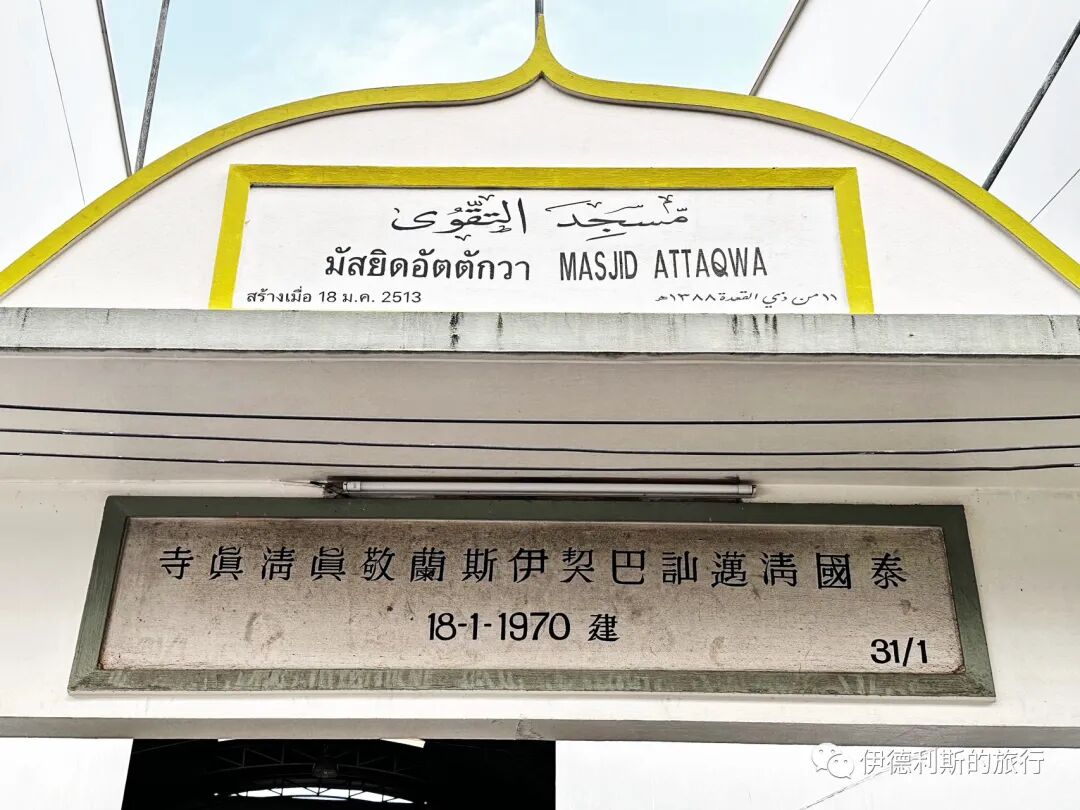
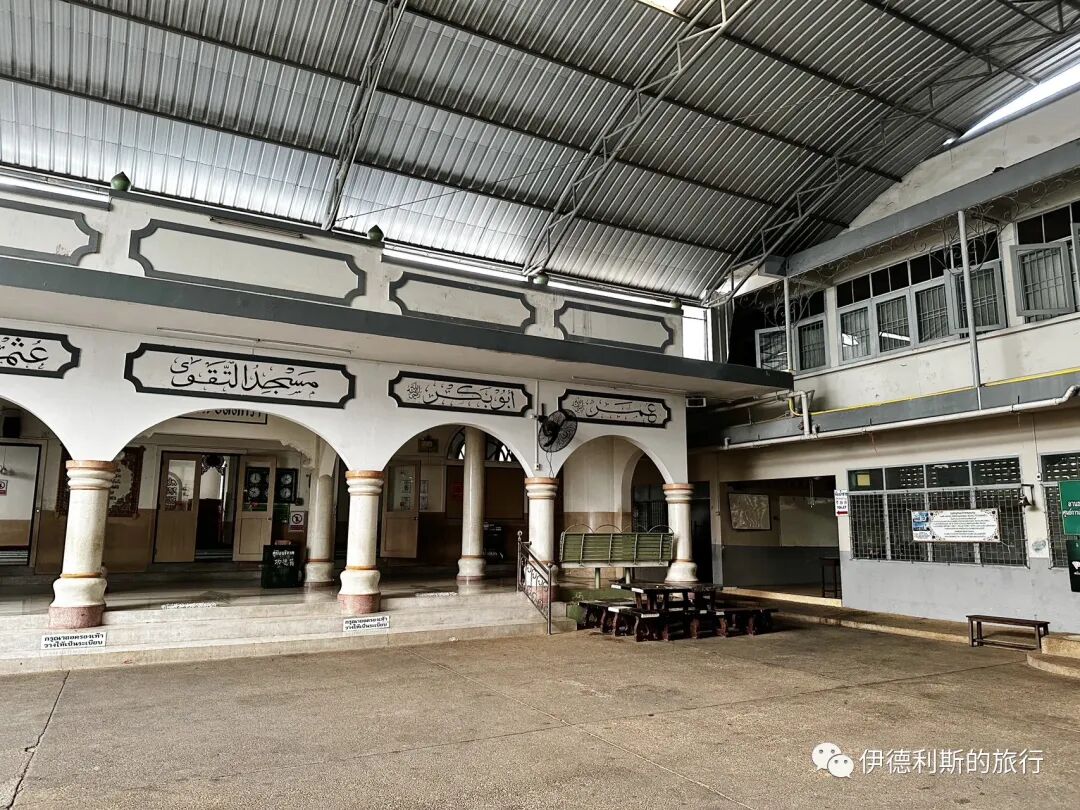
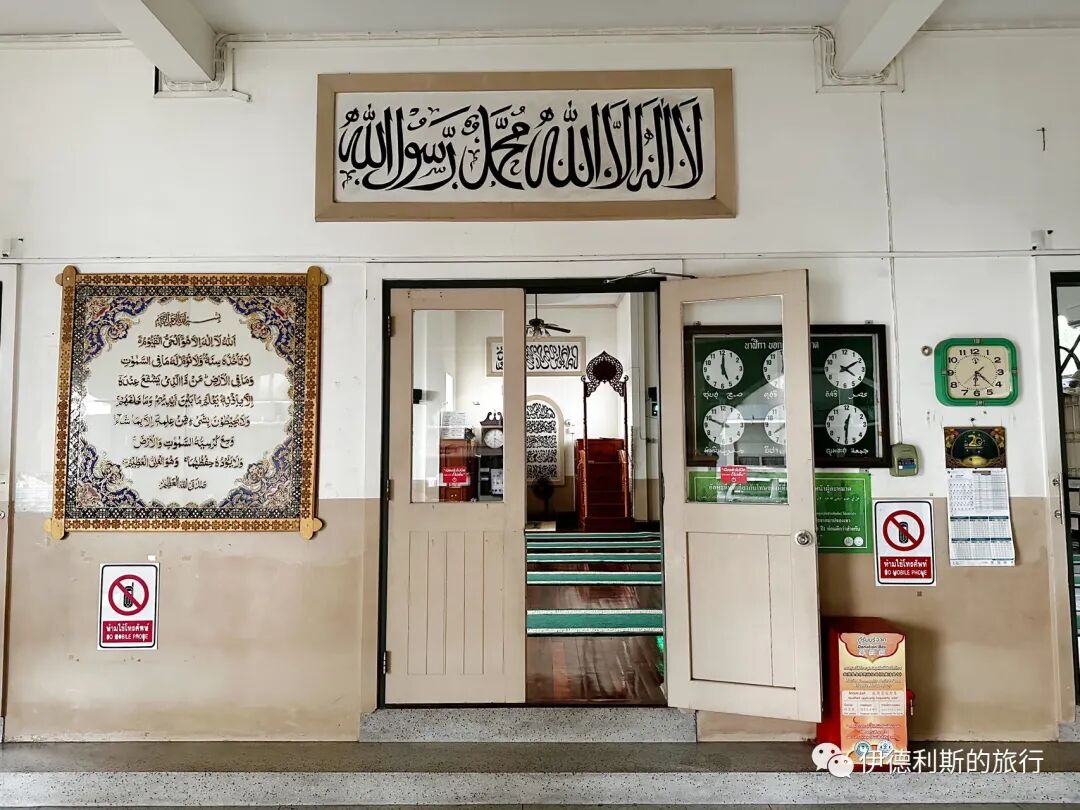
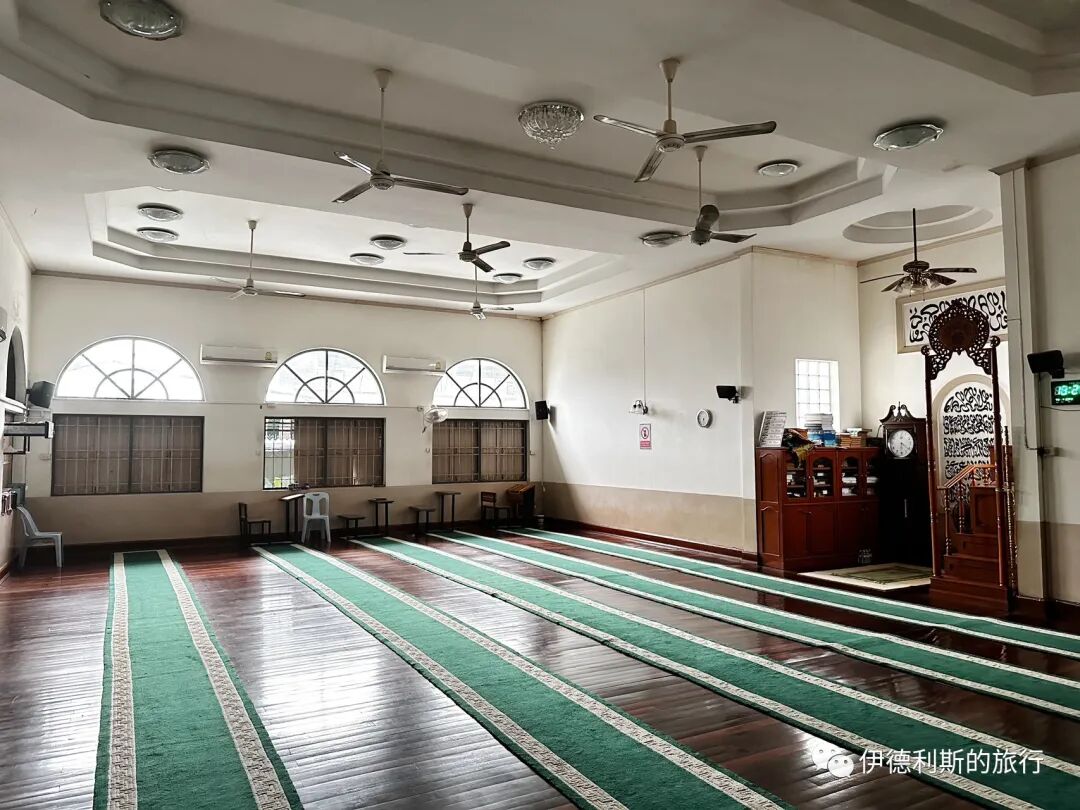
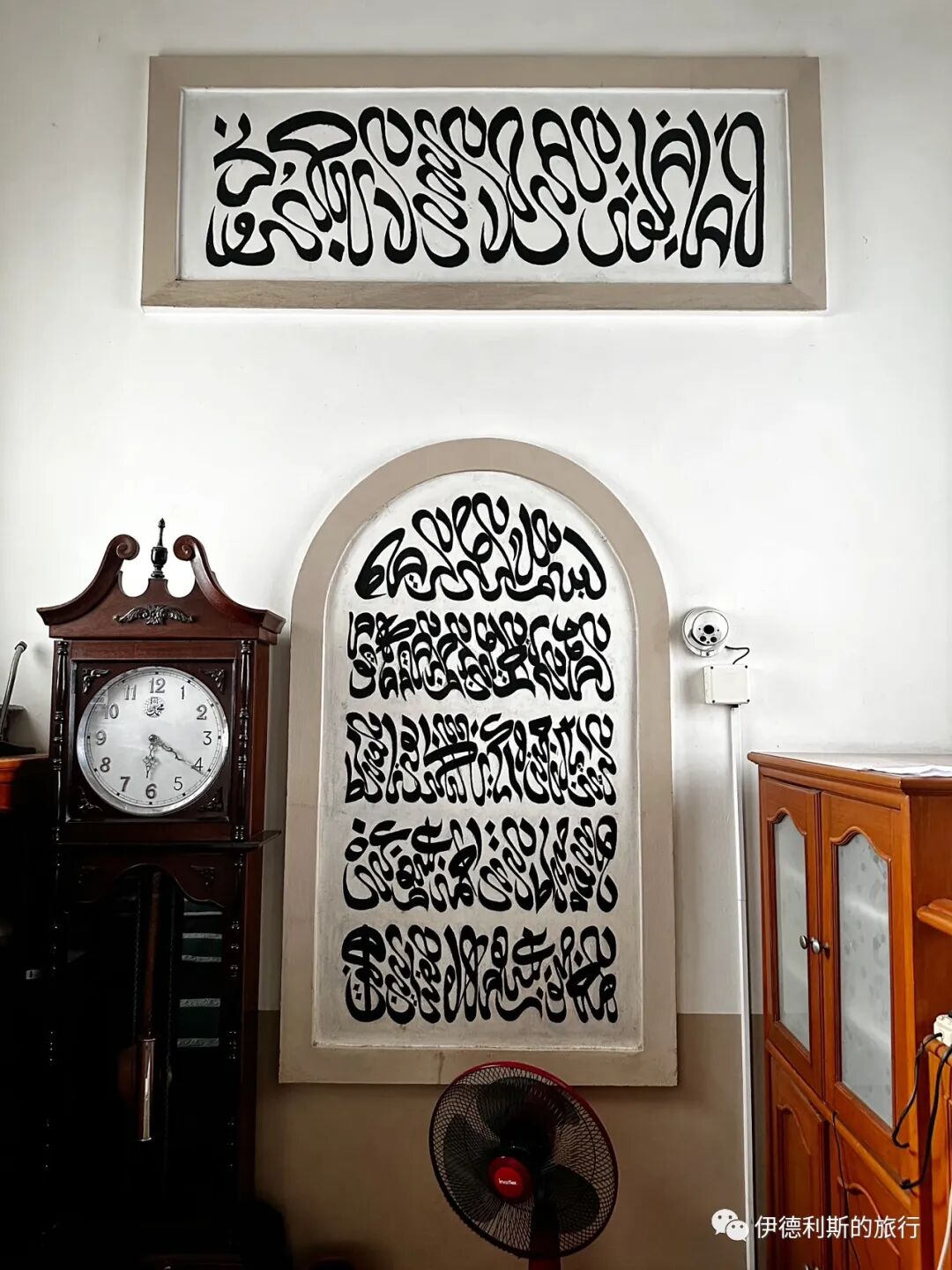
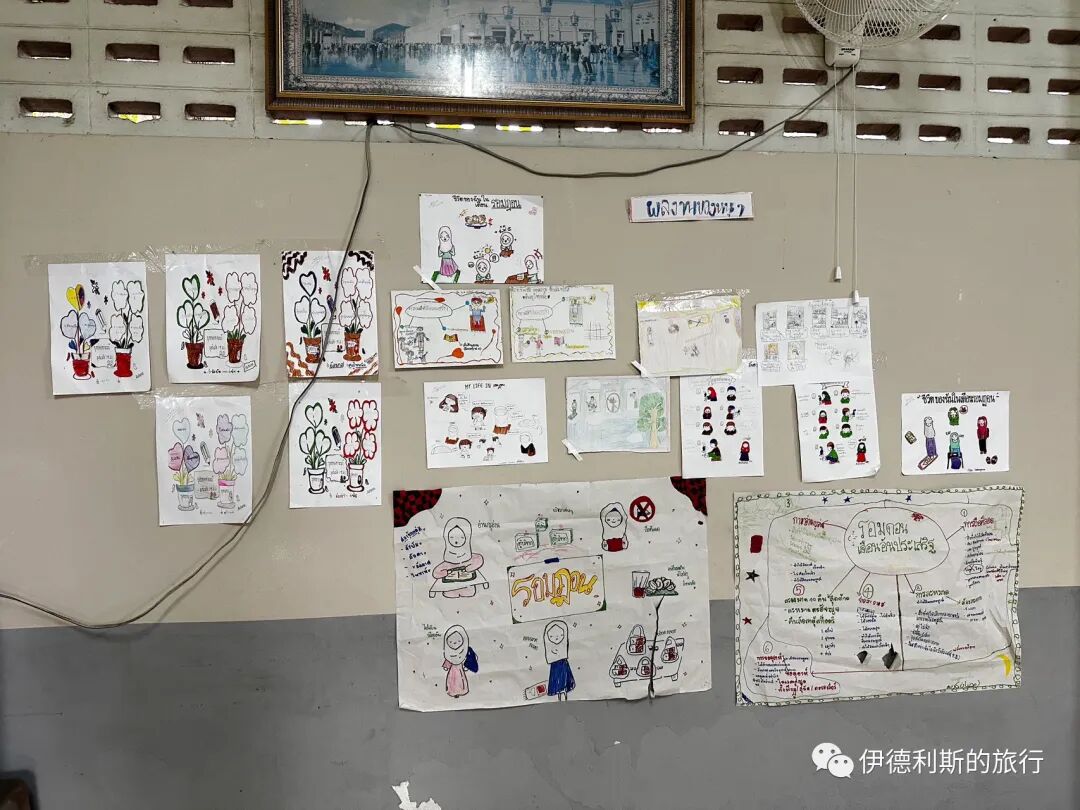
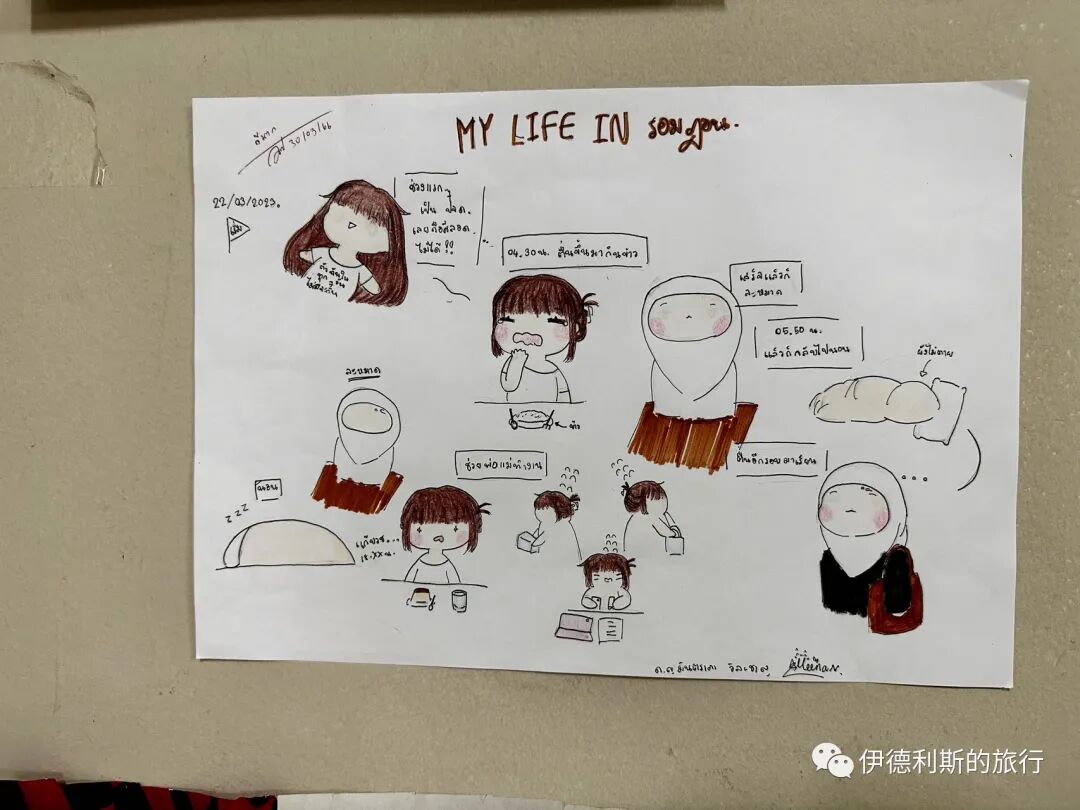
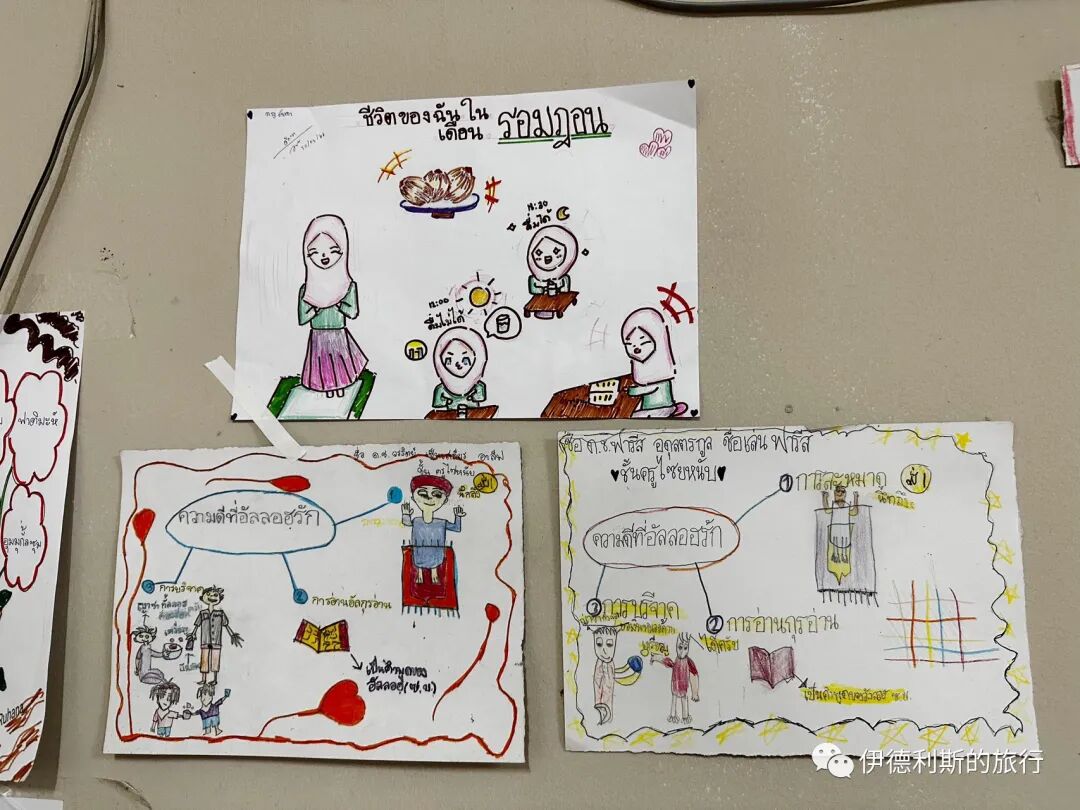
There are several Yunnan snack shops at the mosque entrance. In 2017, I ate authentic Yunnan pea jelly (wandoufen) here. This time, I saw a new restaurant that says 'Yunnan Banlong Wanyang Muslim Home Cooking'. Banlong is located in the Wa Mountains of the Kokang region in northern Myanmar. It is a community formed in the 1870s after General Ma Linyu of Du Wenxiu's army led his troops there and were taken in by the Wa tribe. It was later renamed 'Bannong'. Wanyang is a village established in the 1950s after the 93rd Division of the Nationalist Army moved to northern Thailand.
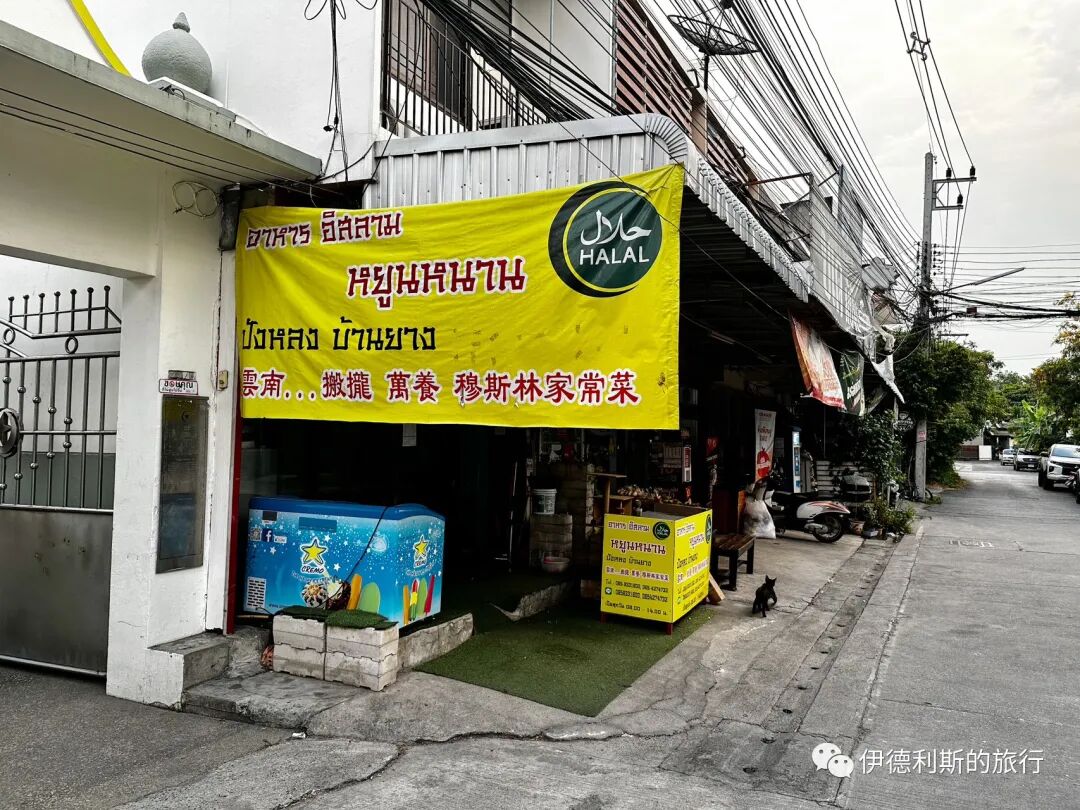
Opposite Masjid Attaqwa is Attaqwa School, the most important Islamic school in Chiang Mai and northern Thailand. Our driver, Mr. Ma, is a graduate of this school. It was summer vacation in May, so most teachers and students were away. We met a teacher who stayed at the school and gave a donation (nietie) to the school. According to Mr. Ma, this teacher is a Malay from southern Thailand and a graduate of the Islamic University of Madinah, and he is a very skilled teacher.
Attaqwa School was initiated by Haji Hu Ranmao in the 1960s and opened in 1970. It teaches Arabic, the Quran and Hadith, and religious knowledge, while providing free food and housing. When Attaqwa School was first established, most students were local Yunnan Hui Muslims from Chiang Mai. Later, because of its high teaching standards and free food and housing, it attracted Muslims from all over northern Thailand, southern Thailand, and Myanmar to study there. For half a century, Jingzhen School has played a vital role in the development of the faith in Thailand. It is a major reason why young and middle-aged Hui Muslims in northern Thailand can still hold fast to their faith today.
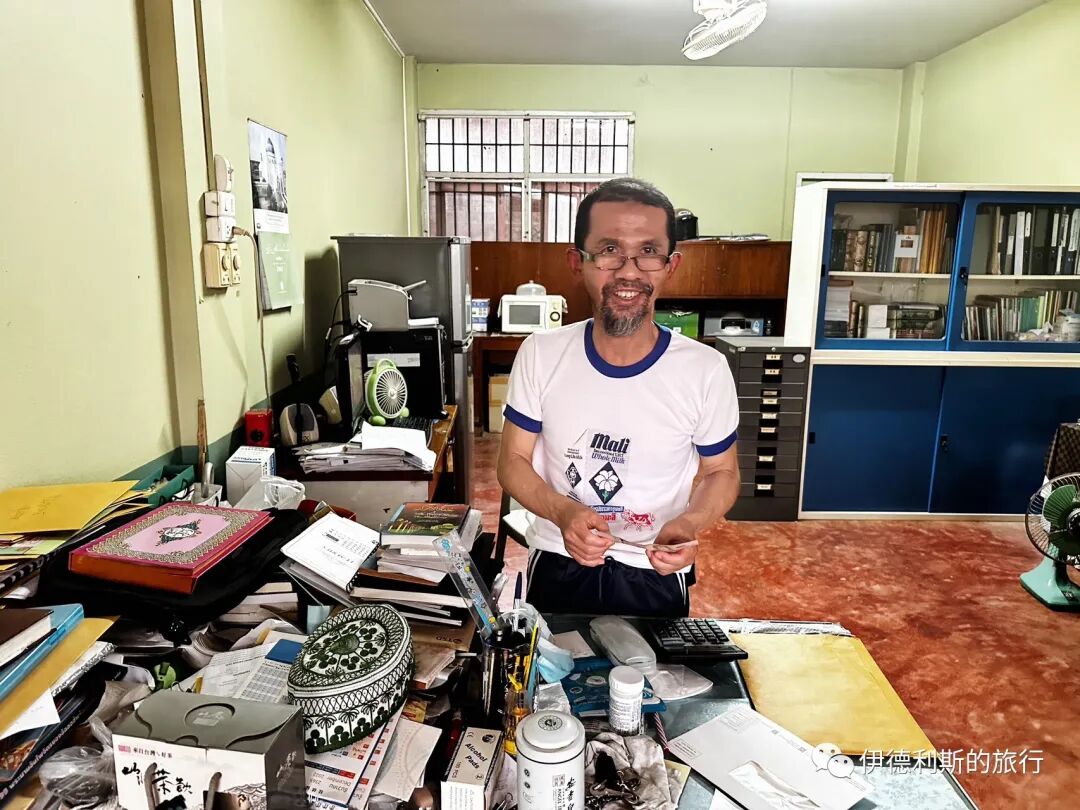
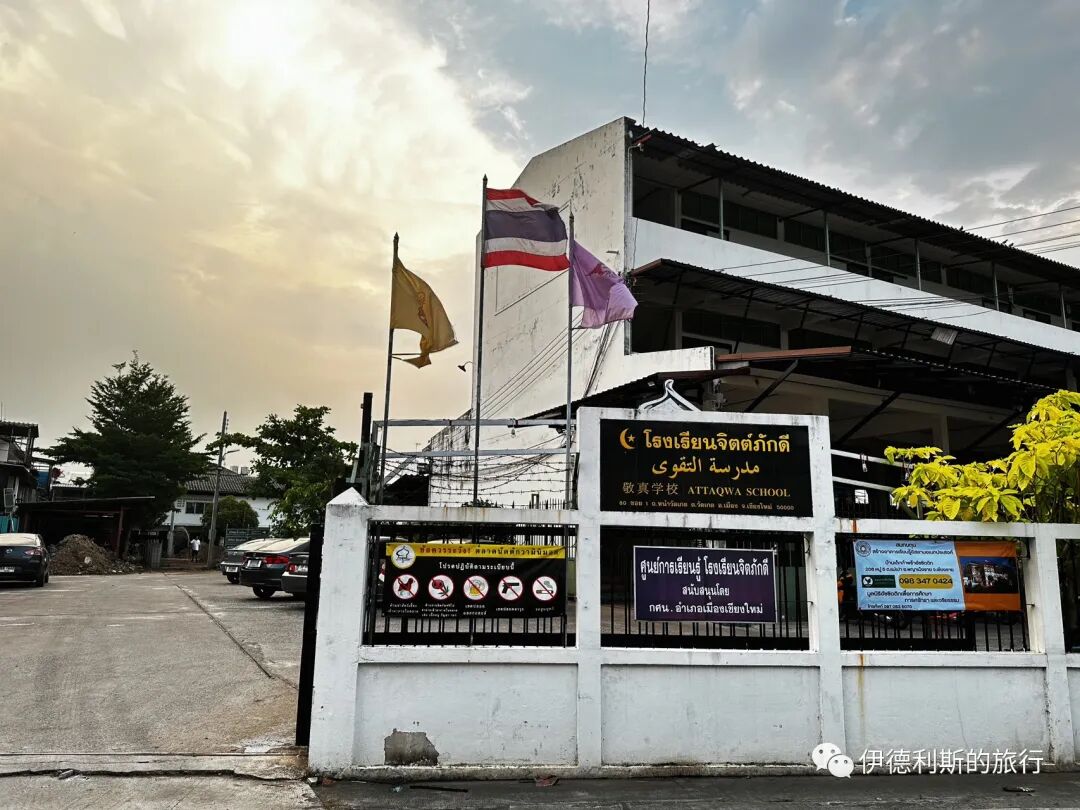
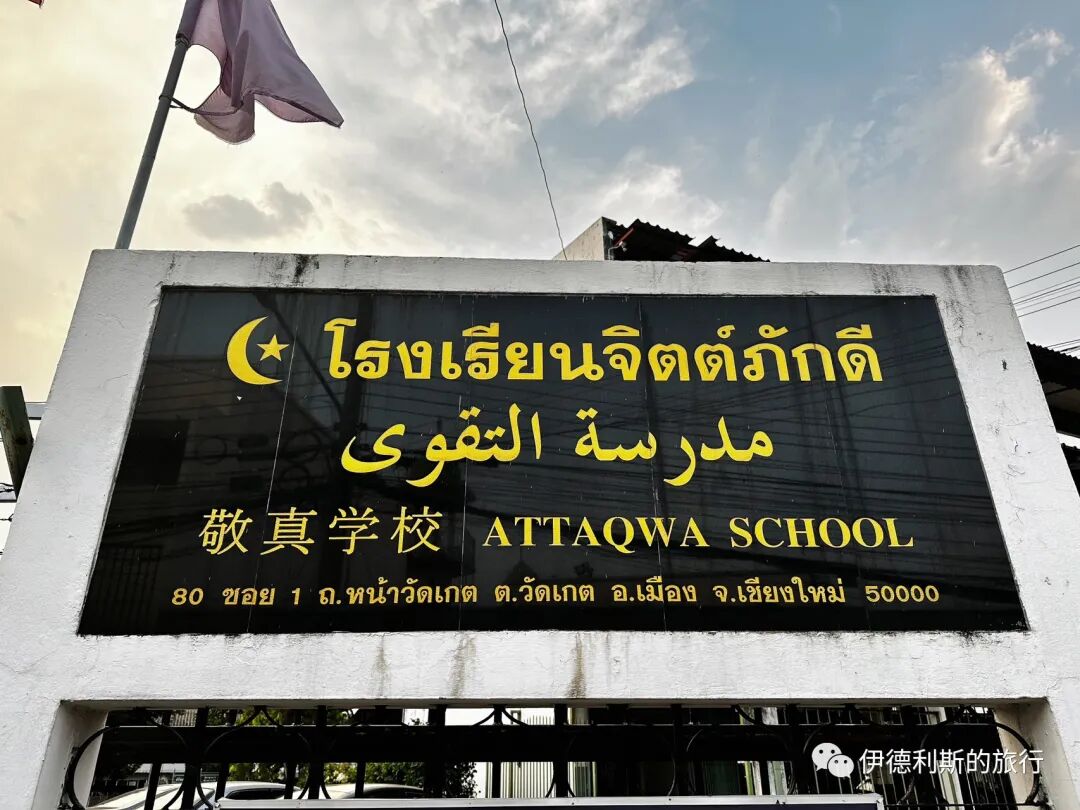
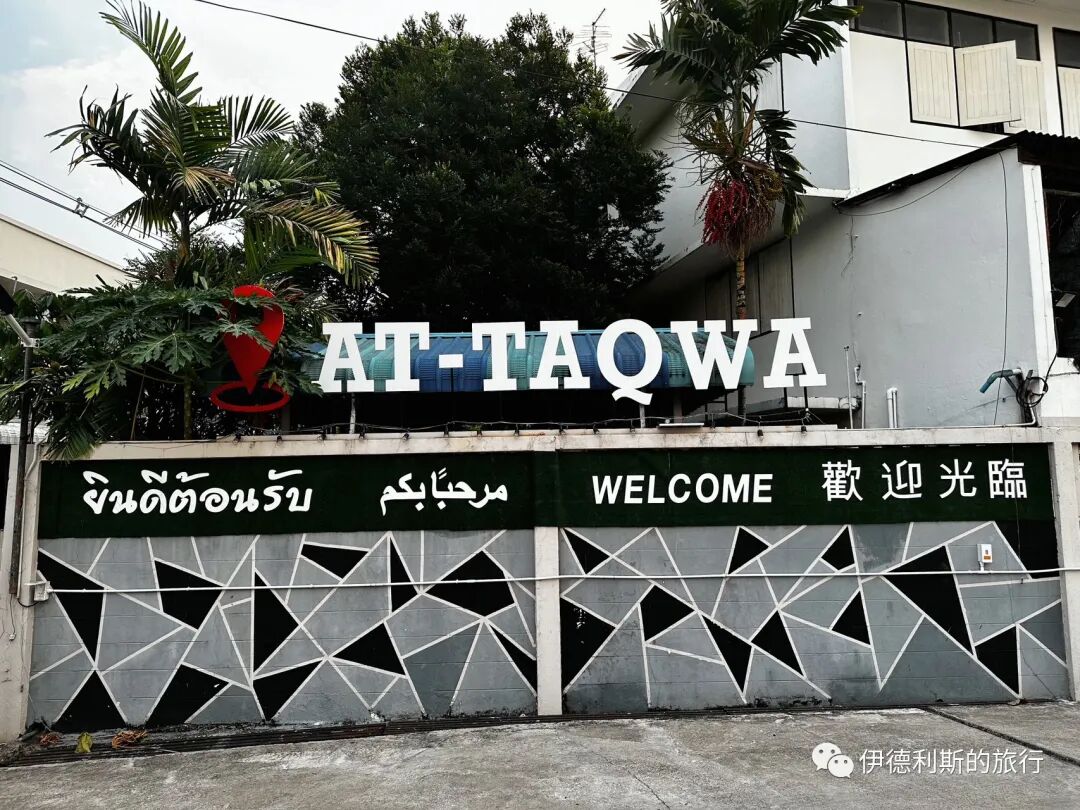
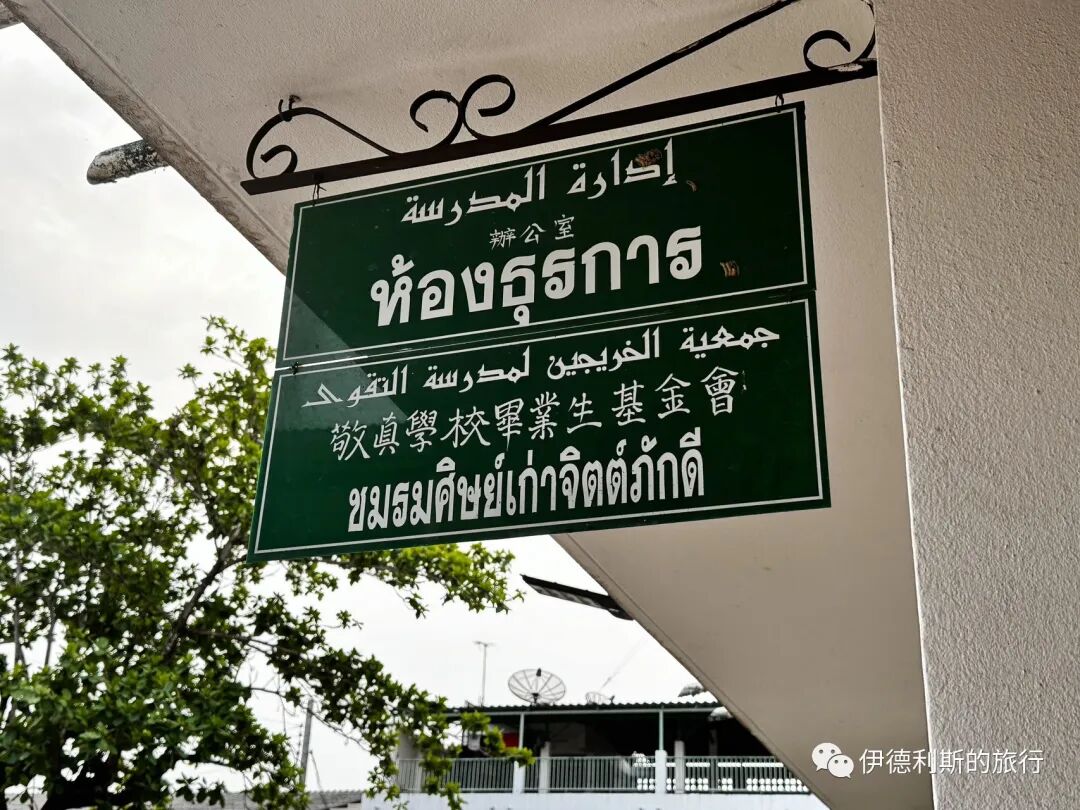
In the evening, we performed the evening prayer (namaz) at Nurul Mosque, located outside the White Elephant Gate (Chang Phuak Gate) in northern Chiang Mai. When I visited Chiang Mai in 2017, the mosque was being rebuilt, and now the new building is just finished. We met Grand Imam Mustafa here. He was the teacher of Master Ma when he attended Jingzhen School 30 years ago. He is highly respected throughout the entire Muslim community in Chiang Mai. Grand Imam Mustafa's daughter runs an Islamic bookstore at the entrance of Wang He Mosque. We visited it before we left, and I will share more about it later.
Like the Chang Khlan Mosque community, the Nurul Mosque community is a South Asian one. Many ancestors of the Haw Muslims (gaomu) came from Bangladesh. They arrived in Chiang Mai via Myanmar to trade during the British India period in the 19th century and later made a living by raising cattle. During the Partition of India and Pakistan in 1947, more Bengali Muslims moved here to escape the chaos. After the 1960s, Chiang Mai banned cattle from entering the city. Some Haw Muslims moved to the Chang Khlan Mosque community, which is further from the old city. Because of this, the number of Haw Muslims at Nurul Mosque is now the smallest among the four mosque communities in downtown Chiang Mai.
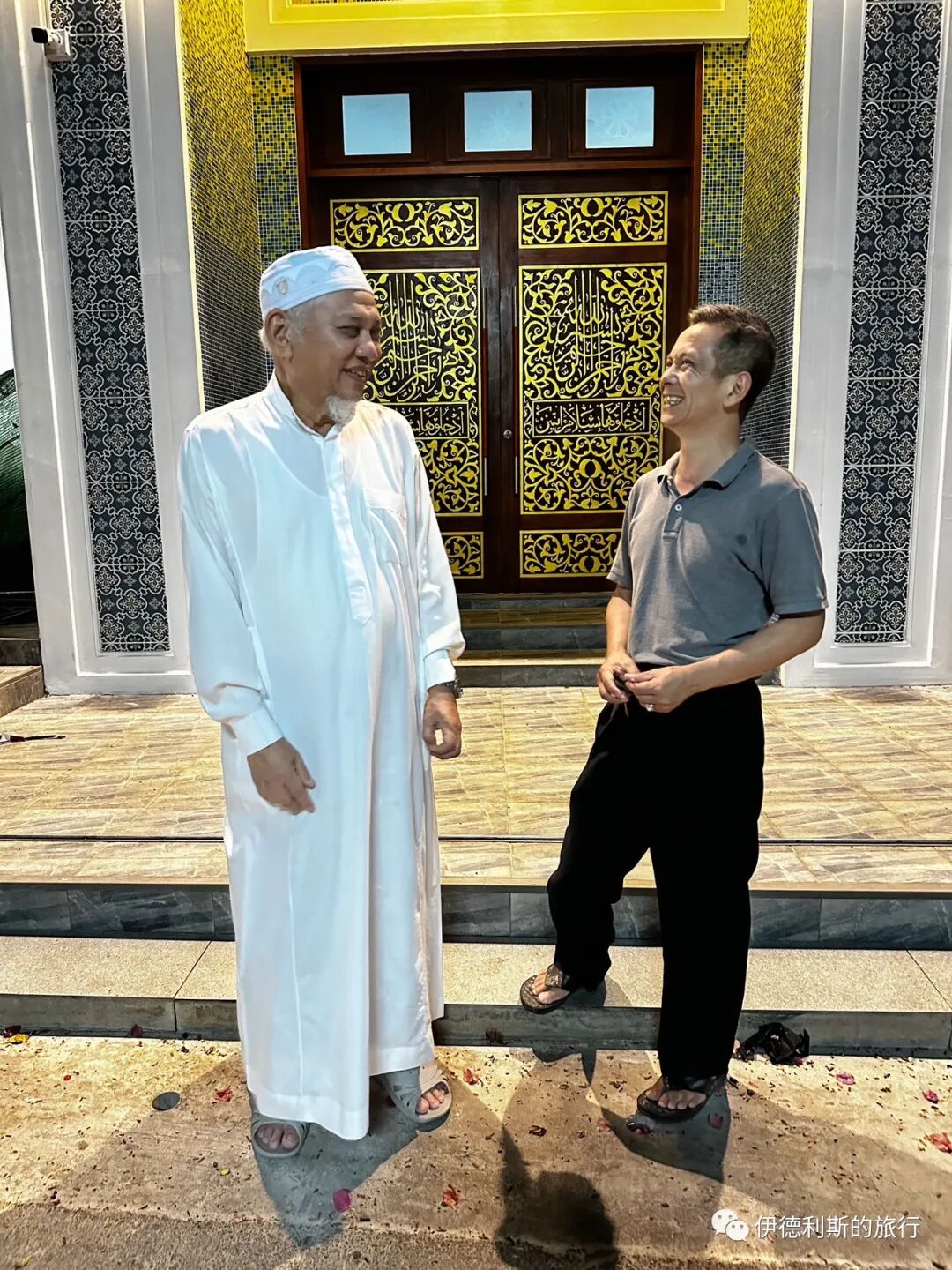
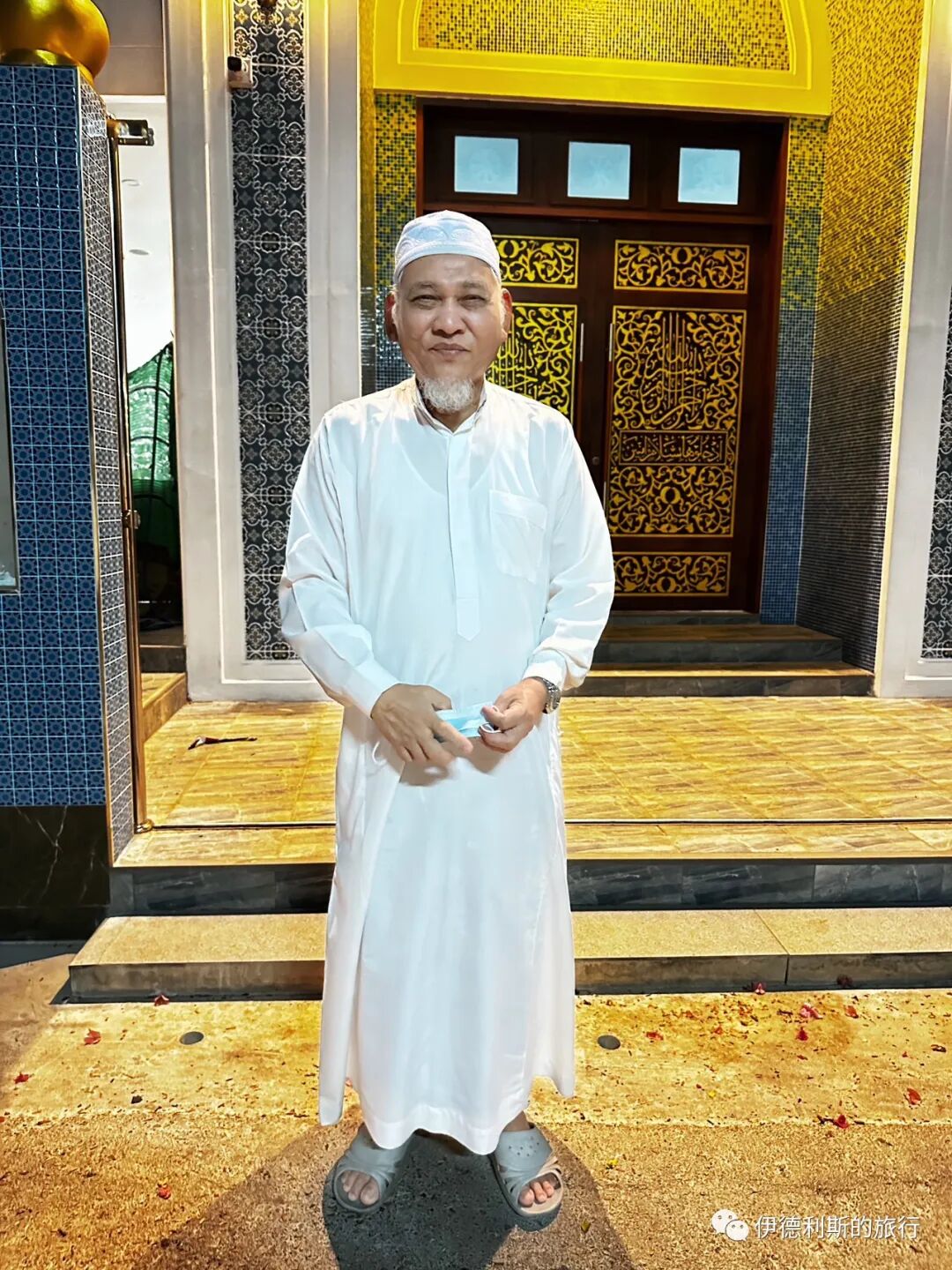
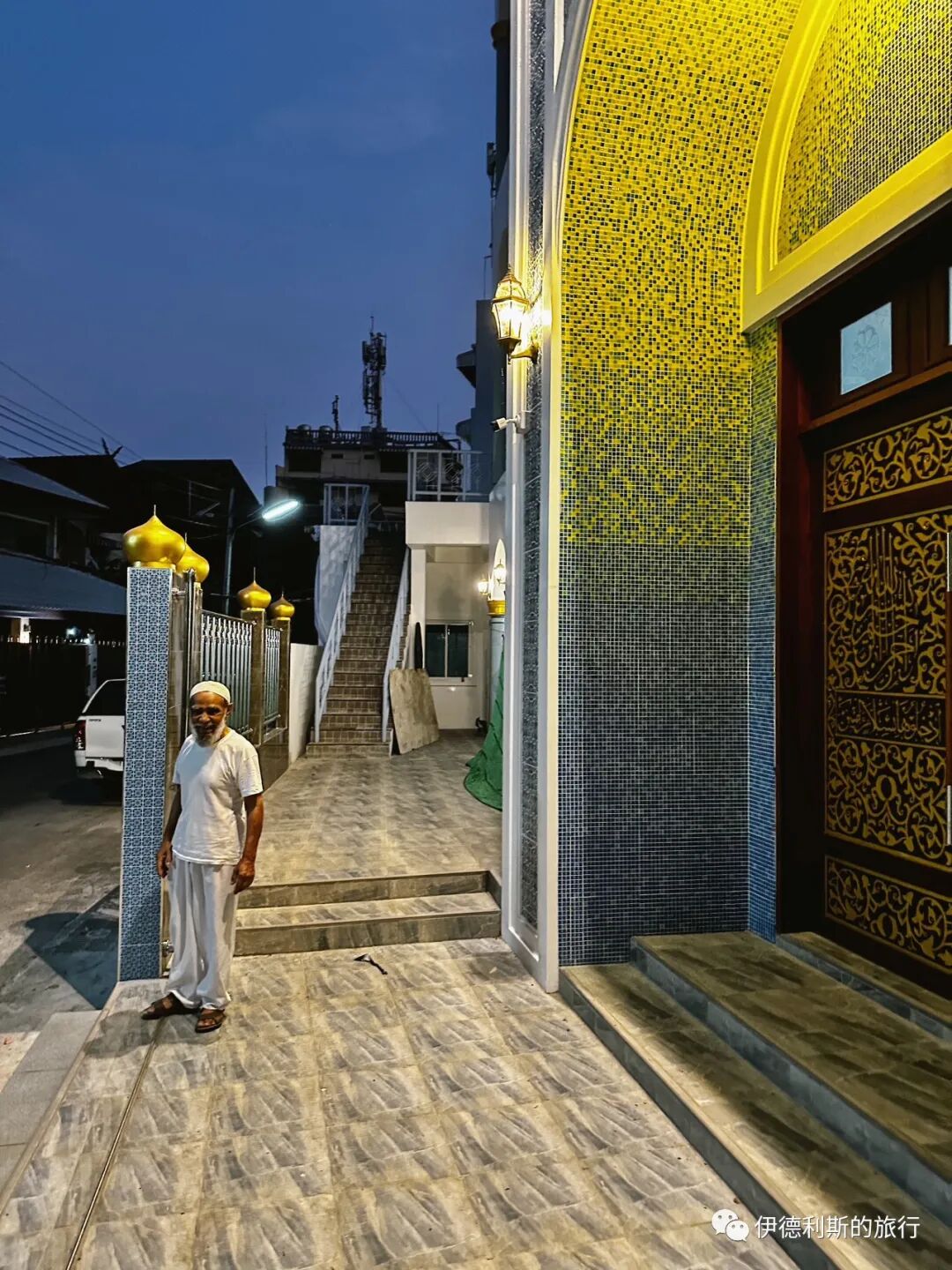
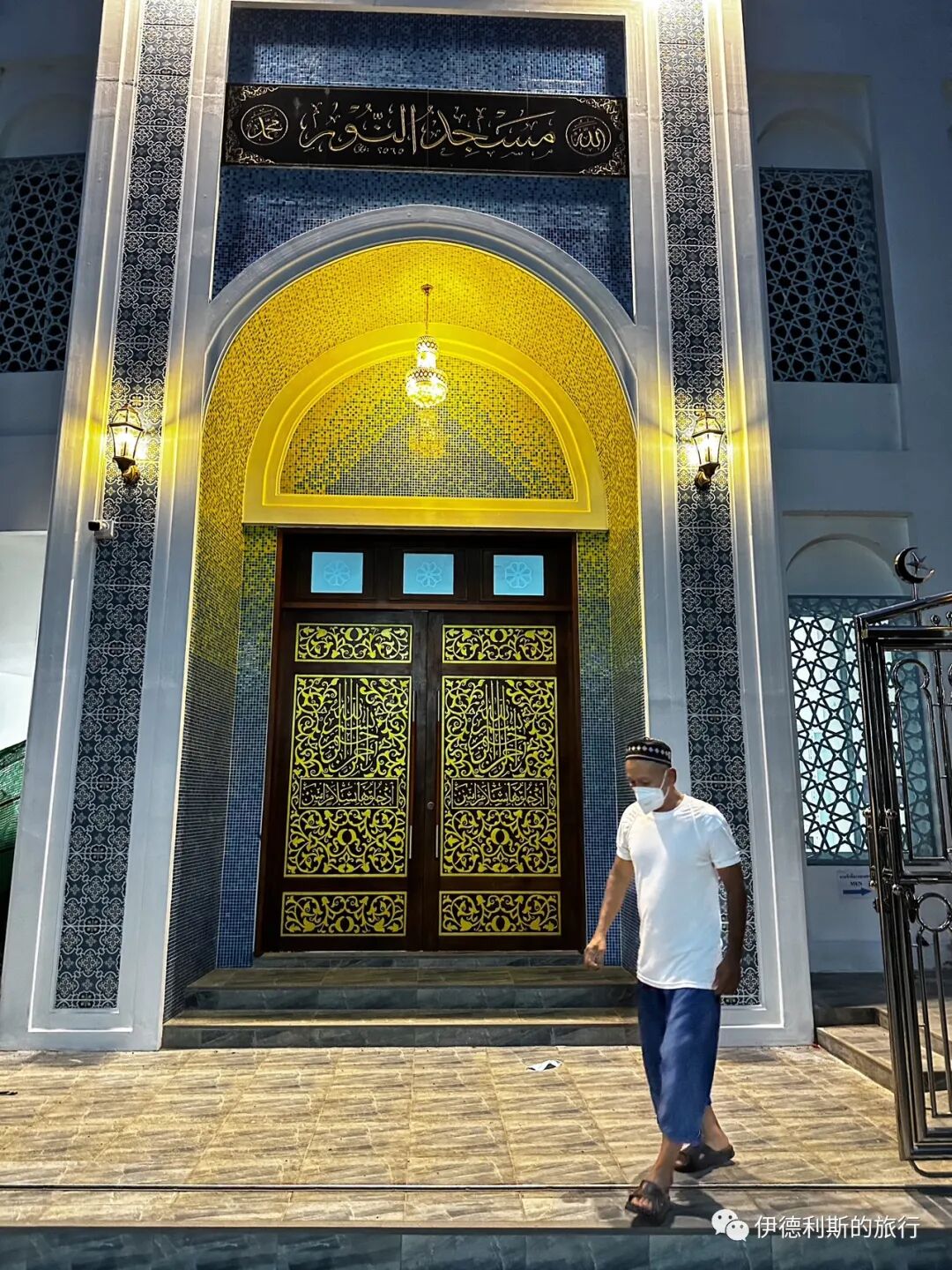
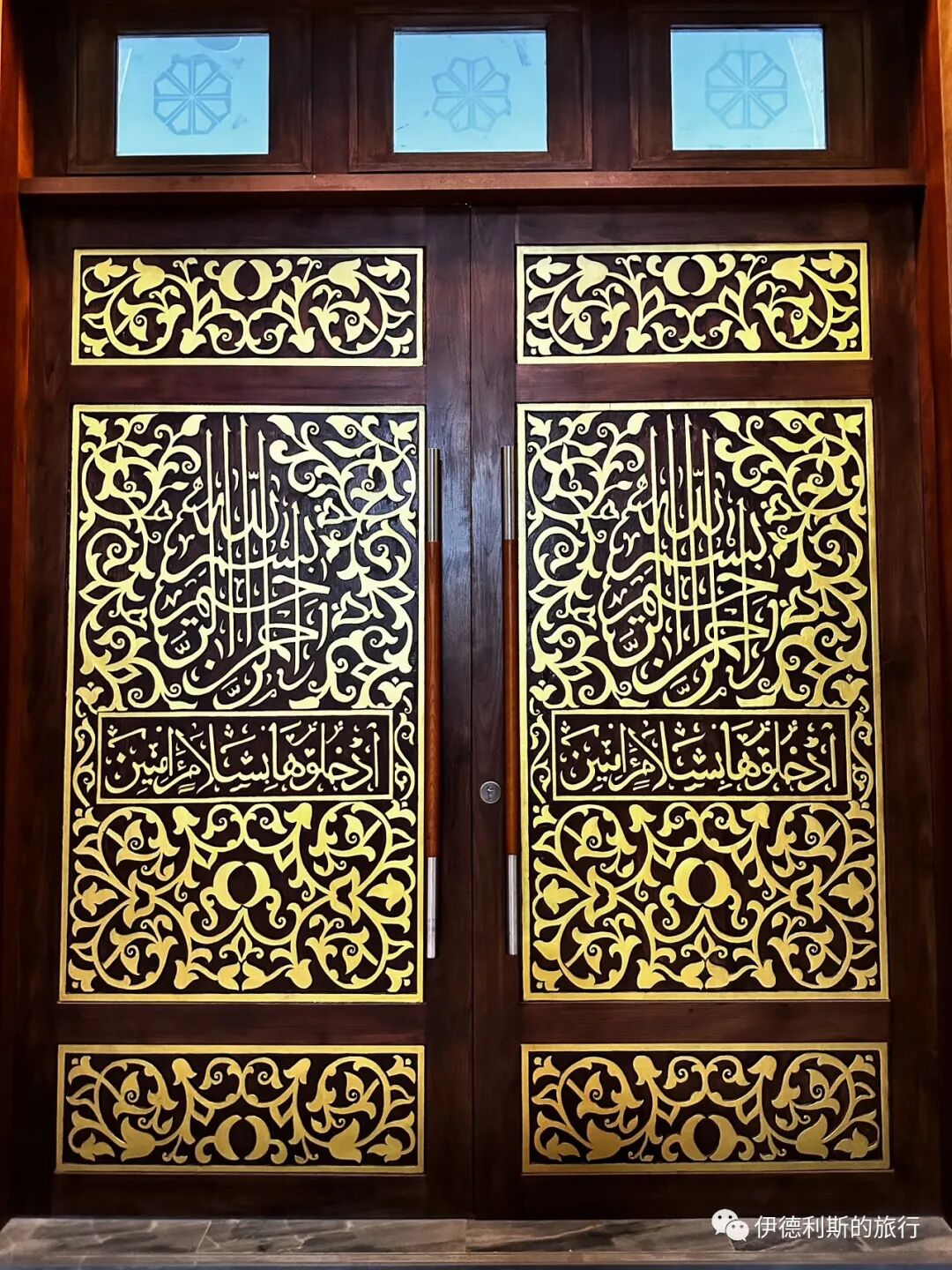
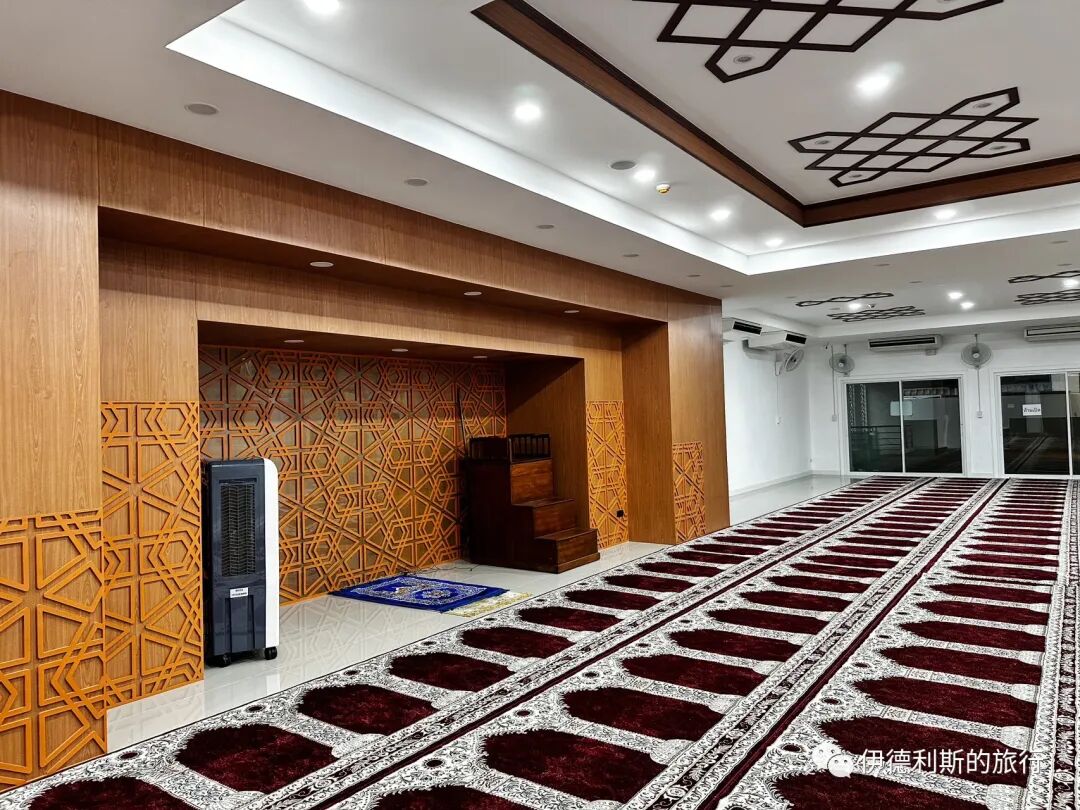
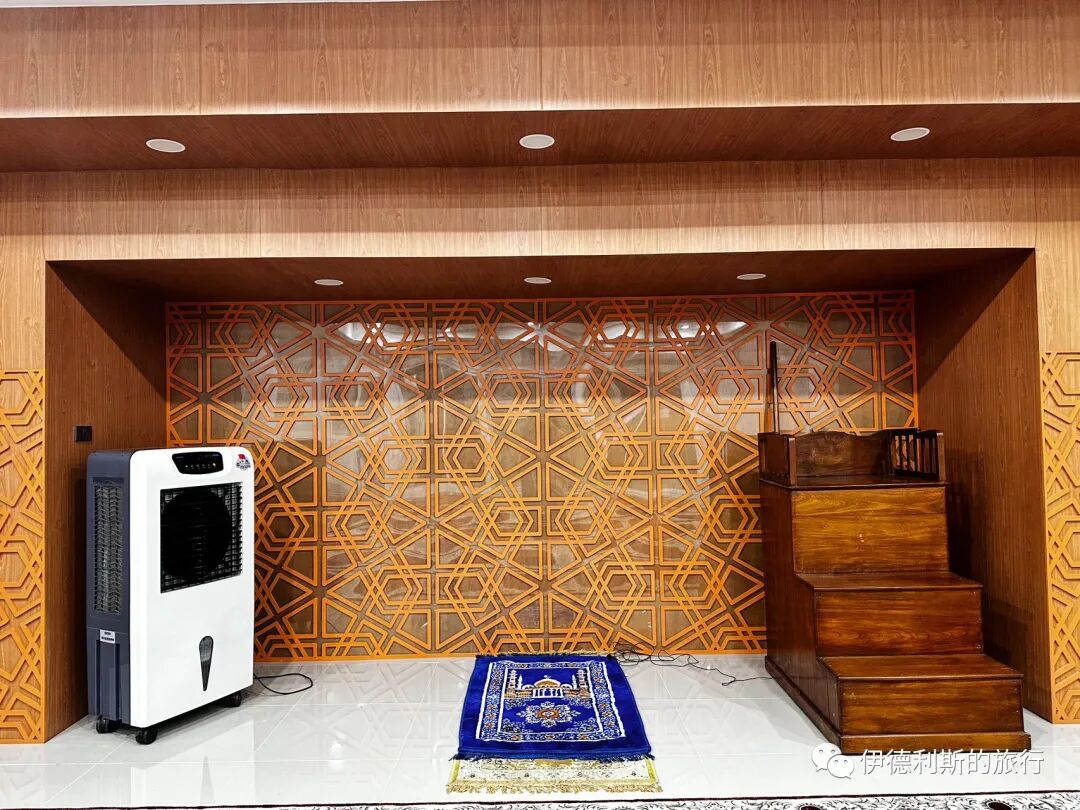
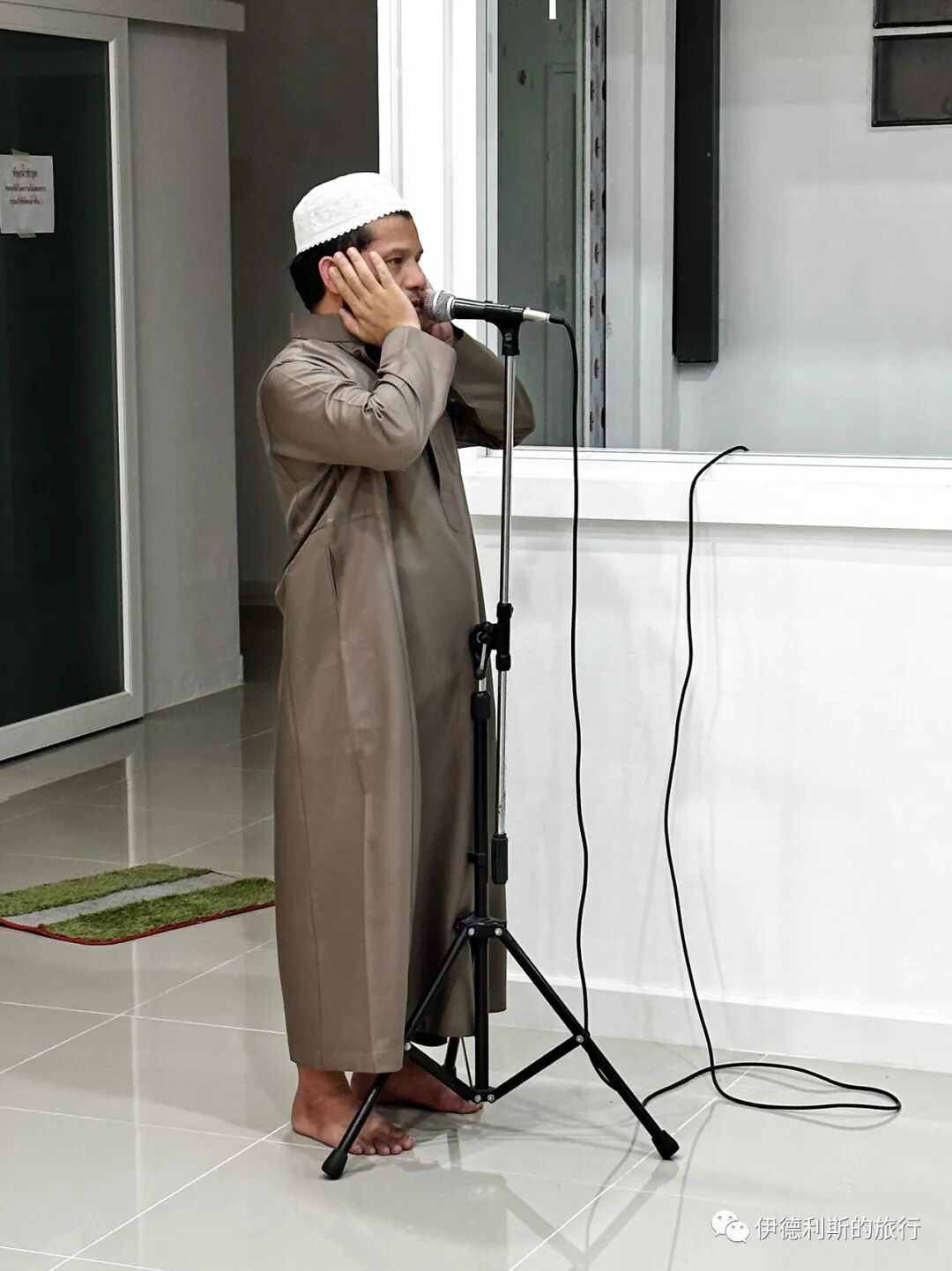
We had dinner at a Yunnan-style restaurant next to Wang He Mosque. The restaurant is owned by Na Zhongwei, a board member of Wang He Mosque, and the building itself is property of the mosque. Although the Yunnan restaurant has been open for many years, it only moved to its current location recently. It is very convenient to eat there after visiting Wang He Mosque.
We ordered stir-fried holy basil beef (dapao niurou), steamed sea bass, pumpkin tips, and stir-fried tofu puffs. You can choose the portion size for dishes here, and some even come in small, medium, or large sizes, which is perfect for tourists. Hui Muslims from Yunnan have lived in Chiang Mai for over a hundred years, and their tastes have changed. For example, the sour and spicy levels are much stronger than what you would find in Yunnan. In Yunnan, a purely vegetarian dish like pumpkin tips usually wouldn't have chili, but in Thailand, they definitely add chili to it.
Besides being a bit spicy, I really love the food of the Yunnan Hui Muslims in Thailand. I especially love the stir-fried holy basil beef; it goes so well with rice. Holy basil (dapao) is also known as sacred basil. It is native to South Asia and widely grown in the tropical regions of Southeast Asia. Stir-frying meat with holy basil leaves is a famous Thai dish. This tofu stir-fried in a sour and spicy sauce is also delicious. The balance of sour, sweet, and spicy is just right.
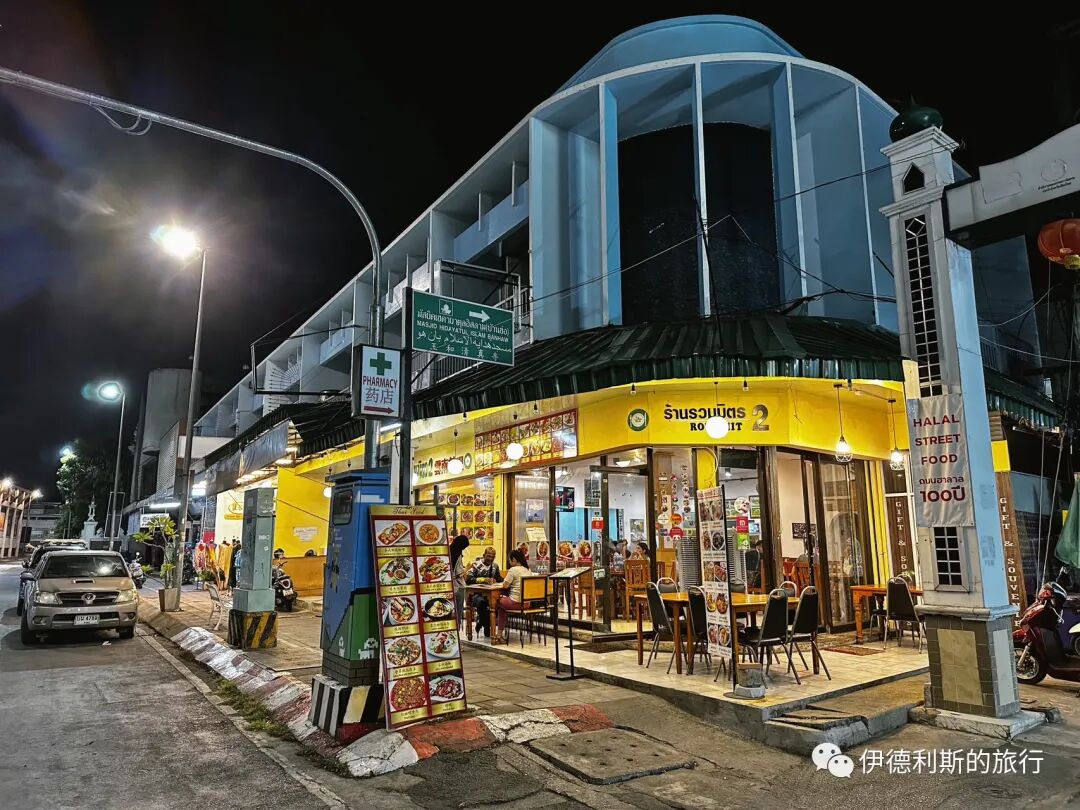
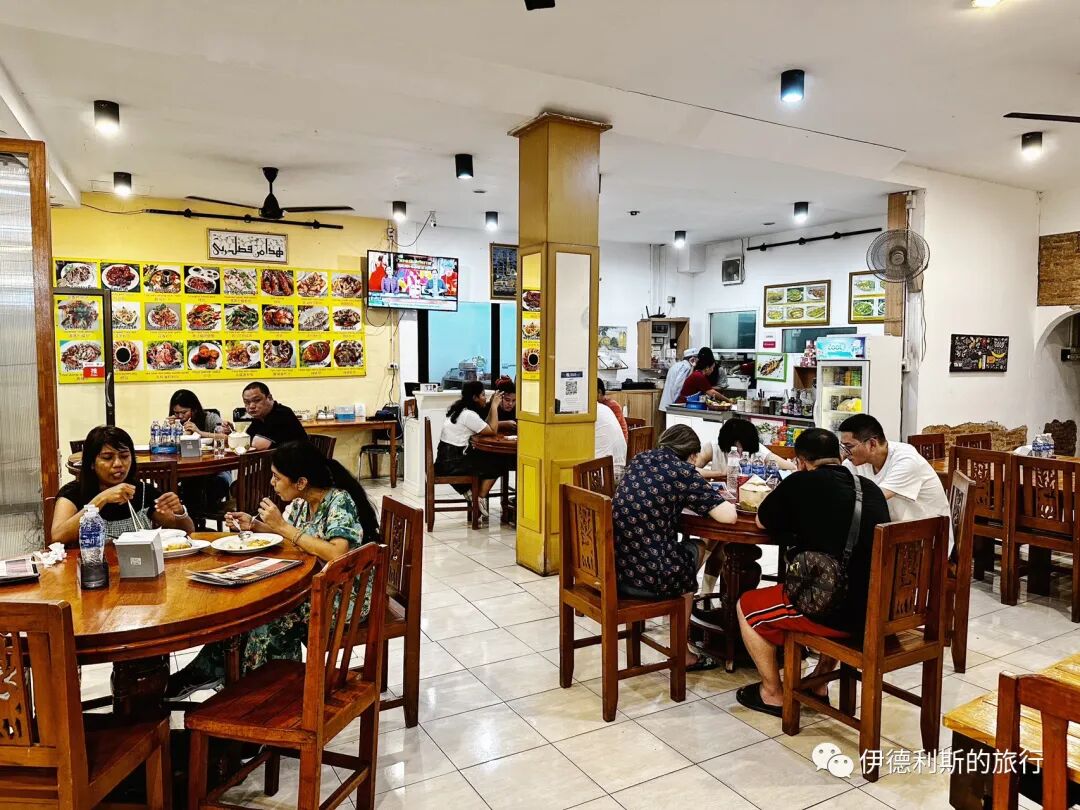
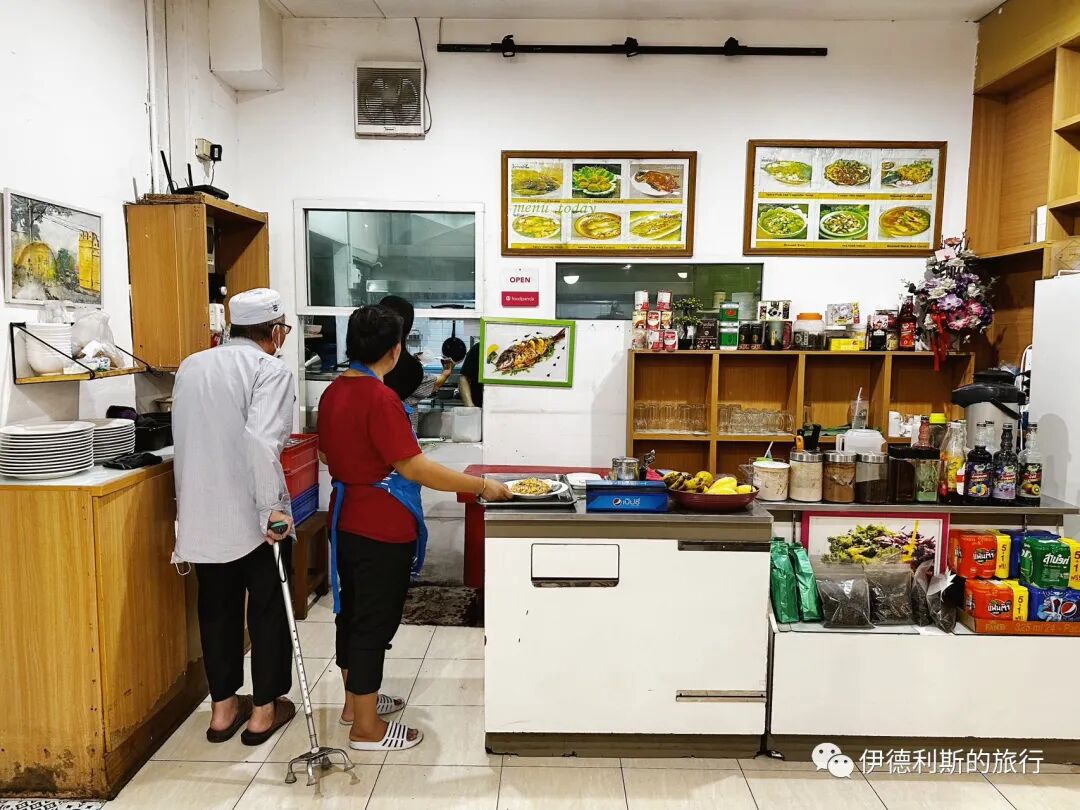
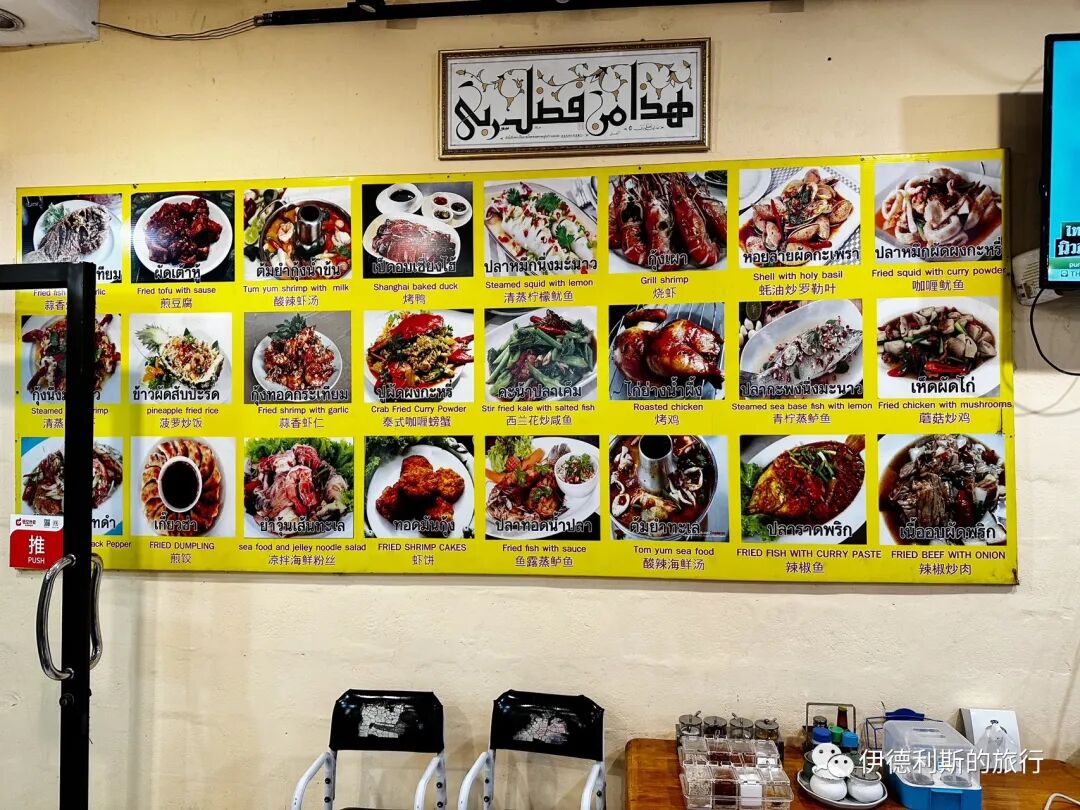
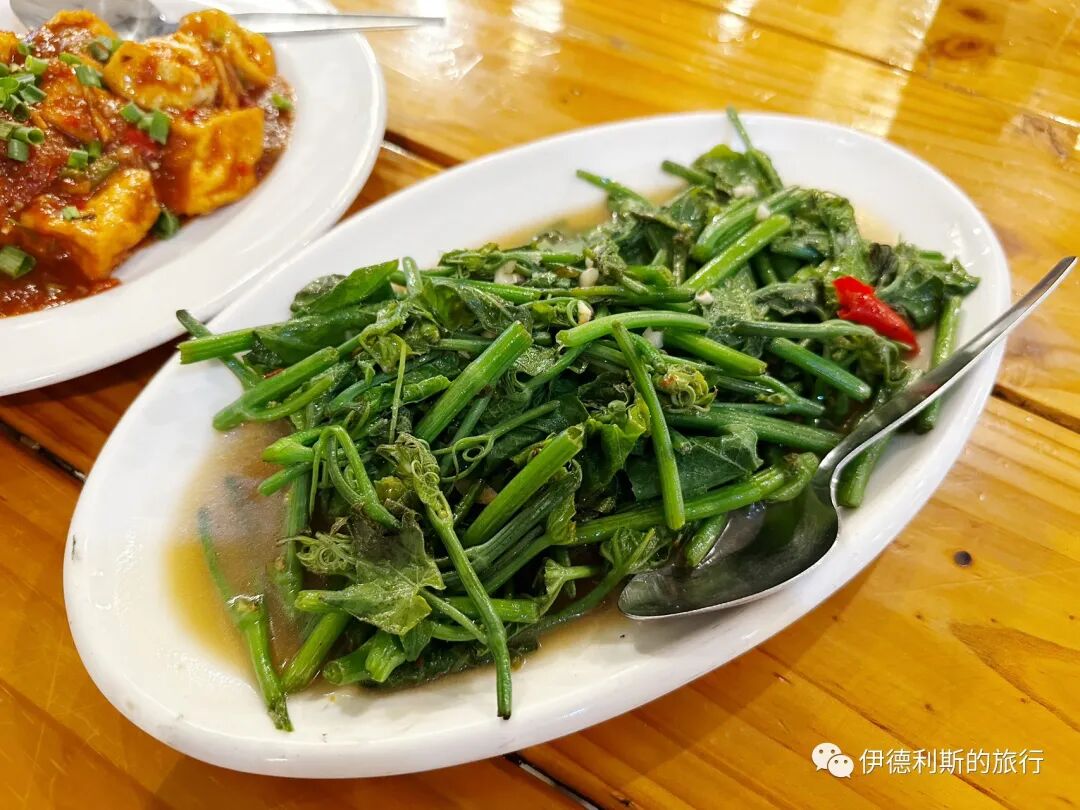
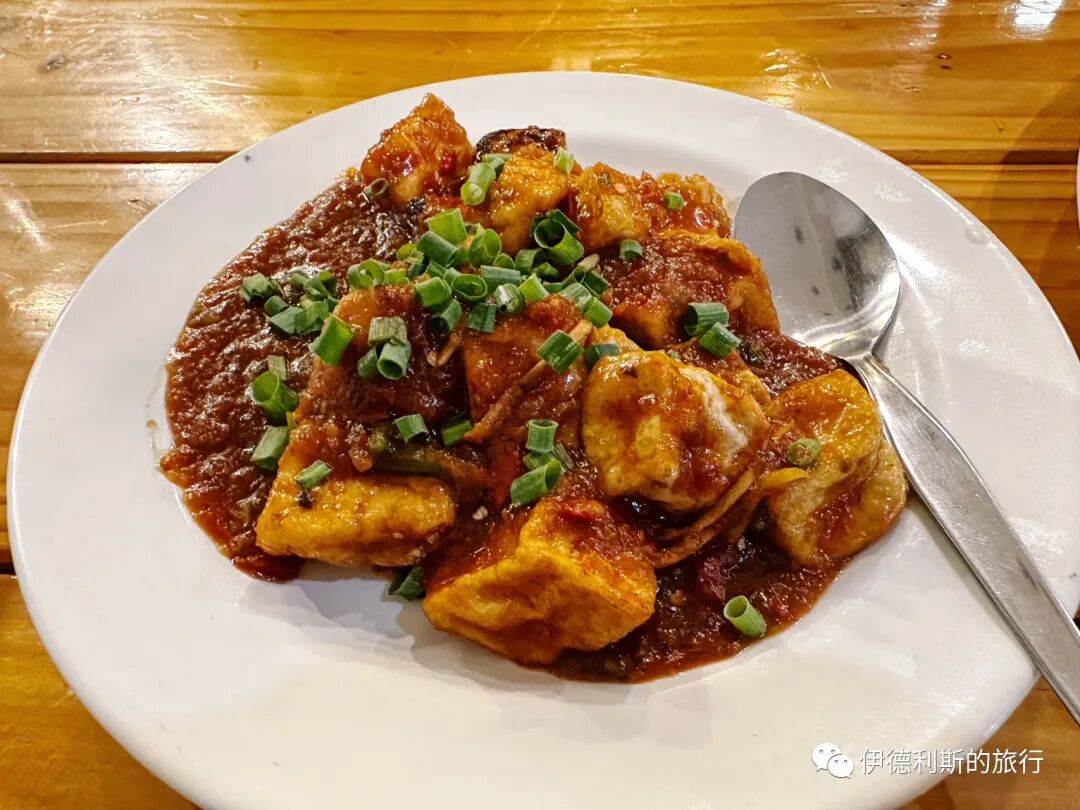
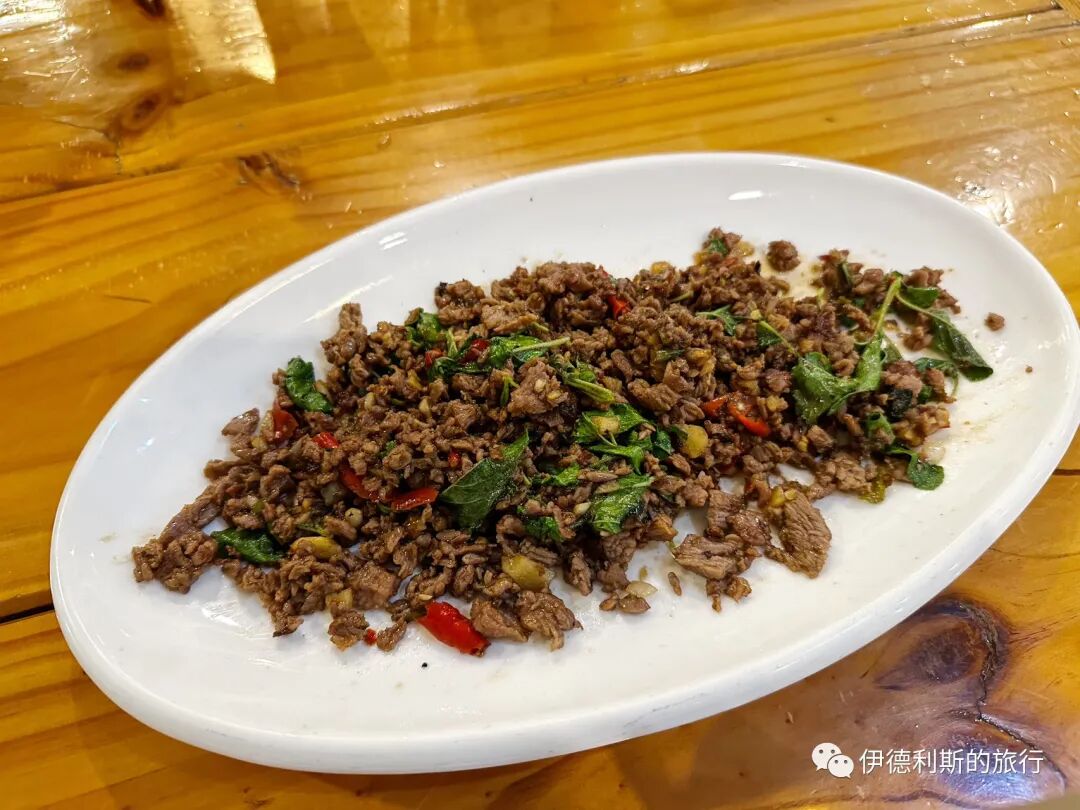
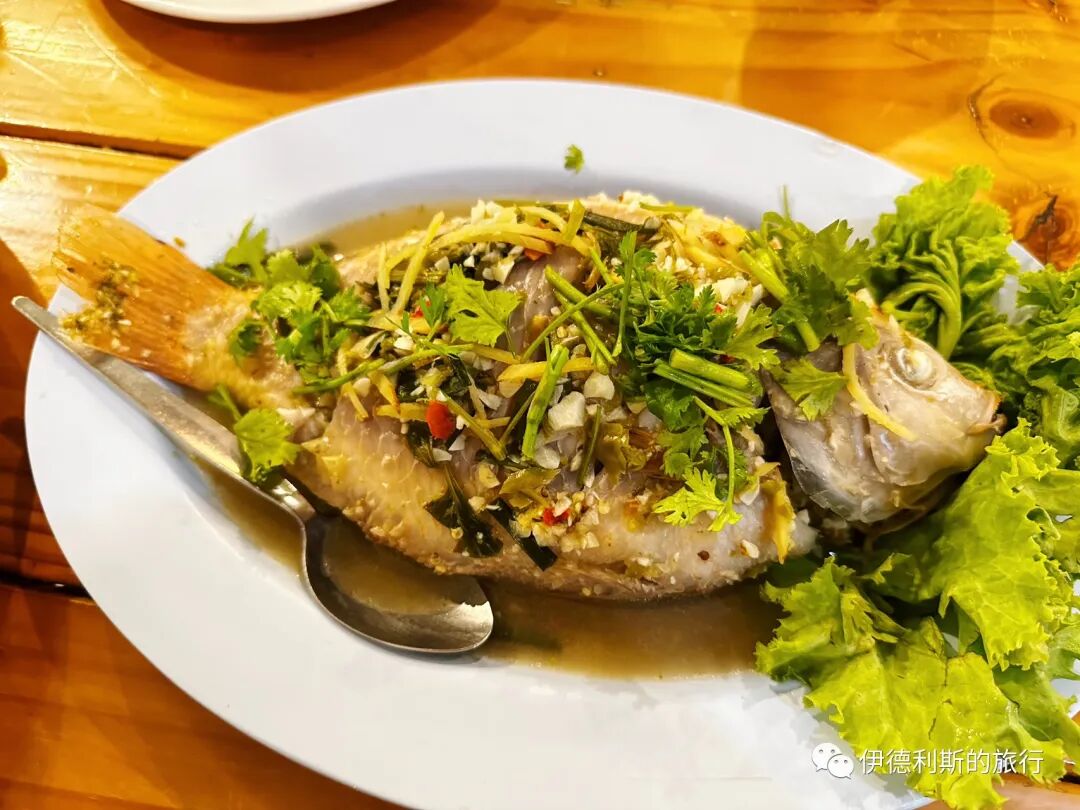
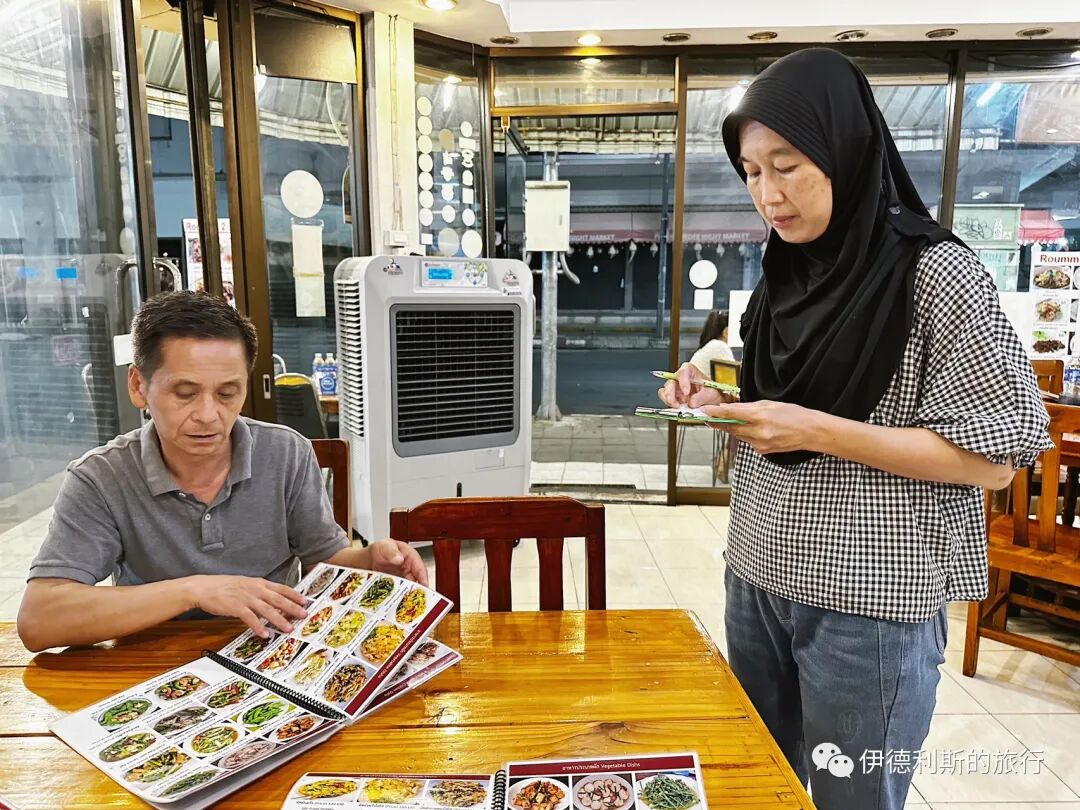
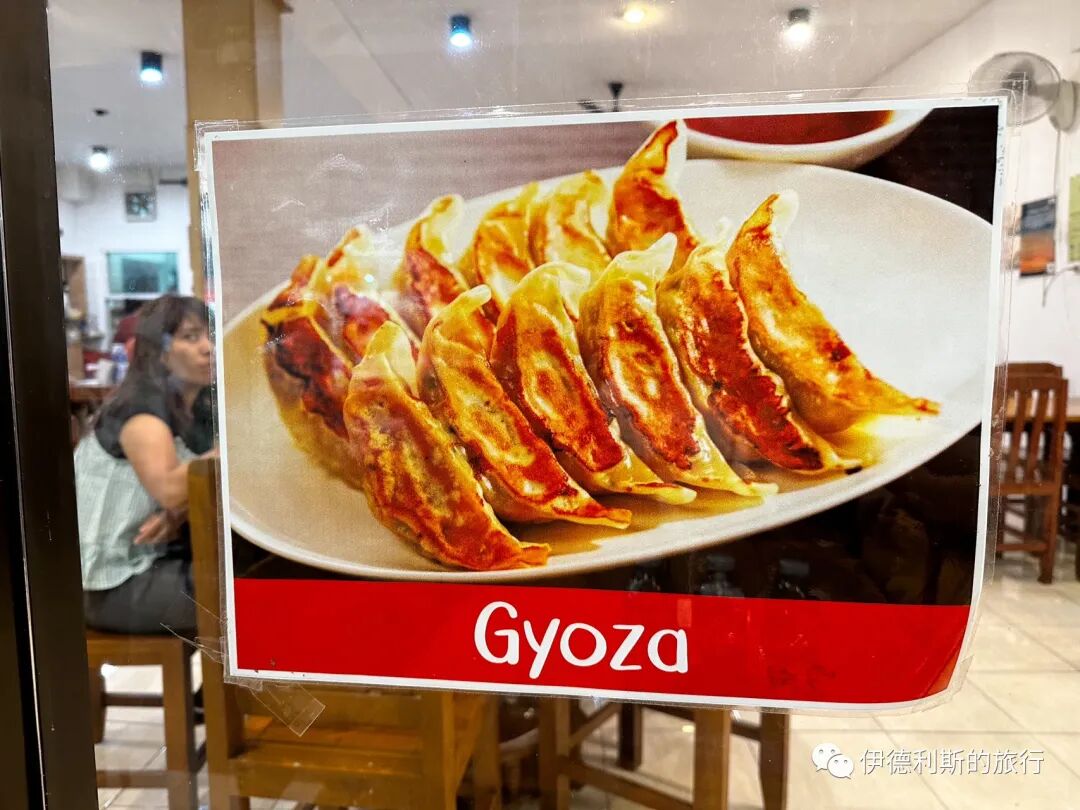
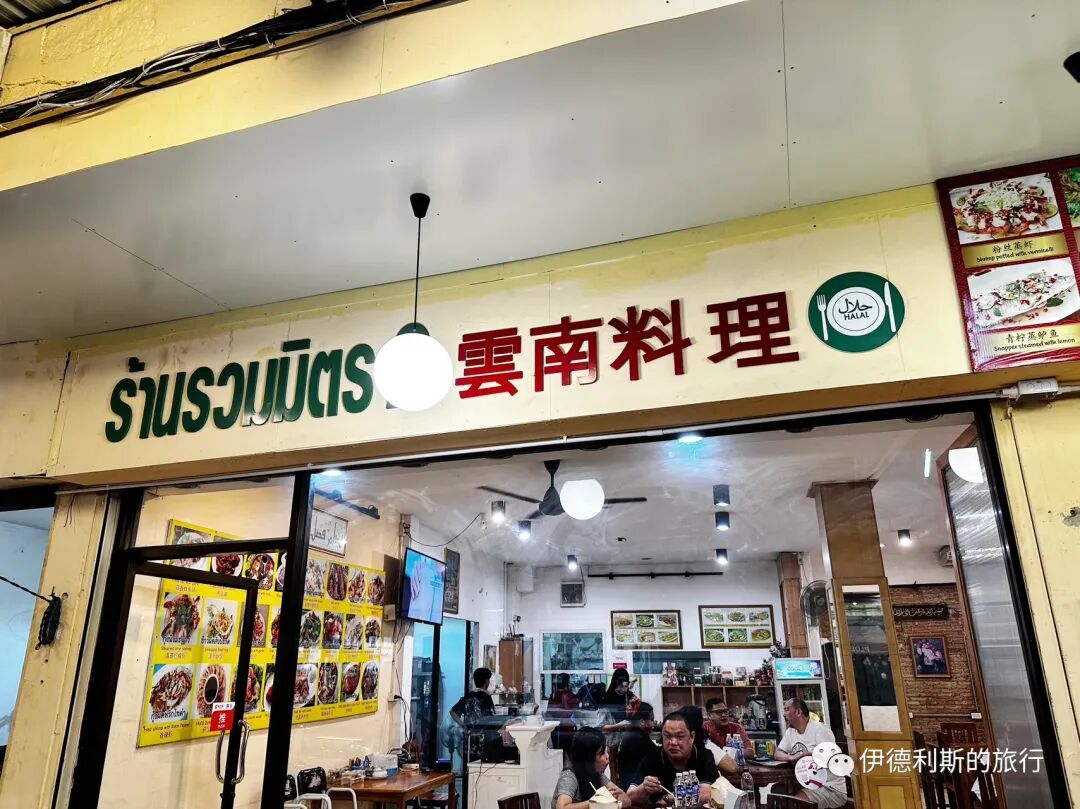
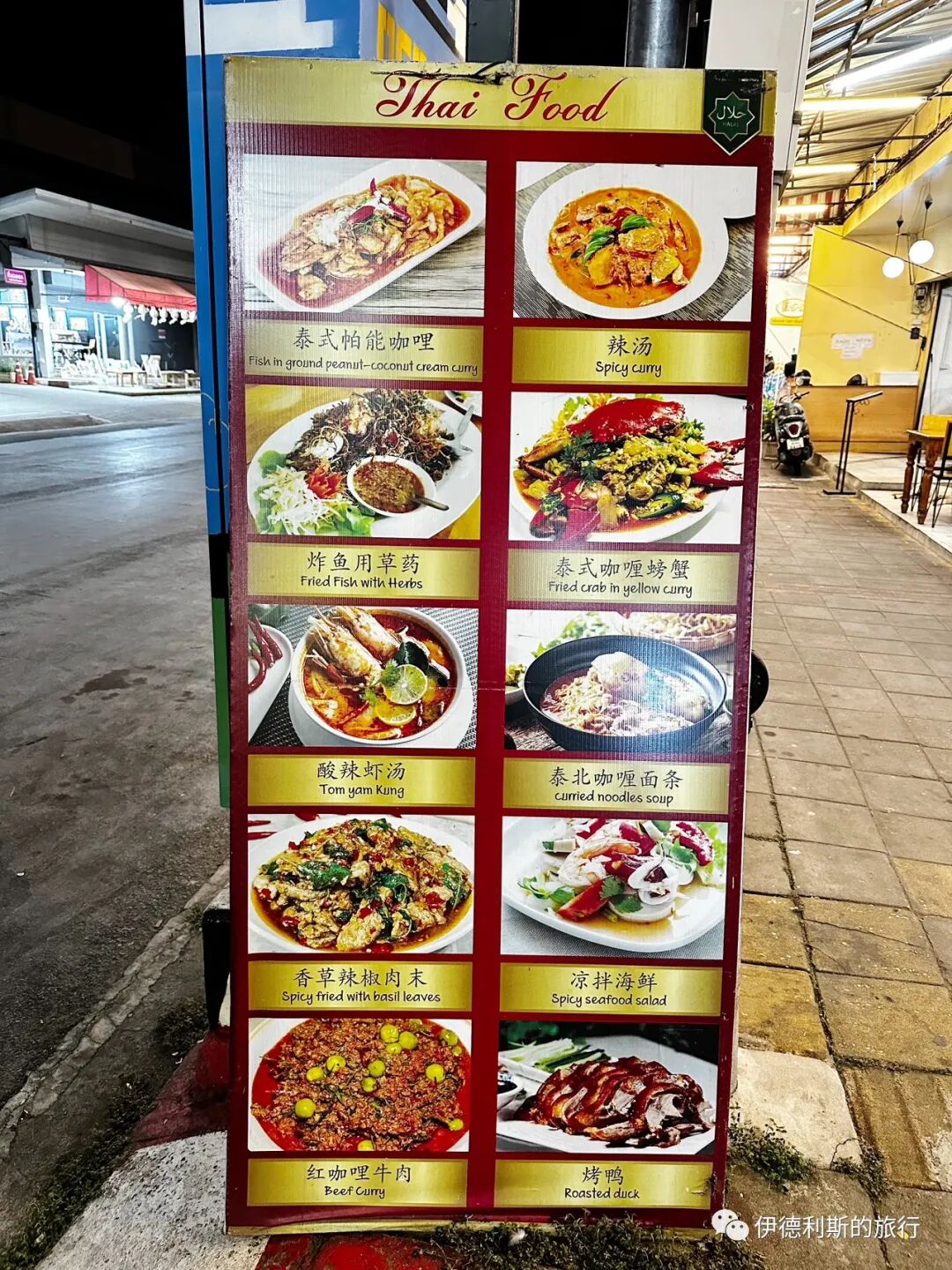
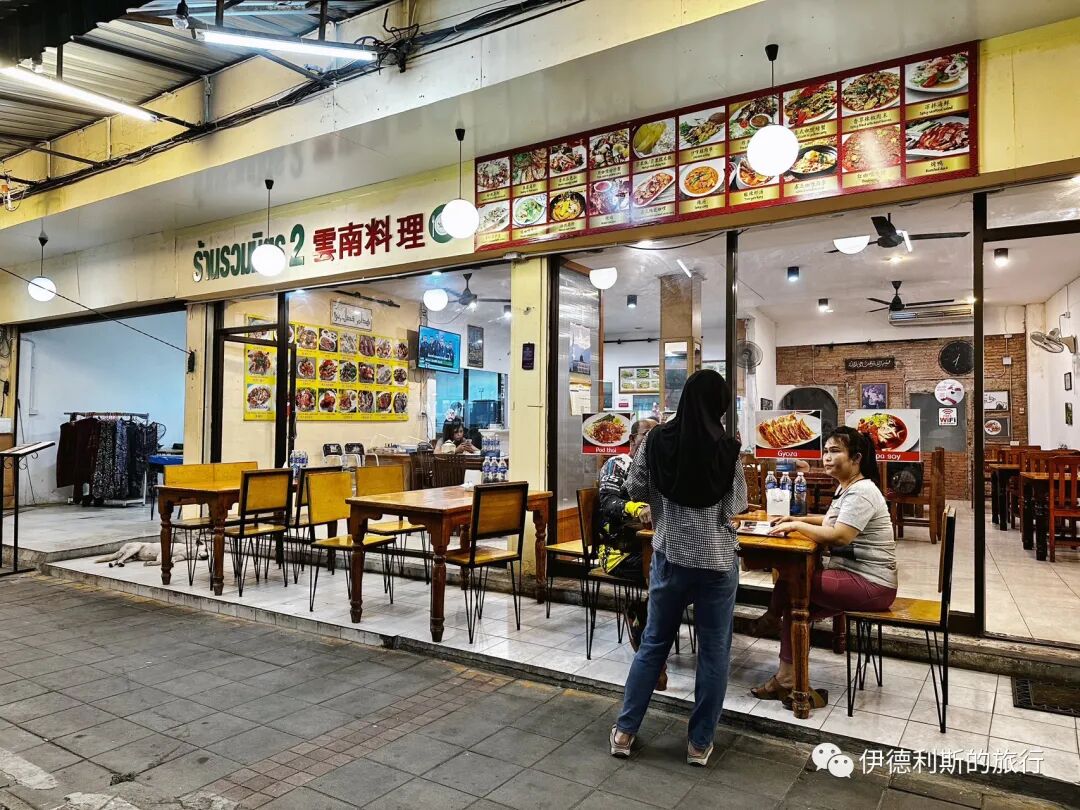
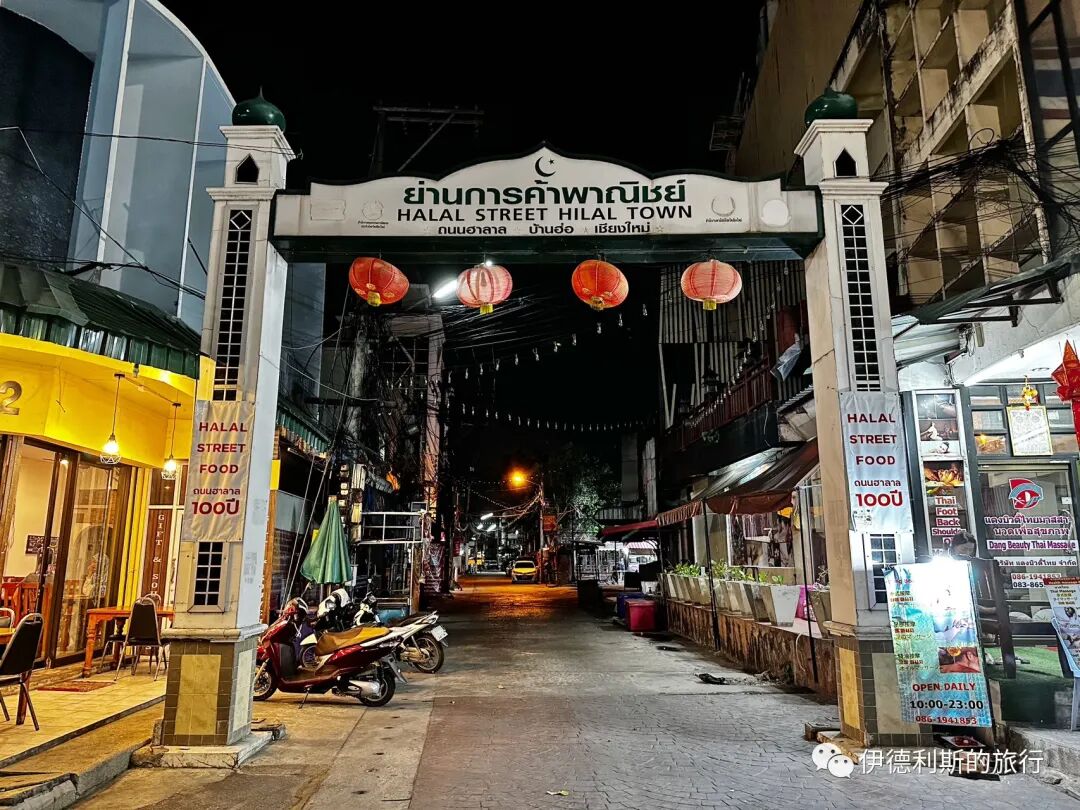
Then, on Chang Khlan Road, we found an Emirati restaurant. It had a sign in Chinese that read 'Arabic food, Indian food, Chinese food, Italian food.' It is the most 'Maritime Silk Road' restaurant I have ever seen, haha.
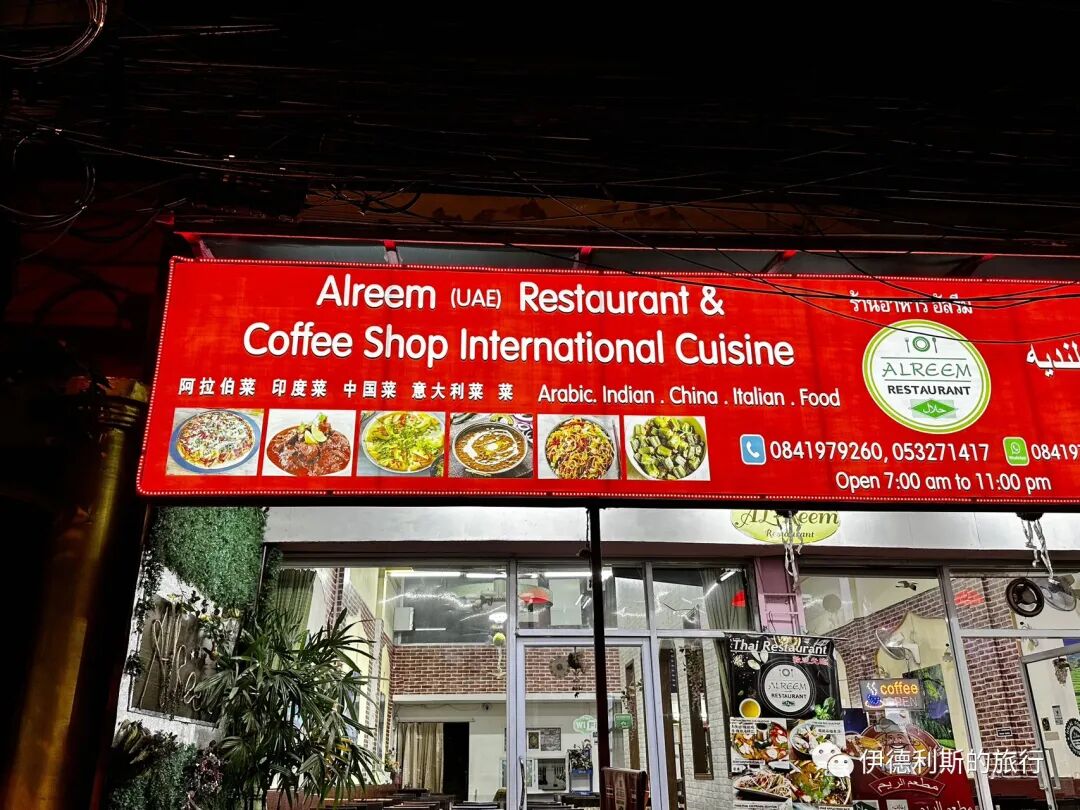
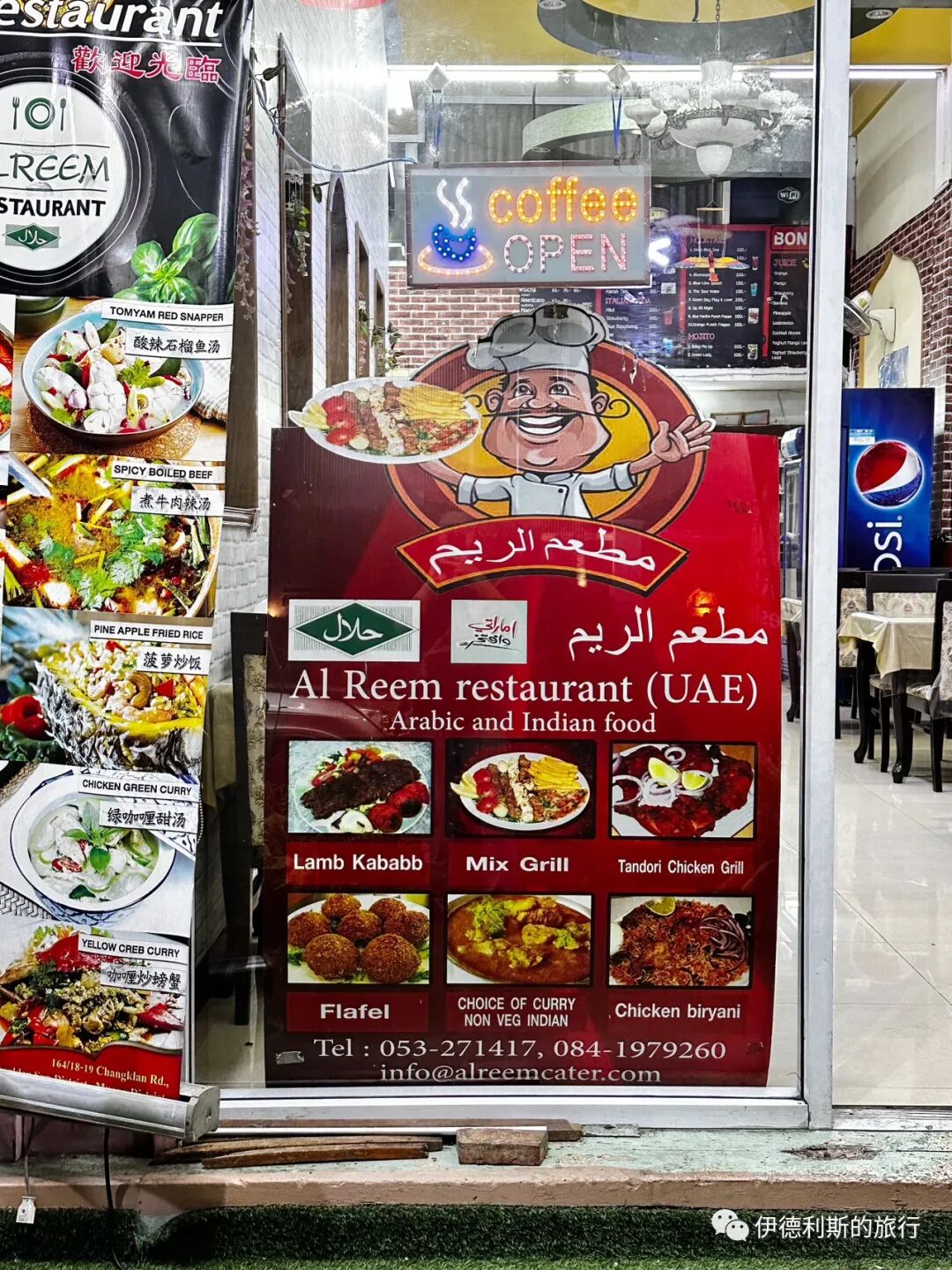
Halal Travel Guide: Shadian, Yunnan — Hui Muslims, Mosques and Local History
Articles • ali2007fr posted the article • 0 comments • 213 views • 2026-05-17 12:23
Summary: Shadian, Yunnan — Hui Muslims, Mosques and Local History is presented here as a firsthand travel account in clear English, beginning with this scene: Author: Zainab. The account keeps its focus on Shadian Travel, Hui Muslims, Yunnan Mosques while preserving the names, places, food, and historical details from the Chinese source.
Author: Zainab
We traveled from Jianshui Ancient City to Shadian and ate at Shadian Shihui in front of the Great Mosque. We had stir-fried chayote tips (fengshou guajian), five-spice chicken, sweet and sour pork tenderloin, cold tossed cattail shoots with wood ear mushrooms, and steamed lotus root with rice flour (fenzheng ou). The food options here are quite rich! Since a banquet had just finished when we arrived, our food came out very quickly.
The Shadian Great Mosque has a very tropical feel.
Yufeng School
In the mid-Guangxu period of the Qing Dynasty, responding to the imperial decree to stop the imperial examinations and start schools, the famous late Qing general and Yunnan Kaihua Town commander Bai Jinzhu led the Shadian villagers to donate funds and establish their own school in 1892. Because the school was located at the foot of Jinyu Mountain, it was named Yufeng Academy. Bai Jinzhu was a famous anti-French general who led from the front during the 1884 Sino-French War and was awarded the title of Shengyong Baturu.
In 1905, following the Qing Dynasty's order to establish primary schools in every township, Yufeng Academy was renamed Shadian Primary School. It was divided into classes A, B, C, and D, with over 60 students. In 1914, Bai Jinzhu's son, Bai Liangcheng, returned to Shadian after graduating from the Yunnan School of Law and Political Science and was hired as the principal of Yufeng Academy. Bai Liangcheng strongly advocated for modern education and added subjects like Chinese, arithmetic, physical education, and music to the school.
Due to the increasing number of students, Bai Liangcheng and Commander Bai Qicheng led the villagers to rebuild the academy in 1921, and it was completed in 1923. The new academy had four classrooms, an office, and a library. Bai Liangcheng wrote the plaque for Yufeng School and the couplet on the stone pillars on both sides, which reads: 'The elegant spirit of Jinyu Mountain brings prosperity to generations of scholars, the clear stream circling the jade belt sets a model for students for a thousand years.' Afterward, Bai Liangcheng hired Arabic scholar Ma Jian, who had returned home after graduating in Kunming, along with Wang Liangbi, Wang Shupu, Ma Ayuanqing, and others as teachers, and changed the school into a primary and junior high school.
In 1943, Bai Liangcheng also founded Yufeng Middle School. At that time, many professors from the National Southwestern Associated University had a good relationship with Bai Liangcheng. He hired Professor Xia Kangnong, Dean of the School of Science at the university, as the principal of Yufeng Middle School, and invited experts and scholars like Tongji University professor Cao Wuli, philosopher Zheng Xin, and historian Bai Shouyi to teach there until the victory of the War of Resistance in 1945.
After Yufeng Primary School moved to a new campus in 1987, the old site of Yufeng Academy was left vacant. It was renovated in 2012 and opened as the Shadian branch of the Honghe Prefecture Library and the Shadian Village History Museum.
Old houses in Shadian
There is a well at the entrance of Yufeng Academy called Xiying Longtan, which was reportedly built by Bai Shouyou and his followers during the Wanli period of the Ming Dynasty. The well is 20 meters deep, and folklore says there is a dragon inside, which is why it is called Dragon Pool (Longtan).
During the Qianlong period of the Qing Dynasty, Shadian village built walls for defense and constructed seven gatehouses in areas like Xiying, Dongying, and Chuanying. Only the Xiying gatehouse remains today, which is a structure rebuilt during the Xianfeng period of the Qing Dynasty. The gatehouse is a two-story brick and wood building. The first floor is for passage, and the second floor is for guards, featuring exquisite carvings and paintings.
There is a stone arch bridge over the Yudai River in Shadian, which was built with funds donated by Bai Shouyou during the Wanli period of the Ming Dynasty. view all
Summary: Shadian, Yunnan — Hui Muslims, Mosques and Local History is presented here as a firsthand travel account in clear English, beginning with this scene: Author: Zainab. The account keeps its focus on Shadian Travel, Hui Muslims, Yunnan Mosques while preserving the names, places, food, and historical details from the Chinese source.
Author: Zainab
We traveled from Jianshui Ancient City to Shadian and ate at Shadian Shihui in front of the Great Mosque. We had stir-fried chayote tips (fengshou guajian), five-spice chicken, sweet and sour pork tenderloin, cold tossed cattail shoots with wood ear mushrooms, and steamed lotus root with rice flour (fenzheng ou). The food options here are quite rich! Since a banquet had just finished when we arrived, our food came out very quickly.
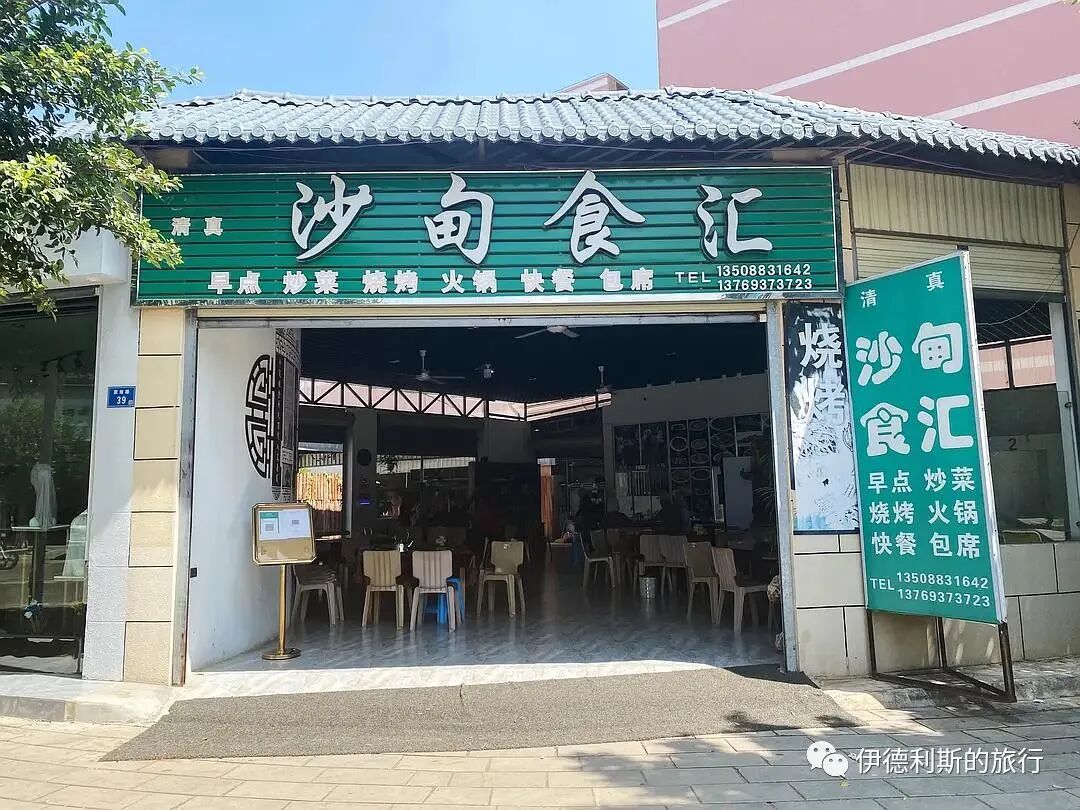
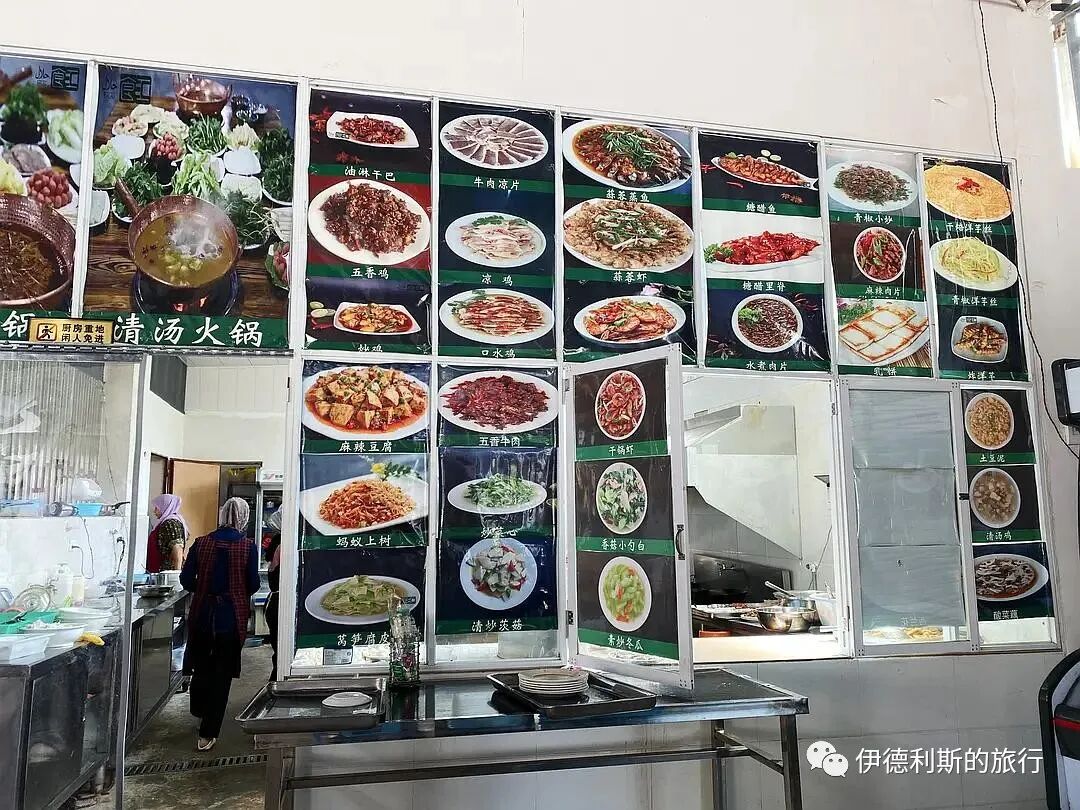
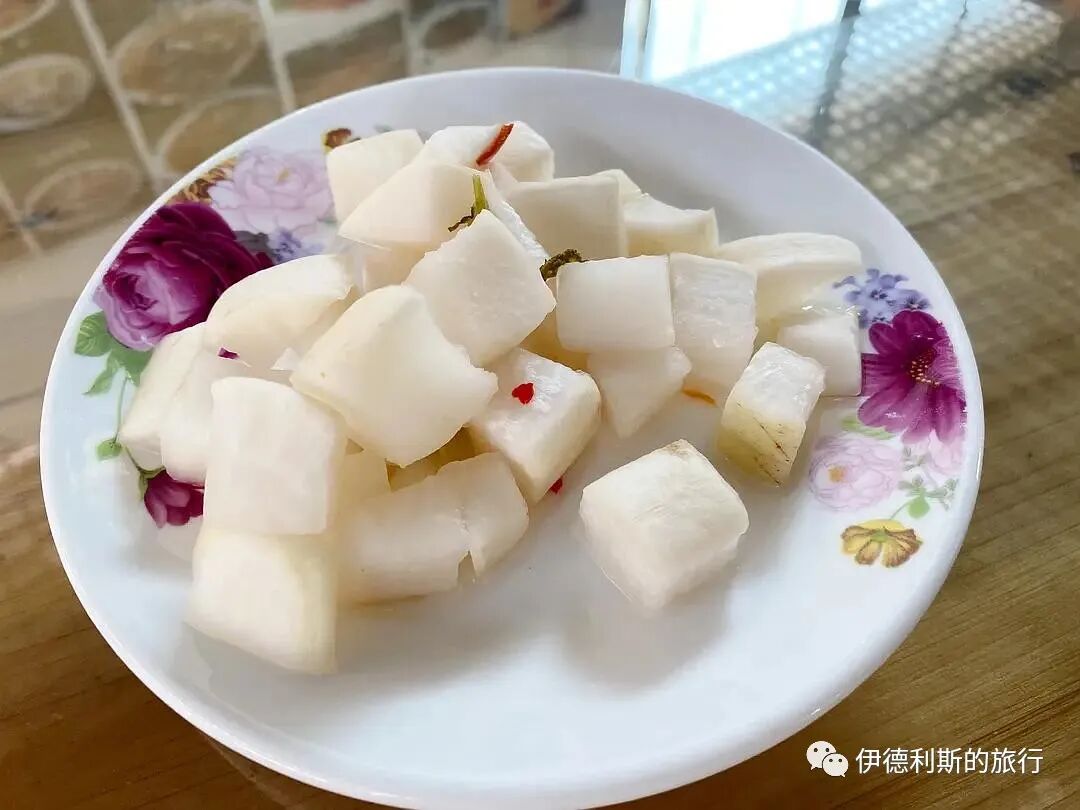
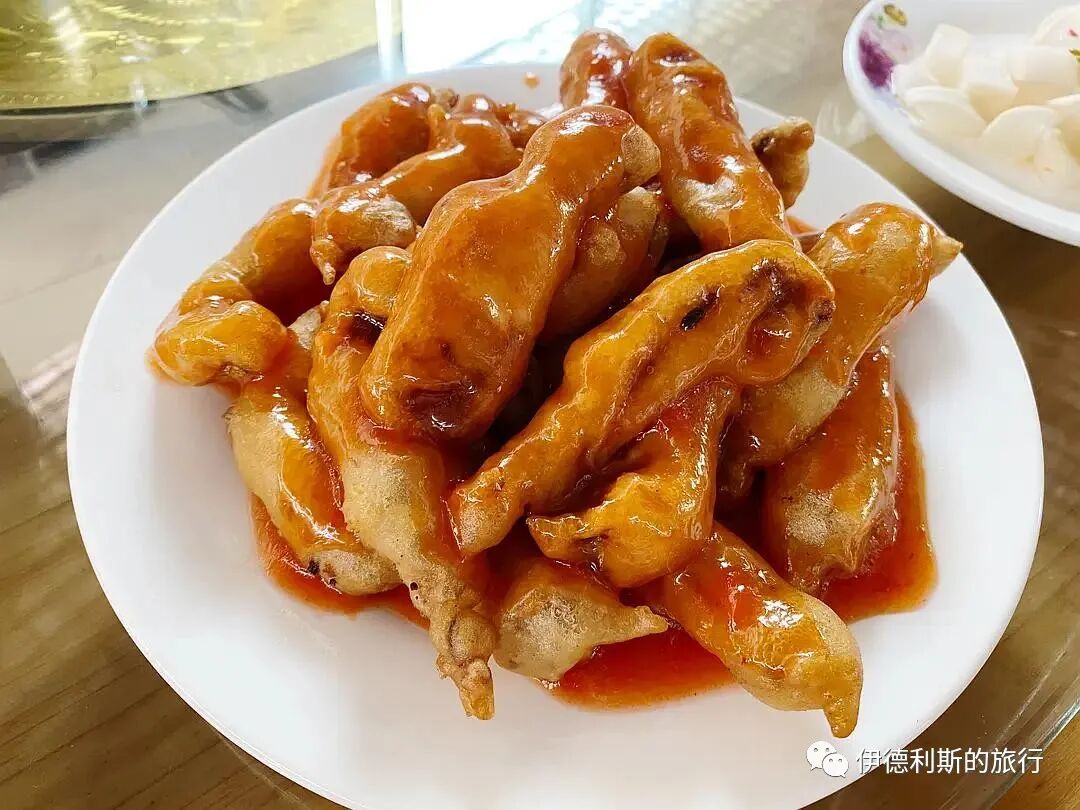
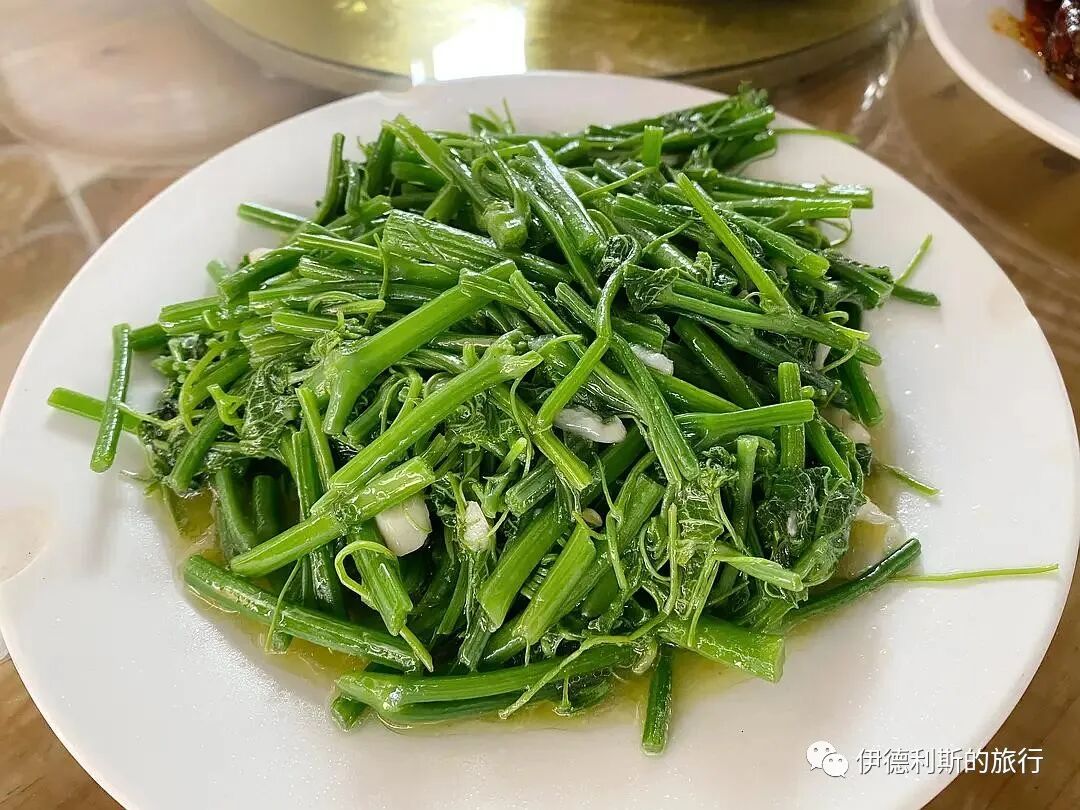
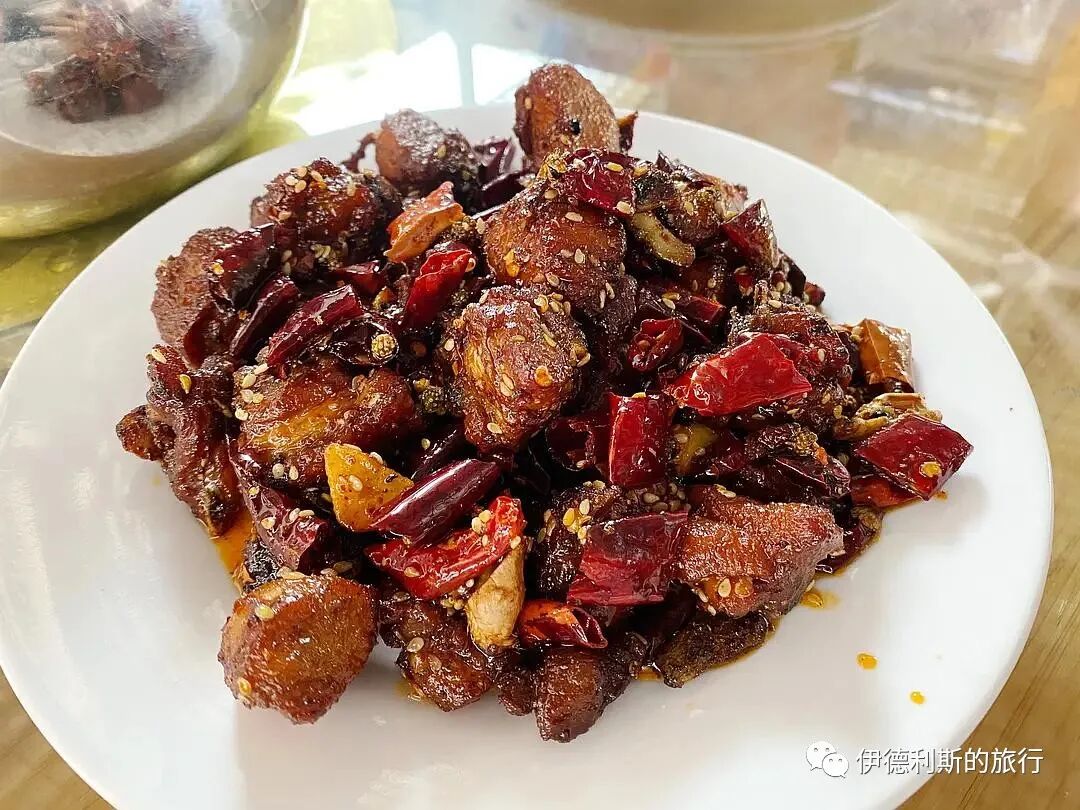
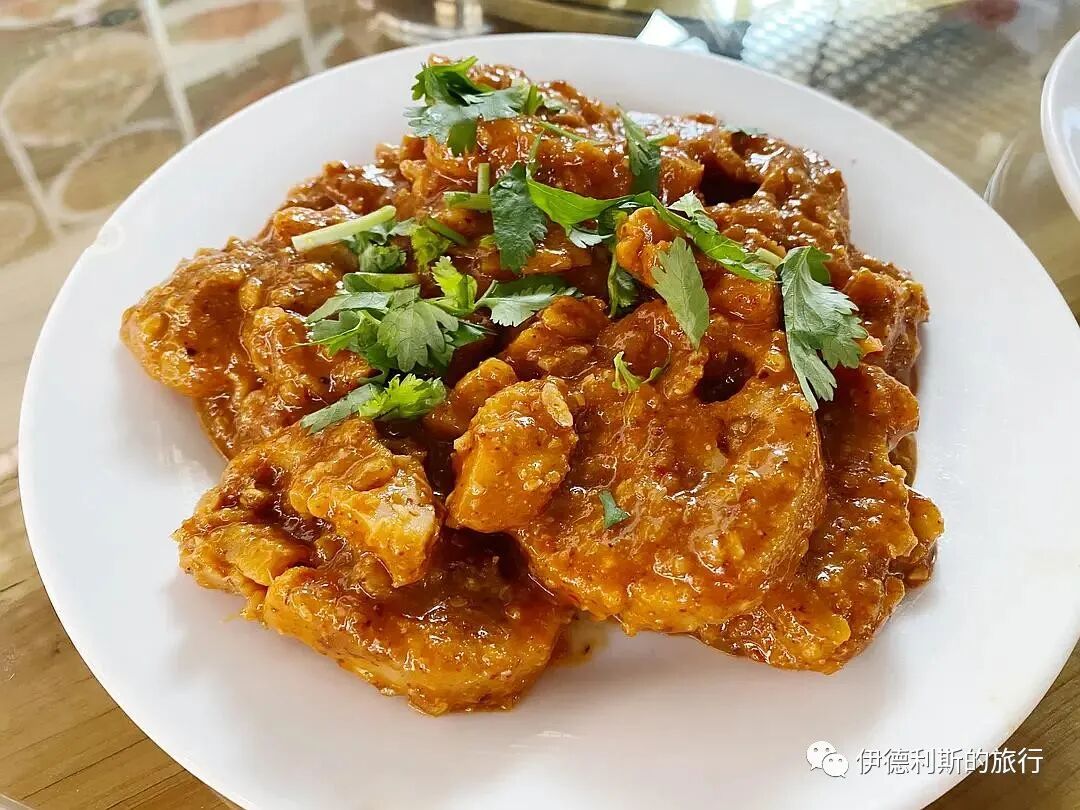
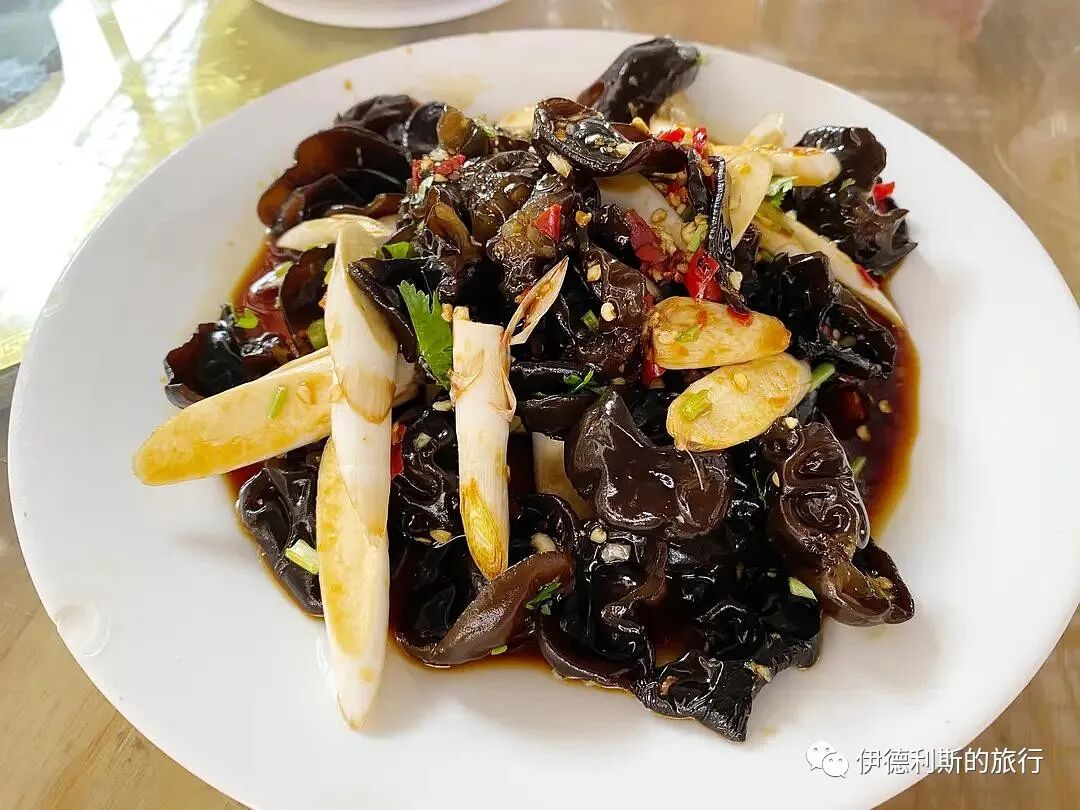
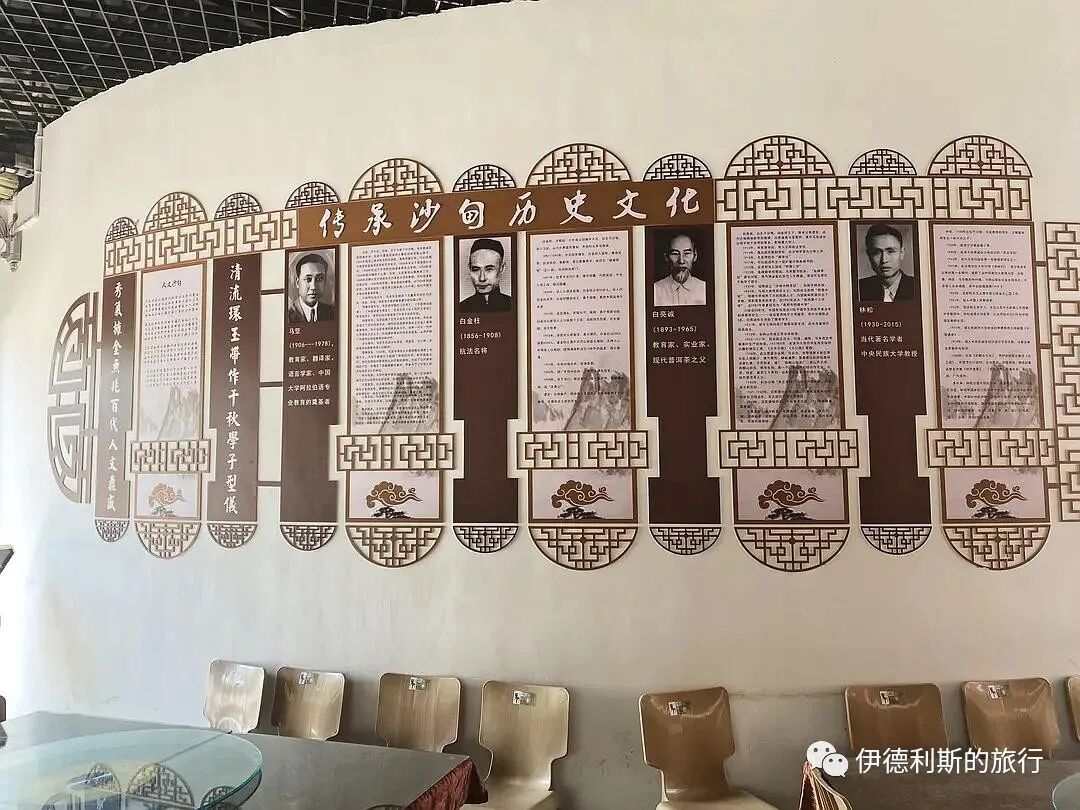
The Shadian Great Mosque has a very tropical feel.
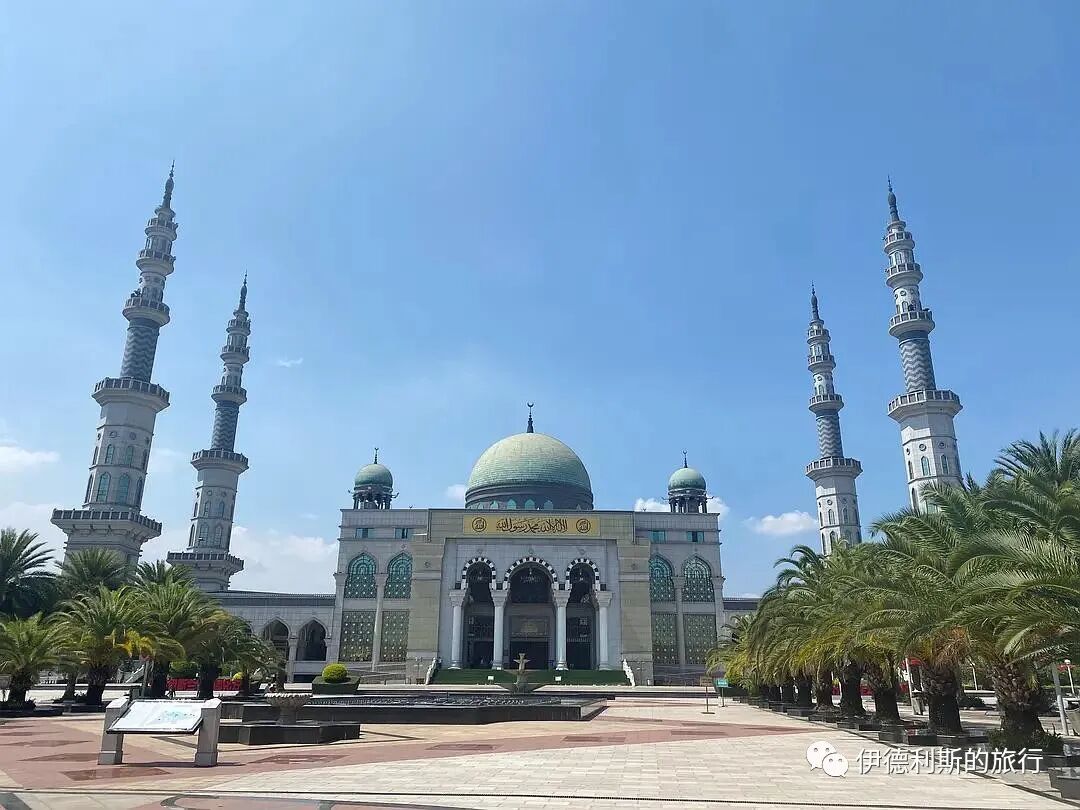
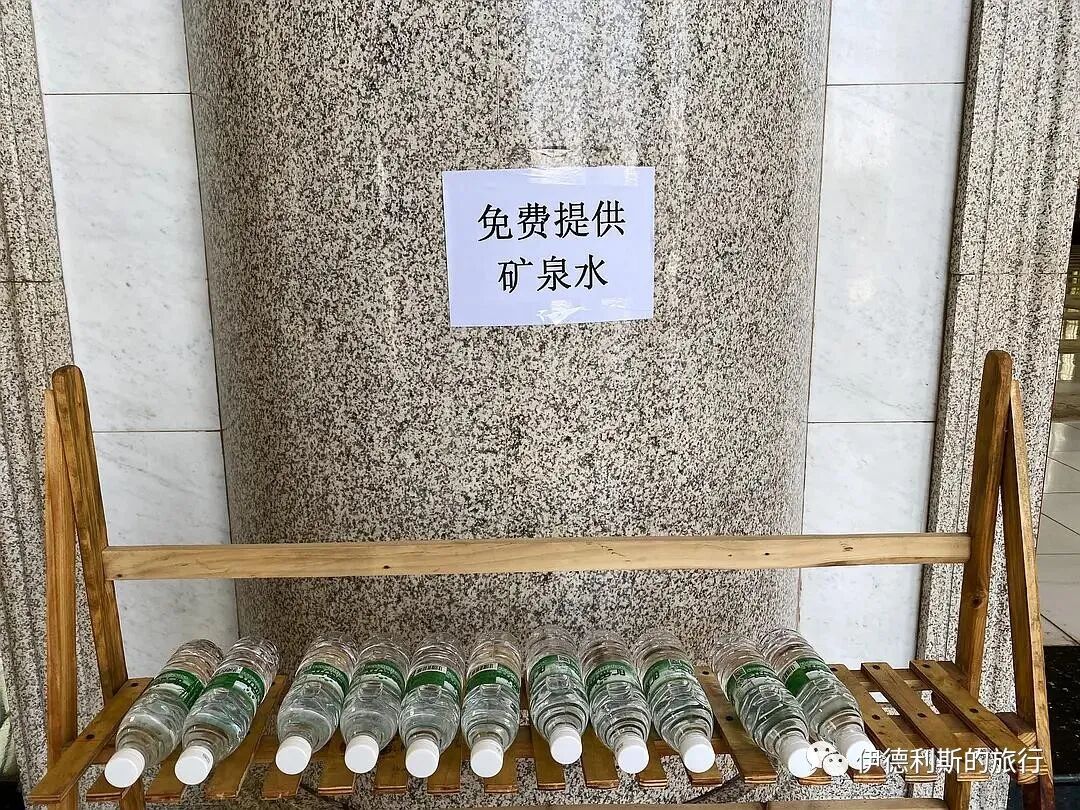
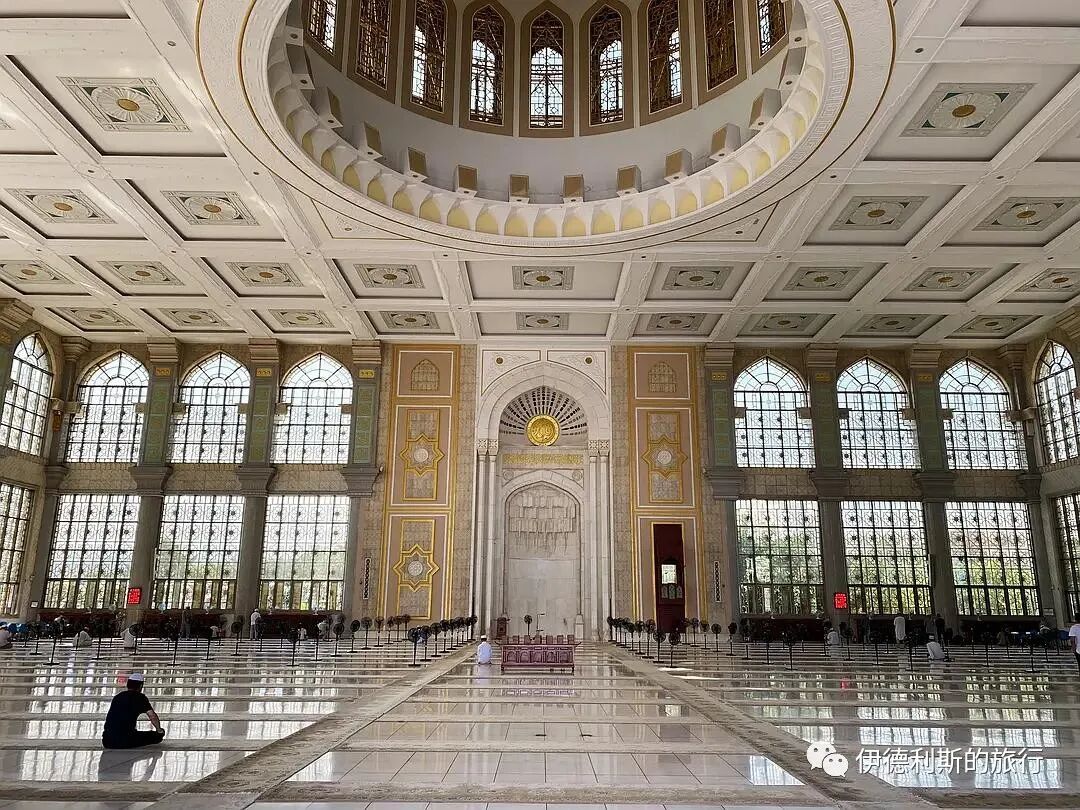
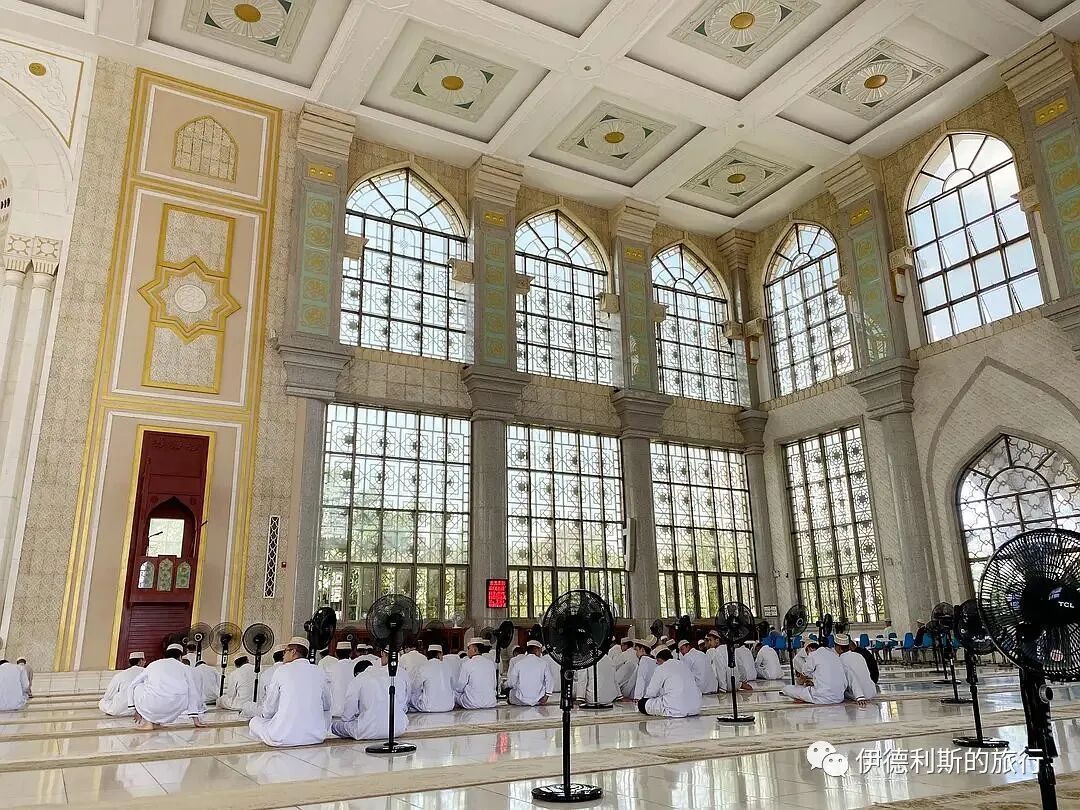
Yufeng School
In the mid-Guangxu period of the Qing Dynasty, responding to the imperial decree to stop the imperial examinations and start schools, the famous late Qing general and Yunnan Kaihua Town commander Bai Jinzhu led the Shadian villagers to donate funds and establish their own school in 1892. Because the school was located at the foot of Jinyu Mountain, it was named Yufeng Academy. Bai Jinzhu was a famous anti-French general who led from the front during the 1884 Sino-French War and was awarded the title of Shengyong Baturu.
In 1905, following the Qing Dynasty's order to establish primary schools in every township, Yufeng Academy was renamed Shadian Primary School. It was divided into classes A, B, C, and D, with over 60 students. In 1914, Bai Jinzhu's son, Bai Liangcheng, returned to Shadian after graduating from the Yunnan School of Law and Political Science and was hired as the principal of Yufeng Academy. Bai Liangcheng strongly advocated for modern education and added subjects like Chinese, arithmetic, physical education, and music to the school.
Due to the increasing number of students, Bai Liangcheng and Commander Bai Qicheng led the villagers to rebuild the academy in 1921, and it was completed in 1923. The new academy had four classrooms, an office, and a library. Bai Liangcheng wrote the plaque for Yufeng School and the couplet on the stone pillars on both sides, which reads: 'The elegant spirit of Jinyu Mountain brings prosperity to generations of scholars, the clear stream circling the jade belt sets a model for students for a thousand years.' Afterward, Bai Liangcheng hired Arabic scholar Ma Jian, who had returned home after graduating in Kunming, along with Wang Liangbi, Wang Shupu, Ma Ayuanqing, and others as teachers, and changed the school into a primary and junior high school.
In 1943, Bai Liangcheng also founded Yufeng Middle School. At that time, many professors from the National Southwestern Associated University had a good relationship with Bai Liangcheng. He hired Professor Xia Kangnong, Dean of the School of Science at the university, as the principal of Yufeng Middle School, and invited experts and scholars like Tongji University professor Cao Wuli, philosopher Zheng Xin, and historian Bai Shouyi to teach there until the victory of the War of Resistance in 1945.
After Yufeng Primary School moved to a new campus in 1987, the old site of Yufeng Academy was left vacant. It was renovated in 2012 and opened as the Shadian branch of the Honghe Prefecture Library and the Shadian Village History Museum.
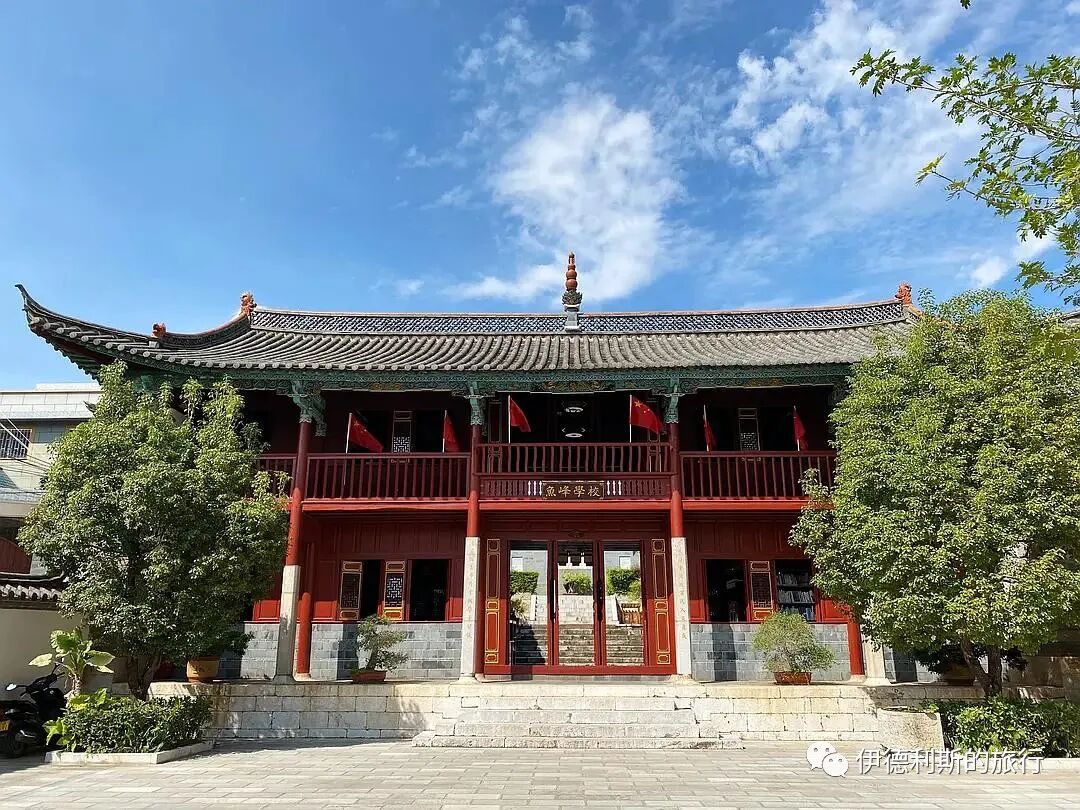
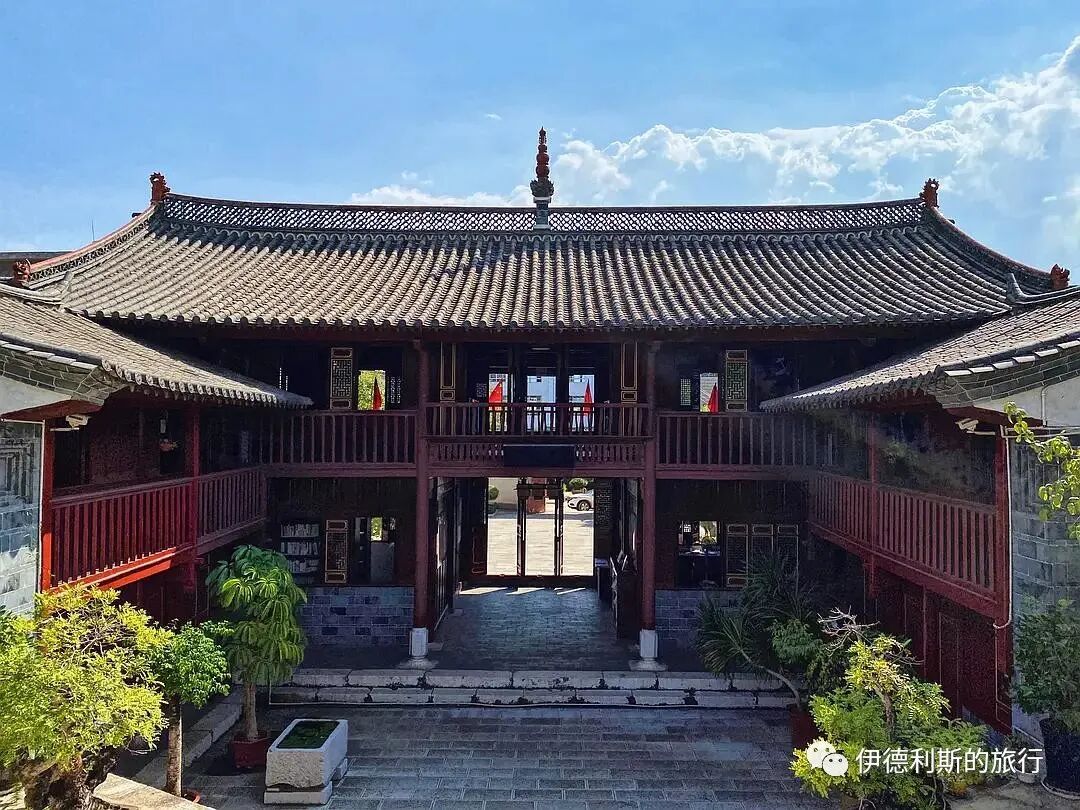
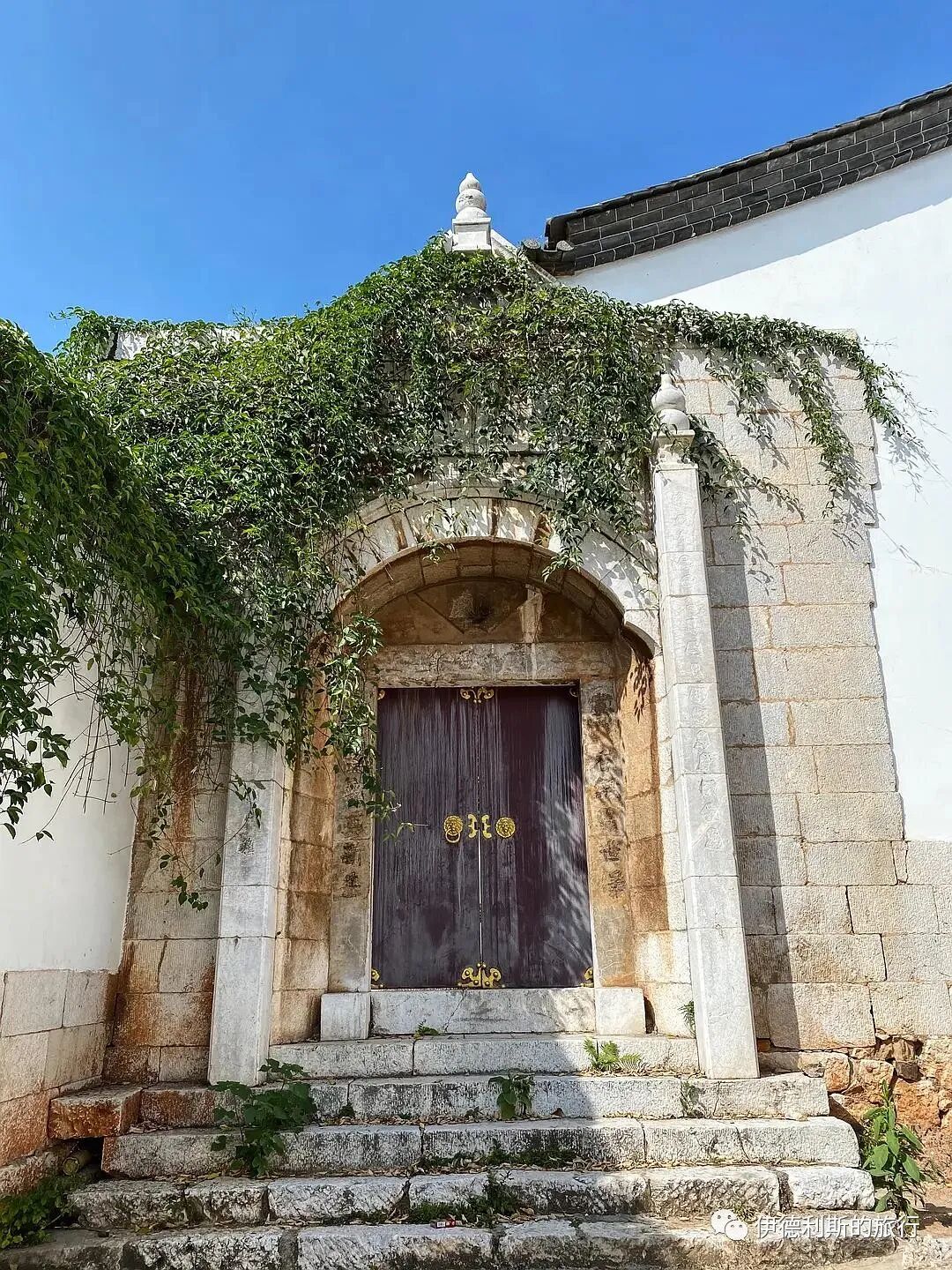
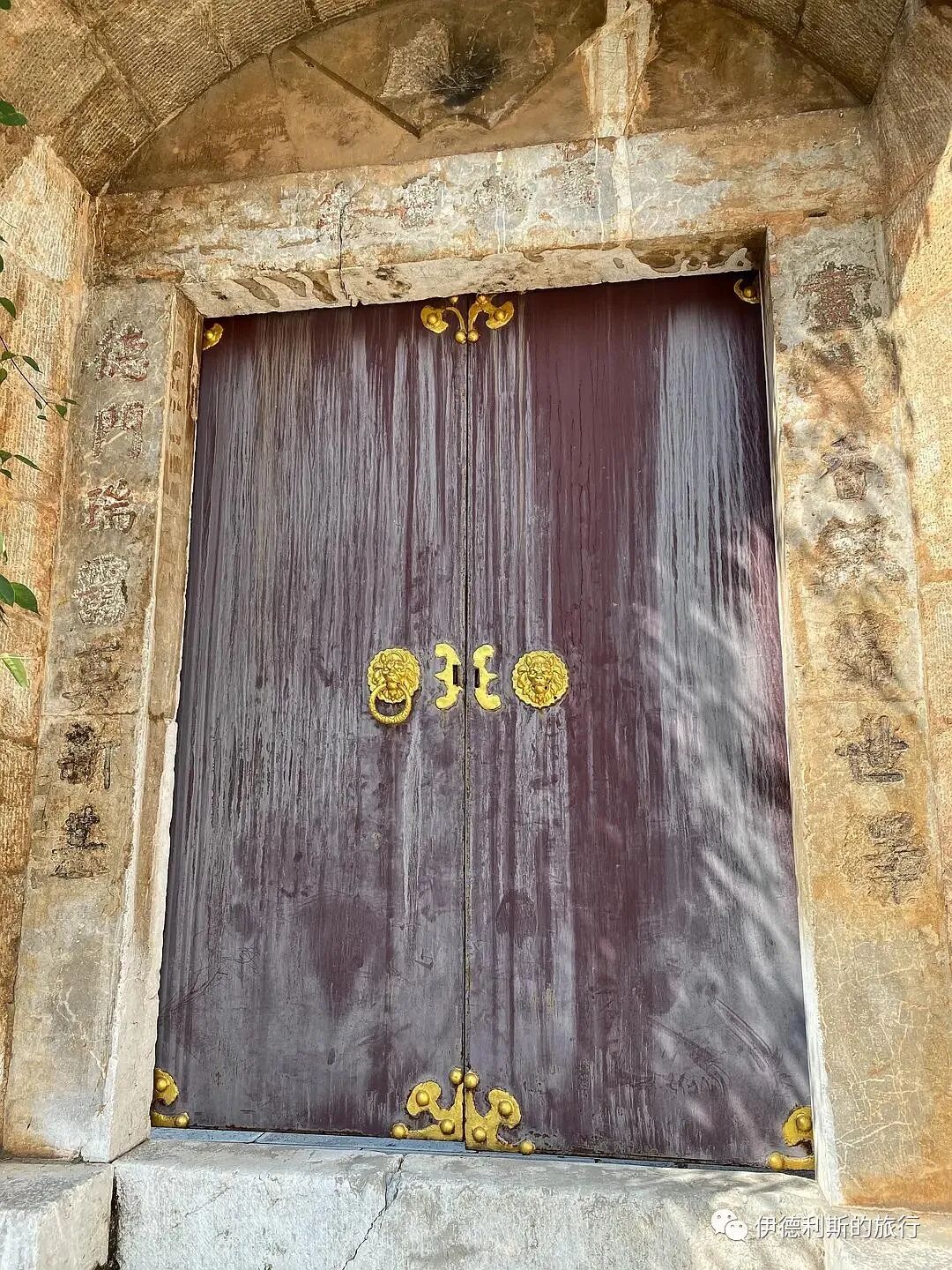
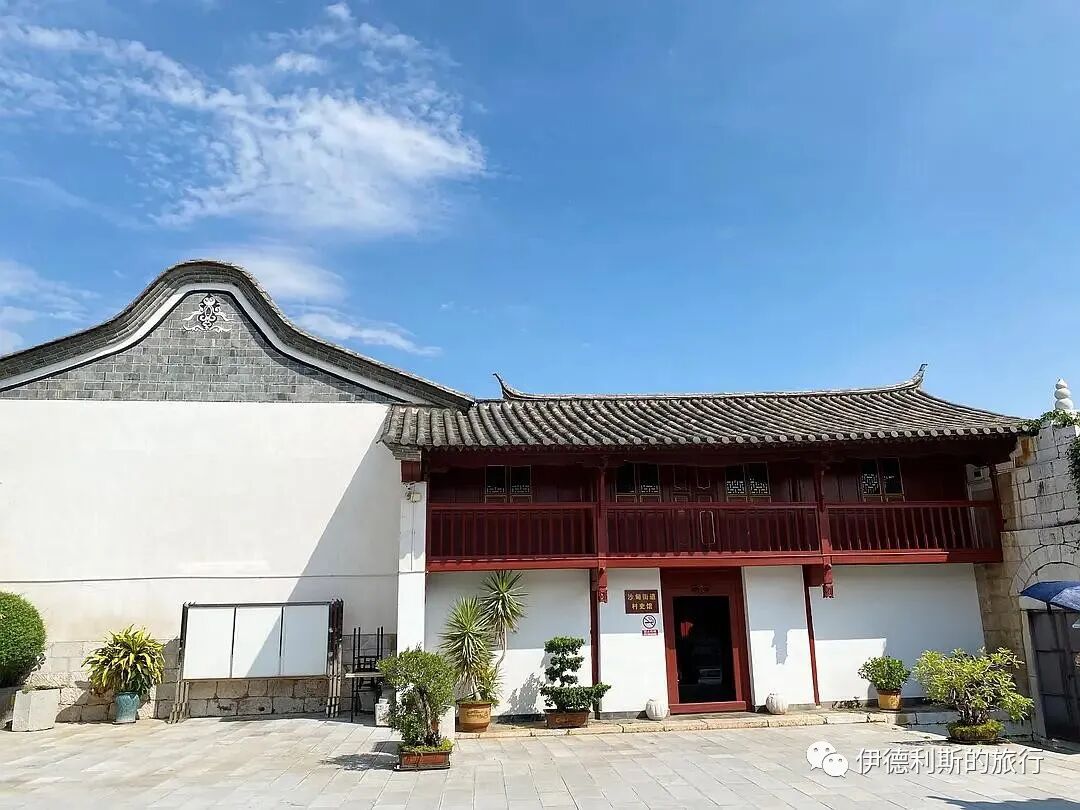
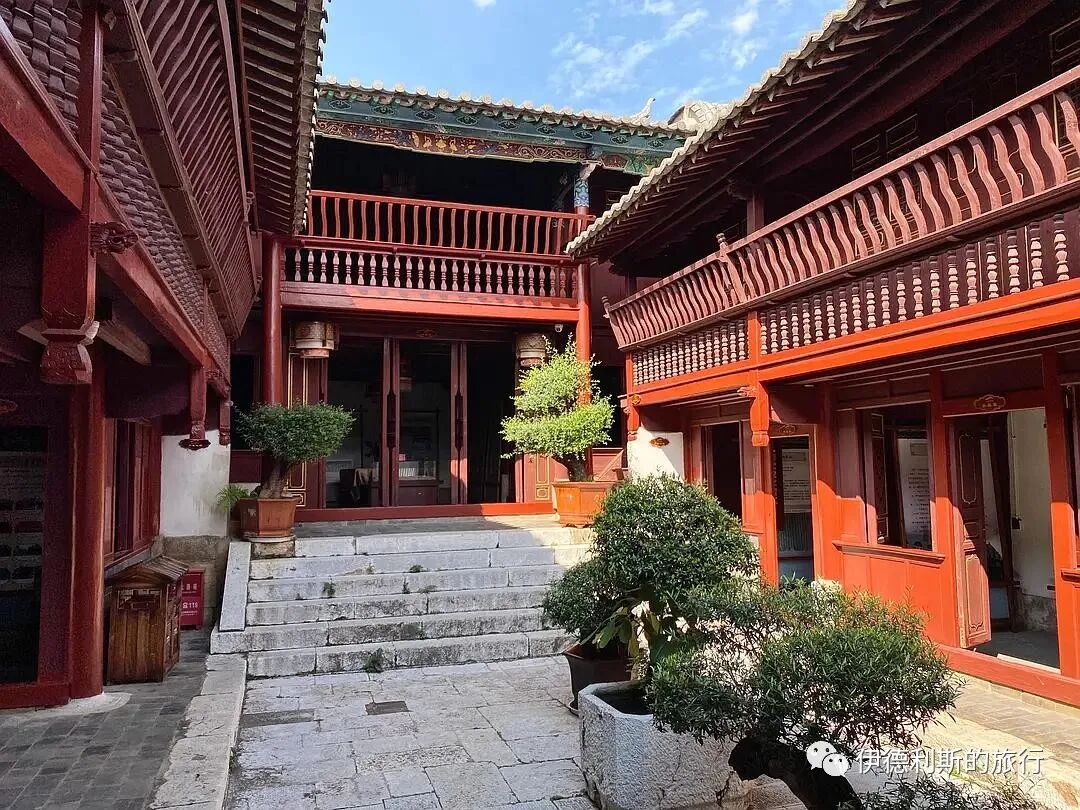
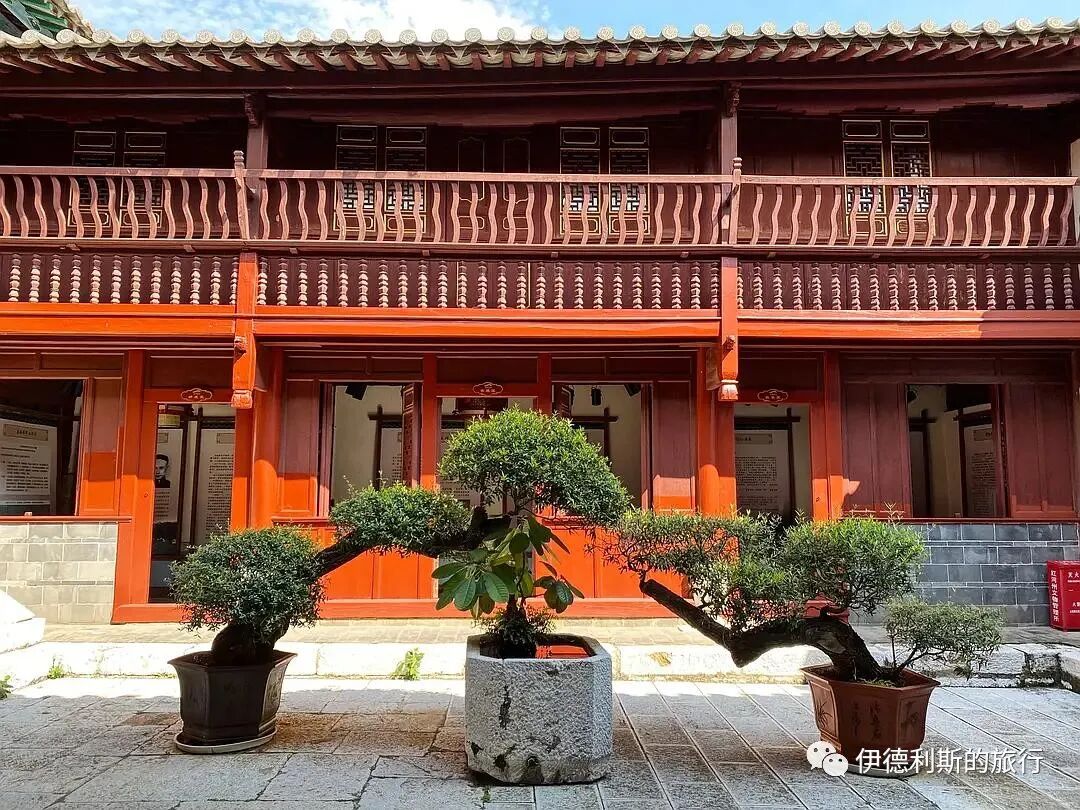
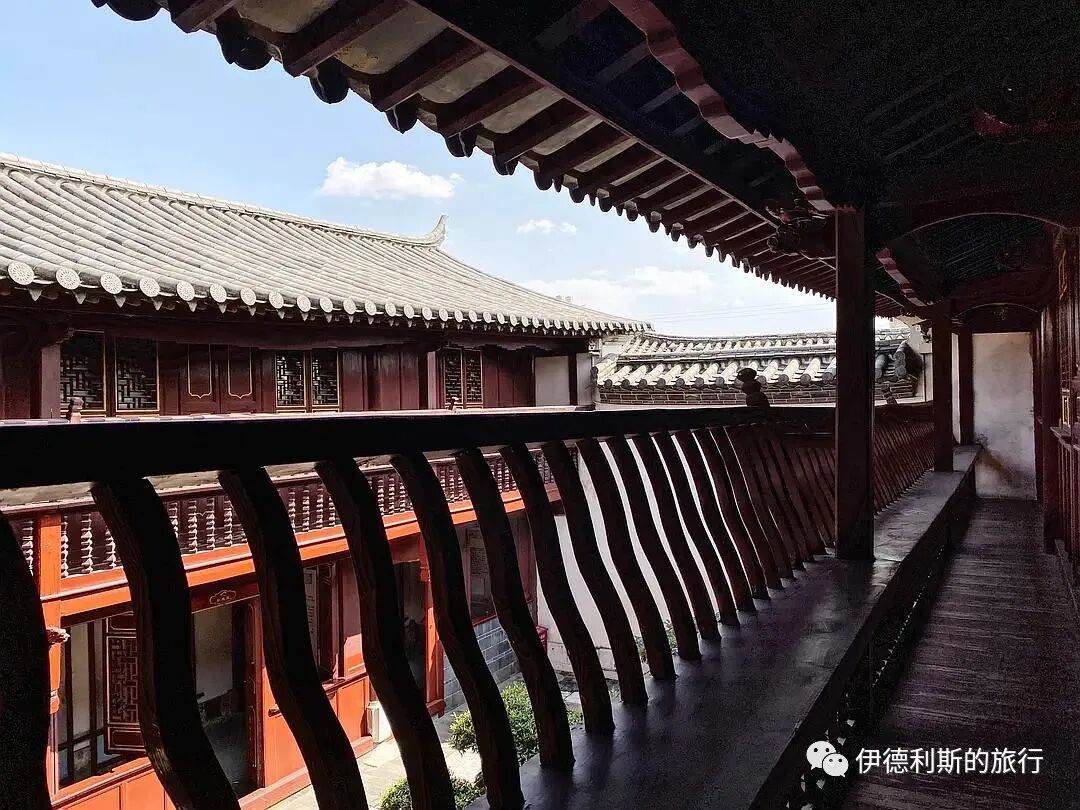
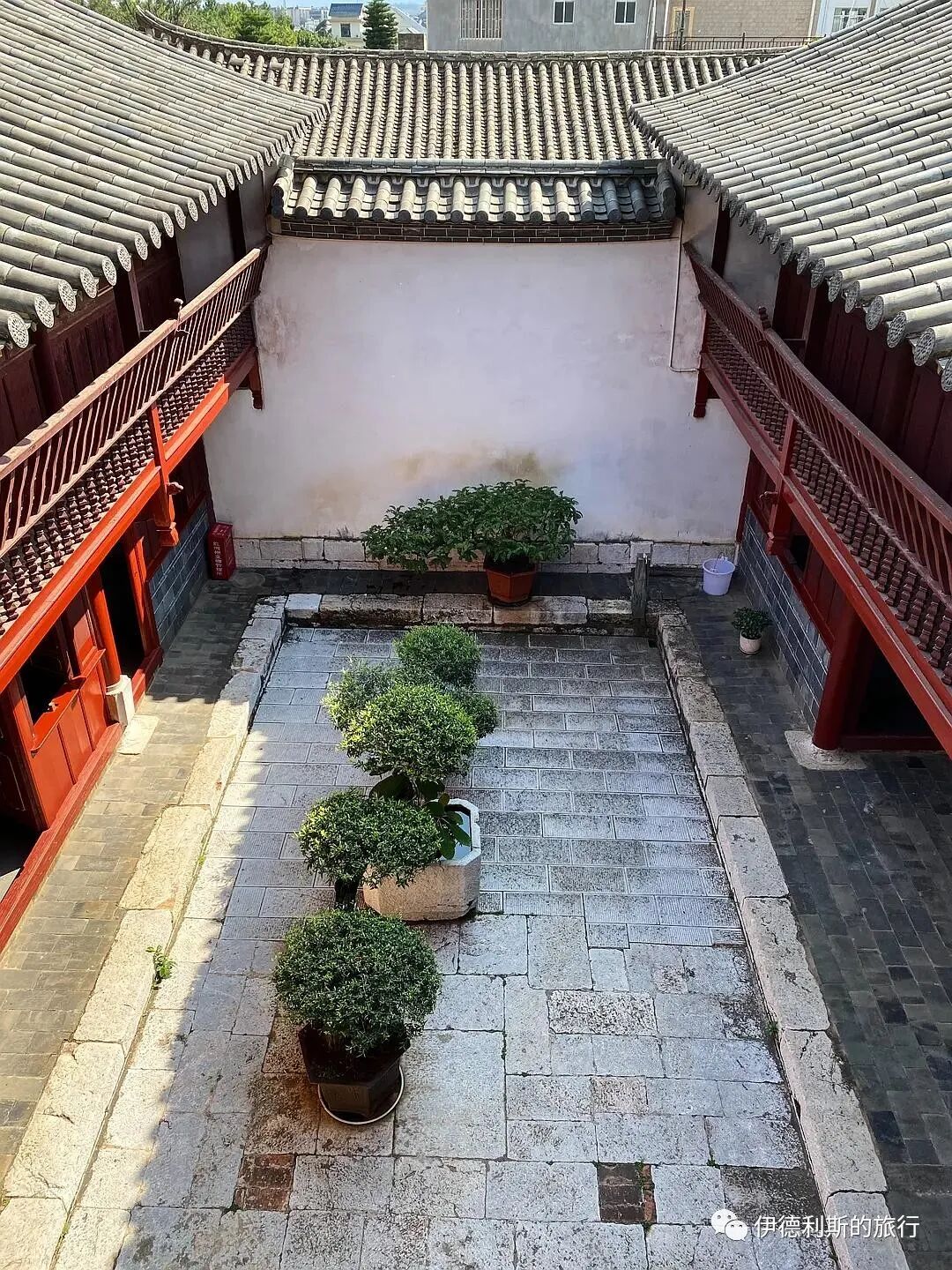
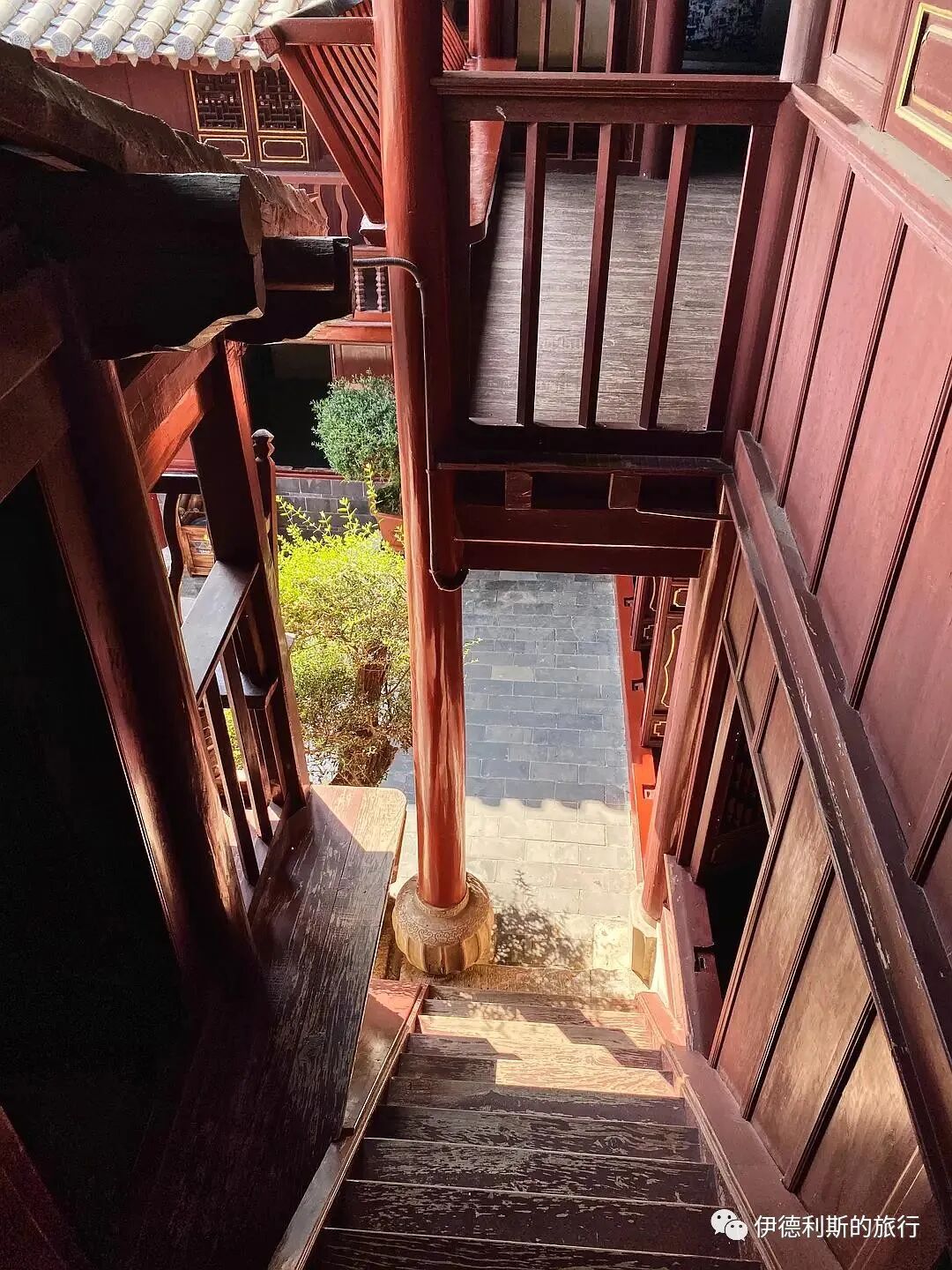
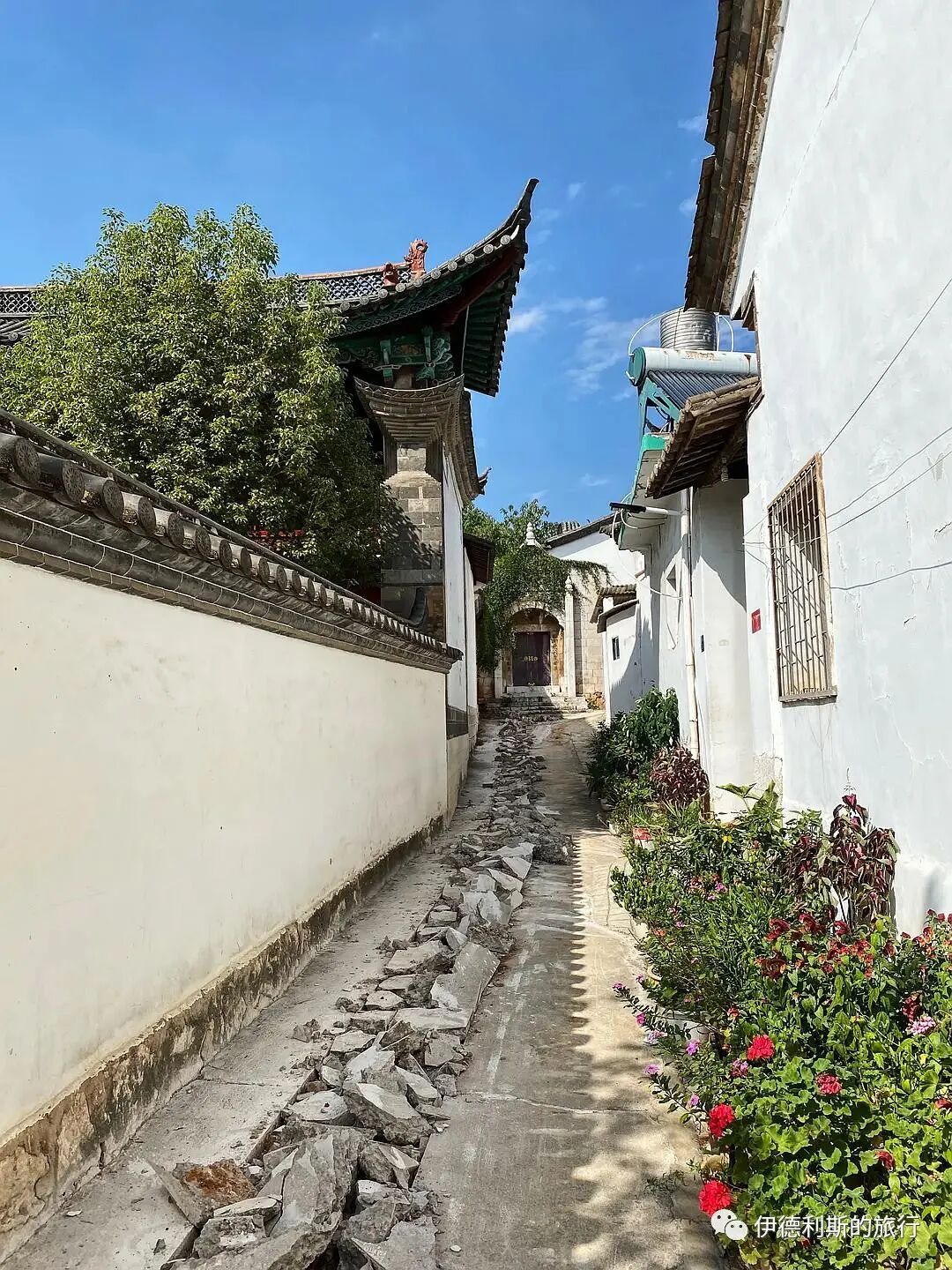
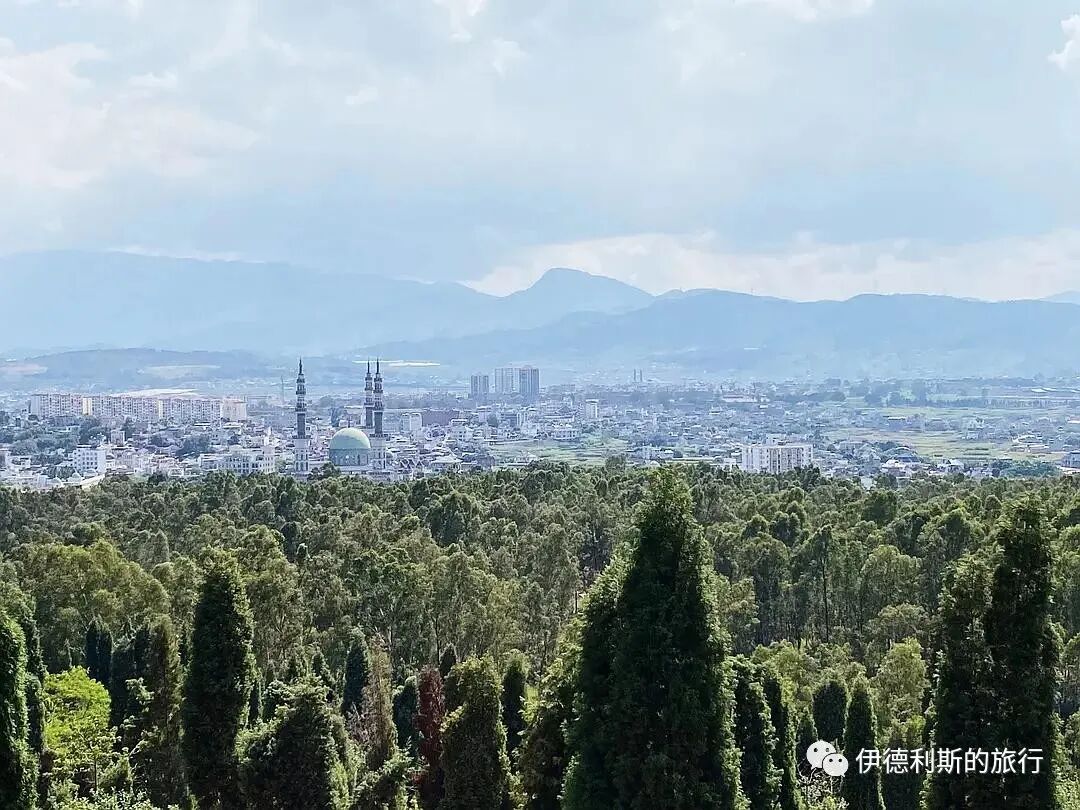
Old houses in Shadian
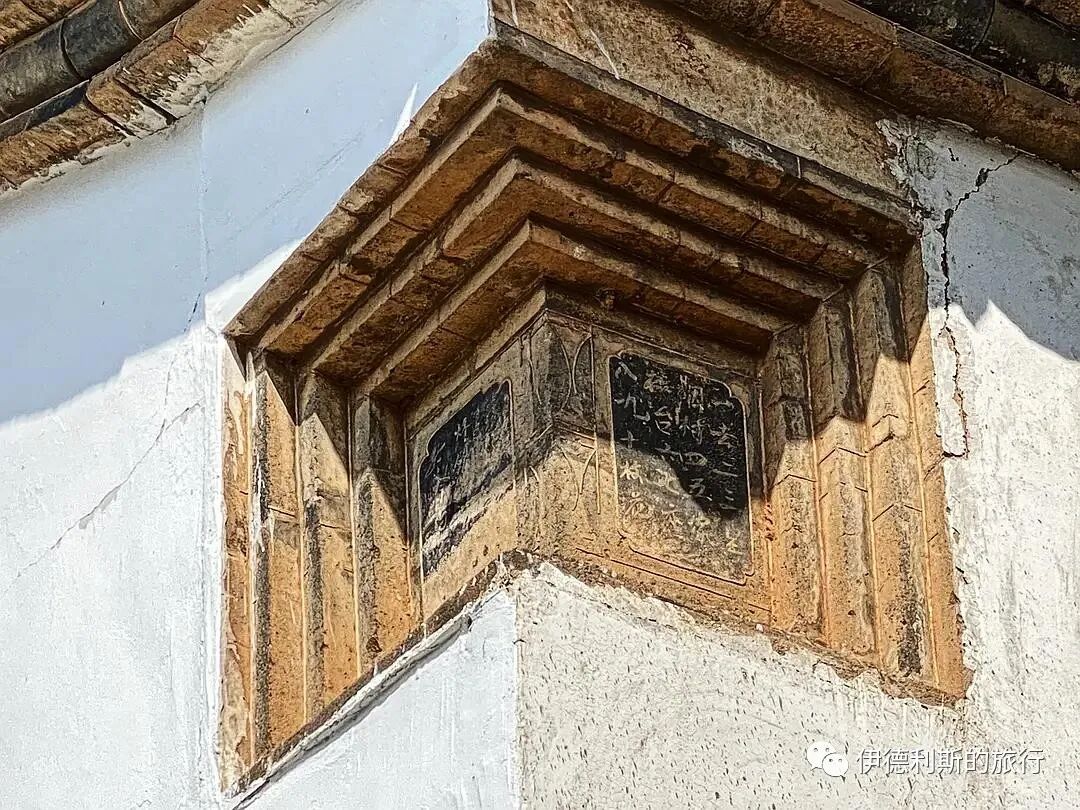
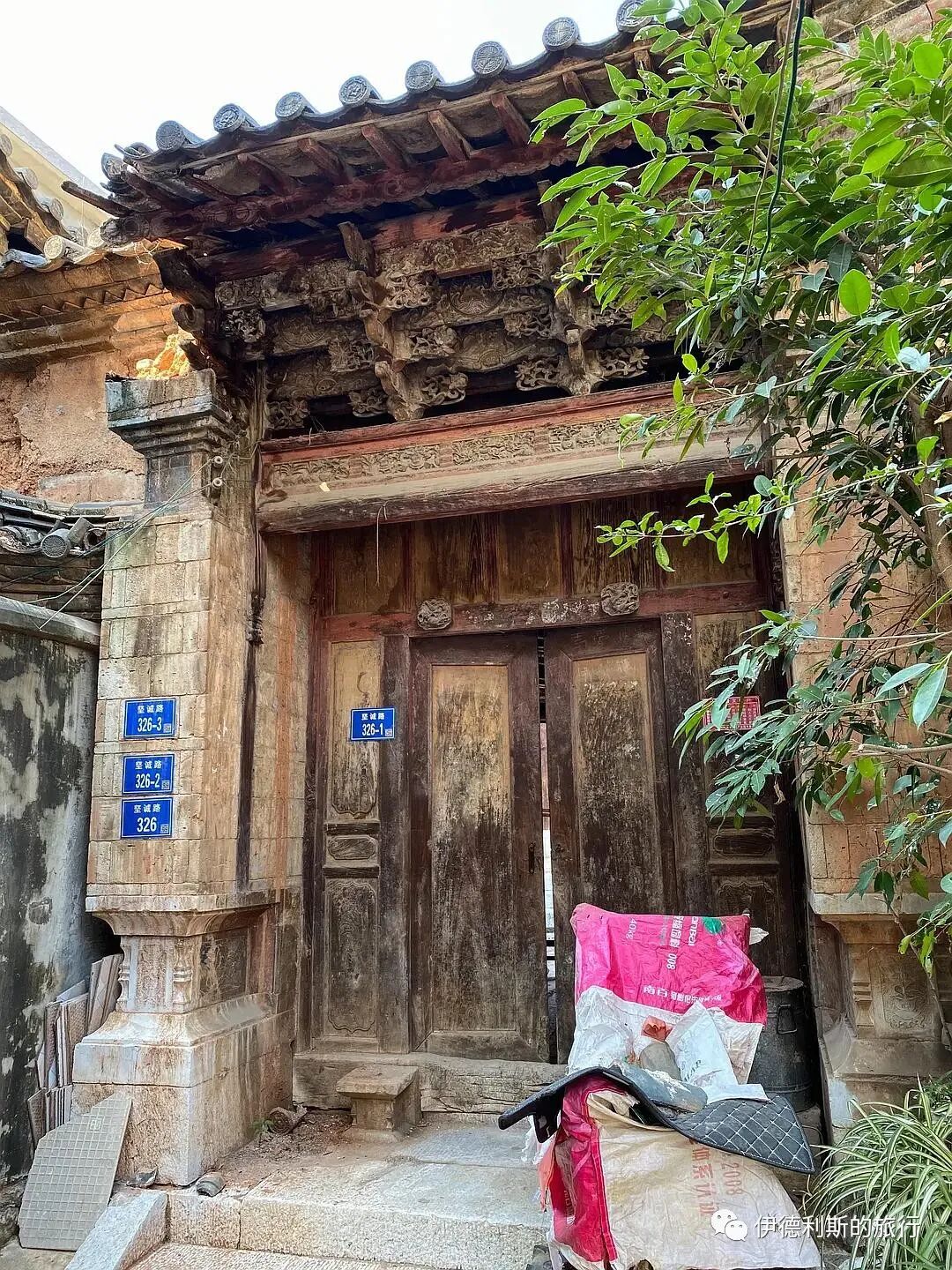
There is a well at the entrance of Yufeng Academy called Xiying Longtan, which was reportedly built by Bai Shouyou and his followers during the Wanli period of the Ming Dynasty. The well is 20 meters deep, and folklore says there is a dragon inside, which is why it is called Dragon Pool (Longtan).
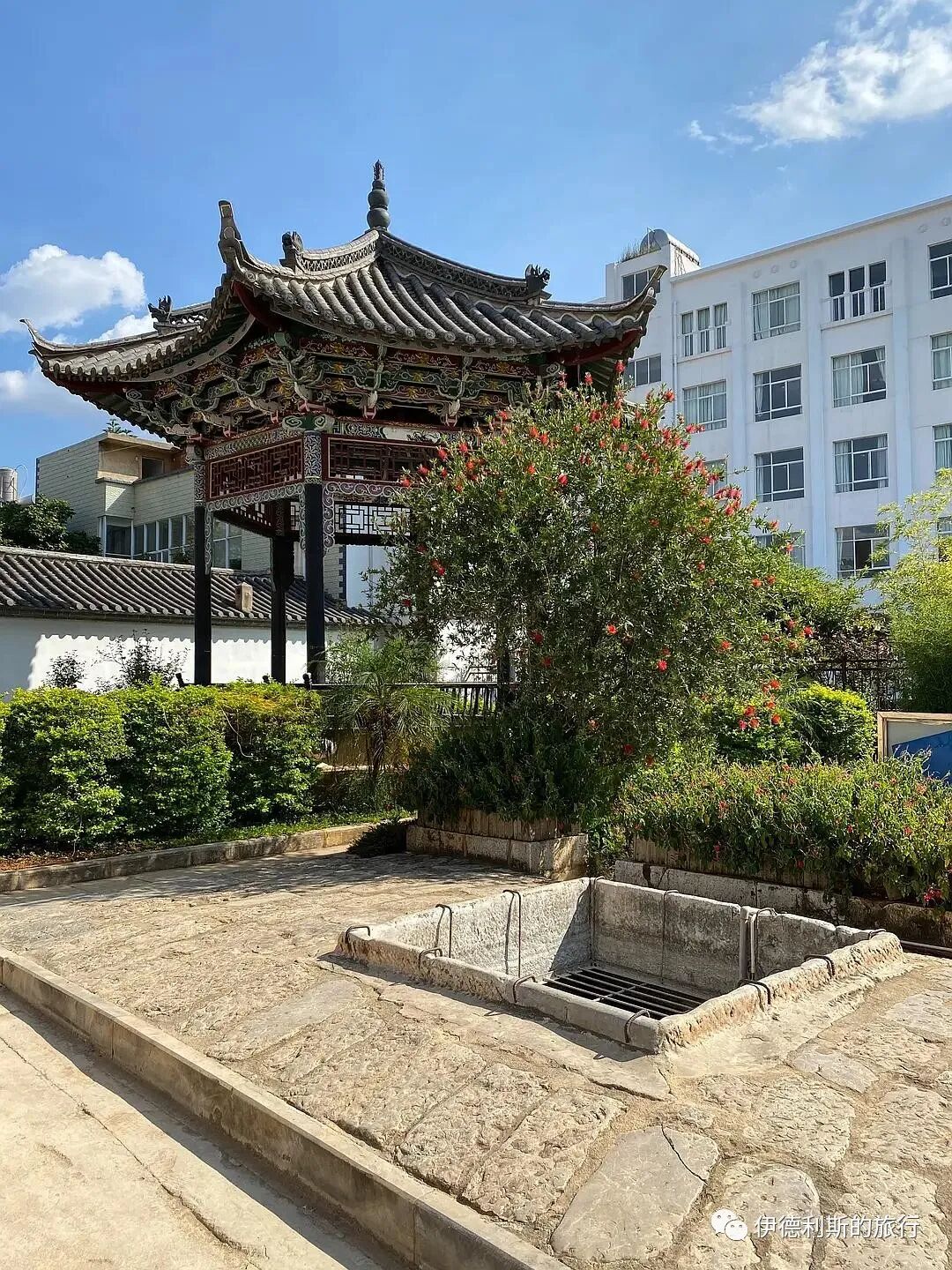
During the Qianlong period of the Qing Dynasty, Shadian village built walls for defense and constructed seven gatehouses in areas like Xiying, Dongying, and Chuanying. Only the Xiying gatehouse remains today, which is a structure rebuilt during the Xianfeng period of the Qing Dynasty. The gatehouse is a two-story brick and wood building. The first floor is for passage, and the second floor is for guards, featuring exquisite carvings and paintings.
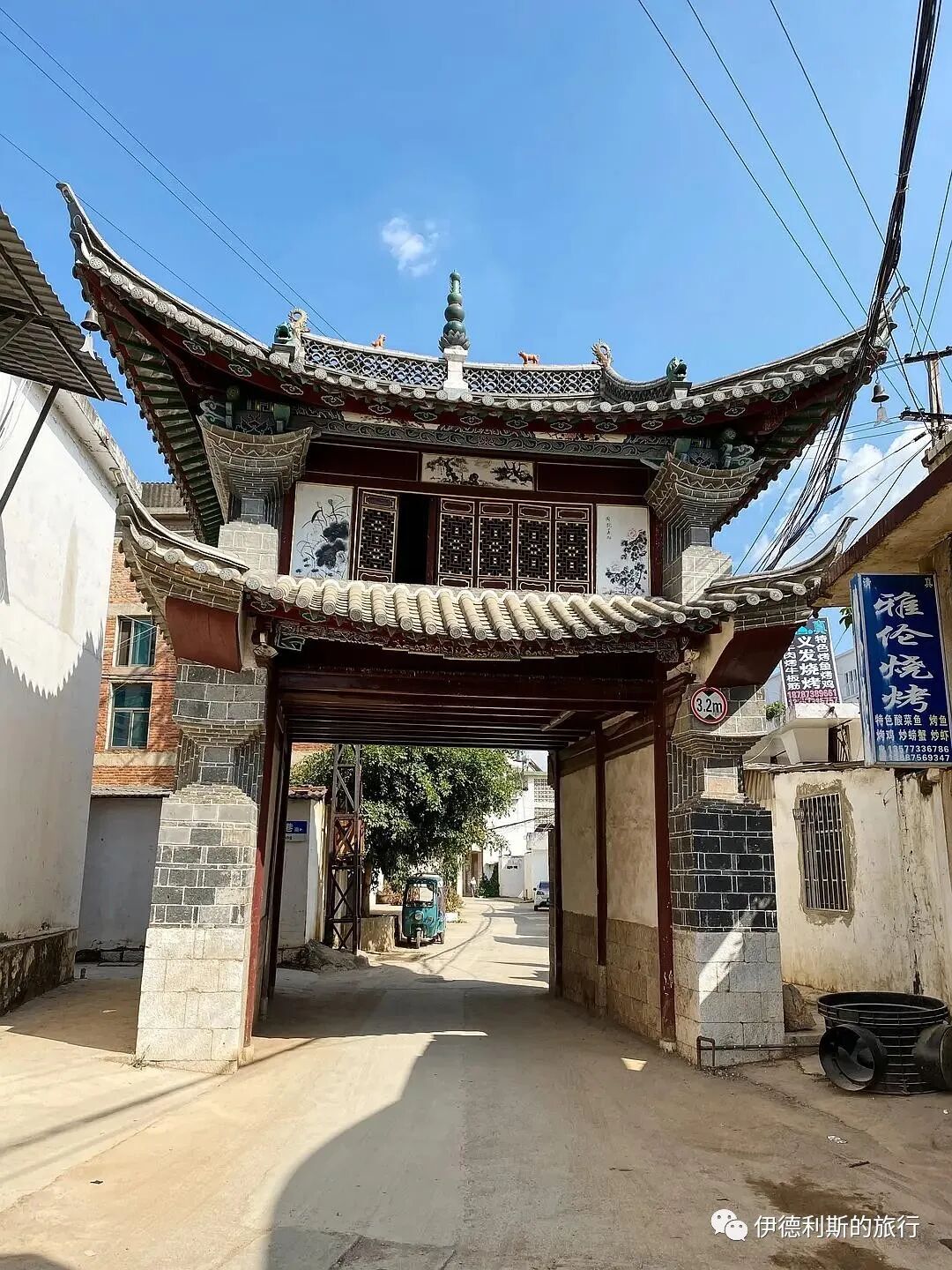
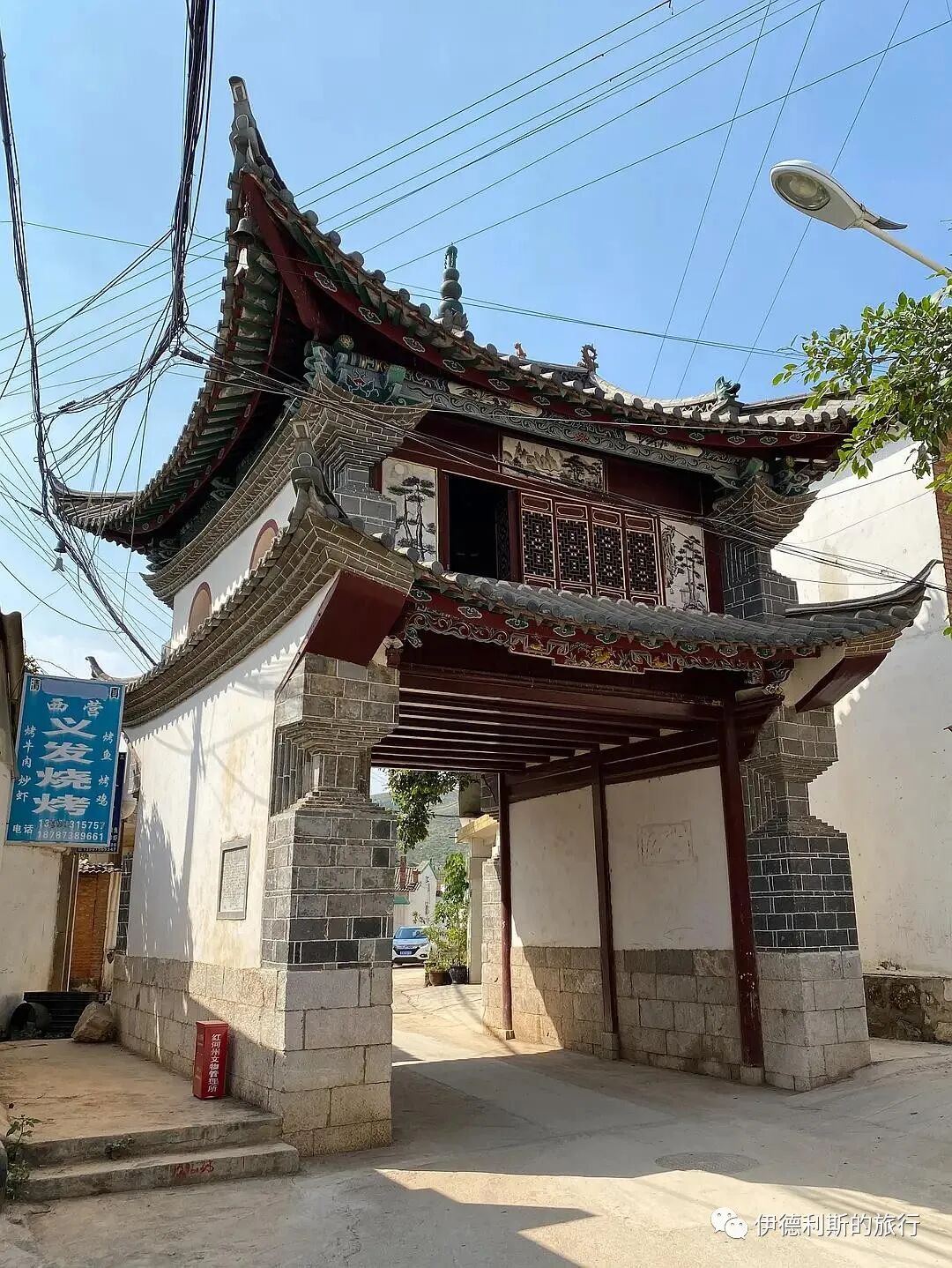
There is a stone arch bridge over the Yudai River in Shadian, which was built with funds donated by Bai Shouyou during the Wanli period of the Ming Dynasty.
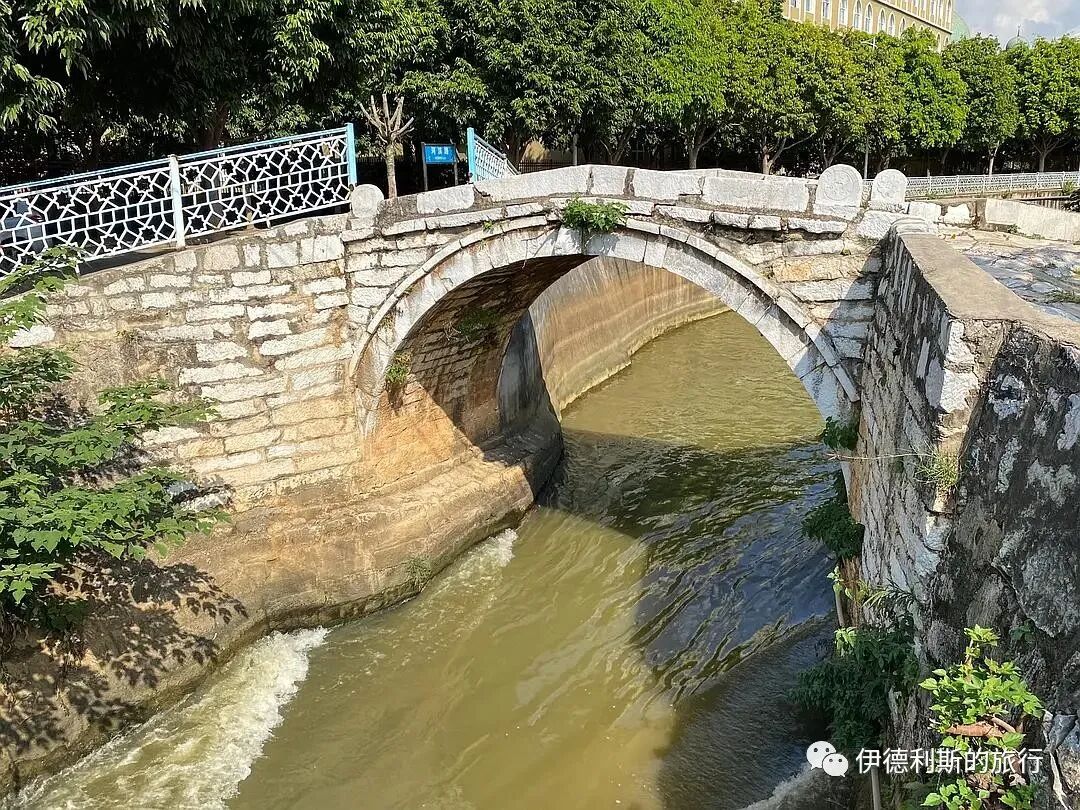
Halal Travel Guide: Yuxi Najia Ying — Hui Muslims, Mosques and Yunnan Travel
Articles • ali2007fr posted the article • 0 comments • 212 views • 2026-05-17 12:22
Summary: Yuxi Najia Ying — Hui Muslims, Mosques and Yunnan Travel is presented here as a firsthand travel account in clear English, beginning with this scene: Author: Zainab. The account keeps its focus on Yuxi Travel, Hui Muslims, Yunnan Mosques while preserving the names, places, food, and historical details from the Chinese source.
Author: Zainab
On October 4, I traveled 23 kilometers east from Da Hui Village in Tonghai, Yuxi, to reach the famous Najiaying. The Na family of Najiaying are descendants of Nasr al-Din, the eldest son of the famous Yuan Dynasty official Sayyid Ajjal Shams al-Din. Nasr al-Din served as the administrator of Yunnan Province and continued his father's work in governing the region. After the Ming Dynasty was established, Nasr al-Din's descendant, Na Shulu, moved around for a while before settling on the north shore of Qilu Lake in central Yunnan in 1370, where he founded Najiaying.
That evening, I ate dry-pot beef at Zhiweiyuan Restaurant on Zhong'ai Street, the main road in Najiaying. It came in a huge copper pot filled with mint and arrowhead (cigu). I also had some lighter dishes: a mix of green beans and corn (liangmu di) and stir-fried cabbage with tofu.
On October 5, I had breakfast in Najiaying, Yuxi, eating potato pancakes (yangyu baba) and beef rice rolls (niurou juanfen).
At the Najiaying market, I ate buckwheat cake (qiaogao), which was delicious.
I visited the former residence of Na Xun, the famous Arabic translator who translated One Thousand and One Nights. The house is still occupied by Na Xun's grandnephew, an elderly man named Na Zhaoxiang. He warmly invited us in for tea and told us stories about Na Xun.
Na Xun's great-uncle, Na Fengchun, held a high-ranking position as a third-rank official, but his grandfather and father were both farmers.
Na Xun was born in 1911 and began attending the primary school inside the Najiaying mosque at age seven. The school used a modern curriculum that taught both Chinese and Arabic. They hired a teacher named Qian for Chinese and a teacher named Dai for math, while the Arabic classes were taught by Imam Ma Defu from the Najiaying mosque. Imam Ma Defu was an early student of the Yunnan Islamic scholar Ma Lianyuan and had a very strong foundation in religious studies.
Na Xun's home was just a few dozen steps south of the mosque. Every day when the adhan (bangke) sounded, he would get up and get ready. By the time his father returned from namaz, Na Xun was already prepared to go to school to review his lessons. According to Na Xun's cousin Na Guangxian, Na Xun never missed a class or arrived late, and he always ranked at the top of his exams.
In 1921, after Na Xun finished third grade, his cousin Na Guangwen returned from studying in Kunming. Seeing how bright Na Xun was, he asked Na Xun's father for permission to take him to Kunming for further education. His father agreed, and Na Xun left home to pursue his studies.
In 1926, bandits caused trouble in Najiaying. When the Yunnan provincial government troops came to suppress them, they burned down Najiaying, and Na Xun's home was reduced to ashes. Because Na Xun's eldest brother, Na Guangcheng, had been working in trade (zou yifang) and running a horse inn by the Lancang River in Simao, he had some savings, which allowed the family to rebuild their home on the original site.
I continued on to visit the former residence of Professor Na Zhong, an expert in Arabic education and a leading figure in Arabic culture. Na Zhong wrote A General History of the Arabs and compiled the first Arabic language textbook for Chinese universities. The property is now rented out by Na Zhong's descendants.
Na Zhong's grandfather, Na Hai, had been a soldier for several years. He was not only skilled in martial arts but also a master of masonry, metalwork, and carpentry. While working in Kunming, he fell in love with a young lady named Cai. Miss Cai came from a prominent military family in Kunming, but she chose this poor young man who had no house and no money. To get married as soon as possible, Na Hai returned to his hometown of Najiaying and spent six months building his own house. The house was a traditional two-story Yunnan dwelling with three main rooms and four side rooms. It was built very neatly with exquisite wooden doors and windows. The pillars of the outer courtyard gate were carved from solid bluestone, featuring patterns of dragons playing with a pearl, magpies in plum blossoms, qilin and eagles, and golden bulls and horses. Na Hai and Miss Cai were married there and had their first son, Na Dechang.
In 1856, the Bingchen Incident occurred in Yunnan. Najiaying appointed Na Hai, Na Fengchun, and Na Taishou as representatives to negotiate with the Han scholar Gongsun Shuo from Dongxiang, reaching a mutual protection agreement between Hui Muslims and Han people in Hedong. In 1857, the mutual protection agreement in Hexi was broken by a local tyrant named Zhan Zhanchun, who gathered soldiers to attack the Great and Small Donggou (now known as Da Hui Village and Xiao Hui Village). Na Hai ignored the advice of his friends and family and went to try to stop the fighting, but he was killed by the enemy. After that, Miss Cai, who was seven months pregnant, took her eldest son Na Dechang back to her parents' home in Kunming. Shortly after, she gave birth to a posthumous child, Na Zhong's father, Na Degui. After the birth, Miss Cai suffered from illness and passed away shortly after.
After Miss Cai died, Na Hai's first wife, He, brought the brothers Na Dechang and Na Degui back to Najiaying to raise them. When Na Degui was 13, He became too ill to work, so she asked a relative to take Na Degui to Kunming to find work. Na Degui worked at a fur shop on Zhuji Street in Kunming. He was an apprentice for eight years, receiving only food and lodging with no wages. After finishing his apprenticeship, Na Degui married He Yufeng, the niece of his foster mother He, and they returned to Kunming to work after the wedding. In 1909, He Yufeng gave birth to Na Shou'en, who would later be known as Na Zhong.
When Na Zhong was one year old, his cousins saw that He Yufeng was struggling, so they carried Na Zhong and his family to Kunming to join Na Degui. That was how Na Zhong left Najiaying and began his life in Kunming. After that, Na Zhong rarely returned to his hometown, except for a two-month stay in 1940 to escape air raids in Kunming after he graduated from Al-Azhar University in Egypt.
There is a water well at the entrance of Najiaying Mosque. It is said to have been built by Nasuluding, the great-grandson of the King of Xianyang, Sayyid Ajjal Shams al-Din, after he settled in Najiaying in the early Ming Dynasty. The wall of the well platform is carved with a dragon head, and the well water flows out from the dragon's mouth. People wash vegetables in the upper pool under the dragon's mouth, wash clothes in the lower pool, and finally, the water flows south to irrigate the farmland.
I bought a Nagu knife for cutting meat, and when I tried it at home, it was really sharp! It cuts through in one go without needing a second stroke. Historically, Najiaying and Gucheng were most famous for horse caravan transport, hunting rifle making, and knife making, but these trades declined as times changed. After the 1980s, Nagu Town began to vigorously develop the Nagu knife industry, and now there are many shops.
Also, on Zhenxing Road, there is a shop making traditional copperware, including copper pots and copper ladles. If you are interested, you can buy one to take home for a copper ladle hot pot.
To the north of Najiaying is Gucheng Village. The Xinzhai Mosque in the village was built by Ma Xuecheng, a disciple of Ma Mingxin, the founder of the Jahriyya menhuan. Ma Xuecheng was known as 'Yunnan Ma,' and followers of his sect respectfully called him the Third Master of Gucheng or Imam Ma Sanye. Ma Xuecheng was a local from Gucheng Village. He once went to study under Ma Mingxin, and the two were as close as father and son. After returning to Yunnan, Ma Xuecheng operated mining businesses, became a wealthy merchant, and was the first to spread the Jahriyya sect in Yunnan. In 1781, when Ma Mingxin's eldest son, Ma Shunqing, was exiled to Talang, Yunnan, Ma Xuecheng did his best to rescue and assist him, allowing the Jahriyya sect to continue developing in Yunnan.
It is a great pity that the mosque is currently being renovated. The courtyard layout is gone, the north and south wing rooms have been demolished, and only the main hall remains as the original building. When we went, the main hall was locked. We saw no one in the mosque except for workers, so we could not enter. It was a great regret not to see the Jahriyya-style Arabic calligraphy mihrab inside.
The main hall has a double-eave hanging mountain roof, with beautiful painted wood carvings on the brackets and beams, and openwork carvings between the eave pillars.
This last indoor photo was taken by a fellow Muslim (dost) a while ago. The bluestone under the mihrab was transported from Mojiang and has a history of over a hundred years.
At noon, we ate at Jingshanzhai in Najiaying, having herb sour soup chicken, goat milk cheese (yangrubing), stir-fried pumpkin seedlings, stir-fried celery with lily bulbs, and oil-drizzled beef jerky (niuganba). The restaurant has a nice, antique atmosphere.
The decor at Jingshanzhai.
I bought a flatbread (balada) at the entrance of Najiaying Mosque, took it to Qilu Lake Xiaohai Park next to Najiaying, and bought a cup of papaya water at the entrance. Although the park is not big, the environment is very good, and there is a boardwalk by the lake, which is very pleasant for relaxing and catching a breeze. view all
Summary: Yuxi Najia Ying — Hui Muslims, Mosques and Yunnan Travel is presented here as a firsthand travel account in clear English, beginning with this scene: Author: Zainab. The account keeps its focus on Yuxi Travel, Hui Muslims, Yunnan Mosques while preserving the names, places, food, and historical details from the Chinese source.
Author: Zainab
On October 4, I traveled 23 kilometers east from Da Hui Village in Tonghai, Yuxi, to reach the famous Najiaying. The Na family of Najiaying are descendants of Nasr al-Din, the eldest son of the famous Yuan Dynasty official Sayyid Ajjal Shams al-Din. Nasr al-Din served as the administrator of Yunnan Province and continued his father's work in governing the region. After the Ming Dynasty was established, Nasr al-Din's descendant, Na Shulu, moved around for a while before settling on the north shore of Qilu Lake in central Yunnan in 1370, where he founded Najiaying.
That evening, I ate dry-pot beef at Zhiweiyuan Restaurant on Zhong'ai Street, the main road in Najiaying. It came in a huge copper pot filled with mint and arrowhead (cigu). I also had some lighter dishes: a mix of green beans and corn (liangmu di) and stir-fried cabbage with tofu.
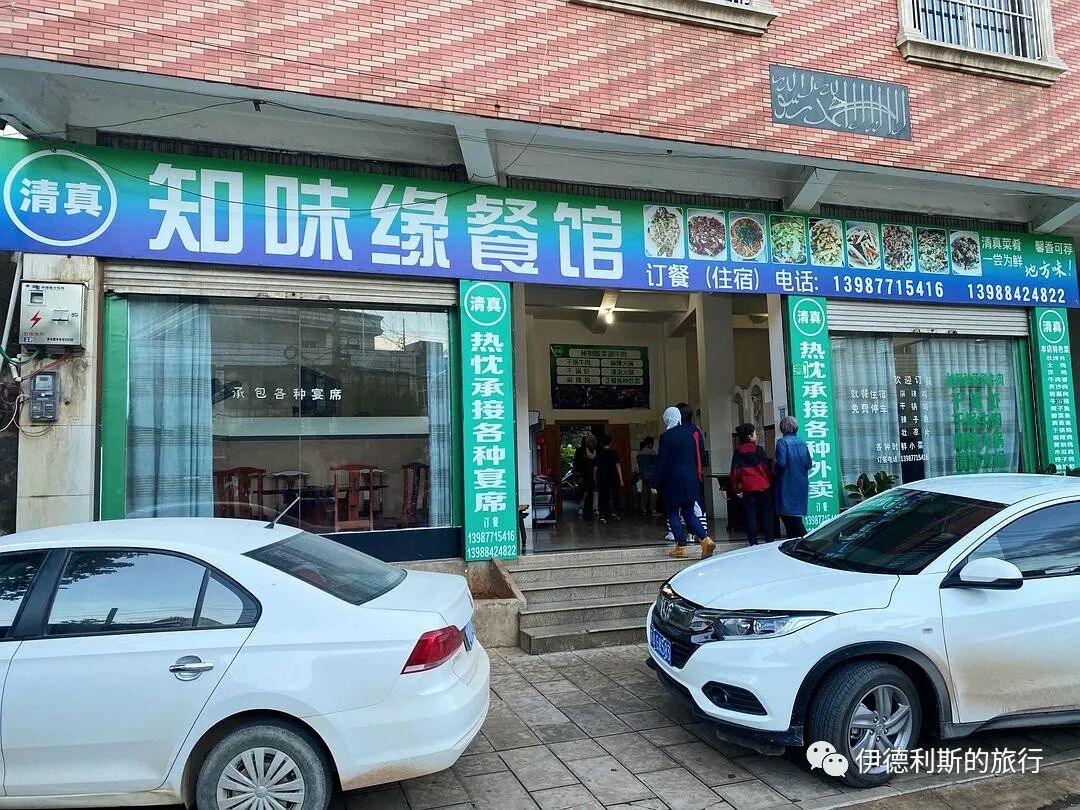
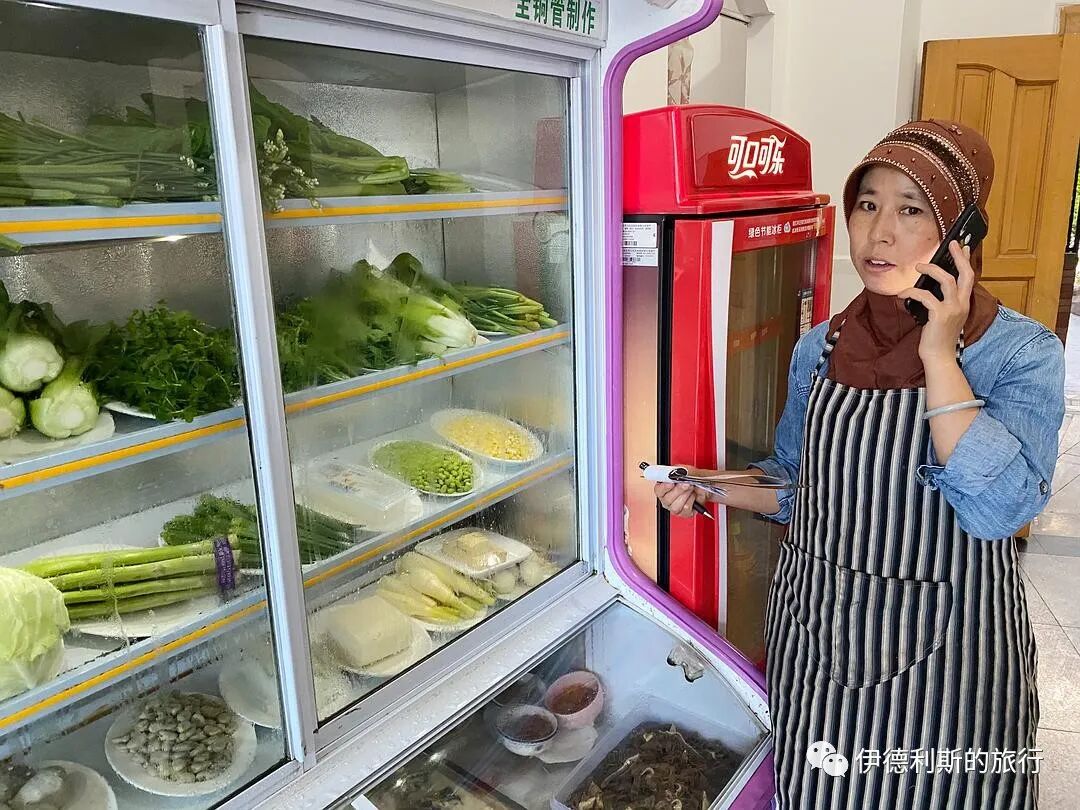
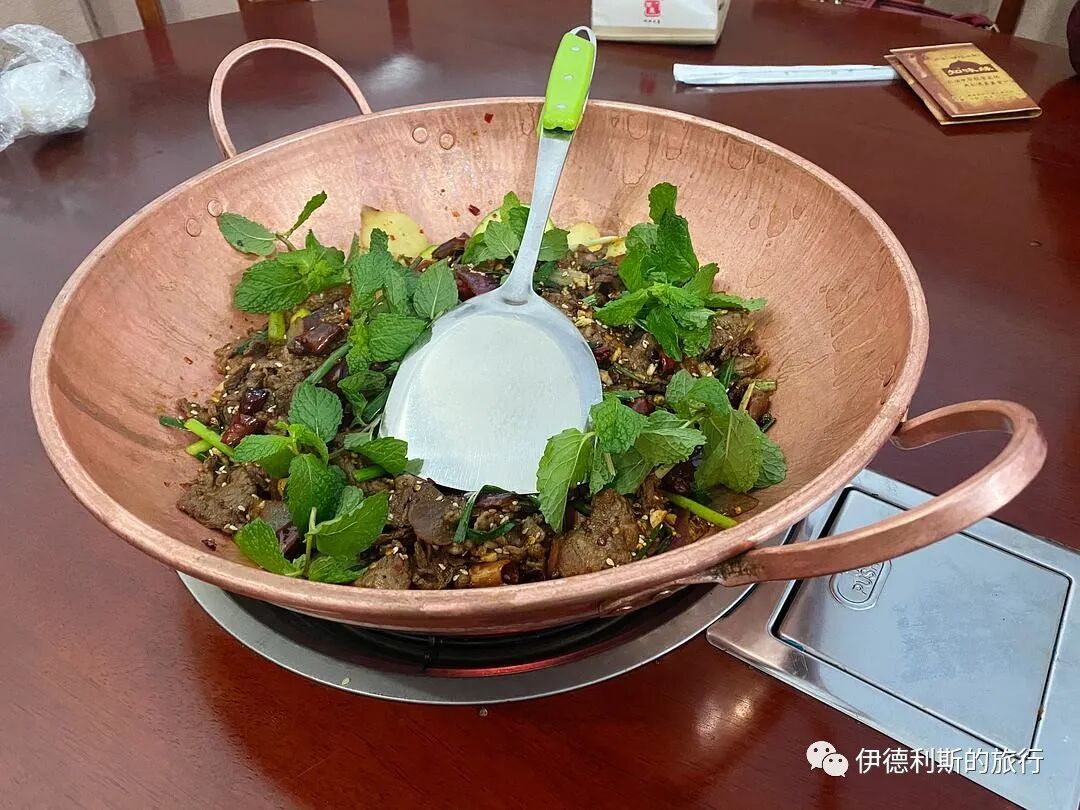
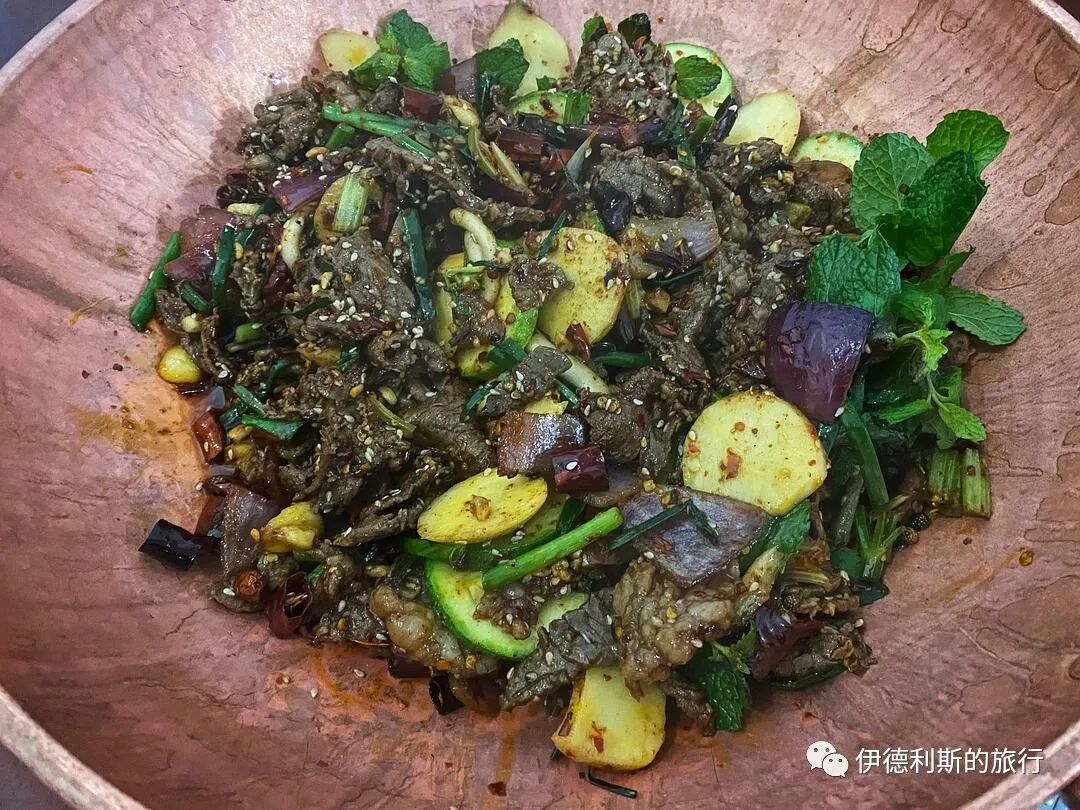
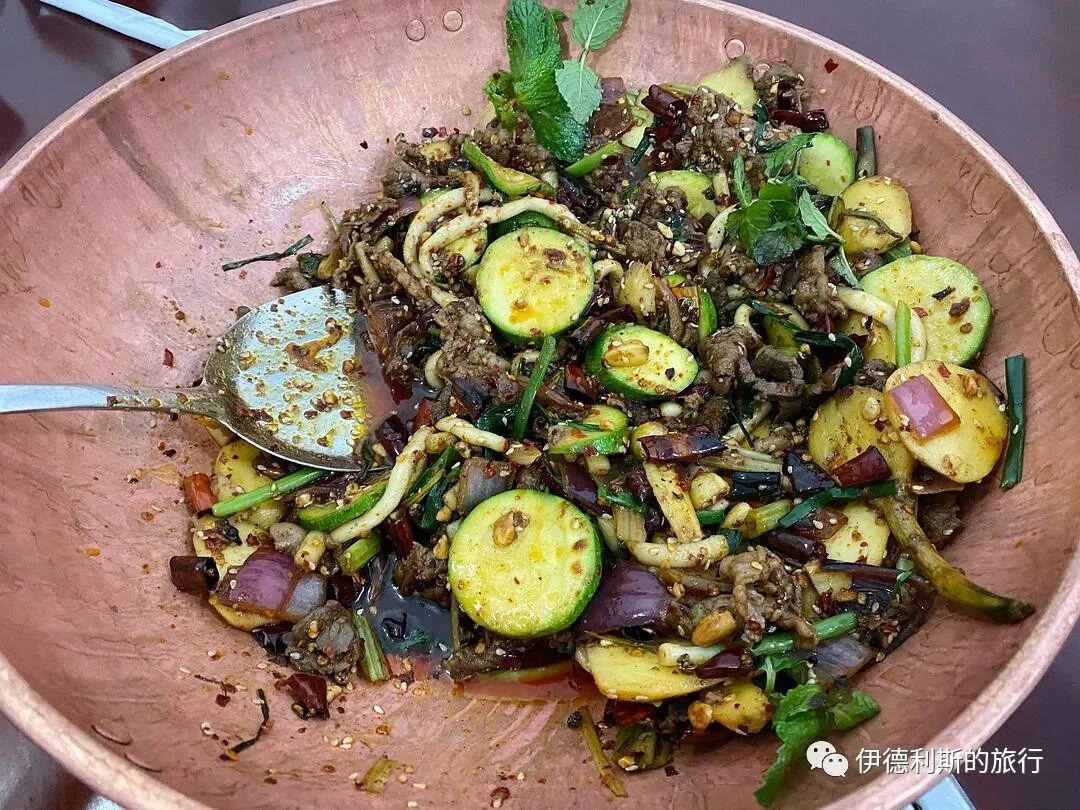
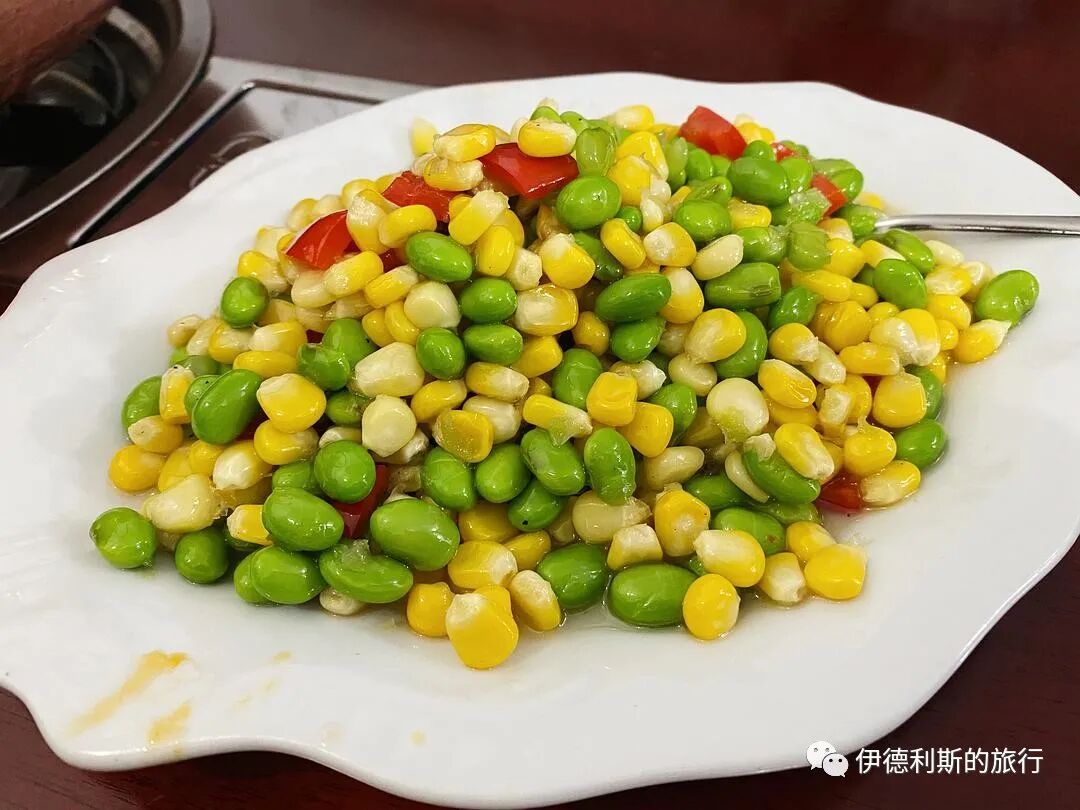
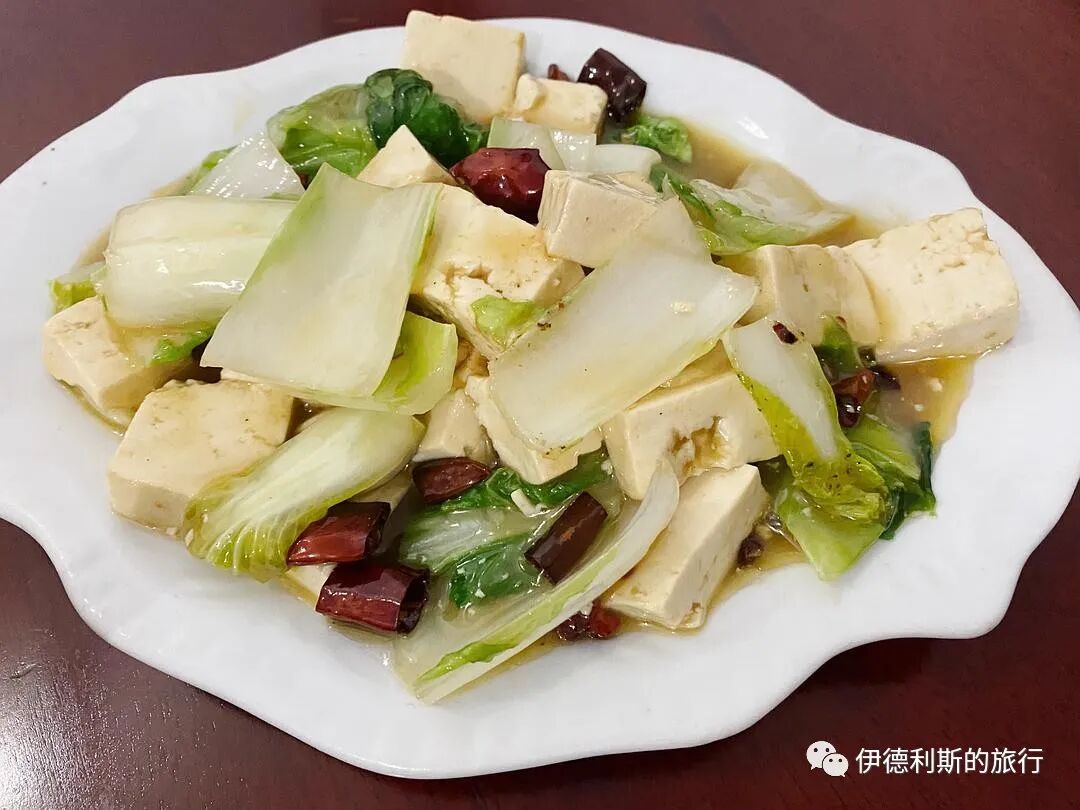
On October 5, I had breakfast in Najiaying, Yuxi, eating potato pancakes (yangyu baba) and beef rice rolls (niurou juanfen).
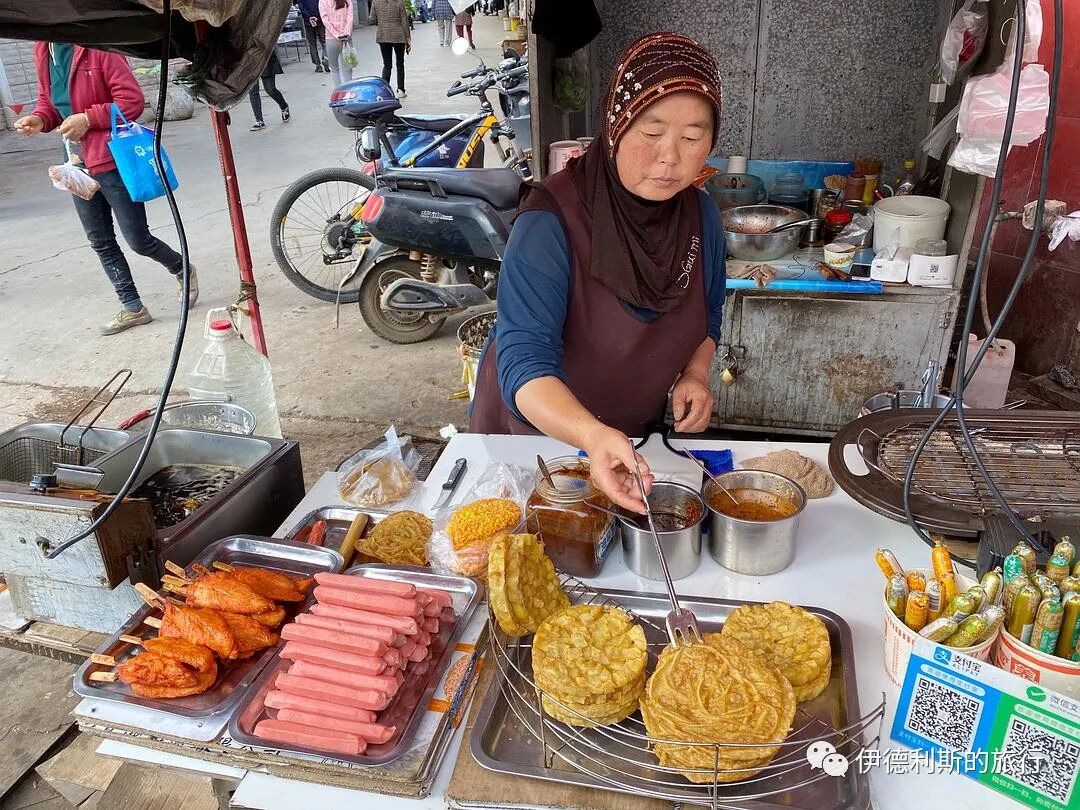
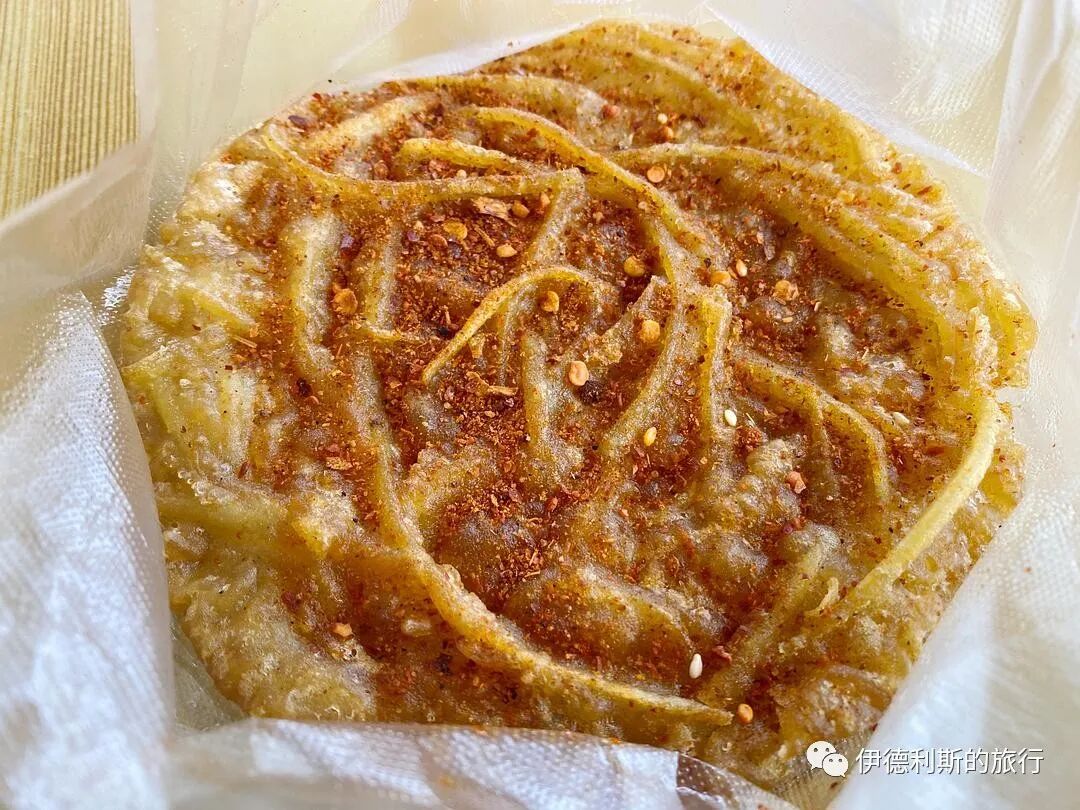
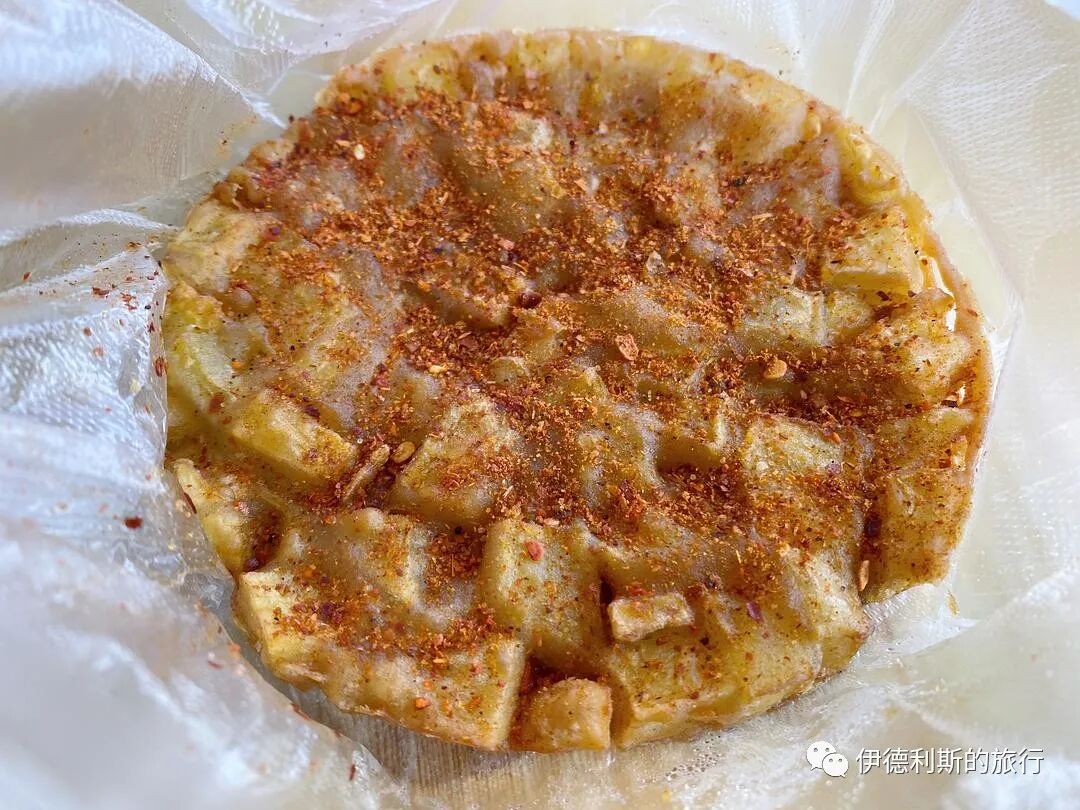
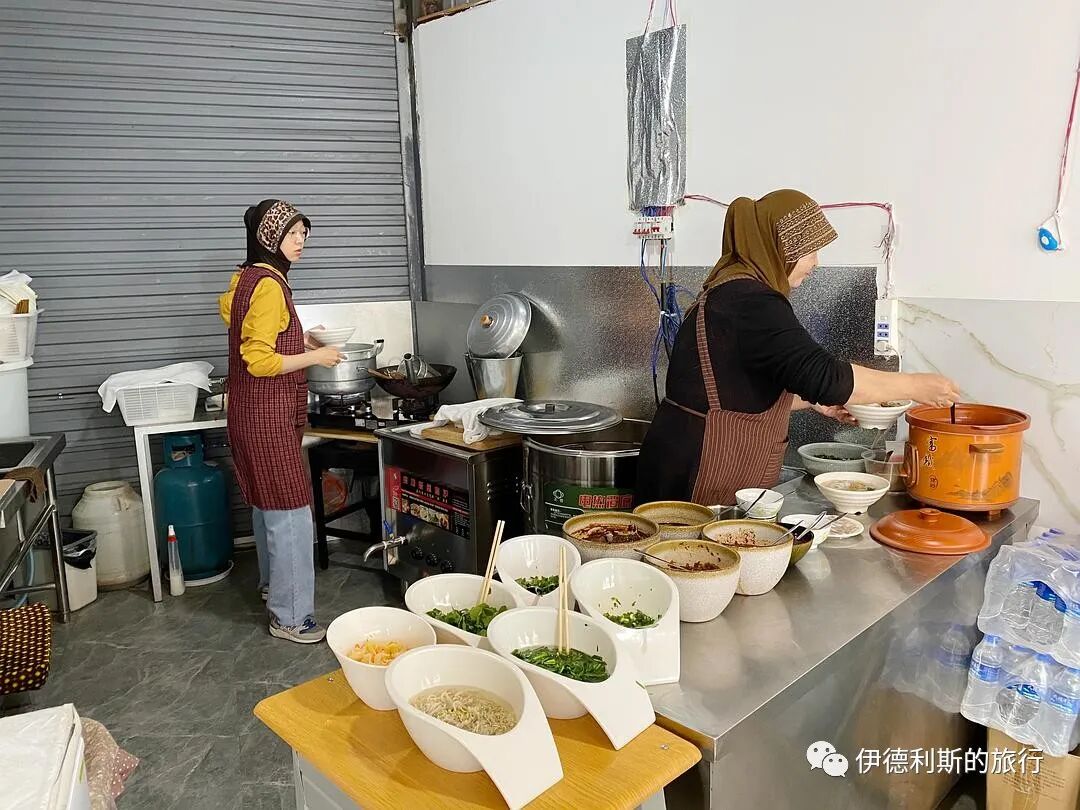
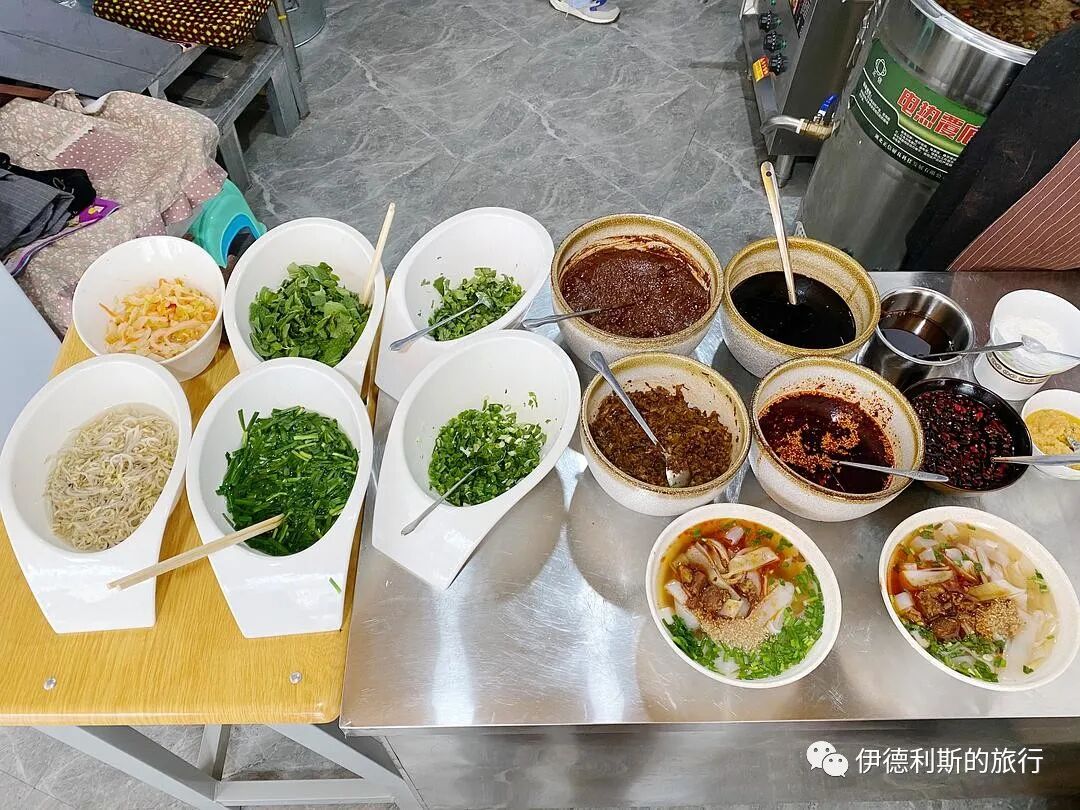
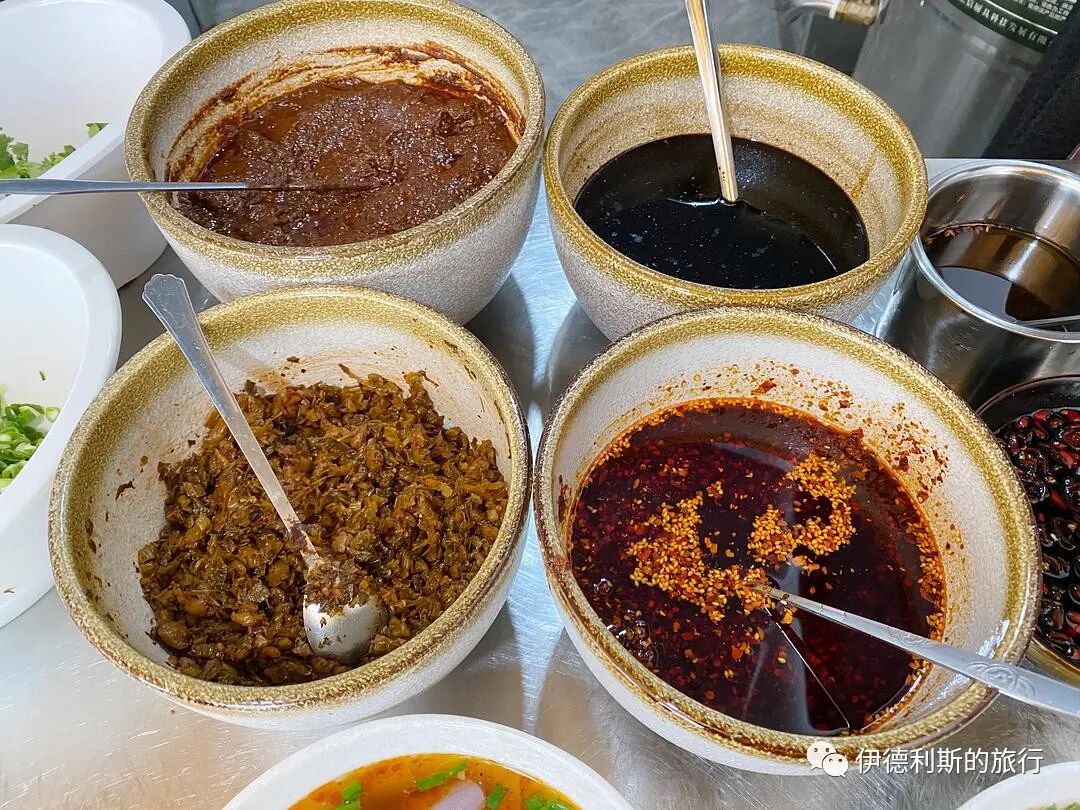
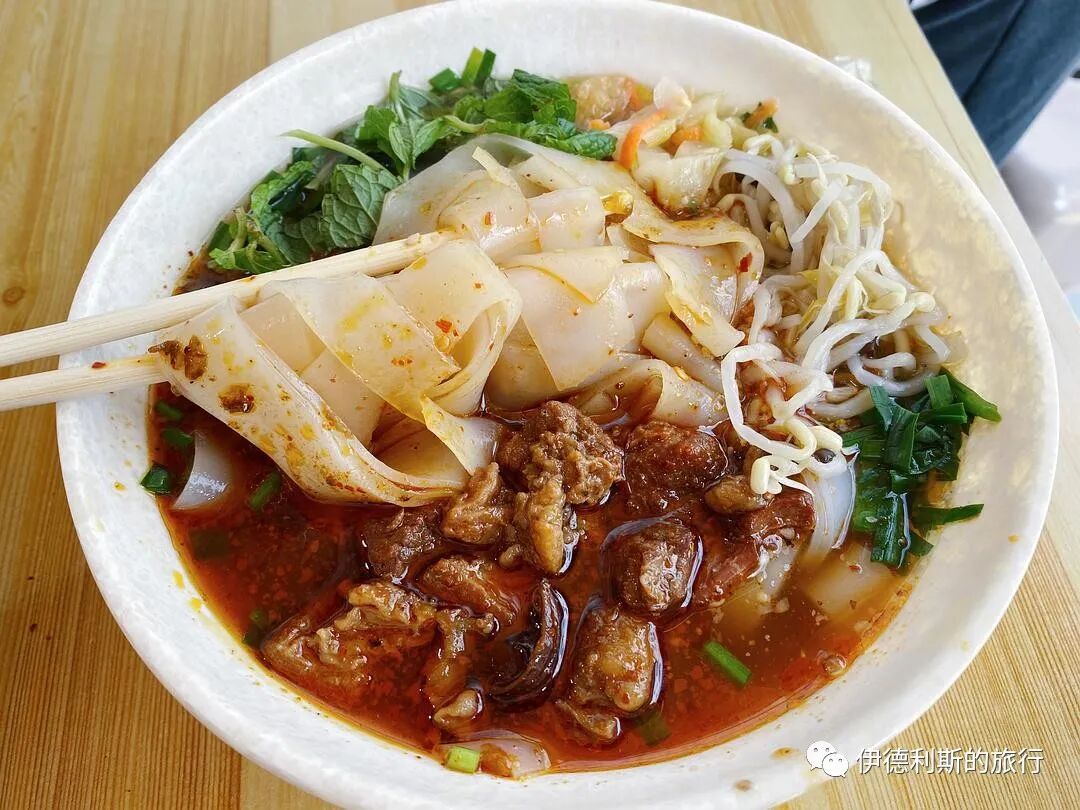
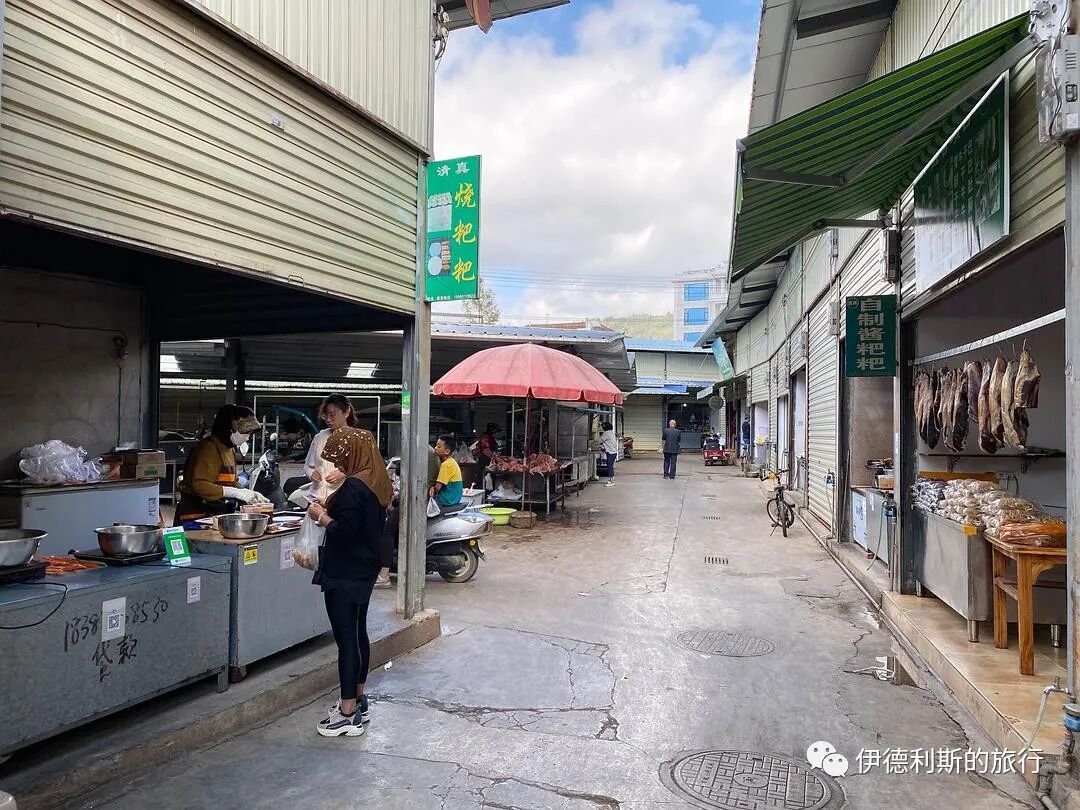
At the Najiaying market, I ate buckwheat cake (qiaogao), which was delicious.
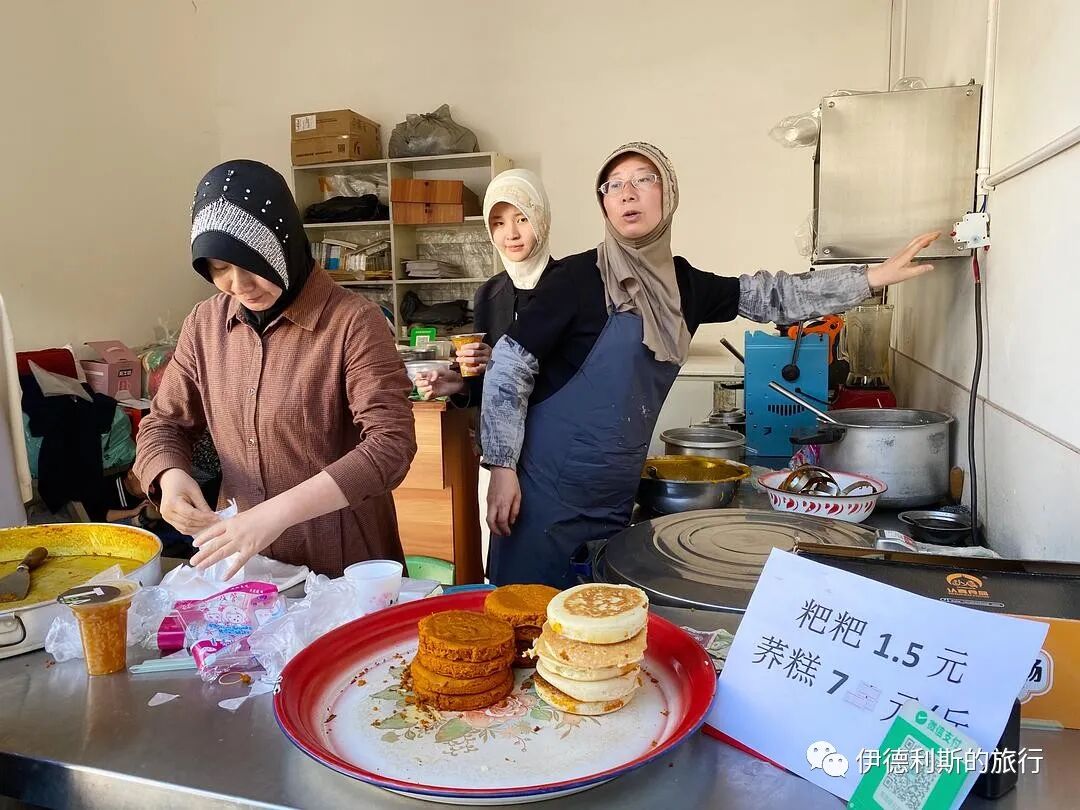
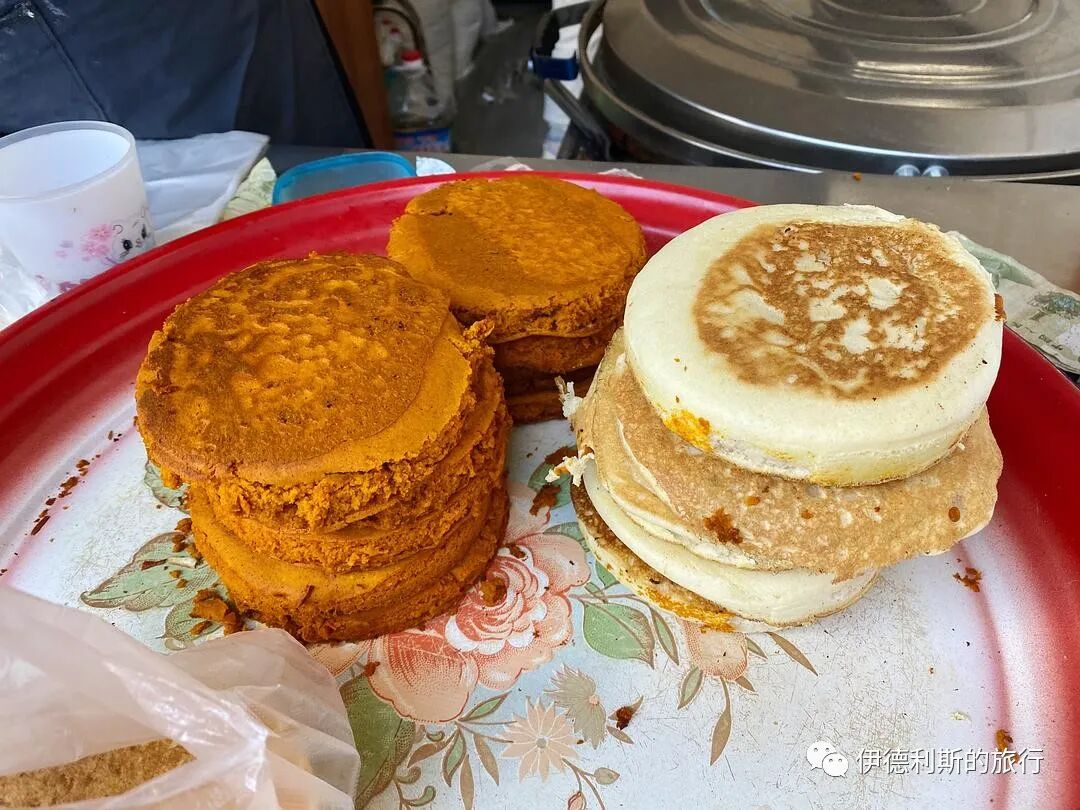
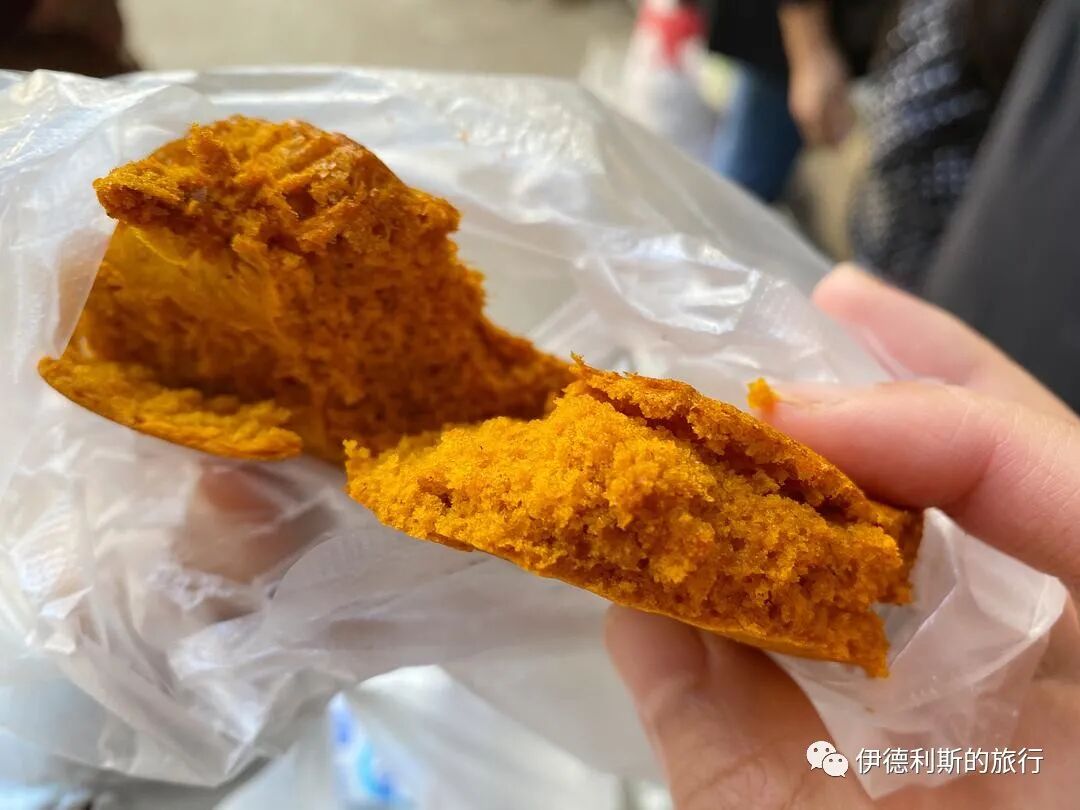
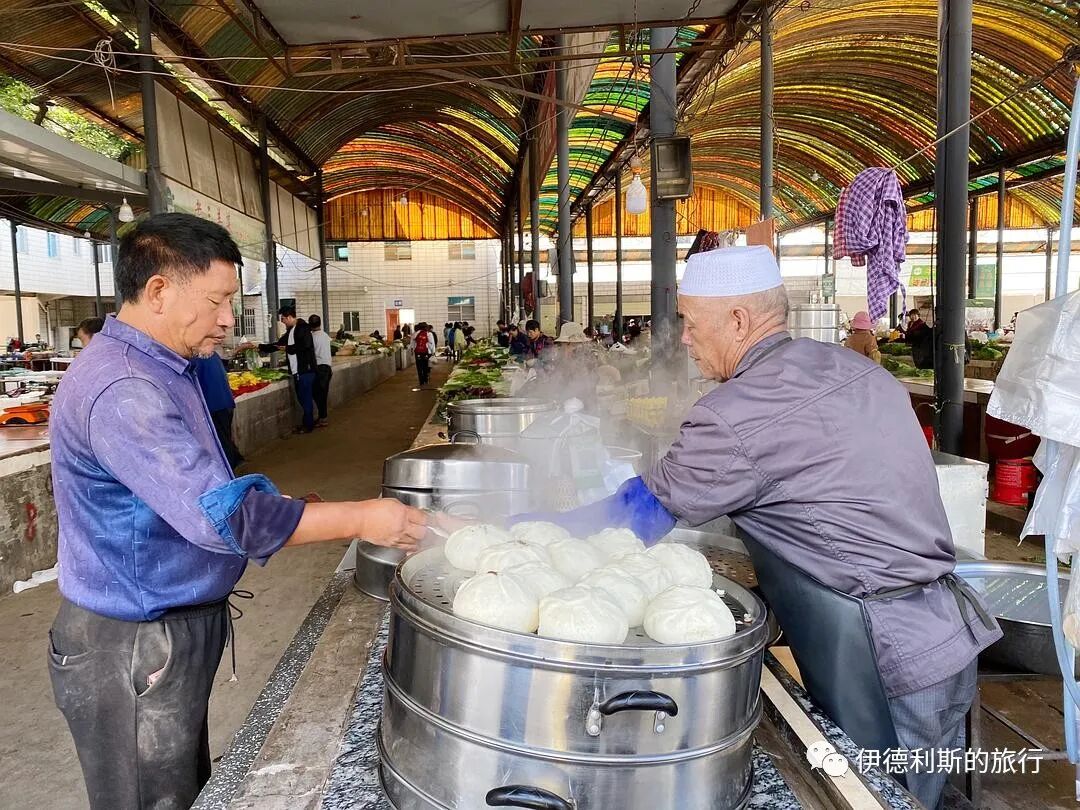
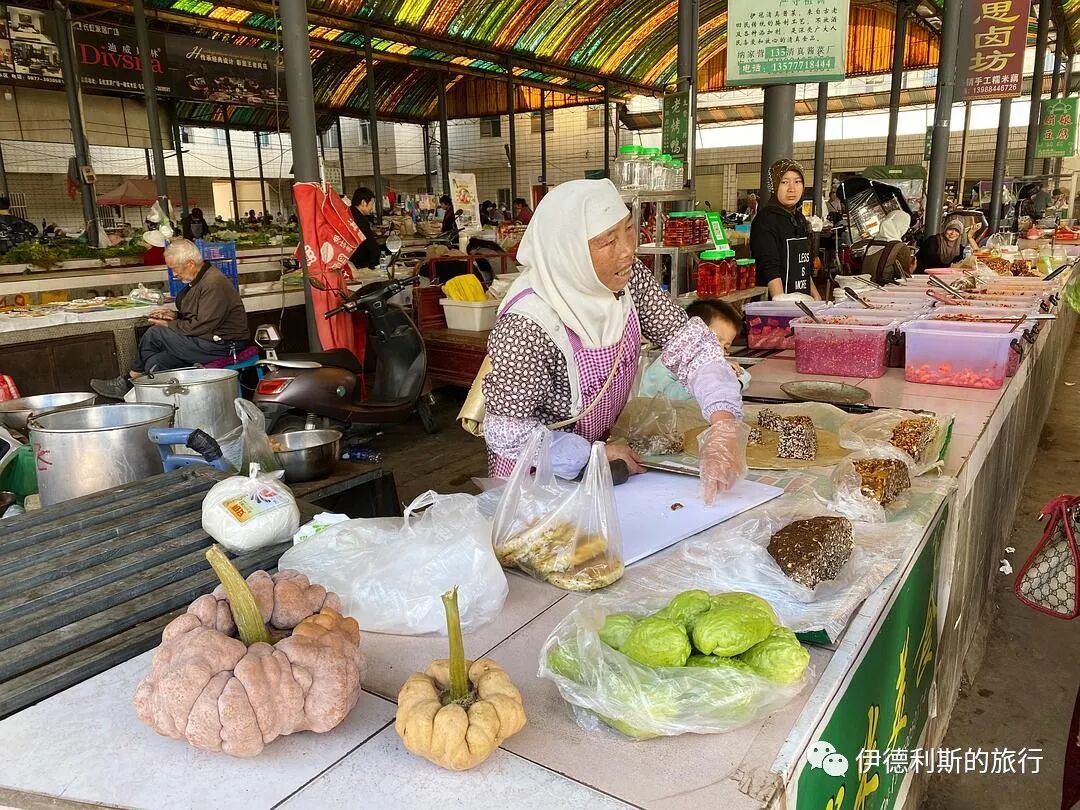
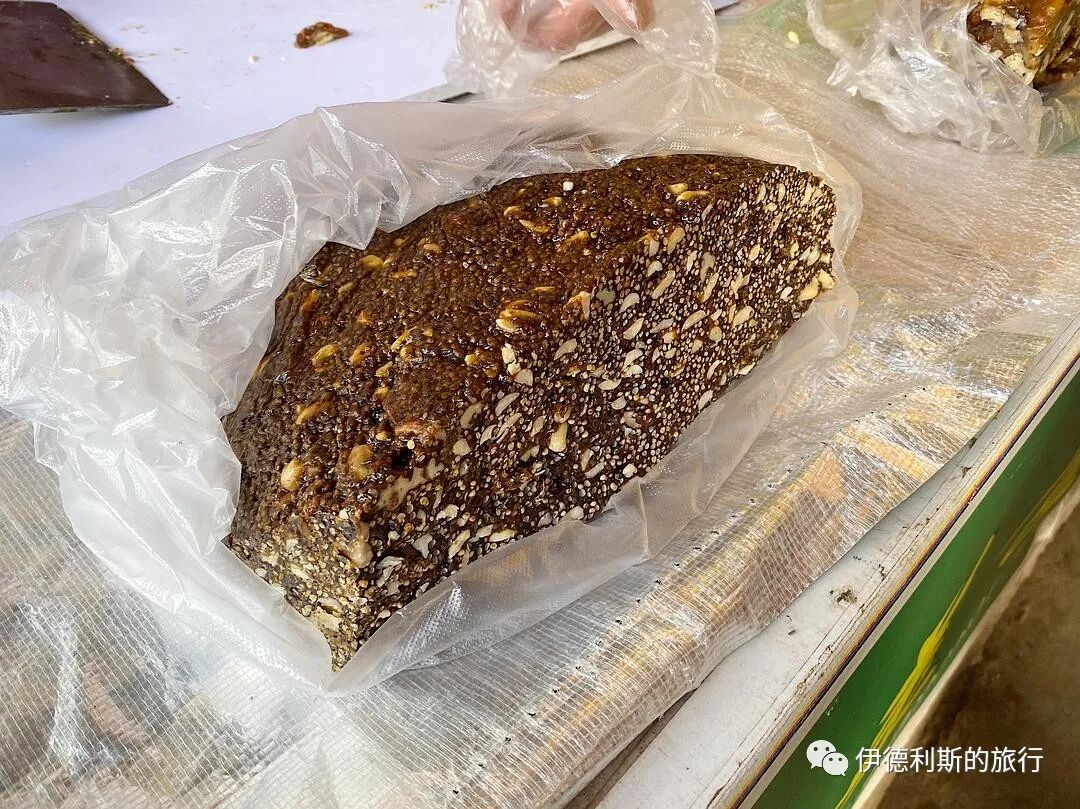
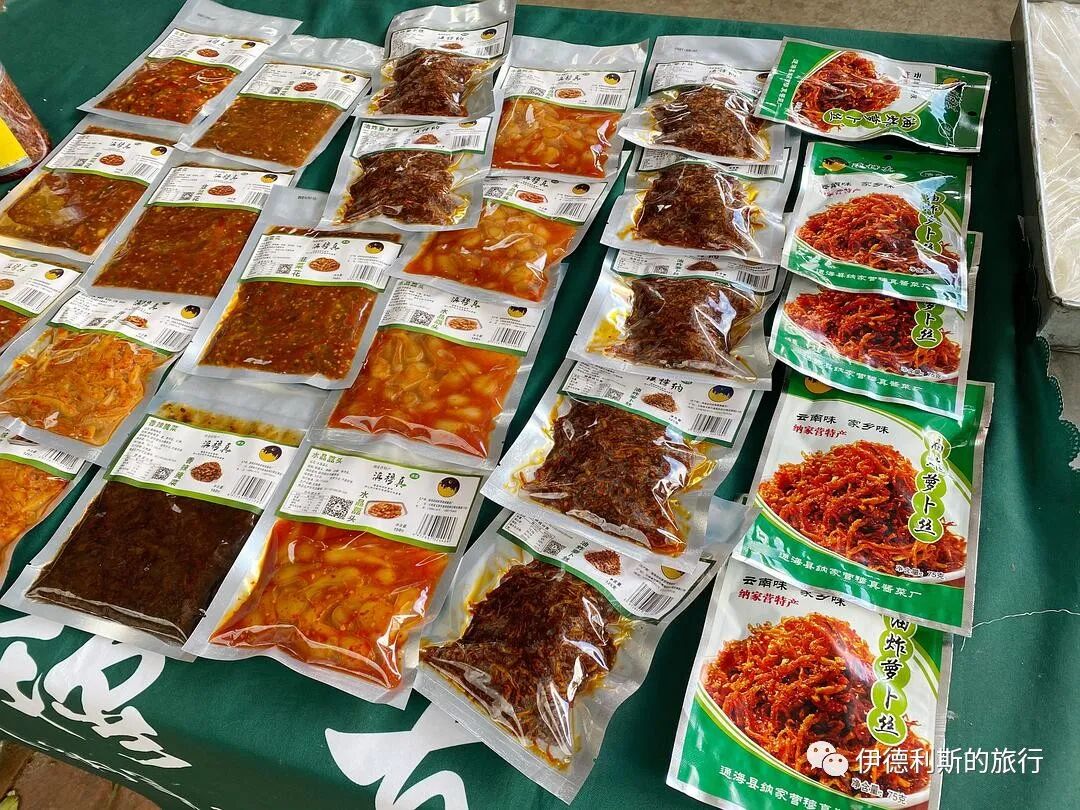
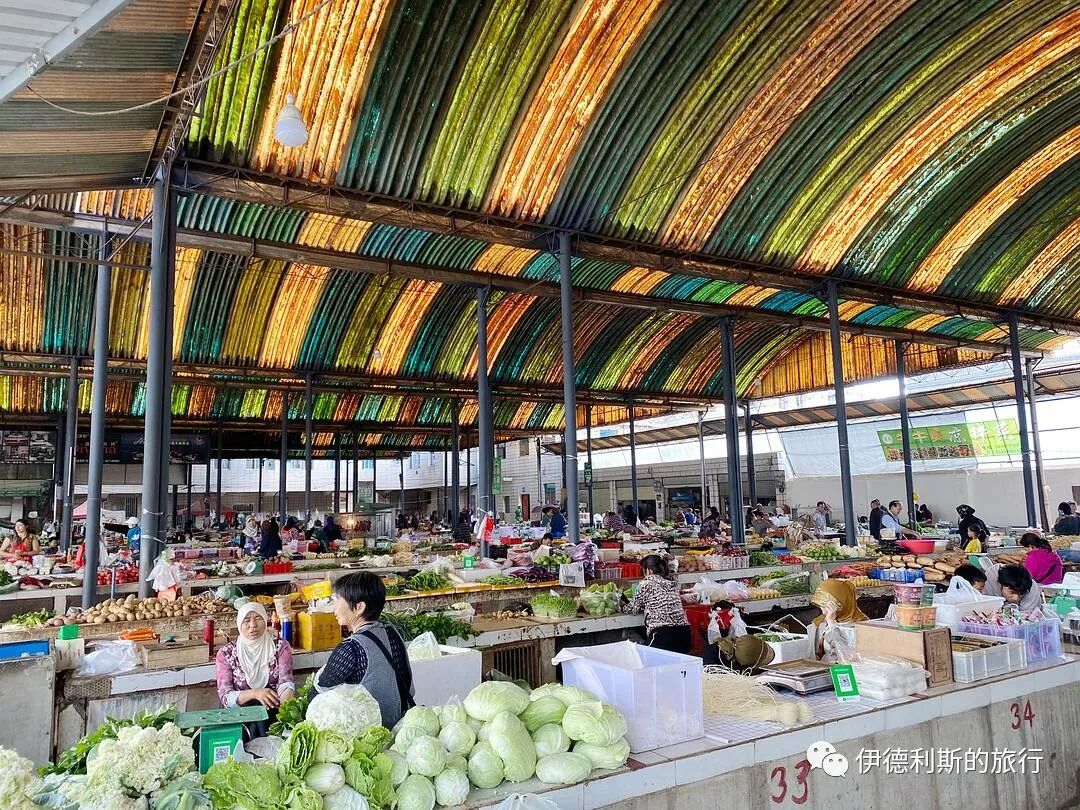
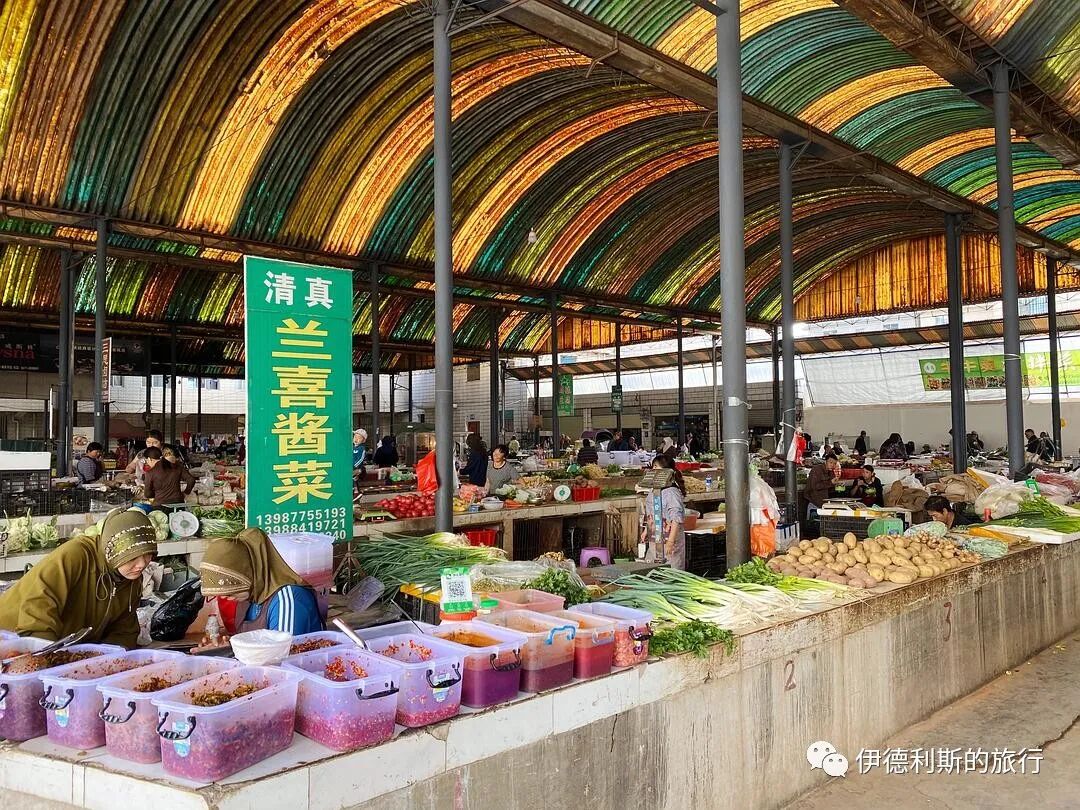
I visited the former residence of Na Xun, the famous Arabic translator who translated One Thousand and One Nights. The house is still occupied by Na Xun's grandnephew, an elderly man named Na Zhaoxiang. He warmly invited us in for tea and told us stories about Na Xun.
Na Xun's great-uncle, Na Fengchun, held a high-ranking position as a third-rank official, but his grandfather and father were both farmers.
Na Xun was born in 1911 and began attending the primary school inside the Najiaying mosque at age seven. The school used a modern curriculum that taught both Chinese and Arabic. They hired a teacher named Qian for Chinese and a teacher named Dai for math, while the Arabic classes were taught by Imam Ma Defu from the Najiaying mosque. Imam Ma Defu was an early student of the Yunnan Islamic scholar Ma Lianyuan and had a very strong foundation in religious studies.
Na Xun's home was just a few dozen steps south of the mosque. Every day when the adhan (bangke) sounded, he would get up and get ready. By the time his father returned from namaz, Na Xun was already prepared to go to school to review his lessons. According to Na Xun's cousin Na Guangxian, Na Xun never missed a class or arrived late, and he always ranked at the top of his exams.
In 1921, after Na Xun finished third grade, his cousin Na Guangwen returned from studying in Kunming. Seeing how bright Na Xun was, he asked Na Xun's father for permission to take him to Kunming for further education. His father agreed, and Na Xun left home to pursue his studies.
In 1926, bandits caused trouble in Najiaying. When the Yunnan provincial government troops came to suppress them, they burned down Najiaying, and Na Xun's home was reduced to ashes. Because Na Xun's eldest brother, Na Guangcheng, had been working in trade (zou yifang) and running a horse inn by the Lancang River in Simao, he had some savings, which allowed the family to rebuild their home on the original site.
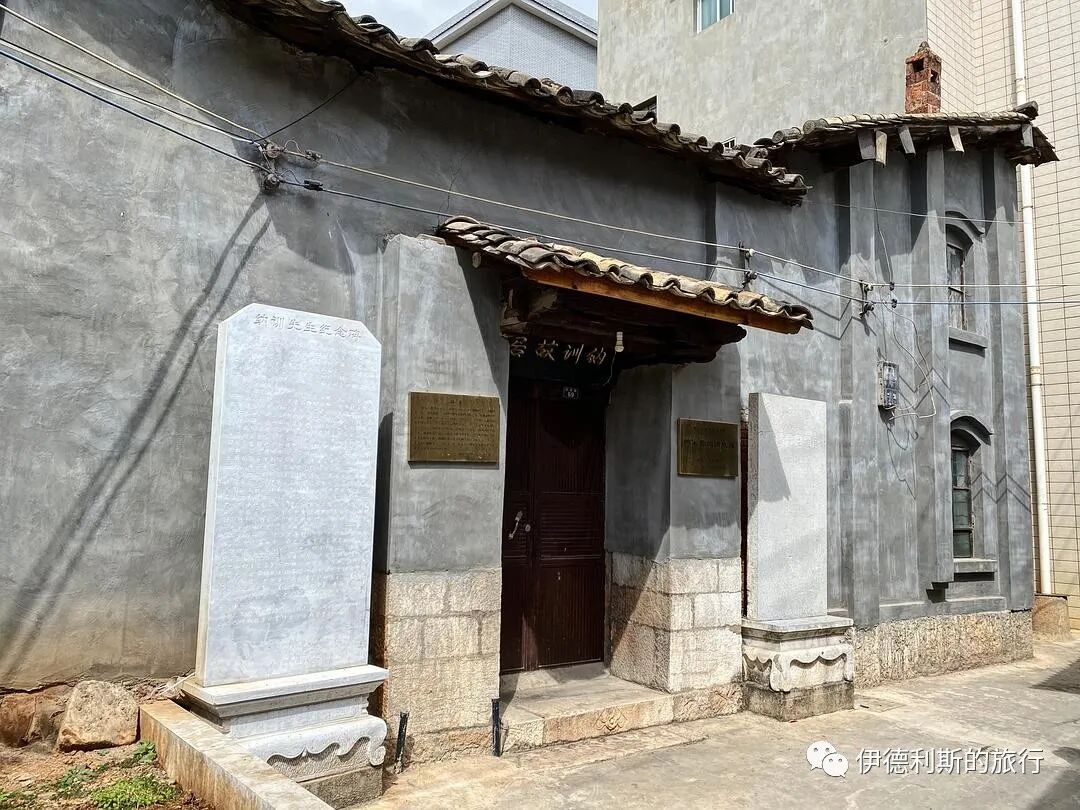
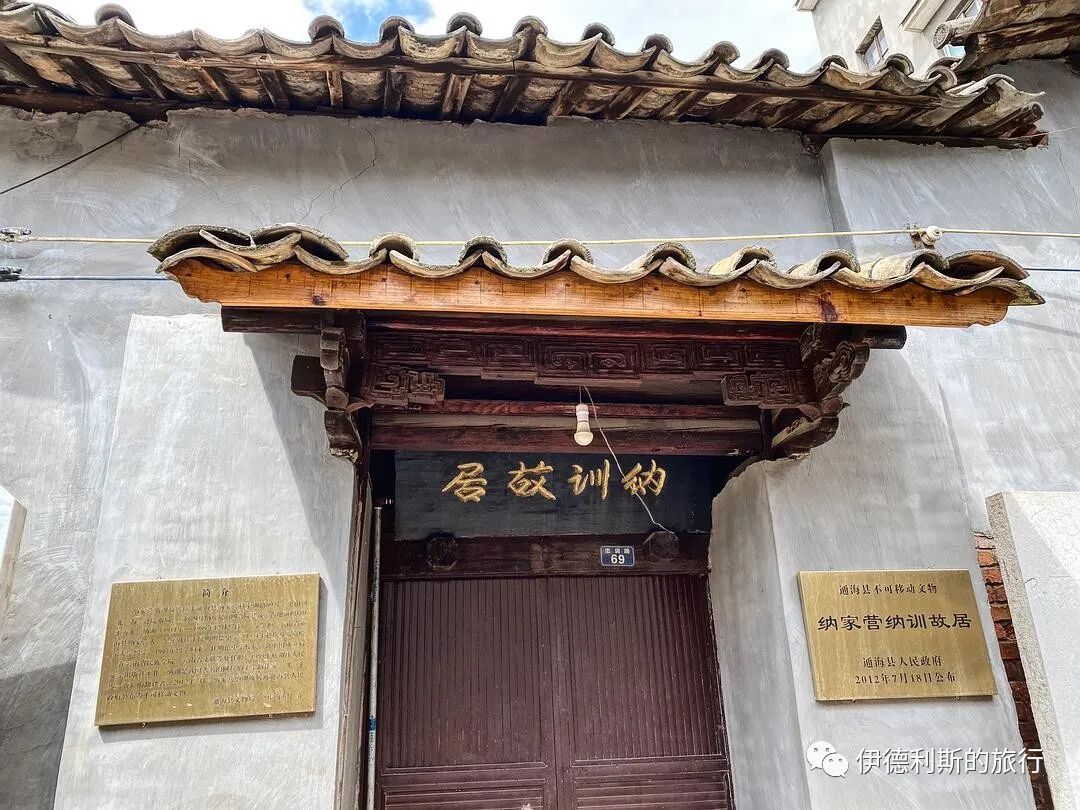
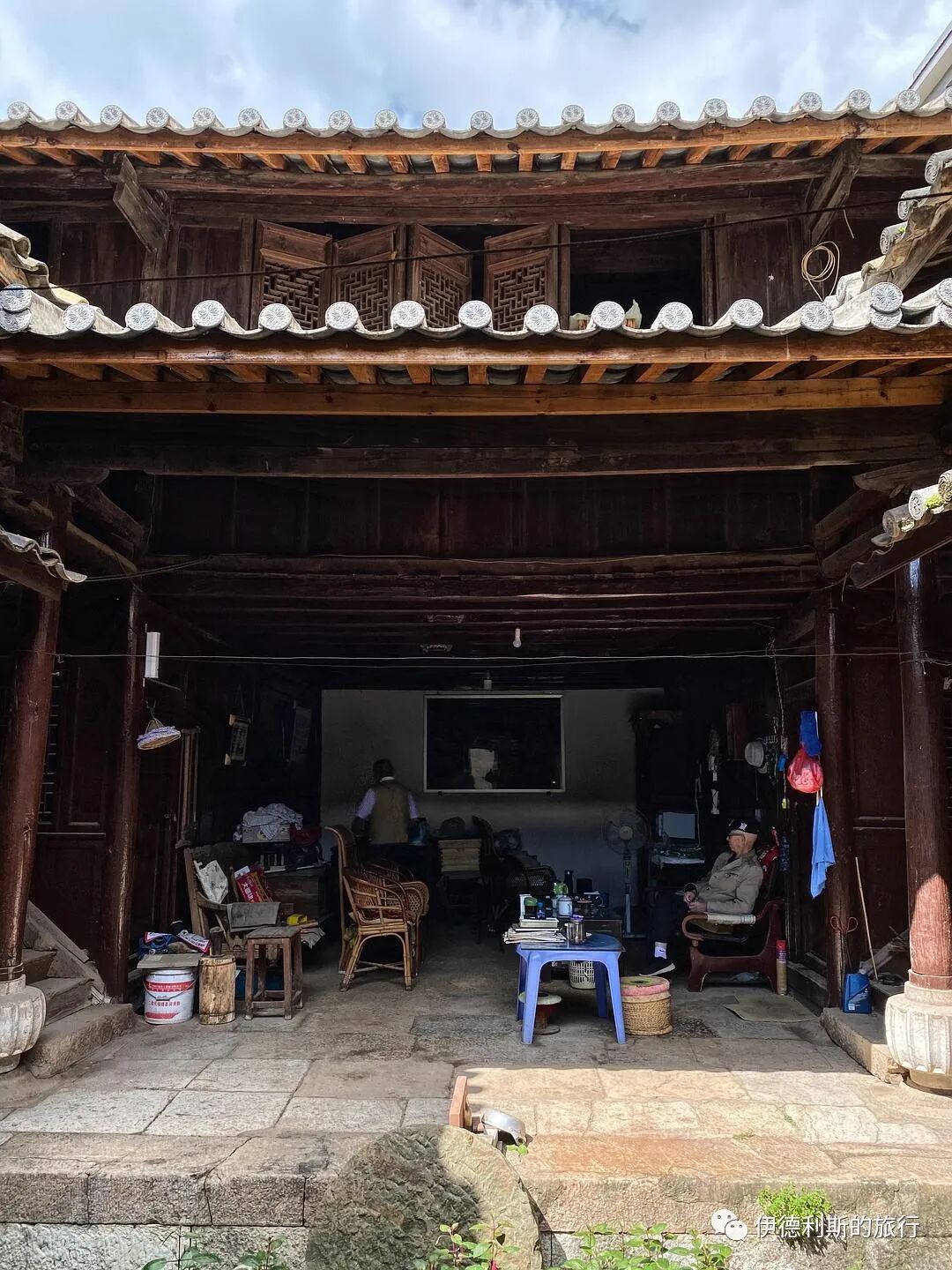
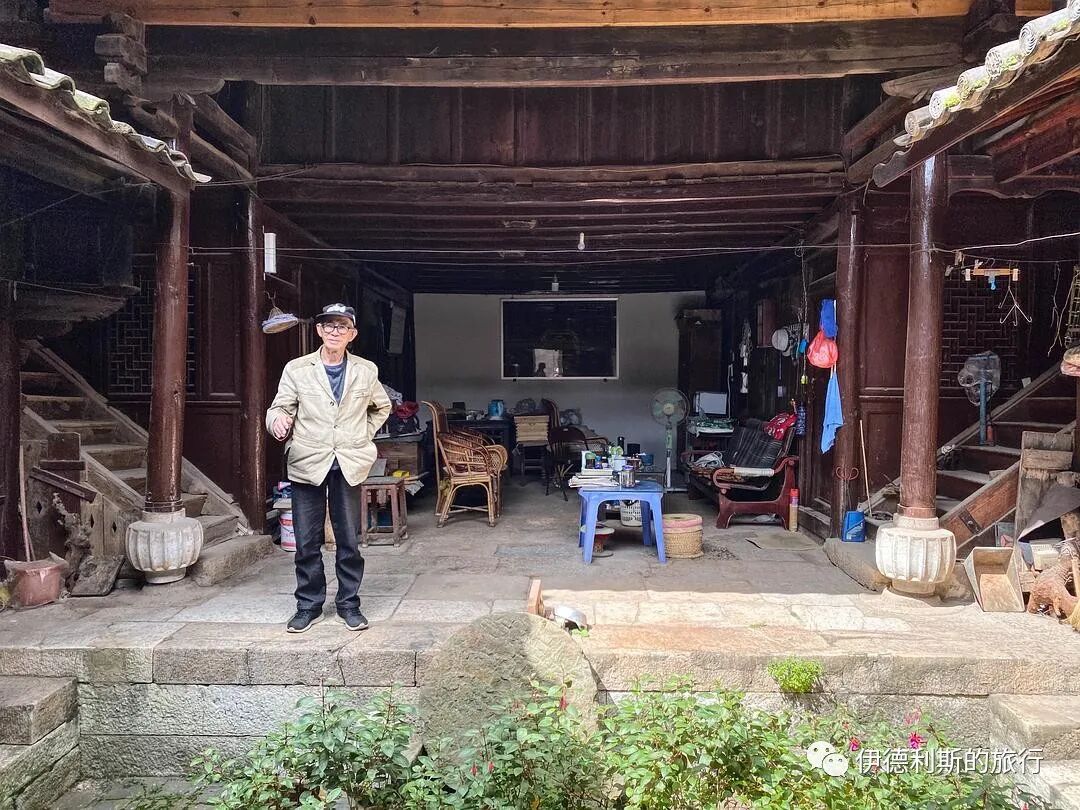
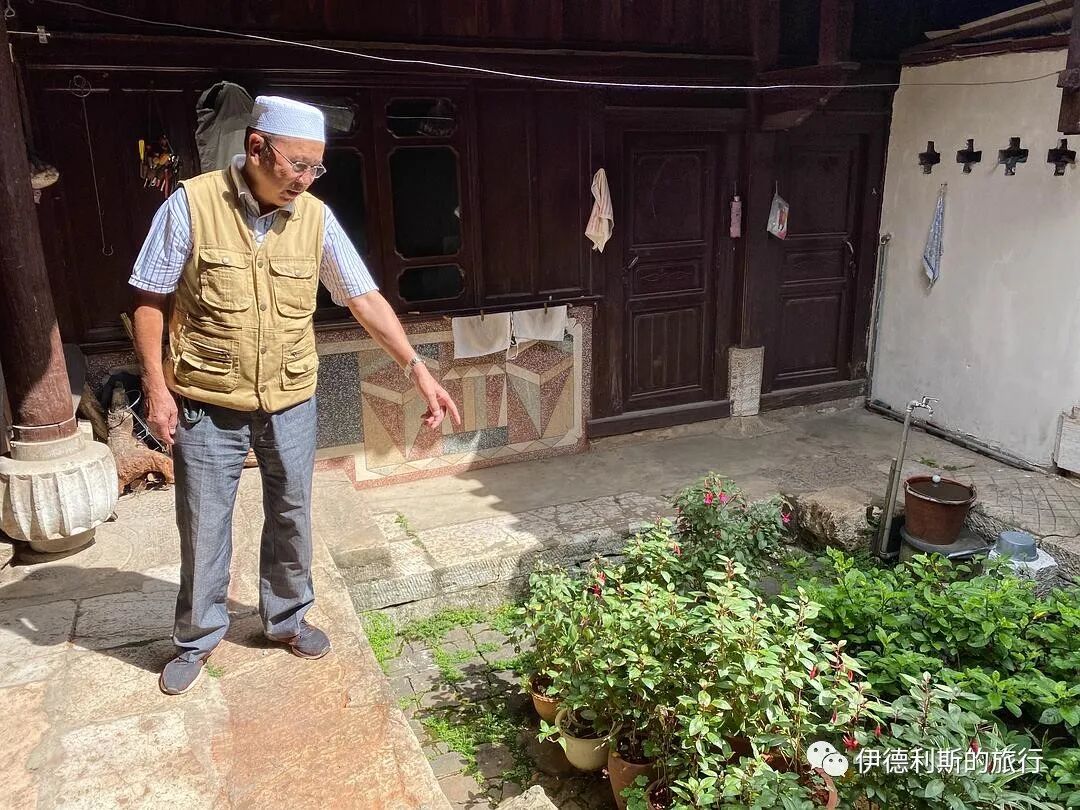
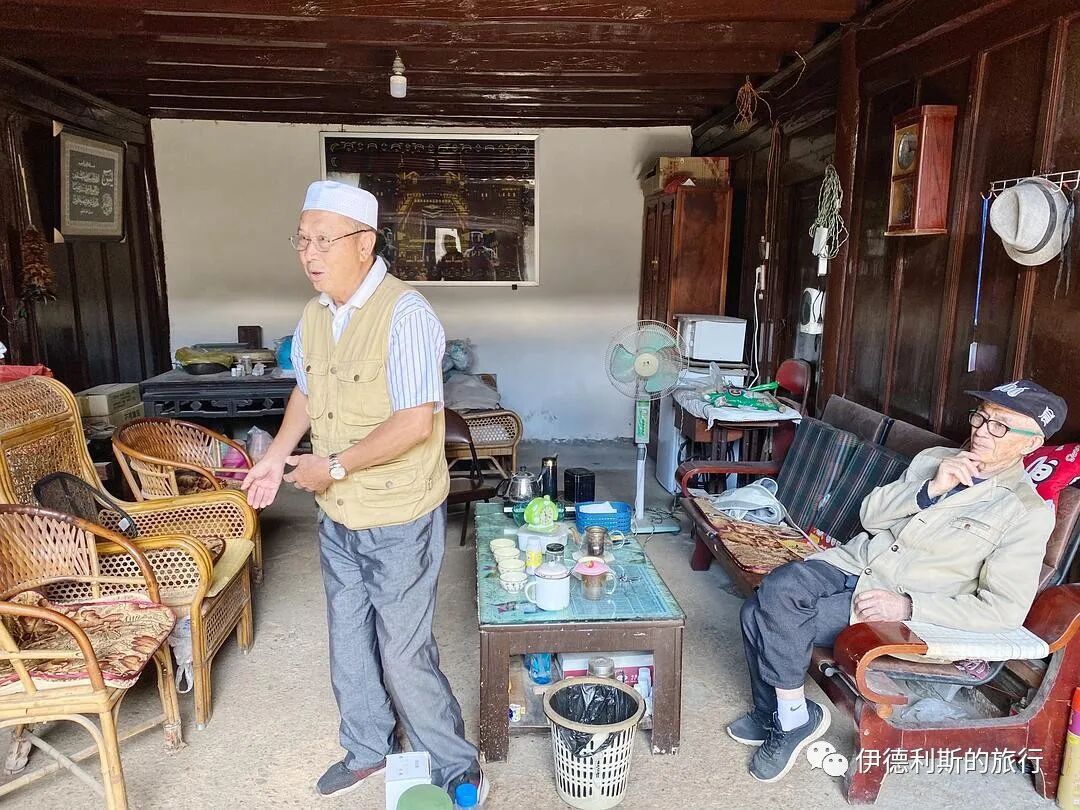
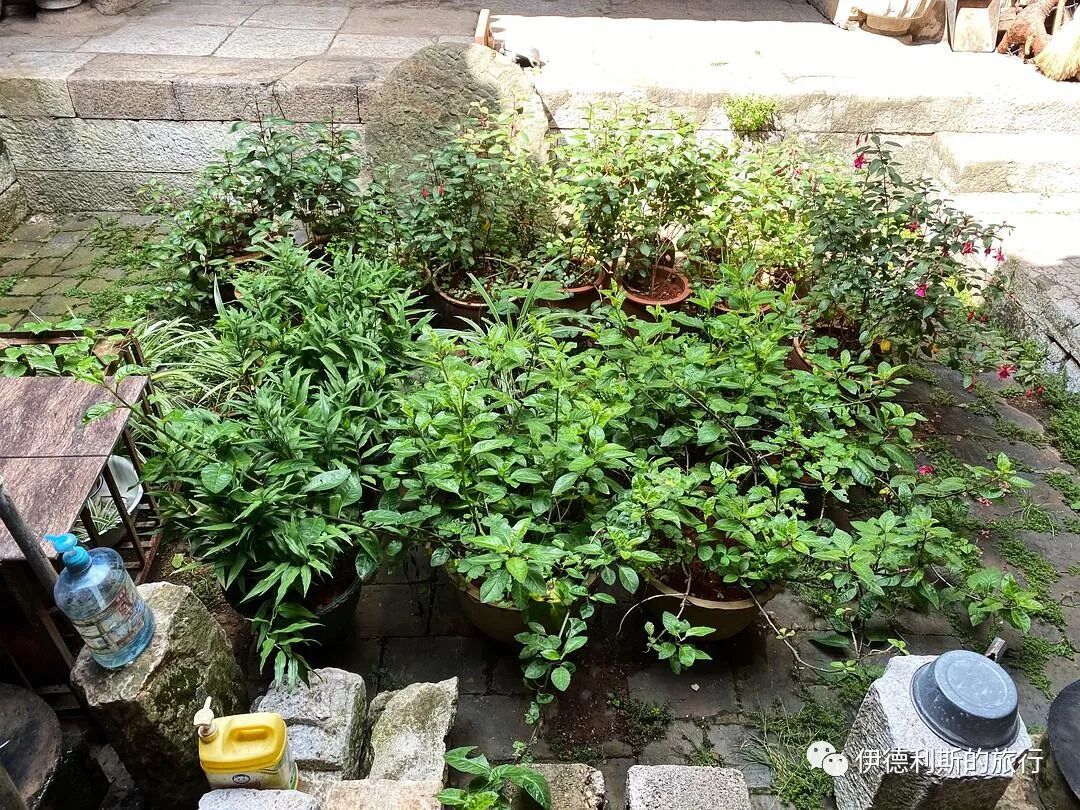
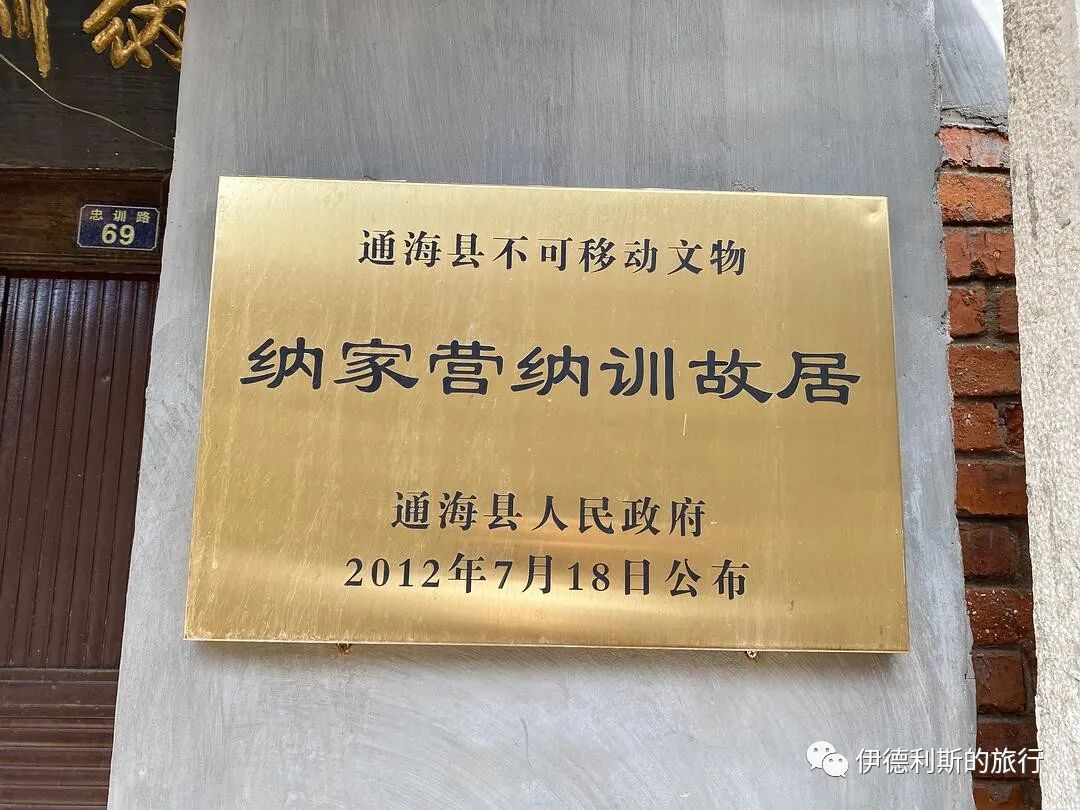
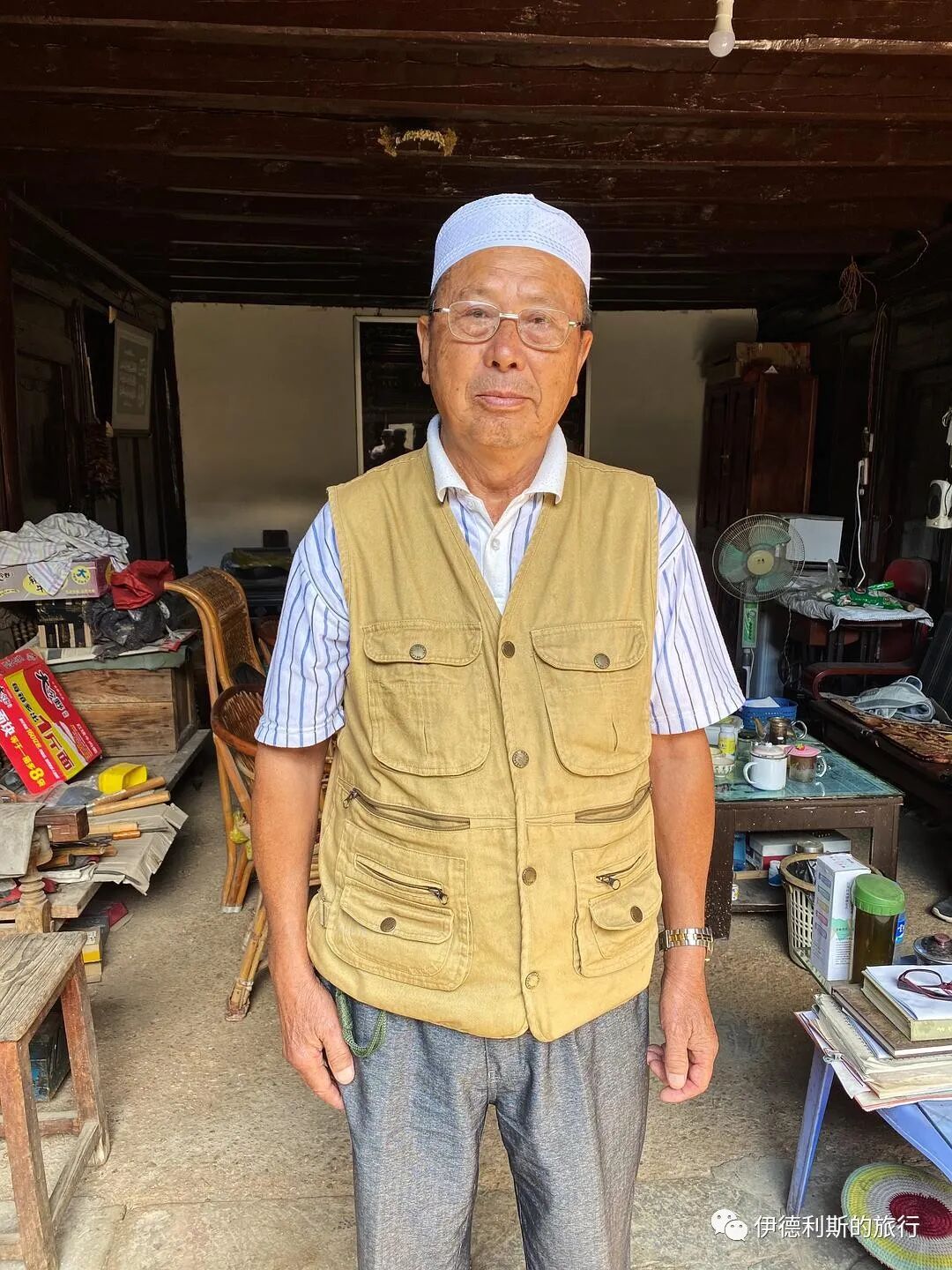
I continued on to visit the former residence of Professor Na Zhong, an expert in Arabic education and a leading figure in Arabic culture. Na Zhong wrote A General History of the Arabs and compiled the first Arabic language textbook for Chinese universities. The property is now rented out by Na Zhong's descendants.
Na Zhong's grandfather, Na Hai, had been a soldier for several years. He was not only skilled in martial arts but also a master of masonry, metalwork, and carpentry. While working in Kunming, he fell in love with a young lady named Cai. Miss Cai came from a prominent military family in Kunming, but she chose this poor young man who had no house and no money. To get married as soon as possible, Na Hai returned to his hometown of Najiaying and spent six months building his own house. The house was a traditional two-story Yunnan dwelling with three main rooms and four side rooms. It was built very neatly with exquisite wooden doors and windows. The pillars of the outer courtyard gate were carved from solid bluestone, featuring patterns of dragons playing with a pearl, magpies in plum blossoms, qilin and eagles, and golden bulls and horses. Na Hai and Miss Cai were married there and had their first son, Na Dechang.
In 1856, the Bingchen Incident occurred in Yunnan. Najiaying appointed Na Hai, Na Fengchun, and Na Taishou as representatives to negotiate with the Han scholar Gongsun Shuo from Dongxiang, reaching a mutual protection agreement between Hui Muslims and Han people in Hedong. In 1857, the mutual protection agreement in Hexi was broken by a local tyrant named Zhan Zhanchun, who gathered soldiers to attack the Great and Small Donggou (now known as Da Hui Village and Xiao Hui Village). Na Hai ignored the advice of his friends and family and went to try to stop the fighting, but he was killed by the enemy. After that, Miss Cai, who was seven months pregnant, took her eldest son Na Dechang back to her parents' home in Kunming. Shortly after, she gave birth to a posthumous child, Na Zhong's father, Na Degui. After the birth, Miss Cai suffered from illness and passed away shortly after.
After Miss Cai died, Na Hai's first wife, He, brought the brothers Na Dechang and Na Degui back to Najiaying to raise them. When Na Degui was 13, He became too ill to work, so she asked a relative to take Na Degui to Kunming to find work. Na Degui worked at a fur shop on Zhuji Street in Kunming. He was an apprentice for eight years, receiving only food and lodging with no wages. After finishing his apprenticeship, Na Degui married He Yufeng, the niece of his foster mother He, and they returned to Kunming to work after the wedding. In 1909, He Yufeng gave birth to Na Shou'en, who would later be known as Na Zhong.
When Na Zhong was one year old, his cousins saw that He Yufeng was struggling, so they carried Na Zhong and his family to Kunming to join Na Degui. That was how Na Zhong left Najiaying and began his life in Kunming. After that, Na Zhong rarely returned to his hometown, except for a two-month stay in 1940 to escape air raids in Kunming after he graduated from Al-Azhar University in Egypt.
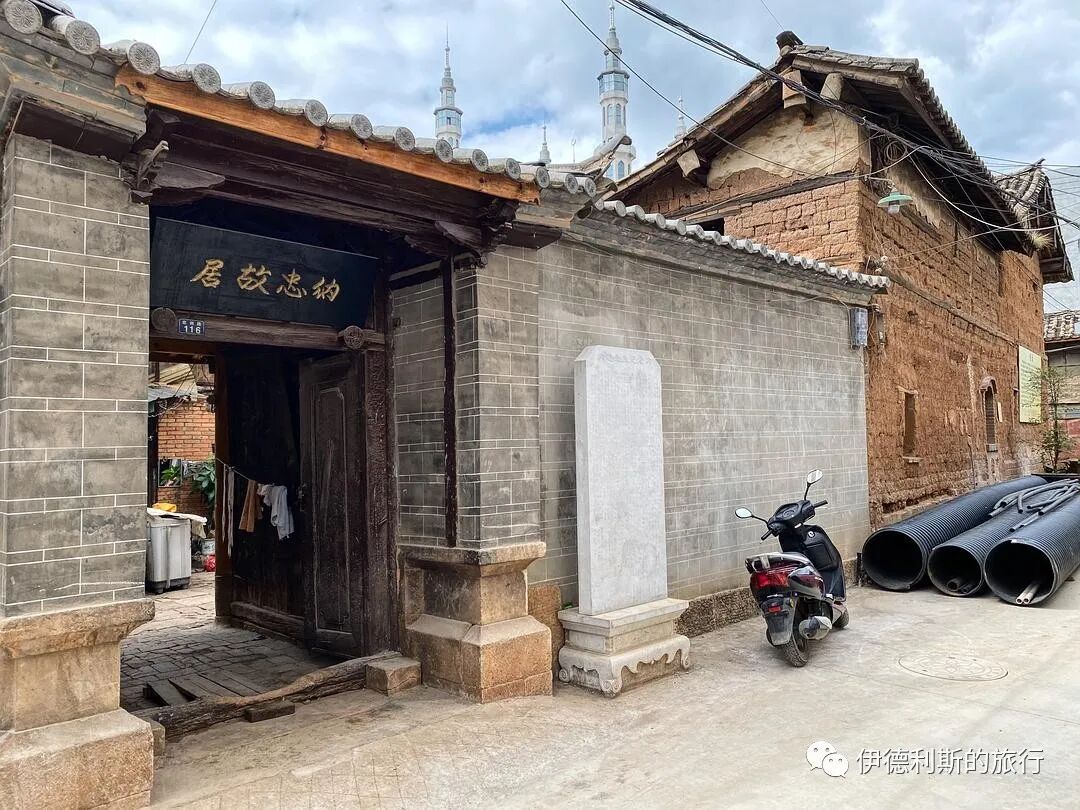
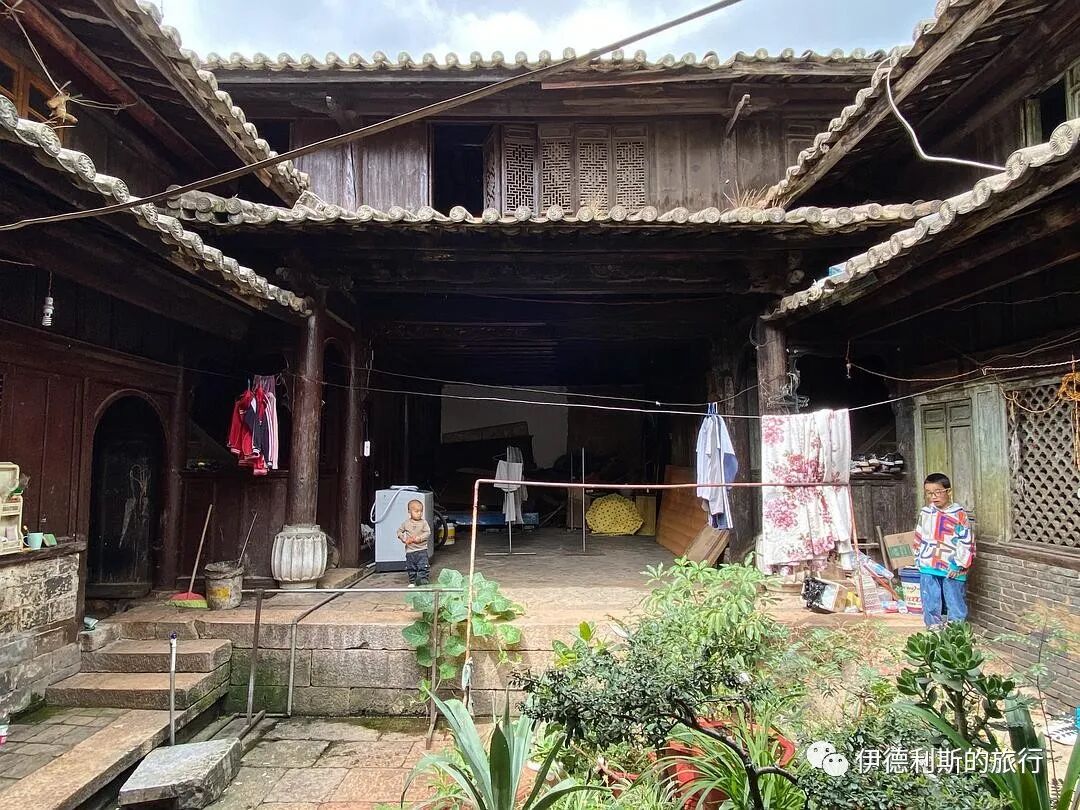
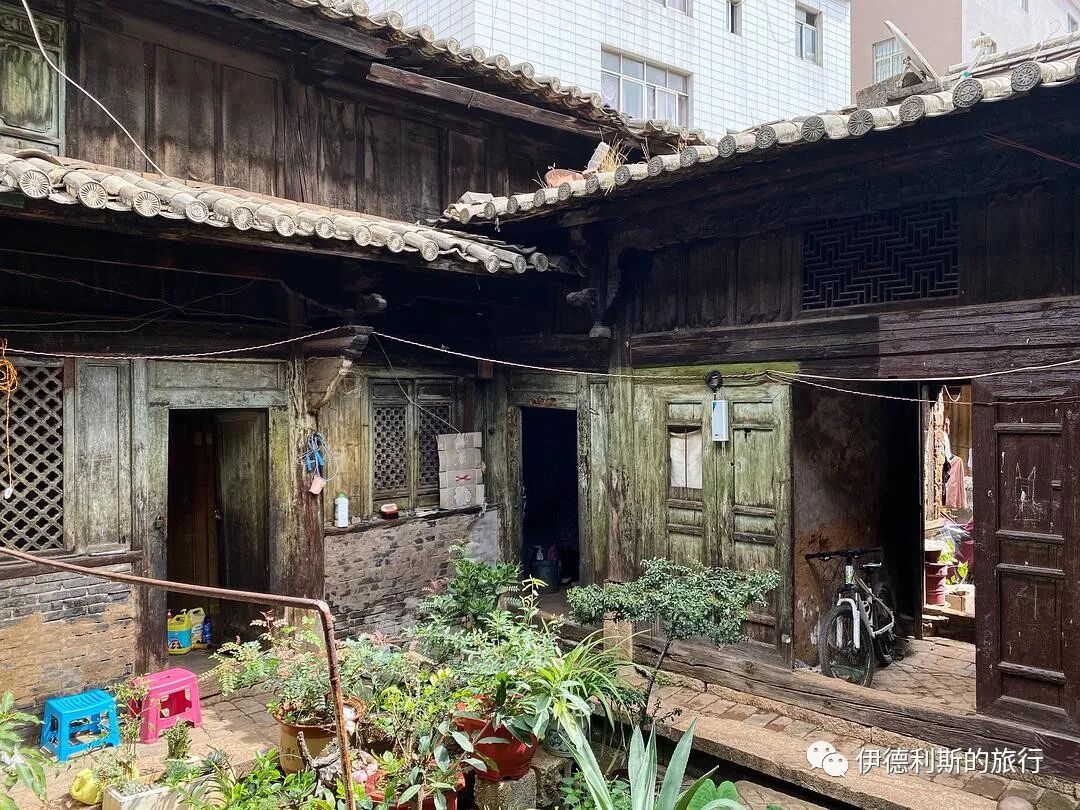
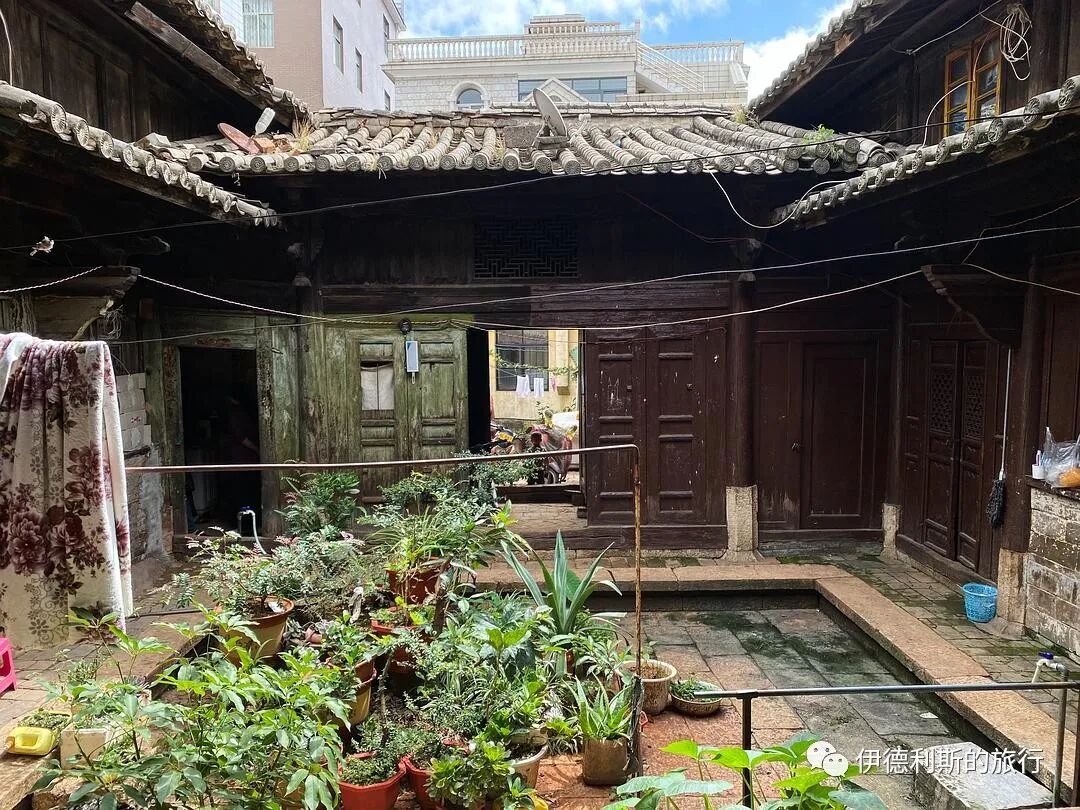
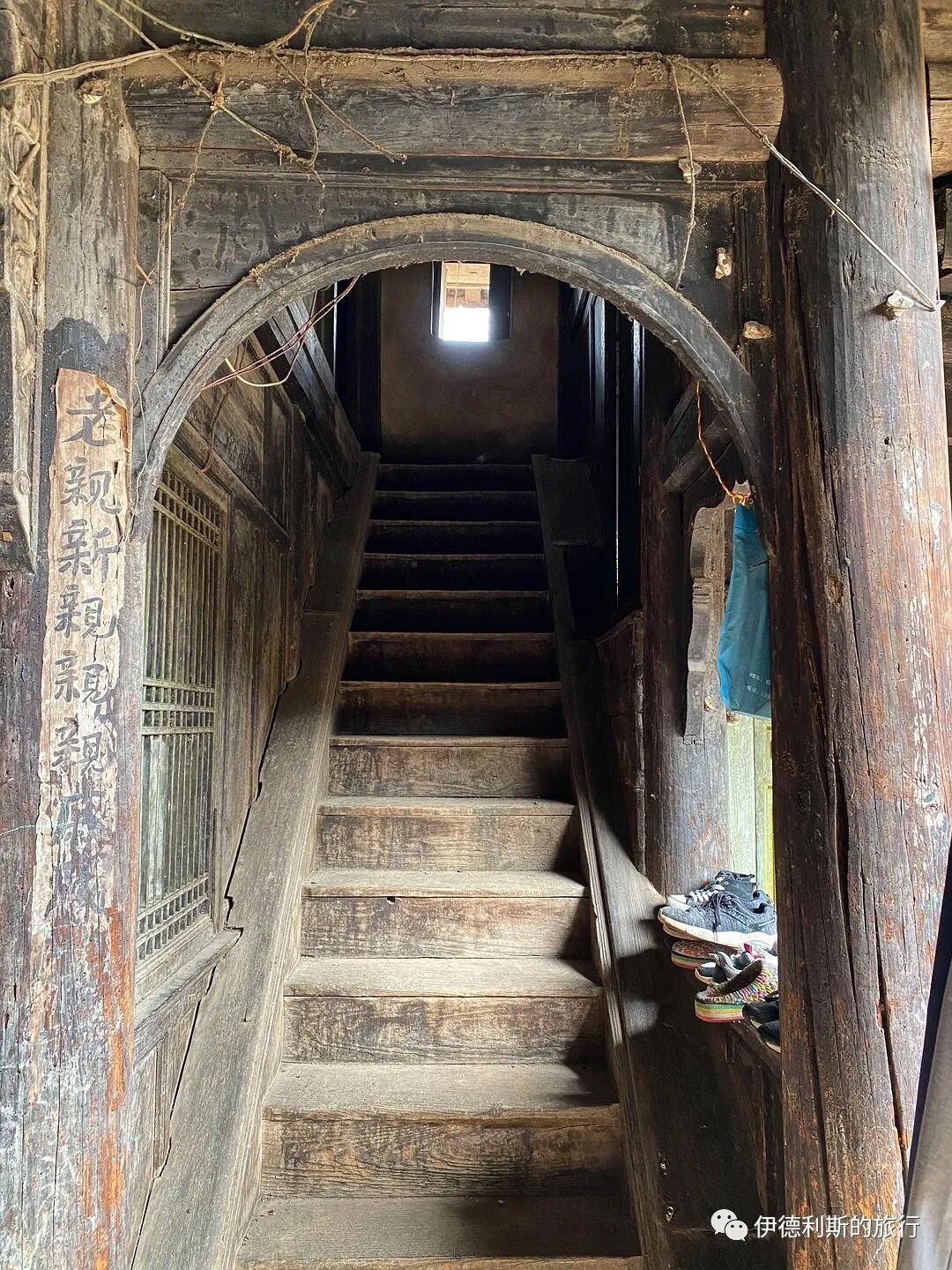
There is a water well at the entrance of Najiaying Mosque. It is said to have been built by Nasuluding, the great-grandson of the King of Xianyang, Sayyid Ajjal Shams al-Din, after he settled in Najiaying in the early Ming Dynasty. The wall of the well platform is carved with a dragon head, and the well water flows out from the dragon's mouth. People wash vegetables in the upper pool under the dragon's mouth, wash clothes in the lower pool, and finally, the water flows south to irrigate the farmland.
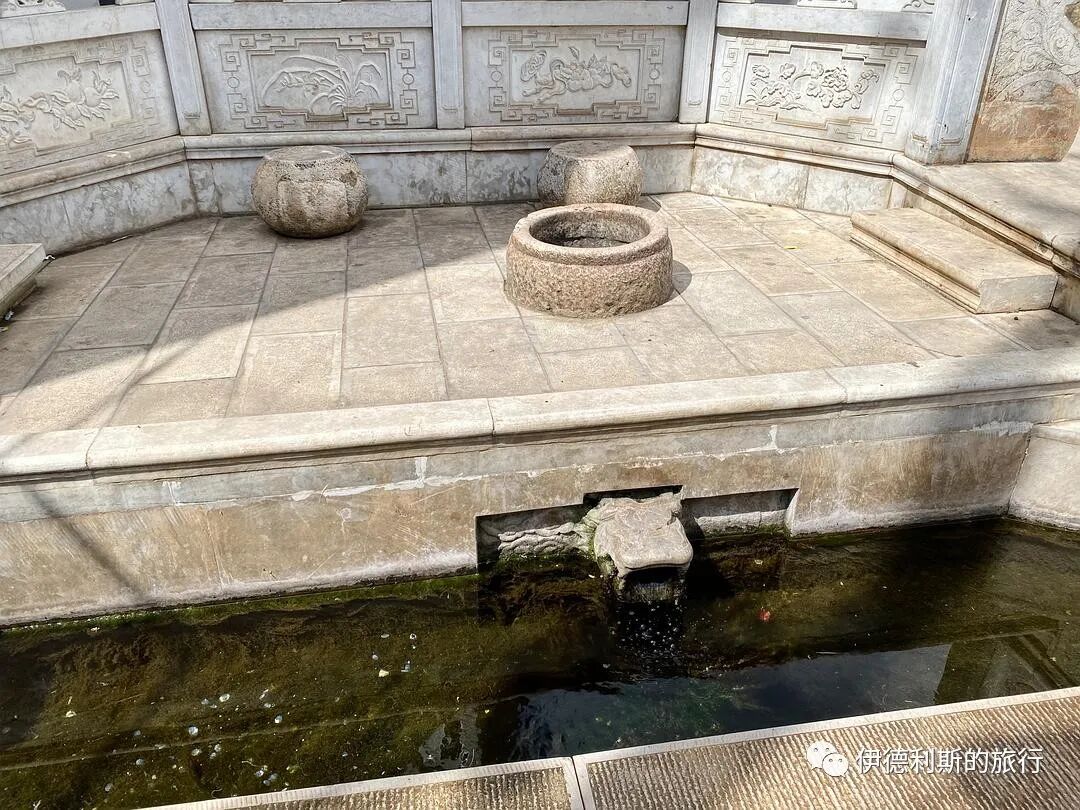
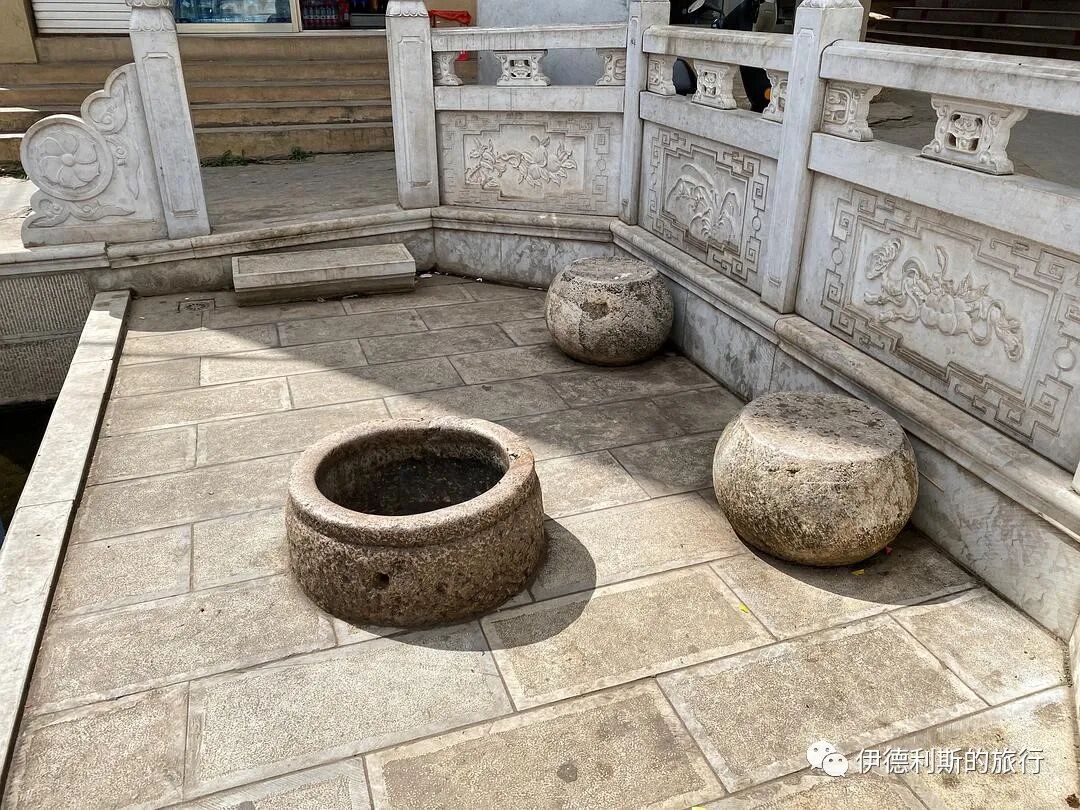
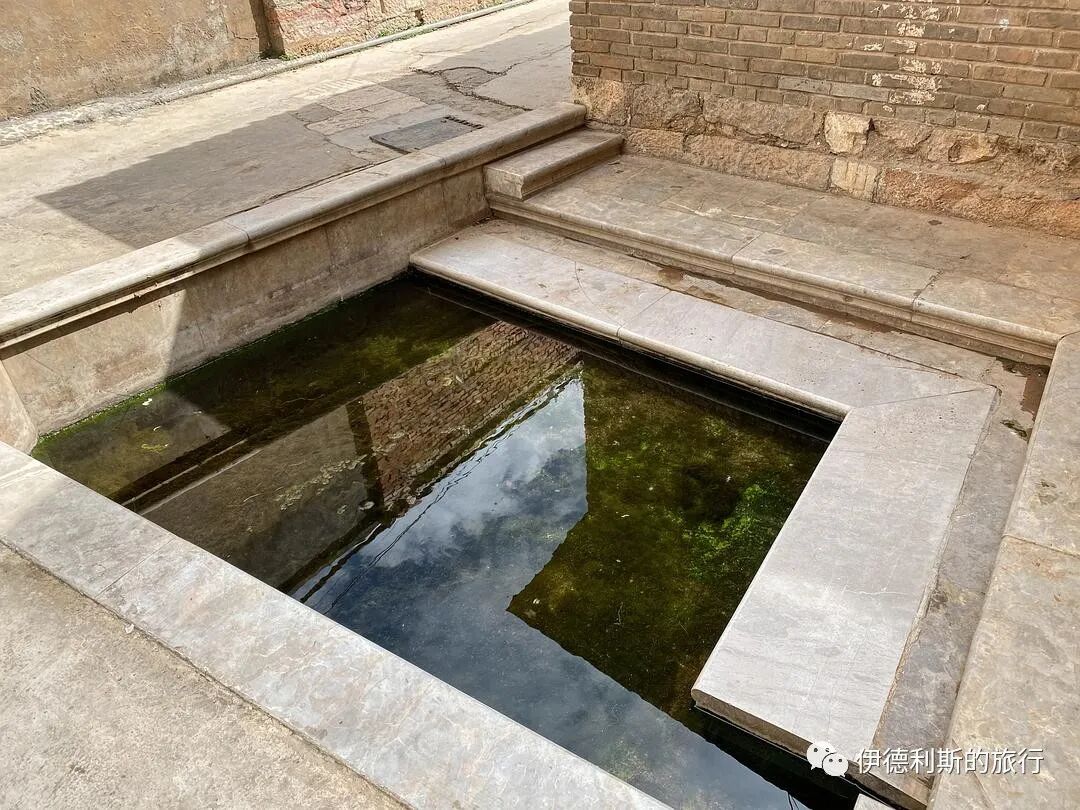
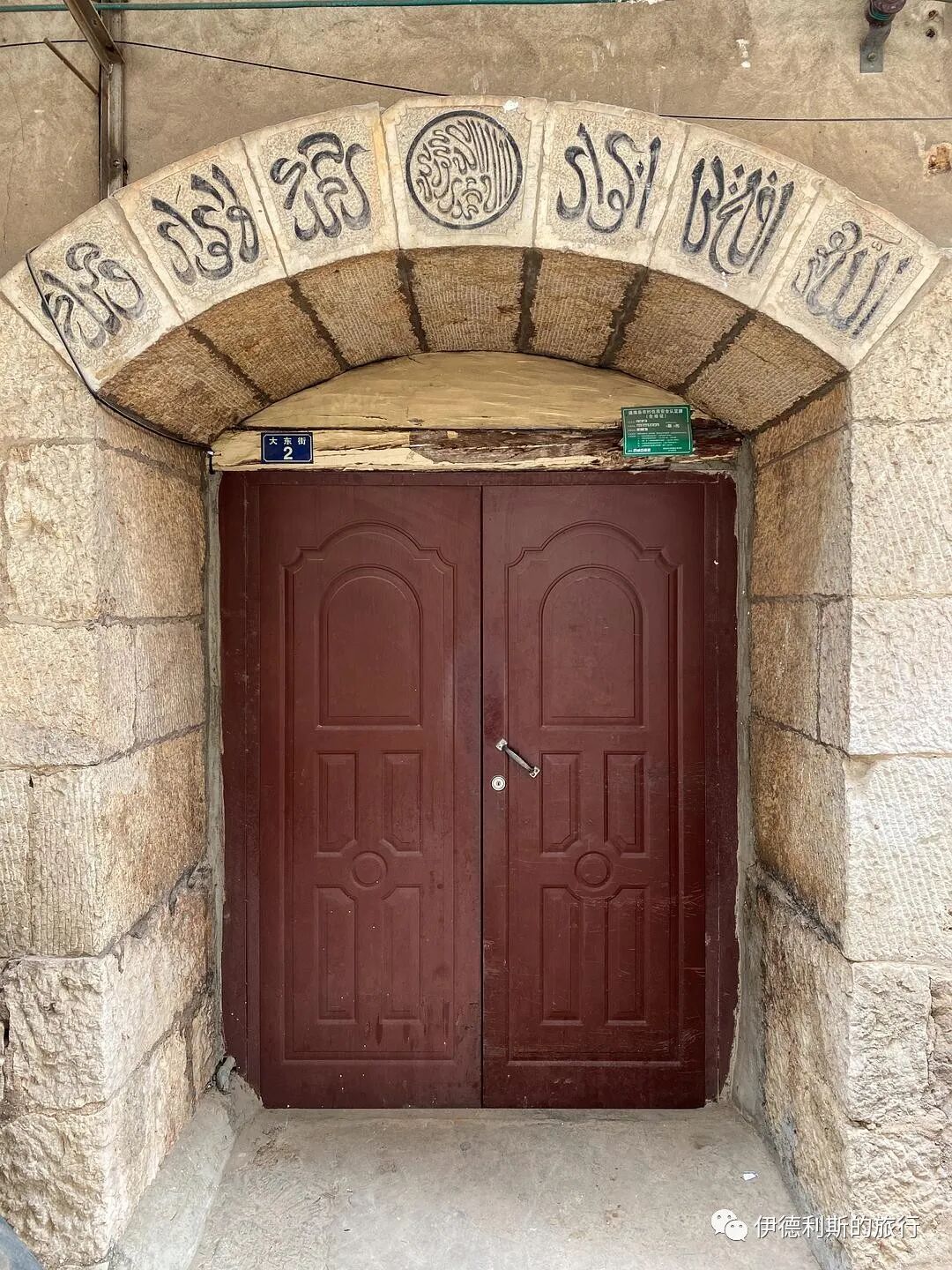
I bought a Nagu knife for cutting meat, and when I tried it at home, it was really sharp! It cuts through in one go without needing a second stroke. Historically, Najiaying and Gucheng were most famous for horse caravan transport, hunting rifle making, and knife making, but these trades declined as times changed. After the 1980s, Nagu Town began to vigorously develop the Nagu knife industry, and now there are many shops.
Also, on Zhenxing Road, there is a shop making traditional copperware, including copper pots and copper ladles. If you are interested, you can buy one to take home for a copper ladle hot pot.
To the north of Najiaying is Gucheng Village. The Xinzhai Mosque in the village was built by Ma Xuecheng, a disciple of Ma Mingxin, the founder of the Jahriyya menhuan. Ma Xuecheng was known as 'Yunnan Ma,' and followers of his sect respectfully called him the Third Master of Gucheng or Imam Ma Sanye. Ma Xuecheng was a local from Gucheng Village. He once went to study under Ma Mingxin, and the two were as close as father and son. After returning to Yunnan, Ma Xuecheng operated mining businesses, became a wealthy merchant, and was the first to spread the Jahriyya sect in Yunnan. In 1781, when Ma Mingxin's eldest son, Ma Shunqing, was exiled to Talang, Yunnan, Ma Xuecheng did his best to rescue and assist him, allowing the Jahriyya sect to continue developing in Yunnan.
It is a great pity that the mosque is currently being renovated. The courtyard layout is gone, the north and south wing rooms have been demolished, and only the main hall remains as the original building. When we went, the main hall was locked. We saw no one in the mosque except for workers, so we could not enter. It was a great regret not to see the Jahriyya-style Arabic calligraphy mihrab inside.
The main hall has a double-eave hanging mountain roof, with beautiful painted wood carvings on the brackets and beams, and openwork carvings between the eave pillars.
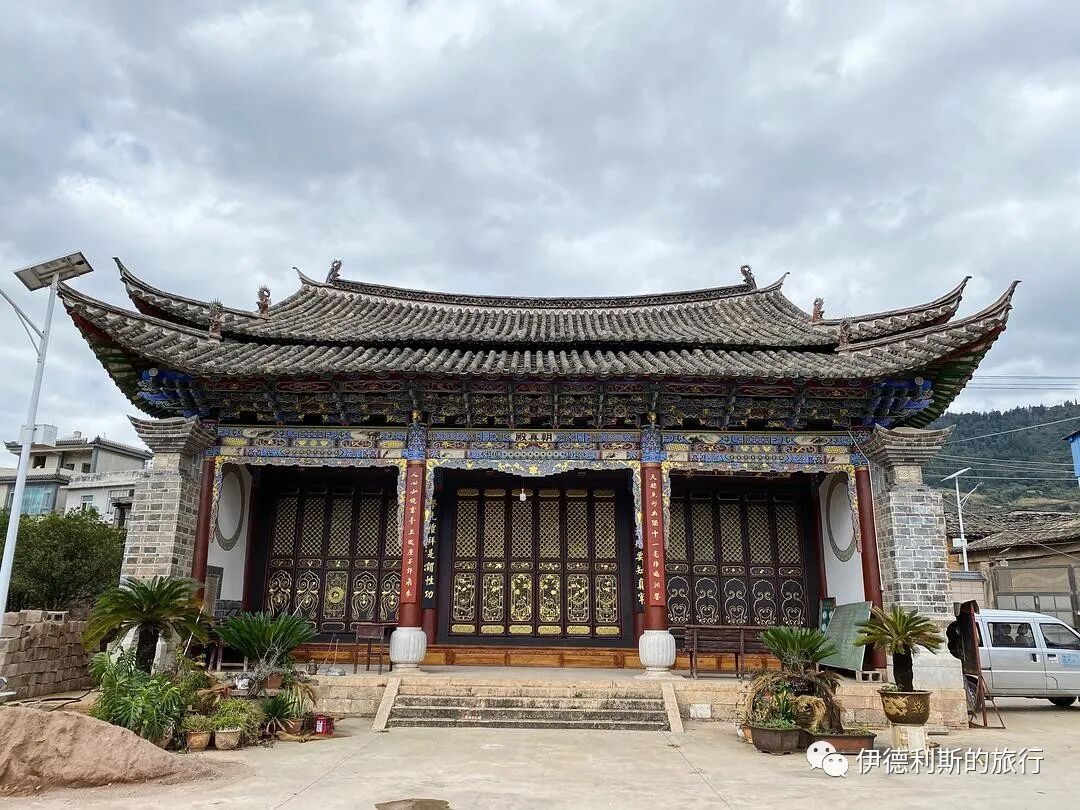
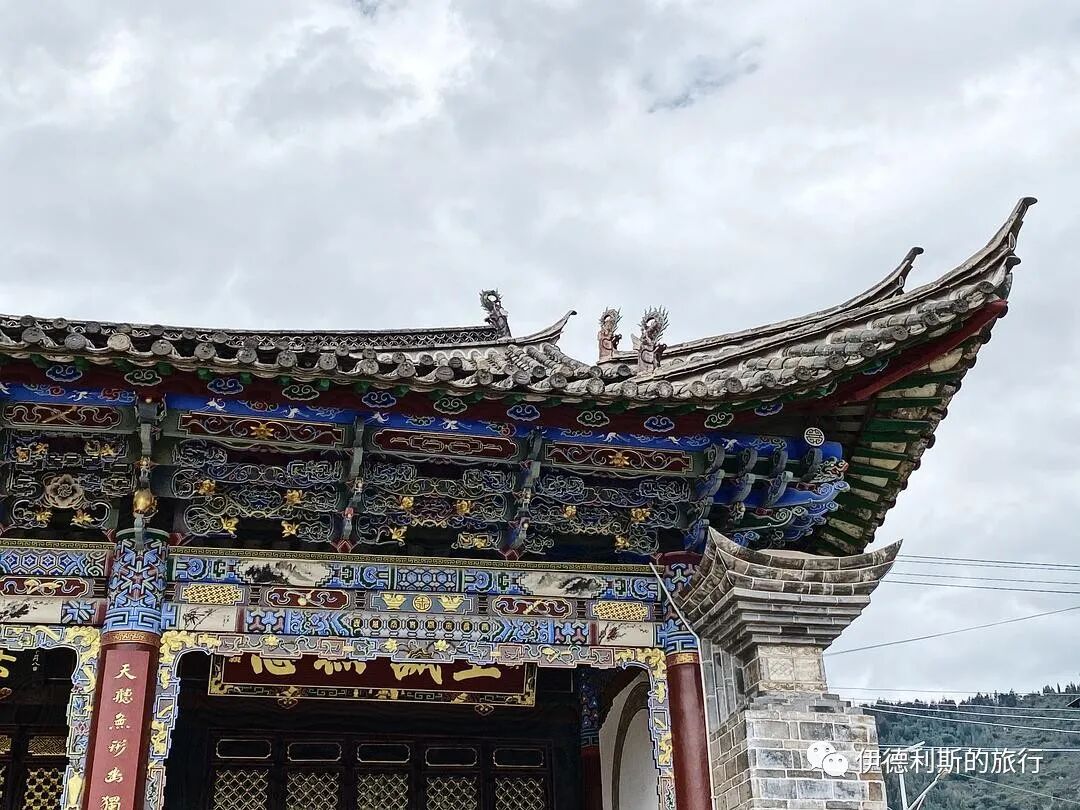
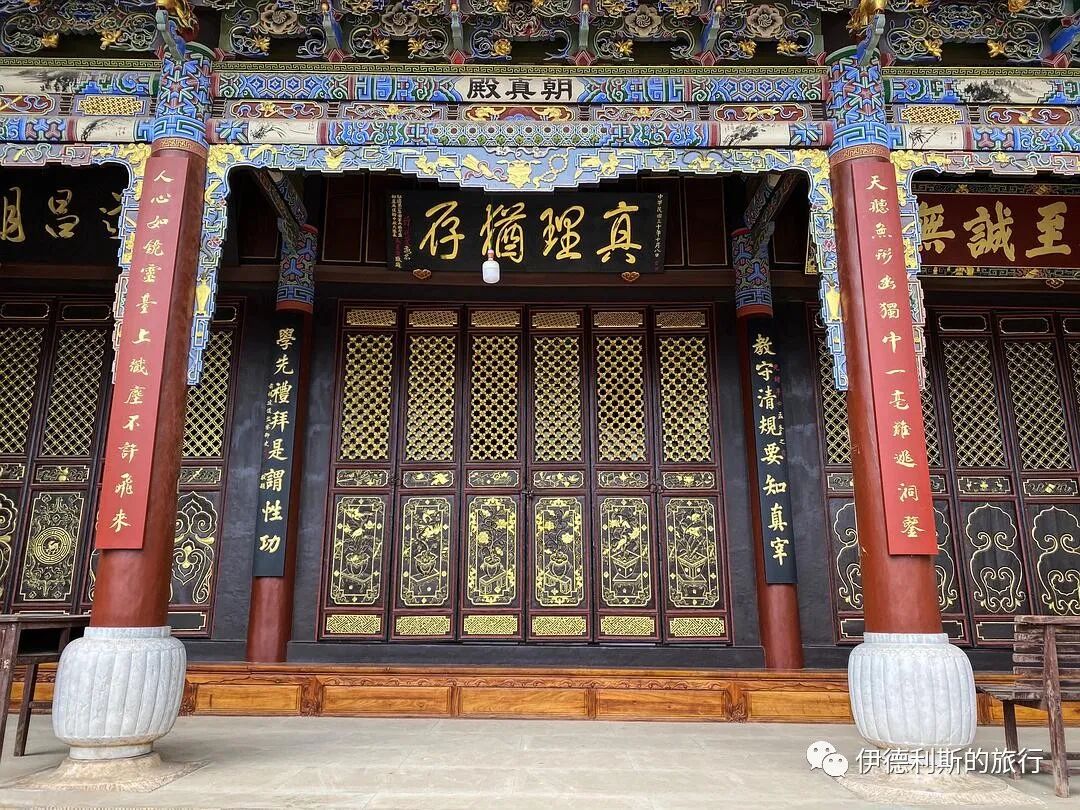
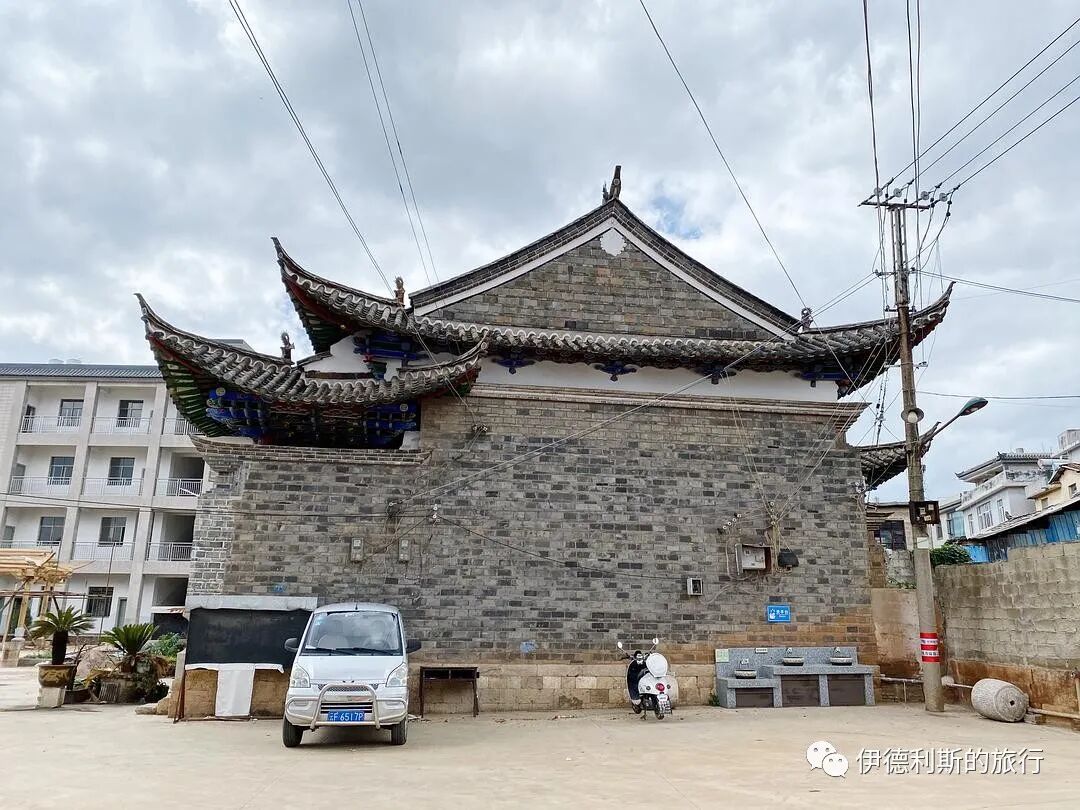
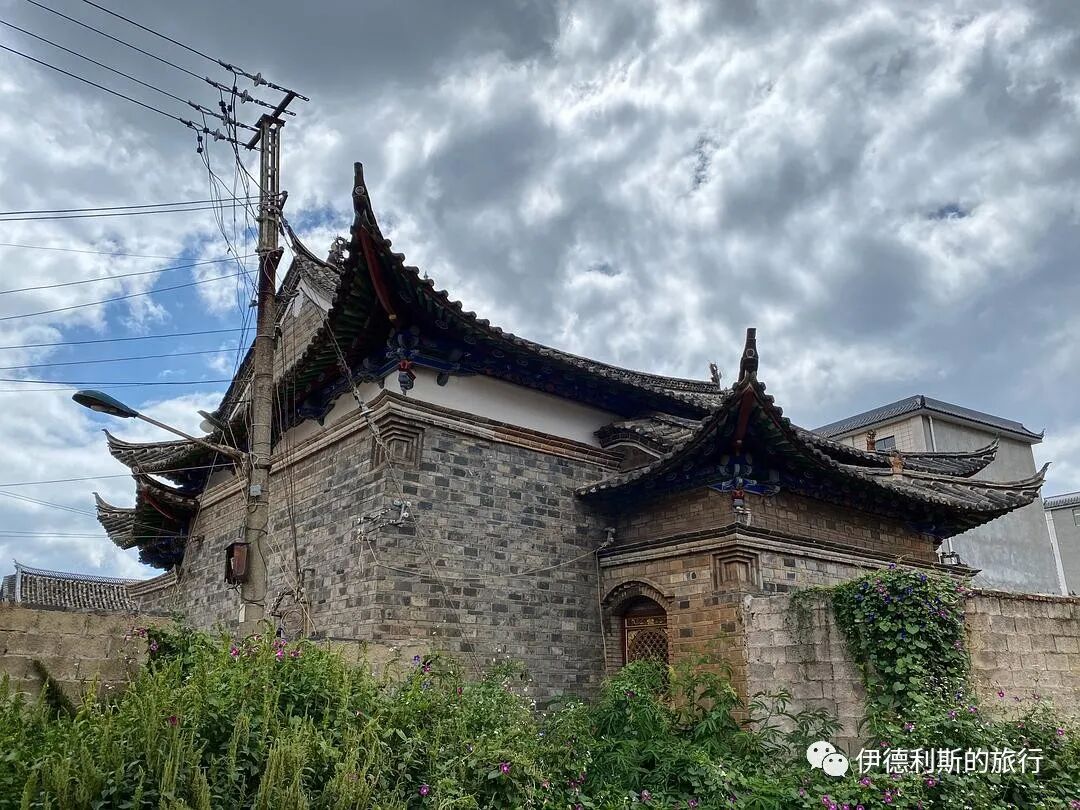
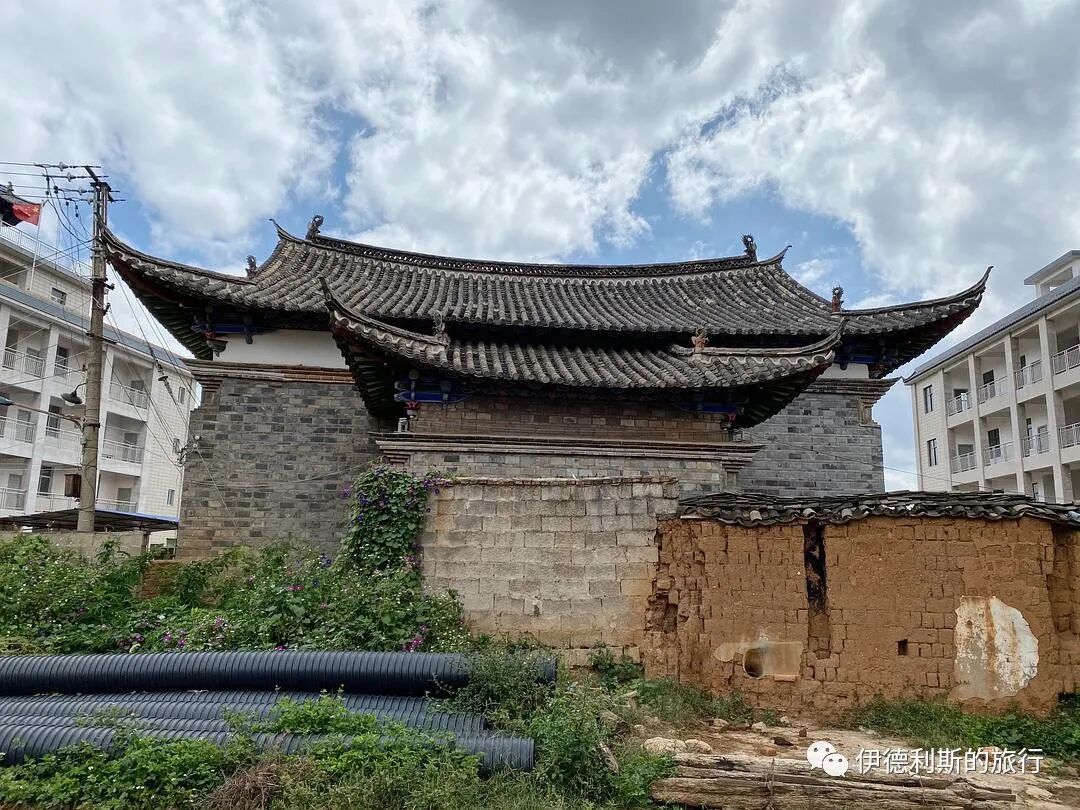
This last indoor photo was taken by a fellow Muslim (dost) a while ago. The bluestone under the mihrab was transported from Mojiang and has a history of over a hundred years.
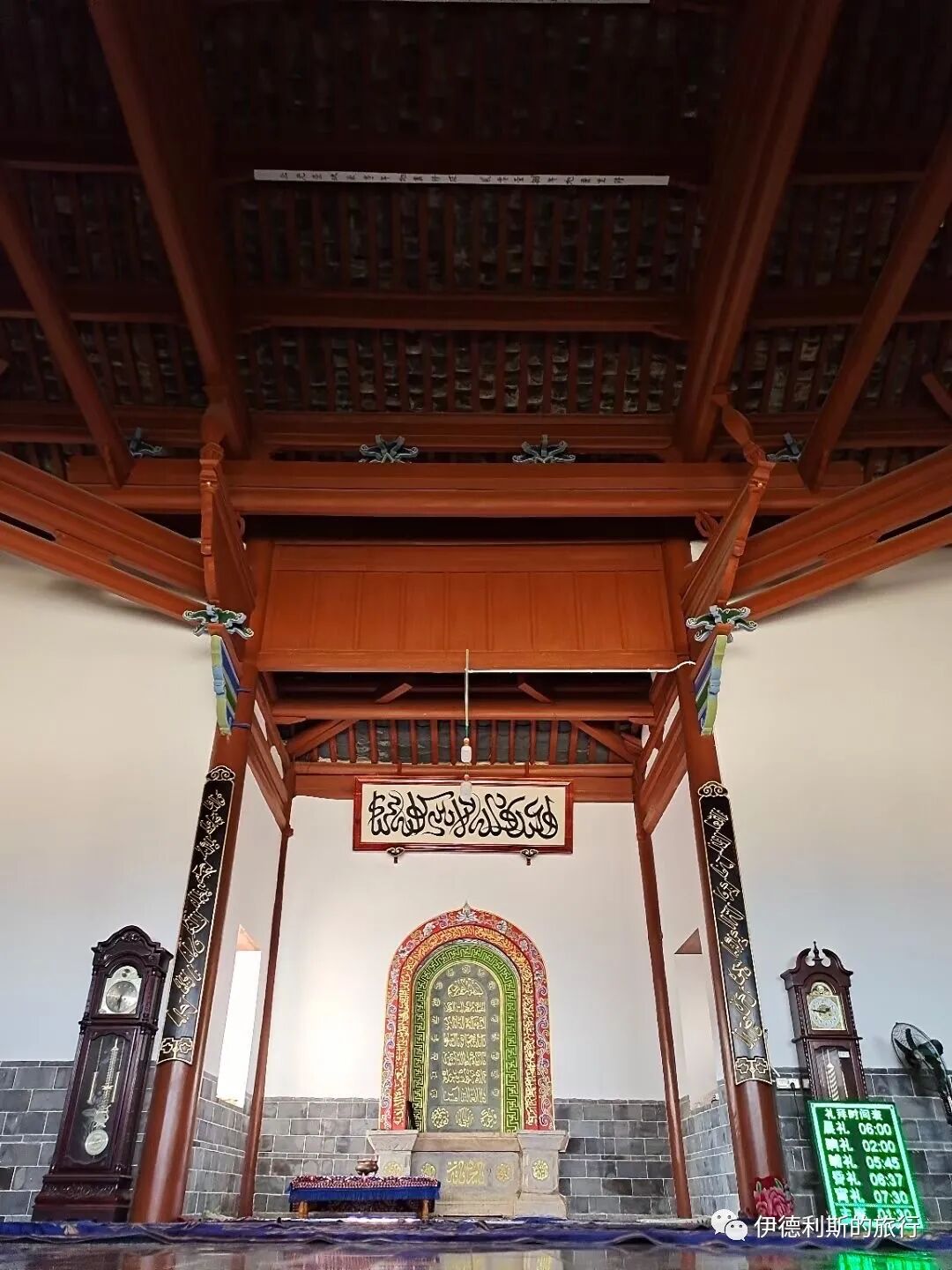
At noon, we ate at Jingshanzhai in Najiaying, having herb sour soup chicken, goat milk cheese (yangrubing), stir-fried pumpkin seedlings, stir-fried celery with lily bulbs, and oil-drizzled beef jerky (niuganba). The restaurant has a nice, antique atmosphere.
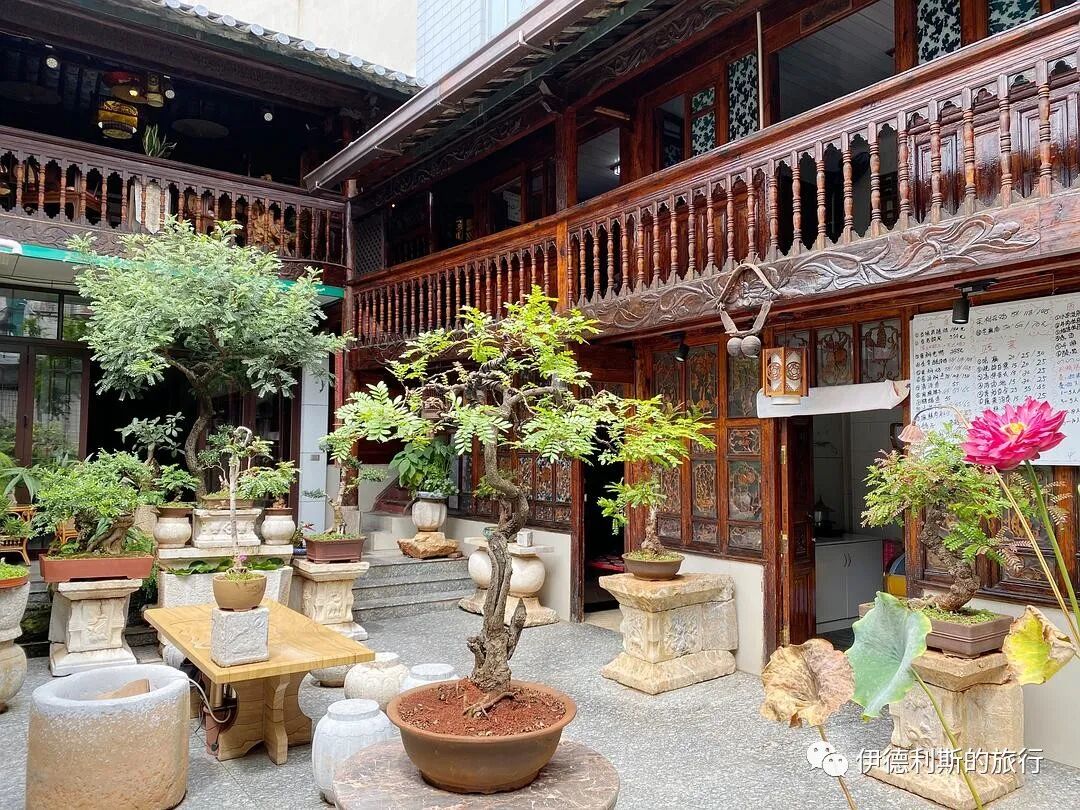
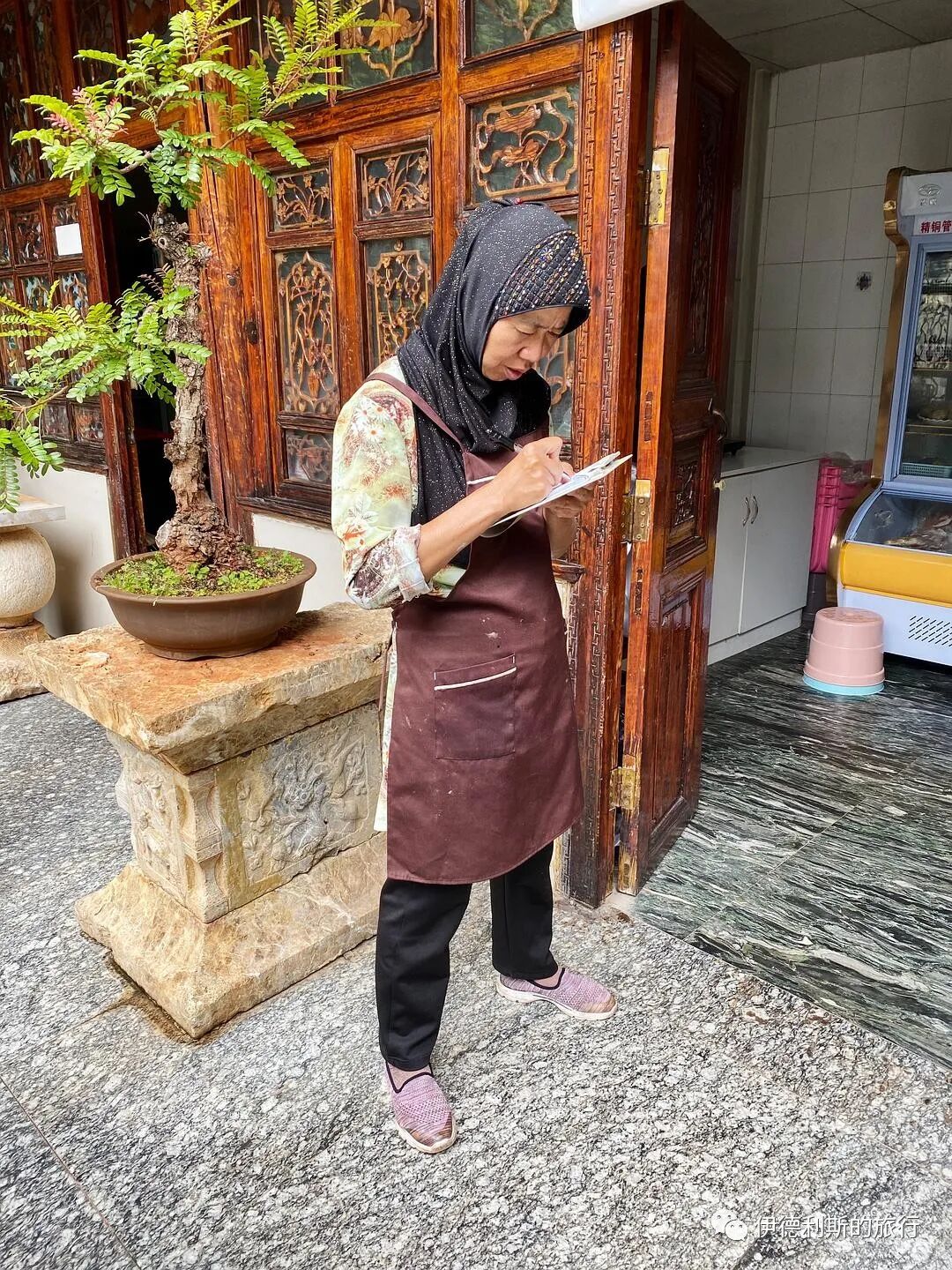
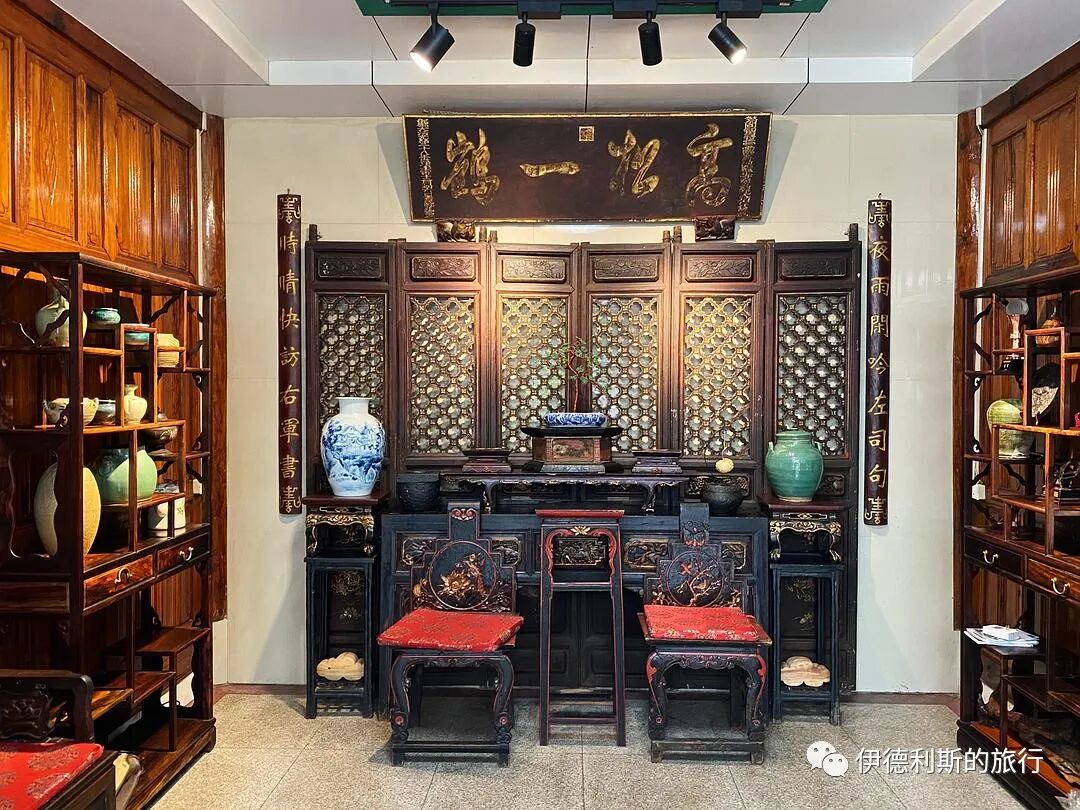
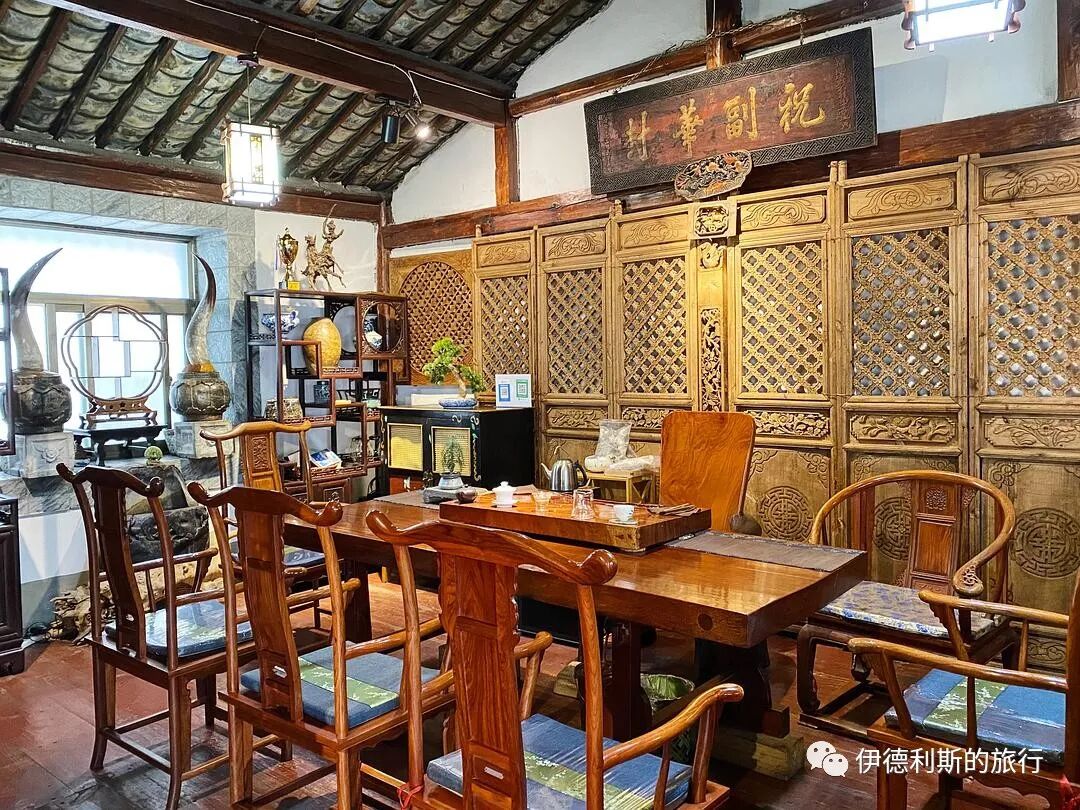
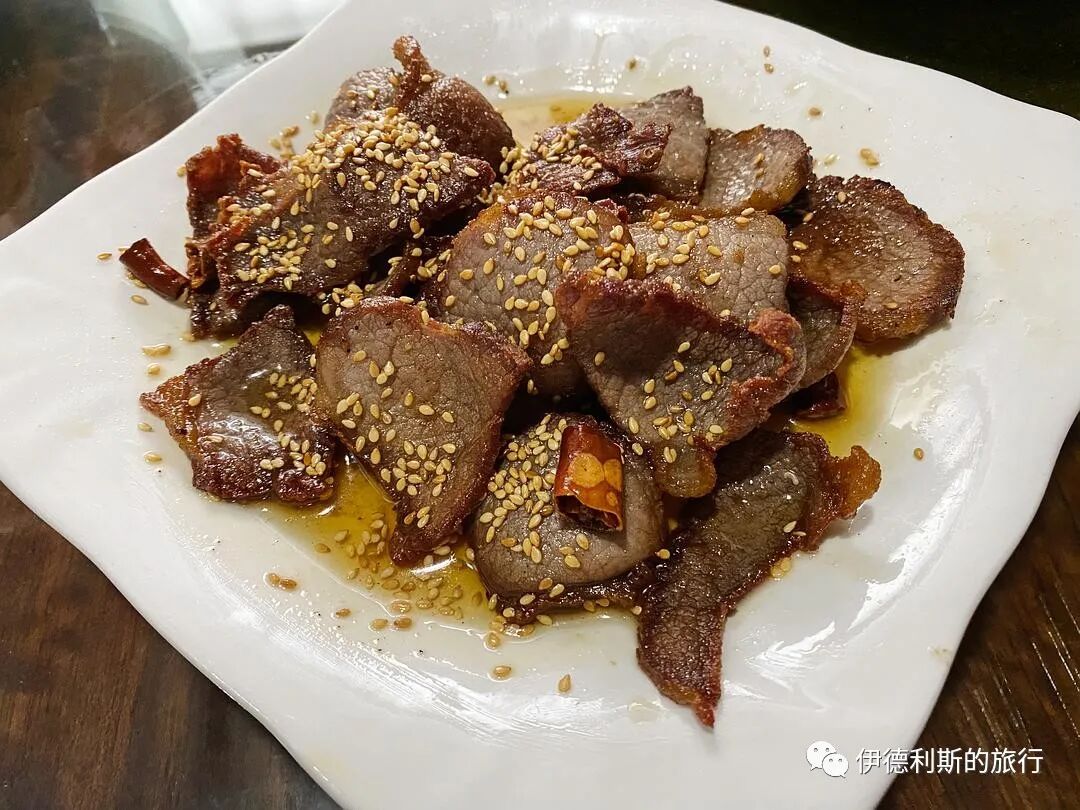
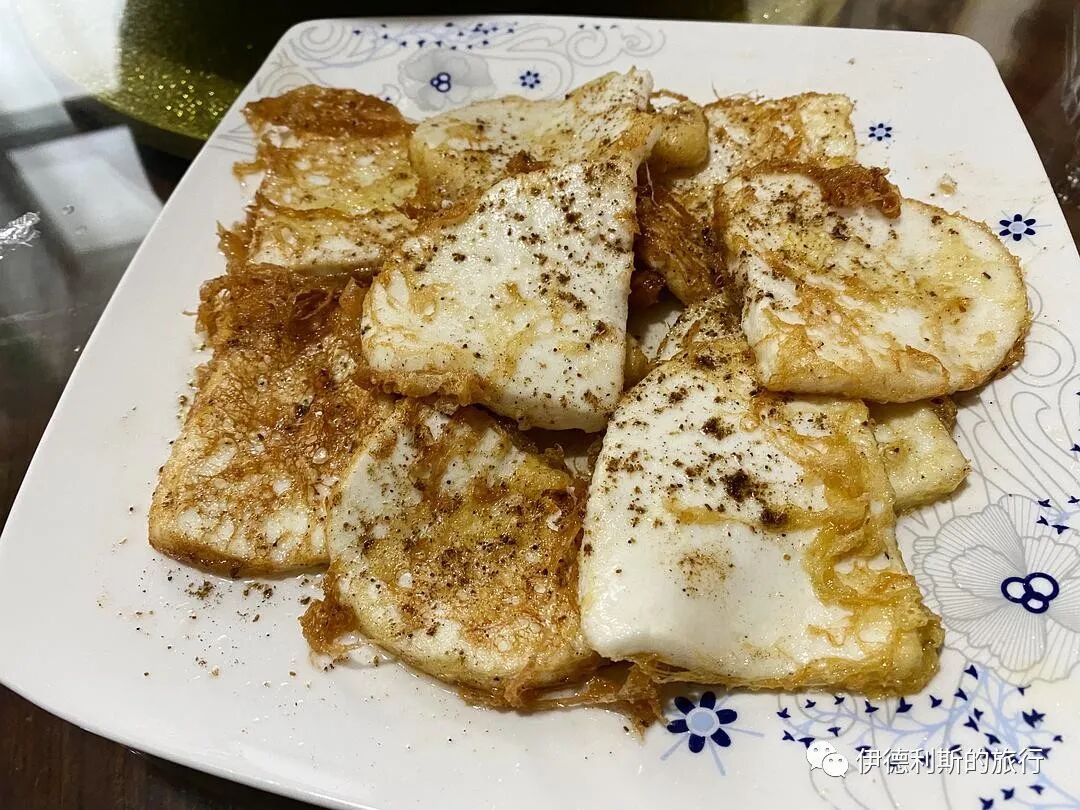
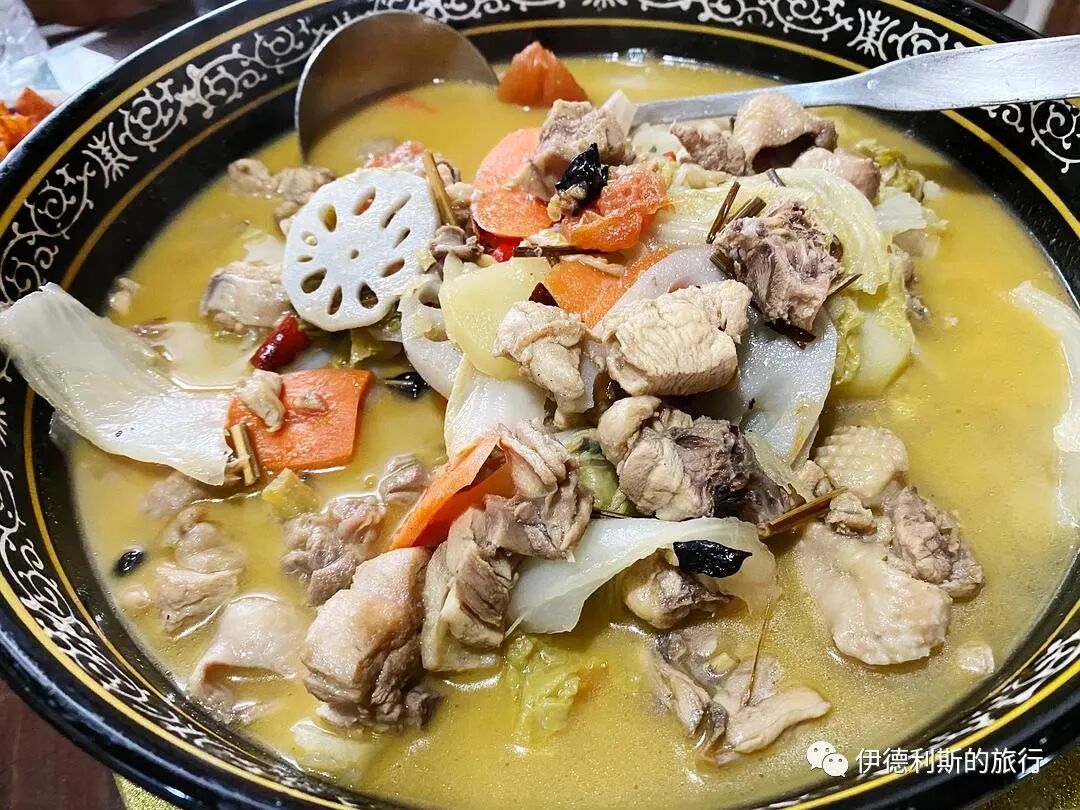
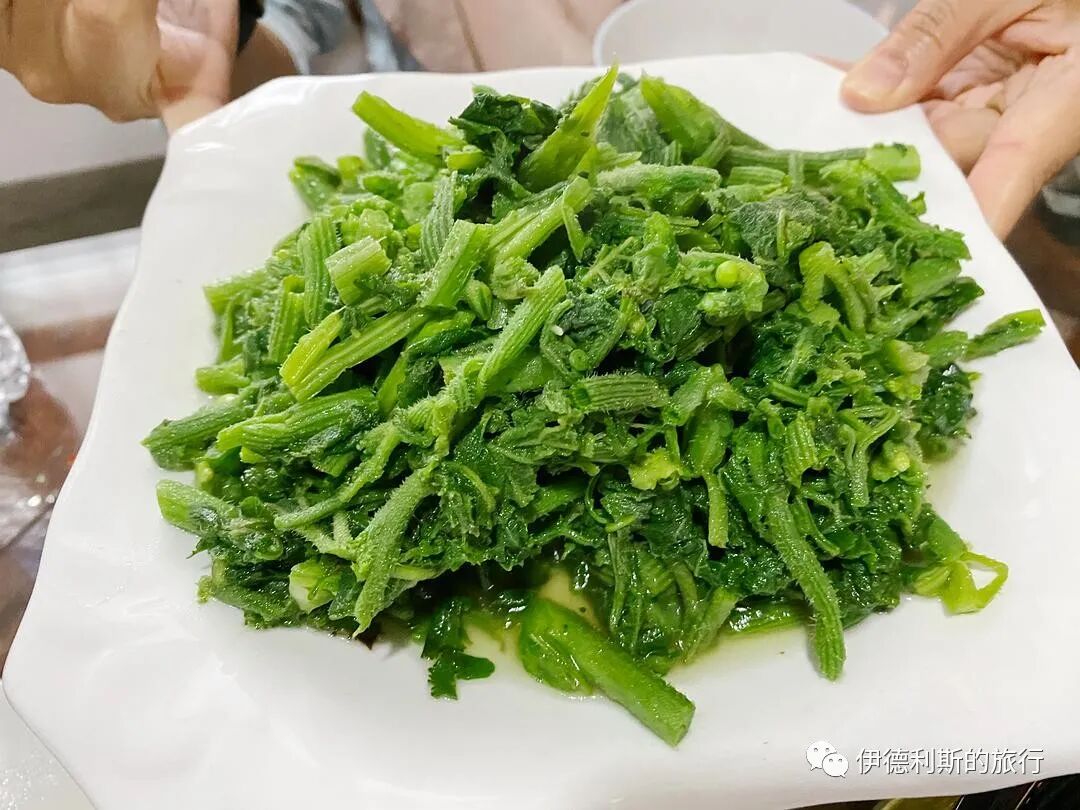
The decor at Jingshanzhai.
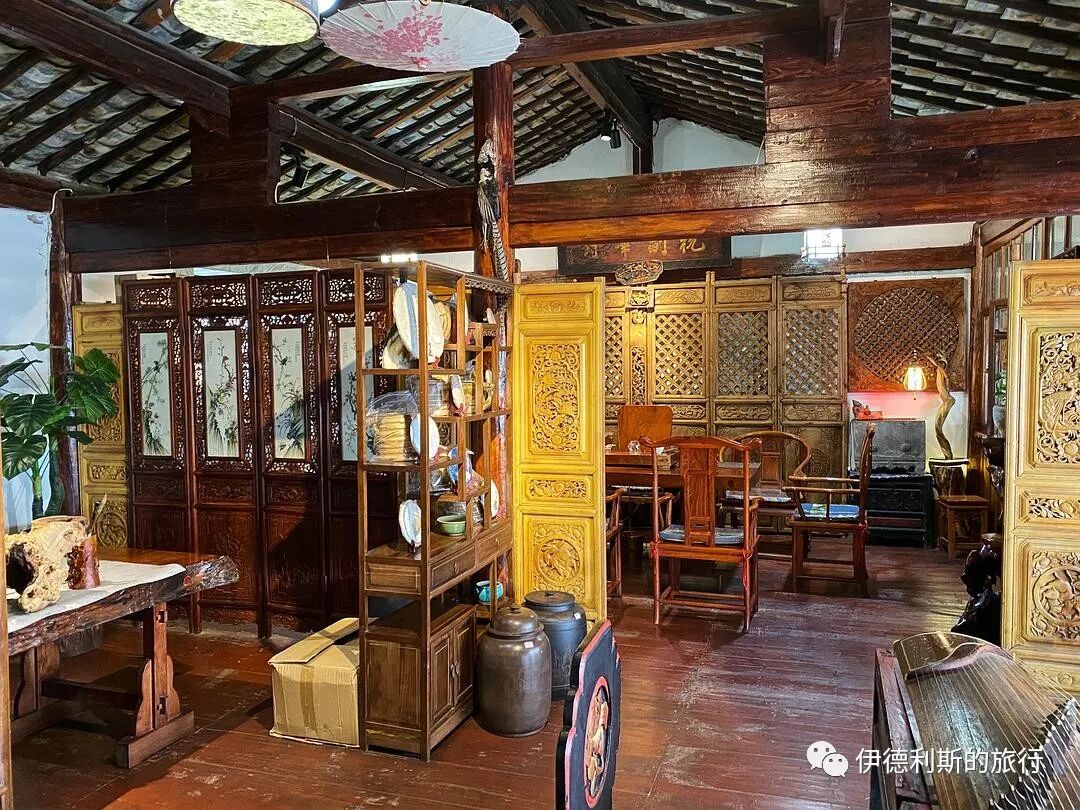
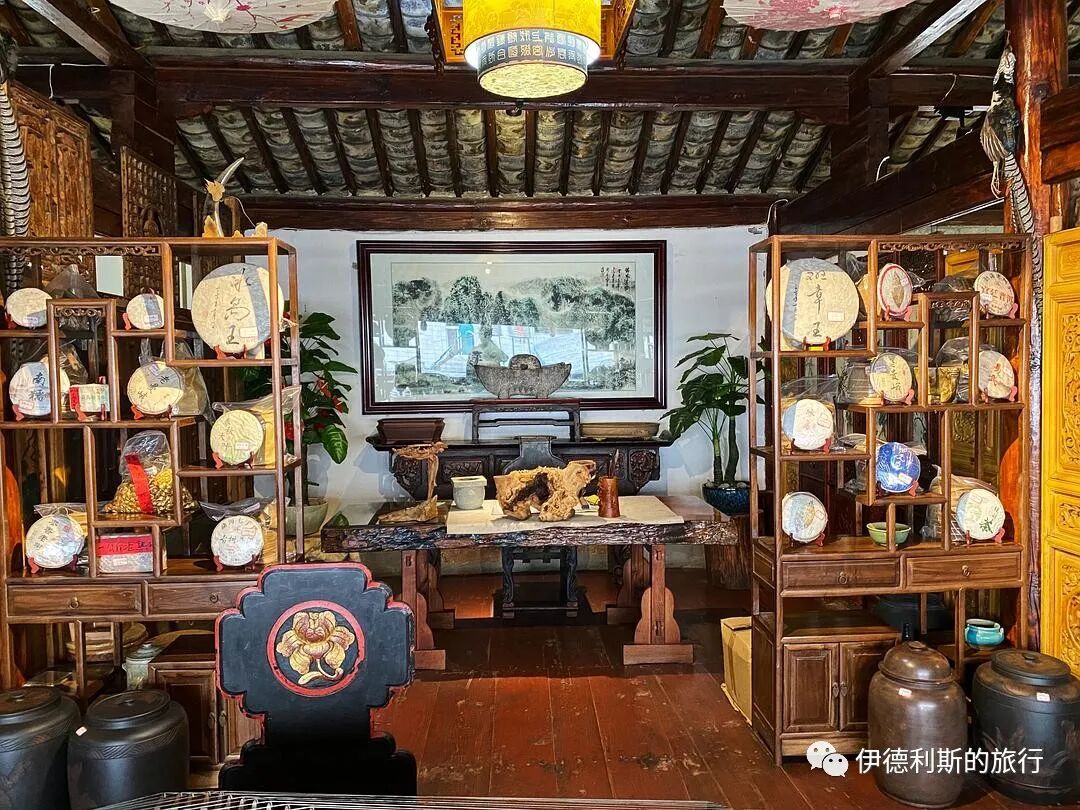
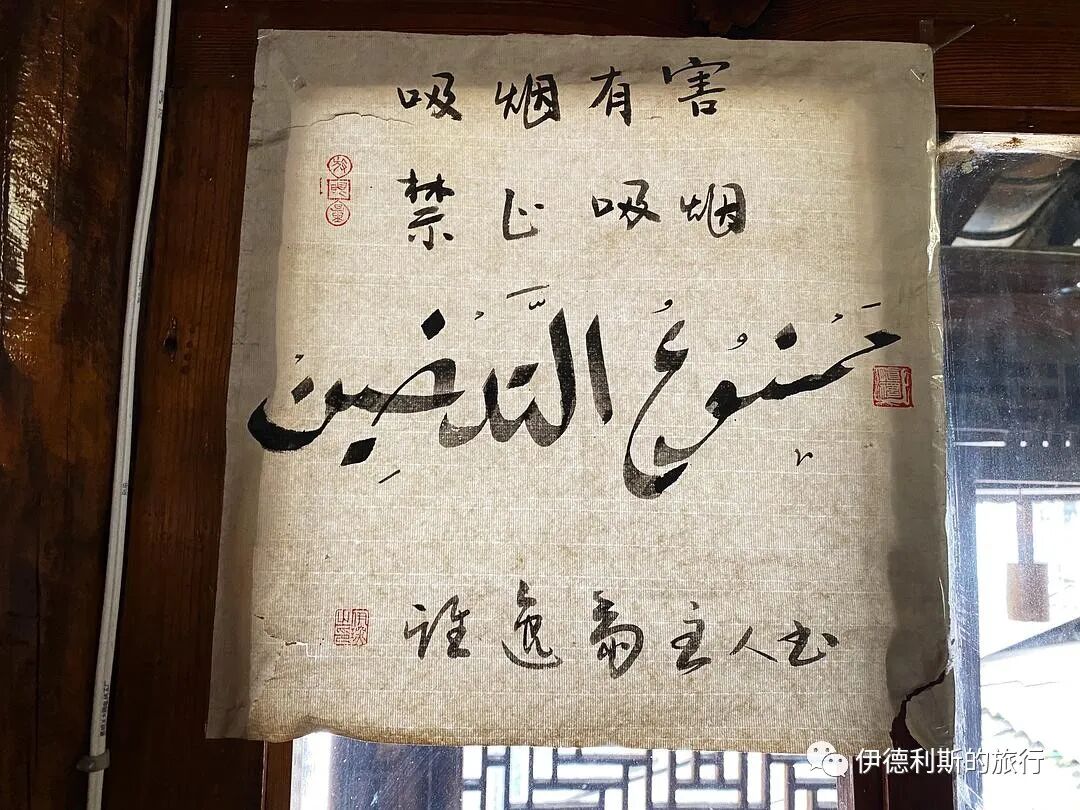
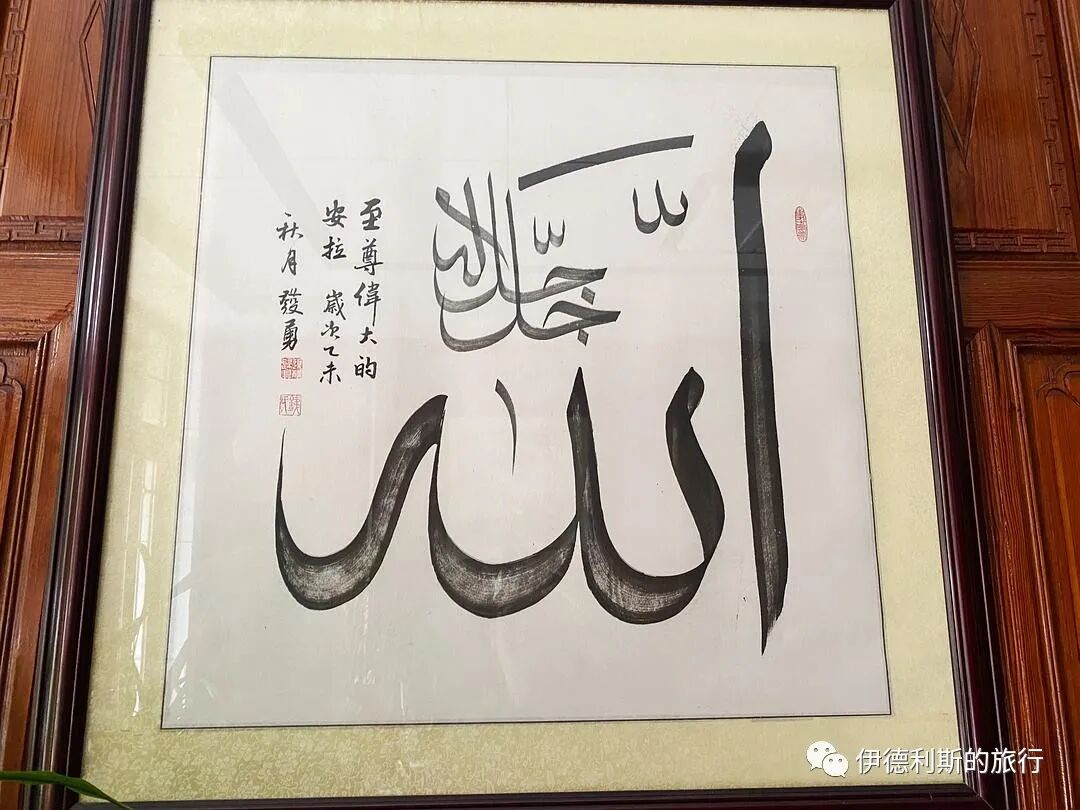
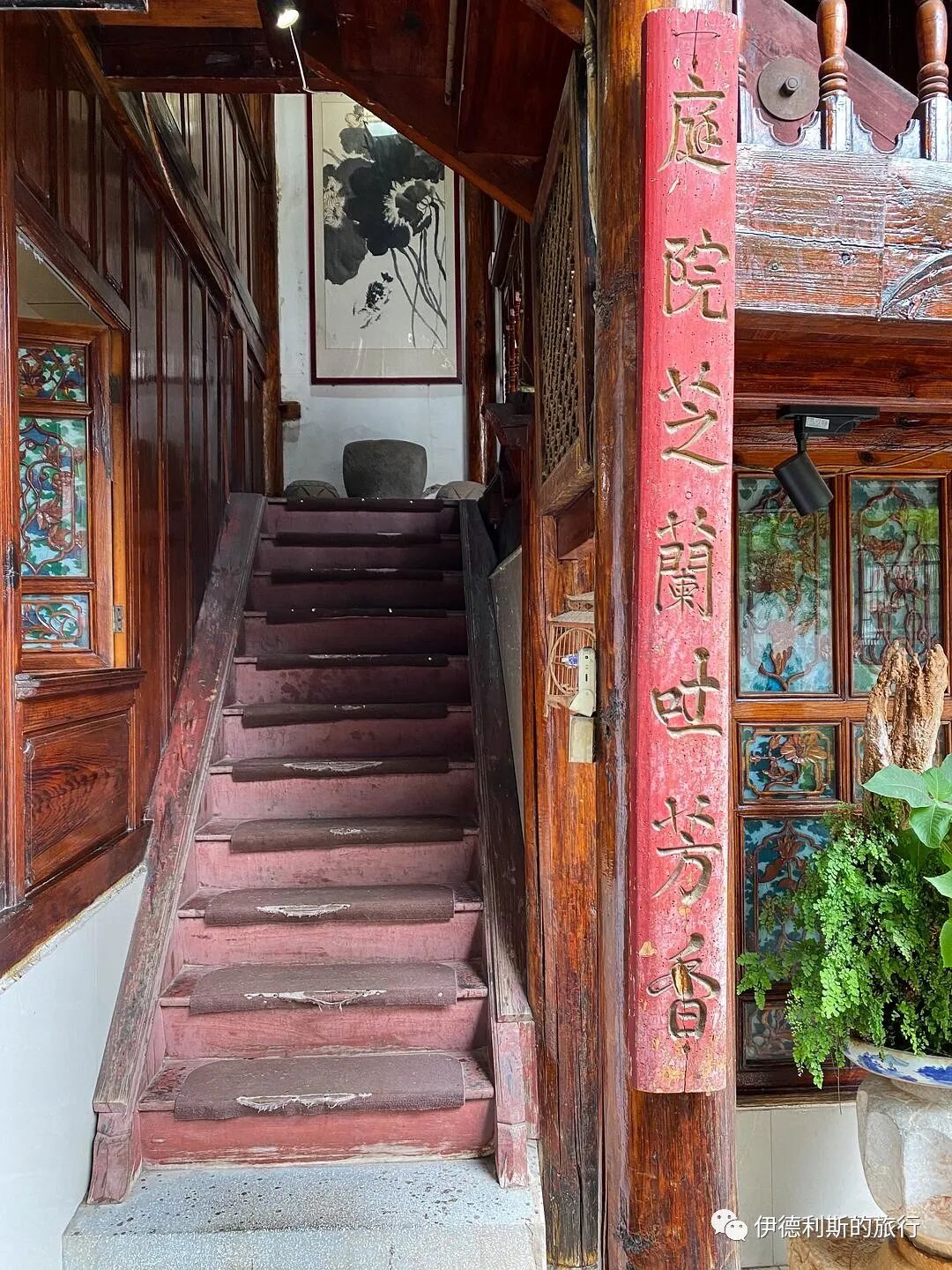
I bought a flatbread (balada) at the entrance of Najiaying Mosque, took it to Qilu Lake Xiaohai Park next to Najiaying, and bought a cup of papaya water at the entrance. Although the park is not big, the environment is very good, and there is a boardwalk by the lake, which is very pleasant for relaxing and catching a breeze.
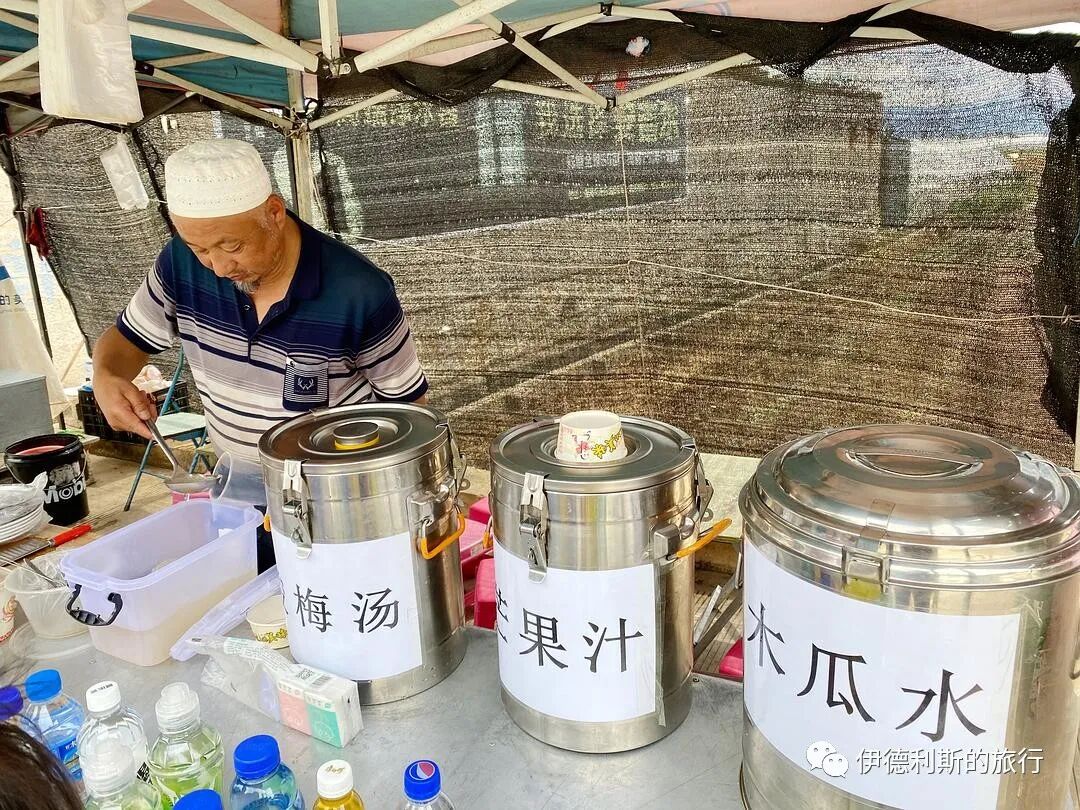
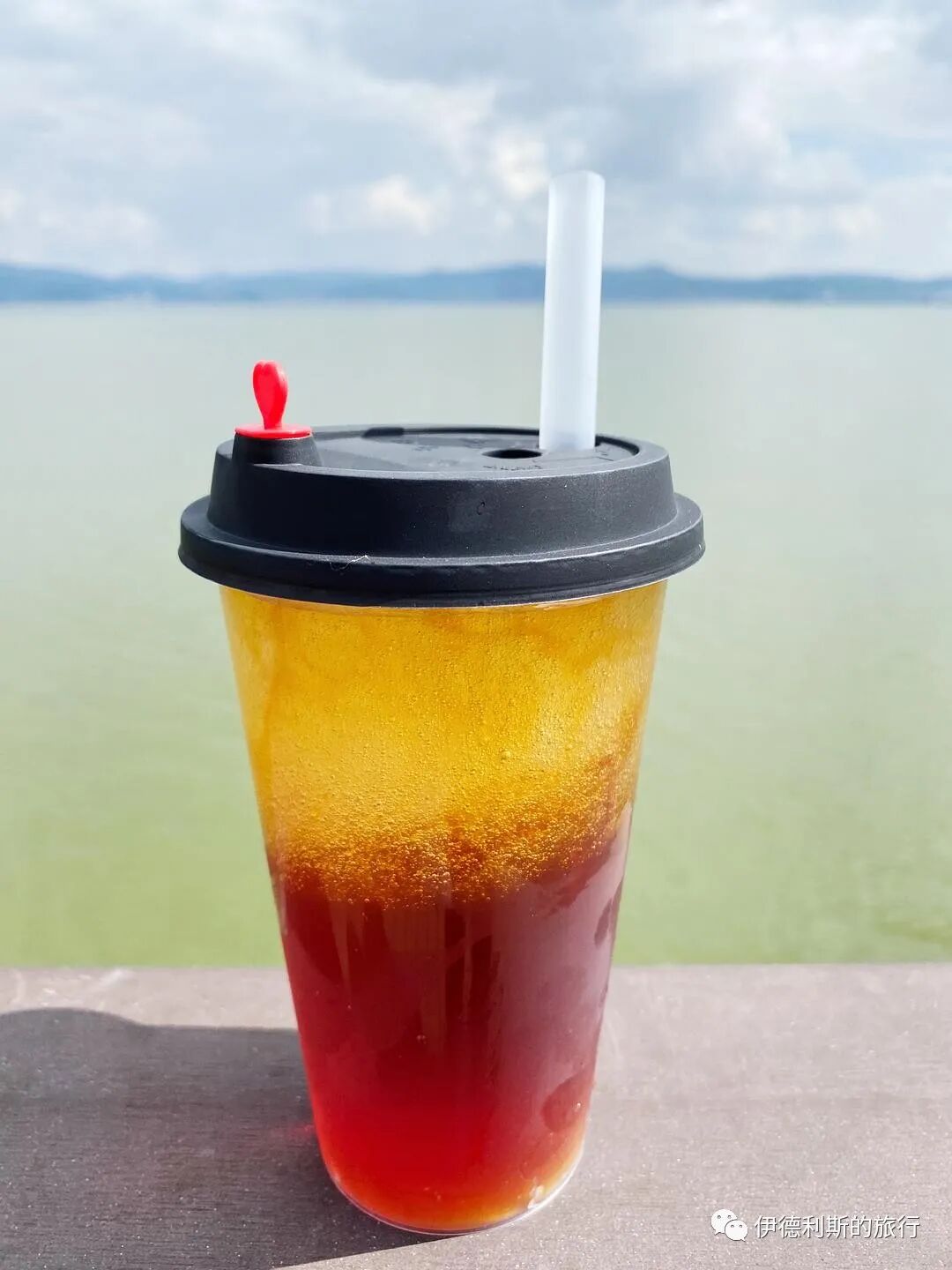
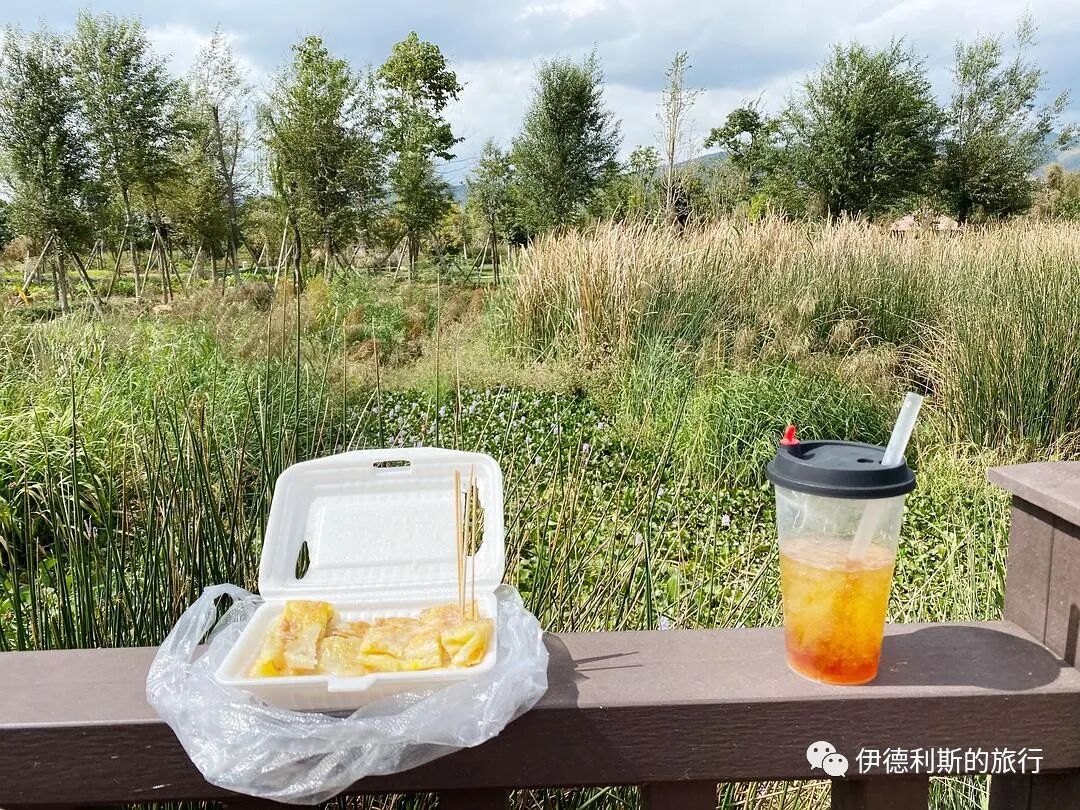
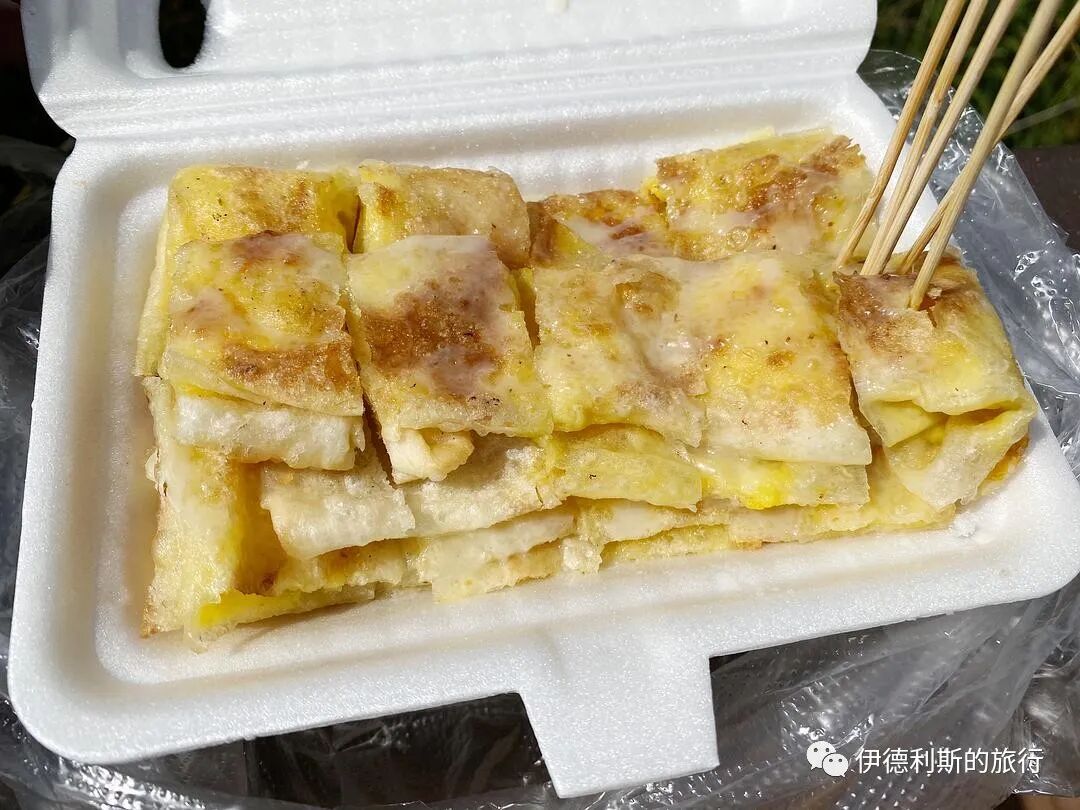
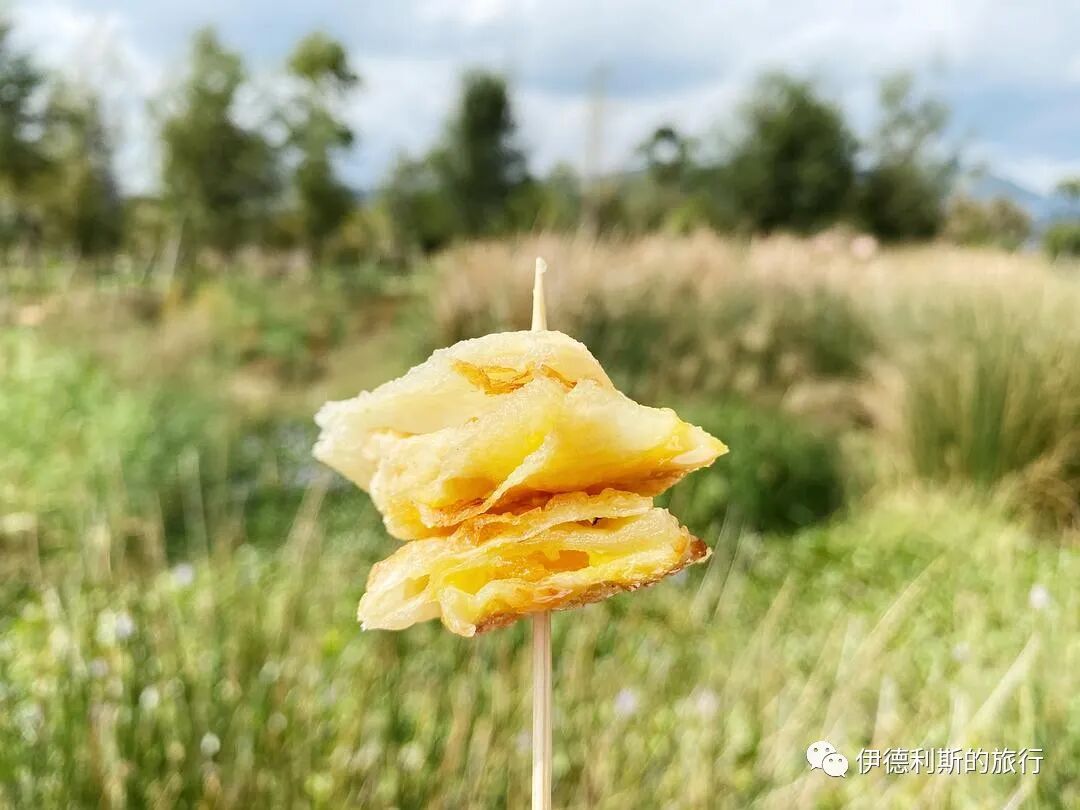
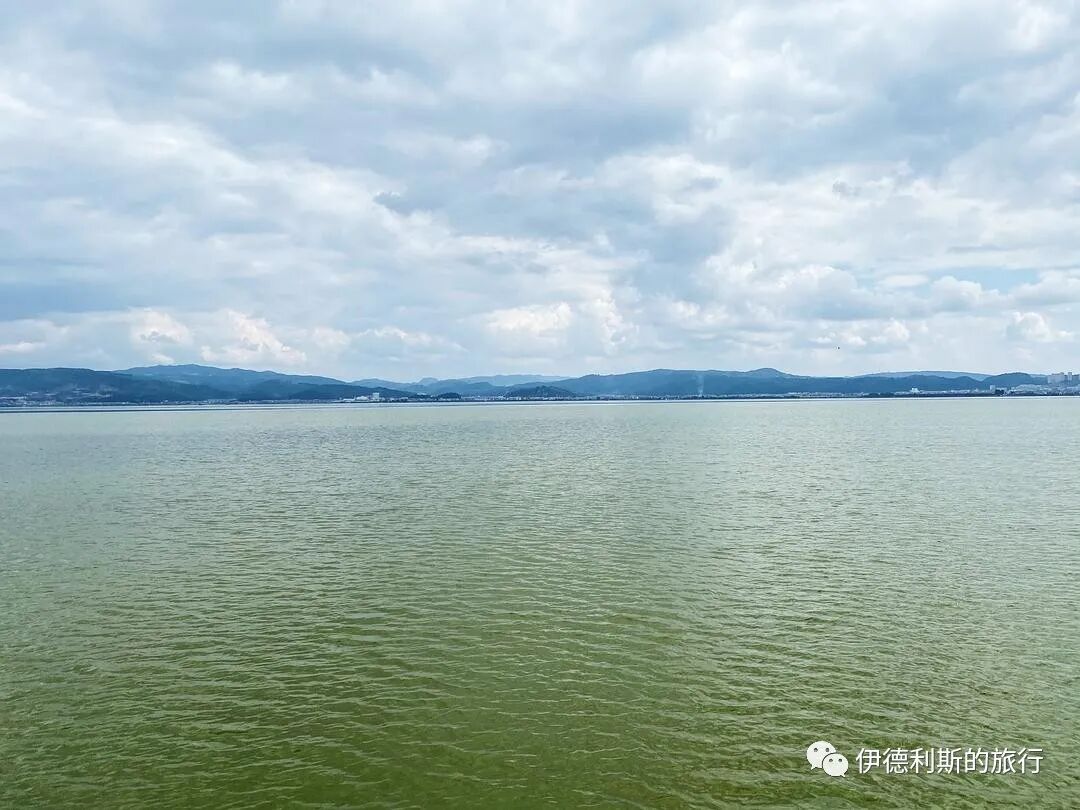
Halal Travel Guide to Zhaotong, Yunnan: Six Traditional Mosques
Articles • ali2007fr posted the article • 0 comments • 135 views • 2026-05-17 05:43
Summary: This travel note introduces Halal Travel Guide to Zhaotong, Yunnan: Six Traditional Mosques. During my marriage leave in August 2020, Zainab and I went to Zhaotong to travel, and Sister Azi took us to visit Zhaotong's beautiful traditional mosques. It is useful for readers interested in Yunnan Mosques, Hui Muslims, Islamic Heritage.
During my marriage leave in August 2020, Zainab and I went to Zhaotong to travel, and Sister Azi took us to visit Zhaotong's beautiful traditional mosques.
During the Ming Dynasty, Zhaotong belonged to the Wumeng Tufu (a local administrative office), which was managed by Yi ethnic chieftains. In 1726 (the fourth year of the Yongzheng reign), Ortai, the Viceroy of Yun-Gui, began to implement the 'Gaitu Guiliu' (replacing hereditary local chieftains with government-appointed officials) policy in Wumeng. The Wumeng Tufu raised an army to resist. Ha Yuansheng, the Zhongjun Youji (a military rank), along with Zhongjun Liu Qiyuan, broke through the Wumeng Tufu and the local chieftain leaders, finally completing the Gaitu Guiliu and renaming Wumeng to Zhaotong. Ha Yuansheng was a Hui Muslim whose ancestral home was Hejian, Hebei. During the Gaitu Guiliu period, some Hui Muslim soldiers followed Ha Yuansheng into Zhaotong, and after the war ended, they settled down by 'claiming land and registering their households'.
After Wumeng was pacified in 1732 (the tenth year of the Yongzheng reign), the population decreased sharply due to the war. The new Viceroy of Yun-Gui, Gao Qizhuo, ordered the reclamation of wasteland for farming. Hui Muslims from the nearby Weining area in Guizhou moved their families and villages into Zhaotong to claim land. The Hui Muslim population in Zhaotong increased significantly, and most of the existing traditional mosques were built during this period.
1. Tuogu Great Mosque: 1730
2. Longtoushan Mosque: 1746
3. Chachong Mosque: 1734
4. Tiejiawan Mosque: 1738
5. Baxian Great Mosque: 1779
6. Songjiashan Mosque: 1730
1. Tuogu Great Mosque: 1730
On the morning of August 10, Sister Azi drove us from Zhaotong to Ludian to start visiting traditional mosques. The first stop was the most famous Tuogu Great Mosque in Ludian.
We were warmly received by Imam Hai at the Tuogu Mosque, and Imam Hai told us in detail about the history and various legends of the Tuogu Mosque.
According to the inscriptions, the Tuogu Mosque's main hall was built in 1730 with funds donated by Ma Xiangqian, a Zhongjun Shiwei (a military guard rank) of Anlong Town, and his brothers, the Juren (a successful candidate in the imperial examinations) Ma Lincan and Ma Linchi. In 1755, at the suggestion of Imam Sai Huanzhang, local fellow believers raised funds to build the Huanxing Lou (Awakening Tower) and other buildings such as the side rooms.
Before entering the mosque, the first thing you see is the hexagonal, three-tiered, pointed-roof style Huanxing Lou, with the three-room wooden 'Wujuan Tang' (Hall of No Fatigue) underneath. Hanging on the Huanxing Lou is a plaque inscribed with 'Pu Ci Wan You' (Universal Mercy for All Things), gifted in 1746 by Ye Daxiong, the Zongbing Guan (a military commander) guarding Zhaotong, Yunnan, and a hereditary Qiduwei (a military title). This plaque was originally hung in the main hall and later moved to the Huanxing Lou.
Imam Hai pointed out to us that there are some ancient fossils on the stone pillars of the Huanxing Lou, which should be unique among mosques in various places.
Passing through the Wujuan Tang is the courtyard, where four ancient cypress trees are planted, and directly opposite is the prayer hall. In the center of the main hall is written 'Happy Paradise', and according to Imam Hai, the eight Arabic calligraphy works around it were written by the second Imam of the mosque, Sai Huanzhang, also known as Sai Lao Baba.
The Mihrab (niche indicating the direction of Mecca) inside the main hall is a kiln-style hall, and the top of the kiln hall is also a pointed-roof pavilion-style structure, echoing the Huanxing Lou from a distance.
A Tabu Xiazi (a box for religious items) from the Qing Dynasty; Imam Hai said it is no longer used because it is too heavy.
A stele inscription from the Qianlong reign.
2. Longtoushan Mosque: 1746
After seeing the Tuogu Great Mosque, we went to another famous ancient mosque building in Ludian, the Longtoushan Mosque, and were warmly received by Imam Ma Liming.
The Longtoushan Mosque was built in 1746, following the traditional Yunnan mosque architectural style, with a courtyard enclosed by the Huanxing Lou, north and south side rooms, and the prayer hall. Unlike the Tuogu Great Mosque, the Mihrab of the Longtoushan Mosque does not have a pointed pavilion on top, and the Huanxing Lou only has four corners and two tiers, making its momentum slightly inferior to the Tuogu Great Mosque.
The newly built main hall of Longtoushan is a full wooden structure, very spectacular, and can be seen from a very long distance. I very much approve of this practice of building a new main hall not far away without destroying historical architectural relics. In recent years, I have seen too many behaviors of tearing down centuries-old protected cultural relics just to build new main halls.
3. Chachong Mosque: 1734
After leaving the Longtoushan Mosque, we went to another ancient mosque in Ludian, the Chachong Mosque. The Chachong Mosque was built in 1734. Like the Tuogu Great Mosque, the Huanxing Lou is a three-story, hexagonal, pointed-roof pavilion-style building, but it is slightly smaller in size. Hanging at the entrance of the main hall is a plaque inscribed with 'Xuan Qi Da Neng' (Mysterious and Great Power), respectfully erected in 1906 by Sa Depin.
The Chachong Mosque is also very beautiful, but its popularity is not as high as the surrounding Tuogu Mosque and Longtoushan Mosque. When we visited, the Imam happened to have gone to the Longtoushan Mosque for a Ziyarah (a visit to a holy site), and the Imam's daughter was an acquaintance of Sister Azi, so we chatted very happily.
4. Tiejiawan Mosque: 1738
From the Chachong Mosque, we continued to the Tiejiawan Mosque. In 1731, the Tie family came to settle in the northeast area of Taoyuan Bazi in Ludian. In 1738, Tie Wanxuan discussed with Tie Wanjin and Tie Zhongxuan to build the Tiejiawan Mosque on the top of a small hill between the two villages of Tiejiawan and Tiejiamen, and Tie Wanxuan served as the Imam.
Hanging at the entrance of the main hall is a plaque inscribed with 'Da De Dun Hua' (Great Virtue and Honest Transformation), gifted in 1810 by Ye Daxiong, the hereditary Qiduwei and local military commander of Zhaotong, Yunnan, as well as a plaque inscribed with 'Qing Zhen Ya Hua' (Pure and True Elegant Transformation) respectfully erected in 1844 by Tie Chengjin, the head of the Zhaotong Left Guard.
5. Baxian Great Mosque: 1779
In the evening, we returned to Zhaotong from Ludian and went to the most famous Baxian Great Mosque in Zhaotong.
The Baxian Great Mosque was first built in 1731 and rebuilt in 1779. In 1730, when Wumeng was first pacified, the old city of Zhaotong was desolate. The main camp was temporarily set up at the Baxian Great Mosque, and the first academy after Zhaotong's Gaitu Guiliu—Zhaoyang Academy—was founded at the Baxian Great Mosque the following year. In 1898, the Baxian Great Mosque hired the great Imam Ma Minglun as the Imam, and he was elected as the General Imam by the thirty-six mosques in Zhaoweilu (Zhaotong, Weining, and Ludian).
On both sides of the mosque's main hall, there are stone-carved couplets: 'Only by overcoming one's own selfishness can one be on the path, and only by returning to the heavenly principles can one worship the Truth.' Above the main hall, there is a very distinctive Arabic wooden plaque inscribed with verses 43-44 of Chapter 43 of the Quran. Behind the main hall is a three-tiered, four-cornered, pointed-roof kiln hall.
6. Songjiashan Mosque: 1730
In the evening, we performed the Maghrib (evening prayer) at the Songjiashan Mosque. It was still evening when we entered the hall, and it was dark when we came out.
The Songjiashan Mosque is not far from the Baxian Great Mosque and is also a very beautiful ancient mosque. During the Gaitu Guiliu in Zhaotong in the early years of the Yongzheng reign, a branch of the Ma family from Xiaba, Weining, followed General Ha Yuansheng, who led the army to pacify Wumeng, to Zhaotong. They eventually settled in Baxianhai and built the Songjiashan Mosque in 1730. The construction background of the Songjiashan Mosque is the same as that of the Baxian Great Mosque, but because there were fewer people, the scale is not as large as the Baxian Great Mosque.
The Songjiashan Mosque began painting the ceiling of the main hall in 1762 and finished the decoration in 1832. It is a very precious artistic treasure inside the mosque. view all
Summary: This travel note introduces Halal Travel Guide to Zhaotong, Yunnan: Six Traditional Mosques. During my marriage leave in August 2020, Zainab and I went to Zhaotong to travel, and Sister Azi took us to visit Zhaotong's beautiful traditional mosques. It is useful for readers interested in Yunnan Mosques, Hui Muslims, Islamic Heritage.
During my marriage leave in August 2020, Zainab and I went to Zhaotong to travel, and Sister Azi took us to visit Zhaotong's beautiful traditional mosques.
During the Ming Dynasty, Zhaotong belonged to the Wumeng Tufu (a local administrative office), which was managed by Yi ethnic chieftains. In 1726 (the fourth year of the Yongzheng reign), Ortai, the Viceroy of Yun-Gui, began to implement the 'Gaitu Guiliu' (replacing hereditary local chieftains with government-appointed officials) policy in Wumeng. The Wumeng Tufu raised an army to resist. Ha Yuansheng, the Zhongjun Youji (a military rank), along with Zhongjun Liu Qiyuan, broke through the Wumeng Tufu and the local chieftain leaders, finally completing the Gaitu Guiliu and renaming Wumeng to Zhaotong. Ha Yuansheng was a Hui Muslim whose ancestral home was Hejian, Hebei. During the Gaitu Guiliu period, some Hui Muslim soldiers followed Ha Yuansheng into Zhaotong, and after the war ended, they settled down by 'claiming land and registering their households'.
After Wumeng was pacified in 1732 (the tenth year of the Yongzheng reign), the population decreased sharply due to the war. The new Viceroy of Yun-Gui, Gao Qizhuo, ordered the reclamation of wasteland for farming. Hui Muslims from the nearby Weining area in Guizhou moved their families and villages into Zhaotong to claim land. The Hui Muslim population in Zhaotong increased significantly, and most of the existing traditional mosques were built during this period.
1. Tuogu Great Mosque: 1730
2. Longtoushan Mosque: 1746
3. Chachong Mosque: 1734
4. Tiejiawan Mosque: 1738
5. Baxian Great Mosque: 1779
6. Songjiashan Mosque: 1730
1. Tuogu Great Mosque: 1730
On the morning of August 10, Sister Azi drove us from Zhaotong to Ludian to start visiting traditional mosques. The first stop was the most famous Tuogu Great Mosque in Ludian.
We were warmly received by Imam Hai at the Tuogu Mosque, and Imam Hai told us in detail about the history and various legends of the Tuogu Mosque.
According to the inscriptions, the Tuogu Mosque's main hall was built in 1730 with funds donated by Ma Xiangqian, a Zhongjun Shiwei (a military guard rank) of Anlong Town, and his brothers, the Juren (a successful candidate in the imperial examinations) Ma Lincan and Ma Linchi. In 1755, at the suggestion of Imam Sai Huanzhang, local fellow believers raised funds to build the Huanxing Lou (Awakening Tower) and other buildings such as the side rooms.
Before entering the mosque, the first thing you see is the hexagonal, three-tiered, pointed-roof style Huanxing Lou, with the three-room wooden 'Wujuan Tang' (Hall of No Fatigue) underneath. Hanging on the Huanxing Lou is a plaque inscribed with 'Pu Ci Wan You' (Universal Mercy for All Things), gifted in 1746 by Ye Daxiong, the Zongbing Guan (a military commander) guarding Zhaotong, Yunnan, and a hereditary Qiduwei (a military title). This plaque was originally hung in the main hall and later moved to the Huanxing Lou.
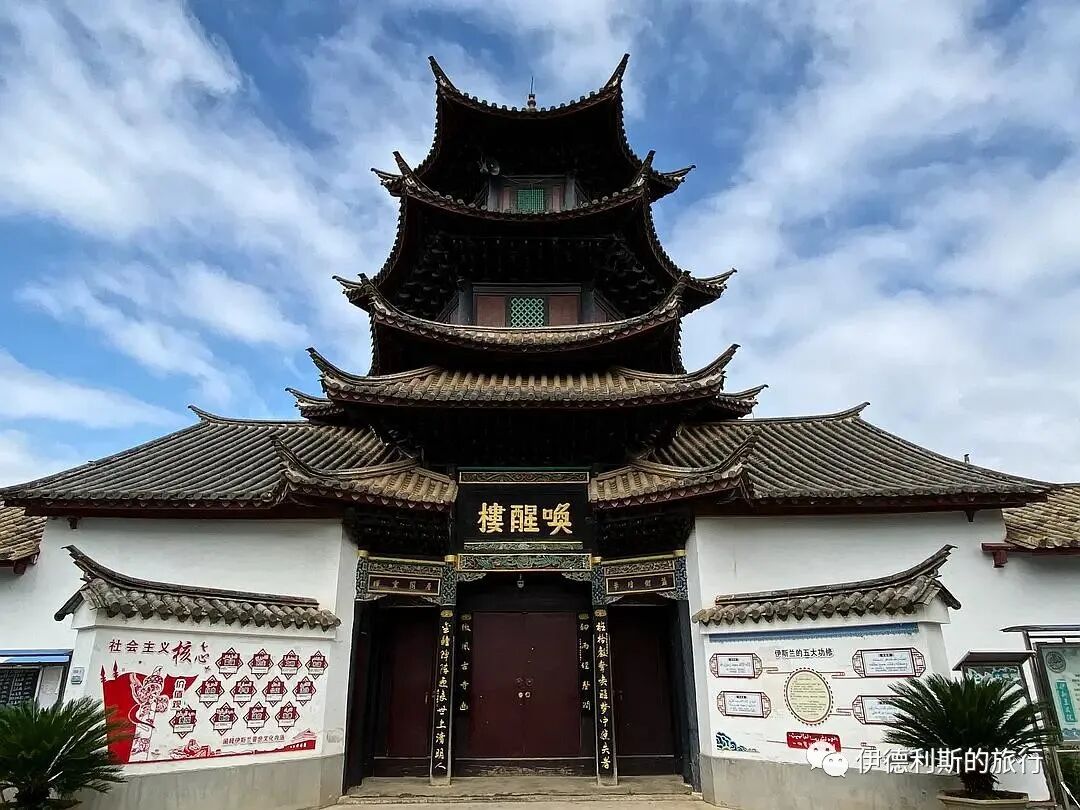
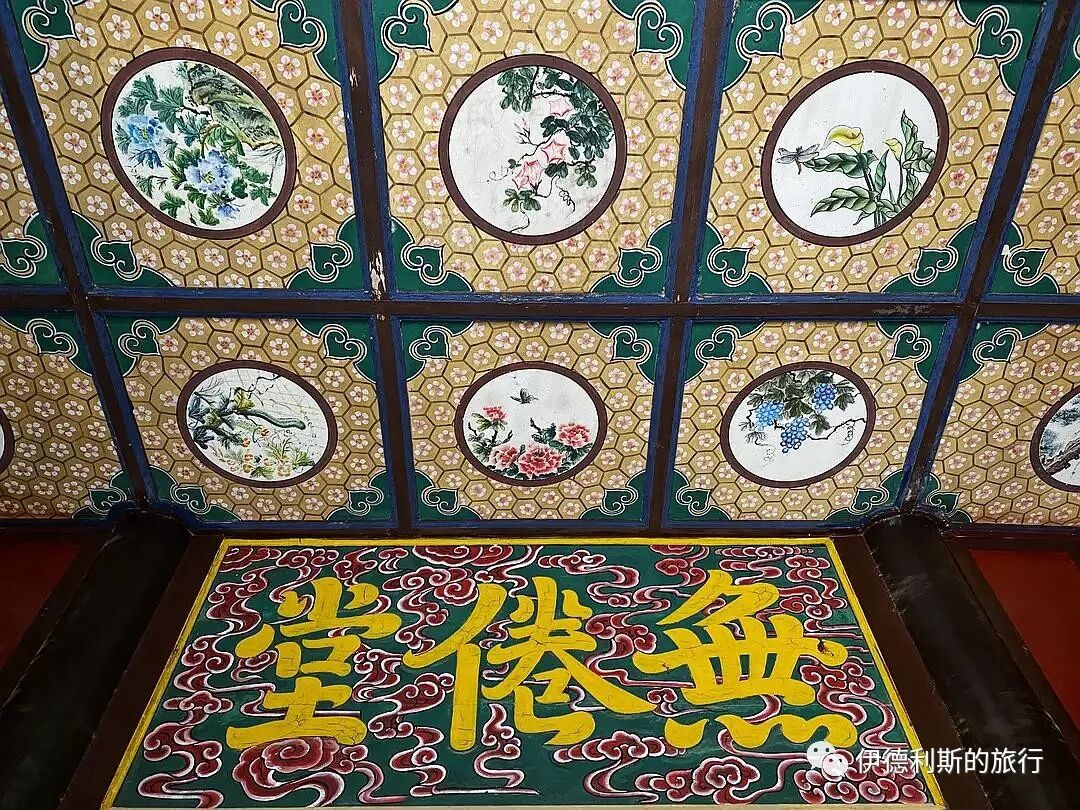
Imam Hai pointed out to us that there are some ancient fossils on the stone pillars of the Huanxing Lou, which should be unique among mosques in various places.
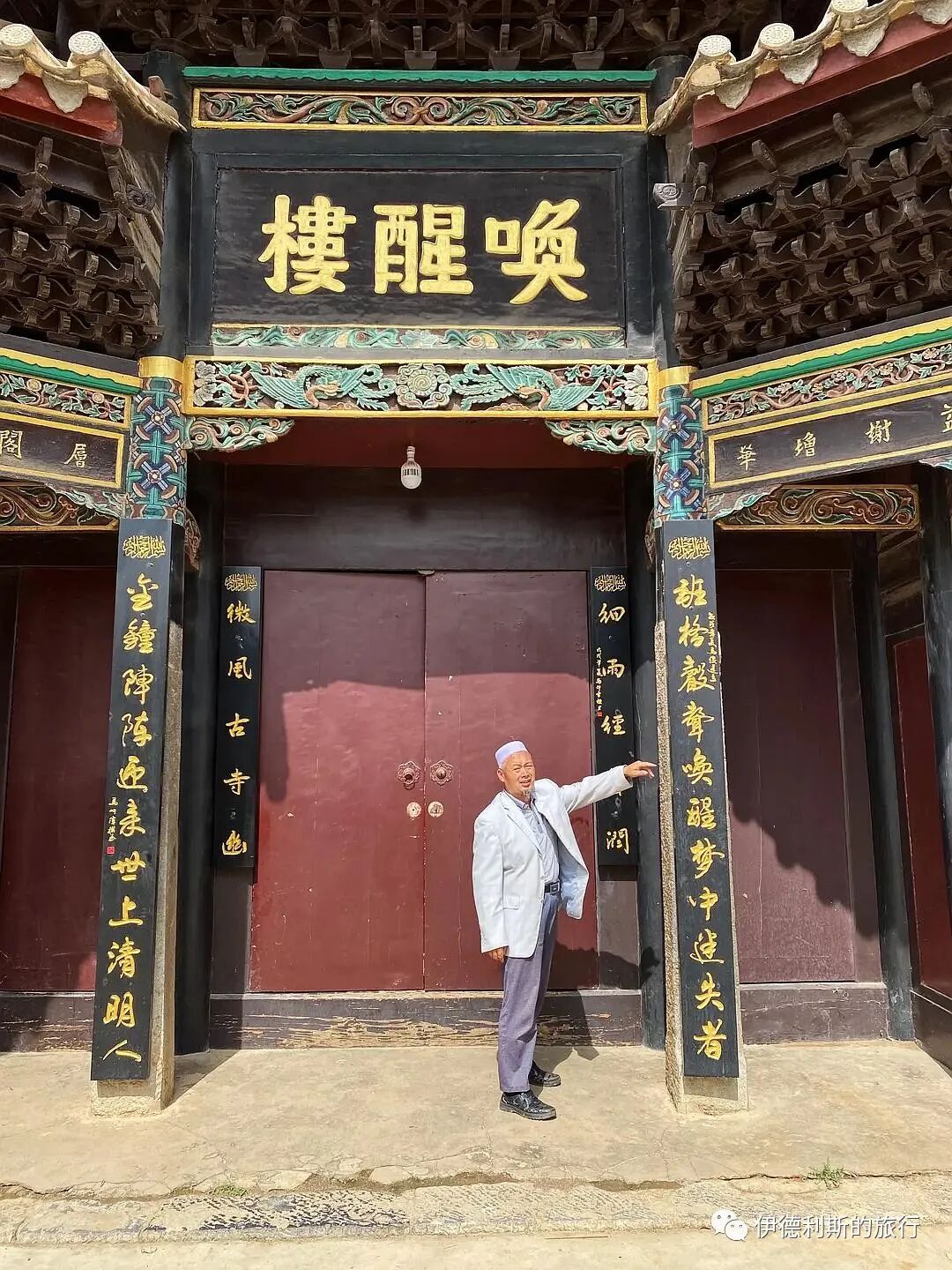
Passing through the Wujuan Tang is the courtyard, where four ancient cypress trees are planted, and directly opposite is the prayer hall. In the center of the main hall is written 'Happy Paradise', and according to Imam Hai, the eight Arabic calligraphy works around it were written by the second Imam of the mosque, Sai Huanzhang, also known as Sai Lao Baba.
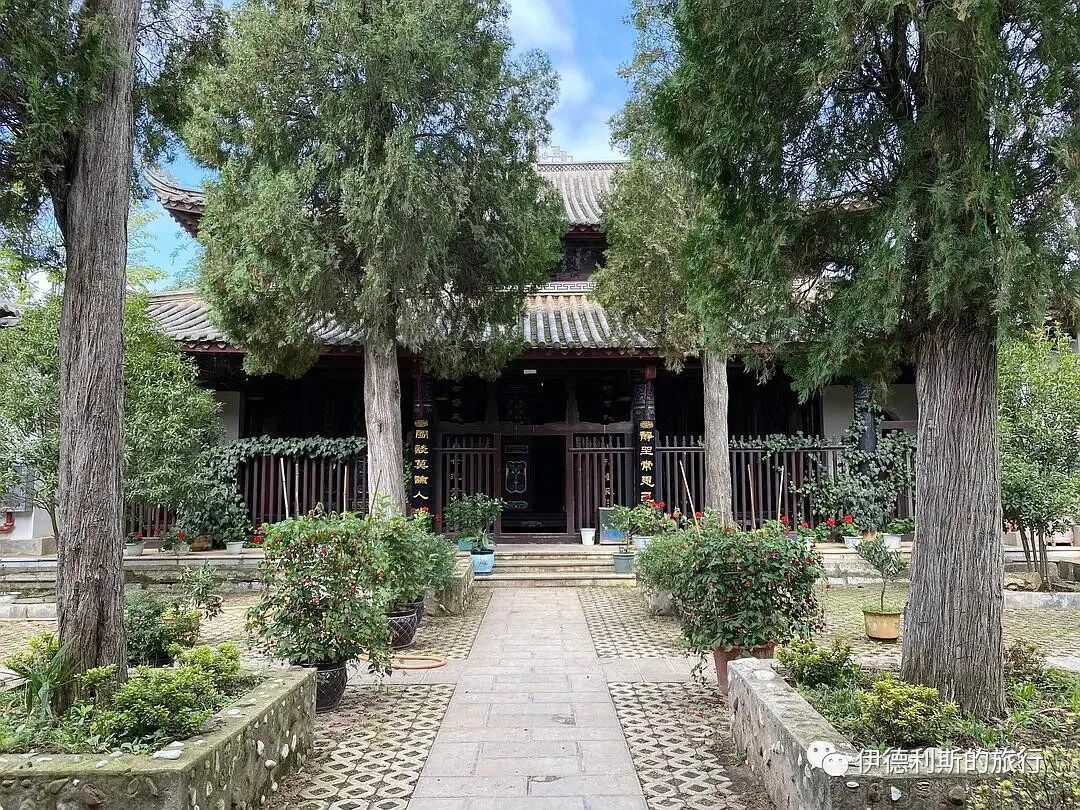
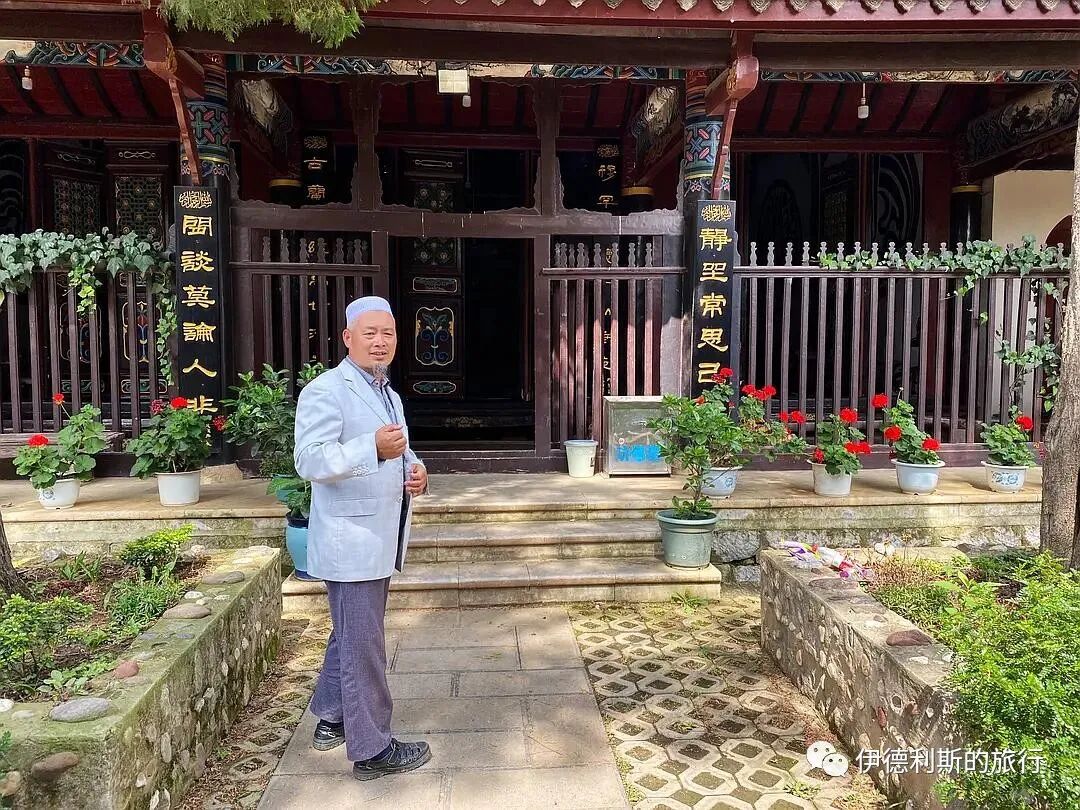
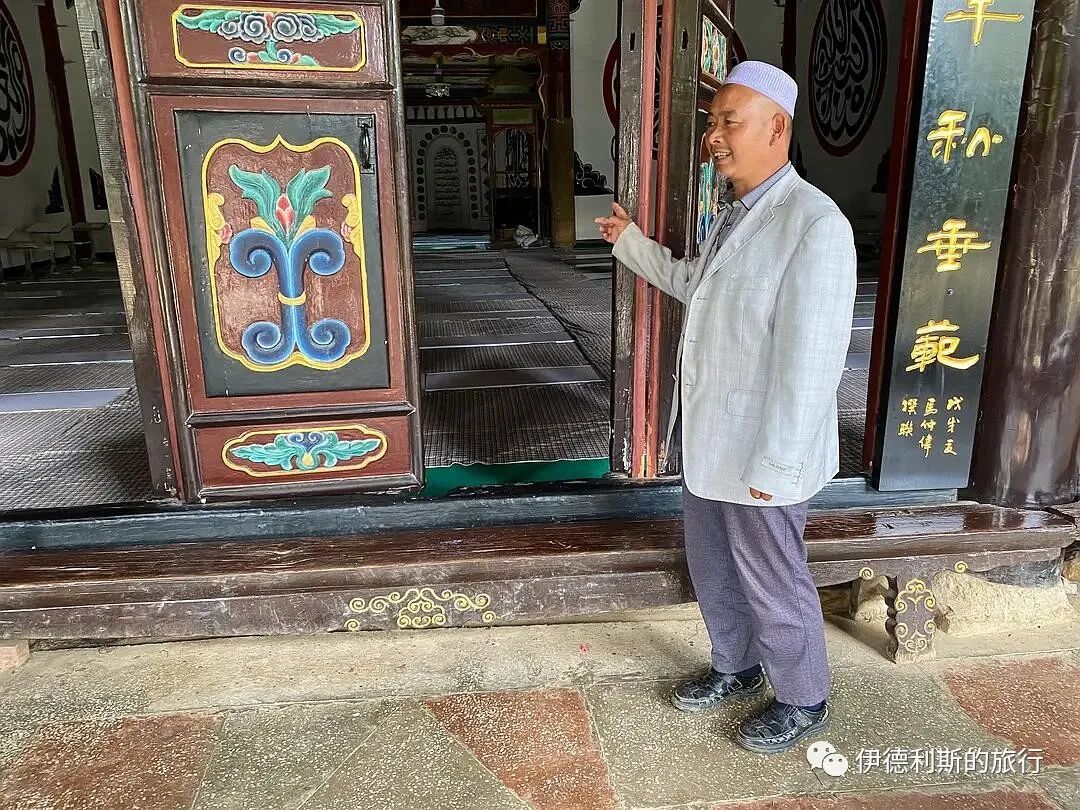
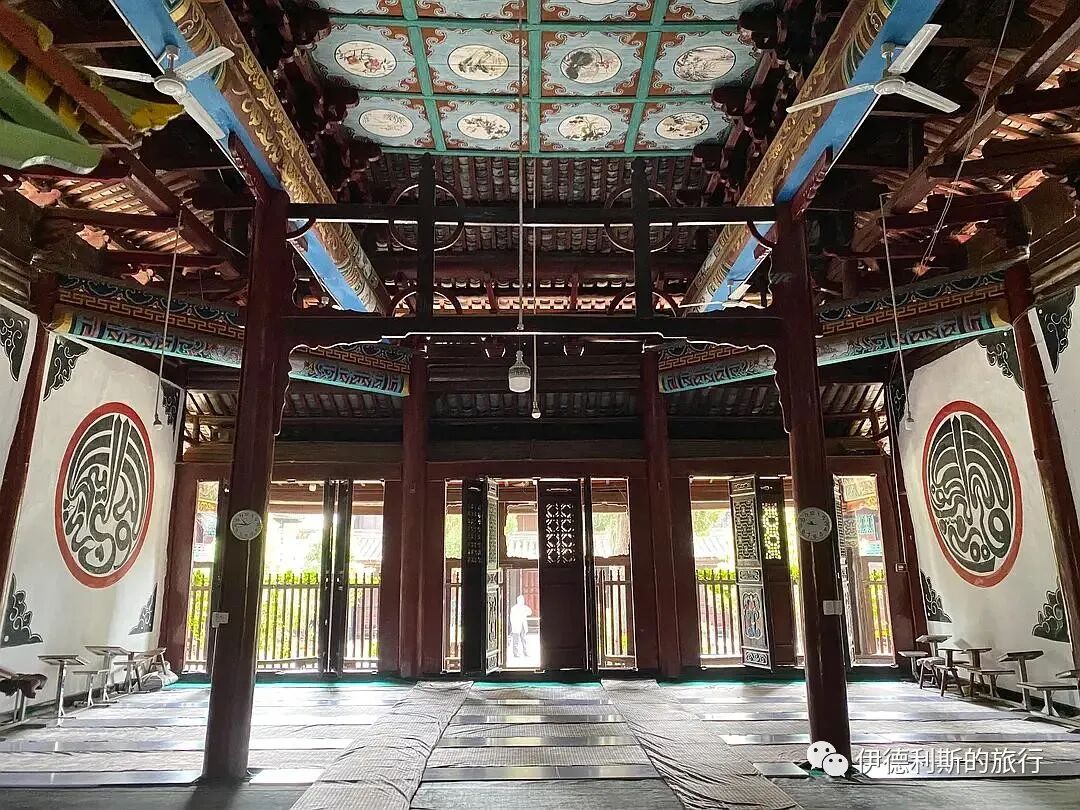
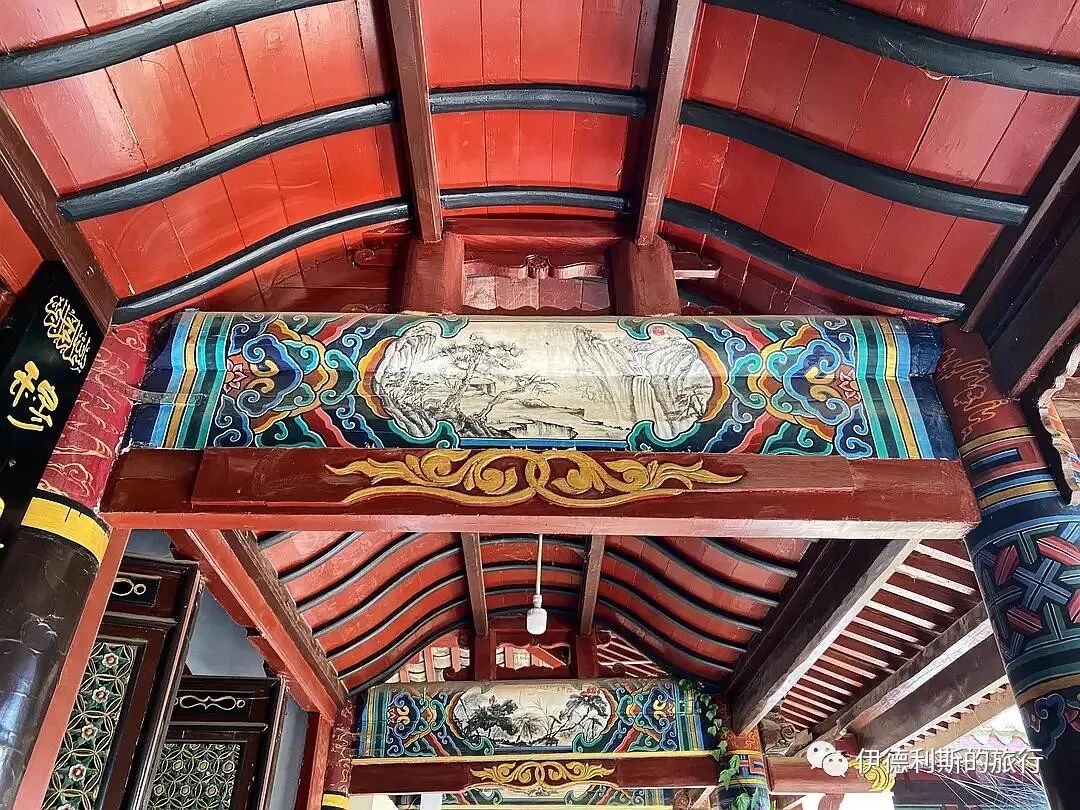
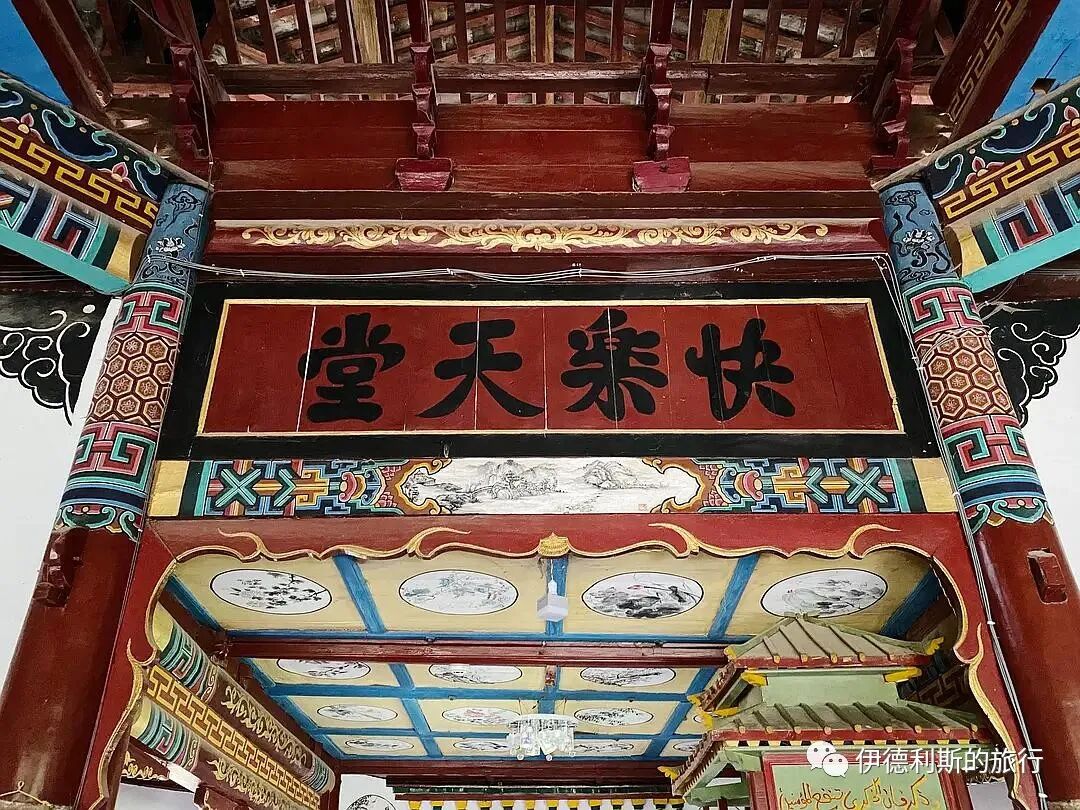
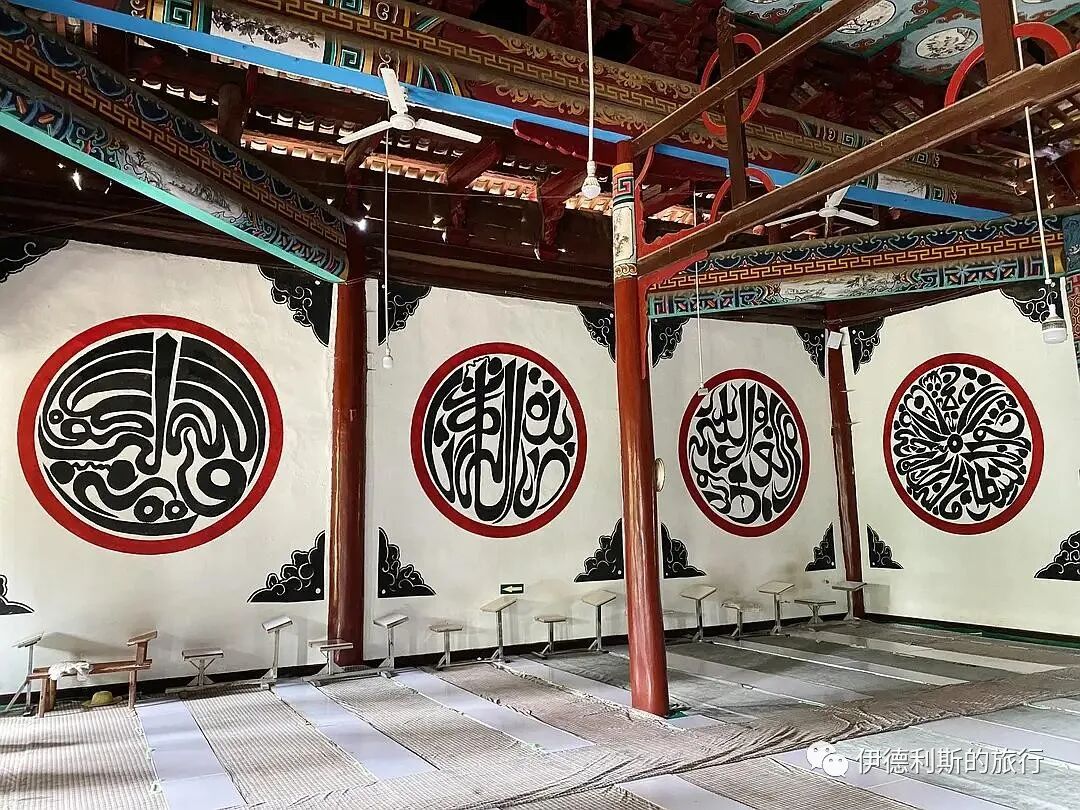
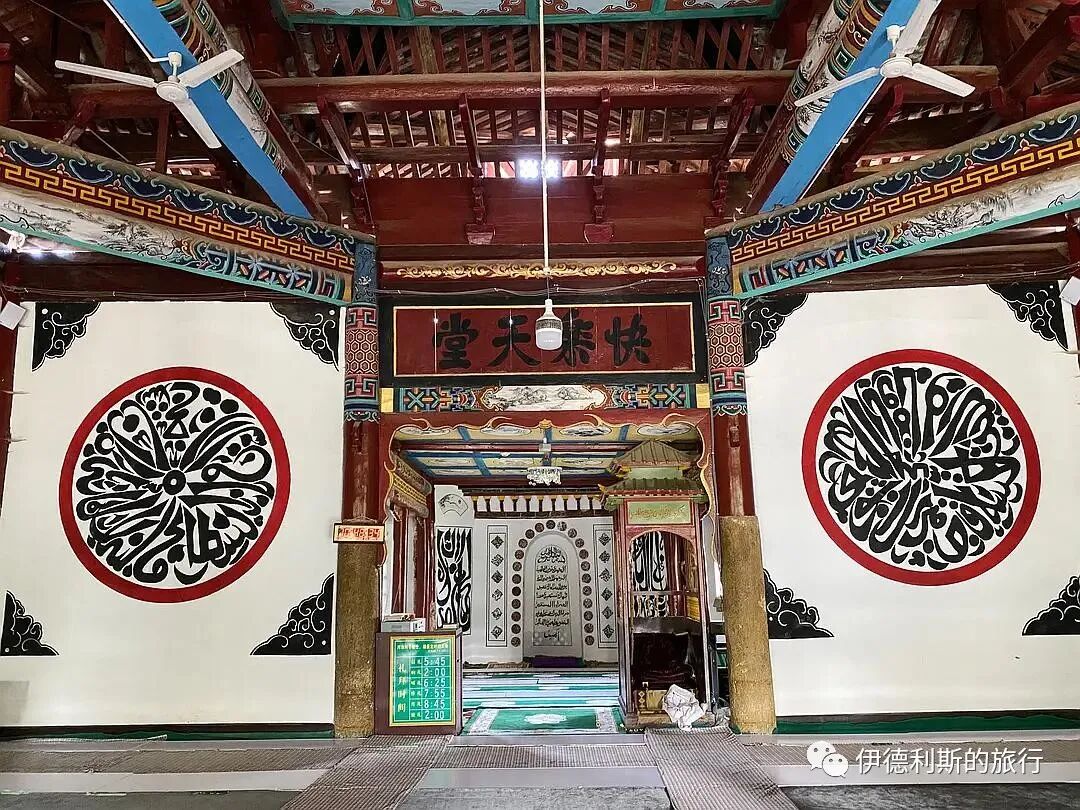
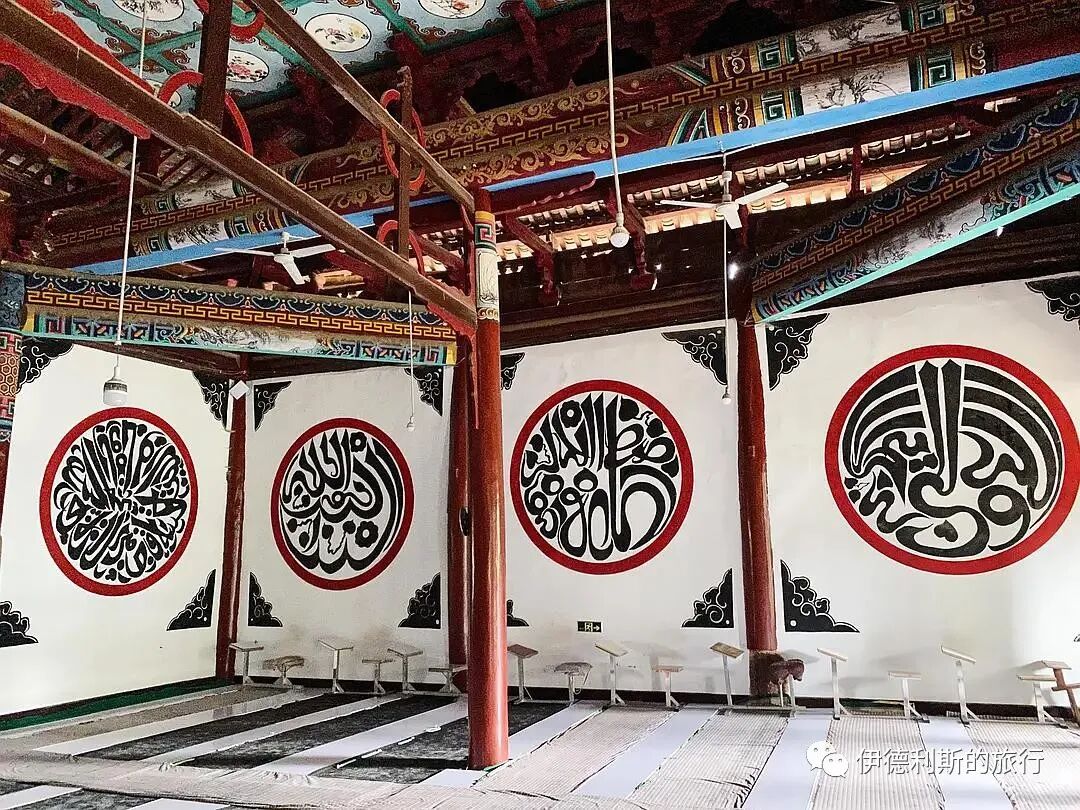
The Mihrab (niche indicating the direction of Mecca) inside the main hall is a kiln-style hall, and the top of the kiln hall is also a pointed-roof pavilion-style structure, echoing the Huanxing Lou from a distance.
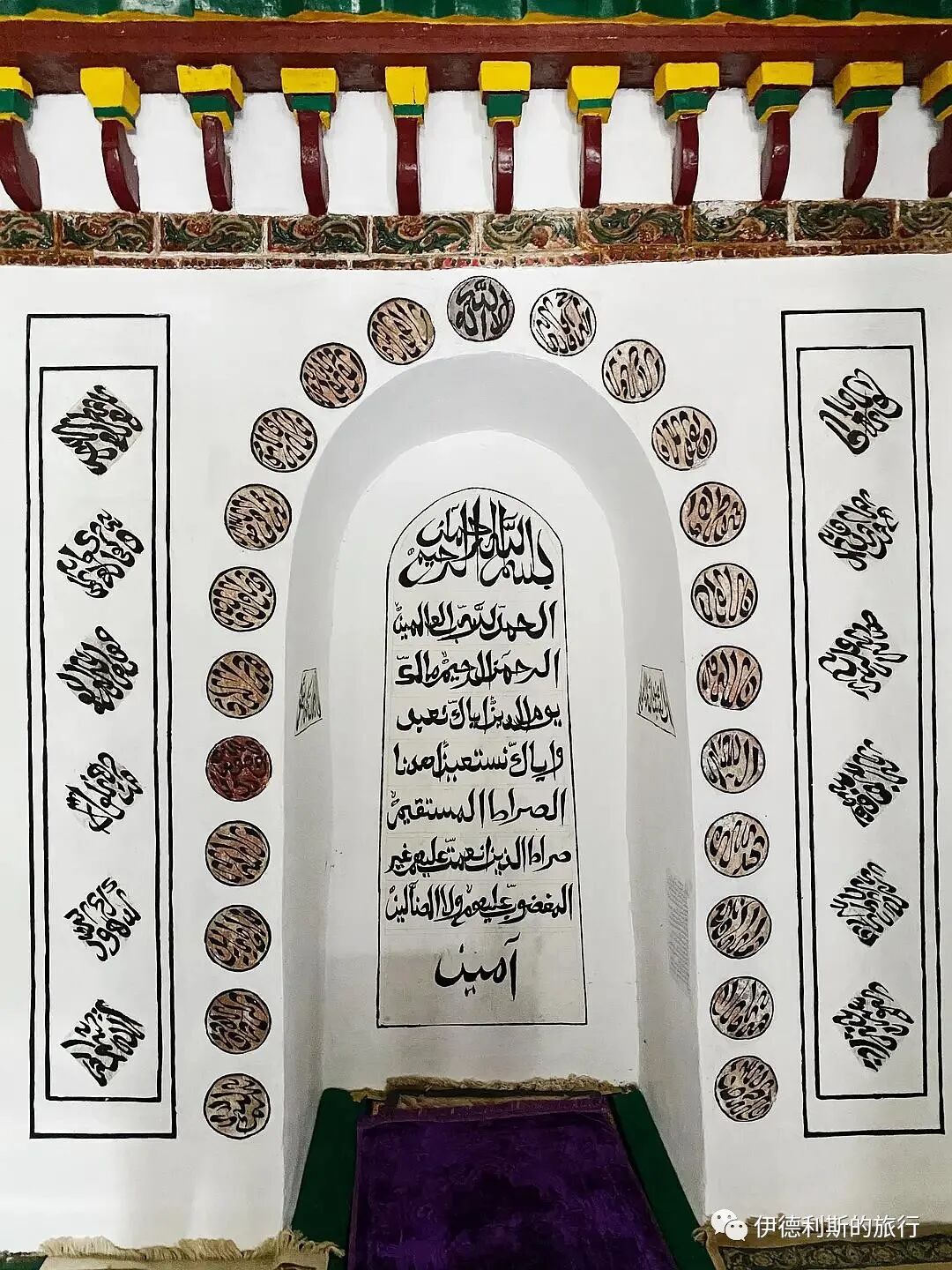
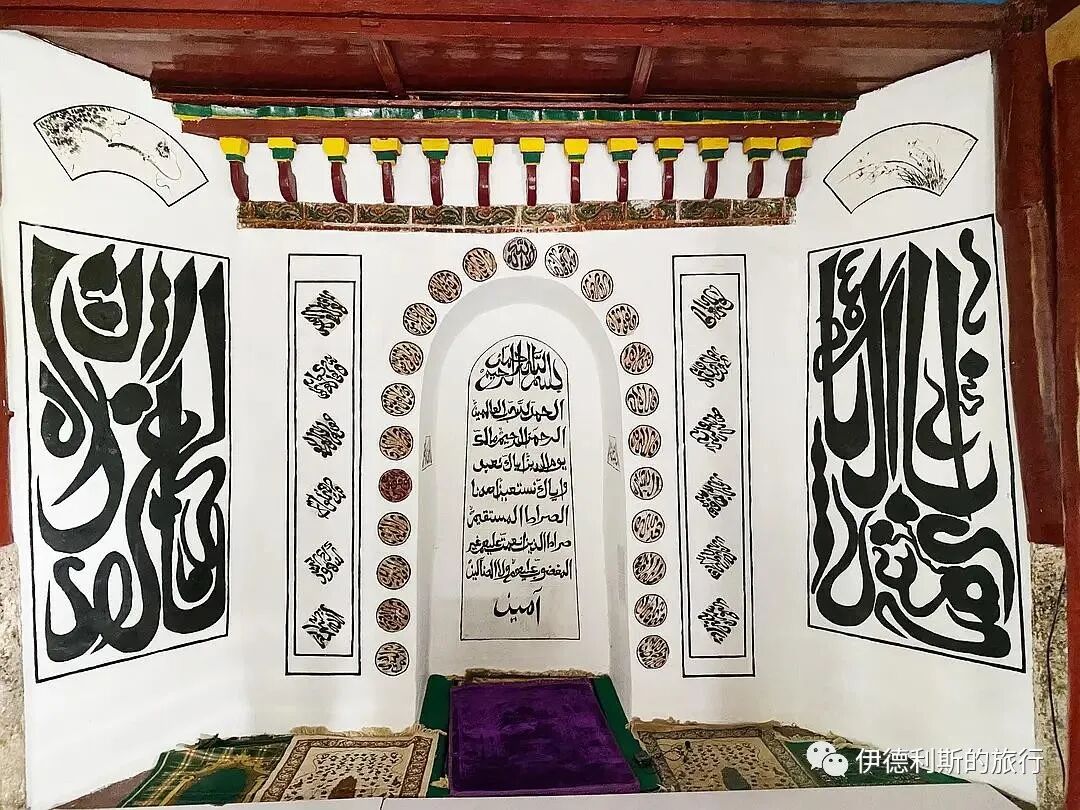
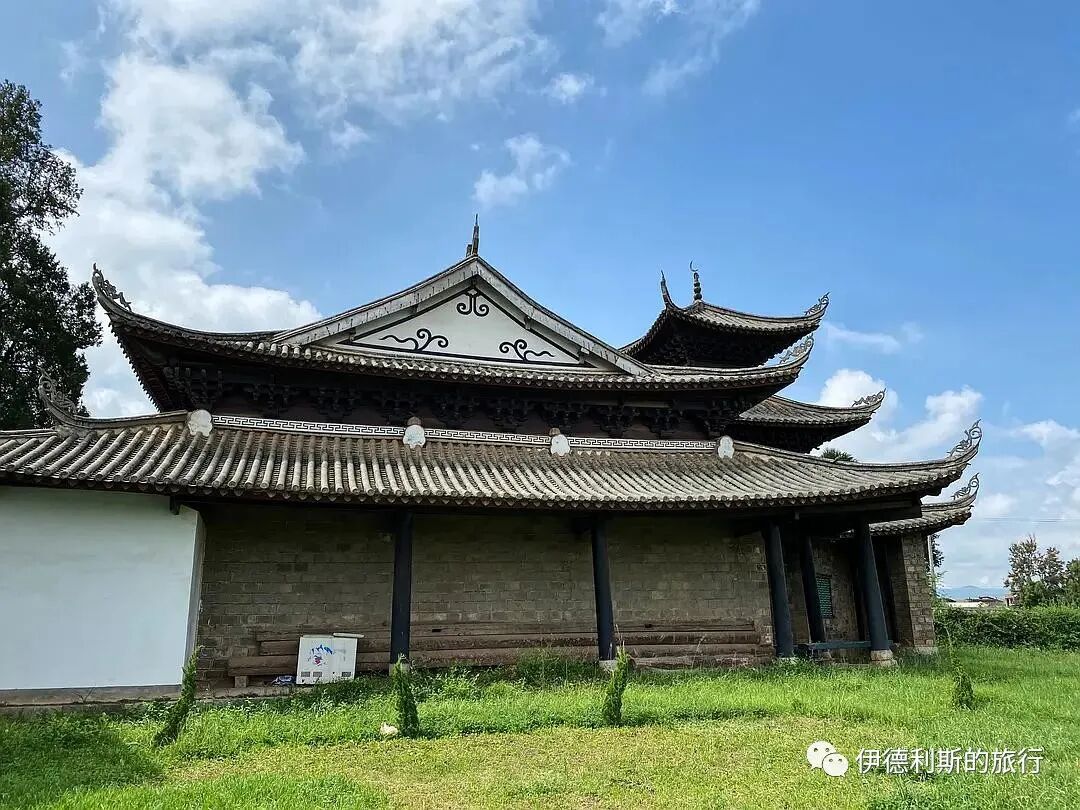
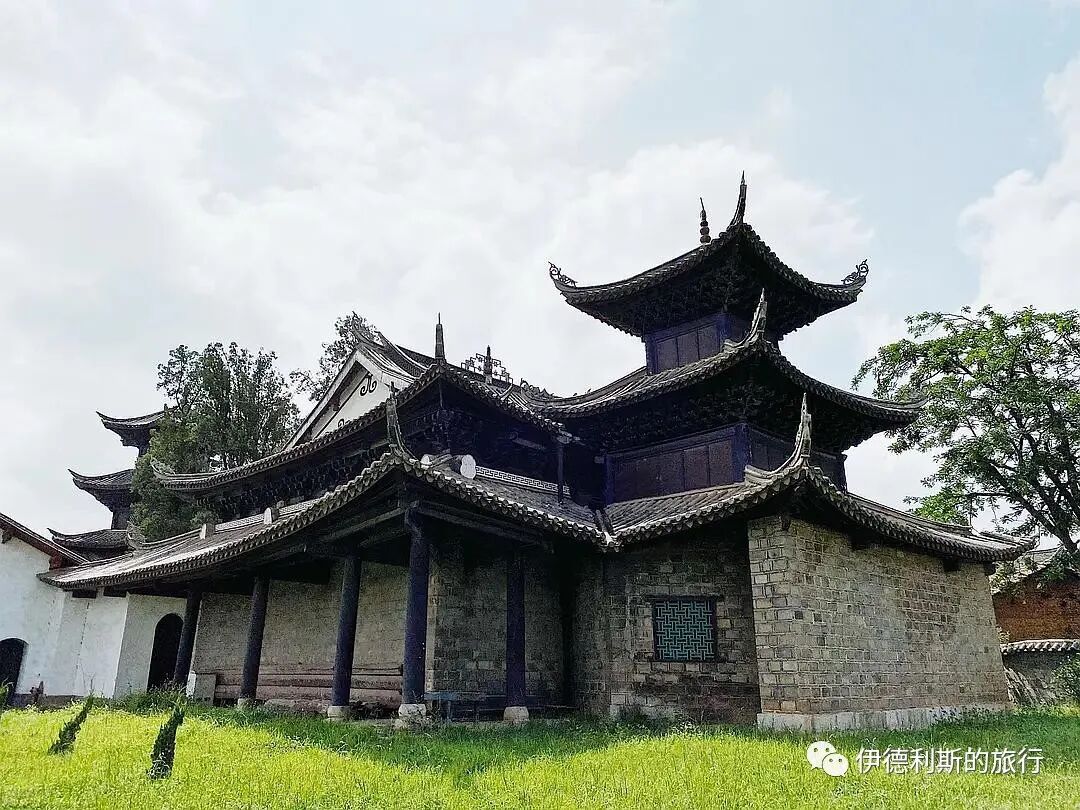
A Tabu Xiazi (a box for religious items) from the Qing Dynasty; Imam Hai said it is no longer used because it is too heavy.
A stele inscription from the Qianlong reign.
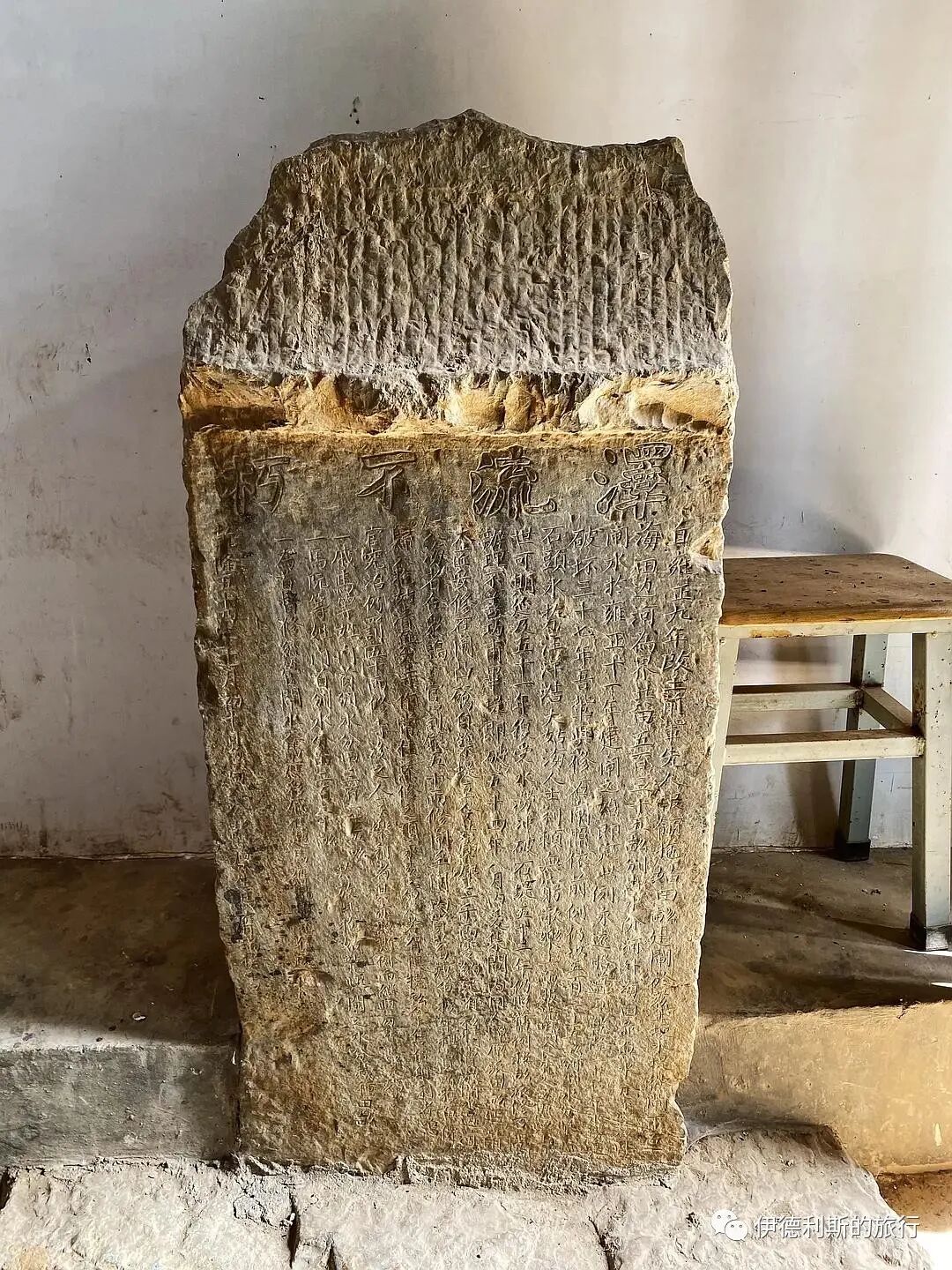
2. Longtoushan Mosque: 1746
After seeing the Tuogu Great Mosque, we went to another famous ancient mosque building in Ludian, the Longtoushan Mosque, and were warmly received by Imam Ma Liming.
The Longtoushan Mosque was built in 1746, following the traditional Yunnan mosque architectural style, with a courtyard enclosed by the Huanxing Lou, north and south side rooms, and the prayer hall. Unlike the Tuogu Great Mosque, the Mihrab of the Longtoushan Mosque does not have a pointed pavilion on top, and the Huanxing Lou only has four corners and two tiers, making its momentum slightly inferior to the Tuogu Great Mosque.
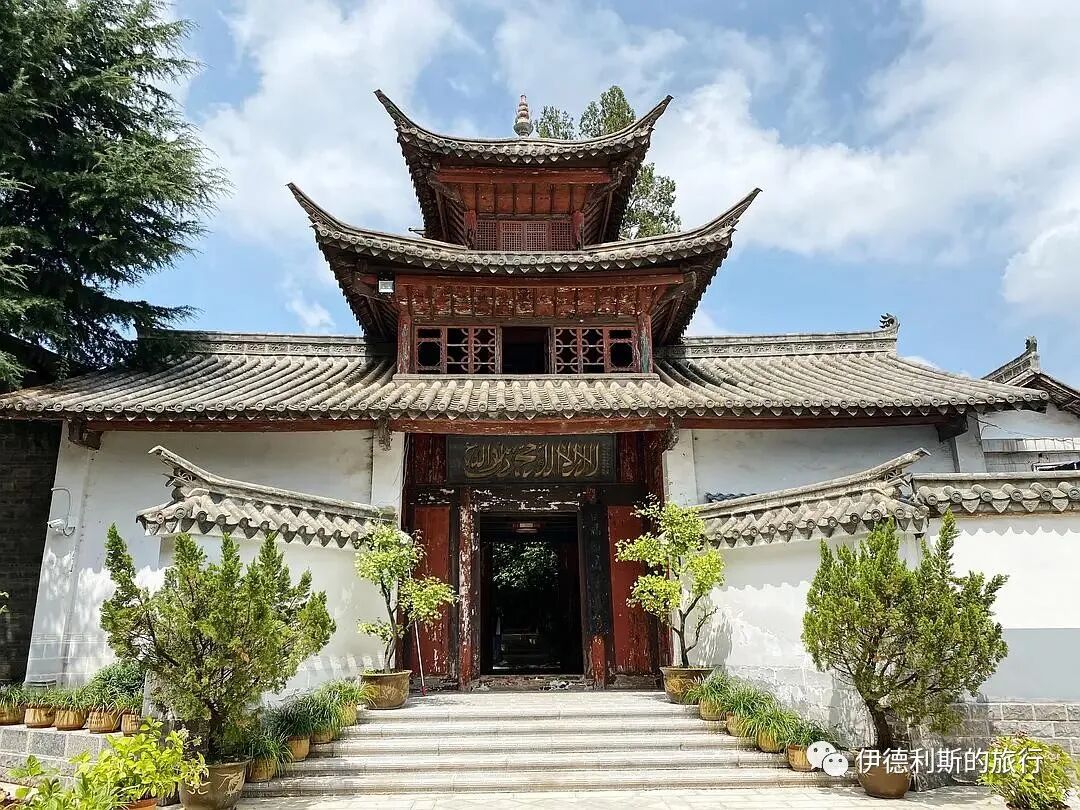
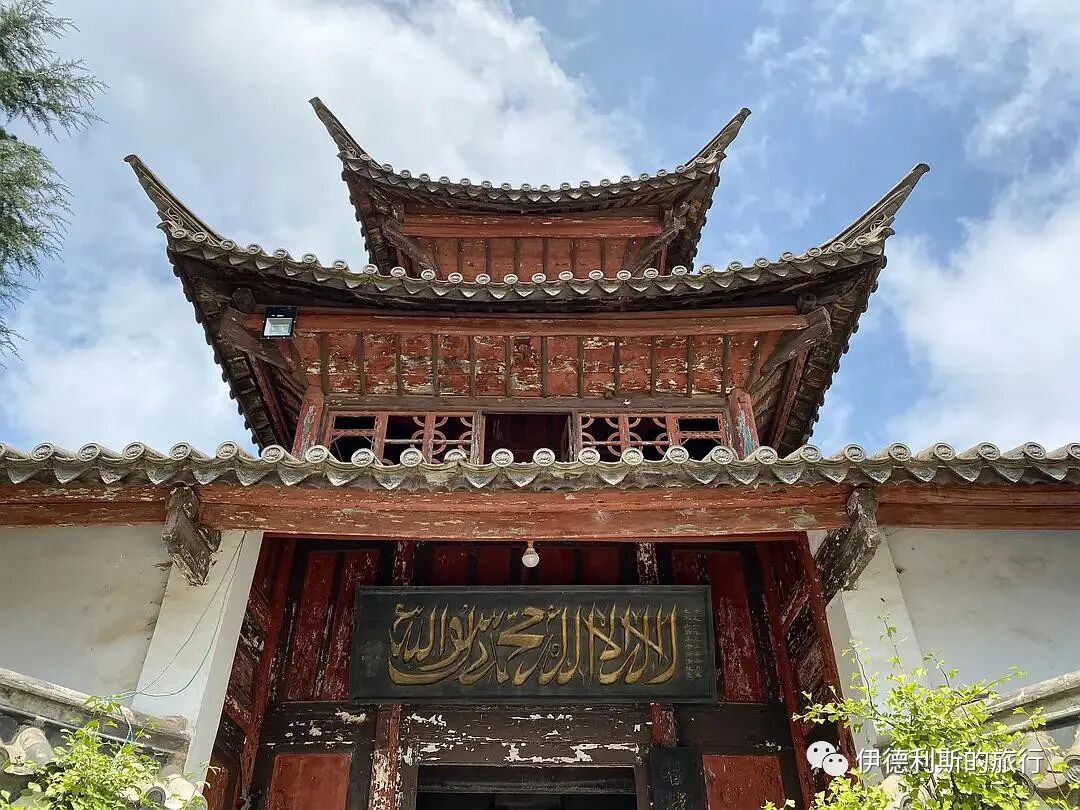
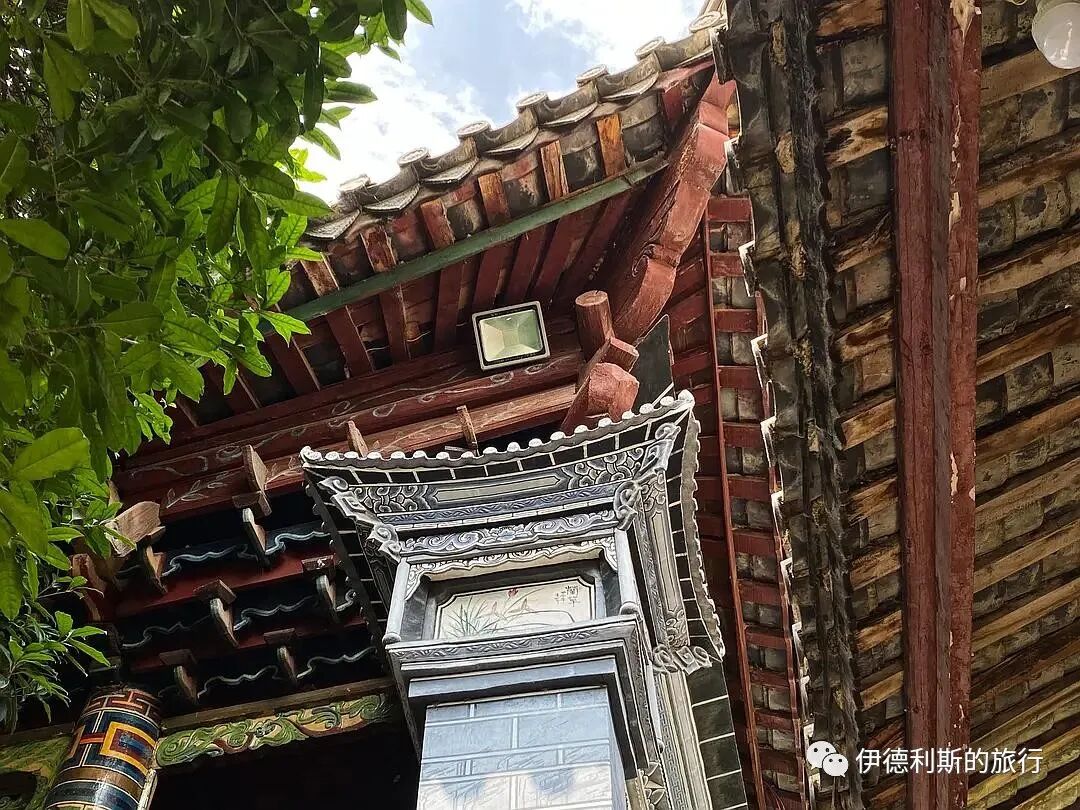
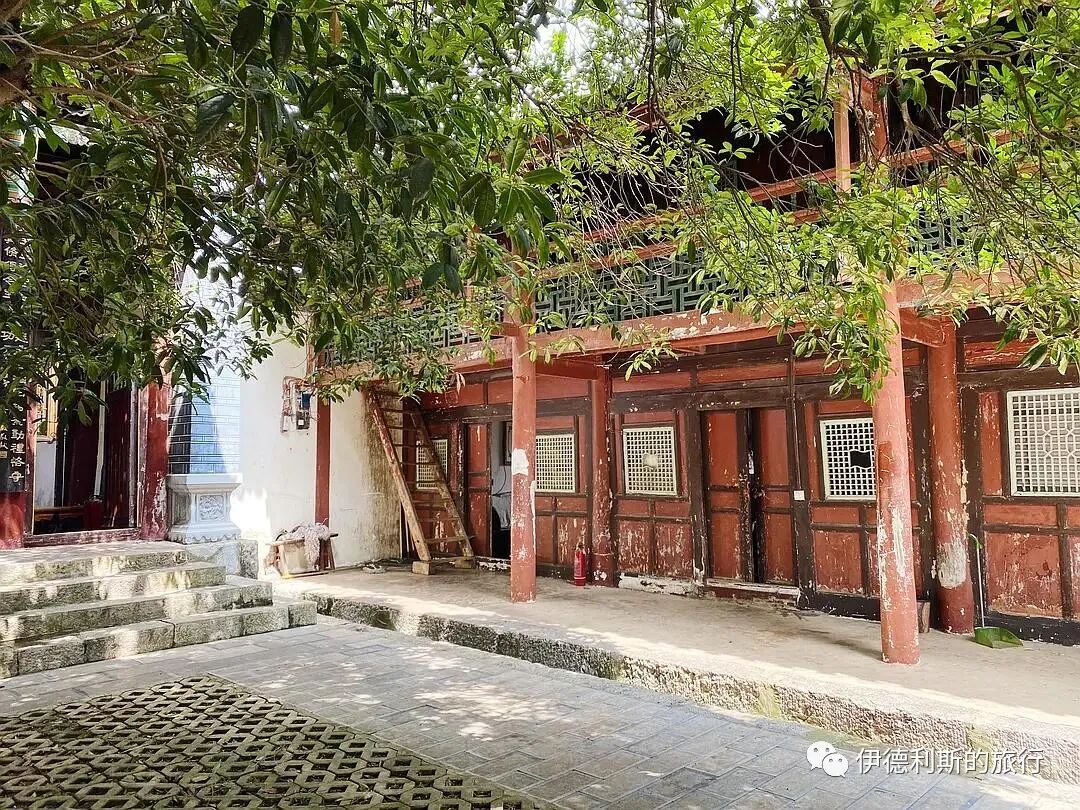
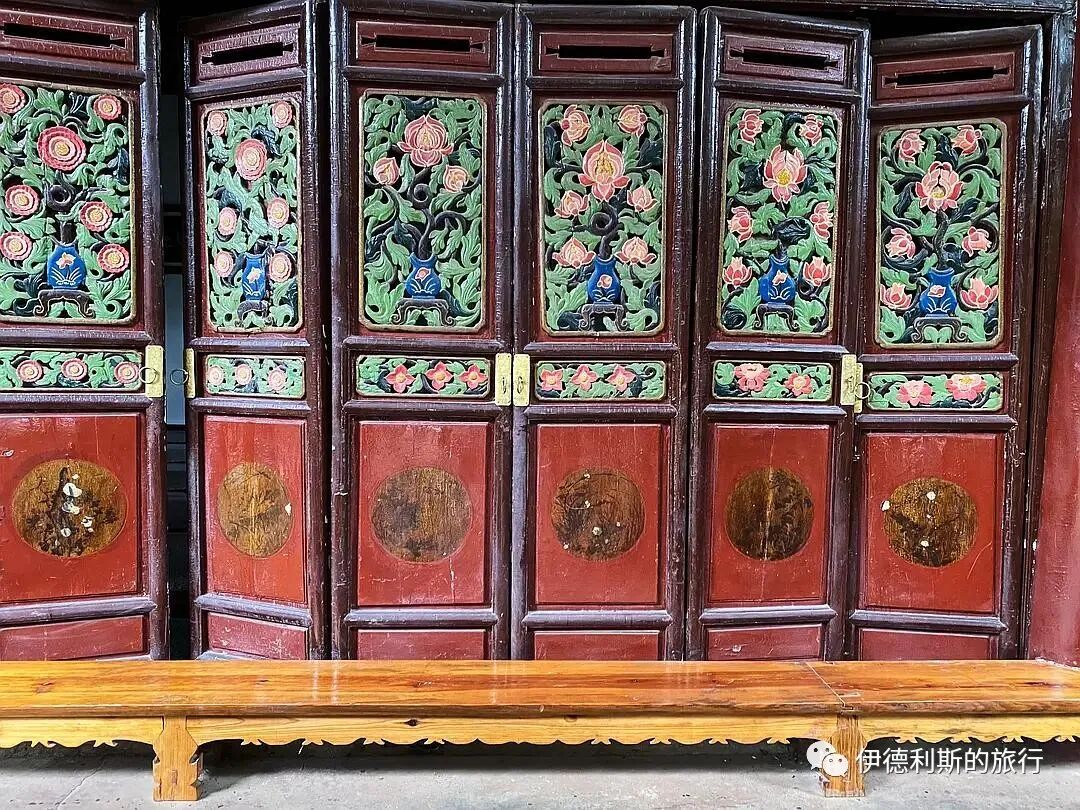
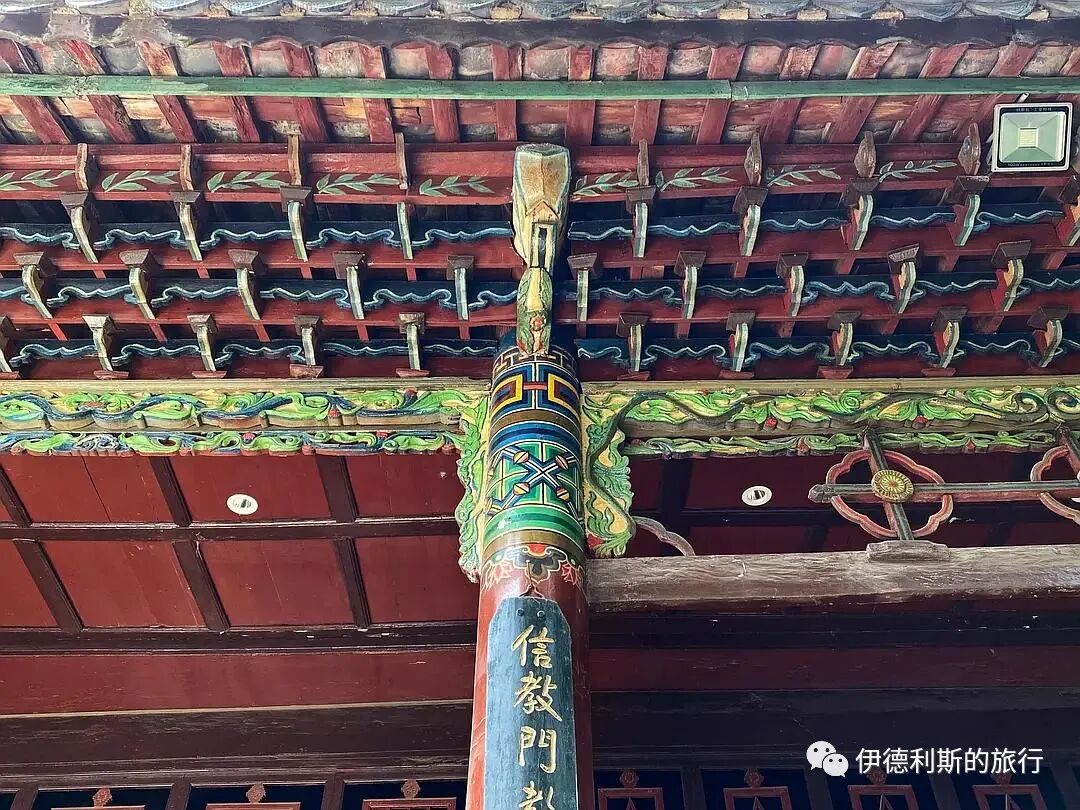
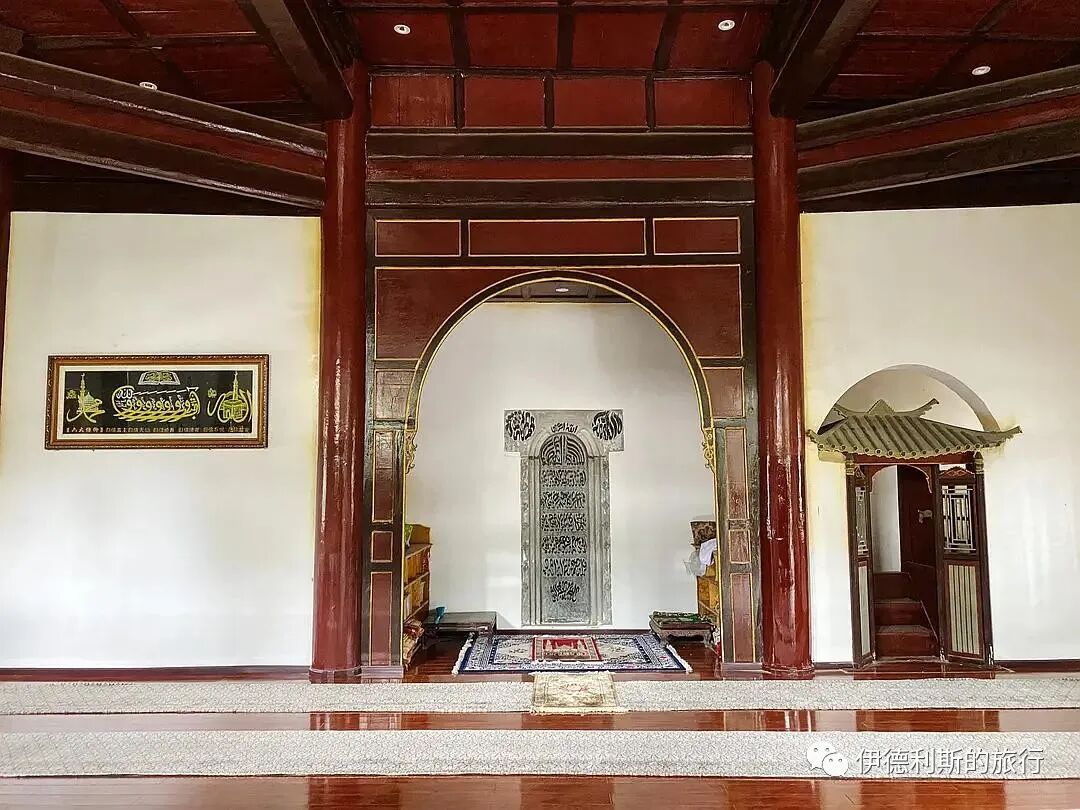
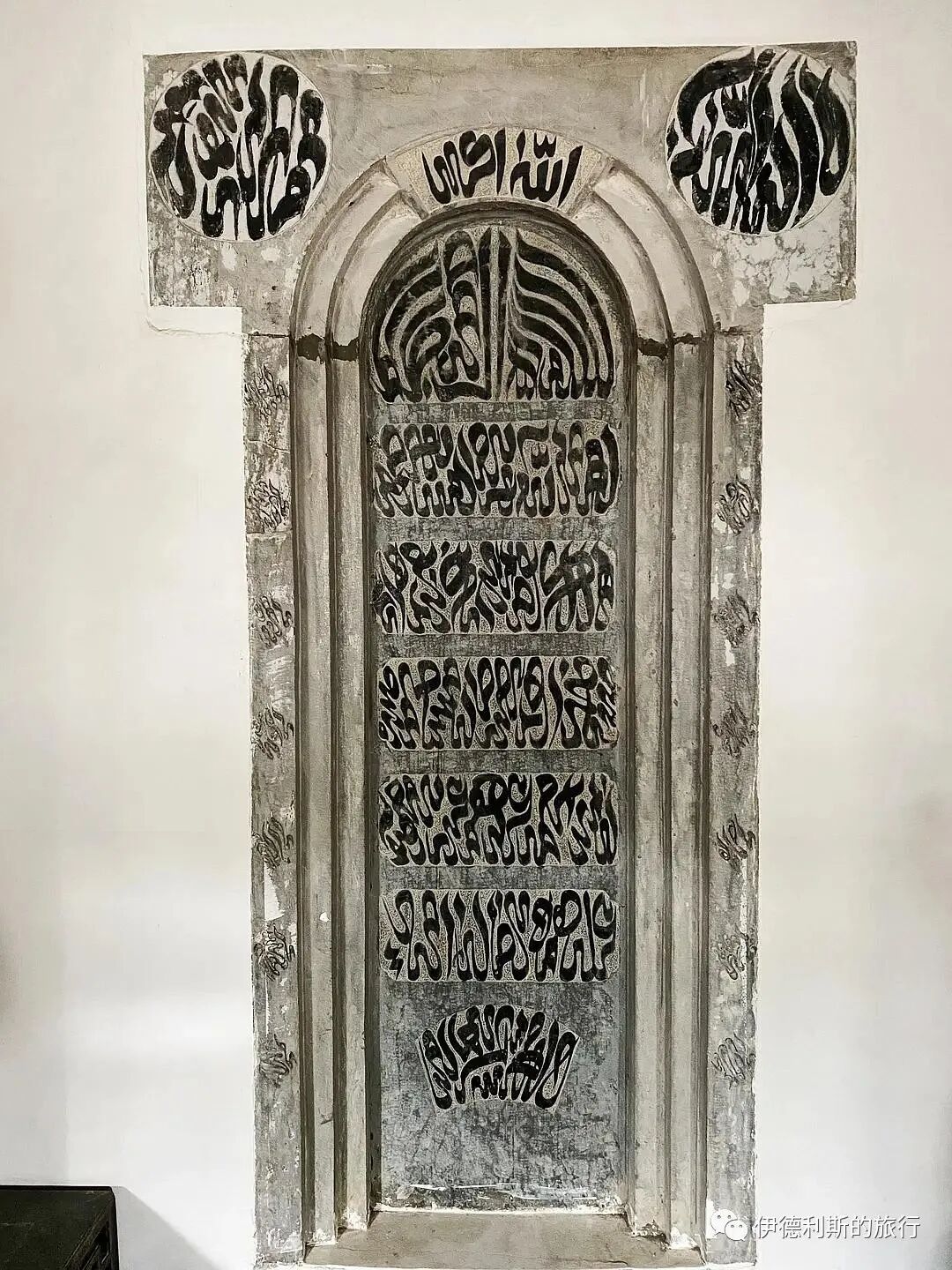
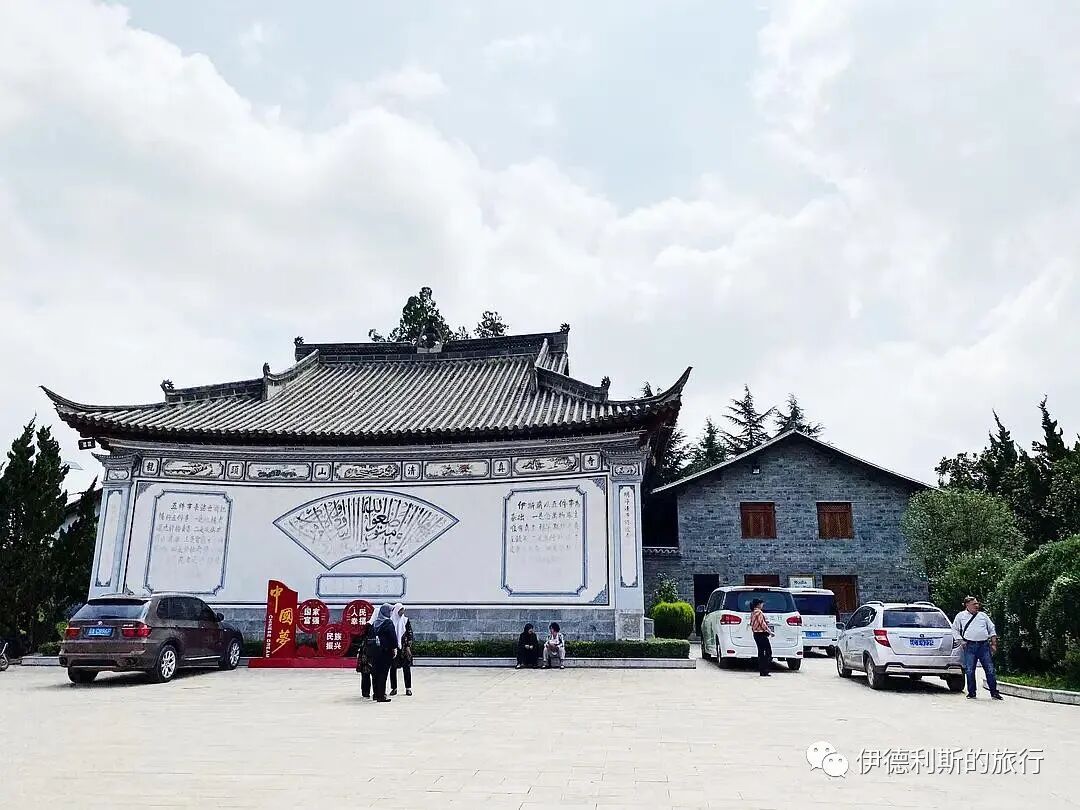
The newly built main hall of Longtoushan is a full wooden structure, very spectacular, and can be seen from a very long distance. I very much approve of this practice of building a new main hall not far away without destroying historical architectural relics. In recent years, I have seen too many behaviors of tearing down centuries-old protected cultural relics just to build new main halls.
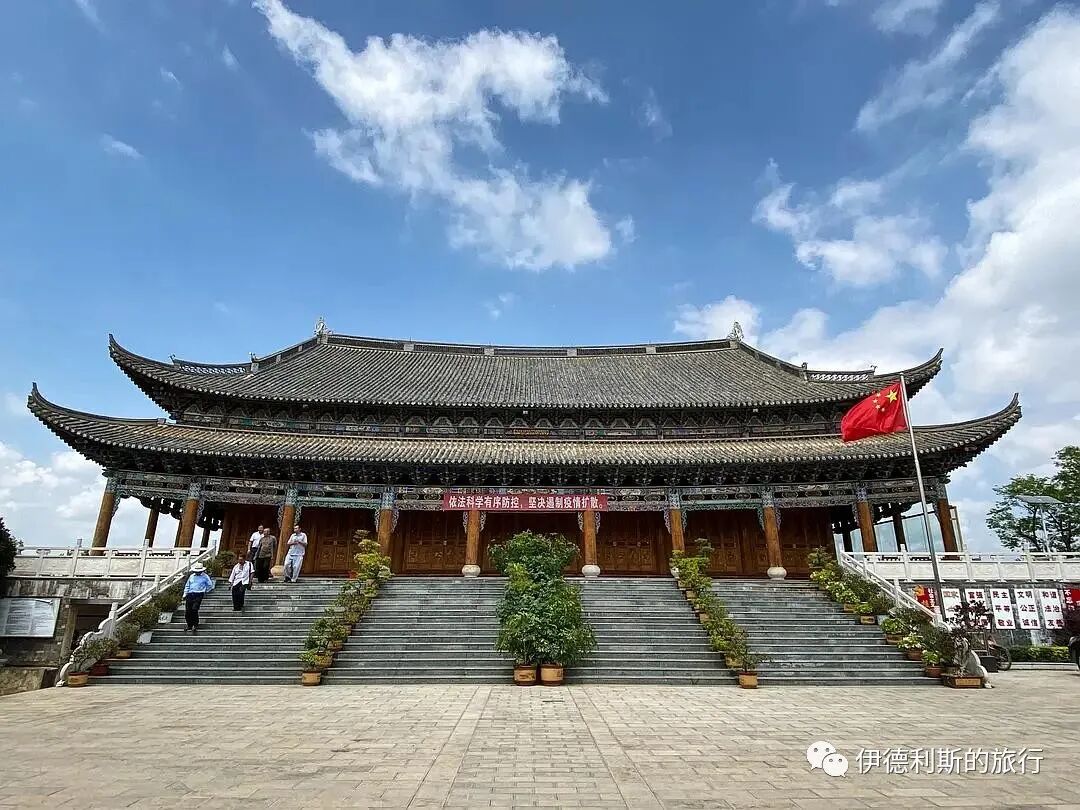
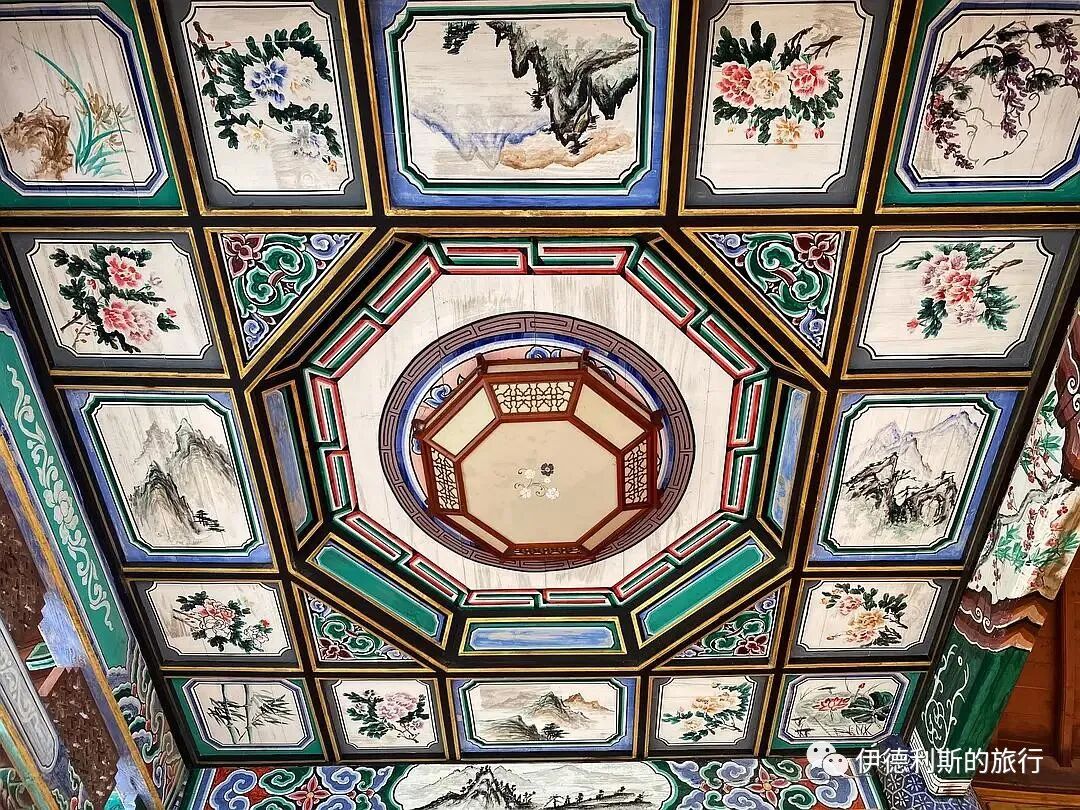
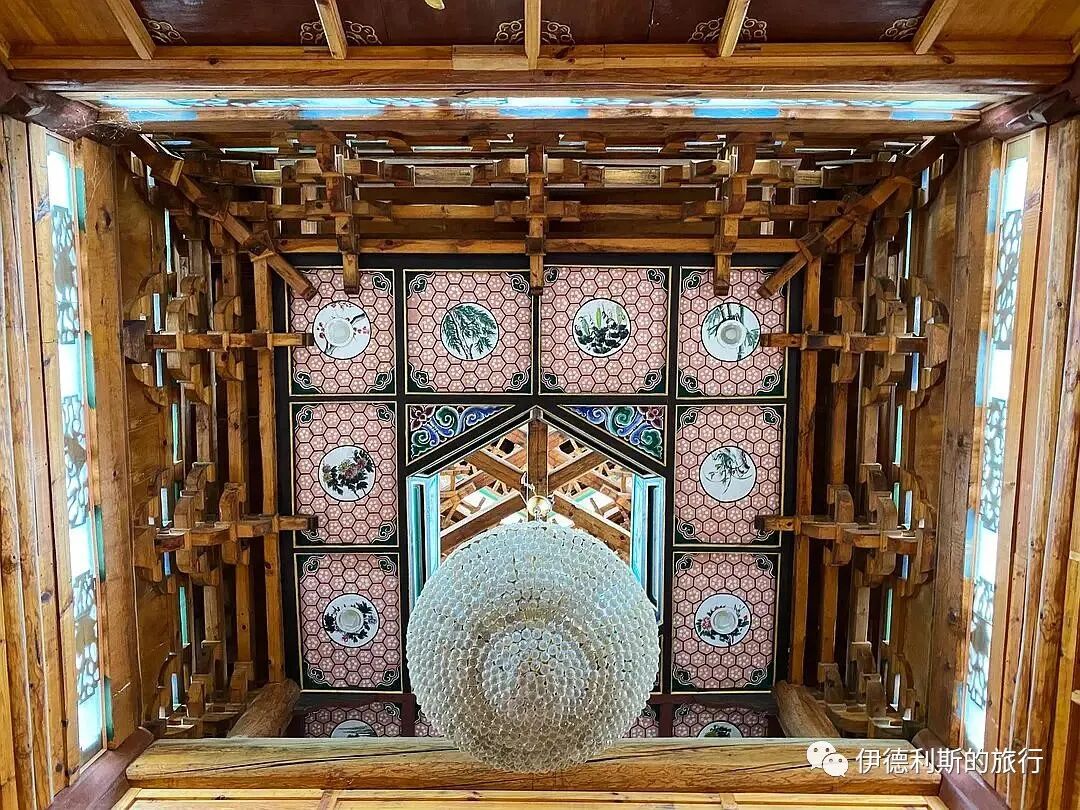
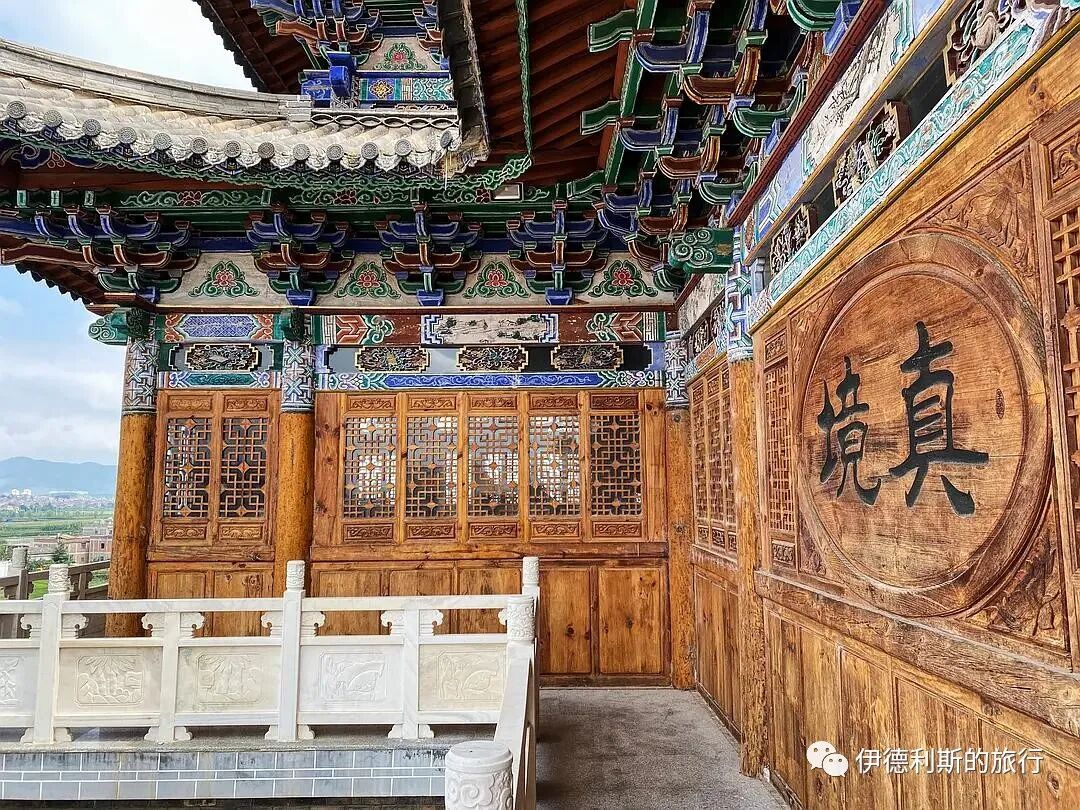
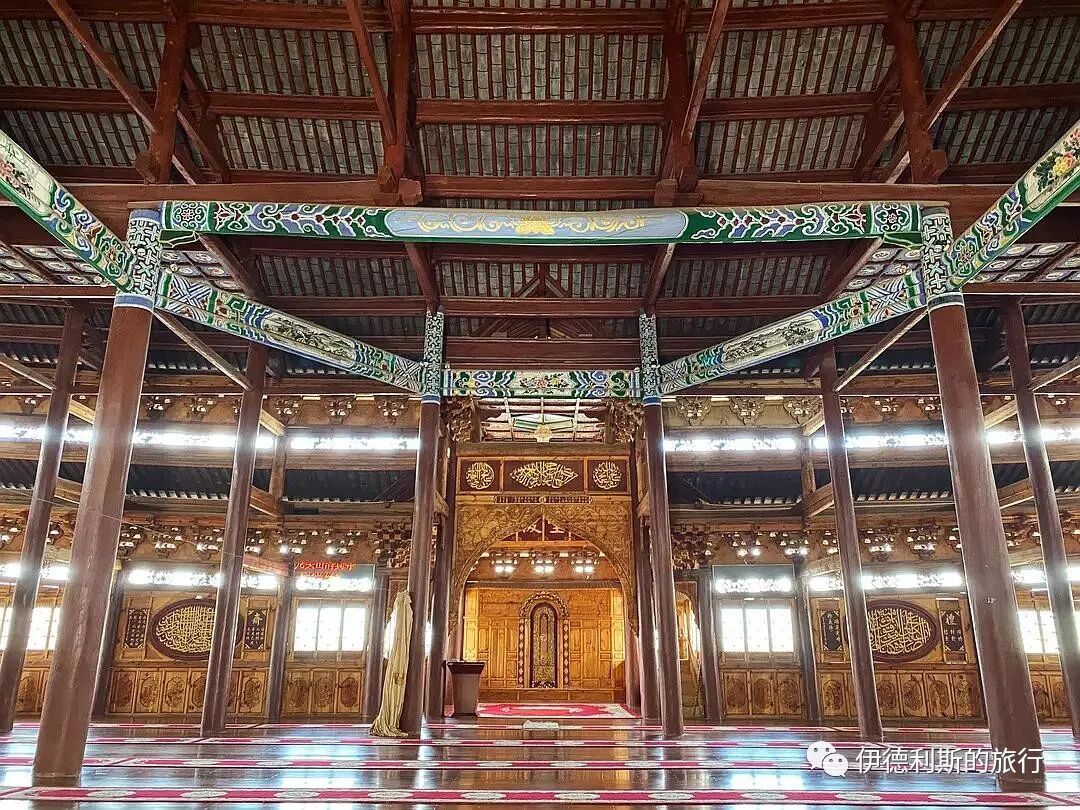
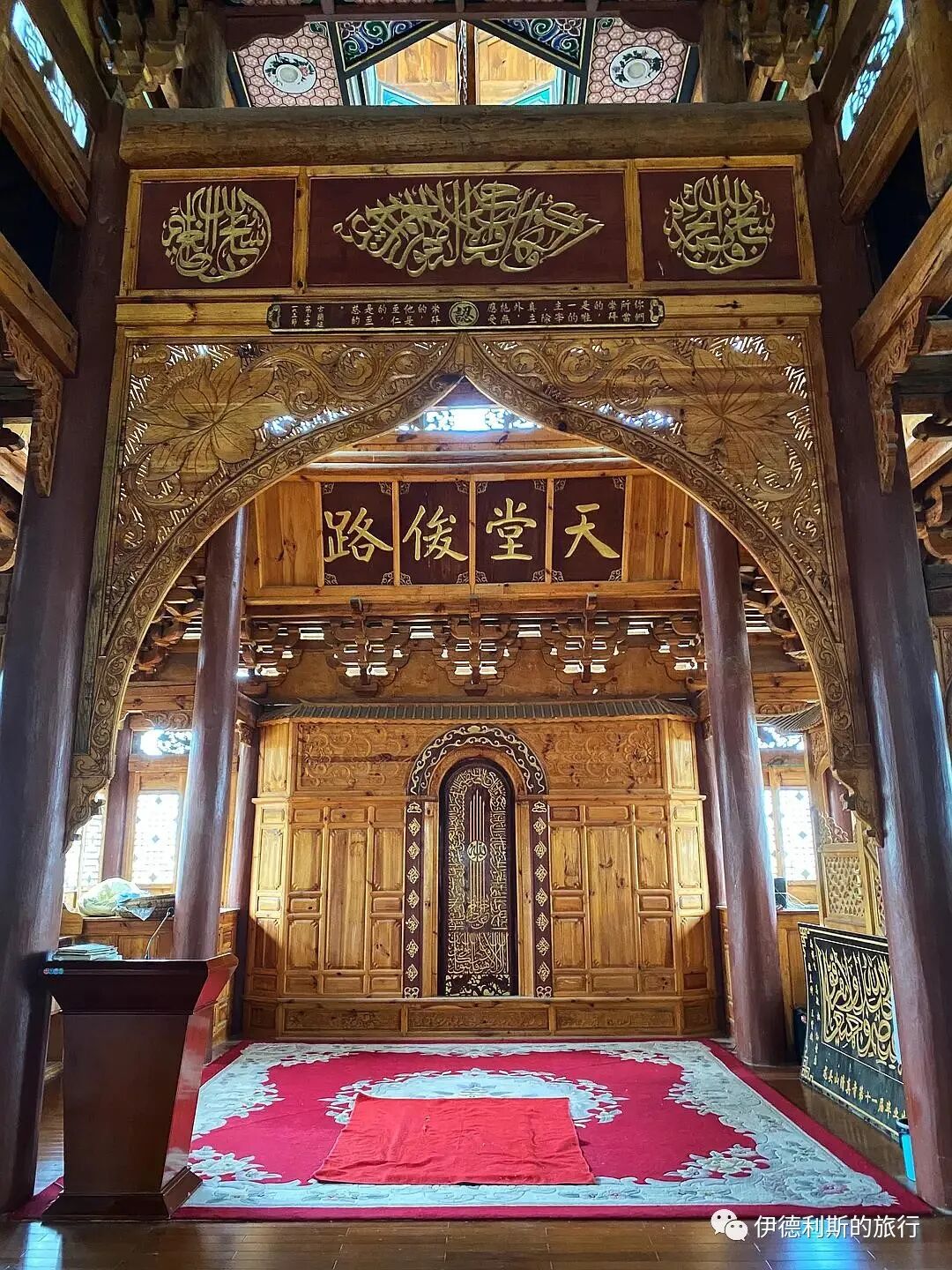
3. Chachong Mosque: 1734
After leaving the Longtoushan Mosque, we went to another ancient mosque in Ludian, the Chachong Mosque. The Chachong Mosque was built in 1734. Like the Tuogu Great Mosque, the Huanxing Lou is a three-story, hexagonal, pointed-roof pavilion-style building, but it is slightly smaller in size. Hanging at the entrance of the main hall is a plaque inscribed with 'Xuan Qi Da Neng' (Mysterious and Great Power), respectfully erected in 1906 by Sa Depin.
The Chachong Mosque is also very beautiful, but its popularity is not as high as the surrounding Tuogu Mosque and Longtoushan Mosque. When we visited, the Imam happened to have gone to the Longtoushan Mosque for a Ziyarah (a visit to a holy site), and the Imam's daughter was an acquaintance of Sister Azi, so we chatted very happily.
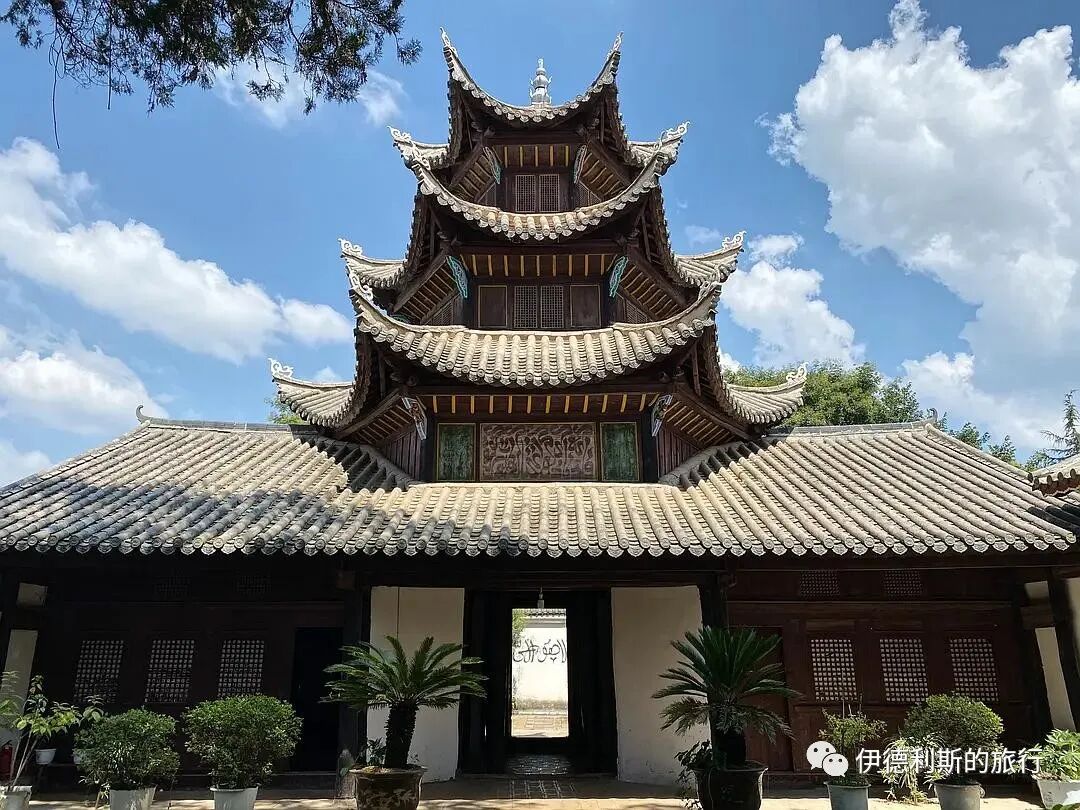
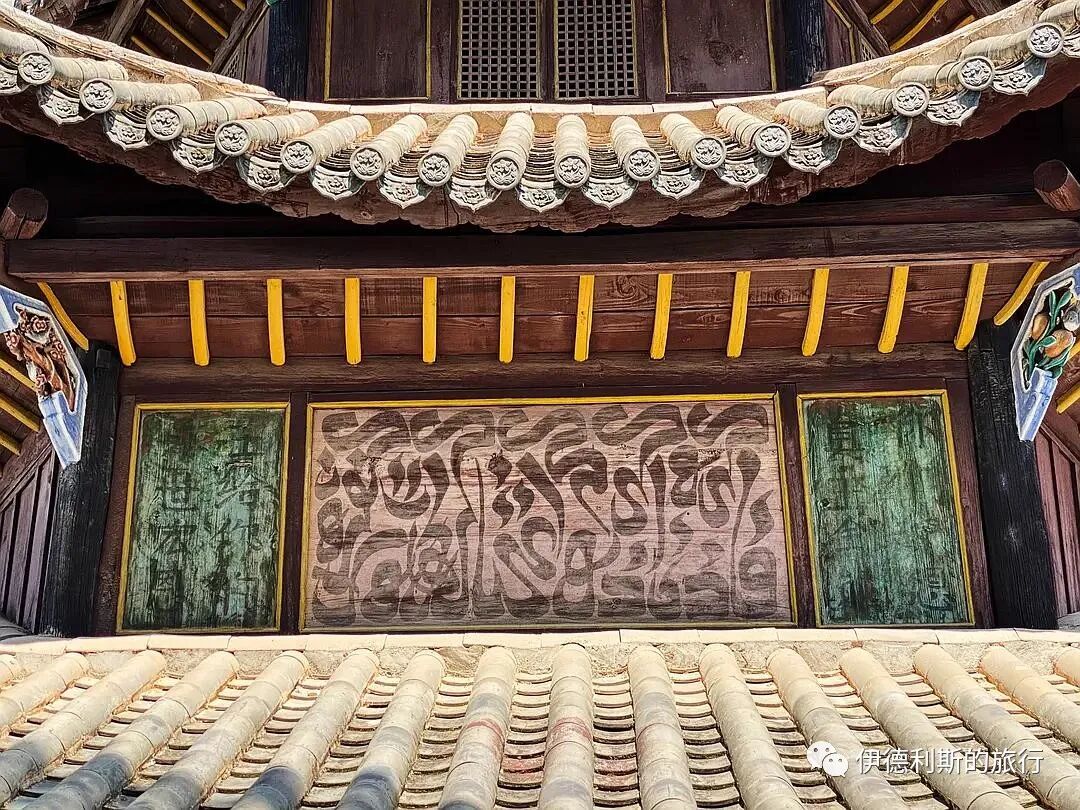
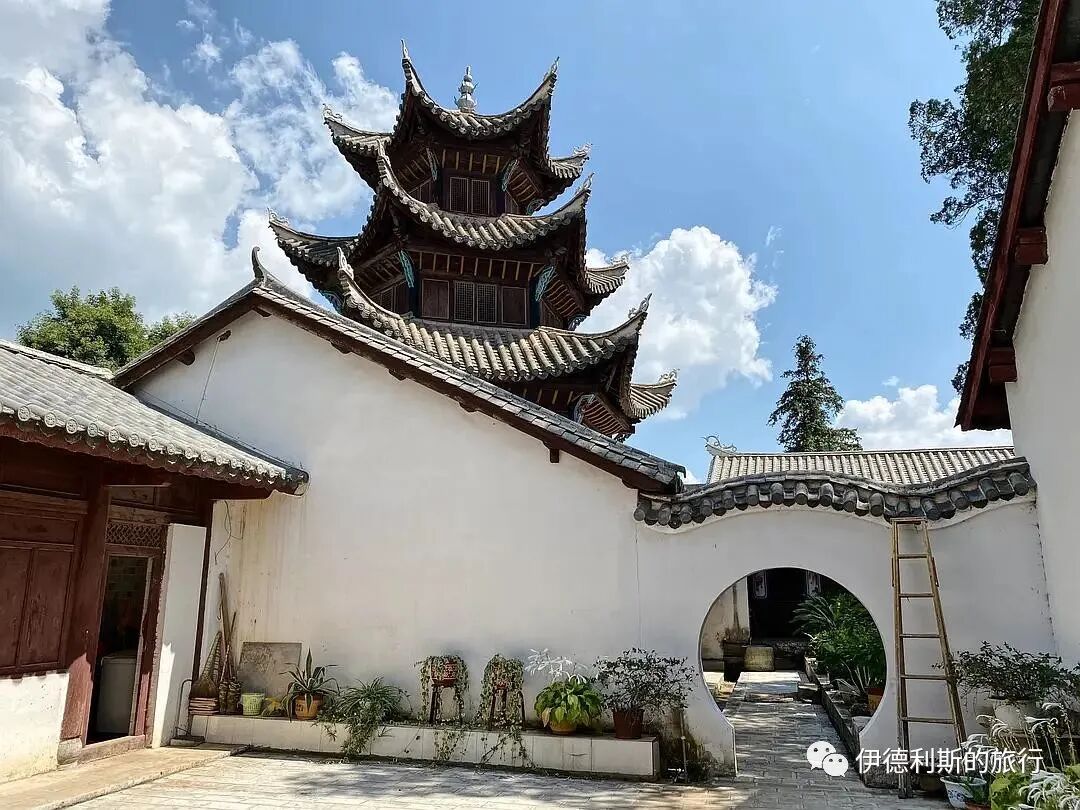
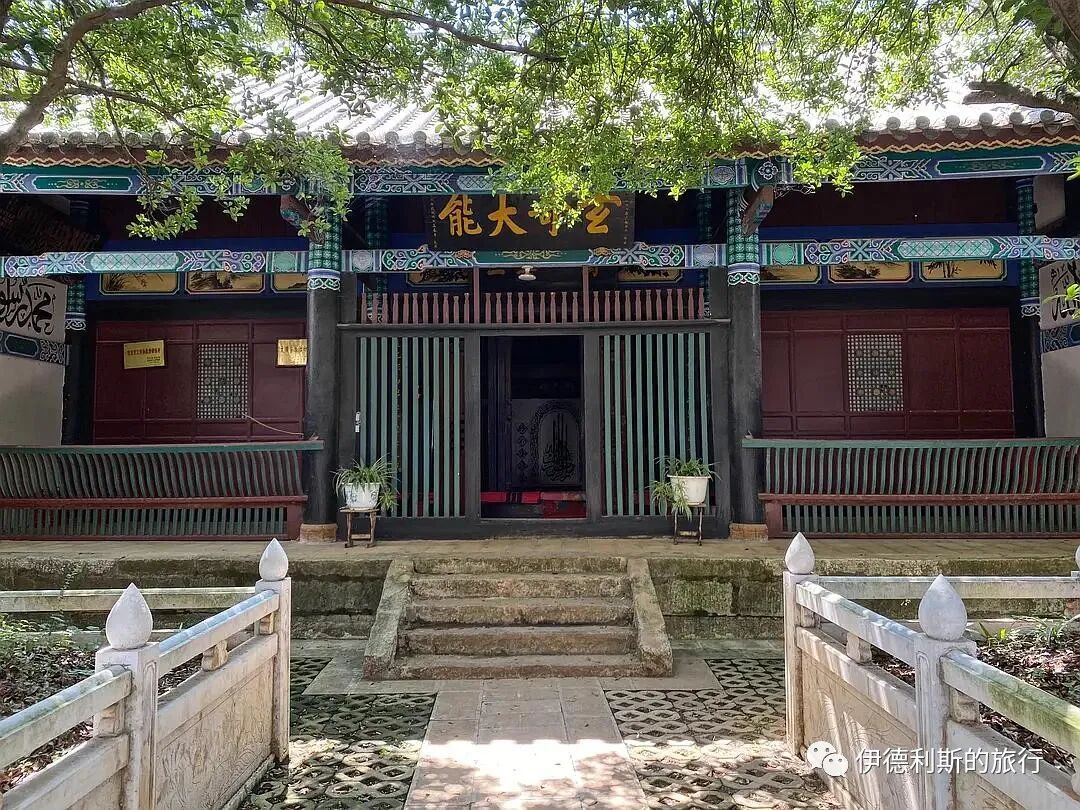
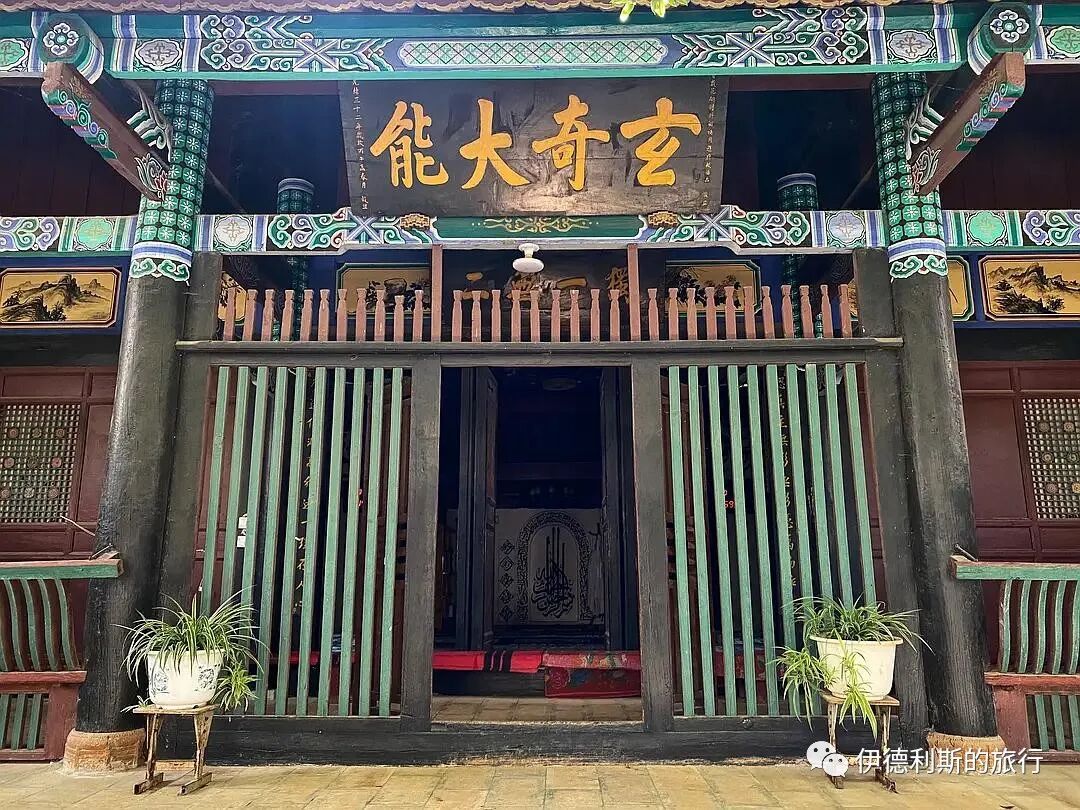
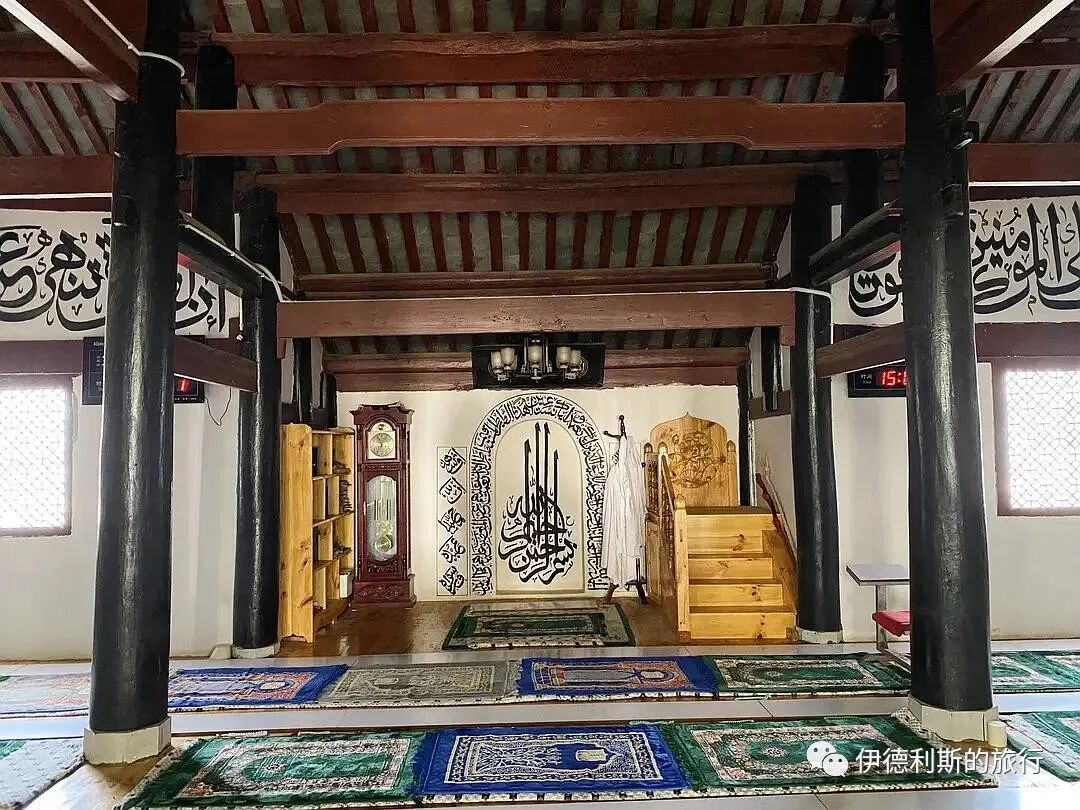
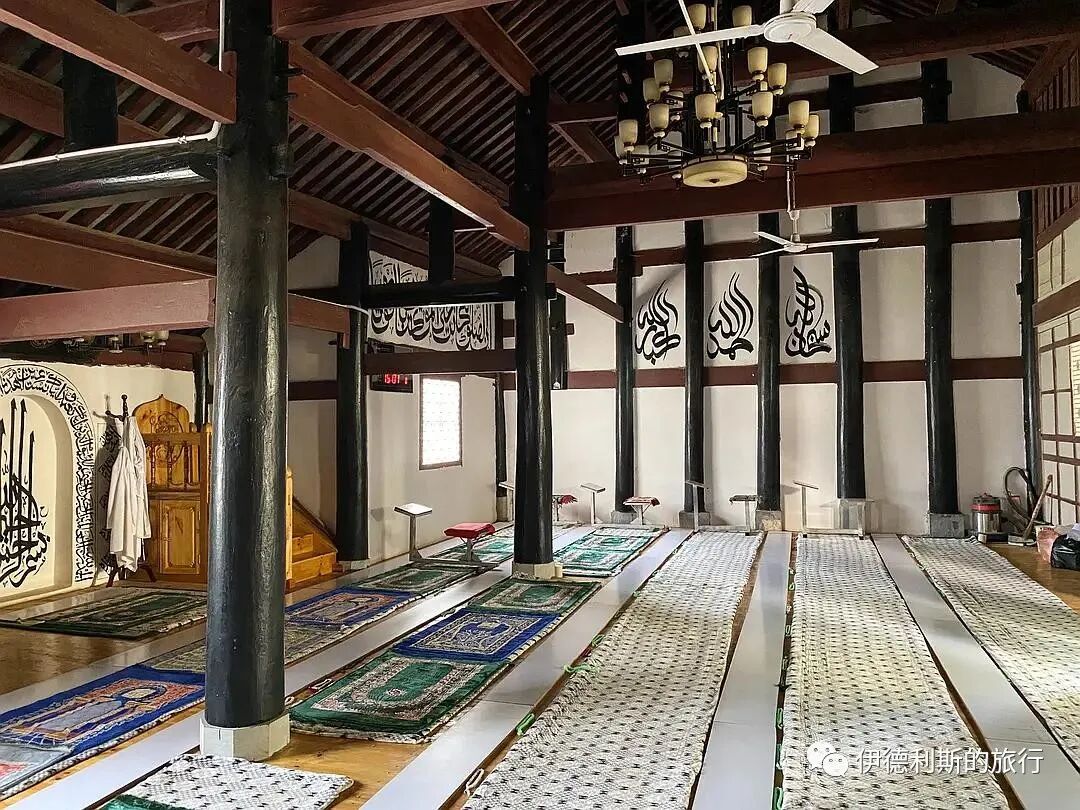
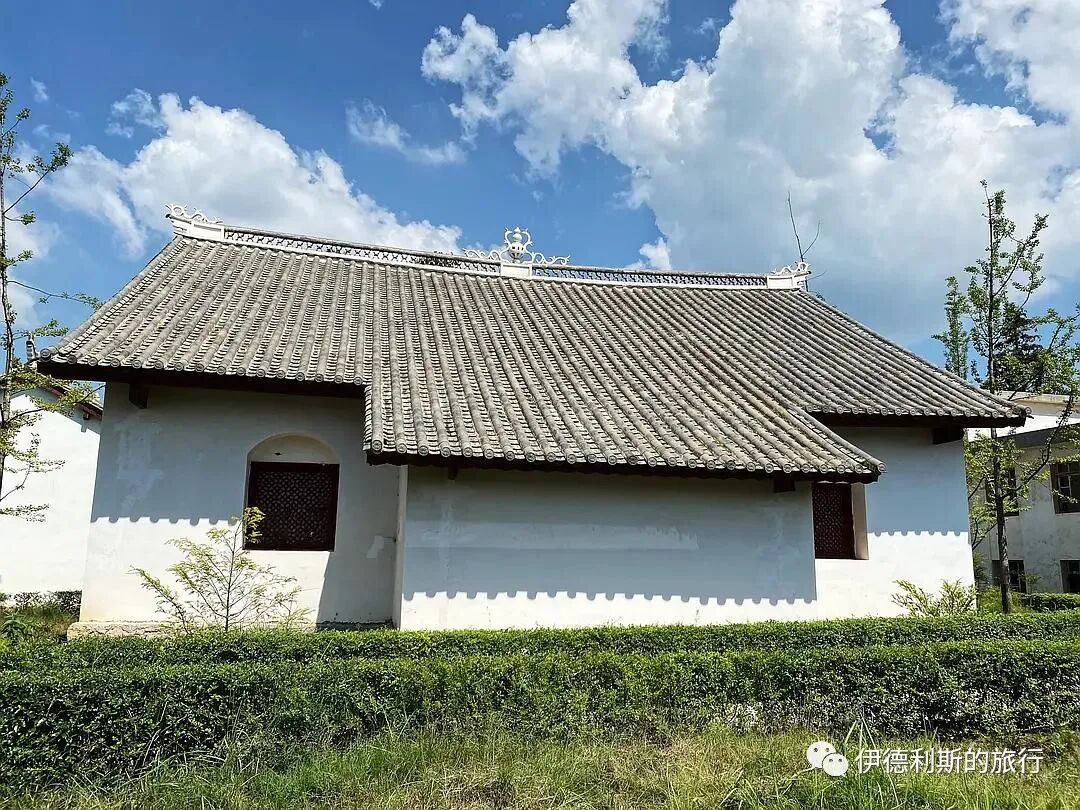
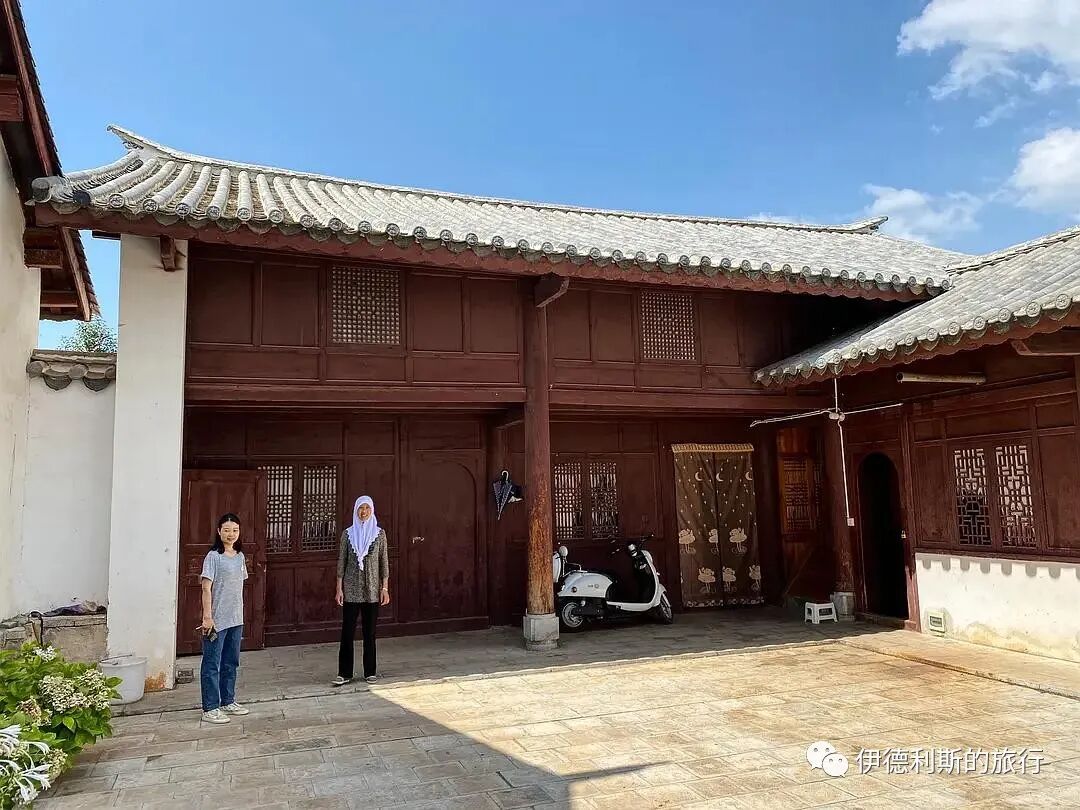
4. Tiejiawan Mosque: 1738
From the Chachong Mosque, we continued to the Tiejiawan Mosque. In 1731, the Tie family came to settle in the northeast area of Taoyuan Bazi in Ludian. In 1738, Tie Wanxuan discussed with Tie Wanjin and Tie Zhongxuan to build the Tiejiawan Mosque on the top of a small hill between the two villages of Tiejiawan and Tiejiamen, and Tie Wanxuan served as the Imam.
Hanging at the entrance of the main hall is a plaque inscribed with 'Da De Dun Hua' (Great Virtue and Honest Transformation), gifted in 1810 by Ye Daxiong, the hereditary Qiduwei and local military commander of Zhaotong, Yunnan, as well as a plaque inscribed with 'Qing Zhen Ya Hua' (Pure and True Elegant Transformation) respectfully erected in 1844 by Tie Chengjin, the head of the Zhaotong Left Guard.
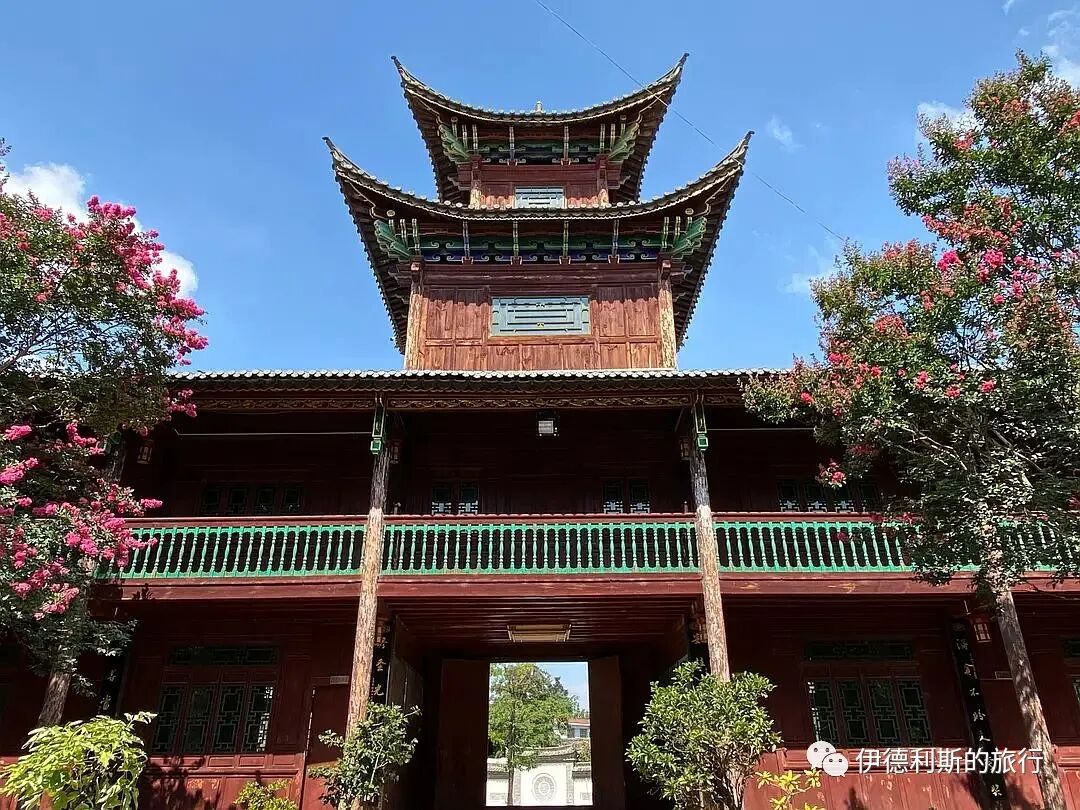
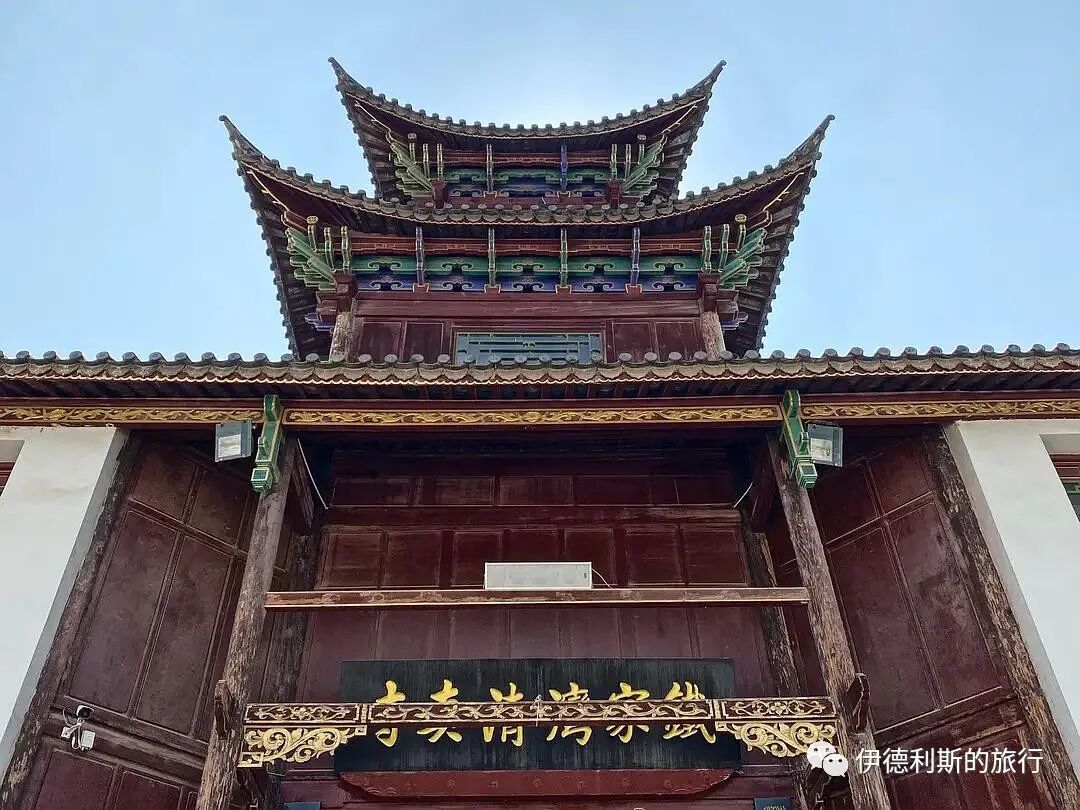
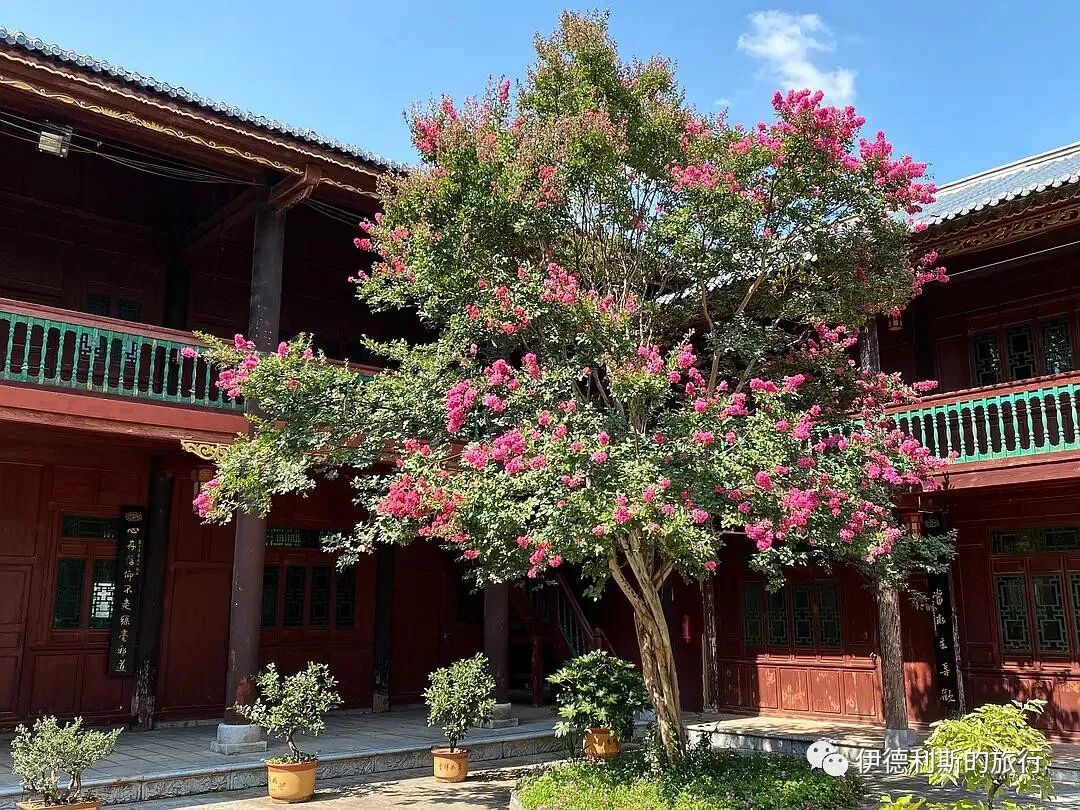
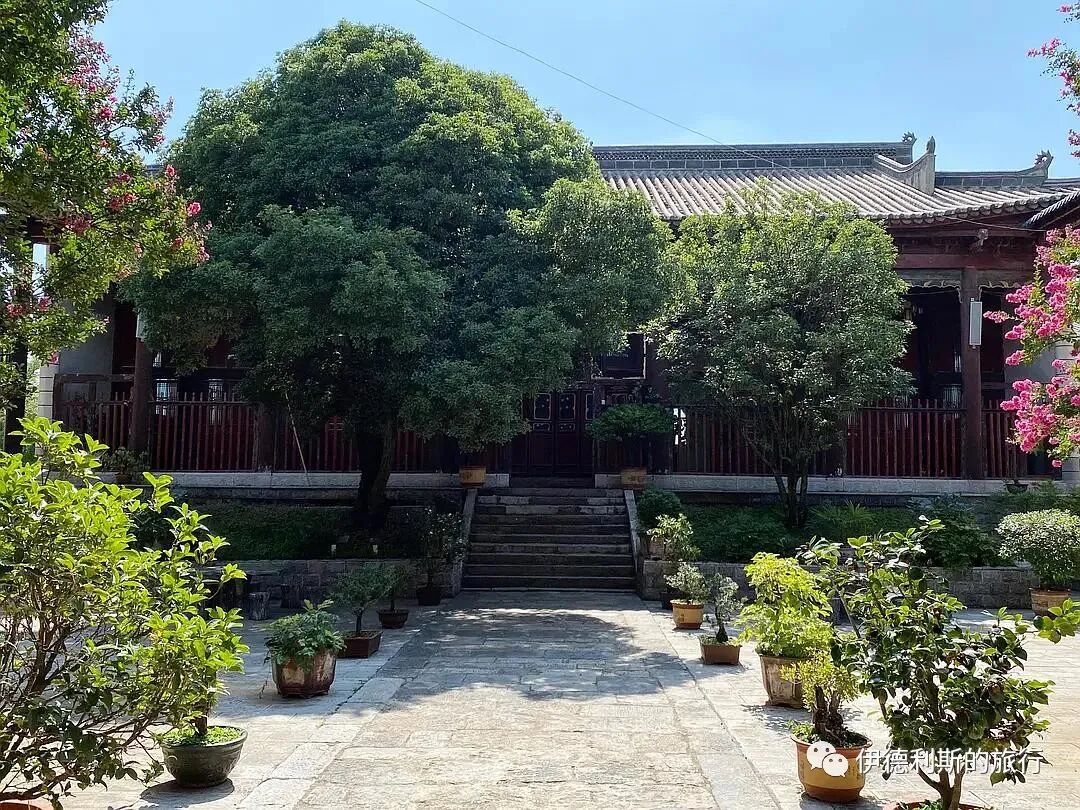
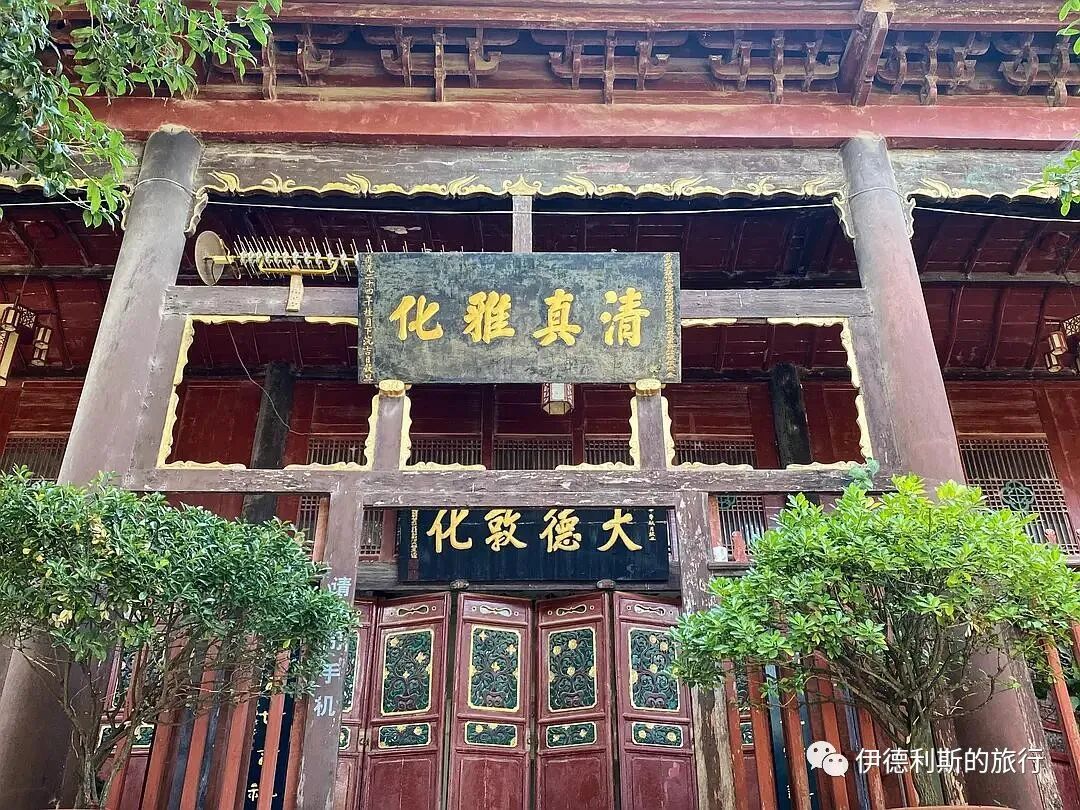
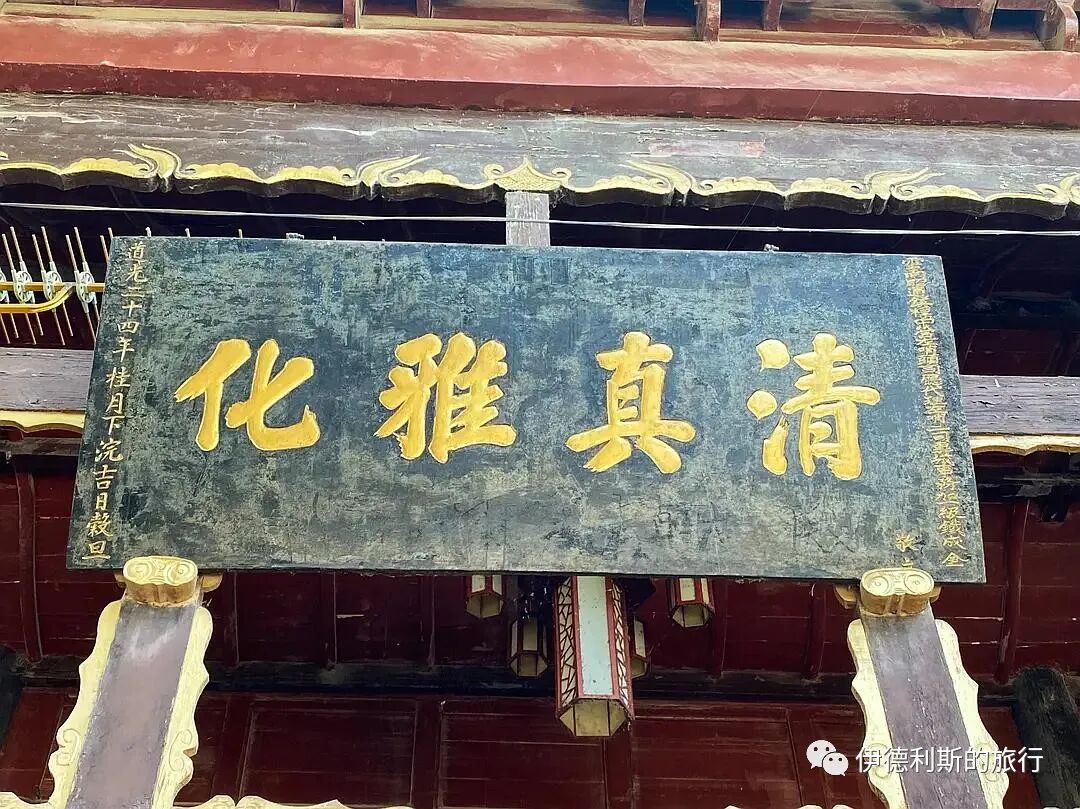
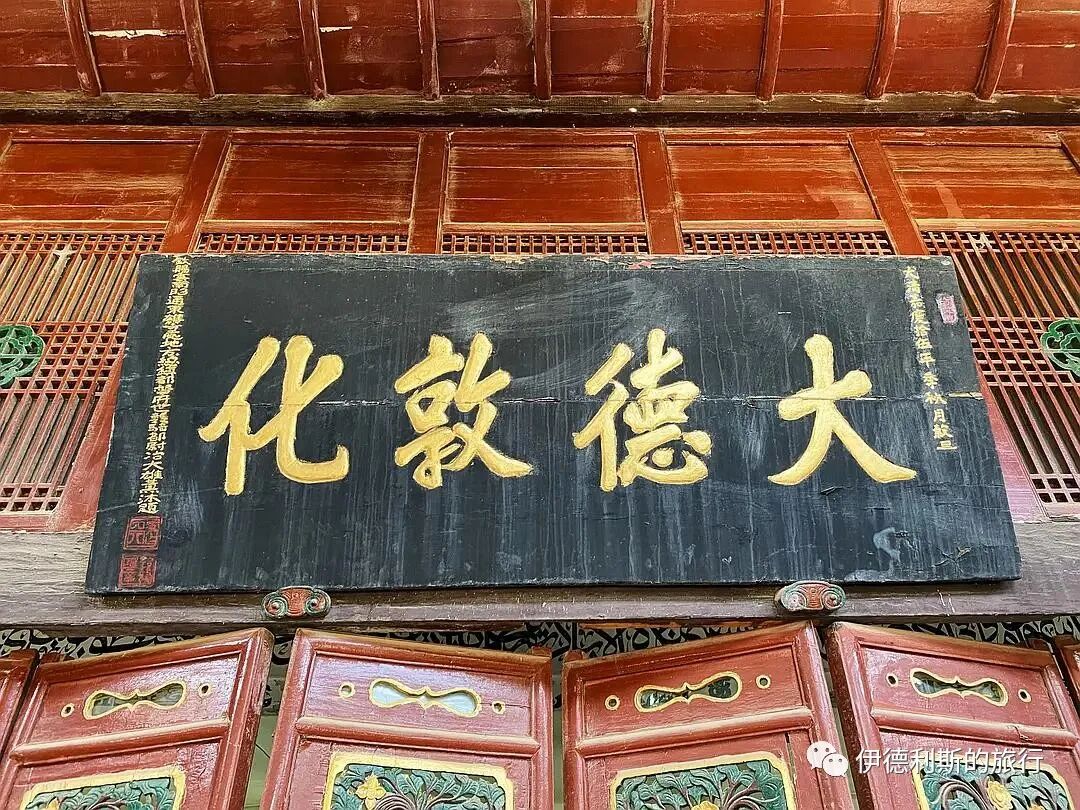
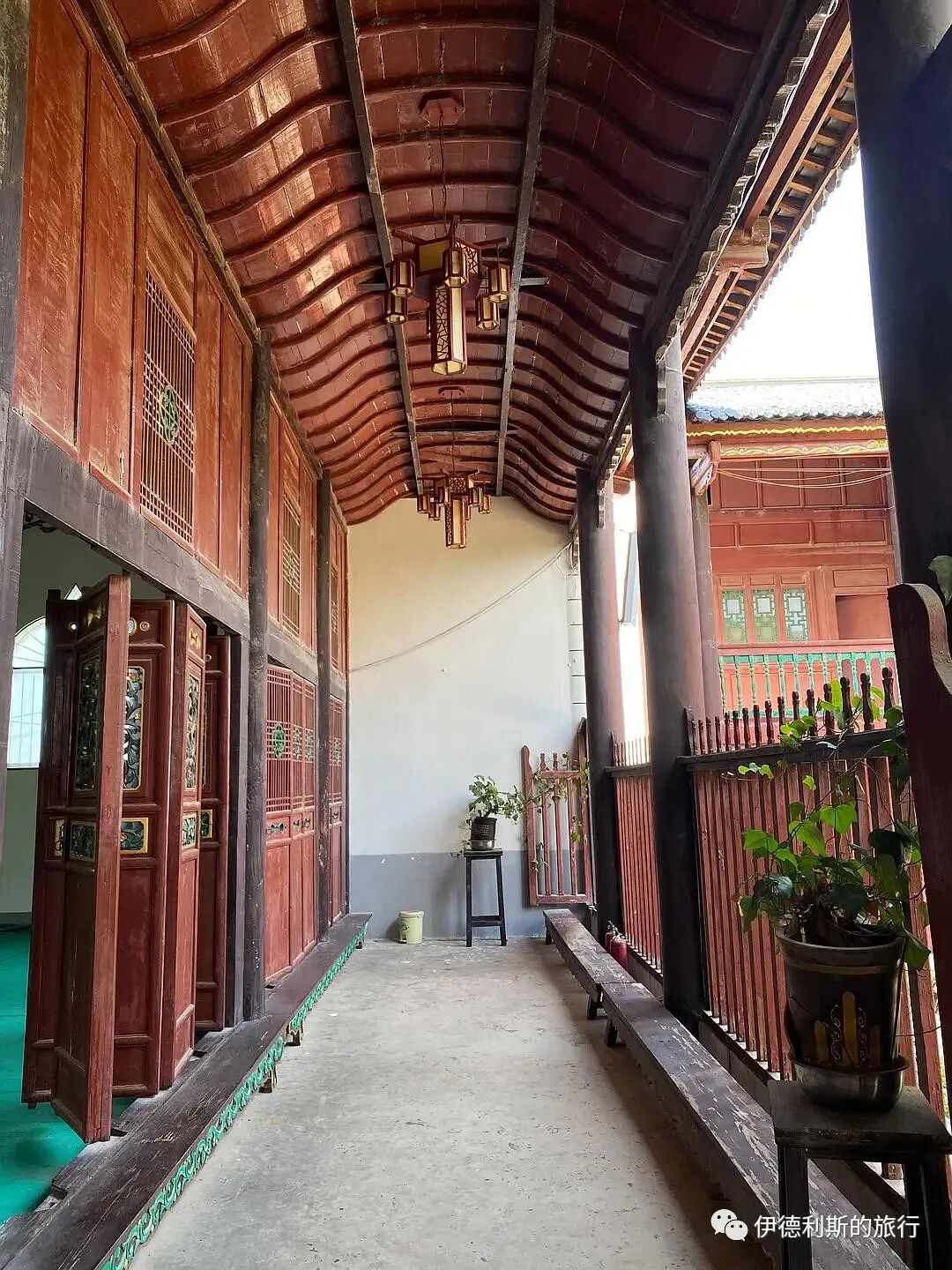
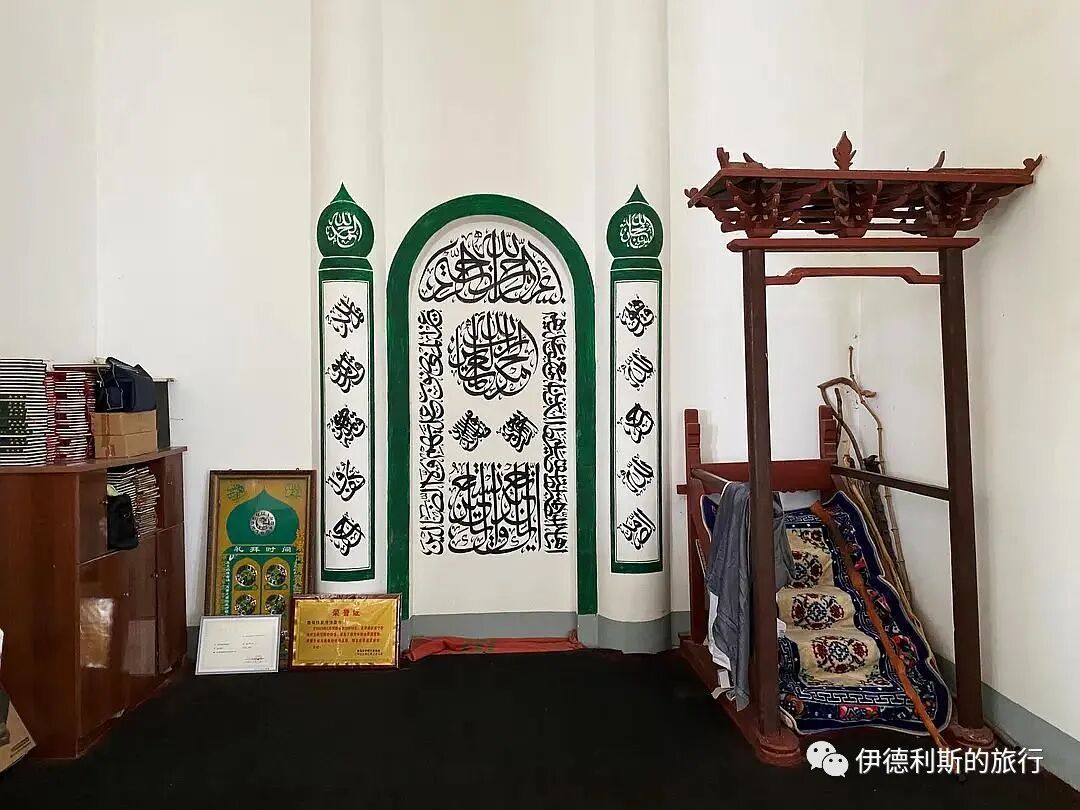
5. Baxian Great Mosque: 1779
In the evening, we returned to Zhaotong from Ludian and went to the most famous Baxian Great Mosque in Zhaotong.
The Baxian Great Mosque was first built in 1731 and rebuilt in 1779. In 1730, when Wumeng was first pacified, the old city of Zhaotong was desolate. The main camp was temporarily set up at the Baxian Great Mosque, and the first academy after Zhaotong's Gaitu Guiliu—Zhaoyang Academy—was founded at the Baxian Great Mosque the following year. In 1898, the Baxian Great Mosque hired the great Imam Ma Minglun as the Imam, and he was elected as the General Imam by the thirty-six mosques in Zhaoweilu (Zhaotong, Weining, and Ludian).
On both sides of the mosque's main hall, there are stone-carved couplets: 'Only by overcoming one's own selfishness can one be on the path, and only by returning to the heavenly principles can one worship the Truth.' Above the main hall, there is a very distinctive Arabic wooden plaque inscribed with verses 43-44 of Chapter 43 of the Quran. Behind the main hall is a three-tiered, four-cornered, pointed-roof kiln hall.
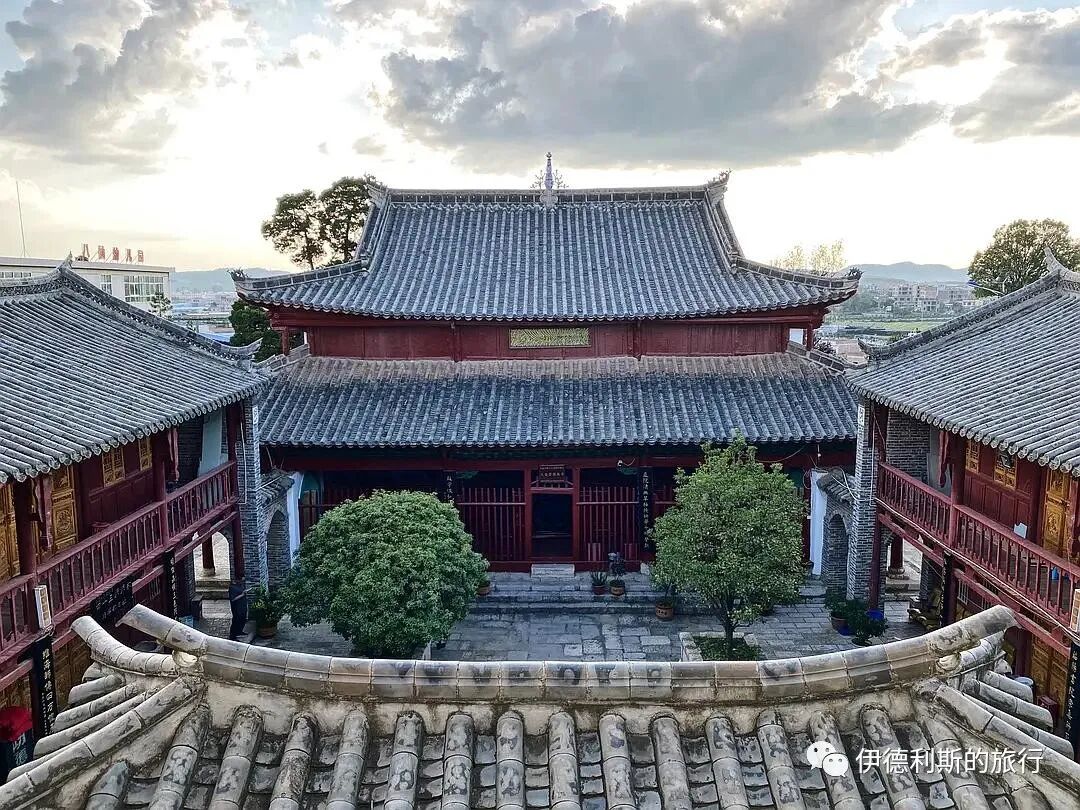
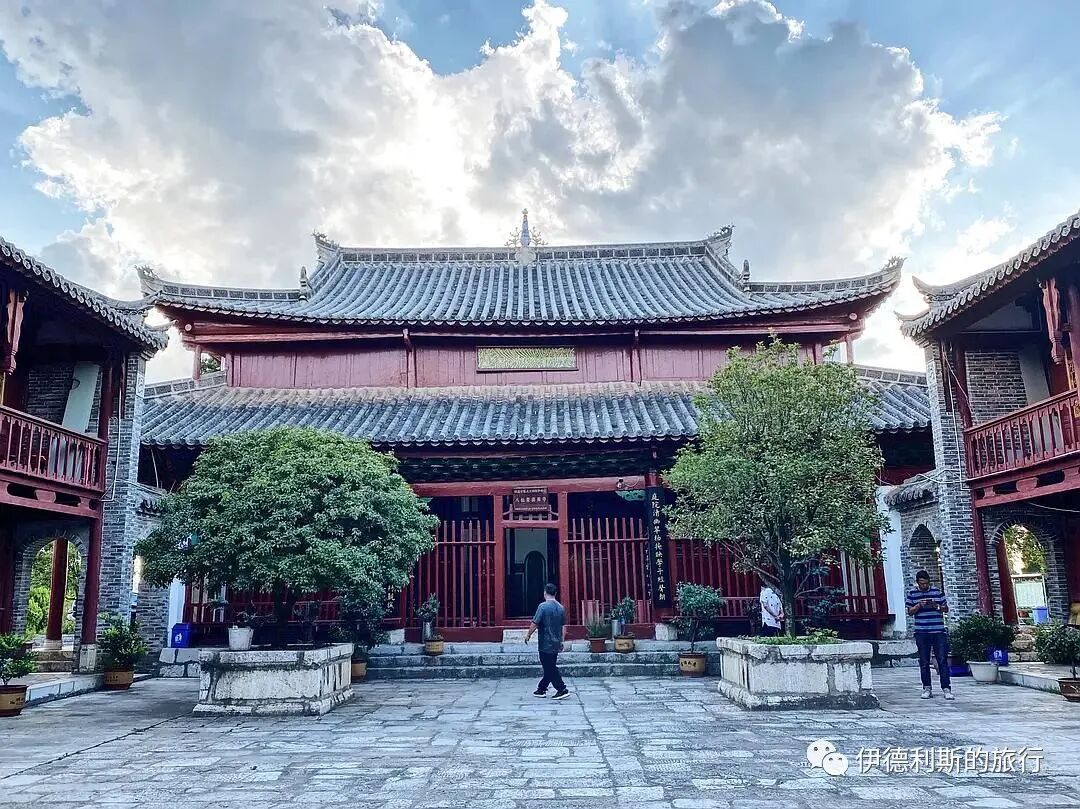
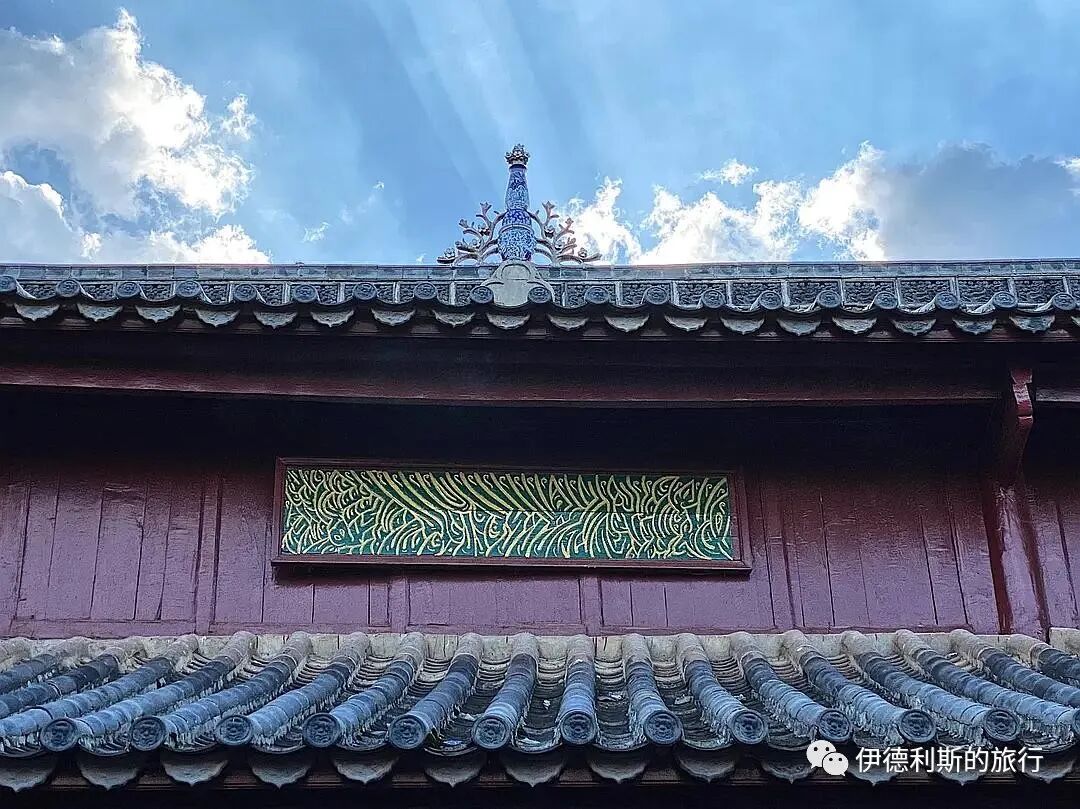
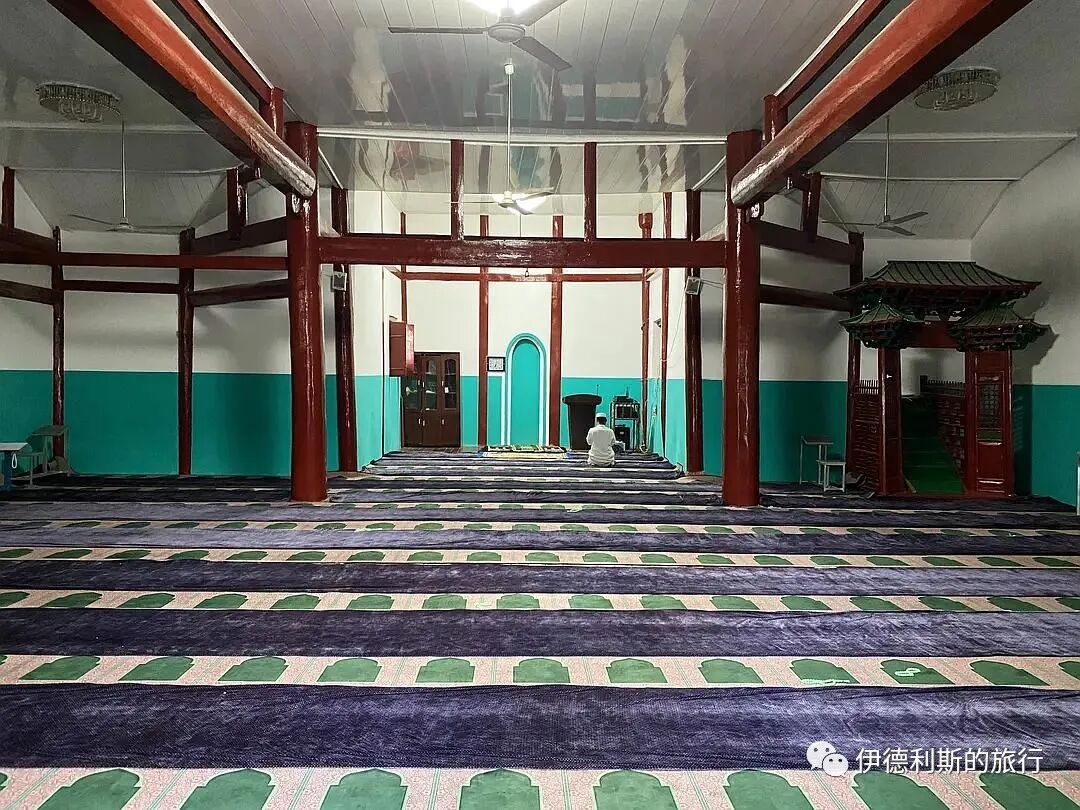
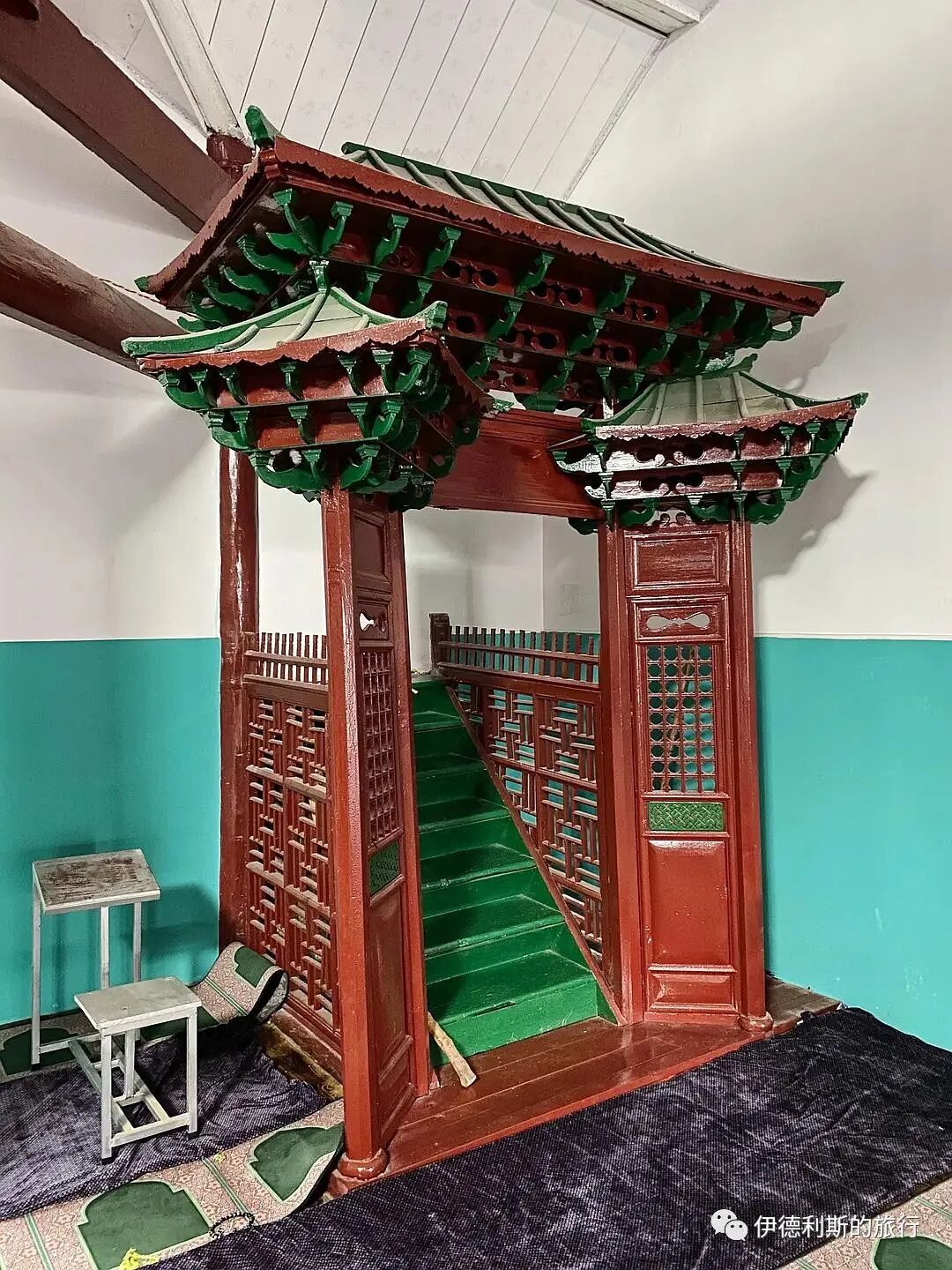
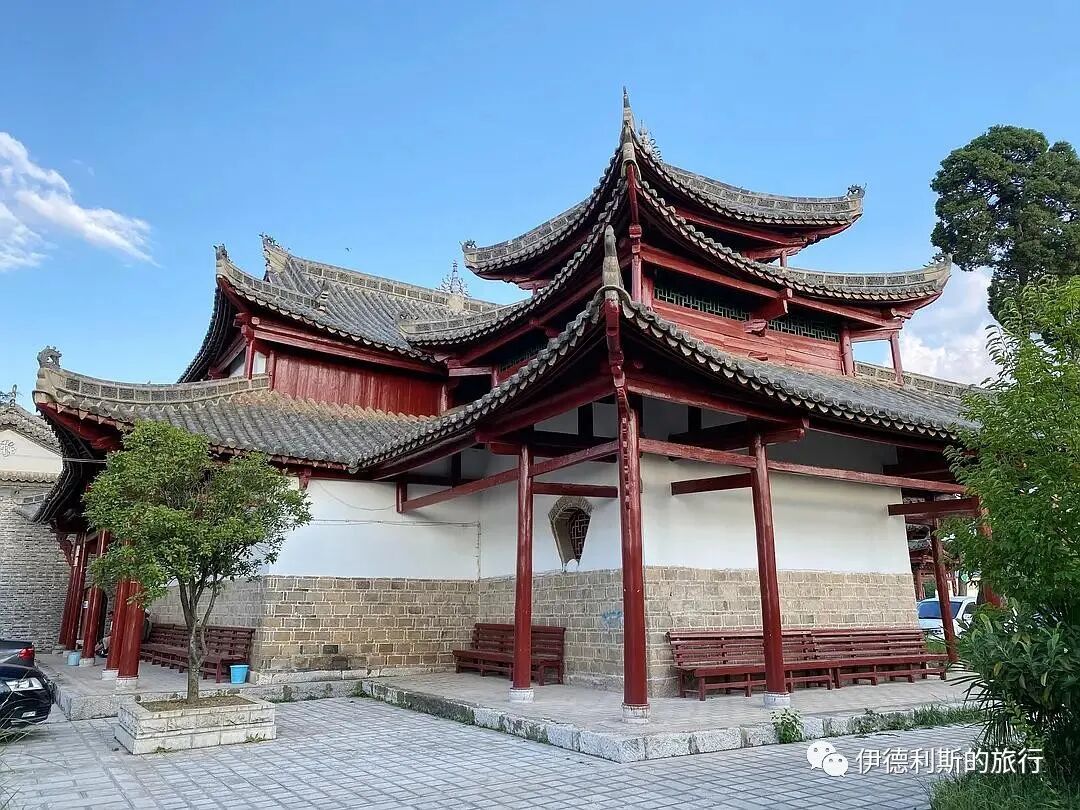
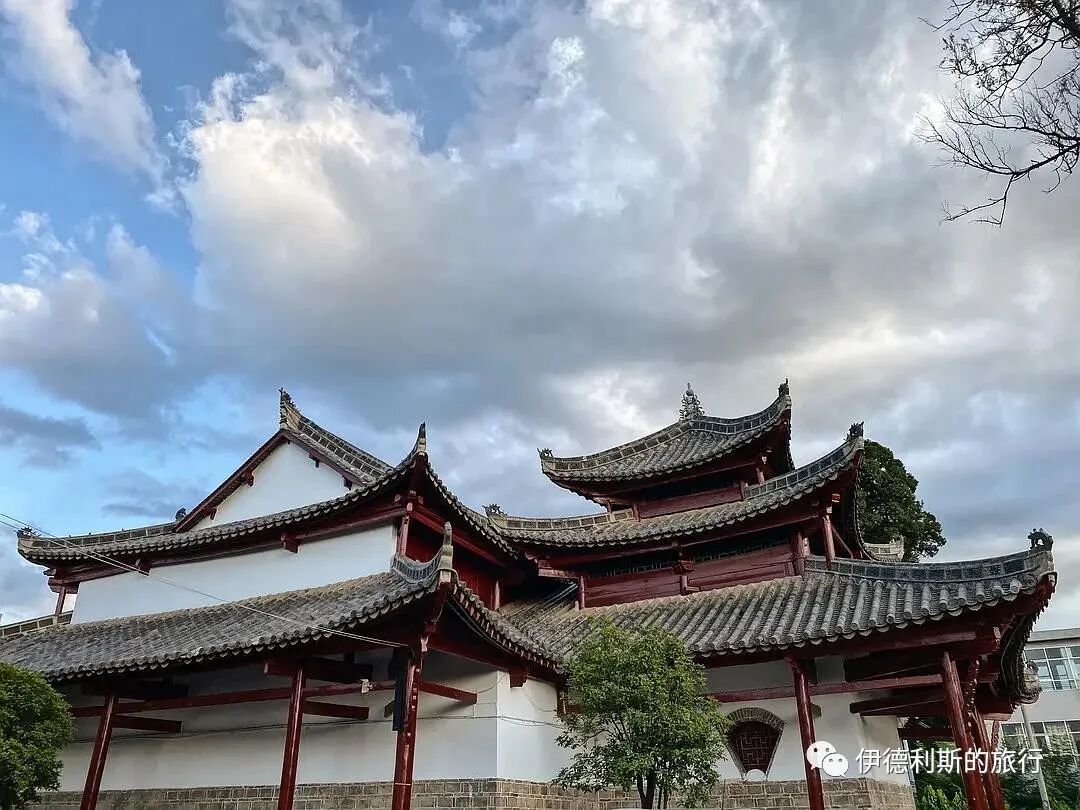
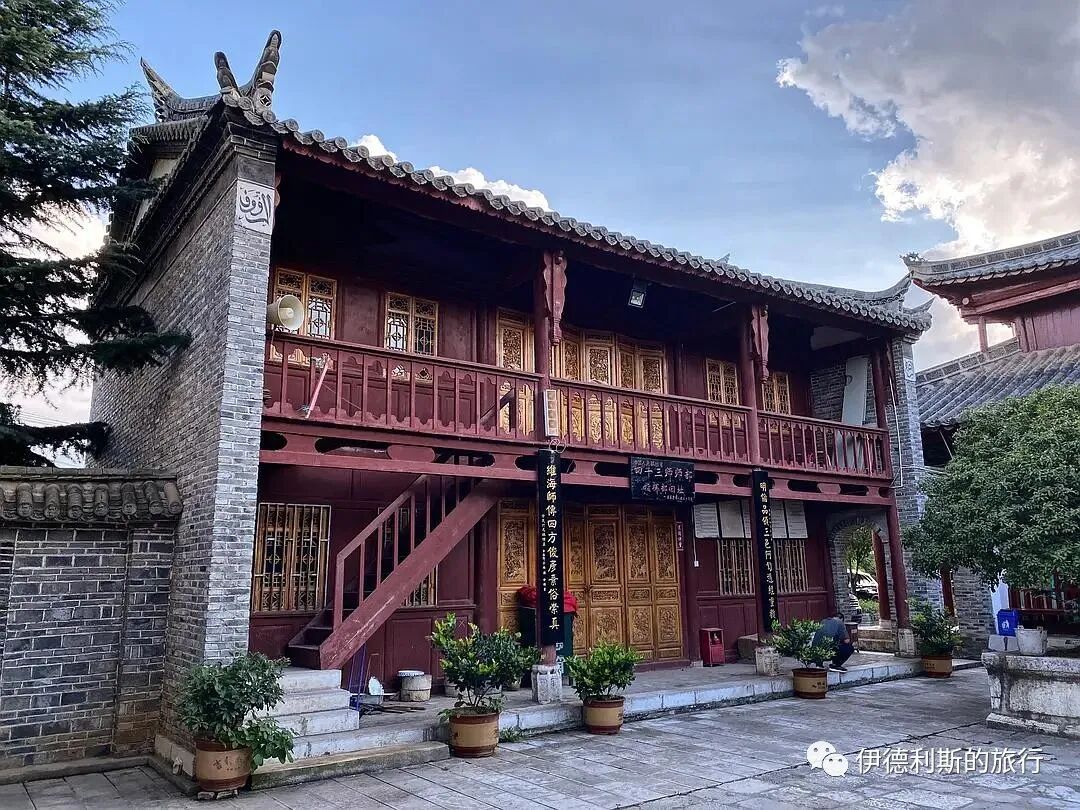
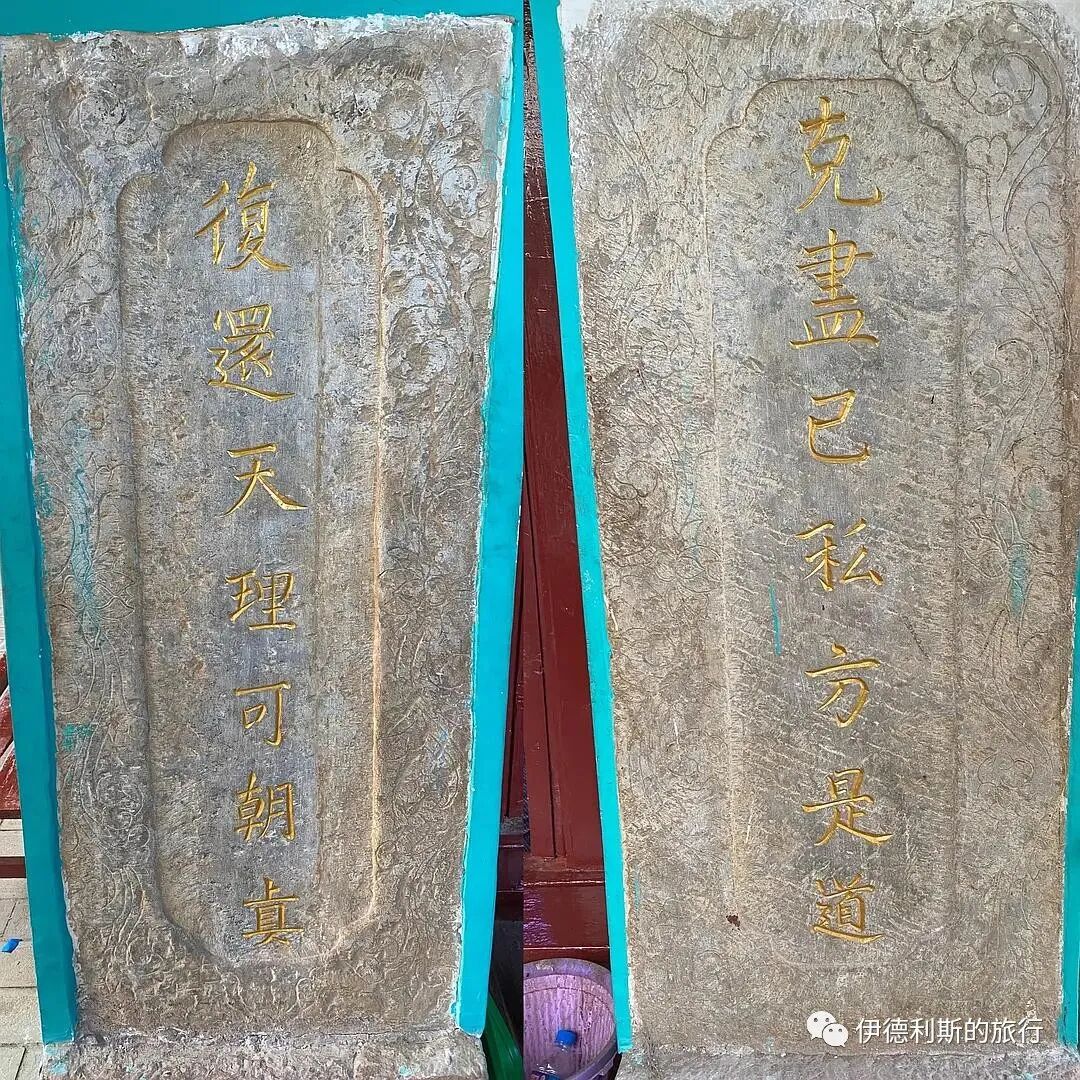
6. Songjiashan Mosque: 1730
In the evening, we performed the Maghrib (evening prayer) at the Songjiashan Mosque. It was still evening when we entered the hall, and it was dark when we came out.
The Songjiashan Mosque is not far from the Baxian Great Mosque and is also a very beautiful ancient mosque. During the Gaitu Guiliu in Zhaotong in the early years of the Yongzheng reign, a branch of the Ma family from Xiaba, Weining, followed General Ha Yuansheng, who led the army to pacify Wumeng, to Zhaotong. They eventually settled in Baxianhai and built the Songjiashan Mosque in 1730. The construction background of the Songjiashan Mosque is the same as that of the Baxian Great Mosque, but because there were fewer people, the scale is not as large as the Baxian Great Mosque.
The Songjiashan Mosque began painting the ceiling of the main hall in 1762 and finished the decoration in 1832. It is a very precious artistic treasure inside the mosque.
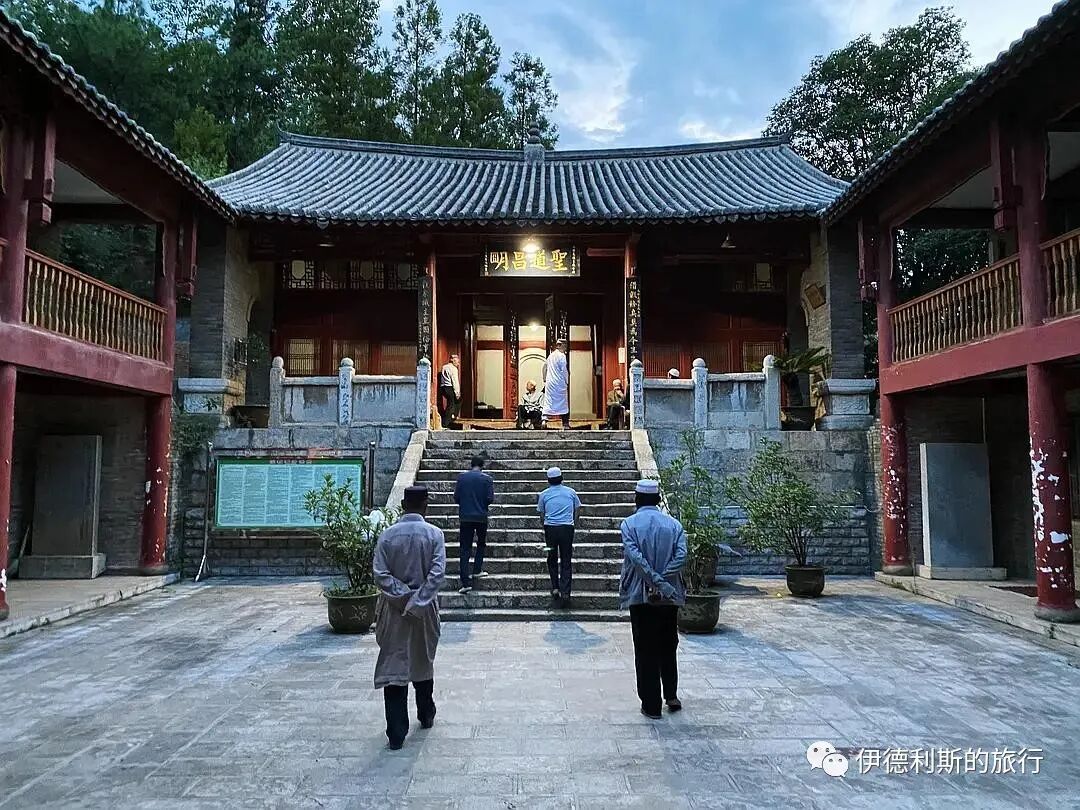
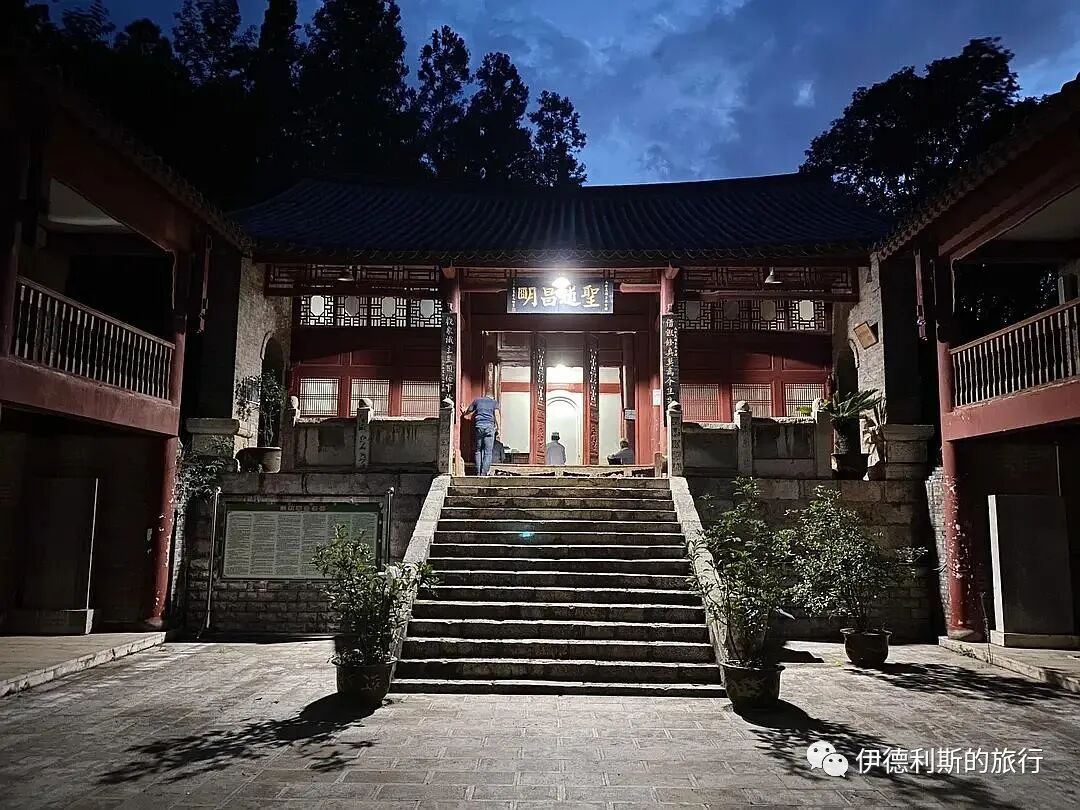
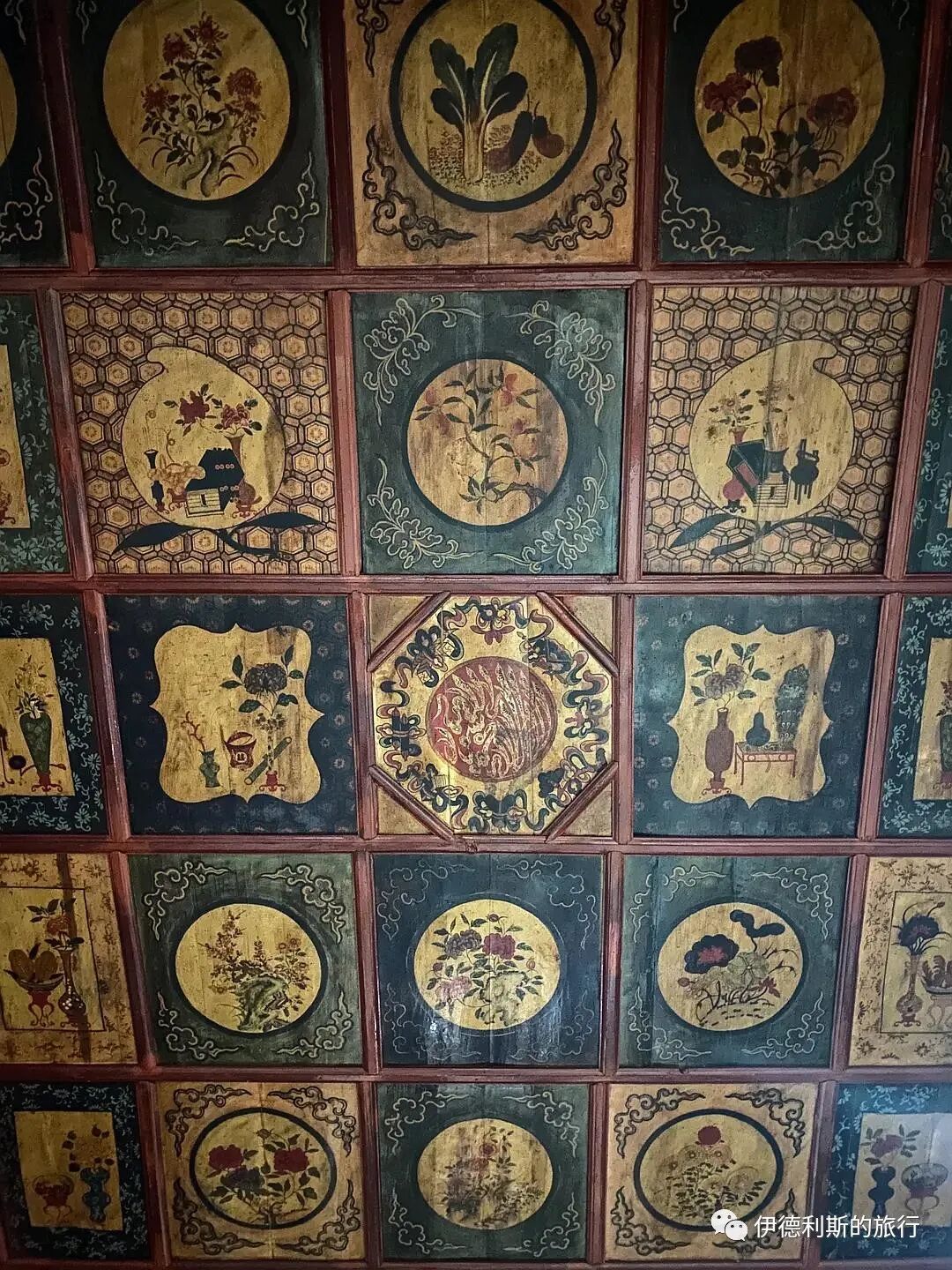
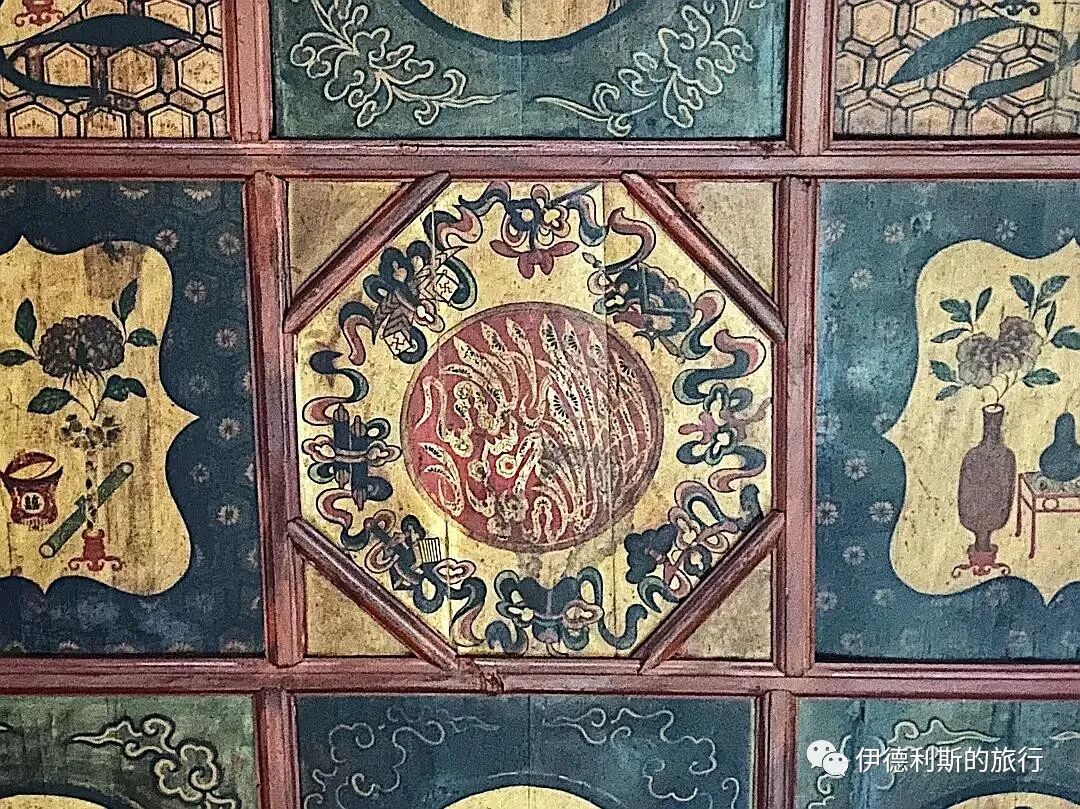
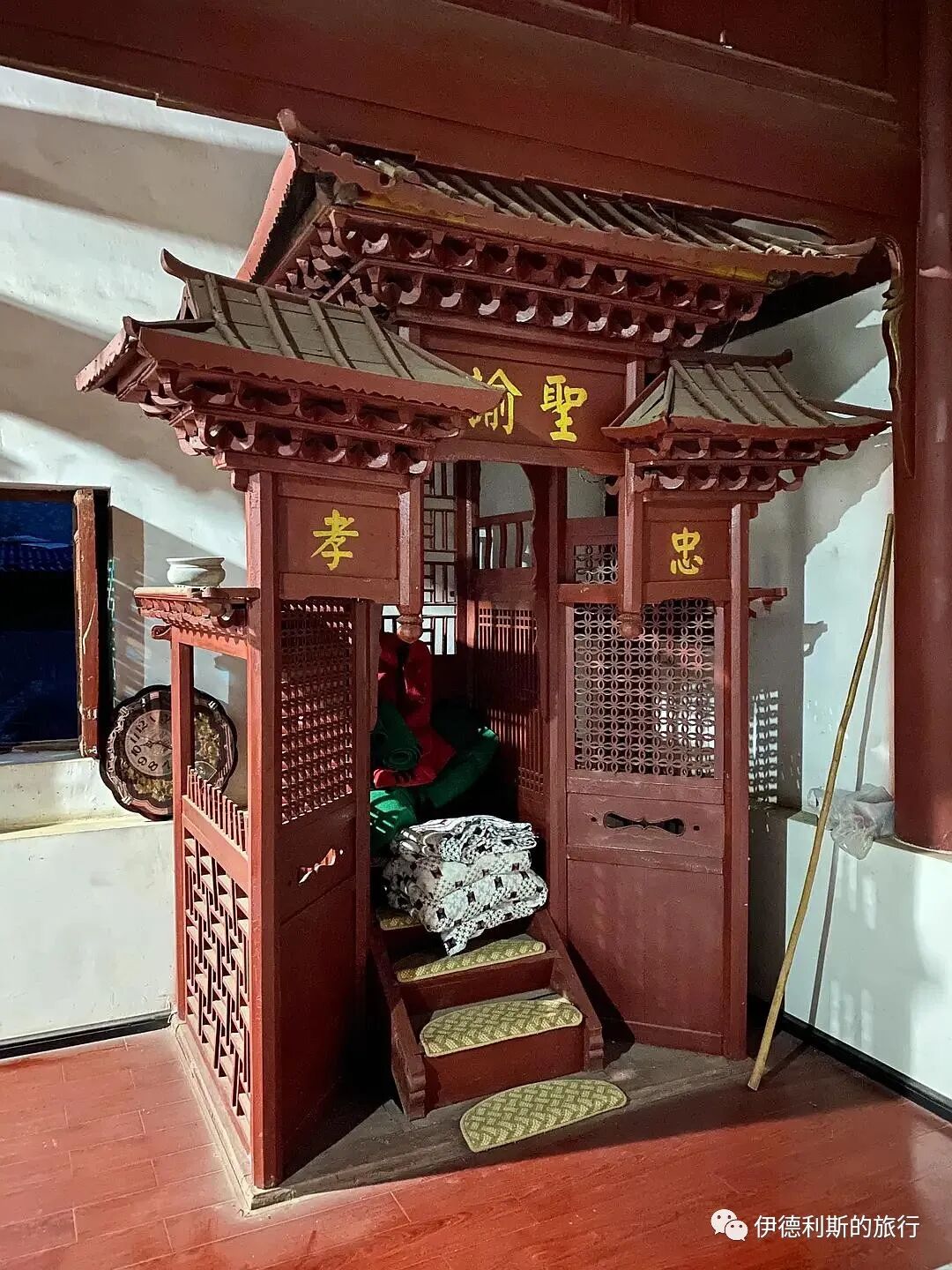
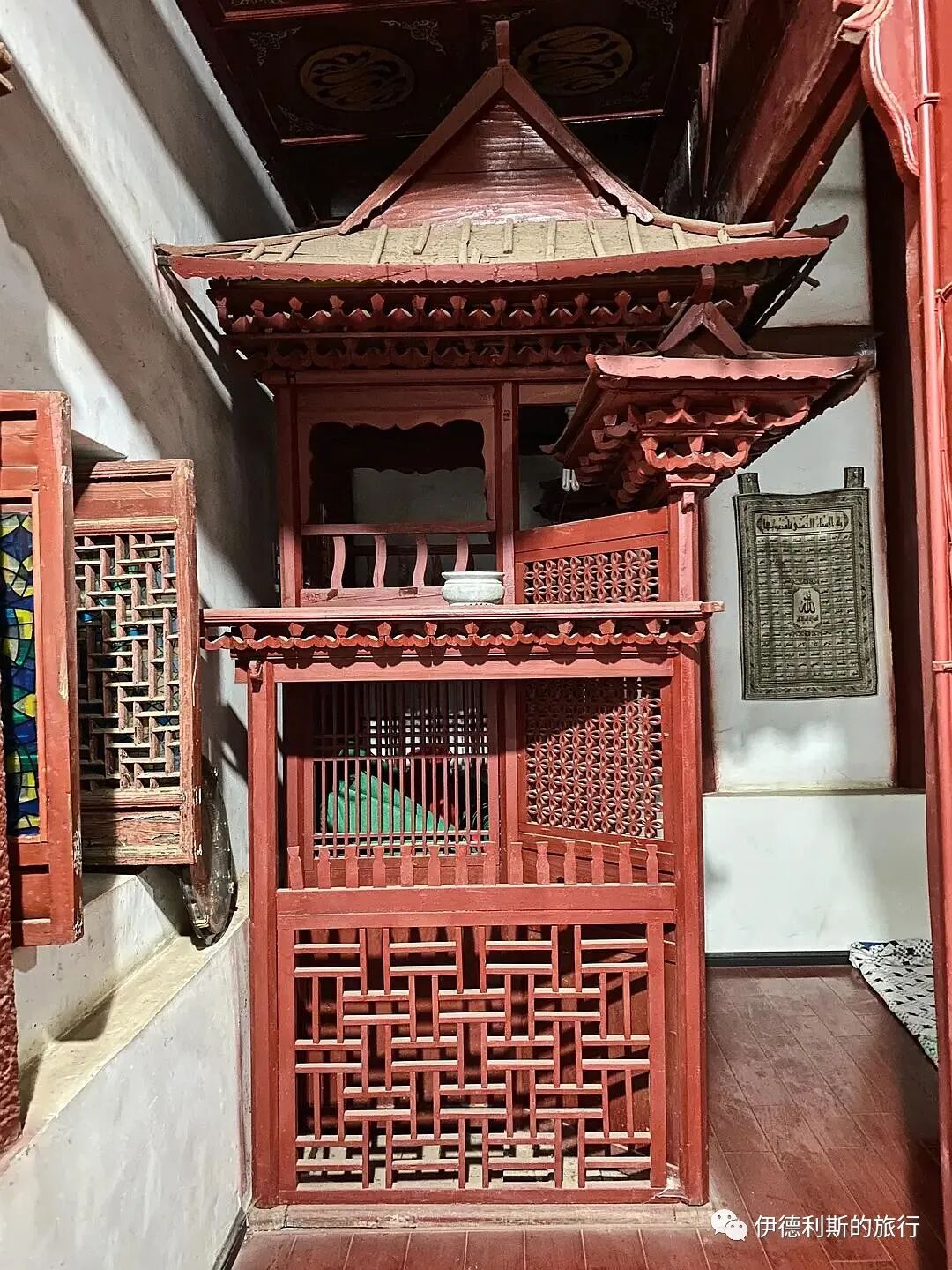
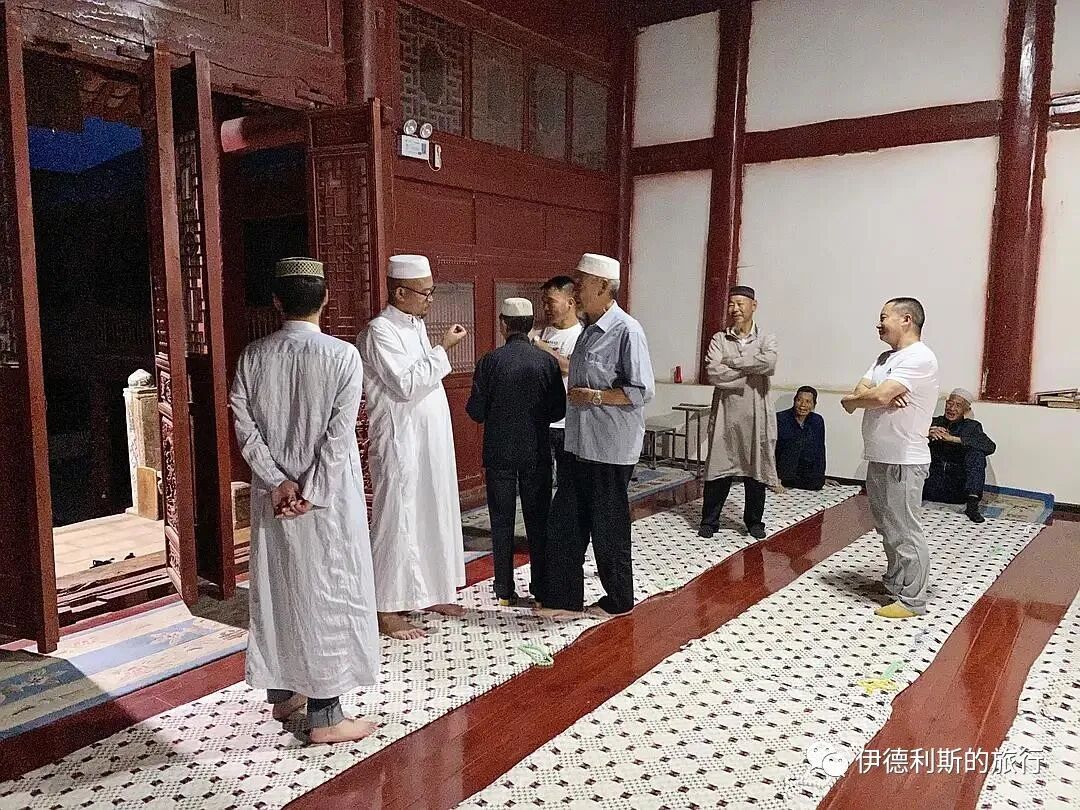
Halal Food Guide Dali: Authentic Yunnan Hui Muslim Food, Xizhou Mosque and Erhai Travel
Articles • yusuf908 posted the article • 0 comments • 221 views • 2026-05-22 22:09
Summary: This Dali halal food guide follows a family road trip around Erhai Lake, Dali Ancient City, Xizhou, local mosques, halal rice noodles, flower cakes, Bai-Hui Muslim culture, and practical food notes for Muslim travelers in Yunnan.
A Guide to Halal Food in Dali is presented here as a firsthand travel account in clear English, beginning with this scene: I have been to Dali twice. The first time was in the winter of 2016. I was single then and took a train from Beijing to Lhasa by myself. The account keeps its focus on Dali Mosques, Chinese Muslims, Muslim Travel while preserving the names, places, food, and historical details from the Chinese source.
I have been to Dali twice. The first time was in the winter of 2016. I was single then and took a train from Beijing to Lhasa by myself. After spending eight days in Tibet, I could not stand the dry winter air or the lack of good food. I took a long-distance bus from Lhasa for three days and two nights to Shangri-La in Yunnan, then traveled to Dali. I stayed at an inn in the Dali Ancient City and spent two days visiting seven mosques.
Dali is actually very large. Besides the Dali Ancient City, there are several other ancient towns nearby. Since I felt transportation was inconvenient during my first visit, my family of three drove from Beijing all the way to the southwest this time. We visited Xizhou, Eryuan, Yangbi, and Weishan in Dali. All these places have very traditional and beautiful ancient towns and old mosques.
When I traveled alone before, I could make do with anything, and a cheap inn for a few dozen yuan was enough. Now that I travel with Fahim, I have higher standards for accommodation. The room needs to be as large as possible with a big bed, and it is best to have a bathtub and a swimming pool because my son loves playing in the water. We chose to stay one night at the Dali Yuewan Villa Half-Mountain Sea View Hotel on the east side of Erhai Lake. From the hotel terrace, you can overlook the full view of Erhai Lake. It also has an infinity pool and offers free photography services.
It is worth noting that the east side is more than ten kilometers away from the Dali Ancient City. There are only two or three halal restaurants around the east side, so it is not as convenient as the area near the ancient city on the west side. If you do not have a car, I suggest staying near the ancient city. However, the scenery on the east side is more beautiful, the hotel environments are better, and there are many trendy cafes.
After finishing our family time taking photos at the popular tourist spots on the east side, we moved into the ancient city on the second day. We stayed at The One Courtyard (THE ONE Gu Cheng Yi Hao Yuan). The hotel is located right at the entrance of the ancient city, making it very convenient. If you are driving, be aware that the ancient city has traffic restrictions during the day. Cars inside can only leave and cannot enter. You must wait until after 8:00 PM to drive into the hotel parking lot in the ancient city.
The big bathtub in the room kept Fahim busy playing all night, and the pebbles in the courtyard kept him busy playing all morning.
While riding a three-person bicycle in the ancient city, we passed the South Gate Mosque and saw this shop called Yixian Workshop. We bought some flower cakes (xianhuabing), which were surprisingly delicious—better than the ones we bought elsewhere later. They were 4 yuan each, with just the right amount of sweetness, and were both flaky and soft.
We bought maltose rice (maiyatangfan) from a Hui Muslim stall on the side of the road in the ancient city. It is a Yunnan specialty that is cold, refreshing, and sweet.
Dali Ancient City South Gate Mosque.
The South Gate Mosque in Dali was first built during the Yuan Dynasty and is one of the one hundred ancient mosques in the country. Before the failure of the Du Wenxiu Uprising, the mosque was located on Cangping Street, which was recorded in The Travel Diaries of Xu Xiake. After the Du Wenxiu Uprising failed, the mosque and its 120 mu of mosque land were confiscated as rebel property by the Qing government's liquidation committee. The mosque was converted into a City God Mosque, and in 1944, it was changed into a local court. The current South Gate Mosque is located inside the Dali Ancient City.
Salam Rice Noodle Shop
This small shop near the south gate of Dali Ancient City sells rice noodles (mixian), rice cakes (ersi), and rice soup. They do not sell alcohol, and their cold chicken rice noodles are excellent.
Dried beef (niuganba) hangs from the ceiling beams, which is a specialty meat for Hui Muslims in Yunnan.
Youfeng Courtyard
Youfeng Courtyard is a filming location for the TV show Meet Yourself starring Liu Yifei. I have not seen it, but my wife told me all about it.
We happened upon a teahouse next to the courtyard and sat there for the afternoon. While Fahim took a nap, we enjoyed tea in the courtyard.
Dali City has eighteen mosques, not counting the rest of Dali Prefecture. Contact information is in the table below.
Dali City Fengyi Mosque
Fengyi Mosque was built during the Qing Dynasty, and the current building was renovated in 2001.
Xiaguan Mosque
Xiaguan Mosque was built in 1915, and the current building was renovated in 2004.
Nanwuliqiao Mosque
Nanwuliqiao is a Hui Muslim village less than three kilometers from Dali Ancient City. The village has a street dedicated to halal food (Nanwuliqiao Qingzhen Meishi Yitiaojie). The Nanwuliqiao mosque is also the largest mosque in Dali, first built in the tenth year of the reign of Mongke Khan of the Yuan Dynasty (1233).
In Yunnan, there is a custom where locals invite guests from afar to stand in the first row near the imam during namaz, as they want to offer the best spot to their guests.
Nanwuliqiao Halal Food Street
I took these photos in 2016. The signs have changed now, but it is still a halal food street. There is much more halal food here than in Dali Ancient City, and there are fewer tourists and more locals.
I recommend trying the Dai-style barbecue, because it is hard to find halal versions once you leave Dali.
Dali Zhihua Mosque
Zhihua Mosque was first built during the Hongwu period of the Ming Dynasty, and the current building was completed in 2000.
Dali Ximen Mosque
The history of Ximen Mosque dates back to the Yuan Dynasty. It was first built in the 15th year of the Zhiyuan reign (1278), making it over 700 years old. It was built by Qilie Zuocheng, a general under the Yunnan King Sayyid Ajjal Shams al-Din Omar, and is considered one of the oldest mosques in Yunnan.
Du Wenxiu, a leader of the ethnic uprisings in Yunnan during the late Qing Dynasty, once founded the Duzhangjiao School at Ximen Mosque.
Xiadui Mosque
Xiadui Village is also a Hui Muslim village. The mosque was first built during the Qianlong period of the Qing Dynasty, and this is the place where Du Wenxiu died as a martyr.
As a late Qing dynasty ethnic leader who fought against the Qing, Du Wenxiu was slandered by his enemies for colluding with foreign powers, setting up his own base, and establishing an independent state, all based on a flyer that once circulated in Yunnan. I once found foreign language documents to research this issue.
Regarding several issues of Du Wenxiu's foreign relations: in foreign documents, two issues concerning the Hui Muslim uprising were long debated. One was why Yunnan Hui Muslims were called Pan-thay, and the other was the issue of the Dali Islamic State. The content of a flyer and the nature of a regime are two different things. A regime's nature might be reflected in a flyer, but judging a regime solely based on one flyer is still problematic. Baber and Gill both asked the Dali Hui Muslims about the Islamic State and the title of Sultan. They reached the same conclusion: the title of Sultan was completely foreign to everyone. Except for two or three imams, the locals never used it to address their leader, and no one even knew the name Suleiman.
Therefore, the issue of the Dali Islamic State actually stemmed from this flyer. Clearly, the purpose of distributing this flyer was to incite Hui Muslims in other regions to join the resistance against Qing rule. Its content represented the views and tendencies of a very small number of imams. Du Wenxiu's views on religion were not that narrow, and the flyer did not represent the nature of the Dali Hui Muslim regime.
Du Wenxiu advocated that the three religions should be of one heart and united as one. This meant Islam, Buddhism, and the Yi people's religion.
Yitianyuan Halal Cuisine, Dali Branch.
The main restaurant is in Kunming, and the Dali branch has been operating for 11 years. It is a relatively large Yunnan restaurant.
This is a photo of a napkin taken in 2016; it certainly wouldn't be designed like this today.
I had stir-fried beef (xiaochao huangniurou) and fried milk fan (zha rushan). This was my first time trying fried milk fan, a deep-fried dairy snack invented by Hui Muslims.
Xizhou Ancient Town
There are not many Islamic elements left in Xizhou Ancient Town. Only one old mosque remains, along with a few halal snack shops. Most Hui Muslims in Xizhou live outside the ancient town.
Xizhou has a local snack called Xizhou flaky flatbread (xizhou posu baba). It is a large, deep-fried bun made by both Hui and Han people.
In the morning, we ate rice noodles (mixian) at Shajia Shop inside Xizhou Ancient Town. They serve local-style rice noodles with original broth cooked in a copper pot. You can add your own toppings, which works well for us since we can choose non-spicy options. Their chicken soup is delicious, and the owner kindly gave us a small bowl of noodles for Fahim.
Fahim really loves slurping noodles, and he enjoyed this meal.
After finishing our noodles, we wandered around the Windy Courtyard (youfeng xiaoyuan) in the ancient town.
Fahim really liked the blue Xizhou fridge magnets in the ancient town and played in front of a shop for half an hour.
I also tried grilled milk fan (kao rushan) in Xizhou for the first time, and I think it tastes better than the fried version.
Xizhou Mosque
Xizhou originally had two mosques, the Ma Family Mosque and the Zhang Family Mosque. After the Dali regime failed, they were confiscated as rebel property. By the end of the Qing Dynasty and the beginning of the Republic of China, Hui Muslims chose representatives to ask local gentry to return Zhangjia Mosque. Since Zhangjia Mosque had been expanded and turned into a God of Wealth Hall (Caishendian), the local government gave the Hui Muslims a different plot of land to build a mosque. After several years of fundraising, the mosque was completed in 1922, and the prayer hall was expanded in 2004.
I attended Jumu'ah prayer in Xizhou. There are not many Hui Muslims here, and as usual, everyone sat in a circle to recite the Suole before the prayer.
The prayer plaques (dua pai) are still on the doorways of the houses in the old town.
Shipang Village
Shipang Village is a settlement where Bai and Hui Muslims live together. These Bai-Hui Muslims are Hui Muslims who have adopted Bai culture. They wear Bai clothing and practice Islam, but their ID cards list them as Hui Muslims. We arrived just as the rice was turning yellow, creating a vast golden field. It had just rained, and the distant mountains were wrapped in mist. It is a great place for photos, and since there are almost no tourists, you can enjoy the beautiful scenery in peace.
Many Hui Muslims have lived here since the Qing Dynasty. After intermarrying with the Bai people, they started speaking the Bai language, so I found I could not understand the locals. The Bai-style clothing is mostly seen in the small square headscarves, but now only a few elderly people wear them, and you rarely see them on the street.
Shipang Mosque
Shipang Mosque was first built in 1896. It was destroyed in a massacre in the past, which left the area without a mosque for a long time. view all
Summary: This Dali halal food guide follows a family road trip around Erhai Lake, Dali Ancient City, Xizhou, local mosques, halal rice noodles, flower cakes, Bai-Hui Muslim culture, and practical food notes for Muslim travelers in Yunnan.
A Guide to Halal Food in Dali is presented here as a firsthand travel account in clear English, beginning with this scene: I have been to Dali twice. The first time was in the winter of 2016. I was single then and took a train from Beijing to Lhasa by myself. The account keeps its focus on Dali Mosques, Chinese Muslims, Muslim Travel while preserving the names, places, food, and historical details from the Chinese source.
I have been to Dali twice. The first time was in the winter of 2016. I was single then and took a train from Beijing to Lhasa by myself. After spending eight days in Tibet, I could not stand the dry winter air or the lack of good food. I took a long-distance bus from Lhasa for three days and two nights to Shangri-La in Yunnan, then traveled to Dali. I stayed at an inn in the Dali Ancient City and spent two days visiting seven mosques.
Dali is actually very large. Besides the Dali Ancient City, there are several other ancient towns nearby. Since I felt transportation was inconvenient during my first visit, my family of three drove from Beijing all the way to the southwest this time. We visited Xizhou, Eryuan, Yangbi, and Weishan in Dali. All these places have very traditional and beautiful ancient towns and old mosques.
When I traveled alone before, I could make do with anything, and a cheap inn for a few dozen yuan was enough. Now that I travel with Fahim, I have higher standards for accommodation. The room needs to be as large as possible with a big bed, and it is best to have a bathtub and a swimming pool because my son loves playing in the water. We chose to stay one night at the Dali Yuewan Villa Half-Mountain Sea View Hotel on the east side of Erhai Lake. From the hotel terrace, you can overlook the full view of Erhai Lake. It also has an infinity pool and offers free photography services.
It is worth noting that the east side is more than ten kilometers away from the Dali Ancient City. There are only two or three halal restaurants around the east side, so it is not as convenient as the area near the ancient city on the west side. If you do not have a car, I suggest staying near the ancient city. However, the scenery on the east side is more beautiful, the hotel environments are better, and there are many trendy cafes.
After finishing our family time taking photos at the popular tourist spots on the east side, we moved into the ancient city on the second day. We stayed at The One Courtyard (THE ONE Gu Cheng Yi Hao Yuan). The hotel is located right at the entrance of the ancient city, making it very convenient. If you are driving, be aware that the ancient city has traffic restrictions during the day. Cars inside can only leave and cannot enter. You must wait until after 8:00 PM to drive into the hotel parking lot in the ancient city.
The big bathtub in the room kept Fahim busy playing all night, and the pebbles in the courtyard kept him busy playing all morning.
While riding a three-person bicycle in the ancient city, we passed the South Gate Mosque and saw this shop called Yixian Workshop. We bought some flower cakes (xianhuabing), which were surprisingly delicious—better than the ones we bought elsewhere later. They were 4 yuan each, with just the right amount of sweetness, and were both flaky and soft.
We bought maltose rice (maiyatangfan) from a Hui Muslim stall on the side of the road in the ancient city. It is a Yunnan specialty that is cold, refreshing, and sweet.
Dali Ancient City South Gate Mosque.
The South Gate Mosque in Dali was first built during the Yuan Dynasty and is one of the one hundred ancient mosques in the country. Before the failure of the Du Wenxiu Uprising, the mosque was located on Cangping Street, which was recorded in The Travel Diaries of Xu Xiake. After the Du Wenxiu Uprising failed, the mosque and its 120 mu of mosque land were confiscated as rebel property by the Qing government's liquidation committee. The mosque was converted into a City God Mosque, and in 1944, it was changed into a local court. The current South Gate Mosque is located inside the Dali Ancient City.
Salam Rice Noodle Shop
This small shop near the south gate of Dali Ancient City sells rice noodles (mixian), rice cakes (ersi), and rice soup. They do not sell alcohol, and their cold chicken rice noodles are excellent.
Dried beef (niuganba) hangs from the ceiling beams, which is a specialty meat for Hui Muslims in Yunnan.
Youfeng Courtyard
Youfeng Courtyard is a filming location for the TV show Meet Yourself starring Liu Yifei. I have not seen it, but my wife told me all about it.
We happened upon a teahouse next to the courtyard and sat there for the afternoon. While Fahim took a nap, we enjoyed tea in the courtyard.
Dali City has eighteen mosques, not counting the rest of Dali Prefecture. Contact information is in the table below.
Dali City Fengyi Mosque
Fengyi Mosque was built during the Qing Dynasty, and the current building was renovated in 2001.
Xiaguan Mosque
Xiaguan Mosque was built in 1915, and the current building was renovated in 2004.
Nanwuliqiao Mosque
Nanwuliqiao is a Hui Muslim village less than three kilometers from Dali Ancient City. The village has a street dedicated to halal food (Nanwuliqiao Qingzhen Meishi Yitiaojie). The Nanwuliqiao mosque is also the largest mosque in Dali, first built in the tenth year of the reign of Mongke Khan of the Yuan Dynasty (1233).
In Yunnan, there is a custom where locals invite guests from afar to stand in the first row near the imam during namaz, as they want to offer the best spot to their guests.
Nanwuliqiao Halal Food Street
I took these photos in 2016. The signs have changed now, but it is still a halal food street. There is much more halal food here than in Dali Ancient City, and there are fewer tourists and more locals.
I recommend trying the Dai-style barbecue, because it is hard to find halal versions once you leave Dali.
Dali Zhihua Mosque
Zhihua Mosque was first built during the Hongwu period of the Ming Dynasty, and the current building was completed in 2000.
Dali Ximen Mosque
The history of Ximen Mosque dates back to the Yuan Dynasty. It was first built in the 15th year of the Zhiyuan reign (1278), making it over 700 years old. It was built by Qilie Zuocheng, a general under the Yunnan King Sayyid Ajjal Shams al-Din Omar, and is considered one of the oldest mosques in Yunnan.
Du Wenxiu, a leader of the ethnic uprisings in Yunnan during the late Qing Dynasty, once founded the Duzhangjiao School at Ximen Mosque.
Xiadui Mosque
Xiadui Village is also a Hui Muslim village. The mosque was first built during the Qianlong period of the Qing Dynasty, and this is the place where Du Wenxiu died as a martyr.
As a late Qing dynasty ethnic leader who fought against the Qing, Du Wenxiu was slandered by his enemies for colluding with foreign powers, setting up his own base, and establishing an independent state, all based on a flyer that once circulated in Yunnan. I once found foreign language documents to research this issue.
Regarding several issues of Du Wenxiu's foreign relations: in foreign documents, two issues concerning the Hui Muslim uprising were long debated. One was why Yunnan Hui Muslims were called Pan-thay, and the other was the issue of the Dali Islamic State. The content of a flyer and the nature of a regime are two different things. A regime's nature might be reflected in a flyer, but judging a regime solely based on one flyer is still problematic. Baber and Gill both asked the Dali Hui Muslims about the Islamic State and the title of Sultan. They reached the same conclusion: the title of Sultan was completely foreign to everyone. Except for two or three imams, the locals never used it to address their leader, and no one even knew the name Suleiman.
Therefore, the issue of the Dali Islamic State actually stemmed from this flyer. Clearly, the purpose of distributing this flyer was to incite Hui Muslims in other regions to join the resistance against Qing rule. Its content represented the views and tendencies of a very small number of imams. Du Wenxiu's views on religion were not that narrow, and the flyer did not represent the nature of the Dali Hui Muslim regime.
Du Wenxiu advocated that the three religions should be of one heart and united as one. This meant Islam, Buddhism, and the Yi people's religion.
Yitianyuan Halal Cuisine, Dali Branch.
The main restaurant is in Kunming, and the Dali branch has been operating for 11 years. It is a relatively large Yunnan restaurant.
This is a photo of a napkin taken in 2016; it certainly wouldn't be designed like this today.
I had stir-fried beef (xiaochao huangniurou) and fried milk fan (zha rushan). This was my first time trying fried milk fan, a deep-fried dairy snack invented by Hui Muslims.
Xizhou Ancient Town
There are not many Islamic elements left in Xizhou Ancient Town. Only one old mosque remains, along with a few halal snack shops. Most Hui Muslims in Xizhou live outside the ancient town.
Xizhou has a local snack called Xizhou flaky flatbread (xizhou posu baba). It is a large, deep-fried bun made by both Hui and Han people.
In the morning, we ate rice noodles (mixian) at Shajia Shop inside Xizhou Ancient Town. They serve local-style rice noodles with original broth cooked in a copper pot. You can add your own toppings, which works well for us since we can choose non-spicy options. Their chicken soup is delicious, and the owner kindly gave us a small bowl of noodles for Fahim.
Fahim really loves slurping noodles, and he enjoyed this meal.
After finishing our noodles, we wandered around the Windy Courtyard (youfeng xiaoyuan) in the ancient town.
Fahim really liked the blue Xizhou fridge magnets in the ancient town and played in front of a shop for half an hour.
I also tried grilled milk fan (kao rushan) in Xizhou for the first time, and I think it tastes better than the fried version.
Xizhou Mosque
Xizhou originally had two mosques, the Ma Family Mosque and the Zhang Family Mosque. After the Dali regime failed, they were confiscated as rebel property. By the end of the Qing Dynasty and the beginning of the Republic of China, Hui Muslims chose representatives to ask local gentry to return Zhangjia Mosque. Since Zhangjia Mosque had been expanded and turned into a God of Wealth Hall (Caishendian), the local government gave the Hui Muslims a different plot of land to build a mosque. After several years of fundraising, the mosque was completed in 1922, and the prayer hall was expanded in 2004.
I attended Jumu'ah prayer in Xizhou. There are not many Hui Muslims here, and as usual, everyone sat in a circle to recite the Suole before the prayer.
The prayer plaques (dua pai) are still on the doorways of the houses in the old town.
Shipang Village
Shipang Village is a settlement where Bai and Hui Muslims live together. These Bai-Hui Muslims are Hui Muslims who have adopted Bai culture. They wear Bai clothing and practice Islam, but their ID cards list them as Hui Muslims. We arrived just as the rice was turning yellow, creating a vast golden field. It had just rained, and the distant mountains were wrapped in mist. It is a great place for photos, and since there are almost no tourists, you can enjoy the beautiful scenery in peace.
Many Hui Muslims have lived here since the Qing Dynasty. After intermarrying with the Bai people, they started speaking the Bai language, so I found I could not understand the locals. The Bai-style clothing is mostly seen in the small square headscarves, but now only a few elderly people wear them, and you rarely see them on the street.
Shipang Mosque
Shipang Mosque was first built in 1896. It was destroyed in a massacre in the past, which left the area without a mosque for a long time.
Halal Food Guide Dali: Weishan Hui Muslim Villages and Yunnan Mosque Food Map
Articles • yusuf908 posted the article • 0 comments • 130 views • 2026-05-22 21:34
Summary: This Dali halal food guide closes the Weishan section with halal sign notes, Hui Muslim village context, remaining food-map leads, and the onward road trip toward Jianshui in Yunnan.
Dali Halal Food Map is presented here as a firsthand travel account in clear English, beginning with this scene: The halal signs in Weishan County look just like the ones in Ningxia. The account keeps its focus on Dali Mosques, Chinese Muslims, Muslim Travel while preserving the names, places, food, and historical details from the Chinese source.
The halal signs in Weishan County look just like the ones in Ningxia.
Our halal trip to Dali has come to an end for now. Even though this was my second visit, there are still many halal spots I haven't seen, so I will definitely come back again. After leaving Dali, we headed south toward our next stop, Jianshui. view all
Summary: This Dali halal food guide closes the Weishan section with halal sign notes, Hui Muslim village context, remaining food-map leads, and the onward road trip toward Jianshui in Yunnan.
Dali Halal Food Map is presented here as a firsthand travel account in clear English, beginning with this scene: The halal signs in Weishan County look just like the ones in Ningxia. The account keeps its focus on Dali Mosques, Chinese Muslims, Muslim Travel while preserving the names, places, food, and historical details from the Chinese source.
The halal signs in Weishan County look just like the ones in Ningxia.
Our halal trip to Dali has come to an end for now. Even though this was my second visit, there are still many halal spots I haven't seen, so I will definitely come back again. After leaving Dali, we headed south toward our next stop, Jianshui.
Halal Travel Guide: Northern Thailand — Yunnan Mosques and Hui Communities (Part 1)
Articles • ali2007fr posted the article • 0 comments • 146 views • 2026-05-19 02:59
Summary: Northern Thailand has Yunnanese Hui Muslim communities whose mosque neighborhoods still show the memory of migration, trade, and borderland life. This first part of Day 3 records the mosques, settlements, and local community details in clear English while keeping the source facts and images.
During the May Day holiday in 2023, I visited the mosque communities (fang) of the Yunnan Hui Muslims in Northern Thailand. On the first day, led by Master Ma Ruqi, a third-generation Thai Yunnan Hui Muslim, we visited four mosque communities in the Chiang Mai city area: Chang Khlan, Wang He, Jing Zhen, and Nurul. I posted about this in 'A Pilgrimage to Northern Thai Yunnan Mosque Communities (Day 1)'. On the second day, Master Ma drove us north to visit several mosque communities in the refugee villages of the former Northern Thai isolated army. We went to Mae Salong, the main base of the isolated army, and finally reached Mae Sai, the second-largest settlement of Yunnan Hui Muslims in Northern Thailand. I posted about this in 'A Pilgrimage to Northern Thai Yunnan Mosque Communities (Day 2)'. On the third day, we left Mae Sai and headed south back to Chiang Mai, visiting several mosque communities in Chiang Rai to wrap up this pilgrimage to the Yunnan mosque communities of Northern Thailand.
Mae Sai
The third day of our journey began in Mae Sai, the northernmost town in Thailand. Early in the morning, we went to see the Mae Sai border crossing to Myanmar. It was closed for over two years and only reopened this February, so it is busy again now. Not far to the west of the border, you can see the Myanmar town of Tachileik across the Mae Sai River. Development there is clearly a bit behind Thailand. Many Yunnan Hui Muslims also live in Tachileik, and there is a Yunnan mosque there. I hope to have the chance to visit it in the future.
Next, we went to visit the Mae Sai Yunnan Mosque. Although Mae Sai has been a necessary stop for Yunnan horse caravans heading south to Chiang Mai since the late Qing Dynasty, it was not until 1952 that Yunnan Hui Muslims Ma Xianglin and Ma Enshou initiated the construction of a mosque. The original mosque was just a thatched hut. Later, with donations from Qian Yizhai and fellow Muslims in Chiang Mai, Ma Zixing oversaw its reconstruction into a wooden building. In 1975, because the number of Yunnan Hui Muslims in Mae Sai was growing, the old mosque could not hold everyone. Mu Chengfang, a Hui Muslim from Dazhuang, Kaiyuan, Yunnan, initiated a move to the current location next to the main road. Ma Weijing and Na Caikui oversaw the construction of the current steel and concrete building.
The prayer hall of the Mae Sai Yunnan Mosque, with shops selling dried beef jerky (la niuganba) and dried duck (la ya) at the entrance.
We had breakfast in an alley where Yunnan Hui Muslims live in Mae Sai. We could order in Mandarin, as the Yunnan Hui Muslims here speak both the Yunnan dialect and Mandarin fluently. We ate thick pea porridge (xi doufen) with rice noodles (migan) and braised beef noodles, which used minced meat (rou saozi) instead of chunks of meat. The owner's son is young but has already graduated as a hafiz. Hui Muslims here start systematic religious studies from a young age, which helps pass their faith down from generation to generation.
Then we went to the old site of the Yunnan Mosque in Mae Sai to eat sweet buns (tangbao). After the Yunnan Mosque moved to its new location in 1975, the old site remained mosque property, and the storefronts along the street still sell snacks. We ate brown sugar and perilla seed-filled sweet buns (tangbao) at a Hui Muslim shop in the middle of the street, and we drank tea and chatted with everyone for a while. Also, the shop next door run by a South Asian friend (dosti) selling roti flatbread is doing very well.
After breakfast, we arrived at Zhenguang School on the outskirts of Mae Sai. This is a school founded by Hui Muslims specifically to train hafiz. The students here include not only local Muslims but also many from other parts of Thailand and even China. It was summer break when we visited, so the students were away. Only the cows being prepared for Eid al-Adha and the chickens the students usually eat were wandering leisurely around the courtyard. The environment here is truly wonderful. Surrounded by endless rice fields and far from the noise of the city, it is a perfect place to focus on studies.
Golden Triangle
Leaving Zhenguang School, we went to the border where Thailand, Laos, and Myanmar meet, which is the famous Golden Triangle. Standing on the banks of the Mekong River, you can see casinos in Myanmar and Laos on the opposite side. Since gambling is banned in Thailand, there is only a Golden Triangle Park here, where many tourists stop to take photos.
Chiang Rai
Leaving the Golden Triangle, we headed toward Chiang Rai city. We first visited a South Asian Fatima Pakuk mosque near the Chiang Rai airport. Although it looks like a residential courtyard from the outside, it is decorated very beautifully once you step inside. It is very interesting that there is a large treehouse at the mosque entrance. This is my first time seeing a treehouse inside a mosque, a sight you only find in tropical regions.
I visited two other South Asian mosques in Chiang Rai city; one is black and one is white, both clean and tidy. The black one was built by Pakistani descendants, and it is really rare to see a black mosque around here. Both mosques have lounge chairs on the front porch of the main hall. It feels so comfortable to lie there and catch the breeze.
There are mango trees everywhere in Chiang Rai. Inside the Pakistani mosque, you can look up and see green mangoes filling the trees. We bought a bag of sliced green mangoes on the street. Dipping them in dry seasoning is delicious, crisp, and tasty.
We arrived in downtown Chiang Rai and found a halal stall specializing in various spicy sauces. The variety of spicy sauces in Thai food is amazing. They are mostly sweet and spicy, which I quite enjoy.
At noon, we had lunch at the largest Yunnan Hui Muslim restaurant in Chiang Rai city. The restaurant is called Yunnan Restaurant. The owner's surname is Na, and his ancestral home is Guanyi in Jianshui. The founder of the restaurant was surnamed Ma, who was owner Na's father-in-law. He spent 50 years preparing Yunnan halal banquets in Northern Thailand. Most Yunnan Hui Muslims in Northern Thailand, including our chartered driver Master Ma, have eaten at owner Ma's banquets and helped out in the kitchen. Owner Ma had two daughters who both married two brothers. Both sons-in-law inherited owner Ma's business, running two Yunnan restaurants in Chiang Mai and Chiang Rai respectively. The one we ate at in Chiang Rai is run by the younger brother.
The restaurant menu has Chinese, which makes ordering very convenient. We ordered stir-fried squid with red curry paste, stir-fried morning glory, fried fish with three kinds of sauces, and stir-fried beef with ginger strips. Hui Muslims here have kept traditional Yunnan halal food but added many Thai spices and cooking methods. They have developed a unique style of Northern Thai Yunnan halal cuisine that tastes different from the halal food we ate in Yunnan.
We arrived at the Yunnan mosque (lishen) in Chiang Rai city, and the elders at the mosque greeted us warmly.
Although the total number of Hui Muslims in Chiang Rai city is much smaller than in Chiang Mai or Mae Sai, this was an important hub for the Yunnan Hui Muslim horse caravans trading in Northern Thailand. It is the oldest existing Yunnan mosque in Northern Thailand.
The Chiang Rai Yunnan mosque was built in 1910, seven years earlier than the Chiang Mai Wang He mosque built in 1917. The current building was rebuilt in 2009 and is the largest of all the Yunnan mosques in Northern Thailand. The dome in the center of the mosque is in Mughal style, and the tops of the minarets on both sides are Chinese-style pavilions. This represents the harmony between South Asian Muslims and Chinese Muslims in Northern Thailand. The entrance to the main hall has the words 'Gate of Ritual' and 'Path of Etiquette' written on it, along with a couplet that reads: 'Quiet mosque, quiet place, quiet thoughts, silently praise Allah; pure heart, pure origin, pure worship, purely follow the scriptures.' In front of the main hall door is a grandfather clock donated to the mosque by Mr. Mu Yufu, inscribed with the words 'Promote the Righteous Path'.
The first floor of the mosque is engraved with the names of those who donated to the reconstruction. Among them, 196 people are from Yunnan, many of whom are from Najiaying, Tonghai, and Menghai.
The alley and snack stalls at the entrance of the Chiang Rai Yunnan mosque.
On the way from Chiang Rai to Chiang Mai, you will pass the Chiang Rai hot springs, where many people stop to take a break. The hot springs here are right by the side of the road, and you do not need to buy a ticket. There are springs of various temperatures. The hottest ones gush out like boiling water, and you can boil chicken eggs and quail eggs in them, which children really enjoy. You can soak your feet in the cooler springs. The water temperature drops as it flows from the source, so it is very comfortable to find a spot with the perfect temperature and soak for a while.
Back to Chiang Mai.
At noon, we returned to the Chiang Mai Wang He mosque (lishen) and then walked around the shops at the entrance. This shop is run by the daughter of Mustafa, the grand imam of the Nurul mosque in Chiang Mai. I bought CDs and hats here back in 2017. This time, Zainab bought a beautiful long dress made from local fabric that is very high quality. We took some lovely photos in it in Bangkok. view all
Summary: Northern Thailand has Yunnanese Hui Muslim communities whose mosque neighborhoods still show the memory of migration, trade, and borderland life. This first part of Day 3 records the mosques, settlements, and local community details in clear English while keeping the source facts and images.
During the May Day holiday in 2023, I visited the mosque communities (fang) of the Yunnan Hui Muslims in Northern Thailand. On the first day, led by Master Ma Ruqi, a third-generation Thai Yunnan Hui Muslim, we visited four mosque communities in the Chiang Mai city area: Chang Khlan, Wang He, Jing Zhen, and Nurul. I posted about this in 'A Pilgrimage to Northern Thai Yunnan Mosque Communities (Day 1)'. On the second day, Master Ma drove us north to visit several mosque communities in the refugee villages of the former Northern Thai isolated army. We went to Mae Salong, the main base of the isolated army, and finally reached Mae Sai, the second-largest settlement of Yunnan Hui Muslims in Northern Thailand. I posted about this in 'A Pilgrimage to Northern Thai Yunnan Mosque Communities (Day 2)'. On the third day, we left Mae Sai and headed south back to Chiang Mai, visiting several mosque communities in Chiang Rai to wrap up this pilgrimage to the Yunnan mosque communities of Northern Thailand.
Mae Sai
The third day of our journey began in Mae Sai, the northernmost town in Thailand. Early in the morning, we went to see the Mae Sai border crossing to Myanmar. It was closed for over two years and only reopened this February, so it is busy again now. Not far to the west of the border, you can see the Myanmar town of Tachileik across the Mae Sai River. Development there is clearly a bit behind Thailand. Many Yunnan Hui Muslims also live in Tachileik, and there is a Yunnan mosque there. I hope to have the chance to visit it in the future.
Next, we went to visit the Mae Sai Yunnan Mosque. Although Mae Sai has been a necessary stop for Yunnan horse caravans heading south to Chiang Mai since the late Qing Dynasty, it was not until 1952 that Yunnan Hui Muslims Ma Xianglin and Ma Enshou initiated the construction of a mosque. The original mosque was just a thatched hut. Later, with donations from Qian Yizhai and fellow Muslims in Chiang Mai, Ma Zixing oversaw its reconstruction into a wooden building. In 1975, because the number of Yunnan Hui Muslims in Mae Sai was growing, the old mosque could not hold everyone. Mu Chengfang, a Hui Muslim from Dazhuang, Kaiyuan, Yunnan, initiated a move to the current location next to the main road. Ma Weijing and Na Caikui oversaw the construction of the current steel and concrete building.
The prayer hall of the Mae Sai Yunnan Mosque, with shops selling dried beef jerky (la niuganba) and dried duck (la ya) at the entrance.
We had breakfast in an alley where Yunnan Hui Muslims live in Mae Sai. We could order in Mandarin, as the Yunnan Hui Muslims here speak both the Yunnan dialect and Mandarin fluently. We ate thick pea porridge (xi doufen) with rice noodles (migan) and braised beef noodles, which used minced meat (rou saozi) instead of chunks of meat. The owner's son is young but has already graduated as a hafiz. Hui Muslims here start systematic religious studies from a young age, which helps pass their faith down from generation to generation.
Then we went to the old site of the Yunnan Mosque in Mae Sai to eat sweet buns (tangbao). After the Yunnan Mosque moved to its new location in 1975, the old site remained mosque property, and the storefronts along the street still sell snacks. We ate brown sugar and perilla seed-filled sweet buns (tangbao) at a Hui Muslim shop in the middle of the street, and we drank tea and chatted with everyone for a while. Also, the shop next door run by a South Asian friend (dosti) selling roti flatbread is doing very well.
After breakfast, we arrived at Zhenguang School on the outskirts of Mae Sai. This is a school founded by Hui Muslims specifically to train hafiz. The students here include not only local Muslims but also many from other parts of Thailand and even China. It was summer break when we visited, so the students were away. Only the cows being prepared for Eid al-Adha and the chickens the students usually eat were wandering leisurely around the courtyard. The environment here is truly wonderful. Surrounded by endless rice fields and far from the noise of the city, it is a perfect place to focus on studies.
Golden Triangle
Leaving Zhenguang School, we went to the border where Thailand, Laos, and Myanmar meet, which is the famous Golden Triangle. Standing on the banks of the Mekong River, you can see casinos in Myanmar and Laos on the opposite side. Since gambling is banned in Thailand, there is only a Golden Triangle Park here, where many tourists stop to take photos.
Chiang Rai
Leaving the Golden Triangle, we headed toward Chiang Rai city. We first visited a South Asian Fatima Pakuk mosque near the Chiang Rai airport. Although it looks like a residential courtyard from the outside, it is decorated very beautifully once you step inside. It is very interesting that there is a large treehouse at the mosque entrance. This is my first time seeing a treehouse inside a mosque, a sight you only find in tropical regions.
I visited two other South Asian mosques in Chiang Rai city; one is black and one is white, both clean and tidy. The black one was built by Pakistani descendants, and it is really rare to see a black mosque around here. Both mosques have lounge chairs on the front porch of the main hall. It feels so comfortable to lie there and catch the breeze.
There are mango trees everywhere in Chiang Rai. Inside the Pakistani mosque, you can look up and see green mangoes filling the trees. We bought a bag of sliced green mangoes on the street. Dipping them in dry seasoning is delicious, crisp, and tasty.
We arrived in downtown Chiang Rai and found a halal stall specializing in various spicy sauces. The variety of spicy sauces in Thai food is amazing. They are mostly sweet and spicy, which I quite enjoy.
At noon, we had lunch at the largest Yunnan Hui Muslim restaurant in Chiang Rai city. The restaurant is called Yunnan Restaurant. The owner's surname is Na, and his ancestral home is Guanyi in Jianshui. The founder of the restaurant was surnamed Ma, who was owner Na's father-in-law. He spent 50 years preparing Yunnan halal banquets in Northern Thailand. Most Yunnan Hui Muslims in Northern Thailand, including our chartered driver Master Ma, have eaten at owner Ma's banquets and helped out in the kitchen. Owner Ma had two daughters who both married two brothers. Both sons-in-law inherited owner Ma's business, running two Yunnan restaurants in Chiang Mai and Chiang Rai respectively. The one we ate at in Chiang Rai is run by the younger brother.
The restaurant menu has Chinese, which makes ordering very convenient. We ordered stir-fried squid with red curry paste, stir-fried morning glory, fried fish with three kinds of sauces, and stir-fried beef with ginger strips. Hui Muslims here have kept traditional Yunnan halal food but added many Thai spices and cooking methods. They have developed a unique style of Northern Thai Yunnan halal cuisine that tastes different from the halal food we ate in Yunnan.
We arrived at the Yunnan mosque (lishen) in Chiang Rai city, and the elders at the mosque greeted us warmly.
Although the total number of Hui Muslims in Chiang Rai city is much smaller than in Chiang Mai or Mae Sai, this was an important hub for the Yunnan Hui Muslim horse caravans trading in Northern Thailand. It is the oldest existing Yunnan mosque in Northern Thailand.
The Chiang Rai Yunnan mosque was built in 1910, seven years earlier than the Chiang Mai Wang He mosque built in 1917. The current building was rebuilt in 2009 and is the largest of all the Yunnan mosques in Northern Thailand. The dome in the center of the mosque is in Mughal style, and the tops of the minarets on both sides are Chinese-style pavilions. This represents the harmony between South Asian Muslims and Chinese Muslims in Northern Thailand. The entrance to the main hall has the words 'Gate of Ritual' and 'Path of Etiquette' written on it, along with a couplet that reads: 'Quiet mosque, quiet place, quiet thoughts, silently praise Allah; pure heart, pure origin, pure worship, purely follow the scriptures.' In front of the main hall door is a grandfather clock donated to the mosque by Mr. Mu Yufu, inscribed with the words 'Promote the Righteous Path'.
The first floor of the mosque is engraved with the names of those who donated to the reconstruction. Among them, 196 people are from Yunnan, many of whom are from Najiaying, Tonghai, and Menghai.
The alley and snack stalls at the entrance of the Chiang Rai Yunnan mosque.
On the way from Chiang Rai to Chiang Mai, you will pass the Chiang Rai hot springs, where many people stop to take a break. The hot springs here are right by the side of the road, and you do not need to buy a ticket. There are springs of various temperatures. The hottest ones gush out like boiling water, and you can boil chicken eggs and quail eggs in them, which children really enjoy. You can soak your feet in the cooler springs. The water temperature drops as it flows from the source, so it is very comfortable to find a spot with the perfect temperature and soak for a while.
Back to Chiang Mai.
At noon, we returned to the Chiang Mai Wang He mosque (lishen) and then walked around the shops at the entrance. This shop is run by the daughter of Mustafa, the grand imam of the Nurul mosque in Chiang Mai. I bought CDs and hats here back in 2017. This time, Zainab bought a beautiful long dress made from local fabric that is very high quality. We took some lovely photos in it in Bangkok.
Halal Travel Guide: Northern Thailand — Yunnan Mosques and Hui Communities (Part 2)
Articles • ali2007fr posted the article • 0 comments • 153 views • 2026-05-19 02:59
Summary: Northern Thailand has Yunnanese Hui Muslim communities whose mosque neighborhoods still show the memory of migration, trade, and borderland life. This second part of Day 3 follows the route through local mosques and village scenes with the original photos and sequence kept intact.
We went for a late lunch in Chiang Mai. We wanted to try the Yunnan-style food recommended by our driver, Mr. Ma, but the kitchen was closed for maintenance. Mr. Ma said the owner is from Shadian and runs the most authentic Yunnan Hui Muslim restaurant in Chiang Mai, with very little fusion with Thai food. I recommend that fellow Muslims (dost) visiting Chiang Mai give it a try.
We ended up at another Yunnan restaurant in Chiang Mai run by the brother of the owner of the place we ate at in Chiang Rai. We chatted with Mr. Na for a while, and his Mandarin was very fluent. They specialize in organic vegetables and pesticide-free wild greens. Their style is the unique blend of Yunnan halal food and Thai cuisine created by Hui Muslims in Northern Thailand. We ordered stir-fried chicken with basil (buhe chaoji), stir-fried tofu, spicy green papaya salad, and shrimp stir-fried with Thai red chili paste. Many restaurants we visited in Northern Thailand let you choose between small, medium, and large portions. Ordering four small dishes is perfect for two travelers. view all
Summary: Northern Thailand has Yunnanese Hui Muslim communities whose mosque neighborhoods still show the memory of migration, trade, and borderland life. This second part of Day 3 follows the route through local mosques and village scenes with the original photos and sequence kept intact.
We went for a late lunch in Chiang Mai. We wanted to try the Yunnan-style food recommended by our driver, Mr. Ma, but the kitchen was closed for maintenance. Mr. Ma said the owner is from Shadian and runs the most authentic Yunnan Hui Muslim restaurant in Chiang Mai, with very little fusion with Thai food. I recommend that fellow Muslims (dost) visiting Chiang Mai give it a try.
We ended up at another Yunnan restaurant in Chiang Mai run by the brother of the owner of the place we ate at in Chiang Rai. We chatted with Mr. Na for a while, and his Mandarin was very fluent. They specialize in organic vegetables and pesticide-free wild greens. Their style is the unique blend of Yunnan halal food and Thai cuisine created by Hui Muslims in Northern Thailand. We ordered stir-fried chicken with basil (buhe chaoji), stir-fried tofu, spicy green papaya salad, and shrimp stir-fried with Thai red chili paste. Many restaurants we visited in Northern Thailand let you choose between small, medium, and large portions. Ordering four small dishes is perfect for two travelers.
Halal Travel Guide: Northern Thailand — Yunnan Mosques and Hui Communities (Part 1)
Articles • ali2007fr posted the article • 0 comments • 166 views • 2026-05-19 02:47
Summary: Northern Thailand has old Yunnanese Hui Muslim communities whose mosque neighborhoods still carry the memory of migration, trade, and borderland life. This firsthand account follows the first half of the second day through mosques, settlements, and local Muslim community scenes while preserving the original photos and sequence.
During the May Day holiday in 2023, I visited the mosque communities (sifang) of Hui Muslims from Yunnan in Northern Thailand. On the first day, led by Master Ma Ruqi, a third-generation Thai Hui Muslim from Yunnan, we visited four mosque communities in the Chiang Mai city area: Chang Khlan, Wat Ket, Jingzhen, and Nurul. I posted about this in 'A Pilgrimage to Northern Thai Yunnan Mosque Communities (Day 1)'. On the second day, Master Ma drove us north to visit several mosque communities in the refugee villages of the former isolated army. We went to Mae Salong, the main base of the isolated army, and finally reached Mae Sai, the northernmost border crossing between Thailand and Myanmar, which is also the second-largest settlement for Hui Muslims from Yunnan in Northern Thailand.
Breakfast in Chiang Mai
On the second morning, we first had breakfast at a halal restaurant run by Hui Muslims from Yunnan in the southeast of Chiang Mai's old city. The owner's Yunnan dialect sounded very familiar, and we had no trouble ordering in Mandarin. I ate their chicken fat rice (ji you fan) back in 2017. This time, I had rice cakes (erkua), wontons (huntun), and steamed buns (baozi). The rice cakes were topped with braised beef, the wontons were in chicken soup, and the steamed buns were filled with pickled vegetables and meat. The standard side dishes here are limes, small shallots, and pickled vegetables. I found them very refreshing and appetizing.
Date Palm Plantation
Driving north from Chiang Mai through a mountainous area, you will see a date palm plantation by the side of the road, not far from the Wang Pha National Park. Praise be to Allah, after constant efforts and attempts, Thai people have successfully grown date palms in Chiang Mai. Now Thai Muslims can eat locally grown dates. This was also my first time seeing a date palm orchard up close.
Although the dates in Chiang Mai do not ripen until July or August and I could not eat fresh ones this time, the orchard had a wide variety of date products. There were dried dates, date juice, date ice cream, canned dates, and more. We tried the date juice and date ice cream, and both were quite delicious! The dates in the canned dates were crunchy and had a light fragrance, which was a bit of a surprise.
Wanyang Village
Heading north, I reached the first Hui mosque community on the Thai-Myanmar border: Wanyang Village in Fang District, founded by the descendants of refugees who followed the 93rd Division of the Lost Army in Northern Thailand. The Lost Army in Northern Thailand began in 1950 with the 237th and 93rd Divisions of the Nationalist Army, who retreated from Yunnan into Myanmar along with their families and many refugees.
After 1951, the number of families, merchants, horse caravans, and civilians arriving from Yunnan grew, but constant attacks by the Myanmar military forced them to retreat into the mountains along the Thai border, which is when Wanyang was established. These refugees first lived in bamboo and thatch huts, relying on primitive slash-and-burn farming to grow corn and rice. They were not allowed to enter or leave towns freely, making it very difficult to earn a living.
Some Yunnan Hui Muslim mosques in Northern Thailand like to use pleasant two-character religious terms for their names, such as Jingzhen Mosque in Chiang Mai, Meide Mosque in Wanyang, Jiqing Mosque in Hefei, Chengxin Mosque in Fang District, and Ciai Mosque in Daduan, all of which sound very auspicious. Among these Yunnan mosques, I think Wanyang's Meide Mosque is the most beautiful; the environment is excellent, with lush greenery that makes it feel like a garden.
At Wanyang Meide Mosque, I saw the Arabic school, the women's prayer hall, the funeral room (meiti fang), and the event hall; it was my first time seeing the word for funeral (maiti) written as meiti, and I think this translation is quite good.
At noon, I went to a Yunnan Hui Muslim restaurant in Wanyang Village called Jianping Beef Noodle Shop and ate pan-fried dumplings (jianjiao), rice noodles (babasi), and beef noodles, served with the standard Northern Thai sides of pickled vegetables, onions, and lime. The rice noodles (babasi) are a type of flat rice noodle topped with traditional beef sauce, and you can choose between the traditional Yunnan Hui Muslim clear broth or the Northern Thai coconut milk broth. The pan-fried dumplings (jianjiao) were filled with chicken and chives, and I feel that pan-fried dumplings are also very common in Yunnan communities in Northern Thailand.
The shop displays family photos of the owner.
Hefei Village
After leaving Wanyang Village, we arrived at the second Yunnan Hui mosque community on the Thai-Myanmar border, Hefei Village, to pray at the village's Jiqing Mosque. Like Wanyang Village, Hefei Village was established after the 1950s by refugees who fled here from Yunnan through Myanmar.
Hefei Jiqing Mosque features Chinese calligraphy and traditional Chinese-style Arabic calligraphy, including a plaque that reads 'The Way Spans Past and Present' (Dao Guan Gu Jin), which was respectfully erected by Ma Junguo when the mosque was rebuilt in 1965.
I met a group of young Hafiz reciting the Quran in the mosque. Life has been hard in northern Myanmar recently, so some Burmese Muslims send their children to study at Jiqing Mosque. These children spend several years practicing constantly to become qualified Hafiz.
The back door of Hefei Jiqing Mosque leads to a cemetery. You can see that the ancestors of the local community came from places like Shadian, Jianshui, and Fengqing County in Lancang, Yunnan. The mosque's donation record book (nietiebu) shows that the main family names in this community are Ma, Na, Li, and Yang.
Fang District town
After leaving Hefei, we went to the third Yunnan-style mosque on the Thai-Myanmar border, Chengxin Mosque in the town of Fang District, Chiang Mai Province. Chengxin Mosque was built in 1975 by Yunnan Hui Muslims living in Fang District town. It makes it easier for Yunnan Hui Muslims from nearby villages to attend to business in town. Chengxin Mosque has fewer ancestral records (gaomu) than the surrounding villages, and the mosque itself is quite small. It is currently led by an imam who moved from Myanmar, and his family lives right in the mosque. The imam's daughter speaks Mandarin. We chatted with her about daily life, which was very interesting.
Similar to Thailand, the origins of Muslims in Myanmar vary from north to south. In the far north live the Panthay people, descendants of Yunnan Hui Muslim caravans. In the far south live the Pashu people, who are of Malay descent. The central region is mainly home to Burmese Muslims, formed by intermarriage between South Asians and local Burmese people. In 1660, some Mughal soldiers followed the son of Emperor Shah Jahan to Arakan. They later became royal archers for the Mrauk U Kingdom of Arakan and ruled the area for decades between the late 17th and early 18th centuries. The descendants of these Mughal troops are known as the Kaman people, one of the ethnic groups officially recognized by Myanmar.
Daduan Village
Leaving Fang District town, we arrived at the northernmost Yunnan-style mosque in Chiang Mai, Ciai Mosque in Daduan. We are now just a stone's throw from Myanmar. The newly built women's hall at Ciai Mosque is beautiful. The first floor is a prayer hall, and the second floor is a classroom.
Inside the main hall of Daduan Ciai Mosque, there is a traditional Weishan-style Arabic calligraphy scroll gifted in 2017 by Donglianhua Village in Weishan, Dali. Thanks to the internet, many Hui Muslims from Yunnan living in Northern Thailand have reconnected with their relatives back home, and the two sides are now in closer contact. Among the Hui Muslims from Yunnan living along the Thai-Myanmar border, Weishan in Dali, Tonghai in Yuxi, and Shadian in Honghe are the main ancestral homes.
The mosque also has copies of scriptures translated into Chinese that were donated by Taiwan. In 1984, Thailand ordered the isolated army in Northern Thailand to disarm and placed them under military control. They banned Chinese-language education and replaced Chinese schools with Thai-language schools. However, the refugees insisted on learning Chinese. They sent their children to Thai schools during the day, but still had them secretly study Chinese in the early morning and at night. Over time, Thailand stopped strictly enforcing these restrictions.
Inside the mosque hangs a photo of Panghsang Mosque, which was gifted by the Panghsang Hui Muslim Association in Myanmar in 2014. Master Ma told me that in 2014, various Yunnan-style mosques in Northern Thailand were invited by Panghsang Mosque to attend their mosque renovation celebration. Panghsang is the capital of the Wa State in Myanmar. It connects to the Meng'a border crossing in Yunnan and is one of the places where Myanmar-based Hui Muslims from Yunnan live.
At the Thai-Myanmar border, the mountain on the other side is in Myanmar.
Mae Salong
Continuing north, we left Chiang Mai Province and entered Chiang Rai Province.
We drove deep into the jungle along the steep, winding roads of the Thai-Myanmar border. Along the way, I bought a huge bunch of super sweet bananas from a local grandmother for one yuan. We finally arrived at Mae Salong, the base camp of the isolated army in Northern Thailand. Master Ma said he has been driving this mountain road for 30 years. At first, it was all dirt, and you had to use tire chains in the winter. It is much easier to drive now that the road has been paved, but it still requires extreme caution if you are not used to it.
After the isolated army withdrew to Taiwan for the second time in 1961, the remaining 3rd and 5th Armies gave up their status as Nationalist soldiers and retreated from Myanmar into the border area of Northern Thailand near Myanmar. From then on, they were known as the isolated army in Northern Thailand.
At that time, the 3rd and 5th Armies did not command each other. Their supplies were cut off, and each had to find a place to live in the jungles of Northern Thailand. Unlike the 3rd Army commander Li Wenhuan, who had a background as a businessman, the 5th Army commander Duan Xiwen was a graduate of the Yunnan Military Academy and did not know how to do business. This caused the 5th Army to fall into a desperate situation for a time. In 1963, Myanmar confiscated the property of overseas Chinese. The Tachileik Special Goods Company at the Thai-Myanmar border crossing had a large amount of stock that they asked the 5th Army to transport. The 5th Army used this to collect escort fees and also bought and sold goods for profit, which temporarily solved their supply problem. After this, the 5th Army headquarters moved into Mae Salong, which guards the mountain pass. They built bamboo and grass huts there for the soldiers and their families to live in.
Because the soil in Mae Salong was not fertile, the terraced fields they cleared could not provide enough food for the soldiers, so life was very difficult in the early days. By the 1980s, most houses were built with bamboo and mud walls and topped with tin roofs. In 1981, the isolated army defeated the Thai Communist Party at Doi Khao Ya. They finally gained legal status, with the soldiers becoming Thai citizens and their families becoming legal resident immigrants. After that, the isolated army laid down their weapons, and Mae Salong changed from a military camp into a northern Thai Chinese village.
The people of Mae Salong put down their guns and started tea plantation businesses. The climate in the northern Thai mountains is perfect for growing tea, and there were already many wild Assam black tea trees there. Since some of the soldiers had been tea merchants back home in Yunnan and knew how to grow tea, they quickly started many tea plantations in Mae Salong. Besides the local wild tea trees, they introduced many varieties like Pu'er and Oolong. Today, Mae Salong has become a tourist destination filled with tea plantations. Every year between the Mid-Autumn Festival and the Spring Festival, many Thai people enjoy coming here to escape the heat and go on vacation. view all
Summary: Northern Thailand has old Yunnanese Hui Muslim communities whose mosque neighborhoods still carry the memory of migration, trade, and borderland life. This firsthand account follows the first half of the second day through mosques, settlements, and local Muslim community scenes while preserving the original photos and sequence.
During the May Day holiday in 2023, I visited the mosque communities (sifang) of Hui Muslims from Yunnan in Northern Thailand. On the first day, led by Master Ma Ruqi, a third-generation Thai Hui Muslim from Yunnan, we visited four mosque communities in the Chiang Mai city area: Chang Khlan, Wat Ket, Jingzhen, and Nurul. I posted about this in 'A Pilgrimage to Northern Thai Yunnan Mosque Communities (Day 1)'. On the second day, Master Ma drove us north to visit several mosque communities in the refugee villages of the former isolated army. We went to Mae Salong, the main base of the isolated army, and finally reached Mae Sai, the northernmost border crossing between Thailand and Myanmar, which is also the second-largest settlement for Hui Muslims from Yunnan in Northern Thailand.
Breakfast in Chiang Mai
On the second morning, we first had breakfast at a halal restaurant run by Hui Muslims from Yunnan in the southeast of Chiang Mai's old city. The owner's Yunnan dialect sounded very familiar, and we had no trouble ordering in Mandarin. I ate their chicken fat rice (ji you fan) back in 2017. This time, I had rice cakes (erkua), wontons (huntun), and steamed buns (baozi). The rice cakes were topped with braised beef, the wontons were in chicken soup, and the steamed buns were filled with pickled vegetables and meat. The standard side dishes here are limes, small shallots, and pickled vegetables. I found them very refreshing and appetizing.
Date Palm Plantation
Driving north from Chiang Mai through a mountainous area, you will see a date palm plantation by the side of the road, not far from the Wang Pha National Park. Praise be to Allah, after constant efforts and attempts, Thai people have successfully grown date palms in Chiang Mai. Now Thai Muslims can eat locally grown dates. This was also my first time seeing a date palm orchard up close.
Although the dates in Chiang Mai do not ripen until July or August and I could not eat fresh ones this time, the orchard had a wide variety of date products. There were dried dates, date juice, date ice cream, canned dates, and more. We tried the date juice and date ice cream, and both were quite delicious! The dates in the canned dates were crunchy and had a light fragrance, which was a bit of a surprise.
Wanyang Village
Heading north, I reached the first Hui mosque community on the Thai-Myanmar border: Wanyang Village in Fang District, founded by the descendants of refugees who followed the 93rd Division of the Lost Army in Northern Thailand. The Lost Army in Northern Thailand began in 1950 with the 237th and 93rd Divisions of the Nationalist Army, who retreated from Yunnan into Myanmar along with their families and many refugees.
After 1951, the number of families, merchants, horse caravans, and civilians arriving from Yunnan grew, but constant attacks by the Myanmar military forced them to retreat into the mountains along the Thai border, which is when Wanyang was established. These refugees first lived in bamboo and thatch huts, relying on primitive slash-and-burn farming to grow corn and rice. They were not allowed to enter or leave towns freely, making it very difficult to earn a living.
Some Yunnan Hui Muslim mosques in Northern Thailand like to use pleasant two-character religious terms for their names, such as Jingzhen Mosque in Chiang Mai, Meide Mosque in Wanyang, Jiqing Mosque in Hefei, Chengxin Mosque in Fang District, and Ciai Mosque in Daduan, all of which sound very auspicious. Among these Yunnan mosques, I think Wanyang's Meide Mosque is the most beautiful; the environment is excellent, with lush greenery that makes it feel like a garden.
At Wanyang Meide Mosque, I saw the Arabic school, the women's prayer hall, the funeral room (meiti fang), and the event hall; it was my first time seeing the word for funeral (maiti) written as meiti, and I think this translation is quite good.
At noon, I went to a Yunnan Hui Muslim restaurant in Wanyang Village called Jianping Beef Noodle Shop and ate pan-fried dumplings (jianjiao), rice noodles (babasi), and beef noodles, served with the standard Northern Thai sides of pickled vegetables, onions, and lime. The rice noodles (babasi) are a type of flat rice noodle topped with traditional beef sauce, and you can choose between the traditional Yunnan Hui Muslim clear broth or the Northern Thai coconut milk broth. The pan-fried dumplings (jianjiao) were filled with chicken and chives, and I feel that pan-fried dumplings are also very common in Yunnan communities in Northern Thailand.
The shop displays family photos of the owner.
Hefei Village
After leaving Wanyang Village, we arrived at the second Yunnan Hui mosque community on the Thai-Myanmar border, Hefei Village, to pray at the village's Jiqing Mosque. Like Wanyang Village, Hefei Village was established after the 1950s by refugees who fled here from Yunnan through Myanmar.
Hefei Jiqing Mosque features Chinese calligraphy and traditional Chinese-style Arabic calligraphy, including a plaque that reads 'The Way Spans Past and Present' (Dao Guan Gu Jin), which was respectfully erected by Ma Junguo when the mosque was rebuilt in 1965.
I met a group of young Hafiz reciting the Quran in the mosque. Life has been hard in northern Myanmar recently, so some Burmese Muslims send their children to study at Jiqing Mosque. These children spend several years practicing constantly to become qualified Hafiz.
The back door of Hefei Jiqing Mosque leads to a cemetery. You can see that the ancestors of the local community came from places like Shadian, Jianshui, and Fengqing County in Lancang, Yunnan. The mosque's donation record book (nietiebu) shows that the main family names in this community are Ma, Na, Li, and Yang.
Fang District town
After leaving Hefei, we went to the third Yunnan-style mosque on the Thai-Myanmar border, Chengxin Mosque in the town of Fang District, Chiang Mai Province. Chengxin Mosque was built in 1975 by Yunnan Hui Muslims living in Fang District town. It makes it easier for Yunnan Hui Muslims from nearby villages to attend to business in town. Chengxin Mosque has fewer ancestral records (gaomu) than the surrounding villages, and the mosque itself is quite small. It is currently led by an imam who moved from Myanmar, and his family lives right in the mosque. The imam's daughter speaks Mandarin. We chatted with her about daily life, which was very interesting.
Similar to Thailand, the origins of Muslims in Myanmar vary from north to south. In the far north live the Panthay people, descendants of Yunnan Hui Muslim caravans. In the far south live the Pashu people, who are of Malay descent. The central region is mainly home to Burmese Muslims, formed by intermarriage between South Asians and local Burmese people. In 1660, some Mughal soldiers followed the son of Emperor Shah Jahan to Arakan. They later became royal archers for the Mrauk U Kingdom of Arakan and ruled the area for decades between the late 17th and early 18th centuries. The descendants of these Mughal troops are known as the Kaman people, one of the ethnic groups officially recognized by Myanmar.
Daduan Village
Leaving Fang District town, we arrived at the northernmost Yunnan-style mosque in Chiang Mai, Ciai Mosque in Daduan. We are now just a stone's throw from Myanmar. The newly built women's hall at Ciai Mosque is beautiful. The first floor is a prayer hall, and the second floor is a classroom.
Inside the main hall of Daduan Ciai Mosque, there is a traditional Weishan-style Arabic calligraphy scroll gifted in 2017 by Donglianhua Village in Weishan, Dali. Thanks to the internet, many Hui Muslims from Yunnan living in Northern Thailand have reconnected with their relatives back home, and the two sides are now in closer contact. Among the Hui Muslims from Yunnan living along the Thai-Myanmar border, Weishan in Dali, Tonghai in Yuxi, and Shadian in Honghe are the main ancestral homes.
The mosque also has copies of scriptures translated into Chinese that were donated by Taiwan. In 1984, Thailand ordered the isolated army in Northern Thailand to disarm and placed them under military control. They banned Chinese-language education and replaced Chinese schools with Thai-language schools. However, the refugees insisted on learning Chinese. They sent their children to Thai schools during the day, but still had them secretly study Chinese in the early morning and at night. Over time, Thailand stopped strictly enforcing these restrictions.
Inside the mosque hangs a photo of Panghsang Mosque, which was gifted by the Panghsang Hui Muslim Association in Myanmar in 2014. Master Ma told me that in 2014, various Yunnan-style mosques in Northern Thailand were invited by Panghsang Mosque to attend their mosque renovation celebration. Panghsang is the capital of the Wa State in Myanmar. It connects to the Meng'a border crossing in Yunnan and is one of the places where Myanmar-based Hui Muslims from Yunnan live.
At the Thai-Myanmar border, the mountain on the other side is in Myanmar.
Mae Salong
Continuing north, we left Chiang Mai Province and entered Chiang Rai Province.
We drove deep into the jungle along the steep, winding roads of the Thai-Myanmar border. Along the way, I bought a huge bunch of super sweet bananas from a local grandmother for one yuan. We finally arrived at Mae Salong, the base camp of the isolated army in Northern Thailand. Master Ma said he has been driving this mountain road for 30 years. At first, it was all dirt, and you had to use tire chains in the winter. It is much easier to drive now that the road has been paved, but it still requires extreme caution if you are not used to it.
After the isolated army withdrew to Taiwan for the second time in 1961, the remaining 3rd and 5th Armies gave up their status as Nationalist soldiers and retreated from Myanmar into the border area of Northern Thailand near Myanmar. From then on, they were known as the isolated army in Northern Thailand.
At that time, the 3rd and 5th Armies did not command each other. Their supplies were cut off, and each had to find a place to live in the jungles of Northern Thailand. Unlike the 3rd Army commander Li Wenhuan, who had a background as a businessman, the 5th Army commander Duan Xiwen was a graduate of the Yunnan Military Academy and did not know how to do business. This caused the 5th Army to fall into a desperate situation for a time. In 1963, Myanmar confiscated the property of overseas Chinese. The Tachileik Special Goods Company at the Thai-Myanmar border crossing had a large amount of stock that they asked the 5th Army to transport. The 5th Army used this to collect escort fees and also bought and sold goods for profit, which temporarily solved their supply problem. After this, the 5th Army headquarters moved into Mae Salong, which guards the mountain pass. They built bamboo and grass huts there for the soldiers and their families to live in.
Because the soil in Mae Salong was not fertile, the terraced fields they cleared could not provide enough food for the soldiers, so life was very difficult in the early days. By the 1980s, most houses were built with bamboo and mud walls and topped with tin roofs. In 1981, the isolated army defeated the Thai Communist Party at Doi Khao Ya. They finally gained legal status, with the soldiers becoming Thai citizens and their families becoming legal resident immigrants. After that, the isolated army laid down their weapons, and Mae Salong changed from a military camp into a northern Thai Chinese village.
The people of Mae Salong put down their guns and started tea plantation businesses. The climate in the northern Thai mountains is perfect for growing tea, and there were already many wild Assam black tea trees there. Since some of the soldiers had been tea merchants back home in Yunnan and knew how to grow tea, they quickly started many tea plantations in Mae Salong. Besides the local wild tea trees, they introduced many varieties like Pu'er and Oolong. Today, Mae Salong has become a tourist destination filled with tea plantations. Every year between the Mid-Autumn Festival and the Spring Festival, many Thai people enjoy coming here to escape the heat and go on vacation.
Halal Travel Guide: Northern Thailand — Yunnan Mosques and Hui Communities (Part 2)
Articles • ali2007fr posted the article • 0 comments • 145 views • 2026-05-19 02:47
Summary: Northern Thailand has old Yunnanese Hui Muslim communities whose mosque neighborhoods still carry the memory of migration, trade, and borderland life. This firsthand account follows the second day of the route through local mosques, village streets, and community history while preserving the original photos and sequence.
The Mae Salong Mosque was built in the 1960s by Hui Muslims from Yunnan who were part of the 5th Division of the Lost Army in Northern Thailand. The first imam, Yang Guoqing, worked in the 5th Division's intelligence department. He led the community through the toughest years from the 1960s to the 1980s, seeing the mosque evolve from a bamboo hut to a tin-roofed wooden structure, and finally to the current reinforced concrete building. Haji Majisi, who held the rank of Major General in the army, was one of the three founding elders of the Mae Salong Mosque. He worked tirelessly to raise funds for the mosque's reconstruction, contributing both his own money and effort selflessly. The first imam to lead prayers at the mosque was Haji Wang Zhenliang, who was originally a merchant from Yunnan.
Today, there are still over a dozen households of the mosque's community (gaomu) in Mae Salong, though many live in Taiwan during the tourism off-season. The current imam is a Hmong convert to Islam. He is very grateful that fellow believers (dost) have come to preach in the deep mountains of Northern Thailand, which has led some local Hmong people to return to the faith.
Inside the mosque, there is a Ramadan donation record (nieti bu) posted on the wall. It shows that the community is primarily made up of people with the surname Ma, along with others named Yang, Dong, Yao, Mu, Wang, He, Jiang, and Zhang. The mosque also displays the wedding stage from earlier this year, where local community member Ma Zhenqiang married Ani, a Thai convert to Islam. It must have been a very lively event, and if Allah wills, I hope to attend a wedding of the Yunnanese Hui Muslims in Thailand one day.
Inside the main prayer hall of the Mae Salong Mosque, there is Arabic calligraphy gifted by a folk culture delegation of Yunnan Hui Muslims.
There is also a group photo of local youth taken in the old wooden prayer hall during a past Eid al-Fitr.
There are two Yunnanese Hui Muslim restaurants in Mae Salong, and we had dinner at one of them, the Shanlima Restaurant. Our driver, Mr. Ma, and the owner's son were classmates at the Jingzhen School in Chiang Mai. The owner was away when we visited, so we only met his wife and son-in-law, both of whom are Thai converts to Islam. The owner's wife can speak a little Yunnanese, so at first, we thought she was a Yunnanese Hui Muslim.
Dining in Mae Salong, deep in the mountains, is all about fresh ingredients. We ordered stir-fried black-bone chicken with ginger strips, braised beef offal (niuzapa hu), a cold salad of fresh tea leaves, and luffa tips. Many families in Mae Salong village raise black-bone chickens. You can usually only find this type of chicken in the mountains; the meat is very firm and tastes delicious. The cold salad of fresh tea leaves is a specialty of Mae Salong, and it was my first time trying it. The fresh tea leaves are crisp, and the light tea fragrance is very refreshing.
We also didn't expect to find fried milk curd (rushan) in Thailand. It was fried thin and crispy, not greasy at all, and even better than what I had eaten in Weishan, Dali before! Master Ma said this was likely brought over by Yunnan Hui Muslims from Myanmar, who still keep the craft of frying milk curd.
Sharing the menu from Shanlima Restaurant in Mae Salong; wild bitter melon is also one of their specialties.
Besides Shanlima, Mae Salong has another Yunnan Hui Muslim restaurant called Mina Halal Restaurant. Since it is the off-season, the owner went to Taiwan. She will likely return after the Mid-Autumn Festival when the peak tourist season begins, so only the staff are running it now. If I have the chance to visit Mae Salong again, I will go and try their food.
Mae Sai
In the evening, we traveled from Mae Salong to Mae Sai, a border port city on the Thai-Myanmar border at the northernmost tip of Thailand. Mae Sai now has over 200 households of Yunnan Hui Muslims, making it the second-largest settlement of Yunnan Hui Muslims in Northern Thailand outside of Chiang Mai.
We drank tea and chatted with the elders at the Yunnan Mosque in Mae Sai, and we had no trouble communicating in Mandarin. Although Mae Sai has been a necessary stop for Yunnan horse caravans heading south to Chiang Mai since the late Qing Dynasty, the mosque was not initiated and built until 1952 by Yunnan Hui Muslims Ma Xianglin and Ma Enshou. The original mosque was just a thatched hut, but it was later rebuilt into a wooden structure under the supervision of Ma Zixing, thanks to donations from Qian Yizhai and fellow believers in Chiang Mai. In 1975, as the number of Yunnan Hui Muslims in Mae Sai grew, the old mosque could no longer accommodate everyone. Mu Chengfang initiated a move to the current location next to the main road, and Ma Weijing and Na Caikui oversaw the construction of the current steel and concrete building.
In the evening, we visited the South Asian Mosque in Mae Sai for namaz. According to Master Ma, there are currently 70 to 80 local South Asian Muslim households in Mae Sai, plus over 200 households of Myanmar-born Muslims who moved here from Myanmar to make a living due to poverty. There are about 50 poor students from Myanmar in this mosque. The mosque provides them with free food, housing, and education, which is very moving.
After coming down from Hufu Beach, we had spicy barbecue (shaokao) from a Yunnan Hui Muslim shop in Mae Sai for a late-night snack. We had no trouble communicating in Mandarin. They run the shop right at their own front door. You have to make several turns off the main road to find it, and we never would have spotted it without Master Ma leading the way. The barbecue doesn't have beef or lamb. It is mostly chicken gizzards, chicken hearts, and various types of sausages. They brush on plenty of Sichuan peppercorn water and chili sauce. We chose the mild spice level, and it was still very satisfying.
While walking around the streets of Mae Sai at night, we saw a Thai Muslim roast duck shop across from the Yunnan mosque. It was still busy at midnight. It turns out Thai people really love eating roast duck too. The Chinese community in Mae Sai is mainly made up of three groups: Yunnan Han people, Yunnan Hui Muslims, and Chaoshan people. Both the Yunnan and Chaoshan groups have their own Chinese-language schools. The Yunnan Hui Muslims here attend three types of schools: Thai schools, Chinese schools, and religious schools (jingxue). Because of this, they grow up knowing Thai, Chinese, and Arabic. view all
Summary: Northern Thailand has old Yunnanese Hui Muslim communities whose mosque neighborhoods still carry the memory of migration, trade, and borderland life. This firsthand account follows the second day of the route through local mosques, village streets, and community history while preserving the original photos and sequence.
The Mae Salong Mosque was built in the 1960s by Hui Muslims from Yunnan who were part of the 5th Division of the Lost Army in Northern Thailand. The first imam, Yang Guoqing, worked in the 5th Division's intelligence department. He led the community through the toughest years from the 1960s to the 1980s, seeing the mosque evolve from a bamboo hut to a tin-roofed wooden structure, and finally to the current reinforced concrete building. Haji Majisi, who held the rank of Major General in the army, was one of the three founding elders of the Mae Salong Mosque. He worked tirelessly to raise funds for the mosque's reconstruction, contributing both his own money and effort selflessly. The first imam to lead prayers at the mosque was Haji Wang Zhenliang, who was originally a merchant from Yunnan.
Today, there are still over a dozen households of the mosque's community (gaomu) in Mae Salong, though many live in Taiwan during the tourism off-season. The current imam is a Hmong convert to Islam. He is very grateful that fellow believers (dost) have come to preach in the deep mountains of Northern Thailand, which has led some local Hmong people to return to the faith.
Inside the mosque, there is a Ramadan donation record (nieti bu) posted on the wall. It shows that the community is primarily made up of people with the surname Ma, along with others named Yang, Dong, Yao, Mu, Wang, He, Jiang, and Zhang. The mosque also displays the wedding stage from earlier this year, where local community member Ma Zhenqiang married Ani, a Thai convert to Islam. It must have been a very lively event, and if Allah wills, I hope to attend a wedding of the Yunnanese Hui Muslims in Thailand one day.
Inside the main prayer hall of the Mae Salong Mosque, there is Arabic calligraphy gifted by a folk culture delegation of Yunnan Hui Muslims.
There is also a group photo of local youth taken in the old wooden prayer hall during a past Eid al-Fitr.
There are two Yunnanese Hui Muslim restaurants in Mae Salong, and we had dinner at one of them, the Shanlima Restaurant. Our driver, Mr. Ma, and the owner's son were classmates at the Jingzhen School in Chiang Mai. The owner was away when we visited, so we only met his wife and son-in-law, both of whom are Thai converts to Islam. The owner's wife can speak a little Yunnanese, so at first, we thought she was a Yunnanese Hui Muslim.
Dining in Mae Salong, deep in the mountains, is all about fresh ingredients. We ordered stir-fried black-bone chicken with ginger strips, braised beef offal (niuzapa hu), a cold salad of fresh tea leaves, and luffa tips. Many families in Mae Salong village raise black-bone chickens. You can usually only find this type of chicken in the mountains; the meat is very firm and tastes delicious. The cold salad of fresh tea leaves is a specialty of Mae Salong, and it was my first time trying it. The fresh tea leaves are crisp, and the light tea fragrance is very refreshing.
We also didn't expect to find fried milk curd (rushan) in Thailand. It was fried thin and crispy, not greasy at all, and even better than what I had eaten in Weishan, Dali before! Master Ma said this was likely brought over by Yunnan Hui Muslims from Myanmar, who still keep the craft of frying milk curd.
Sharing the menu from Shanlima Restaurant in Mae Salong; wild bitter melon is also one of their specialties.
Besides Shanlima, Mae Salong has another Yunnan Hui Muslim restaurant called Mina Halal Restaurant. Since it is the off-season, the owner went to Taiwan. She will likely return after the Mid-Autumn Festival when the peak tourist season begins, so only the staff are running it now. If I have the chance to visit Mae Salong again, I will go and try their food.
Mae Sai
In the evening, we traveled from Mae Salong to Mae Sai, a border port city on the Thai-Myanmar border at the northernmost tip of Thailand. Mae Sai now has over 200 households of Yunnan Hui Muslims, making it the second-largest settlement of Yunnan Hui Muslims in Northern Thailand outside of Chiang Mai.
We drank tea and chatted with the elders at the Yunnan Mosque in Mae Sai, and we had no trouble communicating in Mandarin. Although Mae Sai has been a necessary stop for Yunnan horse caravans heading south to Chiang Mai since the late Qing Dynasty, the mosque was not initiated and built until 1952 by Yunnan Hui Muslims Ma Xianglin and Ma Enshou. The original mosque was just a thatched hut, but it was later rebuilt into a wooden structure under the supervision of Ma Zixing, thanks to donations from Qian Yizhai and fellow believers in Chiang Mai. In 1975, as the number of Yunnan Hui Muslims in Mae Sai grew, the old mosque could no longer accommodate everyone. Mu Chengfang initiated a move to the current location next to the main road, and Ma Weijing and Na Caikui oversaw the construction of the current steel and concrete building.
In the evening, we visited the South Asian Mosque in Mae Sai for namaz. According to Master Ma, there are currently 70 to 80 local South Asian Muslim households in Mae Sai, plus over 200 households of Myanmar-born Muslims who moved here from Myanmar to make a living due to poverty. There are about 50 poor students from Myanmar in this mosque. The mosque provides them with free food, housing, and education, which is very moving.
After coming down from Hufu Beach, we had spicy barbecue (shaokao) from a Yunnan Hui Muslim shop in Mae Sai for a late-night snack. We had no trouble communicating in Mandarin. They run the shop right at their own front door. You have to make several turns off the main road to find it, and we never would have spotted it without Master Ma leading the way. The barbecue doesn't have beef or lamb. It is mostly chicken gizzards, chicken hearts, and various types of sausages. They brush on plenty of Sichuan peppercorn water and chili sauce. We chose the mild spice level, and it was still very satisfying.
While walking around the streets of Mae Sai at night, we saw a Thai Muslim roast duck shop across from the Yunnan mosque. It was still busy at midnight. It turns out Thai people really love eating roast duck too. The Chinese community in Mae Sai is mainly made up of three groups: Yunnan Han people, Yunnan Hui Muslims, and Chaoshan people. Both the Yunnan and Chaoshan groups have their own Chinese-language schools. The Yunnan Hui Muslims here attend three types of schools: Thai schools, Chinese schools, and religious schools (jingxue). Because of this, they grow up knowing Thai, Chinese, and Arabic.
Halal Travel Guide: Northern Thailand — Yunnan-Style Mosques and Hui Muslims
Articles • ali2007fr posted the article • 0 comments • 155 views • 2026-05-18 22:07
Summary: Northern Thailand — Yunnan-Style Mosques and Hui Muslims is presented here as a firsthand travel account in clear English, beginning with this scene: During the May Day holiday in 2023, I traveled to Thailand. A key part of my trip was visiting the mosques (si-fang) of the Yunnanese Hui Muslims in Northern Thailand. The account keeps its focus on Northern Thailand, Yunnan Mosques, Hui Muslims while preserving the names, places, food, and historical details from the Chinese source.
During the May Day holiday in 2023, I traveled to Thailand. A key part of my trip was visiting the mosques (si-fang) of the Yunnanese Hui Muslims in Northern Thailand. I visited Chiang Mai in 2017 and went to four mosques in the city, where I also caught the lively Friday market (Jumu'ah bazaar). I am very grateful that this time we connected with Ma Ruqi, a local Yunnanese Hui Muslim driver in Northern Thailand. He will drive us on a tour of the Yunnanese mosques in the region.
Master Ma is a third-generation Yunnanese Hui Muslim immigrant. His grandparents came from Yunnan to Northern Myanmar for business in the early 20th century and later settled there. After the military government took power in Myanmar in 1962, they closed the borders and the economy stalled. Master Ma's parents then moved from Northern Myanmar to settle in Santikhiri (Manxingdie) in Northern Thailand. Santikhiri is located on a transport route along the Thai-Myanmar border and was once the base for the drug lord Khun Sa. Master Ma was born there. Master Ma's family lived in Santikhiri until 1996, when they moved to the Thai-Myanmar border city of Mae Sai at the foot of the mountain. Master Ma lived in Taiwan for nearly twenty years, where he married and had children. However, he felt that life in Taiwan did not suit his habits as well as Thailand, so he eventually returned.
We arrived in Chiang Mai on the afternoon of April 30. Master Ma took us to a restaurant in the Chang Khlan mosque neighborhood to eat Northern Thai curry noodles (khao soi) and Thai-style chicken rice (khao mok gai). They also served tamarind juice and roselle juice.
Master Ma explained that the owner of this shop is of Pakistani descent and has lived in Chiang Mai for five generations. The grandmother in the picture is from the third generation. Her descendants have married local Thai people and are fully integrated into Thai society.
Northern Thai curry noodles are the most famous yellow egg noodles in Chiang Mai. Research suggests they were created when the Shan people from Northern Myanmar migrated to Chiang Mai and combined their food culture with that of the Yunnanese Hui Muslims. The dish contains both fried egg noodles and boiled egg noodles; the fried ones are sprinkled on top, while the boiled ones are in the soup. The soup is like a mild yellow curry. It uses turmeric, ginger, coconut milk, soy sauce, and palm sugar. When eating, you add pickled mustard greens, lime, and shallots.
Thai-style chicken rice (khao mok gai) was formed when South Asian Muslims brought the method of making South Asian biryani rice to Thailand and blended it with local spices, resulting in a lighter flavor. To make it, you marinate the chicken overnight in yogurt, turmeric, and various spices. Then, you fry the chicken until golden brown, add stewing spices, and cook it with the rice. It is served with cucumber, Thai sweet chili sauce, and a bowl of chicken soup.
Besides South Asian and Malay residents, a few Hui Muslim families from Yunnan also live in the Chang Khlan mosque neighborhood. The owner of the grocery store across from the mosque is a relative of Master Ma. It is fascinating to hear them chat, switching seamlessly between Thai, Yunnan dialect, and Mandarin.
Due to the unstable situation in Myanmar in recent years, some Burmese Muslims have also moved to the Chang Khlan mosque neighborhood to live. We happened to run into some young Burmese Muslim men buying drinks at the grocery store. On Chang Khlan Road next to the mosque, there is a row of halal snack shops mostly run by Burmese Muslims. They love to chew betel nut, and the women apply a paste made from ground yellow wood branches and water called thanaka to their faces to prevent mosquito bites and cool down.
We visited the center of the Chang Khlan mosque neighborhood in Chiang Mai, Thailand—the Chang Khlan Mosque. The Chang Khlan mosque neighborhood is mainly made up of South Asian and Malay Muslims. Between 1826 and 1885, Britain gradually incorporated Myanmar into British India. During this period, South Asian Muslims under British Indian rule continuously traveled to Myanmar to make a living, and they arrived in Chiang Mai to settle in the mid-19th century. From 1891 to 1895, the Pahang Uprising occurred on the Malay Peninsula. The rebel army eventually failed and retreated into Siam, and some Malay Muslims were exiled to Chiang Mai. They intermarried with the local South Asian Muslims, and their descendants speak Thai and have integrated into Thai society. After the 20th century, the Thai people's name for these Thai-speaking Muslims gradually changed from Khaek (foreigner) to Thai-Islam (Thai Muslim).
In the afternoon, we went from Chang Khlan Mosque to Ban Ho Mosque. We first looked at the old house of Haji Zheng Chonglin across from Ban Ho Mosque, which is the most important historical site for Hui Muslims in Chiang Mai. Every Friday morning, a lively Jumu'ah bazaar is held in the courtyard of the old house, but it is quite quiet at other times.
During this visit, I discovered a new information board in the courtyard that introduces people of Yunnan descent and the Ho (Hò) people in Thai and English. People say when Yunnan horse caravans first communicated with locals in Northern Thailand, they often answered with 'hao, hao' (good, good). The locals used 'Ho' to refer to these Yunnan horse caravan merchants, and it later became the name for all people of Yunnan descent in Northern Thailand.
In the 19th century, Yunnan horse caravans controlled the trade route from Yunnan through Northern Myanmar to Northern Thailand. They transported tea, silk, hardware, and copperware to Northern Thailand and brought cotton and tobacco back to Yunnan. In the late 19th and early 20th centuries, King Rama V of Thailand vigorously developed the economy, which led many Hui Muslim horse caravans to come to Chiang Mai. In 1904, Zheng Chonglin, a caravan merchant from Yuxi, Yunnan, and a descendant of Zheng He, established the Da Ma Dian (Big Horse Inn) east of Chiang Mai city, which became the main base for Yunnanese caravans in Chiang Mai. Many Yunnanese Hui Muslims from the caravans came to live near the inn, and the Wang He community began to form.
Zheng Chonglin was born in 1884 in Daying, Yuxi, Yunnan, and followed his elders in the caravan trade between Yunnan, Thailand, and Myanmar from a young age. He was once commissioned by King Rama VI of Thailand to organize a caravan team in northern Thailand, taking on the transport of all supplies for the railway construction from Bangkok to Lampang. In 1910, when the site for Chiang Mai Airport was chosen, it was the horse farm that the Yunnanese caravans had jointly purchased and used for many years. Zheng Chonglin donated the land on behalf of the Yunnanese caravans, and it is now Thailand's second-largest international airport. Because of his great contributions to Thailand, King Rama VI bestowed the first-rank title of Khun (Tang Kun) upon Zheng Chonglin in 1914, making him the leader of the Yunnanese community in northern Thailand. He married Nu, the daughter of a local chieftain in Tak Province, and they had five sons and five daughters. In 1967, Zheng Chonglin went on the Hajj and passed away peacefully in Mecca at the age of 83.
At the Wang He Mosque (Wang He Si) in Chiang Mai, many of the elders here can speak Mandarin and the Yunnan dialect, and the mihrab features traditional Yunnan-style Arabic calligraphy.
In the early 20th century, Zheng Chonglin was rewarded by the Chiang Mai chieftain with a piece of land east of Chiang Mai city, where he built his residence, the Zheng Mansion (Zheng Fu). In 1907, Zheng Chonglin built a prayer room at the Zheng Mansion, and many Yunnanese Hui Muslims in Chiang Mai would come to the mansion for their worship. In 1917, led by Zheng Chonglin, everyone pooled their money to buy the land opposite the Zheng Mansion and built the Wang He Mosque.
During the 1950s and 1960s, many Yunnanese Hui Muslims arrived in Chiang Mai to settle, and the number of congregants at the Wang He Mosque increased significantly. In 1966, three Hajjis—Hu Ranmao, Ma Ruqi, and Ma Wanzhang—led the effort to rebuild the Wang He Mosque into the current reinforced concrete structure.
Ma Ruqi was the owner of the Ma Ruqi Courtyard in Donglianhua Village, Weishan, Dali. He settled in Chiang Mai after 1954, worked in the local specialty trade, was passionate about public welfare, and was appointed president of the Thai-Chinese Chamber of Commerce in 1974. Today, Ma Ruqi's descendants in Dali still live in the Ma Ruqi Courtyard and have opened a restaurant and guesthouse. I highly recommend visiting to experience it; you can refer to my record from earlier this year, 'The Three Hui Muslim Caravan Courtyards in Donglianhua Village, Weishan, Dali'.
Hu Ranmao was an important leader of the Wang He Mosque community after Zheng Chonglin. He was born in 1914 in Xiaoweigeng Village, Weishan, Dali, and served as the principal of his hometown's Muguang School in 1934. He worked in the horse caravan trade between Thailand and Myanmar in the 1940s and settled in Chiang Mai in 1953. In the 1970s, he helped found the Chiang Mai Islamic Committee and served two consecutive terms as its chairman. During his lifetime, Hu Ranmao was received by the King of Thailand many times and was honored with the royal title of Yong Fooanant.
In the afternoon, I went to the night market at Tha Phae Gate in Chiang Mai. A cultural event was happening in front of Tha Phae Gate, where I saw a performance of the local Chiang Mai victory drum (desheng gu).
Then I went to Chiang Mai's second Yunnan-style mosque, Masjid Attaqwa, located in the San Pa Khoi area east of the Ping River. Many Yunnan Hui Muslims came to Chiang Mai via northern Myanmar in the 1950s and 1960s. As the original Wang He Mosque became crowded, Haji Hu Ranmao led the construction of Masjid Attaqwa to the east of Wang He in 1970. The mihrab inside Masjid Attaqwa features traditional Yunnan-style Arabic calligraphy, and the cartoons drawn by the children in the weekend class are very cute.
There are several Yunnan snack shops at the mosque entrance. In 2017, I ate authentic Yunnan pea jelly (wandoufen) here. This time, I saw a new restaurant that says 'Yunnan Banlong Wanyang Muslim Home Cooking'. Banlong is located in the Wa Mountains of the Kokang region in northern Myanmar. It is a community formed in the 1870s after General Ma Linyu of Du Wenxiu's army led his troops there and were taken in by the Wa tribe. It was later renamed 'Bannong'. Wanyang is a village established in the 1950s after the 93rd Division of the Nationalist Army moved to northern Thailand.
Opposite Masjid Attaqwa is Attaqwa School, the most important Islamic school in Chiang Mai and northern Thailand. Our driver, Mr. Ma, is a graduate of this school. It was summer vacation in May, so most teachers and students were away. We met a teacher who stayed at the school and gave a donation (nietie) to the school. According to Mr. Ma, this teacher is a Malay from southern Thailand and a graduate of the Islamic University of Madinah, and he is a very skilled teacher.
Attaqwa School was initiated by Haji Hu Ranmao in the 1960s and opened in 1970. It teaches Arabic, the Quran and Hadith, and religious knowledge, while providing free food and housing. When Attaqwa School was first established, most students were local Yunnan Hui Muslims from Chiang Mai. Later, because of its high teaching standards and free food and housing, it attracted Muslims from all over northern Thailand, southern Thailand, and Myanmar to study there. For half a century, Jingzhen School has played a vital role in the development of the faith in Thailand. It is a major reason why young and middle-aged Hui Muslims in northern Thailand can still hold fast to their faith today.
In the evening, we performed the evening prayer (namaz) at Nurul Mosque, located outside the White Elephant Gate (Chang Phuak Gate) in northern Chiang Mai. When I visited Chiang Mai in 2017, the mosque was being rebuilt, and now the new building is just finished. We met Grand Imam Mustafa here. He was the teacher of Master Ma when he attended Jingzhen School 30 years ago. He is highly respected throughout the entire Muslim community in Chiang Mai. Grand Imam Mustafa's daughter runs an Islamic bookstore at the entrance of Wang He Mosque. We visited it before we left, and I will share more about it later.
Like the Chang Khlan Mosque community, the Nurul Mosque community is a South Asian one. Many ancestors of the Haw Muslims (gaomu) came from Bangladesh. They arrived in Chiang Mai via Myanmar to trade during the British India period in the 19th century and later made a living by raising cattle. During the Partition of India and Pakistan in 1947, more Bengali Muslims moved here to escape the chaos. After the 1960s, Chiang Mai banned cattle from entering the city. Some Haw Muslims moved to the Chang Khlan Mosque community, which is further from the old city. Because of this, the number of Haw Muslims at Nurul Mosque is now the smallest among the four mosque communities in downtown Chiang Mai.
We had dinner at a Yunnan-style restaurant next to Wang He Mosque. The restaurant is owned by Na Zhongwei, a board member of Wang He Mosque, and the building itself is property of the mosque. Although the Yunnan restaurant has been open for many years, it only moved to its current location recently. It is very convenient to eat there after visiting Wang He Mosque.
We ordered stir-fried holy basil beef (dapao niurou), steamed sea bass, pumpkin tips, and stir-fried tofu puffs. You can choose the portion size for dishes here, and some even come in small, medium, or large sizes, which is perfect for tourists. Hui Muslims from Yunnan have lived in Chiang Mai for over a hundred years, and their tastes have changed. For example, the sour and spicy levels are much stronger than what you would find in Yunnan. In Yunnan, a purely vegetarian dish like pumpkin tips usually wouldn't have chili, but in Thailand, they definitely add chili to it.
Besides being a bit spicy, I really love the food of the Yunnan Hui Muslims in Thailand. I especially love the stir-fried holy basil beef; it goes so well with rice. Holy basil (dapao) is also known as sacred basil. It is native to South Asia and widely grown in the tropical regions of Southeast Asia. Stir-frying meat with holy basil leaves is a famous Thai dish. This tofu stir-fried in a sour and spicy sauce is also delicious. The balance of sour, sweet, and spicy is just right.
Then, on Chang Khlan Road, we found an Emirati restaurant. It had a sign in Chinese that read 'Arabic food, Indian food, Chinese food, Italian food.' It is the most 'Maritime Silk Road' restaurant I have ever seen, haha. view all
Summary: Northern Thailand — Yunnan-Style Mosques and Hui Muslims is presented here as a firsthand travel account in clear English, beginning with this scene: During the May Day holiday in 2023, I traveled to Thailand. A key part of my trip was visiting the mosques (si-fang) of the Yunnanese Hui Muslims in Northern Thailand. The account keeps its focus on Northern Thailand, Yunnan Mosques, Hui Muslims while preserving the names, places, food, and historical details from the Chinese source.
During the May Day holiday in 2023, I traveled to Thailand. A key part of my trip was visiting the mosques (si-fang) of the Yunnanese Hui Muslims in Northern Thailand. I visited Chiang Mai in 2017 and went to four mosques in the city, where I also caught the lively Friday market (Jumu'ah bazaar). I am very grateful that this time we connected with Ma Ruqi, a local Yunnanese Hui Muslim driver in Northern Thailand. He will drive us on a tour of the Yunnanese mosques in the region.
Master Ma is a third-generation Yunnanese Hui Muslim immigrant. His grandparents came from Yunnan to Northern Myanmar for business in the early 20th century and later settled there. After the military government took power in Myanmar in 1962, they closed the borders and the economy stalled. Master Ma's parents then moved from Northern Myanmar to settle in Santikhiri (Manxingdie) in Northern Thailand. Santikhiri is located on a transport route along the Thai-Myanmar border and was once the base for the drug lord Khun Sa. Master Ma was born there. Master Ma's family lived in Santikhiri until 1996, when they moved to the Thai-Myanmar border city of Mae Sai at the foot of the mountain. Master Ma lived in Taiwan for nearly twenty years, where he married and had children. However, he felt that life in Taiwan did not suit his habits as well as Thailand, so he eventually returned.
We arrived in Chiang Mai on the afternoon of April 30. Master Ma took us to a restaurant in the Chang Khlan mosque neighborhood to eat Northern Thai curry noodles (khao soi) and Thai-style chicken rice (khao mok gai). They also served tamarind juice and roselle juice.
Master Ma explained that the owner of this shop is of Pakistani descent and has lived in Chiang Mai for five generations. The grandmother in the picture is from the third generation. Her descendants have married local Thai people and are fully integrated into Thai society.
Northern Thai curry noodles are the most famous yellow egg noodles in Chiang Mai. Research suggests they were created when the Shan people from Northern Myanmar migrated to Chiang Mai and combined their food culture with that of the Yunnanese Hui Muslims. The dish contains both fried egg noodles and boiled egg noodles; the fried ones are sprinkled on top, while the boiled ones are in the soup. The soup is like a mild yellow curry. It uses turmeric, ginger, coconut milk, soy sauce, and palm sugar. When eating, you add pickled mustard greens, lime, and shallots.
Thai-style chicken rice (khao mok gai) was formed when South Asian Muslims brought the method of making South Asian biryani rice to Thailand and blended it with local spices, resulting in a lighter flavor. To make it, you marinate the chicken overnight in yogurt, turmeric, and various spices. Then, you fry the chicken until golden brown, add stewing spices, and cook it with the rice. It is served with cucumber, Thai sweet chili sauce, and a bowl of chicken soup.
Besides South Asian and Malay residents, a few Hui Muslim families from Yunnan also live in the Chang Khlan mosque neighborhood. The owner of the grocery store across from the mosque is a relative of Master Ma. It is fascinating to hear them chat, switching seamlessly between Thai, Yunnan dialect, and Mandarin.
Due to the unstable situation in Myanmar in recent years, some Burmese Muslims have also moved to the Chang Khlan mosque neighborhood to live. We happened to run into some young Burmese Muslim men buying drinks at the grocery store. On Chang Khlan Road next to the mosque, there is a row of halal snack shops mostly run by Burmese Muslims. They love to chew betel nut, and the women apply a paste made from ground yellow wood branches and water called thanaka to their faces to prevent mosquito bites and cool down.
We visited the center of the Chang Khlan mosque neighborhood in Chiang Mai, Thailand—the Chang Khlan Mosque. The Chang Khlan mosque neighborhood is mainly made up of South Asian and Malay Muslims. Between 1826 and 1885, Britain gradually incorporated Myanmar into British India. During this period, South Asian Muslims under British Indian rule continuously traveled to Myanmar to make a living, and they arrived in Chiang Mai to settle in the mid-19th century. From 1891 to 1895, the Pahang Uprising occurred on the Malay Peninsula. The rebel army eventually failed and retreated into Siam, and some Malay Muslims were exiled to Chiang Mai. They intermarried with the local South Asian Muslims, and their descendants speak Thai and have integrated into Thai society. After the 20th century, the Thai people's name for these Thai-speaking Muslims gradually changed from Khaek (foreigner) to Thai-Islam (Thai Muslim).
In the afternoon, we went from Chang Khlan Mosque to Ban Ho Mosque. We first looked at the old house of Haji Zheng Chonglin across from Ban Ho Mosque, which is the most important historical site for Hui Muslims in Chiang Mai. Every Friday morning, a lively Jumu'ah bazaar is held in the courtyard of the old house, but it is quite quiet at other times.
During this visit, I discovered a new information board in the courtyard that introduces people of Yunnan descent and the Ho (Hò) people in Thai and English. People say when Yunnan horse caravans first communicated with locals in Northern Thailand, they often answered with 'hao, hao' (good, good). The locals used 'Ho' to refer to these Yunnan horse caravan merchants, and it later became the name for all people of Yunnan descent in Northern Thailand.
In the 19th century, Yunnan horse caravans controlled the trade route from Yunnan through Northern Myanmar to Northern Thailand. They transported tea, silk, hardware, and copperware to Northern Thailand and brought cotton and tobacco back to Yunnan. In the late 19th and early 20th centuries, King Rama V of Thailand vigorously developed the economy, which led many Hui Muslim horse caravans to come to Chiang Mai. In 1904, Zheng Chonglin, a caravan merchant from Yuxi, Yunnan, and a descendant of Zheng He, established the Da Ma Dian (Big Horse Inn) east of Chiang Mai city, which became the main base for Yunnanese caravans in Chiang Mai. Many Yunnanese Hui Muslims from the caravans came to live near the inn, and the Wang He community began to form.
Zheng Chonglin was born in 1884 in Daying, Yuxi, Yunnan, and followed his elders in the caravan trade between Yunnan, Thailand, and Myanmar from a young age. He was once commissioned by King Rama VI of Thailand to organize a caravan team in northern Thailand, taking on the transport of all supplies for the railway construction from Bangkok to Lampang. In 1910, when the site for Chiang Mai Airport was chosen, it was the horse farm that the Yunnanese caravans had jointly purchased and used for many years. Zheng Chonglin donated the land on behalf of the Yunnanese caravans, and it is now Thailand's second-largest international airport. Because of his great contributions to Thailand, King Rama VI bestowed the first-rank title of Khun (Tang Kun) upon Zheng Chonglin in 1914, making him the leader of the Yunnanese community in northern Thailand. He married Nu, the daughter of a local chieftain in Tak Province, and they had five sons and five daughters. In 1967, Zheng Chonglin went on the Hajj and passed away peacefully in Mecca at the age of 83.
At the Wang He Mosque (Wang He Si) in Chiang Mai, many of the elders here can speak Mandarin and the Yunnan dialect, and the mihrab features traditional Yunnan-style Arabic calligraphy.
In the early 20th century, Zheng Chonglin was rewarded by the Chiang Mai chieftain with a piece of land east of Chiang Mai city, where he built his residence, the Zheng Mansion (Zheng Fu). In 1907, Zheng Chonglin built a prayer room at the Zheng Mansion, and many Yunnanese Hui Muslims in Chiang Mai would come to the mansion for their worship. In 1917, led by Zheng Chonglin, everyone pooled their money to buy the land opposite the Zheng Mansion and built the Wang He Mosque.
During the 1950s and 1960s, many Yunnanese Hui Muslims arrived in Chiang Mai to settle, and the number of congregants at the Wang He Mosque increased significantly. In 1966, three Hajjis—Hu Ranmao, Ma Ruqi, and Ma Wanzhang—led the effort to rebuild the Wang He Mosque into the current reinforced concrete structure.
Ma Ruqi was the owner of the Ma Ruqi Courtyard in Donglianhua Village, Weishan, Dali. He settled in Chiang Mai after 1954, worked in the local specialty trade, was passionate about public welfare, and was appointed president of the Thai-Chinese Chamber of Commerce in 1974. Today, Ma Ruqi's descendants in Dali still live in the Ma Ruqi Courtyard and have opened a restaurant and guesthouse. I highly recommend visiting to experience it; you can refer to my record from earlier this year, 'The Three Hui Muslim Caravan Courtyards in Donglianhua Village, Weishan, Dali'.
Hu Ranmao was an important leader of the Wang He Mosque community after Zheng Chonglin. He was born in 1914 in Xiaoweigeng Village, Weishan, Dali, and served as the principal of his hometown's Muguang School in 1934. He worked in the horse caravan trade between Thailand and Myanmar in the 1940s and settled in Chiang Mai in 1953. In the 1970s, he helped found the Chiang Mai Islamic Committee and served two consecutive terms as its chairman. During his lifetime, Hu Ranmao was received by the King of Thailand many times and was honored with the royal title of Yong Fooanant.
In the afternoon, I went to the night market at Tha Phae Gate in Chiang Mai. A cultural event was happening in front of Tha Phae Gate, where I saw a performance of the local Chiang Mai victory drum (desheng gu).
Then I went to Chiang Mai's second Yunnan-style mosque, Masjid Attaqwa, located in the San Pa Khoi area east of the Ping River. Many Yunnan Hui Muslims came to Chiang Mai via northern Myanmar in the 1950s and 1960s. As the original Wang He Mosque became crowded, Haji Hu Ranmao led the construction of Masjid Attaqwa to the east of Wang He in 1970. The mihrab inside Masjid Attaqwa features traditional Yunnan-style Arabic calligraphy, and the cartoons drawn by the children in the weekend class are very cute.
There are several Yunnan snack shops at the mosque entrance. In 2017, I ate authentic Yunnan pea jelly (wandoufen) here. This time, I saw a new restaurant that says 'Yunnan Banlong Wanyang Muslim Home Cooking'. Banlong is located in the Wa Mountains of the Kokang region in northern Myanmar. It is a community formed in the 1870s after General Ma Linyu of Du Wenxiu's army led his troops there and were taken in by the Wa tribe. It was later renamed 'Bannong'. Wanyang is a village established in the 1950s after the 93rd Division of the Nationalist Army moved to northern Thailand.
Opposite Masjid Attaqwa is Attaqwa School, the most important Islamic school in Chiang Mai and northern Thailand. Our driver, Mr. Ma, is a graduate of this school. It was summer vacation in May, so most teachers and students were away. We met a teacher who stayed at the school and gave a donation (nietie) to the school. According to Mr. Ma, this teacher is a Malay from southern Thailand and a graduate of the Islamic University of Madinah, and he is a very skilled teacher.
Attaqwa School was initiated by Haji Hu Ranmao in the 1960s and opened in 1970. It teaches Arabic, the Quran and Hadith, and religious knowledge, while providing free food and housing. When Attaqwa School was first established, most students were local Yunnan Hui Muslims from Chiang Mai. Later, because of its high teaching standards and free food and housing, it attracted Muslims from all over northern Thailand, southern Thailand, and Myanmar to study there. For half a century, Jingzhen School has played a vital role in the development of the faith in Thailand. It is a major reason why young and middle-aged Hui Muslims in northern Thailand can still hold fast to their faith today.
In the evening, we performed the evening prayer (namaz) at Nurul Mosque, located outside the White Elephant Gate (Chang Phuak Gate) in northern Chiang Mai. When I visited Chiang Mai in 2017, the mosque was being rebuilt, and now the new building is just finished. We met Grand Imam Mustafa here. He was the teacher of Master Ma when he attended Jingzhen School 30 years ago. He is highly respected throughout the entire Muslim community in Chiang Mai. Grand Imam Mustafa's daughter runs an Islamic bookstore at the entrance of Wang He Mosque. We visited it before we left, and I will share more about it later.
Like the Chang Khlan Mosque community, the Nurul Mosque community is a South Asian one. Many ancestors of the Haw Muslims (gaomu) came from Bangladesh. They arrived in Chiang Mai via Myanmar to trade during the British India period in the 19th century and later made a living by raising cattle. During the Partition of India and Pakistan in 1947, more Bengali Muslims moved here to escape the chaos. After the 1960s, Chiang Mai banned cattle from entering the city. Some Haw Muslims moved to the Chang Khlan Mosque community, which is further from the old city. Because of this, the number of Haw Muslims at Nurul Mosque is now the smallest among the four mosque communities in downtown Chiang Mai.
We had dinner at a Yunnan-style restaurant next to Wang He Mosque. The restaurant is owned by Na Zhongwei, a board member of Wang He Mosque, and the building itself is property of the mosque. Although the Yunnan restaurant has been open for many years, it only moved to its current location recently. It is very convenient to eat there after visiting Wang He Mosque.
We ordered stir-fried holy basil beef (dapao niurou), steamed sea bass, pumpkin tips, and stir-fried tofu puffs. You can choose the portion size for dishes here, and some even come in small, medium, or large sizes, which is perfect for tourists. Hui Muslims from Yunnan have lived in Chiang Mai for over a hundred years, and their tastes have changed. For example, the sour and spicy levels are much stronger than what you would find in Yunnan. In Yunnan, a purely vegetarian dish like pumpkin tips usually wouldn't have chili, but in Thailand, they definitely add chili to it.
Besides being a bit spicy, I really love the food of the Yunnan Hui Muslims in Thailand. I especially love the stir-fried holy basil beef; it goes so well with rice. Holy basil (dapao) is also known as sacred basil. It is native to South Asia and widely grown in the tropical regions of Southeast Asia. Stir-frying meat with holy basil leaves is a famous Thai dish. This tofu stir-fried in a sour and spicy sauce is also delicious. The balance of sour, sweet, and spicy is just right.
Then, on Chang Khlan Road, we found an Emirati restaurant. It had a sign in Chinese that read 'Arabic food, Indian food, Chinese food, Italian food.' It is the most 'Maritime Silk Road' restaurant I have ever seen, haha.
Halal Travel Guide: Shadian, Yunnan — Hui Muslims, Mosques and Local History
Articles • ali2007fr posted the article • 0 comments • 213 views • 2026-05-17 12:23
Summary: Shadian, Yunnan — Hui Muslims, Mosques and Local History is presented here as a firsthand travel account in clear English, beginning with this scene: Author: Zainab. The account keeps its focus on Shadian Travel, Hui Muslims, Yunnan Mosques while preserving the names, places, food, and historical details from the Chinese source.
Author: Zainab
We traveled from Jianshui Ancient City to Shadian and ate at Shadian Shihui in front of the Great Mosque. We had stir-fried chayote tips (fengshou guajian), five-spice chicken, sweet and sour pork tenderloin, cold tossed cattail shoots with wood ear mushrooms, and steamed lotus root with rice flour (fenzheng ou). The food options here are quite rich! Since a banquet had just finished when we arrived, our food came out very quickly.
The Shadian Great Mosque has a very tropical feel.
Yufeng School
In the mid-Guangxu period of the Qing Dynasty, responding to the imperial decree to stop the imperial examinations and start schools, the famous late Qing general and Yunnan Kaihua Town commander Bai Jinzhu led the Shadian villagers to donate funds and establish their own school in 1892. Because the school was located at the foot of Jinyu Mountain, it was named Yufeng Academy. Bai Jinzhu was a famous anti-French general who led from the front during the 1884 Sino-French War and was awarded the title of Shengyong Baturu.
In 1905, following the Qing Dynasty's order to establish primary schools in every township, Yufeng Academy was renamed Shadian Primary School. It was divided into classes A, B, C, and D, with over 60 students. In 1914, Bai Jinzhu's son, Bai Liangcheng, returned to Shadian after graduating from the Yunnan School of Law and Political Science and was hired as the principal of Yufeng Academy. Bai Liangcheng strongly advocated for modern education and added subjects like Chinese, arithmetic, physical education, and music to the school.
Due to the increasing number of students, Bai Liangcheng and Commander Bai Qicheng led the villagers to rebuild the academy in 1921, and it was completed in 1923. The new academy had four classrooms, an office, and a library. Bai Liangcheng wrote the plaque for Yufeng School and the couplet on the stone pillars on both sides, which reads: 'The elegant spirit of Jinyu Mountain brings prosperity to generations of scholars, the clear stream circling the jade belt sets a model for students for a thousand years.' Afterward, Bai Liangcheng hired Arabic scholar Ma Jian, who had returned home after graduating in Kunming, along with Wang Liangbi, Wang Shupu, Ma Ayuanqing, and others as teachers, and changed the school into a primary and junior high school.
In 1943, Bai Liangcheng also founded Yufeng Middle School. At that time, many professors from the National Southwestern Associated University had a good relationship with Bai Liangcheng. He hired Professor Xia Kangnong, Dean of the School of Science at the university, as the principal of Yufeng Middle School, and invited experts and scholars like Tongji University professor Cao Wuli, philosopher Zheng Xin, and historian Bai Shouyi to teach there until the victory of the War of Resistance in 1945.
After Yufeng Primary School moved to a new campus in 1987, the old site of Yufeng Academy was left vacant. It was renovated in 2012 and opened as the Shadian branch of the Honghe Prefecture Library and the Shadian Village History Museum.
Old houses in Shadian
There is a well at the entrance of Yufeng Academy called Xiying Longtan, which was reportedly built by Bai Shouyou and his followers during the Wanli period of the Ming Dynasty. The well is 20 meters deep, and folklore says there is a dragon inside, which is why it is called Dragon Pool (Longtan).
During the Qianlong period of the Qing Dynasty, Shadian village built walls for defense and constructed seven gatehouses in areas like Xiying, Dongying, and Chuanying. Only the Xiying gatehouse remains today, which is a structure rebuilt during the Xianfeng period of the Qing Dynasty. The gatehouse is a two-story brick and wood building. The first floor is for passage, and the second floor is for guards, featuring exquisite carvings and paintings.
There is a stone arch bridge over the Yudai River in Shadian, which was built with funds donated by Bai Shouyou during the Wanli period of the Ming Dynasty. view all
Summary: Shadian, Yunnan — Hui Muslims, Mosques and Local History is presented here as a firsthand travel account in clear English, beginning with this scene: Author: Zainab. The account keeps its focus on Shadian Travel, Hui Muslims, Yunnan Mosques while preserving the names, places, food, and historical details from the Chinese source.
Author: Zainab
We traveled from Jianshui Ancient City to Shadian and ate at Shadian Shihui in front of the Great Mosque. We had stir-fried chayote tips (fengshou guajian), five-spice chicken, sweet and sour pork tenderloin, cold tossed cattail shoots with wood ear mushrooms, and steamed lotus root with rice flour (fenzheng ou). The food options here are quite rich! Since a banquet had just finished when we arrived, our food came out very quickly.
The Shadian Great Mosque has a very tropical feel.
Yufeng School
In the mid-Guangxu period of the Qing Dynasty, responding to the imperial decree to stop the imperial examinations and start schools, the famous late Qing general and Yunnan Kaihua Town commander Bai Jinzhu led the Shadian villagers to donate funds and establish their own school in 1892. Because the school was located at the foot of Jinyu Mountain, it was named Yufeng Academy. Bai Jinzhu was a famous anti-French general who led from the front during the 1884 Sino-French War and was awarded the title of Shengyong Baturu.
In 1905, following the Qing Dynasty's order to establish primary schools in every township, Yufeng Academy was renamed Shadian Primary School. It was divided into classes A, B, C, and D, with over 60 students. In 1914, Bai Jinzhu's son, Bai Liangcheng, returned to Shadian after graduating from the Yunnan School of Law and Political Science and was hired as the principal of Yufeng Academy. Bai Liangcheng strongly advocated for modern education and added subjects like Chinese, arithmetic, physical education, and music to the school.
Due to the increasing number of students, Bai Liangcheng and Commander Bai Qicheng led the villagers to rebuild the academy in 1921, and it was completed in 1923. The new academy had four classrooms, an office, and a library. Bai Liangcheng wrote the plaque for Yufeng School and the couplet on the stone pillars on both sides, which reads: 'The elegant spirit of Jinyu Mountain brings prosperity to generations of scholars, the clear stream circling the jade belt sets a model for students for a thousand years.' Afterward, Bai Liangcheng hired Arabic scholar Ma Jian, who had returned home after graduating in Kunming, along with Wang Liangbi, Wang Shupu, Ma Ayuanqing, and others as teachers, and changed the school into a primary and junior high school.
In 1943, Bai Liangcheng also founded Yufeng Middle School. At that time, many professors from the National Southwestern Associated University had a good relationship with Bai Liangcheng. He hired Professor Xia Kangnong, Dean of the School of Science at the university, as the principal of Yufeng Middle School, and invited experts and scholars like Tongji University professor Cao Wuli, philosopher Zheng Xin, and historian Bai Shouyi to teach there until the victory of the War of Resistance in 1945.
After Yufeng Primary School moved to a new campus in 1987, the old site of Yufeng Academy was left vacant. It was renovated in 2012 and opened as the Shadian branch of the Honghe Prefecture Library and the Shadian Village History Museum.
Old houses in Shadian
There is a well at the entrance of Yufeng Academy called Xiying Longtan, which was reportedly built by Bai Shouyou and his followers during the Wanli period of the Ming Dynasty. The well is 20 meters deep, and folklore says there is a dragon inside, which is why it is called Dragon Pool (Longtan).
During the Qianlong period of the Qing Dynasty, Shadian village built walls for defense and constructed seven gatehouses in areas like Xiying, Dongying, and Chuanying. Only the Xiying gatehouse remains today, which is a structure rebuilt during the Xianfeng period of the Qing Dynasty. The gatehouse is a two-story brick and wood building. The first floor is for passage, and the second floor is for guards, featuring exquisite carvings and paintings.
There is a stone arch bridge over the Yudai River in Shadian, which was built with funds donated by Bai Shouyou during the Wanli period of the Ming Dynasty.
Halal Travel Guide: Yuxi Najia Ying — Hui Muslims, Mosques and Yunnan Travel
Articles • ali2007fr posted the article • 0 comments • 212 views • 2026-05-17 12:22
Summary: Yuxi Najia Ying — Hui Muslims, Mosques and Yunnan Travel is presented here as a firsthand travel account in clear English, beginning with this scene: Author: Zainab. The account keeps its focus on Yuxi Travel, Hui Muslims, Yunnan Mosques while preserving the names, places, food, and historical details from the Chinese source.
Author: Zainab
On October 4, I traveled 23 kilometers east from Da Hui Village in Tonghai, Yuxi, to reach the famous Najiaying. The Na family of Najiaying are descendants of Nasr al-Din, the eldest son of the famous Yuan Dynasty official Sayyid Ajjal Shams al-Din. Nasr al-Din served as the administrator of Yunnan Province and continued his father's work in governing the region. After the Ming Dynasty was established, Nasr al-Din's descendant, Na Shulu, moved around for a while before settling on the north shore of Qilu Lake in central Yunnan in 1370, where he founded Najiaying.
That evening, I ate dry-pot beef at Zhiweiyuan Restaurant on Zhong'ai Street, the main road in Najiaying. It came in a huge copper pot filled with mint and arrowhead (cigu). I also had some lighter dishes: a mix of green beans and corn (liangmu di) and stir-fried cabbage with tofu.
On October 5, I had breakfast in Najiaying, Yuxi, eating potato pancakes (yangyu baba) and beef rice rolls (niurou juanfen).
At the Najiaying market, I ate buckwheat cake (qiaogao), which was delicious.
I visited the former residence of Na Xun, the famous Arabic translator who translated One Thousand and One Nights. The house is still occupied by Na Xun's grandnephew, an elderly man named Na Zhaoxiang. He warmly invited us in for tea and told us stories about Na Xun.
Na Xun's great-uncle, Na Fengchun, held a high-ranking position as a third-rank official, but his grandfather and father were both farmers.
Na Xun was born in 1911 and began attending the primary school inside the Najiaying mosque at age seven. The school used a modern curriculum that taught both Chinese and Arabic. They hired a teacher named Qian for Chinese and a teacher named Dai for math, while the Arabic classes were taught by Imam Ma Defu from the Najiaying mosque. Imam Ma Defu was an early student of the Yunnan Islamic scholar Ma Lianyuan and had a very strong foundation in religious studies.
Na Xun's home was just a few dozen steps south of the mosque. Every day when the adhan (bangke) sounded, he would get up and get ready. By the time his father returned from namaz, Na Xun was already prepared to go to school to review his lessons. According to Na Xun's cousin Na Guangxian, Na Xun never missed a class or arrived late, and he always ranked at the top of his exams.
In 1921, after Na Xun finished third grade, his cousin Na Guangwen returned from studying in Kunming. Seeing how bright Na Xun was, he asked Na Xun's father for permission to take him to Kunming for further education. His father agreed, and Na Xun left home to pursue his studies.
In 1926, bandits caused trouble in Najiaying. When the Yunnan provincial government troops came to suppress them, they burned down Najiaying, and Na Xun's home was reduced to ashes. Because Na Xun's eldest brother, Na Guangcheng, had been working in trade (zou yifang) and running a horse inn by the Lancang River in Simao, he had some savings, which allowed the family to rebuild their home on the original site.
I continued on to visit the former residence of Professor Na Zhong, an expert in Arabic education and a leading figure in Arabic culture. Na Zhong wrote A General History of the Arabs and compiled the first Arabic language textbook for Chinese universities. The property is now rented out by Na Zhong's descendants.
Na Zhong's grandfather, Na Hai, had been a soldier for several years. He was not only skilled in martial arts but also a master of masonry, metalwork, and carpentry. While working in Kunming, he fell in love with a young lady named Cai. Miss Cai came from a prominent military family in Kunming, but she chose this poor young man who had no house and no money. To get married as soon as possible, Na Hai returned to his hometown of Najiaying and spent six months building his own house. The house was a traditional two-story Yunnan dwelling with three main rooms and four side rooms. It was built very neatly with exquisite wooden doors and windows. The pillars of the outer courtyard gate were carved from solid bluestone, featuring patterns of dragons playing with a pearl, magpies in plum blossoms, qilin and eagles, and golden bulls and horses. Na Hai and Miss Cai were married there and had their first son, Na Dechang.
In 1856, the Bingchen Incident occurred in Yunnan. Najiaying appointed Na Hai, Na Fengchun, and Na Taishou as representatives to negotiate with the Han scholar Gongsun Shuo from Dongxiang, reaching a mutual protection agreement between Hui Muslims and Han people in Hedong. In 1857, the mutual protection agreement in Hexi was broken by a local tyrant named Zhan Zhanchun, who gathered soldiers to attack the Great and Small Donggou (now known as Da Hui Village and Xiao Hui Village). Na Hai ignored the advice of his friends and family and went to try to stop the fighting, but he was killed by the enemy. After that, Miss Cai, who was seven months pregnant, took her eldest son Na Dechang back to her parents' home in Kunming. Shortly after, she gave birth to a posthumous child, Na Zhong's father, Na Degui. After the birth, Miss Cai suffered from illness and passed away shortly after.
After Miss Cai died, Na Hai's first wife, He, brought the brothers Na Dechang and Na Degui back to Najiaying to raise them. When Na Degui was 13, He became too ill to work, so she asked a relative to take Na Degui to Kunming to find work. Na Degui worked at a fur shop on Zhuji Street in Kunming. He was an apprentice for eight years, receiving only food and lodging with no wages. After finishing his apprenticeship, Na Degui married He Yufeng, the niece of his foster mother He, and they returned to Kunming to work after the wedding. In 1909, He Yufeng gave birth to Na Shou'en, who would later be known as Na Zhong.
When Na Zhong was one year old, his cousins saw that He Yufeng was struggling, so they carried Na Zhong and his family to Kunming to join Na Degui. That was how Na Zhong left Najiaying and began his life in Kunming. After that, Na Zhong rarely returned to his hometown, except for a two-month stay in 1940 to escape air raids in Kunming after he graduated from Al-Azhar University in Egypt.
There is a water well at the entrance of Najiaying Mosque. It is said to have been built by Nasuluding, the great-grandson of the King of Xianyang, Sayyid Ajjal Shams al-Din, after he settled in Najiaying in the early Ming Dynasty. The wall of the well platform is carved with a dragon head, and the well water flows out from the dragon's mouth. People wash vegetables in the upper pool under the dragon's mouth, wash clothes in the lower pool, and finally, the water flows south to irrigate the farmland.
I bought a Nagu knife for cutting meat, and when I tried it at home, it was really sharp! It cuts through in one go without needing a second stroke. Historically, Najiaying and Gucheng were most famous for horse caravan transport, hunting rifle making, and knife making, but these trades declined as times changed. After the 1980s, Nagu Town began to vigorously develop the Nagu knife industry, and now there are many shops.
Also, on Zhenxing Road, there is a shop making traditional copperware, including copper pots and copper ladles. If you are interested, you can buy one to take home for a copper ladle hot pot.
To the north of Najiaying is Gucheng Village. The Xinzhai Mosque in the village was built by Ma Xuecheng, a disciple of Ma Mingxin, the founder of the Jahriyya menhuan. Ma Xuecheng was known as 'Yunnan Ma,' and followers of his sect respectfully called him the Third Master of Gucheng or Imam Ma Sanye. Ma Xuecheng was a local from Gucheng Village. He once went to study under Ma Mingxin, and the two were as close as father and son. After returning to Yunnan, Ma Xuecheng operated mining businesses, became a wealthy merchant, and was the first to spread the Jahriyya sect in Yunnan. In 1781, when Ma Mingxin's eldest son, Ma Shunqing, was exiled to Talang, Yunnan, Ma Xuecheng did his best to rescue and assist him, allowing the Jahriyya sect to continue developing in Yunnan.
It is a great pity that the mosque is currently being renovated. The courtyard layout is gone, the north and south wing rooms have been demolished, and only the main hall remains as the original building. When we went, the main hall was locked. We saw no one in the mosque except for workers, so we could not enter. It was a great regret not to see the Jahriyya-style Arabic calligraphy mihrab inside.
The main hall has a double-eave hanging mountain roof, with beautiful painted wood carvings on the brackets and beams, and openwork carvings between the eave pillars.
This last indoor photo was taken by a fellow Muslim (dost) a while ago. The bluestone under the mihrab was transported from Mojiang and has a history of over a hundred years.
At noon, we ate at Jingshanzhai in Najiaying, having herb sour soup chicken, goat milk cheese (yangrubing), stir-fried pumpkin seedlings, stir-fried celery with lily bulbs, and oil-drizzled beef jerky (niuganba). The restaurant has a nice, antique atmosphere.
The decor at Jingshanzhai.
I bought a flatbread (balada) at the entrance of Najiaying Mosque, took it to Qilu Lake Xiaohai Park next to Najiaying, and bought a cup of papaya water at the entrance. Although the park is not big, the environment is very good, and there is a boardwalk by the lake, which is very pleasant for relaxing and catching a breeze. view all
Summary: Yuxi Najia Ying — Hui Muslims, Mosques and Yunnan Travel is presented here as a firsthand travel account in clear English, beginning with this scene: Author: Zainab. The account keeps its focus on Yuxi Travel, Hui Muslims, Yunnan Mosques while preserving the names, places, food, and historical details from the Chinese source.
Author: Zainab
On October 4, I traveled 23 kilometers east from Da Hui Village in Tonghai, Yuxi, to reach the famous Najiaying. The Na family of Najiaying are descendants of Nasr al-Din, the eldest son of the famous Yuan Dynasty official Sayyid Ajjal Shams al-Din. Nasr al-Din served as the administrator of Yunnan Province and continued his father's work in governing the region. After the Ming Dynasty was established, Nasr al-Din's descendant, Na Shulu, moved around for a while before settling on the north shore of Qilu Lake in central Yunnan in 1370, where he founded Najiaying.
That evening, I ate dry-pot beef at Zhiweiyuan Restaurant on Zhong'ai Street, the main road in Najiaying. It came in a huge copper pot filled with mint and arrowhead (cigu). I also had some lighter dishes: a mix of green beans and corn (liangmu di) and stir-fried cabbage with tofu.
On October 5, I had breakfast in Najiaying, Yuxi, eating potato pancakes (yangyu baba) and beef rice rolls (niurou juanfen).
At the Najiaying market, I ate buckwheat cake (qiaogao), which was delicious.
I visited the former residence of Na Xun, the famous Arabic translator who translated One Thousand and One Nights. The house is still occupied by Na Xun's grandnephew, an elderly man named Na Zhaoxiang. He warmly invited us in for tea and told us stories about Na Xun.
Na Xun's great-uncle, Na Fengchun, held a high-ranking position as a third-rank official, but his grandfather and father were both farmers.
Na Xun was born in 1911 and began attending the primary school inside the Najiaying mosque at age seven. The school used a modern curriculum that taught both Chinese and Arabic. They hired a teacher named Qian for Chinese and a teacher named Dai for math, while the Arabic classes were taught by Imam Ma Defu from the Najiaying mosque. Imam Ma Defu was an early student of the Yunnan Islamic scholar Ma Lianyuan and had a very strong foundation in religious studies.
Na Xun's home was just a few dozen steps south of the mosque. Every day when the adhan (bangke) sounded, he would get up and get ready. By the time his father returned from namaz, Na Xun was already prepared to go to school to review his lessons. According to Na Xun's cousin Na Guangxian, Na Xun never missed a class or arrived late, and he always ranked at the top of his exams.
In 1921, after Na Xun finished third grade, his cousin Na Guangwen returned from studying in Kunming. Seeing how bright Na Xun was, he asked Na Xun's father for permission to take him to Kunming for further education. His father agreed, and Na Xun left home to pursue his studies.
In 1926, bandits caused trouble in Najiaying. When the Yunnan provincial government troops came to suppress them, they burned down Najiaying, and Na Xun's home was reduced to ashes. Because Na Xun's eldest brother, Na Guangcheng, had been working in trade (zou yifang) and running a horse inn by the Lancang River in Simao, he had some savings, which allowed the family to rebuild their home on the original site.
I continued on to visit the former residence of Professor Na Zhong, an expert in Arabic education and a leading figure in Arabic culture. Na Zhong wrote A General History of the Arabs and compiled the first Arabic language textbook for Chinese universities. The property is now rented out by Na Zhong's descendants.
Na Zhong's grandfather, Na Hai, had been a soldier for several years. He was not only skilled in martial arts but also a master of masonry, metalwork, and carpentry. While working in Kunming, he fell in love with a young lady named Cai. Miss Cai came from a prominent military family in Kunming, but she chose this poor young man who had no house and no money. To get married as soon as possible, Na Hai returned to his hometown of Najiaying and spent six months building his own house. The house was a traditional two-story Yunnan dwelling with three main rooms and four side rooms. It was built very neatly with exquisite wooden doors and windows. The pillars of the outer courtyard gate were carved from solid bluestone, featuring patterns of dragons playing with a pearl, magpies in plum blossoms, qilin and eagles, and golden bulls and horses. Na Hai and Miss Cai were married there and had their first son, Na Dechang.
In 1856, the Bingchen Incident occurred in Yunnan. Najiaying appointed Na Hai, Na Fengchun, and Na Taishou as representatives to negotiate with the Han scholar Gongsun Shuo from Dongxiang, reaching a mutual protection agreement between Hui Muslims and Han people in Hedong. In 1857, the mutual protection agreement in Hexi was broken by a local tyrant named Zhan Zhanchun, who gathered soldiers to attack the Great and Small Donggou (now known as Da Hui Village and Xiao Hui Village). Na Hai ignored the advice of his friends and family and went to try to stop the fighting, but he was killed by the enemy. After that, Miss Cai, who was seven months pregnant, took her eldest son Na Dechang back to her parents' home in Kunming. Shortly after, she gave birth to a posthumous child, Na Zhong's father, Na Degui. After the birth, Miss Cai suffered from illness and passed away shortly after.
After Miss Cai died, Na Hai's first wife, He, brought the brothers Na Dechang and Na Degui back to Najiaying to raise them. When Na Degui was 13, He became too ill to work, so she asked a relative to take Na Degui to Kunming to find work. Na Degui worked at a fur shop on Zhuji Street in Kunming. He was an apprentice for eight years, receiving only food and lodging with no wages. After finishing his apprenticeship, Na Degui married He Yufeng, the niece of his foster mother He, and they returned to Kunming to work after the wedding. In 1909, He Yufeng gave birth to Na Shou'en, who would later be known as Na Zhong.
When Na Zhong was one year old, his cousins saw that He Yufeng was struggling, so they carried Na Zhong and his family to Kunming to join Na Degui. That was how Na Zhong left Najiaying and began his life in Kunming. After that, Na Zhong rarely returned to his hometown, except for a two-month stay in 1940 to escape air raids in Kunming after he graduated from Al-Azhar University in Egypt.
There is a water well at the entrance of Najiaying Mosque. It is said to have been built by Nasuluding, the great-grandson of the King of Xianyang, Sayyid Ajjal Shams al-Din, after he settled in Najiaying in the early Ming Dynasty. The wall of the well platform is carved with a dragon head, and the well water flows out from the dragon's mouth. People wash vegetables in the upper pool under the dragon's mouth, wash clothes in the lower pool, and finally, the water flows south to irrigate the farmland.
I bought a Nagu knife for cutting meat, and when I tried it at home, it was really sharp! It cuts through in one go without needing a second stroke. Historically, Najiaying and Gucheng were most famous for horse caravan transport, hunting rifle making, and knife making, but these trades declined as times changed. After the 1980s, Nagu Town began to vigorously develop the Nagu knife industry, and now there are many shops.
Also, on Zhenxing Road, there is a shop making traditional copperware, including copper pots and copper ladles. If you are interested, you can buy one to take home for a copper ladle hot pot.
To the north of Najiaying is Gucheng Village. The Xinzhai Mosque in the village was built by Ma Xuecheng, a disciple of Ma Mingxin, the founder of the Jahriyya menhuan. Ma Xuecheng was known as 'Yunnan Ma,' and followers of his sect respectfully called him the Third Master of Gucheng or Imam Ma Sanye. Ma Xuecheng was a local from Gucheng Village. He once went to study under Ma Mingxin, and the two were as close as father and son. After returning to Yunnan, Ma Xuecheng operated mining businesses, became a wealthy merchant, and was the first to spread the Jahriyya sect in Yunnan. In 1781, when Ma Mingxin's eldest son, Ma Shunqing, was exiled to Talang, Yunnan, Ma Xuecheng did his best to rescue and assist him, allowing the Jahriyya sect to continue developing in Yunnan.
It is a great pity that the mosque is currently being renovated. The courtyard layout is gone, the north and south wing rooms have been demolished, and only the main hall remains as the original building. When we went, the main hall was locked. We saw no one in the mosque except for workers, so we could not enter. It was a great regret not to see the Jahriyya-style Arabic calligraphy mihrab inside.
The main hall has a double-eave hanging mountain roof, with beautiful painted wood carvings on the brackets and beams, and openwork carvings between the eave pillars.
This last indoor photo was taken by a fellow Muslim (dost) a while ago. The bluestone under the mihrab was transported from Mojiang and has a history of over a hundred years.
At noon, we ate at Jingshanzhai in Najiaying, having herb sour soup chicken, goat milk cheese (yangrubing), stir-fried pumpkin seedlings, stir-fried celery with lily bulbs, and oil-drizzled beef jerky (niuganba). The restaurant has a nice, antique atmosphere.
The decor at Jingshanzhai.
I bought a flatbread (balada) at the entrance of Najiaying Mosque, took it to Qilu Lake Xiaohai Park next to Najiaying, and bought a cup of papaya water at the entrance. Although the park is not big, the environment is very good, and there is a boardwalk by the lake, which is very pleasant for relaxing and catching a breeze.
Halal Travel Guide to Zhaotong, Yunnan: Six Traditional Mosques
Articles • ali2007fr posted the article • 0 comments • 135 views • 2026-05-17 05:43
Summary: This travel note introduces Halal Travel Guide to Zhaotong, Yunnan: Six Traditional Mosques. During my marriage leave in August 2020, Zainab and I went to Zhaotong to travel, and Sister Azi took us to visit Zhaotong's beautiful traditional mosques. It is useful for readers interested in Yunnan Mosques, Hui Muslims, Islamic Heritage.
During my marriage leave in August 2020, Zainab and I went to Zhaotong to travel, and Sister Azi took us to visit Zhaotong's beautiful traditional mosques.
During the Ming Dynasty, Zhaotong belonged to the Wumeng Tufu (a local administrative office), which was managed by Yi ethnic chieftains. In 1726 (the fourth year of the Yongzheng reign), Ortai, the Viceroy of Yun-Gui, began to implement the 'Gaitu Guiliu' (replacing hereditary local chieftains with government-appointed officials) policy in Wumeng. The Wumeng Tufu raised an army to resist. Ha Yuansheng, the Zhongjun Youji (a military rank), along with Zhongjun Liu Qiyuan, broke through the Wumeng Tufu and the local chieftain leaders, finally completing the Gaitu Guiliu and renaming Wumeng to Zhaotong. Ha Yuansheng was a Hui Muslim whose ancestral home was Hejian, Hebei. During the Gaitu Guiliu period, some Hui Muslim soldiers followed Ha Yuansheng into Zhaotong, and after the war ended, they settled down by 'claiming land and registering their households'.
After Wumeng was pacified in 1732 (the tenth year of the Yongzheng reign), the population decreased sharply due to the war. The new Viceroy of Yun-Gui, Gao Qizhuo, ordered the reclamation of wasteland for farming. Hui Muslims from the nearby Weining area in Guizhou moved their families and villages into Zhaotong to claim land. The Hui Muslim population in Zhaotong increased significantly, and most of the existing traditional mosques were built during this period.
1. Tuogu Great Mosque: 1730
2. Longtoushan Mosque: 1746
3. Chachong Mosque: 1734
4. Tiejiawan Mosque: 1738
5. Baxian Great Mosque: 1779
6. Songjiashan Mosque: 1730
1. Tuogu Great Mosque: 1730
On the morning of August 10, Sister Azi drove us from Zhaotong to Ludian to start visiting traditional mosques. The first stop was the most famous Tuogu Great Mosque in Ludian.
We were warmly received by Imam Hai at the Tuogu Mosque, and Imam Hai told us in detail about the history and various legends of the Tuogu Mosque.
According to the inscriptions, the Tuogu Mosque's main hall was built in 1730 with funds donated by Ma Xiangqian, a Zhongjun Shiwei (a military guard rank) of Anlong Town, and his brothers, the Juren (a successful candidate in the imperial examinations) Ma Lincan and Ma Linchi. In 1755, at the suggestion of Imam Sai Huanzhang, local fellow believers raised funds to build the Huanxing Lou (Awakening Tower) and other buildings such as the side rooms.
Before entering the mosque, the first thing you see is the hexagonal, three-tiered, pointed-roof style Huanxing Lou, with the three-room wooden 'Wujuan Tang' (Hall of No Fatigue) underneath. Hanging on the Huanxing Lou is a plaque inscribed with 'Pu Ci Wan You' (Universal Mercy for All Things), gifted in 1746 by Ye Daxiong, the Zongbing Guan (a military commander) guarding Zhaotong, Yunnan, and a hereditary Qiduwei (a military title). This plaque was originally hung in the main hall and later moved to the Huanxing Lou.
Imam Hai pointed out to us that there are some ancient fossils on the stone pillars of the Huanxing Lou, which should be unique among mosques in various places.
Passing through the Wujuan Tang is the courtyard, where four ancient cypress trees are planted, and directly opposite is the prayer hall. In the center of the main hall is written 'Happy Paradise', and according to Imam Hai, the eight Arabic calligraphy works around it were written by the second Imam of the mosque, Sai Huanzhang, also known as Sai Lao Baba.
The Mihrab (niche indicating the direction of Mecca) inside the main hall is a kiln-style hall, and the top of the kiln hall is also a pointed-roof pavilion-style structure, echoing the Huanxing Lou from a distance.
A Tabu Xiazi (a box for religious items) from the Qing Dynasty; Imam Hai said it is no longer used because it is too heavy.
A stele inscription from the Qianlong reign.
2. Longtoushan Mosque: 1746
After seeing the Tuogu Great Mosque, we went to another famous ancient mosque building in Ludian, the Longtoushan Mosque, and were warmly received by Imam Ma Liming.
The Longtoushan Mosque was built in 1746, following the traditional Yunnan mosque architectural style, with a courtyard enclosed by the Huanxing Lou, north and south side rooms, and the prayer hall. Unlike the Tuogu Great Mosque, the Mihrab of the Longtoushan Mosque does not have a pointed pavilion on top, and the Huanxing Lou only has four corners and two tiers, making its momentum slightly inferior to the Tuogu Great Mosque.
The newly built main hall of Longtoushan is a full wooden structure, very spectacular, and can be seen from a very long distance. I very much approve of this practice of building a new main hall not far away without destroying historical architectural relics. In recent years, I have seen too many behaviors of tearing down centuries-old protected cultural relics just to build new main halls.
3. Chachong Mosque: 1734
After leaving the Longtoushan Mosque, we went to another ancient mosque in Ludian, the Chachong Mosque. The Chachong Mosque was built in 1734. Like the Tuogu Great Mosque, the Huanxing Lou is a three-story, hexagonal, pointed-roof pavilion-style building, but it is slightly smaller in size. Hanging at the entrance of the main hall is a plaque inscribed with 'Xuan Qi Da Neng' (Mysterious and Great Power), respectfully erected in 1906 by Sa Depin.
The Chachong Mosque is also very beautiful, but its popularity is not as high as the surrounding Tuogu Mosque and Longtoushan Mosque. When we visited, the Imam happened to have gone to the Longtoushan Mosque for a Ziyarah (a visit to a holy site), and the Imam's daughter was an acquaintance of Sister Azi, so we chatted very happily.
4. Tiejiawan Mosque: 1738
From the Chachong Mosque, we continued to the Tiejiawan Mosque. In 1731, the Tie family came to settle in the northeast area of Taoyuan Bazi in Ludian. In 1738, Tie Wanxuan discussed with Tie Wanjin and Tie Zhongxuan to build the Tiejiawan Mosque on the top of a small hill between the two villages of Tiejiawan and Tiejiamen, and Tie Wanxuan served as the Imam.
Hanging at the entrance of the main hall is a plaque inscribed with 'Da De Dun Hua' (Great Virtue and Honest Transformation), gifted in 1810 by Ye Daxiong, the hereditary Qiduwei and local military commander of Zhaotong, Yunnan, as well as a plaque inscribed with 'Qing Zhen Ya Hua' (Pure and True Elegant Transformation) respectfully erected in 1844 by Tie Chengjin, the head of the Zhaotong Left Guard.
5. Baxian Great Mosque: 1779
In the evening, we returned to Zhaotong from Ludian and went to the most famous Baxian Great Mosque in Zhaotong.
The Baxian Great Mosque was first built in 1731 and rebuilt in 1779. In 1730, when Wumeng was first pacified, the old city of Zhaotong was desolate. The main camp was temporarily set up at the Baxian Great Mosque, and the first academy after Zhaotong's Gaitu Guiliu—Zhaoyang Academy—was founded at the Baxian Great Mosque the following year. In 1898, the Baxian Great Mosque hired the great Imam Ma Minglun as the Imam, and he was elected as the General Imam by the thirty-six mosques in Zhaoweilu (Zhaotong, Weining, and Ludian).
On both sides of the mosque's main hall, there are stone-carved couplets: 'Only by overcoming one's own selfishness can one be on the path, and only by returning to the heavenly principles can one worship the Truth.' Above the main hall, there is a very distinctive Arabic wooden plaque inscribed with verses 43-44 of Chapter 43 of the Quran. Behind the main hall is a three-tiered, four-cornered, pointed-roof kiln hall.
6. Songjiashan Mosque: 1730
In the evening, we performed the Maghrib (evening prayer) at the Songjiashan Mosque. It was still evening when we entered the hall, and it was dark when we came out.
The Songjiashan Mosque is not far from the Baxian Great Mosque and is also a very beautiful ancient mosque. During the Gaitu Guiliu in Zhaotong in the early years of the Yongzheng reign, a branch of the Ma family from Xiaba, Weining, followed General Ha Yuansheng, who led the army to pacify Wumeng, to Zhaotong. They eventually settled in Baxianhai and built the Songjiashan Mosque in 1730. The construction background of the Songjiashan Mosque is the same as that of the Baxian Great Mosque, but because there were fewer people, the scale is not as large as the Baxian Great Mosque.
The Songjiashan Mosque began painting the ceiling of the main hall in 1762 and finished the decoration in 1832. It is a very precious artistic treasure inside the mosque. view all
Summary: This travel note introduces Halal Travel Guide to Zhaotong, Yunnan: Six Traditional Mosques. During my marriage leave in August 2020, Zainab and I went to Zhaotong to travel, and Sister Azi took us to visit Zhaotong's beautiful traditional mosques. It is useful for readers interested in Yunnan Mosques, Hui Muslims, Islamic Heritage.
During my marriage leave in August 2020, Zainab and I went to Zhaotong to travel, and Sister Azi took us to visit Zhaotong's beautiful traditional mosques.
During the Ming Dynasty, Zhaotong belonged to the Wumeng Tufu (a local administrative office), which was managed by Yi ethnic chieftains. In 1726 (the fourth year of the Yongzheng reign), Ortai, the Viceroy of Yun-Gui, began to implement the 'Gaitu Guiliu' (replacing hereditary local chieftains with government-appointed officials) policy in Wumeng. The Wumeng Tufu raised an army to resist. Ha Yuansheng, the Zhongjun Youji (a military rank), along with Zhongjun Liu Qiyuan, broke through the Wumeng Tufu and the local chieftain leaders, finally completing the Gaitu Guiliu and renaming Wumeng to Zhaotong. Ha Yuansheng was a Hui Muslim whose ancestral home was Hejian, Hebei. During the Gaitu Guiliu period, some Hui Muslim soldiers followed Ha Yuansheng into Zhaotong, and after the war ended, they settled down by 'claiming land and registering their households'.
After Wumeng was pacified in 1732 (the tenth year of the Yongzheng reign), the population decreased sharply due to the war. The new Viceroy of Yun-Gui, Gao Qizhuo, ordered the reclamation of wasteland for farming. Hui Muslims from the nearby Weining area in Guizhou moved their families and villages into Zhaotong to claim land. The Hui Muslim population in Zhaotong increased significantly, and most of the existing traditional mosques were built during this period.
1. Tuogu Great Mosque: 1730
2. Longtoushan Mosque: 1746
3. Chachong Mosque: 1734
4. Tiejiawan Mosque: 1738
5. Baxian Great Mosque: 1779
6. Songjiashan Mosque: 1730
1. Tuogu Great Mosque: 1730
On the morning of August 10, Sister Azi drove us from Zhaotong to Ludian to start visiting traditional mosques. The first stop was the most famous Tuogu Great Mosque in Ludian.
We were warmly received by Imam Hai at the Tuogu Mosque, and Imam Hai told us in detail about the history and various legends of the Tuogu Mosque.
According to the inscriptions, the Tuogu Mosque's main hall was built in 1730 with funds donated by Ma Xiangqian, a Zhongjun Shiwei (a military guard rank) of Anlong Town, and his brothers, the Juren (a successful candidate in the imperial examinations) Ma Lincan and Ma Linchi. In 1755, at the suggestion of Imam Sai Huanzhang, local fellow believers raised funds to build the Huanxing Lou (Awakening Tower) and other buildings such as the side rooms.
Before entering the mosque, the first thing you see is the hexagonal, three-tiered, pointed-roof style Huanxing Lou, with the three-room wooden 'Wujuan Tang' (Hall of No Fatigue) underneath. Hanging on the Huanxing Lou is a plaque inscribed with 'Pu Ci Wan You' (Universal Mercy for All Things), gifted in 1746 by Ye Daxiong, the Zongbing Guan (a military commander) guarding Zhaotong, Yunnan, and a hereditary Qiduwei (a military title). This plaque was originally hung in the main hall and later moved to the Huanxing Lou.
Imam Hai pointed out to us that there are some ancient fossils on the stone pillars of the Huanxing Lou, which should be unique among mosques in various places.
Passing through the Wujuan Tang is the courtyard, where four ancient cypress trees are planted, and directly opposite is the prayer hall. In the center of the main hall is written 'Happy Paradise', and according to Imam Hai, the eight Arabic calligraphy works around it were written by the second Imam of the mosque, Sai Huanzhang, also known as Sai Lao Baba.
The Mihrab (niche indicating the direction of Mecca) inside the main hall is a kiln-style hall, and the top of the kiln hall is also a pointed-roof pavilion-style structure, echoing the Huanxing Lou from a distance.
A Tabu Xiazi (a box for religious items) from the Qing Dynasty; Imam Hai said it is no longer used because it is too heavy.
A stele inscription from the Qianlong reign.
2. Longtoushan Mosque: 1746
After seeing the Tuogu Great Mosque, we went to another famous ancient mosque building in Ludian, the Longtoushan Mosque, and were warmly received by Imam Ma Liming.
The Longtoushan Mosque was built in 1746, following the traditional Yunnan mosque architectural style, with a courtyard enclosed by the Huanxing Lou, north and south side rooms, and the prayer hall. Unlike the Tuogu Great Mosque, the Mihrab of the Longtoushan Mosque does not have a pointed pavilion on top, and the Huanxing Lou only has four corners and two tiers, making its momentum slightly inferior to the Tuogu Great Mosque.
The newly built main hall of Longtoushan is a full wooden structure, very spectacular, and can be seen from a very long distance. I very much approve of this practice of building a new main hall not far away without destroying historical architectural relics. In recent years, I have seen too many behaviors of tearing down centuries-old protected cultural relics just to build new main halls.
3. Chachong Mosque: 1734
After leaving the Longtoushan Mosque, we went to another ancient mosque in Ludian, the Chachong Mosque. The Chachong Mosque was built in 1734. Like the Tuogu Great Mosque, the Huanxing Lou is a three-story, hexagonal, pointed-roof pavilion-style building, but it is slightly smaller in size. Hanging at the entrance of the main hall is a plaque inscribed with 'Xuan Qi Da Neng' (Mysterious and Great Power), respectfully erected in 1906 by Sa Depin.
The Chachong Mosque is also very beautiful, but its popularity is not as high as the surrounding Tuogu Mosque and Longtoushan Mosque. When we visited, the Imam happened to have gone to the Longtoushan Mosque for a Ziyarah (a visit to a holy site), and the Imam's daughter was an acquaintance of Sister Azi, so we chatted very happily.
4. Tiejiawan Mosque: 1738
From the Chachong Mosque, we continued to the Tiejiawan Mosque. In 1731, the Tie family came to settle in the northeast area of Taoyuan Bazi in Ludian. In 1738, Tie Wanxuan discussed with Tie Wanjin and Tie Zhongxuan to build the Tiejiawan Mosque on the top of a small hill between the two villages of Tiejiawan and Tiejiamen, and Tie Wanxuan served as the Imam.
Hanging at the entrance of the main hall is a plaque inscribed with 'Da De Dun Hua' (Great Virtue and Honest Transformation), gifted in 1810 by Ye Daxiong, the hereditary Qiduwei and local military commander of Zhaotong, Yunnan, as well as a plaque inscribed with 'Qing Zhen Ya Hua' (Pure and True Elegant Transformation) respectfully erected in 1844 by Tie Chengjin, the head of the Zhaotong Left Guard.
5. Baxian Great Mosque: 1779
In the evening, we returned to Zhaotong from Ludian and went to the most famous Baxian Great Mosque in Zhaotong.
The Baxian Great Mosque was first built in 1731 and rebuilt in 1779. In 1730, when Wumeng was first pacified, the old city of Zhaotong was desolate. The main camp was temporarily set up at the Baxian Great Mosque, and the first academy after Zhaotong's Gaitu Guiliu—Zhaoyang Academy—was founded at the Baxian Great Mosque the following year. In 1898, the Baxian Great Mosque hired the great Imam Ma Minglun as the Imam, and he was elected as the General Imam by the thirty-six mosques in Zhaoweilu (Zhaotong, Weining, and Ludian).
On both sides of the mosque's main hall, there are stone-carved couplets: 'Only by overcoming one's own selfishness can one be on the path, and only by returning to the heavenly principles can one worship the Truth.' Above the main hall, there is a very distinctive Arabic wooden plaque inscribed with verses 43-44 of Chapter 43 of the Quran. Behind the main hall is a three-tiered, four-cornered, pointed-roof kiln hall.
6. Songjiashan Mosque: 1730
In the evening, we performed the Maghrib (evening prayer) at the Songjiashan Mosque. It was still evening when we entered the hall, and it was dark when we came out.
The Songjiashan Mosque is not far from the Baxian Great Mosque and is also a very beautiful ancient mosque. During the Gaitu Guiliu in Zhaotong in the early years of the Yongzheng reign, a branch of the Ma family from Xiaba, Weining, followed General Ha Yuansheng, who led the army to pacify Wumeng, to Zhaotong. They eventually settled in Baxianhai and built the Songjiashan Mosque in 1730. The construction background of the Songjiashan Mosque is the same as that of the Baxian Great Mosque, but because there were fewer people, the scale is not as large as the Baxian Great Mosque.
The Songjiashan Mosque began painting the ceiling of the main hall in 1762 and finished the decoration in 1832. It is a very precious artistic treasure inside the mosque.