
Guangzhou's Untold Stories: Exploring Ancient Muslim Tombs & Halal Heritage on the Maritime Silk Road
[Internet Repost]
An Exploration of Guangzhou's Ancient Tomb of the Venerated Ancestor (Sa'd ibn Abi Waqqas) and the Muslim Cemetery: A Thousand Years of Maritime Silk Road Memories Where Over Ten Thousand Pious Predecessors Lie at Rest
Summary:
We're taking a deep dive into Guangzhou's Guihuagang Muslim Public Cemetery and the Ancient Tomb of the Venerated Ancestor (Sa'd ibn Abi Waqqas's Tomb). We'll revisit the historical legacy of this revered missionary from the Tang Dynasty, exploring its immense value as one of China's Four Great Ancient Muslim Tombs and the profound sentiment it holds for Muslim communities across generations.
A Historic Burial Ground, and Its Past Battles
Guangzhou's Muslim public cemetery was historically located in Guihuagang for a long time, centered around the tomb of Sa'd ibn Abi Waqqas – a companion of Prophet Muhammad who arrived in Guangzhou during the Tang Dynasty to spread Islam.
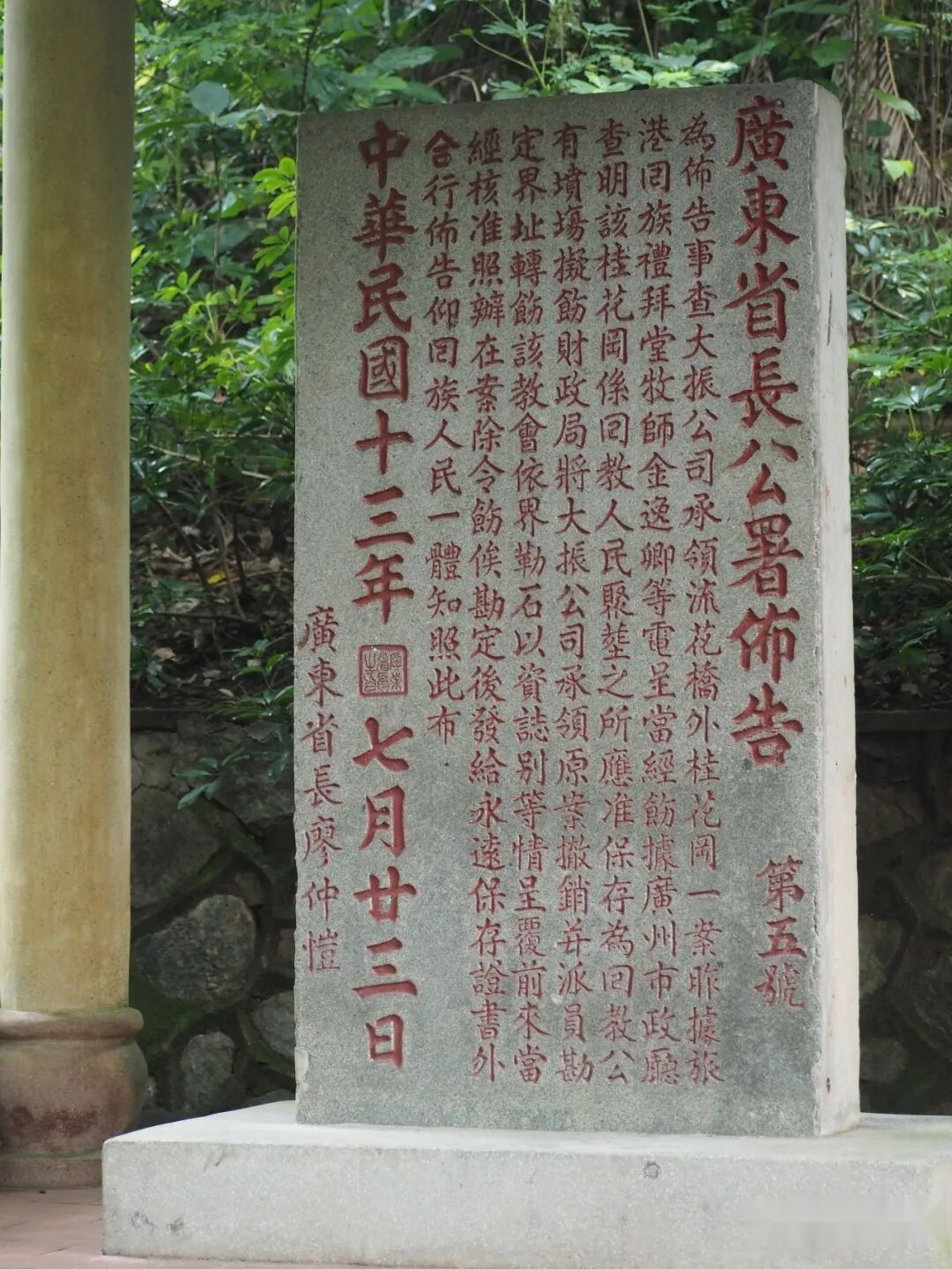
In 1924, Dazhen Company sought to use the Guihuagang land for development, leading to a lawsuit with the Muslim community. The Muslims ultimately won the case, with the court ruling that "Guihuagang is a burial ground for Muslim people." Liao Zhongkai, then Governor of Guangdong Province, even erected a monument to commemorate this decision.
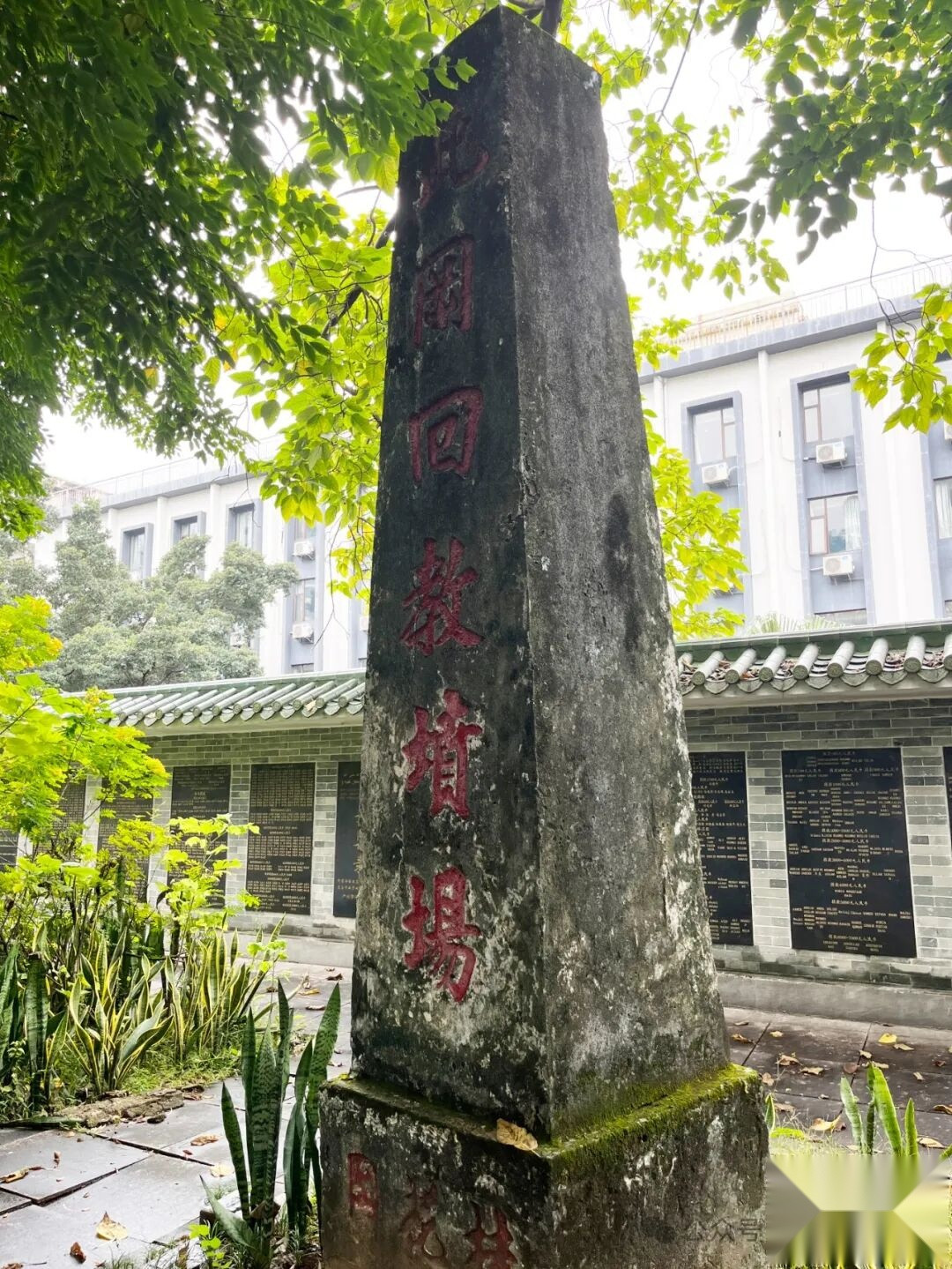
Guangzhou's Muslims also erected another obelisk, inscribed with "Muslim Public Cemetery, Permanently Preserved by Decree." These monuments are still preserved today within the Xianxian Mosque / Ancient Tomb of Saad ibn Abi Waqqas, directly across from Yuexiu Park.
In 1925, the Guangzhou Municipal Finance Bureau further designated 19 plots of land, totaling 576 mu (approximately 95 acres), as a Muslim public cemetery.
Liao Zhongkai's Monument (Photo credit: Wuwei)
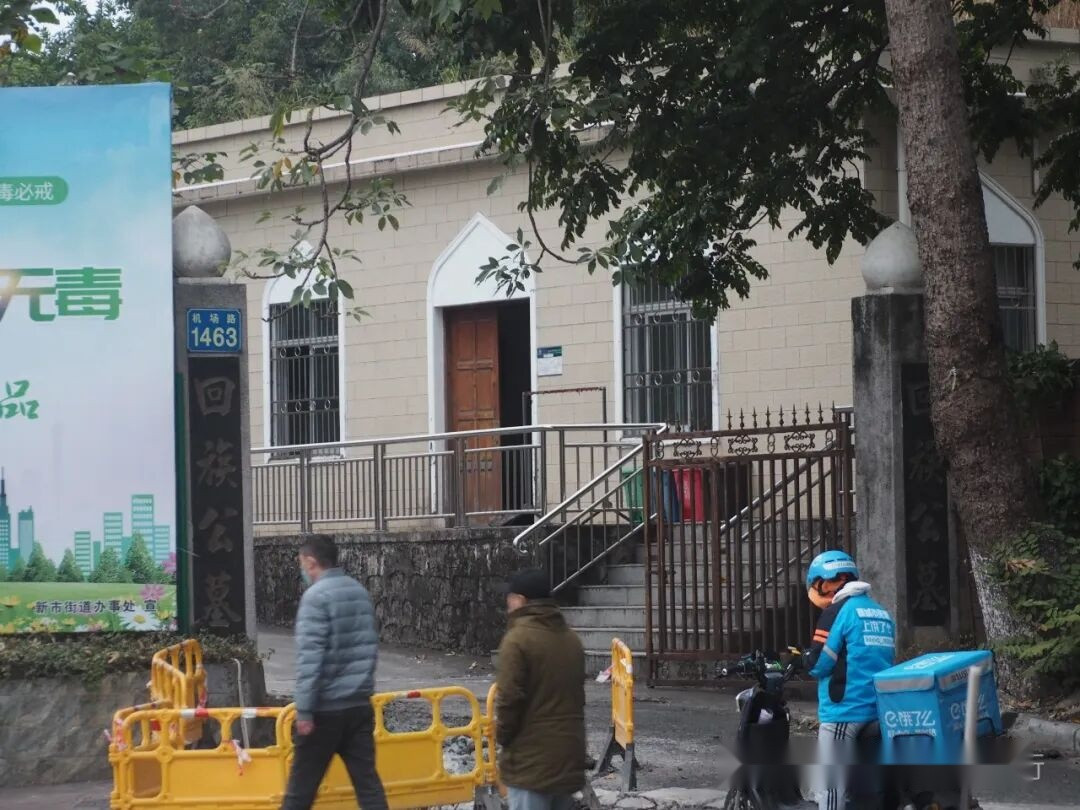
This Hill's Muslim Cemetery (Photo credit: Wuwei)
Relocating to Xinshi: The Rise of the Sino-Soviet Friendship Building
However, in 1955, the government decided to relocate the cemetery. The situation at this time was vastly different from the Republican era, and the local Muslim community was powerless to object. Over 500 mu (approximately 82 acres) of land in the Guihuagang and Zoumagang areas were then used to build the Sino-Soviet Friendship Building, along with the Guangzhou Railway Station, a stadium, and other facilities.
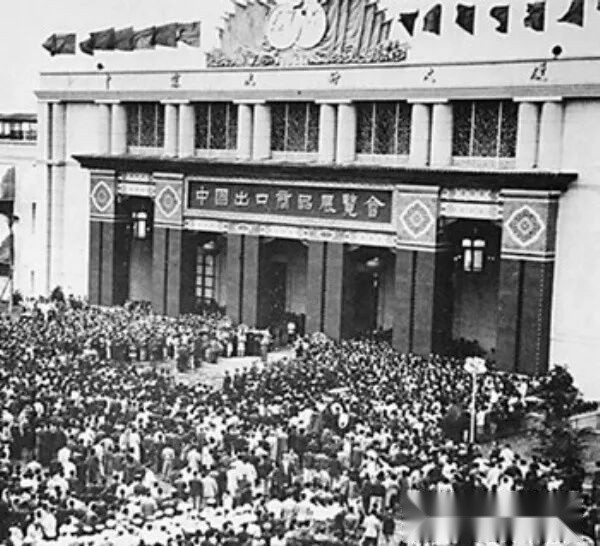
The Sino-Soviet Friendship Building was completed in just a few months. Back then, the friendship between China and the Soviet Union trumped everything. However, not long after, relations between China and the Soviet Union soured, and China needed to seek trade partners beyond the Soviet Union and Eastern Europe. This very building then became the venue for the Canton Fair (Guangjiao Hui), which remains world-famous to this day.
In 1959, the government decided to appropriate the burial plots around the Ancient Tomb of Saad ibn Abi Waqqas to build Guihuagang Park, which is now Orchid Garden Park (Lanpu Park). Following a resolution by the Second Islamic Congress, the community agreed to cede the burial grounds.
The Former Sino-Soviet Friendship Building
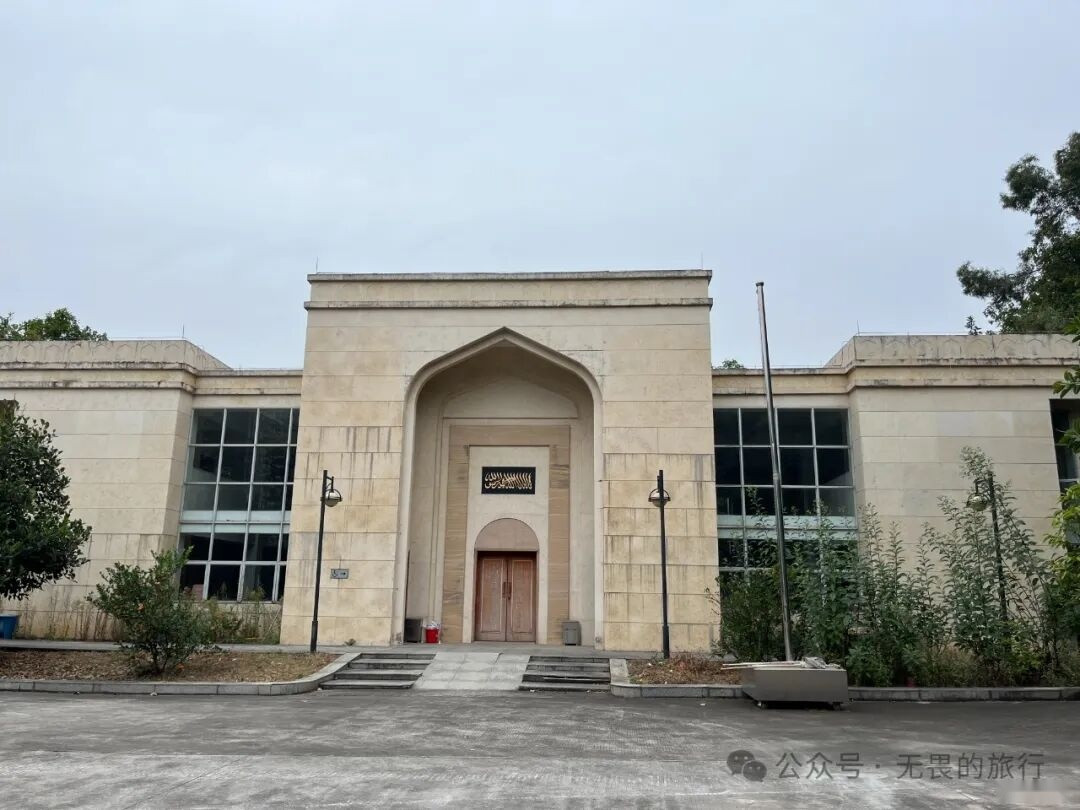
Most of the original graves were relocated to Dapu Ridge, north of Baiyun Mountain, and officially named "Guangzhou Xinshi Hui Muslim Cemetery." This new cemetery, at only 42.7 mu (approximately 7 acres), was significantly smaller than the original.
Inside the Hui Muslim Cemetery: Stories of the Departed
Back in the day, this area was pretty much out in the boonies. But today, the area around the Hui Muslim Cemetery has transformed into a bustling commercial district. Right across from the cemetery is Baixin Plaza, a huge shopping mall, with people constantly coming and going, even a fair number of foreigners. Many passersby are curious about the Hui Muslim Cemetery across the street, but not many get to go inside. The world within the cemetery seems so different from our usual stereotypes of Guangzhou.
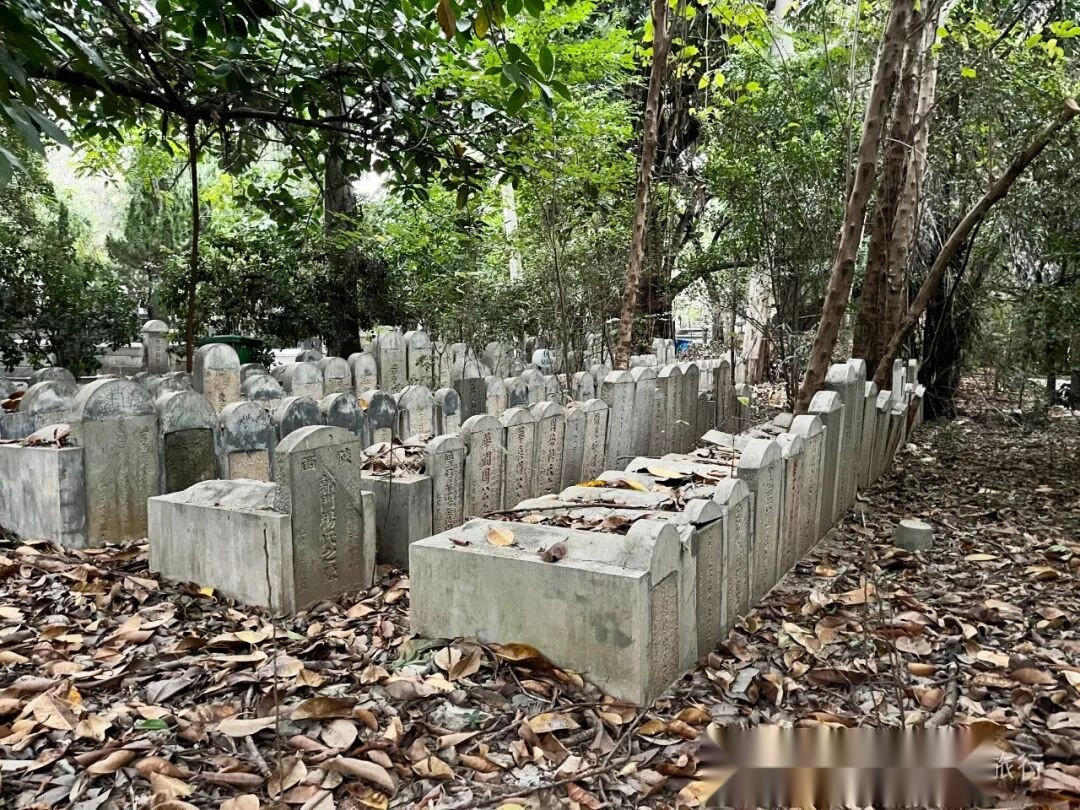
I greeted the cemetery administrator, explained why I was there, and went in. In the middle of the cemetery stands a prayer hall (masjid). Walking through the corridors, you immediately see dense rows of gravestones. From the Qing Dynasty right up to the present day, over ten thousand Muslims have been laid to rest here.
Hui Muslim Cemetery (Photo credit: Wuwei)
Prayer Hall (Masjid) (Photo credit: Wuwei)
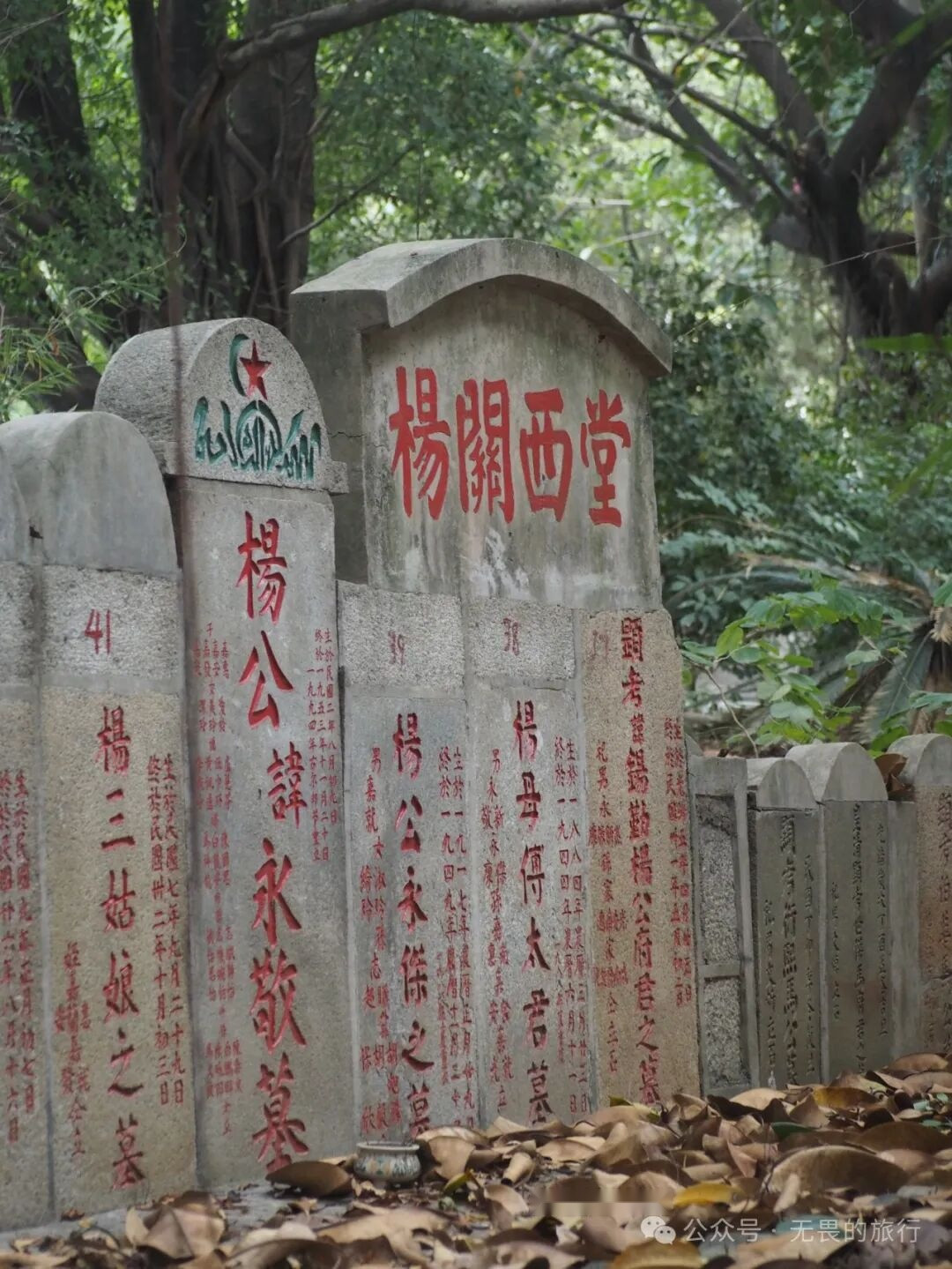
Most of the Qing Dynasty graves in the cemetery belong to local Guangzhou Muslims. And after the relocation to Xinshi, families were often buried together, with gravestones placed closely, side-by-side, leaving no gaps.
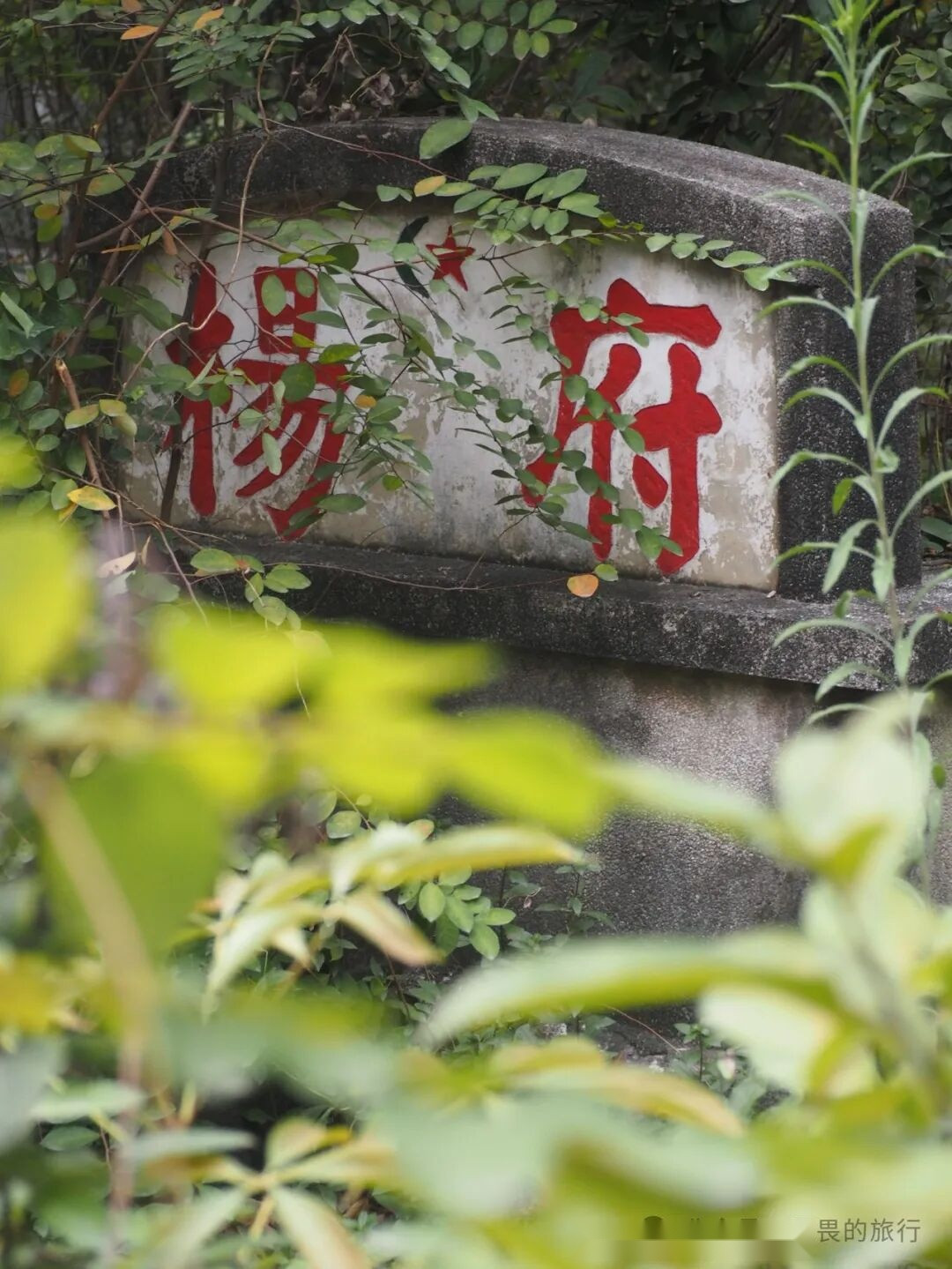
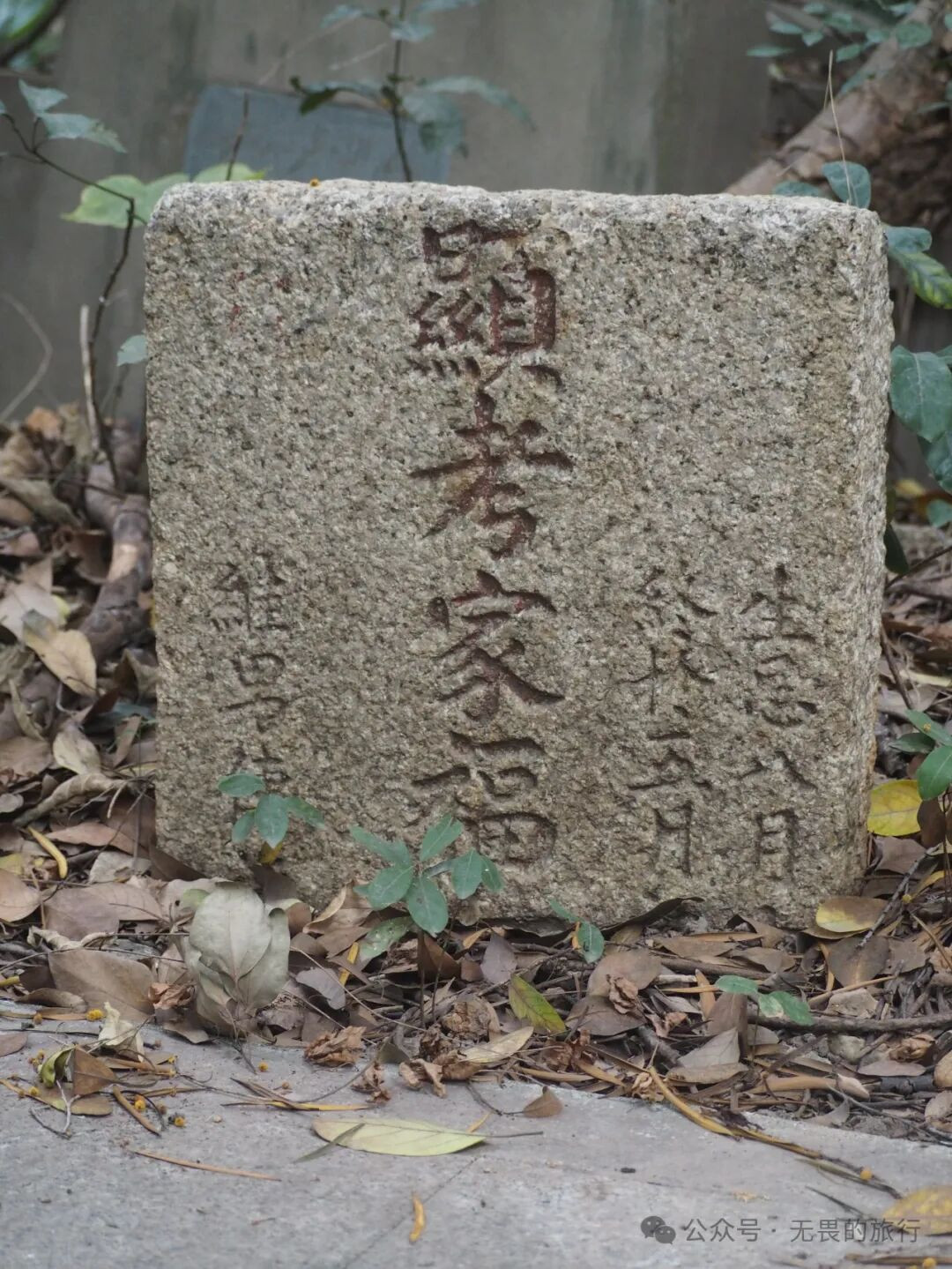
Because local Guangzhou Hui Muslims have lived in Han Chinese-majority areas for so long, they gradually adopted Han surnames and given names, and compiled family genealogies. In the cemetery, you can spot family plots like "Yao Fu" (Yao Family), "Yang Fu" (Yang Family), and "Zhou Fu" (Zhou Family). Some family plots even feature "Tang Hao" (ancestral hall names), such as "Yang Guanxi Tang" (Yang's Guanxi Hall), "Yang Jiguang Tang" (Yang's Jiguang Hall), "Xiao Yaojun Tang" (Xiao's Yaojun Hall), and "Ma Huayang Tang" (Ma's Huayang Hall).
Cemetery (Photo credit: Wuwei)
Yang Guanxi Tang (Photo credit: Wuwei)
Yang Fu (Photo credit: Wuwei)
Official Ranks on Gravestones
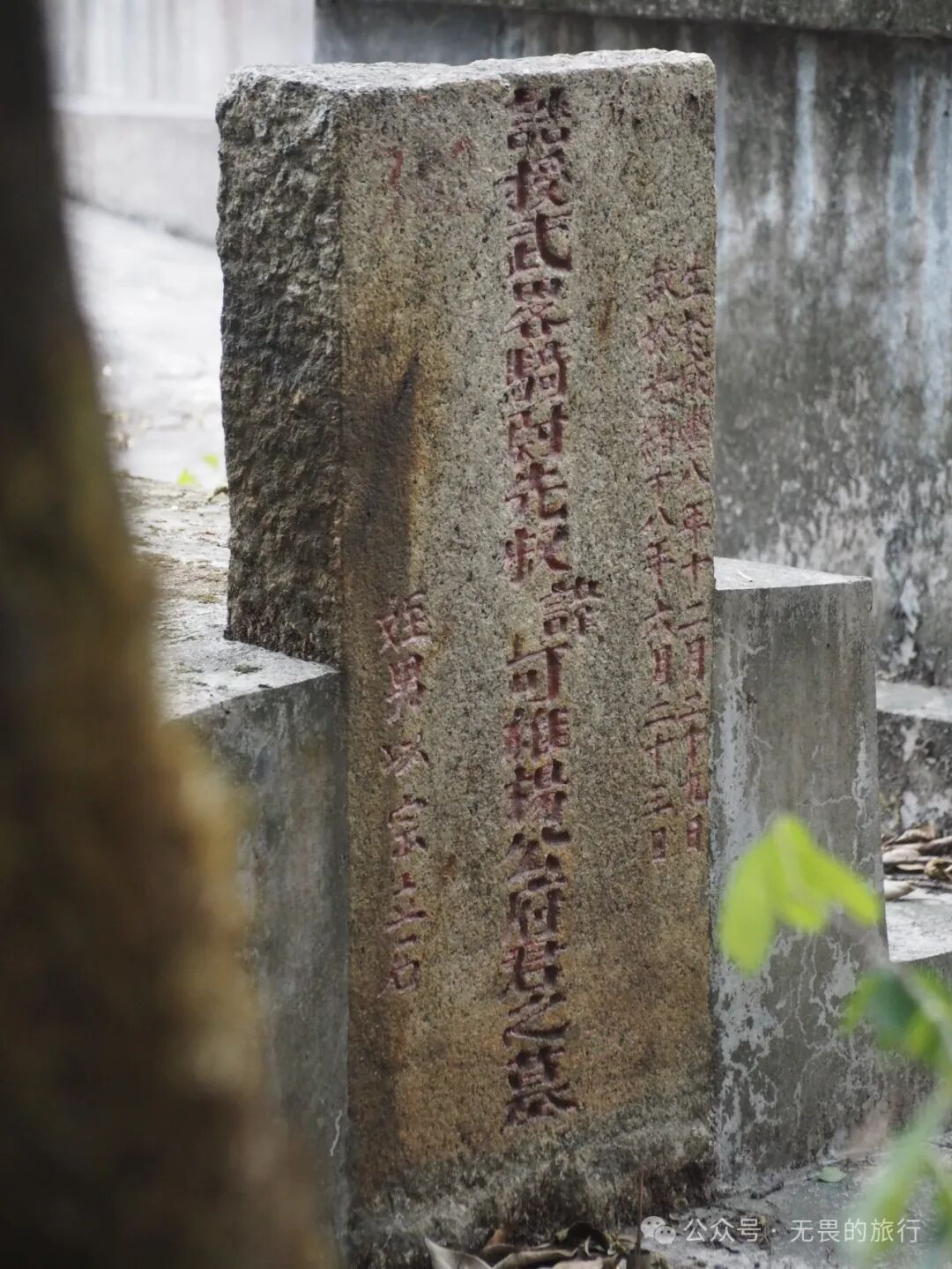
Most of Guangzhou's local Muslims are descendants of garrisons moved from the north to Guangzhou during the Qing Dynasty, which explains why many families held inherited official ranks passed down through generations.
Yang Yingrui, born in the Renzi year of Qianlong (1792) and who passed away in the Yichou year of Tongzhi (1865), held the official rank of Zheng Liupin (a civil or military Sixth Rank) "Wulüe Qiwei" (Military Strategist Cavalry Commander).
Yang Yingrui's grandson, Yang Kelin, lived a short life of only thirty years, born in the 20th year of Daoguang (1841) and passing away in the 10th year of Tongzhi (1871). He also inherited this official title.
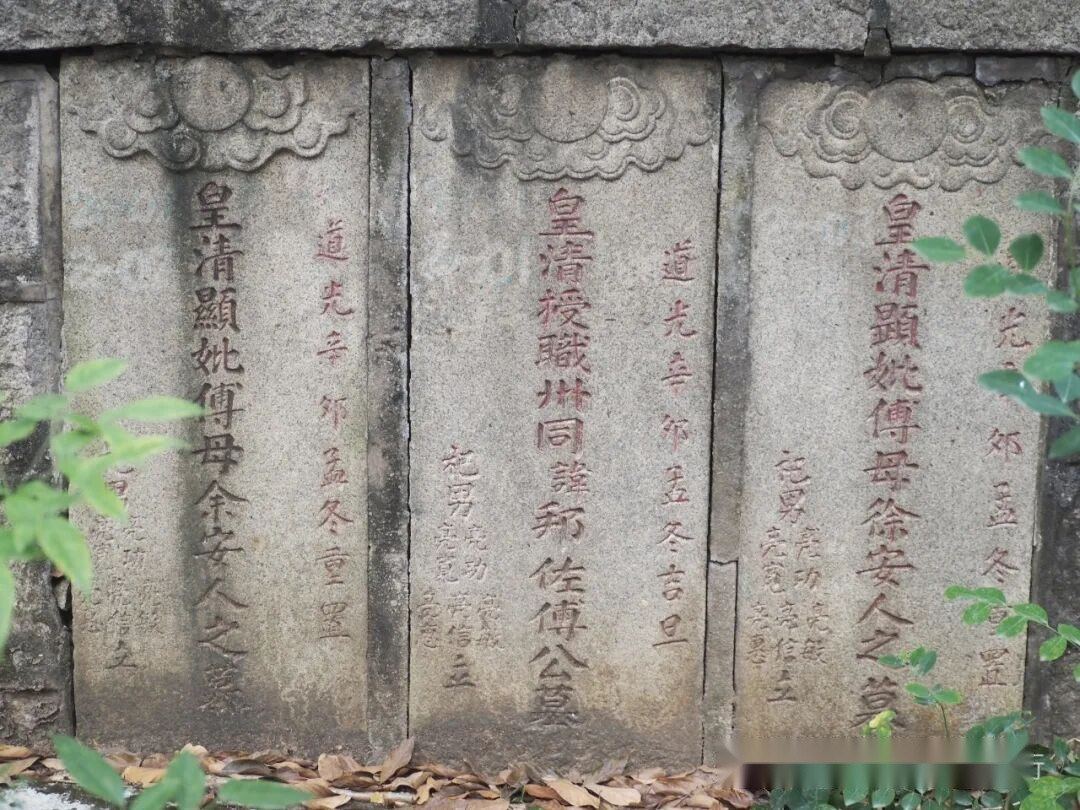
Another grandson, Yang Kexiong, born in 1859 (the 8th year of the Xianfeng reign) and passing away in 1892 (the 18th year of the Guangxu reign), had his gravestone set up by his nephew Yizong. Guess what? That Zheng Liu Pin official rank (a sixth-rank official position) is still carved right there at the top of his tombstone.
Fu Bangzuo's official gig was actually pretty unique compared to the others. While most were military officers, he was a civil official, holding the 'Zhizhou' (prefect) title, which was a Cong Liu Pin (sixth-rank) position granted by the imperial court. The only thing is, his gravestone doesn't actually tell us which prefecture he was in charge of.
Yang Kexiong's Tomb (Photo by Wuwei)
Fu Bangzuo's Tomb (Photo by Wuwei)
Okay, so these official ranks from the imperial court? Super important, even when the Qing emperors were long gone during the Republic of China era. Take Jiang Tingliang, for example. Born in 1848 (the 28th year of Daoguang), he lived all the way until 1926 (the 15th year of the Republic). When he returned to Allah, his folks made sure to carve his Zheng Wu Pin (fifth-rank) title of 'Wude Qiwei' (a military official rank) — a title from the previous dynasty — right onto his tombstone.
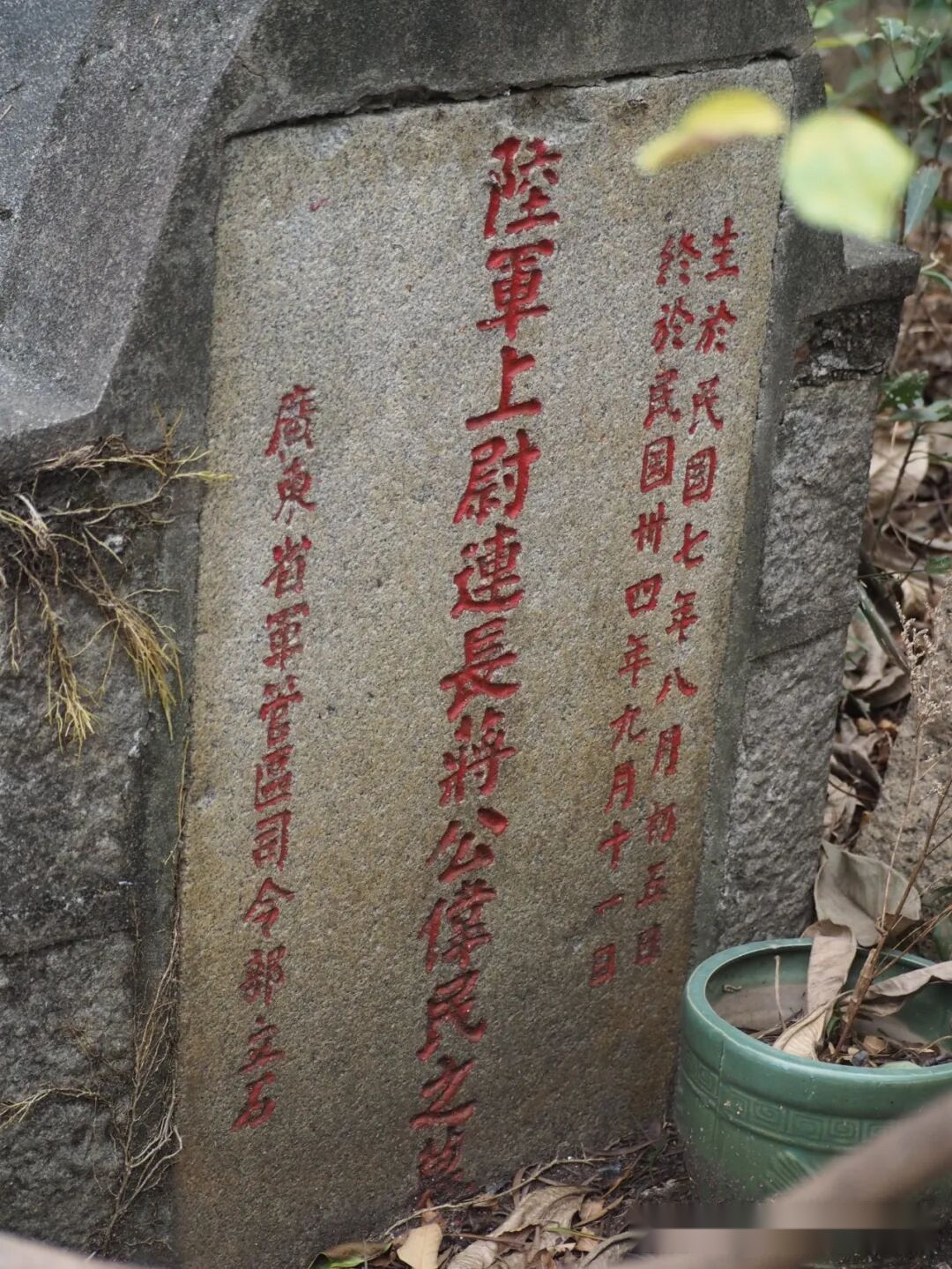
Jiang Weimin, born in 1918 (the 7th year of the Republic), totally followed in the footsteps of other Guangzhou Muslim ancestors, dedicating his loyalty to the nation. The only difference? He joined the Nationalist Army (KMT forces) this time, climbing the ranks all the way to Army Captain and Company Commander.
In 1945 (the 34th year of the Republic), right when the Anti-Japanese War was about to wrap up with victory, he left this life. It's totally possible he died fighting the Japanese on the battlefield. The Guangdong Provincial Military Control Zone Command actually put up this tombstone for him. And get this: Muslim generals weren't a rare sight in the Nationalist Army at all. The most famous one? General Bai Chongxi, a Hui Muslim from Guilin, Guangxi.
Jiang Weimin's Tomb (Photo by Wuwei)
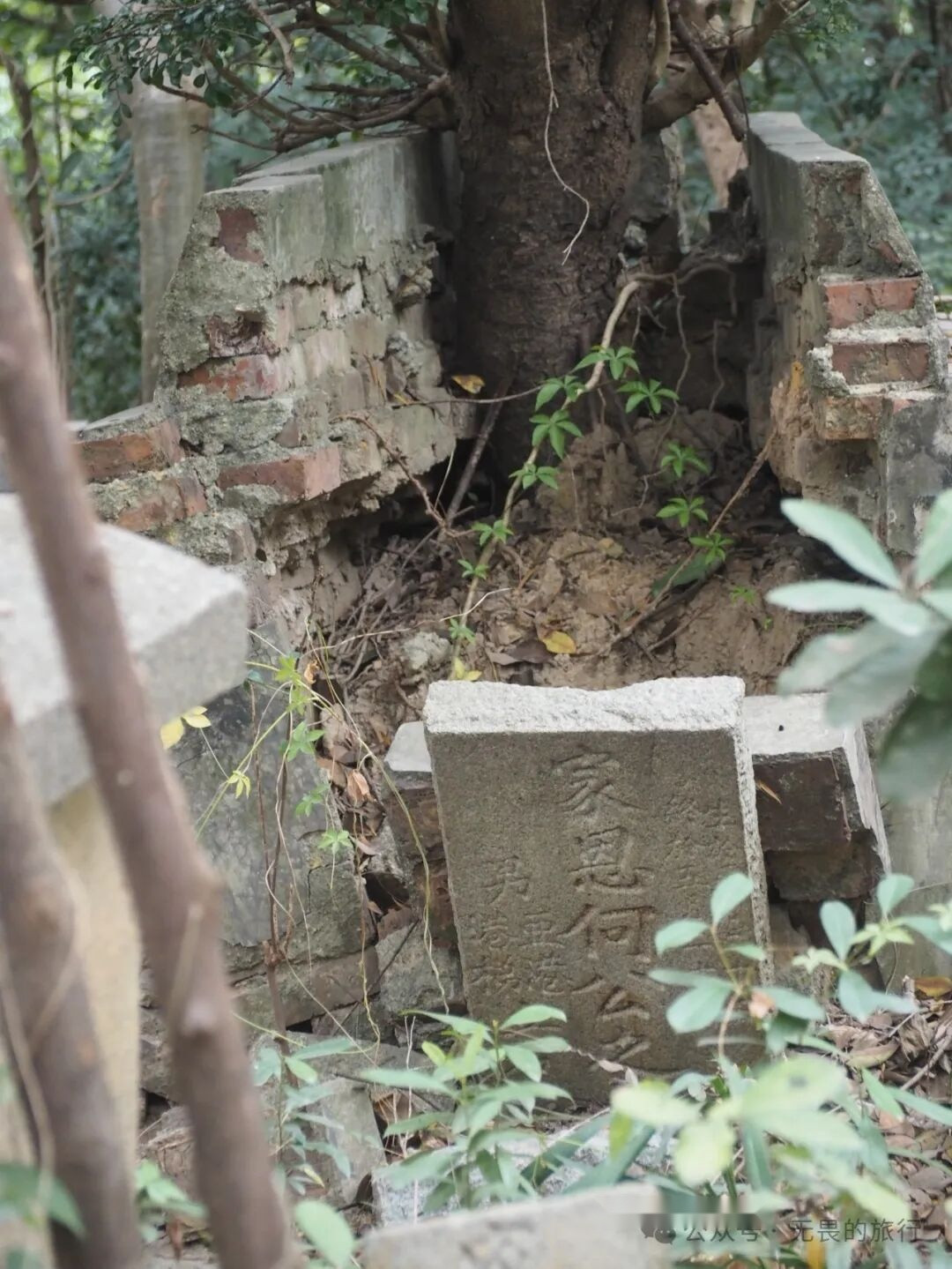
Most of the graves are actually pretty well-preserved, but you'll definitely spot some that look like they haven't seen maintenance in ages. We're talking half a gravestone buried in the dirt, and some even have massive trees bursting out of their stone coffins!
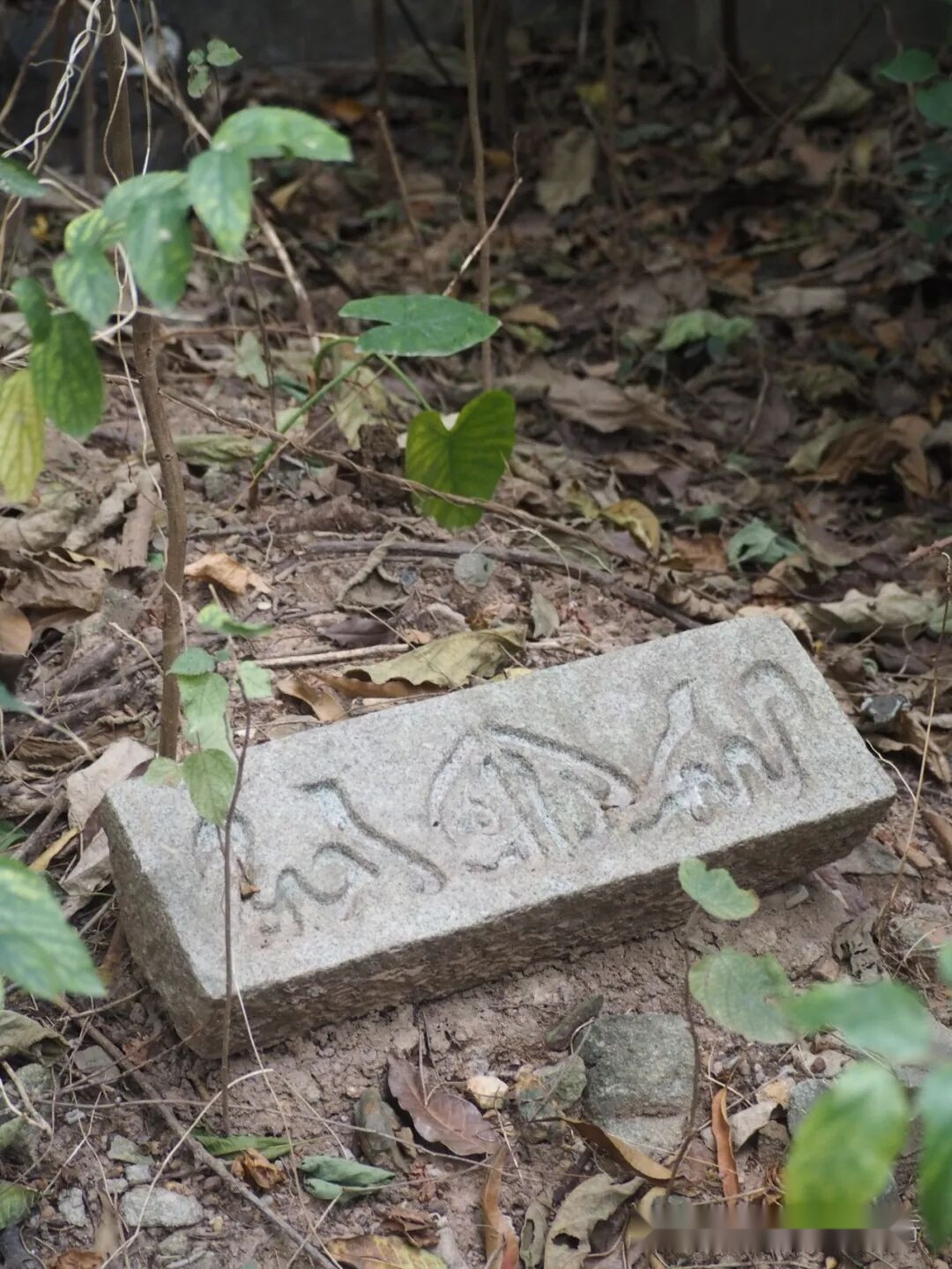
Damaged Tomb (Photo by Wuwei)
Fragments on the Ground (Photo by Wuwei)
The Stories on the Epitaphs
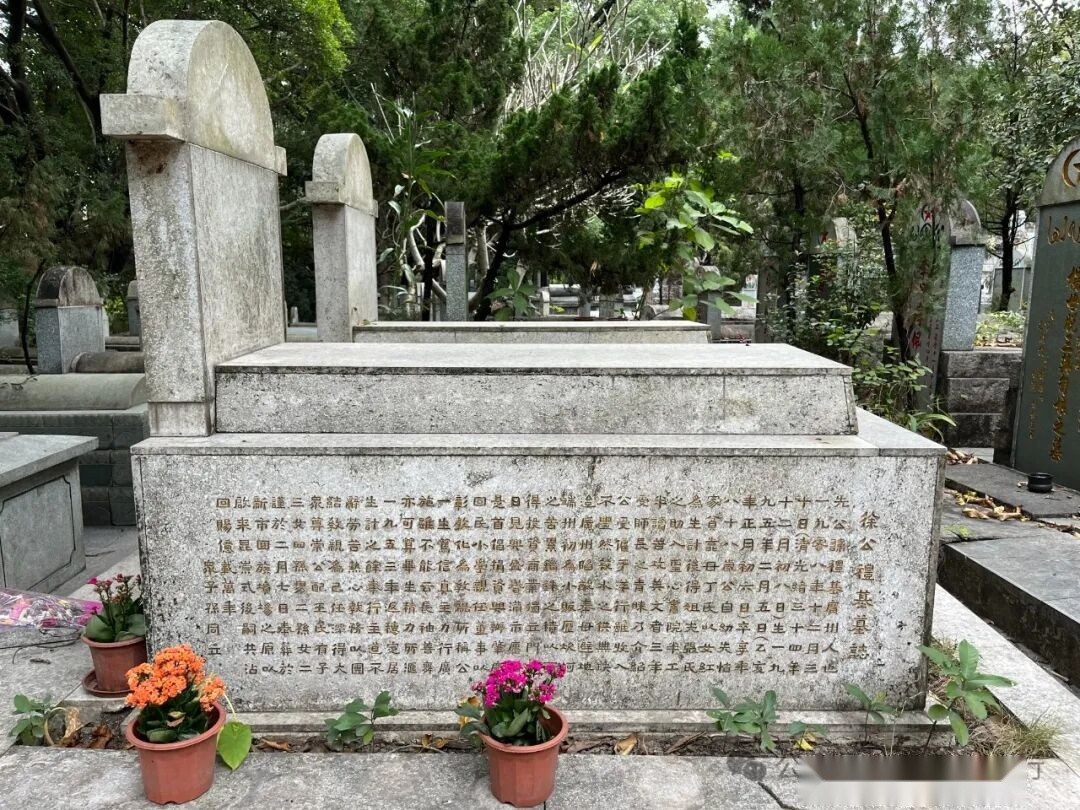
Gravestones these days are a bit different. They don't really brag about official ranks anymore. Instead, you'll see cool star and crescent symbols or verses from the Quran, clearly showing their Muslim identity. Some folks even get epitaphs written for their loved ones, which is awesome because it helps future generations get a glimpse into their lives.
Xu Liji, born in 1908, grew up in a humble family. But thanks to his brother-in-law's help, he managed to get into Sacred Heart College, balancing part-time work with studying English for three years. After graduating, he totally nailed it and joined a foreign firm — basically, if we're talking modern terms, he landed a job at a multinational corporation.
But then, out of nowhere, Japan invaded Guangzhou. He had to flee to Zhaoqing, where he started out as a small-time peddler, but get this, his business totally blew up! Once he became wealthy, he didn't forget to give back, investing in education by donating funds to set up the Zhaoqing Hui Muslim Primary School and even serving on its board himself. In 1953, he moved back to Guangzhou, where he eventually passed away and was laid to rest in the Xinshi Cemetery.
Xu Liji's Epitaph (Photo by Wuwei)
Ha Shaoguang, who was Ha Huanyiran's fourth younger brother, actually wrote her epitaph. She was born in 1918, and back in the Republic of China era, she got to go to school, attending the pretty famous Guangzhou Municipal Art School. After graduating in 1936, she spent her whole life as an art educator, returning to Allah when she was 72 years old.
Inscriptions on the Tomb (Photo by Wuwei)
After China's Reform and Opening Up, tons of people from other regions started flocking to Guangzhou, which totally made the city's Muslim community even more diverse.
Lots of Muslims from Northwest and North China actually returned to Allah in Guangzhou, and they're also buried right here in this cemetery. You can spot place names like Gansu, Qinghai, and Xinjiang carved on their gravestones.
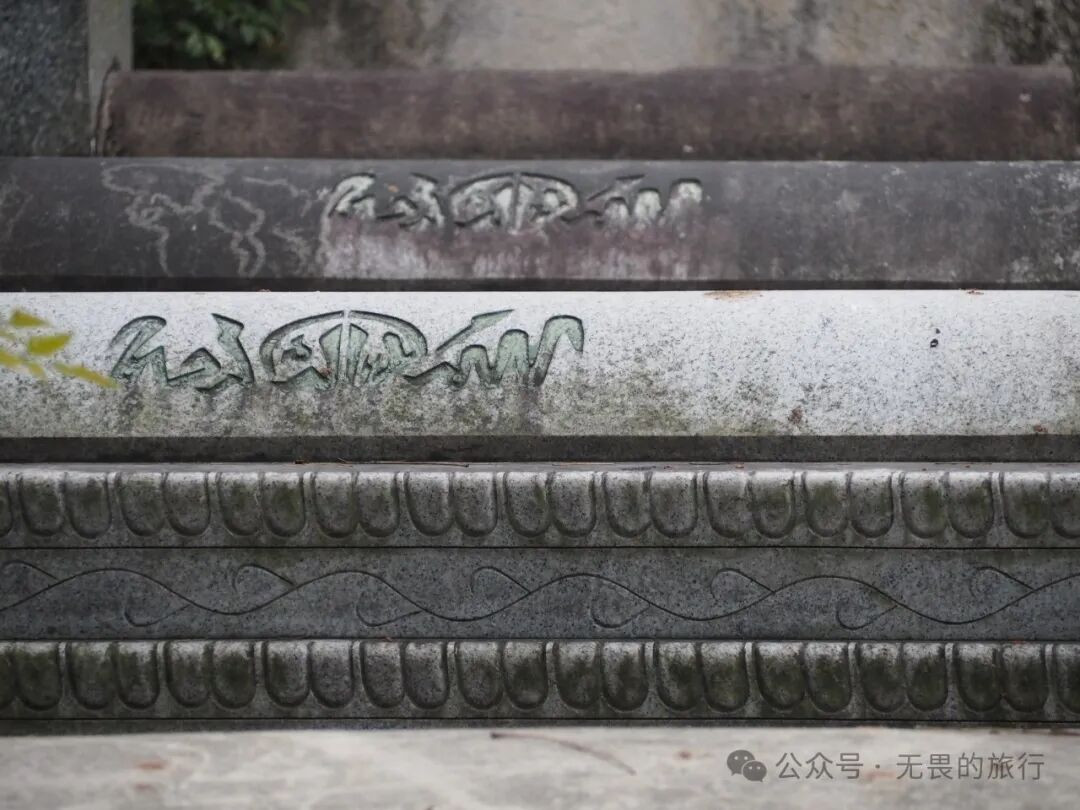
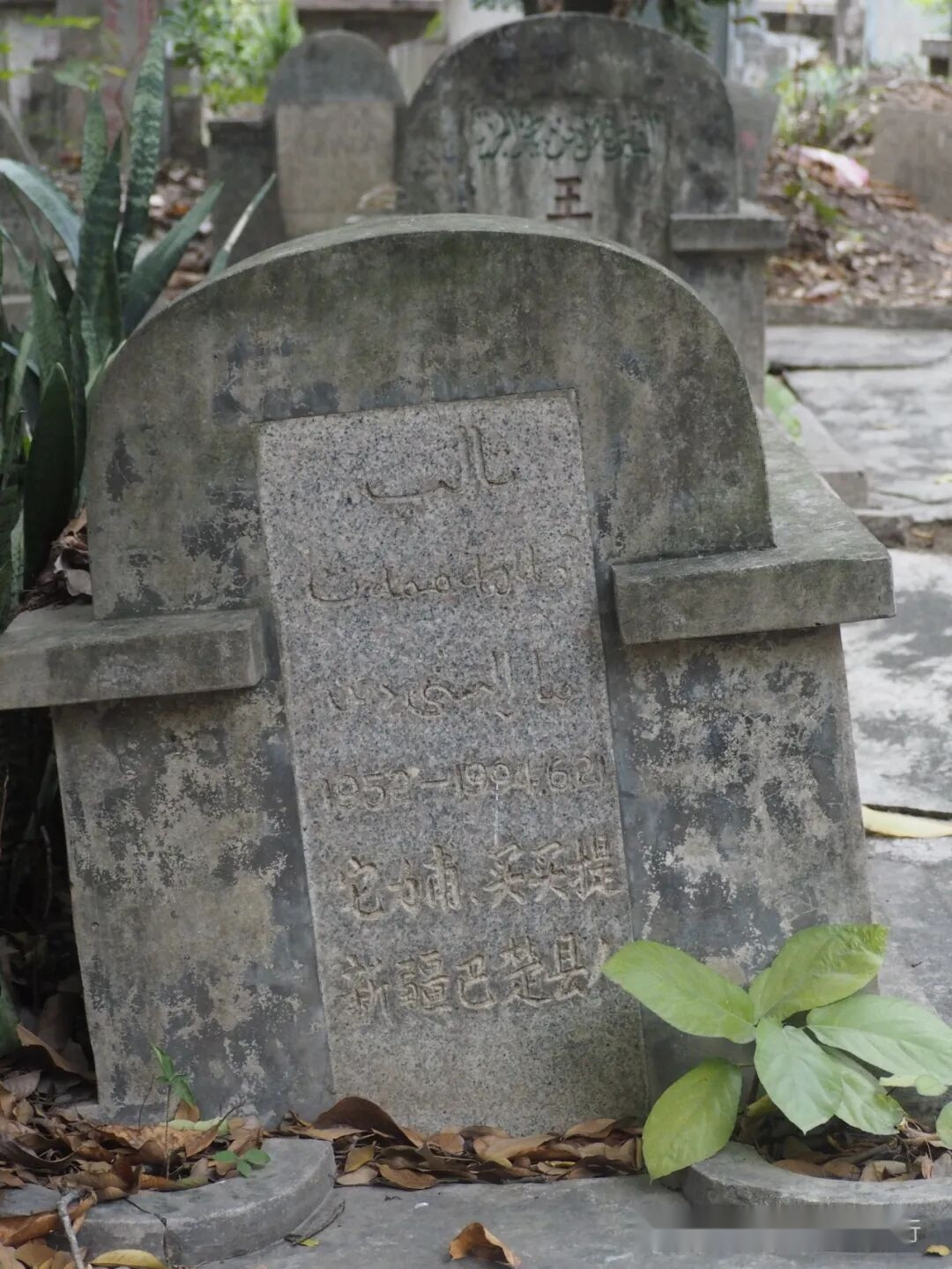
And check this out: on the gravestones of Uyghur people, you'll even find Uyghur written in Arabic script. Talipu Maimaiti, from Bachu County in Kashgar, Xinjiang, passed away in 1994 and is buried here. His hometown is seriously over 5000 kilometers away from Guangzhou – I'm pretty sure that's the furthest distance, right?
Half-Exposed Gravestone (Photo by Wuwei)
Maimaiti from Bachu County (Photo by Wuwei)
The cemetery also has foreign Muslims buried there. One gravestone has the name 'Iwanda' written in Latin script, and from the text below, you can tell it's Indonesian. This person was born in 1990 in Medan, on Indonesia's Sumatra Island. Sadly, in 1995, this little one's short life came to an end right here in Guangzhou.
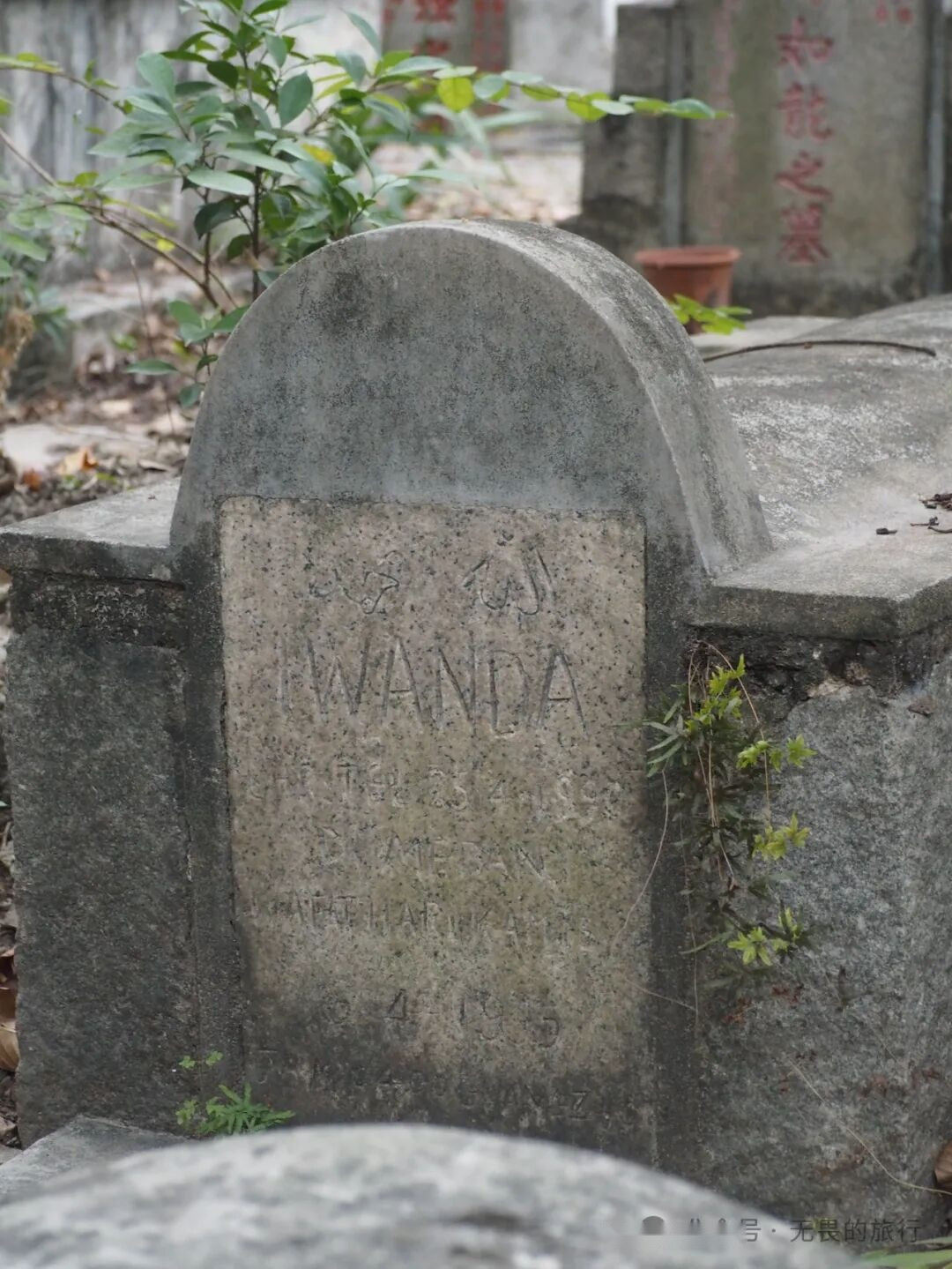
Iwanda's Tomb (Photo by Wuwei)
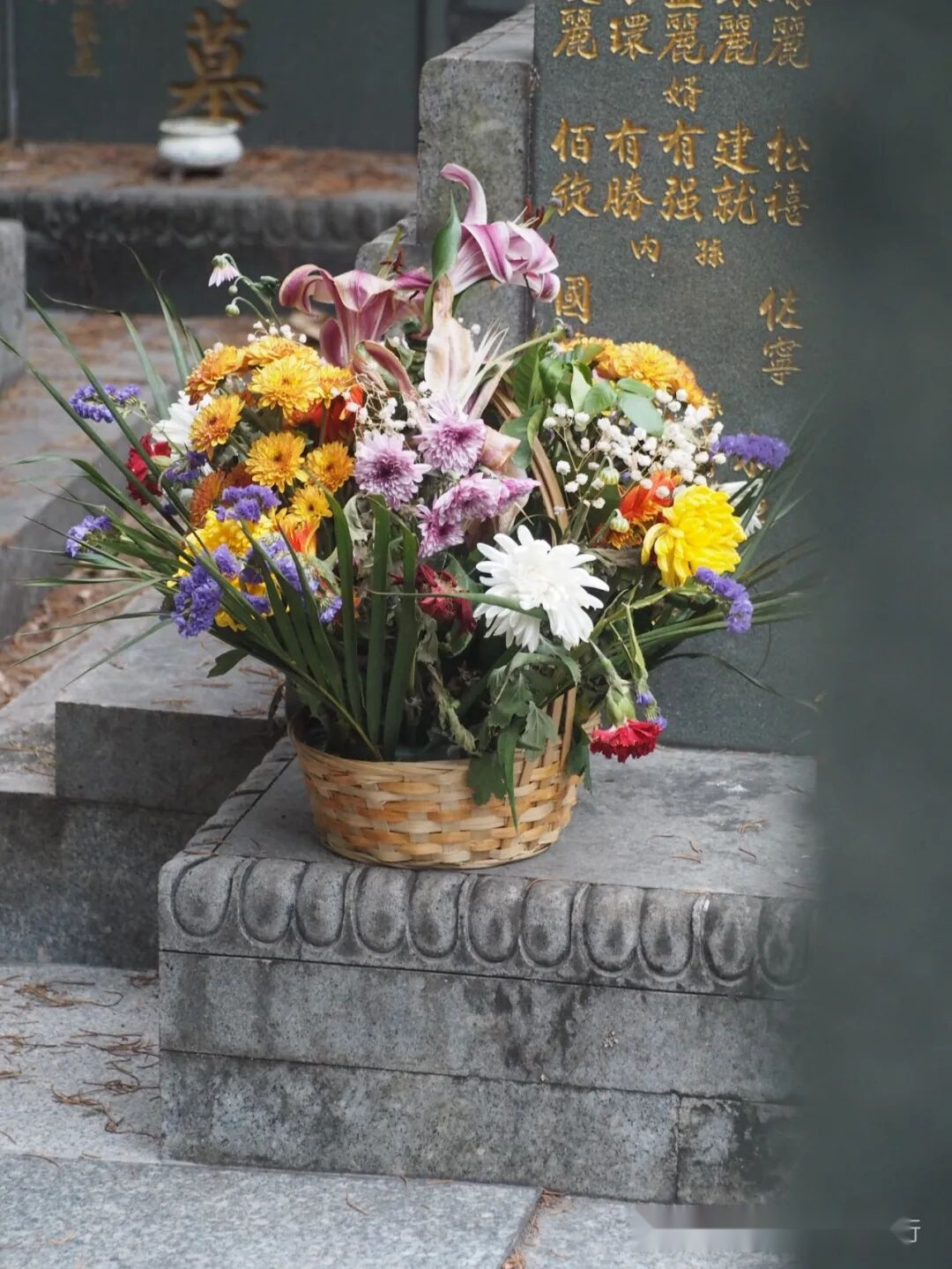
Flowers in front of the Tomb (Photo by Wuwei)
References:
Bao Yanzhong. *History of Islam in Guangzhou*. Guangzhou: Guangzhou Islamic Association, Guangzhou Hui Muslim Historical and Cultural Research Association, 2014.
Zhong Yuanxiu, Ma Jianzhao, Ma Fengda. *Research on Islamic Historical Sites in Guangzhou*. Yinchuan: Ningxia People's Publishing House, 2001.
Ma Qiang. *A Floating Spiritual Community—An Anthropological Study of Guangzhou Muslim Jama'at*. Beijing: China Social Sciences Press, 2006.
An Exploration of Guangzhou's Ancient Tomb of the Venerated Ancestor (Sa'd ibn Abi Waqqas) and the Muslim Cemetery: A Thousand Years of Maritime Silk Road Memories Where Over Ten Thousand Pious Predecessors Lie at Rest
Summary:
We're taking a deep dive into Guangzhou's Guihuagang Muslim Public Cemetery and the Ancient Tomb of the Venerated Ancestor (Sa'd ibn Abi Waqqas's Tomb). We'll revisit the historical legacy of this revered missionary from the Tang Dynasty, exploring its immense value as one of China's Four Great Ancient Muslim Tombs and the profound sentiment it holds for Muslim communities across generations.
A Historic Burial Ground, and Its Past Battles
Guangzhou's Muslim public cemetery was historically located in Guihuagang for a long time, centered around the tomb of Sa'd ibn Abi Waqqas – a companion of Prophet Muhammad who arrived in Guangzhou during the Tang Dynasty to spread Islam.
In 1924, Dazhen Company sought to use the Guihuagang land for development, leading to a lawsuit with the Muslim community. The Muslims ultimately won the case, with the court ruling that "Guihuagang is a burial ground for Muslim people." Liao Zhongkai, then Governor of Guangdong Province, even erected a monument to commemorate this decision.
Guangzhou's Muslims also erected another obelisk, inscribed with "Muslim Public Cemetery, Permanently Preserved by Decree." These monuments are still preserved today within the Xianxian Mosque / Ancient Tomb of Saad ibn Abi Waqqas, directly across from Yuexiu Park.
In 1925, the Guangzhou Municipal Finance Bureau further designated 19 plots of land, totaling 576 mu (approximately 95 acres), as a Muslim public cemetery.
Liao Zhongkai's Monument (Photo credit: Wuwei)
This Hill's Muslim Cemetery (Photo credit: Wuwei)
Relocating to Xinshi: The Rise of the Sino-Soviet Friendship Building
However, in 1955, the government decided to relocate the cemetery. The situation at this time was vastly different from the Republican era, and the local Muslim community was powerless to object. Over 500 mu (approximately 82 acres) of land in the Guihuagang and Zoumagang areas were then used to build the Sino-Soviet Friendship Building, along with the Guangzhou Railway Station, a stadium, and other facilities.
The Sino-Soviet Friendship Building was completed in just a few months. Back then, the friendship between China and the Soviet Union trumped everything. However, not long after, relations between China and the Soviet Union soured, and China needed to seek trade partners beyond the Soviet Union and Eastern Europe. This very building then became the venue for the Canton Fair (Guangjiao Hui), which remains world-famous to this day.
In 1959, the government decided to appropriate the burial plots around the Ancient Tomb of Saad ibn Abi Waqqas to build Guihuagang Park, which is now Orchid Garden Park (Lanpu Park). Following a resolution by the Second Islamic Congress, the community agreed to cede the burial grounds.
The Former Sino-Soviet Friendship Building
Most of the original graves were relocated to Dapu Ridge, north of Baiyun Mountain, and officially named "Guangzhou Xinshi Hui Muslim Cemetery." This new cemetery, at only 42.7 mu (approximately 7 acres), was significantly smaller than the original.
Inside the Hui Muslim Cemetery: Stories of the Departed
Back in the day, this area was pretty much out in the boonies. But today, the area around the Hui Muslim Cemetery has transformed into a bustling commercial district. Right across from the cemetery is Baixin Plaza, a huge shopping mall, with people constantly coming and going, even a fair number of foreigners. Many passersby are curious about the Hui Muslim Cemetery across the street, but not many get to go inside. The world within the cemetery seems so different from our usual stereotypes of Guangzhou.
I greeted the cemetery administrator, explained why I was there, and went in. In the middle of the cemetery stands a prayer hall (masjid). Walking through the corridors, you immediately see dense rows of gravestones. From the Qing Dynasty right up to the present day, over ten thousand Muslims have been laid to rest here.
Hui Muslim Cemetery (Photo credit: Wuwei)
Prayer Hall (Masjid) (Photo credit: Wuwei)
Most of the Qing Dynasty graves in the cemetery belong to local Guangzhou Muslims. And after the relocation to Xinshi, families were often buried together, with gravestones placed closely, side-by-side, leaving no gaps.
Because local Guangzhou Hui Muslims have lived in Han Chinese-majority areas for so long, they gradually adopted Han surnames and given names, and compiled family genealogies. In the cemetery, you can spot family plots like "Yao Fu" (Yao Family), "Yang Fu" (Yang Family), and "Zhou Fu" (Zhou Family). Some family plots even feature "Tang Hao" (ancestral hall names), such as "Yang Guanxi Tang" (Yang's Guanxi Hall), "Yang Jiguang Tang" (Yang's Jiguang Hall), "Xiao Yaojun Tang" (Xiao's Yaojun Hall), and "Ma Huayang Tang" (Ma's Huayang Hall).
Cemetery (Photo credit: Wuwei)
Yang Guanxi Tang (Photo credit: Wuwei)
Yang Fu (Photo credit: Wuwei)
Official Ranks on Gravestones
Most of Guangzhou's local Muslims are descendants of garrisons moved from the north to Guangzhou during the Qing Dynasty, which explains why many families held inherited official ranks passed down through generations.
Yang Yingrui, born in the Renzi year of Qianlong (1792) and who passed away in the Yichou year of Tongzhi (1865), held the official rank of Zheng Liupin (a civil or military Sixth Rank) "Wulüe Qiwei" (Military Strategist Cavalry Commander).
Yang Yingrui's grandson, Yang Kelin, lived a short life of only thirty years, born in the 20th year of Daoguang (1841) and passing away in the 10th year of Tongzhi (1871). He also inherited this official title.
Another grandson, Yang Kexiong, born in 1859 (the 8th year of the Xianfeng reign) and passing away in 1892 (the 18th year of the Guangxu reign), had his gravestone set up by his nephew Yizong. Guess what? That Zheng Liu Pin official rank (a sixth-rank official position) is still carved right there at the top of his tombstone.
Fu Bangzuo's official gig was actually pretty unique compared to the others. While most were military officers, he was a civil official, holding the 'Zhizhou' (prefect) title, which was a Cong Liu Pin (sixth-rank) position granted by the imperial court. The only thing is, his gravestone doesn't actually tell us which prefecture he was in charge of.
Yang Kexiong's Tomb (Photo by Wuwei)
Fu Bangzuo's Tomb (Photo by Wuwei)
Okay, so these official ranks from the imperial court? Super important, even when the Qing emperors were long gone during the Republic of China era. Take Jiang Tingliang, for example. Born in 1848 (the 28th year of Daoguang), he lived all the way until 1926 (the 15th year of the Republic). When he returned to Allah, his folks made sure to carve his Zheng Wu Pin (fifth-rank) title of 'Wude Qiwei' (a military official rank) — a title from the previous dynasty — right onto his tombstone.
Jiang Weimin, born in 1918 (the 7th year of the Republic), totally followed in the footsteps of other Guangzhou Muslim ancestors, dedicating his loyalty to the nation. The only difference? He joined the Nationalist Army (KMT forces) this time, climbing the ranks all the way to Army Captain and Company Commander.
In 1945 (the 34th year of the Republic), right when the Anti-Japanese War was about to wrap up with victory, he left this life. It's totally possible he died fighting the Japanese on the battlefield. The Guangdong Provincial Military Control Zone Command actually put up this tombstone for him. And get this: Muslim generals weren't a rare sight in the Nationalist Army at all. The most famous one? General Bai Chongxi, a Hui Muslim from Guilin, Guangxi.
Jiang Weimin's Tomb (Photo by Wuwei)
Most of the graves are actually pretty well-preserved, but you'll definitely spot some that look like they haven't seen maintenance in ages. We're talking half a gravestone buried in the dirt, and some even have massive trees bursting out of their stone coffins!
Damaged Tomb (Photo by Wuwei)
Fragments on the Ground (Photo by Wuwei)
The Stories on the Epitaphs
Gravestones these days are a bit different. They don't really brag about official ranks anymore. Instead, you'll see cool star and crescent symbols or verses from the Quran, clearly showing their Muslim identity. Some folks even get epitaphs written for their loved ones, which is awesome because it helps future generations get a glimpse into their lives.
Xu Liji, born in 1908, grew up in a humble family. But thanks to his brother-in-law's help, he managed to get into Sacred Heart College, balancing part-time work with studying English for three years. After graduating, he totally nailed it and joined a foreign firm — basically, if we're talking modern terms, he landed a job at a multinational corporation.
But then, out of nowhere, Japan invaded Guangzhou. He had to flee to Zhaoqing, where he started out as a small-time peddler, but get this, his business totally blew up! Once he became wealthy, he didn't forget to give back, investing in education by donating funds to set up the Zhaoqing Hui Muslim Primary School and even serving on its board himself. In 1953, he moved back to Guangzhou, where he eventually passed away and was laid to rest in the Xinshi Cemetery.
Xu Liji's Epitaph (Photo by Wuwei)
Ha Shaoguang, who was Ha Huanyiran's fourth younger brother, actually wrote her epitaph. She was born in 1918, and back in the Republic of China era, she got to go to school, attending the pretty famous Guangzhou Municipal Art School. After graduating in 1936, she spent her whole life as an art educator, returning to Allah when she was 72 years old.
Inscriptions on the Tomb (Photo by Wuwei)
After China's Reform and Opening Up, tons of people from other regions started flocking to Guangzhou, which totally made the city's Muslim community even more diverse.
Lots of Muslims from Northwest and North China actually returned to Allah in Guangzhou, and they're also buried right here in this cemetery. You can spot place names like Gansu, Qinghai, and Xinjiang carved on their gravestones.
And check this out: on the gravestones of Uyghur people, you'll even find Uyghur written in Arabic script. Talipu Maimaiti, from Bachu County in Kashgar, Xinjiang, passed away in 1994 and is buried here. His hometown is seriously over 5000 kilometers away from Guangzhou – I'm pretty sure that's the furthest distance, right?
Half-Exposed Gravestone (Photo by Wuwei)
Maimaiti from Bachu County (Photo by Wuwei)
The cemetery also has foreign Muslims buried there. One gravestone has the name 'Iwanda' written in Latin script, and from the text below, you can tell it's Indonesian. This person was born in 1990 in Medan, on Indonesia's Sumatra Island. Sadly, in 1995, this little one's short life came to an end right here in Guangzhou.
Iwanda's Tomb (Photo by Wuwei)
Flowers in front of the Tomb (Photo by Wuwei)
References:
Bao Yanzhong. *History of Islam in Guangzhou*. Guangzhou: Guangzhou Islamic Association, Guangzhou Hui Muslim Historical and Cultural Research Association, 2014.
Zhong Yuanxiu, Ma Jianzhao, Ma Fengda. *Research on Islamic Historical Sites in Guangzhou*. Yinchuan: Ningxia People's Publishing House, 2001.
Ma Qiang. *A Floating Spiritual Community—An Anthropological Study of Guangzhou Muslim Jama'at*. Beijing: China Social Sciences Press, 2006.
