
Remembering Satangji: The Lost Century-Old Halal Bakery and Dim Sum Legend of Guangzhou
[Internet Repost]
Remembering Satangji: The Lost Century-Old Halal Bakery and Dim Sum Legend of Guangzhou
Abstract:
Drawing on rare historical and cultural archives alongside vintage staff photographs, this piece takes a deep dive into the history of 'Satangji Bakery,' a legendary Halal landmark in Guangzhou’s Hui Muslim community. We look back at its glory days making authentic Halal Cantonese mooncakes and traditional pastries, preserving a rich cultural heritage.
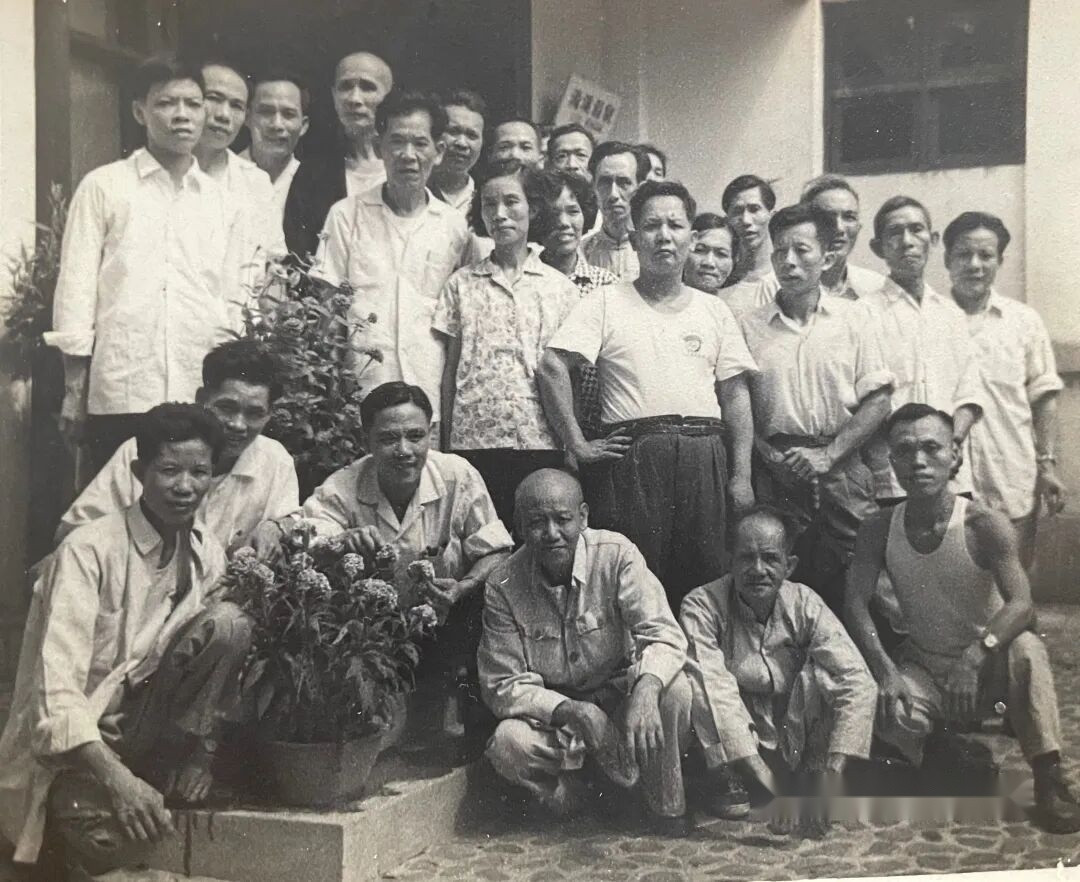
Staff photograph of Satangji Bakery (Photo courtesy of Qiuran Shi)
Did you know that Guangzhou's Hui Muslim history is packed with legendary Halal eateries? Some started out selling casual street eats, others made names for themselves with roasted duck, while a few grew into full-scale teahouses and restaurants.
They weren't just hits among Hui Muslims; they won rave reviews across the board from the general public too.
It’s a real shame that, as time rolled on, these historic Halal spots didn’t get the lucky second act that places like the Guangzhou Muslim Restaurant (Huimin Restaurant) managed to secure.
Today, we can only piece together what those days looked like through the few scattered photos and texts left behind by our elders. We're also hoping this piece might help us connect with anyone in the know who can share more stories and archives.
The spot we're spotlighting today is 'Satangji,' a classic Halal institution famous for cold drinks and street snacks. Our historical source here is an essay titled 'How I Ran Satangji' written by Mr. Sa Hanqiang (birth name Sa Yirou, courtesy name Hanqiang, 1911–1996).
Reply with 'Satangji' in our official account backend to grab a copy of the essay.
Special thanks to Mr. Zhang Zhongyi and Qiuran Shi for providing the archival support.
From 'Tangji' to 'Satangji'
According to Mr. Sa Hanqiang, his grandfather Sa Xianyang (1829–1895) once ran a shop called 'Tangji Pastry Shop' right by the Zhulanmen city gate, famous for saqima (traditional sweet Manchu-style pastry / fried dough cake) and 'five-spice salted crispy rice crackers.' By the time the business passed down to him, the original shop had been demolished. Starting back up as a street vendor, he kept the 'Tangji' name and added the family surname 'Sa' to the front—which is how 'Satangji' got its name.
The story of Satangji kicked off around 1930. Back then, a newly reclaimed plot of flat land down by the Changdi waterfront was bustling with sightseers and street peddlers. A 19-year-old Sa Hanqiang spotted the massive crowds, figured there was money to be made, and rented a little stall to sell tofu hua (silken tofu pudding / sweet beancurd). That was the launchpad for his street-vending hustle.
From that point on, Satangji's 'street vendor era' rolled on until 1944. Over those years, the stall's menu expanded from tofu hua to dangaozai (mini egg cakes / bite-sized sponge cakes). Meanwhile, due to the chaos of war, Mr. Sa Hanqiang bounced back and forth between Guangzhou, Hong Kong, and Guilin, living a pretty turbulent life.
Figuring that street vending was barely keeping the lights on and had no real future, he decided in 1944 to hang up his apron as a peddler and start setting up a proper, brick-and-mortar storefront.
From 'Opening a Proper Shop' to 'Public-Private Partnership'
In October 1944, Sa Hanqiang teamed up with his family to rent a storefront on Huiai East Road, where they started slinging dangaozai.

Because Satangji's dangaozai tasted amazing—and thanks to Sa Hanqiang’s sharp business instincts—the shop took off. Business boomed so fast that they were soon looking to scale up and open branch locations.
The first branch opened over in Xiguan, bringing an even wider lineup of snacks like big dangao (sponge cake), heliaosu (walnut cookies), danbaidui (crispy egg-white puffs), and danhuangbing (egg yolk biscuits).
When the Japanese surrendered and Guangzhou's markets bounced back into a boom, Satangji’s bankroll got a serious upgrade. They poured funds back into expanding their flagship spot on Huiai East Road, adding indoor seating and cold drinks to offset the slow summer slump.
Not long after, a second branch opened up on Zhongshan 4th Road. During this stretch, Mr. Sa Hanqiang used his savvy business sense and multi-pronged competitive playbook to completely edge out a wave of copycats and rivals.
By 1949, the PRC was founded and Guangzhou was liberated. Satangji's third branch opened for business on Zhongshan 5th Road. By this time, daily store operations were mostly being run by Sa Hanqiang’s younger brother and brother-in-law, while he described his own mindset back then as 'indifferent to shop affairs and badly drifting toward a life of ease.'
In 1955, backed by the care and support of the Party and government, Mr. Sa Hanqiang took charge of supplying desserts during the 'Soviet Economic Achievements Exhibition' held in Guangzhou.
In 1956, riding the wave of the era's major economic shifts, Satangji jumped into the trend of 'public-private partnerships' (joint state-private ownership), setting up distribution spots all over town as business stayed red-hot.
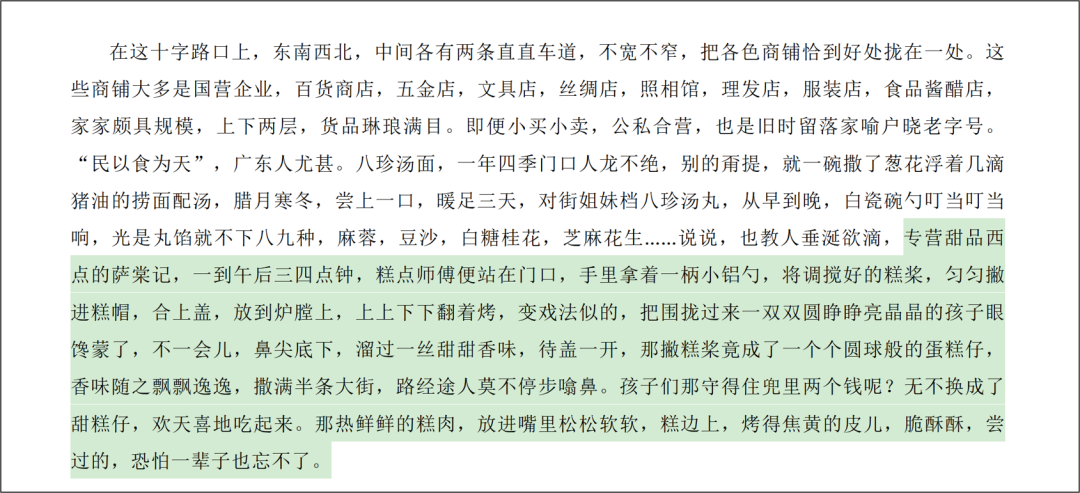
Memories of 'Satangji' featured in the 'Crossing the Crossroads' article by the WeChat account 'Junhua Tang'
As for how Satangji gradually lost its footing and faded into the history books, no further records have turned up just yet.
All we're left with is a deep sense of regret.
Portrait of Sa Hanqiang: Quick-witted, Innovative, and Out-of-the-Box
Looking back at how Mr. Sa Hanqiang built and ran Satangji, it’s clear as day that his secret weapon for turning an unheralded street cart into a household brand name was being 'quick-witted, fiercely innovative, and always playing an unexpected winning hand.'
Back when he first started out selling tofu hua (silken tofu pudding), he got super creative by using a giant earthenware basin to hold the pudding, decorating it with fresh flowers, and putting a huge emphasis on the hygiene and cleanliness of his Halal food, which totally made Satang Ji stand out from all the other food stalls.
When selling iced soy milk, he cleverly poured the frozen soy milk into a thermos flask to keep it cold so he could easily pour and serve it whenever.
When making dangaozai (traditional mini sponge cakes), he constantly fine-tuned his craft to boost efficiency and updated the mold designs so Satang Ji's treats always stayed a step ahead of the competition.
Not to mention how well he understood customer psychology while running the business, using all sorts of marketing tactics like advertising, designing custom packaging, studying product displays, and making things right in front of the crowd.
All of these are the exact reasons why Mr. Sa Hanqiang was able to grow Satang Ji step-by-step into a major success.
Satang Ji might be gone from our daily lives now, but we're still hoping that one day in the future, some passionate folks in the food and restaurant industry will bring back the "Satang Ji" name and let this legendary old Guangzhou Halal brand make a comeback.
Remember to reply with "Satang Ji" in the official account chat to grab the original text of "How I Ran Satang Ji"~
Remembering Satangji: The Lost Century-Old Halal Bakery and Dim Sum Legend of Guangzhou
Abstract:
Drawing on rare historical and cultural archives alongside vintage staff photographs, this piece takes a deep dive into the history of 'Satangji Bakery,' a legendary Halal landmark in Guangzhou’s Hui Muslim community. We look back at its glory days making authentic Halal Cantonese mooncakes and traditional pastries, preserving a rich cultural heritage.
Staff photograph of Satangji Bakery (Photo courtesy of Qiuran Shi)
Did you know that Guangzhou's Hui Muslim history is packed with legendary Halal eateries? Some started out selling casual street eats, others made names for themselves with roasted duck, while a few grew into full-scale teahouses and restaurants.
They weren't just hits among Hui Muslims; they won rave reviews across the board from the general public too.
It’s a real shame that, as time rolled on, these historic Halal spots didn’t get the lucky second act that places like the Guangzhou Muslim Restaurant (Huimin Restaurant) managed to secure.
Today, we can only piece together what those days looked like through the few scattered photos and texts left behind by our elders. We're also hoping this piece might help us connect with anyone in the know who can share more stories and archives.
The spot we're spotlighting today is 'Satangji,' a classic Halal institution famous for cold drinks and street snacks. Our historical source here is an essay titled 'How I Ran Satangji' written by Mr. Sa Hanqiang (birth name Sa Yirou, courtesy name Hanqiang, 1911–1996).
Reply with 'Satangji' in our official account backend to grab a copy of the essay.
Special thanks to Mr. Zhang Zhongyi and Qiuran Shi for providing the archival support.
From 'Tangji' to 'Satangji'
According to Mr. Sa Hanqiang, his grandfather Sa Xianyang (1829–1895) once ran a shop called 'Tangji Pastry Shop' right by the Zhulanmen city gate, famous for saqima (traditional sweet Manchu-style pastry / fried dough cake) and 'five-spice salted crispy rice crackers.' By the time the business passed down to him, the original shop had been demolished. Starting back up as a street vendor, he kept the 'Tangji' name and added the family surname 'Sa' to the front—which is how 'Satangji' got its name.
The story of Satangji kicked off around 1930. Back then, a newly reclaimed plot of flat land down by the Changdi waterfront was bustling with sightseers and street peddlers. A 19-year-old Sa Hanqiang spotted the massive crowds, figured there was money to be made, and rented a little stall to sell tofu hua (silken tofu pudding / sweet beancurd). That was the launchpad for his street-vending hustle.
From that point on, Satangji's 'street vendor era' rolled on until 1944. Over those years, the stall's menu expanded from tofu hua to dangaozai (mini egg cakes / bite-sized sponge cakes). Meanwhile, due to the chaos of war, Mr. Sa Hanqiang bounced back and forth between Guangzhou, Hong Kong, and Guilin, living a pretty turbulent life.
Figuring that street vending was barely keeping the lights on and had no real future, he decided in 1944 to hang up his apron as a peddler and start setting up a proper, brick-and-mortar storefront.
From 'Opening a Proper Shop' to 'Public-Private Partnership'
In October 1944, Sa Hanqiang teamed up with his family to rent a storefront on Huiai East Road, where they started slinging dangaozai.
Because Satangji's dangaozai tasted amazing—and thanks to Sa Hanqiang’s sharp business instincts—the shop took off. Business boomed so fast that they were soon looking to scale up and open branch locations.
The first branch opened over in Xiguan, bringing an even wider lineup of snacks like big dangao (sponge cake), heliaosu (walnut cookies), danbaidui (crispy egg-white puffs), and danhuangbing (egg yolk biscuits).
When the Japanese surrendered and Guangzhou's markets bounced back into a boom, Satangji’s bankroll got a serious upgrade. They poured funds back into expanding their flagship spot on Huiai East Road, adding indoor seating and cold drinks to offset the slow summer slump.
Not long after, a second branch opened up on Zhongshan 4th Road. During this stretch, Mr. Sa Hanqiang used his savvy business sense and multi-pronged competitive playbook to completely edge out a wave of copycats and rivals.
By 1949, the PRC was founded and Guangzhou was liberated. Satangji's third branch opened for business on Zhongshan 5th Road. By this time, daily store operations were mostly being run by Sa Hanqiang’s younger brother and brother-in-law, while he described his own mindset back then as 'indifferent to shop affairs and badly drifting toward a life of ease.'
In 1955, backed by the care and support of the Party and government, Mr. Sa Hanqiang took charge of supplying desserts during the 'Soviet Economic Achievements Exhibition' held in Guangzhou.
In 1956, riding the wave of the era's major economic shifts, Satangji jumped into the trend of 'public-private partnerships' (joint state-private ownership), setting up distribution spots all over town as business stayed red-hot.
Memories of 'Satangji' featured in the 'Crossing the Crossroads' article by the WeChat account 'Junhua Tang'
As for how Satangji gradually lost its footing and faded into the history books, no further records have turned up just yet.
All we're left with is a deep sense of regret.
Portrait of Sa Hanqiang: Quick-witted, Innovative, and Out-of-the-Box
Looking back at how Mr. Sa Hanqiang built and ran Satangji, it’s clear as day that his secret weapon for turning an unheralded street cart into a household brand name was being 'quick-witted, fiercely innovative, and always playing an unexpected winning hand.'
Back when he first started out selling tofu hua (silken tofu pudding), he got super creative by using a giant earthenware basin to hold the pudding, decorating it with fresh flowers, and putting a huge emphasis on the hygiene and cleanliness of his Halal food, which totally made Satang Ji stand out from all the other food stalls.
When selling iced soy milk, he cleverly poured the frozen soy milk into a thermos flask to keep it cold so he could easily pour and serve it whenever.
When making dangaozai (traditional mini sponge cakes), he constantly fine-tuned his craft to boost efficiency and updated the mold designs so Satang Ji's treats always stayed a step ahead of the competition.
Not to mention how well he understood customer psychology while running the business, using all sorts of marketing tactics like advertising, designing custom packaging, studying product displays, and making things right in front of the crowd.
All of these are the exact reasons why Mr. Sa Hanqiang was able to grow Satang Ji step-by-step into a major success.
Satang Ji might be gone from our daily lives now, but we're still hoping that one day in the future, some passionate folks in the food and restaurant industry will bring back the "Satang Ji" name and let this legendary old Guangzhou Halal brand make a comeback.
Remember to reply with "Satang Ji" in the official account chat to grab the original text of "How I Ran Satang Ji"~
