
Exploring Huabuquan Mosque: Authentic Hui Muslim Heritage and History in Linyi, Shandong
[Internet Repost]
We’re taking a deep dive into the largest Hui Muslim village in Shandong Province, Huabuquan Village in Linyi’s Luozhuang District, which was honored as a National Model for Ethnic Unity in 2024. We'll trace the history of the Hui Muslims who settled in ancient Langya during the Northern Song Dynasty and check out the traditional architecture of the local mosque.
Huabuquan Village is a vibrant minority community located in the Shengzhuang sub-district of Linyi, Shandong. With a registered population of 8,362, over 98% of the residents are Hui Muslims, making it the largest Hui settlement in the entire province. In 2024, the village was officially recognized as a National Model for Ethnic Unity.

The Hui Muslims were among the earliest minority groups to migrate to ancient Langya. During the Jianlong era of the Northern Song Dynasty, a group of Hui families settled in Qingfengling, about 10 kilometers south of Linyi. The area was named Huabuquan (literally 'Flower Port Circle') because it’s tucked into a circular hilly landscape that blooms with wildflowers every spring and summer. The village has 1,302 households with a natural population growth rate of 0.8 per thousand. It’s a melting pot of surnames, with Ma, Xiao, Wen, Sha, and Zhang being the most common, alongside others like Gao, Hu, Lu, Xing, and Du. Out of the total population, 8,195 are Hui and 167 are Han, meaning the community is predominantly Hui.
During the War of Resistance Against Japanese Aggression, over 40 villagers, including Gao Lianhuai, Li Deyou, and Wen Tingjin, joined the Binhai Hui Cavalry Brigade. This brigade operated from the banks of the Yi River all the way to the coast, focusing on guerrilla warfare, supporting major army units, and clearing out remaining enemy forces around the Linyi area.
During the War of Liberation, in February 1948, the Binhai Hui Cavalry Brigade merged with the Bohai Hui Cavalry Brigade to form a dedicated Hui regiment. More than 10 villagers, including Xiao Zhihong and Yang Decai, joined the 900-member unit led by commander Ma Jie and political commissar Peng Linbo. They took part in major operations like the Jinan Campaign and the Huaihai Campaign. The village established its first Communist Party branch in December 1945, led by its first secretary, Ma Baoyin, who was eventually killed by the Kuomintang on the west bank of the Yi River.
During the War to Resist U.S. Aggression and Aid Korea, local villagers like Wen Yanru and Zhang Hongfu courageously enlisted in the military and headed to the front lines in Korea to defend their country.
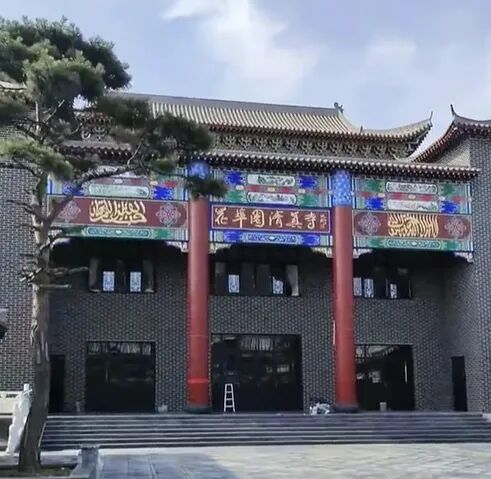
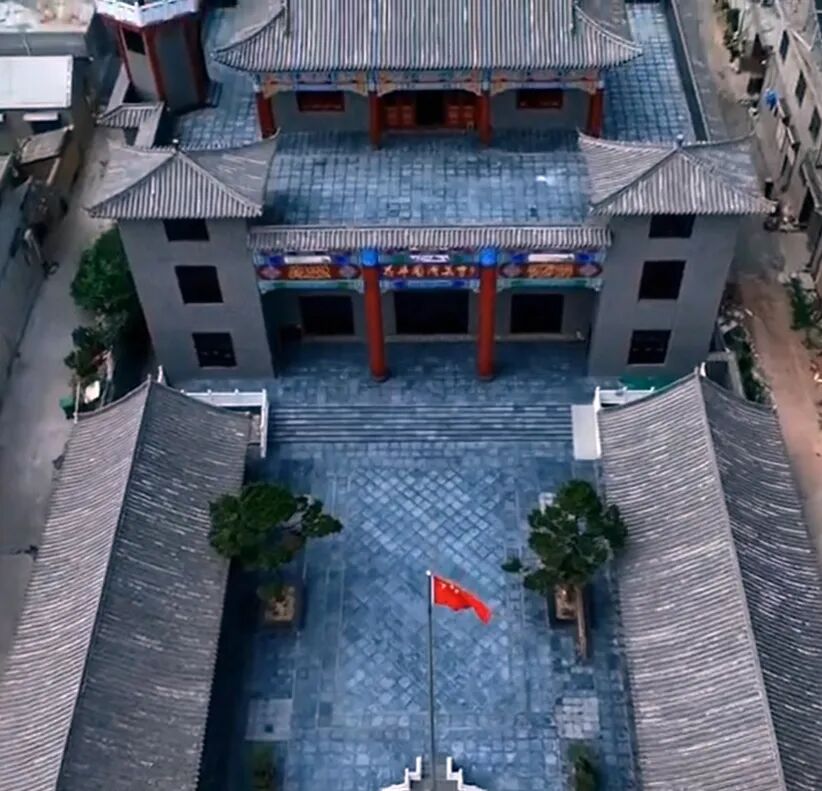
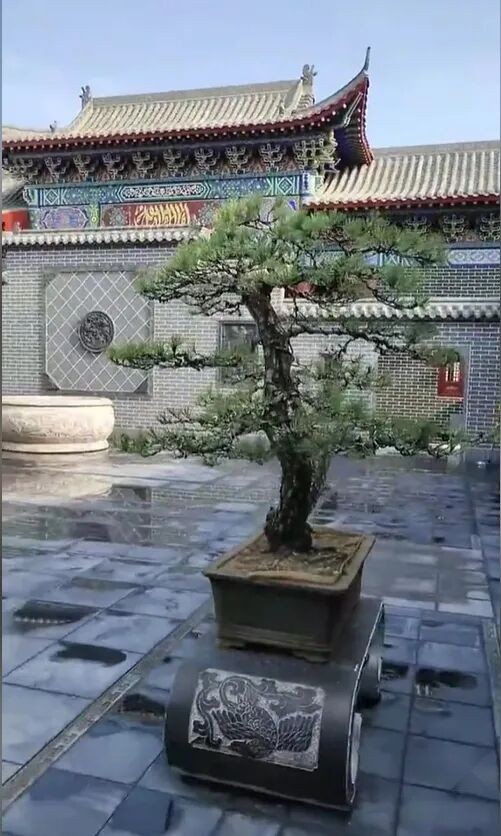
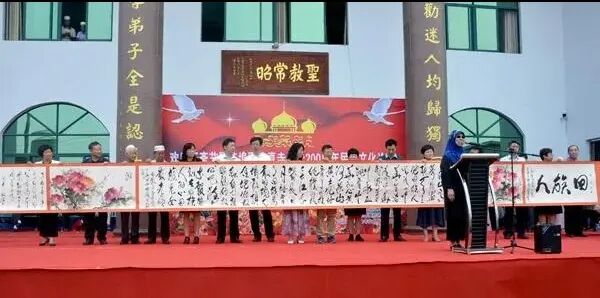
The exact founding date of the Huabuquan Mosque is unknown, but records on existing steles show that it was renovated in the 20th year of the Guangxu reign under the Qing Dynasty, overseen by Imam Zhang Yun. The national hero Zuo Baogui generously funded the project and inscribed the temple plaque with the words Shengjiao Changzhao (The Sacred Teachings Always Shine). At the time, it featured three main prayer halls, five lecture halls, three ritual washing rooms, and a gate tower, covering an area of 1.7 mu. Through historical upheavals, damage during the Cultural Revolution, and a fire in 1972, the mosque suffered several setbacks that hampered the religious lives of local Muslims. Because of this, successive leaders like Zhang Yuqian, Xiao Yanbin, Sha Ziling, and Imams Wen Yanbin and Wen Yongquan spearheaded multiple renovations. By 1992, the complex had expanded to five main prayer halls, ten lecture halls, six washing rooms, and a gate tower, covering 2.7 mu, with a new plaque inscribed by Department Chief Ding Lechun. In June 1998, with support from religious authorities and the Shengzhuang Town government, Party Secretary Xiao Zili led a major reconstruction to fulfill the wishes of the local Muslim community. During the opening of the 200th-anniversary cultural forum for the mosque, Mi Changling—former chair of the Jining Democratic League and a university professor—presented a 20-meter-long scroll titled 'The Hui People' on behalf of General Ma Guochao, the son of war hero Ma Benzhai. For the past two centuries, the Huabuquan Mosque has played a vital role in preserving Hui culture and fostering ethnic unity.
We’re taking a deep dive into the largest Hui Muslim village in Shandong Province, Huabuquan Village in Linyi’s Luozhuang District, which was honored as a National Model for Ethnic Unity in 2024. We'll trace the history of the Hui Muslims who settled in ancient Langya during the Northern Song Dynasty and check out the traditional architecture of the local mosque.
Huabuquan Village is a vibrant minority community located in the Shengzhuang sub-district of Linyi, Shandong. With a registered population of 8,362, over 98% of the residents are Hui Muslims, making it the largest Hui settlement in the entire province. In 2024, the village was officially recognized as a National Model for Ethnic Unity.
The Hui Muslims were among the earliest minority groups to migrate to ancient Langya. During the Jianlong era of the Northern Song Dynasty, a group of Hui families settled in Qingfengling, about 10 kilometers south of Linyi. The area was named Huabuquan (literally 'Flower Port Circle') because it’s tucked into a circular hilly landscape that blooms with wildflowers every spring and summer. The village has 1,302 households with a natural population growth rate of 0.8 per thousand. It’s a melting pot of surnames, with Ma, Xiao, Wen, Sha, and Zhang being the most common, alongside others like Gao, Hu, Lu, Xing, and Du. Out of the total population, 8,195 are Hui and 167 are Han, meaning the community is predominantly Hui.
During the War of Resistance Against Japanese Aggression, over 40 villagers, including Gao Lianhuai, Li Deyou, and Wen Tingjin, joined the Binhai Hui Cavalry Brigade. This brigade operated from the banks of the Yi River all the way to the coast, focusing on guerrilla warfare, supporting major army units, and clearing out remaining enemy forces around the Linyi area.
During the War of Liberation, in February 1948, the Binhai Hui Cavalry Brigade merged with the Bohai Hui Cavalry Brigade to form a dedicated Hui regiment. More than 10 villagers, including Xiao Zhihong and Yang Decai, joined the 900-member unit led by commander Ma Jie and political commissar Peng Linbo. They took part in major operations like the Jinan Campaign and the Huaihai Campaign. The village established its first Communist Party branch in December 1945, led by its first secretary, Ma Baoyin, who was eventually killed by the Kuomintang on the west bank of the Yi River.
During the War to Resist U.S. Aggression and Aid Korea, local villagers like Wen Yanru and Zhang Hongfu courageously enlisted in the military and headed to the front lines in Korea to defend their country.
The exact founding date of the Huabuquan Mosque is unknown, but records on existing steles show that it was renovated in the 20th year of the Guangxu reign under the Qing Dynasty, overseen by Imam Zhang Yun. The national hero Zuo Baogui generously funded the project and inscribed the temple plaque with the words Shengjiao Changzhao (The Sacred Teachings Always Shine). At the time, it featured three main prayer halls, five lecture halls, three ritual washing rooms, and a gate tower, covering an area of 1.7 mu. Through historical upheavals, damage during the Cultural Revolution, and a fire in 1972, the mosque suffered several setbacks that hampered the religious lives of local Muslims. Because of this, successive leaders like Zhang Yuqian, Xiao Yanbin, Sha Ziling, and Imams Wen Yanbin and Wen Yongquan spearheaded multiple renovations. By 1992, the complex had expanded to five main prayer halls, ten lecture halls, six washing rooms, and a gate tower, covering 2.7 mu, with a new plaque inscribed by Department Chief Ding Lechun. In June 1998, with support from religious authorities and the Shengzhuang Town government, Party Secretary Xiao Zili led a major reconstruction to fulfill the wishes of the local Muslim community. During the opening of the 200th-anniversary cultural forum for the mosque, Mi Changling—former chair of the Jining Democratic League and a university professor—presented a 20-meter-long scroll titled 'The Hui People' on behalf of General Ma Guochao, the son of war hero Ma Benzhai. For the past two centuries, the Huabuquan Mosque has played a vital role in preserving Hui culture and fostering ethnic unity.
