

Hui Muslim Culture
Exploring Ningxia’s Hidden Sufi Shrines & Historic Northwest Muslim Heritage
Articles • Hasan09 posted the article • 0 comments • 3 views • 1 hours ago
Large-Format Photographic Series of the Northwest: Exploring the Unnamed Shuangtingzi Gongbei and Rubbings of Black-and-White Historic Sites
Abstract:
Recording the unnamed Shuangtingzi gongbei in Ningxia through the classic language of black-and-white large-format photography. Using light and shadow to sculpt the weathered, rustic hexagonal double pavilions, crumbling brick carvings, and the mottled woodwork of time, deeply touching the quiet echoes of the historical pulse of Northwest Sufism.
Black-and-White Large-Format Photographic Series: Rubbings of Historic Sites and the Pulse of History
Gongbei (derived from the Arabic Qubbah) is an Islamic architectural style that first became popular in Arabia, Persia, and Central Asia. Over time, it came to specifically refer to dome-shaped structures built over the tombs of Sufi shaykhs (spiritual masters), descendants of the Prophet, and revered saints for the purpose of veneration and visitation. Sufism was introduced to China during the Yuan dynasty and spread widely across the Northwest during the Ming and Qing dynasties. It gradually fused with traditional Chinese garden architecture, retaining Arabic-style domes for the mausoleums while adding Chinese-style prayer halls, scripture-chanting halls, and meditation rooms. Most modern gongbei structures are hexagonal or octagonal double-eaved pagodas with brick-carved walls, decorated with Quranic calligraphy and floral motifs. Due to complex historical evolution, Ningxia gave birth to numerous large and small menhuan (Sufi orders / brotherhoods) that are independent of one another, primarily the Khufiyya, Jahriyya, and Qadiriyya, all carrying a distinct Sufi mystical flavor. The Khufiyya includes the Hongmen, Xianmen, and Tonggui sub-orders. The Jahriyya is divided into the Shagou and Banqiao menhuan. The Qadiriyya is split into the Jiucaiping, Qi family, and Mingyue Daotang menhuan. Aside from the Guitubu gongbei, the old masters' gongbei of various menhuan, the murshid gongbei, and the khalifa gongbei, Ningxia also features other types of gongbei: those built at places where murshids, old masters, or other awliya (saints) experienced karamat (miracles); those built at locations where a murshid or old master once slept on the earth, or built over their personal relics; and those built to honor senior imams who sacrificed their lives for the religious community. A gongbei is a sacred sanctuary in the hearts of Muslims, where they regularly or irregularly visit graves and perform niyah/nietian (charitable giving/remembrance), solemnly honoring saints and sages, drawing close to the prophets, and seeking divine protection and forgiveness.
After publishing our previous piece and photos on the "Unnamed Gongbei," we miraculously received messages from two kind-hearted villagers who provided the exact location of the Shuangtingzi gongbei, which sits just a few kilometers away from the unnamed one—one to the northwest, the other to the southeast. I drove twice to Shuangtingzi Village in Litong District, Wuzhong City. The gongbei is located in the fields and village outskirts on the south side of the Han Canal. It is dome-shaped, standing several meters high and hexagonal in structure, surrounded by a low brick wall with entryways facing north and south, sitting tens of meters apart. Consulting limited historical records, I deduce that this is likely an old master's gongbei of a Sufi order, initially built around the late Qing dynasty to the Republic period, much like other gongbei in the surrounding area. Conversations with nearby villagers revealed that it was built to commemorate elders surnamed Wei and Yang, but was destroyed and abandoned during the social movements of the 1960s and 70s. After religious policies were reinstated, descendants rebuilt it on the original site following a dream sent by the old masters. Every year on the death anniversary, the descendants of the elders come to the gongbei to perform grave visits and pay their respects. In recent years, the number of visitors has dwindled, and the site is slowly slipping into oblivion.
▲ Click the image to open the previous article and photos of the Unnamed Gongbei
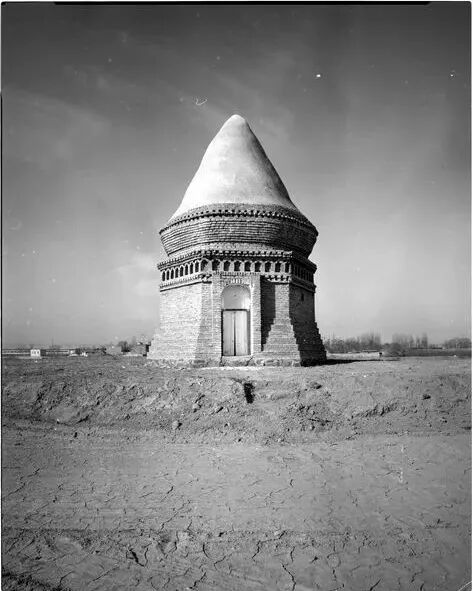
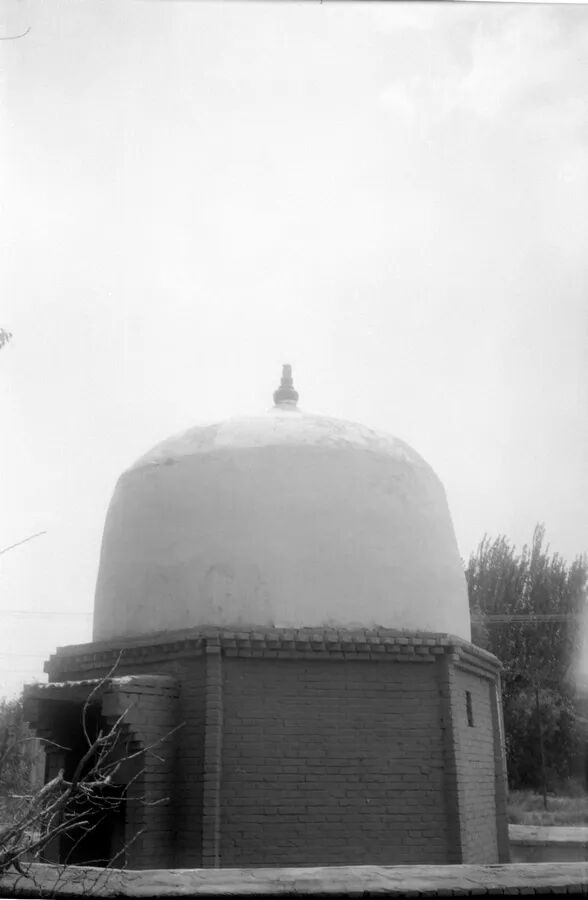
▲ The Shuangtingzi gongbei architecture situated on an empty plot near the village
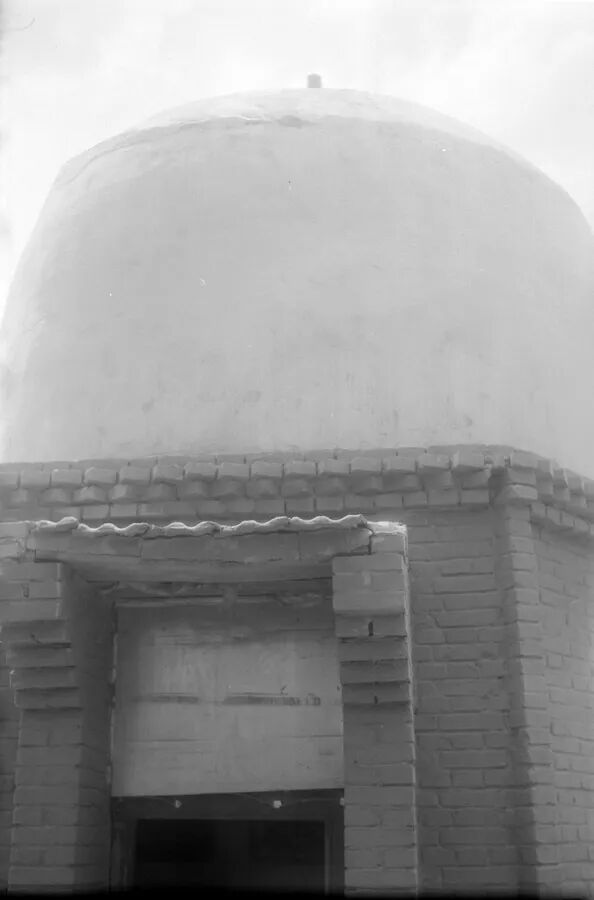
▲ A close-up of the dome and front facade of the northern gongbei
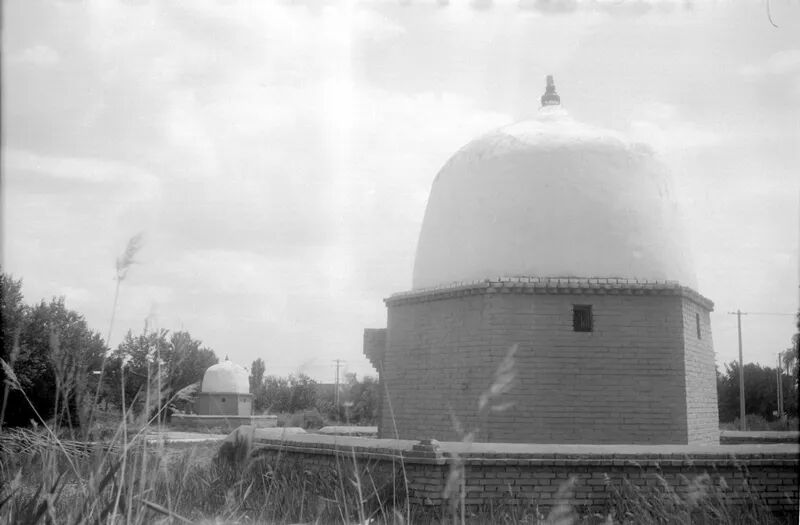
▲ A full view of the southern gongbei structure
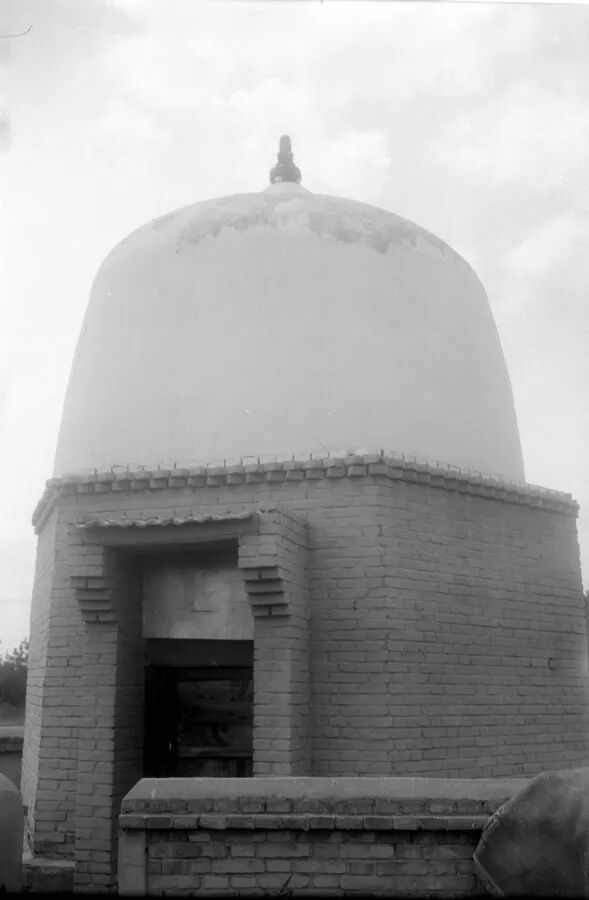
▲ A close-up of the dome and front facade of the southern gongbei
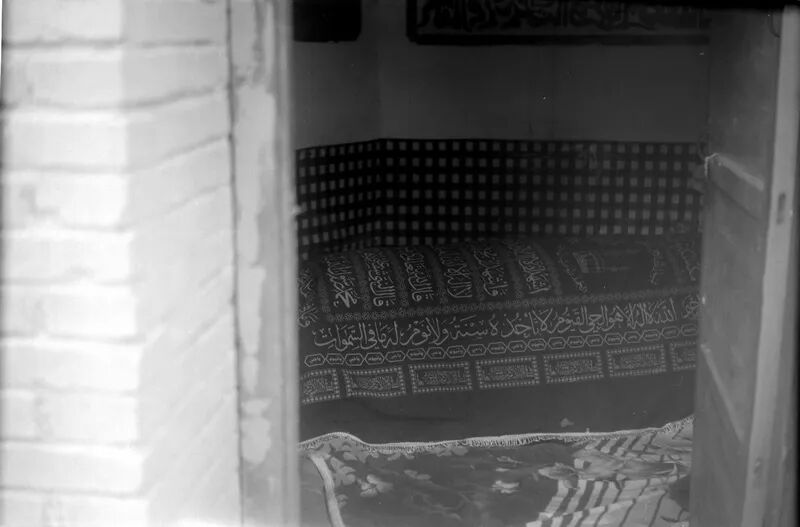
▲ An accidental shot capturing the interior of the southern gongbei structure view all
Large-Format Photographic Series of the Northwest: Exploring the Unnamed Shuangtingzi Gongbei and Rubbings of Black-and-White Historic Sites
Abstract:
Recording the unnamed Shuangtingzi gongbei in Ningxia through the classic language of black-and-white large-format photography. Using light and shadow to sculpt the weathered, rustic hexagonal double pavilions, crumbling brick carvings, and the mottled woodwork of time, deeply touching the quiet echoes of the historical pulse of Northwest Sufism.
Black-and-White Large-Format Photographic Series: Rubbings of Historic Sites and the Pulse of History
Gongbei (derived from the Arabic Qubbah) is an Islamic architectural style that first became popular in Arabia, Persia, and Central Asia. Over time, it came to specifically refer to dome-shaped structures built over the tombs of Sufi shaykhs (spiritual masters), descendants of the Prophet, and revered saints for the purpose of veneration and visitation. Sufism was introduced to China during the Yuan dynasty and spread widely across the Northwest during the Ming and Qing dynasties. It gradually fused with traditional Chinese garden architecture, retaining Arabic-style domes for the mausoleums while adding Chinese-style prayer halls, scripture-chanting halls, and meditation rooms. Most modern gongbei structures are hexagonal or octagonal double-eaved pagodas with brick-carved walls, decorated with Quranic calligraphy and floral motifs. Due to complex historical evolution, Ningxia gave birth to numerous large and small menhuan (Sufi orders / brotherhoods) that are independent of one another, primarily the Khufiyya, Jahriyya, and Qadiriyya, all carrying a distinct Sufi mystical flavor. The Khufiyya includes the Hongmen, Xianmen, and Tonggui sub-orders. The Jahriyya is divided into the Shagou and Banqiao menhuan. The Qadiriyya is split into the Jiucaiping, Qi family, and Mingyue Daotang menhuan. Aside from the Guitubu gongbei, the old masters' gongbei of various menhuan, the murshid gongbei, and the khalifa gongbei, Ningxia also features other types of gongbei: those built at places where murshids, old masters, or other awliya (saints) experienced karamat (miracles); those built at locations where a murshid or old master once slept on the earth, or built over their personal relics; and those built to honor senior imams who sacrificed their lives for the religious community. A gongbei is a sacred sanctuary in the hearts of Muslims, where they regularly or irregularly visit graves and perform niyah/nietian (charitable giving/remembrance), solemnly honoring saints and sages, drawing close to the prophets, and seeking divine protection and forgiveness.
After publishing our previous piece and photos on the "Unnamed Gongbei," we miraculously received messages from two kind-hearted villagers who provided the exact location of the Shuangtingzi gongbei, which sits just a few kilometers away from the unnamed one—one to the northwest, the other to the southeast. I drove twice to Shuangtingzi Village in Litong District, Wuzhong City. The gongbei is located in the fields and village outskirts on the south side of the Han Canal. It is dome-shaped, standing several meters high and hexagonal in structure, surrounded by a low brick wall with entryways facing north and south, sitting tens of meters apart. Consulting limited historical records, I deduce that this is likely an old master's gongbei of a Sufi order, initially built around the late Qing dynasty to the Republic period, much like other gongbei in the surrounding area. Conversations with nearby villagers revealed that it was built to commemorate elders surnamed Wei and Yang, but was destroyed and abandoned during the social movements of the 1960s and 70s. After religious policies were reinstated, descendants rebuilt it on the original site following a dream sent by the old masters. Every year on the death anniversary, the descendants of the elders come to the gongbei to perform grave visits and pay their respects. In recent years, the number of visitors has dwindled, and the site is slowly slipping into oblivion.
▲ Click the image to open the previous article and photos of the Unnamed Gongbei
▲ The Shuangtingzi gongbei architecture situated on an empty plot near the village
▲ A close-up of the dome and front facade of the northern gongbei
▲ A full view of the southern gongbei structure
▲ A close-up of the dome and front facade of the southern gongbei
▲ An accidental shot capturing the interior of the southern gongbei structure
Exploring Yinchuan: Quiet Nanguan Mosque & Vibrant Niujie Street Halal Food Guide
Articles • Hasan09 posted the article • 0 comments • 3 views • 1 hours ago
Silence and Bustle Just a Wall Apart: A Cultural Walk Through Yinchuan's Nanguan Mosque and Bustling Niujie
Summary:
Stroll through the old Xingqing district of Yinchuan, capturing the solemn majesty of the Nanguan Mosque alongside the sizzling, vibrant energy of Niujie (Niujie Muslim Food Street) just to its east. Experience the serene depth of a spiritual sanctuary right next to the pulsing life of the neighborhood streets, showcasing Yinchuan's unique blend of history and human culture.
Step into the historic Xingqing district of Yinchuan, where a stark contrast between quiet and lively is hidden right between the Nanguan Mosque and Niujie. Separated by just a wall, one side offers a solemn religious hall while the other buzzes with everyday street life, together painting Yinchuan's signature cultural landscape.
The Nanguan Mosque (Nanguan Mosque in Yinchuan) is a cultural landmark of old Yinchuan, originally built in the late Ming and early Qing dynasties. The architecture you see today was rebuilt later, perfectly blending rich Islamic architectural aesthetics. With its pristine white walls and graceful arcades, the overall layout feels grand, solemn, and open.
Stepping into the courtyard, the city noise is shut out, and your mind naturally quiets down.
As an important local site for religious activities, visitors should approach with deep respect, steer clear of prayer (dua) times, follow local etiquette, and quietly soak in the peace and solemnity.
Head out the east side of the grand mosque and turn right onto Niujie. A lot of people like to compare it to Beijing's Niujie:
While Beijing's Niujie has centuries of history with ancient masjids tucked away in alleys and historic buildings blending into daily life for a more vintage vibe, Yinchuan's Niujie sits right next to the Nanguan Mosque as a vibrant local neighborhood. It might lack heavy, historic courtyards, but it wins big on pure energy and life, with the rich daily culture of Hui Muslims hitting you the moment you arrive.
By day, Niujie is pretty chill, with neat rows of shops and halal restaurants lining the street.
Once twilight hits, the whole neighborhood snaps awake in an instant. The smell of barbecue drifts everywhere as locals and travelers hustle and bustle past each other. Roasted mutton, yangzasui (hearty lamb offal soup with chili oil), and specialty noodle dishes put the authentic flavors of Northwest China on full display. Along the street, you'll also spot little shops selling Hui daily goods and folk crafts, where everyday life and ethnic culture completely intertwine.
Spend half a day wandering, transitioning from the quiet serenity of the mosque to the lively buzz of Niujie. Reflecting on the peace of faith on one side while tasting the raw, vibrant flavor of the streets on the other—this is the truest face of old Yinchuan. view all
Silence and Bustle Just a Wall Apart: A Cultural Walk Through Yinchuan's Nanguan Mosque and Bustling Niujie
Summary:

Stroll through the old Xingqing district of Yinchuan, capturing the solemn majesty of the Nanguan Mosque alongside the sizzling, vibrant energy of Niujie (Niujie Muslim Food Street) just to its east. Experience the serene depth of a spiritual sanctuary right next to the pulsing life of the neighborhood streets, showcasing Yinchuan's unique blend of history and human culture.

Step into the historic Xingqing district of Yinchuan, where a stark contrast between quiet and lively is hidden right between the Nanguan Mosque and Niujie. Separated by just a wall, one side offers a solemn religious hall while the other buzzes with everyday street life, together painting Yinchuan's signature cultural landscape.
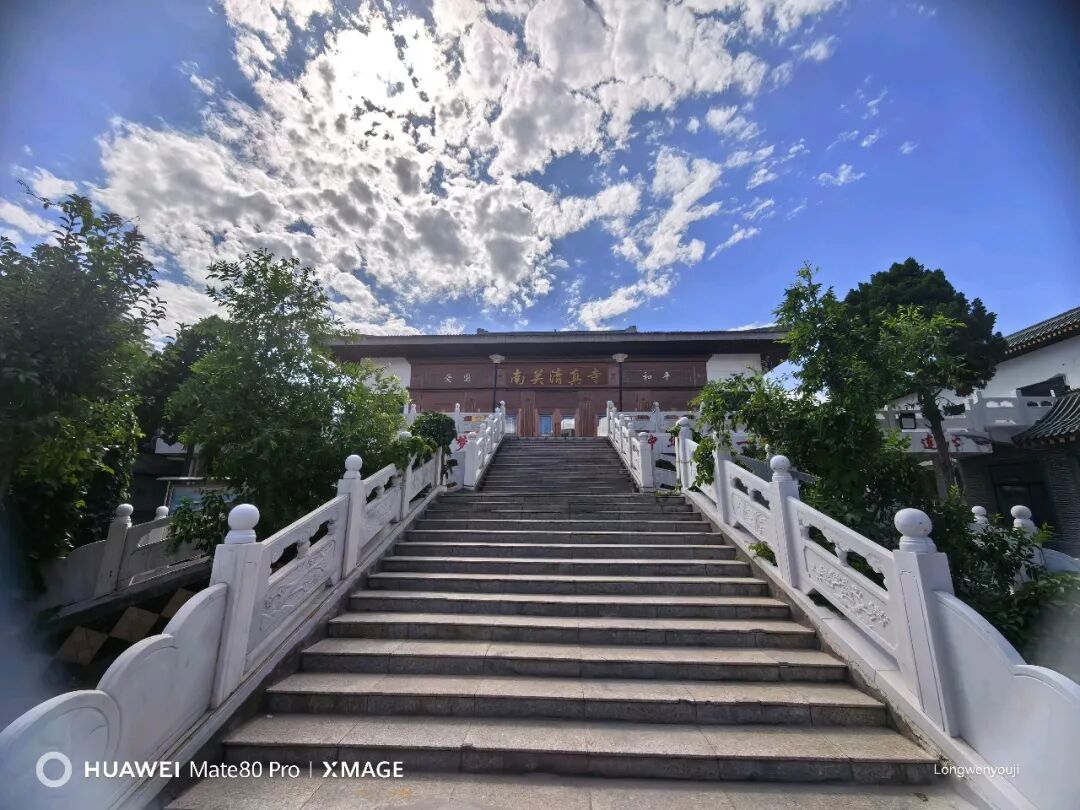
The Nanguan Mosque (Nanguan Mosque in Yinchuan) is a cultural landmark of old Yinchuan, originally built in the late Ming and early Qing dynasties. The architecture you see today was rebuilt later, perfectly blending rich Islamic architectural aesthetics. With its pristine white walls and graceful arcades, the overall layout feels grand, solemn, and open.
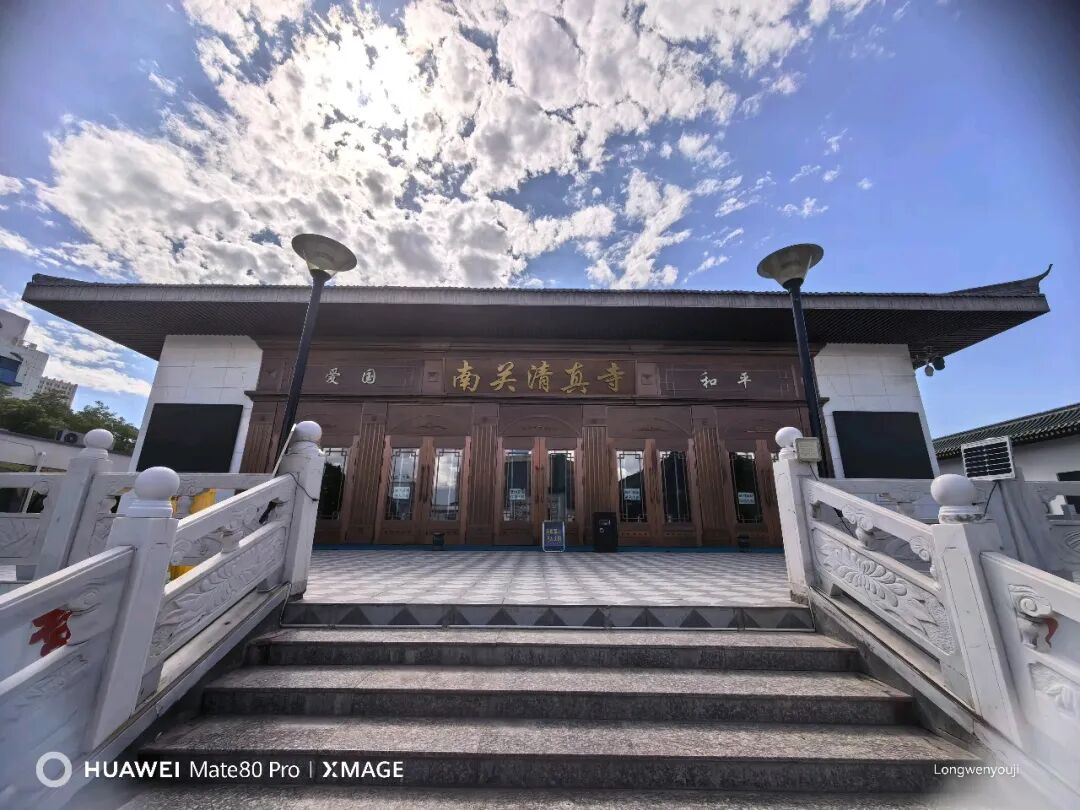
Stepping into the courtyard, the city noise is shut out, and your mind naturally quiets down.
As an important local site for religious activities, visitors should approach with deep respect, steer clear of prayer (dua) times, follow local etiquette, and quietly soak in the peace and solemnity.
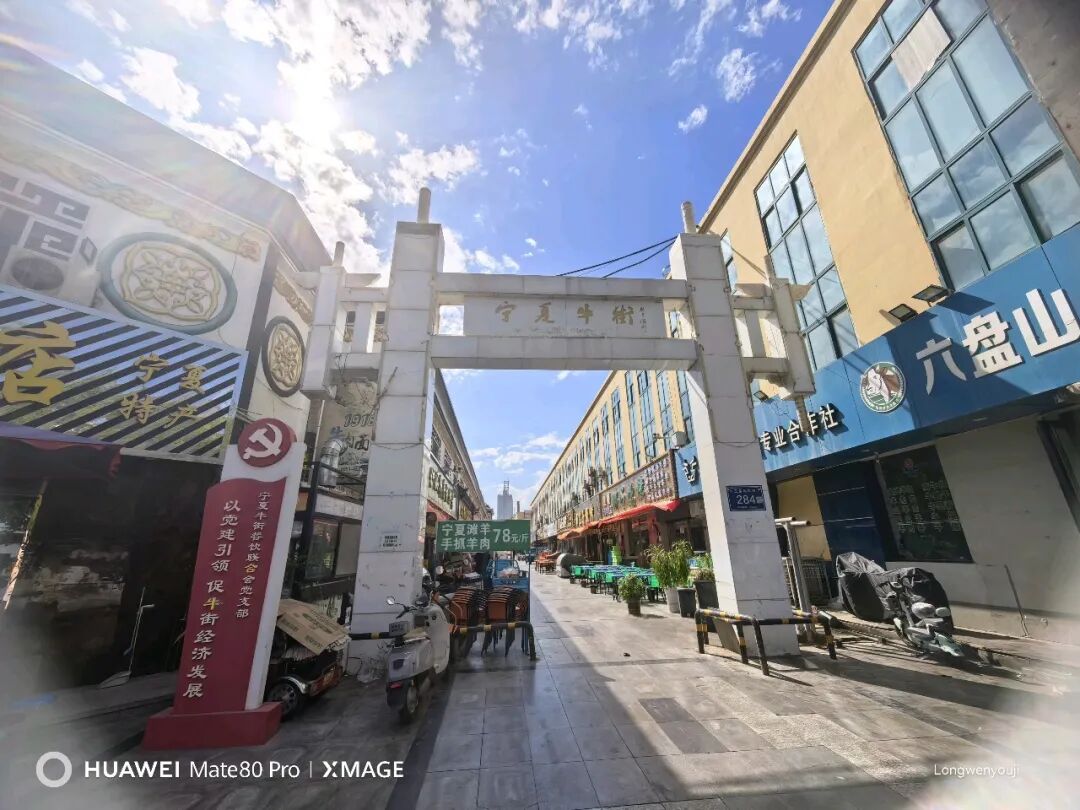
Head out the east side of the grand mosque and turn right onto Niujie. A lot of people like to compare it to Beijing's Niujie:
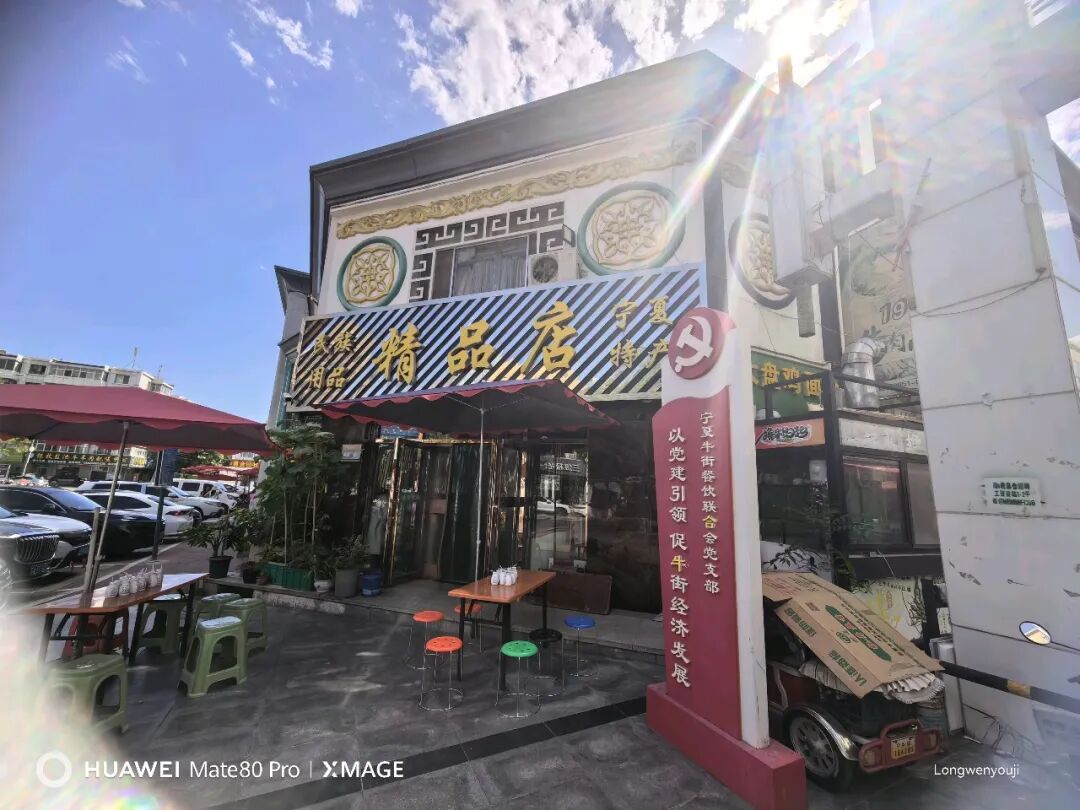
While Beijing's Niujie has centuries of history with ancient masjids tucked away in alleys and historic buildings blending into daily life for a more vintage vibe, Yinchuan's Niujie sits right next to the Nanguan Mosque as a vibrant local neighborhood. It might lack heavy, historic courtyards, but it wins big on pure energy and life, with the rich daily culture of Hui Muslims hitting you the moment you arrive.
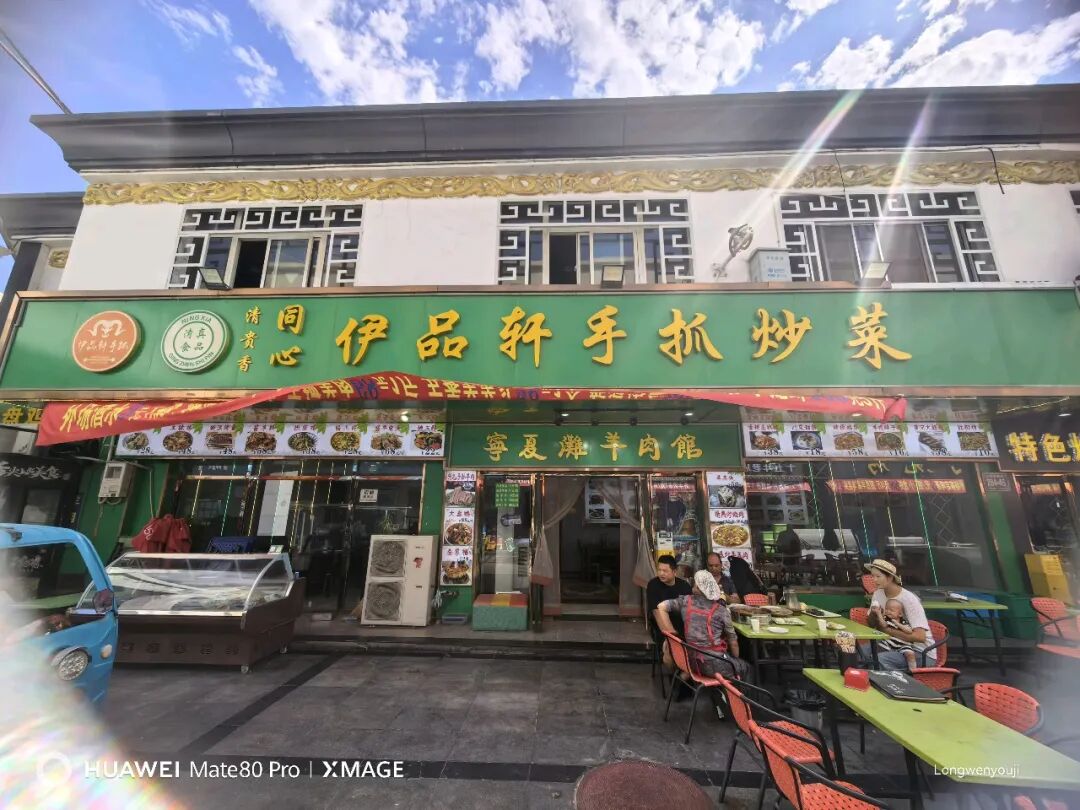
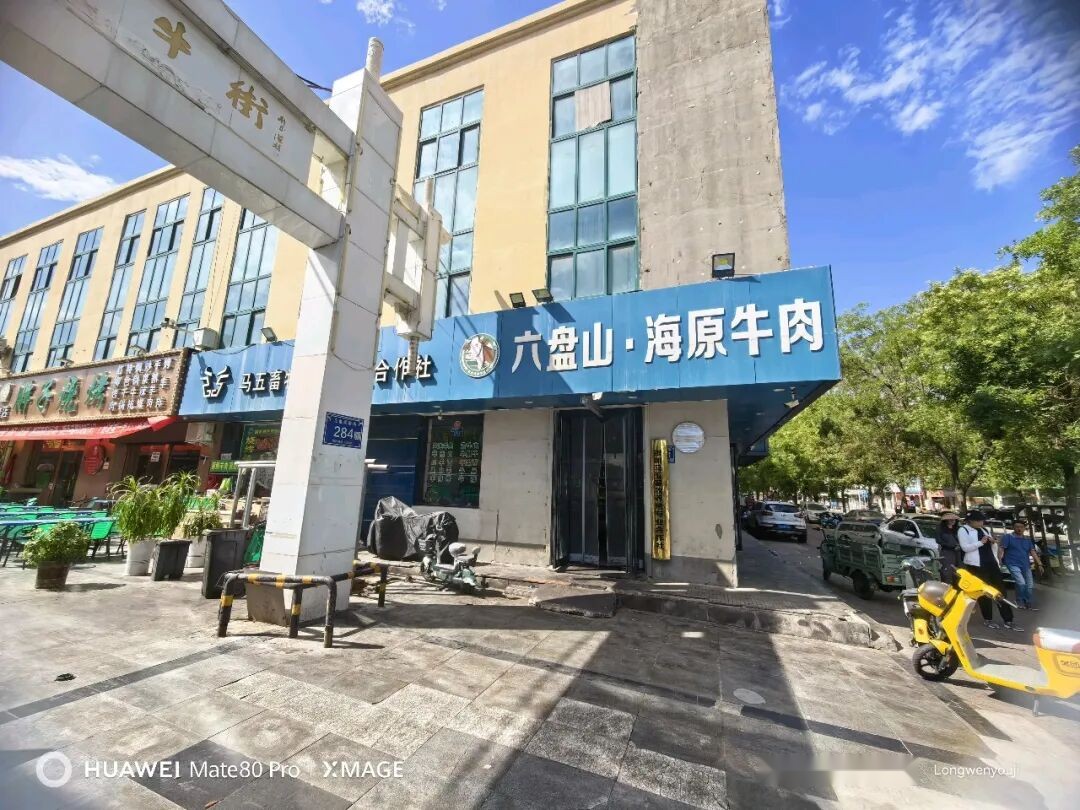
By day, Niujie is pretty chill, with neat rows of shops and halal restaurants lining the street.
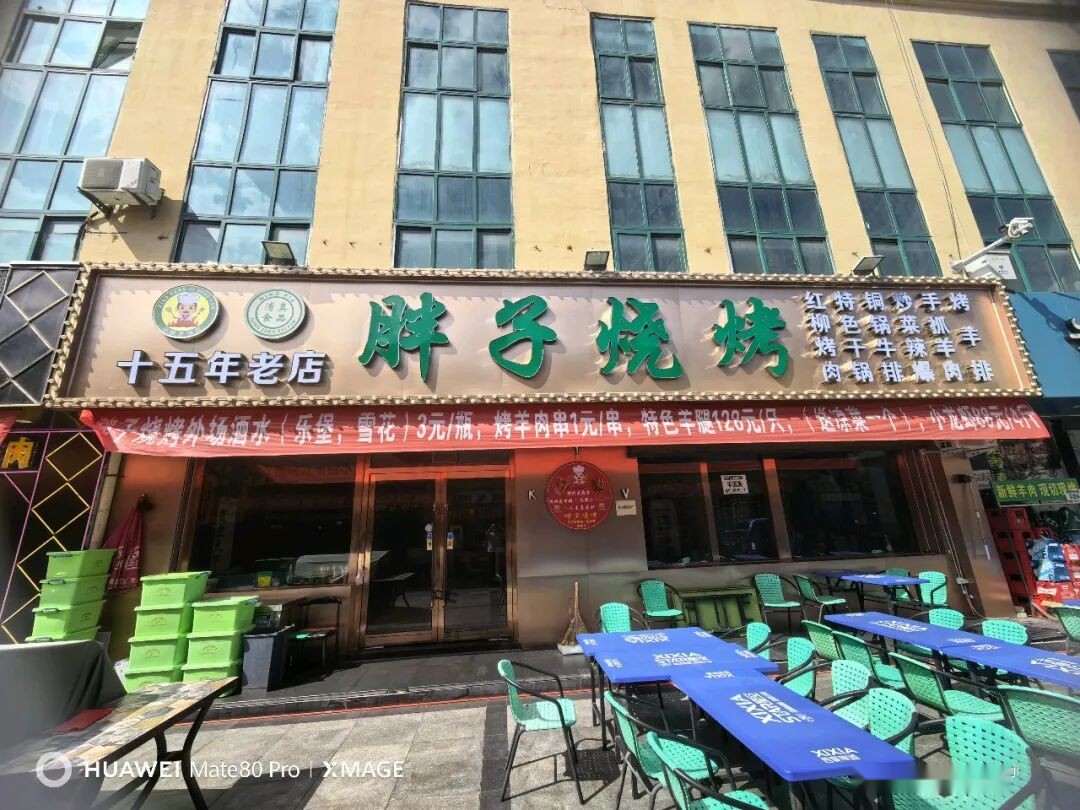
Once twilight hits, the whole neighborhood snaps awake in an instant. The smell of barbecue drifts everywhere as locals and travelers hustle and bustle past each other. Roasted mutton, yangzasui (hearty lamb offal soup with chili oil), and specialty noodle dishes put the authentic flavors of Northwest China on full display. Along the street, you'll also spot little shops selling Hui daily goods and folk crafts, where everyday life and ethnic culture completely intertwine.
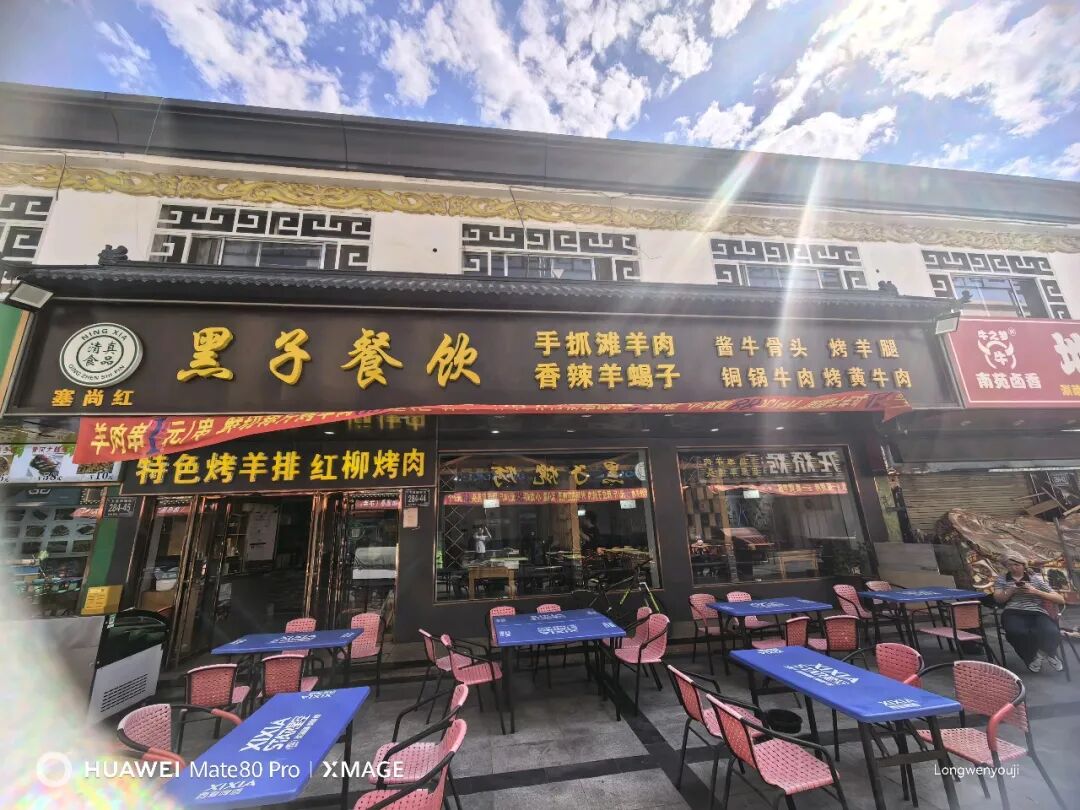
Spend half a day wandering, transitioning from the quiet serenity of the mosque to the lively buzz of Niujie. Reflecting on the peace of faith on one side while tasting the raw, vibrant flavor of the streets on the other—this is the truest face of old Yinchuan.
Exploring Najahu Mosque in Ningxia: Centuries-Old Ming Dynasty Heritage & Hui Muslim Culture
Articles • Hasan09 posted the article • 0 comments • 3 views • 1 hours ago
Exploring the Najahu Mosque in Yinchuan: A Centuries-Old Ming Dynasty Masjid in a Historic Hui Muslim Village
Abstract:
A field visit to the Ming Dynasty Najahu Mosque located in Najahu Village, Yongning County, Yinchuan City. Discovering a solemn ancient masjid that blends traditional classical Chinese halls with Islamic architectural styles, and diving deep into the rich historical and cultural heritage of the Najahu Hui Muslim village.
Ningxia Trip Day 1 (Part 3) Najahu Mosque
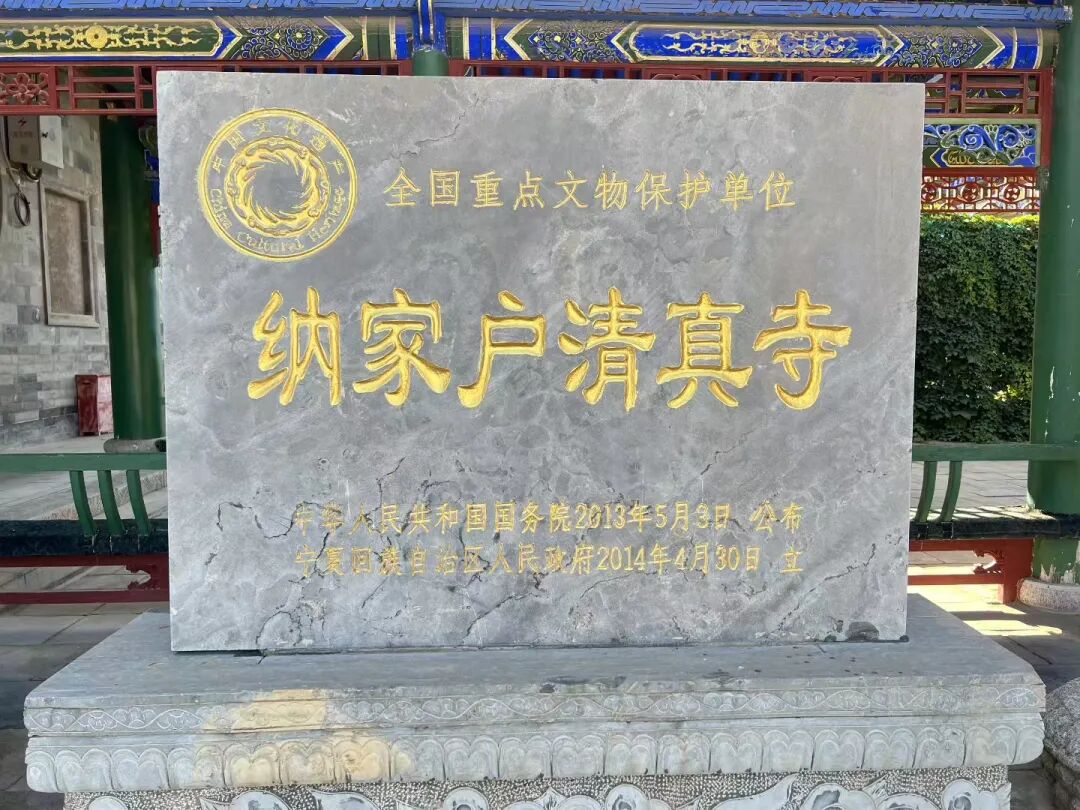
Najahu Village, Xingqing District, Yinchuan City, Ningxia Hui Autonomous Region, is home to one of the most representative mosques in Ningxia combining traditional Chinese and Islamic styles, as well as a major religious and cultural heritage site with centuries of history. Legend has it that its origins date back to the Hongwu period of the Ming Dynasty (late 14th century),
initially built by the Hui Muslim ancestors who migrated to Ningxia. It underwent multiple expansions and renovations during the Qing Dynasty, gradually growing in scale. It has also been repaired in modern times, yet its overall layout and traditional architectural character remain remarkably well-preserved.
Today is Saturday, and the mosque's Asr prayer (Asr) starts at 5:45 PM. None of us on this family trip have ever visited a mosque before, so we gladly hopped in the car and headed over.
The Najahu Great Mosque is a traditional medieval-style masjid.
The gate tower features a tunnel-style passageway.
Facing east with its back to the west, the courtyard is rectangular and consists of a gate tower, main prayer hall, side rooms, and ablution facilities, forming a classic ancient Chinese courtyard layout. It is gorgeous.
Many Muslim believers have already arrived inside the complex.
The prayer space inside the mosque. (Captured after taking off our shoes and stepping inside, right before prayer time began.) An Imam was inside the prayer hall.
Inside the prayer hall.
Since we aren't Muslim, we couldn't go inside the hall to watch the Asr prayer rituals, so we had to head back a bit disappointed. view all
Exploring the Najahu Mosque in Yinchuan: A Centuries-Old Ming Dynasty Masjid in a Historic Hui Muslim Village

Abstract:
A field visit to the Ming Dynasty Najahu Mosque located in Najahu Village, Yongning County, Yinchuan City. Discovering a solemn ancient masjid that blends traditional classical Chinese halls with Islamic architectural styles, and diving deep into the rich historical and cultural heritage of the Najahu Hui Muslim village.
Ningxia Trip Day 1 (Part 3) Najahu Mosque
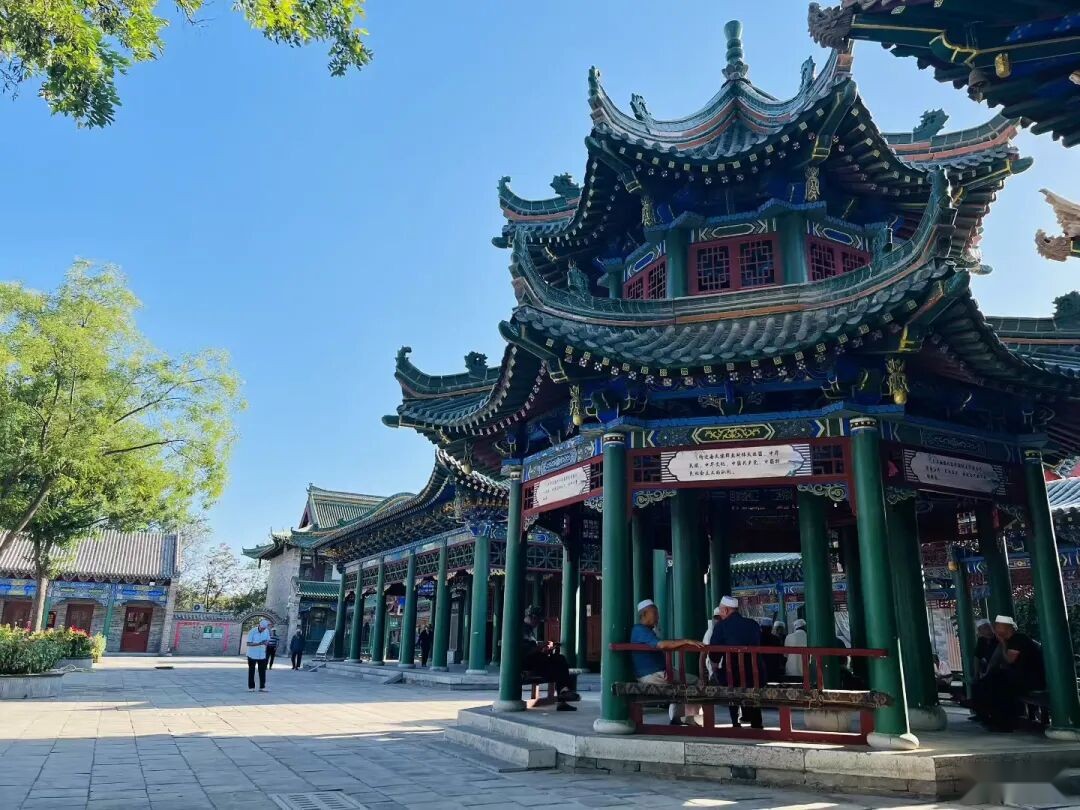
Najahu Village, Xingqing District, Yinchuan City, Ningxia Hui Autonomous Region, is home to one of the most representative mosques in Ningxia combining traditional Chinese and Islamic styles, as well as a major religious and cultural heritage site with centuries of history. Legend has it that its origins date back to the Hongwu period of the Ming Dynasty (late 14th century),
initially built by the Hui Muslim ancestors who migrated to Ningxia. It underwent multiple expansions and renovations during the Qing Dynasty, gradually growing in scale. It has also been repaired in modern times, yet its overall layout and traditional architectural character remain remarkably well-preserved.
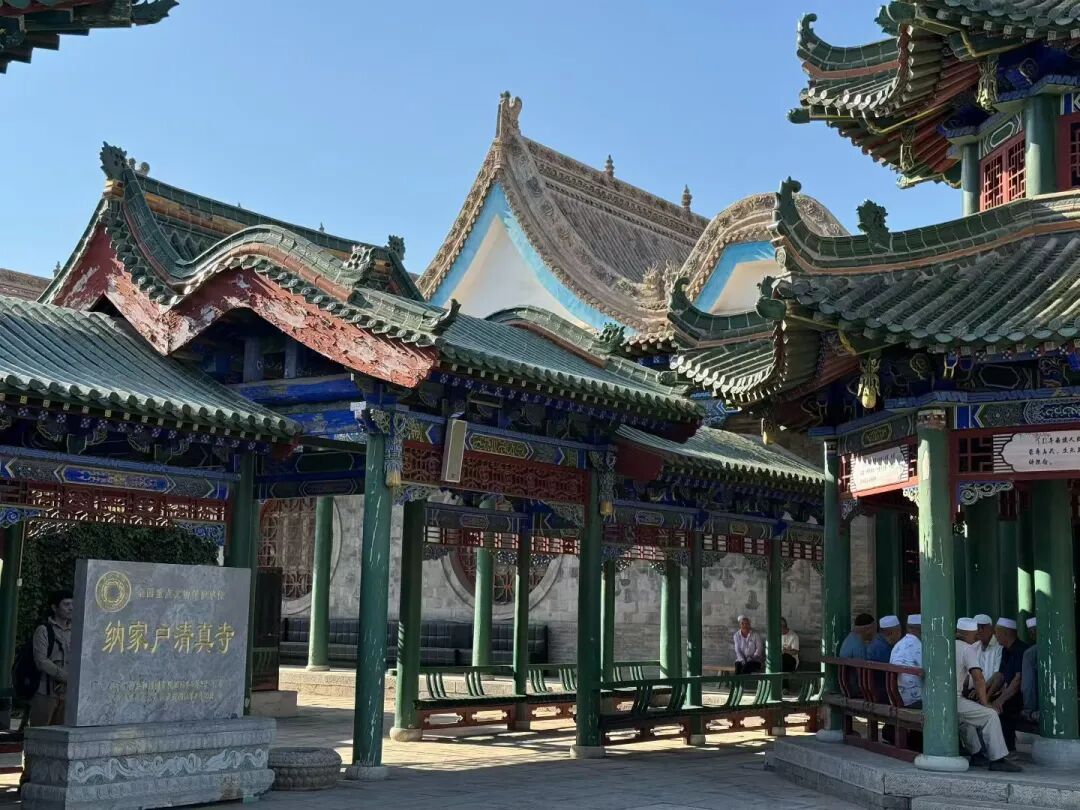
Today is Saturday, and the mosque's Asr prayer (Asr) starts at 5:45 PM. None of us on this family trip have ever visited a mosque before, so we gladly hopped in the car and headed over.
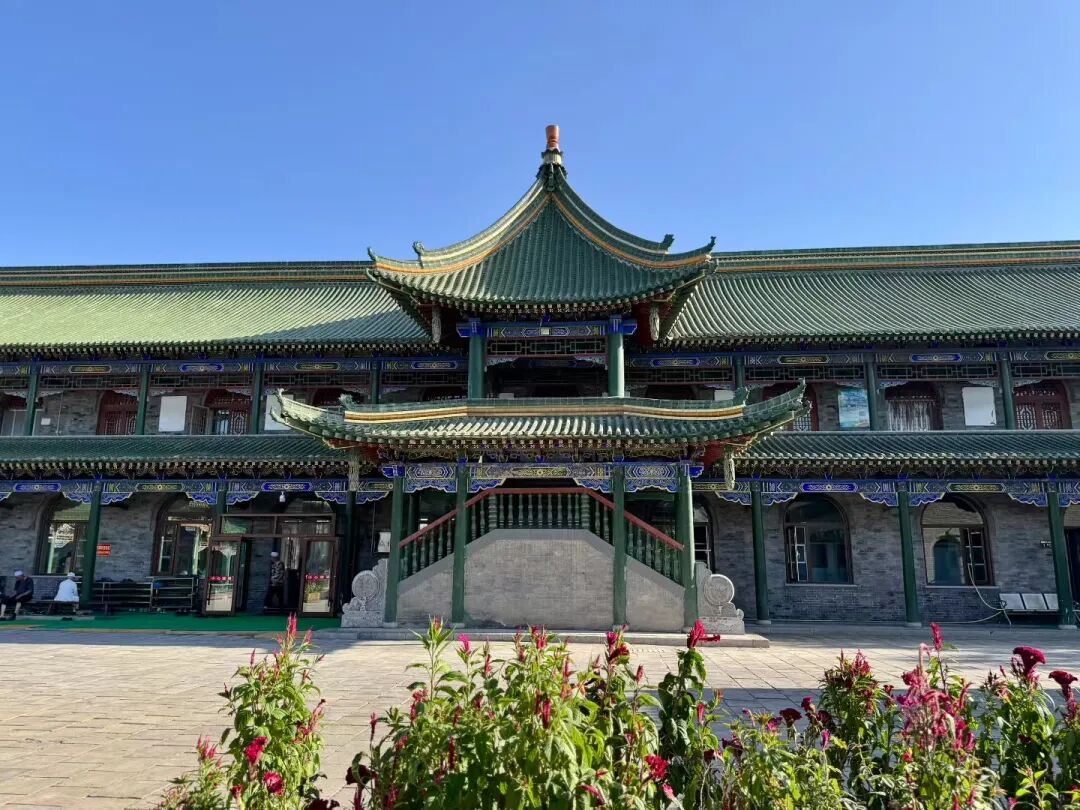
The Najahu Great Mosque is a traditional medieval-style masjid.
The gate tower features a tunnel-style passageway.
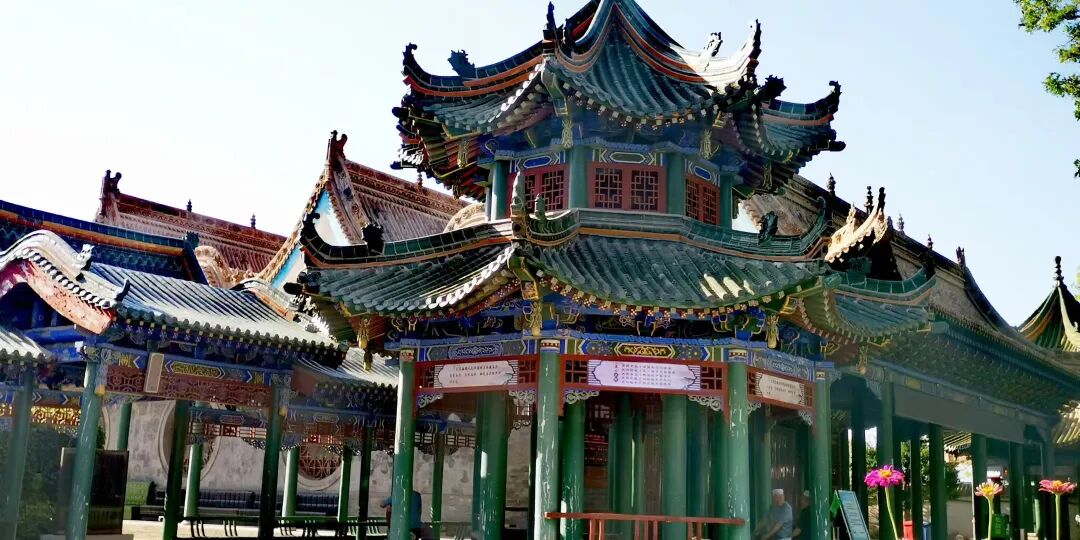
Facing east with its back to the west, the courtyard is rectangular and consists of a gate tower, main prayer hall, side rooms, and ablution facilities, forming a classic ancient Chinese courtyard layout. It is gorgeous.
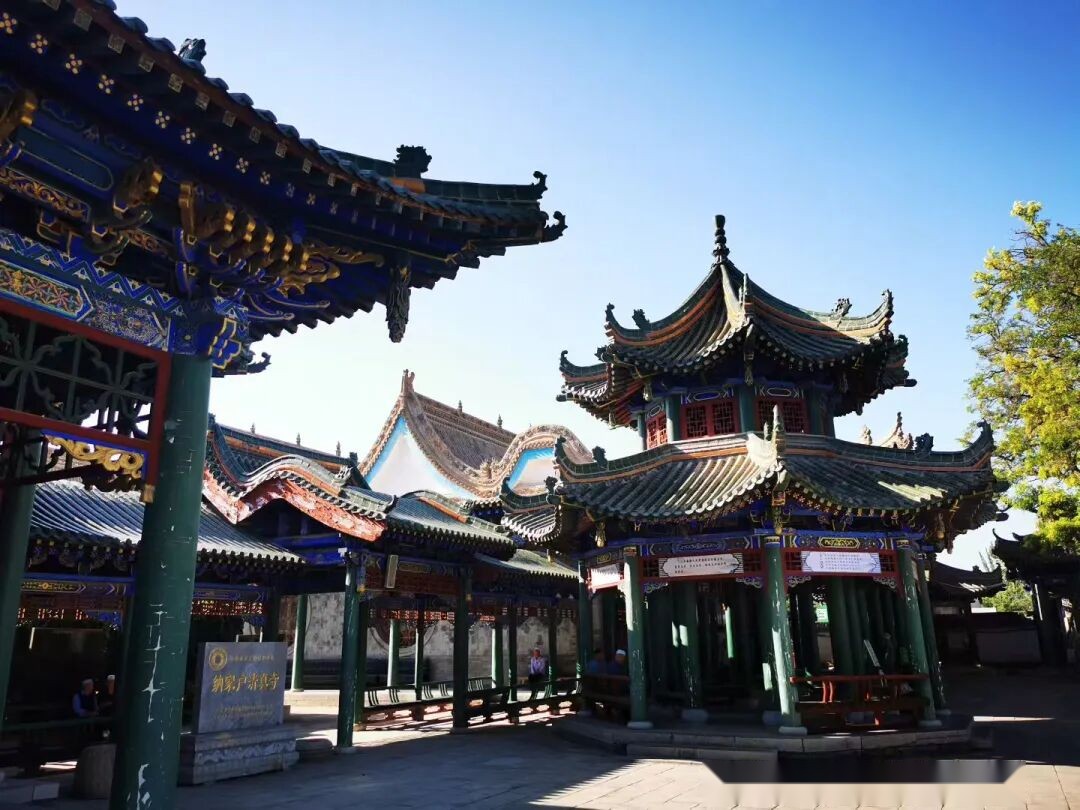
Many Muslim believers have already arrived inside the complex.
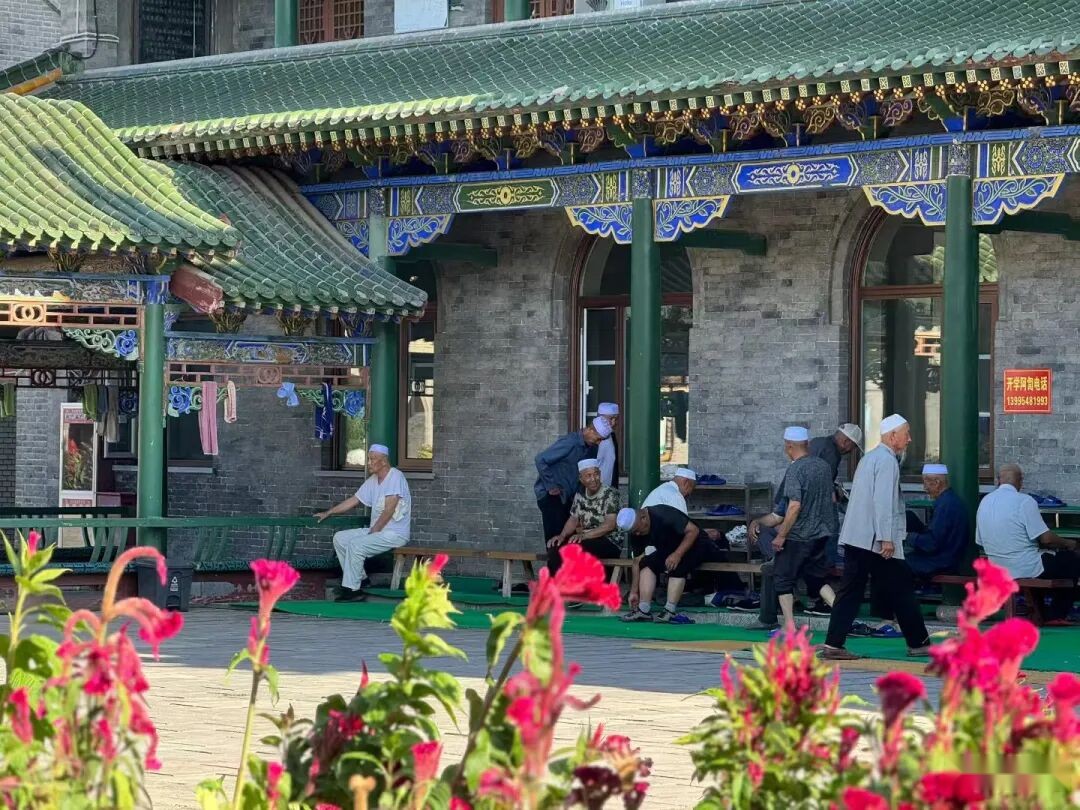
The prayer space inside the mosque. (Captured after taking off our shoes and stepping inside, right before prayer time began.) An Imam was inside the prayer hall.
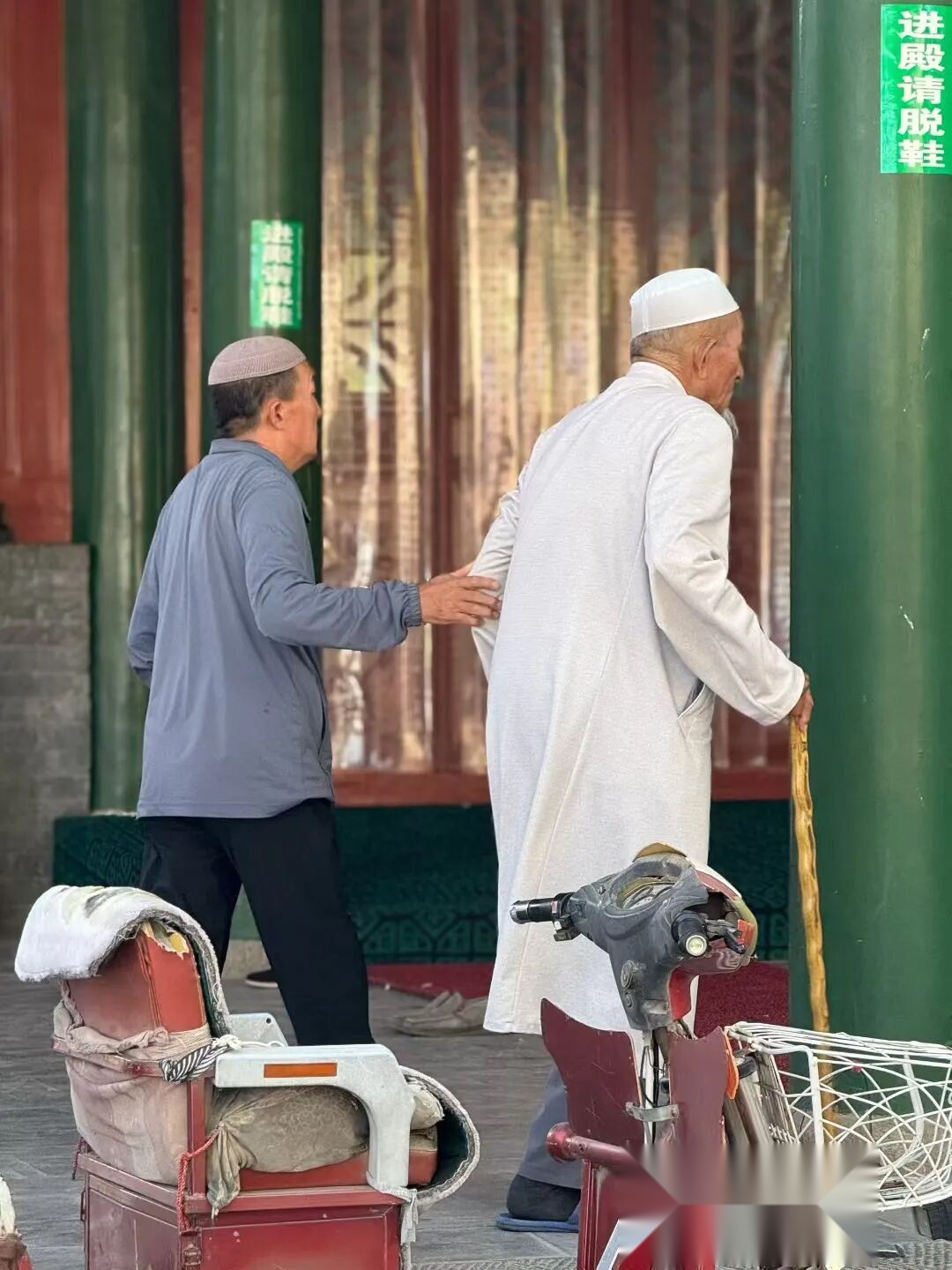
Inside the prayer hall.
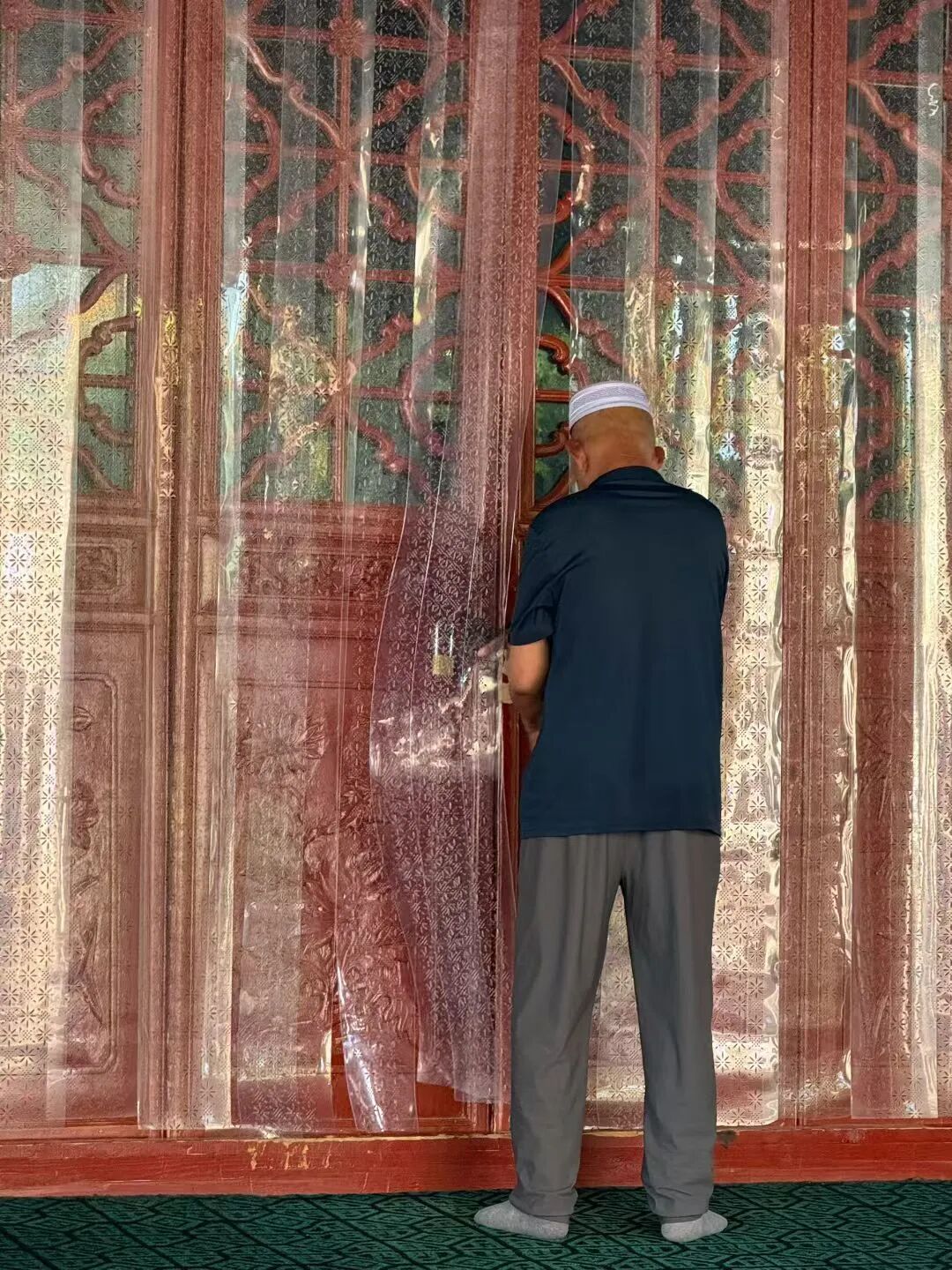
Since we aren't Muslim, we couldn't go inside the hall to watch the Asr prayer rituals, so we had to head back a bit disappointed.
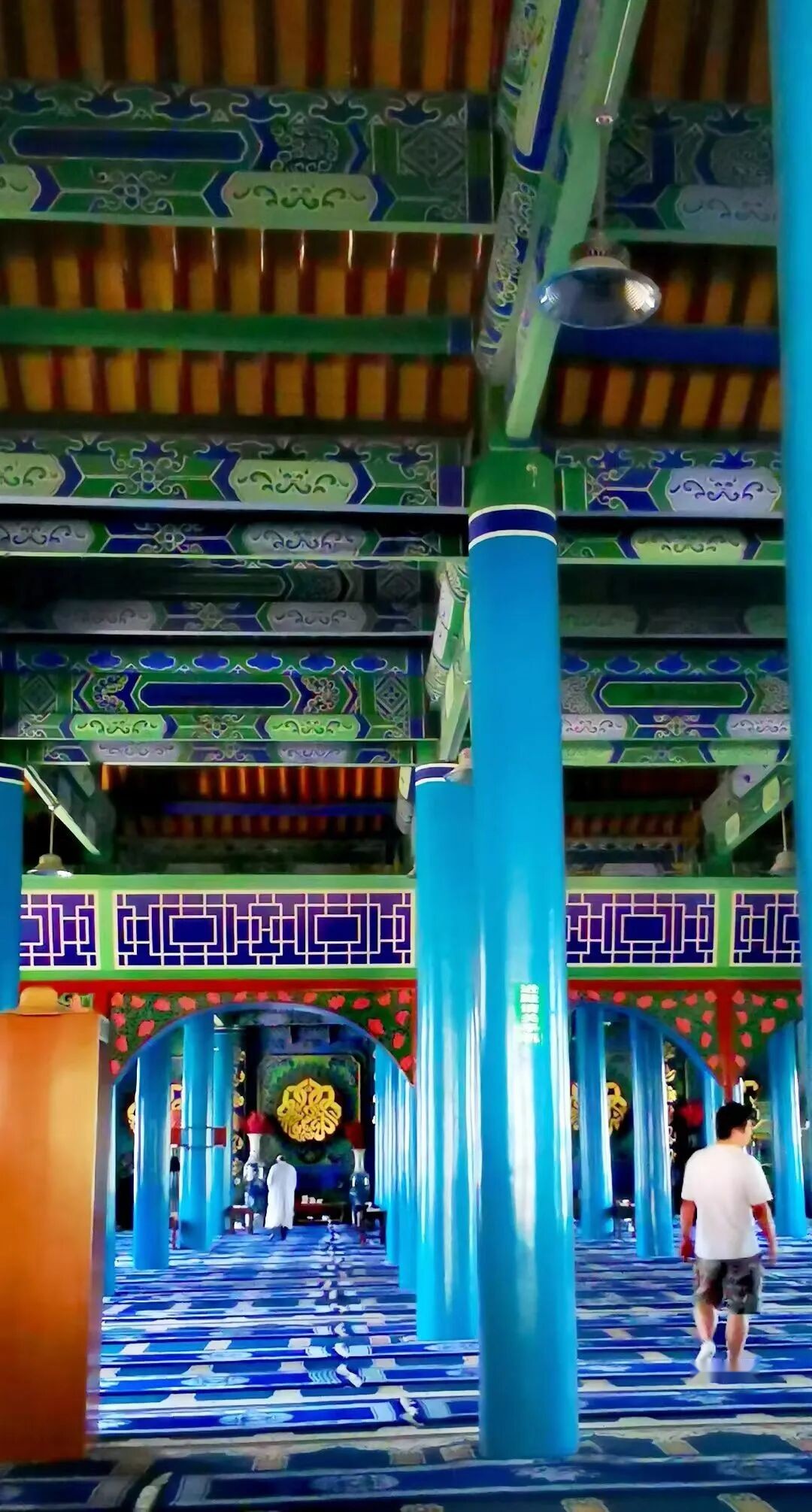
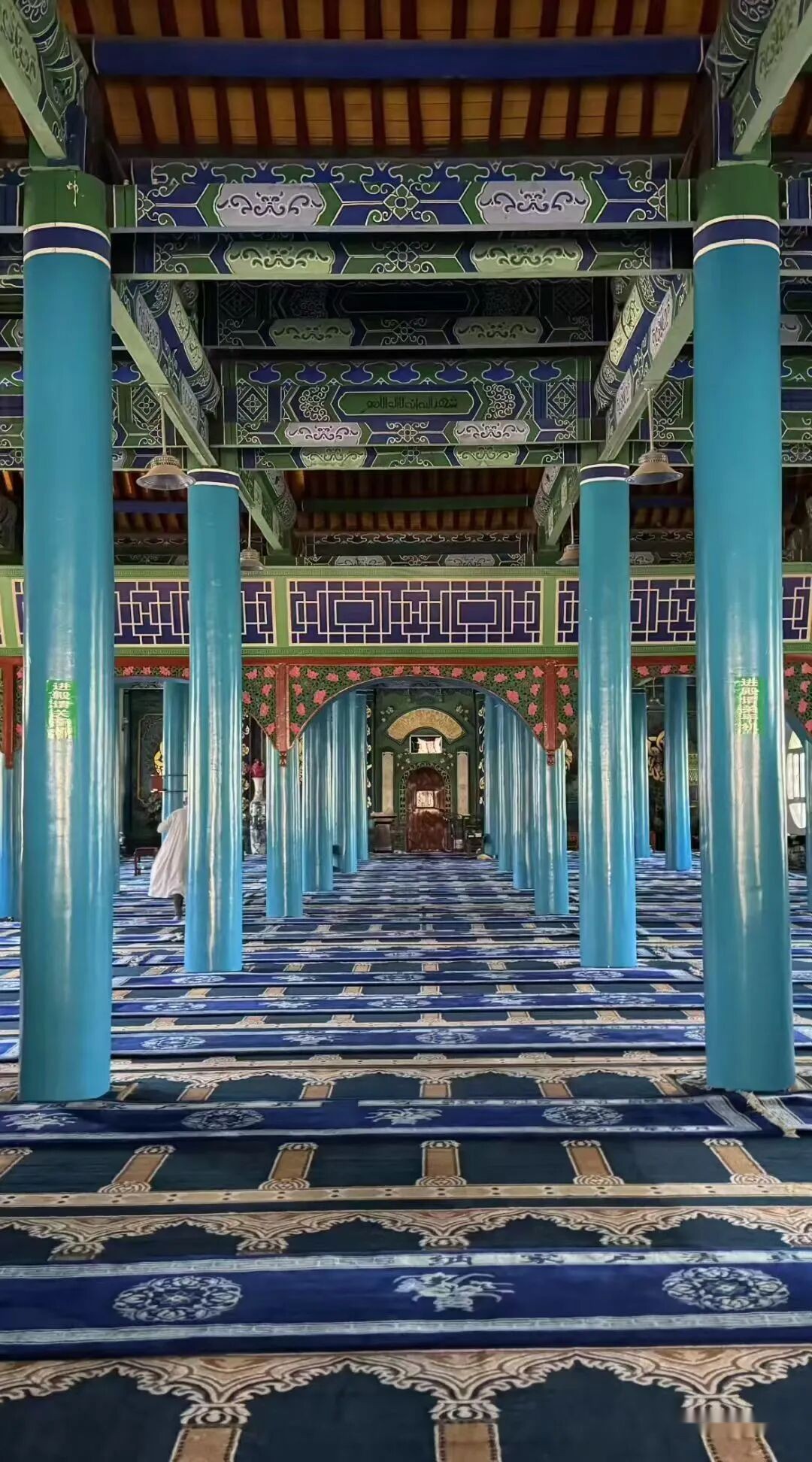
Exploring Tongxin Great Mosque & Ningxia Hui Muslim Heritage: Architecture, Brick Carvings, and History
Articles • Hasan09 posted the article • 0 comments • 3 views • 1 hours ago
A Pearl of Ancient Architecture on the Frontier: A Journey Through the Brick Carvings and Hui History of Tongxin Great Mosque
Abstract:
Step into the Tongxin Great Mosque, located in Yuhai Town, Tongxin County, Ningxia. Check out its towering, classical Chinese wooden main hall and mind-blowing openwork brick carvings on the spirit wall, and soak in the deep historical weight of Ningxia's oldest and largest surviving masjid.
After grabbing a bite in Alxa, we kept moving and stayed overnight in Qingtongxia. That geographic name from the textbook finally came to life. Outside the hotel, I spotted a pear-leaf crabapple tree—a familiar tree from my childhood that I hadn't seen in years.
Time to fuel up and hit the road again.
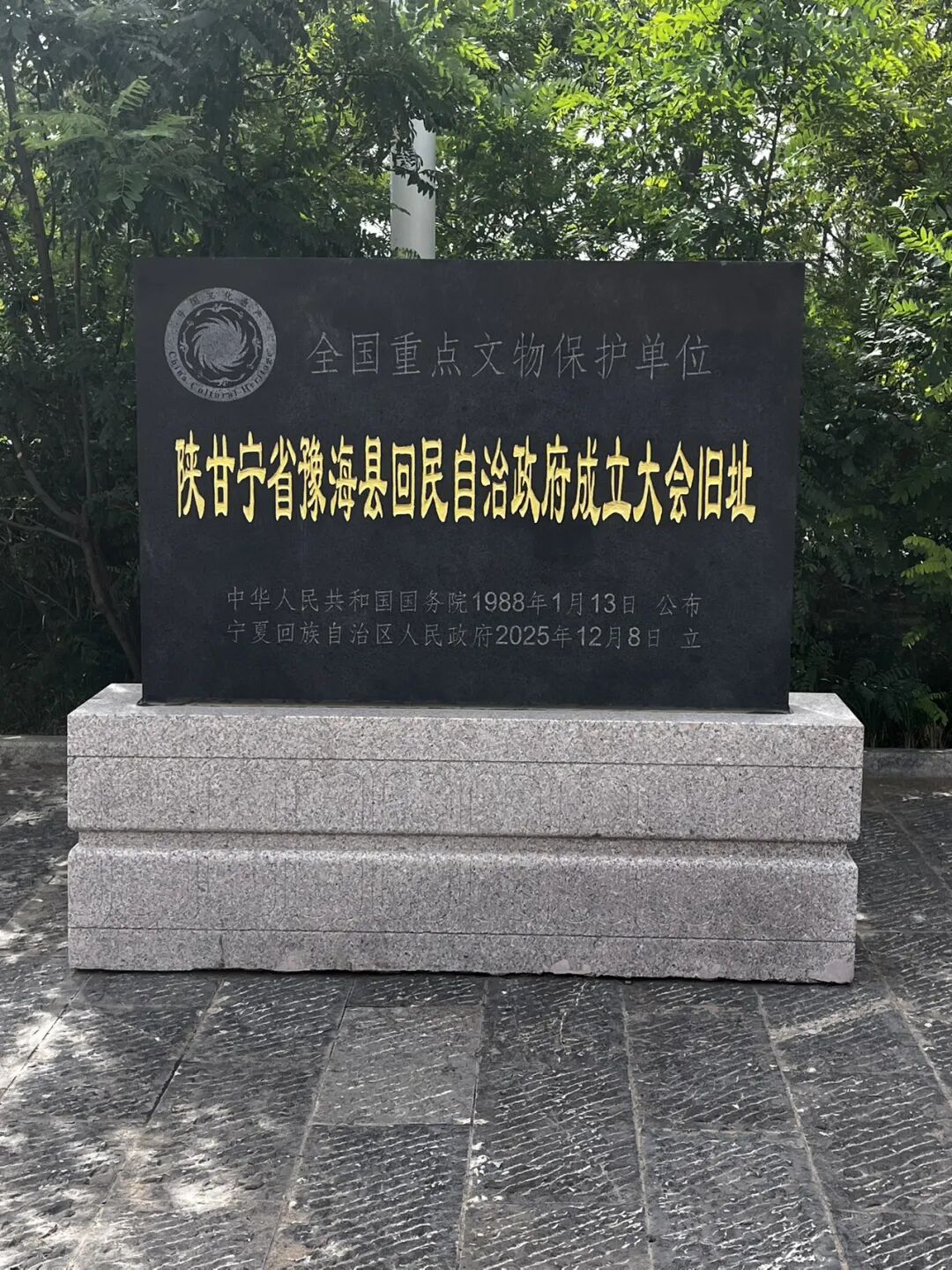
This spot is also a National Key Cultural Relic Protection Unit.
Tongxin Great Mosque (Former Site of the Founding Conference of the Yuhai County Hui Autonomous Government of Shaanxi-Gansu-Ningxia)
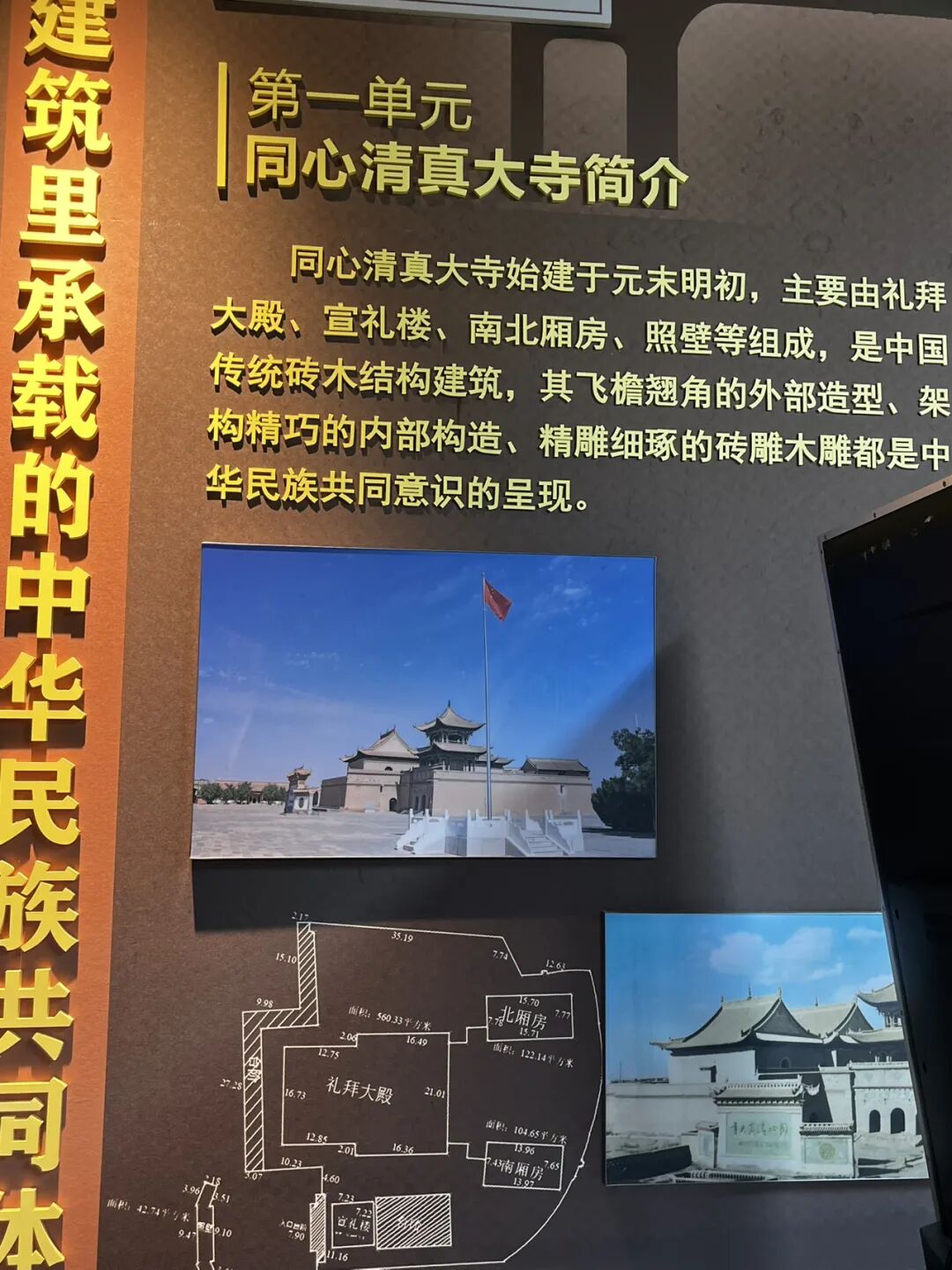
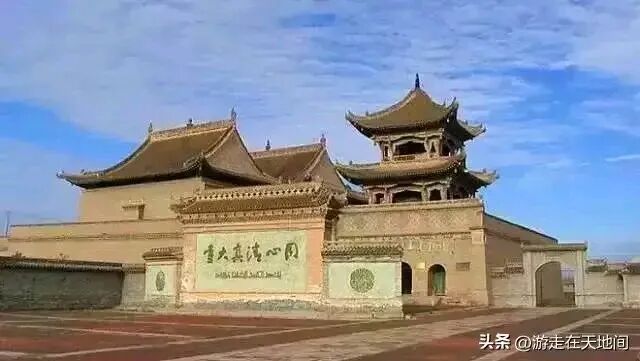
Right here in Tongxin County, Ningxia, it's a super unique, traditional Chinese pavilion-style masjid. There are no domes here—just flying eaves and wooden structures that look like an ancient fortress, as well as a site tied to revolutionary red history.
Walking up to the Tongxin Great Mosque, classic Chinese flying eaves and multi-tiered pavilions replace the usual masjid dome, while thick loess walls give it a rugged, historic vibe. This place isn't just an ancient house of worship; it's also where the Yuhai Hui Autonomous Government was born, blending religious heritage and revolutionary history right here on the northwest frontier.
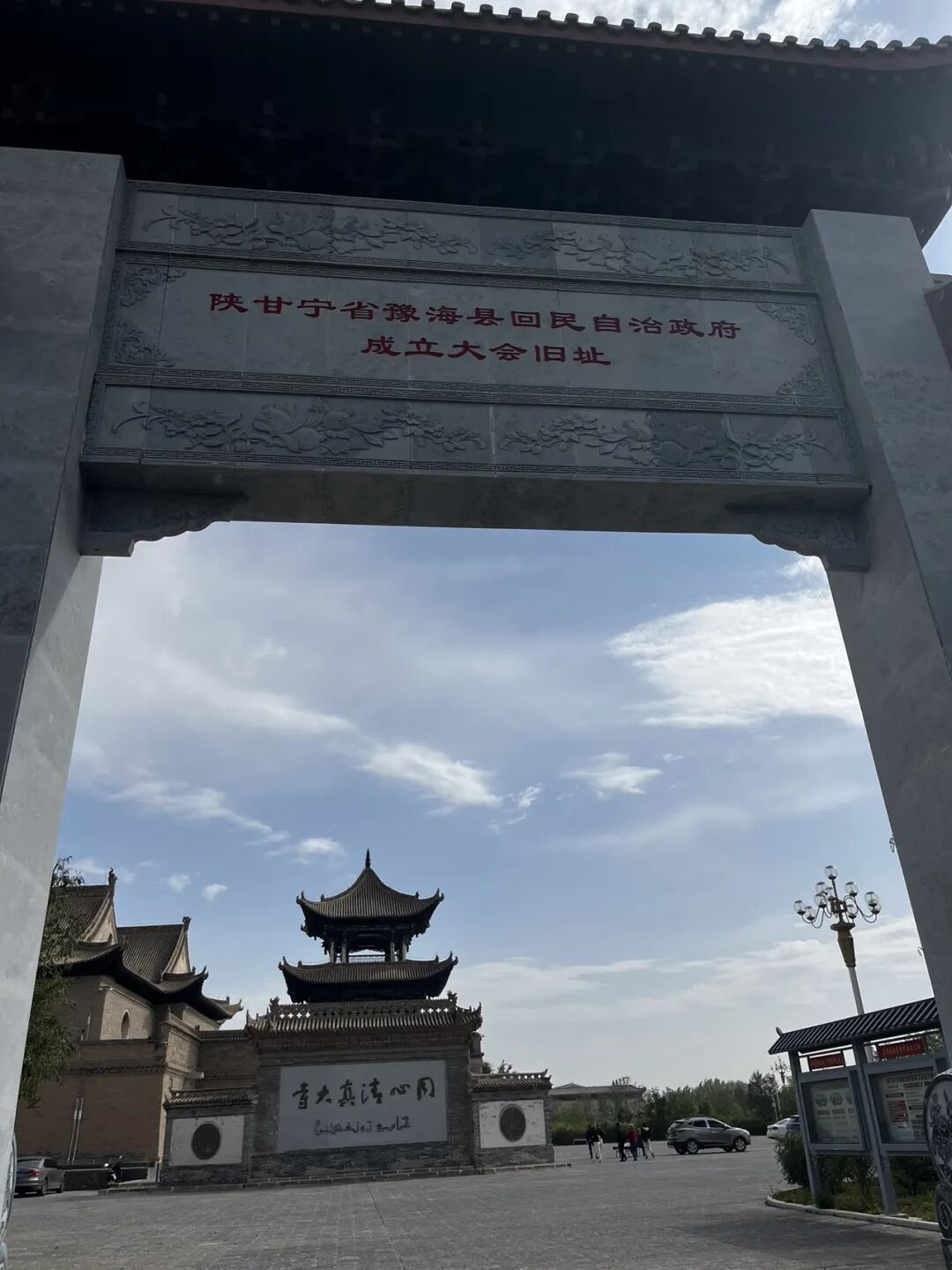
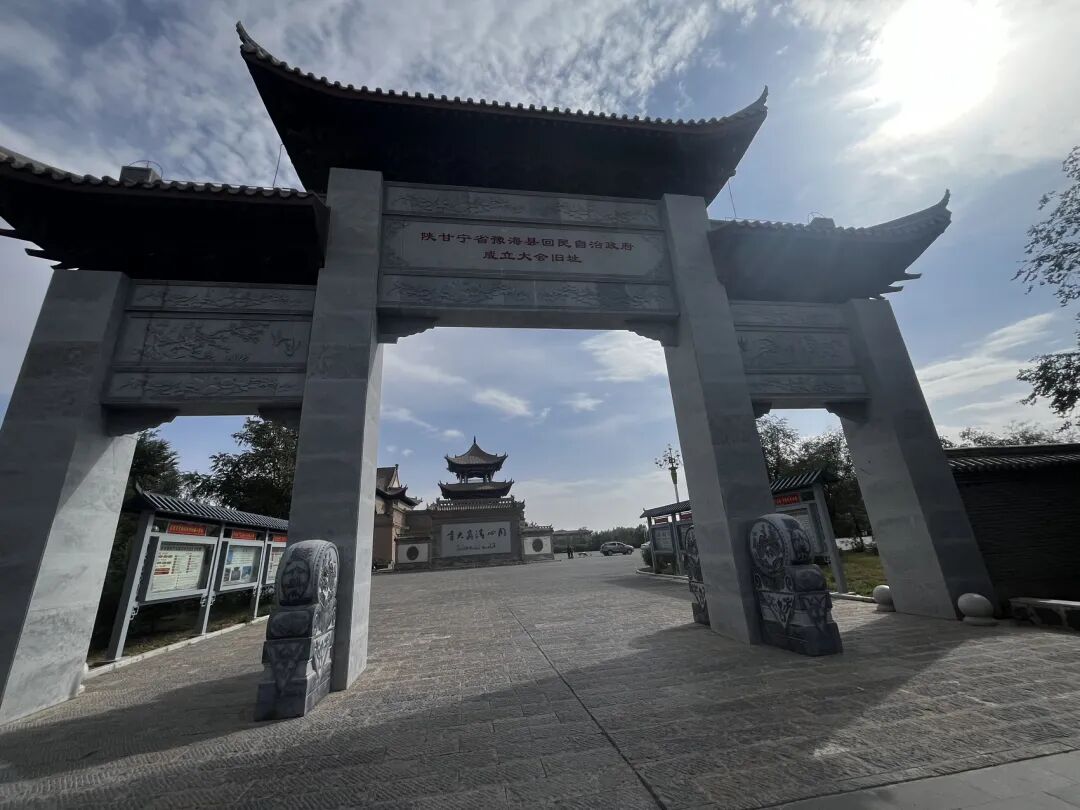
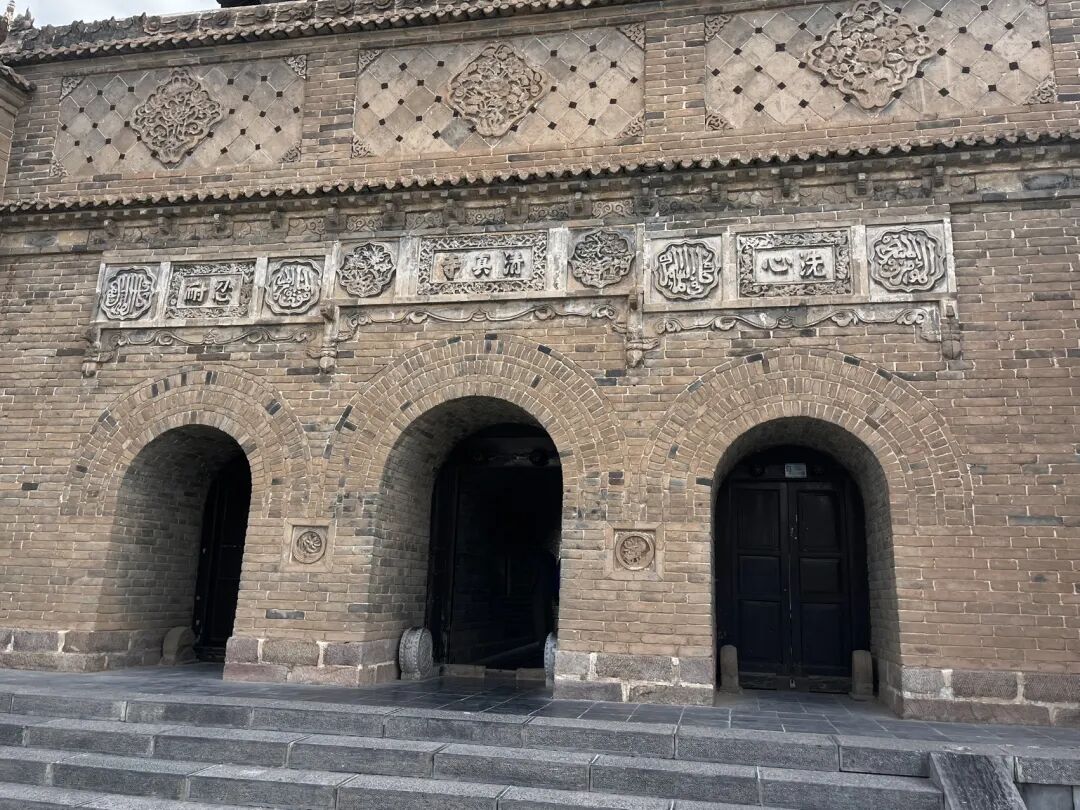
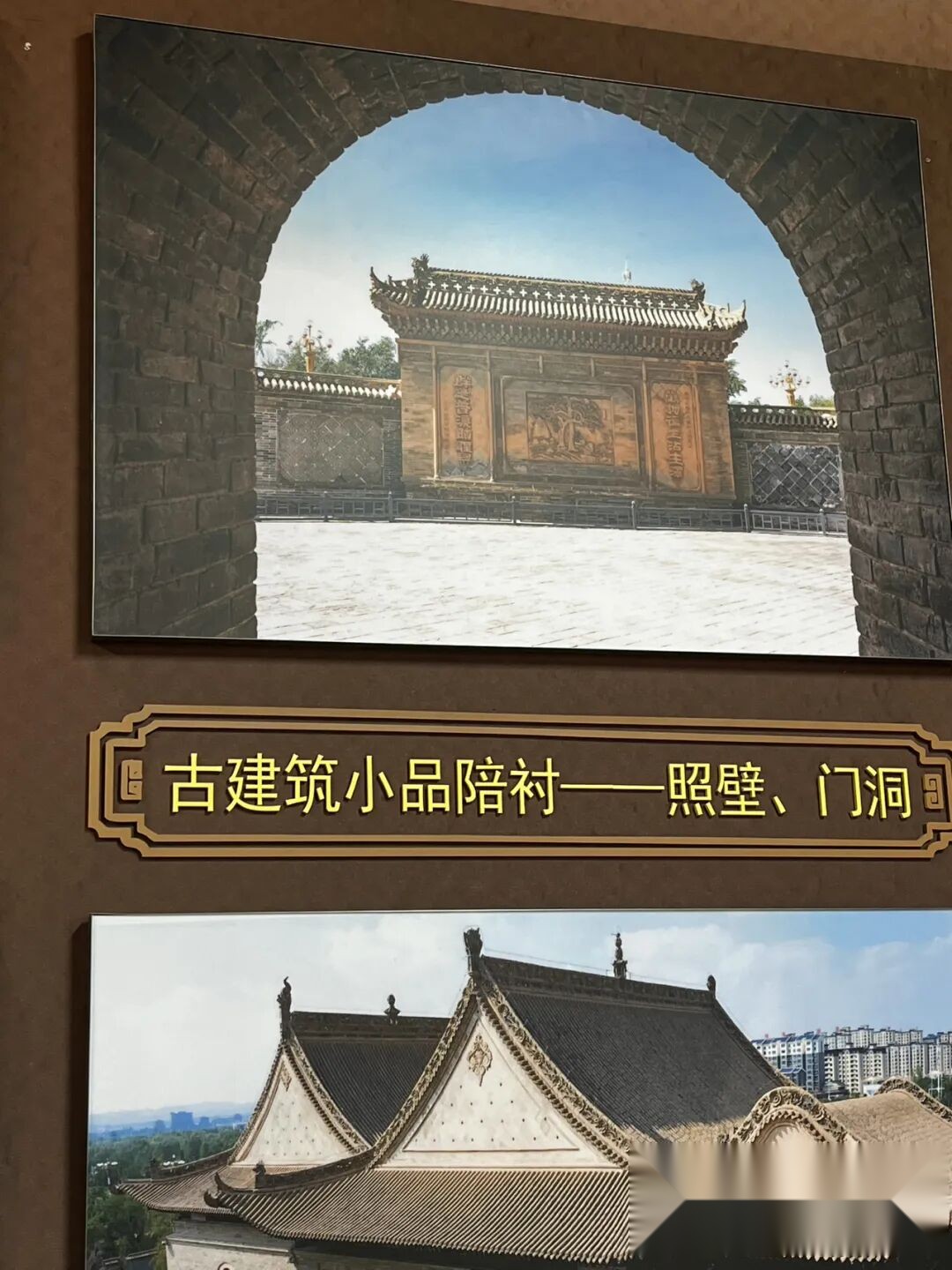
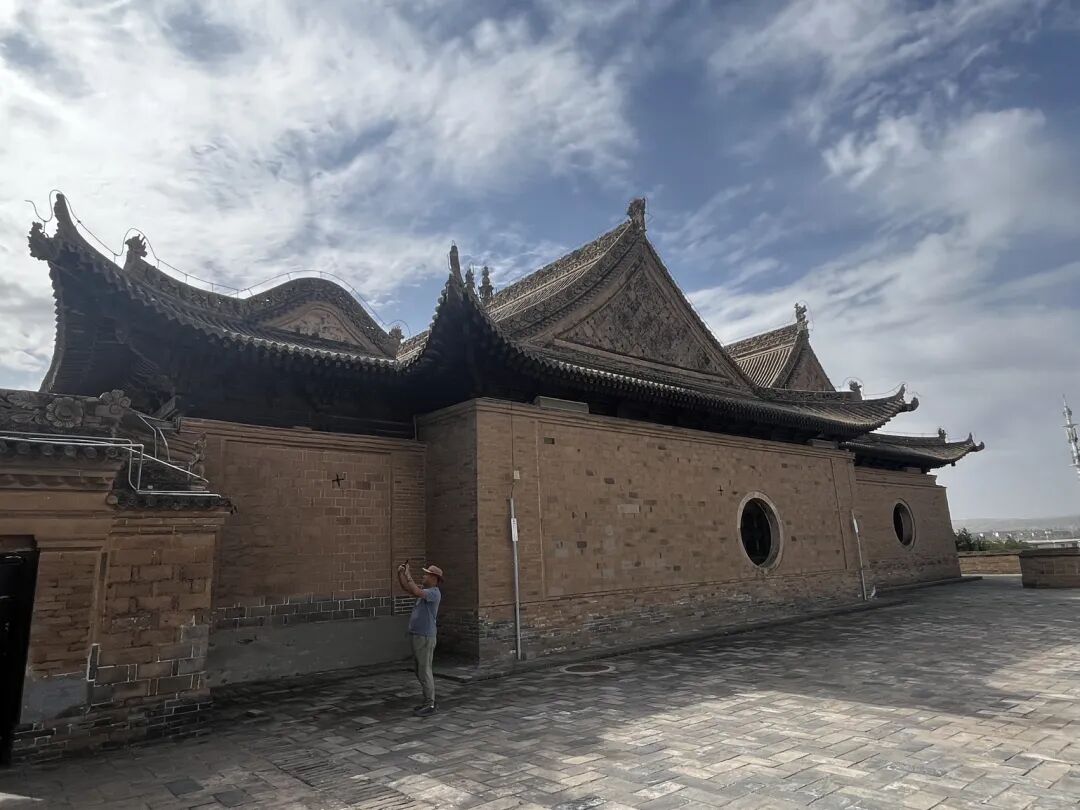
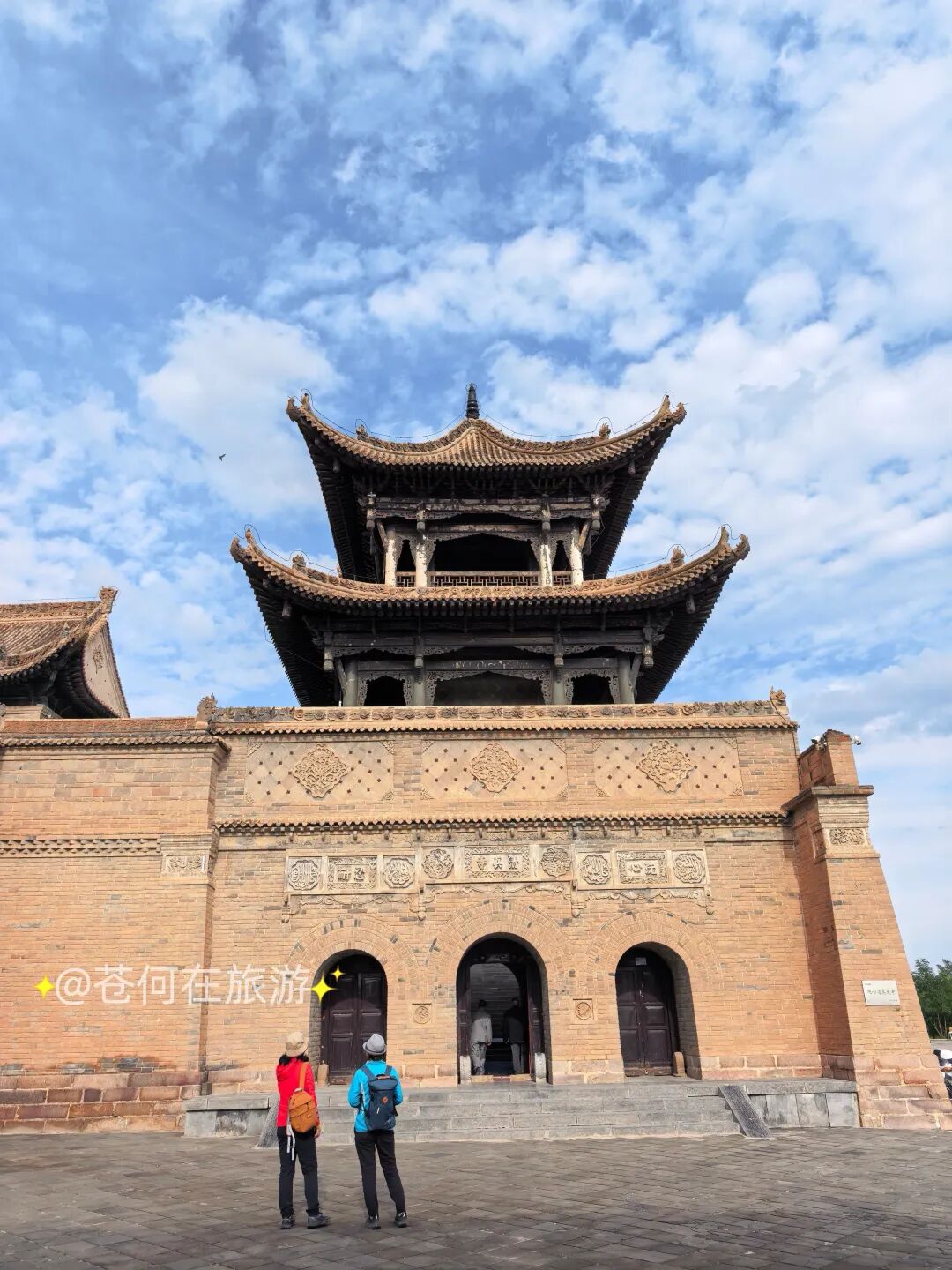
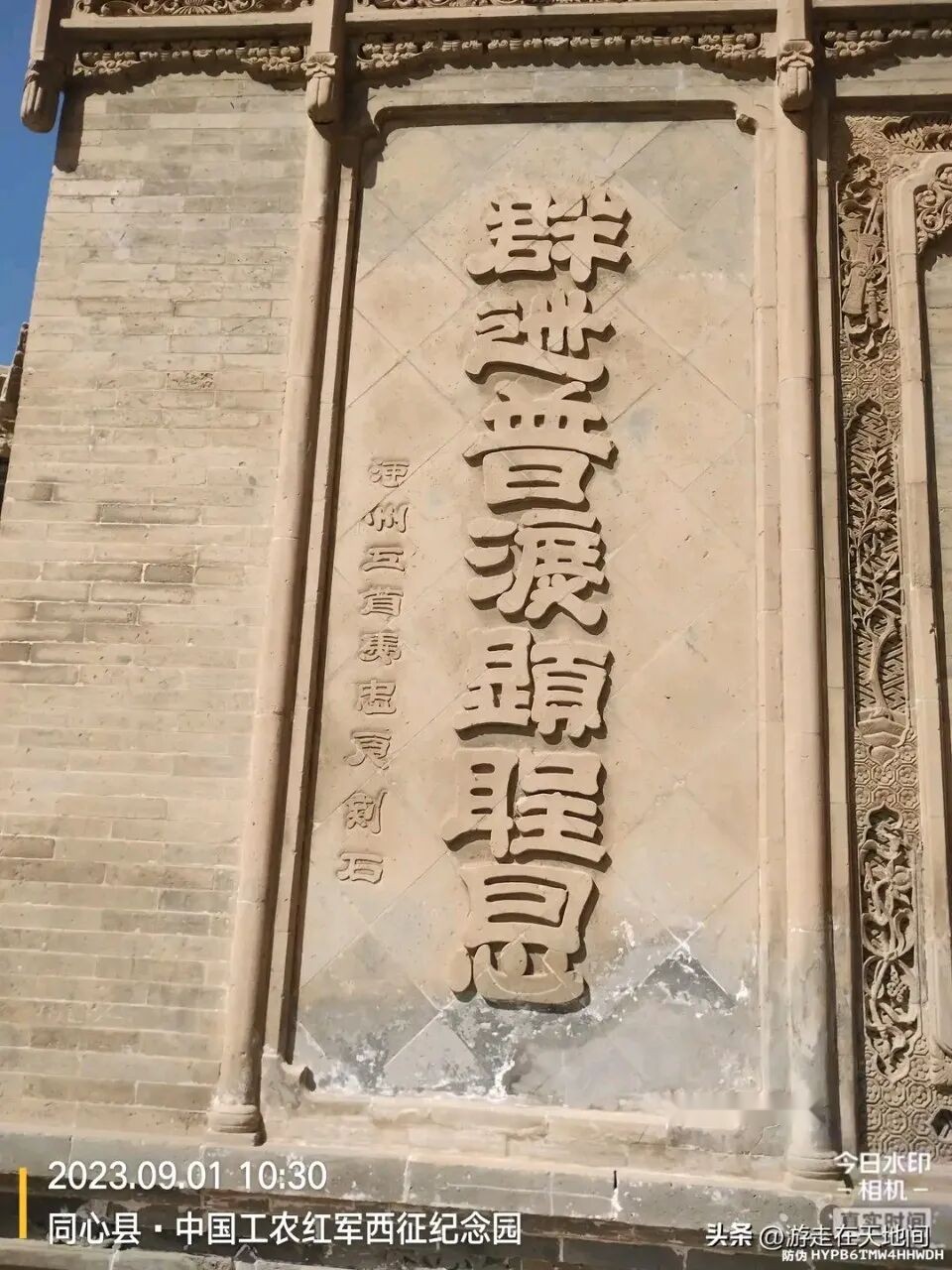
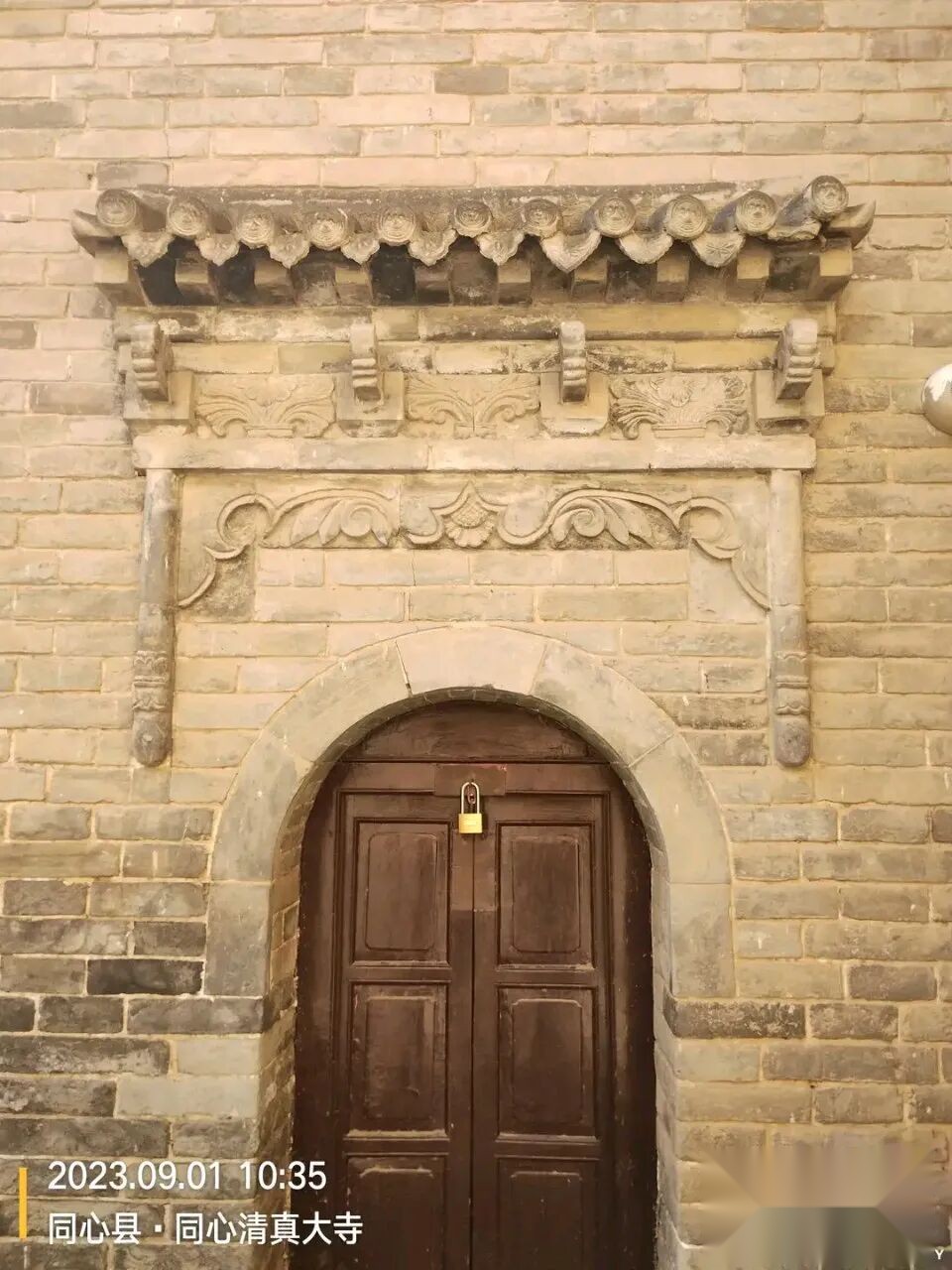
Tongxin Great Mosque Mountain Gate: Three blue-brick archways featuring stunning brick carvings. They're engraved with Chinese characters reading 'Purify the Heart' and 'Endurance' alongside Arabic script, showing a gorgeous fusion of Han Chinese and Hui architectural styles.
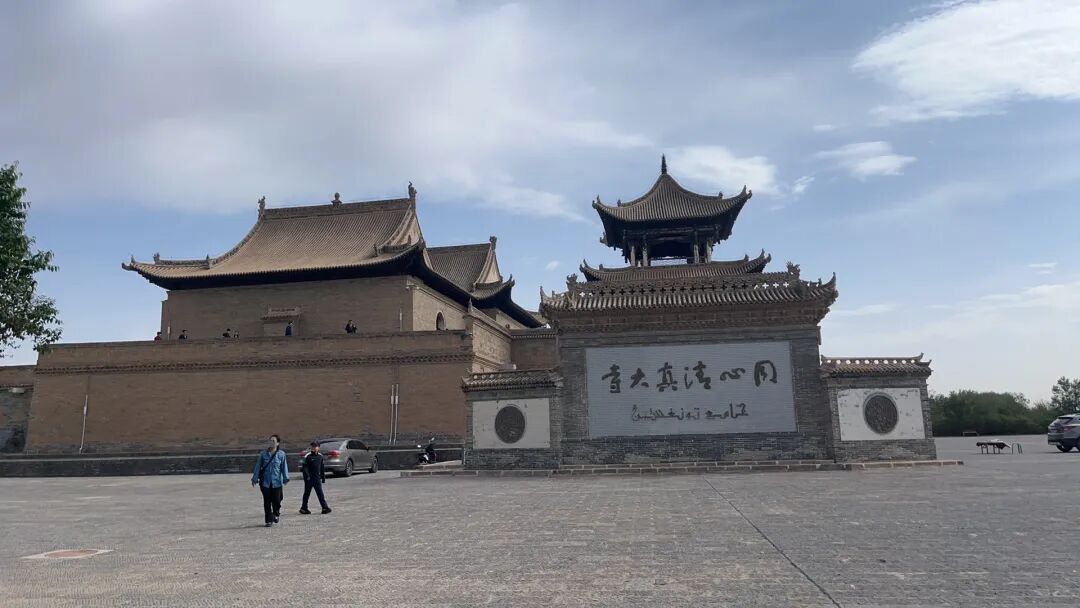
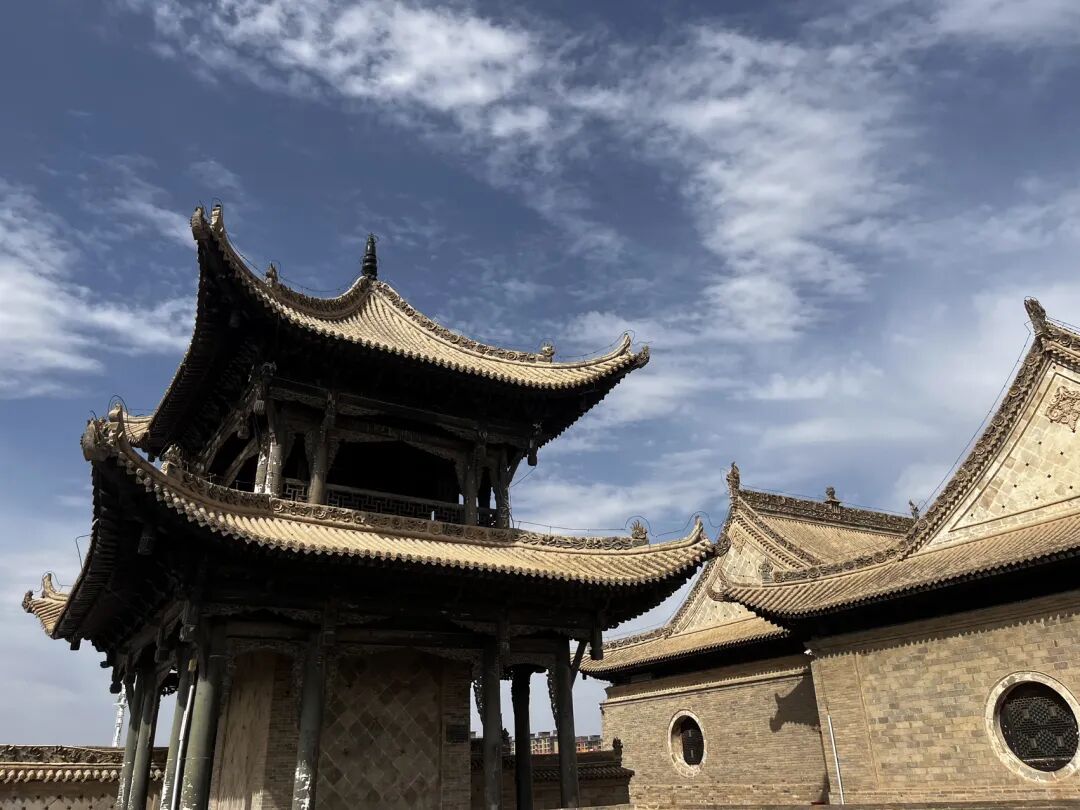
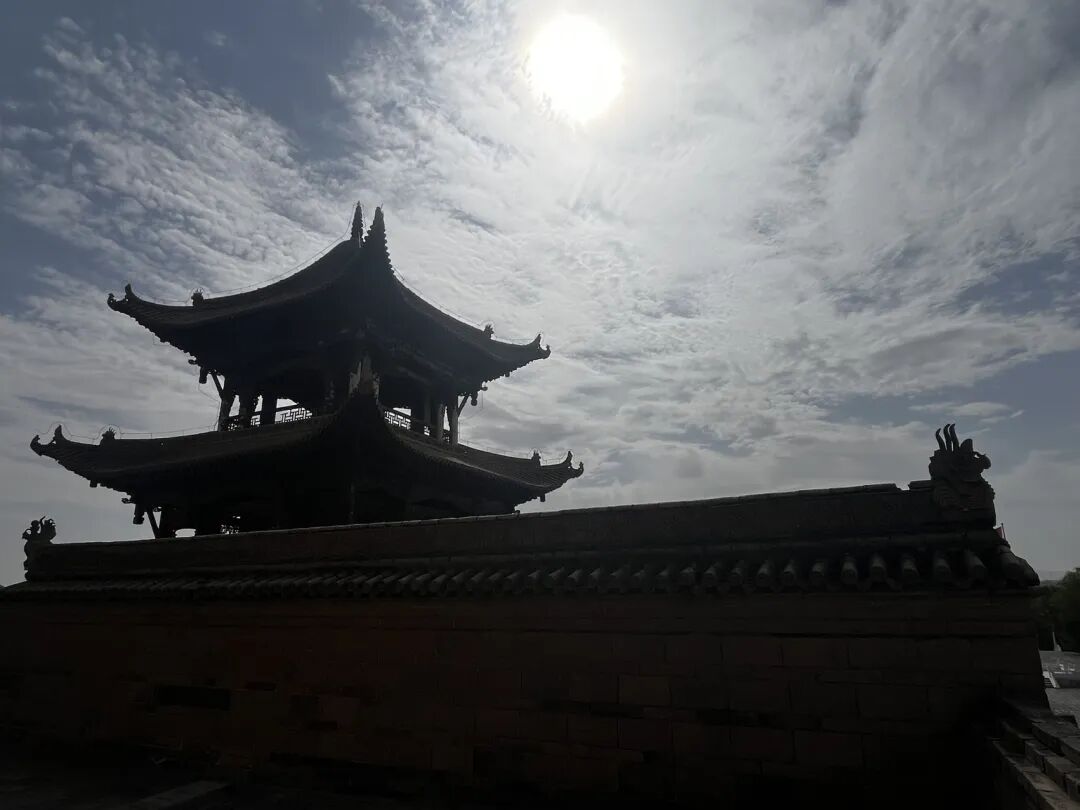
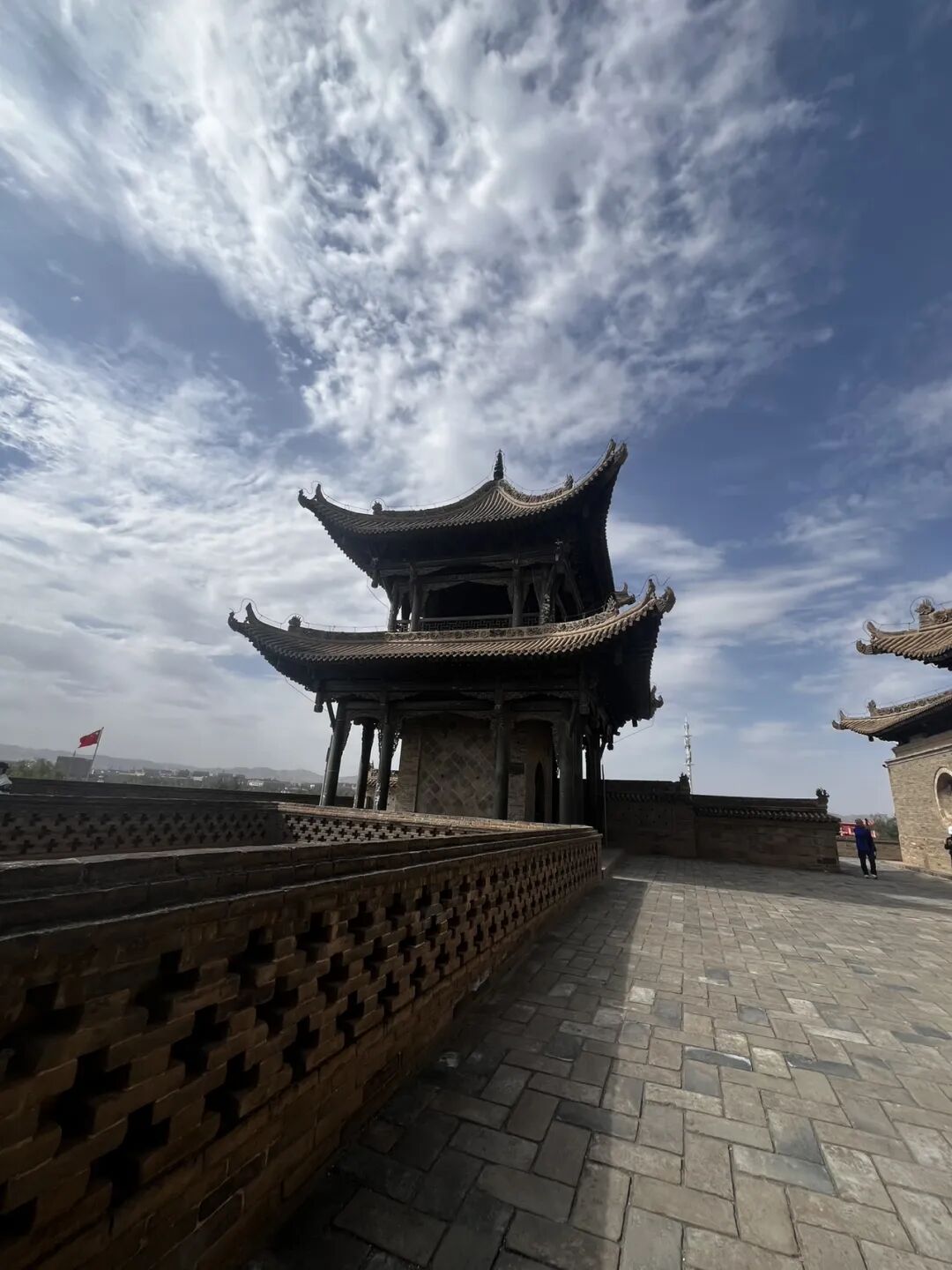
Tongxin Great Mosque Moon-Sighting Tower: A double-eaved, resting-mountain-roof Chinese wooden pavilion with upturned eaves. Without an Islamic dome, it blends Hui and Han architecture, using old loess soil and blue bricks for a rugged, imposing look.
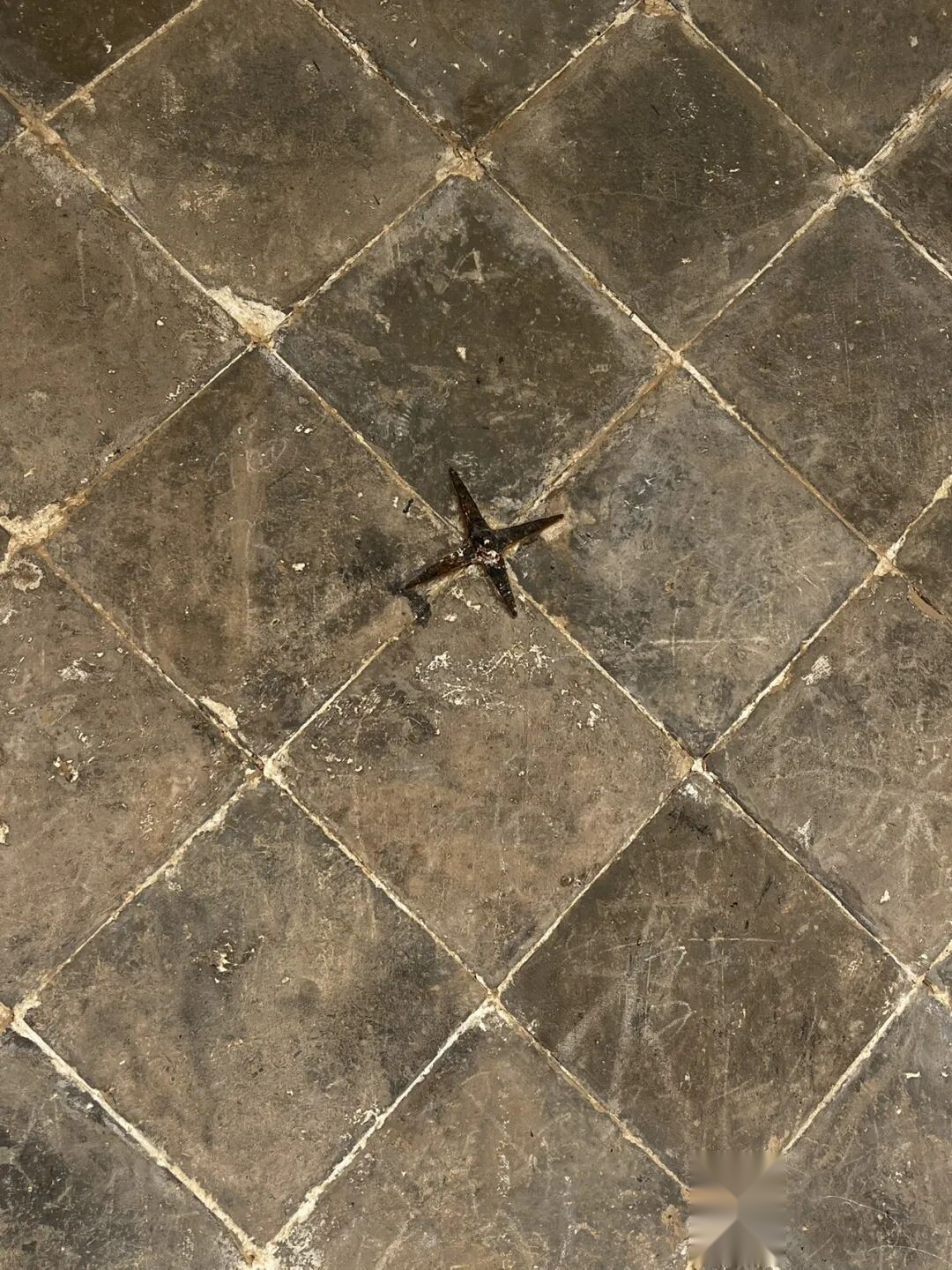
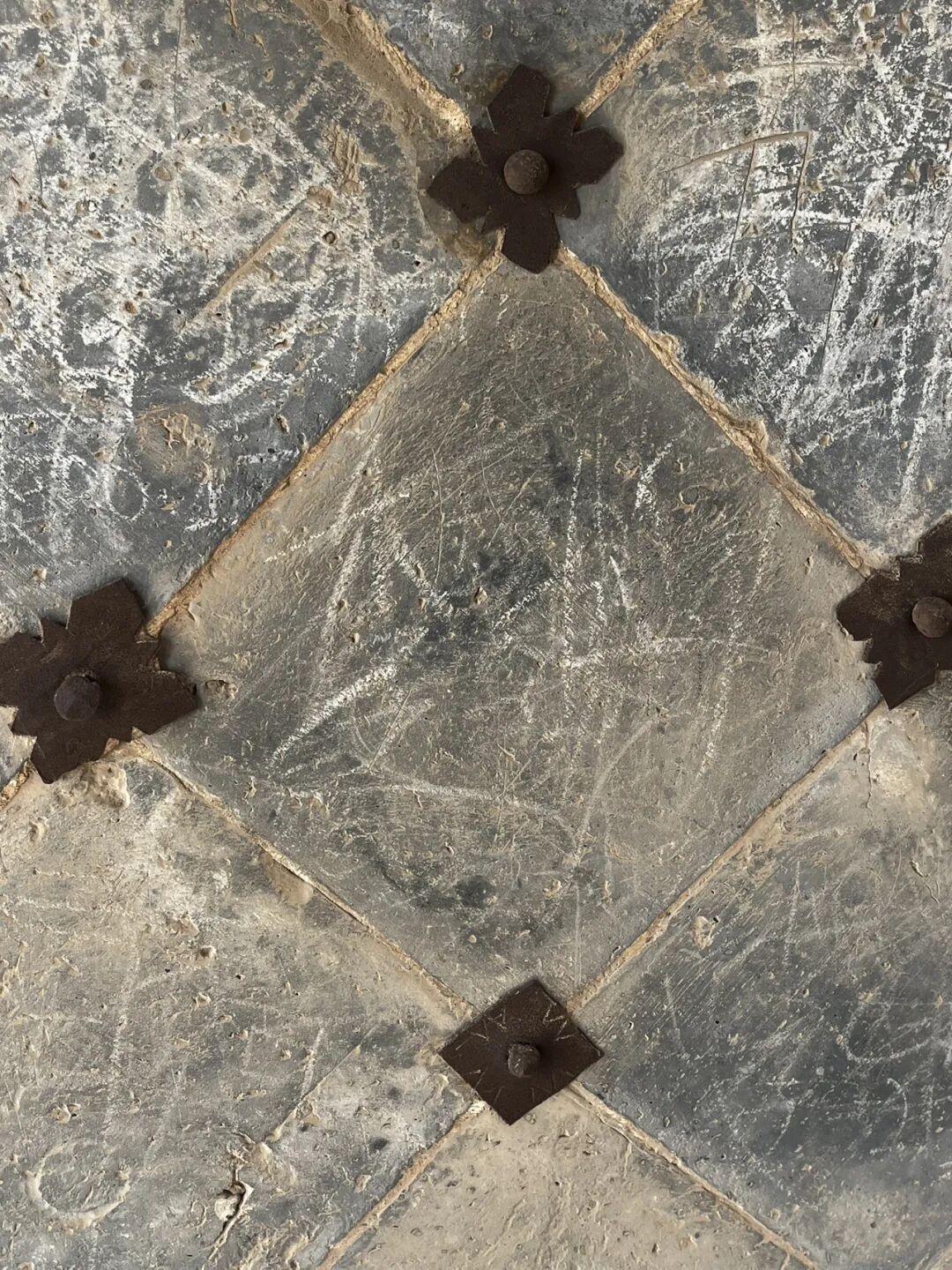
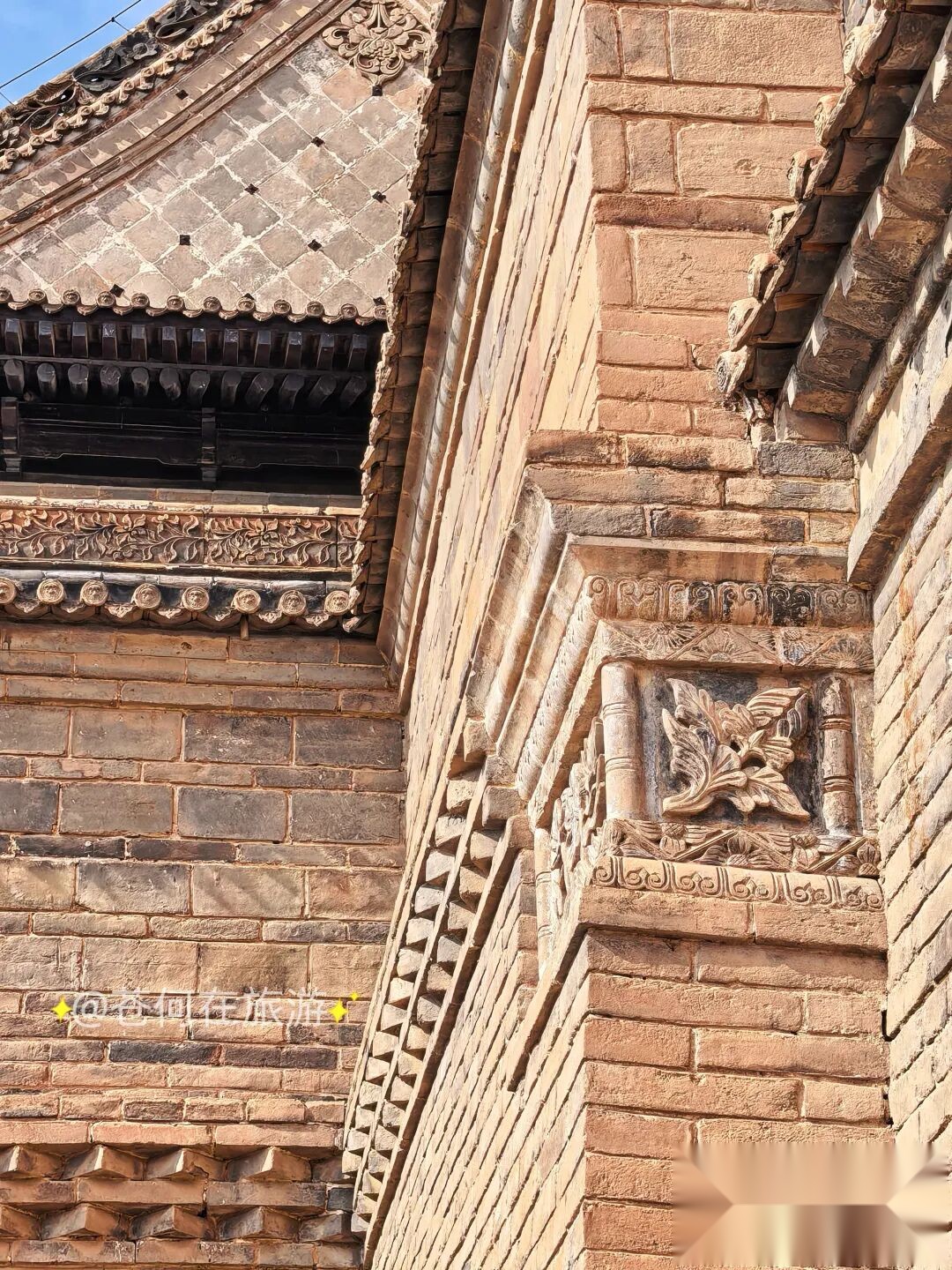
Tongxin Great Mosque Walls: Blue bricks laid in a diagonal diamond pattern, featuring iron tie-rods (wall anchors) that serve double duty for structural reinforcement and decoration. Forged into star and petal shapes, they combine structural engineering with aesthetics—a rare sight in Northwest ancient architecture.
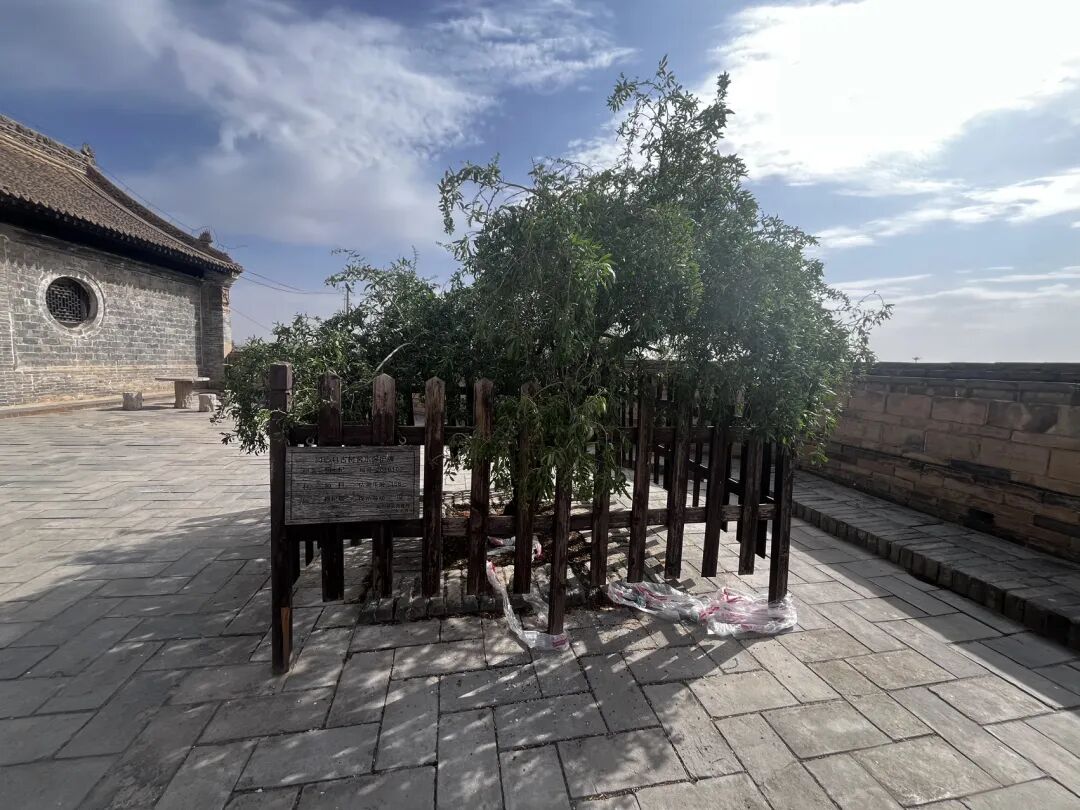
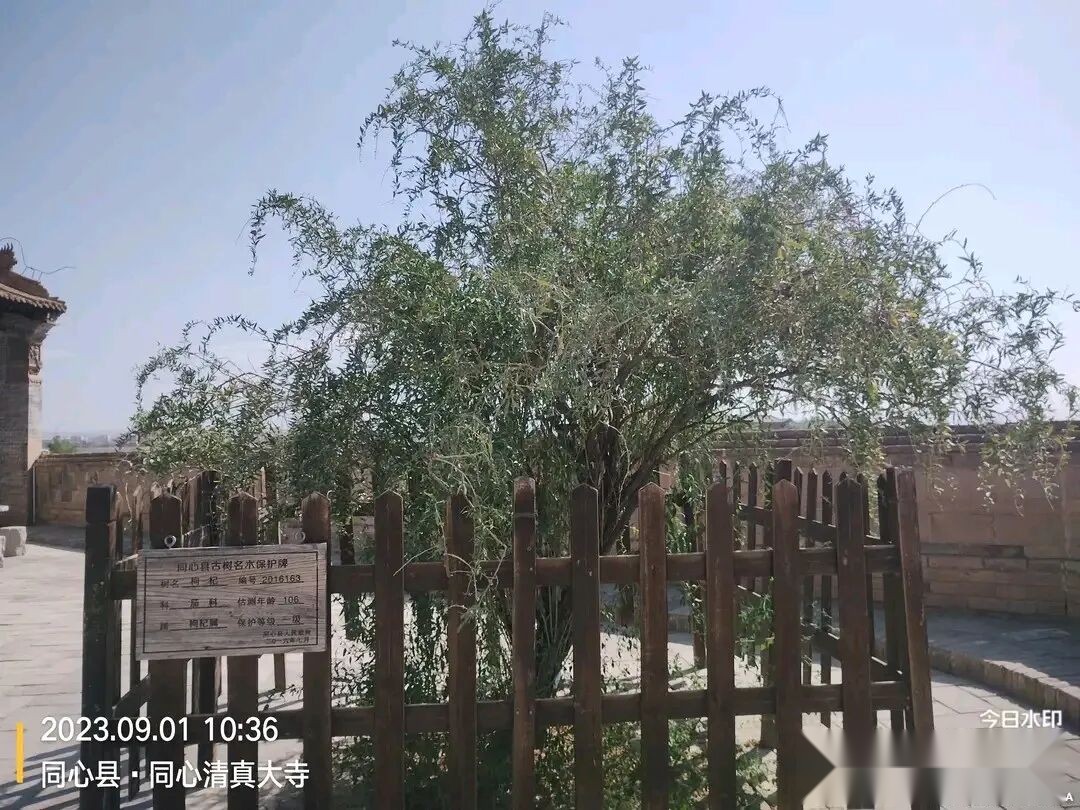
An ancient goji berry tree inside the courtyard of Tongxin Great Mosque. Over a century old and protected by a wooden fence, it grows resiliently right on the high platform of the ancient masjid.
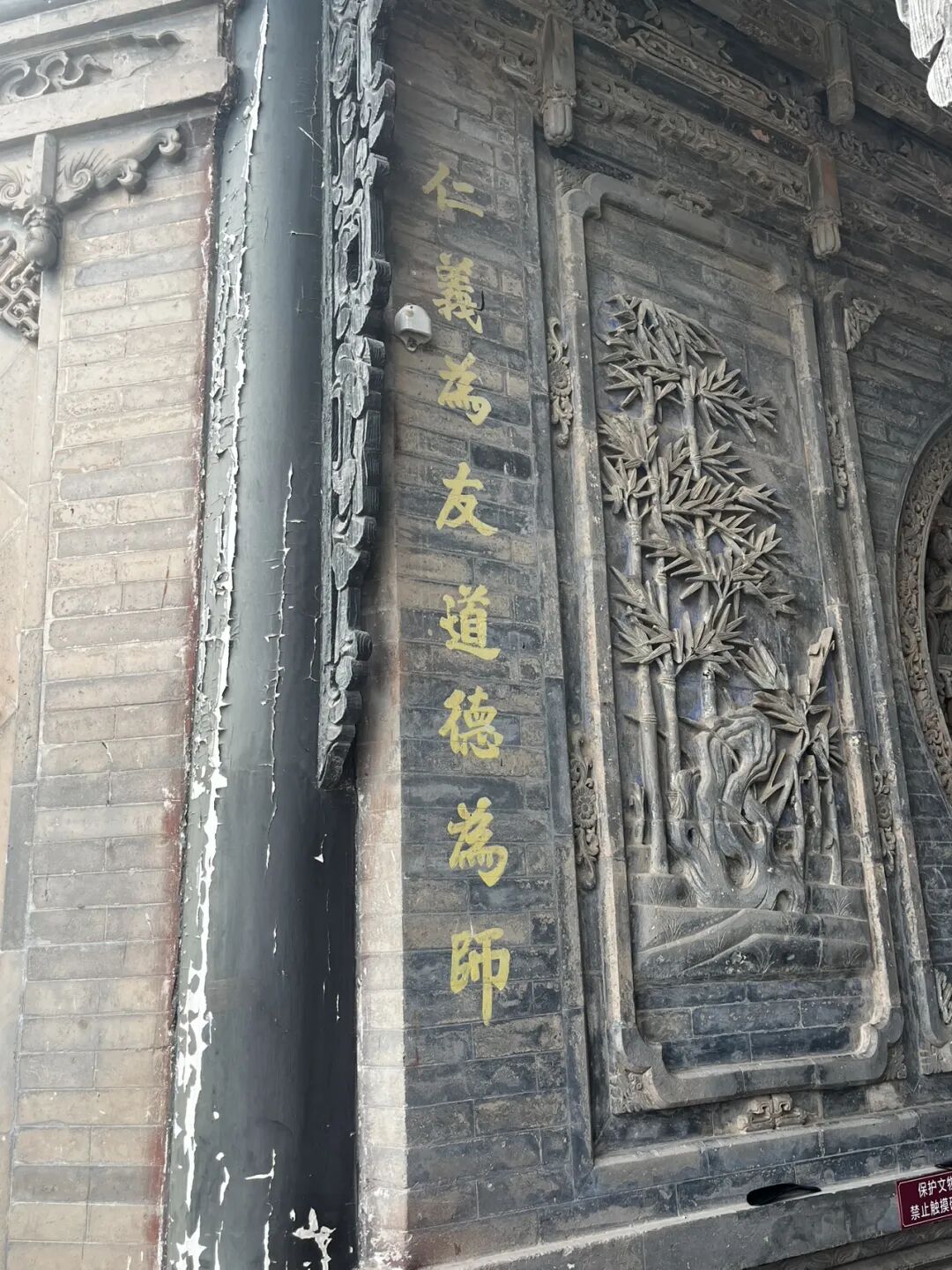
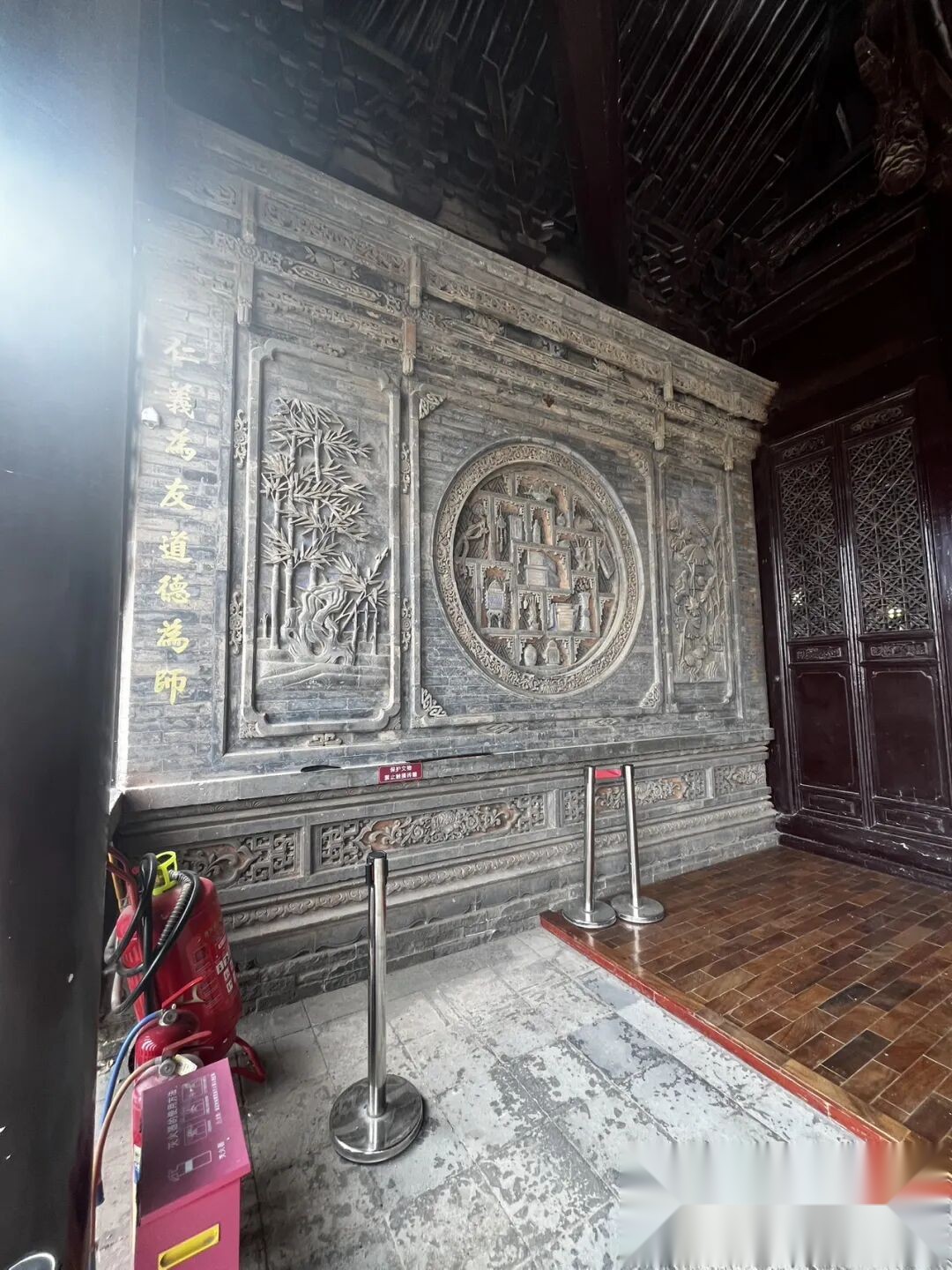
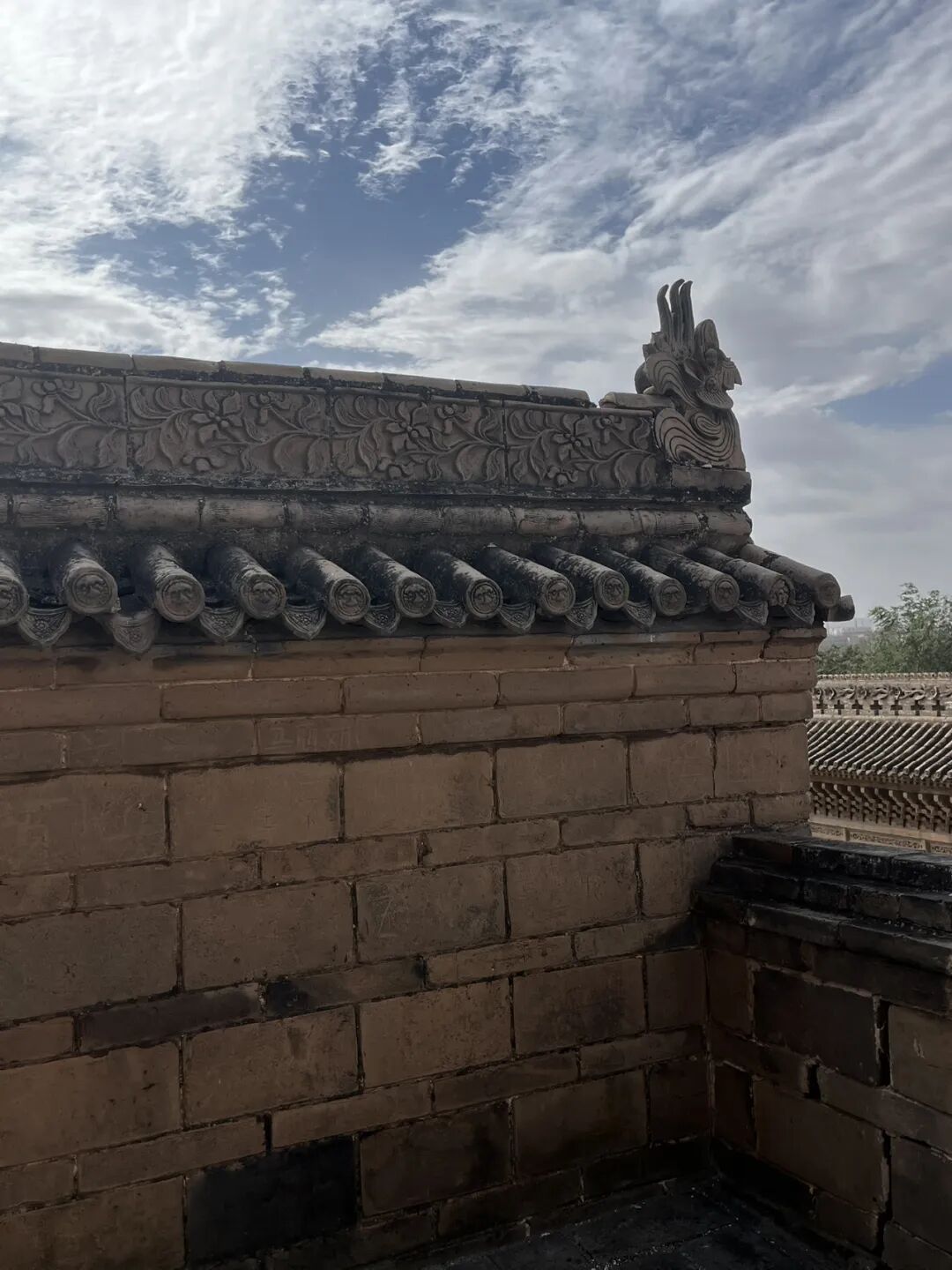
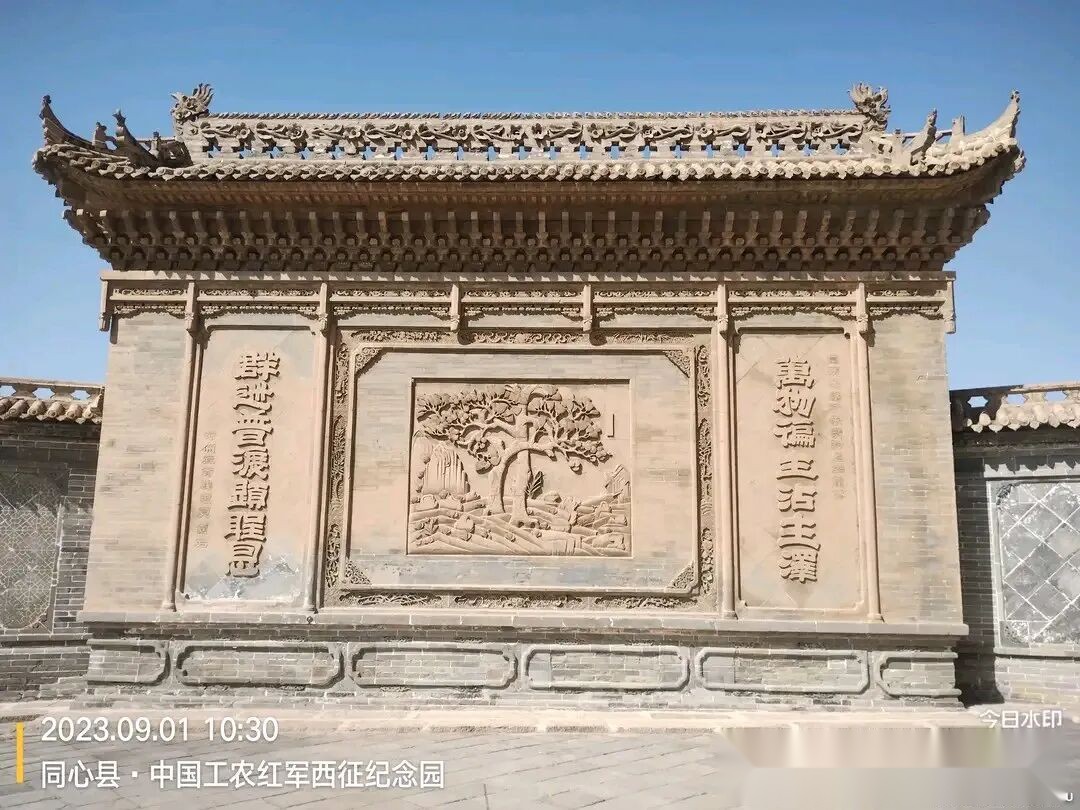
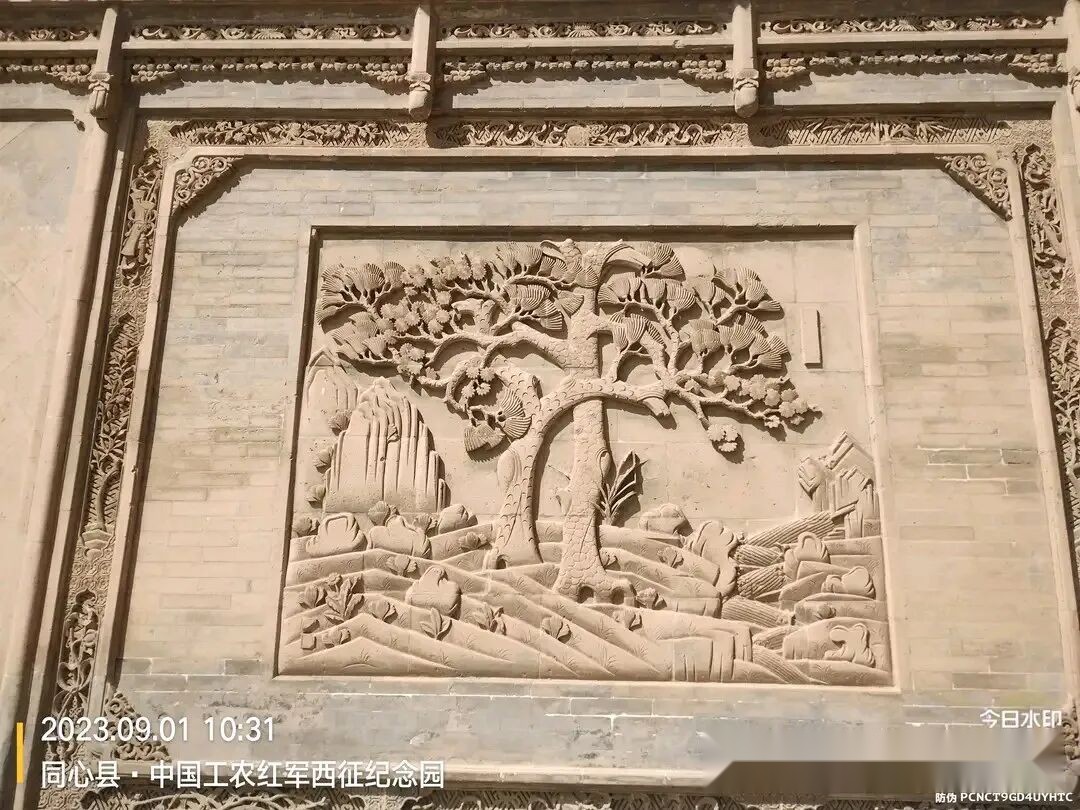
Brick Carvings: Bamboo and rock relief carvings inscribed with the Confucian phrases 'Treat righteousness and duty as friends, treat morality as your teacher.' Confucian literary motifs blend right into the masjid's Chinese brickwork.
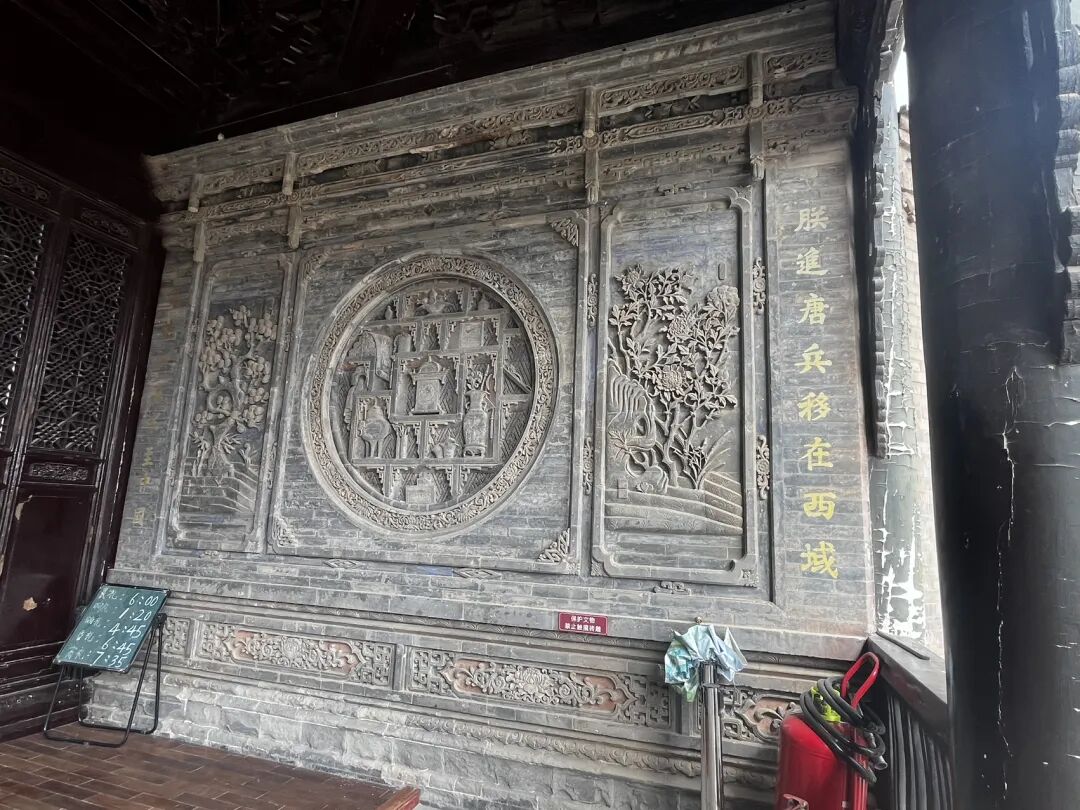
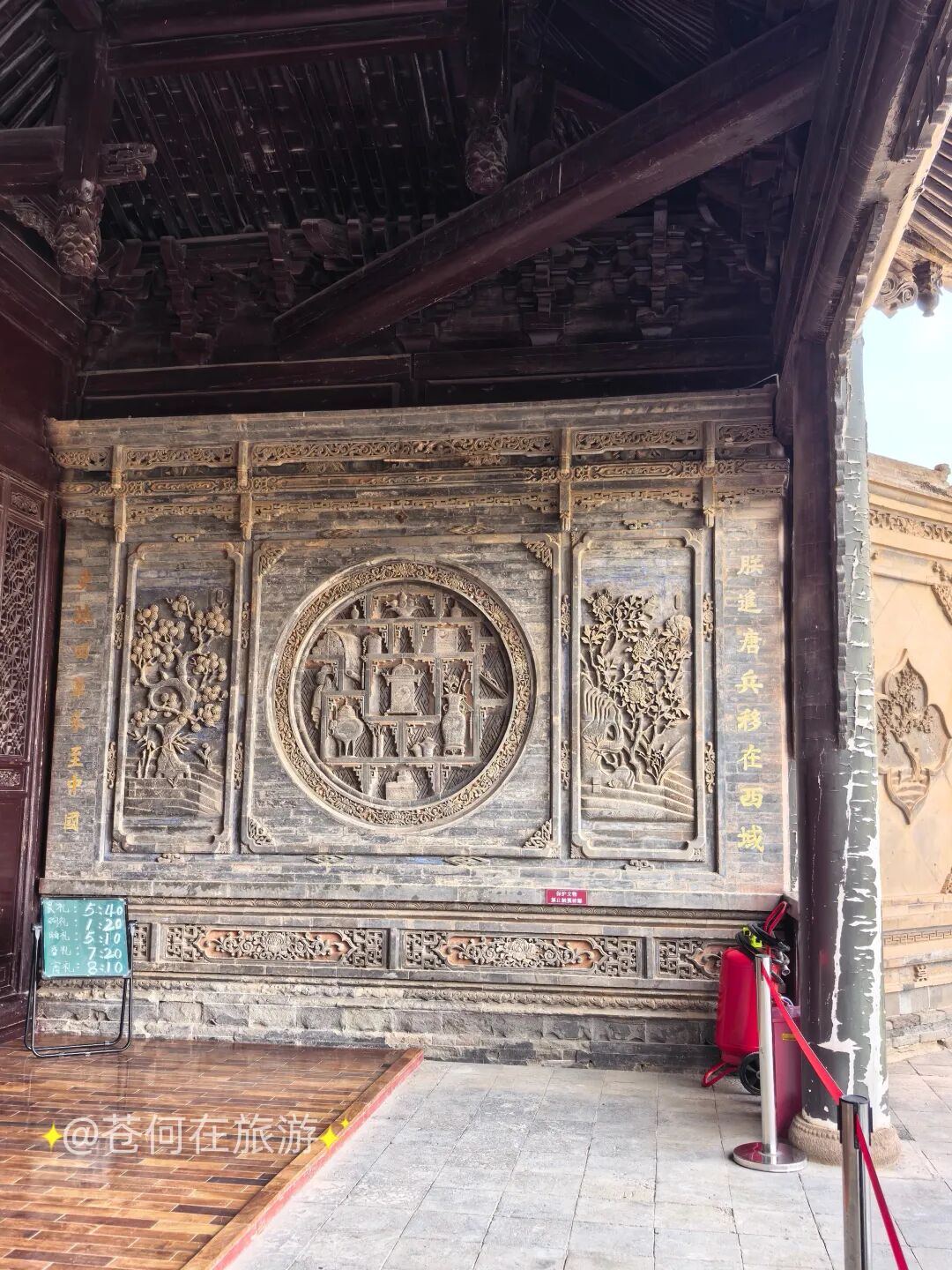
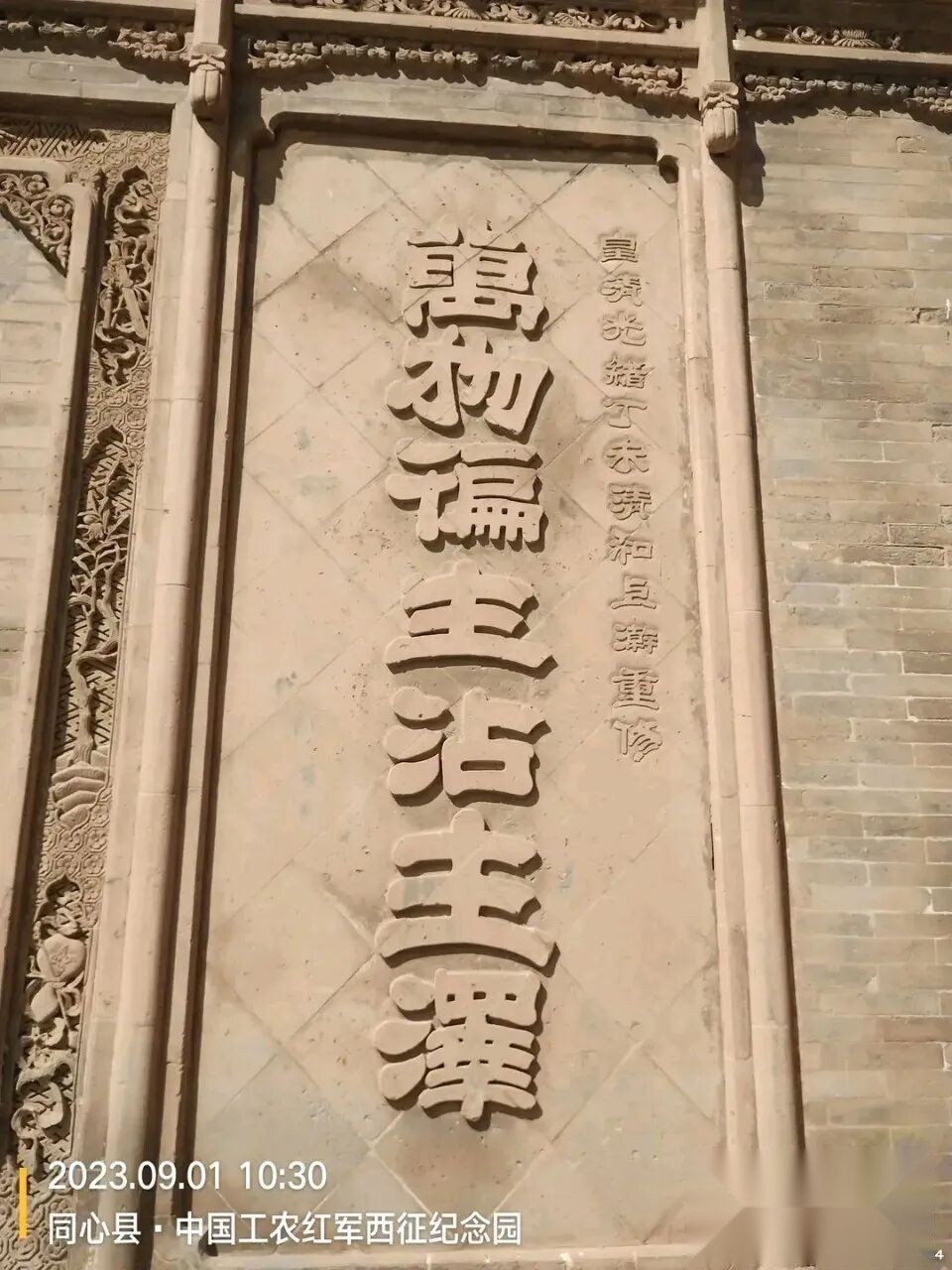
'The Emperor sent Tang troops to move into the Western Regions': An inscription recounting past events of the Western Regions from the Tang Dynasty, carved in Chinese characters directly onto the brick walls of the masjid.
Tongxin Great Mosque Prayer Hall: A double-eaved Chinese wooden main hall that served as the former site of the Yuhai County Hui Autonomous Government of the Shaanxi-Gansu-Ningxia border region. Featuring grand flying eaves and ancient, weathered beams and pillars.
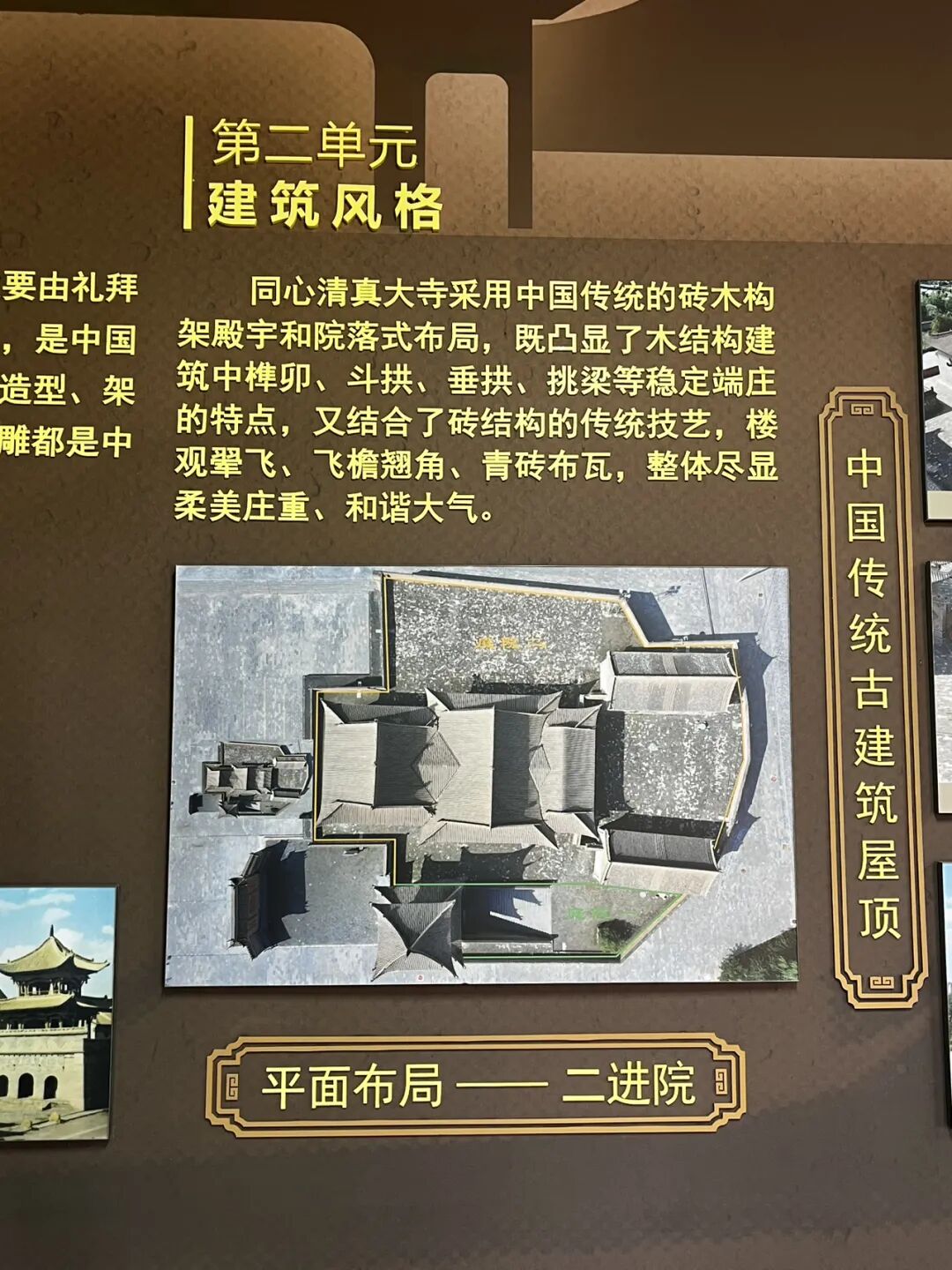
Inside, you'll find super detailed exhibits explaining its architecture and history.
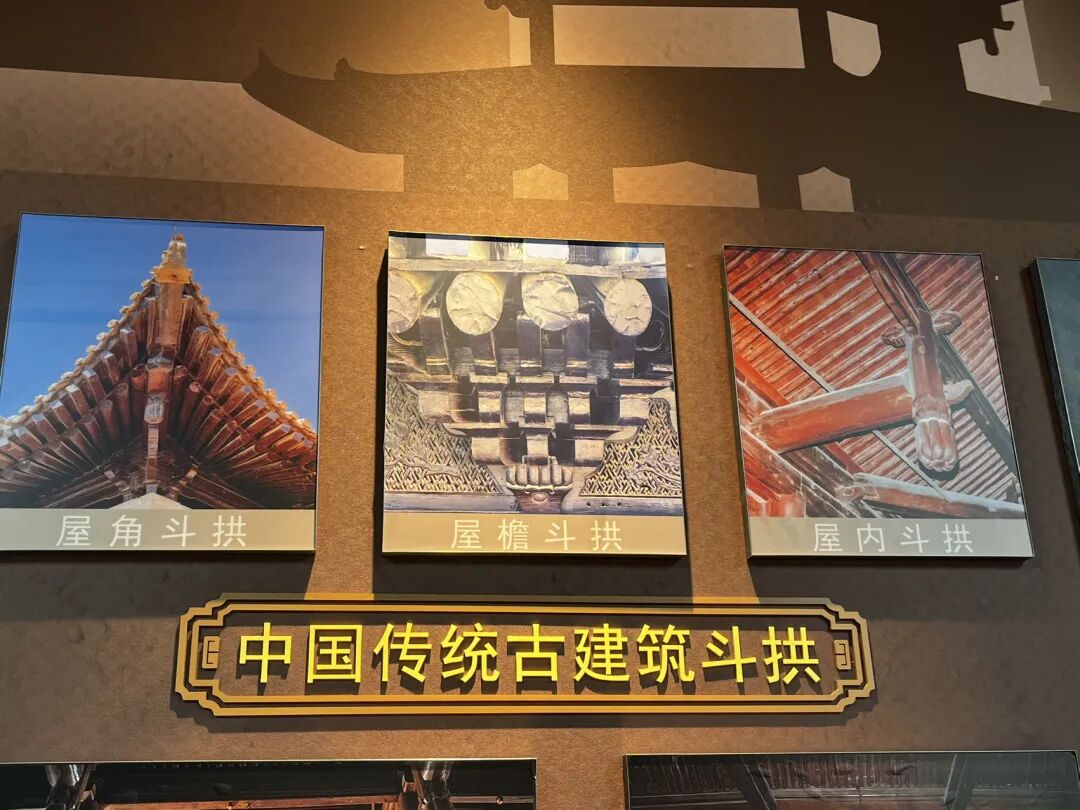
The ancient hall has weathered centuries of wind and rain, leading to some rotting wooden components. During major renovations from 1982 to 1983, a specialized crew of craftsmen from Hancheng, Shaanxi, was brought in to lead the project. The skill of these veteran Guanzhong artisans was put to work on this northwest ancient masjid, repairing beam frameworks and restoring dougong bracket sets. They preserved the original architectural form and vibe to the absolute max, helping this ancient hall on its high platform survive to this day. Standing in front of the hall, you can appreciate both the heavy craftsmanship of Ming and Qing woodwork and the heartfelt dedication of cross-regional artisans passing the torch to protect our cultural relics. view all
A Pearl of Ancient Architecture on the Frontier: A Journey Through the Brick Carvings and Hui History of Tongxin Great Mosque
Abstract:
Step into the Tongxin Great Mosque, located in Yuhai Town, Tongxin County, Ningxia. Check out its towering, classical Chinese wooden main hall and mind-blowing openwork brick carvings on the spirit wall, and soak in the deep historical weight of Ningxia's oldest and largest surviving masjid.
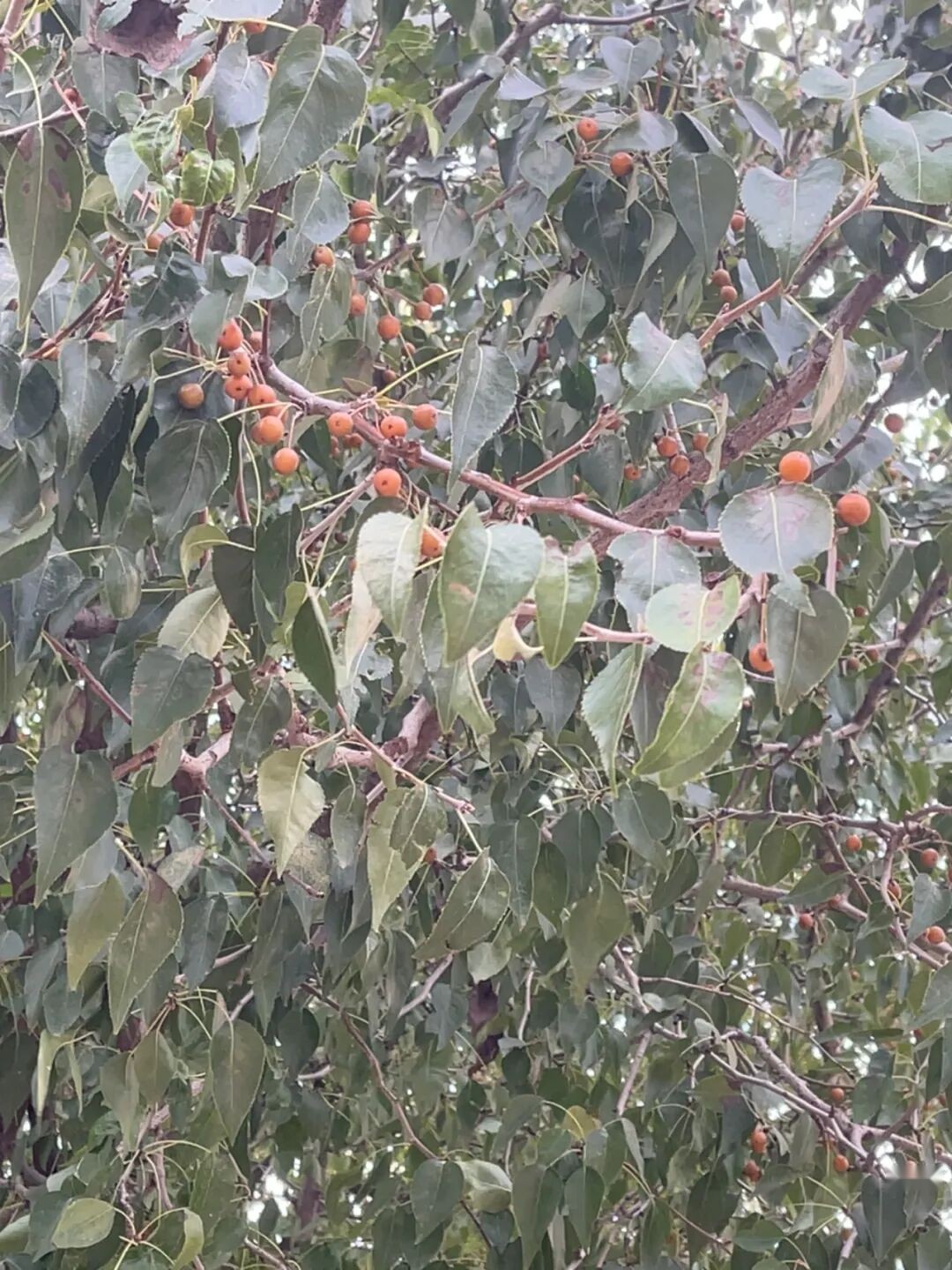
After grabbing a bite in Alxa, we kept moving and stayed overnight in Qingtongxia. That geographic name from the textbook finally came to life. Outside the hotel, I spotted a pear-leaf crabapple tree—a familiar tree from my childhood that I hadn't seen in years.
Time to fuel up and hit the road again.
This spot is also a National Key Cultural Relic Protection Unit.
Tongxin Great Mosque (Former Site of the Founding Conference of the Yuhai County Hui Autonomous Government of Shaanxi-Gansu-Ningxia)
Right here in Tongxin County, Ningxia, it's a super unique, traditional Chinese pavilion-style masjid. There are no domes here—just flying eaves and wooden structures that look like an ancient fortress, as well as a site tied to revolutionary red history.
Walking up to the Tongxin Great Mosque, classic Chinese flying eaves and multi-tiered pavilions replace the usual masjid dome, while thick loess walls give it a rugged, historic vibe. This place isn't just an ancient house of worship; it's also where the Yuhai Hui Autonomous Government was born, blending religious heritage and revolutionary history right here on the northwest frontier.
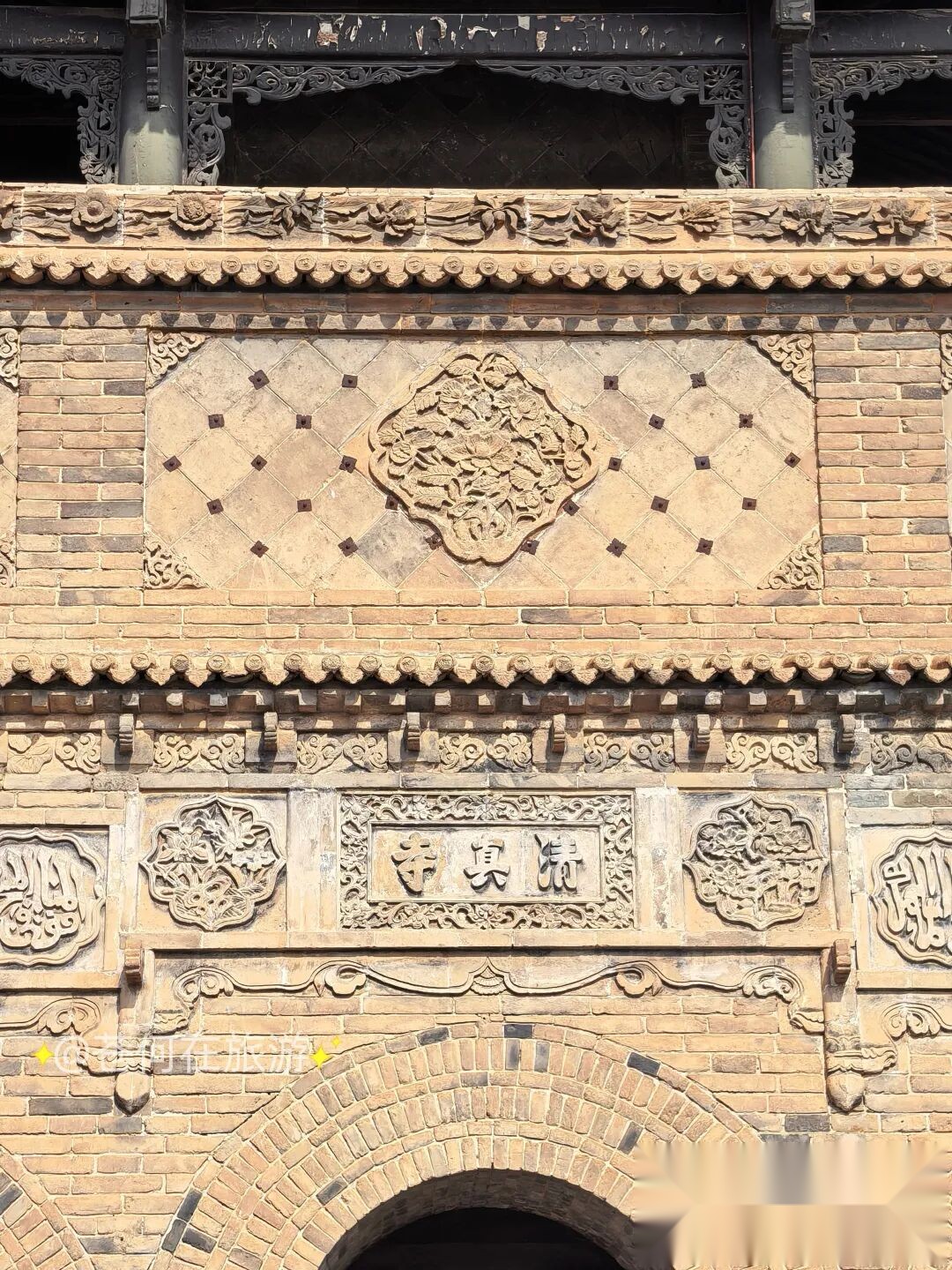
Tongxin Great Mosque Mountain Gate: Three blue-brick archways featuring stunning brick carvings. They're engraved with Chinese characters reading 'Purify the Heart' and 'Endurance' alongside Arabic script, showing a gorgeous fusion of Han Chinese and Hui architectural styles.
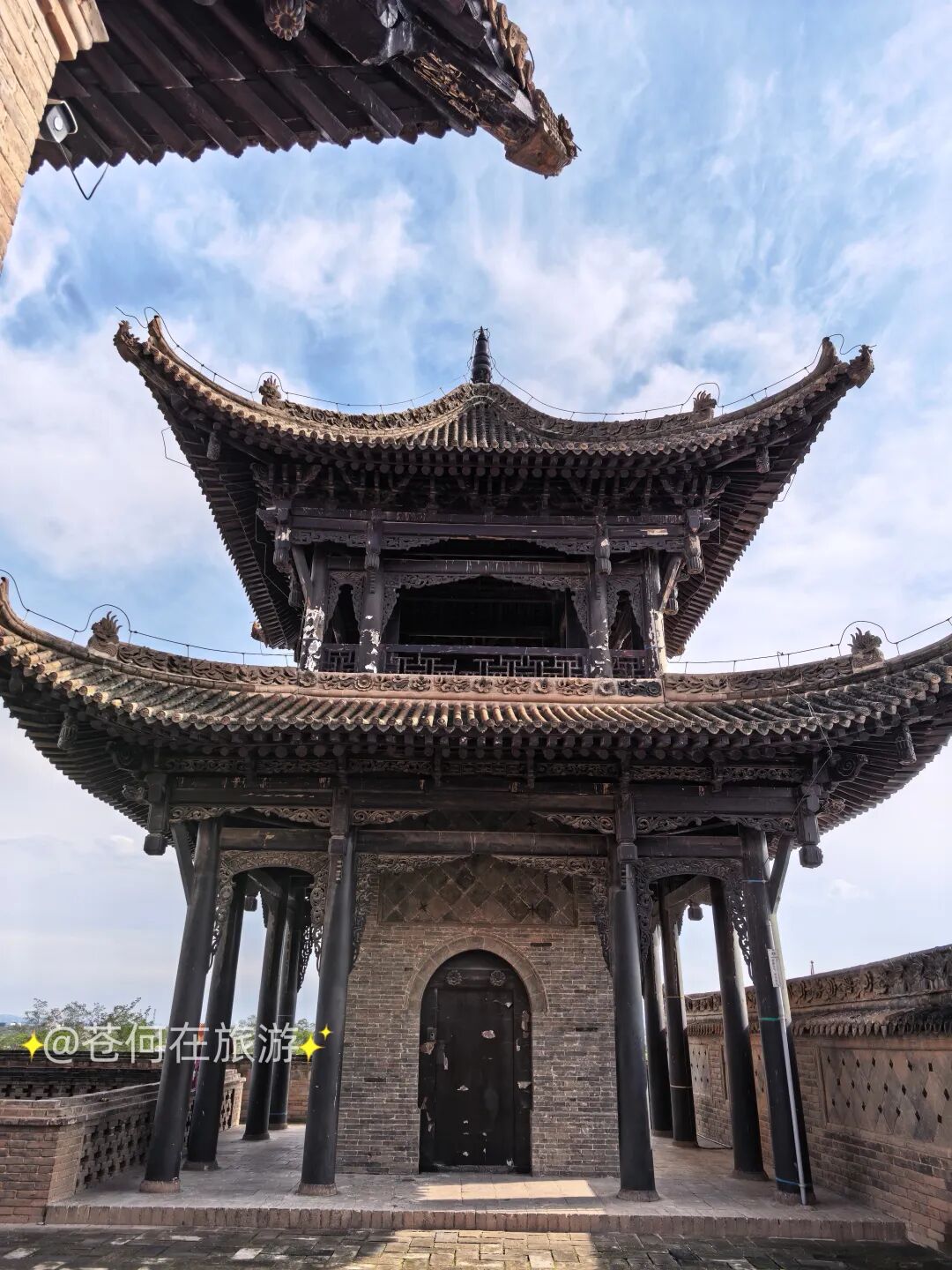
Tongxin Great Mosque Moon-Sighting Tower: A double-eaved, resting-mountain-roof Chinese wooden pavilion with upturned eaves. Without an Islamic dome, it blends Hui and Han architecture, using old loess soil and blue bricks for a rugged, imposing look.
Tongxin Great Mosque Walls: Blue bricks laid in a diagonal diamond pattern, featuring iron tie-rods (wall anchors) that serve double duty for structural reinforcement and decoration. Forged into star and petal shapes, they combine structural engineering with aesthetics—a rare sight in Northwest ancient architecture.
An ancient goji berry tree inside the courtyard of Tongxin Great Mosque. Over a century old and protected by a wooden fence, it grows resiliently right on the high platform of the ancient masjid.
Brick Carvings: Bamboo and rock relief carvings inscribed with the Confucian phrases 'Treat righteousness and duty as friends, treat morality as your teacher.' Confucian literary motifs blend right into the masjid's Chinese brickwork.
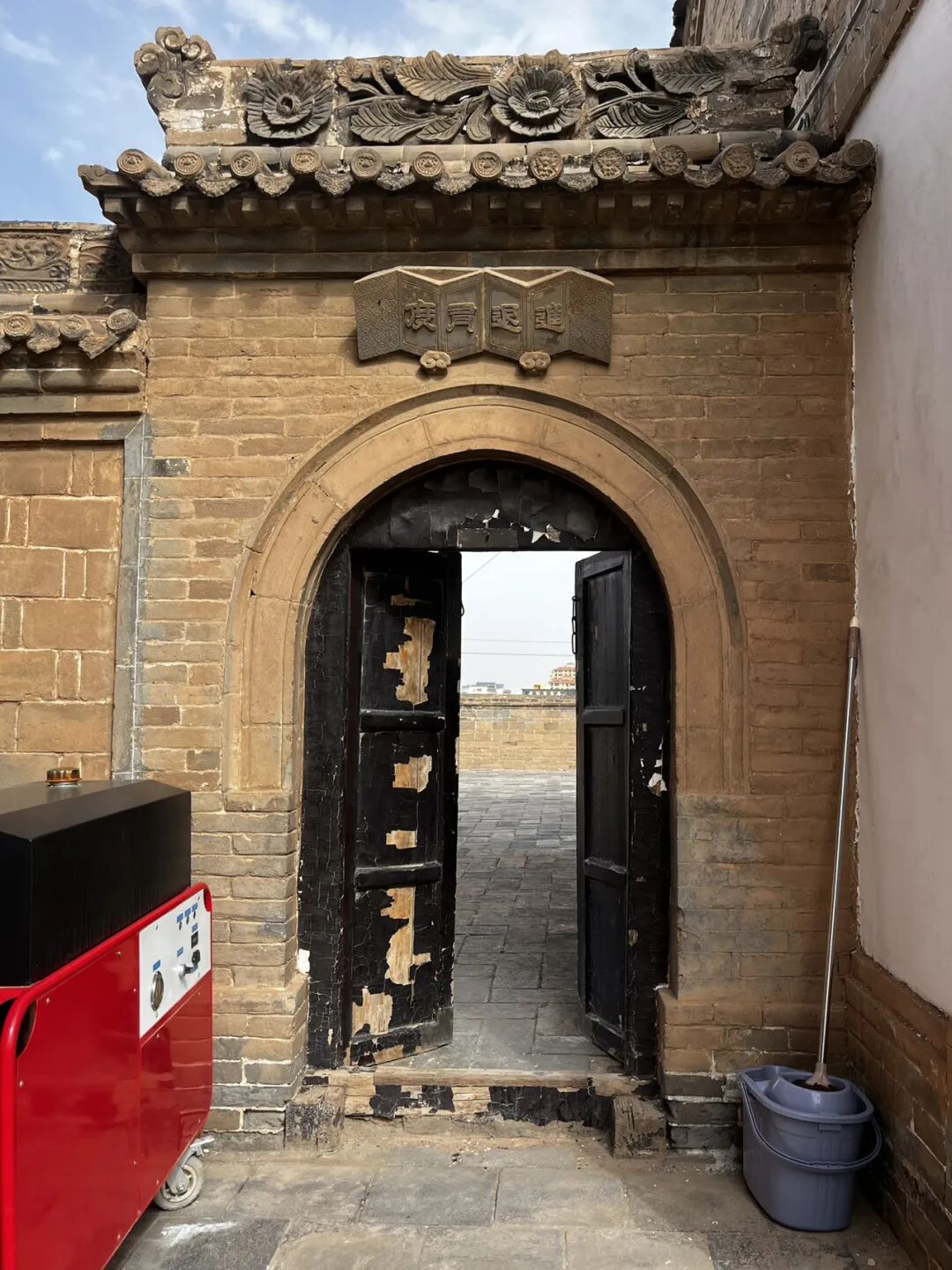
'The Emperor sent Tang troops to move into the Western Regions': An inscription recounting past events of the Western Regions from the Tang Dynasty, carved in Chinese characters directly onto the brick walls of the masjid.
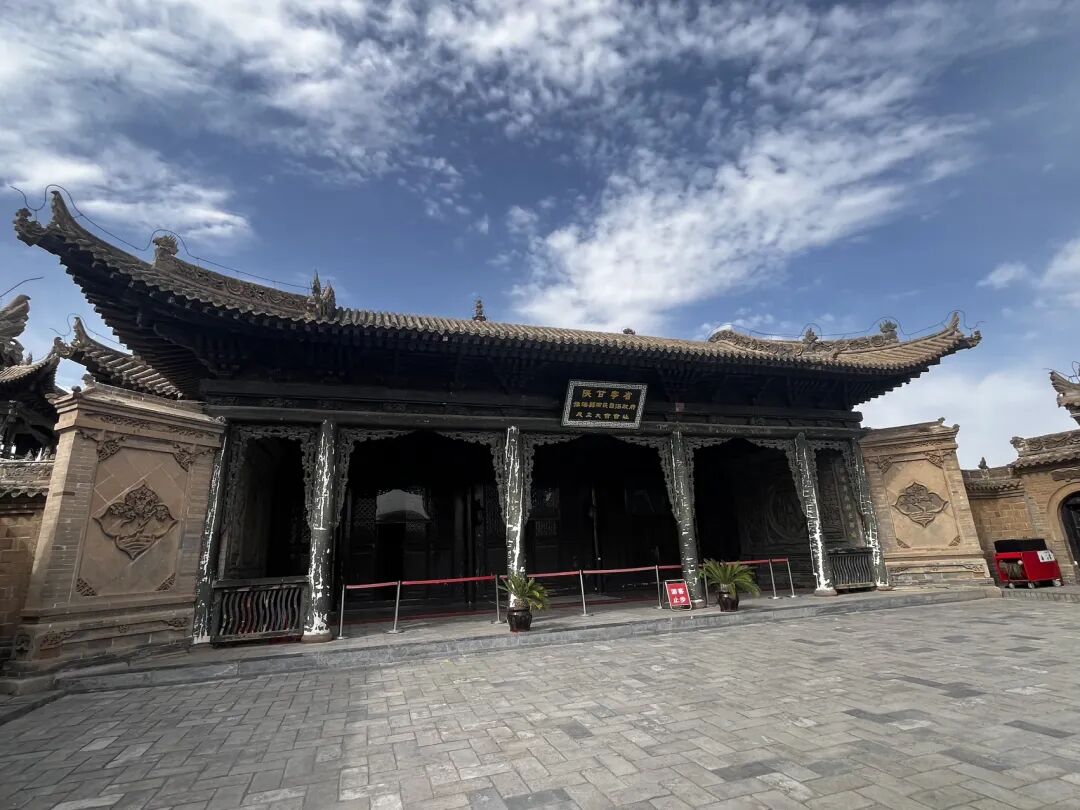
Tongxin Great Mosque Prayer Hall: A double-eaved Chinese wooden main hall that served as the former site of the Yuhai County Hui Autonomous Government of the Shaanxi-Gansu-Ningxia border region. Featuring grand flying eaves and ancient, weathered beams and pillars.
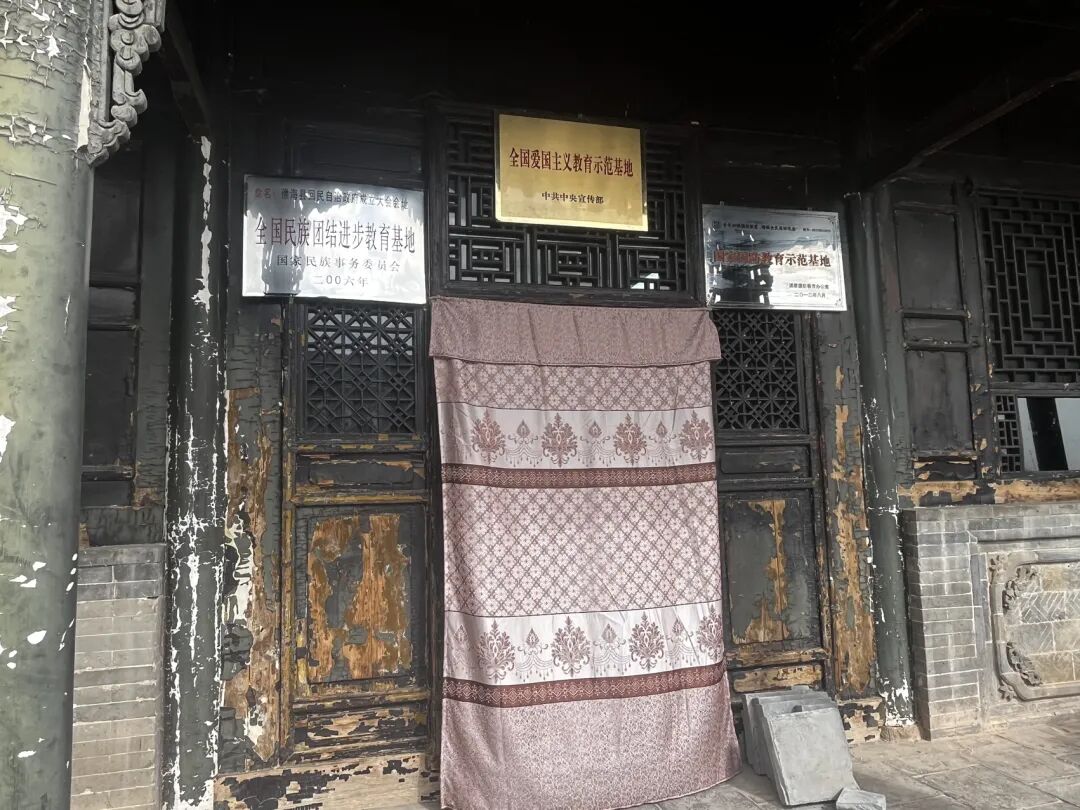
Inside, you'll find super detailed exhibits explaining its architecture and history.
The ancient hall has weathered centuries of wind and rain, leading to some rotting wooden components. During major renovations from 1982 to 1983, a specialized crew of craftsmen from Hancheng, Shaanxi, was brought in to lead the project. The skill of these veteran Guanzhong artisans was put to work on this northwest ancient masjid, repairing beam frameworks and restoring dougong bracket sets. They preserved the original architectural form and vibe to the absolute max, helping this ancient hall on its high platform survive to this day. Standing in front of the hall, you can appreciate both the heavy craftsmanship of Ming and Qing woodwork and the heartfelt dedication of cross-regional artisans passing the torch to protect our cultural relics.


Exploring Tongxin Great Mosque: A Masterpiece of Chinese Timberwork and Islamic Heritage in Ningxia
Articles • Hasan09 posted the article • 0 comments • 3 views • 1 hours ago
Exploring Tongxin Great Mosque: A National-Level Historic Monument Blending Song-Ming Timber Architecture with Islamic Spirit
Abstract:
A firsthand look inside the Tongxin Great Mosque, a hidden gem tucked away in the mountainous southern region of Ningxia. We're breaking down its unique architecture—dating back to the late Yuan and early Ming dynasties, where traditional Chinese timber-framing meets Islamic arches and domes—giving you a taste of an uncrowded, highly sophisticated Northwest architectural treasure.
If you're looking for the oldest and best-preserved ancient mosque in the Ningxia Hui Autonomous Region, it's definitely the Tongxin Great Mosque in Tongxin County, Wuzhong City.
It was originally founded during the Yuan dynasty, starting out as a Tibetan Buddhist monastery. During the Yuan, Prince Anxi Anada (grandson of Kublai Khan) was raised by Muslim foster parents as a child and converted to Islam as an adult. When he was stationed in Ningxia, he led a massive following to convert to Islam as well. As a result, the original monastery gradually fell into disuse, and some parts were converted into a mosque.
On October 20, 1936, during the Red Army's Long March, the Shaan-Gan-Ning Yuhai County Hui Autonomous Representative Conference was held at the Tongxin Great Mosque, where the Shaan-Gan-Ning Yuhai County Hui Autonomous Government was elected and established. This site also serves as the former location of the founding assembly of that Hui autonomous government.
The Tongxin Great Mosque is built on a 7-meter-high platform enclosed by dark grey bricks, utilizing traditional Chinese timber-framing techniques while incorporating Islamic-style decorations, making it a stellar example of two cultures coming together.
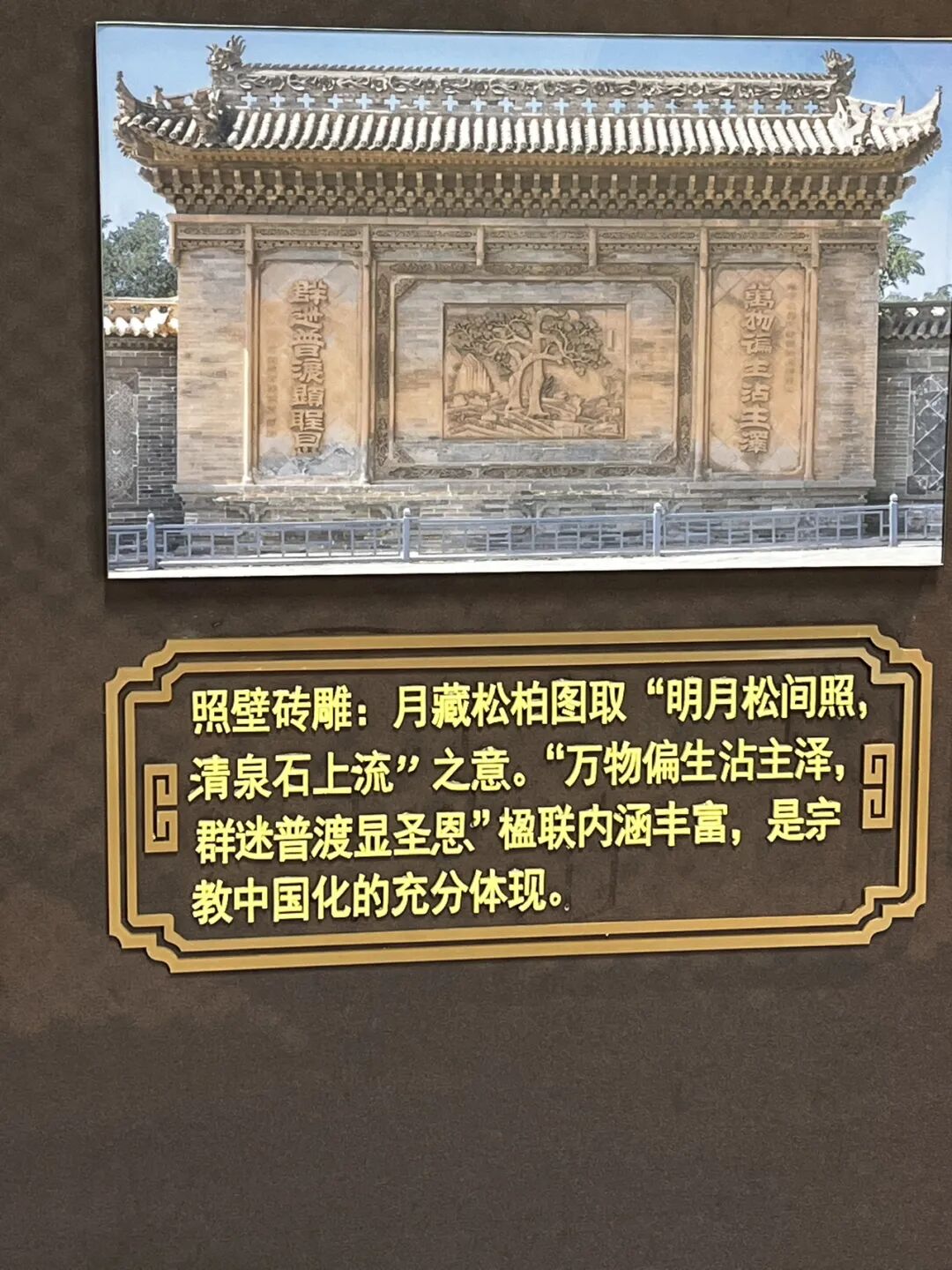
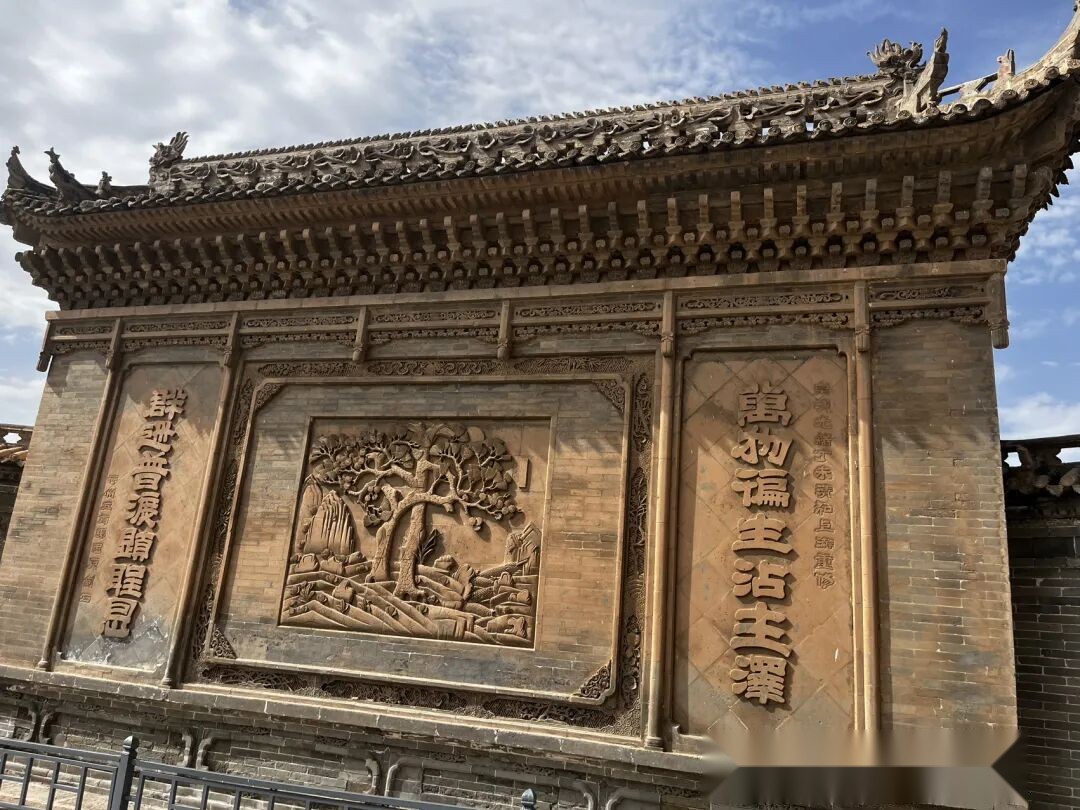
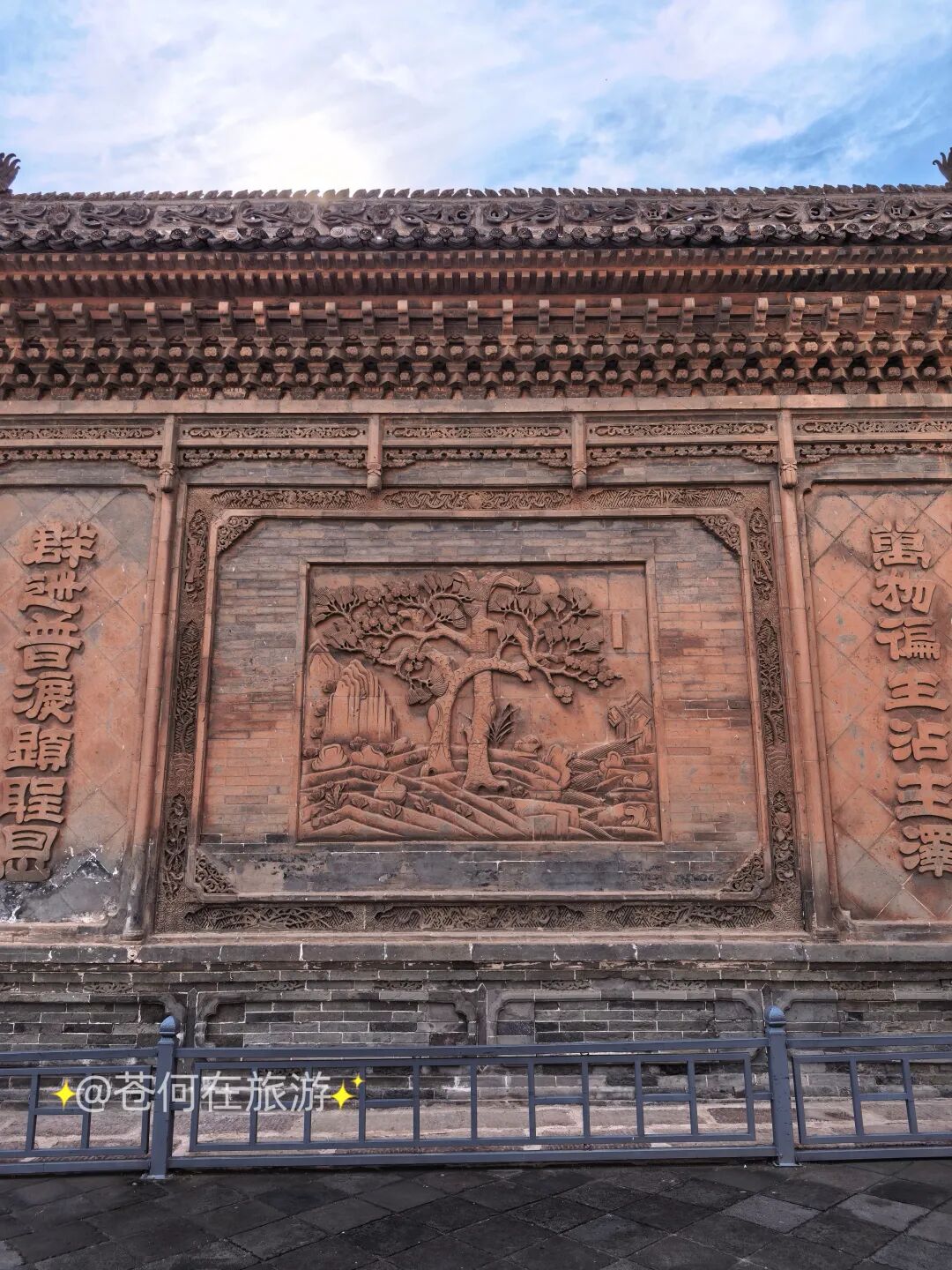
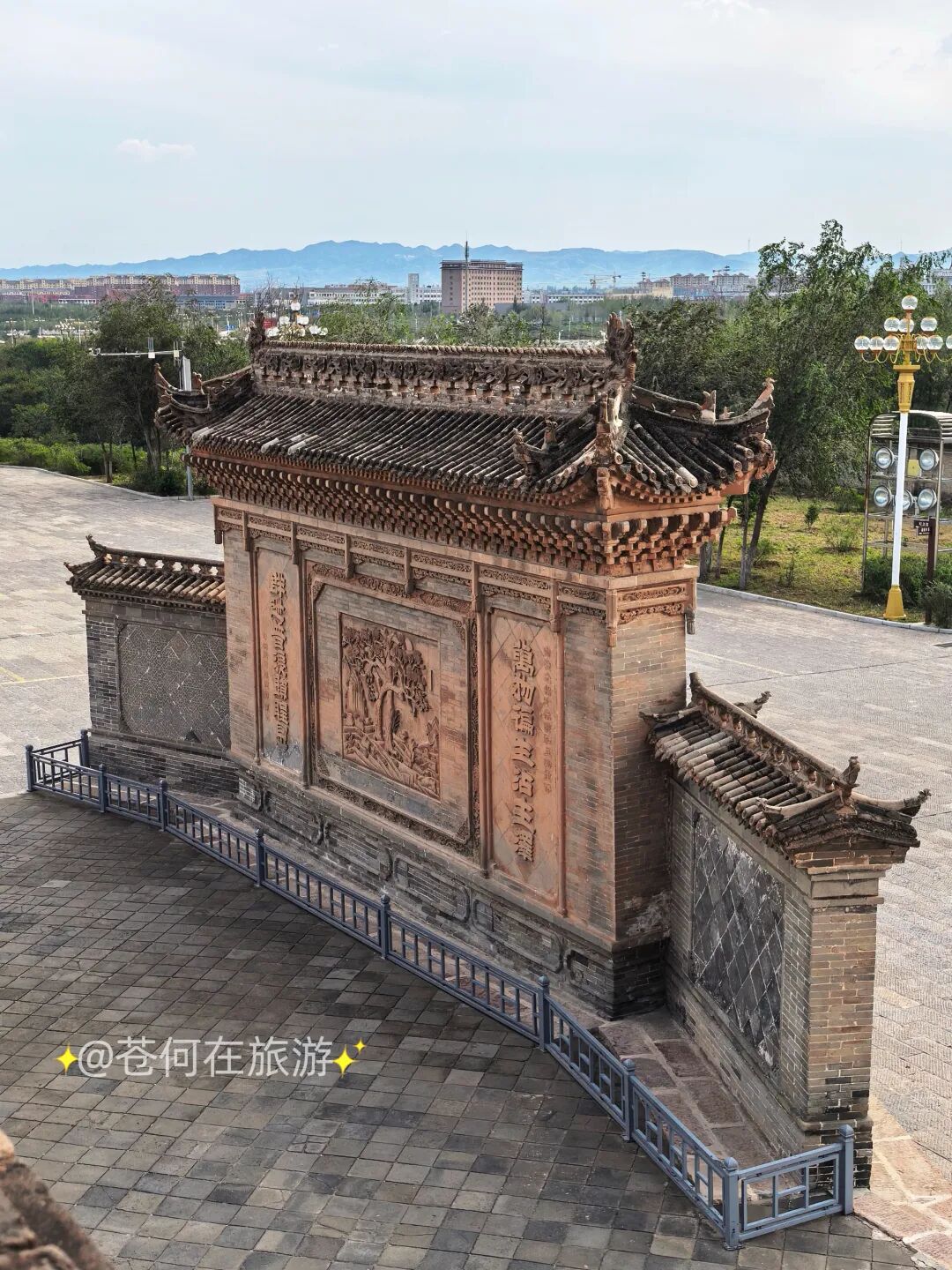
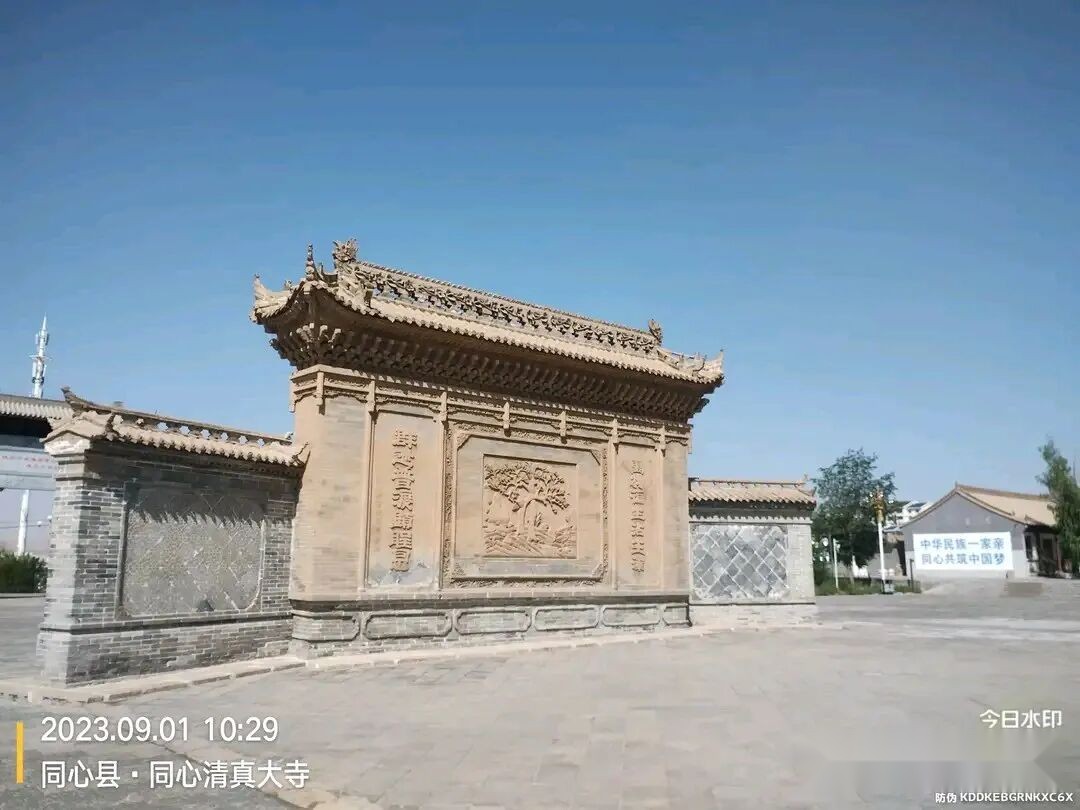
The dark brick spirit wall (zhaobi) in front of the mosque is a classic case in point. The front features the name 'Tongxin Great Mosque' written in both Chinese and Arabic script. The center of the back features a brick-carved 'Moon Hiding in the Pines' motif, flanked by couplets carved in official script (lishi) dating back to the Guangxu reign.
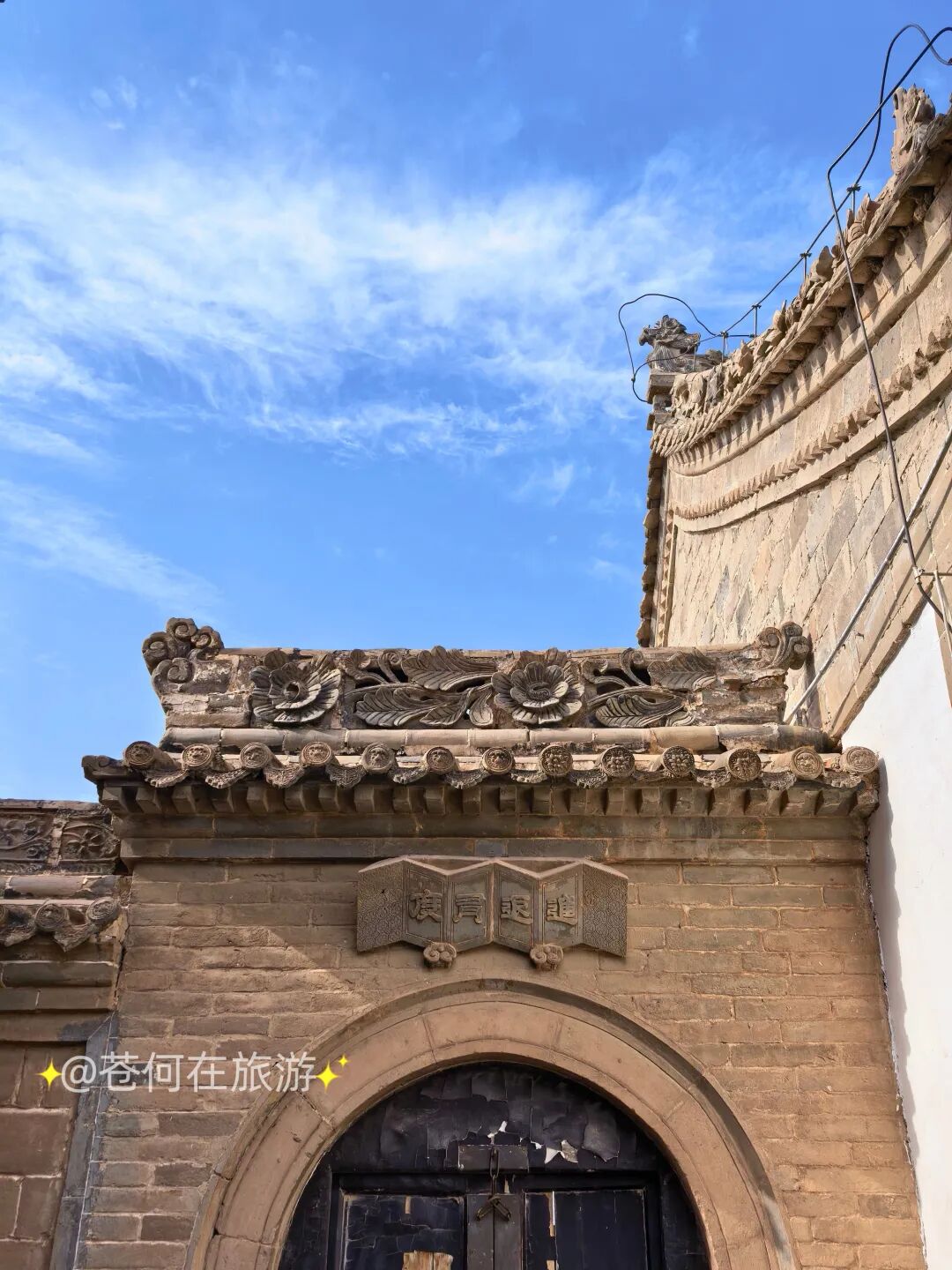
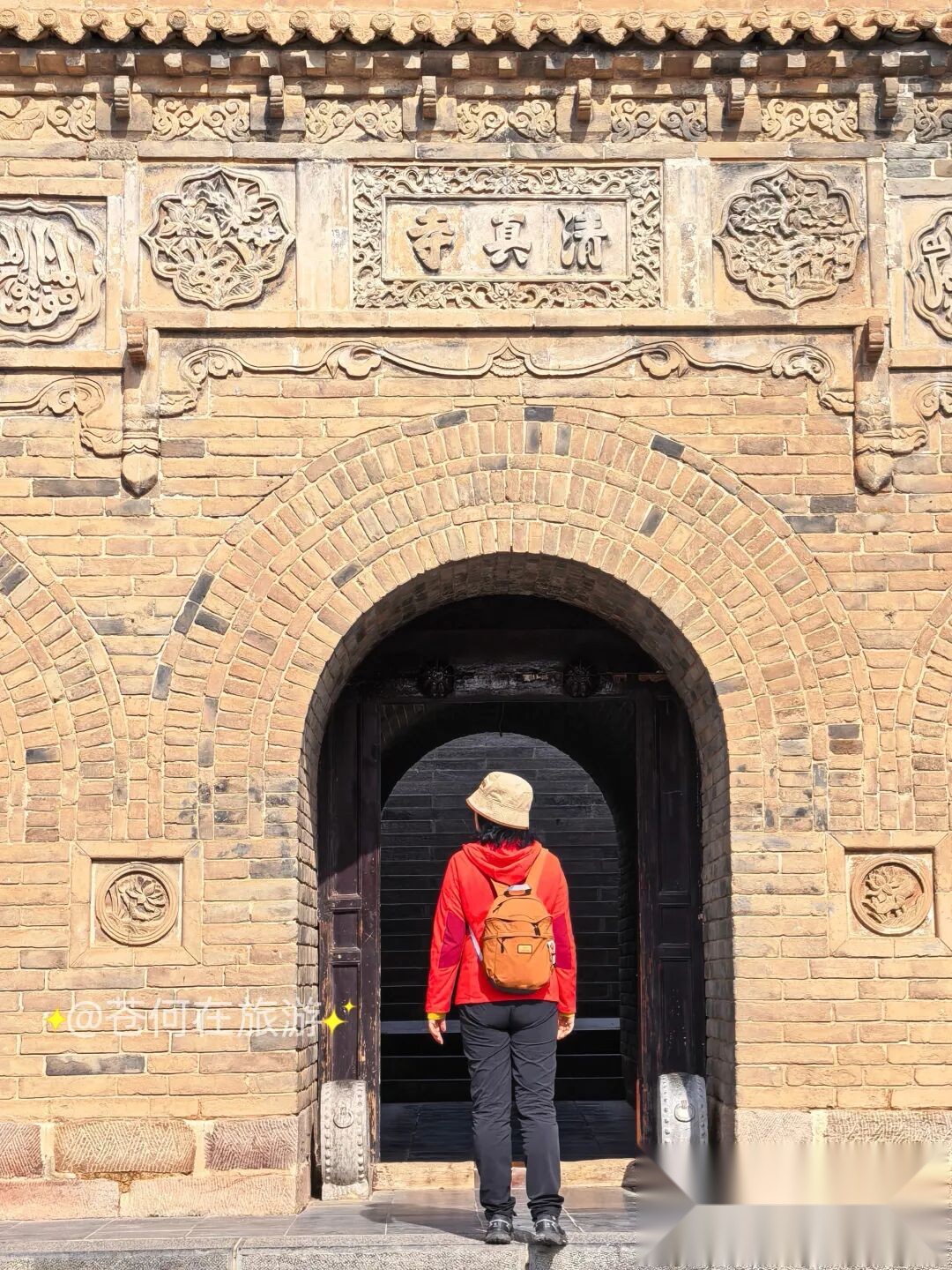
Next up are the arched gates: the lintel of the main central gate is brick-carved with the three characters for 'Mosque' (Qingzhensi), while the side gates feature the words 'Purify the Heart' (Xixin) and 'Patience' (Rennai), topped off with intricate Arabic calligraphy and floral brick carvings.
What makes the entire complex super unique is its 'reverse-curtain' layout. To walk inside, visitors first have to pass through three brick-arched gates (facing east) and a dark underground passage, then climb the stairs up onto the grey-brick high platform. You’ll spot the minaret (bangkelou) before stepping into the main courtyard, where you'll finally see the prayer hall facing west toward Mecca.
That right there is the mosque's reverse-curtain layout.
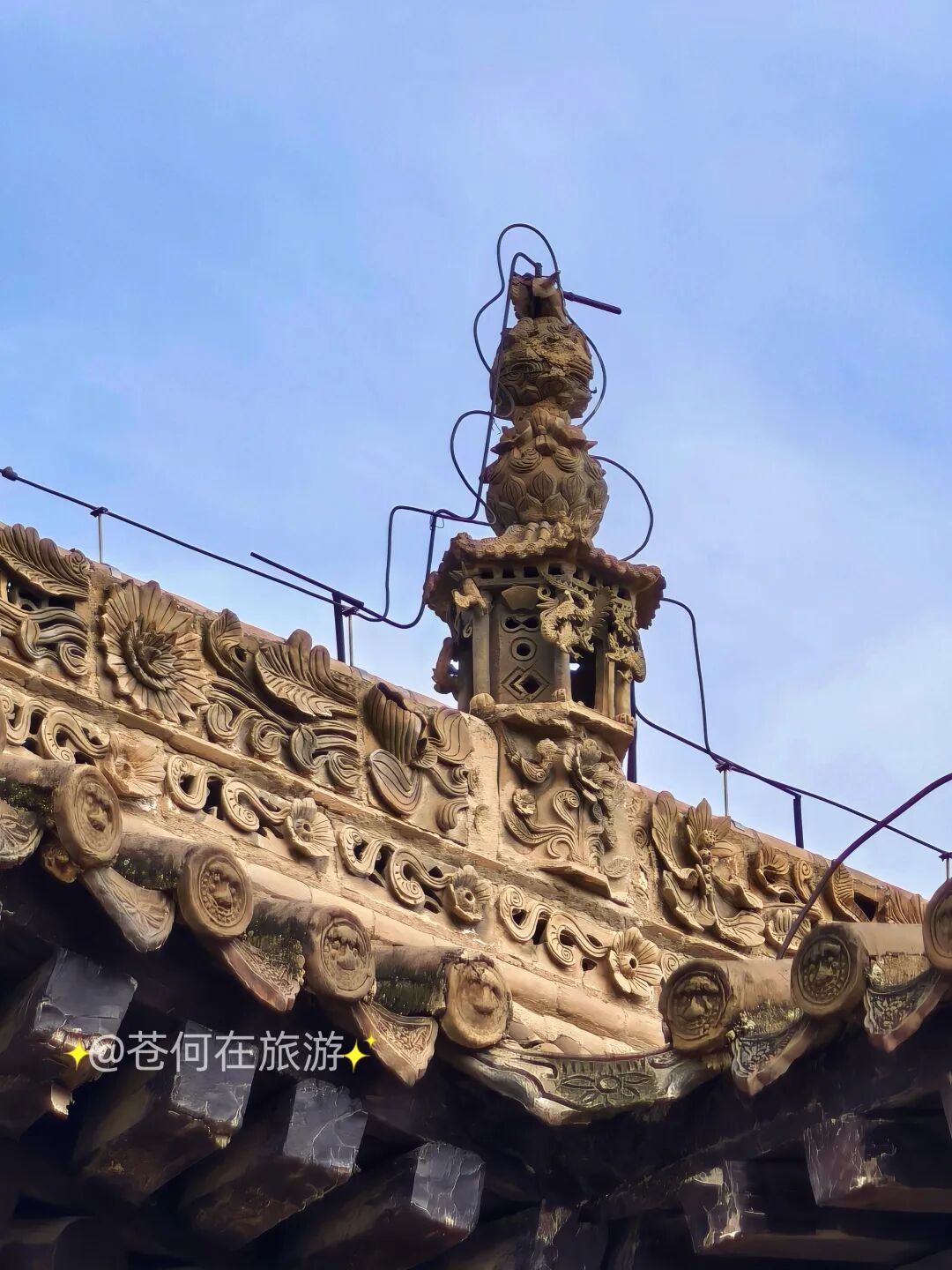
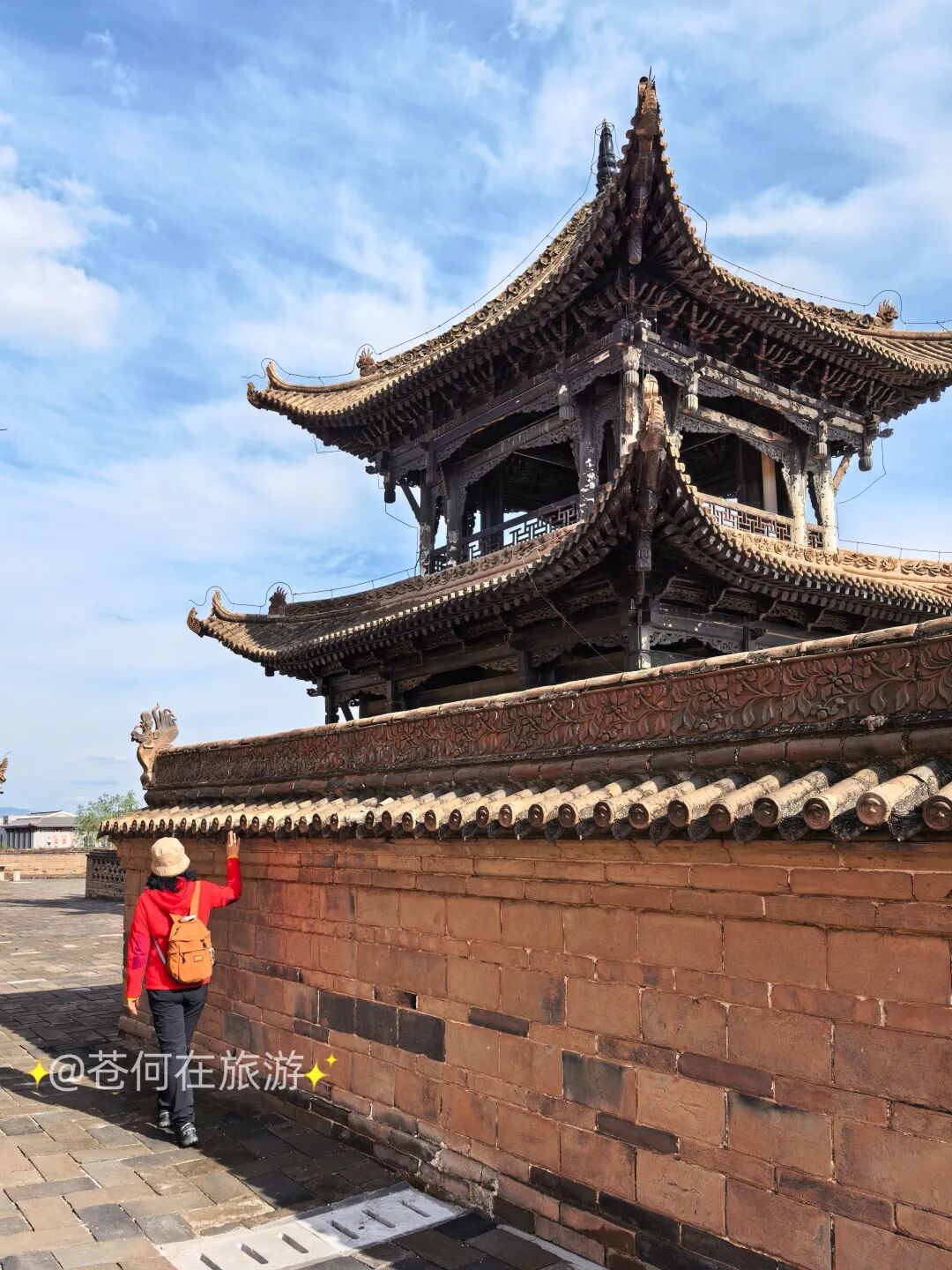
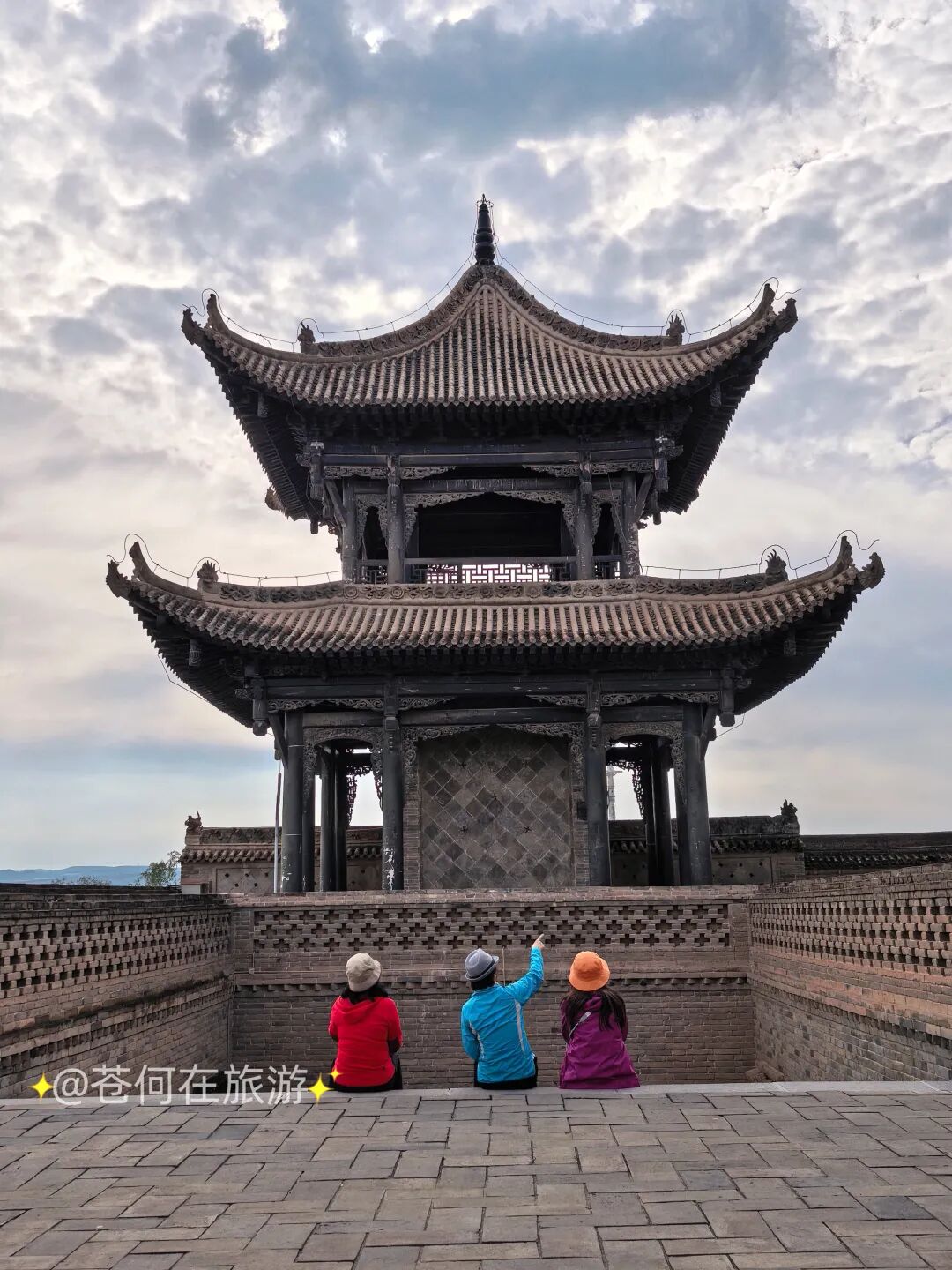
The bangkelou (minaret / prayer tower). Its second floor features a four-sided pyramidal roof in a classic Chinese pavilion style, complete with gorgeous brick and wood carvings. Built high up on the terrace, you can spot it from miles away.
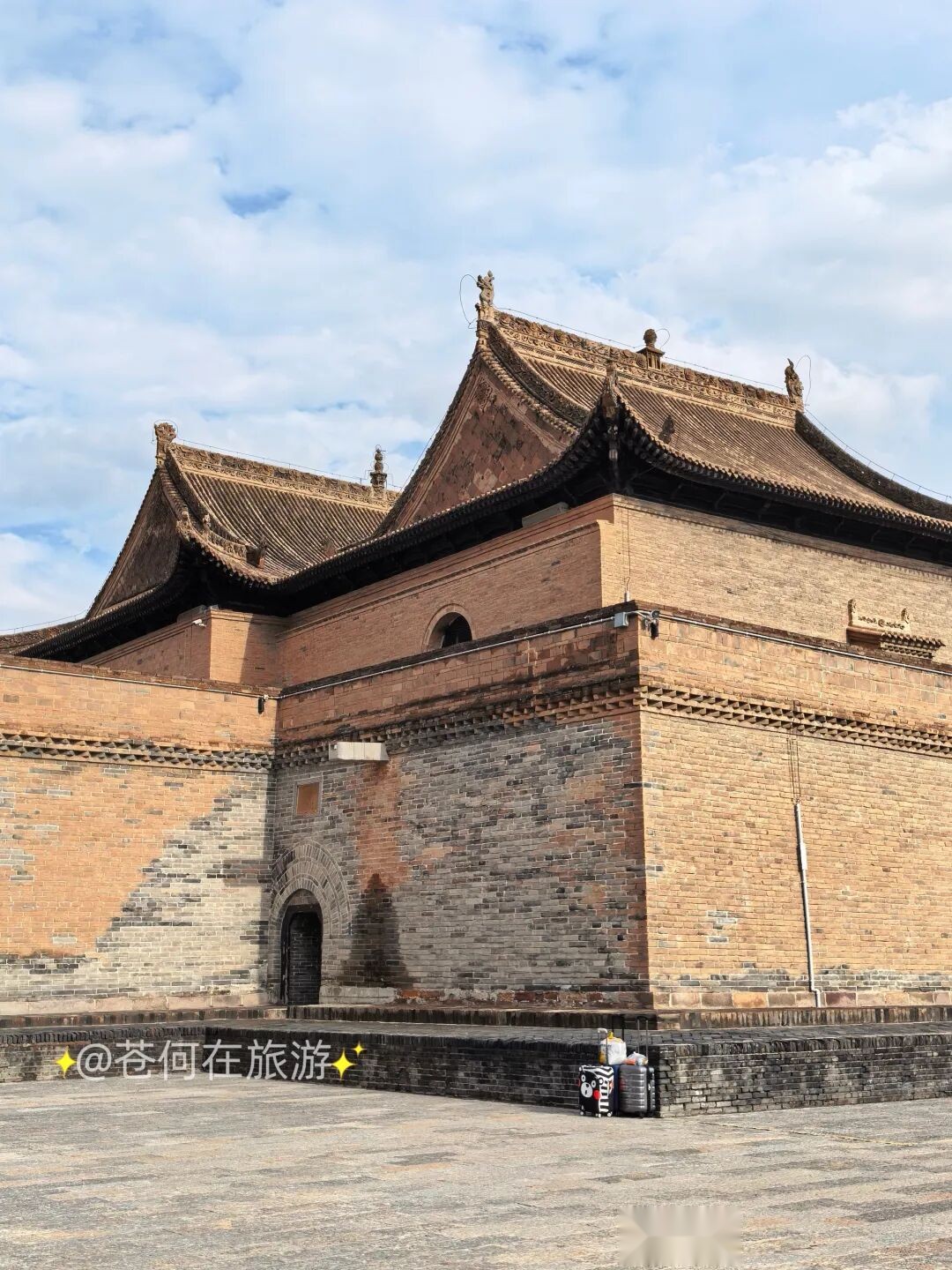
The prayer hall is the beating heart of the entire complex, sitting on the west side and facing east. The roof utilizes a connected-ridge technique, linking a rolled-shed roof (juanshan) and two hip-and-gable roofs (xieshan) end-to-end to form one massive hall. The interior of the prayer hall is currently closed to non-Muslim visitors.
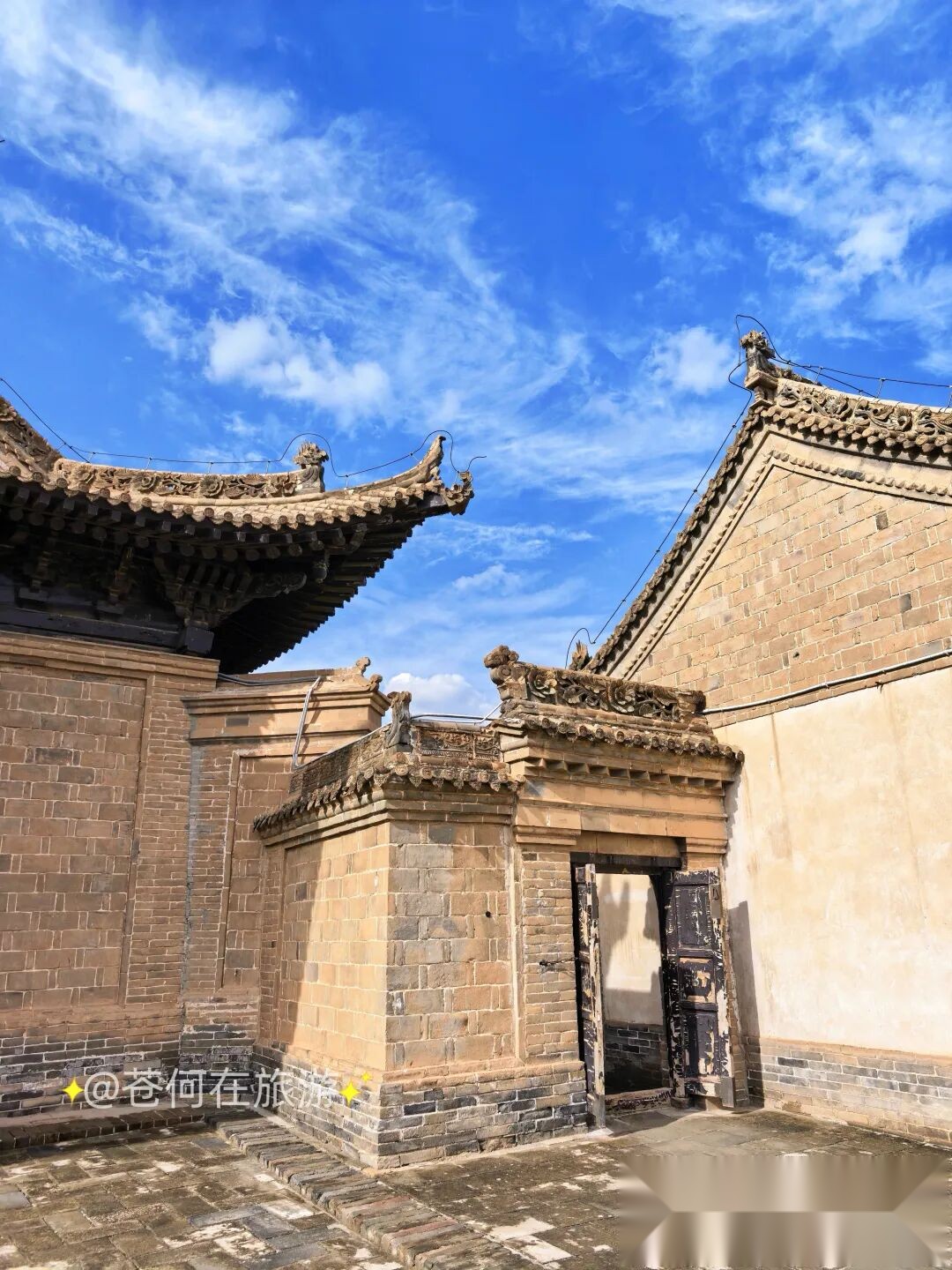
The most striking takeaway from hanging out here is the insane amount of detailed brick carving everywhere you look. Aside from the spirit wall, arched gates, and minaret we just mentioned, you'll spot brick carvings all over the main roof ridges, ridge terminals, gable walls, tie-beams (fang), and the walls flanking both sides of the corridors.
For example, on the walls flanking the front porch of the prayer hall, the south wall's center brick carving features a 'bogu' antique display rack alongside sutras, paired with bamboo and lotus motifs. The north wall features another bogu rack and a clock, paired with pine and chrysanthemum motifs.
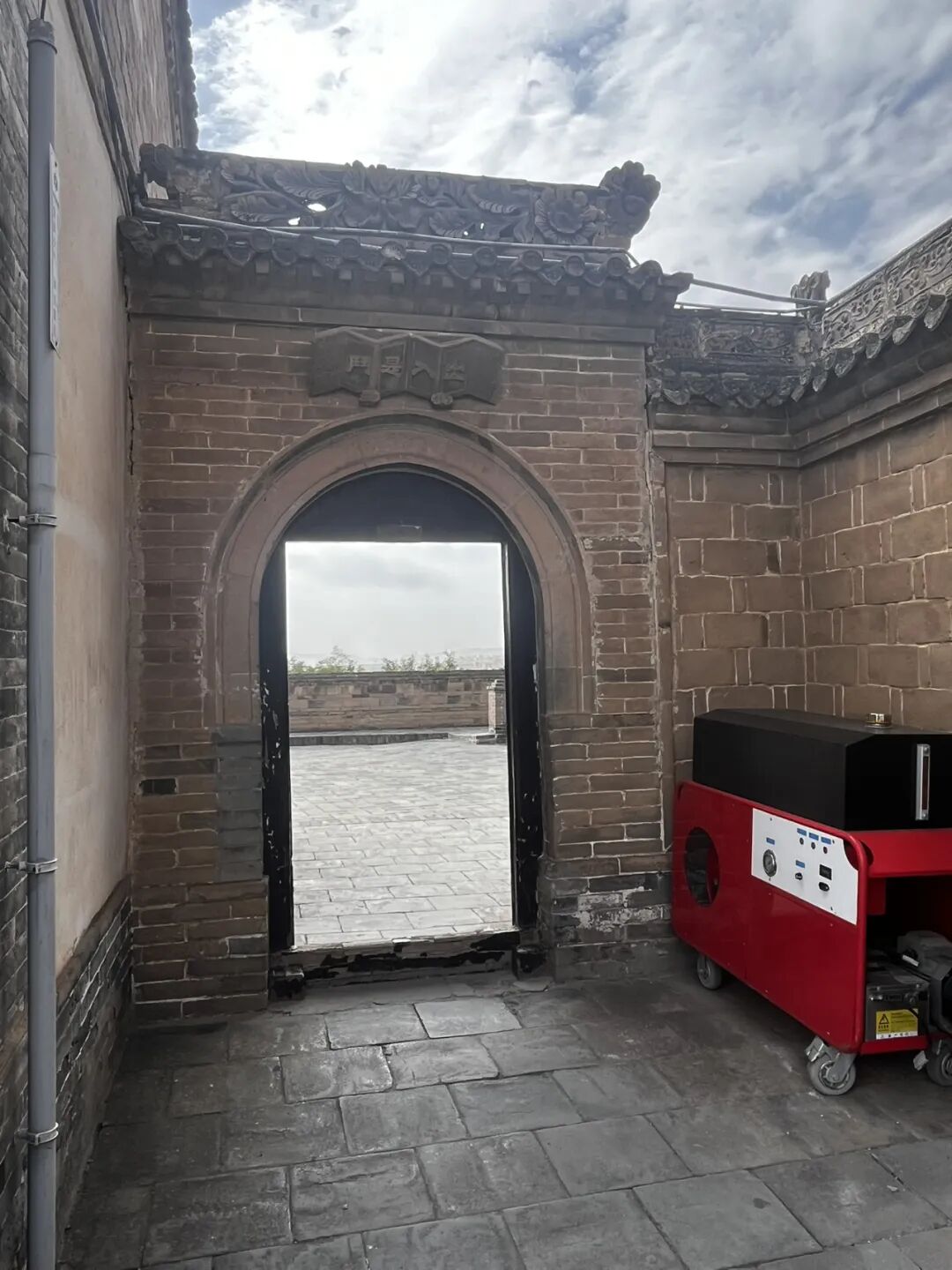
The plaques on the side gates leading in and out of the main prayer courtyard are also super unique, featuring book-page-style brick plaques inscribed with 'Entering and Leaving is a Gate' on one side, and 'Advance and Retreat with Propriety' on the other.
Bathed in blue skies and fluffy white clouds, the Tongxin Great Mosque oozes ancient vibes, making it the ultimate spot for moody, storytelling travel shots.
A few photography tips and takeaways:
You can snag a sweeping panoramic shot of the entire mosque from the side of the spirit wall, and a full shot of the back of the spirit wall from up on the high platform.
Use a telephoto lens at the arched gates to capture that atmospheric, stepping-into-the-mosque vibe.
Sit on the steps with the minaret in the background for a cinematic, storytelling portrait—the shot below was taken by setting up our own tripod.
Snapping candid walking shots along the walls of the prayer courtyard keeps the frame super clean and looks amazing.
✅ Travel Guide:
Address: Beside Provincial Highway 101, near the Red Army Long March Memorial Museum – Tongxin Great Mosque, Tongxin County, Wuzhong City, Ningxia
Hours: 8:00 AM – 6:00 PM
Admission: Free view all
Exploring Tongxin Great Mosque: A National-Level Historic Monument Blending Song-Ming Timber Architecture with Islamic Spirit

Abstract:
A firsthand look inside the Tongxin Great Mosque, a hidden gem tucked away in the mountainous southern region of Ningxia. We're breaking down its unique architecture—dating back to the late Yuan and early Ming dynasties, where traditional Chinese timber-framing meets Islamic arches and domes—giving you a taste of an uncrowded, highly sophisticated Northwest architectural treasure.
If you're looking for the oldest and best-preserved ancient mosque in the Ningxia Hui Autonomous Region, it's definitely the Tongxin Great Mosque in Tongxin County, Wuzhong City.
It was originally founded during the Yuan dynasty, starting out as a Tibetan Buddhist monastery. During the Yuan, Prince Anxi Anada (grandson of Kublai Khan) was raised by Muslim foster parents as a child and converted to Islam as an adult. When he was stationed in Ningxia, he led a massive following to convert to Islam as well. As a result, the original monastery gradually fell into disuse, and some parts were converted into a mosque.
On October 20, 1936, during the Red Army's Long March, the Shaan-Gan-Ning Yuhai County Hui Autonomous Representative Conference was held at the Tongxin Great Mosque, where the Shaan-Gan-Ning Yuhai County Hui Autonomous Government was elected and established. This site also serves as the former location of the founding assembly of that Hui autonomous government.
The Tongxin Great Mosque is built on a 7-meter-high platform enclosed by dark grey bricks, utilizing traditional Chinese timber-framing techniques while incorporating Islamic-style decorations, making it a stellar example of two cultures coming together.
The dark brick spirit wall (zhaobi) in front of the mosque is a classic case in point. The front features the name 'Tongxin Great Mosque' written in both Chinese and Arabic script. The center of the back features a brick-carved 'Moon Hiding in the Pines' motif, flanked by couplets carved in official script (lishi) dating back to the Guangxu reign.
Next up are the arched gates: the lintel of the main central gate is brick-carved with the three characters for 'Mosque' (Qingzhensi), while the side gates feature the words 'Purify the Heart' (Xixin) and 'Patience' (Rennai), topped off with intricate Arabic calligraphy and floral brick carvings.

What makes the entire complex super unique is its 'reverse-curtain' layout. To walk inside, visitors first have to pass through three brick-arched gates (facing east) and a dark underground passage, then climb the stairs up onto the grey-brick high platform. You’ll spot the minaret (bangkelou) before stepping into the main courtyard, where you'll finally see the prayer hall facing west toward Mecca.
That right there is the mosque's reverse-curtain layout.
The bangkelou (minaret / prayer tower). Its second floor features a four-sided pyramidal roof in a classic Chinese pavilion style, complete with gorgeous brick and wood carvings. Built high up on the terrace, you can spot it from miles away.
The prayer hall is the beating heart of the entire complex, sitting on the west side and facing east. The roof utilizes a connected-ridge technique, linking a rolled-shed roof (juanshan) and two hip-and-gable roofs (xieshan) end-to-end to form one massive hall. The interior of the prayer hall is currently closed to non-Muslim visitors.
The most striking takeaway from hanging out here is the insane amount of detailed brick carving everywhere you look. Aside from the spirit wall, arched gates, and minaret we just mentioned, you'll spot brick carvings all over the main roof ridges, ridge terminals, gable walls, tie-beams (fang), and the walls flanking both sides of the corridors.
For example, on the walls flanking the front porch of the prayer hall, the south wall's center brick carving features a 'bogu' antique display rack alongside sutras, paired with bamboo and lotus motifs. The north wall features another bogu rack and a clock, paired with pine and chrysanthemum motifs.
The plaques on the side gates leading in and out of the main prayer courtyard are also super unique, featuring book-page-style brick plaques inscribed with 'Entering and Leaving is a Gate' on one side, and 'Advance and Retreat with Propriety' on the other.
Bathed in blue skies and fluffy white clouds, the Tongxin Great Mosque oozes ancient vibes, making it the ultimate spot for moody, storytelling travel shots.
A few photography tips and takeaways:
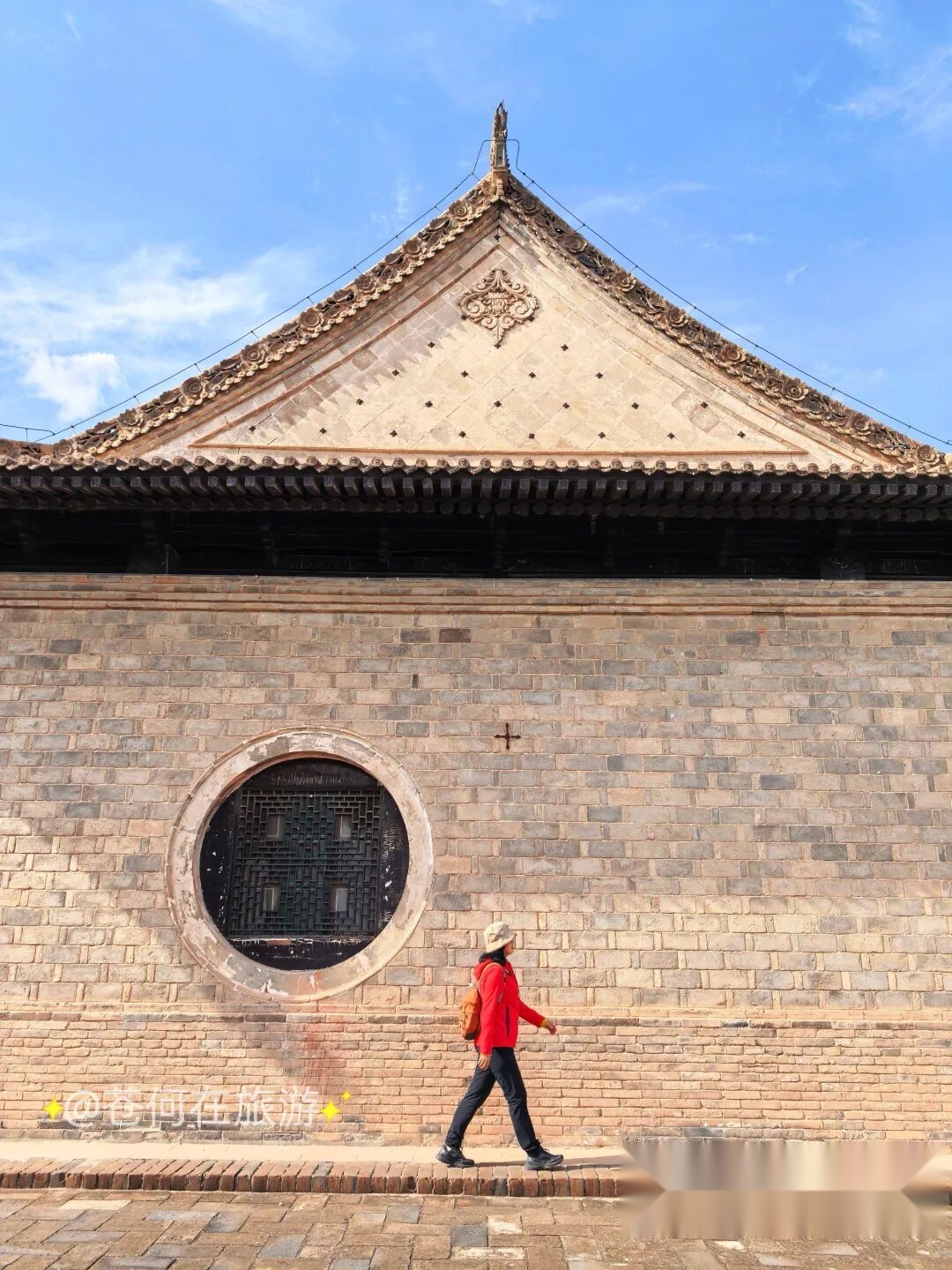
You can snag a sweeping panoramic shot of the entire mosque from the side of the spirit wall, and a full shot of the back of the spirit wall from up on the high platform.

Use a telephoto lens at the arched gates to capture that atmospheric, stepping-into-the-mosque vibe.
Sit on the steps with the minaret in the background for a cinematic, storytelling portrait—the shot below was taken by setting up our own tripod.
Snapping candid walking shots along the walls of the prayer courtyard keeps the frame super clean and looks amazing.
✅ Travel Guide:
Address: Beside Provincial Highway 101, near the Red Army Long March Memorial Museum – Tongxin Great Mosque, Tongxin County, Wuzhong City, Ningxia
Hours: 8:00 AM – 6:00 PM
Admission: Free
Exploring Ningxia's Oldest and Largest Mosque: A Visit to Tongxin Great Mosque
Articles • Hasan09 posted the article • 0 comments • 3 views • 1 hours ago
Visiting Ningxia's Oldest and Largest Mosque: A Field Journey to Tongxin Great Mosque
Abstract:
A field exploration of the architectural layout and historical environment of Tongxin Great Mosque. Documenting an ancient sanctuary that has stood tall through multiple major renovations since the Ming dynasty, and experiencing the solemnity and devotion of Muslims in Northwest China as they generation after generation safeguard their spiritual home.
As an autonomous region for Hui Muslims, Ningxia is dotted with mosques everywhere. But do you know which mosque in Ningxia is the oldest, largest, a national key cultural relic protection unit, and a famous revolutionary heritage site? That's right, it's the Tongxin Great Mosque (Tongxin Mosque).
Tongxin Great Mosque is located on a highland in the northern part of the old city of Tongxin County. Legend has it that it was built during the Wanli reign of the Ming dynasty (1573–1620), boasting a history of over 600 years, and has undergone three large-scale renovations and expansions. Its architectural style is unique, seamlessly blending ancient Chinese traditional wooden architecture with Islamic culture. Despite weathering the vicissitudes of time, it still stands tall, majestic, rustic, and elegant.
On the wall near the entrance of the mosque courtyard, there are two stone-carved horizontal plaques bearing the inscriptions: "Renovated during the Wanli reign of the Ming dynasty" and "Renovated in the fifth month of the Xinhai year during the 56th year of the Qianlong reign," indicating that the current site of Tongxin Great Mosque has a history of at least over four hundred years. The mosque features a traditional Chinese classical architectural style with a building area of 2,870 square meters. The entire temple is divided into inner and outer courtyards. The outer courtyard is relatively spacious, where Muslims often gather for congregational prayers during major festivals. In front of the mosque gate stands a 9-meter-long and 6-meter-high spirit wall (zhaobi) featuring a brick-carved pattern of "Cypress Hidden in the Moon." Matching the spirit wall are three brick-built arched gates engraved with Arabic brick carvings and floral patterns, executed with exquisite and lifelike craftsmanship. The central gate is inscribed with the three large characters "Mosque" (Qingzhensi), while the left and right arched gates bear the lintel inscriptions "Endurance of Heart" (Renxin) and "Patience" (Rennai) respectively. The outer courtyard also houses a 102-year-old Chinese wolfberry (goji berry) tree. The inner courtyard features a prayer hall on a high platform, flanked by 5-room lecture halls on the north and south, forming a three-sided courtyard layout with the main hall. The prayer hall is spacious, capable of accommodating over a thousand people for congregational prayer simultaneously. The exterior of the hall is exquisitely decorated with upturned eaves and dougong (interlocking wooden brackets), maintaining a solemn yet understated aesthetic.
Tongxin Great Mosque is famous not only for its unique architectural style, but also as a symbol of unity and cooperation between the Hui and Han ethnic groups. In 1936, during the Western Expedition of the Chinese Workers' and Peasants' Red Army, the founding assembly of the "Yuhai County Hui People's Autonomous Government of the Shaan-Gan-Ning Border Region" was held at this very mosque.
According to staff inside the mosque, a mosque with such a long history was almost destroyed during the Cultural Revolution. At the time, Red Guards were preparing to demolish the mosque the very next day. Fortunately, perhaps due to the mosque's status as a revolutionary cultural relic, instructions came down from higher authorities that same day dictating that this mosque must not be demolished and had to be preserved. Thus, Tongxin Great Mosque narrowly escaped disaster and was very fortunately preserved. view all
Visiting Ningxia's Oldest and Largest Mosque: A Field Journey to Tongxin Great Mosque
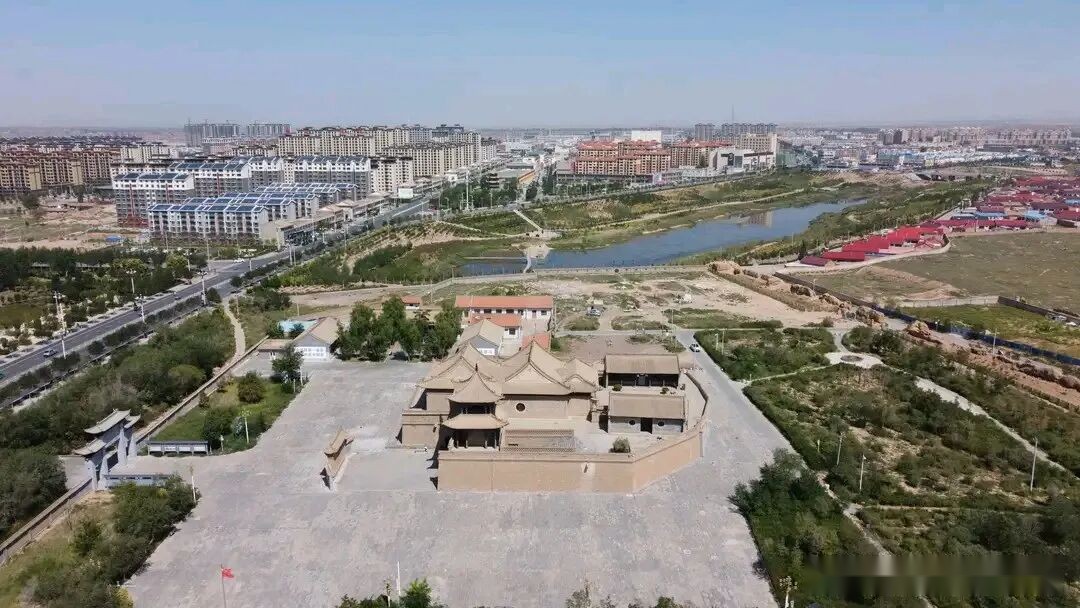
Abstract:
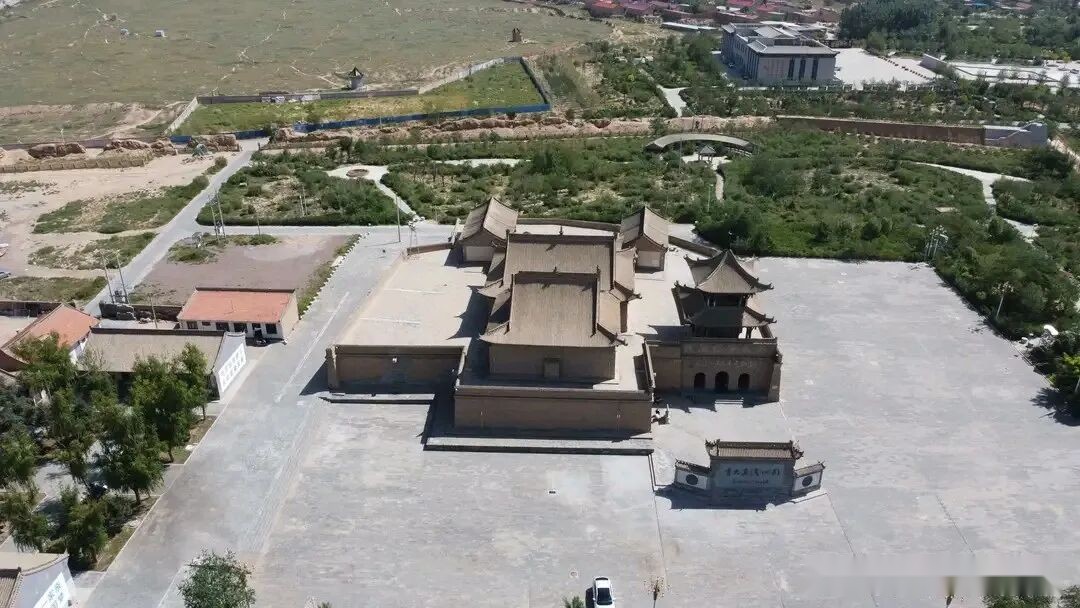
A field exploration of the architectural layout and historical environment of Tongxin Great Mosque. Documenting an ancient sanctuary that has stood tall through multiple major renovations since the Ming dynasty, and experiencing the solemnity and devotion of Muslims in Northwest China as they generation after generation safeguard their spiritual home.
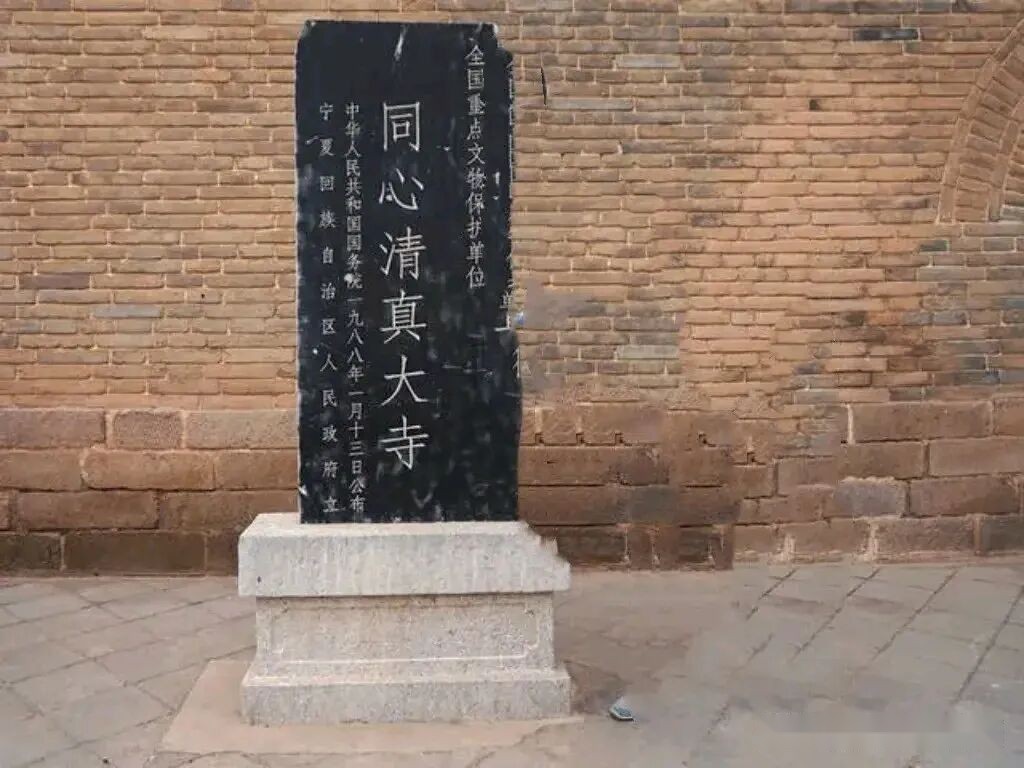
As an autonomous region for Hui Muslims, Ningxia is dotted with mosques everywhere. But do you know which mosque in Ningxia is the oldest, largest, a national key cultural relic protection unit, and a famous revolutionary heritage site? That's right, it's the Tongxin Great Mosque (Tongxin Mosque).

Tongxin Great Mosque is located on a highland in the northern part of the old city of Tongxin County. Legend has it that it was built during the Wanli reign of the Ming dynasty (1573–1620), boasting a history of over 600 years, and has undergone three large-scale renovations and expansions. Its architectural style is unique, seamlessly blending ancient Chinese traditional wooden architecture with Islamic culture. Despite weathering the vicissitudes of time, it still stands tall, majestic, rustic, and elegant.
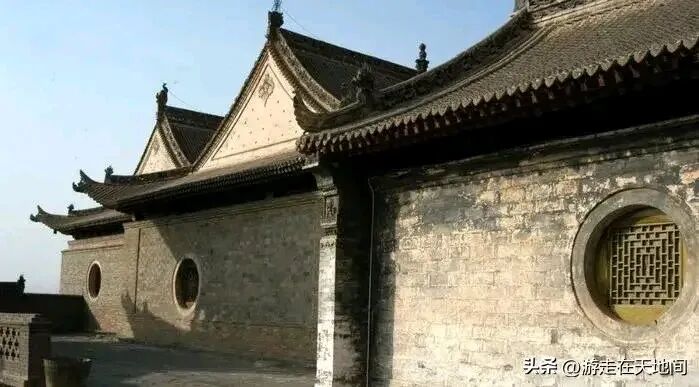
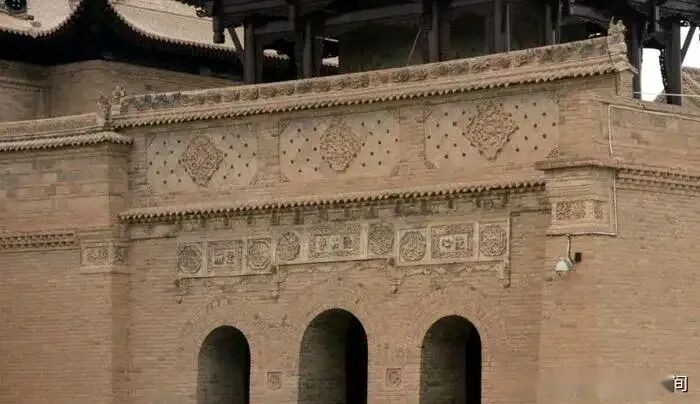
On the wall near the entrance of the mosque courtyard, there are two stone-carved horizontal plaques bearing the inscriptions: "Renovated during the Wanli reign of the Ming dynasty" and "Renovated in the fifth month of the Xinhai year during the 56th year of the Qianlong reign," indicating that the current site of Tongxin Great Mosque has a history of at least over four hundred years. The mosque features a traditional Chinese classical architectural style with a building area of 2,870 square meters. The entire temple is divided into inner and outer courtyards. The outer courtyard is relatively spacious, where Muslims often gather for congregational prayers during major festivals. In front of the mosque gate stands a 9-meter-long and 6-meter-high spirit wall (zhaobi) featuring a brick-carved pattern of "Cypress Hidden in the Moon." Matching the spirit wall are three brick-built arched gates engraved with Arabic brick carvings and floral patterns, executed with exquisite and lifelike craftsmanship. The central gate is inscribed with the three large characters "Mosque" (Qingzhensi), while the left and right arched gates bear the lintel inscriptions "Endurance of Heart" (Renxin) and "Patience" (Rennai) respectively. The outer courtyard also houses a 102-year-old Chinese wolfberry (goji berry) tree. The inner courtyard features a prayer hall on a high platform, flanked by 5-room lecture halls on the north and south, forming a three-sided courtyard layout with the main hall. The prayer hall is spacious, capable of accommodating over a thousand people for congregational prayer simultaneously. The exterior of the hall is exquisitely decorated with upturned eaves and dougong (interlocking wooden brackets), maintaining a solemn yet understated aesthetic.
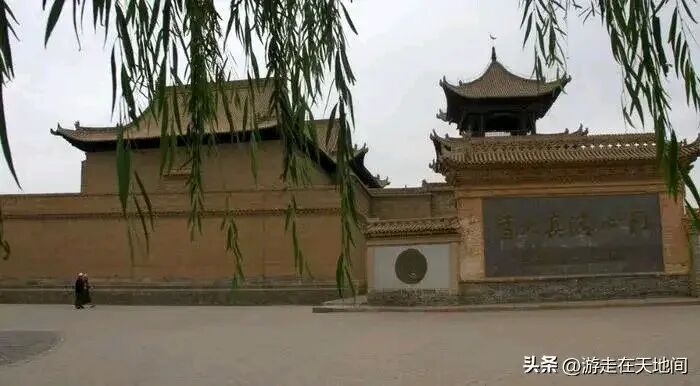
Tongxin Great Mosque is famous not only for its unique architectural style, but also as a symbol of unity and cooperation between the Hui and Han ethnic groups. In 1936, during the Western Expedition of the Chinese Workers' and Peasants' Red Army, the founding assembly of the "Yuhai County Hui People's Autonomous Government of the Shaan-Gan-Ning Border Region" was held at this very mosque.
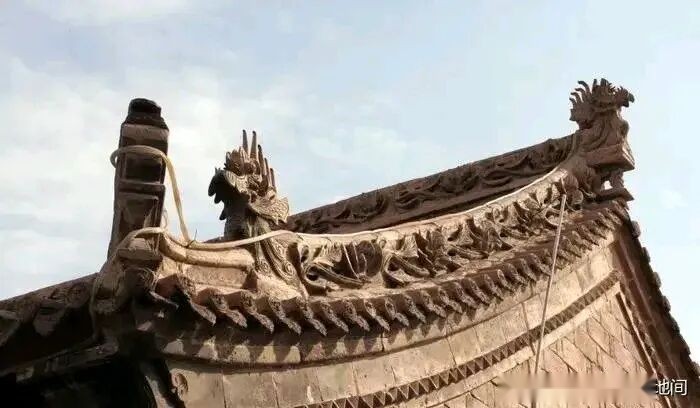
According to staff inside the mosque, a mosque with such a long history was almost destroyed during the Cultural Revolution. At the time, Red Guards were preparing to demolish the mosque the very next day. Fortunately, perhaps due to the mosque's status as a revolutionary cultural relic, instructions came down from higher authorities that same day dictating that this mosque must not be demolished and had to be preserved. Thus, Tongxin Great Mosque narrowly escaped disaster and was very fortunately preserved.





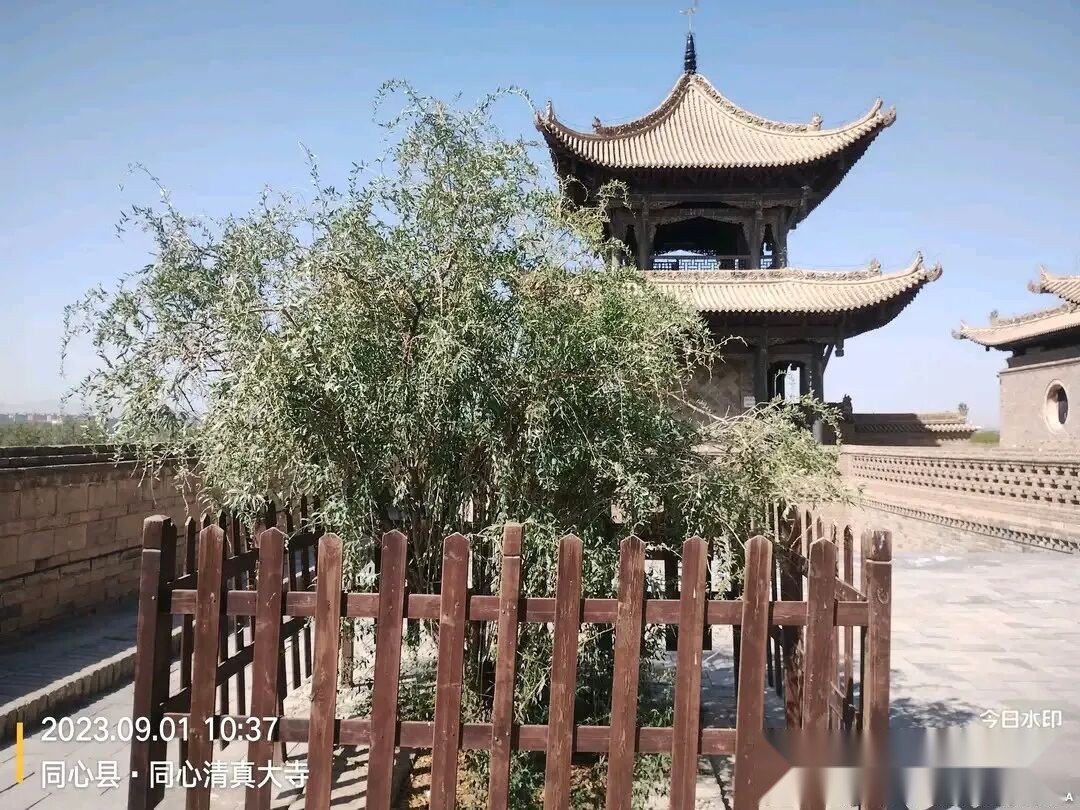
Exploring Ningxia Muslim Culture, Historic Mosques, Sufi Shrines & Halal Heritage in Northwest China
Articles • Hasan09 posted the article • 0 comments • 3 views • 1 hours ago
Travel Notes from Southern Ningxia, Part 3: Stepping into the Jiangnan of the Saibei Frontier and the Folk Customs of the Ancient Liupan Mountains
Abstract:
A visual and written field report crossing provincial borders into the Muslim heartland of southern Ningxia. Capturing the striking initial impressions of northwestern Islamic culture and plateau landscapes, with detailed portraits of minarets and the peaceful everyday rhythm of Hui Muslim villages.
丨Guamagou丨
-
A Landscape Like an Oil Painting
-
Passing through the Liupan Mountains, you officially enter Ningxia. The Liupan Mountains are steeped in stories. Growing up, I heard Gansu referred to as Long (陇), but I never knew where Long Mountain was. Later, I learned that Long Mountain is actually the Liupan Range, stretching all the way north to the southern Guanshan, forming a major geographical divide. You have to respect how geography shapes culture: taking Long Mountain as the boundary, the Hui Muslims of Longxi (western Gansu) and east of Long Mountain differ vastly in temperament and culture.
To a certain extent, the Hehuang region can also be considered part of Longxi, yet it retains its own distinct uniqueness. When I saw Hui Muslims from Ningxia, Pingliang, and Zhangchuan in Xining as a child, I always found it fascinating that such Hui communities existed—not because of linguistic differences, but because their demeanor, posture, and aura were so vastly different from yours, making you feel the world is truly incredible. Thus, for many years, I never had the chance to step into Ningxia, visiting Yinchuan only once years ago in a perfunctory, hurried work trip. To a cultural traditionalist, Yinchuan doesn't quite feel like the 'real' Ningxia.
Stepping past the foot of the Liupan Mountains felt like truly entering the Ningxia that had seemed so magical to me in childhood. Spotting an earthen fortress by the road, I initially thought it was an old farming redoubt. A large roadside sign read 'Xiaoguan Pass' (萧关), and memories of Tang dynasty poetry instantly came alive: 'In the cold autumn of the eighth month on the Xiaoguan road,' 'Ever since smoke of war rose from Xiaoguan,' 'Dangerous are the roads of Huizhong, and beacon fires are frequent at Xiaoguan,' 'Meeting scout riders at Xiaoguan, the grand protector is in Yanran.' The character 'xiao' (萧) itself evokes an autumnal desolation, and coupled with the martial travel imagery of Tang poetry, reciting 'Xiaoguan' makes you shiver. Yet the real Xiaoguan is not grim or cold; its vegetation and weather are fresh and bright.
The standard route into Ningxia usually heads straight north to Guyuan, but my first stop this time was to branch east from Qingshizui. Heading east brought me into present-day Pengyang County, but before reaching the county seat, I turned south into the mountains, arriving at a place called Guamagou. Even today, this spot is deeply secluded, perhaps known to very few locals in Guyuan. Yet this tiny place is a crucial point on the Sufi map of Ningxia, a must-visit because of the Guamagou gongbei (Sufi shrine / mausoleum complex). The master interred at Guamagou Gongbei is named Hai Hu. Due to today's rigid sectarian boundaries and the rise of emerging orders, Hai Hu's name is known primarily only within the inner circles of the Xianzun lineage.
The Sufi orders in Ningxia today are complex and branching, but essentially boil down to three major ones: Khufiyya (虎夫耶), Qadiriyya (嘎德仁耶), and Jahriyya (哲合忍耶). Among the first two, there are further new and old branches. Today, the Khufiyya in Ningxia is most dominated by the lineage passed down from the Old Master of Liangzhou Zhuang in Qinghai, which has become almost synonymous with Ningxia Khufiyya. In reality, the Liangzhou Zhuang lineage—represented by Hongmen and others—is a neo-Khufiyya, which we in Qinghai call the 'Minor Khufiyya' (小虎夫耶), whereas ancient lineages like the Xianzun (鲜门) are known as the 'Major Khufiyya' (大虎夫耶). When studying Ningxia's Khufiyya, one must never overlook the Xianzun branch. As for the differences and connections between the Major and Minor Khufiyya, or the old and new branches of the Qadiriyya, we will dive into them as our written journey takes us to the right places.
Speaking of the Xianzun lineage, I must tiresomely mention Apak Khoja. In the early Kangxi era, Apak Khoja traveled east to Xining, propagating his teachings to several key disciples. Among them, Xian Meizhen of Xining propagated the most vigorously, reaching as far as Yangzhou—marking the first time the Sufi map expanded beyond the Hehuang basin. Ningxia, in particular, became an important testing ground for the Xianzun lineage. Xian Meizhen conducted his first trial in Ningxia during the Kangxi reign, and it was a resounding success. The primary reason was likely that he cultivated fine stock in Guyuan—Hai Hu. True to Xian Meizhen's expectations, Hai Hu grew into a towering tree and became Xian Meizhen's vanguard in Ningxia.
From the perspective of Ningxia's Sufi history, the Xianzun lineage was the earliest Sufi order to enter Ningxia. It is even possible that Xian Meizhen, Hai Hu, and others were the very ones to systematically introduce Sufism to Ningxia. Hai Hu's contribution is indelible. Before the Tongzhi Hui revolts, the Xianzun lineage—as Ningxia's sole Khufiyya and oldest Sufi order—shared the region almost equally with the Jahriyya.
No one knows how Hai Hu from Guyuan and Xian Meizhen from Xining came to cross paths, and the Xianzun lineage has lost the historical records of this connection. The interactions between Xian and Hai that I wrote in my book *Legends of Hehuang Heroes* were entirely a product of my imagination, crafted to keep the narrative flowing. Therefore, *Legends of Hehuang Heroes* should be read as a story, not as history, which I have stated long ago. That is why I was so eager to come to Guamagou and witness the spiritual presence of Hai Hu.
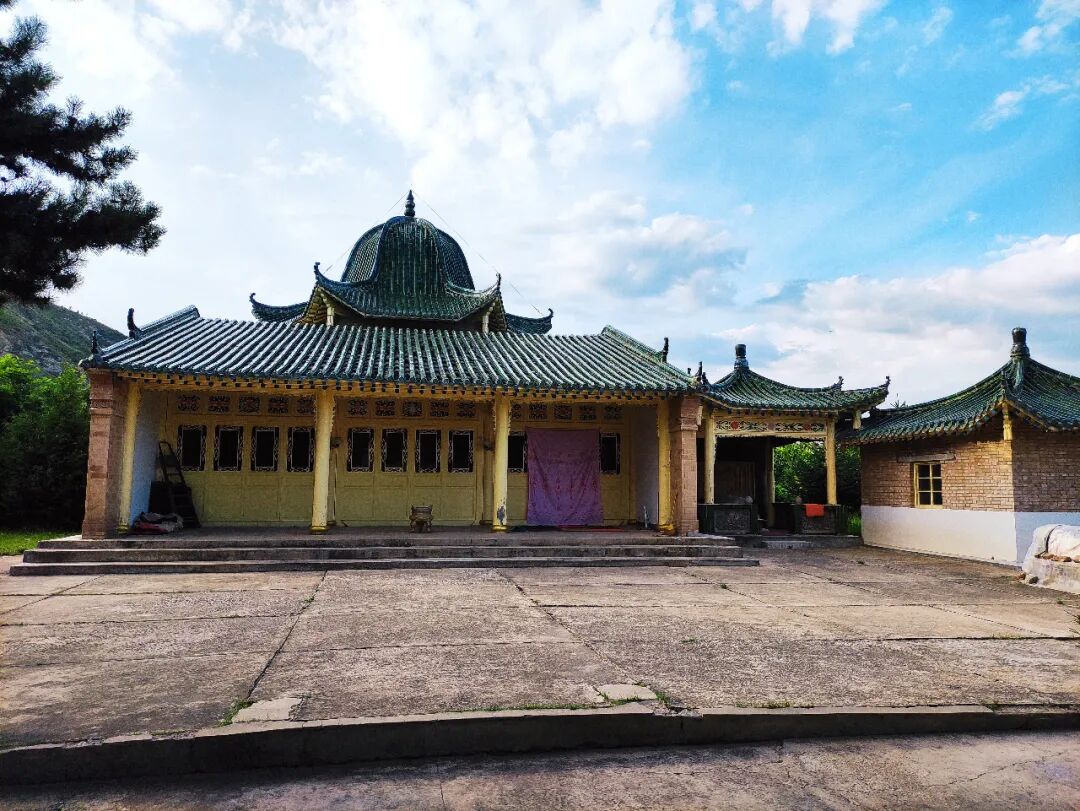
△ Interior view of Guamagou Gongbei
If I am not mistaken, the name Guamagou (Hanging Horse Gully) likely comes from the days when the vegetation was so dense and overgrown that horses would get tangled or caught in it, hence the name. Lying beneath the Liupan Mountains, the gully fits my guess. Guamagou is somewhat similar to Bazang Gully in Qinghai—the resting place of the second-generation Xianzun leaders. Both follow a dry riverbed deep southward into a canyon, though Bazang Gully runs deeper than Guamagou. There is only this one gongbei in the gully. Whenever you ask locals for directions, they point you straight to the shrine. I assumed most people in the gully were followers of the Xianzun order, but after chatting with the elder guarding the gongbei, I learned they are actually all Jahriyya and Ikhwan, with not a single Xianzun follower left—only this single Xianzun family guarding the shrine across generations.
Inside the pavilion at Guamagou Gongbei, there are four identical graves. With an unshakeable intuition, I recognized Master Hai Hu's tomb among the identical four. Stepping down to cross-reference with the elder guarding the shrine confirmed my certainty. The elder explained that the central grave is the memorial tomb of Master Xian Meizhen; to the left is Master Xinbei, the great-grandson of Master Xian; to the right is Master Hai; and at Master Xinbei's feet lies his son, Xian Linbai.
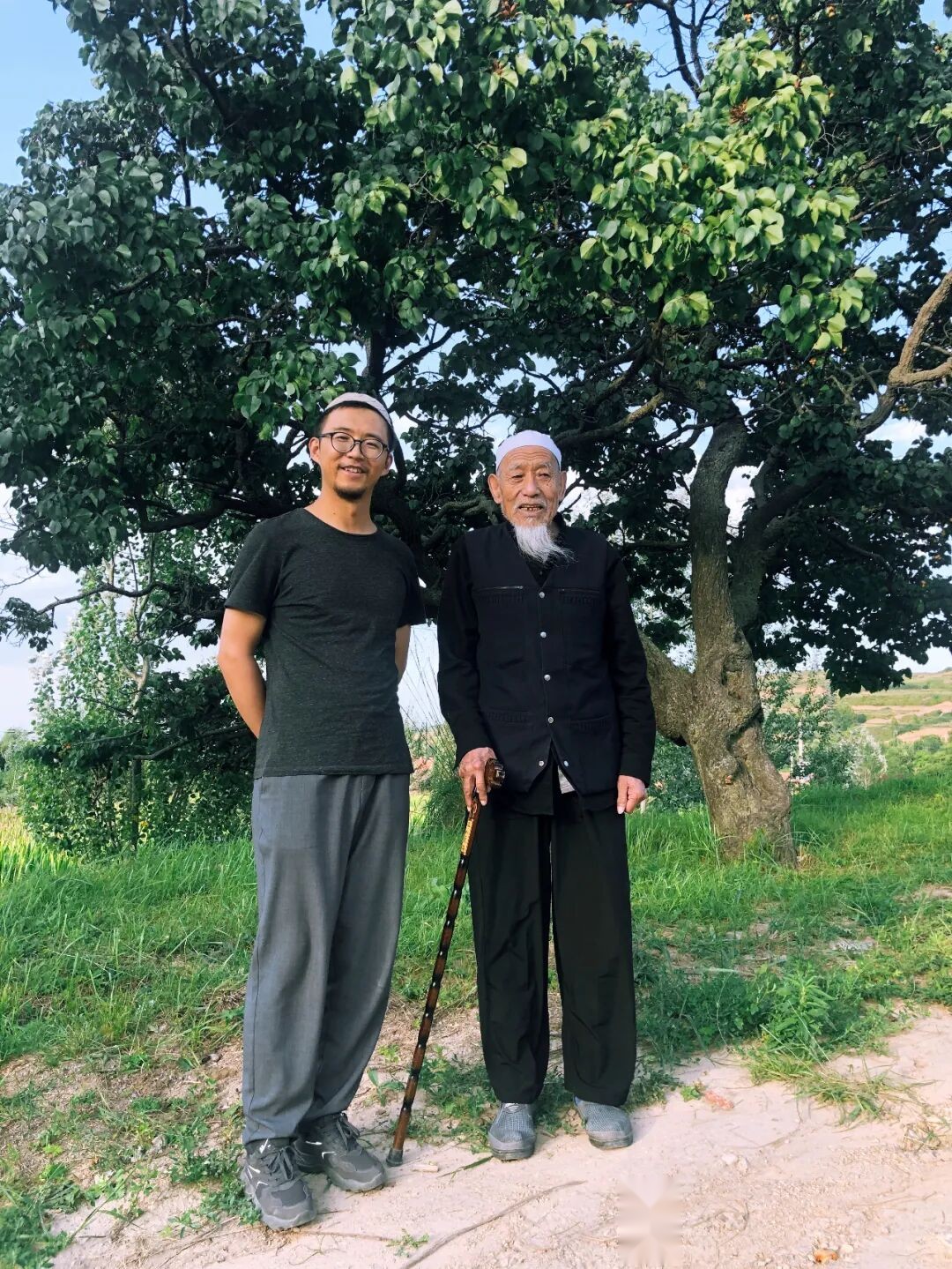
The elder was dark-skinned and lean, just like the honest farmers of this gully, and warmly invited us into his home. I originally thought his surname would be Hai, but it turned out to be Xian—he is a descendant of Xian Meizhen. Emerging from the gongbei, in the distance on an earthen slope outside the gate, I saw an elderly man with a flowing white beard leaning on a staff, standing tall and gazing right at us beneath a stunning old apricot tree. He looked magnificent, just like an oil painting. I couldn't help walking up to greet him with a *Salam* (peace be upon you). The elder said that was his father.
Walking up the slope toward the apricot tree, I thought to myself: Hey, isn't this my grandfather? Isn't this the old Sufis I've met? Aren't these living men of the past? He, too, was a living man of the past. His demeanor was completely different from his son's. Without being told, no one would guess they were father and son. The old man radiated a sense of cleanliness and elegance from inside out, as if the muddy, dusty life of the loess hills had nothing to do with him, whereas his son clearly appeared deeply intertwined with the soil.
The old man's conversational style also retained an archaic charm—he asked few questions, but every sentence was steeped in etiquette. Propriety and restraint are truly intertwined. The old man was 89 years old. Judging by his brow and facial contours, he indeed strongly resembled the Xian family descendants in Qinghai—a textbook portrait of a descendant of Master Xian. Back in Qinghai, when I spoke with Elder Xian Fuxing of the Xianzun Gongbei, he said the old man was his paternal uncle's generation and an ordained *akhund* (Islamic scholar). That being the case, if I am not mistaken, the old man should be Xian Peizhi, son of Xian Yulin (who belonged to the eldest household of Xian Linbai), making him a seventh-generation descendant of the Xianzun forefather.
△ Archaic charm and the elder
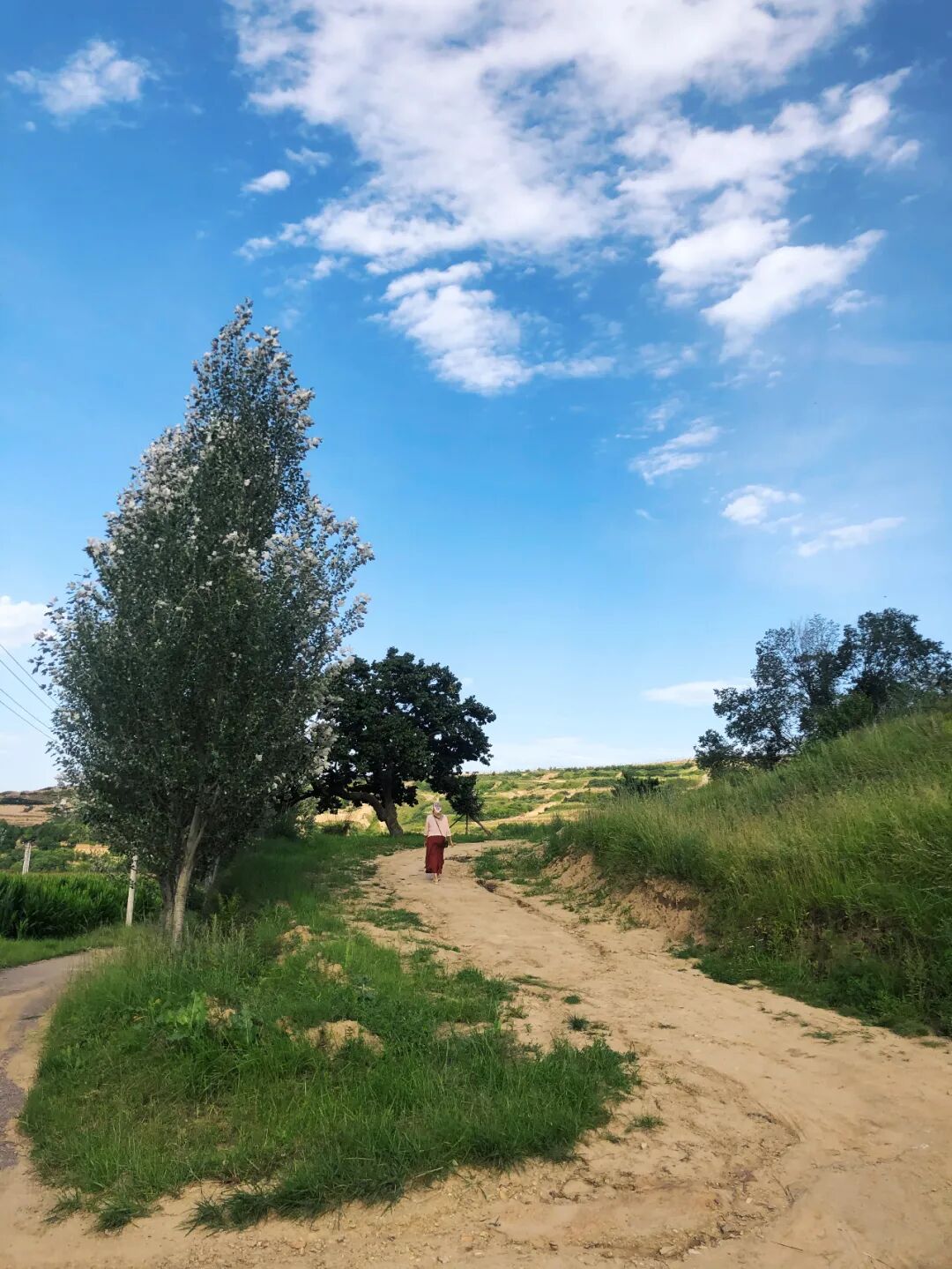
The sky over Guamagou was so pure that white clouds were simply white clouds and blue skies were blue skies—the conceptualized blue sky and white clouds of children's drawings. The crops and artemisia weeds in the fields stood out in vibrant, distinct lines. There was no trash, no dust; the loess earth beneath your feet invited you to sit or lie down without hesitation, and apricots dripping from the branches could be popped into your mouth effortlessly. The households here were poor yet un destitute; the earthen courtyards were swept impeccably clean, and the old man beneath the tree was as pristine as an ancient painting.
Master Hai Hu was not originally buried in Guamagou; he was buried at Haijiadaping in Tianziniao, and was moved to Guamagou during the turmoil of the Tongzhi Hui revolts. The Xianzun order holds Master Hai Hu in the highest regard, describing him as 'half sovereign, half subject.' The Major Khufiyya has a strict hierarchy of sovereign and subject: the spiritual guide is the sovereign, and all *murids* (disciples) are subjects. Master Xian Meizhen once made an exception by bestowing upon Master Hai Hu a seal of authority, tacitly allowing him independent proselytizing rights. Thus, the Xianzun order calls him 'half sovereign, half subject,' which speaks volumes about Hai Hu's standing in the hearts of the Xian family.
The importance of Guamagou within the Xianzun gongbei system lies not only in being Master Hai Hu's burial site, but also in the fact that the Xianzun missionary system split into two branches—Ningxia and Qinghai—starting from the fifth generation, Xian Linbai. After migrating to Ningxia, Xian Linbai lived in seclusion at Guamagou, farming and studying part-time, established a *daotang* (Sufi hall/school), relocated the remains of his father, Master Xinbei, from Qinghai to the Guamagou Gongbei, and spent the remainder of his life there.
You could say that Guamagou, much like Bazang Gully in Qinghai, nurtured the Xian family and serves as the umbilical cradle of the Ningxia Xianzun lineage. Although later descendants stepped out of Guamagou to establish *daotang* in Xiji, Guamagou remains an eternal, mother-like presence. All the households surrounding Guamagou Gongbei responded to the government's call and migrated down the mountain to settle in the Yellow River agricultural plains, leaving the area around the gongbei desolate. Yet only the family of the elderly Xian man refused to descend the mountain, continuing to meticulously tend this pure and immaculate courtyard. The younger members of the Xian family went down the mountain just like everyone else in the village; only these two generations of father and son stood firm. I asked the old man: Given your advanced age, why haven't you moved down the mountain into the city? The white-bearded elder turned serious, pointing his walking stick toward the gongbei: 'Ah, I just can't bear to leave this behind!'
△ Cannot bear to leave this behind
The eldest branch of Xian Linbai never left Guamagou, while the second branch stepped out of Guamagou to inherit religious authority. To briefly outline the Xianzun lineage: Master Zhuzi (Xian Meizhen) — Master Huazhe — Master Chuanli (Xian Chengzhen) — Master Xinbei (Xian Xianghui) — Xian Linbai (after whom the Ningxia and Qinghai missions split). Other important Xianzun gongbei in Ningxia include Qiganliang and Qiancha, both located in Xiji. Qiganliang is the tomb of Xian Yuzhen (son of Xian Linbai), while Qiancha holds the tombs of Ma Cang, Ma Ji, and Ma Ping—three brothers who were *murids* of Xian Meizhen in Ningxia and are also featured in *Legends of Hehuang Heroes*.
The sun was setting, and the fields were as silent as a mystery. All the way back on the road, I kept pondering the old man's words: 'Ah, I just can't bear to leave this behind!' Looking back at Guamagou, everything had already become antiquity.
—END— view all
Travel Notes from Southern Ningxia, Part 3: Stepping into the Jiangnan of the Saibei Frontier and the Folk Customs of the Ancient Liupan Mountains
Abstract:
A visual and written field report crossing provincial borders into the Muslim heartland of southern Ningxia. Capturing the striking initial impressions of northwestern Islamic culture and plateau landscapes, with detailed portraits of minarets and the peaceful everyday rhythm of Hui Muslim villages.
丨Guamagou丨
-
A Landscape Like an Oil Painting
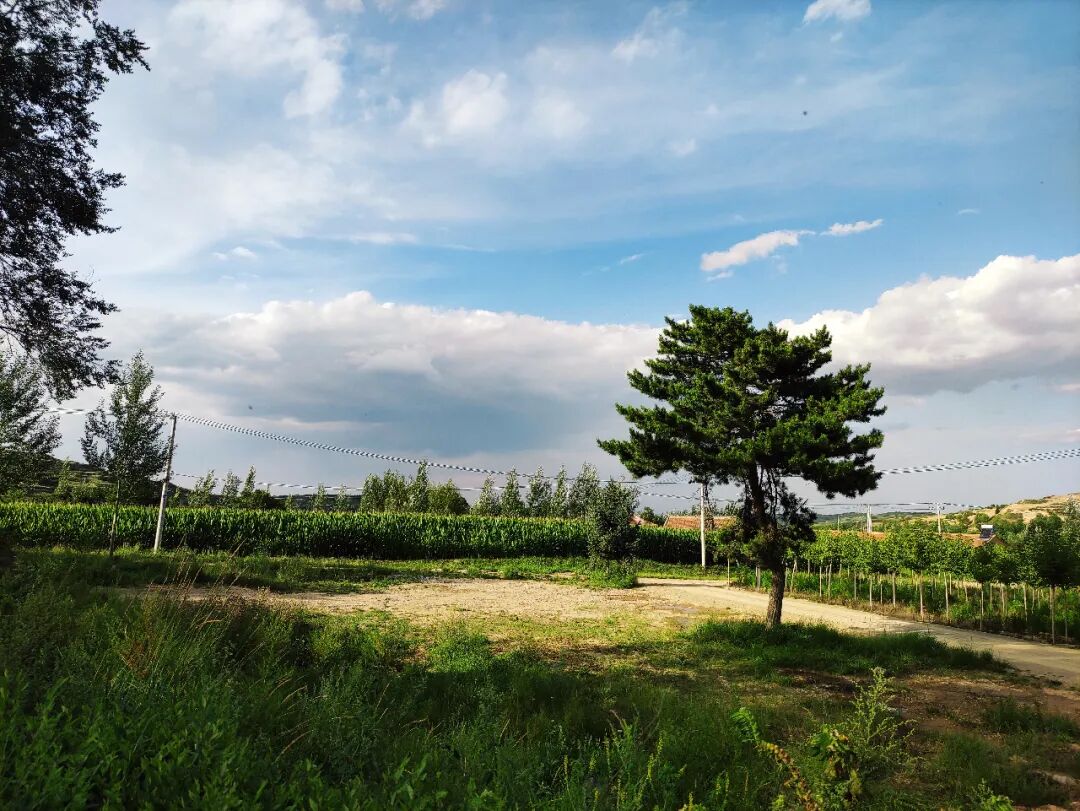
-
Passing through the Liupan Mountains, you officially enter Ningxia. The Liupan Mountains are steeped in stories. Growing up, I heard Gansu referred to as Long (陇), but I never knew where Long Mountain was. Later, I learned that Long Mountain is actually the Liupan Range, stretching all the way north to the southern Guanshan, forming a major geographical divide. You have to respect how geography shapes culture: taking Long Mountain as the boundary, the Hui Muslims of Longxi (western Gansu) and east of Long Mountain differ vastly in temperament and culture.
To a certain extent, the Hehuang region can also be considered part of Longxi, yet it retains its own distinct uniqueness. When I saw Hui Muslims from Ningxia, Pingliang, and Zhangchuan in Xining as a child, I always found it fascinating that such Hui communities existed—not because of linguistic differences, but because their demeanor, posture, and aura were so vastly different from yours, making you feel the world is truly incredible. Thus, for many years, I never had the chance to step into Ningxia, visiting Yinchuan only once years ago in a perfunctory, hurried work trip. To a cultural traditionalist, Yinchuan doesn't quite feel like the 'real' Ningxia.
Stepping past the foot of the Liupan Mountains felt like truly entering the Ningxia that had seemed so magical to me in childhood. Spotting an earthen fortress by the road, I initially thought it was an old farming redoubt. A large roadside sign read 'Xiaoguan Pass' (萧关), and memories of Tang dynasty poetry instantly came alive: 'In the cold autumn of the eighth month on the Xiaoguan road,' 'Ever since smoke of war rose from Xiaoguan,' 'Dangerous are the roads of Huizhong, and beacon fires are frequent at Xiaoguan,' 'Meeting scout riders at Xiaoguan, the grand protector is in Yanran.' The character 'xiao' (萧) itself evokes an autumnal desolation, and coupled with the martial travel imagery of Tang poetry, reciting 'Xiaoguan' makes you shiver. Yet the real Xiaoguan is not grim or cold; its vegetation and weather are fresh and bright.
The standard route into Ningxia usually heads straight north to Guyuan, but my first stop this time was to branch east from Qingshizui. Heading east brought me into present-day Pengyang County, but before reaching the county seat, I turned south into the mountains, arriving at a place called Guamagou. Even today, this spot is deeply secluded, perhaps known to very few locals in Guyuan. Yet this tiny place is a crucial point on the Sufi map of Ningxia, a must-visit because of the Guamagou gongbei (Sufi shrine / mausoleum complex). The master interred at Guamagou Gongbei is named Hai Hu. Due to today's rigid sectarian boundaries and the rise of emerging orders, Hai Hu's name is known primarily only within the inner circles of the Xianzun lineage.
The Sufi orders in Ningxia today are complex and branching, but essentially boil down to three major ones: Khufiyya (虎夫耶), Qadiriyya (嘎德仁耶), and Jahriyya (哲合忍耶). Among the first two, there are further new and old branches. Today, the Khufiyya in Ningxia is most dominated by the lineage passed down from the Old Master of Liangzhou Zhuang in Qinghai, which has become almost synonymous with Ningxia Khufiyya. In reality, the Liangzhou Zhuang lineage—represented by Hongmen and others—is a neo-Khufiyya, which we in Qinghai call the 'Minor Khufiyya' (小虎夫耶), whereas ancient lineages like the Xianzun (鲜门) are known as the 'Major Khufiyya' (大虎夫耶). When studying Ningxia's Khufiyya, one must never overlook the Xianzun branch. As for the differences and connections between the Major and Minor Khufiyya, or the old and new branches of the Qadiriyya, we will dive into them as our written journey takes us to the right places.
Speaking of the Xianzun lineage, I must tiresomely mention Apak Khoja. In the early Kangxi era, Apak Khoja traveled east to Xining, propagating his teachings to several key disciples. Among them, Xian Meizhen of Xining propagated the most vigorously, reaching as far as Yangzhou—marking the first time the Sufi map expanded beyond the Hehuang basin. Ningxia, in particular, became an important testing ground for the Xianzun lineage. Xian Meizhen conducted his first trial in Ningxia during the Kangxi reign, and it was a resounding success. The primary reason was likely that he cultivated fine stock in Guyuan—Hai Hu. True to Xian Meizhen's expectations, Hai Hu grew into a towering tree and became Xian Meizhen's vanguard in Ningxia.
From the perspective of Ningxia's Sufi history, the Xianzun lineage was the earliest Sufi order to enter Ningxia. It is even possible that Xian Meizhen, Hai Hu, and others were the very ones to systematically introduce Sufism to Ningxia. Hai Hu's contribution is indelible. Before the Tongzhi Hui revolts, the Xianzun lineage—as Ningxia's sole Khufiyya and oldest Sufi order—shared the region almost equally with the Jahriyya.
No one knows how Hai Hu from Guyuan and Xian Meizhen from Xining came to cross paths, and the Xianzun lineage has lost the historical records of this connection. The interactions between Xian and Hai that I wrote in my book *Legends of Hehuang Heroes* were entirely a product of my imagination, crafted to keep the narrative flowing. Therefore, *Legends of Hehuang Heroes* should be read as a story, not as history, which I have stated long ago. That is why I was so eager to come to Guamagou and witness the spiritual presence of Hai Hu.
△ Interior view of Guamagou Gongbei
If I am not mistaken, the name Guamagou (Hanging Horse Gully) likely comes from the days when the vegetation was so dense and overgrown that horses would get tangled or caught in it, hence the name. Lying beneath the Liupan Mountains, the gully fits my guess. Guamagou is somewhat similar to Bazang Gully in Qinghai—the resting place of the second-generation Xianzun leaders. Both follow a dry riverbed deep southward into a canyon, though Bazang Gully runs deeper than Guamagou. There is only this one gongbei in the gully. Whenever you ask locals for directions, they point you straight to the shrine. I assumed most people in the gully were followers of the Xianzun order, but after chatting with the elder guarding the gongbei, I learned they are actually all Jahriyya and Ikhwan, with not a single Xianzun follower left—only this single Xianzun family guarding the shrine across generations.
Inside the pavilion at Guamagou Gongbei, there are four identical graves. With an unshakeable intuition, I recognized Master Hai Hu's tomb among the identical four. Stepping down to cross-reference with the elder guarding the shrine confirmed my certainty. The elder explained that the central grave is the memorial tomb of Master Xian Meizhen; to the left is Master Xinbei, the great-grandson of Master Xian; to the right is Master Hai; and at Master Xinbei's feet lies his son, Xian Linbai.
The elder was dark-skinned and lean, just like the honest farmers of this gully, and warmly invited us into his home. I originally thought his surname would be Hai, but it turned out to be Xian—he is a descendant of Xian Meizhen. Emerging from the gongbei, in the distance on an earthen slope outside the gate, I saw an elderly man with a flowing white beard leaning on a staff, standing tall and gazing right at us beneath a stunning old apricot tree. He looked magnificent, just like an oil painting. I couldn't help walking up to greet him with a *Salam* (peace be upon you). The elder said that was his father.
Walking up the slope toward the apricot tree, I thought to myself: Hey, isn't this my grandfather? Isn't this the old Sufis I've met? Aren't these living men of the past? He, too, was a living man of the past. His demeanor was completely different from his son's. Without being told, no one would guess they were father and son. The old man radiated a sense of cleanliness and elegance from inside out, as if the muddy, dusty life of the loess hills had nothing to do with him, whereas his son clearly appeared deeply intertwined with the soil.
The old man's conversational style also retained an archaic charm—he asked few questions, but every sentence was steeped in etiquette. Propriety and restraint are truly intertwined. The old man was 89 years old. Judging by his brow and facial contours, he indeed strongly resembled the Xian family descendants in Qinghai—a textbook portrait of a descendant of Master Xian. Back in Qinghai, when I spoke with Elder Xian Fuxing of the Xianzun Gongbei, he said the old man was his paternal uncle's generation and an ordained *akhund* (Islamic scholar). That being the case, if I am not mistaken, the old man should be Xian Peizhi, son of Xian Yulin (who belonged to the eldest household of Xian Linbai), making him a seventh-generation descendant of the Xianzun forefather.
△ Archaic charm and the elder
The sky over Guamagou was so pure that white clouds were simply white clouds and blue skies were blue skies—the conceptualized blue sky and white clouds of children's drawings. The crops and artemisia weeds in the fields stood out in vibrant, distinct lines. There was no trash, no dust; the loess earth beneath your feet invited you to sit or lie down without hesitation, and apricots dripping from the branches could be popped into your mouth effortlessly. The households here were poor yet un destitute; the earthen courtyards were swept impeccably clean, and the old man beneath the tree was as pristine as an ancient painting.
Master Hai Hu was not originally buried in Guamagou; he was buried at Haijiadaping in Tianziniao, and was moved to Guamagou during the turmoil of the Tongzhi Hui revolts. The Xianzun order holds Master Hai Hu in the highest regard, describing him as 'half sovereign, half subject.' The Major Khufiyya has a strict hierarchy of sovereign and subject: the spiritual guide is the sovereign, and all *murids* (disciples) are subjects. Master Xian Meizhen once made an exception by bestowing upon Master Hai Hu a seal of authority, tacitly allowing him independent proselytizing rights. Thus, the Xianzun order calls him 'half sovereign, half subject,' which speaks volumes about Hai Hu's standing in the hearts of the Xian family.
The importance of Guamagou within the Xianzun gongbei system lies not only in being Master Hai Hu's burial site, but also in the fact that the Xianzun missionary system split into two branches—Ningxia and Qinghai—starting from the fifth generation, Xian Linbai. After migrating to Ningxia, Xian Linbai lived in seclusion at Guamagou, farming and studying part-time, established a *daotang* (Sufi hall/school), relocated the remains of his father, Master Xinbei, from Qinghai to the Guamagou Gongbei, and spent the remainder of his life there.
You could say that Guamagou, much like Bazang Gully in Qinghai, nurtured the Xian family and serves as the umbilical cradle of the Ningxia Xianzun lineage. Although later descendants stepped out of Guamagou to establish *daotang* in Xiji, Guamagou remains an eternal, mother-like presence. All the households surrounding Guamagou Gongbei responded to the government's call and migrated down the mountain to settle in the Yellow River agricultural plains, leaving the area around the gongbei desolate. Yet only the family of the elderly Xian man refused to descend the mountain, continuing to meticulously tend this pure and immaculate courtyard. The younger members of the Xian family went down the mountain just like everyone else in the village; only these two generations of father and son stood firm. I asked the old man: Given your advanced age, why haven't you moved down the mountain into the city? The white-bearded elder turned serious, pointing his walking stick toward the gongbei: 'Ah, I just can't bear to leave this behind!'
△ Cannot bear to leave this behind
The eldest branch of Xian Linbai never left Guamagou, while the second branch stepped out of Guamagou to inherit religious authority. To briefly outline the Xianzun lineage: Master Zhuzi (Xian Meizhen) — Master Huazhe — Master Chuanli (Xian Chengzhen) — Master Xinbei (Xian Xianghui) — Xian Linbai (after whom the Ningxia and Qinghai missions split). Other important Xianzun gongbei in Ningxia include Qiganliang and Qiancha, both located in Xiji. Qiganliang is the tomb of Xian Yuzhen (son of Xian Linbai), while Qiancha holds the tombs of Ma Cang, Ma Ji, and Ma Ping—three brothers who were *murids* of Xian Meizhen in Ningxia and are also featured in *Legends of Hehuang Heroes*.
The sun was setting, and the fields were as silent as a mystery. All the way back on the road, I kept pondering the old man's words: 'Ah, I just can't bear to leave this behind!' Looking back at Guamagou, everything had already become antiquity.
—END—
Exploring the Lingmingtang Gongbei in Sanying, Guyuan: Architecture and Origins of a Sufi Sanctuary in Southern Ningxia
Articles • Hasan09 posted the article • 0 comments • 3 views • 1 hours ago
A Visual and Historical Dive into the Sanying Lingmingtang Gongbei in Guyuan: Architectural Style and Origins of a Southern Ningxia Sufi Sanctuary
Abstract:
A detailed look at the Lingmingtang Gongbei located in Sanying Town, Guyuan City, Ningxia. Exploring its history—originally known as the 'Mingyue Hall' and founded by the revered elder Ma Renpu—and showcasing its serene, contemplative retreat space featuring classical Chinese architectural elements with green tiles, red pillars, and multi-layered flying eaves.
The Sanying Lingmingtang Gongbei in Guyuan, Ningxia, was originally called Mingyue Hall (Bright Moon Hall). It was founded by Ma Renpu, a disciple of the second-generation Sufi master Shan Jiujiu from the Lanzhou Lingmingtang.
The revered elder Ma Renpu, also known by his Arabic name Sufi, was originally from Matun Village, Gouzhi Town, Yanshi City, Henan Province. Born in 1910, he started elementary school at age eight, where he was remarkably bright with a photographic memory. Due to financial hardship, he eventually had to drop out and continued studying academics and religious knowledge alongside his father. Although his formal schooling was limited, he taught himself both Islamic texts and Chinese, eventually authoring the book 'Huayu Dianzhen' (Illuminating Truth to Overcome Ignorance). In 1932, he moved to Guyuan, Ningxia, to start a small business, later specializing in the fur trade, which meant frequent travels between Guyuan and Lanzhou. During this time, he connected with followers of the Lanzhou Lingmingtang and developed a deep interest in its doctrines and mission. In 1936, introduced by Yang Baoguo from Lijun, Haiyuan County, he became a disciple of the second-generation Lingmingtang master Shan Jiujiu, officially becoming a devoted follower of the Lingmingtang order.
During the War of Resistance Against Japanese Aggression, persistent warfare and famines in Henan forced many Muslims to migrate westward to escape the turmoil. Over 300 households fled and settled in the Sanying area of Guyuan, Ningxia. Ma Renpu, who had arrived earlier, offered wholehearted support and assistance to his fellow hometown folks. In 1942, he purchased 28 mu of land in Xishaliang, Sanying, and built a south-facing courtyard complex featuring a five-bay brick-and-wood main prayer hall. He also constructed 21 auxiliary rooms, including scripture study rooms, dormitories for imams and madrasa students (mallas), a wudu (ablution) water room, and a kitchen, transforming it into a fully equipped, well-rounded masjid. Shortly after the mosque was completed, the community unanimously elected Ma Renpu as its first imam. Right after taking office, Ma traveled to Lanzhou Lingmingtang to study Arabic and religious sciences while engaging in rigorous spiritual practice under the guidance of his master, Shan Jiujiu. In 1944, commissioned by Elder Shan, he returned to Guyuan Sanying to propagate the faith, dedicating himself to spreading the teachings of the Lingmingtang menhuan (Sufi order). His efforts led the entire congregation of the 'Sanying Xiliang Henan Mosque' to join the Lingmingtang. The Henan Mosque was subsequently renamed Mingyue Hall and served as a center for teaching the Sufi path. When the Guyuan Hui Autonomous Prefecture was established in 1955, elder Ma Renpu was appointed as a member of the prefecture's political consultative committee. In August 1958, caught up in the overextensions of the anti-feudal 'religious reforms,' Ma Renpu was wrongfully labeled a counterrevolutionary and imprisoned. He passed away (returned to Allah) on the 2nd day of the 4th lunar month in 1960 at the age of 51.
Following his passing in 1960, the revered elder Ma Renpu was initially buried in the local Muslim cemetery. On the 24th day of the 7th lunar month in 1986, led by Imam Wang Shouetian of the Lanzhou Lingmingtang Gongbei, Ma Renpu's remains were relocated from the public cemetery to the center of the original dao tang (Sufi hall) courtyard, where a double-layered hexagonal domed tomb pavilion (gongbei shrine) was built for him. Over time, additional structures were gradually added, including a front porch (baosha), dormitories for imams and mallas, study rooms, a water room, and a kitchen. In 1910—[Note: referring to 2010 renovation]—the original imam and malla dormitories and water rooms were renovated and expanded, replacing the single-story brick-and-wood structures with flat-roofed brick-concrete buildings, alongside a magnificent, towering, traditional-style brick-carved triple gate (sanhuamen). In 2012, a new main prayer hall was built on the west side of the dao tang, fronted by 13 bays of traditional-style brick-and-wood verandas and a circular gate. Behind the octagonal pavilion, a large brick-carved spirit wall (zhaobi) was erected, connected on both ends to the front guest rooms by brick-carved courtyard walls, turning the octagonal shrine courtyard into a 'courtyard within a courtyard' and giving the entire gongbei complex the outline of the Chinese character 'hui' (回).
Today, this auspicious sanctuary and its gongbei architecture stand as a stunning landmark across the landscape of Ningxia and along the Baotou-Zhongwei Railway corridor. view all
A Visual and Historical Dive into the Sanying Lingmingtang Gongbei in Guyuan: Architectural Style and Origins of a Southern Ningxia Sufi Sanctuary
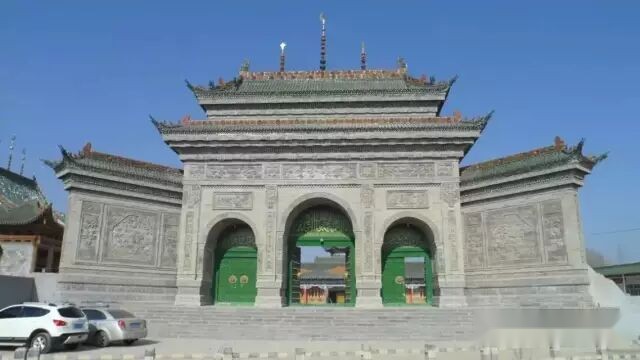
Abstract:
A detailed look at the Lingmingtang Gongbei located in Sanying Town, Guyuan City, Ningxia. Exploring its history—originally known as the 'Mingyue Hall' and founded by the revered elder Ma Renpu—and showcasing its serene, contemplative retreat space featuring classical Chinese architectural elements with green tiles, red pillars, and multi-layered flying eaves.
The Sanying Lingmingtang Gongbei in Guyuan, Ningxia, was originally called Mingyue Hall (Bright Moon Hall). It was founded by Ma Renpu, a disciple of the second-generation Sufi master Shan Jiujiu from the Lanzhou Lingmingtang.
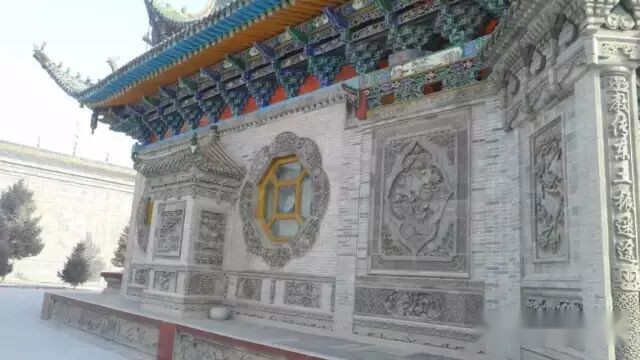
The revered elder Ma Renpu, also known by his Arabic name Sufi, was originally from Matun Village, Gouzhi Town, Yanshi City, Henan Province. Born in 1910, he started elementary school at age eight, where he was remarkably bright with a photographic memory. Due to financial hardship, he eventually had to drop out and continued studying academics and religious knowledge alongside his father. Although his formal schooling was limited, he taught himself both Islamic texts and Chinese, eventually authoring the book 'Huayu Dianzhen' (Illuminating Truth to Overcome Ignorance). In 1932, he moved to Guyuan, Ningxia, to start a small business, later specializing in the fur trade, which meant frequent travels between Guyuan and Lanzhou. During this time, he connected with followers of the Lanzhou Lingmingtang and developed a deep interest in its doctrines and mission. In 1936, introduced by Yang Baoguo from Lijun, Haiyuan County, he became a disciple of the second-generation Lingmingtang master Shan Jiujiu, officially becoming a devoted follower of the Lingmingtang order.
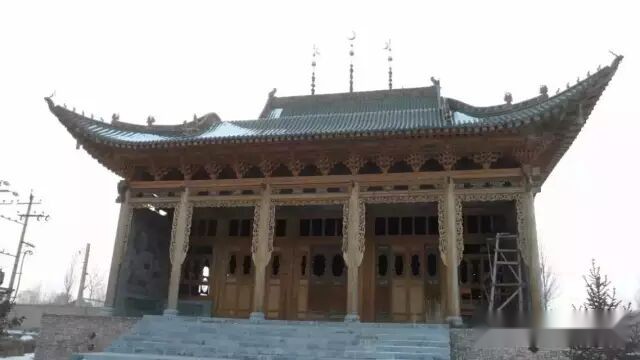
During the War of Resistance Against Japanese Aggression, persistent warfare and famines in Henan forced many Muslims to migrate westward to escape the turmoil. Over 300 households fled and settled in the Sanying area of Guyuan, Ningxia. Ma Renpu, who had arrived earlier, offered wholehearted support and assistance to his fellow hometown folks. In 1942, he purchased 28 mu of land in Xishaliang, Sanying, and built a south-facing courtyard complex featuring a five-bay brick-and-wood main prayer hall. He also constructed 21 auxiliary rooms, including scripture study rooms, dormitories for imams and madrasa students (mallas), a wudu (ablution) water room, and a kitchen, transforming it into a fully equipped, well-rounded masjid. Shortly after the mosque was completed, the community unanimously elected Ma Renpu as its first imam. Right after taking office, Ma traveled to Lanzhou Lingmingtang to study Arabic and religious sciences while engaging in rigorous spiritual practice under the guidance of his master, Shan Jiujiu. In 1944, commissioned by Elder Shan, he returned to Guyuan Sanying to propagate the faith, dedicating himself to spreading the teachings of the Lingmingtang menhuan (Sufi order). His efforts led the entire congregation of the 'Sanying Xiliang Henan Mosque' to join the Lingmingtang. The Henan Mosque was subsequently renamed Mingyue Hall and served as a center for teaching the Sufi path. When the Guyuan Hui Autonomous Prefecture was established in 1955, elder Ma Renpu was appointed as a member of the prefecture's political consultative committee. In August 1958, caught up in the overextensions of the anti-feudal 'religious reforms,' Ma Renpu was wrongfully labeled a counterrevolutionary and imprisoned. He passed away (returned to Allah) on the 2nd day of the 4th lunar month in 1960 at the age of 51.
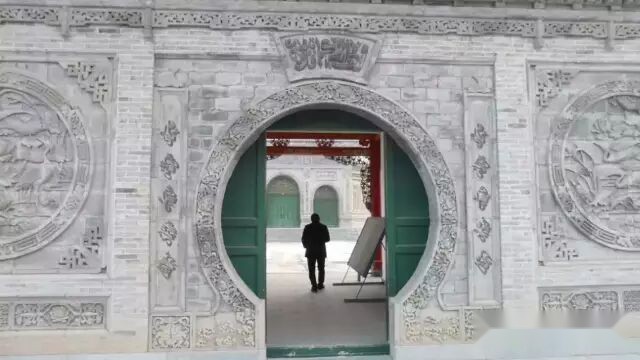
Following his passing in 1960, the revered elder Ma Renpu was initially buried in the local Muslim cemetery. On the 24th day of the 7th lunar month in 1986, led by Imam Wang Shouetian of the Lanzhou Lingmingtang Gongbei, Ma Renpu's remains were relocated from the public cemetery to the center of the original dao tang (Sufi hall) courtyard, where a double-layered hexagonal domed tomb pavilion (gongbei shrine) was built for him. Over time, additional structures were gradually added, including a front porch (baosha), dormitories for imams and mallas, study rooms, a water room, and a kitchen. In 1910—[Note: referring to 2010 renovation]—the original imam and malla dormitories and water rooms were renovated and expanded, replacing the single-story brick-and-wood structures with flat-roofed brick-concrete buildings, alongside a magnificent, towering, traditional-style brick-carved triple gate (sanhuamen). In 2012, a new main prayer hall was built on the west side of the dao tang, fronted by 13 bays of traditional-style brick-and-wood verandas and a circular gate. Behind the octagonal pavilion, a large brick-carved spirit wall (zhaobi) was erected, connected on both ends to the front guest rooms by brick-carved courtyard walls, turning the octagonal shrine courtyard into a 'courtyard within a courtyard' and giving the entire gongbei complex the outline of the Chinese character 'hui' (回).
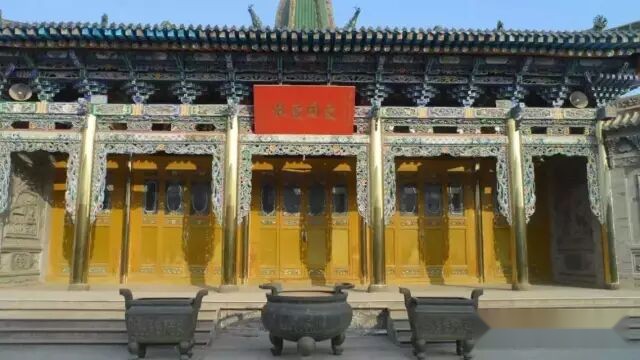
Today, this auspicious sanctuary and its gongbei architecture stand as a stunning landmark across the landscape of Ningxia and along the Baotou-Zhongwei Railway corridor.

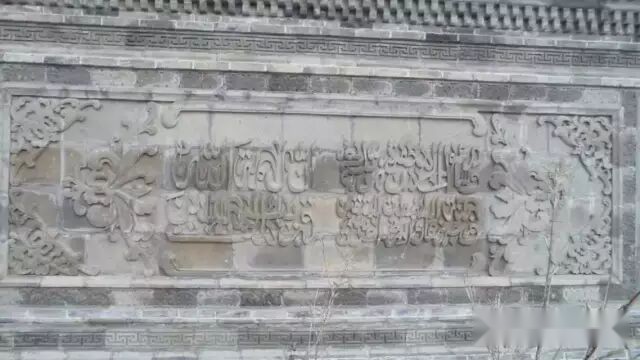
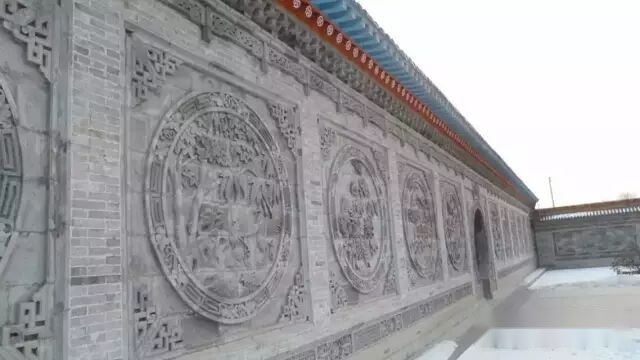
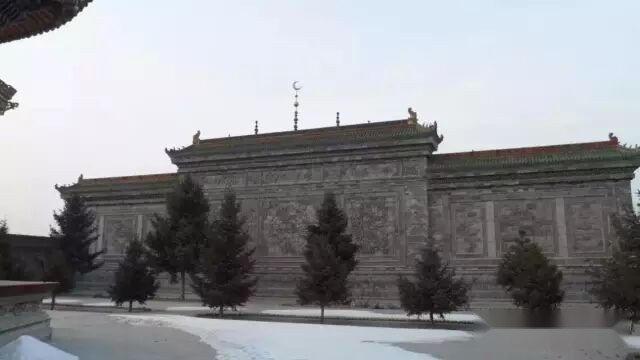
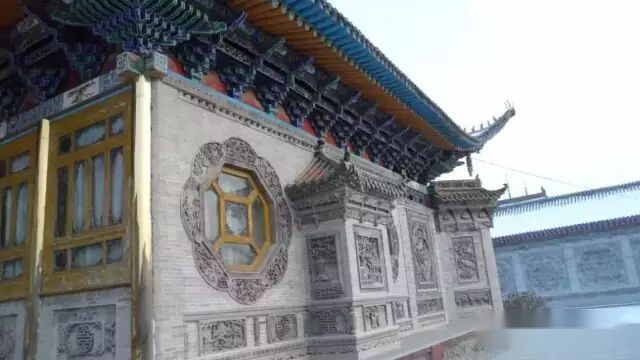
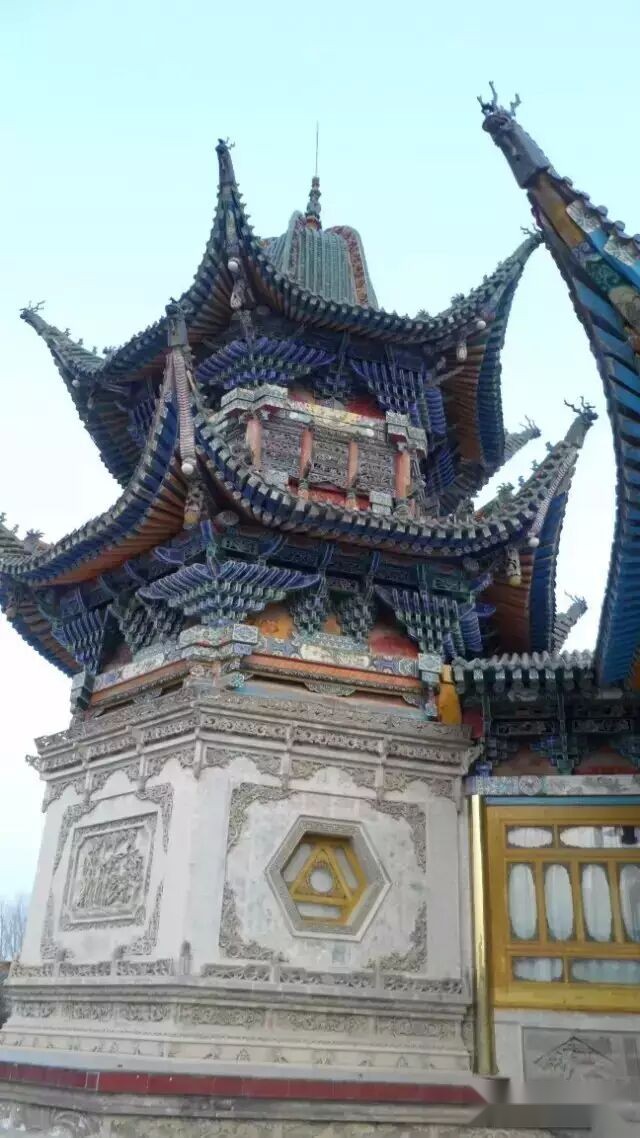
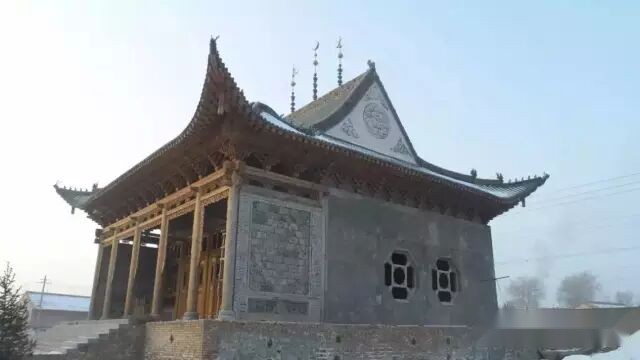
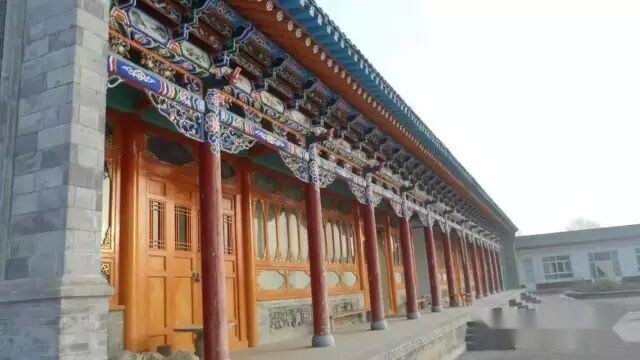
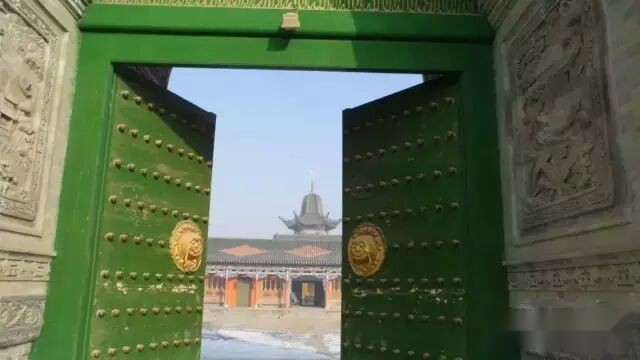
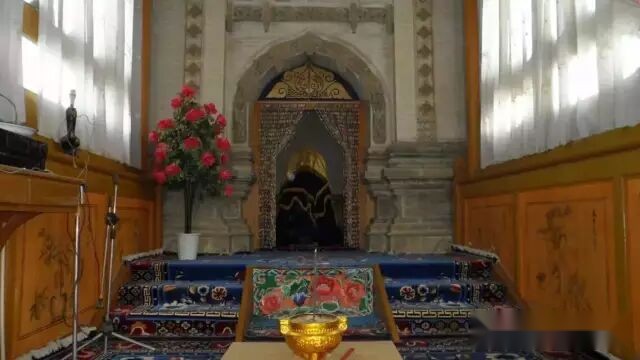
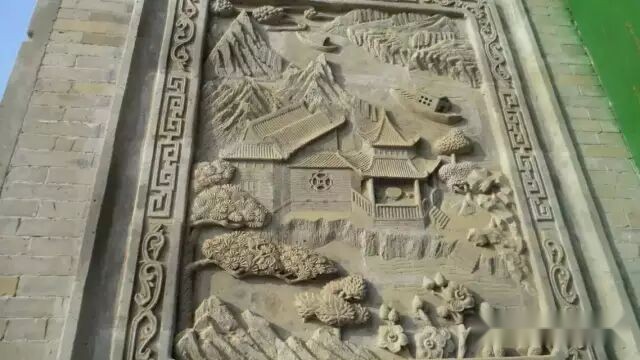
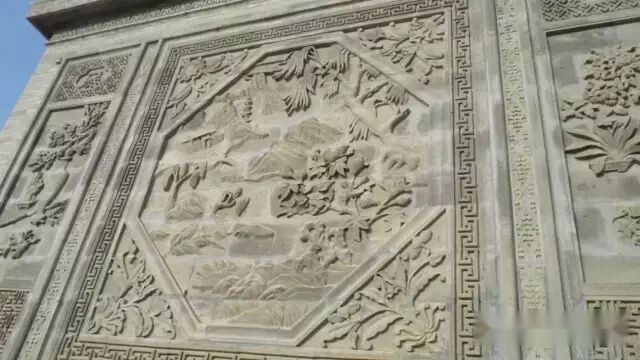
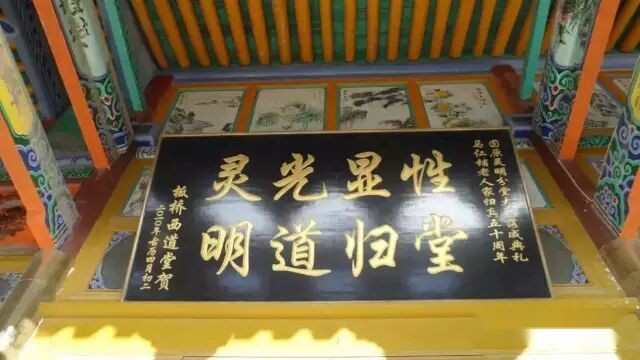
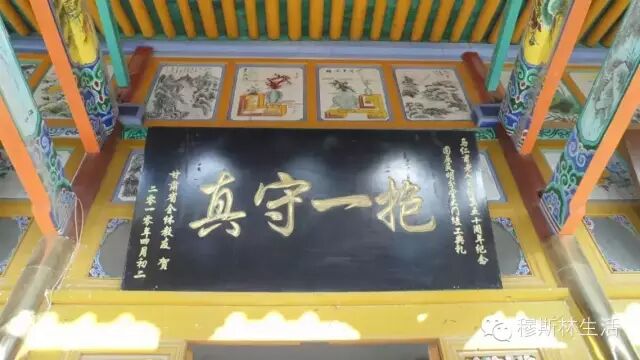
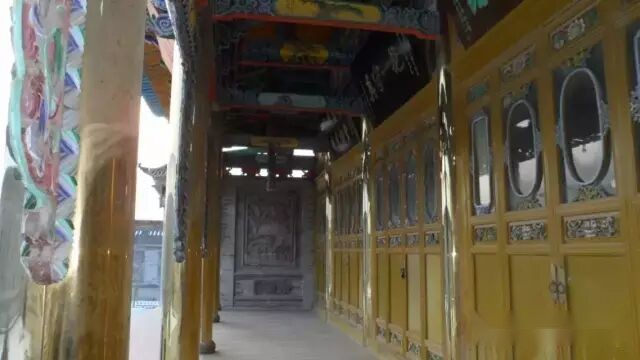
Exploring Ningxia Muslim Culture: Wuzhong, Jahriyya Sufi Shrines & Hui Heritage
Articles • Hasan09 posted the article • 0 comments • 3 views • 1 hours ago
Road-Tripping Through Ningxia: Exploring the Siqiliangzi Gongbei and the 13th Master of the Jahriyya in Wuzhong
Abstract:
A road trip to visit the famous 13th Master Ma Hualong gongbei (Sufi shrine / mausoleum complex) at the northern gate of Wuzhong City, Ningxia. Documenting the iconic hexagonal pyramidal mausoleum architecture and courtyard atmosphere, while reflecting on the historical ups and downs of Northwest China's Hui Muslims and the devoted reverence of believers for their forebears.
"Road-Tripping Ningxia: The Jahriyya 13th Master Gongbei in Wuzhong"
Remember that mention of the Jahriyya Banqiao Daotang in the article about Zheng Banqiao's calligraphy and paintings?
Jahriyya is one of the four major menhuan (Sufi orders / brotherhoods) in Islam.
The Banqiao Daotang is an important missionary center for the Jahriyya, located in Wuzhong, Ningxia.
I visited Wuzhong, Ningxia, eight years ago—it had such a rich West Asian vibe; but I didn't make it to Banqiao Daotang.
However, I made a dedicated trip to the Siqiliangzi 13th Master Gongbei in Wuzhong, another sacred Jahriyya site.
A gongbei (Sufi shrine / mausoleum complex) refers to the tomb of a saint in Islam.
The 13th Master, Ma Hualong, was the leader of the Northwest Hui Muslim Jahriyya order during the Xianfeng and Tongji reigns of the late Qing dynasty.
During the Xianfeng and Tongji eras, Hui Muslims everywhere suffered extreme oppression and discrimination from the imperial officials. As the common saying went, "Right or wrong, you still get forty heavy strokes." If Hui Muslims had a dispute and took it to court, regardless of whether you were right or wrong, the officials would beat you with forty strokes of the heavy paddle first before even asking questions.
The righteous anger of a spirited ethnic group finally erupted in the first year of Tongji. Hui Muslims across the Northwest gathered in revolt, and the single spark ignited half the Northwest.
The 13th Master Ma Hualong was the fifth-generation leader of the Jahriyya order. In the second year of Tongji, he led the Hui Muslims around Jinji to resolutely join the uprising. Jinji Fortress, the religious center of the Jahriyya, consequently became the command center for the Northwest Hui Muslim uprising.
The Qing court dispatched Zuo Zongtang with military force to suppress them.
Ma Hualong and Zuo Zongtang each held their own ideals and beliefs, and both were heroes of their respective peoples.
In the tenth year of Tongji, Zuo Zongtang's army besieged Jinji Fortress. To save the lives of everyone in the fortress, Ma Hualong went in person to the Qing military camp, declaring that he was willing to offer his own body to take the blame and redeem the death sentence for the Hui Muslims of the Jinji region.
The Qing military flatly refused.
On the 13th day of the first lunar month in the tenth year of Tongji, after subjecting him to 53 days of brutal torture, the Qing military executed Ma Hualong by lingchi (death by a thousand cuts) at Siqiliangzi in Wuzhong. Three hundred and two members of his household heroically martyred themselves for their faith, and over a thousand relatives were killed. Because of this, believers honor Ma Hualong as the 13th Master.
When the 13th Master met his martyrdom, "though subjected to lingchi, he made not a sound." He was 63 years old at the time.
One man walking into the enemy camp, willingly offering his own life to ransom the thousands of lives behind him—the Taiping Heavenly Kingdom had the Wing King Shi Dakai, the Hui Muslims had the 13th Master Ma Hualong of Jinji Fortress, and Dali in Yunnan had commander Du Wenxiu. Such heroic spirit cuts straight across the firmament.
Hui and Han communities have been tangled in endless disputes since ancient times, which is closely tied to the officials' habitual mistreatment of Hui Muslims and their bias toward the Han.
The Han population had already lost the spirited drive for freedom, autonomy, and self-strengthening; in many matters, their lack of understanding toward the actions of Hui Muslims left them bristling with suspicion.
That year, I was fortunate enough to enter the Siqiliangzi 13th Master Gongbei in Wuzhong, and with a complex mix of emotions, I paid my respects at the mausoleum.
Usually, outsiders and casual passersby are not allowed to enter the Wuzhong Jahriyya 13th Master Gongbei. Even though I came prepared and was mentally ready to be turned away, fortune smiled on me due to a stroke of good karma, finally satisfying a curious outsider's heartfelt wonder and reverence.
Because it was an unexpected entry, there was no tour guide, and I didn't know much about everything inside the grounds. So I won't add commentary to the photos—let's keep a bit of the order's inner mystery intact.
Tips:
A few extra thoughts:
The 13th Master Ma Hualong was the fifth-generation leader of the Jahriyya. His grandfather, Ma Datian, was the third-generation leader of the Jahriyya, who was exiled by the officials to the Jilin Shipyard and is honored within the order as the Shipyard Master. The Jahriyya Shipyard Mosque still stands in Jilin City; I once commissioned my outdoor buddy "Lhasa" to go take photos of it, and a big shoutout and thanks to Lhasa here! The 13th Master's father, Ma Yide, was the fourth-generation leader of the Jahriyya order, honored within the order as the April 8th Master, and is buried at Honglefu in Qingtongxia. That year, before heading to the 13th Master's gongbei, we first stopped by Honglefu to visit and pay our respects. Teacher Ma of the Qingyin Islamic School gave us a warm and detailed explanation, which I still remember vividly to this day. Huge thanks to Teacher Ma!
When it comes to the Northwest Hui Muslims, most people are more familiar with Ma Bufang and Ma Buqing of Qinghai, who intercepted and massacred the Red Army's Western Route Army. The Ma Bufang and Ma Buqing warlord clique were actually the descendants of Ma Haiyan, a traitor under Ma Hualong. Meanwhile, the Ma Hongkui warlord clique of Ningxia were the descendants of Ma Zhan'ao, who was likewise a traitorous general among the Northwest Hui.
Today, there is a surviving Hui Muslim community residing within Russia—the Dungans. They are the descendants of the uprising Hui Muslims led by Bai Yanhu, a leader of the Northwest Hui uprising who, after the rebellion failed and in search of a way to survive, desperately crossed the Tianshan Mountains in a snowy winter to flee far away to a foreign land. To this day, in a foreign country, this branch of Hui Muslims still preserves the strong, nostalgic atmosphere of Xi'an Hui Muslim daily life. view all
Road-Tripping Through Ningxia: Exploring the Siqiliangzi Gongbei and the 13th Master of the Jahriyya in Wuzhong

Abstract:

A road trip to visit the famous 13th Master Ma Hualong gongbei (Sufi shrine / mausoleum complex) at the northern gate of Wuzhong City, Ningxia. Documenting the iconic hexagonal pyramidal mausoleum architecture and courtyard atmosphere, while reflecting on the historical ups and downs of Northwest China's Hui Muslims and the devoted reverence of believers for their forebears.

"Road-Tripping Ningxia: The Jahriyya 13th Master Gongbei in Wuzhong"
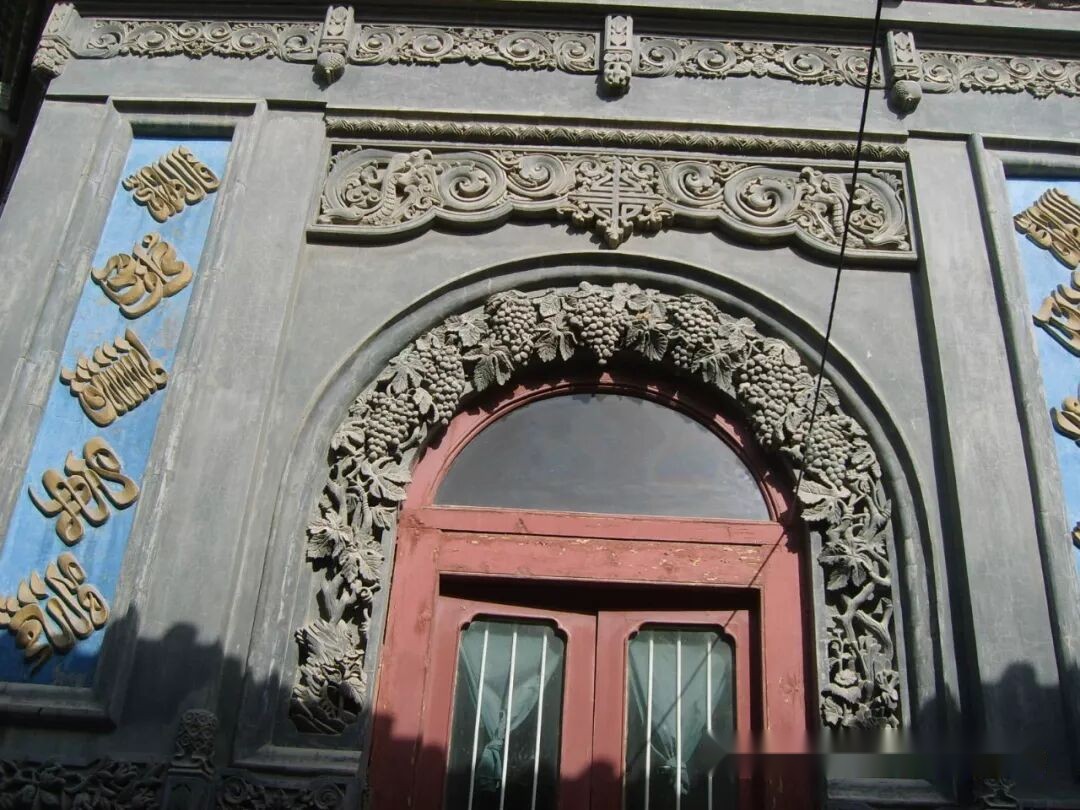
Remember that mention of the Jahriyya Banqiao Daotang in the article about Zheng Banqiao's calligraphy and paintings?
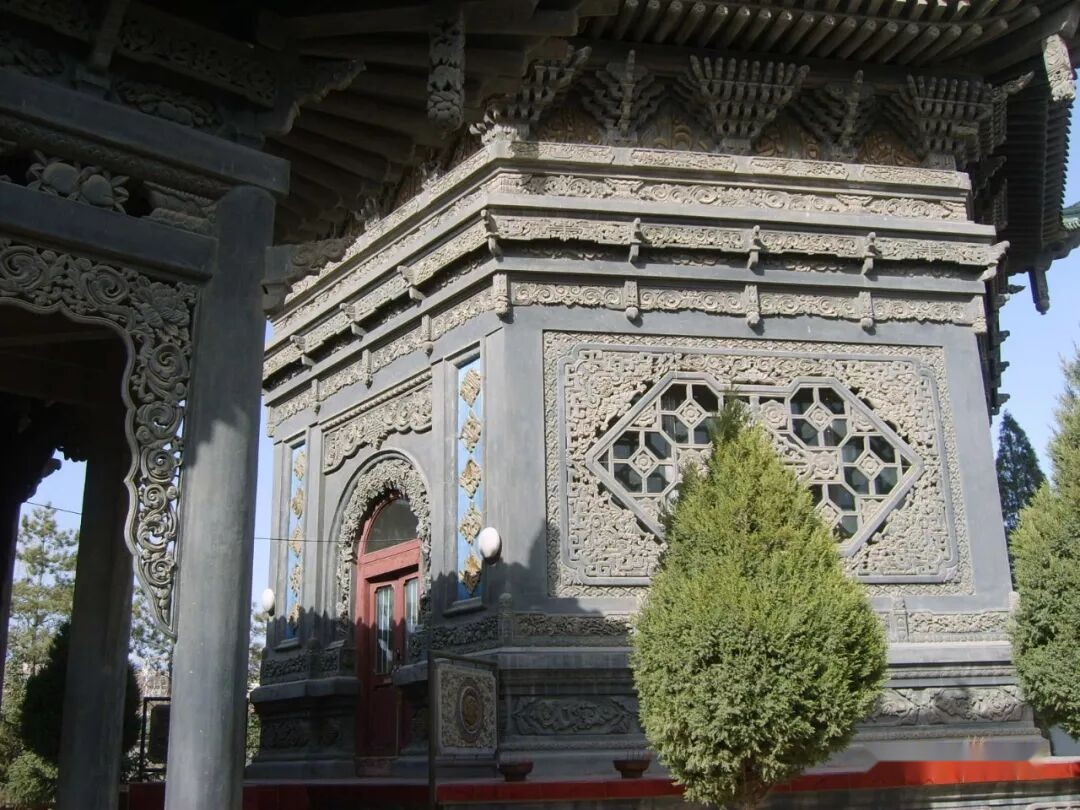
Jahriyya is one of the four major menhuan (Sufi orders / brotherhoods) in Islam.
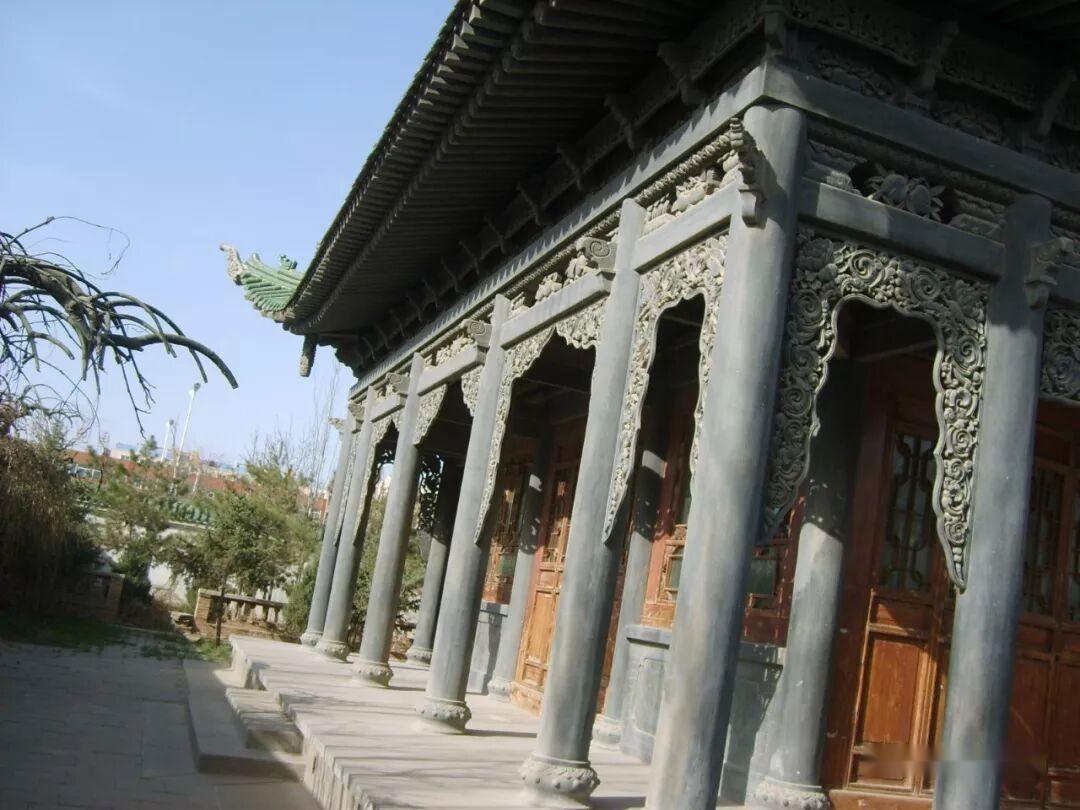
The Banqiao Daotang is an important missionary center for the Jahriyya, located in Wuzhong, Ningxia.
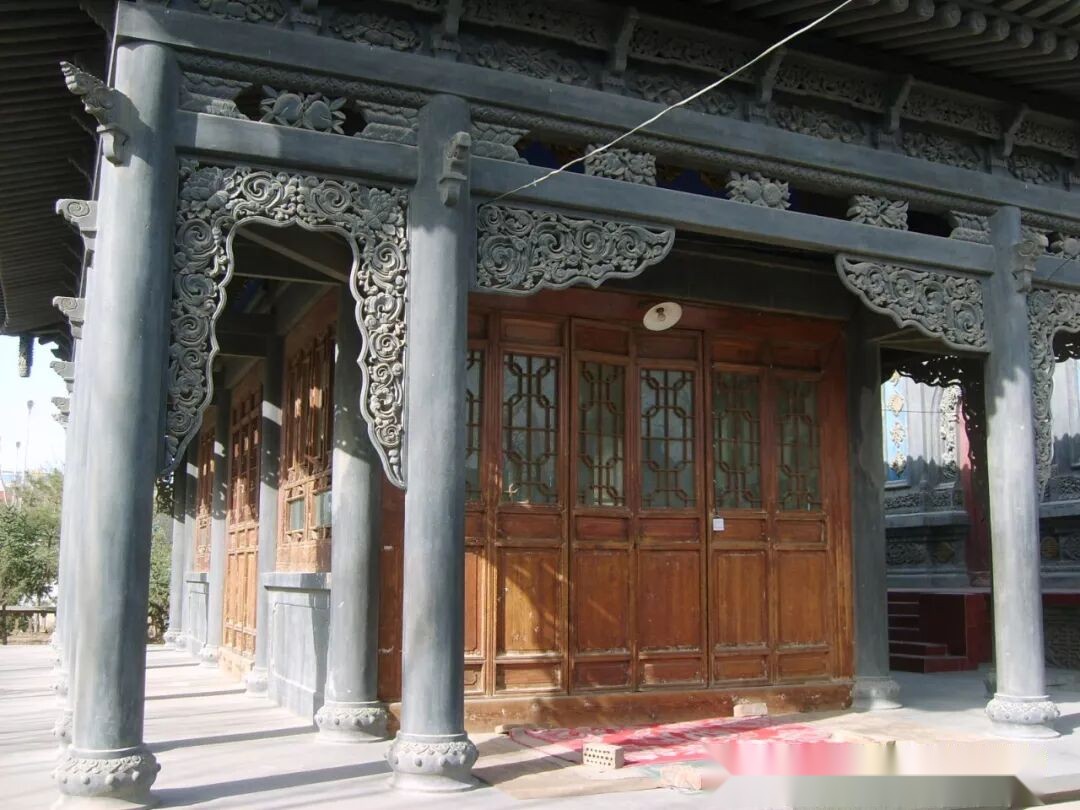
I visited Wuzhong, Ningxia, eight years ago—it had such a rich West Asian vibe; but I didn't make it to Banqiao Daotang.
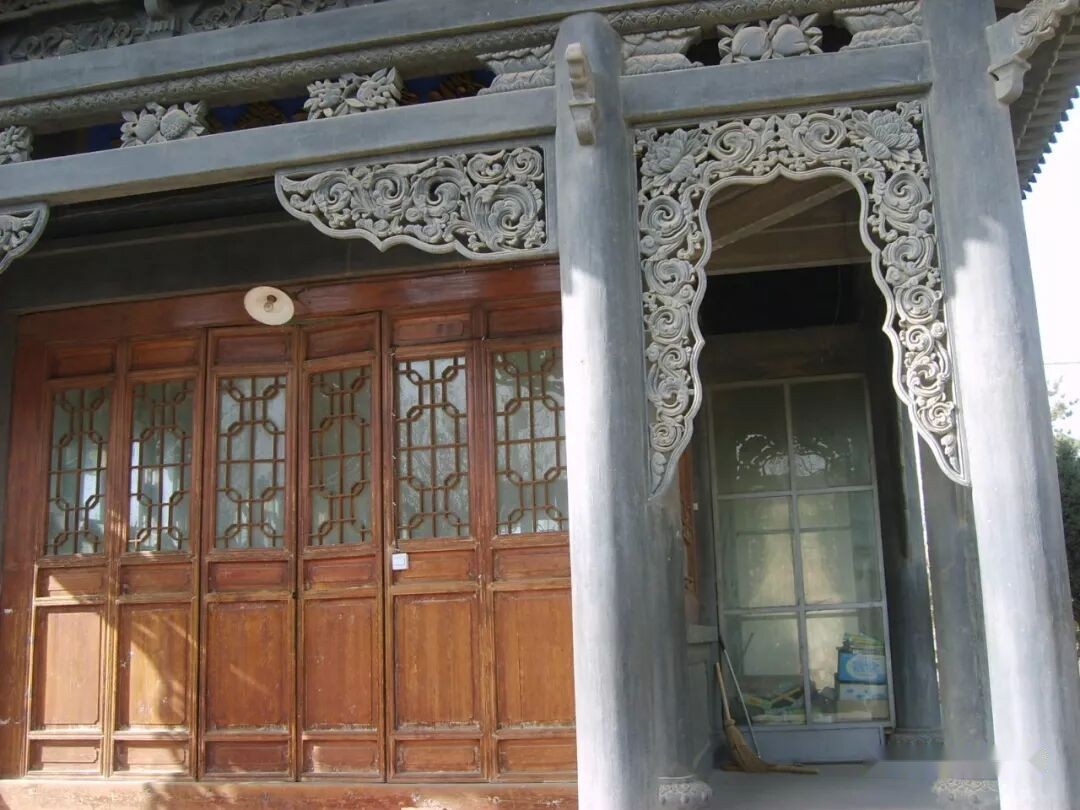
However, I made a dedicated trip to the Siqiliangzi 13th Master Gongbei in Wuzhong, another sacred Jahriyya site.
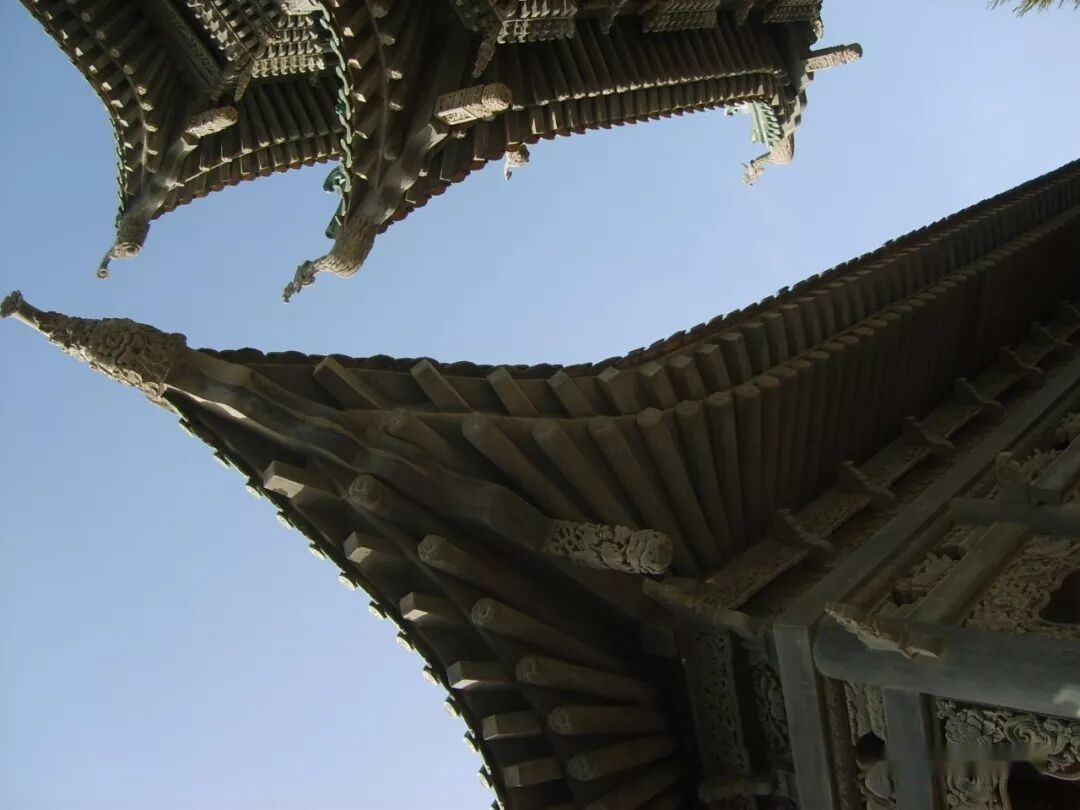
A gongbei (Sufi shrine / mausoleum complex) refers to the tomb of a saint in Islam.
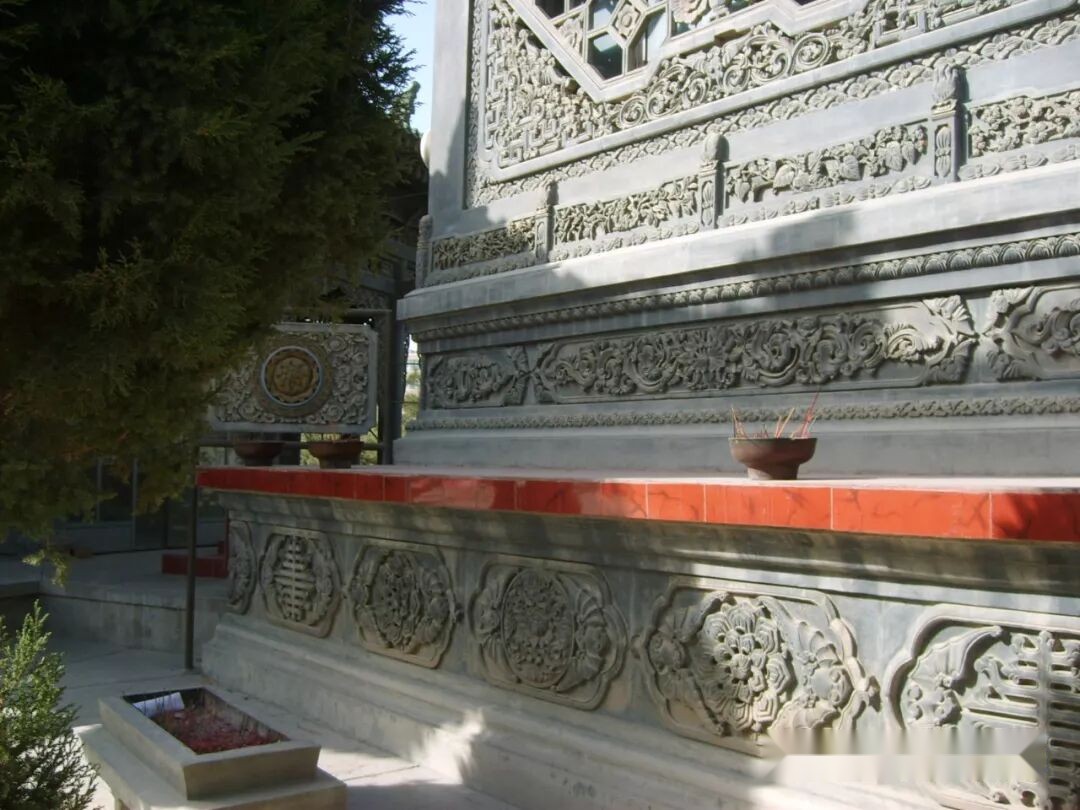
The 13th Master, Ma Hualong, was the leader of the Northwest Hui Muslim Jahriyya order during the Xianfeng and Tongji reigns of the late Qing dynasty.
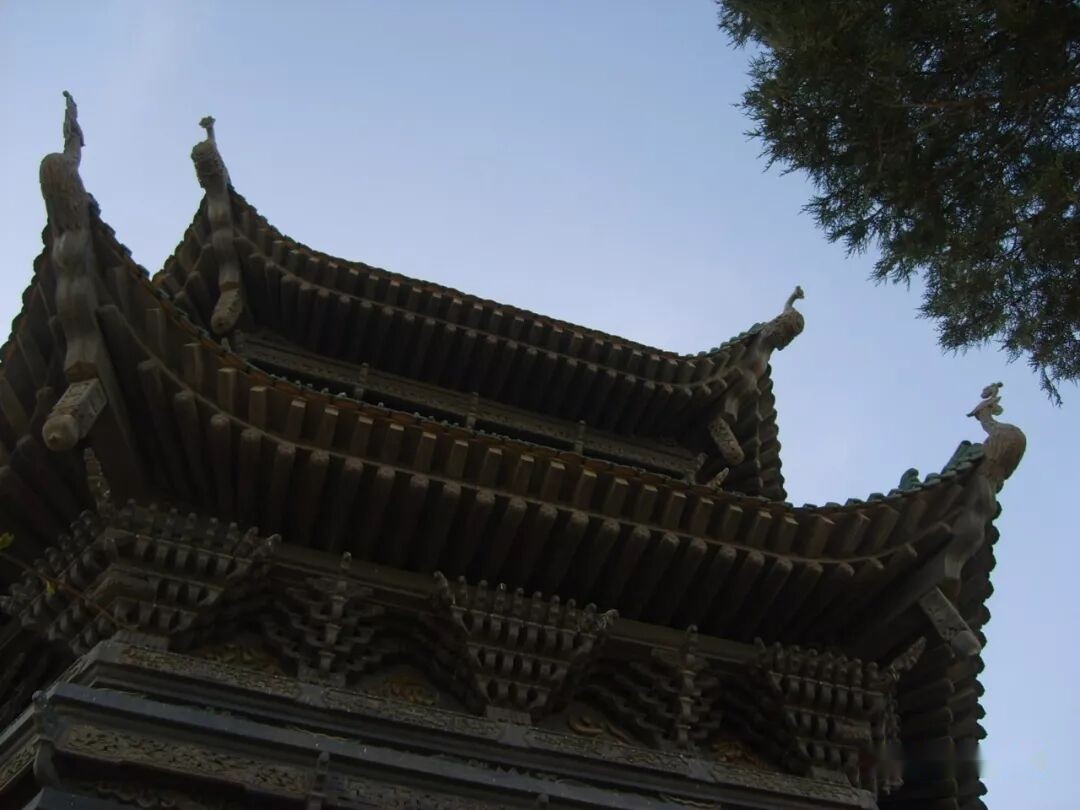
During the Xianfeng and Tongji eras, Hui Muslims everywhere suffered extreme oppression and discrimination from the imperial officials. As the common saying went, "Right or wrong, you still get forty heavy strokes." If Hui Muslims had a dispute and took it to court, regardless of whether you were right or wrong, the officials would beat you with forty strokes of the heavy paddle first before even asking questions.

The righteous anger of a spirited ethnic group finally erupted in the first year of Tongji. Hui Muslims across the Northwest gathered in revolt, and the single spark ignited half the Northwest.
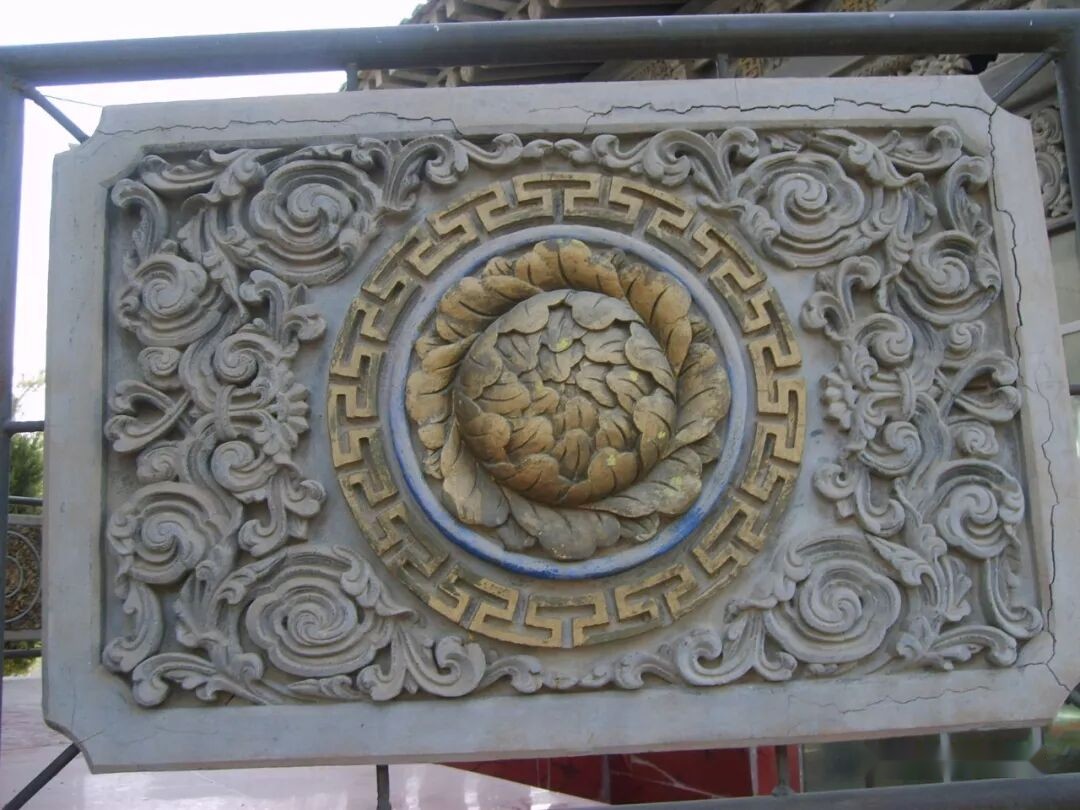
The 13th Master Ma Hualong was the fifth-generation leader of the Jahriyya order. In the second year of Tongji, he led the Hui Muslims around Jinji to resolutely join the uprising. Jinji Fortress, the religious center of the Jahriyya, consequently became the command center for the Northwest Hui Muslim uprising.
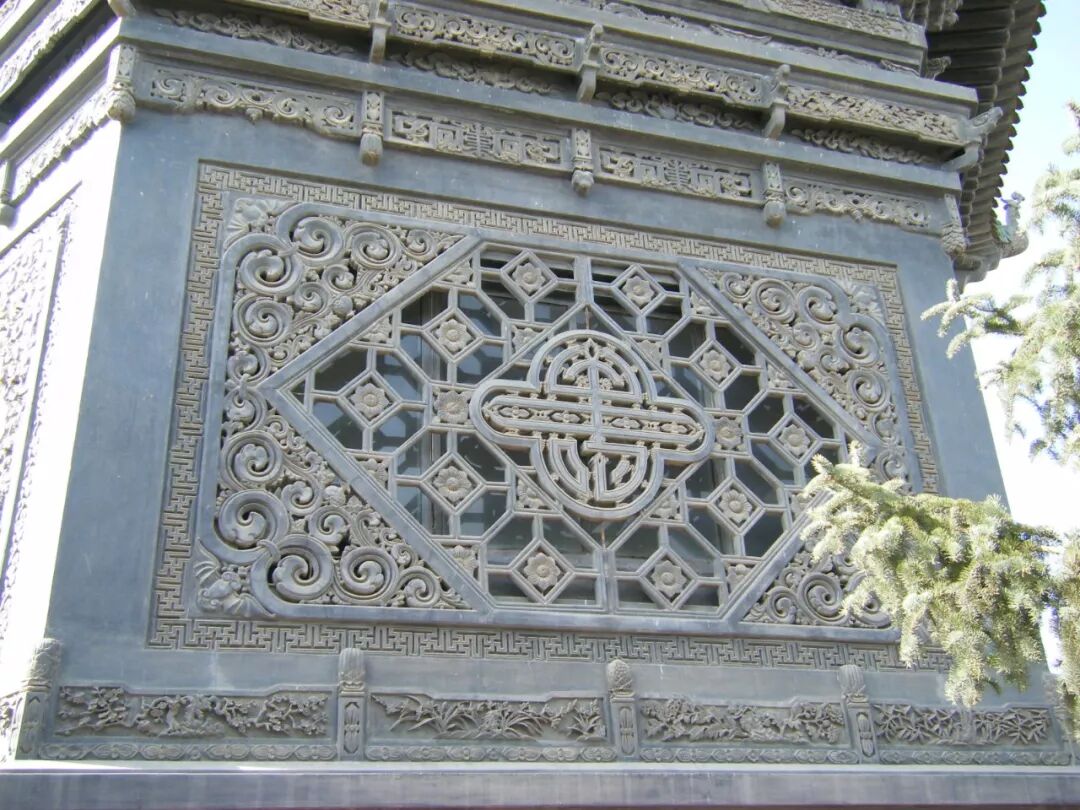
The Qing court dispatched Zuo Zongtang with military force to suppress them.
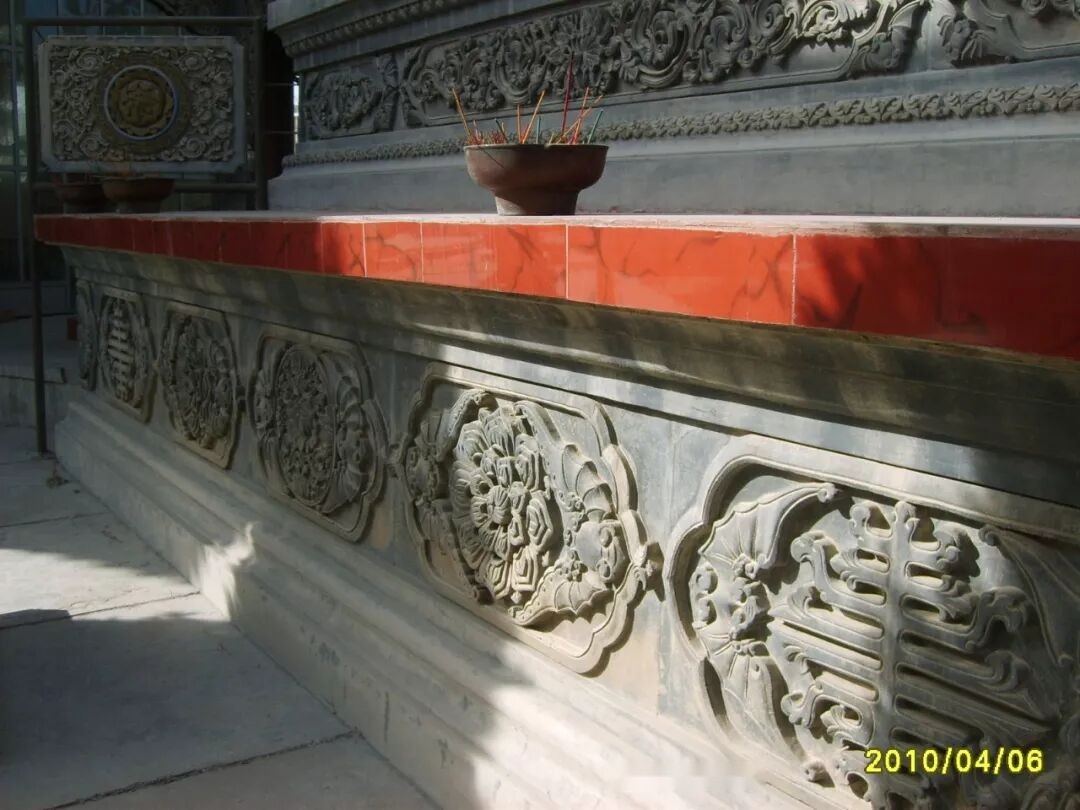
Ma Hualong and Zuo Zongtang each held their own ideals and beliefs, and both were heroes of their respective peoples.
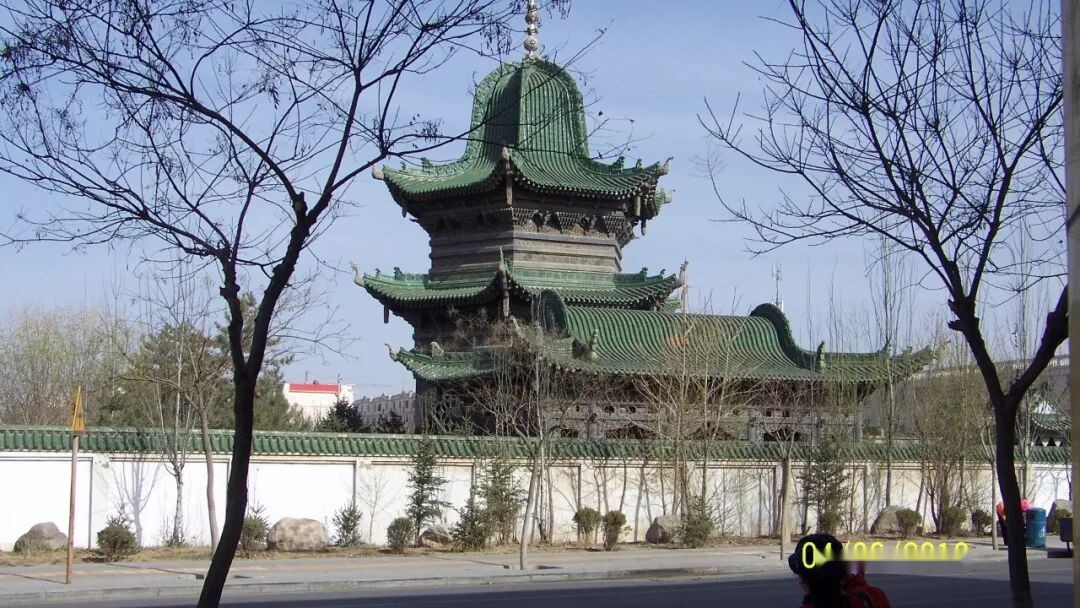
In the tenth year of Tongji, Zuo Zongtang's army besieged Jinji Fortress. To save the lives of everyone in the fortress, Ma Hualong went in person to the Qing military camp, declaring that he was willing to offer his own body to take the blame and redeem the death sentence for the Hui Muslims of the Jinji region.
The Qing military flatly refused.
On the 13th day of the first lunar month in the tenth year of Tongji, after subjecting him to 53 days of brutal torture, the Qing military executed Ma Hualong by lingchi (death by a thousand cuts) at Siqiliangzi in Wuzhong. Three hundred and two members of his household heroically martyred themselves for their faith, and over a thousand relatives were killed. Because of this, believers honor Ma Hualong as the 13th Master.
When the 13th Master met his martyrdom, "though subjected to lingchi, he made not a sound." He was 63 years old at the time.
One man walking into the enemy camp, willingly offering his own life to ransom the thousands of lives behind him—the Taiping Heavenly Kingdom had the Wing King Shi Dakai, the Hui Muslims had the 13th Master Ma Hualong of Jinji Fortress, and Dali in Yunnan had commander Du Wenxiu. Such heroic spirit cuts straight across the firmament.
Hui and Han communities have been tangled in endless disputes since ancient times, which is closely tied to the officials' habitual mistreatment of Hui Muslims and their bias toward the Han.
The Han population had already lost the spirited drive for freedom, autonomy, and self-strengthening; in many matters, their lack of understanding toward the actions of Hui Muslims left them bristling with suspicion.
That year, I was fortunate enough to enter the Siqiliangzi 13th Master Gongbei in Wuzhong, and with a complex mix of emotions, I paid my respects at the mausoleum.
Usually, outsiders and casual passersby are not allowed to enter the Wuzhong Jahriyya 13th Master Gongbei. Even though I came prepared and was mentally ready to be turned away, fortune smiled on me due to a stroke of good karma, finally satisfying a curious outsider's heartfelt wonder and reverence.
Because it was an unexpected entry, there was no tour guide, and I didn't know much about everything inside the grounds. So I won't add commentary to the photos—let's keep a bit of the order's inner mystery intact.
Tips:
A few extra thoughts:
The 13th Master Ma Hualong was the fifth-generation leader of the Jahriyya. His grandfather, Ma Datian, was the third-generation leader of the Jahriyya, who was exiled by the officials to the Jilin Shipyard and is honored within the order as the Shipyard Master. The Jahriyya Shipyard Mosque still stands in Jilin City; I once commissioned my outdoor buddy "Lhasa" to go take photos of it, and a big shoutout and thanks to Lhasa here! The 13th Master's father, Ma Yide, was the fourth-generation leader of the Jahriyya order, honored within the order as the April 8th Master, and is buried at Honglefu in Qingtongxia. That year, before heading to the 13th Master's gongbei, we first stopped by Honglefu to visit and pay our respects. Teacher Ma of the Qingyin Islamic School gave us a warm and detailed explanation, which I still remember vividly to this day. Huge thanks to Teacher Ma!
When it comes to the Northwest Hui Muslims, most people are more familiar with Ma Bufang and Ma Buqing of Qinghai, who intercepted and massacred the Red Army's Western Route Army. The Ma Bufang and Ma Buqing warlord clique were actually the descendants of Ma Haiyan, a traitor under Ma Hualong. Meanwhile, the Ma Hongkui warlord clique of Ningxia were the descendants of Ma Zhan'ao, who was likewise a traitorous general among the Northwest Hui.
Today, there is a surviving Hui Muslim community residing within Russia—the Dungans. They are the descendants of the uprising Hui Muslims led by Bai Yanhu, a leader of the Northwest Hui uprising who, after the rebellion failed and in search of a way to survive, desperately crossed the Tianshan Mountains in a snowy winter to flee far away to a foreign land. To this day, in a foreign country, this branch of Hui Muslims still preserves the strong, nostalgic atmosphere of Xi'an Hui Muslim daily life.
Sacred Hui Muslim Heritage in Ningxia: The History of Siliangzi Gongbei and Ma Hualong's Martyrdom
Articles • Hasan09 posted the article • 0 comments • 3 views • 1 hours ago
Sacred Hui Muslim Heritage in Ningxia: Historical Origins of the Siliangzi Gongbei in Wuzhong and a Historical Analysis of Ma Hualong's Martyrdom Site
Abstract:
An investigative study tracking the historical context of Ma Hualong's martyrdom and burial at Siliangzi on the 13th day of the first lunar month in the tenth year of Tongzhi. It tells the touching story of how believers pooled a massive sum of money in 1925 to buy back the historic site and build a gongbei (Sufi shrine / mausoleum complex), showcasing the century-long ups and downs of this Sufi sacred site.
The Siliangzi Gongbei is the site of Ma Hualong's martyrdom and burial, located on the east side of the north gate in Wuzhong City. After the failure of the Northwest Muslim uprisings during the Tongzhi era of the Qing Dynasty, Ma Hualong was executed by lingchi (slow slicing) at Siliangzi on the 13th day of the first lunar month in the 10th year of Tongzhi (1871). Muslim followers buried his remains here in remembrance. In 1925, Ma Xuezhen, a leader of the Jahriyya (Jahriyya Sufi order), bought back the land with a huge sum of money and built the gongbei. The shrine was dismantled during the Cultural Revolution, but it has now been restored with special government funding.
[On-Site Showcase] view all
Sacred Hui Muslim Heritage in Ningxia: Historical Origins of the Siliangzi Gongbei in Wuzhong and a Historical Analysis of Ma Hualong's Martyrdom Site
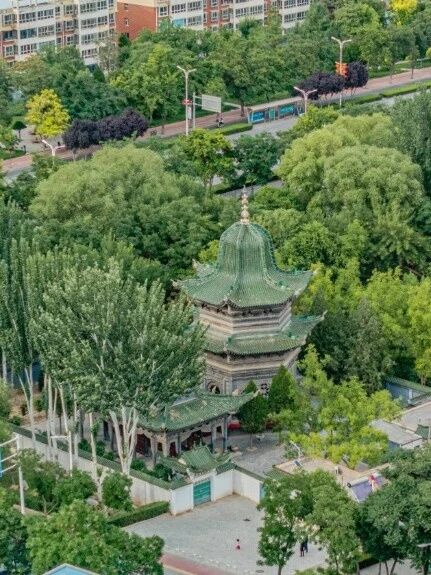
Abstract:
An investigative study tracking the historical context of Ma Hualong's martyrdom and burial at Siliangzi on the 13th day of the first lunar month in the tenth year of Tongzhi. It tells the touching story of how believers pooled a massive sum of money in 1925 to buy back the historic site and build a gongbei (Sufi shrine / mausoleum complex), showcasing the century-long ups and downs of this Sufi sacred site.
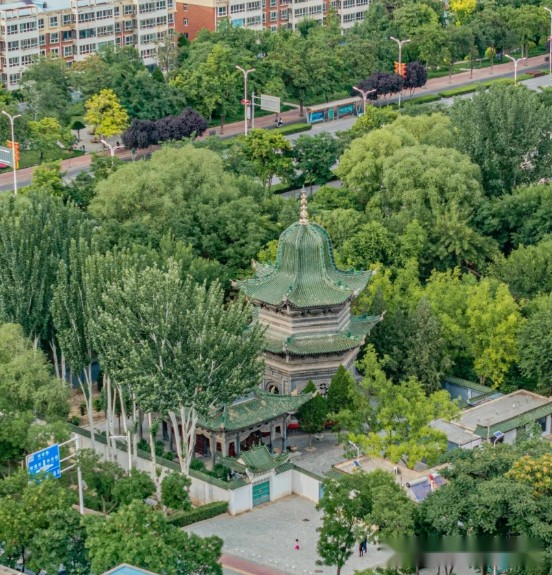
The Siliangzi Gongbei is the site of Ma Hualong's martyrdom and burial, located on the east side of the north gate in Wuzhong City. After the failure of the Northwest Muslim uprisings during the Tongzhi era of the Qing Dynasty, Ma Hualong was executed by lingchi (slow slicing) at Siliangzi on the 13th day of the first lunar month in the 10th year of Tongzhi (1871). Muslim followers buried his remains here in remembrance. In 1925, Ma Xuezhen, a leader of the Jahriyya (Jahriyya Sufi order), bought back the land with a huge sum of money and built the gongbei. The shrine was dismantled during the Cultural Revolution, but it has now been restored with special government funding.
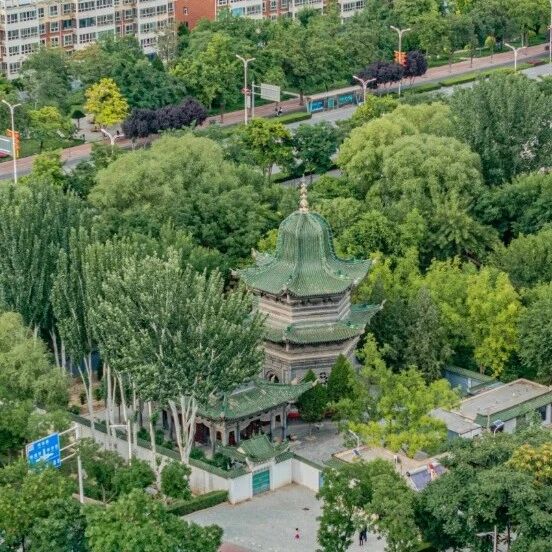
[On-Site Showcase]

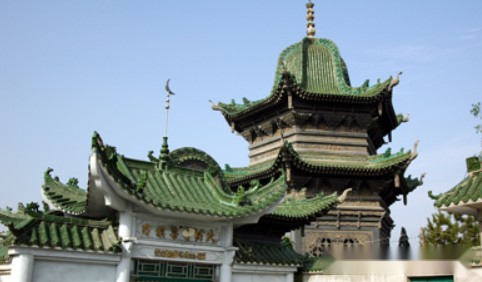
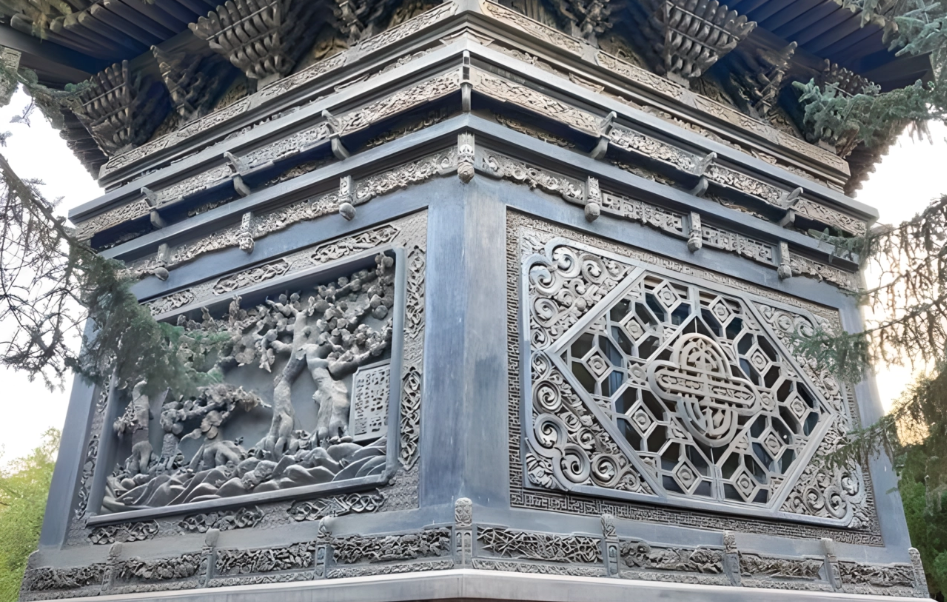
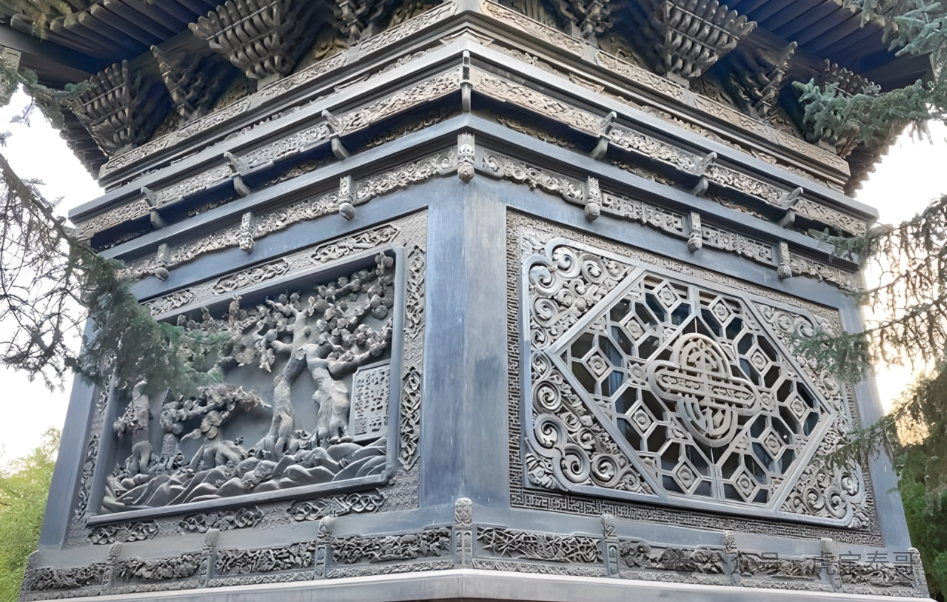
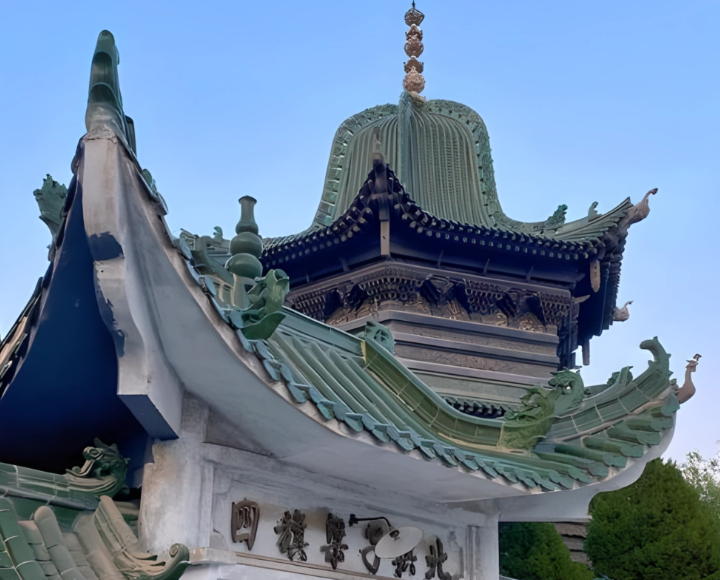
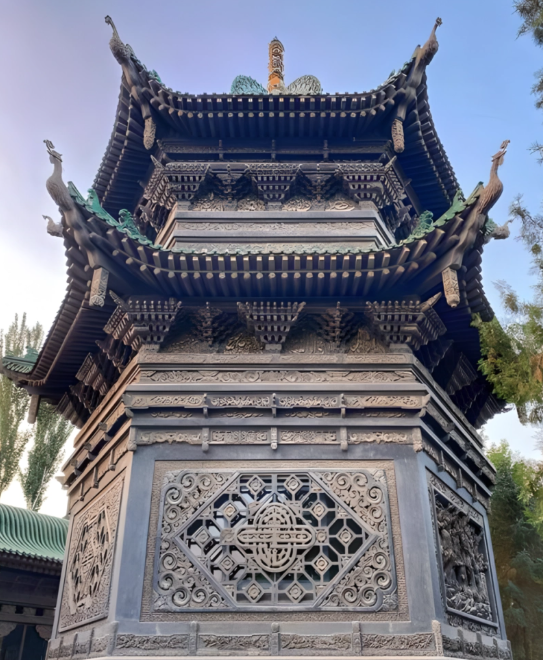
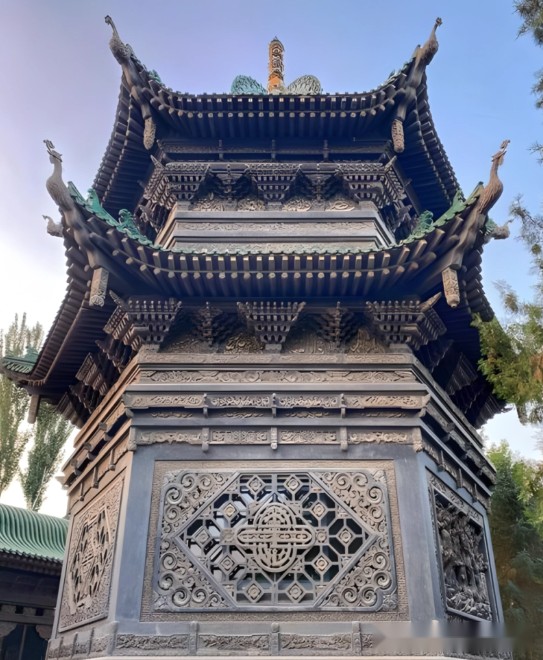

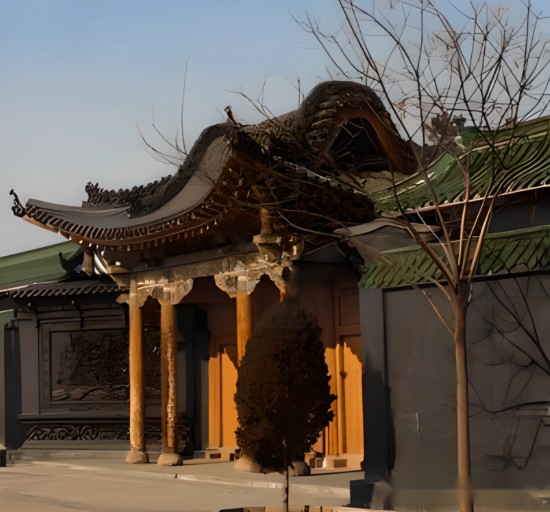
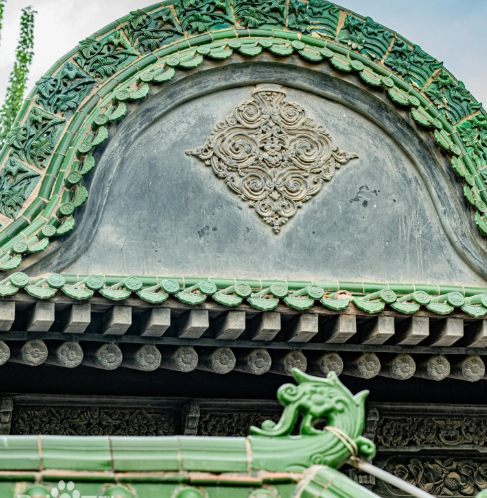

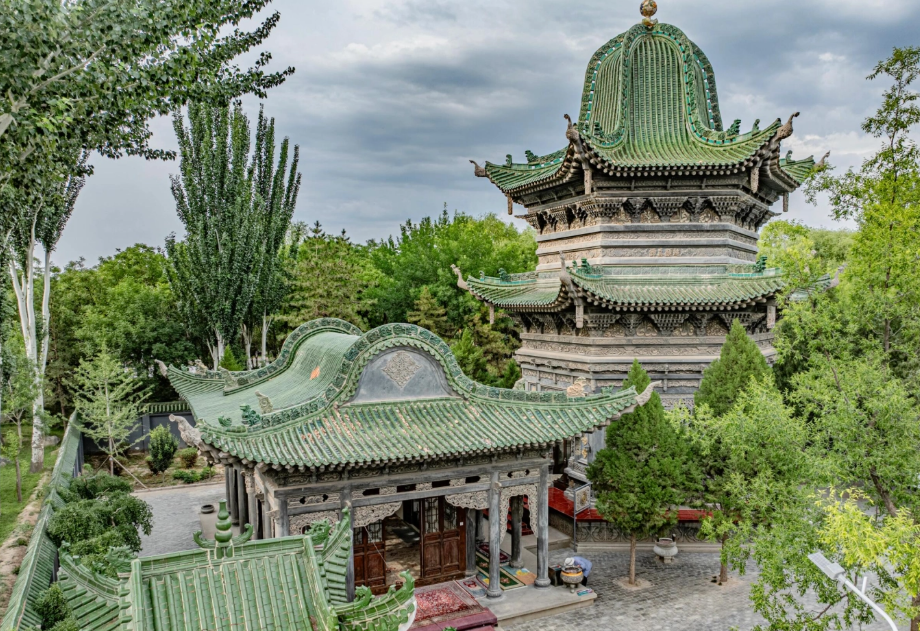
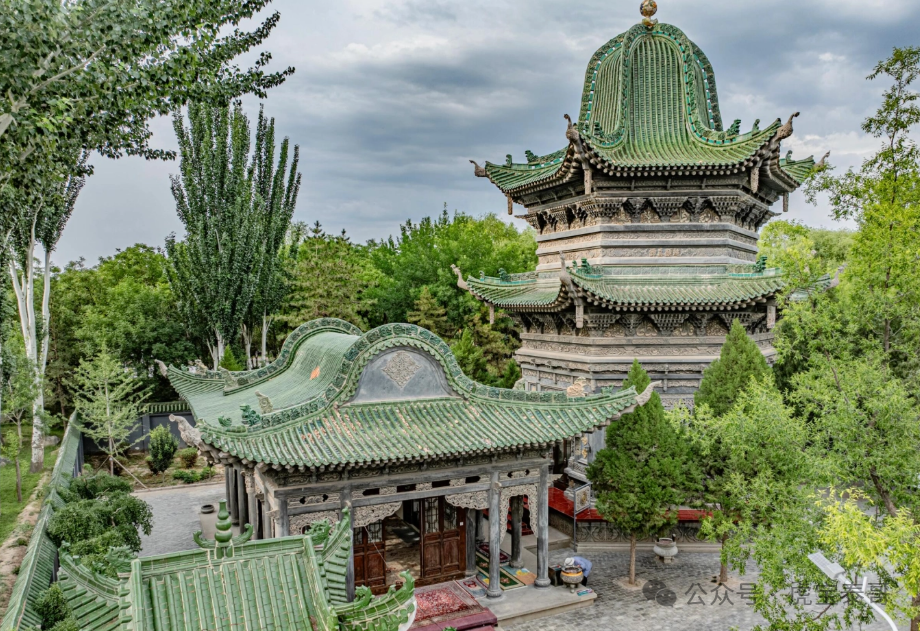
Exploring Ningxia Muslim Heritage: Ancient Mosques, Sufi Gongbei & Hui Culture
Articles • Hasan09 posted the article • 0 comments • 3 views • 1 hours ago
Tracing Muslim Roots in Northern China: The Traditional Architecture and Mountain Retreat Memories of Laorengou Gongbei
Abstract:
Visiting Laorengou Gongbei, hidden deep within the mountain canyons of Ningxia. Set to the evocative tunes of classical silk-and-bamboo melodies, we capture the traditional blue-brick and gray-tile mausoleum architecture against vast, earthy loess mountain ranges, documenting the tranquil atmosphere of the spiritual legacies and ascetic hermitages left by Northwest China's Muslim forebears.
Selected from Minoru Miki's 'Koto Ballads Collection Vol. 4 - Autumn / Akemi Yamada': Coming from the East (Live Recording, Performed by Suzuko Kimura). Minoru Miki: Japanese composer and master of Japanese traditional music, born on March 16, 1930, in Tokushima City, Tokushima Prefecture. He studied composition under seniors like Tomojiro Ikeuchi and Akira Ifukube, co-founded Pro Musica Nipponia with fourteen members in 1964, and dedicated his life to developing and spreading Japanese traditional music until his passing in 2011 in Mitaka City, Tokyo. Japanese Koto: An important traditional instrument of Japanese music, originating from the guzheng of China's Sui and Tang dynasties. Early koto players were predominantly blind monks, branching into the Yamada and Ikuta schools. In modern times, koto players are mainly professional artists........
The term 'gongbei' is a transliteration of the Arabic word Qubbah, originally referring to religious architectural styles in Arab, Persian, and Central Asian regions. In Central Asia, Persia, and China's Xinjiang region, they are known as 'mazar'. Ningxia gongbei architecture mainly falls into three categories: Gutubu gongbei, where 'Gutubu' means axis, extreme point, or leader, considered a special 'Wali' hidden among humanity and an important figure beloved by Allah; Menhuan Laorenjia and Murshed gongbei, where the founders and spiritual guides of Sufi orders are generally called 'Laorenjia' (Elder), 'Daozu' (Patriarch), or 'Murshed' (Guide); and Hailifan gongbei, where 'Hailifan' means successor, referring to the senior disciples, successors, or deputies of the Murshed. There are also a few other types of gongbei. The gongbei is a primary religious characteristic of Ningxia's Sufi orders and an important cultural heritage of the Hui people in Ningxia.
Laorengou Gongbei is located near Nanping Village, alongside National Highway 203 in Yuanzhou District, Guyuan City, Ningxia. With a long and ancient history, it is very likely the oldest gongbei in Ningxia, and was rebuilt in the 1990s.
Excerpts from the stele inscription at the ancient Gutubu Gongbei in Laorengou are recorded by hand as follows:
......
II. Spiritual Trajectory
Through the changing tides of time, the ancient Gutubu Gongbei at Laorengou has weathered immense hardships, with devoted 'dostans' (companions/followers) performing moving stories to protect this sacred spiritual sanctuary. Once upon a time, countless dedicated individuals tirelessly worked to repair and purify this holy ground, with Ding Sheh standing out foremost among the most meritorious contributors. Sheh, whose surname was Ding and personal name Yonghai, was born in 1947 and passed away on the 25th day of the 11th lunar month in 2004. Since childhood, Sheh studied religious texts, and by his teens, he devoted himself wholeheartedly to the faith, working day and night without sleep. He journeyed to the tombs of numerous sages and repeatedly sought out renowned masters to absorb the essence of their teachings. Guided by religious teachers, he underwent multiple sessions of 'zuojing' (silent meditation and retreat), clearing his mind, sharpening his resolve, wisdom, and insight to truly grasp the divine truths. He constantly sought to transcend the mundane and undergo a profound spiritual rebirth. Throughout his self-cultivation, he especially benefited from the spiritual guidance of the elder masters, holding them in lifelong reverence and guarding them like the apples of his eyes. He spent forty years repeatedly repairing the gongbei, often single-handedly undertaking difficult tasks in pursuit of perfection. Hauling stones up steep, isolated hills to build walls was a staggering challenge; carrying construction materials to the top of Yangjiao Mountain to pave roads required superhuman willpower. Yet even more demanding was the construction of the present gongbei, carried out during times of extreme shortage of funds and food; working at dangerous heights with his life hanging on the scaffolding beams; Sheh stood alone and carried the burden through grueling days and nights. Finally, on the 19th day of the 9th lunar month in 2004, the grand project was successfully completed, bringing immense relief to his heart. Having exhausted his physical and mental energy, Sheh fell seriously ill from overwork. Just over two months after the completion of his monumental work, he passed away to join the forebears, his heart returning to Allah.
......
Shot using a Mamaiya C330 Sekor lens on black-and-white film, with self-developed negatives scanned directly into digital files
Note: Traditional photography captures clear images by letting external light pass through a lens onto the flat film surface inside a sealed camera back. When exposed, the image transforms into a silver halide latent image. Developing chemicals are then used to wash and clear the silver halide particles, reducing the latent image back into silver particles on the film, creating the original negative. To produce a print, the silver salt particles on the negative are projected via an enlarger system onto photographic paper in a darkroom.
The charm of black-and-white film remains irreplaceable by any digital equipment since the birth of photography. The wide exposure latitude of black-and-white film is significantly superior to color film. Using different darkroom techniques, silver-salt works with rich tonal ranges, soft contrasts, and sharp details can be created. Today's digitally output large-format black-and-white photos still fall quite short in detail compared to traditional silver-salt works. Darkroom craftsmanship is unrepeatable, and every single photograph made is unique—which is precisely where its magic lies. view all
Tracing Muslim Roots in Northern China: The Traditional Architecture and Mountain Retreat Memories of Laorengou Gongbei
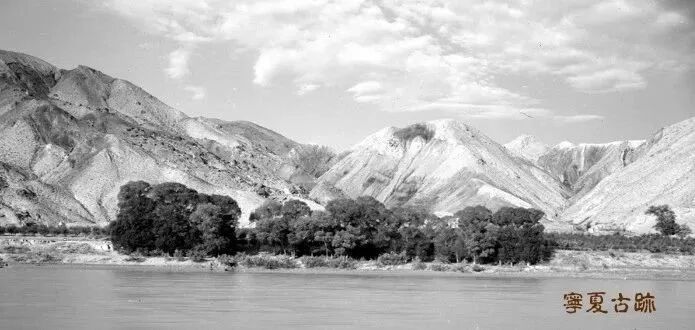
Abstract:
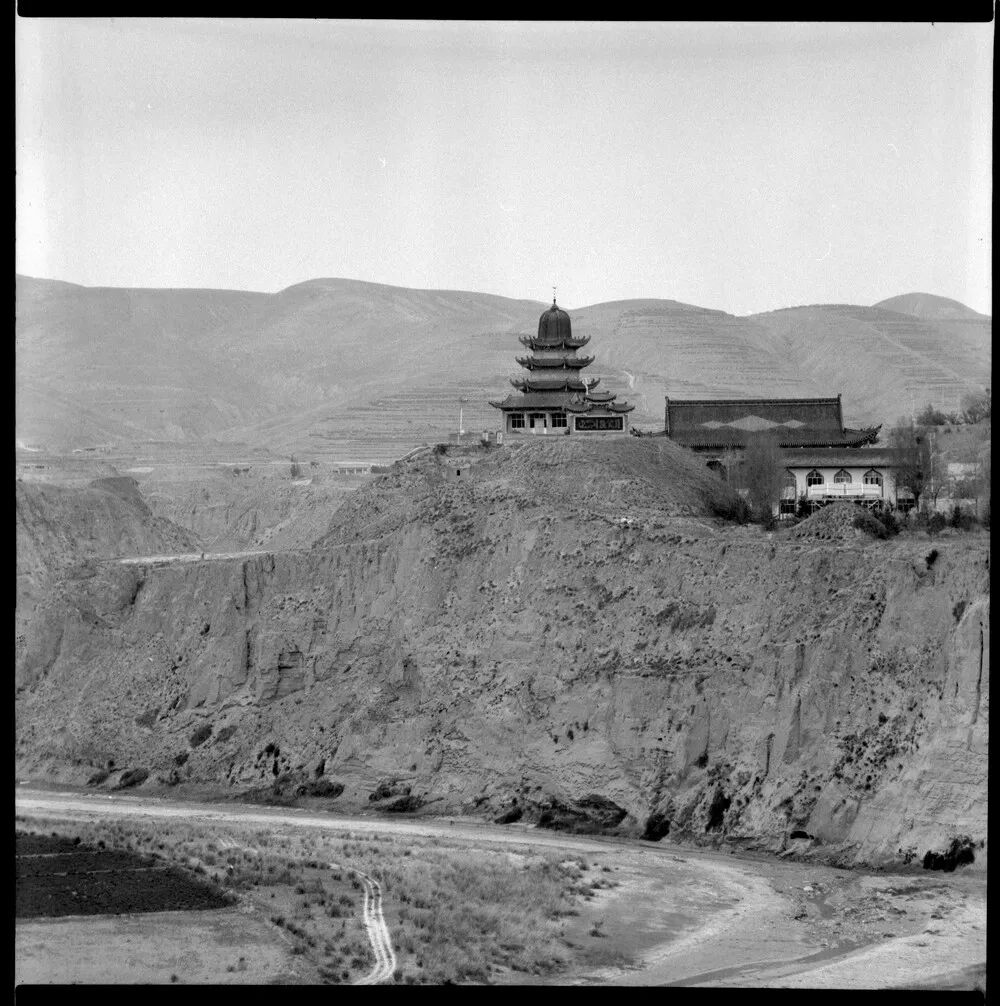
Visiting Laorengou Gongbei, hidden deep within the mountain canyons of Ningxia. Set to the evocative tunes of classical silk-and-bamboo melodies, we capture the traditional blue-brick and gray-tile mausoleum architecture against vast, earthy loess mountain ranges, documenting the tranquil atmosphere of the spiritual legacies and ascetic hermitages left by Northwest China's Muslim forebears.
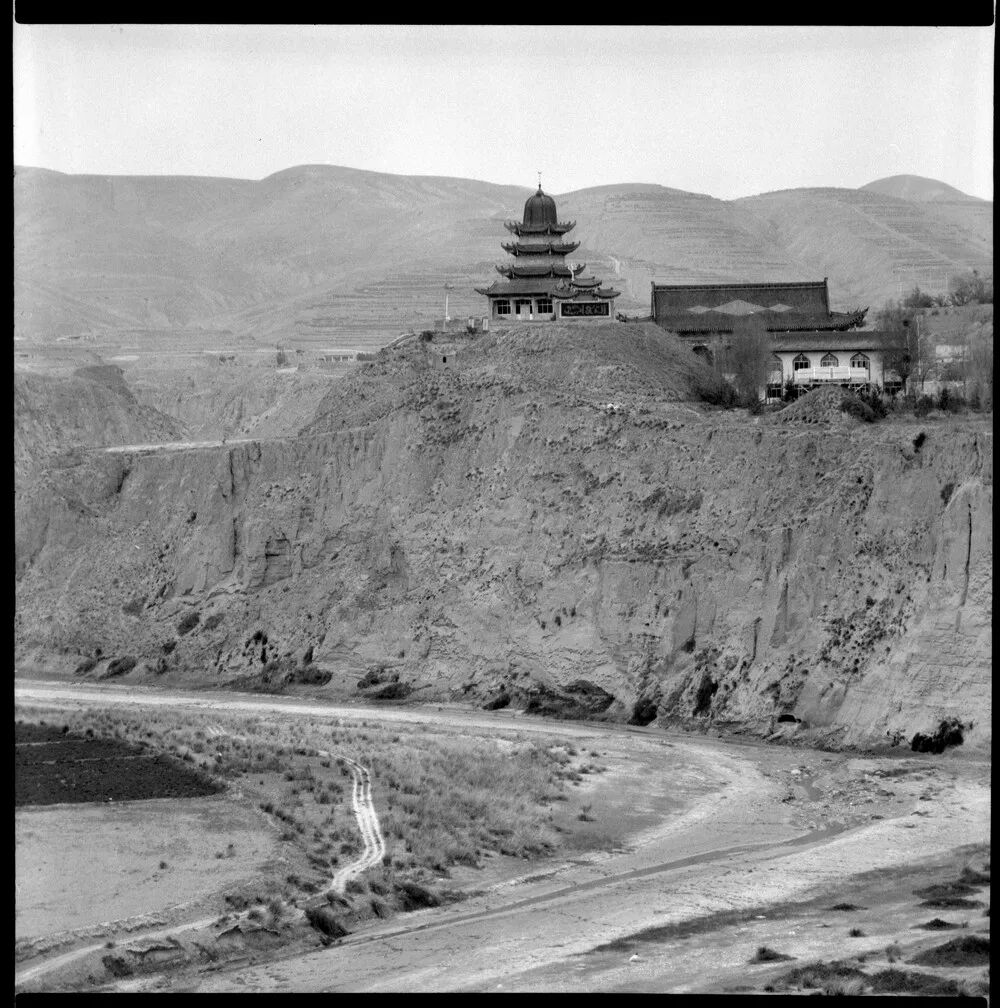
Selected from Minoru Miki's 'Koto Ballads Collection Vol. 4 - Autumn / Akemi Yamada': Coming from the East (Live Recording, Performed by Suzuko Kimura). Minoru Miki: Japanese composer and master of Japanese traditional music, born on March 16, 1930, in Tokushima City, Tokushima Prefecture. He studied composition under seniors like Tomojiro Ikeuchi and Akira Ifukube, co-founded Pro Musica Nipponia with fourteen members in 1964, and dedicated his life to developing and spreading Japanese traditional music until his passing in 2011 in Mitaka City, Tokyo. Japanese Koto: An important traditional instrument of Japanese music, originating from the guzheng of China's Sui and Tang dynasties. Early koto players were predominantly blind monks, branching into the Yamada and Ikuta schools. In modern times, koto players are mainly professional artists........
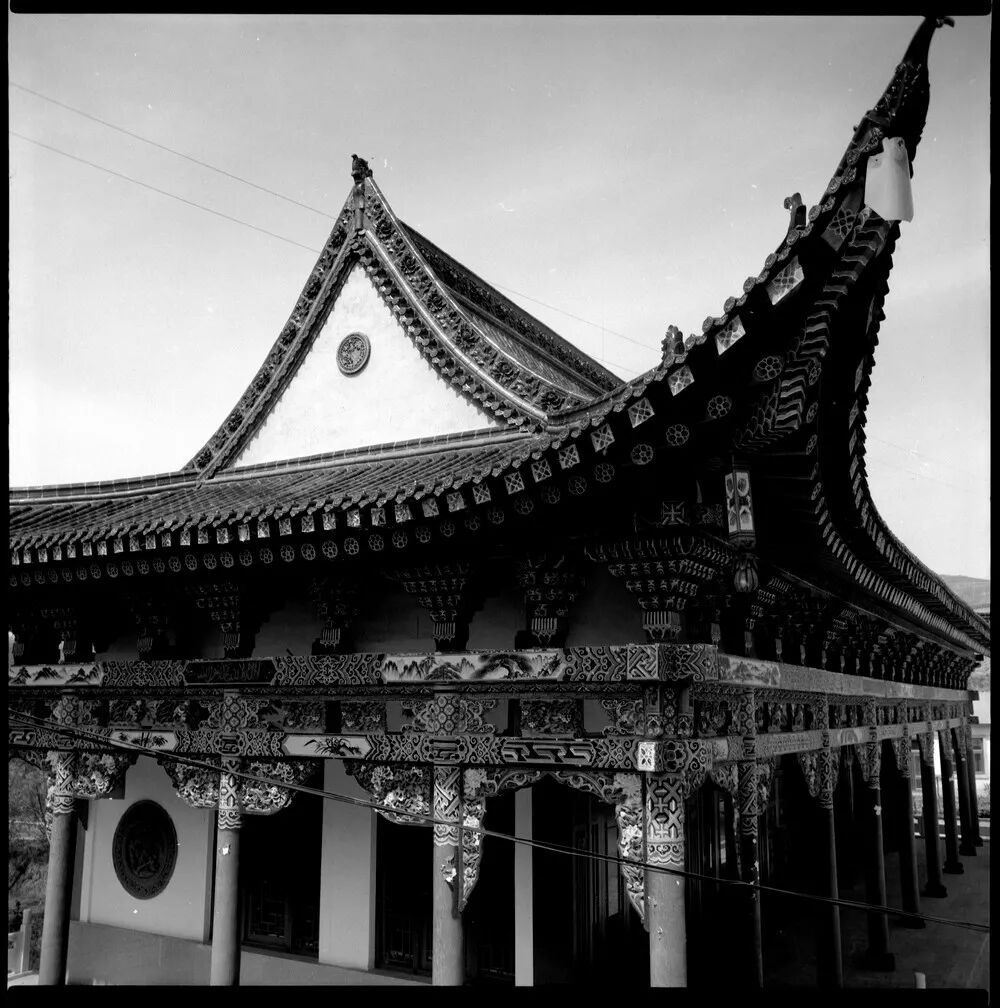
The term 'gongbei' is a transliteration of the Arabic word Qubbah, originally referring to religious architectural styles in Arab, Persian, and Central Asian regions. In Central Asia, Persia, and China's Xinjiang region, they are known as 'mazar'. Ningxia gongbei architecture mainly falls into three categories: Gutubu gongbei, where 'Gutubu' means axis, extreme point, or leader, considered a special 'Wali' hidden among humanity and an important figure beloved by Allah; Menhuan Laorenjia and Murshed gongbei, where the founders and spiritual guides of Sufi orders are generally called 'Laorenjia' (Elder), 'Daozu' (Patriarch), or 'Murshed' (Guide); and Hailifan gongbei, where 'Hailifan' means successor, referring to the senior disciples, successors, or deputies of the Murshed. There are also a few other types of gongbei. The gongbei is a primary religious characteristic of Ningxia's Sufi orders and an important cultural heritage of the Hui people in Ningxia.
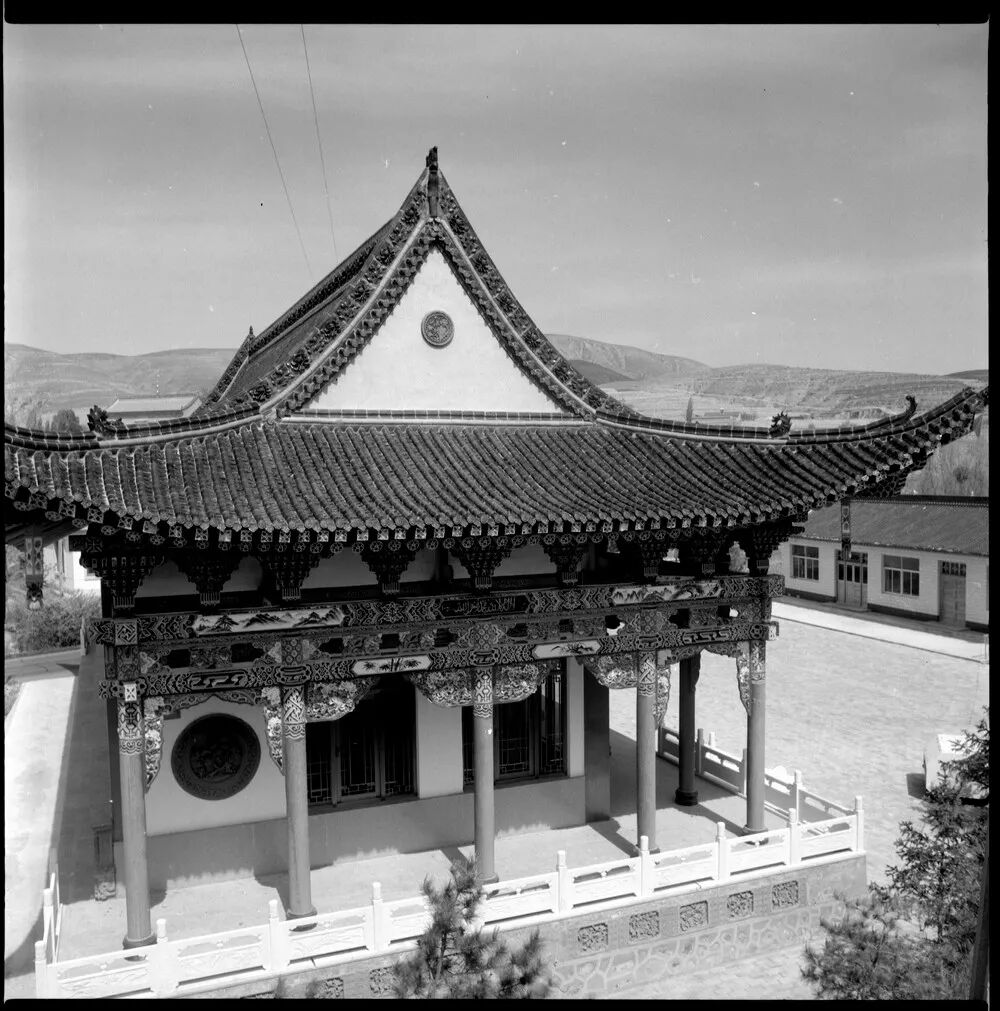
Laorengou Gongbei is located near Nanping Village, alongside National Highway 203 in Yuanzhou District, Guyuan City, Ningxia. With a long and ancient history, it is very likely the oldest gongbei in Ningxia, and was rebuilt in the 1990s.
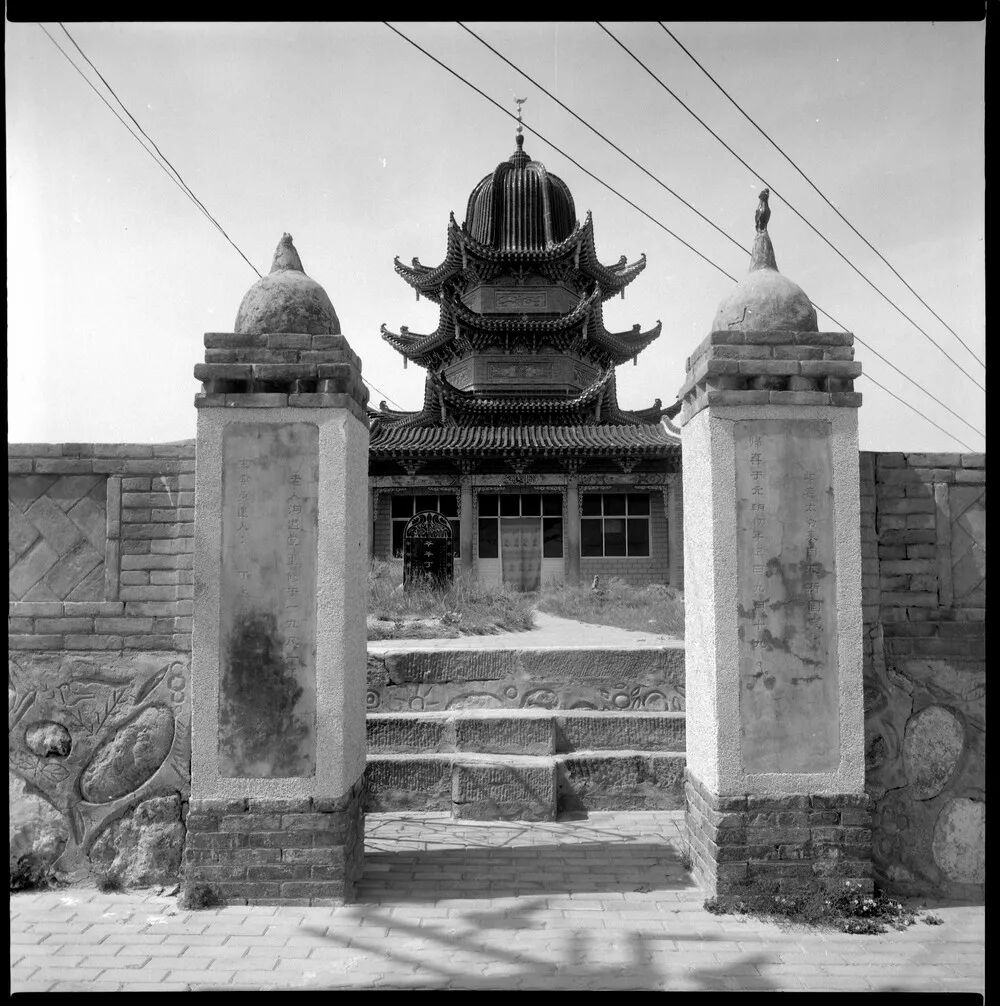
Excerpts from the stele inscription at the ancient Gutubu Gongbei in Laorengou are recorded by hand as follows:
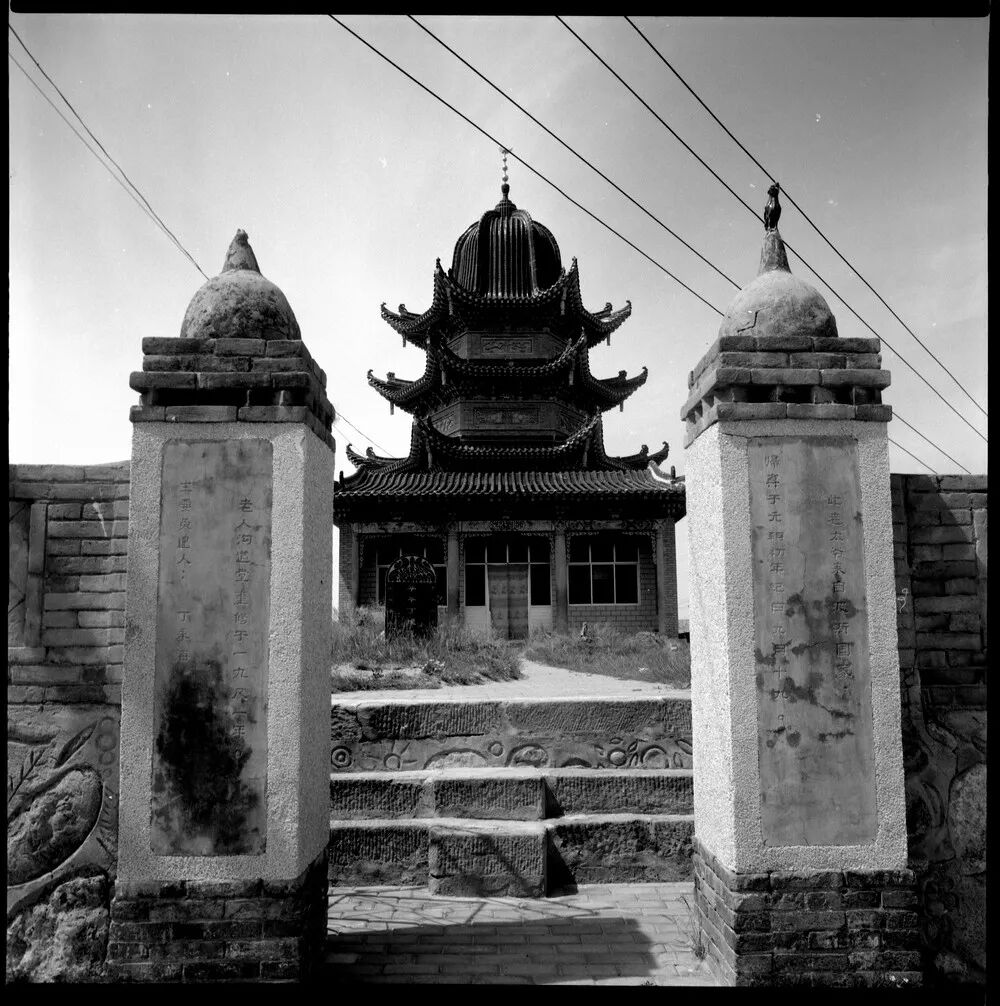
......
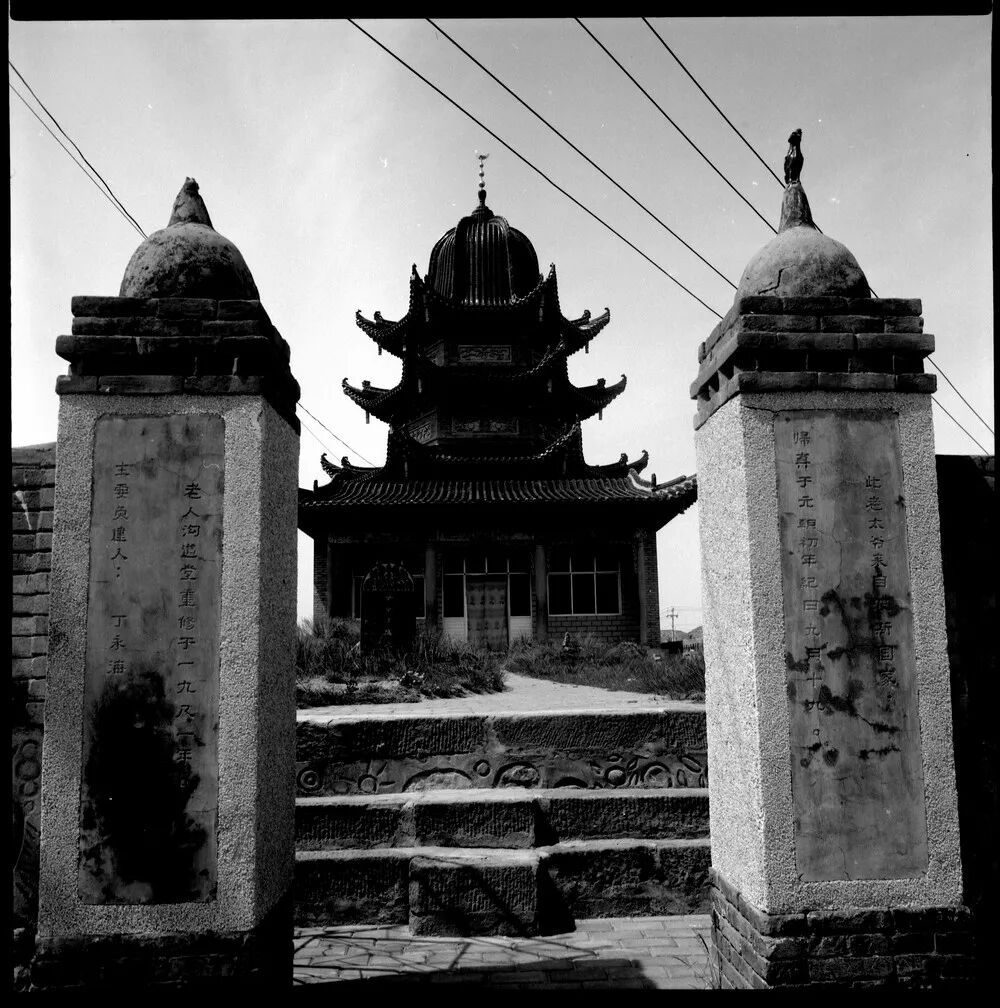
II. Spiritual Trajectory
Through the changing tides of time, the ancient Gutubu Gongbei at Laorengou has weathered immense hardships, with devoted 'dostans' (companions/followers) performing moving stories to protect this sacred spiritual sanctuary. Once upon a time, countless dedicated individuals tirelessly worked to repair and purify this holy ground, with Ding Sheh standing out foremost among the most meritorious contributors. Sheh, whose surname was Ding and personal name Yonghai, was born in 1947 and passed away on the 25th day of the 11th lunar month in 2004. Since childhood, Sheh studied religious texts, and by his teens, he devoted himself wholeheartedly to the faith, working day and night without sleep. He journeyed to the tombs of numerous sages and repeatedly sought out renowned masters to absorb the essence of their teachings. Guided by religious teachers, he underwent multiple sessions of 'zuojing' (silent meditation and retreat), clearing his mind, sharpening his resolve, wisdom, and insight to truly grasp the divine truths. He constantly sought to transcend the mundane and undergo a profound spiritual rebirth. Throughout his self-cultivation, he especially benefited from the spiritual guidance of the elder masters, holding them in lifelong reverence and guarding them like the apples of his eyes. He spent forty years repeatedly repairing the gongbei, often single-handedly undertaking difficult tasks in pursuit of perfection. Hauling stones up steep, isolated hills to build walls was a staggering challenge; carrying construction materials to the top of Yangjiao Mountain to pave roads required superhuman willpower. Yet even more demanding was the construction of the present gongbei, carried out during times of extreme shortage of funds and food; working at dangerous heights with his life hanging on the scaffolding beams; Sheh stood alone and carried the burden through grueling days and nights. Finally, on the 19th day of the 9th lunar month in 2004, the grand project was successfully completed, bringing immense relief to his heart. Having exhausted his physical and mental energy, Sheh fell seriously ill from overwork. Just over two months after the completion of his monumental work, he passed away to join the forebears, his heart returning to Allah.
......
Shot using a Mamaiya C330 Sekor lens on black-and-white film, with self-developed negatives scanned directly into digital files
Note: Traditional photography captures clear images by letting external light pass through a lens onto the flat film surface inside a sealed camera back. When exposed, the image transforms into a silver halide latent image. Developing chemicals are then used to wash and clear the silver halide particles, reducing the latent image back into silver particles on the film, creating the original negative. To produce a print, the silver salt particles on the negative are projected via an enlarger system onto photographic paper in a darkroom.
The charm of black-and-white film remains irreplaceable by any digital equipment since the birth of photography. The wide exposure latitude of black-and-white film is significantly superior to color film. Using different darkroom techniques, silver-salt works with rich tonal ranges, soft contrasts, and sharp details can be created. Today's digitally output large-format black-and-white photos still fall quite short in detail compared to traditional silver-salt works. Darkroom craftsmanship is unrepeatable, and every single photograph made is unique—which is precisely where its magic lies.
Exploring Jiucaiping Gongbei: Sufi Shrines, Great Wall Ruins & Hui Muslim Heritage in Haiyuan, Ningxia
Articles • Hasan09 posted the article • 0 comments • 3 views • 1 hours ago
Wandering Through Jiucaiping Gongbei in Haiyuan County: Sufi Domes and Northwest Vibes Beneath the Ming Great Wall Beacons
Abstract:
A visual and travel diary documenting a journey to Jiucaiping Gongbei in Haiyuan County, Ningxia. Explore Islamic domed architecture set against the vast Loess Plateau and ancient Ming Great Wall ruins, while diving into the architectural design of gongbei (Sufi shrine / mausoleum complex) and the deep-rooted devotion of Hui Muslims honoring their spiritual ancestors.
August 20, 2022 | Jiucaiping Gongbei, Haiyuan County
The word gongbei comes from the Arabic for "dome," and over time it came to refer to the round structures built over mosques or the tombs of Sufi masters.
In Ningxia, gongbei refers specifically to the mausoleums of masters from the Qadiriyya and Jahriyya menhuan (Sufi orders / brotherhoods), serving as sacred spaces where Hui Muslims gather to honor ancestors and practice their faith.
Perched on a small hill in Haiyuan County, Jiucaiping Gongbei is a majestic mausoleum complex housing sixteen Sufi masters. According to local Hui Muslims, it boasts a history spanning a thousand years. The name "Jiucaiping" (Nine Colors Terrace) comes from the legend that the site was surveyed nine times before the final resting place was chosen.
The architecture of the gongbei is breathtakingly ornate, featuring emerald-green tiled domes and exquisite craftsmanship, all tucked away amidst lush groves of trees.
Along the way, we also stumbled upon a smaller shrine: the Yangquanbao Gongbei. Though modest in size, it boasts striking and distinct architectural details.
Dislike view all
Wandering Through Jiucaiping Gongbei in Haiyuan County: Sufi Domes and Northwest Vibes Beneath the Ming Great Wall Beacons
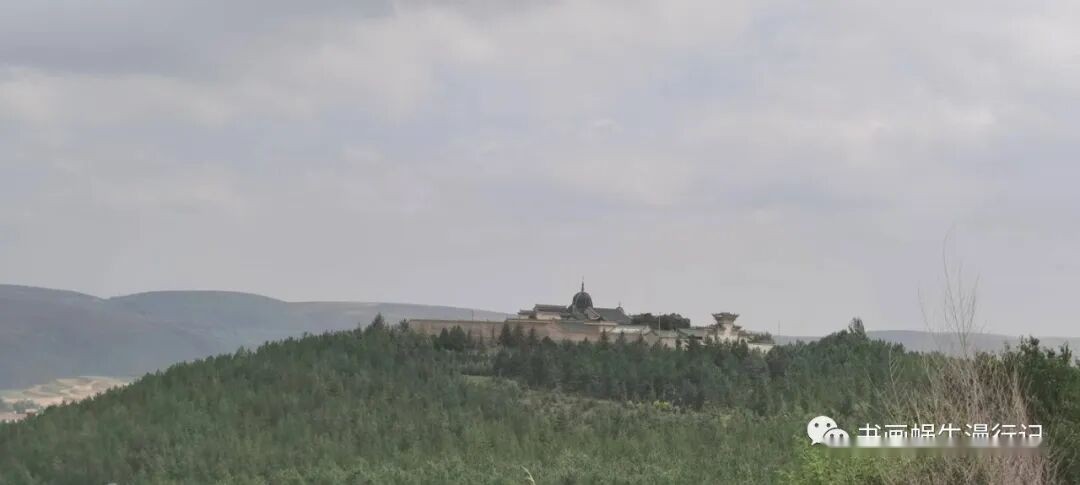
Abstract:
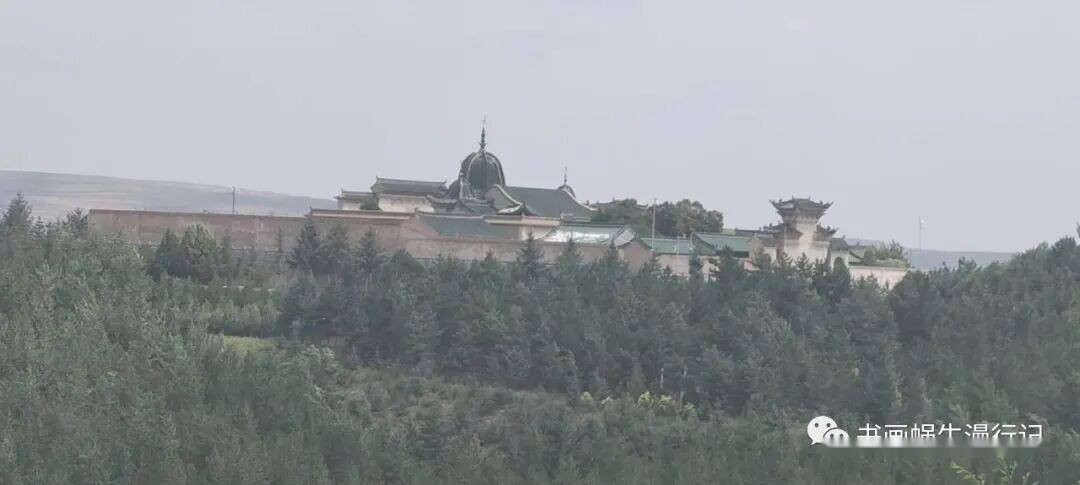
A visual and travel diary documenting a journey to Jiucaiping Gongbei in Haiyuan County, Ningxia. Explore Islamic domed architecture set against the vast Loess Plateau and ancient Ming Great Wall ruins, while diving into the architectural design of gongbei (Sufi shrine / mausoleum complex) and the deep-rooted devotion of Hui Muslims honoring their spiritual ancestors.
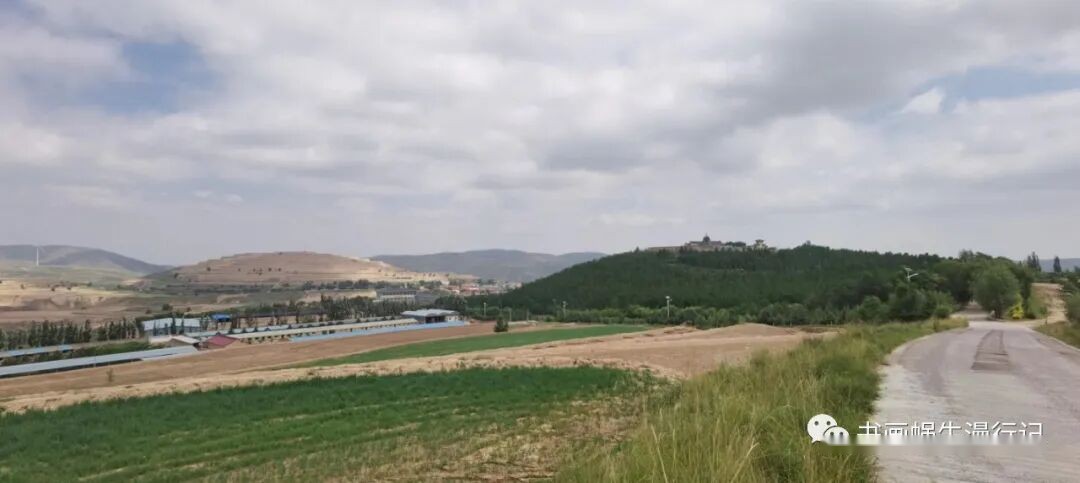
August 20, 2022 | Jiucaiping Gongbei, Haiyuan County
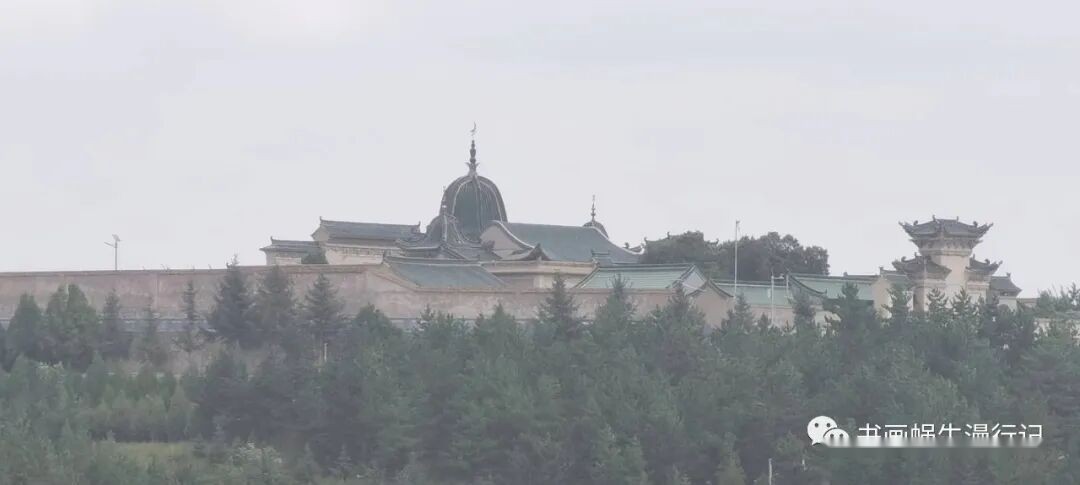
The word gongbei comes from the Arabic for "dome," and over time it came to refer to the round structures built over mosques or the tombs of Sufi masters.

In Ningxia, gongbei refers specifically to the mausoleums of masters from the Qadiriyya and Jahriyya menhuan (Sufi orders / brotherhoods), serving as sacred spaces where Hui Muslims gather to honor ancestors and practice their faith.
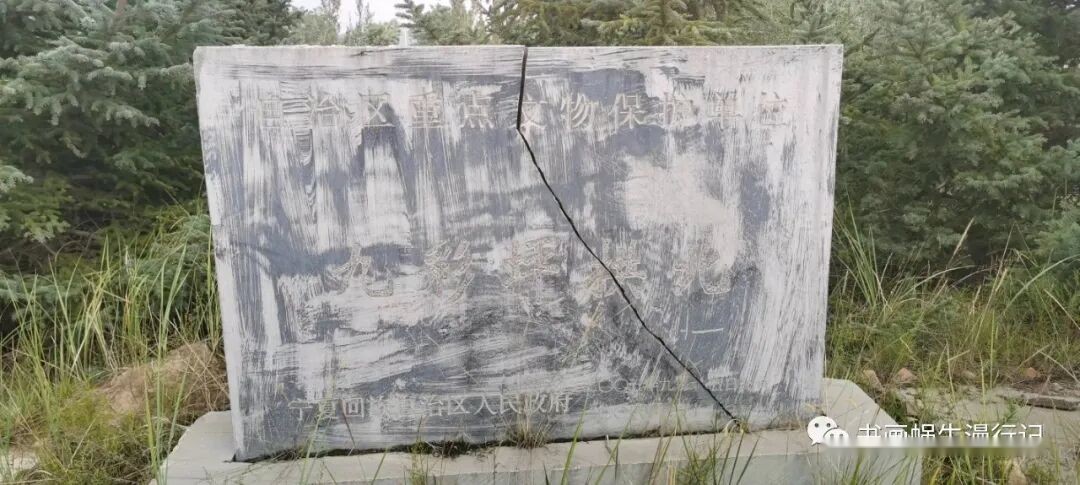
Perched on a small hill in Haiyuan County, Jiucaiping Gongbei is a majestic mausoleum complex housing sixteen Sufi masters. According to local Hui Muslims, it boasts a history spanning a thousand years. The name "Jiucaiping" (Nine Colors Terrace) comes from the legend that the site was surveyed nine times before the final resting place was chosen.
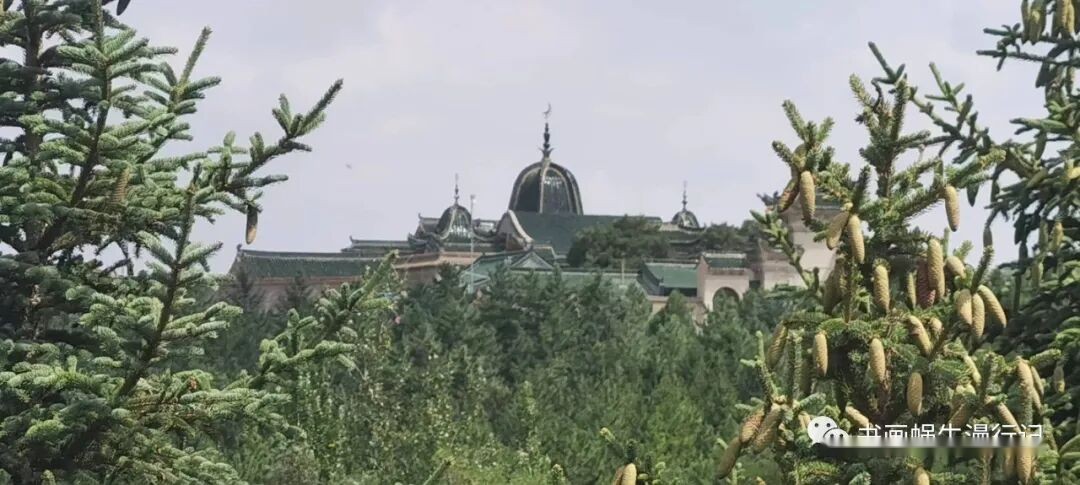
The architecture of the gongbei is breathtakingly ornate, featuring emerald-green tiled domes and exquisite craftsmanship, all tucked away amidst lush groves of trees.
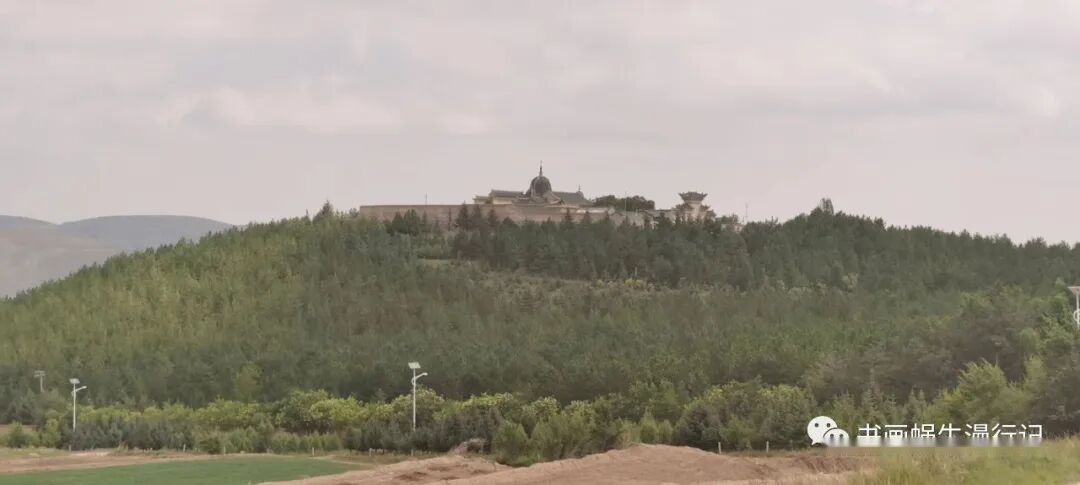
Along the way, we also stumbled upon a smaller shrine: the Yangquanbao Gongbei. Though modest in size, it boasts striking and distinct architectural details.
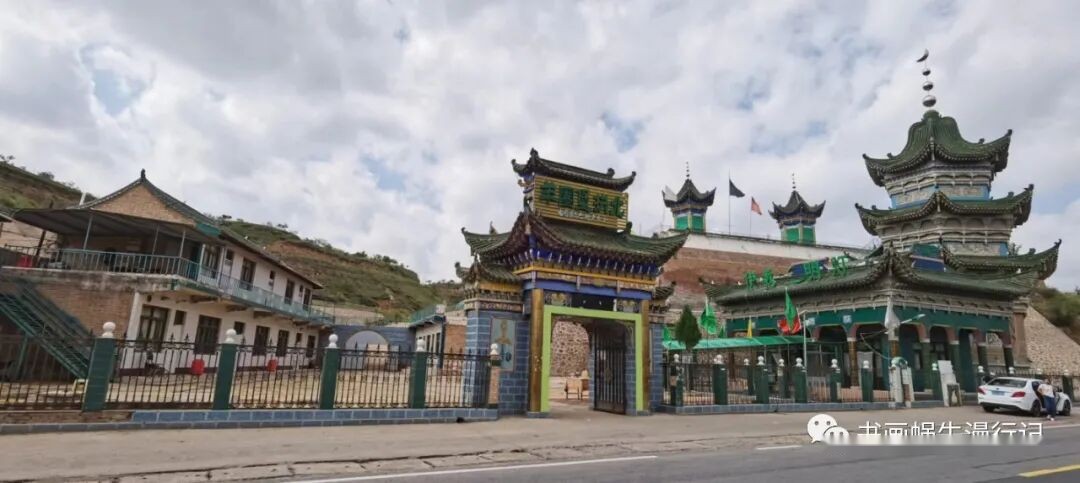
Dislike
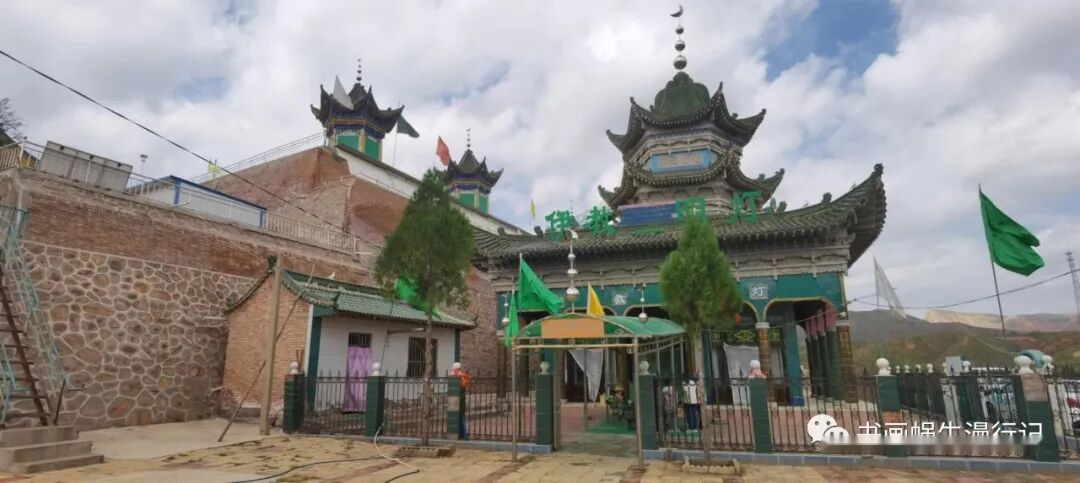
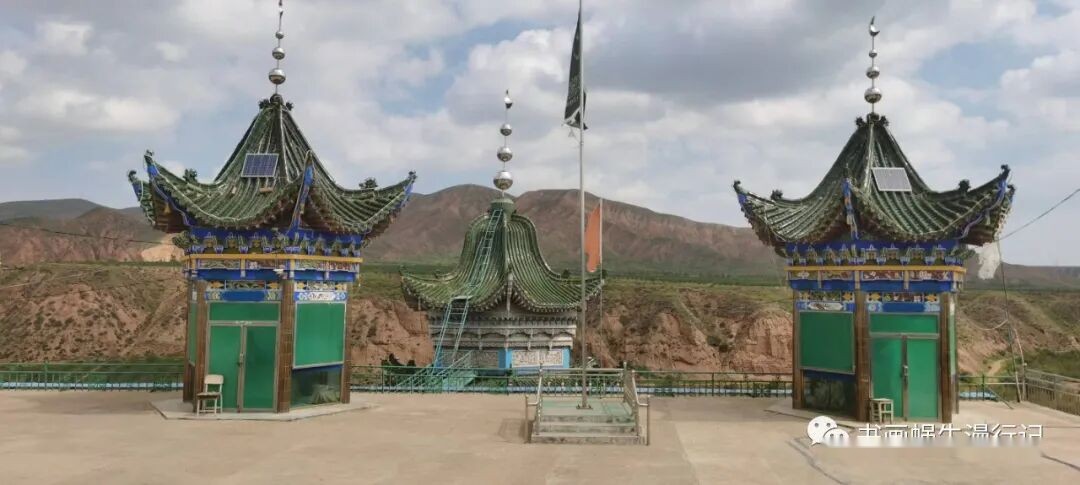
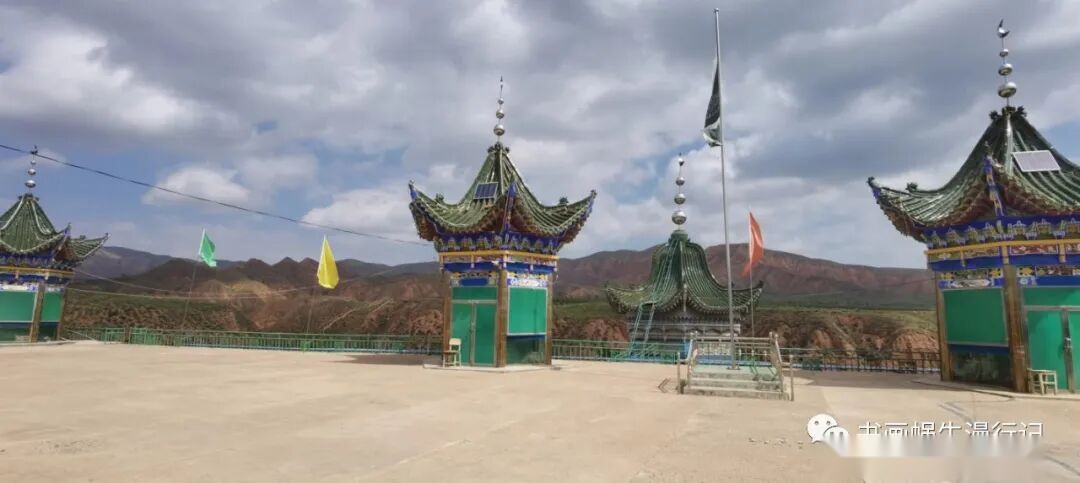

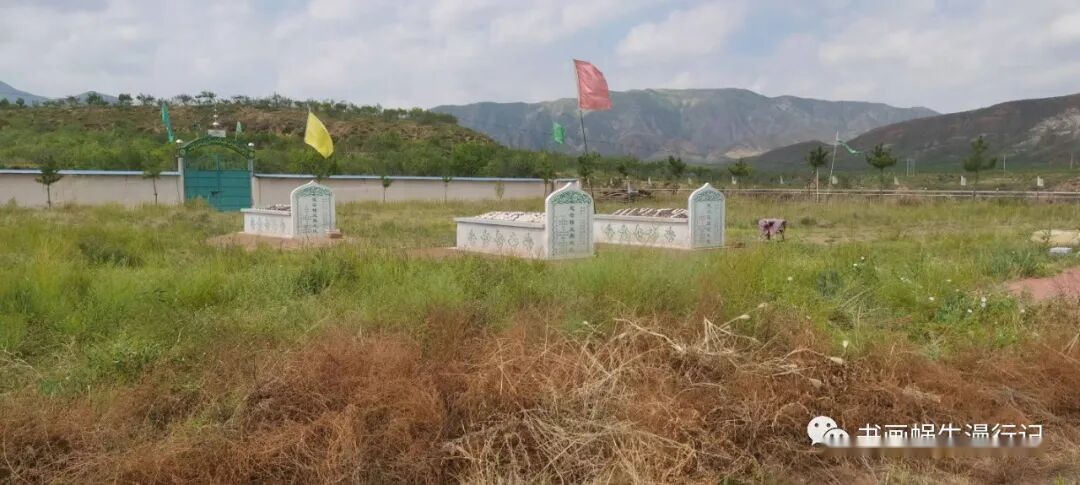
Tracing Muslim Heritage in Yunnan: A Journey Through Kunming, Najaying, and Shadian Mosques
Articles • Hasan09 posted the article • 0 comments • 1 views • 1 hours ago
Tracing Sacred Footsteps in the Land of Colorful Clouds: A Travelogue from Kunming's Shuncheng Mosque and Sayyid Ajjal's Mausoleum to Najaying and Shadian in Tonghai
Abstract:
A deep cultural journey through Yunnan, tracing the footsteps of historical pioneers. Starting from the historic Shuncheng Mosque in downtown Kunming, the author visits the mausoleum of Sayyid Ajjal Shams al-Din (the Yuan dynasty governor who shaped Yunnan), delves into Najaying in Tonghai, Yuxi, and the grand Shadian Mosque in Honghai, experiencing the deep pulse of southwestern Islamic history along the way.
I don't know exactly when the idea of visiting Yunnan first planted itself in my mind. Maybe it was hearing Phoenix Legend's song 'Colorful Clouds of the South' as a child, or perhaps listening to friends rave about Yunnan's endless spring-like weather. Or maybe it was just the dreamy scrolling on short-form video apps showing Erhai Lake and Cangshan Mountain. But what finally made me pull the trigger and book the trip was hearing so many unique stories about Yunnan: Sayyid Ajjal Shams al-Din, Jahriyya, Najaying, Shadian, Du Wenxiu, and so many other legends pulling me forward.
So, by His grace, we set off~~~
Shuncheng Mosque was our first stop. After resting and grabbing a bite to eat, we rented a car and drove straight to Baba Tomb (Sayyid Ajjal's mausoleum). The tomb sits in Majia'an Village, Panlong District, about 40 kilometers north of Kunming. The mountain road twists and turns, buzzing with young motorcycle riders living their best lives. By His decree, the sedan we originally wanted to rent was in the shop, so they upgraded us to an SUV at the last minute—absolute perfection for those winding mountain roads.
When we arrived, we found the mausoleum grounds under construction. Walking the corrugated iron perimeter, I spotted a small path and slipped through. Once inside, I realized the whole area around the Baba Tomb was packed with graves, their headstones carved with Arabic script—undoubtedly old Hui Muslim tombs. I snapped a quick photo through the iron bars and headed back, bidding farewell to Yunnan's very first provincial governor. This was the brilliant statesman and pioneer of ethnic unity who worked absolute miracles in Yuan dynasty Yunnan, stabilizing a region torn apart by separatist conflicts and desperate poverty. His descendants planted glorious flowers across the Chinese mainland, the most famous of which is the Ming dynasty voyager Zheng He (originally surnamed Ma, before being bestowed the surname Zheng by the Yongle Emperor).
We headed back to our hotel by Dianchi Lake. By the time we dropped our bags, dusk was falling. I took a stroll down to the lake shore, looking out over the calm water. It’s hard to imagine just how much mental and physical energy an aging Sayyid Ajjal, well past sixty, poured into taming the flooding Dianchi Lake so it could bring peace and prosperity to the people for centuries.
The next day, we hit the road again, navigating twisting mountain roads until a cluster of villages suddenly popped into view. We had arrived at our second stop: Najaying, a place that birthed two towering academic giants of the Muslim world—Na Zhong and Na Xun. Though they shared the same surname, they weren't actually related. The whole village is full of people surnamed Na, believed to be descendants of Sayyid Ajjal, whose eldest son was Nasr al-Din, leaving behind descendants with the surnames Na, Su, La, and Ding. Na Xun is most famous for translating *One Thousand and One Nights*, opening the door to Arabian tales for generations of Chinese children, while Na Zhong played a pivotal role in developing China's traditional mosque education system (*jingtang jiaoyu*). After grabbing a bowl of local erfen (rice noodles) and liangji (cold rice noodles), and offering a quick prayer, we headed over to the Na Xun Former Residence recommended by a local friend.
To our disappointment, the gates were locked tight when we arrived. I was just reading the stele by the entrance and snapping a few photos before heading back when I suddenly heard voices inside. I gave a tentative knock, stepping back a respectful distance, and to my surprise, the door creaked open. An elderly uncle stood there, wearing glasses, a white vest over a light-colored shirt, looking impeccably neat and clean. When I told him what brought us there, he warmly invited us inside. Stepping across the threshold, the interior was a far cry from what I had pictured. I had imagined a celebrity's former residence preserved with pristine, neatly arranged antiques. Instead, right before my eyes was a weathered, traditional Yunnan-style courtyard (siheyuan) with an open-air central patio and a two-story wooden house wrapped around three sides. The furniture in the central hall was coated in a thin layer of dust. Hanging on the wall right ahead was a massive embroidered tapestry of the Kaaba, flanked on one side by two framed photos and brief biographies—one of Na Xun, the other of Na Zhong. On the other side hung two small pieces of Quranic calligraphy.
Besides the elderly uncle, two of his friends were inside, tasting honey harvested from a beehive that had been sitting untouched for three years. When the two friends learned I was a fellow Muslim traveler (dosdi), they warmly told me to make myself at home. I walked up the creaky wooden stairs to the second floor, where the rooms were stacked with various odds and ends, looking as though they hadn't been tidied in ages. Soon enough, my eyes landed on that very beehive. In *Medicine of the Prophet* (*Tibb al-Nabawi*), honey is praised as one of the ultimate remedies, great for treating diarrhea, stomachaches, and cold stomachs. Back in the day, many Muslim families in the mountainous regions kept bees and sold honey. Heading back downstairs, we saw off the uncle's friends, and he finally sat down with us face-to-face, bringing out two bowls of aged comb honey. We could only take a tiny bite before the intense sweetness overwhelmed us—after three years of aging, the honey had turned a deep, dark yellow tinged with black. Over the honey, the uncle shared his story: he was Na Xun's grandson, well over 80 years old. His son is an Arabic professor at Northwest Minzu University, and the stele outside the Na Xun Former Residence was actually written by him. It gave me chills realizing that Na Xun's great-grandson is carrying on part of his legacy, continuing to contribute to ethnic culture and the development of Arabic studies in China.
Without pausing, we rushed off to my absolute dream destination in Yunnan: Shadian, the hometown of Professor Ma Jian. What you yearn for deeply will always find a way back to you. I had heard ages ago about the incredible vibe here, and with Shadian Mosque holding the title of China's largest mosque, I had been dying to see it with my own eyes. Finally, the stars had aligned.
We checked into a hotel right next to the mosque, rested for a moment, and headed out for Asr prayer. It was still early, and people were lounging leisurely by the main hall entrance. Some were chatting in small groups, others leaning against pillars with their legs stretched straight out, zoning out in quiet remembrance (zikr), each waiting for the call to prayer in their own comfortable way. In that exact moment, there was no worldly hustle, no distracting thoughts—just sitting, waiting, watching. This is a mosque completely free of perimeter walls. You can look out and watch the sparse flow of pedestrians and cars passing by on the street across. I once heard a saying: 'A great university has no walls.'
That made me think: an open, confident, and inclusive mosque has no walls either.
If Gansu's Linxia used to be called the 'Little Mecca' of China, this place feels much more like 'Little Medina.' In front of the main hall is a sprawling plaza with fountains, flanked by Bismarck palms (beiye zong)—it oozes Medina style. It’s not just the trees and the plaza, but the whole atmosphere. It's the kind of vibe where you could sit in literally any corner of the mosque for an entire day, letting the cool breeze gently brush your cheek while the ceaseless praise of birds fills your ears.
Over by the plaza in front of the Zhaozhen Hall, international travelers would pop by every now and then to take photos and check in. I just watched them smiling and lingering, returning their smiles with my own. Pure serenity.
The next day, after finishing Fajr prayer, I didn't feel like going back to sleep, so I took a stroll around the hotel and found a little park tucked away in the back. Older uncles were out walking, and aunties were practicing Baduanjin (traditional qigong exercises) together. Their boundless energy made me feel utterly ashamed of my own laziness. It reminded me that I used to practice Baduanjin for a while before quitting. Our generation has it way too easy, and we haven't suffered enough—our bones just lack a certain resilience.
Speaking of resilience, I couldn't help thinking of the Shadian Martyrs (Shuhada) of the Shadian Incident. During the height of the ultra-leftist madness of the Cultural Revolution, the Shadian Mosque was closed down, normal ethnic and religious policies were trampled, and tensions boiled over. In the early morning hours of July 29, 1975, with the approval of the CPC Central Committee, the Yunnan Provincial Party Committee mobilized the garrison troops to place Shadian and surrounding Hui villages under military siege, launching an operation under the guise of 'suppressing rebellion.'
The battle lasted seven days and seven nights. The military deployed heavy weapons like howitzers, and villages like Shadian and Mouke were utterly devastated. Countless homes were reduced to rubble, resulting in the deaths of roughly 1,600 'rebels' and nearly a thousand injuries, including many innocent civilians.
At the time, the incident was branded as an 'armed counterrevolutionary rebellion.' But after the fall of the Gang of Four, in February 1979, the CPC Yunnan Provincial Committee and the Kunming Military Region Party Committee jointly issued a notice—in line with the spirit of the Third Plenary Session of the 11th CPC Central Committee—completely rehabilitating the 'Shadian Incident.' They acknowledged the severe errors made in implementing ethnic and religious policies, overturned the 'counterrevolutionary rebellion' label, and officially cleared the names of the victims.
On my last day in Shadian, following GPS directions to the Shadian Martyrs' Cemetery, I realized the graveyard held much more than just the martyrs; it was filled with countless Hui graves bearing headstones and epitaphs. But the actual Shadian Martyrs' graves were a quiet cluster of dozens of tiny, simple mounds—no headstones, no inscriptions. An elderly local uncle along the road told me that on the day the disaster struck, it was the dead of summer. With bodies blown to pieces beyond recognition and rotting away in the stifling heat, it was utterly impossible to tell who was who. More importantly, in such a desperate, life-or-death crisis, just giving the dead a hurried burial was already an act of sheer desperation. He added that other martyrs were buried elsewhere, though he had forgotten the exact spots, because his ears were still ringing with tears and his heart was fractured with cracks.
I returned our rental car in Kunming 'commando-style' and boarded the high-speed rail to Dali, home to the last person I wanted to pay my respects to: Du Wenxiu.
An ethnic unity activist and a leader of the anti-Qing uprising. Though his rebellion ultimately failed due to the betrayal of allied forces and subordinates, he tried to trade his single life for the safety of the entire city of Dali. He swallowed a lethal dose of copper trichloride (poisonous peacock gall) and walked proudly to his end, holding his head high with an unyielding spirit. But the cowardly Manchu Qing government wasn't about to spare a single 'unstable element.' In the end, almost everyone in Dali who joined the uprising was put to death; their noses were sliced off and carted back by Qing troops to claim military rewards by head count. Their fresh blood stained a corner of Erhai Lake—the silent, final protest of the grassroots oppressed against tyranny. view all
Tracing Sacred Footsteps in the Land of Colorful Clouds: A Travelogue from Kunming's Shuncheng Mosque and Sayyid Ajjal's Mausoleum to Najaying and Shadian in Tonghai
Abstract:

A deep cultural journey through Yunnan, tracing the footsteps of historical pioneers. Starting from the historic Shuncheng Mosque in downtown Kunming, the author visits the mausoleum of Sayyid Ajjal Shams al-Din (the Yuan dynasty governor who shaped Yunnan), delves into Najaying in Tonghai, Yuxi, and the grand Shadian Mosque in Honghai, experiencing the deep pulse of southwestern Islamic history along the way.
I don't know exactly when the idea of visiting Yunnan first planted itself in my mind. Maybe it was hearing Phoenix Legend's song 'Colorful Clouds of the South' as a child, or perhaps listening to friends rave about Yunnan's endless spring-like weather. Or maybe it was just the dreamy scrolling on short-form video apps showing Erhai Lake and Cangshan Mountain. But what finally made me pull the trigger and book the trip was hearing so many unique stories about Yunnan: Sayyid Ajjal Shams al-Din, Jahriyya, Najaying, Shadian, Du Wenxiu, and so many other legends pulling me forward.

So, by His grace, we set off~~~
Shuncheng Mosque was our first stop. After resting and grabbing a bite to eat, we rented a car and drove straight to Baba Tomb (Sayyid Ajjal's mausoleum). The tomb sits in Majia'an Village, Panlong District, about 40 kilometers north of Kunming. The mountain road twists and turns, buzzing with young motorcycle riders living their best lives. By His decree, the sedan we originally wanted to rent was in the shop, so they upgraded us to an SUV at the last minute—absolute perfection for those winding mountain roads.

When we arrived, we found the mausoleum grounds under construction. Walking the corrugated iron perimeter, I spotted a small path and slipped through. Once inside, I realized the whole area around the Baba Tomb was packed with graves, their headstones carved with Arabic script—undoubtedly old Hui Muslim tombs. I snapped a quick photo through the iron bars and headed back, bidding farewell to Yunnan's very first provincial governor. This was the brilliant statesman and pioneer of ethnic unity who worked absolute miracles in Yuan dynasty Yunnan, stabilizing a region torn apart by separatist conflicts and desperate poverty. His descendants planted glorious flowers across the Chinese mainland, the most famous of which is the Ming dynasty voyager Zheng He (originally surnamed Ma, before being bestowed the surname Zheng by the Yongle Emperor).
We headed back to our hotel by Dianchi Lake. By the time we dropped our bags, dusk was falling. I took a stroll down to the lake shore, looking out over the calm water. It’s hard to imagine just how much mental and physical energy an aging Sayyid Ajjal, well past sixty, poured into taming the flooding Dianchi Lake so it could bring peace and prosperity to the people for centuries.

The next day, we hit the road again, navigating twisting mountain roads until a cluster of villages suddenly popped into view. We had arrived at our second stop: Najaying, a place that birthed two towering academic giants of the Muslim world—Na Zhong and Na Xun. Though they shared the same surname, they weren't actually related. The whole village is full of people surnamed Na, believed to be descendants of Sayyid Ajjal, whose eldest son was Nasr al-Din, leaving behind descendants with the surnames Na, Su, La, and Ding. Na Xun is most famous for translating *One Thousand and One Nights*, opening the door to Arabian tales for generations of Chinese children, while Na Zhong played a pivotal role in developing China's traditional mosque education system (*jingtang jiaoyu*). After grabbing a bowl of local erfen (rice noodles) and liangji (cold rice noodles), and offering a quick prayer, we headed over to the Na Xun Former Residence recommended by a local friend.
To our disappointment, the gates were locked tight when we arrived. I was just reading the stele by the entrance and snapping a few photos before heading back when I suddenly heard voices inside. I gave a tentative knock, stepping back a respectful distance, and to my surprise, the door creaked open. An elderly uncle stood there, wearing glasses, a white vest over a light-colored shirt, looking impeccably neat and clean. When I told him what brought us there, he warmly invited us inside. Stepping across the threshold, the interior was a far cry from what I had pictured. I had imagined a celebrity's former residence preserved with pristine, neatly arranged antiques. Instead, right before my eyes was a weathered, traditional Yunnan-style courtyard (siheyuan) with an open-air central patio and a two-story wooden house wrapped around three sides. The furniture in the central hall was coated in a thin layer of dust. Hanging on the wall right ahead was a massive embroidered tapestry of the Kaaba, flanked on one side by two framed photos and brief biographies—one of Na Xun, the other of Na Zhong. On the other side hung two small pieces of Quranic calligraphy.

Besides the elderly uncle, two of his friends were inside, tasting honey harvested from a beehive that had been sitting untouched for three years. When the two friends learned I was a fellow Muslim traveler (dosdi), they warmly told me to make myself at home. I walked up the creaky wooden stairs to the second floor, where the rooms were stacked with various odds and ends, looking as though they hadn't been tidied in ages. Soon enough, my eyes landed on that very beehive. In *Medicine of the Prophet* (*Tibb al-Nabawi*), honey is praised as one of the ultimate remedies, great for treating diarrhea, stomachaches, and cold stomachs. Back in the day, many Muslim families in the mountainous regions kept bees and sold honey. Heading back downstairs, we saw off the uncle's friends, and he finally sat down with us face-to-face, bringing out two bowls of aged comb honey. We could only take a tiny bite before the intense sweetness overwhelmed us—after three years of aging, the honey had turned a deep, dark yellow tinged with black. Over the honey, the uncle shared his story: he was Na Xun's grandson, well over 80 years old. His son is an Arabic professor at Northwest Minzu University, and the stele outside the Na Xun Former Residence was actually written by him. It gave me chills realizing that Na Xun's great-grandson is carrying on part of his legacy, continuing to contribute to ethnic culture and the development of Arabic studies in China.
Without pausing, we rushed off to my absolute dream destination in Yunnan: Shadian, the hometown of Professor Ma Jian. What you yearn for deeply will always find a way back to you. I had heard ages ago about the incredible vibe here, and with Shadian Mosque holding the title of China's largest mosque, I had been dying to see it with my own eyes. Finally, the stars had aligned.

We checked into a hotel right next to the mosque, rested for a moment, and headed out for Asr prayer. It was still early, and people were lounging leisurely by the main hall entrance. Some were chatting in small groups, others leaning against pillars with their legs stretched straight out, zoning out in quiet remembrance (zikr), each waiting for the call to prayer in their own comfortable way. In that exact moment, there was no worldly hustle, no distracting thoughts—just sitting, waiting, watching. This is a mosque completely free of perimeter walls. You can look out and watch the sparse flow of pedestrians and cars passing by on the street across. I once heard a saying: 'A great university has no walls.'
That made me think: an open, confident, and inclusive mosque has no walls either.

If Gansu's Linxia used to be called the 'Little Mecca' of China, this place feels much more like 'Little Medina.' In front of the main hall is a sprawling plaza with fountains, flanked by Bismarck palms (beiye zong)—it oozes Medina style. It’s not just the trees and the plaza, but the whole atmosphere. It's the kind of vibe where you could sit in literally any corner of the mosque for an entire day, letting the cool breeze gently brush your cheek while the ceaseless praise of birds fills your ears.
Over by the plaza in front of the Zhaozhen Hall, international travelers would pop by every now and then to take photos and check in. I just watched them smiling and lingering, returning their smiles with my own. Pure serenity.

The next day, after finishing Fajr prayer, I didn't feel like going back to sleep, so I took a stroll around the hotel and found a little park tucked away in the back. Older uncles were out walking, and aunties were practicing Baduanjin (traditional qigong exercises) together. Their boundless energy made me feel utterly ashamed of my own laziness. It reminded me that I used to practice Baduanjin for a while before quitting. Our generation has it way too easy, and we haven't suffered enough—our bones just lack a certain resilience.
Speaking of resilience, I couldn't help thinking of the Shadian Martyrs (Shuhada) of the Shadian Incident. During the height of the ultra-leftist madness of the Cultural Revolution, the Shadian Mosque was closed down, normal ethnic and religious policies were trampled, and tensions boiled over. In the early morning hours of July 29, 1975, with the approval of the CPC Central Committee, the Yunnan Provincial Party Committee mobilized the garrison troops to place Shadian and surrounding Hui villages under military siege, launching an operation under the guise of 'suppressing rebellion.'

The battle lasted seven days and seven nights. The military deployed heavy weapons like howitzers, and villages like Shadian and Mouke were utterly devastated. Countless homes were reduced to rubble, resulting in the deaths of roughly 1,600 'rebels' and nearly a thousand injuries, including many innocent civilians.
At the time, the incident was branded as an 'armed counterrevolutionary rebellion.' But after the fall of the Gang of Four, in February 1979, the CPC Yunnan Provincial Committee and the Kunming Military Region Party Committee jointly issued a notice—in line with the spirit of the Third Plenary Session of the 11th CPC Central Committee—completely rehabilitating the 'Shadian Incident.' They acknowledged the severe errors made in implementing ethnic and religious policies, overturned the 'counterrevolutionary rebellion' label, and officially cleared the names of the victims.

On my last day in Shadian, following GPS directions to the Shadian Martyrs' Cemetery, I realized the graveyard held much more than just the martyrs; it was filled with countless Hui graves bearing headstones and epitaphs. But the actual Shadian Martyrs' graves were a quiet cluster of dozens of tiny, simple mounds—no headstones, no inscriptions. An elderly local uncle along the road told me that on the day the disaster struck, it was the dead of summer. With bodies blown to pieces beyond recognition and rotting away in the stifling heat, it was utterly impossible to tell who was who. More importantly, in such a desperate, life-or-death crisis, just giving the dead a hurried burial was already an act of sheer desperation. He added that other martyrs were buried elsewhere, though he had forgotten the exact spots, because his ears were still ringing with tears and his heart was fractured with cracks.
I returned our rental car in Kunming 'commando-style' and boarded the high-speed rail to Dali, home to the last person I wanted to pay my respects to: Du Wenxiu.
An ethnic unity activist and a leader of the anti-Qing uprising. Though his rebellion ultimately failed due to the betrayal of allied forces and subordinates, he tried to trade his single life for the safety of the entire city of Dali. He swallowed a lethal dose of copper trichloride (poisonous peacock gall) and walked proudly to his end, holding his head high with an unyielding spirit. But the cowardly Manchu Qing government wasn't about to spare a single 'unstable element.' In the end, almost everyone in Dali who joined the uprising was put to death; their noses were sliced off and carted back by Qing troops to claim military rewards by head count. Their fresh blood stained a corner of Erhai Lake—the silent, final protest of the grassroots oppressed against tyranny.
China Muslim Travel Guide: Jiang Jing Halal Journey, Hui Muslim Culture and Islamic Writing
Articles • yusuf908 posted the article • 0 comments • 164 views • 2026-05-22 20:53
Summary: This China Muslim travel reflection discusses Jiang Jing Halal Journey series, his New Zealand and U.S. experiences, Hui Muslim culture, Islamic translation work, and the value of honest Muslim travel writing.
Reflections on Reading Jiang Jing's "Halal Journey" Travelogue Series is presented here as a firsthand travel account in clear English, beginning with this scene: I recently received a memorial collection for Mr. Jiang Jing (1938-2020) and learned he settled in New Zealand. The account keeps its focus on Quanzhou Muslims, Hui Muslims, Islamic History while preserving the names, places, food, and historical details from the Chinese source.
I recently received a memorial collection for Mr. Jiang Jing (1938-2020) and learned he settled in New Zealand. During his life, he wrote many articles for a 'Halal Journey' series in magazines, covering his experiences in many places at home and abroad. I only knew his name before. Years ago, when things were more relaxed, I bought many of his translated works published in Hong Kong. They cannot be publicly distributed in mainland China now, so I am glad I bought them early.
My own Halal Journey travels overlap quite a bit with Mr. Jiang's, so reading his articles feels like experiencing them myself. Mr. Jiang moved to New Zealand in 2000. It is a pity that when I first arrived in New Zealand in 2014, I did not know him. My own brother had already settled there, and reading Mr. Jiang's accounts of halal life in New Zealand brings many scenes to life for me.
Mr. Jiang lived in the United States. He wrote that when he first arrived, he was hosted by a local insurance agent named Dosti. I visited the U. S. in 2018. I used to attend the annual Million Dollar Round Table (MDRT) conference for life insurance professionals there, but I could not go in recent years due to domestic pandemic restrictions. I have already qualified for the 2024 conference, so if all goes well, I will return to the U. S. next June.
I agree with many of Mr. Jiang's views. Even though he lived overseas, he was not swayed by the Western way of life. He deeply understood the decaying, dark, and hypocritical sides of certain civilizations and was not misled by superficial material prosperity. He could take the good and leave the bad, which is very rare and commendable.
Mr. Jiang wrote a review of the book 'On Mixed Religion' and thought very highly of it. I have this book too. While I agree with the conclusions it criticizes, I do not think it is well-written. After reading it, I felt the content was too emotional. It does not read like a professional work, but rather like an online manifesto built from scattered knowledge points.
Some of Mr. Jiang's writings on domestic halal experiences might seem like old news now, but in the context of that time, they showed readers a diverse picture of Muslim culture, which was truly rare. I can feel from his writing that he tried his best to show the beautiful side of Muslims. Covering the faults of our brothers and sisters is part of our faith, and I stick to this practice too; I try not to spread bad things.
Mr. Jiang's life was enviable. Although he came from an ordinary background, he used his own efforts to have a decent job. While teaching at a university, he insisted on striving for the path of Allah. He combined his work with his faith, which helped him turn bad luck into good and live his later years in peace. This is much more impressive than some so-called pious believers I know who only want to preach but ignore the needs of their wives and children, leaving their families in poverty. Some people talk endlessly about the faith. Even some 'famous' figures in history, honored as sheikhs by many followers, make me suspicious when I learn that their descendants have left the faith. Some descendants of these celebrities complain bitterly about their fathers, saying they failed their duties as parents. I wonder if their motivation for doing good deeds was just to seek fame.
Mr. Jiang translated many English Islamic works while in New Zealand. He did this because he felt that the experience of Islamic outreach, mainly in the U. S., is worth learning from. Besides immigrants, another large group of Muslims in the U. S. are converts. I have even met white American converts in Vietnam. I believe an important standard for judging whether the faith is strong in a region is how many converts there are, not just how it looks on the surface. To attract converts, Muslims must show excellent character. Conversely, look at those well-known preachers around us who travel everywhere under the excuse of going out for dawah (chutemati), do not work, and ask for charity (nieti). After a lifetime of being busy, how many people have they actually guided to the right path? Are their own family members on the right path?
Mr. Jiang's funeral photos in New Zealand were sent back from there by Hui Muslim elders from Niujie. As a Hui Muslim from Niujie, I learned about it too late, and I feel a deep regret. If I had known him earlier, we would have had so much to talk about. Life in New Zealand has beautiful mountains and water, but it can also feel very quiet and dull. People who stay there for a long time miss their family and friends back in China the most. To meet like-minded fellow Muslims in a faraway country must have been such a happy thing. view all
Summary: This China Muslim travel reflection discusses Jiang Jing Halal Journey series, his New Zealand and U.S. experiences, Hui Muslim culture, Islamic translation work, and the value of honest Muslim travel writing.
Reflections on Reading Jiang Jing's "Halal Journey" Travelogue Series is presented here as a firsthand travel account in clear English, beginning with this scene: I recently received a memorial collection for Mr. Jiang Jing (1938-2020) and learned he settled in New Zealand. The account keeps its focus on Quanzhou Muslims, Hui Muslims, Islamic History while preserving the names, places, food, and historical details from the Chinese source.
I recently received a memorial collection for Mr. Jiang Jing (1938-2020) and learned he settled in New Zealand. During his life, he wrote many articles for a 'Halal Journey' series in magazines, covering his experiences in many places at home and abroad. I only knew his name before. Years ago, when things were more relaxed, I bought many of his translated works published in Hong Kong. They cannot be publicly distributed in mainland China now, so I am glad I bought them early.
My own Halal Journey travels overlap quite a bit with Mr. Jiang's, so reading his articles feels like experiencing them myself. Mr. Jiang moved to New Zealand in 2000. It is a pity that when I first arrived in New Zealand in 2014, I did not know him. My own brother had already settled there, and reading Mr. Jiang's accounts of halal life in New Zealand brings many scenes to life for me.
Mr. Jiang lived in the United States. He wrote that when he first arrived, he was hosted by a local insurance agent named Dosti. I visited the U. S. in 2018. I used to attend the annual Million Dollar Round Table (MDRT) conference for life insurance professionals there, but I could not go in recent years due to domestic pandemic restrictions. I have already qualified for the 2024 conference, so if all goes well, I will return to the U. S. next June.
I agree with many of Mr. Jiang's views. Even though he lived overseas, he was not swayed by the Western way of life. He deeply understood the decaying, dark, and hypocritical sides of certain civilizations and was not misled by superficial material prosperity. He could take the good and leave the bad, which is very rare and commendable.
Mr. Jiang wrote a review of the book 'On Mixed Religion' and thought very highly of it. I have this book too. While I agree with the conclusions it criticizes, I do not think it is well-written. After reading it, I felt the content was too emotional. It does not read like a professional work, but rather like an online manifesto built from scattered knowledge points.
Some of Mr. Jiang's writings on domestic halal experiences might seem like old news now, but in the context of that time, they showed readers a diverse picture of Muslim culture, which was truly rare. I can feel from his writing that he tried his best to show the beautiful side of Muslims. Covering the faults of our brothers and sisters is part of our faith, and I stick to this practice too; I try not to spread bad things.
Mr. Jiang's life was enviable. Although he came from an ordinary background, he used his own efforts to have a decent job. While teaching at a university, he insisted on striving for the path of Allah. He combined his work with his faith, which helped him turn bad luck into good and live his later years in peace. This is much more impressive than some so-called pious believers I know who only want to preach but ignore the needs of their wives and children, leaving their families in poverty. Some people talk endlessly about the faith. Even some 'famous' figures in history, honored as sheikhs by many followers, make me suspicious when I learn that their descendants have left the faith. Some descendants of these celebrities complain bitterly about their fathers, saying they failed their duties as parents. I wonder if their motivation for doing good deeds was just to seek fame.
Mr. Jiang translated many English Islamic works while in New Zealand. He did this because he felt that the experience of Islamic outreach, mainly in the U. S., is worth learning from. Besides immigrants, another large group of Muslims in the U. S. are converts. I have even met white American converts in Vietnam. I believe an important standard for judging whether the faith is strong in a region is how many converts there are, not just how it looks on the surface. To attract converts, Muslims must show excellent character. Conversely, look at those well-known preachers around us who travel everywhere under the excuse of going out for dawah (chutemati), do not work, and ask for charity (nieti). After a lifetime of being busy, how many people have they actually guided to the right path? Are their own family members on the right path?
Mr. Jiang's funeral photos in New Zealand were sent back from there by Hui Muslim elders from Niujie. As a Hui Muslim from Niujie, I learned about it too late, and I feel a deep regret. If I had known him earlier, we would have had so much to talk about. Life in New Zealand has beautiful mountains and water, but it can also feel very quiet and dull. People who stay there for a long time miss their family and friends back in China the most. To meet like-minded fellow Muslims in a faraway country must have been such a happy thing.
Muslim Travel Guide China: A Hui Muslim Journey Through Faith, Niujie, Mosques and Halal Life
Articles • yusuf908 posted the article • 0 comments • 224 views • 2026-05-22 11:18
Summary: This personal Muslim travel and faith memoir looks back on growing up around Niujie in Beijing, learning about Hui Muslim identity, mosque life, family memory, and the search for religious knowledge.
To be honest, I started learning about my faith during college. Before university, I did not even know that Hui Muslims were not allowed to drink alcohol. Although my family lived on Shouliu Hutong in Niujie (right by the old site of the Jubaoyuan restaurant) and our family tree shows generations of Hui Muslims, I never received any traditional religious education (jingtang jiaoyu) growing up. My parents did not have a religious education either. My grandfather and maternal grandfather passed away before I was born. My maternal grandmother was the only one in the house who kept up with the five daily prayers (namaz). I lived with her from elementary school through middle school.
If you have seen the show "Beautiful New World" (Pinzui Zhang Damin de Xingfu Shenghuo) starring Liang Guanhua, the life scenes and dialogue in that show are just like my childhood. When I was little, I mostly hung out in the South City area. By South City, I mean Xuanwu and Chongwen, but mostly Xuanwu. Going to Xidan or Wangfujing on the weekend felt like a big trip to the city center. To me, those were the busiest places in Beijing. I had never even heard of places like Guomao or Sanlitun.
About twenty or thirty percent of my classmates were Hui Muslims. I only found out after we graduated and had a reunion. We lived and studied together, but there were no real ethnic differences. The school cafeteria was halal, and everyone ate together, so you could not tell the difference. I even thought Hui Muslims were the majority and Han Chinese were the minority when I was a kid.
The most important thing is that none of us Hui Muslim students knew much about our faith. Our parents might have known a little, but only the basics. The people who went to the mosque (libaisi) often were retired folks like my grandmother. Even she did not go to the mosque much; she just prayed at home every day.
My grandmother and the other elderly Hui Muslims in Niujie are the most typical Beijingers I know. Most Niujie Hui Muslims moved to Beijing during the Qing Dynasty. Their language is mixed with traditional religious terms. For example, my grandmother would call me a "little Iblis" (the devil) or say I was "shumin" (clever). If you leave the South City, people in the East or West districts probably would not understand those words. They also do not talk like those so-called Beijing native bloggers on social media who raise their pitch and put on a fake, annoying voice. My grandmother was naturally funny. The older generation loved to joke, and some things are only funny when they say them. That is why so many Hui Muslims are stand-up comedians (xiangsheng).
My grandmother only started her five daily prayers after she retired. This is normal for the elderly in Niujie today. Most people there do not think young people should go to the mosque; they think we should focus on school and work. Going to the mosque is for retirement. My grandmother did not expect the younger generation to pray; she only held herself to that standard. Years later, when I started going back to the mosque, some old people thought I was unemployed. I got tired of being asked, so sometimes I just walk around them.
I did not go back to the mosque because of some mental breakdown or because someone tried to convert me. About eleven years ago, I saw a video on Weibo about the Quran and science. I clicked on it, and it felt like being struck by lightning. My curiosity was sparked instantly.
I have always loved science. I won many science competitions organized by the Xuanwu District Children's Palace. A children's show on the education channel called "I Want to Know" once invited me to record a program at CCTV. I won third place in a science competition they arranged, and neighbors even recognized me after it aired.
Even though I loved science, I always felt like there was a supreme being watching over me, so I never accepted atheism. Later, I read a study by Yale psychology and cognitive science professor Paul Bloom, which said: "Children are born dualists." Humans are naturally inclined to be creationists. Natural selection does not produce intuitive judgments, and children are especially likely to assign a purpose to every phenomenon. Born dualists find it very easy to believe that a "soul" lives inside the body. "(
Source http://www.americanscientist.o... birth
I remember asking my mom that same day to get me a Quran from the mosque. It was the Ma Jian translation with a brown cover. I found out later it was a pirated copy. The official version certified by the King Fahd Glorious Quran Printing Complex has a red cover and is given away for free, but in China, it was being sold for 100 yuan.
That was my first time reading the Quran, or more accurately, reading a Chinese translation and commentary, because only the Arabic Quran is the true Quran. Even reading Mr. Ma Jian's translation had a huge impact on me. I felt the power in the words. I really liked his style. I enjoy reading simple, plain language and dislike overly emotional adjectives in writing. They feel fake to me if I cannot connect with the author.
It took me about a week to finish reading the entire Quran. The translation felt personal, strong, and full of wisdom that resonated with me. Still wanting more, I went to the shop at the Niujie Mosque and bought the four-volume Sahih al-Bukhari. I finished that quickly too. It was the second religious text I had read. The language in the Hadith is even simpler and more direct than the Quran. The Prophet's plain and rational words touched my heart, so I went on to buy the other five books of the Six Major Hadith collections.
Before I started reading books about Islam, I was in the middle of forming my worldview. I had not thought much about philosophy before high school. Once I got to college, I suddenly had more free time. I used Xiaonei, a social network that connected me with students from other schools. I felt a huge gap in intellectual depth between me and the students from Peking University and Tsinghua University. Once, a senior student hosted a grassroots forum at his home for Xiaonei users. The people who came were the active opinion leaders of the time. One of them was Sun Yuchen, the billionaire active in the crypto world today. He was only 19 then, plain-looking, short, dressed simply, and just starting his second year at Peking University.
To keep up with their thinking, I started reading all kinds of social science and philosophy texts. I kept changing my own values, but I always felt that the books I read could not explain everything I saw in the world. Every thinker's theory had its flaws.
After that, I watched various opinion leaders argue with each other. Conservatives attacked reformers, and the Republican Party criticized the Democratic Party. I slowly lost interest in their arguments until I started reading books about religion.
Between 2007 and 2015, I did my most intense reading. I could finish a book every two or three days. I collected almost every book on religious history and law available in China. The Niujie ethnic goods shop had new books every two days, and I bought them as soon as I saw them. I spent over ten thousand yuan at Mr. Ma's shop. I made sure to buy every book by foreign authors. Luckily, I started early, as some of those books are now off the market for various reasons. When my home ran out of space for paper books, I started collecting e-books. Luckily, Sina Aiwen shared many classics in PDF format back then.
I read religious books much faster than social science or philosophy books. This was partly because of my interest, and partly because I found religious books simpler and easier to understand than theoretical philosophy books.
Whenever I had doubts about a social issue, I would use my religious knowledge to explain it, and it always worked. Slowly, I found my world becoming clearer. I started to feel a sense of transparency, as if I finally understood life. Before this, I would have had to look for answers in the works of experts and scholars.
After many years, I realized that friends made because of shared opinions often drift apart as our views change over time. But friendships built on faith can last.
Before 2015, my Weibo was mostly for sharing my reading notes. I rarely posted about food or fun. I was not interested in food, and I did not have the habit of taking photos when I went out to eat. Around 2015, more and more internet trolls started attacking me on Weibo. Public opinion turned against me, and my blacklist grew to over a thousand people. To reduce the conflict, I occasionally posted photos of food and fun. Unexpectedly, I gained more followers, and the number of people cursing me dropped.
At that time, a friend told me I should read ten thousand books and travel ten thousand miles instead of staying home reading. That really hit home, because before 2014, I had never even been on a plane.
I did not stay home because I was lazy, but because I had no money. My salary back then went to Japanese classes and books. I only had a home so I did not have to pay rent; otherwise, I would not have even had the money for classes.
Later, my work improved. By 2014, I was earning over ten thousand yuan a month, so I finally had extra money for plane tickets. The first time I flew was from Beijing to Xining, Qinghai. Xining was the first city I visited where halal food was the norm. It was also the first time I saw beautiful girls wearing headscarves everywhere, which left an unforgettable memory.
Everyone knows the rest of the story. I married a Salar girl from Qinghai and held our wedding at the Sky Garden in Xining in 2018. I am a classic example of how knowledge changes destiny. Because I read so many religious books, my aesthetic values changed, which led me to Qinghai. My original life path would never have crossed with a Salar girl.
I started my halal travel journey in 2014. By 2022, I had visited every province-level administrative unit in China and Hui Muslim neighborhoods in over a hundred cities. Abroad, I have been to North America, Oceania, Siberia, and more than 10 countries across East and Southeast Asia. I have visited over 400 mosques at home and abroad, writing an article about each one for my public account. Everything happened naturally, bit by bit, and I never planned it out beforehand.
As I get older, my interest in traveling is fading, and the excitement it brings me is decreasing. Instead, I find more sense of achievement in my work. I know I can never visit every mosque, and there is no point in just checking them off a list. Aside from the Sacred Mosque (Masjid al-Haram) and the Prophet's Mosque (Al-Masjid an-Nabawi), there are not many places left that I want to see. I might take my child on more trips in the future to broaden his horizons early on, making up for the lack of travel experiences in my own childhood. view all
Summary: This personal Muslim travel and faith memoir looks back on growing up around Niujie in Beijing, learning about Hui Muslim identity, mosque life, family memory, and the search for religious knowledge.
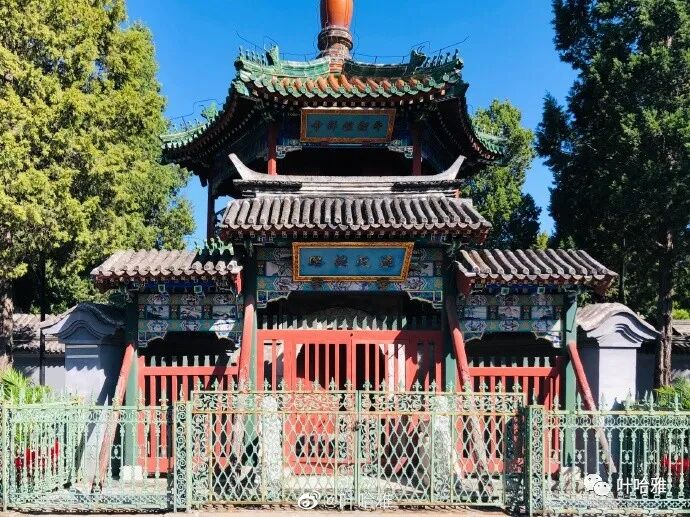
To be honest, I started learning about my faith during college. Before university, I did not even know that Hui Muslims were not allowed to drink alcohol. Although my family lived on Shouliu Hutong in Niujie (right by the old site of the Jubaoyuan restaurant) and our family tree shows generations of Hui Muslims, I never received any traditional religious education (jingtang jiaoyu) growing up. My parents did not have a religious education either. My grandfather and maternal grandfather passed away before I was born. My maternal grandmother was the only one in the house who kept up with the five daily prayers (namaz). I lived with her from elementary school through middle school.
If you have seen the show "Beautiful New World" (Pinzui Zhang Damin de Xingfu Shenghuo) starring Liang Guanhua, the life scenes and dialogue in that show are just like my childhood. When I was little, I mostly hung out in the South City area. By South City, I mean Xuanwu and Chongwen, but mostly Xuanwu. Going to Xidan or Wangfujing on the weekend felt like a big trip to the city center. To me, those were the busiest places in Beijing. I had never even heard of places like Guomao or Sanlitun.
About twenty or thirty percent of my classmates were Hui Muslims. I only found out after we graduated and had a reunion. We lived and studied together, but there were no real ethnic differences. The school cafeteria was halal, and everyone ate together, so you could not tell the difference. I even thought Hui Muslims were the majority and Han Chinese were the minority when I was a kid.
The most important thing is that none of us Hui Muslim students knew much about our faith. Our parents might have known a little, but only the basics. The people who went to the mosque (libaisi) often were retired folks like my grandmother. Even she did not go to the mosque much; she just prayed at home every day.
My grandmother and the other elderly Hui Muslims in Niujie are the most typical Beijingers I know. Most Niujie Hui Muslims moved to Beijing during the Qing Dynasty. Their language is mixed with traditional religious terms. For example, my grandmother would call me a "little Iblis" (the devil) or say I was "shumin" (clever). If you leave the South City, people in the East or West districts probably would not understand those words. They also do not talk like those so-called Beijing native bloggers on social media who raise their pitch and put on a fake, annoying voice. My grandmother was naturally funny. The older generation loved to joke, and some things are only funny when they say them. That is why so many Hui Muslims are stand-up comedians (xiangsheng).
My grandmother only started her five daily prayers after she retired. This is normal for the elderly in Niujie today. Most people there do not think young people should go to the mosque; they think we should focus on school and work. Going to the mosque is for retirement. My grandmother did not expect the younger generation to pray; she only held herself to that standard. Years later, when I started going back to the mosque, some old people thought I was unemployed. I got tired of being asked, so sometimes I just walk around them.
I did not go back to the mosque because of some mental breakdown or because someone tried to convert me. About eleven years ago, I saw a video on Weibo about the Quran and science. I clicked on it, and it felt like being struck by lightning. My curiosity was sparked instantly.
I have always loved science. I won many science competitions organized by the Xuanwu District Children's Palace. A children's show on the education channel called "I Want to Know" once invited me to record a program at CCTV. I won third place in a science competition they arranged, and neighbors even recognized me after it aired.
Even though I loved science, I always felt like there was a supreme being watching over me, so I never accepted atheism. Later, I read a study by Yale psychology and cognitive science professor Paul Bloom, which said: "Children are born dualists." Humans are naturally inclined to be creationists. Natural selection does not produce intuitive judgments, and children are especially likely to assign a purpose to every phenomenon. Born dualists find it very easy to believe that a "soul" lives inside the body. "(
Source http://www.americanscientist.o... birth
I remember asking my mom that same day to get me a Quran from the mosque. It was the Ma Jian translation with a brown cover. I found out later it was a pirated copy. The official version certified by the King Fahd Glorious Quran Printing Complex has a red cover and is given away for free, but in China, it was being sold for 100 yuan.
That was my first time reading the Quran, or more accurately, reading a Chinese translation and commentary, because only the Arabic Quran is the true Quran. Even reading Mr. Ma Jian's translation had a huge impact on me. I felt the power in the words. I really liked his style. I enjoy reading simple, plain language and dislike overly emotional adjectives in writing. They feel fake to me if I cannot connect with the author.
It took me about a week to finish reading the entire Quran. The translation felt personal, strong, and full of wisdom that resonated with me. Still wanting more, I went to the shop at the Niujie Mosque and bought the four-volume Sahih al-Bukhari. I finished that quickly too. It was the second religious text I had read. The language in the Hadith is even simpler and more direct than the Quran. The Prophet's plain and rational words touched my heart, so I went on to buy the other five books of the Six Major Hadith collections.
Before I started reading books about Islam, I was in the middle of forming my worldview. I had not thought much about philosophy before high school. Once I got to college, I suddenly had more free time. I used Xiaonei, a social network that connected me with students from other schools. I felt a huge gap in intellectual depth between me and the students from Peking University and Tsinghua University. Once, a senior student hosted a grassroots forum at his home for Xiaonei users. The people who came were the active opinion leaders of the time. One of them was Sun Yuchen, the billionaire active in the crypto world today. He was only 19 then, plain-looking, short, dressed simply, and just starting his second year at Peking University.
To keep up with their thinking, I started reading all kinds of social science and philosophy texts. I kept changing my own values, but I always felt that the books I read could not explain everything I saw in the world. Every thinker's theory had its flaws.
After that, I watched various opinion leaders argue with each other. Conservatives attacked reformers, and the Republican Party criticized the Democratic Party. I slowly lost interest in their arguments until I started reading books about religion.
Between 2007 and 2015, I did my most intense reading. I could finish a book every two or three days. I collected almost every book on religious history and law available in China. The Niujie ethnic goods shop had new books every two days, and I bought them as soon as I saw them. I spent over ten thousand yuan at Mr. Ma's shop. I made sure to buy every book by foreign authors. Luckily, I started early, as some of those books are now off the market for various reasons. When my home ran out of space for paper books, I started collecting e-books. Luckily, Sina Aiwen shared many classics in PDF format back then.
I read religious books much faster than social science or philosophy books. This was partly because of my interest, and partly because I found religious books simpler and easier to understand than theoretical philosophy books.
Whenever I had doubts about a social issue, I would use my religious knowledge to explain it, and it always worked. Slowly, I found my world becoming clearer. I started to feel a sense of transparency, as if I finally understood life. Before this, I would have had to look for answers in the works of experts and scholars.
After many years, I realized that friends made because of shared opinions often drift apart as our views change over time. But friendships built on faith can last.
Before 2015, my Weibo was mostly for sharing my reading notes. I rarely posted about food or fun. I was not interested in food, and I did not have the habit of taking photos when I went out to eat. Around 2015, more and more internet trolls started attacking me on Weibo. Public opinion turned against me, and my blacklist grew to over a thousand people. To reduce the conflict, I occasionally posted photos of food and fun. Unexpectedly, I gained more followers, and the number of people cursing me dropped.
At that time, a friend told me I should read ten thousand books and travel ten thousand miles instead of staying home reading. That really hit home, because before 2014, I had never even been on a plane.
I did not stay home because I was lazy, but because I had no money. My salary back then went to Japanese classes and books. I only had a home so I did not have to pay rent; otherwise, I would not have even had the money for classes.
Later, my work improved. By 2014, I was earning over ten thousand yuan a month, so I finally had extra money for plane tickets. The first time I flew was from Beijing to Xining, Qinghai. Xining was the first city I visited where halal food was the norm. It was also the first time I saw beautiful girls wearing headscarves everywhere, which left an unforgettable memory.
Everyone knows the rest of the story. I married a Salar girl from Qinghai and held our wedding at the Sky Garden in Xining in 2018. I am a classic example of how knowledge changes destiny. Because I read so many religious books, my aesthetic values changed, which led me to Qinghai. My original life path would never have crossed with a Salar girl.
I started my halal travel journey in 2014. By 2022, I had visited every province-level administrative unit in China and Hui Muslim neighborhoods in over a hundred cities. Abroad, I have been to North America, Oceania, Siberia, and more than 10 countries across East and Southeast Asia. I have visited over 400 mosques at home and abroad, writing an article about each one for my public account. Everything happened naturally, bit by bit, and I never planned it out beforehand.
As I get older, my interest in traveling is fading, and the excitement it brings me is decreasing. Instead, I find more sense of achievement in my work. I know I can never visit every mosque, and there is no point in just checking them off a list. Aside from the Sacred Mosque (Masjid al-Haram) and the Prophet's Mosque (Al-Masjid an-Nabawi), there are not many places left that I want to see. I might take my child on more trips in the future to broaden his horizons early on, making up for the lack of travel experiences in my own childhood.
Exploring Ningxia’s Hidden Sufi Shrines & Historic Northwest Muslim Heritage
Articles • Hasan09 posted the article • 0 comments • 3 views • 1 hours ago
Large-Format Photographic Series of the Northwest: Exploring the Unnamed Shuangtingzi Gongbei and Rubbings of Black-and-White Historic Sites
Abstract:
Recording the unnamed Shuangtingzi gongbei in Ningxia through the classic language of black-and-white large-format photography. Using light and shadow to sculpt the weathered, rustic hexagonal double pavilions, crumbling brick carvings, and the mottled woodwork of time, deeply touching the quiet echoes of the historical pulse of Northwest Sufism.
Black-and-White Large-Format Photographic Series: Rubbings of Historic Sites and the Pulse of History
Gongbei (derived from the Arabic Qubbah) is an Islamic architectural style that first became popular in Arabia, Persia, and Central Asia. Over time, it came to specifically refer to dome-shaped structures built over the tombs of Sufi shaykhs (spiritual masters), descendants of the Prophet, and revered saints for the purpose of veneration and visitation. Sufism was introduced to China during the Yuan dynasty and spread widely across the Northwest during the Ming and Qing dynasties. It gradually fused with traditional Chinese garden architecture, retaining Arabic-style domes for the mausoleums while adding Chinese-style prayer halls, scripture-chanting halls, and meditation rooms. Most modern gongbei structures are hexagonal or octagonal double-eaved pagodas with brick-carved walls, decorated with Quranic calligraphy and floral motifs. Due to complex historical evolution, Ningxia gave birth to numerous large and small menhuan (Sufi orders / brotherhoods) that are independent of one another, primarily the Khufiyya, Jahriyya, and Qadiriyya, all carrying a distinct Sufi mystical flavor. The Khufiyya includes the Hongmen, Xianmen, and Tonggui sub-orders. The Jahriyya is divided into the Shagou and Banqiao menhuan. The Qadiriyya is split into the Jiucaiping, Qi family, and Mingyue Daotang menhuan. Aside from the Guitubu gongbei, the old masters' gongbei of various menhuan, the murshid gongbei, and the khalifa gongbei, Ningxia also features other types of gongbei: those built at places where murshids, old masters, or other awliya (saints) experienced karamat (miracles); those built at locations where a murshid or old master once slept on the earth, or built over their personal relics; and those built to honor senior imams who sacrificed their lives for the religious community. A gongbei is a sacred sanctuary in the hearts of Muslims, where they regularly or irregularly visit graves and perform niyah/nietian (charitable giving/remembrance), solemnly honoring saints and sages, drawing close to the prophets, and seeking divine protection and forgiveness.
After publishing our previous piece and photos on the "Unnamed Gongbei," we miraculously received messages from two kind-hearted villagers who provided the exact location of the Shuangtingzi gongbei, which sits just a few kilometers away from the unnamed one—one to the northwest, the other to the southeast. I drove twice to Shuangtingzi Village in Litong District, Wuzhong City. The gongbei is located in the fields and village outskirts on the south side of the Han Canal. It is dome-shaped, standing several meters high and hexagonal in structure, surrounded by a low brick wall with entryways facing north and south, sitting tens of meters apart. Consulting limited historical records, I deduce that this is likely an old master's gongbei of a Sufi order, initially built around the late Qing dynasty to the Republic period, much like other gongbei in the surrounding area. Conversations with nearby villagers revealed that it was built to commemorate elders surnamed Wei and Yang, but was destroyed and abandoned during the social movements of the 1960s and 70s. After religious policies were reinstated, descendants rebuilt it on the original site following a dream sent by the old masters. Every year on the death anniversary, the descendants of the elders come to the gongbei to perform grave visits and pay their respects. In recent years, the number of visitors has dwindled, and the site is slowly slipping into oblivion.
▲ Click the image to open the previous article and photos of the Unnamed Gongbei
▲ The Shuangtingzi gongbei architecture situated on an empty plot near the village
▲ A close-up of the dome and front facade of the northern gongbei
▲ A full view of the southern gongbei structure
▲ A close-up of the dome and front facade of the southern gongbei
▲ An accidental shot capturing the interior of the southern gongbei structure view all
Large-Format Photographic Series of the Northwest: Exploring the Unnamed Shuangtingzi Gongbei and Rubbings of Black-and-White Historic Sites
Abstract:
Recording the unnamed Shuangtingzi gongbei in Ningxia through the classic language of black-and-white large-format photography. Using light and shadow to sculpt the weathered, rustic hexagonal double pavilions, crumbling brick carvings, and the mottled woodwork of time, deeply touching the quiet echoes of the historical pulse of Northwest Sufism.
Black-and-White Large-Format Photographic Series: Rubbings of Historic Sites and the Pulse of History
Gongbei (derived from the Arabic Qubbah) is an Islamic architectural style that first became popular in Arabia, Persia, and Central Asia. Over time, it came to specifically refer to dome-shaped structures built over the tombs of Sufi shaykhs (spiritual masters), descendants of the Prophet, and revered saints for the purpose of veneration and visitation. Sufism was introduced to China during the Yuan dynasty and spread widely across the Northwest during the Ming and Qing dynasties. It gradually fused with traditional Chinese garden architecture, retaining Arabic-style domes for the mausoleums while adding Chinese-style prayer halls, scripture-chanting halls, and meditation rooms. Most modern gongbei structures are hexagonal or octagonal double-eaved pagodas with brick-carved walls, decorated with Quranic calligraphy and floral motifs. Due to complex historical evolution, Ningxia gave birth to numerous large and small menhuan (Sufi orders / brotherhoods) that are independent of one another, primarily the Khufiyya, Jahriyya, and Qadiriyya, all carrying a distinct Sufi mystical flavor. The Khufiyya includes the Hongmen, Xianmen, and Tonggui sub-orders. The Jahriyya is divided into the Shagou and Banqiao menhuan. The Qadiriyya is split into the Jiucaiping, Qi family, and Mingyue Daotang menhuan. Aside from the Guitubu gongbei, the old masters' gongbei of various menhuan, the murshid gongbei, and the khalifa gongbei, Ningxia also features other types of gongbei: those built at places where murshids, old masters, or other awliya (saints) experienced karamat (miracles); those built at locations where a murshid or old master once slept on the earth, or built over their personal relics; and those built to honor senior imams who sacrificed their lives for the religious community. A gongbei is a sacred sanctuary in the hearts of Muslims, where they regularly or irregularly visit graves and perform niyah/nietian (charitable giving/remembrance), solemnly honoring saints and sages, drawing close to the prophets, and seeking divine protection and forgiveness.
After publishing our previous piece and photos on the "Unnamed Gongbei," we miraculously received messages from two kind-hearted villagers who provided the exact location of the Shuangtingzi gongbei, which sits just a few kilometers away from the unnamed one—one to the northwest, the other to the southeast. I drove twice to Shuangtingzi Village in Litong District, Wuzhong City. The gongbei is located in the fields and village outskirts on the south side of the Han Canal. It is dome-shaped, standing several meters high and hexagonal in structure, surrounded by a low brick wall with entryways facing north and south, sitting tens of meters apart. Consulting limited historical records, I deduce that this is likely an old master's gongbei of a Sufi order, initially built around the late Qing dynasty to the Republic period, much like other gongbei in the surrounding area. Conversations with nearby villagers revealed that it was built to commemorate elders surnamed Wei and Yang, but was destroyed and abandoned during the social movements of the 1960s and 70s. After religious policies were reinstated, descendants rebuilt it on the original site following a dream sent by the old masters. Every year on the death anniversary, the descendants of the elders come to the gongbei to perform grave visits and pay their respects. In recent years, the number of visitors has dwindled, and the site is slowly slipping into oblivion.
▲ Click the image to open the previous article and photos of the Unnamed Gongbei
▲ The Shuangtingzi gongbei architecture situated on an empty plot near the village
▲ A close-up of the dome and front facade of the northern gongbei
▲ A full view of the southern gongbei structure
▲ A close-up of the dome and front facade of the southern gongbei
▲ An accidental shot capturing the interior of the southern gongbei structure
Exploring Yinchuan: Quiet Nanguan Mosque & Vibrant Niujie Street Halal Food Guide
Articles • Hasan09 posted the article • 0 comments • 3 views • 1 hours ago
Silence and Bustle Just a Wall Apart: A Cultural Walk Through Yinchuan's Nanguan Mosque and Bustling Niujie
Summary:
Stroll through the old Xingqing district of Yinchuan, capturing the solemn majesty of the Nanguan Mosque alongside the sizzling, vibrant energy of Niujie (Niujie Muslim Food Street) just to its east. Experience the serene depth of a spiritual sanctuary right next to the pulsing life of the neighborhood streets, showcasing Yinchuan's unique blend of history and human culture.
Step into the historic Xingqing district of Yinchuan, where a stark contrast between quiet and lively is hidden right between the Nanguan Mosque and Niujie. Separated by just a wall, one side offers a solemn religious hall while the other buzzes with everyday street life, together painting Yinchuan's signature cultural landscape.
The Nanguan Mosque (Nanguan Mosque in Yinchuan) is a cultural landmark of old Yinchuan, originally built in the late Ming and early Qing dynasties. The architecture you see today was rebuilt later, perfectly blending rich Islamic architectural aesthetics. With its pristine white walls and graceful arcades, the overall layout feels grand, solemn, and open.
Stepping into the courtyard, the city noise is shut out, and your mind naturally quiets down.
As an important local site for religious activities, visitors should approach with deep respect, steer clear of prayer (dua) times, follow local etiquette, and quietly soak in the peace and solemnity.
Head out the east side of the grand mosque and turn right onto Niujie. A lot of people like to compare it to Beijing's Niujie:
While Beijing's Niujie has centuries of history with ancient masjids tucked away in alleys and historic buildings blending into daily life for a more vintage vibe, Yinchuan's Niujie sits right next to the Nanguan Mosque as a vibrant local neighborhood. It might lack heavy, historic courtyards, but it wins big on pure energy and life, with the rich daily culture of Hui Muslims hitting you the moment you arrive.
By day, Niujie is pretty chill, with neat rows of shops and halal restaurants lining the street.
Once twilight hits, the whole neighborhood snaps awake in an instant. The smell of barbecue drifts everywhere as locals and travelers hustle and bustle past each other. Roasted mutton, yangzasui (hearty lamb offal soup with chili oil), and specialty noodle dishes put the authentic flavors of Northwest China on full display. Along the street, you'll also spot little shops selling Hui daily goods and folk crafts, where everyday life and ethnic culture completely intertwine.
Spend half a day wandering, transitioning from the quiet serenity of the mosque to the lively buzz of Niujie. Reflecting on the peace of faith on one side while tasting the raw, vibrant flavor of the streets on the other—this is the truest face of old Yinchuan. view all
Silence and Bustle Just a Wall Apart: A Cultural Walk Through Yinchuan's Nanguan Mosque and Bustling Niujie
Summary:
Stroll through the old Xingqing district of Yinchuan, capturing the solemn majesty of the Nanguan Mosque alongside the sizzling, vibrant energy of Niujie (Niujie Muslim Food Street) just to its east. Experience the serene depth of a spiritual sanctuary right next to the pulsing life of the neighborhood streets, showcasing Yinchuan's unique blend of history and human culture.
Step into the historic Xingqing district of Yinchuan, where a stark contrast between quiet and lively is hidden right between the Nanguan Mosque and Niujie. Separated by just a wall, one side offers a solemn religious hall while the other buzzes with everyday street life, together painting Yinchuan's signature cultural landscape.
The Nanguan Mosque (Nanguan Mosque in Yinchuan) is a cultural landmark of old Yinchuan, originally built in the late Ming and early Qing dynasties. The architecture you see today was rebuilt later, perfectly blending rich Islamic architectural aesthetics. With its pristine white walls and graceful arcades, the overall layout feels grand, solemn, and open.
Stepping into the courtyard, the city noise is shut out, and your mind naturally quiets down.
As an important local site for religious activities, visitors should approach with deep respect, steer clear of prayer (dua) times, follow local etiquette, and quietly soak in the peace and solemnity.
Head out the east side of the grand mosque and turn right onto Niujie. A lot of people like to compare it to Beijing's Niujie:
While Beijing's Niujie has centuries of history with ancient masjids tucked away in alleys and historic buildings blending into daily life for a more vintage vibe, Yinchuan's Niujie sits right next to the Nanguan Mosque as a vibrant local neighborhood. It might lack heavy, historic courtyards, but it wins big on pure energy and life, with the rich daily culture of Hui Muslims hitting you the moment you arrive.
By day, Niujie is pretty chill, with neat rows of shops and halal restaurants lining the street.
Once twilight hits, the whole neighborhood snaps awake in an instant. The smell of barbecue drifts everywhere as locals and travelers hustle and bustle past each other. Roasted mutton, yangzasui (hearty lamb offal soup with chili oil), and specialty noodle dishes put the authentic flavors of Northwest China on full display. Along the street, you'll also spot little shops selling Hui daily goods and folk crafts, where everyday life and ethnic culture completely intertwine.
Spend half a day wandering, transitioning from the quiet serenity of the mosque to the lively buzz of Niujie. Reflecting on the peace of faith on one side while tasting the raw, vibrant flavor of the streets on the other—this is the truest face of old Yinchuan.
Exploring Najahu Mosque in Ningxia: Centuries-Old Ming Dynasty Heritage & Hui Muslim Culture
Articles • Hasan09 posted the article • 0 comments • 3 views • 1 hours ago
Exploring the Najahu Mosque in Yinchuan: A Centuries-Old Ming Dynasty Masjid in a Historic Hui Muslim Village
Abstract:
A field visit to the Ming Dynasty Najahu Mosque located in Najahu Village, Yongning County, Yinchuan City. Discovering a solemn ancient masjid that blends traditional classical Chinese halls with Islamic architectural styles, and diving deep into the rich historical and cultural heritage of the Najahu Hui Muslim village.
Ningxia Trip Day 1 (Part 3) Najahu Mosque
Najahu Village, Xingqing District, Yinchuan City, Ningxia Hui Autonomous Region, is home to one of the most representative mosques in Ningxia combining traditional Chinese and Islamic styles, as well as a major religious and cultural heritage site with centuries of history. Legend has it that its origins date back to the Hongwu period of the Ming Dynasty (late 14th century),
initially built by the Hui Muslim ancestors who migrated to Ningxia. It underwent multiple expansions and renovations during the Qing Dynasty, gradually growing in scale. It has also been repaired in modern times, yet its overall layout and traditional architectural character remain remarkably well-preserved.
Today is Saturday, and the mosque's Asr prayer (Asr) starts at 5:45 PM. None of us on this family trip have ever visited a mosque before, so we gladly hopped in the car and headed over.
The Najahu Great Mosque is a traditional medieval-style masjid.
The gate tower features a tunnel-style passageway.
Facing east with its back to the west, the courtyard is rectangular and consists of a gate tower, main prayer hall, side rooms, and ablution facilities, forming a classic ancient Chinese courtyard layout. It is gorgeous.
Many Muslim believers have already arrived inside the complex.
The prayer space inside the mosque. (Captured after taking off our shoes and stepping inside, right before prayer time began.) An Imam was inside the prayer hall.
Inside the prayer hall.
Since we aren't Muslim, we couldn't go inside the hall to watch the Asr prayer rituals, so we had to head back a bit disappointed. view all
Exploring the Najahu Mosque in Yinchuan: A Centuries-Old Ming Dynasty Masjid in a Historic Hui Muslim Village
Abstract:
A field visit to the Ming Dynasty Najahu Mosque located in Najahu Village, Yongning County, Yinchuan City. Discovering a solemn ancient masjid that blends traditional classical Chinese halls with Islamic architectural styles, and diving deep into the rich historical and cultural heritage of the Najahu Hui Muslim village.
Ningxia Trip Day 1 (Part 3) Najahu Mosque
Najahu Village, Xingqing District, Yinchuan City, Ningxia Hui Autonomous Region, is home to one of the most representative mosques in Ningxia combining traditional Chinese and Islamic styles, as well as a major religious and cultural heritage site with centuries of history. Legend has it that its origins date back to the Hongwu period of the Ming Dynasty (late 14th century),
initially built by the Hui Muslim ancestors who migrated to Ningxia. It underwent multiple expansions and renovations during the Qing Dynasty, gradually growing in scale. It has also been repaired in modern times, yet its overall layout and traditional architectural character remain remarkably well-preserved.
Today is Saturday, and the mosque's Asr prayer (Asr) starts at 5:45 PM. None of us on this family trip have ever visited a mosque before, so we gladly hopped in the car and headed over.
The Najahu Great Mosque is a traditional medieval-style masjid.
The gate tower features a tunnel-style passageway.
Facing east with its back to the west, the courtyard is rectangular and consists of a gate tower, main prayer hall, side rooms, and ablution facilities, forming a classic ancient Chinese courtyard layout. It is gorgeous.
Many Muslim believers have already arrived inside the complex.
The prayer space inside the mosque. (Captured after taking off our shoes and stepping inside, right before prayer time began.) An Imam was inside the prayer hall.
Inside the prayer hall.
Since we aren't Muslim, we couldn't go inside the hall to watch the Asr prayer rituals, so we had to head back a bit disappointed.
Exploring Tongxin Great Mosque & Ningxia Hui Muslim Heritage: Architecture, Brick Carvings, and History
Articles • Hasan09 posted the article • 0 comments • 3 views • 1 hours ago
A Pearl of Ancient Architecture on the Frontier: A Journey Through the Brick Carvings and Hui History of Tongxin Great Mosque
Abstract:
Step into the Tongxin Great Mosque, located in Yuhai Town, Tongxin County, Ningxia. Check out its towering, classical Chinese wooden main hall and mind-blowing openwork brick carvings on the spirit wall, and soak in the deep historical weight of Ningxia's oldest and largest surviving masjid.
After grabbing a bite in Alxa, we kept moving and stayed overnight in Qingtongxia. That geographic name from the textbook finally came to life. Outside the hotel, I spotted a pear-leaf crabapple tree—a familiar tree from my childhood that I hadn't seen in years.
Time to fuel up and hit the road again.
This spot is also a National Key Cultural Relic Protection Unit.
Tongxin Great Mosque (Former Site of the Founding Conference of the Yuhai County Hui Autonomous Government of Shaanxi-Gansu-Ningxia)
Right here in Tongxin County, Ningxia, it's a super unique, traditional Chinese pavilion-style masjid. There are no domes here—just flying eaves and wooden structures that look like an ancient fortress, as well as a site tied to revolutionary red history.
Walking up to the Tongxin Great Mosque, classic Chinese flying eaves and multi-tiered pavilions replace the usual masjid dome, while thick loess walls give it a rugged, historic vibe. This place isn't just an ancient house of worship; it's also where the Yuhai Hui Autonomous Government was born, blending religious heritage and revolutionary history right here on the northwest frontier.
Tongxin Great Mosque Mountain Gate: Three blue-brick archways featuring stunning brick carvings. They're engraved with Chinese characters reading 'Purify the Heart' and 'Endurance' alongside Arabic script, showing a gorgeous fusion of Han Chinese and Hui architectural styles.
Tongxin Great Mosque Moon-Sighting Tower: A double-eaved, resting-mountain-roof Chinese wooden pavilion with upturned eaves. Without an Islamic dome, it blends Hui and Han architecture, using old loess soil and blue bricks for a rugged, imposing look.
Tongxin Great Mosque Walls: Blue bricks laid in a diagonal diamond pattern, featuring iron tie-rods (wall anchors) that serve double duty for structural reinforcement and decoration. Forged into star and petal shapes, they combine structural engineering with aesthetics—a rare sight in Northwest ancient architecture.
An ancient goji berry tree inside the courtyard of Tongxin Great Mosque. Over a century old and protected by a wooden fence, it grows resiliently right on the high platform of the ancient masjid.
Brick Carvings: Bamboo and rock relief carvings inscribed with the Confucian phrases 'Treat righteousness and duty as friends, treat morality as your teacher.' Confucian literary motifs blend right into the masjid's Chinese brickwork.
'The Emperor sent Tang troops to move into the Western Regions': An inscription recounting past events of the Western Regions from the Tang Dynasty, carved in Chinese characters directly onto the brick walls of the masjid.
Tongxin Great Mosque Prayer Hall: A double-eaved Chinese wooden main hall that served as the former site of the Yuhai County Hui Autonomous Government of the Shaanxi-Gansu-Ningxia border region. Featuring grand flying eaves and ancient, weathered beams and pillars.
Inside, you'll find super detailed exhibits explaining its architecture and history.
The ancient hall has weathered centuries of wind and rain, leading to some rotting wooden components. During major renovations from 1982 to 1983, a specialized crew of craftsmen from Hancheng, Shaanxi, was brought in to lead the project. The skill of these veteran Guanzhong artisans was put to work on this northwest ancient masjid, repairing beam frameworks and restoring dougong bracket sets. They preserved the original architectural form and vibe to the absolute max, helping this ancient hall on its high platform survive to this day. Standing in front of the hall, you can appreciate both the heavy craftsmanship of Ming and Qing woodwork and the heartfelt dedication of cross-regional artisans passing the torch to protect our cultural relics. view all
A Pearl of Ancient Architecture on the Frontier: A Journey Through the Brick Carvings and Hui History of Tongxin Great Mosque
Abstract:
Step into the Tongxin Great Mosque, located in Yuhai Town, Tongxin County, Ningxia. Check out its towering, classical Chinese wooden main hall and mind-blowing openwork brick carvings on the spirit wall, and soak in the deep historical weight of Ningxia's oldest and largest surviving masjid.
After grabbing a bite in Alxa, we kept moving and stayed overnight in Qingtongxia. That geographic name from the textbook finally came to life. Outside the hotel, I spotted a pear-leaf crabapple tree—a familiar tree from my childhood that I hadn't seen in years.
Time to fuel up and hit the road again.
This spot is also a National Key Cultural Relic Protection Unit.
Tongxin Great Mosque (Former Site of the Founding Conference of the Yuhai County Hui Autonomous Government of Shaanxi-Gansu-Ningxia)
Right here in Tongxin County, Ningxia, it's a super unique, traditional Chinese pavilion-style masjid. There are no domes here—just flying eaves and wooden structures that look like an ancient fortress, as well as a site tied to revolutionary red history.
Walking up to the Tongxin Great Mosque, classic Chinese flying eaves and multi-tiered pavilions replace the usual masjid dome, while thick loess walls give it a rugged, historic vibe. This place isn't just an ancient house of worship; it's also where the Yuhai Hui Autonomous Government was born, blending religious heritage and revolutionary history right here on the northwest frontier.
Tongxin Great Mosque Mountain Gate: Three blue-brick archways featuring stunning brick carvings. They're engraved with Chinese characters reading 'Purify the Heart' and 'Endurance' alongside Arabic script, showing a gorgeous fusion of Han Chinese and Hui architectural styles.
Tongxin Great Mosque Moon-Sighting Tower: A double-eaved, resting-mountain-roof Chinese wooden pavilion with upturned eaves. Without an Islamic dome, it blends Hui and Han architecture, using old loess soil and blue bricks for a rugged, imposing look.
Tongxin Great Mosque Walls: Blue bricks laid in a diagonal diamond pattern, featuring iron tie-rods (wall anchors) that serve double duty for structural reinforcement and decoration. Forged into star and petal shapes, they combine structural engineering with aesthetics—a rare sight in Northwest ancient architecture.
An ancient goji berry tree inside the courtyard of Tongxin Great Mosque. Over a century old and protected by a wooden fence, it grows resiliently right on the high platform of the ancient masjid.
Brick Carvings: Bamboo and rock relief carvings inscribed with the Confucian phrases 'Treat righteousness and duty as friends, treat morality as your teacher.' Confucian literary motifs blend right into the masjid's Chinese brickwork.
'The Emperor sent Tang troops to move into the Western Regions': An inscription recounting past events of the Western Regions from the Tang Dynasty, carved in Chinese characters directly onto the brick walls of the masjid.
Tongxin Great Mosque Prayer Hall: A double-eaved Chinese wooden main hall that served as the former site of the Yuhai County Hui Autonomous Government of the Shaanxi-Gansu-Ningxia border region. Featuring grand flying eaves and ancient, weathered beams and pillars.
Inside, you'll find super detailed exhibits explaining its architecture and history.
The ancient hall has weathered centuries of wind and rain, leading to some rotting wooden components. During major renovations from 1982 to 1983, a specialized crew of craftsmen from Hancheng, Shaanxi, was brought in to lead the project. The skill of these veteran Guanzhong artisans was put to work on this northwest ancient masjid, repairing beam frameworks and restoring dougong bracket sets. They preserved the original architectural form and vibe to the absolute max, helping this ancient hall on its high platform survive to this day. Standing in front of the hall, you can appreciate both the heavy craftsmanship of Ming and Qing woodwork and the heartfelt dedication of cross-regional artisans passing the torch to protect our cultural relics.
Exploring Tongxin Great Mosque: A Masterpiece of Chinese Timberwork and Islamic Heritage in Ningxia
Articles • Hasan09 posted the article • 0 comments • 3 views • 1 hours ago
Exploring Tongxin Great Mosque: A National-Level Historic Monument Blending Song-Ming Timber Architecture with Islamic Spirit
Abstract:
A firsthand look inside the Tongxin Great Mosque, a hidden gem tucked away in the mountainous southern region of Ningxia. We're breaking down its unique architecture—dating back to the late Yuan and early Ming dynasties, where traditional Chinese timber-framing meets Islamic arches and domes—giving you a taste of an uncrowded, highly sophisticated Northwest architectural treasure.
If you're looking for the oldest and best-preserved ancient mosque in the Ningxia Hui Autonomous Region, it's definitely the Tongxin Great Mosque in Tongxin County, Wuzhong City.
It was originally founded during the Yuan dynasty, starting out as a Tibetan Buddhist monastery. During the Yuan, Prince Anxi Anada (grandson of Kublai Khan) was raised by Muslim foster parents as a child and converted to Islam as an adult. When he was stationed in Ningxia, he led a massive following to convert to Islam as well. As a result, the original monastery gradually fell into disuse, and some parts were converted into a mosque.
On October 20, 1936, during the Red Army's Long March, the Shaan-Gan-Ning Yuhai County Hui Autonomous Representative Conference was held at the Tongxin Great Mosque, where the Shaan-Gan-Ning Yuhai County Hui Autonomous Government was elected and established. This site also serves as the former location of the founding assembly of that Hui autonomous government.
The Tongxin Great Mosque is built on a 7-meter-high platform enclosed by dark grey bricks, utilizing traditional Chinese timber-framing techniques while incorporating Islamic-style decorations, making it a stellar example of two cultures coming together.
The dark brick spirit wall (zhaobi) in front of the mosque is a classic case in point. The front features the name 'Tongxin Great Mosque' written in both Chinese and Arabic script. The center of the back features a brick-carved 'Moon Hiding in the Pines' motif, flanked by couplets carved in official script (lishi) dating back to the Guangxu reign.
Next up are the arched gates: the lintel of the main central gate is brick-carved with the three characters for 'Mosque' (Qingzhensi), while the side gates feature the words 'Purify the Heart' (Xixin) and 'Patience' (Rennai), topped off with intricate Arabic calligraphy and floral brick carvings.
What makes the entire complex super unique is its 'reverse-curtain' layout. To walk inside, visitors first have to pass through three brick-arched gates (facing east) and a dark underground passage, then climb the stairs up onto the grey-brick high platform. You’ll spot the minaret (bangkelou) before stepping into the main courtyard, where you'll finally see the prayer hall facing west toward Mecca.
That right there is the mosque's reverse-curtain layout.
The bangkelou (minaret / prayer tower). Its second floor features a four-sided pyramidal roof in a classic Chinese pavilion style, complete with gorgeous brick and wood carvings. Built high up on the terrace, you can spot it from miles away.
The prayer hall is the beating heart of the entire complex, sitting on the west side and facing east. The roof utilizes a connected-ridge technique, linking a rolled-shed roof (juanshan) and two hip-and-gable roofs (xieshan) end-to-end to form one massive hall. The interior of the prayer hall is currently closed to non-Muslim visitors.
The most striking takeaway from hanging out here is the insane amount of detailed brick carving everywhere you look. Aside from the spirit wall, arched gates, and minaret we just mentioned, you'll spot brick carvings all over the main roof ridges, ridge terminals, gable walls, tie-beams (fang), and the walls flanking both sides of the corridors.
For example, on the walls flanking the front porch of the prayer hall, the south wall's center brick carving features a 'bogu' antique display rack alongside sutras, paired with bamboo and lotus motifs. The north wall features another bogu rack and a clock, paired with pine and chrysanthemum motifs.
The plaques on the side gates leading in and out of the main prayer courtyard are also super unique, featuring book-page-style brick plaques inscribed with 'Entering and Leaving is a Gate' on one side, and 'Advance and Retreat with Propriety' on the other.
Bathed in blue skies and fluffy white clouds, the Tongxin Great Mosque oozes ancient vibes, making it the ultimate spot for moody, storytelling travel shots.
A few photography tips and takeaways:
You can snag a sweeping panoramic shot of the entire mosque from the side of the spirit wall, and a full shot of the back of the spirit wall from up on the high platform.
Use a telephoto lens at the arched gates to capture that atmospheric, stepping-into-the-mosque vibe.
Sit on the steps with the minaret in the background for a cinematic, storytelling portrait—the shot below was taken by setting up our own tripod.
Snapping candid walking shots along the walls of the prayer courtyard keeps the frame super clean and looks amazing.
✅ Travel Guide:
Address: Beside Provincial Highway 101, near the Red Army Long March Memorial Museum – Tongxin Great Mosque, Tongxin County, Wuzhong City, Ningxia
Hours: 8:00 AM – 6:00 PM
Admission: Free view all
Exploring Tongxin Great Mosque: A National-Level Historic Monument Blending Song-Ming Timber Architecture with Islamic Spirit
Abstract:
A firsthand look inside the Tongxin Great Mosque, a hidden gem tucked away in the mountainous southern region of Ningxia. We're breaking down its unique architecture—dating back to the late Yuan and early Ming dynasties, where traditional Chinese timber-framing meets Islamic arches and domes—giving you a taste of an uncrowded, highly sophisticated Northwest architectural treasure.
If you're looking for the oldest and best-preserved ancient mosque in the Ningxia Hui Autonomous Region, it's definitely the Tongxin Great Mosque in Tongxin County, Wuzhong City.
It was originally founded during the Yuan dynasty, starting out as a Tibetan Buddhist monastery. During the Yuan, Prince Anxi Anada (grandson of Kublai Khan) was raised by Muslim foster parents as a child and converted to Islam as an adult. When he was stationed in Ningxia, he led a massive following to convert to Islam as well. As a result, the original monastery gradually fell into disuse, and some parts were converted into a mosque.
On October 20, 1936, during the Red Army's Long March, the Shaan-Gan-Ning Yuhai County Hui Autonomous Representative Conference was held at the Tongxin Great Mosque, where the Shaan-Gan-Ning Yuhai County Hui Autonomous Government was elected and established. This site also serves as the former location of the founding assembly of that Hui autonomous government.
The Tongxin Great Mosque is built on a 7-meter-high platform enclosed by dark grey bricks, utilizing traditional Chinese timber-framing techniques while incorporating Islamic-style decorations, making it a stellar example of two cultures coming together.
The dark brick spirit wall (zhaobi) in front of the mosque is a classic case in point. The front features the name 'Tongxin Great Mosque' written in both Chinese and Arabic script. The center of the back features a brick-carved 'Moon Hiding in the Pines' motif, flanked by couplets carved in official script (lishi) dating back to the Guangxu reign.
Next up are the arched gates: the lintel of the main central gate is brick-carved with the three characters for 'Mosque' (Qingzhensi), while the side gates feature the words 'Purify the Heart' (Xixin) and 'Patience' (Rennai), topped off with intricate Arabic calligraphy and floral brick carvings.
What makes the entire complex super unique is its 'reverse-curtain' layout. To walk inside, visitors first have to pass through three brick-arched gates (facing east) and a dark underground passage, then climb the stairs up onto the grey-brick high platform. You’ll spot the minaret (bangkelou) before stepping into the main courtyard, where you'll finally see the prayer hall facing west toward Mecca.
That right there is the mosque's reverse-curtain layout.
The bangkelou (minaret / prayer tower). Its second floor features a four-sided pyramidal roof in a classic Chinese pavilion style, complete with gorgeous brick and wood carvings. Built high up on the terrace, you can spot it from miles away.
The prayer hall is the beating heart of the entire complex, sitting on the west side and facing east. The roof utilizes a connected-ridge technique, linking a rolled-shed roof (juanshan) and two hip-and-gable roofs (xieshan) end-to-end to form one massive hall. The interior of the prayer hall is currently closed to non-Muslim visitors.
The most striking takeaway from hanging out here is the insane amount of detailed brick carving everywhere you look. Aside from the spirit wall, arched gates, and minaret we just mentioned, you'll spot brick carvings all over the main roof ridges, ridge terminals, gable walls, tie-beams (fang), and the walls flanking both sides of the corridors.
For example, on the walls flanking the front porch of the prayer hall, the south wall's center brick carving features a 'bogu' antique display rack alongside sutras, paired with bamboo and lotus motifs. The north wall features another bogu rack and a clock, paired with pine and chrysanthemum motifs.
The plaques on the side gates leading in and out of the main prayer courtyard are also super unique, featuring book-page-style brick plaques inscribed with 'Entering and Leaving is a Gate' on one side, and 'Advance and Retreat with Propriety' on the other.
Bathed in blue skies and fluffy white clouds, the Tongxin Great Mosque oozes ancient vibes, making it the ultimate spot for moody, storytelling travel shots.
A few photography tips and takeaways:
You can snag a sweeping panoramic shot of the entire mosque from the side of the spirit wall, and a full shot of the back of the spirit wall from up on the high platform.
Use a telephoto lens at the arched gates to capture that atmospheric, stepping-into-the-mosque vibe.
Sit on the steps with the minaret in the background for a cinematic, storytelling portrait—the shot below was taken by setting up our own tripod.
Snapping candid walking shots along the walls of the prayer courtyard keeps the frame super clean and looks amazing.
✅ Travel Guide:
Address: Beside Provincial Highway 101, near the Red Army Long March Memorial Museum – Tongxin Great Mosque, Tongxin County, Wuzhong City, Ningxia
Hours: 8:00 AM – 6:00 PM
Admission: Free
Exploring Ningxia's Oldest and Largest Mosque: A Visit to Tongxin Great Mosque
Articles • Hasan09 posted the article • 0 comments • 3 views • 1 hours ago
Visiting Ningxia's Oldest and Largest Mosque: A Field Journey to Tongxin Great Mosque
Abstract:
A field exploration of the architectural layout and historical environment of Tongxin Great Mosque. Documenting an ancient sanctuary that has stood tall through multiple major renovations since the Ming dynasty, and experiencing the solemnity and devotion of Muslims in Northwest China as they generation after generation safeguard their spiritual home.
As an autonomous region for Hui Muslims, Ningxia is dotted with mosques everywhere. But do you know which mosque in Ningxia is the oldest, largest, a national key cultural relic protection unit, and a famous revolutionary heritage site? That's right, it's the Tongxin Great Mosque (Tongxin Mosque).
Tongxin Great Mosque is located on a highland in the northern part of the old city of Tongxin County. Legend has it that it was built during the Wanli reign of the Ming dynasty (1573–1620), boasting a history of over 600 years, and has undergone three large-scale renovations and expansions. Its architectural style is unique, seamlessly blending ancient Chinese traditional wooden architecture with Islamic culture. Despite weathering the vicissitudes of time, it still stands tall, majestic, rustic, and elegant.
On the wall near the entrance of the mosque courtyard, there are two stone-carved horizontal plaques bearing the inscriptions: "Renovated during the Wanli reign of the Ming dynasty" and "Renovated in the fifth month of the Xinhai year during the 56th year of the Qianlong reign," indicating that the current site of Tongxin Great Mosque has a history of at least over four hundred years. The mosque features a traditional Chinese classical architectural style with a building area of 2,870 square meters. The entire temple is divided into inner and outer courtyards. The outer courtyard is relatively spacious, where Muslims often gather for congregational prayers during major festivals. In front of the mosque gate stands a 9-meter-long and 6-meter-high spirit wall (zhaobi) featuring a brick-carved pattern of "Cypress Hidden in the Moon." Matching the spirit wall are three brick-built arched gates engraved with Arabic brick carvings and floral patterns, executed with exquisite and lifelike craftsmanship. The central gate is inscribed with the three large characters "Mosque" (Qingzhensi), while the left and right arched gates bear the lintel inscriptions "Endurance of Heart" (Renxin) and "Patience" (Rennai) respectively. The outer courtyard also houses a 102-year-old Chinese wolfberry (goji berry) tree. The inner courtyard features a prayer hall on a high platform, flanked by 5-room lecture halls on the north and south, forming a three-sided courtyard layout with the main hall. The prayer hall is spacious, capable of accommodating over a thousand people for congregational prayer simultaneously. The exterior of the hall is exquisitely decorated with upturned eaves and dougong (interlocking wooden brackets), maintaining a solemn yet understated aesthetic.
Tongxin Great Mosque is famous not only for its unique architectural style, but also as a symbol of unity and cooperation between the Hui and Han ethnic groups. In 1936, during the Western Expedition of the Chinese Workers' and Peasants' Red Army, the founding assembly of the "Yuhai County Hui People's Autonomous Government of the Shaan-Gan-Ning Border Region" was held at this very mosque.
According to staff inside the mosque, a mosque with such a long history was almost destroyed during the Cultural Revolution. At the time, Red Guards were preparing to demolish the mosque the very next day. Fortunately, perhaps due to the mosque's status as a revolutionary cultural relic, instructions came down from higher authorities that same day dictating that this mosque must not be demolished and had to be preserved. Thus, Tongxin Great Mosque narrowly escaped disaster and was very fortunately preserved. view all
Visiting Ningxia's Oldest and Largest Mosque: A Field Journey to Tongxin Great Mosque
Abstract:
A field exploration of the architectural layout and historical environment of Tongxin Great Mosque. Documenting an ancient sanctuary that has stood tall through multiple major renovations since the Ming dynasty, and experiencing the solemnity and devotion of Muslims in Northwest China as they generation after generation safeguard their spiritual home.
As an autonomous region for Hui Muslims, Ningxia is dotted with mosques everywhere. But do you know which mosque in Ningxia is the oldest, largest, a national key cultural relic protection unit, and a famous revolutionary heritage site? That's right, it's the Tongxin Great Mosque (Tongxin Mosque).
Tongxin Great Mosque is located on a highland in the northern part of the old city of Tongxin County. Legend has it that it was built during the Wanli reign of the Ming dynasty (1573–1620), boasting a history of over 600 years, and has undergone three large-scale renovations and expansions. Its architectural style is unique, seamlessly blending ancient Chinese traditional wooden architecture with Islamic culture. Despite weathering the vicissitudes of time, it still stands tall, majestic, rustic, and elegant.
On the wall near the entrance of the mosque courtyard, there are two stone-carved horizontal plaques bearing the inscriptions: "Renovated during the Wanli reign of the Ming dynasty" and "Renovated in the fifth month of the Xinhai year during the 56th year of the Qianlong reign," indicating that the current site of Tongxin Great Mosque has a history of at least over four hundred years. The mosque features a traditional Chinese classical architectural style with a building area of 2,870 square meters. The entire temple is divided into inner and outer courtyards. The outer courtyard is relatively spacious, where Muslims often gather for congregational prayers during major festivals. In front of the mosque gate stands a 9-meter-long and 6-meter-high spirit wall (zhaobi) featuring a brick-carved pattern of "Cypress Hidden in the Moon." Matching the spirit wall are three brick-built arched gates engraved with Arabic brick carvings and floral patterns, executed with exquisite and lifelike craftsmanship. The central gate is inscribed with the three large characters "Mosque" (Qingzhensi), while the left and right arched gates bear the lintel inscriptions "Endurance of Heart" (Renxin) and "Patience" (Rennai) respectively. The outer courtyard also houses a 102-year-old Chinese wolfberry (goji berry) tree. The inner courtyard features a prayer hall on a high platform, flanked by 5-room lecture halls on the north and south, forming a three-sided courtyard layout with the main hall. The prayer hall is spacious, capable of accommodating over a thousand people for congregational prayer simultaneously. The exterior of the hall is exquisitely decorated with upturned eaves and dougong (interlocking wooden brackets), maintaining a solemn yet understated aesthetic.
Tongxin Great Mosque is famous not only for its unique architectural style, but also as a symbol of unity and cooperation between the Hui and Han ethnic groups. In 1936, during the Western Expedition of the Chinese Workers' and Peasants' Red Army, the founding assembly of the "Yuhai County Hui People's Autonomous Government of the Shaan-Gan-Ning Border Region" was held at this very mosque.
According to staff inside the mosque, a mosque with such a long history was almost destroyed during the Cultural Revolution. At the time, Red Guards were preparing to demolish the mosque the very next day. Fortunately, perhaps due to the mosque's status as a revolutionary cultural relic, instructions came down from higher authorities that same day dictating that this mosque must not be demolished and had to be preserved. Thus, Tongxin Great Mosque narrowly escaped disaster and was very fortunately preserved.
Exploring Ningxia Muslim Culture, Historic Mosques, Sufi Shrines & Halal Heritage in Northwest China
Articles • Hasan09 posted the article • 0 comments • 3 views • 1 hours ago
Travel Notes from Southern Ningxia, Part 3: Stepping into the Jiangnan of the Saibei Frontier and the Folk Customs of the Ancient Liupan Mountains
Abstract:
A visual and written field report crossing provincial borders into the Muslim heartland of southern Ningxia. Capturing the striking initial impressions of northwestern Islamic culture and plateau landscapes, with detailed portraits of minarets and the peaceful everyday rhythm of Hui Muslim villages.
丨Guamagou丨
-
A Landscape Like an Oil Painting
-
Passing through the Liupan Mountains, you officially enter Ningxia. The Liupan Mountains are steeped in stories. Growing up, I heard Gansu referred to as Long (陇), but I never knew where Long Mountain was. Later, I learned that Long Mountain is actually the Liupan Range, stretching all the way north to the southern Guanshan, forming a major geographical divide. You have to respect how geography shapes culture: taking Long Mountain as the boundary, the Hui Muslims of Longxi (western Gansu) and east of Long Mountain differ vastly in temperament and culture.
To a certain extent, the Hehuang region can also be considered part of Longxi, yet it retains its own distinct uniqueness. When I saw Hui Muslims from Ningxia, Pingliang, and Zhangchuan in Xining as a child, I always found it fascinating that such Hui communities existed—not because of linguistic differences, but because their demeanor, posture, and aura were so vastly different from yours, making you feel the world is truly incredible. Thus, for many years, I never had the chance to step into Ningxia, visiting Yinchuan only once years ago in a perfunctory, hurried work trip. To a cultural traditionalist, Yinchuan doesn't quite feel like the 'real' Ningxia.
Stepping past the foot of the Liupan Mountains felt like truly entering the Ningxia that had seemed so magical to me in childhood. Spotting an earthen fortress by the road, I initially thought it was an old farming redoubt. A large roadside sign read 'Xiaoguan Pass' (萧关), and memories of Tang dynasty poetry instantly came alive: 'In the cold autumn of the eighth month on the Xiaoguan road,' 'Ever since smoke of war rose from Xiaoguan,' 'Dangerous are the roads of Huizhong, and beacon fires are frequent at Xiaoguan,' 'Meeting scout riders at Xiaoguan, the grand protector is in Yanran.' The character 'xiao' (萧) itself evokes an autumnal desolation, and coupled with the martial travel imagery of Tang poetry, reciting 'Xiaoguan' makes you shiver. Yet the real Xiaoguan is not grim or cold; its vegetation and weather are fresh and bright.
The standard route into Ningxia usually heads straight north to Guyuan, but my first stop this time was to branch east from Qingshizui. Heading east brought me into present-day Pengyang County, but before reaching the county seat, I turned south into the mountains, arriving at a place called Guamagou. Even today, this spot is deeply secluded, perhaps known to very few locals in Guyuan. Yet this tiny place is a crucial point on the Sufi map of Ningxia, a must-visit because of the Guamagou gongbei (Sufi shrine / mausoleum complex). The master interred at Guamagou Gongbei is named Hai Hu. Due to today's rigid sectarian boundaries and the rise of emerging orders, Hai Hu's name is known primarily only within the inner circles of the Xianzun lineage.
The Sufi orders in Ningxia today are complex and branching, but essentially boil down to three major ones: Khufiyya (虎夫耶), Qadiriyya (嘎德仁耶), and Jahriyya (哲合忍耶). Among the first two, there are further new and old branches. Today, the Khufiyya in Ningxia is most dominated by the lineage passed down from the Old Master of Liangzhou Zhuang in Qinghai, which has become almost synonymous with Ningxia Khufiyya. In reality, the Liangzhou Zhuang lineage—represented by Hongmen and others—is a neo-Khufiyya, which we in Qinghai call the 'Minor Khufiyya' (小虎夫耶), whereas ancient lineages like the Xianzun (鲜门) are known as the 'Major Khufiyya' (大虎夫耶). When studying Ningxia's Khufiyya, one must never overlook the Xianzun branch. As for the differences and connections between the Major and Minor Khufiyya, or the old and new branches of the Qadiriyya, we will dive into them as our written journey takes us to the right places.
Speaking of the Xianzun lineage, I must tiresomely mention Apak Khoja. In the early Kangxi era, Apak Khoja traveled east to Xining, propagating his teachings to several key disciples. Among them, Xian Meizhen of Xining propagated the most vigorously, reaching as far as Yangzhou—marking the first time the Sufi map expanded beyond the Hehuang basin. Ningxia, in particular, became an important testing ground for the Xianzun lineage. Xian Meizhen conducted his first trial in Ningxia during the Kangxi reign, and it was a resounding success. The primary reason was likely that he cultivated fine stock in Guyuan—Hai Hu. True to Xian Meizhen's expectations, Hai Hu grew into a towering tree and became Xian Meizhen's vanguard in Ningxia.
From the perspective of Ningxia's Sufi history, the Xianzun lineage was the earliest Sufi order to enter Ningxia. It is even possible that Xian Meizhen, Hai Hu, and others were the very ones to systematically introduce Sufism to Ningxia. Hai Hu's contribution is indelible. Before the Tongzhi Hui revolts, the Xianzun lineage—as Ningxia's sole Khufiyya and oldest Sufi order—shared the region almost equally with the Jahriyya.
No one knows how Hai Hu from Guyuan and Xian Meizhen from Xining came to cross paths, and the Xianzun lineage has lost the historical records of this connection. The interactions between Xian and Hai that I wrote in my book *Legends of Hehuang Heroes* were entirely a product of my imagination, crafted to keep the narrative flowing. Therefore, *Legends of Hehuang Heroes* should be read as a story, not as history, which I have stated long ago. That is why I was so eager to come to Guamagou and witness the spiritual presence of Hai Hu.
△ Interior view of Guamagou Gongbei
If I am not mistaken, the name Guamagou (Hanging Horse Gully) likely comes from the days when the vegetation was so dense and overgrown that horses would get tangled or caught in it, hence the name. Lying beneath the Liupan Mountains, the gully fits my guess. Guamagou is somewhat similar to Bazang Gully in Qinghai—the resting place of the second-generation Xianzun leaders. Both follow a dry riverbed deep southward into a canyon, though Bazang Gully runs deeper than Guamagou. There is only this one gongbei in the gully. Whenever you ask locals for directions, they point you straight to the shrine. I assumed most people in the gully were followers of the Xianzun order, but after chatting with the elder guarding the gongbei, I learned they are actually all Jahriyya and Ikhwan, with not a single Xianzun follower left—only this single Xianzun family guarding the shrine across generations.
Inside the pavilion at Guamagou Gongbei, there are four identical graves. With an unshakeable intuition, I recognized Master Hai Hu's tomb among the identical four. Stepping down to cross-reference with the elder guarding the shrine confirmed my certainty. The elder explained that the central grave is the memorial tomb of Master Xian Meizhen; to the left is Master Xinbei, the great-grandson of Master Xian; to the right is Master Hai; and at Master Xinbei's feet lies his son, Xian Linbai.
The elder was dark-skinned and lean, just like the honest farmers of this gully, and warmly invited us into his home. I originally thought his surname would be Hai, but it turned out to be Xian—he is a descendant of Xian Meizhen. Emerging from the gongbei, in the distance on an earthen slope outside the gate, I saw an elderly man with a flowing white beard leaning on a staff, standing tall and gazing right at us beneath a stunning old apricot tree. He looked magnificent, just like an oil painting. I couldn't help walking up to greet him with a *Salam* (peace be upon you). The elder said that was his father.
Walking up the slope toward the apricot tree, I thought to myself: Hey, isn't this my grandfather? Isn't this the old Sufis I've met? Aren't these living men of the past? He, too, was a living man of the past. His demeanor was completely different from his son's. Without being told, no one would guess they were father and son. The old man radiated a sense of cleanliness and elegance from inside out, as if the muddy, dusty life of the loess hills had nothing to do with him, whereas his son clearly appeared deeply intertwined with the soil.
The old man's conversational style also retained an archaic charm—he asked few questions, but every sentence was steeped in etiquette. Propriety and restraint are truly intertwined. The old man was 89 years old. Judging by his brow and facial contours, he indeed strongly resembled the Xian family descendants in Qinghai—a textbook portrait of a descendant of Master Xian. Back in Qinghai, when I spoke with Elder Xian Fuxing of the Xianzun Gongbei, he said the old man was his paternal uncle's generation and an ordained *akhund* (Islamic scholar). That being the case, if I am not mistaken, the old man should be Xian Peizhi, son of Xian Yulin (who belonged to the eldest household of Xian Linbai), making him a seventh-generation descendant of the Xianzun forefather.
△ Archaic charm and the elder
The sky over Guamagou was so pure that white clouds were simply white clouds and blue skies were blue skies—the conceptualized blue sky and white clouds of children's drawings. The crops and artemisia weeds in the fields stood out in vibrant, distinct lines. There was no trash, no dust; the loess earth beneath your feet invited you to sit or lie down without hesitation, and apricots dripping from the branches could be popped into your mouth effortlessly. The households here were poor yet un destitute; the earthen courtyards were swept impeccably clean, and the old man beneath the tree was as pristine as an ancient painting.
Master Hai Hu was not originally buried in Guamagou; he was buried at Haijiadaping in Tianziniao, and was moved to Guamagou during the turmoil of the Tongzhi Hui revolts. The Xianzun order holds Master Hai Hu in the highest regard, describing him as 'half sovereign, half subject.' The Major Khufiyya has a strict hierarchy of sovereign and subject: the spiritual guide is the sovereign, and all *murids* (disciples) are subjects. Master Xian Meizhen once made an exception by bestowing upon Master Hai Hu a seal of authority, tacitly allowing him independent proselytizing rights. Thus, the Xianzun order calls him 'half sovereign, half subject,' which speaks volumes about Hai Hu's standing in the hearts of the Xian family.
The importance of Guamagou within the Xianzun gongbei system lies not only in being Master Hai Hu's burial site, but also in the fact that the Xianzun missionary system split into two branches—Ningxia and Qinghai—starting from the fifth generation, Xian Linbai. After migrating to Ningxia, Xian Linbai lived in seclusion at Guamagou, farming and studying part-time, established a *daotang* (Sufi hall/school), relocated the remains of his father, Master Xinbei, from Qinghai to the Guamagou Gongbei, and spent the remainder of his life there.
You could say that Guamagou, much like Bazang Gully in Qinghai, nurtured the Xian family and serves as the umbilical cradle of the Ningxia Xianzun lineage. Although later descendants stepped out of Guamagou to establish *daotang* in Xiji, Guamagou remains an eternal, mother-like presence. All the households surrounding Guamagou Gongbei responded to the government's call and migrated down the mountain to settle in the Yellow River agricultural plains, leaving the area around the gongbei desolate. Yet only the family of the elderly Xian man refused to descend the mountain, continuing to meticulously tend this pure and immaculate courtyard. The younger members of the Xian family went down the mountain just like everyone else in the village; only these two generations of father and son stood firm. I asked the old man: Given your advanced age, why haven't you moved down the mountain into the city? The white-bearded elder turned serious, pointing his walking stick toward the gongbei: 'Ah, I just can't bear to leave this behind!'
△ Cannot bear to leave this behind
The eldest branch of Xian Linbai never left Guamagou, while the second branch stepped out of Guamagou to inherit religious authority. To briefly outline the Xianzun lineage: Master Zhuzi (Xian Meizhen) — Master Huazhe — Master Chuanli (Xian Chengzhen) — Master Xinbei (Xian Xianghui) — Xian Linbai (after whom the Ningxia and Qinghai missions split). Other important Xianzun gongbei in Ningxia include Qiganliang and Qiancha, both located in Xiji. Qiganliang is the tomb of Xian Yuzhen (son of Xian Linbai), while Qiancha holds the tombs of Ma Cang, Ma Ji, and Ma Ping—three brothers who were *murids* of Xian Meizhen in Ningxia and are also featured in *Legends of Hehuang Heroes*.
The sun was setting, and the fields were as silent as a mystery. All the way back on the road, I kept pondering the old man's words: 'Ah, I just can't bear to leave this behind!' Looking back at Guamagou, everything had already become antiquity.
—END— view all
Travel Notes from Southern Ningxia, Part 3: Stepping into the Jiangnan of the Saibei Frontier and the Folk Customs of the Ancient Liupan Mountains
Abstract:
A visual and written field report crossing provincial borders into the Muslim heartland of southern Ningxia. Capturing the striking initial impressions of northwestern Islamic culture and plateau landscapes, with detailed portraits of minarets and the peaceful everyday rhythm of Hui Muslim villages.
丨Guamagou丨
-
A Landscape Like an Oil Painting
-
Passing through the Liupan Mountains, you officially enter Ningxia. The Liupan Mountains are steeped in stories. Growing up, I heard Gansu referred to as Long (陇), but I never knew where Long Mountain was. Later, I learned that Long Mountain is actually the Liupan Range, stretching all the way north to the southern Guanshan, forming a major geographical divide. You have to respect how geography shapes culture: taking Long Mountain as the boundary, the Hui Muslims of Longxi (western Gansu) and east of Long Mountain differ vastly in temperament and culture.
To a certain extent, the Hehuang region can also be considered part of Longxi, yet it retains its own distinct uniqueness. When I saw Hui Muslims from Ningxia, Pingliang, and Zhangchuan in Xining as a child, I always found it fascinating that such Hui communities existed—not because of linguistic differences, but because their demeanor, posture, and aura were so vastly different from yours, making you feel the world is truly incredible. Thus, for many years, I never had the chance to step into Ningxia, visiting Yinchuan only once years ago in a perfunctory, hurried work trip. To a cultural traditionalist, Yinchuan doesn't quite feel like the 'real' Ningxia.
Stepping past the foot of the Liupan Mountains felt like truly entering the Ningxia that had seemed so magical to me in childhood. Spotting an earthen fortress by the road, I initially thought it was an old farming redoubt. A large roadside sign read 'Xiaoguan Pass' (萧关), and memories of Tang dynasty poetry instantly came alive: 'In the cold autumn of the eighth month on the Xiaoguan road,' 'Ever since smoke of war rose from Xiaoguan,' 'Dangerous are the roads of Huizhong, and beacon fires are frequent at Xiaoguan,' 'Meeting scout riders at Xiaoguan, the grand protector is in Yanran.' The character 'xiao' (萧) itself evokes an autumnal desolation, and coupled with the martial travel imagery of Tang poetry, reciting 'Xiaoguan' makes you shiver. Yet the real Xiaoguan is not grim or cold; its vegetation and weather are fresh and bright.
The standard route into Ningxia usually heads straight north to Guyuan, but my first stop this time was to branch east from Qingshizui. Heading east brought me into present-day Pengyang County, but before reaching the county seat, I turned south into the mountains, arriving at a place called Guamagou. Even today, this spot is deeply secluded, perhaps known to very few locals in Guyuan. Yet this tiny place is a crucial point on the Sufi map of Ningxia, a must-visit because of the Guamagou gongbei (Sufi shrine / mausoleum complex). The master interred at Guamagou Gongbei is named Hai Hu. Due to today's rigid sectarian boundaries and the rise of emerging orders, Hai Hu's name is known primarily only within the inner circles of the Xianzun lineage.
The Sufi orders in Ningxia today are complex and branching, but essentially boil down to three major ones: Khufiyya (虎夫耶), Qadiriyya (嘎德仁耶), and Jahriyya (哲合忍耶). Among the first two, there are further new and old branches. Today, the Khufiyya in Ningxia is most dominated by the lineage passed down from the Old Master of Liangzhou Zhuang in Qinghai, which has become almost synonymous with Ningxia Khufiyya. In reality, the Liangzhou Zhuang lineage—represented by Hongmen and others—is a neo-Khufiyya, which we in Qinghai call the 'Minor Khufiyya' (小虎夫耶), whereas ancient lineages like the Xianzun (鲜门) are known as the 'Major Khufiyya' (大虎夫耶). When studying Ningxia's Khufiyya, one must never overlook the Xianzun branch. As for the differences and connections between the Major and Minor Khufiyya, or the old and new branches of the Qadiriyya, we will dive into them as our written journey takes us to the right places.
Speaking of the Xianzun lineage, I must tiresomely mention Apak Khoja. In the early Kangxi era, Apak Khoja traveled east to Xining, propagating his teachings to several key disciples. Among them, Xian Meizhen of Xining propagated the most vigorously, reaching as far as Yangzhou—marking the first time the Sufi map expanded beyond the Hehuang basin. Ningxia, in particular, became an important testing ground for the Xianzun lineage. Xian Meizhen conducted his first trial in Ningxia during the Kangxi reign, and it was a resounding success. The primary reason was likely that he cultivated fine stock in Guyuan—Hai Hu. True to Xian Meizhen's expectations, Hai Hu grew into a towering tree and became Xian Meizhen's vanguard in Ningxia.
From the perspective of Ningxia's Sufi history, the Xianzun lineage was the earliest Sufi order to enter Ningxia. It is even possible that Xian Meizhen, Hai Hu, and others were the very ones to systematically introduce Sufism to Ningxia. Hai Hu's contribution is indelible. Before the Tongzhi Hui revolts, the Xianzun lineage—as Ningxia's sole Khufiyya and oldest Sufi order—shared the region almost equally with the Jahriyya.
No one knows how Hai Hu from Guyuan and Xian Meizhen from Xining came to cross paths, and the Xianzun lineage has lost the historical records of this connection. The interactions between Xian and Hai that I wrote in my book *Legends of Hehuang Heroes* were entirely a product of my imagination, crafted to keep the narrative flowing. Therefore, *Legends of Hehuang Heroes* should be read as a story, not as history, which I have stated long ago. That is why I was so eager to come to Guamagou and witness the spiritual presence of Hai Hu.
△ Interior view of Guamagou Gongbei
If I am not mistaken, the name Guamagou (Hanging Horse Gully) likely comes from the days when the vegetation was so dense and overgrown that horses would get tangled or caught in it, hence the name. Lying beneath the Liupan Mountains, the gully fits my guess. Guamagou is somewhat similar to Bazang Gully in Qinghai—the resting place of the second-generation Xianzun leaders. Both follow a dry riverbed deep southward into a canyon, though Bazang Gully runs deeper than Guamagou. There is only this one gongbei in the gully. Whenever you ask locals for directions, they point you straight to the shrine. I assumed most people in the gully were followers of the Xianzun order, but after chatting with the elder guarding the gongbei, I learned they are actually all Jahriyya and Ikhwan, with not a single Xianzun follower left—only this single Xianzun family guarding the shrine across generations.
Inside the pavilion at Guamagou Gongbei, there are four identical graves. With an unshakeable intuition, I recognized Master Hai Hu's tomb among the identical four. Stepping down to cross-reference with the elder guarding the shrine confirmed my certainty. The elder explained that the central grave is the memorial tomb of Master Xian Meizhen; to the left is Master Xinbei, the great-grandson of Master Xian; to the right is Master Hai; and at Master Xinbei's feet lies his son, Xian Linbai.
The elder was dark-skinned and lean, just like the honest farmers of this gully, and warmly invited us into his home. I originally thought his surname would be Hai, but it turned out to be Xian—he is a descendant of Xian Meizhen. Emerging from the gongbei, in the distance on an earthen slope outside the gate, I saw an elderly man with a flowing white beard leaning on a staff, standing tall and gazing right at us beneath a stunning old apricot tree. He looked magnificent, just like an oil painting. I couldn't help walking up to greet him with a *Salam* (peace be upon you). The elder said that was his father.
Walking up the slope toward the apricot tree, I thought to myself: Hey, isn't this my grandfather? Isn't this the old Sufis I've met? Aren't these living men of the past? He, too, was a living man of the past. His demeanor was completely different from his son's. Without being told, no one would guess they were father and son. The old man radiated a sense of cleanliness and elegance from inside out, as if the muddy, dusty life of the loess hills had nothing to do with him, whereas his son clearly appeared deeply intertwined with the soil.
The old man's conversational style also retained an archaic charm—he asked few questions, but every sentence was steeped in etiquette. Propriety and restraint are truly intertwined. The old man was 89 years old. Judging by his brow and facial contours, he indeed strongly resembled the Xian family descendants in Qinghai—a textbook portrait of a descendant of Master Xian. Back in Qinghai, when I spoke with Elder Xian Fuxing of the Xianzun Gongbei, he said the old man was his paternal uncle's generation and an ordained *akhund* (Islamic scholar). That being the case, if I am not mistaken, the old man should be Xian Peizhi, son of Xian Yulin (who belonged to the eldest household of Xian Linbai), making him a seventh-generation descendant of the Xianzun forefather.
△ Archaic charm and the elder
The sky over Guamagou was so pure that white clouds were simply white clouds and blue skies were blue skies—the conceptualized blue sky and white clouds of children's drawings. The crops and artemisia weeds in the fields stood out in vibrant, distinct lines. There was no trash, no dust; the loess earth beneath your feet invited you to sit or lie down without hesitation, and apricots dripping from the branches could be popped into your mouth effortlessly. The households here were poor yet un destitute; the earthen courtyards were swept impeccably clean, and the old man beneath the tree was as pristine as an ancient painting.
Master Hai Hu was not originally buried in Guamagou; he was buried at Haijiadaping in Tianziniao, and was moved to Guamagou during the turmoil of the Tongzhi Hui revolts. The Xianzun order holds Master Hai Hu in the highest regard, describing him as 'half sovereign, half subject.' The Major Khufiyya has a strict hierarchy of sovereign and subject: the spiritual guide is the sovereign, and all *murids* (disciples) are subjects. Master Xian Meizhen once made an exception by bestowing upon Master Hai Hu a seal of authority, tacitly allowing him independent proselytizing rights. Thus, the Xianzun order calls him 'half sovereign, half subject,' which speaks volumes about Hai Hu's standing in the hearts of the Xian family.
The importance of Guamagou within the Xianzun gongbei system lies not only in being Master Hai Hu's burial site, but also in the fact that the Xianzun missionary system split into two branches—Ningxia and Qinghai—starting from the fifth generation, Xian Linbai. After migrating to Ningxia, Xian Linbai lived in seclusion at Guamagou, farming and studying part-time, established a *daotang* (Sufi hall/school), relocated the remains of his father, Master Xinbei, from Qinghai to the Guamagou Gongbei, and spent the remainder of his life there.
You could say that Guamagou, much like Bazang Gully in Qinghai, nurtured the Xian family and serves as the umbilical cradle of the Ningxia Xianzun lineage. Although later descendants stepped out of Guamagou to establish *daotang* in Xiji, Guamagou remains an eternal, mother-like presence. All the households surrounding Guamagou Gongbei responded to the government's call and migrated down the mountain to settle in the Yellow River agricultural plains, leaving the area around the gongbei desolate. Yet only the family of the elderly Xian man refused to descend the mountain, continuing to meticulously tend this pure and immaculate courtyard. The younger members of the Xian family went down the mountain just like everyone else in the village; only these two generations of father and son stood firm. I asked the old man: Given your advanced age, why haven't you moved down the mountain into the city? The white-bearded elder turned serious, pointing his walking stick toward the gongbei: 'Ah, I just can't bear to leave this behind!'
△ Cannot bear to leave this behind
The eldest branch of Xian Linbai never left Guamagou, while the second branch stepped out of Guamagou to inherit religious authority. To briefly outline the Xianzun lineage: Master Zhuzi (Xian Meizhen) — Master Huazhe — Master Chuanli (Xian Chengzhen) — Master Xinbei (Xian Xianghui) — Xian Linbai (after whom the Ningxia and Qinghai missions split). Other important Xianzun gongbei in Ningxia include Qiganliang and Qiancha, both located in Xiji. Qiganliang is the tomb of Xian Yuzhen (son of Xian Linbai), while Qiancha holds the tombs of Ma Cang, Ma Ji, and Ma Ping—three brothers who were *murids* of Xian Meizhen in Ningxia and are also featured in *Legends of Hehuang Heroes*.
The sun was setting, and the fields were as silent as a mystery. All the way back on the road, I kept pondering the old man's words: 'Ah, I just can't bear to leave this behind!' Looking back at Guamagou, everything had already become antiquity.
—END—
Exploring the Lingmingtang Gongbei in Sanying, Guyuan: Architecture and Origins of a Sufi Sanctuary in Southern Ningxia
Articles • Hasan09 posted the article • 0 comments • 3 views • 1 hours ago
A Visual and Historical Dive into the Sanying Lingmingtang Gongbei in Guyuan: Architectural Style and Origins of a Southern Ningxia Sufi Sanctuary
Abstract:
A detailed look at the Lingmingtang Gongbei located in Sanying Town, Guyuan City, Ningxia. Exploring its history—originally known as the 'Mingyue Hall' and founded by the revered elder Ma Renpu—and showcasing its serene, contemplative retreat space featuring classical Chinese architectural elements with green tiles, red pillars, and multi-layered flying eaves.
The Sanying Lingmingtang Gongbei in Guyuan, Ningxia, was originally called Mingyue Hall (Bright Moon Hall). It was founded by Ma Renpu, a disciple of the second-generation Sufi master Shan Jiujiu from the Lanzhou Lingmingtang.
The revered elder Ma Renpu, also known by his Arabic name Sufi, was originally from Matun Village, Gouzhi Town, Yanshi City, Henan Province. Born in 1910, he started elementary school at age eight, where he was remarkably bright with a photographic memory. Due to financial hardship, he eventually had to drop out and continued studying academics and religious knowledge alongside his father. Although his formal schooling was limited, he taught himself both Islamic texts and Chinese, eventually authoring the book 'Huayu Dianzhen' (Illuminating Truth to Overcome Ignorance). In 1932, he moved to Guyuan, Ningxia, to start a small business, later specializing in the fur trade, which meant frequent travels between Guyuan and Lanzhou. During this time, he connected with followers of the Lanzhou Lingmingtang and developed a deep interest in its doctrines and mission. In 1936, introduced by Yang Baoguo from Lijun, Haiyuan County, he became a disciple of the second-generation Lingmingtang master Shan Jiujiu, officially becoming a devoted follower of the Lingmingtang order.
During the War of Resistance Against Japanese Aggression, persistent warfare and famines in Henan forced many Muslims to migrate westward to escape the turmoil. Over 300 households fled and settled in the Sanying area of Guyuan, Ningxia. Ma Renpu, who had arrived earlier, offered wholehearted support and assistance to his fellow hometown folks. In 1942, he purchased 28 mu of land in Xishaliang, Sanying, and built a south-facing courtyard complex featuring a five-bay brick-and-wood main prayer hall. He also constructed 21 auxiliary rooms, including scripture study rooms, dormitories for imams and madrasa students (mallas), a wudu (ablution) water room, and a kitchen, transforming it into a fully equipped, well-rounded masjid. Shortly after the mosque was completed, the community unanimously elected Ma Renpu as its first imam. Right after taking office, Ma traveled to Lanzhou Lingmingtang to study Arabic and religious sciences while engaging in rigorous spiritual practice under the guidance of his master, Shan Jiujiu. In 1944, commissioned by Elder Shan, he returned to Guyuan Sanying to propagate the faith, dedicating himself to spreading the teachings of the Lingmingtang menhuan (Sufi order). His efforts led the entire congregation of the 'Sanying Xiliang Henan Mosque' to join the Lingmingtang. The Henan Mosque was subsequently renamed Mingyue Hall and served as a center for teaching the Sufi path. When the Guyuan Hui Autonomous Prefecture was established in 1955, elder Ma Renpu was appointed as a member of the prefecture's political consultative committee. In August 1958, caught up in the overextensions of the anti-feudal 'religious reforms,' Ma Renpu was wrongfully labeled a counterrevolutionary and imprisoned. He passed away (returned to Allah) on the 2nd day of the 4th lunar month in 1960 at the age of 51.
Following his passing in 1960, the revered elder Ma Renpu was initially buried in the local Muslim cemetery. On the 24th day of the 7th lunar month in 1986, led by Imam Wang Shouetian of the Lanzhou Lingmingtang Gongbei, Ma Renpu's remains were relocated from the public cemetery to the center of the original dao tang (Sufi hall) courtyard, where a double-layered hexagonal domed tomb pavilion (gongbei shrine) was built for him. Over time, additional structures were gradually added, including a front porch (baosha), dormitories for imams and mallas, study rooms, a water room, and a kitchen. In 1910—[Note: referring to 2010 renovation]—the original imam and malla dormitories and water rooms were renovated and expanded, replacing the single-story brick-and-wood structures with flat-roofed brick-concrete buildings, alongside a magnificent, towering, traditional-style brick-carved triple gate (sanhuamen). In 2012, a new main prayer hall was built on the west side of the dao tang, fronted by 13 bays of traditional-style brick-and-wood verandas and a circular gate. Behind the octagonal pavilion, a large brick-carved spirit wall (zhaobi) was erected, connected on both ends to the front guest rooms by brick-carved courtyard walls, turning the octagonal shrine courtyard into a 'courtyard within a courtyard' and giving the entire gongbei complex the outline of the Chinese character 'hui' (回).
Today, this auspicious sanctuary and its gongbei architecture stand as a stunning landmark across the landscape of Ningxia and along the Baotou-Zhongwei Railway corridor. view all
A Visual and Historical Dive into the Sanying Lingmingtang Gongbei in Guyuan: Architectural Style and Origins of a Southern Ningxia Sufi Sanctuary
Abstract:
A detailed look at the Lingmingtang Gongbei located in Sanying Town, Guyuan City, Ningxia. Exploring its history—originally known as the 'Mingyue Hall' and founded by the revered elder Ma Renpu—and showcasing its serene, contemplative retreat space featuring classical Chinese architectural elements with green tiles, red pillars, and multi-layered flying eaves.
The Sanying Lingmingtang Gongbei in Guyuan, Ningxia, was originally called Mingyue Hall (Bright Moon Hall). It was founded by Ma Renpu, a disciple of the second-generation Sufi master Shan Jiujiu from the Lanzhou Lingmingtang.
The revered elder Ma Renpu, also known by his Arabic name Sufi, was originally from Matun Village, Gouzhi Town, Yanshi City, Henan Province. Born in 1910, he started elementary school at age eight, where he was remarkably bright with a photographic memory. Due to financial hardship, he eventually had to drop out and continued studying academics and religious knowledge alongside his father. Although his formal schooling was limited, he taught himself both Islamic texts and Chinese, eventually authoring the book 'Huayu Dianzhen' (Illuminating Truth to Overcome Ignorance). In 1932, he moved to Guyuan, Ningxia, to start a small business, later specializing in the fur trade, which meant frequent travels between Guyuan and Lanzhou. During this time, he connected with followers of the Lanzhou Lingmingtang and developed a deep interest in its doctrines and mission. In 1936, introduced by Yang Baoguo from Lijun, Haiyuan County, he became a disciple of the second-generation Lingmingtang master Shan Jiujiu, officially becoming a devoted follower of the Lingmingtang order.
During the War of Resistance Against Japanese Aggression, persistent warfare and famines in Henan forced many Muslims to migrate westward to escape the turmoil. Over 300 households fled and settled in the Sanying area of Guyuan, Ningxia. Ma Renpu, who had arrived earlier, offered wholehearted support and assistance to his fellow hometown folks. In 1942, he purchased 28 mu of land in Xishaliang, Sanying, and built a south-facing courtyard complex featuring a five-bay brick-and-wood main prayer hall. He also constructed 21 auxiliary rooms, including scripture study rooms, dormitories for imams and madrasa students (mallas), a wudu (ablution) water room, and a kitchen, transforming it into a fully equipped, well-rounded masjid. Shortly after the mosque was completed, the community unanimously elected Ma Renpu as its first imam. Right after taking office, Ma traveled to Lanzhou Lingmingtang to study Arabic and religious sciences while engaging in rigorous spiritual practice under the guidance of his master, Shan Jiujiu. In 1944, commissioned by Elder Shan, he returned to Guyuan Sanying to propagate the faith, dedicating himself to spreading the teachings of the Lingmingtang menhuan (Sufi order). His efforts led the entire congregation of the 'Sanying Xiliang Henan Mosque' to join the Lingmingtang. The Henan Mosque was subsequently renamed Mingyue Hall and served as a center for teaching the Sufi path. When the Guyuan Hui Autonomous Prefecture was established in 1955, elder Ma Renpu was appointed as a member of the prefecture's political consultative committee. In August 1958, caught up in the overextensions of the anti-feudal 'religious reforms,' Ma Renpu was wrongfully labeled a counterrevolutionary and imprisoned. He passed away (returned to Allah) on the 2nd day of the 4th lunar month in 1960 at the age of 51.
Following his passing in 1960, the revered elder Ma Renpu was initially buried in the local Muslim cemetery. On the 24th day of the 7th lunar month in 1986, led by Imam Wang Shouetian of the Lanzhou Lingmingtang Gongbei, Ma Renpu's remains were relocated from the public cemetery to the center of the original dao tang (Sufi hall) courtyard, where a double-layered hexagonal domed tomb pavilion (gongbei shrine) was built for him. Over time, additional structures were gradually added, including a front porch (baosha), dormitories for imams and mallas, study rooms, a water room, and a kitchen. In 1910—[Note: referring to 2010 renovation]—the original imam and malla dormitories and water rooms were renovated and expanded, replacing the single-story brick-and-wood structures with flat-roofed brick-concrete buildings, alongside a magnificent, towering, traditional-style brick-carved triple gate (sanhuamen). In 2012, a new main prayer hall was built on the west side of the dao tang, fronted by 13 bays of traditional-style brick-and-wood verandas and a circular gate. Behind the octagonal pavilion, a large brick-carved spirit wall (zhaobi) was erected, connected on both ends to the front guest rooms by brick-carved courtyard walls, turning the octagonal shrine courtyard into a 'courtyard within a courtyard' and giving the entire gongbei complex the outline of the Chinese character 'hui' (回).
Today, this auspicious sanctuary and its gongbei architecture stand as a stunning landmark across the landscape of Ningxia and along the Baotou-Zhongwei Railway corridor.
Exploring Ningxia Muslim Culture: Wuzhong, Jahriyya Sufi Shrines & Hui Heritage
Articles • Hasan09 posted the article • 0 comments • 3 views • 1 hours ago
Road-Tripping Through Ningxia: Exploring the Siqiliangzi Gongbei and the 13th Master of the Jahriyya in Wuzhong
Abstract:
A road trip to visit the famous 13th Master Ma Hualong gongbei (Sufi shrine / mausoleum complex) at the northern gate of Wuzhong City, Ningxia. Documenting the iconic hexagonal pyramidal mausoleum architecture and courtyard atmosphere, while reflecting on the historical ups and downs of Northwest China's Hui Muslims and the devoted reverence of believers for their forebears.
"Road-Tripping Ningxia: The Jahriyya 13th Master Gongbei in Wuzhong"
Remember that mention of the Jahriyya Banqiao Daotang in the article about Zheng Banqiao's calligraphy and paintings?
Jahriyya is one of the four major menhuan (Sufi orders / brotherhoods) in Islam.
The Banqiao Daotang is an important missionary center for the Jahriyya, located in Wuzhong, Ningxia.
I visited Wuzhong, Ningxia, eight years ago—it had such a rich West Asian vibe; but I didn't make it to Banqiao Daotang.
However, I made a dedicated trip to the Siqiliangzi 13th Master Gongbei in Wuzhong, another sacred Jahriyya site.
A gongbei (Sufi shrine / mausoleum complex) refers to the tomb of a saint in Islam.
The 13th Master, Ma Hualong, was the leader of the Northwest Hui Muslim Jahriyya order during the Xianfeng and Tongji reigns of the late Qing dynasty.
During the Xianfeng and Tongji eras, Hui Muslims everywhere suffered extreme oppression and discrimination from the imperial officials. As the common saying went, "Right or wrong, you still get forty heavy strokes." If Hui Muslims had a dispute and took it to court, regardless of whether you were right or wrong, the officials would beat you with forty strokes of the heavy paddle first before even asking questions.
The righteous anger of a spirited ethnic group finally erupted in the first year of Tongji. Hui Muslims across the Northwest gathered in revolt, and the single spark ignited half the Northwest.
The 13th Master Ma Hualong was the fifth-generation leader of the Jahriyya order. In the second year of Tongji, he led the Hui Muslims around Jinji to resolutely join the uprising. Jinji Fortress, the religious center of the Jahriyya, consequently became the command center for the Northwest Hui Muslim uprising.
The Qing court dispatched Zuo Zongtang with military force to suppress them.
Ma Hualong and Zuo Zongtang each held their own ideals and beliefs, and both were heroes of their respective peoples.
In the tenth year of Tongji, Zuo Zongtang's army besieged Jinji Fortress. To save the lives of everyone in the fortress, Ma Hualong went in person to the Qing military camp, declaring that he was willing to offer his own body to take the blame and redeem the death sentence for the Hui Muslims of the Jinji region.
The Qing military flatly refused.
On the 13th day of the first lunar month in the tenth year of Tongji, after subjecting him to 53 days of brutal torture, the Qing military executed Ma Hualong by lingchi (death by a thousand cuts) at Siqiliangzi in Wuzhong. Three hundred and two members of his household heroically martyred themselves for their faith, and over a thousand relatives were killed. Because of this, believers honor Ma Hualong as the 13th Master.
When the 13th Master met his martyrdom, "though subjected to lingchi, he made not a sound." He was 63 years old at the time.
One man walking into the enemy camp, willingly offering his own life to ransom the thousands of lives behind him—the Taiping Heavenly Kingdom had the Wing King Shi Dakai, the Hui Muslims had the 13th Master Ma Hualong of Jinji Fortress, and Dali in Yunnan had commander Du Wenxiu. Such heroic spirit cuts straight across the firmament.
Hui and Han communities have been tangled in endless disputes since ancient times, which is closely tied to the officials' habitual mistreatment of Hui Muslims and their bias toward the Han.
The Han population had already lost the spirited drive for freedom, autonomy, and self-strengthening; in many matters, their lack of understanding toward the actions of Hui Muslims left them bristling with suspicion.
That year, I was fortunate enough to enter the Siqiliangzi 13th Master Gongbei in Wuzhong, and with a complex mix of emotions, I paid my respects at the mausoleum.
Usually, outsiders and casual passersby are not allowed to enter the Wuzhong Jahriyya 13th Master Gongbei. Even though I came prepared and was mentally ready to be turned away, fortune smiled on me due to a stroke of good karma, finally satisfying a curious outsider's heartfelt wonder and reverence.
Because it was an unexpected entry, there was no tour guide, and I didn't know much about everything inside the grounds. So I won't add commentary to the photos—let's keep a bit of the order's inner mystery intact.
Tips:
A few extra thoughts:
The 13th Master Ma Hualong was the fifth-generation leader of the Jahriyya. His grandfather, Ma Datian, was the third-generation leader of the Jahriyya, who was exiled by the officials to the Jilin Shipyard and is honored within the order as the Shipyard Master. The Jahriyya Shipyard Mosque still stands in Jilin City; I once commissioned my outdoor buddy "Lhasa" to go take photos of it, and a big shoutout and thanks to Lhasa here! The 13th Master's father, Ma Yide, was the fourth-generation leader of the Jahriyya order, honored within the order as the April 8th Master, and is buried at Honglefu in Qingtongxia. That year, before heading to the 13th Master's gongbei, we first stopped by Honglefu to visit and pay our respects. Teacher Ma of the Qingyin Islamic School gave us a warm and detailed explanation, which I still remember vividly to this day. Huge thanks to Teacher Ma!
When it comes to the Northwest Hui Muslims, most people are more familiar with Ma Bufang and Ma Buqing of Qinghai, who intercepted and massacred the Red Army's Western Route Army. The Ma Bufang and Ma Buqing warlord clique were actually the descendants of Ma Haiyan, a traitor under Ma Hualong. Meanwhile, the Ma Hongkui warlord clique of Ningxia were the descendants of Ma Zhan'ao, who was likewise a traitorous general among the Northwest Hui.
Today, there is a surviving Hui Muslim community residing within Russia—the Dungans. They are the descendants of the uprising Hui Muslims led by Bai Yanhu, a leader of the Northwest Hui uprising who, after the rebellion failed and in search of a way to survive, desperately crossed the Tianshan Mountains in a snowy winter to flee far away to a foreign land. To this day, in a foreign country, this branch of Hui Muslims still preserves the strong, nostalgic atmosphere of Xi'an Hui Muslim daily life. view all
Road-Tripping Through Ningxia: Exploring the Siqiliangzi Gongbei and the 13th Master of the Jahriyya in Wuzhong
Abstract:
A road trip to visit the famous 13th Master Ma Hualong gongbei (Sufi shrine / mausoleum complex) at the northern gate of Wuzhong City, Ningxia. Documenting the iconic hexagonal pyramidal mausoleum architecture and courtyard atmosphere, while reflecting on the historical ups and downs of Northwest China's Hui Muslims and the devoted reverence of believers for their forebears.
"Road-Tripping Ningxia: The Jahriyya 13th Master Gongbei in Wuzhong"
Remember that mention of the Jahriyya Banqiao Daotang in the article about Zheng Banqiao's calligraphy and paintings?
Jahriyya is one of the four major menhuan (Sufi orders / brotherhoods) in Islam.
The Banqiao Daotang is an important missionary center for the Jahriyya, located in Wuzhong, Ningxia.
I visited Wuzhong, Ningxia, eight years ago—it had such a rich West Asian vibe; but I didn't make it to Banqiao Daotang.
However, I made a dedicated trip to the Siqiliangzi 13th Master Gongbei in Wuzhong, another sacred Jahriyya site.
A gongbei (Sufi shrine / mausoleum complex) refers to the tomb of a saint in Islam.
The 13th Master, Ma Hualong, was the leader of the Northwest Hui Muslim Jahriyya order during the Xianfeng and Tongji reigns of the late Qing dynasty.
During the Xianfeng and Tongji eras, Hui Muslims everywhere suffered extreme oppression and discrimination from the imperial officials. As the common saying went, "Right or wrong, you still get forty heavy strokes." If Hui Muslims had a dispute and took it to court, regardless of whether you were right or wrong, the officials would beat you with forty strokes of the heavy paddle first before even asking questions.
The righteous anger of a spirited ethnic group finally erupted in the first year of Tongji. Hui Muslims across the Northwest gathered in revolt, and the single spark ignited half the Northwest.
The 13th Master Ma Hualong was the fifth-generation leader of the Jahriyya order. In the second year of Tongji, he led the Hui Muslims around Jinji to resolutely join the uprising. Jinji Fortress, the religious center of the Jahriyya, consequently became the command center for the Northwest Hui Muslim uprising.
The Qing court dispatched Zuo Zongtang with military force to suppress them.
Ma Hualong and Zuo Zongtang each held their own ideals and beliefs, and both were heroes of their respective peoples.
In the tenth year of Tongji, Zuo Zongtang's army besieged Jinji Fortress. To save the lives of everyone in the fortress, Ma Hualong went in person to the Qing military camp, declaring that he was willing to offer his own body to take the blame and redeem the death sentence for the Hui Muslims of the Jinji region.
The Qing military flatly refused.
On the 13th day of the first lunar month in the tenth year of Tongji, after subjecting him to 53 days of brutal torture, the Qing military executed Ma Hualong by lingchi (death by a thousand cuts) at Siqiliangzi in Wuzhong. Three hundred and two members of his household heroically martyred themselves for their faith, and over a thousand relatives were killed. Because of this, believers honor Ma Hualong as the 13th Master.
When the 13th Master met his martyrdom, "though subjected to lingchi, he made not a sound." He was 63 years old at the time.
One man walking into the enemy camp, willingly offering his own life to ransom the thousands of lives behind him—the Taiping Heavenly Kingdom had the Wing King Shi Dakai, the Hui Muslims had the 13th Master Ma Hualong of Jinji Fortress, and Dali in Yunnan had commander Du Wenxiu. Such heroic spirit cuts straight across the firmament.
Hui and Han communities have been tangled in endless disputes since ancient times, which is closely tied to the officials' habitual mistreatment of Hui Muslims and their bias toward the Han.
The Han population had already lost the spirited drive for freedom, autonomy, and self-strengthening; in many matters, their lack of understanding toward the actions of Hui Muslims left them bristling with suspicion.
That year, I was fortunate enough to enter the Siqiliangzi 13th Master Gongbei in Wuzhong, and with a complex mix of emotions, I paid my respects at the mausoleum.
Usually, outsiders and casual passersby are not allowed to enter the Wuzhong Jahriyya 13th Master Gongbei. Even though I came prepared and was mentally ready to be turned away, fortune smiled on me due to a stroke of good karma, finally satisfying a curious outsider's heartfelt wonder and reverence.
Because it was an unexpected entry, there was no tour guide, and I didn't know much about everything inside the grounds. So I won't add commentary to the photos—let's keep a bit of the order's inner mystery intact.
Tips:
A few extra thoughts:
The 13th Master Ma Hualong was the fifth-generation leader of the Jahriyya. His grandfather, Ma Datian, was the third-generation leader of the Jahriyya, who was exiled by the officials to the Jilin Shipyard and is honored within the order as the Shipyard Master. The Jahriyya Shipyard Mosque still stands in Jilin City; I once commissioned my outdoor buddy "Lhasa" to go take photos of it, and a big shoutout and thanks to Lhasa here! The 13th Master's father, Ma Yide, was the fourth-generation leader of the Jahriyya order, honored within the order as the April 8th Master, and is buried at Honglefu in Qingtongxia. That year, before heading to the 13th Master's gongbei, we first stopped by Honglefu to visit and pay our respects. Teacher Ma of the Qingyin Islamic School gave us a warm and detailed explanation, which I still remember vividly to this day. Huge thanks to Teacher Ma!
When it comes to the Northwest Hui Muslims, most people are more familiar with Ma Bufang and Ma Buqing of Qinghai, who intercepted and massacred the Red Army's Western Route Army. The Ma Bufang and Ma Buqing warlord clique were actually the descendants of Ma Haiyan, a traitor under Ma Hualong. Meanwhile, the Ma Hongkui warlord clique of Ningxia were the descendants of Ma Zhan'ao, who was likewise a traitorous general among the Northwest Hui.
Today, there is a surviving Hui Muslim community residing within Russia—the Dungans. They are the descendants of the uprising Hui Muslims led by Bai Yanhu, a leader of the Northwest Hui uprising who, after the rebellion failed and in search of a way to survive, desperately crossed the Tianshan Mountains in a snowy winter to flee far away to a foreign land. To this day, in a foreign country, this branch of Hui Muslims still preserves the strong, nostalgic atmosphere of Xi'an Hui Muslim daily life.
Sacred Hui Muslim Heritage in Ningxia: The History of Siliangzi Gongbei and Ma Hualong's Martyrdom
Articles • Hasan09 posted the article • 0 comments • 3 views • 1 hours ago
Sacred Hui Muslim Heritage in Ningxia: Historical Origins of the Siliangzi Gongbei in Wuzhong and a Historical Analysis of Ma Hualong's Martyrdom Site
Abstract:
An investigative study tracking the historical context of Ma Hualong's martyrdom and burial at Siliangzi on the 13th day of the first lunar month in the tenth year of Tongzhi. It tells the touching story of how believers pooled a massive sum of money in 1925 to buy back the historic site and build a gongbei (Sufi shrine / mausoleum complex), showcasing the century-long ups and downs of this Sufi sacred site.
The Siliangzi Gongbei is the site of Ma Hualong's martyrdom and burial, located on the east side of the north gate in Wuzhong City. After the failure of the Northwest Muslim uprisings during the Tongzhi era of the Qing Dynasty, Ma Hualong was executed by lingchi (slow slicing) at Siliangzi on the 13th day of the first lunar month in the 10th year of Tongzhi (1871). Muslim followers buried his remains here in remembrance. In 1925, Ma Xuezhen, a leader of the Jahriyya (Jahriyya Sufi order), bought back the land with a huge sum of money and built the gongbei. The shrine was dismantled during the Cultural Revolution, but it has now been restored with special government funding.
[On-Site Showcase] view all
Sacred Hui Muslim Heritage in Ningxia: Historical Origins of the Siliangzi Gongbei in Wuzhong and a Historical Analysis of Ma Hualong's Martyrdom Site
Abstract:
An investigative study tracking the historical context of Ma Hualong's martyrdom and burial at Siliangzi on the 13th day of the first lunar month in the tenth year of Tongzhi. It tells the touching story of how believers pooled a massive sum of money in 1925 to buy back the historic site and build a gongbei (Sufi shrine / mausoleum complex), showcasing the century-long ups and downs of this Sufi sacred site.
The Siliangzi Gongbei is the site of Ma Hualong's martyrdom and burial, located on the east side of the north gate in Wuzhong City. After the failure of the Northwest Muslim uprisings during the Tongzhi era of the Qing Dynasty, Ma Hualong was executed by lingchi (slow slicing) at Siliangzi on the 13th day of the first lunar month in the 10th year of Tongzhi (1871). Muslim followers buried his remains here in remembrance. In 1925, Ma Xuezhen, a leader of the Jahriyya (Jahriyya Sufi order), bought back the land with a huge sum of money and built the gongbei. The shrine was dismantled during the Cultural Revolution, but it has now been restored with special government funding.
[On-Site Showcase]
Exploring Ningxia Muslim Heritage: Ancient Mosques, Sufi Gongbei & Hui Culture
Articles • Hasan09 posted the article • 0 comments • 3 views • 1 hours ago
Tracing Muslim Roots in Northern China: The Traditional Architecture and Mountain Retreat Memories of Laorengou Gongbei
Abstract:
Visiting Laorengou Gongbei, hidden deep within the mountain canyons of Ningxia. Set to the evocative tunes of classical silk-and-bamboo melodies, we capture the traditional blue-brick and gray-tile mausoleum architecture against vast, earthy loess mountain ranges, documenting the tranquil atmosphere of the spiritual legacies and ascetic hermitages left by Northwest China's Muslim forebears.
Selected from Minoru Miki's 'Koto Ballads Collection Vol. 4 - Autumn / Akemi Yamada': Coming from the East (Live Recording, Performed by Suzuko Kimura). Minoru Miki: Japanese composer and master of Japanese traditional music, born on March 16, 1930, in Tokushima City, Tokushima Prefecture. He studied composition under seniors like Tomojiro Ikeuchi and Akira Ifukube, co-founded Pro Musica Nipponia with fourteen members in 1964, and dedicated his life to developing and spreading Japanese traditional music until his passing in 2011 in Mitaka City, Tokyo. Japanese Koto: An important traditional instrument of Japanese music, originating from the guzheng of China's Sui and Tang dynasties. Early koto players were predominantly blind monks, branching into the Yamada and Ikuta schools. In modern times, koto players are mainly professional artists........
The term 'gongbei' is a transliteration of the Arabic word Qubbah, originally referring to religious architectural styles in Arab, Persian, and Central Asian regions. In Central Asia, Persia, and China's Xinjiang region, they are known as 'mazar'. Ningxia gongbei architecture mainly falls into three categories: Gutubu gongbei, where 'Gutubu' means axis, extreme point, or leader, considered a special 'Wali' hidden among humanity and an important figure beloved by Allah; Menhuan Laorenjia and Murshed gongbei, where the founders and spiritual guides of Sufi orders are generally called 'Laorenjia' (Elder), 'Daozu' (Patriarch), or 'Murshed' (Guide); and Hailifan gongbei, where 'Hailifan' means successor, referring to the senior disciples, successors, or deputies of the Murshed. There are also a few other types of gongbei. The gongbei is a primary religious characteristic of Ningxia's Sufi orders and an important cultural heritage of the Hui people in Ningxia.
Laorengou Gongbei is located near Nanping Village, alongside National Highway 203 in Yuanzhou District, Guyuan City, Ningxia. With a long and ancient history, it is very likely the oldest gongbei in Ningxia, and was rebuilt in the 1990s.
Excerpts from the stele inscription at the ancient Gutubu Gongbei in Laorengou are recorded by hand as follows:
......
II. Spiritual Trajectory
Through the changing tides of time, the ancient Gutubu Gongbei at Laorengou has weathered immense hardships, with devoted 'dostans' (companions/followers) performing moving stories to protect this sacred spiritual sanctuary. Once upon a time, countless dedicated individuals tirelessly worked to repair and purify this holy ground, with Ding Sheh standing out foremost among the most meritorious contributors. Sheh, whose surname was Ding and personal name Yonghai, was born in 1947 and passed away on the 25th day of the 11th lunar month in 2004. Since childhood, Sheh studied religious texts, and by his teens, he devoted himself wholeheartedly to the faith, working day and night without sleep. He journeyed to the tombs of numerous sages and repeatedly sought out renowned masters to absorb the essence of their teachings. Guided by religious teachers, he underwent multiple sessions of 'zuojing' (silent meditation and retreat), clearing his mind, sharpening his resolve, wisdom, and insight to truly grasp the divine truths. He constantly sought to transcend the mundane and undergo a profound spiritual rebirth. Throughout his self-cultivation, he especially benefited from the spiritual guidance of the elder masters, holding them in lifelong reverence and guarding them like the apples of his eyes. He spent forty years repeatedly repairing the gongbei, often single-handedly undertaking difficult tasks in pursuit of perfection. Hauling stones up steep, isolated hills to build walls was a staggering challenge; carrying construction materials to the top of Yangjiao Mountain to pave roads required superhuman willpower. Yet even more demanding was the construction of the present gongbei, carried out during times of extreme shortage of funds and food; working at dangerous heights with his life hanging on the scaffolding beams; Sheh stood alone and carried the burden through grueling days and nights. Finally, on the 19th day of the 9th lunar month in 2004, the grand project was successfully completed, bringing immense relief to his heart. Having exhausted his physical and mental energy, Sheh fell seriously ill from overwork. Just over two months after the completion of his monumental work, he passed away to join the forebears, his heart returning to Allah.
......
Shot using a Mamaiya C330 Sekor lens on black-and-white film, with self-developed negatives scanned directly into digital files
Note: Traditional photography captures clear images by letting external light pass through a lens onto the flat film surface inside a sealed camera back. When exposed, the image transforms into a silver halide latent image. Developing chemicals are then used to wash and clear the silver halide particles, reducing the latent image back into silver particles on the film, creating the original negative. To produce a print, the silver salt particles on the negative are projected via an enlarger system onto photographic paper in a darkroom.
The charm of black-and-white film remains irreplaceable by any digital equipment since the birth of photography. The wide exposure latitude of black-and-white film is significantly superior to color film. Using different darkroom techniques, silver-salt works with rich tonal ranges, soft contrasts, and sharp details can be created. Today's digitally output large-format black-and-white photos still fall quite short in detail compared to traditional silver-salt works. Darkroom craftsmanship is unrepeatable, and every single photograph made is unique—which is precisely where its magic lies. view all
Tracing Muslim Roots in Northern China: The Traditional Architecture and Mountain Retreat Memories of Laorengou Gongbei
Abstract:
Visiting Laorengou Gongbei, hidden deep within the mountain canyons of Ningxia. Set to the evocative tunes of classical silk-and-bamboo melodies, we capture the traditional blue-brick and gray-tile mausoleum architecture against vast, earthy loess mountain ranges, documenting the tranquil atmosphere of the spiritual legacies and ascetic hermitages left by Northwest China's Muslim forebears.
Selected from Minoru Miki's 'Koto Ballads Collection Vol. 4 - Autumn / Akemi Yamada': Coming from the East (Live Recording, Performed by Suzuko Kimura). Minoru Miki: Japanese composer and master of Japanese traditional music, born on March 16, 1930, in Tokushima City, Tokushima Prefecture. He studied composition under seniors like Tomojiro Ikeuchi and Akira Ifukube, co-founded Pro Musica Nipponia with fourteen members in 1964, and dedicated his life to developing and spreading Japanese traditional music until his passing in 2011 in Mitaka City, Tokyo. Japanese Koto: An important traditional instrument of Japanese music, originating from the guzheng of China's Sui and Tang dynasties. Early koto players were predominantly blind monks, branching into the Yamada and Ikuta schools. In modern times, koto players are mainly professional artists........
The term 'gongbei' is a transliteration of the Arabic word Qubbah, originally referring to religious architectural styles in Arab, Persian, and Central Asian regions. In Central Asia, Persia, and China's Xinjiang region, they are known as 'mazar'. Ningxia gongbei architecture mainly falls into three categories: Gutubu gongbei, where 'Gutubu' means axis, extreme point, or leader, considered a special 'Wali' hidden among humanity and an important figure beloved by Allah; Menhuan Laorenjia and Murshed gongbei, where the founders and spiritual guides of Sufi orders are generally called 'Laorenjia' (Elder), 'Daozu' (Patriarch), or 'Murshed' (Guide); and Hailifan gongbei, where 'Hailifan' means successor, referring to the senior disciples, successors, or deputies of the Murshed. There are also a few other types of gongbei. The gongbei is a primary religious characteristic of Ningxia's Sufi orders and an important cultural heritage of the Hui people in Ningxia.
Laorengou Gongbei is located near Nanping Village, alongside National Highway 203 in Yuanzhou District, Guyuan City, Ningxia. With a long and ancient history, it is very likely the oldest gongbei in Ningxia, and was rebuilt in the 1990s.
Excerpts from the stele inscription at the ancient Gutubu Gongbei in Laorengou are recorded by hand as follows:
......
II. Spiritual Trajectory
Through the changing tides of time, the ancient Gutubu Gongbei at Laorengou has weathered immense hardships, with devoted 'dostans' (companions/followers) performing moving stories to protect this sacred spiritual sanctuary. Once upon a time, countless dedicated individuals tirelessly worked to repair and purify this holy ground, with Ding Sheh standing out foremost among the most meritorious contributors. Sheh, whose surname was Ding and personal name Yonghai, was born in 1947 and passed away on the 25th day of the 11th lunar month in 2004. Since childhood, Sheh studied religious texts, and by his teens, he devoted himself wholeheartedly to the faith, working day and night without sleep. He journeyed to the tombs of numerous sages and repeatedly sought out renowned masters to absorb the essence of their teachings. Guided by religious teachers, he underwent multiple sessions of 'zuojing' (silent meditation and retreat), clearing his mind, sharpening his resolve, wisdom, and insight to truly grasp the divine truths. He constantly sought to transcend the mundane and undergo a profound spiritual rebirth. Throughout his self-cultivation, he especially benefited from the spiritual guidance of the elder masters, holding them in lifelong reverence and guarding them like the apples of his eyes. He spent forty years repeatedly repairing the gongbei, often single-handedly undertaking difficult tasks in pursuit of perfection. Hauling stones up steep, isolated hills to build walls was a staggering challenge; carrying construction materials to the top of Yangjiao Mountain to pave roads required superhuman willpower. Yet even more demanding was the construction of the present gongbei, carried out during times of extreme shortage of funds and food; working at dangerous heights with his life hanging on the scaffolding beams; Sheh stood alone and carried the burden through grueling days and nights. Finally, on the 19th day of the 9th lunar month in 2004, the grand project was successfully completed, bringing immense relief to his heart. Having exhausted his physical and mental energy, Sheh fell seriously ill from overwork. Just over two months after the completion of his monumental work, he passed away to join the forebears, his heart returning to Allah.
......
Shot using a Mamaiya C330 Sekor lens on black-and-white film, with self-developed negatives scanned directly into digital files
Note: Traditional photography captures clear images by letting external light pass through a lens onto the flat film surface inside a sealed camera back. When exposed, the image transforms into a silver halide latent image. Developing chemicals are then used to wash and clear the silver halide particles, reducing the latent image back into silver particles on the film, creating the original negative. To produce a print, the silver salt particles on the negative are projected via an enlarger system onto photographic paper in a darkroom.
The charm of black-and-white film remains irreplaceable by any digital equipment since the birth of photography. The wide exposure latitude of black-and-white film is significantly superior to color film. Using different darkroom techniques, silver-salt works with rich tonal ranges, soft contrasts, and sharp details can be created. Today's digitally output large-format black-and-white photos still fall quite short in detail compared to traditional silver-salt works. Darkroom craftsmanship is unrepeatable, and every single photograph made is unique—which is precisely where its magic lies.
Exploring Jiucaiping Gongbei: Sufi Shrines, Great Wall Ruins & Hui Muslim Heritage in Haiyuan, Ningxia
Articles • Hasan09 posted the article • 0 comments • 3 views • 1 hours ago
Wandering Through Jiucaiping Gongbei in Haiyuan County: Sufi Domes and Northwest Vibes Beneath the Ming Great Wall Beacons
Abstract:
A visual and travel diary documenting a journey to Jiucaiping Gongbei in Haiyuan County, Ningxia. Explore Islamic domed architecture set against the vast Loess Plateau and ancient Ming Great Wall ruins, while diving into the architectural design of gongbei (Sufi shrine / mausoleum complex) and the deep-rooted devotion of Hui Muslims honoring their spiritual ancestors.
August 20, 2022 | Jiucaiping Gongbei, Haiyuan County
The word gongbei comes from the Arabic for "dome," and over time it came to refer to the round structures built over mosques or the tombs of Sufi masters.
In Ningxia, gongbei refers specifically to the mausoleums of masters from the Qadiriyya and Jahriyya menhuan (Sufi orders / brotherhoods), serving as sacred spaces where Hui Muslims gather to honor ancestors and practice their faith.
Perched on a small hill in Haiyuan County, Jiucaiping Gongbei is a majestic mausoleum complex housing sixteen Sufi masters. According to local Hui Muslims, it boasts a history spanning a thousand years. The name "Jiucaiping" (Nine Colors Terrace) comes from the legend that the site was surveyed nine times before the final resting place was chosen.
The architecture of the gongbei is breathtakingly ornate, featuring emerald-green tiled domes and exquisite craftsmanship, all tucked away amidst lush groves of trees.
Along the way, we also stumbled upon a smaller shrine: the Yangquanbao Gongbei. Though modest in size, it boasts striking and distinct architectural details.
Dislike view all
Wandering Through Jiucaiping Gongbei in Haiyuan County: Sufi Domes and Northwest Vibes Beneath the Ming Great Wall Beacons
Abstract:
A visual and travel diary documenting a journey to Jiucaiping Gongbei in Haiyuan County, Ningxia. Explore Islamic domed architecture set against the vast Loess Plateau and ancient Ming Great Wall ruins, while diving into the architectural design of gongbei (Sufi shrine / mausoleum complex) and the deep-rooted devotion of Hui Muslims honoring their spiritual ancestors.
August 20, 2022 | Jiucaiping Gongbei, Haiyuan County
The word gongbei comes from the Arabic for "dome," and over time it came to refer to the round structures built over mosques or the tombs of Sufi masters.
In Ningxia, gongbei refers specifically to the mausoleums of masters from the Qadiriyya and Jahriyya menhuan (Sufi orders / brotherhoods), serving as sacred spaces where Hui Muslims gather to honor ancestors and practice their faith.
Perched on a small hill in Haiyuan County, Jiucaiping Gongbei is a majestic mausoleum complex housing sixteen Sufi masters. According to local Hui Muslims, it boasts a history spanning a thousand years. The name "Jiucaiping" (Nine Colors Terrace) comes from the legend that the site was surveyed nine times before the final resting place was chosen.
The architecture of the gongbei is breathtakingly ornate, featuring emerald-green tiled domes and exquisite craftsmanship, all tucked away amidst lush groves of trees.
Along the way, we also stumbled upon a smaller shrine: the Yangquanbao Gongbei. Though modest in size, it boasts striking and distinct architectural details.
Dislike
Tracing Muslim Heritage in Yunnan: A Journey Through Kunming, Najaying, and Shadian Mosques
Articles • Hasan09 posted the article • 0 comments • 1 views • 1 hours ago
Tracing Sacred Footsteps in the Land of Colorful Clouds: A Travelogue from Kunming's Shuncheng Mosque and Sayyid Ajjal's Mausoleum to Najaying and Shadian in Tonghai
Abstract:
A deep cultural journey through Yunnan, tracing the footsteps of historical pioneers. Starting from the historic Shuncheng Mosque in downtown Kunming, the author visits the mausoleum of Sayyid Ajjal Shams al-Din (the Yuan dynasty governor who shaped Yunnan), delves into Najaying in Tonghai, Yuxi, and the grand Shadian Mosque in Honghai, experiencing the deep pulse of southwestern Islamic history along the way.
I don't know exactly when the idea of visiting Yunnan first planted itself in my mind. Maybe it was hearing Phoenix Legend's song 'Colorful Clouds of the South' as a child, or perhaps listening to friends rave about Yunnan's endless spring-like weather. Or maybe it was just the dreamy scrolling on short-form video apps showing Erhai Lake and Cangshan Mountain. But what finally made me pull the trigger and book the trip was hearing so many unique stories about Yunnan: Sayyid Ajjal Shams al-Din, Jahriyya, Najaying, Shadian, Du Wenxiu, and so many other legends pulling me forward.
So, by His grace, we set off~~~
Shuncheng Mosque was our first stop. After resting and grabbing a bite to eat, we rented a car and drove straight to Baba Tomb (Sayyid Ajjal's mausoleum). The tomb sits in Majia'an Village, Panlong District, about 40 kilometers north of Kunming. The mountain road twists and turns, buzzing with young motorcycle riders living their best lives. By His decree, the sedan we originally wanted to rent was in the shop, so they upgraded us to an SUV at the last minute—absolute perfection for those winding mountain roads.
When we arrived, we found the mausoleum grounds under construction. Walking the corrugated iron perimeter, I spotted a small path and slipped through. Once inside, I realized the whole area around the Baba Tomb was packed with graves, their headstones carved with Arabic script—undoubtedly old Hui Muslim tombs. I snapped a quick photo through the iron bars and headed back, bidding farewell to Yunnan's very first provincial governor. This was the brilliant statesman and pioneer of ethnic unity who worked absolute miracles in Yuan dynasty Yunnan, stabilizing a region torn apart by separatist conflicts and desperate poverty. His descendants planted glorious flowers across the Chinese mainland, the most famous of which is the Ming dynasty voyager Zheng He (originally surnamed Ma, before being bestowed the surname Zheng by the Yongle Emperor).
We headed back to our hotel by Dianchi Lake. By the time we dropped our bags, dusk was falling. I took a stroll down to the lake shore, looking out over the calm water. It’s hard to imagine just how much mental and physical energy an aging Sayyid Ajjal, well past sixty, poured into taming the flooding Dianchi Lake so it could bring peace and prosperity to the people for centuries.
The next day, we hit the road again, navigating twisting mountain roads until a cluster of villages suddenly popped into view. We had arrived at our second stop: Najaying, a place that birthed two towering academic giants of the Muslim world—Na Zhong and Na Xun. Though they shared the same surname, they weren't actually related. The whole village is full of people surnamed Na, believed to be descendants of Sayyid Ajjal, whose eldest son was Nasr al-Din, leaving behind descendants with the surnames Na, Su, La, and Ding. Na Xun is most famous for translating *One Thousand and One Nights*, opening the door to Arabian tales for generations of Chinese children, while Na Zhong played a pivotal role in developing China's traditional mosque education system (*jingtang jiaoyu*). After grabbing a bowl of local erfen (rice noodles) and liangji (cold rice noodles), and offering a quick prayer, we headed over to the Na Xun Former Residence recommended by a local friend.
To our disappointment, the gates were locked tight when we arrived. I was just reading the stele by the entrance and snapping a few photos before heading back when I suddenly heard voices inside. I gave a tentative knock, stepping back a respectful distance, and to my surprise, the door creaked open. An elderly uncle stood there, wearing glasses, a white vest over a light-colored shirt, looking impeccably neat and clean. When I told him what brought us there, he warmly invited us inside. Stepping across the threshold, the interior was a far cry from what I had pictured. I had imagined a celebrity's former residence preserved with pristine, neatly arranged antiques. Instead, right before my eyes was a weathered, traditional Yunnan-style courtyard (siheyuan) with an open-air central patio and a two-story wooden house wrapped around three sides. The furniture in the central hall was coated in a thin layer of dust. Hanging on the wall right ahead was a massive embroidered tapestry of the Kaaba, flanked on one side by two framed photos and brief biographies—one of Na Xun, the other of Na Zhong. On the other side hung two small pieces of Quranic calligraphy.
Besides the elderly uncle, two of his friends were inside, tasting honey harvested from a beehive that had been sitting untouched for three years. When the two friends learned I was a fellow Muslim traveler (dosdi), they warmly told me to make myself at home. I walked up the creaky wooden stairs to the second floor, where the rooms were stacked with various odds and ends, looking as though they hadn't been tidied in ages. Soon enough, my eyes landed on that very beehive. In *Medicine of the Prophet* (*Tibb al-Nabawi*), honey is praised as one of the ultimate remedies, great for treating diarrhea, stomachaches, and cold stomachs. Back in the day, many Muslim families in the mountainous regions kept bees and sold honey. Heading back downstairs, we saw off the uncle's friends, and he finally sat down with us face-to-face, bringing out two bowls of aged comb honey. We could only take a tiny bite before the intense sweetness overwhelmed us—after three years of aging, the honey had turned a deep, dark yellow tinged with black. Over the honey, the uncle shared his story: he was Na Xun's grandson, well over 80 years old. His son is an Arabic professor at Northwest Minzu University, and the stele outside the Na Xun Former Residence was actually written by him. It gave me chills realizing that Na Xun's great-grandson is carrying on part of his legacy, continuing to contribute to ethnic culture and the development of Arabic studies in China.
Without pausing, we rushed off to my absolute dream destination in Yunnan: Shadian, the hometown of Professor Ma Jian. What you yearn for deeply will always find a way back to you. I had heard ages ago about the incredible vibe here, and with Shadian Mosque holding the title of China's largest mosque, I had been dying to see it with my own eyes. Finally, the stars had aligned.
We checked into a hotel right next to the mosque, rested for a moment, and headed out for Asr prayer. It was still early, and people were lounging leisurely by the main hall entrance. Some were chatting in small groups, others leaning against pillars with their legs stretched straight out, zoning out in quiet remembrance (zikr), each waiting for the call to prayer in their own comfortable way. In that exact moment, there was no worldly hustle, no distracting thoughts—just sitting, waiting, watching. This is a mosque completely free of perimeter walls. You can look out and watch the sparse flow of pedestrians and cars passing by on the street across. I once heard a saying: 'A great university has no walls.'
That made me think: an open, confident, and inclusive mosque has no walls either.
If Gansu's Linxia used to be called the 'Little Mecca' of China, this place feels much more like 'Little Medina.' In front of the main hall is a sprawling plaza with fountains, flanked by Bismarck palms (beiye zong)—it oozes Medina style. It’s not just the trees and the plaza, but the whole atmosphere. It's the kind of vibe where you could sit in literally any corner of the mosque for an entire day, letting the cool breeze gently brush your cheek while the ceaseless praise of birds fills your ears.
Over by the plaza in front of the Zhaozhen Hall, international travelers would pop by every now and then to take photos and check in. I just watched them smiling and lingering, returning their smiles with my own. Pure serenity.
The next day, after finishing Fajr prayer, I didn't feel like going back to sleep, so I took a stroll around the hotel and found a little park tucked away in the back. Older uncles were out walking, and aunties were practicing Baduanjin (traditional qigong exercises) together. Their boundless energy made me feel utterly ashamed of my own laziness. It reminded me that I used to practice Baduanjin for a while before quitting. Our generation has it way too easy, and we haven't suffered enough—our bones just lack a certain resilience.
Speaking of resilience, I couldn't help thinking of the Shadian Martyrs (Shuhada) of the Shadian Incident. During the height of the ultra-leftist madness of the Cultural Revolution, the Shadian Mosque was closed down, normal ethnic and religious policies were trampled, and tensions boiled over. In the early morning hours of July 29, 1975, with the approval of the CPC Central Committee, the Yunnan Provincial Party Committee mobilized the garrison troops to place Shadian and surrounding Hui villages under military siege, launching an operation under the guise of 'suppressing rebellion.'
The battle lasted seven days and seven nights. The military deployed heavy weapons like howitzers, and villages like Shadian and Mouke were utterly devastated. Countless homes were reduced to rubble, resulting in the deaths of roughly 1,600 'rebels' and nearly a thousand injuries, including many innocent civilians.
At the time, the incident was branded as an 'armed counterrevolutionary rebellion.' But after the fall of the Gang of Four, in February 1979, the CPC Yunnan Provincial Committee and the Kunming Military Region Party Committee jointly issued a notice—in line with the spirit of the Third Plenary Session of the 11th CPC Central Committee—completely rehabilitating the 'Shadian Incident.' They acknowledged the severe errors made in implementing ethnic and religious policies, overturned the 'counterrevolutionary rebellion' label, and officially cleared the names of the victims.
On my last day in Shadian, following GPS directions to the Shadian Martyrs' Cemetery, I realized the graveyard held much more than just the martyrs; it was filled with countless Hui graves bearing headstones and epitaphs. But the actual Shadian Martyrs' graves were a quiet cluster of dozens of tiny, simple mounds—no headstones, no inscriptions. An elderly local uncle along the road told me that on the day the disaster struck, it was the dead of summer. With bodies blown to pieces beyond recognition and rotting away in the stifling heat, it was utterly impossible to tell who was who. More importantly, in such a desperate, life-or-death crisis, just giving the dead a hurried burial was already an act of sheer desperation. He added that other martyrs were buried elsewhere, though he had forgotten the exact spots, because his ears were still ringing with tears and his heart was fractured with cracks.
I returned our rental car in Kunming 'commando-style' and boarded the high-speed rail to Dali, home to the last person I wanted to pay my respects to: Du Wenxiu.
An ethnic unity activist and a leader of the anti-Qing uprising. Though his rebellion ultimately failed due to the betrayal of allied forces and subordinates, he tried to trade his single life for the safety of the entire city of Dali. He swallowed a lethal dose of copper trichloride (poisonous peacock gall) and walked proudly to his end, holding his head high with an unyielding spirit. But the cowardly Manchu Qing government wasn't about to spare a single 'unstable element.' In the end, almost everyone in Dali who joined the uprising was put to death; their noses were sliced off and carted back by Qing troops to claim military rewards by head count. Their fresh blood stained a corner of Erhai Lake—the silent, final protest of the grassroots oppressed against tyranny. view all
Tracing Sacred Footsteps in the Land of Colorful Clouds: A Travelogue from Kunming's Shuncheng Mosque and Sayyid Ajjal's Mausoleum to Najaying and Shadian in Tonghai
Abstract:
A deep cultural journey through Yunnan, tracing the footsteps of historical pioneers. Starting from the historic Shuncheng Mosque in downtown Kunming, the author visits the mausoleum of Sayyid Ajjal Shams al-Din (the Yuan dynasty governor who shaped Yunnan), delves into Najaying in Tonghai, Yuxi, and the grand Shadian Mosque in Honghai, experiencing the deep pulse of southwestern Islamic history along the way.
I don't know exactly when the idea of visiting Yunnan first planted itself in my mind. Maybe it was hearing Phoenix Legend's song 'Colorful Clouds of the South' as a child, or perhaps listening to friends rave about Yunnan's endless spring-like weather. Or maybe it was just the dreamy scrolling on short-form video apps showing Erhai Lake and Cangshan Mountain. But what finally made me pull the trigger and book the trip was hearing so many unique stories about Yunnan: Sayyid Ajjal Shams al-Din, Jahriyya, Najaying, Shadian, Du Wenxiu, and so many other legends pulling me forward.
So, by His grace, we set off~~~
Shuncheng Mosque was our first stop. After resting and grabbing a bite to eat, we rented a car and drove straight to Baba Tomb (Sayyid Ajjal's mausoleum). The tomb sits in Majia'an Village, Panlong District, about 40 kilometers north of Kunming. The mountain road twists and turns, buzzing with young motorcycle riders living their best lives. By His decree, the sedan we originally wanted to rent was in the shop, so they upgraded us to an SUV at the last minute—absolute perfection for those winding mountain roads.
When we arrived, we found the mausoleum grounds under construction. Walking the corrugated iron perimeter, I spotted a small path and slipped through. Once inside, I realized the whole area around the Baba Tomb was packed with graves, their headstones carved with Arabic script—undoubtedly old Hui Muslim tombs. I snapped a quick photo through the iron bars and headed back, bidding farewell to Yunnan's very first provincial governor. This was the brilliant statesman and pioneer of ethnic unity who worked absolute miracles in Yuan dynasty Yunnan, stabilizing a region torn apart by separatist conflicts and desperate poverty. His descendants planted glorious flowers across the Chinese mainland, the most famous of which is the Ming dynasty voyager Zheng He (originally surnamed Ma, before being bestowed the surname Zheng by the Yongle Emperor).
We headed back to our hotel by Dianchi Lake. By the time we dropped our bags, dusk was falling. I took a stroll down to the lake shore, looking out over the calm water. It’s hard to imagine just how much mental and physical energy an aging Sayyid Ajjal, well past sixty, poured into taming the flooding Dianchi Lake so it could bring peace and prosperity to the people for centuries.
The next day, we hit the road again, navigating twisting mountain roads until a cluster of villages suddenly popped into view. We had arrived at our second stop: Najaying, a place that birthed two towering academic giants of the Muslim world—Na Zhong and Na Xun. Though they shared the same surname, they weren't actually related. The whole village is full of people surnamed Na, believed to be descendants of Sayyid Ajjal, whose eldest son was Nasr al-Din, leaving behind descendants with the surnames Na, Su, La, and Ding. Na Xun is most famous for translating *One Thousand and One Nights*, opening the door to Arabian tales for generations of Chinese children, while Na Zhong played a pivotal role in developing China's traditional mosque education system (*jingtang jiaoyu*). After grabbing a bowl of local erfen (rice noodles) and liangji (cold rice noodles), and offering a quick prayer, we headed over to the Na Xun Former Residence recommended by a local friend.
To our disappointment, the gates were locked tight when we arrived. I was just reading the stele by the entrance and snapping a few photos before heading back when I suddenly heard voices inside. I gave a tentative knock, stepping back a respectful distance, and to my surprise, the door creaked open. An elderly uncle stood there, wearing glasses, a white vest over a light-colored shirt, looking impeccably neat and clean. When I told him what brought us there, he warmly invited us inside. Stepping across the threshold, the interior was a far cry from what I had pictured. I had imagined a celebrity's former residence preserved with pristine, neatly arranged antiques. Instead, right before my eyes was a weathered, traditional Yunnan-style courtyard (siheyuan) with an open-air central patio and a two-story wooden house wrapped around three sides. The furniture in the central hall was coated in a thin layer of dust. Hanging on the wall right ahead was a massive embroidered tapestry of the Kaaba, flanked on one side by two framed photos and brief biographies—one of Na Xun, the other of Na Zhong. On the other side hung two small pieces of Quranic calligraphy.
Besides the elderly uncle, two of his friends were inside, tasting honey harvested from a beehive that had been sitting untouched for three years. When the two friends learned I was a fellow Muslim traveler (dosdi), they warmly told me to make myself at home. I walked up the creaky wooden stairs to the second floor, where the rooms were stacked with various odds and ends, looking as though they hadn't been tidied in ages. Soon enough, my eyes landed on that very beehive. In *Medicine of the Prophet* (*Tibb al-Nabawi*), honey is praised as one of the ultimate remedies, great for treating diarrhea, stomachaches, and cold stomachs. Back in the day, many Muslim families in the mountainous regions kept bees and sold honey. Heading back downstairs, we saw off the uncle's friends, and he finally sat down with us face-to-face, bringing out two bowls of aged comb honey. We could only take a tiny bite before the intense sweetness overwhelmed us—after three years of aging, the honey had turned a deep, dark yellow tinged with black. Over the honey, the uncle shared his story: he was Na Xun's grandson, well over 80 years old. His son is an Arabic professor at Northwest Minzu University, and the stele outside the Na Xun Former Residence was actually written by him. It gave me chills realizing that Na Xun's great-grandson is carrying on part of his legacy, continuing to contribute to ethnic culture and the development of Arabic studies in China.
Without pausing, we rushed off to my absolute dream destination in Yunnan: Shadian, the hometown of Professor Ma Jian. What you yearn for deeply will always find a way back to you. I had heard ages ago about the incredible vibe here, and with Shadian Mosque holding the title of China's largest mosque, I had been dying to see it with my own eyes. Finally, the stars had aligned.
We checked into a hotel right next to the mosque, rested for a moment, and headed out for Asr prayer. It was still early, and people were lounging leisurely by the main hall entrance. Some were chatting in small groups, others leaning against pillars with their legs stretched straight out, zoning out in quiet remembrance (zikr), each waiting for the call to prayer in their own comfortable way. In that exact moment, there was no worldly hustle, no distracting thoughts—just sitting, waiting, watching. This is a mosque completely free of perimeter walls. You can look out and watch the sparse flow of pedestrians and cars passing by on the street across. I once heard a saying: 'A great university has no walls.'
That made me think: an open, confident, and inclusive mosque has no walls either.
If Gansu's Linxia used to be called the 'Little Mecca' of China, this place feels much more like 'Little Medina.' In front of the main hall is a sprawling plaza with fountains, flanked by Bismarck palms (beiye zong)—it oozes Medina style. It’s not just the trees and the plaza, but the whole atmosphere. It's the kind of vibe where you could sit in literally any corner of the mosque for an entire day, letting the cool breeze gently brush your cheek while the ceaseless praise of birds fills your ears.
Over by the plaza in front of the Zhaozhen Hall, international travelers would pop by every now and then to take photos and check in. I just watched them smiling and lingering, returning their smiles with my own. Pure serenity.
The next day, after finishing Fajr prayer, I didn't feel like going back to sleep, so I took a stroll around the hotel and found a little park tucked away in the back. Older uncles were out walking, and aunties were practicing Baduanjin (traditional qigong exercises) together. Their boundless energy made me feel utterly ashamed of my own laziness. It reminded me that I used to practice Baduanjin for a while before quitting. Our generation has it way too easy, and we haven't suffered enough—our bones just lack a certain resilience.
Speaking of resilience, I couldn't help thinking of the Shadian Martyrs (Shuhada) of the Shadian Incident. During the height of the ultra-leftist madness of the Cultural Revolution, the Shadian Mosque was closed down, normal ethnic and religious policies were trampled, and tensions boiled over. In the early morning hours of July 29, 1975, with the approval of the CPC Central Committee, the Yunnan Provincial Party Committee mobilized the garrison troops to place Shadian and surrounding Hui villages under military siege, launching an operation under the guise of 'suppressing rebellion.'
The battle lasted seven days and seven nights. The military deployed heavy weapons like howitzers, and villages like Shadian and Mouke were utterly devastated. Countless homes were reduced to rubble, resulting in the deaths of roughly 1,600 'rebels' and nearly a thousand injuries, including many innocent civilians.
At the time, the incident was branded as an 'armed counterrevolutionary rebellion.' But after the fall of the Gang of Four, in February 1979, the CPC Yunnan Provincial Committee and the Kunming Military Region Party Committee jointly issued a notice—in line with the spirit of the Third Plenary Session of the 11th CPC Central Committee—completely rehabilitating the 'Shadian Incident.' They acknowledged the severe errors made in implementing ethnic and religious policies, overturned the 'counterrevolutionary rebellion' label, and officially cleared the names of the victims.
On my last day in Shadian, following GPS directions to the Shadian Martyrs' Cemetery, I realized the graveyard held much more than just the martyrs; it was filled with countless Hui graves bearing headstones and epitaphs. But the actual Shadian Martyrs' graves were a quiet cluster of dozens of tiny, simple mounds—no headstones, no inscriptions. An elderly local uncle along the road told me that on the day the disaster struck, it was the dead of summer. With bodies blown to pieces beyond recognition and rotting away in the stifling heat, it was utterly impossible to tell who was who. More importantly, in such a desperate, life-or-death crisis, just giving the dead a hurried burial was already an act of sheer desperation. He added that other martyrs were buried elsewhere, though he had forgotten the exact spots, because his ears were still ringing with tears and his heart was fractured with cracks.
I returned our rental car in Kunming 'commando-style' and boarded the high-speed rail to Dali, home to the last person I wanted to pay my respects to: Du Wenxiu.
An ethnic unity activist and a leader of the anti-Qing uprising. Though his rebellion ultimately failed due to the betrayal of allied forces and subordinates, he tried to trade his single life for the safety of the entire city of Dali. He swallowed a lethal dose of copper trichloride (poisonous peacock gall) and walked proudly to his end, holding his head high with an unyielding spirit. But the cowardly Manchu Qing government wasn't about to spare a single 'unstable element.' In the end, almost everyone in Dali who joined the uprising was put to death; their noses were sliced off and carted back by Qing troops to claim military rewards by head count. Their fresh blood stained a corner of Erhai Lake—the silent, final protest of the grassroots oppressed against tyranny.
China Muslim Travel Guide: Jiang Jing Halal Journey, Hui Muslim Culture and Islamic Writing
Articles • yusuf908 posted the article • 0 comments • 164 views • 2026-05-22 20:53
Summary: This China Muslim travel reflection discusses Jiang Jing Halal Journey series, his New Zealand and U.S. experiences, Hui Muslim culture, Islamic translation work, and the value of honest Muslim travel writing.
Reflections on Reading Jiang Jing's "Halal Journey" Travelogue Series is presented here as a firsthand travel account in clear English, beginning with this scene: I recently received a memorial collection for Mr. Jiang Jing (1938-2020) and learned he settled in New Zealand. The account keeps its focus on Quanzhou Muslims, Hui Muslims, Islamic History while preserving the names, places, food, and historical details from the Chinese source.
I recently received a memorial collection for Mr. Jiang Jing (1938-2020) and learned he settled in New Zealand. During his life, he wrote many articles for a 'Halal Journey' series in magazines, covering his experiences in many places at home and abroad. I only knew his name before. Years ago, when things were more relaxed, I bought many of his translated works published in Hong Kong. They cannot be publicly distributed in mainland China now, so I am glad I bought them early.
My own Halal Journey travels overlap quite a bit with Mr. Jiang's, so reading his articles feels like experiencing them myself. Mr. Jiang moved to New Zealand in 2000. It is a pity that when I first arrived in New Zealand in 2014, I did not know him. My own brother had already settled there, and reading Mr. Jiang's accounts of halal life in New Zealand brings many scenes to life for me.
Mr. Jiang lived in the United States. He wrote that when he first arrived, he was hosted by a local insurance agent named Dosti. I visited the U. S. in 2018. I used to attend the annual Million Dollar Round Table (MDRT) conference for life insurance professionals there, but I could not go in recent years due to domestic pandemic restrictions. I have already qualified for the 2024 conference, so if all goes well, I will return to the U. S. next June.
I agree with many of Mr. Jiang's views. Even though he lived overseas, he was not swayed by the Western way of life. He deeply understood the decaying, dark, and hypocritical sides of certain civilizations and was not misled by superficial material prosperity. He could take the good and leave the bad, which is very rare and commendable.
Mr. Jiang wrote a review of the book 'On Mixed Religion' and thought very highly of it. I have this book too. While I agree with the conclusions it criticizes, I do not think it is well-written. After reading it, I felt the content was too emotional. It does not read like a professional work, but rather like an online manifesto built from scattered knowledge points.
Some of Mr. Jiang's writings on domestic halal experiences might seem like old news now, but in the context of that time, they showed readers a diverse picture of Muslim culture, which was truly rare. I can feel from his writing that he tried his best to show the beautiful side of Muslims. Covering the faults of our brothers and sisters is part of our faith, and I stick to this practice too; I try not to spread bad things.
Mr. Jiang's life was enviable. Although he came from an ordinary background, he used his own efforts to have a decent job. While teaching at a university, he insisted on striving for the path of Allah. He combined his work with his faith, which helped him turn bad luck into good and live his later years in peace. This is much more impressive than some so-called pious believers I know who only want to preach but ignore the needs of their wives and children, leaving their families in poverty. Some people talk endlessly about the faith. Even some 'famous' figures in history, honored as sheikhs by many followers, make me suspicious when I learn that their descendants have left the faith. Some descendants of these celebrities complain bitterly about their fathers, saying they failed their duties as parents. I wonder if their motivation for doing good deeds was just to seek fame.
Mr. Jiang translated many English Islamic works while in New Zealand. He did this because he felt that the experience of Islamic outreach, mainly in the U. S., is worth learning from. Besides immigrants, another large group of Muslims in the U. S. are converts. I have even met white American converts in Vietnam. I believe an important standard for judging whether the faith is strong in a region is how many converts there are, not just how it looks on the surface. To attract converts, Muslims must show excellent character. Conversely, look at those well-known preachers around us who travel everywhere under the excuse of going out for dawah (chutemati), do not work, and ask for charity (nieti). After a lifetime of being busy, how many people have they actually guided to the right path? Are their own family members on the right path?
Mr. Jiang's funeral photos in New Zealand were sent back from there by Hui Muslim elders from Niujie. As a Hui Muslim from Niujie, I learned about it too late, and I feel a deep regret. If I had known him earlier, we would have had so much to talk about. Life in New Zealand has beautiful mountains and water, but it can also feel very quiet and dull. People who stay there for a long time miss their family and friends back in China the most. To meet like-minded fellow Muslims in a faraway country must have been such a happy thing. view all
Summary: This China Muslim travel reflection discusses Jiang Jing Halal Journey series, his New Zealand and U.S. experiences, Hui Muslim culture, Islamic translation work, and the value of honest Muslim travel writing.
Reflections on Reading Jiang Jing's "Halal Journey" Travelogue Series is presented here as a firsthand travel account in clear English, beginning with this scene: I recently received a memorial collection for Mr. Jiang Jing (1938-2020) and learned he settled in New Zealand. The account keeps its focus on Quanzhou Muslims, Hui Muslims, Islamic History while preserving the names, places, food, and historical details from the Chinese source.
I recently received a memorial collection for Mr. Jiang Jing (1938-2020) and learned he settled in New Zealand. During his life, he wrote many articles for a 'Halal Journey' series in magazines, covering his experiences in many places at home and abroad. I only knew his name before. Years ago, when things were more relaxed, I bought many of his translated works published in Hong Kong. They cannot be publicly distributed in mainland China now, so I am glad I bought them early.
My own Halal Journey travels overlap quite a bit with Mr. Jiang's, so reading his articles feels like experiencing them myself. Mr. Jiang moved to New Zealand in 2000. It is a pity that when I first arrived in New Zealand in 2014, I did not know him. My own brother had already settled there, and reading Mr. Jiang's accounts of halal life in New Zealand brings many scenes to life for me.
Mr. Jiang lived in the United States. He wrote that when he first arrived, he was hosted by a local insurance agent named Dosti. I visited the U. S. in 2018. I used to attend the annual Million Dollar Round Table (MDRT) conference for life insurance professionals there, but I could not go in recent years due to domestic pandemic restrictions. I have already qualified for the 2024 conference, so if all goes well, I will return to the U. S. next June.
I agree with many of Mr. Jiang's views. Even though he lived overseas, he was not swayed by the Western way of life. He deeply understood the decaying, dark, and hypocritical sides of certain civilizations and was not misled by superficial material prosperity. He could take the good and leave the bad, which is very rare and commendable.
Mr. Jiang wrote a review of the book 'On Mixed Religion' and thought very highly of it. I have this book too. While I agree with the conclusions it criticizes, I do not think it is well-written. After reading it, I felt the content was too emotional. It does not read like a professional work, but rather like an online manifesto built from scattered knowledge points.
Some of Mr. Jiang's writings on domestic halal experiences might seem like old news now, but in the context of that time, they showed readers a diverse picture of Muslim culture, which was truly rare. I can feel from his writing that he tried his best to show the beautiful side of Muslims. Covering the faults of our brothers and sisters is part of our faith, and I stick to this practice too; I try not to spread bad things.
Mr. Jiang's life was enviable. Although he came from an ordinary background, he used his own efforts to have a decent job. While teaching at a university, he insisted on striving for the path of Allah. He combined his work with his faith, which helped him turn bad luck into good and live his later years in peace. This is much more impressive than some so-called pious believers I know who only want to preach but ignore the needs of their wives and children, leaving their families in poverty. Some people talk endlessly about the faith. Even some 'famous' figures in history, honored as sheikhs by many followers, make me suspicious when I learn that their descendants have left the faith. Some descendants of these celebrities complain bitterly about their fathers, saying they failed their duties as parents. I wonder if their motivation for doing good deeds was just to seek fame.
Mr. Jiang translated many English Islamic works while in New Zealand. He did this because he felt that the experience of Islamic outreach, mainly in the U. S., is worth learning from. Besides immigrants, another large group of Muslims in the U. S. are converts. I have even met white American converts in Vietnam. I believe an important standard for judging whether the faith is strong in a region is how many converts there are, not just how it looks on the surface. To attract converts, Muslims must show excellent character. Conversely, look at those well-known preachers around us who travel everywhere under the excuse of going out for dawah (chutemati), do not work, and ask for charity (nieti). After a lifetime of being busy, how many people have they actually guided to the right path? Are their own family members on the right path?
Mr. Jiang's funeral photos in New Zealand were sent back from there by Hui Muslim elders from Niujie. As a Hui Muslim from Niujie, I learned about it too late, and I feel a deep regret. If I had known him earlier, we would have had so much to talk about. Life in New Zealand has beautiful mountains and water, but it can also feel very quiet and dull. People who stay there for a long time miss their family and friends back in China the most. To meet like-minded fellow Muslims in a faraway country must have been such a happy thing.
Muslim Travel Guide China: A Hui Muslim Journey Through Faith, Niujie, Mosques and Halal Life
Articles • yusuf908 posted the article • 0 comments • 224 views • 2026-05-22 11:18
Summary: This personal Muslim travel and faith memoir looks back on growing up around Niujie in Beijing, learning about Hui Muslim identity, mosque life, family memory, and the search for religious knowledge.
To be honest, I started learning about my faith during college. Before university, I did not even know that Hui Muslims were not allowed to drink alcohol. Although my family lived on Shouliu Hutong in Niujie (right by the old site of the Jubaoyuan restaurant) and our family tree shows generations of Hui Muslims, I never received any traditional religious education (jingtang jiaoyu) growing up. My parents did not have a religious education either. My grandfather and maternal grandfather passed away before I was born. My maternal grandmother was the only one in the house who kept up with the five daily prayers (namaz). I lived with her from elementary school through middle school.
If you have seen the show "Beautiful New World" (Pinzui Zhang Damin de Xingfu Shenghuo) starring Liang Guanhua, the life scenes and dialogue in that show are just like my childhood. When I was little, I mostly hung out in the South City area. By South City, I mean Xuanwu and Chongwen, but mostly Xuanwu. Going to Xidan or Wangfujing on the weekend felt like a big trip to the city center. To me, those were the busiest places in Beijing. I had never even heard of places like Guomao or Sanlitun.
About twenty or thirty percent of my classmates were Hui Muslims. I only found out after we graduated and had a reunion. We lived and studied together, but there were no real ethnic differences. The school cafeteria was halal, and everyone ate together, so you could not tell the difference. I even thought Hui Muslims were the majority and Han Chinese were the minority when I was a kid.
The most important thing is that none of us Hui Muslim students knew much about our faith. Our parents might have known a little, but only the basics. The people who went to the mosque (libaisi) often were retired folks like my grandmother. Even she did not go to the mosque much; she just prayed at home every day.
My grandmother and the other elderly Hui Muslims in Niujie are the most typical Beijingers I know. Most Niujie Hui Muslims moved to Beijing during the Qing Dynasty. Their language is mixed with traditional religious terms. For example, my grandmother would call me a "little Iblis" (the devil) or say I was "shumin" (clever). If you leave the South City, people in the East or West districts probably would not understand those words. They also do not talk like those so-called Beijing native bloggers on social media who raise their pitch and put on a fake, annoying voice. My grandmother was naturally funny. The older generation loved to joke, and some things are only funny when they say them. That is why so many Hui Muslims are stand-up comedians (xiangsheng).
My grandmother only started her five daily prayers after she retired. This is normal for the elderly in Niujie today. Most people there do not think young people should go to the mosque; they think we should focus on school and work. Going to the mosque is for retirement. My grandmother did not expect the younger generation to pray; she only held herself to that standard. Years later, when I started going back to the mosque, some old people thought I was unemployed. I got tired of being asked, so sometimes I just walk around them.
I did not go back to the mosque because of some mental breakdown or because someone tried to convert me. About eleven years ago, I saw a video on Weibo about the Quran and science. I clicked on it, and it felt like being struck by lightning. My curiosity was sparked instantly.
I have always loved science. I won many science competitions organized by the Xuanwu District Children's Palace. A children's show on the education channel called "I Want to Know" once invited me to record a program at CCTV. I won third place in a science competition they arranged, and neighbors even recognized me after it aired.
Even though I loved science, I always felt like there was a supreme being watching over me, so I never accepted atheism. Later, I read a study by Yale psychology and cognitive science professor Paul Bloom, which said: "Children are born dualists." Humans are naturally inclined to be creationists. Natural selection does not produce intuitive judgments, and children are especially likely to assign a purpose to every phenomenon. Born dualists find it very easy to believe that a "soul" lives inside the body. "(
Source http://www.americanscientist.o... birth
I remember asking my mom that same day to get me a Quran from the mosque. It was the Ma Jian translation with a brown cover. I found out later it was a pirated copy. The official version certified by the King Fahd Glorious Quran Printing Complex has a red cover and is given away for free, but in China, it was being sold for 100 yuan.
That was my first time reading the Quran, or more accurately, reading a Chinese translation and commentary, because only the Arabic Quran is the true Quran. Even reading Mr. Ma Jian's translation had a huge impact on me. I felt the power in the words. I really liked his style. I enjoy reading simple, plain language and dislike overly emotional adjectives in writing. They feel fake to me if I cannot connect with the author.
It took me about a week to finish reading the entire Quran. The translation felt personal, strong, and full of wisdom that resonated with me. Still wanting more, I went to the shop at the Niujie Mosque and bought the four-volume Sahih al-Bukhari. I finished that quickly too. It was the second religious text I had read. The language in the Hadith is even simpler and more direct than the Quran. The Prophet's plain and rational words touched my heart, so I went on to buy the other five books of the Six Major Hadith collections.
Before I started reading books about Islam, I was in the middle of forming my worldview. I had not thought much about philosophy before high school. Once I got to college, I suddenly had more free time. I used Xiaonei, a social network that connected me with students from other schools. I felt a huge gap in intellectual depth between me and the students from Peking University and Tsinghua University. Once, a senior student hosted a grassroots forum at his home for Xiaonei users. The people who came were the active opinion leaders of the time. One of them was Sun Yuchen, the billionaire active in the crypto world today. He was only 19 then, plain-looking, short, dressed simply, and just starting his second year at Peking University.
To keep up with their thinking, I started reading all kinds of social science and philosophy texts. I kept changing my own values, but I always felt that the books I read could not explain everything I saw in the world. Every thinker's theory had its flaws.
After that, I watched various opinion leaders argue with each other. Conservatives attacked reformers, and the Republican Party criticized the Democratic Party. I slowly lost interest in their arguments until I started reading books about religion.
Between 2007 and 2015, I did my most intense reading. I could finish a book every two or three days. I collected almost every book on religious history and law available in China. The Niujie ethnic goods shop had new books every two days, and I bought them as soon as I saw them. I spent over ten thousand yuan at Mr. Ma's shop. I made sure to buy every book by foreign authors. Luckily, I started early, as some of those books are now off the market for various reasons. When my home ran out of space for paper books, I started collecting e-books. Luckily, Sina Aiwen shared many classics in PDF format back then.
I read religious books much faster than social science or philosophy books. This was partly because of my interest, and partly because I found religious books simpler and easier to understand than theoretical philosophy books.
Whenever I had doubts about a social issue, I would use my religious knowledge to explain it, and it always worked. Slowly, I found my world becoming clearer. I started to feel a sense of transparency, as if I finally understood life. Before this, I would have had to look for answers in the works of experts and scholars.
After many years, I realized that friends made because of shared opinions often drift apart as our views change over time. But friendships built on faith can last.
Before 2015, my Weibo was mostly for sharing my reading notes. I rarely posted about food or fun. I was not interested in food, and I did not have the habit of taking photos when I went out to eat. Around 2015, more and more internet trolls started attacking me on Weibo. Public opinion turned against me, and my blacklist grew to over a thousand people. To reduce the conflict, I occasionally posted photos of food and fun. Unexpectedly, I gained more followers, and the number of people cursing me dropped.
At that time, a friend told me I should read ten thousand books and travel ten thousand miles instead of staying home reading. That really hit home, because before 2014, I had never even been on a plane.
I did not stay home because I was lazy, but because I had no money. My salary back then went to Japanese classes and books. I only had a home so I did not have to pay rent; otherwise, I would not have even had the money for classes.
Later, my work improved. By 2014, I was earning over ten thousand yuan a month, so I finally had extra money for plane tickets. The first time I flew was from Beijing to Xining, Qinghai. Xining was the first city I visited where halal food was the norm. It was also the first time I saw beautiful girls wearing headscarves everywhere, which left an unforgettable memory.
Everyone knows the rest of the story. I married a Salar girl from Qinghai and held our wedding at the Sky Garden in Xining in 2018. I am a classic example of how knowledge changes destiny. Because I read so many religious books, my aesthetic values changed, which led me to Qinghai. My original life path would never have crossed with a Salar girl.
I started my halal travel journey in 2014. By 2022, I had visited every province-level administrative unit in China and Hui Muslim neighborhoods in over a hundred cities. Abroad, I have been to North America, Oceania, Siberia, and more than 10 countries across East and Southeast Asia. I have visited over 400 mosques at home and abroad, writing an article about each one for my public account. Everything happened naturally, bit by bit, and I never planned it out beforehand.
As I get older, my interest in traveling is fading, and the excitement it brings me is decreasing. Instead, I find more sense of achievement in my work. I know I can never visit every mosque, and there is no point in just checking them off a list. Aside from the Sacred Mosque (Masjid al-Haram) and the Prophet's Mosque (Al-Masjid an-Nabawi), there are not many places left that I want to see. I might take my child on more trips in the future to broaden his horizons early on, making up for the lack of travel experiences in my own childhood. view all
Summary: This personal Muslim travel and faith memoir looks back on growing up around Niujie in Beijing, learning about Hui Muslim identity, mosque life, family memory, and the search for religious knowledge.
To be honest, I started learning about my faith during college. Before university, I did not even know that Hui Muslims were not allowed to drink alcohol. Although my family lived on Shouliu Hutong in Niujie (right by the old site of the Jubaoyuan restaurant) and our family tree shows generations of Hui Muslims, I never received any traditional religious education (jingtang jiaoyu) growing up. My parents did not have a religious education either. My grandfather and maternal grandfather passed away before I was born. My maternal grandmother was the only one in the house who kept up with the five daily prayers (namaz). I lived with her from elementary school through middle school.
If you have seen the show "Beautiful New World" (Pinzui Zhang Damin de Xingfu Shenghuo) starring Liang Guanhua, the life scenes and dialogue in that show are just like my childhood. When I was little, I mostly hung out in the South City area. By South City, I mean Xuanwu and Chongwen, but mostly Xuanwu. Going to Xidan or Wangfujing on the weekend felt like a big trip to the city center. To me, those were the busiest places in Beijing. I had never even heard of places like Guomao or Sanlitun.
About twenty or thirty percent of my classmates were Hui Muslims. I only found out after we graduated and had a reunion. We lived and studied together, but there were no real ethnic differences. The school cafeteria was halal, and everyone ate together, so you could not tell the difference. I even thought Hui Muslims were the majority and Han Chinese were the minority when I was a kid.
The most important thing is that none of us Hui Muslim students knew much about our faith. Our parents might have known a little, but only the basics. The people who went to the mosque (libaisi) often were retired folks like my grandmother. Even she did not go to the mosque much; she just prayed at home every day.
My grandmother and the other elderly Hui Muslims in Niujie are the most typical Beijingers I know. Most Niujie Hui Muslims moved to Beijing during the Qing Dynasty. Their language is mixed with traditional religious terms. For example, my grandmother would call me a "little Iblis" (the devil) or say I was "shumin" (clever). If you leave the South City, people in the East or West districts probably would not understand those words. They also do not talk like those so-called Beijing native bloggers on social media who raise their pitch and put on a fake, annoying voice. My grandmother was naturally funny. The older generation loved to joke, and some things are only funny when they say them. That is why so many Hui Muslims are stand-up comedians (xiangsheng).
My grandmother only started her five daily prayers after she retired. This is normal for the elderly in Niujie today. Most people there do not think young people should go to the mosque; they think we should focus on school and work. Going to the mosque is for retirement. My grandmother did not expect the younger generation to pray; she only held herself to that standard. Years later, when I started going back to the mosque, some old people thought I was unemployed. I got tired of being asked, so sometimes I just walk around them.
I did not go back to the mosque because of some mental breakdown or because someone tried to convert me. About eleven years ago, I saw a video on Weibo about the Quran and science. I clicked on it, and it felt like being struck by lightning. My curiosity was sparked instantly.
I have always loved science. I won many science competitions organized by the Xuanwu District Children's Palace. A children's show on the education channel called "I Want to Know" once invited me to record a program at CCTV. I won third place in a science competition they arranged, and neighbors even recognized me after it aired.
Even though I loved science, I always felt like there was a supreme being watching over me, so I never accepted atheism. Later, I read a study by Yale psychology and cognitive science professor Paul Bloom, which said: "Children are born dualists." Humans are naturally inclined to be creationists. Natural selection does not produce intuitive judgments, and children are especially likely to assign a purpose to every phenomenon. Born dualists find it very easy to believe that a "soul" lives inside the body. "(
Source http://www.americanscientist.o... birth
I remember asking my mom that same day to get me a Quran from the mosque. It was the Ma Jian translation with a brown cover. I found out later it was a pirated copy. The official version certified by the King Fahd Glorious Quran Printing Complex has a red cover and is given away for free, but in China, it was being sold for 100 yuan.
That was my first time reading the Quran, or more accurately, reading a Chinese translation and commentary, because only the Arabic Quran is the true Quran. Even reading Mr. Ma Jian's translation had a huge impact on me. I felt the power in the words. I really liked his style. I enjoy reading simple, plain language and dislike overly emotional adjectives in writing. They feel fake to me if I cannot connect with the author.
It took me about a week to finish reading the entire Quran. The translation felt personal, strong, and full of wisdom that resonated with me. Still wanting more, I went to the shop at the Niujie Mosque and bought the four-volume Sahih al-Bukhari. I finished that quickly too. It was the second religious text I had read. The language in the Hadith is even simpler and more direct than the Quran. The Prophet's plain and rational words touched my heart, so I went on to buy the other five books of the Six Major Hadith collections.
Before I started reading books about Islam, I was in the middle of forming my worldview. I had not thought much about philosophy before high school. Once I got to college, I suddenly had more free time. I used Xiaonei, a social network that connected me with students from other schools. I felt a huge gap in intellectual depth between me and the students from Peking University and Tsinghua University. Once, a senior student hosted a grassroots forum at his home for Xiaonei users. The people who came were the active opinion leaders of the time. One of them was Sun Yuchen, the billionaire active in the crypto world today. He was only 19 then, plain-looking, short, dressed simply, and just starting his second year at Peking University.
To keep up with their thinking, I started reading all kinds of social science and philosophy texts. I kept changing my own values, but I always felt that the books I read could not explain everything I saw in the world. Every thinker's theory had its flaws.
After that, I watched various opinion leaders argue with each other. Conservatives attacked reformers, and the Republican Party criticized the Democratic Party. I slowly lost interest in their arguments until I started reading books about religion.
Between 2007 and 2015, I did my most intense reading. I could finish a book every two or three days. I collected almost every book on religious history and law available in China. The Niujie ethnic goods shop had new books every two days, and I bought them as soon as I saw them. I spent over ten thousand yuan at Mr. Ma's shop. I made sure to buy every book by foreign authors. Luckily, I started early, as some of those books are now off the market for various reasons. When my home ran out of space for paper books, I started collecting e-books. Luckily, Sina Aiwen shared many classics in PDF format back then.
I read religious books much faster than social science or philosophy books. This was partly because of my interest, and partly because I found religious books simpler and easier to understand than theoretical philosophy books.
Whenever I had doubts about a social issue, I would use my religious knowledge to explain it, and it always worked. Slowly, I found my world becoming clearer. I started to feel a sense of transparency, as if I finally understood life. Before this, I would have had to look for answers in the works of experts and scholars.
After many years, I realized that friends made because of shared opinions often drift apart as our views change over time. But friendships built on faith can last.
Before 2015, my Weibo was mostly for sharing my reading notes. I rarely posted about food or fun. I was not interested in food, and I did not have the habit of taking photos when I went out to eat. Around 2015, more and more internet trolls started attacking me on Weibo. Public opinion turned against me, and my blacklist grew to over a thousand people. To reduce the conflict, I occasionally posted photos of food and fun. Unexpectedly, I gained more followers, and the number of people cursing me dropped.
At that time, a friend told me I should read ten thousand books and travel ten thousand miles instead of staying home reading. That really hit home, because before 2014, I had never even been on a plane.
I did not stay home because I was lazy, but because I had no money. My salary back then went to Japanese classes and books. I only had a home so I did not have to pay rent; otherwise, I would not have even had the money for classes.
Later, my work improved. By 2014, I was earning over ten thousand yuan a month, so I finally had extra money for plane tickets. The first time I flew was from Beijing to Xining, Qinghai. Xining was the first city I visited where halal food was the norm. It was also the first time I saw beautiful girls wearing headscarves everywhere, which left an unforgettable memory.
Everyone knows the rest of the story. I married a Salar girl from Qinghai and held our wedding at the Sky Garden in Xining in 2018. I am a classic example of how knowledge changes destiny. Because I read so many religious books, my aesthetic values changed, which led me to Qinghai. My original life path would never have crossed with a Salar girl.
I started my halal travel journey in 2014. By 2022, I had visited every province-level administrative unit in China and Hui Muslim neighborhoods in over a hundred cities. Abroad, I have been to North America, Oceania, Siberia, and more than 10 countries across East and Southeast Asia. I have visited over 400 mosques at home and abroad, writing an article about each one for my public account. Everything happened naturally, bit by bit, and I never planned it out beforehand.
As I get older, my interest in traveling is fading, and the excitement it brings me is decreasing. Instead, I find more sense of achievement in my work. I know I can never visit every mosque, and there is no point in just checking them off a list. Aside from the Sacred Mosque (Masjid al-Haram) and the Prophet's Mosque (Al-Masjid an-Nabawi), there are not many places left that I want to see. I might take my child on more trips in the future to broaden his horizons early on, making up for the lack of travel experiences in my own childhood.