
Exploring the Grand Mosque of Hohhot: Authentic Hui Muslim Street Food and 300 Years of Culture in Inner Mongolia
[Internet Repost]
Join a local Hohhot expert as we walk down Tongdao South Street in the Hui Muslim District, surrounded by the scents of shaomai (steamed meat dumplings), beizi (leavened flatbread), and youxiang (deep-fried flour dough). We’re exploring the Grand Mosque of Hohhot, built in the 32nd year of the Kangxi Emperor’s reign, to share the heartwarming history of how the Hui, Han, and Mongol communities have looked out for one another for over three hundred years.
I'm 'Grassland Mama,' a Han Chinese woman who grew up in the pastoral regions.
We’ve looked through a lot of old photos of Hohhot together before—seeing the early days of Xinhua Square and Xiaozhao Front Street, and remembering the old temples and bustling markets that have since disappeared.
Today, let’s head into Tongdao South Street in the Hui Muslim District and chat about the Grand Mosque that’s been rooted in the middle of this busy area, standing by the 'Blue City' through centuries of history.
A lot of friends who have visited Hohhot have walked through this neighborhood.
01 Location
As you walk down the alley, you’re hit with the smell of beizi, lamb offal, and youxiang. It’s packed with people and super lively.
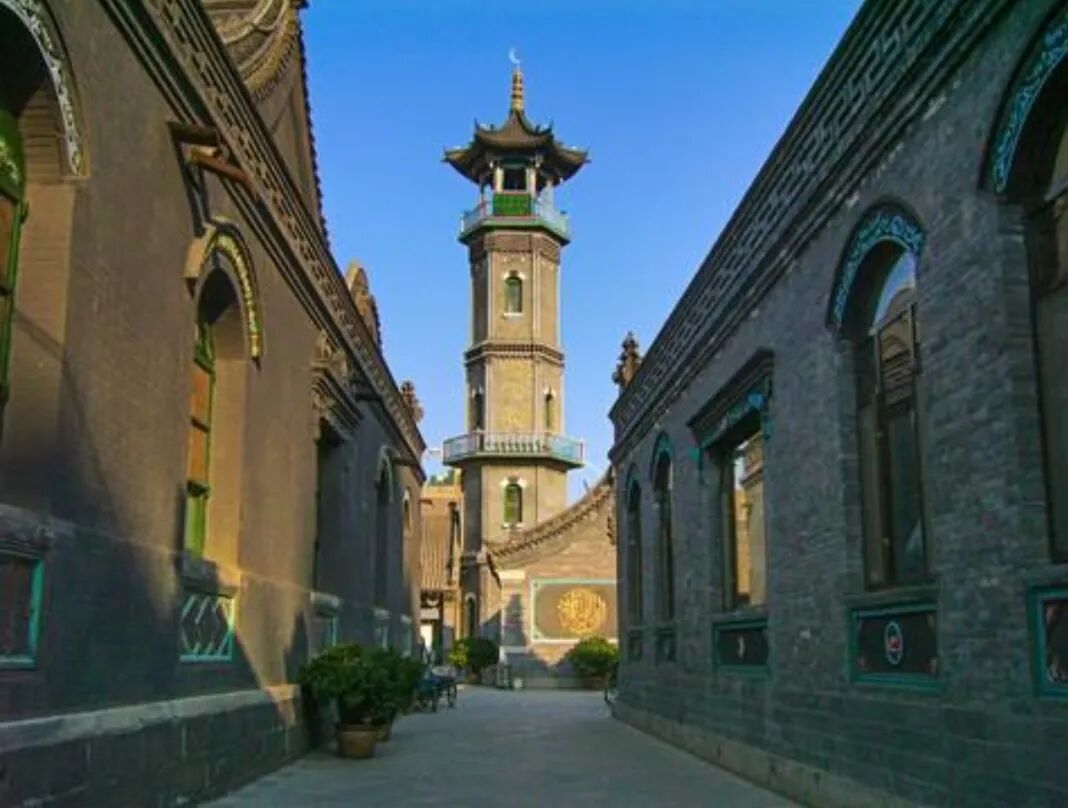
But turn a few corners, and the noise suddenly fades away. Behind those blue-brick walls, you’ll find the Grand Mosque.
Many people just pass by, snap a quick photo, and keep moving, never realizing this ancient mosque has been standing here quietly for over three hundred years.
02 Age and Architecture
The Grand Mosque was built during the Qing Dynasty and is one of the oldest mosques in Hohhot history.
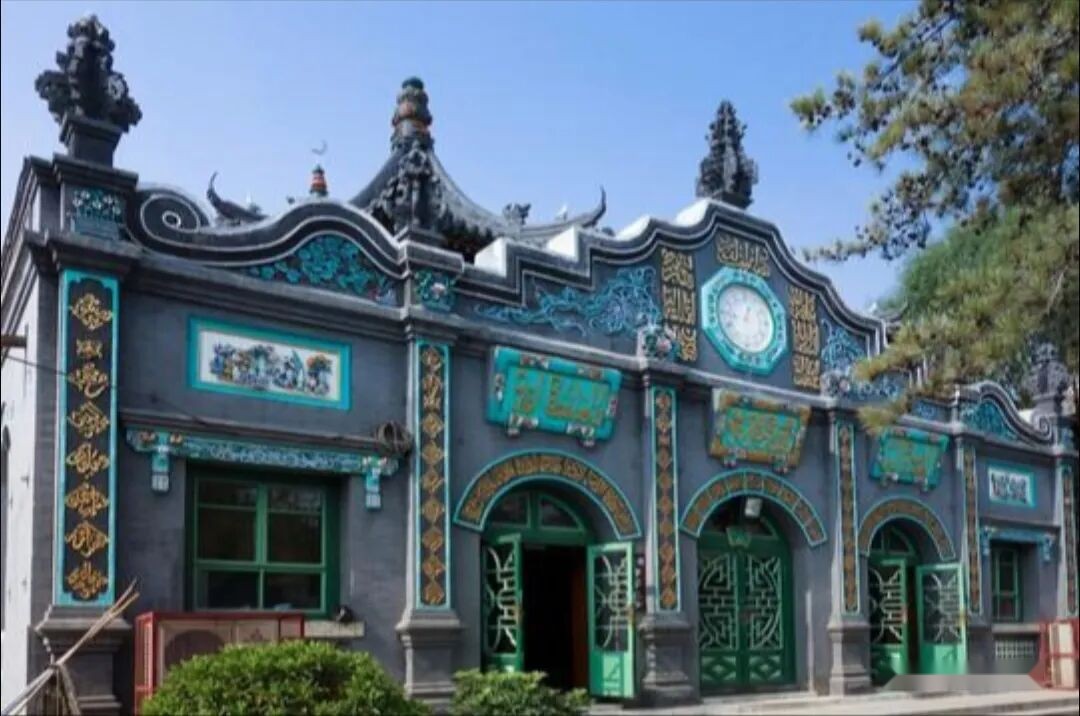
Unlike the exotic-style mosques we might expect, it’s actually really unique—the main structure is designed like a classical Chinese pavilion with feiyan dougong (flying eaves and traditional wooden brackets) that give it the heavy, grounded feel of northern ancient architecture. If you look closely at the walls and the gate towers, the intricate brick carvings and patterns incorporate traditional Islamic motifs as well.
These two styles blend together perfectly without clashing at all, just like this city itself—inclusive and gentle.
03 Moon-Watching Tower
The most unforgettable part of the mosque is the Moon-Watching Tower. It stands tall right in the middle of the courtyard, rising up level by level, looking delicate and refined.
The older generation says that back when there were no precise calendars, the imam would climb the tower on important dates to spot the new moon and determine the festival schedule. This little tower was once the 'timekeeper' for these streets, setting the rhythm for the whole neighborhood.
For hundreds of years, through wind and sun, the wooden tower has stood here quietly, watching generations of people come and go.
04 The Pulse of Life
A lot of people wonder how such an ancient mosque could be tucked away in the middle of a busy city.
Actually, that’s exactly what makes the 'old' Hohhot so moving.
Outside the walls, it’s the real-life hustle of the city: vendors shouting, bicycle bells ringing, neighbors chatting, and the smells of street food drifting on the breeze. Inside the walls, it’s peaceful and quiet, with trees and silence that are perfect for clearing your mind.
Separated by just one wall, you have the chaotic bustle of humanity on one side and quiet, solemn peace on the other—noise and stillness have lived together like this for centuries.
I know quite a few elderly people living nearby who grew up right in this area.
They say that when they were kids, the mosque felt especially solemn on important holidays. The neighbors looked out for each other; if a family had something going on, everyone in the alley would pitch in to help.
The mosque wasn’t just a place for prayer (dua); it was the spiritual home for the Hui community here and the glue that held the neighborhood’s warmth together.
During holidays, the smell of youxiang and sanzi (deep-fried crispy dough twists) would fill the whole street, and neighbors would exchange food regardless of their ethnic background—it was so warm and heartfelt.
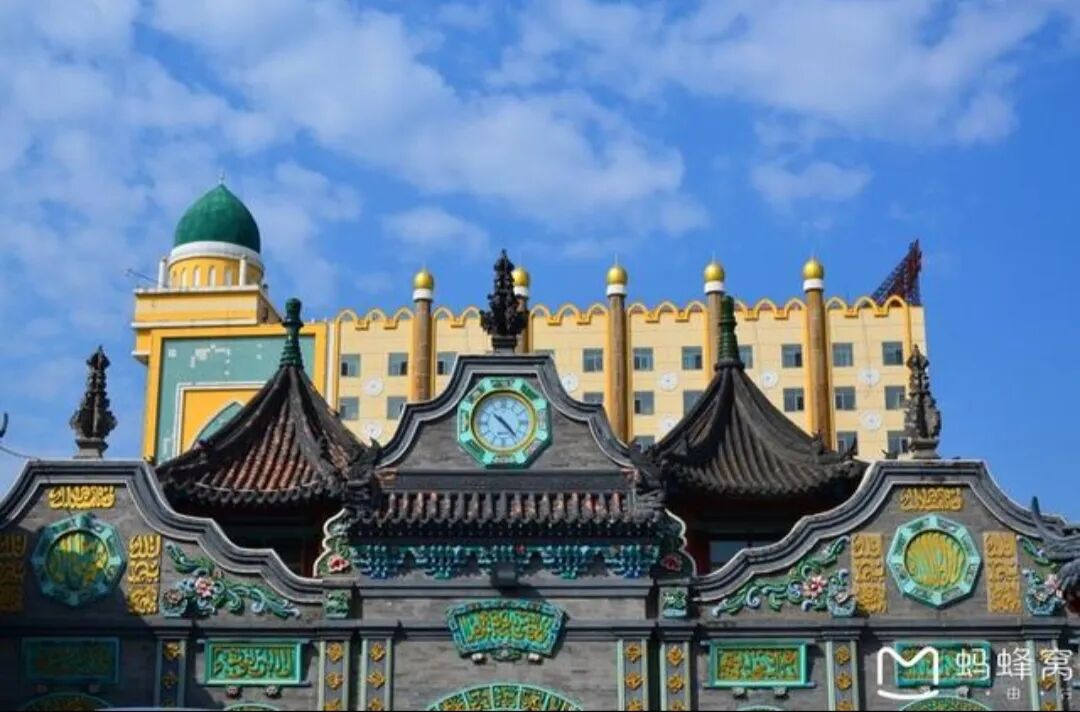
After living in Hohhot for so long, I often feel that a city’s foundation isn’t just its skyscrapers or wide roads, but these old buildings hidden in the alleyways. They aren't showy; they just stay quiet, witnessing the changes in the city generation after generation.
The old dirt roads turned into asphalt, the low-rise houses slowly turned into apartment buildings, and the transportation on the streets shifted from horse carts and vintage '28-inch' bicycles to cars.
Only the Grand Mosque’s blue bricks and flying eaves have kept watch over this old street, keeping watch over this local life.
05 Final Thoughts
The Grand Mosque today is still open to the public.
When you walk into the courtyard, there’s no noise. The old trees sprout new leaves every year, and you can see the marks of time worn into the blue bricks.
Many tourists come here to check it off their list, while nearby residents often stop by, stand at the entrance for a moment, and just feel a sense of calm.
Friends often ask me, 'If I come to Hohhot, where is the best place to truly understand this city?'
I always recommend taking a walk here.
You don’t have to rush, and you don’t have to hurry to take pictures. Just buy a fresh beizi from the alley outside, take in that familiar scent, and then slowly walk up to the courtyard wall to look at the eaves and the brick carvings.
You’ll understand that Hohhot has never been just one thing.
The vastness of the grassland, the weight of the ancient city, and the coexistence of different ethnic groups are all hidden in this single piece of old architecture.
Three hundred years of time have flowed by; the streets have changed their look, but this inclusive, peaceful vibe has always remained.
The ancient mosque says nothing. It has watched the days turn from dawn to dusk, seen the seasons revolve, and witnessed this city, Hohhot, moving forward with such grace.
Join a local Hohhot expert as we walk down Tongdao South Street in the Hui Muslim District, surrounded by the scents of shaomai (steamed meat dumplings), beizi (leavened flatbread), and youxiang (deep-fried flour dough). We’re exploring the Grand Mosque of Hohhot, built in the 32nd year of the Kangxi Emperor’s reign, to share the heartwarming history of how the Hui, Han, and Mongol communities have looked out for one another for over three hundred years.
I'm 'Grassland Mama,' a Han Chinese woman who grew up in the pastoral regions.
We’ve looked through a lot of old photos of Hohhot together before—seeing the early days of Xinhua Square and Xiaozhao Front Street, and remembering the old temples and bustling markets that have since disappeared.
Today, let’s head into Tongdao South Street in the Hui Muslim District and chat about the Grand Mosque that’s been rooted in the middle of this busy area, standing by the 'Blue City' through centuries of history.
A lot of friends who have visited Hohhot have walked through this neighborhood.
01 Location
As you walk down the alley, you’re hit with the smell of beizi, lamb offal, and youxiang. It’s packed with people and super lively.
But turn a few corners, and the noise suddenly fades away. Behind those blue-brick walls, you’ll find the Grand Mosque.
Many people just pass by, snap a quick photo, and keep moving, never realizing this ancient mosque has been standing here quietly for over three hundred years.
02 Age and Architecture
The Grand Mosque was built during the Qing Dynasty and is one of the oldest mosques in Hohhot history.
Unlike the exotic-style mosques we might expect, it’s actually really unique—the main structure is designed like a classical Chinese pavilion with feiyan dougong (flying eaves and traditional wooden brackets) that give it the heavy, grounded feel of northern ancient architecture. If you look closely at the walls and the gate towers, the intricate brick carvings and patterns incorporate traditional Islamic motifs as well.
These two styles blend together perfectly without clashing at all, just like this city itself—inclusive and gentle.
03 Moon-Watching Tower
The most unforgettable part of the mosque is the Moon-Watching Tower. It stands tall right in the middle of the courtyard, rising up level by level, looking delicate and refined.
The older generation says that back when there were no precise calendars, the imam would climb the tower on important dates to spot the new moon and determine the festival schedule. This little tower was once the 'timekeeper' for these streets, setting the rhythm for the whole neighborhood.
For hundreds of years, through wind and sun, the wooden tower has stood here quietly, watching generations of people come and go.
04 The Pulse of Life
A lot of people wonder how such an ancient mosque could be tucked away in the middle of a busy city.
Actually, that’s exactly what makes the 'old' Hohhot so moving.
Outside the walls, it’s the real-life hustle of the city: vendors shouting, bicycle bells ringing, neighbors chatting, and the smells of street food drifting on the breeze. Inside the walls, it’s peaceful and quiet, with trees and silence that are perfect for clearing your mind.
Separated by just one wall, you have the chaotic bustle of humanity on one side and quiet, solemn peace on the other—noise and stillness have lived together like this for centuries.
I know quite a few elderly people living nearby who grew up right in this area.
They say that when they were kids, the mosque felt especially solemn on important holidays. The neighbors looked out for each other; if a family had something going on, everyone in the alley would pitch in to help.
The mosque wasn’t just a place for prayer (dua); it was the spiritual home for the Hui community here and the glue that held the neighborhood’s warmth together.
During holidays, the smell of youxiang and sanzi (deep-fried crispy dough twists) would fill the whole street, and neighbors would exchange food regardless of their ethnic background—it was so warm and heartfelt.
After living in Hohhot for so long, I often feel that a city’s foundation isn’t just its skyscrapers or wide roads, but these old buildings hidden in the alleyways. They aren't showy; they just stay quiet, witnessing the changes in the city generation after generation.
The old dirt roads turned into asphalt, the low-rise houses slowly turned into apartment buildings, and the transportation on the streets shifted from horse carts and vintage '28-inch' bicycles to cars.
Only the Grand Mosque’s blue bricks and flying eaves have kept watch over this old street, keeping watch over this local life.
05 Final Thoughts
The Grand Mosque today is still open to the public.
When you walk into the courtyard, there’s no noise. The old trees sprout new leaves every year, and you can see the marks of time worn into the blue bricks.
Many tourists come here to check it off their list, while nearby residents often stop by, stand at the entrance for a moment, and just feel a sense of calm.
Friends often ask me, 'If I come to Hohhot, where is the best place to truly understand this city?'
I always recommend taking a walk here.
You don’t have to rush, and you don’t have to hurry to take pictures. Just buy a fresh beizi from the alley outside, take in that familiar scent, and then slowly walk up to the courtyard wall to look at the eaves and the brick carvings.
You’ll understand that Hohhot has never been just one thing.
The vastness of the grassland, the weight of the ancient city, and the coexistence of different ethnic groups are all hidden in this single piece of old architecture.
Three hundred years of time have flowed by; the streets have changed their look, but this inclusive, peaceful vibe has always remained.
The ancient mosque says nothing. It has watched the days turn from dawn to dusk, seen the seasons revolve, and witnessed this city, Hohhot, moving forward with such grace.
