

Hohhot Travel
Halal Travel Guide: Hohhot - Breakfast at the Great Mosque
Articles • ali2007fr posted the article • 0 comments • 271 views • 2026-05-20 09:37
Reposted from the web
Summary: Hohhot Great Mosque grew from a Qing Dynasty Green Standard Army Hui Muslim community and reached its current scale through rebuilding and expansion in 1723, 1789, and the Republic of China era. This breakfast walk covers mosque history, milk skin, oat noodles, fruit soup, jujube cake, and Hui Muslim food around Kuanxiangzi.
I had breakfast at the Hohhot Great Mosque this morning.
The Hohhot Great Mosque community started with Hui Muslim soldiers from the Qing Dynasty Green Standard Army. After the Ming Dynasty fell, soldiers guarding the Nine Garrisons joined the Qing Dynasty as the Green Standard Army, including many Hui Muslim soldiers from Xuanhua, Datong, and Taiyuan. In 1693, the 32nd year of the Kangxi reign, the Qing government sent many troops to Hohhot to fight the Dzungar Khanate, and this group included many Hui Muslim soldiers from the Green Standard Army. These Hui Muslim soldiers and local Hui Muslim merchants built the mosque community together near the north gate of the old city, which became the early version of the Hohhot Great Mosque.
After the middle of the Kangxi reign, there were no more wars on the border. Many Hui Muslim soldiers from Datong, Zuoyun, and Youyu became small merchants or craftspeople. Many Hui Muslims moved to live near the Hohhot Great Mosque, which is why the local Hui Muslim dialect in Hohhot still sounds like the Datong dialect today. By the late Kangxi period, two large livestock markets called Cow Bridge (Niuqiao) and Sheep Hill (Yanggangzi) appeared near the mosque, and the Hui Muslims controlled the local beef and mutton slaughtering business.
The early Hohhot Great Mosque was just a few mud houses. It reached its current size after being rebuilt in 1723, the first year of the Yongzheng reign, and expanded significantly in 1789, the 54th year of the Qianlong reign. The funding for the Qianlong-era expansion came mostly from three wealthy Hui Muslim merchant families: the Kang, Ma, and Chen families. To honor their contributions, the mosque decided to add three extra scripture readings every year during the opening of the Ramadan fast. Between 1923 and 1925, the mosque expanded its main hall and the north and south lecture halls, creating the unique Republic of China-era style seen today. A woman named Widow Yang from South Channel Street donated her own property behind the mosque, so the mosque added one more scripture reading to the annual Ramadan opening to honor her.
The most famous imam at the Hohhot Great Mosque during the Republic of China era was Imam Wang Kuan from Niujie in Beijing. Imam Wang was a famous educator who founded the Chinese Muslim Progressive Association and opened the first Hui Muslim primary school in Hohhot, the Gui-Sui Hui School, in 1915.
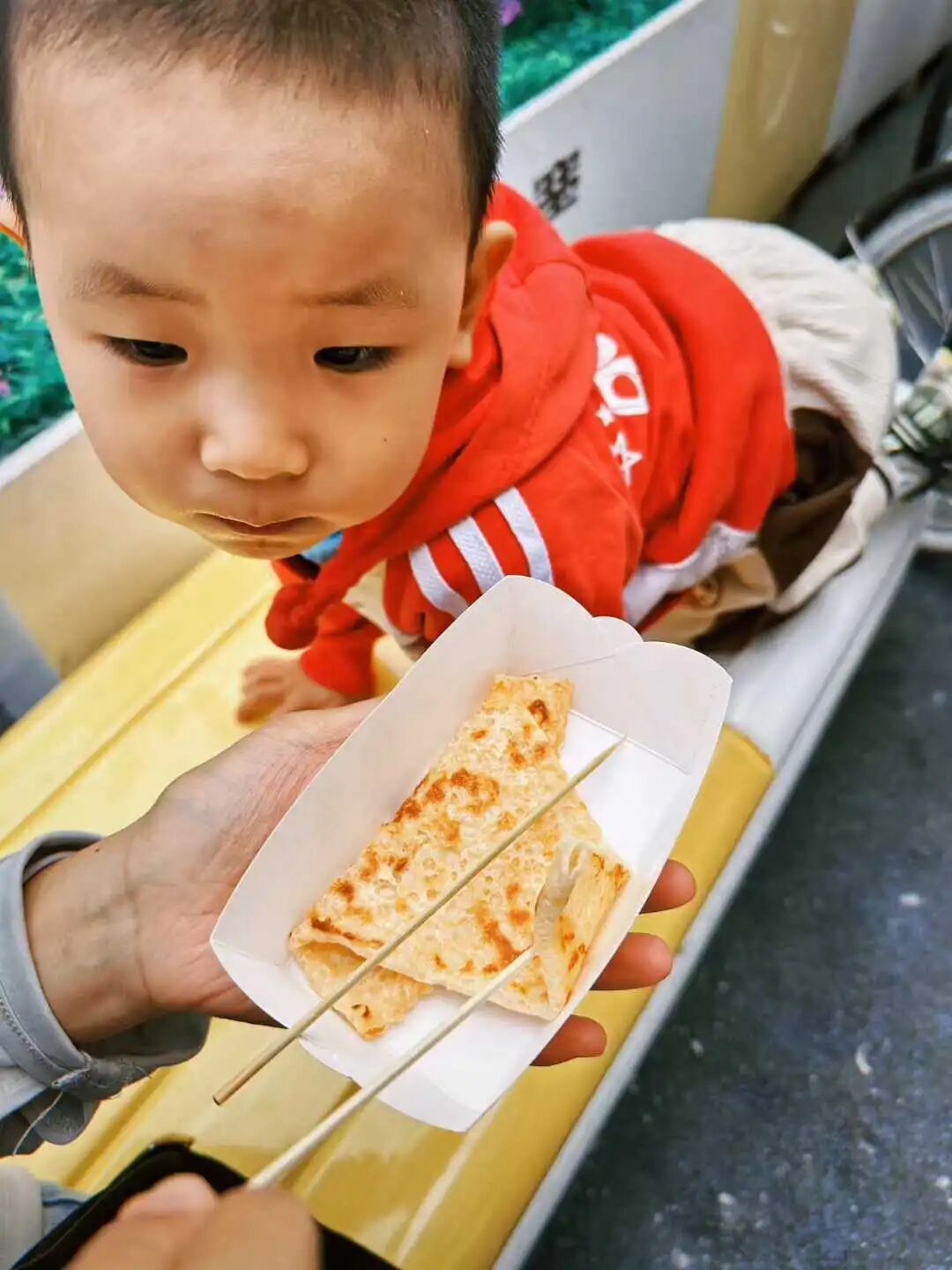
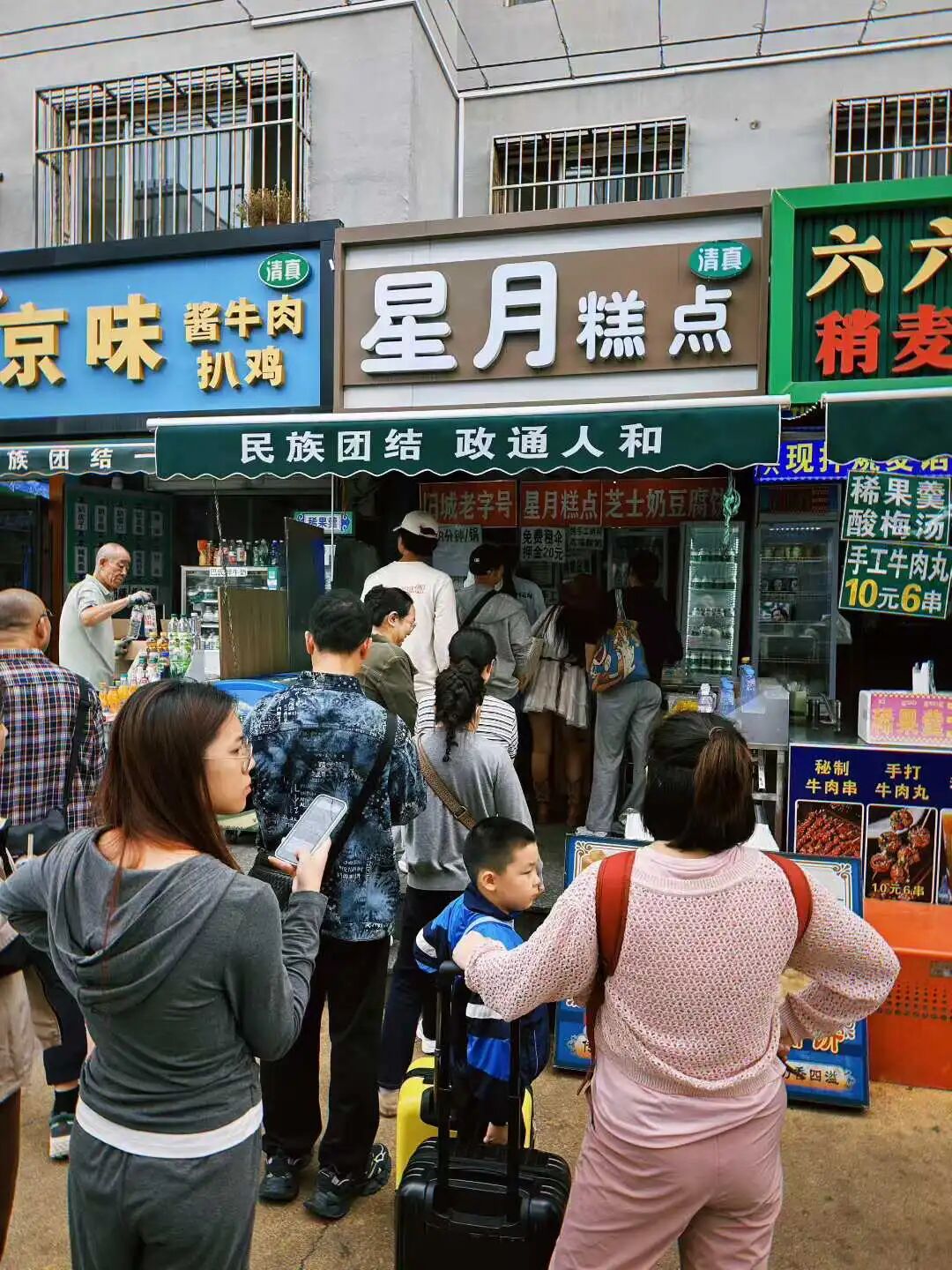
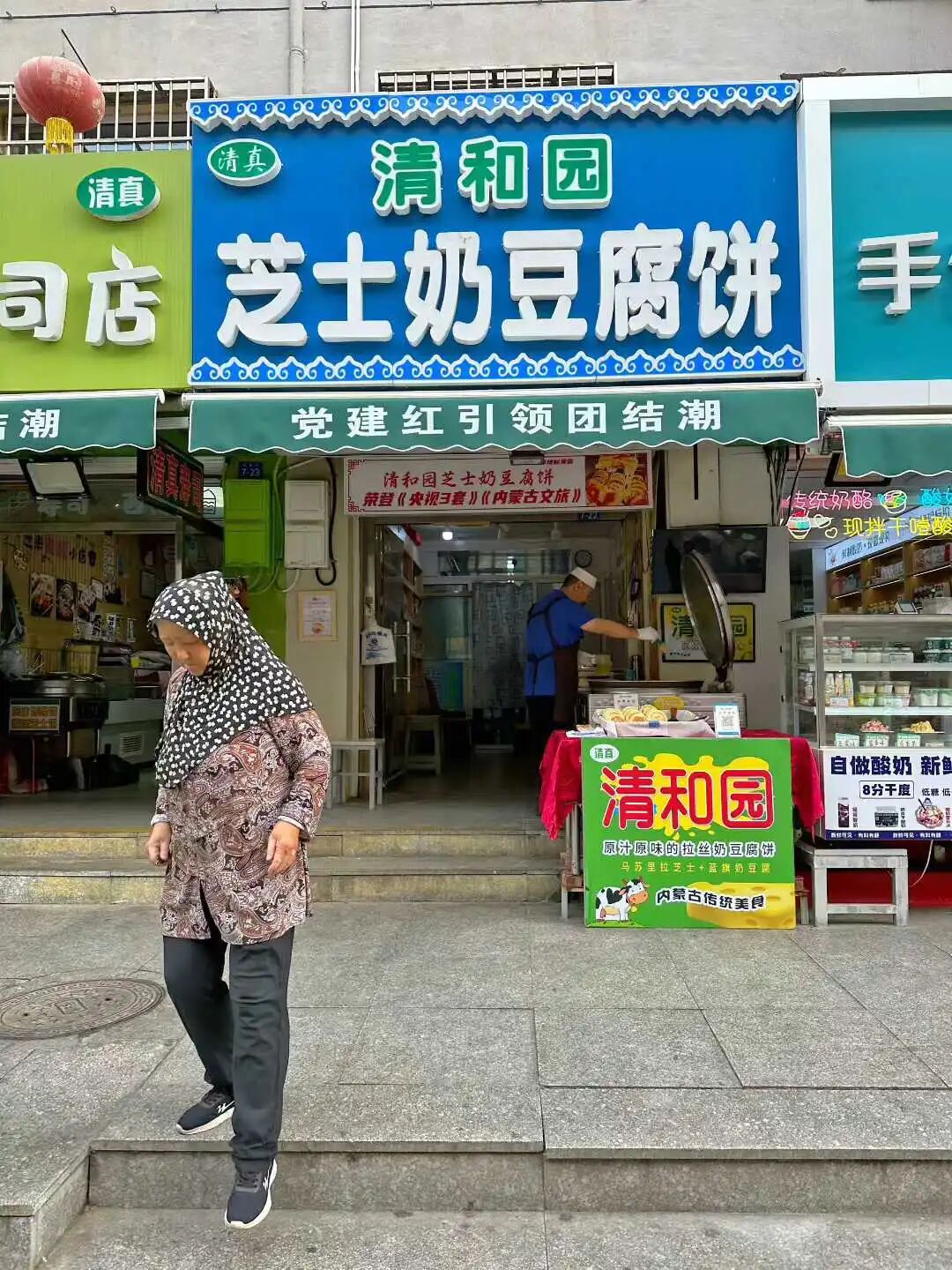
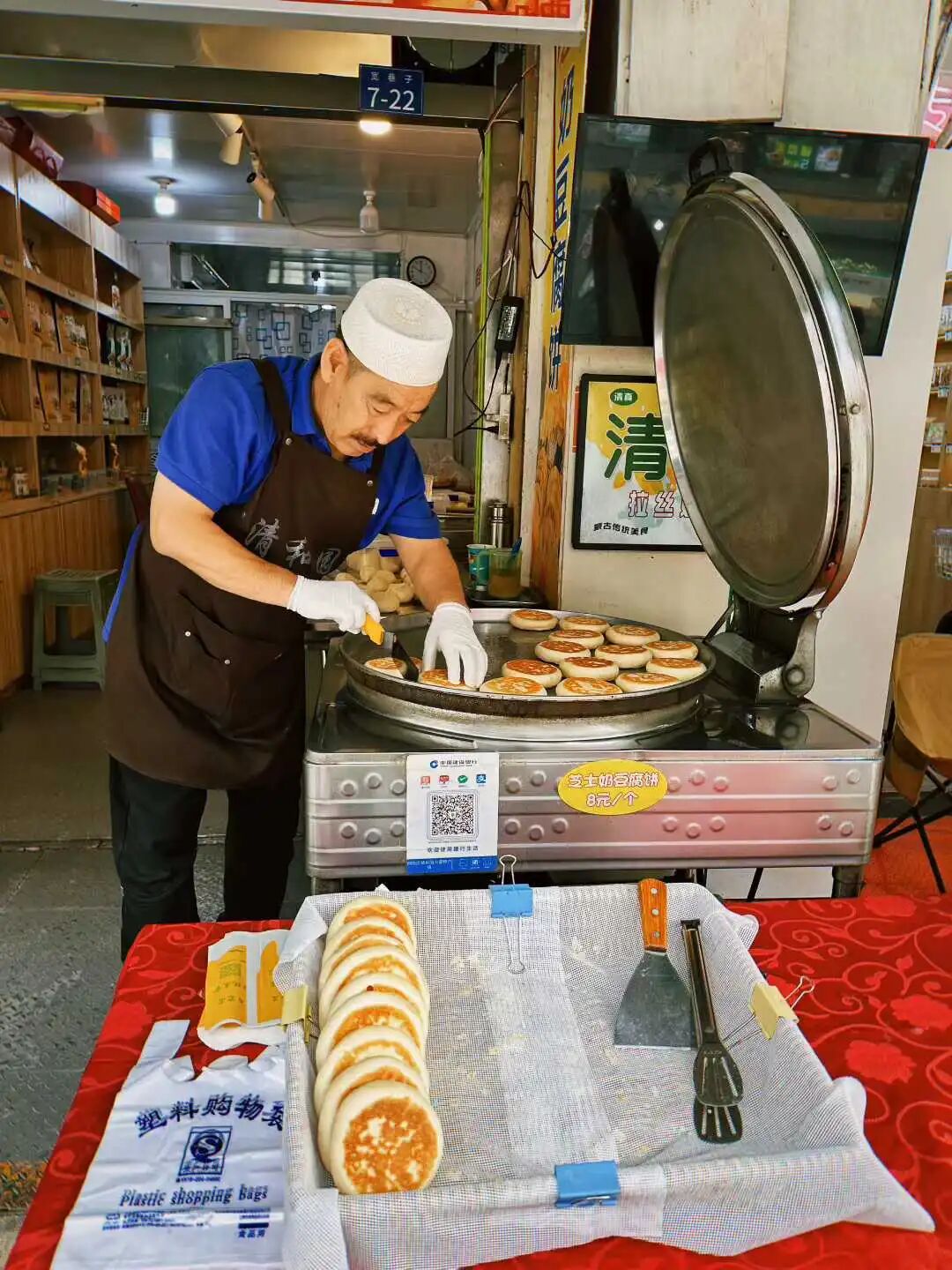
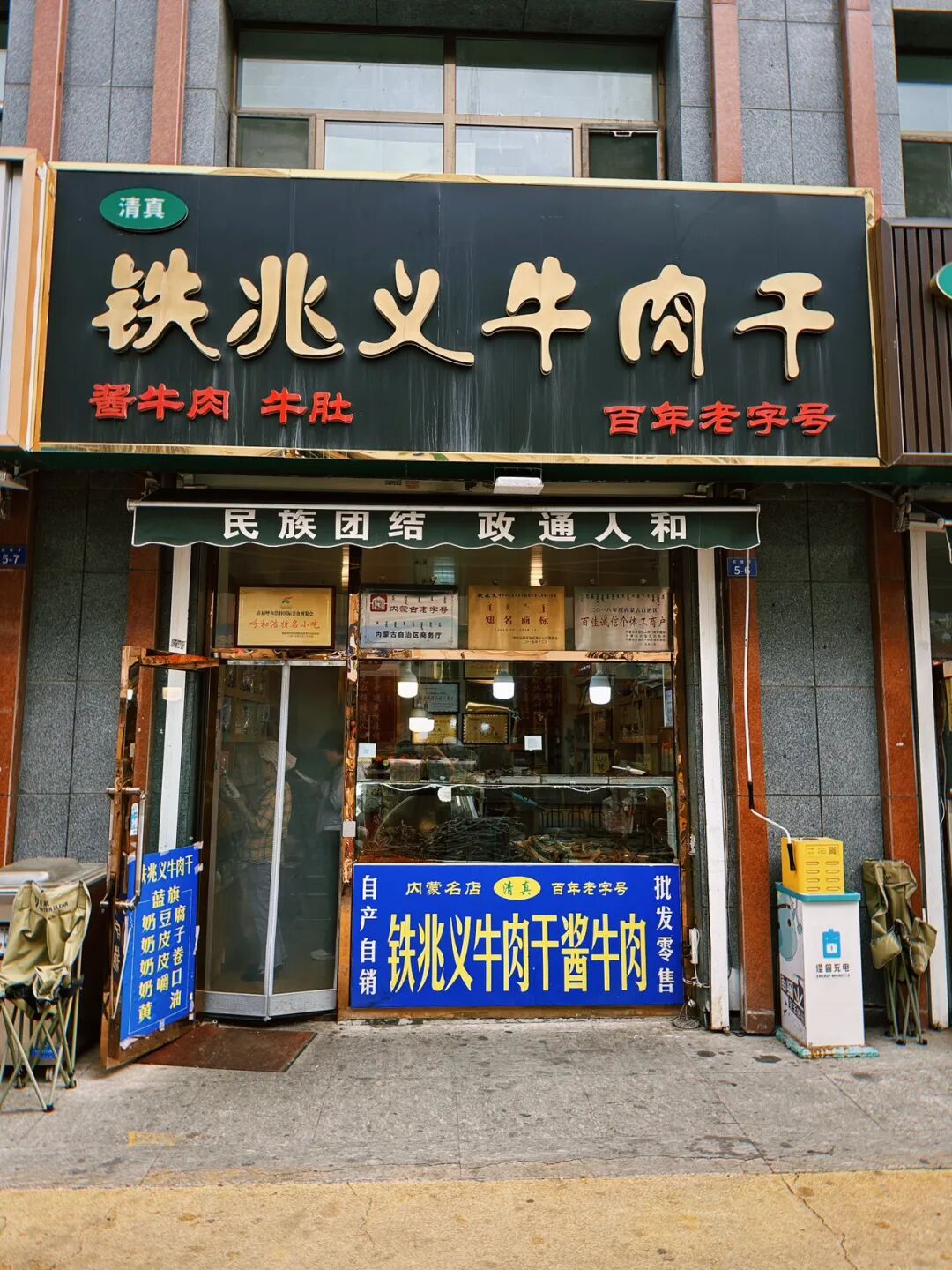
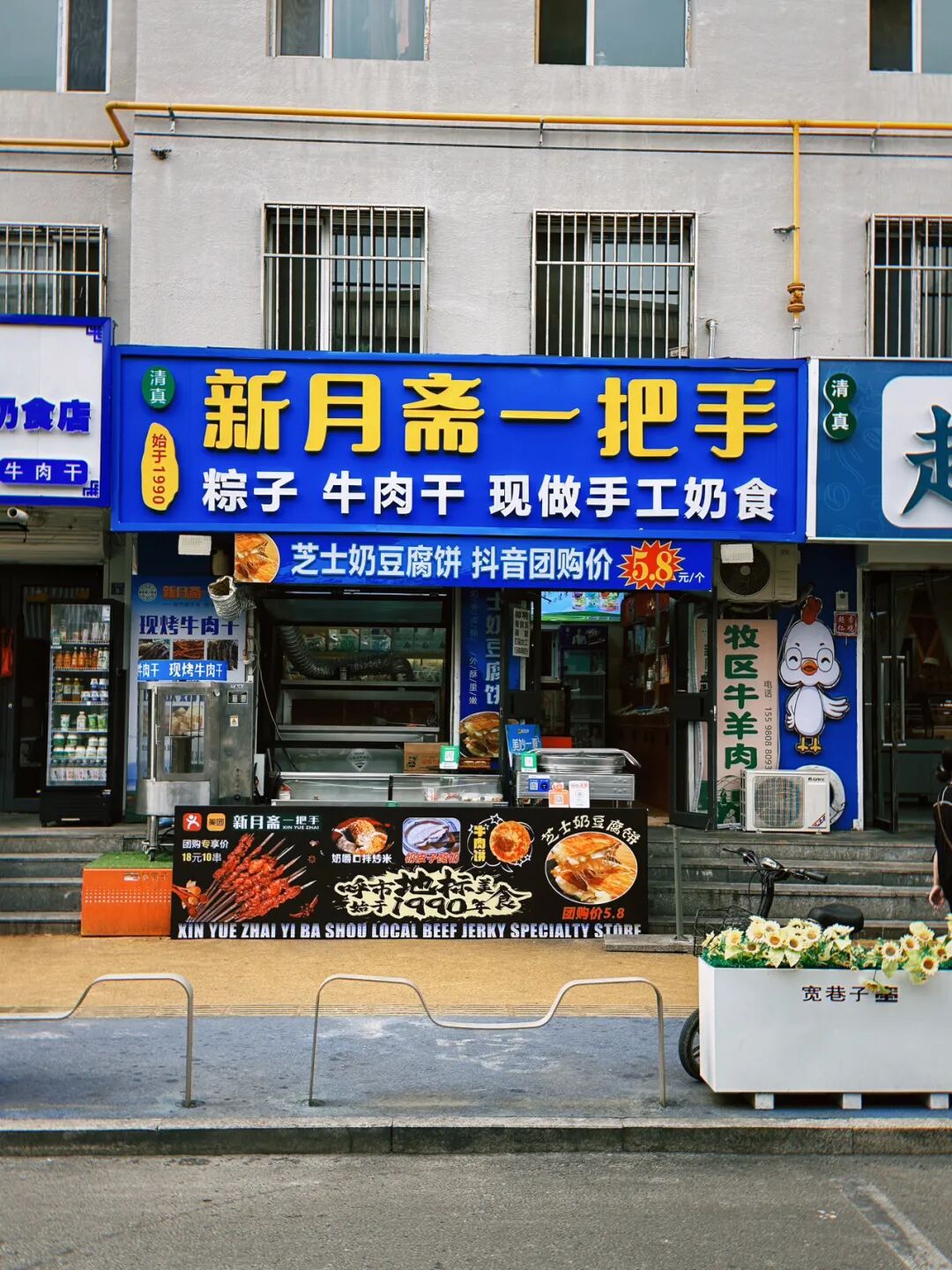
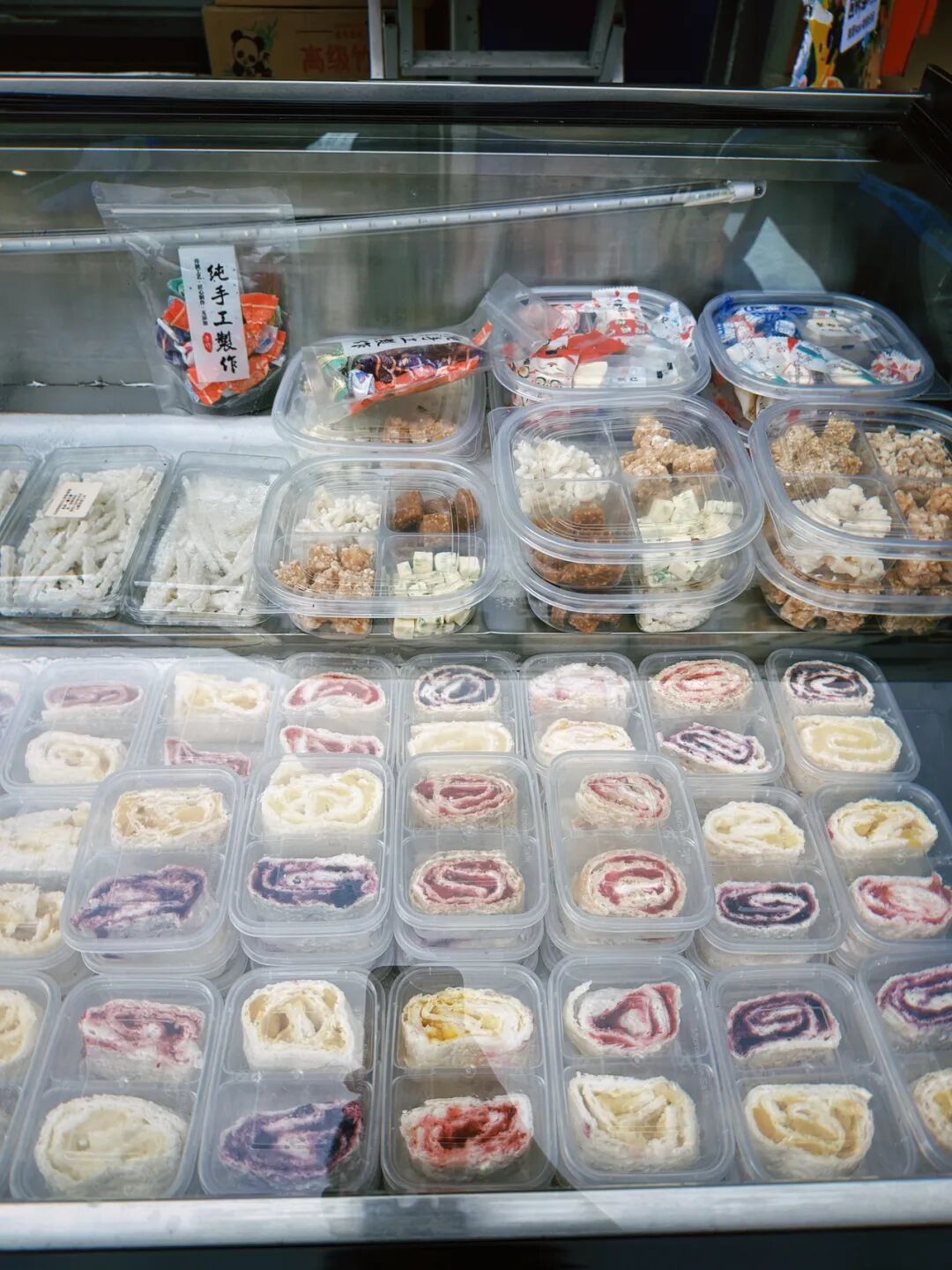
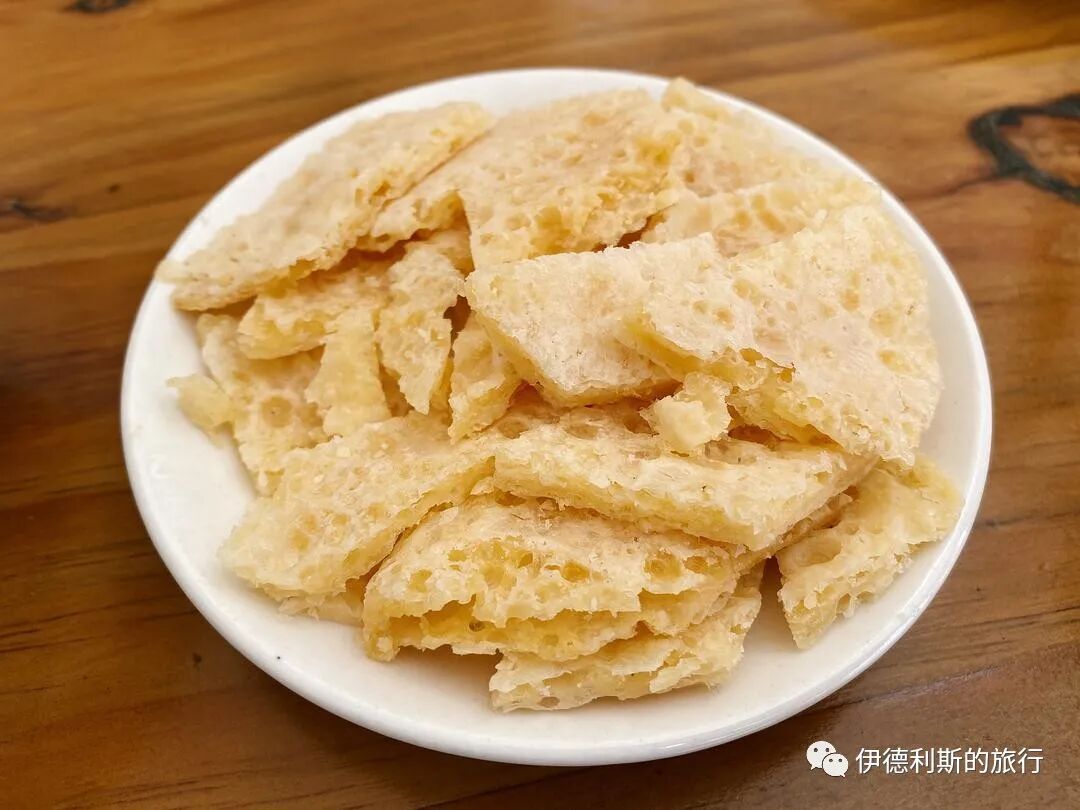
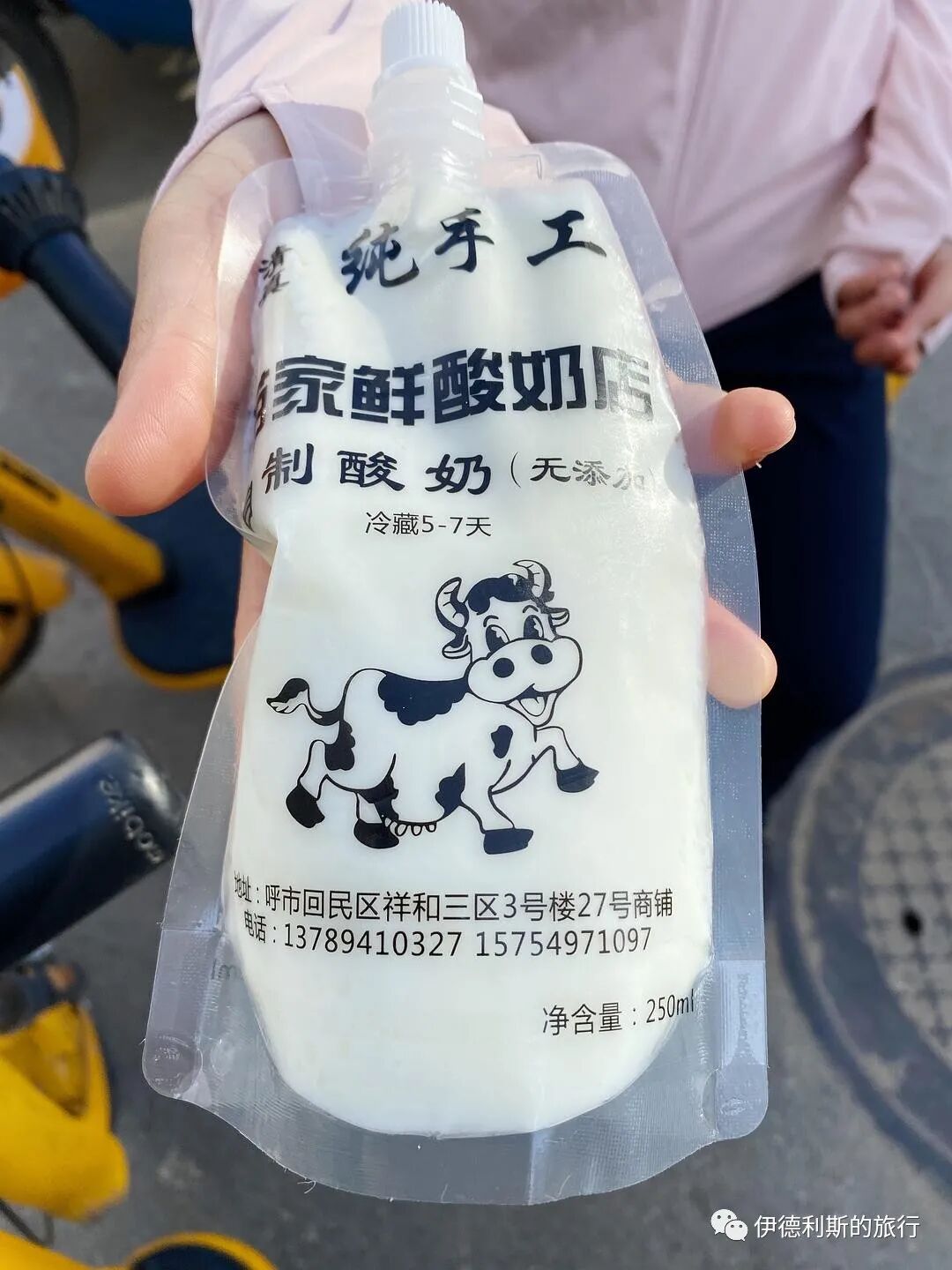
I ate roasted milk skin (naopi) at the Ma Family Dairy Shop. It had a rich milky flavor. They were also the first shop in Wide Alley (Kuanxiangzi) to make milk tofu cheese pancakes. Many shops in Wide Alley now sell cheese milk tofu pancakes. They use Italian soft cheese mixed with Inner Mongolian milk tofu (naidoufu), which has become a popular internet-famous snack. The most popular place with a line in Wide Alley is the Star and Moon Pastry Shop (Xingyue Gaodian). We were too lazy to wait, so we bought some at the nearby Qingheyuan shop. The cheese was stretchy and milky, but I personally prefer the plain milk tofu pancakes.
The Hui Muslim Ma family originally came from Youwei, Shanxi. They were a powerful military family during the Ming Dynasty. In the middle of the Wanli reign, the Ma Army, led by Ma Gui and his brothers and nephews, was famous for being great fighters. They earned great merit by defending Youwei for six months against Altan Khan. The Ma family defended the Ming Dynasty borders for years, and members of the family served as regional commanders in almost every border town. After the Ming Dynasty fell, the Ma family stopped fighting and turned to farming. In the early Qianlong reign, the Youyu General's office and the troops moved to the new city of Guihua in Hohhot. Many Hui Muslims from Youyu followed the path known as Walking the West Pass (Zou Xikou) to Hohhot to make a living. Legend says the Ma family also settled in Hohhot at the end of the Qianlong reign.
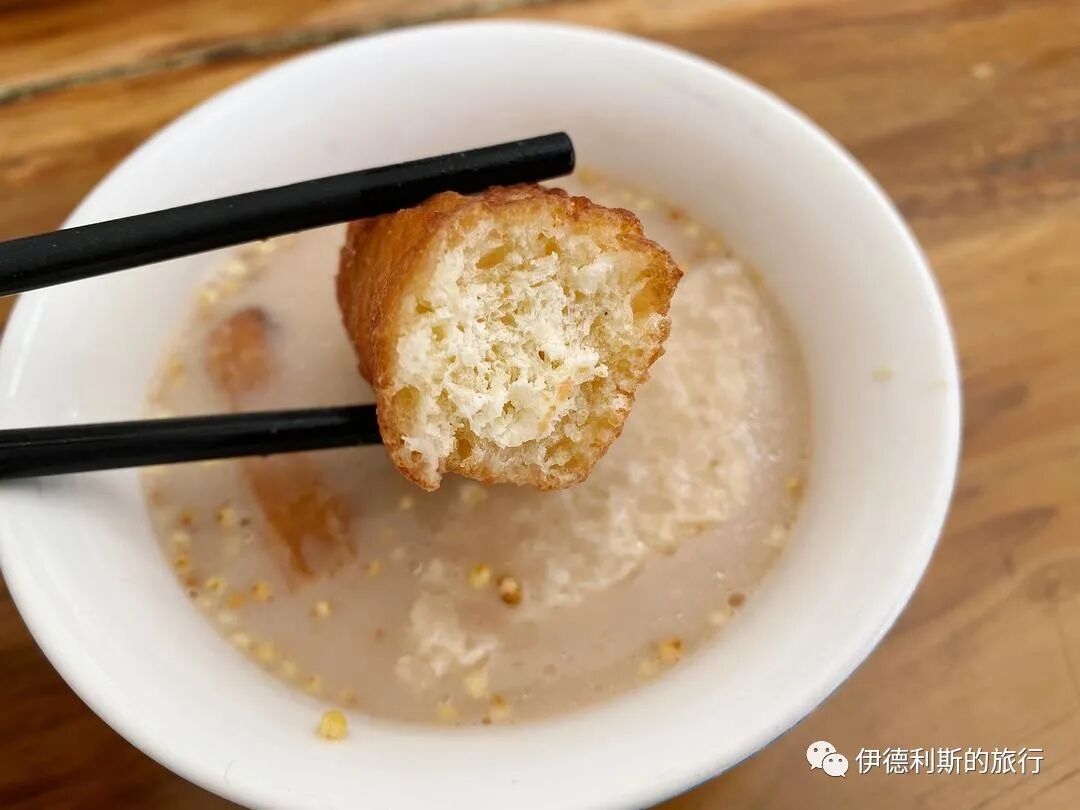
I had hot soup oat noodles (youmian yuyu) at the Old Tuo Steamed Oat Noodles shop. It had carrots, potatoes, pickled vegetables, and celery inside. The hot soup felt very comforting.
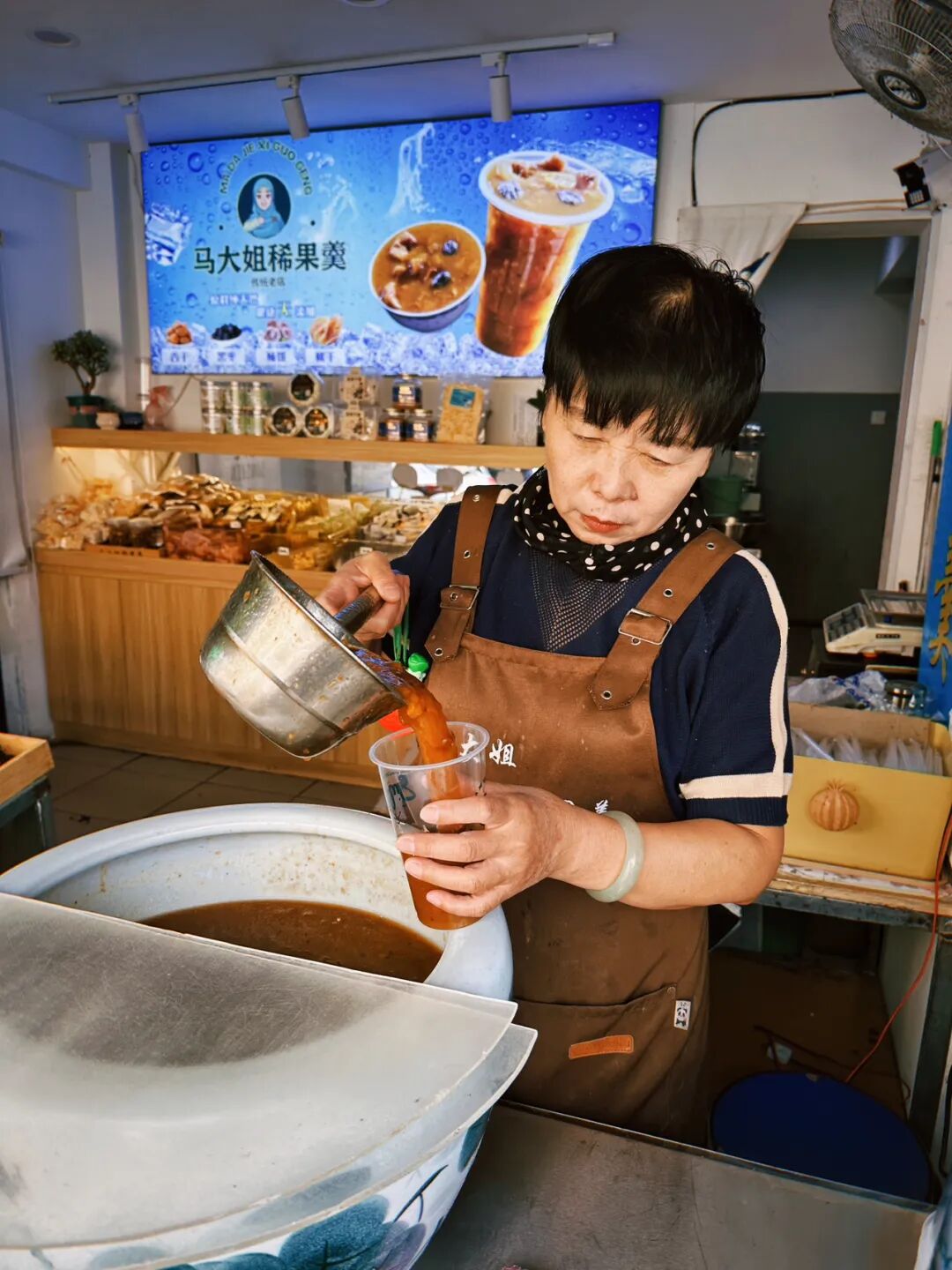
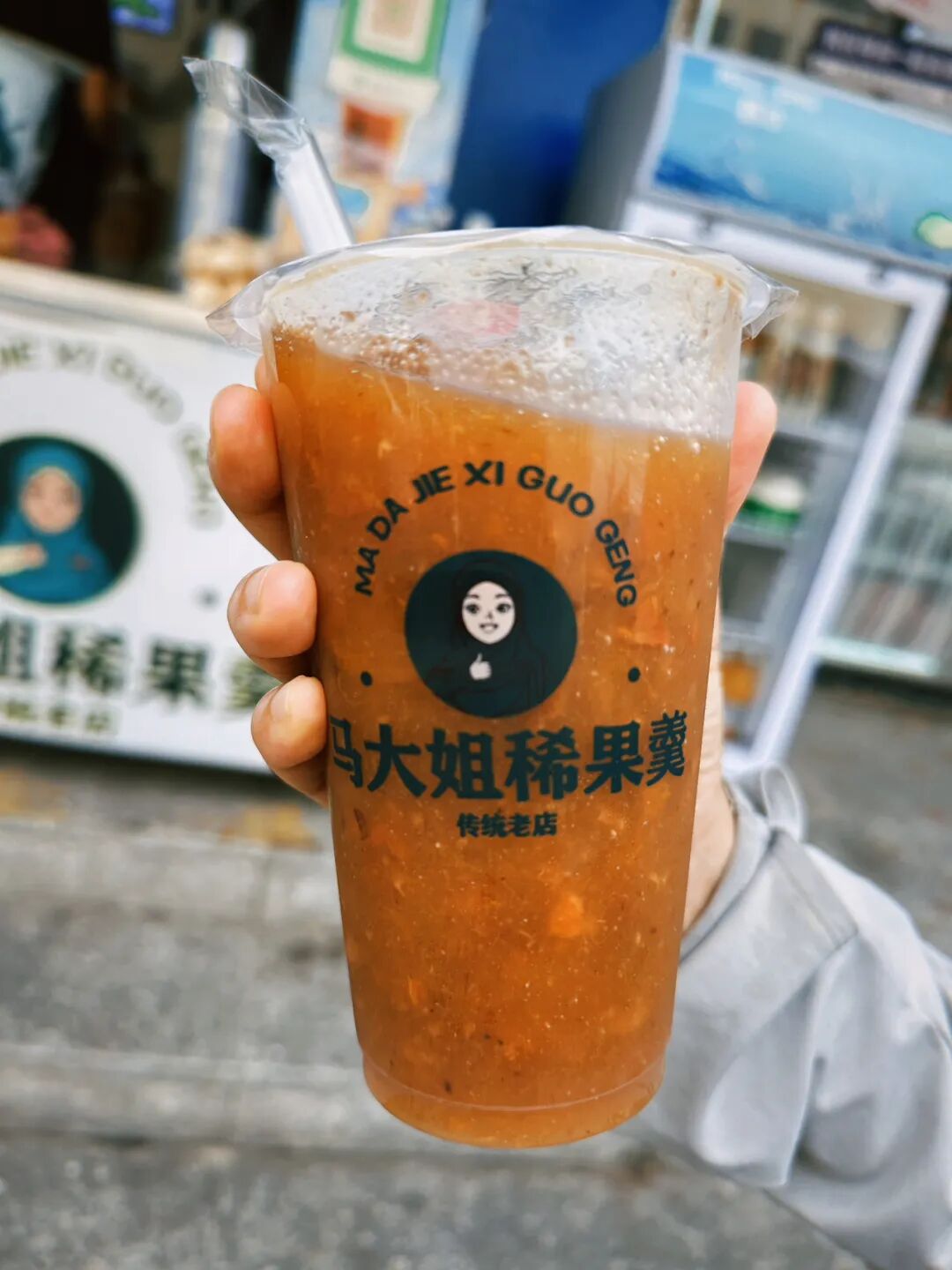
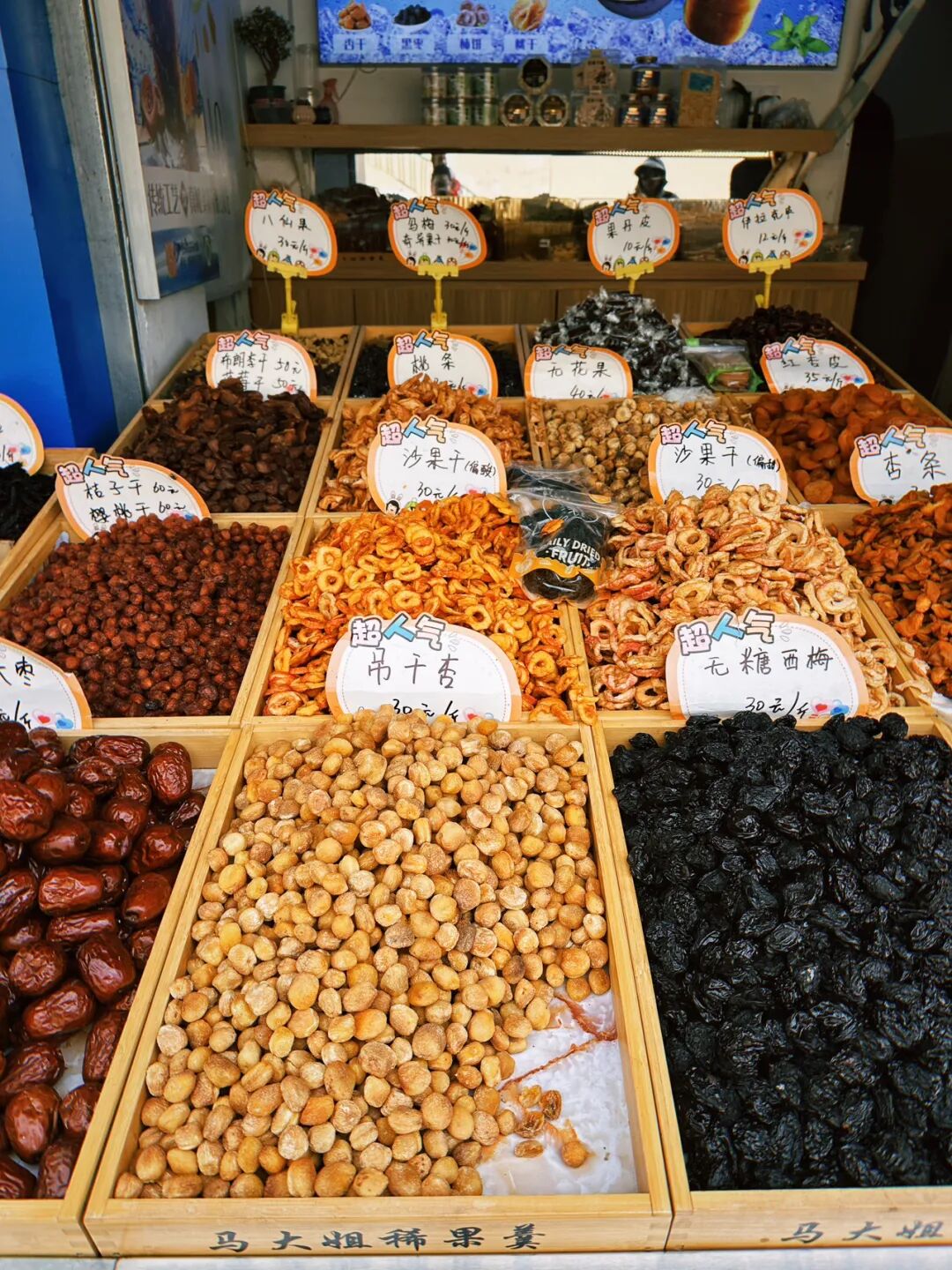
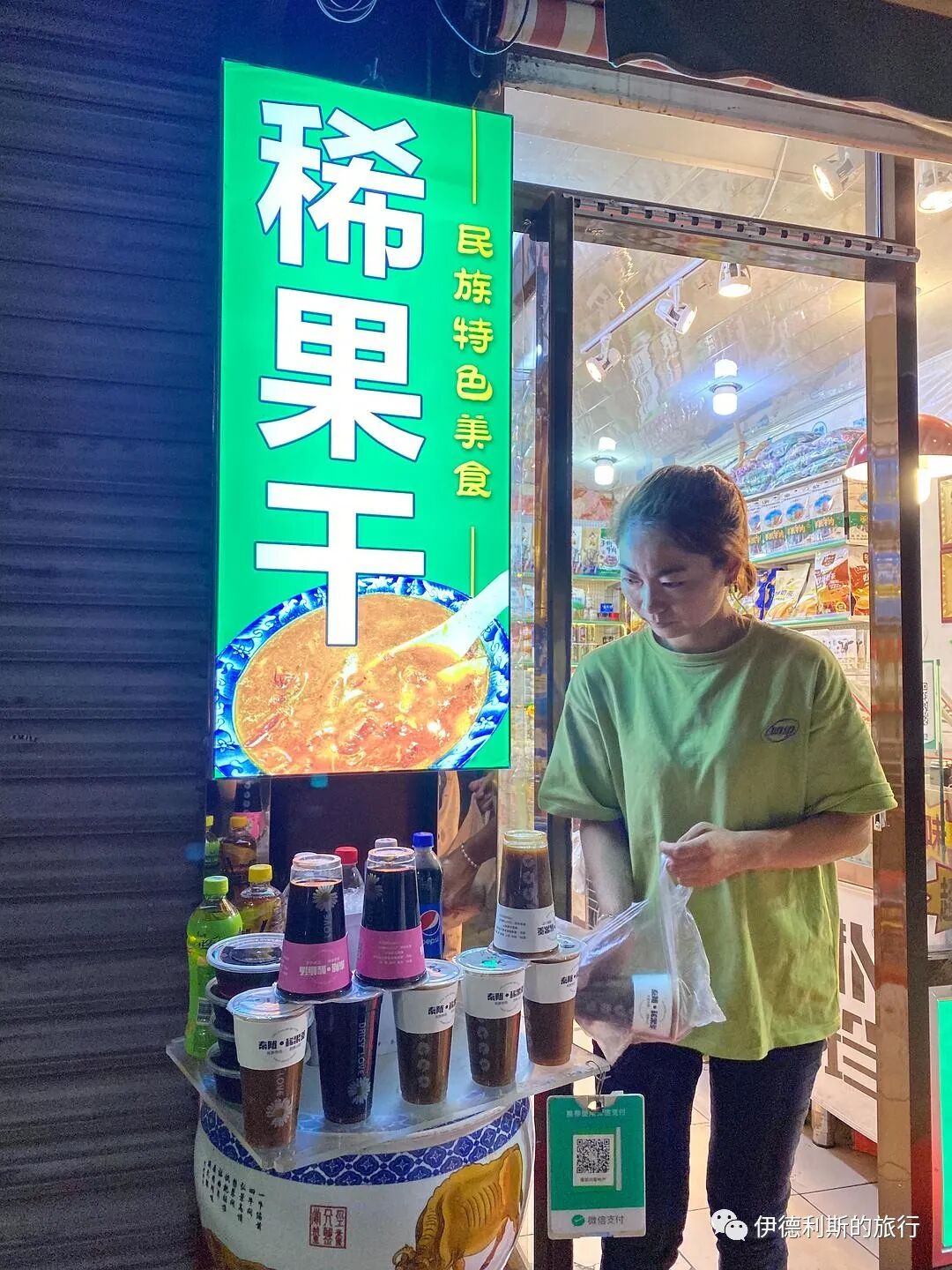
Then I had some thin fruit soup (xiguogeng) from Sister Ma's shop at the back gate of the mosque. It was made with dried apricots, dried persimmons, hawthorn, and rock sugar, which was very appetizing.
A jujube cake shop called Date Daughter-in-law (Zao Xifu) is also good. They have flavors with walnuts and melon seeds, and children really like them. view all
Summary: Hohhot Great Mosque grew from a Qing Dynasty Green Standard Army Hui Muslim community and reached its current scale through rebuilding and expansion in 1723, 1789, and the Republic of China era. This breakfast walk covers mosque history, milk skin, oat noodles, fruit soup, jujube cake, and Hui Muslim food around Kuanxiangzi.
I had breakfast at the Hohhot Great Mosque this morning.
The Hohhot Great Mosque community started with Hui Muslim soldiers from the Qing Dynasty Green Standard Army. After the Ming Dynasty fell, soldiers guarding the Nine Garrisons joined the Qing Dynasty as the Green Standard Army, including many Hui Muslim soldiers from Xuanhua, Datong, and Taiyuan. In 1693, the 32nd year of the Kangxi reign, the Qing government sent many troops to Hohhot to fight the Dzungar Khanate, and this group included many Hui Muslim soldiers from the Green Standard Army. These Hui Muslim soldiers and local Hui Muslim merchants built the mosque community together near the north gate of the old city, which became the early version of the Hohhot Great Mosque.
After the middle of the Kangxi reign, there were no more wars on the border. Many Hui Muslim soldiers from Datong, Zuoyun, and Youyu became small merchants or craftspeople. Many Hui Muslims moved to live near the Hohhot Great Mosque, which is why the local Hui Muslim dialect in Hohhot still sounds like the Datong dialect today. By the late Kangxi period, two large livestock markets called Cow Bridge (Niuqiao) and Sheep Hill (Yanggangzi) appeared near the mosque, and the Hui Muslims controlled the local beef and mutton slaughtering business.
The early Hohhot Great Mosque was just a few mud houses. It reached its current size after being rebuilt in 1723, the first year of the Yongzheng reign, and expanded significantly in 1789, the 54th year of the Qianlong reign. The funding for the Qianlong-era expansion came mostly from three wealthy Hui Muslim merchant families: the Kang, Ma, and Chen families. To honor their contributions, the mosque decided to add three extra scripture readings every year during the opening of the Ramadan fast. Between 1923 and 1925, the mosque expanded its main hall and the north and south lecture halls, creating the unique Republic of China-era style seen today. A woman named Widow Yang from South Channel Street donated her own property behind the mosque, so the mosque added one more scripture reading to the annual Ramadan opening to honor her.
The most famous imam at the Hohhot Great Mosque during the Republic of China era was Imam Wang Kuan from Niujie in Beijing. Imam Wang was a famous educator who founded the Chinese Muslim Progressive Association and opened the first Hui Muslim primary school in Hohhot, the Gui-Sui Hui School, in 1915.
I ate roasted milk skin (naopi) at the Ma Family Dairy Shop. It had a rich milky flavor. They were also the first shop in Wide Alley (Kuanxiangzi) to make milk tofu cheese pancakes. Many shops in Wide Alley now sell cheese milk tofu pancakes. They use Italian soft cheese mixed with Inner Mongolian milk tofu (naidoufu), which has become a popular internet-famous snack. The most popular place with a line in Wide Alley is the Star and Moon Pastry Shop (Xingyue Gaodian). We were too lazy to wait, so we bought some at the nearby Qingheyuan shop. The cheese was stretchy and milky, but I personally prefer the plain milk tofu pancakes.
The Hui Muslim Ma family originally came from Youwei, Shanxi. They were a powerful military family during the Ming Dynasty. In the middle of the Wanli reign, the Ma Army, led by Ma Gui and his brothers and nephews, was famous for being great fighters. They earned great merit by defending Youwei for six months against Altan Khan. The Ma family defended the Ming Dynasty borders for years, and members of the family served as regional commanders in almost every border town. After the Ming Dynasty fell, the Ma family stopped fighting and turned to farming. In the early Qianlong reign, the Youyu General's office and the troops moved to the new city of Guihua in Hohhot. Many Hui Muslims from Youyu followed the path known as Walking the West Pass (Zou Xikou) to Hohhot to make a living. Legend says the Ma family also settled in Hohhot at the end of the Qianlong reign.
I had hot soup oat noodles (youmian yuyu) at the Old Tuo Steamed Oat Noodles shop. It had carrots, potatoes, pickled vegetables, and celery inside. The hot soup felt very comforting.
Then I had some thin fruit soup (xiguogeng) from Sister Ma's shop at the back gate of the mosque. It was made with dried apricots, dried persimmons, hawthorn, and rock sugar, which was very appetizing.
A jujube cake shop called Date Daughter-in-law (Zao Xifu) is also good. They have flavors with walnuts and melon seeds, and children really like them. view all
Reposted from the web
Summary: Hohhot Great Mosque grew from a Qing Dynasty Green Standard Army Hui Muslim community and reached its current scale through rebuilding and expansion in 1723, 1789, and the Republic of China era. This breakfast walk covers mosque history, milk skin, oat noodles, fruit soup, jujube cake, and Hui Muslim food around Kuanxiangzi.
I had breakfast at the Hohhot Great Mosque this morning.
The Hohhot Great Mosque community started with Hui Muslim soldiers from the Qing Dynasty Green Standard Army. After the Ming Dynasty fell, soldiers guarding the Nine Garrisons joined the Qing Dynasty as the Green Standard Army, including many Hui Muslim soldiers from Xuanhua, Datong, and Taiyuan. In 1693, the 32nd year of the Kangxi reign, the Qing government sent many troops to Hohhot to fight the Dzungar Khanate, and this group included many Hui Muslim soldiers from the Green Standard Army. These Hui Muslim soldiers and local Hui Muslim merchants built the mosque community together near the north gate of the old city, which became the early version of the Hohhot Great Mosque.
After the middle of the Kangxi reign, there were no more wars on the border. Many Hui Muslim soldiers from Datong, Zuoyun, and Youyu became small merchants or craftspeople. Many Hui Muslims moved to live near the Hohhot Great Mosque, which is why the local Hui Muslim dialect in Hohhot still sounds like the Datong dialect today. By the late Kangxi period, two large livestock markets called Cow Bridge (Niuqiao) and Sheep Hill (Yanggangzi) appeared near the mosque, and the Hui Muslims controlled the local beef and mutton slaughtering business.
The early Hohhot Great Mosque was just a few mud houses. It reached its current size after being rebuilt in 1723, the first year of the Yongzheng reign, and expanded significantly in 1789, the 54th year of the Qianlong reign. The funding for the Qianlong-era expansion came mostly from three wealthy Hui Muslim merchant families: the Kang, Ma, and Chen families. To honor their contributions, the mosque decided to add three extra scripture readings every year during the opening of the Ramadan fast. Between 1923 and 1925, the mosque expanded its main hall and the north and south lecture halls, creating the unique Republic of China-era style seen today. A woman named Widow Yang from South Channel Street donated her own property behind the mosque, so the mosque added one more scripture reading to the annual Ramadan opening to honor her.
The most famous imam at the Hohhot Great Mosque during the Republic of China era was Imam Wang Kuan from Niujie in Beijing. Imam Wang was a famous educator who founded the Chinese Muslim Progressive Association and opened the first Hui Muslim primary school in Hohhot, the Gui-Sui Hui School, in 1915.
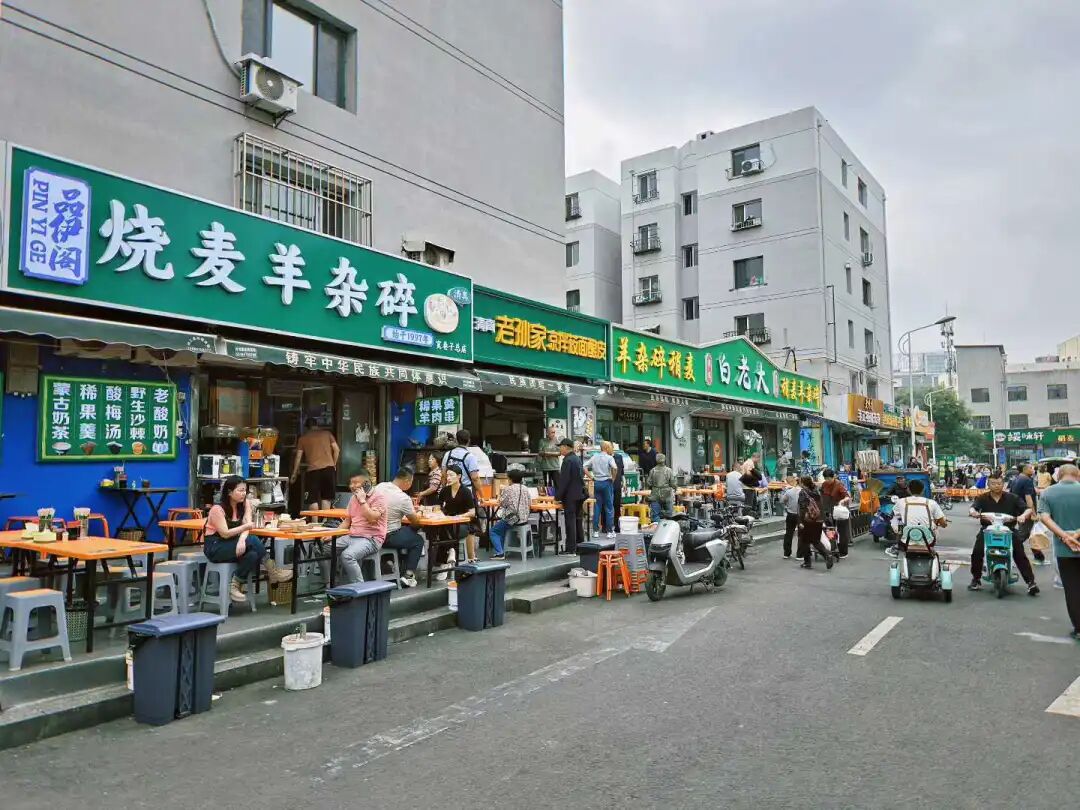
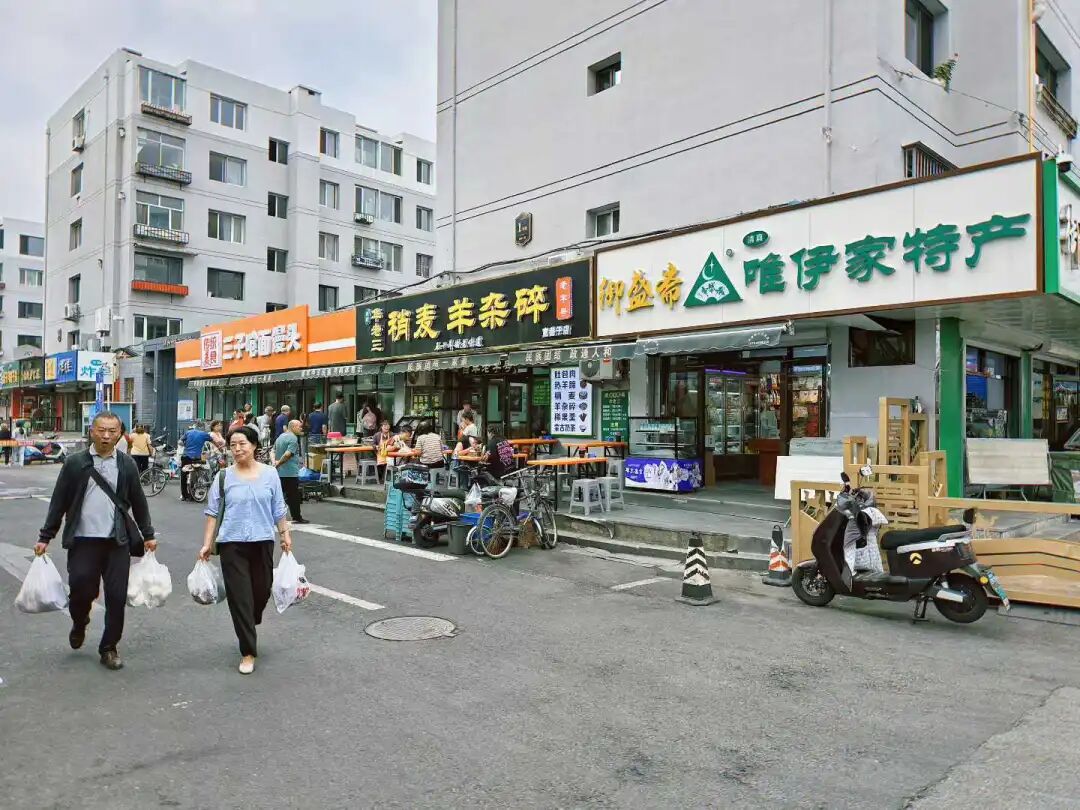
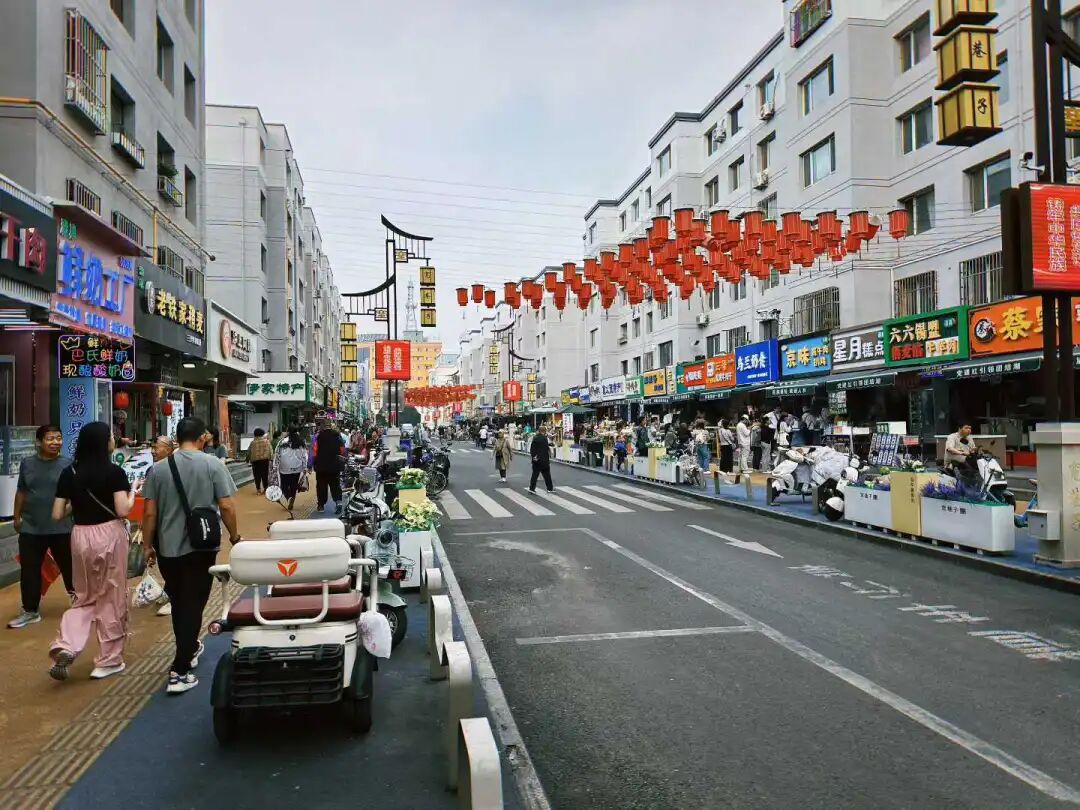
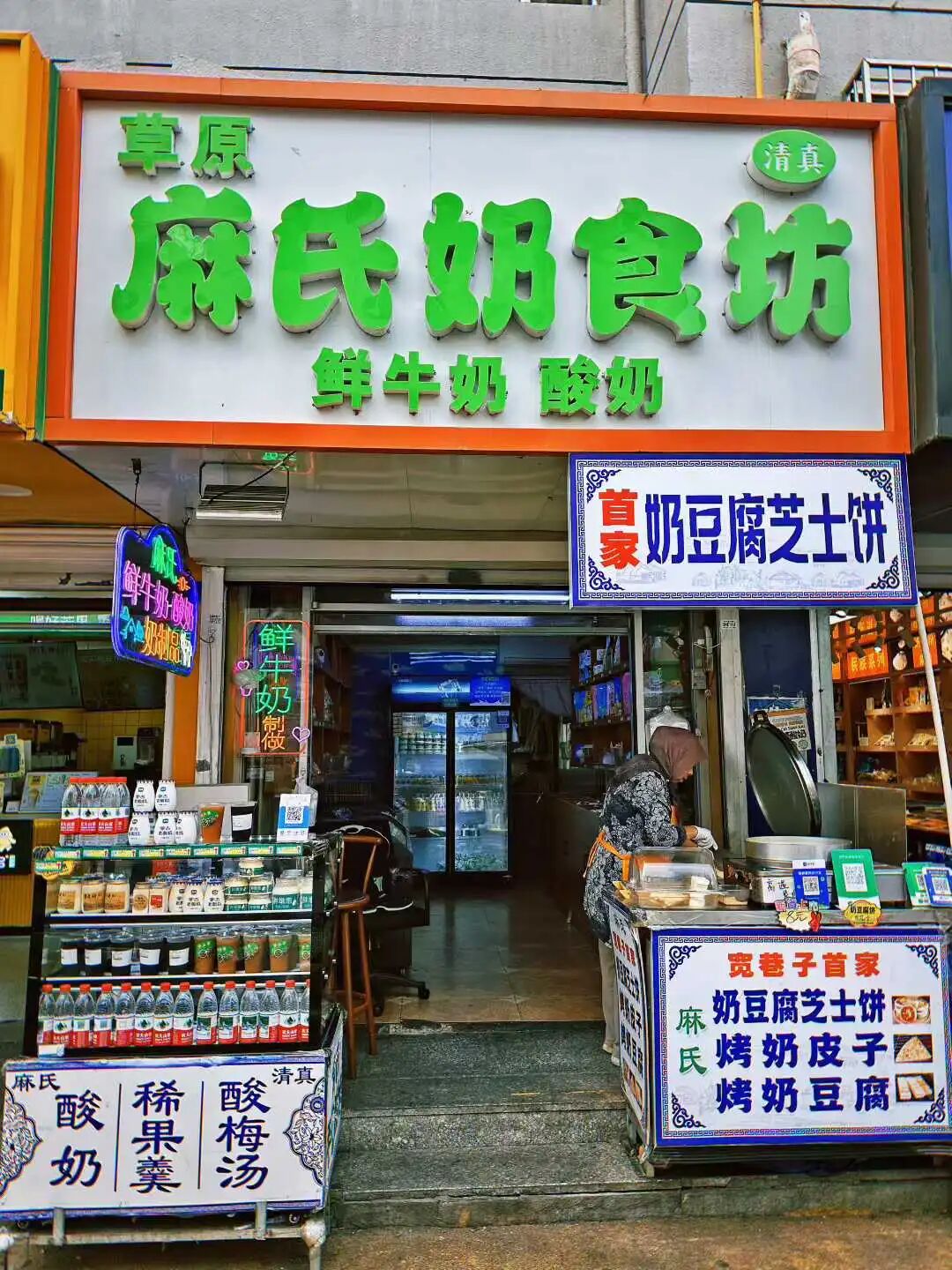
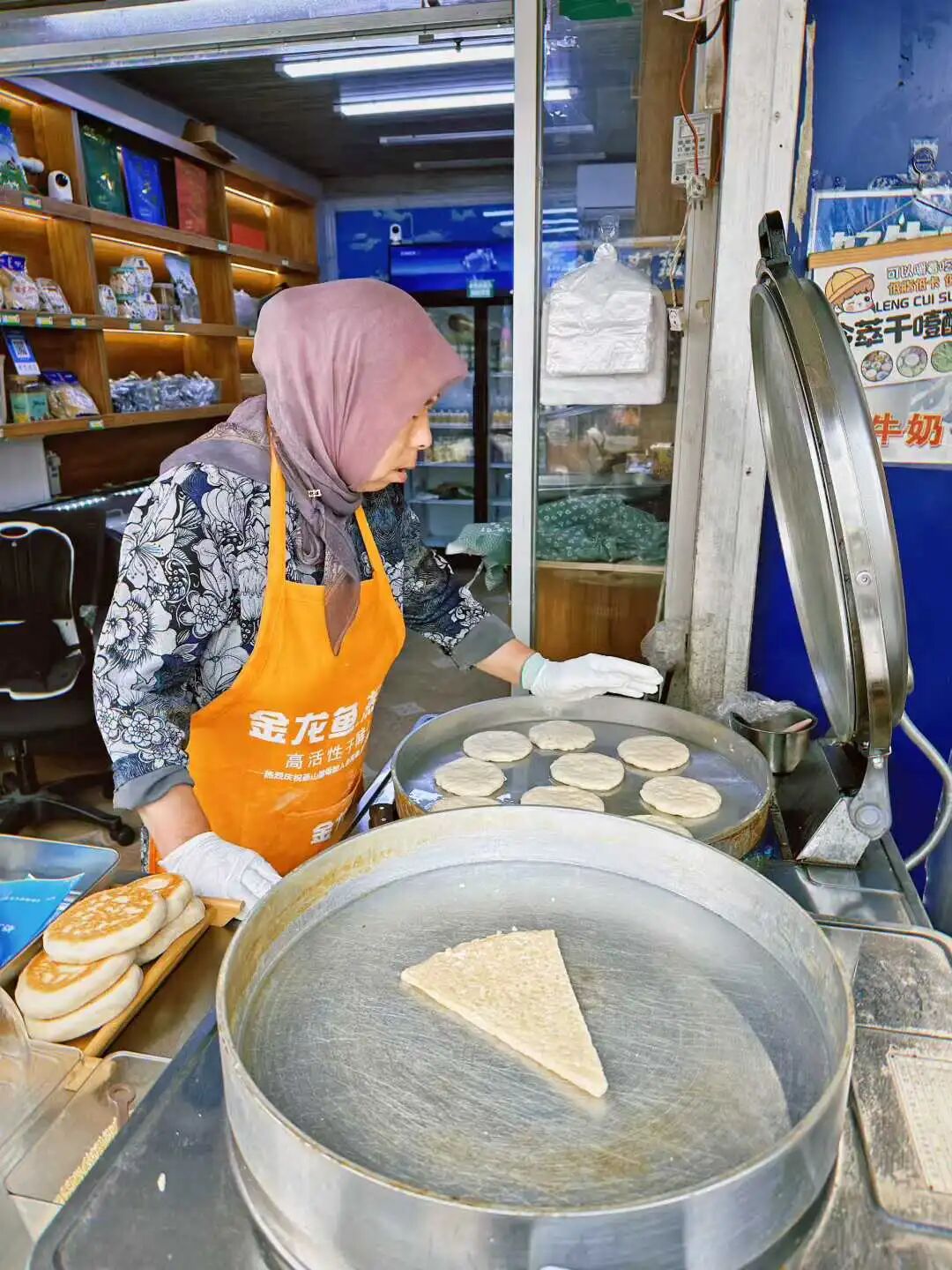
I ate roasted milk skin (naopi) at the Ma Family Dairy Shop. It had a rich milky flavor. They were also the first shop in Wide Alley (Kuanxiangzi) to make milk tofu cheese pancakes. Many shops in Wide Alley now sell cheese milk tofu pancakes. They use Italian soft cheese mixed with Inner Mongolian milk tofu (naidoufu), which has become a popular internet-famous snack. The most popular place with a line in Wide Alley is the Star and Moon Pastry Shop (Xingyue Gaodian). We were too lazy to wait, so we bought some at the nearby Qingheyuan shop. The cheese was stretchy and milky, but I personally prefer the plain milk tofu pancakes.
The Hui Muslim Ma family originally came from Youwei, Shanxi. They were a powerful military family during the Ming Dynasty. In the middle of the Wanli reign, the Ma Army, led by Ma Gui and his brothers and nephews, was famous for being great fighters. They earned great merit by defending Youwei for six months against Altan Khan. The Ma family defended the Ming Dynasty borders for years, and members of the family served as regional commanders in almost every border town. After the Ming Dynasty fell, the Ma family stopped fighting and turned to farming. In the early Qianlong reign, the Youyu General's office and the troops moved to the new city of Guihua in Hohhot. Many Hui Muslims from Youyu followed the path known as Walking the West Pass (Zou Xikou) to Hohhot to make a living. Legend says the Ma family also settled in Hohhot at the end of the Qianlong reign.
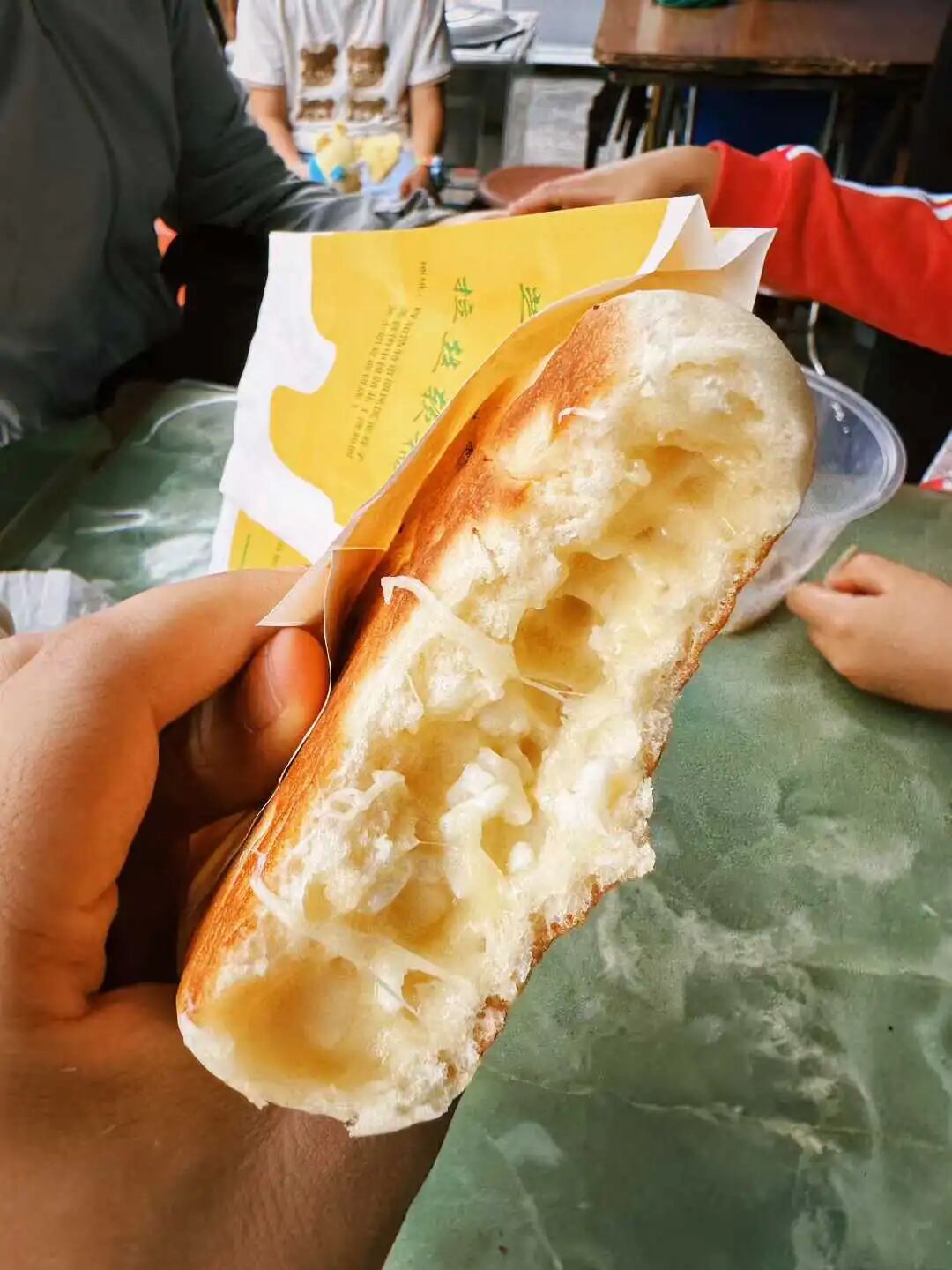
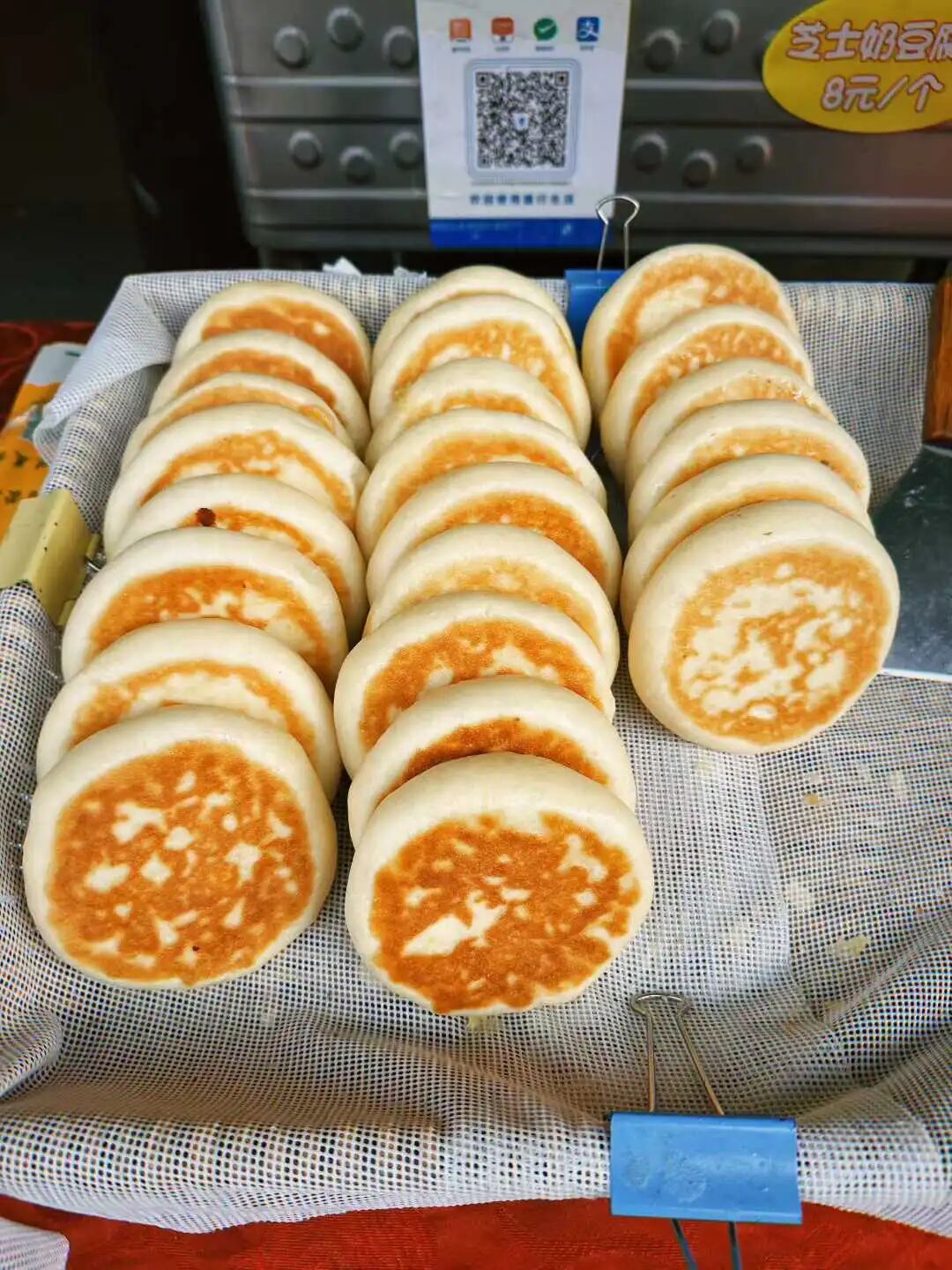
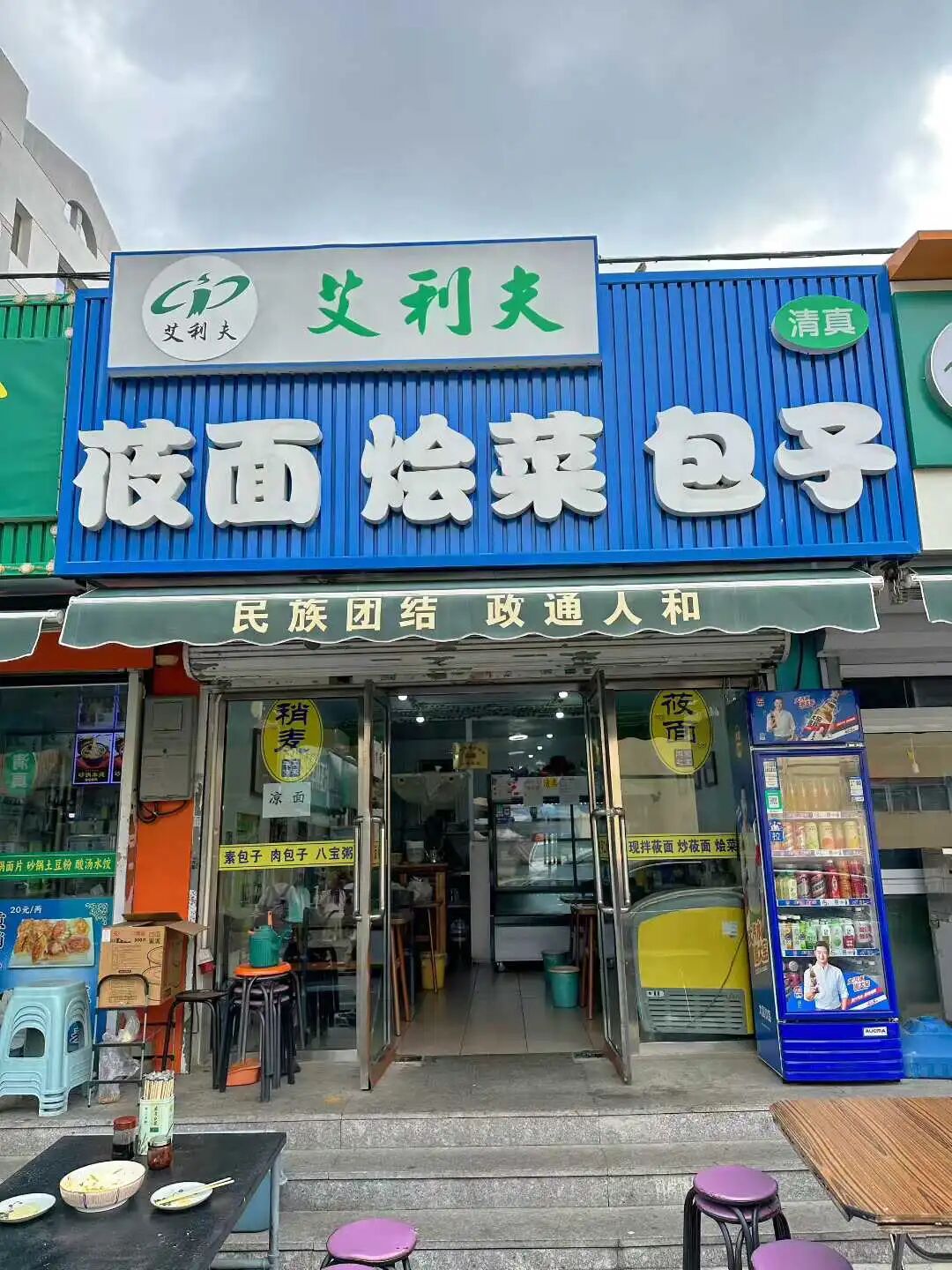
I had hot soup oat noodles (youmian yuyu) at the Old Tuo Steamed Oat Noodles shop. It had carrots, potatoes, pickled vegetables, and celery inside. The hot soup felt very comforting.
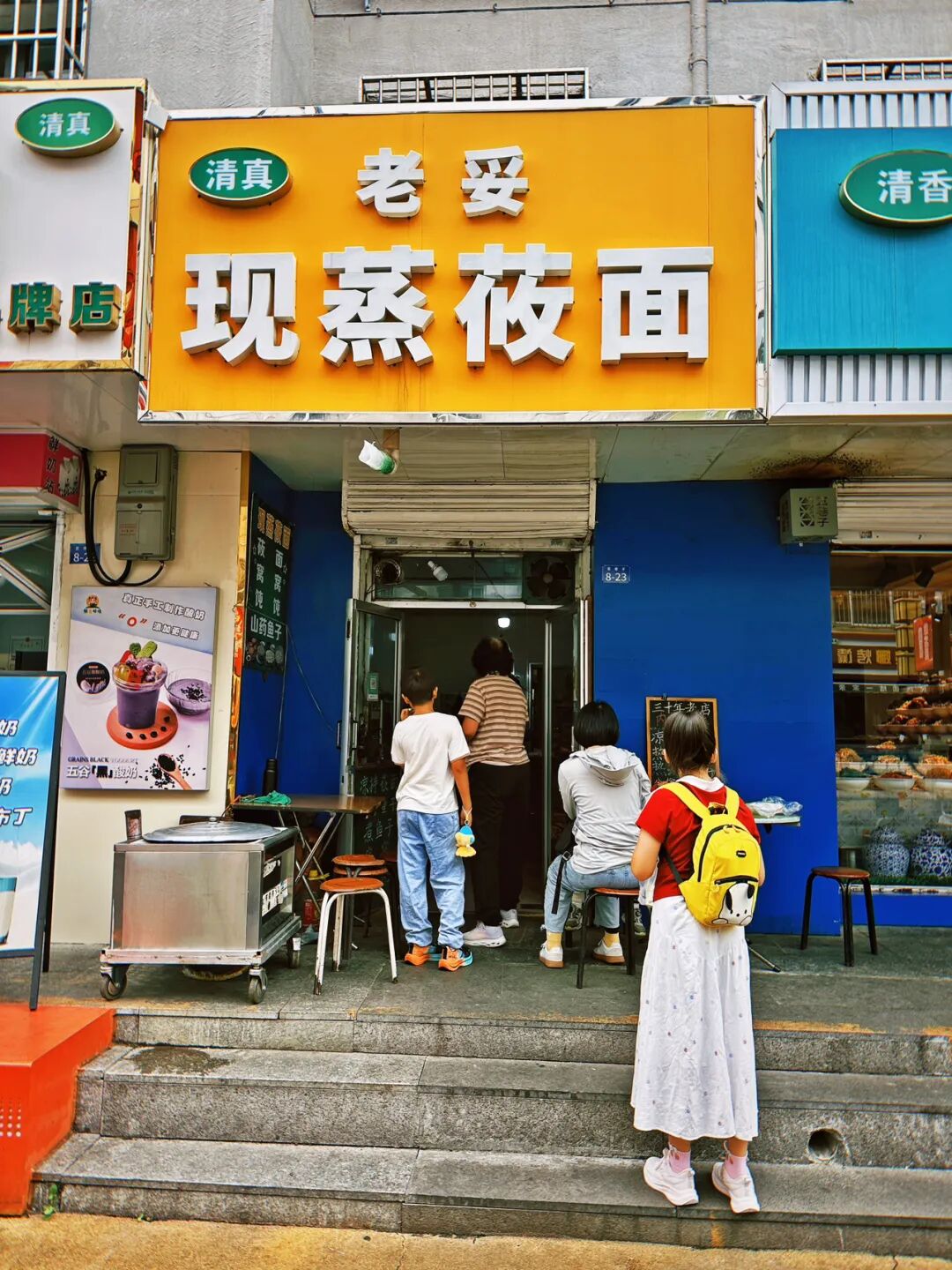
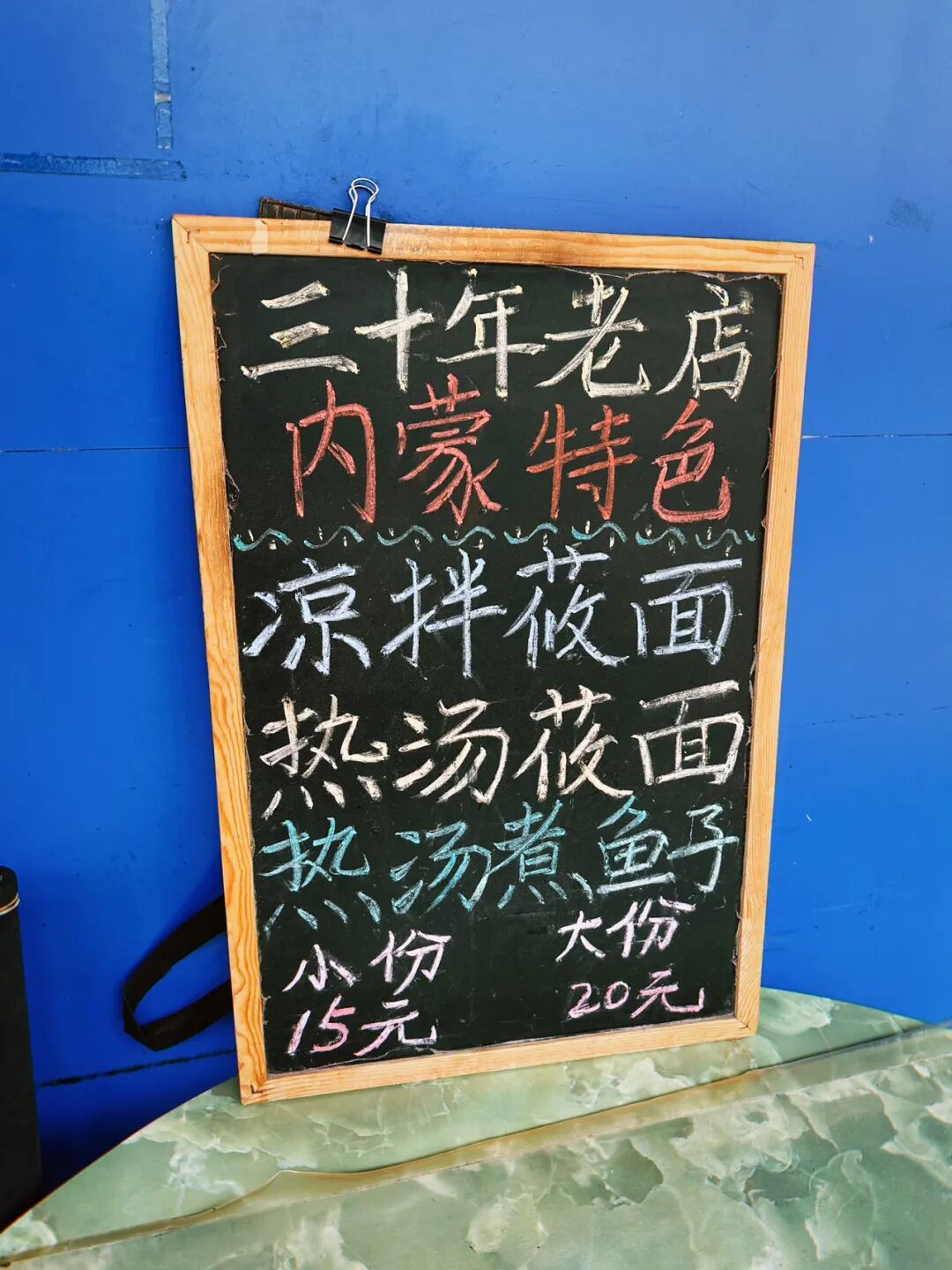
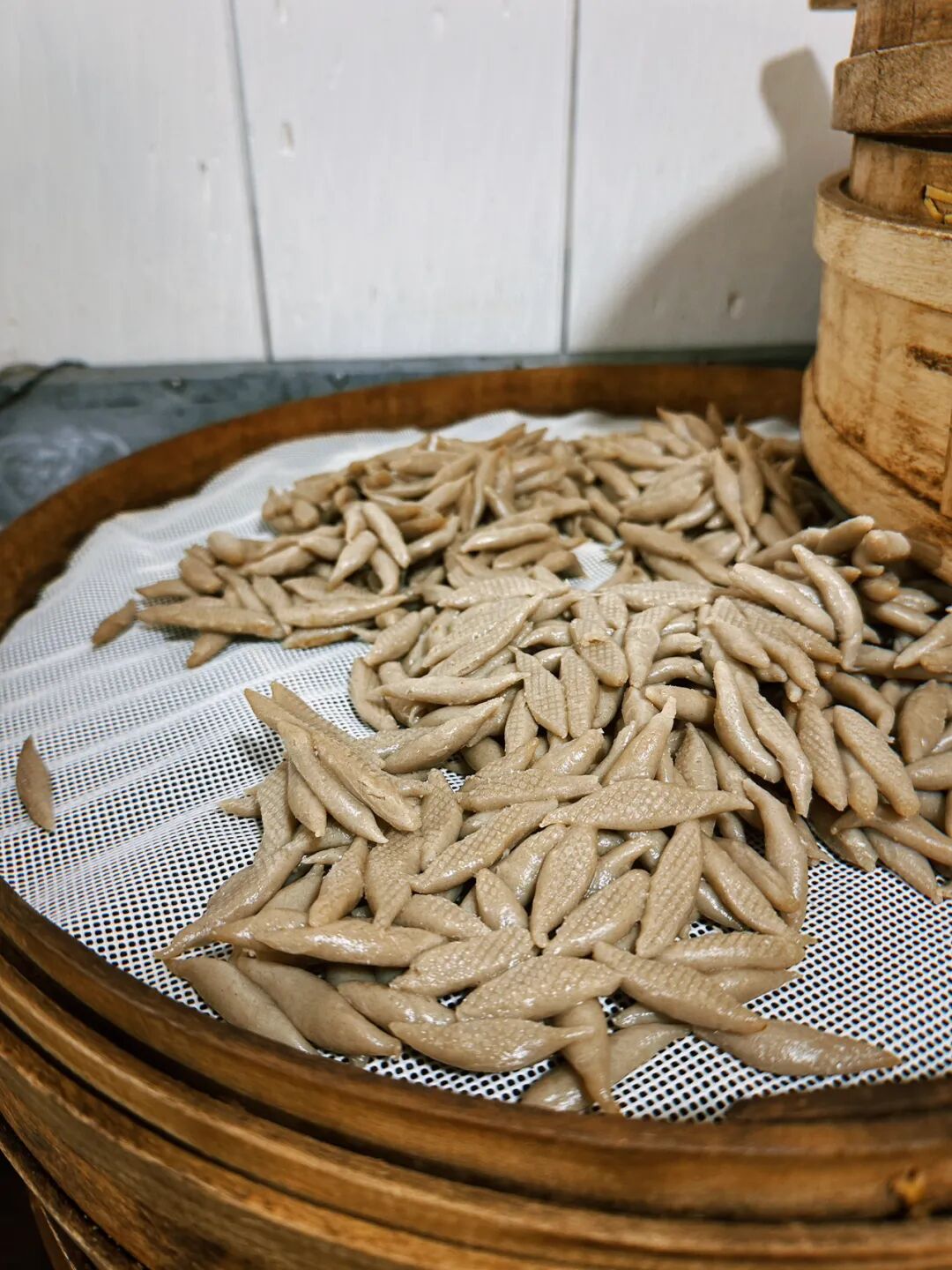
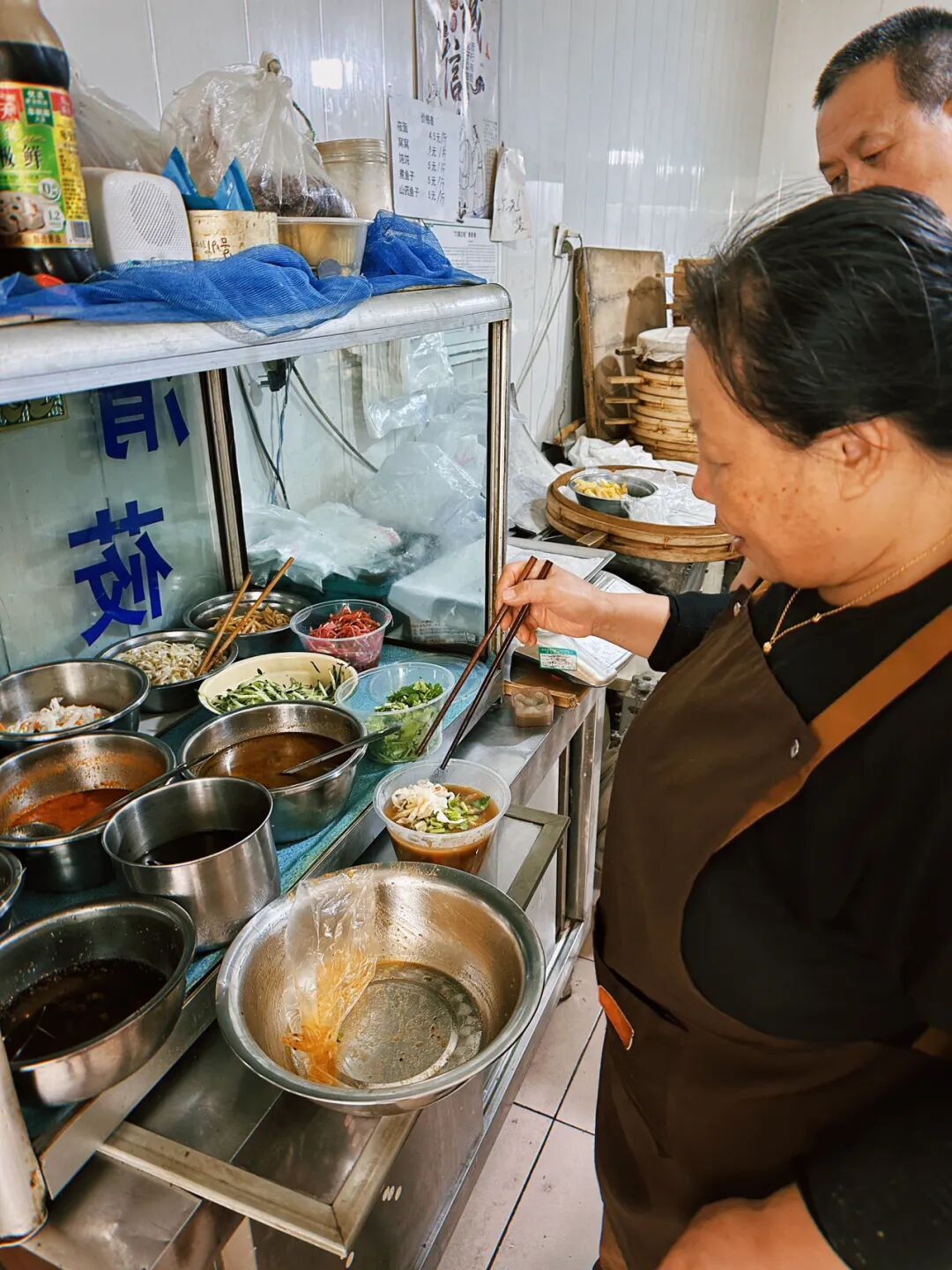
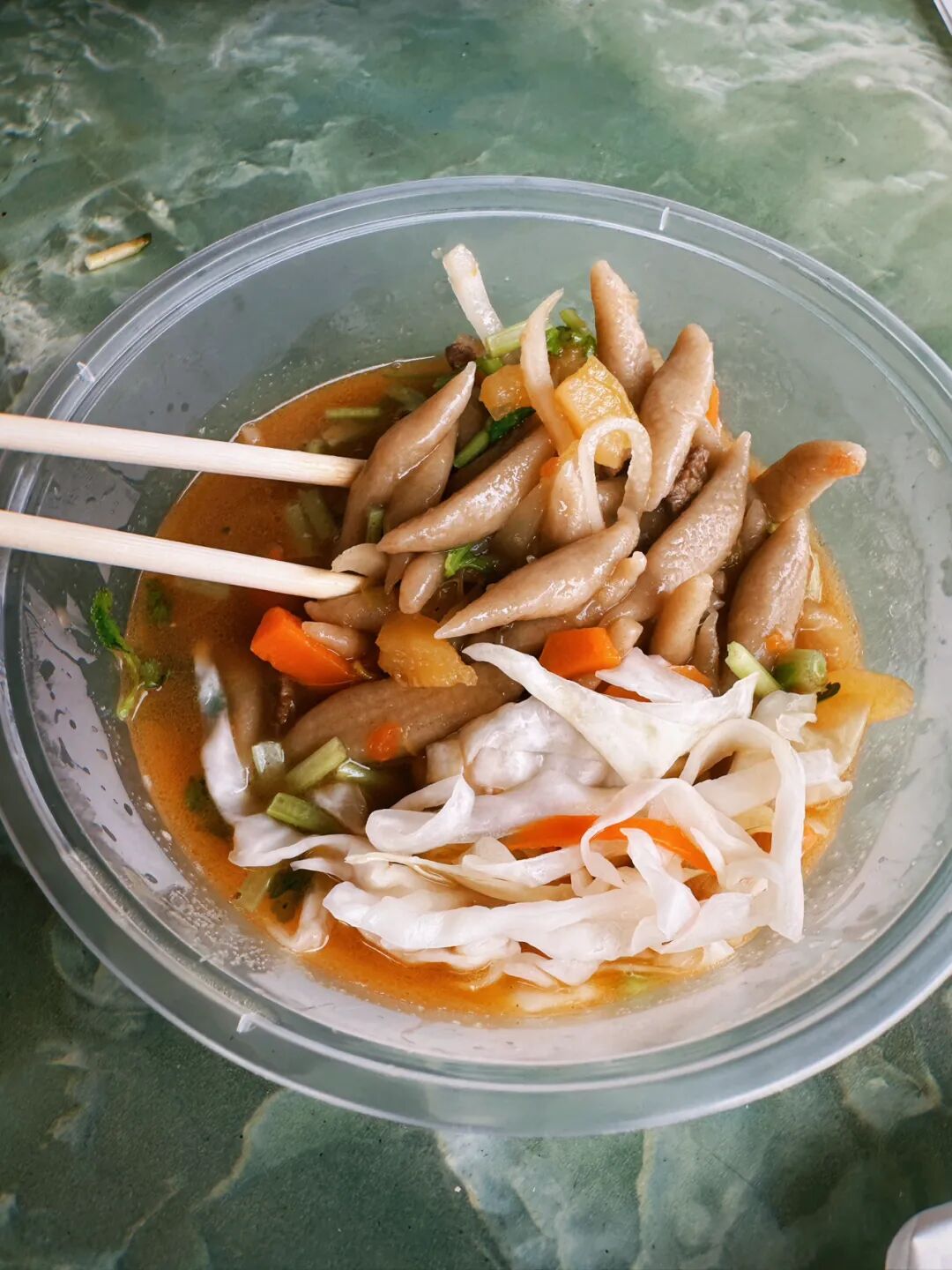
Then I had some thin fruit soup (xiguogeng) from Sister Ma's shop at the back gate of the mosque. It was made with dried apricots, dried persimmons, hawthorn, and rock sugar, which was very appetizing.
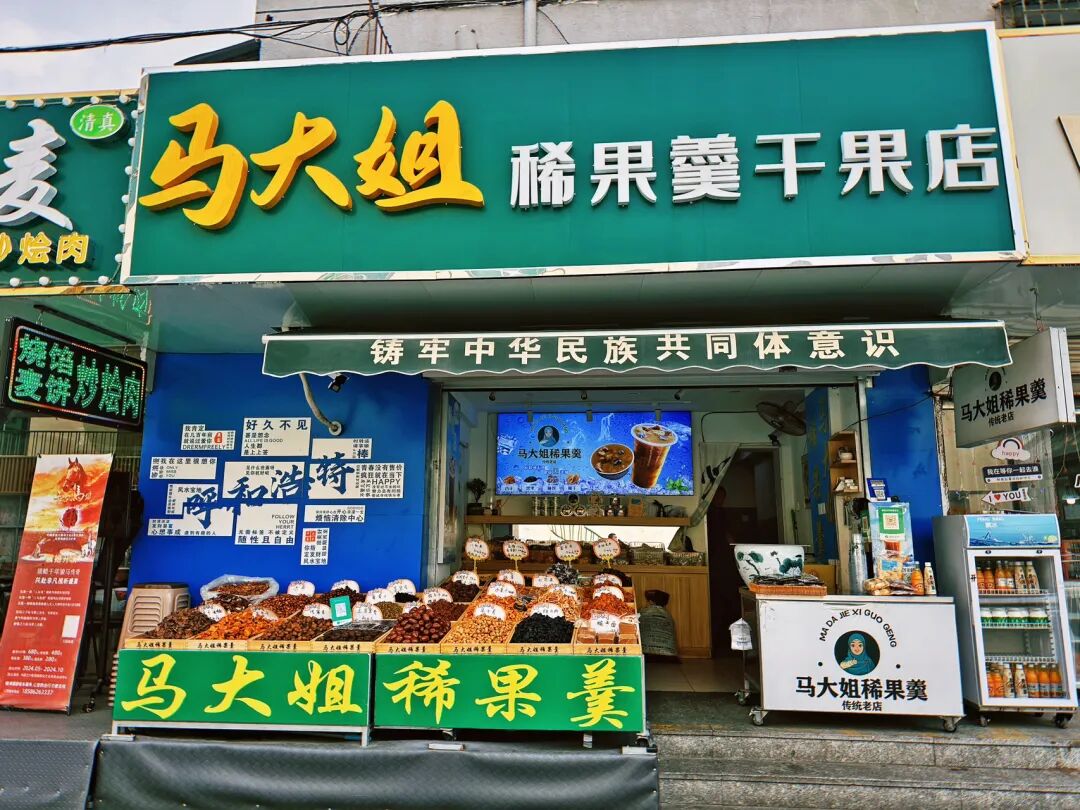
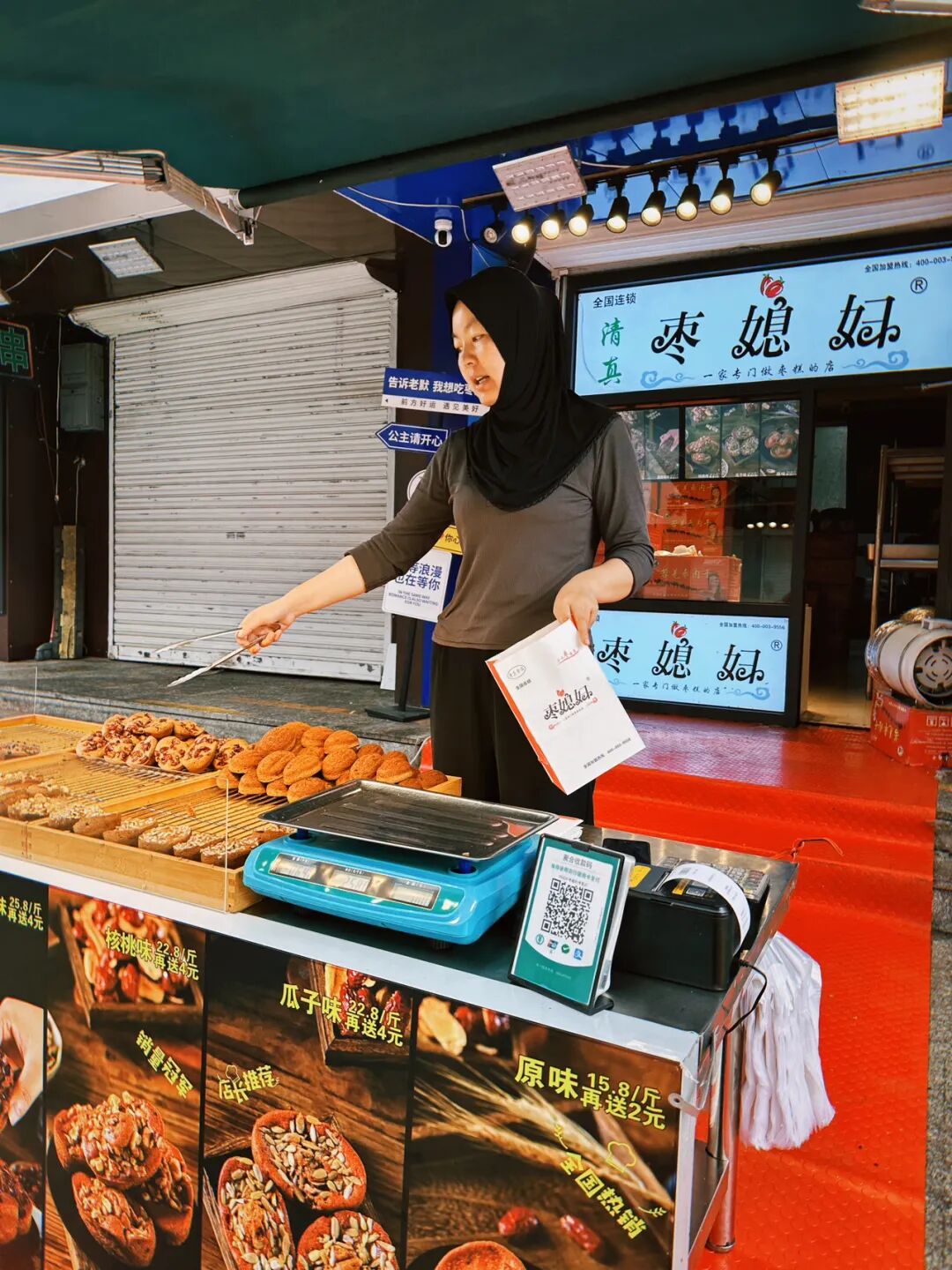
A jujube cake shop called Date Daughter-in-law (Zao Xifu) is also good. They have flavors with walnuts and melon seeds, and children really like them.
Summary: Hohhot Great Mosque grew from a Qing Dynasty Green Standard Army Hui Muslim community and reached its current scale through rebuilding and expansion in 1723, 1789, and the Republic of China era. This breakfast walk covers mosque history, milk skin, oat noodles, fruit soup, jujube cake, and Hui Muslim food around Kuanxiangzi.
I had breakfast at the Hohhot Great Mosque this morning.
The Hohhot Great Mosque community started with Hui Muslim soldiers from the Qing Dynasty Green Standard Army. After the Ming Dynasty fell, soldiers guarding the Nine Garrisons joined the Qing Dynasty as the Green Standard Army, including many Hui Muslim soldiers from Xuanhua, Datong, and Taiyuan. In 1693, the 32nd year of the Kangxi reign, the Qing government sent many troops to Hohhot to fight the Dzungar Khanate, and this group included many Hui Muslim soldiers from the Green Standard Army. These Hui Muslim soldiers and local Hui Muslim merchants built the mosque community together near the north gate of the old city, which became the early version of the Hohhot Great Mosque.
After the middle of the Kangxi reign, there were no more wars on the border. Many Hui Muslim soldiers from Datong, Zuoyun, and Youyu became small merchants or craftspeople. Many Hui Muslims moved to live near the Hohhot Great Mosque, which is why the local Hui Muslim dialect in Hohhot still sounds like the Datong dialect today. By the late Kangxi period, two large livestock markets called Cow Bridge (Niuqiao) and Sheep Hill (Yanggangzi) appeared near the mosque, and the Hui Muslims controlled the local beef and mutton slaughtering business.
The early Hohhot Great Mosque was just a few mud houses. It reached its current size after being rebuilt in 1723, the first year of the Yongzheng reign, and expanded significantly in 1789, the 54th year of the Qianlong reign. The funding for the Qianlong-era expansion came mostly from three wealthy Hui Muslim merchant families: the Kang, Ma, and Chen families. To honor their contributions, the mosque decided to add three extra scripture readings every year during the opening of the Ramadan fast. Between 1923 and 1925, the mosque expanded its main hall and the north and south lecture halls, creating the unique Republic of China-era style seen today. A woman named Widow Yang from South Channel Street donated her own property behind the mosque, so the mosque added one more scripture reading to the annual Ramadan opening to honor her.
The most famous imam at the Hohhot Great Mosque during the Republic of China era was Imam Wang Kuan from Niujie in Beijing. Imam Wang was a famous educator who founded the Chinese Muslim Progressive Association and opened the first Hui Muslim primary school in Hohhot, the Gui-Sui Hui School, in 1915.
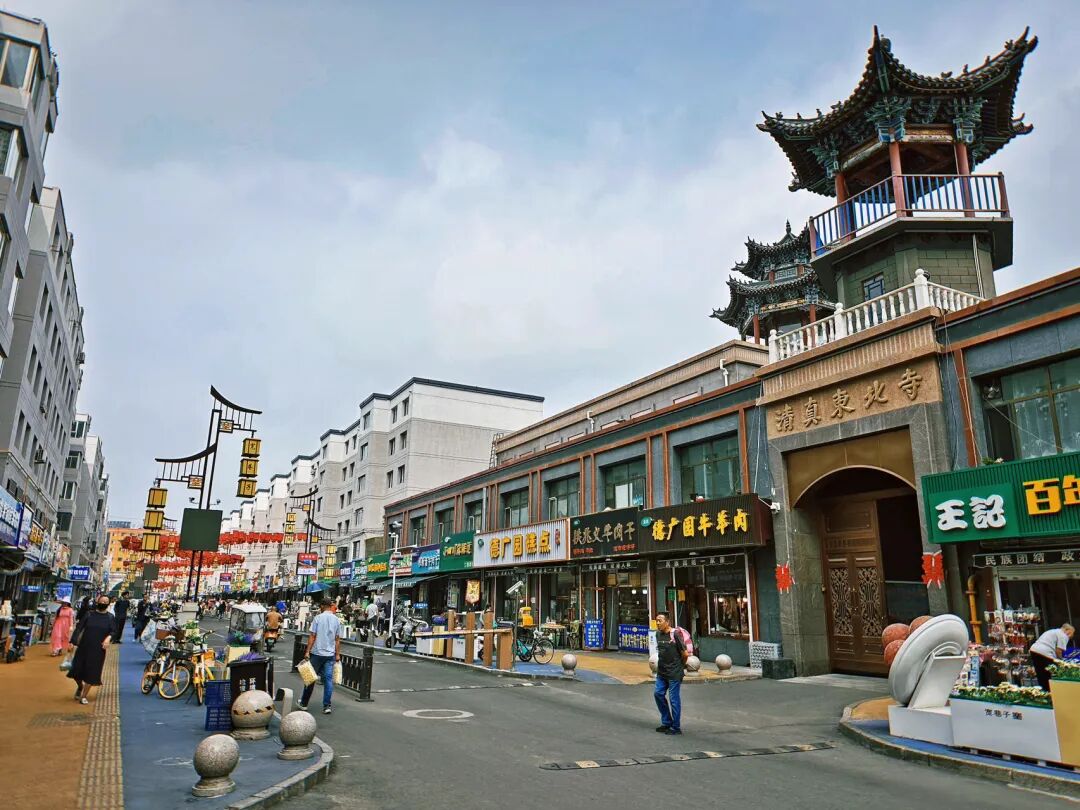
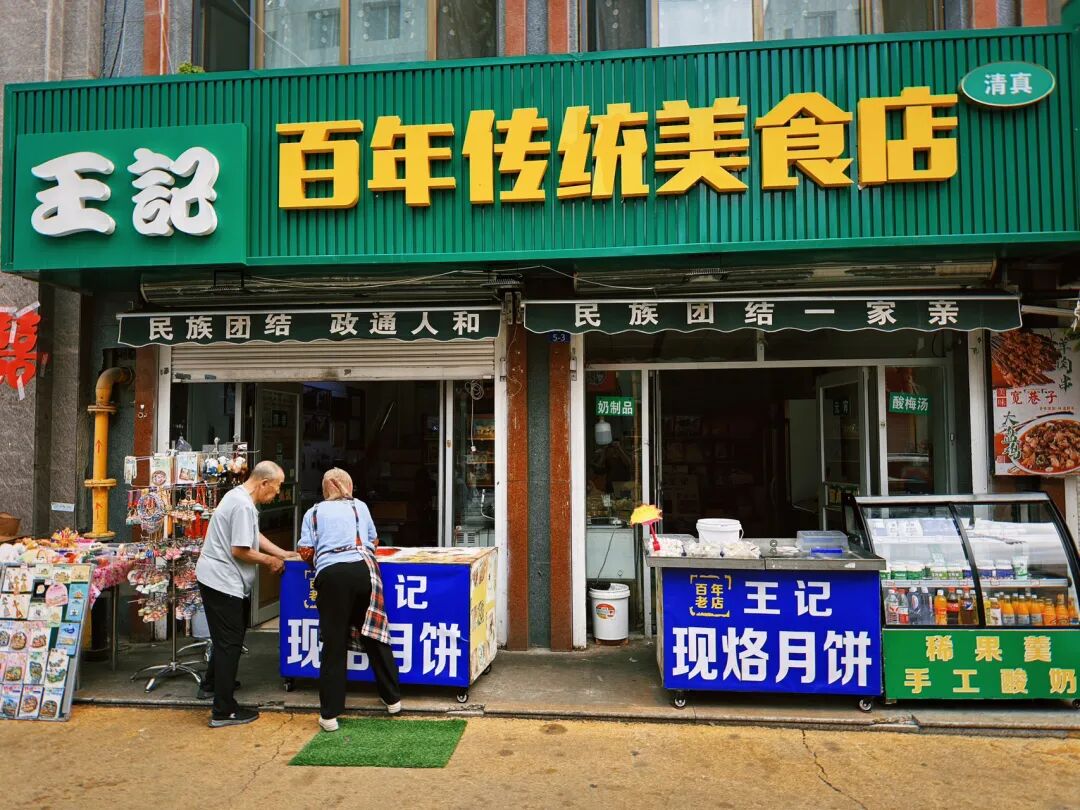
I ate roasted milk skin (naopi) at the Ma Family Dairy Shop. It had a rich milky flavor. They were also the first shop in Wide Alley (Kuanxiangzi) to make milk tofu cheese pancakes. Many shops in Wide Alley now sell cheese milk tofu pancakes. They use Italian soft cheese mixed with Inner Mongolian milk tofu (naidoufu), which has become a popular internet-famous snack. The most popular place with a line in Wide Alley is the Star and Moon Pastry Shop (Xingyue Gaodian). We were too lazy to wait, so we bought some at the nearby Qingheyuan shop. The cheese was stretchy and milky, but I personally prefer the plain milk tofu pancakes.
The Hui Muslim Ma family originally came from Youwei, Shanxi. They were a powerful military family during the Ming Dynasty. In the middle of the Wanli reign, the Ma Army, led by Ma Gui and his brothers and nephews, was famous for being great fighters. They earned great merit by defending Youwei for six months against Altan Khan. The Ma family defended the Ming Dynasty borders for years, and members of the family served as regional commanders in almost every border town. After the Ming Dynasty fell, the Ma family stopped fighting and turned to farming. In the early Qianlong reign, the Youyu General's office and the troops moved to the new city of Guihua in Hohhot. Many Hui Muslims from Youyu followed the path known as Walking the West Pass (Zou Xikou) to Hohhot to make a living. Legend says the Ma family also settled in Hohhot at the end of the Qianlong reign.
I had hot soup oat noodles (youmian yuyu) at the Old Tuo Steamed Oat Noodles shop. It had carrots, potatoes, pickled vegetables, and celery inside. The hot soup felt very comforting.
Then I had some thin fruit soup (xiguogeng) from Sister Ma's shop at the back gate of the mosque. It was made with dried apricots, dried persimmons, hawthorn, and rock sugar, which was very appetizing.
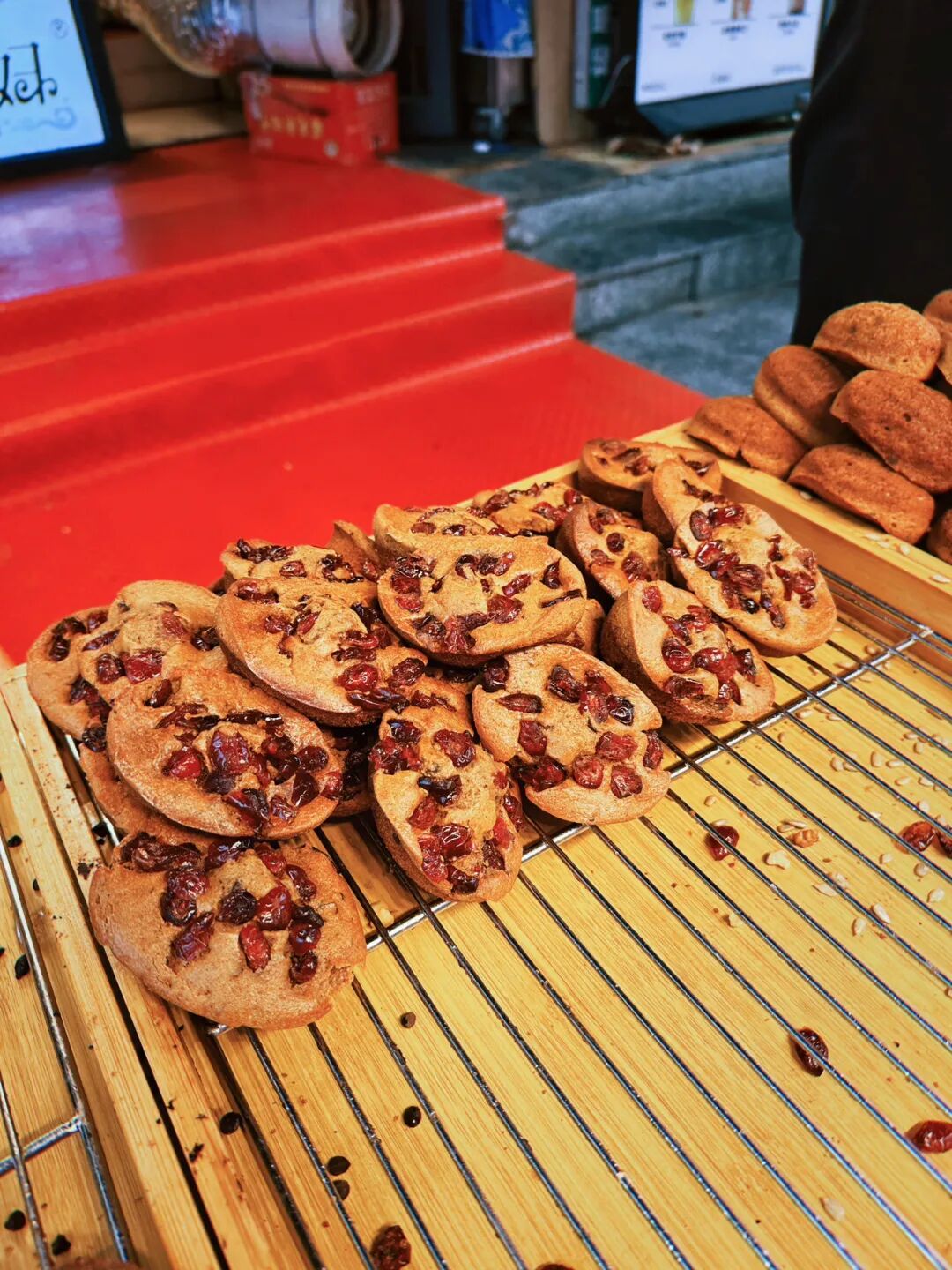
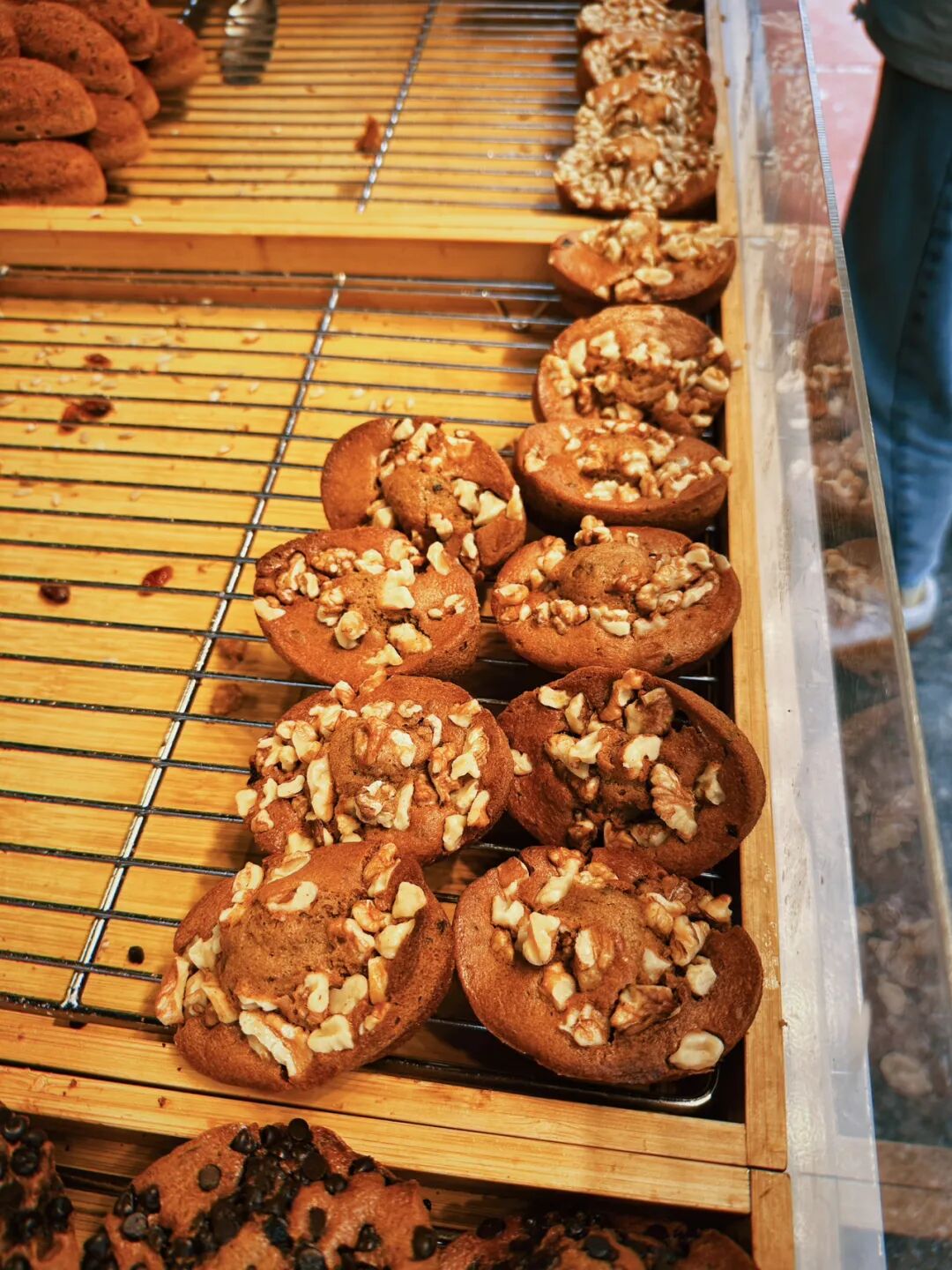
A jujube cake shop called Date Daughter-in-law (Zao Xifu) is also good. They have flavors with walnuts and melon seeds, and children really like them.
Halal Shopping and Eating in Hohhot in Summer
Articles • ali2007fr posted the article • 0 comments • 228 views • 2026-05-16 23:49
Reposted from the web
Summary: This travel note introduces Halal Shopping and Eating in Hohhot in Summer. At the end of June, I went on a trip to Hohhot and Ulanqab with Zainab for the weekend. First, I will share our eating and shopping experience in Hohhot. It is useful for readers interested in Hohhot Travel, Halal Food, Muslim Travel.
At the end of June, I went on a trip to Hohhot and Ulanqab with Zainab for the weekend. First, I will share our eating and shopping experience in Hohhot.
We arrived in Hohhot by night train on Friday. We came to the entrance of the Great Mosque to drink some dried apricot and persimmon fruit soup, then went to Wang Wei on Dasi North Street to eat lamb skewers. Their place should be the most popular one for lamb skewers around the Great Mosque. We also ordered peanuts and edamame, plum juice, and lean meat sandwiches. The sandwiches were filled with pure lean stewed meat, which was very satisfying.
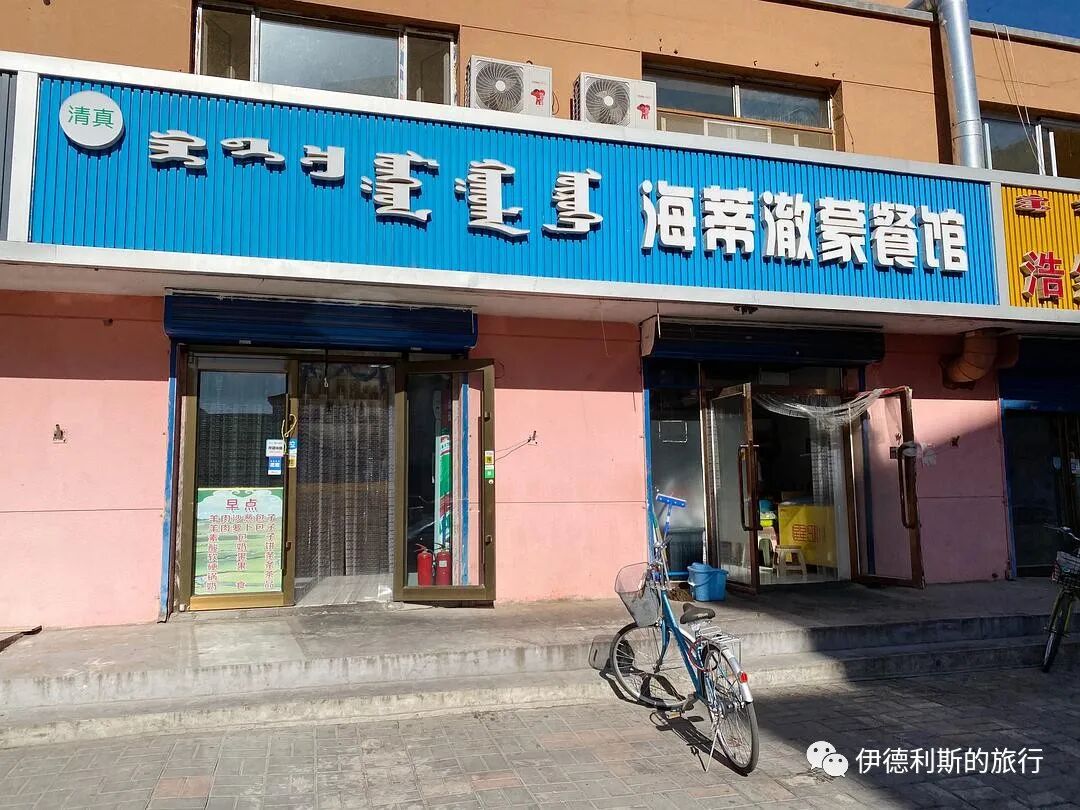
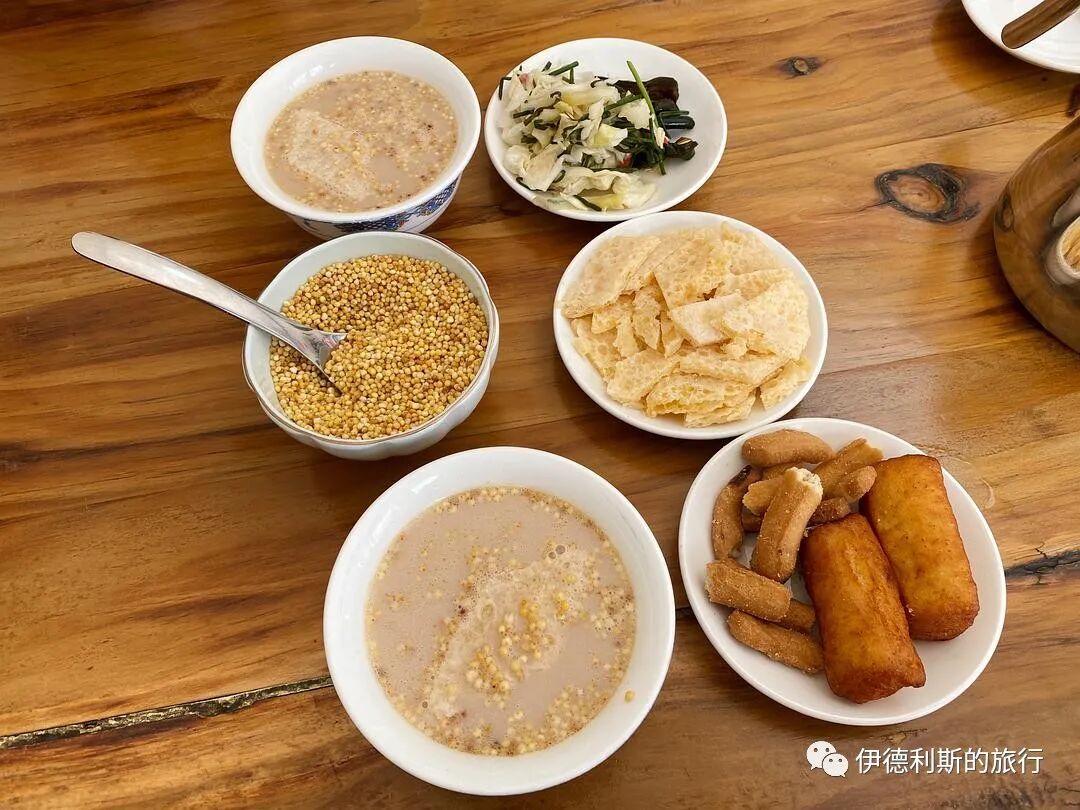
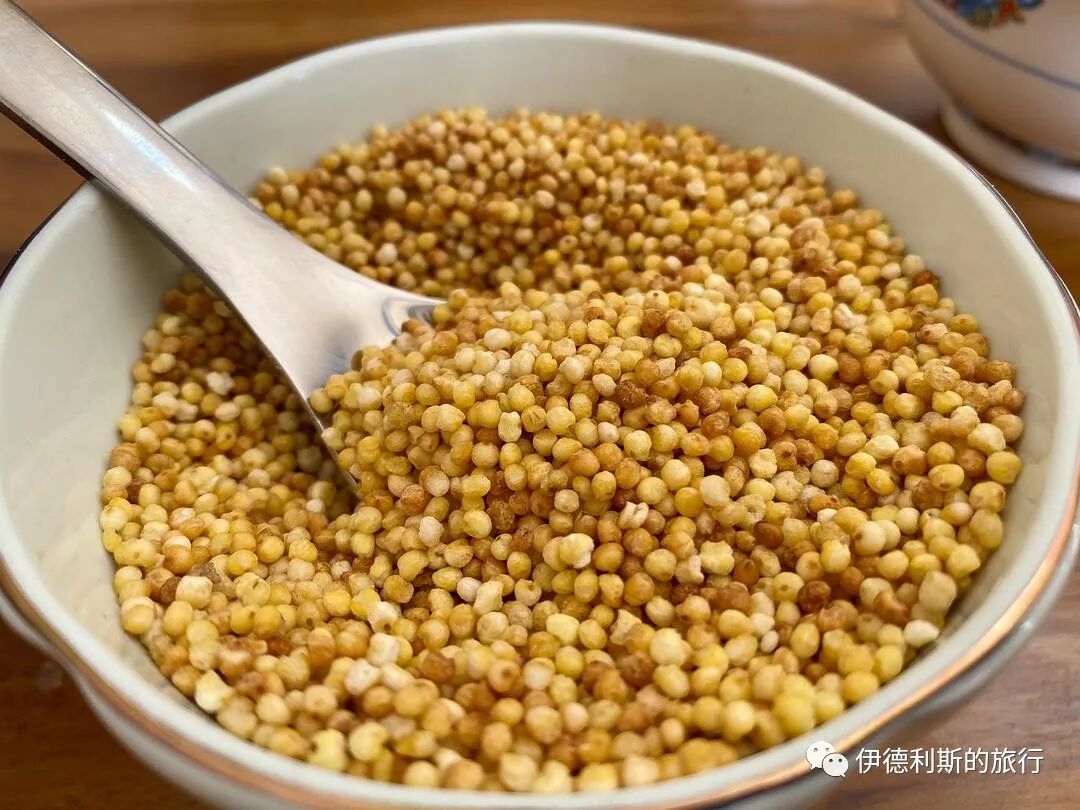
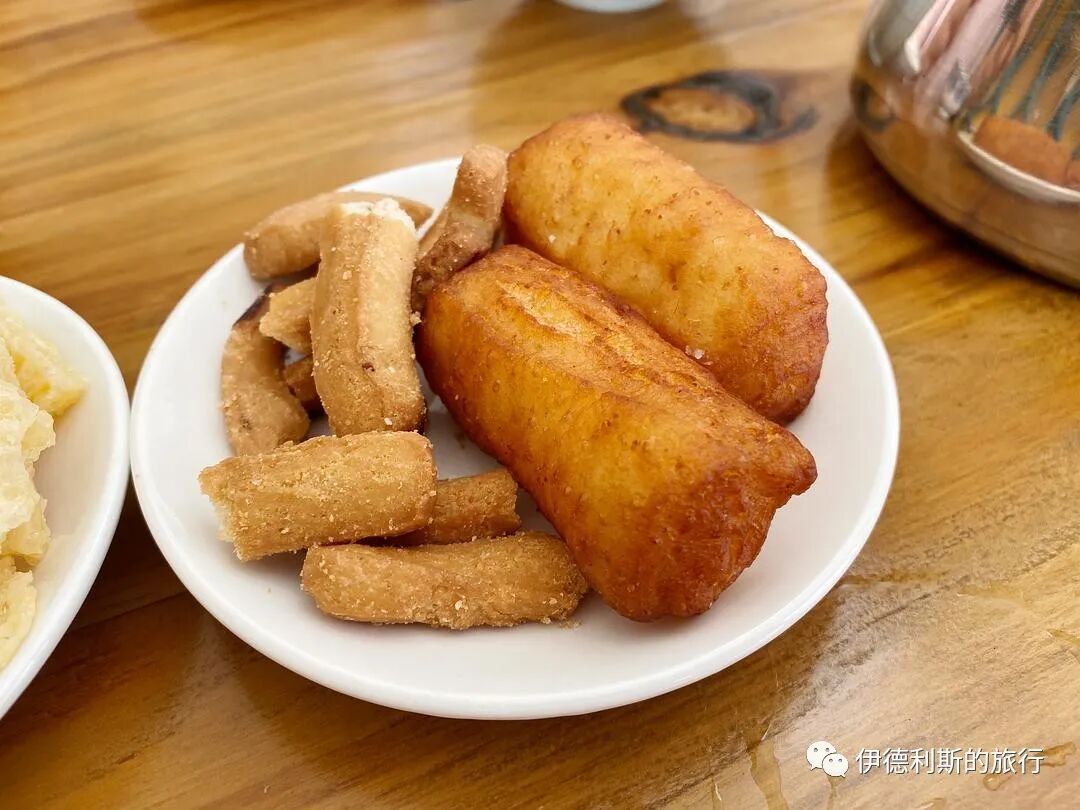
On Saturday morning, we had a Halal Mongolian-style breakfast at Haidiche on Nanshuncheng Street. We had salty milk tea with fried rice, milk skin, soft fried dough strips, and hard fried dough strips. The dough strips are made with yogurt and flour without a drop of water. There were also wild onion side dishes and Buryat steamed buns.
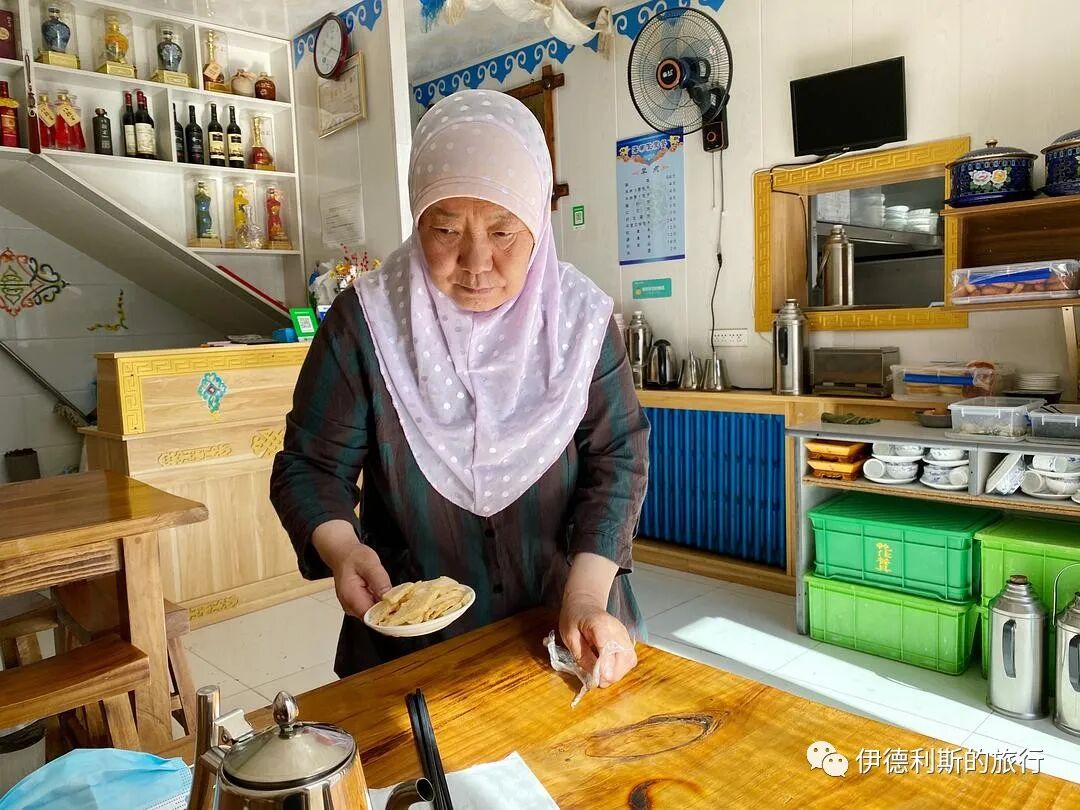
Last time I came to Hohhot, I didn't know there was Halal Mongolian food. This shop has been open for more than a year, and Haidiche is the owner's religious name. The owner's family is very kind. Her mother was looking after the shop during breakfast. The auntie introduced us to the way of eating Mongolian breakfast in detail and asked about us in every way, which made us feel very warm.
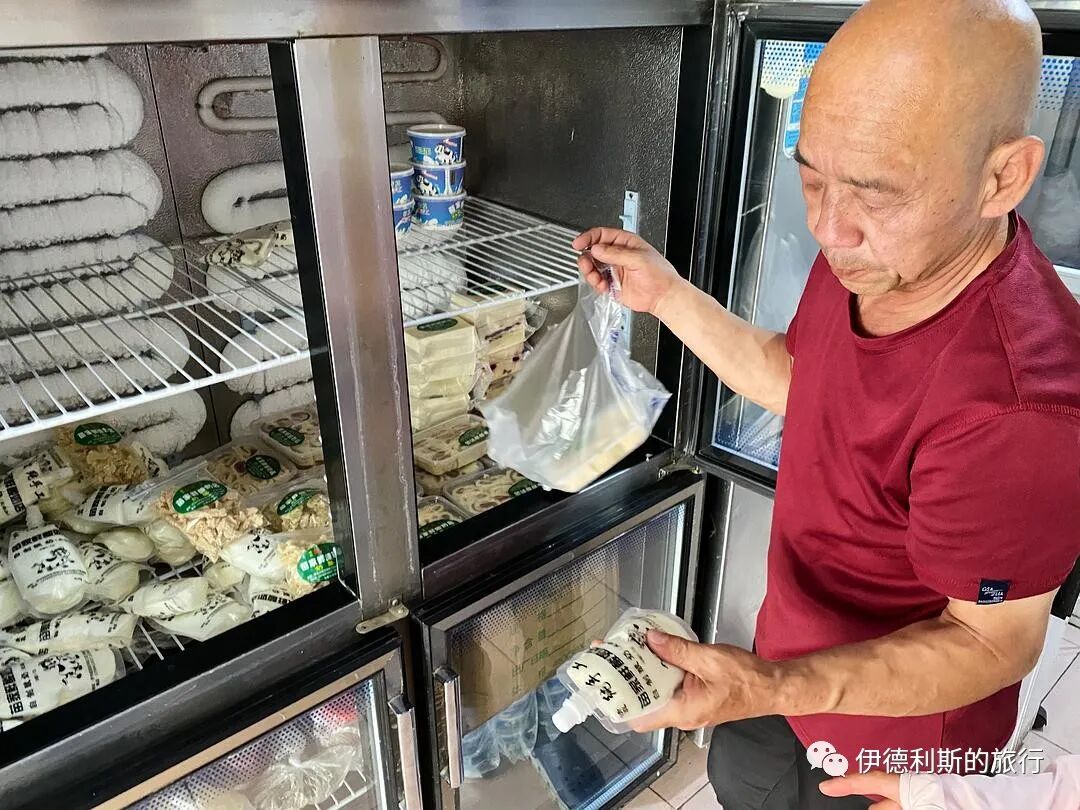
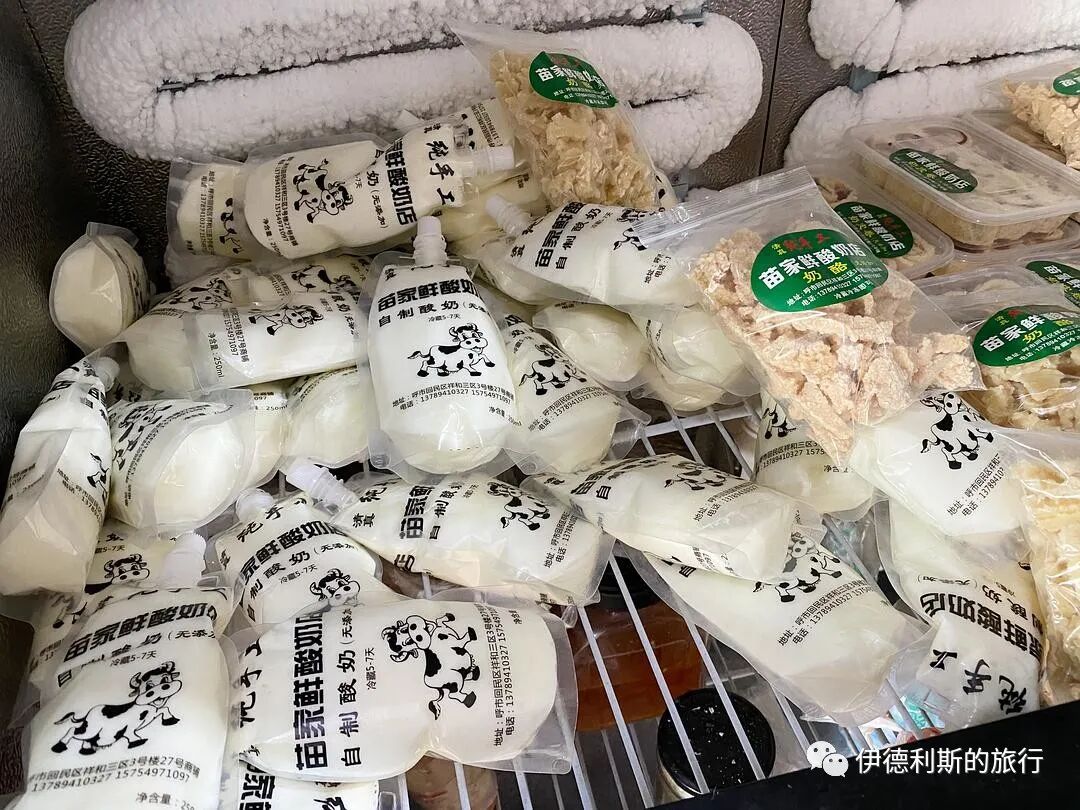
We bought some freshly brewed yogurt at Ma's Dairy Shop on Xinmin Street. The Ma surname Hui people's ancestral home is Youwei, Shanxi. In the Ming Dynasty, they were a powerful family of the Nine Frontiers. In the mid-Wanli period, the 'Ma Family Army' formed by Ma Gui and his brothers and nephews was famous for being good at fighting. They made great contributions by defending Youwei for six months against Altan Khan. The Ma surname Hui people defended the frontier for the Ming Dynasty for many years, and almost all frontier towns had people with the surname Ma serving as regional commanders. After the fall of the Ming Dynasty, the Ma family gave up their military service to farm. After the 'Great Western Route' trade route opened during the Kangxi period, many people moved to Guihua City to settle down.
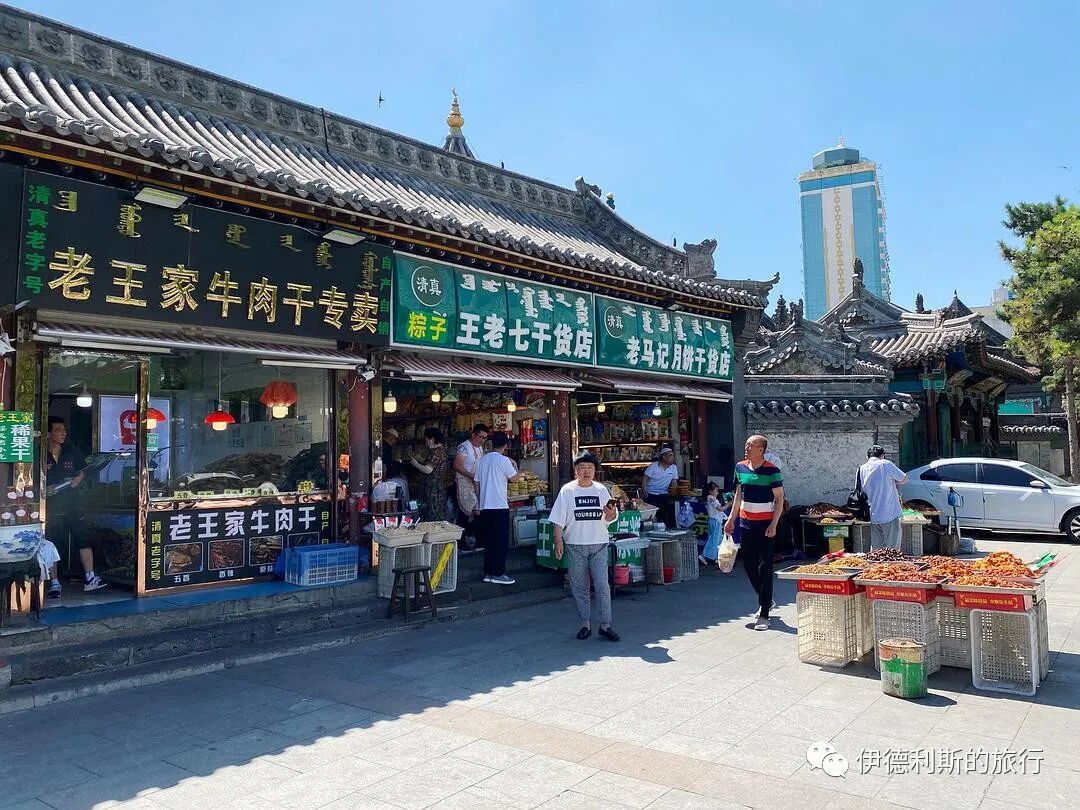
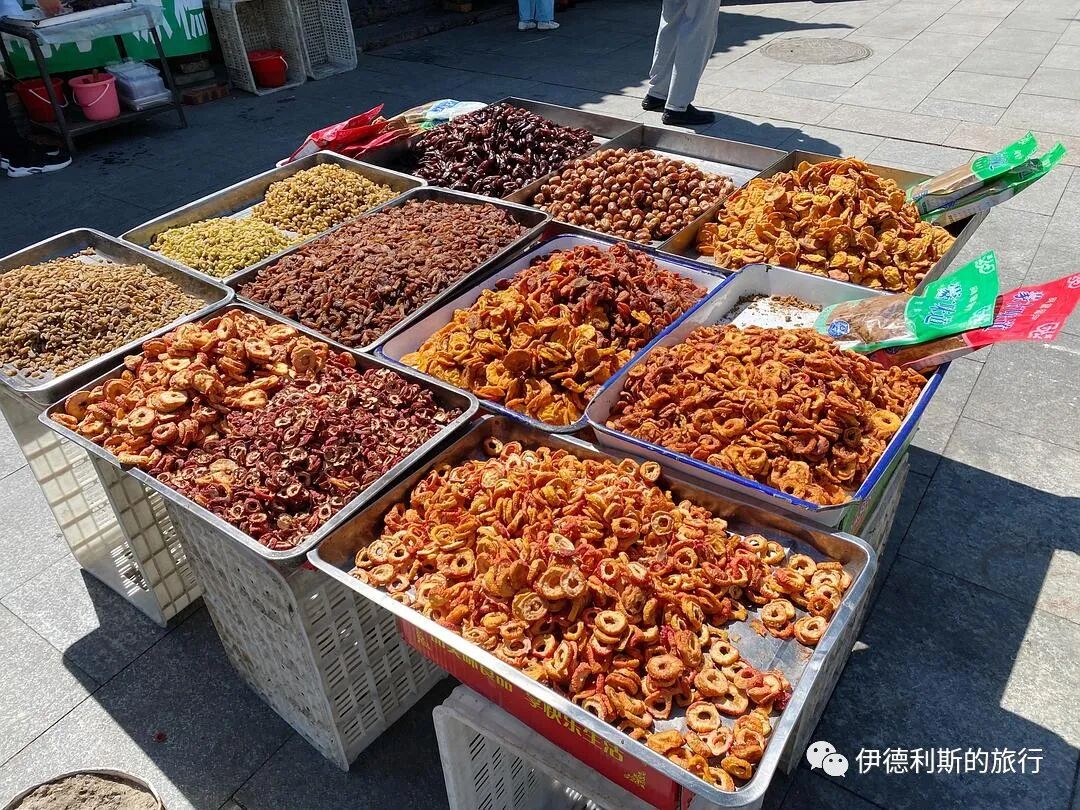
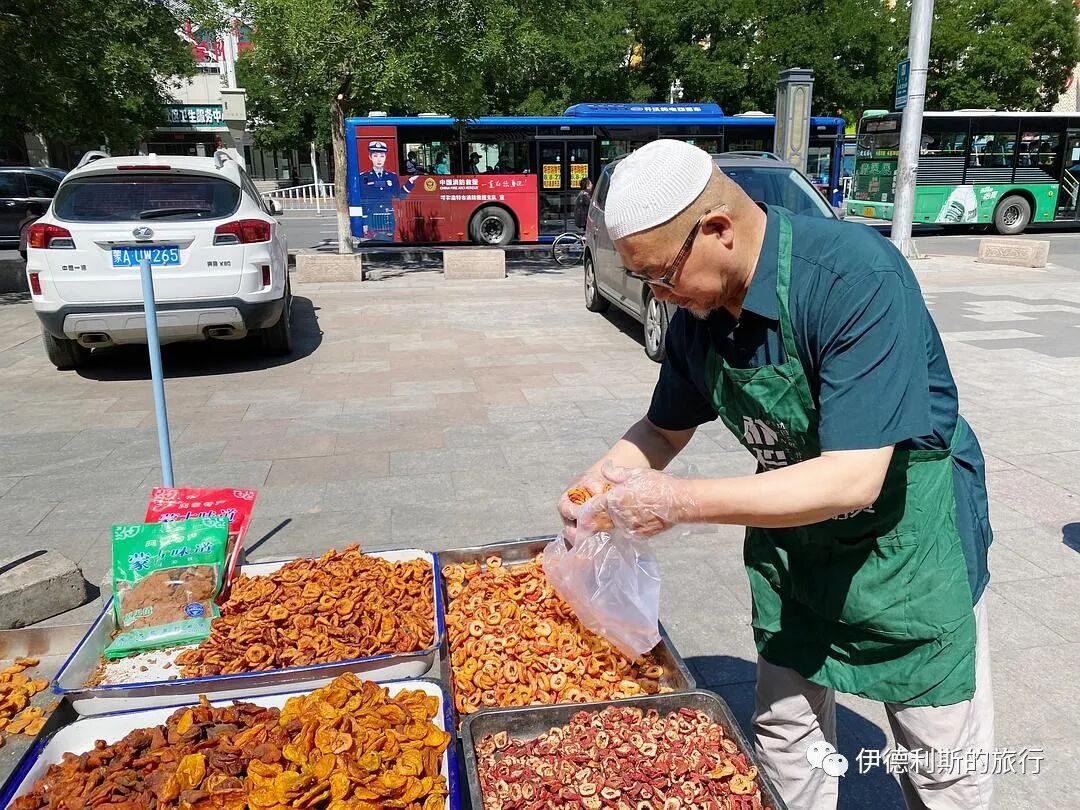
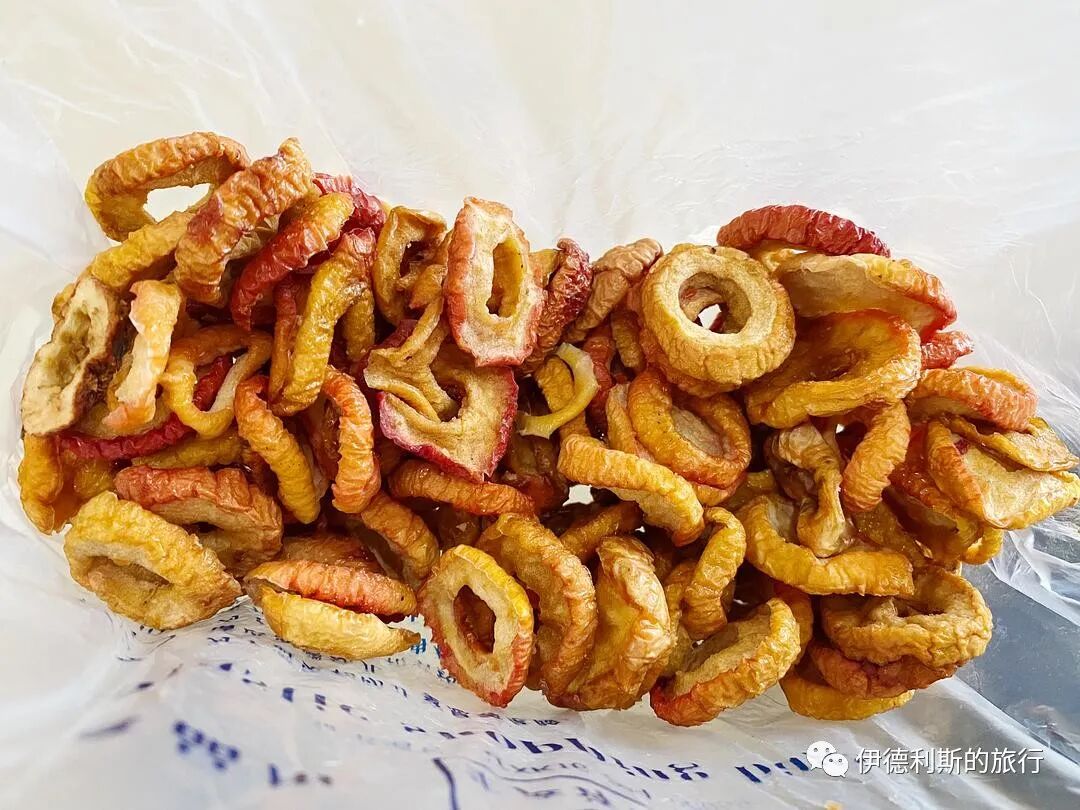
We bought some sweet and sour dried crabapples at Wang Laoqi's dry goods store at the entrance of the Great Mosque, and bought a cup of fruit soup in Kuanxiangzi. Just walking around and eating snacks in the Hui district of Hohhot is very rich.
We bought roasted milk skin at Bai's Dairy Shop on Houxincheng Road. The texture of their roasted milk skin is just right and not hard at all. Zainab said it was much better than what she had bought online before. Their cheese is also very delicious, sweet and sour, but the weather was too hot to take away, so we just tasted it.
One theory about the Bai surname Hui people in Hohhot is that they followed Princess Kejing to Guihua City to do business after she married the Mongolian Tushetu Khan in 1697 (the 36th year of Kangxi). Another theory is that they moved from Xi'an in the late Qing Dynasty. At that time, the most famous noodle shop outside the north gate of Guihua City was opened by Bai Xiu.
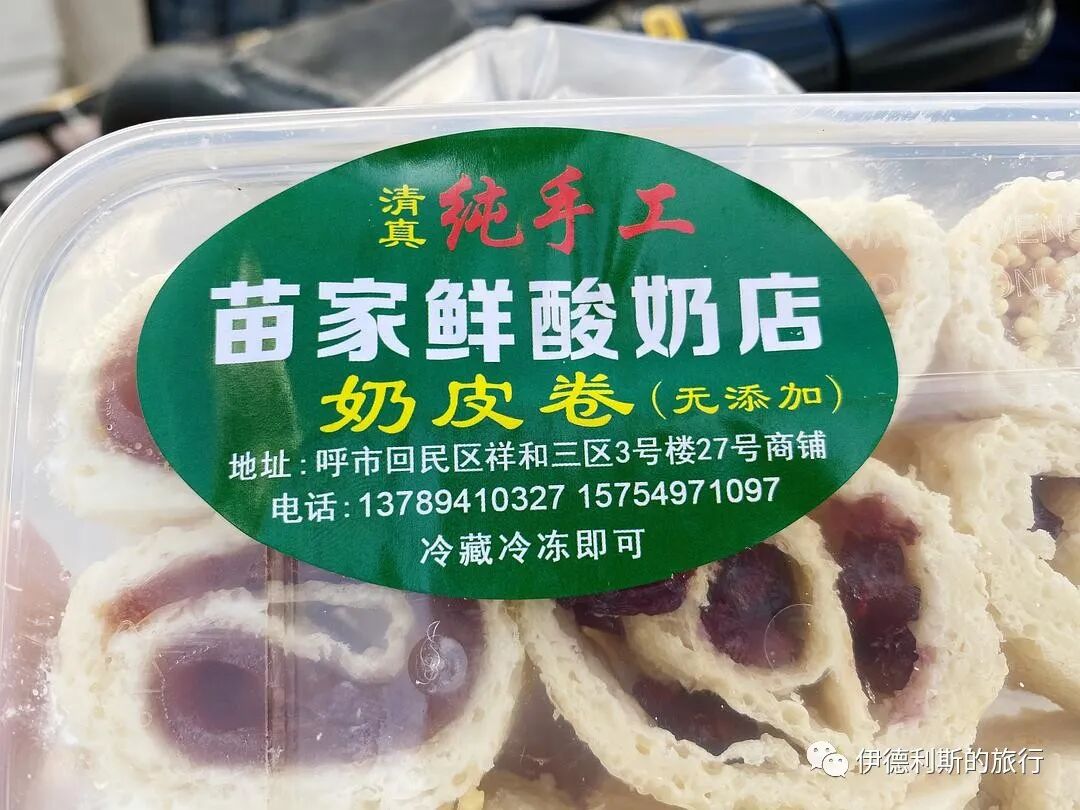
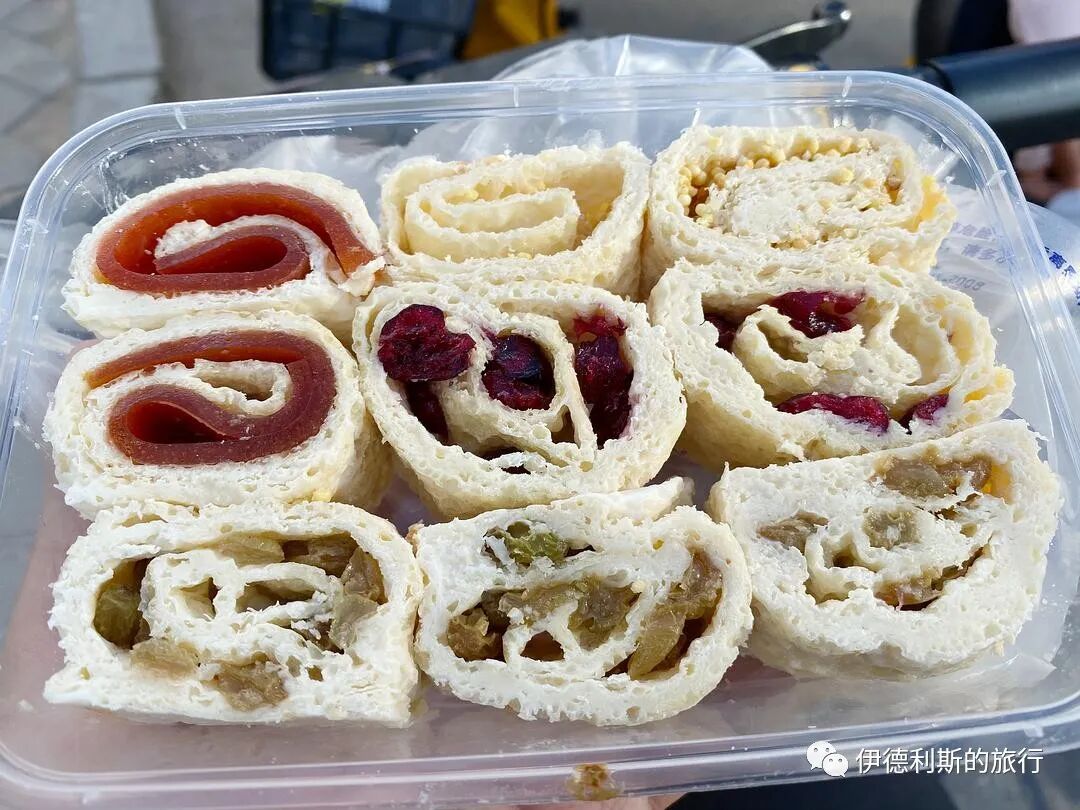
We bought milk skin rolls and fresh yogurt at Miao's Fresh Yogurt Shop on Xincheng Road. Milk skin can be rolled with four kinds of fillings: hawthorn, cranberry, raisins, and fried rice. Each flavor is different, and I personally prefer the cranberry roll. In summer, milk skin rolls cannot be stored at room temperature and need to be eaten on the same day.
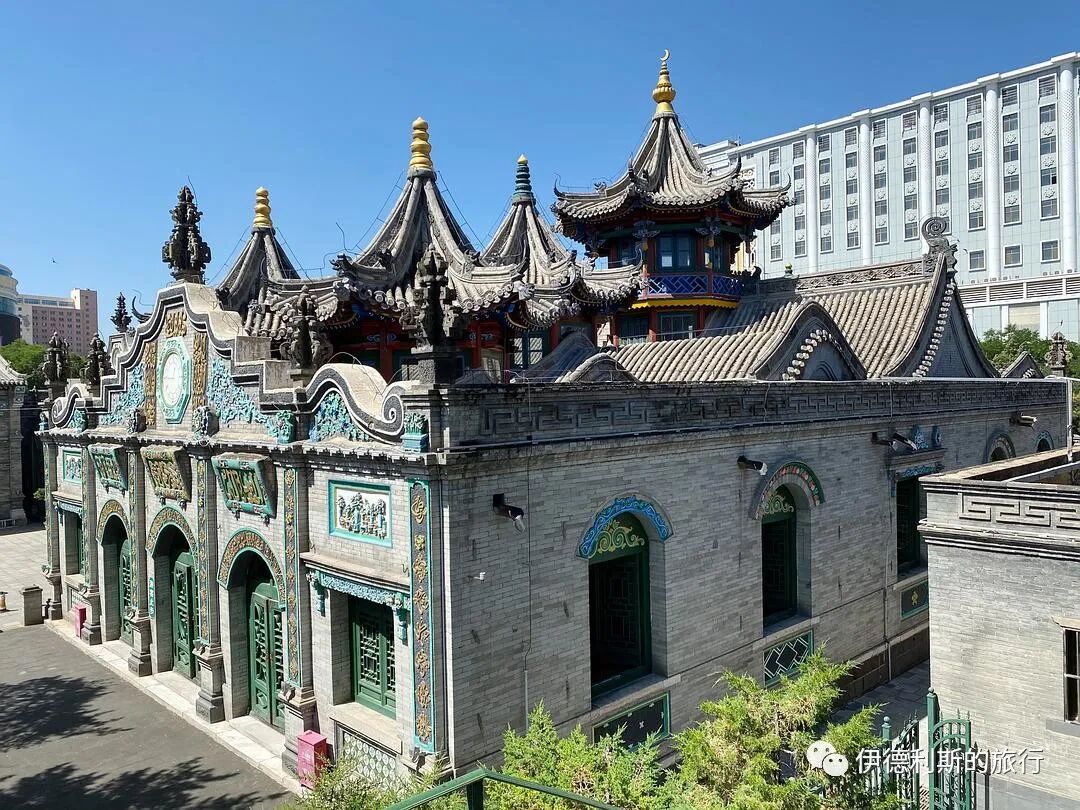
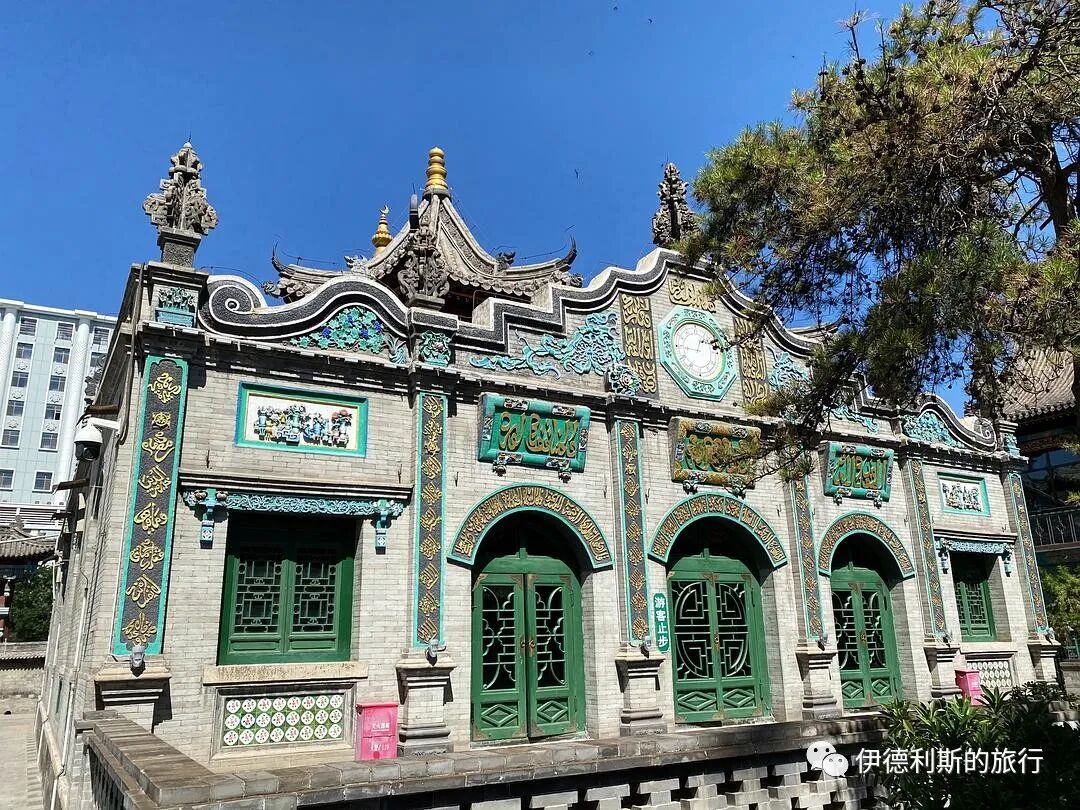
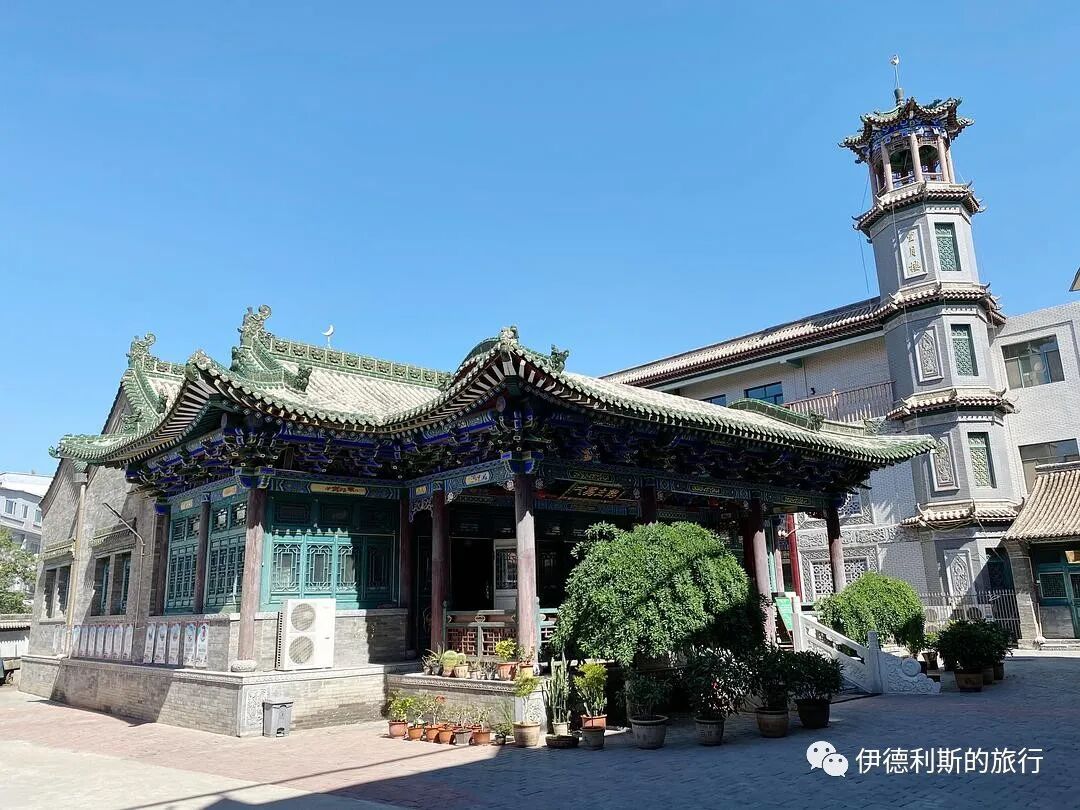
The Hohhot Great Mosque was first built in the late Ming and early Qing dynasties, expanded in 1789 (the 54th year of Qianlong), and expanded again in 1923.
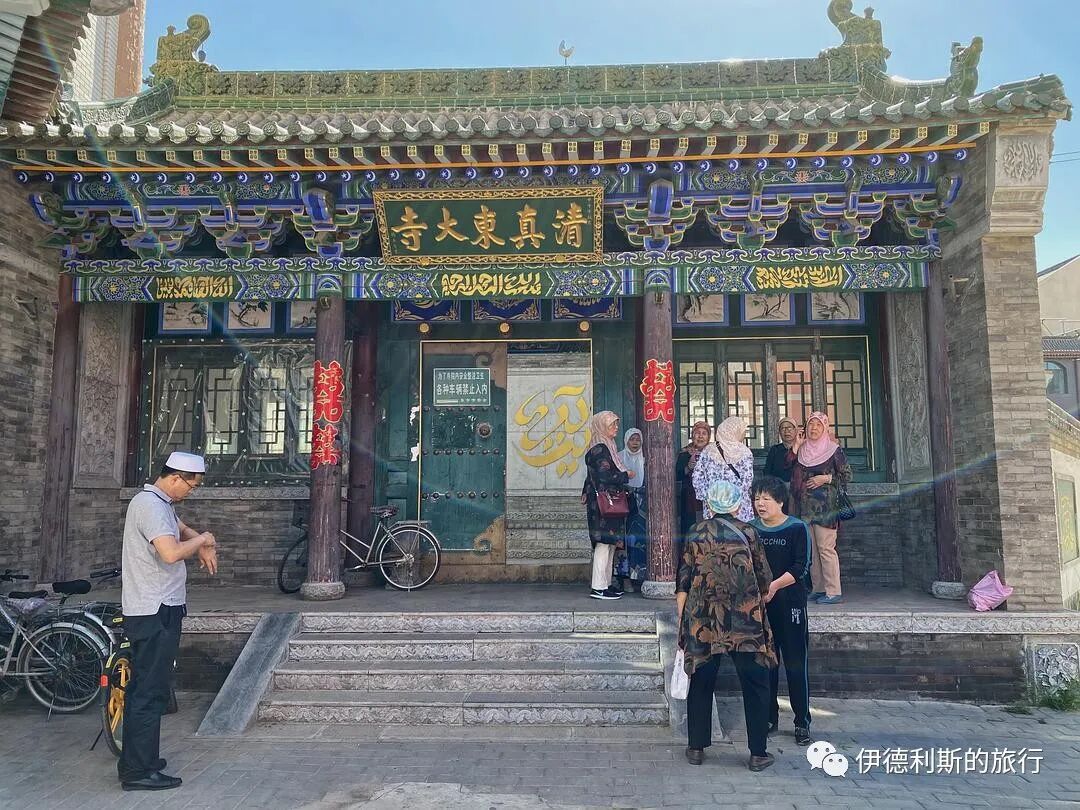
The mosque gate was built in 1892 (the 18th year of Guangxu), with a plaque inscribed 'Great Mosque' from 1890 (the 16th year of Guangxu), and plaques reading 'Country Prosperous' and 'People Peaceful' on both sides.
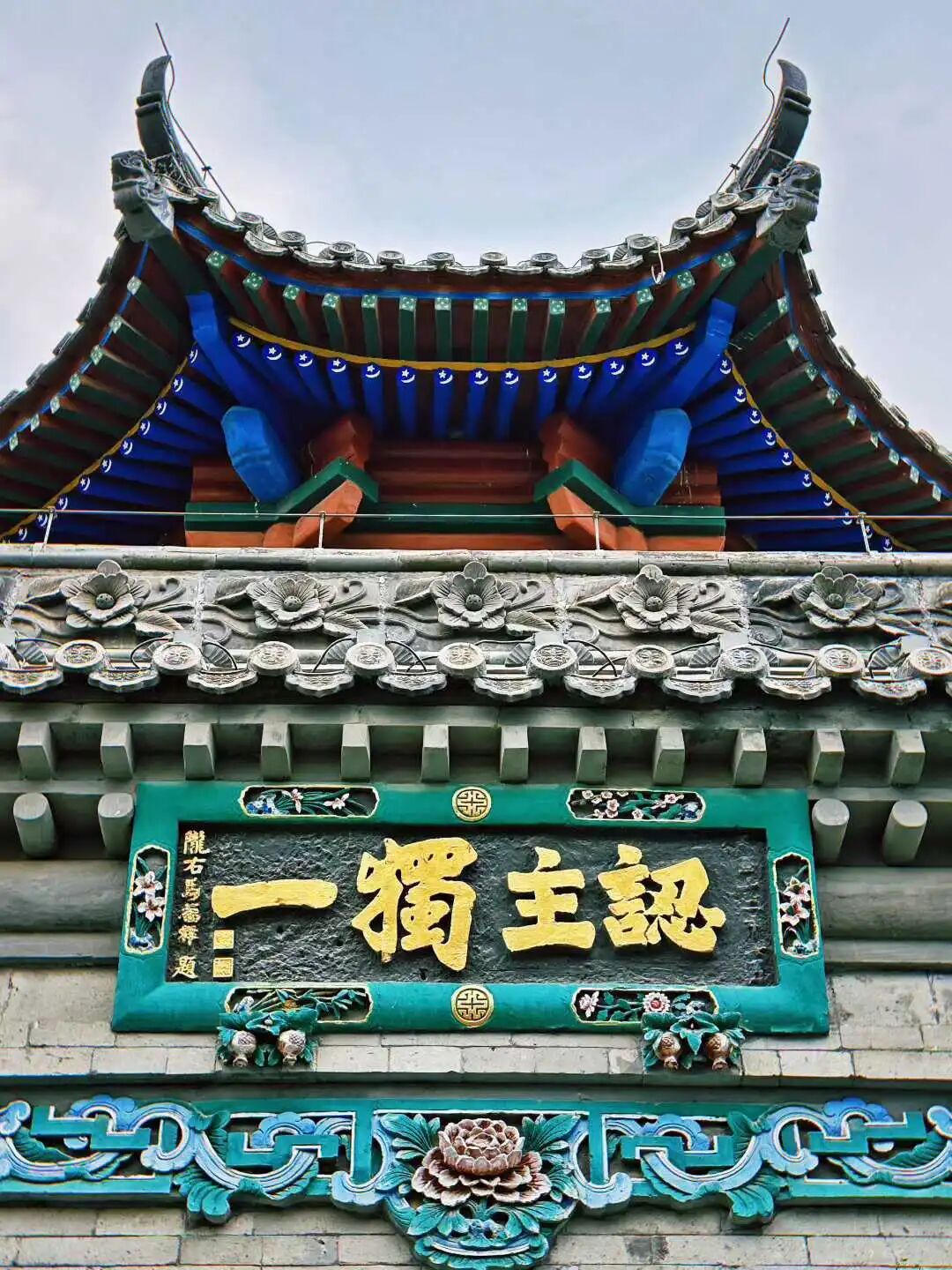
After entering the gate, you can see the brick-carved screen wall behind the main hall, built in 1896 (the 22nd year of Guangxu), engraved with 'Rectify the Heart and Be Sincere in Cultivating the Self', 'Recognize the Oneness of Allah', 'Enlighten the Heart', and 'See the Nature', which were inscribed by Ma Fuxiang, the then-Governor of Suiyuan in 1924.
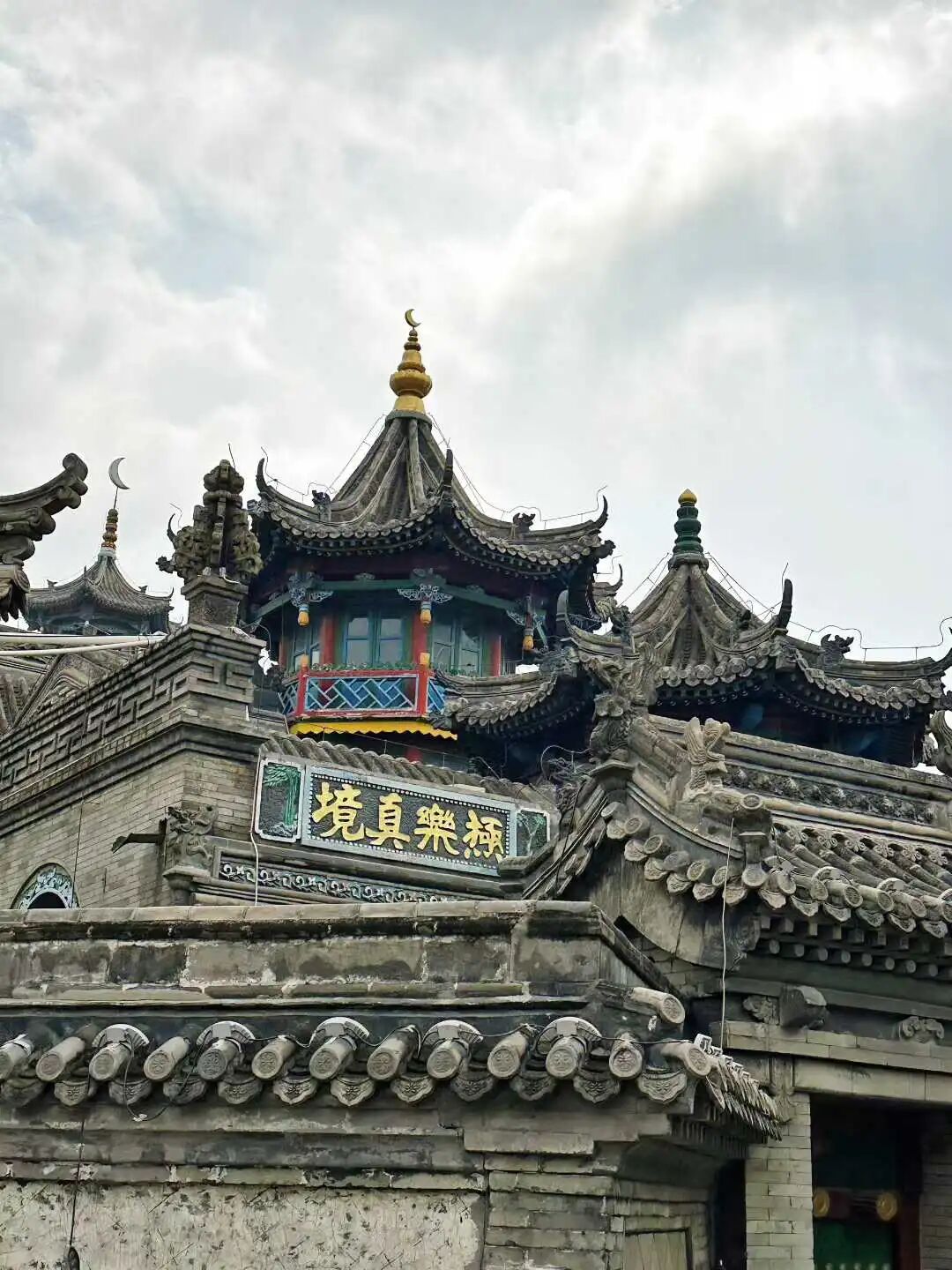
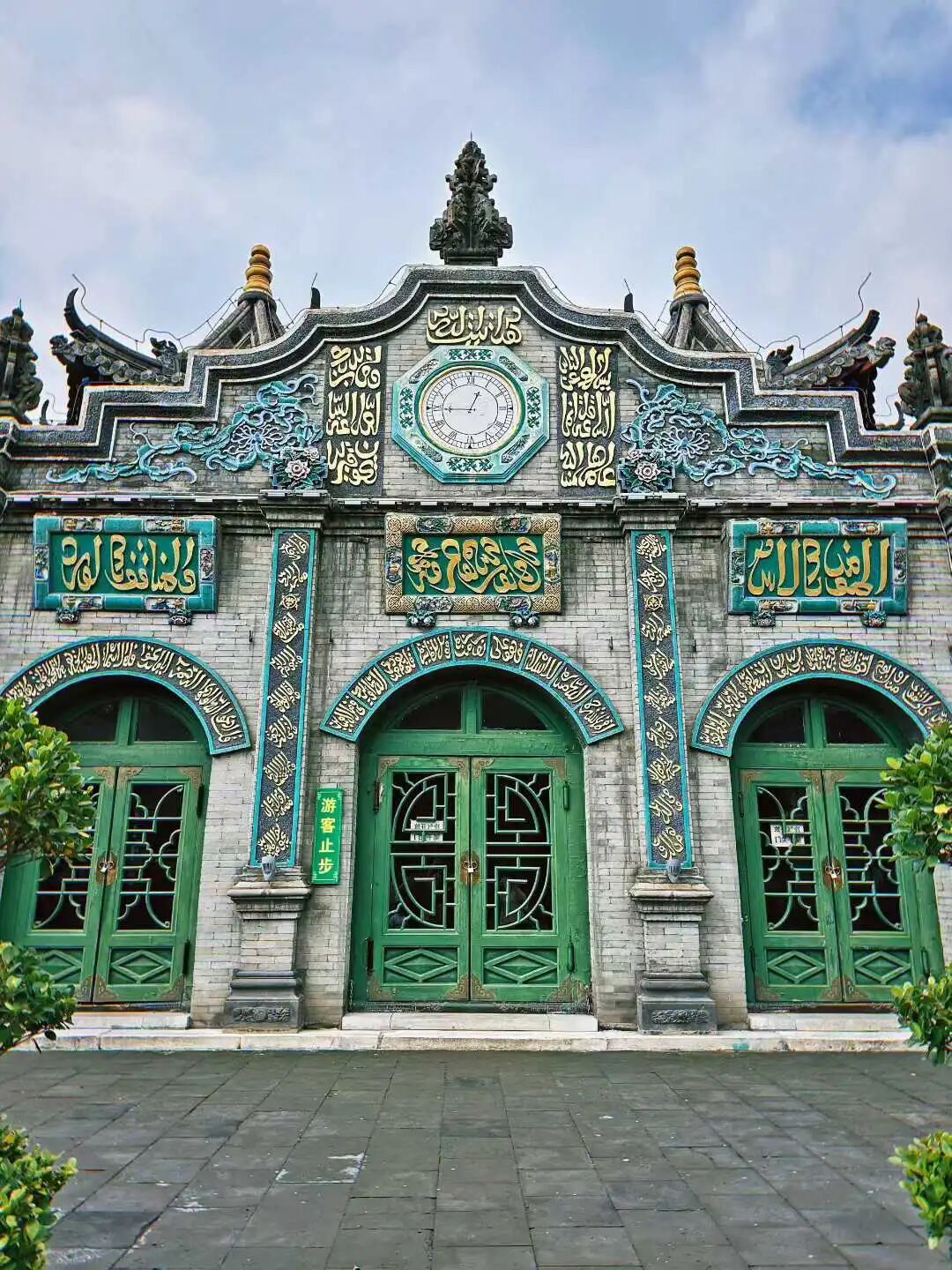
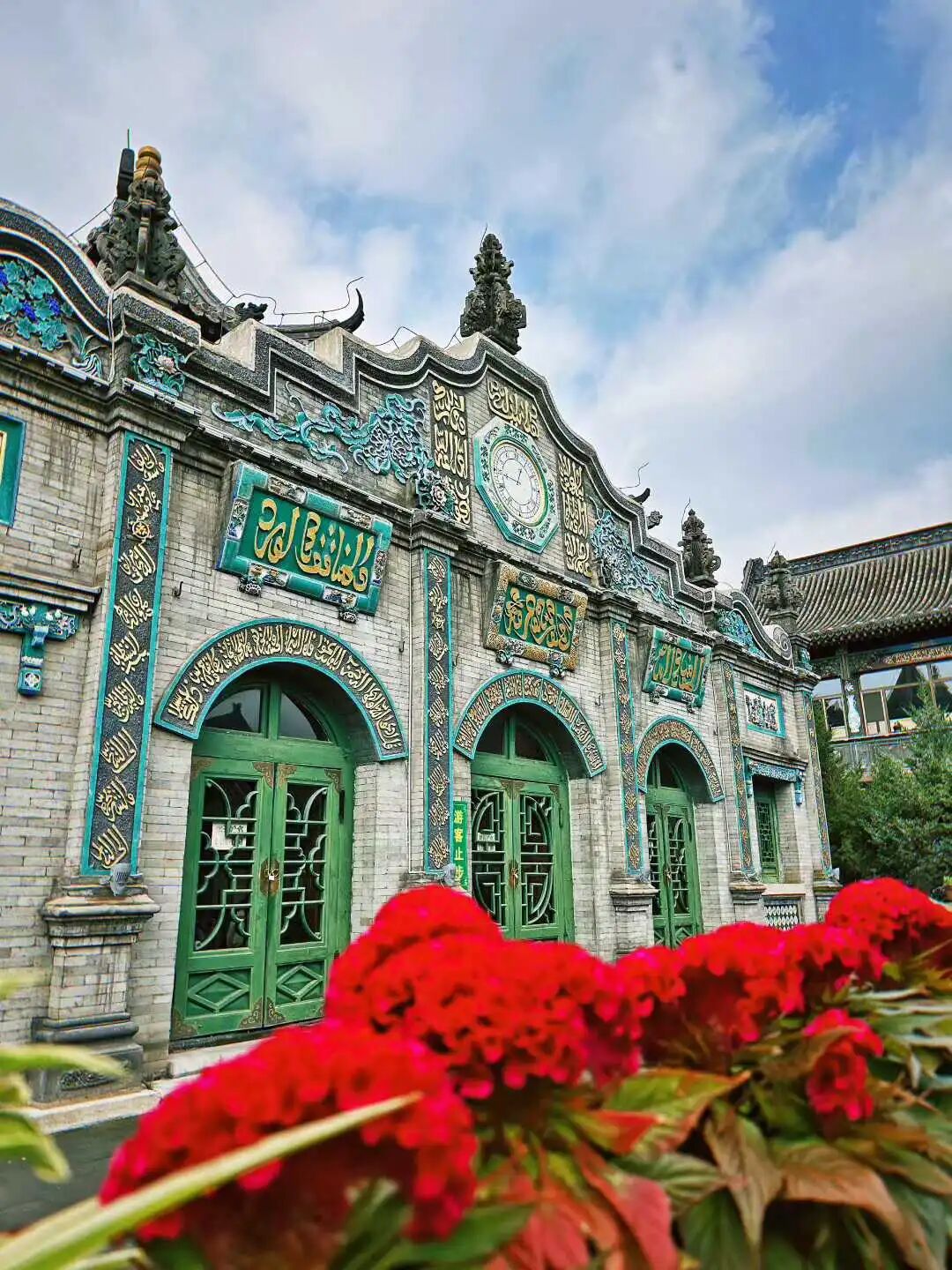
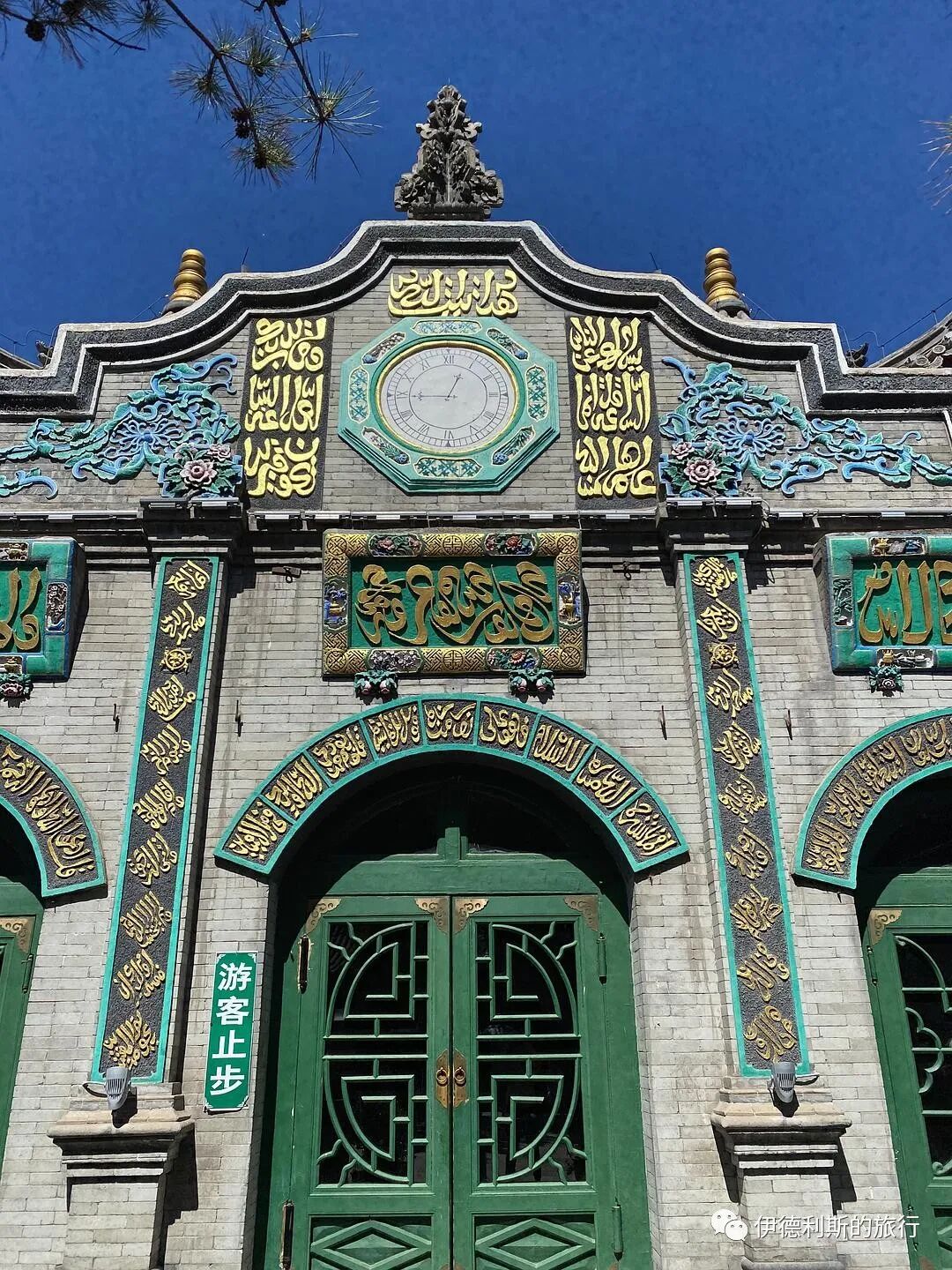
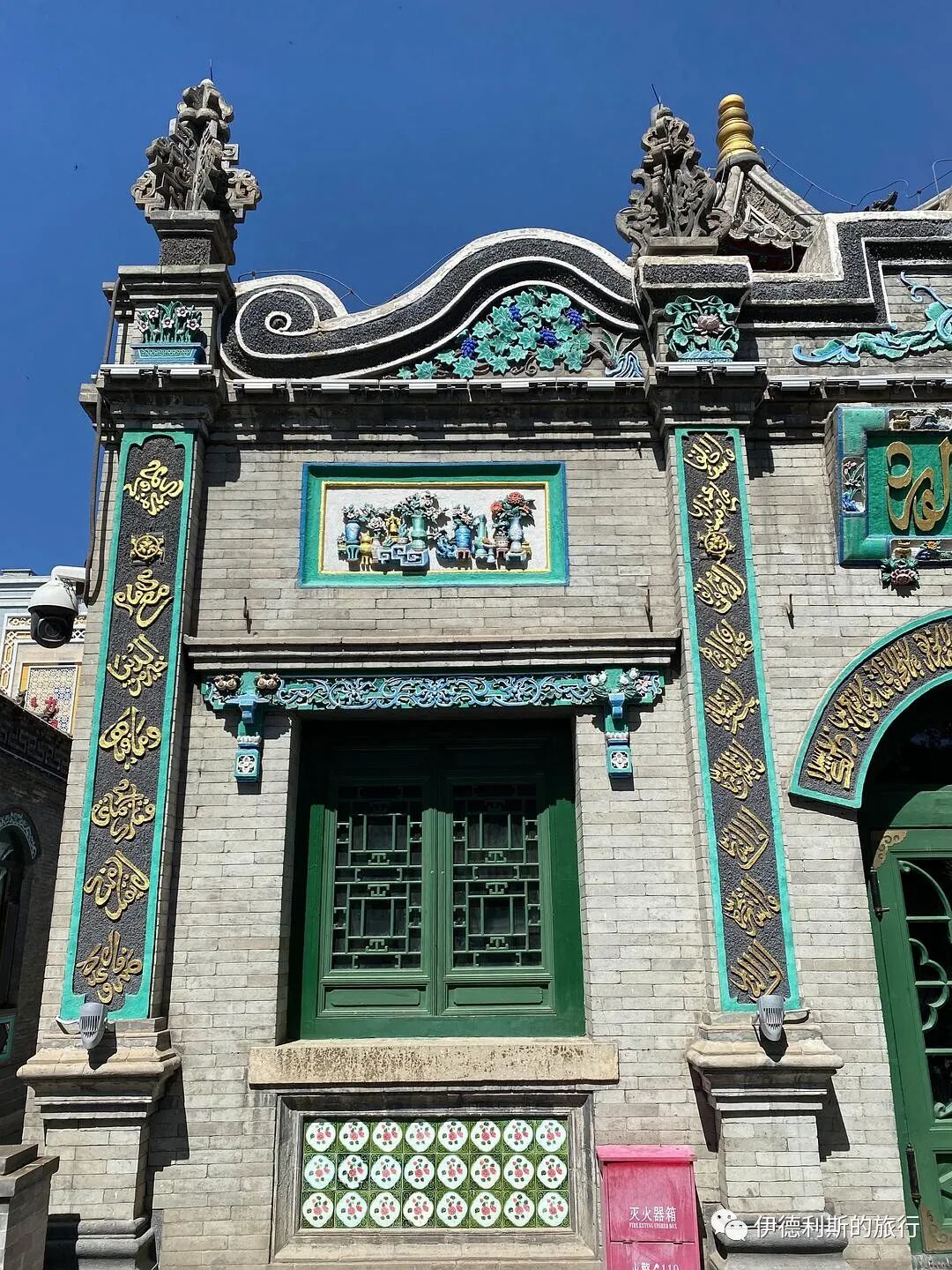
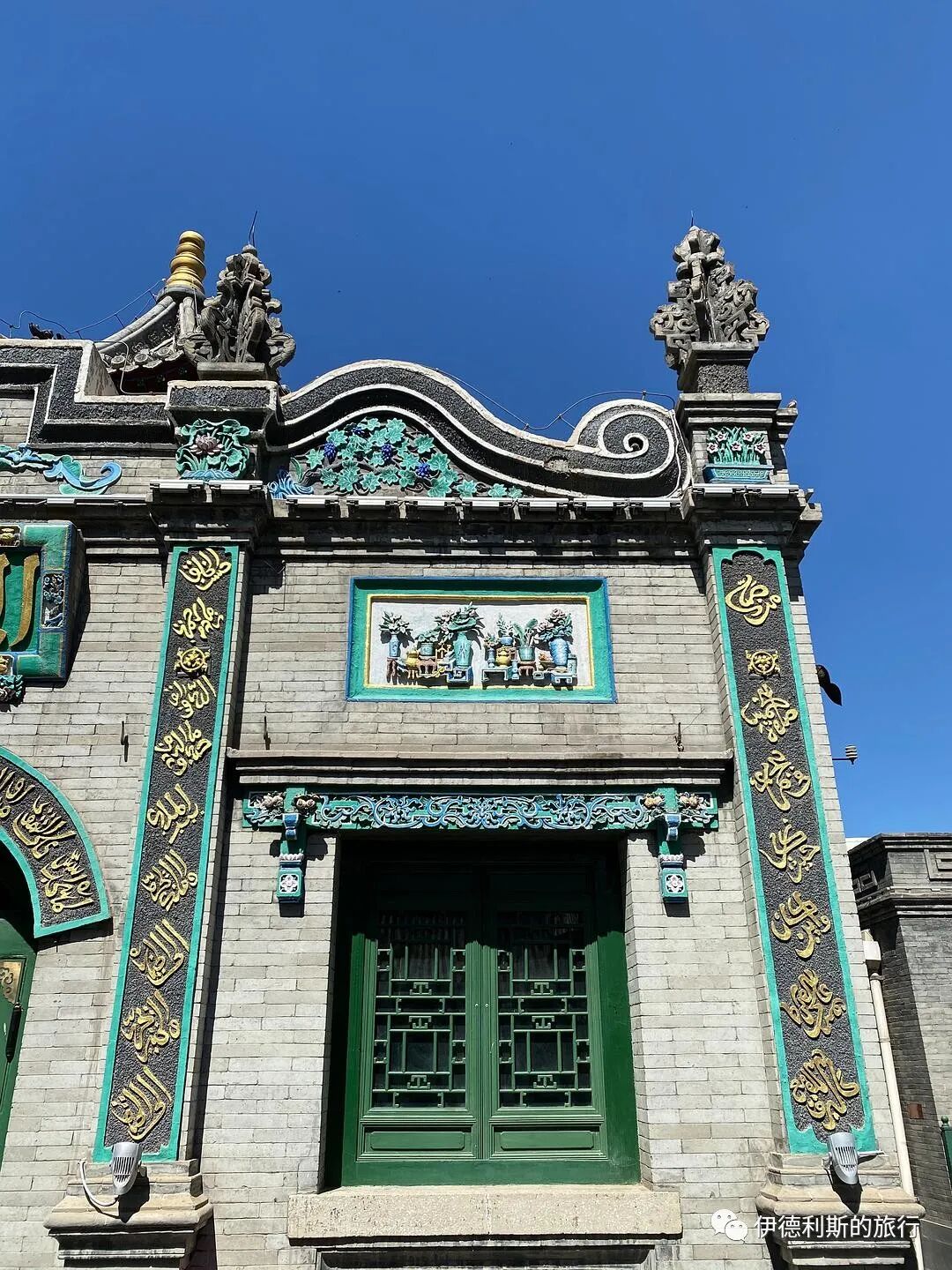
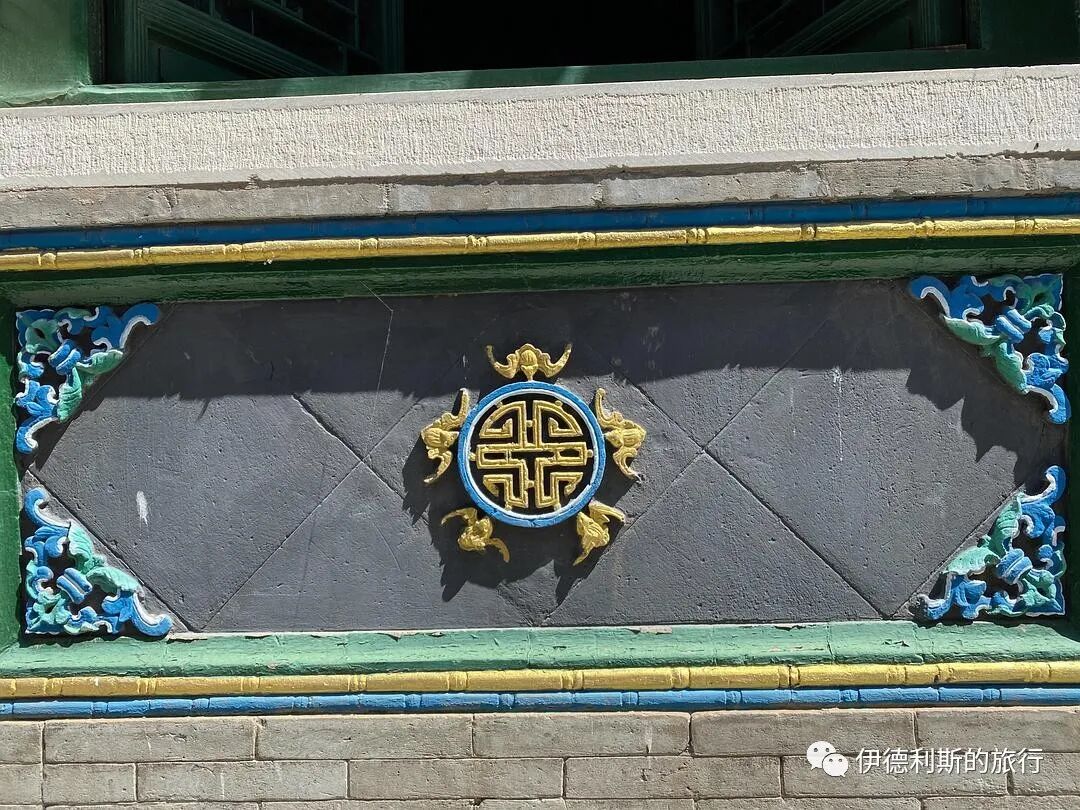
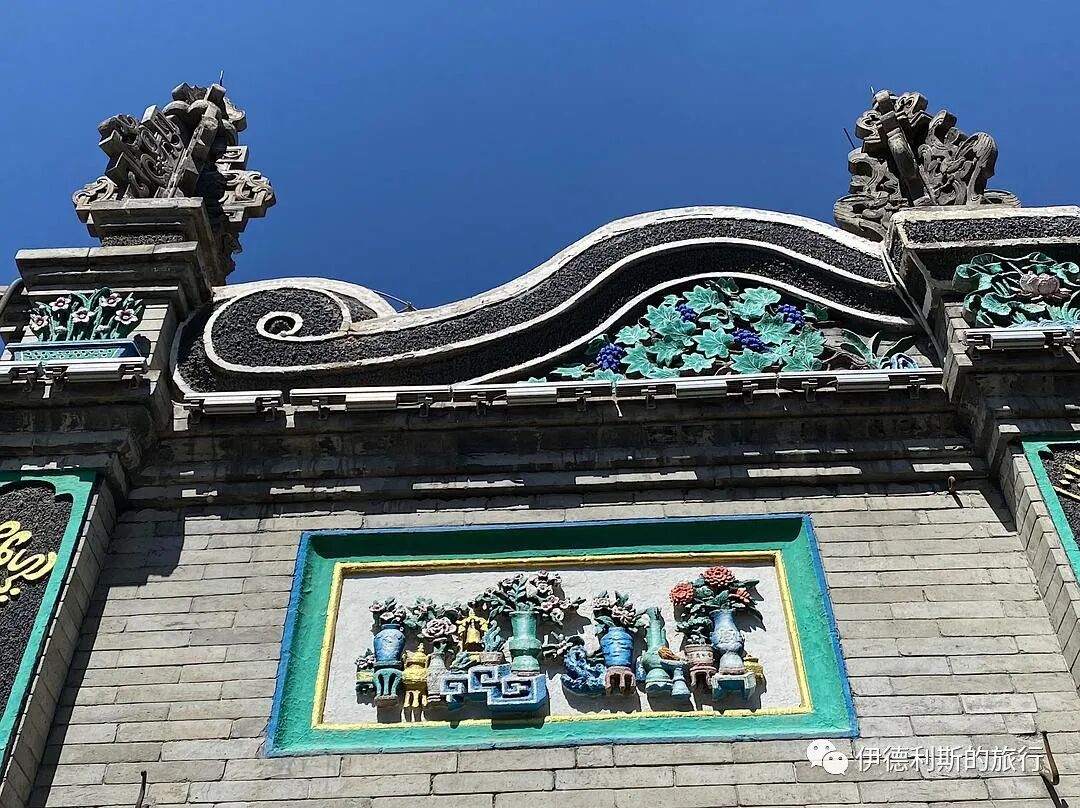
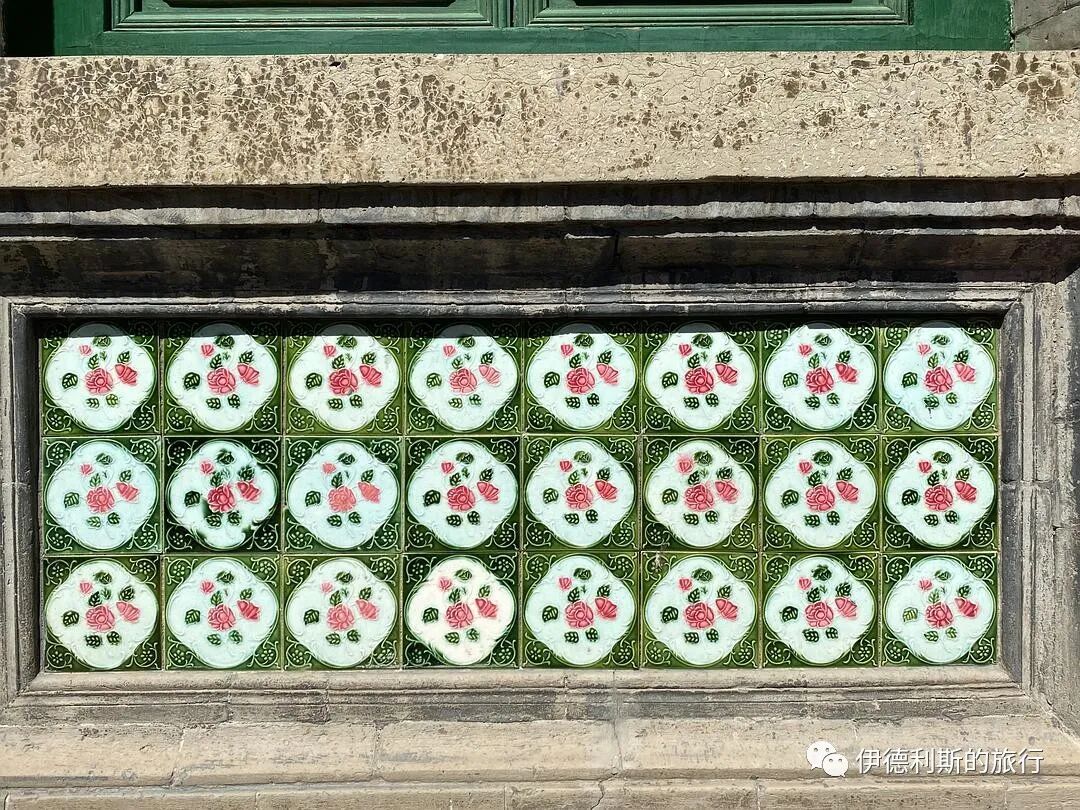
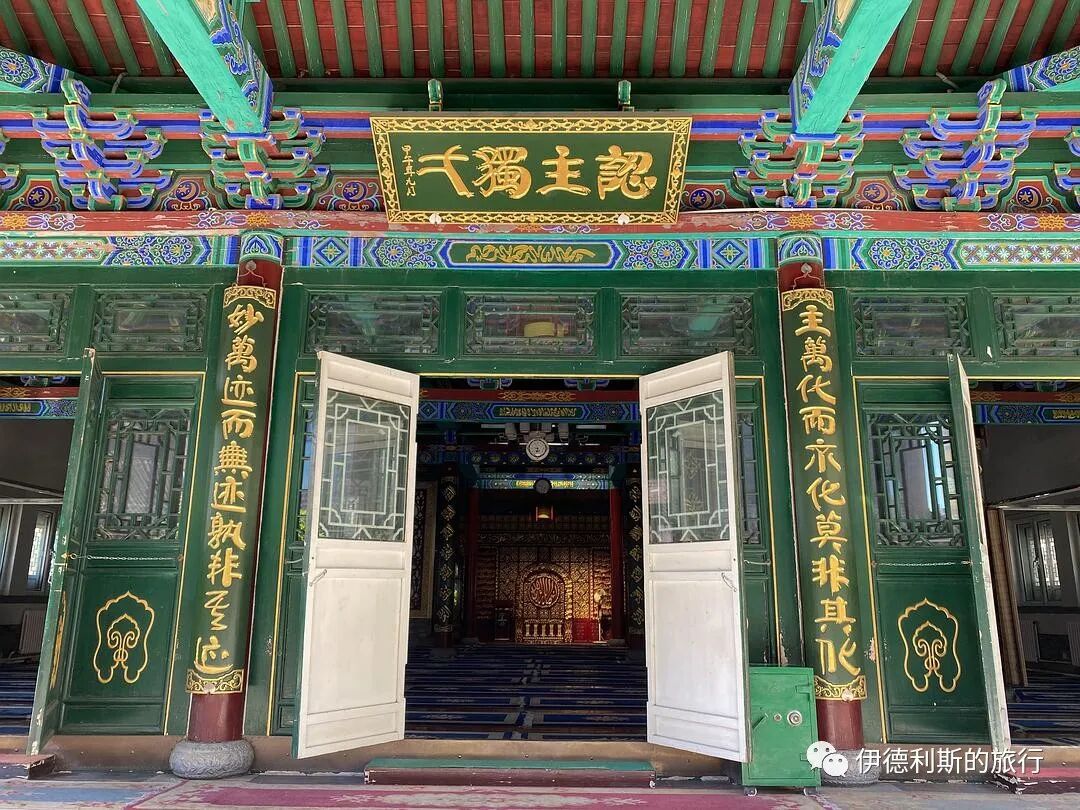
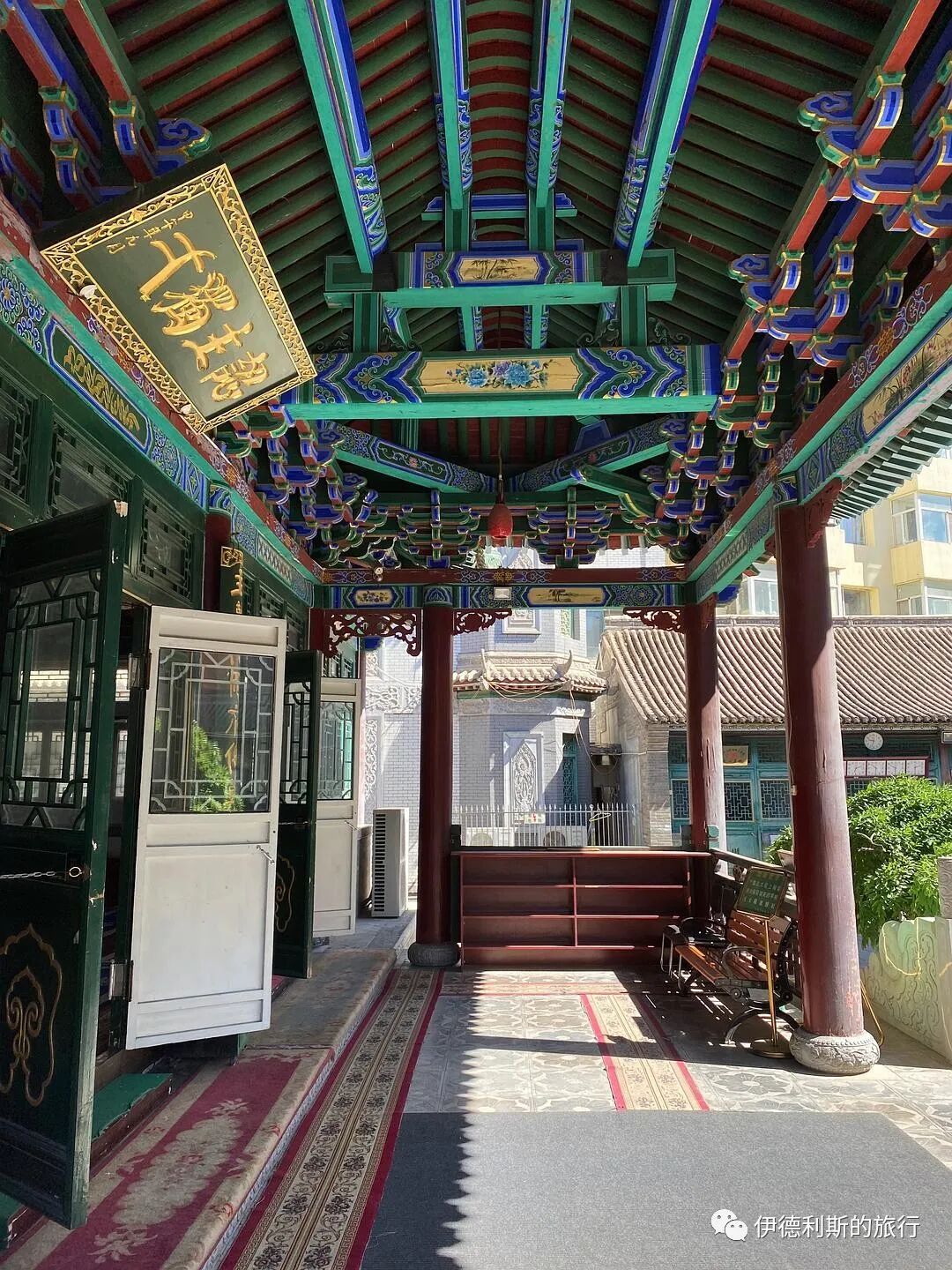
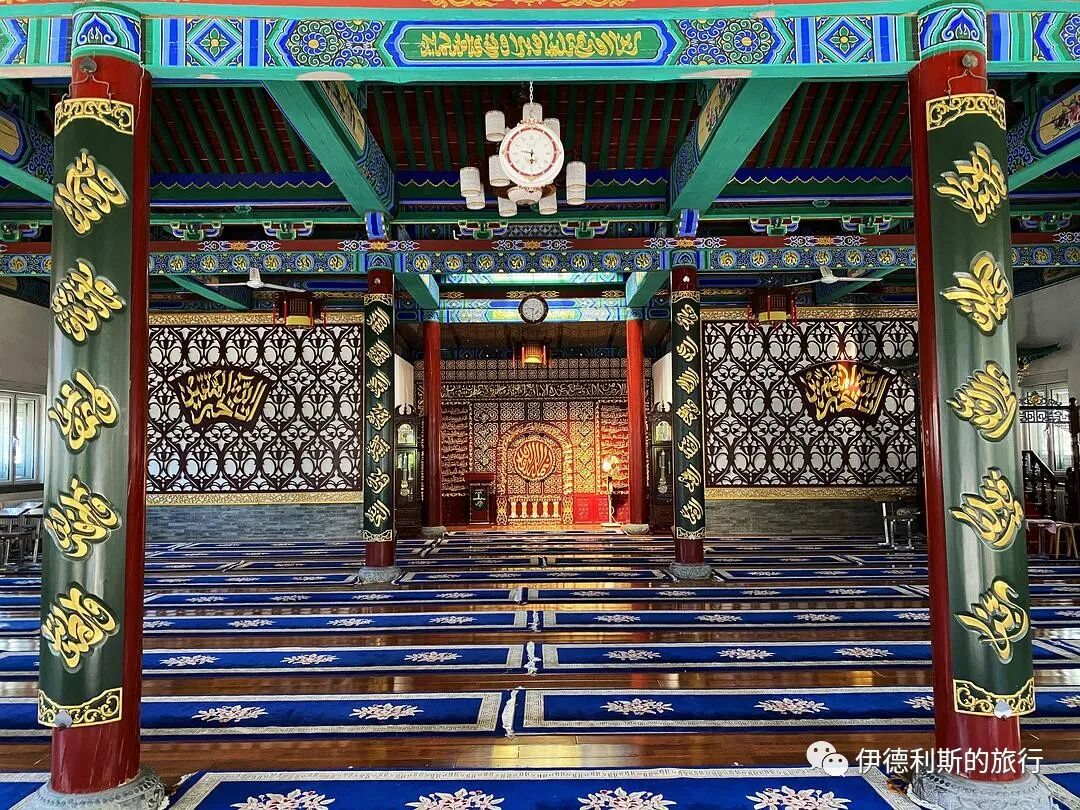
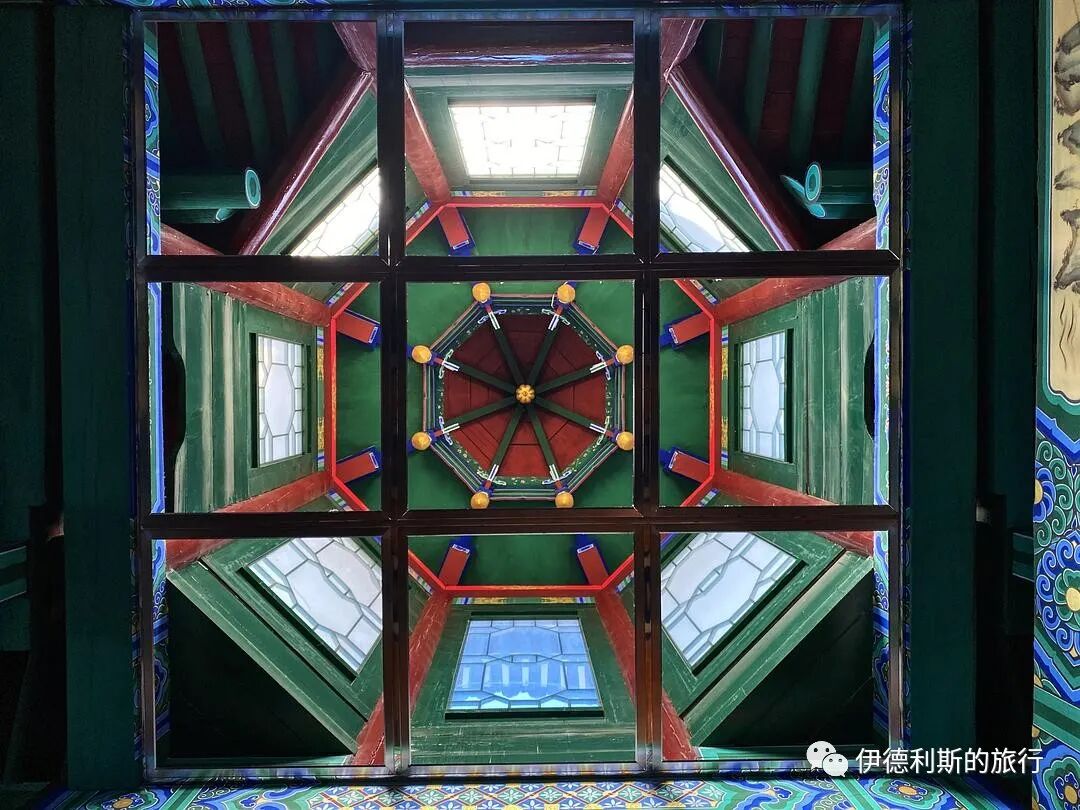
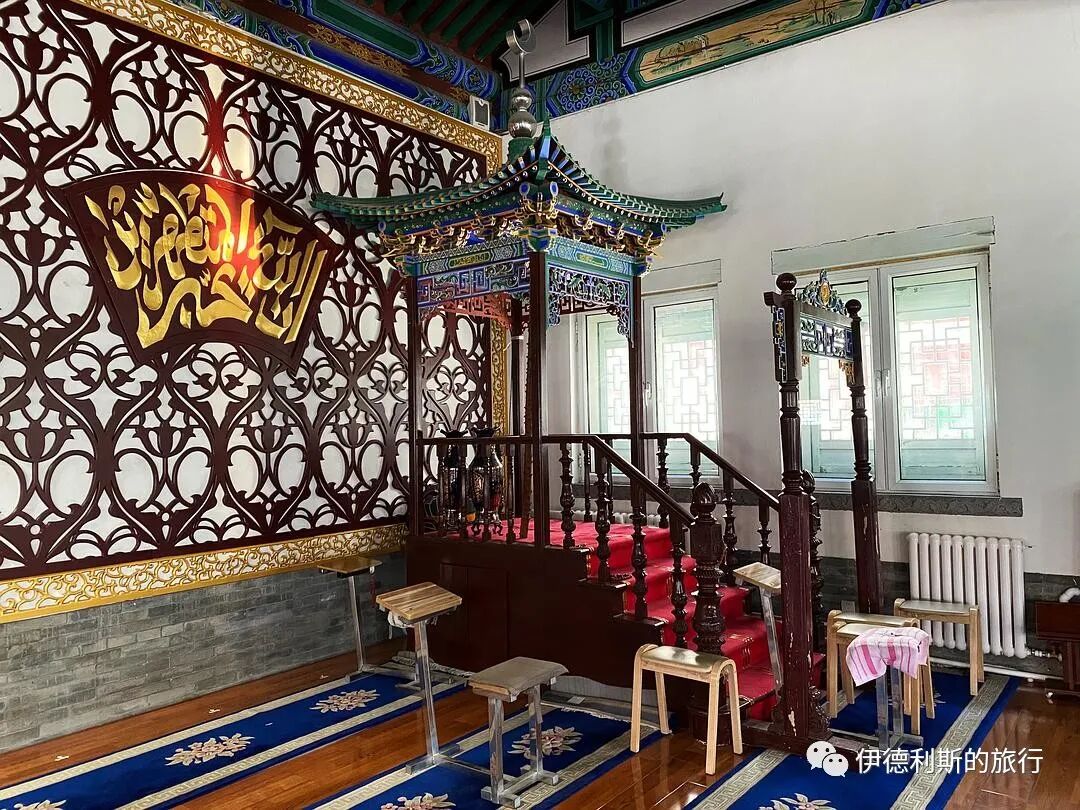
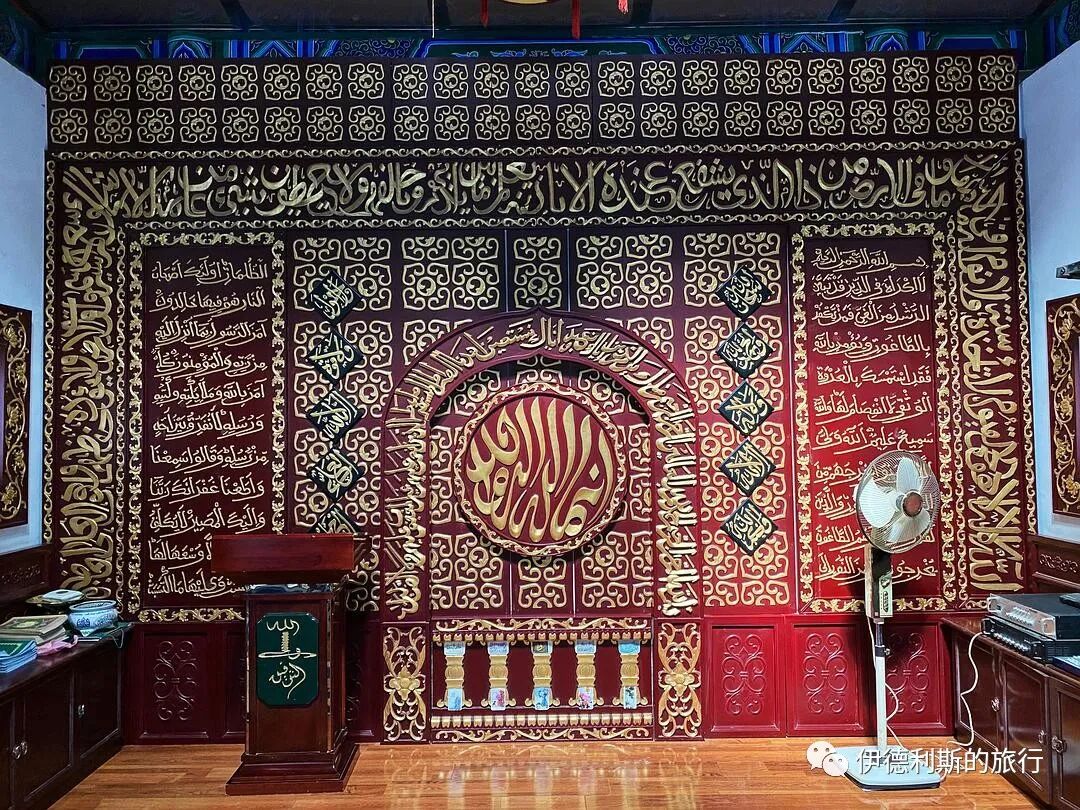
The prayer hall was expanded in 1923 and consists of a shed, front hall, middle hall, and kiln hall. It has a connected roof structure, and there are five pointed pavilions on the roof, symbolizing the five pillars of Islam: 'Faith, Prayer, Fasting, Charity, and Pilgrimage'. The shed is in a Chinese-Western fusion style, with arched doors, and Arabic plaques, couplets, and floral patterns on the walls.
Inside the main hall.
The Moon-Watching Tower was built in 1939, 36 meters high, with a hexagonal brick base on the lower level and a single-eave hexagonal pointed roof on the top level.
The Hohhot East Mosque was first built during the Kangxi period of the Qing Dynasty. It was originally a school and was expanded into a mosque during the Guangxu period. The current building was rebuilt in 2014.
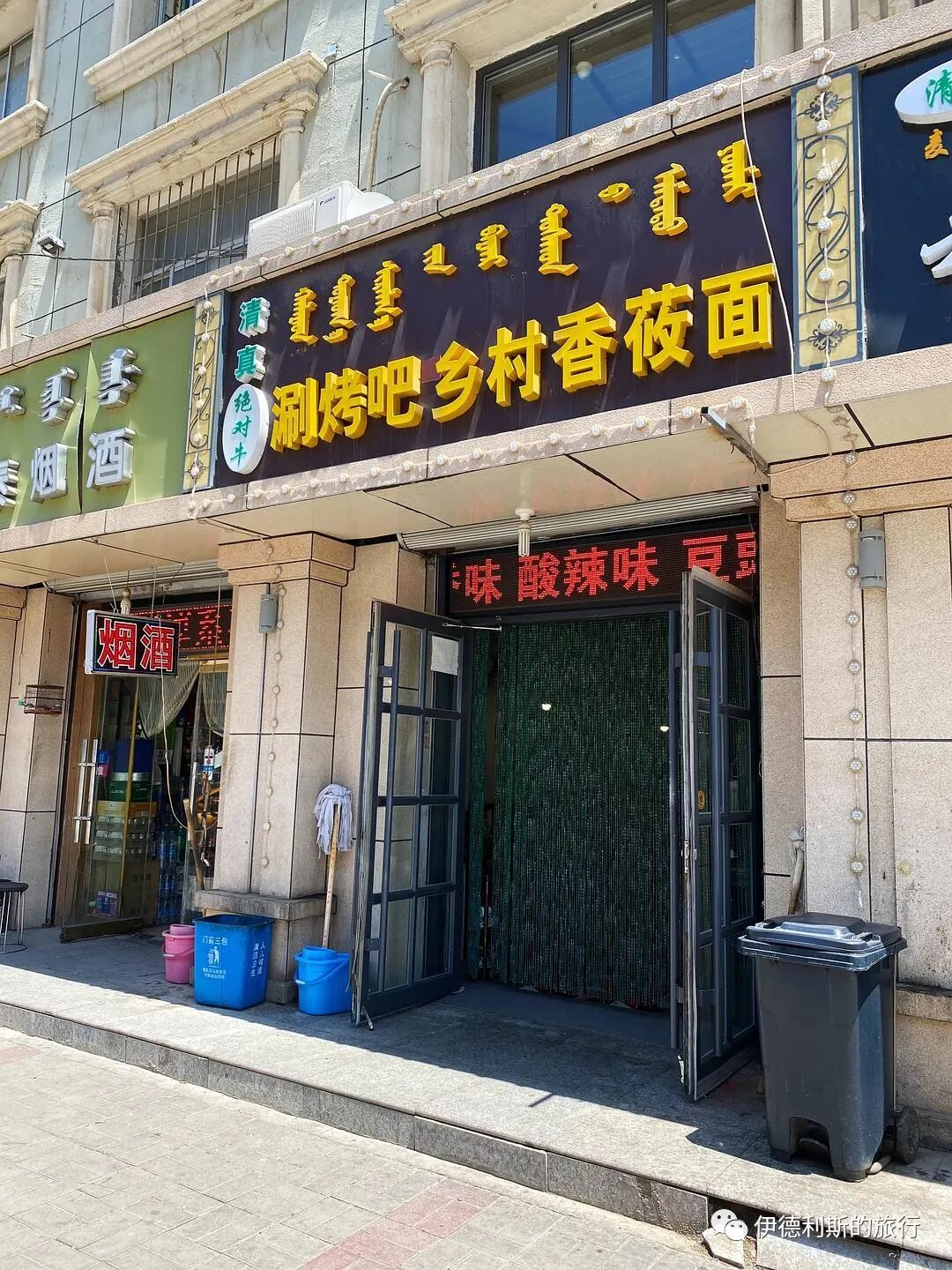
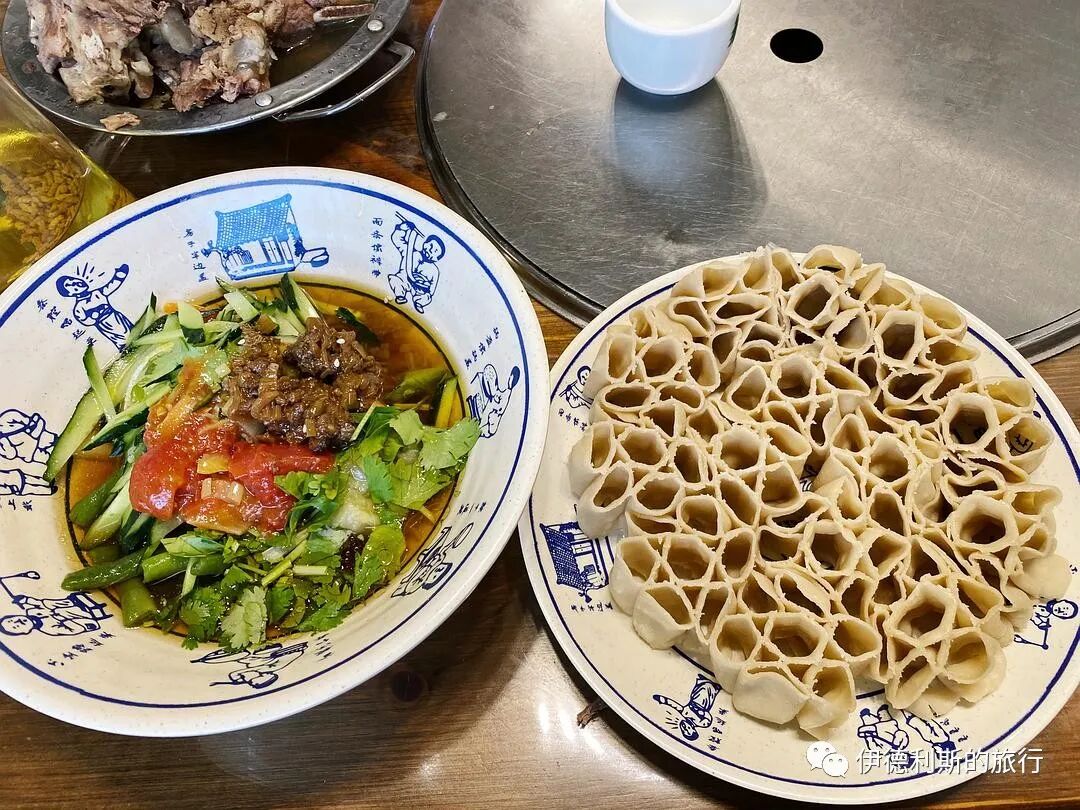
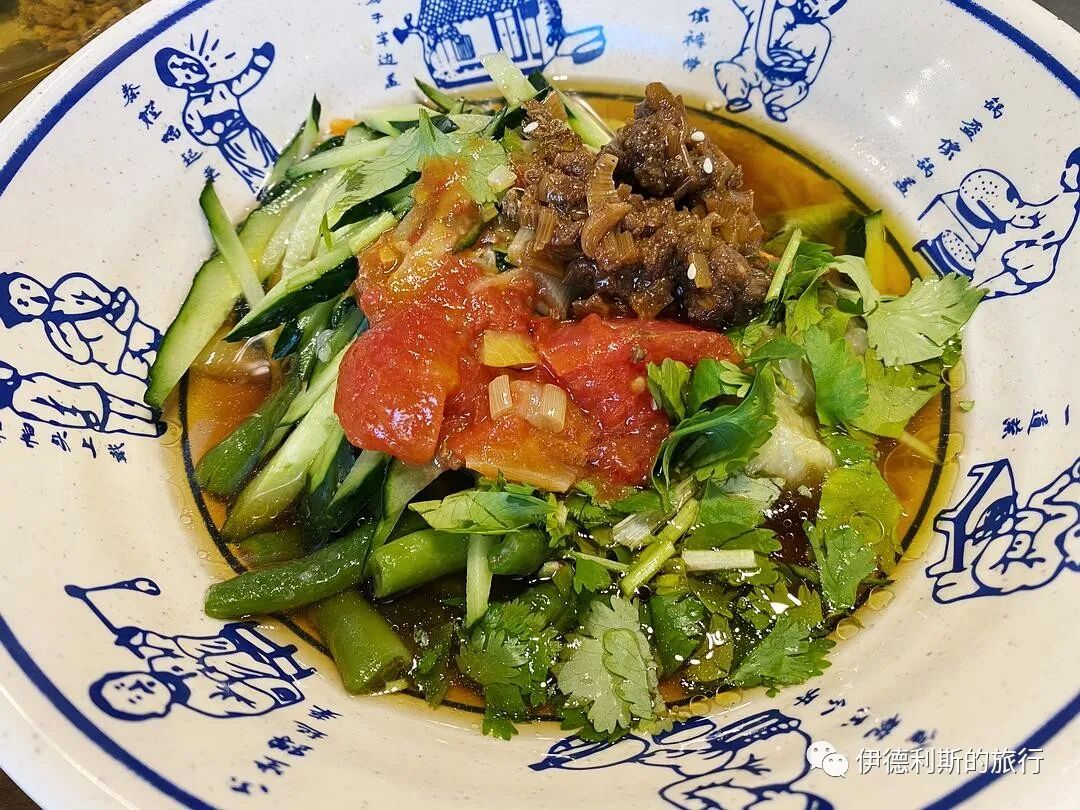
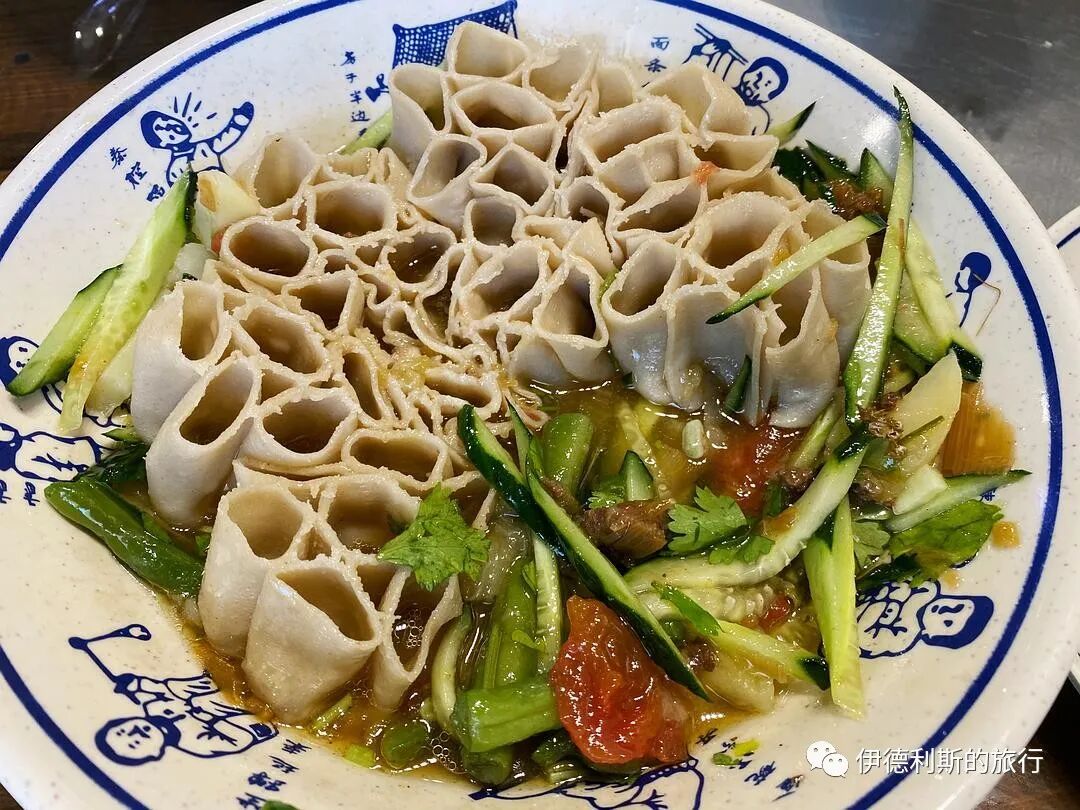
At noon, we had lamb spine and lamb bone with cold soup oat noodles at Countryside Fragrant Oat Noodles on Niu Street. I feel that the oat noodle and bone restaurant is a very classic combination in Hohhot, and it is really satisfying to eat in summer.
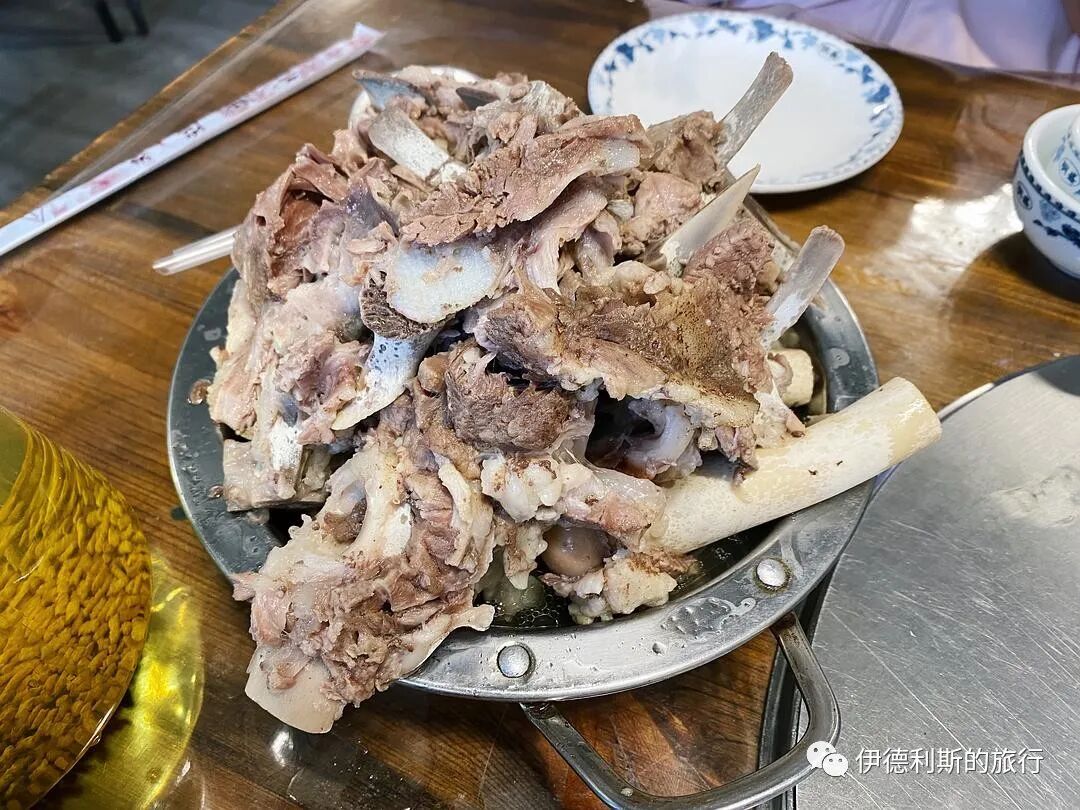
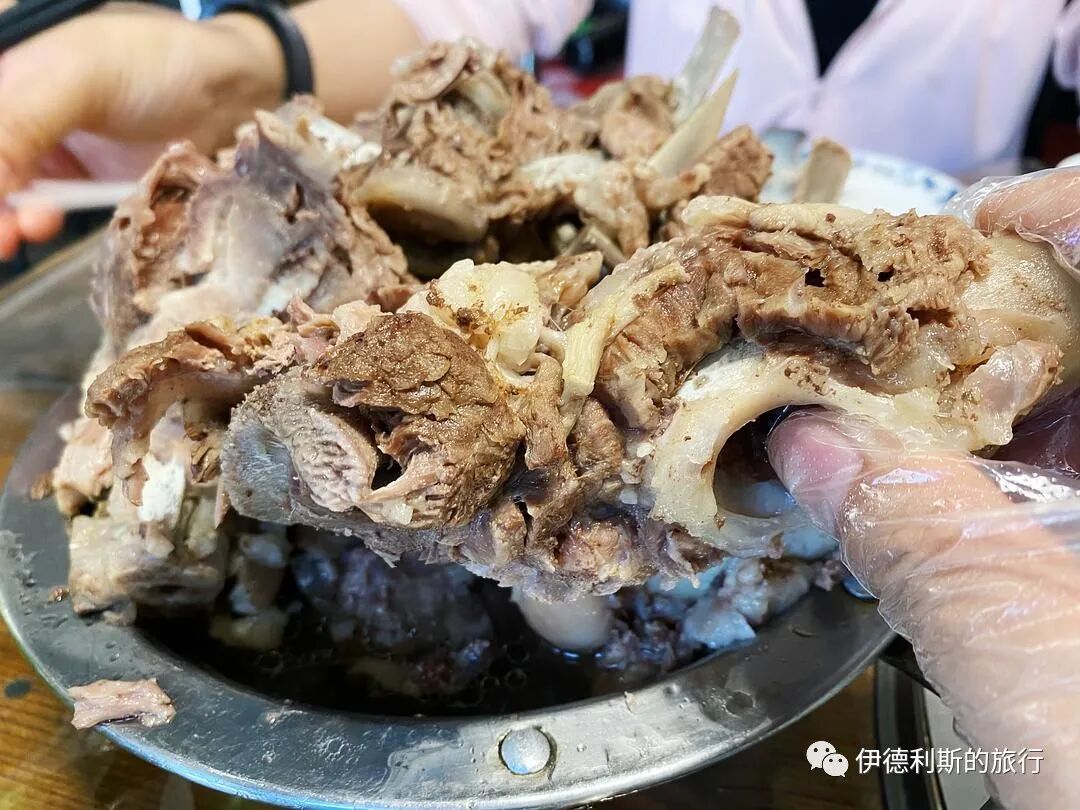
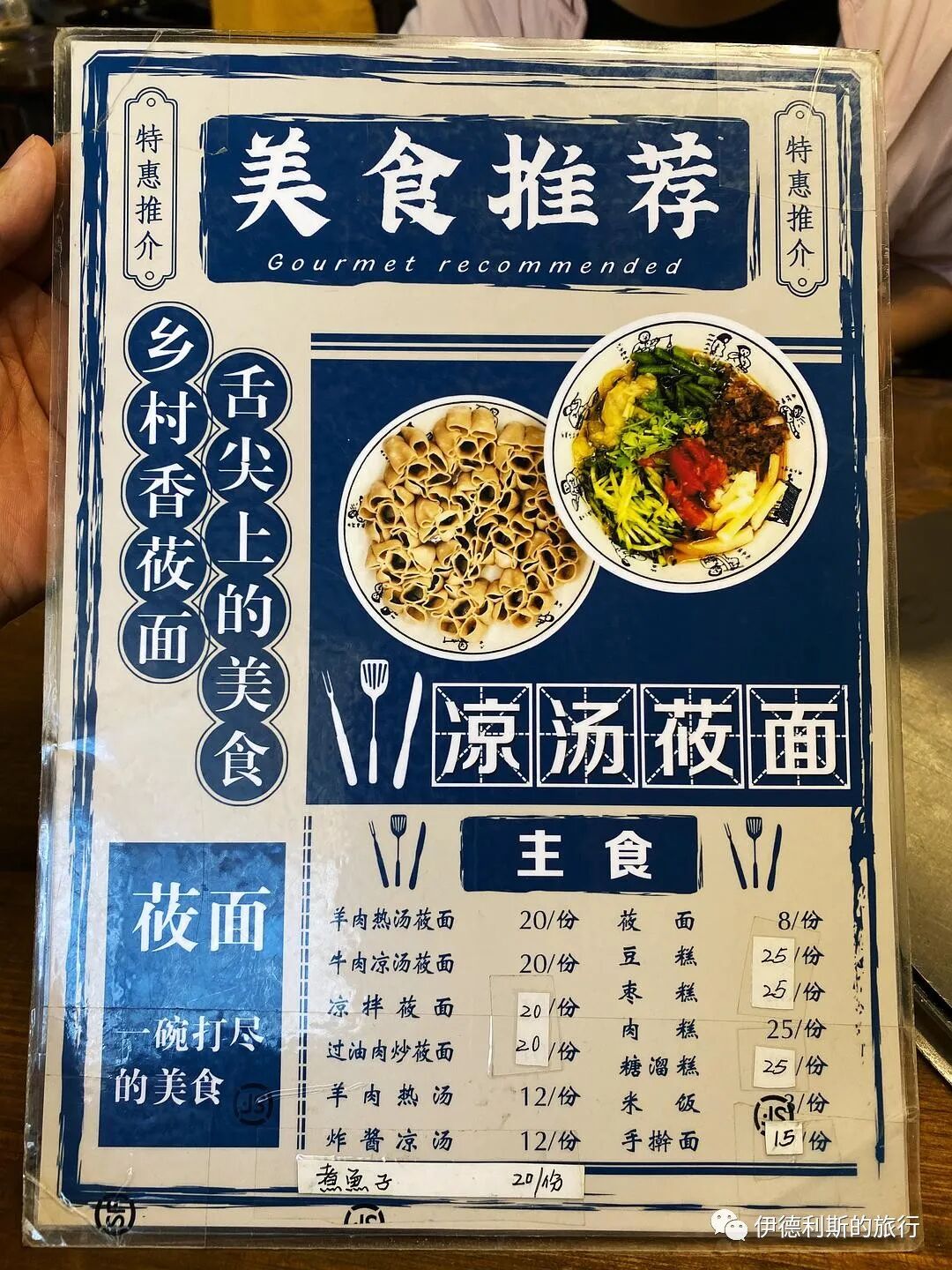
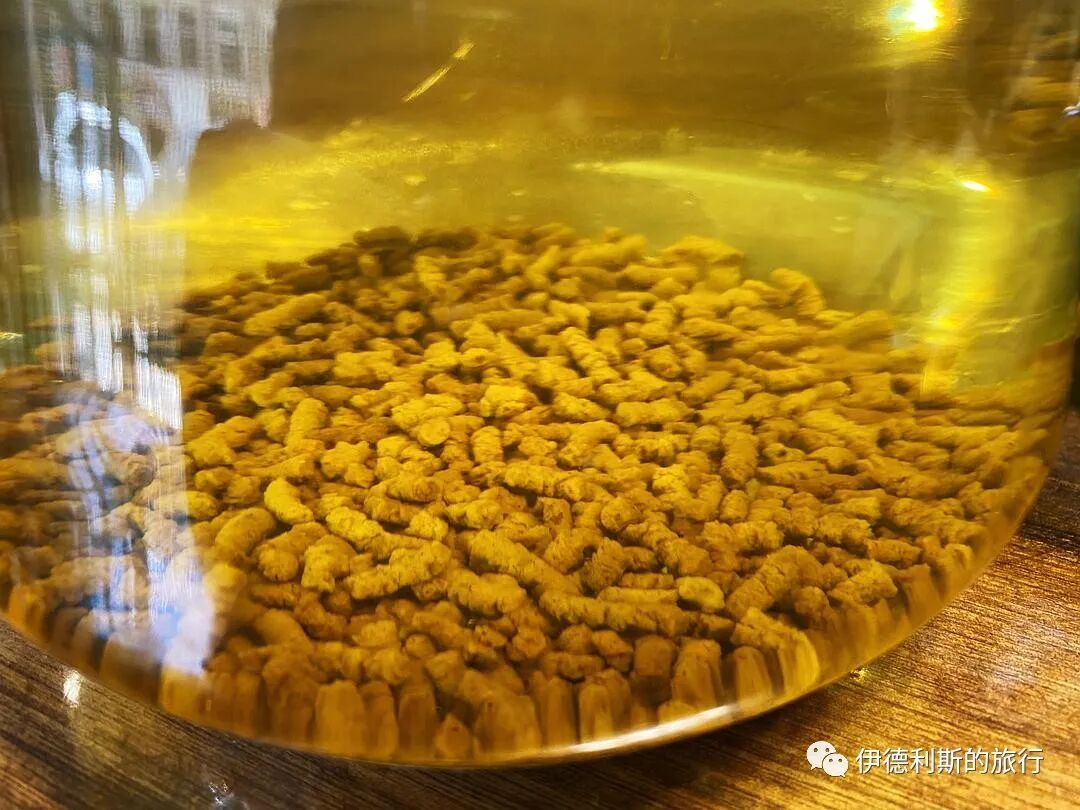
Their lamb spine and lamb bones are stewed until very tender, falling off the bone in one bite. The meat is very fragrant, and you can tell the quality of the lamb is relatively high. There are four types of oat noodles: hot lamb soup, cold beef soup, cold mixed, and stir-fried with oily meat. You can also choose oat noodle nests or noodles. I feel that eating cold soup is more refreshing in summer. When eating, first pour vinegar and chili on the vegetables and fried sauce, mix them, and then add the oat noodle nests. It is very refreshing. They serve barley and tartary buckwheat tea instead of brick tea, which also feels very appropriate.
In the evening, at Zainab's strong request, we had pot tea with meat sausages at the Haidiche Halal Mongolian Restaurant in Hohhot. Pot tea is made by first stir-frying fried rice with butter and white cream, then pouring in boiled milk tea, and then adding dried meat, milk skin, milk tofu, and various other dairy products. It can be eaten once the milk tea boils. I feel that pot tea is a bit like a hot pot of dairy products, haha.
The Mongolian-style meat sausages contain fresh and tender small pieces of meat, which is much more satisfying than sausages made with meat paste. This was my first time eating Mongolian food, and I fell in love with it immediately.
On Sunday morning, we bought beef jerky at Ma Zhanguang's Beef Jerky Shop at the entrance of the Great Mosque. There are several types: super dry, original, five-spice, cumin, spicy, and hot and spicy. The boss is very enthusiastic and cut each kind for us to taste. I feel the cumin one is more fragrant, but the super dry one is particularly chewy. We bought some of each to take home.
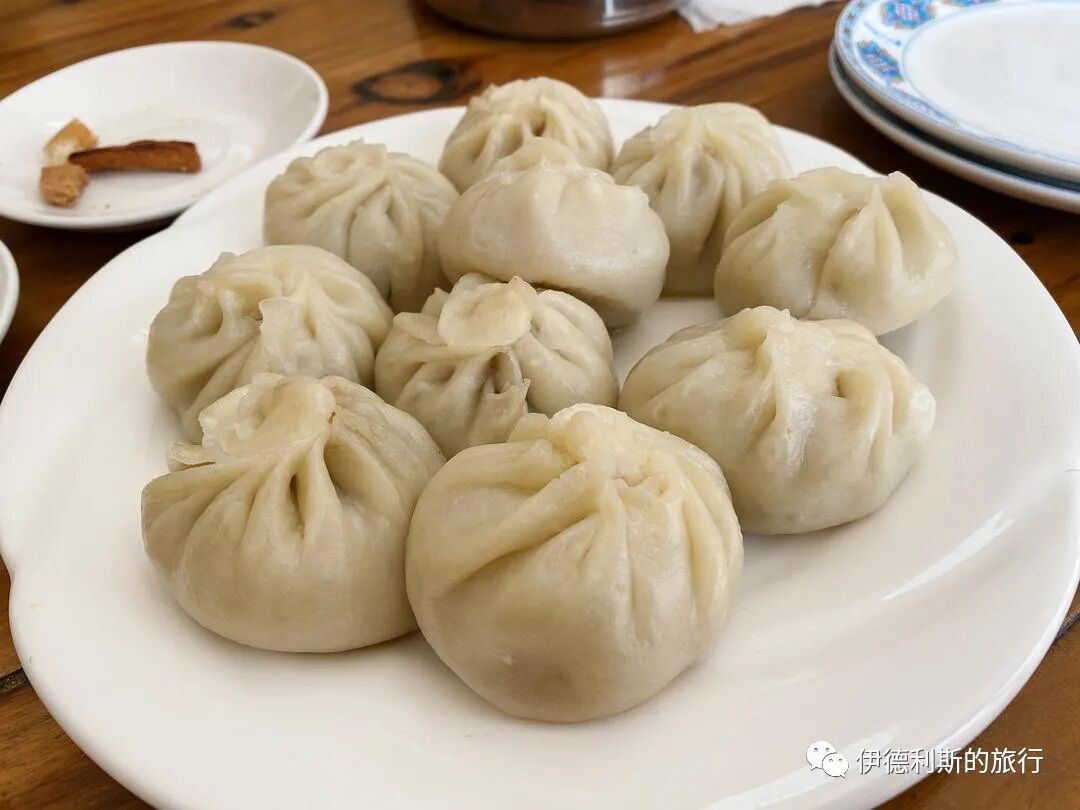
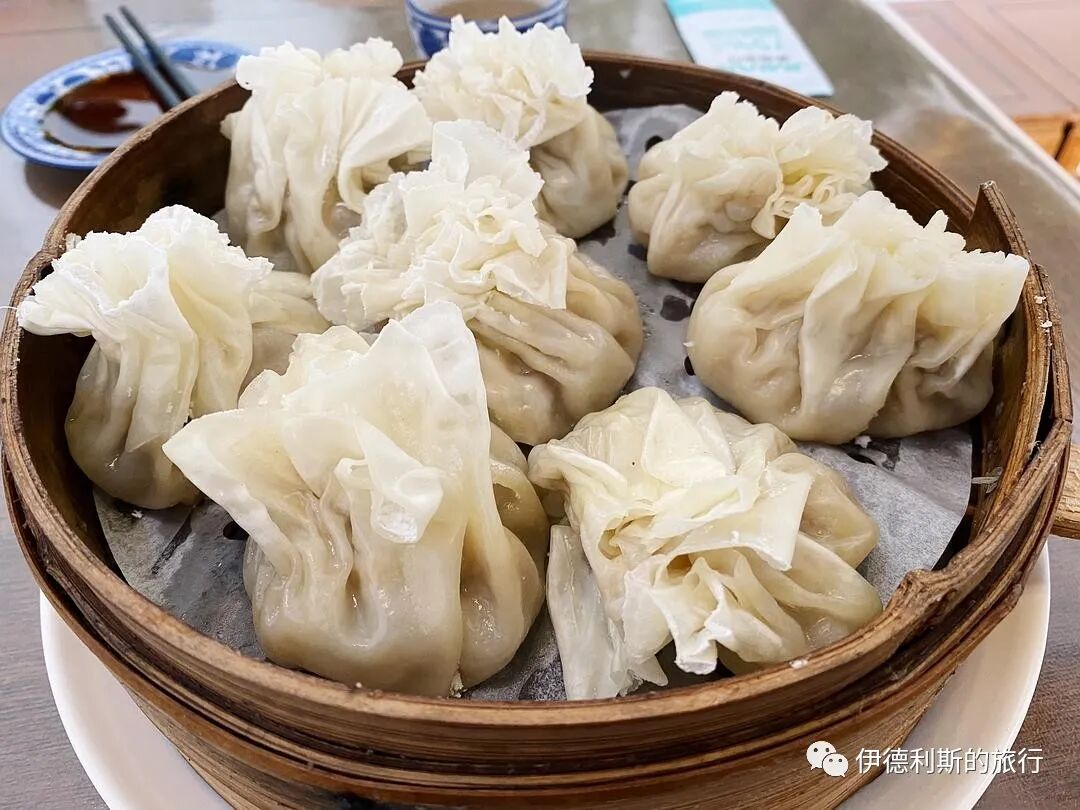
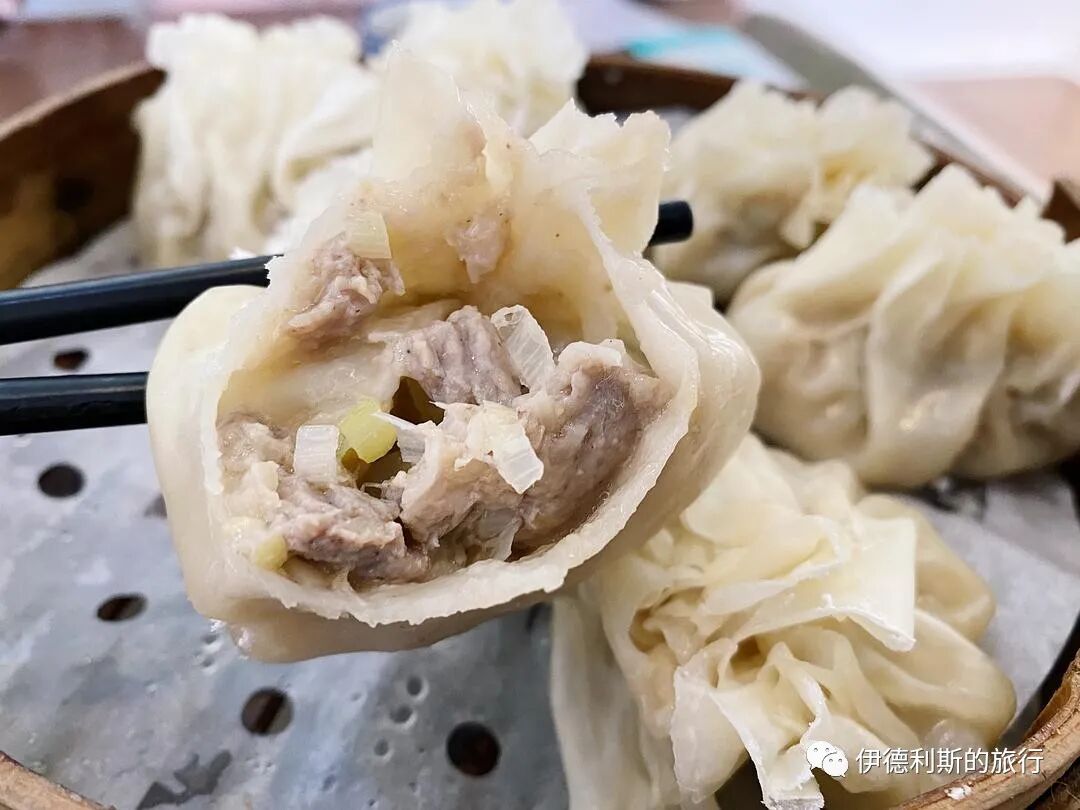
We ate Shaomai and drank brick tea at Qingyuanchun on Nanshuncheng Street. I personally like their place, and I also ate at their place when I came to Hohhot before.
Qingyuanchun is a time-honored Shaomai brand. In 1796 (the first year of Jiaqing), Li Chun pushed a wheelbarrow to sell Shaomai in Guihua City. It was very popular because he wrapped and sold them on the spot. In 1828 (the eighth year of Daoguang), Li Chun's son, Li Guangyuan, rented two wooden rooms outside the Lanma Wall in Guihua City and officially hung up the 'Qingyuanchun' Shaomai brand. In 1956, Qingyuanchun was renovated and reopened by brothers Li Hongtu and Li Mingqing in a shop of more than 30 square meters. It was inherited by the fifth generation, Li Jiting, in 1963, and by the sixth generation, Li Yongqing, in 2009. It is a famous Halal Shaomai brand in Hohhot.
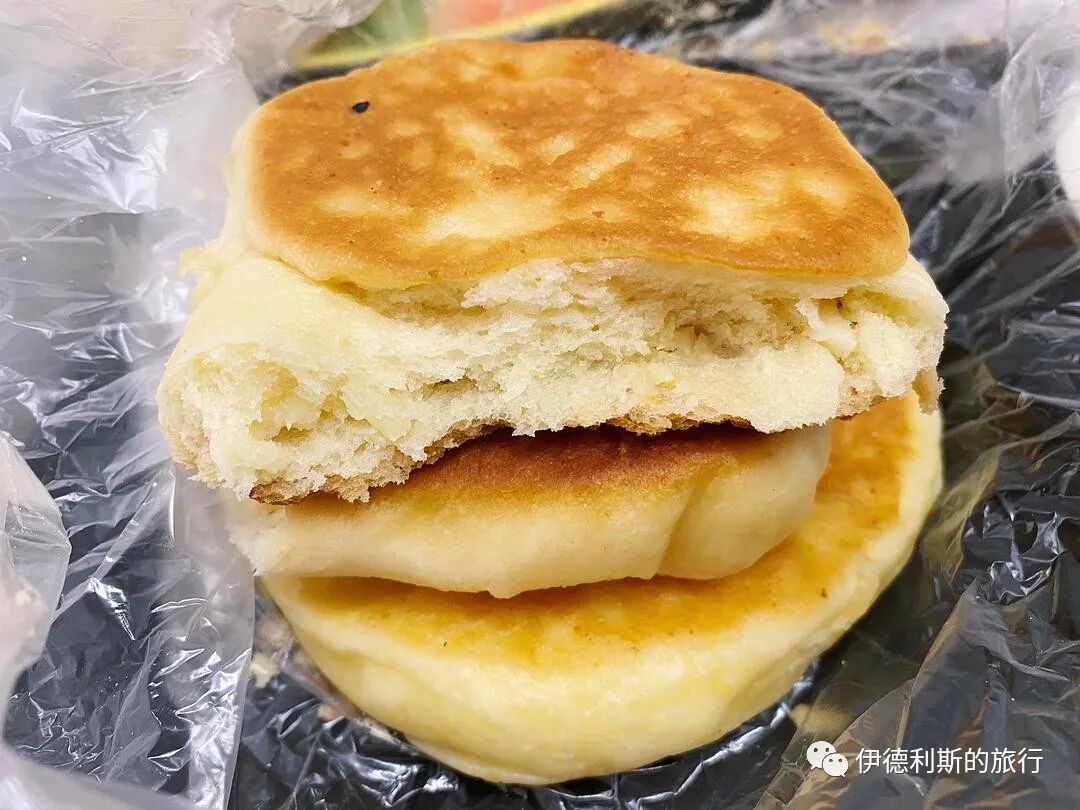
Then we bought a yogurt cake at the Haidiche Halal Mongolian Restaurant opposite. It is a cake made with pure yogurt and flour, without a drop of water. It also has milk tofu inside, the milk flavor is very strong, and it is really super delicious.
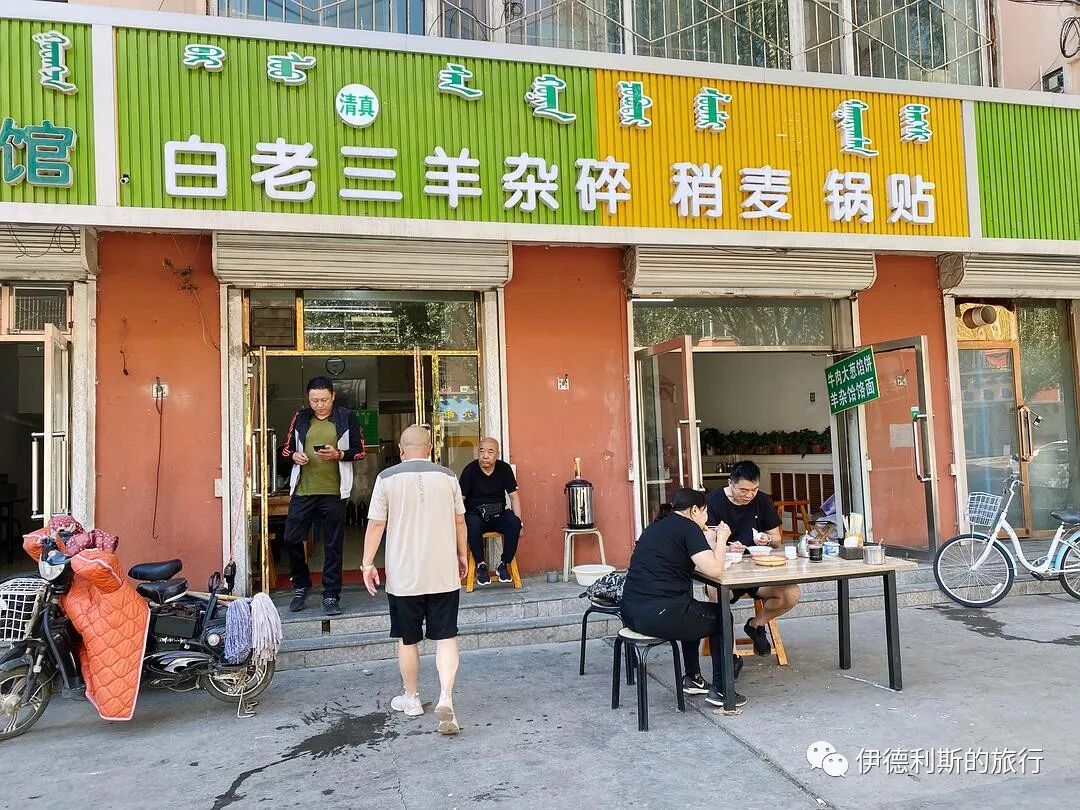
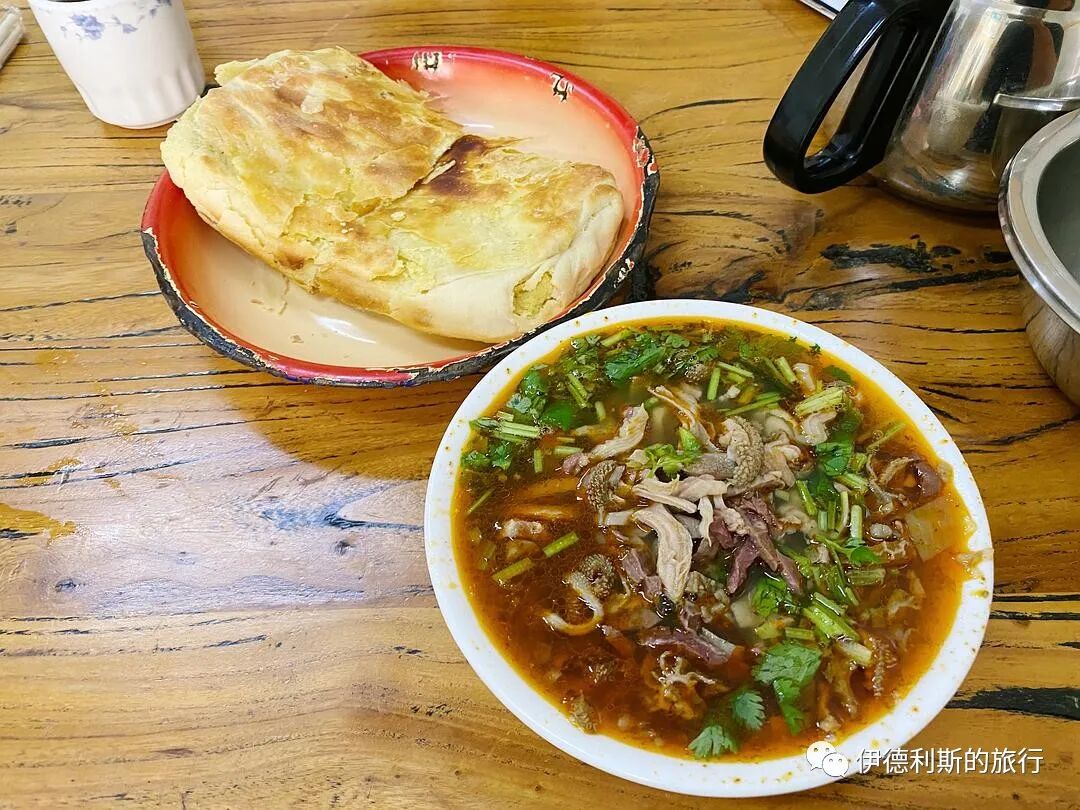
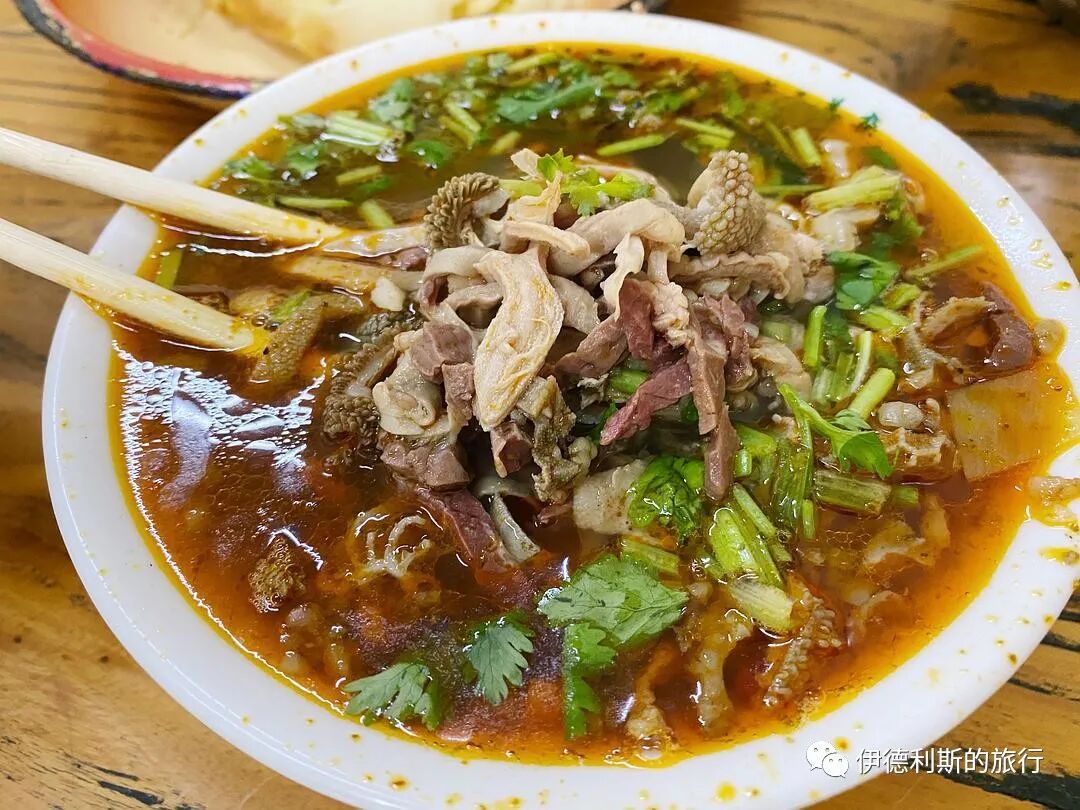
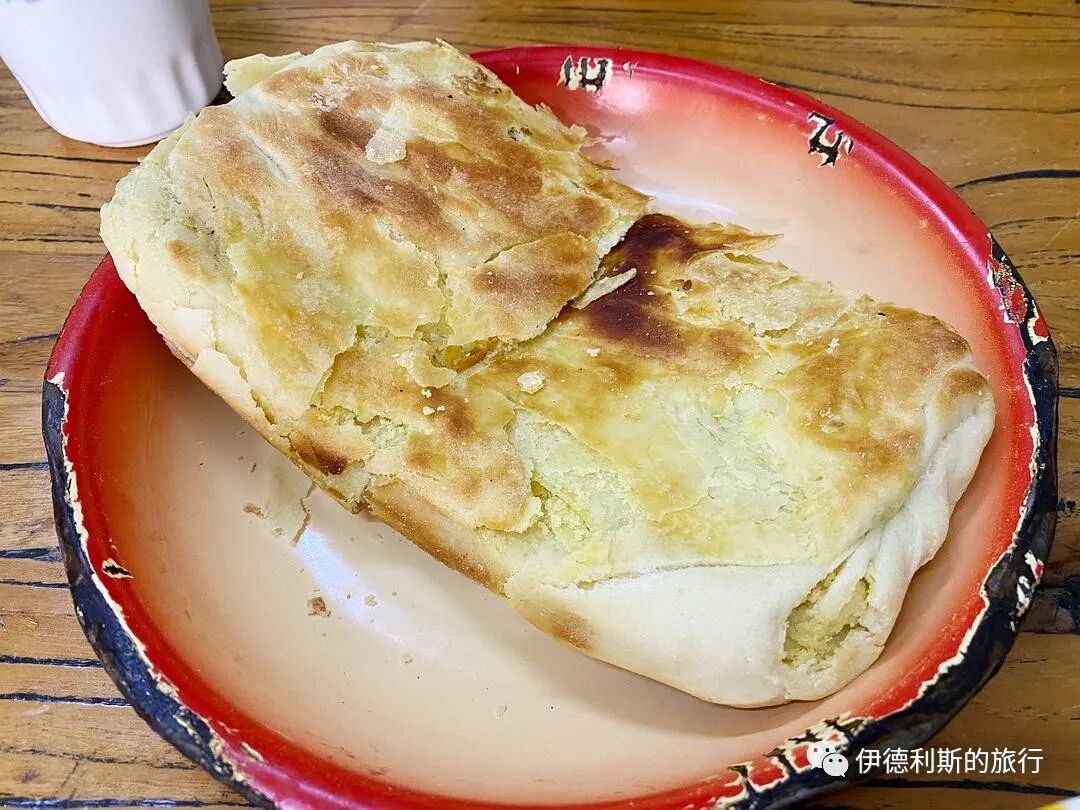
Then we went to Bai Laosan's Offal Shop on Luzu Temple Street to eat lamb offal with Beizi, which is a classic breakfast combination in Hohhot. The lamb offal is very similar to the one in Datong, and the taste is very rich. The Beizi is so big that I couldn't finish it by myself. It is very solid. view all
Summary: This travel note introduces Halal Shopping and Eating in Hohhot in Summer. At the end of June, I went on a trip to Hohhot and Ulanqab with Zainab for the weekend. First, I will share our eating and shopping experience in Hohhot. It is useful for readers interested in Hohhot Travel, Halal Food, Muslim Travel.
At the end of June, I went on a trip to Hohhot and Ulanqab with Zainab for the weekend. First, I will share our eating and shopping experience in Hohhot.
We arrived in Hohhot by night train on Friday. We came to the entrance of the Great Mosque to drink some dried apricot and persimmon fruit soup, then went to Wang Wei on Dasi North Street to eat lamb skewers. Their place should be the most popular one for lamb skewers around the Great Mosque. We also ordered peanuts and edamame, plum juice, and lean meat sandwiches. The sandwiches were filled with pure lean stewed meat, which was very satisfying.
On Saturday morning, we had a Halal Mongolian-style breakfast at Haidiche on Nanshuncheng Street. We had salty milk tea with fried rice, milk skin, soft fried dough strips, and hard fried dough strips. The dough strips are made with yogurt and flour without a drop of water. There were also wild onion side dishes and Buryat steamed buns.
Last time I came to Hohhot, I didn't know there was Halal Mongolian food. This shop has been open for more than a year, and Haidiche is the owner's religious name. The owner's family is very kind. Her mother was looking after the shop during breakfast. The auntie introduced us to the way of eating Mongolian breakfast in detail and asked about us in every way, which made us feel very warm.
We bought some freshly brewed yogurt at Ma's Dairy Shop on Xinmin Street. The Ma surname Hui people's ancestral home is Youwei, Shanxi. In the Ming Dynasty, they were a powerful family of the Nine Frontiers. In the mid-Wanli period, the 'Ma Family Army' formed by Ma Gui and his brothers and nephews was famous for being good at fighting. They made great contributions by defending Youwei for six months against Altan Khan. The Ma surname Hui people defended the frontier for the Ming Dynasty for many years, and almost all frontier towns had people with the surname Ma serving as regional commanders. After the fall of the Ming Dynasty, the Ma family gave up their military service to farm. After the 'Great Western Route' trade route opened during the Kangxi period, many people moved to Guihua City to settle down.
We bought some sweet and sour dried crabapples at Wang Laoqi's dry goods store at the entrance of the Great Mosque, and bought a cup of fruit soup in Kuanxiangzi. Just walking around and eating snacks in the Hui district of Hohhot is very rich.
We bought roasted milk skin at Bai's Dairy Shop on Houxincheng Road. The texture of their roasted milk skin is just right and not hard at all. Zainab said it was much better than what she had bought online before. Their cheese is also very delicious, sweet and sour, but the weather was too hot to take away, so we just tasted it.
One theory about the Bai surname Hui people in Hohhot is that they followed Princess Kejing to Guihua City to do business after she married the Mongolian Tushetu Khan in 1697 (the 36th year of Kangxi). Another theory is that they moved from Xi'an in the late Qing Dynasty. At that time, the most famous noodle shop outside the north gate of Guihua City was opened by Bai Xiu.
We bought milk skin rolls and fresh yogurt at Miao's Fresh Yogurt Shop on Xincheng Road. Milk skin can be rolled with four kinds of fillings: hawthorn, cranberry, raisins, and fried rice. Each flavor is different, and I personally prefer the cranberry roll. In summer, milk skin rolls cannot be stored at room temperature and need to be eaten on the same day.
The Hohhot Great Mosque was first built in the late Ming and early Qing dynasties, expanded in 1789 (the 54th year of Qianlong), and expanded again in 1923.
The mosque gate was built in 1892 (the 18th year of Guangxu), with a plaque inscribed 'Great Mosque' from 1890 (the 16th year of Guangxu), and plaques reading 'Country Prosperous' and 'People Peaceful' on both sides.
After entering the gate, you can see the brick-carved screen wall behind the main hall, built in 1896 (the 22nd year of Guangxu), engraved with 'Rectify the Heart and Be Sincere in Cultivating the Self', 'Recognize the Oneness of Allah', 'Enlighten the Heart', and 'See the Nature', which were inscribed by Ma Fuxiang, the then-Governor of Suiyuan in 1924.
The prayer hall was expanded in 1923 and consists of a shed, front hall, middle hall, and kiln hall. It has a connected roof structure, and there are five pointed pavilions on the roof, symbolizing the five pillars of Islam: 'Faith, Prayer, Fasting, Charity, and Pilgrimage'. The shed is in a Chinese-Western fusion style, with arched doors, and Arabic plaques, couplets, and floral patterns on the walls.
Inside the main hall.
The Moon-Watching Tower was built in 1939, 36 meters high, with a hexagonal brick base on the lower level and a single-eave hexagonal pointed roof on the top level.
The Hohhot East Mosque was first built during the Kangxi period of the Qing Dynasty. It was originally a school and was expanded into a mosque during the Guangxu period. The current building was rebuilt in 2014.
At noon, we had lamb spine and lamb bone with cold soup oat noodles at Countryside Fragrant Oat Noodles on Niu Street. I feel that the oat noodle and bone restaurant is a very classic combination in Hohhot, and it is really satisfying to eat in summer.
Their lamb spine and lamb bones are stewed until very tender, falling off the bone in one bite. The meat is very fragrant, and you can tell the quality of the lamb is relatively high. There are four types of oat noodles: hot lamb soup, cold beef soup, cold mixed, and stir-fried with oily meat. You can also choose oat noodle nests or noodles. I feel that eating cold soup is more refreshing in summer. When eating, first pour vinegar and chili on the vegetables and fried sauce, mix them, and then add the oat noodle nests. It is very refreshing. They serve barley and tartary buckwheat tea instead of brick tea, which also feels very appropriate.
In the evening, at Zainab's strong request, we had pot tea with meat sausages at the Haidiche Halal Mongolian Restaurant in Hohhot. Pot tea is made by first stir-frying fried rice with butter and white cream, then pouring in boiled milk tea, and then adding dried meat, milk skin, milk tofu, and various other dairy products. It can be eaten once the milk tea boils. I feel that pot tea is a bit like a hot pot of dairy products, haha.
The Mongolian-style meat sausages contain fresh and tender small pieces of meat, which is much more satisfying than sausages made with meat paste. This was my first time eating Mongolian food, and I fell in love with it immediately.
On Sunday morning, we bought beef jerky at Ma Zhanguang's Beef Jerky Shop at the entrance of the Great Mosque. There are several types: super dry, original, five-spice, cumin, spicy, and hot and spicy. The boss is very enthusiastic and cut each kind for us to taste. I feel the cumin one is more fragrant, but the super dry one is particularly chewy. We bought some of each to take home.
We ate Shaomai and drank brick tea at Qingyuanchun on Nanshuncheng Street. I personally like their place, and I also ate at their place when I came to Hohhot before.
Qingyuanchun is a time-honored Shaomai brand. In 1796 (the first year of Jiaqing), Li Chun pushed a wheelbarrow to sell Shaomai in Guihua City. It was very popular because he wrapped and sold them on the spot. In 1828 (the eighth year of Daoguang), Li Chun's son, Li Guangyuan, rented two wooden rooms outside the Lanma Wall in Guihua City and officially hung up the 'Qingyuanchun' Shaomai brand. In 1956, Qingyuanchun was renovated and reopened by brothers Li Hongtu and Li Mingqing in a shop of more than 30 square meters. It was inherited by the fifth generation, Li Jiting, in 1963, and by the sixth generation, Li Yongqing, in 2009. It is a famous Halal Shaomai brand in Hohhot.
Then we bought a yogurt cake at the Haidiche Halal Mongolian Restaurant opposite. It is a cake made with pure yogurt and flour, without a drop of water. It also has milk tofu inside, the milk flavor is very strong, and it is really super delicious.
Then we went to Bai Laosan's Offal Shop on Luzu Temple Street to eat lamb offal with Beizi, which is a classic breakfast combination in Hohhot. The lamb offal is very similar to the one in Datong, and the taste is very rich. The Beizi is so big that I couldn't finish it by myself. It is very solid. view all
Reposted from the web
Summary: This travel note introduces Halal Shopping and Eating in Hohhot in Summer. At the end of June, I went on a trip to Hohhot and Ulanqab with Zainab for the weekend. First, I will share our eating and shopping experience in Hohhot. It is useful for readers interested in Hohhot Travel, Halal Food, Muslim Travel.
At the end of June, I went on a trip to Hohhot and Ulanqab with Zainab for the weekend. First, I will share our eating and shopping experience in Hohhot.
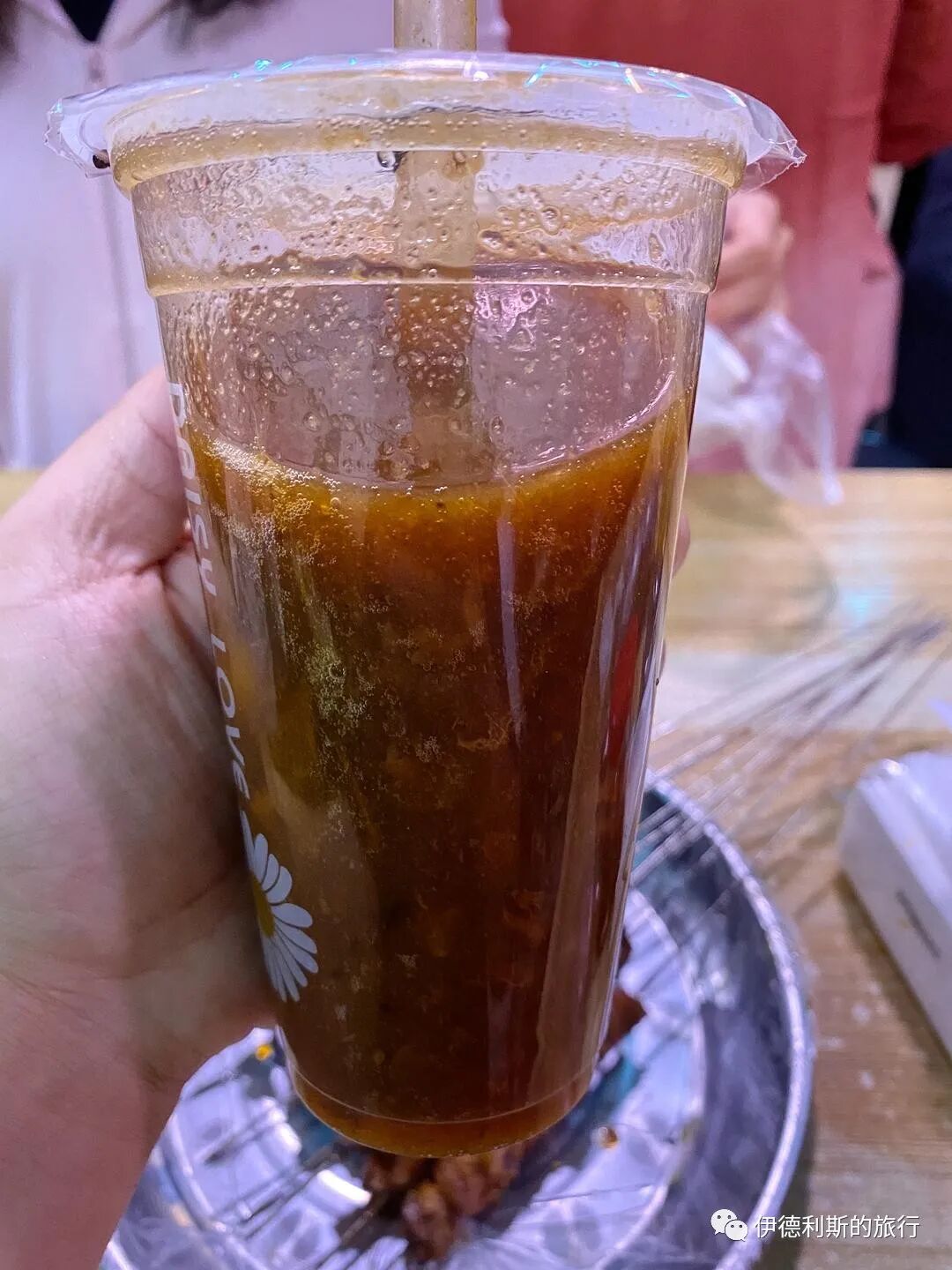
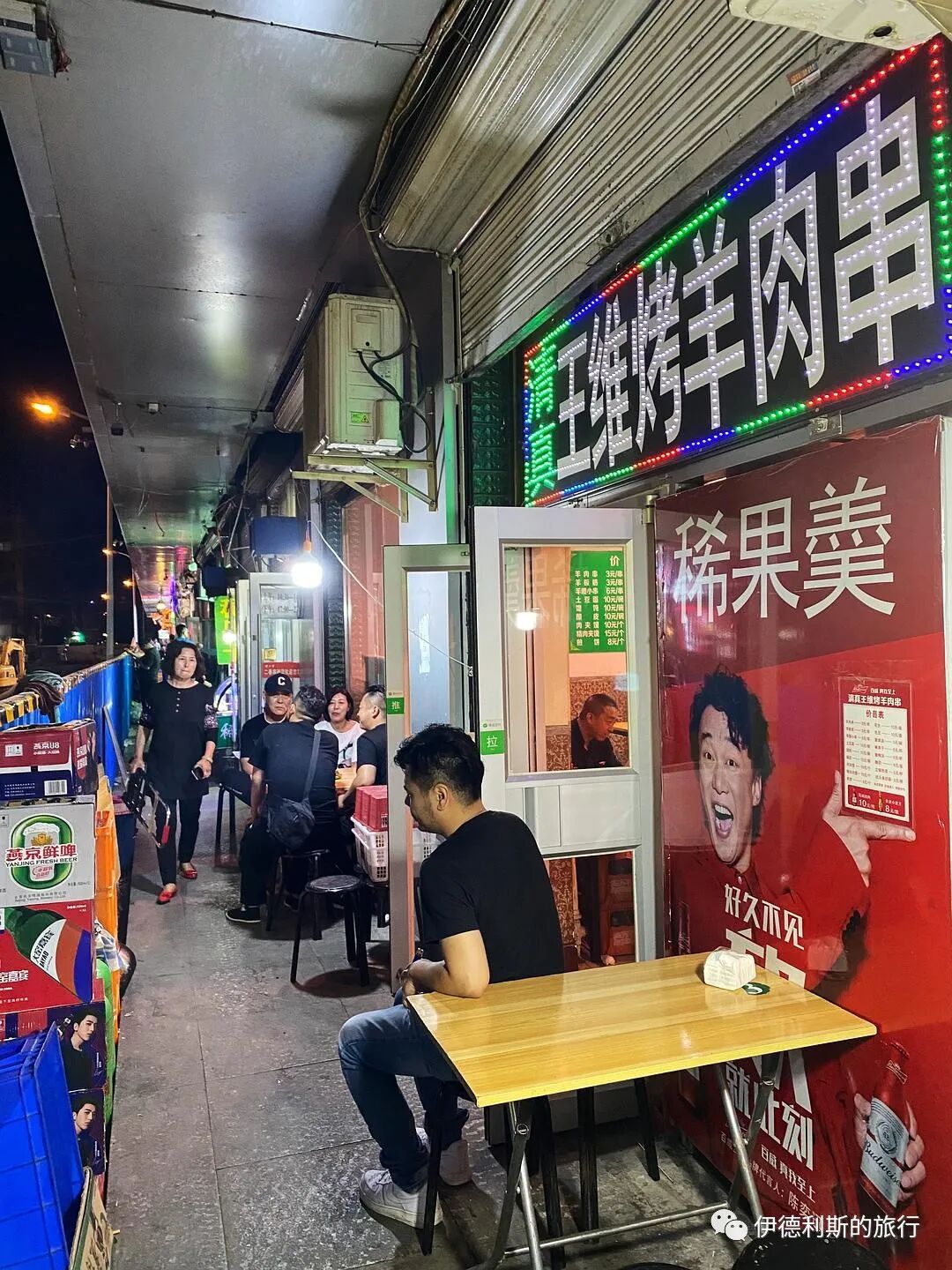
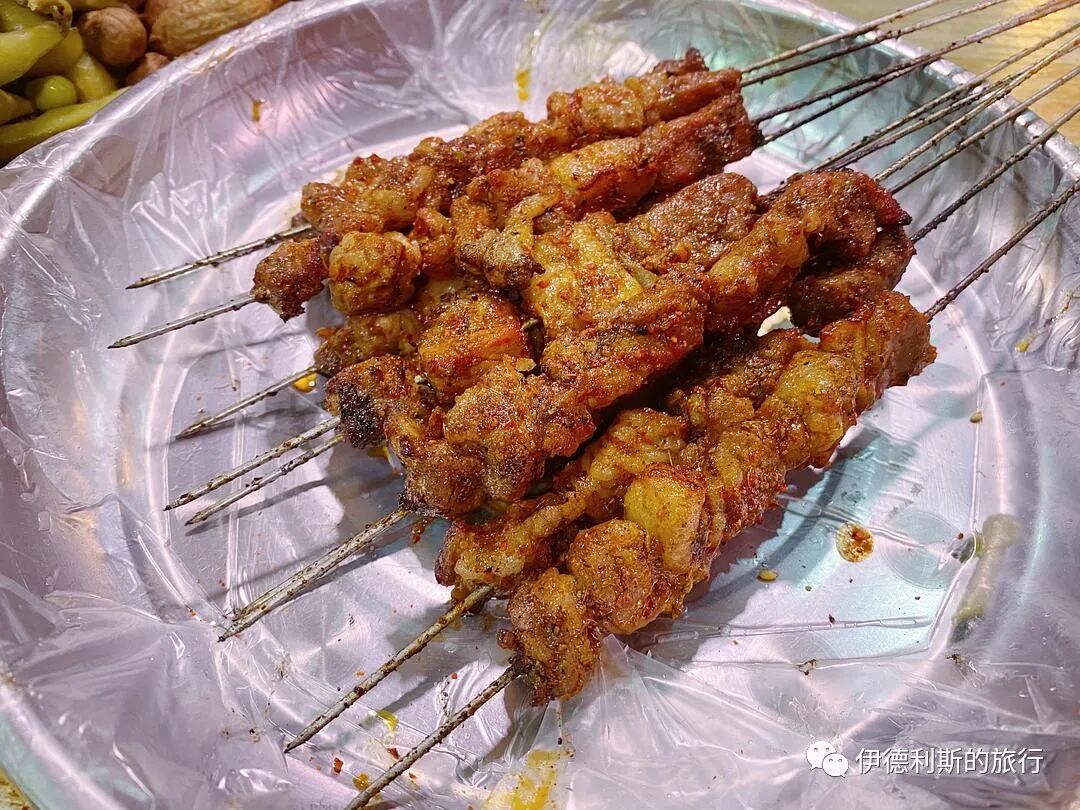
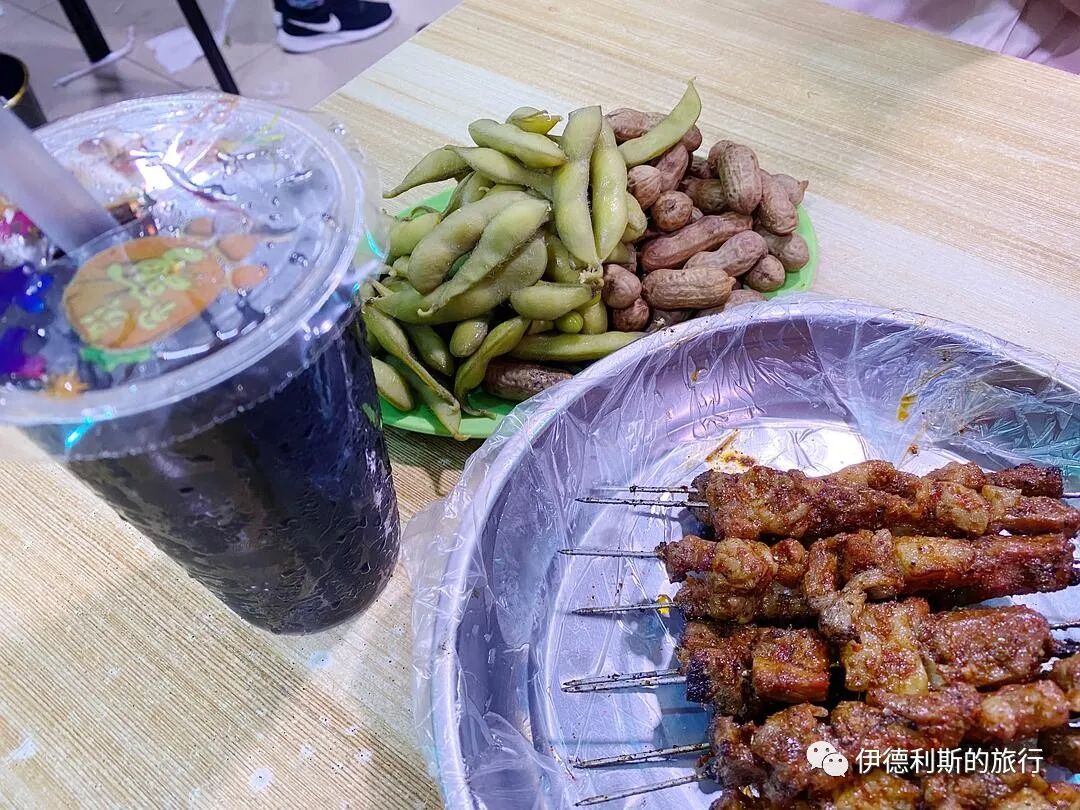
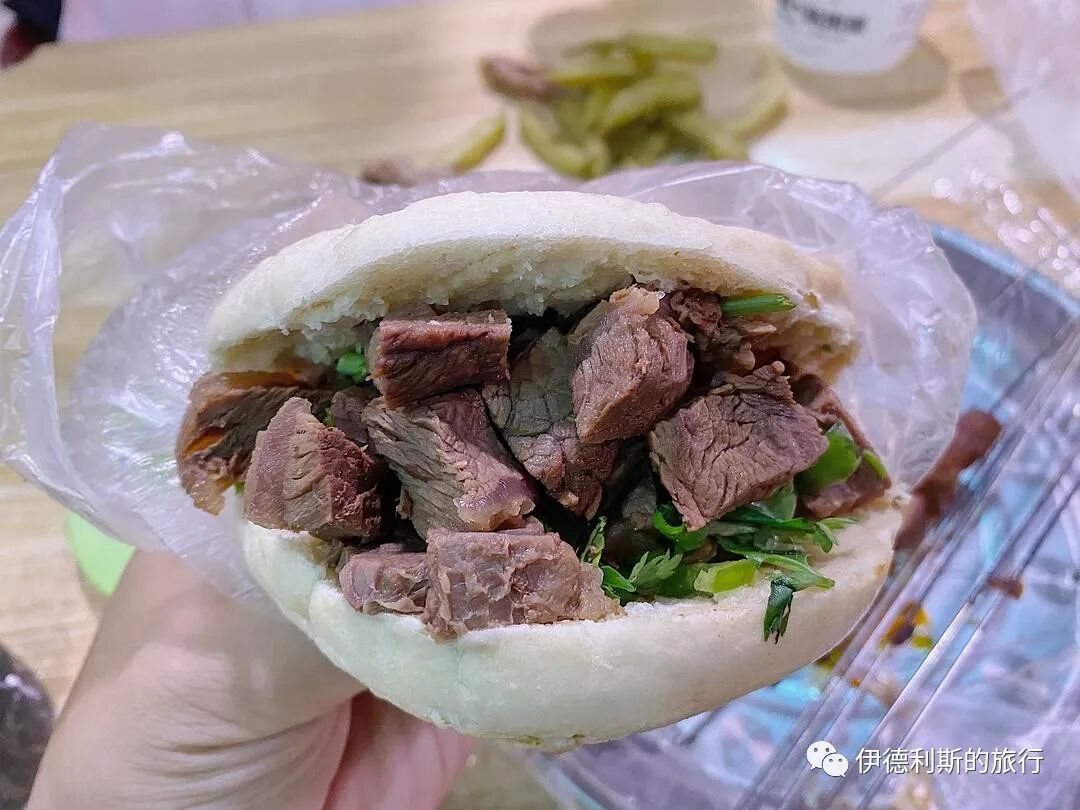
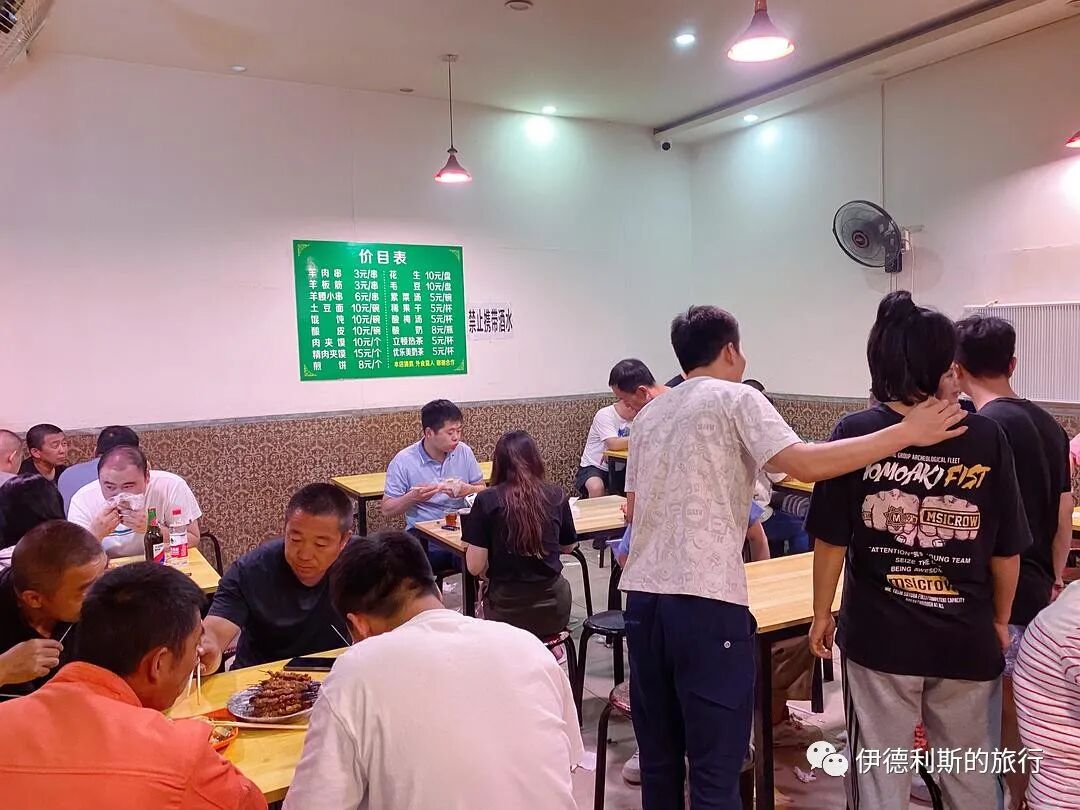
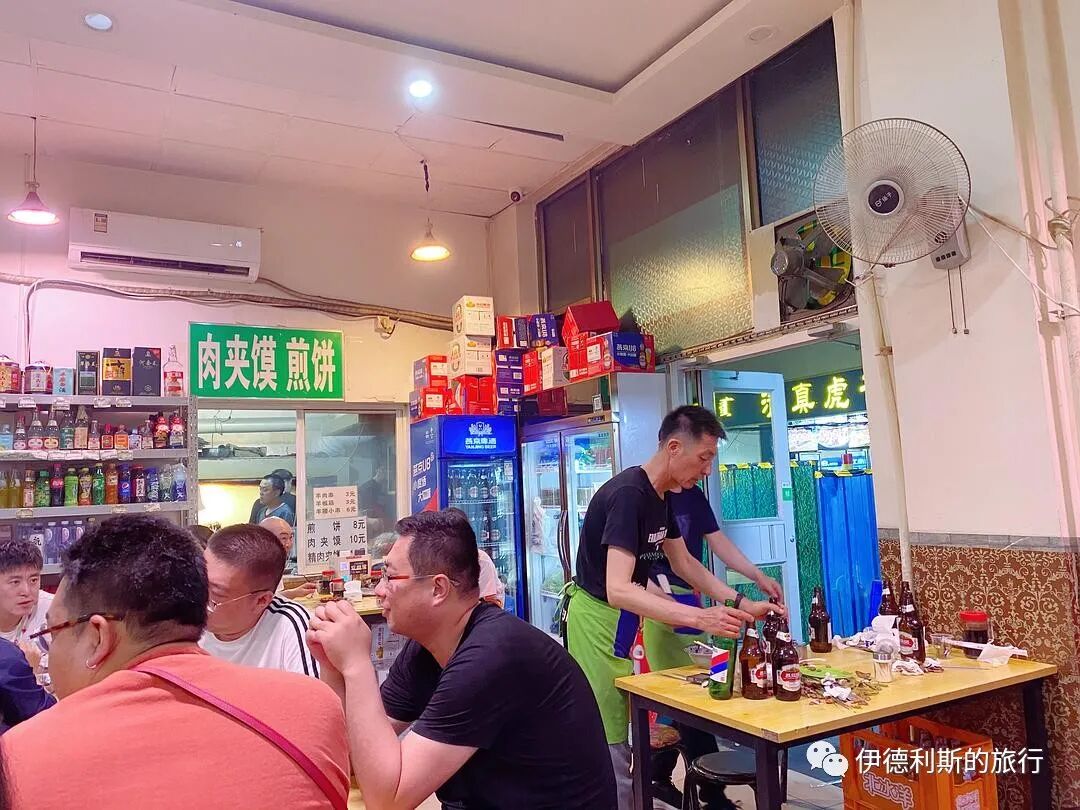
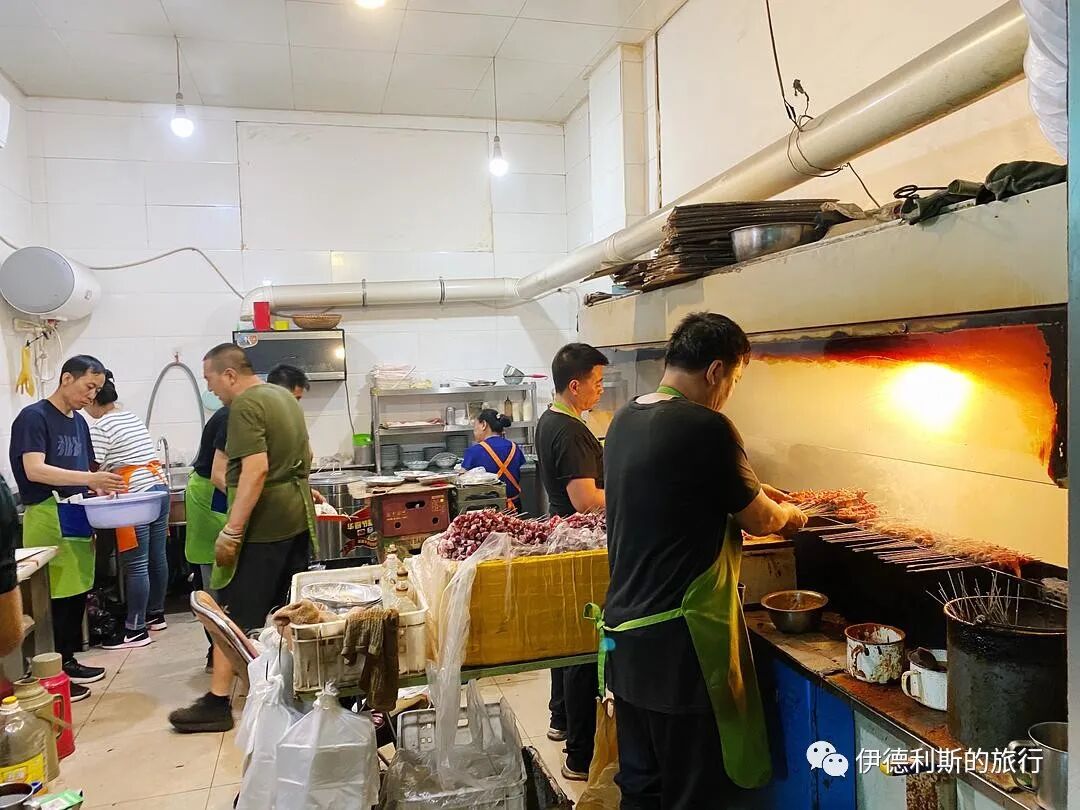
We arrived in Hohhot by night train on Friday. We came to the entrance of the Great Mosque to drink some dried apricot and persimmon fruit soup, then went to Wang Wei on Dasi North Street to eat lamb skewers. Their place should be the most popular one for lamb skewers around the Great Mosque. We also ordered peanuts and edamame, plum juice, and lean meat sandwiches. The sandwiches were filled with pure lean stewed meat, which was very satisfying.
On Saturday morning, we had a Halal Mongolian-style breakfast at Haidiche on Nanshuncheng Street. We had salty milk tea with fried rice, milk skin, soft fried dough strips, and hard fried dough strips. The dough strips are made with yogurt and flour without a drop of water. There were also wild onion side dishes and Buryat steamed buns.
Last time I came to Hohhot, I didn't know there was Halal Mongolian food. This shop has been open for more than a year, and Haidiche is the owner's religious name. The owner's family is very kind. Her mother was looking after the shop during breakfast. The auntie introduced us to the way of eating Mongolian breakfast in detail and asked about us in every way, which made us feel very warm.
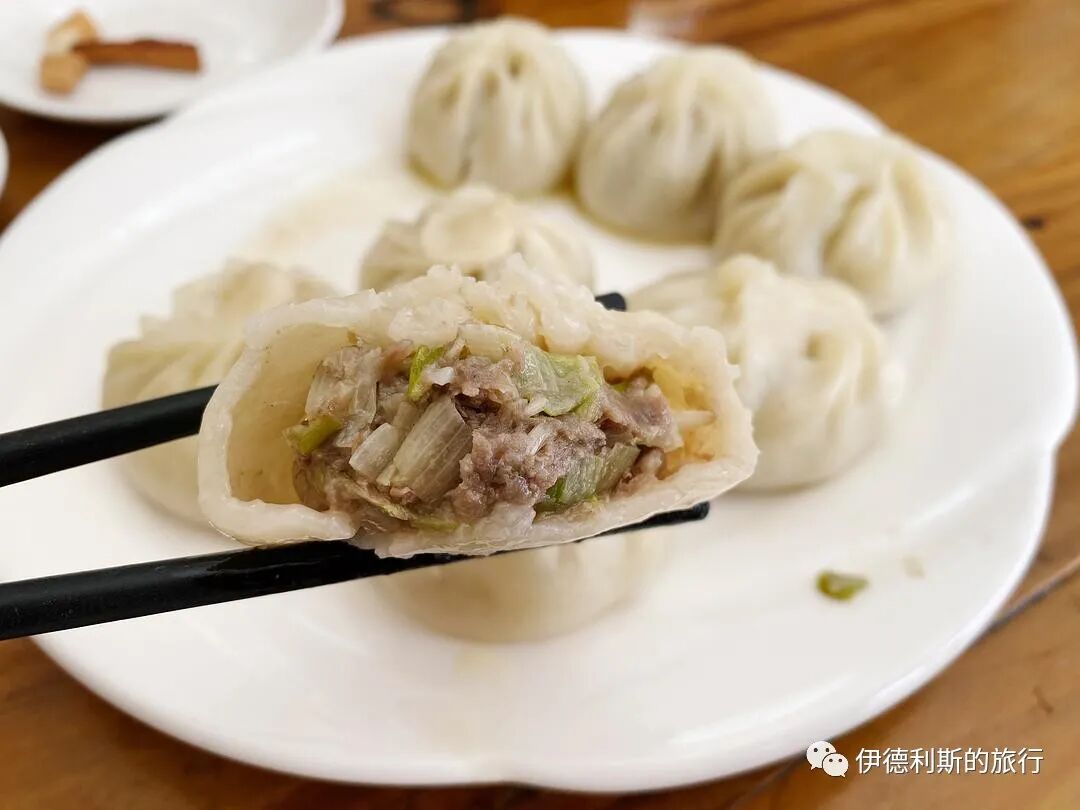
We bought some freshly brewed yogurt at Ma's Dairy Shop on Xinmin Street. The Ma surname Hui people's ancestral home is Youwei, Shanxi. In the Ming Dynasty, they were a powerful family of the Nine Frontiers. In the mid-Wanli period, the 'Ma Family Army' formed by Ma Gui and his brothers and nephews was famous for being good at fighting. They made great contributions by defending Youwei for six months against Altan Khan. The Ma surname Hui people defended the frontier for the Ming Dynasty for many years, and almost all frontier towns had people with the surname Ma serving as regional commanders. After the fall of the Ming Dynasty, the Ma family gave up their military service to farm. After the 'Great Western Route' trade route opened during the Kangxi period, many people moved to Guihua City to settle down.
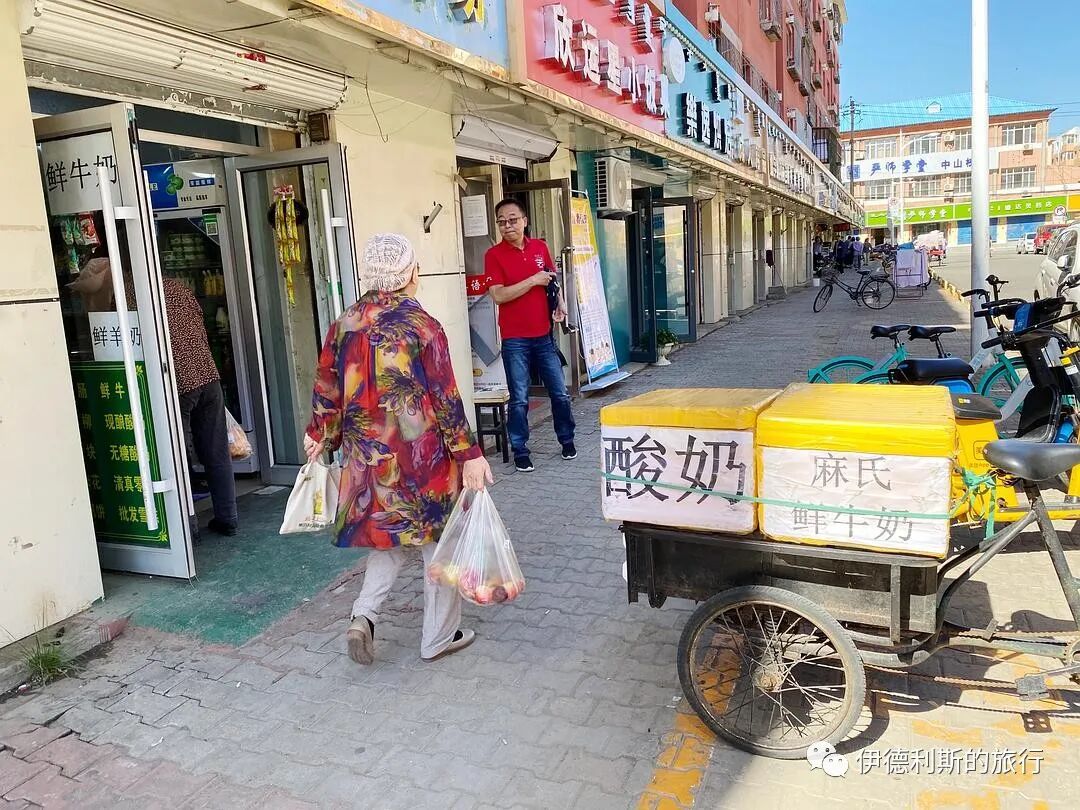
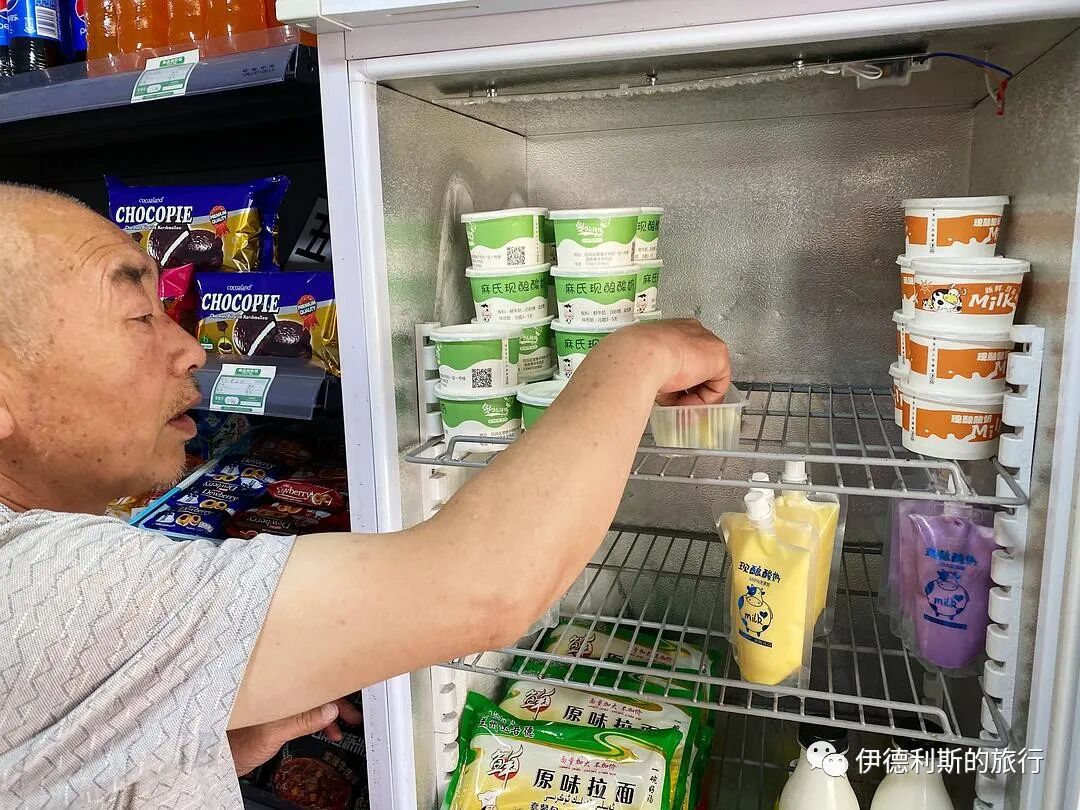
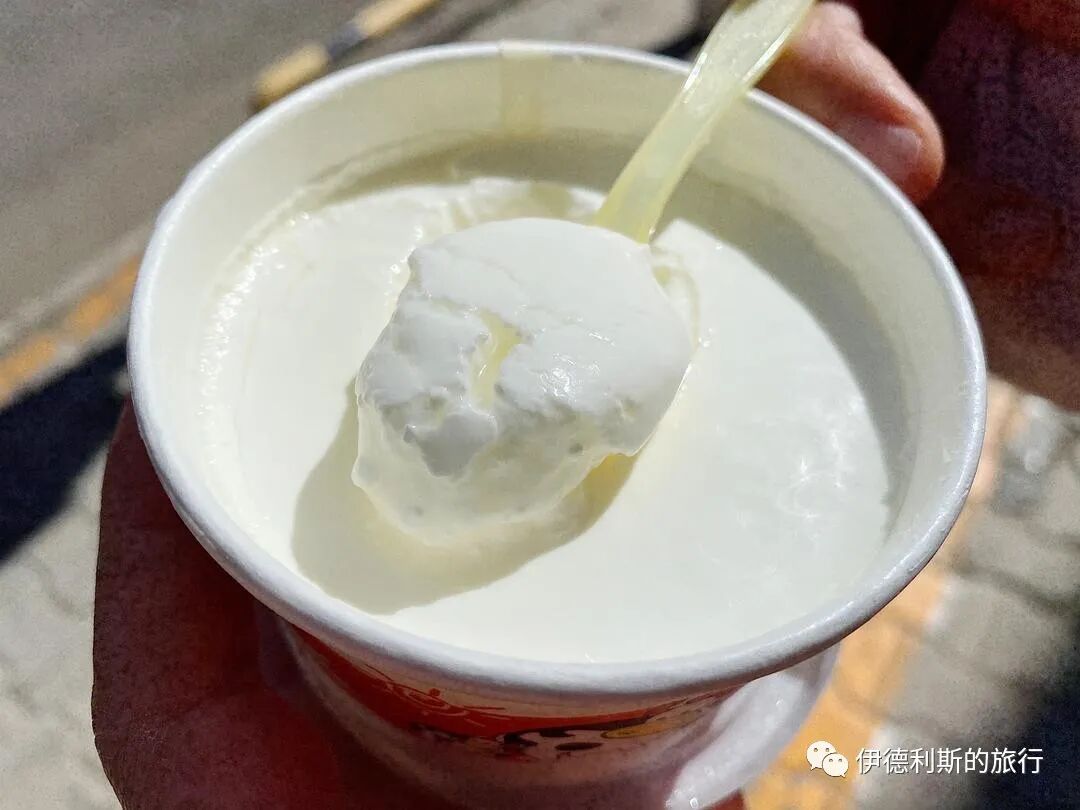
We bought some sweet and sour dried crabapples at Wang Laoqi's dry goods store at the entrance of the Great Mosque, and bought a cup of fruit soup in Kuanxiangzi. Just walking around and eating snacks in the Hui district of Hohhot is very rich.
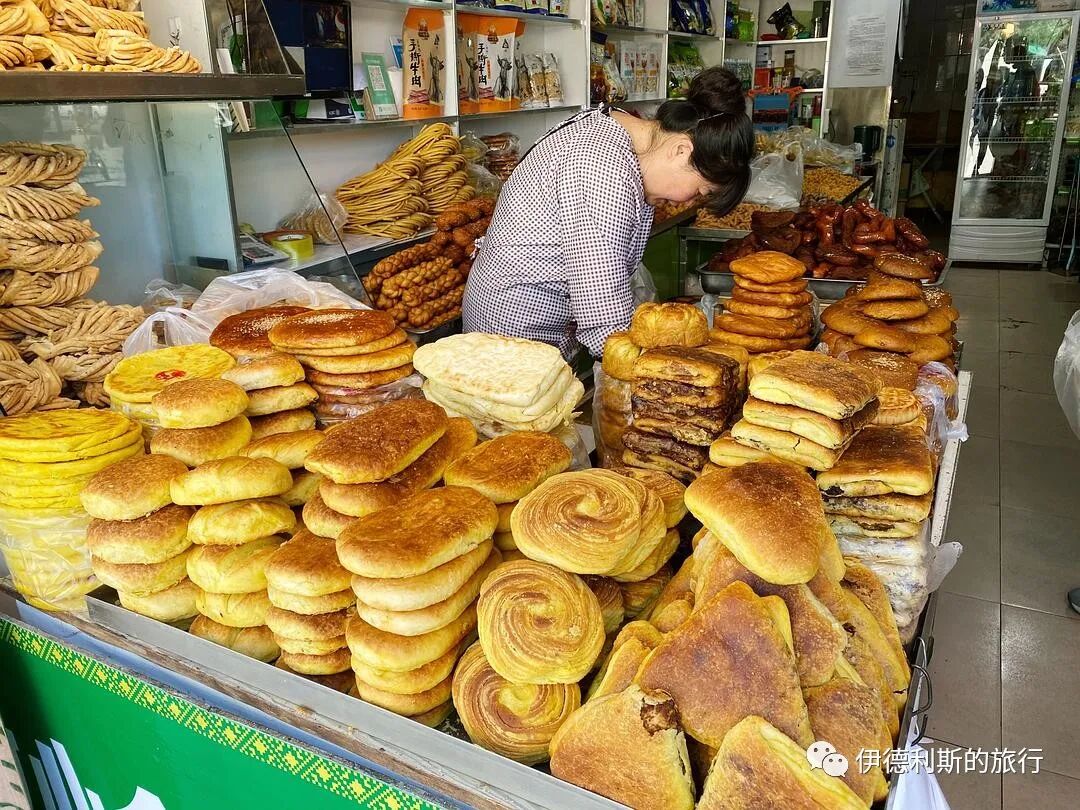
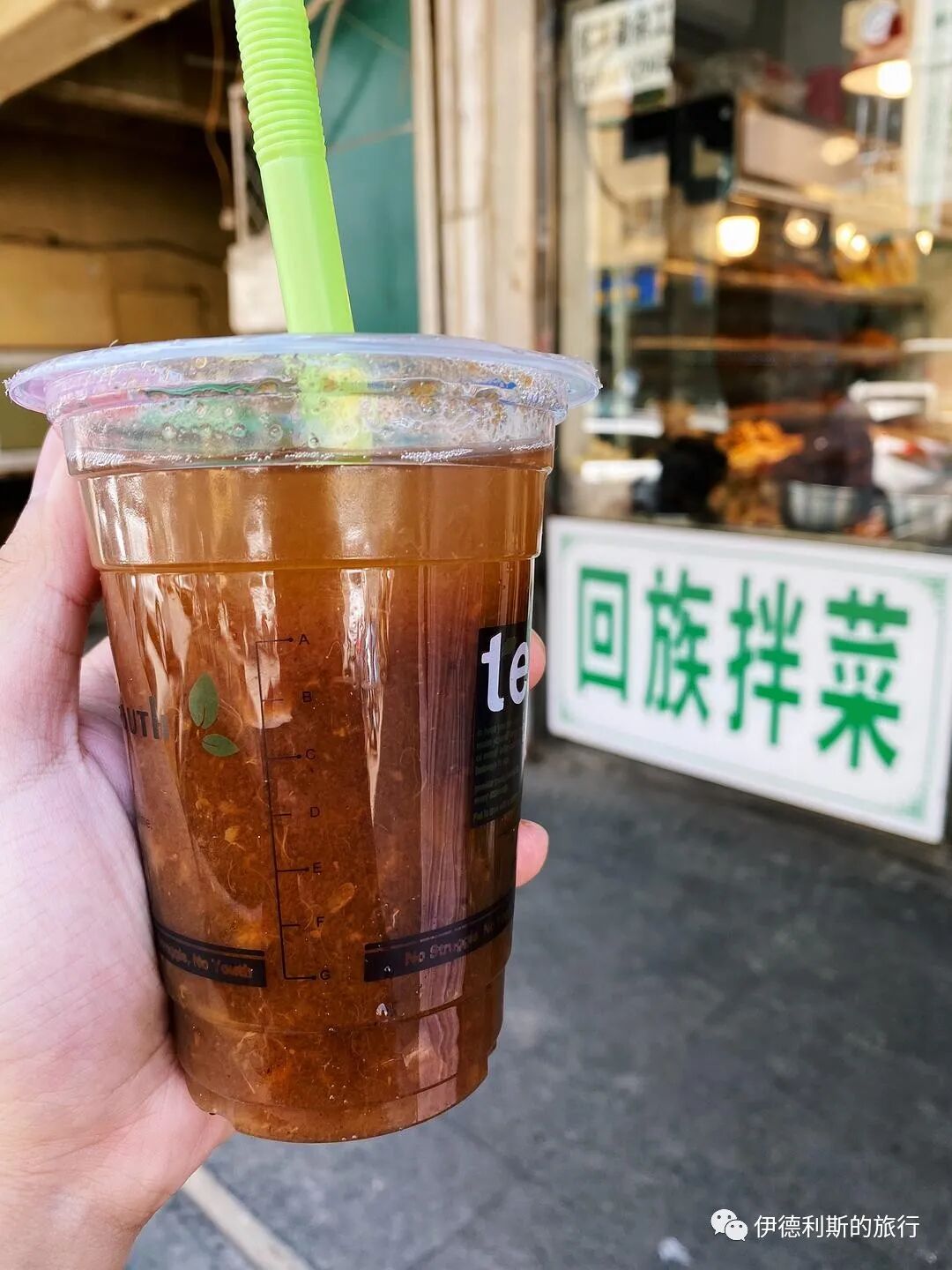
We bought roasted milk skin at Bai's Dairy Shop on Houxincheng Road. The texture of their roasted milk skin is just right and not hard at all. Zainab said it was much better than what she had bought online before. Their cheese is also very delicious, sweet and sour, but the weather was too hot to take away, so we just tasted it.
One theory about the Bai surname Hui people in Hohhot is that they followed Princess Kejing to Guihua City to do business after she married the Mongolian Tushetu Khan in 1697 (the 36th year of Kangxi). Another theory is that they moved from Xi'an in the late Qing Dynasty. At that time, the most famous noodle shop outside the north gate of Guihua City was opened by Bai Xiu.
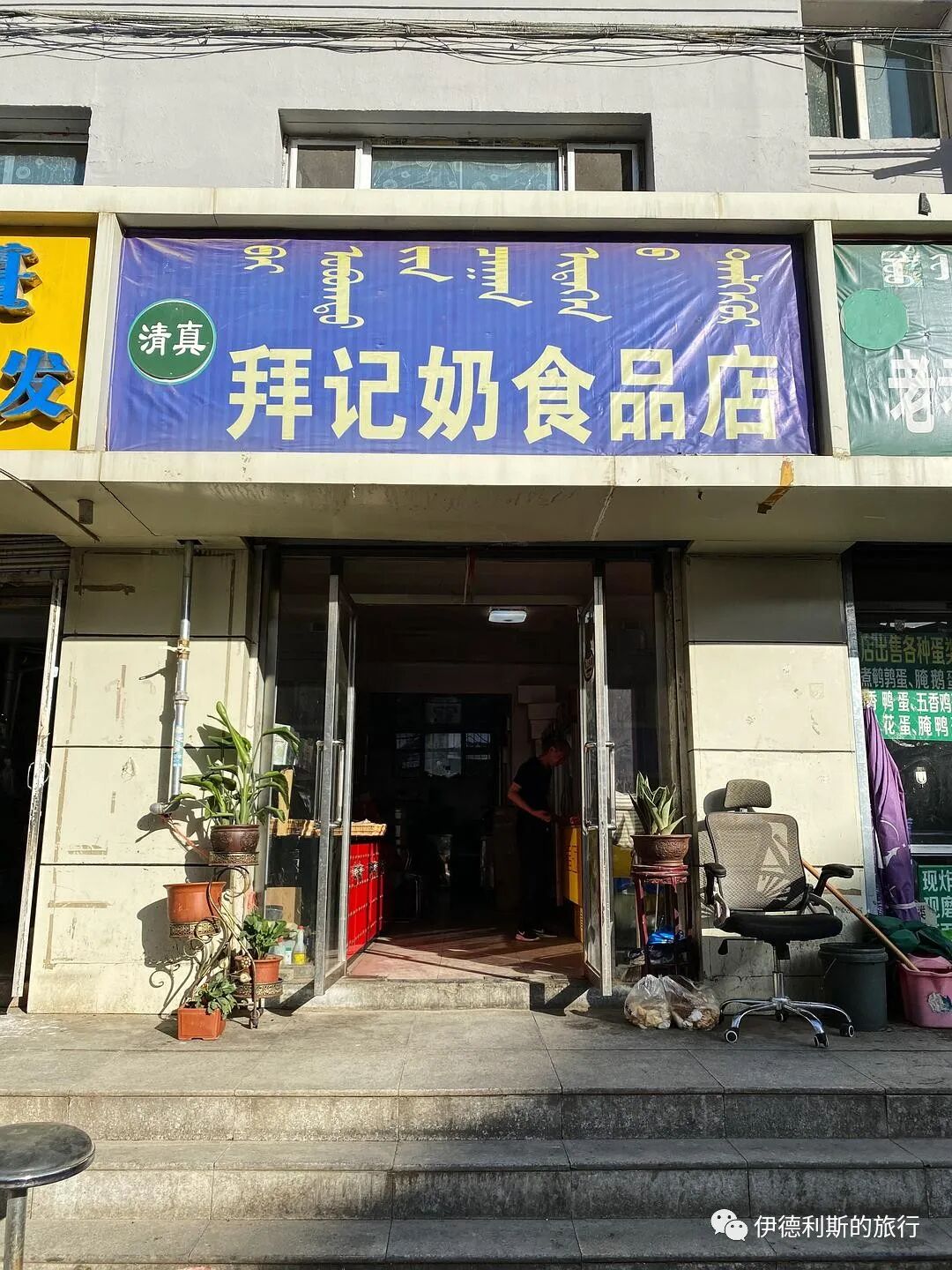
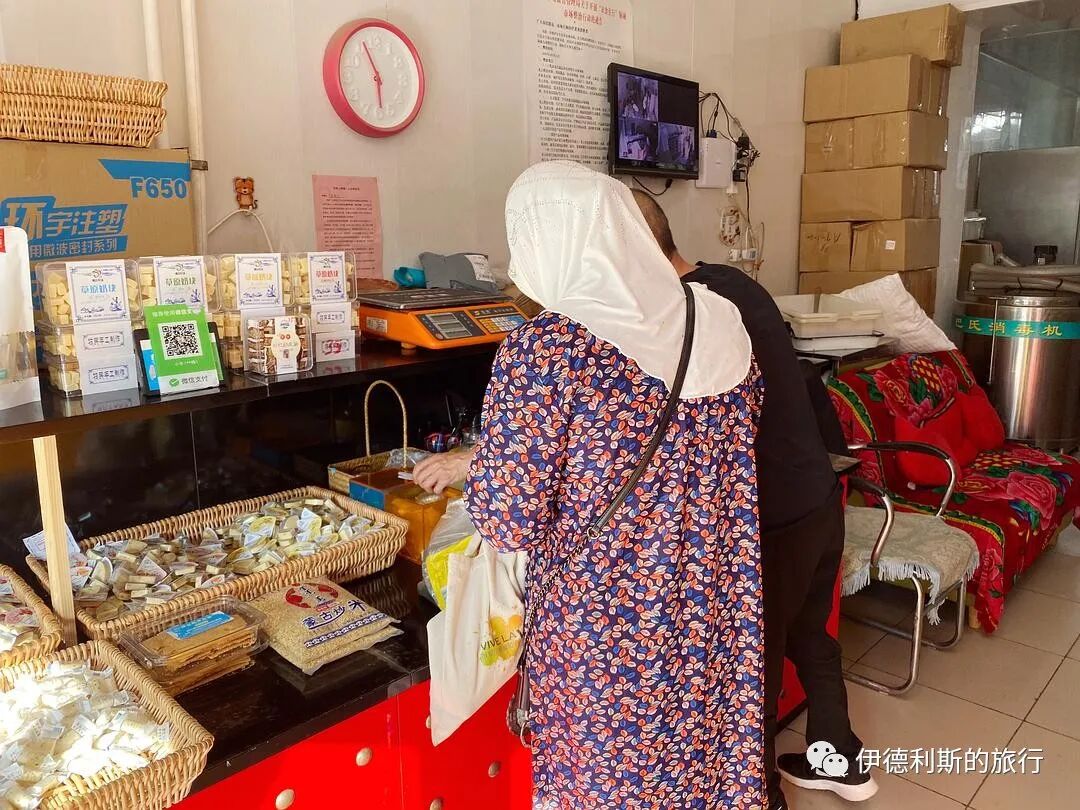
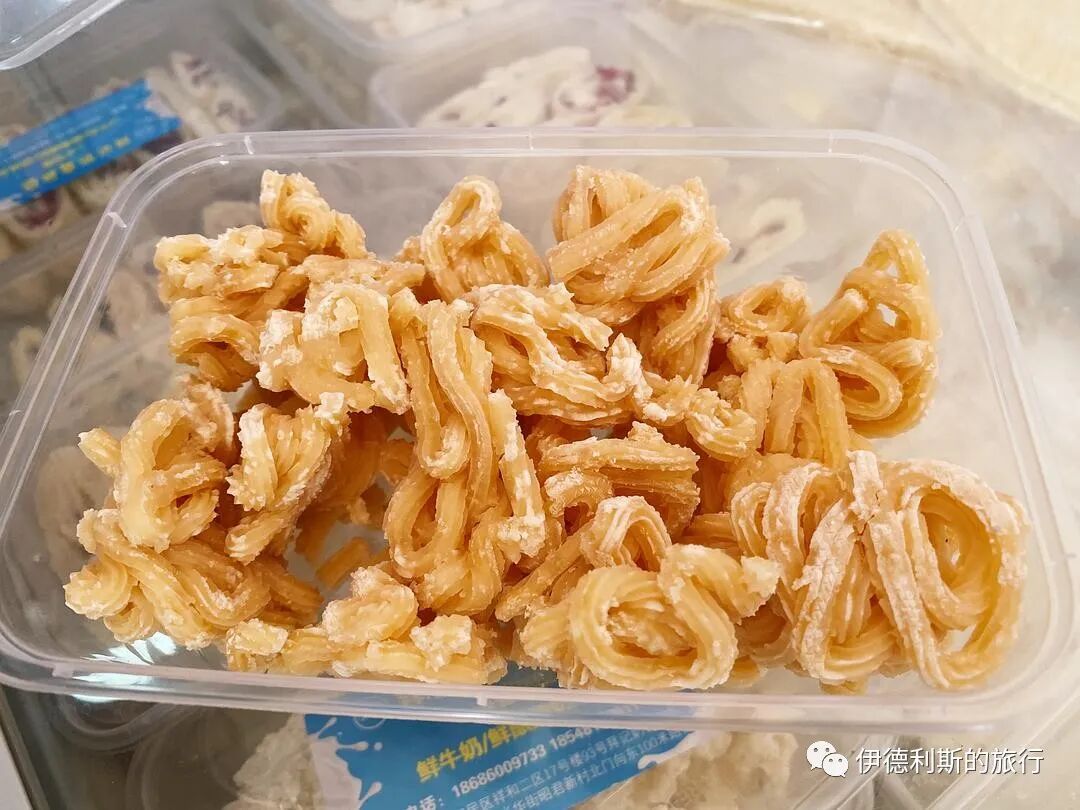
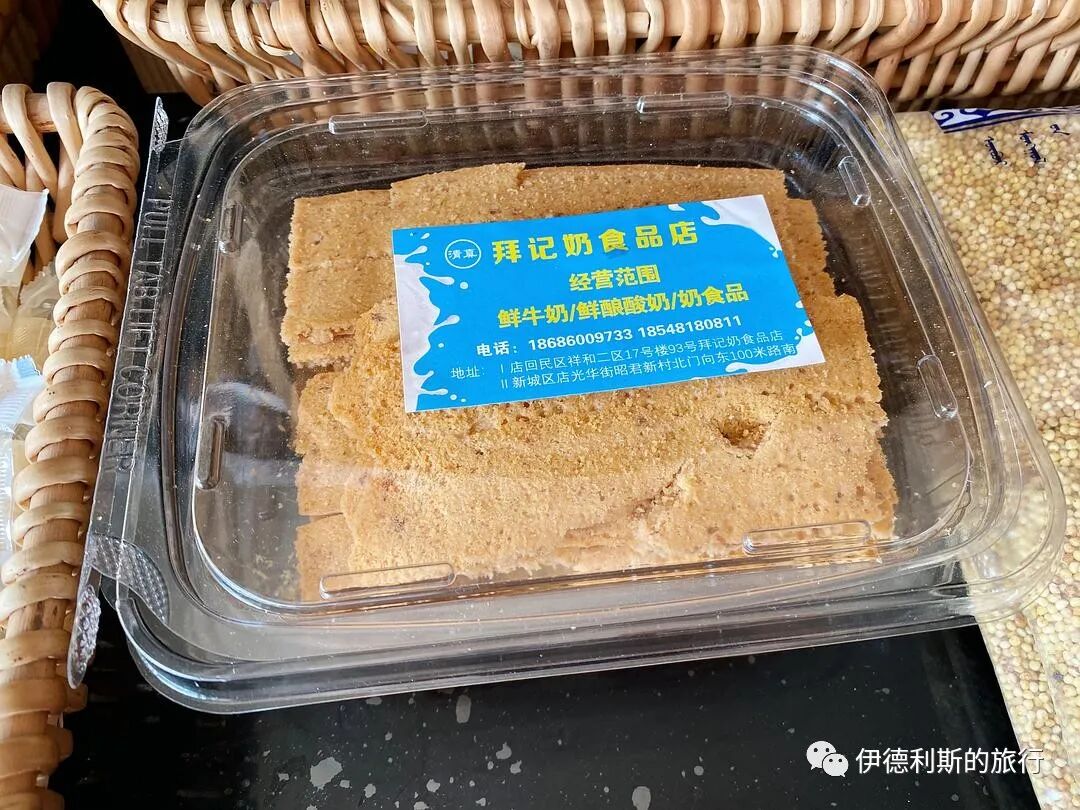
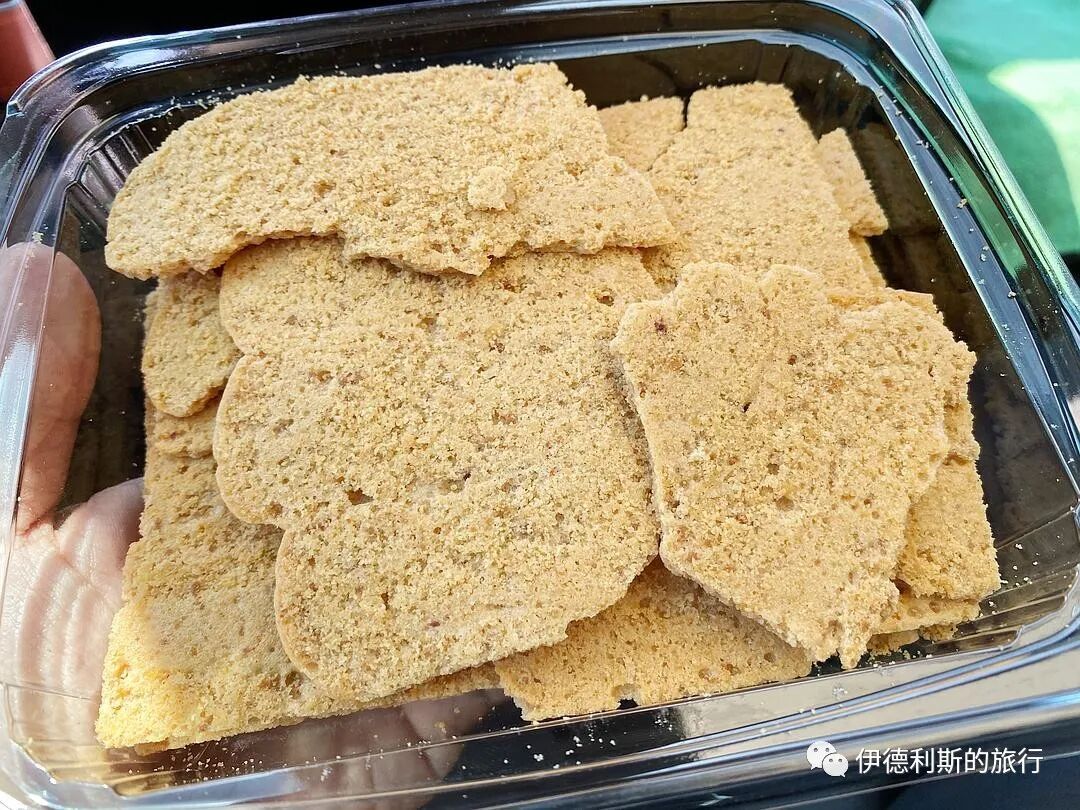
We bought milk skin rolls and fresh yogurt at Miao's Fresh Yogurt Shop on Xincheng Road. Milk skin can be rolled with four kinds of fillings: hawthorn, cranberry, raisins, and fried rice. Each flavor is different, and I personally prefer the cranberry roll. In summer, milk skin rolls cannot be stored at room temperature and need to be eaten on the same day.
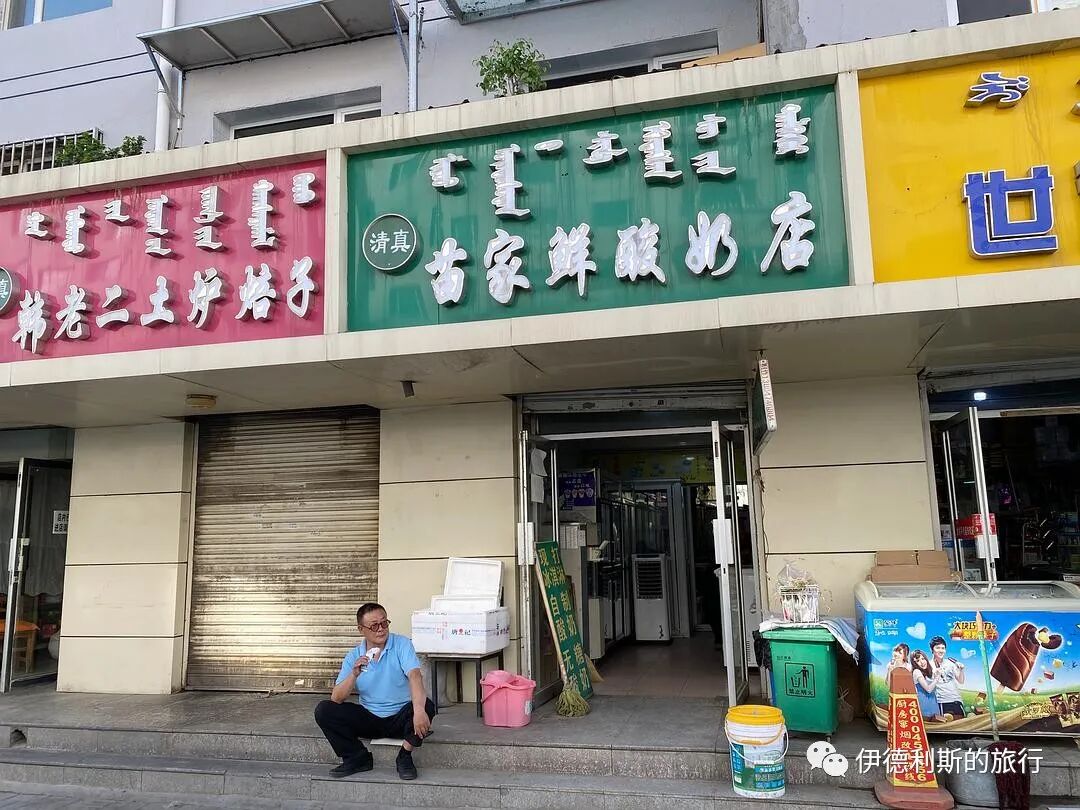
The Hohhot Great Mosque was first built in the late Ming and early Qing dynasties, expanded in 1789 (the 54th year of Qianlong), and expanded again in 1923.
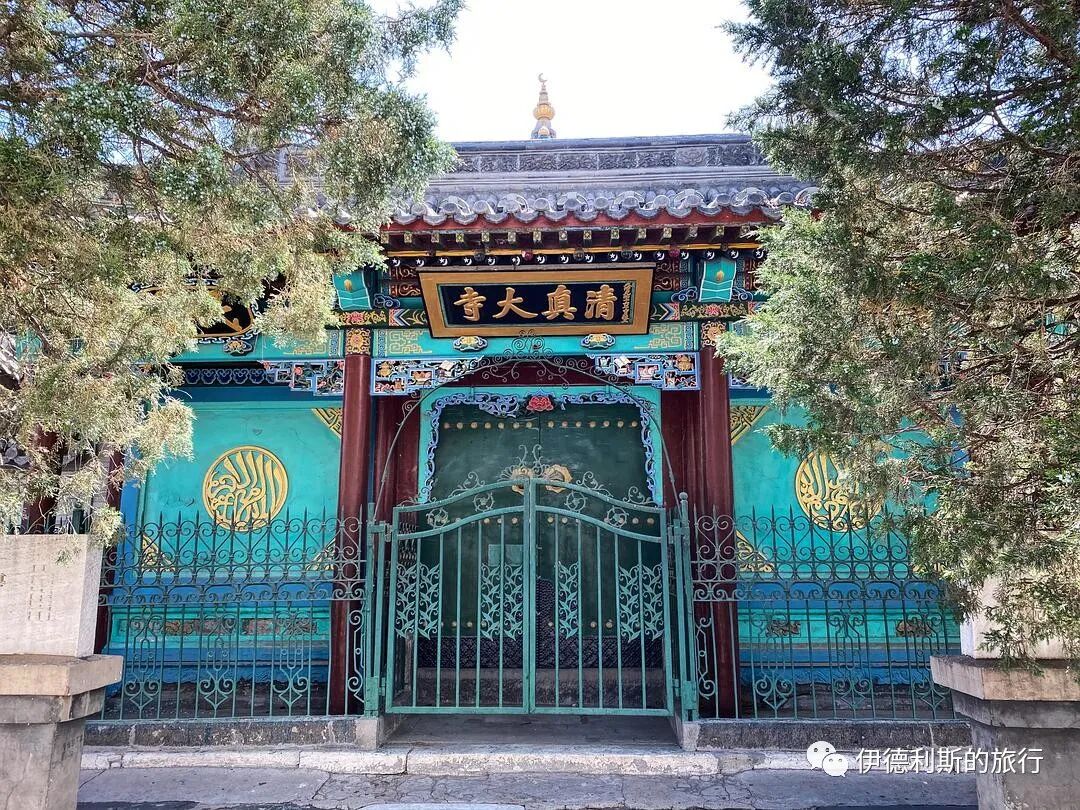
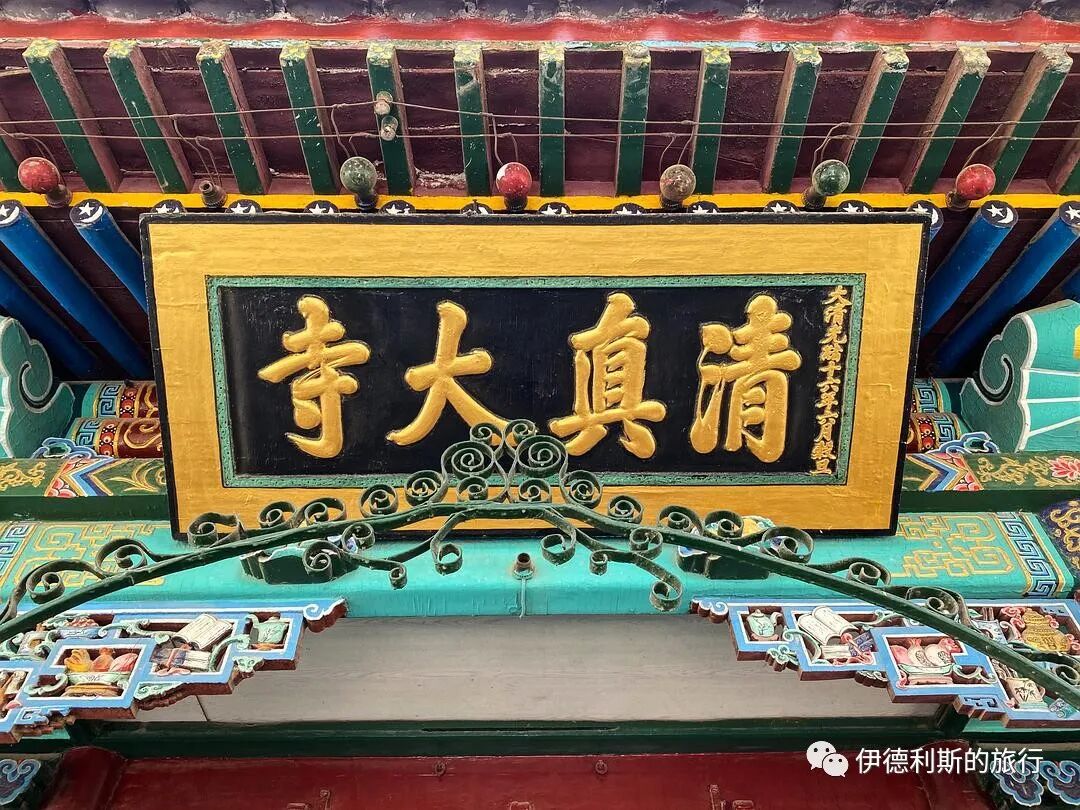
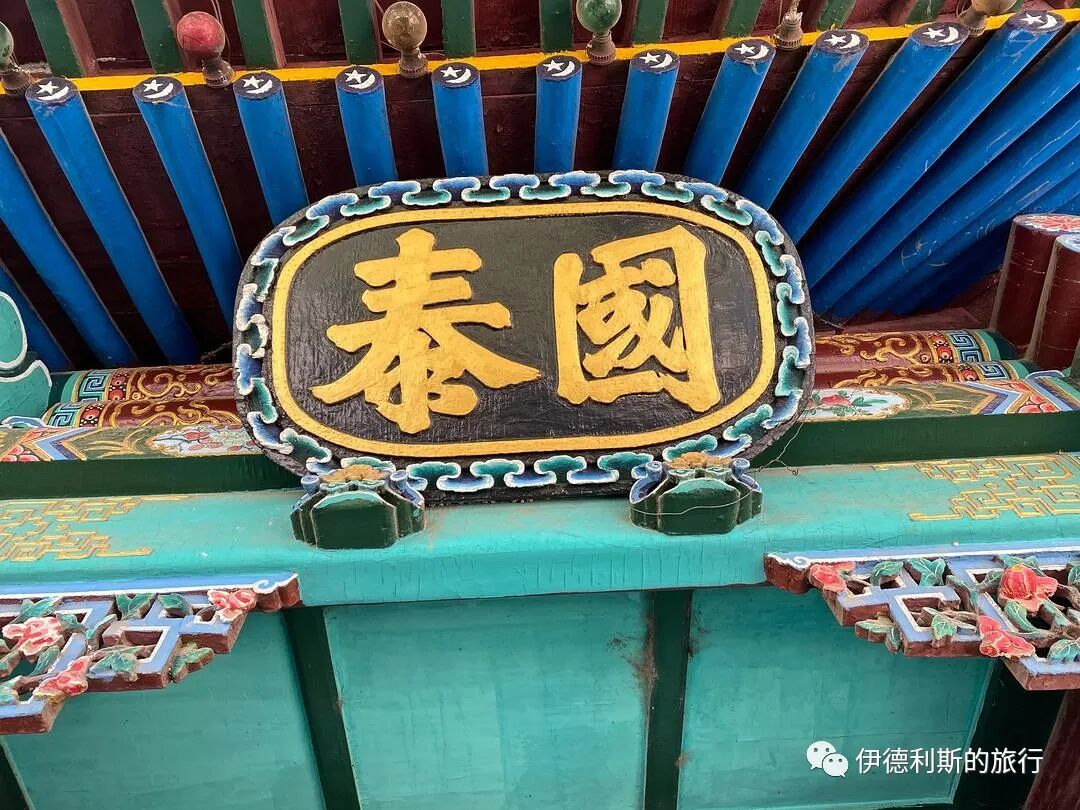
The mosque gate was built in 1892 (the 18th year of Guangxu), with a plaque inscribed 'Great Mosque' from 1890 (the 16th year of Guangxu), and plaques reading 'Country Prosperous' and 'People Peaceful' on both sides.
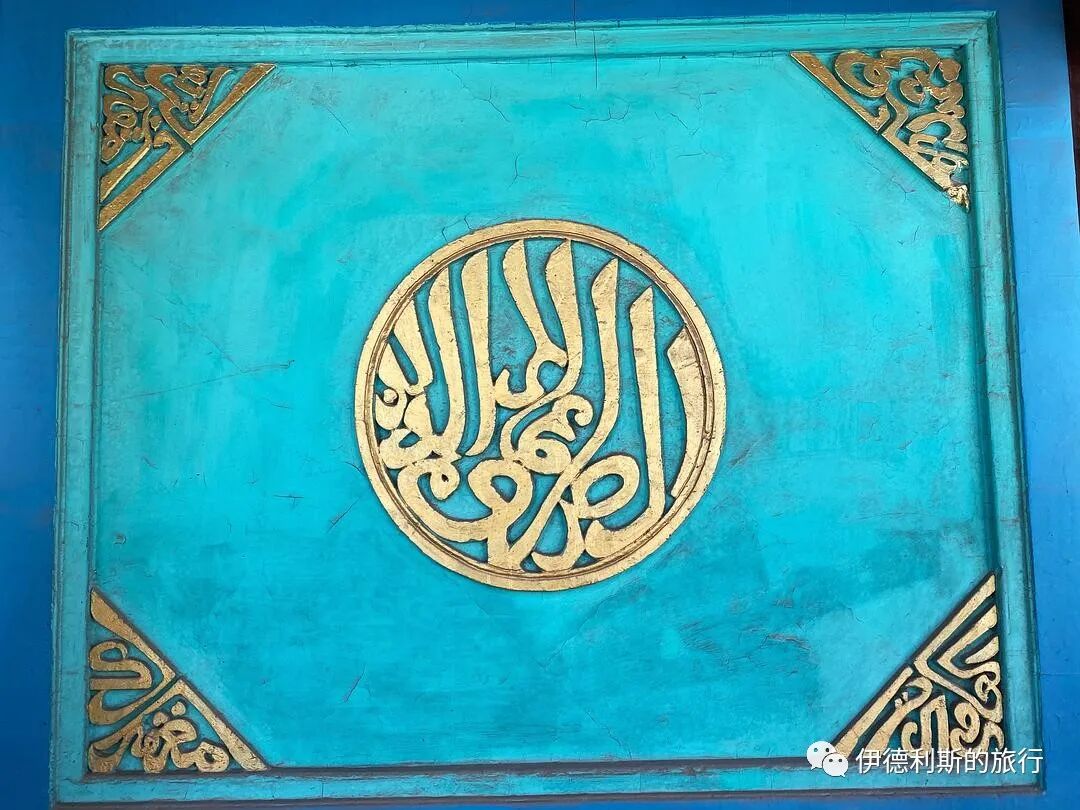
After entering the gate, you can see the brick-carved screen wall behind the main hall, built in 1896 (the 22nd year of Guangxu), engraved with 'Rectify the Heart and Be Sincere in Cultivating the Self', 'Recognize the Oneness of Allah', 'Enlighten the Heart', and 'See the Nature', which were inscribed by Ma Fuxiang, the then-Governor of Suiyuan in 1924.
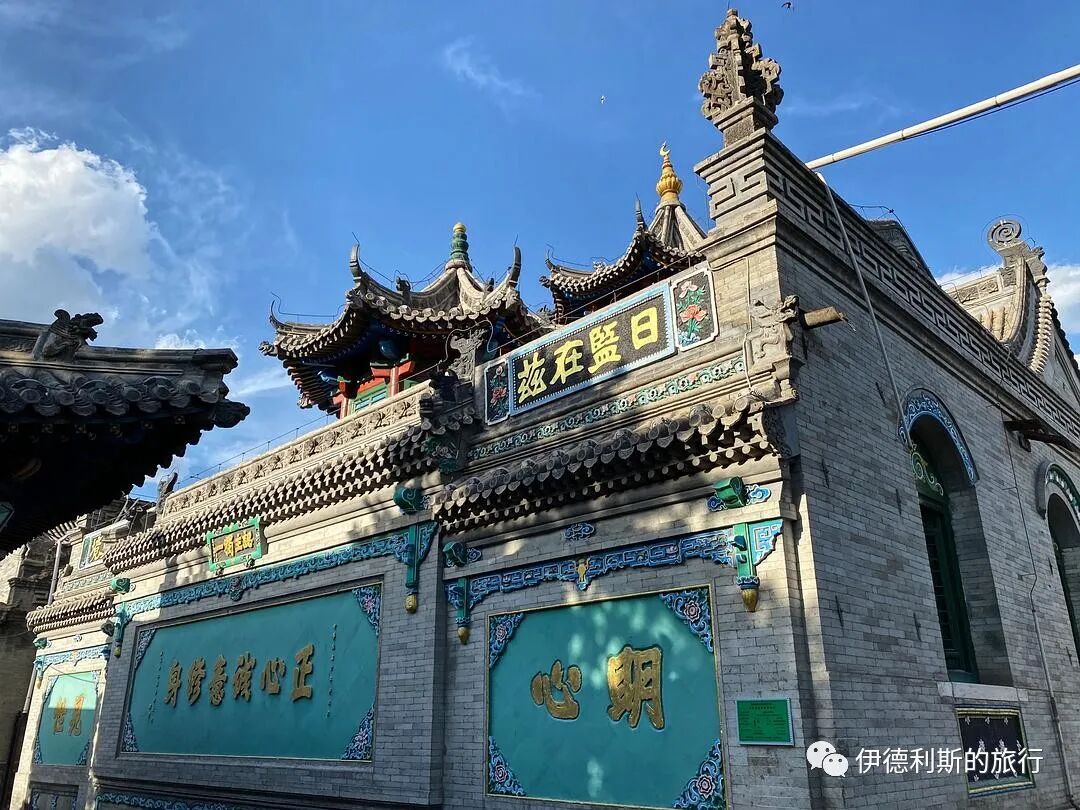
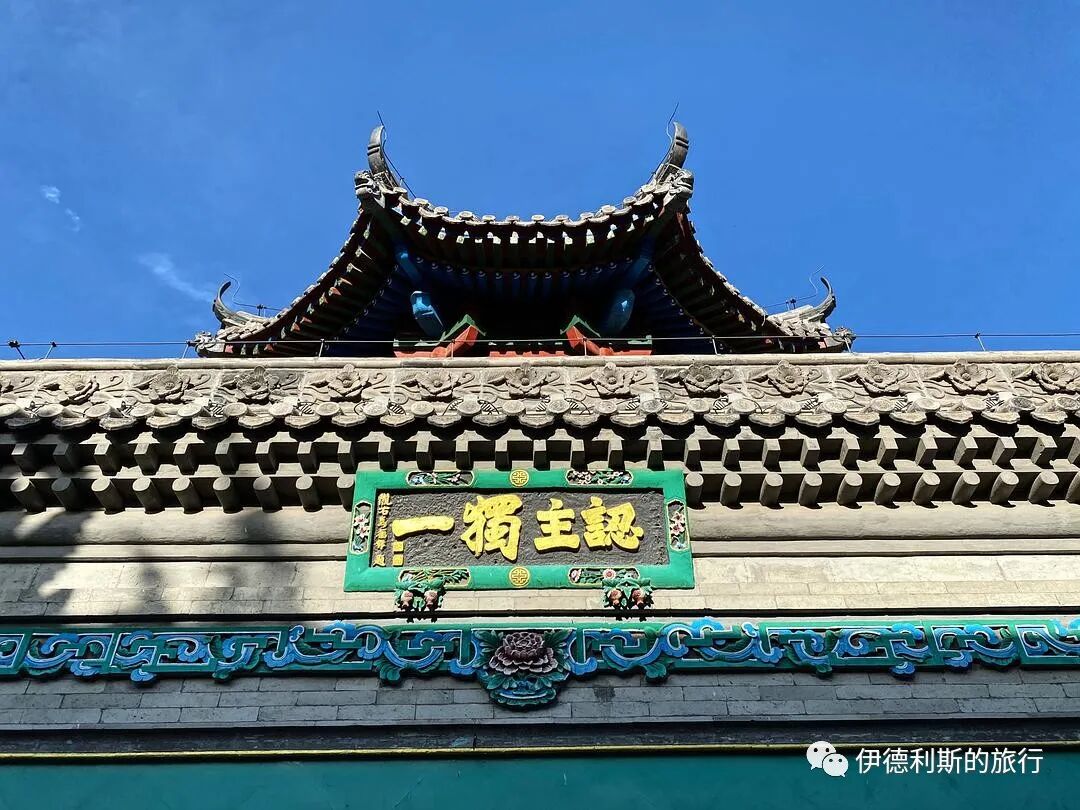
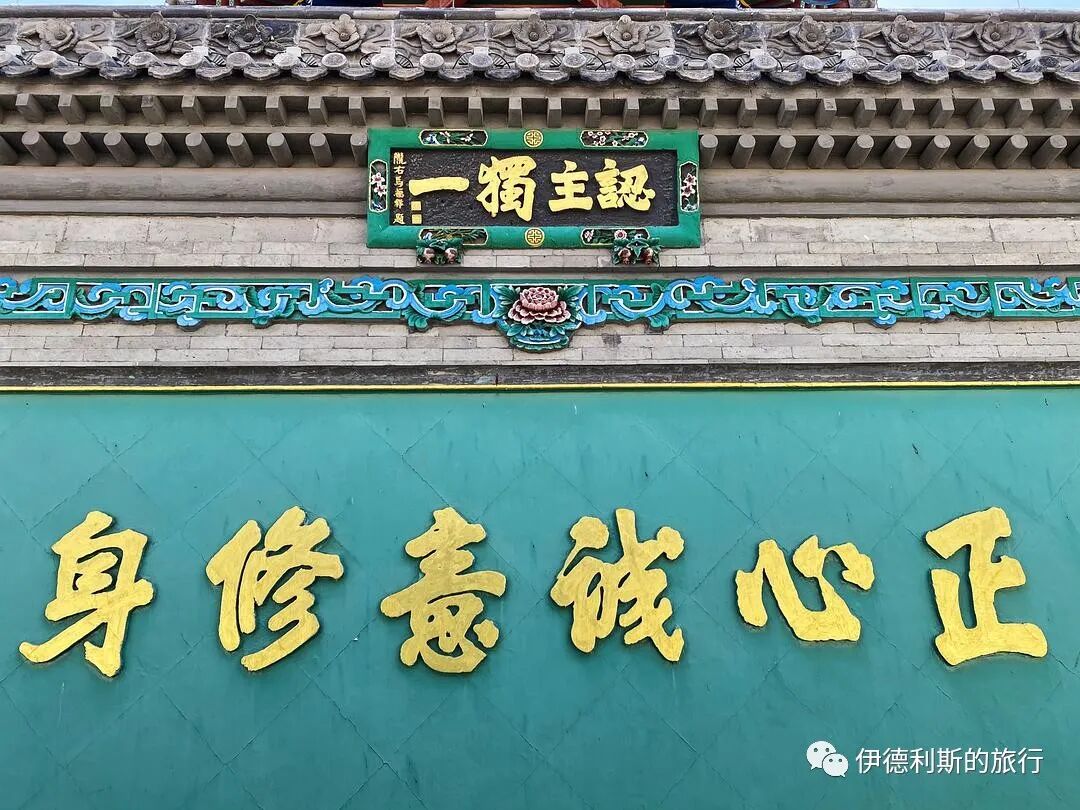
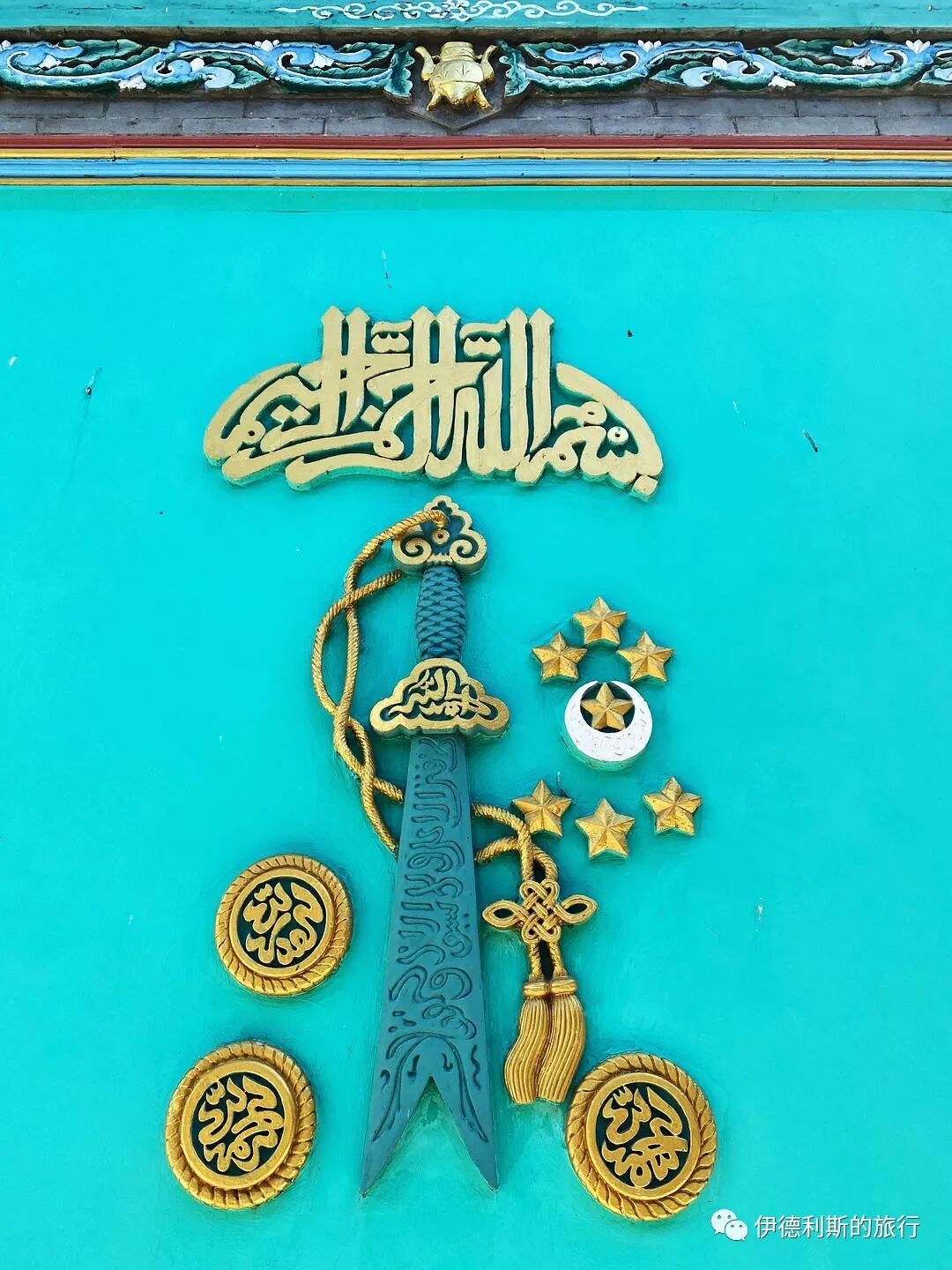
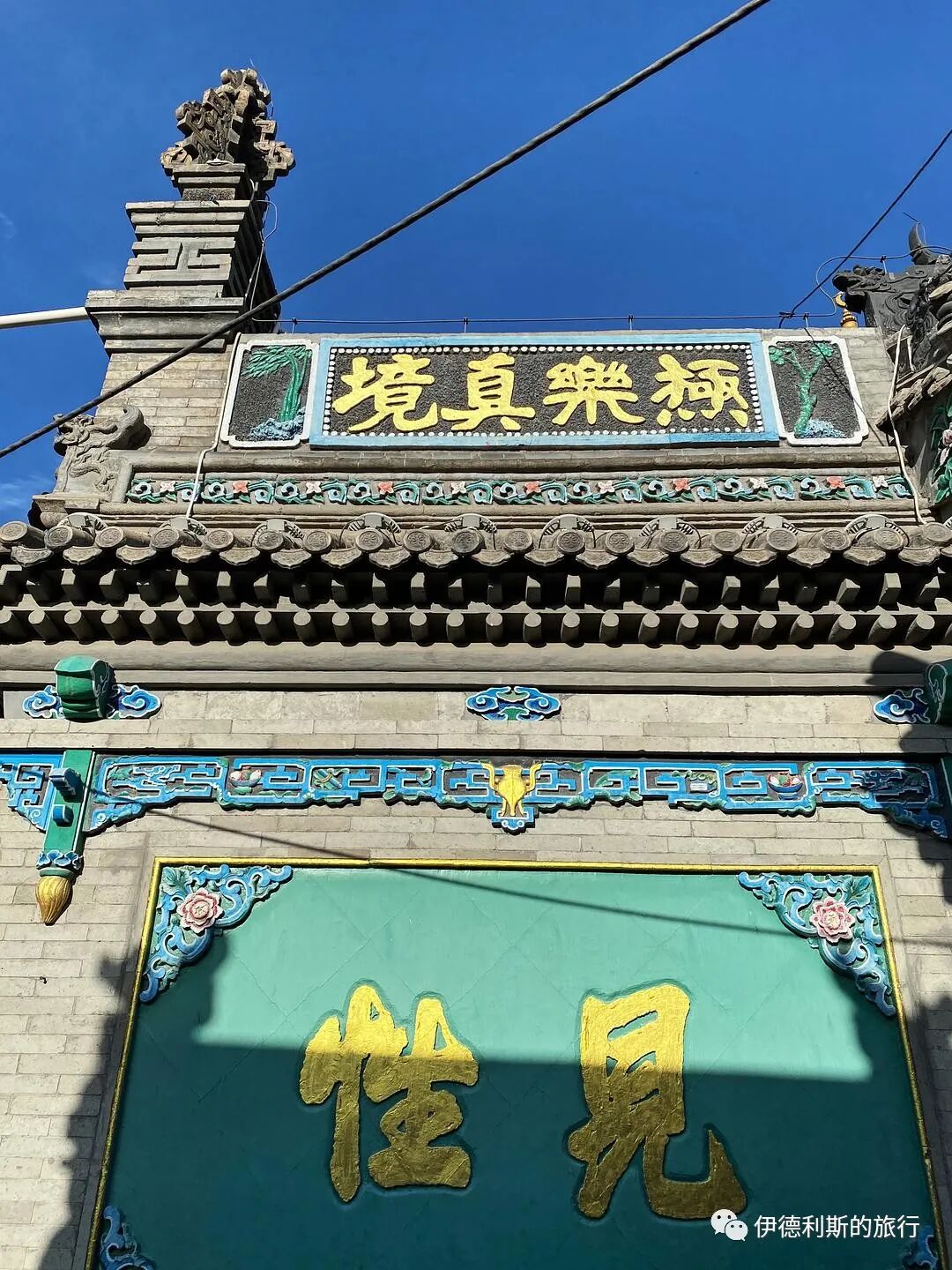
The prayer hall was expanded in 1923 and consists of a shed, front hall, middle hall, and kiln hall. It has a connected roof structure, and there are five pointed pavilions on the roof, symbolizing the five pillars of Islam: 'Faith, Prayer, Fasting, Charity, and Pilgrimage'. The shed is in a Chinese-Western fusion style, with arched doors, and Arabic plaques, couplets, and floral patterns on the walls.
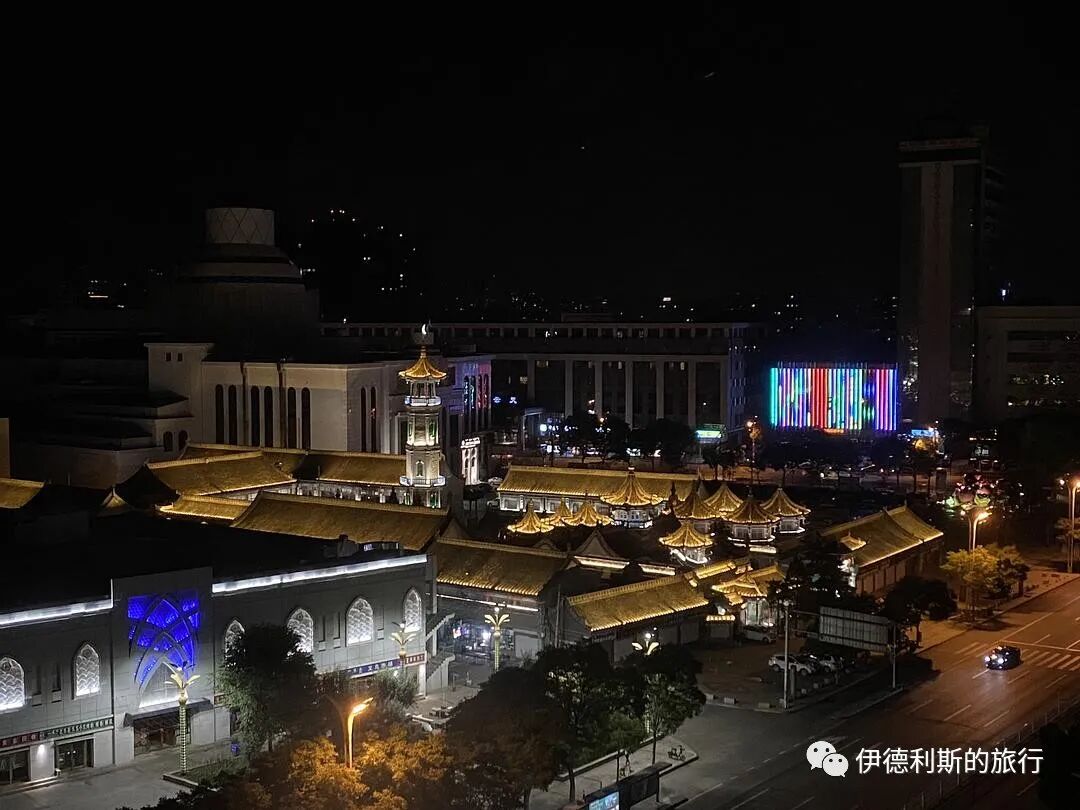
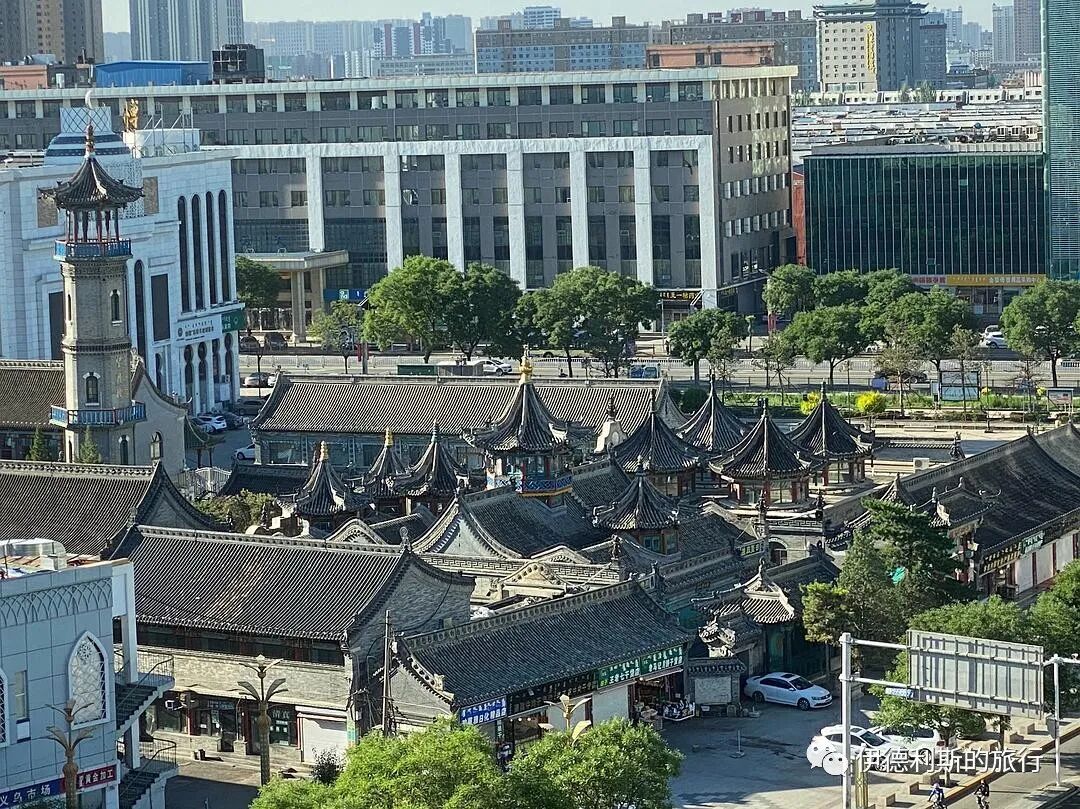
Inside the main hall.
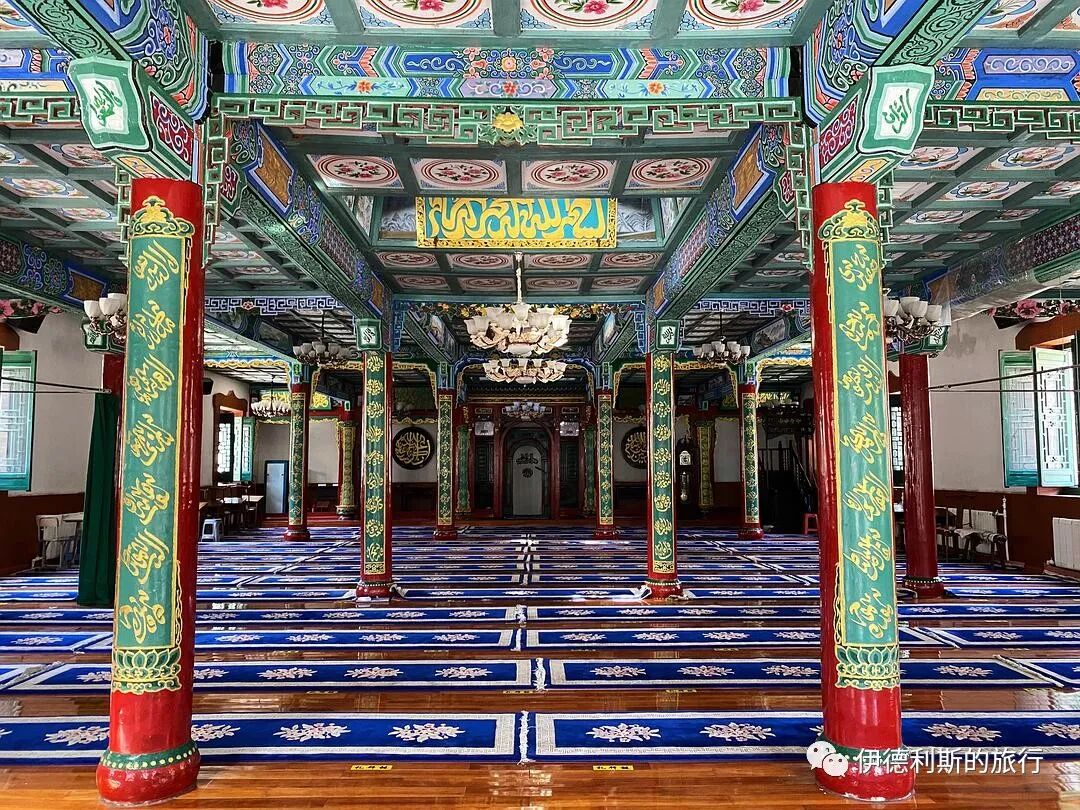
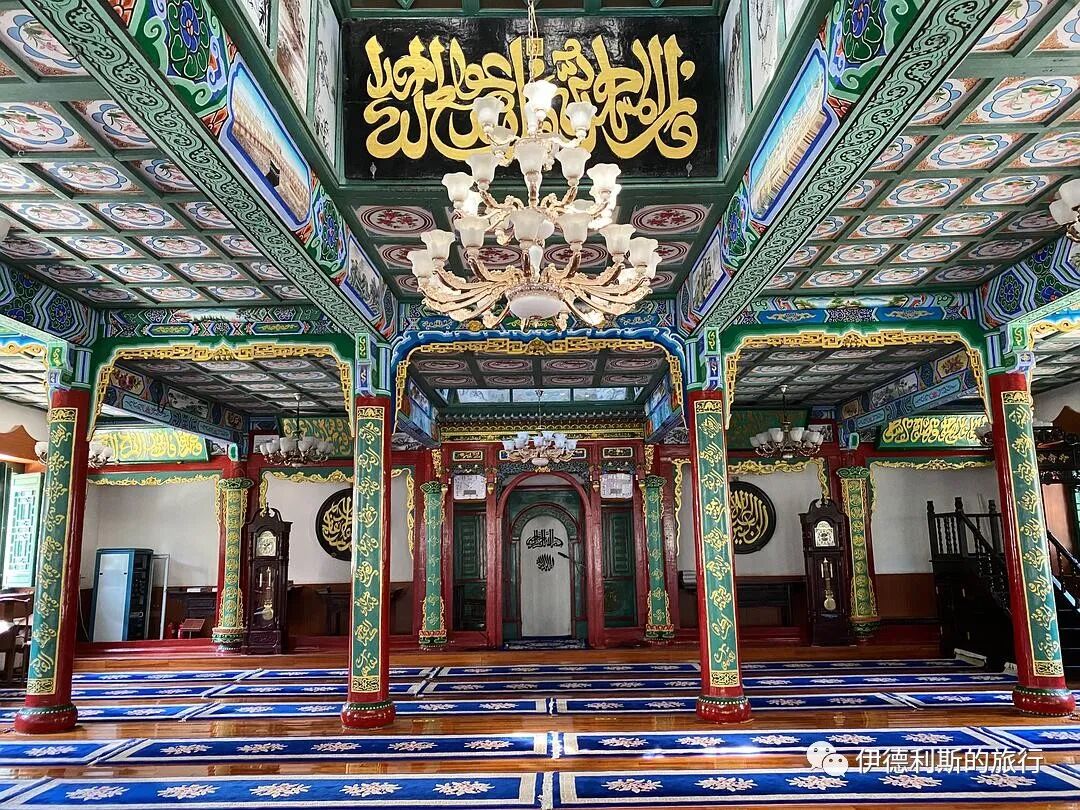
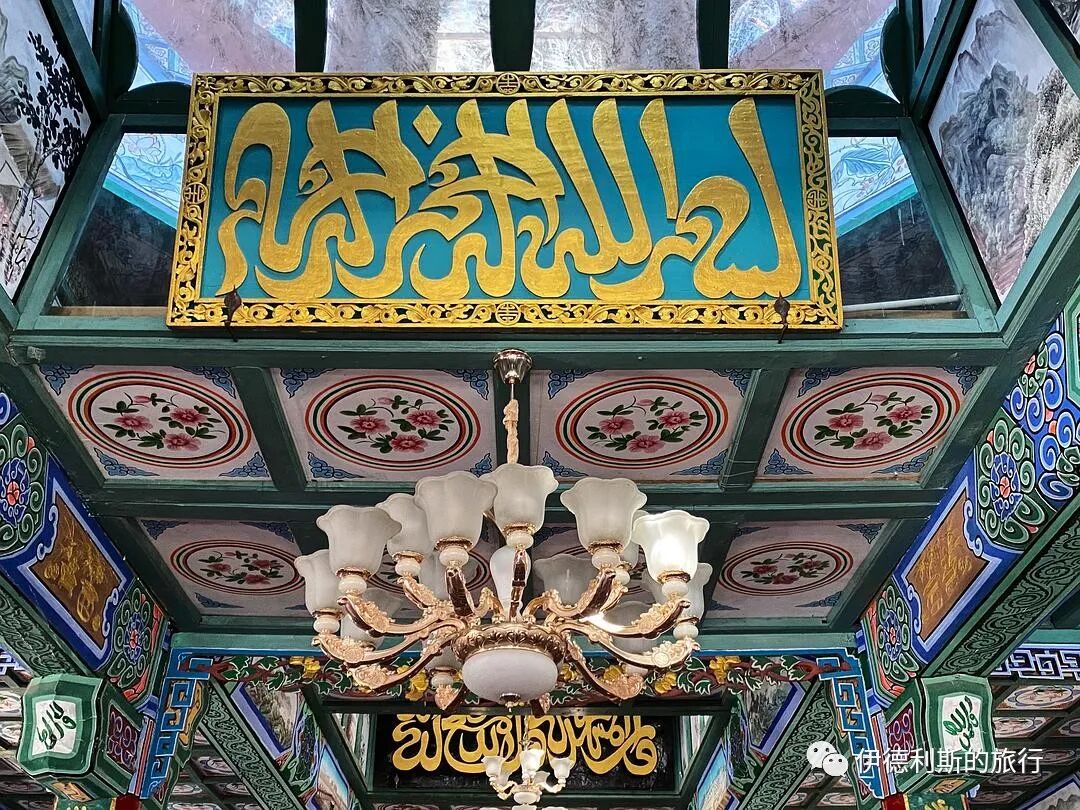
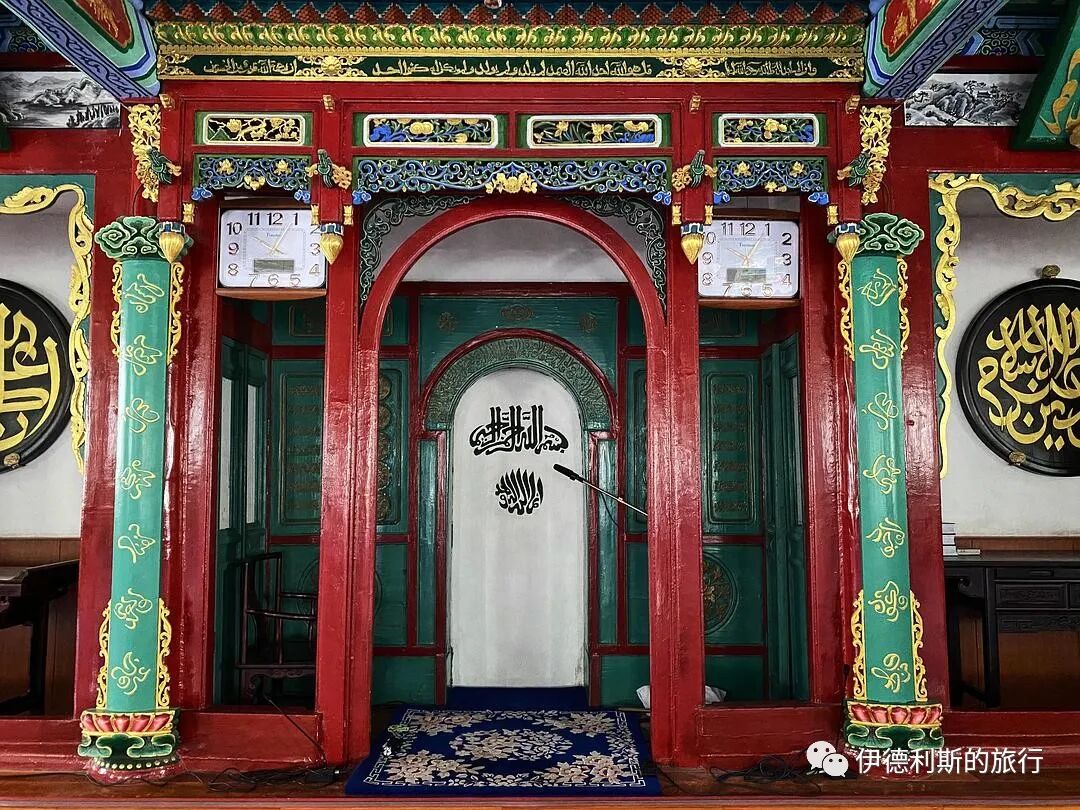
The Moon-Watching Tower was built in 1939, 36 meters high, with a hexagonal brick base on the lower level and a single-eave hexagonal pointed roof on the top level.
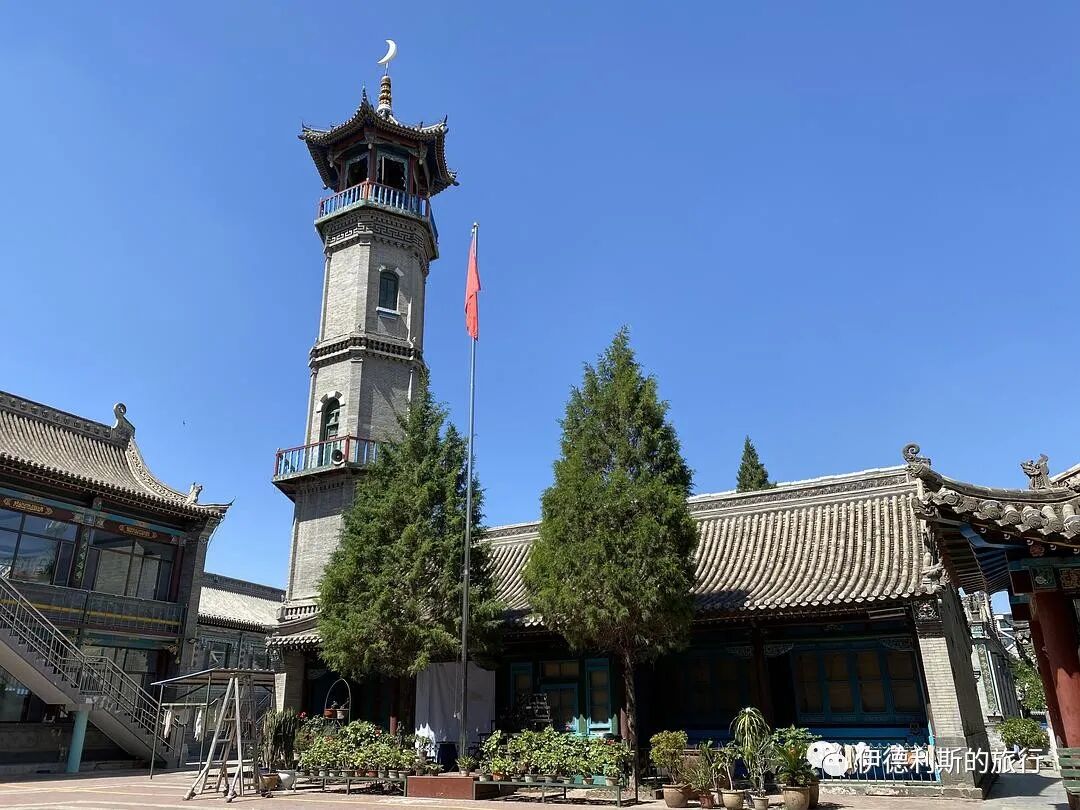
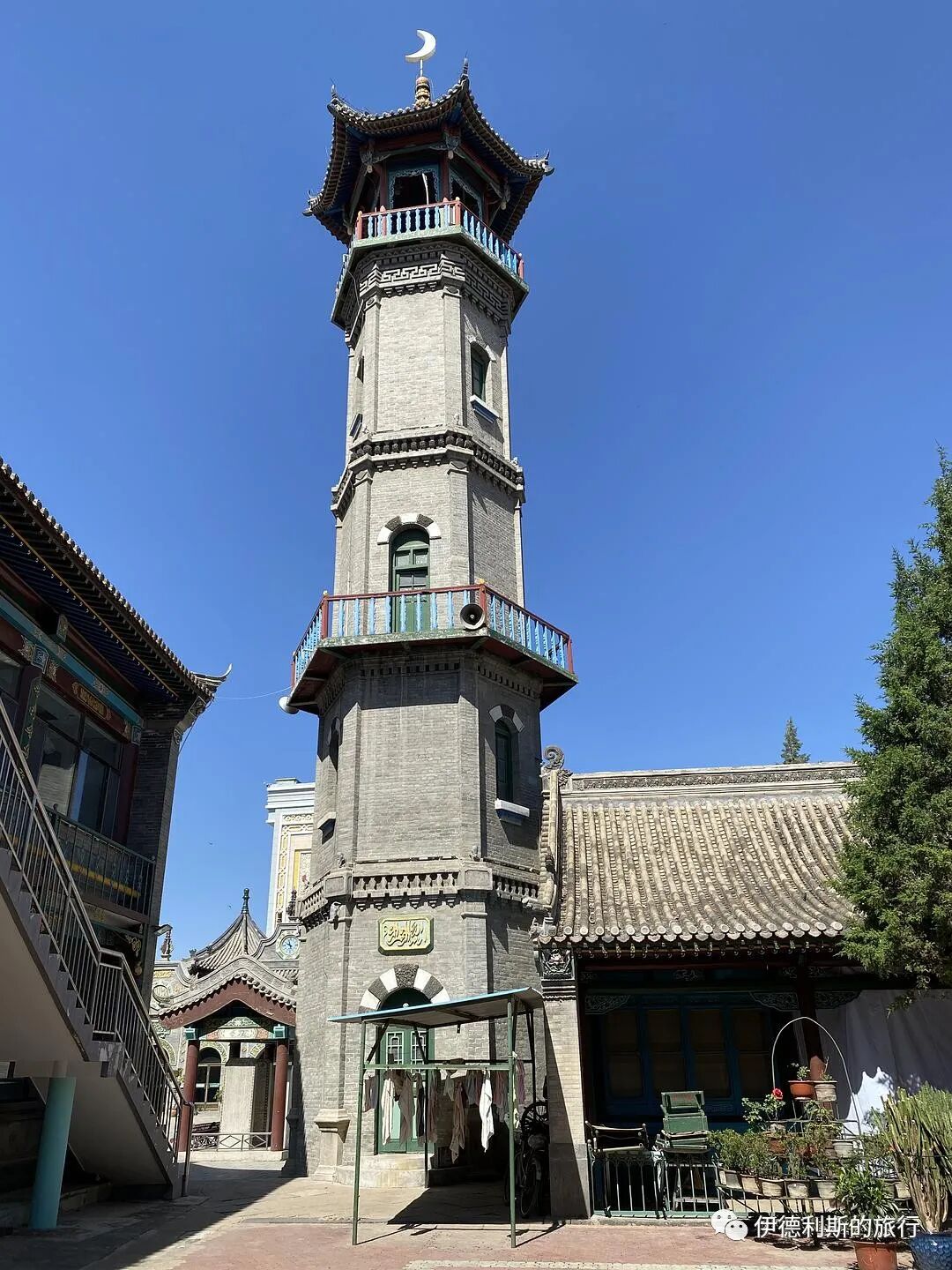
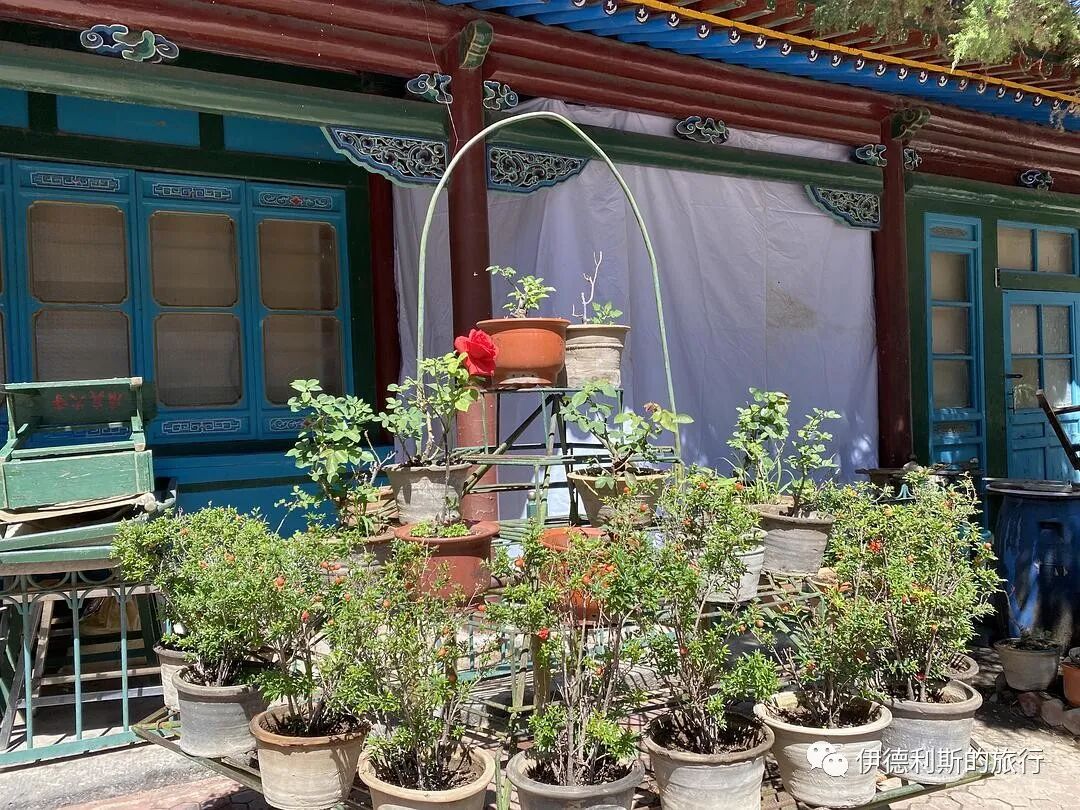
The Hohhot East Mosque was first built during the Kangxi period of the Qing Dynasty. It was originally a school and was expanded into a mosque during the Guangxu period. The current building was rebuilt in 2014.
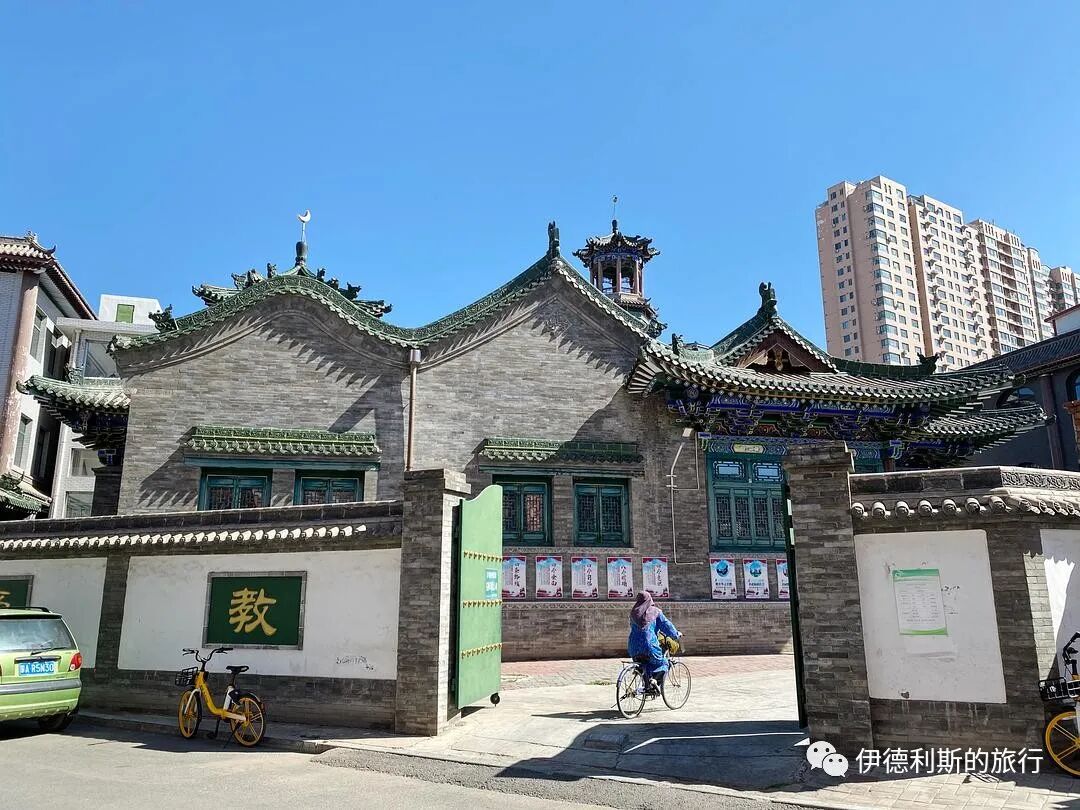
At noon, we had lamb spine and lamb bone with cold soup oat noodles at Countryside Fragrant Oat Noodles on Niu Street. I feel that the oat noodle and bone restaurant is a very classic combination in Hohhot, and it is really satisfying to eat in summer.
Their lamb spine and lamb bones are stewed until very tender, falling off the bone in one bite. The meat is very fragrant, and you can tell the quality of the lamb is relatively high. There are four types of oat noodles: hot lamb soup, cold beef soup, cold mixed, and stir-fried with oily meat. You can also choose oat noodle nests or noodles. I feel that eating cold soup is more refreshing in summer. When eating, first pour vinegar and chili on the vegetables and fried sauce, mix them, and then add the oat noodle nests. It is very refreshing. They serve barley and tartary buckwheat tea instead of brick tea, which also feels very appropriate.
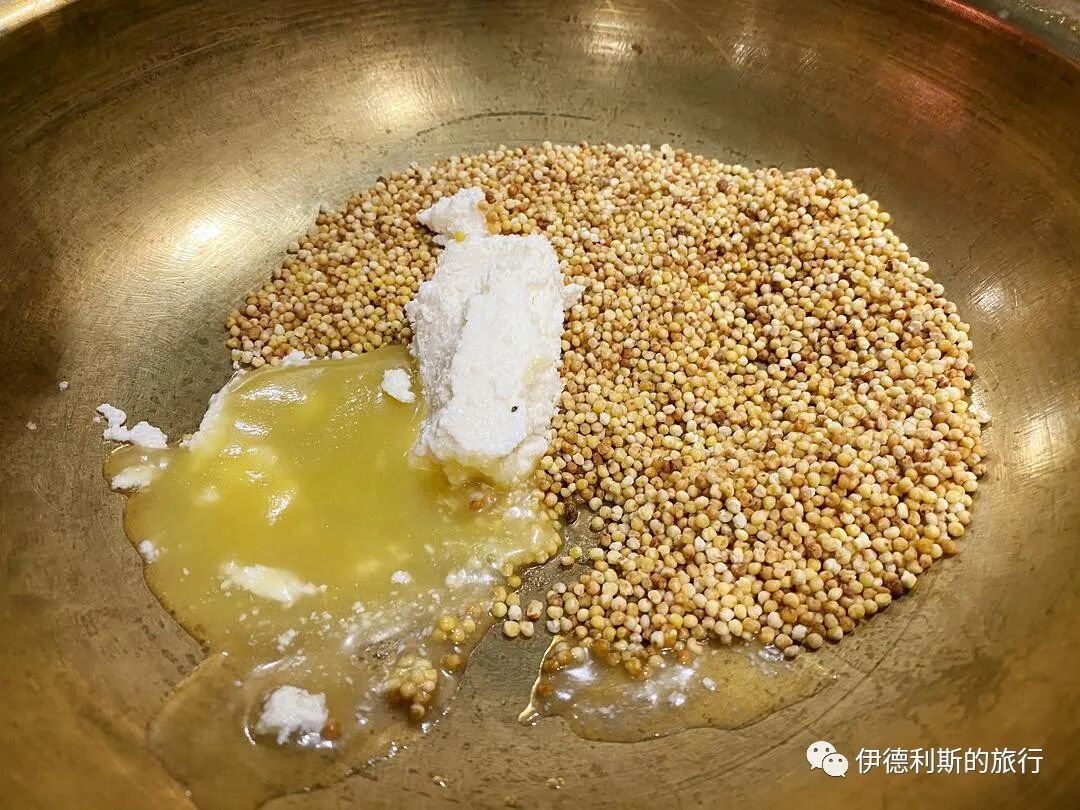
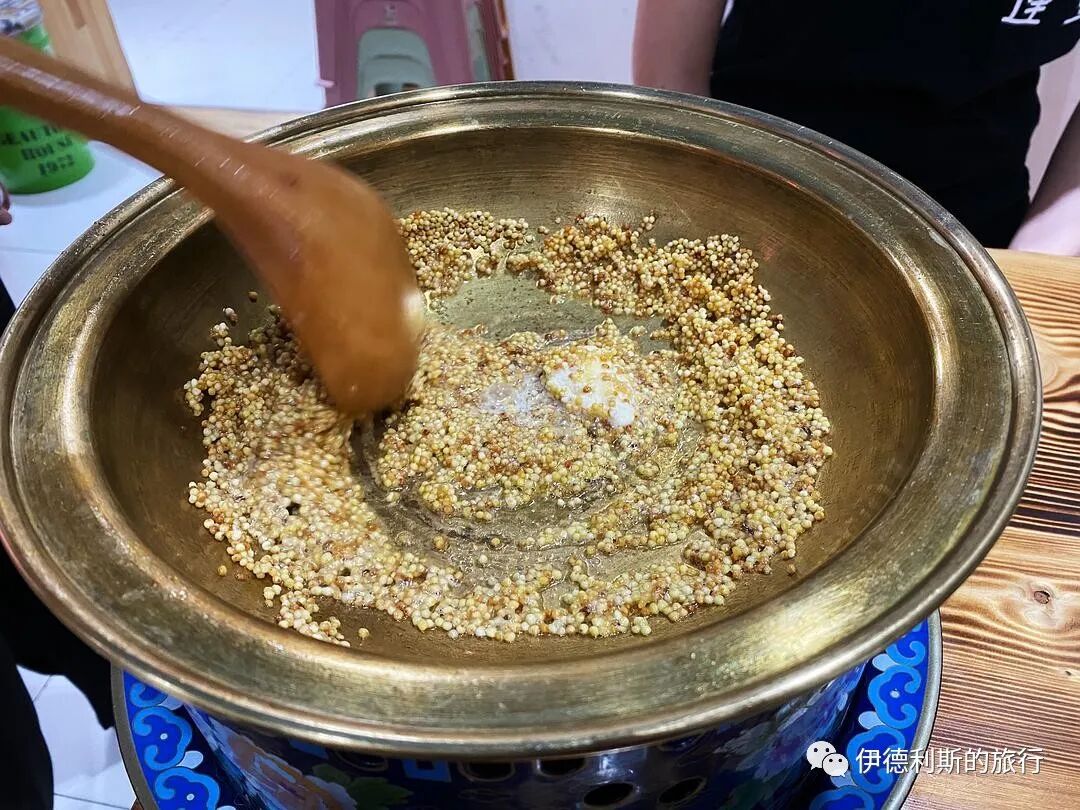
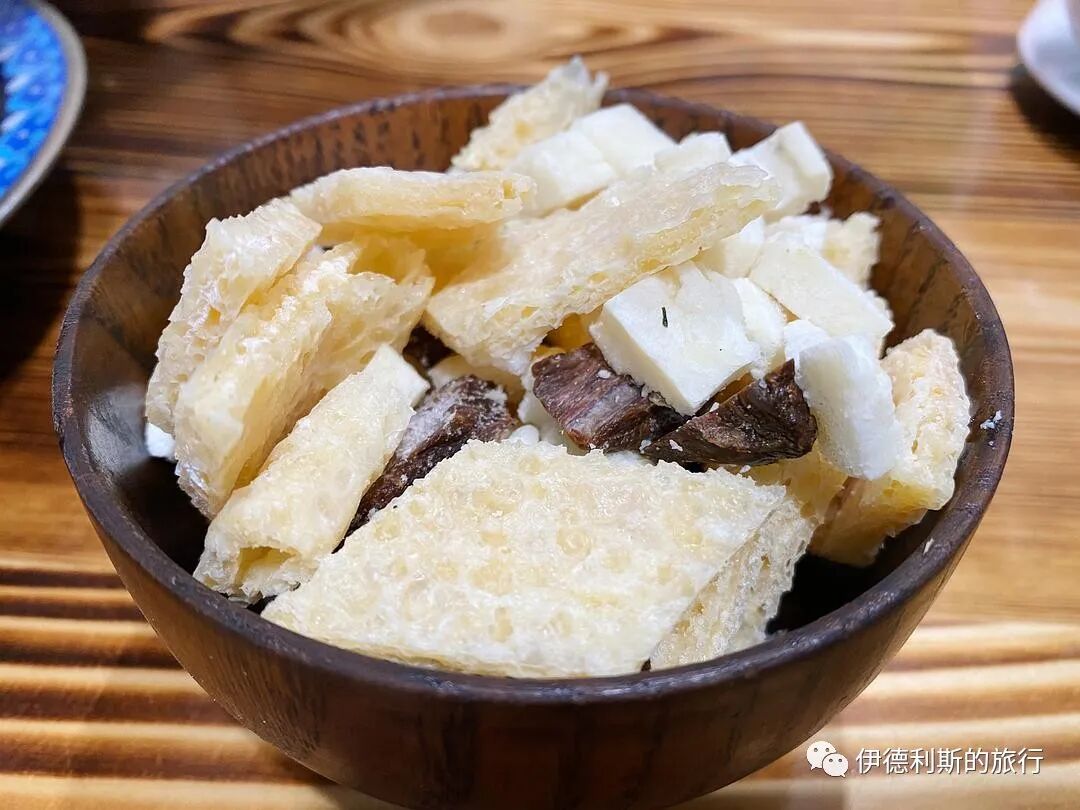
In the evening, at Zainab's strong request, we had pot tea with meat sausages at the Haidiche Halal Mongolian Restaurant in Hohhot. Pot tea is made by first stir-frying fried rice with butter and white cream, then pouring in boiled milk tea, and then adding dried meat, milk skin, milk tofu, and various other dairy products. It can be eaten once the milk tea boils. I feel that pot tea is a bit like a hot pot of dairy products, haha.
The Mongolian-style meat sausages contain fresh and tender small pieces of meat, which is much more satisfying than sausages made with meat paste. This was my first time eating Mongolian food, and I fell in love with it immediately.
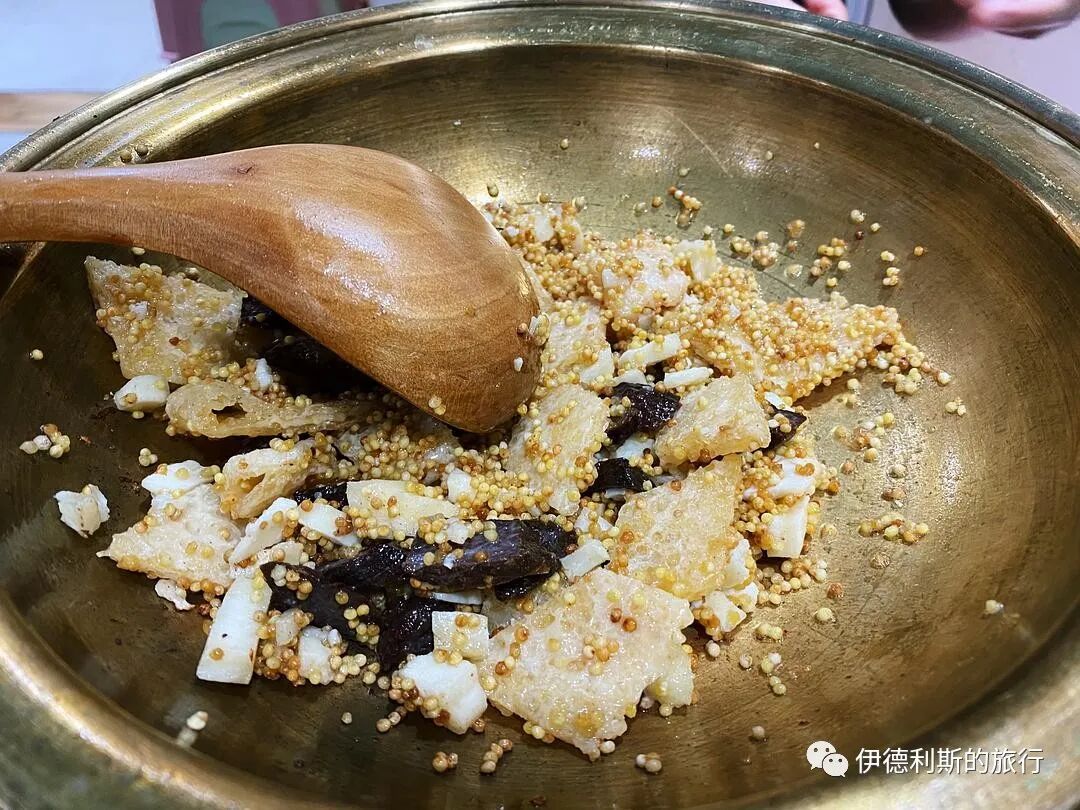
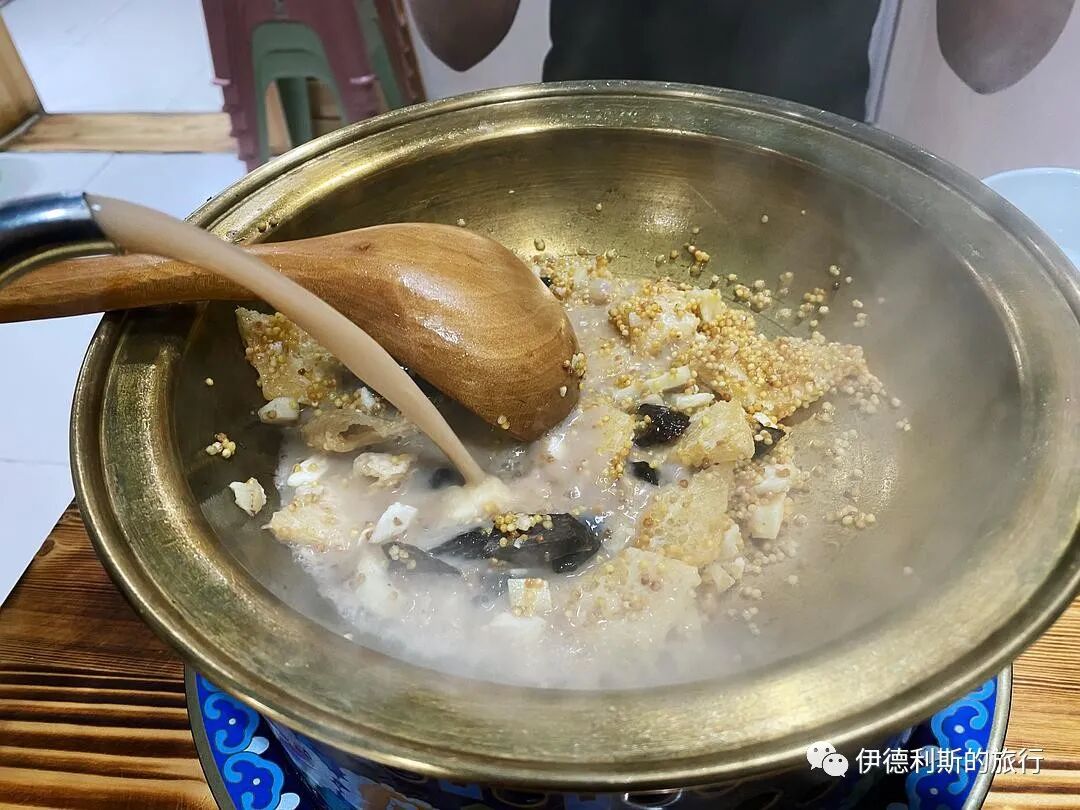
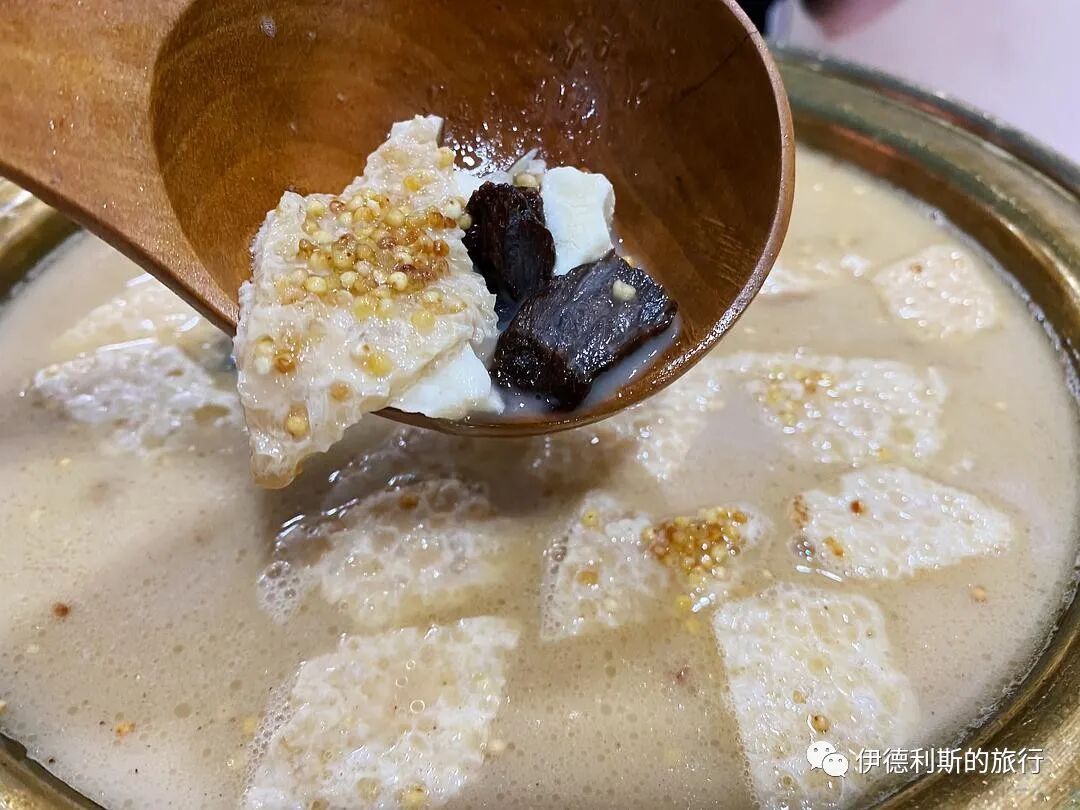
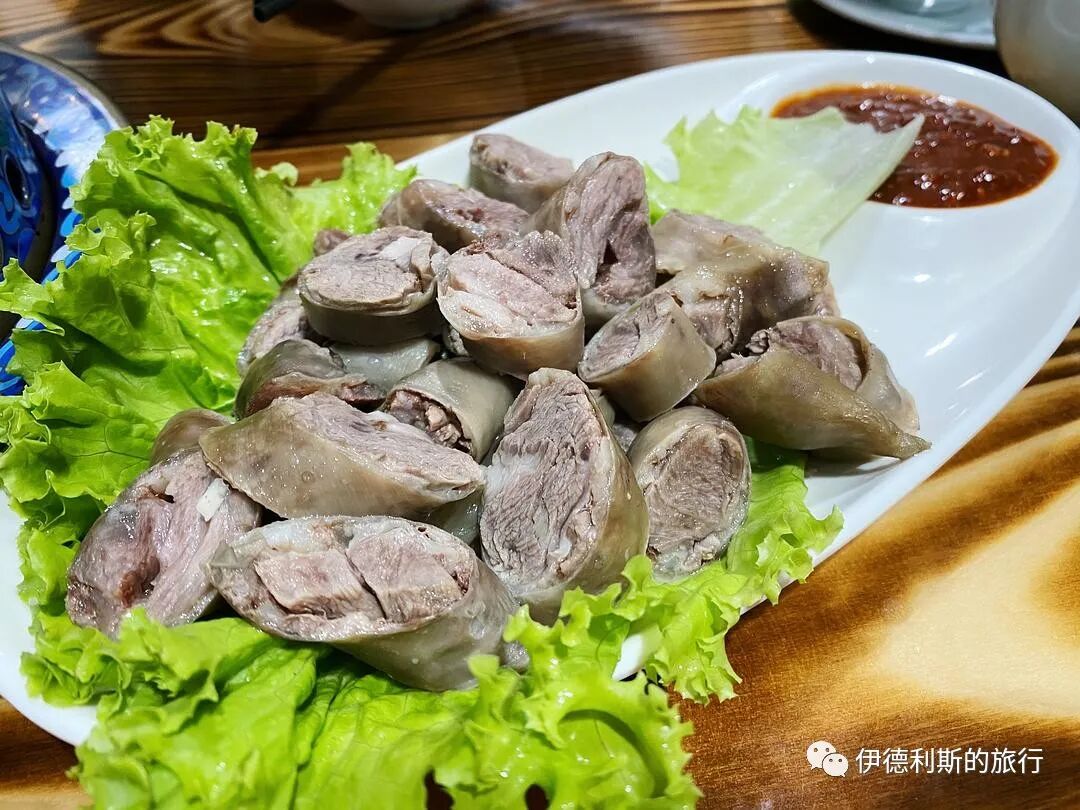
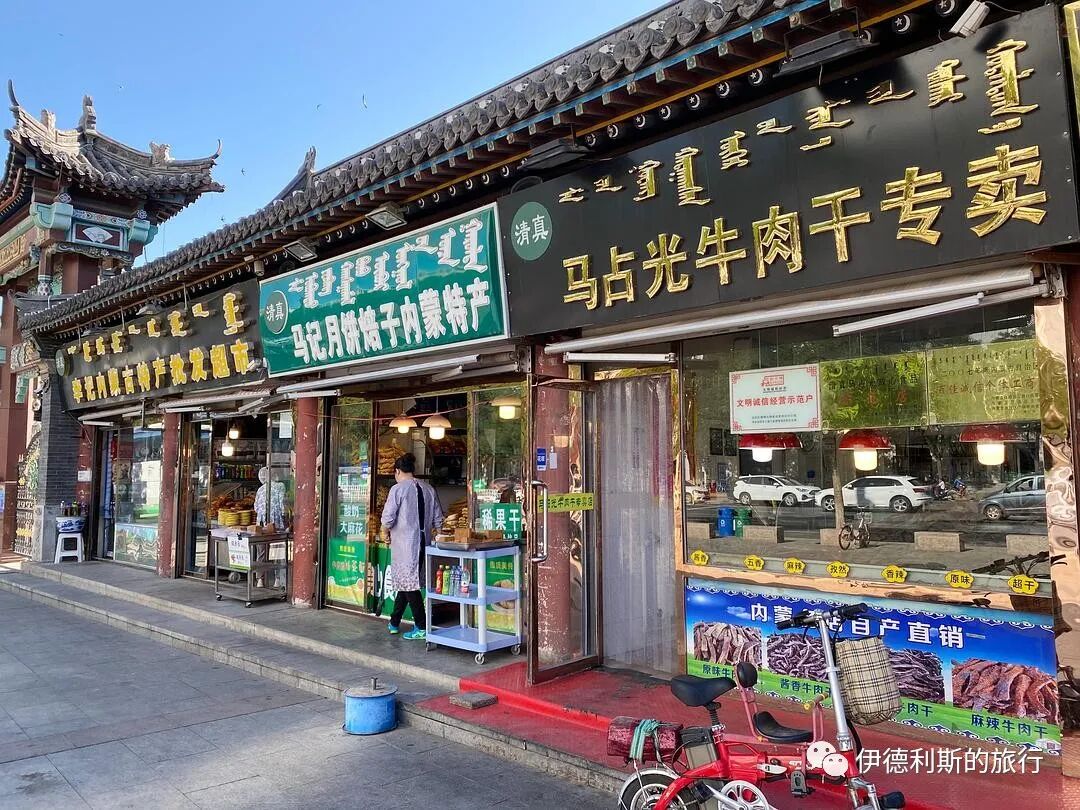
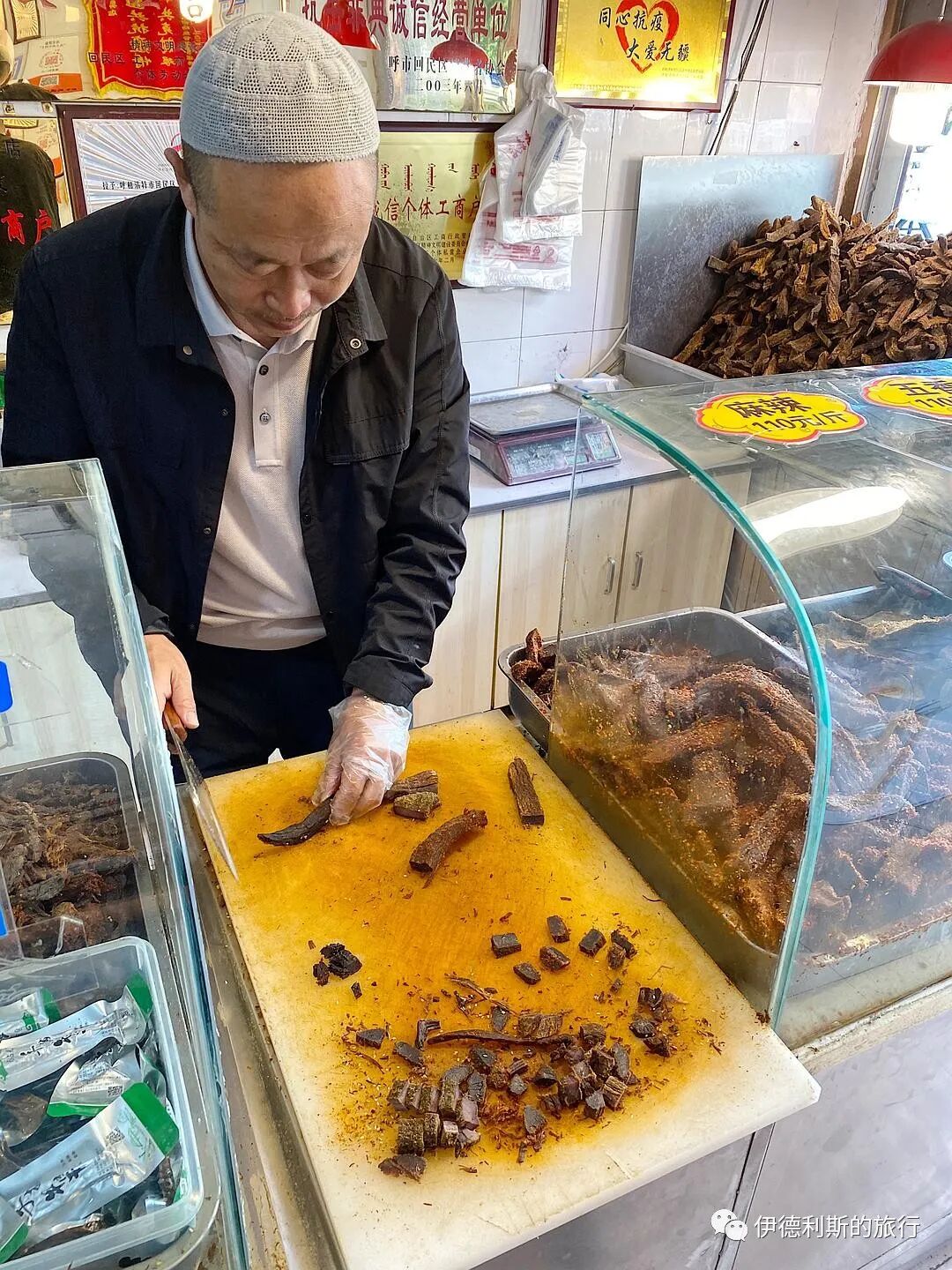
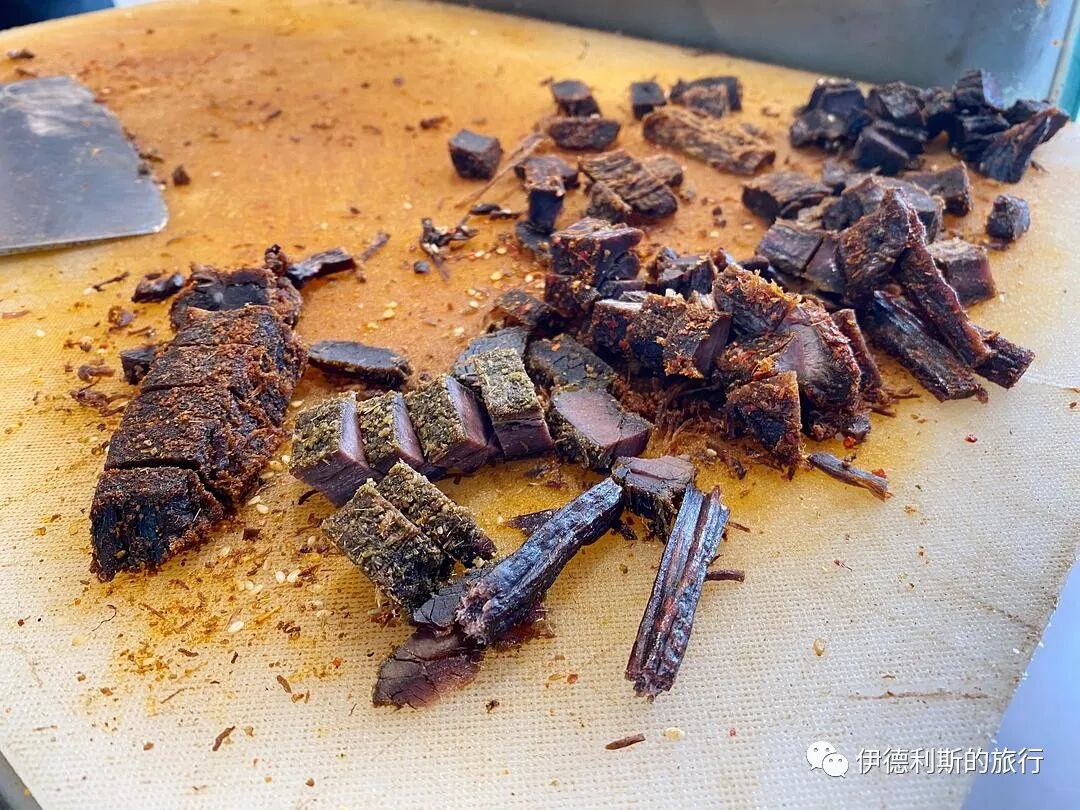
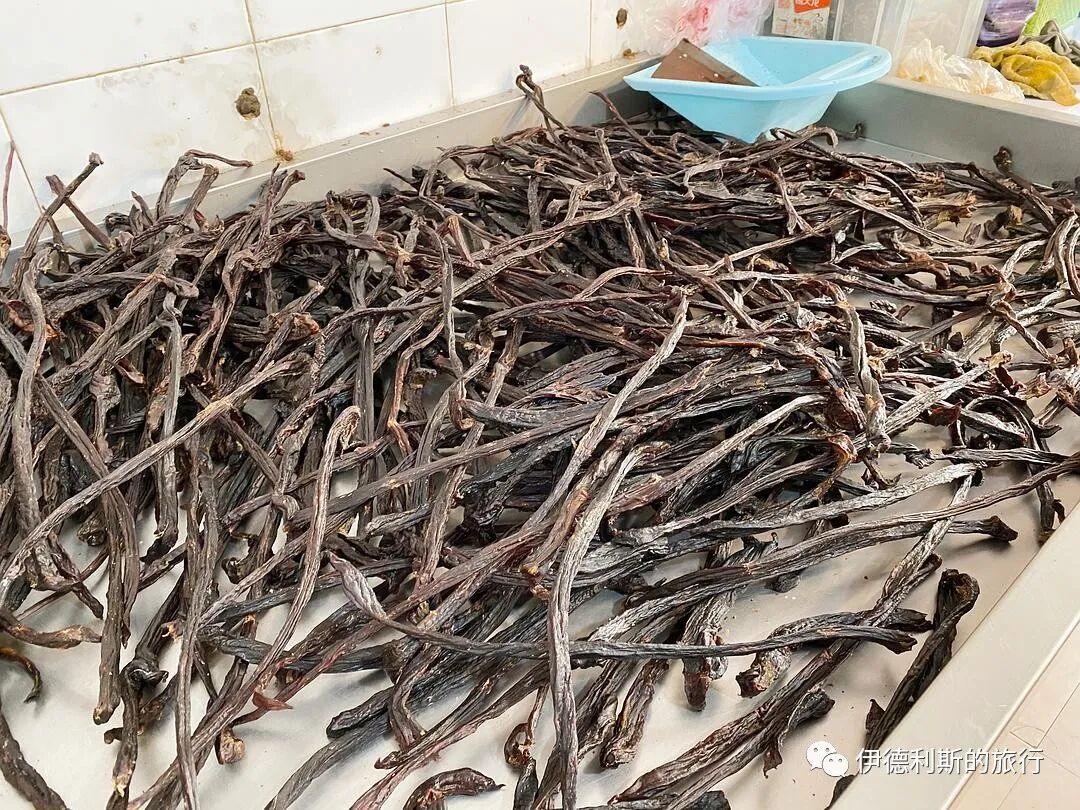
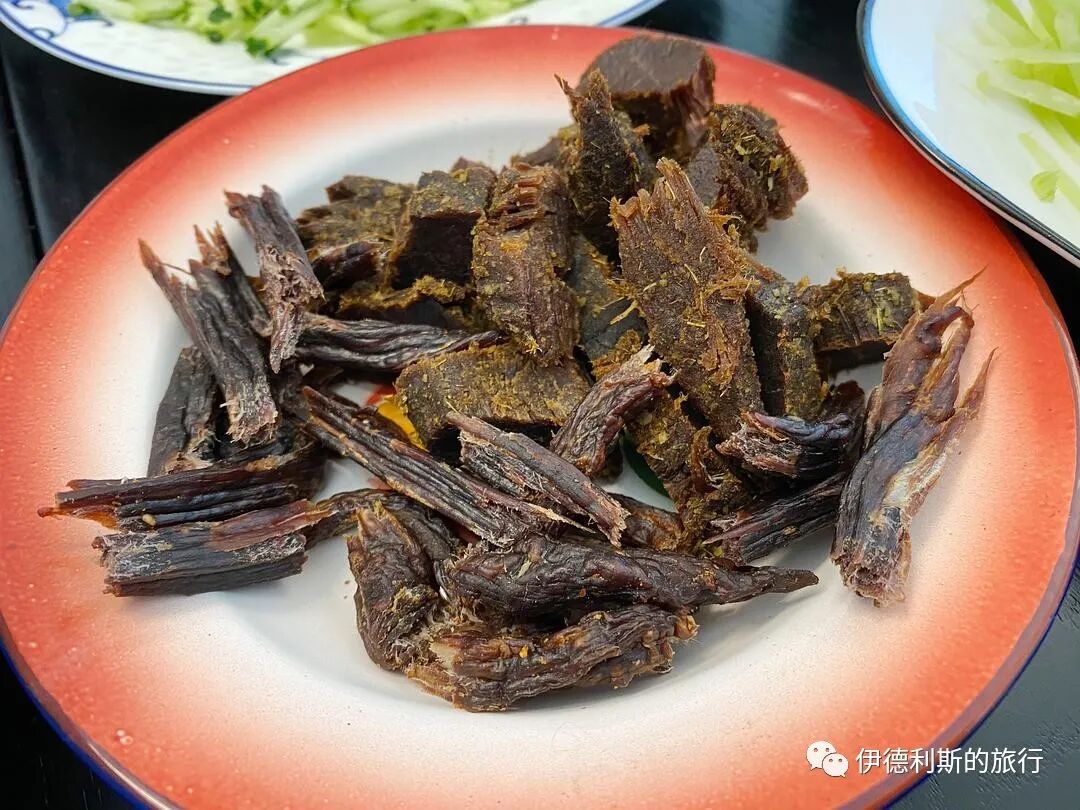
On Sunday morning, we bought beef jerky at Ma Zhanguang's Beef Jerky Shop at the entrance of the Great Mosque. There are several types: super dry, original, five-spice, cumin, spicy, and hot and spicy. The boss is very enthusiastic and cut each kind for us to taste. I feel the cumin one is more fragrant, but the super dry one is particularly chewy. We bought some of each to take home.
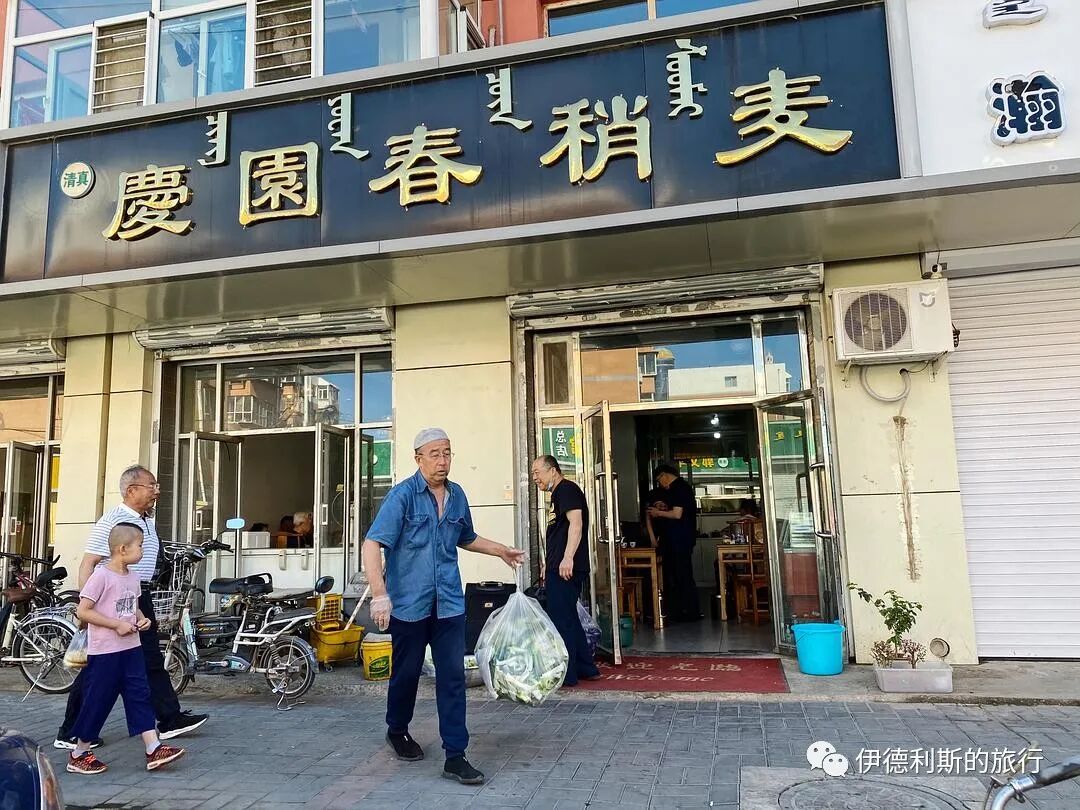
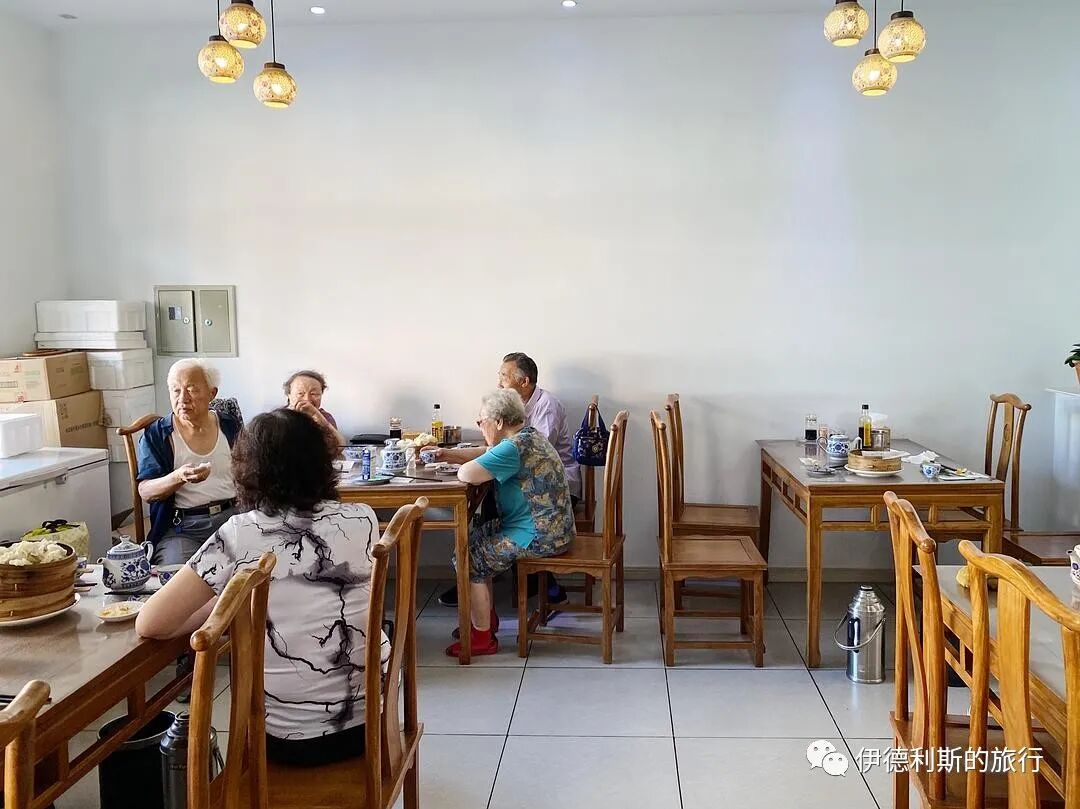
We ate Shaomai and drank brick tea at Qingyuanchun on Nanshuncheng Street. I personally like their place, and I also ate at their place when I came to Hohhot before.
Qingyuanchun is a time-honored Shaomai brand. In 1796 (the first year of Jiaqing), Li Chun pushed a wheelbarrow to sell Shaomai in Guihua City. It was very popular because he wrapped and sold them on the spot. In 1828 (the eighth year of Daoguang), Li Chun's son, Li Guangyuan, rented two wooden rooms outside the Lanma Wall in Guihua City and officially hung up the 'Qingyuanchun' Shaomai brand. In 1956, Qingyuanchun was renovated and reopened by brothers Li Hongtu and Li Mingqing in a shop of more than 30 square meters. It was inherited by the fifth generation, Li Jiting, in 1963, and by the sixth generation, Li Yongqing, in 2009. It is a famous Halal Shaomai brand in Hohhot.
Then we bought a yogurt cake at the Haidiche Halal Mongolian Restaurant opposite. It is a cake made with pure yogurt and flour, without a drop of water. It also has milk tofu inside, the milk flavor is very strong, and it is really super delicious.
Then we went to Bai Laosan's Offal Shop on Luzu Temple Street to eat lamb offal with Beizi, which is a classic breakfast combination in Hohhot. The lamb offal is very similar to the one in Datong, and the taste is very rich. The Beizi is so big that I couldn't finish it by myself. It is very solid.
Summary: This travel note introduces Halal Shopping and Eating in Hohhot in Summer. At the end of June, I went on a trip to Hohhot and Ulanqab with Zainab for the weekend. First, I will share our eating and shopping experience in Hohhot. It is useful for readers interested in Hohhot Travel, Halal Food, Muslim Travel.
At the end of June, I went on a trip to Hohhot and Ulanqab with Zainab for the weekend. First, I will share our eating and shopping experience in Hohhot.
We arrived in Hohhot by night train on Friday. We came to the entrance of the Great Mosque to drink some dried apricot and persimmon fruit soup, then went to Wang Wei on Dasi North Street to eat lamb skewers. Their place should be the most popular one for lamb skewers around the Great Mosque. We also ordered peanuts and edamame, plum juice, and lean meat sandwiches. The sandwiches were filled with pure lean stewed meat, which was very satisfying.
On Saturday morning, we had a Halal Mongolian-style breakfast at Haidiche on Nanshuncheng Street. We had salty milk tea with fried rice, milk skin, soft fried dough strips, and hard fried dough strips. The dough strips are made with yogurt and flour without a drop of water. There were also wild onion side dishes and Buryat steamed buns.
Last time I came to Hohhot, I didn't know there was Halal Mongolian food. This shop has been open for more than a year, and Haidiche is the owner's religious name. The owner's family is very kind. Her mother was looking after the shop during breakfast. The auntie introduced us to the way of eating Mongolian breakfast in detail and asked about us in every way, which made us feel very warm.
We bought some freshly brewed yogurt at Ma's Dairy Shop on Xinmin Street. The Ma surname Hui people's ancestral home is Youwei, Shanxi. In the Ming Dynasty, they were a powerful family of the Nine Frontiers. In the mid-Wanli period, the 'Ma Family Army' formed by Ma Gui and his brothers and nephews was famous for being good at fighting. They made great contributions by defending Youwei for six months against Altan Khan. The Ma surname Hui people defended the frontier for the Ming Dynasty for many years, and almost all frontier towns had people with the surname Ma serving as regional commanders. After the fall of the Ming Dynasty, the Ma family gave up their military service to farm. After the 'Great Western Route' trade route opened during the Kangxi period, many people moved to Guihua City to settle down.
We bought some sweet and sour dried crabapples at Wang Laoqi's dry goods store at the entrance of the Great Mosque, and bought a cup of fruit soup in Kuanxiangzi. Just walking around and eating snacks in the Hui district of Hohhot is very rich.
We bought roasted milk skin at Bai's Dairy Shop on Houxincheng Road. The texture of their roasted milk skin is just right and not hard at all. Zainab said it was much better than what she had bought online before. Their cheese is also very delicious, sweet and sour, but the weather was too hot to take away, so we just tasted it.
One theory about the Bai surname Hui people in Hohhot is that they followed Princess Kejing to Guihua City to do business after she married the Mongolian Tushetu Khan in 1697 (the 36th year of Kangxi). Another theory is that they moved from Xi'an in the late Qing Dynasty. At that time, the most famous noodle shop outside the north gate of Guihua City was opened by Bai Xiu.
We bought milk skin rolls and fresh yogurt at Miao's Fresh Yogurt Shop on Xincheng Road. Milk skin can be rolled with four kinds of fillings: hawthorn, cranberry, raisins, and fried rice. Each flavor is different, and I personally prefer the cranberry roll. In summer, milk skin rolls cannot be stored at room temperature and need to be eaten on the same day.
The Hohhot Great Mosque was first built in the late Ming and early Qing dynasties, expanded in 1789 (the 54th year of Qianlong), and expanded again in 1923.
The mosque gate was built in 1892 (the 18th year of Guangxu), with a plaque inscribed 'Great Mosque' from 1890 (the 16th year of Guangxu), and plaques reading 'Country Prosperous' and 'People Peaceful' on both sides.
After entering the gate, you can see the brick-carved screen wall behind the main hall, built in 1896 (the 22nd year of Guangxu), engraved with 'Rectify the Heart and Be Sincere in Cultivating the Self', 'Recognize the Oneness of Allah', 'Enlighten the Heart', and 'See the Nature', which were inscribed by Ma Fuxiang, the then-Governor of Suiyuan in 1924.
The prayer hall was expanded in 1923 and consists of a shed, front hall, middle hall, and kiln hall. It has a connected roof structure, and there are five pointed pavilions on the roof, symbolizing the five pillars of Islam: 'Faith, Prayer, Fasting, Charity, and Pilgrimage'. The shed is in a Chinese-Western fusion style, with arched doors, and Arabic plaques, couplets, and floral patterns on the walls.
Inside the main hall.
The Moon-Watching Tower was built in 1939, 36 meters high, with a hexagonal brick base on the lower level and a single-eave hexagonal pointed roof on the top level.
The Hohhot East Mosque was first built during the Kangxi period of the Qing Dynasty. It was originally a school and was expanded into a mosque during the Guangxu period. The current building was rebuilt in 2014.
At noon, we had lamb spine and lamb bone with cold soup oat noodles at Countryside Fragrant Oat Noodles on Niu Street. I feel that the oat noodle and bone restaurant is a very classic combination in Hohhot, and it is really satisfying to eat in summer.
Their lamb spine and lamb bones are stewed until very tender, falling off the bone in one bite. The meat is very fragrant, and you can tell the quality of the lamb is relatively high. There are four types of oat noodles: hot lamb soup, cold beef soup, cold mixed, and stir-fried with oily meat. You can also choose oat noodle nests or noodles. I feel that eating cold soup is more refreshing in summer. When eating, first pour vinegar and chili on the vegetables and fried sauce, mix them, and then add the oat noodle nests. It is very refreshing. They serve barley and tartary buckwheat tea instead of brick tea, which also feels very appropriate.
In the evening, at Zainab's strong request, we had pot tea with meat sausages at the Haidiche Halal Mongolian Restaurant in Hohhot. Pot tea is made by first stir-frying fried rice with butter and white cream, then pouring in boiled milk tea, and then adding dried meat, milk skin, milk tofu, and various other dairy products. It can be eaten once the milk tea boils. I feel that pot tea is a bit like a hot pot of dairy products, haha.
The Mongolian-style meat sausages contain fresh and tender small pieces of meat, which is much more satisfying than sausages made with meat paste. This was my first time eating Mongolian food, and I fell in love with it immediately.
On Sunday morning, we bought beef jerky at Ma Zhanguang's Beef Jerky Shop at the entrance of the Great Mosque. There are several types: super dry, original, five-spice, cumin, spicy, and hot and spicy. The boss is very enthusiastic and cut each kind for us to taste. I feel the cumin one is more fragrant, but the super dry one is particularly chewy. We bought some of each to take home.
We ate Shaomai and drank brick tea at Qingyuanchun on Nanshuncheng Street. I personally like their place, and I also ate at their place when I came to Hohhot before.
Qingyuanchun is a time-honored Shaomai brand. In 1796 (the first year of Jiaqing), Li Chun pushed a wheelbarrow to sell Shaomai in Guihua City. It was very popular because he wrapped and sold them on the spot. In 1828 (the eighth year of Daoguang), Li Chun's son, Li Guangyuan, rented two wooden rooms outside the Lanma Wall in Guihua City and officially hung up the 'Qingyuanchun' Shaomai brand. In 1956, Qingyuanchun was renovated and reopened by brothers Li Hongtu and Li Mingqing in a shop of more than 30 square meters. It was inherited by the fifth generation, Li Jiting, in 1963, and by the sixth generation, Li Yongqing, in 2009. It is a famous Halal Shaomai brand in Hohhot.
Then we bought a yogurt cake at the Haidiche Halal Mongolian Restaurant opposite. It is a cake made with pure yogurt and flour, without a drop of water. It also has milk tofu inside, the milk flavor is very strong, and it is really super delicious.
Then we went to Bai Laosan's Offal Shop on Luzu Temple Street to eat lamb offal with Beizi, which is a classic breakfast combination in Hohhot. The lamb offal is very similar to the one in Datong, and the taste is very rich. The Beizi is so big that I couldn't finish it by myself. It is very solid.
Halal Travel Guide: Hohhot - Breakfast at the Great Mosque
Articles • ali2007fr posted the article • 0 comments • 271 views • 2026-05-20 09:37
Reposted from the web
Summary: Hohhot Great Mosque grew from a Qing Dynasty Green Standard Army Hui Muslim community and reached its current scale through rebuilding and expansion in 1723, 1789, and the Republic of China era. This breakfast walk covers mosque history, milk skin, oat noodles, fruit soup, jujube cake, and Hui Muslim food around Kuanxiangzi.
I had breakfast at the Hohhot Great Mosque this morning.
The Hohhot Great Mosque community started with Hui Muslim soldiers from the Qing Dynasty Green Standard Army. After the Ming Dynasty fell, soldiers guarding the Nine Garrisons joined the Qing Dynasty as the Green Standard Army, including many Hui Muslim soldiers from Xuanhua, Datong, and Taiyuan. In 1693, the 32nd year of the Kangxi reign, the Qing government sent many troops to Hohhot to fight the Dzungar Khanate, and this group included many Hui Muslim soldiers from the Green Standard Army. These Hui Muslim soldiers and local Hui Muslim merchants built the mosque community together near the north gate of the old city, which became the early version of the Hohhot Great Mosque.
After the middle of the Kangxi reign, there were no more wars on the border. Many Hui Muslim soldiers from Datong, Zuoyun, and Youyu became small merchants or craftspeople. Many Hui Muslims moved to live near the Hohhot Great Mosque, which is why the local Hui Muslim dialect in Hohhot still sounds like the Datong dialect today. By the late Kangxi period, two large livestock markets called Cow Bridge (Niuqiao) and Sheep Hill (Yanggangzi) appeared near the mosque, and the Hui Muslims controlled the local beef and mutton slaughtering business.
The early Hohhot Great Mosque was just a few mud houses. It reached its current size after being rebuilt in 1723, the first year of the Yongzheng reign, and expanded significantly in 1789, the 54th year of the Qianlong reign. The funding for the Qianlong-era expansion came mostly from three wealthy Hui Muslim merchant families: the Kang, Ma, and Chen families. To honor their contributions, the mosque decided to add three extra scripture readings every year during the opening of the Ramadan fast. Between 1923 and 1925, the mosque expanded its main hall and the north and south lecture halls, creating the unique Republic of China-era style seen today. A woman named Widow Yang from South Channel Street donated her own property behind the mosque, so the mosque added one more scripture reading to the annual Ramadan opening to honor her.
The most famous imam at the Hohhot Great Mosque during the Republic of China era was Imam Wang Kuan from Niujie in Beijing. Imam Wang was a famous educator who founded the Chinese Muslim Progressive Association and opened the first Hui Muslim primary school in Hohhot, the Gui-Sui Hui School, in 1915.
I ate roasted milk skin (naopi) at the Ma Family Dairy Shop. It had a rich milky flavor. They were also the first shop in Wide Alley (Kuanxiangzi) to make milk tofu cheese pancakes. Many shops in Wide Alley now sell cheese milk tofu pancakes. They use Italian soft cheese mixed with Inner Mongolian milk tofu (naidoufu), which has become a popular internet-famous snack. The most popular place with a line in Wide Alley is the Star and Moon Pastry Shop (Xingyue Gaodian). We were too lazy to wait, so we bought some at the nearby Qingheyuan shop. The cheese was stretchy and milky, but I personally prefer the plain milk tofu pancakes.
The Hui Muslim Ma family originally came from Youwei, Shanxi. They were a powerful military family during the Ming Dynasty. In the middle of the Wanli reign, the Ma Army, led by Ma Gui and his brothers and nephews, was famous for being great fighters. They earned great merit by defending Youwei for six months against Altan Khan. The Ma family defended the Ming Dynasty borders for years, and members of the family served as regional commanders in almost every border town. After the Ming Dynasty fell, the Ma family stopped fighting and turned to farming. In the early Qianlong reign, the Youyu General's office and the troops moved to the new city of Guihua in Hohhot. Many Hui Muslims from Youyu followed the path known as Walking the West Pass (Zou Xikou) to Hohhot to make a living. Legend says the Ma family also settled in Hohhot at the end of the Qianlong reign.
I had hot soup oat noodles (youmian yuyu) at the Old Tuo Steamed Oat Noodles shop. It had carrots, potatoes, pickled vegetables, and celery inside. The hot soup felt very comforting.
Then I had some thin fruit soup (xiguogeng) from Sister Ma's shop at the back gate of the mosque. It was made with dried apricots, dried persimmons, hawthorn, and rock sugar, which was very appetizing.
A jujube cake shop called Date Daughter-in-law (Zao Xifu) is also good. They have flavors with walnuts and melon seeds, and children really like them. view all
Summary: Hohhot Great Mosque grew from a Qing Dynasty Green Standard Army Hui Muslim community and reached its current scale through rebuilding and expansion in 1723, 1789, and the Republic of China era. This breakfast walk covers mosque history, milk skin, oat noodles, fruit soup, jujube cake, and Hui Muslim food around Kuanxiangzi.
I had breakfast at the Hohhot Great Mosque this morning.
The Hohhot Great Mosque community started with Hui Muslim soldiers from the Qing Dynasty Green Standard Army. After the Ming Dynasty fell, soldiers guarding the Nine Garrisons joined the Qing Dynasty as the Green Standard Army, including many Hui Muslim soldiers from Xuanhua, Datong, and Taiyuan. In 1693, the 32nd year of the Kangxi reign, the Qing government sent many troops to Hohhot to fight the Dzungar Khanate, and this group included many Hui Muslim soldiers from the Green Standard Army. These Hui Muslim soldiers and local Hui Muslim merchants built the mosque community together near the north gate of the old city, which became the early version of the Hohhot Great Mosque.
After the middle of the Kangxi reign, there were no more wars on the border. Many Hui Muslim soldiers from Datong, Zuoyun, and Youyu became small merchants or craftspeople. Many Hui Muslims moved to live near the Hohhot Great Mosque, which is why the local Hui Muslim dialect in Hohhot still sounds like the Datong dialect today. By the late Kangxi period, two large livestock markets called Cow Bridge (Niuqiao) and Sheep Hill (Yanggangzi) appeared near the mosque, and the Hui Muslims controlled the local beef and mutton slaughtering business.
The early Hohhot Great Mosque was just a few mud houses. It reached its current size after being rebuilt in 1723, the first year of the Yongzheng reign, and expanded significantly in 1789, the 54th year of the Qianlong reign. The funding for the Qianlong-era expansion came mostly from three wealthy Hui Muslim merchant families: the Kang, Ma, and Chen families. To honor their contributions, the mosque decided to add three extra scripture readings every year during the opening of the Ramadan fast. Between 1923 and 1925, the mosque expanded its main hall and the north and south lecture halls, creating the unique Republic of China-era style seen today. A woman named Widow Yang from South Channel Street donated her own property behind the mosque, so the mosque added one more scripture reading to the annual Ramadan opening to honor her.
The most famous imam at the Hohhot Great Mosque during the Republic of China era was Imam Wang Kuan from Niujie in Beijing. Imam Wang was a famous educator who founded the Chinese Muslim Progressive Association and opened the first Hui Muslim primary school in Hohhot, the Gui-Sui Hui School, in 1915.
I ate roasted milk skin (naopi) at the Ma Family Dairy Shop. It had a rich milky flavor. They were also the first shop in Wide Alley (Kuanxiangzi) to make milk tofu cheese pancakes. Many shops in Wide Alley now sell cheese milk tofu pancakes. They use Italian soft cheese mixed with Inner Mongolian milk tofu (naidoufu), which has become a popular internet-famous snack. The most popular place with a line in Wide Alley is the Star and Moon Pastry Shop (Xingyue Gaodian). We were too lazy to wait, so we bought some at the nearby Qingheyuan shop. The cheese was stretchy and milky, but I personally prefer the plain milk tofu pancakes.
The Hui Muslim Ma family originally came from Youwei, Shanxi. They were a powerful military family during the Ming Dynasty. In the middle of the Wanli reign, the Ma Army, led by Ma Gui and his brothers and nephews, was famous for being great fighters. They earned great merit by defending Youwei for six months against Altan Khan. The Ma family defended the Ming Dynasty borders for years, and members of the family served as regional commanders in almost every border town. After the Ming Dynasty fell, the Ma family stopped fighting and turned to farming. In the early Qianlong reign, the Youyu General's office and the troops moved to the new city of Guihua in Hohhot. Many Hui Muslims from Youyu followed the path known as Walking the West Pass (Zou Xikou) to Hohhot to make a living. Legend says the Ma family also settled in Hohhot at the end of the Qianlong reign.
I had hot soup oat noodles (youmian yuyu) at the Old Tuo Steamed Oat Noodles shop. It had carrots, potatoes, pickled vegetables, and celery inside. The hot soup felt very comforting.
Then I had some thin fruit soup (xiguogeng) from Sister Ma's shop at the back gate of the mosque. It was made with dried apricots, dried persimmons, hawthorn, and rock sugar, which was very appetizing.
A jujube cake shop called Date Daughter-in-law (Zao Xifu) is also good. They have flavors with walnuts and melon seeds, and children really like them. view all
Reposted from the web
Summary: Hohhot Great Mosque grew from a Qing Dynasty Green Standard Army Hui Muslim community and reached its current scale through rebuilding and expansion in 1723, 1789, and the Republic of China era. This breakfast walk covers mosque history, milk skin, oat noodles, fruit soup, jujube cake, and Hui Muslim food around Kuanxiangzi.
I had breakfast at the Hohhot Great Mosque this morning.
The Hohhot Great Mosque community started with Hui Muslim soldiers from the Qing Dynasty Green Standard Army. After the Ming Dynasty fell, soldiers guarding the Nine Garrisons joined the Qing Dynasty as the Green Standard Army, including many Hui Muslim soldiers from Xuanhua, Datong, and Taiyuan. In 1693, the 32nd year of the Kangxi reign, the Qing government sent many troops to Hohhot to fight the Dzungar Khanate, and this group included many Hui Muslim soldiers from the Green Standard Army. These Hui Muslim soldiers and local Hui Muslim merchants built the mosque community together near the north gate of the old city, which became the early version of the Hohhot Great Mosque.
After the middle of the Kangxi reign, there were no more wars on the border. Many Hui Muslim soldiers from Datong, Zuoyun, and Youyu became small merchants or craftspeople. Many Hui Muslims moved to live near the Hohhot Great Mosque, which is why the local Hui Muslim dialect in Hohhot still sounds like the Datong dialect today. By the late Kangxi period, two large livestock markets called Cow Bridge (Niuqiao) and Sheep Hill (Yanggangzi) appeared near the mosque, and the Hui Muslims controlled the local beef and mutton slaughtering business.
The early Hohhot Great Mosque was just a few mud houses. It reached its current size after being rebuilt in 1723, the first year of the Yongzheng reign, and expanded significantly in 1789, the 54th year of the Qianlong reign. The funding for the Qianlong-era expansion came mostly from three wealthy Hui Muslim merchant families: the Kang, Ma, and Chen families. To honor their contributions, the mosque decided to add three extra scripture readings every year during the opening of the Ramadan fast. Between 1923 and 1925, the mosque expanded its main hall and the north and south lecture halls, creating the unique Republic of China-era style seen today. A woman named Widow Yang from South Channel Street donated her own property behind the mosque, so the mosque added one more scripture reading to the annual Ramadan opening to honor her.
The most famous imam at the Hohhot Great Mosque during the Republic of China era was Imam Wang Kuan from Niujie in Beijing. Imam Wang was a famous educator who founded the Chinese Muslim Progressive Association and opened the first Hui Muslim primary school in Hohhot, the Gui-Sui Hui School, in 1915.
I ate roasted milk skin (naopi) at the Ma Family Dairy Shop. It had a rich milky flavor. They were also the first shop in Wide Alley (Kuanxiangzi) to make milk tofu cheese pancakes. Many shops in Wide Alley now sell cheese milk tofu pancakes. They use Italian soft cheese mixed with Inner Mongolian milk tofu (naidoufu), which has become a popular internet-famous snack. The most popular place with a line in Wide Alley is the Star and Moon Pastry Shop (Xingyue Gaodian). We were too lazy to wait, so we bought some at the nearby Qingheyuan shop. The cheese was stretchy and milky, but I personally prefer the plain milk tofu pancakes.
The Hui Muslim Ma family originally came from Youwei, Shanxi. They were a powerful military family during the Ming Dynasty. In the middle of the Wanli reign, the Ma Army, led by Ma Gui and his brothers and nephews, was famous for being great fighters. They earned great merit by defending Youwei for six months against Altan Khan. The Ma family defended the Ming Dynasty borders for years, and members of the family served as regional commanders in almost every border town. After the Ming Dynasty fell, the Ma family stopped fighting and turned to farming. In the early Qianlong reign, the Youyu General's office and the troops moved to the new city of Guihua in Hohhot. Many Hui Muslims from Youyu followed the path known as Walking the West Pass (Zou Xikou) to Hohhot to make a living. Legend says the Ma family also settled in Hohhot at the end of the Qianlong reign.
I had hot soup oat noodles (youmian yuyu) at the Old Tuo Steamed Oat Noodles shop. It had carrots, potatoes, pickled vegetables, and celery inside. The hot soup felt very comforting.
Then I had some thin fruit soup (xiguogeng) from Sister Ma's shop at the back gate of the mosque. It was made with dried apricots, dried persimmons, hawthorn, and rock sugar, which was very appetizing.
A jujube cake shop called Date Daughter-in-law (Zao Xifu) is also good. They have flavors with walnuts and melon seeds, and children really like them.
Summary: Hohhot Great Mosque grew from a Qing Dynasty Green Standard Army Hui Muslim community and reached its current scale through rebuilding and expansion in 1723, 1789, and the Republic of China era. This breakfast walk covers mosque history, milk skin, oat noodles, fruit soup, jujube cake, and Hui Muslim food around Kuanxiangzi.
I had breakfast at the Hohhot Great Mosque this morning.
The Hohhot Great Mosque community started with Hui Muslim soldiers from the Qing Dynasty Green Standard Army. After the Ming Dynasty fell, soldiers guarding the Nine Garrisons joined the Qing Dynasty as the Green Standard Army, including many Hui Muslim soldiers from Xuanhua, Datong, and Taiyuan. In 1693, the 32nd year of the Kangxi reign, the Qing government sent many troops to Hohhot to fight the Dzungar Khanate, and this group included many Hui Muslim soldiers from the Green Standard Army. These Hui Muslim soldiers and local Hui Muslim merchants built the mosque community together near the north gate of the old city, which became the early version of the Hohhot Great Mosque.
After the middle of the Kangxi reign, there were no more wars on the border. Many Hui Muslim soldiers from Datong, Zuoyun, and Youyu became small merchants or craftspeople. Many Hui Muslims moved to live near the Hohhot Great Mosque, which is why the local Hui Muslim dialect in Hohhot still sounds like the Datong dialect today. By the late Kangxi period, two large livestock markets called Cow Bridge (Niuqiao) and Sheep Hill (Yanggangzi) appeared near the mosque, and the Hui Muslims controlled the local beef and mutton slaughtering business.
The early Hohhot Great Mosque was just a few mud houses. It reached its current size after being rebuilt in 1723, the first year of the Yongzheng reign, and expanded significantly in 1789, the 54th year of the Qianlong reign. The funding for the Qianlong-era expansion came mostly from three wealthy Hui Muslim merchant families: the Kang, Ma, and Chen families. To honor their contributions, the mosque decided to add three extra scripture readings every year during the opening of the Ramadan fast. Between 1923 and 1925, the mosque expanded its main hall and the north and south lecture halls, creating the unique Republic of China-era style seen today. A woman named Widow Yang from South Channel Street donated her own property behind the mosque, so the mosque added one more scripture reading to the annual Ramadan opening to honor her.
The most famous imam at the Hohhot Great Mosque during the Republic of China era was Imam Wang Kuan from Niujie in Beijing. Imam Wang was a famous educator who founded the Chinese Muslim Progressive Association and opened the first Hui Muslim primary school in Hohhot, the Gui-Sui Hui School, in 1915.
I ate roasted milk skin (naopi) at the Ma Family Dairy Shop. It had a rich milky flavor. They were also the first shop in Wide Alley (Kuanxiangzi) to make milk tofu cheese pancakes. Many shops in Wide Alley now sell cheese milk tofu pancakes. They use Italian soft cheese mixed with Inner Mongolian milk tofu (naidoufu), which has become a popular internet-famous snack. The most popular place with a line in Wide Alley is the Star and Moon Pastry Shop (Xingyue Gaodian). We were too lazy to wait, so we bought some at the nearby Qingheyuan shop. The cheese was stretchy and milky, but I personally prefer the plain milk tofu pancakes.
The Hui Muslim Ma family originally came from Youwei, Shanxi. They were a powerful military family during the Ming Dynasty. In the middle of the Wanli reign, the Ma Army, led by Ma Gui and his brothers and nephews, was famous for being great fighters. They earned great merit by defending Youwei for six months against Altan Khan. The Ma family defended the Ming Dynasty borders for years, and members of the family served as regional commanders in almost every border town. After the Ming Dynasty fell, the Ma family stopped fighting and turned to farming. In the early Qianlong reign, the Youyu General's office and the troops moved to the new city of Guihua in Hohhot. Many Hui Muslims from Youyu followed the path known as Walking the West Pass (Zou Xikou) to Hohhot to make a living. Legend says the Ma family also settled in Hohhot at the end of the Qianlong reign.
I had hot soup oat noodles (youmian yuyu) at the Old Tuo Steamed Oat Noodles shop. It had carrots, potatoes, pickled vegetables, and celery inside. The hot soup felt very comforting.
Then I had some thin fruit soup (xiguogeng) from Sister Ma's shop at the back gate of the mosque. It was made with dried apricots, dried persimmons, hawthorn, and rock sugar, which was very appetizing.
A jujube cake shop called Date Daughter-in-law (Zao Xifu) is also good. They have flavors with walnuts and melon seeds, and children really like them.
Halal Shopping and Eating in Hohhot in Summer
Articles • ali2007fr posted the article • 0 comments • 228 views • 2026-05-16 23:49
Reposted from the web
Summary: This travel note introduces Halal Shopping and Eating in Hohhot in Summer. At the end of June, I went on a trip to Hohhot and Ulanqab with Zainab for the weekend. First, I will share our eating and shopping experience in Hohhot. It is useful for readers interested in Hohhot Travel, Halal Food, Muslim Travel.
At the end of June, I went on a trip to Hohhot and Ulanqab with Zainab for the weekend. First, I will share our eating and shopping experience in Hohhot.
We arrived in Hohhot by night train on Friday. We came to the entrance of the Great Mosque to drink some dried apricot and persimmon fruit soup, then went to Wang Wei on Dasi North Street to eat lamb skewers. Their place should be the most popular one for lamb skewers around the Great Mosque. We also ordered peanuts and edamame, plum juice, and lean meat sandwiches. The sandwiches were filled with pure lean stewed meat, which was very satisfying.
On Saturday morning, we had a Halal Mongolian-style breakfast at Haidiche on Nanshuncheng Street. We had salty milk tea with fried rice, milk skin, soft fried dough strips, and hard fried dough strips. The dough strips are made with yogurt and flour without a drop of water. There were also wild onion side dishes and Buryat steamed buns.
Last time I came to Hohhot, I didn't know there was Halal Mongolian food. This shop has been open for more than a year, and Haidiche is the owner's religious name. The owner's family is very kind. Her mother was looking after the shop during breakfast. The auntie introduced us to the way of eating Mongolian breakfast in detail and asked about us in every way, which made us feel very warm.
We bought some freshly brewed yogurt at Ma's Dairy Shop on Xinmin Street. The Ma surname Hui people's ancestral home is Youwei, Shanxi. In the Ming Dynasty, they were a powerful family of the Nine Frontiers. In the mid-Wanli period, the 'Ma Family Army' formed by Ma Gui and his brothers and nephews was famous for being good at fighting. They made great contributions by defending Youwei for six months against Altan Khan. The Ma surname Hui people defended the frontier for the Ming Dynasty for many years, and almost all frontier towns had people with the surname Ma serving as regional commanders. After the fall of the Ming Dynasty, the Ma family gave up their military service to farm. After the 'Great Western Route' trade route opened during the Kangxi period, many people moved to Guihua City to settle down.
We bought some sweet and sour dried crabapples at Wang Laoqi's dry goods store at the entrance of the Great Mosque, and bought a cup of fruit soup in Kuanxiangzi. Just walking around and eating snacks in the Hui district of Hohhot is very rich.
We bought roasted milk skin at Bai's Dairy Shop on Houxincheng Road. The texture of their roasted milk skin is just right and not hard at all. Zainab said it was much better than what she had bought online before. Their cheese is also very delicious, sweet and sour, but the weather was too hot to take away, so we just tasted it.
One theory about the Bai surname Hui people in Hohhot is that they followed Princess Kejing to Guihua City to do business after she married the Mongolian Tushetu Khan in 1697 (the 36th year of Kangxi). Another theory is that they moved from Xi'an in the late Qing Dynasty. At that time, the most famous noodle shop outside the north gate of Guihua City was opened by Bai Xiu.
We bought milk skin rolls and fresh yogurt at Miao's Fresh Yogurt Shop on Xincheng Road. Milk skin can be rolled with four kinds of fillings: hawthorn, cranberry, raisins, and fried rice. Each flavor is different, and I personally prefer the cranberry roll. In summer, milk skin rolls cannot be stored at room temperature and need to be eaten on the same day.
The Hohhot Great Mosque was first built in the late Ming and early Qing dynasties, expanded in 1789 (the 54th year of Qianlong), and expanded again in 1923.
The mosque gate was built in 1892 (the 18th year of Guangxu), with a plaque inscribed 'Great Mosque' from 1890 (the 16th year of Guangxu), and plaques reading 'Country Prosperous' and 'People Peaceful' on both sides.
After entering the gate, you can see the brick-carved screen wall behind the main hall, built in 1896 (the 22nd year of Guangxu), engraved with 'Rectify the Heart and Be Sincere in Cultivating the Self', 'Recognize the Oneness of Allah', 'Enlighten the Heart', and 'See the Nature', which were inscribed by Ma Fuxiang, the then-Governor of Suiyuan in 1924.
The prayer hall was expanded in 1923 and consists of a shed, front hall, middle hall, and kiln hall. It has a connected roof structure, and there are five pointed pavilions on the roof, symbolizing the five pillars of Islam: 'Faith, Prayer, Fasting, Charity, and Pilgrimage'. The shed is in a Chinese-Western fusion style, with arched doors, and Arabic plaques, couplets, and floral patterns on the walls.
Inside the main hall.
The Moon-Watching Tower was built in 1939, 36 meters high, with a hexagonal brick base on the lower level and a single-eave hexagonal pointed roof on the top level.
The Hohhot East Mosque was first built during the Kangxi period of the Qing Dynasty. It was originally a school and was expanded into a mosque during the Guangxu period. The current building was rebuilt in 2014.
At noon, we had lamb spine and lamb bone with cold soup oat noodles at Countryside Fragrant Oat Noodles on Niu Street. I feel that the oat noodle and bone restaurant is a very classic combination in Hohhot, and it is really satisfying to eat in summer.
Their lamb spine and lamb bones are stewed until very tender, falling off the bone in one bite. The meat is very fragrant, and you can tell the quality of the lamb is relatively high. There are four types of oat noodles: hot lamb soup, cold beef soup, cold mixed, and stir-fried with oily meat. You can also choose oat noodle nests or noodles. I feel that eating cold soup is more refreshing in summer. When eating, first pour vinegar and chili on the vegetables and fried sauce, mix them, and then add the oat noodle nests. It is very refreshing. They serve barley and tartary buckwheat tea instead of brick tea, which also feels very appropriate.
In the evening, at Zainab's strong request, we had pot tea with meat sausages at the Haidiche Halal Mongolian Restaurant in Hohhot. Pot tea is made by first stir-frying fried rice with butter and white cream, then pouring in boiled milk tea, and then adding dried meat, milk skin, milk tofu, and various other dairy products. It can be eaten once the milk tea boils. I feel that pot tea is a bit like a hot pot of dairy products, haha.
The Mongolian-style meat sausages contain fresh and tender small pieces of meat, which is much more satisfying than sausages made with meat paste. This was my first time eating Mongolian food, and I fell in love with it immediately.
On Sunday morning, we bought beef jerky at Ma Zhanguang's Beef Jerky Shop at the entrance of the Great Mosque. There are several types: super dry, original, five-spice, cumin, spicy, and hot and spicy. The boss is very enthusiastic and cut each kind for us to taste. I feel the cumin one is more fragrant, but the super dry one is particularly chewy. We bought some of each to take home.
We ate Shaomai and drank brick tea at Qingyuanchun on Nanshuncheng Street. I personally like their place, and I also ate at their place when I came to Hohhot before.
Qingyuanchun is a time-honored Shaomai brand. In 1796 (the first year of Jiaqing), Li Chun pushed a wheelbarrow to sell Shaomai in Guihua City. It was very popular because he wrapped and sold them on the spot. In 1828 (the eighth year of Daoguang), Li Chun's son, Li Guangyuan, rented two wooden rooms outside the Lanma Wall in Guihua City and officially hung up the 'Qingyuanchun' Shaomai brand. In 1956, Qingyuanchun was renovated and reopened by brothers Li Hongtu and Li Mingqing in a shop of more than 30 square meters. It was inherited by the fifth generation, Li Jiting, in 1963, and by the sixth generation, Li Yongqing, in 2009. It is a famous Halal Shaomai brand in Hohhot.
Then we bought a yogurt cake at the Haidiche Halal Mongolian Restaurant opposite. It is a cake made with pure yogurt and flour, without a drop of water. It also has milk tofu inside, the milk flavor is very strong, and it is really super delicious.
Then we went to Bai Laosan's Offal Shop on Luzu Temple Street to eat lamb offal with Beizi, which is a classic breakfast combination in Hohhot. The lamb offal is very similar to the one in Datong, and the taste is very rich. The Beizi is so big that I couldn't finish it by myself. It is very solid. view all
Summary: This travel note introduces Halal Shopping and Eating in Hohhot in Summer. At the end of June, I went on a trip to Hohhot and Ulanqab with Zainab for the weekend. First, I will share our eating and shopping experience in Hohhot. It is useful for readers interested in Hohhot Travel, Halal Food, Muslim Travel.
At the end of June, I went on a trip to Hohhot and Ulanqab with Zainab for the weekend. First, I will share our eating and shopping experience in Hohhot.
We arrived in Hohhot by night train on Friday. We came to the entrance of the Great Mosque to drink some dried apricot and persimmon fruit soup, then went to Wang Wei on Dasi North Street to eat lamb skewers. Their place should be the most popular one for lamb skewers around the Great Mosque. We also ordered peanuts and edamame, plum juice, and lean meat sandwiches. The sandwiches were filled with pure lean stewed meat, which was very satisfying.
On Saturday morning, we had a Halal Mongolian-style breakfast at Haidiche on Nanshuncheng Street. We had salty milk tea with fried rice, milk skin, soft fried dough strips, and hard fried dough strips. The dough strips are made with yogurt and flour without a drop of water. There were also wild onion side dishes and Buryat steamed buns.
Last time I came to Hohhot, I didn't know there was Halal Mongolian food. This shop has been open for more than a year, and Haidiche is the owner's religious name. The owner's family is very kind. Her mother was looking after the shop during breakfast. The auntie introduced us to the way of eating Mongolian breakfast in detail and asked about us in every way, which made us feel very warm.
We bought some freshly brewed yogurt at Ma's Dairy Shop on Xinmin Street. The Ma surname Hui people's ancestral home is Youwei, Shanxi. In the Ming Dynasty, they were a powerful family of the Nine Frontiers. In the mid-Wanli period, the 'Ma Family Army' formed by Ma Gui and his brothers and nephews was famous for being good at fighting. They made great contributions by defending Youwei for six months against Altan Khan. The Ma surname Hui people defended the frontier for the Ming Dynasty for many years, and almost all frontier towns had people with the surname Ma serving as regional commanders. After the fall of the Ming Dynasty, the Ma family gave up their military service to farm. After the 'Great Western Route' trade route opened during the Kangxi period, many people moved to Guihua City to settle down.
We bought some sweet and sour dried crabapples at Wang Laoqi's dry goods store at the entrance of the Great Mosque, and bought a cup of fruit soup in Kuanxiangzi. Just walking around and eating snacks in the Hui district of Hohhot is very rich.
We bought roasted milk skin at Bai's Dairy Shop on Houxincheng Road. The texture of their roasted milk skin is just right and not hard at all. Zainab said it was much better than what she had bought online before. Their cheese is also very delicious, sweet and sour, but the weather was too hot to take away, so we just tasted it.
One theory about the Bai surname Hui people in Hohhot is that they followed Princess Kejing to Guihua City to do business after she married the Mongolian Tushetu Khan in 1697 (the 36th year of Kangxi). Another theory is that they moved from Xi'an in the late Qing Dynasty. At that time, the most famous noodle shop outside the north gate of Guihua City was opened by Bai Xiu.
We bought milk skin rolls and fresh yogurt at Miao's Fresh Yogurt Shop on Xincheng Road. Milk skin can be rolled with four kinds of fillings: hawthorn, cranberry, raisins, and fried rice. Each flavor is different, and I personally prefer the cranberry roll. In summer, milk skin rolls cannot be stored at room temperature and need to be eaten on the same day.
The Hohhot Great Mosque was first built in the late Ming and early Qing dynasties, expanded in 1789 (the 54th year of Qianlong), and expanded again in 1923.
The mosque gate was built in 1892 (the 18th year of Guangxu), with a plaque inscribed 'Great Mosque' from 1890 (the 16th year of Guangxu), and plaques reading 'Country Prosperous' and 'People Peaceful' on both sides.
After entering the gate, you can see the brick-carved screen wall behind the main hall, built in 1896 (the 22nd year of Guangxu), engraved with 'Rectify the Heart and Be Sincere in Cultivating the Self', 'Recognize the Oneness of Allah', 'Enlighten the Heart', and 'See the Nature', which were inscribed by Ma Fuxiang, the then-Governor of Suiyuan in 1924.
The prayer hall was expanded in 1923 and consists of a shed, front hall, middle hall, and kiln hall. It has a connected roof structure, and there are five pointed pavilions on the roof, symbolizing the five pillars of Islam: 'Faith, Prayer, Fasting, Charity, and Pilgrimage'. The shed is in a Chinese-Western fusion style, with arched doors, and Arabic plaques, couplets, and floral patterns on the walls.
Inside the main hall.
The Moon-Watching Tower was built in 1939, 36 meters high, with a hexagonal brick base on the lower level and a single-eave hexagonal pointed roof on the top level.
The Hohhot East Mosque was first built during the Kangxi period of the Qing Dynasty. It was originally a school and was expanded into a mosque during the Guangxu period. The current building was rebuilt in 2014.
At noon, we had lamb spine and lamb bone with cold soup oat noodles at Countryside Fragrant Oat Noodles on Niu Street. I feel that the oat noodle and bone restaurant is a very classic combination in Hohhot, and it is really satisfying to eat in summer.
Their lamb spine and lamb bones are stewed until very tender, falling off the bone in one bite. The meat is very fragrant, and you can tell the quality of the lamb is relatively high. There are four types of oat noodles: hot lamb soup, cold beef soup, cold mixed, and stir-fried with oily meat. You can also choose oat noodle nests or noodles. I feel that eating cold soup is more refreshing in summer. When eating, first pour vinegar and chili on the vegetables and fried sauce, mix them, and then add the oat noodle nests. It is very refreshing. They serve barley and tartary buckwheat tea instead of brick tea, which also feels very appropriate.
In the evening, at Zainab's strong request, we had pot tea with meat sausages at the Haidiche Halal Mongolian Restaurant in Hohhot. Pot tea is made by first stir-frying fried rice with butter and white cream, then pouring in boiled milk tea, and then adding dried meat, milk skin, milk tofu, and various other dairy products. It can be eaten once the milk tea boils. I feel that pot tea is a bit like a hot pot of dairy products, haha.
The Mongolian-style meat sausages contain fresh and tender small pieces of meat, which is much more satisfying than sausages made with meat paste. This was my first time eating Mongolian food, and I fell in love with it immediately.
On Sunday morning, we bought beef jerky at Ma Zhanguang's Beef Jerky Shop at the entrance of the Great Mosque. There are several types: super dry, original, five-spice, cumin, spicy, and hot and spicy. The boss is very enthusiastic and cut each kind for us to taste. I feel the cumin one is more fragrant, but the super dry one is particularly chewy. We bought some of each to take home.
We ate Shaomai and drank brick tea at Qingyuanchun on Nanshuncheng Street. I personally like their place, and I also ate at their place when I came to Hohhot before.
Qingyuanchun is a time-honored Shaomai brand. In 1796 (the first year of Jiaqing), Li Chun pushed a wheelbarrow to sell Shaomai in Guihua City. It was very popular because he wrapped and sold them on the spot. In 1828 (the eighth year of Daoguang), Li Chun's son, Li Guangyuan, rented two wooden rooms outside the Lanma Wall in Guihua City and officially hung up the 'Qingyuanchun' Shaomai brand. In 1956, Qingyuanchun was renovated and reopened by brothers Li Hongtu and Li Mingqing in a shop of more than 30 square meters. It was inherited by the fifth generation, Li Jiting, in 1963, and by the sixth generation, Li Yongqing, in 2009. It is a famous Halal Shaomai brand in Hohhot.
Then we bought a yogurt cake at the Haidiche Halal Mongolian Restaurant opposite. It is a cake made with pure yogurt and flour, without a drop of water. It also has milk tofu inside, the milk flavor is very strong, and it is really super delicious.
Then we went to Bai Laosan's Offal Shop on Luzu Temple Street to eat lamb offal with Beizi, which is a classic breakfast combination in Hohhot. The lamb offal is very similar to the one in Datong, and the taste is very rich. The Beizi is so big that I couldn't finish it by myself. It is very solid. view all
Reposted from the web
Summary: This travel note introduces Halal Shopping and Eating in Hohhot in Summer. At the end of June, I went on a trip to Hohhot and Ulanqab with Zainab for the weekend. First, I will share our eating and shopping experience in Hohhot. It is useful for readers interested in Hohhot Travel, Halal Food, Muslim Travel.
At the end of June, I went on a trip to Hohhot and Ulanqab with Zainab for the weekend. First, I will share our eating and shopping experience in Hohhot.
We arrived in Hohhot by night train on Friday. We came to the entrance of the Great Mosque to drink some dried apricot and persimmon fruit soup, then went to Wang Wei on Dasi North Street to eat lamb skewers. Their place should be the most popular one for lamb skewers around the Great Mosque. We also ordered peanuts and edamame, plum juice, and lean meat sandwiches. The sandwiches were filled with pure lean stewed meat, which was very satisfying.
On Saturday morning, we had a Halal Mongolian-style breakfast at Haidiche on Nanshuncheng Street. We had salty milk tea with fried rice, milk skin, soft fried dough strips, and hard fried dough strips. The dough strips are made with yogurt and flour without a drop of water. There were also wild onion side dishes and Buryat steamed buns.
Last time I came to Hohhot, I didn't know there was Halal Mongolian food. This shop has been open for more than a year, and Haidiche is the owner's religious name. The owner's family is very kind. Her mother was looking after the shop during breakfast. The auntie introduced us to the way of eating Mongolian breakfast in detail and asked about us in every way, which made us feel very warm.
We bought some freshly brewed yogurt at Ma's Dairy Shop on Xinmin Street. The Ma surname Hui people's ancestral home is Youwei, Shanxi. In the Ming Dynasty, they were a powerful family of the Nine Frontiers. In the mid-Wanli period, the 'Ma Family Army' formed by Ma Gui and his brothers and nephews was famous for being good at fighting. They made great contributions by defending Youwei for six months against Altan Khan. The Ma surname Hui people defended the frontier for the Ming Dynasty for many years, and almost all frontier towns had people with the surname Ma serving as regional commanders. After the fall of the Ming Dynasty, the Ma family gave up their military service to farm. After the 'Great Western Route' trade route opened during the Kangxi period, many people moved to Guihua City to settle down.
We bought some sweet and sour dried crabapples at Wang Laoqi's dry goods store at the entrance of the Great Mosque, and bought a cup of fruit soup in Kuanxiangzi. Just walking around and eating snacks in the Hui district of Hohhot is very rich.
We bought roasted milk skin at Bai's Dairy Shop on Houxincheng Road. The texture of their roasted milk skin is just right and not hard at all. Zainab said it was much better than what she had bought online before. Their cheese is also very delicious, sweet and sour, but the weather was too hot to take away, so we just tasted it.
One theory about the Bai surname Hui people in Hohhot is that they followed Princess Kejing to Guihua City to do business after she married the Mongolian Tushetu Khan in 1697 (the 36th year of Kangxi). Another theory is that they moved from Xi'an in the late Qing Dynasty. At that time, the most famous noodle shop outside the north gate of Guihua City was opened by Bai Xiu.
We bought milk skin rolls and fresh yogurt at Miao's Fresh Yogurt Shop on Xincheng Road. Milk skin can be rolled with four kinds of fillings: hawthorn, cranberry, raisins, and fried rice. Each flavor is different, and I personally prefer the cranberry roll. In summer, milk skin rolls cannot be stored at room temperature and need to be eaten on the same day.
The Hohhot Great Mosque was first built in the late Ming and early Qing dynasties, expanded in 1789 (the 54th year of Qianlong), and expanded again in 1923.
The mosque gate was built in 1892 (the 18th year of Guangxu), with a plaque inscribed 'Great Mosque' from 1890 (the 16th year of Guangxu), and plaques reading 'Country Prosperous' and 'People Peaceful' on both sides.
After entering the gate, you can see the brick-carved screen wall behind the main hall, built in 1896 (the 22nd year of Guangxu), engraved with 'Rectify the Heart and Be Sincere in Cultivating the Self', 'Recognize the Oneness of Allah', 'Enlighten the Heart', and 'See the Nature', which were inscribed by Ma Fuxiang, the then-Governor of Suiyuan in 1924.
The prayer hall was expanded in 1923 and consists of a shed, front hall, middle hall, and kiln hall. It has a connected roof structure, and there are five pointed pavilions on the roof, symbolizing the five pillars of Islam: 'Faith, Prayer, Fasting, Charity, and Pilgrimage'. The shed is in a Chinese-Western fusion style, with arched doors, and Arabic plaques, couplets, and floral patterns on the walls.
Inside the main hall.
The Moon-Watching Tower was built in 1939, 36 meters high, with a hexagonal brick base on the lower level and a single-eave hexagonal pointed roof on the top level.
The Hohhot East Mosque was first built during the Kangxi period of the Qing Dynasty. It was originally a school and was expanded into a mosque during the Guangxu period. The current building was rebuilt in 2014.
At noon, we had lamb spine and lamb bone with cold soup oat noodles at Countryside Fragrant Oat Noodles on Niu Street. I feel that the oat noodle and bone restaurant is a very classic combination in Hohhot, and it is really satisfying to eat in summer.
Their lamb spine and lamb bones are stewed until very tender, falling off the bone in one bite. The meat is very fragrant, and you can tell the quality of the lamb is relatively high. There are four types of oat noodles: hot lamb soup, cold beef soup, cold mixed, and stir-fried with oily meat. You can also choose oat noodle nests or noodles. I feel that eating cold soup is more refreshing in summer. When eating, first pour vinegar and chili on the vegetables and fried sauce, mix them, and then add the oat noodle nests. It is very refreshing. They serve barley and tartary buckwheat tea instead of brick tea, which also feels very appropriate.
In the evening, at Zainab's strong request, we had pot tea with meat sausages at the Haidiche Halal Mongolian Restaurant in Hohhot. Pot tea is made by first stir-frying fried rice with butter and white cream, then pouring in boiled milk tea, and then adding dried meat, milk skin, milk tofu, and various other dairy products. It can be eaten once the milk tea boils. I feel that pot tea is a bit like a hot pot of dairy products, haha.
The Mongolian-style meat sausages contain fresh and tender small pieces of meat, which is much more satisfying than sausages made with meat paste. This was my first time eating Mongolian food, and I fell in love with it immediately.
On Sunday morning, we bought beef jerky at Ma Zhanguang's Beef Jerky Shop at the entrance of the Great Mosque. There are several types: super dry, original, five-spice, cumin, spicy, and hot and spicy. The boss is very enthusiastic and cut each kind for us to taste. I feel the cumin one is more fragrant, but the super dry one is particularly chewy. We bought some of each to take home.
We ate Shaomai and drank brick tea at Qingyuanchun on Nanshuncheng Street. I personally like their place, and I also ate at their place when I came to Hohhot before.
Qingyuanchun is a time-honored Shaomai brand. In 1796 (the first year of Jiaqing), Li Chun pushed a wheelbarrow to sell Shaomai in Guihua City. It was very popular because he wrapped and sold them on the spot. In 1828 (the eighth year of Daoguang), Li Chun's son, Li Guangyuan, rented two wooden rooms outside the Lanma Wall in Guihua City and officially hung up the 'Qingyuanchun' Shaomai brand. In 1956, Qingyuanchun was renovated and reopened by brothers Li Hongtu and Li Mingqing in a shop of more than 30 square meters. It was inherited by the fifth generation, Li Jiting, in 1963, and by the sixth generation, Li Yongqing, in 2009. It is a famous Halal Shaomai brand in Hohhot.
Then we bought a yogurt cake at the Haidiche Halal Mongolian Restaurant opposite. It is a cake made with pure yogurt and flour, without a drop of water. It also has milk tofu inside, the milk flavor is very strong, and it is really super delicious.
Then we went to Bai Laosan's Offal Shop on Luzu Temple Street to eat lamb offal with Beizi, which is a classic breakfast combination in Hohhot. The lamb offal is very similar to the one in Datong, and the taste is very rich. The Beizi is so big that I couldn't finish it by myself. It is very solid.
Summary: This travel note introduces Halal Shopping and Eating in Hohhot in Summer. At the end of June, I went on a trip to Hohhot and Ulanqab with Zainab for the weekend. First, I will share our eating and shopping experience in Hohhot. It is useful for readers interested in Hohhot Travel, Halal Food, Muslim Travel.
At the end of June, I went on a trip to Hohhot and Ulanqab with Zainab for the weekend. First, I will share our eating and shopping experience in Hohhot.
We arrived in Hohhot by night train on Friday. We came to the entrance of the Great Mosque to drink some dried apricot and persimmon fruit soup, then went to Wang Wei on Dasi North Street to eat lamb skewers. Their place should be the most popular one for lamb skewers around the Great Mosque. We also ordered peanuts and edamame, plum juice, and lean meat sandwiches. The sandwiches were filled with pure lean stewed meat, which was very satisfying.
On Saturday morning, we had a Halal Mongolian-style breakfast at Haidiche on Nanshuncheng Street. We had salty milk tea with fried rice, milk skin, soft fried dough strips, and hard fried dough strips. The dough strips are made with yogurt and flour without a drop of water. There were also wild onion side dishes and Buryat steamed buns.
Last time I came to Hohhot, I didn't know there was Halal Mongolian food. This shop has been open for more than a year, and Haidiche is the owner's religious name. The owner's family is very kind. Her mother was looking after the shop during breakfast. The auntie introduced us to the way of eating Mongolian breakfast in detail and asked about us in every way, which made us feel very warm.
We bought some freshly brewed yogurt at Ma's Dairy Shop on Xinmin Street. The Ma surname Hui people's ancestral home is Youwei, Shanxi. In the Ming Dynasty, they were a powerful family of the Nine Frontiers. In the mid-Wanli period, the 'Ma Family Army' formed by Ma Gui and his brothers and nephews was famous for being good at fighting. They made great contributions by defending Youwei for six months against Altan Khan. The Ma surname Hui people defended the frontier for the Ming Dynasty for many years, and almost all frontier towns had people with the surname Ma serving as regional commanders. After the fall of the Ming Dynasty, the Ma family gave up their military service to farm. After the 'Great Western Route' trade route opened during the Kangxi period, many people moved to Guihua City to settle down.
We bought some sweet and sour dried crabapples at Wang Laoqi's dry goods store at the entrance of the Great Mosque, and bought a cup of fruit soup in Kuanxiangzi. Just walking around and eating snacks in the Hui district of Hohhot is very rich.
We bought roasted milk skin at Bai's Dairy Shop on Houxincheng Road. The texture of their roasted milk skin is just right and not hard at all. Zainab said it was much better than what she had bought online before. Their cheese is also very delicious, sweet and sour, but the weather was too hot to take away, so we just tasted it.
One theory about the Bai surname Hui people in Hohhot is that they followed Princess Kejing to Guihua City to do business after she married the Mongolian Tushetu Khan in 1697 (the 36th year of Kangxi). Another theory is that they moved from Xi'an in the late Qing Dynasty. At that time, the most famous noodle shop outside the north gate of Guihua City was opened by Bai Xiu.
We bought milk skin rolls and fresh yogurt at Miao's Fresh Yogurt Shop on Xincheng Road. Milk skin can be rolled with four kinds of fillings: hawthorn, cranberry, raisins, and fried rice. Each flavor is different, and I personally prefer the cranberry roll. In summer, milk skin rolls cannot be stored at room temperature and need to be eaten on the same day.
The Hohhot Great Mosque was first built in the late Ming and early Qing dynasties, expanded in 1789 (the 54th year of Qianlong), and expanded again in 1923.
The mosque gate was built in 1892 (the 18th year of Guangxu), with a plaque inscribed 'Great Mosque' from 1890 (the 16th year of Guangxu), and plaques reading 'Country Prosperous' and 'People Peaceful' on both sides.
After entering the gate, you can see the brick-carved screen wall behind the main hall, built in 1896 (the 22nd year of Guangxu), engraved with 'Rectify the Heart and Be Sincere in Cultivating the Self', 'Recognize the Oneness of Allah', 'Enlighten the Heart', and 'See the Nature', which were inscribed by Ma Fuxiang, the then-Governor of Suiyuan in 1924.
The prayer hall was expanded in 1923 and consists of a shed, front hall, middle hall, and kiln hall. It has a connected roof structure, and there are five pointed pavilions on the roof, symbolizing the five pillars of Islam: 'Faith, Prayer, Fasting, Charity, and Pilgrimage'. The shed is in a Chinese-Western fusion style, with arched doors, and Arabic plaques, couplets, and floral patterns on the walls.
Inside the main hall.
The Moon-Watching Tower was built in 1939, 36 meters high, with a hexagonal brick base on the lower level and a single-eave hexagonal pointed roof on the top level.
The Hohhot East Mosque was first built during the Kangxi period of the Qing Dynasty. It was originally a school and was expanded into a mosque during the Guangxu period. The current building was rebuilt in 2014.
At noon, we had lamb spine and lamb bone with cold soup oat noodles at Countryside Fragrant Oat Noodles on Niu Street. I feel that the oat noodle and bone restaurant is a very classic combination in Hohhot, and it is really satisfying to eat in summer.
Their lamb spine and lamb bones are stewed until very tender, falling off the bone in one bite. The meat is very fragrant, and you can tell the quality of the lamb is relatively high. There are four types of oat noodles: hot lamb soup, cold beef soup, cold mixed, and stir-fried with oily meat. You can also choose oat noodle nests or noodles. I feel that eating cold soup is more refreshing in summer. When eating, first pour vinegar and chili on the vegetables and fried sauce, mix them, and then add the oat noodle nests. It is very refreshing. They serve barley and tartary buckwheat tea instead of brick tea, which also feels very appropriate.
In the evening, at Zainab's strong request, we had pot tea with meat sausages at the Haidiche Halal Mongolian Restaurant in Hohhot. Pot tea is made by first stir-frying fried rice with butter and white cream, then pouring in boiled milk tea, and then adding dried meat, milk skin, milk tofu, and various other dairy products. It can be eaten once the milk tea boils. I feel that pot tea is a bit like a hot pot of dairy products, haha.
The Mongolian-style meat sausages contain fresh and tender small pieces of meat, which is much more satisfying than sausages made with meat paste. This was my first time eating Mongolian food, and I fell in love with it immediately.
On Sunday morning, we bought beef jerky at Ma Zhanguang's Beef Jerky Shop at the entrance of the Great Mosque. There are several types: super dry, original, five-spice, cumin, spicy, and hot and spicy. The boss is very enthusiastic and cut each kind for us to taste. I feel the cumin one is more fragrant, but the super dry one is particularly chewy. We bought some of each to take home.
We ate Shaomai and drank brick tea at Qingyuanchun on Nanshuncheng Street. I personally like their place, and I also ate at their place when I came to Hohhot before.
Qingyuanchun is a time-honored Shaomai brand. In 1796 (the first year of Jiaqing), Li Chun pushed a wheelbarrow to sell Shaomai in Guihua City. It was very popular because he wrapped and sold them on the spot. In 1828 (the eighth year of Daoguang), Li Chun's son, Li Guangyuan, rented two wooden rooms outside the Lanma Wall in Guihua City and officially hung up the 'Qingyuanchun' Shaomai brand. In 1956, Qingyuanchun was renovated and reopened by brothers Li Hongtu and Li Mingqing in a shop of more than 30 square meters. It was inherited by the fifth generation, Li Jiting, in 1963, and by the sixth generation, Li Yongqing, in 2009. It is a famous Halal Shaomai brand in Hohhot.
Then we bought a yogurt cake at the Haidiche Halal Mongolian Restaurant opposite. It is a cake made with pure yogurt and flour, without a drop of water. It also has milk tofu inside, the milk flavor is very strong, and it is really super delicious.
Then we went to Bai Laosan's Offal Shop on Luzu Temple Street to eat lamb offal with Beizi, which is a classic breakfast combination in Hohhot. The lamb offal is very similar to the one in Datong, and the taste is very rich. The Beizi is so big that I couldn't finish it by myself. It is very solid.