
Global Halal Certification Explained: Market Standards, Religious Law, and Modern Islamic Food Trade Dynamics
We’re diving deep into how the global Halal certification system is built and where it’s headed today. We’ll break down how simple personal religious guidelines transformed into a complex, cross-border trade standard, and look at the real-world clash between different legal schools of thought and the industrial machinery behind them.
Dietary rules that used to be a matter of personal self-discipline are now a massive, organized business—and let’s be real, turning religion into a profit-making enterprise is a recipe for a total dead end in both theory and practice. Everything in this piece is pulled from the book below.
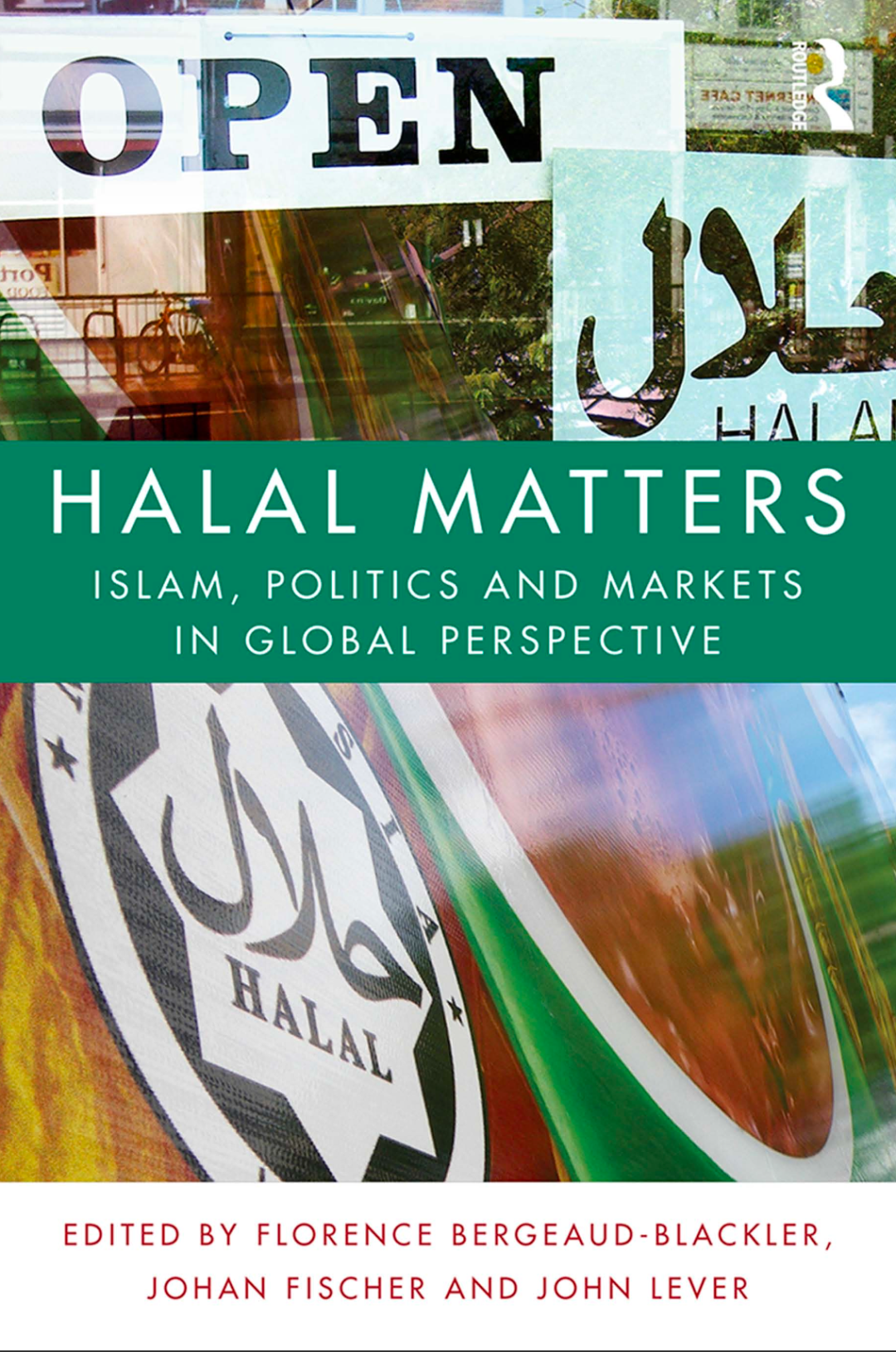
Halal standards and certifications aren't just objective, neutral religious facts; they're a massive mix of power and knowledge. Religious scholars, government agencies, private certification companies, and global food giants all get a say in defining 'what is Halal.' In this sense, this 'knowledge' is actually just a high-level tool for governance.
Halal is basically a global mash-up, built from layers of legal tradition, national strategy, trade interests, and social movements. Every country and community picks and chooses different parts of this puzzle to emphasize, which is exactly why there’s no single, universal version of Halal on the planet.
Here’s the fundamental problem: Halal is at its core a sacred, religious judgment, but figuring out if food is actually Halal isn't something you can just do by looking at it, smelling it, or tasting it. You have to rely on site audits, paperwork, and labels as indirect evidence. The catch is that these audits and certification systems aren't divine truth—the protocols, the qualifications of the auditors, and the standards themselves are all socially constructed.
Malaysia’s approach to the Halal industry is a classic case study of post-liberal governance. In this context, the state doesn't just stick to its own borders. Malaysia doesn’t just use Halal as a way to manage domestic ethnic dynamics; it’s aggressively exporting its own definition, standards, and certification system to grab a piece of the global market, all to support its 'Vision 2020' national development plan. They aren't just exporting food; they’re exporting a whole set of regulations to cement Malaysia’s reputation as the global Halal hub.
This strategy is deeply rooted in Malaysia's history. During the 1970s, the government launched the New Economic Policy (NEP) to bridge the economic gap between Malays and other groups through education quotas and business support. Because of this, Halal evolved from a personal religious duty into a tool for state-led economic development, helping local Malay entrepreneurs gain market share and balance the economic influence of Chinese business owners.
From there, the state took full control, making it illegal to falsely label products as Halal. Under the Mahathir administration, the government created JAKIM to manage Halal affairs, taking the power to define 'what is Halal' away from local community leaders. In 1994, the government even banned the independent group Darul Arqam, branding them as deviant because they operated outside state control. This shows the government’s core goal: to monopolize the definition of Halal. They see independent economic practices as a threat. In the suburbs of Kuala Lumpur, you’ll see mosques and giant malls right next to each other, where the middle class expresses their devotion through consumer choices. Your dietary choices even dictate social boundaries; it's common for social invites to be turned down over concerns about Halal status.
Malaysia’s expansion is also fueled by changing global demographics. Government agencies like MATRADE support Malay-owned restaurants and promote Malaysian Halal brands abroad, like in the UK. The book makes a really insightful point: when consumers abroad buy Malaysian-certified Halal products, in a way, they’re witnessing the reach of Malaysian state sovereignty into immigrant communities.
The MS1500 Halal standard is the technical foundation of this whole strategy. It’s managed by JAKIM, developed with help from global giants like Nestlé, and launched at the MIHAS trade show. It covers the entire chain—slaughtering, processing, storage, logistics, packaging, and labeling. The debate over stunning before slaughter shows how trade pressures reshape religious rules: the 2004 version of MS1500 didn't recommend stunning, but the 2009 revision allowed for reversible stunning under strict conditions to adapt to the European market. Critics argue this isn't based on religious theory, but rather on bending the rules for commercial profit.
Malaysia also founded the International Halal Integrity Alliance (IHIA) in 2010 to create a global, unified standard for all members, hoping to break down trade barriers. The Malaysian government put 15 million Ringgit into it. But the line between public and private was super blurry, and it was obviously tied to Malaysian national interests. Meanwhile, the Gulf Cooperation Council (GCC) stuck to its own GSO 2055 standard, which is more conservative. Since Gulf nations have huge import markets, they have serious bargaining power. Negotiations stalled because Malaysia wanted MS1500 and the Gulf states wanted their own rules. By 2011, the head of the IHIA admitted a universal standard was neither practical nor necessary, and the project basically flopped.
This highlights the real logic of Malaysia’s post-liberal strategy: the state talks about universal standards but has no intention of giving up the dominance of its own MS1500. Whenever another country suggests terms that hurt Malaysian interests, the goal of a 'unified standard' is quietly pushed aside. Malaysia’s priority isn't a neutral global rule; it's pushing its own version of the rules onto the world while using 'global unity' as a negotiation tactic.
Malaysia’s case proves that the rise of the Halal industry isn't just about religious revival; it’s a mix of ethnic politics, industrial policy, and a tool for soft power. The Malay middle class created by the NEP provided the foundation, while the state works to crush independent Halal practices to protect its monopoly on definitions.
In total contrast to Malaysia’s state-monopoly model, Turkey has taken a totally different path: moving from 'implicit Halal' to 'explicit Halal'.
Traditionally, Turkish society followed the Hanafi school, where people just assumed meat on the market was Halal. This is what we call implicit Halal. People trusted their local butchers by word of mouth, so nobody needed labels or fancy certificates. If a business needed proof, they’d just get a simple letter from the local Mufti. There was no modern factory auditing. It was all built on the trust of a pre-modern, close-knit society.
Social changes completely broke that system. Politically, the secularism of the Kemal era meant the state controlled religious affairs through the DİB. But when the AK Party—representing the conservative middle class—came to power in 2002, religious influence grew, and the divide with the secular population deepened. At the same time, the livestock industry went industrial. Animals were being moved across the country, and massive amounts of frozen meat were being imported. The 'neighborhood trust' model was dead, creating a real demand for formal labels. On top of that, exporters faced pressure from the Gulf states, which refused to accept simple letters from local Muftis. These requirements for formal certification eventually flowed back into the Turkish domestic market.
The Turkish DİB religious bureau only issues religious edicts and doesn't do commercial certification. This left a void filled by private firms like GİMDES, who charge businesses for their services. This creates an obvious conflict of interest, and since they interpret rules like 'stunning' or food additives differently, the market is super fragmented. There’s a weird social tension here: many secular Turks don't eat pork as a cultural habit, but they get really annoyed by Halal labels appearing on secular products. They make a distinction: not eating pork is a personal, cultural choice, but they push back against religious institutions getting involved in industrial, secular commerce.
The case of Iran shows the tension between the modern technical Halal system and the concept of 'tayyib' (wholesome/pure). As a Shia-majority nation, Iran has to align with international standards like MS1500 or GSO 2055 to export poultry and eggs. These standards focus heavily on technical details like slaughtering and additives, but they totally ignore things like animal welfare or the farming environment. This has caused a rift in Iran: industrial realists want to follow the rules to make money, while critics say that copying these foreign standards strips away the spiritual core of Halal, leaving only a hollow ritual. Traditional Shia thought emphasizes intention (niyya) and the goodness of the entire chain, which just can't be quantified by modern auditors.
An award-winning poultry farm in northeast Iran offers a real-world example. They refuse to use high-density cages, focus on high-quality feed, and prioritize the ethics of the slaughtering process, trying to apply 'tayyib' principles to the whole life cycle of the animal. But the limitation is obvious: it’s a niche, high-cost project for the wealthy and can't be scaled up. The irony is that since international Halal standards don't track animal welfare, this ethical farm doesn't get any 'extra points' for its practices, while factory farms with terrible conditions can easily get full Halal certification just by following the basic paper requirements.
If you look at the old city of Marrakesh, Morocco, you see how ordinary people practice Halal outside of these massive bureaucratic systems. In this Maliki-school society, Halal is a physical, instinctive part of daily life that doesn't need labels. Housewives trust their local market vendors and their own senses to pick ingredients. Besides the basic Halal/Haram religious framework, the concept of 'beldi' (local/native) is huge. Even if an imported product has a Halal label, older shoppers will still choose the local 'beldi' option. Things are changing with the younger generation—they buy more packaged food and are learning to look for labels—but the value of 'beldi' remains. When faced with questionable food, families rely on their own practical judgment rather than just following rigid legal texts.
Comparing these countries shows that differences between certification bodies aren't just about religious school disagreements. Institutions within the same school often have wildly different standards. Political frameworks, animal welfare laws, local social divides, and corporate competition usually play a much bigger role. Europe doesn't have a state-run monopoly like Malaysia; it has a chaotic mix of private firms, which leads to issues like certificates not being recognized by others, consumers being confused about who to trust, and audits relying too much on businesses just self-reporting.
Fieldwork among the Malay immigrant community in London shows the irony of secular states: they preach religious neutrality and don't define what Halal is, but they also can't stop people from wanting to eat Halal. The responsibility is just offloaded onto the market and private certifiers. The market steps into the vacuum left by the state, but because the market is profit-driven, it isn't neutral. Scholars call this 'impotent secularism.' When certified products from Malaysia flood into London, they aren't just selling food; they’re exporting Malaysian-style Halal norms—proof that trade is also the transmission of culture and regulation.
Looking at the five major international initiatives (OIC-SMIIC, IHIA, CAC, ISO, and the GCC's GSO 2055), it’s pretty clear that a universal global Halal standard is structurally impossible to achieve in the foreseeable future. Deep-seated religious differences, trade conflicts between exporters and importers, different national legal systems, and the need for international orgs to please everyone mean we're stuck in a mess. Having to get multiple certifications just raises costs for businesses, and standard-setting has turned into a game of national soft power. These international initiatives are really just there for conversation—they’re nowhere near becoming a set of mandatory, global rules.
Dietary rules that used to be a matter of personal self-discipline are now a massive, organized business—and let’s be real, turning religion into a profit-making enterprise is a recipe for a total dead end in both theory and practice. Everything in this piece is pulled from the book below.
Halal standards and certifications aren't just objective, neutral religious facts; they're a massive mix of power and knowledge. Religious scholars, government agencies, private certification companies, and global food giants all get a say in defining 'what is Halal.' In this sense, this 'knowledge' is actually just a high-level tool for governance.
Halal is basically a global mash-up, built from layers of legal tradition, national strategy, trade interests, and social movements. Every country and community picks and chooses different parts of this puzzle to emphasize, which is exactly why there’s no single, universal version of Halal on the planet.
Here’s the fundamental problem: Halal is at its core a sacred, religious judgment, but figuring out if food is actually Halal isn't something you can just do by looking at it, smelling it, or tasting it. You have to rely on site audits, paperwork, and labels as indirect evidence. The catch is that these audits and certification systems aren't divine truth—the protocols, the qualifications of the auditors, and the standards themselves are all socially constructed.
Malaysia’s approach to the Halal industry is a classic case study of post-liberal governance. In this context, the state doesn't just stick to its own borders. Malaysia doesn’t just use Halal as a way to manage domestic ethnic dynamics; it’s aggressively exporting its own definition, standards, and certification system to grab a piece of the global market, all to support its 'Vision 2020' national development plan. They aren't just exporting food; they’re exporting a whole set of regulations to cement Malaysia’s reputation as the global Halal hub.
This strategy is deeply rooted in Malaysia's history. During the 1970s, the government launched the New Economic Policy (NEP) to bridge the economic gap between Malays and other groups through education quotas and business support. Because of this, Halal evolved from a personal religious duty into a tool for state-led economic development, helping local Malay entrepreneurs gain market share and balance the economic influence of Chinese business owners.
From there, the state took full control, making it illegal to falsely label products as Halal. Under the Mahathir administration, the government created JAKIM to manage Halal affairs, taking the power to define 'what is Halal' away from local community leaders. In 1994, the government even banned the independent group Darul Arqam, branding them as deviant because they operated outside state control. This shows the government’s core goal: to monopolize the definition of Halal. They see independent economic practices as a threat. In the suburbs of Kuala Lumpur, you’ll see mosques and giant malls right next to each other, where the middle class expresses their devotion through consumer choices. Your dietary choices even dictate social boundaries; it's common for social invites to be turned down over concerns about Halal status.
Malaysia’s expansion is also fueled by changing global demographics. Government agencies like MATRADE support Malay-owned restaurants and promote Malaysian Halal brands abroad, like in the UK. The book makes a really insightful point: when consumers abroad buy Malaysian-certified Halal products, in a way, they’re witnessing the reach of Malaysian state sovereignty into immigrant communities.
The MS1500 Halal standard is the technical foundation of this whole strategy. It’s managed by JAKIM, developed with help from global giants like Nestlé, and launched at the MIHAS trade show. It covers the entire chain—slaughtering, processing, storage, logistics, packaging, and labeling. The debate over stunning before slaughter shows how trade pressures reshape religious rules: the 2004 version of MS1500 didn't recommend stunning, but the 2009 revision allowed for reversible stunning under strict conditions to adapt to the European market. Critics argue this isn't based on religious theory, but rather on bending the rules for commercial profit.
Malaysia also founded the International Halal Integrity Alliance (IHIA) in 2010 to create a global, unified standard for all members, hoping to break down trade barriers. The Malaysian government put 15 million Ringgit into it. But the line between public and private was super blurry, and it was obviously tied to Malaysian national interests. Meanwhile, the Gulf Cooperation Council (GCC) stuck to its own GSO 2055 standard, which is more conservative. Since Gulf nations have huge import markets, they have serious bargaining power. Negotiations stalled because Malaysia wanted MS1500 and the Gulf states wanted their own rules. By 2011, the head of the IHIA admitted a universal standard was neither practical nor necessary, and the project basically flopped.
This highlights the real logic of Malaysia’s post-liberal strategy: the state talks about universal standards but has no intention of giving up the dominance of its own MS1500. Whenever another country suggests terms that hurt Malaysian interests, the goal of a 'unified standard' is quietly pushed aside. Malaysia’s priority isn't a neutral global rule; it's pushing its own version of the rules onto the world while using 'global unity' as a negotiation tactic.
Malaysia’s case proves that the rise of the Halal industry isn't just about religious revival; it’s a mix of ethnic politics, industrial policy, and a tool for soft power. The Malay middle class created by the NEP provided the foundation, while the state works to crush independent Halal practices to protect its monopoly on definitions.
In total contrast to Malaysia’s state-monopoly model, Turkey has taken a totally different path: moving from 'implicit Halal' to 'explicit Halal'.
Traditionally, Turkish society followed the Hanafi school, where people just assumed meat on the market was Halal. This is what we call implicit Halal. People trusted their local butchers by word of mouth, so nobody needed labels or fancy certificates. If a business needed proof, they’d just get a simple letter from the local Mufti. There was no modern factory auditing. It was all built on the trust of a pre-modern, close-knit society.
Social changes completely broke that system. Politically, the secularism of the Kemal era meant the state controlled religious affairs through the DİB. But when the AK Party—representing the conservative middle class—came to power in 2002, religious influence grew, and the divide with the secular population deepened. At the same time, the livestock industry went industrial. Animals were being moved across the country, and massive amounts of frozen meat were being imported. The 'neighborhood trust' model was dead, creating a real demand for formal labels. On top of that, exporters faced pressure from the Gulf states, which refused to accept simple letters from local Muftis. These requirements for formal certification eventually flowed back into the Turkish domestic market.
The Turkish DİB religious bureau only issues religious edicts and doesn't do commercial certification. This left a void filled by private firms like GİMDES, who charge businesses for their services. This creates an obvious conflict of interest, and since they interpret rules like 'stunning' or food additives differently, the market is super fragmented. There’s a weird social tension here: many secular Turks don't eat pork as a cultural habit, but they get really annoyed by Halal labels appearing on secular products. They make a distinction: not eating pork is a personal, cultural choice, but they push back against religious institutions getting involved in industrial, secular commerce.
The case of Iran shows the tension between the modern technical Halal system and the concept of 'tayyib' (wholesome/pure). As a Shia-majority nation, Iran has to align with international standards like MS1500 or GSO 2055 to export poultry and eggs. These standards focus heavily on technical details like slaughtering and additives, but they totally ignore things like animal welfare or the farming environment. This has caused a rift in Iran: industrial realists want to follow the rules to make money, while critics say that copying these foreign standards strips away the spiritual core of Halal, leaving only a hollow ritual. Traditional Shia thought emphasizes intention (niyya) and the goodness of the entire chain, which just can't be quantified by modern auditors.
An award-winning poultry farm in northeast Iran offers a real-world example. They refuse to use high-density cages, focus on high-quality feed, and prioritize the ethics of the slaughtering process, trying to apply 'tayyib' principles to the whole life cycle of the animal. But the limitation is obvious: it’s a niche, high-cost project for the wealthy and can't be scaled up. The irony is that since international Halal standards don't track animal welfare, this ethical farm doesn't get any 'extra points' for its practices, while factory farms with terrible conditions can easily get full Halal certification just by following the basic paper requirements.
If you look at the old city of Marrakesh, Morocco, you see how ordinary people practice Halal outside of these massive bureaucratic systems. In this Maliki-school society, Halal is a physical, instinctive part of daily life that doesn't need labels. Housewives trust their local market vendors and their own senses to pick ingredients. Besides the basic Halal/Haram religious framework, the concept of 'beldi' (local/native) is huge. Even if an imported product has a Halal label, older shoppers will still choose the local 'beldi' option. Things are changing with the younger generation—they buy more packaged food and are learning to look for labels—but the value of 'beldi' remains. When faced with questionable food, families rely on their own practical judgment rather than just following rigid legal texts.
Comparing these countries shows that differences between certification bodies aren't just about religious school disagreements. Institutions within the same school often have wildly different standards. Political frameworks, animal welfare laws, local social divides, and corporate competition usually play a much bigger role. Europe doesn't have a state-run monopoly like Malaysia; it has a chaotic mix of private firms, which leads to issues like certificates not being recognized by others, consumers being confused about who to trust, and audits relying too much on businesses just self-reporting.
Fieldwork among the Malay immigrant community in London shows the irony of secular states: they preach religious neutrality and don't define what Halal is, but they also can't stop people from wanting to eat Halal. The responsibility is just offloaded onto the market and private certifiers. The market steps into the vacuum left by the state, but because the market is profit-driven, it isn't neutral. Scholars call this 'impotent secularism.' When certified products from Malaysia flood into London, they aren't just selling food; they’re exporting Malaysian-style Halal norms—proof that trade is also the transmission of culture and regulation.
Looking at the five major international initiatives (OIC-SMIIC, IHIA, CAC, ISO, and the GCC's GSO 2055), it’s pretty clear that a universal global Halal standard is structurally impossible to achieve in the foreseeable future. Deep-seated religious differences, trade conflicts between exporters and importers, different national legal systems, and the need for international orgs to please everyone mean we're stuck in a mess. Having to get multiple certifications just raises costs for businesses, and standard-setting has turned into a game of national soft power. These international initiatives are really just there for conversation—they’re nowhere near becoming a set of mandatory, global rules.
