

Islamic Studies
Halal Food Laws and History: Understanding Islamic Dietary Ethics and Modern Industry Challenges
Articles • Hasan09 posted the article • 0 comments • 12 views • 15 hours ago
This article provides a comprehensive breakdown of the core principles of halal diets as found in Islamic scripture, and how these are interpreted across the four major schools of jurisprudence. We’ll also dig into how modern industrial slaughter, food additives, and global cold-chain logistics are shaking up traditional dietary ethics.
Halal dietary guidelines aren't just a rigid, set-in-stone list of laws. The Quran laid the foundation, but over time, different legal schools built on those principles by incorporating Hadith (recorded sayings and actions of the Prophet), local customs, and the realities of their environments. Now, in the modern age, industrial food production, global trade, and the certification industry are creating a whole new set of unprecedented challenges for this ancient legal framework.
Everything in this piece is distilled from the book mentioned above, which covers the history of halal food. The book dives into how people consumed halal food in the past and how the modern halal certification industry has evolved—two topics I'm really interested in. The author touches on questions I've covered in my own videos and articles, proving that there's nothing new under the sun and there will always be people who get it. I’m going to skip the basic concepts everyone already knows and share the parts I think are actually worth your time.
The ban on alcohol in the Quran is a perfect example of the logic behind Islamic legislation. The revelations followed a gradual process: in the Meccan period, the Quran mentioned that grapes and dates could produce intoxicating drinks, viewing them as a gift from Allah, and didn't forbid them; even the descriptions of Paradise mentioned wine. Early on in Medina, the scriptures noted that while alcohol had some benefits, its sins outweighed them. Later, it was decreed that believers shouldn't participate in dua (prayer) while intoxicated, but a total ban still wasn't issued. It wasn't until the later Medinan period that wine, gambling, and pagan sacrifices were grouped together as 'the filth of Satan,' and believers were ordered to stay away from them completely. The tradition of exegesis uses the principle of naskh (abrogation), where later verses supersede earlier ones, making verses 90-91 of Surah 5 the final word on alcohol.
Another highly debated verse is Surah 5:5, which states: 'Today, all wholesome foods have been made lawful for you. The food of the People of the Book is lawful for you, and your food is lawful for them.' From the medieval era to today, scholars have argued over how to interpret this, which directly impacts the real-world question of whether or not you can eat meat slaughtered by the People of the Book (Jews and Christians). Throughout all these dietary rules, there is one core spirit: there is no intent to make things difficult for believers; these rules aren't meant to be an unnecessary burden on their lives.
When you look at this historically, meat was a luxury item in pre-modern societies, and ordinary people didn't really have to deal with the question of whether meat was 'halal' very often—something modern people tend to forget. In the 7th-century Arabian Peninsula, resources were scarce. A normal person's diet mostly consisted of dates, dairy products, and barley bread; they were lucky to eat meat once a month. Camels were valuable assets for transport and wouldn't be slaughtered unless it was a matter of survival. Beef was also rare, and lamb was the most accessible meat. Many people lived almost like vegetarians. Hadith records show that Ali, the fourth Caliph, rarely ate meat in a year, and Umar II advised people not to be greedy for meat or get addicted to it. Even the Prophet’s favorite dish, Tharid (a broth-soaked bread dish), was usually reserved for holidays or special guests.
By the time of the great empires—the Mamluks, Ottomans, and Mughals—meat consumption became strictly divided by social class. Meat went to the capital first, while provinces got the leftovers. High-ranking nobles and officials got first dibs, followed by average citizens, and slaves came last. Men also usually got priority over women. Ottoman law treated bread as a essential necessity the state had to provide, but meat wasn't part of that state guarantee; most commoners only ate meat on holidays.
Today, we just assume a believer needs to constantly check if their food is halal, but in the pre-modern world, halal meat was mostly a concern for the wealthy. It wasn't until modern industrialization made meat cheap and widely available that the general public had to deal with halal compliance so frequently.
When it comes to wild animals like rabbits, lizards, foxes, hyenas, horses, or hedgehogs, different legal schools have vastly different takes. These differences usually come down to two things: first, they rely on different versions of the Hadith, and second, the hunting and eating habits of the regions where the schools originated. The Maliki school, which emerged in the resource-poor Hijaz region, is the most lenient, generally allowing the consumption of rabbits, lizards, and hyenas—common prey in that area. The Shafi'i and Hanbali schools are somewhere in the middle, allowing some animals but calling others makruh (disliked). The Hanafi school is much stricter, labeling many wild animals as forbidden, putting it closer to the Shia Jafari school. The Jafari school is the strictest of all, classifying rabbits, lizards, and hyenas as haram (forbidden).
The debate over horse meat and lizards is pretty representative. The Quran mentions horses, mules, and donkeys were created for riding and adornment, which leads some scholars to say horse meat is off-limits. Others argue that since the Quran doesn't explicitly ban it, it's fine to eat. For lizards, the Malikis lean on Medinan Hadith to permit them, while the Hanafis and Shia lean on Kufan traditions to ban them. At its heart, it’s just a difference in regional Hadith versions. It’s worth noting that many of these animal bans aren't in the Quran, but come from the Hadith. In the classical era, these conflicting rulings were just seen as reasonable academic differences, not heresy.
Seafood is where dietary law really hits the most friction. Surah 5:96 states: 'The catch of the sea and its food are lawful for you.' But this short verse led to all kinds of different interpretations. All schools only agree on two things: fish with scales are allowed, and fish don't need the ritual slaughter required for land animals. Other than that, almost all seafood is controversial. The Malikis are the most open, allowing sharks, whales, shrimp, crab, squid, shellfish, sea turtles, and crocodiles. The Shafi'is accept sharks, whales, and cephalopods, but are skeptical about crabs and turtles. The Hanbalis are in the middle. The Hanafis only recognize 'fish' in the narrow sense, banning marine mammals, crustaceans, and mollusks. The Shia Jafari school only allows fish with scales, though they make an exception for shrimp, treating it like the 'locusts of the sea,' while everything else is haram.
Real history shows how legal rulings are influenced by economics. In Iran, sturgeon technically didn't have the typical scales required by Shia tradition, so they should have been banned. But after the 1979 Iranian Revolution, caviar became a massive export pillar for the country. In 1983, Khomeini issued a fatwa explaining that the hard bony plates of the sturgeon counted as the 'scales' mentioned in the scripture, making caviar legal. This proves that economic reality drives the reinterpretation of ancient texts, and that’s nothing new.
Take Egypt’s traditional fermented fish, Fesikh. The ingredients themselves (scaled fish) are halal, but if the open-air fermentation process goes wrong, it can easily lead to food poisoning. Local Muftis used the legal framework of tayyibat (wholesome/good) and khabā’ith (vile/harmful): even if the original ingredient is lawful, if the final product causes harm to the human body, it's considered 'vile' and should be declared haram. Indonesia follows the Shafi'i school, so their whale and shark fishing industries are backed by legal fatwas. The Ottoman Empire officially followed the Hanafi school, which theoretically banned lobster and oysters, but you'd find them on menus for diplomatic banquets in the 19th century—showing the gap between official legal codes and social reality. Even for fish that die naturally in the sea, schools argue: Malikis and Shafi'is say it's fine if it hasn't rotted, while Hanafis and Shia equate it to carrion, insisting fish must be caught alive.
Ritual slaughter rules have also seen major shifts between the medieval and modern eras. In the medieval period, the Sunni mainstream accepted meat slaughtered by the 'People of the Book,' provided they didn't invoke the name of a false god. During the Mamluk and Ottoman eras, Muslims would often buy meat from Jewish butchers; in Istanbul, there were over a dozen Jewish slaughterhouses well into the 18th and 19th centuries. The Shia took a more restrictive path: early on, they accepted meat from the People of the Book, but started shifting in the 9th and 10th centuries and completely rejected it by the 11th. The reason wasn't about the slaughtering process itself, but the belief that the People of the Book held erroneous faiths and were inherently 'unclean,' thus unqualified to invoke the name of Allah during slaughter.
Surprisingly, most modern Sunnis have shifted to that strict medieval Shia stance. It’s not because the Quran changed, but because social reality changed the logic of legal interpretation. Meat consumption has become mass-market, which has fueled anxiety about purity; global trade means consumers can’t supervise slaughtering on-site, which increases doubt; the religious purification movements of the late 20th century reinforced group boundaries; and the business of halal certification encourages agencies to adopt stricter standards to prove they are the 'most' authentic.
Entering the industrial age, electrical stunning before slaughter and automated poultry slaughter lines have become the two big new battlegrounds. Classical texts don't have the answers, so jurists have to use old legal tools to deal with modern problems.
So-called 'stunning'—using electricity, bolts, or gas to knock an animal unconscious before cutting its throat—is standard practice in Western slaughterhouses. It’s often forced by animal welfare laws and gets caught up in complex debates over immigration, religious exemptions, and animal rights. Historically, Nazi Germany used animal protection laws to ban Jewish ritual slaughter, using animal ethics as a cover for antisemitism. After WWII, Europe generally mandated stunning while allowing religious exemptions, but implementation varies: Norway, Sweden, Switzerland, and Iceland offer zero exemptions, while the UK, France, and Spain do. EU regulations confirm the right to an exemption but let member states set their own limits. Even scientists don't have a consensus on whether stunning actually reduces animal suffering, so both sides of the debate just cherry-pick the research that supports them.
Jurists fall into three camps: One, represented by Al-Qaradawi, accepts stunning without limit, relying on the 'food of the People of the Book' verse. Critics, however, point out that many workers in imported meat production aren't actually practicing members of those faiths, which creates doubt (shubha). The mainstream compromise only accepts 'reversible' stunning, where the animal is unconscious but still shows vital signs—meaning it's still alive when the throat is cut. If stunning causes death, it's treated as carrion and is haram. Piercing bolt guns, gas, or total-heart-stop electrical shocks are banned; non-piercing bolt guns and head-only electric shocks are allowed. Water-bath stunning for poultry is still debated. Institutions like Al-Azhar and Iran’s Khamenei hold this view. The third group rejects stunning entirely, led by Pakistan's Taqi Usmani and Iraq's Sistani, fearing that in an industrial setting, you can't guarantee the animal hasn't already died, or that residual blood makes it haram, and that some stunning methods are painful in themselves. This view is gaining popularity; the number of non-stunned halal slaughterhouses in the UK is rising every year.
Cattle and sheep slaughter mostly still involve manual knives, so the conflict is focused on automated poultry lines. Birds are hung on conveyor belts and a high-speed blade cuts their necks, often paired with water-bath stunning. The core legal puzzle is: can a machine count as the 'slaughterer'? If you say 'In the name of Allah' (tasmiyya) once when turning the machine on, does that cover thousands of birds? The industrial problem is that some birds die from the electric shock, and blades miss some; if a live bird isn't slaughtered and enters the scalding tank, it becomes carrion.
A small minority of views use the 'People of the Book' verse to accept mechanical poultry slaughter wholesale. The middle-grounders set multiple constraints: an operator must say the name of Allah when starting the machine, and manual inspection is required to remove dead birds. The conservatives are dead set against it: they argue that in the old days, one invocation covered a continuous manual slaughter, whereas an assembly line is thousands of independent cuts, so a single activation isn't enough. Plus, machines don't have a soul, and a recording of an invocation is invalid; a human must say the name at the exact moment each animal is slaughtered. Commercially, Brazilian chicken exporters to the Middle East will explicitly label their products as 'hand-slaughtered' to satisfy conservative markets.
There's a sharp contrast between ancient and modern views: ancient Hadith taught not to be overly critical of the butcher—if a believer accidentally forgot to say the name, the meat was still okay. The legal spirit was not to add burdens to the believers. But the global, long-distance supply chain has birthed modern skepticism; the principle of 'doubt' is magnified, and people would rather be overly strict than take a risk. The change in material conditions has reshaped legal priorities.
Beyond alcohol, things like opium, cannabis, coffee, and tobacco were all introduced later, so there is no mention of them in the Quran or reliable Hadith. Jurists use analogical reasoning, the principle of 'public interest,' and the five goals of Islamic law to make rulings, and these views change as social knowledge and science evolve.
Regarding alcohol, the Hanafi school early on had a unique take: they argued only wine made from grapes or dates was 'khamr' (the prohibited alcohol), and fermented grain drinks were fine as long as you didn't get drunk. This view was later heavily criticized and faded away. The modern consensus is that anything that can intoxicate is banned, regardless of the source. Brewing, buying, selling, or gifting alcohol is prohibited, and alcohol holds no legal status as property. The Quran doesn't set a physical punishment for drinking, so the severity of penalties varies by region.
Even though legal texts explicitly forbid alcohol, it has historically existed in society. In Andalusia, there was relative tolerance for non-grape fermented drinks, and poetry often used alcohol as a theme. Mamluk Egypt had taverns everywhere until the 13th century, after which conservative pressure tried to suppress them but couldn't eradicate them. Ottoman rulers would often issue anti-alcohol edicts during disasters to appear pious, but those bans were fleeting. Many Sultans who banned alcohol drank it themselves, and the elite class drank regularly; the state even taxed fermented drinks and set up official distilleries. The Safavid and Mughal empires faced the same contradiction: rulers would ban alcohol while their own courts drank. Prohibition was often more of a periodic political performance than a real attempt to change society. Today, alcohol policies range from total bans and non-Muslim-only sales to complete openness.
Coffee arrived in the Middle East in the 15th-16th centuries and caused a huge debate. Some scholars thought coffee changed your mental state and, by analogy to alcohol, was 'disliked' or even illegal, and coffee shops were seen as breeding grounds for rumors and sedition. The other side argued coffee didn't cause drunkenness and should be allowed. Governments closed coffee shops, but the consumer demand was unstoppable, and by the 17th-18th centuries, coffee was widely accepted.
Tobacco arrived in the Middle East at the end of the 16th century and became a classic modern legal puzzle. Early on, the spectrum was wide: some thought it smelled bad, wasted money, and hurt the body, making it 'vile.' Others countered that the Quran didn't forbid it, and you can't just declare something forbidden without a clear reason, only avoiding it if it specifically hurts an individual. Now that modern medicine has proven the health risks, mainstream scholars label smoking as makruh (disliked), and some authorities classify it as haram, though opinions still differ.
An interesting social phenomenon: both the WHO and tobacco companies have actively engaged in religious debates. The WHO collects and spreads anti-smoking fatwas, wrapping public health issues in religious morality; tobacco companies find scholars who hold the opposite view to issue counter-fatwas. What used to be an internal religious discussion has been weaponized by external organizations and commercial capital. Despite religious criticism, the smoking rate for men in many countries remains high—a gap between religious mandates and social reality.
Overall, 'halal-haram' isn't a fixed list. When faced with new things not mentioned in the scriptures, jurists use classical tools and combine them with modern realities to reach new conclusions. Researching halal diets requires distinguishing between the ideal of legal texts and actual social practice; many things might be officially banned but still widely practiced. At the same time, modern external forces actively participate in the production of these rulings. A lot of social issues fall into the 'makruh' gray area, but popular discourse often simplifies everything into a black-and-white binary.
In the contemporary era of globalization, 'halal' has gone from individual religious guidelines to a massive global business. On the market, official government halal agencies coexist with private commercial ones. Private agencies live on service fees from companies, which creates an inherent conflict of interest: to win market share, some agencies lower standards, while others use the strictest possible standards as a marketing point.
Global trade leads to many practical dilemmas: halal certificates issued by different countries often don't recognize each other, creating trade barriers; common consumers can't tell which certification is real, leading to rampant fake labeling; and the multi-layered outsourcing of international supply chains makes it nearly impossible for certification agencies to check the whole chain, leaving them to rely on companies' self-declarations and creating compliance loopholes.
There are several eternal tensions within this business system. First, the conflict between religious ideals and commercial profit: companies want to cut costs and avoid changing production lines, while religious audits demand full checking of ingredients, slaughter, and additives, which drives up costs. When one line is shared between halal and non-halal products, cleaning and isolation become huge issues. Second, the conflict between national trade interests and pure religious demands: when states set standards, things like foreign trade, jobs, and economic reality are factored in—the Iranian caviar case is the perfect example. Third, the risk of consumerism: the halal label has become a consumption symbol. With the rise of halal makeup, luxury goods, and travel, critics argue that just buying 'halal' products is a poor substitute for internal religious virtue.
Compared to pre-modern times, the shift is profound: ancient society relied on 'acquaintance networks' and community reputation, and market inspectors only looked for fraud; there were no standardized 'halal stickers.' Modern urbanization and long-distance supply chains have destroyed that trust, transferring it to a third-party certificate printed on packaging—the label itself has become a product.
Looking globally, there is no one single international halal standard. The Malaysian MS1500, the Gulf Cooperation Council’s GSO2055, and the OIC/SMIIC-1 are the three main official documents. Standards aren't just technical specs for factories; they are trade tools that carry national industrial interests and 'soft power' competition.
Standardization itself involves trade-offs: classical law accepts school diversity, but industrial standards must have definitive, actionable steps. Setting a standard means choosing one legal view over others, which makes it impossible to please everyone. The OIC/SMIIC-1, as a coordination template, purposefully uses vague language in key controversial clauses to handle the vast differences between member states, which means it doesn't actually get rid of trade barriers.
Multiple certifications increase the burden on businesses, making it hard for small companies to survive; some countries use their own standards as market entry barriers. Malaysia wants to be the global halal hub and push MS1500; Gulf states use their massive import market to push GSO2055. It's a fight for who has the power to define the rules. At the same time, paper standards aren't the same as real-world results: budget and auditor capability create execution gaps; and many private agencies don't follow official standards, further fragmenting the market.
The era of processed food brings new legal challenges. Scientific lab tests and DNA analysis can identify ingredients, but science can only check components, not their 'halal-ness'—that still requires legal interpretation. Two classical tools are used here: First is istihāl (transformation), where an illegal substance undergoes such a complete chemical change that it becomes legal—but there’s no consensus on what 'complete' means. Second is istihlāk (dilution/dissolution), where a small amount of illegal ingredients is 'absorbed' by a large amount of legal ones—but there’s no standard threshold for this in modern industry.
Gelatin is the prime example. Industrial gelatin can come from pork bones and skin, or from halal-slaughtered cows/sheep. Lenient views say that high-heat hydrolysis causes a chemical transformation, so pork gelatin is okay. Middle-ground views prioritize animal source, only allowing pork gelatin in extreme necessity. Most mainstream agencies today hold a strict view: no matter how much it's processed, if the source is pig, it’s haram. Food companies have largely switched to carrageenan or pectin (plant alternatives) to avoid the drama.
At the same time, some thinkers are digging back into the Quranic concept of tayyib (wholesome/pure) to criticize mainstream commercial halal certification. Mainstream certification only focuses on checking for forbidden ingredients and slaughter methods, ignoring animal rearing, labor treatment, and environmental pollution. An alternative ethical view is emerging: even if a product meets the 'halal' checklist, if factory farming makes animals suffer or ignores labor rights, it doesn't meet the 'tayyib' requirement of being wholesome.
This movement has two paths: one is adding 'animal welfare' or 'organic' labels on top of existing halal certifications; the other is more radical and rejects commercial certification entirely, choosing to connect directly with small farmers and local communities. However, this movement is still non-mainstream and hasn't been adopted by any national standards, and it faces the reality that high-end, ethical products are expensive and unaffordable for the average person. view all
This article provides a comprehensive breakdown of the core principles of halal diets as found in Islamic scripture, and how these are interpreted across the four major schools of jurisprudence. We’ll also dig into how modern industrial slaughter, food additives, and global cold-chain logistics are shaking up traditional dietary ethics.
Halal dietary guidelines aren't just a rigid, set-in-stone list of laws. The Quran laid the foundation, but over time, different legal schools built on those principles by incorporating Hadith (recorded sayings and actions of the Prophet), local customs, and the realities of their environments. Now, in the modern age, industrial food production, global trade, and the certification industry are creating a whole new set of unprecedented challenges for this ancient legal framework.

Everything in this piece is distilled from the book mentioned above, which covers the history of halal food. The book dives into how people consumed halal food in the past and how the modern halal certification industry has evolved—two topics I'm really interested in. The author touches on questions I've covered in my own videos and articles, proving that there's nothing new under the sun and there will always be people who get it. I’m going to skip the basic concepts everyone already knows and share the parts I think are actually worth your time.
The ban on alcohol in the Quran is a perfect example of the logic behind Islamic legislation. The revelations followed a gradual process: in the Meccan period, the Quran mentioned that grapes and dates could produce intoxicating drinks, viewing them as a gift from Allah, and didn't forbid them; even the descriptions of Paradise mentioned wine. Early on in Medina, the scriptures noted that while alcohol had some benefits, its sins outweighed them. Later, it was decreed that believers shouldn't participate in dua (prayer) while intoxicated, but a total ban still wasn't issued. It wasn't until the later Medinan period that wine, gambling, and pagan sacrifices were grouped together as 'the filth of Satan,' and believers were ordered to stay away from them completely. The tradition of exegesis uses the principle of naskh (abrogation), where later verses supersede earlier ones, making verses 90-91 of Surah 5 the final word on alcohol.
Another highly debated verse is Surah 5:5, which states: 'Today, all wholesome foods have been made lawful for you. The food of the People of the Book is lawful for you, and your food is lawful for them.' From the medieval era to today, scholars have argued over how to interpret this, which directly impacts the real-world question of whether or not you can eat meat slaughtered by the People of the Book (Jews and Christians). Throughout all these dietary rules, there is one core spirit: there is no intent to make things difficult for believers; these rules aren't meant to be an unnecessary burden on their lives.
When you look at this historically, meat was a luxury item in pre-modern societies, and ordinary people didn't really have to deal with the question of whether meat was 'halal' very often—something modern people tend to forget. In the 7th-century Arabian Peninsula, resources were scarce. A normal person's diet mostly consisted of dates, dairy products, and barley bread; they were lucky to eat meat once a month. Camels were valuable assets for transport and wouldn't be slaughtered unless it was a matter of survival. Beef was also rare, and lamb was the most accessible meat. Many people lived almost like vegetarians. Hadith records show that Ali, the fourth Caliph, rarely ate meat in a year, and Umar II advised people not to be greedy for meat or get addicted to it. Even the Prophet’s favorite dish, Tharid (a broth-soaked bread dish), was usually reserved for holidays or special guests.
By the time of the great empires—the Mamluks, Ottomans, and Mughals—meat consumption became strictly divided by social class. Meat went to the capital first, while provinces got the leftovers. High-ranking nobles and officials got first dibs, followed by average citizens, and slaves came last. Men also usually got priority over women. Ottoman law treated bread as a essential necessity the state had to provide, but meat wasn't part of that state guarantee; most commoners only ate meat on holidays.
Today, we just assume a believer needs to constantly check if their food is halal, but in the pre-modern world, halal meat was mostly a concern for the wealthy. It wasn't until modern industrialization made meat cheap and widely available that the general public had to deal with halal compliance so frequently.
When it comes to wild animals like rabbits, lizards, foxes, hyenas, horses, or hedgehogs, different legal schools have vastly different takes. These differences usually come down to two things: first, they rely on different versions of the Hadith, and second, the hunting and eating habits of the regions where the schools originated. The Maliki school, which emerged in the resource-poor Hijaz region, is the most lenient, generally allowing the consumption of rabbits, lizards, and hyenas—common prey in that area. The Shafi'i and Hanbali schools are somewhere in the middle, allowing some animals but calling others makruh (disliked). The Hanafi school is much stricter, labeling many wild animals as forbidden, putting it closer to the Shia Jafari school. The Jafari school is the strictest of all, classifying rabbits, lizards, and hyenas as haram (forbidden).
The debate over horse meat and lizards is pretty representative. The Quran mentions horses, mules, and donkeys were created for riding and adornment, which leads some scholars to say horse meat is off-limits. Others argue that since the Quran doesn't explicitly ban it, it's fine to eat. For lizards, the Malikis lean on Medinan Hadith to permit them, while the Hanafis and Shia lean on Kufan traditions to ban them. At its heart, it’s just a difference in regional Hadith versions. It’s worth noting that many of these animal bans aren't in the Quran, but come from the Hadith. In the classical era, these conflicting rulings were just seen as reasonable academic differences, not heresy.
Seafood is where dietary law really hits the most friction. Surah 5:96 states: 'The catch of the sea and its food are lawful for you.' But this short verse led to all kinds of different interpretations. All schools only agree on two things: fish with scales are allowed, and fish don't need the ritual slaughter required for land animals. Other than that, almost all seafood is controversial. The Malikis are the most open, allowing sharks, whales, shrimp, crab, squid, shellfish, sea turtles, and crocodiles. The Shafi'is accept sharks, whales, and cephalopods, but are skeptical about crabs and turtles. The Hanbalis are in the middle. The Hanafis only recognize 'fish' in the narrow sense, banning marine mammals, crustaceans, and mollusks. The Shia Jafari school only allows fish with scales, though they make an exception for shrimp, treating it like the 'locusts of the sea,' while everything else is haram.
Real history shows how legal rulings are influenced by economics. In Iran, sturgeon technically didn't have the typical scales required by Shia tradition, so they should have been banned. But after the 1979 Iranian Revolution, caviar became a massive export pillar for the country. In 1983, Khomeini issued a fatwa explaining that the hard bony plates of the sturgeon counted as the 'scales' mentioned in the scripture, making caviar legal. This proves that economic reality drives the reinterpretation of ancient texts, and that’s nothing new.
Take Egypt’s traditional fermented fish, Fesikh. The ingredients themselves (scaled fish) are halal, but if the open-air fermentation process goes wrong, it can easily lead to food poisoning. Local Muftis used the legal framework of tayyibat (wholesome/good) and khabā’ith (vile/harmful): even if the original ingredient is lawful, if the final product causes harm to the human body, it's considered 'vile' and should be declared haram. Indonesia follows the Shafi'i school, so their whale and shark fishing industries are backed by legal fatwas. The Ottoman Empire officially followed the Hanafi school, which theoretically banned lobster and oysters, but you'd find them on menus for diplomatic banquets in the 19th century—showing the gap between official legal codes and social reality. Even for fish that die naturally in the sea, schools argue: Malikis and Shafi'is say it's fine if it hasn't rotted, while Hanafis and Shia equate it to carrion, insisting fish must be caught alive.
Ritual slaughter rules have also seen major shifts between the medieval and modern eras. In the medieval period, the Sunni mainstream accepted meat slaughtered by the 'People of the Book,' provided they didn't invoke the name of a false god. During the Mamluk and Ottoman eras, Muslims would often buy meat from Jewish butchers; in Istanbul, there were over a dozen Jewish slaughterhouses well into the 18th and 19th centuries. The Shia took a more restrictive path: early on, they accepted meat from the People of the Book, but started shifting in the 9th and 10th centuries and completely rejected it by the 11th. The reason wasn't about the slaughtering process itself, but the belief that the People of the Book held erroneous faiths and were inherently 'unclean,' thus unqualified to invoke the name of Allah during slaughter.
Surprisingly, most modern Sunnis have shifted to that strict medieval Shia stance. It’s not because the Quran changed, but because social reality changed the logic of legal interpretation. Meat consumption has become mass-market, which has fueled anxiety about purity; global trade means consumers can’t supervise slaughtering on-site, which increases doubt; the religious purification movements of the late 20th century reinforced group boundaries; and the business of halal certification encourages agencies to adopt stricter standards to prove they are the 'most' authentic.
Entering the industrial age, electrical stunning before slaughter and automated poultry slaughter lines have become the two big new battlegrounds. Classical texts don't have the answers, so jurists have to use old legal tools to deal with modern problems.
So-called 'stunning'—using electricity, bolts, or gas to knock an animal unconscious before cutting its throat—is standard practice in Western slaughterhouses. It’s often forced by animal welfare laws and gets caught up in complex debates over immigration, religious exemptions, and animal rights. Historically, Nazi Germany used animal protection laws to ban Jewish ritual slaughter, using animal ethics as a cover for antisemitism. After WWII, Europe generally mandated stunning while allowing religious exemptions, but implementation varies: Norway, Sweden, Switzerland, and Iceland offer zero exemptions, while the UK, France, and Spain do. EU regulations confirm the right to an exemption but let member states set their own limits. Even scientists don't have a consensus on whether stunning actually reduces animal suffering, so both sides of the debate just cherry-pick the research that supports them.
Jurists fall into three camps: One, represented by Al-Qaradawi, accepts stunning without limit, relying on the 'food of the People of the Book' verse. Critics, however, point out that many workers in imported meat production aren't actually practicing members of those faiths, which creates doubt (shubha). The mainstream compromise only accepts 'reversible' stunning, where the animal is unconscious but still shows vital signs—meaning it's still alive when the throat is cut. If stunning causes death, it's treated as carrion and is haram. Piercing bolt guns, gas, or total-heart-stop electrical shocks are banned; non-piercing bolt guns and head-only electric shocks are allowed. Water-bath stunning for poultry is still debated. Institutions like Al-Azhar and Iran’s Khamenei hold this view. The third group rejects stunning entirely, led by Pakistan's Taqi Usmani and Iraq's Sistani, fearing that in an industrial setting, you can't guarantee the animal hasn't already died, or that residual blood makes it haram, and that some stunning methods are painful in themselves. This view is gaining popularity; the number of non-stunned halal slaughterhouses in the UK is rising every year.
Cattle and sheep slaughter mostly still involve manual knives, so the conflict is focused on automated poultry lines. Birds are hung on conveyor belts and a high-speed blade cuts their necks, often paired with water-bath stunning. The core legal puzzle is: can a machine count as the 'slaughterer'? If you say 'In the name of Allah' (tasmiyya) once when turning the machine on, does that cover thousands of birds? The industrial problem is that some birds die from the electric shock, and blades miss some; if a live bird isn't slaughtered and enters the scalding tank, it becomes carrion.
A small minority of views use the 'People of the Book' verse to accept mechanical poultry slaughter wholesale. The middle-grounders set multiple constraints: an operator must say the name of Allah when starting the machine, and manual inspection is required to remove dead birds. The conservatives are dead set against it: they argue that in the old days, one invocation covered a continuous manual slaughter, whereas an assembly line is thousands of independent cuts, so a single activation isn't enough. Plus, machines don't have a soul, and a recording of an invocation is invalid; a human must say the name at the exact moment each animal is slaughtered. Commercially, Brazilian chicken exporters to the Middle East will explicitly label their products as 'hand-slaughtered' to satisfy conservative markets.
There's a sharp contrast between ancient and modern views: ancient Hadith taught not to be overly critical of the butcher—if a believer accidentally forgot to say the name, the meat was still okay. The legal spirit was not to add burdens to the believers. But the global, long-distance supply chain has birthed modern skepticism; the principle of 'doubt' is magnified, and people would rather be overly strict than take a risk. The change in material conditions has reshaped legal priorities.
Beyond alcohol, things like opium, cannabis, coffee, and tobacco were all introduced later, so there is no mention of them in the Quran or reliable Hadith. Jurists use analogical reasoning, the principle of 'public interest,' and the five goals of Islamic law to make rulings, and these views change as social knowledge and science evolve.
Regarding alcohol, the Hanafi school early on had a unique take: they argued only wine made from grapes or dates was 'khamr' (the prohibited alcohol), and fermented grain drinks were fine as long as you didn't get drunk. This view was later heavily criticized and faded away. The modern consensus is that anything that can intoxicate is banned, regardless of the source. Brewing, buying, selling, or gifting alcohol is prohibited, and alcohol holds no legal status as property. The Quran doesn't set a physical punishment for drinking, so the severity of penalties varies by region.
Even though legal texts explicitly forbid alcohol, it has historically existed in society. In Andalusia, there was relative tolerance for non-grape fermented drinks, and poetry often used alcohol as a theme. Mamluk Egypt had taverns everywhere until the 13th century, after which conservative pressure tried to suppress them but couldn't eradicate them. Ottoman rulers would often issue anti-alcohol edicts during disasters to appear pious, but those bans were fleeting. Many Sultans who banned alcohol drank it themselves, and the elite class drank regularly; the state even taxed fermented drinks and set up official distilleries. The Safavid and Mughal empires faced the same contradiction: rulers would ban alcohol while their own courts drank. Prohibition was often more of a periodic political performance than a real attempt to change society. Today, alcohol policies range from total bans and non-Muslim-only sales to complete openness.
Coffee arrived in the Middle East in the 15th-16th centuries and caused a huge debate. Some scholars thought coffee changed your mental state and, by analogy to alcohol, was 'disliked' or even illegal, and coffee shops were seen as breeding grounds for rumors and sedition. The other side argued coffee didn't cause drunkenness and should be allowed. Governments closed coffee shops, but the consumer demand was unstoppable, and by the 17th-18th centuries, coffee was widely accepted.
Tobacco arrived in the Middle East at the end of the 16th century and became a classic modern legal puzzle. Early on, the spectrum was wide: some thought it smelled bad, wasted money, and hurt the body, making it 'vile.' Others countered that the Quran didn't forbid it, and you can't just declare something forbidden without a clear reason, only avoiding it if it specifically hurts an individual. Now that modern medicine has proven the health risks, mainstream scholars label smoking as makruh (disliked), and some authorities classify it as haram, though opinions still differ.
An interesting social phenomenon: both the WHO and tobacco companies have actively engaged in religious debates. The WHO collects and spreads anti-smoking fatwas, wrapping public health issues in religious morality; tobacco companies find scholars who hold the opposite view to issue counter-fatwas. What used to be an internal religious discussion has been weaponized by external organizations and commercial capital. Despite religious criticism, the smoking rate for men in many countries remains high—a gap between religious mandates and social reality.
Overall, 'halal-haram' isn't a fixed list. When faced with new things not mentioned in the scriptures, jurists use classical tools and combine them with modern realities to reach new conclusions. Researching halal diets requires distinguishing between the ideal of legal texts and actual social practice; many things might be officially banned but still widely practiced. At the same time, modern external forces actively participate in the production of these rulings. A lot of social issues fall into the 'makruh' gray area, but popular discourse often simplifies everything into a black-and-white binary.
In the contemporary era of globalization, 'halal' has gone from individual religious guidelines to a massive global business. On the market, official government halal agencies coexist with private commercial ones. Private agencies live on service fees from companies, which creates an inherent conflict of interest: to win market share, some agencies lower standards, while others use the strictest possible standards as a marketing point.
Global trade leads to many practical dilemmas: halal certificates issued by different countries often don't recognize each other, creating trade barriers; common consumers can't tell which certification is real, leading to rampant fake labeling; and the multi-layered outsourcing of international supply chains makes it nearly impossible for certification agencies to check the whole chain, leaving them to rely on companies' self-declarations and creating compliance loopholes.
There are several eternal tensions within this business system. First, the conflict between religious ideals and commercial profit: companies want to cut costs and avoid changing production lines, while religious audits demand full checking of ingredients, slaughter, and additives, which drives up costs. When one line is shared between halal and non-halal products, cleaning and isolation become huge issues. Second, the conflict between national trade interests and pure religious demands: when states set standards, things like foreign trade, jobs, and economic reality are factored in—the Iranian caviar case is the perfect example. Third, the risk of consumerism: the halal label has become a consumption symbol. With the rise of halal makeup, luxury goods, and travel, critics argue that just buying 'halal' products is a poor substitute for internal religious virtue.
Compared to pre-modern times, the shift is profound: ancient society relied on 'acquaintance networks' and community reputation, and market inspectors only looked for fraud; there were no standardized 'halal stickers.' Modern urbanization and long-distance supply chains have destroyed that trust, transferring it to a third-party certificate printed on packaging—the label itself has become a product.
Looking globally, there is no one single international halal standard. The Malaysian MS1500, the Gulf Cooperation Council’s GSO2055, and the OIC/SMIIC-1 are the three main official documents. Standards aren't just technical specs for factories; they are trade tools that carry national industrial interests and 'soft power' competition.
Standardization itself involves trade-offs: classical law accepts school diversity, but industrial standards must have definitive, actionable steps. Setting a standard means choosing one legal view over others, which makes it impossible to please everyone. The OIC/SMIIC-1, as a coordination template, purposefully uses vague language in key controversial clauses to handle the vast differences between member states, which means it doesn't actually get rid of trade barriers.
Multiple certifications increase the burden on businesses, making it hard for small companies to survive; some countries use their own standards as market entry barriers. Malaysia wants to be the global halal hub and push MS1500; Gulf states use their massive import market to push GSO2055. It's a fight for who has the power to define the rules. At the same time, paper standards aren't the same as real-world results: budget and auditor capability create execution gaps; and many private agencies don't follow official standards, further fragmenting the market.
The era of processed food brings new legal challenges. Scientific lab tests and DNA analysis can identify ingredients, but science can only check components, not their 'halal-ness'—that still requires legal interpretation. Two classical tools are used here: First is istihāl (transformation), where an illegal substance undergoes such a complete chemical change that it becomes legal—but there’s no consensus on what 'complete' means. Second is istihlāk (dilution/dissolution), where a small amount of illegal ingredients is 'absorbed' by a large amount of legal ones—but there’s no standard threshold for this in modern industry.
Gelatin is the prime example. Industrial gelatin can come from pork bones and skin, or from halal-slaughtered cows/sheep. Lenient views say that high-heat hydrolysis causes a chemical transformation, so pork gelatin is okay. Middle-ground views prioritize animal source, only allowing pork gelatin in extreme necessity. Most mainstream agencies today hold a strict view: no matter how much it's processed, if the source is pig, it’s haram. Food companies have largely switched to carrageenan or pectin (plant alternatives) to avoid the drama.
At the same time, some thinkers are digging back into the Quranic concept of tayyib (wholesome/pure) to criticize mainstream commercial halal certification. Mainstream certification only focuses on checking for forbidden ingredients and slaughter methods, ignoring animal rearing, labor treatment, and environmental pollution. An alternative ethical view is emerging: even if a product meets the 'halal' checklist, if factory farming makes animals suffer or ignores labor rights, it doesn't meet the 'tayyib' requirement of being wholesome.
This movement has two paths: one is adding 'animal welfare' or 'organic' labels on top of existing halal certifications; the other is more radical and rejects commercial certification entirely, choosing to connect directly with small farmers and local communities. However, this movement is still non-mainstream and hasn't been adopted by any national standards, and it faces the reality that high-end, ethical products are expensive and unaffordable for the average person.
Halal Food Laws and History: Understanding Islamic Dietary Ethics and Modern Industry Challenges
Articles • Hasan09 posted the article • 0 comments • 13 views • 15 hours ago
Halal dietary guidelines aren't just a rigid, set-in-stone list of laws. The Quran laid the foundation, but over time, different legal schools built on those principles by incorporating Hadith (recorded sayings and actions of the Prophet), local customs, and the realities of their environments. Now, in the modern age, industrial food production, global trade, and the certification industry are creating a whole new set of unprecedented challenges for this ancient legal framework.
Everything in this piece is distilled from the book mentioned above, which covers the history of halal food. The book dives into how people consumed halal food in the past and how the modern halal certification industry has evolved—two topics I'm really interested in. The author touches on questions I've covered in my own videos and articles, proving that there's nothing new under the sun and there will always be people who get it. I’m going to skip the basic concepts everyone already knows and share the parts I think are actually worth your time.
The ban on alcohol in the Quran is a perfect example of the logic behind Islamic legislation. The revelations followed a gradual process: in the Meccan period, the Quran mentioned that grapes and dates could produce intoxicating drinks, viewing them as a gift from Allah, and didn't forbid them; even the descriptions of Paradise mentioned wine. Early on in Medina, the scriptures noted that while alcohol had some benefits, its sins outweighed them. Later, it was decreed that believers shouldn't participate in dua (prayer) while intoxicated, but a total ban still wasn't issued. It wasn't until the later Medinan period that wine, gambling, and pagan sacrifices were grouped together as 'the filth of Satan,' and believers were ordered to stay away from them completely. The tradition of exegesis uses the principle of naskh (abrogation), where later verses supersede earlier ones, making verses 90-91 of Surah 5 the final word on alcohol.
Another highly debated verse is Surah 5:5, which states: 'Today, all wholesome foods have been made lawful for you. The food of the People of the Book is lawful for you, and your food is lawful for them.' From the medieval era to today, scholars have argued over how to interpret this, which directly impacts the real-world question of whether or not you can eat meat slaughtered by the People of the Book (Jews and Christians). Throughout all these dietary rules, there is one core spirit: there is no intent to make things difficult for believers; these rules aren't meant to be an unnecessary burden on their lives.
When you look at this historically, meat was a luxury item in pre-modern societies, and ordinary people didn't really have to deal with the question of whether meat was 'halal' very often—something modern people tend to forget. In the 7th-century Arabian Peninsula, resources were scarce. A normal person's diet mostly consisted of dates, dairy products, and barley bread; they were lucky to eat meat once a month. Camels were valuable assets for transport and wouldn't be slaughtered unless it was a matter of survival. Beef was also rare, and lamb was the most accessible meat. Many people lived almost like vegetarians. Hadith records show that Ali, the fourth Caliph, rarely ate meat in a year, and Umar II advised people not to be greedy for meat or get addicted to it. Even the Prophet’s favorite dish, Tharid (a broth-soaked bread dish), was usually reserved for holidays or special guests.
By the time of the great empires—the Mamluks, Ottomans, and Mughals—meat consumption became strictly divided by social class. Meat went to the capital first, while provinces got the leftovers. High-ranking nobles and officials got first dibs, followed by average citizens, and slaves came last. Men also usually got priority over women. Ottoman law treated bread as a essential necessity the state had to provide, but meat wasn't part of that state guarantee; most commoners only ate meat on holidays.
Today, we just assume a believer needs to constantly check if their food is halal, but in the pre-modern world, halal meat was mostly a concern for the wealthy. It wasn't until modern industrialization made meat cheap and widely available that the general public had to deal with halal compliance so frequently.
When it comes to wild animals like rabbits, lizards, foxes, hyenas, horses, or hedgehogs, different legal schools have vastly different takes. These differences usually come down to two things: first, they rely on different versions of the Hadith, and second, the hunting and eating habits of the regions where the schools originated. The Maliki school, which emerged in the resource-poor Hijaz region, is the most lenient, generally allowing the consumption of rabbits, lizards, and hyenas—common prey in that area. The Shafi'i and Hanbali schools are somewhere in the middle, allowing some animals but calling others makruh (disliked). The Hanafi school is much stricter, labeling many wild animals as forbidden, putting it closer to the Shia Jafari school. The Jafari school is the strictest of all, classifying rabbits, lizards, and hyenas as haram (forbidden).
The debate over horse meat and lizards is pretty representative. The Quran mentions horses, mules, and donkeys were created for riding and adornment, which leads some scholars to say horse meat is off-limits. Others argue that since the Quran doesn't explicitly ban it, it's fine to eat. For lizards, the Malikis lean on Medinan Hadith to permit them, while the Hanafis and Shia lean on Kufan traditions to ban them. At its heart, it’s just a difference in regional Hadith versions. It’s worth noting that many of these animal bans aren't in the Quran, but come from the Hadith. In the classical era, these conflicting rulings were just seen as reasonable academic differences, not heresy.
Seafood is where dietary law really hits the most friction. Surah 5:96 states: 'The catch of the sea and its food are lawful for you.' But this short verse led to all kinds of different interpretations. All schools only agree on two things: fish with scales are allowed, and fish don't need the ritual slaughter required for land animals. Other than that, almost all seafood is controversial. The Malikis are the most open, allowing sharks, whales, shrimp, crab, squid, shellfish, sea turtles, and crocodiles. The Shafi'is accept sharks, whales, and cephalopods, but are skeptical about crabs and turtles. The Hanbalis are in the middle. The Hanafis only recognize 'fish' in the narrow sense, banning marine mammals, crustaceans, and mollusks. The Shia Jafari school only allows fish with scales, though they make an exception for shrimp, treating it like the 'locusts of the sea,' while everything else is haram.
Real history shows how legal rulings are influenced by economics. In Iran, sturgeon technically didn't have the typical scales required by Shia tradition, so they should have been banned. But after the 1979 Iranian Revolution, caviar became a massive export pillar for the country. In 1983, Khomeini issued a fatwa explaining that the hard bony plates of the sturgeon counted as the 'scales' mentioned in the scripture, making caviar legal. This proves that economic reality drives the reinterpretation of ancient texts, and that’s nothing new.
Take Egypt’s traditional fermented fish, Fesikh. The ingredients themselves (scaled fish) are halal, but if the open-air fermentation process goes wrong, it can easily lead to food poisoning. Local Muftis used the legal framework of tayyibat (wholesome/good) and khabā’ith (vile/harmful): even if the original ingredient is lawful, if the final product causes harm to the human body, it's considered 'vile' and should be declared haram. Indonesia follows the Shafi'i school, so their whale and shark fishing industries are backed by legal fatwas. The Ottoman Empire officially followed the Hanafi school, which theoretically banned lobster and oysters, but you'd find them on menus for diplomatic banquets in the 19th century—showing the gap between official legal codes and social reality. Even for fish that die naturally in the sea, schools argue: Malikis and Shafi'is say it's fine if it hasn't rotted, while Hanafis and Shia equate it to carrion, insisting fish must be caught alive.
Ritual slaughter rules have also seen major shifts between the medieval and modern eras. In the medieval period, the Sunni mainstream accepted meat slaughtered by the 'People of the Book,' provided they didn't invoke the name of a false god. During the Mamluk and Ottoman eras, Muslims would often buy meat from Jewish butchers; in Istanbul, there were over a dozen Jewish slaughterhouses well into the 18th and 19th centuries. The Shia took a more restrictive path: early on, they accepted meat from the People of the Book, but started shifting in the 9th and 10th centuries and completely rejected it by the 11th. The reason wasn't about the slaughtering process itself, but the belief that the People of the Book held erroneous faiths and were inherently 'unclean,' thus unqualified to invoke the name of Allah during slaughter.
Surprisingly, most modern Sunnis have shifted to that strict medieval Shia stance. It’s not because the Quran changed, but because social reality changed the logic of legal interpretation. Meat consumption has become mass-market, which has fueled anxiety about purity; global trade means consumers can’t supervise slaughtering on-site, which increases doubt; the religious purification movements of the late 20th century reinforced group boundaries; and the business of halal certification encourages agencies to adopt stricter standards to prove they are the 'most' authentic.
Entering the industrial age, electrical stunning before slaughter and automated poultry slaughter lines have become the two big new battlegrounds. Classical texts don't have the answers, so jurists have to use old legal tools to deal with modern problems.
So-called 'stunning'—using electricity, bolts, or gas to knock an animal unconscious before cutting its throat—is standard practice in Western slaughterhouses. It’s often forced by animal welfare laws and gets caught up in complex debates over immigration, religious exemptions, and animal rights. Historically, Nazi Germany used animal protection laws to ban Jewish ritual slaughter, using animal ethics as a cover for antisemitism. After WWII, Europe generally mandated stunning while allowing religious exemptions, but implementation varies: Norway, Sweden, Switzerland, and Iceland offer zero exemptions, while the UK, France, and Spain do. EU regulations confirm the right to an exemption but let member states set their own limits. Even scientists don't have a consensus on whether stunning actually reduces animal suffering, so both sides of the debate just cherry-pick the research that supports them.
Jurists fall into three camps: One, represented by Al-Qaradawi, accepts stunning without limit, relying on the 'food of the People of the Book' verse. Critics, however, point out that many workers in imported meat production aren't actually practicing members of those faiths, which creates doubt (shubha). The mainstream compromise only accepts 'reversible' stunning, where the animal is unconscious but still shows vital signs—meaning it's still alive when the throat is cut. If stunning causes death, it's treated as carrion and is haram. Piercing bolt guns, gas, or total-heart-stop electrical shocks are banned; non-piercing bolt guns and head-only electric shocks are allowed. Water-bath stunning for poultry is still debated. Institutions like Al-Azhar and Iran’s Khamenei hold this view. The third group rejects stunning entirely, led by Pakistan's Taqi Usmani and Iraq's Sistani, fearing that in an industrial setting, you can't guarantee the animal hasn't already died, or that residual blood makes it haram, and that some stunning methods are painful in themselves. This view is gaining popularity; the number of non-stunned halal slaughterhouses in the UK is rising every year.
Cattle and sheep slaughter mostly still involve manual knives, so the conflict is focused on automated poultry lines. Birds are hung on conveyor belts and a high-speed blade cuts their necks, often paired with water-bath stunning. The core legal puzzle is: can a machine count as the 'slaughterer'? If you say 'In the name of Allah' (tasmiyya) once when turning the machine on, does that cover thousands of birds? The industrial problem is that some birds die from the electric shock, and blades miss some; if a live bird isn't slaughtered and enters the scalding tank, it becomes carrion.
A small minority of views use the 'People of the Book' verse to accept mechanical poultry slaughter wholesale. The middle-grounders set multiple constraints: an operator must say the name of Allah when starting the machine, and manual inspection is required to remove dead birds. The conservatives are dead set against it: they argue that in the old days, one invocation covered a continuous manual slaughter, whereas an assembly line is thousands of independent cuts, so a single activation isn't enough. Plus, machines don't have a soul, and a recording of an invocation is invalid; a human must say the name at the exact moment each animal is slaughtered. Commercially, Brazilian chicken exporters to the Middle East will explicitly label their products as 'hand-slaughtered' to satisfy conservative markets.
There's a sharp contrast between ancient and modern views: ancient Hadith taught not to be overly critical of the butcher—if a believer accidentally forgot to say the name, the meat was still okay. The legal spirit was not to add burdens to the believers. But the global, long-distance supply chain has birthed modern skepticism; the principle of 'doubt' is magnified, and people would rather be overly strict than take a risk. The change in material conditions has reshaped legal priorities.
Beyond alcohol, things like opium, cannabis, coffee, and tobacco were all introduced later, so there is no mention of them in the Quran or reliable Hadith. Jurists use analogical reasoning, the principle of 'public interest,' and the five goals of Islamic law to make rulings, and these views change as social knowledge and science evolve.
Regarding alcohol, the Hanafi school early on had a unique take: they argued only wine made from grapes or dates was 'khamr' (the prohibited alcohol), and fermented grain drinks were fine as long as you didn't get drunk. This view was later heavily criticized and faded away. The modern consensus is that anything that can intoxicate is banned, regardless of the source. Brewing, buying, selling, or gifting alcohol is prohibited, and alcohol holds no legal status as property. The Quran doesn't set a physical punishment for drinking, so the severity of penalties varies by region.
Even though legal texts explicitly forbid alcohol, it has historically existed in society. In Andalusia, there was relative tolerance for non-grape fermented drinks, and poetry often used alcohol as a theme. Mamluk Egypt had taverns everywhere until the 13th century, after which conservative pressure tried to suppress them but couldn't eradicate them. Ottoman rulers would often issue anti-alcohol edicts during disasters to appear pious, but those bans were fleeting. Many Sultans who banned alcohol drank it themselves, and the elite class drank regularly; the state even taxed fermented drinks and set up official distilleries. The Safavid and Mughal empires faced the same contradiction: rulers would ban alcohol while their own courts drank. Prohibition was often more of a periodic political performance than a real attempt to change society. Today, alcohol policies range from total bans and non-Muslim-only sales to complete openness.
Coffee arrived in the Middle East in the 15th-16th centuries and caused a huge debate. Some scholars thought coffee changed your mental state and, by analogy to alcohol, was 'disliked' or even illegal, and coffee shops were seen as breeding grounds for rumors and sedition. The other side argued coffee didn't cause drunkenness and should be allowed. Governments closed coffee shops, but the consumer demand was unstoppable, and by the 17th-18th centuries, coffee was widely accepted.
Tobacco arrived in the Middle East at the end of the 16th century and became a classic modern legal puzzle. Early on, the spectrum was wide: some thought it smelled bad, wasted money, and hurt the body, making it 'vile.' Others countered that the Quran didn't forbid it, and you can't just declare something forbidden without a clear reason, only avoiding it if it specifically hurts an individual. Now that modern medicine has proven the health risks, mainstream scholars label smoking as makruh (disliked), and some authorities classify it as haram, though opinions still differ.
An interesting social phenomenon: both the WHO and tobacco companies have actively engaged in religious debates. The WHO collects and spreads anti-smoking fatwas, wrapping public health issues in religious morality; tobacco companies find scholars who hold the opposite view to issue counter-fatwas. What used to be an internal religious discussion has been weaponized by external organizations and commercial capital. Despite religious criticism, the smoking rate for men in many countries remains high—a gap between religious mandates and social reality.
Overall, 'halal-haram' isn't a fixed list. When faced with new things not mentioned in the scriptures, jurists use classical tools and combine them with modern realities to reach new conclusions. Researching halal diets requires distinguishing between the ideal of legal texts and actual social practice; many things might be officially banned but still widely practiced. At the same time, modern external forces actively participate in the production of these rulings. A lot of social issues fall into the 'makruh' gray area, but popular discourse often simplifies everything into a black-and-white binary.
In the contemporary era of globalization, 'halal' has gone from individual religious guidelines to a massive global business. On the market, official government halal agencies coexist with private commercial ones. Private agencies live on service fees from companies, which creates an inherent conflict of interest: to win market share, some agencies lower standards, while others use the strictest possible standards as a marketing point.
Global trade leads to many practical dilemmas: halal certificates issued by different countries often don't recognize each other, creating trade barriers; common consumers can't tell which certification is real, leading to rampant fake labeling; and the multi-layered outsourcing of international supply chains makes it nearly impossible for certification agencies to check the whole chain, leaving them to rely on companies' self-declarations and creating compliance loopholes.
There are several eternal tensions within this business system. First, the conflict between religious ideals and commercial profit: companies want to cut costs and avoid changing production lines, while religious audits demand full checking of ingredients, slaughter, and additives, which drives up costs. When one line is shared between halal and non-halal products, cleaning and isolation become huge issues. Second, the conflict between national trade interests and pure religious demands: when states set standards, things like foreign trade, jobs, and economic reality are factored in—the Iranian caviar case is the perfect example. Third, the risk of consumerism: the halal label has become a consumption symbol. With the rise of halal makeup, luxury goods, and travel, critics argue that just buying 'halal' products is a poor substitute for internal religious virtue.
Compared to pre-modern times, the shift is profound: ancient society relied on 'acquaintance networks' and community reputation, and market inspectors only looked for fraud; there were no standardized 'halal stickers.' Modern urbanization and long-distance supply chains have destroyed that trust, transferring it to a third-party certificate printed on packaging—the label itself has become a product.
Looking globally, there is no one single international halal standard. The Malaysian MS1500, the Gulf Cooperation Council’s GSO2055, and the OIC/SMIIC-1 are the three main official documents. Standards aren't just technical specs for factories; they are trade tools that carry national industrial interests and 'soft power' competition.
Standardization itself involves trade-offs: classical law accepts school diversity, but industrial standards must have definitive, actionable steps. Setting a standard means choosing one legal view over others, which makes it impossible to please everyone. The OIC/SMIIC-1, as a coordination template, purposefully uses vague language in key controversial clauses to handle the vast differences between member states, which means it doesn't actually get rid of trade barriers.
Multiple certifications increase the burden on businesses, making it hard for small companies to survive; some countries use their own standards as market entry barriers. Malaysia wants to be the global halal hub and push MS1500; Gulf states use their massive import market to push GSO2055. It's a fight for who has the power to define the rules. At the same time, paper standards aren't the same as real-world results: budget and auditor capability create execution gaps; and many private agencies don't follow official standards, further fragmenting the market.
The era of processed food brings new legal challenges. Scientific lab tests and DNA analysis can identify ingredients, but science can only check components, not their 'halal-ness'—that still requires legal interpretation. Two classical tools are used here: First is istihāl (transformation), where an illegal substance undergoes such a complete chemical change that it becomes legal—but there’s no consensus on what 'complete' means. Second is istihlāk (dilution/dissolution), where a small amount of illegal ingredients is 'absorbed' by a large amount of legal ones—but there’s no standard threshold for this in modern industry.
Gelatin is the prime example. Industrial gelatin can come from pork bones and skin, or from halal-slaughtered cows/sheep. Lenient views say that high-heat hydrolysis causes a chemical transformation, so pork gelatin is okay. Middle-ground views prioritize animal source, only allowing pork gelatin in extreme necessity. Most mainstream agencies today hold a strict view: no matter how much it's processed, if the source is pig, it’s haram. Food companies have largely switched to carrageenan or pectin (plant alternatives) to avoid the drama.
At the same time, some thinkers are digging back into the Quranic concept of tayyib (wholesome/pure) to criticize mainstream commercial halal certification. Mainstream certification only focuses on checking for forbidden ingredients and slaughter methods, ignoring animal rearing, labor treatment, and environmental pollution. An alternative ethical view is emerging: even if a product meets the 'halal' checklist, if factory farming makes animals suffer or ignores labor rights, it doesn't meet the 'tayyib' requirement of being wholesome.
This movement has two paths: one is adding 'animal welfare' or 'organic' labels on top of existing halal certifications; the other is more radical and rejects commercial certification entirely, choosing to connect directly with small farmers and local communities. However, this movement is still non-mainstream and hasn't been adopted by any national standards, and it faces the reality that high-end, ethical products are expensive and unaffordable for the average person. view all
Halal dietary guidelines aren't just a rigid, set-in-stone list of laws. The Quran laid the foundation, but over time, different legal schools built on those principles by incorporating Hadith (recorded sayings and actions of the Prophet), local customs, and the realities of their environments. Now, in the modern age, industrial food production, global trade, and the certification industry are creating a whole new set of unprecedented challenges for this ancient legal framework.
Everything in this piece is distilled from the book mentioned above, which covers the history of halal food. The book dives into how people consumed halal food in the past and how the modern halal certification industry has evolved—two topics I'm really interested in. The author touches on questions I've covered in my own videos and articles, proving that there's nothing new under the sun and there will always be people who get it. I’m going to skip the basic concepts everyone already knows and share the parts I think are actually worth your time.
The ban on alcohol in the Quran is a perfect example of the logic behind Islamic legislation. The revelations followed a gradual process: in the Meccan period, the Quran mentioned that grapes and dates could produce intoxicating drinks, viewing them as a gift from Allah, and didn't forbid them; even the descriptions of Paradise mentioned wine. Early on in Medina, the scriptures noted that while alcohol had some benefits, its sins outweighed them. Later, it was decreed that believers shouldn't participate in dua (prayer) while intoxicated, but a total ban still wasn't issued. It wasn't until the later Medinan period that wine, gambling, and pagan sacrifices were grouped together as 'the filth of Satan,' and believers were ordered to stay away from them completely. The tradition of exegesis uses the principle of naskh (abrogation), where later verses supersede earlier ones, making verses 90-91 of Surah 5 the final word on alcohol.
Another highly debated verse is Surah 5:5, which states: 'Today, all wholesome foods have been made lawful for you. The food of the People of the Book is lawful for you, and your food is lawful for them.' From the medieval era to today, scholars have argued over how to interpret this, which directly impacts the real-world question of whether or not you can eat meat slaughtered by the People of the Book (Jews and Christians). Throughout all these dietary rules, there is one core spirit: there is no intent to make things difficult for believers; these rules aren't meant to be an unnecessary burden on their lives.
When you look at this historically, meat was a luxury item in pre-modern societies, and ordinary people didn't really have to deal with the question of whether meat was 'halal' very often—something modern people tend to forget. In the 7th-century Arabian Peninsula, resources were scarce. A normal person's diet mostly consisted of dates, dairy products, and barley bread; they were lucky to eat meat once a month. Camels were valuable assets for transport and wouldn't be slaughtered unless it was a matter of survival. Beef was also rare, and lamb was the most accessible meat. Many people lived almost like vegetarians. Hadith records show that Ali, the fourth Caliph, rarely ate meat in a year, and Umar II advised people not to be greedy for meat or get addicted to it. Even the Prophet’s favorite dish, Tharid (a broth-soaked bread dish), was usually reserved for holidays or special guests.
By the time of the great empires—the Mamluks, Ottomans, and Mughals—meat consumption became strictly divided by social class. Meat went to the capital first, while provinces got the leftovers. High-ranking nobles and officials got first dibs, followed by average citizens, and slaves came last. Men also usually got priority over women. Ottoman law treated bread as a essential necessity the state had to provide, but meat wasn't part of that state guarantee; most commoners only ate meat on holidays.
Today, we just assume a believer needs to constantly check if their food is halal, but in the pre-modern world, halal meat was mostly a concern for the wealthy. It wasn't until modern industrialization made meat cheap and widely available that the general public had to deal with halal compliance so frequently.
When it comes to wild animals like rabbits, lizards, foxes, hyenas, horses, or hedgehogs, different legal schools have vastly different takes. These differences usually come down to two things: first, they rely on different versions of the Hadith, and second, the hunting and eating habits of the regions where the schools originated. The Maliki school, which emerged in the resource-poor Hijaz region, is the most lenient, generally allowing the consumption of rabbits, lizards, and hyenas—common prey in that area. The Shafi'i and Hanbali schools are somewhere in the middle, allowing some animals but calling others makruh (disliked). The Hanafi school is much stricter, labeling many wild animals as forbidden, putting it closer to the Shia Jafari school. The Jafari school is the strictest of all, classifying rabbits, lizards, and hyenas as haram (forbidden).
The debate over horse meat and lizards is pretty representative. The Quran mentions horses, mules, and donkeys were created for riding and adornment, which leads some scholars to say horse meat is off-limits. Others argue that since the Quran doesn't explicitly ban it, it's fine to eat. For lizards, the Malikis lean on Medinan Hadith to permit them, while the Hanafis and Shia lean on Kufan traditions to ban them. At its heart, it’s just a difference in regional Hadith versions. It’s worth noting that many of these animal bans aren't in the Quran, but come from the Hadith. In the classical era, these conflicting rulings were just seen as reasonable academic differences, not heresy.
Seafood is where dietary law really hits the most friction. Surah 5:96 states: 'The catch of the sea and its food are lawful for you.' But this short verse led to all kinds of different interpretations. All schools only agree on two things: fish with scales are allowed, and fish don't need the ritual slaughter required for land animals. Other than that, almost all seafood is controversial. The Malikis are the most open, allowing sharks, whales, shrimp, crab, squid, shellfish, sea turtles, and crocodiles. The Shafi'is accept sharks, whales, and cephalopods, but are skeptical about crabs and turtles. The Hanbalis are in the middle. The Hanafis only recognize 'fish' in the narrow sense, banning marine mammals, crustaceans, and mollusks. The Shia Jafari school only allows fish with scales, though they make an exception for shrimp, treating it like the 'locusts of the sea,' while everything else is haram.
Real history shows how legal rulings are influenced by economics. In Iran, sturgeon technically didn't have the typical scales required by Shia tradition, so they should have been banned. But after the 1979 Iranian Revolution, caviar became a massive export pillar for the country. In 1983, Khomeini issued a fatwa explaining that the hard bony plates of the sturgeon counted as the 'scales' mentioned in the scripture, making caviar legal. This proves that economic reality drives the reinterpretation of ancient texts, and that’s nothing new.
Take Egypt’s traditional fermented fish, Fesikh. The ingredients themselves (scaled fish) are halal, but if the open-air fermentation process goes wrong, it can easily lead to food poisoning. Local Muftis used the legal framework of tayyibat (wholesome/good) and khabā’ith (vile/harmful): even if the original ingredient is lawful, if the final product causes harm to the human body, it's considered 'vile' and should be declared haram. Indonesia follows the Shafi'i school, so their whale and shark fishing industries are backed by legal fatwas. The Ottoman Empire officially followed the Hanafi school, which theoretically banned lobster and oysters, but you'd find them on menus for diplomatic banquets in the 19th century—showing the gap between official legal codes and social reality. Even for fish that die naturally in the sea, schools argue: Malikis and Shafi'is say it's fine if it hasn't rotted, while Hanafis and Shia equate it to carrion, insisting fish must be caught alive.
Ritual slaughter rules have also seen major shifts between the medieval and modern eras. In the medieval period, the Sunni mainstream accepted meat slaughtered by the 'People of the Book,' provided they didn't invoke the name of a false god. During the Mamluk and Ottoman eras, Muslims would often buy meat from Jewish butchers; in Istanbul, there were over a dozen Jewish slaughterhouses well into the 18th and 19th centuries. The Shia took a more restrictive path: early on, they accepted meat from the People of the Book, but started shifting in the 9th and 10th centuries and completely rejected it by the 11th. The reason wasn't about the slaughtering process itself, but the belief that the People of the Book held erroneous faiths and were inherently 'unclean,' thus unqualified to invoke the name of Allah during slaughter.
Surprisingly, most modern Sunnis have shifted to that strict medieval Shia stance. It’s not because the Quran changed, but because social reality changed the logic of legal interpretation. Meat consumption has become mass-market, which has fueled anxiety about purity; global trade means consumers can’t supervise slaughtering on-site, which increases doubt; the religious purification movements of the late 20th century reinforced group boundaries; and the business of halal certification encourages agencies to adopt stricter standards to prove they are the 'most' authentic.
Entering the industrial age, electrical stunning before slaughter and automated poultry slaughter lines have become the two big new battlegrounds. Classical texts don't have the answers, so jurists have to use old legal tools to deal with modern problems.
So-called 'stunning'—using electricity, bolts, or gas to knock an animal unconscious before cutting its throat—is standard practice in Western slaughterhouses. It’s often forced by animal welfare laws and gets caught up in complex debates over immigration, religious exemptions, and animal rights. Historically, Nazi Germany used animal protection laws to ban Jewish ritual slaughter, using animal ethics as a cover for antisemitism. After WWII, Europe generally mandated stunning while allowing religious exemptions, but implementation varies: Norway, Sweden, Switzerland, and Iceland offer zero exemptions, while the UK, France, and Spain do. EU regulations confirm the right to an exemption but let member states set their own limits. Even scientists don't have a consensus on whether stunning actually reduces animal suffering, so both sides of the debate just cherry-pick the research that supports them.
Jurists fall into three camps: One, represented by Al-Qaradawi, accepts stunning without limit, relying on the 'food of the People of the Book' verse. Critics, however, point out that many workers in imported meat production aren't actually practicing members of those faiths, which creates doubt (shubha). The mainstream compromise only accepts 'reversible' stunning, where the animal is unconscious but still shows vital signs—meaning it's still alive when the throat is cut. If stunning causes death, it's treated as carrion and is haram. Piercing bolt guns, gas, or total-heart-stop electrical shocks are banned; non-piercing bolt guns and head-only electric shocks are allowed. Water-bath stunning for poultry is still debated. Institutions like Al-Azhar and Iran’s Khamenei hold this view. The third group rejects stunning entirely, led by Pakistan's Taqi Usmani and Iraq's Sistani, fearing that in an industrial setting, you can't guarantee the animal hasn't already died, or that residual blood makes it haram, and that some stunning methods are painful in themselves. This view is gaining popularity; the number of non-stunned halal slaughterhouses in the UK is rising every year.
Cattle and sheep slaughter mostly still involve manual knives, so the conflict is focused on automated poultry lines. Birds are hung on conveyor belts and a high-speed blade cuts their necks, often paired with water-bath stunning. The core legal puzzle is: can a machine count as the 'slaughterer'? If you say 'In the name of Allah' (tasmiyya) once when turning the machine on, does that cover thousands of birds? The industrial problem is that some birds die from the electric shock, and blades miss some; if a live bird isn't slaughtered and enters the scalding tank, it becomes carrion.
A small minority of views use the 'People of the Book' verse to accept mechanical poultry slaughter wholesale. The middle-grounders set multiple constraints: an operator must say the name of Allah when starting the machine, and manual inspection is required to remove dead birds. The conservatives are dead set against it: they argue that in the old days, one invocation covered a continuous manual slaughter, whereas an assembly line is thousands of independent cuts, so a single activation isn't enough. Plus, machines don't have a soul, and a recording of an invocation is invalid; a human must say the name at the exact moment each animal is slaughtered. Commercially, Brazilian chicken exporters to the Middle East will explicitly label their products as 'hand-slaughtered' to satisfy conservative markets.
There's a sharp contrast between ancient and modern views: ancient Hadith taught not to be overly critical of the butcher—if a believer accidentally forgot to say the name, the meat was still okay. The legal spirit was not to add burdens to the believers. But the global, long-distance supply chain has birthed modern skepticism; the principle of 'doubt' is magnified, and people would rather be overly strict than take a risk. The change in material conditions has reshaped legal priorities.
Beyond alcohol, things like opium, cannabis, coffee, and tobacco were all introduced later, so there is no mention of them in the Quran or reliable Hadith. Jurists use analogical reasoning, the principle of 'public interest,' and the five goals of Islamic law to make rulings, and these views change as social knowledge and science evolve.
Regarding alcohol, the Hanafi school early on had a unique take: they argued only wine made from grapes or dates was 'khamr' (the prohibited alcohol), and fermented grain drinks were fine as long as you didn't get drunk. This view was later heavily criticized and faded away. The modern consensus is that anything that can intoxicate is banned, regardless of the source. Brewing, buying, selling, or gifting alcohol is prohibited, and alcohol holds no legal status as property. The Quran doesn't set a physical punishment for drinking, so the severity of penalties varies by region.
Even though legal texts explicitly forbid alcohol, it has historically existed in society. In Andalusia, there was relative tolerance for non-grape fermented drinks, and poetry often used alcohol as a theme. Mamluk Egypt had taverns everywhere until the 13th century, after which conservative pressure tried to suppress them but couldn't eradicate them. Ottoman rulers would often issue anti-alcohol edicts during disasters to appear pious, but those bans were fleeting. Many Sultans who banned alcohol drank it themselves, and the elite class drank regularly; the state even taxed fermented drinks and set up official distilleries. The Safavid and Mughal empires faced the same contradiction: rulers would ban alcohol while their own courts drank. Prohibition was often more of a periodic political performance than a real attempt to change society. Today, alcohol policies range from total bans and non-Muslim-only sales to complete openness.
Coffee arrived in the Middle East in the 15th-16th centuries and caused a huge debate. Some scholars thought coffee changed your mental state and, by analogy to alcohol, was 'disliked' or even illegal, and coffee shops were seen as breeding grounds for rumors and sedition. The other side argued coffee didn't cause drunkenness and should be allowed. Governments closed coffee shops, but the consumer demand was unstoppable, and by the 17th-18th centuries, coffee was widely accepted.
Tobacco arrived in the Middle East at the end of the 16th century and became a classic modern legal puzzle. Early on, the spectrum was wide: some thought it smelled bad, wasted money, and hurt the body, making it 'vile.' Others countered that the Quran didn't forbid it, and you can't just declare something forbidden without a clear reason, only avoiding it if it specifically hurts an individual. Now that modern medicine has proven the health risks, mainstream scholars label smoking as makruh (disliked), and some authorities classify it as haram, though opinions still differ.
An interesting social phenomenon: both the WHO and tobacco companies have actively engaged in religious debates. The WHO collects and spreads anti-smoking fatwas, wrapping public health issues in religious morality; tobacco companies find scholars who hold the opposite view to issue counter-fatwas. What used to be an internal religious discussion has been weaponized by external organizations and commercial capital. Despite religious criticism, the smoking rate for men in many countries remains high—a gap between religious mandates and social reality.
Overall, 'halal-haram' isn't a fixed list. When faced with new things not mentioned in the scriptures, jurists use classical tools and combine them with modern realities to reach new conclusions. Researching halal diets requires distinguishing between the ideal of legal texts and actual social practice; many things might be officially banned but still widely practiced. At the same time, modern external forces actively participate in the production of these rulings. A lot of social issues fall into the 'makruh' gray area, but popular discourse often simplifies everything into a black-and-white binary.
In the contemporary era of globalization, 'halal' has gone from individual religious guidelines to a massive global business. On the market, official government halal agencies coexist with private commercial ones. Private agencies live on service fees from companies, which creates an inherent conflict of interest: to win market share, some agencies lower standards, while others use the strictest possible standards as a marketing point.
Global trade leads to many practical dilemmas: halal certificates issued by different countries often don't recognize each other, creating trade barriers; common consumers can't tell which certification is real, leading to rampant fake labeling; and the multi-layered outsourcing of international supply chains makes it nearly impossible for certification agencies to check the whole chain, leaving them to rely on companies' self-declarations and creating compliance loopholes.
There are several eternal tensions within this business system. First, the conflict between religious ideals and commercial profit: companies want to cut costs and avoid changing production lines, while religious audits demand full checking of ingredients, slaughter, and additives, which drives up costs. When one line is shared between halal and non-halal products, cleaning and isolation become huge issues. Second, the conflict between national trade interests and pure religious demands: when states set standards, things like foreign trade, jobs, and economic reality are factored in—the Iranian caviar case is the perfect example. Third, the risk of consumerism: the halal label has become a consumption symbol. With the rise of halal makeup, luxury goods, and travel, critics argue that just buying 'halal' products is a poor substitute for internal religious virtue.
Compared to pre-modern times, the shift is profound: ancient society relied on 'acquaintance networks' and community reputation, and market inspectors only looked for fraud; there were no standardized 'halal stickers.' Modern urbanization and long-distance supply chains have destroyed that trust, transferring it to a third-party certificate printed on packaging—the label itself has become a product.
Looking globally, there is no one single international halal standard. The Malaysian MS1500, the Gulf Cooperation Council’s GSO2055, and the OIC/SMIIC-1 are the three main official documents. Standards aren't just technical specs for factories; they are trade tools that carry national industrial interests and 'soft power' competition.
Standardization itself involves trade-offs: classical law accepts school diversity, but industrial standards must have definitive, actionable steps. Setting a standard means choosing one legal view over others, which makes it impossible to please everyone. The OIC/SMIIC-1, as a coordination template, purposefully uses vague language in key controversial clauses to handle the vast differences between member states, which means it doesn't actually get rid of trade barriers.
Multiple certifications increase the burden on businesses, making it hard for small companies to survive; some countries use their own standards as market entry barriers. Malaysia wants to be the global halal hub and push MS1500; Gulf states use their massive import market to push GSO2055. It's a fight for who has the power to define the rules. At the same time, paper standards aren't the same as real-world results: budget and auditor capability create execution gaps; and many private agencies don't follow official standards, further fragmenting the market.
The era of processed food brings new legal challenges. Scientific lab tests and DNA analysis can identify ingredients, but science can only check components, not their 'halal-ness'—that still requires legal interpretation. Two classical tools are used here: First is istihāl (transformation), where an illegal substance undergoes such a complete chemical change that it becomes legal—but there’s no consensus on what 'complete' means. Second is istihlāk (dilution/dissolution), where a small amount of illegal ingredients is 'absorbed' by a large amount of legal ones—but there’s no standard threshold for this in modern industry.
Gelatin is the prime example. Industrial gelatin can come from pork bones and skin, or from halal-slaughtered cows/sheep. Lenient views say that high-heat hydrolysis causes a chemical transformation, so pork gelatin is okay. Middle-ground views prioritize animal source, only allowing pork gelatin in extreme necessity. Most mainstream agencies today hold a strict view: no matter how much it's processed, if the source is pig, it’s haram. Food companies have largely switched to carrageenan or pectin (plant alternatives) to avoid the drama.
At the same time, some thinkers are digging back into the Quranic concept of tayyib (wholesome/pure) to criticize mainstream commercial halal certification. Mainstream certification only focuses on checking for forbidden ingredients and slaughter methods, ignoring animal rearing, labor treatment, and environmental pollution. An alternative ethical view is emerging: even if a product meets the 'halal' checklist, if factory farming makes animals suffer or ignores labor rights, it doesn't meet the 'tayyib' requirement of being wholesome.
This movement has two paths: one is adding 'animal welfare' or 'organic' labels on top of existing halal certifications; the other is more radical and rejects commercial certification entirely, choosing to connect directly with small farmers and local communities. However, this movement is still non-mainstream and hasn't been adopted by any national standards, and it faces the reality that high-end, ethical products are expensive and unaffordable for the average person.
Understanding Muslim Women's Attire: Islamic Jurisprudence, Classical Tradition, and Modern Discourse
Articles • Hasan09 posted the article • 0 comments • 3 views • 15 hours ago
This article reviews the academic book on Muslim women’s dress by the renowned Indonesian scholar Quraish Shihab. It distinguishes between the fixed teachings of divine revelation (Sharia) and the legal opinions (fiqh) derived by scholars throughout history within specific social contexts, while systematically outlining diverse perspectives from classical to contemporary academia.
M. Quraish Shihab is a leading scholar officially recognized in Indonesia. His book, Jilbab Pakaian Wanita Muslimah (Jilbab: The Muslim Woman’s Clothing), was first published in 2004 and serves as a major work dedicated to exploring the definitions of the hijab and women's awrah (intimate parts to be covered). At the time of its publication, the hijab was gaining global popularity, while France had just passed laws banning religious symbols—including the headscarf—in public schools, which pushed the hijab issue to the center of international debate.
In the opening, Shihab observes the complexity behind why women choose to wear the hijab: some do it out of genuine religious devotion, others treat it as a fashion statement, and some use it as a political symbol to protest Western double standards and cultural offense. The author isn't trying to provide a black-and-white final legal verdict. Instead, he aims to restore the complexity of the issue by listing scripture, hadith (sayings and actions of the Prophet), and legal reasoning from both classical and modern viewpoints. His primary goal is to prevent communities from labeling each other as apostates just because they have different interpretations of religious clothing.
The book is built on a clear research methodology. The author points out that the core of faith is mercy and ease; scriptures clearly state that the Creator intends to make things easy for believers rather than setting up impossible burdens. Many hadith also emphasize that religious practice should be simple and accessible. However, in reality, many religious scholars often tighten regulations out of a desire to block the paths to sin, creating a rigid and heavy form of religion that deviates from its original spiritual essence.
On this basis, the book makes a key distinction: Sharia represents the original, fixed teachings from divine revelation, while fiqh is the human scholar's understanding and deduction, which is limited by historical era and cognitive level, naturally leading to differences of opinion. Even authoritative hadith are categorized by the reliability of their transmission chains—ranging from sound (shahih) to weak (da'if)—and cannot be blindly accepted as absolute law. The Prophet's companions and the four major classical schools of jurisprudence were full of differing legal views; these differences do not equal heresy, and one cannot judge someone as deviating from the faith simply because of a different interpretation.
Shihab emphasizes that interpreting scripture cannot be detached from the Arabic linguistic environment and the historical social context of the revelation; one cannot simply transplant ancient texts into modern society. He proposes an important thought experiment: if the Prophet's companions were living today, their interpretations of certain issues would likely change. The book maintains a scholarly posture, suspending final judgment and objectively presenting both sides of the argument without forcing one view as the sole truth. The author notes that even if readers encounter more lenient arguments, women who have already chosen to wear the hijab need not stop; choosing to be more modest out of piety is worthy of respect. He cites real-world cases, such as how the hadith authority Nasiruddin al-Albani was verbally attacked just for repeating the views of classical scholars—reflecting the sad reality that there is little room for dissenting views in some ideological circles. (This reminds me of my own experiences, where I faced cyberbullying just for sharing different scholars' views on zakat, interest, and diet in my video clips.)
Dress holds multiple cross-cultural social functions, which serves as the foundation for the entire book. Its meaning isn't limited to religious rules; it covers functions like physical protection, temperature control, aesthetic expression, identity marking, and maintaining modesty. The custom of covering the body isn't unique to one civilization; in the Sassanid Empire, the Byzantine Empire, and ancient Indian society, women already wore full-coverage garments during the pre-Islamic era. While women in pre-Islamic Arabia used headscarves, they were usually draped over the back of the head, often leaving the chest and neck exposed.
Addressing secular theories about the origin of robes—such as asceticism, personal safety, or male economic oppression—Shihab clarifies that these factors are not the legislative intent behind religious requirements. Scripture grants clothing two parallel values: covering the awrah and aesthetic decoration. However, many schools of thought overemphasize the covering aspect while completely rejecting the aesthetic dimension, ignoring the possibility of balancing both.
The author points out a key fact: there is not a single verse in the entire scripture that clearly and unambiguously lists which parts of the female body constitute the awrah and must be covered. All subsequent disagreements stem entirely from human re-interpretation of the texts.
The first reference is Verse 53 of Surah Al-Ahzab, the famous 'Veil Verse,' which requires people to speak to the Prophet’s wives from behind a curtain. The focus of the debate is whether this command was exclusive to the Prophet's wives, who held the special status of 'Mothers of the Believers,' or if it is universal. A conservative interpretation suggests that while the verse was revealed for the Prophet's family, the underlying principle applies to all women; another view argues that the text explicitly limits the scope, and it shouldn't be expanded arbitrarily.
The second reference is Verse 59 of Surah Al-Ahzab, the verse concerning the jilbab (a long, loose outer garment), commanding the Prophet to tell women to drape the jilbab over themselves so they can be recognized and avoid harassment. There is academic debate over the word jilbab—whether it refers to a specific outer cloak or simply a head covering. In the historical context of Medina, it was hard to distinguish between enslaved and free women, and free women were often harassed, so this verse served an identity-marking function. A persistent debate remains: in the modern world where slavery has vanished, should this command be executed exactly as it was then?
The third, and most debated, is Surah An-Nur 24:30-31. It requires men and women to lower their gaze and protect their modesty; women should not reveal their adornments and should drape their khimar (head covering) over their chests. It also limits who can see their adornments—husbands, immediate family, etc. The phrase 'except what is apparent of it' is the main point of contention, as the scripture doesn't specify which parts are exempt, leading different exegetes to draw entirely different conclusions based on grammar and historical context.
The fourth is Surah An-Nur 24:60, which grants an exemption to elderly women who no longer have the desire for marriage, allowing them to remove their outer garments without intending to display their adornment. This verse serves as important textual evidence for discussions on how social conditions and customs can influence dress codes.
After reviewing the scripture, the author turns to hadith literature and summarizes the two main positions formed by classical scholars. The first holds that the entire body, including the face and hands, must be covered; the second believes the face and hands can be exposed, with some scholars further allowing the back of the hands and feet to be visible under certain conditions.
Shihab carefully examines the hadith cited by both sides, pointing out that many key hadith have controversial chains of transmission. For example, reports allowing the face and hands to be exposed are criticized as having broken chains of transmission, while the reports for full coverage suffer from similar quality issues and even contain internal contradictions. At the same time, there is historical evidence: marriage proposals in the hadith record involved men looking at the woman's face, and during the Hajj pilgrimage, the law explicitly forbids wearing veils and gloves, proving that in certain classical contexts, the face and hands were permitted to be exposed.
The book systematically organizes how the four schools of jurisprudence define the awrah, distinguishing between prayer, encounters with non-mahram (unmarriageable) men, other women, and the status of free women versus enslaved women—with no consensus among them. The Hanafi school, considering the reality of peasant women laboring in ancient times, suggested that a woman's feet are not awrah. Shihab concludes that even classical scholars did not reach a unanimous agreement proving the face must be covered; full coverage is a pious and cautious choice, but it cannot be claimed as an indisputable, rigid legal obligation.
After summarizing the classical tradition, the book turns to various interpretive paths of 20th-century intellectuals, dividing modern researchers into two categories.
The first is the reformist position, which lacks a solid foundation in textual criticism, represented by Muhammad Shahrour. Shahrour reinterprets Arabic terms like juyub and khimar in Surah An-Nur, arguing the scripture only requires covering the chest and doesn't mandate a headscarf; he views many such regulations as social customs of the Medina era without eternal validity. Shihab criticizes this, arguing that his etymology contradicts classical Arabic dictionaries and ignores historical context, relying on subjective, new meanings for words. He also mentions secular feminist views that see the hijab as a product of patriarchal oppression, noting that these arguments lack support from religious texts.
The second category of modern scholars adheres strictly to traditional tools of jurisprudence but arrives at relatively loose conclusions regarding dress. They rely on principles such as 'hardship brings ease.' Since modern women participate widely in public life, strict full coverage creates practical difficulties, justifying a relaxation of the rules. They also emphasize the hierarchy of hadith: single-source reports cannot establish absolute legal obligations, only widely-transmitted (mutawatir) hadith can.
The most important legal debate centers on the legislative 'reason' (illah) and 'wisdom' (hikmah) behind a rule. The 'reason' is the objective condition that triggers the law; if the condition disappears, the law expires. 'Wisdom' is the moral advice behind the rule, which remains valuable even if the objective condition changes. Former Egyptian judge Muhammad Said al-Ashmawy is a representative of this line of thought, arguing that the reason for the jilbab verse was to distinguish free women from slaves to protect them from street harassment. Since slavery has vanished, the reason is gone, and the mandatory nature of the law expires, though the moral 'wisdom' of dressing modestly remains.
Conservative scholars counter this, arguing that distinguishing status was merely the 'wisdom' brought by the verse, not the objective 'reason,' so the law's validity doesn't expire with slavery. This remains the core legal impasse in the contemporary hijab debate.
Additionally, the weight of local custom is a point of contention. Some scholars argue that what triggers sexual desire is relative and changes with social norms; what is considered acceptable in one society might not be elsewhere. Opponents argue that religious moral baselines cannot be entirely determined by shifting social customs.
Combining history and legal discussion, Shihab reflects on social phenomena. He notes that in early 20th-century Egypt, wearing a veil was a status symbol for wealthy urban women, while rural working women routinely worked with their faces exposed. He concludes that all sides reach a minimal ethical consensus: women’s clothing should be modest and not intended to provoke, but the boundary of what can be exposed is left open by the scriptures and hadith.
Shihab offers his judgment: existing textual evidence does not prove with absolute certainty that a woman's face must be covered, and there is historical precedent for exposing the face and hands in the time of the Prophet’s companions. At the same time, choosing full coverage out of personal piety is worthy of respect. He warns again that one should never label others as apostates based on disagreements over dress or awrah, as a diversity of legal opinions has always been a standard part of intellectual history.
The author warns against two misconceptions: first, equating an individual school's interpretation with the Creator's indisputable command; second, abandoning religious traditions entirely to follow secular customs, which dissolves the moral requirement for modesty.
In response to modern issues, such as the French ban on headscarves in schools, the author implies that relying on state mandates to ban religious clothing cannot resolve deep-seated contradictions in faith. Within the community, there should be an awareness to distinguish the three attributes of the hijab: an act of inner devotion, a fashion symbol, and a political symbol.
In short, this book does not seek to provide a standard answer to whether the hijab is a mandatory obligation. As a key Indonesian Sunni scholar, Shihab adopts a posture of suspending final judgment, laying out the arguments from all sides. The reason the hijab debate continues is rooted in the polysemy of religious texts, the controversial nature of hadith transmission, and fundamental disagreements on the roles of legal reasoning and social custom. Rather than forcing a uniform standard of physical coverage, the book calls for believers of all positions to hold onto the shared ethics of modesty while being tolerant of diverse opinions.
I don't like it view all
This article reviews the academic book on Muslim women’s dress by the renowned Indonesian scholar Quraish Shihab. It distinguishes between the fixed teachings of divine revelation (Sharia) and the legal opinions (fiqh) derived by scholars throughout history within specific social contexts, while systematically outlining diverse perspectives from classical to contemporary academia.
M. Quraish Shihab is a leading scholar officially recognized in Indonesia. His book, Jilbab Pakaian Wanita Muslimah (Jilbab: The Muslim Woman’s Clothing), was first published in 2004 and serves as a major work dedicated to exploring the definitions of the hijab and women's awrah (intimate parts to be covered). At the time of its publication, the hijab was gaining global popularity, while France had just passed laws banning religious symbols—including the headscarf—in public schools, which pushed the hijab issue to the center of international debate.
In the opening, Shihab observes the complexity behind why women choose to wear the hijab: some do it out of genuine religious devotion, others treat it as a fashion statement, and some use it as a political symbol to protest Western double standards and cultural offense. The author isn't trying to provide a black-and-white final legal verdict. Instead, he aims to restore the complexity of the issue by listing scripture, hadith (sayings and actions of the Prophet), and legal reasoning from both classical and modern viewpoints. His primary goal is to prevent communities from labeling each other as apostates just because they have different interpretations of religious clothing.
The book is built on a clear research methodology. The author points out that the core of faith is mercy and ease; scriptures clearly state that the Creator intends to make things easy for believers rather than setting up impossible burdens. Many hadith also emphasize that religious practice should be simple and accessible. However, in reality, many religious scholars often tighten regulations out of a desire to block the paths to sin, creating a rigid and heavy form of religion that deviates from its original spiritual essence.
On this basis, the book makes a key distinction: Sharia represents the original, fixed teachings from divine revelation, while fiqh is the human scholar's understanding and deduction, which is limited by historical era and cognitive level, naturally leading to differences of opinion. Even authoritative hadith are categorized by the reliability of their transmission chains—ranging from sound (shahih) to weak (da'if)—and cannot be blindly accepted as absolute law. The Prophet's companions and the four major classical schools of jurisprudence were full of differing legal views; these differences do not equal heresy, and one cannot judge someone as deviating from the faith simply because of a different interpretation.
Shihab emphasizes that interpreting scripture cannot be detached from the Arabic linguistic environment and the historical social context of the revelation; one cannot simply transplant ancient texts into modern society. He proposes an important thought experiment: if the Prophet's companions were living today, their interpretations of certain issues would likely change. The book maintains a scholarly posture, suspending final judgment and objectively presenting both sides of the argument without forcing one view as the sole truth. The author notes that even if readers encounter more lenient arguments, women who have already chosen to wear the hijab need not stop; choosing to be more modest out of piety is worthy of respect. He cites real-world cases, such as how the hadith authority Nasiruddin al-Albani was verbally attacked just for repeating the views of classical scholars—reflecting the sad reality that there is little room for dissenting views in some ideological circles. (This reminds me of my own experiences, where I faced cyberbullying just for sharing different scholars' views on zakat, interest, and diet in my video clips.)
Dress holds multiple cross-cultural social functions, which serves as the foundation for the entire book. Its meaning isn't limited to religious rules; it covers functions like physical protection, temperature control, aesthetic expression, identity marking, and maintaining modesty. The custom of covering the body isn't unique to one civilization; in the Sassanid Empire, the Byzantine Empire, and ancient Indian society, women already wore full-coverage garments during the pre-Islamic era. While women in pre-Islamic Arabia used headscarves, they were usually draped over the back of the head, often leaving the chest and neck exposed.
Addressing secular theories about the origin of robes—such as asceticism, personal safety, or male economic oppression—Shihab clarifies that these factors are not the legislative intent behind religious requirements. Scripture grants clothing two parallel values: covering the awrah and aesthetic decoration. However, many schools of thought overemphasize the covering aspect while completely rejecting the aesthetic dimension, ignoring the possibility of balancing both.
The author points out a key fact: there is not a single verse in the entire scripture that clearly and unambiguously lists which parts of the female body constitute the awrah and must be covered. All subsequent disagreements stem entirely from human re-interpretation of the texts.
The first reference is Verse 53 of Surah Al-Ahzab, the famous 'Veil Verse,' which requires people to speak to the Prophet’s wives from behind a curtain. The focus of the debate is whether this command was exclusive to the Prophet's wives, who held the special status of 'Mothers of the Believers,' or if it is universal. A conservative interpretation suggests that while the verse was revealed for the Prophet's family, the underlying principle applies to all women; another view argues that the text explicitly limits the scope, and it shouldn't be expanded arbitrarily.
The second reference is Verse 59 of Surah Al-Ahzab, the verse concerning the jilbab (a long, loose outer garment), commanding the Prophet to tell women to drape the jilbab over themselves so they can be recognized and avoid harassment. There is academic debate over the word jilbab—whether it refers to a specific outer cloak or simply a head covering. In the historical context of Medina, it was hard to distinguish between enslaved and free women, and free women were often harassed, so this verse served an identity-marking function. A persistent debate remains: in the modern world where slavery has vanished, should this command be executed exactly as it was then?
The third, and most debated, is Surah An-Nur 24:30-31. It requires men and women to lower their gaze and protect their modesty; women should not reveal their adornments and should drape their khimar (head covering) over their chests. It also limits who can see their adornments—husbands, immediate family, etc. The phrase 'except what is apparent of it' is the main point of contention, as the scripture doesn't specify which parts are exempt, leading different exegetes to draw entirely different conclusions based on grammar and historical context.
The fourth is Surah An-Nur 24:60, which grants an exemption to elderly women who no longer have the desire for marriage, allowing them to remove their outer garments without intending to display their adornment. This verse serves as important textual evidence for discussions on how social conditions and customs can influence dress codes.
After reviewing the scripture, the author turns to hadith literature and summarizes the two main positions formed by classical scholars. The first holds that the entire body, including the face and hands, must be covered; the second believes the face and hands can be exposed, with some scholars further allowing the back of the hands and feet to be visible under certain conditions.
Shihab carefully examines the hadith cited by both sides, pointing out that many key hadith have controversial chains of transmission. For example, reports allowing the face and hands to be exposed are criticized as having broken chains of transmission, while the reports for full coverage suffer from similar quality issues and even contain internal contradictions. At the same time, there is historical evidence: marriage proposals in the hadith record involved men looking at the woman's face, and during the Hajj pilgrimage, the law explicitly forbids wearing veils and gloves, proving that in certain classical contexts, the face and hands were permitted to be exposed.
The book systematically organizes how the four schools of jurisprudence define the awrah, distinguishing between prayer, encounters with non-mahram (unmarriageable) men, other women, and the status of free women versus enslaved women—with no consensus among them. The Hanafi school, considering the reality of peasant women laboring in ancient times, suggested that a woman's feet are not awrah. Shihab concludes that even classical scholars did not reach a unanimous agreement proving the face must be covered; full coverage is a pious and cautious choice, but it cannot be claimed as an indisputable, rigid legal obligation.
After summarizing the classical tradition, the book turns to various interpretive paths of 20th-century intellectuals, dividing modern researchers into two categories.
The first is the reformist position, which lacks a solid foundation in textual criticism, represented by Muhammad Shahrour. Shahrour reinterprets Arabic terms like juyub and khimar in Surah An-Nur, arguing the scripture only requires covering the chest and doesn't mandate a headscarf; he views many such regulations as social customs of the Medina era without eternal validity. Shihab criticizes this, arguing that his etymology contradicts classical Arabic dictionaries and ignores historical context, relying on subjective, new meanings for words. He also mentions secular feminist views that see the hijab as a product of patriarchal oppression, noting that these arguments lack support from religious texts.
The second category of modern scholars adheres strictly to traditional tools of jurisprudence but arrives at relatively loose conclusions regarding dress. They rely on principles such as 'hardship brings ease.' Since modern women participate widely in public life, strict full coverage creates practical difficulties, justifying a relaxation of the rules. They also emphasize the hierarchy of hadith: single-source reports cannot establish absolute legal obligations, only widely-transmitted (mutawatir) hadith can.
The most important legal debate centers on the legislative 'reason' (illah) and 'wisdom' (hikmah) behind a rule. The 'reason' is the objective condition that triggers the law; if the condition disappears, the law expires. 'Wisdom' is the moral advice behind the rule, which remains valuable even if the objective condition changes. Former Egyptian judge Muhammad Said al-Ashmawy is a representative of this line of thought, arguing that the reason for the jilbab verse was to distinguish free women from slaves to protect them from street harassment. Since slavery has vanished, the reason is gone, and the mandatory nature of the law expires, though the moral 'wisdom' of dressing modestly remains.
Conservative scholars counter this, arguing that distinguishing status was merely the 'wisdom' brought by the verse, not the objective 'reason,' so the law's validity doesn't expire with slavery. This remains the core legal impasse in the contemporary hijab debate.
Additionally, the weight of local custom is a point of contention. Some scholars argue that what triggers sexual desire is relative and changes with social norms; what is considered acceptable in one society might not be elsewhere. Opponents argue that religious moral baselines cannot be entirely determined by shifting social customs.
Combining history and legal discussion, Shihab reflects on social phenomena. He notes that in early 20th-century Egypt, wearing a veil was a status symbol for wealthy urban women, while rural working women routinely worked with their faces exposed. He concludes that all sides reach a minimal ethical consensus: women’s clothing should be modest and not intended to provoke, but the boundary of what can be exposed is left open by the scriptures and hadith.
Shihab offers his judgment: existing textual evidence does not prove with absolute certainty that a woman's face must be covered, and there is historical precedent for exposing the face and hands in the time of the Prophet’s companions. At the same time, choosing full coverage out of personal piety is worthy of respect. He warns again that one should never label others as apostates based on disagreements over dress or awrah, as a diversity of legal opinions has always been a standard part of intellectual history.
The author warns against two misconceptions: first, equating an individual school's interpretation with the Creator's indisputable command; second, abandoning religious traditions entirely to follow secular customs, which dissolves the moral requirement for modesty.
In response to modern issues, such as the French ban on headscarves in schools, the author implies that relying on state mandates to ban religious clothing cannot resolve deep-seated contradictions in faith. Within the community, there should be an awareness to distinguish the three attributes of the hijab: an act of inner devotion, a fashion symbol, and a political symbol.
In short, this book does not seek to provide a standard answer to whether the hijab is a mandatory obligation. As a key Indonesian Sunni scholar, Shihab adopts a posture of suspending final judgment, laying out the arguments from all sides. The reason the hijab debate continues is rooted in the polysemy of religious texts, the controversial nature of hadith transmission, and fundamental disagreements on the roles of legal reasoning and social custom. Rather than forcing a uniform standard of physical coverage, the book calls for believers of all positions to hold onto the shared ethics of modesty while being tolerant of diverse opinions.
I don't like it
Sahih al-Bukhari and Sahih Muslim Canonization History: 10th to 11th Century Islamic Scholarship and Sunni Consensus
Articles • Hasan09 posted the article • 0 comments • 2 views • 15 hours ago
Let's dive into the fascinating history of how the two major Sahih hadith collections achieved their ultimate canonical status in Islamic academic history. We'll break down how Bukhari and Muslim's famous books went through centuries of cross-school testing and mutual respect after publication, eventually becoming universally recognized authorities.
This content comes from Professor Brown's doctoral research monograph below, which you can read alongside the previous overview of contemporary hadith studies. The core idea of this book is that the two Sahih collections didn't instantly become unchallengeable canons right after they were written. Instead, their authority was built through a long academic process spanning the 10th and 11th centuries—the result of different Sunni legal and doctrinal schools reaching a consensus, rather than something the two authors could have predicted ahead of time.
Brown points out that Western Orientalists noticed the lofty status of the two Sahihs, but couldn't pinpoint the exact timing of their canonization. Some scholars lumped all six major hadith collections together, completely missing the fact that the two Sahihs are the core of everything, while the other four were added later on.
The canonical status of any set of texts depends on how tolerant the community is when interpreting them; scholars will go out of their way to reconcile contradictions and protect the rationality of the texts. When that tolerance vanishes, the canonical status starts to shake. Eventually, an entire culture of canonization formed around the two Sahihs: scholars actively protected them, idealized the authors' lives, and smoothed over contradictions and flaws in the books, even though the original authors never intended their work to be a mandatory standard for the entire community.
The 9th century saw the rise of the "Sound Hadith Movement." Back then, mainstream hadith compilations like Ibn Hanbal's *Musnad* would mix both sound and weak transmissions together. The authors of the two Sahihs broke new ground by exclusively compiling traditions they personally judged to be sound. At the time, this was a controversial innovation rather than a universally accepted academic standard.
Bukhari had super strict standards for chains of transmission (isnad), requiring proof that the transmitters had actually met in person. During his life, he even got caught up in major theological controversies. When it came to the createdness of the Quran, his denial of the doctrine got him squeezed out and banished from Khorasan. Honestly, Bukhari didn't really belong to any single school, though all four later legal schools tried to claim him as their own.
Muslim was a student of Bukhari, but his approach to isnads was a bit more relaxed than his mentor's. As long as two people roughly lived in the same era, he allowed transmission based on "so-and-so said," using these fuzzy links without requiring face-to-face meetings.
In the generation right after their deaths, plenty of contemporary top-tier hadith scholars didn't view the two Sahihs as supreme authorities. Rationalist scholars like al-Razi openly criticized Muslim's collection for casually including controversial transmissions, worrying that heretics might weaponize the book in debates. Muslim had to publicly clarify: "This book is just a private collection for me and my followers. I never said all sound hadiths are right here, and just because something isn't in this book doesn't mean it's a weak hadith."
During the 9th and 10th centuries, the primary vehicle for hadith knowledge was oral transmission between teachers and students. Even when written books existed, scholars insisted that students had to listen to a teacher recite the text in person and receive formal authorization (ijazah) before they had the right to pass on the contents. Simply reading a manuscript wasn't enough to gain authority. This created a massive contradiction: the two Sahih collections were written-down sets of sound hadiths, yet the mainstream hadith culture of the time still valued living, generation-to-generation oral chains and didn't recognize a book as having inherent authority. Early master scholars preferred to transmit hadiths through living isnads from older predecessors rather than citing the written compilations of the two Sahihs.
By the early 10th century, the academic community rebuilt its isnads by re-verifying every single hadith in the two Sahihs through separate, independent chains of transmission. While prominent scholars acknowledged that the content of the two Sahihs was worth investing massive effort into tracing back, this didn't mean they accepted them as infallible canons. At this point, regional devotion popped up: local scholars in Muslim's hometown of Nishapur hyped him up like crazy, Juzjan stan'd Bukhari, Baghdad pooled together all kinds of viewpoints, and Isfahan and Central Asia each had their own academic bubbles. Back then, the prestige of the two Sahihs was just a local phenomenon.
After the 10th century, scholars started building a brand-new epistemology. They wanted to find a universally accepted set of criteria for evaluating hadiths to handle arguments between different schools of thought. The two Sahihs started getting treated as potential benchmarks, though they still caught a ton of flak. By the end of the 10th century, while they were definitely important research texts, they still hadn't achieved canonical status backed by the consensus of the entire Ummah.
The key figure who drove the canonization of the two Sahihs was al-Hakim al-Nishapuri (who passed away in 1014). He wanted to distill the selection criteria of the two Sahihs into a universal evaluation tool and use it to judge the entire hadith system, while making sure the criteria could convince traditionalist Hadith scholars and push back against the Mu'tazilites. Al-Hakim argued that tons of hadiths met the sound standards of the two Sahihs without actually being included in them, which is why his work *Al-Mustadrak* was dedicated to gathering those exact materials.
Al-Hakim lived during the 11th-century Seljuk era, a time when Sunni Islam desperately needed to build a unified discourse and smooth over conflicts between legal schools like the Shafi'is and Hanbalis. He believed that the consensus (ijma) of the Ummah could give its official backing to the two Sahihs. Later scholars picked up right where al-Hakim left off, building the authority of the two Sahihs directly into legal theory (usul al-fiqh). Here, Brown reminds readers that al-Hakim never claimed every single hadith in the two Sahihs was completely flawless; he simply treated them as ideal models, and later canon culture slowly wiped away that hesitation.
From then on, the two Sahihs gradually became the accepted baseline. Plenty of jurists who weren't hadith specialists themselves could directly cite the two Sahihs as reliable references without needing to act as original transmitters. Brown reminds us that this authority was contextual—it was used as ironclad proof in external debates. Inside their own schools, however, scholars could still critique or skip individual hadiths from the two Sahihs. Above all, it functioned as a cross-school debating tool.
During the 11th and 12th centuries, Shafi'i scholars consciously built a canon culture around the two Sahihs. They rewrote and romanticized the biographies of the two authors, brushing aside or explaining away early criticisms leveled against them. The Shafi'i school also ironed out flaws in the isnads inside the two Sahihs and smoothed over disagreements between the two books. They churned out heaps of commentaries, working overtime to rationalize seemingly problematic transmissions in the books—which is a prime example of that tolerant principle in action.
Of course, this culture didn't go completely unopposed. Plenty of scholars during this period still pointed out flaws in certain transmissions within the two Sahihs, even if the public discourse was leaning more and more toward defending them.
For a huge chunk of the medieval era, the academic world still allowed people to critique individual hadiths inside the two Sahihs. Back then, questioning a specific transmission chain in the two Sahihs didn't mean you were going off the rails or leaving the fold.
By the 13th century, Ibn al-Salah stepped onto the scene. He argued that the Ummah had already reached a consensus that everything inside the two Sahihs was entirely sound, heavily shrinking the room for criticism. But even he admitted that individual entries still had space for debate. By this point, two opposing stances had formed: the orthodox position, which sought to protect the Sunni community and defend the canonical status of the two Sahihs by shutting down public criticism; and the anti-traditionalist camp, which argued that a group of hadith scholars must always test every single transmission against the rigorous standards of hadith critique no matter how famous the book is, meaning nothing gets a free pass just because it's in the two Sahihs.
A classic modern case is Muhammad Nasir al-Din al-Albani. As a key figure of the Salafi movement, he had the guts to publicly critique parts of the two Sahihs, kicking off a massive controversy. Some modern scholars accused him of disrespecting the canon, while others backed him up, arguing that he was keeping the medieval spirit of hadith critique alive. Brown points out that this really highlights a split right down the middle of the Salafi movement.
The canonization of the two Sahihs was the result of a mix of internal and external forces. Externally, there was the looming threat of the Shia; to counter it, state authorities during the Seljuk era directly ordered the establishment of the two Sahihs' canonical status. Rulers backed their recitation and promotion, while Sufis and historians used the two Sahihs in their writings as narrative symbols representing the pure faith of the earliest generations, contrasting it against the moral decline of later times. Ultimately, the books broke out of pure academic research and transformed into community identity markers and spiritual symbols. view all
Let's dive into the fascinating history of how the two major Sahih hadith collections achieved their ultimate canonical status in Islamic academic history. We'll break down how Bukhari and Muslim's famous books went through centuries of cross-school testing and mutual respect after publication, eventually becoming universally recognized authorities.
This content comes from Professor Brown's doctoral research monograph below, which you can read alongside the previous overview of contemporary hadith studies. The core idea of this book is that the two Sahih collections didn't instantly become unchallengeable canons right after they were written. Instead, their authority was built through a long academic process spanning the 10th and 11th centuries—the result of different Sunni legal and doctrinal schools reaching a consensus, rather than something the two authors could have predicted ahead of time.
Brown points out that Western Orientalists noticed the lofty status of the two Sahihs, but couldn't pinpoint the exact timing of their canonization. Some scholars lumped all six major hadith collections together, completely missing the fact that the two Sahihs are the core of everything, while the other four were added later on.
The canonical status of any set of texts depends on how tolerant the community is when interpreting them; scholars will go out of their way to reconcile contradictions and protect the rationality of the texts. When that tolerance vanishes, the canonical status starts to shake. Eventually, an entire culture of canonization formed around the two Sahihs: scholars actively protected them, idealized the authors' lives, and smoothed over contradictions and flaws in the books, even though the original authors never intended their work to be a mandatory standard for the entire community.
The 9th century saw the rise of the "Sound Hadith Movement." Back then, mainstream hadith compilations like Ibn Hanbal's *Musnad* would mix both sound and weak transmissions together. The authors of the two Sahihs broke new ground by exclusively compiling traditions they personally judged to be sound. At the time, this was a controversial innovation rather than a universally accepted academic standard.
Bukhari had super strict standards for chains of transmission (isnad), requiring proof that the transmitters had actually met in person. During his life, he even got caught up in major theological controversies. When it came to the createdness of the Quran, his denial of the doctrine got him squeezed out and banished from Khorasan. Honestly, Bukhari didn't really belong to any single school, though all four later legal schools tried to claim him as their own.
Muslim was a student of Bukhari, but his approach to isnads was a bit more relaxed than his mentor's. As long as two people roughly lived in the same era, he allowed transmission based on "so-and-so said," using these fuzzy links without requiring face-to-face meetings.
In the generation right after their deaths, plenty of contemporary top-tier hadith scholars didn't view the two Sahihs as supreme authorities. Rationalist scholars like al-Razi openly criticized Muslim's collection for casually including controversial transmissions, worrying that heretics might weaponize the book in debates. Muslim had to publicly clarify: "This book is just a private collection for me and my followers. I never said all sound hadiths are right here, and just because something isn't in this book doesn't mean it's a weak hadith."
During the 9th and 10th centuries, the primary vehicle for hadith knowledge was oral transmission between teachers and students. Even when written books existed, scholars insisted that students had to listen to a teacher recite the text in person and receive formal authorization (ijazah) before they had the right to pass on the contents. Simply reading a manuscript wasn't enough to gain authority. This created a massive contradiction: the two Sahih collections were written-down sets of sound hadiths, yet the mainstream hadith culture of the time still valued living, generation-to-generation oral chains and didn't recognize a book as having inherent authority. Early master scholars preferred to transmit hadiths through living isnads from older predecessors rather than citing the written compilations of the two Sahihs.
By the early 10th century, the academic community rebuilt its isnads by re-verifying every single hadith in the two Sahihs through separate, independent chains of transmission. While prominent scholars acknowledged that the content of the two Sahihs was worth investing massive effort into tracing back, this didn't mean they accepted them as infallible canons. At this point, regional devotion popped up: local scholars in Muslim's hometown of Nishapur hyped him up like crazy, Juzjan stan'd Bukhari, Baghdad pooled together all kinds of viewpoints, and Isfahan and Central Asia each had their own academic bubbles. Back then, the prestige of the two Sahihs was just a local phenomenon.
After the 10th century, scholars started building a brand-new epistemology. They wanted to find a universally accepted set of criteria for evaluating hadiths to handle arguments between different schools of thought. The two Sahihs started getting treated as potential benchmarks, though they still caught a ton of flak. By the end of the 10th century, while they were definitely important research texts, they still hadn't achieved canonical status backed by the consensus of the entire Ummah.
The key figure who drove the canonization of the two Sahihs was al-Hakim al-Nishapuri (who passed away in 1014). He wanted to distill the selection criteria of the two Sahihs into a universal evaluation tool and use it to judge the entire hadith system, while making sure the criteria could convince traditionalist Hadith scholars and push back against the Mu'tazilites. Al-Hakim argued that tons of hadiths met the sound standards of the two Sahihs without actually being included in them, which is why his work *Al-Mustadrak* was dedicated to gathering those exact materials.
Al-Hakim lived during the 11th-century Seljuk era, a time when Sunni Islam desperately needed to build a unified discourse and smooth over conflicts between legal schools like the Shafi'is and Hanbalis. He believed that the consensus (ijma) of the Ummah could give its official backing to the two Sahihs. Later scholars picked up right where al-Hakim left off, building the authority of the two Sahihs directly into legal theory (usul al-fiqh). Here, Brown reminds readers that al-Hakim never claimed every single hadith in the two Sahihs was completely flawless; he simply treated them as ideal models, and later canon culture slowly wiped away that hesitation.
From then on, the two Sahihs gradually became the accepted baseline. Plenty of jurists who weren't hadith specialists themselves could directly cite the two Sahihs as reliable references without needing to act as original transmitters. Brown reminds us that this authority was contextual—it was used as ironclad proof in external debates. Inside their own schools, however, scholars could still critique or skip individual hadiths from the two Sahihs. Above all, it functioned as a cross-school debating tool.
During the 11th and 12th centuries, Shafi'i scholars consciously built a canon culture around the two Sahihs. They rewrote and romanticized the biographies of the two authors, brushing aside or explaining away early criticisms leveled against them. The Shafi'i school also ironed out flaws in the isnads inside the two Sahihs and smoothed over disagreements between the two books. They churned out heaps of commentaries, working overtime to rationalize seemingly problematic transmissions in the books—which is a prime example of that tolerant principle in action.
Of course, this culture didn't go completely unopposed. Plenty of scholars during this period still pointed out flaws in certain transmissions within the two Sahihs, even if the public discourse was leaning more and more toward defending them.
For a huge chunk of the medieval era, the academic world still allowed people to critique individual hadiths inside the two Sahihs. Back then, questioning a specific transmission chain in the two Sahihs didn't mean you were going off the rails or leaving the fold.
By the 13th century, Ibn al-Salah stepped onto the scene. He argued that the Ummah had already reached a consensus that everything inside the two Sahihs was entirely sound, heavily shrinking the room for criticism. But even he admitted that individual entries still had space for debate. By this point, two opposing stances had formed: the orthodox position, which sought to protect the Sunni community and defend the canonical status of the two Sahihs by shutting down public criticism; and the anti-traditionalist camp, which argued that a group of hadith scholars must always test every single transmission against the rigorous standards of hadith critique no matter how famous the book is, meaning nothing gets a free pass just because it's in the two Sahihs.
A classic modern case is Muhammad Nasir al-Din al-Albani. As a key figure of the Salafi movement, he had the guts to publicly critique parts of the two Sahihs, kicking off a massive controversy. Some modern scholars accused him of disrespecting the canon, while others backed him up, arguing that he was keeping the medieval spirit of hadith critique alive. Brown points out that this really highlights a split right down the middle of the Salafi movement.
The canonization of the two Sahihs was the result of a mix of internal and external forces. Externally, there was the looming threat of the Shia; to counter it, state authorities during the Seljuk era directly ordered the establishment of the two Sahihs' canonical status. Rulers backed their recitation and promotion, while Sufis and historians used the two Sahihs in their writings as narrative symbols representing the pure faith of the earliest generations, contrasting it against the moral decline of later times. Ultimately, the books broke out of pure academic research and transformed into community identity markers and spiritual symbols.
Global Halal Certification Explained: Market Standards, Religious Law, and Modern Islamic Food Trade Dynamics
Articles • Hasan09 posted the article • 0 comments • 9 views • 15 hours ago
Dietary rules that used to be a matter of personal self-discipline are now a massive, organized business—and let’s be real, turning religion into a profit-making enterprise is a recipe for a total dead end in both theory and practice. Everything in this piece is pulled from the book below.
Halal standards and certifications aren't just objective, neutral religious facts; they're a massive mix of power and knowledge. Religious scholars, government agencies, private certification companies, and global food giants all get a say in defining 'what is Halal.' In this sense, this 'knowledge' is actually just a high-level tool for governance.
Halal is basically a global mash-up, built from layers of legal tradition, national strategy, trade interests, and social movements. Every country and community picks and chooses different parts of this puzzle to emphasize, which is exactly why there’s no single, universal version of Halal on the planet.
Here’s the fundamental problem: Halal is at its core a sacred, religious judgment, but figuring out if food is actually Halal isn't something you can just do by looking at it, smelling it, or tasting it. You have to rely on site audits, paperwork, and labels as indirect evidence. The catch is that these audits and certification systems aren't divine truth—the protocols, the qualifications of the auditors, and the standards themselves are all socially constructed.
Malaysia’s approach to the Halal industry is a classic case study of post-liberal governance. In this context, the state doesn't just stick to its own borders. Malaysia doesn’t just use Halal as a way to manage domestic ethnic dynamics; it’s aggressively exporting its own definition, standards, and certification system to grab a piece of the global market, all to support its 'Vision 2020' national development plan. They aren't just exporting food; they’re exporting a whole set of regulations to cement Malaysia’s reputation as the global Halal hub.
This strategy is deeply rooted in Malaysia's history. During the 1970s, the government launched the New Economic Policy (NEP) to bridge the economic gap between Malays and other groups through education quotas and business support. Because of this, Halal evolved from a personal religious duty into a tool for state-led economic development, helping local Malay entrepreneurs gain market share and balance the economic influence of Chinese business owners.
From there, the state took full control, making it illegal to falsely label products as Halal. Under the Mahathir administration, the government created JAKIM to manage Halal affairs, taking the power to define 'what is Halal' away from local community leaders. In 1994, the government even banned the independent group Darul Arqam, branding them as deviant because they operated outside state control. This shows the government’s core goal: to monopolize the definition of Halal. They see independent economic practices as a threat. In the suburbs of Kuala Lumpur, you’ll see mosques and giant malls right next to each other, where the middle class expresses their devotion through consumer choices. Your dietary choices even dictate social boundaries; it's common for social invites to be turned down over concerns about Halal status.
Malaysia’s expansion is also fueled by changing global demographics. Government agencies like MATRADE support Malay-owned restaurants and promote Malaysian Halal brands abroad, like in the UK. The book makes a really insightful point: when consumers abroad buy Malaysian-certified Halal products, in a way, they’re witnessing the reach of Malaysian state sovereignty into immigrant communities.
The MS1500 Halal standard is the technical foundation of this whole strategy. It’s managed by JAKIM, developed with help from global giants like Nestlé, and launched at the MIHAS trade show. It covers the entire chain—slaughtering, processing, storage, logistics, packaging, and labeling. The debate over stunning before slaughter shows how trade pressures reshape religious rules: the 2004 version of MS1500 didn't recommend stunning, but the 2009 revision allowed for reversible stunning under strict conditions to adapt to the European market. Critics argue this isn't based on religious theory, but rather on bending the rules for commercial profit.
Malaysia also founded the International Halal Integrity Alliance (IHIA) in 2010 to create a global, unified standard for all members, hoping to break down trade barriers. The Malaysian government put 15 million Ringgit into it. But the line between public and private was super blurry, and it was obviously tied to Malaysian national interests. Meanwhile, the Gulf Cooperation Council (GCC) stuck to its own GSO 2055 standard, which is more conservative. Since Gulf nations have huge import markets, they have serious bargaining power. Negotiations stalled because Malaysia wanted MS1500 and the Gulf states wanted their own rules. By 2011, the head of the IHIA admitted a universal standard was neither practical nor necessary, and the project basically flopped.
This highlights the real logic of Malaysia’s post-liberal strategy: the state talks about universal standards but has no intention of giving up the dominance of its own MS1500. Whenever another country suggests terms that hurt Malaysian interests, the goal of a 'unified standard' is quietly pushed aside. Malaysia’s priority isn't a neutral global rule; it's pushing its own version of the rules onto the world while using 'global unity' as a negotiation tactic.
Malaysia’s case proves that the rise of the Halal industry isn't just about religious revival; it’s a mix of ethnic politics, industrial policy, and a tool for soft power. The Malay middle class created by the NEP provided the foundation, while the state works to crush independent Halal practices to protect its monopoly on definitions.
In total contrast to Malaysia’s state-monopoly model, Turkey has taken a totally different path: moving from 'implicit Halal' to 'explicit Halal'.
Traditionally, Turkish society followed the Hanafi school, where people just assumed meat on the market was Halal. This is what we call implicit Halal. People trusted their local butchers by word of mouth, so nobody needed labels or fancy certificates. If a business needed proof, they’d just get a simple letter from the local Mufti. There was no modern factory auditing. It was all built on the trust of a pre-modern, close-knit society.
Social changes completely broke that system. Politically, the secularism of the Kemal era meant the state controlled religious affairs through the DİB. But when the AK Party—representing the conservative middle class—came to power in 2002, religious influence grew, and the divide with the secular population deepened. At the same time, the livestock industry went industrial. Animals were being moved across the country, and massive amounts of frozen meat were being imported. The 'neighborhood trust' model was dead, creating a real demand for formal labels. On top of that, exporters faced pressure from the Gulf states, which refused to accept simple letters from local Muftis. These requirements for formal certification eventually flowed back into the Turkish domestic market.
The Turkish DİB religious bureau only issues religious edicts and doesn't do commercial certification. This left a void filled by private firms like GİMDES, who charge businesses for their services. This creates an obvious conflict of interest, and since they interpret rules like 'stunning' or food additives differently, the market is super fragmented. There’s a weird social tension here: many secular Turks don't eat pork as a cultural habit, but they get really annoyed by Halal labels appearing on secular products. They make a distinction: not eating pork is a personal, cultural choice, but they push back against religious institutions getting involved in industrial, secular commerce.
The case of Iran shows the tension between the modern technical Halal system and the concept of 'tayyib' (wholesome/pure). As a Shia-majority nation, Iran has to align with international standards like MS1500 or GSO 2055 to export poultry and eggs. These standards focus heavily on technical details like slaughtering and additives, but they totally ignore things like animal welfare or the farming environment. This has caused a rift in Iran: industrial realists want to follow the rules to make money, while critics say that copying these foreign standards strips away the spiritual core of Halal, leaving only a hollow ritual. Traditional Shia thought emphasizes intention (niyya) and the goodness of the entire chain, which just can't be quantified by modern auditors.
An award-winning poultry farm in northeast Iran offers a real-world example. They refuse to use high-density cages, focus on high-quality feed, and prioritize the ethics of the slaughtering process, trying to apply 'tayyib' principles to the whole life cycle of the animal. But the limitation is obvious: it’s a niche, high-cost project for the wealthy and can't be scaled up. The irony is that since international Halal standards don't track animal welfare, this ethical farm doesn't get any 'extra points' for its practices, while factory farms with terrible conditions can easily get full Halal certification just by following the basic paper requirements.
If you look at the old city of Marrakesh, Morocco, you see how ordinary people practice Halal outside of these massive bureaucratic systems. In this Maliki-school society, Halal is a physical, instinctive part of daily life that doesn't need labels. Housewives trust their local market vendors and their own senses to pick ingredients. Besides the basic Halal/Haram religious framework, the concept of 'beldi' (local/native) is huge. Even if an imported product has a Halal label, older shoppers will still choose the local 'beldi' option. Things are changing with the younger generation—they buy more packaged food and are learning to look for labels—but the value of 'beldi' remains. When faced with questionable food, families rely on their own practical judgment rather than just following rigid legal texts.
Comparing these countries shows that differences between certification bodies aren't just about religious school disagreements. Institutions within the same school often have wildly different standards. Political frameworks, animal welfare laws, local social divides, and corporate competition usually play a much bigger role. Europe doesn't have a state-run monopoly like Malaysia; it has a chaotic mix of private firms, which leads to issues like certificates not being recognized by others, consumers being confused about who to trust, and audits relying too much on businesses just self-reporting.
Fieldwork among the Malay immigrant community in London shows the irony of secular states: they preach religious neutrality and don't define what Halal is, but they also can't stop people from wanting to eat Halal. The responsibility is just offloaded onto the market and private certifiers. The market steps into the vacuum left by the state, but because the market is profit-driven, it isn't neutral. Scholars call this 'impotent secularism.' When certified products from Malaysia flood into London, they aren't just selling food; they’re exporting Malaysian-style Halal norms—proof that trade is also the transmission of culture and regulation.
Looking at the five major international initiatives (OIC-SMIIC, IHIA, CAC, ISO, and the GCC's GSO 2055), it’s pretty clear that a universal global Halal standard is structurally impossible to achieve in the foreseeable future. Deep-seated religious differences, trade conflicts between exporters and importers, different national legal systems, and the need for international orgs to please everyone mean we're stuck in a mess. Having to get multiple certifications just raises costs for businesses, and standard-setting has turned into a game of national soft power. These international initiatives are really just there for conversation—they’re nowhere near becoming a set of mandatory, global rules. view all
Dietary rules that used to be a matter of personal self-discipline are now a massive, organized business—and let’s be real, turning religion into a profit-making enterprise is a recipe for a total dead end in both theory and practice. Everything in this piece is pulled from the book below.
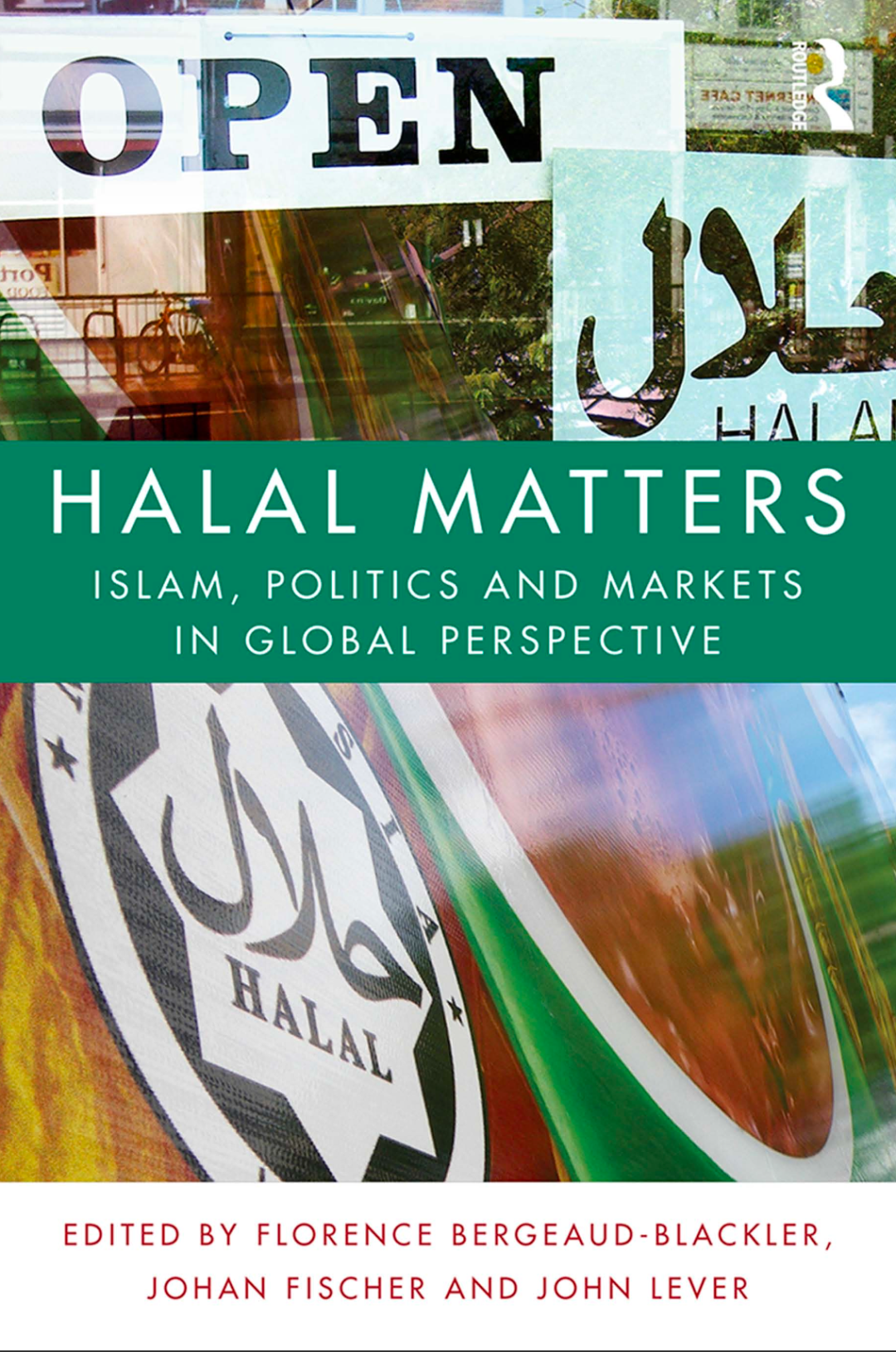
Halal standards and certifications aren't just objective, neutral religious facts; they're a massive mix of power and knowledge. Religious scholars, government agencies, private certification companies, and global food giants all get a say in defining 'what is Halal.' In this sense, this 'knowledge' is actually just a high-level tool for governance.
Halal is basically a global mash-up, built from layers of legal tradition, national strategy, trade interests, and social movements. Every country and community picks and chooses different parts of this puzzle to emphasize, which is exactly why there’s no single, universal version of Halal on the planet.
Here’s the fundamental problem: Halal is at its core a sacred, religious judgment, but figuring out if food is actually Halal isn't something you can just do by looking at it, smelling it, or tasting it. You have to rely on site audits, paperwork, and labels as indirect evidence. The catch is that these audits and certification systems aren't divine truth—the protocols, the qualifications of the auditors, and the standards themselves are all socially constructed.
Malaysia’s approach to the Halal industry is a classic case study of post-liberal governance. In this context, the state doesn't just stick to its own borders. Malaysia doesn’t just use Halal as a way to manage domestic ethnic dynamics; it’s aggressively exporting its own definition, standards, and certification system to grab a piece of the global market, all to support its 'Vision 2020' national development plan. They aren't just exporting food; they’re exporting a whole set of regulations to cement Malaysia’s reputation as the global Halal hub.
This strategy is deeply rooted in Malaysia's history. During the 1970s, the government launched the New Economic Policy (NEP) to bridge the economic gap between Malays and other groups through education quotas and business support. Because of this, Halal evolved from a personal religious duty into a tool for state-led economic development, helping local Malay entrepreneurs gain market share and balance the economic influence of Chinese business owners.
From there, the state took full control, making it illegal to falsely label products as Halal. Under the Mahathir administration, the government created JAKIM to manage Halal affairs, taking the power to define 'what is Halal' away from local community leaders. In 1994, the government even banned the independent group Darul Arqam, branding them as deviant because they operated outside state control. This shows the government’s core goal: to monopolize the definition of Halal. They see independent economic practices as a threat. In the suburbs of Kuala Lumpur, you’ll see mosques and giant malls right next to each other, where the middle class expresses their devotion through consumer choices. Your dietary choices even dictate social boundaries; it's common for social invites to be turned down over concerns about Halal status.
Malaysia’s expansion is also fueled by changing global demographics. Government agencies like MATRADE support Malay-owned restaurants and promote Malaysian Halal brands abroad, like in the UK. The book makes a really insightful point: when consumers abroad buy Malaysian-certified Halal products, in a way, they’re witnessing the reach of Malaysian state sovereignty into immigrant communities.
The MS1500 Halal standard is the technical foundation of this whole strategy. It’s managed by JAKIM, developed with help from global giants like Nestlé, and launched at the MIHAS trade show. It covers the entire chain—slaughtering, processing, storage, logistics, packaging, and labeling. The debate over stunning before slaughter shows how trade pressures reshape religious rules: the 2004 version of MS1500 didn't recommend stunning, but the 2009 revision allowed for reversible stunning under strict conditions to adapt to the European market. Critics argue this isn't based on religious theory, but rather on bending the rules for commercial profit.
Malaysia also founded the International Halal Integrity Alliance (IHIA) in 2010 to create a global, unified standard for all members, hoping to break down trade barriers. The Malaysian government put 15 million Ringgit into it. But the line between public and private was super blurry, and it was obviously tied to Malaysian national interests. Meanwhile, the Gulf Cooperation Council (GCC) stuck to its own GSO 2055 standard, which is more conservative. Since Gulf nations have huge import markets, they have serious bargaining power. Negotiations stalled because Malaysia wanted MS1500 and the Gulf states wanted their own rules. By 2011, the head of the IHIA admitted a universal standard was neither practical nor necessary, and the project basically flopped.
This highlights the real logic of Malaysia’s post-liberal strategy: the state talks about universal standards but has no intention of giving up the dominance of its own MS1500. Whenever another country suggests terms that hurt Malaysian interests, the goal of a 'unified standard' is quietly pushed aside. Malaysia’s priority isn't a neutral global rule; it's pushing its own version of the rules onto the world while using 'global unity' as a negotiation tactic.
Malaysia’s case proves that the rise of the Halal industry isn't just about religious revival; it’s a mix of ethnic politics, industrial policy, and a tool for soft power. The Malay middle class created by the NEP provided the foundation, while the state works to crush independent Halal practices to protect its monopoly on definitions.
In total contrast to Malaysia’s state-monopoly model, Turkey has taken a totally different path: moving from 'implicit Halal' to 'explicit Halal'.
Traditionally, Turkish society followed the Hanafi school, where people just assumed meat on the market was Halal. This is what we call implicit Halal. People trusted their local butchers by word of mouth, so nobody needed labels or fancy certificates. If a business needed proof, they’d just get a simple letter from the local Mufti. There was no modern factory auditing. It was all built on the trust of a pre-modern, close-knit society.
Social changes completely broke that system. Politically, the secularism of the Kemal era meant the state controlled religious affairs through the DİB. But when the AK Party—representing the conservative middle class—came to power in 2002, religious influence grew, and the divide with the secular population deepened. At the same time, the livestock industry went industrial. Animals were being moved across the country, and massive amounts of frozen meat were being imported. The 'neighborhood trust' model was dead, creating a real demand for formal labels. On top of that, exporters faced pressure from the Gulf states, which refused to accept simple letters from local Muftis. These requirements for formal certification eventually flowed back into the Turkish domestic market.
The Turkish DİB religious bureau only issues religious edicts and doesn't do commercial certification. This left a void filled by private firms like GİMDES, who charge businesses for their services. This creates an obvious conflict of interest, and since they interpret rules like 'stunning' or food additives differently, the market is super fragmented. There’s a weird social tension here: many secular Turks don't eat pork as a cultural habit, but they get really annoyed by Halal labels appearing on secular products. They make a distinction: not eating pork is a personal, cultural choice, but they push back against religious institutions getting involved in industrial, secular commerce.
The case of Iran shows the tension between the modern technical Halal system and the concept of 'tayyib' (wholesome/pure). As a Shia-majority nation, Iran has to align with international standards like MS1500 or GSO 2055 to export poultry and eggs. These standards focus heavily on technical details like slaughtering and additives, but they totally ignore things like animal welfare or the farming environment. This has caused a rift in Iran: industrial realists want to follow the rules to make money, while critics say that copying these foreign standards strips away the spiritual core of Halal, leaving only a hollow ritual. Traditional Shia thought emphasizes intention (niyya) and the goodness of the entire chain, which just can't be quantified by modern auditors.
An award-winning poultry farm in northeast Iran offers a real-world example. They refuse to use high-density cages, focus on high-quality feed, and prioritize the ethics of the slaughtering process, trying to apply 'tayyib' principles to the whole life cycle of the animal. But the limitation is obvious: it’s a niche, high-cost project for the wealthy and can't be scaled up. The irony is that since international Halal standards don't track animal welfare, this ethical farm doesn't get any 'extra points' for its practices, while factory farms with terrible conditions can easily get full Halal certification just by following the basic paper requirements.
If you look at the old city of Marrakesh, Morocco, you see how ordinary people practice Halal outside of these massive bureaucratic systems. In this Maliki-school society, Halal is a physical, instinctive part of daily life that doesn't need labels. Housewives trust their local market vendors and their own senses to pick ingredients. Besides the basic Halal/Haram religious framework, the concept of 'beldi' (local/native) is huge. Even if an imported product has a Halal label, older shoppers will still choose the local 'beldi' option. Things are changing with the younger generation—they buy more packaged food and are learning to look for labels—but the value of 'beldi' remains. When faced with questionable food, families rely on their own practical judgment rather than just following rigid legal texts.
Comparing these countries shows that differences between certification bodies aren't just about religious school disagreements. Institutions within the same school often have wildly different standards. Political frameworks, animal welfare laws, local social divides, and corporate competition usually play a much bigger role. Europe doesn't have a state-run monopoly like Malaysia; it has a chaotic mix of private firms, which leads to issues like certificates not being recognized by others, consumers being confused about who to trust, and audits relying too much on businesses just self-reporting.
Fieldwork among the Malay immigrant community in London shows the irony of secular states: they preach religious neutrality and don't define what Halal is, but they also can't stop people from wanting to eat Halal. The responsibility is just offloaded onto the market and private certifiers. The market steps into the vacuum left by the state, but because the market is profit-driven, it isn't neutral. Scholars call this 'impotent secularism.' When certified products from Malaysia flood into London, they aren't just selling food; they’re exporting Malaysian-style Halal norms—proof that trade is also the transmission of culture and regulation.
Looking at the five major international initiatives (OIC-SMIIC, IHIA, CAC, ISO, and the GCC's GSO 2055), it’s pretty clear that a universal global Halal standard is structurally impossible to achieve in the foreseeable future. Deep-seated religious differences, trade conflicts between exporters and importers, different national legal systems, and the need for international orgs to please everyone mean we're stuck in a mess. Having to get multiple certifications just raises costs for businesses, and standard-setting has turned into a game of national soft power. These international initiatives are really just there for conversation—they’re nowhere near becoming a set of mandatory, global rules.
Muslim World Governance and Social Participation: Authentic Perspectives on Democracy, Justice, and Faith
Articles • Hasan09 posted the article • 0 comments • 28 views • 2026-10-26 09:25
By combining detailed international survey data with vivid, everyday life scenarios, this article examines the genuine aspirations of people in contemporary Muslim-majority countries regarding social governance. It reveals a complex mindset where people desire broad public participation and transparent, fair institutions, while simultaneously cherishing traditional values and the comfort of faith.
They want participation, they want justice, and they want the solace of faith.
The old guys arguing at the entrance of the residential complex at dusk; they can even turn a simple building supervisor selection into two conflicting 'proposals'.
The other day, while I was waiting for my delivery at the complex gate, some older guys were arguing while soaking up the sun. The topic? Whether the neighborhood committee should hold a 'vote for building supervisor.' One guy said, 'Sure, let’s vote—it’s great to hear everyone’s opinions.' Another curled his lip and snapped, 'Vote for what? I want Old Li, the guy who always fixes our lightbulbs, to be the supervisor. He’s going to be the one doing the work anyway, vote or not.'
See? You can get two entirely different 'views on governance' over something as small as picking a building supervisor, let alone running a whole country. Yet, online, whenever the topic of 'how the Muslim world views democracy' comes up, people jump to conclusions. It’s always either 'they don’t understand democracy' or 'religion is inherently at odds with democracy.' It sounds satisfying—like slicing a watermelon in one clean cut—and it saves effort, but the truth is rarely that convenient.
How about we hold off on picking a side for a second? Let’s just clear the table, set out some food, and take a closer look at what 'democracy' actually looks like through the eyes of Muslims.
Part One: When 'Freedom' meets 'Faith,' the multiple-choice questions get a lot harder.
There’s a fascinating detail that not many people are aware of. Extensive surveys conducted in several Muslim-majority countries asked a very 'Western' question: If you were writing a constitution for a new country, would you include 'freedom of speech'—specifically the right for all citizens to express their opinions on political, social, and economic issues?
The results were obvious: over 90% of people in Burkina Faso said yes, as did more than 90% in Egypt, nearly 95% in Iran, and roughly 90% in Indonesia. Think about what that means—it’s like knocking on every door in your apartment building to ask if people want the freedom to vent about the property management in the group chat, and nine out of ten people say yes.
Knocking on doors in the twilight hallway: it's like asking if people want the freedom to vent about the property manager in a group chat, with nine out of ten people saying: yes.
So, many ordinary Muslims are actually quite supportive of the ideas of 'speaking up, participating, and overseeing,' which is a far cry from the stereotype that 'they just like being told what to do.'
The disconnect happens in the second half of the question. If you dig deeper, you realize that most respondents clearly appreciate many democratic practices—they like elections, oversight, and preventing abuse of power—but they don’t want to copy-paste a 'Western' model and bring it home as is. It’s like going to a supermarket and thinking milk and eggs are great, but nobody wants to lug the entire cold-storage warehouse into their home kitchen.
They think the milk and eggs are great, but nobody wants to move the entire walk-in fridge into their own kitchen.
Many would say they hope for a 'democracy of their own'—one that allows for voting and participation, but stays aligned with Sharia (Islamic law) and the religious values they hold dear. You’ll find that for them, 'democracy' and 'religion' aren't a black-and-white, either-or choice. It’s more like cooking: you need the heat to start the oil, but you also have to balance the timing and the ratio of the spices.
If you only hear the first half—'they support democracy'—and assume they want to copy the Western system exactly, you’re being a bit presumptuous. If you only focus on the second half—'they want Sharia'—and jump to the conclusion that 'this obviously means they reject democracy,' that’s just another form of intellectual laziness.
People always love to think they know where history is headed, but every generation can only take steps on the small patch of land right beneath their feet. The hesitation and conflict in the Muslim world today regarding institutional design is just like that: they don’t want to give up the sense of participation, but they also don’t want to throw away the moral framework provided by their faith.
Part Two: Sharia isn't a giant rock; it's more like a pot of 'lao tang' (long-simmered broth).
When people talk about 'Sharia' online, it’s often described like a massive, cold, immovable boulder—as if mentioning it alone would inevitably crush all modern political systems. But in the context of many Muslims' lives, it’s more like a pot of broth that’s been simmering for over a thousand years. It’s full of classic texts, scholarly interpretations, local customs, and historical experiences. The flavor profile is incredibly complex.
A pot of old broth bubbling away on the stove.
Surveys show that the views on whether Sharia should be part of the legal system, and to what extent, vary wildly from country to country. In some places, the majority say they want it to be just one source of law among many. In other nations—like Jordan, Egypt, Pakistan, Afghanistan, and Bangladesh—more people lean toward making Sharia the 'sole source,' as if the law should have the same flavor as that pot of broth.
Even more interesting is that many people assume the ones who want Sharia to 'call the shots' are mostly older men, and that women would surely oppose it more. The surveys don't fit that narrative; in many countries, the difference in attitude between men and women is very small, and in some places, women’s support is even slightly higher. If you try to force this into a binary framework of 'patriarchal oppression' vs. 'women’s awakening,' it won't hold up for long.
Why is this? In the eyes of many Muslims, Sharia isn't just a cold legal term; it’s a whole set of guidelines for 'being a good person.' It’s the language they use to understand 'justice,' 'moderation,' and 'helping the weak.' In reality, facing corruption, wealth inequality, and social chaos, many naturally hope that the law will do more than just decide 'how many days someone goes to jail.' They want it to be like an old village elder who can mediate conflicts, curb greed, and remind everyone not to go too far.
You see those respected elders in rural areas who often do exactly this—they clarify how to handle weddings and funerals based on village customs, while also teaching the younger generation that 'a person should have boundaries and self-restraint.' For many Muslims, writing Sharia into the law feels like writing the 'rules of conduct' into the national law—it’s both a realistic expectation and a psychological safety net.
At this point, if someone shows up with a modern law textbook and says, 'This broth of yours is too backward, throw it out and drink this bottle of nutrition drink instead,' it’s easy to imagine why they’d feel some pushback—it’s only natural. They aren't necessarily against rules; they’re just skeptical of the oversimplified story that 'complete Westernization equals happiness.'
If a family keeps repeating the same mistakes, it’s because no one has clearly explained the stories of those who came before. The complex attitude the Muslim world has toward Sharia today is actually the product of hundreds of years of piled-up stories—memories of empires, the trauma of colonialism, and the confusion of modernization—all stewed together in this pot.
III. Americans actually love the idea of 'Scripture in Law,' but the mirror reflection is a bit awkward.
Speaking of this, there’s a little bit of gossip that’s perfect for breaking the ice. Many people are used to labeling the 'desire to incorporate religion into law' as some kind of 'specialty of underdeveloped regions,' as if it only belongs to a world of desert sands, dates, and the mosque.
But there’s a survey from the U.S. that asked average Americans if they think the Bible should play a role in legislation. It turns out that a good number of people feel it could serve as 'one of the sources of law,' and a small group flat-out wants it to be the 'only source.' Even more surprisingly, a segment of the population hopes religious leaders would have a say in drafting the Constitution—data that is actually pretty close to that of certain Muslim-majority nations.
If this scene had a background track, it would be perfect to use that line from 'Dying to Survive': 'There is only one illness in this world, and that is poverty.' If we apply that to institutional imagination, we might change it to say: there is only one 'inertia' in this world, which is the constant feeling that your own tradition should be written into the highest rules. That’s not being poor; that’s just human nature.
Scripture and Codes at the Same Table, Tangled Reflections in the Mirror: The entanglement of sacred texts and national law is a global phenomenon.
So, the idea that 'mentioning religion in law equals fundamentalism, and only Muslims are into that' is a bit like staring at someone else’s skin condition while ignoring the mole on your own back. Once you turn the mirror around, you realize that the struggle between 'sacred texts' and 'national law' is actually a global phenomenon; it’s just that the intensity and form vary from place to place.
That line from 'Farewell My Concubine' fits perfectly here: 'It was supposed to be a lifetime, but even missing a year, a month, or a day doesn't count as a lifetime.' Many people view democracy as a cookie-cutter process and religion as something that should be kept in a small box within one's heart. Using these standards to judge others is like wishing the whole world lived by the same 'template-style life.' But the real world is mostly made up of those 'missing days and months,' filled with its own deviations and compromises.
IV. What they want isn't 'Western-style democracy,' but 'dignified participation.'
Circling back to the topic, we have to land on a simple, relatable life experience. For many ordinary Muslims, when they talk about democracy, they aren't holding a political science textbook; they’re starting from the same place we are—the daily grind of groceries, bills, and their children’s futures.
If you look at those survey questions—things like 'should the government listen to public opinion,' 'can we criticize officials,' or 'should women have the right to work and education'—the support rates in many Muslim societies are actually quite high. What people really care about often boils down to three things: Can I have a voice? Can I be respected? And will the things I believe in be completely erased from public life?
These three things tangled together form their standard for a 'good system.' It’s a different angle from the 'procedures' or 'separation of powers' that we’re used to talking about, but it’s not necessarily in opposition.
Think of it like buying a smartphone: some people prioritize pixels, others care more about battery life, and some are obsessed with whether the software is easy to use. For many in the Muslim world, the priority might be: 'This phone needs a stable signal that won't drop, and it has to be compatible with the apps I already use.' The democracy they want is one that connects to their own values, not one that forces them to upload their entire life’s data into a brand-new system.
Living is just about living itself. For many who have survived wars, sanctions, inflation, and instability, 'democracy' might not be a grand classroom theory, but a question of 'who can make us feel safer and more dignified?' If, in their observation, Western democracy comes with intervention, civil war, and social fracture, they naturally won’t see it as a gold-standard brand. If certain religious-leaning parties are doing honest grassroots work—fixing roads, running schools, or doing charity—they’ll be willing to give them a shot.
Workers fixing roads in a village at dusk and villagers watching: When people do honest charity, roadwork, and schooling at the grassroots level, they win the trust of the community.
This doesn’t mean they don’t understand democracy; it just means they view it as a tool—a way to serve their lives—rather than a slogan written on a wall.
V. From village loudspeakers to the mosque pulpit, human hearts are looking for the same sense of security.
If you really take a trip through the Muslim world, you’ll find a lot of familiar scenes. The old village mosque acts like the community center in our own hometowns—it’s both a place for dua (prayer) and a hub for information exchange. What the Imam says from the pulpit isn’t just scripture; he’s talking about who needs help, which road needs repairs, and what the local buzz is. In many people's eyes, this place is a primary source of social trust.
A crowd sitting under the porch of an old mosque: The old mosque is like a community center, acting as both a place for dua (prayer) and a node for information flow.
When the institutions of a modern state aren't stable enough, the media isn't trustworthy, and the courts are too far removed from ordinary people, these networks based on religious communities naturally become the channels for organizing the public and expressing their demands. That’s why many Islamic parties and movements start out doing charity, education, and community service; as they keep at it, they gain the public’s trust, and their political influence grows accordingly.
You might think of the big loudspeakers, ancestral halls, or local temple fairs back in your hometown—many disputes don't necessarily go to court because respected elders in the village step in to mediate, and everyone has a sense of what's right. In such cases, if the state system can connect with this 'grassroots public trust' and combine it with modern law and public services, things stay relatively stable. If the system is completely cut off from or even opposes these traditional nodes, the hearts of the people are easily torn apart.
In the Muslim world, the chorus of voices saying 'we want democracy but we also want religious values' is, to put it plainly, a hope that the new political system won't completely sweep away the familiar value framework that already holds high credibility. They don’t want to go back to a 'Middle Ages' state, but they also don’t want to be forced to abandon religion entirely and become 'new humans' who only talk about 'universal values.' This mentality is actually very practical and quite human.
In the movie 'A Chinese Odyssey,' that line—'Once, a sincere love was placed before me, but I didn't cherish it'—became a huge meme. For many Muslims, their 'sincere love' is the faith and social order accumulated over hundreds of years. It’s not that it doesn’t have problems, but it’s the thing that has walked through so many storms with them. If the new system construction completely ignores this affection and even labels it as a 'backward obstacle,' then the backlash that follows is not surprising at all.
VI. The world’s problems always act as a mirror when reflected back at us.
Coming to this point, a little question inevitably pops up: Why do we always love to turn 'how Muslims view democracy' into a dramatic topic, as if this group is naturally standing outside the gates of modern politics and it’s all up to them to 'see the light' before they can enter?
But if you stretch the timeline, you’ll find that every civilization’s understanding of democracy, the state, and power was figured out bit by bit. Some places went through a religious reformation first; others focused more on the rise of merchants and cities; others were exhausted by long, tangled chains of colonialism and anti-colonialism. Because the paths taken were different, there are naturally different perspectives when arriving at the word 'democracy'.
Diverse Perspectives on Social Governance: Understanding the Muslim World's Expectations for Public Participation, Justice, and Faith.
When it comes to democracy, the Muslim world has a lot of things they’re balancing at once. It’s about having a seat at the table, being heard, and having a system that can fix its own mistakes. They want justice, checks on power, and a safety net for the vulnerable—all while keeping their faith as a core guide for daily life. It’s not that they don't want rules; it’s just that they don’t want to be forced into a single, cookie-cutter definition of what a 'good society' should look like.
If the outside world just treats them like they're taking a test—constantly asking, 'Do you meet this or that country’s standard?'—then the conversation just turns into a blame game. But if we can actually accept that there are many different paths to a good political life, and that even if we share the same goals, the way we get there can look totally different, then we might start looking at each other with a lot more empathy.
Lu Xun once famously said, 'Human joys and sorrows are not interconnected; I just feel they are noisy.' In this era of information overload, that quote serves as a reminder to me: don't rush to act like you understand someone else's struggle. Whenever we boil down the Muslim world's complex take on democracy into a few lazy soundbites, we’re probably just tricking ourselves into thinking we 'get it' when we really don't.
Seven: A Self-Reminder
As I write this, it’s already dark outside. Down in the apartment complex square, people are out doing their evening dance, and an old familiar line from the classic movie-turned-series 'Legend of the Mountain' (also known as 'The Herdsman') plays over the speakers: 'The hard times will pass, and the good times will come.' This simple kind of hope is something most people around the world share, no matter their religion or where they come from.
Evening dancers in the apartment square: The hope that hard times will pass and better days are coming.
How does the Muslim world view democracy? To put it bluntly but honestly, they’re not blind followers, but they aren't totally rejecting it either. They’re navigating their own messy reality, trying to find a path where they can have a voice without losing their faith. Sometimes they take two steps forward, sometimes they slip back, and sometimes they stumble. But that kind of back-and-forth is just how history works.
For those of us watching from a distance, the real value isn't in grading others. It's in using them as a mirror to ask ourselves: Are we too quick to force our own 'good system' template onto everyone else? Can we be a little more patient and respectful when we see others struggling? Are we always trying to turn complex, real-world issues into simple stories just to save ourselves the mental effort?
The world’s problems aren't just 'theirs'—they’re all interconnected pieces of the same puzzle. The hesitation, the experiments, the persistence, and the setbacks the Muslim world faces regarding democracy aren't just their fate; they act as a mirror that helps us understand the boundaries of human political imagination.
When we look toward those lands of deserts and skyscrapers, we’re actually taking a look at ourselves. We’re forced to ask: Are we really willing to admit that the world can have more than one way to reach dignity, participation, and justice?
A voting booth and passersby near a mosque at dusk.
Whether it's the mosque next to the ballot box or the loudspeakers in the village, everything is slowly moving forward in its own time.
The road is long, there are a lot of people, and everyone moves to a different beat. But as long as we all hold onto the idea of 'not letting ordinary people suffer for nothing,' then whether it's the mosque by the ballot box or the village square speakers, we’re all moving, sooner or later, toward a more stable and peaceful direction. view all
By combining detailed international survey data with vivid, everyday life scenarios, this article examines the genuine aspirations of people in contemporary Muslim-majority countries regarding social governance. It reveals a complex mindset where people desire broad public participation and transparent, fair institutions, while simultaneously cherishing traditional values and the comfort of faith.
They want participation, they want justice, and they want the solace of faith.

The old guys arguing at the entrance of the residential complex at dusk; they can even turn a simple building supervisor selection into two conflicting 'proposals'.
The other day, while I was waiting for my delivery at the complex gate, some older guys were arguing while soaking up the sun. The topic? Whether the neighborhood committee should hold a 'vote for building supervisor.' One guy said, 'Sure, let’s vote—it’s great to hear everyone’s opinions.' Another curled his lip and snapped, 'Vote for what? I want Old Li, the guy who always fixes our lightbulbs, to be the supervisor. He’s going to be the one doing the work anyway, vote or not.'
See? You can get two entirely different 'views on governance' over something as small as picking a building supervisor, let alone running a whole country. Yet, online, whenever the topic of 'how the Muslim world views democracy' comes up, people jump to conclusions. It’s always either 'they don’t understand democracy' or 'religion is inherently at odds with democracy.' It sounds satisfying—like slicing a watermelon in one clean cut—and it saves effort, but the truth is rarely that convenient.
How about we hold off on picking a side for a second? Let’s just clear the table, set out some food, and take a closer look at what 'democracy' actually looks like through the eyes of Muslims.
Part One: When 'Freedom' meets 'Faith,' the multiple-choice questions get a lot harder.
There’s a fascinating detail that not many people are aware of. Extensive surveys conducted in several Muslim-majority countries asked a very 'Western' question: If you were writing a constitution for a new country, would you include 'freedom of speech'—specifically the right for all citizens to express their opinions on political, social, and economic issues?
The results were obvious: over 90% of people in Burkina Faso said yes, as did more than 90% in Egypt, nearly 95% in Iran, and roughly 90% in Indonesia. Think about what that means—it’s like knocking on every door in your apartment building to ask if people want the freedom to vent about the property management in the group chat, and nine out of ten people say yes.

Knocking on doors in the twilight hallway: it's like asking if people want the freedom to vent about the property manager in a group chat, with nine out of ten people saying: yes.
So, many ordinary Muslims are actually quite supportive of the ideas of 'speaking up, participating, and overseeing,' which is a far cry from the stereotype that 'they just like being told what to do.'
The disconnect happens in the second half of the question. If you dig deeper, you realize that most respondents clearly appreciate many democratic practices—they like elections, oversight, and preventing abuse of power—but they don’t want to copy-paste a 'Western' model and bring it home as is. It’s like going to a supermarket and thinking milk and eggs are great, but nobody wants to lug the entire cold-storage warehouse into their home kitchen.

They think the milk and eggs are great, but nobody wants to move the entire walk-in fridge into their own kitchen.
Many would say they hope for a 'democracy of their own'—one that allows for voting and participation, but stays aligned with Sharia (Islamic law) and the religious values they hold dear. You’ll find that for them, 'democracy' and 'religion' aren't a black-and-white, either-or choice. It’s more like cooking: you need the heat to start the oil, but you also have to balance the timing and the ratio of the spices.
If you only hear the first half—'they support democracy'—and assume they want to copy the Western system exactly, you’re being a bit presumptuous. If you only focus on the second half—'they want Sharia'—and jump to the conclusion that 'this obviously means they reject democracy,' that’s just another form of intellectual laziness.
People always love to think they know where history is headed, but every generation can only take steps on the small patch of land right beneath their feet. The hesitation and conflict in the Muslim world today regarding institutional design is just like that: they don’t want to give up the sense of participation, but they also don’t want to throw away the moral framework provided by their faith.
Part Two: Sharia isn't a giant rock; it's more like a pot of 'lao tang' (long-simmered broth).
When people talk about 'Sharia' online, it’s often described like a massive, cold, immovable boulder—as if mentioning it alone would inevitably crush all modern political systems. But in the context of many Muslims' lives, it’s more like a pot of broth that’s been simmering for over a thousand years. It’s full of classic texts, scholarly interpretations, local customs, and historical experiences. The flavor profile is incredibly complex.

A pot of old broth bubbling away on the stove.
Surveys show that the views on whether Sharia should be part of the legal system, and to what extent, vary wildly from country to country. In some places, the majority say they want it to be just one source of law among many. In other nations—like Jordan, Egypt, Pakistan, Afghanistan, and Bangladesh—more people lean toward making Sharia the 'sole source,' as if the law should have the same flavor as that pot of broth.
Even more interesting is that many people assume the ones who want Sharia to 'call the shots' are mostly older men, and that women would surely oppose it more. The surveys don't fit that narrative; in many countries, the difference in attitude between men and women is very small, and in some places, women’s support is even slightly higher. If you try to force this into a binary framework of 'patriarchal oppression' vs. 'women’s awakening,' it won't hold up for long.
Why is this? In the eyes of many Muslims, Sharia isn't just a cold legal term; it’s a whole set of guidelines for 'being a good person.' It’s the language they use to understand 'justice,' 'moderation,' and 'helping the weak.' In reality, facing corruption, wealth inequality, and social chaos, many naturally hope that the law will do more than just decide 'how many days someone goes to jail.' They want it to be like an old village elder who can mediate conflicts, curb greed, and remind everyone not to go too far.
You see those respected elders in rural areas who often do exactly this—they clarify how to handle weddings and funerals based on village customs, while also teaching the younger generation that 'a person should have boundaries and self-restraint.' For many Muslims, writing Sharia into the law feels like writing the 'rules of conduct' into the national law—it’s both a realistic expectation and a psychological safety net.
At this point, if someone shows up with a modern law textbook and says, 'This broth of yours is too backward, throw it out and drink this bottle of nutrition drink instead,' it’s easy to imagine why they’d feel some pushback—it’s only natural. They aren't necessarily against rules; they’re just skeptical of the oversimplified story that 'complete Westernization equals happiness.'
If a family keeps repeating the same mistakes, it’s because no one has clearly explained the stories of those who came before. The complex attitude the Muslim world has toward Sharia today is actually the product of hundreds of years of piled-up stories—memories of empires, the trauma of colonialism, and the confusion of modernization—all stewed together in this pot.
III. Americans actually love the idea of 'Scripture in Law,' but the mirror reflection is a bit awkward.
Speaking of this, there’s a little bit of gossip that’s perfect for breaking the ice. Many people are used to labeling the 'desire to incorporate religion into law' as some kind of 'specialty of underdeveloped regions,' as if it only belongs to a world of desert sands, dates, and the mosque.
But there’s a survey from the U.S. that asked average Americans if they think the Bible should play a role in legislation. It turns out that a good number of people feel it could serve as 'one of the sources of law,' and a small group flat-out wants it to be the 'only source.' Even more surprisingly, a segment of the population hopes religious leaders would have a say in drafting the Constitution—data that is actually pretty close to that of certain Muslim-majority nations.
If this scene had a background track, it would be perfect to use that line from 'Dying to Survive': 'There is only one illness in this world, and that is poverty.' If we apply that to institutional imagination, we might change it to say: there is only one 'inertia' in this world, which is the constant feeling that your own tradition should be written into the highest rules. That’s not being poor; that’s just human nature.

Scripture and Codes at the Same Table, Tangled Reflections in the Mirror: The entanglement of sacred texts and national law is a global phenomenon.
So, the idea that 'mentioning religion in law equals fundamentalism, and only Muslims are into that' is a bit like staring at someone else’s skin condition while ignoring the mole on your own back. Once you turn the mirror around, you realize that the struggle between 'sacred texts' and 'national law' is actually a global phenomenon; it’s just that the intensity and form vary from place to place.
That line from 'Farewell My Concubine' fits perfectly here: 'It was supposed to be a lifetime, but even missing a year, a month, or a day doesn't count as a lifetime.' Many people view democracy as a cookie-cutter process and religion as something that should be kept in a small box within one's heart. Using these standards to judge others is like wishing the whole world lived by the same 'template-style life.' But the real world is mostly made up of those 'missing days and months,' filled with its own deviations and compromises.
IV. What they want isn't 'Western-style democracy,' but 'dignified participation.'
Circling back to the topic, we have to land on a simple, relatable life experience. For many ordinary Muslims, when they talk about democracy, they aren't holding a political science textbook; they’re starting from the same place we are—the daily grind of groceries, bills, and their children’s futures.
If you look at those survey questions—things like 'should the government listen to public opinion,' 'can we criticize officials,' or 'should women have the right to work and education'—the support rates in many Muslim societies are actually quite high. What people really care about often boils down to three things: Can I have a voice? Can I be respected? And will the things I believe in be completely erased from public life?
These three things tangled together form their standard for a 'good system.' It’s a different angle from the 'procedures' or 'separation of powers' that we’re used to talking about, but it’s not necessarily in opposition.
Think of it like buying a smartphone: some people prioritize pixels, others care more about battery life, and some are obsessed with whether the software is easy to use. For many in the Muslim world, the priority might be: 'This phone needs a stable signal that won't drop, and it has to be compatible with the apps I already use.' The democracy they want is one that connects to their own values, not one that forces them to upload their entire life’s data into a brand-new system.
Living is just about living itself. For many who have survived wars, sanctions, inflation, and instability, 'democracy' might not be a grand classroom theory, but a question of 'who can make us feel safer and more dignified?' If, in their observation, Western democracy comes with intervention, civil war, and social fracture, they naturally won’t see it as a gold-standard brand. If certain religious-leaning parties are doing honest grassroots work—fixing roads, running schools, or doing charity—they’ll be willing to give them a shot.

Workers fixing roads in a village at dusk and villagers watching: When people do honest charity, roadwork, and schooling at the grassroots level, they win the trust of the community.
This doesn’t mean they don’t understand democracy; it just means they view it as a tool—a way to serve their lives—rather than a slogan written on a wall.
V. From village loudspeakers to the mosque pulpit, human hearts are looking for the same sense of security.
If you really take a trip through the Muslim world, you’ll find a lot of familiar scenes. The old village mosque acts like the community center in our own hometowns—it’s both a place for dua (prayer) and a hub for information exchange. What the Imam says from the pulpit isn’t just scripture; he’s talking about who needs help, which road needs repairs, and what the local buzz is. In many people's eyes, this place is a primary source of social trust.
A crowd sitting under the porch of an old mosque: The old mosque is like a community center, acting as both a place for dua (prayer) and a node for information flow.
When the institutions of a modern state aren't stable enough, the media isn't trustworthy, and the courts are too far removed from ordinary people, these networks based on religious communities naturally become the channels for organizing the public and expressing their demands. That’s why many Islamic parties and movements start out doing charity, education, and community service; as they keep at it, they gain the public’s trust, and their political influence grows accordingly.
You might think of the big loudspeakers, ancestral halls, or local temple fairs back in your hometown—many disputes don't necessarily go to court because respected elders in the village step in to mediate, and everyone has a sense of what's right. In such cases, if the state system can connect with this 'grassroots public trust' and combine it with modern law and public services, things stay relatively stable. If the system is completely cut off from or even opposes these traditional nodes, the hearts of the people are easily torn apart.
In the Muslim world, the chorus of voices saying 'we want democracy but we also want religious values' is, to put it plainly, a hope that the new political system won't completely sweep away the familiar value framework that already holds high credibility. They don’t want to go back to a 'Middle Ages' state, but they also don’t want to be forced to abandon religion entirely and become 'new humans' who only talk about 'universal values.' This mentality is actually very practical and quite human.
In the movie 'A Chinese Odyssey,' that line—'Once, a sincere love was placed before me, but I didn't cherish it'—became a huge meme. For many Muslims, their 'sincere love' is the faith and social order accumulated over hundreds of years. It’s not that it doesn’t have problems, but it’s the thing that has walked through so many storms with them. If the new system construction completely ignores this affection and even labels it as a 'backward obstacle,' then the backlash that follows is not surprising at all.
VI. The world’s problems always act as a mirror when reflected back at us.
Coming to this point, a little question inevitably pops up: Why do we always love to turn 'how Muslims view democracy' into a dramatic topic, as if this group is naturally standing outside the gates of modern politics and it’s all up to them to 'see the light' before they can enter?
But if you stretch the timeline, you’ll find that every civilization’s understanding of democracy, the state, and power was figured out bit by bit. Some places went through a religious reformation first; others focused more on the rise of merchants and cities; others were exhausted by long, tangled chains of colonialism and anti-colonialism. Because the paths taken were different, there are naturally different perspectives when arriving at the word 'democracy'.

Diverse Perspectives on Social Governance: Understanding the Muslim World's Expectations for Public Participation, Justice, and Faith.
When it comes to democracy, the Muslim world has a lot of things they’re balancing at once. It’s about having a seat at the table, being heard, and having a system that can fix its own mistakes. They want justice, checks on power, and a safety net for the vulnerable—all while keeping their faith as a core guide for daily life. It’s not that they don't want rules; it’s just that they don’t want to be forced into a single, cookie-cutter definition of what a 'good society' should look like.
If the outside world just treats them like they're taking a test—constantly asking, 'Do you meet this or that country’s standard?'—then the conversation just turns into a blame game. But if we can actually accept that there are many different paths to a good political life, and that even if we share the same goals, the way we get there can look totally different, then we might start looking at each other with a lot more empathy.
Lu Xun once famously said, 'Human joys and sorrows are not interconnected; I just feel they are noisy.' In this era of information overload, that quote serves as a reminder to me: don't rush to act like you understand someone else's struggle. Whenever we boil down the Muslim world's complex take on democracy into a few lazy soundbites, we’re probably just tricking ourselves into thinking we 'get it' when we really don't.
Seven: A Self-Reminder
As I write this, it’s already dark outside. Down in the apartment complex square, people are out doing their evening dance, and an old familiar line from the classic movie-turned-series 'Legend of the Mountain' (also known as 'The Herdsman') plays over the speakers: 'The hard times will pass, and the good times will come.' This simple kind of hope is something most people around the world share, no matter their religion or where they come from.

Evening dancers in the apartment square: The hope that hard times will pass and better days are coming.
How does the Muslim world view democracy? To put it bluntly but honestly, they’re not blind followers, but they aren't totally rejecting it either. They’re navigating their own messy reality, trying to find a path where they can have a voice without losing their faith. Sometimes they take two steps forward, sometimes they slip back, and sometimes they stumble. But that kind of back-and-forth is just how history works.
For those of us watching from a distance, the real value isn't in grading others. It's in using them as a mirror to ask ourselves: Are we too quick to force our own 'good system' template onto everyone else? Can we be a little more patient and respectful when we see others struggling? Are we always trying to turn complex, real-world issues into simple stories just to save ourselves the mental effort?
The world’s problems aren't just 'theirs'—they’re all interconnected pieces of the same puzzle. The hesitation, the experiments, the persistence, and the setbacks the Muslim world faces regarding democracy aren't just their fate; they act as a mirror that helps us understand the boundaries of human political imagination.
When we look toward those lands of deserts and skyscrapers, we’re actually taking a look at ourselves. We’re forced to ask: Are we really willing to admit that the world can have more than one way to reach dignity, participation, and justice?
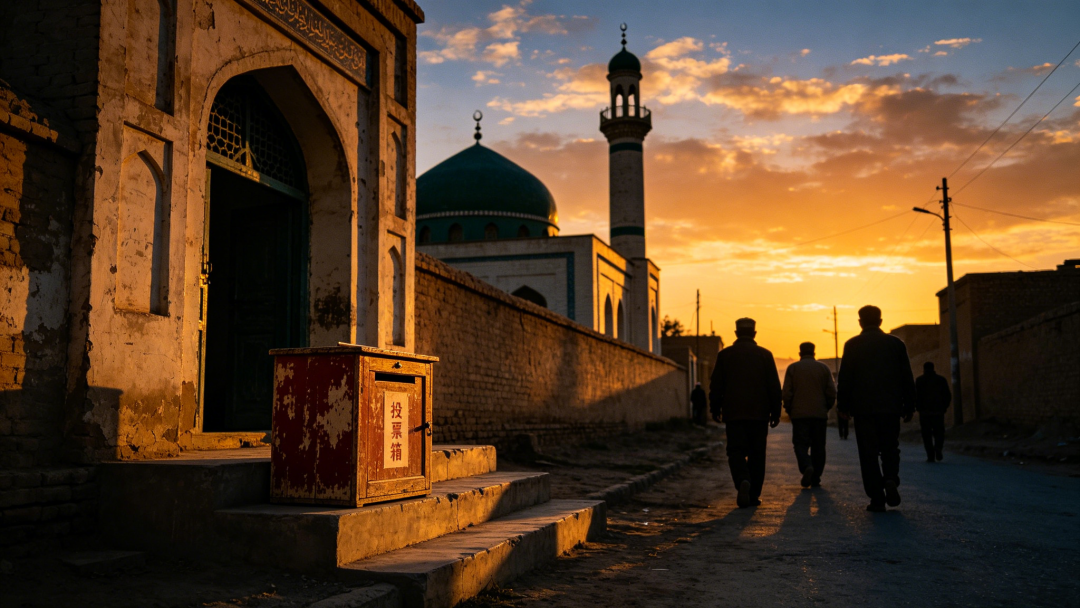
A voting booth and passersby near a mosque at dusk.
Whether it's the mosque next to the ballot box or the loudspeakers in the village, everything is slowly moving forward in its own time.
The road is long, there are a lot of people, and everyone moves to a different beat. But as long as we all hold onto the idea of 'not letting ordinary people suffer for nothing,' then whether it's the mosque by the ballot box or the village square speakers, we’re all moving, sooner or later, toward a more stable and peaceful direction.
Halal Food Laws and History: Understanding Islamic Dietary Ethics and Modern Industry Challenges
Articles • Hasan09 posted the article • 0 comments • 12 views • 15 hours ago
This article provides a comprehensive breakdown of the core principles of halal diets as found in Islamic scripture, and how these are interpreted across the four major schools of jurisprudence. We’ll also dig into how modern industrial slaughter, food additives, and global cold-chain logistics are shaking up traditional dietary ethics.
Halal dietary guidelines aren't just a rigid, set-in-stone list of laws. The Quran laid the foundation, but over time, different legal schools built on those principles by incorporating Hadith (recorded sayings and actions of the Prophet), local customs, and the realities of their environments. Now, in the modern age, industrial food production, global trade, and the certification industry are creating a whole new set of unprecedented challenges for this ancient legal framework.
Everything in this piece is distilled from the book mentioned above, which covers the history of halal food. The book dives into how people consumed halal food in the past and how the modern halal certification industry has evolved—two topics I'm really interested in. The author touches on questions I've covered in my own videos and articles, proving that there's nothing new under the sun and there will always be people who get it. I’m going to skip the basic concepts everyone already knows and share the parts I think are actually worth your time.
The ban on alcohol in the Quran is a perfect example of the logic behind Islamic legislation. The revelations followed a gradual process: in the Meccan period, the Quran mentioned that grapes and dates could produce intoxicating drinks, viewing them as a gift from Allah, and didn't forbid them; even the descriptions of Paradise mentioned wine. Early on in Medina, the scriptures noted that while alcohol had some benefits, its sins outweighed them. Later, it was decreed that believers shouldn't participate in dua (prayer) while intoxicated, but a total ban still wasn't issued. It wasn't until the later Medinan period that wine, gambling, and pagan sacrifices were grouped together as 'the filth of Satan,' and believers were ordered to stay away from them completely. The tradition of exegesis uses the principle of naskh (abrogation), where later verses supersede earlier ones, making verses 90-91 of Surah 5 the final word on alcohol.
Another highly debated verse is Surah 5:5, which states: 'Today, all wholesome foods have been made lawful for you. The food of the People of the Book is lawful for you, and your food is lawful for them.' From the medieval era to today, scholars have argued over how to interpret this, which directly impacts the real-world question of whether or not you can eat meat slaughtered by the People of the Book (Jews and Christians). Throughout all these dietary rules, there is one core spirit: there is no intent to make things difficult for believers; these rules aren't meant to be an unnecessary burden on their lives.
When you look at this historically, meat was a luxury item in pre-modern societies, and ordinary people didn't really have to deal with the question of whether meat was 'halal' very often—something modern people tend to forget. In the 7th-century Arabian Peninsula, resources were scarce. A normal person's diet mostly consisted of dates, dairy products, and barley bread; they were lucky to eat meat once a month. Camels were valuable assets for transport and wouldn't be slaughtered unless it was a matter of survival. Beef was also rare, and lamb was the most accessible meat. Many people lived almost like vegetarians. Hadith records show that Ali, the fourth Caliph, rarely ate meat in a year, and Umar II advised people not to be greedy for meat or get addicted to it. Even the Prophet’s favorite dish, Tharid (a broth-soaked bread dish), was usually reserved for holidays or special guests.
By the time of the great empires—the Mamluks, Ottomans, and Mughals—meat consumption became strictly divided by social class. Meat went to the capital first, while provinces got the leftovers. High-ranking nobles and officials got first dibs, followed by average citizens, and slaves came last. Men also usually got priority over women. Ottoman law treated bread as a essential necessity the state had to provide, but meat wasn't part of that state guarantee; most commoners only ate meat on holidays.
Today, we just assume a believer needs to constantly check if their food is halal, but in the pre-modern world, halal meat was mostly a concern for the wealthy. It wasn't until modern industrialization made meat cheap and widely available that the general public had to deal with halal compliance so frequently.
When it comes to wild animals like rabbits, lizards, foxes, hyenas, horses, or hedgehogs, different legal schools have vastly different takes. These differences usually come down to two things: first, they rely on different versions of the Hadith, and second, the hunting and eating habits of the regions where the schools originated. The Maliki school, which emerged in the resource-poor Hijaz region, is the most lenient, generally allowing the consumption of rabbits, lizards, and hyenas—common prey in that area. The Shafi'i and Hanbali schools are somewhere in the middle, allowing some animals but calling others makruh (disliked). The Hanafi school is much stricter, labeling many wild animals as forbidden, putting it closer to the Shia Jafari school. The Jafari school is the strictest of all, classifying rabbits, lizards, and hyenas as haram (forbidden).
The debate over horse meat and lizards is pretty representative. The Quran mentions horses, mules, and donkeys were created for riding and adornment, which leads some scholars to say horse meat is off-limits. Others argue that since the Quran doesn't explicitly ban it, it's fine to eat. For lizards, the Malikis lean on Medinan Hadith to permit them, while the Hanafis and Shia lean on Kufan traditions to ban them. At its heart, it’s just a difference in regional Hadith versions. It’s worth noting that many of these animal bans aren't in the Quran, but come from the Hadith. In the classical era, these conflicting rulings were just seen as reasonable academic differences, not heresy.
Seafood is where dietary law really hits the most friction. Surah 5:96 states: 'The catch of the sea and its food are lawful for you.' But this short verse led to all kinds of different interpretations. All schools only agree on two things: fish with scales are allowed, and fish don't need the ritual slaughter required for land animals. Other than that, almost all seafood is controversial. The Malikis are the most open, allowing sharks, whales, shrimp, crab, squid, shellfish, sea turtles, and crocodiles. The Shafi'is accept sharks, whales, and cephalopods, but are skeptical about crabs and turtles. The Hanbalis are in the middle. The Hanafis only recognize 'fish' in the narrow sense, banning marine mammals, crustaceans, and mollusks. The Shia Jafari school only allows fish with scales, though they make an exception for shrimp, treating it like the 'locusts of the sea,' while everything else is haram.
Real history shows how legal rulings are influenced by economics. In Iran, sturgeon technically didn't have the typical scales required by Shia tradition, so they should have been banned. But after the 1979 Iranian Revolution, caviar became a massive export pillar for the country. In 1983, Khomeini issued a fatwa explaining that the hard bony plates of the sturgeon counted as the 'scales' mentioned in the scripture, making caviar legal. This proves that economic reality drives the reinterpretation of ancient texts, and that’s nothing new.
Take Egypt’s traditional fermented fish, Fesikh. The ingredients themselves (scaled fish) are halal, but if the open-air fermentation process goes wrong, it can easily lead to food poisoning. Local Muftis used the legal framework of tayyibat (wholesome/good) and khabā’ith (vile/harmful): even if the original ingredient is lawful, if the final product causes harm to the human body, it's considered 'vile' and should be declared haram. Indonesia follows the Shafi'i school, so their whale and shark fishing industries are backed by legal fatwas. The Ottoman Empire officially followed the Hanafi school, which theoretically banned lobster and oysters, but you'd find them on menus for diplomatic banquets in the 19th century—showing the gap between official legal codes and social reality. Even for fish that die naturally in the sea, schools argue: Malikis and Shafi'is say it's fine if it hasn't rotted, while Hanafis and Shia equate it to carrion, insisting fish must be caught alive.
Ritual slaughter rules have also seen major shifts between the medieval and modern eras. In the medieval period, the Sunni mainstream accepted meat slaughtered by the 'People of the Book,' provided they didn't invoke the name of a false god. During the Mamluk and Ottoman eras, Muslims would often buy meat from Jewish butchers; in Istanbul, there were over a dozen Jewish slaughterhouses well into the 18th and 19th centuries. The Shia took a more restrictive path: early on, they accepted meat from the People of the Book, but started shifting in the 9th and 10th centuries and completely rejected it by the 11th. The reason wasn't about the slaughtering process itself, but the belief that the People of the Book held erroneous faiths and were inherently 'unclean,' thus unqualified to invoke the name of Allah during slaughter.
Surprisingly, most modern Sunnis have shifted to that strict medieval Shia stance. It’s not because the Quran changed, but because social reality changed the logic of legal interpretation. Meat consumption has become mass-market, which has fueled anxiety about purity; global trade means consumers can’t supervise slaughtering on-site, which increases doubt; the religious purification movements of the late 20th century reinforced group boundaries; and the business of halal certification encourages agencies to adopt stricter standards to prove they are the 'most' authentic.
Entering the industrial age, electrical stunning before slaughter and automated poultry slaughter lines have become the two big new battlegrounds. Classical texts don't have the answers, so jurists have to use old legal tools to deal with modern problems.
So-called 'stunning'—using electricity, bolts, or gas to knock an animal unconscious before cutting its throat—is standard practice in Western slaughterhouses. It’s often forced by animal welfare laws and gets caught up in complex debates over immigration, religious exemptions, and animal rights. Historically, Nazi Germany used animal protection laws to ban Jewish ritual slaughter, using animal ethics as a cover for antisemitism. After WWII, Europe generally mandated stunning while allowing religious exemptions, but implementation varies: Norway, Sweden, Switzerland, and Iceland offer zero exemptions, while the UK, France, and Spain do. EU regulations confirm the right to an exemption but let member states set their own limits. Even scientists don't have a consensus on whether stunning actually reduces animal suffering, so both sides of the debate just cherry-pick the research that supports them.
Jurists fall into three camps: One, represented by Al-Qaradawi, accepts stunning without limit, relying on the 'food of the People of the Book' verse. Critics, however, point out that many workers in imported meat production aren't actually practicing members of those faiths, which creates doubt (shubha). The mainstream compromise only accepts 'reversible' stunning, where the animal is unconscious but still shows vital signs—meaning it's still alive when the throat is cut. If stunning causes death, it's treated as carrion and is haram. Piercing bolt guns, gas, or total-heart-stop electrical shocks are banned; non-piercing bolt guns and head-only electric shocks are allowed. Water-bath stunning for poultry is still debated. Institutions like Al-Azhar and Iran’s Khamenei hold this view. The third group rejects stunning entirely, led by Pakistan's Taqi Usmani and Iraq's Sistani, fearing that in an industrial setting, you can't guarantee the animal hasn't already died, or that residual blood makes it haram, and that some stunning methods are painful in themselves. This view is gaining popularity; the number of non-stunned halal slaughterhouses in the UK is rising every year.
Cattle and sheep slaughter mostly still involve manual knives, so the conflict is focused on automated poultry lines. Birds are hung on conveyor belts and a high-speed blade cuts their necks, often paired with water-bath stunning. The core legal puzzle is: can a machine count as the 'slaughterer'? If you say 'In the name of Allah' (tasmiyya) once when turning the machine on, does that cover thousands of birds? The industrial problem is that some birds die from the electric shock, and blades miss some; if a live bird isn't slaughtered and enters the scalding tank, it becomes carrion.
A small minority of views use the 'People of the Book' verse to accept mechanical poultry slaughter wholesale. The middle-grounders set multiple constraints: an operator must say the name of Allah when starting the machine, and manual inspection is required to remove dead birds. The conservatives are dead set against it: they argue that in the old days, one invocation covered a continuous manual slaughter, whereas an assembly line is thousands of independent cuts, so a single activation isn't enough. Plus, machines don't have a soul, and a recording of an invocation is invalid; a human must say the name at the exact moment each animal is slaughtered. Commercially, Brazilian chicken exporters to the Middle East will explicitly label their products as 'hand-slaughtered' to satisfy conservative markets.
There's a sharp contrast between ancient and modern views: ancient Hadith taught not to be overly critical of the butcher—if a believer accidentally forgot to say the name, the meat was still okay. The legal spirit was not to add burdens to the believers. But the global, long-distance supply chain has birthed modern skepticism; the principle of 'doubt' is magnified, and people would rather be overly strict than take a risk. The change in material conditions has reshaped legal priorities.
Beyond alcohol, things like opium, cannabis, coffee, and tobacco were all introduced later, so there is no mention of them in the Quran or reliable Hadith. Jurists use analogical reasoning, the principle of 'public interest,' and the five goals of Islamic law to make rulings, and these views change as social knowledge and science evolve.
Regarding alcohol, the Hanafi school early on had a unique take: they argued only wine made from grapes or dates was 'khamr' (the prohibited alcohol), and fermented grain drinks were fine as long as you didn't get drunk. This view was later heavily criticized and faded away. The modern consensus is that anything that can intoxicate is banned, regardless of the source. Brewing, buying, selling, or gifting alcohol is prohibited, and alcohol holds no legal status as property. The Quran doesn't set a physical punishment for drinking, so the severity of penalties varies by region.
Even though legal texts explicitly forbid alcohol, it has historically existed in society. In Andalusia, there was relative tolerance for non-grape fermented drinks, and poetry often used alcohol as a theme. Mamluk Egypt had taverns everywhere until the 13th century, after which conservative pressure tried to suppress them but couldn't eradicate them. Ottoman rulers would often issue anti-alcohol edicts during disasters to appear pious, but those bans were fleeting. Many Sultans who banned alcohol drank it themselves, and the elite class drank regularly; the state even taxed fermented drinks and set up official distilleries. The Safavid and Mughal empires faced the same contradiction: rulers would ban alcohol while their own courts drank. Prohibition was often more of a periodic political performance than a real attempt to change society. Today, alcohol policies range from total bans and non-Muslim-only sales to complete openness.
Coffee arrived in the Middle East in the 15th-16th centuries and caused a huge debate. Some scholars thought coffee changed your mental state and, by analogy to alcohol, was 'disliked' or even illegal, and coffee shops were seen as breeding grounds for rumors and sedition. The other side argued coffee didn't cause drunkenness and should be allowed. Governments closed coffee shops, but the consumer demand was unstoppable, and by the 17th-18th centuries, coffee was widely accepted.
Tobacco arrived in the Middle East at the end of the 16th century and became a classic modern legal puzzle. Early on, the spectrum was wide: some thought it smelled bad, wasted money, and hurt the body, making it 'vile.' Others countered that the Quran didn't forbid it, and you can't just declare something forbidden without a clear reason, only avoiding it if it specifically hurts an individual. Now that modern medicine has proven the health risks, mainstream scholars label smoking as makruh (disliked), and some authorities classify it as haram, though opinions still differ.
An interesting social phenomenon: both the WHO and tobacco companies have actively engaged in religious debates. The WHO collects and spreads anti-smoking fatwas, wrapping public health issues in religious morality; tobacco companies find scholars who hold the opposite view to issue counter-fatwas. What used to be an internal religious discussion has been weaponized by external organizations and commercial capital. Despite religious criticism, the smoking rate for men in many countries remains high—a gap between religious mandates and social reality.
Overall, 'halal-haram' isn't a fixed list. When faced with new things not mentioned in the scriptures, jurists use classical tools and combine them with modern realities to reach new conclusions. Researching halal diets requires distinguishing between the ideal of legal texts and actual social practice; many things might be officially banned but still widely practiced. At the same time, modern external forces actively participate in the production of these rulings. A lot of social issues fall into the 'makruh' gray area, but popular discourse often simplifies everything into a black-and-white binary.
In the contemporary era of globalization, 'halal' has gone from individual religious guidelines to a massive global business. On the market, official government halal agencies coexist with private commercial ones. Private agencies live on service fees from companies, which creates an inherent conflict of interest: to win market share, some agencies lower standards, while others use the strictest possible standards as a marketing point.
Global trade leads to many practical dilemmas: halal certificates issued by different countries often don't recognize each other, creating trade barriers; common consumers can't tell which certification is real, leading to rampant fake labeling; and the multi-layered outsourcing of international supply chains makes it nearly impossible for certification agencies to check the whole chain, leaving them to rely on companies' self-declarations and creating compliance loopholes.
There are several eternal tensions within this business system. First, the conflict between religious ideals and commercial profit: companies want to cut costs and avoid changing production lines, while religious audits demand full checking of ingredients, slaughter, and additives, which drives up costs. When one line is shared between halal and non-halal products, cleaning and isolation become huge issues. Second, the conflict between national trade interests and pure religious demands: when states set standards, things like foreign trade, jobs, and economic reality are factored in—the Iranian caviar case is the perfect example. Third, the risk of consumerism: the halal label has become a consumption symbol. With the rise of halal makeup, luxury goods, and travel, critics argue that just buying 'halal' products is a poor substitute for internal religious virtue.
Compared to pre-modern times, the shift is profound: ancient society relied on 'acquaintance networks' and community reputation, and market inspectors only looked for fraud; there were no standardized 'halal stickers.' Modern urbanization and long-distance supply chains have destroyed that trust, transferring it to a third-party certificate printed on packaging—the label itself has become a product.
Looking globally, there is no one single international halal standard. The Malaysian MS1500, the Gulf Cooperation Council’s GSO2055, and the OIC/SMIIC-1 are the three main official documents. Standards aren't just technical specs for factories; they are trade tools that carry national industrial interests and 'soft power' competition.
Standardization itself involves trade-offs: classical law accepts school diversity, but industrial standards must have definitive, actionable steps. Setting a standard means choosing one legal view over others, which makes it impossible to please everyone. The OIC/SMIIC-1, as a coordination template, purposefully uses vague language in key controversial clauses to handle the vast differences between member states, which means it doesn't actually get rid of trade barriers.
Multiple certifications increase the burden on businesses, making it hard for small companies to survive; some countries use their own standards as market entry barriers. Malaysia wants to be the global halal hub and push MS1500; Gulf states use their massive import market to push GSO2055. It's a fight for who has the power to define the rules. At the same time, paper standards aren't the same as real-world results: budget and auditor capability create execution gaps; and many private agencies don't follow official standards, further fragmenting the market.
The era of processed food brings new legal challenges. Scientific lab tests and DNA analysis can identify ingredients, but science can only check components, not their 'halal-ness'—that still requires legal interpretation. Two classical tools are used here: First is istihāl (transformation), where an illegal substance undergoes such a complete chemical change that it becomes legal—but there’s no consensus on what 'complete' means. Second is istihlāk (dilution/dissolution), where a small amount of illegal ingredients is 'absorbed' by a large amount of legal ones—but there’s no standard threshold for this in modern industry.
Gelatin is the prime example. Industrial gelatin can come from pork bones and skin, or from halal-slaughtered cows/sheep. Lenient views say that high-heat hydrolysis causes a chemical transformation, so pork gelatin is okay. Middle-ground views prioritize animal source, only allowing pork gelatin in extreme necessity. Most mainstream agencies today hold a strict view: no matter how much it's processed, if the source is pig, it’s haram. Food companies have largely switched to carrageenan or pectin (plant alternatives) to avoid the drama.
At the same time, some thinkers are digging back into the Quranic concept of tayyib (wholesome/pure) to criticize mainstream commercial halal certification. Mainstream certification only focuses on checking for forbidden ingredients and slaughter methods, ignoring animal rearing, labor treatment, and environmental pollution. An alternative ethical view is emerging: even if a product meets the 'halal' checklist, if factory farming makes animals suffer or ignores labor rights, it doesn't meet the 'tayyib' requirement of being wholesome.
This movement has two paths: one is adding 'animal welfare' or 'organic' labels on top of existing halal certifications; the other is more radical and rejects commercial certification entirely, choosing to connect directly with small farmers and local communities. However, this movement is still non-mainstream and hasn't been adopted by any national standards, and it faces the reality that high-end, ethical products are expensive and unaffordable for the average person. view all
This article provides a comprehensive breakdown of the core principles of halal diets as found in Islamic scripture, and how these are interpreted across the four major schools of jurisprudence. We’ll also dig into how modern industrial slaughter, food additives, and global cold-chain logistics are shaking up traditional dietary ethics.
Halal dietary guidelines aren't just a rigid, set-in-stone list of laws. The Quran laid the foundation, but over time, different legal schools built on those principles by incorporating Hadith (recorded sayings and actions of the Prophet), local customs, and the realities of their environments. Now, in the modern age, industrial food production, global trade, and the certification industry are creating a whole new set of unprecedented challenges for this ancient legal framework.
Everything in this piece is distilled from the book mentioned above, which covers the history of halal food. The book dives into how people consumed halal food in the past and how the modern halal certification industry has evolved—two topics I'm really interested in. The author touches on questions I've covered in my own videos and articles, proving that there's nothing new under the sun and there will always be people who get it. I’m going to skip the basic concepts everyone already knows and share the parts I think are actually worth your time.
The ban on alcohol in the Quran is a perfect example of the logic behind Islamic legislation. The revelations followed a gradual process: in the Meccan period, the Quran mentioned that grapes and dates could produce intoxicating drinks, viewing them as a gift from Allah, and didn't forbid them; even the descriptions of Paradise mentioned wine. Early on in Medina, the scriptures noted that while alcohol had some benefits, its sins outweighed them. Later, it was decreed that believers shouldn't participate in dua (prayer) while intoxicated, but a total ban still wasn't issued. It wasn't until the later Medinan period that wine, gambling, and pagan sacrifices were grouped together as 'the filth of Satan,' and believers were ordered to stay away from them completely. The tradition of exegesis uses the principle of naskh (abrogation), where later verses supersede earlier ones, making verses 90-91 of Surah 5 the final word on alcohol.
Another highly debated verse is Surah 5:5, which states: 'Today, all wholesome foods have been made lawful for you. The food of the People of the Book is lawful for you, and your food is lawful for them.' From the medieval era to today, scholars have argued over how to interpret this, which directly impacts the real-world question of whether or not you can eat meat slaughtered by the People of the Book (Jews and Christians). Throughout all these dietary rules, there is one core spirit: there is no intent to make things difficult for believers; these rules aren't meant to be an unnecessary burden on their lives.
When you look at this historically, meat was a luxury item in pre-modern societies, and ordinary people didn't really have to deal with the question of whether meat was 'halal' very often—something modern people tend to forget. In the 7th-century Arabian Peninsula, resources were scarce. A normal person's diet mostly consisted of dates, dairy products, and barley bread; they were lucky to eat meat once a month. Camels were valuable assets for transport and wouldn't be slaughtered unless it was a matter of survival. Beef was also rare, and lamb was the most accessible meat. Many people lived almost like vegetarians. Hadith records show that Ali, the fourth Caliph, rarely ate meat in a year, and Umar II advised people not to be greedy for meat or get addicted to it. Even the Prophet’s favorite dish, Tharid (a broth-soaked bread dish), was usually reserved for holidays or special guests.
By the time of the great empires—the Mamluks, Ottomans, and Mughals—meat consumption became strictly divided by social class. Meat went to the capital first, while provinces got the leftovers. High-ranking nobles and officials got first dibs, followed by average citizens, and slaves came last. Men also usually got priority over women. Ottoman law treated bread as a essential necessity the state had to provide, but meat wasn't part of that state guarantee; most commoners only ate meat on holidays.
Today, we just assume a believer needs to constantly check if their food is halal, but in the pre-modern world, halal meat was mostly a concern for the wealthy. It wasn't until modern industrialization made meat cheap and widely available that the general public had to deal with halal compliance so frequently.
When it comes to wild animals like rabbits, lizards, foxes, hyenas, horses, or hedgehogs, different legal schools have vastly different takes. These differences usually come down to two things: first, they rely on different versions of the Hadith, and second, the hunting and eating habits of the regions where the schools originated. The Maliki school, which emerged in the resource-poor Hijaz region, is the most lenient, generally allowing the consumption of rabbits, lizards, and hyenas—common prey in that area. The Shafi'i and Hanbali schools are somewhere in the middle, allowing some animals but calling others makruh (disliked). The Hanafi school is much stricter, labeling many wild animals as forbidden, putting it closer to the Shia Jafari school. The Jafari school is the strictest of all, classifying rabbits, lizards, and hyenas as haram (forbidden).
The debate over horse meat and lizards is pretty representative. The Quran mentions horses, mules, and donkeys were created for riding and adornment, which leads some scholars to say horse meat is off-limits. Others argue that since the Quran doesn't explicitly ban it, it's fine to eat. For lizards, the Malikis lean on Medinan Hadith to permit them, while the Hanafis and Shia lean on Kufan traditions to ban them. At its heart, it’s just a difference in regional Hadith versions. It’s worth noting that many of these animal bans aren't in the Quran, but come from the Hadith. In the classical era, these conflicting rulings were just seen as reasonable academic differences, not heresy.
Seafood is where dietary law really hits the most friction. Surah 5:96 states: 'The catch of the sea and its food are lawful for you.' But this short verse led to all kinds of different interpretations. All schools only agree on two things: fish with scales are allowed, and fish don't need the ritual slaughter required for land animals. Other than that, almost all seafood is controversial. The Malikis are the most open, allowing sharks, whales, shrimp, crab, squid, shellfish, sea turtles, and crocodiles. The Shafi'is accept sharks, whales, and cephalopods, but are skeptical about crabs and turtles. The Hanbalis are in the middle. The Hanafis only recognize 'fish' in the narrow sense, banning marine mammals, crustaceans, and mollusks. The Shia Jafari school only allows fish with scales, though they make an exception for shrimp, treating it like the 'locusts of the sea,' while everything else is haram.
Real history shows how legal rulings are influenced by economics. In Iran, sturgeon technically didn't have the typical scales required by Shia tradition, so they should have been banned. But after the 1979 Iranian Revolution, caviar became a massive export pillar for the country. In 1983, Khomeini issued a fatwa explaining that the hard bony plates of the sturgeon counted as the 'scales' mentioned in the scripture, making caviar legal. This proves that economic reality drives the reinterpretation of ancient texts, and that’s nothing new.
Take Egypt’s traditional fermented fish, Fesikh. The ingredients themselves (scaled fish) are halal, but if the open-air fermentation process goes wrong, it can easily lead to food poisoning. Local Muftis used the legal framework of tayyibat (wholesome/good) and khabā’ith (vile/harmful): even if the original ingredient is lawful, if the final product causes harm to the human body, it's considered 'vile' and should be declared haram. Indonesia follows the Shafi'i school, so their whale and shark fishing industries are backed by legal fatwas. The Ottoman Empire officially followed the Hanafi school, which theoretically banned lobster and oysters, but you'd find them on menus for diplomatic banquets in the 19th century—showing the gap between official legal codes and social reality. Even for fish that die naturally in the sea, schools argue: Malikis and Shafi'is say it's fine if it hasn't rotted, while Hanafis and Shia equate it to carrion, insisting fish must be caught alive.
Ritual slaughter rules have also seen major shifts between the medieval and modern eras. In the medieval period, the Sunni mainstream accepted meat slaughtered by the 'People of the Book,' provided they didn't invoke the name of a false god. During the Mamluk and Ottoman eras, Muslims would often buy meat from Jewish butchers; in Istanbul, there were over a dozen Jewish slaughterhouses well into the 18th and 19th centuries. The Shia took a more restrictive path: early on, they accepted meat from the People of the Book, but started shifting in the 9th and 10th centuries and completely rejected it by the 11th. The reason wasn't about the slaughtering process itself, but the belief that the People of the Book held erroneous faiths and were inherently 'unclean,' thus unqualified to invoke the name of Allah during slaughter.
Surprisingly, most modern Sunnis have shifted to that strict medieval Shia stance. It’s not because the Quran changed, but because social reality changed the logic of legal interpretation. Meat consumption has become mass-market, which has fueled anxiety about purity; global trade means consumers can’t supervise slaughtering on-site, which increases doubt; the religious purification movements of the late 20th century reinforced group boundaries; and the business of halal certification encourages agencies to adopt stricter standards to prove they are the 'most' authentic.
Entering the industrial age, electrical stunning before slaughter and automated poultry slaughter lines have become the two big new battlegrounds. Classical texts don't have the answers, so jurists have to use old legal tools to deal with modern problems.
So-called 'stunning'—using electricity, bolts, or gas to knock an animal unconscious before cutting its throat—is standard practice in Western slaughterhouses. It’s often forced by animal welfare laws and gets caught up in complex debates over immigration, religious exemptions, and animal rights. Historically, Nazi Germany used animal protection laws to ban Jewish ritual slaughter, using animal ethics as a cover for antisemitism. After WWII, Europe generally mandated stunning while allowing religious exemptions, but implementation varies: Norway, Sweden, Switzerland, and Iceland offer zero exemptions, while the UK, France, and Spain do. EU regulations confirm the right to an exemption but let member states set their own limits. Even scientists don't have a consensus on whether stunning actually reduces animal suffering, so both sides of the debate just cherry-pick the research that supports them.
Jurists fall into three camps: One, represented by Al-Qaradawi, accepts stunning without limit, relying on the 'food of the People of the Book' verse. Critics, however, point out that many workers in imported meat production aren't actually practicing members of those faiths, which creates doubt (shubha). The mainstream compromise only accepts 'reversible' stunning, where the animal is unconscious but still shows vital signs—meaning it's still alive when the throat is cut. If stunning causes death, it's treated as carrion and is haram. Piercing bolt guns, gas, or total-heart-stop electrical shocks are banned; non-piercing bolt guns and head-only electric shocks are allowed. Water-bath stunning for poultry is still debated. Institutions like Al-Azhar and Iran’s Khamenei hold this view. The third group rejects stunning entirely, led by Pakistan's Taqi Usmani and Iraq's Sistani, fearing that in an industrial setting, you can't guarantee the animal hasn't already died, or that residual blood makes it haram, and that some stunning methods are painful in themselves. This view is gaining popularity; the number of non-stunned halal slaughterhouses in the UK is rising every year.
Cattle and sheep slaughter mostly still involve manual knives, so the conflict is focused on automated poultry lines. Birds are hung on conveyor belts and a high-speed blade cuts their necks, often paired with water-bath stunning. The core legal puzzle is: can a machine count as the 'slaughterer'? If you say 'In the name of Allah' (tasmiyya) once when turning the machine on, does that cover thousands of birds? The industrial problem is that some birds die from the electric shock, and blades miss some; if a live bird isn't slaughtered and enters the scalding tank, it becomes carrion.
A small minority of views use the 'People of the Book' verse to accept mechanical poultry slaughter wholesale. The middle-grounders set multiple constraints: an operator must say the name of Allah when starting the machine, and manual inspection is required to remove dead birds. The conservatives are dead set against it: they argue that in the old days, one invocation covered a continuous manual slaughter, whereas an assembly line is thousands of independent cuts, so a single activation isn't enough. Plus, machines don't have a soul, and a recording of an invocation is invalid; a human must say the name at the exact moment each animal is slaughtered. Commercially, Brazilian chicken exporters to the Middle East will explicitly label their products as 'hand-slaughtered' to satisfy conservative markets.
There's a sharp contrast between ancient and modern views: ancient Hadith taught not to be overly critical of the butcher—if a believer accidentally forgot to say the name, the meat was still okay. The legal spirit was not to add burdens to the believers. But the global, long-distance supply chain has birthed modern skepticism; the principle of 'doubt' is magnified, and people would rather be overly strict than take a risk. The change in material conditions has reshaped legal priorities.
Beyond alcohol, things like opium, cannabis, coffee, and tobacco were all introduced later, so there is no mention of them in the Quran or reliable Hadith. Jurists use analogical reasoning, the principle of 'public interest,' and the five goals of Islamic law to make rulings, and these views change as social knowledge and science evolve.
Regarding alcohol, the Hanafi school early on had a unique take: they argued only wine made from grapes or dates was 'khamr' (the prohibited alcohol), and fermented grain drinks were fine as long as you didn't get drunk. This view was later heavily criticized and faded away. The modern consensus is that anything that can intoxicate is banned, regardless of the source. Brewing, buying, selling, or gifting alcohol is prohibited, and alcohol holds no legal status as property. The Quran doesn't set a physical punishment for drinking, so the severity of penalties varies by region.
Even though legal texts explicitly forbid alcohol, it has historically existed in society. In Andalusia, there was relative tolerance for non-grape fermented drinks, and poetry often used alcohol as a theme. Mamluk Egypt had taverns everywhere until the 13th century, after which conservative pressure tried to suppress them but couldn't eradicate them. Ottoman rulers would often issue anti-alcohol edicts during disasters to appear pious, but those bans were fleeting. Many Sultans who banned alcohol drank it themselves, and the elite class drank regularly; the state even taxed fermented drinks and set up official distilleries. The Safavid and Mughal empires faced the same contradiction: rulers would ban alcohol while their own courts drank. Prohibition was often more of a periodic political performance than a real attempt to change society. Today, alcohol policies range from total bans and non-Muslim-only sales to complete openness.
Coffee arrived in the Middle East in the 15th-16th centuries and caused a huge debate. Some scholars thought coffee changed your mental state and, by analogy to alcohol, was 'disliked' or even illegal, and coffee shops were seen as breeding grounds for rumors and sedition. The other side argued coffee didn't cause drunkenness and should be allowed. Governments closed coffee shops, but the consumer demand was unstoppable, and by the 17th-18th centuries, coffee was widely accepted.
Tobacco arrived in the Middle East at the end of the 16th century and became a classic modern legal puzzle. Early on, the spectrum was wide: some thought it smelled bad, wasted money, and hurt the body, making it 'vile.' Others countered that the Quran didn't forbid it, and you can't just declare something forbidden without a clear reason, only avoiding it if it specifically hurts an individual. Now that modern medicine has proven the health risks, mainstream scholars label smoking as makruh (disliked), and some authorities classify it as haram, though opinions still differ.
An interesting social phenomenon: both the WHO and tobacco companies have actively engaged in religious debates. The WHO collects and spreads anti-smoking fatwas, wrapping public health issues in religious morality; tobacco companies find scholars who hold the opposite view to issue counter-fatwas. What used to be an internal religious discussion has been weaponized by external organizations and commercial capital. Despite religious criticism, the smoking rate for men in many countries remains high—a gap between religious mandates and social reality.
Overall, 'halal-haram' isn't a fixed list. When faced with new things not mentioned in the scriptures, jurists use classical tools and combine them with modern realities to reach new conclusions. Researching halal diets requires distinguishing between the ideal of legal texts and actual social practice; many things might be officially banned but still widely practiced. At the same time, modern external forces actively participate in the production of these rulings. A lot of social issues fall into the 'makruh' gray area, but popular discourse often simplifies everything into a black-and-white binary.
In the contemporary era of globalization, 'halal' has gone from individual religious guidelines to a massive global business. On the market, official government halal agencies coexist with private commercial ones. Private agencies live on service fees from companies, which creates an inherent conflict of interest: to win market share, some agencies lower standards, while others use the strictest possible standards as a marketing point.
Global trade leads to many practical dilemmas: halal certificates issued by different countries often don't recognize each other, creating trade barriers; common consumers can't tell which certification is real, leading to rampant fake labeling; and the multi-layered outsourcing of international supply chains makes it nearly impossible for certification agencies to check the whole chain, leaving them to rely on companies' self-declarations and creating compliance loopholes.
There are several eternal tensions within this business system. First, the conflict between religious ideals and commercial profit: companies want to cut costs and avoid changing production lines, while religious audits demand full checking of ingredients, slaughter, and additives, which drives up costs. When one line is shared between halal and non-halal products, cleaning and isolation become huge issues. Second, the conflict between national trade interests and pure religious demands: when states set standards, things like foreign trade, jobs, and economic reality are factored in—the Iranian caviar case is the perfect example. Third, the risk of consumerism: the halal label has become a consumption symbol. With the rise of halal makeup, luxury goods, and travel, critics argue that just buying 'halal' products is a poor substitute for internal religious virtue.
Compared to pre-modern times, the shift is profound: ancient society relied on 'acquaintance networks' and community reputation, and market inspectors only looked for fraud; there were no standardized 'halal stickers.' Modern urbanization and long-distance supply chains have destroyed that trust, transferring it to a third-party certificate printed on packaging—the label itself has become a product.
Looking globally, there is no one single international halal standard. The Malaysian MS1500, the Gulf Cooperation Council’s GSO2055, and the OIC/SMIIC-1 are the three main official documents. Standards aren't just technical specs for factories; they are trade tools that carry national industrial interests and 'soft power' competition.
Standardization itself involves trade-offs: classical law accepts school diversity, but industrial standards must have definitive, actionable steps. Setting a standard means choosing one legal view over others, which makes it impossible to please everyone. The OIC/SMIIC-1, as a coordination template, purposefully uses vague language in key controversial clauses to handle the vast differences between member states, which means it doesn't actually get rid of trade barriers.
Multiple certifications increase the burden on businesses, making it hard for small companies to survive; some countries use their own standards as market entry barriers. Malaysia wants to be the global halal hub and push MS1500; Gulf states use their massive import market to push GSO2055. It's a fight for who has the power to define the rules. At the same time, paper standards aren't the same as real-world results: budget and auditor capability create execution gaps; and many private agencies don't follow official standards, further fragmenting the market.
The era of processed food brings new legal challenges. Scientific lab tests and DNA analysis can identify ingredients, but science can only check components, not their 'halal-ness'—that still requires legal interpretation. Two classical tools are used here: First is istihāl (transformation), where an illegal substance undergoes such a complete chemical change that it becomes legal—but there’s no consensus on what 'complete' means. Second is istihlāk (dilution/dissolution), where a small amount of illegal ingredients is 'absorbed' by a large amount of legal ones—but there’s no standard threshold for this in modern industry.
Gelatin is the prime example. Industrial gelatin can come from pork bones and skin, or from halal-slaughtered cows/sheep. Lenient views say that high-heat hydrolysis causes a chemical transformation, so pork gelatin is okay. Middle-ground views prioritize animal source, only allowing pork gelatin in extreme necessity. Most mainstream agencies today hold a strict view: no matter how much it's processed, if the source is pig, it’s haram. Food companies have largely switched to carrageenan or pectin (plant alternatives) to avoid the drama.
At the same time, some thinkers are digging back into the Quranic concept of tayyib (wholesome/pure) to criticize mainstream commercial halal certification. Mainstream certification only focuses on checking for forbidden ingredients and slaughter methods, ignoring animal rearing, labor treatment, and environmental pollution. An alternative ethical view is emerging: even if a product meets the 'halal' checklist, if factory farming makes animals suffer or ignores labor rights, it doesn't meet the 'tayyib' requirement of being wholesome.
This movement has two paths: one is adding 'animal welfare' or 'organic' labels on top of existing halal certifications; the other is more radical and rejects commercial certification entirely, choosing to connect directly with small farmers and local communities. However, this movement is still non-mainstream and hasn't been adopted by any national standards, and it faces the reality that high-end, ethical products are expensive and unaffordable for the average person.
Halal Food Laws and History: Understanding Islamic Dietary Ethics and Modern Industry Challenges
Articles • Hasan09 posted the article • 0 comments • 13 views • 15 hours ago
Halal dietary guidelines aren't just a rigid, set-in-stone list of laws. The Quran laid the foundation, but over time, different legal schools built on those principles by incorporating Hadith (recorded sayings and actions of the Prophet), local customs, and the realities of their environments. Now, in the modern age, industrial food production, global trade, and the certification industry are creating a whole new set of unprecedented challenges for this ancient legal framework.
Everything in this piece is distilled from the book mentioned above, which covers the history of halal food. The book dives into how people consumed halal food in the past and how the modern halal certification industry has evolved—two topics I'm really interested in. The author touches on questions I've covered in my own videos and articles, proving that there's nothing new under the sun and there will always be people who get it. I’m going to skip the basic concepts everyone already knows and share the parts I think are actually worth your time.
The ban on alcohol in the Quran is a perfect example of the logic behind Islamic legislation. The revelations followed a gradual process: in the Meccan period, the Quran mentioned that grapes and dates could produce intoxicating drinks, viewing them as a gift from Allah, and didn't forbid them; even the descriptions of Paradise mentioned wine. Early on in Medina, the scriptures noted that while alcohol had some benefits, its sins outweighed them. Later, it was decreed that believers shouldn't participate in dua (prayer) while intoxicated, but a total ban still wasn't issued. It wasn't until the later Medinan period that wine, gambling, and pagan sacrifices were grouped together as 'the filth of Satan,' and believers were ordered to stay away from them completely. The tradition of exegesis uses the principle of naskh (abrogation), where later verses supersede earlier ones, making verses 90-91 of Surah 5 the final word on alcohol.
Another highly debated verse is Surah 5:5, which states: 'Today, all wholesome foods have been made lawful for you. The food of the People of the Book is lawful for you, and your food is lawful for them.' From the medieval era to today, scholars have argued over how to interpret this, which directly impacts the real-world question of whether or not you can eat meat slaughtered by the People of the Book (Jews and Christians). Throughout all these dietary rules, there is one core spirit: there is no intent to make things difficult for believers; these rules aren't meant to be an unnecessary burden on their lives.
When you look at this historically, meat was a luxury item in pre-modern societies, and ordinary people didn't really have to deal with the question of whether meat was 'halal' very often—something modern people tend to forget. In the 7th-century Arabian Peninsula, resources were scarce. A normal person's diet mostly consisted of dates, dairy products, and barley bread; they were lucky to eat meat once a month. Camels were valuable assets for transport and wouldn't be slaughtered unless it was a matter of survival. Beef was also rare, and lamb was the most accessible meat. Many people lived almost like vegetarians. Hadith records show that Ali, the fourth Caliph, rarely ate meat in a year, and Umar II advised people not to be greedy for meat or get addicted to it. Even the Prophet’s favorite dish, Tharid (a broth-soaked bread dish), was usually reserved for holidays or special guests.
By the time of the great empires—the Mamluks, Ottomans, and Mughals—meat consumption became strictly divided by social class. Meat went to the capital first, while provinces got the leftovers. High-ranking nobles and officials got first dibs, followed by average citizens, and slaves came last. Men also usually got priority over women. Ottoman law treated bread as a essential necessity the state had to provide, but meat wasn't part of that state guarantee; most commoners only ate meat on holidays.
Today, we just assume a believer needs to constantly check if their food is halal, but in the pre-modern world, halal meat was mostly a concern for the wealthy. It wasn't until modern industrialization made meat cheap and widely available that the general public had to deal with halal compliance so frequently.
When it comes to wild animals like rabbits, lizards, foxes, hyenas, horses, or hedgehogs, different legal schools have vastly different takes. These differences usually come down to two things: first, they rely on different versions of the Hadith, and second, the hunting and eating habits of the regions where the schools originated. The Maliki school, which emerged in the resource-poor Hijaz region, is the most lenient, generally allowing the consumption of rabbits, lizards, and hyenas—common prey in that area. The Shafi'i and Hanbali schools are somewhere in the middle, allowing some animals but calling others makruh (disliked). The Hanafi school is much stricter, labeling many wild animals as forbidden, putting it closer to the Shia Jafari school. The Jafari school is the strictest of all, classifying rabbits, lizards, and hyenas as haram (forbidden).
The debate over horse meat and lizards is pretty representative. The Quran mentions horses, mules, and donkeys were created for riding and adornment, which leads some scholars to say horse meat is off-limits. Others argue that since the Quran doesn't explicitly ban it, it's fine to eat. For lizards, the Malikis lean on Medinan Hadith to permit them, while the Hanafis and Shia lean on Kufan traditions to ban them. At its heart, it’s just a difference in regional Hadith versions. It’s worth noting that many of these animal bans aren't in the Quran, but come from the Hadith. In the classical era, these conflicting rulings were just seen as reasonable academic differences, not heresy.
Seafood is where dietary law really hits the most friction. Surah 5:96 states: 'The catch of the sea and its food are lawful for you.' But this short verse led to all kinds of different interpretations. All schools only agree on two things: fish with scales are allowed, and fish don't need the ritual slaughter required for land animals. Other than that, almost all seafood is controversial. The Malikis are the most open, allowing sharks, whales, shrimp, crab, squid, shellfish, sea turtles, and crocodiles. The Shafi'is accept sharks, whales, and cephalopods, but are skeptical about crabs and turtles. The Hanbalis are in the middle. The Hanafis only recognize 'fish' in the narrow sense, banning marine mammals, crustaceans, and mollusks. The Shia Jafari school only allows fish with scales, though they make an exception for shrimp, treating it like the 'locusts of the sea,' while everything else is haram.
Real history shows how legal rulings are influenced by economics. In Iran, sturgeon technically didn't have the typical scales required by Shia tradition, so they should have been banned. But after the 1979 Iranian Revolution, caviar became a massive export pillar for the country. In 1983, Khomeini issued a fatwa explaining that the hard bony plates of the sturgeon counted as the 'scales' mentioned in the scripture, making caviar legal. This proves that economic reality drives the reinterpretation of ancient texts, and that’s nothing new.
Take Egypt’s traditional fermented fish, Fesikh. The ingredients themselves (scaled fish) are halal, but if the open-air fermentation process goes wrong, it can easily lead to food poisoning. Local Muftis used the legal framework of tayyibat (wholesome/good) and khabā’ith (vile/harmful): even if the original ingredient is lawful, if the final product causes harm to the human body, it's considered 'vile' and should be declared haram. Indonesia follows the Shafi'i school, so their whale and shark fishing industries are backed by legal fatwas. The Ottoman Empire officially followed the Hanafi school, which theoretically banned lobster and oysters, but you'd find them on menus for diplomatic banquets in the 19th century—showing the gap between official legal codes and social reality. Even for fish that die naturally in the sea, schools argue: Malikis and Shafi'is say it's fine if it hasn't rotted, while Hanafis and Shia equate it to carrion, insisting fish must be caught alive.
Ritual slaughter rules have also seen major shifts between the medieval and modern eras. In the medieval period, the Sunni mainstream accepted meat slaughtered by the 'People of the Book,' provided they didn't invoke the name of a false god. During the Mamluk and Ottoman eras, Muslims would often buy meat from Jewish butchers; in Istanbul, there were over a dozen Jewish slaughterhouses well into the 18th and 19th centuries. The Shia took a more restrictive path: early on, they accepted meat from the People of the Book, but started shifting in the 9th and 10th centuries and completely rejected it by the 11th. The reason wasn't about the slaughtering process itself, but the belief that the People of the Book held erroneous faiths and were inherently 'unclean,' thus unqualified to invoke the name of Allah during slaughter.
Surprisingly, most modern Sunnis have shifted to that strict medieval Shia stance. It’s not because the Quran changed, but because social reality changed the logic of legal interpretation. Meat consumption has become mass-market, which has fueled anxiety about purity; global trade means consumers can’t supervise slaughtering on-site, which increases doubt; the religious purification movements of the late 20th century reinforced group boundaries; and the business of halal certification encourages agencies to adopt stricter standards to prove they are the 'most' authentic.
Entering the industrial age, electrical stunning before slaughter and automated poultry slaughter lines have become the two big new battlegrounds. Classical texts don't have the answers, so jurists have to use old legal tools to deal with modern problems.
So-called 'stunning'—using electricity, bolts, or gas to knock an animal unconscious before cutting its throat—is standard practice in Western slaughterhouses. It’s often forced by animal welfare laws and gets caught up in complex debates over immigration, religious exemptions, and animal rights. Historically, Nazi Germany used animal protection laws to ban Jewish ritual slaughter, using animal ethics as a cover for antisemitism. After WWII, Europe generally mandated stunning while allowing religious exemptions, but implementation varies: Norway, Sweden, Switzerland, and Iceland offer zero exemptions, while the UK, France, and Spain do. EU regulations confirm the right to an exemption but let member states set their own limits. Even scientists don't have a consensus on whether stunning actually reduces animal suffering, so both sides of the debate just cherry-pick the research that supports them.
Jurists fall into three camps: One, represented by Al-Qaradawi, accepts stunning without limit, relying on the 'food of the People of the Book' verse. Critics, however, point out that many workers in imported meat production aren't actually practicing members of those faiths, which creates doubt (shubha). The mainstream compromise only accepts 'reversible' stunning, where the animal is unconscious but still shows vital signs—meaning it's still alive when the throat is cut. If stunning causes death, it's treated as carrion and is haram. Piercing bolt guns, gas, or total-heart-stop electrical shocks are banned; non-piercing bolt guns and head-only electric shocks are allowed. Water-bath stunning for poultry is still debated. Institutions like Al-Azhar and Iran’s Khamenei hold this view. The third group rejects stunning entirely, led by Pakistan's Taqi Usmani and Iraq's Sistani, fearing that in an industrial setting, you can't guarantee the animal hasn't already died, or that residual blood makes it haram, and that some stunning methods are painful in themselves. This view is gaining popularity; the number of non-stunned halal slaughterhouses in the UK is rising every year.
Cattle and sheep slaughter mostly still involve manual knives, so the conflict is focused on automated poultry lines. Birds are hung on conveyor belts and a high-speed blade cuts their necks, often paired with water-bath stunning. The core legal puzzle is: can a machine count as the 'slaughterer'? If you say 'In the name of Allah' (tasmiyya) once when turning the machine on, does that cover thousands of birds? The industrial problem is that some birds die from the electric shock, and blades miss some; if a live bird isn't slaughtered and enters the scalding tank, it becomes carrion.
A small minority of views use the 'People of the Book' verse to accept mechanical poultry slaughter wholesale. The middle-grounders set multiple constraints: an operator must say the name of Allah when starting the machine, and manual inspection is required to remove dead birds. The conservatives are dead set against it: they argue that in the old days, one invocation covered a continuous manual slaughter, whereas an assembly line is thousands of independent cuts, so a single activation isn't enough. Plus, machines don't have a soul, and a recording of an invocation is invalid; a human must say the name at the exact moment each animal is slaughtered. Commercially, Brazilian chicken exporters to the Middle East will explicitly label their products as 'hand-slaughtered' to satisfy conservative markets.
There's a sharp contrast between ancient and modern views: ancient Hadith taught not to be overly critical of the butcher—if a believer accidentally forgot to say the name, the meat was still okay. The legal spirit was not to add burdens to the believers. But the global, long-distance supply chain has birthed modern skepticism; the principle of 'doubt' is magnified, and people would rather be overly strict than take a risk. The change in material conditions has reshaped legal priorities.
Beyond alcohol, things like opium, cannabis, coffee, and tobacco were all introduced later, so there is no mention of them in the Quran or reliable Hadith. Jurists use analogical reasoning, the principle of 'public interest,' and the five goals of Islamic law to make rulings, and these views change as social knowledge and science evolve.
Regarding alcohol, the Hanafi school early on had a unique take: they argued only wine made from grapes or dates was 'khamr' (the prohibited alcohol), and fermented grain drinks were fine as long as you didn't get drunk. This view was later heavily criticized and faded away. The modern consensus is that anything that can intoxicate is banned, regardless of the source. Brewing, buying, selling, or gifting alcohol is prohibited, and alcohol holds no legal status as property. The Quran doesn't set a physical punishment for drinking, so the severity of penalties varies by region.
Even though legal texts explicitly forbid alcohol, it has historically existed in society. In Andalusia, there was relative tolerance for non-grape fermented drinks, and poetry often used alcohol as a theme. Mamluk Egypt had taverns everywhere until the 13th century, after which conservative pressure tried to suppress them but couldn't eradicate them. Ottoman rulers would often issue anti-alcohol edicts during disasters to appear pious, but those bans were fleeting. Many Sultans who banned alcohol drank it themselves, and the elite class drank regularly; the state even taxed fermented drinks and set up official distilleries. The Safavid and Mughal empires faced the same contradiction: rulers would ban alcohol while their own courts drank. Prohibition was often more of a periodic political performance than a real attempt to change society. Today, alcohol policies range from total bans and non-Muslim-only sales to complete openness.
Coffee arrived in the Middle East in the 15th-16th centuries and caused a huge debate. Some scholars thought coffee changed your mental state and, by analogy to alcohol, was 'disliked' or even illegal, and coffee shops were seen as breeding grounds for rumors and sedition. The other side argued coffee didn't cause drunkenness and should be allowed. Governments closed coffee shops, but the consumer demand was unstoppable, and by the 17th-18th centuries, coffee was widely accepted.
Tobacco arrived in the Middle East at the end of the 16th century and became a classic modern legal puzzle. Early on, the spectrum was wide: some thought it smelled bad, wasted money, and hurt the body, making it 'vile.' Others countered that the Quran didn't forbid it, and you can't just declare something forbidden without a clear reason, only avoiding it if it specifically hurts an individual. Now that modern medicine has proven the health risks, mainstream scholars label smoking as makruh (disliked), and some authorities classify it as haram, though opinions still differ.
An interesting social phenomenon: both the WHO and tobacco companies have actively engaged in religious debates. The WHO collects and spreads anti-smoking fatwas, wrapping public health issues in religious morality; tobacco companies find scholars who hold the opposite view to issue counter-fatwas. What used to be an internal religious discussion has been weaponized by external organizations and commercial capital. Despite religious criticism, the smoking rate for men in many countries remains high—a gap between religious mandates and social reality.
Overall, 'halal-haram' isn't a fixed list. When faced with new things not mentioned in the scriptures, jurists use classical tools and combine them with modern realities to reach new conclusions. Researching halal diets requires distinguishing between the ideal of legal texts and actual social practice; many things might be officially banned but still widely practiced. At the same time, modern external forces actively participate in the production of these rulings. A lot of social issues fall into the 'makruh' gray area, but popular discourse often simplifies everything into a black-and-white binary.
In the contemporary era of globalization, 'halal' has gone from individual religious guidelines to a massive global business. On the market, official government halal agencies coexist with private commercial ones. Private agencies live on service fees from companies, which creates an inherent conflict of interest: to win market share, some agencies lower standards, while others use the strictest possible standards as a marketing point.
Global trade leads to many practical dilemmas: halal certificates issued by different countries often don't recognize each other, creating trade barriers; common consumers can't tell which certification is real, leading to rampant fake labeling; and the multi-layered outsourcing of international supply chains makes it nearly impossible for certification agencies to check the whole chain, leaving them to rely on companies' self-declarations and creating compliance loopholes.
There are several eternal tensions within this business system. First, the conflict between religious ideals and commercial profit: companies want to cut costs and avoid changing production lines, while religious audits demand full checking of ingredients, slaughter, and additives, which drives up costs. When one line is shared between halal and non-halal products, cleaning and isolation become huge issues. Second, the conflict between national trade interests and pure religious demands: when states set standards, things like foreign trade, jobs, and economic reality are factored in—the Iranian caviar case is the perfect example. Third, the risk of consumerism: the halal label has become a consumption symbol. With the rise of halal makeup, luxury goods, and travel, critics argue that just buying 'halal' products is a poor substitute for internal religious virtue.
Compared to pre-modern times, the shift is profound: ancient society relied on 'acquaintance networks' and community reputation, and market inspectors only looked for fraud; there were no standardized 'halal stickers.' Modern urbanization and long-distance supply chains have destroyed that trust, transferring it to a third-party certificate printed on packaging—the label itself has become a product.
Looking globally, there is no one single international halal standard. The Malaysian MS1500, the Gulf Cooperation Council’s GSO2055, and the OIC/SMIIC-1 are the three main official documents. Standards aren't just technical specs for factories; they are trade tools that carry national industrial interests and 'soft power' competition.
Standardization itself involves trade-offs: classical law accepts school diversity, but industrial standards must have definitive, actionable steps. Setting a standard means choosing one legal view over others, which makes it impossible to please everyone. The OIC/SMIIC-1, as a coordination template, purposefully uses vague language in key controversial clauses to handle the vast differences between member states, which means it doesn't actually get rid of trade barriers.
Multiple certifications increase the burden on businesses, making it hard for small companies to survive; some countries use their own standards as market entry barriers. Malaysia wants to be the global halal hub and push MS1500; Gulf states use their massive import market to push GSO2055. It's a fight for who has the power to define the rules. At the same time, paper standards aren't the same as real-world results: budget and auditor capability create execution gaps; and many private agencies don't follow official standards, further fragmenting the market.
The era of processed food brings new legal challenges. Scientific lab tests and DNA analysis can identify ingredients, but science can only check components, not their 'halal-ness'—that still requires legal interpretation. Two classical tools are used here: First is istihāl (transformation), where an illegal substance undergoes such a complete chemical change that it becomes legal—but there’s no consensus on what 'complete' means. Second is istihlāk (dilution/dissolution), where a small amount of illegal ingredients is 'absorbed' by a large amount of legal ones—but there’s no standard threshold for this in modern industry.
Gelatin is the prime example. Industrial gelatin can come from pork bones and skin, or from halal-slaughtered cows/sheep. Lenient views say that high-heat hydrolysis causes a chemical transformation, so pork gelatin is okay. Middle-ground views prioritize animal source, only allowing pork gelatin in extreme necessity. Most mainstream agencies today hold a strict view: no matter how much it's processed, if the source is pig, it’s haram. Food companies have largely switched to carrageenan or pectin (plant alternatives) to avoid the drama.
At the same time, some thinkers are digging back into the Quranic concept of tayyib (wholesome/pure) to criticize mainstream commercial halal certification. Mainstream certification only focuses on checking for forbidden ingredients and slaughter methods, ignoring animal rearing, labor treatment, and environmental pollution. An alternative ethical view is emerging: even if a product meets the 'halal' checklist, if factory farming makes animals suffer or ignores labor rights, it doesn't meet the 'tayyib' requirement of being wholesome.
This movement has two paths: one is adding 'animal welfare' or 'organic' labels on top of existing halal certifications; the other is more radical and rejects commercial certification entirely, choosing to connect directly with small farmers and local communities. However, this movement is still non-mainstream and hasn't been adopted by any national standards, and it faces the reality that high-end, ethical products are expensive and unaffordable for the average person. view all
Halal dietary guidelines aren't just a rigid, set-in-stone list of laws. The Quran laid the foundation, but over time, different legal schools built on those principles by incorporating Hadith (recorded sayings and actions of the Prophet), local customs, and the realities of their environments. Now, in the modern age, industrial food production, global trade, and the certification industry are creating a whole new set of unprecedented challenges for this ancient legal framework.
Everything in this piece is distilled from the book mentioned above, which covers the history of halal food. The book dives into how people consumed halal food in the past and how the modern halal certification industry has evolved—two topics I'm really interested in. The author touches on questions I've covered in my own videos and articles, proving that there's nothing new under the sun and there will always be people who get it. I’m going to skip the basic concepts everyone already knows and share the parts I think are actually worth your time.
The ban on alcohol in the Quran is a perfect example of the logic behind Islamic legislation. The revelations followed a gradual process: in the Meccan period, the Quran mentioned that grapes and dates could produce intoxicating drinks, viewing them as a gift from Allah, and didn't forbid them; even the descriptions of Paradise mentioned wine. Early on in Medina, the scriptures noted that while alcohol had some benefits, its sins outweighed them. Later, it was decreed that believers shouldn't participate in dua (prayer) while intoxicated, but a total ban still wasn't issued. It wasn't until the later Medinan period that wine, gambling, and pagan sacrifices were grouped together as 'the filth of Satan,' and believers were ordered to stay away from them completely. The tradition of exegesis uses the principle of naskh (abrogation), where later verses supersede earlier ones, making verses 90-91 of Surah 5 the final word on alcohol.
Another highly debated verse is Surah 5:5, which states: 'Today, all wholesome foods have been made lawful for you. The food of the People of the Book is lawful for you, and your food is lawful for them.' From the medieval era to today, scholars have argued over how to interpret this, which directly impacts the real-world question of whether or not you can eat meat slaughtered by the People of the Book (Jews and Christians). Throughout all these dietary rules, there is one core spirit: there is no intent to make things difficult for believers; these rules aren't meant to be an unnecessary burden on their lives.
When you look at this historically, meat was a luxury item in pre-modern societies, and ordinary people didn't really have to deal with the question of whether meat was 'halal' very often—something modern people tend to forget. In the 7th-century Arabian Peninsula, resources were scarce. A normal person's diet mostly consisted of dates, dairy products, and barley bread; they were lucky to eat meat once a month. Camels were valuable assets for transport and wouldn't be slaughtered unless it was a matter of survival. Beef was also rare, and lamb was the most accessible meat. Many people lived almost like vegetarians. Hadith records show that Ali, the fourth Caliph, rarely ate meat in a year, and Umar II advised people not to be greedy for meat or get addicted to it. Even the Prophet’s favorite dish, Tharid (a broth-soaked bread dish), was usually reserved for holidays or special guests.
By the time of the great empires—the Mamluks, Ottomans, and Mughals—meat consumption became strictly divided by social class. Meat went to the capital first, while provinces got the leftovers. High-ranking nobles and officials got first dibs, followed by average citizens, and slaves came last. Men also usually got priority over women. Ottoman law treated bread as a essential necessity the state had to provide, but meat wasn't part of that state guarantee; most commoners only ate meat on holidays.
Today, we just assume a believer needs to constantly check if their food is halal, but in the pre-modern world, halal meat was mostly a concern for the wealthy. It wasn't until modern industrialization made meat cheap and widely available that the general public had to deal with halal compliance so frequently.
When it comes to wild animals like rabbits, lizards, foxes, hyenas, horses, or hedgehogs, different legal schools have vastly different takes. These differences usually come down to two things: first, they rely on different versions of the Hadith, and second, the hunting and eating habits of the regions where the schools originated. The Maliki school, which emerged in the resource-poor Hijaz region, is the most lenient, generally allowing the consumption of rabbits, lizards, and hyenas—common prey in that area. The Shafi'i and Hanbali schools are somewhere in the middle, allowing some animals but calling others makruh (disliked). The Hanafi school is much stricter, labeling many wild animals as forbidden, putting it closer to the Shia Jafari school. The Jafari school is the strictest of all, classifying rabbits, lizards, and hyenas as haram (forbidden).
The debate over horse meat and lizards is pretty representative. The Quran mentions horses, mules, and donkeys were created for riding and adornment, which leads some scholars to say horse meat is off-limits. Others argue that since the Quran doesn't explicitly ban it, it's fine to eat. For lizards, the Malikis lean on Medinan Hadith to permit them, while the Hanafis and Shia lean on Kufan traditions to ban them. At its heart, it’s just a difference in regional Hadith versions. It’s worth noting that many of these animal bans aren't in the Quran, but come from the Hadith. In the classical era, these conflicting rulings were just seen as reasonable academic differences, not heresy.
Seafood is where dietary law really hits the most friction. Surah 5:96 states: 'The catch of the sea and its food are lawful for you.' But this short verse led to all kinds of different interpretations. All schools only agree on two things: fish with scales are allowed, and fish don't need the ritual slaughter required for land animals. Other than that, almost all seafood is controversial. The Malikis are the most open, allowing sharks, whales, shrimp, crab, squid, shellfish, sea turtles, and crocodiles. The Shafi'is accept sharks, whales, and cephalopods, but are skeptical about crabs and turtles. The Hanbalis are in the middle. The Hanafis only recognize 'fish' in the narrow sense, banning marine mammals, crustaceans, and mollusks. The Shia Jafari school only allows fish with scales, though they make an exception for shrimp, treating it like the 'locusts of the sea,' while everything else is haram.
Real history shows how legal rulings are influenced by economics. In Iran, sturgeon technically didn't have the typical scales required by Shia tradition, so they should have been banned. But after the 1979 Iranian Revolution, caviar became a massive export pillar for the country. In 1983, Khomeini issued a fatwa explaining that the hard bony plates of the sturgeon counted as the 'scales' mentioned in the scripture, making caviar legal. This proves that economic reality drives the reinterpretation of ancient texts, and that’s nothing new.
Take Egypt’s traditional fermented fish, Fesikh. The ingredients themselves (scaled fish) are halal, but if the open-air fermentation process goes wrong, it can easily lead to food poisoning. Local Muftis used the legal framework of tayyibat (wholesome/good) and khabā’ith (vile/harmful): even if the original ingredient is lawful, if the final product causes harm to the human body, it's considered 'vile' and should be declared haram. Indonesia follows the Shafi'i school, so their whale and shark fishing industries are backed by legal fatwas. The Ottoman Empire officially followed the Hanafi school, which theoretically banned lobster and oysters, but you'd find them on menus for diplomatic banquets in the 19th century—showing the gap between official legal codes and social reality. Even for fish that die naturally in the sea, schools argue: Malikis and Shafi'is say it's fine if it hasn't rotted, while Hanafis and Shia equate it to carrion, insisting fish must be caught alive.
Ritual slaughter rules have also seen major shifts between the medieval and modern eras. In the medieval period, the Sunni mainstream accepted meat slaughtered by the 'People of the Book,' provided they didn't invoke the name of a false god. During the Mamluk and Ottoman eras, Muslims would often buy meat from Jewish butchers; in Istanbul, there were over a dozen Jewish slaughterhouses well into the 18th and 19th centuries. The Shia took a more restrictive path: early on, they accepted meat from the People of the Book, but started shifting in the 9th and 10th centuries and completely rejected it by the 11th. The reason wasn't about the slaughtering process itself, but the belief that the People of the Book held erroneous faiths and were inherently 'unclean,' thus unqualified to invoke the name of Allah during slaughter.
Surprisingly, most modern Sunnis have shifted to that strict medieval Shia stance. It’s not because the Quran changed, but because social reality changed the logic of legal interpretation. Meat consumption has become mass-market, which has fueled anxiety about purity; global trade means consumers can’t supervise slaughtering on-site, which increases doubt; the religious purification movements of the late 20th century reinforced group boundaries; and the business of halal certification encourages agencies to adopt stricter standards to prove they are the 'most' authentic.
Entering the industrial age, electrical stunning before slaughter and automated poultry slaughter lines have become the two big new battlegrounds. Classical texts don't have the answers, so jurists have to use old legal tools to deal with modern problems.
So-called 'stunning'—using electricity, bolts, or gas to knock an animal unconscious before cutting its throat—is standard practice in Western slaughterhouses. It’s often forced by animal welfare laws and gets caught up in complex debates over immigration, religious exemptions, and animal rights. Historically, Nazi Germany used animal protection laws to ban Jewish ritual slaughter, using animal ethics as a cover for antisemitism. After WWII, Europe generally mandated stunning while allowing religious exemptions, but implementation varies: Norway, Sweden, Switzerland, and Iceland offer zero exemptions, while the UK, France, and Spain do. EU regulations confirm the right to an exemption but let member states set their own limits. Even scientists don't have a consensus on whether stunning actually reduces animal suffering, so both sides of the debate just cherry-pick the research that supports them.
Jurists fall into three camps: One, represented by Al-Qaradawi, accepts stunning without limit, relying on the 'food of the People of the Book' verse. Critics, however, point out that many workers in imported meat production aren't actually practicing members of those faiths, which creates doubt (shubha). The mainstream compromise only accepts 'reversible' stunning, where the animal is unconscious but still shows vital signs—meaning it's still alive when the throat is cut. If stunning causes death, it's treated as carrion and is haram. Piercing bolt guns, gas, or total-heart-stop electrical shocks are banned; non-piercing bolt guns and head-only electric shocks are allowed. Water-bath stunning for poultry is still debated. Institutions like Al-Azhar and Iran’s Khamenei hold this view. The third group rejects stunning entirely, led by Pakistan's Taqi Usmani and Iraq's Sistani, fearing that in an industrial setting, you can't guarantee the animal hasn't already died, or that residual blood makes it haram, and that some stunning methods are painful in themselves. This view is gaining popularity; the number of non-stunned halal slaughterhouses in the UK is rising every year.
Cattle and sheep slaughter mostly still involve manual knives, so the conflict is focused on automated poultry lines. Birds are hung on conveyor belts and a high-speed blade cuts their necks, often paired with water-bath stunning. The core legal puzzle is: can a machine count as the 'slaughterer'? If you say 'In the name of Allah' (tasmiyya) once when turning the machine on, does that cover thousands of birds? The industrial problem is that some birds die from the electric shock, and blades miss some; if a live bird isn't slaughtered and enters the scalding tank, it becomes carrion.
A small minority of views use the 'People of the Book' verse to accept mechanical poultry slaughter wholesale. The middle-grounders set multiple constraints: an operator must say the name of Allah when starting the machine, and manual inspection is required to remove dead birds. The conservatives are dead set against it: they argue that in the old days, one invocation covered a continuous manual slaughter, whereas an assembly line is thousands of independent cuts, so a single activation isn't enough. Plus, machines don't have a soul, and a recording of an invocation is invalid; a human must say the name at the exact moment each animal is slaughtered. Commercially, Brazilian chicken exporters to the Middle East will explicitly label their products as 'hand-slaughtered' to satisfy conservative markets.
There's a sharp contrast between ancient and modern views: ancient Hadith taught not to be overly critical of the butcher—if a believer accidentally forgot to say the name, the meat was still okay. The legal spirit was not to add burdens to the believers. But the global, long-distance supply chain has birthed modern skepticism; the principle of 'doubt' is magnified, and people would rather be overly strict than take a risk. The change in material conditions has reshaped legal priorities.
Beyond alcohol, things like opium, cannabis, coffee, and tobacco were all introduced later, so there is no mention of them in the Quran or reliable Hadith. Jurists use analogical reasoning, the principle of 'public interest,' and the five goals of Islamic law to make rulings, and these views change as social knowledge and science evolve.
Regarding alcohol, the Hanafi school early on had a unique take: they argued only wine made from grapes or dates was 'khamr' (the prohibited alcohol), and fermented grain drinks were fine as long as you didn't get drunk. This view was later heavily criticized and faded away. The modern consensus is that anything that can intoxicate is banned, regardless of the source. Brewing, buying, selling, or gifting alcohol is prohibited, and alcohol holds no legal status as property. The Quran doesn't set a physical punishment for drinking, so the severity of penalties varies by region.
Even though legal texts explicitly forbid alcohol, it has historically existed in society. In Andalusia, there was relative tolerance for non-grape fermented drinks, and poetry often used alcohol as a theme. Mamluk Egypt had taverns everywhere until the 13th century, after which conservative pressure tried to suppress them but couldn't eradicate them. Ottoman rulers would often issue anti-alcohol edicts during disasters to appear pious, but those bans were fleeting. Many Sultans who banned alcohol drank it themselves, and the elite class drank regularly; the state even taxed fermented drinks and set up official distilleries. The Safavid and Mughal empires faced the same contradiction: rulers would ban alcohol while their own courts drank. Prohibition was often more of a periodic political performance than a real attempt to change society. Today, alcohol policies range from total bans and non-Muslim-only sales to complete openness.
Coffee arrived in the Middle East in the 15th-16th centuries and caused a huge debate. Some scholars thought coffee changed your mental state and, by analogy to alcohol, was 'disliked' or even illegal, and coffee shops were seen as breeding grounds for rumors and sedition. The other side argued coffee didn't cause drunkenness and should be allowed. Governments closed coffee shops, but the consumer demand was unstoppable, and by the 17th-18th centuries, coffee was widely accepted.
Tobacco arrived in the Middle East at the end of the 16th century and became a classic modern legal puzzle. Early on, the spectrum was wide: some thought it smelled bad, wasted money, and hurt the body, making it 'vile.' Others countered that the Quran didn't forbid it, and you can't just declare something forbidden without a clear reason, only avoiding it if it specifically hurts an individual. Now that modern medicine has proven the health risks, mainstream scholars label smoking as makruh (disliked), and some authorities classify it as haram, though opinions still differ.
An interesting social phenomenon: both the WHO and tobacco companies have actively engaged in religious debates. The WHO collects and spreads anti-smoking fatwas, wrapping public health issues in religious morality; tobacco companies find scholars who hold the opposite view to issue counter-fatwas. What used to be an internal religious discussion has been weaponized by external organizations and commercial capital. Despite religious criticism, the smoking rate for men in many countries remains high—a gap between religious mandates and social reality.
Overall, 'halal-haram' isn't a fixed list. When faced with new things not mentioned in the scriptures, jurists use classical tools and combine them with modern realities to reach new conclusions. Researching halal diets requires distinguishing between the ideal of legal texts and actual social practice; many things might be officially banned but still widely practiced. At the same time, modern external forces actively participate in the production of these rulings. A lot of social issues fall into the 'makruh' gray area, but popular discourse often simplifies everything into a black-and-white binary.
In the contemporary era of globalization, 'halal' has gone from individual religious guidelines to a massive global business. On the market, official government halal agencies coexist with private commercial ones. Private agencies live on service fees from companies, which creates an inherent conflict of interest: to win market share, some agencies lower standards, while others use the strictest possible standards as a marketing point.
Global trade leads to many practical dilemmas: halal certificates issued by different countries often don't recognize each other, creating trade barriers; common consumers can't tell which certification is real, leading to rampant fake labeling; and the multi-layered outsourcing of international supply chains makes it nearly impossible for certification agencies to check the whole chain, leaving them to rely on companies' self-declarations and creating compliance loopholes.
There are several eternal tensions within this business system. First, the conflict between religious ideals and commercial profit: companies want to cut costs and avoid changing production lines, while religious audits demand full checking of ingredients, slaughter, and additives, which drives up costs. When one line is shared between halal and non-halal products, cleaning and isolation become huge issues. Second, the conflict between national trade interests and pure religious demands: when states set standards, things like foreign trade, jobs, and economic reality are factored in—the Iranian caviar case is the perfect example. Third, the risk of consumerism: the halal label has become a consumption symbol. With the rise of halal makeup, luxury goods, and travel, critics argue that just buying 'halal' products is a poor substitute for internal religious virtue.
Compared to pre-modern times, the shift is profound: ancient society relied on 'acquaintance networks' and community reputation, and market inspectors only looked for fraud; there were no standardized 'halal stickers.' Modern urbanization and long-distance supply chains have destroyed that trust, transferring it to a third-party certificate printed on packaging—the label itself has become a product.
Looking globally, there is no one single international halal standard. The Malaysian MS1500, the Gulf Cooperation Council’s GSO2055, and the OIC/SMIIC-1 are the three main official documents. Standards aren't just technical specs for factories; they are trade tools that carry national industrial interests and 'soft power' competition.
Standardization itself involves trade-offs: classical law accepts school diversity, but industrial standards must have definitive, actionable steps. Setting a standard means choosing one legal view over others, which makes it impossible to please everyone. The OIC/SMIIC-1, as a coordination template, purposefully uses vague language in key controversial clauses to handle the vast differences between member states, which means it doesn't actually get rid of trade barriers.
Multiple certifications increase the burden on businesses, making it hard for small companies to survive; some countries use their own standards as market entry barriers. Malaysia wants to be the global halal hub and push MS1500; Gulf states use their massive import market to push GSO2055. It's a fight for who has the power to define the rules. At the same time, paper standards aren't the same as real-world results: budget and auditor capability create execution gaps; and many private agencies don't follow official standards, further fragmenting the market.
The era of processed food brings new legal challenges. Scientific lab tests and DNA analysis can identify ingredients, but science can only check components, not their 'halal-ness'—that still requires legal interpretation. Two classical tools are used here: First is istihāl (transformation), where an illegal substance undergoes such a complete chemical change that it becomes legal—but there’s no consensus on what 'complete' means. Second is istihlāk (dilution/dissolution), where a small amount of illegal ingredients is 'absorbed' by a large amount of legal ones—but there’s no standard threshold for this in modern industry.
Gelatin is the prime example. Industrial gelatin can come from pork bones and skin, or from halal-slaughtered cows/sheep. Lenient views say that high-heat hydrolysis causes a chemical transformation, so pork gelatin is okay. Middle-ground views prioritize animal source, only allowing pork gelatin in extreme necessity. Most mainstream agencies today hold a strict view: no matter how much it's processed, if the source is pig, it’s haram. Food companies have largely switched to carrageenan or pectin (plant alternatives) to avoid the drama.
At the same time, some thinkers are digging back into the Quranic concept of tayyib (wholesome/pure) to criticize mainstream commercial halal certification. Mainstream certification only focuses on checking for forbidden ingredients and slaughter methods, ignoring animal rearing, labor treatment, and environmental pollution. An alternative ethical view is emerging: even if a product meets the 'halal' checklist, if factory farming makes animals suffer or ignores labor rights, it doesn't meet the 'tayyib' requirement of being wholesome.
This movement has two paths: one is adding 'animal welfare' or 'organic' labels on top of existing halal certifications; the other is more radical and rejects commercial certification entirely, choosing to connect directly with small farmers and local communities. However, this movement is still non-mainstream and hasn't been adopted by any national standards, and it faces the reality that high-end, ethical products are expensive and unaffordable for the average person.
Understanding Muslim Women's Attire: Islamic Jurisprudence, Classical Tradition, and Modern Discourse
Articles • Hasan09 posted the article • 0 comments • 3 views • 15 hours ago
This article reviews the academic book on Muslim women’s dress by the renowned Indonesian scholar Quraish Shihab. It distinguishes between the fixed teachings of divine revelation (Sharia) and the legal opinions (fiqh) derived by scholars throughout history within specific social contexts, while systematically outlining diverse perspectives from classical to contemporary academia.
M. Quraish Shihab is a leading scholar officially recognized in Indonesia. His book, Jilbab Pakaian Wanita Muslimah (Jilbab: The Muslim Woman’s Clothing), was first published in 2004 and serves as a major work dedicated to exploring the definitions of the hijab and women's awrah (intimate parts to be covered). At the time of its publication, the hijab was gaining global popularity, while France had just passed laws banning religious symbols—including the headscarf—in public schools, which pushed the hijab issue to the center of international debate.
In the opening, Shihab observes the complexity behind why women choose to wear the hijab: some do it out of genuine religious devotion, others treat it as a fashion statement, and some use it as a political symbol to protest Western double standards and cultural offense. The author isn't trying to provide a black-and-white final legal verdict. Instead, he aims to restore the complexity of the issue by listing scripture, hadith (sayings and actions of the Prophet), and legal reasoning from both classical and modern viewpoints. His primary goal is to prevent communities from labeling each other as apostates just because they have different interpretations of religious clothing.
The book is built on a clear research methodology. The author points out that the core of faith is mercy and ease; scriptures clearly state that the Creator intends to make things easy for believers rather than setting up impossible burdens. Many hadith also emphasize that religious practice should be simple and accessible. However, in reality, many religious scholars often tighten regulations out of a desire to block the paths to sin, creating a rigid and heavy form of religion that deviates from its original spiritual essence.
On this basis, the book makes a key distinction: Sharia represents the original, fixed teachings from divine revelation, while fiqh is the human scholar's understanding and deduction, which is limited by historical era and cognitive level, naturally leading to differences of opinion. Even authoritative hadith are categorized by the reliability of their transmission chains—ranging from sound (shahih) to weak (da'if)—and cannot be blindly accepted as absolute law. The Prophet's companions and the four major classical schools of jurisprudence were full of differing legal views; these differences do not equal heresy, and one cannot judge someone as deviating from the faith simply because of a different interpretation.
Shihab emphasizes that interpreting scripture cannot be detached from the Arabic linguistic environment and the historical social context of the revelation; one cannot simply transplant ancient texts into modern society. He proposes an important thought experiment: if the Prophet's companions were living today, their interpretations of certain issues would likely change. The book maintains a scholarly posture, suspending final judgment and objectively presenting both sides of the argument without forcing one view as the sole truth. The author notes that even if readers encounter more lenient arguments, women who have already chosen to wear the hijab need not stop; choosing to be more modest out of piety is worthy of respect. He cites real-world cases, such as how the hadith authority Nasiruddin al-Albani was verbally attacked just for repeating the views of classical scholars—reflecting the sad reality that there is little room for dissenting views in some ideological circles. (This reminds me of my own experiences, where I faced cyberbullying just for sharing different scholars' views on zakat, interest, and diet in my video clips.)
Dress holds multiple cross-cultural social functions, which serves as the foundation for the entire book. Its meaning isn't limited to religious rules; it covers functions like physical protection, temperature control, aesthetic expression, identity marking, and maintaining modesty. The custom of covering the body isn't unique to one civilization; in the Sassanid Empire, the Byzantine Empire, and ancient Indian society, women already wore full-coverage garments during the pre-Islamic era. While women in pre-Islamic Arabia used headscarves, they were usually draped over the back of the head, often leaving the chest and neck exposed.
Addressing secular theories about the origin of robes—such as asceticism, personal safety, or male economic oppression—Shihab clarifies that these factors are not the legislative intent behind religious requirements. Scripture grants clothing two parallel values: covering the awrah and aesthetic decoration. However, many schools of thought overemphasize the covering aspect while completely rejecting the aesthetic dimension, ignoring the possibility of balancing both.
The author points out a key fact: there is not a single verse in the entire scripture that clearly and unambiguously lists which parts of the female body constitute the awrah and must be covered. All subsequent disagreements stem entirely from human re-interpretation of the texts.
The first reference is Verse 53 of Surah Al-Ahzab, the famous 'Veil Verse,' which requires people to speak to the Prophet’s wives from behind a curtain. The focus of the debate is whether this command was exclusive to the Prophet's wives, who held the special status of 'Mothers of the Believers,' or if it is universal. A conservative interpretation suggests that while the verse was revealed for the Prophet's family, the underlying principle applies to all women; another view argues that the text explicitly limits the scope, and it shouldn't be expanded arbitrarily.
The second reference is Verse 59 of Surah Al-Ahzab, the verse concerning the jilbab (a long, loose outer garment), commanding the Prophet to tell women to drape the jilbab over themselves so they can be recognized and avoid harassment. There is academic debate over the word jilbab—whether it refers to a specific outer cloak or simply a head covering. In the historical context of Medina, it was hard to distinguish between enslaved and free women, and free women were often harassed, so this verse served an identity-marking function. A persistent debate remains: in the modern world where slavery has vanished, should this command be executed exactly as it was then?
The third, and most debated, is Surah An-Nur 24:30-31. It requires men and women to lower their gaze and protect their modesty; women should not reveal their adornments and should drape their khimar (head covering) over their chests. It also limits who can see their adornments—husbands, immediate family, etc. The phrase 'except what is apparent of it' is the main point of contention, as the scripture doesn't specify which parts are exempt, leading different exegetes to draw entirely different conclusions based on grammar and historical context.
The fourth is Surah An-Nur 24:60, which grants an exemption to elderly women who no longer have the desire for marriage, allowing them to remove their outer garments without intending to display their adornment. This verse serves as important textual evidence for discussions on how social conditions and customs can influence dress codes.
After reviewing the scripture, the author turns to hadith literature and summarizes the two main positions formed by classical scholars. The first holds that the entire body, including the face and hands, must be covered; the second believes the face and hands can be exposed, with some scholars further allowing the back of the hands and feet to be visible under certain conditions.
Shihab carefully examines the hadith cited by both sides, pointing out that many key hadith have controversial chains of transmission. For example, reports allowing the face and hands to be exposed are criticized as having broken chains of transmission, while the reports for full coverage suffer from similar quality issues and even contain internal contradictions. At the same time, there is historical evidence: marriage proposals in the hadith record involved men looking at the woman's face, and during the Hajj pilgrimage, the law explicitly forbids wearing veils and gloves, proving that in certain classical contexts, the face and hands were permitted to be exposed.
The book systematically organizes how the four schools of jurisprudence define the awrah, distinguishing between prayer, encounters with non-mahram (unmarriageable) men, other women, and the status of free women versus enslaved women—with no consensus among them. The Hanafi school, considering the reality of peasant women laboring in ancient times, suggested that a woman's feet are not awrah. Shihab concludes that even classical scholars did not reach a unanimous agreement proving the face must be covered; full coverage is a pious and cautious choice, but it cannot be claimed as an indisputable, rigid legal obligation.
After summarizing the classical tradition, the book turns to various interpretive paths of 20th-century intellectuals, dividing modern researchers into two categories.
The first is the reformist position, which lacks a solid foundation in textual criticism, represented by Muhammad Shahrour. Shahrour reinterprets Arabic terms like juyub and khimar in Surah An-Nur, arguing the scripture only requires covering the chest and doesn't mandate a headscarf; he views many such regulations as social customs of the Medina era without eternal validity. Shihab criticizes this, arguing that his etymology contradicts classical Arabic dictionaries and ignores historical context, relying on subjective, new meanings for words. He also mentions secular feminist views that see the hijab as a product of patriarchal oppression, noting that these arguments lack support from religious texts.
The second category of modern scholars adheres strictly to traditional tools of jurisprudence but arrives at relatively loose conclusions regarding dress. They rely on principles such as 'hardship brings ease.' Since modern women participate widely in public life, strict full coverage creates practical difficulties, justifying a relaxation of the rules. They also emphasize the hierarchy of hadith: single-source reports cannot establish absolute legal obligations, only widely-transmitted (mutawatir) hadith can.
The most important legal debate centers on the legislative 'reason' (illah) and 'wisdom' (hikmah) behind a rule. The 'reason' is the objective condition that triggers the law; if the condition disappears, the law expires. 'Wisdom' is the moral advice behind the rule, which remains valuable even if the objective condition changes. Former Egyptian judge Muhammad Said al-Ashmawy is a representative of this line of thought, arguing that the reason for the jilbab verse was to distinguish free women from slaves to protect them from street harassment. Since slavery has vanished, the reason is gone, and the mandatory nature of the law expires, though the moral 'wisdom' of dressing modestly remains.
Conservative scholars counter this, arguing that distinguishing status was merely the 'wisdom' brought by the verse, not the objective 'reason,' so the law's validity doesn't expire with slavery. This remains the core legal impasse in the contemporary hijab debate.
Additionally, the weight of local custom is a point of contention. Some scholars argue that what triggers sexual desire is relative and changes with social norms; what is considered acceptable in one society might not be elsewhere. Opponents argue that religious moral baselines cannot be entirely determined by shifting social customs.
Combining history and legal discussion, Shihab reflects on social phenomena. He notes that in early 20th-century Egypt, wearing a veil was a status symbol for wealthy urban women, while rural working women routinely worked with their faces exposed. He concludes that all sides reach a minimal ethical consensus: women’s clothing should be modest and not intended to provoke, but the boundary of what can be exposed is left open by the scriptures and hadith.
Shihab offers his judgment: existing textual evidence does not prove with absolute certainty that a woman's face must be covered, and there is historical precedent for exposing the face and hands in the time of the Prophet’s companions. At the same time, choosing full coverage out of personal piety is worthy of respect. He warns again that one should never label others as apostates based on disagreements over dress or awrah, as a diversity of legal opinions has always been a standard part of intellectual history.
The author warns against two misconceptions: first, equating an individual school's interpretation with the Creator's indisputable command; second, abandoning religious traditions entirely to follow secular customs, which dissolves the moral requirement for modesty.
In response to modern issues, such as the French ban on headscarves in schools, the author implies that relying on state mandates to ban religious clothing cannot resolve deep-seated contradictions in faith. Within the community, there should be an awareness to distinguish the three attributes of the hijab: an act of inner devotion, a fashion symbol, and a political symbol.
In short, this book does not seek to provide a standard answer to whether the hijab is a mandatory obligation. As a key Indonesian Sunni scholar, Shihab adopts a posture of suspending final judgment, laying out the arguments from all sides. The reason the hijab debate continues is rooted in the polysemy of religious texts, the controversial nature of hadith transmission, and fundamental disagreements on the roles of legal reasoning and social custom. Rather than forcing a uniform standard of physical coverage, the book calls for believers of all positions to hold onto the shared ethics of modesty while being tolerant of diverse opinions.
I don't like it view all
This article reviews the academic book on Muslim women’s dress by the renowned Indonesian scholar Quraish Shihab. It distinguishes between the fixed teachings of divine revelation (Sharia) and the legal opinions (fiqh) derived by scholars throughout history within specific social contexts, while systematically outlining diverse perspectives from classical to contemporary academia.
M. Quraish Shihab is a leading scholar officially recognized in Indonesia. His book, Jilbab Pakaian Wanita Muslimah (Jilbab: The Muslim Woman’s Clothing), was first published in 2004 and serves as a major work dedicated to exploring the definitions of the hijab and women's awrah (intimate parts to be covered). At the time of its publication, the hijab was gaining global popularity, while France had just passed laws banning religious symbols—including the headscarf—in public schools, which pushed the hijab issue to the center of international debate.
In the opening, Shihab observes the complexity behind why women choose to wear the hijab: some do it out of genuine religious devotion, others treat it as a fashion statement, and some use it as a political symbol to protest Western double standards and cultural offense. The author isn't trying to provide a black-and-white final legal verdict. Instead, he aims to restore the complexity of the issue by listing scripture, hadith (sayings and actions of the Prophet), and legal reasoning from both classical and modern viewpoints. His primary goal is to prevent communities from labeling each other as apostates just because they have different interpretations of religious clothing.
The book is built on a clear research methodology. The author points out that the core of faith is mercy and ease; scriptures clearly state that the Creator intends to make things easy for believers rather than setting up impossible burdens. Many hadith also emphasize that religious practice should be simple and accessible. However, in reality, many religious scholars often tighten regulations out of a desire to block the paths to sin, creating a rigid and heavy form of religion that deviates from its original spiritual essence.
On this basis, the book makes a key distinction: Sharia represents the original, fixed teachings from divine revelation, while fiqh is the human scholar's understanding and deduction, which is limited by historical era and cognitive level, naturally leading to differences of opinion. Even authoritative hadith are categorized by the reliability of their transmission chains—ranging from sound (shahih) to weak (da'if)—and cannot be blindly accepted as absolute law. The Prophet's companions and the four major classical schools of jurisprudence were full of differing legal views; these differences do not equal heresy, and one cannot judge someone as deviating from the faith simply because of a different interpretation.
Shihab emphasizes that interpreting scripture cannot be detached from the Arabic linguistic environment and the historical social context of the revelation; one cannot simply transplant ancient texts into modern society. He proposes an important thought experiment: if the Prophet's companions were living today, their interpretations of certain issues would likely change. The book maintains a scholarly posture, suspending final judgment and objectively presenting both sides of the argument without forcing one view as the sole truth. The author notes that even if readers encounter more lenient arguments, women who have already chosen to wear the hijab need not stop; choosing to be more modest out of piety is worthy of respect. He cites real-world cases, such as how the hadith authority Nasiruddin al-Albani was verbally attacked just for repeating the views of classical scholars—reflecting the sad reality that there is little room for dissenting views in some ideological circles. (This reminds me of my own experiences, where I faced cyberbullying just for sharing different scholars' views on zakat, interest, and diet in my video clips.)
Dress holds multiple cross-cultural social functions, which serves as the foundation for the entire book. Its meaning isn't limited to religious rules; it covers functions like physical protection, temperature control, aesthetic expression, identity marking, and maintaining modesty. The custom of covering the body isn't unique to one civilization; in the Sassanid Empire, the Byzantine Empire, and ancient Indian society, women already wore full-coverage garments during the pre-Islamic era. While women in pre-Islamic Arabia used headscarves, they were usually draped over the back of the head, often leaving the chest and neck exposed.
Addressing secular theories about the origin of robes—such as asceticism, personal safety, or male economic oppression—Shihab clarifies that these factors are not the legislative intent behind religious requirements. Scripture grants clothing two parallel values: covering the awrah and aesthetic decoration. However, many schools of thought overemphasize the covering aspect while completely rejecting the aesthetic dimension, ignoring the possibility of balancing both.
The author points out a key fact: there is not a single verse in the entire scripture that clearly and unambiguously lists which parts of the female body constitute the awrah and must be covered. All subsequent disagreements stem entirely from human re-interpretation of the texts.
The first reference is Verse 53 of Surah Al-Ahzab, the famous 'Veil Verse,' which requires people to speak to the Prophet’s wives from behind a curtain. The focus of the debate is whether this command was exclusive to the Prophet's wives, who held the special status of 'Mothers of the Believers,' or if it is universal. A conservative interpretation suggests that while the verse was revealed for the Prophet's family, the underlying principle applies to all women; another view argues that the text explicitly limits the scope, and it shouldn't be expanded arbitrarily.
The second reference is Verse 59 of Surah Al-Ahzab, the verse concerning the jilbab (a long, loose outer garment), commanding the Prophet to tell women to drape the jilbab over themselves so they can be recognized and avoid harassment. There is academic debate over the word jilbab—whether it refers to a specific outer cloak or simply a head covering. In the historical context of Medina, it was hard to distinguish between enslaved and free women, and free women were often harassed, so this verse served an identity-marking function. A persistent debate remains: in the modern world where slavery has vanished, should this command be executed exactly as it was then?
The third, and most debated, is Surah An-Nur 24:30-31. It requires men and women to lower their gaze and protect their modesty; women should not reveal their adornments and should drape their khimar (head covering) over their chests. It also limits who can see their adornments—husbands, immediate family, etc. The phrase 'except what is apparent of it' is the main point of contention, as the scripture doesn't specify which parts are exempt, leading different exegetes to draw entirely different conclusions based on grammar and historical context.
The fourth is Surah An-Nur 24:60, which grants an exemption to elderly women who no longer have the desire for marriage, allowing them to remove their outer garments without intending to display their adornment. This verse serves as important textual evidence for discussions on how social conditions and customs can influence dress codes.
After reviewing the scripture, the author turns to hadith literature and summarizes the two main positions formed by classical scholars. The first holds that the entire body, including the face and hands, must be covered; the second believes the face and hands can be exposed, with some scholars further allowing the back of the hands and feet to be visible under certain conditions.
Shihab carefully examines the hadith cited by both sides, pointing out that many key hadith have controversial chains of transmission. For example, reports allowing the face and hands to be exposed are criticized as having broken chains of transmission, while the reports for full coverage suffer from similar quality issues and even contain internal contradictions. At the same time, there is historical evidence: marriage proposals in the hadith record involved men looking at the woman's face, and during the Hajj pilgrimage, the law explicitly forbids wearing veils and gloves, proving that in certain classical contexts, the face and hands were permitted to be exposed.
The book systematically organizes how the four schools of jurisprudence define the awrah, distinguishing between prayer, encounters with non-mahram (unmarriageable) men, other women, and the status of free women versus enslaved women—with no consensus among them. The Hanafi school, considering the reality of peasant women laboring in ancient times, suggested that a woman's feet are not awrah. Shihab concludes that even classical scholars did not reach a unanimous agreement proving the face must be covered; full coverage is a pious and cautious choice, but it cannot be claimed as an indisputable, rigid legal obligation.
After summarizing the classical tradition, the book turns to various interpretive paths of 20th-century intellectuals, dividing modern researchers into two categories.
The first is the reformist position, which lacks a solid foundation in textual criticism, represented by Muhammad Shahrour. Shahrour reinterprets Arabic terms like juyub and khimar in Surah An-Nur, arguing the scripture only requires covering the chest and doesn't mandate a headscarf; he views many such regulations as social customs of the Medina era without eternal validity. Shihab criticizes this, arguing that his etymology contradicts classical Arabic dictionaries and ignores historical context, relying on subjective, new meanings for words. He also mentions secular feminist views that see the hijab as a product of patriarchal oppression, noting that these arguments lack support from religious texts.
The second category of modern scholars adheres strictly to traditional tools of jurisprudence but arrives at relatively loose conclusions regarding dress. They rely on principles such as 'hardship brings ease.' Since modern women participate widely in public life, strict full coverage creates practical difficulties, justifying a relaxation of the rules. They also emphasize the hierarchy of hadith: single-source reports cannot establish absolute legal obligations, only widely-transmitted (mutawatir) hadith can.
The most important legal debate centers on the legislative 'reason' (illah) and 'wisdom' (hikmah) behind a rule. The 'reason' is the objective condition that triggers the law; if the condition disappears, the law expires. 'Wisdom' is the moral advice behind the rule, which remains valuable even if the objective condition changes. Former Egyptian judge Muhammad Said al-Ashmawy is a representative of this line of thought, arguing that the reason for the jilbab verse was to distinguish free women from slaves to protect them from street harassment. Since slavery has vanished, the reason is gone, and the mandatory nature of the law expires, though the moral 'wisdom' of dressing modestly remains.
Conservative scholars counter this, arguing that distinguishing status was merely the 'wisdom' brought by the verse, not the objective 'reason,' so the law's validity doesn't expire with slavery. This remains the core legal impasse in the contemporary hijab debate.
Additionally, the weight of local custom is a point of contention. Some scholars argue that what triggers sexual desire is relative and changes with social norms; what is considered acceptable in one society might not be elsewhere. Opponents argue that religious moral baselines cannot be entirely determined by shifting social customs.
Combining history and legal discussion, Shihab reflects on social phenomena. He notes that in early 20th-century Egypt, wearing a veil was a status symbol for wealthy urban women, while rural working women routinely worked with their faces exposed. He concludes that all sides reach a minimal ethical consensus: women’s clothing should be modest and not intended to provoke, but the boundary of what can be exposed is left open by the scriptures and hadith.
Shihab offers his judgment: existing textual evidence does not prove with absolute certainty that a woman's face must be covered, and there is historical precedent for exposing the face and hands in the time of the Prophet’s companions. At the same time, choosing full coverage out of personal piety is worthy of respect. He warns again that one should never label others as apostates based on disagreements over dress or awrah, as a diversity of legal opinions has always been a standard part of intellectual history.
The author warns against two misconceptions: first, equating an individual school's interpretation with the Creator's indisputable command; second, abandoning religious traditions entirely to follow secular customs, which dissolves the moral requirement for modesty.
In response to modern issues, such as the French ban on headscarves in schools, the author implies that relying on state mandates to ban religious clothing cannot resolve deep-seated contradictions in faith. Within the community, there should be an awareness to distinguish the three attributes of the hijab: an act of inner devotion, a fashion symbol, and a political symbol.
In short, this book does not seek to provide a standard answer to whether the hijab is a mandatory obligation. As a key Indonesian Sunni scholar, Shihab adopts a posture of suspending final judgment, laying out the arguments from all sides. The reason the hijab debate continues is rooted in the polysemy of religious texts, the controversial nature of hadith transmission, and fundamental disagreements on the roles of legal reasoning and social custom. Rather than forcing a uniform standard of physical coverage, the book calls for believers of all positions to hold onto the shared ethics of modesty while being tolerant of diverse opinions.
I don't like it
Sahih al-Bukhari and Sahih Muslim Canonization History: 10th to 11th Century Islamic Scholarship and Sunni Consensus
Articles • Hasan09 posted the article • 0 comments • 2 views • 15 hours ago
Let's dive into the fascinating history of how the two major Sahih hadith collections achieved their ultimate canonical status in Islamic academic history. We'll break down how Bukhari and Muslim's famous books went through centuries of cross-school testing and mutual respect after publication, eventually becoming universally recognized authorities.
This content comes from Professor Brown's doctoral research monograph below, which you can read alongside the previous overview of contemporary hadith studies. The core idea of this book is that the two Sahih collections didn't instantly become unchallengeable canons right after they were written. Instead, their authority was built through a long academic process spanning the 10th and 11th centuries—the result of different Sunni legal and doctrinal schools reaching a consensus, rather than something the two authors could have predicted ahead of time.
Brown points out that Western Orientalists noticed the lofty status of the two Sahihs, but couldn't pinpoint the exact timing of their canonization. Some scholars lumped all six major hadith collections together, completely missing the fact that the two Sahihs are the core of everything, while the other four were added later on.
The canonical status of any set of texts depends on how tolerant the community is when interpreting them; scholars will go out of their way to reconcile contradictions and protect the rationality of the texts. When that tolerance vanishes, the canonical status starts to shake. Eventually, an entire culture of canonization formed around the two Sahihs: scholars actively protected them, idealized the authors' lives, and smoothed over contradictions and flaws in the books, even though the original authors never intended their work to be a mandatory standard for the entire community.
The 9th century saw the rise of the "Sound Hadith Movement." Back then, mainstream hadith compilations like Ibn Hanbal's *Musnad* would mix both sound and weak transmissions together. The authors of the two Sahihs broke new ground by exclusively compiling traditions they personally judged to be sound. At the time, this was a controversial innovation rather than a universally accepted academic standard.
Bukhari had super strict standards for chains of transmission (isnad), requiring proof that the transmitters had actually met in person. During his life, he even got caught up in major theological controversies. When it came to the createdness of the Quran, his denial of the doctrine got him squeezed out and banished from Khorasan. Honestly, Bukhari didn't really belong to any single school, though all four later legal schools tried to claim him as their own.
Muslim was a student of Bukhari, but his approach to isnads was a bit more relaxed than his mentor's. As long as two people roughly lived in the same era, he allowed transmission based on "so-and-so said," using these fuzzy links without requiring face-to-face meetings.
In the generation right after their deaths, plenty of contemporary top-tier hadith scholars didn't view the two Sahihs as supreme authorities. Rationalist scholars like al-Razi openly criticized Muslim's collection for casually including controversial transmissions, worrying that heretics might weaponize the book in debates. Muslim had to publicly clarify: "This book is just a private collection for me and my followers. I never said all sound hadiths are right here, and just because something isn't in this book doesn't mean it's a weak hadith."
During the 9th and 10th centuries, the primary vehicle for hadith knowledge was oral transmission between teachers and students. Even when written books existed, scholars insisted that students had to listen to a teacher recite the text in person and receive formal authorization (ijazah) before they had the right to pass on the contents. Simply reading a manuscript wasn't enough to gain authority. This created a massive contradiction: the two Sahih collections were written-down sets of sound hadiths, yet the mainstream hadith culture of the time still valued living, generation-to-generation oral chains and didn't recognize a book as having inherent authority. Early master scholars preferred to transmit hadiths through living isnads from older predecessors rather than citing the written compilations of the two Sahihs.
By the early 10th century, the academic community rebuilt its isnads by re-verifying every single hadith in the two Sahihs through separate, independent chains of transmission. While prominent scholars acknowledged that the content of the two Sahihs was worth investing massive effort into tracing back, this didn't mean they accepted them as infallible canons. At this point, regional devotion popped up: local scholars in Muslim's hometown of Nishapur hyped him up like crazy, Juzjan stan'd Bukhari, Baghdad pooled together all kinds of viewpoints, and Isfahan and Central Asia each had their own academic bubbles. Back then, the prestige of the two Sahihs was just a local phenomenon.
After the 10th century, scholars started building a brand-new epistemology. They wanted to find a universally accepted set of criteria for evaluating hadiths to handle arguments between different schools of thought. The two Sahihs started getting treated as potential benchmarks, though they still caught a ton of flak. By the end of the 10th century, while they were definitely important research texts, they still hadn't achieved canonical status backed by the consensus of the entire Ummah.
The key figure who drove the canonization of the two Sahihs was al-Hakim al-Nishapuri (who passed away in 1014). He wanted to distill the selection criteria of the two Sahihs into a universal evaluation tool and use it to judge the entire hadith system, while making sure the criteria could convince traditionalist Hadith scholars and push back against the Mu'tazilites. Al-Hakim argued that tons of hadiths met the sound standards of the two Sahihs without actually being included in them, which is why his work *Al-Mustadrak* was dedicated to gathering those exact materials.
Al-Hakim lived during the 11th-century Seljuk era, a time when Sunni Islam desperately needed to build a unified discourse and smooth over conflicts between legal schools like the Shafi'is and Hanbalis. He believed that the consensus (ijma) of the Ummah could give its official backing to the two Sahihs. Later scholars picked up right where al-Hakim left off, building the authority of the two Sahihs directly into legal theory (usul al-fiqh). Here, Brown reminds readers that al-Hakim never claimed every single hadith in the two Sahihs was completely flawless; he simply treated them as ideal models, and later canon culture slowly wiped away that hesitation.
From then on, the two Sahihs gradually became the accepted baseline. Plenty of jurists who weren't hadith specialists themselves could directly cite the two Sahihs as reliable references without needing to act as original transmitters. Brown reminds us that this authority was contextual—it was used as ironclad proof in external debates. Inside their own schools, however, scholars could still critique or skip individual hadiths from the two Sahihs. Above all, it functioned as a cross-school debating tool.
During the 11th and 12th centuries, Shafi'i scholars consciously built a canon culture around the two Sahihs. They rewrote and romanticized the biographies of the two authors, brushing aside or explaining away early criticisms leveled against them. The Shafi'i school also ironed out flaws in the isnads inside the two Sahihs and smoothed over disagreements between the two books. They churned out heaps of commentaries, working overtime to rationalize seemingly problematic transmissions in the books—which is a prime example of that tolerant principle in action.
Of course, this culture didn't go completely unopposed. Plenty of scholars during this period still pointed out flaws in certain transmissions within the two Sahihs, even if the public discourse was leaning more and more toward defending them.
For a huge chunk of the medieval era, the academic world still allowed people to critique individual hadiths inside the two Sahihs. Back then, questioning a specific transmission chain in the two Sahihs didn't mean you were going off the rails or leaving the fold.
By the 13th century, Ibn al-Salah stepped onto the scene. He argued that the Ummah had already reached a consensus that everything inside the two Sahihs was entirely sound, heavily shrinking the room for criticism. But even he admitted that individual entries still had space for debate. By this point, two opposing stances had formed: the orthodox position, which sought to protect the Sunni community and defend the canonical status of the two Sahihs by shutting down public criticism; and the anti-traditionalist camp, which argued that a group of hadith scholars must always test every single transmission against the rigorous standards of hadith critique no matter how famous the book is, meaning nothing gets a free pass just because it's in the two Sahihs.
A classic modern case is Muhammad Nasir al-Din al-Albani. As a key figure of the Salafi movement, he had the guts to publicly critique parts of the two Sahihs, kicking off a massive controversy. Some modern scholars accused him of disrespecting the canon, while others backed him up, arguing that he was keeping the medieval spirit of hadith critique alive. Brown points out that this really highlights a split right down the middle of the Salafi movement.
The canonization of the two Sahihs was the result of a mix of internal and external forces. Externally, there was the looming threat of the Shia; to counter it, state authorities during the Seljuk era directly ordered the establishment of the two Sahihs' canonical status. Rulers backed their recitation and promotion, while Sufis and historians used the two Sahihs in their writings as narrative symbols representing the pure faith of the earliest generations, contrasting it against the moral decline of later times. Ultimately, the books broke out of pure academic research and transformed into community identity markers and spiritual symbols. view all
Let's dive into the fascinating history of how the two major Sahih hadith collections achieved their ultimate canonical status in Islamic academic history. We'll break down how Bukhari and Muslim's famous books went through centuries of cross-school testing and mutual respect after publication, eventually becoming universally recognized authorities.
This content comes from Professor Brown's doctoral research monograph below, which you can read alongside the previous overview of contemporary hadith studies. The core idea of this book is that the two Sahih collections didn't instantly become unchallengeable canons right after they were written. Instead, their authority was built through a long academic process spanning the 10th and 11th centuries—the result of different Sunni legal and doctrinal schools reaching a consensus, rather than something the two authors could have predicted ahead of time.
Brown points out that Western Orientalists noticed the lofty status of the two Sahihs, but couldn't pinpoint the exact timing of their canonization. Some scholars lumped all six major hadith collections together, completely missing the fact that the two Sahihs are the core of everything, while the other four were added later on.
The canonical status of any set of texts depends on how tolerant the community is when interpreting them; scholars will go out of their way to reconcile contradictions and protect the rationality of the texts. When that tolerance vanishes, the canonical status starts to shake. Eventually, an entire culture of canonization formed around the two Sahihs: scholars actively protected them, idealized the authors' lives, and smoothed over contradictions and flaws in the books, even though the original authors never intended their work to be a mandatory standard for the entire community.
The 9th century saw the rise of the "Sound Hadith Movement." Back then, mainstream hadith compilations like Ibn Hanbal's *Musnad* would mix both sound and weak transmissions together. The authors of the two Sahihs broke new ground by exclusively compiling traditions they personally judged to be sound. At the time, this was a controversial innovation rather than a universally accepted academic standard.
Bukhari had super strict standards for chains of transmission (isnad), requiring proof that the transmitters had actually met in person. During his life, he even got caught up in major theological controversies. When it came to the createdness of the Quran, his denial of the doctrine got him squeezed out and banished from Khorasan. Honestly, Bukhari didn't really belong to any single school, though all four later legal schools tried to claim him as their own.
Muslim was a student of Bukhari, but his approach to isnads was a bit more relaxed than his mentor's. As long as two people roughly lived in the same era, he allowed transmission based on "so-and-so said," using these fuzzy links without requiring face-to-face meetings.
In the generation right after their deaths, plenty of contemporary top-tier hadith scholars didn't view the two Sahihs as supreme authorities. Rationalist scholars like al-Razi openly criticized Muslim's collection for casually including controversial transmissions, worrying that heretics might weaponize the book in debates. Muslim had to publicly clarify: "This book is just a private collection for me and my followers. I never said all sound hadiths are right here, and just because something isn't in this book doesn't mean it's a weak hadith."
During the 9th and 10th centuries, the primary vehicle for hadith knowledge was oral transmission between teachers and students. Even when written books existed, scholars insisted that students had to listen to a teacher recite the text in person and receive formal authorization (ijazah) before they had the right to pass on the contents. Simply reading a manuscript wasn't enough to gain authority. This created a massive contradiction: the two Sahih collections were written-down sets of sound hadiths, yet the mainstream hadith culture of the time still valued living, generation-to-generation oral chains and didn't recognize a book as having inherent authority. Early master scholars preferred to transmit hadiths through living isnads from older predecessors rather than citing the written compilations of the two Sahihs.
By the early 10th century, the academic community rebuilt its isnads by re-verifying every single hadith in the two Sahihs through separate, independent chains of transmission. While prominent scholars acknowledged that the content of the two Sahihs was worth investing massive effort into tracing back, this didn't mean they accepted them as infallible canons. At this point, regional devotion popped up: local scholars in Muslim's hometown of Nishapur hyped him up like crazy, Juzjan stan'd Bukhari, Baghdad pooled together all kinds of viewpoints, and Isfahan and Central Asia each had their own academic bubbles. Back then, the prestige of the two Sahihs was just a local phenomenon.
After the 10th century, scholars started building a brand-new epistemology. They wanted to find a universally accepted set of criteria for evaluating hadiths to handle arguments between different schools of thought. The two Sahihs started getting treated as potential benchmarks, though they still caught a ton of flak. By the end of the 10th century, while they were definitely important research texts, they still hadn't achieved canonical status backed by the consensus of the entire Ummah.
The key figure who drove the canonization of the two Sahihs was al-Hakim al-Nishapuri (who passed away in 1014). He wanted to distill the selection criteria of the two Sahihs into a universal evaluation tool and use it to judge the entire hadith system, while making sure the criteria could convince traditionalist Hadith scholars and push back against the Mu'tazilites. Al-Hakim argued that tons of hadiths met the sound standards of the two Sahihs without actually being included in them, which is why his work *Al-Mustadrak* was dedicated to gathering those exact materials.
Al-Hakim lived during the 11th-century Seljuk era, a time when Sunni Islam desperately needed to build a unified discourse and smooth over conflicts between legal schools like the Shafi'is and Hanbalis. He believed that the consensus (ijma) of the Ummah could give its official backing to the two Sahihs. Later scholars picked up right where al-Hakim left off, building the authority of the two Sahihs directly into legal theory (usul al-fiqh). Here, Brown reminds readers that al-Hakim never claimed every single hadith in the two Sahihs was completely flawless; he simply treated them as ideal models, and later canon culture slowly wiped away that hesitation.
From then on, the two Sahihs gradually became the accepted baseline. Plenty of jurists who weren't hadith specialists themselves could directly cite the two Sahihs as reliable references without needing to act as original transmitters. Brown reminds us that this authority was contextual—it was used as ironclad proof in external debates. Inside their own schools, however, scholars could still critique or skip individual hadiths from the two Sahihs. Above all, it functioned as a cross-school debating tool.
During the 11th and 12th centuries, Shafi'i scholars consciously built a canon culture around the two Sahihs. They rewrote and romanticized the biographies of the two authors, brushing aside or explaining away early criticisms leveled against them. The Shafi'i school also ironed out flaws in the isnads inside the two Sahihs and smoothed over disagreements between the two books. They churned out heaps of commentaries, working overtime to rationalize seemingly problematic transmissions in the books—which is a prime example of that tolerant principle in action.
Of course, this culture didn't go completely unopposed. Plenty of scholars during this period still pointed out flaws in certain transmissions within the two Sahihs, even if the public discourse was leaning more and more toward defending them.
For a huge chunk of the medieval era, the academic world still allowed people to critique individual hadiths inside the two Sahihs. Back then, questioning a specific transmission chain in the two Sahihs didn't mean you were going off the rails or leaving the fold.
By the 13th century, Ibn al-Salah stepped onto the scene. He argued that the Ummah had already reached a consensus that everything inside the two Sahihs was entirely sound, heavily shrinking the room for criticism. But even he admitted that individual entries still had space for debate. By this point, two opposing stances had formed: the orthodox position, which sought to protect the Sunni community and defend the canonical status of the two Sahihs by shutting down public criticism; and the anti-traditionalist camp, which argued that a group of hadith scholars must always test every single transmission against the rigorous standards of hadith critique no matter how famous the book is, meaning nothing gets a free pass just because it's in the two Sahihs.
A classic modern case is Muhammad Nasir al-Din al-Albani. As a key figure of the Salafi movement, he had the guts to publicly critique parts of the two Sahihs, kicking off a massive controversy. Some modern scholars accused him of disrespecting the canon, while others backed him up, arguing that he was keeping the medieval spirit of hadith critique alive. Brown points out that this really highlights a split right down the middle of the Salafi movement.
The canonization of the two Sahihs was the result of a mix of internal and external forces. Externally, there was the looming threat of the Shia; to counter it, state authorities during the Seljuk era directly ordered the establishment of the two Sahihs' canonical status. Rulers backed their recitation and promotion, while Sufis and historians used the two Sahihs in their writings as narrative symbols representing the pure faith of the earliest generations, contrasting it against the moral decline of later times. Ultimately, the books broke out of pure academic research and transformed into community identity markers and spiritual symbols.
Global Halal Certification Explained: Market Standards, Religious Law, and Modern Islamic Food Trade Dynamics
Articles • Hasan09 posted the article • 0 comments • 9 views • 15 hours ago
Dietary rules that used to be a matter of personal self-discipline are now a massive, organized business—and let’s be real, turning religion into a profit-making enterprise is a recipe for a total dead end in both theory and practice. Everything in this piece is pulled from the book below.
Halal standards and certifications aren't just objective, neutral religious facts; they're a massive mix of power and knowledge. Religious scholars, government agencies, private certification companies, and global food giants all get a say in defining 'what is Halal.' In this sense, this 'knowledge' is actually just a high-level tool for governance.
Halal is basically a global mash-up, built from layers of legal tradition, national strategy, trade interests, and social movements. Every country and community picks and chooses different parts of this puzzle to emphasize, which is exactly why there’s no single, universal version of Halal on the planet.
Here’s the fundamental problem: Halal is at its core a sacred, religious judgment, but figuring out if food is actually Halal isn't something you can just do by looking at it, smelling it, or tasting it. You have to rely on site audits, paperwork, and labels as indirect evidence. The catch is that these audits and certification systems aren't divine truth—the protocols, the qualifications of the auditors, and the standards themselves are all socially constructed.
Malaysia’s approach to the Halal industry is a classic case study of post-liberal governance. In this context, the state doesn't just stick to its own borders. Malaysia doesn’t just use Halal as a way to manage domestic ethnic dynamics; it’s aggressively exporting its own definition, standards, and certification system to grab a piece of the global market, all to support its 'Vision 2020' national development plan. They aren't just exporting food; they’re exporting a whole set of regulations to cement Malaysia’s reputation as the global Halal hub.
This strategy is deeply rooted in Malaysia's history. During the 1970s, the government launched the New Economic Policy (NEP) to bridge the economic gap between Malays and other groups through education quotas and business support. Because of this, Halal evolved from a personal religious duty into a tool for state-led economic development, helping local Malay entrepreneurs gain market share and balance the economic influence of Chinese business owners.
From there, the state took full control, making it illegal to falsely label products as Halal. Under the Mahathir administration, the government created JAKIM to manage Halal affairs, taking the power to define 'what is Halal' away from local community leaders. In 1994, the government even banned the independent group Darul Arqam, branding them as deviant because they operated outside state control. This shows the government’s core goal: to monopolize the definition of Halal. They see independent economic practices as a threat. In the suburbs of Kuala Lumpur, you’ll see mosques and giant malls right next to each other, where the middle class expresses their devotion through consumer choices. Your dietary choices even dictate social boundaries; it's common for social invites to be turned down over concerns about Halal status.
Malaysia’s expansion is also fueled by changing global demographics. Government agencies like MATRADE support Malay-owned restaurants and promote Malaysian Halal brands abroad, like in the UK. The book makes a really insightful point: when consumers abroad buy Malaysian-certified Halal products, in a way, they’re witnessing the reach of Malaysian state sovereignty into immigrant communities.
The MS1500 Halal standard is the technical foundation of this whole strategy. It’s managed by JAKIM, developed with help from global giants like Nestlé, and launched at the MIHAS trade show. It covers the entire chain—slaughtering, processing, storage, logistics, packaging, and labeling. The debate over stunning before slaughter shows how trade pressures reshape religious rules: the 2004 version of MS1500 didn't recommend stunning, but the 2009 revision allowed for reversible stunning under strict conditions to adapt to the European market. Critics argue this isn't based on religious theory, but rather on bending the rules for commercial profit.
Malaysia also founded the International Halal Integrity Alliance (IHIA) in 2010 to create a global, unified standard for all members, hoping to break down trade barriers. The Malaysian government put 15 million Ringgit into it. But the line between public and private was super blurry, and it was obviously tied to Malaysian national interests. Meanwhile, the Gulf Cooperation Council (GCC) stuck to its own GSO 2055 standard, which is more conservative. Since Gulf nations have huge import markets, they have serious bargaining power. Negotiations stalled because Malaysia wanted MS1500 and the Gulf states wanted their own rules. By 2011, the head of the IHIA admitted a universal standard was neither practical nor necessary, and the project basically flopped.
This highlights the real logic of Malaysia’s post-liberal strategy: the state talks about universal standards but has no intention of giving up the dominance of its own MS1500. Whenever another country suggests terms that hurt Malaysian interests, the goal of a 'unified standard' is quietly pushed aside. Malaysia’s priority isn't a neutral global rule; it's pushing its own version of the rules onto the world while using 'global unity' as a negotiation tactic.
Malaysia’s case proves that the rise of the Halal industry isn't just about religious revival; it’s a mix of ethnic politics, industrial policy, and a tool for soft power. The Malay middle class created by the NEP provided the foundation, while the state works to crush independent Halal practices to protect its monopoly on definitions.
In total contrast to Malaysia’s state-monopoly model, Turkey has taken a totally different path: moving from 'implicit Halal' to 'explicit Halal'.
Traditionally, Turkish society followed the Hanafi school, where people just assumed meat on the market was Halal. This is what we call implicit Halal. People trusted their local butchers by word of mouth, so nobody needed labels or fancy certificates. If a business needed proof, they’d just get a simple letter from the local Mufti. There was no modern factory auditing. It was all built on the trust of a pre-modern, close-knit society.
Social changes completely broke that system. Politically, the secularism of the Kemal era meant the state controlled religious affairs through the DİB. But when the AK Party—representing the conservative middle class—came to power in 2002, religious influence grew, and the divide with the secular population deepened. At the same time, the livestock industry went industrial. Animals were being moved across the country, and massive amounts of frozen meat were being imported. The 'neighborhood trust' model was dead, creating a real demand for formal labels. On top of that, exporters faced pressure from the Gulf states, which refused to accept simple letters from local Muftis. These requirements for formal certification eventually flowed back into the Turkish domestic market.
The Turkish DİB religious bureau only issues religious edicts and doesn't do commercial certification. This left a void filled by private firms like GİMDES, who charge businesses for their services. This creates an obvious conflict of interest, and since they interpret rules like 'stunning' or food additives differently, the market is super fragmented. There’s a weird social tension here: many secular Turks don't eat pork as a cultural habit, but they get really annoyed by Halal labels appearing on secular products. They make a distinction: not eating pork is a personal, cultural choice, but they push back against religious institutions getting involved in industrial, secular commerce.
The case of Iran shows the tension between the modern technical Halal system and the concept of 'tayyib' (wholesome/pure). As a Shia-majority nation, Iran has to align with international standards like MS1500 or GSO 2055 to export poultry and eggs. These standards focus heavily on technical details like slaughtering and additives, but they totally ignore things like animal welfare or the farming environment. This has caused a rift in Iran: industrial realists want to follow the rules to make money, while critics say that copying these foreign standards strips away the spiritual core of Halal, leaving only a hollow ritual. Traditional Shia thought emphasizes intention (niyya) and the goodness of the entire chain, which just can't be quantified by modern auditors.
An award-winning poultry farm in northeast Iran offers a real-world example. They refuse to use high-density cages, focus on high-quality feed, and prioritize the ethics of the slaughtering process, trying to apply 'tayyib' principles to the whole life cycle of the animal. But the limitation is obvious: it’s a niche, high-cost project for the wealthy and can't be scaled up. The irony is that since international Halal standards don't track animal welfare, this ethical farm doesn't get any 'extra points' for its practices, while factory farms with terrible conditions can easily get full Halal certification just by following the basic paper requirements.
If you look at the old city of Marrakesh, Morocco, you see how ordinary people practice Halal outside of these massive bureaucratic systems. In this Maliki-school society, Halal is a physical, instinctive part of daily life that doesn't need labels. Housewives trust their local market vendors and their own senses to pick ingredients. Besides the basic Halal/Haram religious framework, the concept of 'beldi' (local/native) is huge. Even if an imported product has a Halal label, older shoppers will still choose the local 'beldi' option. Things are changing with the younger generation—they buy more packaged food and are learning to look for labels—but the value of 'beldi' remains. When faced with questionable food, families rely on their own practical judgment rather than just following rigid legal texts.
Comparing these countries shows that differences between certification bodies aren't just about religious school disagreements. Institutions within the same school often have wildly different standards. Political frameworks, animal welfare laws, local social divides, and corporate competition usually play a much bigger role. Europe doesn't have a state-run monopoly like Malaysia; it has a chaotic mix of private firms, which leads to issues like certificates not being recognized by others, consumers being confused about who to trust, and audits relying too much on businesses just self-reporting.
Fieldwork among the Malay immigrant community in London shows the irony of secular states: they preach religious neutrality and don't define what Halal is, but they also can't stop people from wanting to eat Halal. The responsibility is just offloaded onto the market and private certifiers. The market steps into the vacuum left by the state, but because the market is profit-driven, it isn't neutral. Scholars call this 'impotent secularism.' When certified products from Malaysia flood into London, they aren't just selling food; they’re exporting Malaysian-style Halal norms—proof that trade is also the transmission of culture and regulation.
Looking at the five major international initiatives (OIC-SMIIC, IHIA, CAC, ISO, and the GCC's GSO 2055), it’s pretty clear that a universal global Halal standard is structurally impossible to achieve in the foreseeable future. Deep-seated religious differences, trade conflicts between exporters and importers, different national legal systems, and the need for international orgs to please everyone mean we're stuck in a mess. Having to get multiple certifications just raises costs for businesses, and standard-setting has turned into a game of national soft power. These international initiatives are really just there for conversation—they’re nowhere near becoming a set of mandatory, global rules. view all
Dietary rules that used to be a matter of personal self-discipline are now a massive, organized business—and let’s be real, turning religion into a profit-making enterprise is a recipe for a total dead end in both theory and practice. Everything in this piece is pulled from the book below.
Halal standards and certifications aren't just objective, neutral religious facts; they're a massive mix of power and knowledge. Religious scholars, government agencies, private certification companies, and global food giants all get a say in defining 'what is Halal.' In this sense, this 'knowledge' is actually just a high-level tool for governance.
Halal is basically a global mash-up, built from layers of legal tradition, national strategy, trade interests, and social movements. Every country and community picks and chooses different parts of this puzzle to emphasize, which is exactly why there’s no single, universal version of Halal on the planet.
Here’s the fundamental problem: Halal is at its core a sacred, religious judgment, but figuring out if food is actually Halal isn't something you can just do by looking at it, smelling it, or tasting it. You have to rely on site audits, paperwork, and labels as indirect evidence. The catch is that these audits and certification systems aren't divine truth—the protocols, the qualifications of the auditors, and the standards themselves are all socially constructed.
Malaysia’s approach to the Halal industry is a classic case study of post-liberal governance. In this context, the state doesn't just stick to its own borders. Malaysia doesn’t just use Halal as a way to manage domestic ethnic dynamics; it’s aggressively exporting its own definition, standards, and certification system to grab a piece of the global market, all to support its 'Vision 2020' national development plan. They aren't just exporting food; they’re exporting a whole set of regulations to cement Malaysia’s reputation as the global Halal hub.
This strategy is deeply rooted in Malaysia's history. During the 1970s, the government launched the New Economic Policy (NEP) to bridge the economic gap between Malays and other groups through education quotas and business support. Because of this, Halal evolved from a personal religious duty into a tool for state-led economic development, helping local Malay entrepreneurs gain market share and balance the economic influence of Chinese business owners.
From there, the state took full control, making it illegal to falsely label products as Halal. Under the Mahathir administration, the government created JAKIM to manage Halal affairs, taking the power to define 'what is Halal' away from local community leaders. In 1994, the government even banned the independent group Darul Arqam, branding them as deviant because they operated outside state control. This shows the government’s core goal: to monopolize the definition of Halal. They see independent economic practices as a threat. In the suburbs of Kuala Lumpur, you’ll see mosques and giant malls right next to each other, where the middle class expresses their devotion through consumer choices. Your dietary choices even dictate social boundaries; it's common for social invites to be turned down over concerns about Halal status.
Malaysia’s expansion is also fueled by changing global demographics. Government agencies like MATRADE support Malay-owned restaurants and promote Malaysian Halal brands abroad, like in the UK. The book makes a really insightful point: when consumers abroad buy Malaysian-certified Halal products, in a way, they’re witnessing the reach of Malaysian state sovereignty into immigrant communities.
The MS1500 Halal standard is the technical foundation of this whole strategy. It’s managed by JAKIM, developed with help from global giants like Nestlé, and launched at the MIHAS trade show. It covers the entire chain—slaughtering, processing, storage, logistics, packaging, and labeling. The debate over stunning before slaughter shows how trade pressures reshape religious rules: the 2004 version of MS1500 didn't recommend stunning, but the 2009 revision allowed for reversible stunning under strict conditions to adapt to the European market. Critics argue this isn't based on religious theory, but rather on bending the rules for commercial profit.
Malaysia also founded the International Halal Integrity Alliance (IHIA) in 2010 to create a global, unified standard for all members, hoping to break down trade barriers. The Malaysian government put 15 million Ringgit into it. But the line between public and private was super blurry, and it was obviously tied to Malaysian national interests. Meanwhile, the Gulf Cooperation Council (GCC) stuck to its own GSO 2055 standard, which is more conservative. Since Gulf nations have huge import markets, they have serious bargaining power. Negotiations stalled because Malaysia wanted MS1500 and the Gulf states wanted their own rules. By 2011, the head of the IHIA admitted a universal standard was neither practical nor necessary, and the project basically flopped.
This highlights the real logic of Malaysia’s post-liberal strategy: the state talks about universal standards but has no intention of giving up the dominance of its own MS1500. Whenever another country suggests terms that hurt Malaysian interests, the goal of a 'unified standard' is quietly pushed aside. Malaysia’s priority isn't a neutral global rule; it's pushing its own version of the rules onto the world while using 'global unity' as a negotiation tactic.
Malaysia’s case proves that the rise of the Halal industry isn't just about religious revival; it’s a mix of ethnic politics, industrial policy, and a tool for soft power. The Malay middle class created by the NEP provided the foundation, while the state works to crush independent Halal practices to protect its monopoly on definitions.
In total contrast to Malaysia’s state-monopoly model, Turkey has taken a totally different path: moving from 'implicit Halal' to 'explicit Halal'.
Traditionally, Turkish society followed the Hanafi school, where people just assumed meat on the market was Halal. This is what we call implicit Halal. People trusted their local butchers by word of mouth, so nobody needed labels or fancy certificates. If a business needed proof, they’d just get a simple letter from the local Mufti. There was no modern factory auditing. It was all built on the trust of a pre-modern, close-knit society.
Social changes completely broke that system. Politically, the secularism of the Kemal era meant the state controlled religious affairs through the DİB. But when the AK Party—representing the conservative middle class—came to power in 2002, religious influence grew, and the divide with the secular population deepened. At the same time, the livestock industry went industrial. Animals were being moved across the country, and massive amounts of frozen meat were being imported. The 'neighborhood trust' model was dead, creating a real demand for formal labels. On top of that, exporters faced pressure from the Gulf states, which refused to accept simple letters from local Muftis. These requirements for formal certification eventually flowed back into the Turkish domestic market.
The Turkish DİB religious bureau only issues religious edicts and doesn't do commercial certification. This left a void filled by private firms like GİMDES, who charge businesses for their services. This creates an obvious conflict of interest, and since they interpret rules like 'stunning' or food additives differently, the market is super fragmented. There’s a weird social tension here: many secular Turks don't eat pork as a cultural habit, but they get really annoyed by Halal labels appearing on secular products. They make a distinction: not eating pork is a personal, cultural choice, but they push back against religious institutions getting involved in industrial, secular commerce.
The case of Iran shows the tension between the modern technical Halal system and the concept of 'tayyib' (wholesome/pure). As a Shia-majority nation, Iran has to align with international standards like MS1500 or GSO 2055 to export poultry and eggs. These standards focus heavily on technical details like slaughtering and additives, but they totally ignore things like animal welfare or the farming environment. This has caused a rift in Iran: industrial realists want to follow the rules to make money, while critics say that copying these foreign standards strips away the spiritual core of Halal, leaving only a hollow ritual. Traditional Shia thought emphasizes intention (niyya) and the goodness of the entire chain, which just can't be quantified by modern auditors.
An award-winning poultry farm in northeast Iran offers a real-world example. They refuse to use high-density cages, focus on high-quality feed, and prioritize the ethics of the slaughtering process, trying to apply 'tayyib' principles to the whole life cycle of the animal. But the limitation is obvious: it’s a niche, high-cost project for the wealthy and can't be scaled up. The irony is that since international Halal standards don't track animal welfare, this ethical farm doesn't get any 'extra points' for its practices, while factory farms with terrible conditions can easily get full Halal certification just by following the basic paper requirements.
If you look at the old city of Marrakesh, Morocco, you see how ordinary people practice Halal outside of these massive bureaucratic systems. In this Maliki-school society, Halal is a physical, instinctive part of daily life that doesn't need labels. Housewives trust their local market vendors and their own senses to pick ingredients. Besides the basic Halal/Haram religious framework, the concept of 'beldi' (local/native) is huge. Even if an imported product has a Halal label, older shoppers will still choose the local 'beldi' option. Things are changing with the younger generation—they buy more packaged food and are learning to look for labels—but the value of 'beldi' remains. When faced with questionable food, families rely on their own practical judgment rather than just following rigid legal texts.
Comparing these countries shows that differences between certification bodies aren't just about religious school disagreements. Institutions within the same school often have wildly different standards. Political frameworks, animal welfare laws, local social divides, and corporate competition usually play a much bigger role. Europe doesn't have a state-run monopoly like Malaysia; it has a chaotic mix of private firms, which leads to issues like certificates not being recognized by others, consumers being confused about who to trust, and audits relying too much on businesses just self-reporting.
Fieldwork among the Malay immigrant community in London shows the irony of secular states: they preach religious neutrality and don't define what Halal is, but they also can't stop people from wanting to eat Halal. The responsibility is just offloaded onto the market and private certifiers. The market steps into the vacuum left by the state, but because the market is profit-driven, it isn't neutral. Scholars call this 'impotent secularism.' When certified products from Malaysia flood into London, they aren't just selling food; they’re exporting Malaysian-style Halal norms—proof that trade is also the transmission of culture and regulation.
Looking at the five major international initiatives (OIC-SMIIC, IHIA, CAC, ISO, and the GCC's GSO 2055), it’s pretty clear that a universal global Halal standard is structurally impossible to achieve in the foreseeable future. Deep-seated religious differences, trade conflicts between exporters and importers, different national legal systems, and the need for international orgs to please everyone mean we're stuck in a mess. Having to get multiple certifications just raises costs for businesses, and standard-setting has turned into a game of national soft power. These international initiatives are really just there for conversation—they’re nowhere near becoming a set of mandatory, global rules.
Muslim World Governance and Social Participation: Authentic Perspectives on Democracy, Justice, and Faith
Articles • Hasan09 posted the article • 0 comments • 28 views • 2026-10-26 09:25
By combining detailed international survey data with vivid, everyday life scenarios, this article examines the genuine aspirations of people in contemporary Muslim-majority countries regarding social governance. It reveals a complex mindset where people desire broad public participation and transparent, fair institutions, while simultaneously cherishing traditional values and the comfort of faith.
They want participation, they want justice, and they want the solace of faith.
The old guys arguing at the entrance of the residential complex at dusk; they can even turn a simple building supervisor selection into two conflicting 'proposals'.
The other day, while I was waiting for my delivery at the complex gate, some older guys were arguing while soaking up the sun. The topic? Whether the neighborhood committee should hold a 'vote for building supervisor.' One guy said, 'Sure, let’s vote—it’s great to hear everyone’s opinions.' Another curled his lip and snapped, 'Vote for what? I want Old Li, the guy who always fixes our lightbulbs, to be the supervisor. He’s going to be the one doing the work anyway, vote or not.'
See? You can get two entirely different 'views on governance' over something as small as picking a building supervisor, let alone running a whole country. Yet, online, whenever the topic of 'how the Muslim world views democracy' comes up, people jump to conclusions. It’s always either 'they don’t understand democracy' or 'religion is inherently at odds with democracy.' It sounds satisfying—like slicing a watermelon in one clean cut—and it saves effort, but the truth is rarely that convenient.
How about we hold off on picking a side for a second? Let’s just clear the table, set out some food, and take a closer look at what 'democracy' actually looks like through the eyes of Muslims.
Part One: When 'Freedom' meets 'Faith,' the multiple-choice questions get a lot harder.
There’s a fascinating detail that not many people are aware of. Extensive surveys conducted in several Muslim-majority countries asked a very 'Western' question: If you were writing a constitution for a new country, would you include 'freedom of speech'—specifically the right for all citizens to express their opinions on political, social, and economic issues?
The results were obvious: over 90% of people in Burkina Faso said yes, as did more than 90% in Egypt, nearly 95% in Iran, and roughly 90% in Indonesia. Think about what that means—it’s like knocking on every door in your apartment building to ask if people want the freedom to vent about the property management in the group chat, and nine out of ten people say yes.
Knocking on doors in the twilight hallway: it's like asking if people want the freedom to vent about the property manager in a group chat, with nine out of ten people saying: yes.
So, many ordinary Muslims are actually quite supportive of the ideas of 'speaking up, participating, and overseeing,' which is a far cry from the stereotype that 'they just like being told what to do.'
The disconnect happens in the second half of the question. If you dig deeper, you realize that most respondents clearly appreciate many democratic practices—they like elections, oversight, and preventing abuse of power—but they don’t want to copy-paste a 'Western' model and bring it home as is. It’s like going to a supermarket and thinking milk and eggs are great, but nobody wants to lug the entire cold-storage warehouse into their home kitchen.
They think the milk and eggs are great, but nobody wants to move the entire walk-in fridge into their own kitchen.
Many would say they hope for a 'democracy of their own'—one that allows for voting and participation, but stays aligned with Sharia (Islamic law) and the religious values they hold dear. You’ll find that for them, 'democracy' and 'religion' aren't a black-and-white, either-or choice. It’s more like cooking: you need the heat to start the oil, but you also have to balance the timing and the ratio of the spices.
If you only hear the first half—'they support democracy'—and assume they want to copy the Western system exactly, you’re being a bit presumptuous. If you only focus on the second half—'they want Sharia'—and jump to the conclusion that 'this obviously means they reject democracy,' that’s just another form of intellectual laziness.
People always love to think they know where history is headed, but every generation can only take steps on the small patch of land right beneath their feet. The hesitation and conflict in the Muslim world today regarding institutional design is just like that: they don’t want to give up the sense of participation, but they also don’t want to throw away the moral framework provided by their faith.
Part Two: Sharia isn't a giant rock; it's more like a pot of 'lao tang' (long-simmered broth).
When people talk about 'Sharia' online, it’s often described like a massive, cold, immovable boulder—as if mentioning it alone would inevitably crush all modern political systems. But in the context of many Muslims' lives, it’s more like a pot of broth that’s been simmering for over a thousand years. It’s full of classic texts, scholarly interpretations, local customs, and historical experiences. The flavor profile is incredibly complex.
A pot of old broth bubbling away on the stove.
Surveys show that the views on whether Sharia should be part of the legal system, and to what extent, vary wildly from country to country. In some places, the majority say they want it to be just one source of law among many. In other nations—like Jordan, Egypt, Pakistan, Afghanistan, and Bangladesh—more people lean toward making Sharia the 'sole source,' as if the law should have the same flavor as that pot of broth.
Even more interesting is that many people assume the ones who want Sharia to 'call the shots' are mostly older men, and that women would surely oppose it more. The surveys don't fit that narrative; in many countries, the difference in attitude between men and women is very small, and in some places, women’s support is even slightly higher. If you try to force this into a binary framework of 'patriarchal oppression' vs. 'women’s awakening,' it won't hold up for long.
Why is this? In the eyes of many Muslims, Sharia isn't just a cold legal term; it’s a whole set of guidelines for 'being a good person.' It’s the language they use to understand 'justice,' 'moderation,' and 'helping the weak.' In reality, facing corruption, wealth inequality, and social chaos, many naturally hope that the law will do more than just decide 'how many days someone goes to jail.' They want it to be like an old village elder who can mediate conflicts, curb greed, and remind everyone not to go too far.
You see those respected elders in rural areas who often do exactly this—they clarify how to handle weddings and funerals based on village customs, while also teaching the younger generation that 'a person should have boundaries and self-restraint.' For many Muslims, writing Sharia into the law feels like writing the 'rules of conduct' into the national law—it’s both a realistic expectation and a psychological safety net.
At this point, if someone shows up with a modern law textbook and says, 'This broth of yours is too backward, throw it out and drink this bottle of nutrition drink instead,' it’s easy to imagine why they’d feel some pushback—it’s only natural. They aren't necessarily against rules; they’re just skeptical of the oversimplified story that 'complete Westernization equals happiness.'
If a family keeps repeating the same mistakes, it’s because no one has clearly explained the stories of those who came before. The complex attitude the Muslim world has toward Sharia today is actually the product of hundreds of years of piled-up stories—memories of empires, the trauma of colonialism, and the confusion of modernization—all stewed together in this pot.
III. Americans actually love the idea of 'Scripture in Law,' but the mirror reflection is a bit awkward.
Speaking of this, there’s a little bit of gossip that’s perfect for breaking the ice. Many people are used to labeling the 'desire to incorporate religion into law' as some kind of 'specialty of underdeveloped regions,' as if it only belongs to a world of desert sands, dates, and the mosque.
But there’s a survey from the U.S. that asked average Americans if they think the Bible should play a role in legislation. It turns out that a good number of people feel it could serve as 'one of the sources of law,' and a small group flat-out wants it to be the 'only source.' Even more surprisingly, a segment of the population hopes religious leaders would have a say in drafting the Constitution—data that is actually pretty close to that of certain Muslim-majority nations.
If this scene had a background track, it would be perfect to use that line from 'Dying to Survive': 'There is only one illness in this world, and that is poverty.' If we apply that to institutional imagination, we might change it to say: there is only one 'inertia' in this world, which is the constant feeling that your own tradition should be written into the highest rules. That’s not being poor; that’s just human nature.
Scripture and Codes at the Same Table, Tangled Reflections in the Mirror: The entanglement of sacred texts and national law is a global phenomenon.
So, the idea that 'mentioning religion in law equals fundamentalism, and only Muslims are into that' is a bit like staring at someone else’s skin condition while ignoring the mole on your own back. Once you turn the mirror around, you realize that the struggle between 'sacred texts' and 'national law' is actually a global phenomenon; it’s just that the intensity and form vary from place to place.
That line from 'Farewell My Concubine' fits perfectly here: 'It was supposed to be a lifetime, but even missing a year, a month, or a day doesn't count as a lifetime.' Many people view democracy as a cookie-cutter process and religion as something that should be kept in a small box within one's heart. Using these standards to judge others is like wishing the whole world lived by the same 'template-style life.' But the real world is mostly made up of those 'missing days and months,' filled with its own deviations and compromises.
IV. What they want isn't 'Western-style democracy,' but 'dignified participation.'
Circling back to the topic, we have to land on a simple, relatable life experience. For many ordinary Muslims, when they talk about democracy, they aren't holding a political science textbook; they’re starting from the same place we are—the daily grind of groceries, bills, and their children’s futures.
If you look at those survey questions—things like 'should the government listen to public opinion,' 'can we criticize officials,' or 'should women have the right to work and education'—the support rates in many Muslim societies are actually quite high. What people really care about often boils down to three things: Can I have a voice? Can I be respected? And will the things I believe in be completely erased from public life?
These three things tangled together form their standard for a 'good system.' It’s a different angle from the 'procedures' or 'separation of powers' that we’re used to talking about, but it’s not necessarily in opposition.
Think of it like buying a smartphone: some people prioritize pixels, others care more about battery life, and some are obsessed with whether the software is easy to use. For many in the Muslim world, the priority might be: 'This phone needs a stable signal that won't drop, and it has to be compatible with the apps I already use.' The democracy they want is one that connects to their own values, not one that forces them to upload their entire life’s data into a brand-new system.
Living is just about living itself. For many who have survived wars, sanctions, inflation, and instability, 'democracy' might not be a grand classroom theory, but a question of 'who can make us feel safer and more dignified?' If, in their observation, Western democracy comes with intervention, civil war, and social fracture, they naturally won’t see it as a gold-standard brand. If certain religious-leaning parties are doing honest grassroots work—fixing roads, running schools, or doing charity—they’ll be willing to give them a shot.
Workers fixing roads in a village at dusk and villagers watching: When people do honest charity, roadwork, and schooling at the grassroots level, they win the trust of the community.
This doesn’t mean they don’t understand democracy; it just means they view it as a tool—a way to serve their lives—rather than a slogan written on a wall.
V. From village loudspeakers to the mosque pulpit, human hearts are looking for the same sense of security.
If you really take a trip through the Muslim world, you’ll find a lot of familiar scenes. The old village mosque acts like the community center in our own hometowns—it’s both a place for dua (prayer) and a hub for information exchange. What the Imam says from the pulpit isn’t just scripture; he’s talking about who needs help, which road needs repairs, and what the local buzz is. In many people's eyes, this place is a primary source of social trust.
A crowd sitting under the porch of an old mosque: The old mosque is like a community center, acting as both a place for dua (prayer) and a node for information flow.
When the institutions of a modern state aren't stable enough, the media isn't trustworthy, and the courts are too far removed from ordinary people, these networks based on religious communities naturally become the channels for organizing the public and expressing their demands. That’s why many Islamic parties and movements start out doing charity, education, and community service; as they keep at it, they gain the public’s trust, and their political influence grows accordingly.
You might think of the big loudspeakers, ancestral halls, or local temple fairs back in your hometown—many disputes don't necessarily go to court because respected elders in the village step in to mediate, and everyone has a sense of what's right. In such cases, if the state system can connect with this 'grassroots public trust' and combine it with modern law and public services, things stay relatively stable. If the system is completely cut off from or even opposes these traditional nodes, the hearts of the people are easily torn apart.
In the Muslim world, the chorus of voices saying 'we want democracy but we also want religious values' is, to put it plainly, a hope that the new political system won't completely sweep away the familiar value framework that already holds high credibility. They don’t want to go back to a 'Middle Ages' state, but they also don’t want to be forced to abandon religion entirely and become 'new humans' who only talk about 'universal values.' This mentality is actually very practical and quite human.
In the movie 'A Chinese Odyssey,' that line—'Once, a sincere love was placed before me, but I didn't cherish it'—became a huge meme. For many Muslims, their 'sincere love' is the faith and social order accumulated over hundreds of years. It’s not that it doesn’t have problems, but it’s the thing that has walked through so many storms with them. If the new system construction completely ignores this affection and even labels it as a 'backward obstacle,' then the backlash that follows is not surprising at all.
VI. The world’s problems always act as a mirror when reflected back at us.
Coming to this point, a little question inevitably pops up: Why do we always love to turn 'how Muslims view democracy' into a dramatic topic, as if this group is naturally standing outside the gates of modern politics and it’s all up to them to 'see the light' before they can enter?
But if you stretch the timeline, you’ll find that every civilization’s understanding of democracy, the state, and power was figured out bit by bit. Some places went through a religious reformation first; others focused more on the rise of merchants and cities; others were exhausted by long, tangled chains of colonialism and anti-colonialism. Because the paths taken were different, there are naturally different perspectives when arriving at the word 'democracy'.
Diverse Perspectives on Social Governance: Understanding the Muslim World's Expectations for Public Participation, Justice, and Faith.
When it comes to democracy, the Muslim world has a lot of things they’re balancing at once. It’s about having a seat at the table, being heard, and having a system that can fix its own mistakes. They want justice, checks on power, and a safety net for the vulnerable—all while keeping their faith as a core guide for daily life. It’s not that they don't want rules; it’s just that they don’t want to be forced into a single, cookie-cutter definition of what a 'good society' should look like.
If the outside world just treats them like they're taking a test—constantly asking, 'Do you meet this or that country’s standard?'—then the conversation just turns into a blame game. But if we can actually accept that there are many different paths to a good political life, and that even if we share the same goals, the way we get there can look totally different, then we might start looking at each other with a lot more empathy.
Lu Xun once famously said, 'Human joys and sorrows are not interconnected; I just feel they are noisy.' In this era of information overload, that quote serves as a reminder to me: don't rush to act like you understand someone else's struggle. Whenever we boil down the Muslim world's complex take on democracy into a few lazy soundbites, we’re probably just tricking ourselves into thinking we 'get it' when we really don't.
Seven: A Self-Reminder
As I write this, it’s already dark outside. Down in the apartment complex square, people are out doing their evening dance, and an old familiar line from the classic movie-turned-series 'Legend of the Mountain' (also known as 'The Herdsman') plays over the speakers: 'The hard times will pass, and the good times will come.' This simple kind of hope is something most people around the world share, no matter their religion or where they come from.
Evening dancers in the apartment square: The hope that hard times will pass and better days are coming.
How does the Muslim world view democracy? To put it bluntly but honestly, they’re not blind followers, but they aren't totally rejecting it either. They’re navigating their own messy reality, trying to find a path where they can have a voice without losing their faith. Sometimes they take two steps forward, sometimes they slip back, and sometimes they stumble. But that kind of back-and-forth is just how history works.
For those of us watching from a distance, the real value isn't in grading others. It's in using them as a mirror to ask ourselves: Are we too quick to force our own 'good system' template onto everyone else? Can we be a little more patient and respectful when we see others struggling? Are we always trying to turn complex, real-world issues into simple stories just to save ourselves the mental effort?
The world’s problems aren't just 'theirs'—they’re all interconnected pieces of the same puzzle. The hesitation, the experiments, the persistence, and the setbacks the Muslim world faces regarding democracy aren't just their fate; they act as a mirror that helps us understand the boundaries of human political imagination.
When we look toward those lands of deserts and skyscrapers, we’re actually taking a look at ourselves. We’re forced to ask: Are we really willing to admit that the world can have more than one way to reach dignity, participation, and justice?
A voting booth and passersby near a mosque at dusk.
Whether it's the mosque next to the ballot box or the loudspeakers in the village, everything is slowly moving forward in its own time.
The road is long, there are a lot of people, and everyone moves to a different beat. But as long as we all hold onto the idea of 'not letting ordinary people suffer for nothing,' then whether it's the mosque by the ballot box or the village square speakers, we’re all moving, sooner or later, toward a more stable and peaceful direction. view all
By combining detailed international survey data with vivid, everyday life scenarios, this article examines the genuine aspirations of people in contemporary Muslim-majority countries regarding social governance. It reveals a complex mindset where people desire broad public participation and transparent, fair institutions, while simultaneously cherishing traditional values and the comfort of faith.
They want participation, they want justice, and they want the solace of faith.
The old guys arguing at the entrance of the residential complex at dusk; they can even turn a simple building supervisor selection into two conflicting 'proposals'.
The other day, while I was waiting for my delivery at the complex gate, some older guys were arguing while soaking up the sun. The topic? Whether the neighborhood committee should hold a 'vote for building supervisor.' One guy said, 'Sure, let’s vote—it’s great to hear everyone’s opinions.' Another curled his lip and snapped, 'Vote for what? I want Old Li, the guy who always fixes our lightbulbs, to be the supervisor. He’s going to be the one doing the work anyway, vote or not.'
See? You can get two entirely different 'views on governance' over something as small as picking a building supervisor, let alone running a whole country. Yet, online, whenever the topic of 'how the Muslim world views democracy' comes up, people jump to conclusions. It’s always either 'they don’t understand democracy' or 'religion is inherently at odds with democracy.' It sounds satisfying—like slicing a watermelon in one clean cut—and it saves effort, but the truth is rarely that convenient.
How about we hold off on picking a side for a second? Let’s just clear the table, set out some food, and take a closer look at what 'democracy' actually looks like through the eyes of Muslims.
Part One: When 'Freedom' meets 'Faith,' the multiple-choice questions get a lot harder.
There’s a fascinating detail that not many people are aware of. Extensive surveys conducted in several Muslim-majority countries asked a very 'Western' question: If you were writing a constitution for a new country, would you include 'freedom of speech'—specifically the right for all citizens to express their opinions on political, social, and economic issues?
The results were obvious: over 90% of people in Burkina Faso said yes, as did more than 90% in Egypt, nearly 95% in Iran, and roughly 90% in Indonesia. Think about what that means—it’s like knocking on every door in your apartment building to ask if people want the freedom to vent about the property management in the group chat, and nine out of ten people say yes.
Knocking on doors in the twilight hallway: it's like asking if people want the freedom to vent about the property manager in a group chat, with nine out of ten people saying: yes.
So, many ordinary Muslims are actually quite supportive of the ideas of 'speaking up, participating, and overseeing,' which is a far cry from the stereotype that 'they just like being told what to do.'
The disconnect happens in the second half of the question. If you dig deeper, you realize that most respondents clearly appreciate many democratic practices—they like elections, oversight, and preventing abuse of power—but they don’t want to copy-paste a 'Western' model and bring it home as is. It’s like going to a supermarket and thinking milk and eggs are great, but nobody wants to lug the entire cold-storage warehouse into their home kitchen.
They think the milk and eggs are great, but nobody wants to move the entire walk-in fridge into their own kitchen.
Many would say they hope for a 'democracy of their own'—one that allows for voting and participation, but stays aligned with Sharia (Islamic law) and the religious values they hold dear. You’ll find that for them, 'democracy' and 'religion' aren't a black-and-white, either-or choice. It’s more like cooking: you need the heat to start the oil, but you also have to balance the timing and the ratio of the spices.
If you only hear the first half—'they support democracy'—and assume they want to copy the Western system exactly, you’re being a bit presumptuous. If you only focus on the second half—'they want Sharia'—and jump to the conclusion that 'this obviously means they reject democracy,' that’s just another form of intellectual laziness.
People always love to think they know where history is headed, but every generation can only take steps on the small patch of land right beneath their feet. The hesitation and conflict in the Muslim world today regarding institutional design is just like that: they don’t want to give up the sense of participation, but they also don’t want to throw away the moral framework provided by their faith.
Part Two: Sharia isn't a giant rock; it's more like a pot of 'lao tang' (long-simmered broth).
When people talk about 'Sharia' online, it’s often described like a massive, cold, immovable boulder—as if mentioning it alone would inevitably crush all modern political systems. But in the context of many Muslims' lives, it’s more like a pot of broth that’s been simmering for over a thousand years. It’s full of classic texts, scholarly interpretations, local customs, and historical experiences. The flavor profile is incredibly complex.
A pot of old broth bubbling away on the stove.
Surveys show that the views on whether Sharia should be part of the legal system, and to what extent, vary wildly from country to country. In some places, the majority say they want it to be just one source of law among many. In other nations—like Jordan, Egypt, Pakistan, Afghanistan, and Bangladesh—more people lean toward making Sharia the 'sole source,' as if the law should have the same flavor as that pot of broth.
Even more interesting is that many people assume the ones who want Sharia to 'call the shots' are mostly older men, and that women would surely oppose it more. The surveys don't fit that narrative; in many countries, the difference in attitude between men and women is very small, and in some places, women’s support is even slightly higher. If you try to force this into a binary framework of 'patriarchal oppression' vs. 'women’s awakening,' it won't hold up for long.
Why is this? In the eyes of many Muslims, Sharia isn't just a cold legal term; it’s a whole set of guidelines for 'being a good person.' It’s the language they use to understand 'justice,' 'moderation,' and 'helping the weak.' In reality, facing corruption, wealth inequality, and social chaos, many naturally hope that the law will do more than just decide 'how many days someone goes to jail.' They want it to be like an old village elder who can mediate conflicts, curb greed, and remind everyone not to go too far.
You see those respected elders in rural areas who often do exactly this—they clarify how to handle weddings and funerals based on village customs, while also teaching the younger generation that 'a person should have boundaries and self-restraint.' For many Muslims, writing Sharia into the law feels like writing the 'rules of conduct' into the national law—it’s both a realistic expectation and a psychological safety net.
At this point, if someone shows up with a modern law textbook and says, 'This broth of yours is too backward, throw it out and drink this bottle of nutrition drink instead,' it’s easy to imagine why they’d feel some pushback—it’s only natural. They aren't necessarily against rules; they’re just skeptical of the oversimplified story that 'complete Westernization equals happiness.'
If a family keeps repeating the same mistakes, it’s because no one has clearly explained the stories of those who came before. The complex attitude the Muslim world has toward Sharia today is actually the product of hundreds of years of piled-up stories—memories of empires, the trauma of colonialism, and the confusion of modernization—all stewed together in this pot.
III. Americans actually love the idea of 'Scripture in Law,' but the mirror reflection is a bit awkward.
Speaking of this, there’s a little bit of gossip that’s perfect for breaking the ice. Many people are used to labeling the 'desire to incorporate religion into law' as some kind of 'specialty of underdeveloped regions,' as if it only belongs to a world of desert sands, dates, and the mosque.
But there’s a survey from the U.S. that asked average Americans if they think the Bible should play a role in legislation. It turns out that a good number of people feel it could serve as 'one of the sources of law,' and a small group flat-out wants it to be the 'only source.' Even more surprisingly, a segment of the population hopes religious leaders would have a say in drafting the Constitution—data that is actually pretty close to that of certain Muslim-majority nations.
If this scene had a background track, it would be perfect to use that line from 'Dying to Survive': 'There is only one illness in this world, and that is poverty.' If we apply that to institutional imagination, we might change it to say: there is only one 'inertia' in this world, which is the constant feeling that your own tradition should be written into the highest rules. That’s not being poor; that’s just human nature.
Scripture and Codes at the Same Table, Tangled Reflections in the Mirror: The entanglement of sacred texts and national law is a global phenomenon.
So, the idea that 'mentioning religion in law equals fundamentalism, and only Muslims are into that' is a bit like staring at someone else’s skin condition while ignoring the mole on your own back. Once you turn the mirror around, you realize that the struggle between 'sacred texts' and 'national law' is actually a global phenomenon; it’s just that the intensity and form vary from place to place.
That line from 'Farewell My Concubine' fits perfectly here: 'It was supposed to be a lifetime, but even missing a year, a month, or a day doesn't count as a lifetime.' Many people view democracy as a cookie-cutter process and religion as something that should be kept in a small box within one's heart. Using these standards to judge others is like wishing the whole world lived by the same 'template-style life.' But the real world is mostly made up of those 'missing days and months,' filled with its own deviations and compromises.
IV. What they want isn't 'Western-style democracy,' but 'dignified participation.'
Circling back to the topic, we have to land on a simple, relatable life experience. For many ordinary Muslims, when they talk about democracy, they aren't holding a political science textbook; they’re starting from the same place we are—the daily grind of groceries, bills, and their children’s futures.
If you look at those survey questions—things like 'should the government listen to public opinion,' 'can we criticize officials,' or 'should women have the right to work and education'—the support rates in many Muslim societies are actually quite high. What people really care about often boils down to three things: Can I have a voice? Can I be respected? And will the things I believe in be completely erased from public life?
These three things tangled together form their standard for a 'good system.' It’s a different angle from the 'procedures' or 'separation of powers' that we’re used to talking about, but it’s not necessarily in opposition.
Think of it like buying a smartphone: some people prioritize pixels, others care more about battery life, and some are obsessed with whether the software is easy to use. For many in the Muslim world, the priority might be: 'This phone needs a stable signal that won't drop, and it has to be compatible with the apps I already use.' The democracy they want is one that connects to their own values, not one that forces them to upload their entire life’s data into a brand-new system.
Living is just about living itself. For many who have survived wars, sanctions, inflation, and instability, 'democracy' might not be a grand classroom theory, but a question of 'who can make us feel safer and more dignified?' If, in their observation, Western democracy comes with intervention, civil war, and social fracture, they naturally won’t see it as a gold-standard brand. If certain religious-leaning parties are doing honest grassroots work—fixing roads, running schools, or doing charity—they’ll be willing to give them a shot.
Workers fixing roads in a village at dusk and villagers watching: When people do honest charity, roadwork, and schooling at the grassroots level, they win the trust of the community.
This doesn’t mean they don’t understand democracy; it just means they view it as a tool—a way to serve their lives—rather than a slogan written on a wall.
V. From village loudspeakers to the mosque pulpit, human hearts are looking for the same sense of security.
If you really take a trip through the Muslim world, you’ll find a lot of familiar scenes. The old village mosque acts like the community center in our own hometowns—it’s both a place for dua (prayer) and a hub for information exchange. What the Imam says from the pulpit isn’t just scripture; he’s talking about who needs help, which road needs repairs, and what the local buzz is. In many people's eyes, this place is a primary source of social trust.
A crowd sitting under the porch of an old mosque: The old mosque is like a community center, acting as both a place for dua (prayer) and a node for information flow.
When the institutions of a modern state aren't stable enough, the media isn't trustworthy, and the courts are too far removed from ordinary people, these networks based on religious communities naturally become the channels for organizing the public and expressing their demands. That’s why many Islamic parties and movements start out doing charity, education, and community service; as they keep at it, they gain the public’s trust, and their political influence grows accordingly.
You might think of the big loudspeakers, ancestral halls, or local temple fairs back in your hometown—many disputes don't necessarily go to court because respected elders in the village step in to mediate, and everyone has a sense of what's right. In such cases, if the state system can connect with this 'grassroots public trust' and combine it with modern law and public services, things stay relatively stable. If the system is completely cut off from or even opposes these traditional nodes, the hearts of the people are easily torn apart.
In the Muslim world, the chorus of voices saying 'we want democracy but we also want religious values' is, to put it plainly, a hope that the new political system won't completely sweep away the familiar value framework that already holds high credibility. They don’t want to go back to a 'Middle Ages' state, but they also don’t want to be forced to abandon religion entirely and become 'new humans' who only talk about 'universal values.' This mentality is actually very practical and quite human.
In the movie 'A Chinese Odyssey,' that line—'Once, a sincere love was placed before me, but I didn't cherish it'—became a huge meme. For many Muslims, their 'sincere love' is the faith and social order accumulated over hundreds of years. It’s not that it doesn’t have problems, but it’s the thing that has walked through so many storms with them. If the new system construction completely ignores this affection and even labels it as a 'backward obstacle,' then the backlash that follows is not surprising at all.
VI. The world’s problems always act as a mirror when reflected back at us.
Coming to this point, a little question inevitably pops up: Why do we always love to turn 'how Muslims view democracy' into a dramatic topic, as if this group is naturally standing outside the gates of modern politics and it’s all up to them to 'see the light' before they can enter?
But if you stretch the timeline, you’ll find that every civilization’s understanding of democracy, the state, and power was figured out bit by bit. Some places went through a religious reformation first; others focused more on the rise of merchants and cities; others were exhausted by long, tangled chains of colonialism and anti-colonialism. Because the paths taken were different, there are naturally different perspectives when arriving at the word 'democracy'.
Diverse Perspectives on Social Governance: Understanding the Muslim World's Expectations for Public Participation, Justice, and Faith.
When it comes to democracy, the Muslim world has a lot of things they’re balancing at once. It’s about having a seat at the table, being heard, and having a system that can fix its own mistakes. They want justice, checks on power, and a safety net for the vulnerable—all while keeping their faith as a core guide for daily life. It’s not that they don't want rules; it’s just that they don’t want to be forced into a single, cookie-cutter definition of what a 'good society' should look like.
If the outside world just treats them like they're taking a test—constantly asking, 'Do you meet this or that country’s standard?'—then the conversation just turns into a blame game. But if we can actually accept that there are many different paths to a good political life, and that even if we share the same goals, the way we get there can look totally different, then we might start looking at each other with a lot more empathy.
Lu Xun once famously said, 'Human joys and sorrows are not interconnected; I just feel they are noisy.' In this era of information overload, that quote serves as a reminder to me: don't rush to act like you understand someone else's struggle. Whenever we boil down the Muslim world's complex take on democracy into a few lazy soundbites, we’re probably just tricking ourselves into thinking we 'get it' when we really don't.
Seven: A Self-Reminder
As I write this, it’s already dark outside. Down in the apartment complex square, people are out doing their evening dance, and an old familiar line from the classic movie-turned-series 'Legend of the Mountain' (also known as 'The Herdsman') plays over the speakers: 'The hard times will pass, and the good times will come.' This simple kind of hope is something most people around the world share, no matter their religion or where they come from.
Evening dancers in the apartment square: The hope that hard times will pass and better days are coming.
How does the Muslim world view democracy? To put it bluntly but honestly, they’re not blind followers, but they aren't totally rejecting it either. They’re navigating their own messy reality, trying to find a path where they can have a voice without losing their faith. Sometimes they take two steps forward, sometimes they slip back, and sometimes they stumble. But that kind of back-and-forth is just how history works.
For those of us watching from a distance, the real value isn't in grading others. It's in using them as a mirror to ask ourselves: Are we too quick to force our own 'good system' template onto everyone else? Can we be a little more patient and respectful when we see others struggling? Are we always trying to turn complex, real-world issues into simple stories just to save ourselves the mental effort?
The world’s problems aren't just 'theirs'—they’re all interconnected pieces of the same puzzle. The hesitation, the experiments, the persistence, and the setbacks the Muslim world faces regarding democracy aren't just their fate; they act as a mirror that helps us understand the boundaries of human political imagination.
When we look toward those lands of deserts and skyscrapers, we’re actually taking a look at ourselves. We’re forced to ask: Are we really willing to admit that the world can have more than one way to reach dignity, participation, and justice?
A voting booth and passersby near a mosque at dusk.
Whether it's the mosque next to the ballot box or the loudspeakers in the village, everything is slowly moving forward in its own time.
The road is long, there are a lot of people, and everyone moves to a different beat. But as long as we all hold onto the idea of 'not letting ordinary people suffer for nothing,' then whether it's the mosque by the ballot box or the village square speakers, we’re all moving, sooner or later, toward a more stable and peaceful direction.