
Understanding Muslim Women's Attire: Islamic Jurisprudence, Classical Tradition, and Modern Discourse
[Internet Repost]
This article reviews the academic book on Muslim women’s dress by the renowned Indonesian scholar Quraish Shihab. It distinguishes between the fixed teachings of divine revelation (Sharia) and the legal opinions (fiqh) derived by scholars throughout history within specific social contexts, while systematically outlining diverse perspectives from classical to contemporary academia.
M. Quraish Shihab is a leading scholar officially recognized in Indonesia. His book, Jilbab Pakaian Wanita Muslimah (Jilbab: The Muslim Woman’s Clothing), was first published in 2004 and serves as a major work dedicated to exploring the definitions of the hijab and women's awrah (intimate parts to be covered). At the time of its publication, the hijab was gaining global popularity, while France had just passed laws banning religious symbols—including the headscarf—in public schools, which pushed the hijab issue to the center of international debate.
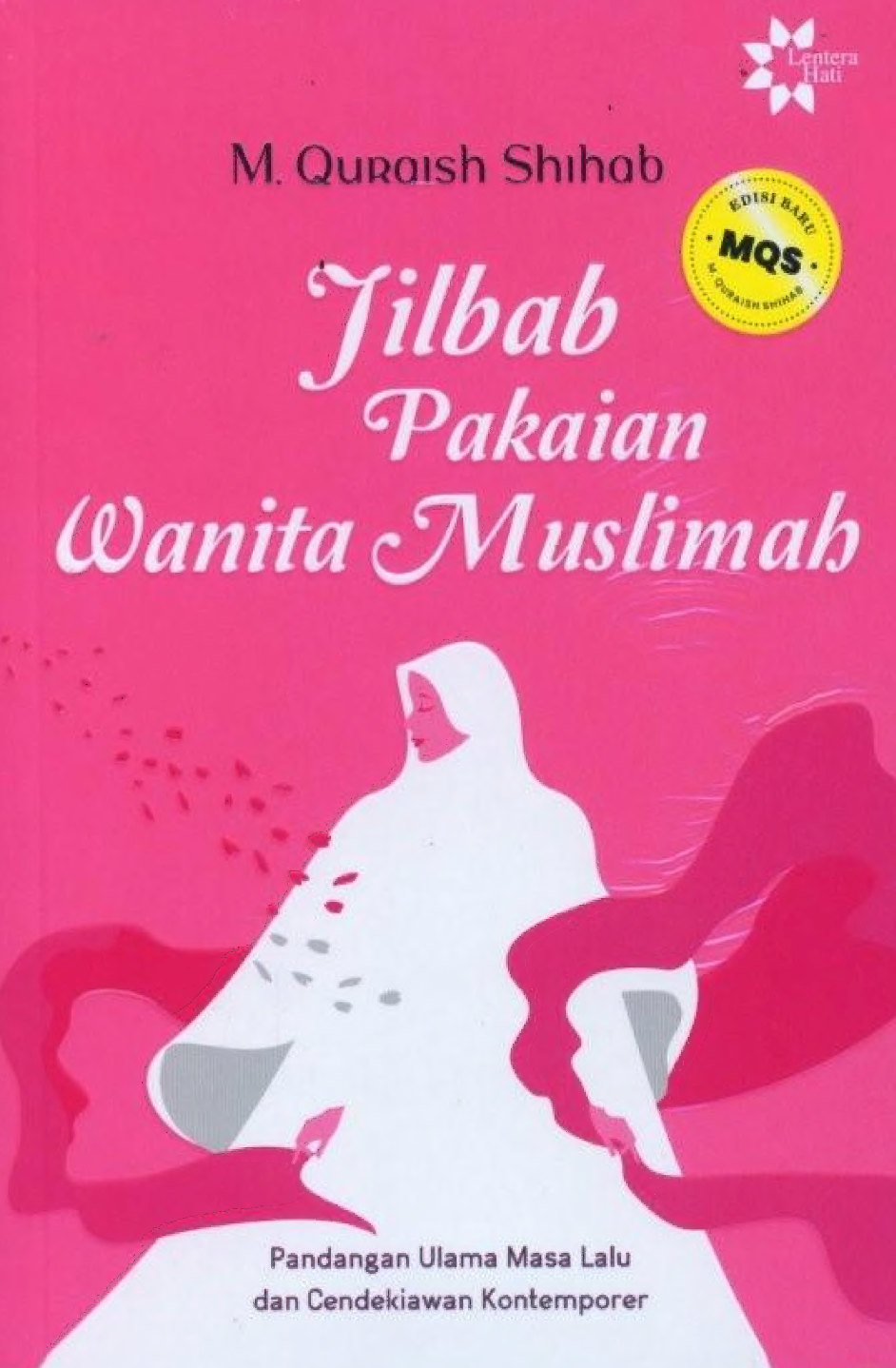
In the opening, Shihab observes the complexity behind why women choose to wear the hijab: some do it out of genuine religious devotion, others treat it as a fashion statement, and some use it as a political symbol to protest Western double standards and cultural offense. The author isn't trying to provide a black-and-white final legal verdict. Instead, he aims to restore the complexity of the issue by listing scripture, hadith (sayings and actions of the Prophet), and legal reasoning from both classical and modern viewpoints. His primary goal is to prevent communities from labeling each other as apostates just because they have different interpretations of religious clothing.
The book is built on a clear research methodology. The author points out that the core of faith is mercy and ease; scriptures clearly state that the Creator intends to make things easy for believers rather than setting up impossible burdens. Many hadith also emphasize that religious practice should be simple and accessible. However, in reality, many religious scholars often tighten regulations out of a desire to block the paths to sin, creating a rigid and heavy form of religion that deviates from its original spiritual essence.
On this basis, the book makes a key distinction: Sharia represents the original, fixed teachings from divine revelation, while fiqh is the human scholar's understanding and deduction, which is limited by historical era and cognitive level, naturally leading to differences of opinion. Even authoritative hadith are categorized by the reliability of their transmission chains—ranging from sound (shahih) to weak (da'if)—and cannot be blindly accepted as absolute law. The Prophet's companions and the four major classical schools of jurisprudence were full of differing legal views; these differences do not equal heresy, and one cannot judge someone as deviating from the faith simply because of a different interpretation.
Shihab emphasizes that interpreting scripture cannot be detached from the Arabic linguistic environment and the historical social context of the revelation; one cannot simply transplant ancient texts into modern society. He proposes an important thought experiment: if the Prophet's companions were living today, their interpretations of certain issues would likely change. The book maintains a scholarly posture, suspending final judgment and objectively presenting both sides of the argument without forcing one view as the sole truth. The author notes that even if readers encounter more lenient arguments, women who have already chosen to wear the hijab need not stop; choosing to be more modest out of piety is worthy of respect. He cites real-world cases, such as how the hadith authority Nasiruddin al-Albani was verbally attacked just for repeating the views of classical scholars—reflecting the sad reality that there is little room for dissenting views in some ideological circles. (This reminds me of my own experiences, where I faced cyberbullying just for sharing different scholars' views on zakat, interest, and diet in my video clips.)
Dress holds multiple cross-cultural social functions, which serves as the foundation for the entire book. Its meaning isn't limited to religious rules; it covers functions like physical protection, temperature control, aesthetic expression, identity marking, and maintaining modesty. The custom of covering the body isn't unique to one civilization; in the Sassanid Empire, the Byzantine Empire, and ancient Indian society, women already wore full-coverage garments during the pre-Islamic era. While women in pre-Islamic Arabia used headscarves, they were usually draped over the back of the head, often leaving the chest and neck exposed.
Addressing secular theories about the origin of robes—such as asceticism, personal safety, or male economic oppression—Shihab clarifies that these factors are not the legislative intent behind religious requirements. Scripture grants clothing two parallel values: covering the awrah and aesthetic decoration. However, many schools of thought overemphasize the covering aspect while completely rejecting the aesthetic dimension, ignoring the possibility of balancing both.
The author points out a key fact: there is not a single verse in the entire scripture that clearly and unambiguously lists which parts of the female body constitute the awrah and must be covered. All subsequent disagreements stem entirely from human re-interpretation of the texts.
The first reference is Verse 53 of Surah Al-Ahzab, the famous 'Veil Verse,' which requires people to speak to the Prophet’s wives from behind a curtain. The focus of the debate is whether this command was exclusive to the Prophet's wives, who held the special status of 'Mothers of the Believers,' or if it is universal. A conservative interpretation suggests that while the verse was revealed for the Prophet's family, the underlying principle applies to all women; another view argues that the text explicitly limits the scope, and it shouldn't be expanded arbitrarily.
The second reference is Verse 59 of Surah Al-Ahzab, the verse concerning the jilbab (a long, loose outer garment), commanding the Prophet to tell women to drape the jilbab over themselves so they can be recognized and avoid harassment. There is academic debate over the word jilbab—whether it refers to a specific outer cloak or simply a head covering. In the historical context of Medina, it was hard to distinguish between enslaved and free women, and free women were often harassed, so this verse served an identity-marking function. A persistent debate remains: in the modern world where slavery has vanished, should this command be executed exactly as it was then?
The third, and most debated, is Surah An-Nur 24:30-31. It requires men and women to lower their gaze and protect their modesty; women should not reveal their adornments and should drape their khimar (head covering) over their chests. It also limits who can see their adornments—husbands, immediate family, etc. The phrase 'except what is apparent of it' is the main point of contention, as the scripture doesn't specify which parts are exempt, leading different exegetes to draw entirely different conclusions based on grammar and historical context.
The fourth is Surah An-Nur 24:60, which grants an exemption to elderly women who no longer have the desire for marriage, allowing them to remove their outer garments without intending to display their adornment. This verse serves as important textual evidence for discussions on how social conditions and customs can influence dress codes.
After reviewing the scripture, the author turns to hadith literature and summarizes the two main positions formed by classical scholars. The first holds that the entire body, including the face and hands, must be covered; the second believes the face and hands can be exposed, with some scholars further allowing the back of the hands and feet to be visible under certain conditions.
Shihab carefully examines the hadith cited by both sides, pointing out that many key hadith have controversial chains of transmission. For example, reports allowing the face and hands to be exposed are criticized as having broken chains of transmission, while the reports for full coverage suffer from similar quality issues and even contain internal contradictions. At the same time, there is historical evidence: marriage proposals in the hadith record involved men looking at the woman's face, and during the Hajj pilgrimage, the law explicitly forbids wearing veils and gloves, proving that in certain classical contexts, the face and hands were permitted to be exposed.
The book systematically organizes how the four schools of jurisprudence define the awrah, distinguishing between prayer, encounters with non-mahram (unmarriageable) men, other women, and the status of free women versus enslaved women—with no consensus among them. The Hanafi school, considering the reality of peasant women laboring in ancient times, suggested that a woman's feet are not awrah. Shihab concludes that even classical scholars did not reach a unanimous agreement proving the face must be covered; full coverage is a pious and cautious choice, but it cannot be claimed as an indisputable, rigid legal obligation.
After summarizing the classical tradition, the book turns to various interpretive paths of 20th-century intellectuals, dividing modern researchers into two categories.
The first is the reformist position, which lacks a solid foundation in textual criticism, represented by Muhammad Shahrour. Shahrour reinterprets Arabic terms like juyub and khimar in Surah An-Nur, arguing the scripture only requires covering the chest and doesn't mandate a headscarf; he views many such regulations as social customs of the Medina era without eternal validity. Shihab criticizes this, arguing that his etymology contradicts classical Arabic dictionaries and ignores historical context, relying on subjective, new meanings for words. He also mentions secular feminist views that see the hijab as a product of patriarchal oppression, noting that these arguments lack support from religious texts.
The second category of modern scholars adheres strictly to traditional tools of jurisprudence but arrives at relatively loose conclusions regarding dress. They rely on principles such as 'hardship brings ease.' Since modern women participate widely in public life, strict full coverage creates practical difficulties, justifying a relaxation of the rules. They also emphasize the hierarchy of hadith: single-source reports cannot establish absolute legal obligations, only widely-transmitted (mutawatir) hadith can.
The most important legal debate centers on the legislative 'reason' (illah) and 'wisdom' (hikmah) behind a rule. The 'reason' is the objective condition that triggers the law; if the condition disappears, the law expires. 'Wisdom' is the moral advice behind the rule, which remains valuable even if the objective condition changes. Former Egyptian judge Muhammad Said al-Ashmawy is a representative of this line of thought, arguing that the reason for the jilbab verse was to distinguish free women from slaves to protect them from street harassment. Since slavery has vanished, the reason is gone, and the mandatory nature of the law expires, though the moral 'wisdom' of dressing modestly remains.
Conservative scholars counter this, arguing that distinguishing status was merely the 'wisdom' brought by the verse, not the objective 'reason,' so the law's validity doesn't expire with slavery. This remains the core legal impasse in the contemporary hijab debate.
Additionally, the weight of local custom is a point of contention. Some scholars argue that what triggers sexual desire is relative and changes with social norms; what is considered acceptable in one society might not be elsewhere. Opponents argue that religious moral baselines cannot be entirely determined by shifting social customs.
Combining history and legal discussion, Shihab reflects on social phenomena. He notes that in early 20th-century Egypt, wearing a veil was a status symbol for wealthy urban women, while rural working women routinely worked with their faces exposed. He concludes that all sides reach a minimal ethical consensus: women’s clothing should be modest and not intended to provoke, but the boundary of what can be exposed is left open by the scriptures and hadith.
Shihab offers his judgment: existing textual evidence does not prove with absolute certainty that a woman's face must be covered, and there is historical precedent for exposing the face and hands in the time of the Prophet’s companions. At the same time, choosing full coverage out of personal piety is worthy of respect. He warns again that one should never label others as apostates based on disagreements over dress or awrah, as a diversity of legal opinions has always been a standard part of intellectual history.
The author warns against two misconceptions: first, equating an individual school's interpretation with the Creator's indisputable command; second, abandoning religious traditions entirely to follow secular customs, which dissolves the moral requirement for modesty.
In response to modern issues, such as the French ban on headscarves in schools, the author implies that relying on state mandates to ban religious clothing cannot resolve deep-seated contradictions in faith. Within the community, there should be an awareness to distinguish the three attributes of the hijab: an act of inner devotion, a fashion symbol, and a political symbol.
In short, this book does not seek to provide a standard answer to whether the hijab is a mandatory obligation. As a key Indonesian Sunni scholar, Shihab adopts a posture of suspending final judgment, laying out the arguments from all sides. The reason the hijab debate continues is rooted in the polysemy of religious texts, the controversial nature of hadith transmission, and fundamental disagreements on the roles of legal reasoning and social custom. Rather than forcing a uniform standard of physical coverage, the book calls for believers of all positions to hold onto the shared ethics of modesty while being tolerant of diverse opinions.
I don't like it
This article reviews the academic book on Muslim women’s dress by the renowned Indonesian scholar Quraish Shihab. It distinguishes between the fixed teachings of divine revelation (Sharia) and the legal opinions (fiqh) derived by scholars throughout history within specific social contexts, while systematically outlining diverse perspectives from classical to contemporary academia.
M. Quraish Shihab is a leading scholar officially recognized in Indonesia. His book, Jilbab Pakaian Wanita Muslimah (Jilbab: The Muslim Woman’s Clothing), was first published in 2004 and serves as a major work dedicated to exploring the definitions of the hijab and women's awrah (intimate parts to be covered). At the time of its publication, the hijab was gaining global popularity, while France had just passed laws banning religious symbols—including the headscarf—in public schools, which pushed the hijab issue to the center of international debate.
In the opening, Shihab observes the complexity behind why women choose to wear the hijab: some do it out of genuine religious devotion, others treat it as a fashion statement, and some use it as a political symbol to protest Western double standards and cultural offense. The author isn't trying to provide a black-and-white final legal verdict. Instead, he aims to restore the complexity of the issue by listing scripture, hadith (sayings and actions of the Prophet), and legal reasoning from both classical and modern viewpoints. His primary goal is to prevent communities from labeling each other as apostates just because they have different interpretations of religious clothing.
The book is built on a clear research methodology. The author points out that the core of faith is mercy and ease; scriptures clearly state that the Creator intends to make things easy for believers rather than setting up impossible burdens. Many hadith also emphasize that religious practice should be simple and accessible. However, in reality, many religious scholars often tighten regulations out of a desire to block the paths to sin, creating a rigid and heavy form of religion that deviates from its original spiritual essence.
On this basis, the book makes a key distinction: Sharia represents the original, fixed teachings from divine revelation, while fiqh is the human scholar's understanding and deduction, which is limited by historical era and cognitive level, naturally leading to differences of opinion. Even authoritative hadith are categorized by the reliability of their transmission chains—ranging from sound (shahih) to weak (da'if)—and cannot be blindly accepted as absolute law. The Prophet's companions and the four major classical schools of jurisprudence were full of differing legal views; these differences do not equal heresy, and one cannot judge someone as deviating from the faith simply because of a different interpretation.
Shihab emphasizes that interpreting scripture cannot be detached from the Arabic linguistic environment and the historical social context of the revelation; one cannot simply transplant ancient texts into modern society. He proposes an important thought experiment: if the Prophet's companions were living today, their interpretations of certain issues would likely change. The book maintains a scholarly posture, suspending final judgment and objectively presenting both sides of the argument without forcing one view as the sole truth. The author notes that even if readers encounter more lenient arguments, women who have already chosen to wear the hijab need not stop; choosing to be more modest out of piety is worthy of respect. He cites real-world cases, such as how the hadith authority Nasiruddin al-Albani was verbally attacked just for repeating the views of classical scholars—reflecting the sad reality that there is little room for dissenting views in some ideological circles. (This reminds me of my own experiences, where I faced cyberbullying just for sharing different scholars' views on zakat, interest, and diet in my video clips.)
Dress holds multiple cross-cultural social functions, which serves as the foundation for the entire book. Its meaning isn't limited to religious rules; it covers functions like physical protection, temperature control, aesthetic expression, identity marking, and maintaining modesty. The custom of covering the body isn't unique to one civilization; in the Sassanid Empire, the Byzantine Empire, and ancient Indian society, women already wore full-coverage garments during the pre-Islamic era. While women in pre-Islamic Arabia used headscarves, they were usually draped over the back of the head, often leaving the chest and neck exposed.
Addressing secular theories about the origin of robes—such as asceticism, personal safety, or male economic oppression—Shihab clarifies that these factors are not the legislative intent behind religious requirements. Scripture grants clothing two parallel values: covering the awrah and aesthetic decoration. However, many schools of thought overemphasize the covering aspect while completely rejecting the aesthetic dimension, ignoring the possibility of balancing both.
The author points out a key fact: there is not a single verse in the entire scripture that clearly and unambiguously lists which parts of the female body constitute the awrah and must be covered. All subsequent disagreements stem entirely from human re-interpretation of the texts.
The first reference is Verse 53 of Surah Al-Ahzab, the famous 'Veil Verse,' which requires people to speak to the Prophet’s wives from behind a curtain. The focus of the debate is whether this command was exclusive to the Prophet's wives, who held the special status of 'Mothers of the Believers,' or if it is universal. A conservative interpretation suggests that while the verse was revealed for the Prophet's family, the underlying principle applies to all women; another view argues that the text explicitly limits the scope, and it shouldn't be expanded arbitrarily.
The second reference is Verse 59 of Surah Al-Ahzab, the verse concerning the jilbab (a long, loose outer garment), commanding the Prophet to tell women to drape the jilbab over themselves so they can be recognized and avoid harassment. There is academic debate over the word jilbab—whether it refers to a specific outer cloak or simply a head covering. In the historical context of Medina, it was hard to distinguish between enslaved and free women, and free women were often harassed, so this verse served an identity-marking function. A persistent debate remains: in the modern world where slavery has vanished, should this command be executed exactly as it was then?
The third, and most debated, is Surah An-Nur 24:30-31. It requires men and women to lower their gaze and protect their modesty; women should not reveal their adornments and should drape their khimar (head covering) over their chests. It also limits who can see their adornments—husbands, immediate family, etc. The phrase 'except what is apparent of it' is the main point of contention, as the scripture doesn't specify which parts are exempt, leading different exegetes to draw entirely different conclusions based on grammar and historical context.
The fourth is Surah An-Nur 24:60, which grants an exemption to elderly women who no longer have the desire for marriage, allowing them to remove their outer garments without intending to display their adornment. This verse serves as important textual evidence for discussions on how social conditions and customs can influence dress codes.
After reviewing the scripture, the author turns to hadith literature and summarizes the two main positions formed by classical scholars. The first holds that the entire body, including the face and hands, must be covered; the second believes the face and hands can be exposed, with some scholars further allowing the back of the hands and feet to be visible under certain conditions.
Shihab carefully examines the hadith cited by both sides, pointing out that many key hadith have controversial chains of transmission. For example, reports allowing the face and hands to be exposed are criticized as having broken chains of transmission, while the reports for full coverage suffer from similar quality issues and even contain internal contradictions. At the same time, there is historical evidence: marriage proposals in the hadith record involved men looking at the woman's face, and during the Hajj pilgrimage, the law explicitly forbids wearing veils and gloves, proving that in certain classical contexts, the face and hands were permitted to be exposed.
The book systematically organizes how the four schools of jurisprudence define the awrah, distinguishing between prayer, encounters with non-mahram (unmarriageable) men, other women, and the status of free women versus enslaved women—with no consensus among them. The Hanafi school, considering the reality of peasant women laboring in ancient times, suggested that a woman's feet are not awrah. Shihab concludes that even classical scholars did not reach a unanimous agreement proving the face must be covered; full coverage is a pious and cautious choice, but it cannot be claimed as an indisputable, rigid legal obligation.
After summarizing the classical tradition, the book turns to various interpretive paths of 20th-century intellectuals, dividing modern researchers into two categories.
The first is the reformist position, which lacks a solid foundation in textual criticism, represented by Muhammad Shahrour. Shahrour reinterprets Arabic terms like juyub and khimar in Surah An-Nur, arguing the scripture only requires covering the chest and doesn't mandate a headscarf; he views many such regulations as social customs of the Medina era without eternal validity. Shihab criticizes this, arguing that his etymology contradicts classical Arabic dictionaries and ignores historical context, relying on subjective, new meanings for words. He also mentions secular feminist views that see the hijab as a product of patriarchal oppression, noting that these arguments lack support from religious texts.
The second category of modern scholars adheres strictly to traditional tools of jurisprudence but arrives at relatively loose conclusions regarding dress. They rely on principles such as 'hardship brings ease.' Since modern women participate widely in public life, strict full coverage creates practical difficulties, justifying a relaxation of the rules. They also emphasize the hierarchy of hadith: single-source reports cannot establish absolute legal obligations, only widely-transmitted (mutawatir) hadith can.
The most important legal debate centers on the legislative 'reason' (illah) and 'wisdom' (hikmah) behind a rule. The 'reason' is the objective condition that triggers the law; if the condition disappears, the law expires. 'Wisdom' is the moral advice behind the rule, which remains valuable even if the objective condition changes. Former Egyptian judge Muhammad Said al-Ashmawy is a representative of this line of thought, arguing that the reason for the jilbab verse was to distinguish free women from slaves to protect them from street harassment. Since slavery has vanished, the reason is gone, and the mandatory nature of the law expires, though the moral 'wisdom' of dressing modestly remains.
Conservative scholars counter this, arguing that distinguishing status was merely the 'wisdom' brought by the verse, not the objective 'reason,' so the law's validity doesn't expire with slavery. This remains the core legal impasse in the contemporary hijab debate.
Additionally, the weight of local custom is a point of contention. Some scholars argue that what triggers sexual desire is relative and changes with social norms; what is considered acceptable in one society might not be elsewhere. Opponents argue that religious moral baselines cannot be entirely determined by shifting social customs.
Combining history and legal discussion, Shihab reflects on social phenomena. He notes that in early 20th-century Egypt, wearing a veil was a status symbol for wealthy urban women, while rural working women routinely worked with their faces exposed. He concludes that all sides reach a minimal ethical consensus: women’s clothing should be modest and not intended to provoke, but the boundary of what can be exposed is left open by the scriptures and hadith.
Shihab offers his judgment: existing textual evidence does not prove with absolute certainty that a woman's face must be covered, and there is historical precedent for exposing the face and hands in the time of the Prophet’s companions. At the same time, choosing full coverage out of personal piety is worthy of respect. He warns again that one should never label others as apostates based on disagreements over dress or awrah, as a diversity of legal opinions has always been a standard part of intellectual history.
The author warns against two misconceptions: first, equating an individual school's interpretation with the Creator's indisputable command; second, abandoning religious traditions entirely to follow secular customs, which dissolves the moral requirement for modesty.
In response to modern issues, such as the French ban on headscarves in schools, the author implies that relying on state mandates to ban religious clothing cannot resolve deep-seated contradictions in faith. Within the community, there should be an awareness to distinguish the three attributes of the hijab: an act of inner devotion, a fashion symbol, and a political symbol.
In short, this book does not seek to provide a standard answer to whether the hijab is a mandatory obligation. As a key Indonesian Sunni scholar, Shihab adopts a posture of suspending final judgment, laying out the arguments from all sides. The reason the hijab debate continues is rooted in the polysemy of religious texts, the controversial nature of hadith transmission, and fundamental disagreements on the roles of legal reasoning and social custom. Rather than forcing a uniform standard of physical coverage, the book calls for believers of all positions to hold onto the shared ethics of modesty while being tolerant of diverse opinions.
I don't like it
