
Rare 1930s Photos of Weizhou Mosque: Exploring Ningxia's Lost Ming Dynasty Islamic Architecture
We’re diving into the rare 1930s film negatives of the Weizhou Mosque in Tongxin County, Ningxia, captured by American scholar Claude L. Pickens, Jr. and now held at the Harvard-Yenching Library. This analysis breaks down the historical significance of this Ming Dynasty complex, which featured a unique 'goulianda' (interlocking roof system) and traditional Chinese multi-eave pavilions, before its destruction in 1966.
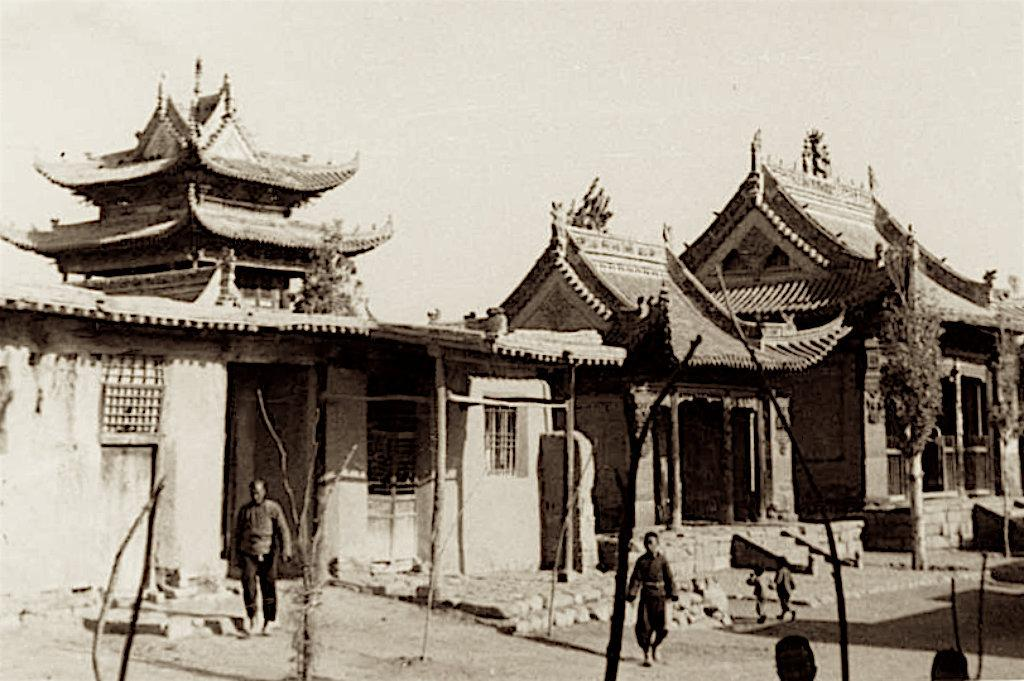
This black-and-white image is a major piece of primary source material for the architectural history of the Hui Muslims in Northwest China. It was shot between 1933 and 1936 by Claude L. Pickens, Jr., an American Episcopal missionary, during his research trip through the region. The original negative is currently in the Harvard-Yenching Library collection, and the site featured in the photo is the Weizhou Mosque in Weizhou Town, Tongxin County, Ningxia.
Weizhou has been a vital ancient town in southern Ningxia for centuries, with a deep-rooted history of Hui Muslim settlement. Records mostly suggest the mosque was founded during the Ming Hongwu era, though some believe it started in the late Yuan Dynasty and saw massive expansions during the Ming. It underwent frequent repairs and additions during the Kangxi, Daoguang, and Guangxi eras of the Qing Dynasty, making it one of the oldest recorded mosques in Ningxia.
On the left side of the frame, you’ll see the bangkelou (minaret/call-to-prayer tower), built in the traditional Chinese multi-eave pavilion style used to call the faithful for their dua (prayer). On the right is the main prayer hall, which uses the classic Northwest mosque style known as goulianda—a series of connected roofs designed to expand the interior worship space. The entire complex lacks Central Asian-style domes or arches; instead, it relies entirely on traditional Chinese wooden temple construction, serving as a classic example of the indigenization of Islamic architecture. The mud-brick bungalows in the foreground were the madrasas (schools), housing for the ahong (imams), and bathing rooms, built with rammed-earth walls and latticed windows to match the climate of the arid Northwest. The locals walking down the road were just ordinary Weizhou villagers from the Republican era, caught in a candid moment rather than a posed shot.
It’s important to note that the original Ming and Qing architectural structures shown in this photo were destroyed in 1966. The mosque standing in Weizhou Town today was rebuilt and renovated later, and its architectural style and details differ significantly from the original. Because of this, these negatives remain the most reliable visual record of what the old mosque actually looked like.
Many history buffs often confuse this with the Tongxin Mosque, but they are separate historical buildings located several dozen kilometers apart and shouldn't be lumped together. The collection of photos Pickens took across Gansu, Ningxia, and Qinghai recorded a massive amount of Northwest Muslim community life and ancient mosque styles. Since many of those buildings were eventually destroyed, these photos have become irreplaceable—they are vital materials for the study of Hui Muslim architectural and social history, as well as essential documents for modern Western research photography.
Old Photos, Republican Era Images, Ningxia History, Weizhou Mosque, Ancient Architecture, Hui Muslim History, Northwest Islamic Architecture, Claude L. Pickens, Historical Analysis
This black-and-white image is a major piece of primary source material for the architectural history of the Hui Muslims in Northwest China. It was shot between 1933 and 1936 by Claude L. Pickens, Jr., an American Episcopal missionary, during his research trip through the region. The original negative is currently in the Harvard-Yenching Library collection, and the site featured in the photo is the Weizhou Mosque in Weizhou Town, Tongxin County, Ningxia.
Weizhou has been a vital ancient town in southern Ningxia for centuries, with a deep-rooted history of Hui Muslim settlement. Records mostly suggest the mosque was founded during the Ming Hongwu era, though some believe it started in the late Yuan Dynasty and saw massive expansions during the Ming. It underwent frequent repairs and additions during the Kangxi, Daoguang, and Guangxi eras of the Qing Dynasty, making it one of the oldest recorded mosques in Ningxia.
On the left side of the frame, you’ll see the bangkelou (minaret/call-to-prayer tower), built in the traditional Chinese multi-eave pavilion style used to call the faithful for their dua (prayer). On the right is the main prayer hall, which uses the classic Northwest mosque style known as goulianda—a series of connected roofs designed to expand the interior worship space. The entire complex lacks Central Asian-style domes or arches; instead, it relies entirely on traditional Chinese wooden temple construction, serving as a classic example of the indigenization of Islamic architecture. The mud-brick bungalows in the foreground were the madrasas (schools), housing for the ahong (imams), and bathing rooms, built with rammed-earth walls and latticed windows to match the climate of the arid Northwest. The locals walking down the road were just ordinary Weizhou villagers from the Republican era, caught in a candid moment rather than a posed shot.
It’s important to note that the original Ming and Qing architectural structures shown in this photo were destroyed in 1966. The mosque standing in Weizhou Town today was rebuilt and renovated later, and its architectural style and details differ significantly from the original. Because of this, these negatives remain the most reliable visual record of what the old mosque actually looked like.
Many history buffs often confuse this with the Tongxin Mosque, but they are separate historical buildings located several dozen kilometers apart and shouldn't be lumped together. The collection of photos Pickens took across Gansu, Ningxia, and Qinghai recorded a massive amount of Northwest Muslim community life and ancient mosque styles. Since many of those buildings were eventually destroyed, these photos have become irreplaceable—they are vital materials for the study of Hui Muslim architectural and social history, as well as essential documents for modern Western research photography.
Old Photos, Republican Era Images, Ningxia History, Weizhou Mosque, Ancient Architecture, Hui Muslim History, Northwest Islamic Architecture, Claude L. Pickens, Historical Analysis
