
Modern Muslim Life: Real Dreams of Families, Education, and Stability Across Global Muslim Communities
[Internet Repost]
Through vivid snapshots like a teenager hunting for a signal on an old city rooftop or parents rushing through busy markets, we explore the daily lives of everyday people in the Muslim world. It shows that no matter the cultural background, the deep-seated hopes for peace, stability, and a bright future for our children are universal.
Those looking up from the dust of the mundane
The hopes and dreams of Muslims today
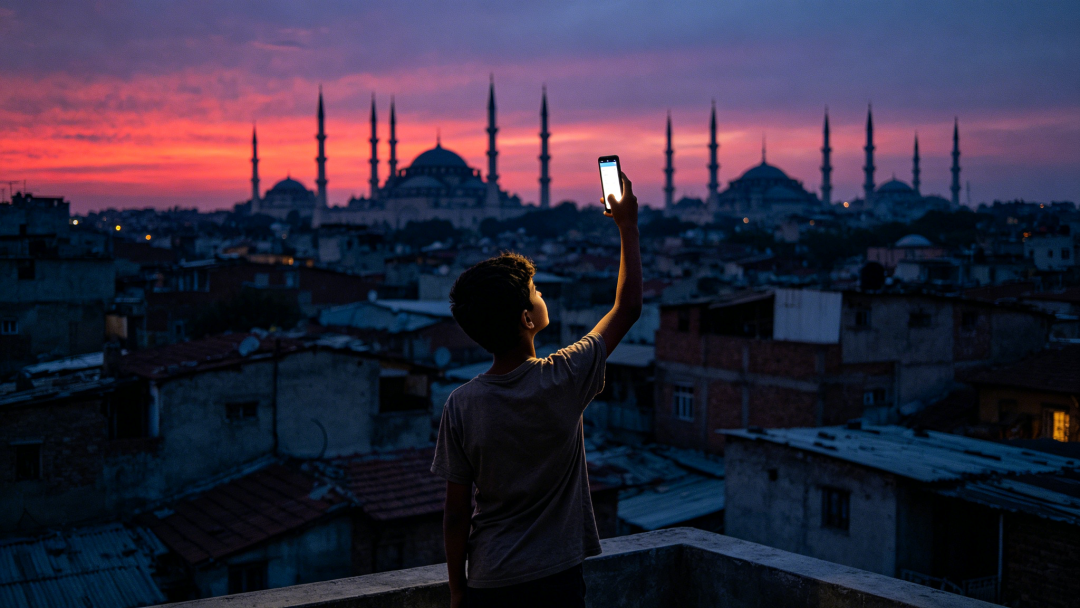
A teenager holding his phone up on a rooftop: A boy standing on a rooftop in an old city, the sunset painting the city behind him in shades of red and purple.
We all scroll through short-form videos, and there's a recurring scene: a kid in an old city holding his phone high up, trying to snag a better signal. In the background, there’s a maze of dense houses, with the silhouettes of mosques in the distance, bathed in the red and purple of the sunset. Someone in the comments wrote, 'This is just a normal, small city in some Muslim country.'
A viewer asked below, 'What are these people actually thinking about? Are they just obsessed with religion all day, or are they busy trying to escape war?'
Every time I see comments like that, I can't help but let out a dry laugh. Humans have a funny habit of looking at others through a screen and forgetting that there’s a real person on the other side. They get reduced to labels like 'Muslim,' 'Middle Easterner,' or 'refugee,' like stats on a video game character sheet tagged with 'militant,' 'conservative,' or 'mysterious.' But if you actually zoom in, those people suddenly become relatable—just like the couple running the local diner downstairs or the commuters crammed into the subway during rush hour.
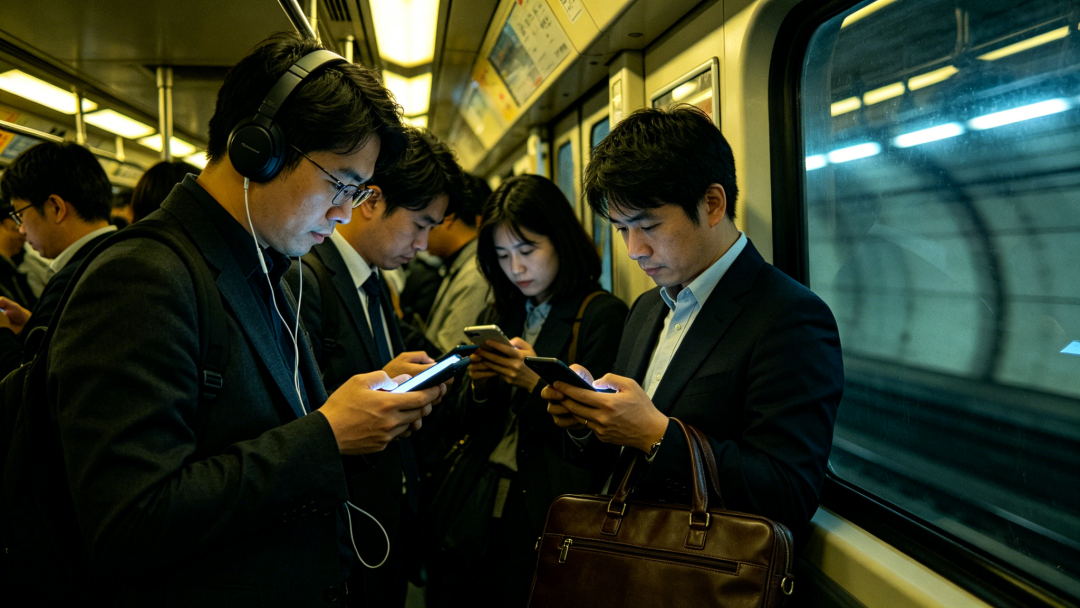
Commuters checking their phones on the morning subway: When we look at others through a screen, we tend to forget they are just people.
When you bring up 'the hopes and dreams of Muslims today,' many people jump to conclusions, thinking we’re about to talk about something 'grand'—clashes of civilizations, geopolitical games, or those buzzwords you hear on the nightly news. But when investigators actually go door-to-door, you realize the answers aren't mystical at all. They’re incredibly simple—almost refreshingly down-to-earth.
A lot of people start with the basics: money, jobs, and wanting to live a life that feels secure.
Sounds familiar, right? It’s exactly the same stuff you hear at the grocery store: 'Rent went up again,' 'tutoring is too expensive,' or 'if only I could earn a little more, life wouldn't feel like such a struggle.'
So you see, even though we lay out a world map with colorful national borders, they can’t hide the truth: at the core, human desires are all pretty much the same.
Once, in a college class, when we were discussing the 'Muslim world,' I asked my students what the first image that popped into their heads was. Some said deserts and oil, some said girls wearing headscarves, and some mentioned the conflicts they see in the news. You see? That’s the power of stereotypes. Even in the information age, people’s imagination of the 'far away' is sometimes stuck in movies from the last century.
To understand today's dreams, we have to look back a little. For a long time, many Muslim societies stood at the crossroads of colonial rule, Cold War tug-of-wars, and resource competition. Political systems were unstable and economies were one-dimensional. People's lives were often pulled by 'outside forces,' like a boat tied to a dock—they wanted to row, but the rope was pulled tight.
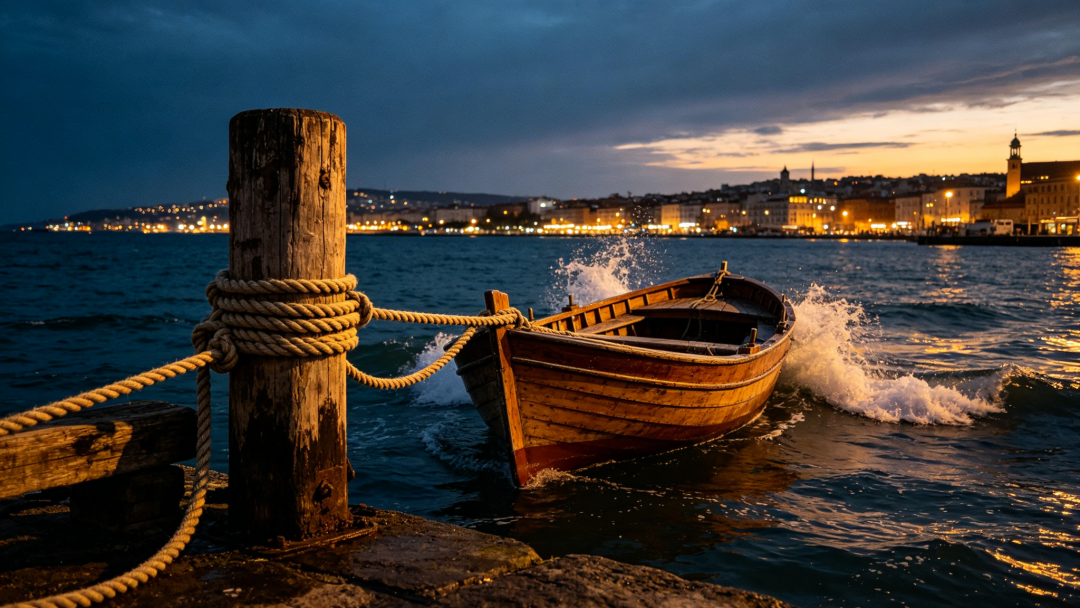
A small boat tied to a dock: History—like a boat held back by a rope, wanting to sail but held fast.
For the older generation, the wish was mostly just 'survival'—dodging famine, avoiding war, and staying out of the power games of the major nations. In those days, the word 'dream' felt a bit like a luxury.
Later, as nations gained independence and modern cities began to rise, oil and trade brought sudden wealth to some areas. Shopping malls appeared on the streets, cars became common, and the lights came on. People started thinking: since this isn't just about surviving anymore, can we live with a bit of dignity?
That’s when new problems crept in: how to distribute wealth, how to wield power, whether the law should decide things or just 'who you know,' and whether education should be about teaching kids how to balance a ledger or how to be a good person.
You realize that many of the 'collective aspirations' in Muslim society today were squeezed out, bit by bit, through these long cracks in history.
Tolstoy wrote in 'War and Peace' that human history is like a great river, and every person is just a water droplet. In many Muslim countries, the current of this river is particularly fast, with many turns and whirlpools, so the droplets get tossed around more easily. That’s why the hunger for 'stability' is magnified.
Now, if you zoom back in, into the alleys and streets, you’ll see those wishes are actually very specific.
A young guy running a market stall wants a fair playing field—he wants to run his business without paying bribes and without worrying that a policy change will mean the whole street gets demolished tomorrow.
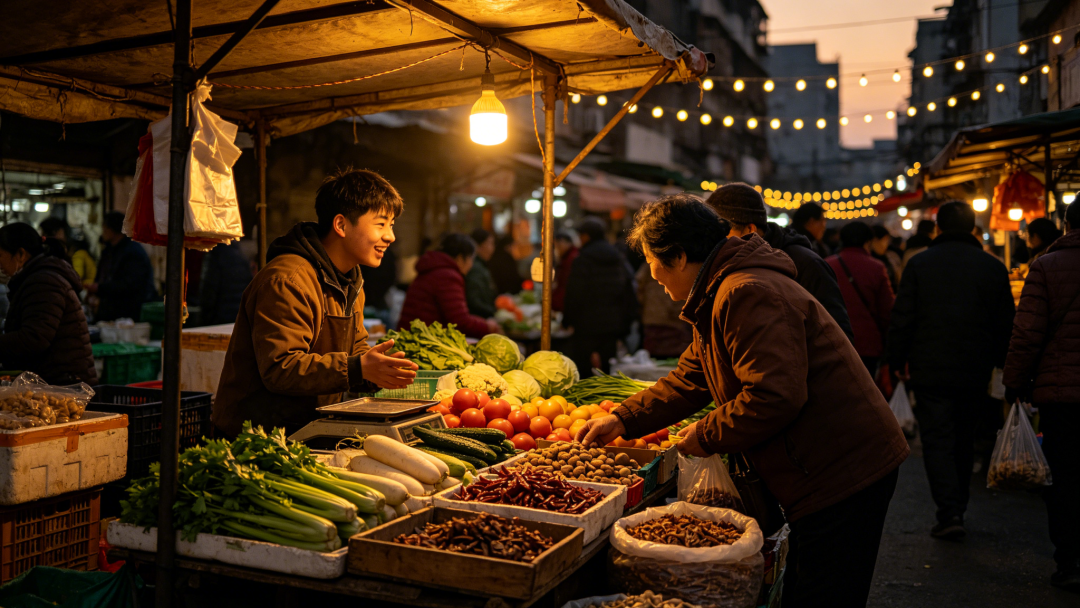
A young vendor greeting customers at a market: The Market—a desire for a fair business environment and a stable life.
A middle-aged woman working as a teacher worries about whether her salary can keep her kids in school, and whether the world described in textbooks and the world playing out on the news will leave her children feeling lost.
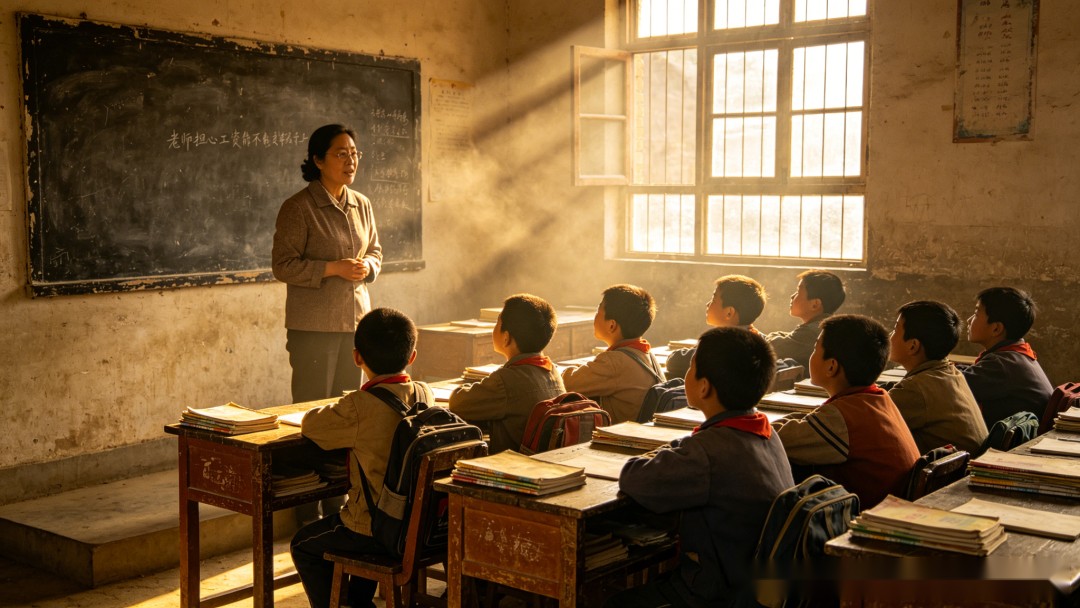
A female teacher lecturing in a classroom: The Classroom—wondering if a paycheck can cover the costs of a child's education.
Expert researchers will tell you that when they ask people what they most want to change, the majority of respondents bring up things like better job opportunities, a more stable income, and the ability to comfortably support their families. It doesn't sound very grand, but this is the foundation for any society. When the economic floor is solid, people feel at ease, and once they're at ease, they finally have the headspace to think about everything else.
So, for many Muslims, high up on their list of dreams is actually just making that foundation a little thicker and more secure.
Layered on top of that is the need for order. Many people mention wanting stronger laws, more reliable public safety, and less internal conflict or violence. Think of the law as the lubricant for the machine of society; without it, even if the exterior looks flashy, the internal components are going to keep jamming and smoking.
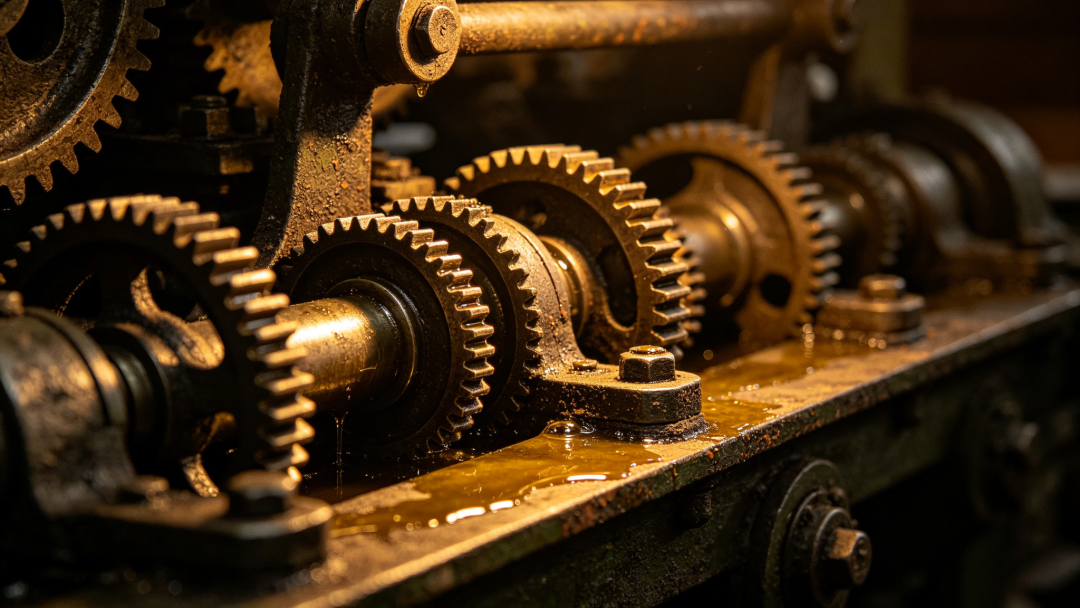
Metallic gears glistening with oil: Order – Law is the lubricant for the machinery of society.
In some places, there have been historical rifts between neighborhoods, old blood feuds between tribes, political friction, and even differing interpretations within the religion. Once these things ignite, the lives of ordinary people are constantly chased by the flames. The shadow of war has hung over some cities for too long, and people's hearts naturally form a simple dua (prayer): to live in peace, to stop the fighting, and to let children grow up in a classroom instead of learning to identify danger amidst the sound of gunfire.
In The Castle, Kafka wrote about being trapped in a system with invisible boundaries—you’re too weak to change it, but you can’t get around it, leading to a deep sense of powerlessness. For many ordinary Muslims, if the law actually worked and protected the rights of the little guy, that crushing sense of powerlessness against 'fate' would begin to fade.
Some surveys ask a more 'sensitive' question: how do you want your country to look to the world? The answers are quite interesting. On one hand, people emphasize wanting more 'dignity' and 'sovereignty' so they aren't constantly being bossed around by others. On the other hand, many stress the need to weave elements of 'justice' and 'participation' into their existing national systems.
It sounds a bit abstract, but you could put it another way: they just want a life where they aren't being pushed around by outside forces or manipulated by a small group of people on the inside.
Isn't that just a gut feeling shared by most regular people?
If you look at coffee shops on the street, people who talk about politics are often loud and passionate—they talk about constitutions, institutions, and international standing, like they're ready to rebuild the world. But people who have really been ground down by the daily grind are the ones saying, 'I just want reliable rules so I know that if I work hard, it’ll pay off—not just based on luck.'
So, when many Muslims talk about 'promoting democratic ideas,' they aren't reciting from a textbook. They’re saying, 'I want to be treated like a human, like a citizen, not just a cog in some massive machine.'
This wish is no more noble—and certainly no less—than the desire for a small pay raise. They both grow from the exact same soil.
When it comes to education, the conversation gets personal real fast.
Many respondents emphasize the need to wipe out illiteracy and drive away ignorance through a better educational system. 'Ignorance' is a heavy word, but it reflects a genuine feeling: people who haven't had access to education are easier to sway with rumors and inflame with rhetoric.
Some Muslim-majority countries have young populations; the streets are full of people in their twenties with bright eyes, but opportunities are scarce. They’re like a massive, untended wheat field—plenty of seeds and decent soil, but no proper farm tools and a broken irrigation system. Whether those seeds actually sprout is just a roll of the dice.
In this context, a truly well-run school acts like a sturdy irrigation channel, carefully delivering the water where it needs to go.
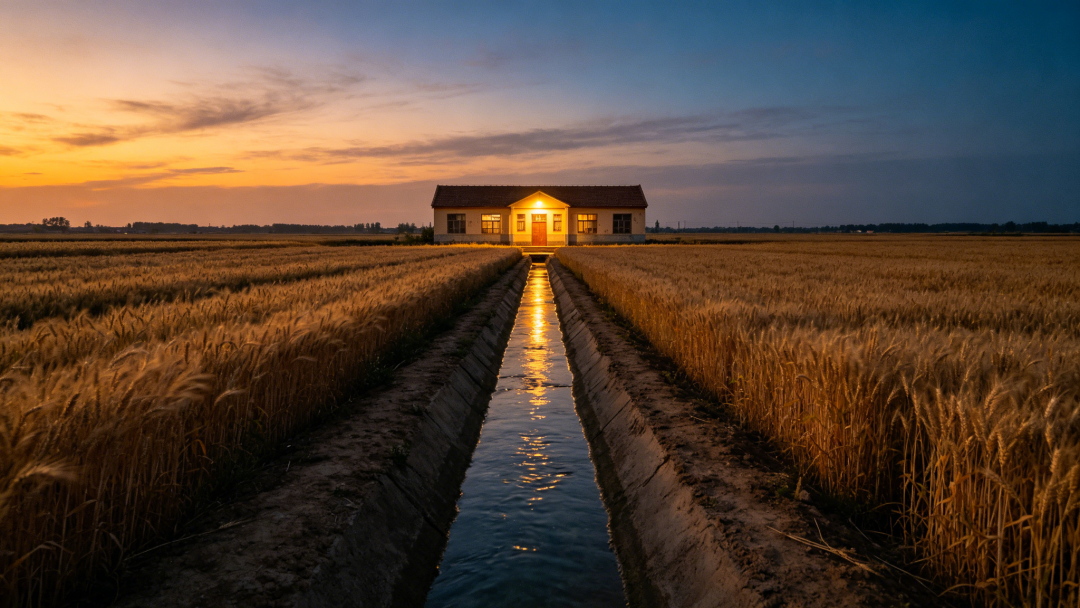
Water channels leading into a schoolhouse in a wheat field: Education – A well-run school is like a steady irrigation channel.
Many parents scrimp and save to help their kids learn foreign languages or computer skills, hoping they can jump on the train that’s moving the world forward. In One Hundred Years of Solitude, Márquez wrote that if a family loses its memory, it will keep repeating the same tragedies. A big part of the meaning of education is helping a society remember its lessons so it doesn't keep hitting the same rock and bleeding over and over again.
Words like gender equality, social justice, and religious freedom sometimes become internet slogans, but in many Muslim households, they are the sighs heard in the kitchen and the restless thoughts keeping people up at night.
For girls who want to keep studying, their families have to weigh the safety of the commute, the availability of jobs, and whether they can find a path that doesn't betray their traditions while still allowing for personal growth.
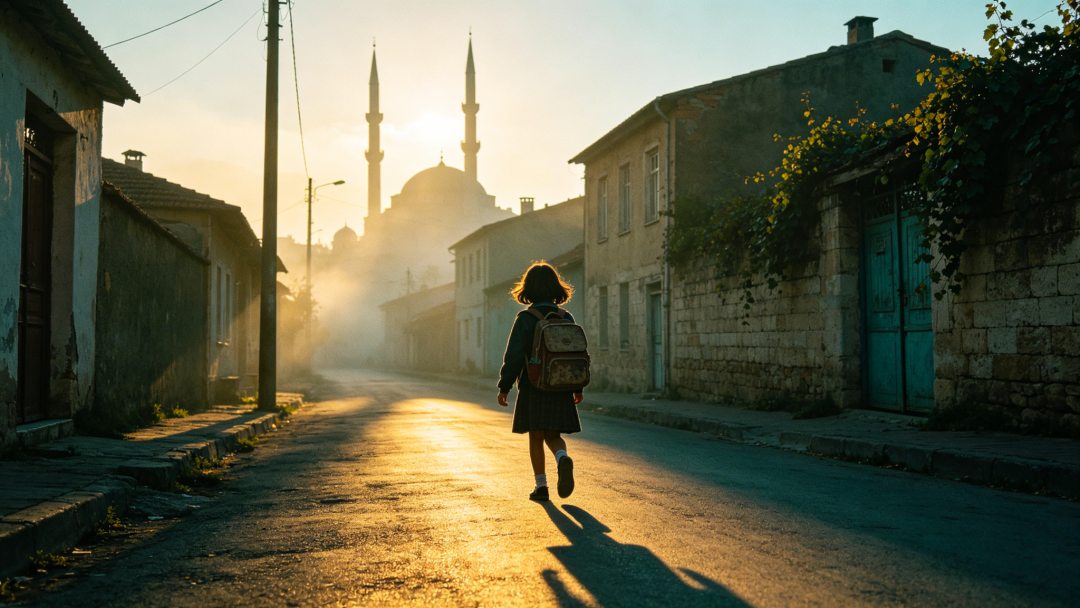
A girl with a backpack walking along a long street in the light: Hope – Girls can walk out the door and keep their heads held high.
Some young people are deeply religious, but they also hope for a bit more choice in their thoughts and lives within the bounds of the law. They want to find a balance between religious doctrine and the modern world, rather than living in a polarized, black-and-white reality.
When you string all these little wishes together, they form a force that is remarkably gentle yet incredibly firm.
By now, you might have noticed a somewhat ironic fact: people often assume 'Muslim dreams' must carry some mystical religious aura, as distant as a star on the dome of a mosque. In reality, when these dreams touch the ground, they’re just basic things: a stable job, reliable laws, a nation with dignity, schools that teach real skills, and a social environment where both men and women can walk with their heads held high.
Put it all together, and that is exactly what they see as a 'better future.'
Some people say dreams should be noble and not so 'realistic.' Honestly, that sounds like elitist talk from someone stuck in an ivory tower. Lu Xun once wrote that 'hope is like a path in the countryside: it doesn't exist at first, but once many people walk it, it becomes a path.' For many Muslims, better economic conditions, institutional progress, and social justice are that path—it’s something they’re building step-by-step, not some complete blueprint that just falls from the sky.
If you look at the buzz online, you’ll usually see two extremes: one romanticizes the Muslim world as if everyone there lives entirely in poetry and dua (prayer), completely detached from reality, while the other demonizes them, acting like they live in a place fundamentally at odds with modern civilization.
To put it bluntly, both of these perspectives are just lazy. Because the truly complex reality is always somewhere in the middle.
There’s a line from the movie 'Let the Bullets Fly' that fits here: 'I want the people on the mountain to see the lights in the city.' In the context of many Muslim societies, you could read that differently: deep down, everyone wants the kids in remote villages to see the opportunities in big cities and get a taste of modern life.
That’s also why, when people talk about 'improving their country’s international standing,' it’s partly because they want to be seen and respected by the world, instead of their country being associated only with conflict and poverty. But on another level, they’re just hoping that more equal partnerships will give the next generation more agency.
Gaining international respect is a weird, elusive thing, yet it’s also very tangible. When you’re treated with respect over a long period, you become more confident. Inside a society, when people discuss issues, they stop feeling so insecure and don't just fall into the trap of sighing, 'We’re just born to be behind.'
Of course, at the end of the day, to earn respect from others, you have to get your own life in order. This is something many of the Muslims I’ve interviewed have mentioned: they want to reject heavy-handed outside interference and focus on minding their own business and paving their own way, based on a foundation of mutual respect.
In this way, they’re actually just like ordinary people in most other countries. Nobody wants someone else’s hand in their pocket, and they definitely don’t want people thousands of miles away dictating how they should live their lives.
At this point, some might ask: where does religion fit into all these desires? Is it something that outweighs everything else in their minds?
Based on many grassroots surveys, faith is clearly a spiritual anchor for many Muslims. It’s a vital bond for how they understand the world, cope with suffering, and maintain a sense of community. But when it comes to the 'what are your top real-world concerns' section of a questionnaire, the vast majority still list jobs, education, public safety, corruption, and the cost of living.
This doesn't mean faith isn't important. On the contrary, precisely because their spiritual world has a solid foundation, people are even clearer that a truly balanced life isn't just about dua (prayer)—it also requires bread, books, and a sense of security.
I’ve sat at the dinner tables of many Muslim families. After eating, the elders will casually turn on the news, drop a quick comment on some global event, and then immediately switch to talking about whether the kids should go to a better school in the city next semester. That energy is super grounded and totally real.
There’s a line from 'Lotus Lantern' (an animated classic) that goes, 'How can worldly matters be so simple?' That could be directed at everyone trying to judge the entire Muslim world at a glance. If you really want to understand them, you have to embrace the complexity. You have to admit they face the same contradictions, the same tug-of-war, and the same struggles between tradition and modernity that everyone else does.
So, how far away are these dreams?
Actually, they’re pretty close.
A young guy working in a small inland city stares at a picture of a far-off mosque on his phone; he’s hoping the fighting over there stops soon. Meanwhile, a young person on the other end of that screen is scrolling through night shots of a massive Eastern metropolis, wishing that one day they can travel abroad and see the outside world.
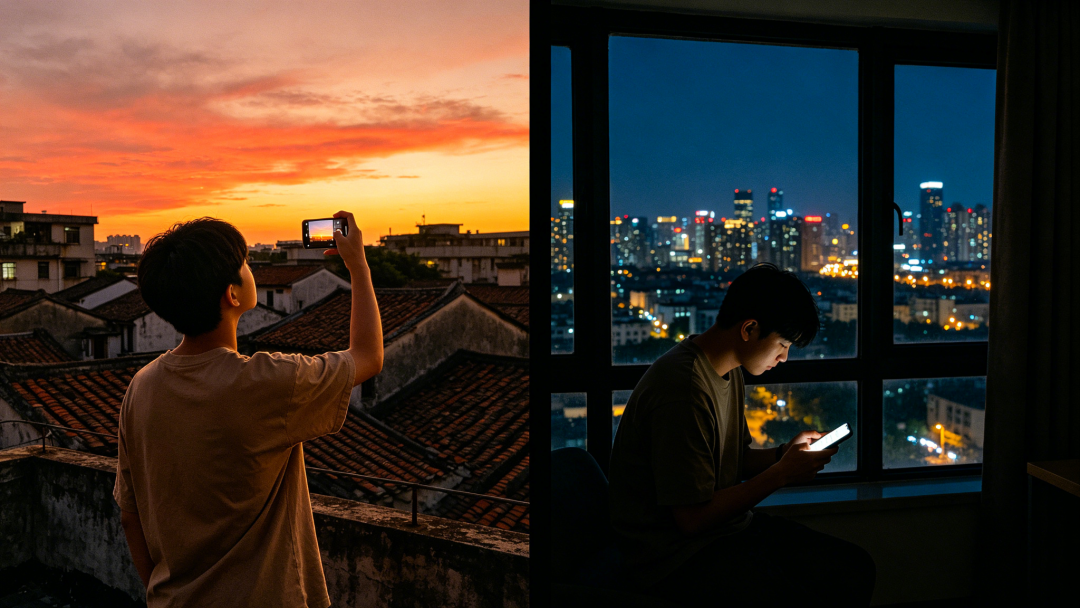
A dual portrait of an old city and a late-night metropolis. Gazing at each other: humans peering from different coordinates are actually just looking for kindred spirits.
This mutual 'looking at each other' is symbolic in itself. We’re all stretching our necks from different corners of the world to see what’s on the other side, and we’re really just looking for someone like us—confirming that, hey, you’re scared of poverty too, you’re scared of chaos, you want your kids to get a good education, and you don’t want to be unfairly labeled by someone else, either.
Albert Camus wrote in 'The Plague' that the greatness of humanity perhaps lies in the choice to keep loving even in desperate circumstances. For many Muslims who have lived through upheaval, planting a tree in the middle of ruins or insisting that their kids stay in school while living as refugees—these are acts of stubborn love and a refusal to give up on the future.
If I had to summarize the collective dream of today’s Muslims in one sentence, I’d say they just want to 'live normally' in this world. They want to avoid being economically marginalized, have a basic sense of political participation, enjoy the justice they deserve, maintain the dignity of their faith, and not be pigeonholed into whatever version of them the rest of the world has imagined.
Writing this, I’m reminded of that teenager on the rooftop holding his phone up to find a signal. The city behind him, bathed in sunset, looks a bit rough and messy, but it also has a stubborn, vital energy to it.
Maybe he’s checking study materials, looking for job openings, or maybe he’s watching a football game from the other side of the world, daydreaming that one day he’ll be able to step out of this city. Who knows?
But one thing is certain: what he wants isn't likely any more noble—or any less significant—than what we want.
Having enough money to get by, safer roads, being able to speak your mind, getting a good education, letting girls walk outside with their heads held high, not letting boys feel crushed by the weight of everyone’s expectations, and having a country that stands tall in the world so you don't always have to explain 'who we are.'
At the end of the day, these are the common answers the whole world is trying to find while navigating its own problems.
If you want to know what the hopes and dreams of Muslims are today, I’d rather ask you what our own dreams are. Once you strip away the borders, religions, and labels to leave just the real people underneath, you’ll realize that most of these so-called world issues are actually the same test—just written in different languages.
Maybe all we can do is keep it simple: stop rushing to judge others and instead learn to listen quietly, acknowledging that their pain and ours often share a hidden, common root.
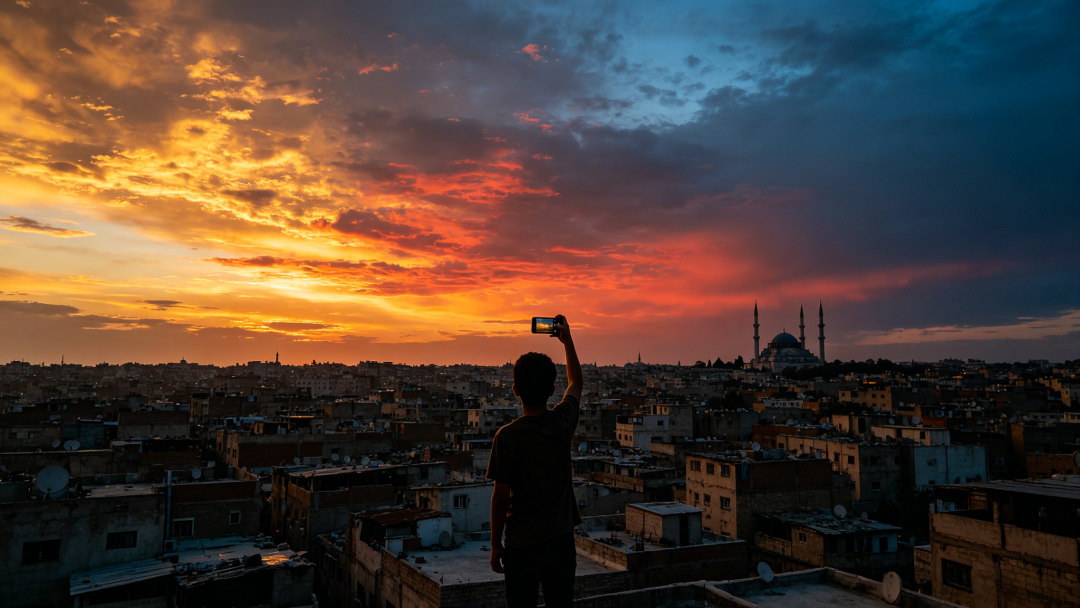
The silhouette of a young boy on a rooftop against the evening sunset. When this kind of understanding starts to grow, we can finally say it more naturally: so, you’re looking up at the sky in this weary world, too.
As this understanding grows, maybe one day we won't have to ask, What are their dreams? anymore. Instead, we’ll just naturally say, Oh, so you’re looking up at the sky in this weary world, too.
Through vivid snapshots like a teenager hunting for a signal on an old city rooftop or parents rushing through busy markets, we explore the daily lives of everyday people in the Muslim world. It shows that no matter the cultural background, the deep-seated hopes for peace, stability, and a bright future for our children are universal.
Those looking up from the dust of the mundane
The hopes and dreams of Muslims today
A teenager holding his phone up on a rooftop: A boy standing on a rooftop in an old city, the sunset painting the city behind him in shades of red and purple.
We all scroll through short-form videos, and there's a recurring scene: a kid in an old city holding his phone high up, trying to snag a better signal. In the background, there’s a maze of dense houses, with the silhouettes of mosques in the distance, bathed in the red and purple of the sunset. Someone in the comments wrote, 'This is just a normal, small city in some Muslim country.'
A viewer asked below, 'What are these people actually thinking about? Are they just obsessed with religion all day, or are they busy trying to escape war?'
Every time I see comments like that, I can't help but let out a dry laugh. Humans have a funny habit of looking at others through a screen and forgetting that there’s a real person on the other side. They get reduced to labels like 'Muslim,' 'Middle Easterner,' or 'refugee,' like stats on a video game character sheet tagged with 'militant,' 'conservative,' or 'mysterious.' But if you actually zoom in, those people suddenly become relatable—just like the couple running the local diner downstairs or the commuters crammed into the subway during rush hour.
Commuters checking their phones on the morning subway: When we look at others through a screen, we tend to forget they are just people.
When you bring up 'the hopes and dreams of Muslims today,' many people jump to conclusions, thinking we’re about to talk about something 'grand'—clashes of civilizations, geopolitical games, or those buzzwords you hear on the nightly news. But when investigators actually go door-to-door, you realize the answers aren't mystical at all. They’re incredibly simple—almost refreshingly down-to-earth.
A lot of people start with the basics: money, jobs, and wanting to live a life that feels secure.
Sounds familiar, right? It’s exactly the same stuff you hear at the grocery store: 'Rent went up again,' 'tutoring is too expensive,' or 'if only I could earn a little more, life wouldn't feel like such a struggle.'
So you see, even though we lay out a world map with colorful national borders, they can’t hide the truth: at the core, human desires are all pretty much the same.
Once, in a college class, when we were discussing the 'Muslim world,' I asked my students what the first image that popped into their heads was. Some said deserts and oil, some said girls wearing headscarves, and some mentioned the conflicts they see in the news. You see? That’s the power of stereotypes. Even in the information age, people’s imagination of the 'far away' is sometimes stuck in movies from the last century.
To understand today's dreams, we have to look back a little. For a long time, many Muslim societies stood at the crossroads of colonial rule, Cold War tug-of-wars, and resource competition. Political systems were unstable and economies were one-dimensional. People's lives were often pulled by 'outside forces,' like a boat tied to a dock—they wanted to row, but the rope was pulled tight.
A small boat tied to a dock: History—like a boat held back by a rope, wanting to sail but held fast.
For the older generation, the wish was mostly just 'survival'—dodging famine, avoiding war, and staying out of the power games of the major nations. In those days, the word 'dream' felt a bit like a luxury.
Later, as nations gained independence and modern cities began to rise, oil and trade brought sudden wealth to some areas. Shopping malls appeared on the streets, cars became common, and the lights came on. People started thinking: since this isn't just about surviving anymore, can we live with a bit of dignity?
That’s when new problems crept in: how to distribute wealth, how to wield power, whether the law should decide things or just 'who you know,' and whether education should be about teaching kids how to balance a ledger or how to be a good person.
You realize that many of the 'collective aspirations' in Muslim society today were squeezed out, bit by bit, through these long cracks in history.
Tolstoy wrote in 'War and Peace' that human history is like a great river, and every person is just a water droplet. In many Muslim countries, the current of this river is particularly fast, with many turns and whirlpools, so the droplets get tossed around more easily. That’s why the hunger for 'stability' is magnified.
Now, if you zoom back in, into the alleys and streets, you’ll see those wishes are actually very specific.
A young guy running a market stall wants a fair playing field—he wants to run his business without paying bribes and without worrying that a policy change will mean the whole street gets demolished tomorrow.
A young vendor greeting customers at a market: The Market—a desire for a fair business environment and a stable life.
A middle-aged woman working as a teacher worries about whether her salary can keep her kids in school, and whether the world described in textbooks and the world playing out on the news will leave her children feeling lost.
A female teacher lecturing in a classroom: The Classroom—wondering if a paycheck can cover the costs of a child's education.
Expert researchers will tell you that when they ask people what they most want to change, the majority of respondents bring up things like better job opportunities, a more stable income, and the ability to comfortably support their families. It doesn't sound very grand, but this is the foundation for any society. When the economic floor is solid, people feel at ease, and once they're at ease, they finally have the headspace to think about everything else.
So, for many Muslims, high up on their list of dreams is actually just making that foundation a little thicker and more secure.
Layered on top of that is the need for order. Many people mention wanting stronger laws, more reliable public safety, and less internal conflict or violence. Think of the law as the lubricant for the machine of society; without it, even if the exterior looks flashy, the internal components are going to keep jamming and smoking.
Metallic gears glistening with oil: Order – Law is the lubricant for the machinery of society.
In some places, there have been historical rifts between neighborhoods, old blood feuds between tribes, political friction, and even differing interpretations within the religion. Once these things ignite, the lives of ordinary people are constantly chased by the flames. The shadow of war has hung over some cities for too long, and people's hearts naturally form a simple dua (prayer): to live in peace, to stop the fighting, and to let children grow up in a classroom instead of learning to identify danger amidst the sound of gunfire.
In The Castle, Kafka wrote about being trapped in a system with invisible boundaries—you’re too weak to change it, but you can’t get around it, leading to a deep sense of powerlessness. For many ordinary Muslims, if the law actually worked and protected the rights of the little guy, that crushing sense of powerlessness against 'fate' would begin to fade.
Some surveys ask a more 'sensitive' question: how do you want your country to look to the world? The answers are quite interesting. On one hand, people emphasize wanting more 'dignity' and 'sovereignty' so they aren't constantly being bossed around by others. On the other hand, many stress the need to weave elements of 'justice' and 'participation' into their existing national systems.
It sounds a bit abstract, but you could put it another way: they just want a life where they aren't being pushed around by outside forces or manipulated by a small group of people on the inside.
Isn't that just a gut feeling shared by most regular people?
If you look at coffee shops on the street, people who talk about politics are often loud and passionate—they talk about constitutions, institutions, and international standing, like they're ready to rebuild the world. But people who have really been ground down by the daily grind are the ones saying, 'I just want reliable rules so I know that if I work hard, it’ll pay off—not just based on luck.'
So, when many Muslims talk about 'promoting democratic ideas,' they aren't reciting from a textbook. They’re saying, 'I want to be treated like a human, like a citizen, not just a cog in some massive machine.'
This wish is no more noble—and certainly no less—than the desire for a small pay raise. They both grow from the exact same soil.
When it comes to education, the conversation gets personal real fast.
Many respondents emphasize the need to wipe out illiteracy and drive away ignorance through a better educational system. 'Ignorance' is a heavy word, but it reflects a genuine feeling: people who haven't had access to education are easier to sway with rumors and inflame with rhetoric.
Some Muslim-majority countries have young populations; the streets are full of people in their twenties with bright eyes, but opportunities are scarce. They’re like a massive, untended wheat field—plenty of seeds and decent soil, but no proper farm tools and a broken irrigation system. Whether those seeds actually sprout is just a roll of the dice.
In this context, a truly well-run school acts like a sturdy irrigation channel, carefully delivering the water where it needs to go.
Water channels leading into a schoolhouse in a wheat field: Education – A well-run school is like a steady irrigation channel.
Many parents scrimp and save to help their kids learn foreign languages or computer skills, hoping they can jump on the train that’s moving the world forward. In One Hundred Years of Solitude, Márquez wrote that if a family loses its memory, it will keep repeating the same tragedies. A big part of the meaning of education is helping a society remember its lessons so it doesn't keep hitting the same rock and bleeding over and over again.
Words like gender equality, social justice, and religious freedom sometimes become internet slogans, but in many Muslim households, they are the sighs heard in the kitchen and the restless thoughts keeping people up at night.
For girls who want to keep studying, their families have to weigh the safety of the commute, the availability of jobs, and whether they can find a path that doesn't betray their traditions while still allowing for personal growth.
A girl with a backpack walking along a long street in the light: Hope – Girls can walk out the door and keep their heads held high.
Some young people are deeply religious, but they also hope for a bit more choice in their thoughts and lives within the bounds of the law. They want to find a balance between religious doctrine and the modern world, rather than living in a polarized, black-and-white reality.
When you string all these little wishes together, they form a force that is remarkably gentle yet incredibly firm.
By now, you might have noticed a somewhat ironic fact: people often assume 'Muslim dreams' must carry some mystical religious aura, as distant as a star on the dome of a mosque. In reality, when these dreams touch the ground, they’re just basic things: a stable job, reliable laws, a nation with dignity, schools that teach real skills, and a social environment where both men and women can walk with their heads held high.
Put it all together, and that is exactly what they see as a 'better future.'
Some people say dreams should be noble and not so 'realistic.' Honestly, that sounds like elitist talk from someone stuck in an ivory tower. Lu Xun once wrote that 'hope is like a path in the countryside: it doesn't exist at first, but once many people walk it, it becomes a path.' For many Muslims, better economic conditions, institutional progress, and social justice are that path—it’s something they’re building step-by-step, not some complete blueprint that just falls from the sky.
If you look at the buzz online, you’ll usually see two extremes: one romanticizes the Muslim world as if everyone there lives entirely in poetry and dua (prayer), completely detached from reality, while the other demonizes them, acting like they live in a place fundamentally at odds with modern civilization.
To put it bluntly, both of these perspectives are just lazy. Because the truly complex reality is always somewhere in the middle.
There’s a line from the movie 'Let the Bullets Fly' that fits here: 'I want the people on the mountain to see the lights in the city.' In the context of many Muslim societies, you could read that differently: deep down, everyone wants the kids in remote villages to see the opportunities in big cities and get a taste of modern life.
That’s also why, when people talk about 'improving their country’s international standing,' it’s partly because they want to be seen and respected by the world, instead of their country being associated only with conflict and poverty. But on another level, they’re just hoping that more equal partnerships will give the next generation more agency.
Gaining international respect is a weird, elusive thing, yet it’s also very tangible. When you’re treated with respect over a long period, you become more confident. Inside a society, when people discuss issues, they stop feeling so insecure and don't just fall into the trap of sighing, 'We’re just born to be behind.'
Of course, at the end of the day, to earn respect from others, you have to get your own life in order. This is something many of the Muslims I’ve interviewed have mentioned: they want to reject heavy-handed outside interference and focus on minding their own business and paving their own way, based on a foundation of mutual respect.
In this way, they’re actually just like ordinary people in most other countries. Nobody wants someone else’s hand in their pocket, and they definitely don’t want people thousands of miles away dictating how they should live their lives.
At this point, some might ask: where does religion fit into all these desires? Is it something that outweighs everything else in their minds?
Based on many grassroots surveys, faith is clearly a spiritual anchor for many Muslims. It’s a vital bond for how they understand the world, cope with suffering, and maintain a sense of community. But when it comes to the 'what are your top real-world concerns' section of a questionnaire, the vast majority still list jobs, education, public safety, corruption, and the cost of living.
This doesn't mean faith isn't important. On the contrary, precisely because their spiritual world has a solid foundation, people are even clearer that a truly balanced life isn't just about dua (prayer)—it also requires bread, books, and a sense of security.
I’ve sat at the dinner tables of many Muslim families. After eating, the elders will casually turn on the news, drop a quick comment on some global event, and then immediately switch to talking about whether the kids should go to a better school in the city next semester. That energy is super grounded and totally real.
There’s a line from 'Lotus Lantern' (an animated classic) that goes, 'How can worldly matters be so simple?' That could be directed at everyone trying to judge the entire Muslim world at a glance. If you really want to understand them, you have to embrace the complexity. You have to admit they face the same contradictions, the same tug-of-war, and the same struggles between tradition and modernity that everyone else does.
So, how far away are these dreams?
Actually, they’re pretty close.
A young guy working in a small inland city stares at a picture of a far-off mosque on his phone; he’s hoping the fighting over there stops soon. Meanwhile, a young person on the other end of that screen is scrolling through night shots of a massive Eastern metropolis, wishing that one day they can travel abroad and see the outside world.
A dual portrait of an old city and a late-night metropolis. Gazing at each other: humans peering from different coordinates are actually just looking for kindred spirits.
This mutual 'looking at each other' is symbolic in itself. We’re all stretching our necks from different corners of the world to see what’s on the other side, and we’re really just looking for someone like us—confirming that, hey, you’re scared of poverty too, you’re scared of chaos, you want your kids to get a good education, and you don’t want to be unfairly labeled by someone else, either.
Albert Camus wrote in 'The Plague' that the greatness of humanity perhaps lies in the choice to keep loving even in desperate circumstances. For many Muslims who have lived through upheaval, planting a tree in the middle of ruins or insisting that their kids stay in school while living as refugees—these are acts of stubborn love and a refusal to give up on the future.
If I had to summarize the collective dream of today’s Muslims in one sentence, I’d say they just want to 'live normally' in this world. They want to avoid being economically marginalized, have a basic sense of political participation, enjoy the justice they deserve, maintain the dignity of their faith, and not be pigeonholed into whatever version of them the rest of the world has imagined.
Writing this, I’m reminded of that teenager on the rooftop holding his phone up to find a signal. The city behind him, bathed in sunset, looks a bit rough and messy, but it also has a stubborn, vital energy to it.
Maybe he’s checking study materials, looking for job openings, or maybe he’s watching a football game from the other side of the world, daydreaming that one day he’ll be able to step out of this city. Who knows?
But one thing is certain: what he wants isn't likely any more noble—or any less significant—than what we want.
Having enough money to get by, safer roads, being able to speak your mind, getting a good education, letting girls walk outside with their heads held high, not letting boys feel crushed by the weight of everyone’s expectations, and having a country that stands tall in the world so you don't always have to explain 'who we are.'
At the end of the day, these are the common answers the whole world is trying to find while navigating its own problems.
If you want to know what the hopes and dreams of Muslims are today, I’d rather ask you what our own dreams are. Once you strip away the borders, religions, and labels to leave just the real people underneath, you’ll realize that most of these so-called world issues are actually the same test—just written in different languages.
Maybe all we can do is keep it simple: stop rushing to judge others and instead learn to listen quietly, acknowledging that their pain and ours often share a hidden, common root.
The silhouette of a young boy on a rooftop against the evening sunset. When this kind of understanding starts to grow, we can finally say it more naturally: so, you’re looking up at the sky in this weary world, too.
As this understanding grows, maybe one day we won't have to ask, What are their dreams? anymore. Instead, we’ll just naturally say, Oh, so you’re looking up at the sky in this weary world, too.
