
Top 10 Lanzhou Beef Noodles: An Authentic Local Guide to Hidden Gem Noodle Shops
[Internet Repost]
I’ve put together a deep-dive guide featuring 69 high-res photos to rank the top 10 beef noodle spots across Lanzhou, Gansu. We’re breaking down the authentic standard of 'one clear, two white, three red, four green, five yellow' while reviewing the unique flavors of the rich beef broth, secret chili oil, and perfectly chewy hand-pulled noodles at each shop.
About a decade ago, back when social media was still in its infancy, I published a list of the 'Ten Best Beef Noodle Shops in Lanzhou' on Weibo. It went viral, racking up millions of views and getting shared all over WeChat Moments and various blogs.
Even today, travel influencers on video platforms are still flocking to the exact shops I picked back then. But after over a decade of shifts in the Lanzhou noodle scene, some of those 'best' spots have honestly just become average.

(Mogouyan Beef Noodles) photo capture.
I’ve personally eaten at over 300 beef noodle spots in Lanzhou. This post features my top 10 picks (the 2026 edition). I’m not chasing hype or traffic; it’s all about the flavor. Of course, there’s no universal standard for 'good,' so these are just my personal favorites, in no particular order.
If you’re only looking for the most famous spots with the longest lines, you can just refer to my older reviews.
Disclaimer: I’ve personally visited every spot mentioned in this article. All text is original, and every photo was taken on-site. Please don’t steal photos or repurpose my content without permission.
1. Jiawei Pure Broth Beef Noodles
Jiawei Pure Broth Beef Noodles is right next door to Heikemai Beef Noodles on Hualin Mountain. Both are classic Lanzhou staples. While Heikemai is more famous, I actually think the food at Jiawei is better. It just doesn't have the same level of hype, so you won’t see travel influencers camping out there.

(Jiawei Pure Broth Beef Noodles) photo capture.

(Jiawei Pure Broth Beef Noodles) photo capture.
When I went to the Jiawei Hualin Mountain branch, it was marked as 'permanently closed' on the review app (who knows, maybe competitors were messing with it). So, I did everyone a favor and re-added the listing so true foodies could find it. It still doesn't have many reviews, which is fine by me—it keeps this hidden gem authentic and unbothered, which is a blessing for real food lovers.

(Jiawei Pure Broth Beef Noodles) photo capture.

(Jiawei Pure Broth Beef Noodles) photo capture.
At Jiawei, both the beef noodles and the extra beef cost 8 yuan each. Just by smelling the broth, I knew this was the real deal. It just goes to show how many hidden legends there are in the Lanzhou noodle game. I found this spot late, and maybe it's been overshadowed by the neighbor, but after trying it, I can confidently say it beats most noodle shops in the city. The aftertaste is incredible.
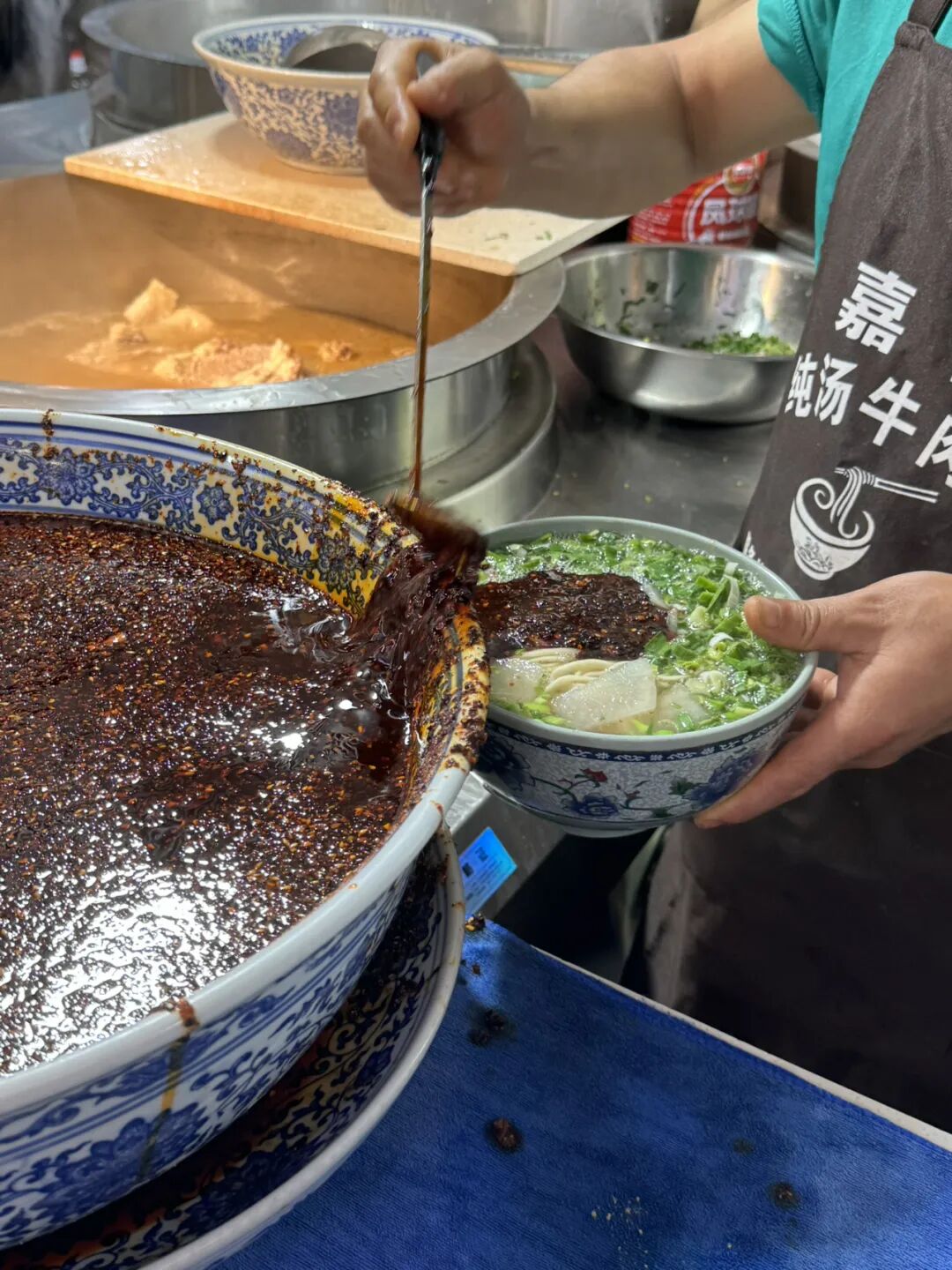
(Jiawei Pure Broth Beef Noodles) photo capture.

(Jiawei Pure Broth Beef Noodles) photo capture.
2. Qingxiangge Beef Noodles
There’s a small shop called Qingxiangge Beef Noodles along the Yellow River on South Binhe Road that people kept recommending, so I went early in the morning to snag a bowl from the first batch of broth. The storefront is tiny and tucked away, but the name 'Qingxiangge' sounds grand, like the old-school Lanzhou spots that don't exist anymore, like the famous 'Lanqingge.'
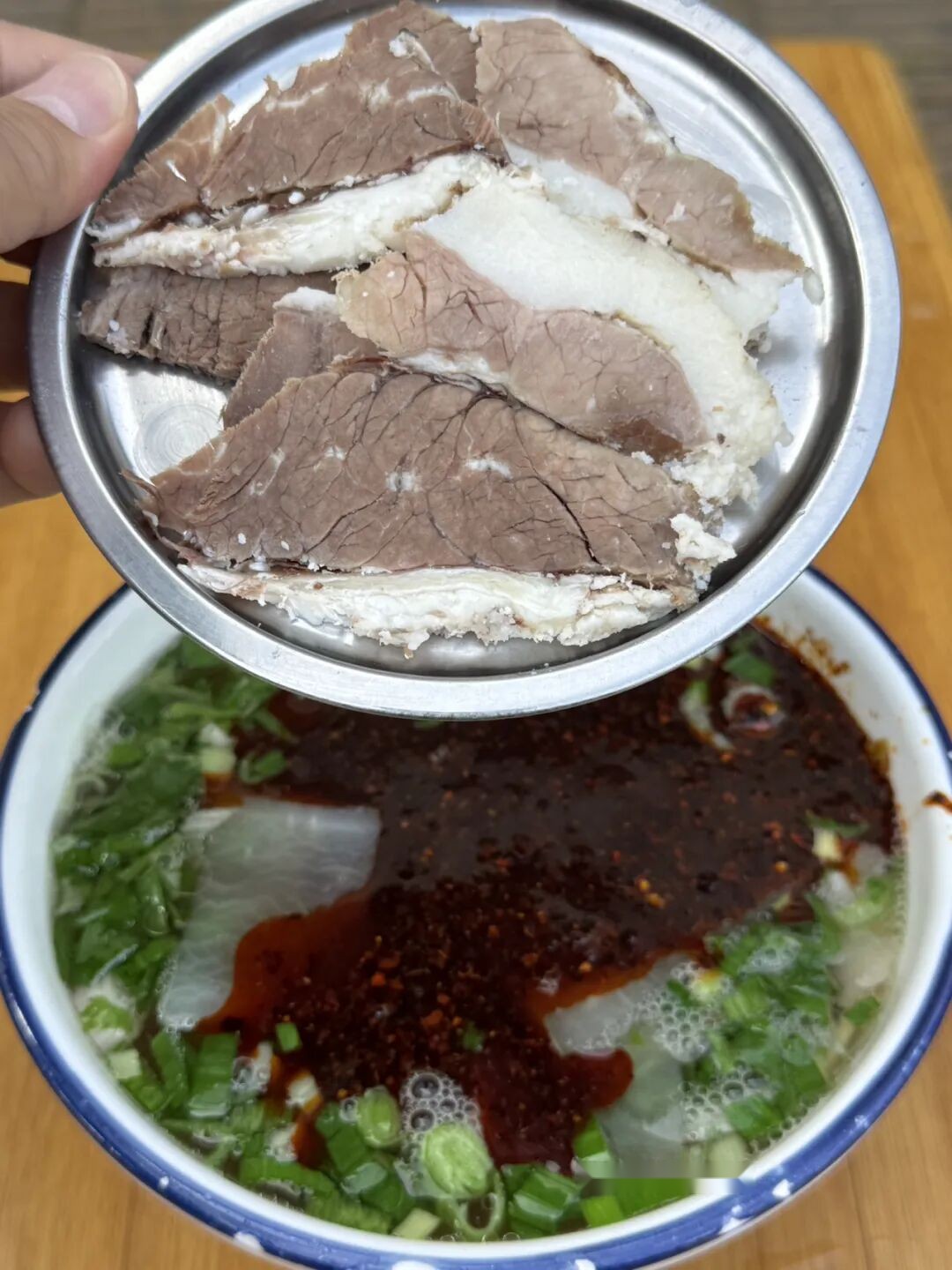
(Qingxiangge Beef Noodles) photo capture.

(Qingxiangge Beef Noodles) photo capture.
A bowl of noodles at Qingxiangge is 8 yuan, but the beef is 10 yuan—which is a yuan more expensive than most places in Lanzhou. It’s a small difference, but in a city where prices are usually super standardized, it stands out. It just goes to show: a hole-in-the-wall noodle shop isn't always cheaper than a fancy-looking place; sometimes, they're actually more expensive.

(Qingxiangge Beef Noodles) photo capture.

(Qingxiangge Beef Noodles) photo capture.
As soon as they set the bowl of Qingxiangge noodles down, the smell told me everything I needed to know—this is that classic flavor many locals crave. The broth is simmered for hours, the chili oil is fragrant without being overpowering, and paired with the 'erxi' (medium-thick noodles), there’s only one word for it: satisfying!
I’m really happy with this little spot. It’s definitely in my top 10 for Lanzhou, even if the shop is tiny and easy to miss.

(Qingxiangge Beef Noodles price list) photo capture.

(Qingxiangge Beef Noodles) photo capture.
3. Dijia Beef Noodles
A while back, I made a special trip from my hotel in Anning to the mountain to visit Dijia Beef Noodles for the second time. I heard the old man who started the shop passed away. Some old-school Lanzhou locals might remember the original Dijia Beef Noodles on Jingning Road; it was open for 20 years before closing in 2010 due to various reasons, but the regulars never forgot it.

(Dijia Beef Noodles) photo capture.

(Dijia Beef Noodles) photo capture.
Six or seven years ago, Dijia reopened, but not at the old address—this time, it’s halfway up Gaolan Mountain. Getting there feels a bit like navigating Chongqing with all the mountain roads. Everyone eating there, aside from the locals, is a true foodie on a mission for that nostalgic taste.

(Dijia Beef Noodles) photo capture.
I first tried Dijia four years ago and it left a lasting impression. The shop is set up in a private courtyard. Both the noodles and the beef are 8 yuan—actually a yuan cheaper than other places. After my bowl arrived, an old guy sitting across from me couldn't help but say how fragrant it smelled.

(Dijia Beef Noodles) photo capture.
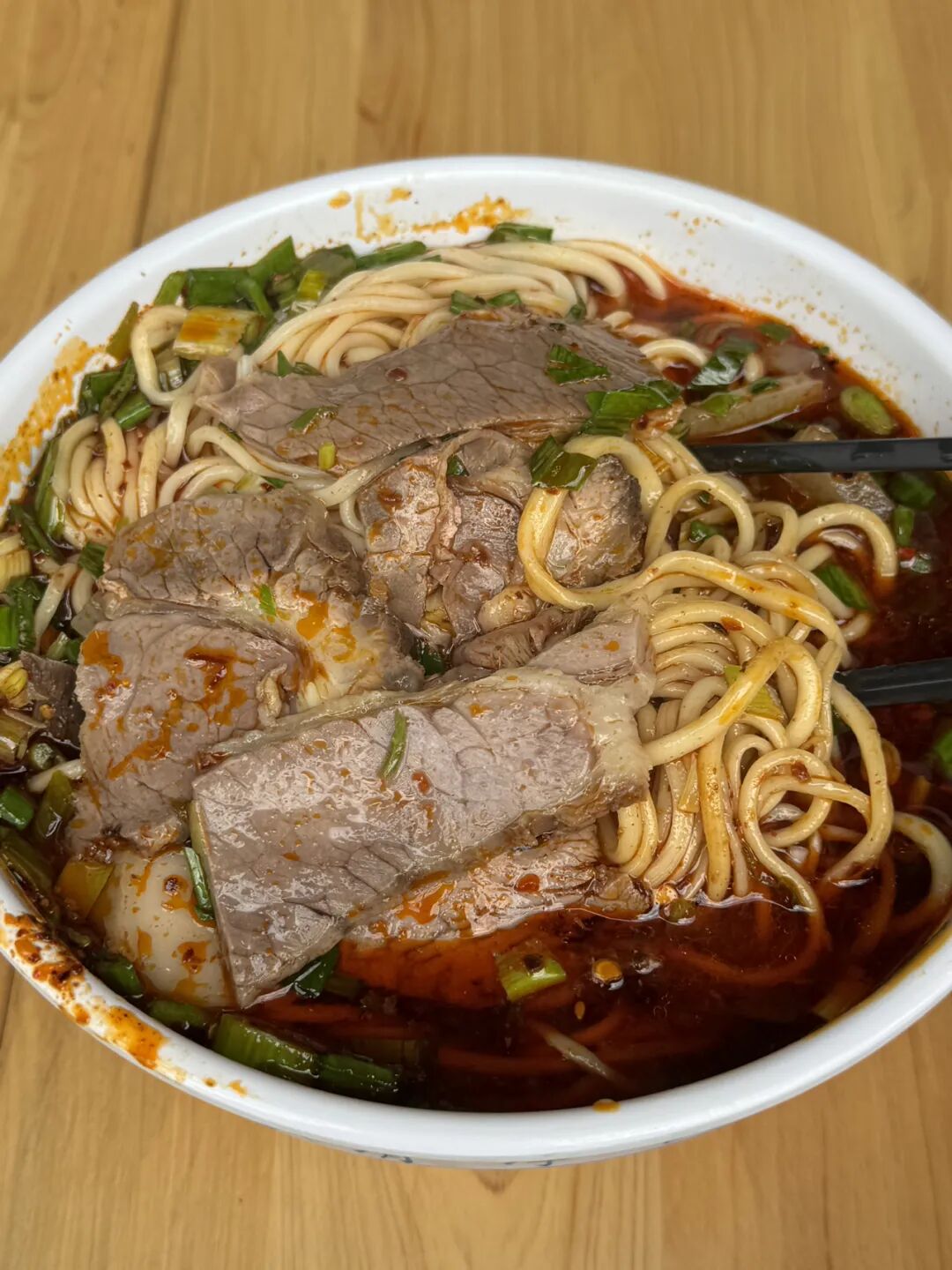
(Dijia Beef Noodles) photo capture.
First, I took a sip of the broth. It’s that perfect mix of beef stock and spicy oil—the real, authentic Lanzhou taste. It’s super aromatic. The texture of the noodles at Dijia is a bit weaker; even though they’ve improved since last time—they don't taste like 'reganmian' (dry-mixed noodles) anymore—they still feel a bit loose and don't quite stand out.

(Dijia Beef Noodles) photo capture.
After finishing the noodles, there was still half a bowl of broth left. I added a little vinegar, and the flavor turned sweet, not sour. This is the result of the chemical reaction between the vinegar and the broth, and it’s one of the main ways to judge if a bowl of Lanzhou beef noodles is made the traditional way: a good beef broth should turn sweet when you add vinegar.
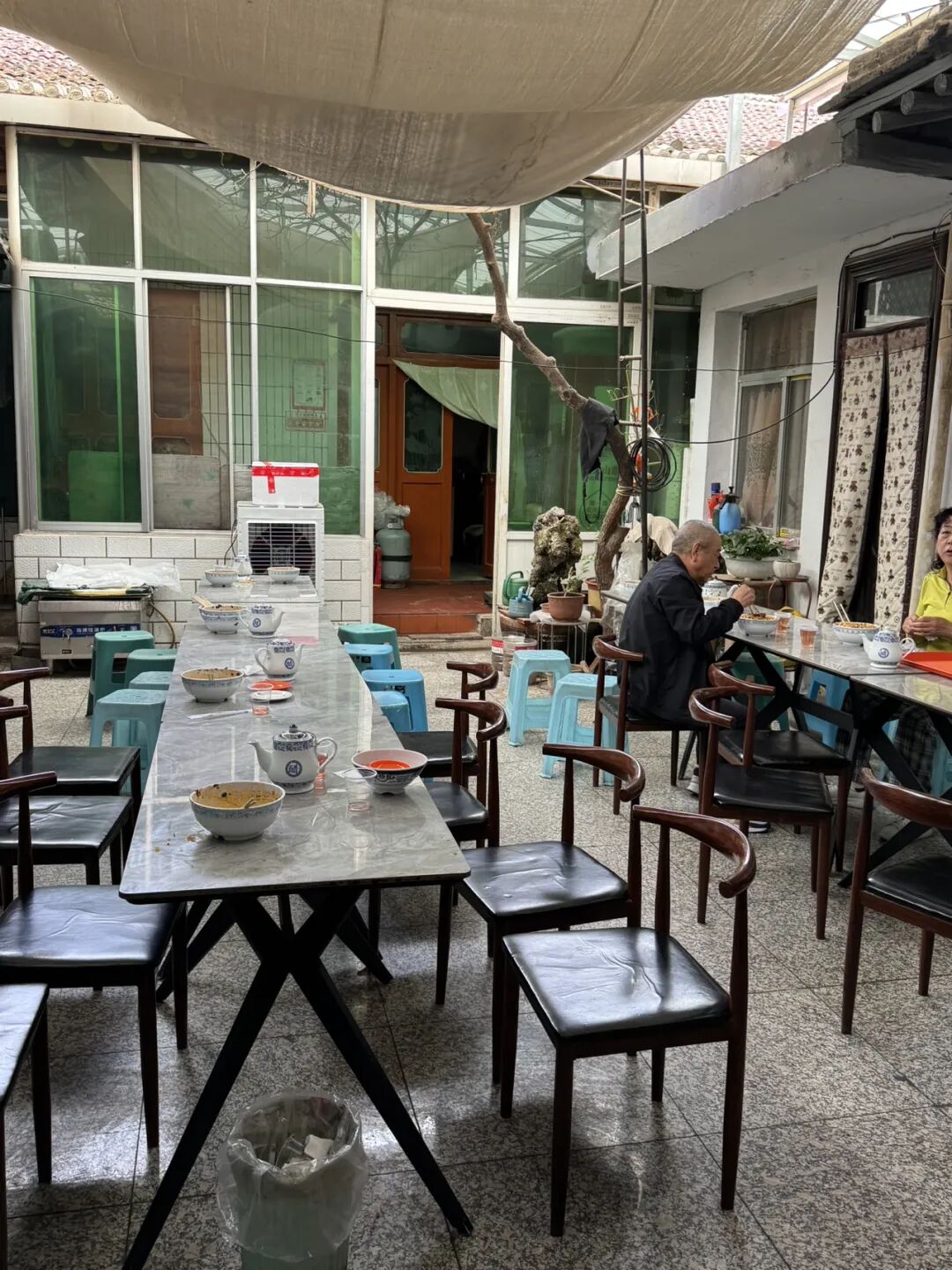
Di Jia Beef Noodles: Captured on site

Di Jia Beef Noodles: Captured on site

Di Jia Beef Noodles: Captured on site
4. Chenguang Beef Noodles
One of the hottest noodle shops in Lanzhou's Xigu District, Chenguang Beef Noodles, gets its name from being right next to the Chenguang residential complex bus stop. It opened in 2002 and has been going strong for 24 years now.
I spotted the crowd before I even reached the shop. The place was packed, and the outdoor seating was overflowing into the neighboring businesses—it reminded me of the legendary Chenji Qing Tang and Bai Jianqiang in their prime. It’s actually cool to see how well they get along with the neighbors, as the massive foot traffic from this viral spot definitely keeps the surrounding stores, like the nearby supermarket, booming.

Chenguang Beef Noodles: Captured on site

Chenguang Beef Noodles: Captured on site
I grabbed a bowl of beef noodles, a side of extra beef, and some small side dishes for 19 yuan—pretty standard pricing for Lanzhou. I asked for 'san-xi' (medium-thin noodles), but what I got seemed more like standard 'xi' (thin noodles). To be fair, even among some noodle masters, the line between 'xi' and 'san-xi' gets blurry; 'san-xi' is supposed to be the thickness right between thin and 'er-xi' (thick).

Chenguang Beef Noodles: Captured on site
Here’s a little insider secret about Lanzhou beef noodles: shops in suburban areas like Xigu serve larger portions than those in the city center. I once heard from an industry insider that suburban shops get about 180 bowls per sack of flour, while city center spots push for 200 to 220 bowls.

Chenguang Beef Noodles: Captured on site

Chenguang Beef Noodles: Captured on site
The owner of Chenguang is the sister of the founder of the old Chenji Qing Tang. The broth here is a classic clear soup—not as oily as Deyuan’s—but the chili oil is incredibly fragrant. I knew it was legit just by the smell. Looking at all the locals packing the place, it’s clear the residents definitely approve.
Since the old king of Xigu beef noodles, Chenji Qing Tang, closed down, Chenguang has definitely taken the crown.
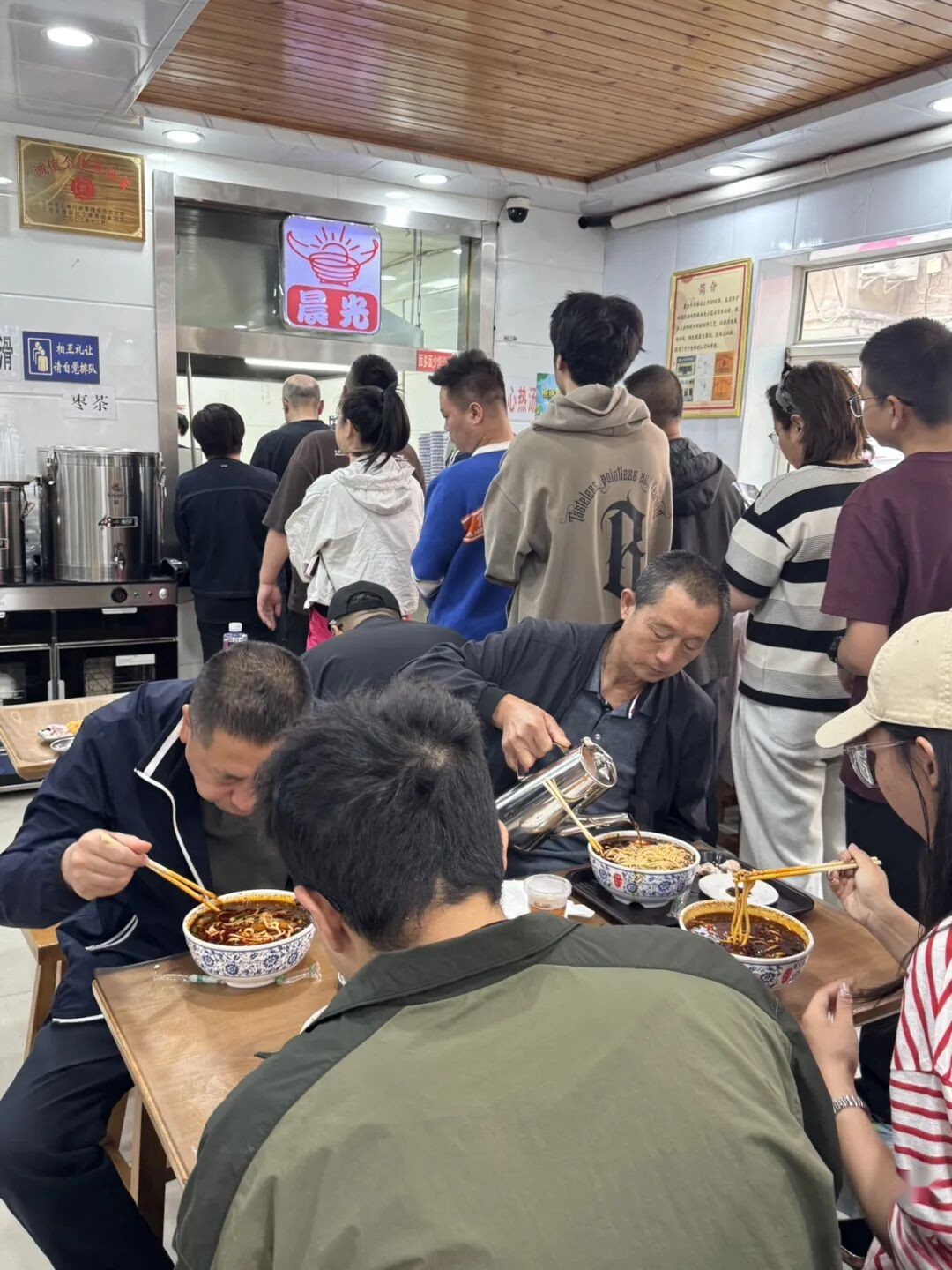
Chenguang Beef Noodles: Captured on site

Chenguang Beef Noodles: Captured on site
5. Shuimitian Beef Noodles
New beef noodle brands are popping up all over Lanzhou, so every time I visit, I make it a point to try a few spots I’ve never been to before. Shuimitian in Anning District has amazing soup, great meat, and perfectly chewy noodles—it was a total 'manfu' (a local slang for feeling deeply satisfied/full) experience!
Shuimitian is one of those hidden gems. You won’t find much online promotion and they have barely any reviews on platforms like Dazhong Dianping, but the local word-of-mouth is incredible. It’s mostly just neighbors eating here; you rarely see tourists or people from the other side of town.

Shuimitian Beef Noodles: Captured on site

Shuimitian Beef Noodles: Captured on site
Shuimitian’s biggest flex is that they never cut corners. Rumor has it they buy the premium cuts of beef, paying a few yuan more per pound than the market rate. They stick to traditional clear soup methods, and their chili oil is fragrant without being overly spicy. Best of all, there’s no weird chemical aftertaste, so you don't feel thirsty afterward. The Lantian Jiayuan location is almost always full.

Shuimitian Beef Noodles: Captured on site

Shuimitian Beef Noodles: Captured on site
I visited the Beian Gongguan branch for my second meal. With an open kitchen, it’s super clean and hygienic. I ordered the 'luxury' version with extra beef, a braised egg, and sides. You could tell just by looking that the beef was high quality—it tasted great on its own and was even better soaked in the broth. The noodles were perfectly chewy and the soup was rich; I can totally see why locals never get tired of it.

Shuimitian Beef Noodles: Captured on site

Shuimitian Beef Noodles: Captured on site

Shuimitian Beef Noodles: Captured on site
6. Bai Laoqi Peng-Hui Beef Noodles
The famous Bai Laoqi Peng-Hui Beef Noodles moved to a new spot, and the upgraded space, decor, and vibe are a major step up from the old place. It’s still north of the Yellow River, but a bit further from the original shop in Jinchengguan.
Bai Laoqi is actually the seventh uncle of Bai Jianqiang. The Lanzhou beef noodle scene is basically one big family—Zhang Youde is Bai Jianqiang’s uncle, Ma Junli is Zhang Youde’s brother-in-law, and Ma Anjun and Ma Guoyi are cousins.

Bai Laoqi Peng-Hui Beef Noodles: Captured on site
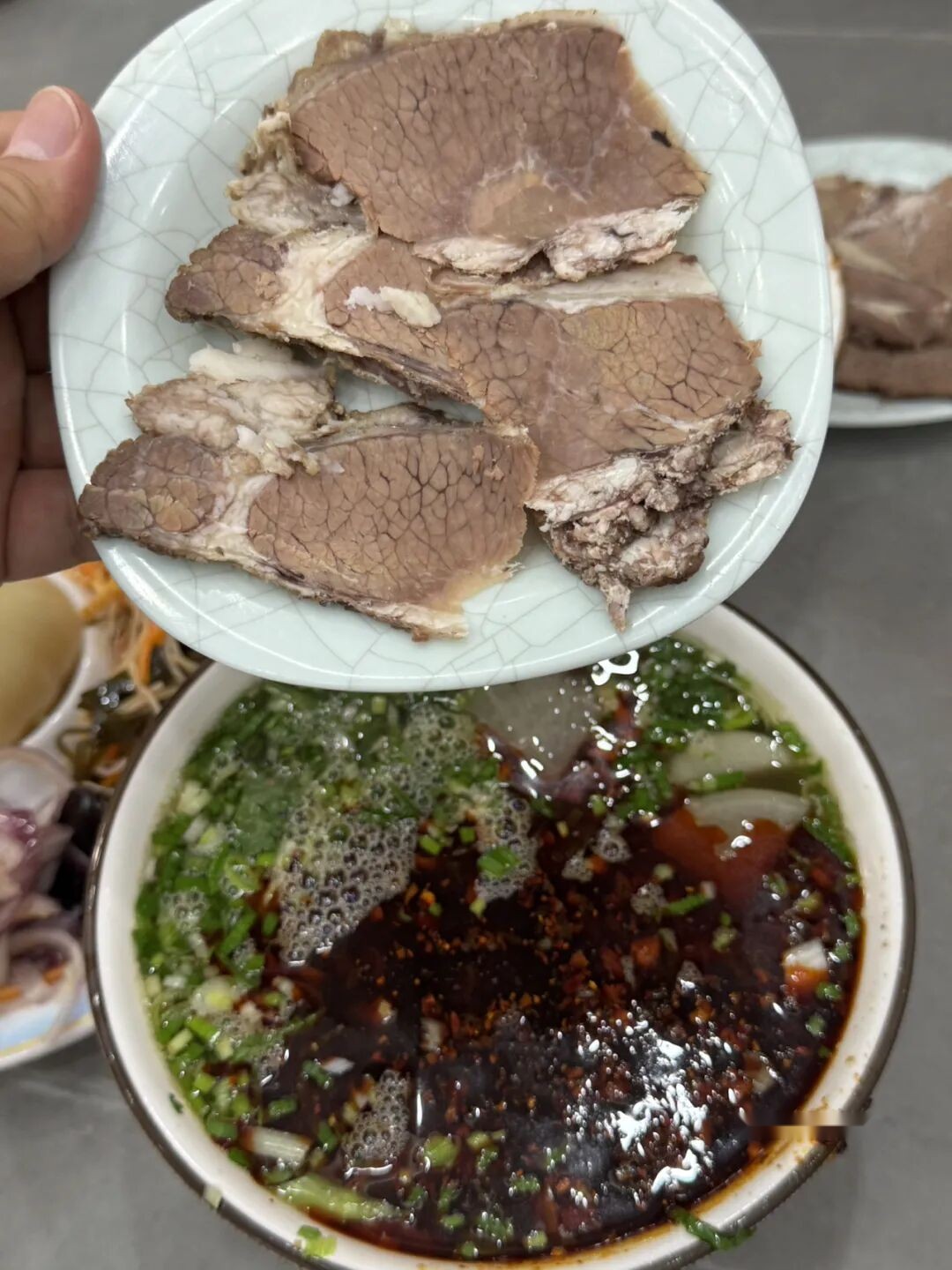
Bai Laoqi Peng-Hui Beef Noodles: Captured on site
Even though they haven’t been at the new spot for long, their long-standing reputation keeps the place slammed. The new shop is huge, but it was still completely packed. I came with two friends, and I had to snag a table while the other guy went to line up for the noodles.

Bai Laoqi Peng-Hui Beef Noodles: Captured on site
I ordered the 'da-kuan' (extra-wide noodles), which I hadn't had in a while. Bai Laoqi’s wide noodles are even wider than Shaanxi’s 'belt noodles.' Soaking in that beef broth, they have a really hearty, meaty texture. Whether they’re better than the thin ones is really just a matter of personal taste—most people stick to thin noodles, but the wide ones are a great way to switch it up.

Bai Laoqi Peng-Hui Beef Noodles: Captured on site
Bai Laoqi’s beef noodles are top-tier in Lanzhou, with a chili oil that has a distinct, smoky toasted aroma. As for the 'Peng-Hui' (a traditional alkaline additive made from desert plants) in their name, I’m not sure if they’re still using the authentic stuff or if it’s just for the brand name, since real Peng-Hui is in short supply these days and most shops just use standard ramen additives.

Bai Laoqi Peng-Hui Beef Noodles: Captured on site

(Bailaoqi Penghui Beef Noodles) actual photo
7. Heikemai Beef Noodles
Located halfway up Hualin Mountain in Lanzhou, Heikemai Beef Noodles is a classic, old-school shop. Jiawei Beef Noodles is right next door, and both serve that traditional Lanzhou flavor. While I personally prefer Jiawei, Heikemai is definitely worth a visit too.

(Heikemai Beef Noodles) actual photo

(Heikemai Beef Noodles) actual photo
A bowl of beef noodles at Heikemai is 8 yuan, and the beef is another 8, making it 16 total. I love adding a bit of fatty jiahua rou (marbled beef brisket), which has a much better texture than the pure lean meat. One unique thing about Heikemai is that they mix the diced beef and garlic sprouts together—it’s the only place I’ve seen that does this in Lanzhou.

(Heikemai Beef Noodles) actual photo
Heikemai uses a classic old-school method to simmer their beef broth. The first sip might taste a bit light, but the flavor builds up the more you eat; it leaves a great aftertaste and won't leave you feeling thirsty or dry-mouthed later. I accidentally added a bit too much chili to this order of sanxi (thin noodles), but after finishing the noodles, I added a splash of vinegar to the remaining broth, and it tasted surprisingly sweet, not sour.

(Heikemai Beef Noodles) actual photo

(Heikemai Beef Noodles) actual photo
There aren't many shops left in Lanzhou that serve these authentic old-school flavors, but here are a few more recommendations: Dijia, Heikemai, Laoma Penghui, Mazilu, Qingxiangge, and Jinding.

(Heikemai Beef Noodles menu) actual photo

(Heikemai Beef Noodles) actual photo
8. Lulu Beef Noodles
Lanzhou Lulu Beef Noodles is a small, tucked-away spot on the edge of town off Highway 101. It’s got a total 90s vibe, which is the complete opposite of fancy, massive restaurants like Ashiya. Opening a luxury restaurant in Lanzhou usually doesn't pay off because people won't pay high prices for beef noodles; here, it’s still just 8 yuan for the noodles and 9 yuan for the beef.

(Lulu Beef Noodles) actual photo
Lulu doesn't sell side dishes—just meat and eggs. They don't weigh the beef, either; the staff just grabs a portion and tosses it into your bowl, and they don't use separate saucers for the meat.
According to some locals, Lulu serves the same authentic taste from 30 years ago. The noodles are nice and chewy, and the overall flavor leans heavy on the numbing, spicy, and salty side. It leaves your tongue tingling, though it’s a different kind of spice compared to the heavy numbing heat you find in Sichuan cuisine.


(Lulu Beef Noodles) actual photo

(Lulu Beef Noodles) actual photo
If you’re into the old-school Lanzhou taste and like things bold and flavorful, you should definitely check out Lulu. Just keep in mind it’s a super simple, out-of-the-way spot, but you can get there by taking the number 44 bus right to the front door.

(Lulu Beef Noodles) actual photo
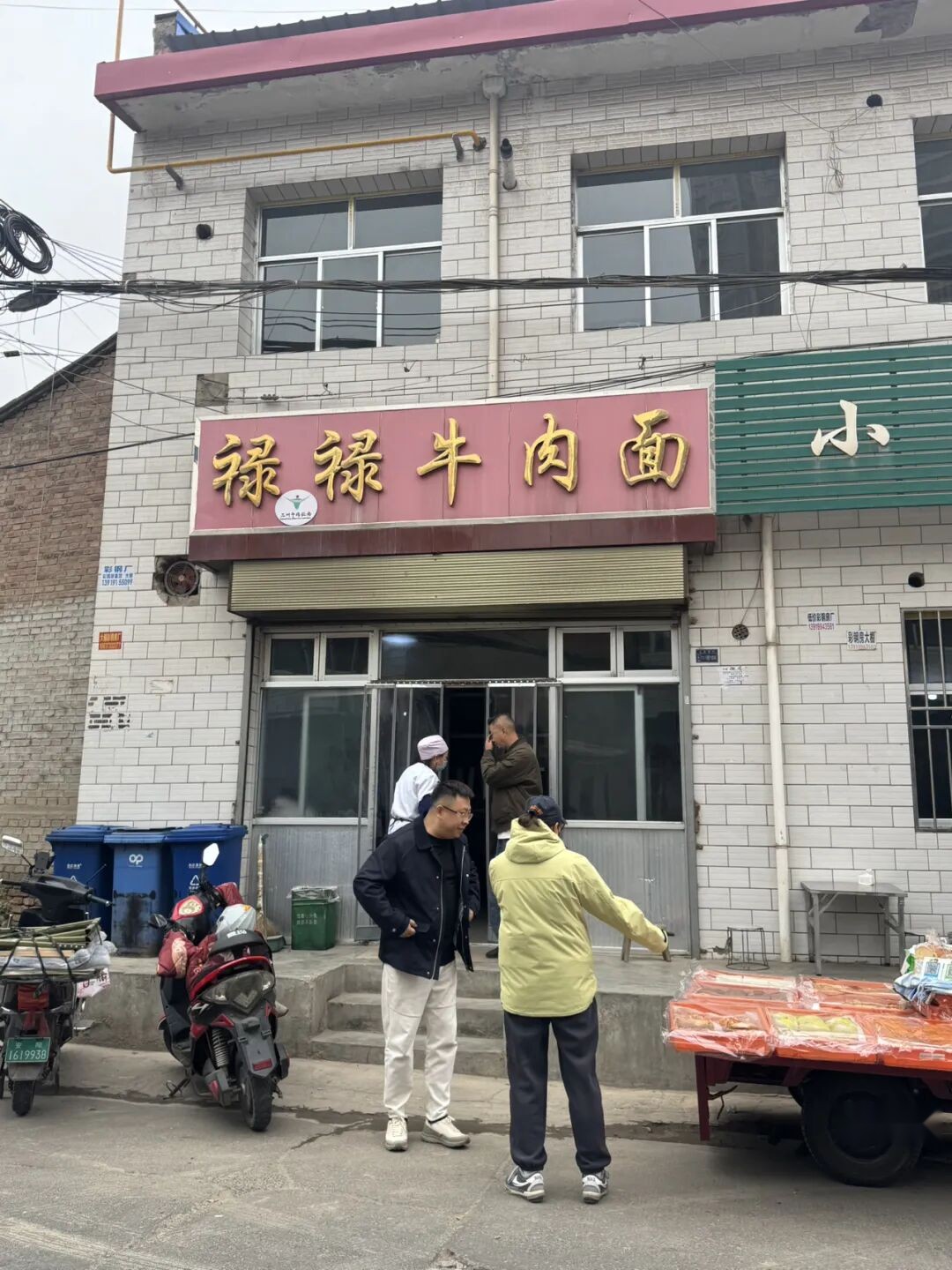
(Lulu Beef Noodles) actual photo
9. Ma Anjun Spicy Beef Noodles
Lanzhou beef noodles once had what people called the "Five Wonders," but the only one that’s still thriving today—and getting even more popular—is the one nicknamed "Western Venom": Ma Anjun Spicy Beef Noodles. While Guoyi Beef Noodles has also been trending lately, I think Ma Anjun has deeper roots. I’ve tried both, and I still prefer the beef noodles at Ma Anjun, though Ma Guoyi’s best item is actually their cold noodles.

(Ma Anjun Spicy Beef Noodles) actual photo

(Ma Anjun Spicy Beef Noodles) actual photo
The chili oil at Ma Anjun is made from a fine chili powder and contains no sesame seeds. It’s much spicier than your average Lanzhou beef noodles. Some people aren’t into that, but others are obsessed and would eat it every day—it’s definitely one of those "to each their own" situations.
There’s a popular online meme about how Ma Anjun limits you to 10 scoops of chili oil and charges a fee for every extra scoop, but honestly, no normal person is actually going to add more than 10 scoops.

(Ma Anjun Spicy Beef Noodles) actual photo
I personally think Ma Anjun’s noodles are super chewy and the chili is fire, but it almost misses that classic, clean-broth beef noodle vibe. It’s not the traditional style, but by doing something different and doubling down on that spicy chili oil, they’ve managed to break out of the mold—definitely something for restaurant owners to think about.

(Ma Anjun Spicy Beef Noodles) actual photo
Ma Anjun didn’t used to sell side dishes, only beef, which was a bummer for people who like a little extra on the side. The shop was exposed in the media a year or two ago, and after they closed for renovations and reopened, they actually became even more popular and started offering side dishes too.

(Ma Anjun Spicy Beef Noodles menu) actual photo

(Ma Anjun Spicy Beef Noodles) actual photo
10. Jicheng Clear Broth Beef Noodles (formerly Chenji Clear Broth Beef Noodles)
The legendary king of lines in Lanzhou, Xigu Chenji Clear Broth Beef Noodles, officially closed its doors a while back after 31 years in business. Screenshots of the conversation between the customers and the owner went viral on short-video platforms, sparking a huge debate among local foodies and beef noodle superfans.

A lot of people were heartbroken that Chenji shut down. It was widely considered one of the best bowls of beef noodles in Lanzhou, having grown up alongside generations of Xigu locals and serving as a core memory of the city's food scene.
Even though Chenji is gone, a new spot called Jicheng Clear Broth Beef Noodles opened in the exact same location. The storefront and general vibe feel like a direct continuation of the original Chenji, so I had to come by and see if the flavor held up.

(Jicheng Clear Broth Beef Noodles) actual photo

Jicheng Qingtang Beef Noodle Shop: A real-deal look at one of Lanzhou's most iconic spots.
Even long after the lunch rush, this place is totally packed inside and out. It’s clear that even though the name changed from Chenji Qingtang, the legacy of the original shop still brings in the regulars who have been eating here for years. Beef noodles are everywhere in Lanzhou; honestly, while some are definitely better than others, it's pretty hard to find a truly bad bowl. Making beef noodles isn't exactly rocket science, after all.

Jicheng Qingtang Beef Noodle Shop: A real-deal look at one of Lanzhou's most iconic spots.
Just like the old place, the new menu is super simple—no side dishes, just meat and eggs. The beef is weighed and added right into your bowl, so you won't find separate plates of meat here. I ordered the sanxi (three-fine, a specific thin noodle shape), and the total for my noodles and extra beef was 17 yuan, which is the standard going rate in Lanzhou.

Jicheng Qingtang Beef Noodle Shop: A real-deal look at one of Lanzhou's most iconic spots.
I took my bowl outside to grab a seat, and after that very first sip of the broth, I knew this was still hands-down one of the best bowls of beef noodles in all of Lanzhou. The flavor is a direct continuation of the classic Chenji Qingtang recipe. Even though I’m not sure who the current owner is, they definitely kept the same secret for nailing that broth.

Jicheng Qingtang Beef Noodle Shop: A real-deal look at one of Lanzhou's most iconic spots.

Jicheng Qingtang Beef Noodle Shop: A real-deal look at one of Lanzhou's most iconic spots.

Jicheng Qingtang Beef Noodle Shop: A real-deal look at one of Lanzhou's most iconic spots.
What are some of your favorite beef noodle spots in Lanzhou? Feel free to drop a comment and let me know!
I’ve put together a deep-dive guide featuring 69 high-res photos to rank the top 10 beef noodle spots across Lanzhou, Gansu. We’re breaking down the authentic standard of 'one clear, two white, three red, four green, five yellow' while reviewing the unique flavors of the rich beef broth, secret chili oil, and perfectly chewy hand-pulled noodles at each shop.
About a decade ago, back when social media was still in its infancy, I published a list of the 'Ten Best Beef Noodle Shops in Lanzhou' on Weibo. It went viral, racking up millions of views and getting shared all over WeChat Moments and various blogs.
Even today, travel influencers on video platforms are still flocking to the exact shops I picked back then. But after over a decade of shifts in the Lanzhou noodle scene, some of those 'best' spots have honestly just become average.
(Mogouyan Beef Noodles) photo capture.
I’ve personally eaten at over 300 beef noodle spots in Lanzhou. This post features my top 10 picks (the 2026 edition). I’m not chasing hype or traffic; it’s all about the flavor. Of course, there’s no universal standard for 'good,' so these are just my personal favorites, in no particular order.
If you’re only looking for the most famous spots with the longest lines, you can just refer to my older reviews.
Disclaimer: I’ve personally visited every spot mentioned in this article. All text is original, and every photo was taken on-site. Please don’t steal photos or repurpose my content without permission.
1. Jiawei Pure Broth Beef Noodles
Jiawei Pure Broth Beef Noodles is right next door to Heikemai Beef Noodles on Hualin Mountain. Both are classic Lanzhou staples. While Heikemai is more famous, I actually think the food at Jiawei is better. It just doesn't have the same level of hype, so you won’t see travel influencers camping out there.
(Jiawei Pure Broth Beef Noodles) photo capture.
(Jiawei Pure Broth Beef Noodles) photo capture.
When I went to the Jiawei Hualin Mountain branch, it was marked as 'permanently closed' on the review app (who knows, maybe competitors were messing with it). So, I did everyone a favor and re-added the listing so true foodies could find it. It still doesn't have many reviews, which is fine by me—it keeps this hidden gem authentic and unbothered, which is a blessing for real food lovers.
(Jiawei Pure Broth Beef Noodles) photo capture.
(Jiawei Pure Broth Beef Noodles) photo capture.
At Jiawei, both the beef noodles and the extra beef cost 8 yuan each. Just by smelling the broth, I knew this was the real deal. It just goes to show how many hidden legends there are in the Lanzhou noodle game. I found this spot late, and maybe it's been overshadowed by the neighbor, but after trying it, I can confidently say it beats most noodle shops in the city. The aftertaste is incredible.
(Jiawei Pure Broth Beef Noodles) photo capture.
(Jiawei Pure Broth Beef Noodles) photo capture.
2. Qingxiangge Beef Noodles
There’s a small shop called Qingxiangge Beef Noodles along the Yellow River on South Binhe Road that people kept recommending, so I went early in the morning to snag a bowl from the first batch of broth. The storefront is tiny and tucked away, but the name 'Qingxiangge' sounds grand, like the old-school Lanzhou spots that don't exist anymore, like the famous 'Lanqingge.'
(Qingxiangge Beef Noodles) photo capture.
(Qingxiangge Beef Noodles) photo capture.
A bowl of noodles at Qingxiangge is 8 yuan, but the beef is 10 yuan—which is a yuan more expensive than most places in Lanzhou. It’s a small difference, but in a city where prices are usually super standardized, it stands out. It just goes to show: a hole-in-the-wall noodle shop isn't always cheaper than a fancy-looking place; sometimes, they're actually more expensive.
(Qingxiangge Beef Noodles) photo capture.
(Qingxiangge Beef Noodles) photo capture.
As soon as they set the bowl of Qingxiangge noodles down, the smell told me everything I needed to know—this is that classic flavor many locals crave. The broth is simmered for hours, the chili oil is fragrant without being overpowering, and paired with the 'erxi' (medium-thick noodles), there’s only one word for it: satisfying!
I’m really happy with this little spot. It’s definitely in my top 10 for Lanzhou, even if the shop is tiny and easy to miss.
(Qingxiangge Beef Noodles price list) photo capture.
(Qingxiangge Beef Noodles) photo capture.
3. Dijia Beef Noodles
A while back, I made a special trip from my hotel in Anning to the mountain to visit Dijia Beef Noodles for the second time. I heard the old man who started the shop passed away. Some old-school Lanzhou locals might remember the original Dijia Beef Noodles on Jingning Road; it was open for 20 years before closing in 2010 due to various reasons, but the regulars never forgot it.
(Dijia Beef Noodles) photo capture.
(Dijia Beef Noodles) photo capture.
Six or seven years ago, Dijia reopened, but not at the old address—this time, it’s halfway up Gaolan Mountain. Getting there feels a bit like navigating Chongqing with all the mountain roads. Everyone eating there, aside from the locals, is a true foodie on a mission for that nostalgic taste.
(Dijia Beef Noodles) photo capture.
I first tried Dijia four years ago and it left a lasting impression. The shop is set up in a private courtyard. Both the noodles and the beef are 8 yuan—actually a yuan cheaper than other places. After my bowl arrived, an old guy sitting across from me couldn't help but say how fragrant it smelled.
(Dijia Beef Noodles) photo capture.
(Dijia Beef Noodles) photo capture.
First, I took a sip of the broth. It’s that perfect mix of beef stock and spicy oil—the real, authentic Lanzhou taste. It’s super aromatic. The texture of the noodles at Dijia is a bit weaker; even though they’ve improved since last time—they don't taste like 'reganmian' (dry-mixed noodles) anymore—they still feel a bit loose and don't quite stand out.
(Dijia Beef Noodles) photo capture.
After finishing the noodles, there was still half a bowl of broth left. I added a little vinegar, and the flavor turned sweet, not sour. This is the result of the chemical reaction between the vinegar and the broth, and it’s one of the main ways to judge if a bowl of Lanzhou beef noodles is made the traditional way: a good beef broth should turn sweet when you add vinegar.
Di Jia Beef Noodles: Captured on site
Di Jia Beef Noodles: Captured on site
Di Jia Beef Noodles: Captured on site
4. Chenguang Beef Noodles
One of the hottest noodle shops in Lanzhou's Xigu District, Chenguang Beef Noodles, gets its name from being right next to the Chenguang residential complex bus stop. It opened in 2002 and has been going strong for 24 years now.
I spotted the crowd before I even reached the shop. The place was packed, and the outdoor seating was overflowing into the neighboring businesses—it reminded me of the legendary Chenji Qing Tang and Bai Jianqiang in their prime. It’s actually cool to see how well they get along with the neighbors, as the massive foot traffic from this viral spot definitely keeps the surrounding stores, like the nearby supermarket, booming.
Chenguang Beef Noodles: Captured on site
Chenguang Beef Noodles: Captured on site
I grabbed a bowl of beef noodles, a side of extra beef, and some small side dishes for 19 yuan—pretty standard pricing for Lanzhou. I asked for 'san-xi' (medium-thin noodles), but what I got seemed more like standard 'xi' (thin noodles). To be fair, even among some noodle masters, the line between 'xi' and 'san-xi' gets blurry; 'san-xi' is supposed to be the thickness right between thin and 'er-xi' (thick).
Chenguang Beef Noodles: Captured on site
Here’s a little insider secret about Lanzhou beef noodles: shops in suburban areas like Xigu serve larger portions than those in the city center. I once heard from an industry insider that suburban shops get about 180 bowls per sack of flour, while city center spots push for 200 to 220 bowls.
Chenguang Beef Noodles: Captured on site
Chenguang Beef Noodles: Captured on site
The owner of Chenguang is the sister of the founder of the old Chenji Qing Tang. The broth here is a classic clear soup—not as oily as Deyuan’s—but the chili oil is incredibly fragrant. I knew it was legit just by the smell. Looking at all the locals packing the place, it’s clear the residents definitely approve.
Since the old king of Xigu beef noodles, Chenji Qing Tang, closed down, Chenguang has definitely taken the crown.
Chenguang Beef Noodles: Captured on site
Chenguang Beef Noodles: Captured on site
5. Shuimitian Beef Noodles
New beef noodle brands are popping up all over Lanzhou, so every time I visit, I make it a point to try a few spots I’ve never been to before. Shuimitian in Anning District has amazing soup, great meat, and perfectly chewy noodles—it was a total 'manfu' (a local slang for feeling deeply satisfied/full) experience!
Shuimitian is one of those hidden gems. You won’t find much online promotion and they have barely any reviews on platforms like Dazhong Dianping, but the local word-of-mouth is incredible. It’s mostly just neighbors eating here; you rarely see tourists or people from the other side of town.
Shuimitian Beef Noodles: Captured on site
Shuimitian Beef Noodles: Captured on site
Shuimitian’s biggest flex is that they never cut corners. Rumor has it they buy the premium cuts of beef, paying a few yuan more per pound than the market rate. They stick to traditional clear soup methods, and their chili oil is fragrant without being overly spicy. Best of all, there’s no weird chemical aftertaste, so you don't feel thirsty afterward. The Lantian Jiayuan location is almost always full.
Shuimitian Beef Noodles: Captured on site
Shuimitian Beef Noodles: Captured on site
I visited the Beian Gongguan branch for my second meal. With an open kitchen, it’s super clean and hygienic. I ordered the 'luxury' version with extra beef, a braised egg, and sides. You could tell just by looking that the beef was high quality—it tasted great on its own and was even better soaked in the broth. The noodles were perfectly chewy and the soup was rich; I can totally see why locals never get tired of it.
Shuimitian Beef Noodles: Captured on site
Shuimitian Beef Noodles: Captured on site
Shuimitian Beef Noodles: Captured on site
6. Bai Laoqi Peng-Hui Beef Noodles
The famous Bai Laoqi Peng-Hui Beef Noodles moved to a new spot, and the upgraded space, decor, and vibe are a major step up from the old place. It’s still north of the Yellow River, but a bit further from the original shop in Jinchengguan.
Bai Laoqi is actually the seventh uncle of Bai Jianqiang. The Lanzhou beef noodle scene is basically one big family—Zhang Youde is Bai Jianqiang’s uncle, Ma Junli is Zhang Youde’s brother-in-law, and Ma Anjun and Ma Guoyi are cousins.
Bai Laoqi Peng-Hui Beef Noodles: Captured on site
Bai Laoqi Peng-Hui Beef Noodles: Captured on site
Even though they haven’t been at the new spot for long, their long-standing reputation keeps the place slammed. The new shop is huge, but it was still completely packed. I came with two friends, and I had to snag a table while the other guy went to line up for the noodles.
Bai Laoqi Peng-Hui Beef Noodles: Captured on site
I ordered the 'da-kuan' (extra-wide noodles), which I hadn't had in a while. Bai Laoqi’s wide noodles are even wider than Shaanxi’s 'belt noodles.' Soaking in that beef broth, they have a really hearty, meaty texture. Whether they’re better than the thin ones is really just a matter of personal taste—most people stick to thin noodles, but the wide ones are a great way to switch it up.
Bai Laoqi Peng-Hui Beef Noodles: Captured on site
Bai Laoqi’s beef noodles are top-tier in Lanzhou, with a chili oil that has a distinct, smoky toasted aroma. As for the 'Peng-Hui' (a traditional alkaline additive made from desert plants) in their name, I’m not sure if they’re still using the authentic stuff or if it’s just for the brand name, since real Peng-Hui is in short supply these days and most shops just use standard ramen additives.
Bai Laoqi Peng-Hui Beef Noodles: Captured on site
(Bailaoqi Penghui Beef Noodles) actual photo
7. Heikemai Beef Noodles
Located halfway up Hualin Mountain in Lanzhou, Heikemai Beef Noodles is a classic, old-school shop. Jiawei Beef Noodles is right next door, and both serve that traditional Lanzhou flavor. While I personally prefer Jiawei, Heikemai is definitely worth a visit too.
(Heikemai Beef Noodles) actual photo
(Heikemai Beef Noodles) actual photo
A bowl of beef noodles at Heikemai is 8 yuan, and the beef is another 8, making it 16 total. I love adding a bit of fatty jiahua rou (marbled beef brisket), which has a much better texture than the pure lean meat. One unique thing about Heikemai is that they mix the diced beef and garlic sprouts together—it’s the only place I’ve seen that does this in Lanzhou.
(Heikemai Beef Noodles) actual photo
Heikemai uses a classic old-school method to simmer their beef broth. The first sip might taste a bit light, but the flavor builds up the more you eat; it leaves a great aftertaste and won't leave you feeling thirsty or dry-mouthed later. I accidentally added a bit too much chili to this order of sanxi (thin noodles), but after finishing the noodles, I added a splash of vinegar to the remaining broth, and it tasted surprisingly sweet, not sour.
(Heikemai Beef Noodles) actual photo
(Heikemai Beef Noodles) actual photo
There aren't many shops left in Lanzhou that serve these authentic old-school flavors, but here are a few more recommendations: Dijia, Heikemai, Laoma Penghui, Mazilu, Qingxiangge, and Jinding.
(Heikemai Beef Noodles menu) actual photo
(Heikemai Beef Noodles) actual photo
8. Lulu Beef Noodles
Lanzhou Lulu Beef Noodles is a small, tucked-away spot on the edge of town off Highway 101. It’s got a total 90s vibe, which is the complete opposite of fancy, massive restaurants like Ashiya. Opening a luxury restaurant in Lanzhou usually doesn't pay off because people won't pay high prices for beef noodles; here, it’s still just 8 yuan for the noodles and 9 yuan for the beef.
(Lulu Beef Noodles) actual photo
Lulu doesn't sell side dishes—just meat and eggs. They don't weigh the beef, either; the staff just grabs a portion and tosses it into your bowl, and they don't use separate saucers for the meat.
According to some locals, Lulu serves the same authentic taste from 30 years ago. The noodles are nice and chewy, and the overall flavor leans heavy on the numbing, spicy, and salty side. It leaves your tongue tingling, though it’s a different kind of spice compared to the heavy numbing heat you find in Sichuan cuisine.
(Lulu Beef Noodles) actual photo
(Lulu Beef Noodles) actual photo
If you’re into the old-school Lanzhou taste and like things bold and flavorful, you should definitely check out Lulu. Just keep in mind it’s a super simple, out-of-the-way spot, but you can get there by taking the number 44 bus right to the front door.
(Lulu Beef Noodles) actual photo
(Lulu Beef Noodles) actual photo
9. Ma Anjun Spicy Beef Noodles
Lanzhou beef noodles once had what people called the "Five Wonders," but the only one that’s still thriving today—and getting even more popular—is the one nicknamed "Western Venom": Ma Anjun Spicy Beef Noodles. While Guoyi Beef Noodles has also been trending lately, I think Ma Anjun has deeper roots. I’ve tried both, and I still prefer the beef noodles at Ma Anjun, though Ma Guoyi’s best item is actually their cold noodles.
(Ma Anjun Spicy Beef Noodles) actual photo
(Ma Anjun Spicy Beef Noodles) actual photo
The chili oil at Ma Anjun is made from a fine chili powder and contains no sesame seeds. It’s much spicier than your average Lanzhou beef noodles. Some people aren’t into that, but others are obsessed and would eat it every day—it’s definitely one of those "to each their own" situations.
There’s a popular online meme about how Ma Anjun limits you to 10 scoops of chili oil and charges a fee for every extra scoop, but honestly, no normal person is actually going to add more than 10 scoops.
(Ma Anjun Spicy Beef Noodles) actual photo
I personally think Ma Anjun’s noodles are super chewy and the chili is fire, but it almost misses that classic, clean-broth beef noodle vibe. It’s not the traditional style, but by doing something different and doubling down on that spicy chili oil, they’ve managed to break out of the mold—definitely something for restaurant owners to think about.
(Ma Anjun Spicy Beef Noodles) actual photo
Ma Anjun didn’t used to sell side dishes, only beef, which was a bummer for people who like a little extra on the side. The shop was exposed in the media a year or two ago, and after they closed for renovations and reopened, they actually became even more popular and started offering side dishes too.
(Ma Anjun Spicy Beef Noodles menu) actual photo
(Ma Anjun Spicy Beef Noodles) actual photo
10. Jicheng Clear Broth Beef Noodles (formerly Chenji Clear Broth Beef Noodles)
The legendary king of lines in Lanzhou, Xigu Chenji Clear Broth Beef Noodles, officially closed its doors a while back after 31 years in business. Screenshots of the conversation between the customers and the owner went viral on short-video platforms, sparking a huge debate among local foodies and beef noodle superfans.
A lot of people were heartbroken that Chenji shut down. It was widely considered one of the best bowls of beef noodles in Lanzhou, having grown up alongside generations of Xigu locals and serving as a core memory of the city's food scene.
Even though Chenji is gone, a new spot called Jicheng Clear Broth Beef Noodles opened in the exact same location. The storefront and general vibe feel like a direct continuation of the original Chenji, so I had to come by and see if the flavor held up.
(Jicheng Clear Broth Beef Noodles) actual photo
Jicheng Qingtang Beef Noodle Shop: A real-deal look at one of Lanzhou's most iconic spots.
Even long after the lunch rush, this place is totally packed inside and out. It’s clear that even though the name changed from Chenji Qingtang, the legacy of the original shop still brings in the regulars who have been eating here for years. Beef noodles are everywhere in Lanzhou; honestly, while some are definitely better than others, it's pretty hard to find a truly bad bowl. Making beef noodles isn't exactly rocket science, after all.
Jicheng Qingtang Beef Noodle Shop: A real-deal look at one of Lanzhou's most iconic spots.
Just like the old place, the new menu is super simple—no side dishes, just meat and eggs. The beef is weighed and added right into your bowl, so you won't find separate plates of meat here. I ordered the sanxi (three-fine, a specific thin noodle shape), and the total for my noodles and extra beef was 17 yuan, which is the standard going rate in Lanzhou.
Jicheng Qingtang Beef Noodle Shop: A real-deal look at one of Lanzhou's most iconic spots.
I took my bowl outside to grab a seat, and after that very first sip of the broth, I knew this was still hands-down one of the best bowls of beef noodles in all of Lanzhou. The flavor is a direct continuation of the classic Chenji Qingtang recipe. Even though I’m not sure who the current owner is, they definitely kept the same secret for nailing that broth.
Jicheng Qingtang Beef Noodle Shop: A real-deal look at one of Lanzhou's most iconic spots.
Jicheng Qingtang Beef Noodle Shop: A real-deal look at one of Lanzhou's most iconic spots.
Jicheng Qingtang Beef Noodle Shop: A real-deal look at one of Lanzhou's most iconic spots.
What are some of your favorite beef noodle spots in Lanzhou? Feel free to drop a comment and let me know!
