

Ayutthaya
Halal Travel Guide: Ayutthaya - Thailand's Oldest Muslim Community
Articles • ali2007fr posted the article • 0 comments • 258 views • 2026-05-21 02:08
Reposted from the web
Summary: Ayutthaya is home to one of Thailand's oldest Muslim communities, shaped by Persian, Malay, Indian, and local Thai Muslim histories. This article keeps the source's mosque names, old settlement details, palace-era background, food notes, and community observations in clear English.
When we think of Muslim communities in Thailand, we first think of the Malays in the south, the Yunnanese Hui Muslims in the north, and the diverse, integrated mosque neighborhoods in Bangkok. In fact, Muslim communities in Ayutthaya began to thrive as early as 1351, when the city became the capital of Thailand. Although Ayutthaya lost its status as the capital after the Thai capital moved in 1767, the mosque neighborhood structure here has been passed down to this day.
Historically, there were six mosque neighborhoods in Ayutthaya that date back to the Ayutthaya Kingdom (1351-1767):
Thung Khaek / Kudi Chao Sen Mosque: Persian Shia.
Khaek Pae Mosque: Persian Shia.
Nurul Yaman Mosque: Persian Shia (formerly), Malay Sunni (later).
Takia Yokin Mosque: Indian Sunni (Qadiriyya Sufi order).
Surau Nai Klong Mosque: Cham Sunni.
Kudi Chofa Mosque: Makassar and Malay Sunni.
The original site of Kudi Chao Sen Mosque was in the southern part of the Ayutthaya city walls, founded in the early 17th century by Sheikh Ahmad, a Persian who came from Qom, Iran. During the 17th and 18th centuries, this was a residential area for Persian and Indian descendants in Ayutthaya. After Ayutthaya fell in 1767, most residents moved south to Thonburi with the Thai king, and the mosque neighborhood dissolved. Today, there is a rebuilt gongbei (shrine) for Sheikh Ahmad here. For details, see 'The Persian Sheikh Gongbei in Ayutthaya, Thailand'.
Khaek Pae Mosque is located on the bank where the Chao Phraya River and the Pa Sak River meet. Persian merchants once lived on boats here, which locals called the 'floating village'. After Ayutthaya fell in 1767, most residents moved south to Thonburi with the Thai king, and the mosque neighborhood dissolved. Today, there are two mosque neighborhoods in Bangkok established by descendants of Ayutthaya's Persians. See 'Experiencing the Persian Shia Festival Atmosphere in Bangkok, Thailand' and 'Visiting Shia Communities in Bangkok'.
Nurul Yamal Mosque is located in the northern suburbs of the old city of Ayutthaya, near where the Ayutthaya Kingdom built an elephant kraal in 1580. According to the travelogue 'Safine-ye Solaymani' (The Ship of Suleiman) written by the Persian Safavid mission sent to Ayutthaya in 1685, there were over a hundred Persian merchants engaged in the lucrative elephant trade at the elephant kraal at that time. After Ayutthaya fell in 1767, most residents moved south to Thonburi with the Thai king, and the mosque neighborhood dissolved.
After the Rattanakosin Kingdom was established in Bangkok in 1782, Thailand continued to invade the Malay Sultanate of Pattani in the south. In 1786, Thailand dealt a devastating blow to the Pattani Sultanate. Afterward, a large number of Pattani Malays were relocated to central Thailand, and some settled at the old site of the Nurul Yamal mosque neighborhood and rebuilt the Nurul Yamal Mosque.
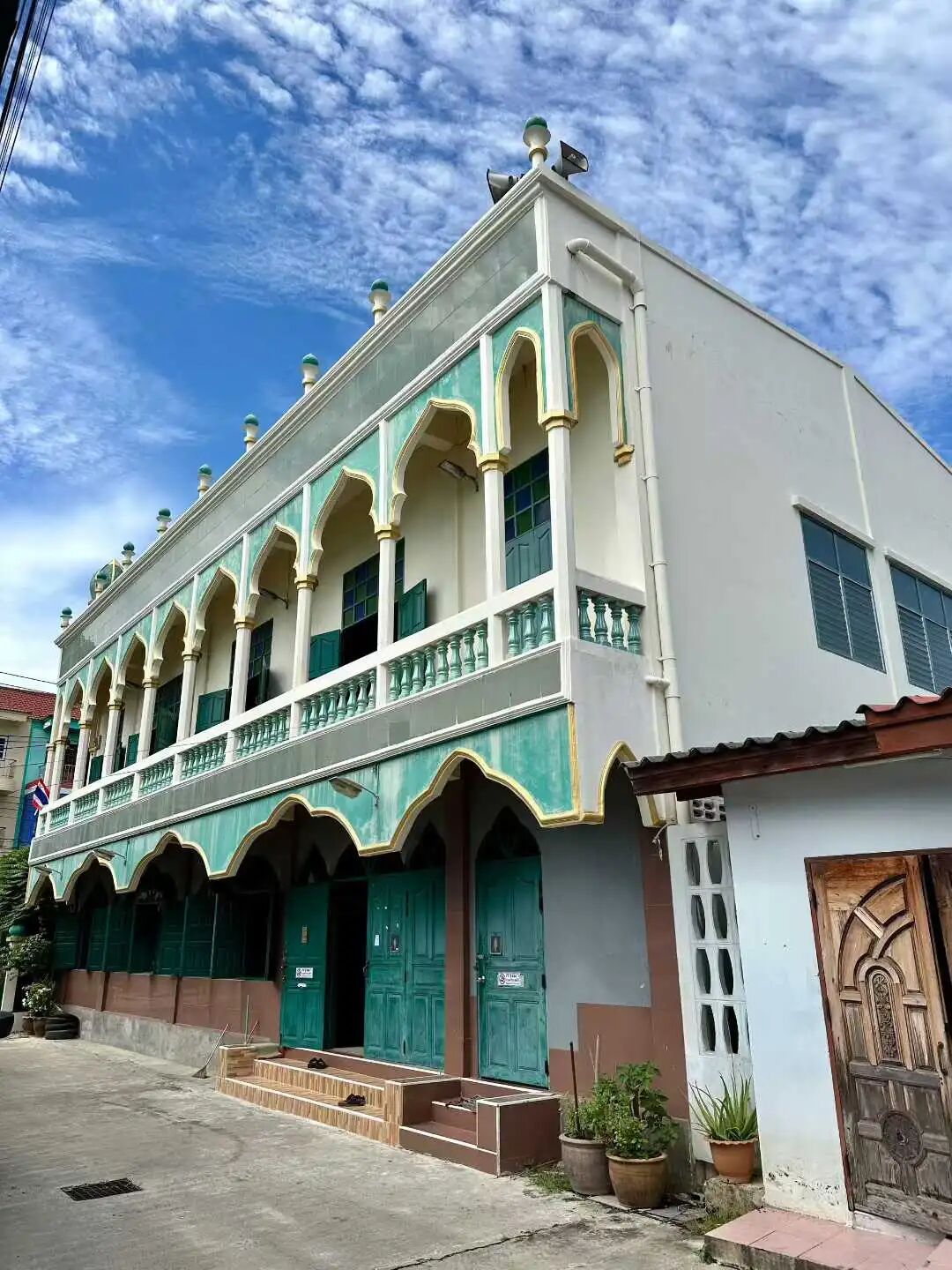
Nurul Yamal Mosque was originally a wooden structure, but it was later rebuilt into a brick and stone structure under the guidance of a Chinese person. King Rama V of Thailand (reigned 1868-1910) visited here, gifted the mosque a green lantern, and bestowed the name Nurul Yamal Mosque.
We performed Jumu'ah at Nurul Yamal Mosque, where the imam gave the khutbah (wa'z) in Thai.
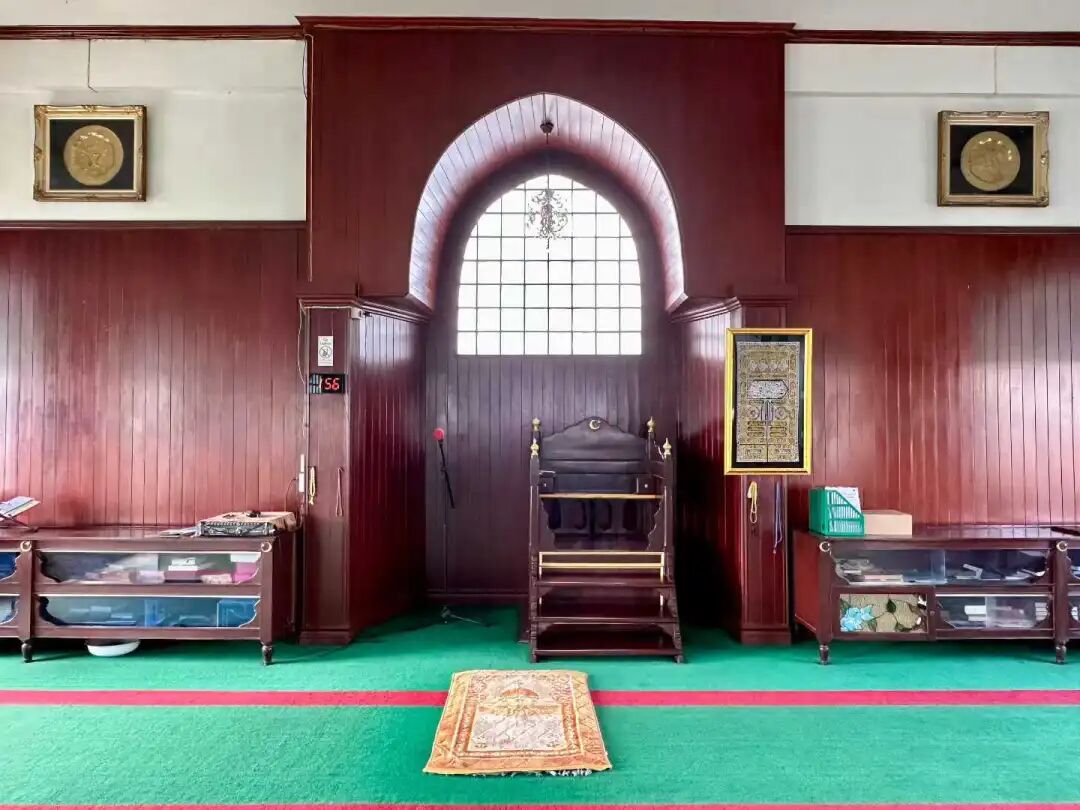
Takia Yokin Mosque is located on the banks of the Chao Phraya River in the southern suburbs of Ayutthaya. It was originally a Buddhist mosque, but it was rebuilt in the mid-16th century after the mosque's abbot, Diwan Chao, was guided by the Sufi sheikh Tok Takia of the Qadiriyya menhuan. The mosque preserves a traditional Thai-style imam's prayer pavilion and a minbar pulpit, both of which are beautifully crafted. Although the founder, Sheikh Tok Takia, was of Indian descent, the local community members are now primarily Malay. See "Visiting the Two Great Qadiriyya Gongbei of Thailand."
In the 15th century, Arab, Persian, and Indian merchants sailing east along the Indian Ocean monsoon winds preferred the powerful Malacca Sultanate as their trading hub. However, after the Portuguese conquered Malacca in 1511, trade was heavily restricted. Many Arab, Persian, and Indian merchants began moving to the Siamese capital of Ayutthaya to do business, and Siam welcomed them. At that time, a large number of merchant ships gathered along the banks of the Chao Phraya River south of Ayutthaya. These merchants would anchor their ships outside the city and then transport their goods into the city for sale. The riverbank where Takia Yokin Mosque is located was an important anchorage for these ships, and it later developed into an important mosque community.
Surau Nai Klong Mosque was founded by Cham people from Cambodia and Vietnam. The Cham community in Ayutthaya is spread along both banks of the Chao Phraya River south of the old city. With a history of over 600 years, it is the oldest and longest-standing Muslim community in Thailand.
Champa (Champa) was a country established by the Cham people (Chams) in southern Vietnam in 192 AD. Because their land was narrow and fragmented, Champa focused on maritime trade and became an important trading port on the Maritime Silk Road during the Song and Yuan dynasties. Whether they were Chinese merchant ships departing from Guangzhou and Quanzhou or Arab and Persian merchant ships from the Indian Ocean and the Persian Gulf, all chose to stop in Champa.
After Ayutthaya became the capital of Thailand in 1350, Cham merchants came to trade and established a Cham village (Pata Ku Cham) on the south bank of the Chao Phraya River. According to the Royal Chronicles of Ayutthaya: Luang Prasoet Version, in 1409, the Thai King Ram Racha ordered the arrest of the minister Okya Mahasena, who successfully crossed the river and fled to the Cham village. He later supported the king's cousin, Nakarintratiraj, in overthrowing Ram Racha. After the new king ascended the throne, he exiled the old king to live in the Cham village.
After Vietnam broke free from Mongol control in the 14th century, it began moving south to invade Champa. In 1471, the Champa capital of Vijaya (Vijaya) was captured, and a large number of Cham royalty and civilians fled to Cambodia for refuge. These Cham people in Cambodia united with the Malays who had settled there earlier, forming a military alliance in the 16th century.
After the 16th century, the residential area of the Cham people in Ayutthaya expanded from the Cham village to both banks of the Chao Phraya River, and the nearby Cham canal port market became one of the four major floating markets in Ayutthaya. to selling goods, the Cham people in Ayutthaya also made a living by weaving straw mats and growing rice.
The Cambodian Cham military corps (Krom As-Cham) began to be employed by the Thai Ayutthaya Dynasty in the early 17th century. They were highly praised by the Siamese royal family for their superb shipbuilding skills and naval combat prowess. These Cham warriors were granted the honor of serving as rowers for the royal barges during Thai royal ceremonies.
After the fall of Ayutthaya in 1767, many Cham people moved south near Bangkok, as recorded in the Complete Collection of Bangkok Mosques: The Five Cham Quarters. However, many Cham people still remained in Ayutthaya. Following the arrival of Pattani Malays at the end of the 18th century, this area is now a place where Cham and Malay people live together.
The original Surau Nai Klong mosque in Champa Village was gradually abandoned after the 19th century. Today, there are three mosques here: Aliyin Nuroi, Madinah Tusslihat, and Islam Vattana. I visited the first two on this trip.
Next to the Cham community is the Islam Vattana cemetery. The most prominent building inside is a tomb for a Persian Shia sage built in the 18th century. It has now become a gongbei for local Sunni followers, which is a very interesting cultural phenomenon.
The owner of the gongbei was named Chen. He served as the Chula Rachamontri, the leader of the Thai Muslim community, during the reign of King Ekkathat (1758-1767) and was the last leader of the Muslim community during the Ayutthaya Kingdom. Chen was a descendant of the Sheikh Ahmad family, the most important Persian Shia family in Thailand. His family held a monopoly on Thai trade heading west to India, Persia, Arabia, and Europe, and they held the position of Muslim community leader by heredity. Chen's father, Jai, was a court attendant for King Narai. During the reign of King Borommakot (1733-1758), he was promoted to the general rank of Chao Phraya Phet Pichai and became the commander of the Cham and Japanese regiments. In 1750, Chen's father followed the Thai king and converted to Buddhism, but Chen held fast to his faith. He continued to serve as the leader of the Muslim community while also serving as the head of the Right Harbor, Chao Kromma Tha Khwa, responsible for managing Thailand's western trade.
After Ayutthaya fell in 1767, Chen did not follow the Thai king south to Thonburi. Instead, he stayed in his ancestral home in Ayutthaya, where he eventually passed away. His ancestral home is right next to the Cham Canal south of the city, adjacent to the Cham community. His grave is also here, and it has become an important gongbei for sages in Ayutthaya.
In 1797, Chen's son, Konkaew, inherited the titles of Muslim community leader and head of the Right Harbor in Thonburi. Another son, Akayi, built the Shia hall Kudi Charoenphat, which still stands today.
Some graves in the Vattana cemetery are decorated with fresh flowers and paper flowers, which is a Sufi tradition of the Thai Muslim community.
Traveling south from Champa Village in Ayutthaya, you reach the Klong Takian area. During the Ayutthaya Kingdom, communities of different ethnic groups—including Portuguese, Chinese, Cham, Malay, and Makassarese—were spread along the Klong Takian canal, making it the most culturally diverse area of Ayutthaya at the time.
There are several mosques in the Klong Takian area, the most famous of which is the Kudi Chofa mosque. In 1666, the Dutch East India Company invaded Makassar on the island of Sulawesi in Indonesia, causing many Makassarese to flee to Java, Sumatra, and other places. A group of Makassarese also came to the Klong Takian area in the southern suburbs of Ayutthaya. People say the Kudi Chofa mosque was first built in 1677.
Starting in the 17th century, Thailand moved south to invade the Pattani Sultanate established by the Malays. Long-term wars led to many Pattani Malays being brought to Ayutthaya, the capital of Thailand at the time. In the mid-18th century, thousands of Pattani Malay captives were settled in the southern and southwestern suburbs of Ayutthaya to grow rice, and some of them settled at the Kudi Chofa mosque. After Ayutthaya fell in 1767, some Pattani Malays returned to their hometowns, others followed the Thai king south to Thonburi, and some remained in the southern suburbs of Ayutthaya. In 1786, following Thailand's invasion of Pattani, more Pattani Malays arrived at the Kudi Chofa mosque. In 1819, Imam Toh Ki Yam oversaw the reconstruction of the mosque from a wooden structure into a brick and stone building, incorporating styles from Catholic churches and Buddhist temples.
Legend has it that once, King Rama V (reigned 1868-1910) passed by the mosque on a boat, officially named it Kudi Chofa mosque, and gifted it a lamp called Takiang Chaw.
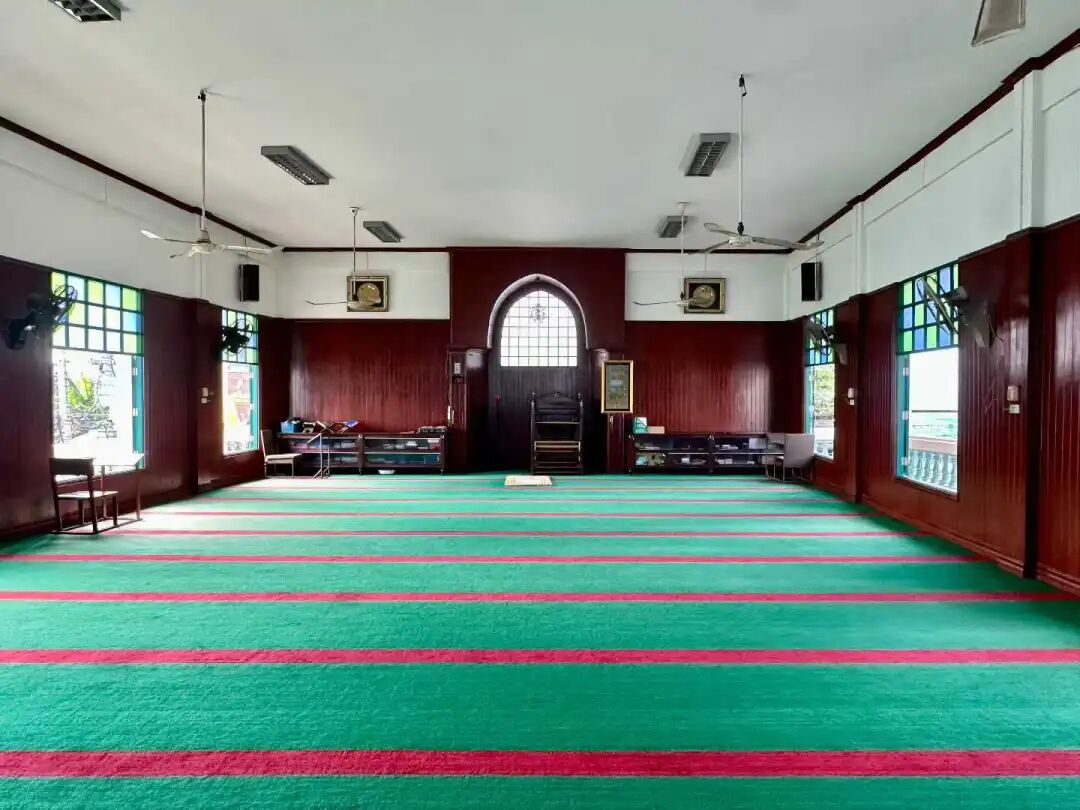
The Kudi Chofa mosque underwent several expansions after the 20th century and was finally rebuilt into its current form in 1978. The interior of the main hall was under renovation when we visited, and a kind friend (dosti) gave us water to drink.
Three hundred years after Sheikh Tok Takia came to Thailand in the mid-16th century to spread the Sufi Qadiriyya order, the Sufi Sheikh Muhammad Ali Shukri, who is honored as a saint (Wali), revived the Qadiriyya order in Thailand in the 19th century and helped it spread from Ayutthaya to Bangkok and Pattaya. See "The Gongbei of the Persian Sheikh in Ayutthaya, Thailand."
Sheikh Shukri's tomb shrine (gongbei) is located at the Aliyid Daroun Mosque (Masjid Aliyid Daroun) on the banks of the Chao Phraya River west of Ayutthaya city, which is a mosque community established by Pattani Malays in the 19th century. Thailand invaded Pattani twice in 1831-1832 and 1838, splitting it into seven small states, which was the period when the largest number of Pattani Malays moved to central Thailand.
After the 19th century, due to the preaching of the Sufi Sheikh Shukri, some Malay friends (dosti) who lived along the Khlong Ta Kian canal in the southern suburbs of Ayutthaya and originally belonged to the Kudi Chofa mosque community began to follow the Qadiriyya order, and in the early 20th century, Imam Omar Buleh founded the Yamiul Islam mosque community. Today, the tomb shrine (gongbei) of Imam Omar Buleh is built in the backyard of the mosque, and the Buleh family has held the position of mosque imam hereditarily ever since.
The Pakistan Mosque in Ayutthaya is located in the northern part of the city and is the only mosque currently situated inside the old city of Ayutthaya. In the 17th century, the Mughal Empire and the Ayutthaya Kingdom had a very close relationship, with many Mughals coming to Ayutthaya to do business, and some even entering the royal court to serve as advisors and ministers. In 1685, Chevalier de Chaumont, the first envoy sent by King Louis XIV of France to the Ayutthaya court, recorded that the "Moors" in Ayutthaya included Turks, Persians, Mughals, Golkondas (from the Deccan region of South India), and Bengalis. In 1690, the German doctor Engelbert Kaempfer visited Ayutthaya and described that "on the main road connecting the north of the city to the royal palace, there were shops owned by Chinese, Hindustanis, and Moors." view all
Summary: Ayutthaya is home to one of Thailand's oldest Muslim communities, shaped by Persian, Malay, Indian, and local Thai Muslim histories. This article keeps the source's mosque names, old settlement details, palace-era background, food notes, and community observations in clear English.
When we think of Muslim communities in Thailand, we first think of the Malays in the south, the Yunnanese Hui Muslims in the north, and the diverse, integrated mosque neighborhoods in Bangkok. In fact, Muslim communities in Ayutthaya began to thrive as early as 1351, when the city became the capital of Thailand. Although Ayutthaya lost its status as the capital after the Thai capital moved in 1767, the mosque neighborhood structure here has been passed down to this day.
Historically, there were six mosque neighborhoods in Ayutthaya that date back to the Ayutthaya Kingdom (1351-1767):
Thung Khaek / Kudi Chao Sen Mosque: Persian Shia.
Khaek Pae Mosque: Persian Shia.
Nurul Yaman Mosque: Persian Shia (formerly), Malay Sunni (later).
Takia Yokin Mosque: Indian Sunni (Qadiriyya Sufi order).
Surau Nai Klong Mosque: Cham Sunni.
Kudi Chofa Mosque: Makassar and Malay Sunni.
The original site of Kudi Chao Sen Mosque was in the southern part of the Ayutthaya city walls, founded in the early 17th century by Sheikh Ahmad, a Persian who came from Qom, Iran. During the 17th and 18th centuries, this was a residential area for Persian and Indian descendants in Ayutthaya. After Ayutthaya fell in 1767, most residents moved south to Thonburi with the Thai king, and the mosque neighborhood dissolved. Today, there is a rebuilt gongbei (shrine) for Sheikh Ahmad here. For details, see 'The Persian Sheikh Gongbei in Ayutthaya, Thailand'.
Khaek Pae Mosque is located on the bank where the Chao Phraya River and the Pa Sak River meet. Persian merchants once lived on boats here, which locals called the 'floating village'. After Ayutthaya fell in 1767, most residents moved south to Thonburi with the Thai king, and the mosque neighborhood dissolved. Today, there are two mosque neighborhoods in Bangkok established by descendants of Ayutthaya's Persians. See 'Experiencing the Persian Shia Festival Atmosphere in Bangkok, Thailand' and 'Visiting Shia Communities in Bangkok'.
Nurul Yamal Mosque is located in the northern suburbs of the old city of Ayutthaya, near where the Ayutthaya Kingdom built an elephant kraal in 1580. According to the travelogue 'Safine-ye Solaymani' (The Ship of Suleiman) written by the Persian Safavid mission sent to Ayutthaya in 1685, there were over a hundred Persian merchants engaged in the lucrative elephant trade at the elephant kraal at that time. After Ayutthaya fell in 1767, most residents moved south to Thonburi with the Thai king, and the mosque neighborhood dissolved.
After the Rattanakosin Kingdom was established in Bangkok in 1782, Thailand continued to invade the Malay Sultanate of Pattani in the south. In 1786, Thailand dealt a devastating blow to the Pattani Sultanate. Afterward, a large number of Pattani Malays were relocated to central Thailand, and some settled at the old site of the Nurul Yamal mosque neighborhood and rebuilt the Nurul Yamal Mosque.
Nurul Yamal Mosque was originally a wooden structure, but it was later rebuilt into a brick and stone structure under the guidance of a Chinese person. King Rama V of Thailand (reigned 1868-1910) visited here, gifted the mosque a green lantern, and bestowed the name Nurul Yamal Mosque.
We performed Jumu'ah at Nurul Yamal Mosque, where the imam gave the khutbah (wa'z) in Thai.
Takia Yokin Mosque is located on the banks of the Chao Phraya River in the southern suburbs of Ayutthaya. It was originally a Buddhist mosque, but it was rebuilt in the mid-16th century after the mosque's abbot, Diwan Chao, was guided by the Sufi sheikh Tok Takia of the Qadiriyya menhuan. The mosque preserves a traditional Thai-style imam's prayer pavilion and a minbar pulpit, both of which are beautifully crafted. Although the founder, Sheikh Tok Takia, was of Indian descent, the local community members are now primarily Malay. See "Visiting the Two Great Qadiriyya Gongbei of Thailand."
In the 15th century, Arab, Persian, and Indian merchants sailing east along the Indian Ocean monsoon winds preferred the powerful Malacca Sultanate as their trading hub. However, after the Portuguese conquered Malacca in 1511, trade was heavily restricted. Many Arab, Persian, and Indian merchants began moving to the Siamese capital of Ayutthaya to do business, and Siam welcomed them. At that time, a large number of merchant ships gathered along the banks of the Chao Phraya River south of Ayutthaya. These merchants would anchor their ships outside the city and then transport their goods into the city for sale. The riverbank where Takia Yokin Mosque is located was an important anchorage for these ships, and it later developed into an important mosque community.
Surau Nai Klong Mosque was founded by Cham people from Cambodia and Vietnam. The Cham community in Ayutthaya is spread along both banks of the Chao Phraya River south of the old city. With a history of over 600 years, it is the oldest and longest-standing Muslim community in Thailand.
Champa (Champa) was a country established by the Cham people (Chams) in southern Vietnam in 192 AD. Because their land was narrow and fragmented, Champa focused on maritime trade and became an important trading port on the Maritime Silk Road during the Song and Yuan dynasties. Whether they were Chinese merchant ships departing from Guangzhou and Quanzhou or Arab and Persian merchant ships from the Indian Ocean and the Persian Gulf, all chose to stop in Champa.
After Ayutthaya became the capital of Thailand in 1350, Cham merchants came to trade and established a Cham village (Pata Ku Cham) on the south bank of the Chao Phraya River. According to the Royal Chronicles of Ayutthaya: Luang Prasoet Version, in 1409, the Thai King Ram Racha ordered the arrest of the minister Okya Mahasena, who successfully crossed the river and fled to the Cham village. He later supported the king's cousin, Nakarintratiraj, in overthrowing Ram Racha. After the new king ascended the throne, he exiled the old king to live in the Cham village.
After Vietnam broke free from Mongol control in the 14th century, it began moving south to invade Champa. In 1471, the Champa capital of Vijaya (Vijaya) was captured, and a large number of Cham royalty and civilians fled to Cambodia for refuge. These Cham people in Cambodia united with the Malays who had settled there earlier, forming a military alliance in the 16th century.
After the 16th century, the residential area of the Cham people in Ayutthaya expanded from the Cham village to both banks of the Chao Phraya River, and the nearby Cham canal port market became one of the four major floating markets in Ayutthaya. to selling goods, the Cham people in Ayutthaya also made a living by weaving straw mats and growing rice.
The Cambodian Cham military corps (Krom As-Cham) began to be employed by the Thai Ayutthaya Dynasty in the early 17th century. They were highly praised by the Siamese royal family for their superb shipbuilding skills and naval combat prowess. These Cham warriors were granted the honor of serving as rowers for the royal barges during Thai royal ceremonies.
After the fall of Ayutthaya in 1767, many Cham people moved south near Bangkok, as recorded in the Complete Collection of Bangkok Mosques: The Five Cham Quarters. However, many Cham people still remained in Ayutthaya. Following the arrival of Pattani Malays at the end of the 18th century, this area is now a place where Cham and Malay people live together.
The original Surau Nai Klong mosque in Champa Village was gradually abandoned after the 19th century. Today, there are three mosques here: Aliyin Nuroi, Madinah Tusslihat, and Islam Vattana. I visited the first two on this trip.
Next to the Cham community is the Islam Vattana cemetery. The most prominent building inside is a tomb for a Persian Shia sage built in the 18th century. It has now become a gongbei for local Sunni followers, which is a very interesting cultural phenomenon.
The owner of the gongbei was named Chen. He served as the Chula Rachamontri, the leader of the Thai Muslim community, during the reign of King Ekkathat (1758-1767) and was the last leader of the Muslim community during the Ayutthaya Kingdom. Chen was a descendant of the Sheikh Ahmad family, the most important Persian Shia family in Thailand. His family held a monopoly on Thai trade heading west to India, Persia, Arabia, and Europe, and they held the position of Muslim community leader by heredity. Chen's father, Jai, was a court attendant for King Narai. During the reign of King Borommakot (1733-1758), he was promoted to the general rank of Chao Phraya Phet Pichai and became the commander of the Cham and Japanese regiments. In 1750, Chen's father followed the Thai king and converted to Buddhism, but Chen held fast to his faith. He continued to serve as the leader of the Muslim community while also serving as the head of the Right Harbor, Chao Kromma Tha Khwa, responsible for managing Thailand's western trade.
After Ayutthaya fell in 1767, Chen did not follow the Thai king south to Thonburi. Instead, he stayed in his ancestral home in Ayutthaya, where he eventually passed away. His ancestral home is right next to the Cham Canal south of the city, adjacent to the Cham community. His grave is also here, and it has become an important gongbei for sages in Ayutthaya.
In 1797, Chen's son, Konkaew, inherited the titles of Muslim community leader and head of the Right Harbor in Thonburi. Another son, Akayi, built the Shia hall Kudi Charoenphat, which still stands today.
Some graves in the Vattana cemetery are decorated with fresh flowers and paper flowers, which is a Sufi tradition of the Thai Muslim community.
Traveling south from Champa Village in Ayutthaya, you reach the Klong Takian area. During the Ayutthaya Kingdom, communities of different ethnic groups—including Portuguese, Chinese, Cham, Malay, and Makassarese—were spread along the Klong Takian canal, making it the most culturally diverse area of Ayutthaya at the time.
There are several mosques in the Klong Takian area, the most famous of which is the Kudi Chofa mosque. In 1666, the Dutch East India Company invaded Makassar on the island of Sulawesi in Indonesia, causing many Makassarese to flee to Java, Sumatra, and other places. A group of Makassarese also came to the Klong Takian area in the southern suburbs of Ayutthaya. People say the Kudi Chofa mosque was first built in 1677.
Starting in the 17th century, Thailand moved south to invade the Pattani Sultanate established by the Malays. Long-term wars led to many Pattani Malays being brought to Ayutthaya, the capital of Thailand at the time. In the mid-18th century, thousands of Pattani Malay captives were settled in the southern and southwestern suburbs of Ayutthaya to grow rice, and some of them settled at the Kudi Chofa mosque. After Ayutthaya fell in 1767, some Pattani Malays returned to their hometowns, others followed the Thai king south to Thonburi, and some remained in the southern suburbs of Ayutthaya. In 1786, following Thailand's invasion of Pattani, more Pattani Malays arrived at the Kudi Chofa mosque. In 1819, Imam Toh Ki Yam oversaw the reconstruction of the mosque from a wooden structure into a brick and stone building, incorporating styles from Catholic churches and Buddhist temples.
Legend has it that once, King Rama V (reigned 1868-1910) passed by the mosque on a boat, officially named it Kudi Chofa mosque, and gifted it a lamp called Takiang Chaw.
The Kudi Chofa mosque underwent several expansions after the 20th century and was finally rebuilt into its current form in 1978. The interior of the main hall was under renovation when we visited, and a kind friend (dosti) gave us water to drink.
Three hundred years after Sheikh Tok Takia came to Thailand in the mid-16th century to spread the Sufi Qadiriyya order, the Sufi Sheikh Muhammad Ali Shukri, who is honored as a saint (Wali), revived the Qadiriyya order in Thailand in the 19th century and helped it spread from Ayutthaya to Bangkok and Pattaya. See "The Gongbei of the Persian Sheikh in Ayutthaya, Thailand."
Sheikh Shukri's tomb shrine (gongbei) is located at the Aliyid Daroun Mosque (Masjid Aliyid Daroun) on the banks of the Chao Phraya River west of Ayutthaya city, which is a mosque community established by Pattani Malays in the 19th century. Thailand invaded Pattani twice in 1831-1832 and 1838, splitting it into seven small states, which was the period when the largest number of Pattani Malays moved to central Thailand.
After the 19th century, due to the preaching of the Sufi Sheikh Shukri, some Malay friends (dosti) who lived along the Khlong Ta Kian canal in the southern suburbs of Ayutthaya and originally belonged to the Kudi Chofa mosque community began to follow the Qadiriyya order, and in the early 20th century, Imam Omar Buleh founded the Yamiul Islam mosque community. Today, the tomb shrine (gongbei) of Imam Omar Buleh is built in the backyard of the mosque, and the Buleh family has held the position of mosque imam hereditarily ever since.
The Pakistan Mosque in Ayutthaya is located in the northern part of the city and is the only mosque currently situated inside the old city of Ayutthaya. In the 17th century, the Mughal Empire and the Ayutthaya Kingdom had a very close relationship, with many Mughals coming to Ayutthaya to do business, and some even entering the royal court to serve as advisors and ministers. In 1685, Chevalier de Chaumont, the first envoy sent by King Louis XIV of France to the Ayutthaya court, recorded that the "Moors" in Ayutthaya included Turks, Persians, Mughals, Golkondas (from the Deccan region of South India), and Bengalis. In 1690, the German doctor Engelbert Kaempfer visited Ayutthaya and described that "on the main road connecting the north of the city to the royal palace, there were shops owned by Chinese, Hindustanis, and Moors." view all
Reposted from the web
Summary: Ayutthaya is home to one of Thailand's oldest Muslim communities, shaped by Persian, Malay, Indian, and local Thai Muslim histories. This article keeps the source's mosque names, old settlement details, palace-era background, food notes, and community observations in clear English.
When we think of Muslim communities in Thailand, we first think of the Malays in the south, the Yunnanese Hui Muslims in the north, and the diverse, integrated mosque neighborhoods in Bangkok. In fact, Muslim communities in Ayutthaya began to thrive as early as 1351, when the city became the capital of Thailand. Although Ayutthaya lost its status as the capital after the Thai capital moved in 1767, the mosque neighborhood structure here has been passed down to this day.
Historically, there were six mosque neighborhoods in Ayutthaya that date back to the Ayutthaya Kingdom (1351-1767):
Thung Khaek / Kudi Chao Sen Mosque: Persian Shia.
Khaek Pae Mosque: Persian Shia.
Nurul Yaman Mosque: Persian Shia (formerly), Malay Sunni (later).
Takia Yokin Mosque: Indian Sunni (Qadiriyya Sufi order).
Surau Nai Klong Mosque: Cham Sunni.
Kudi Chofa Mosque: Makassar and Malay Sunni.
The original site of Kudi Chao Sen Mosque was in the southern part of the Ayutthaya city walls, founded in the early 17th century by Sheikh Ahmad, a Persian who came from Qom, Iran. During the 17th and 18th centuries, this was a residential area for Persian and Indian descendants in Ayutthaya. After Ayutthaya fell in 1767, most residents moved south to Thonburi with the Thai king, and the mosque neighborhood dissolved. Today, there is a rebuilt gongbei (shrine) for Sheikh Ahmad here. For details, see 'The Persian Sheikh Gongbei in Ayutthaya, Thailand'.
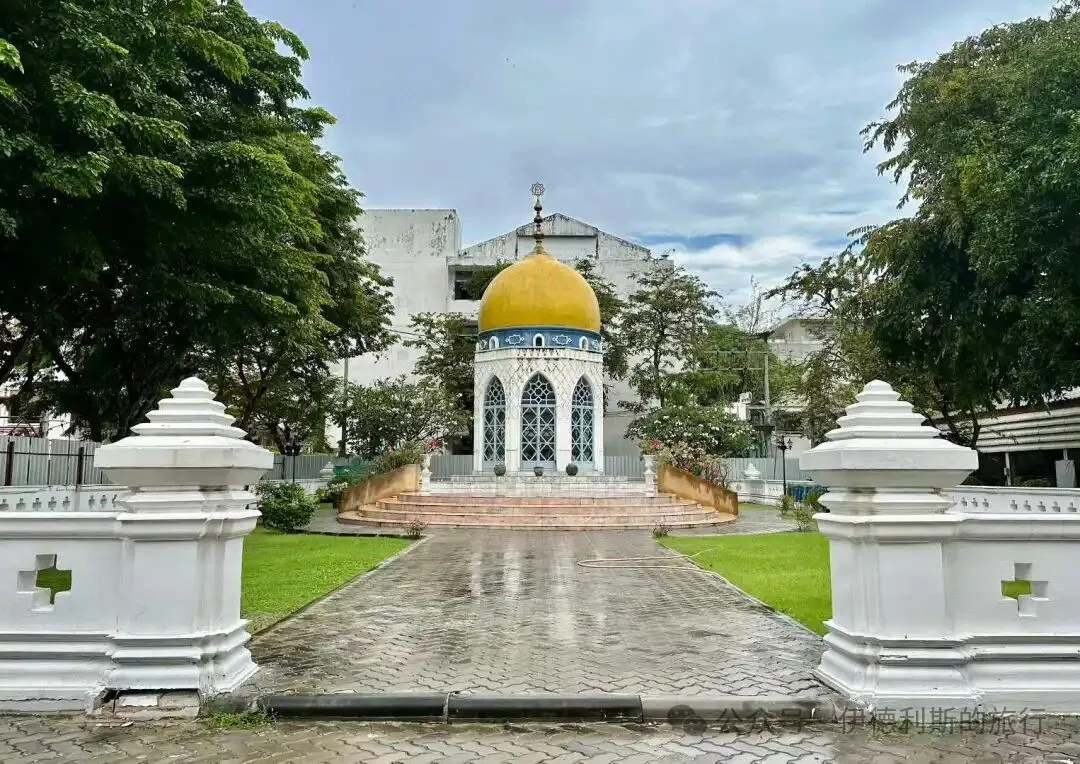
Khaek Pae Mosque is located on the bank where the Chao Phraya River and the Pa Sak River meet. Persian merchants once lived on boats here, which locals called the 'floating village'. After Ayutthaya fell in 1767, most residents moved south to Thonburi with the Thai king, and the mosque neighborhood dissolved. Today, there are two mosque neighborhoods in Bangkok established by descendants of Ayutthaya's Persians. See 'Experiencing the Persian Shia Festival Atmosphere in Bangkok, Thailand' and 'Visiting Shia Communities in Bangkok'.
Nurul Yamal Mosque is located in the northern suburbs of the old city of Ayutthaya, near where the Ayutthaya Kingdom built an elephant kraal in 1580. According to the travelogue 'Safine-ye Solaymani' (The Ship of Suleiman) written by the Persian Safavid mission sent to Ayutthaya in 1685, there were over a hundred Persian merchants engaged in the lucrative elephant trade at the elephant kraal at that time. After Ayutthaya fell in 1767, most residents moved south to Thonburi with the Thai king, and the mosque neighborhood dissolved.
After the Rattanakosin Kingdom was established in Bangkok in 1782, Thailand continued to invade the Malay Sultanate of Pattani in the south. In 1786, Thailand dealt a devastating blow to the Pattani Sultanate. Afterward, a large number of Pattani Malays were relocated to central Thailand, and some settled at the old site of the Nurul Yamal mosque neighborhood and rebuilt the Nurul Yamal Mosque.
Nurul Yamal Mosque was originally a wooden structure, but it was later rebuilt into a brick and stone structure under the guidance of a Chinese person. King Rama V of Thailand (reigned 1868-1910) visited here, gifted the mosque a green lantern, and bestowed the name Nurul Yamal Mosque.
We performed Jumu'ah at Nurul Yamal Mosque, where the imam gave the khutbah (wa'z) in Thai.
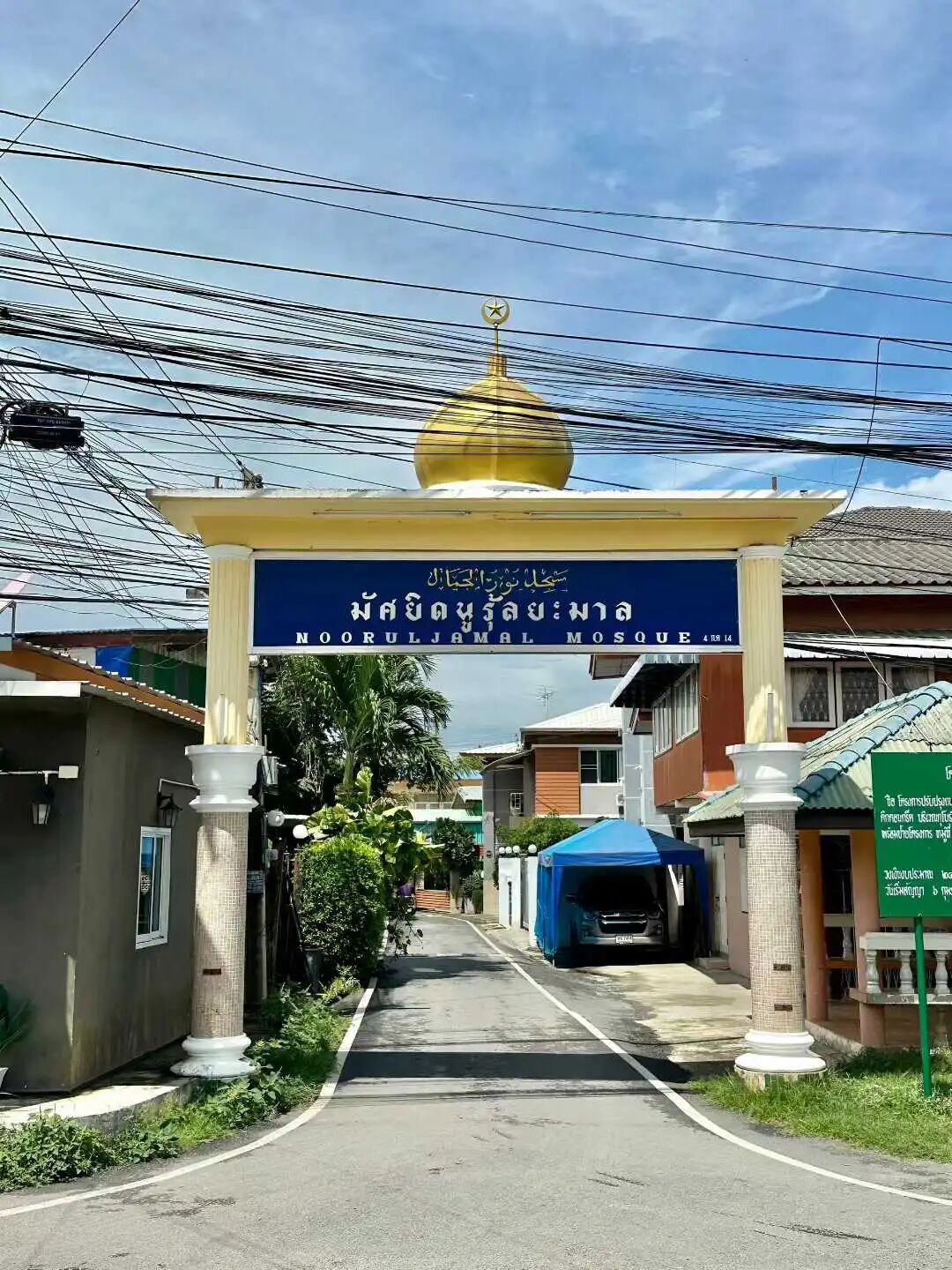
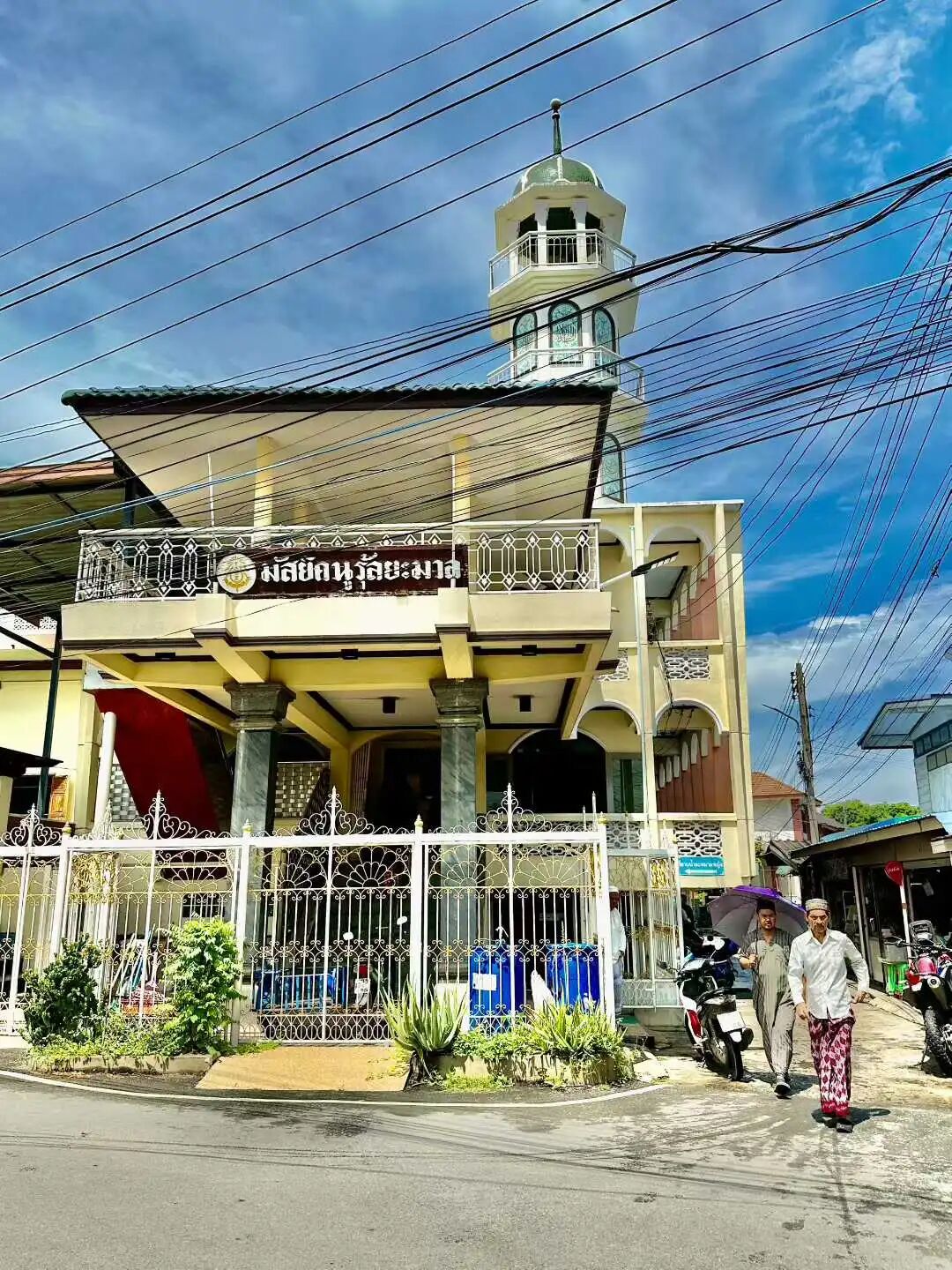
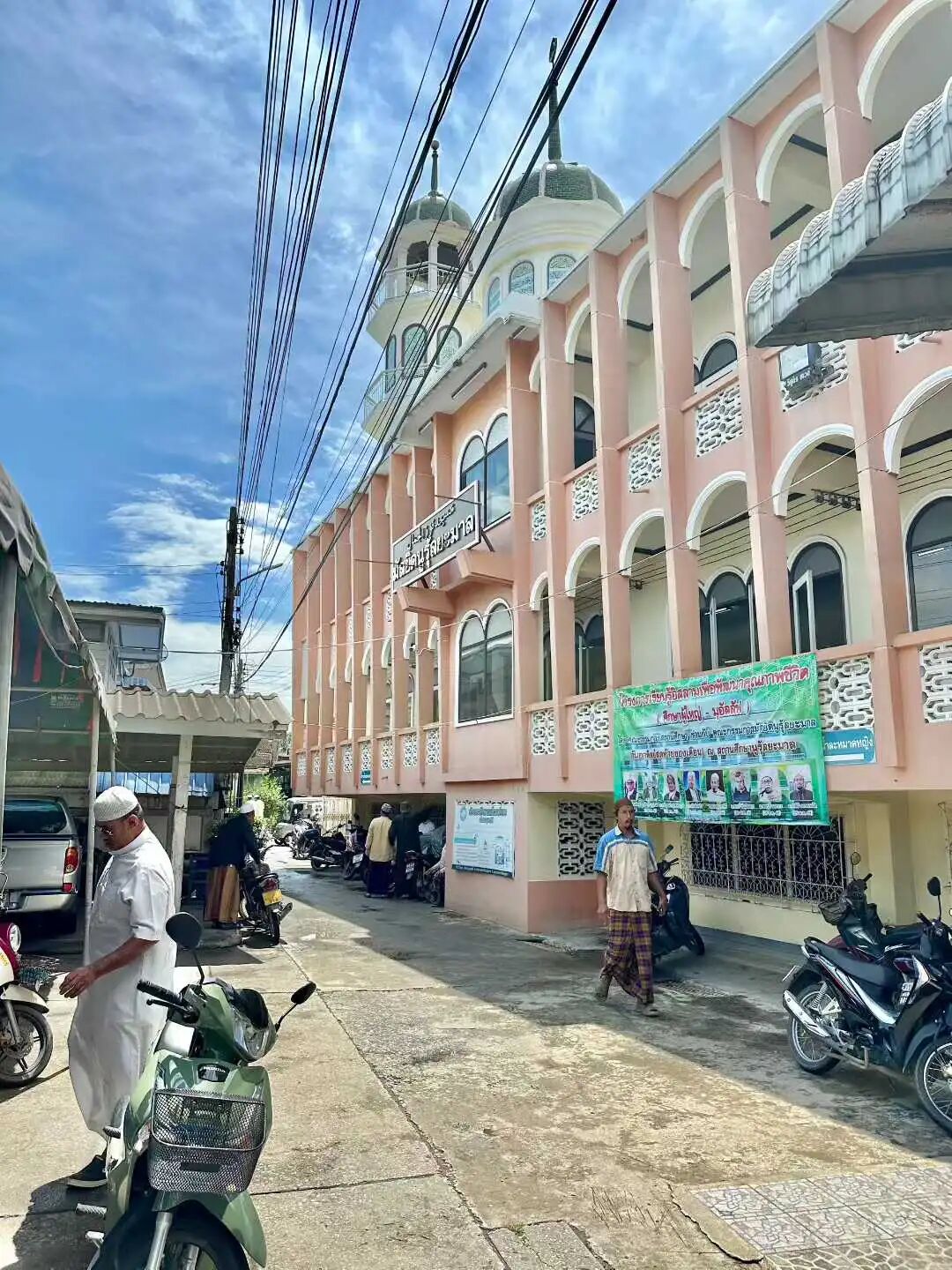
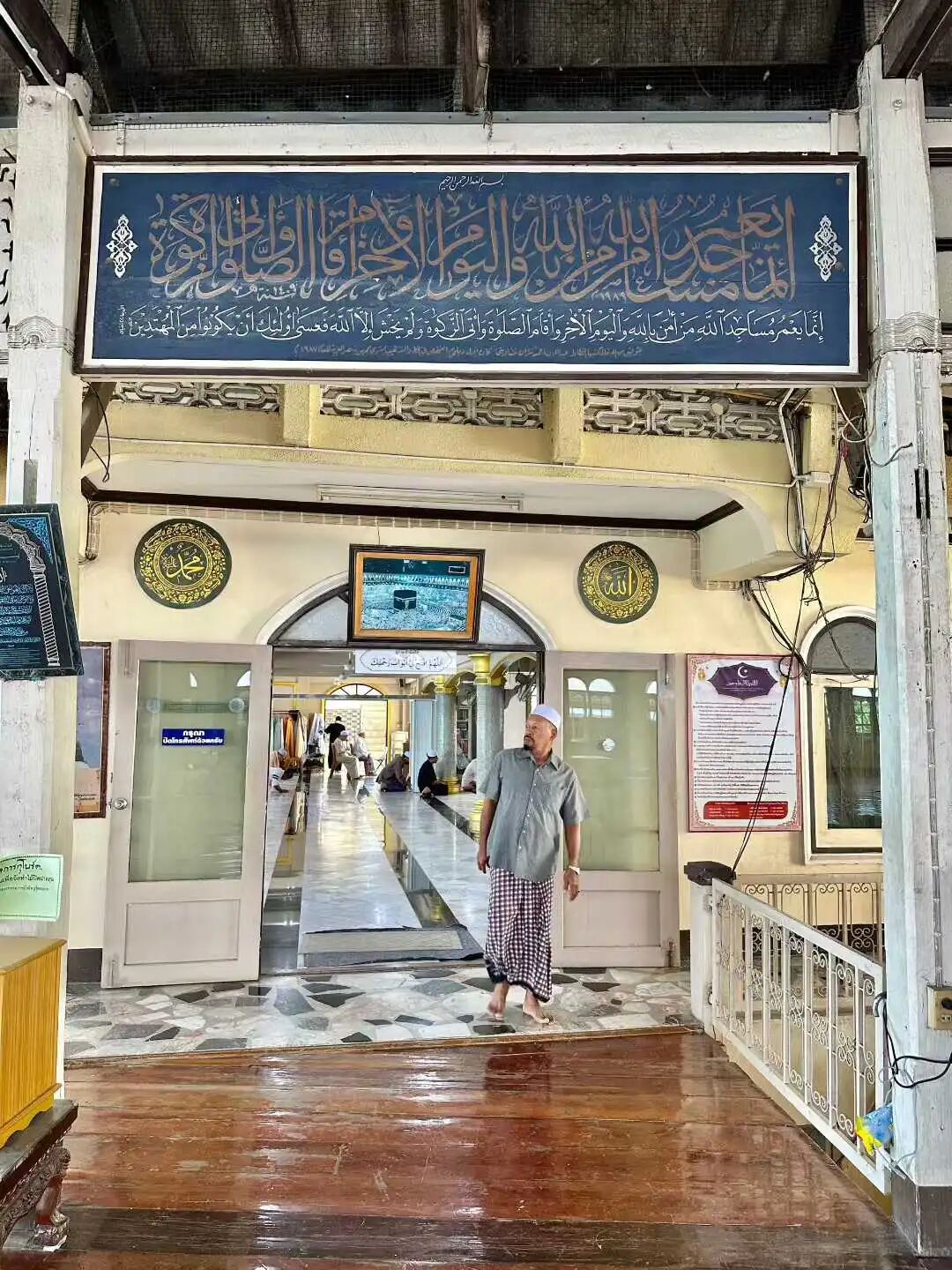
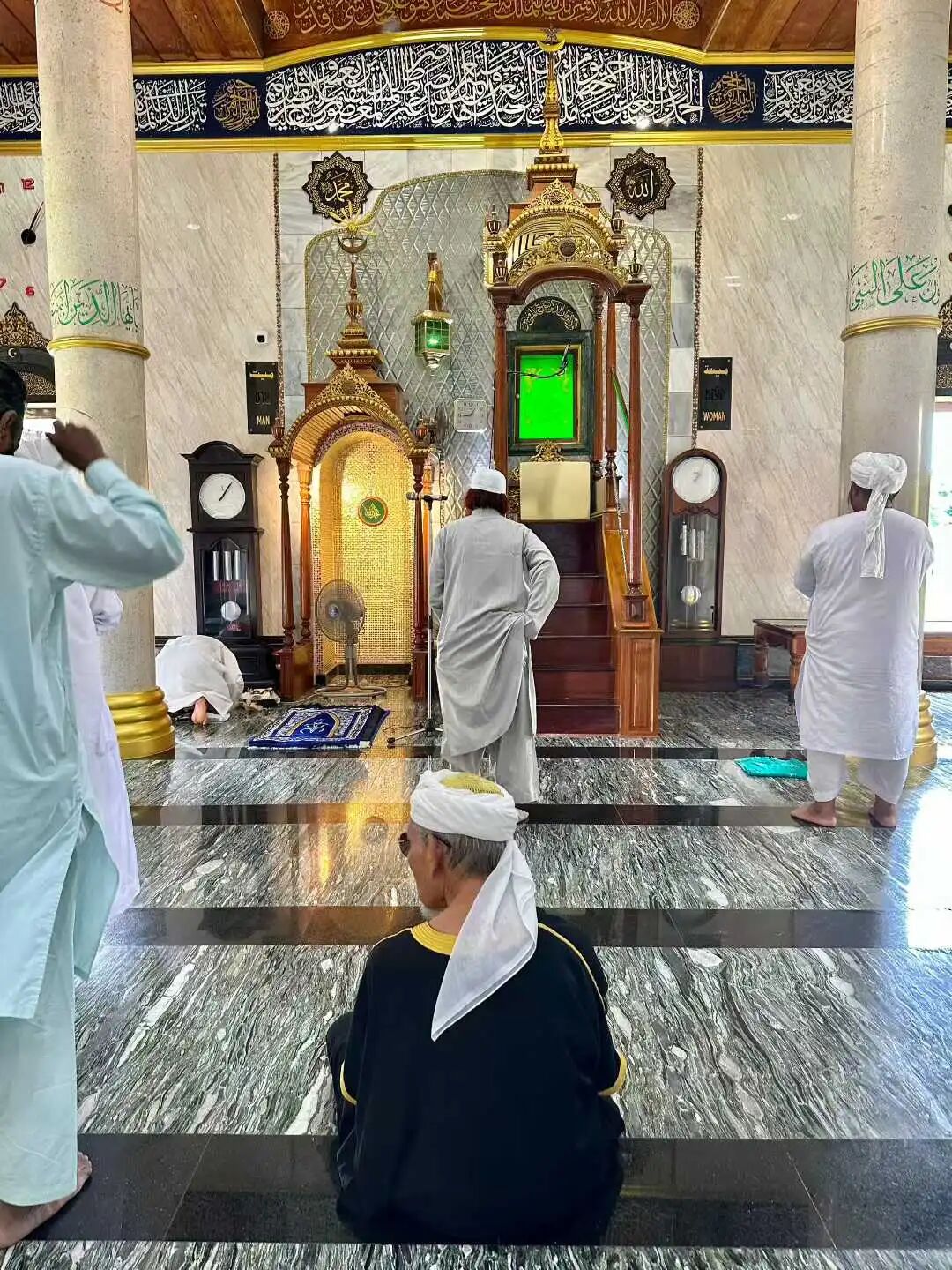
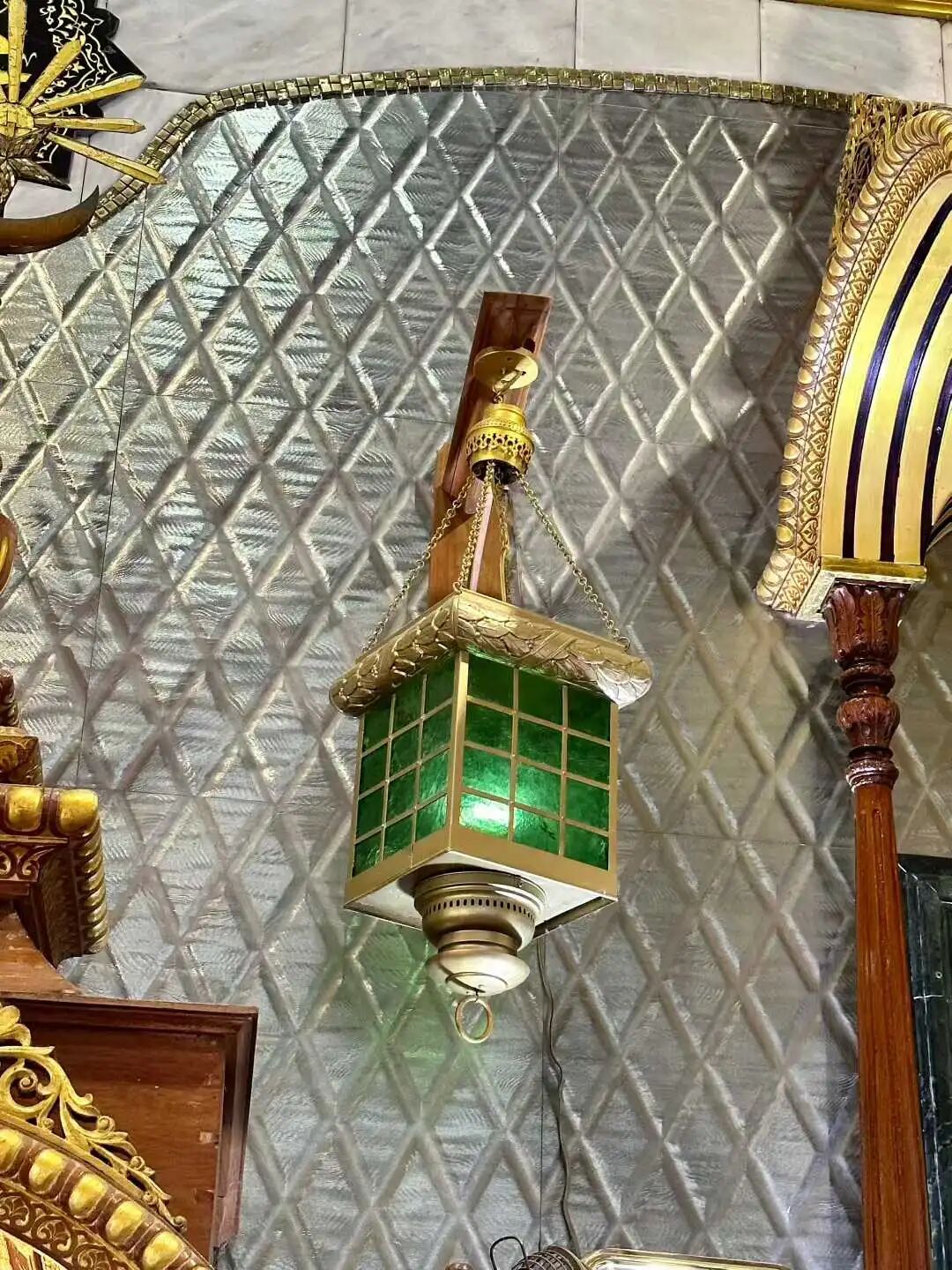
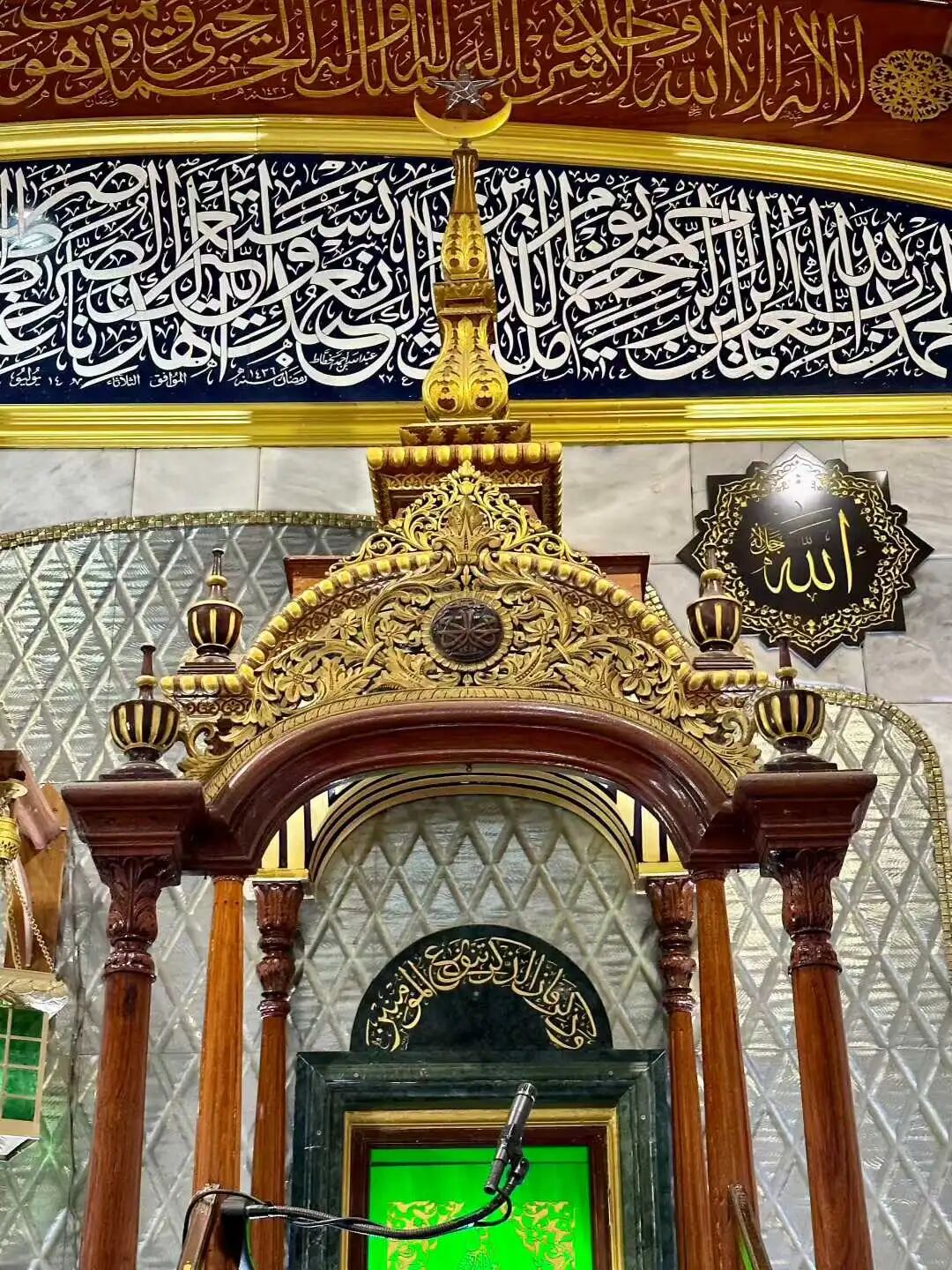
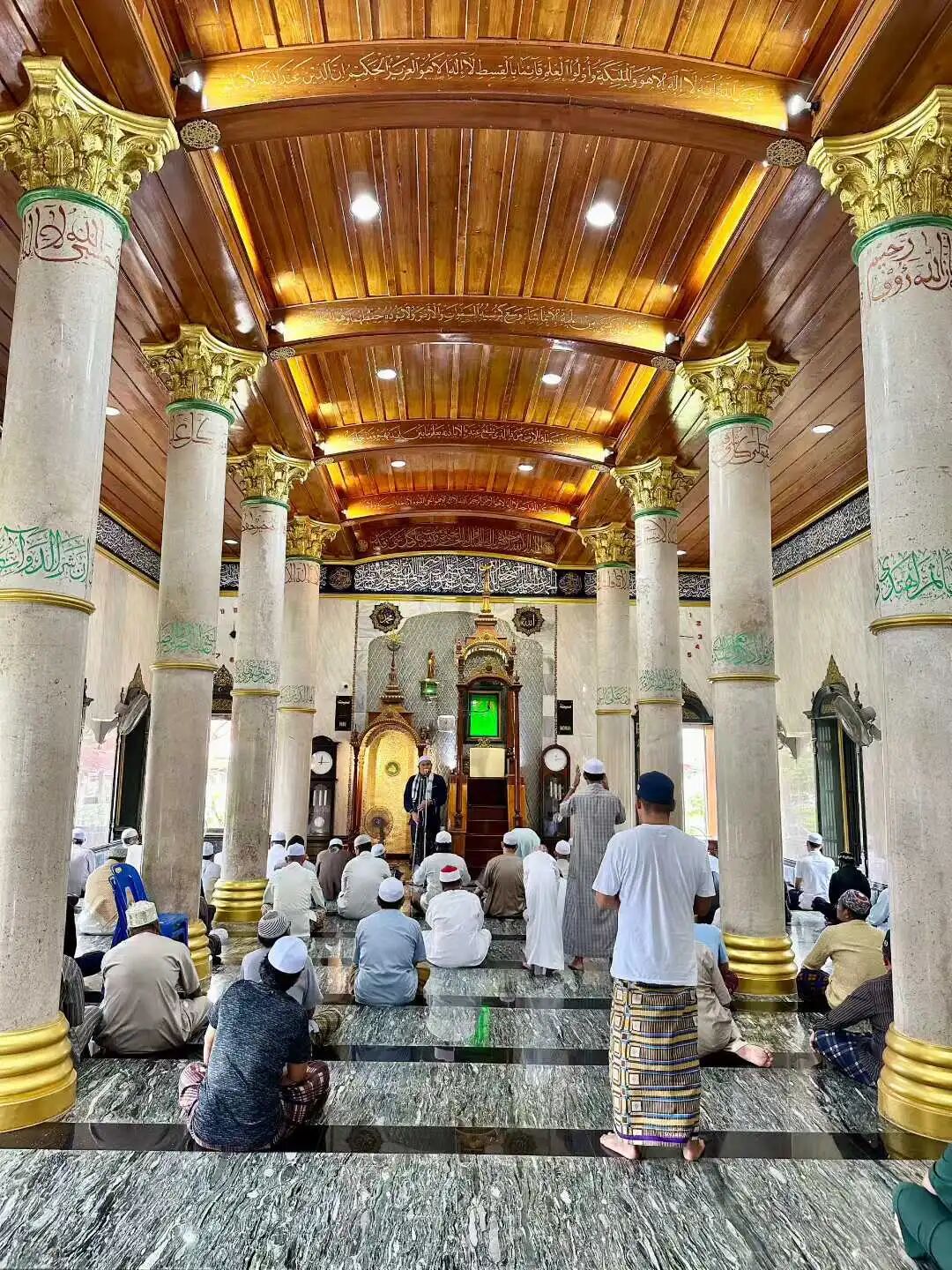
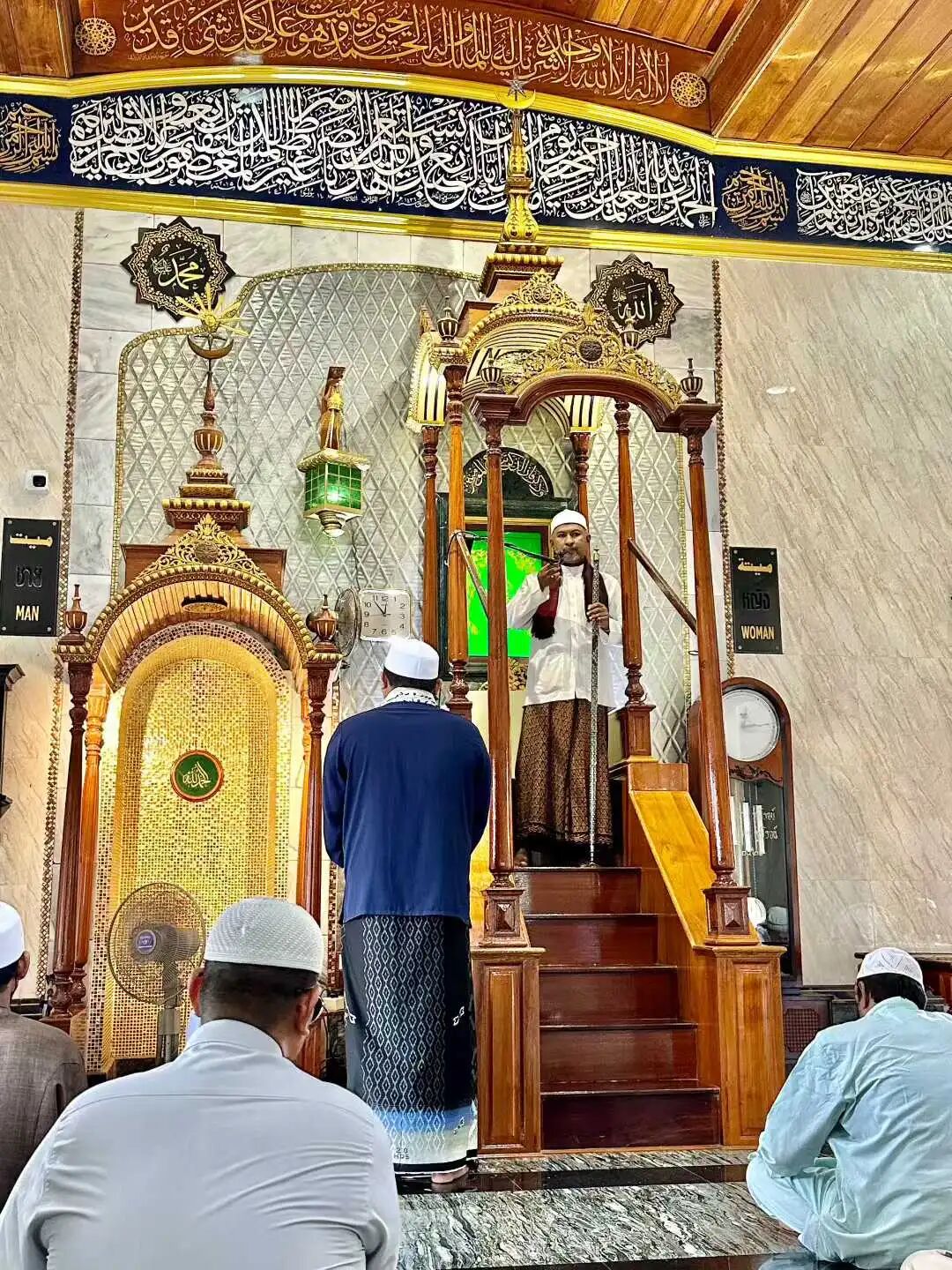
Takia Yokin Mosque is located on the banks of the Chao Phraya River in the southern suburbs of Ayutthaya. It was originally a Buddhist mosque, but it was rebuilt in the mid-16th century after the mosque's abbot, Diwan Chao, was guided by the Sufi sheikh Tok Takia of the Qadiriyya menhuan. The mosque preserves a traditional Thai-style imam's prayer pavilion and a minbar pulpit, both of which are beautifully crafted. Although the founder, Sheikh Tok Takia, was of Indian descent, the local community members are now primarily Malay. See "Visiting the Two Great Qadiriyya Gongbei of Thailand."
In the 15th century, Arab, Persian, and Indian merchants sailing east along the Indian Ocean monsoon winds preferred the powerful Malacca Sultanate as their trading hub. However, after the Portuguese conquered Malacca in 1511, trade was heavily restricted. Many Arab, Persian, and Indian merchants began moving to the Siamese capital of Ayutthaya to do business, and Siam welcomed them. At that time, a large number of merchant ships gathered along the banks of the Chao Phraya River south of Ayutthaya. These merchants would anchor their ships outside the city and then transport their goods into the city for sale. The riverbank where Takia Yokin Mosque is located was an important anchorage for these ships, and it later developed into an important mosque community.
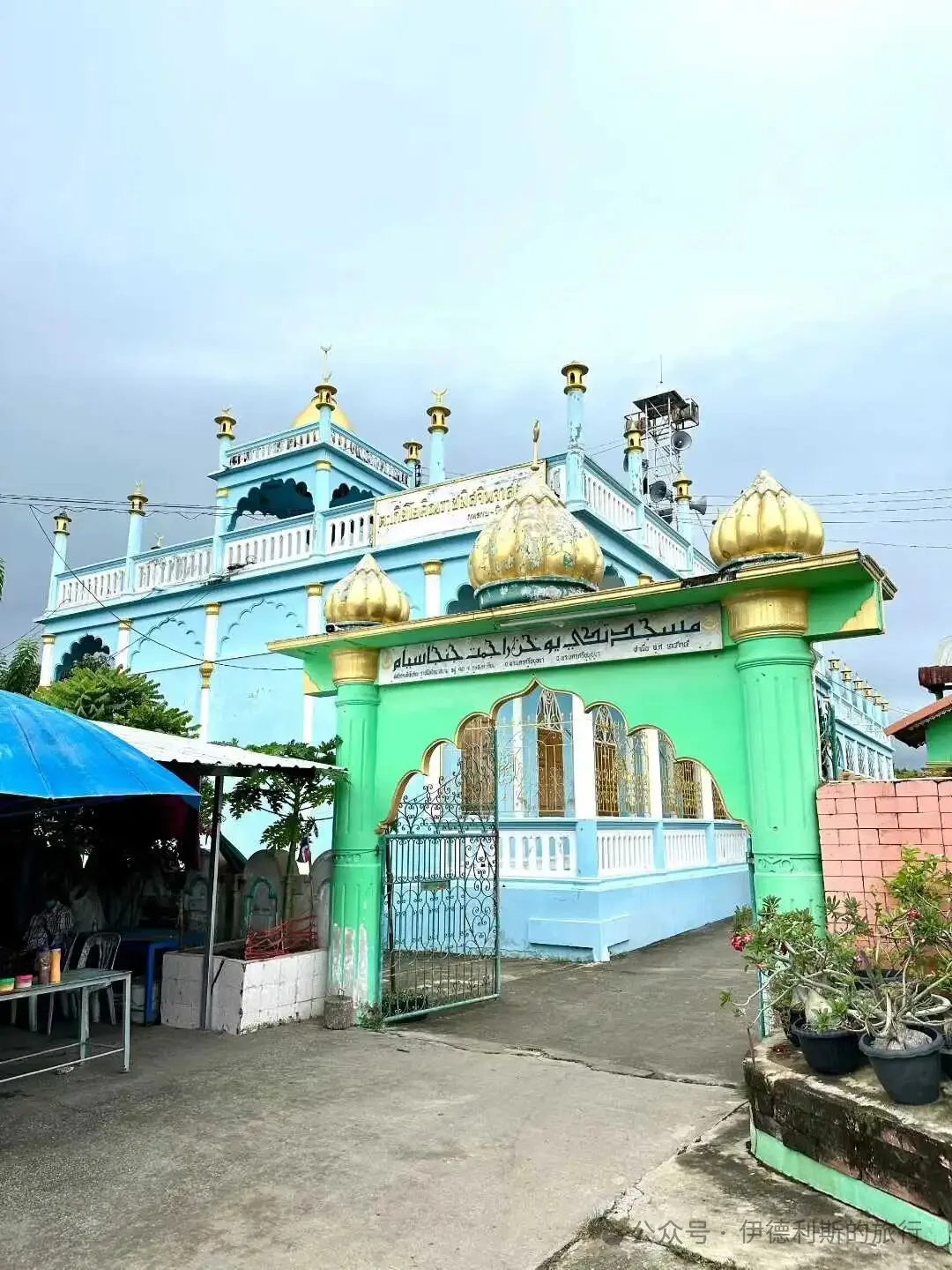
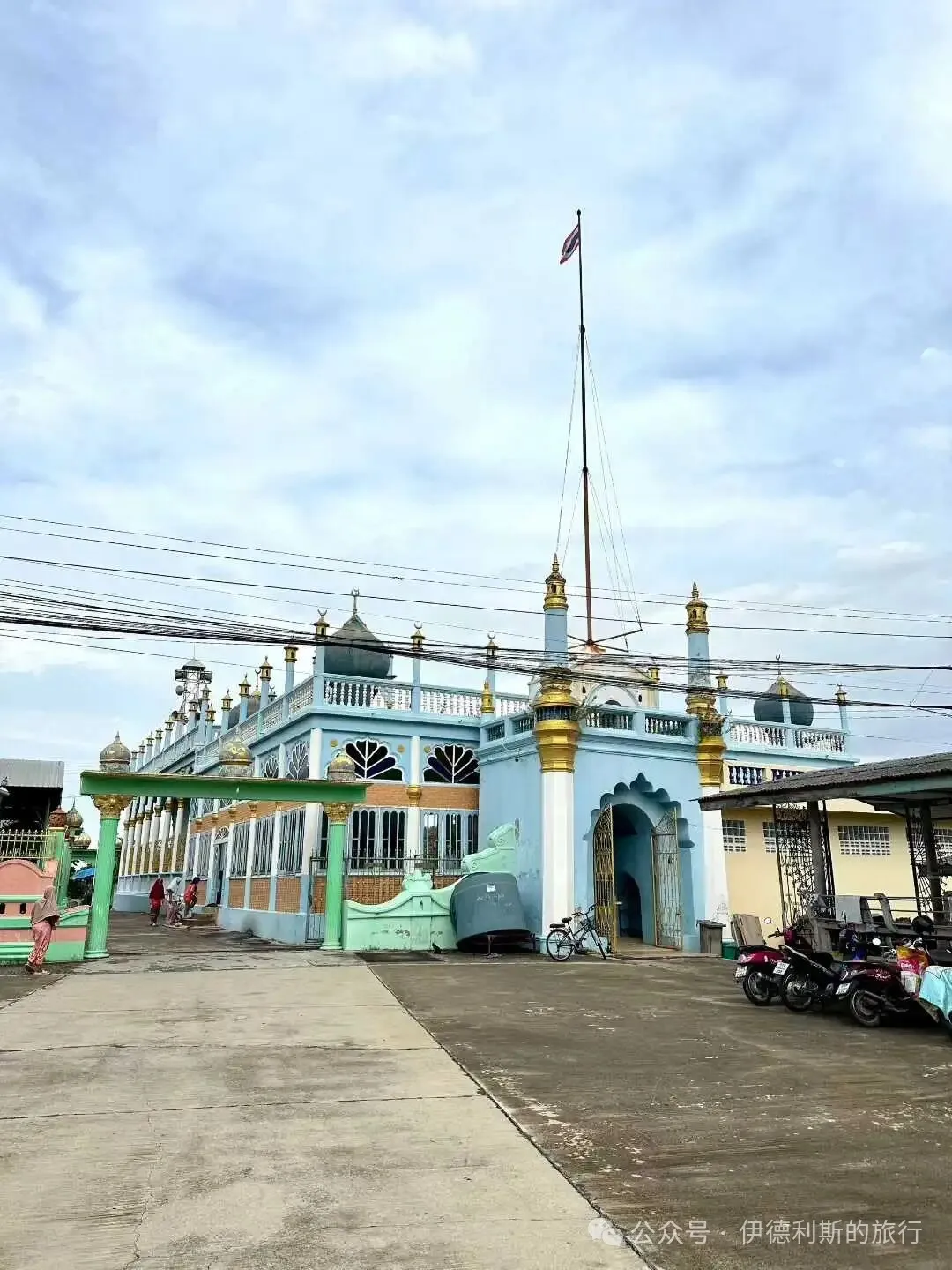
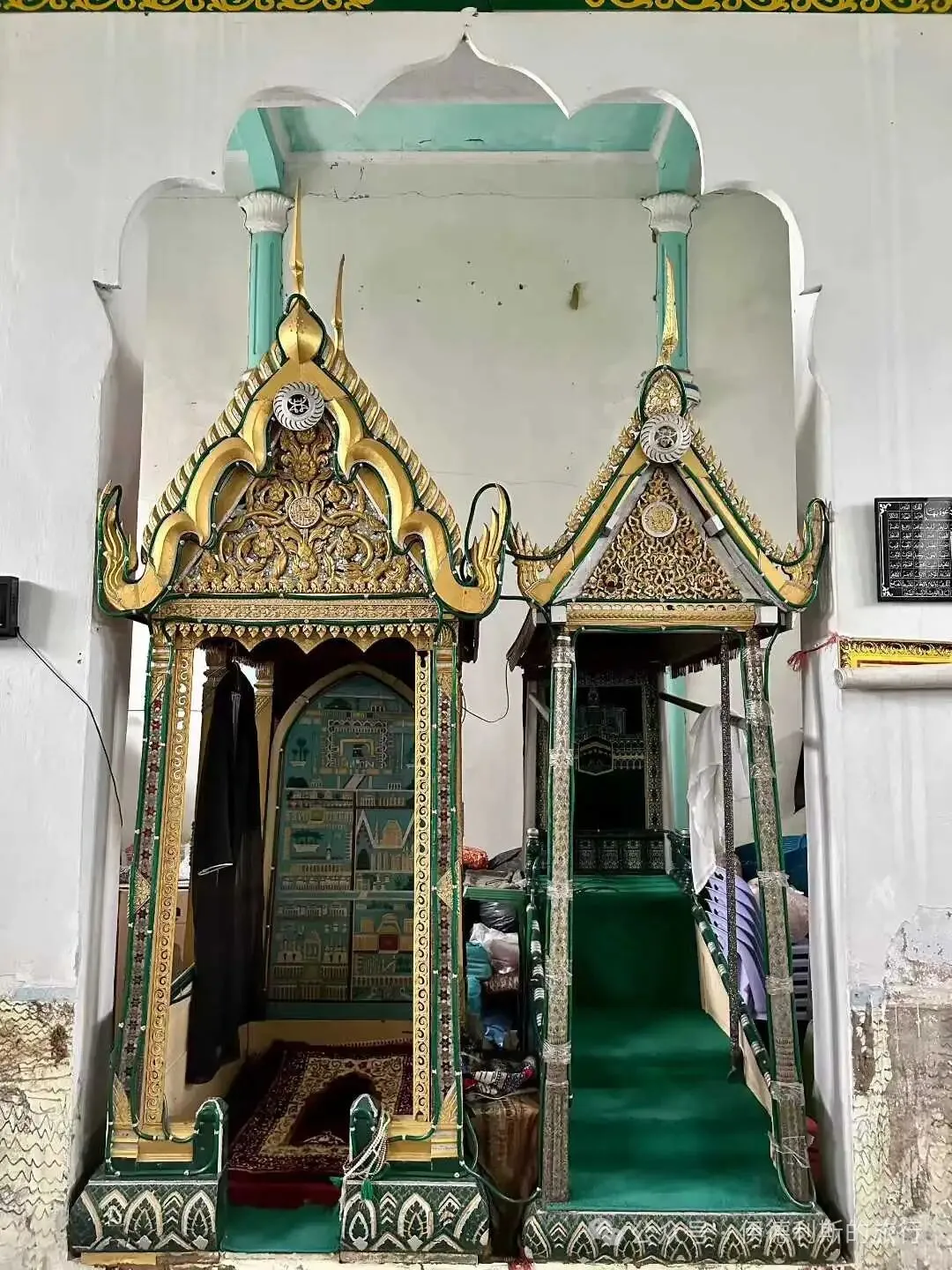
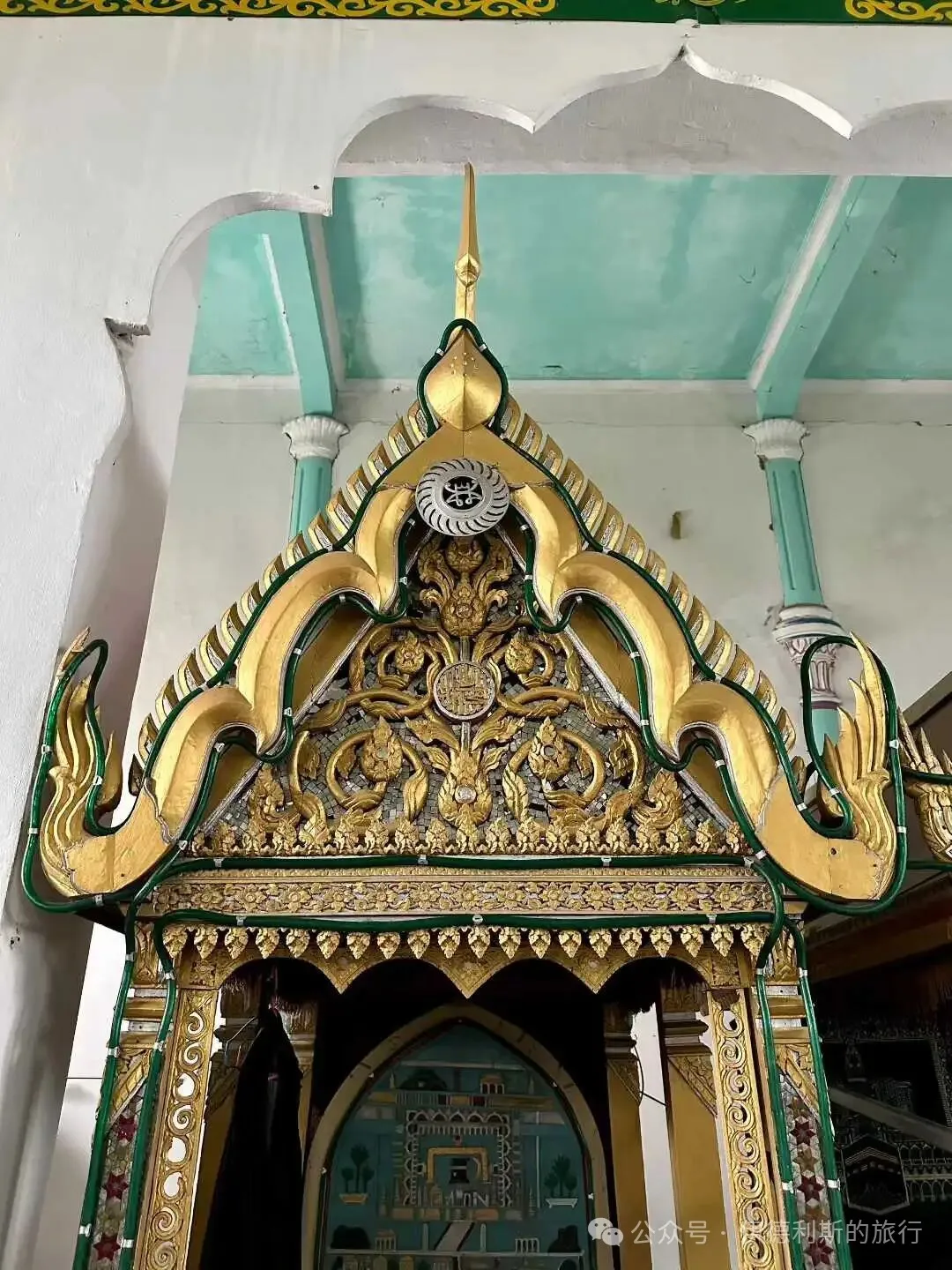
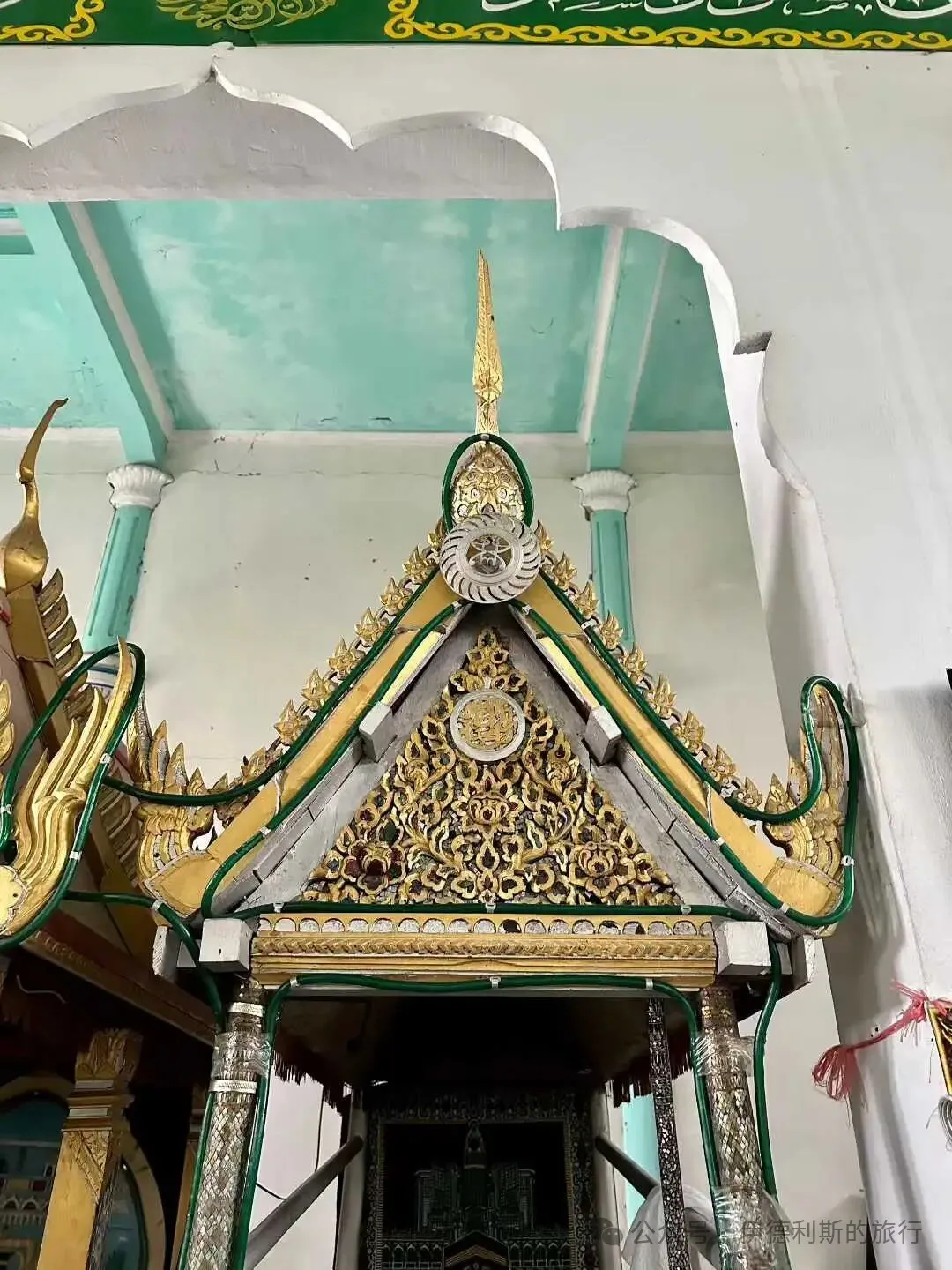
Surau Nai Klong Mosque was founded by Cham people from Cambodia and Vietnam. The Cham community in Ayutthaya is spread along both banks of the Chao Phraya River south of the old city. With a history of over 600 years, it is the oldest and longest-standing Muslim community in Thailand.
Champa (Champa) was a country established by the Cham people (Chams) in southern Vietnam in 192 AD. Because their land was narrow and fragmented, Champa focused on maritime trade and became an important trading port on the Maritime Silk Road during the Song and Yuan dynasties. Whether they were Chinese merchant ships departing from Guangzhou and Quanzhou or Arab and Persian merchant ships from the Indian Ocean and the Persian Gulf, all chose to stop in Champa.
After Ayutthaya became the capital of Thailand in 1350, Cham merchants came to trade and established a Cham village (Pata Ku Cham) on the south bank of the Chao Phraya River. According to the Royal Chronicles of Ayutthaya: Luang Prasoet Version, in 1409, the Thai King Ram Racha ordered the arrest of the minister Okya Mahasena, who successfully crossed the river and fled to the Cham village. He later supported the king's cousin, Nakarintratiraj, in overthrowing Ram Racha. After the new king ascended the throne, he exiled the old king to live in the Cham village.
After Vietnam broke free from Mongol control in the 14th century, it began moving south to invade Champa. In 1471, the Champa capital of Vijaya (Vijaya) was captured, and a large number of Cham royalty and civilians fled to Cambodia for refuge. These Cham people in Cambodia united with the Malays who had settled there earlier, forming a military alliance in the 16th century.
After the 16th century, the residential area of the Cham people in Ayutthaya expanded from the Cham village to both banks of the Chao Phraya River, and the nearby Cham canal port market became one of the four major floating markets in Ayutthaya. to selling goods, the Cham people in Ayutthaya also made a living by weaving straw mats and growing rice.
The Cambodian Cham military corps (Krom As-Cham) began to be employed by the Thai Ayutthaya Dynasty in the early 17th century. They were highly praised by the Siamese royal family for their superb shipbuilding skills and naval combat prowess. These Cham warriors were granted the honor of serving as rowers for the royal barges during Thai royal ceremonies.
After the fall of Ayutthaya in 1767, many Cham people moved south near Bangkok, as recorded in the Complete Collection of Bangkok Mosques: The Five Cham Quarters. However, many Cham people still remained in Ayutthaya. Following the arrival of Pattani Malays at the end of the 18th century, this area is now a place where Cham and Malay people live together.
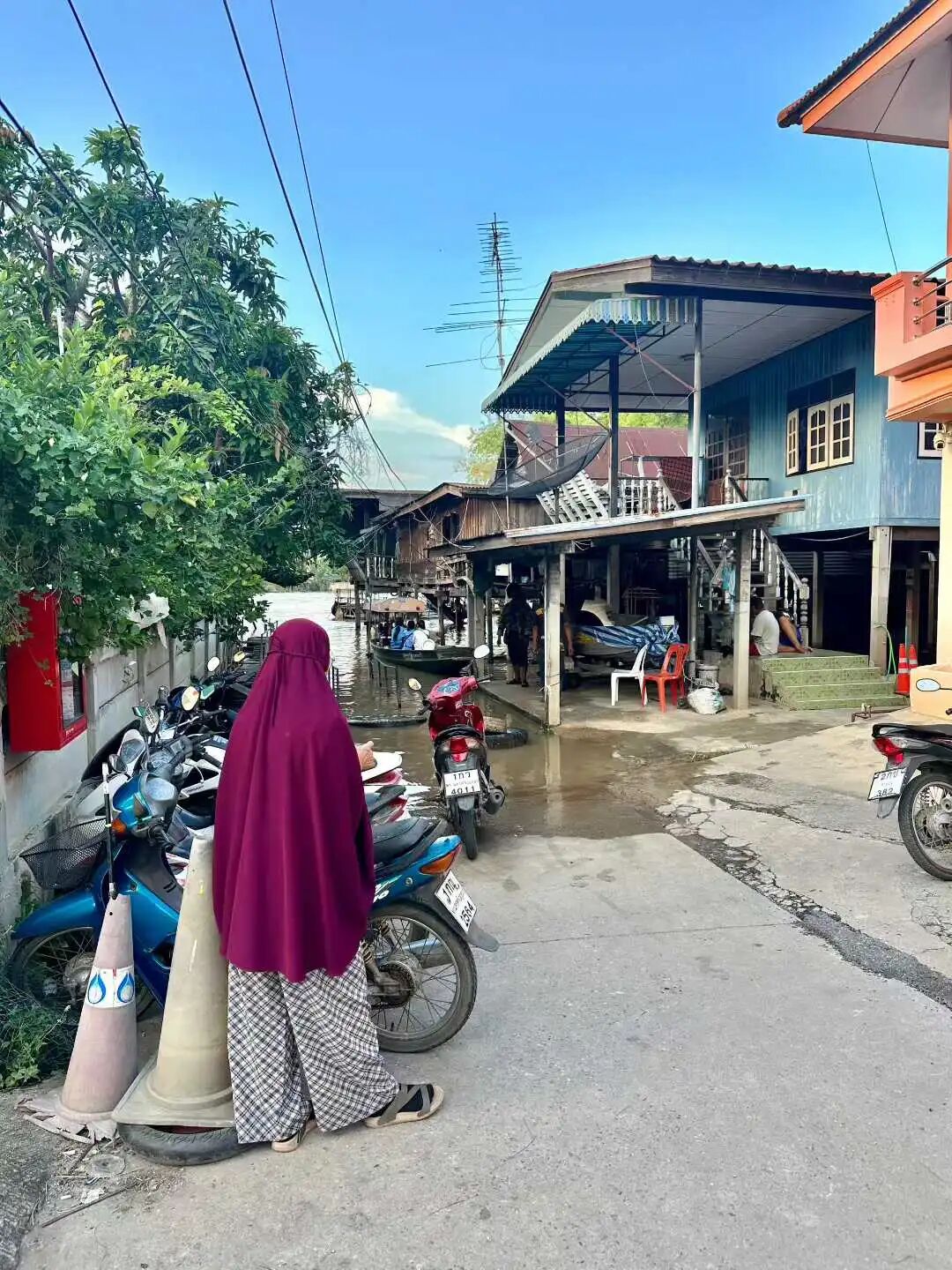
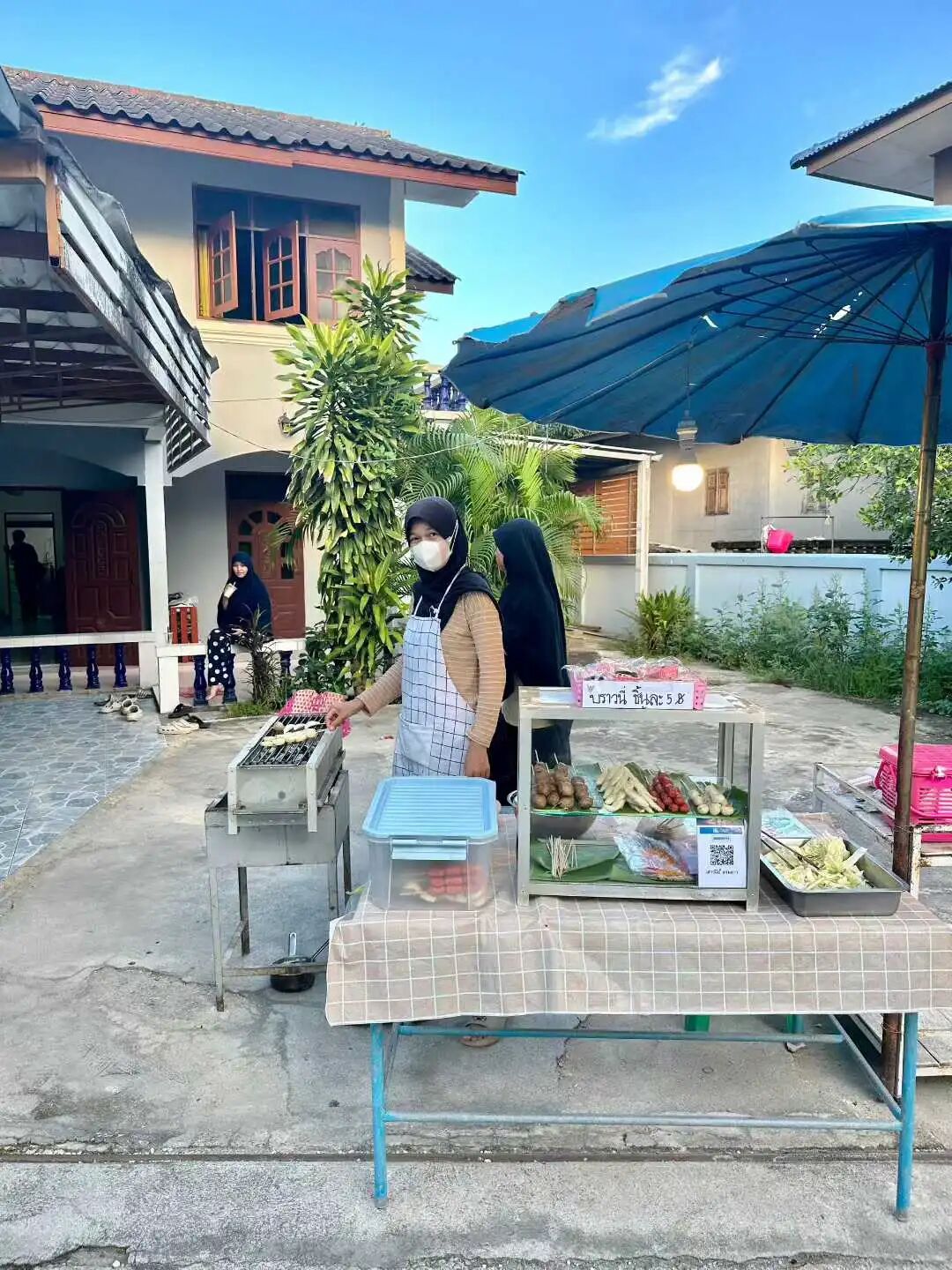
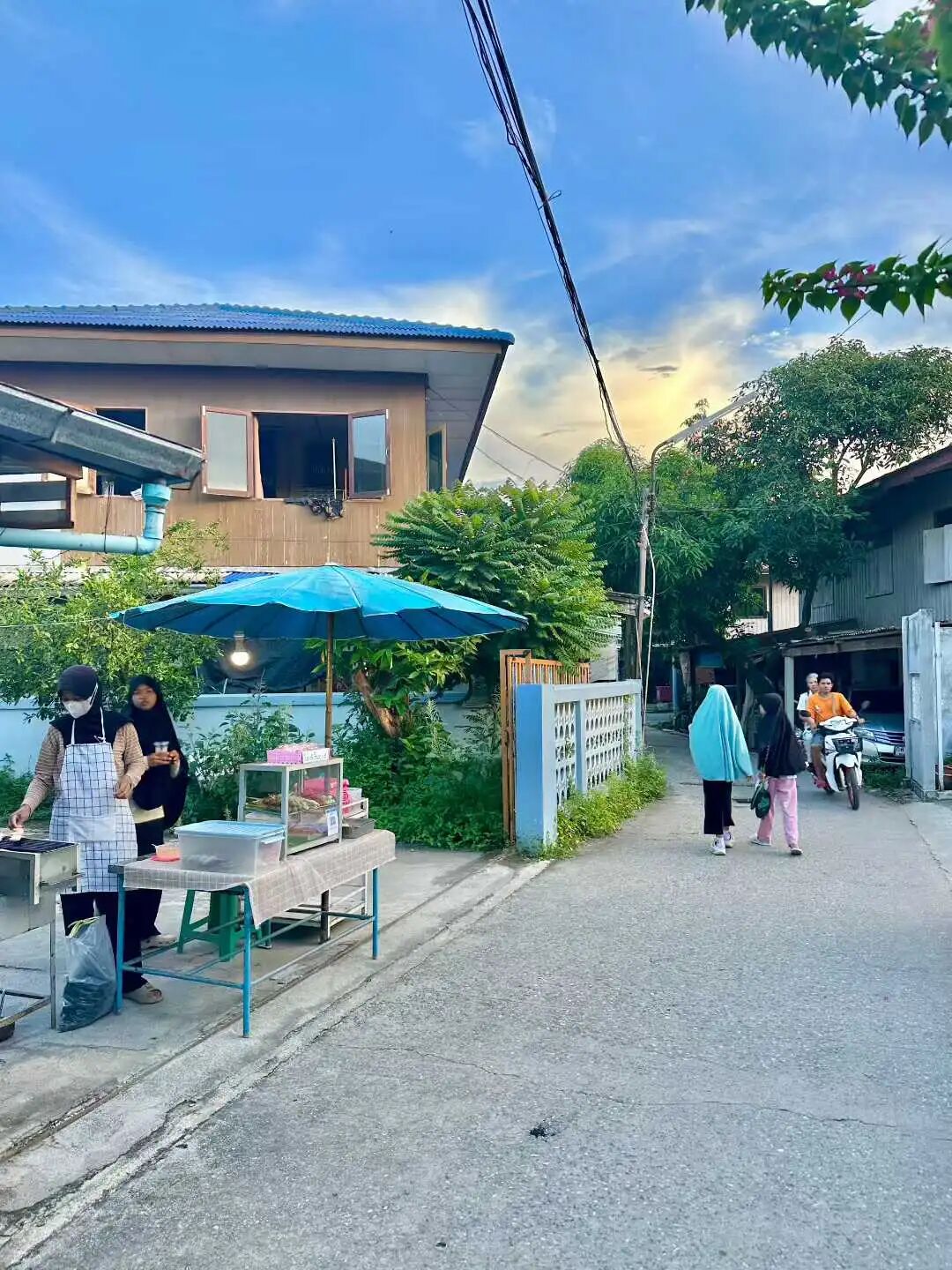
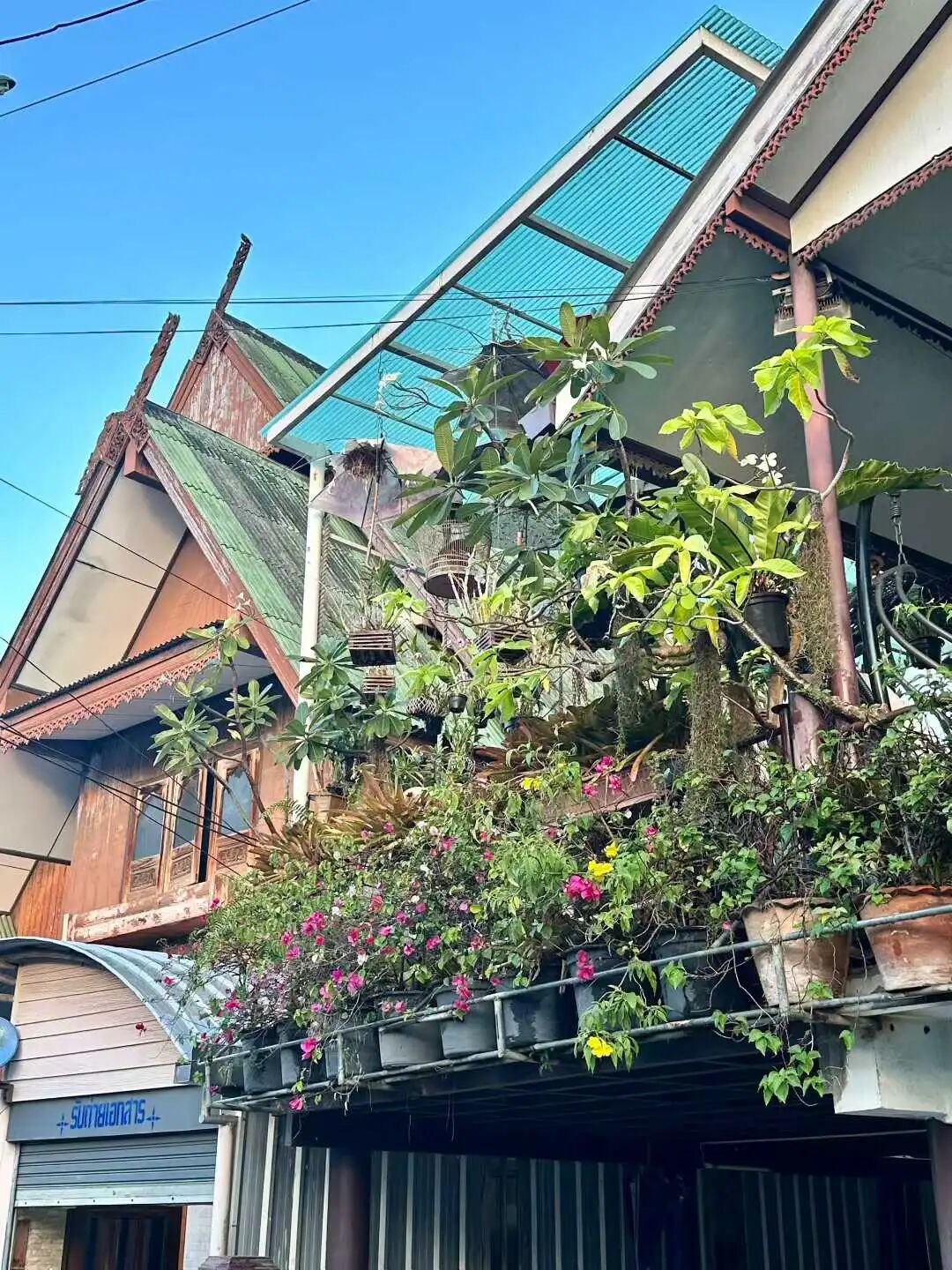
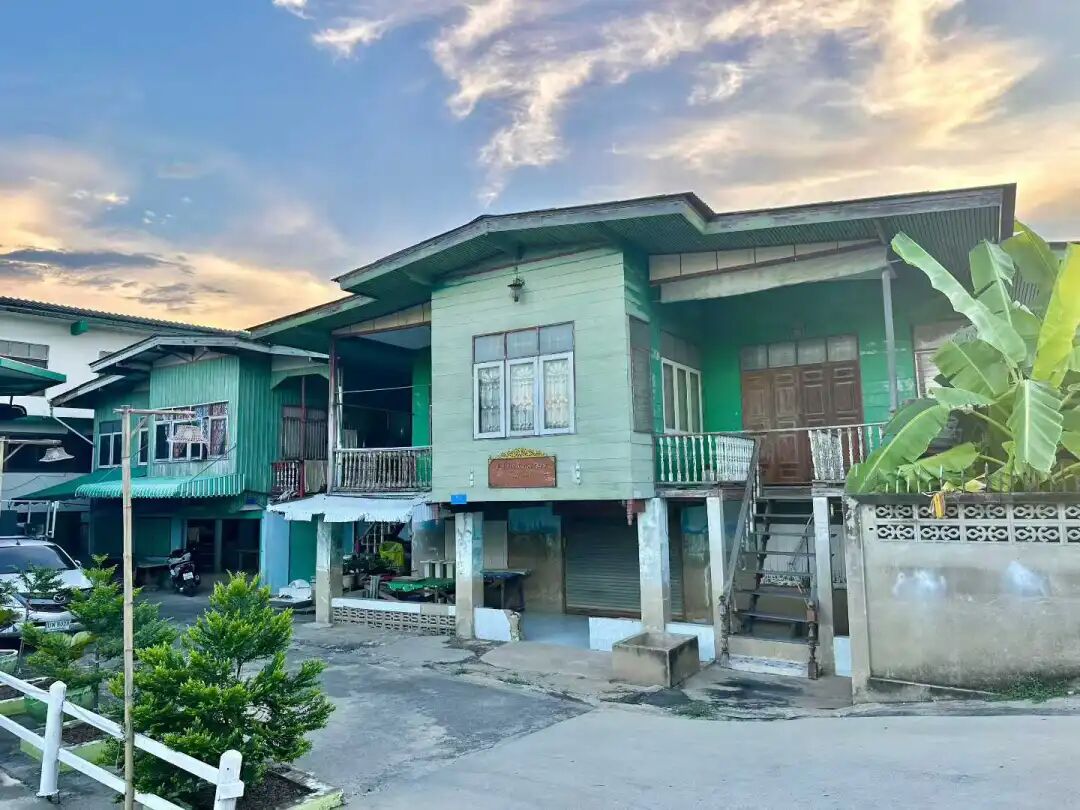
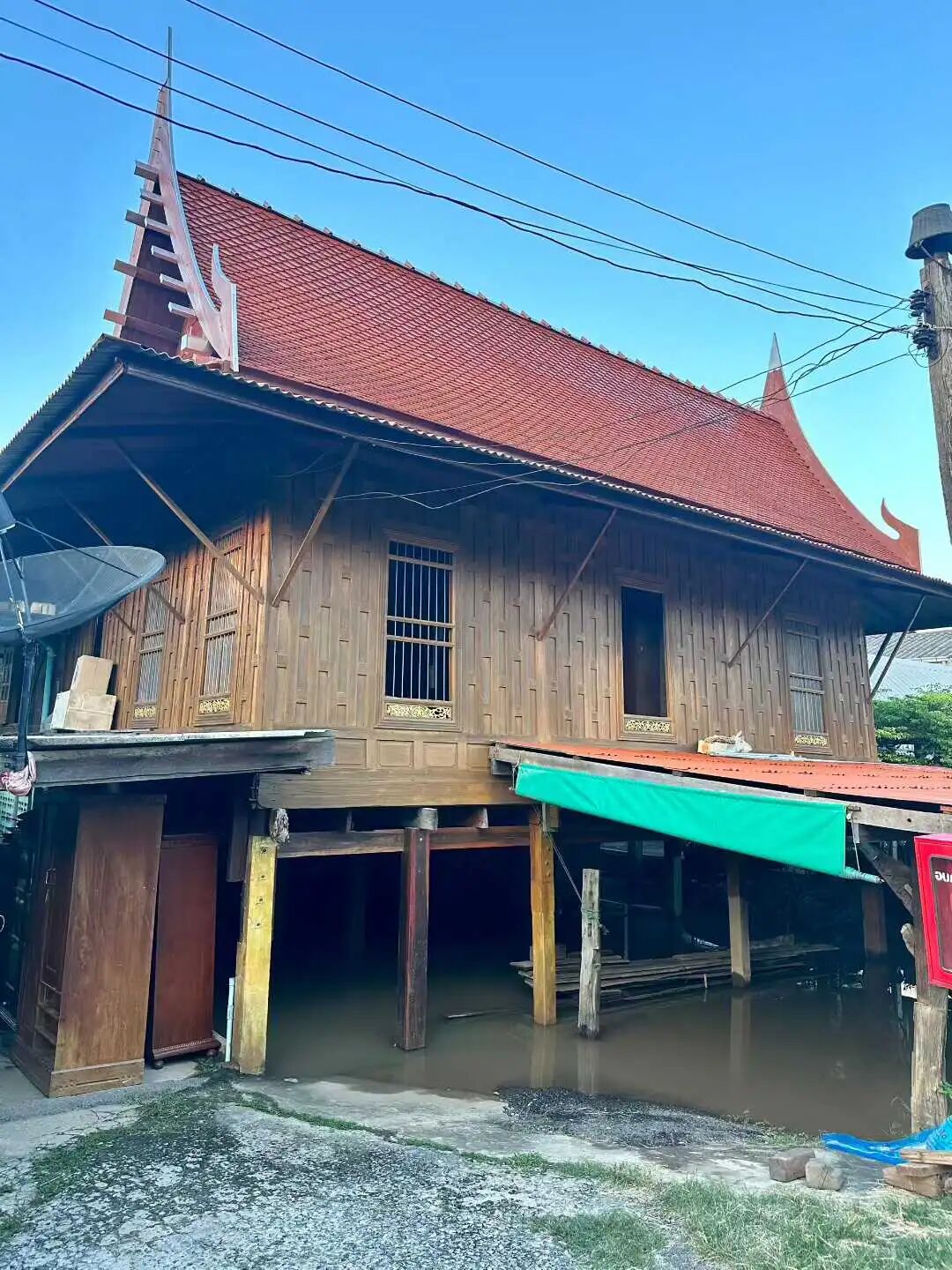
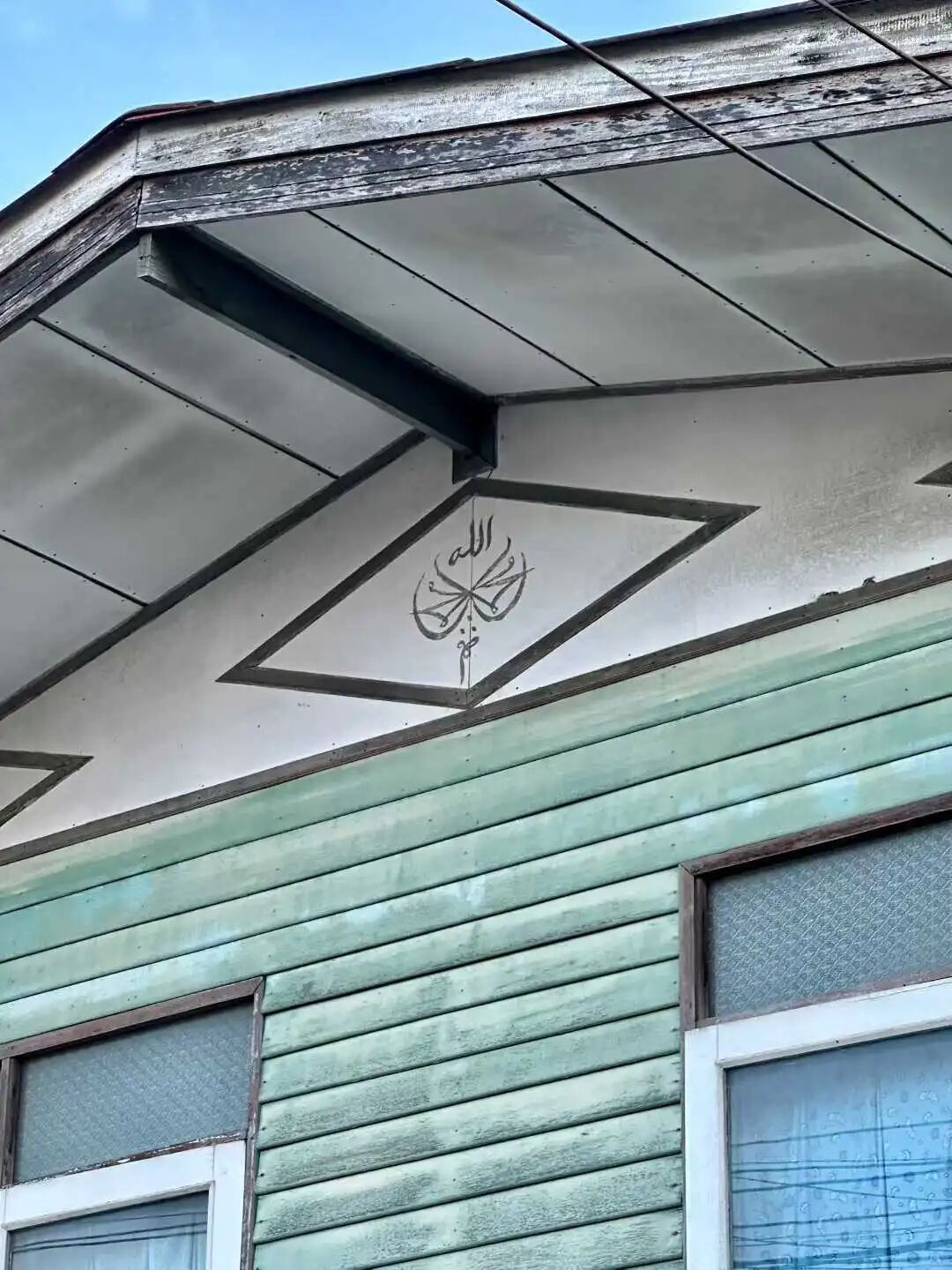
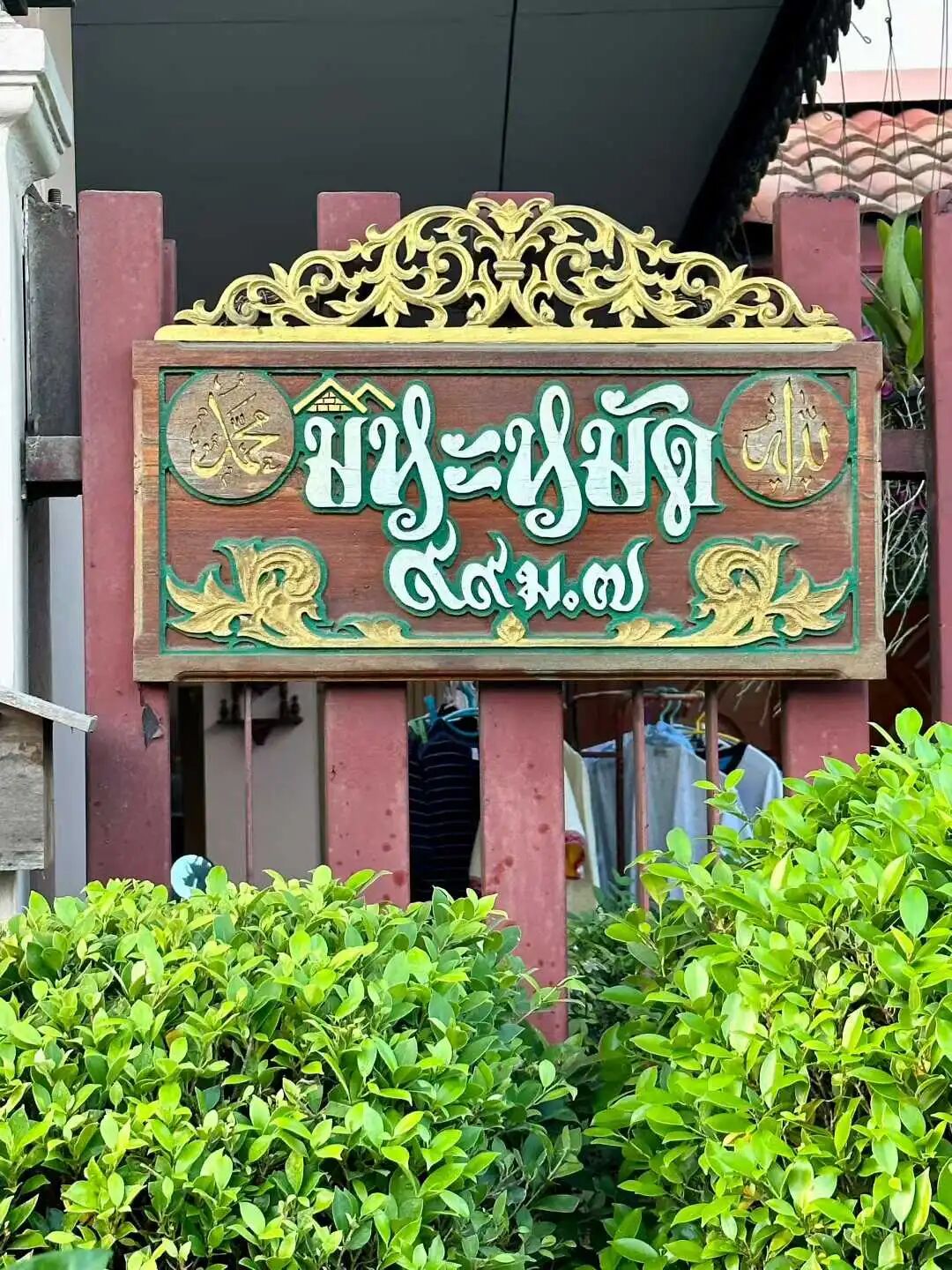
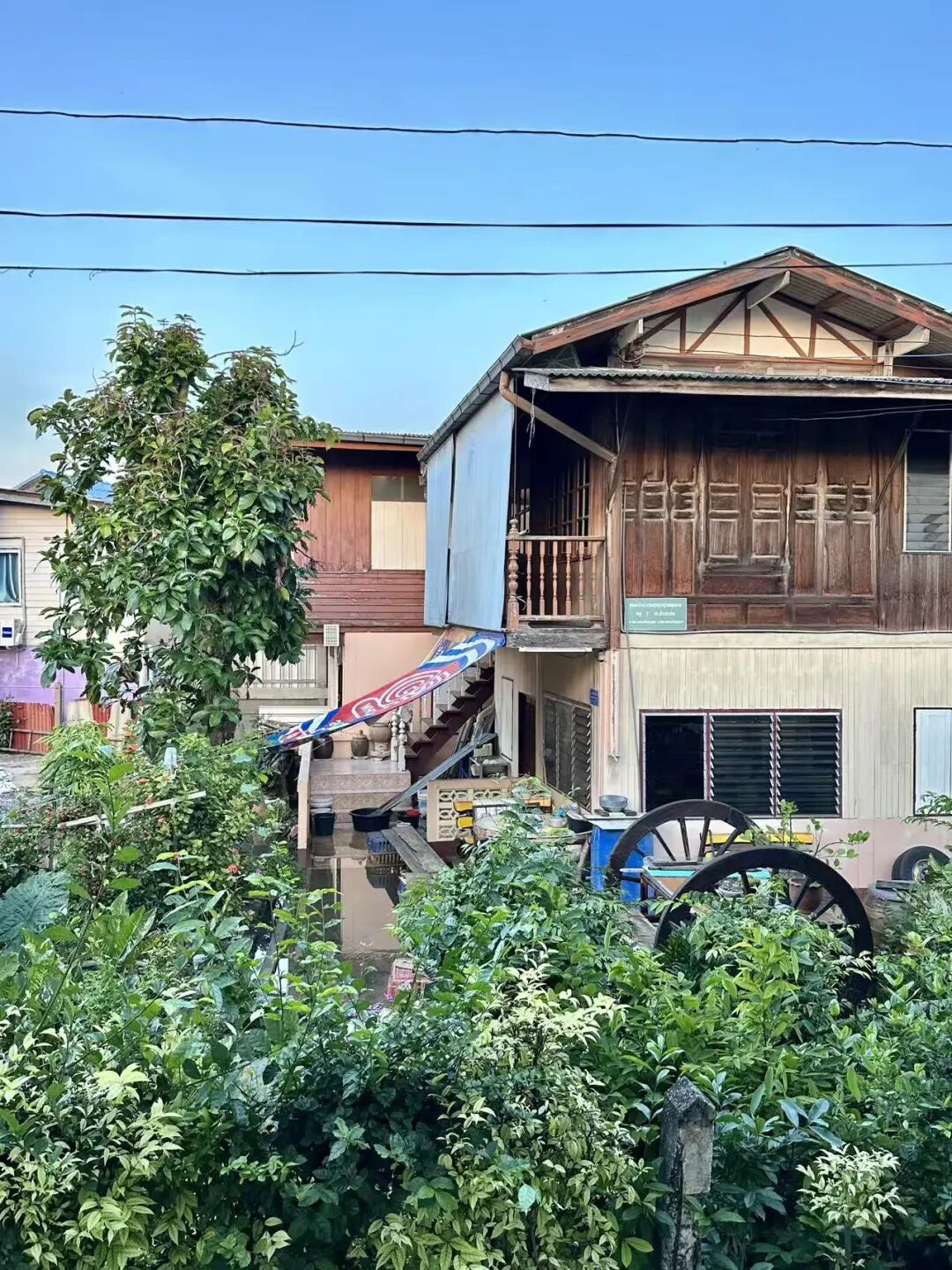
The original Surau Nai Klong mosque in Champa Village was gradually abandoned after the 19th century. Today, there are three mosques here: Aliyin Nuroi, Madinah Tusslihat, and Islam Vattana. I visited the first two on this trip.
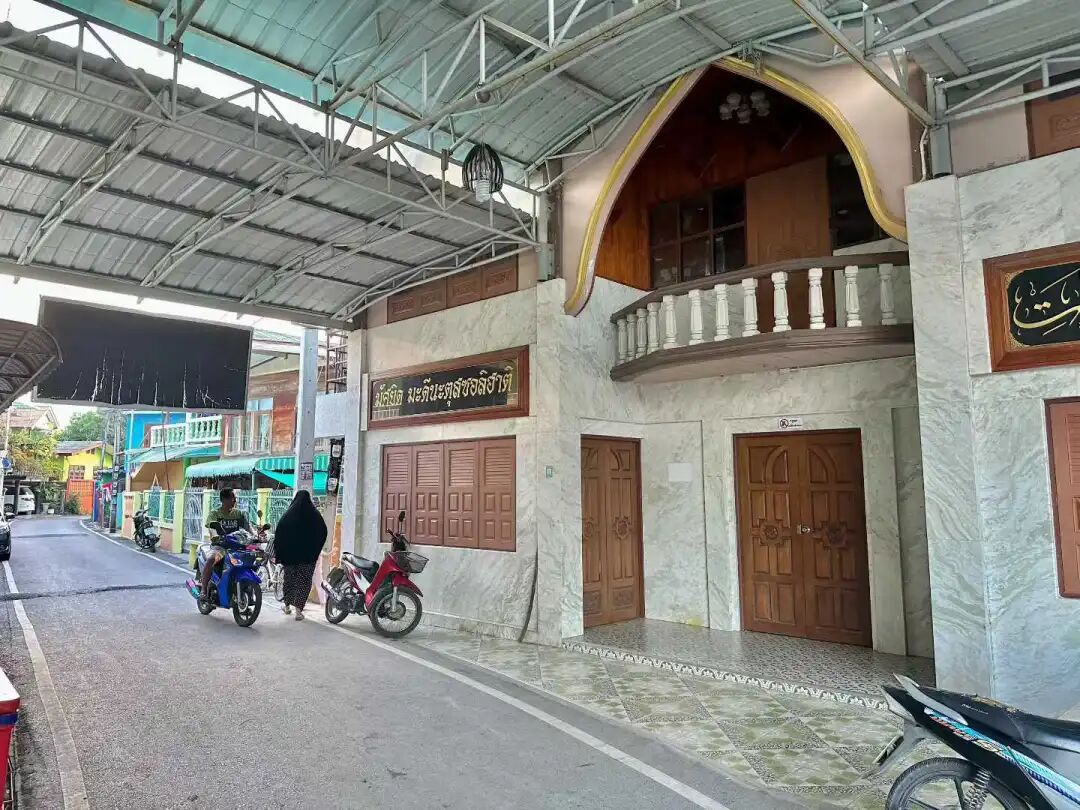
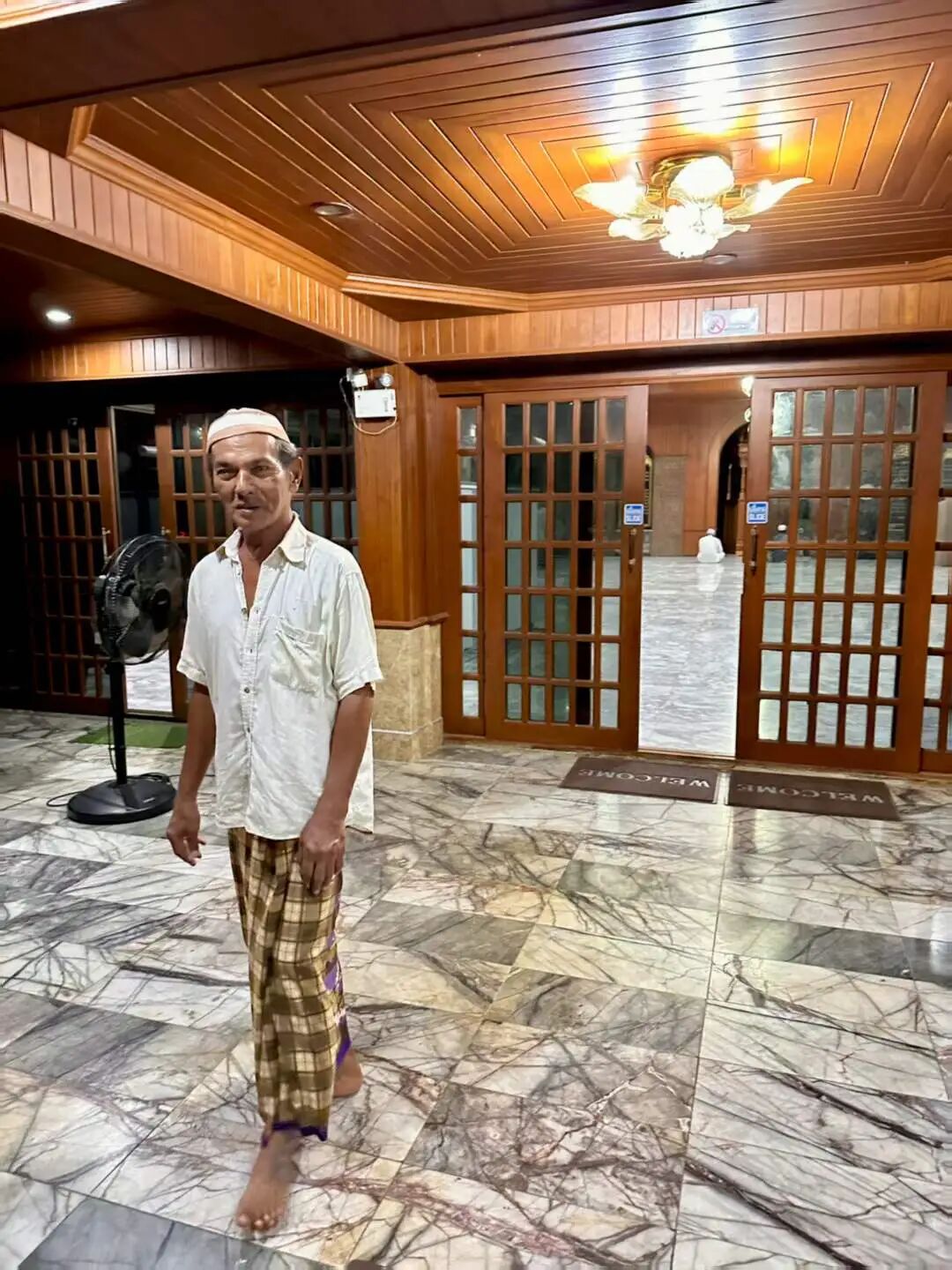
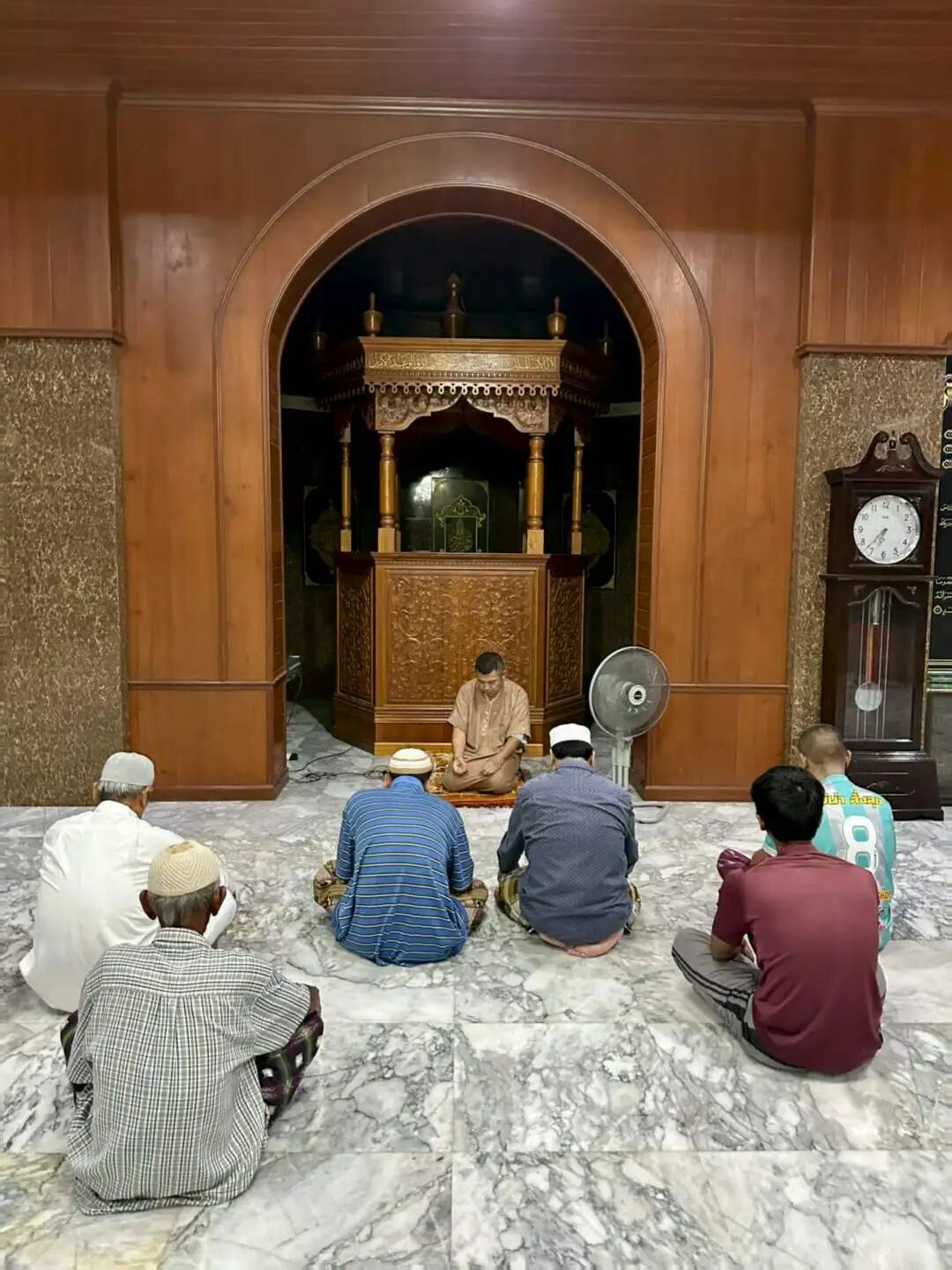
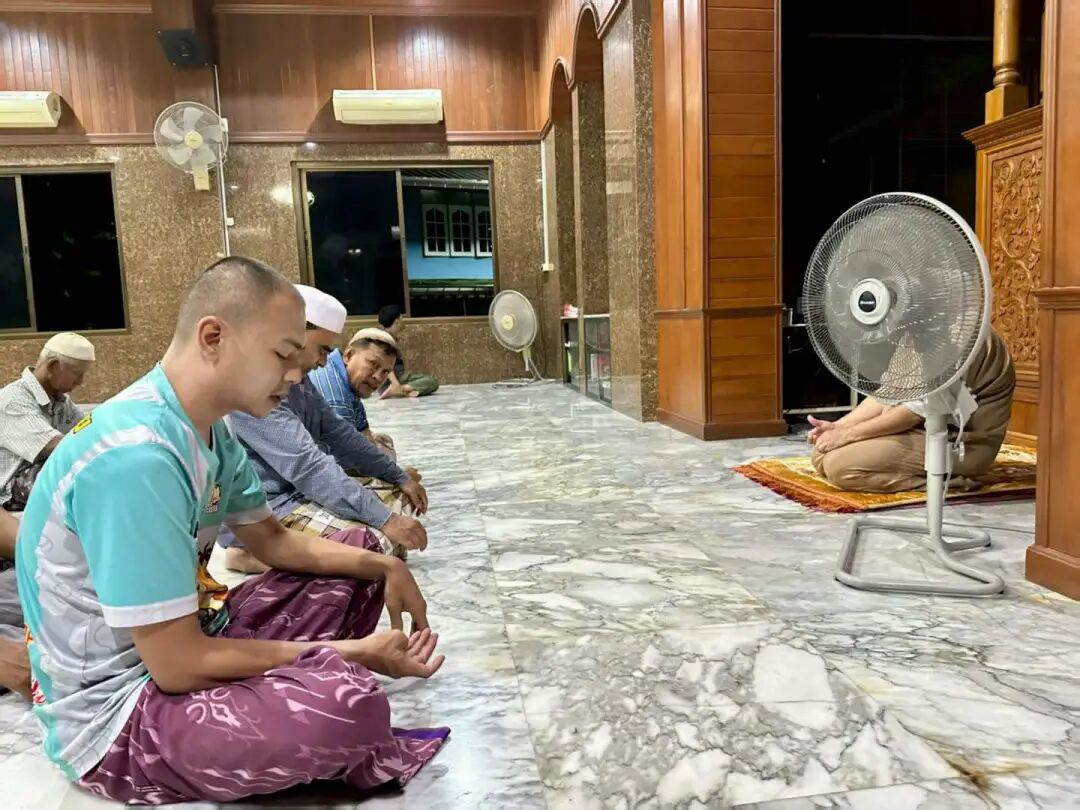
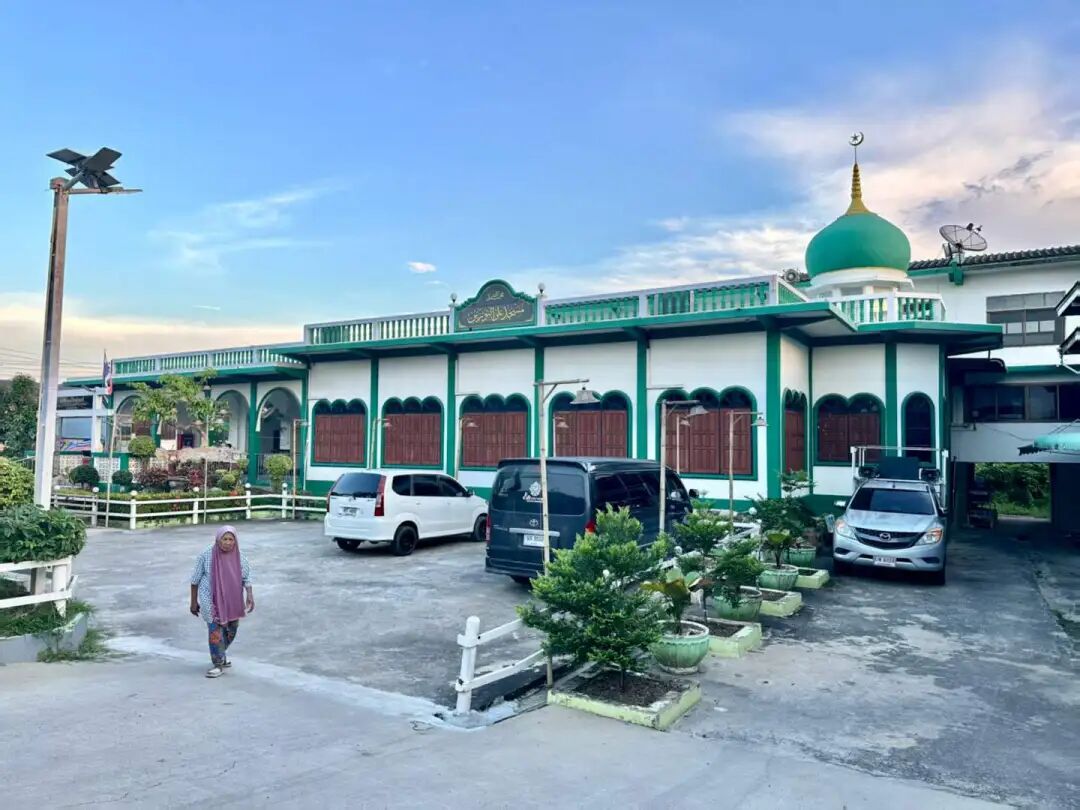
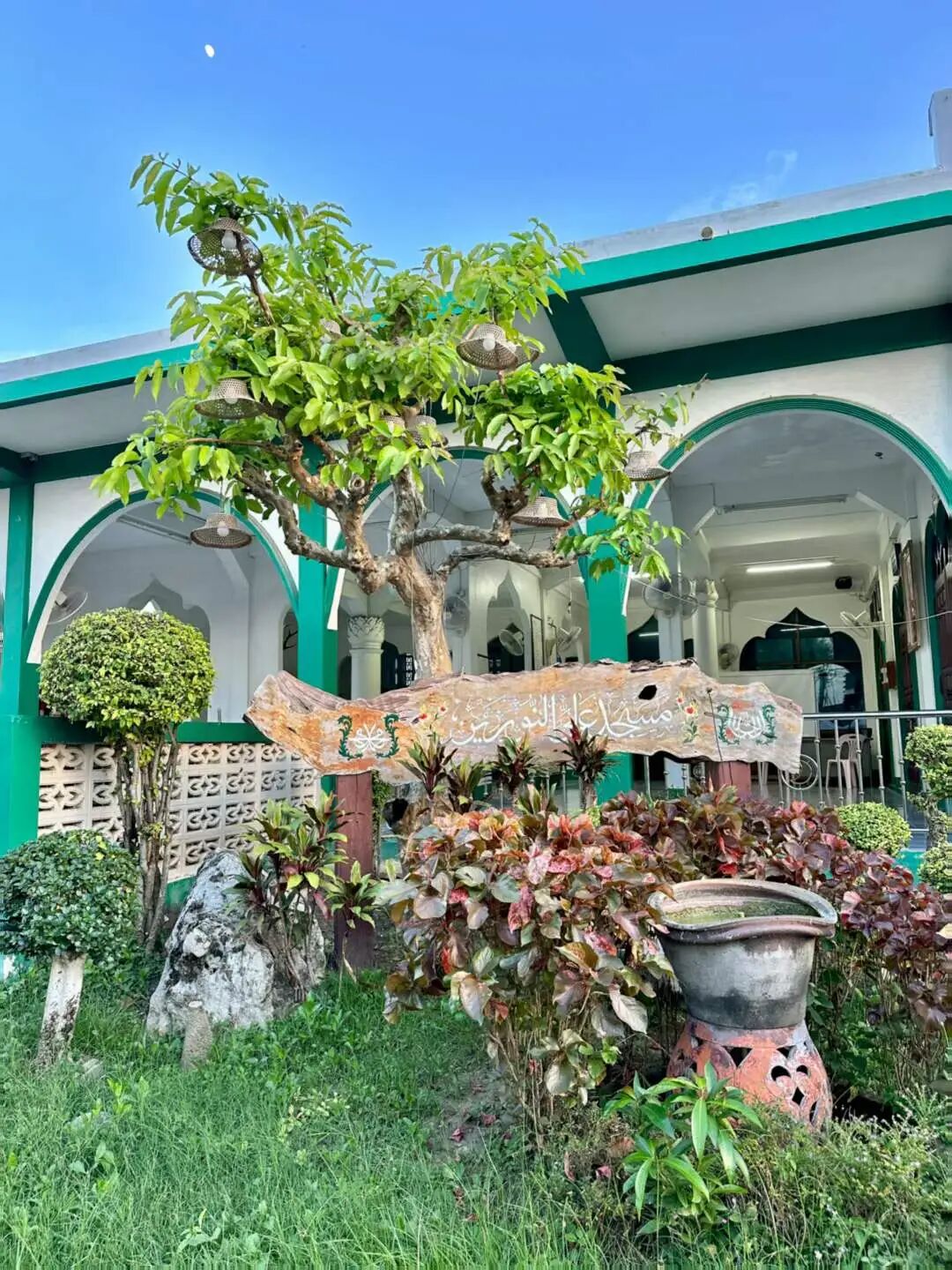
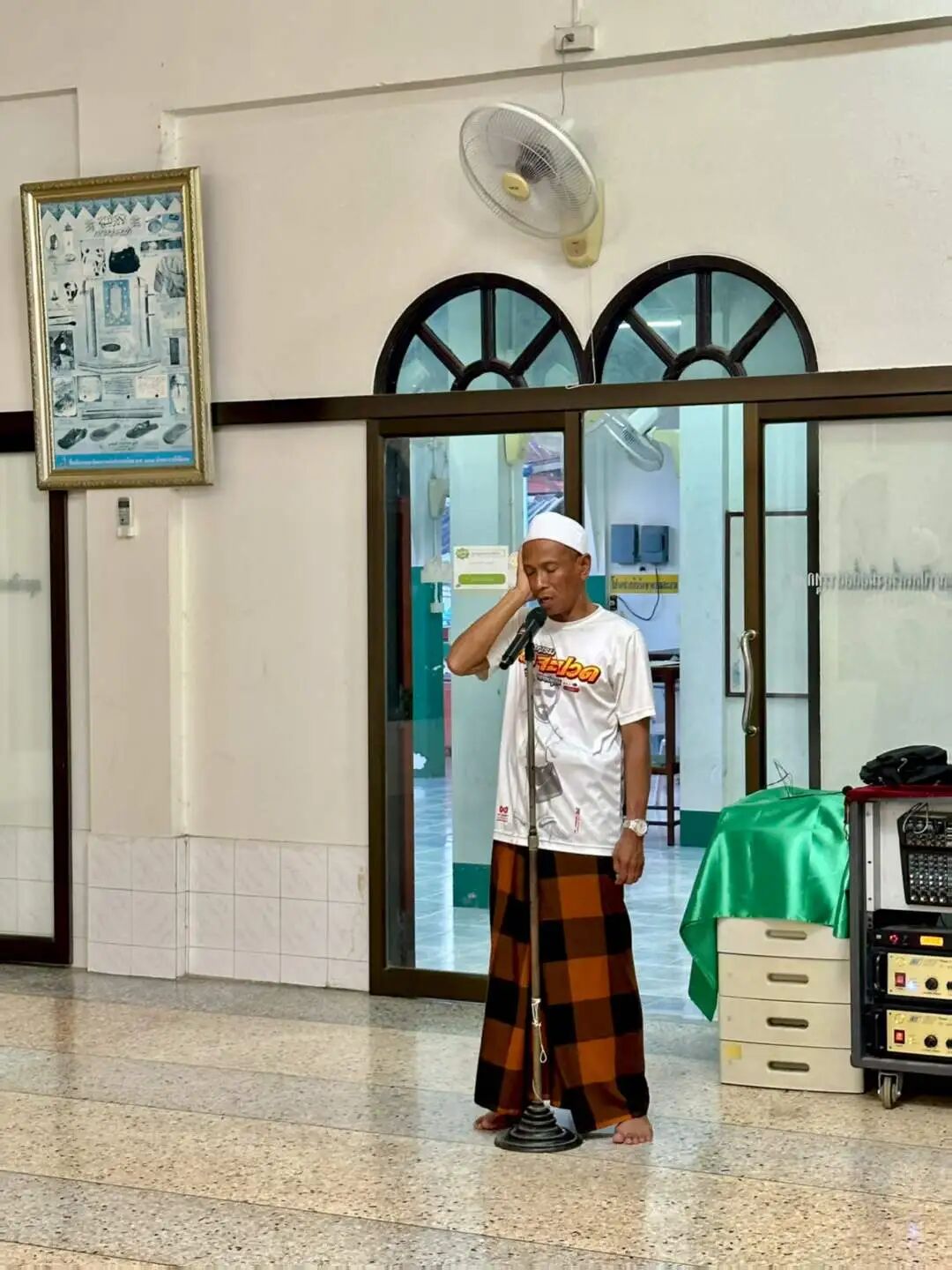
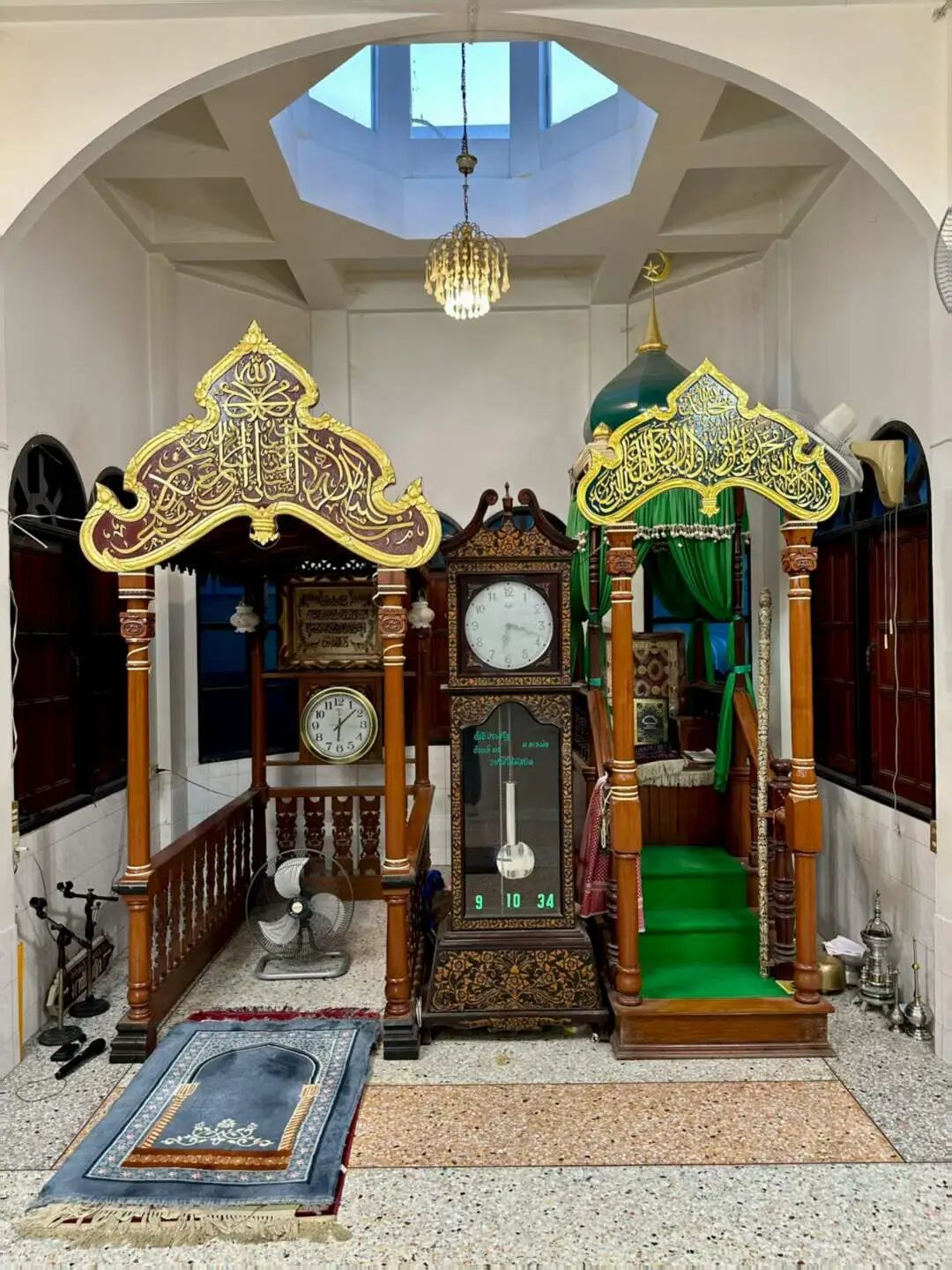
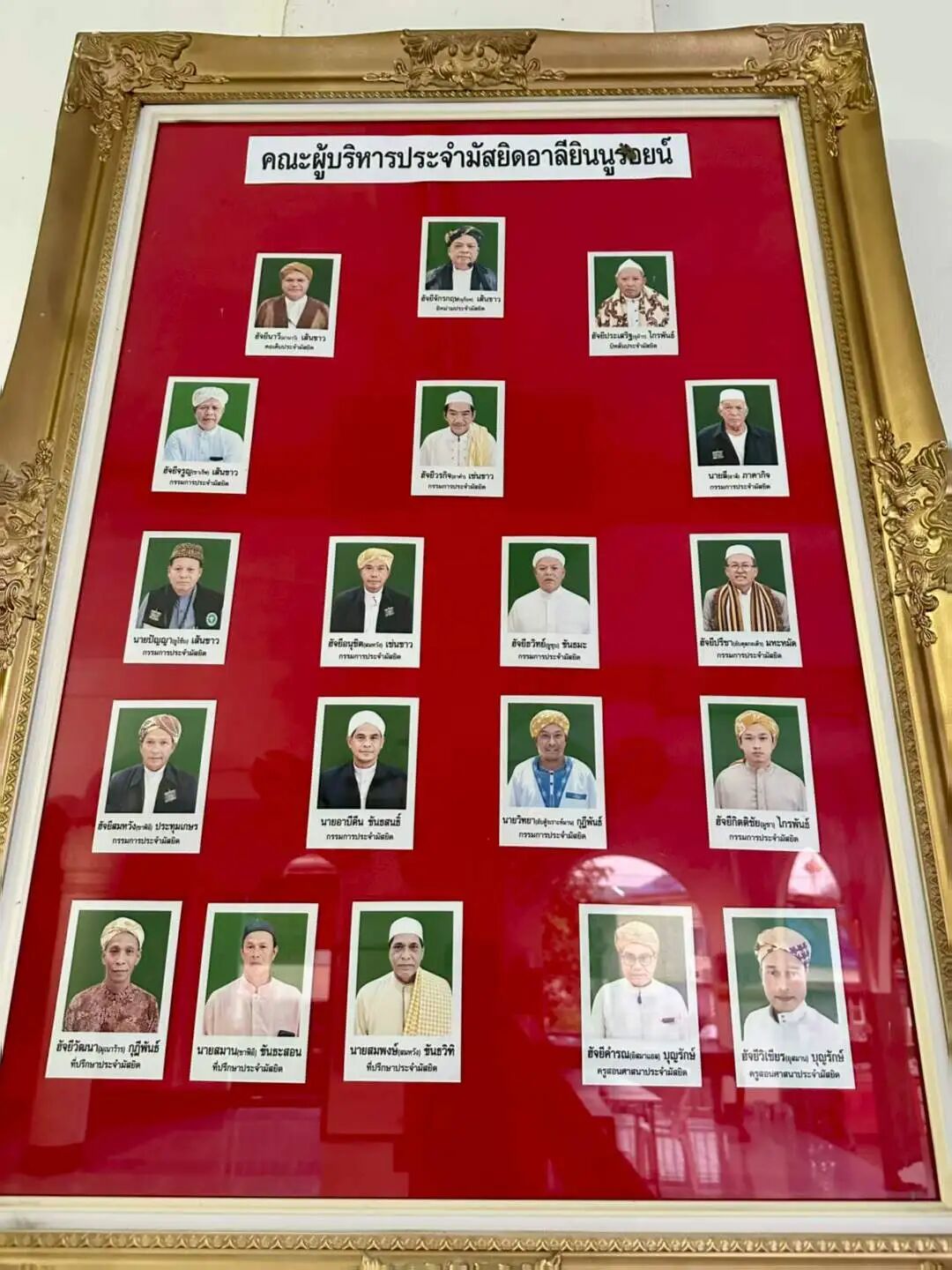
Next to the Cham community is the Islam Vattana cemetery. The most prominent building inside is a tomb for a Persian Shia sage built in the 18th century. It has now become a gongbei for local Sunni followers, which is a very interesting cultural phenomenon.
The owner of the gongbei was named Chen. He served as the Chula Rachamontri, the leader of the Thai Muslim community, during the reign of King Ekkathat (1758-1767) and was the last leader of the Muslim community during the Ayutthaya Kingdom. Chen was a descendant of the Sheikh Ahmad family, the most important Persian Shia family in Thailand. His family held a monopoly on Thai trade heading west to India, Persia, Arabia, and Europe, and they held the position of Muslim community leader by heredity. Chen's father, Jai, was a court attendant for King Narai. During the reign of King Borommakot (1733-1758), he was promoted to the general rank of Chao Phraya Phet Pichai and became the commander of the Cham and Japanese regiments. In 1750, Chen's father followed the Thai king and converted to Buddhism, but Chen held fast to his faith. He continued to serve as the leader of the Muslim community while also serving as the head of the Right Harbor, Chao Kromma Tha Khwa, responsible for managing Thailand's western trade.
After Ayutthaya fell in 1767, Chen did not follow the Thai king south to Thonburi. Instead, he stayed in his ancestral home in Ayutthaya, where he eventually passed away. His ancestral home is right next to the Cham Canal south of the city, adjacent to the Cham community. His grave is also here, and it has become an important gongbei for sages in Ayutthaya.
In 1797, Chen's son, Konkaew, inherited the titles of Muslim community leader and head of the Right Harbor in Thonburi. Another son, Akayi, built the Shia hall Kudi Charoenphat, which still stands today.
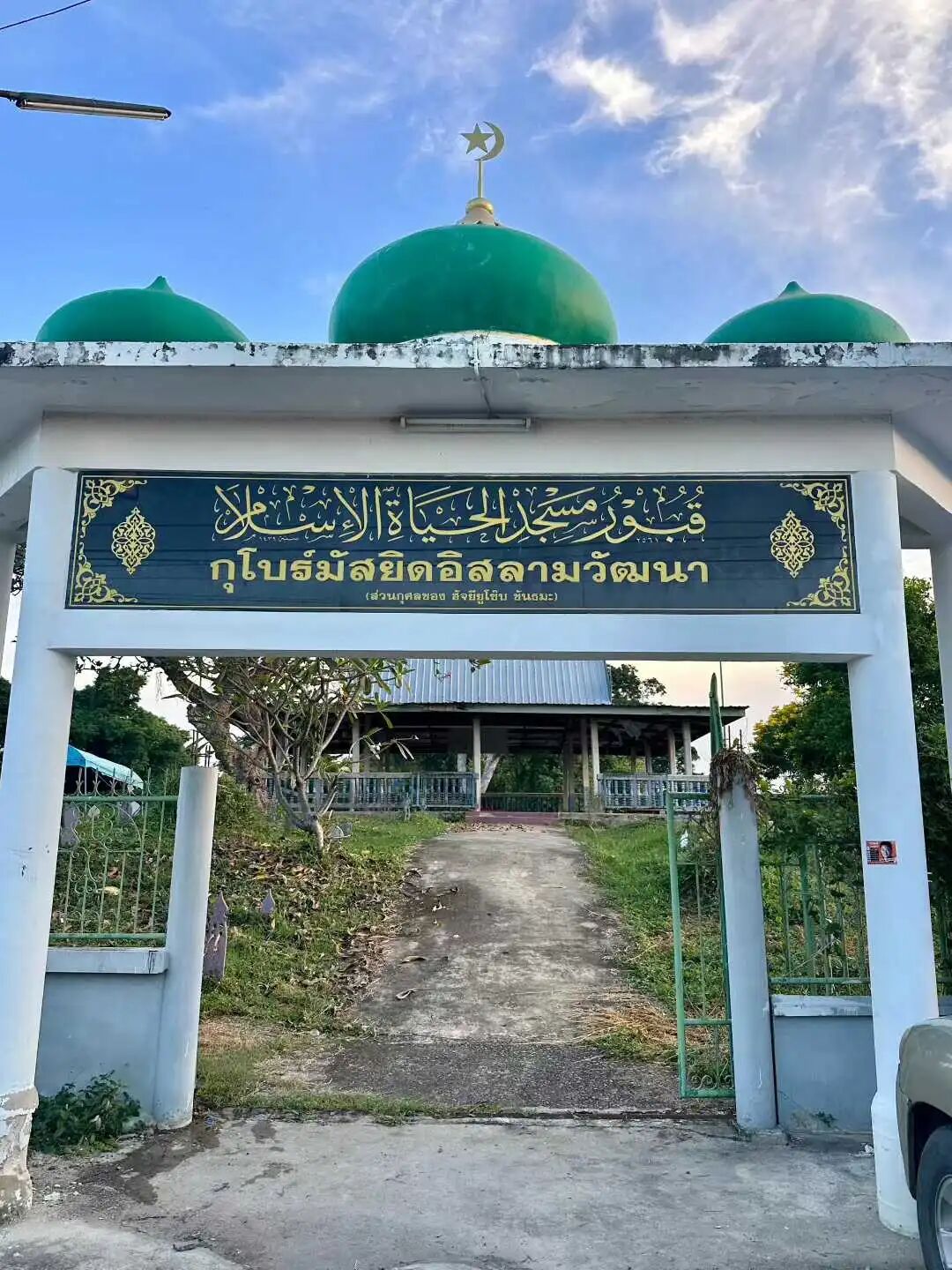
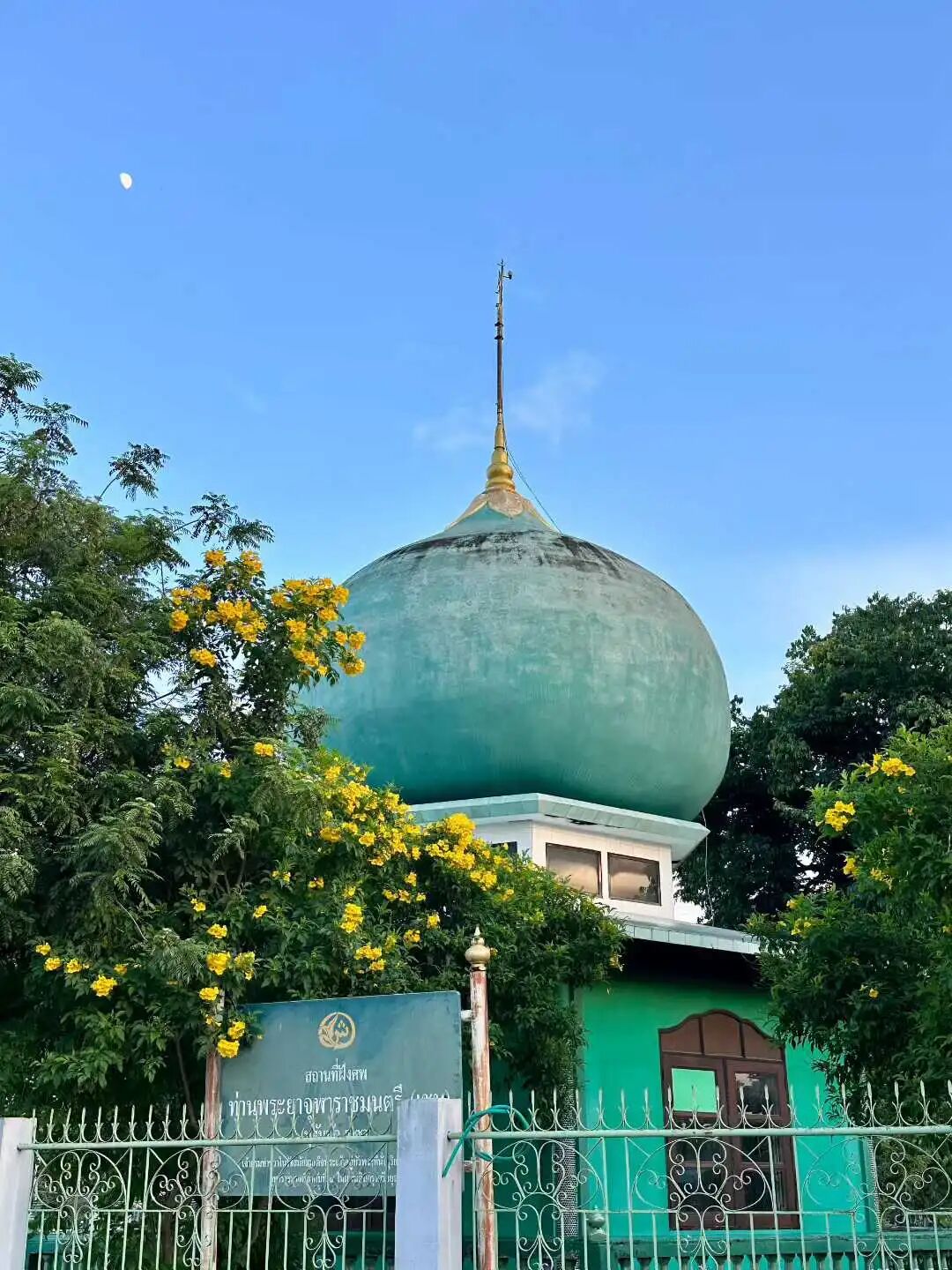
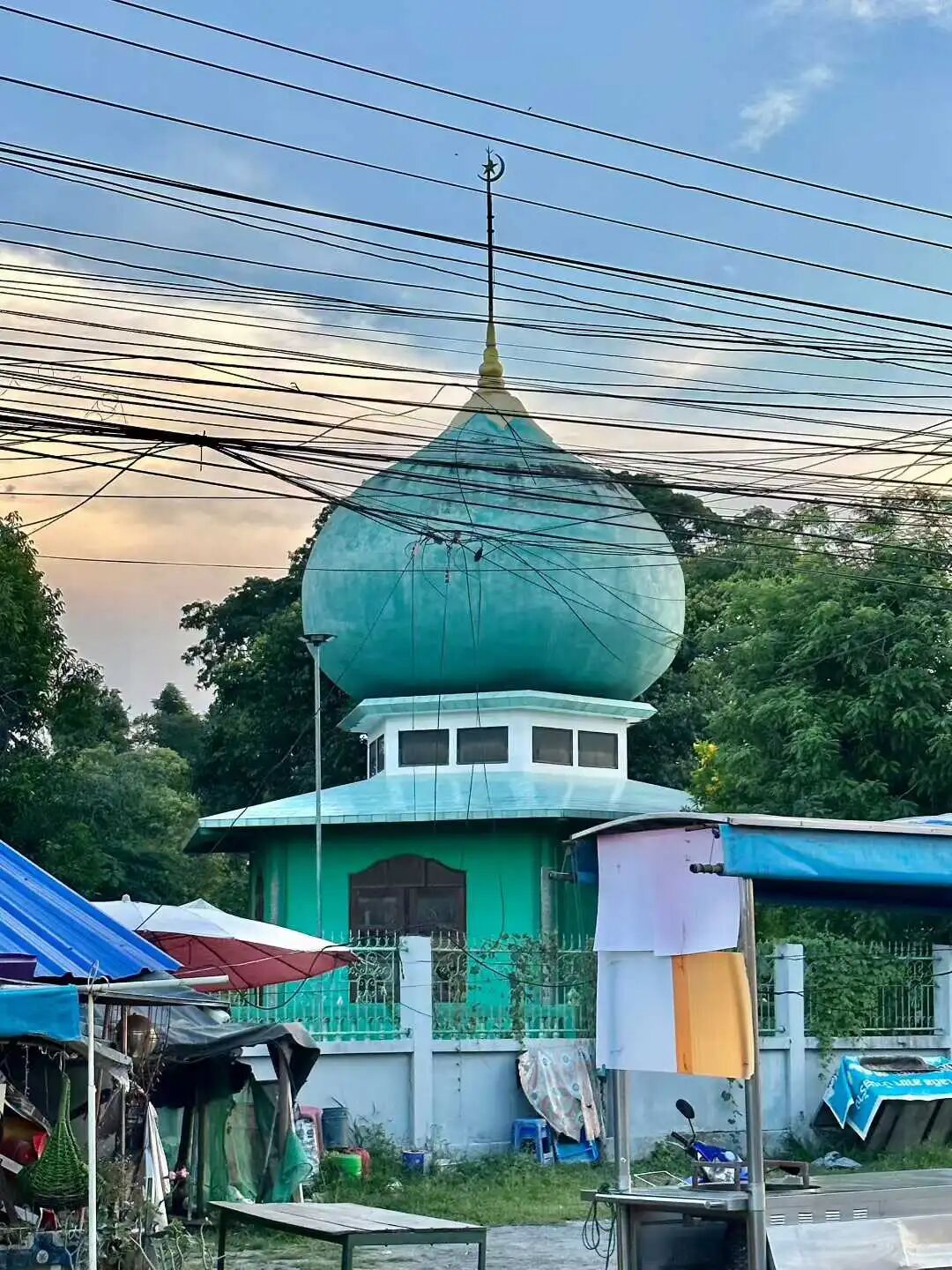
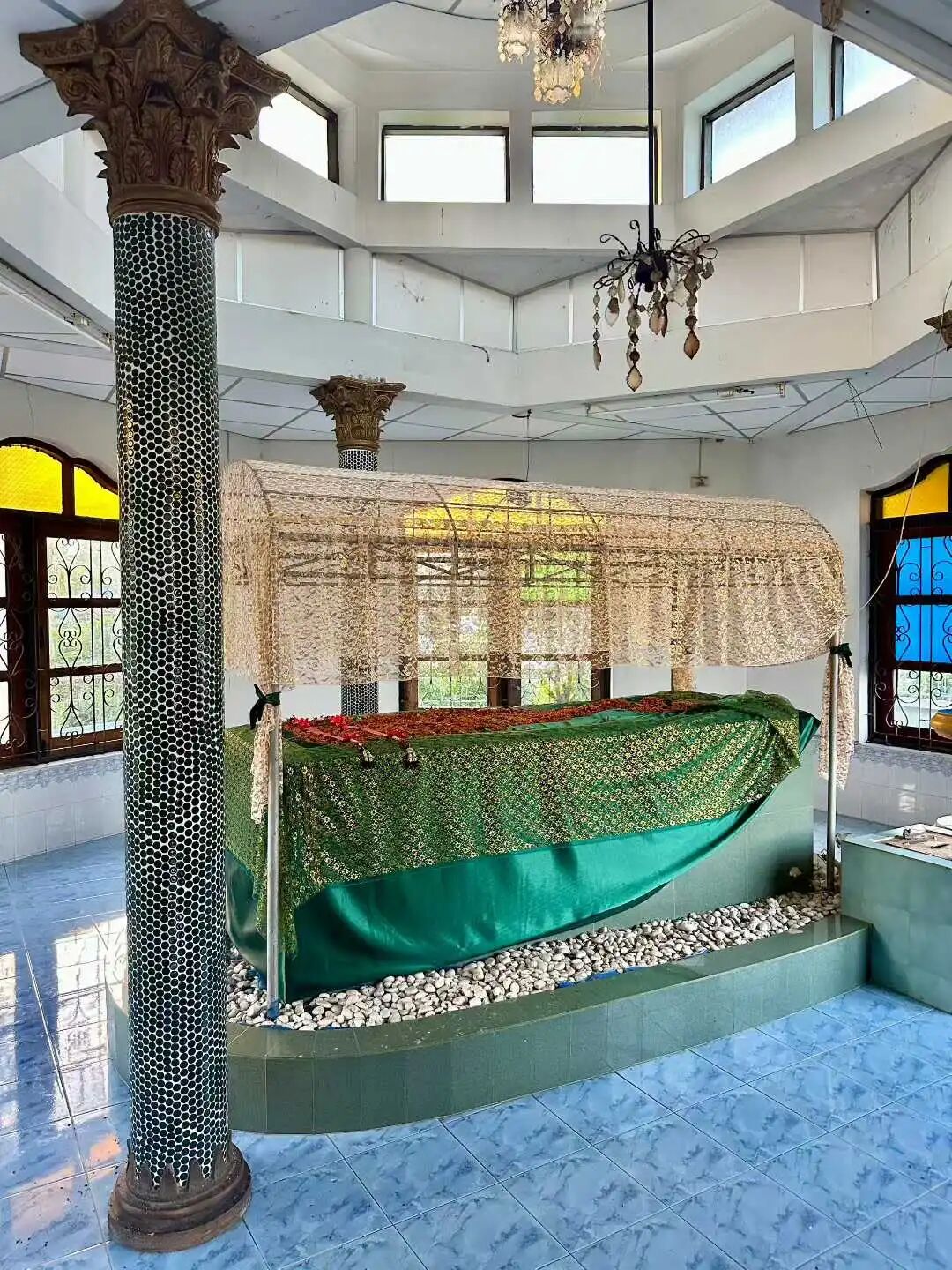
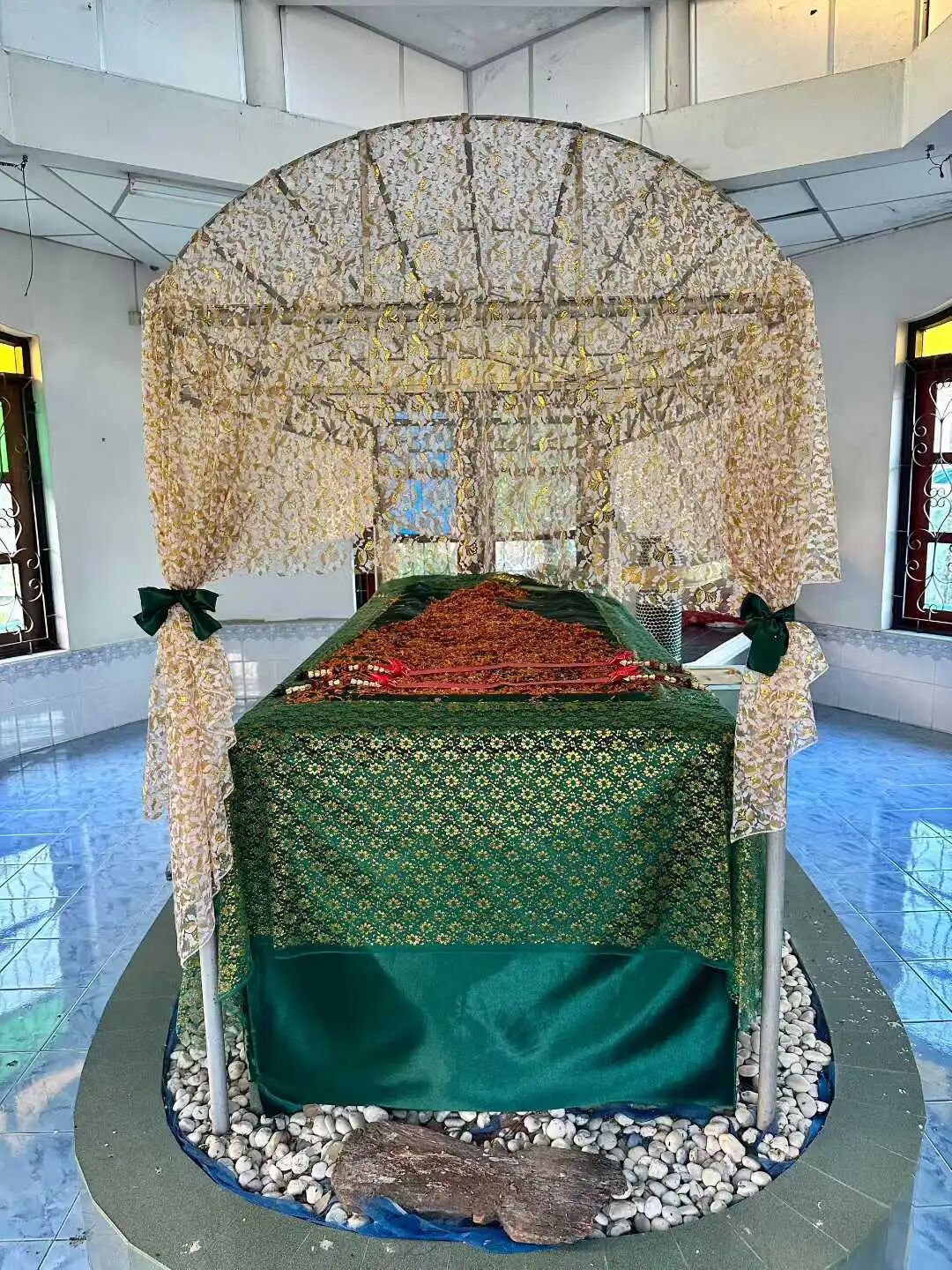
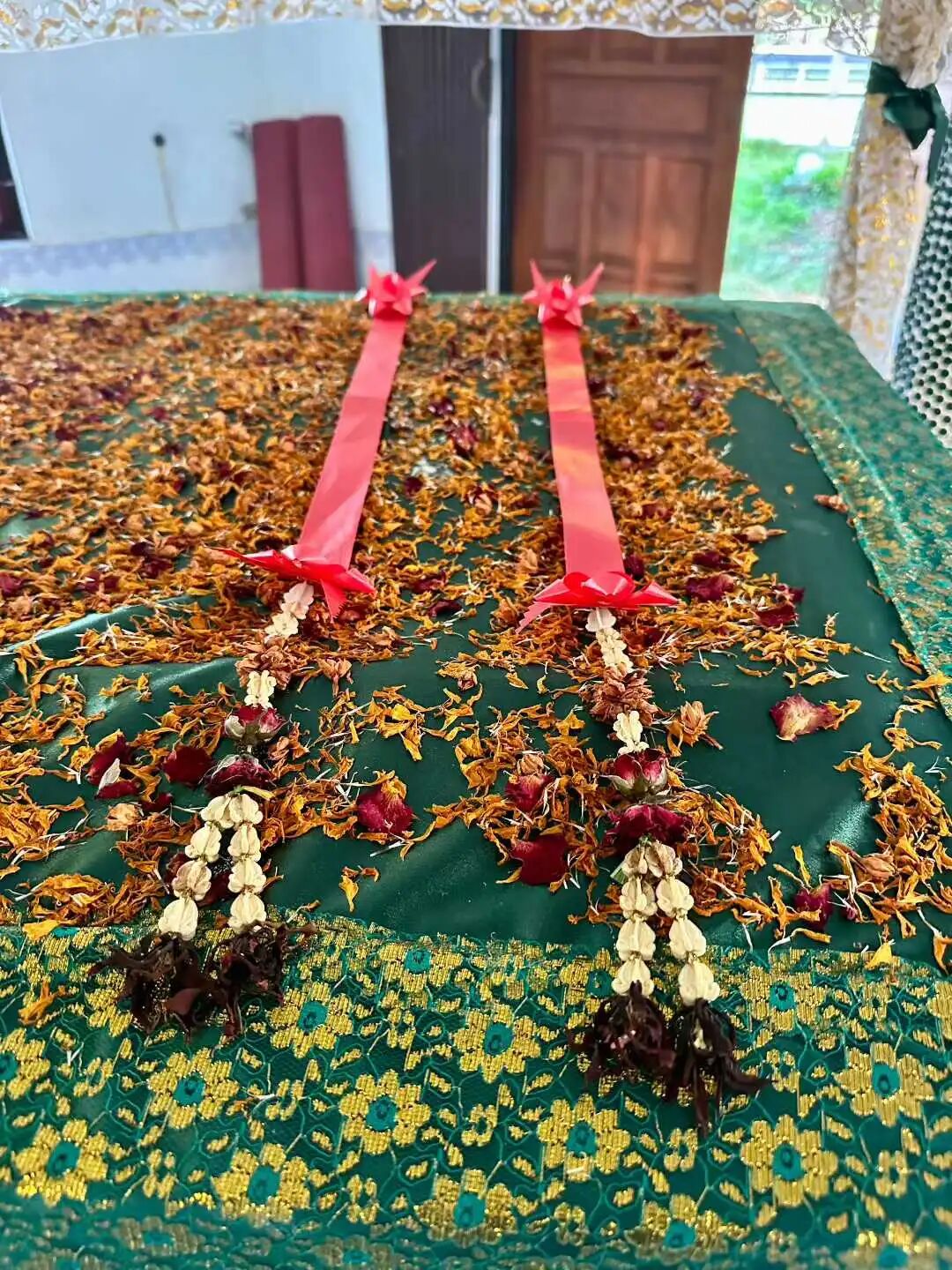
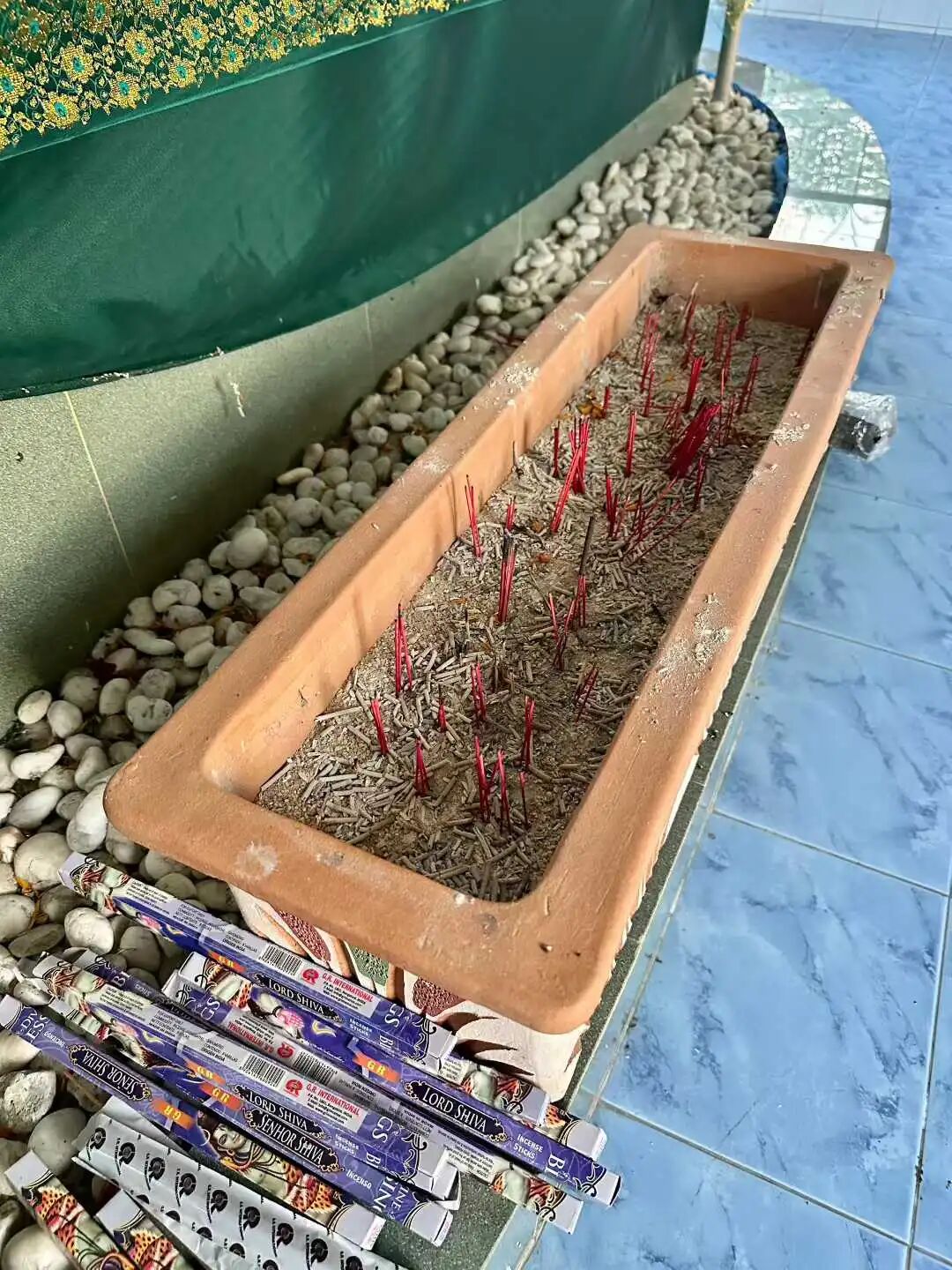
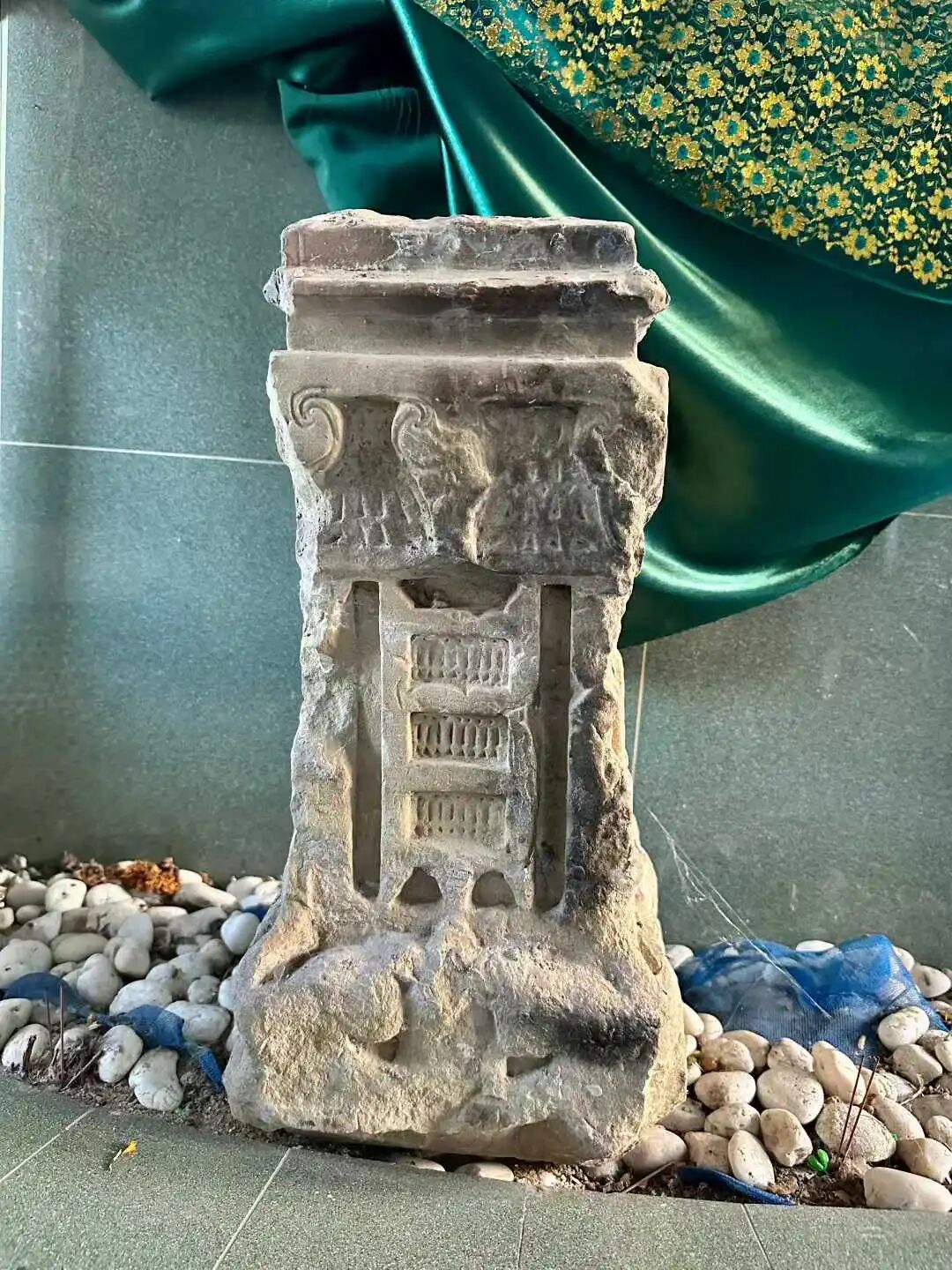
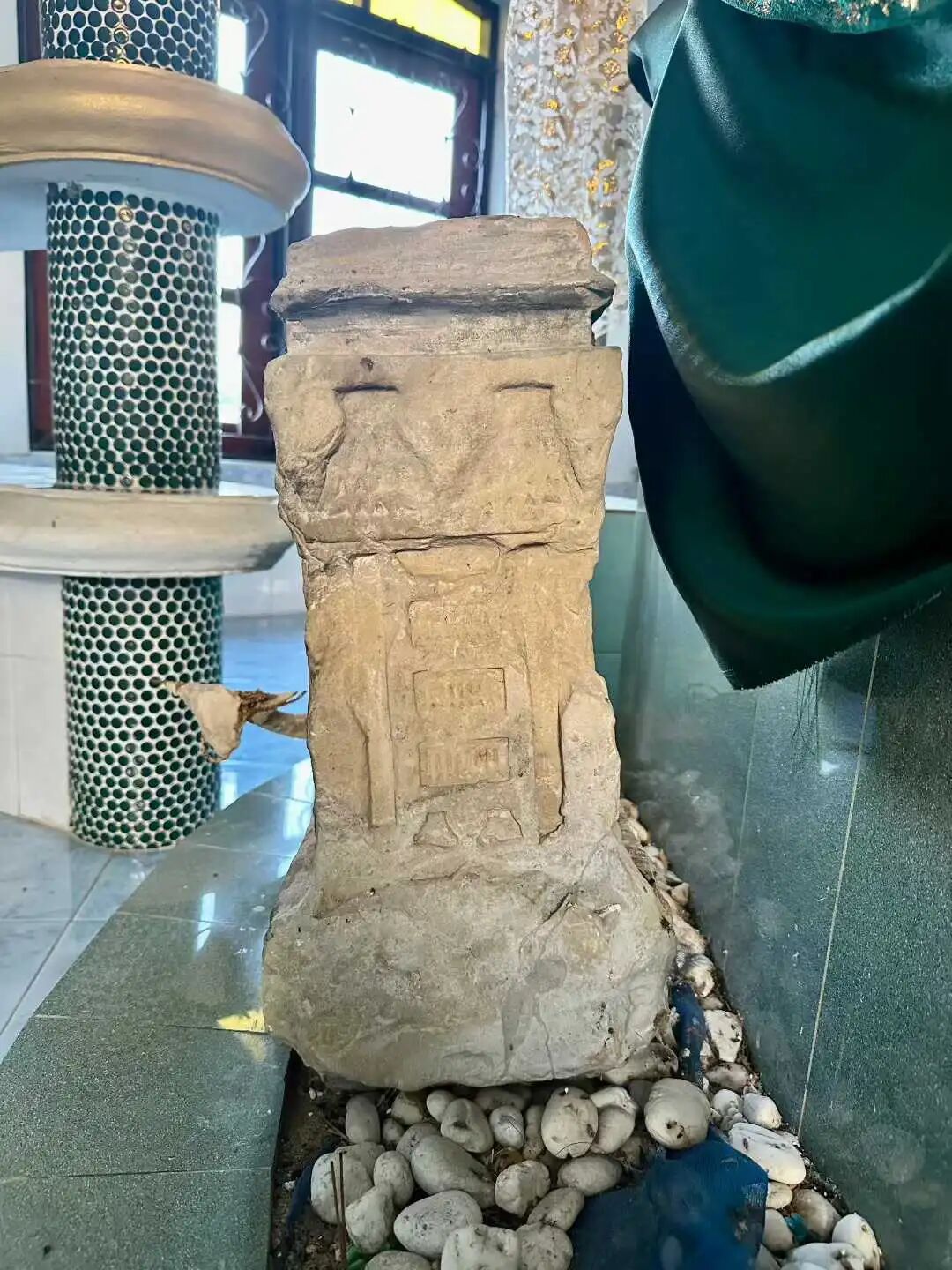
Some graves in the Vattana cemetery are decorated with fresh flowers and paper flowers, which is a Sufi tradition of the Thai Muslim community.
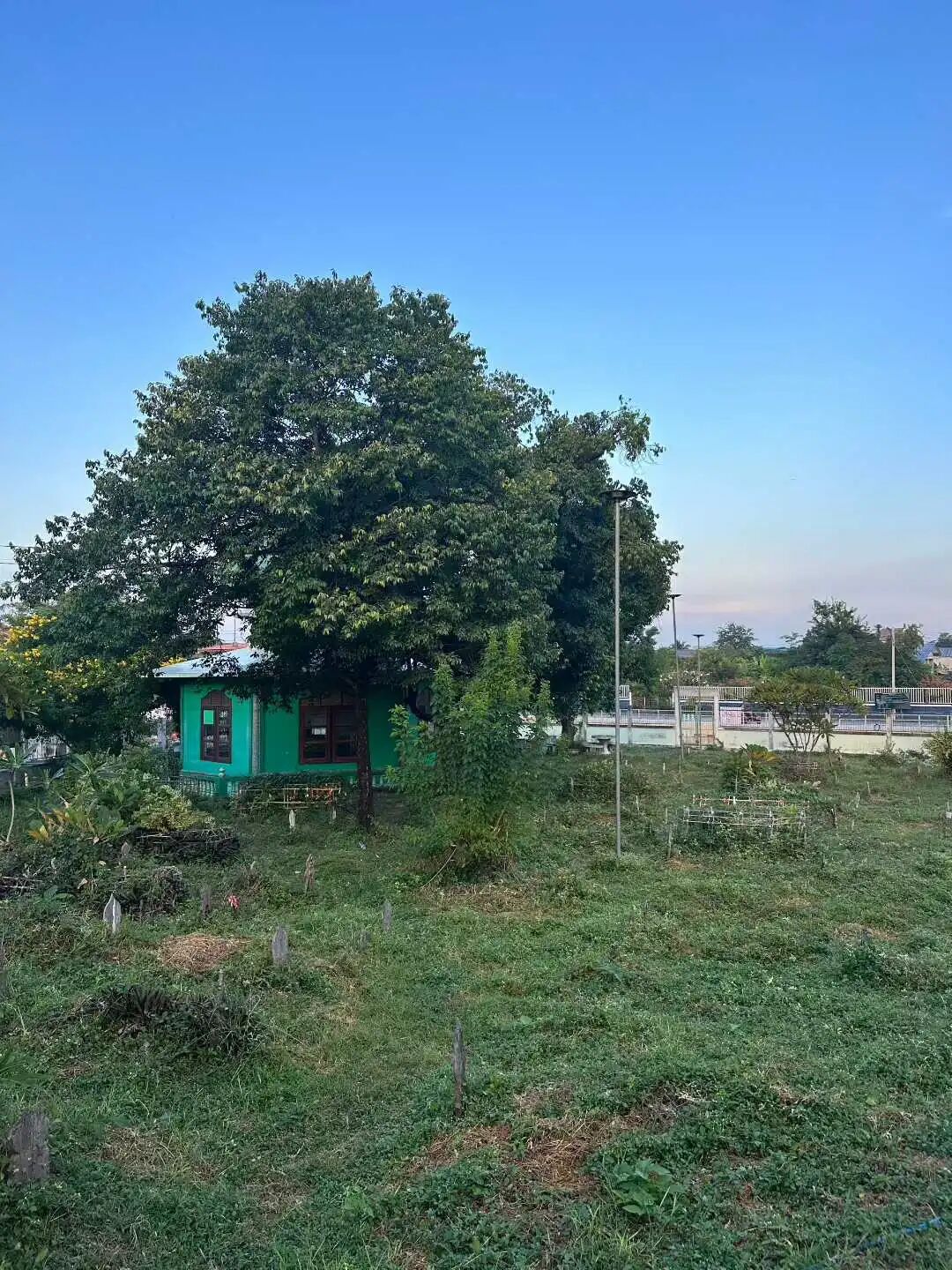
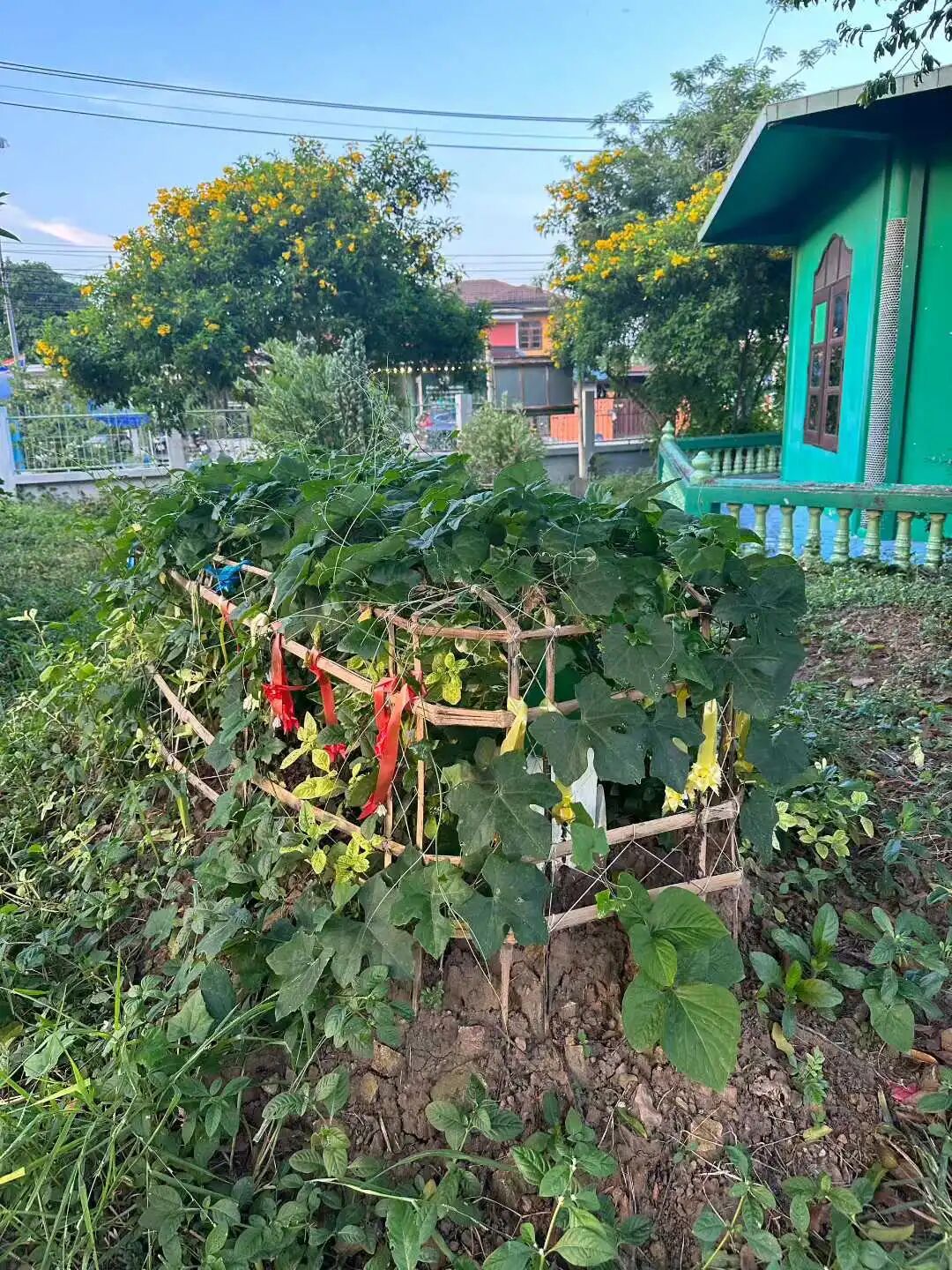
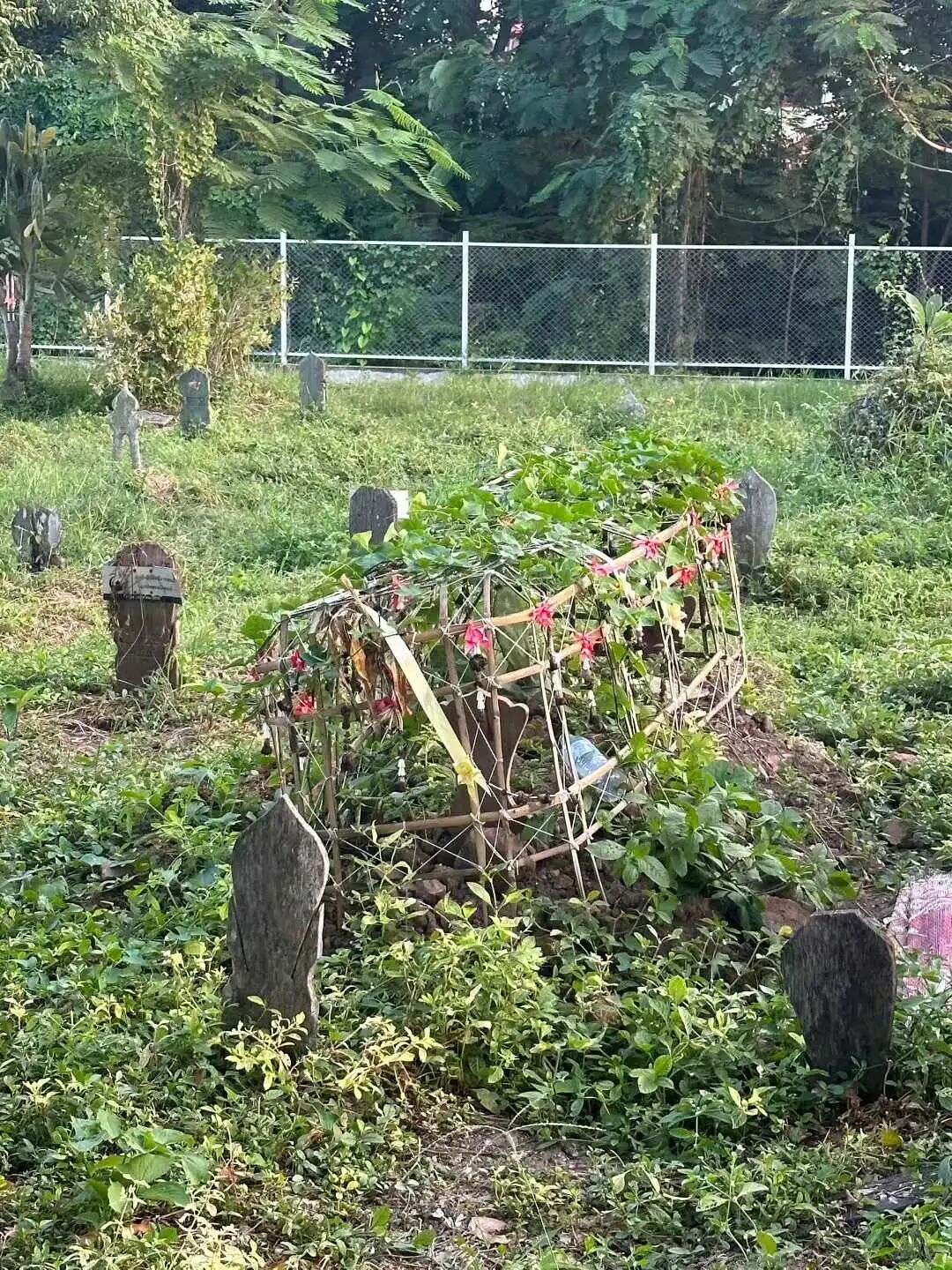
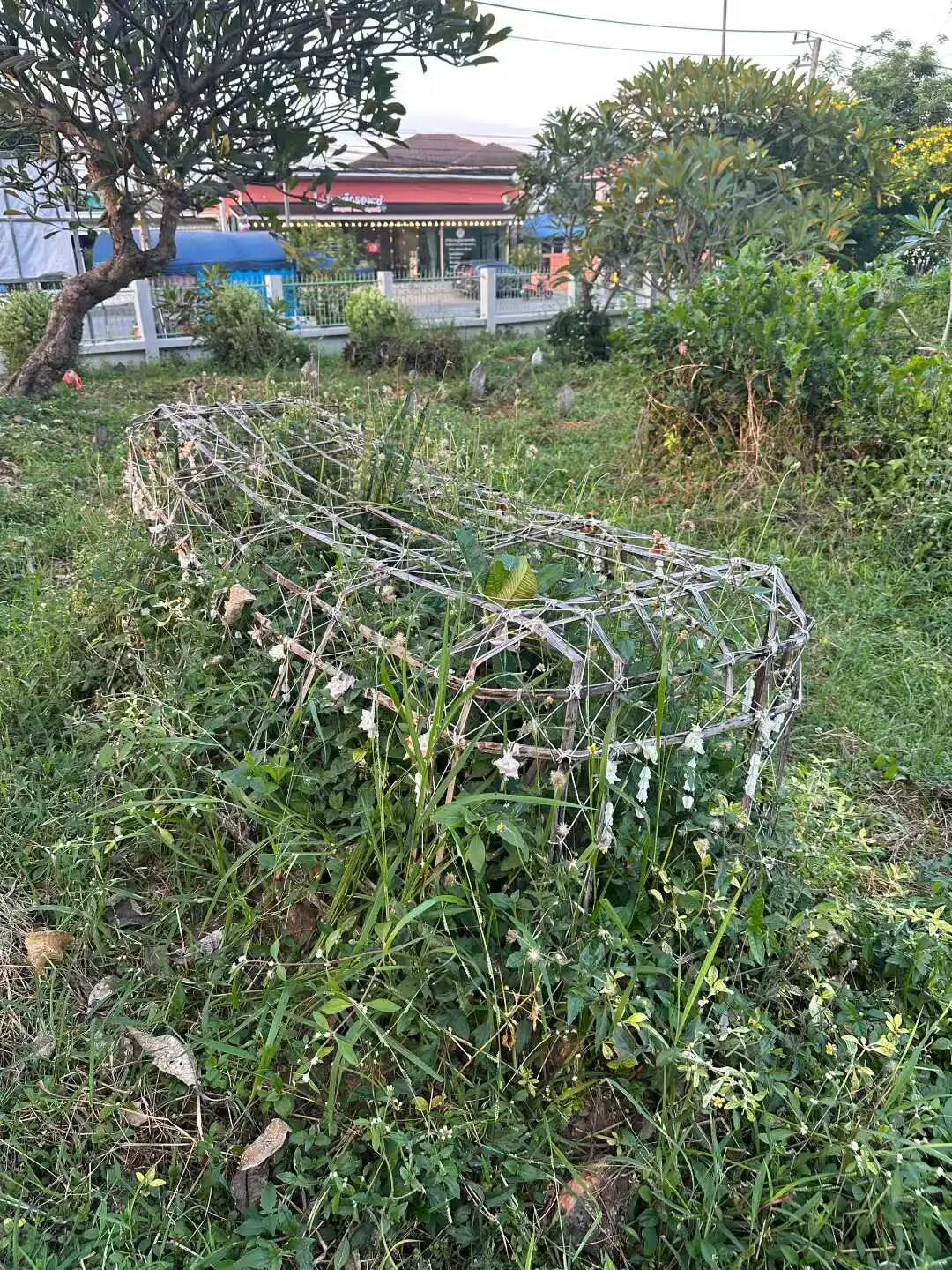
Traveling south from Champa Village in Ayutthaya, you reach the Klong Takian area. During the Ayutthaya Kingdom, communities of different ethnic groups—including Portuguese, Chinese, Cham, Malay, and Makassarese—were spread along the Klong Takian canal, making it the most culturally diverse area of Ayutthaya at the time.
There are several mosques in the Klong Takian area, the most famous of which is the Kudi Chofa mosque. In 1666, the Dutch East India Company invaded Makassar on the island of Sulawesi in Indonesia, causing many Makassarese to flee to Java, Sumatra, and other places. A group of Makassarese also came to the Klong Takian area in the southern suburbs of Ayutthaya. People say the Kudi Chofa mosque was first built in 1677.
Starting in the 17th century, Thailand moved south to invade the Pattani Sultanate established by the Malays. Long-term wars led to many Pattani Malays being brought to Ayutthaya, the capital of Thailand at the time. In the mid-18th century, thousands of Pattani Malay captives were settled in the southern and southwestern suburbs of Ayutthaya to grow rice, and some of them settled at the Kudi Chofa mosque. After Ayutthaya fell in 1767, some Pattani Malays returned to their hometowns, others followed the Thai king south to Thonburi, and some remained in the southern suburbs of Ayutthaya. In 1786, following Thailand's invasion of Pattani, more Pattani Malays arrived at the Kudi Chofa mosque. In 1819, Imam Toh Ki Yam oversaw the reconstruction of the mosque from a wooden structure into a brick and stone building, incorporating styles from Catholic churches and Buddhist temples.
Legend has it that once, King Rama V (reigned 1868-1910) passed by the mosque on a boat, officially named it Kudi Chofa mosque, and gifted it a lamp called Takiang Chaw.
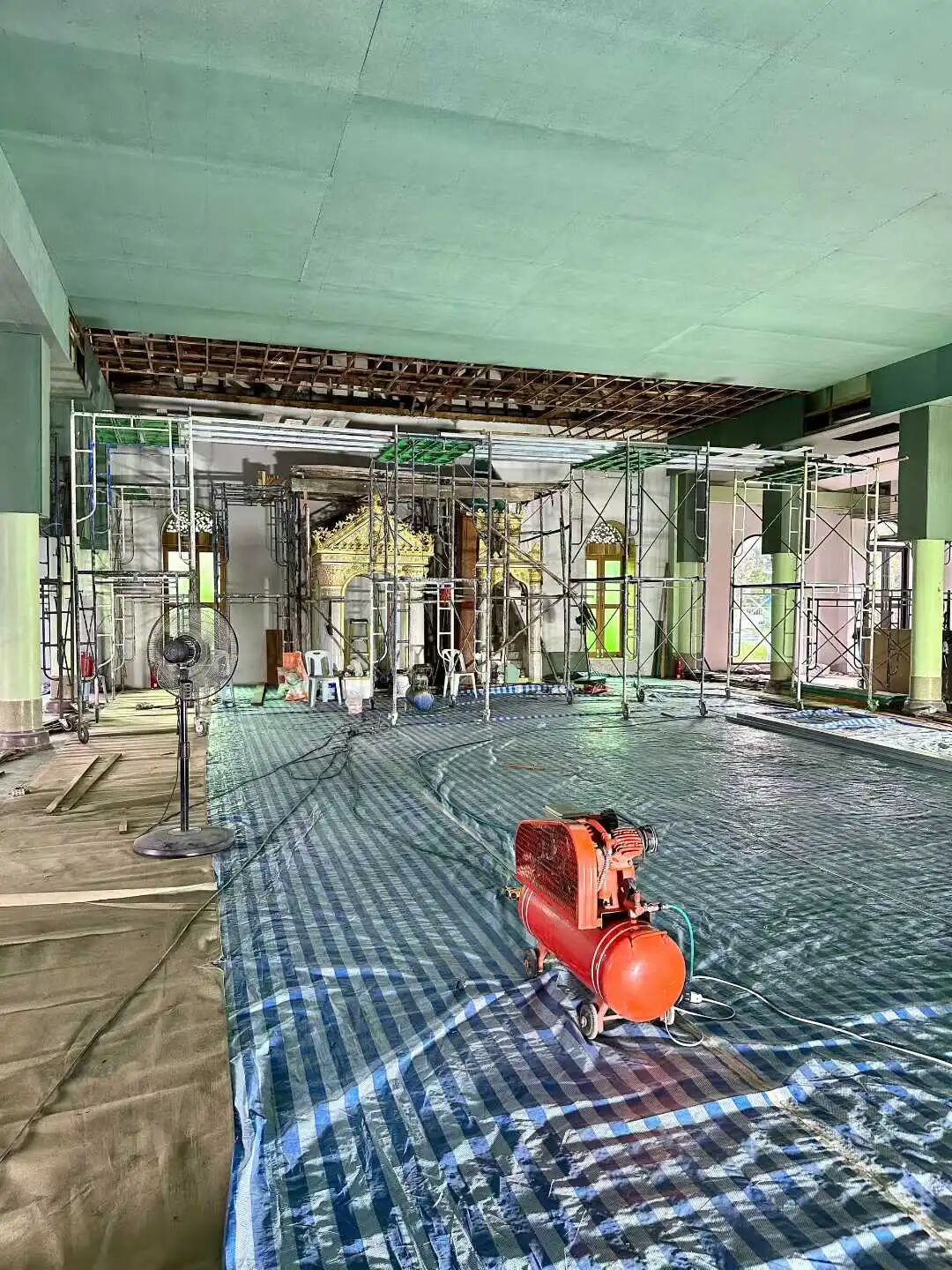
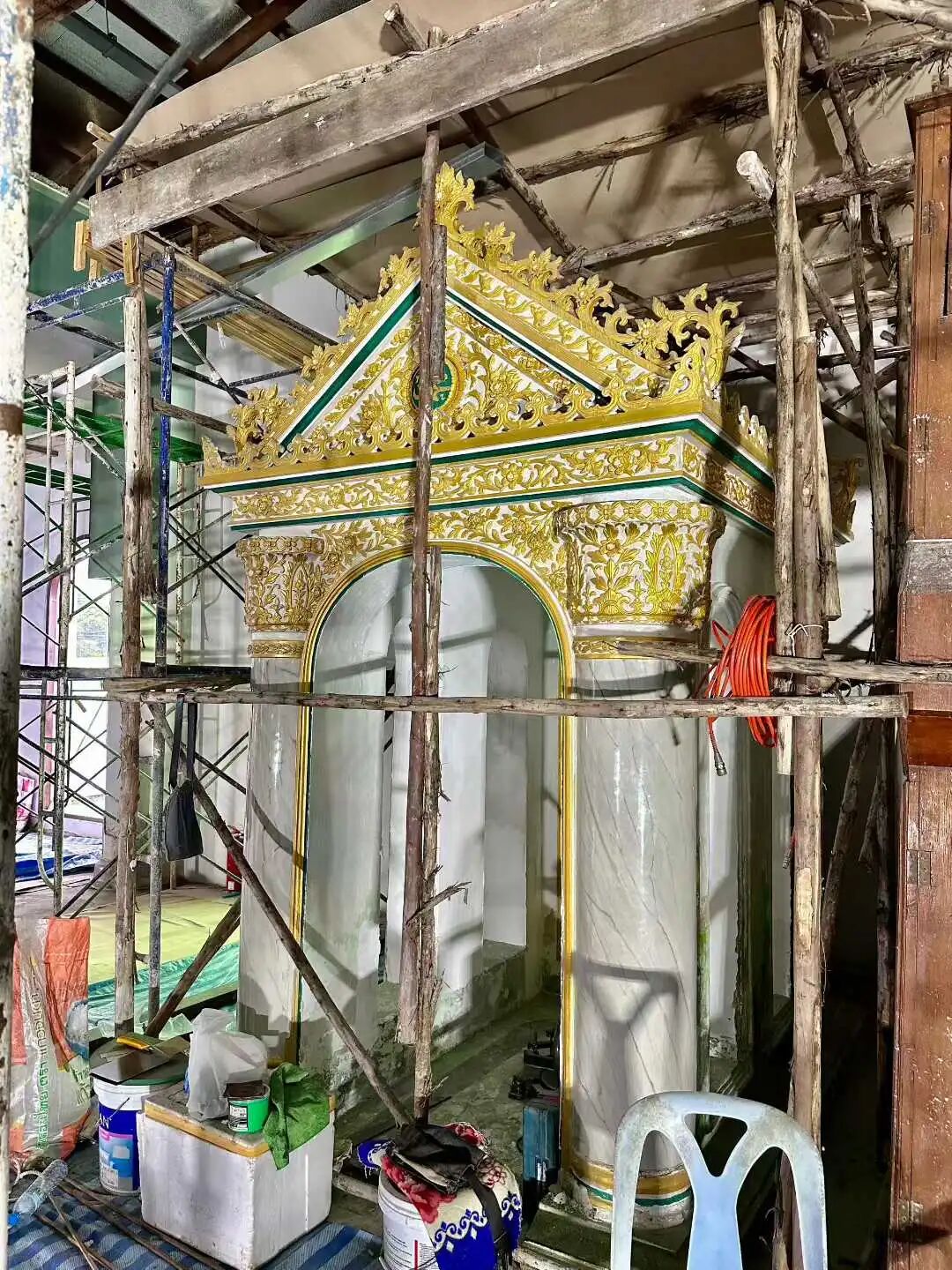
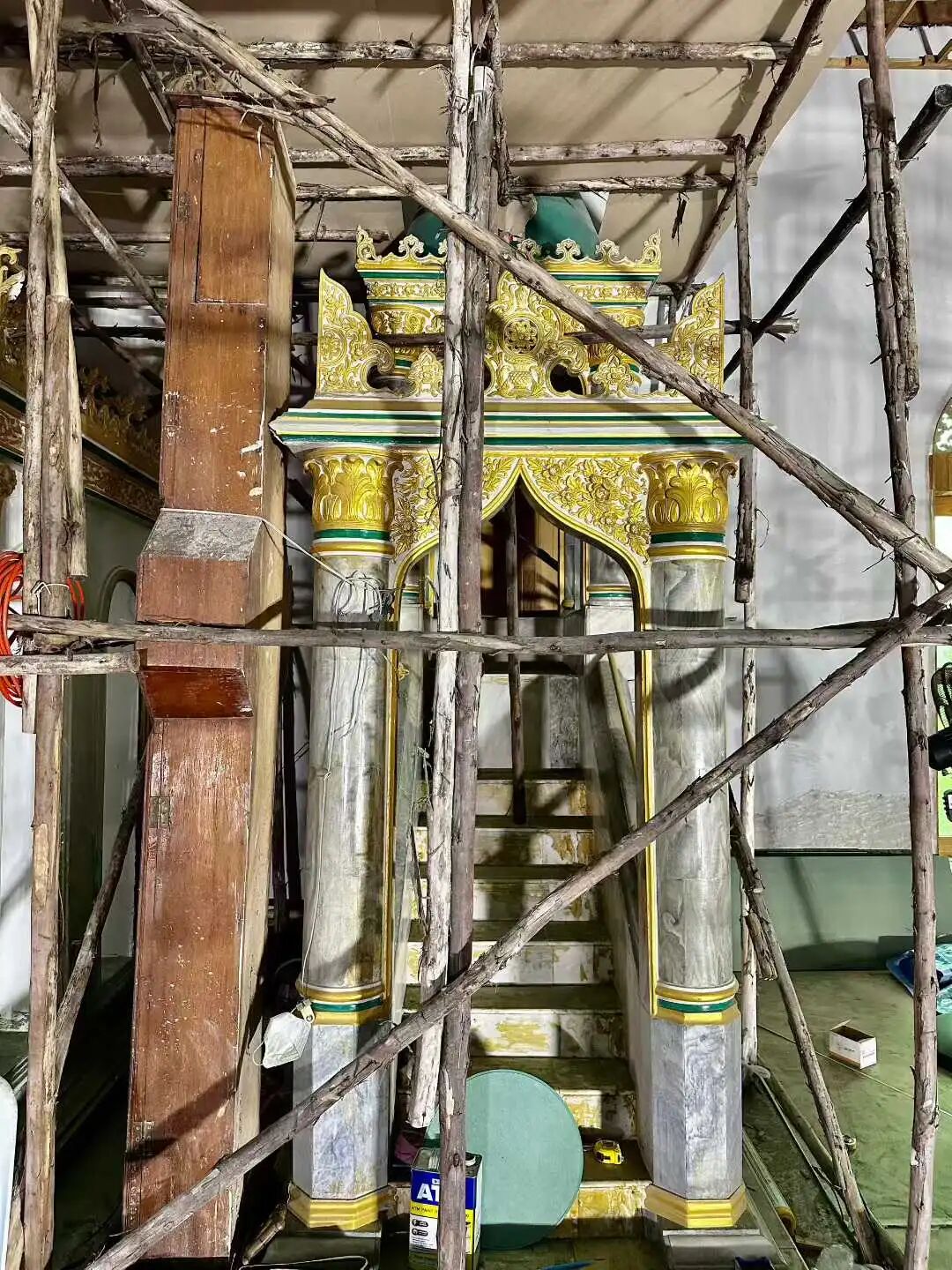
The Kudi Chofa mosque underwent several expansions after the 20th century and was finally rebuilt into its current form in 1978. The interior of the main hall was under renovation when we visited, and a kind friend (dosti) gave us water to drink.
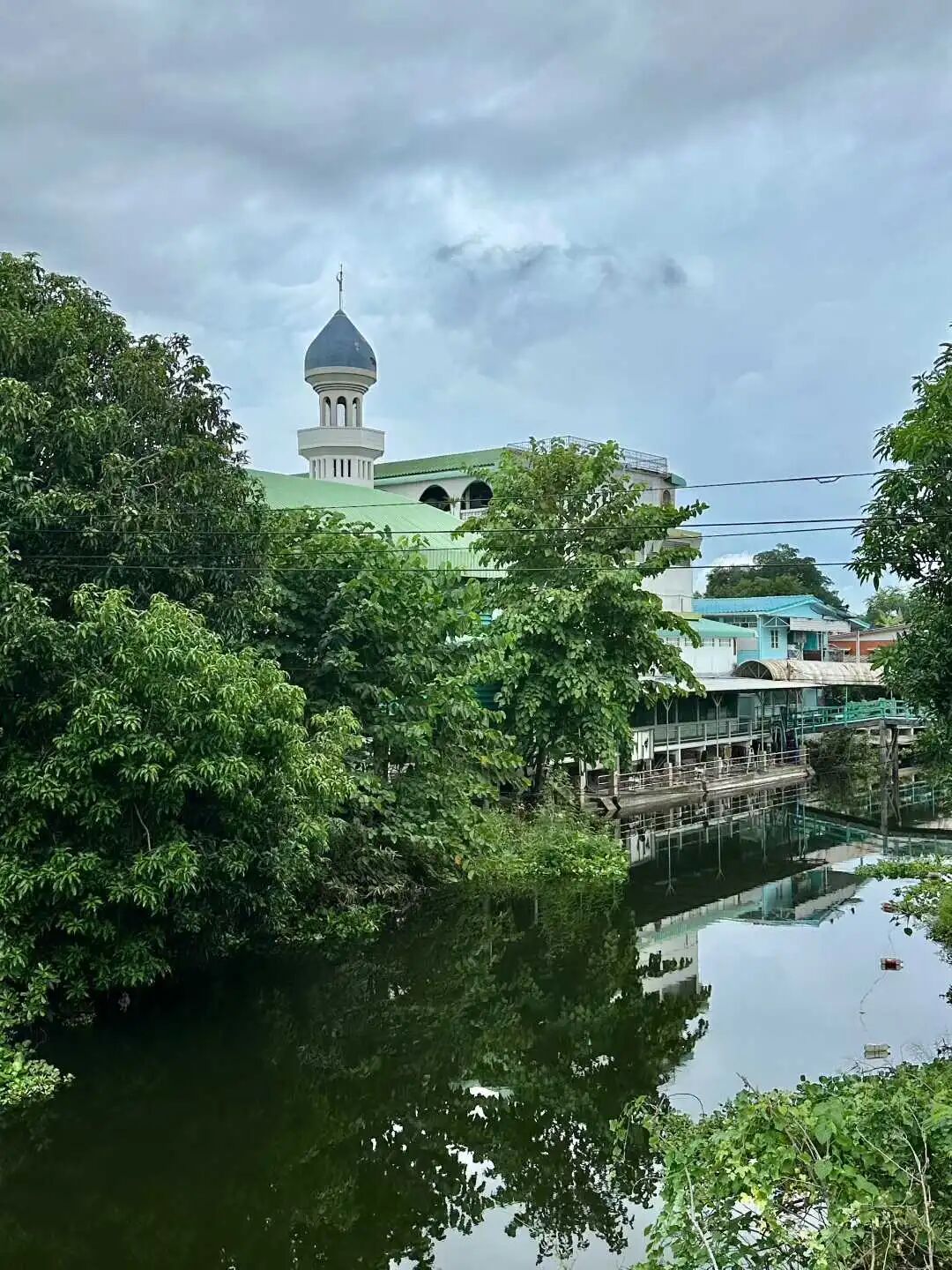
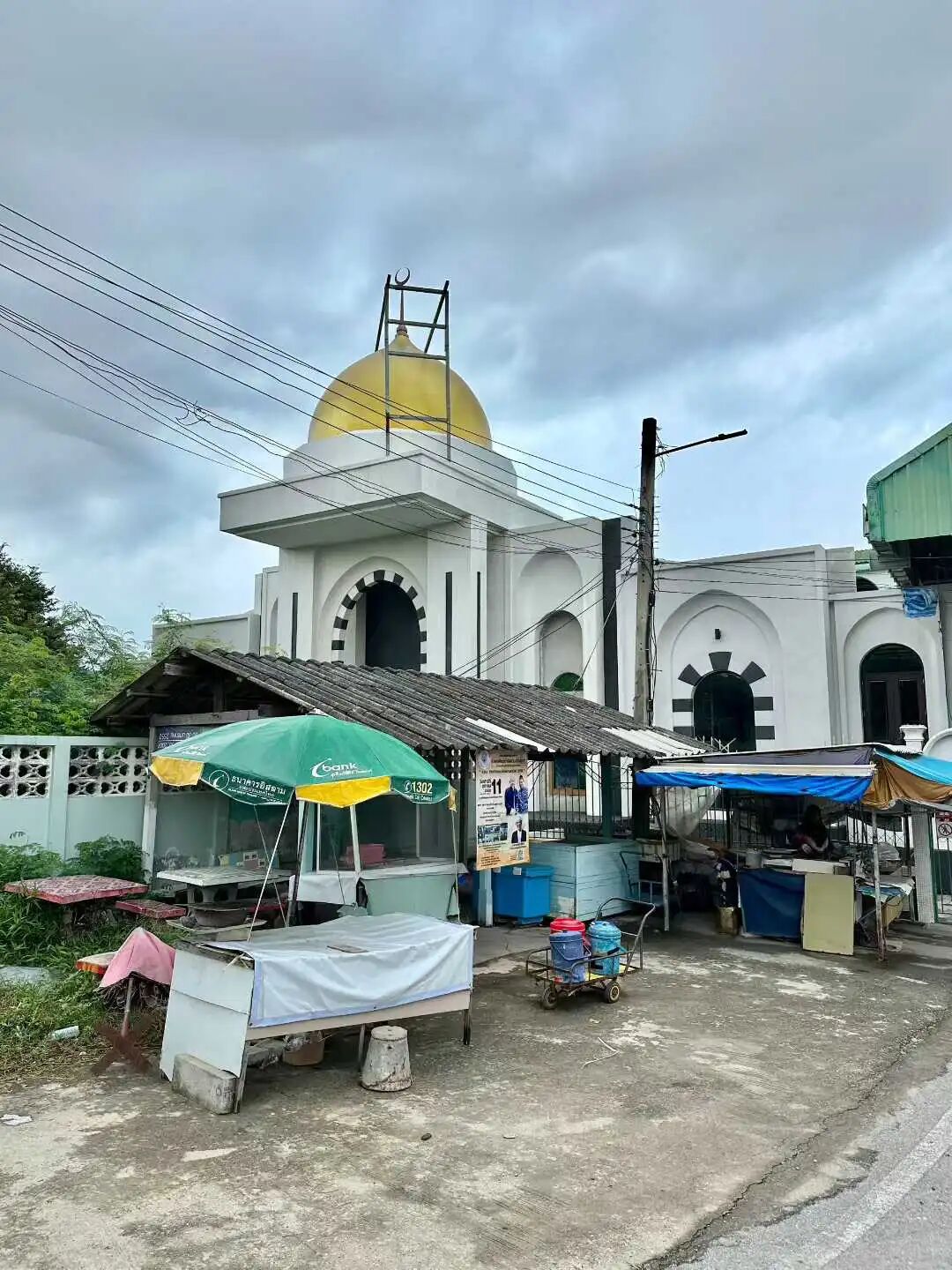

Three hundred years after Sheikh Tok Takia came to Thailand in the mid-16th century to spread the Sufi Qadiriyya order, the Sufi Sheikh Muhammad Ali Shukri, who is honored as a saint (Wali), revived the Qadiriyya order in Thailand in the 19th century and helped it spread from Ayutthaya to Bangkok and Pattaya. See "The Gongbei of the Persian Sheikh in Ayutthaya, Thailand."
Sheikh Shukri's tomb shrine (gongbei) is located at the Aliyid Daroun Mosque (Masjid Aliyid Daroun) on the banks of the Chao Phraya River west of Ayutthaya city, which is a mosque community established by Pattani Malays in the 19th century. Thailand invaded Pattani twice in 1831-1832 and 1838, splitting it into seven small states, which was the period when the largest number of Pattani Malays moved to central Thailand.
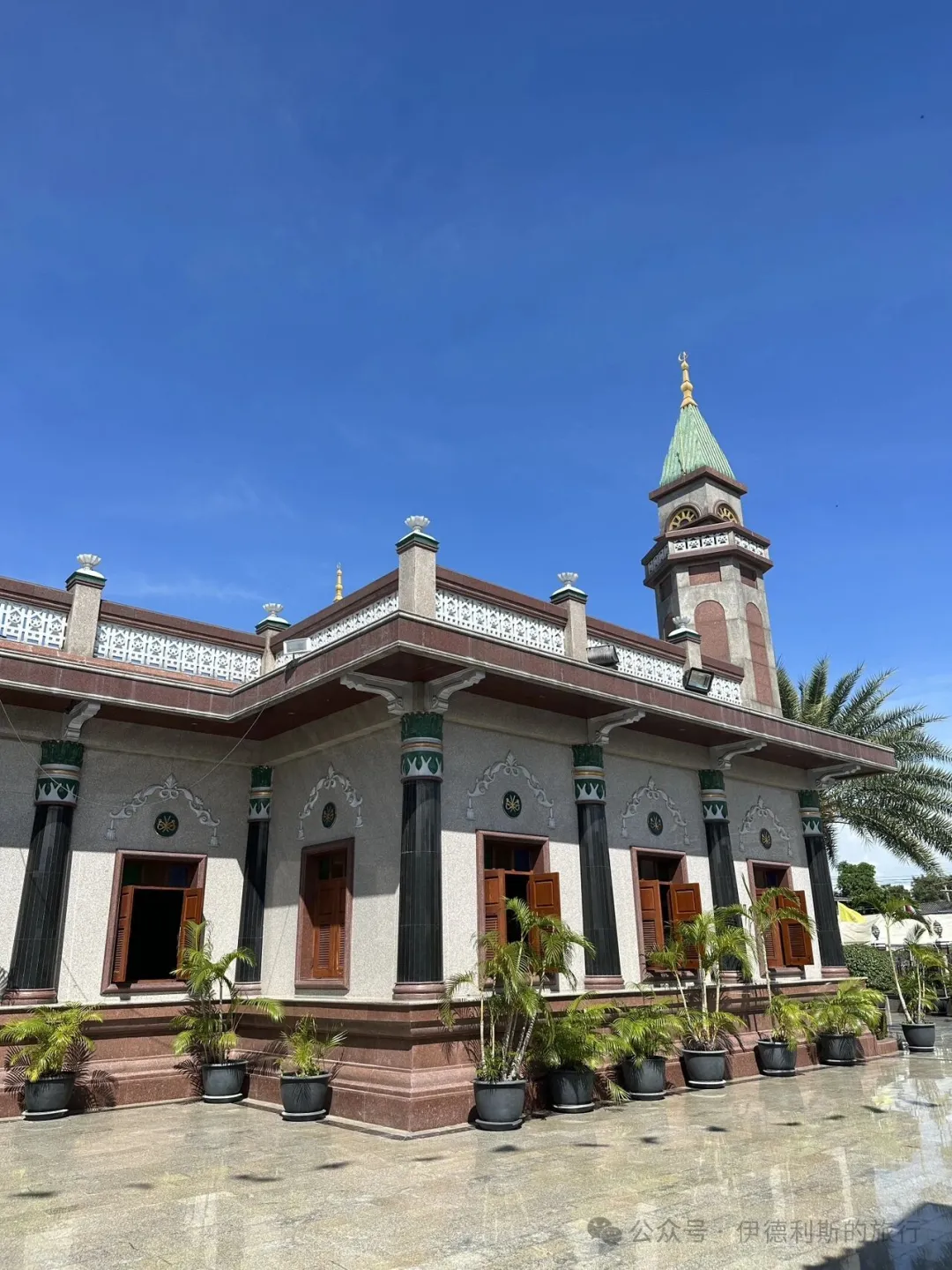
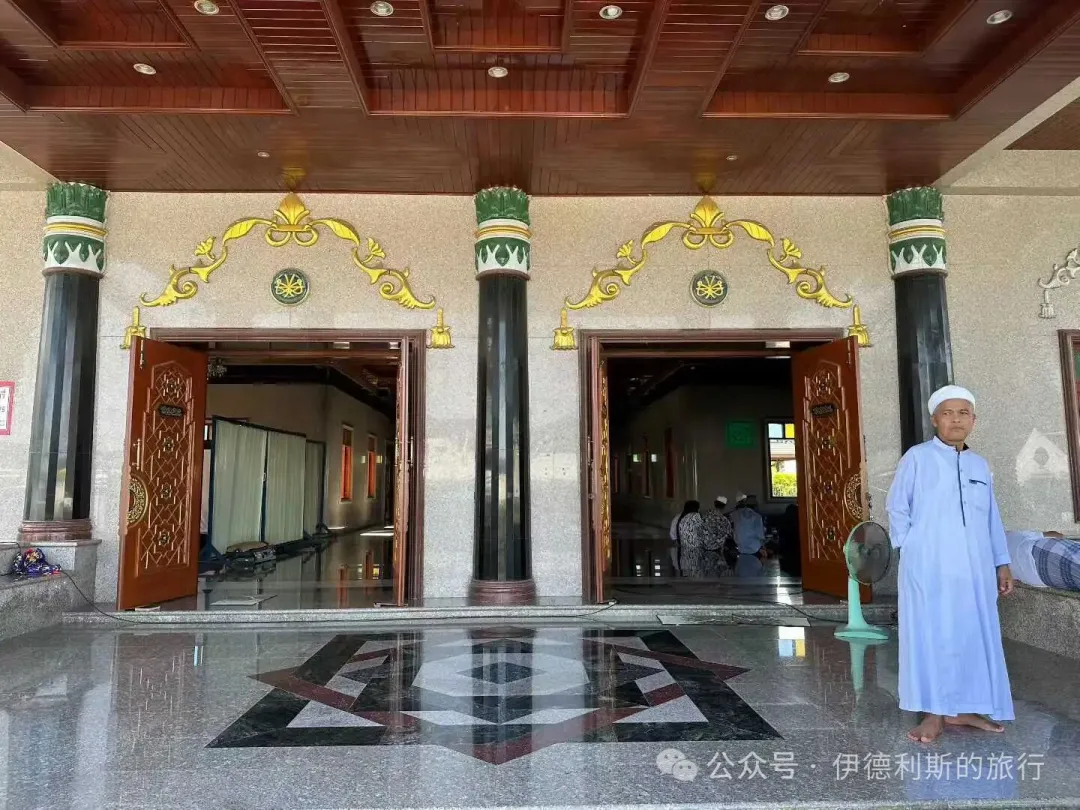
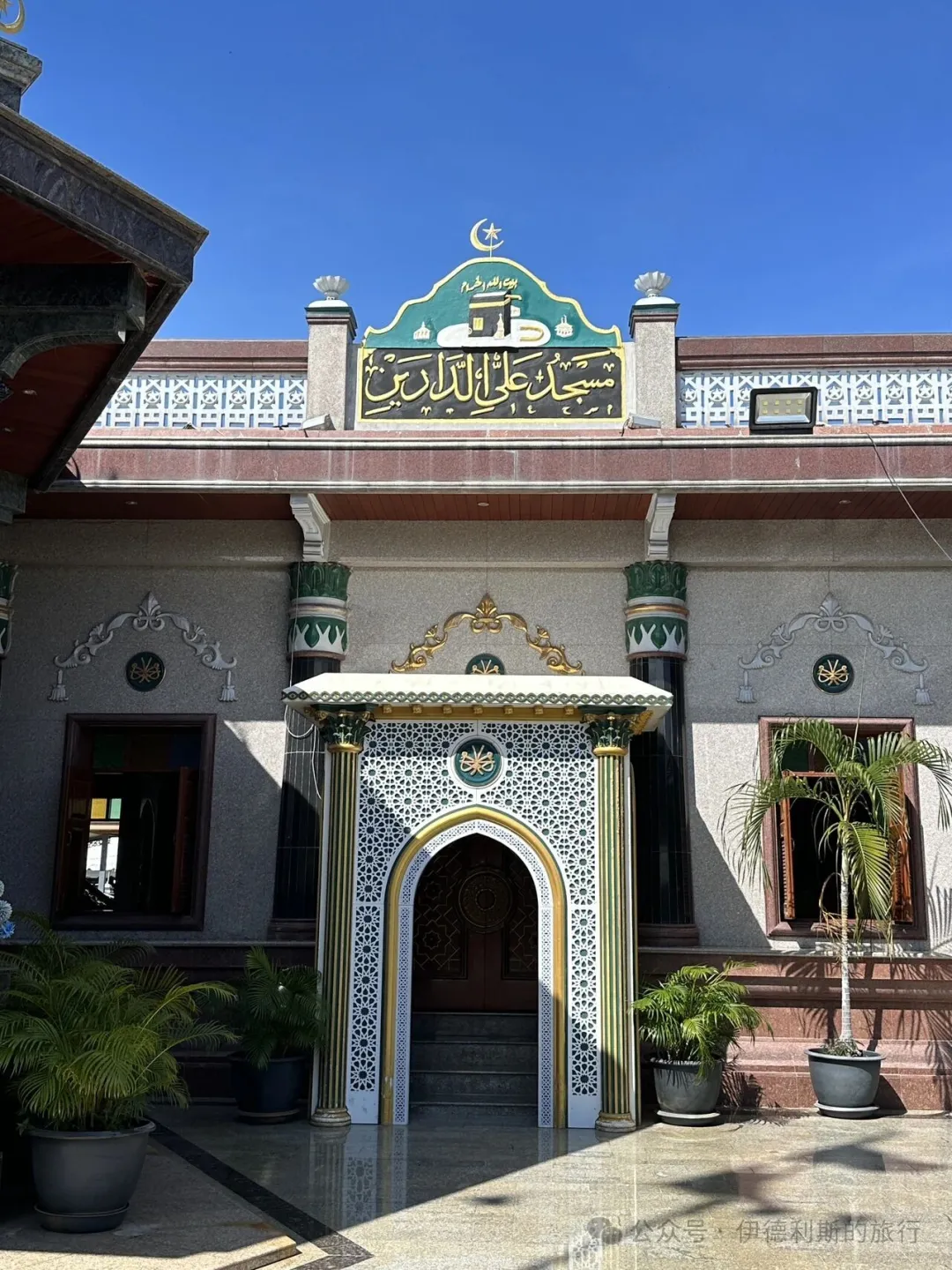
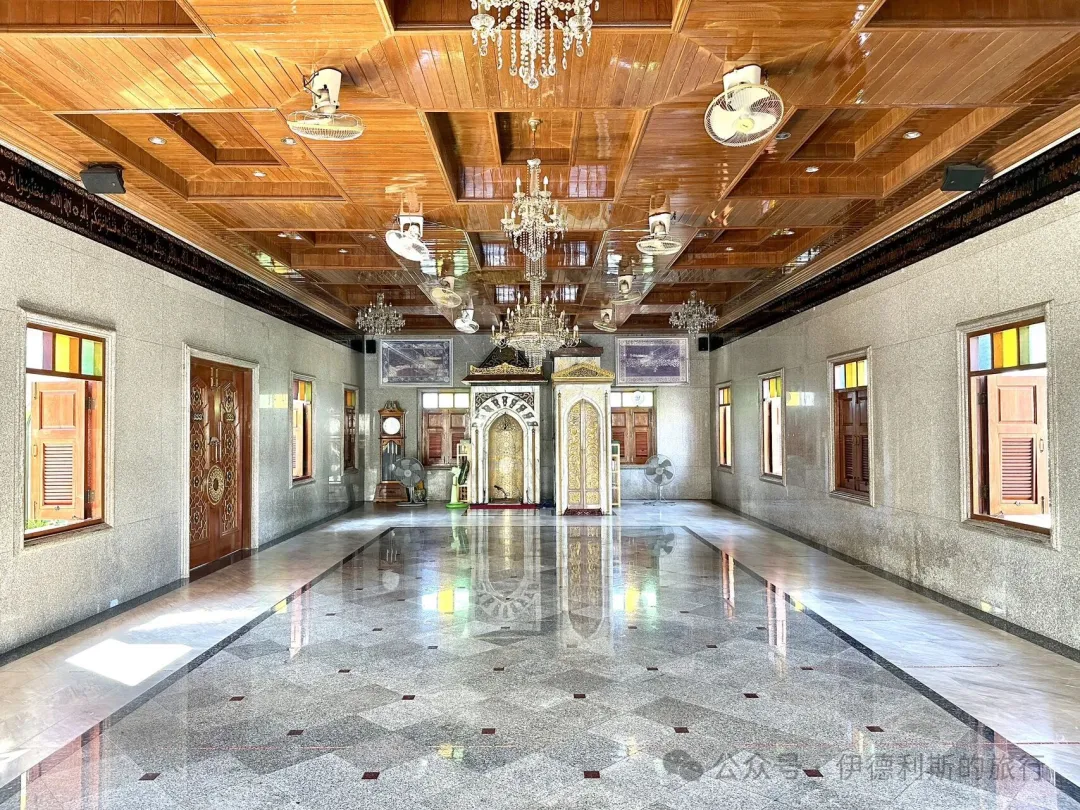
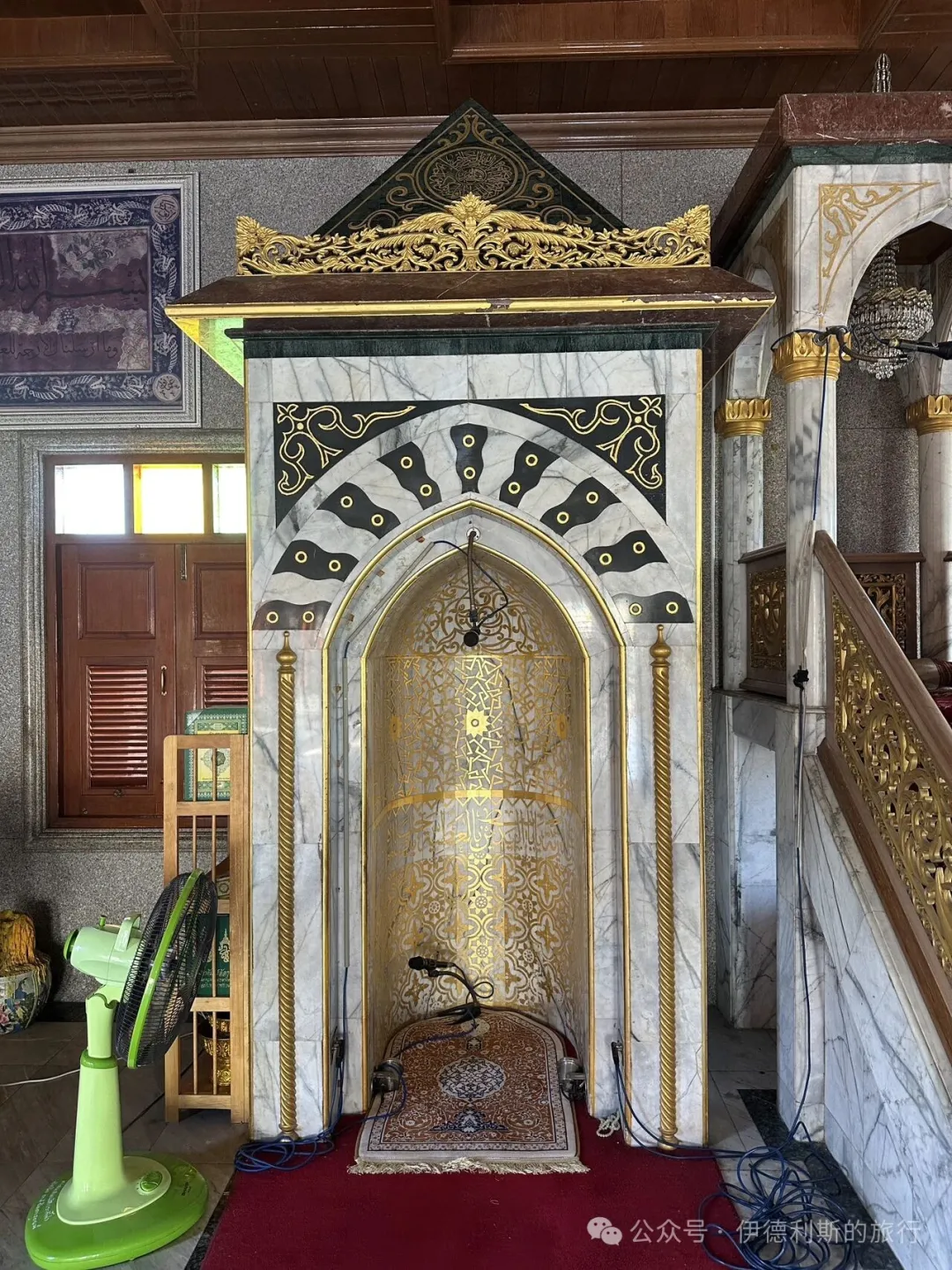
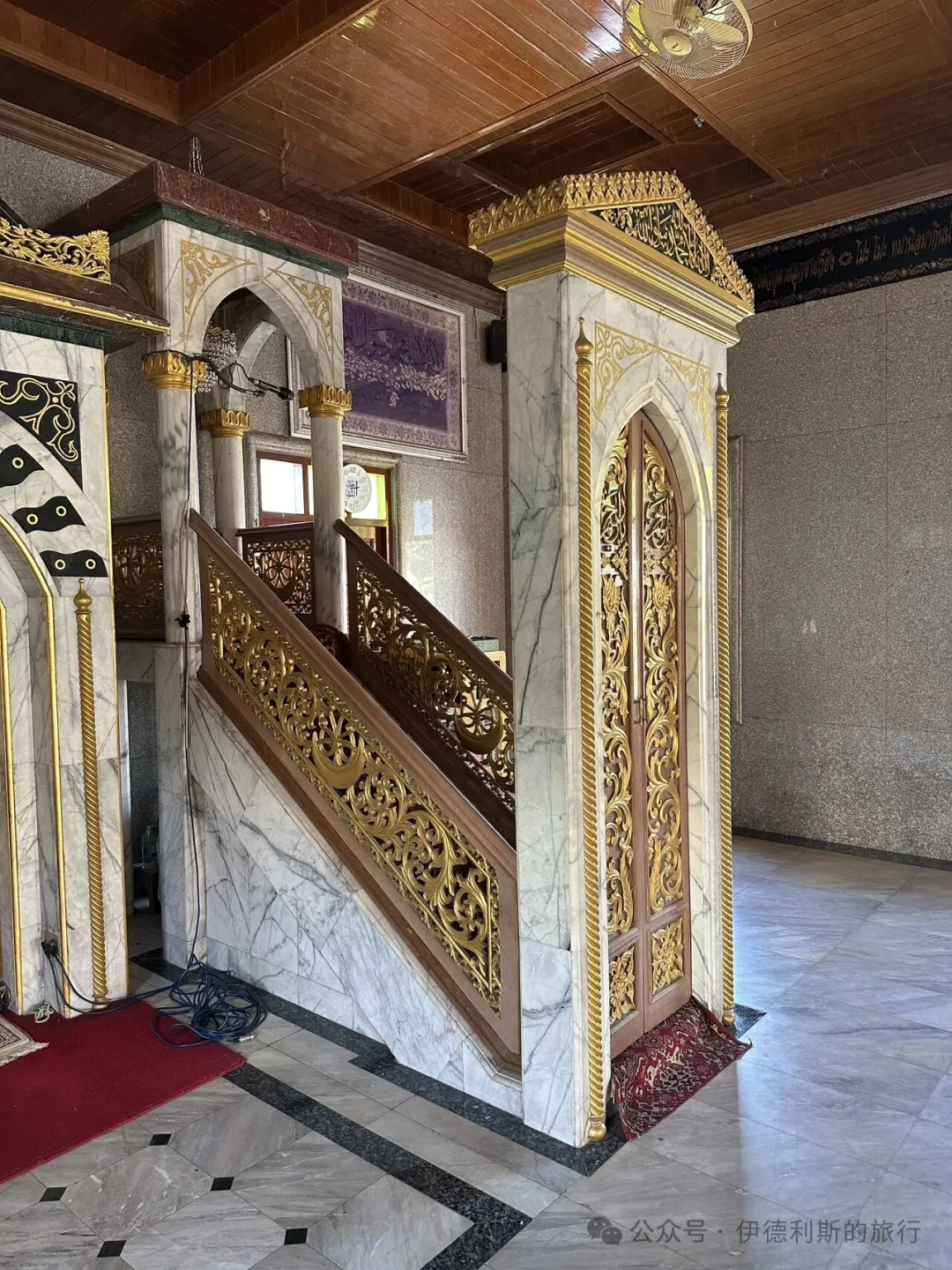
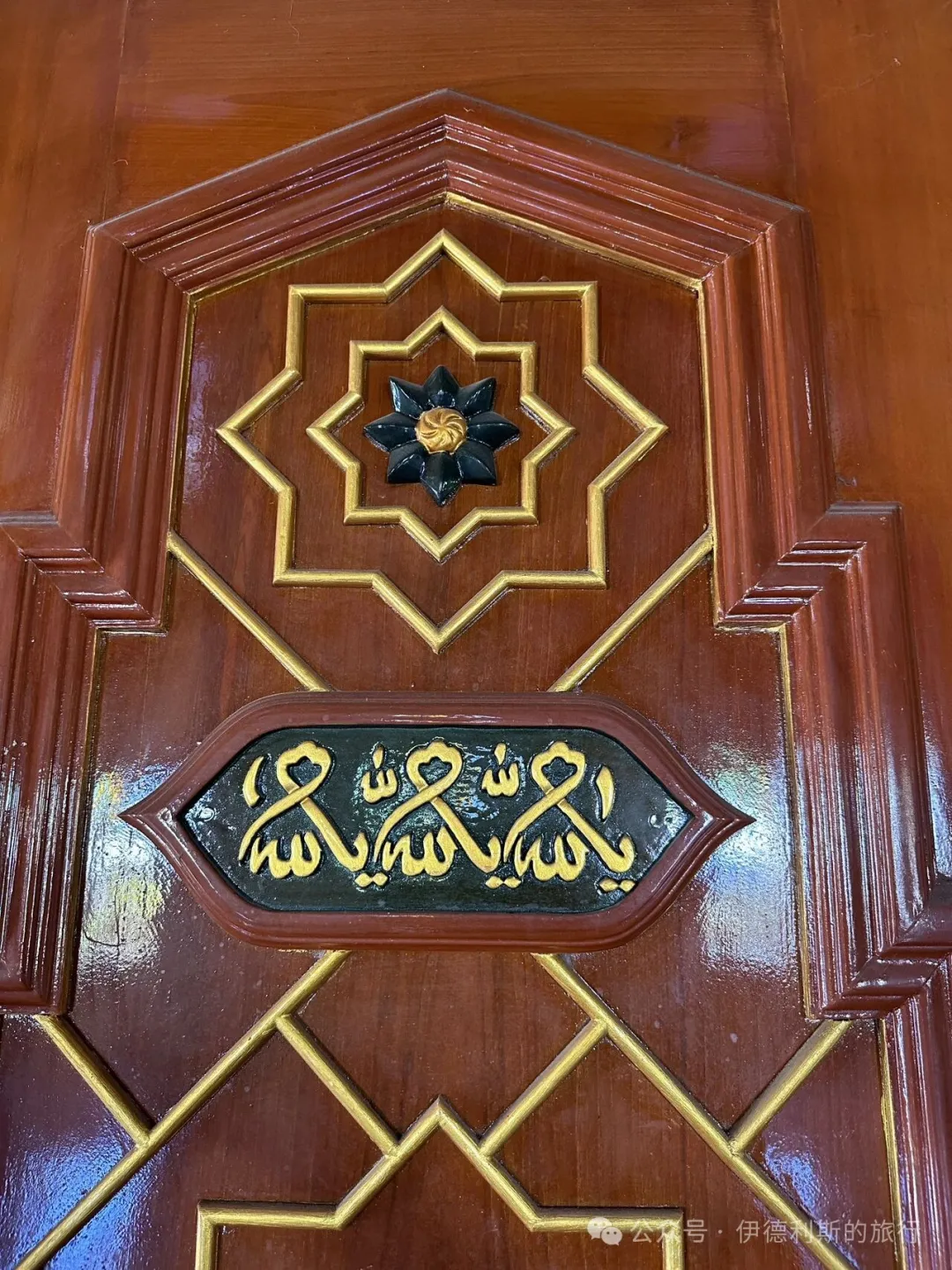
After the 19th century, due to the preaching of the Sufi Sheikh Shukri, some Malay friends (dosti) who lived along the Khlong Ta Kian canal in the southern suburbs of Ayutthaya and originally belonged to the Kudi Chofa mosque community began to follow the Qadiriyya order, and in the early 20th century, Imam Omar Buleh founded the Yamiul Islam mosque community. Today, the tomb shrine (gongbei) of Imam Omar Buleh is built in the backyard of the mosque, and the Buleh family has held the position of mosque imam hereditarily ever since.
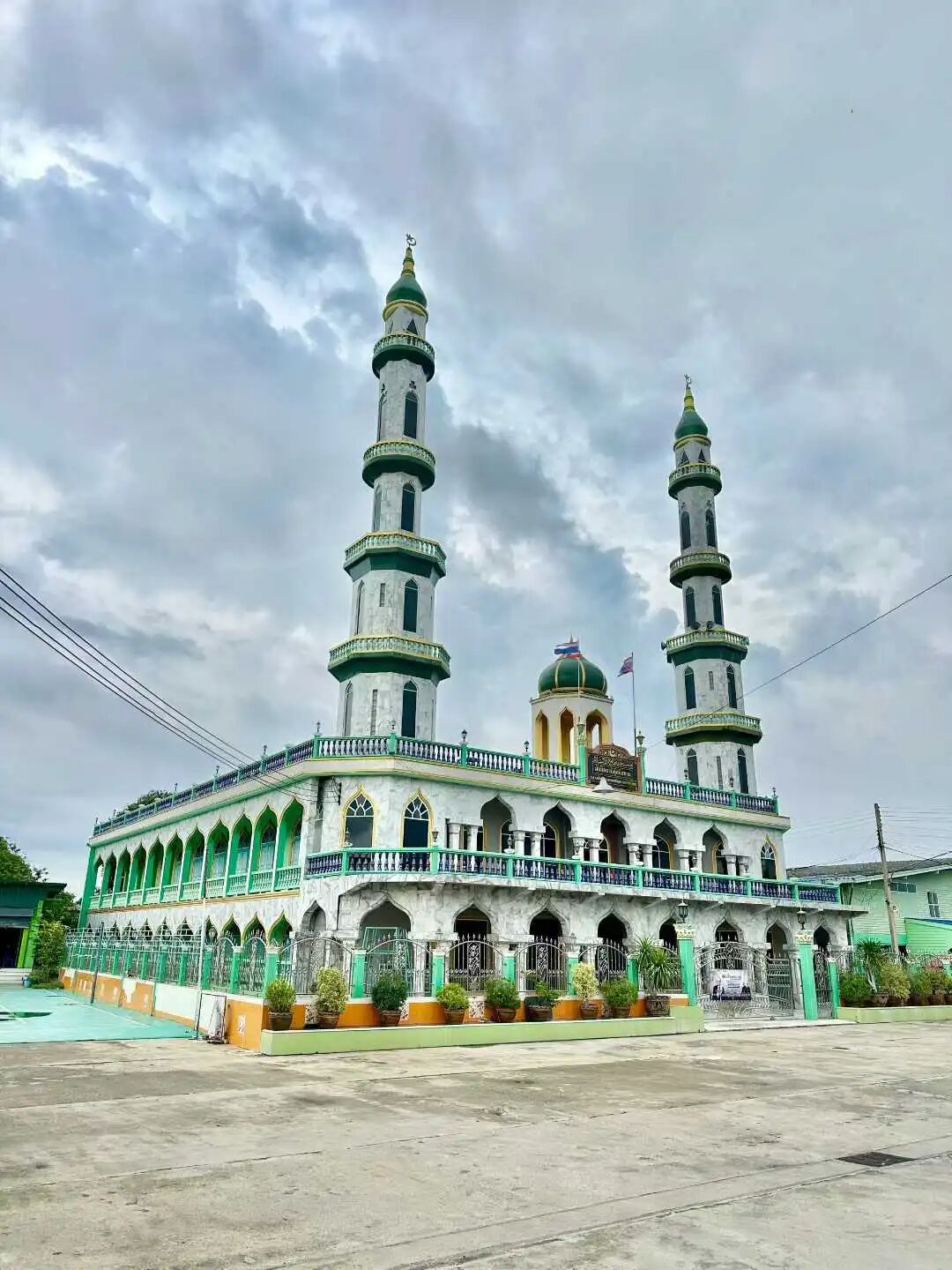
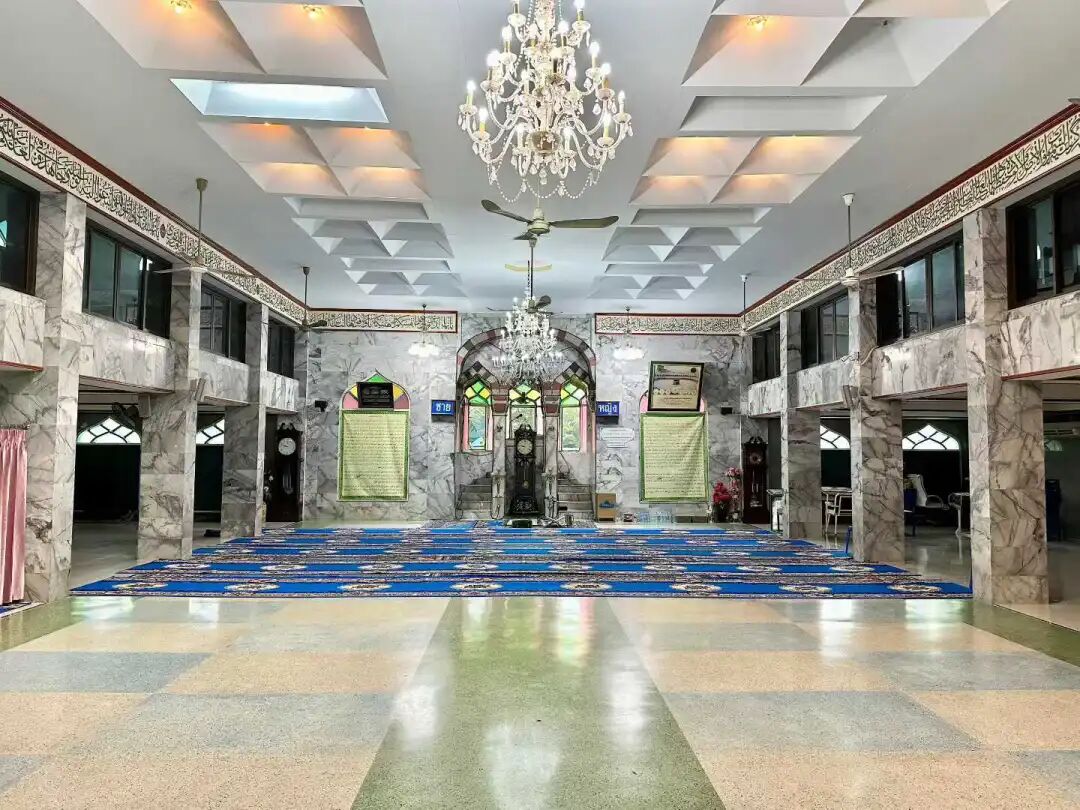
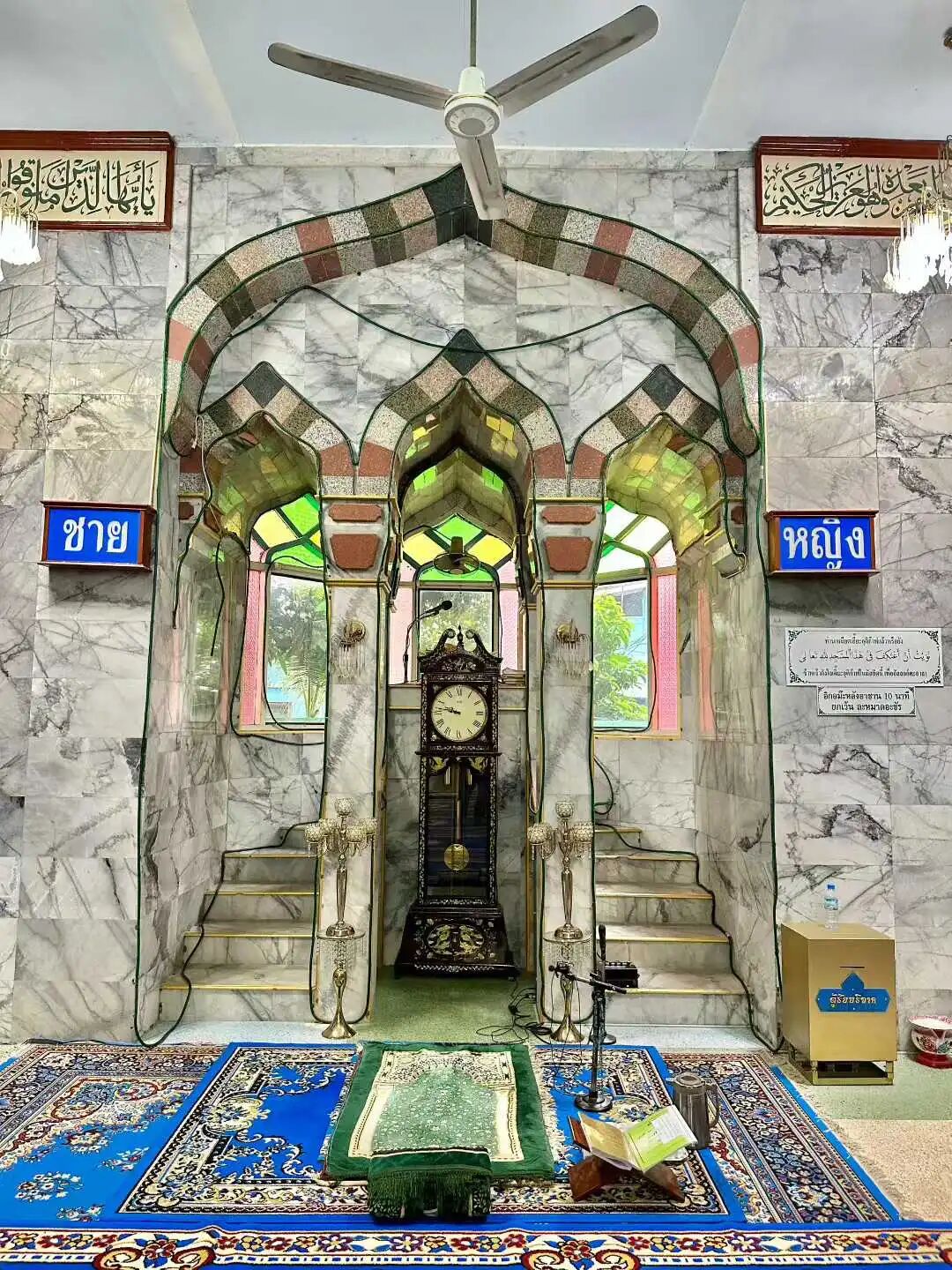
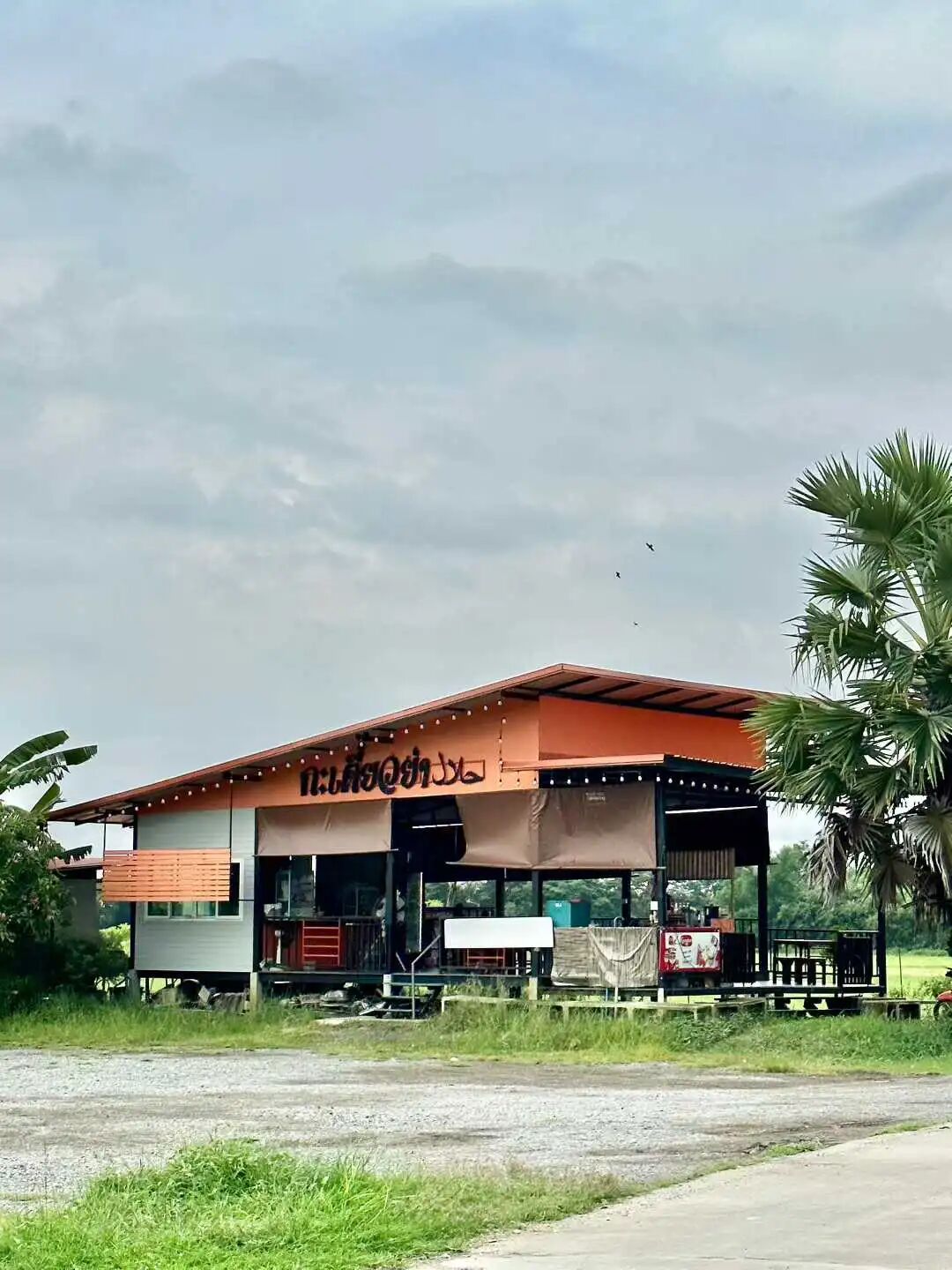
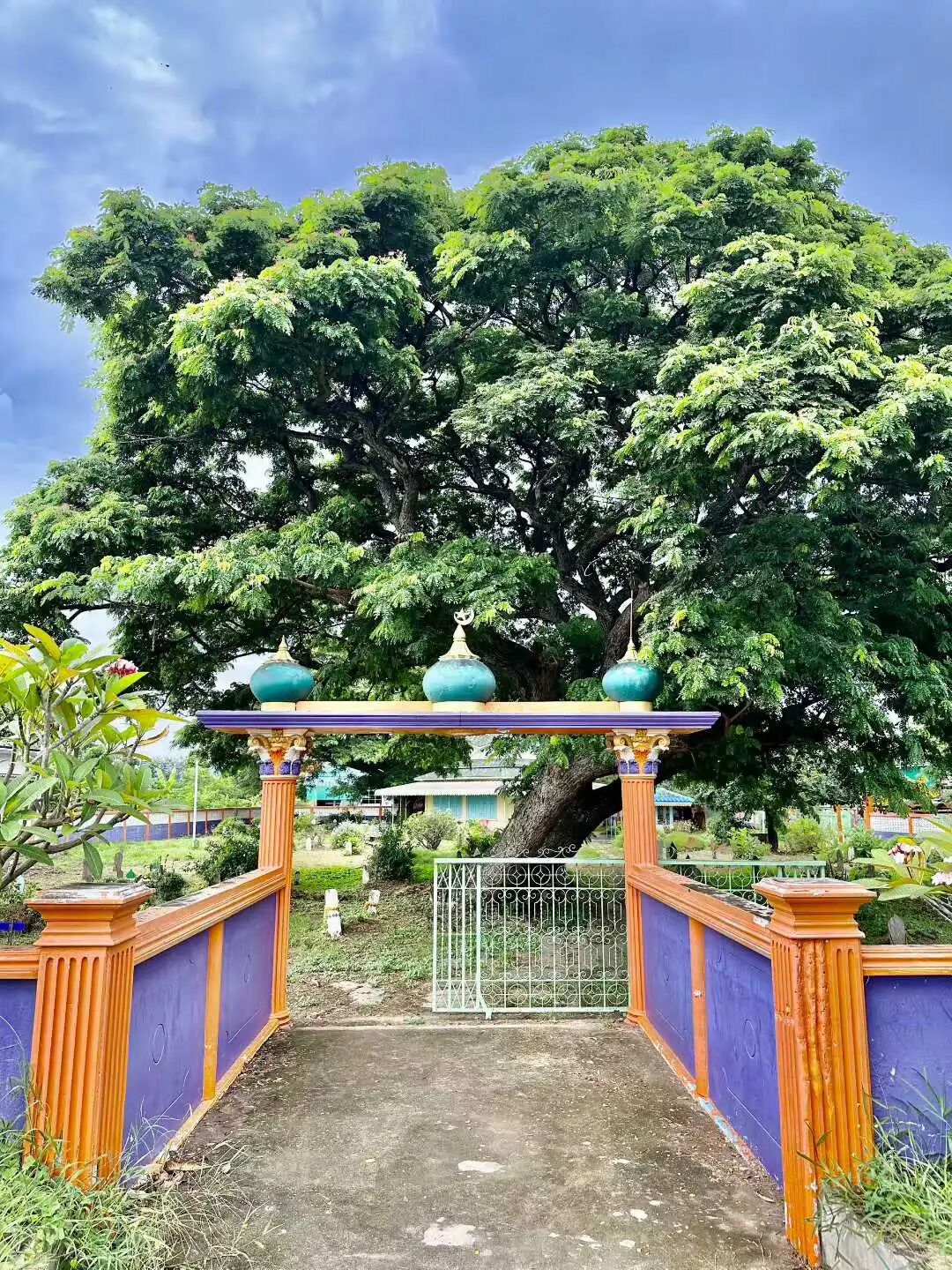
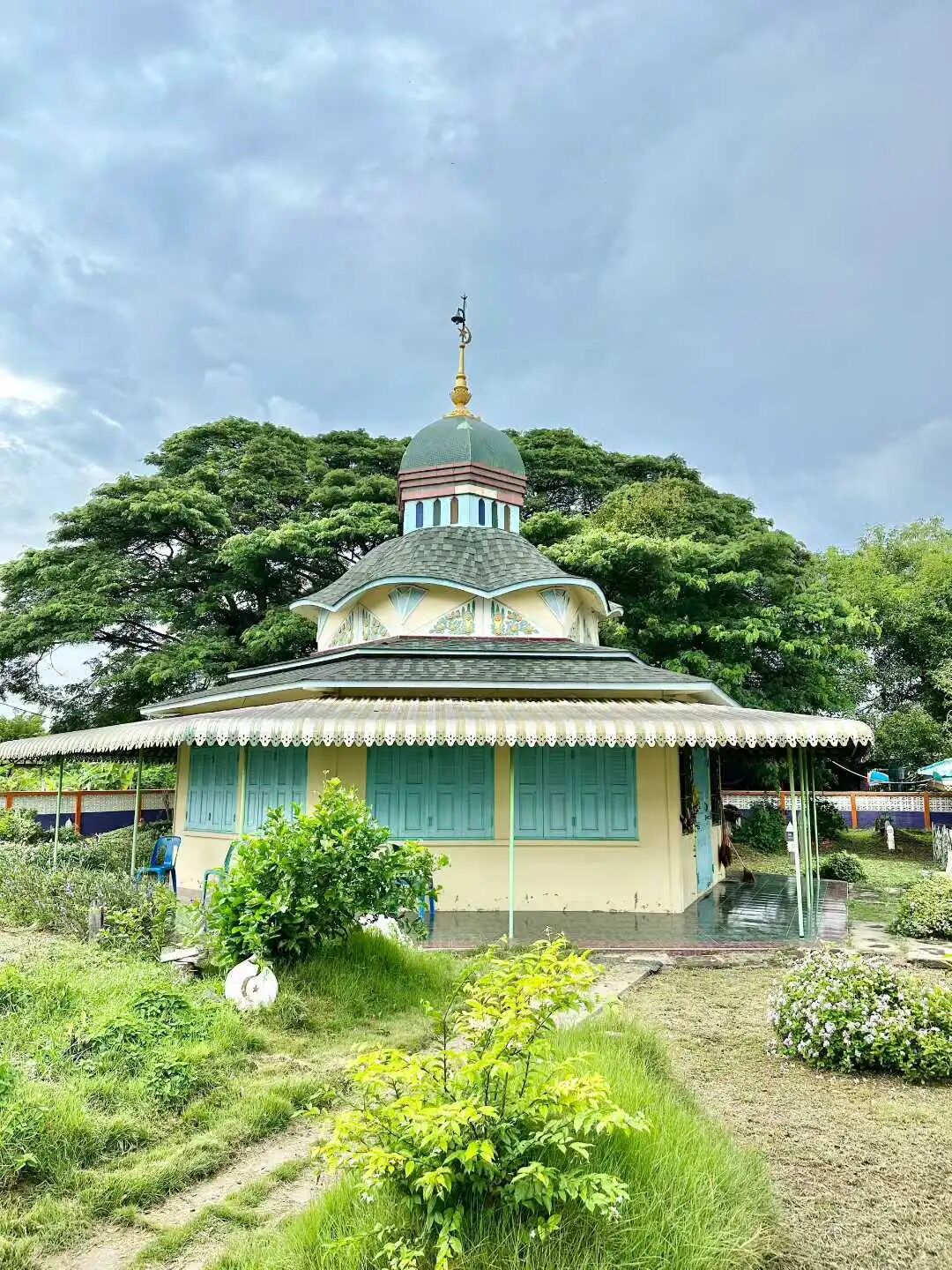
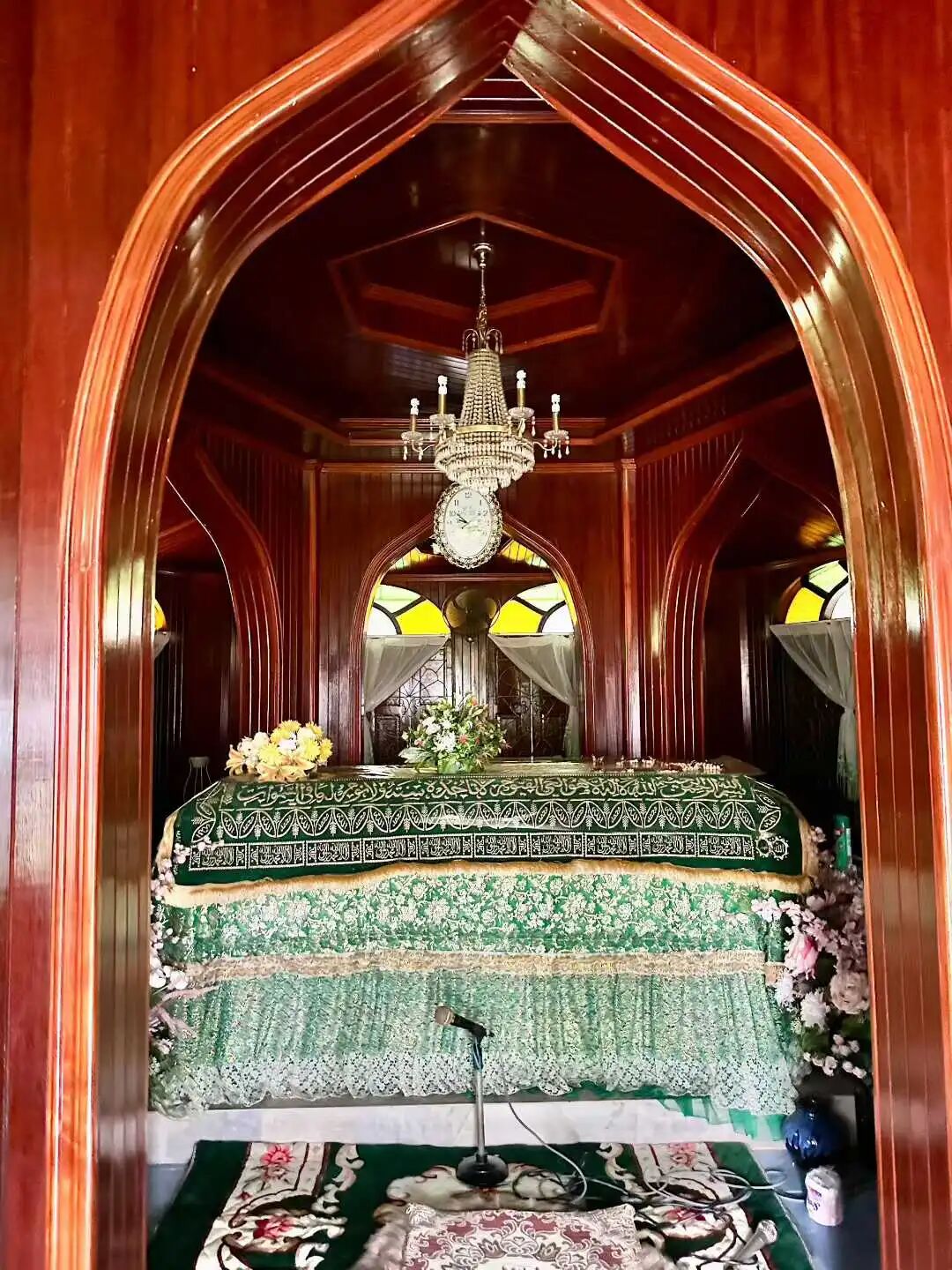
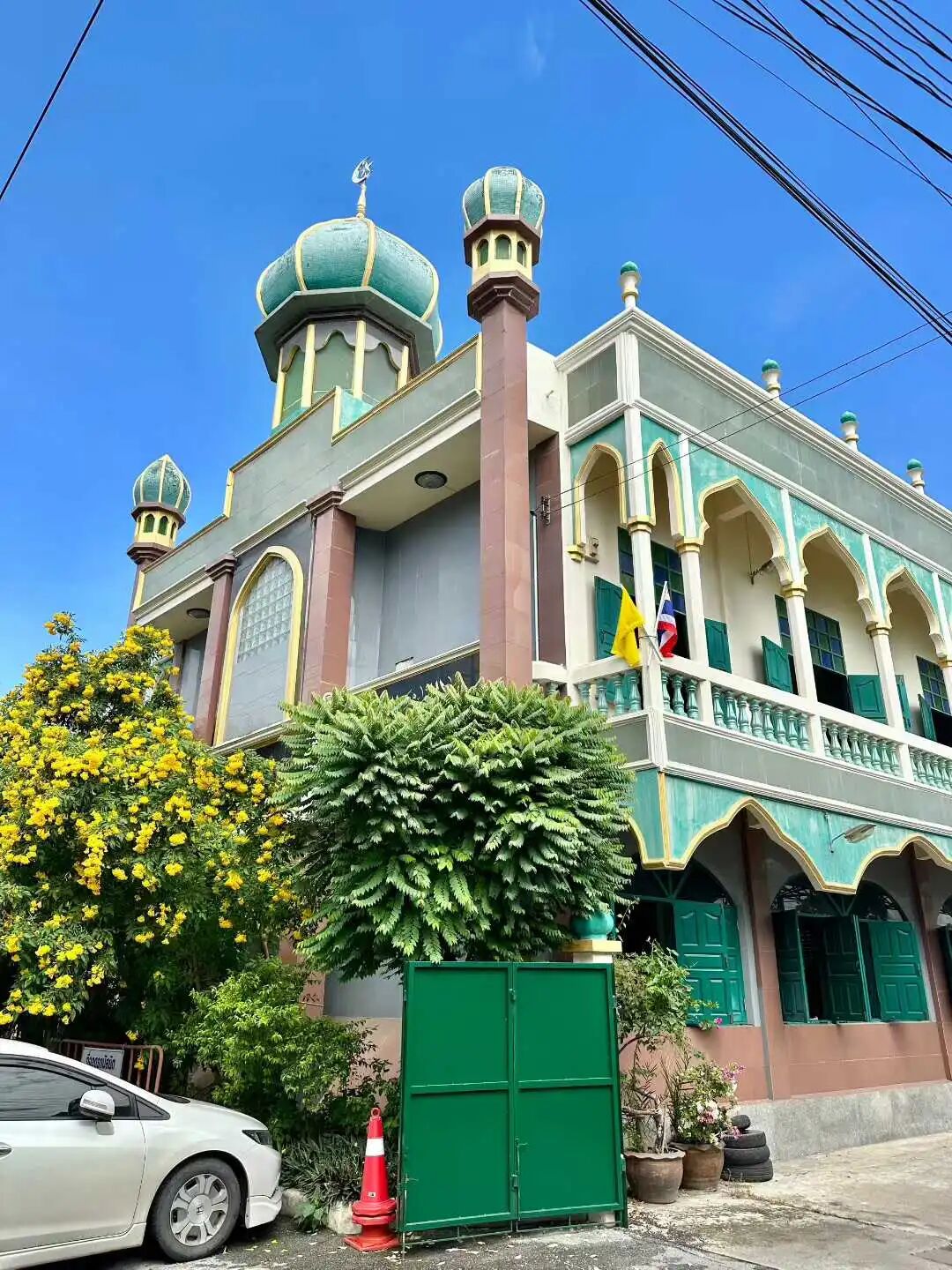
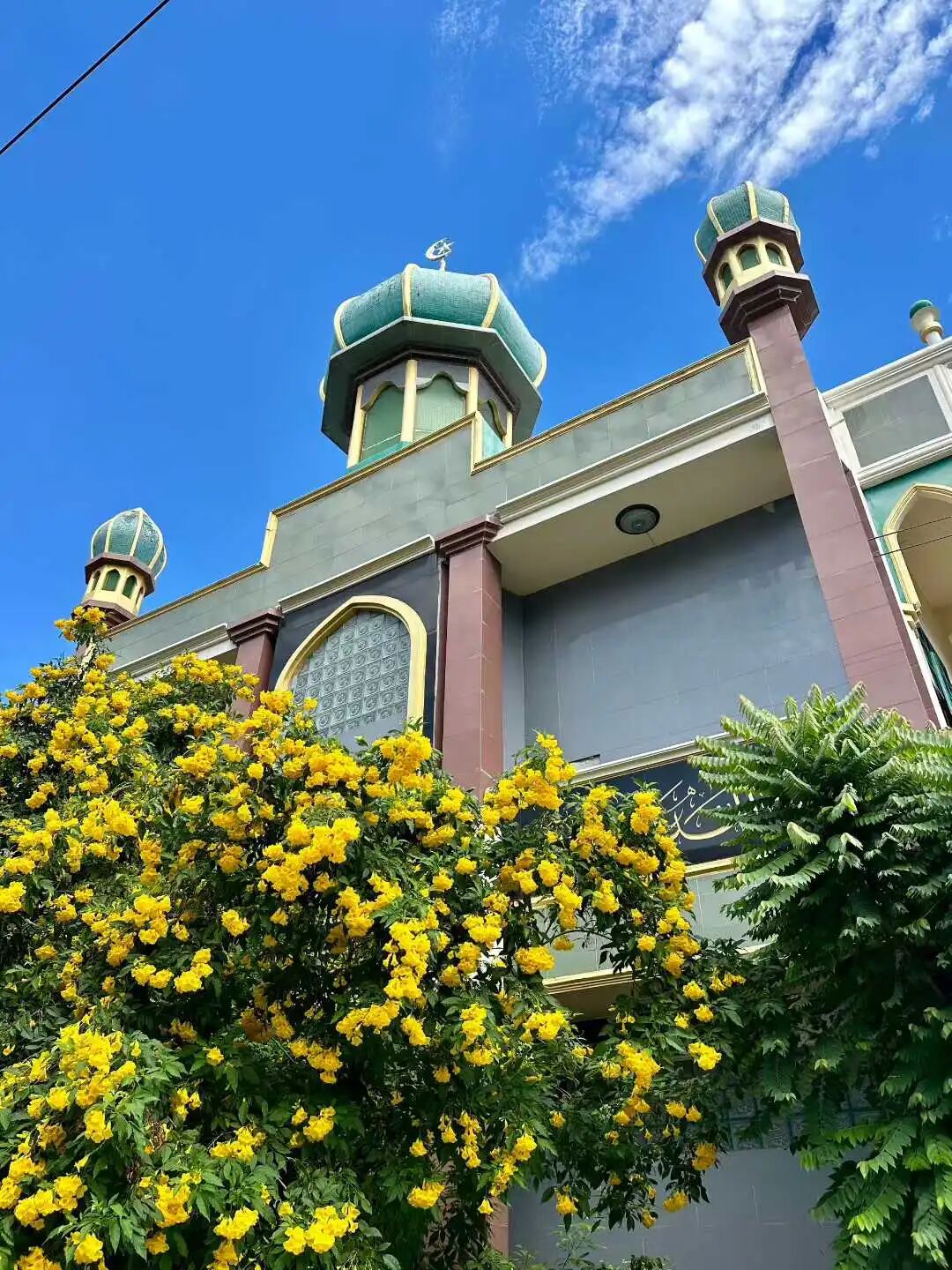
The Pakistan Mosque in Ayutthaya is located in the northern part of the city and is the only mosque currently situated inside the old city of Ayutthaya. In the 17th century, the Mughal Empire and the Ayutthaya Kingdom had a very close relationship, with many Mughals coming to Ayutthaya to do business, and some even entering the royal court to serve as advisors and ministers. In 1685, Chevalier de Chaumont, the first envoy sent by King Louis XIV of France to the Ayutthaya court, recorded that the "Moors" in Ayutthaya included Turks, Persians, Mughals, Golkondas (from the Deccan region of South India), and Bengalis. In 1690, the German doctor Engelbert Kaempfer visited Ayutthaya and described that "on the main road connecting the north of the city to the royal palace, there were shops owned by Chinese, Hindustanis, and Moors."
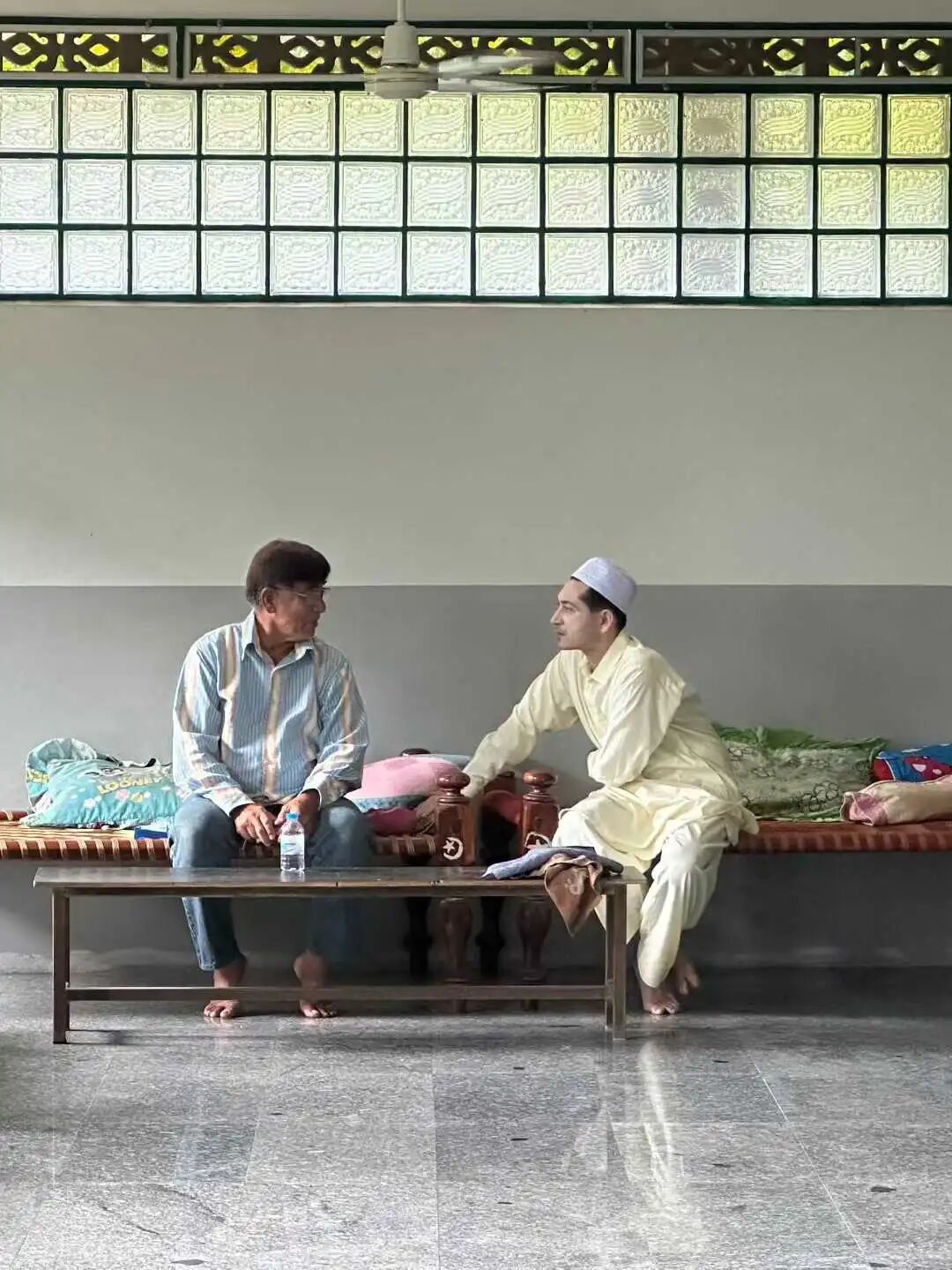
Summary: Ayutthaya is home to one of Thailand's oldest Muslim communities, shaped by Persian, Malay, Indian, and local Thai Muslim histories. This article keeps the source's mosque names, old settlement details, palace-era background, food notes, and community observations in clear English.
When we think of Muslim communities in Thailand, we first think of the Malays in the south, the Yunnanese Hui Muslims in the north, and the diverse, integrated mosque neighborhoods in Bangkok. In fact, Muslim communities in Ayutthaya began to thrive as early as 1351, when the city became the capital of Thailand. Although Ayutthaya lost its status as the capital after the Thai capital moved in 1767, the mosque neighborhood structure here has been passed down to this day.
Historically, there were six mosque neighborhoods in Ayutthaya that date back to the Ayutthaya Kingdom (1351-1767):
Thung Khaek / Kudi Chao Sen Mosque: Persian Shia.
Khaek Pae Mosque: Persian Shia.
Nurul Yaman Mosque: Persian Shia (formerly), Malay Sunni (later).
Takia Yokin Mosque: Indian Sunni (Qadiriyya Sufi order).
Surau Nai Klong Mosque: Cham Sunni.
Kudi Chofa Mosque: Makassar and Malay Sunni.
The original site of Kudi Chao Sen Mosque was in the southern part of the Ayutthaya city walls, founded in the early 17th century by Sheikh Ahmad, a Persian who came from Qom, Iran. During the 17th and 18th centuries, this was a residential area for Persian and Indian descendants in Ayutthaya. After Ayutthaya fell in 1767, most residents moved south to Thonburi with the Thai king, and the mosque neighborhood dissolved. Today, there is a rebuilt gongbei (shrine) for Sheikh Ahmad here. For details, see 'The Persian Sheikh Gongbei in Ayutthaya, Thailand'.
Khaek Pae Mosque is located on the bank where the Chao Phraya River and the Pa Sak River meet. Persian merchants once lived on boats here, which locals called the 'floating village'. After Ayutthaya fell in 1767, most residents moved south to Thonburi with the Thai king, and the mosque neighborhood dissolved. Today, there are two mosque neighborhoods in Bangkok established by descendants of Ayutthaya's Persians. See 'Experiencing the Persian Shia Festival Atmosphere in Bangkok, Thailand' and 'Visiting Shia Communities in Bangkok'.
Nurul Yamal Mosque is located in the northern suburbs of the old city of Ayutthaya, near where the Ayutthaya Kingdom built an elephant kraal in 1580. According to the travelogue 'Safine-ye Solaymani' (The Ship of Suleiman) written by the Persian Safavid mission sent to Ayutthaya in 1685, there were over a hundred Persian merchants engaged in the lucrative elephant trade at the elephant kraal at that time. After Ayutthaya fell in 1767, most residents moved south to Thonburi with the Thai king, and the mosque neighborhood dissolved.
After the Rattanakosin Kingdom was established in Bangkok in 1782, Thailand continued to invade the Malay Sultanate of Pattani in the south. In 1786, Thailand dealt a devastating blow to the Pattani Sultanate. Afterward, a large number of Pattani Malays were relocated to central Thailand, and some settled at the old site of the Nurul Yamal mosque neighborhood and rebuilt the Nurul Yamal Mosque.
Nurul Yamal Mosque was originally a wooden structure, but it was later rebuilt into a brick and stone structure under the guidance of a Chinese person. King Rama V of Thailand (reigned 1868-1910) visited here, gifted the mosque a green lantern, and bestowed the name Nurul Yamal Mosque.
We performed Jumu'ah at Nurul Yamal Mosque, where the imam gave the khutbah (wa'z) in Thai.
Takia Yokin Mosque is located on the banks of the Chao Phraya River in the southern suburbs of Ayutthaya. It was originally a Buddhist mosque, but it was rebuilt in the mid-16th century after the mosque's abbot, Diwan Chao, was guided by the Sufi sheikh Tok Takia of the Qadiriyya menhuan. The mosque preserves a traditional Thai-style imam's prayer pavilion and a minbar pulpit, both of which are beautifully crafted. Although the founder, Sheikh Tok Takia, was of Indian descent, the local community members are now primarily Malay. See "Visiting the Two Great Qadiriyya Gongbei of Thailand."
In the 15th century, Arab, Persian, and Indian merchants sailing east along the Indian Ocean monsoon winds preferred the powerful Malacca Sultanate as their trading hub. However, after the Portuguese conquered Malacca in 1511, trade was heavily restricted. Many Arab, Persian, and Indian merchants began moving to the Siamese capital of Ayutthaya to do business, and Siam welcomed them. At that time, a large number of merchant ships gathered along the banks of the Chao Phraya River south of Ayutthaya. These merchants would anchor their ships outside the city and then transport their goods into the city for sale. The riverbank where Takia Yokin Mosque is located was an important anchorage for these ships, and it later developed into an important mosque community.
Surau Nai Klong Mosque was founded by Cham people from Cambodia and Vietnam. The Cham community in Ayutthaya is spread along both banks of the Chao Phraya River south of the old city. With a history of over 600 years, it is the oldest and longest-standing Muslim community in Thailand.
Champa (Champa) was a country established by the Cham people (Chams) in southern Vietnam in 192 AD. Because their land was narrow and fragmented, Champa focused on maritime trade and became an important trading port on the Maritime Silk Road during the Song and Yuan dynasties. Whether they were Chinese merchant ships departing from Guangzhou and Quanzhou or Arab and Persian merchant ships from the Indian Ocean and the Persian Gulf, all chose to stop in Champa.
After Ayutthaya became the capital of Thailand in 1350, Cham merchants came to trade and established a Cham village (Pata Ku Cham) on the south bank of the Chao Phraya River. According to the Royal Chronicles of Ayutthaya: Luang Prasoet Version, in 1409, the Thai King Ram Racha ordered the arrest of the minister Okya Mahasena, who successfully crossed the river and fled to the Cham village. He later supported the king's cousin, Nakarintratiraj, in overthrowing Ram Racha. After the new king ascended the throne, he exiled the old king to live in the Cham village.
After Vietnam broke free from Mongol control in the 14th century, it began moving south to invade Champa. In 1471, the Champa capital of Vijaya (Vijaya) was captured, and a large number of Cham royalty and civilians fled to Cambodia for refuge. These Cham people in Cambodia united with the Malays who had settled there earlier, forming a military alliance in the 16th century.
After the 16th century, the residential area of the Cham people in Ayutthaya expanded from the Cham village to both banks of the Chao Phraya River, and the nearby Cham canal port market became one of the four major floating markets in Ayutthaya. to selling goods, the Cham people in Ayutthaya also made a living by weaving straw mats and growing rice.
The Cambodian Cham military corps (Krom As-Cham) began to be employed by the Thai Ayutthaya Dynasty in the early 17th century. They were highly praised by the Siamese royal family for their superb shipbuilding skills and naval combat prowess. These Cham warriors were granted the honor of serving as rowers for the royal barges during Thai royal ceremonies.
After the fall of Ayutthaya in 1767, many Cham people moved south near Bangkok, as recorded in the Complete Collection of Bangkok Mosques: The Five Cham Quarters. However, many Cham people still remained in Ayutthaya. Following the arrival of Pattani Malays at the end of the 18th century, this area is now a place where Cham and Malay people live together.
The original Surau Nai Klong mosque in Champa Village was gradually abandoned after the 19th century. Today, there are three mosques here: Aliyin Nuroi, Madinah Tusslihat, and Islam Vattana. I visited the first two on this trip.
Next to the Cham community is the Islam Vattana cemetery. The most prominent building inside is a tomb for a Persian Shia sage built in the 18th century. It has now become a gongbei for local Sunni followers, which is a very interesting cultural phenomenon.
The owner of the gongbei was named Chen. He served as the Chula Rachamontri, the leader of the Thai Muslim community, during the reign of King Ekkathat (1758-1767) and was the last leader of the Muslim community during the Ayutthaya Kingdom. Chen was a descendant of the Sheikh Ahmad family, the most important Persian Shia family in Thailand. His family held a monopoly on Thai trade heading west to India, Persia, Arabia, and Europe, and they held the position of Muslim community leader by heredity. Chen's father, Jai, was a court attendant for King Narai. During the reign of King Borommakot (1733-1758), he was promoted to the general rank of Chao Phraya Phet Pichai and became the commander of the Cham and Japanese regiments. In 1750, Chen's father followed the Thai king and converted to Buddhism, but Chen held fast to his faith. He continued to serve as the leader of the Muslim community while also serving as the head of the Right Harbor, Chao Kromma Tha Khwa, responsible for managing Thailand's western trade.
After Ayutthaya fell in 1767, Chen did not follow the Thai king south to Thonburi. Instead, he stayed in his ancestral home in Ayutthaya, where he eventually passed away. His ancestral home is right next to the Cham Canal south of the city, adjacent to the Cham community. His grave is also here, and it has become an important gongbei for sages in Ayutthaya.
In 1797, Chen's son, Konkaew, inherited the titles of Muslim community leader and head of the Right Harbor in Thonburi. Another son, Akayi, built the Shia hall Kudi Charoenphat, which still stands today.
Some graves in the Vattana cemetery are decorated with fresh flowers and paper flowers, which is a Sufi tradition of the Thai Muslim community.
Traveling south from Champa Village in Ayutthaya, you reach the Klong Takian area. During the Ayutthaya Kingdom, communities of different ethnic groups—including Portuguese, Chinese, Cham, Malay, and Makassarese—were spread along the Klong Takian canal, making it the most culturally diverse area of Ayutthaya at the time.
There are several mosques in the Klong Takian area, the most famous of which is the Kudi Chofa mosque. In 1666, the Dutch East India Company invaded Makassar on the island of Sulawesi in Indonesia, causing many Makassarese to flee to Java, Sumatra, and other places. A group of Makassarese also came to the Klong Takian area in the southern suburbs of Ayutthaya. People say the Kudi Chofa mosque was first built in 1677.
Starting in the 17th century, Thailand moved south to invade the Pattani Sultanate established by the Malays. Long-term wars led to many Pattani Malays being brought to Ayutthaya, the capital of Thailand at the time. In the mid-18th century, thousands of Pattani Malay captives were settled in the southern and southwestern suburbs of Ayutthaya to grow rice, and some of them settled at the Kudi Chofa mosque. After Ayutthaya fell in 1767, some Pattani Malays returned to their hometowns, others followed the Thai king south to Thonburi, and some remained in the southern suburbs of Ayutthaya. In 1786, following Thailand's invasion of Pattani, more Pattani Malays arrived at the Kudi Chofa mosque. In 1819, Imam Toh Ki Yam oversaw the reconstruction of the mosque from a wooden structure into a brick and stone building, incorporating styles from Catholic churches and Buddhist temples.
Legend has it that once, King Rama V (reigned 1868-1910) passed by the mosque on a boat, officially named it Kudi Chofa mosque, and gifted it a lamp called Takiang Chaw.
The Kudi Chofa mosque underwent several expansions after the 20th century and was finally rebuilt into its current form in 1978. The interior of the main hall was under renovation when we visited, and a kind friend (dosti) gave us water to drink.
Three hundred years after Sheikh Tok Takia came to Thailand in the mid-16th century to spread the Sufi Qadiriyya order, the Sufi Sheikh Muhammad Ali Shukri, who is honored as a saint (Wali), revived the Qadiriyya order in Thailand in the 19th century and helped it spread from Ayutthaya to Bangkok and Pattaya. See "The Gongbei of the Persian Sheikh in Ayutthaya, Thailand."
Sheikh Shukri's tomb shrine (gongbei) is located at the Aliyid Daroun Mosque (Masjid Aliyid Daroun) on the banks of the Chao Phraya River west of Ayutthaya city, which is a mosque community established by Pattani Malays in the 19th century. Thailand invaded Pattani twice in 1831-1832 and 1838, splitting it into seven small states, which was the period when the largest number of Pattani Malays moved to central Thailand.
After the 19th century, due to the preaching of the Sufi Sheikh Shukri, some Malay friends (dosti) who lived along the Khlong Ta Kian canal in the southern suburbs of Ayutthaya and originally belonged to the Kudi Chofa mosque community began to follow the Qadiriyya order, and in the early 20th century, Imam Omar Buleh founded the Yamiul Islam mosque community. Today, the tomb shrine (gongbei) of Imam Omar Buleh is built in the backyard of the mosque, and the Buleh family has held the position of mosque imam hereditarily ever since.
The Pakistan Mosque in Ayutthaya is located in the northern part of the city and is the only mosque currently situated inside the old city of Ayutthaya. In the 17th century, the Mughal Empire and the Ayutthaya Kingdom had a very close relationship, with many Mughals coming to Ayutthaya to do business, and some even entering the royal court to serve as advisors and ministers. In 1685, Chevalier de Chaumont, the first envoy sent by King Louis XIV of France to the Ayutthaya court, recorded that the "Moors" in Ayutthaya included Turks, Persians, Mughals, Golkondas (from the Deccan region of South India), and Bengalis. In 1690, the German doctor Engelbert Kaempfer visited Ayutthaya and described that "on the main road connecting the north of the city to the royal palace, there were shops owned by Chinese, Hindustanis, and Moors."
Halal Travel Guide: Ayutthaya - Persian Sheikh Ahmad Gongbei
Articles • ali2007fr posted the article • 0 comments • 233 views • 2026-05-20 23:51
Reposted from the web
Summary: The Sheikh Ahmad gongbei inside Phra Nakhon Si Ayutthaya Rajabhat University was built in 1631 and marks an important Persian Shia presence in Thailand. This short travel note keeps the source's historical and site details with a clear English narrative.
Inside the campus of Phra Nakhon Si Ayutthaya Rajabhat University in Thailand stands the tomb shrine (gongbei) of Sheikh Ahmad, built in 1631. It is an important witness to the Shia community in Thailand.
Between the 16th and 18th centuries, Shia merchants from the Safavid Empire in Persia traveled along the Indian Ocean coast to trade in Siam, where they were warmly welcomed and received with high honors by the Siamese royal family. Some Persian merchants married locals, settled down, and took on important positions in the Siamese royal court.
Sheikh Ahmad was born in Qom, Persia, in 1543. He arrived in Ayutthaya, Thailand, with his brother in the early 17th century to trade, married a Thai woman, and settled there. Sheikh Ahmad was very successful in business and became one of the wealthiest foreign merchants of his time. He met the Thai royal treasurer, and with his help, he connected with the Thai royal family and began participating in Thai trade affairs. After gaining the trust of King Songtham (who reigned from 1610 to 1628), he was appointed Chao Kromma Tha Khwa to manage trade, shipping, and diplomatic affairs between Thailand and the west, including India, Persia, Arabia, and Europe. He was also appointed as the first Chula Rajmontri in Thai history, overseeing religious affairs for the whole country. In 1611, after helping the Thai king defeat Japanese merchants who attempted a coup, he was appointed Samuhanayok, becoming the Grand Vizier of Thailand.
In the early 17th century, Sheikh Ahmad built the Kudi Chao Sen Shia mosque inside the city of Ayutthaya, which is the oldest mosque within the city walls. After Sheikh Ahmad passed away in 1631, he was buried near the mosque.
In the late 17th century, the Shia community continued to thrive in Ayutthaya. During the month of Muharram in 1656, the son of Sheikh Ahmad and other Shia nobles helped King Narai take the throne. To show his gratitude, King Narai gifted the Ayutthaya Shia community all the items needed for the Ashura ceremony during Muharram and established a royal guard consisting of 500 Shia soldiers. In 1685, the French Jesuit missionary Father Tachard recorded the grand scene of the Shia Ashura ceremony in Ayutthaya. According to his records, the procession included over two thousand people carrying models of the tombs of two saints, along with many intricately crafted symbolic objects. The men moved forward, constantly changing formations to the rhythm of the drums. At the front of this massive procession were three or four ornately decorated horses, and many people held long-poled lanterns to light up the entire group. The festival lasted for several nights, ending at five o'clock every morning.
After Ayutthaya fell in 1767 and Thailand moved its capital to Bangkok in 1782, the Persian-descended Shia community in Ayutthaya also moved to Bangkok. The descendants of Sheikh Ahmad continued to control Thailand's trade rights with the west for a century and served as the nominal leaders of the Thai Muslim community until 1945. Today, the Persian-descended Shia community in Bangkok has two mosques, and the atmosphere during the annual month of Muharram remains very strong. See "Experiencing the Persian-descended Shia Festival Atmosphere in Bangkok, Thailand" and "Searching for the Shia Community in Bangkok."
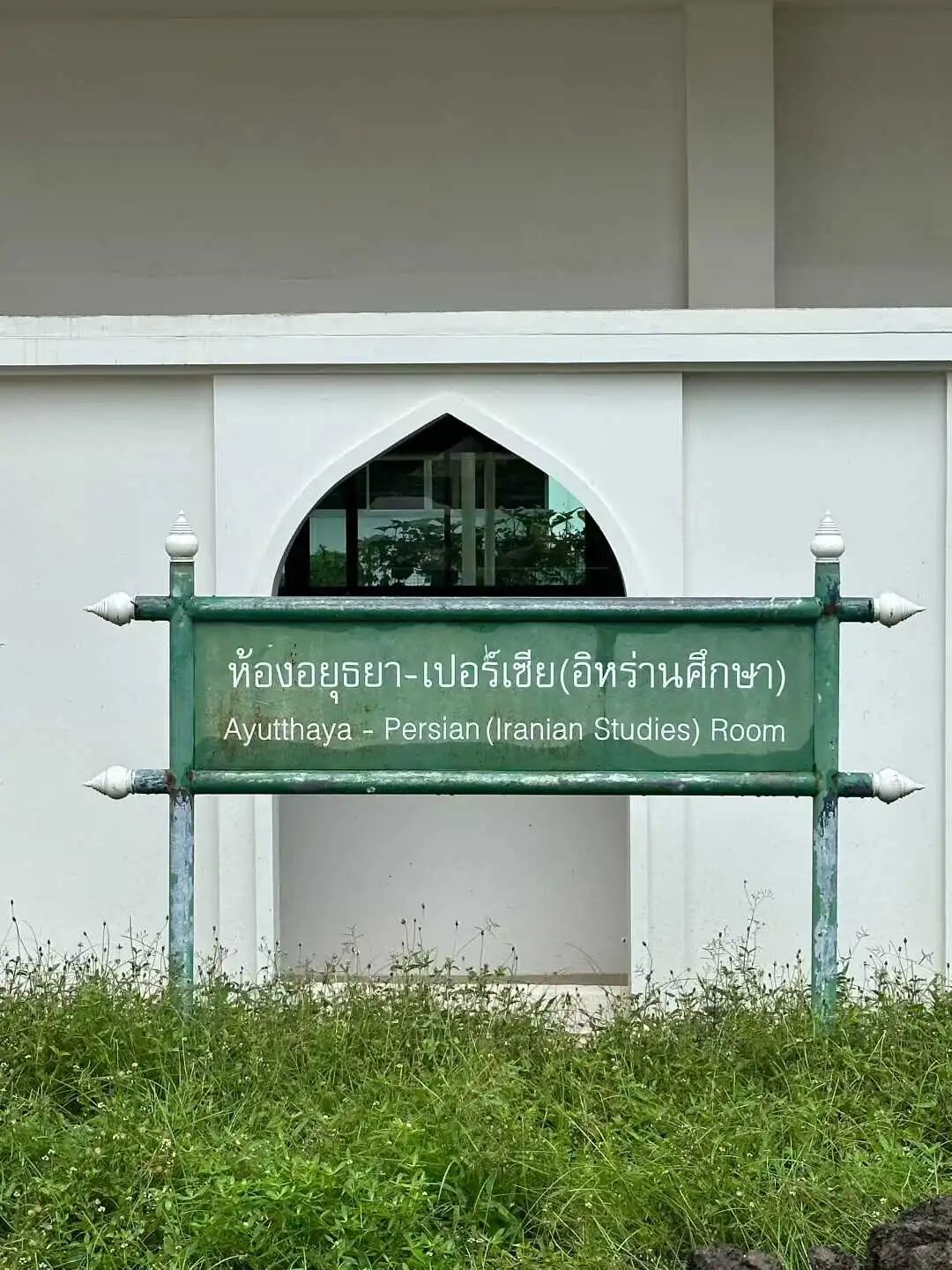
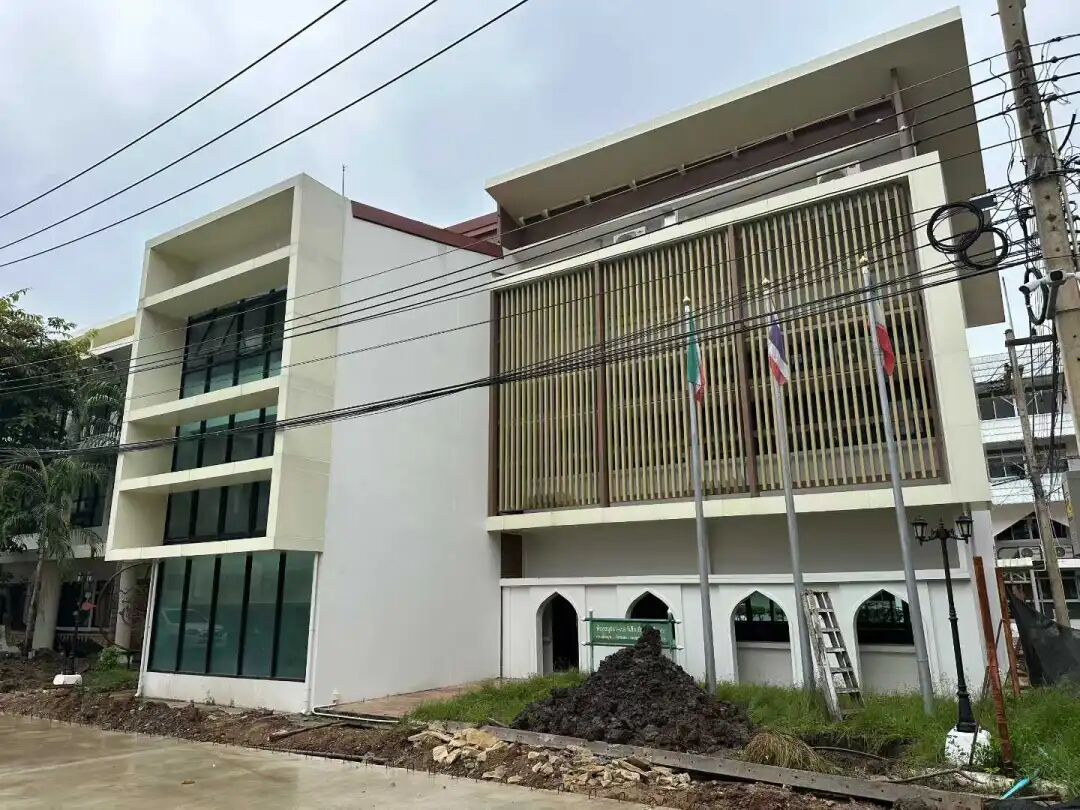
Opposite the tomb shrine of Sheikh Ahmad is the Ayutthaya-Persia (Iranian Studies) Room, where the Embassy of Iran in Thailand holds cultural and commemorative events from time to time. view all
Summary: The Sheikh Ahmad gongbei inside Phra Nakhon Si Ayutthaya Rajabhat University was built in 1631 and marks an important Persian Shia presence in Thailand. This short travel note keeps the source's historical and site details with a clear English narrative.
Inside the campus of Phra Nakhon Si Ayutthaya Rajabhat University in Thailand stands the tomb shrine (gongbei) of Sheikh Ahmad, built in 1631. It is an important witness to the Shia community in Thailand.
Between the 16th and 18th centuries, Shia merchants from the Safavid Empire in Persia traveled along the Indian Ocean coast to trade in Siam, where they were warmly welcomed and received with high honors by the Siamese royal family. Some Persian merchants married locals, settled down, and took on important positions in the Siamese royal court.
Sheikh Ahmad was born in Qom, Persia, in 1543. He arrived in Ayutthaya, Thailand, with his brother in the early 17th century to trade, married a Thai woman, and settled there. Sheikh Ahmad was very successful in business and became one of the wealthiest foreign merchants of his time. He met the Thai royal treasurer, and with his help, he connected with the Thai royal family and began participating in Thai trade affairs. After gaining the trust of King Songtham (who reigned from 1610 to 1628), he was appointed Chao Kromma Tha Khwa to manage trade, shipping, and diplomatic affairs between Thailand and the west, including India, Persia, Arabia, and Europe. He was also appointed as the first Chula Rajmontri in Thai history, overseeing religious affairs for the whole country. In 1611, after helping the Thai king defeat Japanese merchants who attempted a coup, he was appointed Samuhanayok, becoming the Grand Vizier of Thailand.
In the early 17th century, Sheikh Ahmad built the Kudi Chao Sen Shia mosque inside the city of Ayutthaya, which is the oldest mosque within the city walls. After Sheikh Ahmad passed away in 1631, he was buried near the mosque.
In the late 17th century, the Shia community continued to thrive in Ayutthaya. During the month of Muharram in 1656, the son of Sheikh Ahmad and other Shia nobles helped King Narai take the throne. To show his gratitude, King Narai gifted the Ayutthaya Shia community all the items needed for the Ashura ceremony during Muharram and established a royal guard consisting of 500 Shia soldiers. In 1685, the French Jesuit missionary Father Tachard recorded the grand scene of the Shia Ashura ceremony in Ayutthaya. According to his records, the procession included over two thousand people carrying models of the tombs of two saints, along with many intricately crafted symbolic objects. The men moved forward, constantly changing formations to the rhythm of the drums. At the front of this massive procession were three or four ornately decorated horses, and many people held long-poled lanterns to light up the entire group. The festival lasted for several nights, ending at five o'clock every morning.
After Ayutthaya fell in 1767 and Thailand moved its capital to Bangkok in 1782, the Persian-descended Shia community in Ayutthaya also moved to Bangkok. The descendants of Sheikh Ahmad continued to control Thailand's trade rights with the west for a century and served as the nominal leaders of the Thai Muslim community until 1945. Today, the Persian-descended Shia community in Bangkok has two mosques, and the atmosphere during the annual month of Muharram remains very strong. See "Experiencing the Persian-descended Shia Festival Atmosphere in Bangkok, Thailand" and "Searching for the Shia Community in Bangkok."
Opposite the tomb shrine of Sheikh Ahmad is the Ayutthaya-Persia (Iranian Studies) Room, where the Embassy of Iran in Thailand holds cultural and commemorative events from time to time. view all
Reposted from the web
Summary: The Sheikh Ahmad gongbei inside Phra Nakhon Si Ayutthaya Rajabhat University was built in 1631 and marks an important Persian Shia presence in Thailand. This short travel note keeps the source's historical and site details with a clear English narrative.
Inside the campus of Phra Nakhon Si Ayutthaya Rajabhat University in Thailand stands the tomb shrine (gongbei) of Sheikh Ahmad, built in 1631. It is an important witness to the Shia community in Thailand.
Between the 16th and 18th centuries, Shia merchants from the Safavid Empire in Persia traveled along the Indian Ocean coast to trade in Siam, where they were warmly welcomed and received with high honors by the Siamese royal family. Some Persian merchants married locals, settled down, and took on important positions in the Siamese royal court.
Sheikh Ahmad was born in Qom, Persia, in 1543. He arrived in Ayutthaya, Thailand, with his brother in the early 17th century to trade, married a Thai woman, and settled there. Sheikh Ahmad was very successful in business and became one of the wealthiest foreign merchants of his time. He met the Thai royal treasurer, and with his help, he connected with the Thai royal family and began participating in Thai trade affairs. After gaining the trust of King Songtham (who reigned from 1610 to 1628), he was appointed Chao Kromma Tha Khwa to manage trade, shipping, and diplomatic affairs between Thailand and the west, including India, Persia, Arabia, and Europe. He was also appointed as the first Chula Rajmontri in Thai history, overseeing religious affairs for the whole country. In 1611, after helping the Thai king defeat Japanese merchants who attempted a coup, he was appointed Samuhanayok, becoming the Grand Vizier of Thailand.
In the early 17th century, Sheikh Ahmad built the Kudi Chao Sen Shia mosque inside the city of Ayutthaya, which is the oldest mosque within the city walls. After Sheikh Ahmad passed away in 1631, he was buried near the mosque.
In the late 17th century, the Shia community continued to thrive in Ayutthaya. During the month of Muharram in 1656, the son of Sheikh Ahmad and other Shia nobles helped King Narai take the throne. To show his gratitude, King Narai gifted the Ayutthaya Shia community all the items needed for the Ashura ceremony during Muharram and established a royal guard consisting of 500 Shia soldiers. In 1685, the French Jesuit missionary Father Tachard recorded the grand scene of the Shia Ashura ceremony in Ayutthaya. According to his records, the procession included over two thousand people carrying models of the tombs of two saints, along with many intricately crafted symbolic objects. The men moved forward, constantly changing formations to the rhythm of the drums. At the front of this massive procession were three or four ornately decorated horses, and many people held long-poled lanterns to light up the entire group. The festival lasted for several nights, ending at five o'clock every morning.
After Ayutthaya fell in 1767 and Thailand moved its capital to Bangkok in 1782, the Persian-descended Shia community in Ayutthaya also moved to Bangkok. The descendants of Sheikh Ahmad continued to control Thailand's trade rights with the west for a century and served as the nominal leaders of the Thai Muslim community until 1945. Today, the Persian-descended Shia community in Bangkok has two mosques, and the atmosphere during the annual month of Muharram remains very strong. See "Experiencing the Persian-descended Shia Festival Atmosphere in Bangkok, Thailand" and "Searching for the Shia Community in Bangkok."
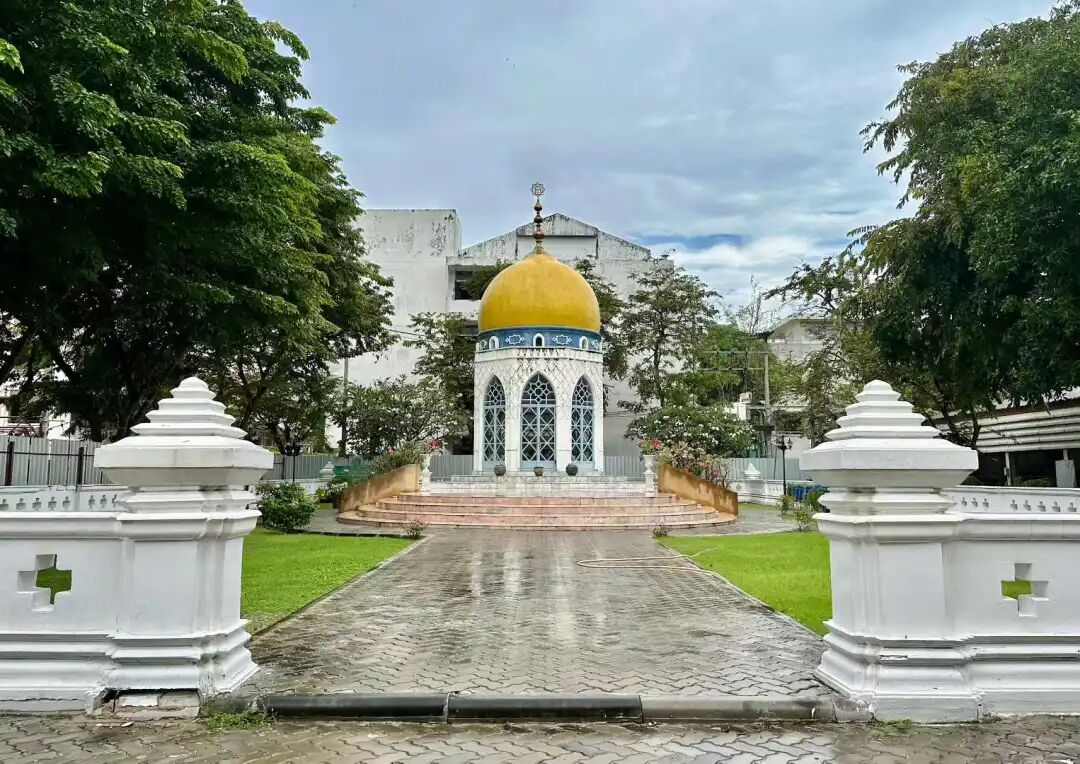
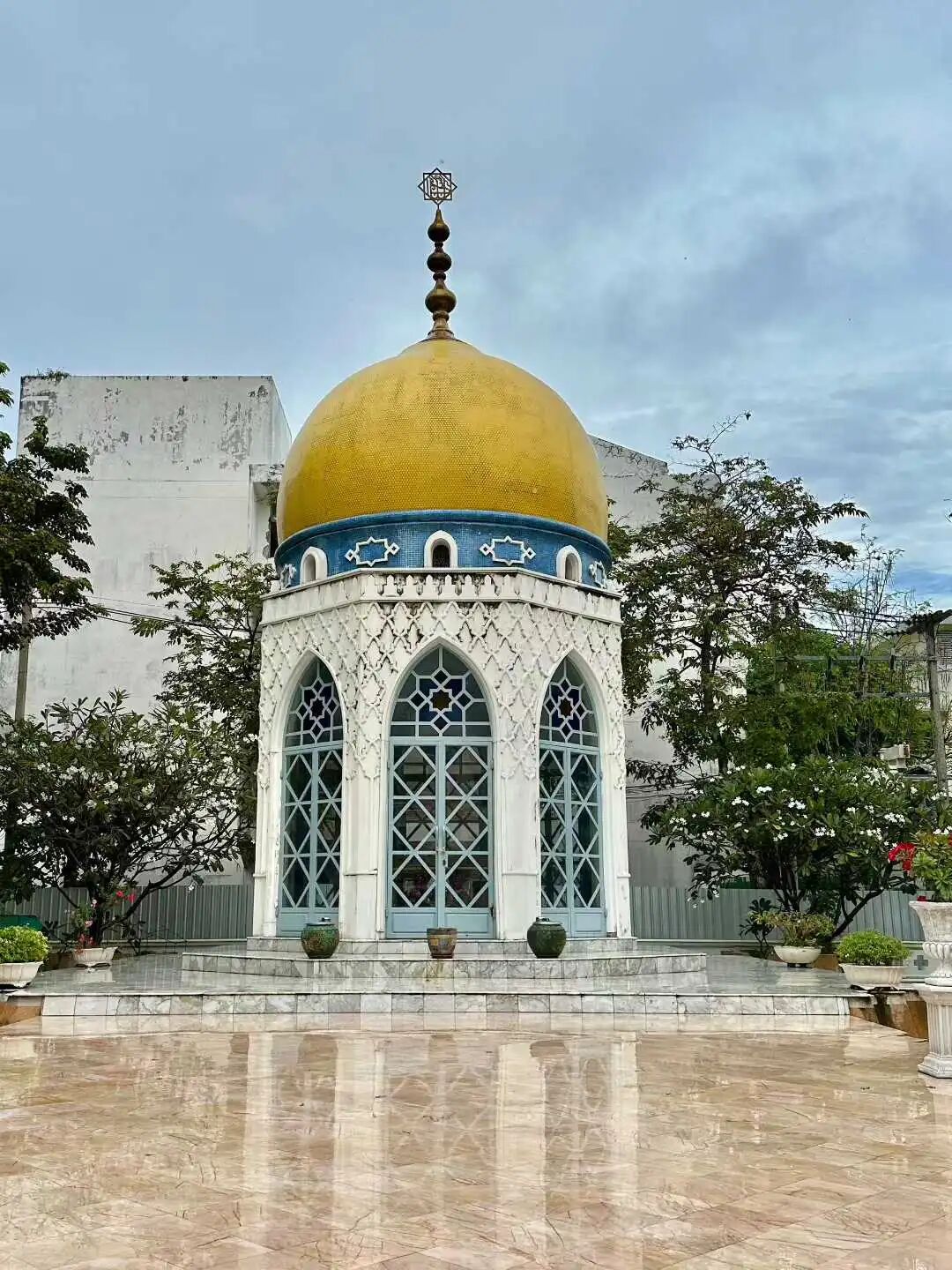
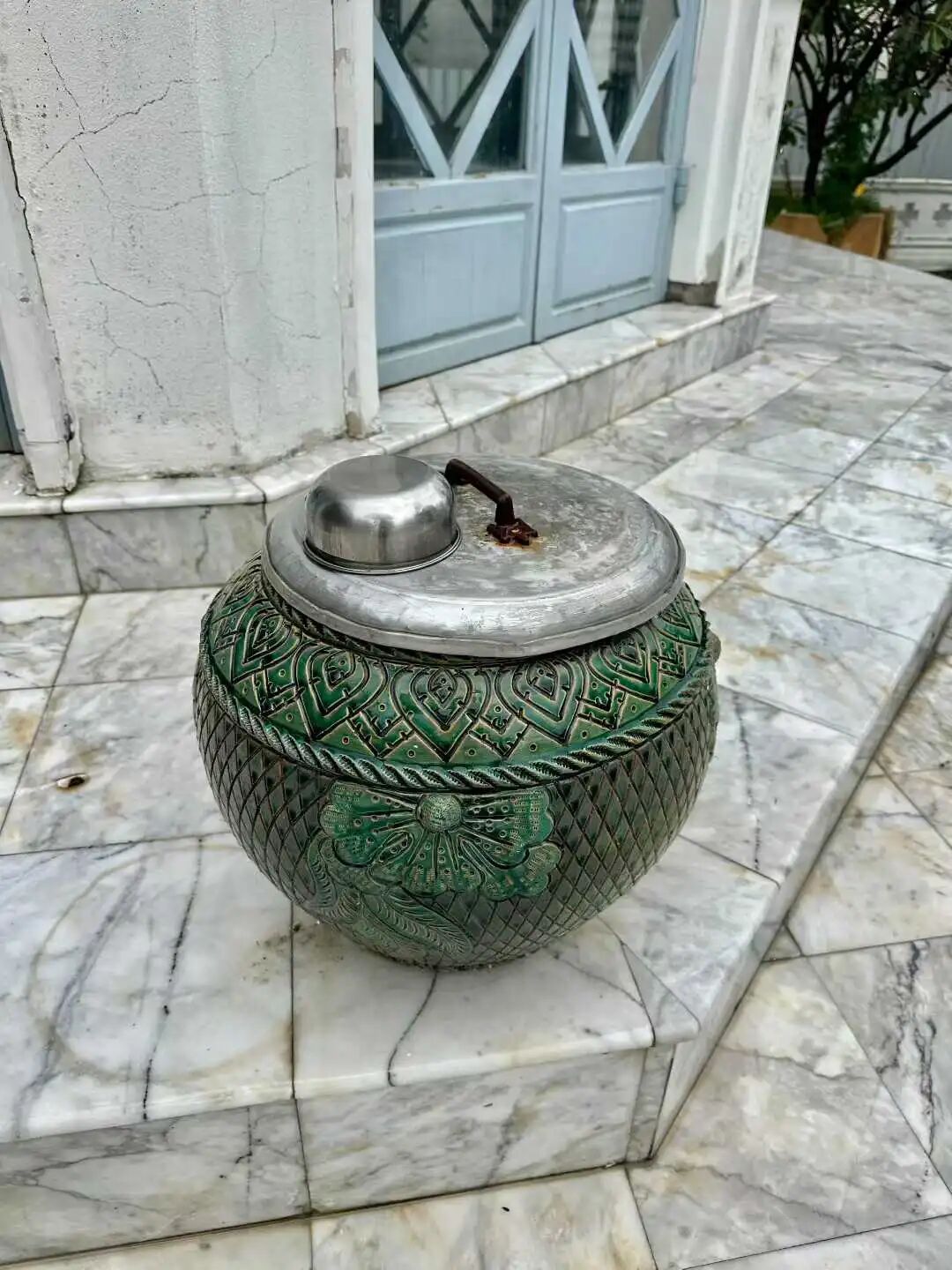
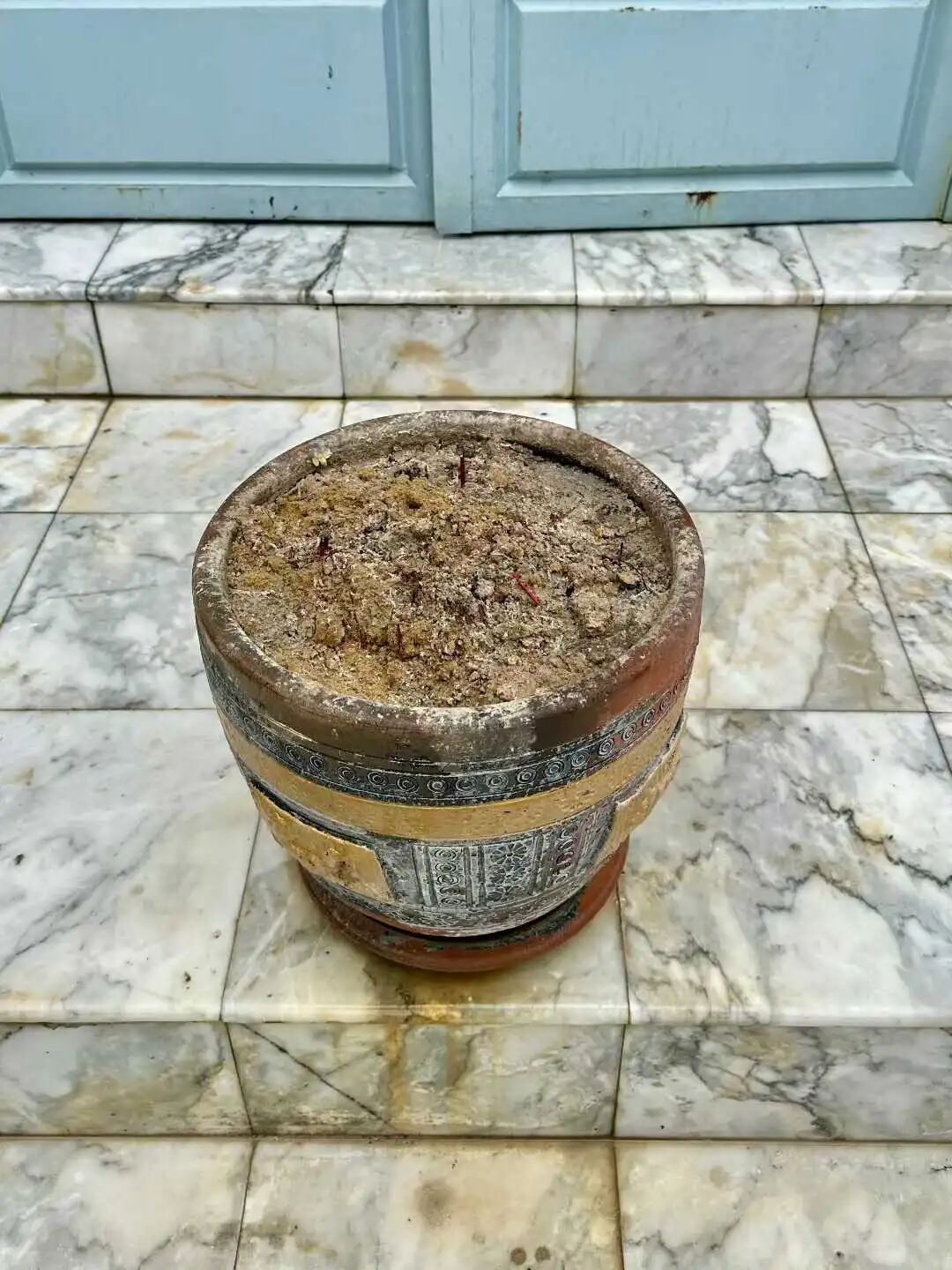
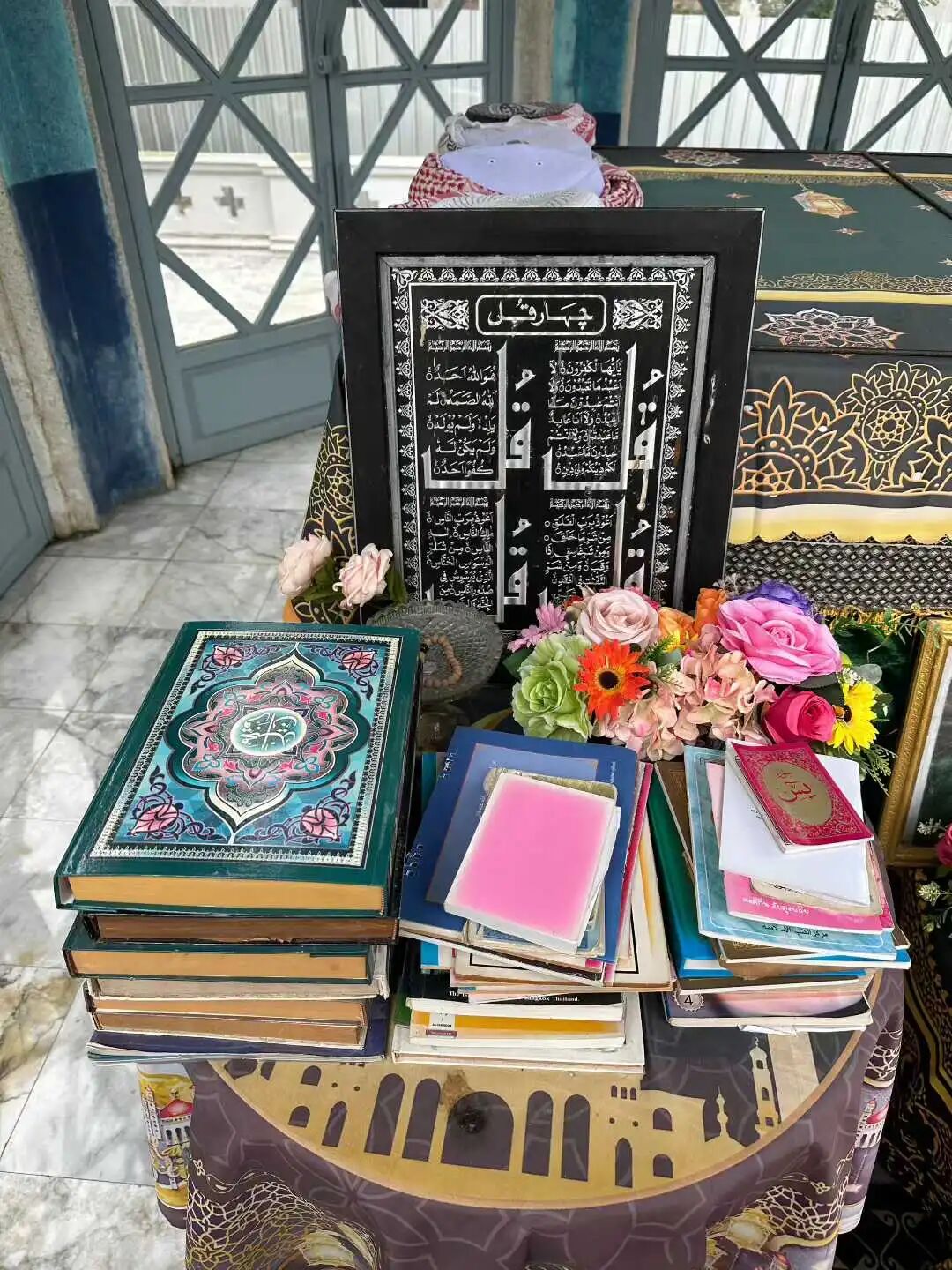
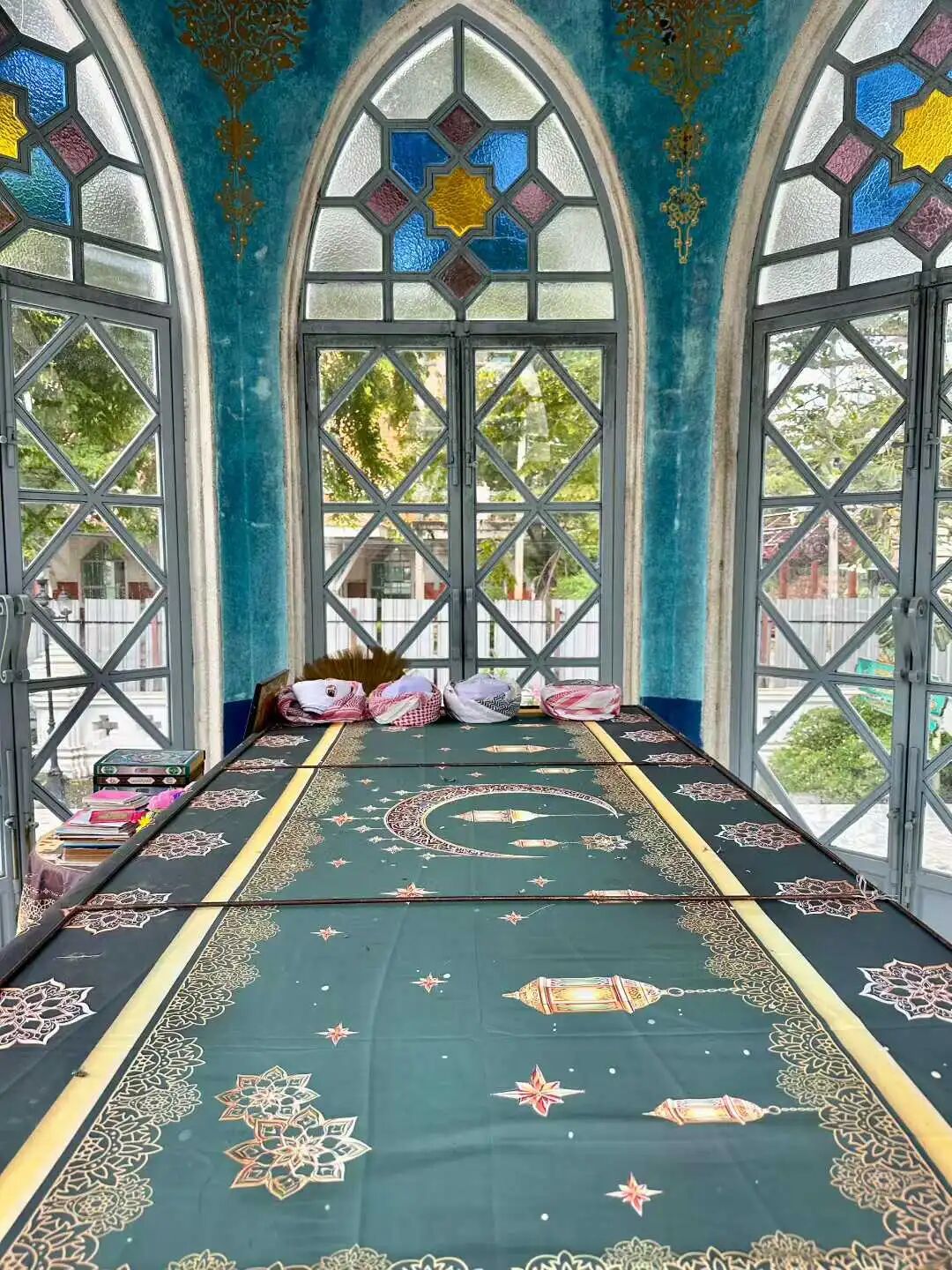
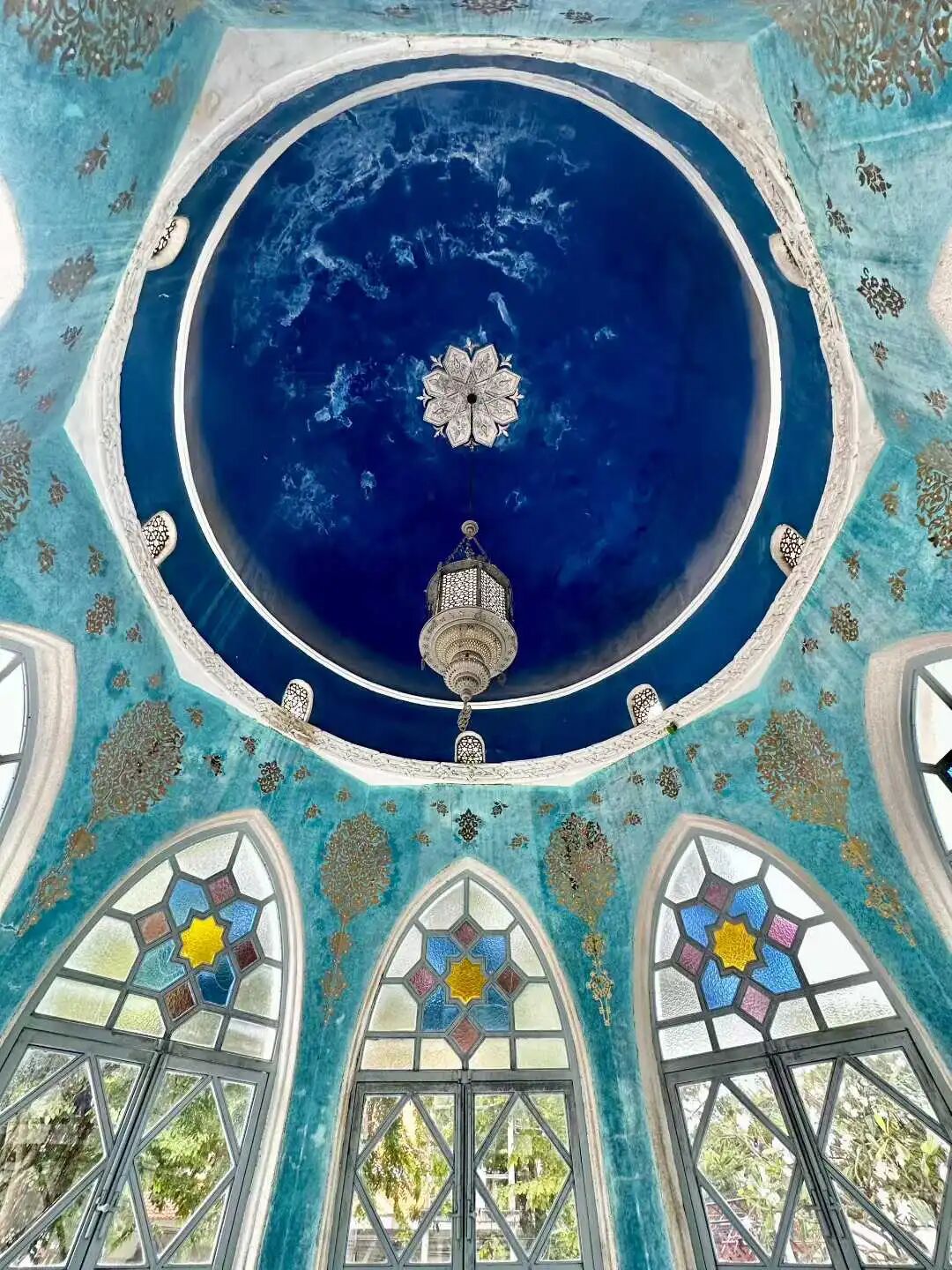
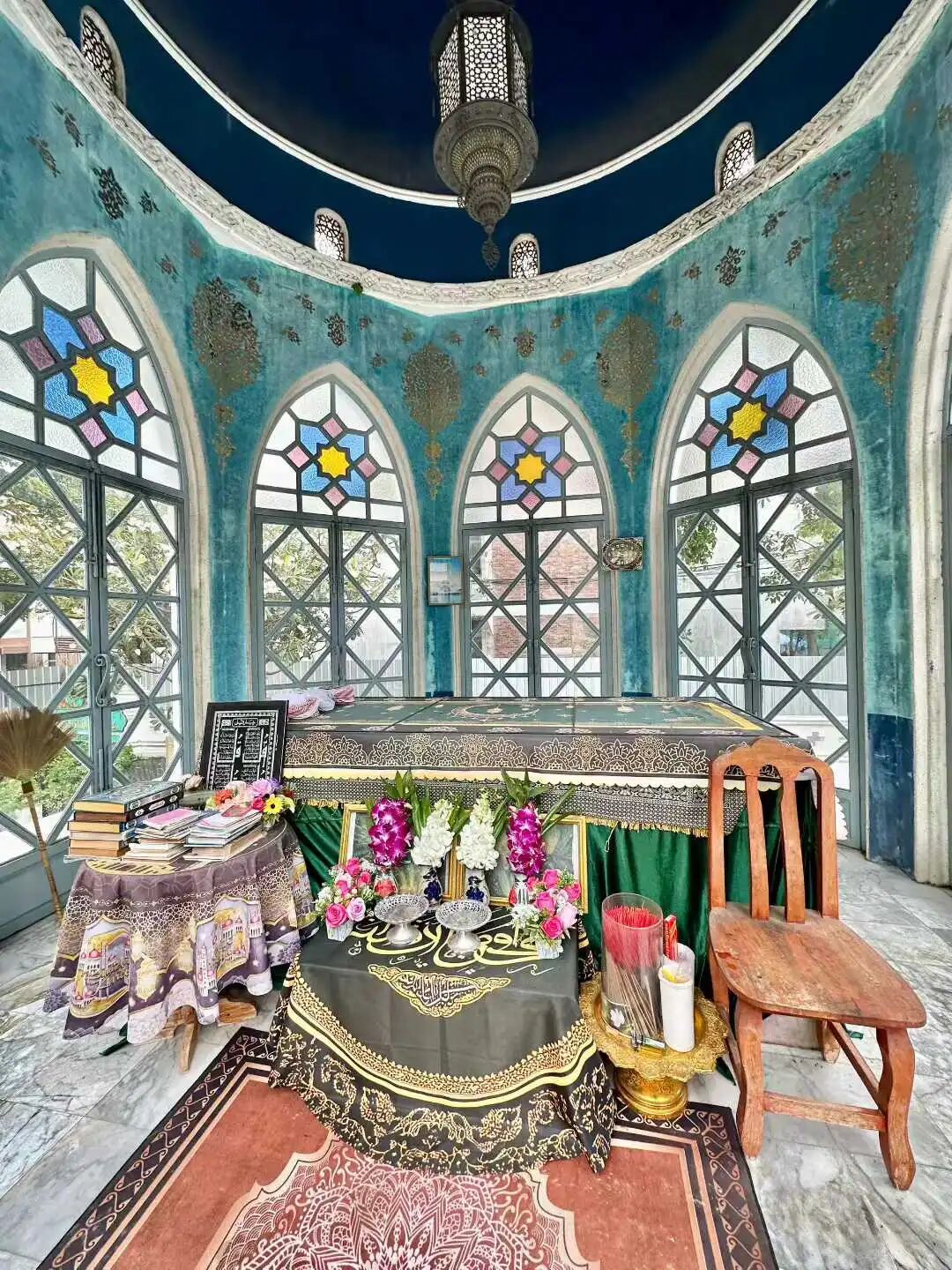
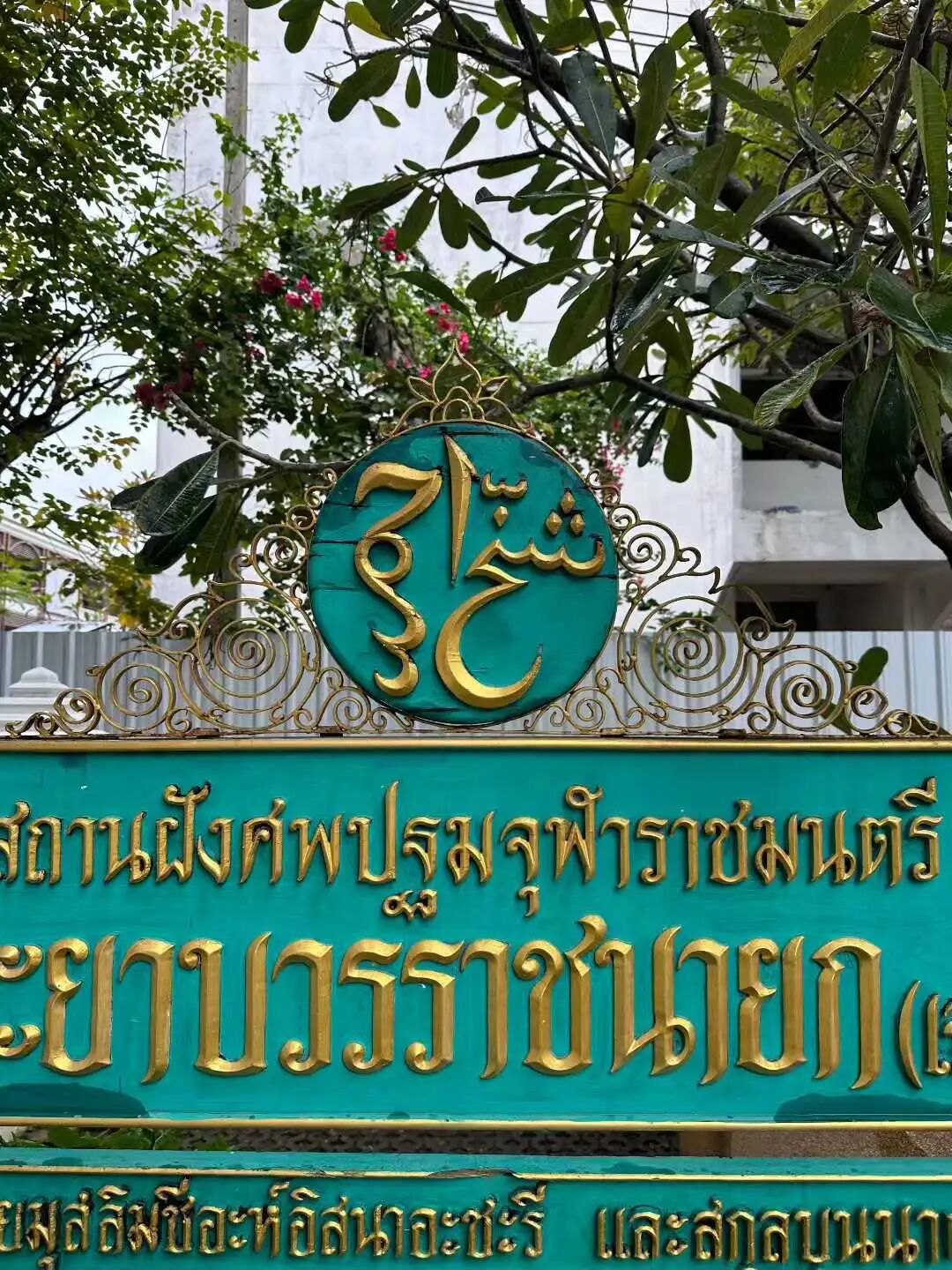
Opposite the tomb shrine of Sheikh Ahmad is the Ayutthaya-Persia (Iranian Studies) Room, where the Embassy of Iran in Thailand holds cultural and commemorative events from time to time.
Summary: The Sheikh Ahmad gongbei inside Phra Nakhon Si Ayutthaya Rajabhat University was built in 1631 and marks an important Persian Shia presence in Thailand. This short travel note keeps the source's historical and site details with a clear English narrative.
Inside the campus of Phra Nakhon Si Ayutthaya Rajabhat University in Thailand stands the tomb shrine (gongbei) of Sheikh Ahmad, built in 1631. It is an important witness to the Shia community in Thailand.
Between the 16th and 18th centuries, Shia merchants from the Safavid Empire in Persia traveled along the Indian Ocean coast to trade in Siam, where they were warmly welcomed and received with high honors by the Siamese royal family. Some Persian merchants married locals, settled down, and took on important positions in the Siamese royal court.
Sheikh Ahmad was born in Qom, Persia, in 1543. He arrived in Ayutthaya, Thailand, with his brother in the early 17th century to trade, married a Thai woman, and settled there. Sheikh Ahmad was very successful in business and became one of the wealthiest foreign merchants of his time. He met the Thai royal treasurer, and with his help, he connected with the Thai royal family and began participating in Thai trade affairs. After gaining the trust of King Songtham (who reigned from 1610 to 1628), he was appointed Chao Kromma Tha Khwa to manage trade, shipping, and diplomatic affairs between Thailand and the west, including India, Persia, Arabia, and Europe. He was also appointed as the first Chula Rajmontri in Thai history, overseeing religious affairs for the whole country. In 1611, after helping the Thai king defeat Japanese merchants who attempted a coup, he was appointed Samuhanayok, becoming the Grand Vizier of Thailand.
In the early 17th century, Sheikh Ahmad built the Kudi Chao Sen Shia mosque inside the city of Ayutthaya, which is the oldest mosque within the city walls. After Sheikh Ahmad passed away in 1631, he was buried near the mosque.
In the late 17th century, the Shia community continued to thrive in Ayutthaya. During the month of Muharram in 1656, the son of Sheikh Ahmad and other Shia nobles helped King Narai take the throne. To show his gratitude, King Narai gifted the Ayutthaya Shia community all the items needed for the Ashura ceremony during Muharram and established a royal guard consisting of 500 Shia soldiers. In 1685, the French Jesuit missionary Father Tachard recorded the grand scene of the Shia Ashura ceremony in Ayutthaya. According to his records, the procession included over two thousand people carrying models of the tombs of two saints, along with many intricately crafted symbolic objects. The men moved forward, constantly changing formations to the rhythm of the drums. At the front of this massive procession were three or four ornately decorated horses, and many people held long-poled lanterns to light up the entire group. The festival lasted for several nights, ending at five o'clock every morning.
After Ayutthaya fell in 1767 and Thailand moved its capital to Bangkok in 1782, the Persian-descended Shia community in Ayutthaya also moved to Bangkok. The descendants of Sheikh Ahmad continued to control Thailand's trade rights with the west for a century and served as the nominal leaders of the Thai Muslim community until 1945. Today, the Persian-descended Shia community in Bangkok has two mosques, and the atmosphere during the annual month of Muharram remains very strong. See "Experiencing the Persian-descended Shia Festival Atmosphere in Bangkok, Thailand" and "Searching for the Shia Community in Bangkok."
Opposite the tomb shrine of Sheikh Ahmad is the Ayutthaya-Persia (Iranian Studies) Room, where the Embassy of Iran in Thailand holds cultural and commemorative events from time to time.
Halal Travel Guide: Ayutthaya - Halal Farm Stay, Gongbei and Muslim Food
Articles • ali2007fr posted the article • 0 comments • 227 views • 2026-05-20 23:51
Reposted from the web
Summary: Ayutthaya offers halal resorts, Muslim-run restaurants, old mosque communities, and a gongbei gathering connected to local Sufi practice. This travel account keeps the original route, food, lodging, religious terms, and community details in one long English article.
We stayed at a halal resort called Vanida in Ayutthaya, Thailand. The resort is on a main road west of the historic city center and has beautiful scenery. It takes a bit longer to get a Grab here than in the city center, but we were always able to get one. If you take a Grab directly from Don Mueang Airport, it only takes a little over an hour.
We stayed in a townhouse-style villa with a lake and garden right outside our door. Besides breakfast, there is a formal restaurant in the courtyard, and the prayer hall is right across from it, which is very convenient.
Because it was the off-season and there were few tourists, the resort didn't serve a buffet. Instead, they prepared egg fried rice, fried eggs, sausages, various vegetables, bread, and watermelon for us. Eating by the lake was very relaxing. They keep miniature horses, cows, sheep, chickens, and rabbits in the yard, which children would probably love. There is also a children's pool in the yard where kids can swim.
The west and south sides of the Ayutthaya World Heritage historic city are surrounded by the Chao Phraya River. The area along the river in the south is mainly a residential area for the Cham people, and there are many halal restaurants there.
We had dinner on our first night at Kruta Steak on the north bank of the river. We found online that they had beautiful riverside seating, but when we arrived, the seats were flooded, so we ate inside instead.
They specialize in steaks and various mushrooms. We ordered mushroom chicken rice, fried mushrooms, and shrimp glass noodle salad, and we also drank fresh carrot juice. Their mushrooms were really good, especially the fried mushrooms, which were very fragrant. Even though we didn't speak the same language, the servers were very friendly and kept smiling at me. They also have a prayer room, which is very convenient.
You must experience taking a small boat across the Chao Phraya River when you come to Ayutthaya. We took a small ferry at a pier in the south of the city, which easily connects to the Cham community on the south bank of the old city.
The Ayutthaya World Heritage night market is right across from Wat Mahathat. The market is just one street long and has some halal snacks like fried chicken, roti flatbread (roti), and shawarma, but there are no seats, so you have to stand and eat. The nearby historic sites are lit up at night, so it's nice to walk around the night market and look at the ruins.
We ate a type of grilled fish cake wrapped in banana leaves at the night market, and it was very spicy. There is also a halal stall on the south side of the night market where I had some home-style dishes, shrimp fried rice and stir-fried crown daisy, which was a nice light meal.
On Friday, while attending Jumu'ah prayers in Ayutthaya, I was invited to lunch by two aunties who were also there for prayers. The aunties drove us to the Pakistani Noor Mosque in the northern part of the old city. I was surprised to find a snack shop in the courtyard run by an auntie of mixed Chinese and Pakistani heritage. And that is how we magically ended up eating authentic chicken char siu wonton noodles in the courtyard of a Pakistani mosque in Thailand.
The auntie who owns the shop no longer speaks Chinese. Through another auntie who treated us to a meal and translated for us, she explained that her father was Chinese and settled here after marrying a Pakistani woman. Although she has never been back to China, she was still very excited to see friends (dost) from China. Judging by the barbecued pork wonton noodles (chashao yuntun mian) she makes, her father was likely from Guangdong.
Our last stop in Ayutthaya was an important center for the Sufi Qadiriyya order in Thailand, the Sheikh Muhammad Ali Shukri shrine (gongbei) by the Chao Phraya River. Although we missed the religious gathering (a'mali), we unexpectedly caught a charity event (shesan) for flood victims. We were able to see how the Thai Sufi order performs their religious feast (nieti xi) and tasted the beef rice noodles served at the mosque.
Central and Southern Thailand are influenced by the Malay people, so most religious practices follow the Shafi'i school, and there are relatively few Sufi activities. This was my first time experiencing the warmth of Thai Sufi elders in Ayutthaya. I saw them using boat oars to stir a giant pot of rice for the first time, and I also saw the process of making coconut rice, which is very similar to how the Hui Muslims in Huihui Village, Sanya, set their tables. Because we arrived early and the meal hadn't started yet, the elders here very warmly arranged for us to eat rice noodles first. The beef rice noodles with soup poured over them were delicious. I was also surprised to meet several elders who could speak English and Chinese.
Since we had to rush to Bangkok that evening, we didn't stay at the shrine (gongbei) for long. If any friends (dost) are traveling to Ayutthaya, Thailand, I highly recommend visiting this shrine (gongbei). It is a rare opportunity to see this side of Thai Sufism. view all
Summary: Ayutthaya offers halal resorts, Muslim-run restaurants, old mosque communities, and a gongbei gathering connected to local Sufi practice. This travel account keeps the original route, food, lodging, religious terms, and community details in one long English article.
We stayed at a halal resort called Vanida in Ayutthaya, Thailand. The resort is on a main road west of the historic city center and has beautiful scenery. It takes a bit longer to get a Grab here than in the city center, but we were always able to get one. If you take a Grab directly from Don Mueang Airport, it only takes a little over an hour.
We stayed in a townhouse-style villa with a lake and garden right outside our door. Besides breakfast, there is a formal restaurant in the courtyard, and the prayer hall is right across from it, which is very convenient.
Because it was the off-season and there were few tourists, the resort didn't serve a buffet. Instead, they prepared egg fried rice, fried eggs, sausages, various vegetables, bread, and watermelon for us. Eating by the lake was very relaxing. They keep miniature horses, cows, sheep, chickens, and rabbits in the yard, which children would probably love. There is also a children's pool in the yard where kids can swim.
The west and south sides of the Ayutthaya World Heritage historic city are surrounded by the Chao Phraya River. The area along the river in the south is mainly a residential area for the Cham people, and there are many halal restaurants there.
We had dinner on our first night at Kruta Steak on the north bank of the river. We found online that they had beautiful riverside seating, but when we arrived, the seats were flooded, so we ate inside instead.
They specialize in steaks and various mushrooms. We ordered mushroom chicken rice, fried mushrooms, and shrimp glass noodle salad, and we also drank fresh carrot juice. Their mushrooms were really good, especially the fried mushrooms, which were very fragrant. Even though we didn't speak the same language, the servers were very friendly and kept smiling at me. They also have a prayer room, which is very convenient.
You must experience taking a small boat across the Chao Phraya River when you come to Ayutthaya. We took a small ferry at a pier in the south of the city, which easily connects to the Cham community on the south bank of the old city.
The Ayutthaya World Heritage night market is right across from Wat Mahathat. The market is just one street long and has some halal snacks like fried chicken, roti flatbread (roti), and shawarma, but there are no seats, so you have to stand and eat. The nearby historic sites are lit up at night, so it's nice to walk around the night market and look at the ruins.
We ate a type of grilled fish cake wrapped in banana leaves at the night market, and it was very spicy. There is also a halal stall on the south side of the night market where I had some home-style dishes, shrimp fried rice and stir-fried crown daisy, which was a nice light meal.
On Friday, while attending Jumu'ah prayers in Ayutthaya, I was invited to lunch by two aunties who were also there for prayers. The aunties drove us to the Pakistani Noor Mosque in the northern part of the old city. I was surprised to find a snack shop in the courtyard run by an auntie of mixed Chinese and Pakistani heritage. And that is how we magically ended up eating authentic chicken char siu wonton noodles in the courtyard of a Pakistani mosque in Thailand.
The auntie who owns the shop no longer speaks Chinese. Through another auntie who treated us to a meal and translated for us, she explained that her father was Chinese and settled here after marrying a Pakistani woman. Although she has never been back to China, she was still very excited to see friends (dost) from China. Judging by the barbecued pork wonton noodles (chashao yuntun mian) she makes, her father was likely from Guangdong.
Our last stop in Ayutthaya was an important center for the Sufi Qadiriyya order in Thailand, the Sheikh Muhammad Ali Shukri shrine (gongbei) by the Chao Phraya River. Although we missed the religious gathering (a'mali), we unexpectedly caught a charity event (shesan) for flood victims. We were able to see how the Thai Sufi order performs their religious feast (nieti xi) and tasted the beef rice noodles served at the mosque.
Central and Southern Thailand are influenced by the Malay people, so most religious practices follow the Shafi'i school, and there are relatively few Sufi activities. This was my first time experiencing the warmth of Thai Sufi elders in Ayutthaya. I saw them using boat oars to stir a giant pot of rice for the first time, and I also saw the process of making coconut rice, which is very similar to how the Hui Muslims in Huihui Village, Sanya, set their tables. Because we arrived early and the meal hadn't started yet, the elders here very warmly arranged for us to eat rice noodles first. The beef rice noodles with soup poured over them were delicious. I was also surprised to meet several elders who could speak English and Chinese.
Since we had to rush to Bangkok that evening, we didn't stay at the shrine (gongbei) for long. If any friends (dost) are traveling to Ayutthaya, Thailand, I highly recommend visiting this shrine (gongbei). It is a rare opportunity to see this side of Thai Sufism. view all
Reposted from the web
Summary: Ayutthaya offers halal resorts, Muslim-run restaurants, old mosque communities, and a gongbei gathering connected to local Sufi practice. This travel account keeps the original route, food, lodging, religious terms, and community details in one long English article.
We stayed at a halal resort called Vanida in Ayutthaya, Thailand. The resort is on a main road west of the historic city center and has beautiful scenery. It takes a bit longer to get a Grab here than in the city center, but we were always able to get one. If you take a Grab directly from Don Mueang Airport, it only takes a little over an hour.
We stayed in a townhouse-style villa with a lake and garden right outside our door. Besides breakfast, there is a formal restaurant in the courtyard, and the prayer hall is right across from it, which is very convenient.
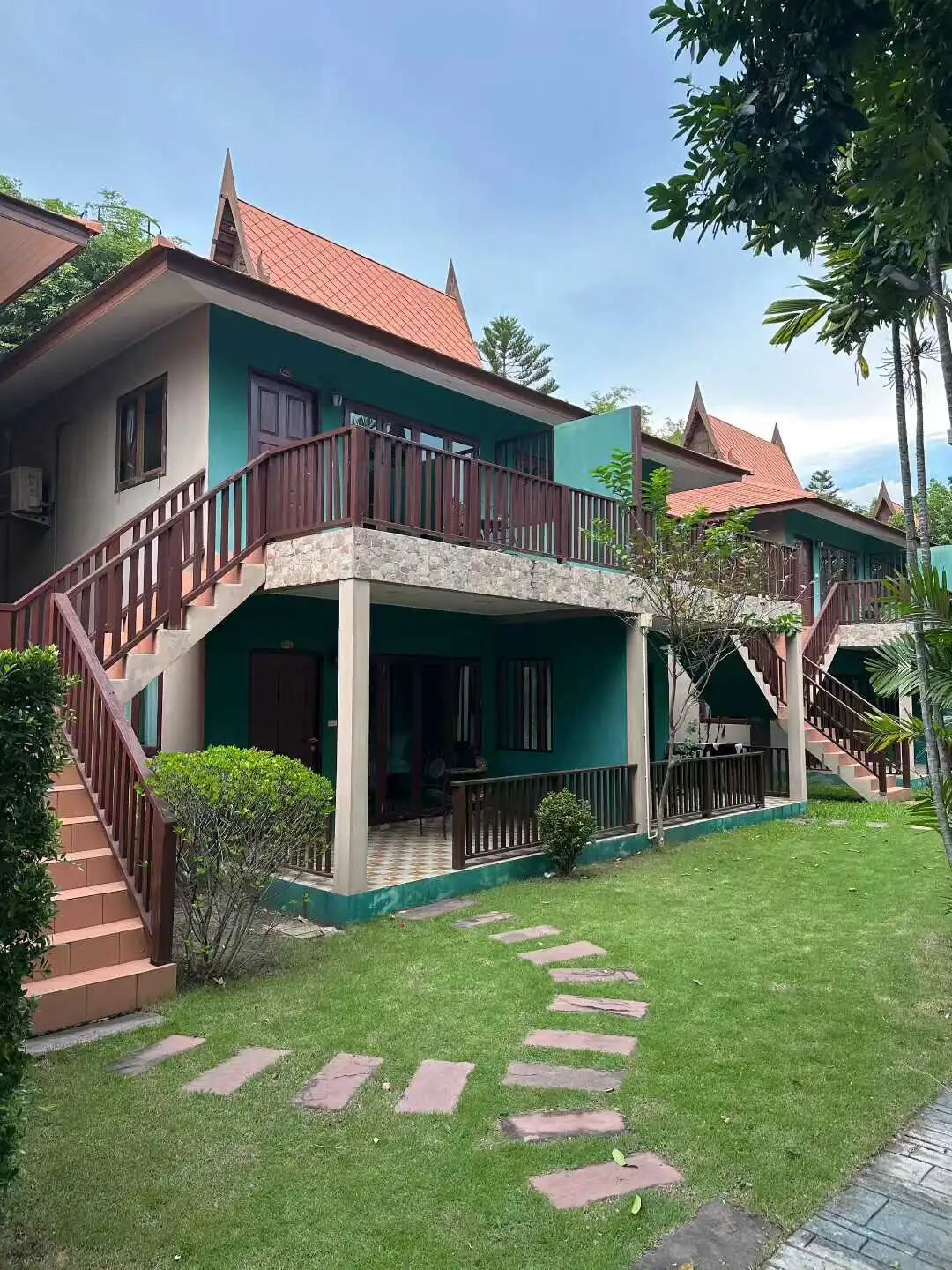
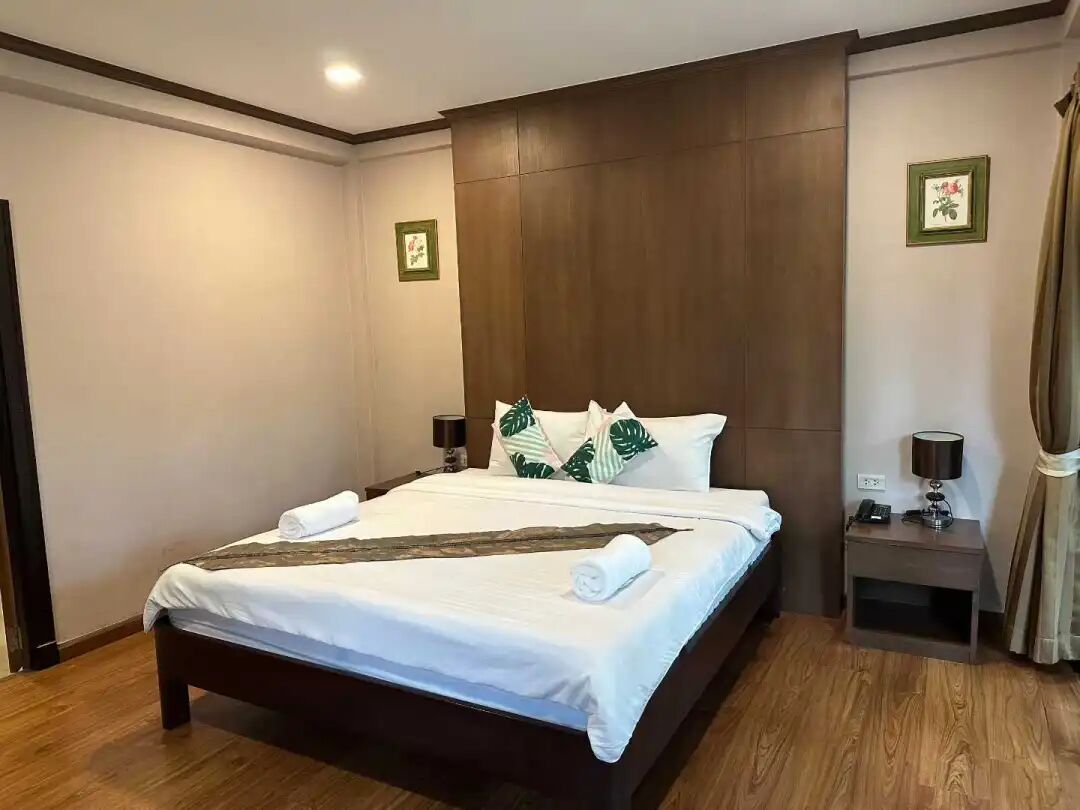
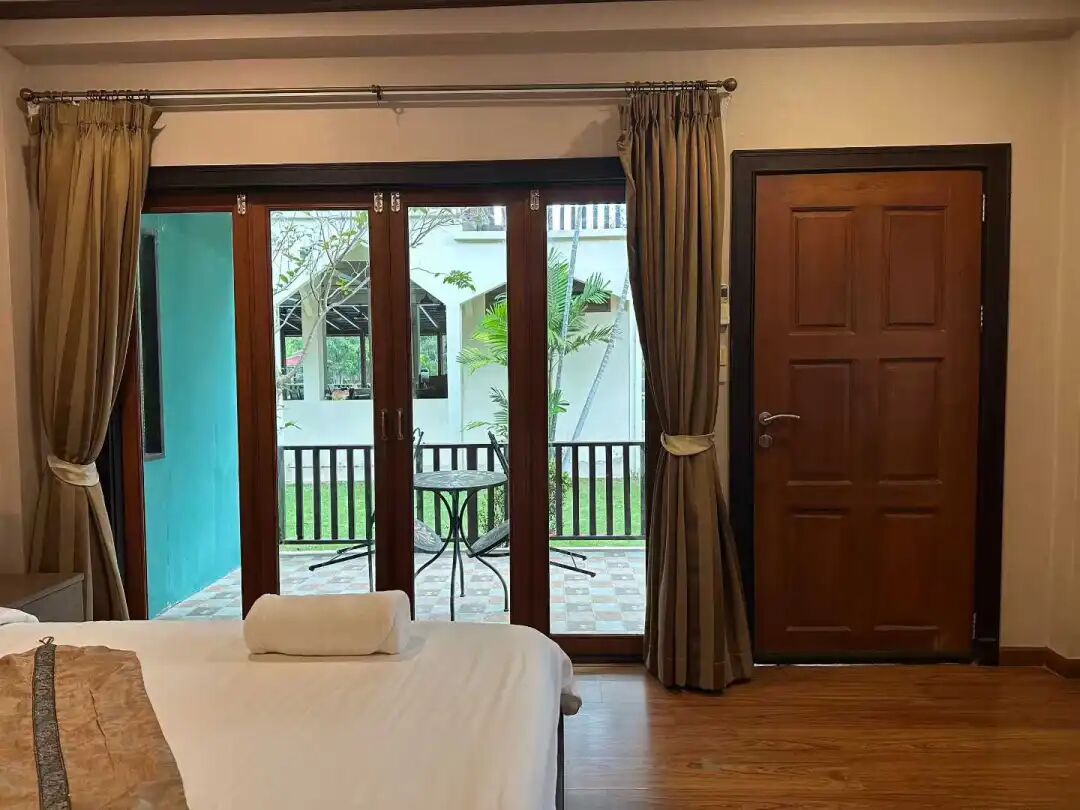
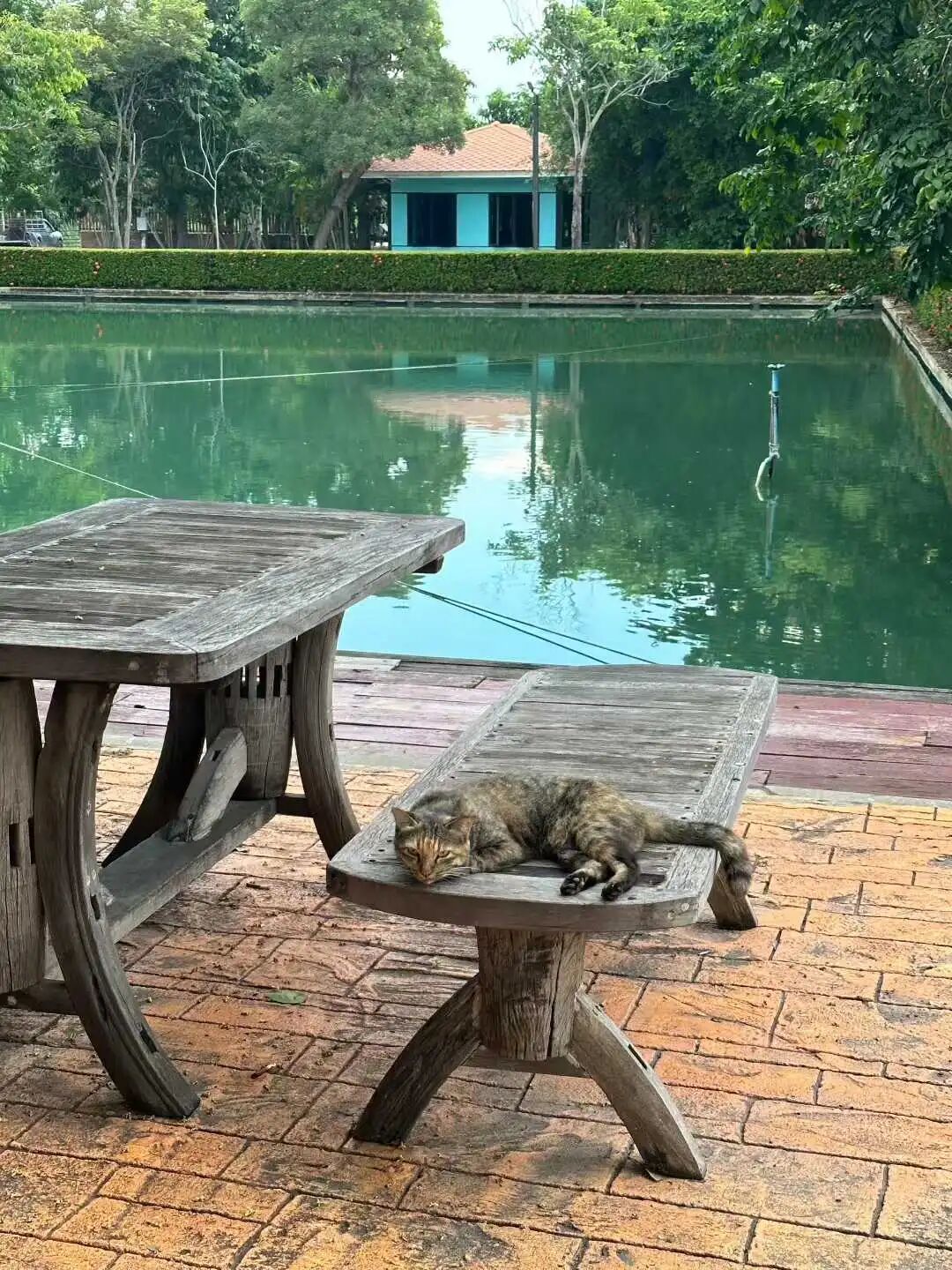
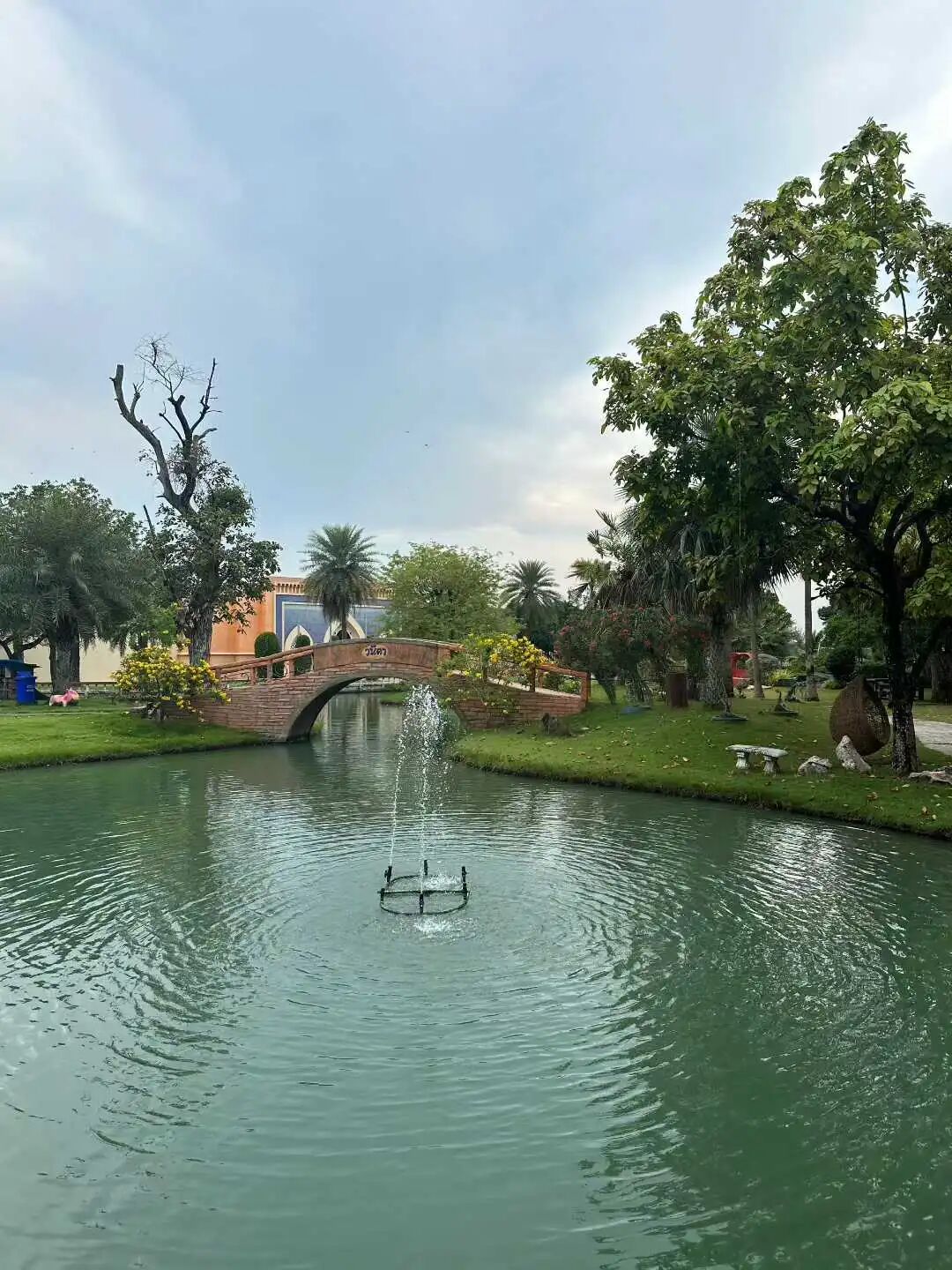
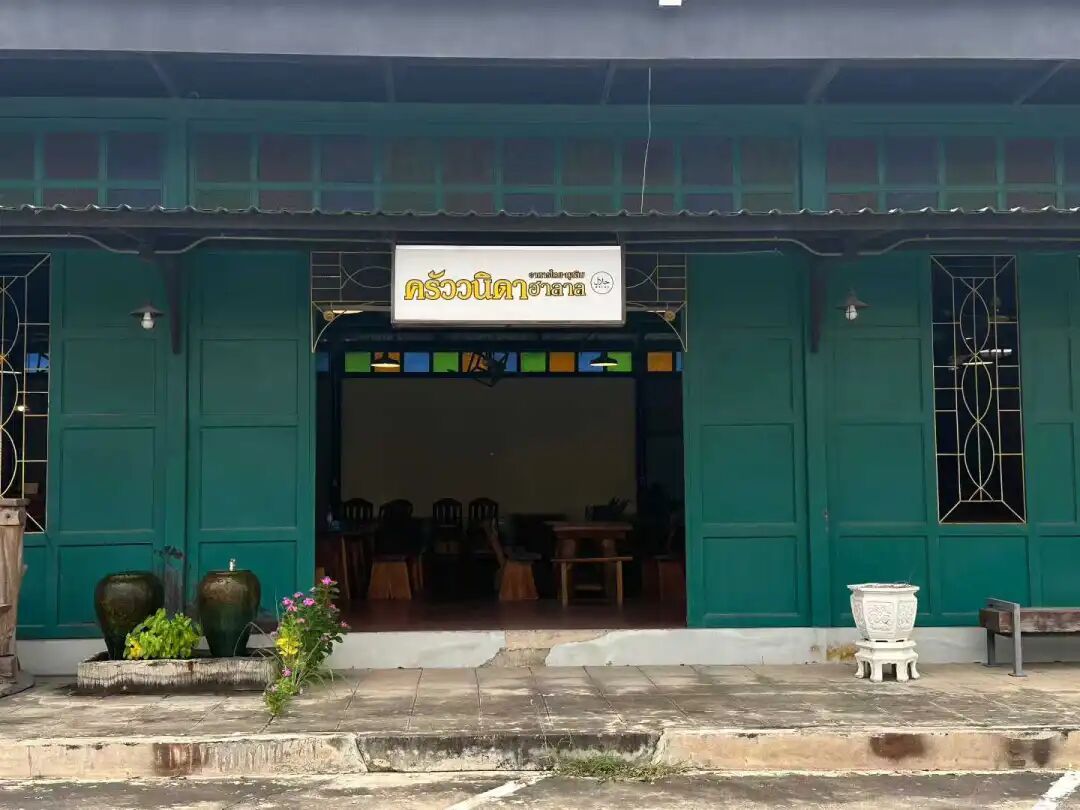
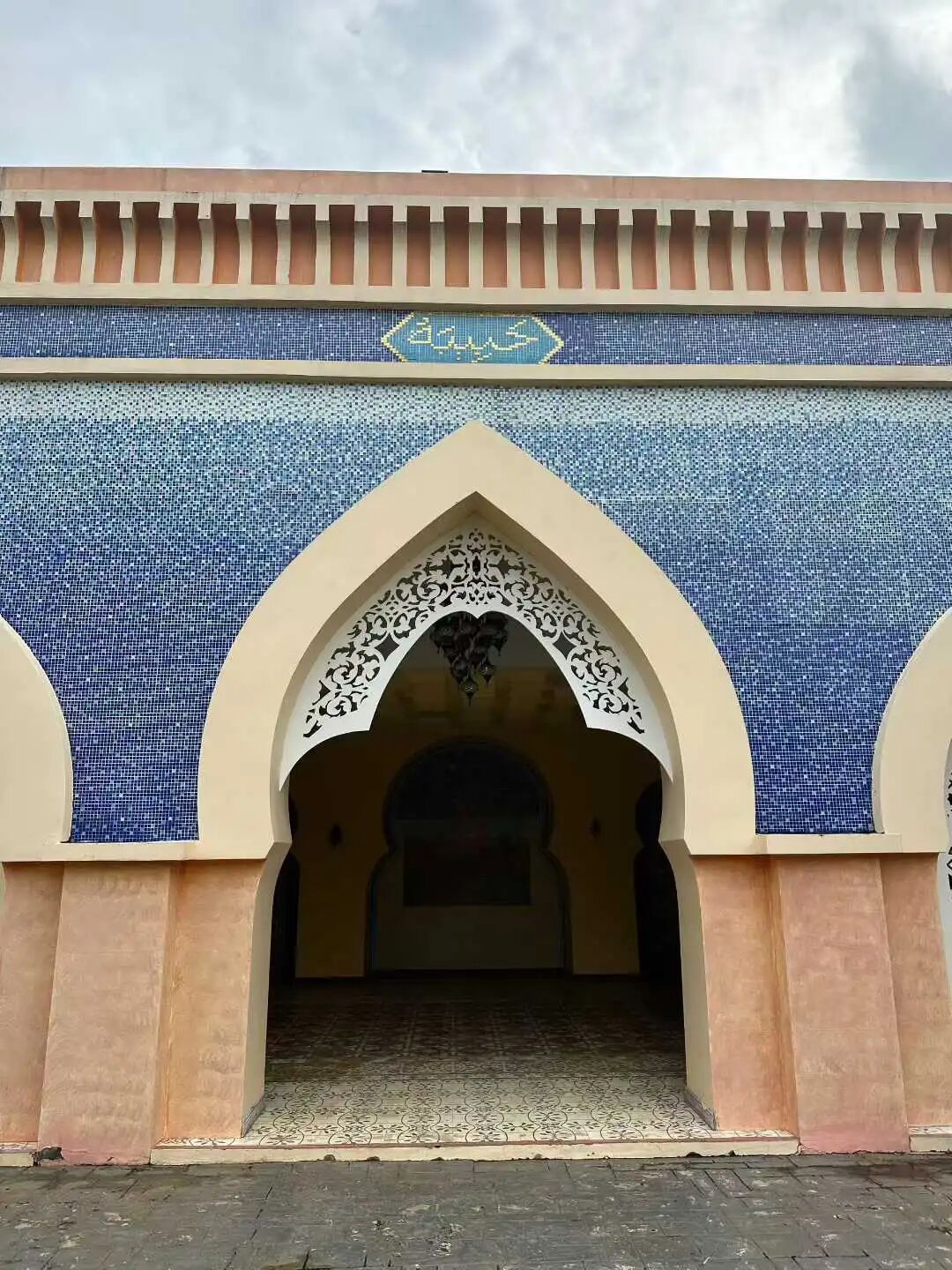
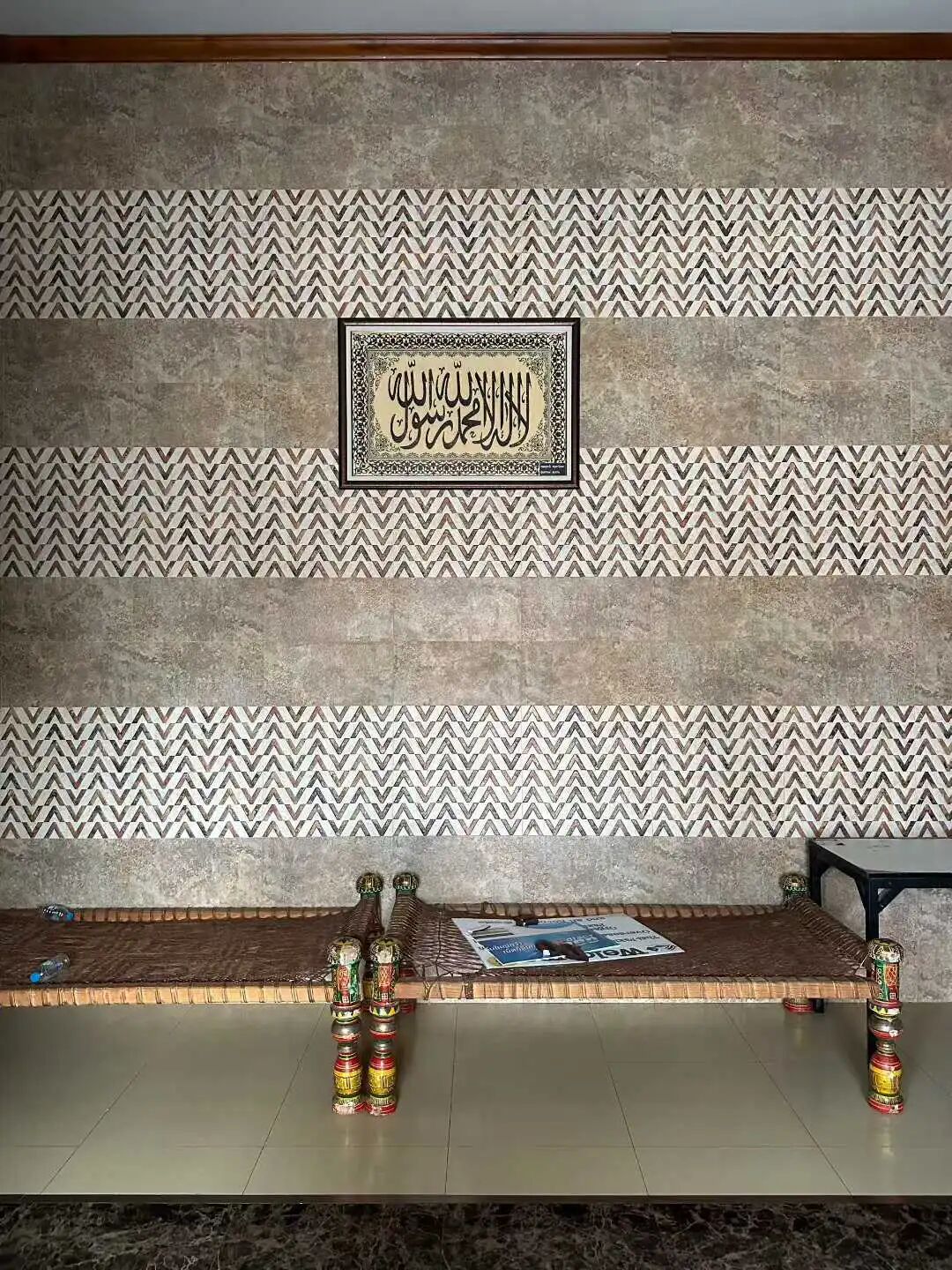
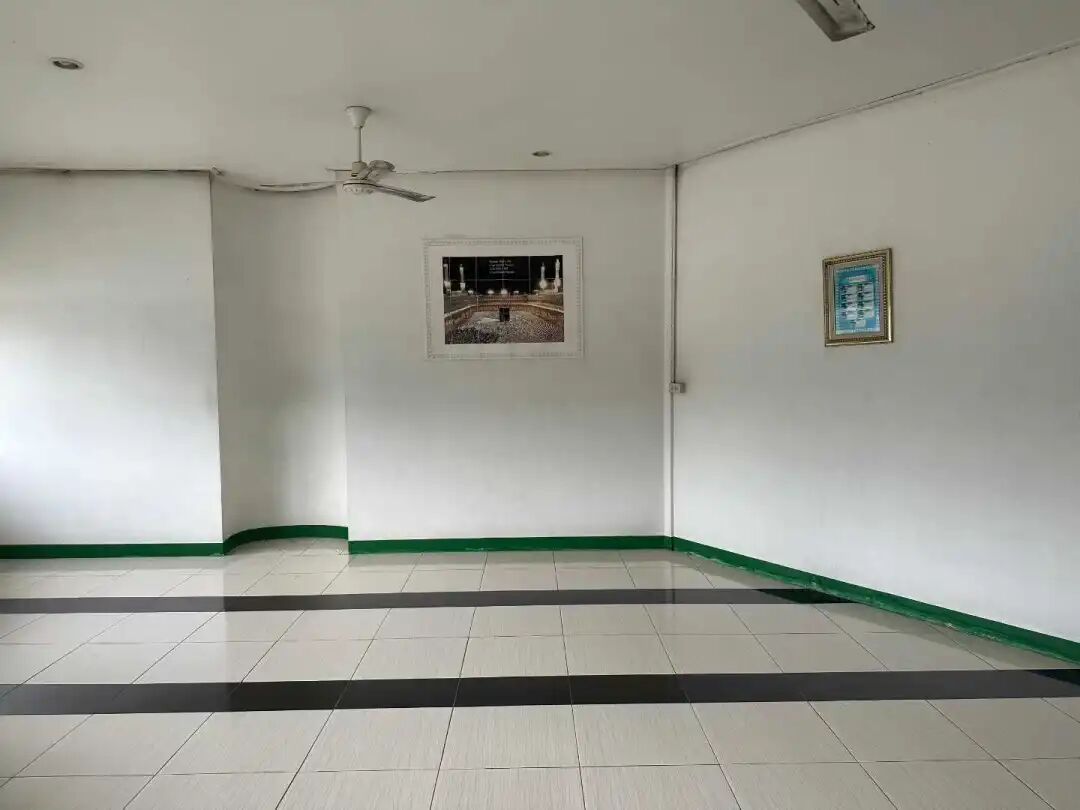
Because it was the off-season and there were few tourists, the resort didn't serve a buffet. Instead, they prepared egg fried rice, fried eggs, sausages, various vegetables, bread, and watermelon for us. Eating by the lake was very relaxing. They keep miniature horses, cows, sheep, chickens, and rabbits in the yard, which children would probably love. There is also a children's pool in the yard where kids can swim.
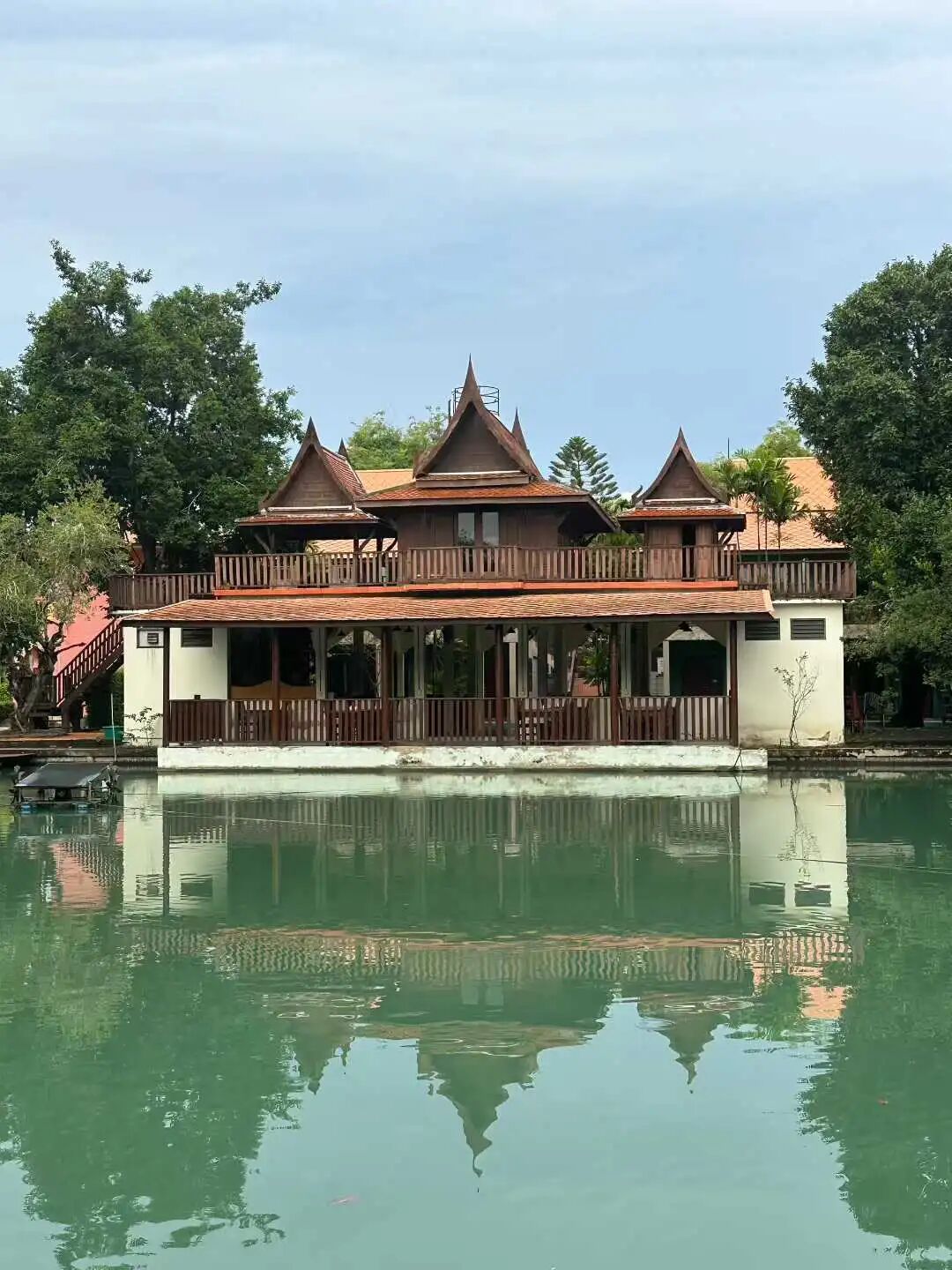
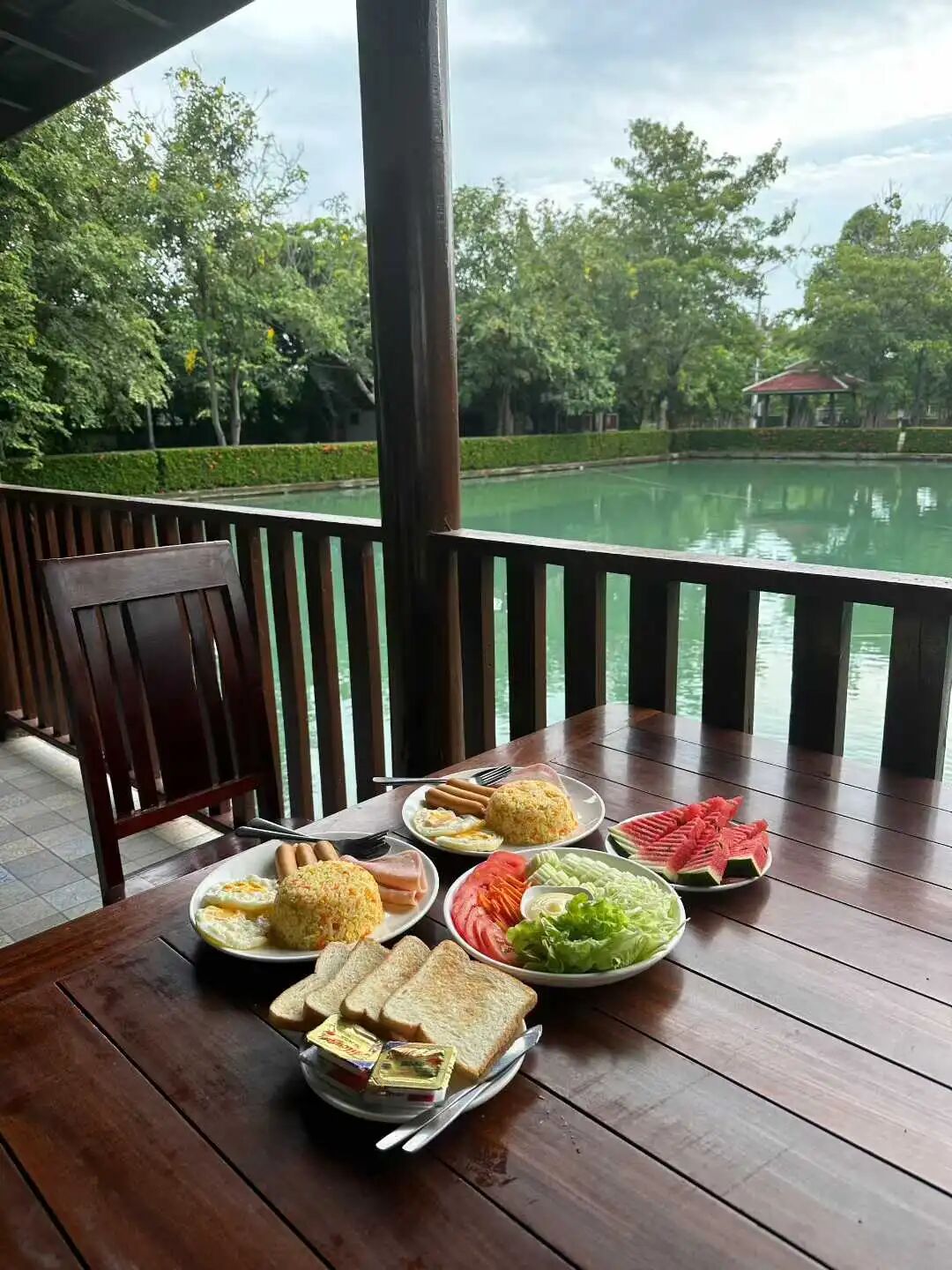

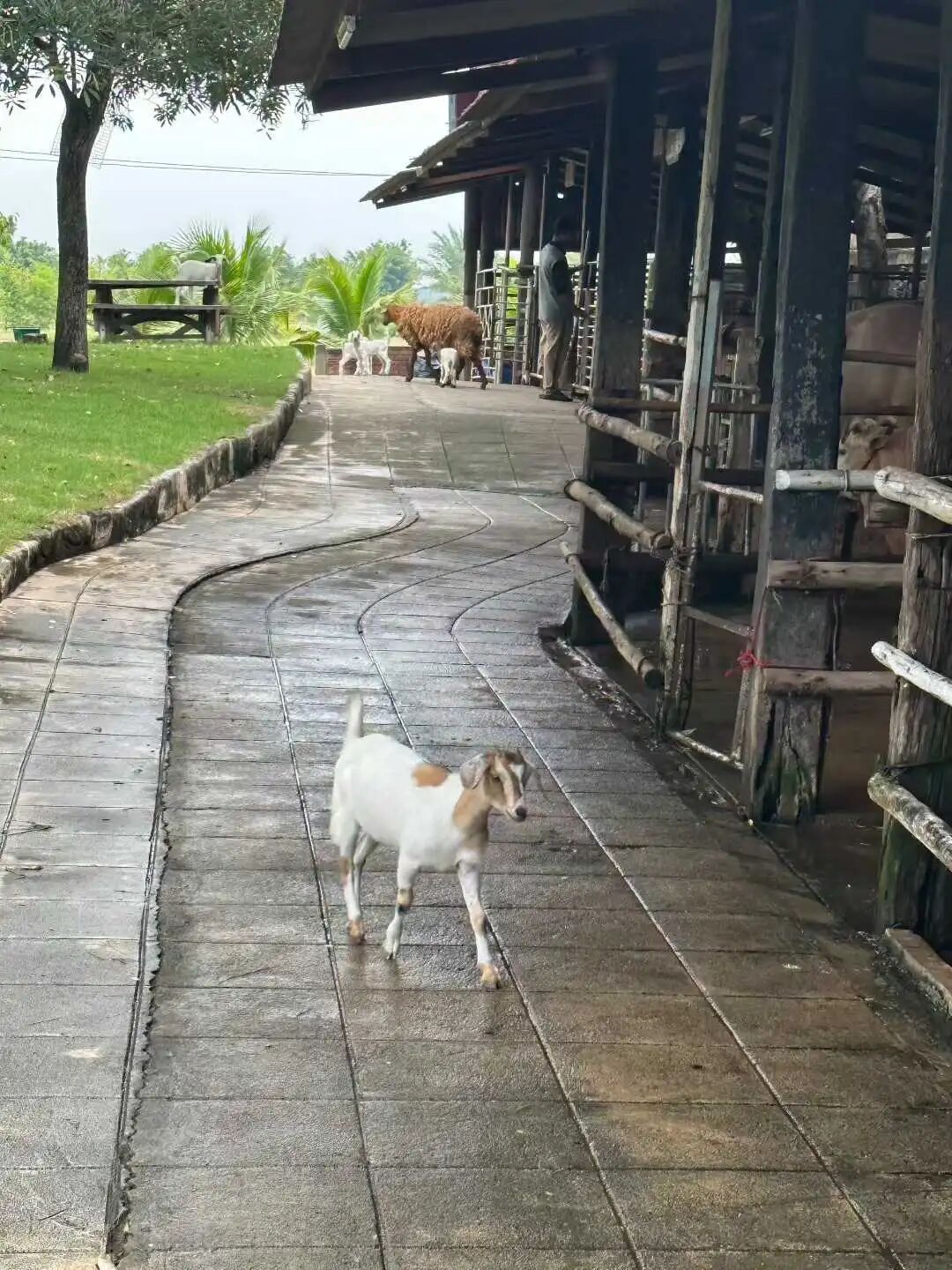
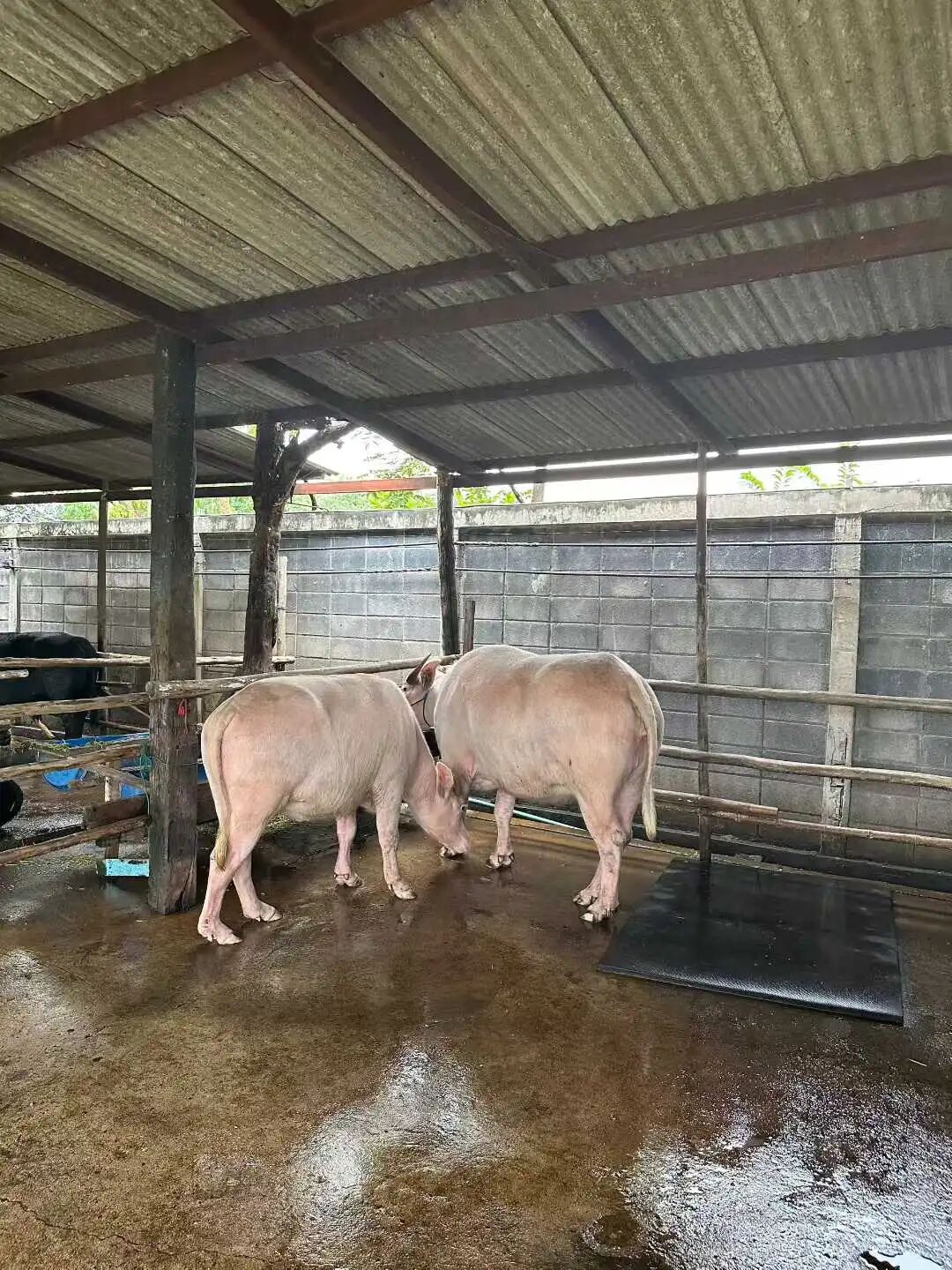
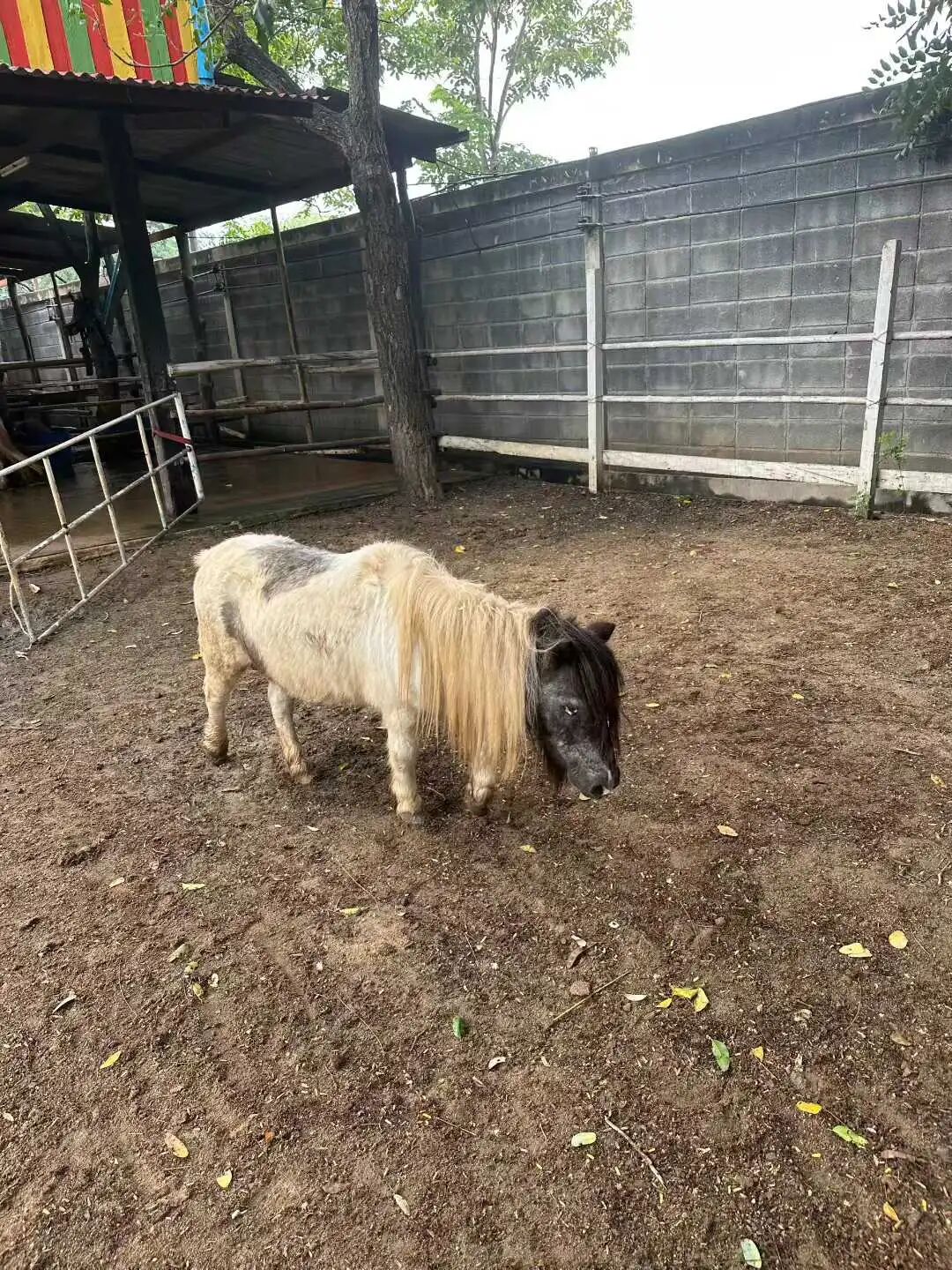
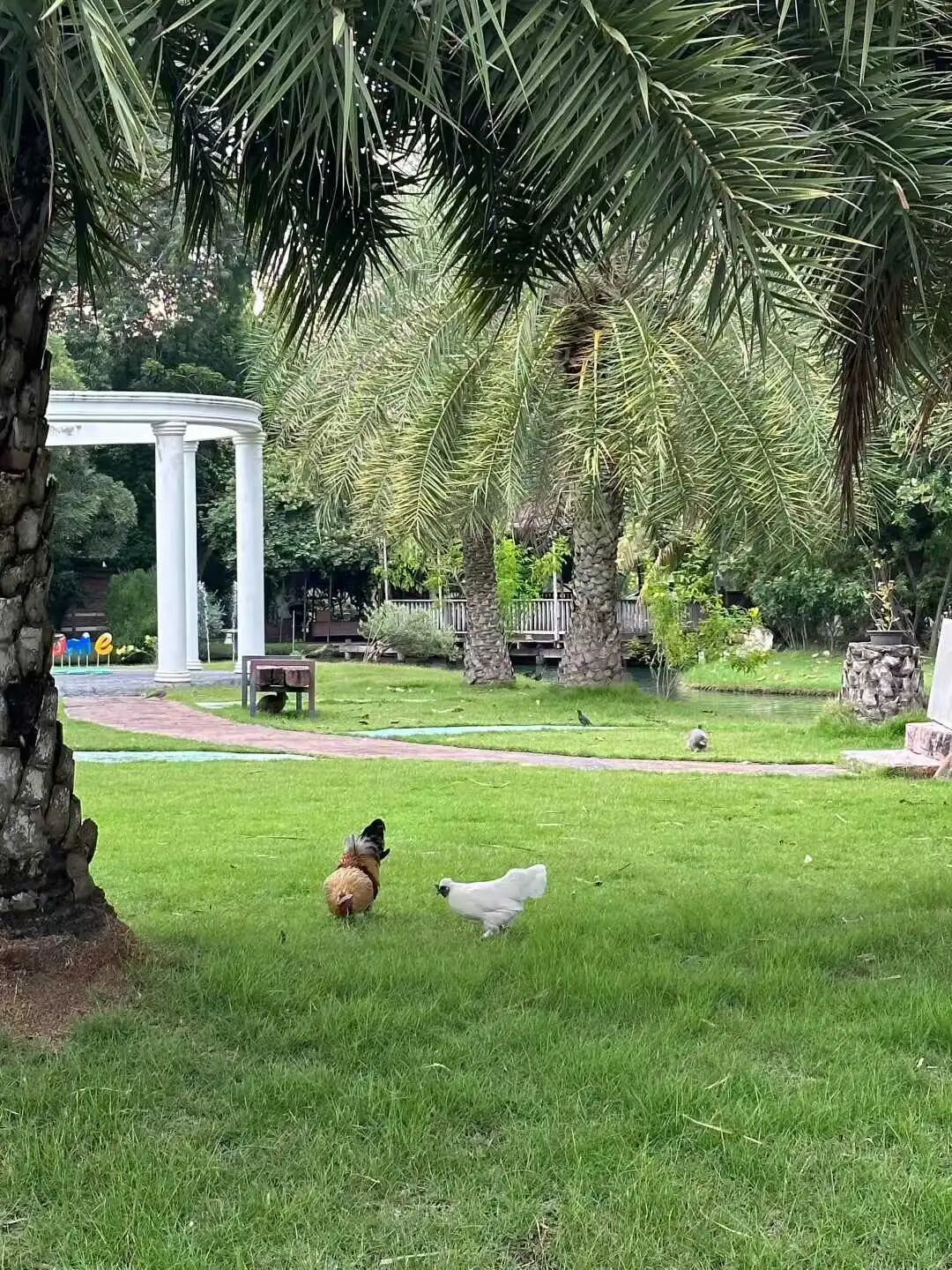
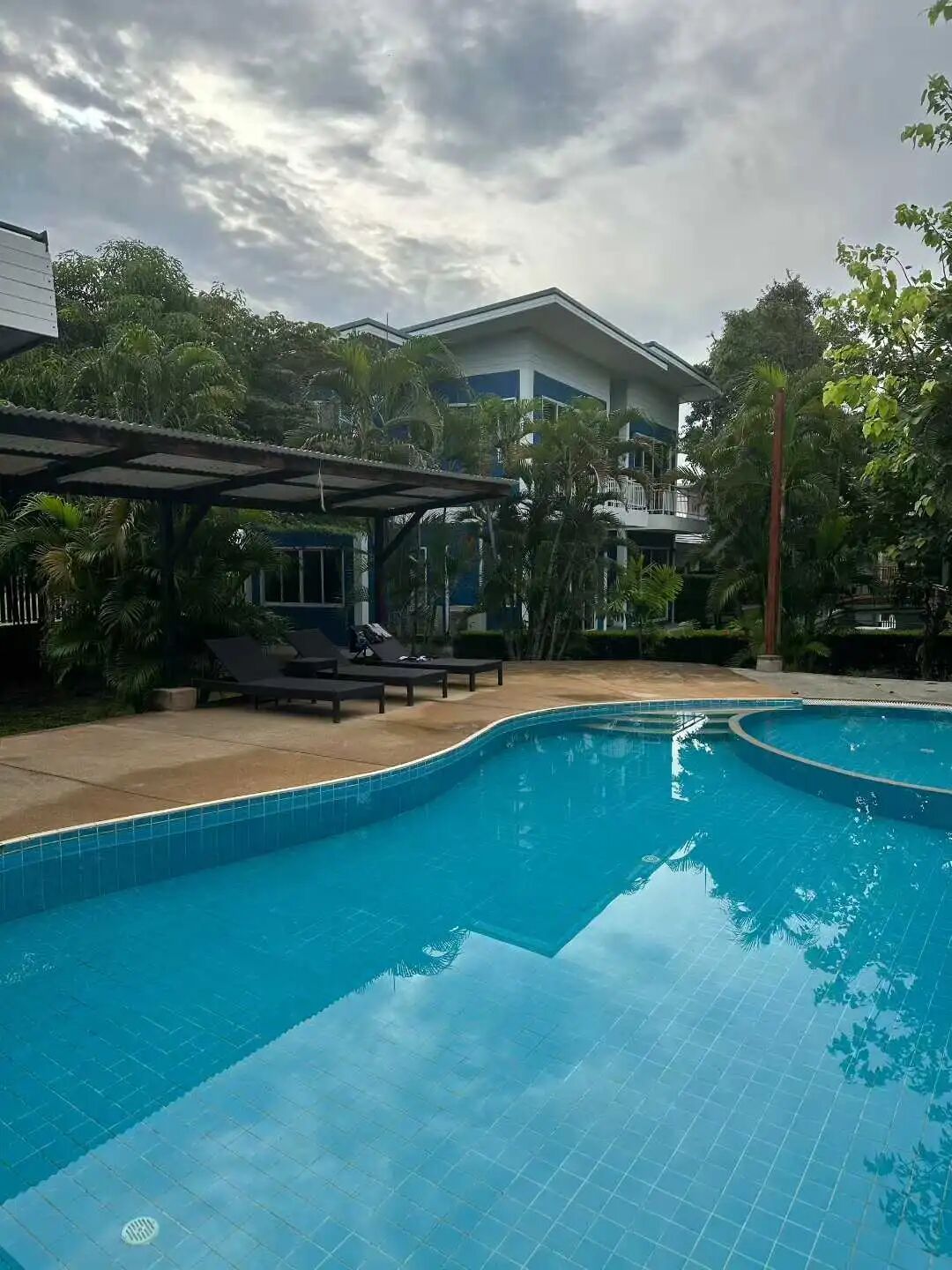
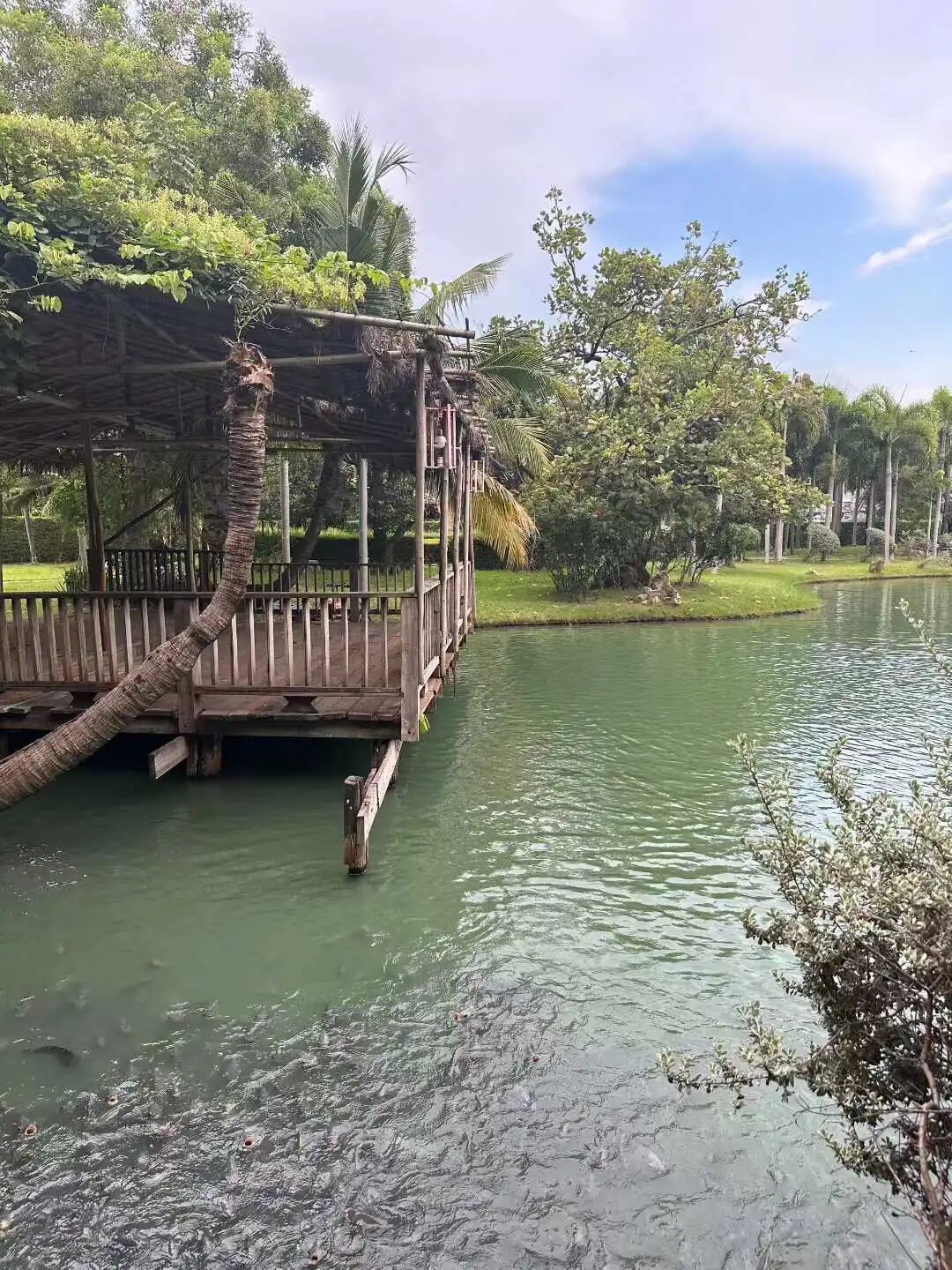
The west and south sides of the Ayutthaya World Heritage historic city are surrounded by the Chao Phraya River. The area along the river in the south is mainly a residential area for the Cham people, and there are many halal restaurants there.
We had dinner on our first night at Kruta Steak on the north bank of the river. We found online that they had beautiful riverside seating, but when we arrived, the seats were flooded, so we ate inside instead.
They specialize in steaks and various mushrooms. We ordered mushroom chicken rice, fried mushrooms, and shrimp glass noodle salad, and we also drank fresh carrot juice. Their mushrooms were really good, especially the fried mushrooms, which were very fragrant. Even though we didn't speak the same language, the servers were very friendly and kept smiling at me. They also have a prayer room, which is very convenient.
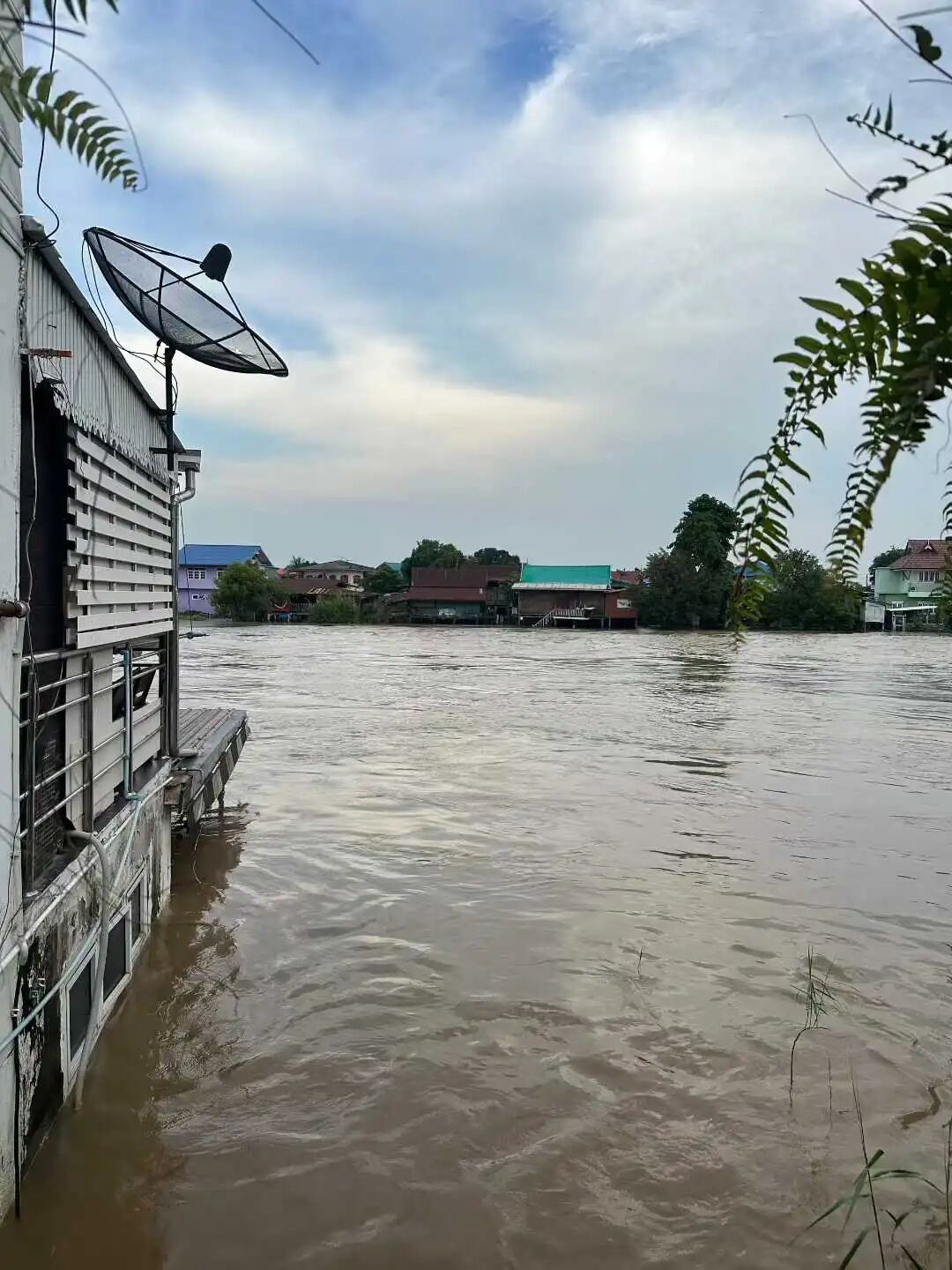
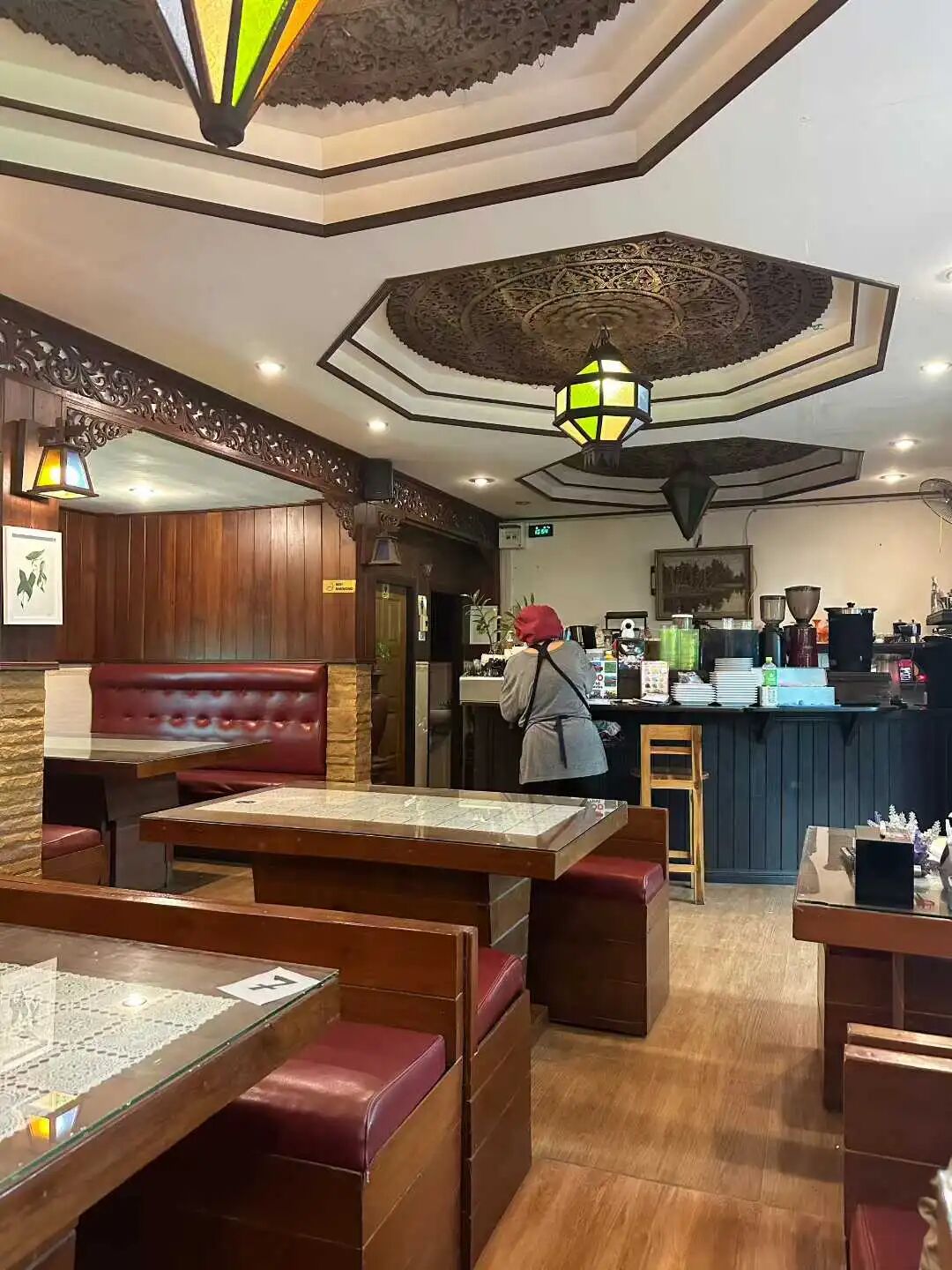
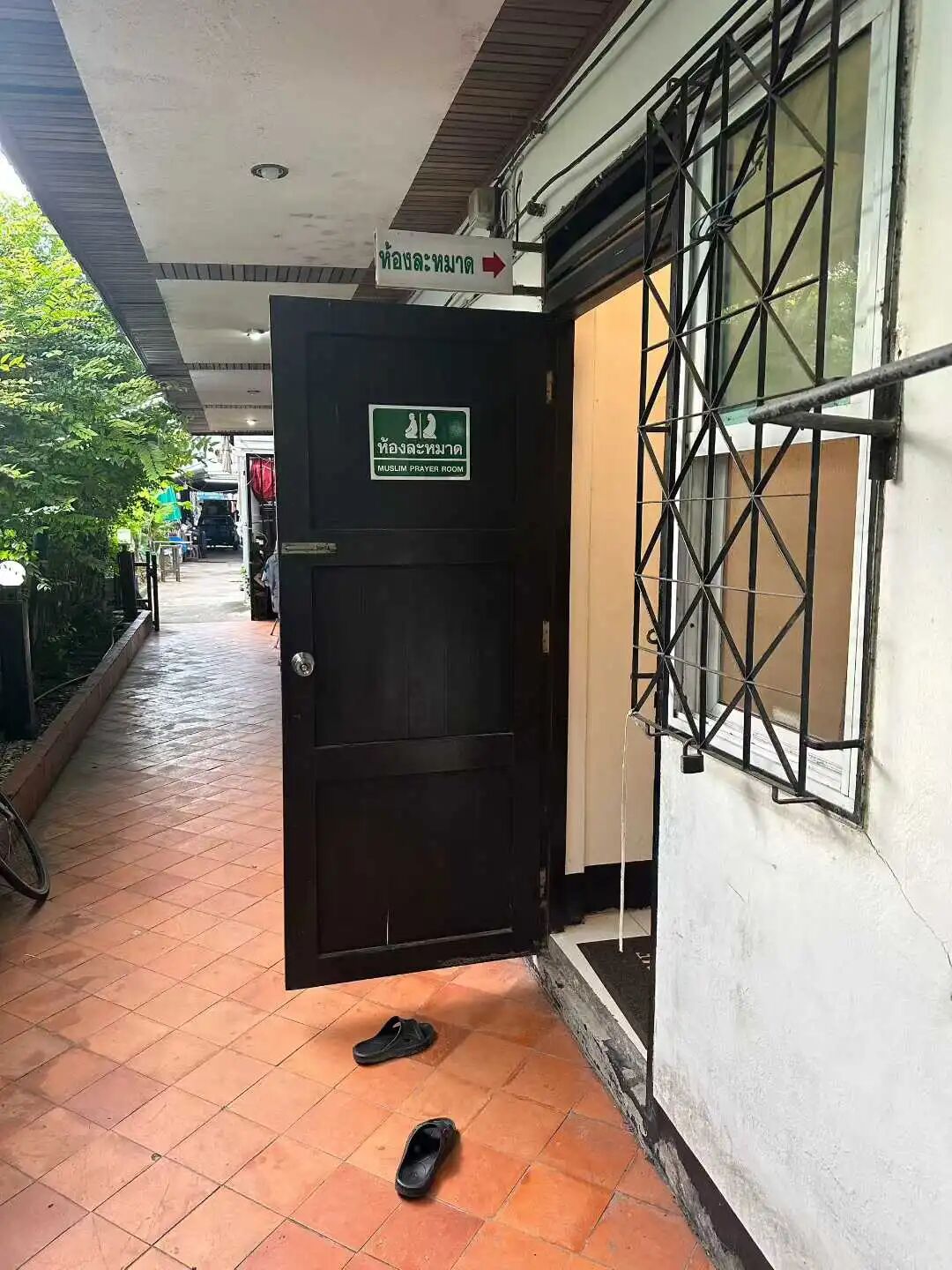
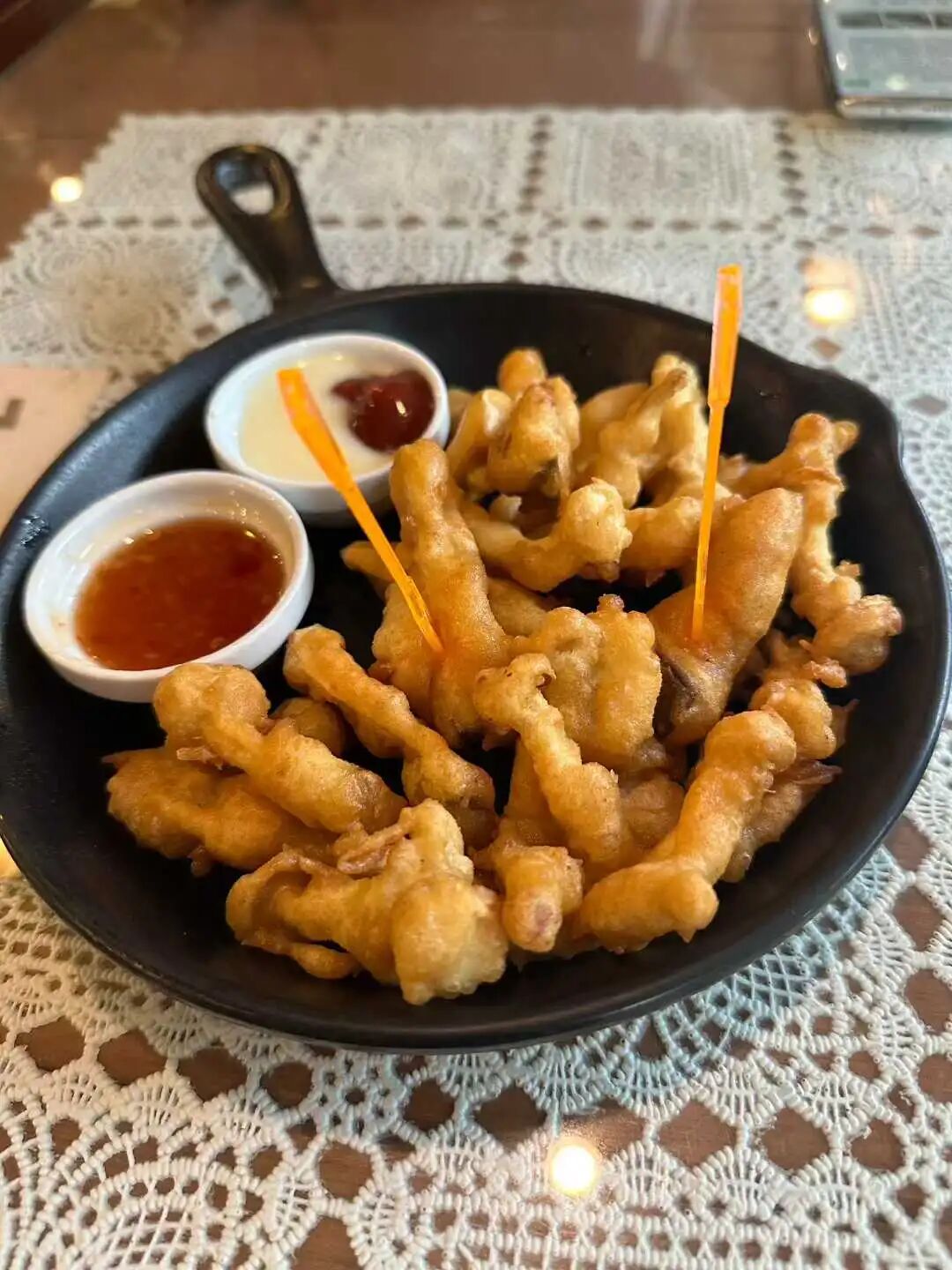
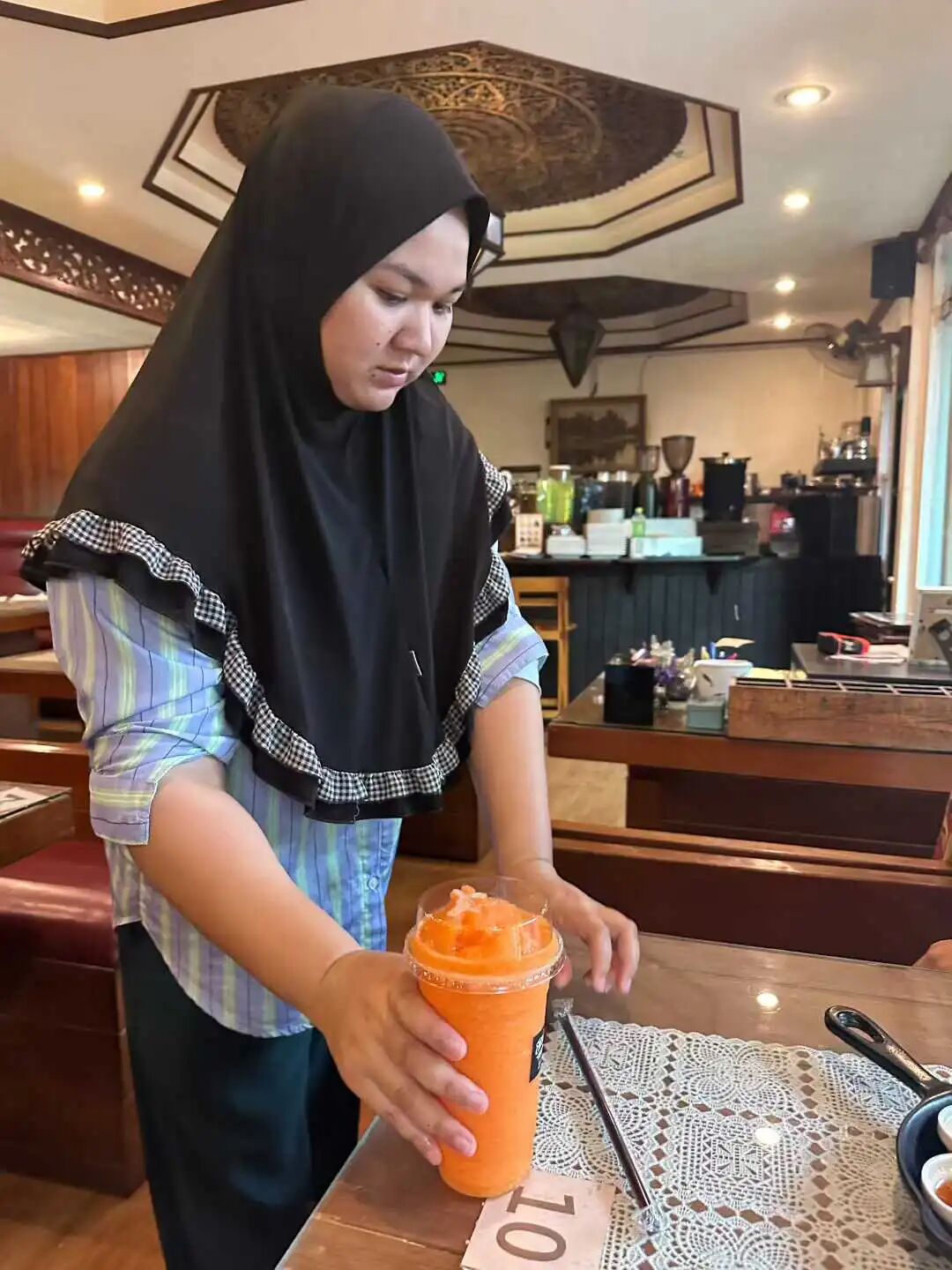
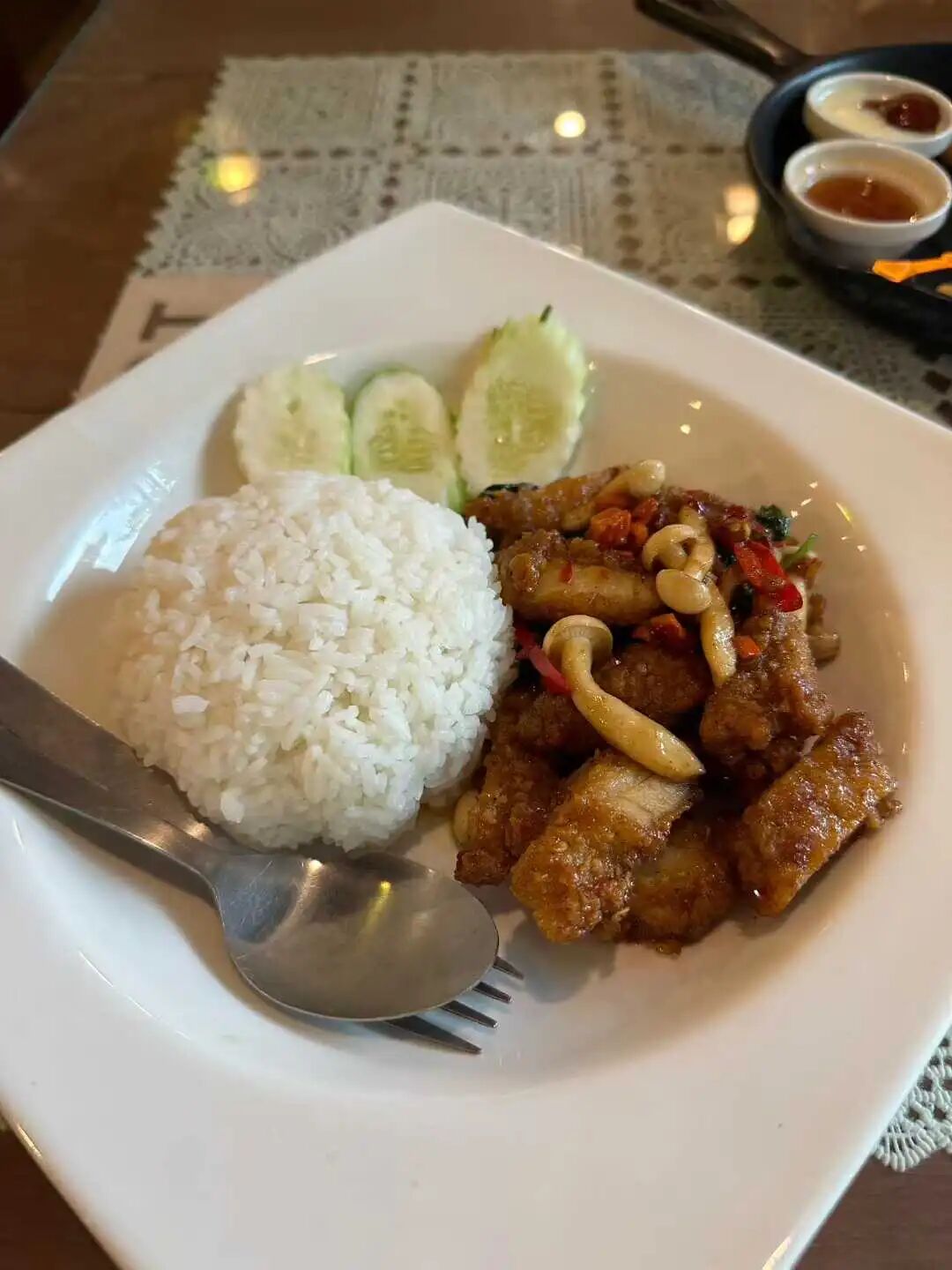
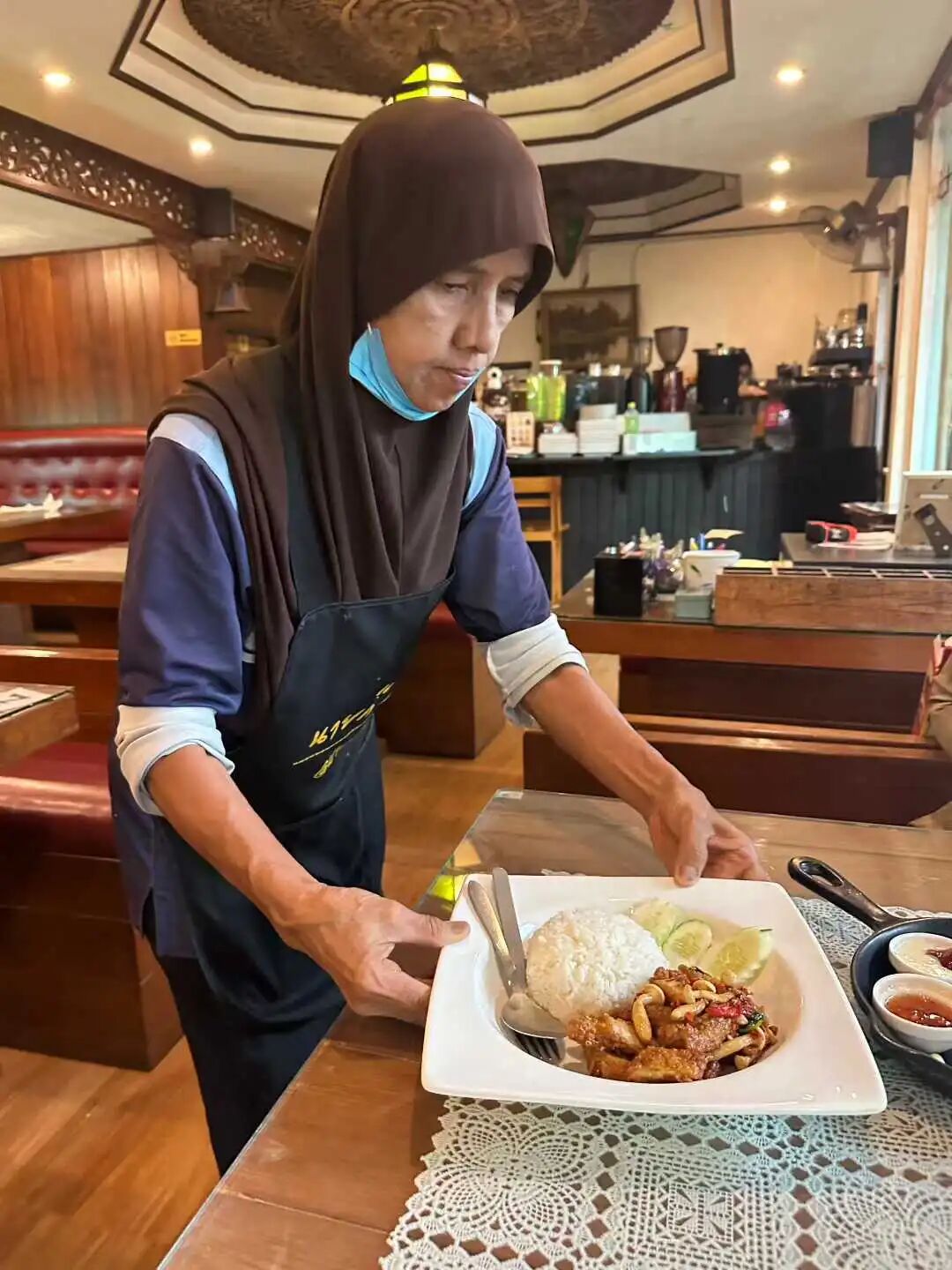
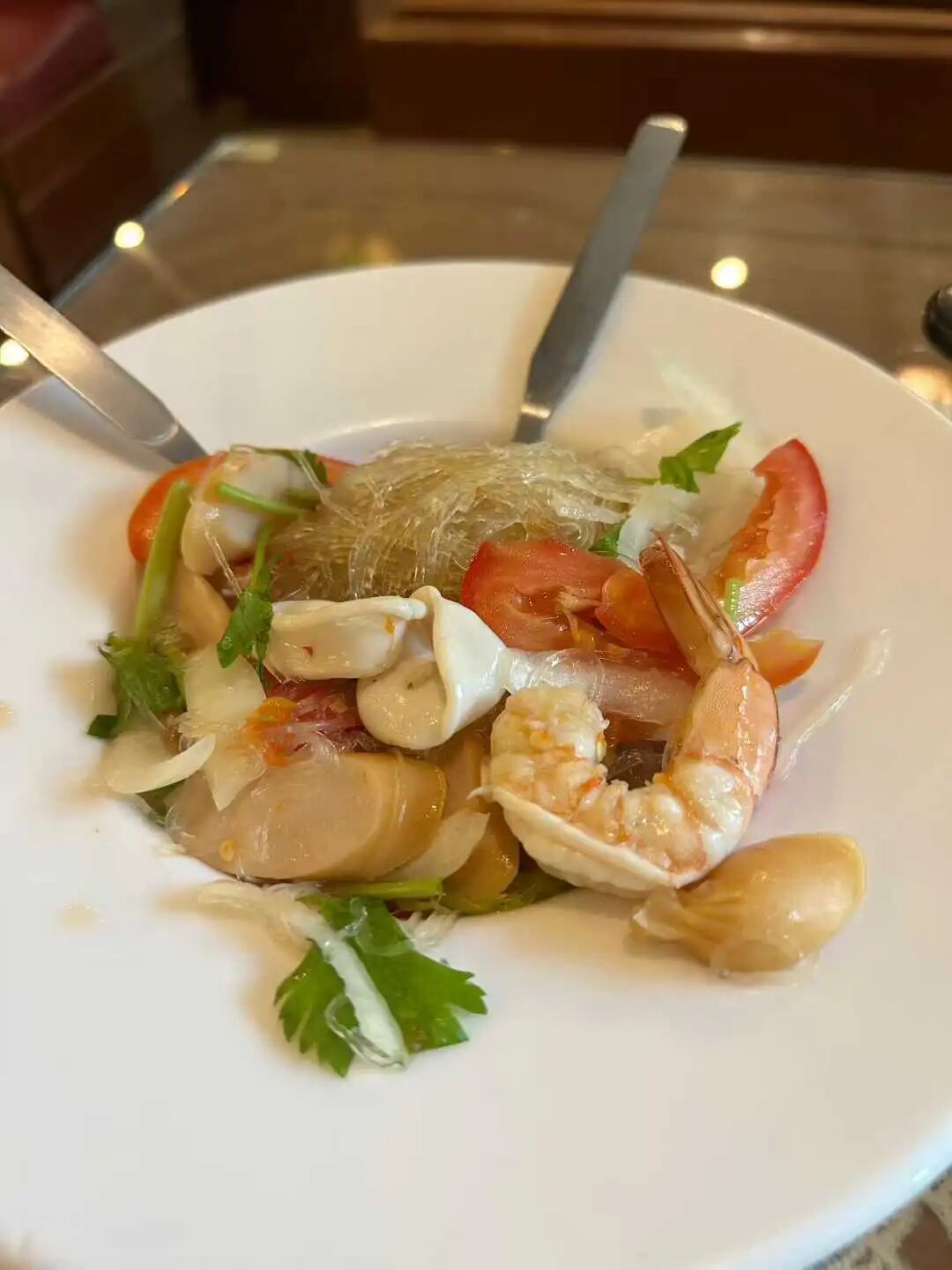
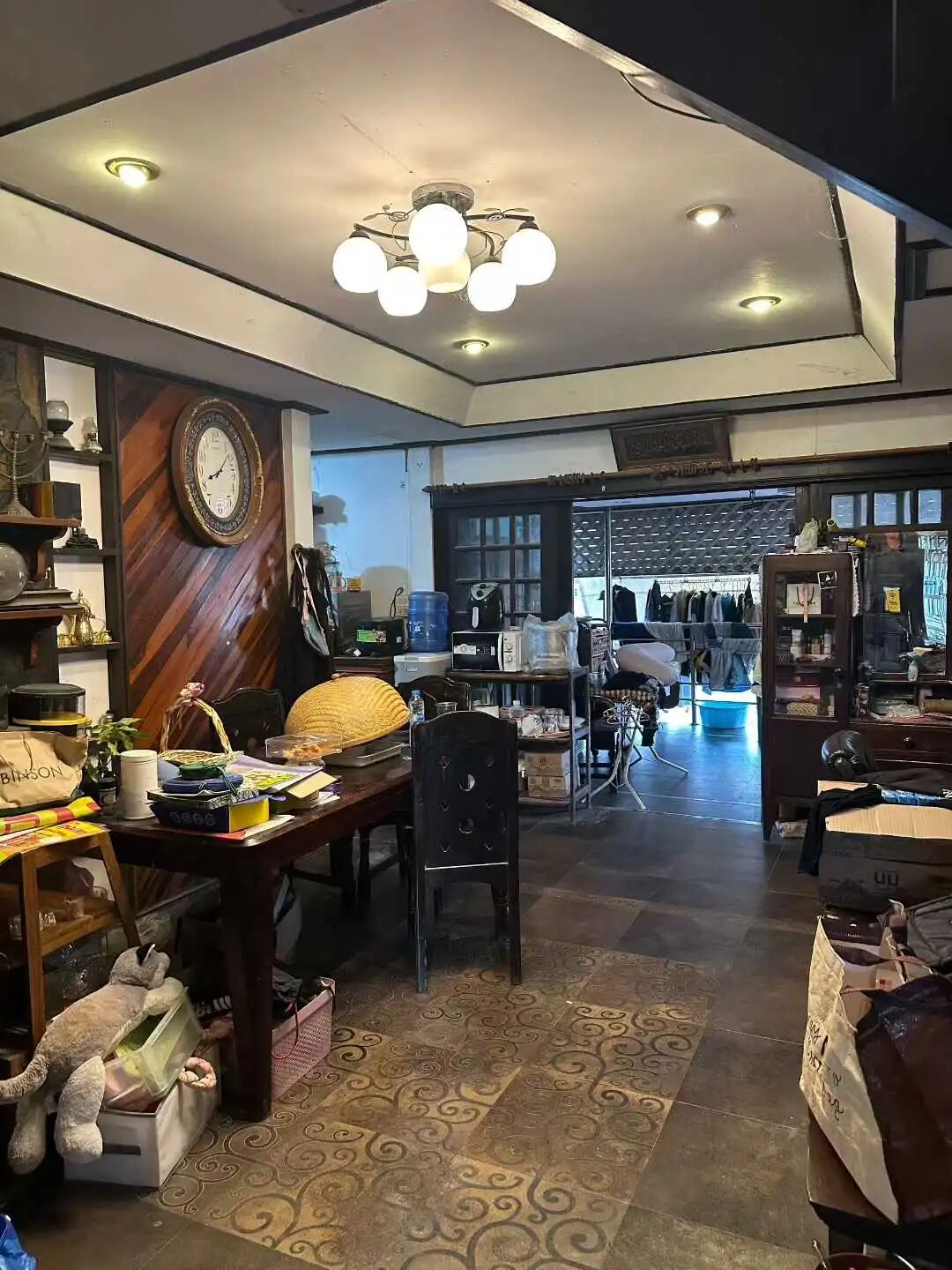
You must experience taking a small boat across the Chao Phraya River when you come to Ayutthaya. We took a small ferry at a pier in the south of the city, which easily connects to the Cham community on the south bank of the old city.
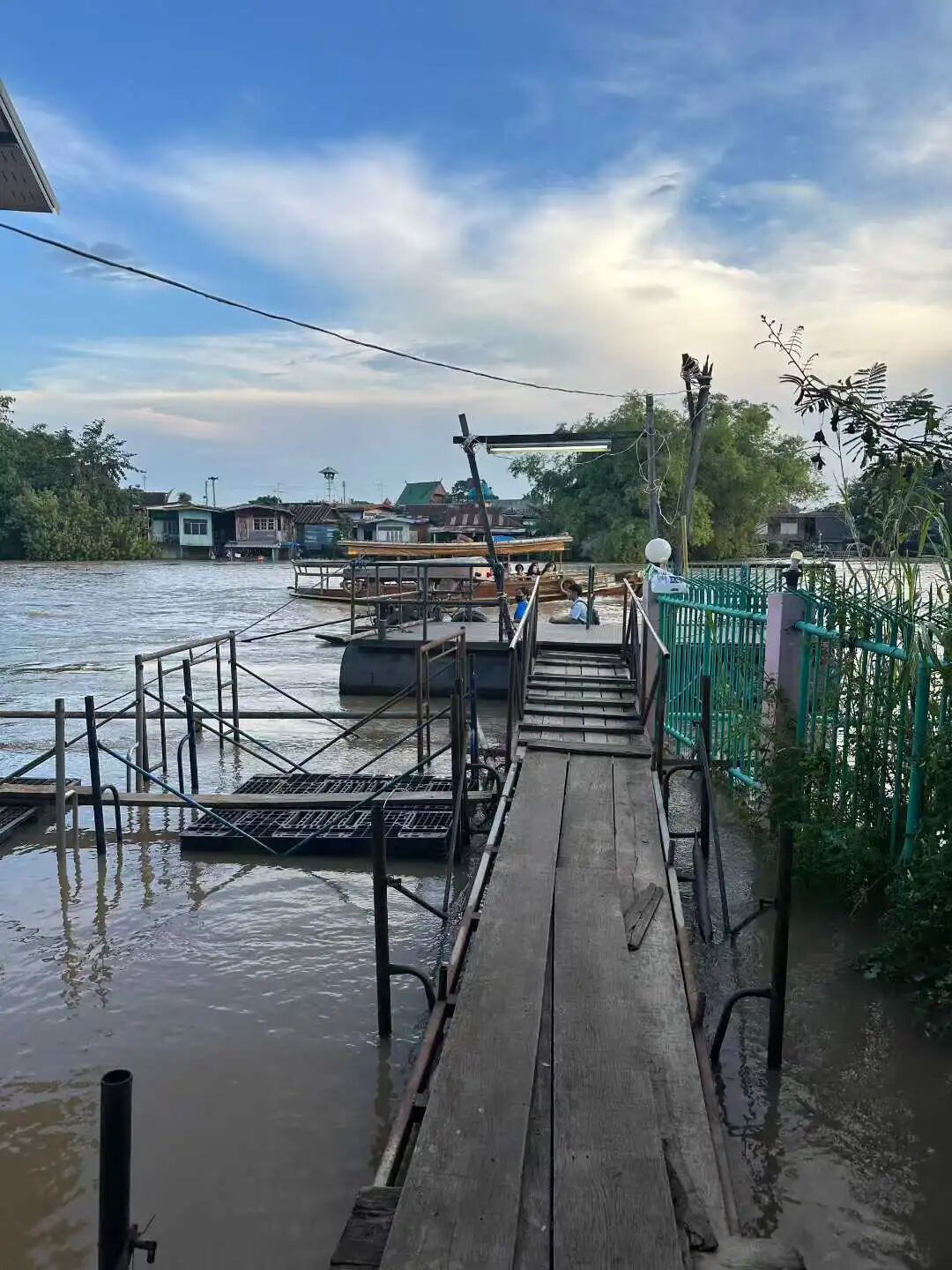
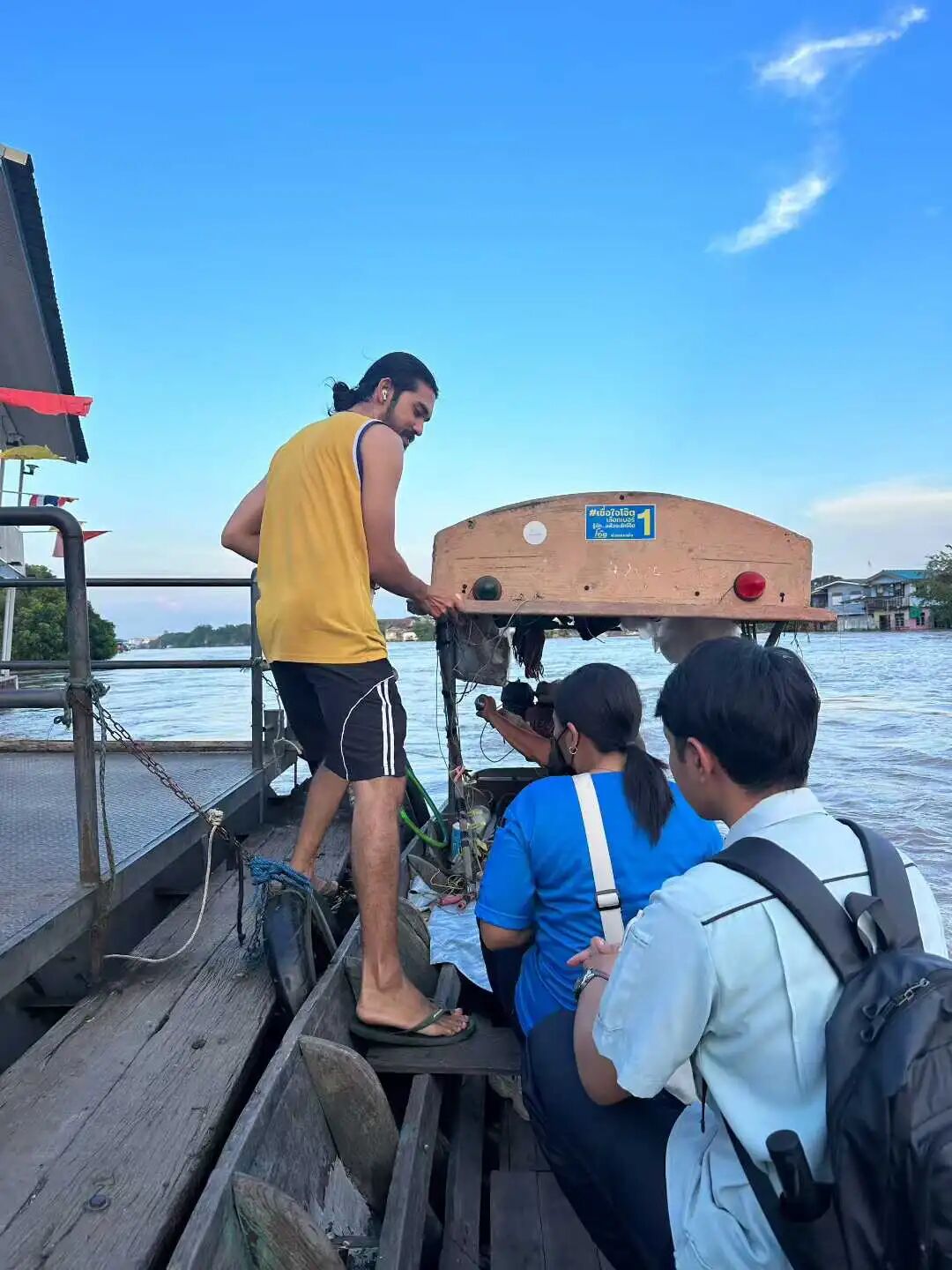
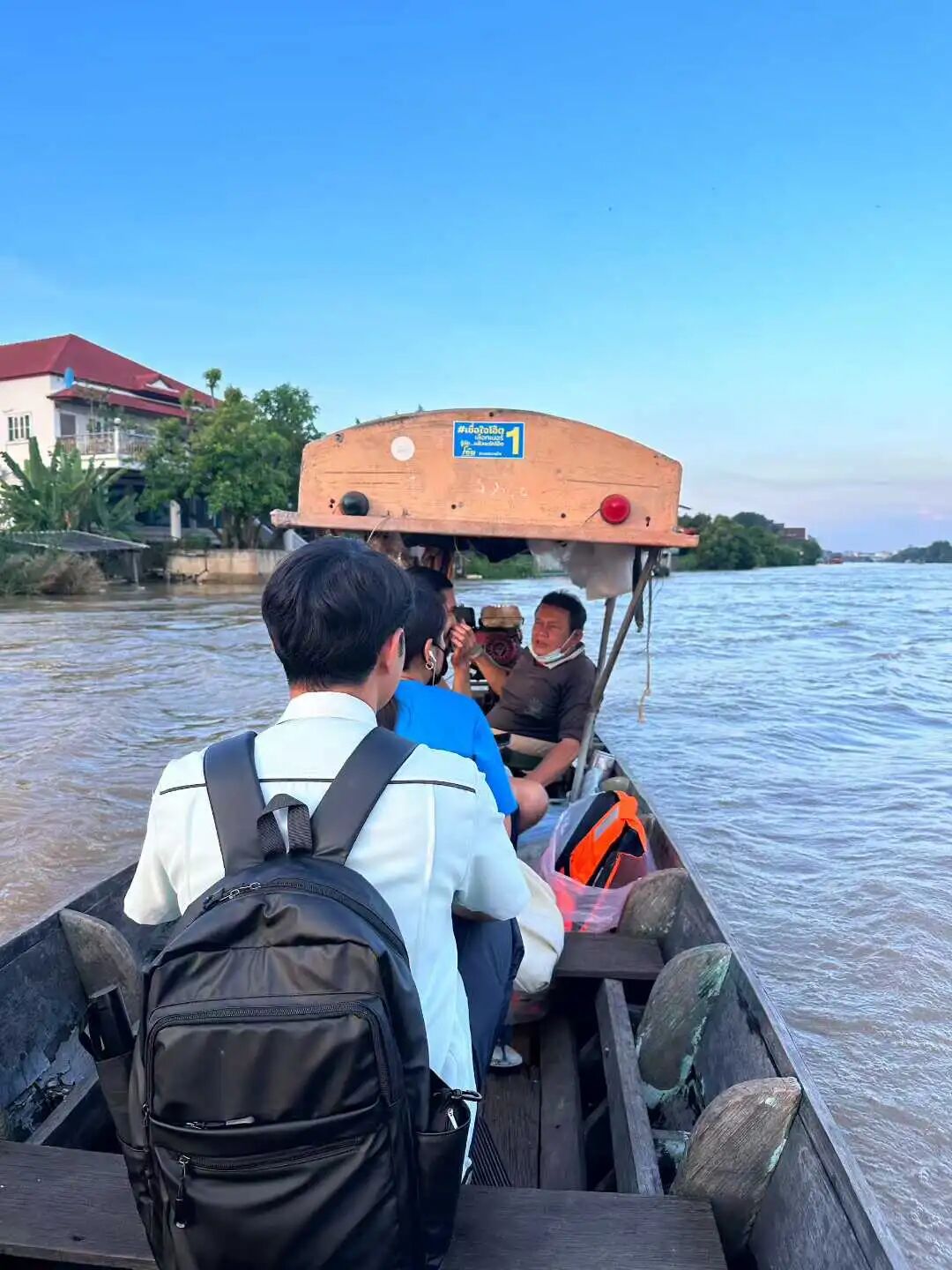
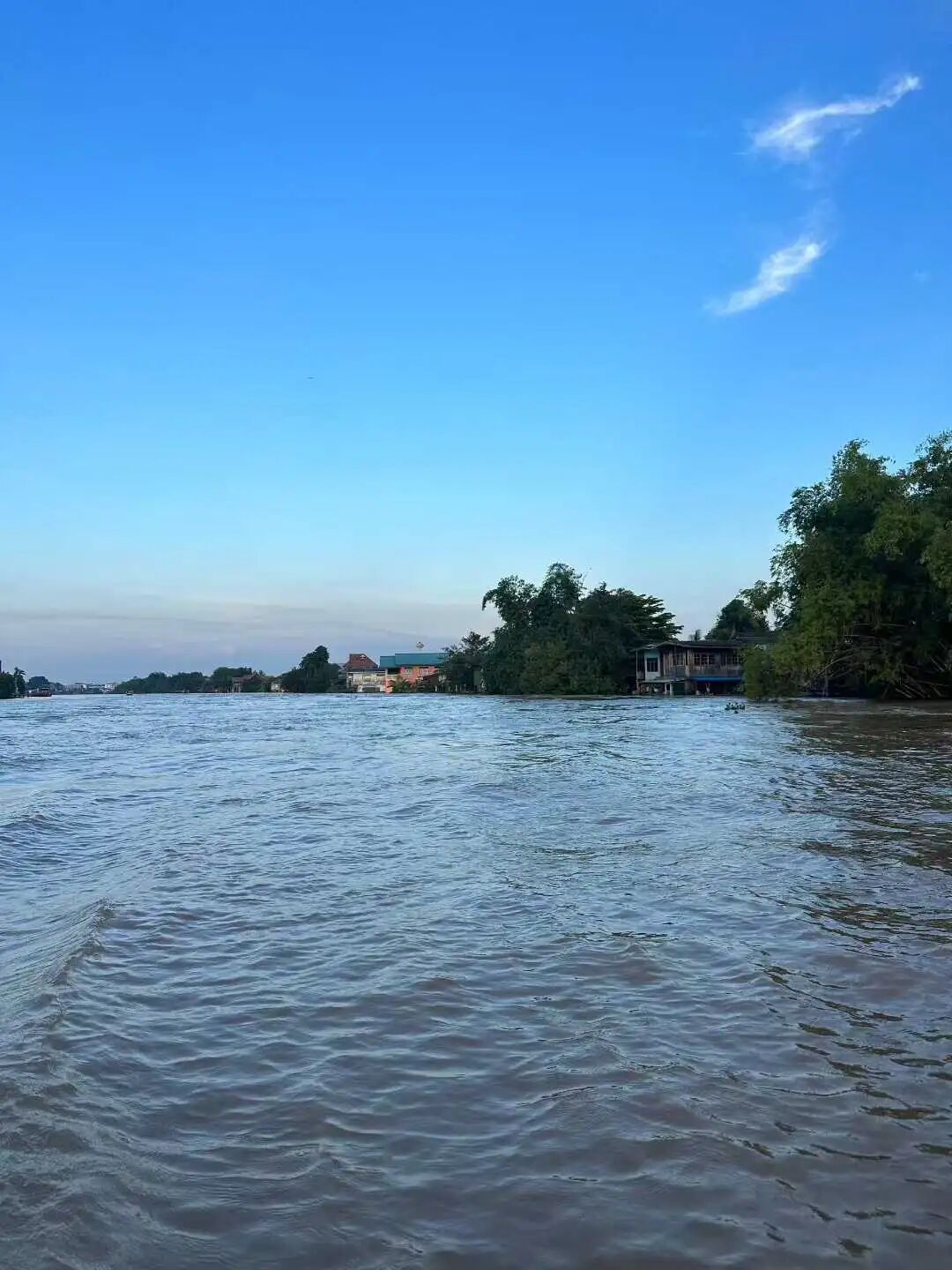
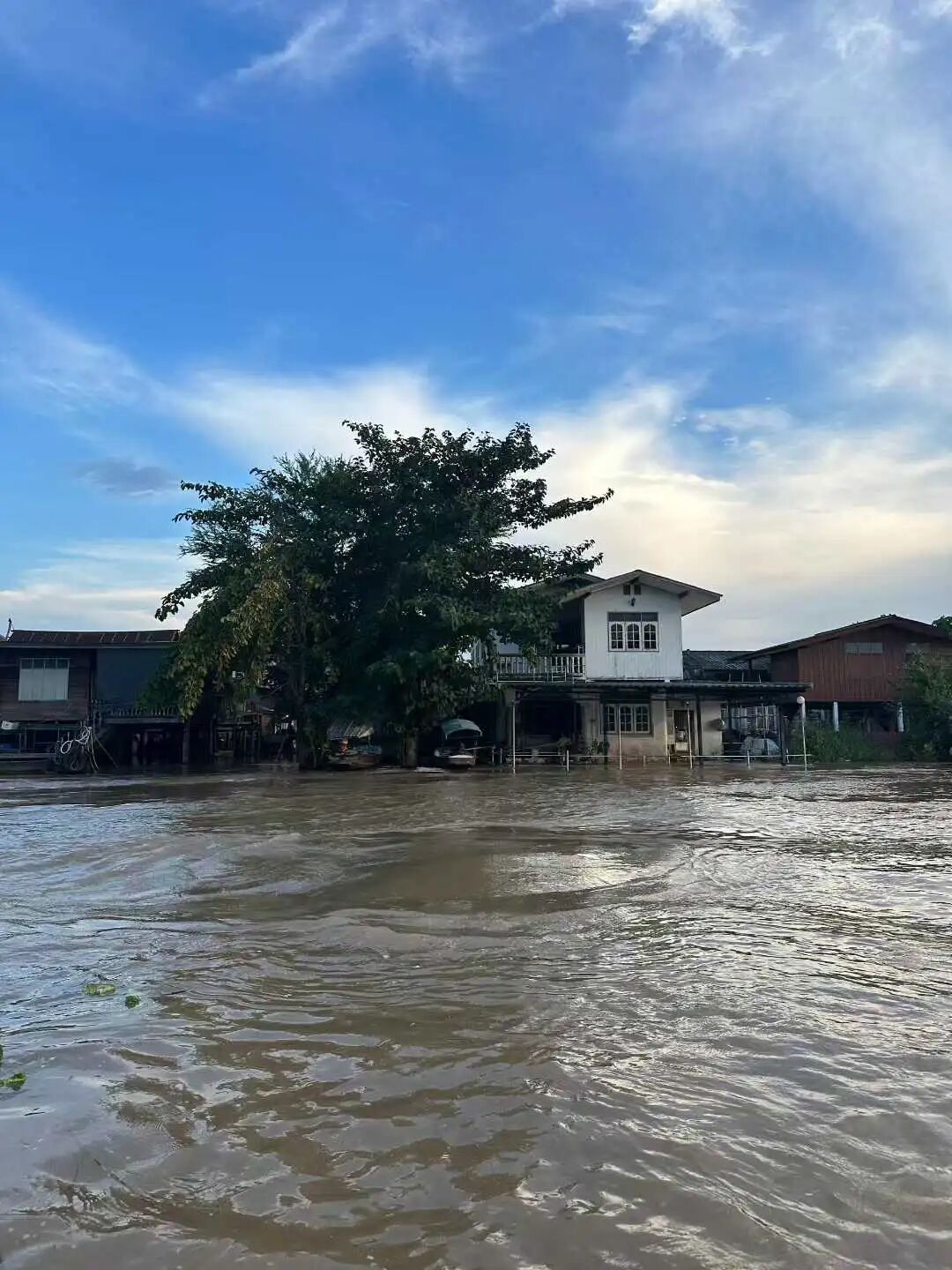
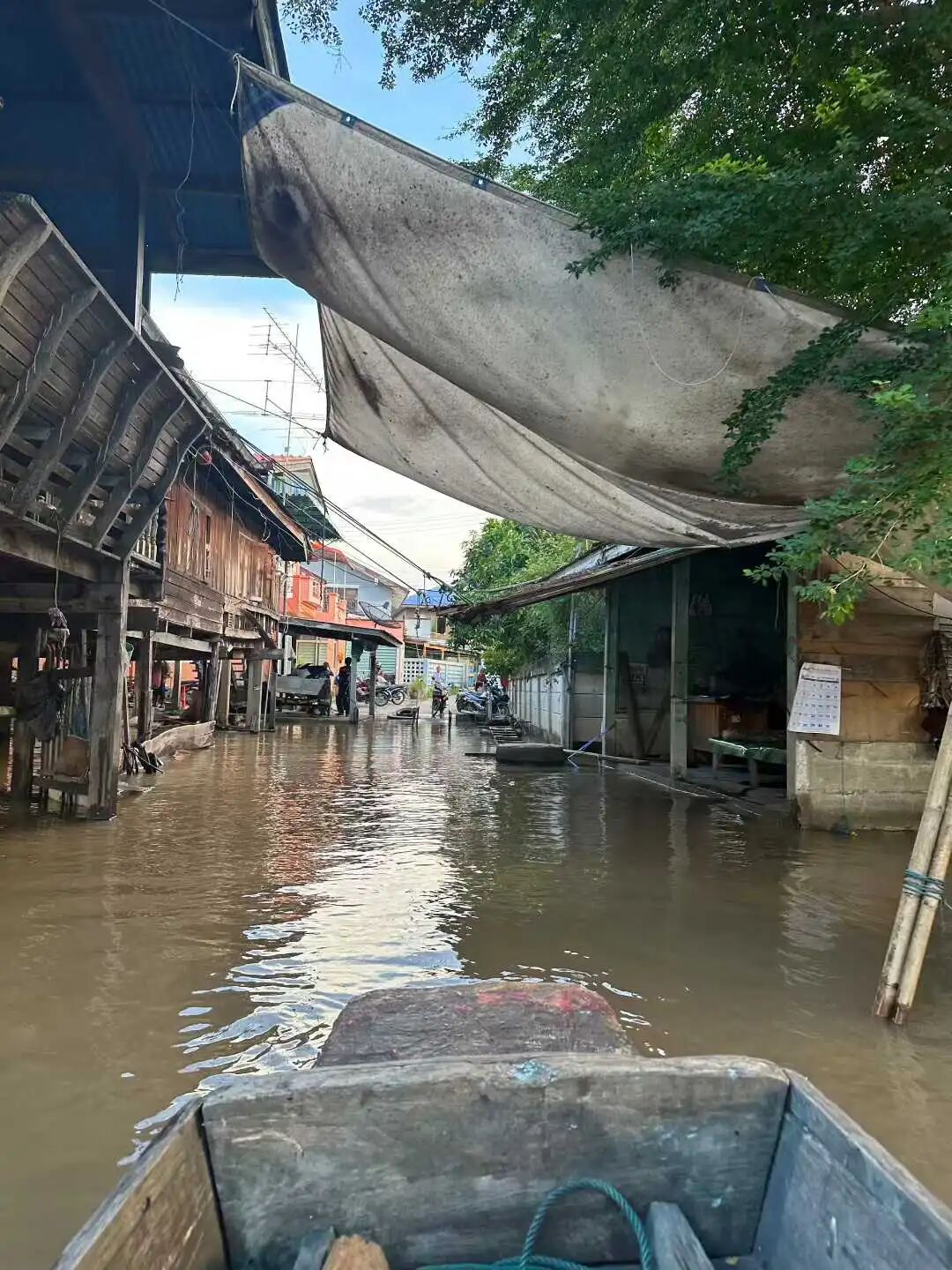
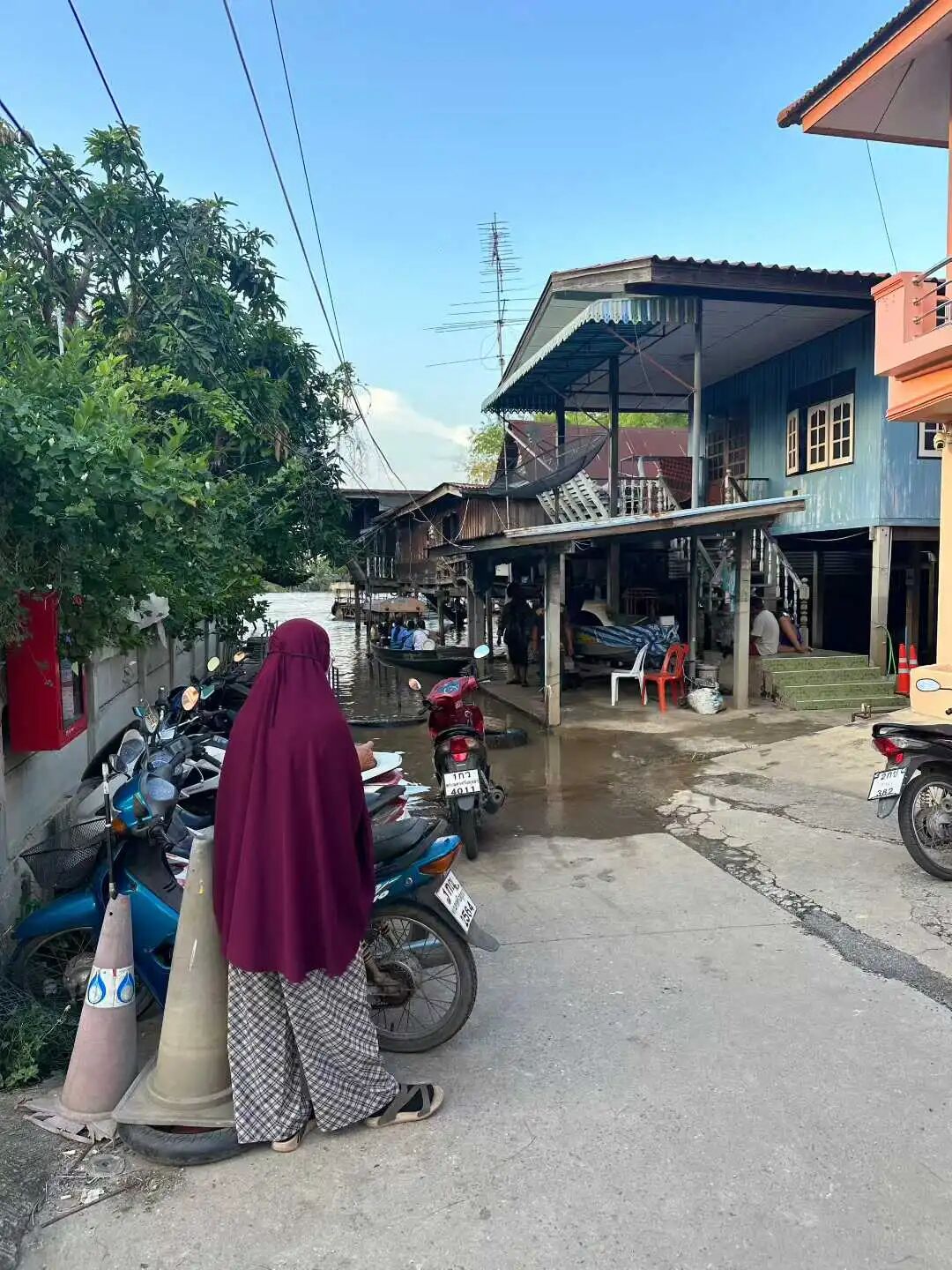
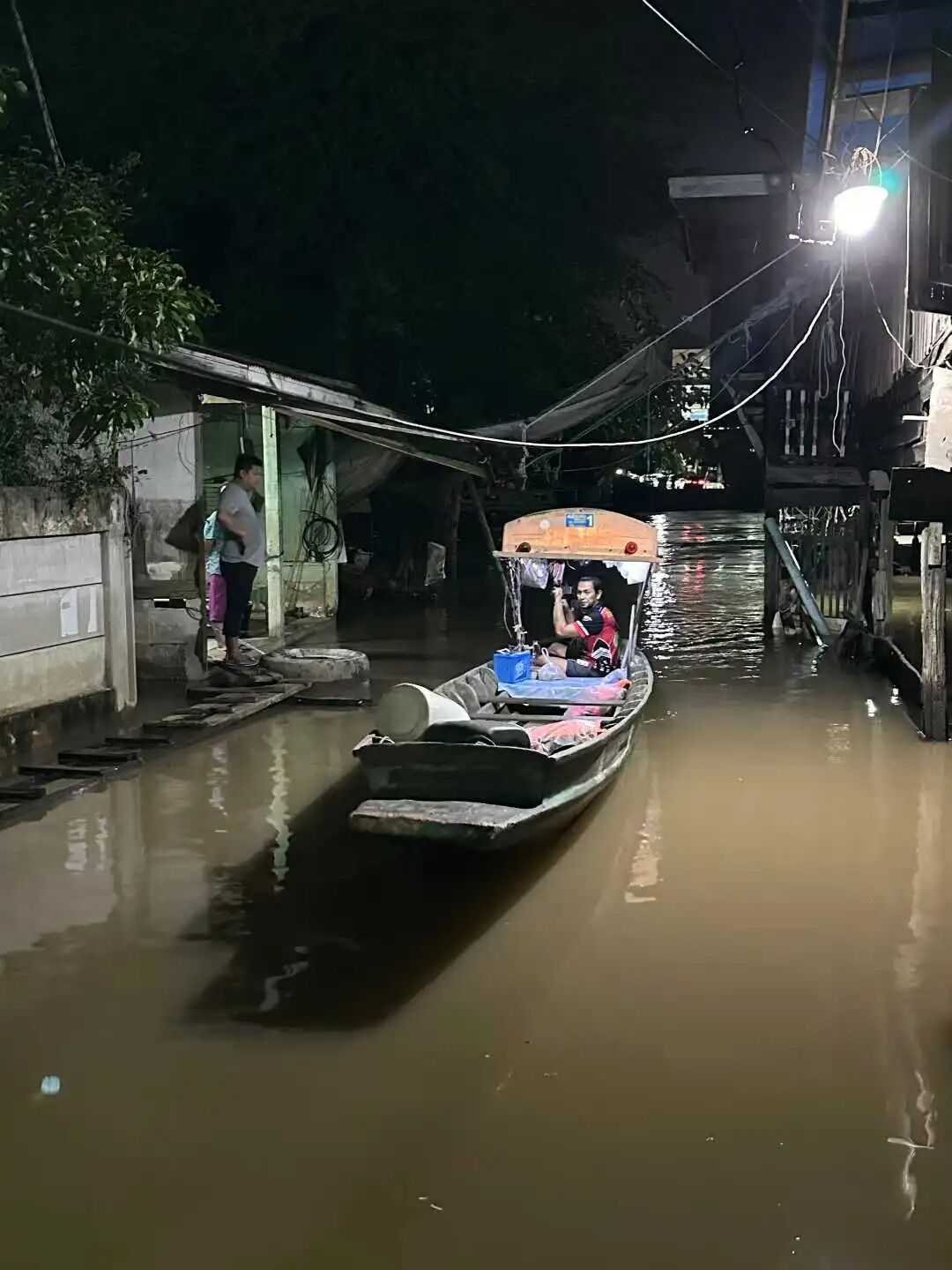
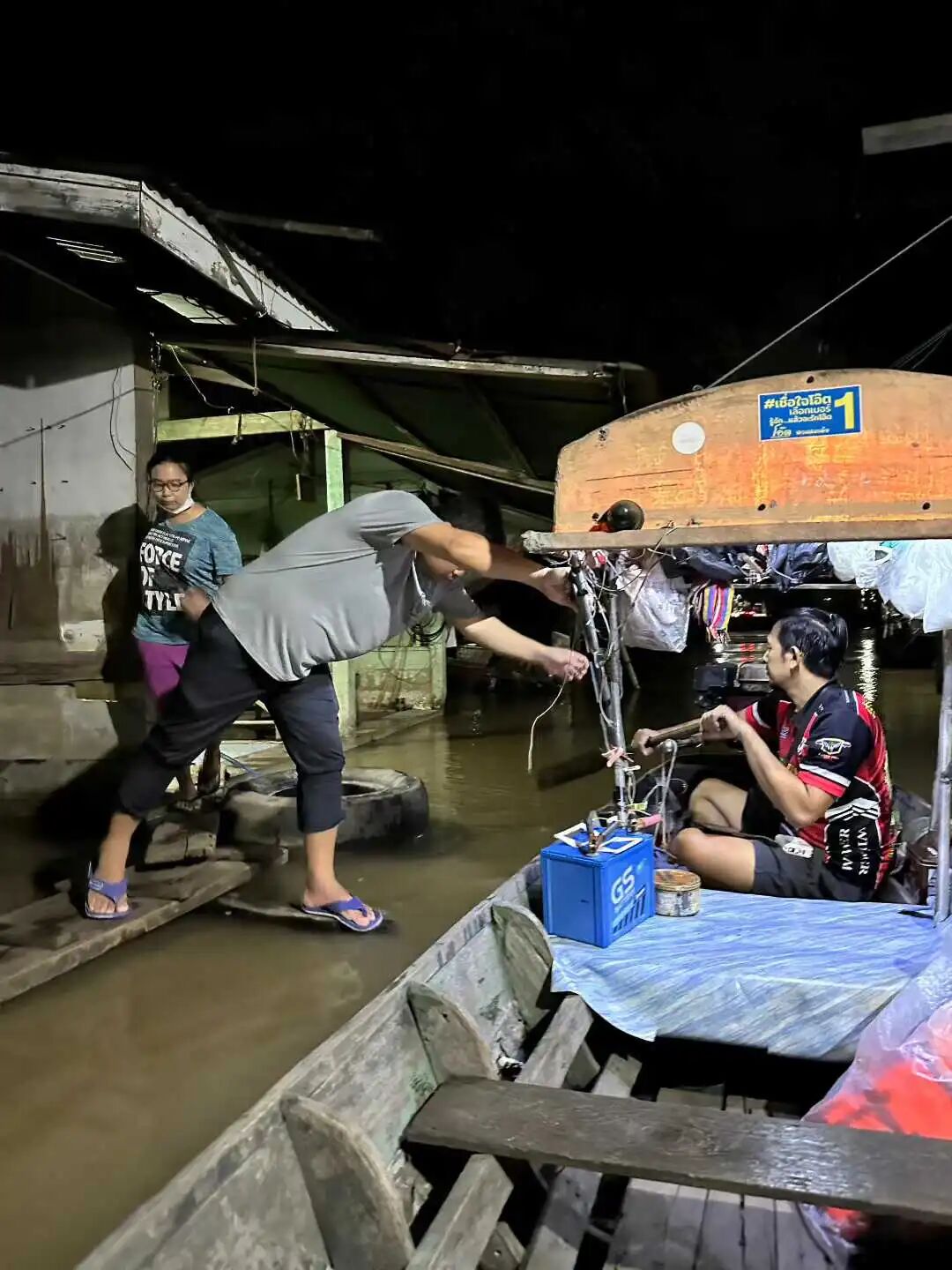
The Ayutthaya World Heritage night market is right across from Wat Mahathat. The market is just one street long and has some halal snacks like fried chicken, roti flatbread (roti), and shawarma, but there are no seats, so you have to stand and eat. The nearby historic sites are lit up at night, so it's nice to walk around the night market and look at the ruins.
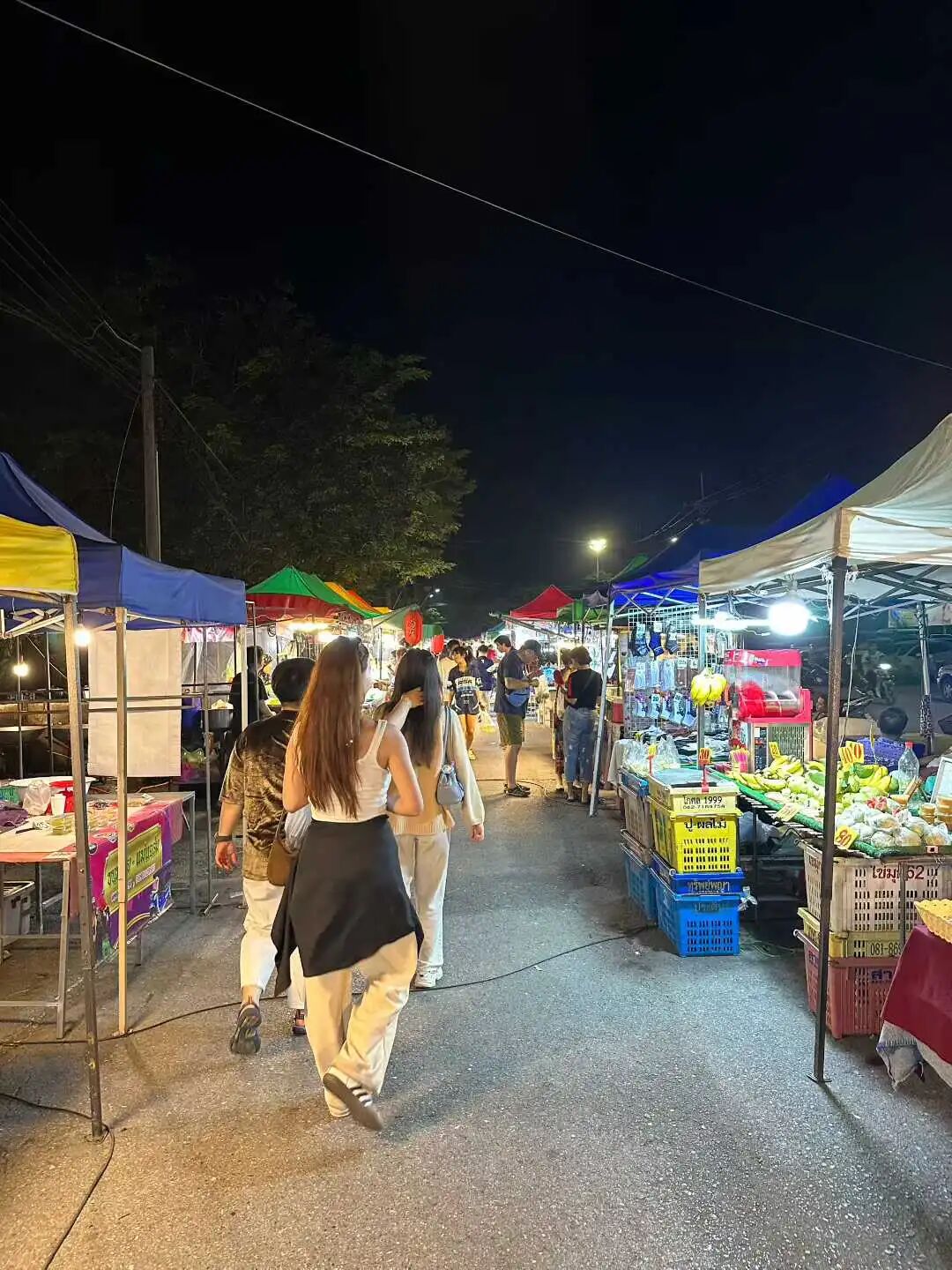
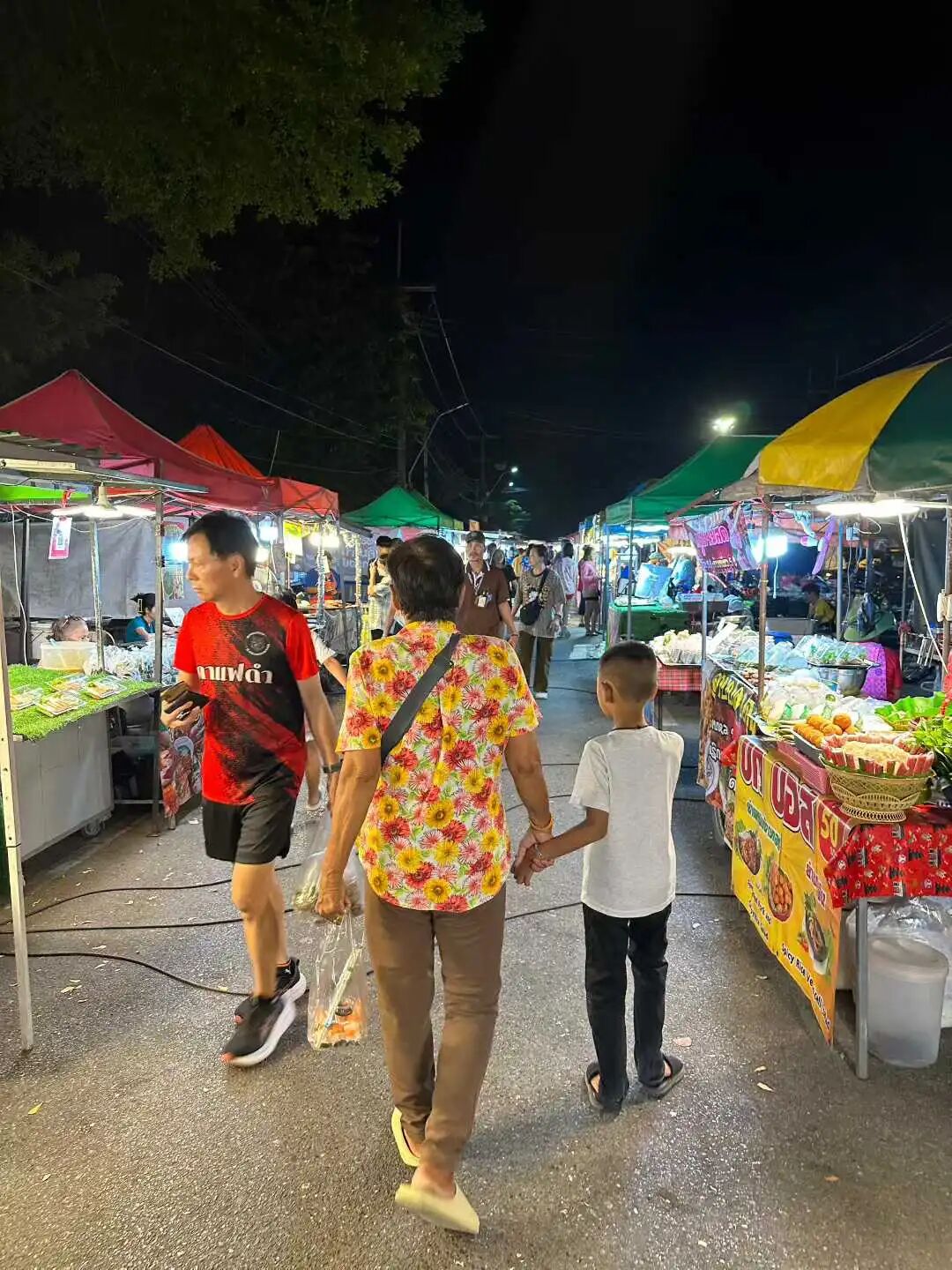
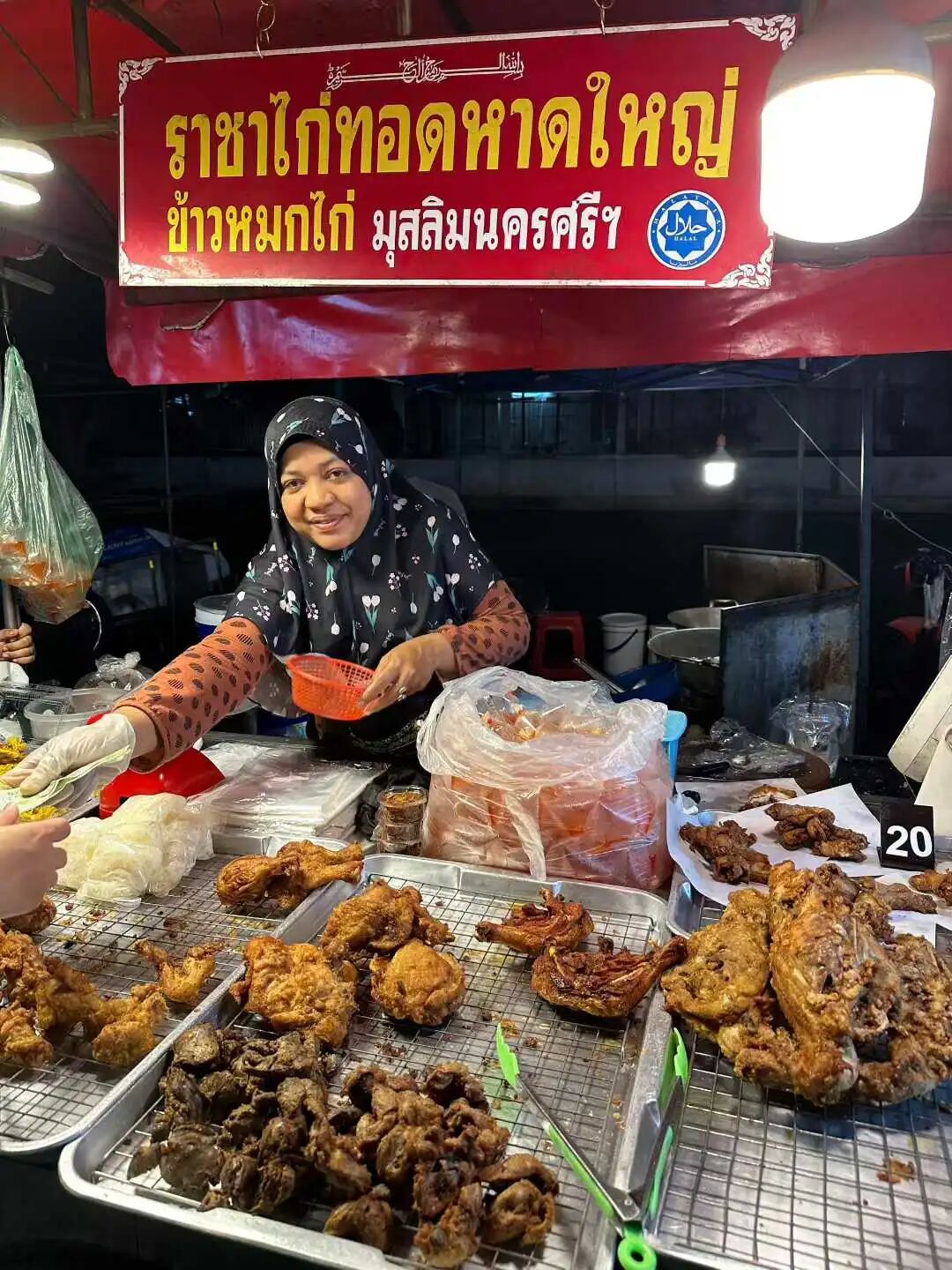
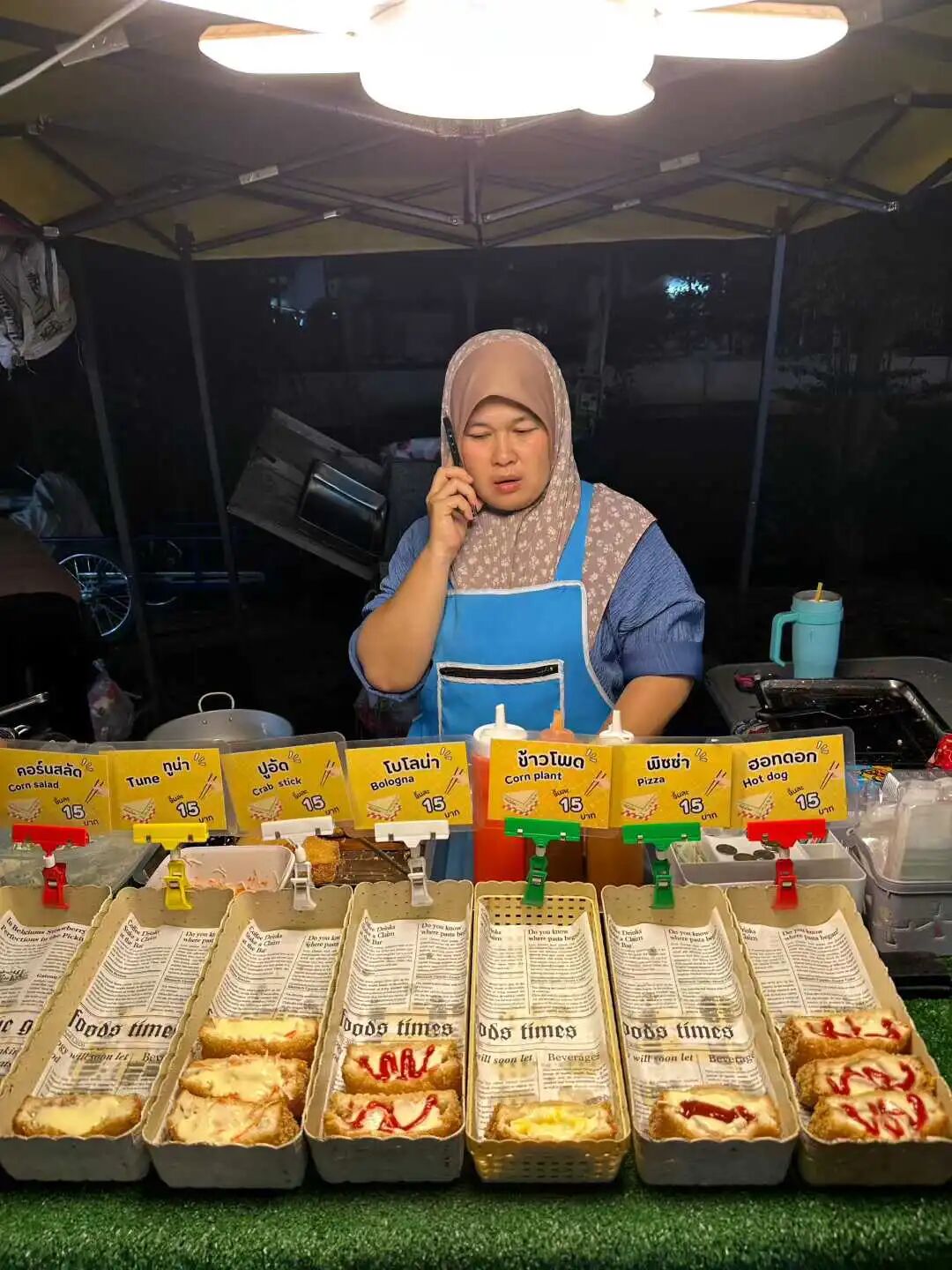

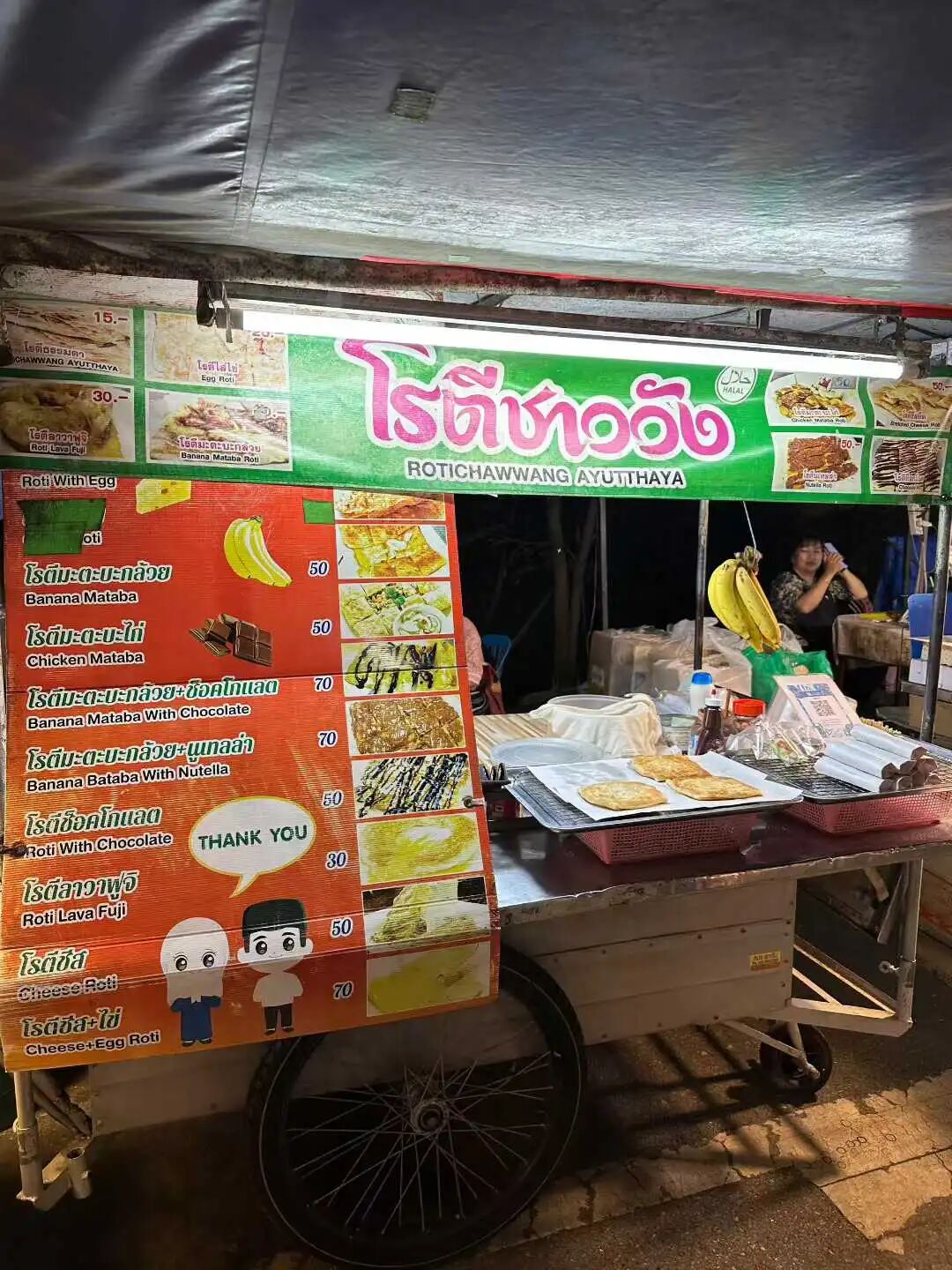

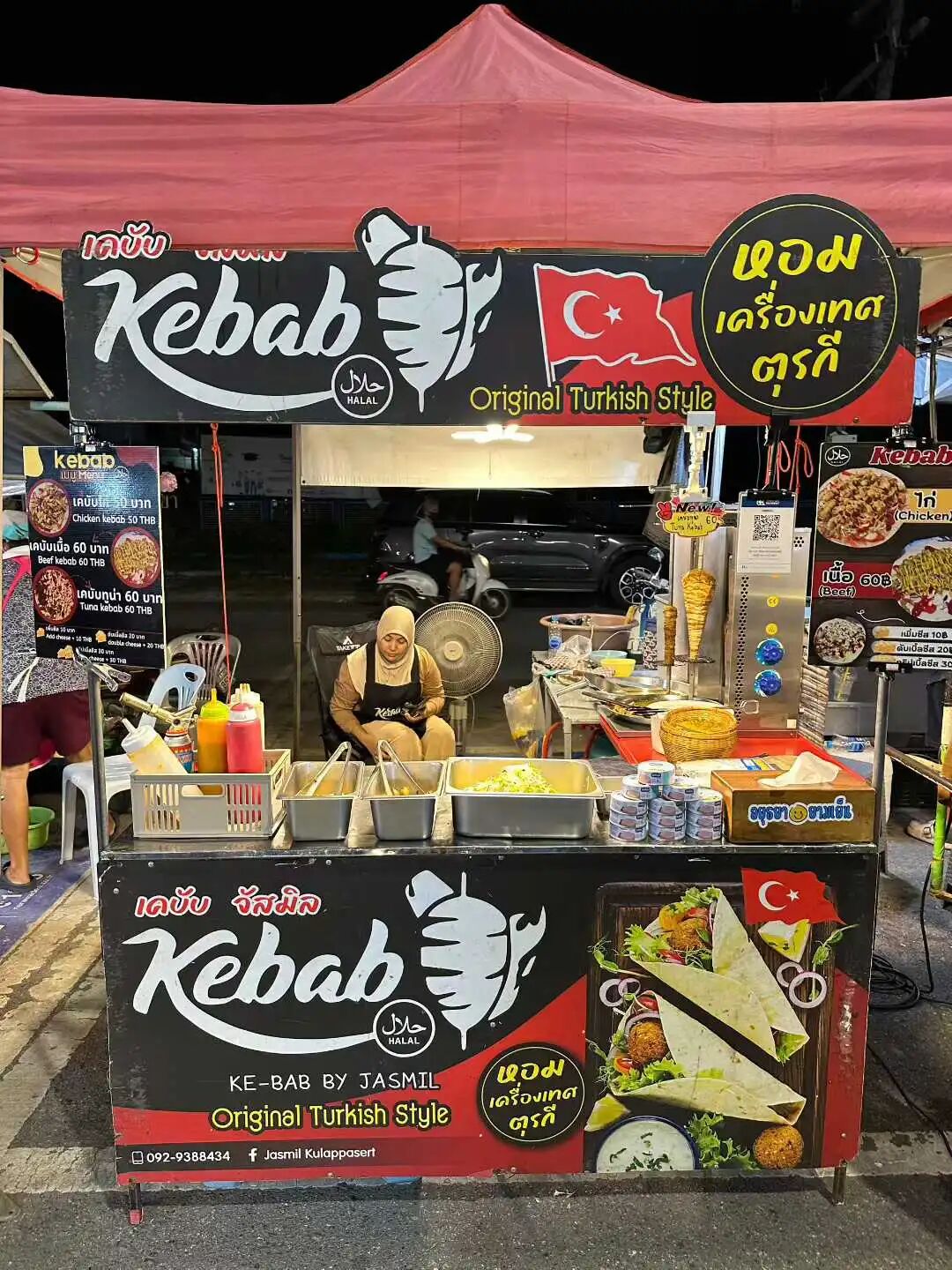
We ate a type of grilled fish cake wrapped in banana leaves at the night market, and it was very spicy. There is also a halal stall on the south side of the night market where I had some home-style dishes, shrimp fried rice and stir-fried crown daisy, which was a nice light meal.
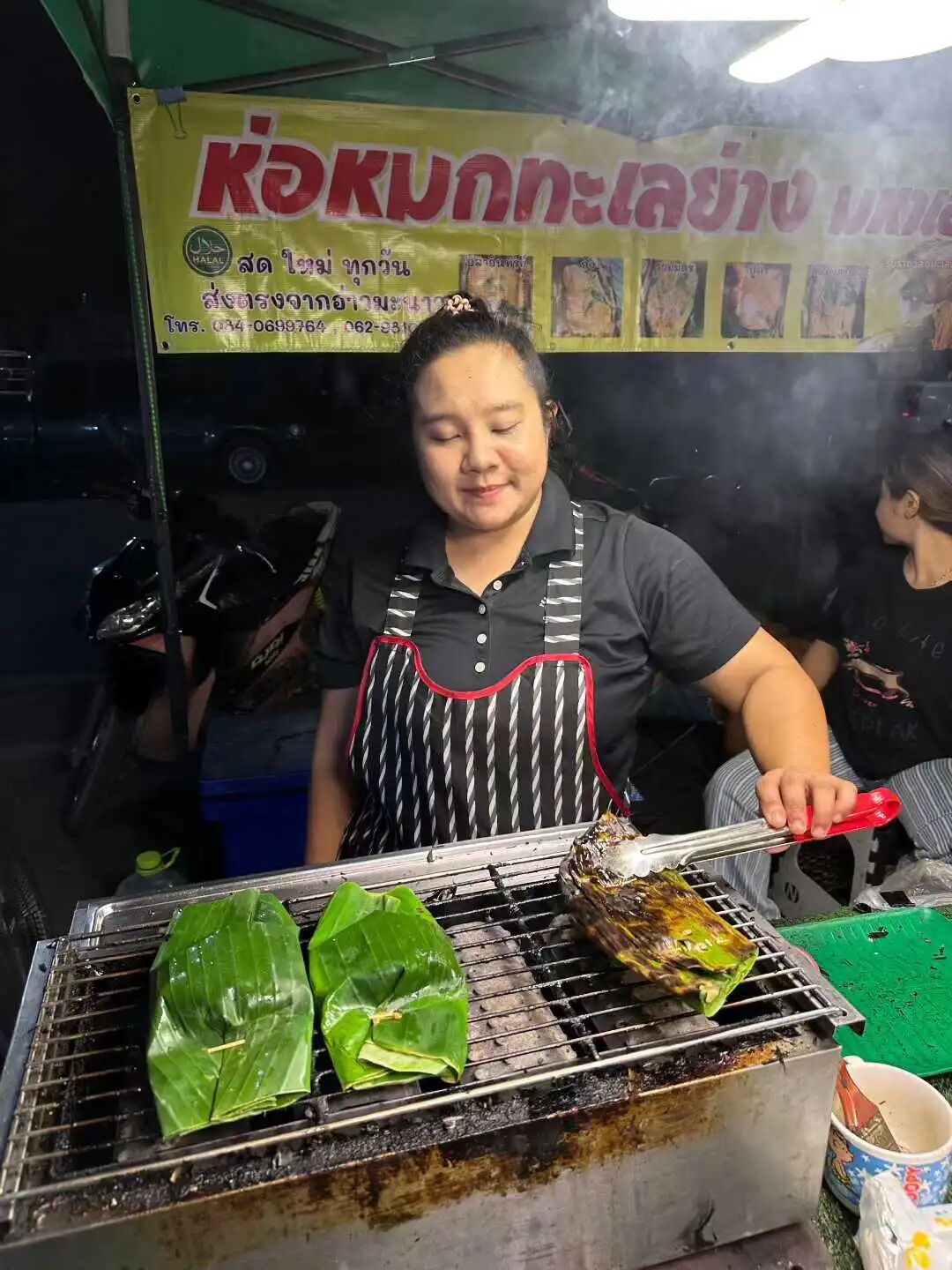

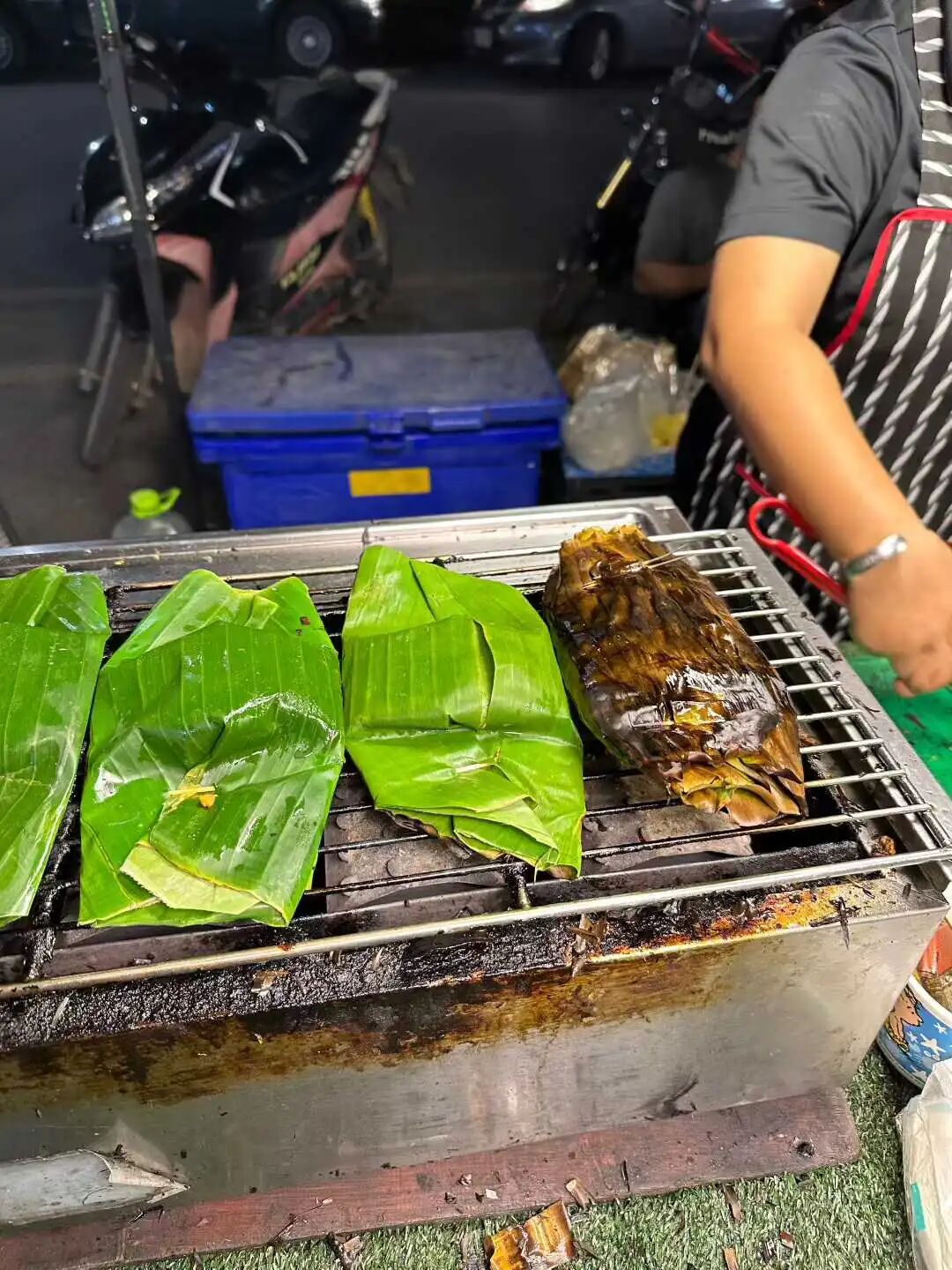
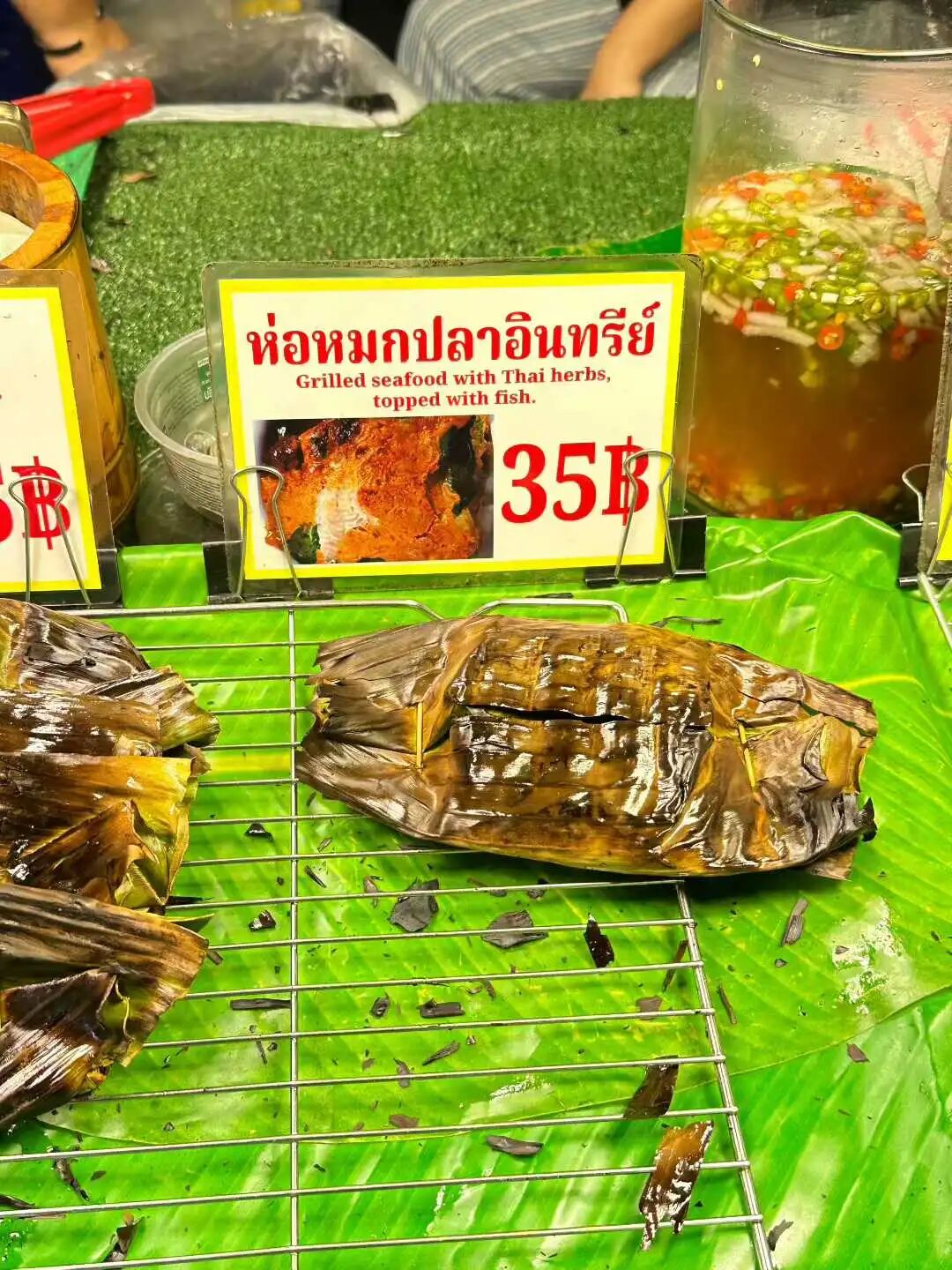
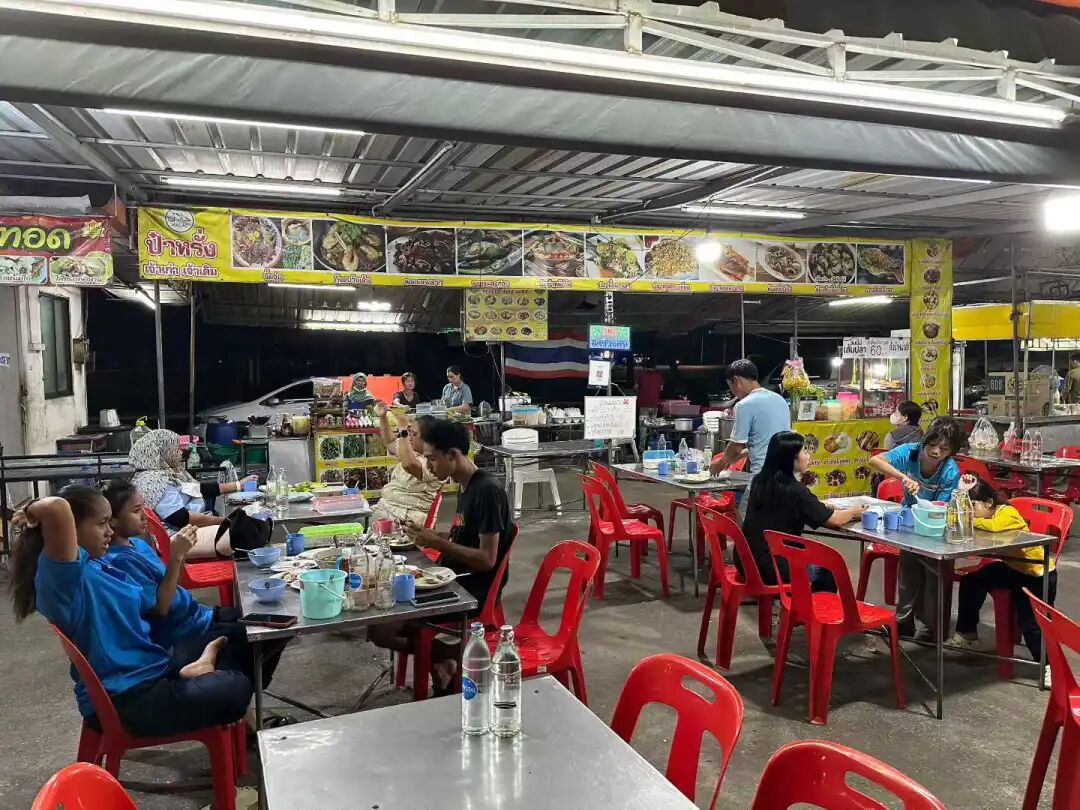
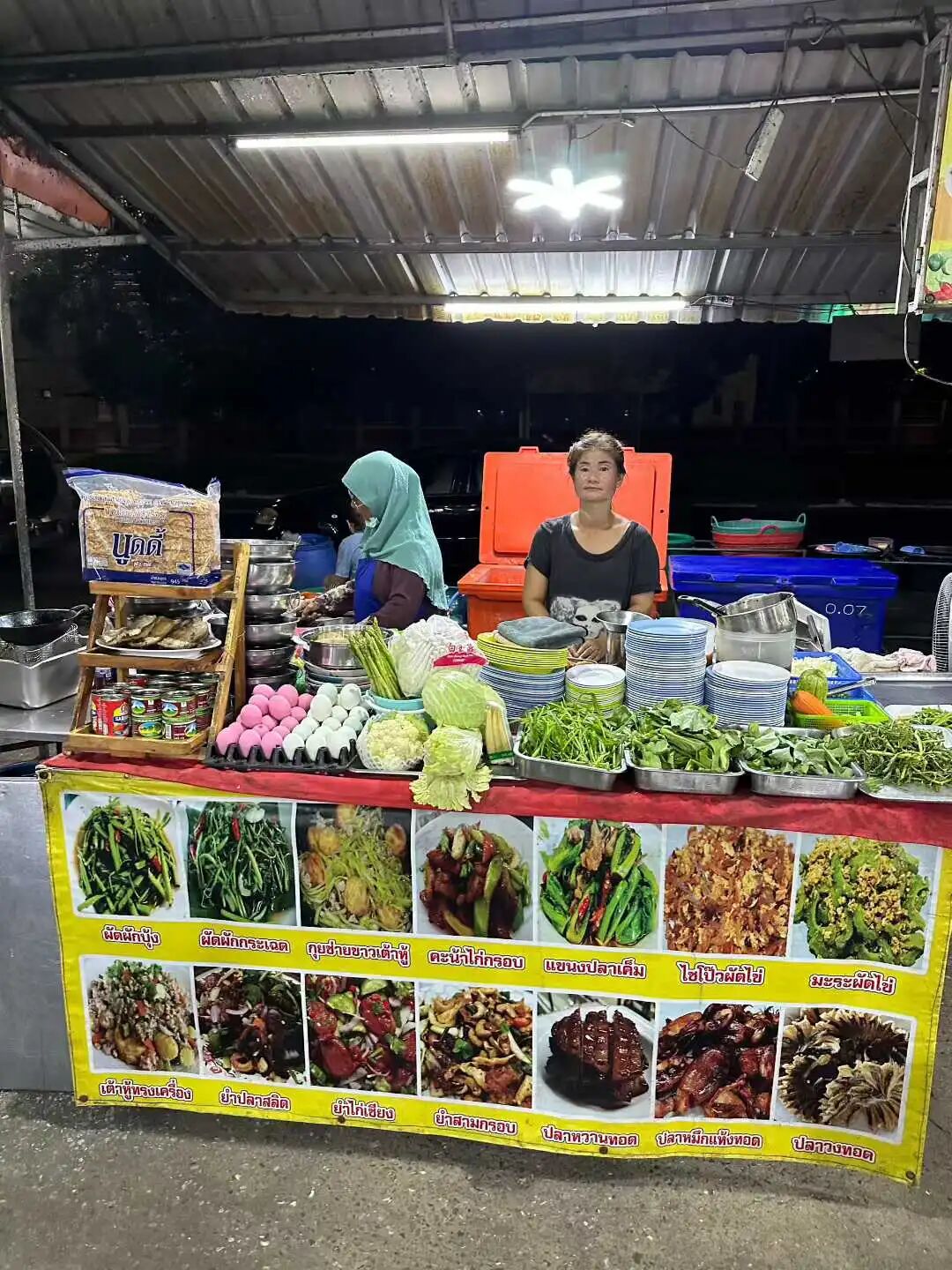
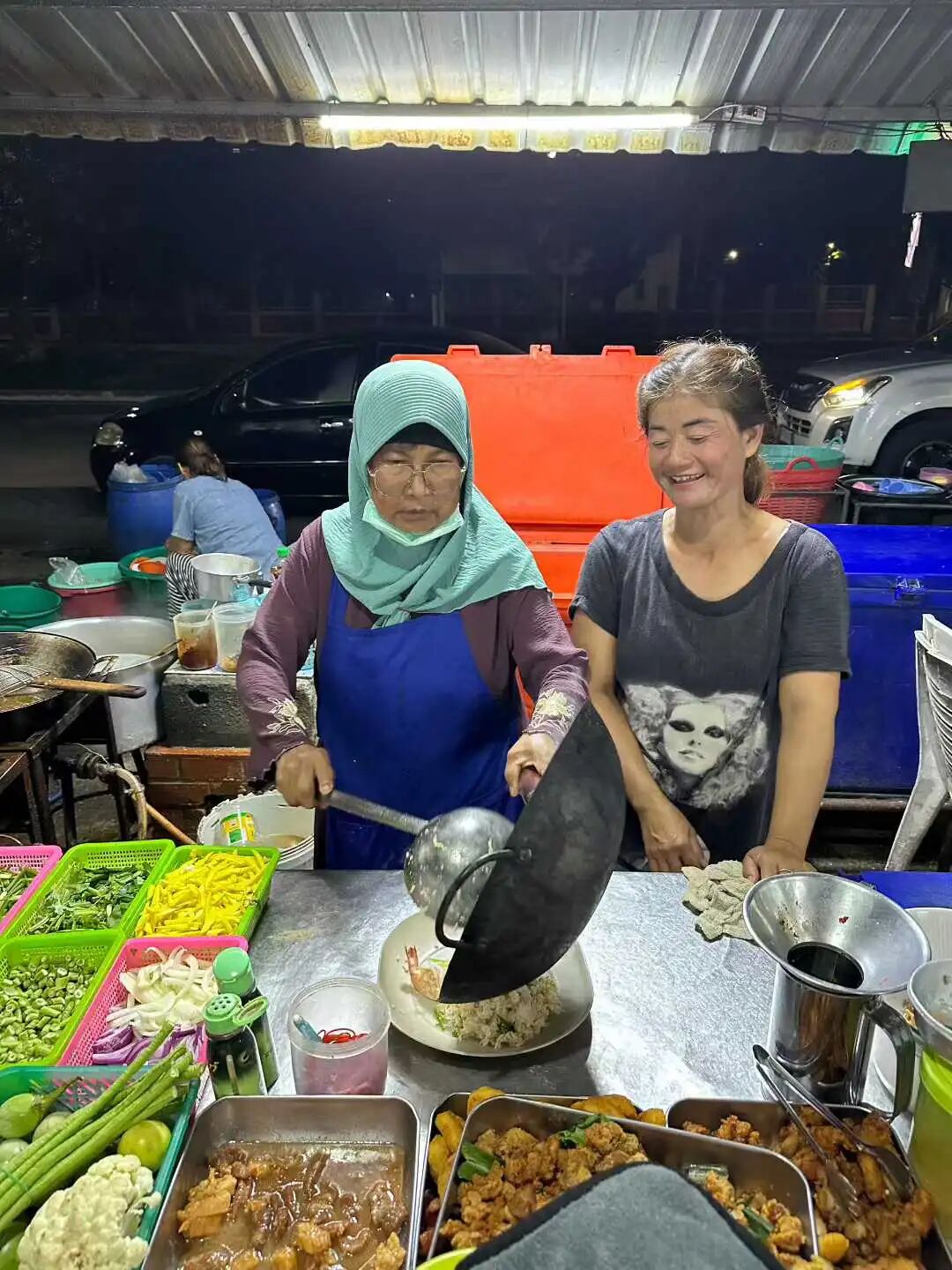
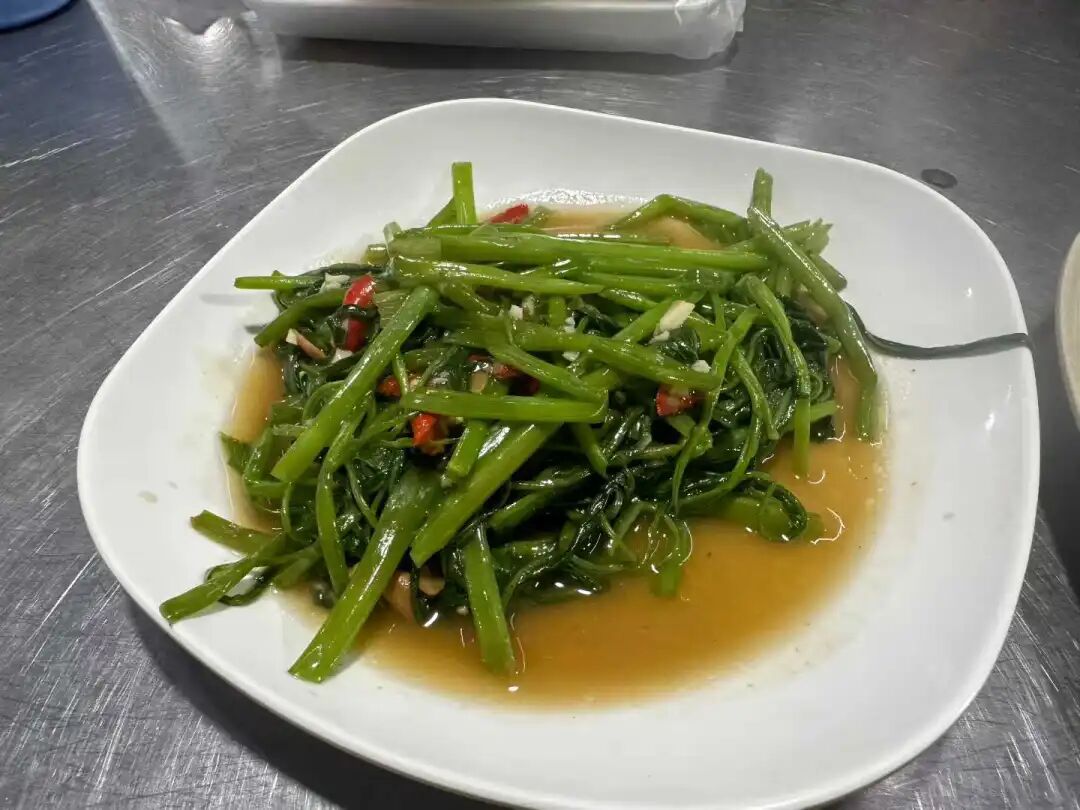
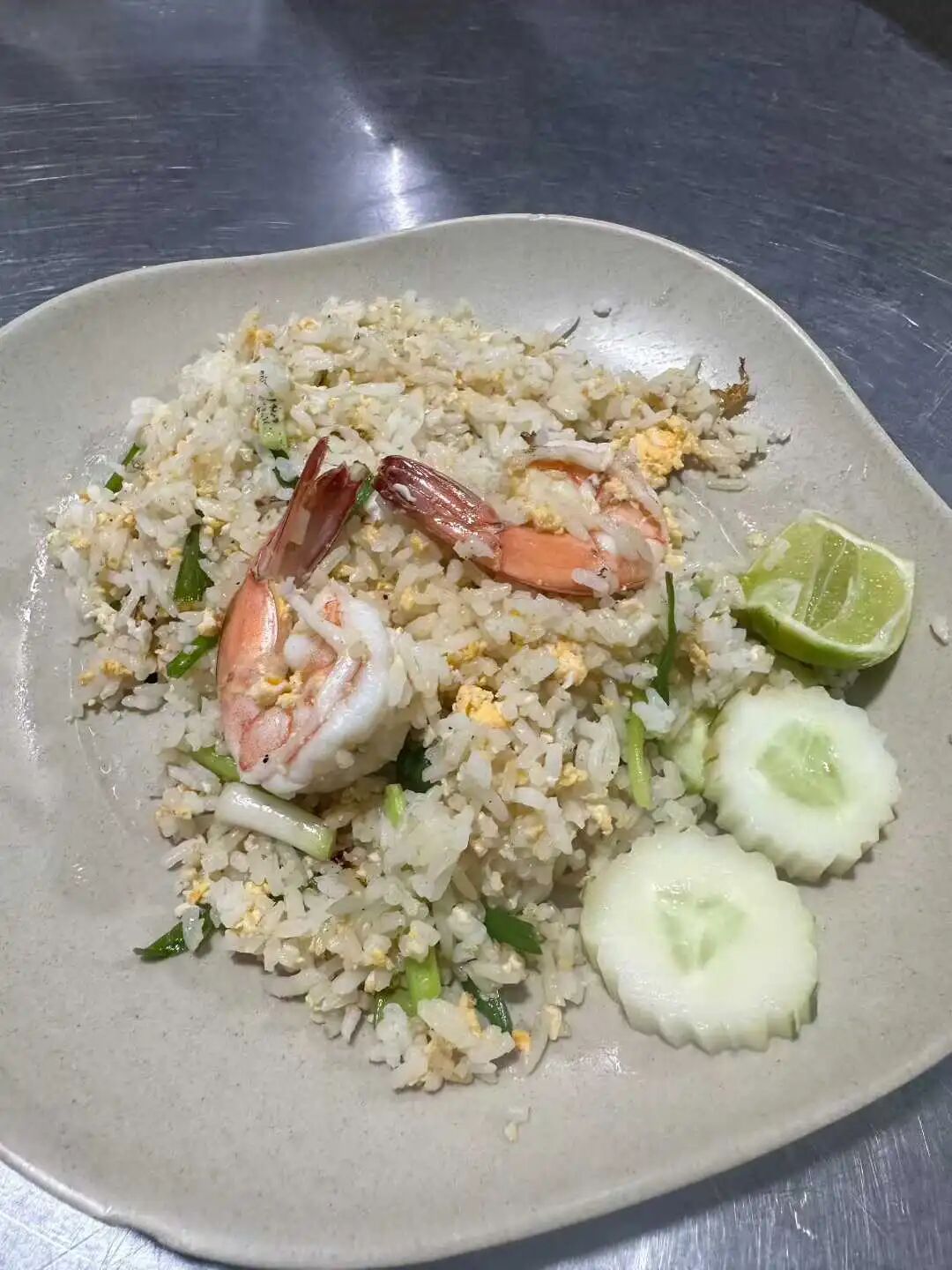
On Friday, while attending Jumu'ah prayers in Ayutthaya, I was invited to lunch by two aunties who were also there for prayers. The aunties drove us to the Pakistani Noor Mosque in the northern part of the old city. I was surprised to find a snack shop in the courtyard run by an auntie of mixed Chinese and Pakistani heritage. And that is how we magically ended up eating authentic chicken char siu wonton noodles in the courtyard of a Pakistani mosque in Thailand.
The auntie who owns the shop no longer speaks Chinese. Through another auntie who treated us to a meal and translated for us, she explained that her father was Chinese and settled here after marrying a Pakistani woman. Although she has never been back to China, she was still very excited to see friends (dost) from China. Judging by the barbecued pork wonton noodles (chashao yuntun mian) she makes, her father was likely from Guangdong.
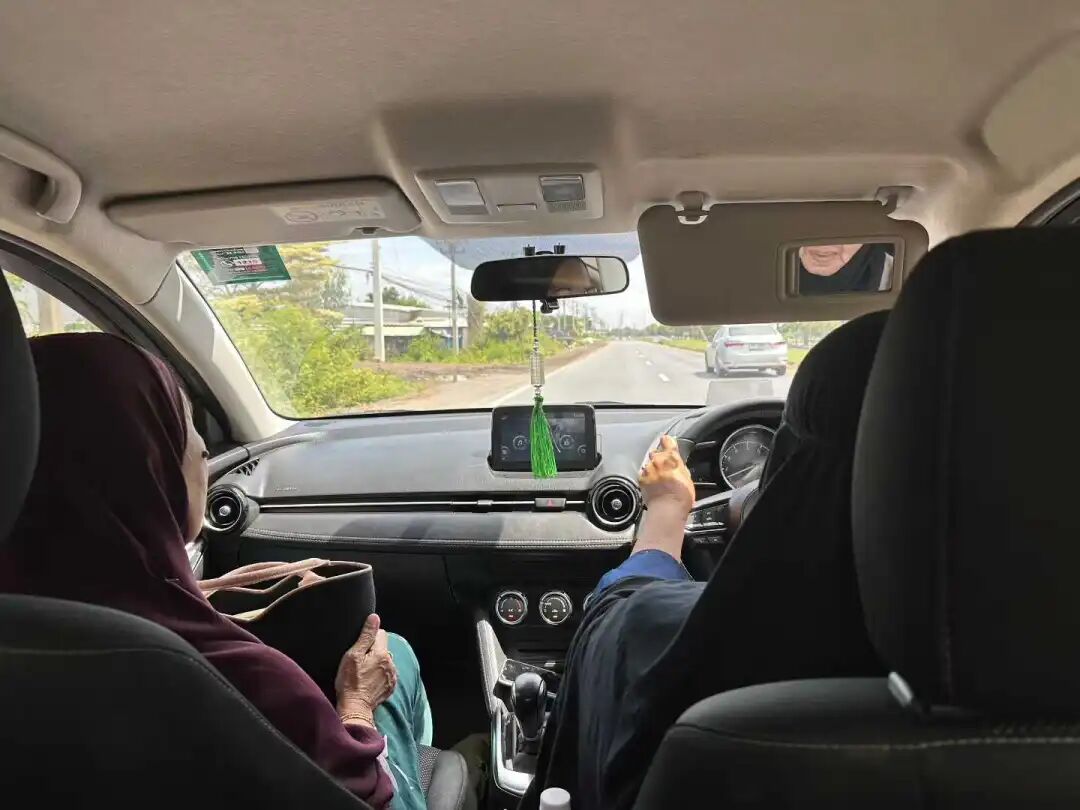
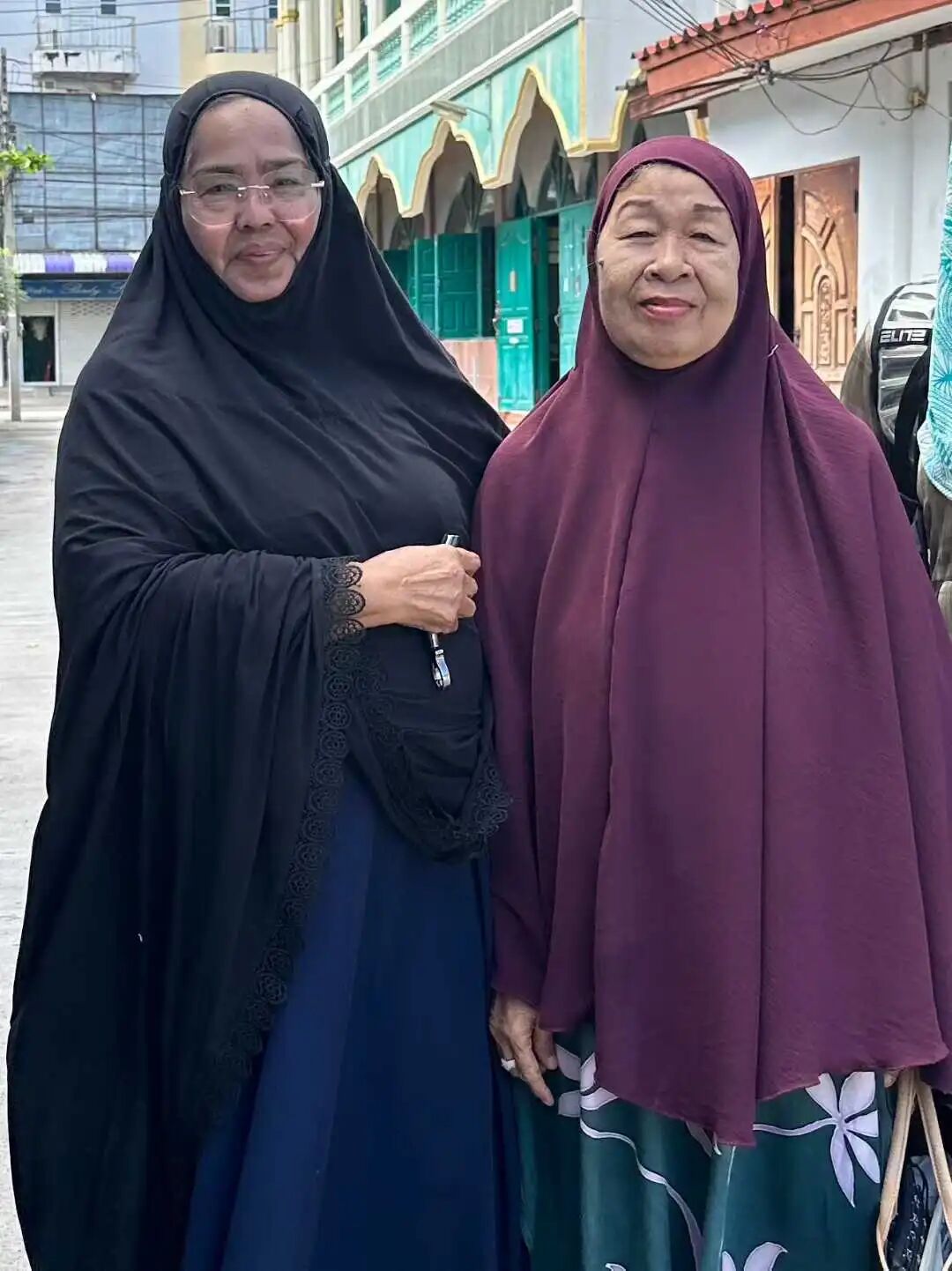
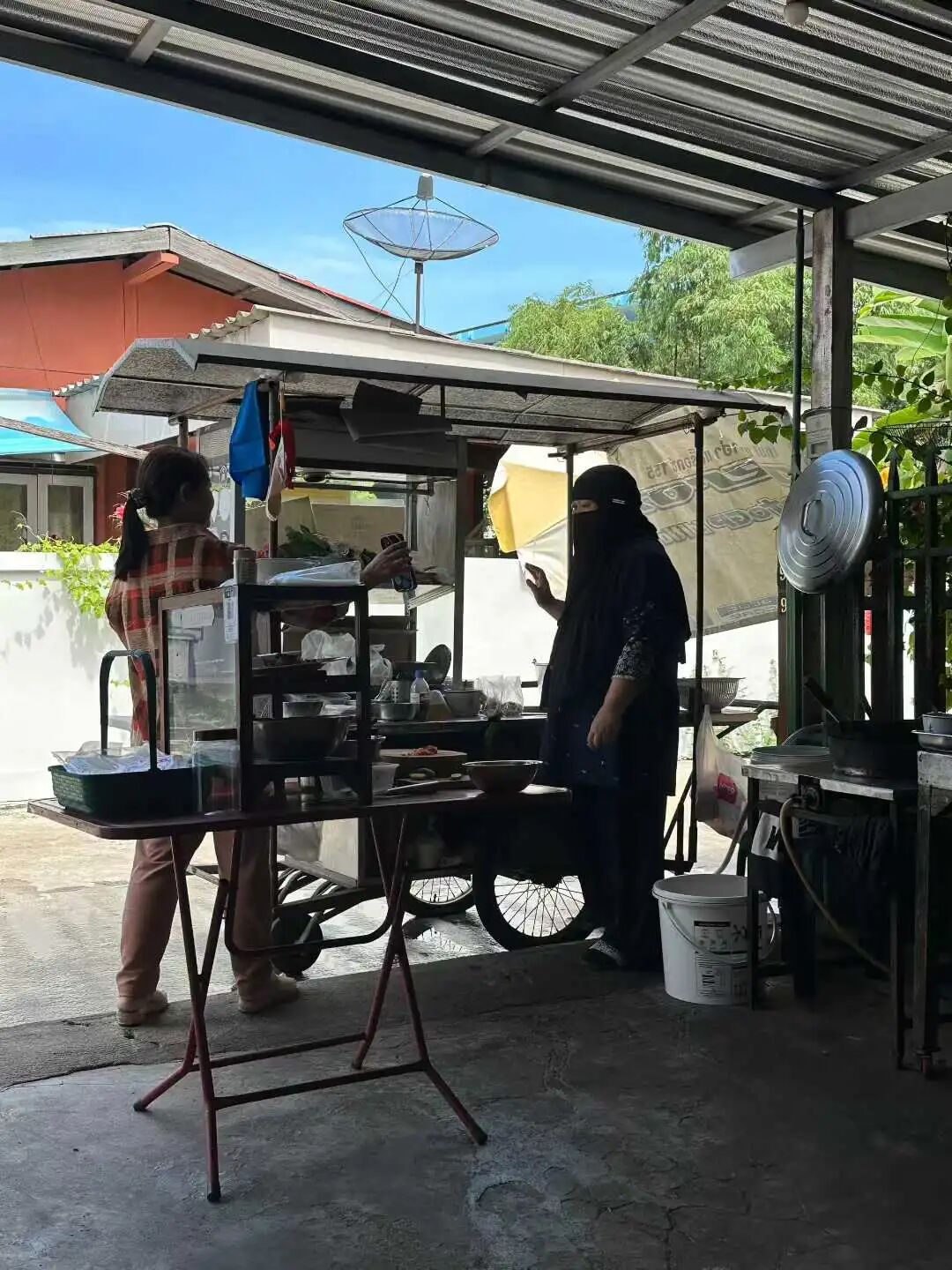
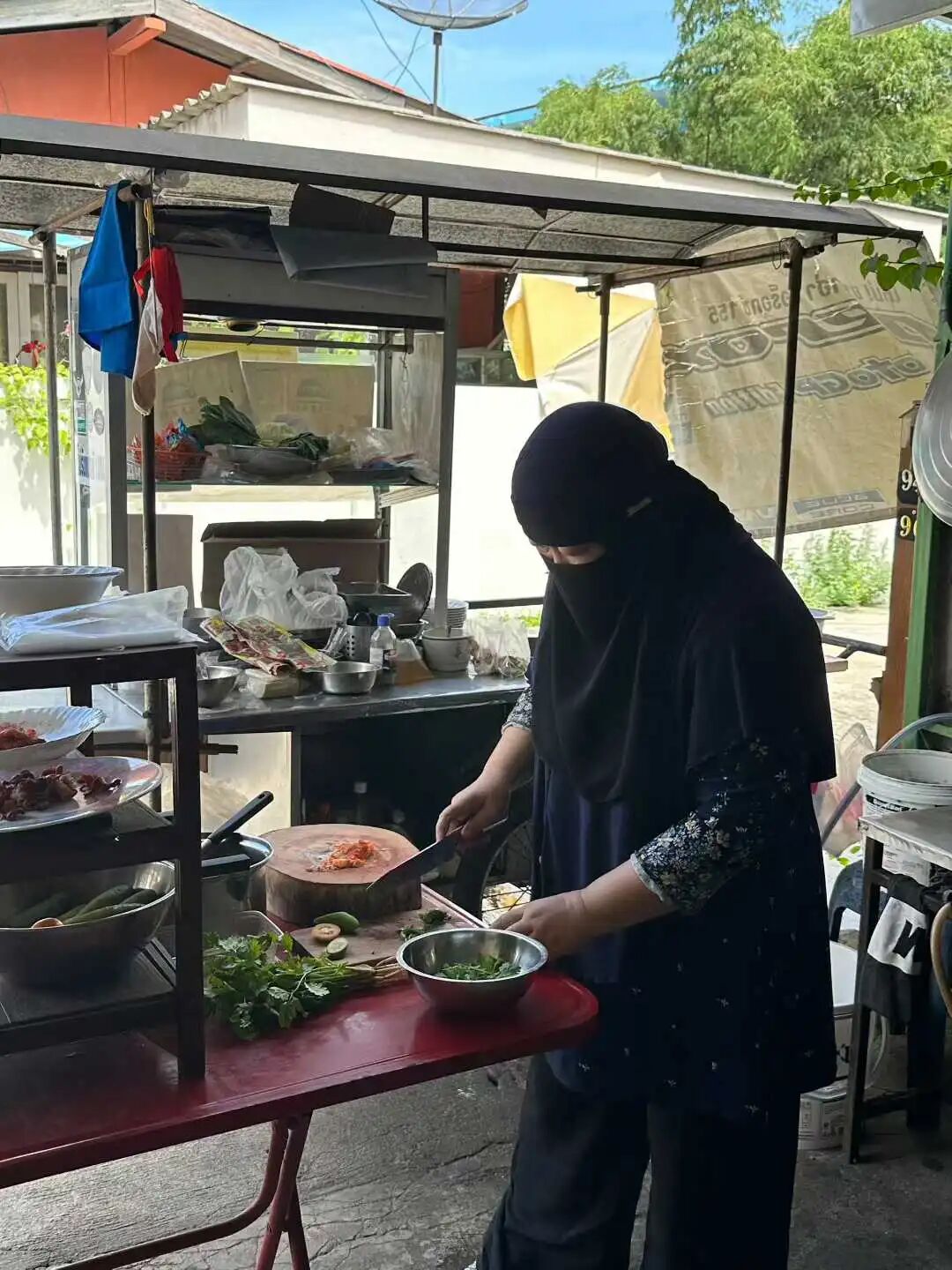
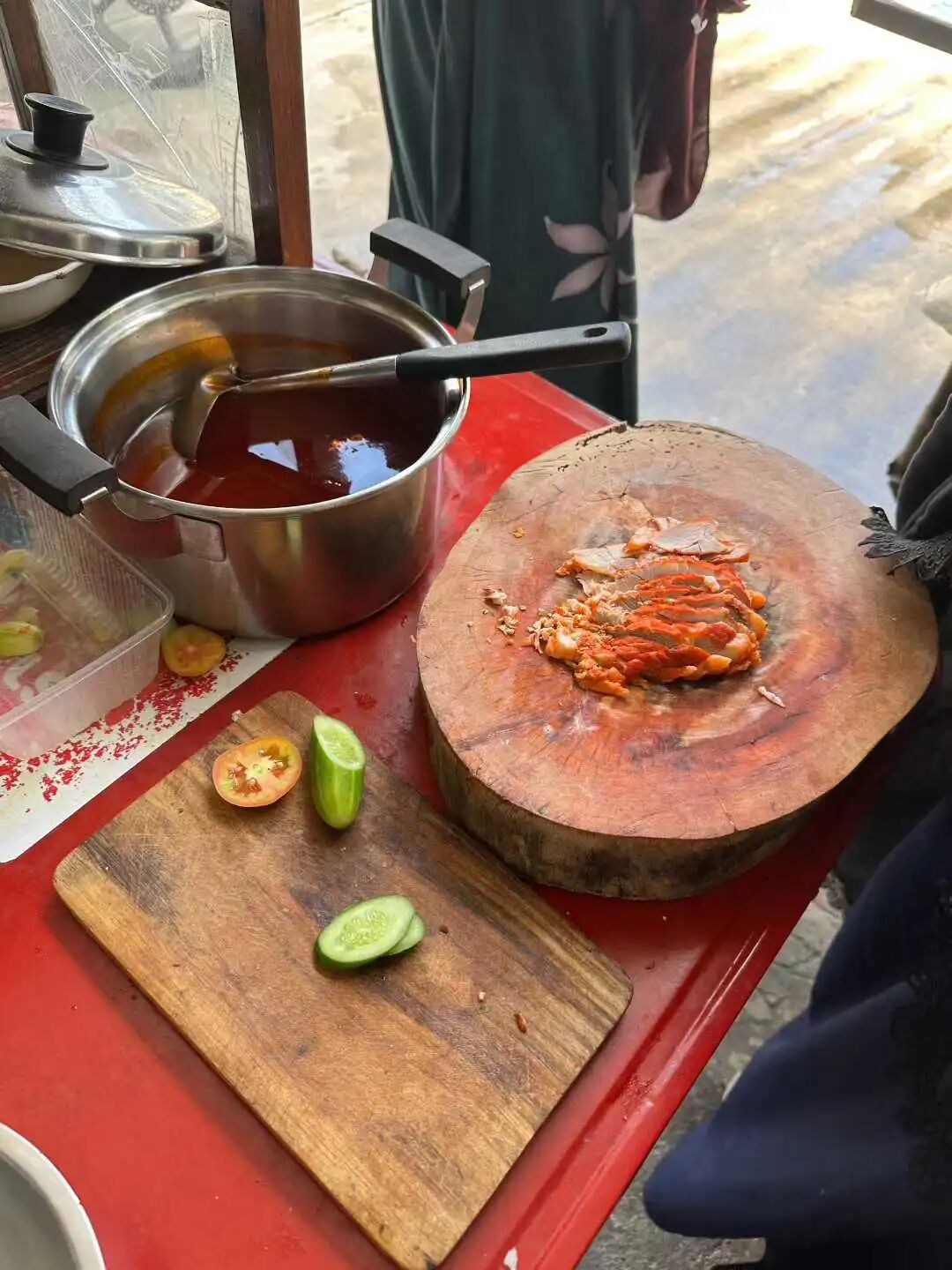
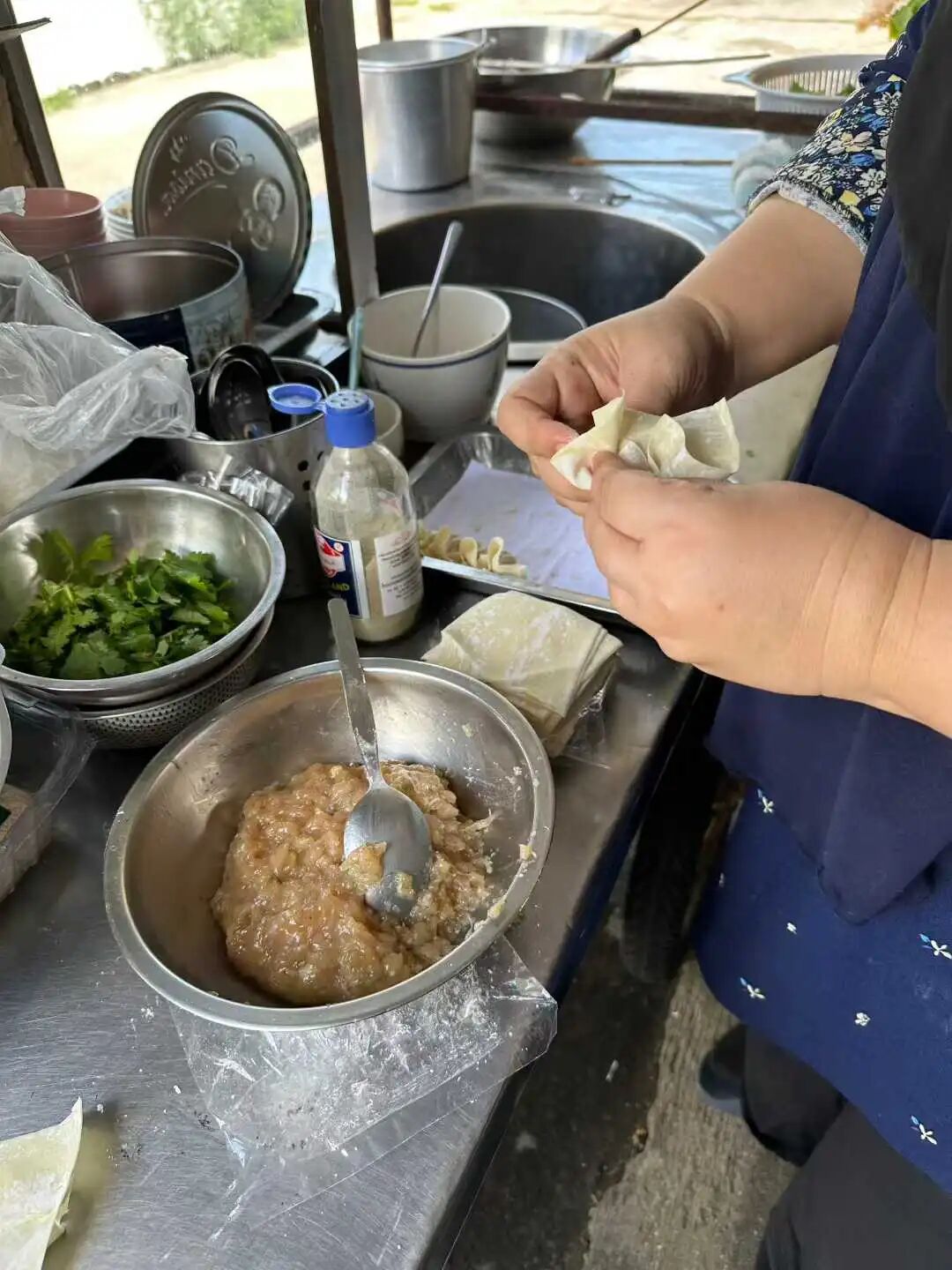
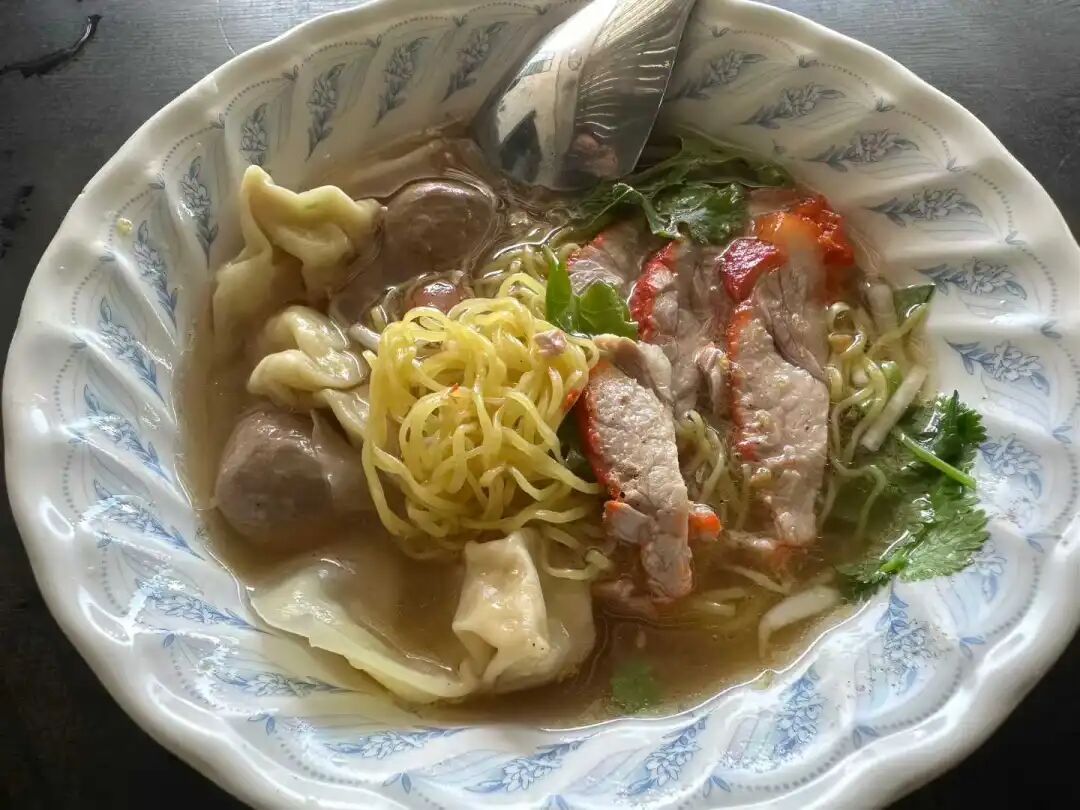
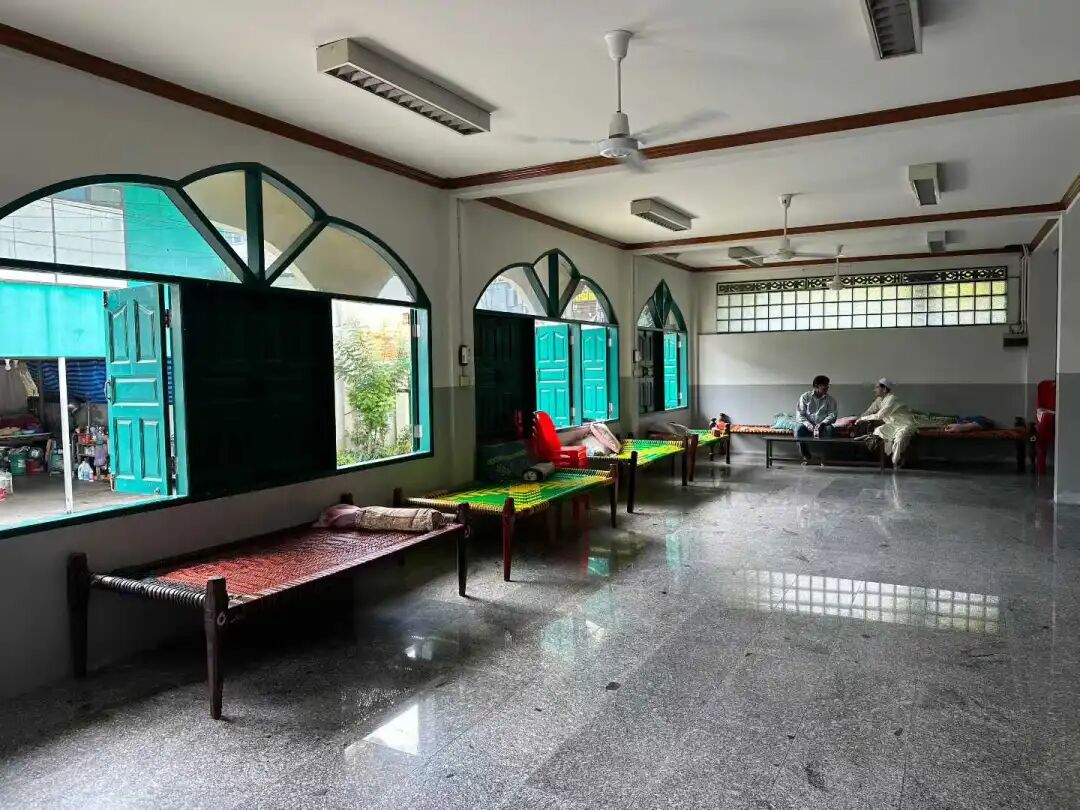
Our last stop in Ayutthaya was an important center for the Sufi Qadiriyya order in Thailand, the Sheikh Muhammad Ali Shukri shrine (gongbei) by the Chao Phraya River. Although we missed the religious gathering (a'mali), we unexpectedly caught a charity event (shesan) for flood victims. We were able to see how the Thai Sufi order performs their religious feast (nieti xi) and tasted the beef rice noodles served at the mosque.
Central and Southern Thailand are influenced by the Malay people, so most religious practices follow the Shafi'i school, and there are relatively few Sufi activities. This was my first time experiencing the warmth of Thai Sufi elders in Ayutthaya. I saw them using boat oars to stir a giant pot of rice for the first time, and I also saw the process of making coconut rice, which is very similar to how the Hui Muslims in Huihui Village, Sanya, set their tables. Because we arrived early and the meal hadn't started yet, the elders here very warmly arranged for us to eat rice noodles first. The beef rice noodles with soup poured over them were delicious. I was also surprised to meet several elders who could speak English and Chinese.
Since we had to rush to Bangkok that evening, we didn't stay at the shrine (gongbei) for long. If any friends (dost) are traveling to Ayutthaya, Thailand, I highly recommend visiting this shrine (gongbei). It is a rare opportunity to see this side of Thai Sufism.
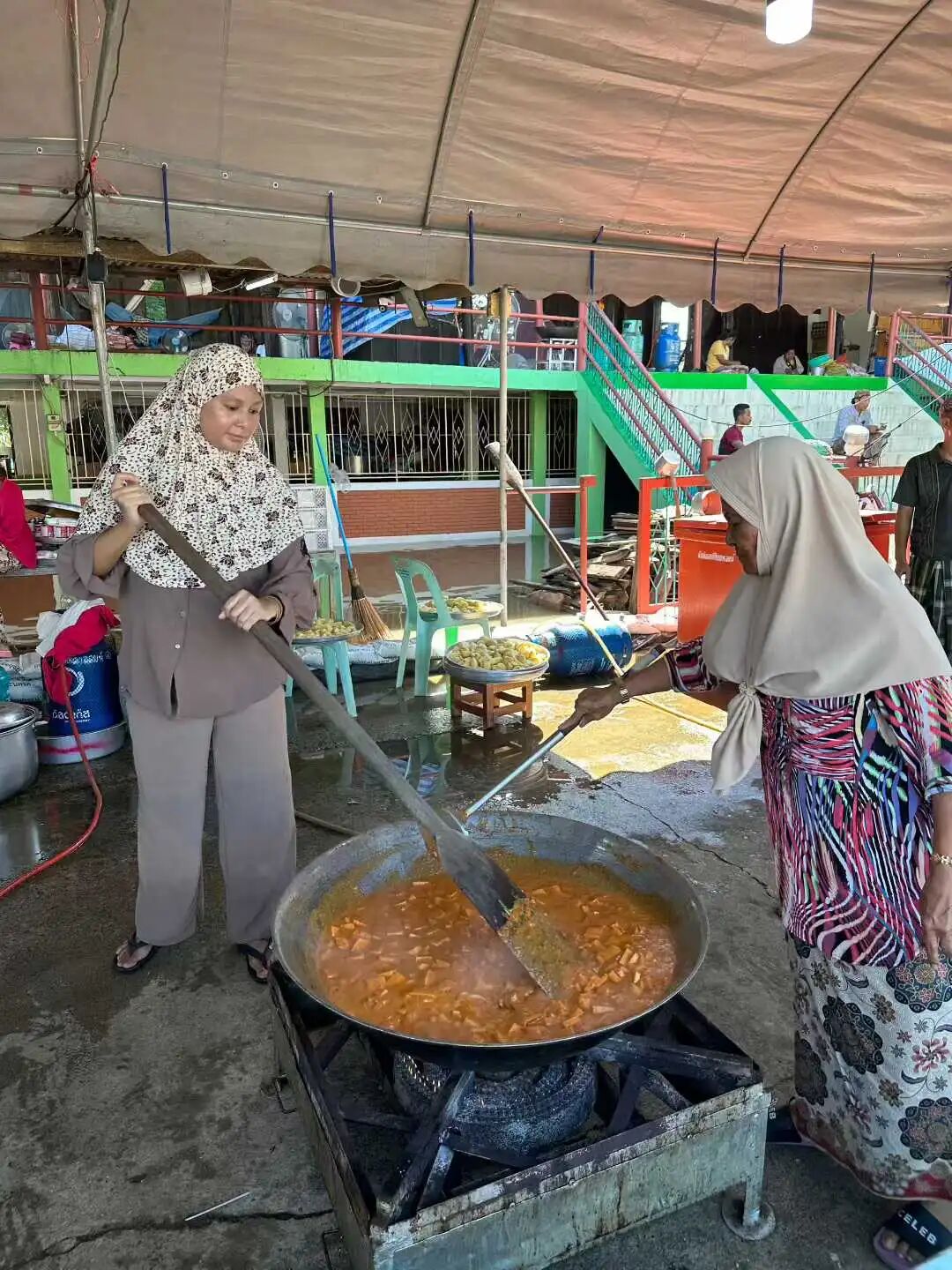
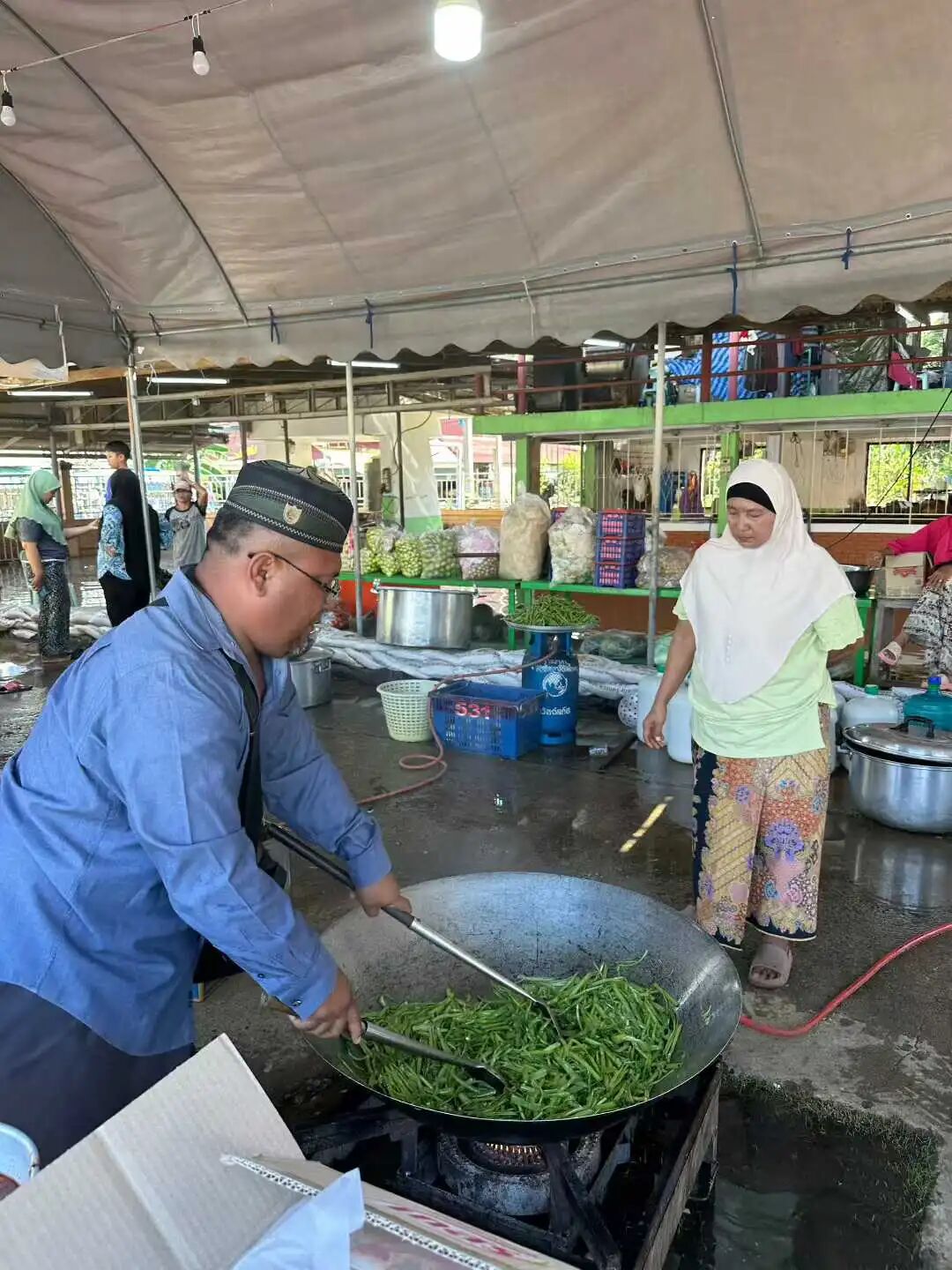
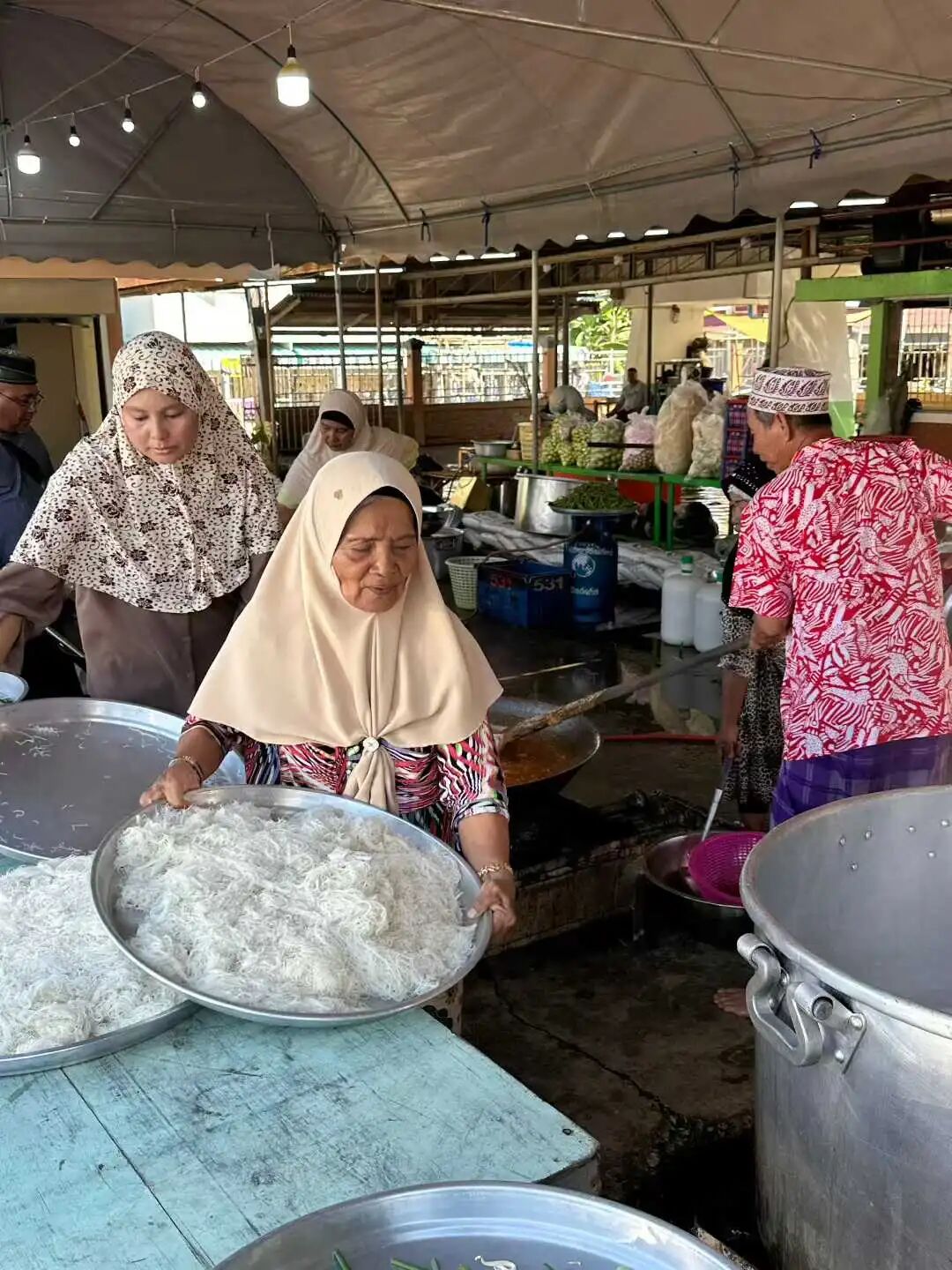
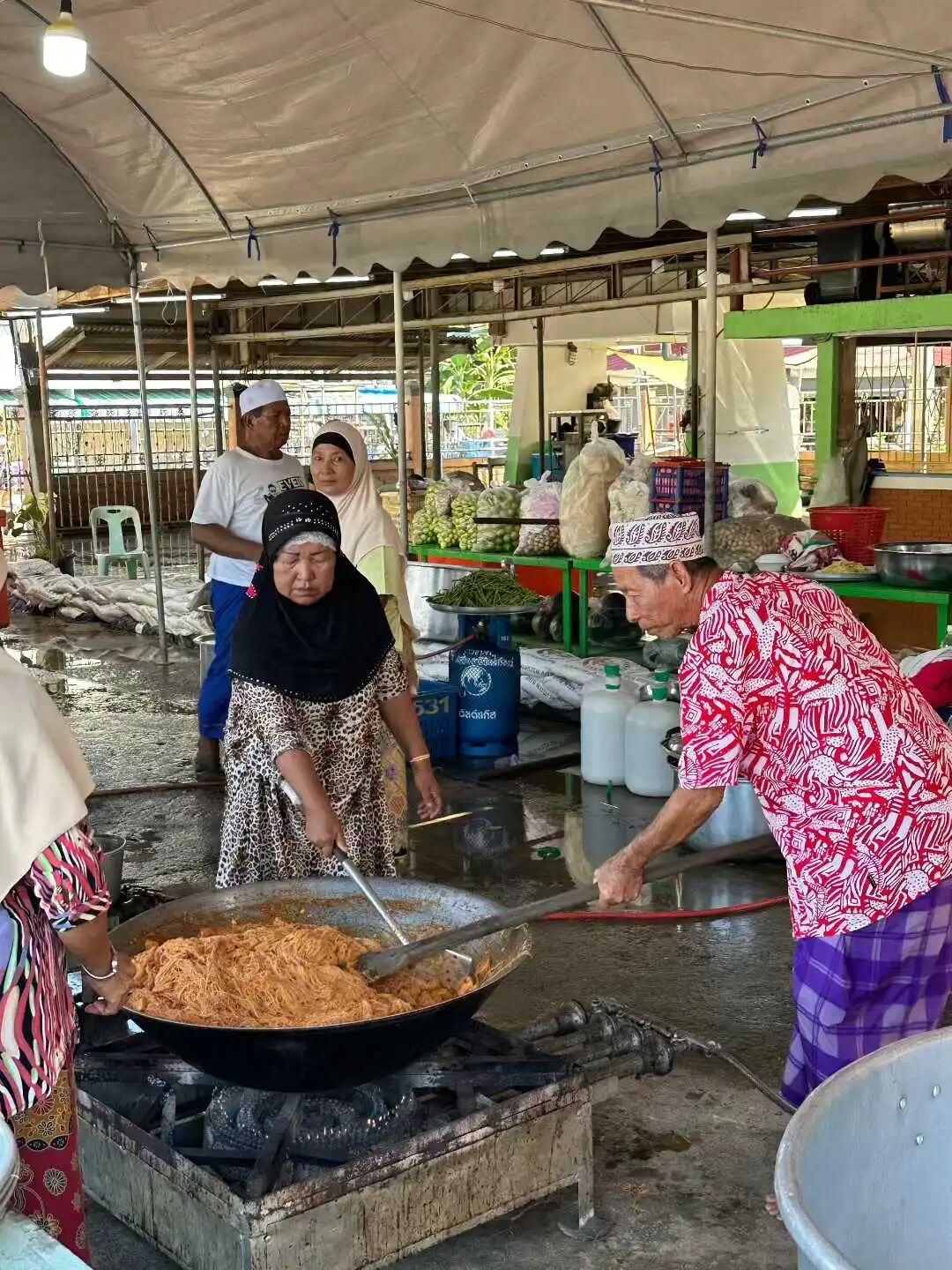
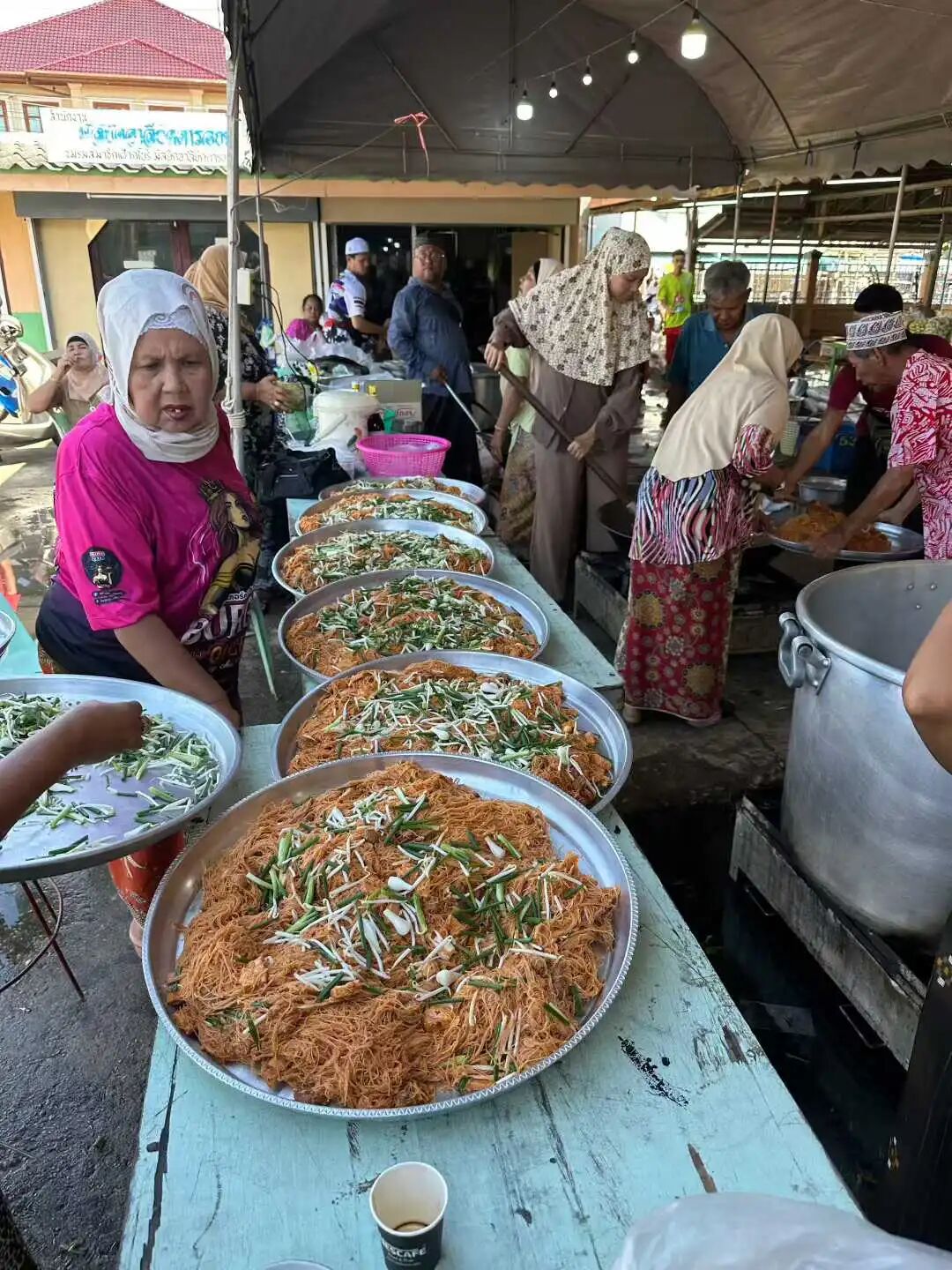
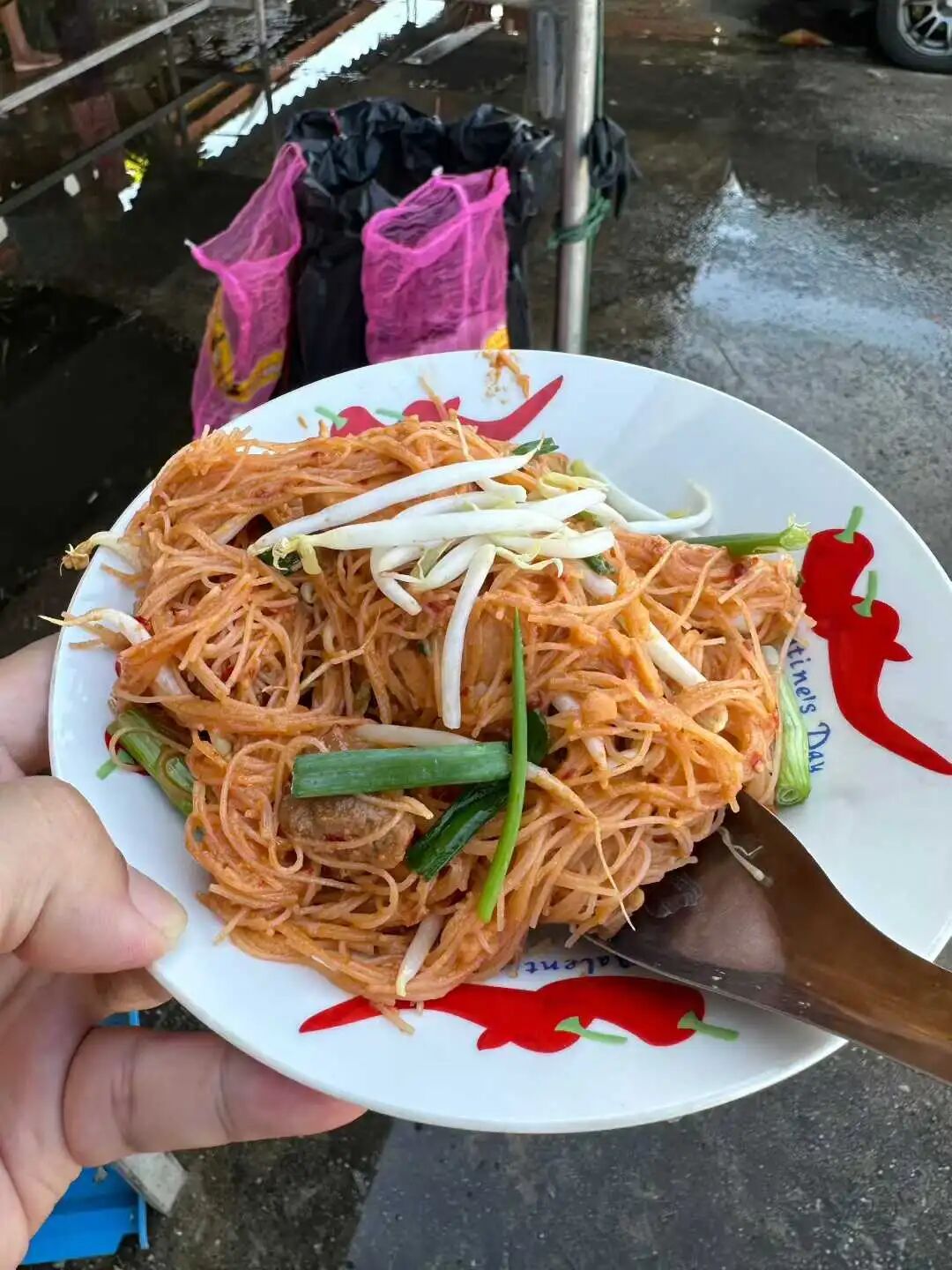
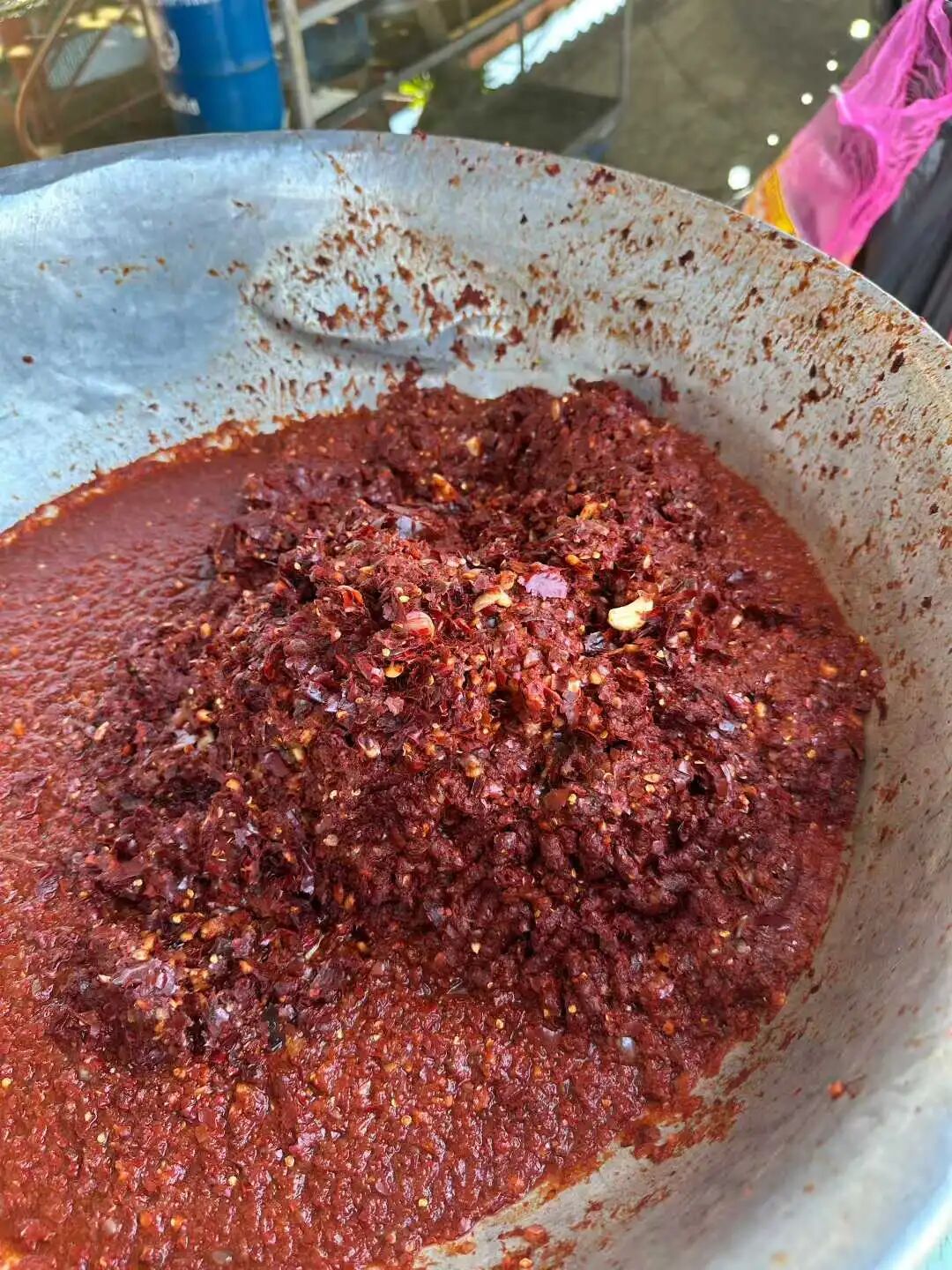
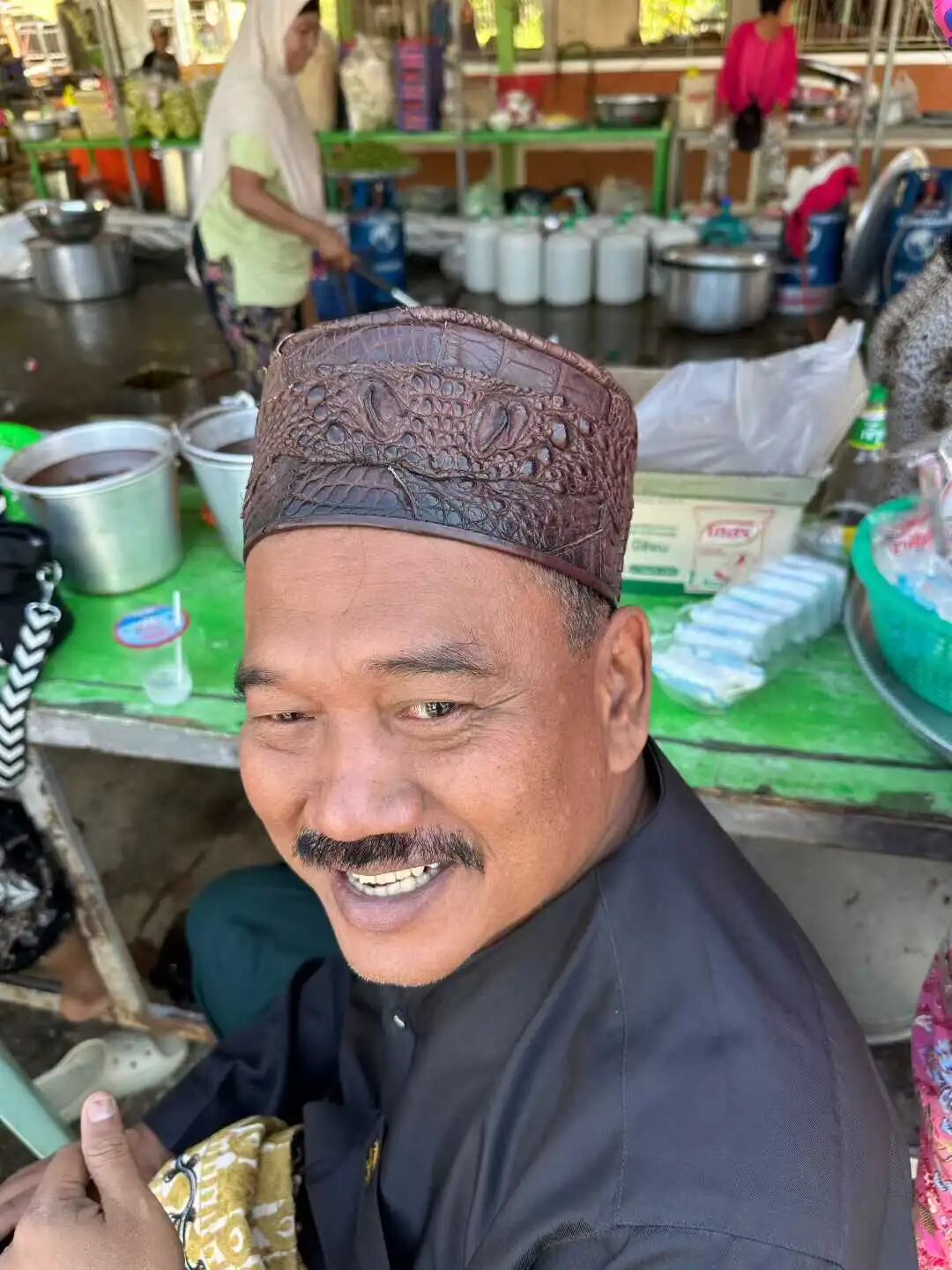
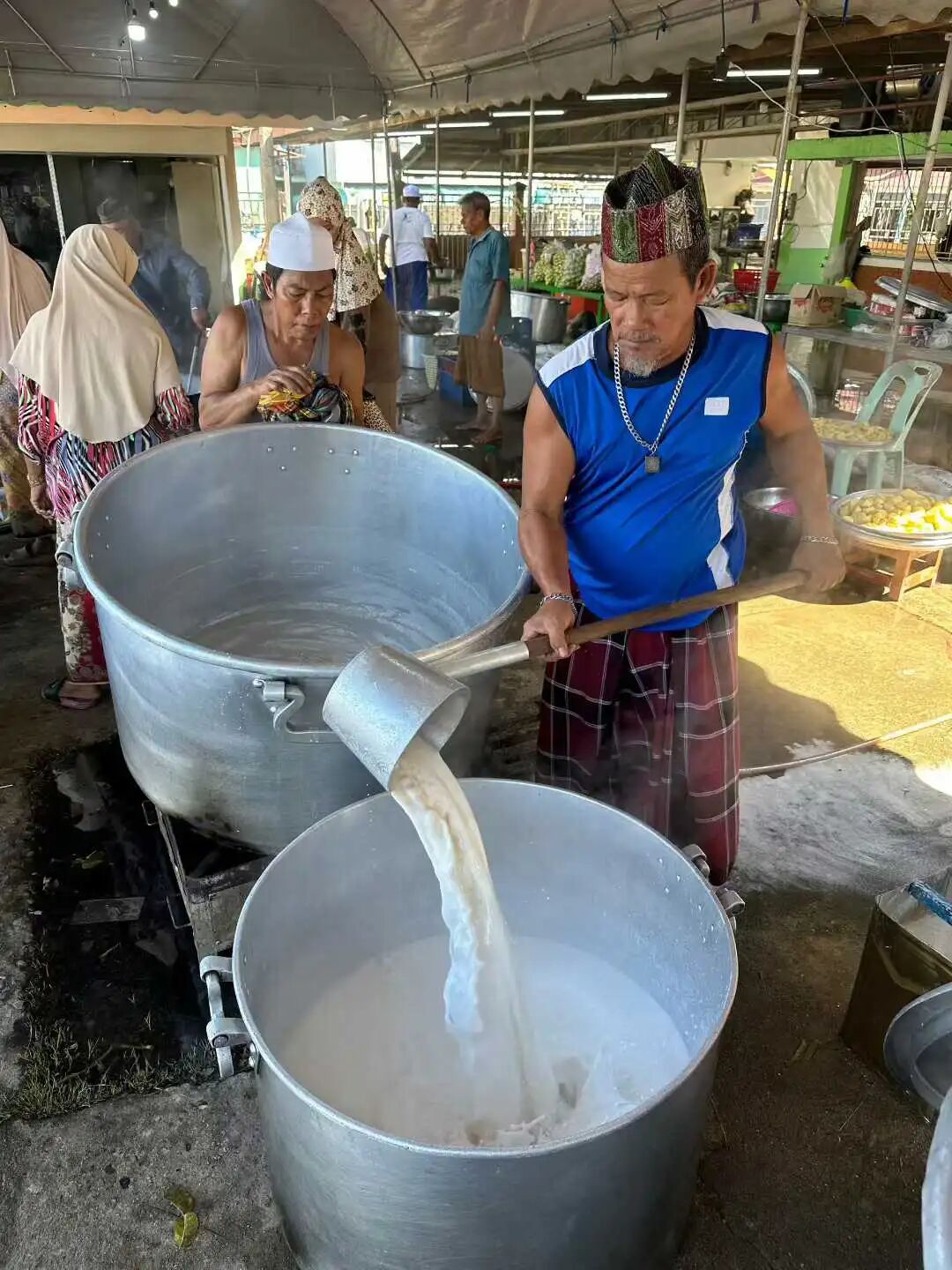
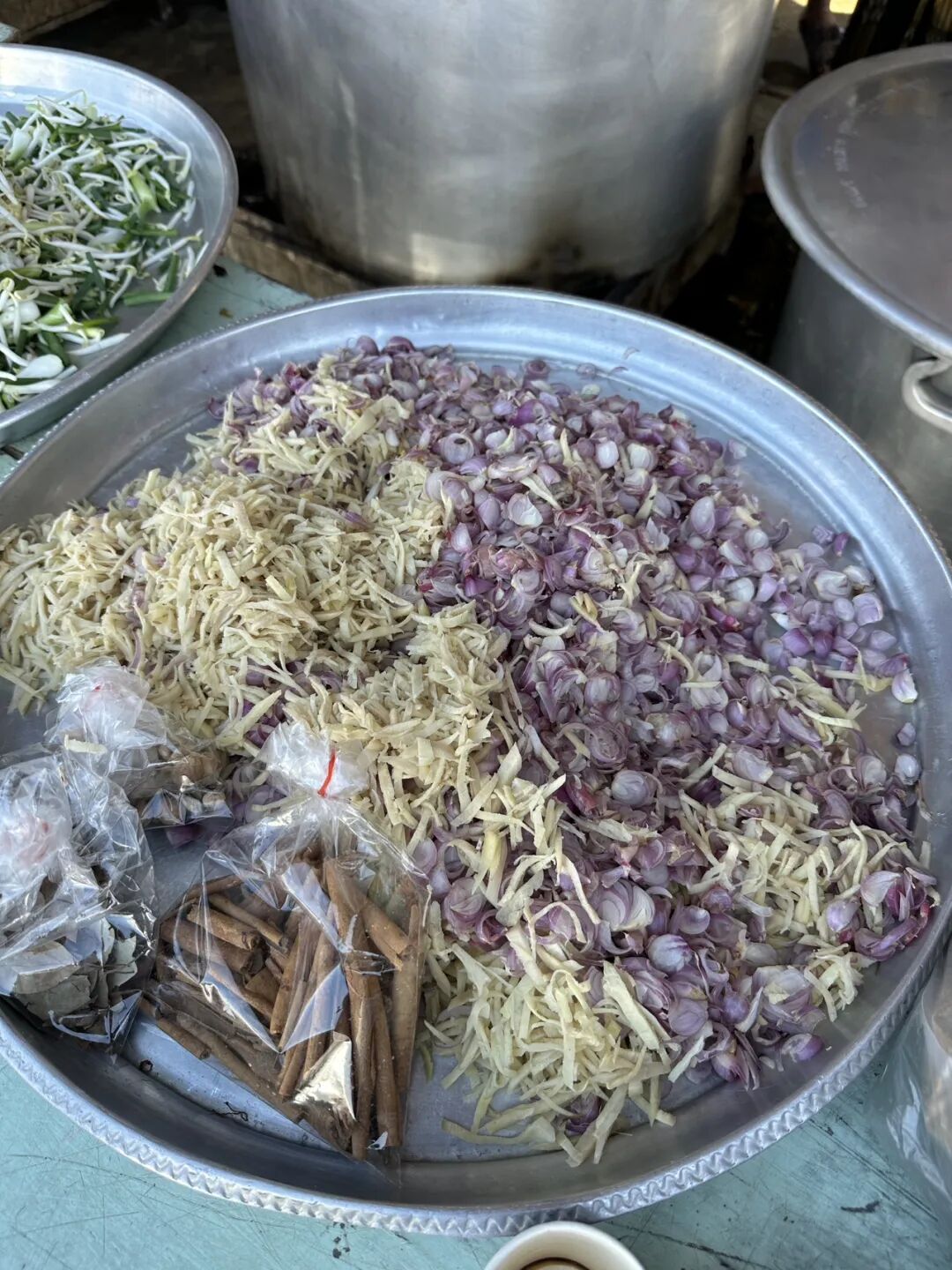
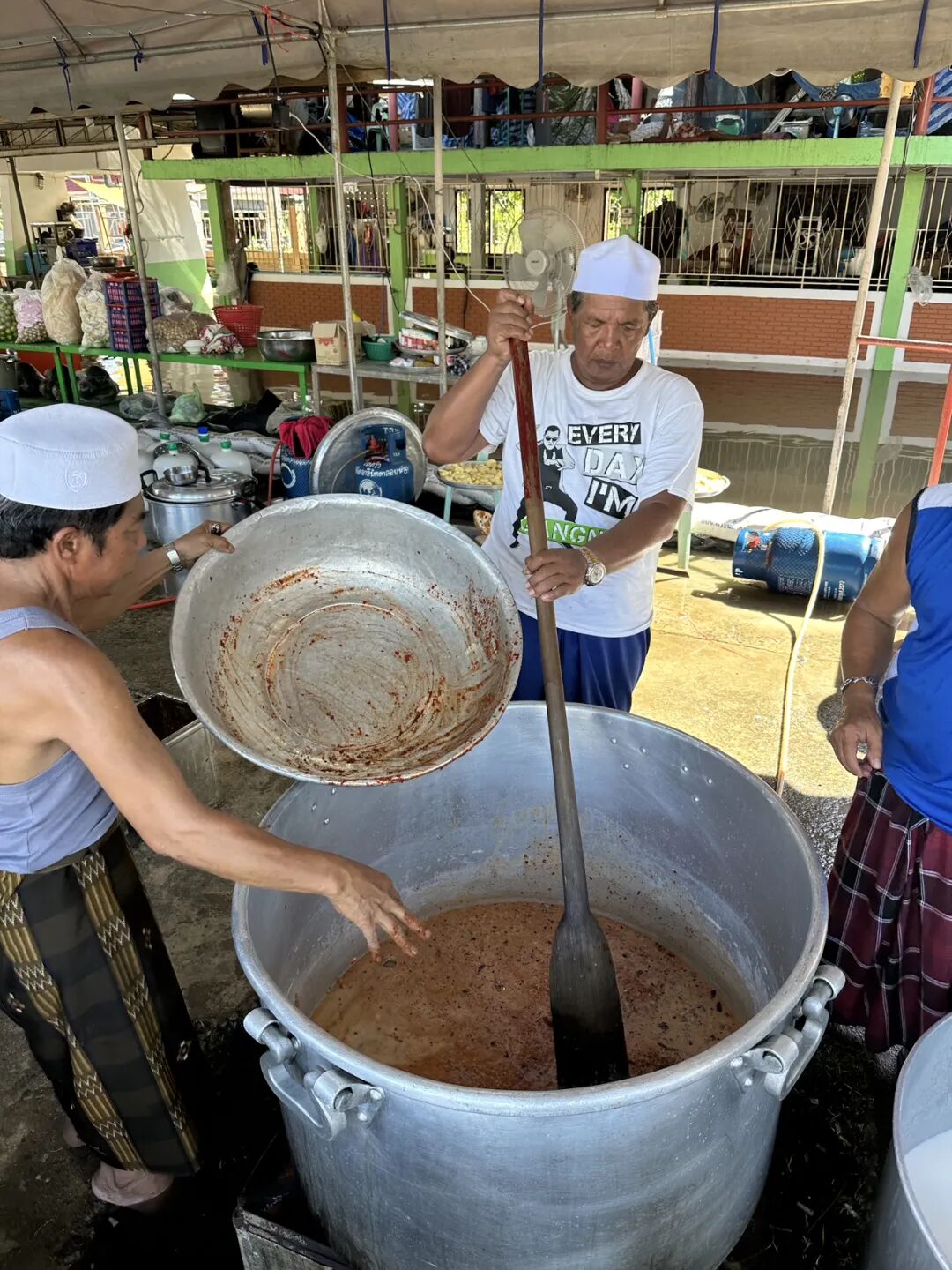
Summary: Ayutthaya offers halal resorts, Muslim-run restaurants, old mosque communities, and a gongbei gathering connected to local Sufi practice. This travel account keeps the original route, food, lodging, religious terms, and community details in one long English article.
We stayed at a halal resort called Vanida in Ayutthaya, Thailand. The resort is on a main road west of the historic city center and has beautiful scenery. It takes a bit longer to get a Grab here than in the city center, but we were always able to get one. If you take a Grab directly from Don Mueang Airport, it only takes a little over an hour.
We stayed in a townhouse-style villa with a lake and garden right outside our door. Besides breakfast, there is a formal restaurant in the courtyard, and the prayer hall is right across from it, which is very convenient.
Because it was the off-season and there were few tourists, the resort didn't serve a buffet. Instead, they prepared egg fried rice, fried eggs, sausages, various vegetables, bread, and watermelon for us. Eating by the lake was very relaxing. They keep miniature horses, cows, sheep, chickens, and rabbits in the yard, which children would probably love. There is also a children's pool in the yard where kids can swim.
The west and south sides of the Ayutthaya World Heritage historic city are surrounded by the Chao Phraya River. The area along the river in the south is mainly a residential area for the Cham people, and there are many halal restaurants there.
We had dinner on our first night at Kruta Steak on the north bank of the river. We found online that they had beautiful riverside seating, but when we arrived, the seats were flooded, so we ate inside instead.
They specialize in steaks and various mushrooms. We ordered mushroom chicken rice, fried mushrooms, and shrimp glass noodle salad, and we also drank fresh carrot juice. Their mushrooms were really good, especially the fried mushrooms, which were very fragrant. Even though we didn't speak the same language, the servers were very friendly and kept smiling at me. They also have a prayer room, which is very convenient.
You must experience taking a small boat across the Chao Phraya River when you come to Ayutthaya. We took a small ferry at a pier in the south of the city, which easily connects to the Cham community on the south bank of the old city.
The Ayutthaya World Heritage night market is right across from Wat Mahathat. The market is just one street long and has some halal snacks like fried chicken, roti flatbread (roti), and shawarma, but there are no seats, so you have to stand and eat. The nearby historic sites are lit up at night, so it's nice to walk around the night market and look at the ruins.
We ate a type of grilled fish cake wrapped in banana leaves at the night market, and it was very spicy. There is also a halal stall on the south side of the night market where I had some home-style dishes, shrimp fried rice and stir-fried crown daisy, which was a nice light meal.
On Friday, while attending Jumu'ah prayers in Ayutthaya, I was invited to lunch by two aunties who were also there for prayers. The aunties drove us to the Pakistani Noor Mosque in the northern part of the old city. I was surprised to find a snack shop in the courtyard run by an auntie of mixed Chinese and Pakistani heritage. And that is how we magically ended up eating authentic chicken char siu wonton noodles in the courtyard of a Pakistani mosque in Thailand.
The auntie who owns the shop no longer speaks Chinese. Through another auntie who treated us to a meal and translated for us, she explained that her father was Chinese and settled here after marrying a Pakistani woman. Although she has never been back to China, she was still very excited to see friends (dost) from China. Judging by the barbecued pork wonton noodles (chashao yuntun mian) she makes, her father was likely from Guangdong.
Our last stop in Ayutthaya was an important center for the Sufi Qadiriyya order in Thailand, the Sheikh Muhammad Ali Shukri shrine (gongbei) by the Chao Phraya River. Although we missed the religious gathering (a'mali), we unexpectedly caught a charity event (shesan) for flood victims. We were able to see how the Thai Sufi order performs their religious feast (nieti xi) and tasted the beef rice noodles served at the mosque.
Central and Southern Thailand are influenced by the Malay people, so most religious practices follow the Shafi'i school, and there are relatively few Sufi activities. This was my first time experiencing the warmth of Thai Sufi elders in Ayutthaya. I saw them using boat oars to stir a giant pot of rice for the first time, and I also saw the process of making coconut rice, which is very similar to how the Hui Muslims in Huihui Village, Sanya, set their tables. Because we arrived early and the meal hadn't started yet, the elders here very warmly arranged for us to eat rice noodles first. The beef rice noodles with soup poured over them were delicious. I was also surprised to meet several elders who could speak English and Chinese.
Since we had to rush to Bangkok that evening, we didn't stay at the shrine (gongbei) for long. If any friends (dost) are traveling to Ayutthaya, Thailand, I highly recommend visiting this shrine (gongbei). It is a rare opportunity to see this side of Thai Sufism.
Halal Travel Guide: Ayutthaya - Thailand's Oldest Muslim Community
Articles • ali2007fr posted the article • 0 comments • 258 views • 2026-05-21 02:08
Reposted from the web
Summary: Ayutthaya is home to one of Thailand's oldest Muslim communities, shaped by Persian, Malay, Indian, and local Thai Muslim histories. This article keeps the source's mosque names, old settlement details, palace-era background, food notes, and community observations in clear English.
When we think of Muslim communities in Thailand, we first think of the Malays in the south, the Yunnanese Hui Muslims in the north, and the diverse, integrated mosque neighborhoods in Bangkok. In fact, Muslim communities in Ayutthaya began to thrive as early as 1351, when the city became the capital of Thailand. Although Ayutthaya lost its status as the capital after the Thai capital moved in 1767, the mosque neighborhood structure here has been passed down to this day.
Historically, there were six mosque neighborhoods in Ayutthaya that date back to the Ayutthaya Kingdom (1351-1767):
Thung Khaek / Kudi Chao Sen Mosque: Persian Shia.
Khaek Pae Mosque: Persian Shia.
Nurul Yaman Mosque: Persian Shia (formerly), Malay Sunni (later).
Takia Yokin Mosque: Indian Sunni (Qadiriyya Sufi order).
Surau Nai Klong Mosque: Cham Sunni.
Kudi Chofa Mosque: Makassar and Malay Sunni.
The original site of Kudi Chao Sen Mosque was in the southern part of the Ayutthaya city walls, founded in the early 17th century by Sheikh Ahmad, a Persian who came from Qom, Iran. During the 17th and 18th centuries, this was a residential area for Persian and Indian descendants in Ayutthaya. After Ayutthaya fell in 1767, most residents moved south to Thonburi with the Thai king, and the mosque neighborhood dissolved. Today, there is a rebuilt gongbei (shrine) for Sheikh Ahmad here. For details, see 'The Persian Sheikh Gongbei in Ayutthaya, Thailand'.
Khaek Pae Mosque is located on the bank where the Chao Phraya River and the Pa Sak River meet. Persian merchants once lived on boats here, which locals called the 'floating village'. After Ayutthaya fell in 1767, most residents moved south to Thonburi with the Thai king, and the mosque neighborhood dissolved. Today, there are two mosque neighborhoods in Bangkok established by descendants of Ayutthaya's Persians. See 'Experiencing the Persian Shia Festival Atmosphere in Bangkok, Thailand' and 'Visiting Shia Communities in Bangkok'.
Nurul Yamal Mosque is located in the northern suburbs of the old city of Ayutthaya, near where the Ayutthaya Kingdom built an elephant kraal in 1580. According to the travelogue 'Safine-ye Solaymani' (The Ship of Suleiman) written by the Persian Safavid mission sent to Ayutthaya in 1685, there were over a hundred Persian merchants engaged in the lucrative elephant trade at the elephant kraal at that time. After Ayutthaya fell in 1767, most residents moved south to Thonburi with the Thai king, and the mosque neighborhood dissolved.
After the Rattanakosin Kingdom was established in Bangkok in 1782, Thailand continued to invade the Malay Sultanate of Pattani in the south. In 1786, Thailand dealt a devastating blow to the Pattani Sultanate. Afterward, a large number of Pattani Malays were relocated to central Thailand, and some settled at the old site of the Nurul Yamal mosque neighborhood and rebuilt the Nurul Yamal Mosque.
Nurul Yamal Mosque was originally a wooden structure, but it was later rebuilt into a brick and stone structure under the guidance of a Chinese person. King Rama V of Thailand (reigned 1868-1910) visited here, gifted the mosque a green lantern, and bestowed the name Nurul Yamal Mosque.
We performed Jumu'ah at Nurul Yamal Mosque, where the imam gave the khutbah (wa'z) in Thai.
Takia Yokin Mosque is located on the banks of the Chao Phraya River in the southern suburbs of Ayutthaya. It was originally a Buddhist mosque, but it was rebuilt in the mid-16th century after the mosque's abbot, Diwan Chao, was guided by the Sufi sheikh Tok Takia of the Qadiriyya menhuan. The mosque preserves a traditional Thai-style imam's prayer pavilion and a minbar pulpit, both of which are beautifully crafted. Although the founder, Sheikh Tok Takia, was of Indian descent, the local community members are now primarily Malay. See "Visiting the Two Great Qadiriyya Gongbei of Thailand."
In the 15th century, Arab, Persian, and Indian merchants sailing east along the Indian Ocean monsoon winds preferred the powerful Malacca Sultanate as their trading hub. However, after the Portuguese conquered Malacca in 1511, trade was heavily restricted. Many Arab, Persian, and Indian merchants began moving to the Siamese capital of Ayutthaya to do business, and Siam welcomed them. At that time, a large number of merchant ships gathered along the banks of the Chao Phraya River south of Ayutthaya. These merchants would anchor their ships outside the city and then transport their goods into the city for sale. The riverbank where Takia Yokin Mosque is located was an important anchorage for these ships, and it later developed into an important mosque community.
Surau Nai Klong Mosque was founded by Cham people from Cambodia and Vietnam. The Cham community in Ayutthaya is spread along both banks of the Chao Phraya River south of the old city. With a history of over 600 years, it is the oldest and longest-standing Muslim community in Thailand.
Champa (Champa) was a country established by the Cham people (Chams) in southern Vietnam in 192 AD. Because their land was narrow and fragmented, Champa focused on maritime trade and became an important trading port on the Maritime Silk Road during the Song and Yuan dynasties. Whether they were Chinese merchant ships departing from Guangzhou and Quanzhou or Arab and Persian merchant ships from the Indian Ocean and the Persian Gulf, all chose to stop in Champa.
After Ayutthaya became the capital of Thailand in 1350, Cham merchants came to trade and established a Cham village (Pata Ku Cham) on the south bank of the Chao Phraya River. According to the Royal Chronicles of Ayutthaya: Luang Prasoet Version, in 1409, the Thai King Ram Racha ordered the arrest of the minister Okya Mahasena, who successfully crossed the river and fled to the Cham village. He later supported the king's cousin, Nakarintratiraj, in overthrowing Ram Racha. After the new king ascended the throne, he exiled the old king to live in the Cham village.
After Vietnam broke free from Mongol control in the 14th century, it began moving south to invade Champa. In 1471, the Champa capital of Vijaya (Vijaya) was captured, and a large number of Cham royalty and civilians fled to Cambodia for refuge. These Cham people in Cambodia united with the Malays who had settled there earlier, forming a military alliance in the 16th century.
After the 16th century, the residential area of the Cham people in Ayutthaya expanded from the Cham village to both banks of the Chao Phraya River, and the nearby Cham canal port market became one of the four major floating markets in Ayutthaya. to selling goods, the Cham people in Ayutthaya also made a living by weaving straw mats and growing rice.
The Cambodian Cham military corps (Krom As-Cham) began to be employed by the Thai Ayutthaya Dynasty in the early 17th century. They were highly praised by the Siamese royal family for their superb shipbuilding skills and naval combat prowess. These Cham warriors were granted the honor of serving as rowers for the royal barges during Thai royal ceremonies.
After the fall of Ayutthaya in 1767, many Cham people moved south near Bangkok, as recorded in the Complete Collection of Bangkok Mosques: The Five Cham Quarters. However, many Cham people still remained in Ayutthaya. Following the arrival of Pattani Malays at the end of the 18th century, this area is now a place where Cham and Malay people live together.
The original Surau Nai Klong mosque in Champa Village was gradually abandoned after the 19th century. Today, there are three mosques here: Aliyin Nuroi, Madinah Tusslihat, and Islam Vattana. I visited the first two on this trip.
Next to the Cham community is the Islam Vattana cemetery. The most prominent building inside is a tomb for a Persian Shia sage built in the 18th century. It has now become a gongbei for local Sunni followers, which is a very interesting cultural phenomenon.
The owner of the gongbei was named Chen. He served as the Chula Rachamontri, the leader of the Thai Muslim community, during the reign of King Ekkathat (1758-1767) and was the last leader of the Muslim community during the Ayutthaya Kingdom. Chen was a descendant of the Sheikh Ahmad family, the most important Persian Shia family in Thailand. His family held a monopoly on Thai trade heading west to India, Persia, Arabia, and Europe, and they held the position of Muslim community leader by heredity. Chen's father, Jai, was a court attendant for King Narai. During the reign of King Borommakot (1733-1758), he was promoted to the general rank of Chao Phraya Phet Pichai and became the commander of the Cham and Japanese regiments. In 1750, Chen's father followed the Thai king and converted to Buddhism, but Chen held fast to his faith. He continued to serve as the leader of the Muslim community while also serving as the head of the Right Harbor, Chao Kromma Tha Khwa, responsible for managing Thailand's western trade.
After Ayutthaya fell in 1767, Chen did not follow the Thai king south to Thonburi. Instead, he stayed in his ancestral home in Ayutthaya, where he eventually passed away. His ancestral home is right next to the Cham Canal south of the city, adjacent to the Cham community. His grave is also here, and it has become an important gongbei for sages in Ayutthaya.
In 1797, Chen's son, Konkaew, inherited the titles of Muslim community leader and head of the Right Harbor in Thonburi. Another son, Akayi, built the Shia hall Kudi Charoenphat, which still stands today.
Some graves in the Vattana cemetery are decorated with fresh flowers and paper flowers, which is a Sufi tradition of the Thai Muslim community.
Traveling south from Champa Village in Ayutthaya, you reach the Klong Takian area. During the Ayutthaya Kingdom, communities of different ethnic groups—including Portuguese, Chinese, Cham, Malay, and Makassarese—were spread along the Klong Takian canal, making it the most culturally diverse area of Ayutthaya at the time.
There are several mosques in the Klong Takian area, the most famous of which is the Kudi Chofa mosque. In 1666, the Dutch East India Company invaded Makassar on the island of Sulawesi in Indonesia, causing many Makassarese to flee to Java, Sumatra, and other places. A group of Makassarese also came to the Klong Takian area in the southern suburbs of Ayutthaya. People say the Kudi Chofa mosque was first built in 1677.
Starting in the 17th century, Thailand moved south to invade the Pattani Sultanate established by the Malays. Long-term wars led to many Pattani Malays being brought to Ayutthaya, the capital of Thailand at the time. In the mid-18th century, thousands of Pattani Malay captives were settled in the southern and southwestern suburbs of Ayutthaya to grow rice, and some of them settled at the Kudi Chofa mosque. After Ayutthaya fell in 1767, some Pattani Malays returned to their hometowns, others followed the Thai king south to Thonburi, and some remained in the southern suburbs of Ayutthaya. In 1786, following Thailand's invasion of Pattani, more Pattani Malays arrived at the Kudi Chofa mosque. In 1819, Imam Toh Ki Yam oversaw the reconstruction of the mosque from a wooden structure into a brick and stone building, incorporating styles from Catholic churches and Buddhist temples.
Legend has it that once, King Rama V (reigned 1868-1910) passed by the mosque on a boat, officially named it Kudi Chofa mosque, and gifted it a lamp called Takiang Chaw.
The Kudi Chofa mosque underwent several expansions after the 20th century and was finally rebuilt into its current form in 1978. The interior of the main hall was under renovation when we visited, and a kind friend (dosti) gave us water to drink.
Three hundred years after Sheikh Tok Takia came to Thailand in the mid-16th century to spread the Sufi Qadiriyya order, the Sufi Sheikh Muhammad Ali Shukri, who is honored as a saint (Wali), revived the Qadiriyya order in Thailand in the 19th century and helped it spread from Ayutthaya to Bangkok and Pattaya. See "The Gongbei of the Persian Sheikh in Ayutthaya, Thailand."
Sheikh Shukri's tomb shrine (gongbei) is located at the Aliyid Daroun Mosque (Masjid Aliyid Daroun) on the banks of the Chao Phraya River west of Ayutthaya city, which is a mosque community established by Pattani Malays in the 19th century. Thailand invaded Pattani twice in 1831-1832 and 1838, splitting it into seven small states, which was the period when the largest number of Pattani Malays moved to central Thailand.
After the 19th century, due to the preaching of the Sufi Sheikh Shukri, some Malay friends (dosti) who lived along the Khlong Ta Kian canal in the southern suburbs of Ayutthaya and originally belonged to the Kudi Chofa mosque community began to follow the Qadiriyya order, and in the early 20th century, Imam Omar Buleh founded the Yamiul Islam mosque community. Today, the tomb shrine (gongbei) of Imam Omar Buleh is built in the backyard of the mosque, and the Buleh family has held the position of mosque imam hereditarily ever since.
The Pakistan Mosque in Ayutthaya is located in the northern part of the city and is the only mosque currently situated inside the old city of Ayutthaya. In the 17th century, the Mughal Empire and the Ayutthaya Kingdom had a very close relationship, with many Mughals coming to Ayutthaya to do business, and some even entering the royal court to serve as advisors and ministers. In 1685, Chevalier de Chaumont, the first envoy sent by King Louis XIV of France to the Ayutthaya court, recorded that the "Moors" in Ayutthaya included Turks, Persians, Mughals, Golkondas (from the Deccan region of South India), and Bengalis. In 1690, the German doctor Engelbert Kaempfer visited Ayutthaya and described that "on the main road connecting the north of the city to the royal palace, there were shops owned by Chinese, Hindustanis, and Moors." view all
Summary: Ayutthaya is home to one of Thailand's oldest Muslim communities, shaped by Persian, Malay, Indian, and local Thai Muslim histories. This article keeps the source's mosque names, old settlement details, palace-era background, food notes, and community observations in clear English.
When we think of Muslim communities in Thailand, we first think of the Malays in the south, the Yunnanese Hui Muslims in the north, and the diverse, integrated mosque neighborhoods in Bangkok. In fact, Muslim communities in Ayutthaya began to thrive as early as 1351, when the city became the capital of Thailand. Although Ayutthaya lost its status as the capital after the Thai capital moved in 1767, the mosque neighborhood structure here has been passed down to this day.
Historically, there were six mosque neighborhoods in Ayutthaya that date back to the Ayutthaya Kingdom (1351-1767):
Thung Khaek / Kudi Chao Sen Mosque: Persian Shia.
Khaek Pae Mosque: Persian Shia.
Nurul Yaman Mosque: Persian Shia (formerly), Malay Sunni (later).
Takia Yokin Mosque: Indian Sunni (Qadiriyya Sufi order).
Surau Nai Klong Mosque: Cham Sunni.
Kudi Chofa Mosque: Makassar and Malay Sunni.
The original site of Kudi Chao Sen Mosque was in the southern part of the Ayutthaya city walls, founded in the early 17th century by Sheikh Ahmad, a Persian who came from Qom, Iran. During the 17th and 18th centuries, this was a residential area for Persian and Indian descendants in Ayutthaya. After Ayutthaya fell in 1767, most residents moved south to Thonburi with the Thai king, and the mosque neighborhood dissolved. Today, there is a rebuilt gongbei (shrine) for Sheikh Ahmad here. For details, see 'The Persian Sheikh Gongbei in Ayutthaya, Thailand'.
Khaek Pae Mosque is located on the bank where the Chao Phraya River and the Pa Sak River meet. Persian merchants once lived on boats here, which locals called the 'floating village'. After Ayutthaya fell in 1767, most residents moved south to Thonburi with the Thai king, and the mosque neighborhood dissolved. Today, there are two mosque neighborhoods in Bangkok established by descendants of Ayutthaya's Persians. See 'Experiencing the Persian Shia Festival Atmosphere in Bangkok, Thailand' and 'Visiting Shia Communities in Bangkok'.
Nurul Yamal Mosque is located in the northern suburbs of the old city of Ayutthaya, near where the Ayutthaya Kingdom built an elephant kraal in 1580. According to the travelogue 'Safine-ye Solaymani' (The Ship of Suleiman) written by the Persian Safavid mission sent to Ayutthaya in 1685, there were over a hundred Persian merchants engaged in the lucrative elephant trade at the elephant kraal at that time. After Ayutthaya fell in 1767, most residents moved south to Thonburi with the Thai king, and the mosque neighborhood dissolved.
After the Rattanakosin Kingdom was established in Bangkok in 1782, Thailand continued to invade the Malay Sultanate of Pattani in the south. In 1786, Thailand dealt a devastating blow to the Pattani Sultanate. Afterward, a large number of Pattani Malays were relocated to central Thailand, and some settled at the old site of the Nurul Yamal mosque neighborhood and rebuilt the Nurul Yamal Mosque.
Nurul Yamal Mosque was originally a wooden structure, but it was later rebuilt into a brick and stone structure under the guidance of a Chinese person. King Rama V of Thailand (reigned 1868-1910) visited here, gifted the mosque a green lantern, and bestowed the name Nurul Yamal Mosque.
We performed Jumu'ah at Nurul Yamal Mosque, where the imam gave the khutbah (wa'z) in Thai.
Takia Yokin Mosque is located on the banks of the Chao Phraya River in the southern suburbs of Ayutthaya. It was originally a Buddhist mosque, but it was rebuilt in the mid-16th century after the mosque's abbot, Diwan Chao, was guided by the Sufi sheikh Tok Takia of the Qadiriyya menhuan. The mosque preserves a traditional Thai-style imam's prayer pavilion and a minbar pulpit, both of which are beautifully crafted. Although the founder, Sheikh Tok Takia, was of Indian descent, the local community members are now primarily Malay. See "Visiting the Two Great Qadiriyya Gongbei of Thailand."
In the 15th century, Arab, Persian, and Indian merchants sailing east along the Indian Ocean monsoon winds preferred the powerful Malacca Sultanate as their trading hub. However, after the Portuguese conquered Malacca in 1511, trade was heavily restricted. Many Arab, Persian, and Indian merchants began moving to the Siamese capital of Ayutthaya to do business, and Siam welcomed them. At that time, a large number of merchant ships gathered along the banks of the Chao Phraya River south of Ayutthaya. These merchants would anchor their ships outside the city and then transport their goods into the city for sale. The riverbank where Takia Yokin Mosque is located was an important anchorage for these ships, and it later developed into an important mosque community.
Surau Nai Klong Mosque was founded by Cham people from Cambodia and Vietnam. The Cham community in Ayutthaya is spread along both banks of the Chao Phraya River south of the old city. With a history of over 600 years, it is the oldest and longest-standing Muslim community in Thailand.
Champa (Champa) was a country established by the Cham people (Chams) in southern Vietnam in 192 AD. Because their land was narrow and fragmented, Champa focused on maritime trade and became an important trading port on the Maritime Silk Road during the Song and Yuan dynasties. Whether they were Chinese merchant ships departing from Guangzhou and Quanzhou or Arab and Persian merchant ships from the Indian Ocean and the Persian Gulf, all chose to stop in Champa.
After Ayutthaya became the capital of Thailand in 1350, Cham merchants came to trade and established a Cham village (Pata Ku Cham) on the south bank of the Chao Phraya River. According to the Royal Chronicles of Ayutthaya: Luang Prasoet Version, in 1409, the Thai King Ram Racha ordered the arrest of the minister Okya Mahasena, who successfully crossed the river and fled to the Cham village. He later supported the king's cousin, Nakarintratiraj, in overthrowing Ram Racha. After the new king ascended the throne, he exiled the old king to live in the Cham village.
After Vietnam broke free from Mongol control in the 14th century, it began moving south to invade Champa. In 1471, the Champa capital of Vijaya (Vijaya) was captured, and a large number of Cham royalty and civilians fled to Cambodia for refuge. These Cham people in Cambodia united with the Malays who had settled there earlier, forming a military alliance in the 16th century.
After the 16th century, the residential area of the Cham people in Ayutthaya expanded from the Cham village to both banks of the Chao Phraya River, and the nearby Cham canal port market became one of the four major floating markets in Ayutthaya. to selling goods, the Cham people in Ayutthaya also made a living by weaving straw mats and growing rice.
The Cambodian Cham military corps (Krom As-Cham) began to be employed by the Thai Ayutthaya Dynasty in the early 17th century. They were highly praised by the Siamese royal family for their superb shipbuilding skills and naval combat prowess. These Cham warriors were granted the honor of serving as rowers for the royal barges during Thai royal ceremonies.
After the fall of Ayutthaya in 1767, many Cham people moved south near Bangkok, as recorded in the Complete Collection of Bangkok Mosques: The Five Cham Quarters. However, many Cham people still remained in Ayutthaya. Following the arrival of Pattani Malays at the end of the 18th century, this area is now a place where Cham and Malay people live together.
The original Surau Nai Klong mosque in Champa Village was gradually abandoned after the 19th century. Today, there are three mosques here: Aliyin Nuroi, Madinah Tusslihat, and Islam Vattana. I visited the first two on this trip.
Next to the Cham community is the Islam Vattana cemetery. The most prominent building inside is a tomb for a Persian Shia sage built in the 18th century. It has now become a gongbei for local Sunni followers, which is a very interesting cultural phenomenon.
The owner of the gongbei was named Chen. He served as the Chula Rachamontri, the leader of the Thai Muslim community, during the reign of King Ekkathat (1758-1767) and was the last leader of the Muslim community during the Ayutthaya Kingdom. Chen was a descendant of the Sheikh Ahmad family, the most important Persian Shia family in Thailand. His family held a monopoly on Thai trade heading west to India, Persia, Arabia, and Europe, and they held the position of Muslim community leader by heredity. Chen's father, Jai, was a court attendant for King Narai. During the reign of King Borommakot (1733-1758), he was promoted to the general rank of Chao Phraya Phet Pichai and became the commander of the Cham and Japanese regiments. In 1750, Chen's father followed the Thai king and converted to Buddhism, but Chen held fast to his faith. He continued to serve as the leader of the Muslim community while also serving as the head of the Right Harbor, Chao Kromma Tha Khwa, responsible for managing Thailand's western trade.
After Ayutthaya fell in 1767, Chen did not follow the Thai king south to Thonburi. Instead, he stayed in his ancestral home in Ayutthaya, where he eventually passed away. His ancestral home is right next to the Cham Canal south of the city, adjacent to the Cham community. His grave is also here, and it has become an important gongbei for sages in Ayutthaya.
In 1797, Chen's son, Konkaew, inherited the titles of Muslim community leader and head of the Right Harbor in Thonburi. Another son, Akayi, built the Shia hall Kudi Charoenphat, which still stands today.
Some graves in the Vattana cemetery are decorated with fresh flowers and paper flowers, which is a Sufi tradition of the Thai Muslim community.
Traveling south from Champa Village in Ayutthaya, you reach the Klong Takian area. During the Ayutthaya Kingdom, communities of different ethnic groups—including Portuguese, Chinese, Cham, Malay, and Makassarese—were spread along the Klong Takian canal, making it the most culturally diverse area of Ayutthaya at the time.
There are several mosques in the Klong Takian area, the most famous of which is the Kudi Chofa mosque. In 1666, the Dutch East India Company invaded Makassar on the island of Sulawesi in Indonesia, causing many Makassarese to flee to Java, Sumatra, and other places. A group of Makassarese also came to the Klong Takian area in the southern suburbs of Ayutthaya. People say the Kudi Chofa mosque was first built in 1677.
Starting in the 17th century, Thailand moved south to invade the Pattani Sultanate established by the Malays. Long-term wars led to many Pattani Malays being brought to Ayutthaya, the capital of Thailand at the time. In the mid-18th century, thousands of Pattani Malay captives were settled in the southern and southwestern suburbs of Ayutthaya to grow rice, and some of them settled at the Kudi Chofa mosque. After Ayutthaya fell in 1767, some Pattani Malays returned to their hometowns, others followed the Thai king south to Thonburi, and some remained in the southern suburbs of Ayutthaya. In 1786, following Thailand's invasion of Pattani, more Pattani Malays arrived at the Kudi Chofa mosque. In 1819, Imam Toh Ki Yam oversaw the reconstruction of the mosque from a wooden structure into a brick and stone building, incorporating styles from Catholic churches and Buddhist temples.
Legend has it that once, King Rama V (reigned 1868-1910) passed by the mosque on a boat, officially named it Kudi Chofa mosque, and gifted it a lamp called Takiang Chaw.
The Kudi Chofa mosque underwent several expansions after the 20th century and was finally rebuilt into its current form in 1978. The interior of the main hall was under renovation when we visited, and a kind friend (dosti) gave us water to drink.
Three hundred years after Sheikh Tok Takia came to Thailand in the mid-16th century to spread the Sufi Qadiriyya order, the Sufi Sheikh Muhammad Ali Shukri, who is honored as a saint (Wali), revived the Qadiriyya order in Thailand in the 19th century and helped it spread from Ayutthaya to Bangkok and Pattaya. See "The Gongbei of the Persian Sheikh in Ayutthaya, Thailand."
Sheikh Shukri's tomb shrine (gongbei) is located at the Aliyid Daroun Mosque (Masjid Aliyid Daroun) on the banks of the Chao Phraya River west of Ayutthaya city, which is a mosque community established by Pattani Malays in the 19th century. Thailand invaded Pattani twice in 1831-1832 and 1838, splitting it into seven small states, which was the period when the largest number of Pattani Malays moved to central Thailand.
After the 19th century, due to the preaching of the Sufi Sheikh Shukri, some Malay friends (dosti) who lived along the Khlong Ta Kian canal in the southern suburbs of Ayutthaya and originally belonged to the Kudi Chofa mosque community began to follow the Qadiriyya order, and in the early 20th century, Imam Omar Buleh founded the Yamiul Islam mosque community. Today, the tomb shrine (gongbei) of Imam Omar Buleh is built in the backyard of the mosque, and the Buleh family has held the position of mosque imam hereditarily ever since.
The Pakistan Mosque in Ayutthaya is located in the northern part of the city and is the only mosque currently situated inside the old city of Ayutthaya. In the 17th century, the Mughal Empire and the Ayutthaya Kingdom had a very close relationship, with many Mughals coming to Ayutthaya to do business, and some even entering the royal court to serve as advisors and ministers. In 1685, Chevalier de Chaumont, the first envoy sent by King Louis XIV of France to the Ayutthaya court, recorded that the "Moors" in Ayutthaya included Turks, Persians, Mughals, Golkondas (from the Deccan region of South India), and Bengalis. In 1690, the German doctor Engelbert Kaempfer visited Ayutthaya and described that "on the main road connecting the north of the city to the royal palace, there were shops owned by Chinese, Hindustanis, and Moors." view all
Reposted from the web
Summary: Ayutthaya is home to one of Thailand's oldest Muslim communities, shaped by Persian, Malay, Indian, and local Thai Muslim histories. This article keeps the source's mosque names, old settlement details, palace-era background, food notes, and community observations in clear English.
When we think of Muslim communities in Thailand, we first think of the Malays in the south, the Yunnanese Hui Muslims in the north, and the diverse, integrated mosque neighborhoods in Bangkok. In fact, Muslim communities in Ayutthaya began to thrive as early as 1351, when the city became the capital of Thailand. Although Ayutthaya lost its status as the capital after the Thai capital moved in 1767, the mosque neighborhood structure here has been passed down to this day.
Historically, there were six mosque neighborhoods in Ayutthaya that date back to the Ayutthaya Kingdom (1351-1767):
Thung Khaek / Kudi Chao Sen Mosque: Persian Shia.
Khaek Pae Mosque: Persian Shia.
Nurul Yaman Mosque: Persian Shia (formerly), Malay Sunni (later).
Takia Yokin Mosque: Indian Sunni (Qadiriyya Sufi order).
Surau Nai Klong Mosque: Cham Sunni.
Kudi Chofa Mosque: Makassar and Malay Sunni.
The original site of Kudi Chao Sen Mosque was in the southern part of the Ayutthaya city walls, founded in the early 17th century by Sheikh Ahmad, a Persian who came from Qom, Iran. During the 17th and 18th centuries, this was a residential area for Persian and Indian descendants in Ayutthaya. After Ayutthaya fell in 1767, most residents moved south to Thonburi with the Thai king, and the mosque neighborhood dissolved. Today, there is a rebuilt gongbei (shrine) for Sheikh Ahmad here. For details, see 'The Persian Sheikh Gongbei in Ayutthaya, Thailand'.
Khaek Pae Mosque is located on the bank where the Chao Phraya River and the Pa Sak River meet. Persian merchants once lived on boats here, which locals called the 'floating village'. After Ayutthaya fell in 1767, most residents moved south to Thonburi with the Thai king, and the mosque neighborhood dissolved. Today, there are two mosque neighborhoods in Bangkok established by descendants of Ayutthaya's Persians. See 'Experiencing the Persian Shia Festival Atmosphere in Bangkok, Thailand' and 'Visiting Shia Communities in Bangkok'.
Nurul Yamal Mosque is located in the northern suburbs of the old city of Ayutthaya, near where the Ayutthaya Kingdom built an elephant kraal in 1580. According to the travelogue 'Safine-ye Solaymani' (The Ship of Suleiman) written by the Persian Safavid mission sent to Ayutthaya in 1685, there were over a hundred Persian merchants engaged in the lucrative elephant trade at the elephant kraal at that time. After Ayutthaya fell in 1767, most residents moved south to Thonburi with the Thai king, and the mosque neighborhood dissolved.
After the Rattanakosin Kingdom was established in Bangkok in 1782, Thailand continued to invade the Malay Sultanate of Pattani in the south. In 1786, Thailand dealt a devastating blow to the Pattani Sultanate. Afterward, a large number of Pattani Malays were relocated to central Thailand, and some settled at the old site of the Nurul Yamal mosque neighborhood and rebuilt the Nurul Yamal Mosque.
Nurul Yamal Mosque was originally a wooden structure, but it was later rebuilt into a brick and stone structure under the guidance of a Chinese person. King Rama V of Thailand (reigned 1868-1910) visited here, gifted the mosque a green lantern, and bestowed the name Nurul Yamal Mosque.
We performed Jumu'ah at Nurul Yamal Mosque, where the imam gave the khutbah (wa'z) in Thai.
Takia Yokin Mosque is located on the banks of the Chao Phraya River in the southern suburbs of Ayutthaya. It was originally a Buddhist mosque, but it was rebuilt in the mid-16th century after the mosque's abbot, Diwan Chao, was guided by the Sufi sheikh Tok Takia of the Qadiriyya menhuan. The mosque preserves a traditional Thai-style imam's prayer pavilion and a minbar pulpit, both of which are beautifully crafted. Although the founder, Sheikh Tok Takia, was of Indian descent, the local community members are now primarily Malay. See "Visiting the Two Great Qadiriyya Gongbei of Thailand."
In the 15th century, Arab, Persian, and Indian merchants sailing east along the Indian Ocean monsoon winds preferred the powerful Malacca Sultanate as their trading hub. However, after the Portuguese conquered Malacca in 1511, trade was heavily restricted. Many Arab, Persian, and Indian merchants began moving to the Siamese capital of Ayutthaya to do business, and Siam welcomed them. At that time, a large number of merchant ships gathered along the banks of the Chao Phraya River south of Ayutthaya. These merchants would anchor their ships outside the city and then transport their goods into the city for sale. The riverbank where Takia Yokin Mosque is located was an important anchorage for these ships, and it later developed into an important mosque community.
Surau Nai Klong Mosque was founded by Cham people from Cambodia and Vietnam. The Cham community in Ayutthaya is spread along both banks of the Chao Phraya River south of the old city. With a history of over 600 years, it is the oldest and longest-standing Muslim community in Thailand.
Champa (Champa) was a country established by the Cham people (Chams) in southern Vietnam in 192 AD. Because their land was narrow and fragmented, Champa focused on maritime trade and became an important trading port on the Maritime Silk Road during the Song and Yuan dynasties. Whether they were Chinese merchant ships departing from Guangzhou and Quanzhou or Arab and Persian merchant ships from the Indian Ocean and the Persian Gulf, all chose to stop in Champa.
After Ayutthaya became the capital of Thailand in 1350, Cham merchants came to trade and established a Cham village (Pata Ku Cham) on the south bank of the Chao Phraya River. According to the Royal Chronicles of Ayutthaya: Luang Prasoet Version, in 1409, the Thai King Ram Racha ordered the arrest of the minister Okya Mahasena, who successfully crossed the river and fled to the Cham village. He later supported the king's cousin, Nakarintratiraj, in overthrowing Ram Racha. After the new king ascended the throne, he exiled the old king to live in the Cham village.
After Vietnam broke free from Mongol control in the 14th century, it began moving south to invade Champa. In 1471, the Champa capital of Vijaya (Vijaya) was captured, and a large number of Cham royalty and civilians fled to Cambodia for refuge. These Cham people in Cambodia united with the Malays who had settled there earlier, forming a military alliance in the 16th century.
After the 16th century, the residential area of the Cham people in Ayutthaya expanded from the Cham village to both banks of the Chao Phraya River, and the nearby Cham canal port market became one of the four major floating markets in Ayutthaya. to selling goods, the Cham people in Ayutthaya also made a living by weaving straw mats and growing rice.
The Cambodian Cham military corps (Krom As-Cham) began to be employed by the Thai Ayutthaya Dynasty in the early 17th century. They were highly praised by the Siamese royal family for their superb shipbuilding skills and naval combat prowess. These Cham warriors were granted the honor of serving as rowers for the royal barges during Thai royal ceremonies.
After the fall of Ayutthaya in 1767, many Cham people moved south near Bangkok, as recorded in the Complete Collection of Bangkok Mosques: The Five Cham Quarters. However, many Cham people still remained in Ayutthaya. Following the arrival of Pattani Malays at the end of the 18th century, this area is now a place where Cham and Malay people live together.
The original Surau Nai Klong mosque in Champa Village was gradually abandoned after the 19th century. Today, there are three mosques here: Aliyin Nuroi, Madinah Tusslihat, and Islam Vattana. I visited the first two on this trip.
Next to the Cham community is the Islam Vattana cemetery. The most prominent building inside is a tomb for a Persian Shia sage built in the 18th century. It has now become a gongbei for local Sunni followers, which is a very interesting cultural phenomenon.
The owner of the gongbei was named Chen. He served as the Chula Rachamontri, the leader of the Thai Muslim community, during the reign of King Ekkathat (1758-1767) and was the last leader of the Muslim community during the Ayutthaya Kingdom. Chen was a descendant of the Sheikh Ahmad family, the most important Persian Shia family in Thailand. His family held a monopoly on Thai trade heading west to India, Persia, Arabia, and Europe, and they held the position of Muslim community leader by heredity. Chen's father, Jai, was a court attendant for King Narai. During the reign of King Borommakot (1733-1758), he was promoted to the general rank of Chao Phraya Phet Pichai and became the commander of the Cham and Japanese regiments. In 1750, Chen's father followed the Thai king and converted to Buddhism, but Chen held fast to his faith. He continued to serve as the leader of the Muslim community while also serving as the head of the Right Harbor, Chao Kromma Tha Khwa, responsible for managing Thailand's western trade.
After Ayutthaya fell in 1767, Chen did not follow the Thai king south to Thonburi. Instead, he stayed in his ancestral home in Ayutthaya, where he eventually passed away. His ancestral home is right next to the Cham Canal south of the city, adjacent to the Cham community. His grave is also here, and it has become an important gongbei for sages in Ayutthaya.
In 1797, Chen's son, Konkaew, inherited the titles of Muslim community leader and head of the Right Harbor in Thonburi. Another son, Akayi, built the Shia hall Kudi Charoenphat, which still stands today.
Some graves in the Vattana cemetery are decorated with fresh flowers and paper flowers, which is a Sufi tradition of the Thai Muslim community.
Traveling south from Champa Village in Ayutthaya, you reach the Klong Takian area. During the Ayutthaya Kingdom, communities of different ethnic groups—including Portuguese, Chinese, Cham, Malay, and Makassarese—were spread along the Klong Takian canal, making it the most culturally diverse area of Ayutthaya at the time.
There are several mosques in the Klong Takian area, the most famous of which is the Kudi Chofa mosque. In 1666, the Dutch East India Company invaded Makassar on the island of Sulawesi in Indonesia, causing many Makassarese to flee to Java, Sumatra, and other places. A group of Makassarese also came to the Klong Takian area in the southern suburbs of Ayutthaya. People say the Kudi Chofa mosque was first built in 1677.
Starting in the 17th century, Thailand moved south to invade the Pattani Sultanate established by the Malays. Long-term wars led to many Pattani Malays being brought to Ayutthaya, the capital of Thailand at the time. In the mid-18th century, thousands of Pattani Malay captives were settled in the southern and southwestern suburbs of Ayutthaya to grow rice, and some of them settled at the Kudi Chofa mosque. After Ayutthaya fell in 1767, some Pattani Malays returned to their hometowns, others followed the Thai king south to Thonburi, and some remained in the southern suburbs of Ayutthaya. In 1786, following Thailand's invasion of Pattani, more Pattani Malays arrived at the Kudi Chofa mosque. In 1819, Imam Toh Ki Yam oversaw the reconstruction of the mosque from a wooden structure into a brick and stone building, incorporating styles from Catholic churches and Buddhist temples.
Legend has it that once, King Rama V (reigned 1868-1910) passed by the mosque on a boat, officially named it Kudi Chofa mosque, and gifted it a lamp called Takiang Chaw.
The Kudi Chofa mosque underwent several expansions after the 20th century and was finally rebuilt into its current form in 1978. The interior of the main hall was under renovation when we visited, and a kind friend (dosti) gave us water to drink.
Three hundred years after Sheikh Tok Takia came to Thailand in the mid-16th century to spread the Sufi Qadiriyya order, the Sufi Sheikh Muhammad Ali Shukri, who is honored as a saint (Wali), revived the Qadiriyya order in Thailand in the 19th century and helped it spread from Ayutthaya to Bangkok and Pattaya. See "The Gongbei of the Persian Sheikh in Ayutthaya, Thailand."
Sheikh Shukri's tomb shrine (gongbei) is located at the Aliyid Daroun Mosque (Masjid Aliyid Daroun) on the banks of the Chao Phraya River west of Ayutthaya city, which is a mosque community established by Pattani Malays in the 19th century. Thailand invaded Pattani twice in 1831-1832 and 1838, splitting it into seven small states, which was the period when the largest number of Pattani Malays moved to central Thailand.
After the 19th century, due to the preaching of the Sufi Sheikh Shukri, some Malay friends (dosti) who lived along the Khlong Ta Kian canal in the southern suburbs of Ayutthaya and originally belonged to the Kudi Chofa mosque community began to follow the Qadiriyya order, and in the early 20th century, Imam Omar Buleh founded the Yamiul Islam mosque community. Today, the tomb shrine (gongbei) of Imam Omar Buleh is built in the backyard of the mosque, and the Buleh family has held the position of mosque imam hereditarily ever since.
The Pakistan Mosque in Ayutthaya is located in the northern part of the city and is the only mosque currently situated inside the old city of Ayutthaya. In the 17th century, the Mughal Empire and the Ayutthaya Kingdom had a very close relationship, with many Mughals coming to Ayutthaya to do business, and some even entering the royal court to serve as advisors and ministers. In 1685, Chevalier de Chaumont, the first envoy sent by King Louis XIV of France to the Ayutthaya court, recorded that the "Moors" in Ayutthaya included Turks, Persians, Mughals, Golkondas (from the Deccan region of South India), and Bengalis. In 1690, the German doctor Engelbert Kaempfer visited Ayutthaya and described that "on the main road connecting the north of the city to the royal palace, there were shops owned by Chinese, Hindustanis, and Moors."
Summary: Ayutthaya is home to one of Thailand's oldest Muslim communities, shaped by Persian, Malay, Indian, and local Thai Muslim histories. This article keeps the source's mosque names, old settlement details, palace-era background, food notes, and community observations in clear English.
When we think of Muslim communities in Thailand, we first think of the Malays in the south, the Yunnanese Hui Muslims in the north, and the diverse, integrated mosque neighborhoods in Bangkok. In fact, Muslim communities in Ayutthaya began to thrive as early as 1351, when the city became the capital of Thailand. Although Ayutthaya lost its status as the capital after the Thai capital moved in 1767, the mosque neighborhood structure here has been passed down to this day.
Historically, there were six mosque neighborhoods in Ayutthaya that date back to the Ayutthaya Kingdom (1351-1767):
Thung Khaek / Kudi Chao Sen Mosque: Persian Shia.
Khaek Pae Mosque: Persian Shia.
Nurul Yaman Mosque: Persian Shia (formerly), Malay Sunni (later).
Takia Yokin Mosque: Indian Sunni (Qadiriyya Sufi order).
Surau Nai Klong Mosque: Cham Sunni.
Kudi Chofa Mosque: Makassar and Malay Sunni.
The original site of Kudi Chao Sen Mosque was in the southern part of the Ayutthaya city walls, founded in the early 17th century by Sheikh Ahmad, a Persian who came from Qom, Iran. During the 17th and 18th centuries, this was a residential area for Persian and Indian descendants in Ayutthaya. After Ayutthaya fell in 1767, most residents moved south to Thonburi with the Thai king, and the mosque neighborhood dissolved. Today, there is a rebuilt gongbei (shrine) for Sheikh Ahmad here. For details, see 'The Persian Sheikh Gongbei in Ayutthaya, Thailand'.
Khaek Pae Mosque is located on the bank where the Chao Phraya River and the Pa Sak River meet. Persian merchants once lived on boats here, which locals called the 'floating village'. After Ayutthaya fell in 1767, most residents moved south to Thonburi with the Thai king, and the mosque neighborhood dissolved. Today, there are two mosque neighborhoods in Bangkok established by descendants of Ayutthaya's Persians. See 'Experiencing the Persian Shia Festival Atmosphere in Bangkok, Thailand' and 'Visiting Shia Communities in Bangkok'.
Nurul Yamal Mosque is located in the northern suburbs of the old city of Ayutthaya, near where the Ayutthaya Kingdom built an elephant kraal in 1580. According to the travelogue 'Safine-ye Solaymani' (The Ship of Suleiman) written by the Persian Safavid mission sent to Ayutthaya in 1685, there were over a hundred Persian merchants engaged in the lucrative elephant trade at the elephant kraal at that time. After Ayutthaya fell in 1767, most residents moved south to Thonburi with the Thai king, and the mosque neighborhood dissolved.
After the Rattanakosin Kingdom was established in Bangkok in 1782, Thailand continued to invade the Malay Sultanate of Pattani in the south. In 1786, Thailand dealt a devastating blow to the Pattani Sultanate. Afterward, a large number of Pattani Malays were relocated to central Thailand, and some settled at the old site of the Nurul Yamal mosque neighborhood and rebuilt the Nurul Yamal Mosque.
Nurul Yamal Mosque was originally a wooden structure, but it was later rebuilt into a brick and stone structure under the guidance of a Chinese person. King Rama V of Thailand (reigned 1868-1910) visited here, gifted the mosque a green lantern, and bestowed the name Nurul Yamal Mosque.
We performed Jumu'ah at Nurul Yamal Mosque, where the imam gave the khutbah (wa'z) in Thai.
Takia Yokin Mosque is located on the banks of the Chao Phraya River in the southern suburbs of Ayutthaya. It was originally a Buddhist mosque, but it was rebuilt in the mid-16th century after the mosque's abbot, Diwan Chao, was guided by the Sufi sheikh Tok Takia of the Qadiriyya menhuan. The mosque preserves a traditional Thai-style imam's prayer pavilion and a minbar pulpit, both of which are beautifully crafted. Although the founder, Sheikh Tok Takia, was of Indian descent, the local community members are now primarily Malay. See "Visiting the Two Great Qadiriyya Gongbei of Thailand."
In the 15th century, Arab, Persian, and Indian merchants sailing east along the Indian Ocean monsoon winds preferred the powerful Malacca Sultanate as their trading hub. However, after the Portuguese conquered Malacca in 1511, trade was heavily restricted. Many Arab, Persian, and Indian merchants began moving to the Siamese capital of Ayutthaya to do business, and Siam welcomed them. At that time, a large number of merchant ships gathered along the banks of the Chao Phraya River south of Ayutthaya. These merchants would anchor their ships outside the city and then transport their goods into the city for sale. The riverbank where Takia Yokin Mosque is located was an important anchorage for these ships, and it later developed into an important mosque community.
Surau Nai Klong Mosque was founded by Cham people from Cambodia and Vietnam. The Cham community in Ayutthaya is spread along both banks of the Chao Phraya River south of the old city. With a history of over 600 years, it is the oldest and longest-standing Muslim community in Thailand.
Champa (Champa) was a country established by the Cham people (Chams) in southern Vietnam in 192 AD. Because their land was narrow and fragmented, Champa focused on maritime trade and became an important trading port on the Maritime Silk Road during the Song and Yuan dynasties. Whether they were Chinese merchant ships departing from Guangzhou and Quanzhou or Arab and Persian merchant ships from the Indian Ocean and the Persian Gulf, all chose to stop in Champa.
After Ayutthaya became the capital of Thailand in 1350, Cham merchants came to trade and established a Cham village (Pata Ku Cham) on the south bank of the Chao Phraya River. According to the Royal Chronicles of Ayutthaya: Luang Prasoet Version, in 1409, the Thai King Ram Racha ordered the arrest of the minister Okya Mahasena, who successfully crossed the river and fled to the Cham village. He later supported the king's cousin, Nakarintratiraj, in overthrowing Ram Racha. After the new king ascended the throne, he exiled the old king to live in the Cham village.
After Vietnam broke free from Mongol control in the 14th century, it began moving south to invade Champa. In 1471, the Champa capital of Vijaya (Vijaya) was captured, and a large number of Cham royalty and civilians fled to Cambodia for refuge. These Cham people in Cambodia united with the Malays who had settled there earlier, forming a military alliance in the 16th century.
After the 16th century, the residential area of the Cham people in Ayutthaya expanded from the Cham village to both banks of the Chao Phraya River, and the nearby Cham canal port market became one of the four major floating markets in Ayutthaya. to selling goods, the Cham people in Ayutthaya also made a living by weaving straw mats and growing rice.
The Cambodian Cham military corps (Krom As-Cham) began to be employed by the Thai Ayutthaya Dynasty in the early 17th century. They were highly praised by the Siamese royal family for their superb shipbuilding skills and naval combat prowess. These Cham warriors were granted the honor of serving as rowers for the royal barges during Thai royal ceremonies.
After the fall of Ayutthaya in 1767, many Cham people moved south near Bangkok, as recorded in the Complete Collection of Bangkok Mosques: The Five Cham Quarters. However, many Cham people still remained in Ayutthaya. Following the arrival of Pattani Malays at the end of the 18th century, this area is now a place where Cham and Malay people live together.
The original Surau Nai Klong mosque in Champa Village was gradually abandoned after the 19th century. Today, there are three mosques here: Aliyin Nuroi, Madinah Tusslihat, and Islam Vattana. I visited the first two on this trip.
Next to the Cham community is the Islam Vattana cemetery. The most prominent building inside is a tomb for a Persian Shia sage built in the 18th century. It has now become a gongbei for local Sunni followers, which is a very interesting cultural phenomenon.
The owner of the gongbei was named Chen. He served as the Chula Rachamontri, the leader of the Thai Muslim community, during the reign of King Ekkathat (1758-1767) and was the last leader of the Muslim community during the Ayutthaya Kingdom. Chen was a descendant of the Sheikh Ahmad family, the most important Persian Shia family in Thailand. His family held a monopoly on Thai trade heading west to India, Persia, Arabia, and Europe, and they held the position of Muslim community leader by heredity. Chen's father, Jai, was a court attendant for King Narai. During the reign of King Borommakot (1733-1758), he was promoted to the general rank of Chao Phraya Phet Pichai and became the commander of the Cham and Japanese regiments. In 1750, Chen's father followed the Thai king and converted to Buddhism, but Chen held fast to his faith. He continued to serve as the leader of the Muslim community while also serving as the head of the Right Harbor, Chao Kromma Tha Khwa, responsible for managing Thailand's western trade.
After Ayutthaya fell in 1767, Chen did not follow the Thai king south to Thonburi. Instead, he stayed in his ancestral home in Ayutthaya, where he eventually passed away. His ancestral home is right next to the Cham Canal south of the city, adjacent to the Cham community. His grave is also here, and it has become an important gongbei for sages in Ayutthaya.
In 1797, Chen's son, Konkaew, inherited the titles of Muslim community leader and head of the Right Harbor in Thonburi. Another son, Akayi, built the Shia hall Kudi Charoenphat, which still stands today.
Some graves in the Vattana cemetery are decorated with fresh flowers and paper flowers, which is a Sufi tradition of the Thai Muslim community.
Traveling south from Champa Village in Ayutthaya, you reach the Klong Takian area. During the Ayutthaya Kingdom, communities of different ethnic groups—including Portuguese, Chinese, Cham, Malay, and Makassarese—were spread along the Klong Takian canal, making it the most culturally diverse area of Ayutthaya at the time.
There are several mosques in the Klong Takian area, the most famous of which is the Kudi Chofa mosque. In 1666, the Dutch East India Company invaded Makassar on the island of Sulawesi in Indonesia, causing many Makassarese to flee to Java, Sumatra, and other places. A group of Makassarese also came to the Klong Takian area in the southern suburbs of Ayutthaya. People say the Kudi Chofa mosque was first built in 1677.
Starting in the 17th century, Thailand moved south to invade the Pattani Sultanate established by the Malays. Long-term wars led to many Pattani Malays being brought to Ayutthaya, the capital of Thailand at the time. In the mid-18th century, thousands of Pattani Malay captives were settled in the southern and southwestern suburbs of Ayutthaya to grow rice, and some of them settled at the Kudi Chofa mosque. After Ayutthaya fell in 1767, some Pattani Malays returned to their hometowns, others followed the Thai king south to Thonburi, and some remained in the southern suburbs of Ayutthaya. In 1786, following Thailand's invasion of Pattani, more Pattani Malays arrived at the Kudi Chofa mosque. In 1819, Imam Toh Ki Yam oversaw the reconstruction of the mosque from a wooden structure into a brick and stone building, incorporating styles from Catholic churches and Buddhist temples.
Legend has it that once, King Rama V (reigned 1868-1910) passed by the mosque on a boat, officially named it Kudi Chofa mosque, and gifted it a lamp called Takiang Chaw.
The Kudi Chofa mosque underwent several expansions after the 20th century and was finally rebuilt into its current form in 1978. The interior of the main hall was under renovation when we visited, and a kind friend (dosti) gave us water to drink.
Three hundred years after Sheikh Tok Takia came to Thailand in the mid-16th century to spread the Sufi Qadiriyya order, the Sufi Sheikh Muhammad Ali Shukri, who is honored as a saint (Wali), revived the Qadiriyya order in Thailand in the 19th century and helped it spread from Ayutthaya to Bangkok and Pattaya. See "The Gongbei of the Persian Sheikh in Ayutthaya, Thailand."
Sheikh Shukri's tomb shrine (gongbei) is located at the Aliyid Daroun Mosque (Masjid Aliyid Daroun) on the banks of the Chao Phraya River west of Ayutthaya city, which is a mosque community established by Pattani Malays in the 19th century. Thailand invaded Pattani twice in 1831-1832 and 1838, splitting it into seven small states, which was the period when the largest number of Pattani Malays moved to central Thailand.
After the 19th century, due to the preaching of the Sufi Sheikh Shukri, some Malay friends (dosti) who lived along the Khlong Ta Kian canal in the southern suburbs of Ayutthaya and originally belonged to the Kudi Chofa mosque community began to follow the Qadiriyya order, and in the early 20th century, Imam Omar Buleh founded the Yamiul Islam mosque community. Today, the tomb shrine (gongbei) of Imam Omar Buleh is built in the backyard of the mosque, and the Buleh family has held the position of mosque imam hereditarily ever since.
The Pakistan Mosque in Ayutthaya is located in the northern part of the city and is the only mosque currently situated inside the old city of Ayutthaya. In the 17th century, the Mughal Empire and the Ayutthaya Kingdom had a very close relationship, with many Mughals coming to Ayutthaya to do business, and some even entering the royal court to serve as advisors and ministers. In 1685, Chevalier de Chaumont, the first envoy sent by King Louis XIV of France to the Ayutthaya court, recorded that the "Moors" in Ayutthaya included Turks, Persians, Mughals, Golkondas (from the Deccan region of South India), and Bengalis. In 1690, the German doctor Engelbert Kaempfer visited Ayutthaya and described that "on the main road connecting the north of the city to the royal palace, there were shops owned by Chinese, Hindustanis, and Moors."
Halal Travel Guide: Ayutthaya - Persian Sheikh Ahmad Gongbei
Articles • ali2007fr posted the article • 0 comments • 233 views • 2026-05-20 23:51
Reposted from the web
Summary: The Sheikh Ahmad gongbei inside Phra Nakhon Si Ayutthaya Rajabhat University was built in 1631 and marks an important Persian Shia presence in Thailand. This short travel note keeps the source's historical and site details with a clear English narrative.
Inside the campus of Phra Nakhon Si Ayutthaya Rajabhat University in Thailand stands the tomb shrine (gongbei) of Sheikh Ahmad, built in 1631. It is an important witness to the Shia community in Thailand.
Between the 16th and 18th centuries, Shia merchants from the Safavid Empire in Persia traveled along the Indian Ocean coast to trade in Siam, where they were warmly welcomed and received with high honors by the Siamese royal family. Some Persian merchants married locals, settled down, and took on important positions in the Siamese royal court.
Sheikh Ahmad was born in Qom, Persia, in 1543. He arrived in Ayutthaya, Thailand, with his brother in the early 17th century to trade, married a Thai woman, and settled there. Sheikh Ahmad was very successful in business and became one of the wealthiest foreign merchants of his time. He met the Thai royal treasurer, and with his help, he connected with the Thai royal family and began participating in Thai trade affairs. After gaining the trust of King Songtham (who reigned from 1610 to 1628), he was appointed Chao Kromma Tha Khwa to manage trade, shipping, and diplomatic affairs between Thailand and the west, including India, Persia, Arabia, and Europe. He was also appointed as the first Chula Rajmontri in Thai history, overseeing religious affairs for the whole country. In 1611, after helping the Thai king defeat Japanese merchants who attempted a coup, he was appointed Samuhanayok, becoming the Grand Vizier of Thailand.
In the early 17th century, Sheikh Ahmad built the Kudi Chao Sen Shia mosque inside the city of Ayutthaya, which is the oldest mosque within the city walls. After Sheikh Ahmad passed away in 1631, he was buried near the mosque.
In the late 17th century, the Shia community continued to thrive in Ayutthaya. During the month of Muharram in 1656, the son of Sheikh Ahmad and other Shia nobles helped King Narai take the throne. To show his gratitude, King Narai gifted the Ayutthaya Shia community all the items needed for the Ashura ceremony during Muharram and established a royal guard consisting of 500 Shia soldiers. In 1685, the French Jesuit missionary Father Tachard recorded the grand scene of the Shia Ashura ceremony in Ayutthaya. According to his records, the procession included over two thousand people carrying models of the tombs of two saints, along with many intricately crafted symbolic objects. The men moved forward, constantly changing formations to the rhythm of the drums. At the front of this massive procession were three or four ornately decorated horses, and many people held long-poled lanterns to light up the entire group. The festival lasted for several nights, ending at five o'clock every morning.
After Ayutthaya fell in 1767 and Thailand moved its capital to Bangkok in 1782, the Persian-descended Shia community in Ayutthaya also moved to Bangkok. The descendants of Sheikh Ahmad continued to control Thailand's trade rights with the west for a century and served as the nominal leaders of the Thai Muslim community until 1945. Today, the Persian-descended Shia community in Bangkok has two mosques, and the atmosphere during the annual month of Muharram remains very strong. See "Experiencing the Persian-descended Shia Festival Atmosphere in Bangkok, Thailand" and "Searching for the Shia Community in Bangkok."
Opposite the tomb shrine of Sheikh Ahmad is the Ayutthaya-Persia (Iranian Studies) Room, where the Embassy of Iran in Thailand holds cultural and commemorative events from time to time. view all
Summary: The Sheikh Ahmad gongbei inside Phra Nakhon Si Ayutthaya Rajabhat University was built in 1631 and marks an important Persian Shia presence in Thailand. This short travel note keeps the source's historical and site details with a clear English narrative.
Inside the campus of Phra Nakhon Si Ayutthaya Rajabhat University in Thailand stands the tomb shrine (gongbei) of Sheikh Ahmad, built in 1631. It is an important witness to the Shia community in Thailand.
Between the 16th and 18th centuries, Shia merchants from the Safavid Empire in Persia traveled along the Indian Ocean coast to trade in Siam, where they were warmly welcomed and received with high honors by the Siamese royal family. Some Persian merchants married locals, settled down, and took on important positions in the Siamese royal court.
Sheikh Ahmad was born in Qom, Persia, in 1543. He arrived in Ayutthaya, Thailand, with his brother in the early 17th century to trade, married a Thai woman, and settled there. Sheikh Ahmad was very successful in business and became one of the wealthiest foreign merchants of his time. He met the Thai royal treasurer, and with his help, he connected with the Thai royal family and began participating in Thai trade affairs. After gaining the trust of King Songtham (who reigned from 1610 to 1628), he was appointed Chao Kromma Tha Khwa to manage trade, shipping, and diplomatic affairs between Thailand and the west, including India, Persia, Arabia, and Europe. He was also appointed as the first Chula Rajmontri in Thai history, overseeing religious affairs for the whole country. In 1611, after helping the Thai king defeat Japanese merchants who attempted a coup, he was appointed Samuhanayok, becoming the Grand Vizier of Thailand.
In the early 17th century, Sheikh Ahmad built the Kudi Chao Sen Shia mosque inside the city of Ayutthaya, which is the oldest mosque within the city walls. After Sheikh Ahmad passed away in 1631, he was buried near the mosque.
In the late 17th century, the Shia community continued to thrive in Ayutthaya. During the month of Muharram in 1656, the son of Sheikh Ahmad and other Shia nobles helped King Narai take the throne. To show his gratitude, King Narai gifted the Ayutthaya Shia community all the items needed for the Ashura ceremony during Muharram and established a royal guard consisting of 500 Shia soldiers. In 1685, the French Jesuit missionary Father Tachard recorded the grand scene of the Shia Ashura ceremony in Ayutthaya. According to his records, the procession included over two thousand people carrying models of the tombs of two saints, along with many intricately crafted symbolic objects. The men moved forward, constantly changing formations to the rhythm of the drums. At the front of this massive procession were three or four ornately decorated horses, and many people held long-poled lanterns to light up the entire group. The festival lasted for several nights, ending at five o'clock every morning.
After Ayutthaya fell in 1767 and Thailand moved its capital to Bangkok in 1782, the Persian-descended Shia community in Ayutthaya also moved to Bangkok. The descendants of Sheikh Ahmad continued to control Thailand's trade rights with the west for a century and served as the nominal leaders of the Thai Muslim community until 1945. Today, the Persian-descended Shia community in Bangkok has two mosques, and the atmosphere during the annual month of Muharram remains very strong. See "Experiencing the Persian-descended Shia Festival Atmosphere in Bangkok, Thailand" and "Searching for the Shia Community in Bangkok."
Opposite the tomb shrine of Sheikh Ahmad is the Ayutthaya-Persia (Iranian Studies) Room, where the Embassy of Iran in Thailand holds cultural and commemorative events from time to time. view all
Reposted from the web
Summary: The Sheikh Ahmad gongbei inside Phra Nakhon Si Ayutthaya Rajabhat University was built in 1631 and marks an important Persian Shia presence in Thailand. This short travel note keeps the source's historical and site details with a clear English narrative.
Inside the campus of Phra Nakhon Si Ayutthaya Rajabhat University in Thailand stands the tomb shrine (gongbei) of Sheikh Ahmad, built in 1631. It is an important witness to the Shia community in Thailand.
Between the 16th and 18th centuries, Shia merchants from the Safavid Empire in Persia traveled along the Indian Ocean coast to trade in Siam, where they were warmly welcomed and received with high honors by the Siamese royal family. Some Persian merchants married locals, settled down, and took on important positions in the Siamese royal court.
Sheikh Ahmad was born in Qom, Persia, in 1543. He arrived in Ayutthaya, Thailand, with his brother in the early 17th century to trade, married a Thai woman, and settled there. Sheikh Ahmad was very successful in business and became one of the wealthiest foreign merchants of his time. He met the Thai royal treasurer, and with his help, he connected with the Thai royal family and began participating in Thai trade affairs. After gaining the trust of King Songtham (who reigned from 1610 to 1628), he was appointed Chao Kromma Tha Khwa to manage trade, shipping, and diplomatic affairs between Thailand and the west, including India, Persia, Arabia, and Europe. He was also appointed as the first Chula Rajmontri in Thai history, overseeing religious affairs for the whole country. In 1611, after helping the Thai king defeat Japanese merchants who attempted a coup, he was appointed Samuhanayok, becoming the Grand Vizier of Thailand.
In the early 17th century, Sheikh Ahmad built the Kudi Chao Sen Shia mosque inside the city of Ayutthaya, which is the oldest mosque within the city walls. After Sheikh Ahmad passed away in 1631, he was buried near the mosque.
In the late 17th century, the Shia community continued to thrive in Ayutthaya. During the month of Muharram in 1656, the son of Sheikh Ahmad and other Shia nobles helped King Narai take the throne. To show his gratitude, King Narai gifted the Ayutthaya Shia community all the items needed for the Ashura ceremony during Muharram and established a royal guard consisting of 500 Shia soldiers. In 1685, the French Jesuit missionary Father Tachard recorded the grand scene of the Shia Ashura ceremony in Ayutthaya. According to his records, the procession included over two thousand people carrying models of the tombs of two saints, along with many intricately crafted symbolic objects. The men moved forward, constantly changing formations to the rhythm of the drums. At the front of this massive procession were three or four ornately decorated horses, and many people held long-poled lanterns to light up the entire group. The festival lasted for several nights, ending at five o'clock every morning.
After Ayutthaya fell in 1767 and Thailand moved its capital to Bangkok in 1782, the Persian-descended Shia community in Ayutthaya also moved to Bangkok. The descendants of Sheikh Ahmad continued to control Thailand's trade rights with the west for a century and served as the nominal leaders of the Thai Muslim community until 1945. Today, the Persian-descended Shia community in Bangkok has two mosques, and the atmosphere during the annual month of Muharram remains very strong. See "Experiencing the Persian-descended Shia Festival Atmosphere in Bangkok, Thailand" and "Searching for the Shia Community in Bangkok."
Opposite the tomb shrine of Sheikh Ahmad is the Ayutthaya-Persia (Iranian Studies) Room, where the Embassy of Iran in Thailand holds cultural and commemorative events from time to time.
Summary: The Sheikh Ahmad gongbei inside Phra Nakhon Si Ayutthaya Rajabhat University was built in 1631 and marks an important Persian Shia presence in Thailand. This short travel note keeps the source's historical and site details with a clear English narrative.
Inside the campus of Phra Nakhon Si Ayutthaya Rajabhat University in Thailand stands the tomb shrine (gongbei) of Sheikh Ahmad, built in 1631. It is an important witness to the Shia community in Thailand.
Between the 16th and 18th centuries, Shia merchants from the Safavid Empire in Persia traveled along the Indian Ocean coast to trade in Siam, where they were warmly welcomed and received with high honors by the Siamese royal family. Some Persian merchants married locals, settled down, and took on important positions in the Siamese royal court.
Sheikh Ahmad was born in Qom, Persia, in 1543. He arrived in Ayutthaya, Thailand, with his brother in the early 17th century to trade, married a Thai woman, and settled there. Sheikh Ahmad was very successful in business and became one of the wealthiest foreign merchants of his time. He met the Thai royal treasurer, and with his help, he connected with the Thai royal family and began participating in Thai trade affairs. After gaining the trust of King Songtham (who reigned from 1610 to 1628), he was appointed Chao Kromma Tha Khwa to manage trade, shipping, and diplomatic affairs between Thailand and the west, including India, Persia, Arabia, and Europe. He was also appointed as the first Chula Rajmontri in Thai history, overseeing religious affairs for the whole country. In 1611, after helping the Thai king defeat Japanese merchants who attempted a coup, he was appointed Samuhanayok, becoming the Grand Vizier of Thailand.
In the early 17th century, Sheikh Ahmad built the Kudi Chao Sen Shia mosque inside the city of Ayutthaya, which is the oldest mosque within the city walls. After Sheikh Ahmad passed away in 1631, he was buried near the mosque.
In the late 17th century, the Shia community continued to thrive in Ayutthaya. During the month of Muharram in 1656, the son of Sheikh Ahmad and other Shia nobles helped King Narai take the throne. To show his gratitude, King Narai gifted the Ayutthaya Shia community all the items needed for the Ashura ceremony during Muharram and established a royal guard consisting of 500 Shia soldiers. In 1685, the French Jesuit missionary Father Tachard recorded the grand scene of the Shia Ashura ceremony in Ayutthaya. According to his records, the procession included over two thousand people carrying models of the tombs of two saints, along with many intricately crafted symbolic objects. The men moved forward, constantly changing formations to the rhythm of the drums. At the front of this massive procession were three or four ornately decorated horses, and many people held long-poled lanterns to light up the entire group. The festival lasted for several nights, ending at five o'clock every morning.
After Ayutthaya fell in 1767 and Thailand moved its capital to Bangkok in 1782, the Persian-descended Shia community in Ayutthaya also moved to Bangkok. The descendants of Sheikh Ahmad continued to control Thailand's trade rights with the west for a century and served as the nominal leaders of the Thai Muslim community until 1945. Today, the Persian-descended Shia community in Bangkok has two mosques, and the atmosphere during the annual month of Muharram remains very strong. See "Experiencing the Persian-descended Shia Festival Atmosphere in Bangkok, Thailand" and "Searching for the Shia Community in Bangkok."
Opposite the tomb shrine of Sheikh Ahmad is the Ayutthaya-Persia (Iranian Studies) Room, where the Embassy of Iran in Thailand holds cultural and commemorative events from time to time.
Halal Travel Guide: Ayutthaya - Halal Farm Stay, Gongbei and Muslim Food
Articles • ali2007fr posted the article • 0 comments • 227 views • 2026-05-20 23:51
Reposted from the web
Summary: Ayutthaya offers halal resorts, Muslim-run restaurants, old mosque communities, and a gongbei gathering connected to local Sufi practice. This travel account keeps the original route, food, lodging, religious terms, and community details in one long English article.
We stayed at a halal resort called Vanida in Ayutthaya, Thailand. The resort is on a main road west of the historic city center and has beautiful scenery. It takes a bit longer to get a Grab here than in the city center, but we were always able to get one. If you take a Grab directly from Don Mueang Airport, it only takes a little over an hour.
We stayed in a townhouse-style villa with a lake and garden right outside our door. Besides breakfast, there is a formal restaurant in the courtyard, and the prayer hall is right across from it, which is very convenient.
Because it was the off-season and there were few tourists, the resort didn't serve a buffet. Instead, they prepared egg fried rice, fried eggs, sausages, various vegetables, bread, and watermelon for us. Eating by the lake was very relaxing. They keep miniature horses, cows, sheep, chickens, and rabbits in the yard, which children would probably love. There is also a children's pool in the yard where kids can swim.
The west and south sides of the Ayutthaya World Heritage historic city are surrounded by the Chao Phraya River. The area along the river in the south is mainly a residential area for the Cham people, and there are many halal restaurants there.
We had dinner on our first night at Kruta Steak on the north bank of the river. We found online that they had beautiful riverside seating, but when we arrived, the seats were flooded, so we ate inside instead.
They specialize in steaks and various mushrooms. We ordered mushroom chicken rice, fried mushrooms, and shrimp glass noodle salad, and we also drank fresh carrot juice. Their mushrooms were really good, especially the fried mushrooms, which were very fragrant. Even though we didn't speak the same language, the servers were very friendly and kept smiling at me. They also have a prayer room, which is very convenient.
You must experience taking a small boat across the Chao Phraya River when you come to Ayutthaya. We took a small ferry at a pier in the south of the city, which easily connects to the Cham community on the south bank of the old city.
The Ayutthaya World Heritage night market is right across from Wat Mahathat. The market is just one street long and has some halal snacks like fried chicken, roti flatbread (roti), and shawarma, but there are no seats, so you have to stand and eat. The nearby historic sites are lit up at night, so it's nice to walk around the night market and look at the ruins.
We ate a type of grilled fish cake wrapped in banana leaves at the night market, and it was very spicy. There is also a halal stall on the south side of the night market where I had some home-style dishes, shrimp fried rice and stir-fried crown daisy, which was a nice light meal.
On Friday, while attending Jumu'ah prayers in Ayutthaya, I was invited to lunch by two aunties who were also there for prayers. The aunties drove us to the Pakistani Noor Mosque in the northern part of the old city. I was surprised to find a snack shop in the courtyard run by an auntie of mixed Chinese and Pakistani heritage. And that is how we magically ended up eating authentic chicken char siu wonton noodles in the courtyard of a Pakistani mosque in Thailand.
The auntie who owns the shop no longer speaks Chinese. Through another auntie who treated us to a meal and translated for us, she explained that her father was Chinese and settled here after marrying a Pakistani woman. Although she has never been back to China, she was still very excited to see friends (dost) from China. Judging by the barbecued pork wonton noodles (chashao yuntun mian) she makes, her father was likely from Guangdong.
Our last stop in Ayutthaya was an important center for the Sufi Qadiriyya order in Thailand, the Sheikh Muhammad Ali Shukri shrine (gongbei) by the Chao Phraya River. Although we missed the religious gathering (a'mali), we unexpectedly caught a charity event (shesan) for flood victims. We were able to see how the Thai Sufi order performs their religious feast (nieti xi) and tasted the beef rice noodles served at the mosque.
Central and Southern Thailand are influenced by the Malay people, so most religious practices follow the Shafi'i school, and there are relatively few Sufi activities. This was my first time experiencing the warmth of Thai Sufi elders in Ayutthaya. I saw them using boat oars to stir a giant pot of rice for the first time, and I also saw the process of making coconut rice, which is very similar to how the Hui Muslims in Huihui Village, Sanya, set their tables. Because we arrived early and the meal hadn't started yet, the elders here very warmly arranged for us to eat rice noodles first. The beef rice noodles with soup poured over them were delicious. I was also surprised to meet several elders who could speak English and Chinese.
Since we had to rush to Bangkok that evening, we didn't stay at the shrine (gongbei) for long. If any friends (dost) are traveling to Ayutthaya, Thailand, I highly recommend visiting this shrine (gongbei). It is a rare opportunity to see this side of Thai Sufism. view all
Summary: Ayutthaya offers halal resorts, Muslim-run restaurants, old mosque communities, and a gongbei gathering connected to local Sufi practice. This travel account keeps the original route, food, lodging, religious terms, and community details in one long English article.
We stayed at a halal resort called Vanida in Ayutthaya, Thailand. The resort is on a main road west of the historic city center and has beautiful scenery. It takes a bit longer to get a Grab here than in the city center, but we were always able to get one. If you take a Grab directly from Don Mueang Airport, it only takes a little over an hour.
We stayed in a townhouse-style villa with a lake and garden right outside our door. Besides breakfast, there is a formal restaurant in the courtyard, and the prayer hall is right across from it, which is very convenient.
Because it was the off-season and there were few tourists, the resort didn't serve a buffet. Instead, they prepared egg fried rice, fried eggs, sausages, various vegetables, bread, and watermelon for us. Eating by the lake was very relaxing. They keep miniature horses, cows, sheep, chickens, and rabbits in the yard, which children would probably love. There is also a children's pool in the yard where kids can swim.
The west and south sides of the Ayutthaya World Heritage historic city are surrounded by the Chao Phraya River. The area along the river in the south is mainly a residential area for the Cham people, and there are many halal restaurants there.
We had dinner on our first night at Kruta Steak on the north bank of the river. We found online that they had beautiful riverside seating, but when we arrived, the seats were flooded, so we ate inside instead.
They specialize in steaks and various mushrooms. We ordered mushroom chicken rice, fried mushrooms, and shrimp glass noodle salad, and we also drank fresh carrot juice. Their mushrooms were really good, especially the fried mushrooms, which were very fragrant. Even though we didn't speak the same language, the servers were very friendly and kept smiling at me. They also have a prayer room, which is very convenient.
You must experience taking a small boat across the Chao Phraya River when you come to Ayutthaya. We took a small ferry at a pier in the south of the city, which easily connects to the Cham community on the south bank of the old city.
The Ayutthaya World Heritage night market is right across from Wat Mahathat. The market is just one street long and has some halal snacks like fried chicken, roti flatbread (roti), and shawarma, but there are no seats, so you have to stand and eat. The nearby historic sites are lit up at night, so it's nice to walk around the night market and look at the ruins.
We ate a type of grilled fish cake wrapped in banana leaves at the night market, and it was very spicy. There is also a halal stall on the south side of the night market where I had some home-style dishes, shrimp fried rice and stir-fried crown daisy, which was a nice light meal.
On Friday, while attending Jumu'ah prayers in Ayutthaya, I was invited to lunch by two aunties who were also there for prayers. The aunties drove us to the Pakistani Noor Mosque in the northern part of the old city. I was surprised to find a snack shop in the courtyard run by an auntie of mixed Chinese and Pakistani heritage. And that is how we magically ended up eating authentic chicken char siu wonton noodles in the courtyard of a Pakistani mosque in Thailand.
The auntie who owns the shop no longer speaks Chinese. Through another auntie who treated us to a meal and translated for us, she explained that her father was Chinese and settled here after marrying a Pakistani woman. Although she has never been back to China, she was still very excited to see friends (dost) from China. Judging by the barbecued pork wonton noodles (chashao yuntun mian) she makes, her father was likely from Guangdong.
Our last stop in Ayutthaya was an important center for the Sufi Qadiriyya order in Thailand, the Sheikh Muhammad Ali Shukri shrine (gongbei) by the Chao Phraya River. Although we missed the religious gathering (a'mali), we unexpectedly caught a charity event (shesan) for flood victims. We were able to see how the Thai Sufi order performs their religious feast (nieti xi) and tasted the beef rice noodles served at the mosque.
Central and Southern Thailand are influenced by the Malay people, so most religious practices follow the Shafi'i school, and there are relatively few Sufi activities. This was my first time experiencing the warmth of Thai Sufi elders in Ayutthaya. I saw them using boat oars to stir a giant pot of rice for the first time, and I also saw the process of making coconut rice, which is very similar to how the Hui Muslims in Huihui Village, Sanya, set their tables. Because we arrived early and the meal hadn't started yet, the elders here very warmly arranged for us to eat rice noodles first. The beef rice noodles with soup poured over them were delicious. I was also surprised to meet several elders who could speak English and Chinese.
Since we had to rush to Bangkok that evening, we didn't stay at the shrine (gongbei) for long. If any friends (dost) are traveling to Ayutthaya, Thailand, I highly recommend visiting this shrine (gongbei). It is a rare opportunity to see this side of Thai Sufism. view all
Reposted from the web
Summary: Ayutthaya offers halal resorts, Muslim-run restaurants, old mosque communities, and a gongbei gathering connected to local Sufi practice. This travel account keeps the original route, food, lodging, religious terms, and community details in one long English article.
We stayed at a halal resort called Vanida in Ayutthaya, Thailand. The resort is on a main road west of the historic city center and has beautiful scenery. It takes a bit longer to get a Grab here than in the city center, but we were always able to get one. If you take a Grab directly from Don Mueang Airport, it only takes a little over an hour.
We stayed in a townhouse-style villa with a lake and garden right outside our door. Besides breakfast, there is a formal restaurant in the courtyard, and the prayer hall is right across from it, which is very convenient.
Because it was the off-season and there were few tourists, the resort didn't serve a buffet. Instead, they prepared egg fried rice, fried eggs, sausages, various vegetables, bread, and watermelon for us. Eating by the lake was very relaxing. They keep miniature horses, cows, sheep, chickens, and rabbits in the yard, which children would probably love. There is also a children's pool in the yard where kids can swim.
The west and south sides of the Ayutthaya World Heritage historic city are surrounded by the Chao Phraya River. The area along the river in the south is mainly a residential area for the Cham people, and there are many halal restaurants there.
We had dinner on our first night at Kruta Steak on the north bank of the river. We found online that they had beautiful riverside seating, but when we arrived, the seats were flooded, so we ate inside instead.
They specialize in steaks and various mushrooms. We ordered mushroom chicken rice, fried mushrooms, and shrimp glass noodle salad, and we also drank fresh carrot juice. Their mushrooms were really good, especially the fried mushrooms, which were very fragrant. Even though we didn't speak the same language, the servers were very friendly and kept smiling at me. They also have a prayer room, which is very convenient.
You must experience taking a small boat across the Chao Phraya River when you come to Ayutthaya. We took a small ferry at a pier in the south of the city, which easily connects to the Cham community on the south bank of the old city.
The Ayutthaya World Heritage night market is right across from Wat Mahathat. The market is just one street long and has some halal snacks like fried chicken, roti flatbread (roti), and shawarma, but there are no seats, so you have to stand and eat. The nearby historic sites are lit up at night, so it's nice to walk around the night market and look at the ruins.
We ate a type of grilled fish cake wrapped in banana leaves at the night market, and it was very spicy. There is also a halal stall on the south side of the night market where I had some home-style dishes, shrimp fried rice and stir-fried crown daisy, which was a nice light meal.
On Friday, while attending Jumu'ah prayers in Ayutthaya, I was invited to lunch by two aunties who were also there for prayers. The aunties drove us to the Pakistani Noor Mosque in the northern part of the old city. I was surprised to find a snack shop in the courtyard run by an auntie of mixed Chinese and Pakistani heritage. And that is how we magically ended up eating authentic chicken char siu wonton noodles in the courtyard of a Pakistani mosque in Thailand.
The auntie who owns the shop no longer speaks Chinese. Through another auntie who treated us to a meal and translated for us, she explained that her father was Chinese and settled here after marrying a Pakistani woman. Although she has never been back to China, she was still very excited to see friends (dost) from China. Judging by the barbecued pork wonton noodles (chashao yuntun mian) she makes, her father was likely from Guangdong.
Our last stop in Ayutthaya was an important center for the Sufi Qadiriyya order in Thailand, the Sheikh Muhammad Ali Shukri shrine (gongbei) by the Chao Phraya River. Although we missed the religious gathering (a'mali), we unexpectedly caught a charity event (shesan) for flood victims. We were able to see how the Thai Sufi order performs their religious feast (nieti xi) and tasted the beef rice noodles served at the mosque.
Central and Southern Thailand are influenced by the Malay people, so most religious practices follow the Shafi'i school, and there are relatively few Sufi activities. This was my first time experiencing the warmth of Thai Sufi elders in Ayutthaya. I saw them using boat oars to stir a giant pot of rice for the first time, and I also saw the process of making coconut rice, which is very similar to how the Hui Muslims in Huihui Village, Sanya, set their tables. Because we arrived early and the meal hadn't started yet, the elders here very warmly arranged for us to eat rice noodles first. The beef rice noodles with soup poured over them were delicious. I was also surprised to meet several elders who could speak English and Chinese.
Since we had to rush to Bangkok that evening, we didn't stay at the shrine (gongbei) for long. If any friends (dost) are traveling to Ayutthaya, Thailand, I highly recommend visiting this shrine (gongbei). It is a rare opportunity to see this side of Thai Sufism.
Summary: Ayutthaya offers halal resorts, Muslim-run restaurants, old mosque communities, and a gongbei gathering connected to local Sufi practice. This travel account keeps the original route, food, lodging, religious terms, and community details in one long English article.
We stayed at a halal resort called Vanida in Ayutthaya, Thailand. The resort is on a main road west of the historic city center and has beautiful scenery. It takes a bit longer to get a Grab here than in the city center, but we were always able to get one. If you take a Grab directly from Don Mueang Airport, it only takes a little over an hour.
We stayed in a townhouse-style villa with a lake and garden right outside our door. Besides breakfast, there is a formal restaurant in the courtyard, and the prayer hall is right across from it, which is very convenient.
Because it was the off-season and there were few tourists, the resort didn't serve a buffet. Instead, they prepared egg fried rice, fried eggs, sausages, various vegetables, bread, and watermelon for us. Eating by the lake was very relaxing. They keep miniature horses, cows, sheep, chickens, and rabbits in the yard, which children would probably love. There is also a children's pool in the yard where kids can swim.
The west and south sides of the Ayutthaya World Heritage historic city are surrounded by the Chao Phraya River. The area along the river in the south is mainly a residential area for the Cham people, and there are many halal restaurants there.
We had dinner on our first night at Kruta Steak on the north bank of the river. We found online that they had beautiful riverside seating, but when we arrived, the seats were flooded, so we ate inside instead.
They specialize in steaks and various mushrooms. We ordered mushroom chicken rice, fried mushrooms, and shrimp glass noodle salad, and we also drank fresh carrot juice. Their mushrooms were really good, especially the fried mushrooms, which were very fragrant. Even though we didn't speak the same language, the servers were very friendly and kept smiling at me. They also have a prayer room, which is very convenient.
You must experience taking a small boat across the Chao Phraya River when you come to Ayutthaya. We took a small ferry at a pier in the south of the city, which easily connects to the Cham community on the south bank of the old city.
The Ayutthaya World Heritage night market is right across from Wat Mahathat. The market is just one street long and has some halal snacks like fried chicken, roti flatbread (roti), and shawarma, but there are no seats, so you have to stand and eat. The nearby historic sites are lit up at night, so it's nice to walk around the night market and look at the ruins.
We ate a type of grilled fish cake wrapped in banana leaves at the night market, and it was very spicy. There is also a halal stall on the south side of the night market where I had some home-style dishes, shrimp fried rice and stir-fried crown daisy, which was a nice light meal.
On Friday, while attending Jumu'ah prayers in Ayutthaya, I was invited to lunch by two aunties who were also there for prayers. The aunties drove us to the Pakistani Noor Mosque in the northern part of the old city. I was surprised to find a snack shop in the courtyard run by an auntie of mixed Chinese and Pakistani heritage. And that is how we magically ended up eating authentic chicken char siu wonton noodles in the courtyard of a Pakistani mosque in Thailand.
The auntie who owns the shop no longer speaks Chinese. Through another auntie who treated us to a meal and translated for us, she explained that her father was Chinese and settled here after marrying a Pakistani woman. Although she has never been back to China, she was still very excited to see friends (dost) from China. Judging by the barbecued pork wonton noodles (chashao yuntun mian) she makes, her father was likely from Guangdong.
Our last stop in Ayutthaya was an important center for the Sufi Qadiriyya order in Thailand, the Sheikh Muhammad Ali Shukri shrine (gongbei) by the Chao Phraya River. Although we missed the religious gathering (a'mali), we unexpectedly caught a charity event (shesan) for flood victims. We were able to see how the Thai Sufi order performs their religious feast (nieti xi) and tasted the beef rice noodles served at the mosque.
Central and Southern Thailand are influenced by the Malay people, so most religious practices follow the Shafi'i school, and there are relatively few Sufi activities. This was my first time experiencing the warmth of Thai Sufi elders in Ayutthaya. I saw them using boat oars to stir a giant pot of rice for the first time, and I also saw the process of making coconut rice, which is very similar to how the Hui Muslims in Huihui Village, Sanya, set their tables. Because we arrived early and the meal hadn't started yet, the elders here very warmly arranged for us to eat rice noodles first. The beef rice noodles with soup poured over them were delicious. I was also surprised to meet several elders who could speak English and Chinese.
Since we had to rush to Bangkok that evening, we didn't stay at the shrine (gongbei) for long. If any friends (dost) are traveling to Ayutthaya, Thailand, I highly recommend visiting this shrine (gongbei). It is a rare opportunity to see this side of Thai Sufism.