
Halal Travel Guide: Ayutthaya - Halal Farm Stay, Gongbei and Muslim Food
Reposted from the web
Summary: Ayutthaya offers halal resorts, Muslim-run restaurants, old mosque communities, and a gongbei gathering connected to local Sufi practice. This travel account keeps the original route, food, lodging, religious terms, and community details in one long English article.
We stayed at a halal resort called Vanida in Ayutthaya, Thailand. The resort is on a main road west of the historic city center and has beautiful scenery. It takes a bit longer to get a Grab here than in the city center, but we were always able to get one. If you take a Grab directly from Don Mueang Airport, it only takes a little over an hour.
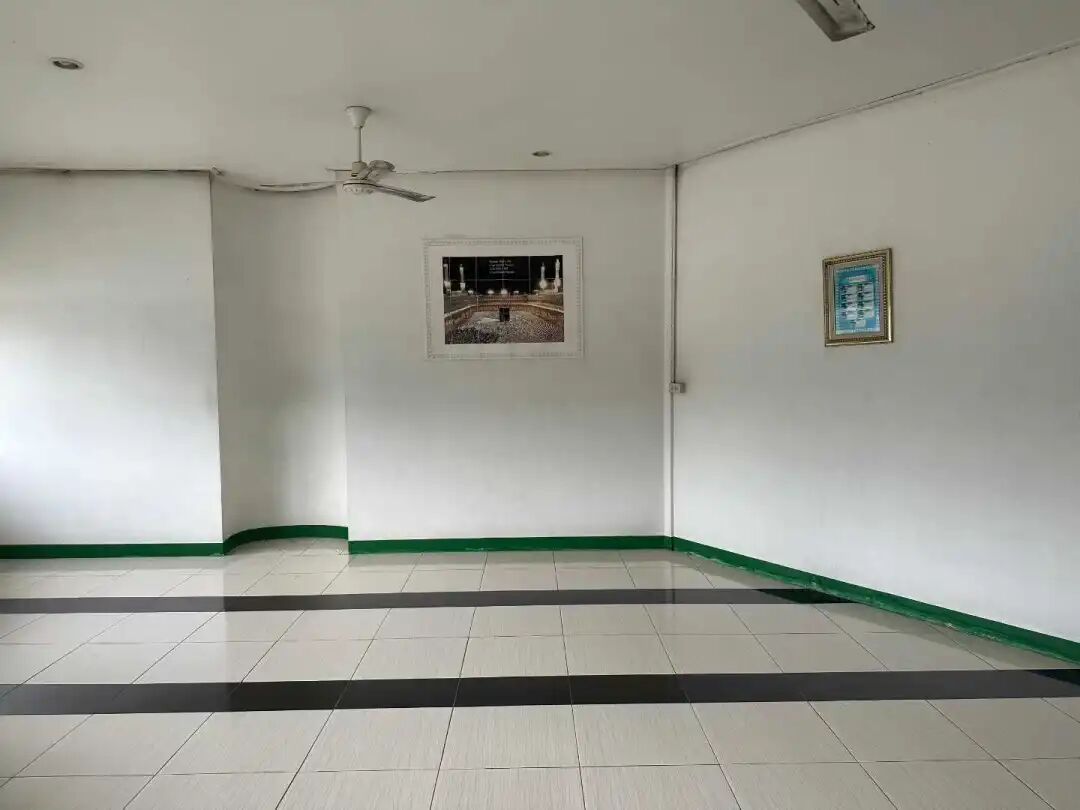
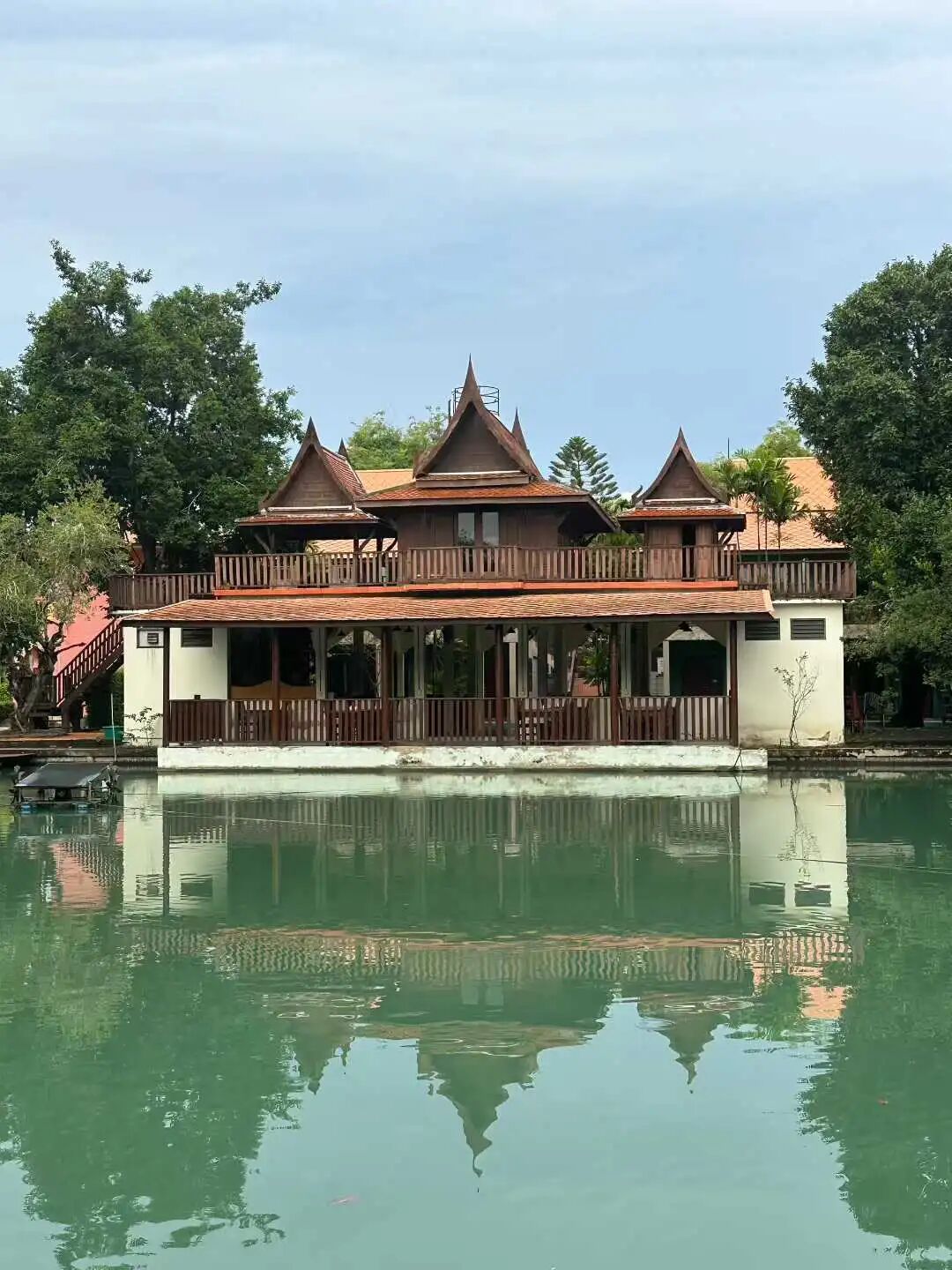
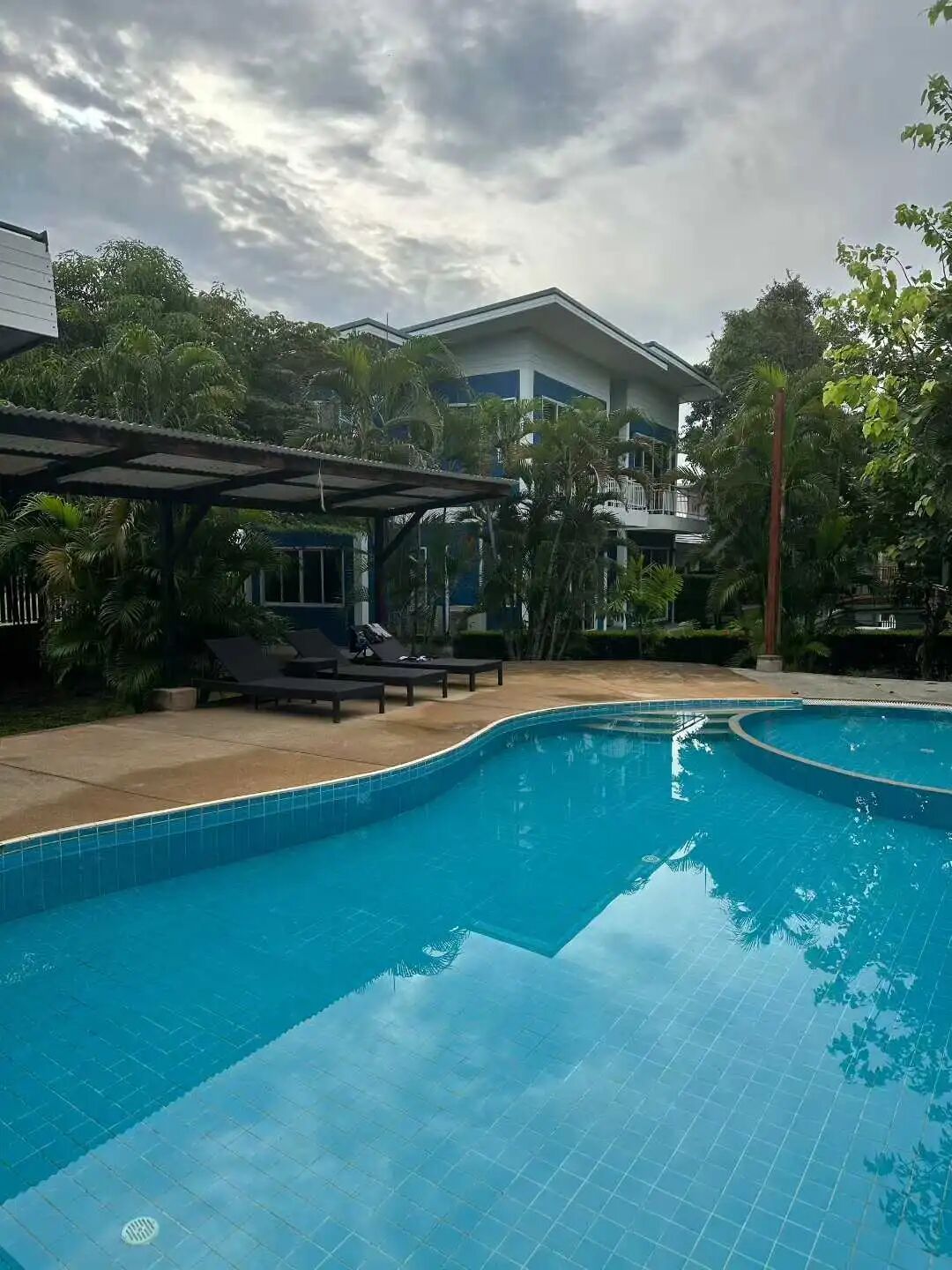
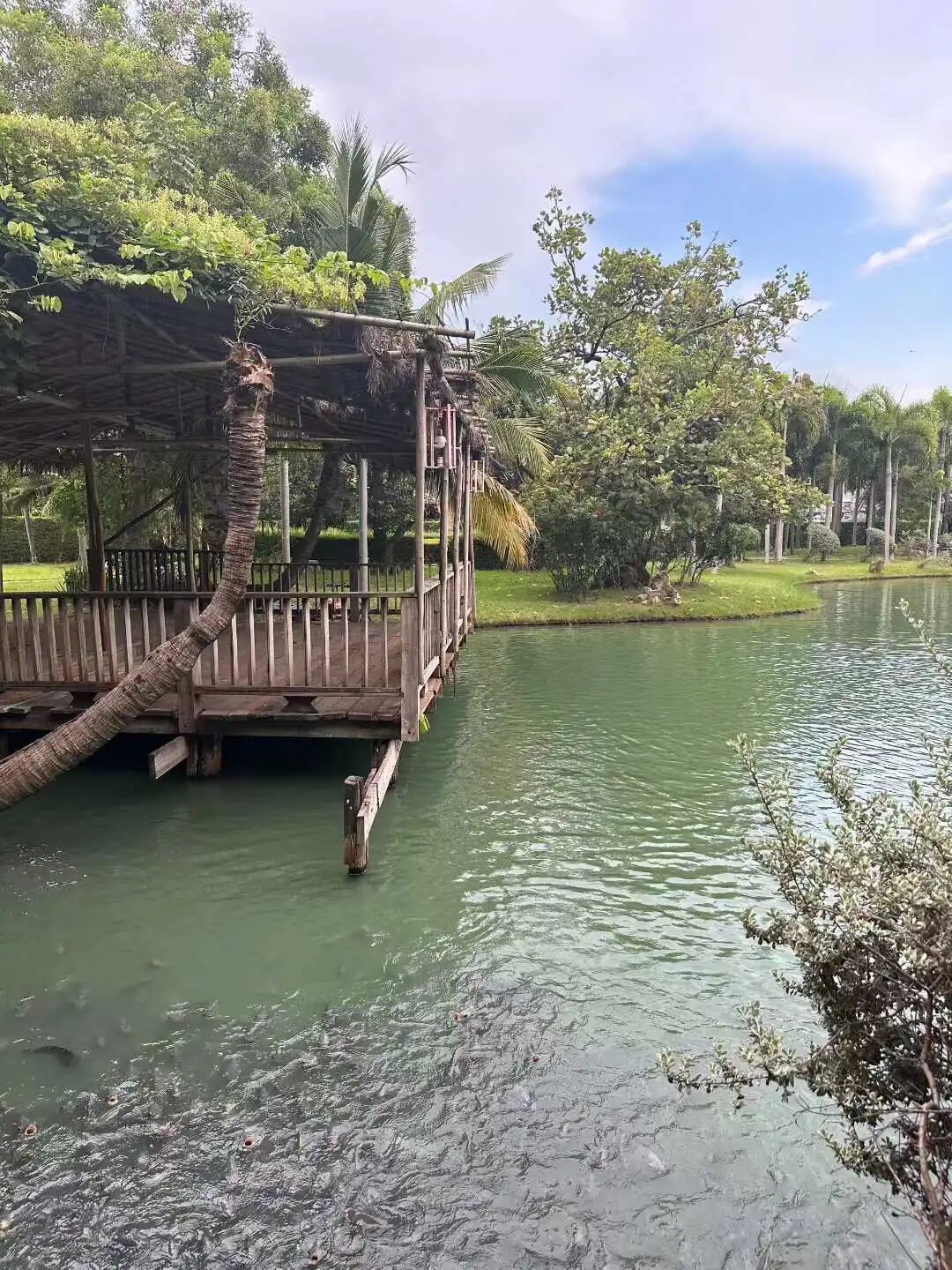
We stayed in a townhouse-style villa with a lake and garden right outside our door. Besides breakfast, there is a formal restaurant in the courtyard, and the prayer hall is right across from it, which is very convenient.
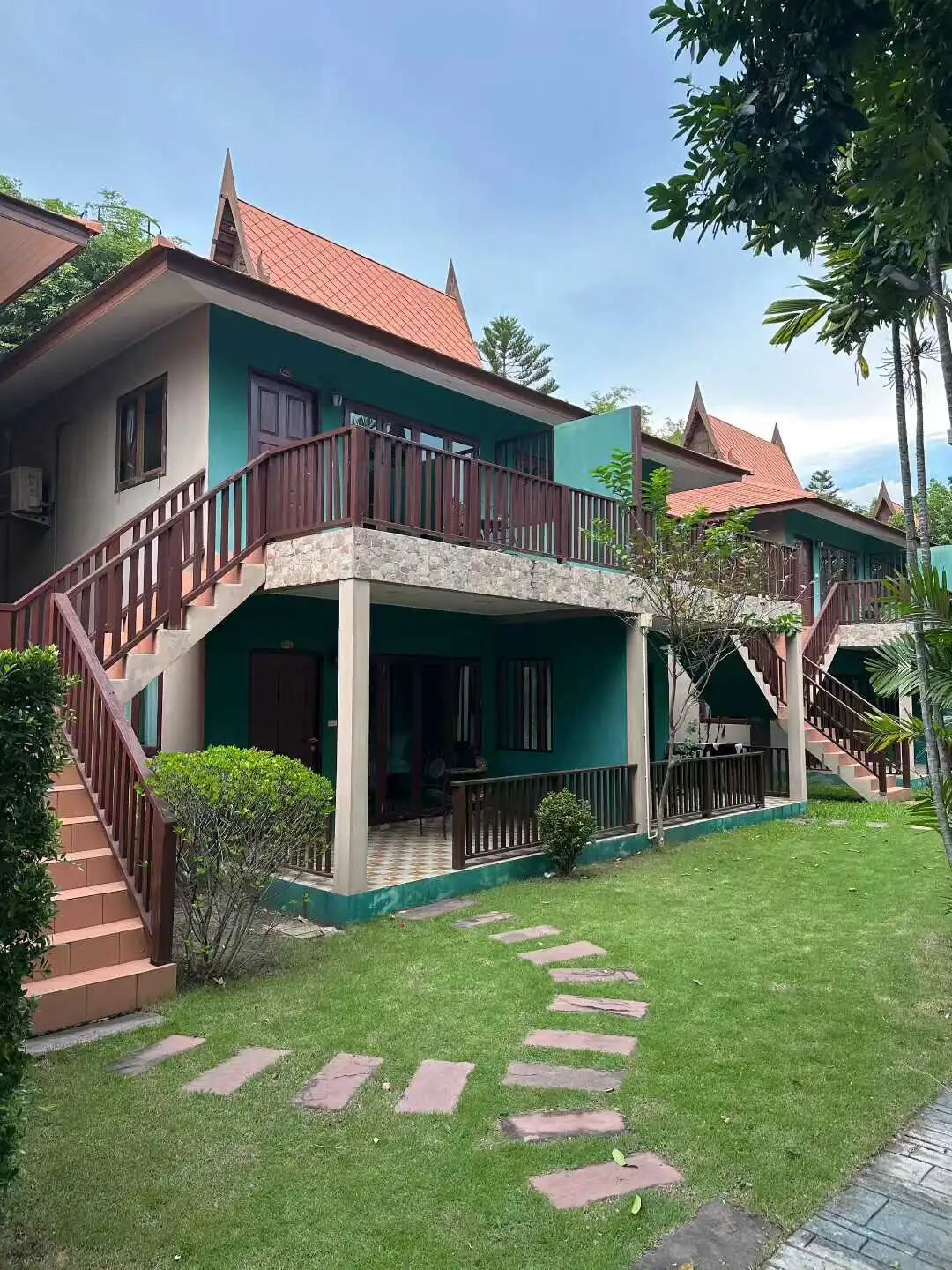
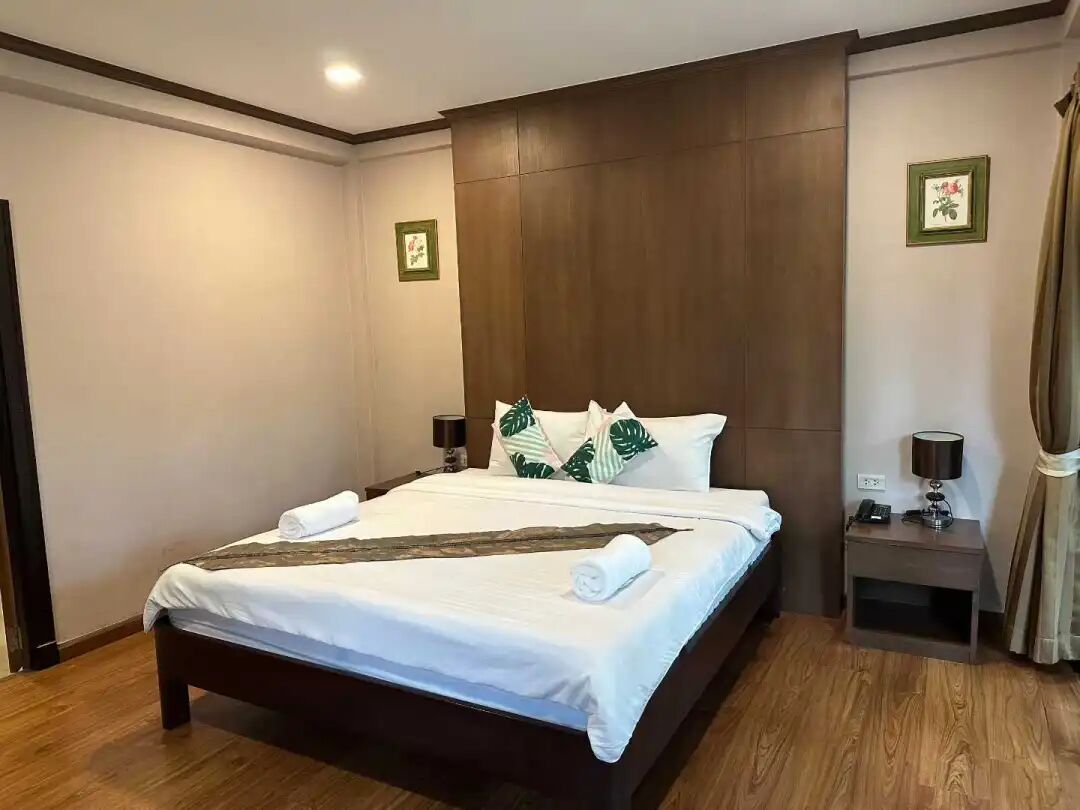
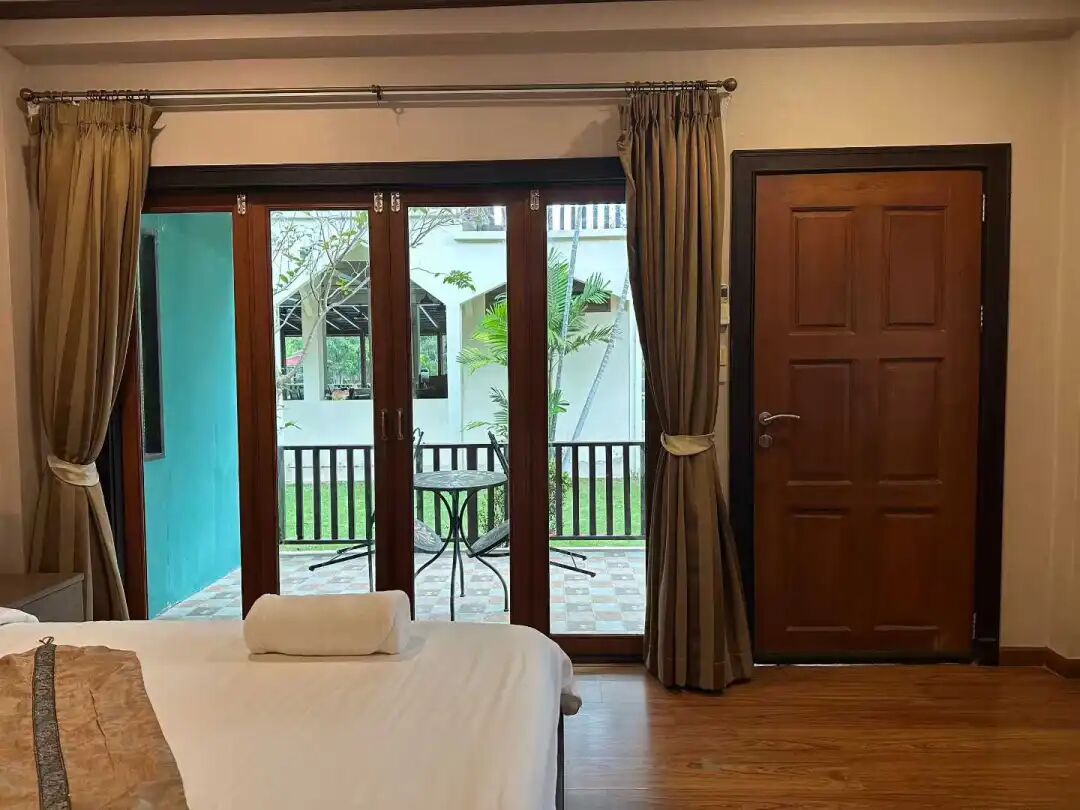
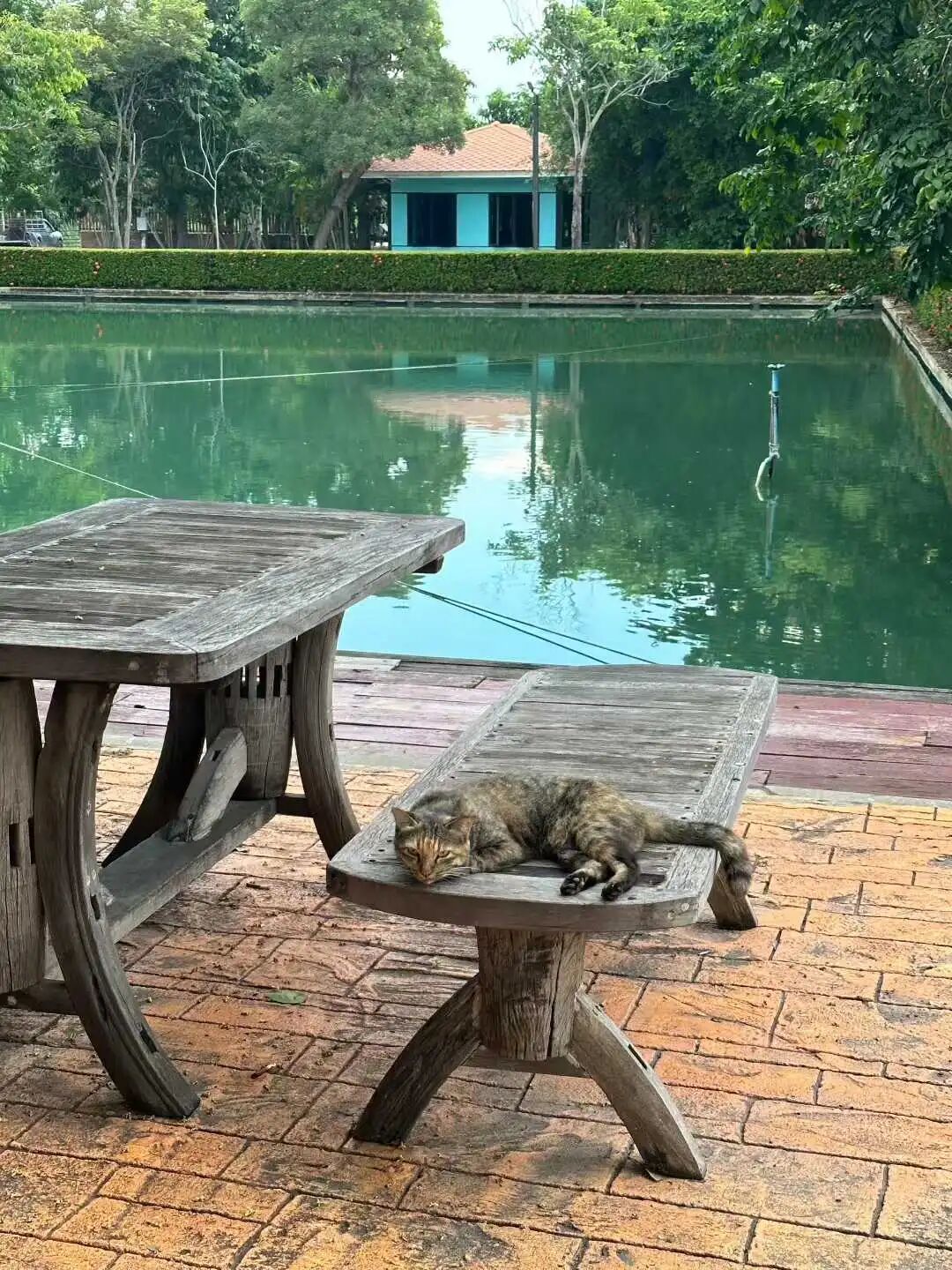
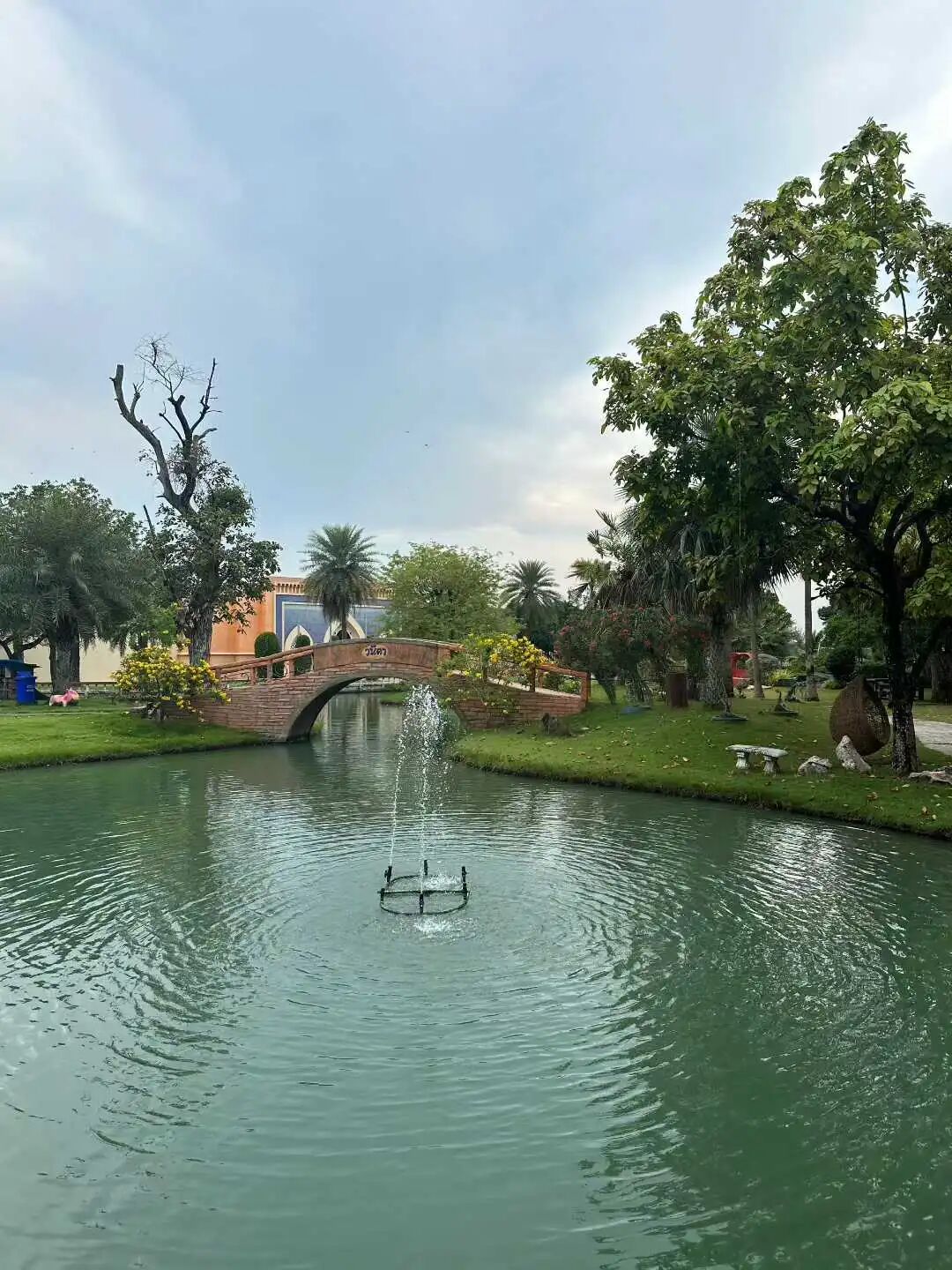
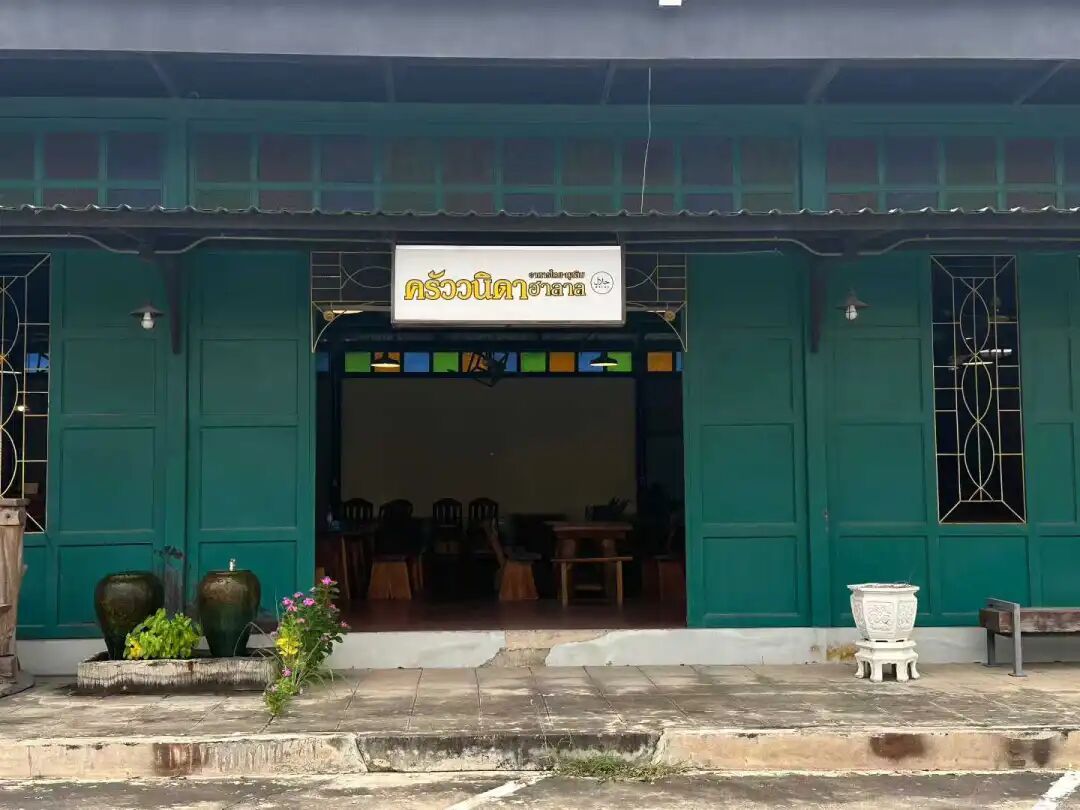
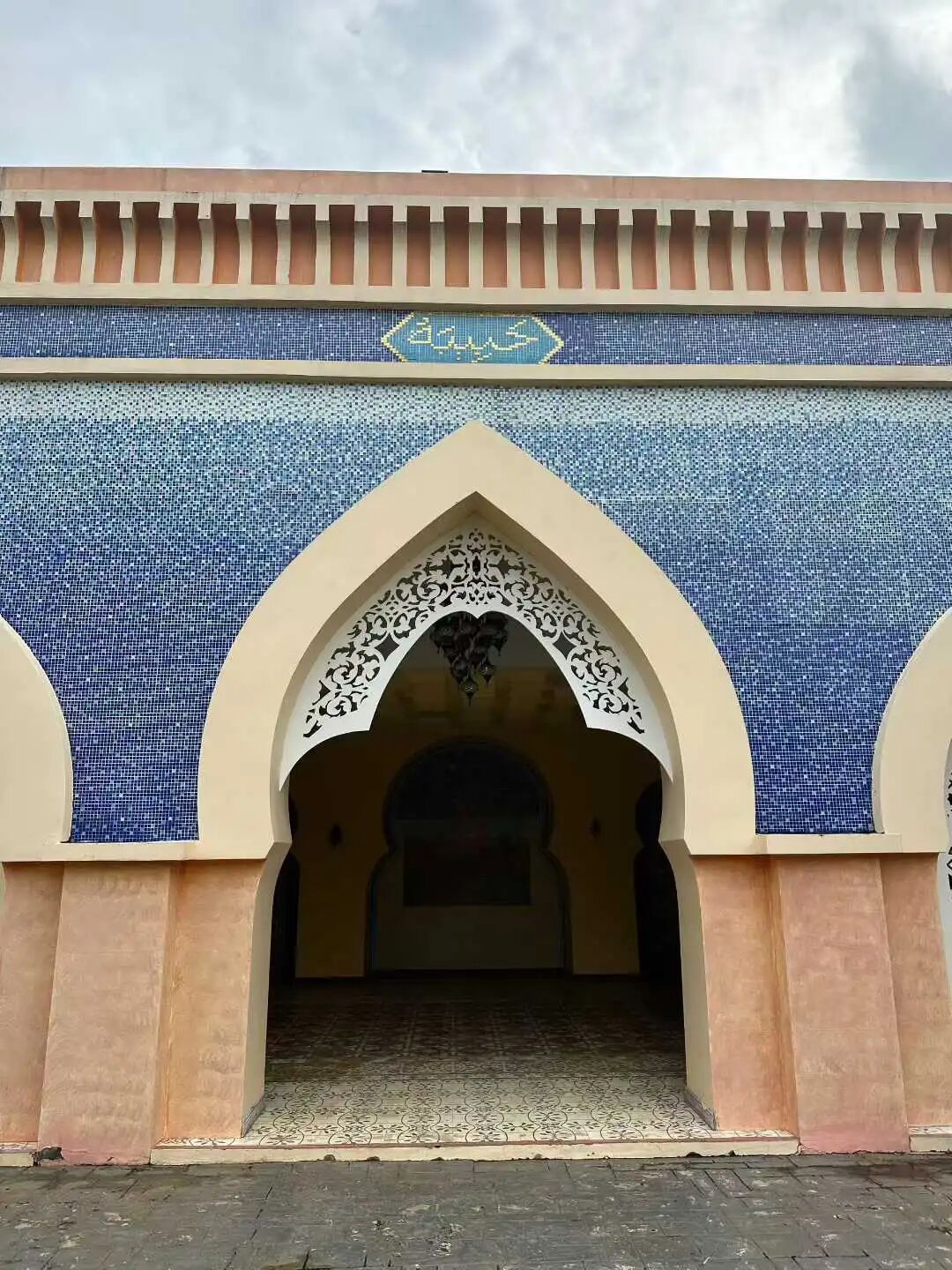
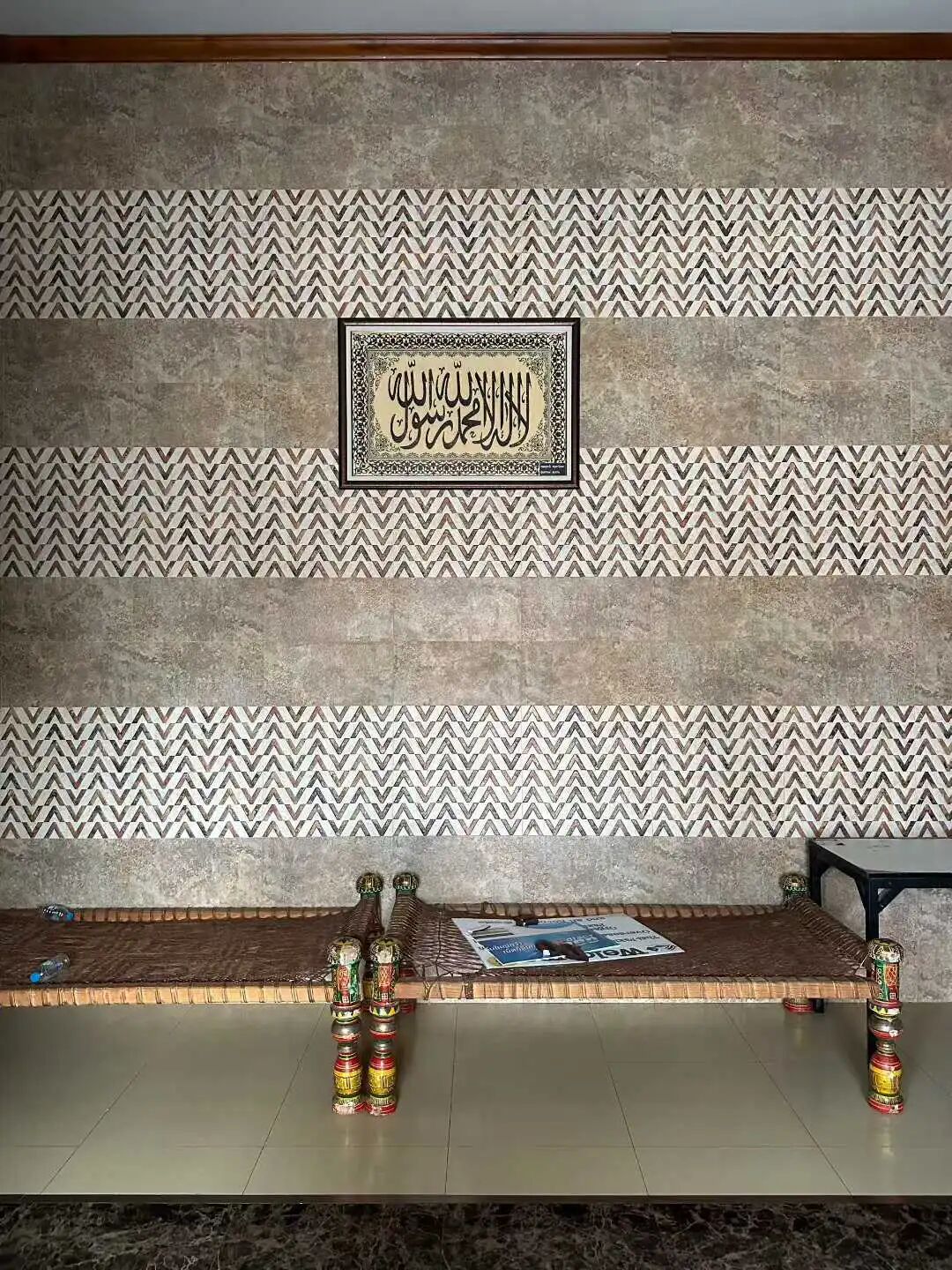
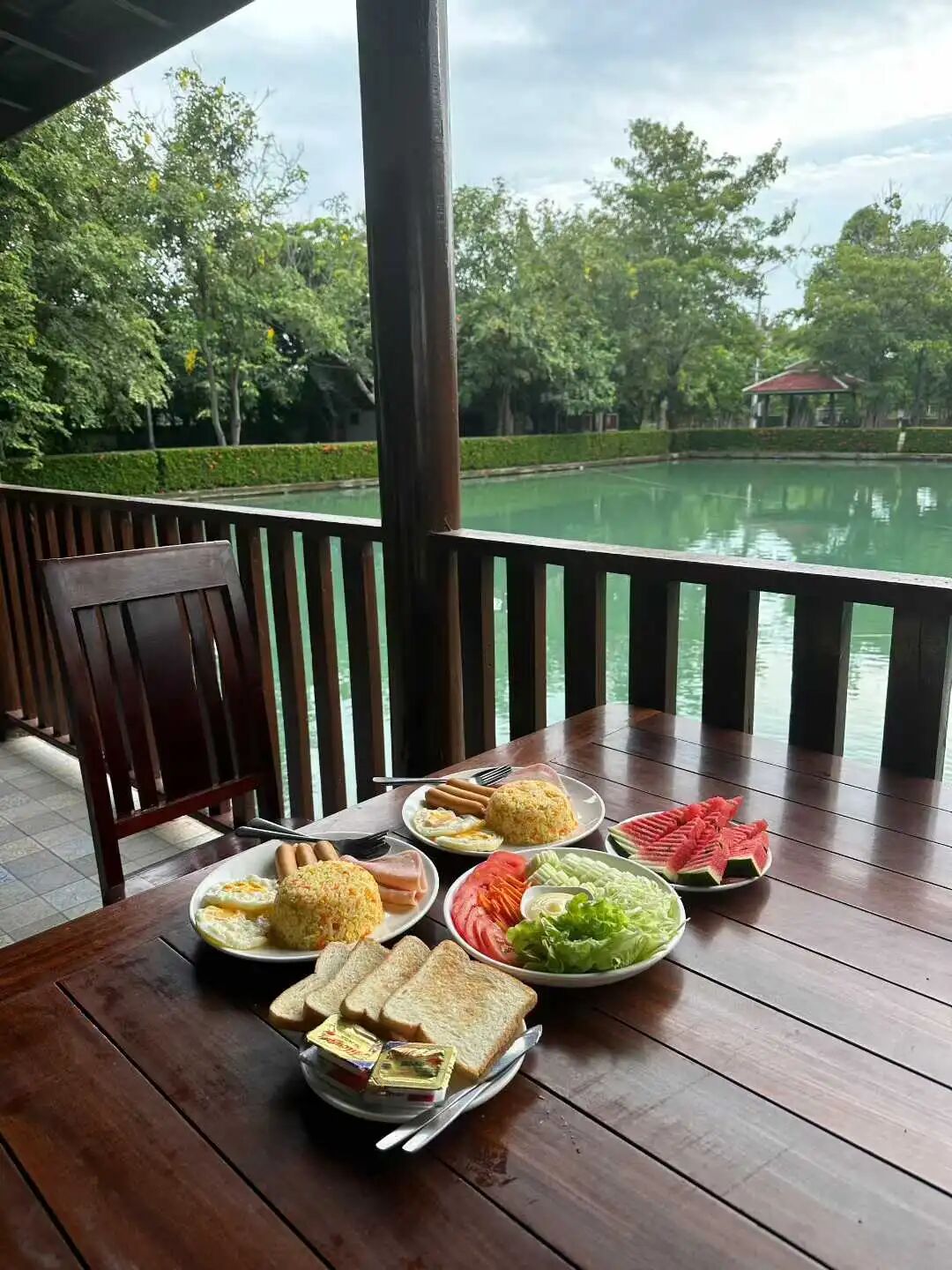
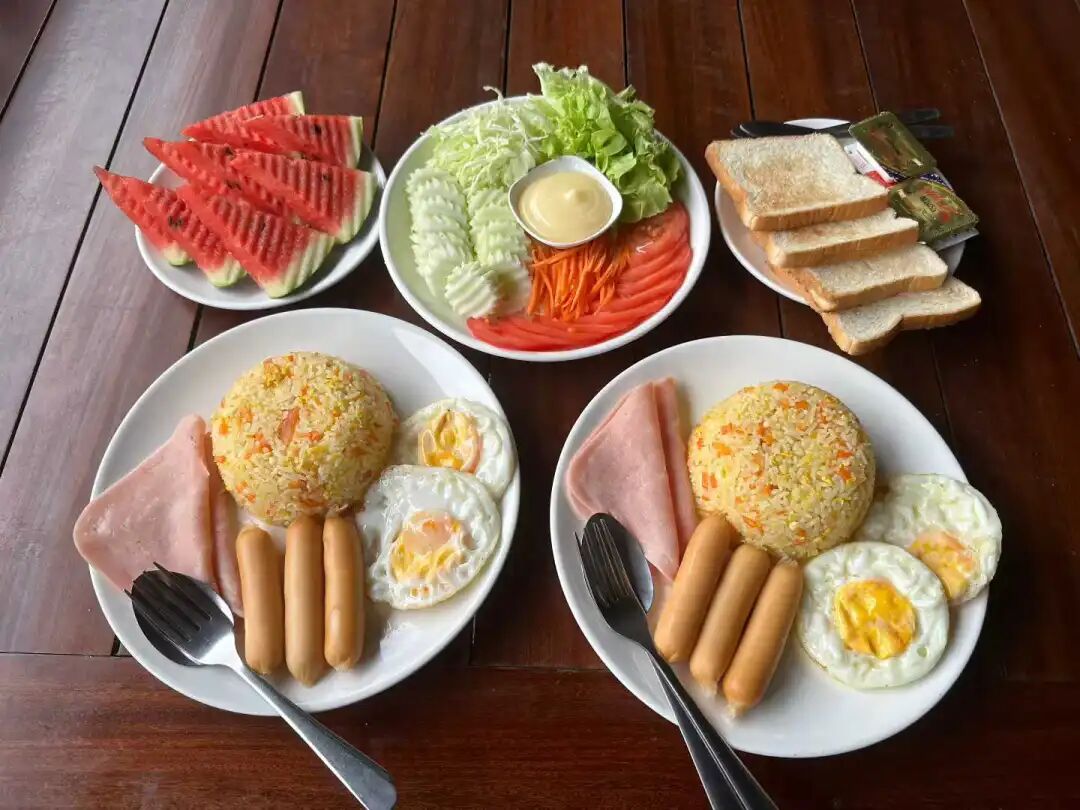
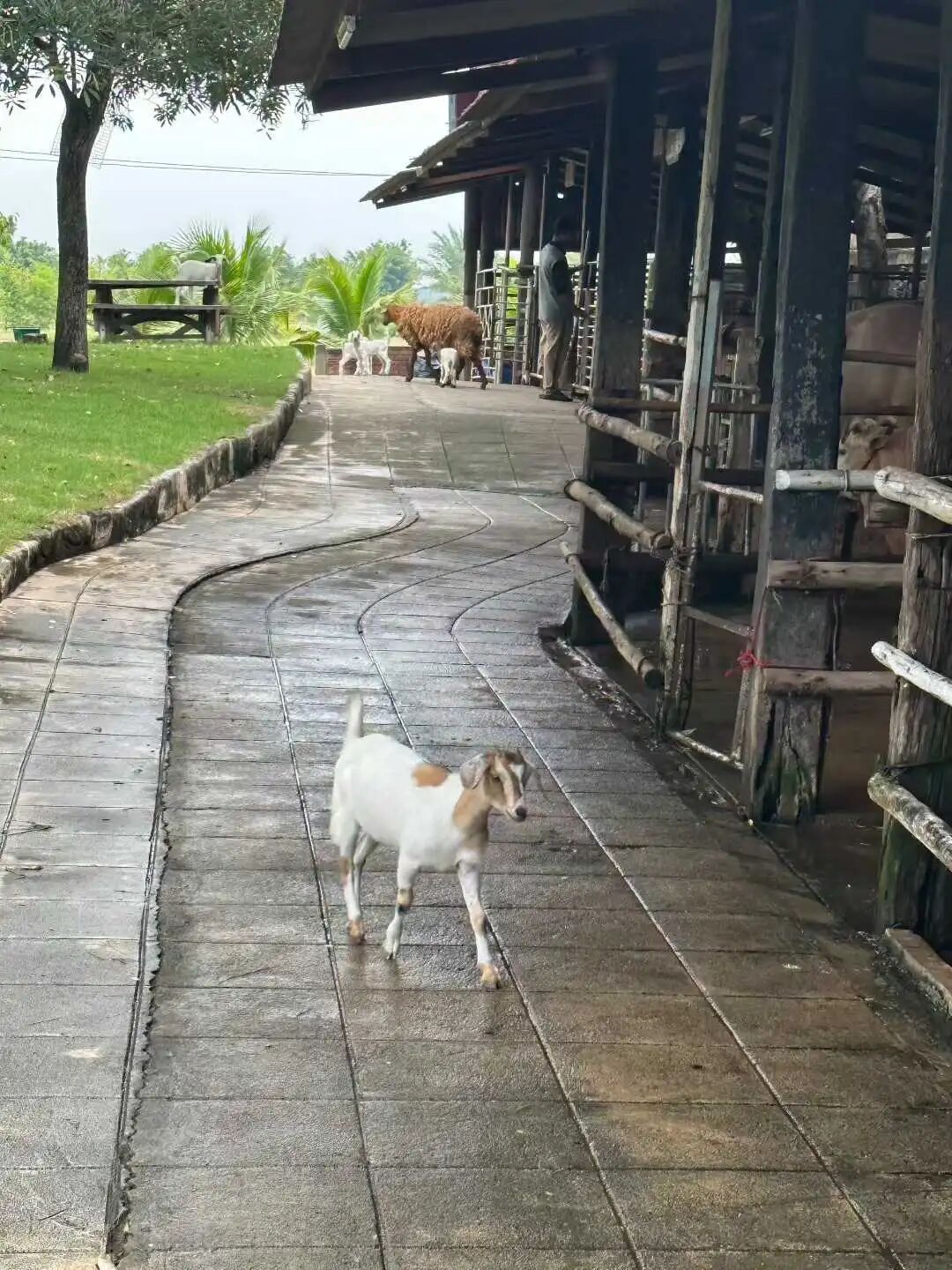
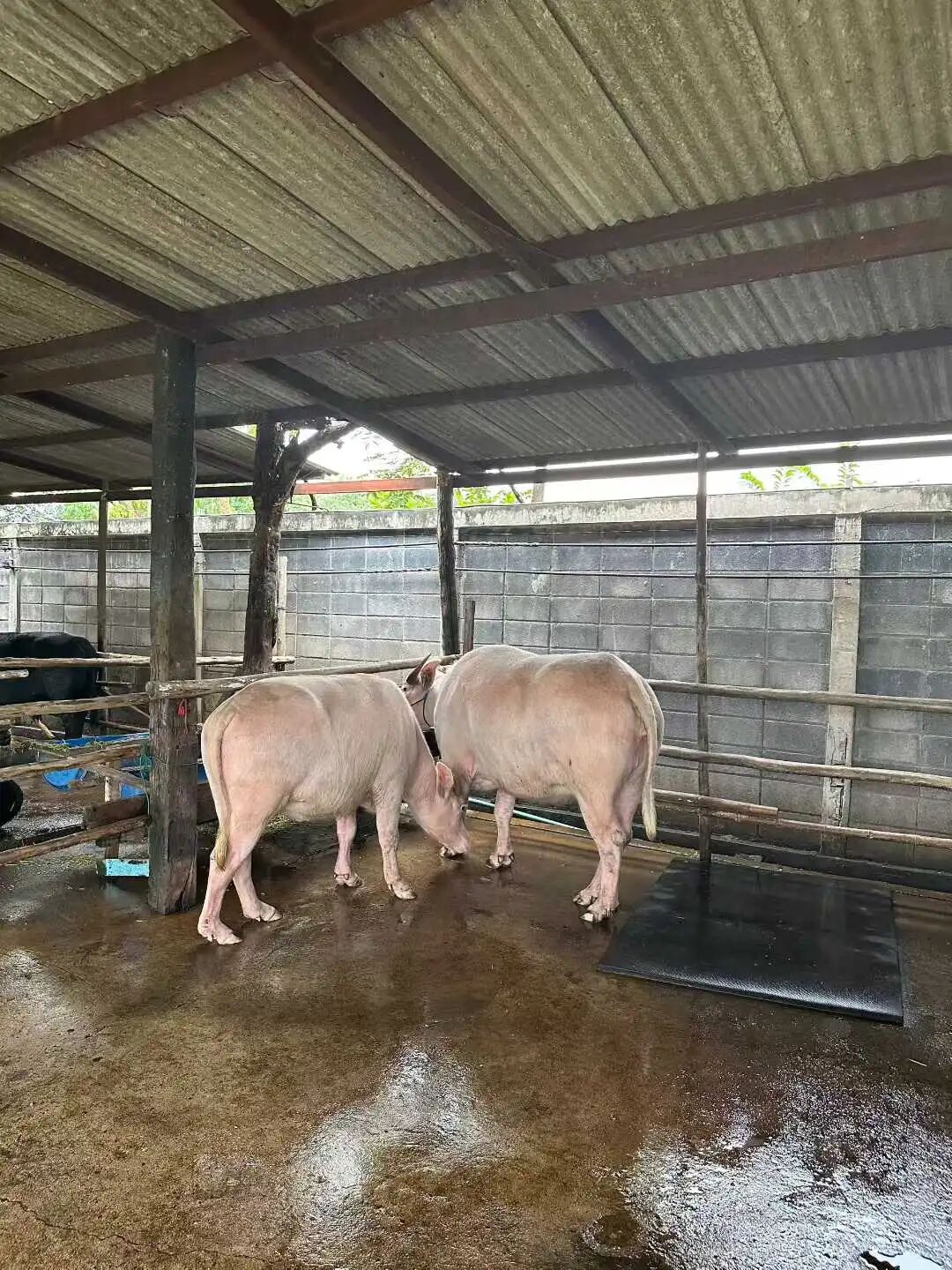
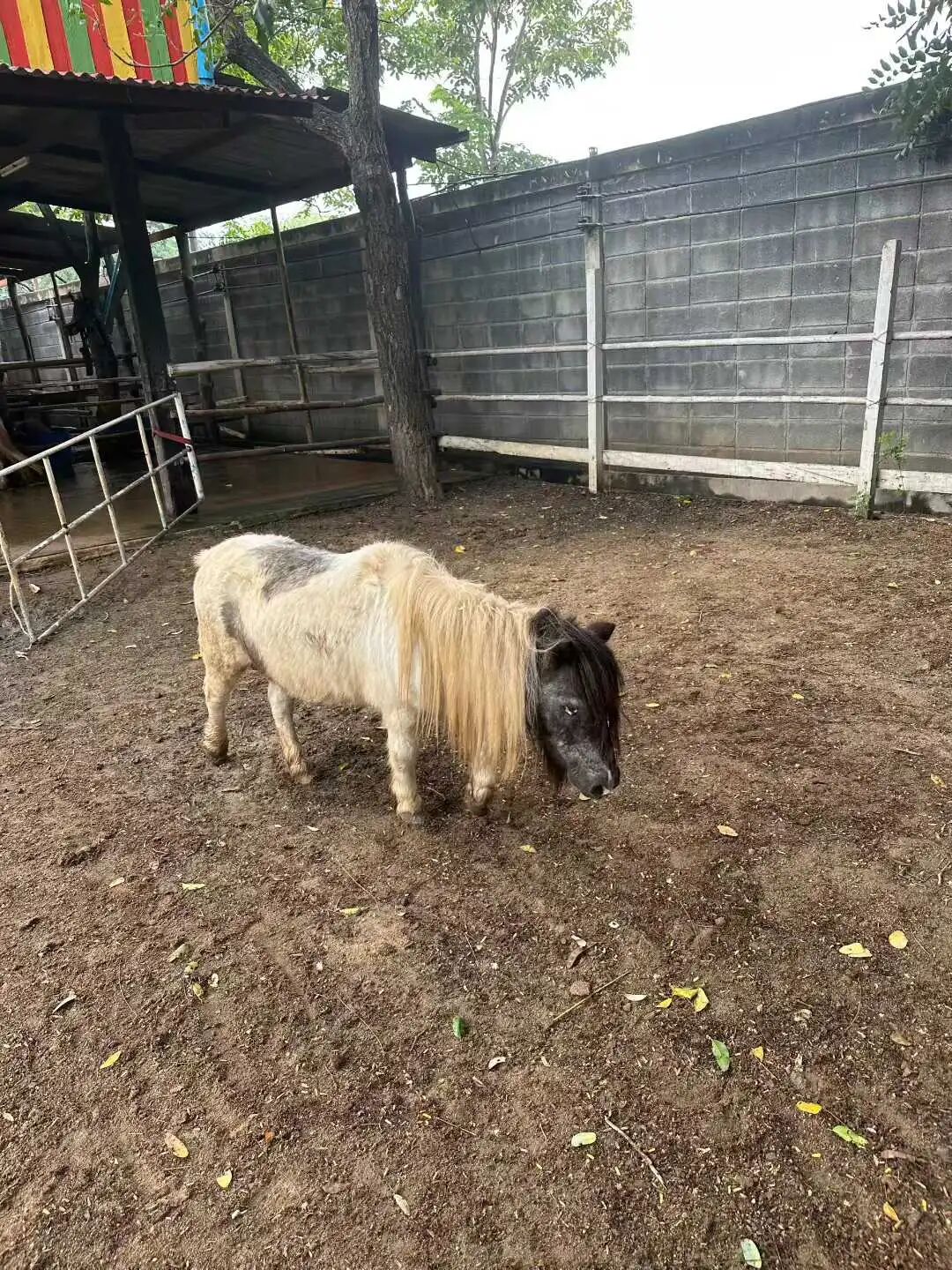
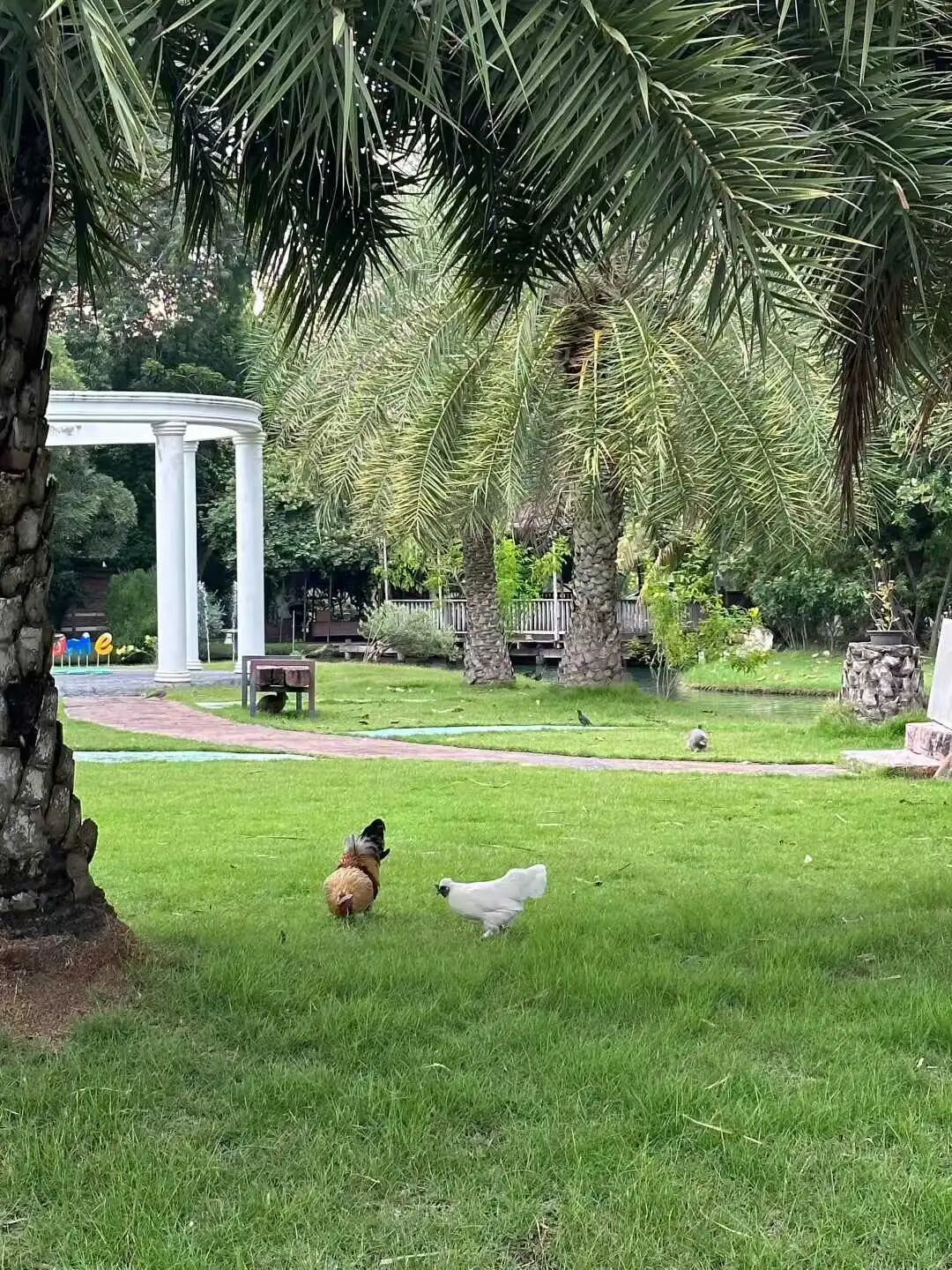
Because it was the off-season and there were few tourists, the resort didn't serve a buffet. Instead, they prepared egg fried rice, fried eggs, sausages, various vegetables, bread, and watermelon for us. Eating by the lake was very relaxing. They keep miniature horses, cows, sheep, chickens, and rabbits in the yard, which children would probably love. There is also a children's pool in the yard where kids can swim.
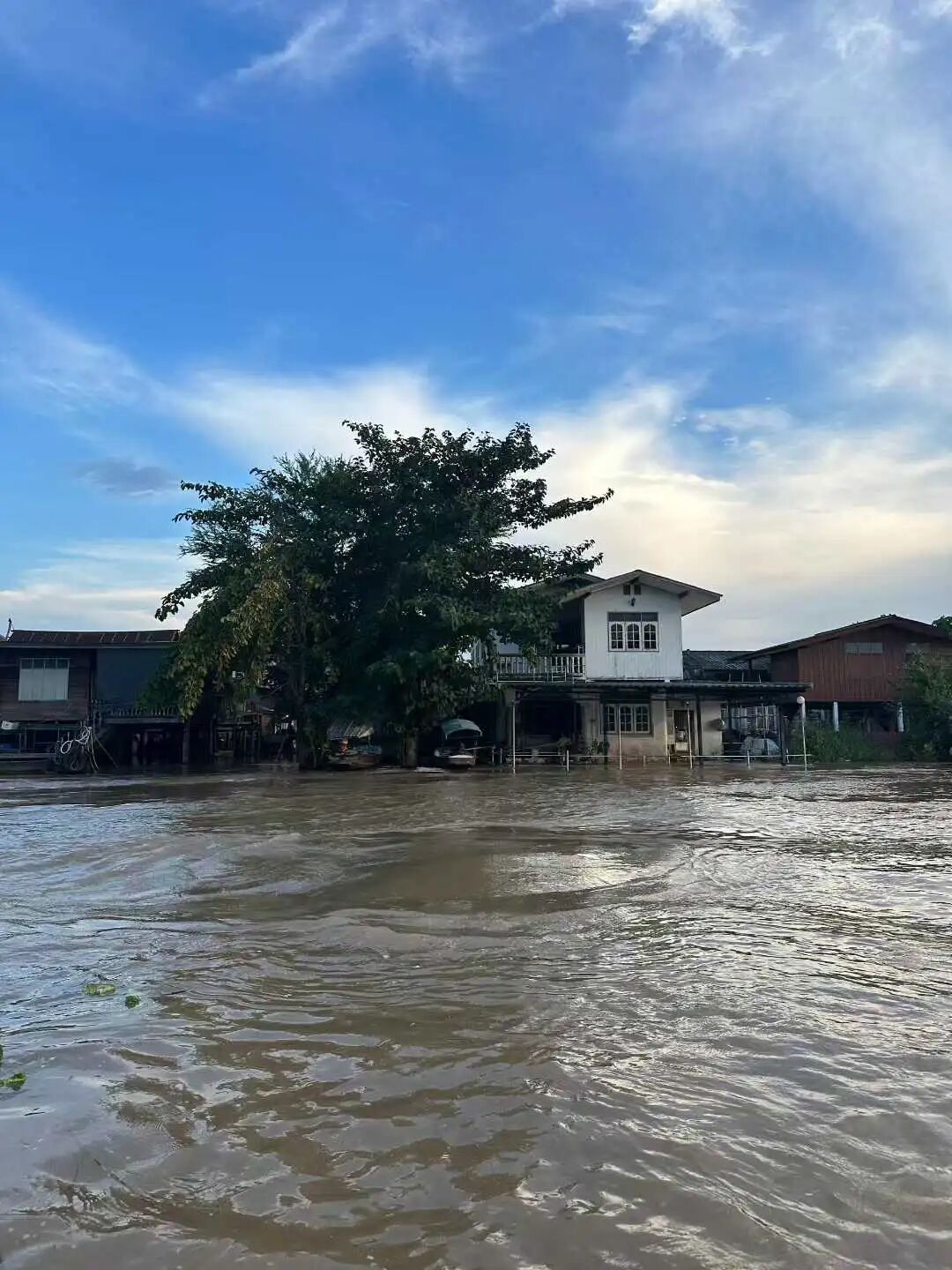
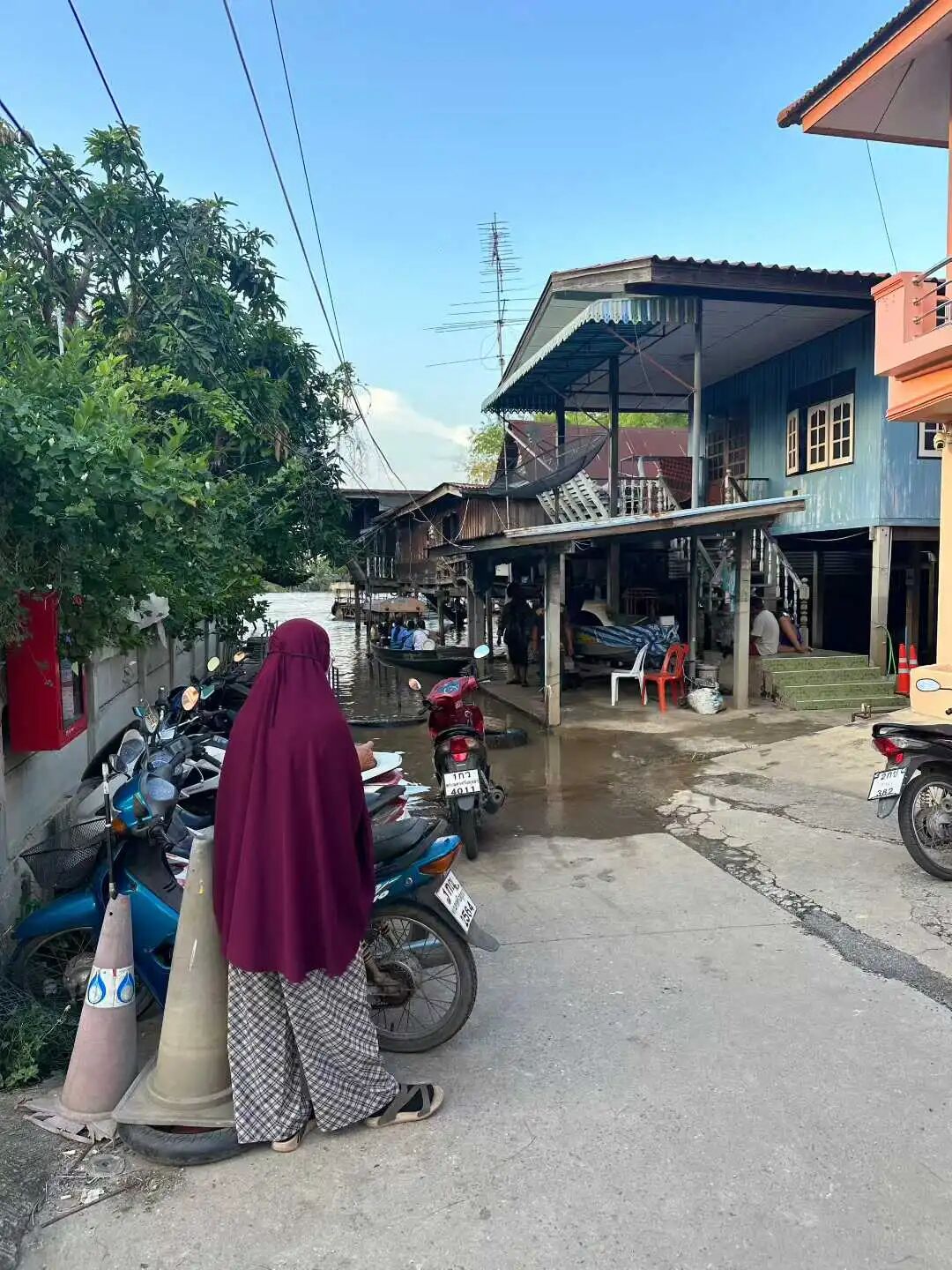
The west and south sides of the Ayutthaya World Heritage historic city are surrounded by the Chao Phraya River. The area along the river in the south is mainly a residential area for the Cham people, and there are many halal restaurants there.
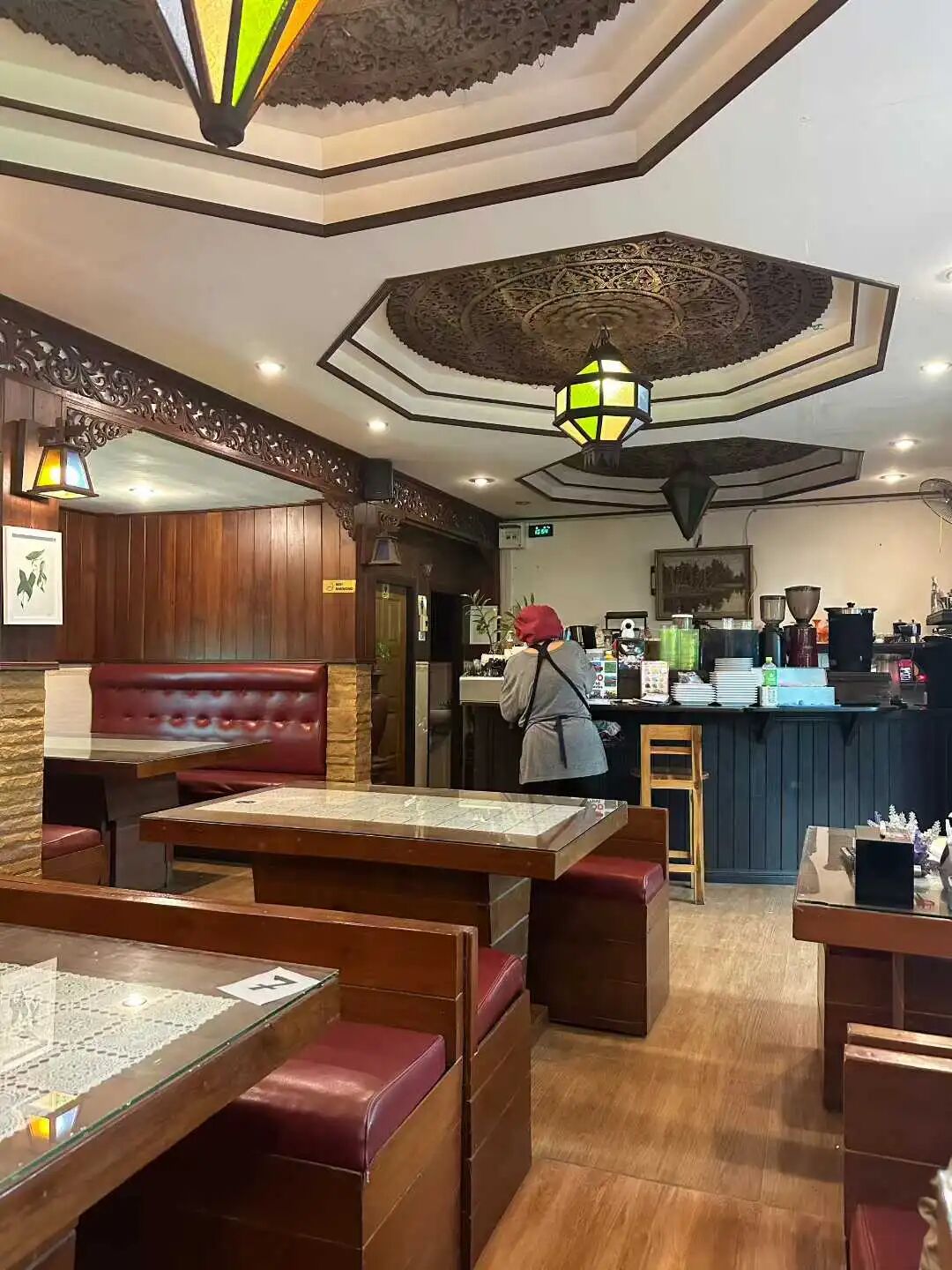
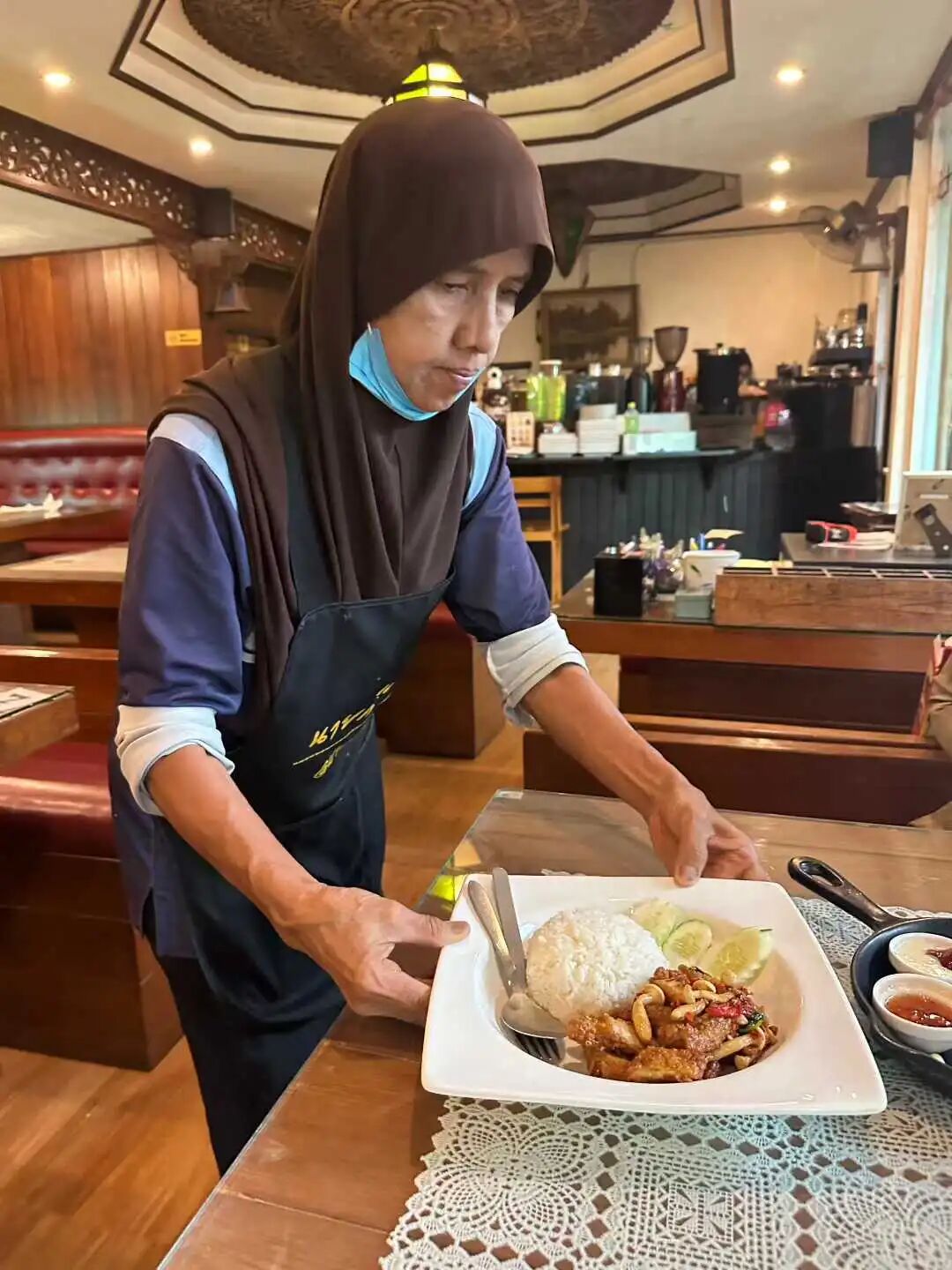
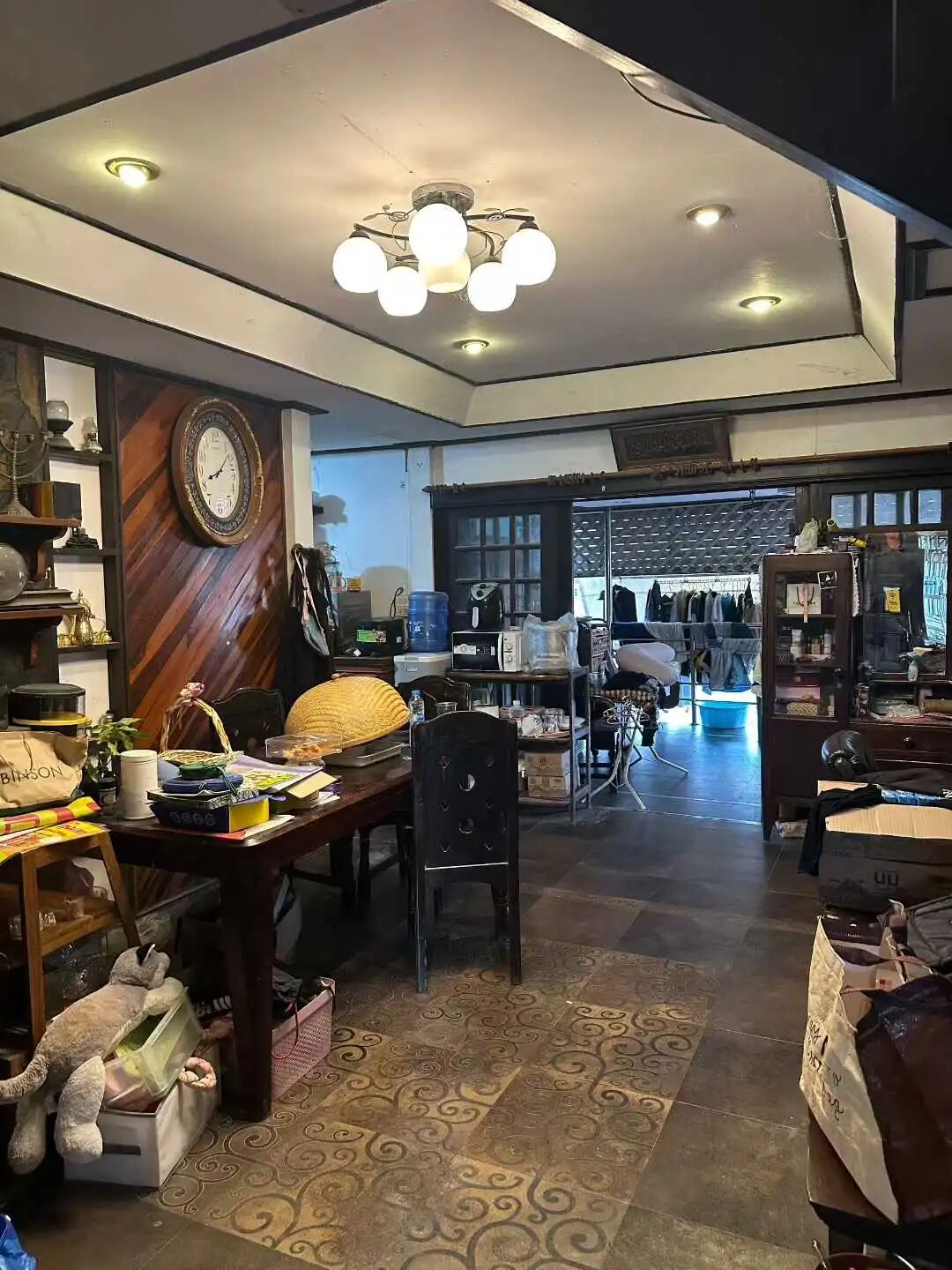
We had dinner on our first night at Kruta Steak on the north bank of the river. We found online that they had beautiful riverside seating, but when we arrived, the seats were flooded, so we ate inside instead.
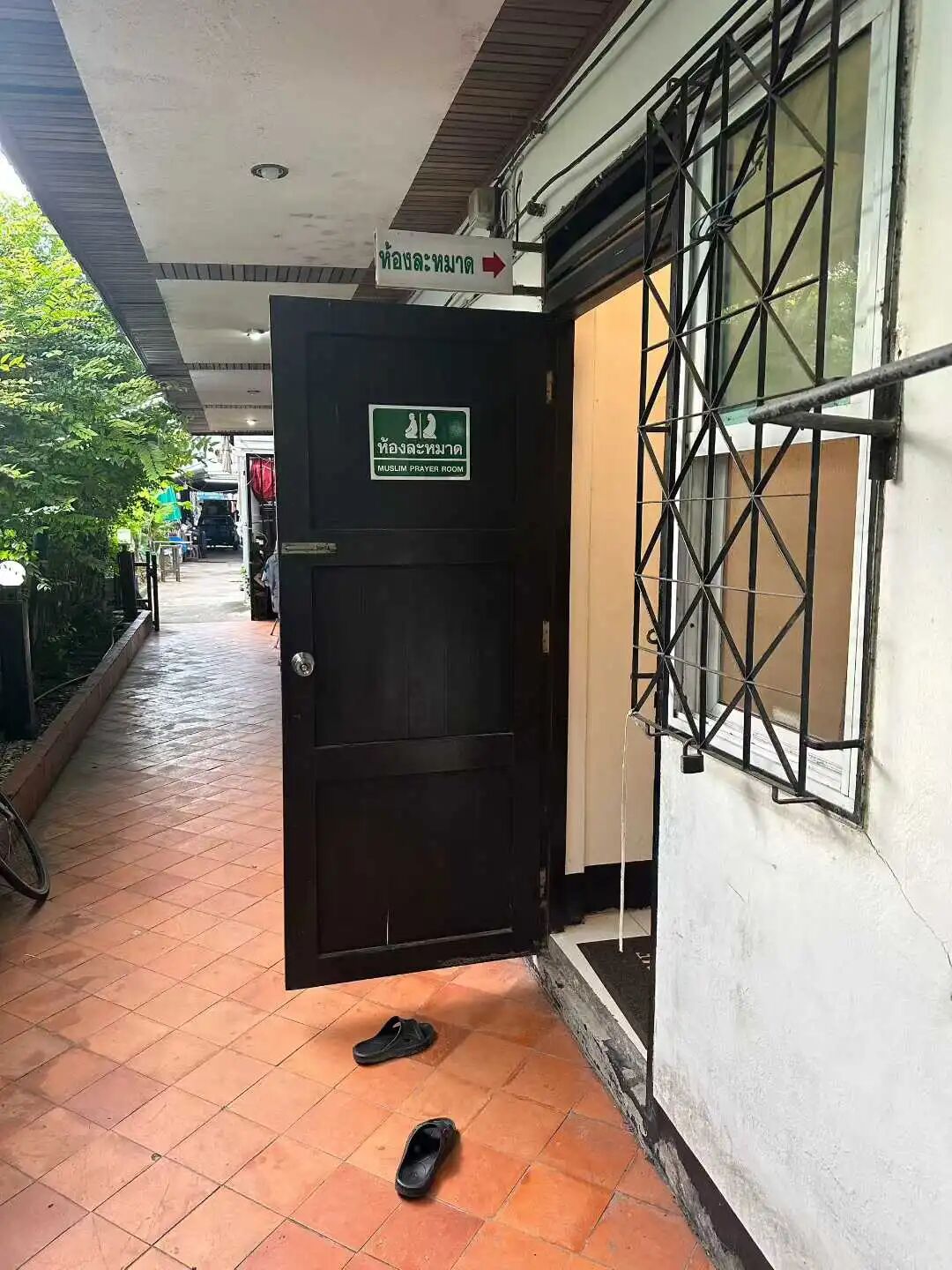
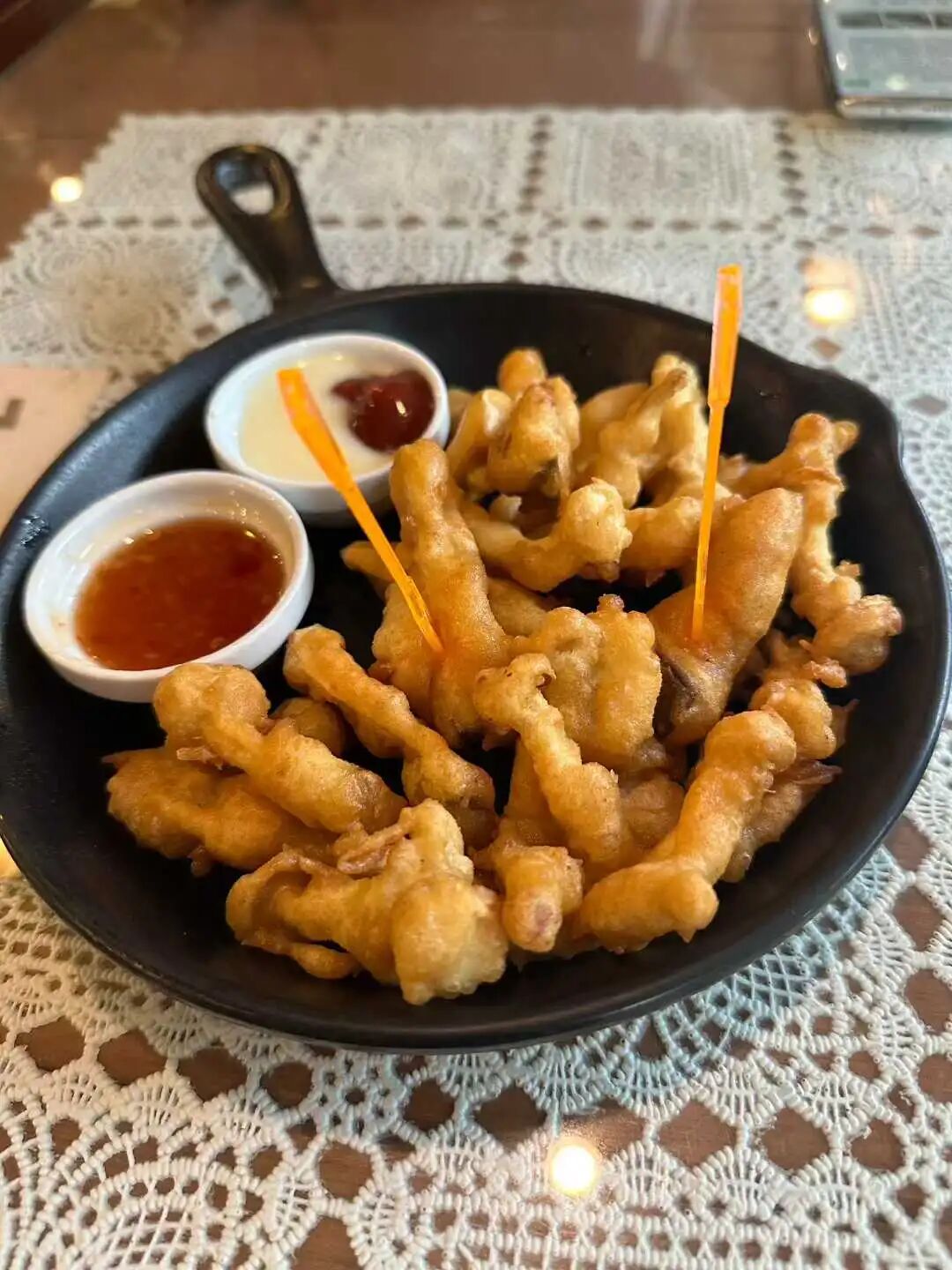
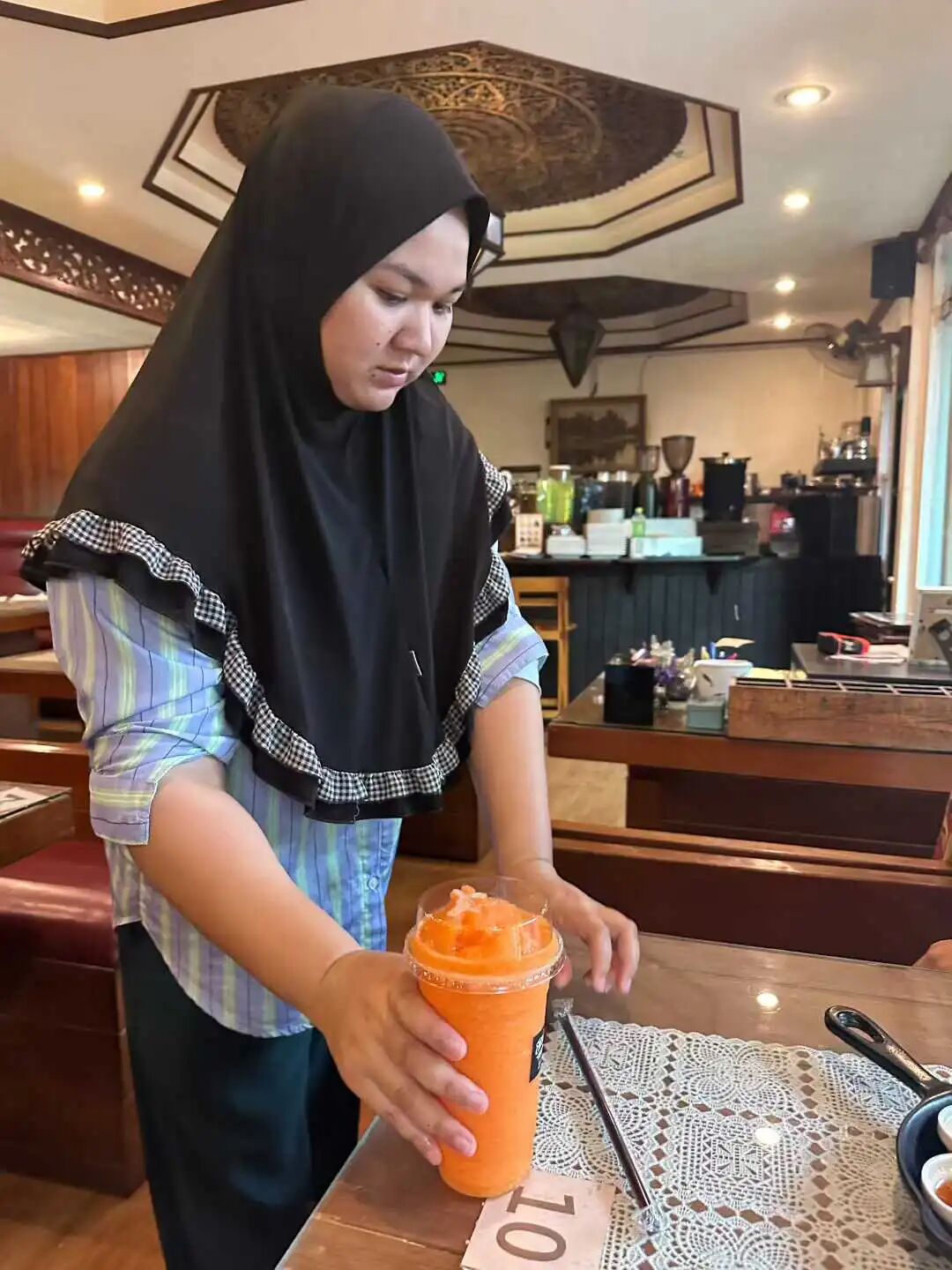
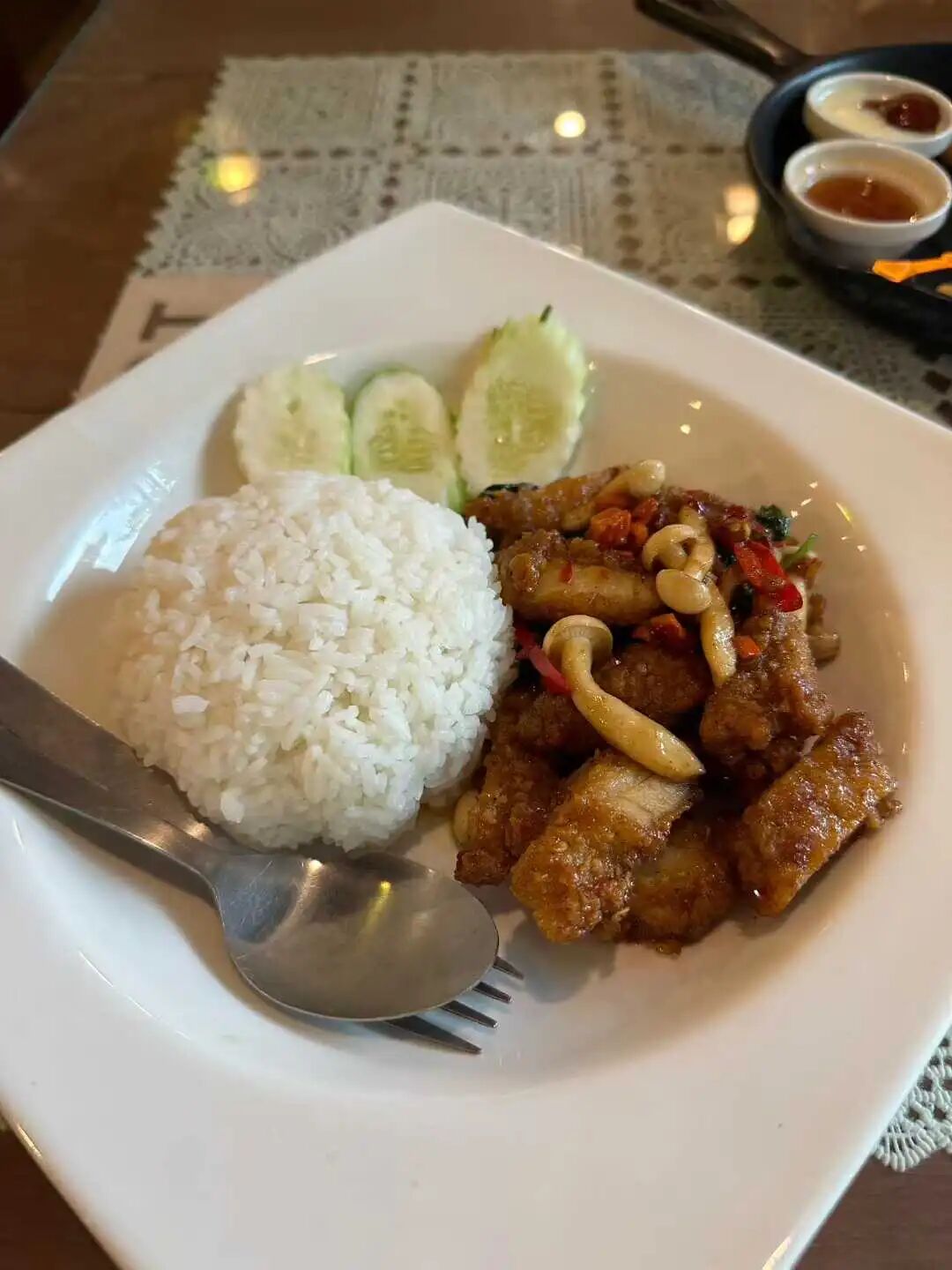
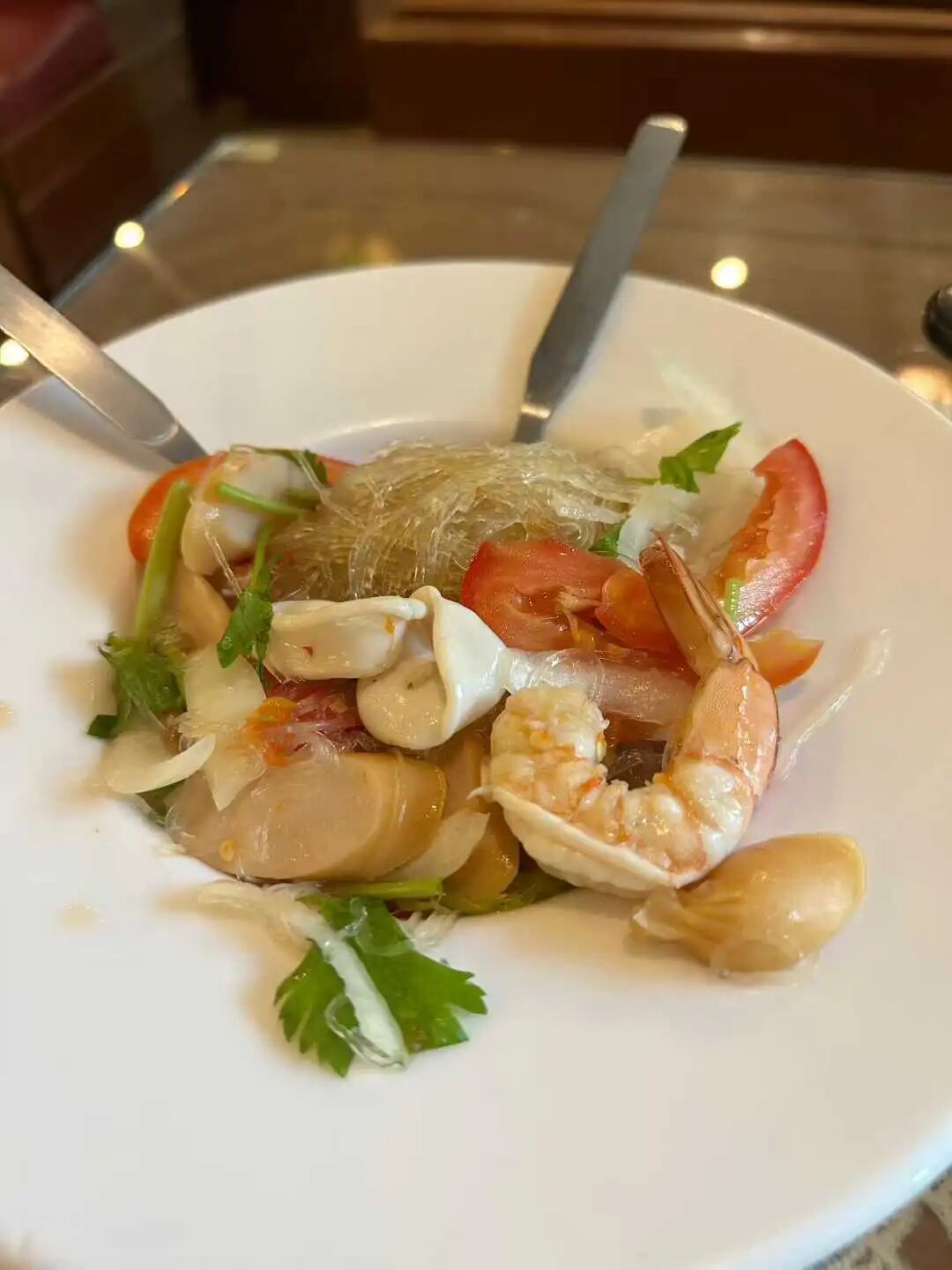
They specialize in steaks and various mushrooms. We ordered mushroom chicken rice, fried mushrooms, and shrimp glass noodle salad, and we also drank fresh carrot juice. Their mushrooms were really good, especially the fried mushrooms, which were very fragrant. Even though we didn't speak the same language, the servers were very friendly and kept smiling at me. They also have a prayer room, which is very convenient.
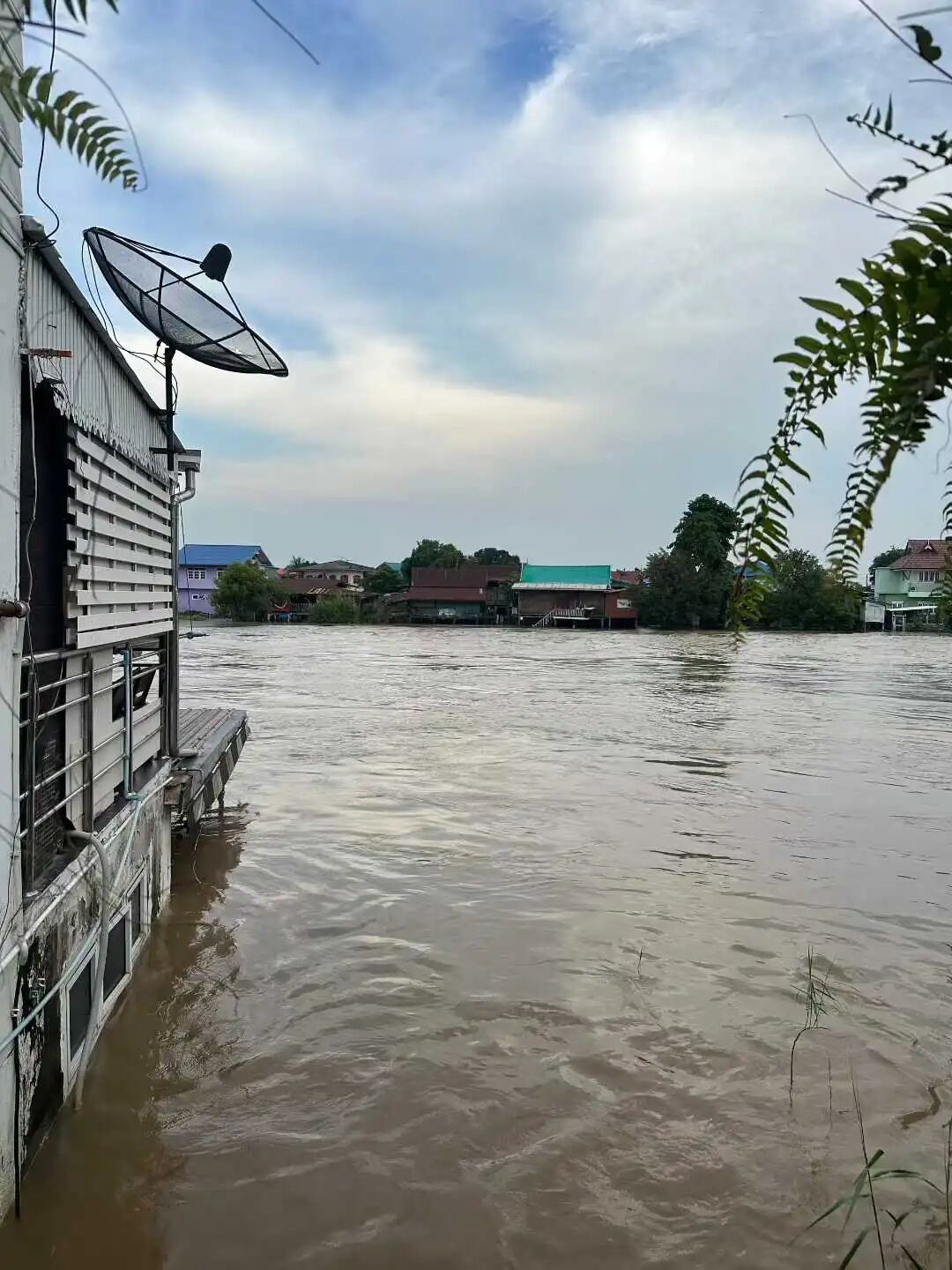
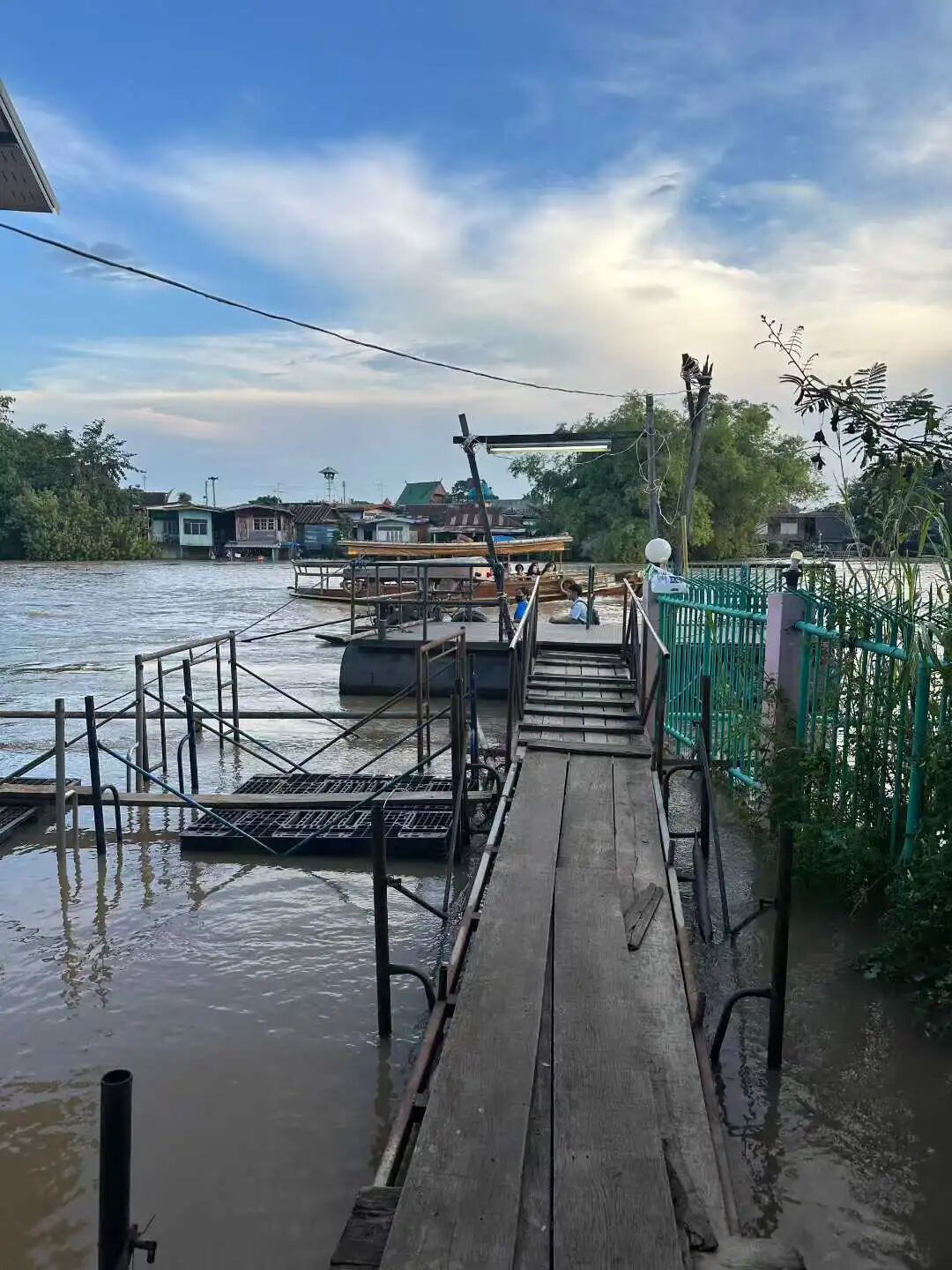
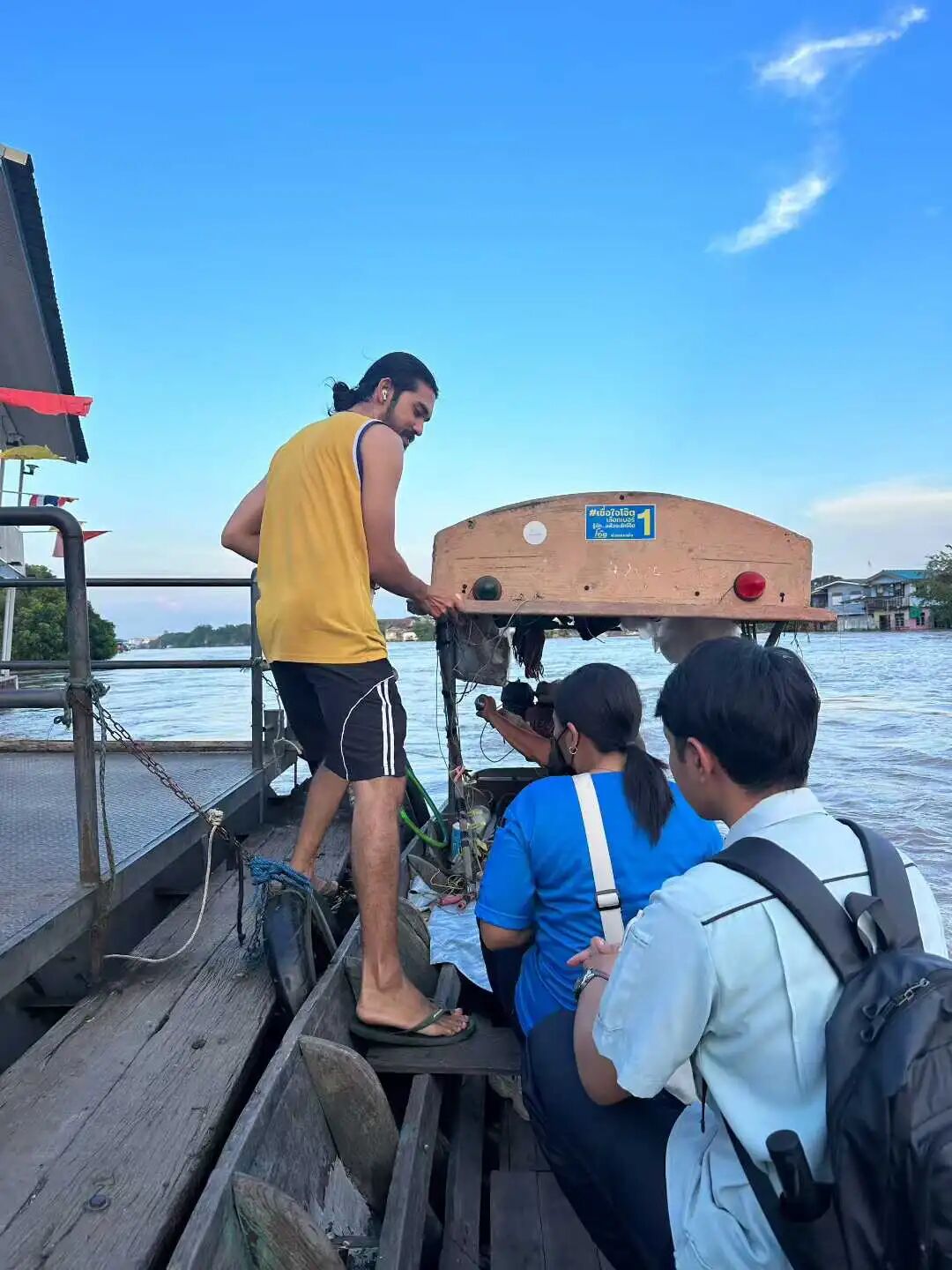
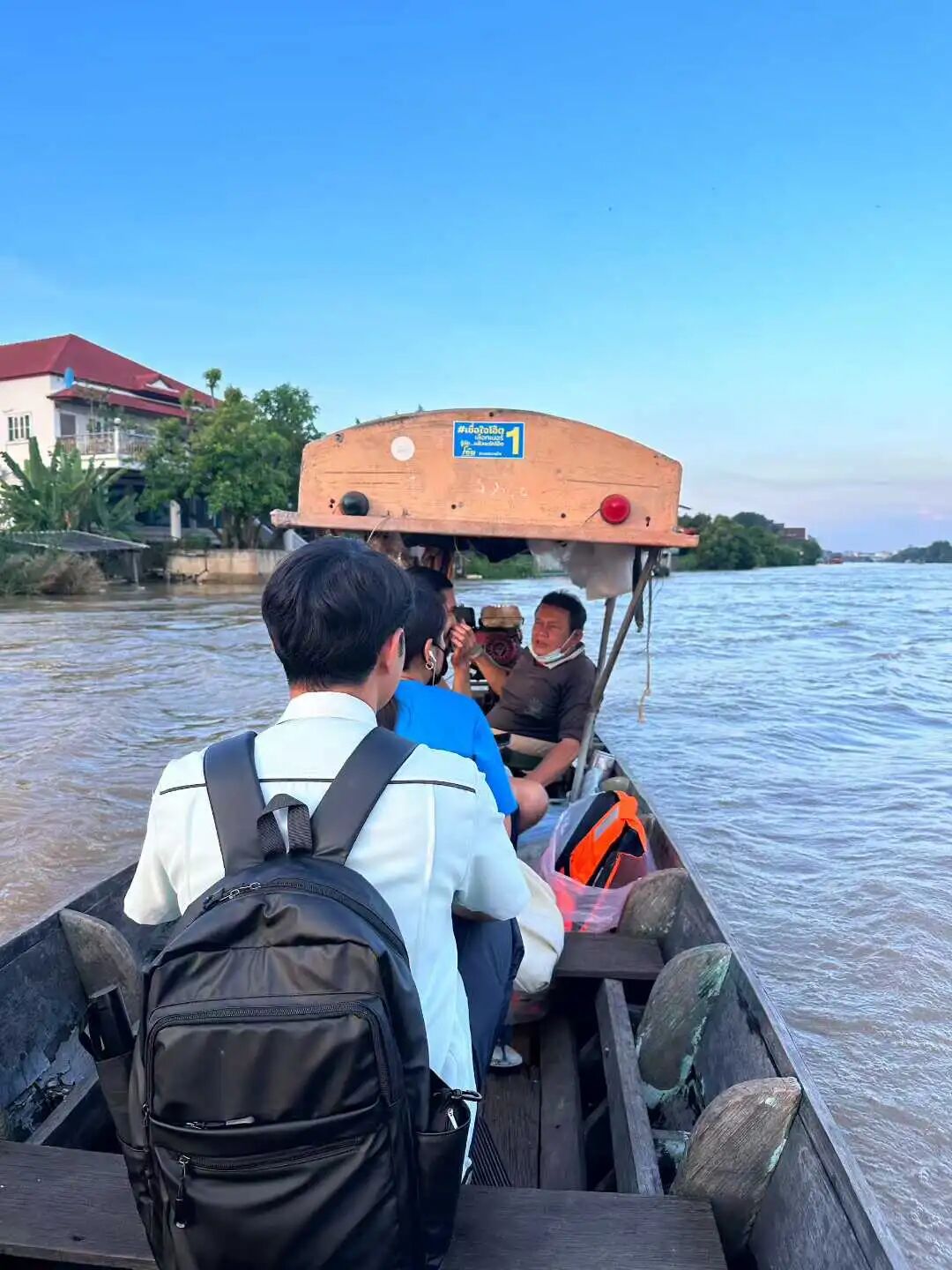
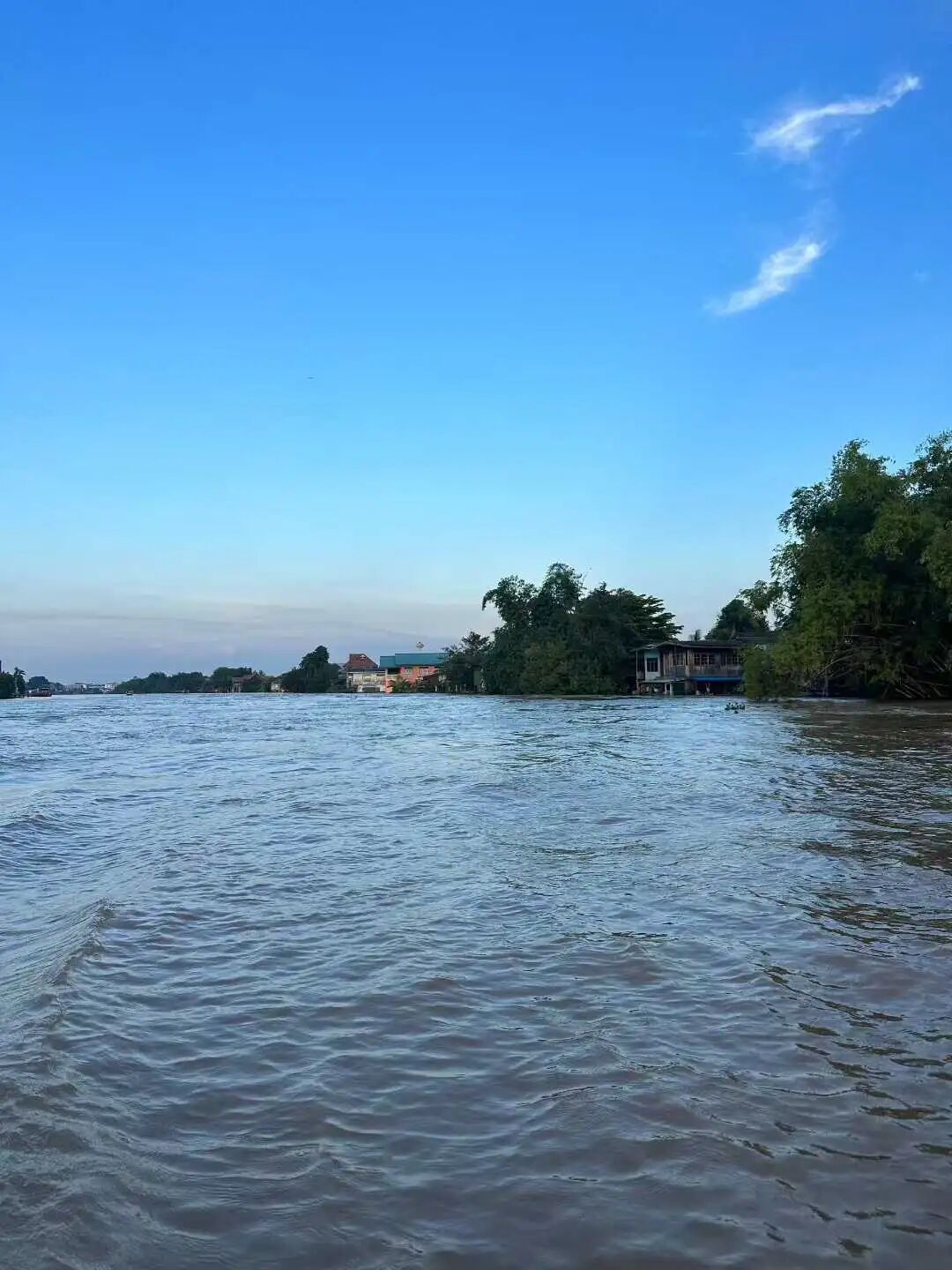
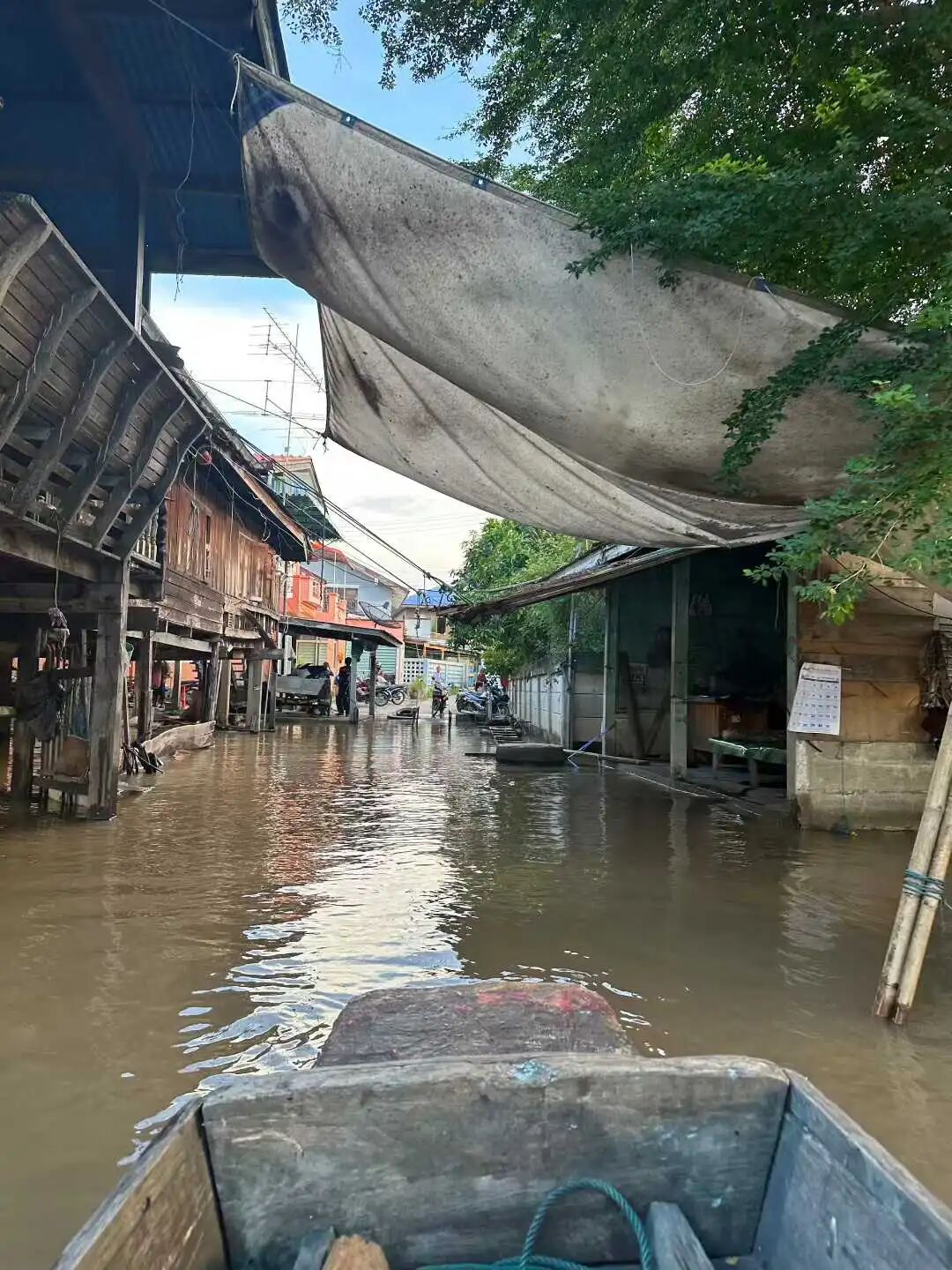
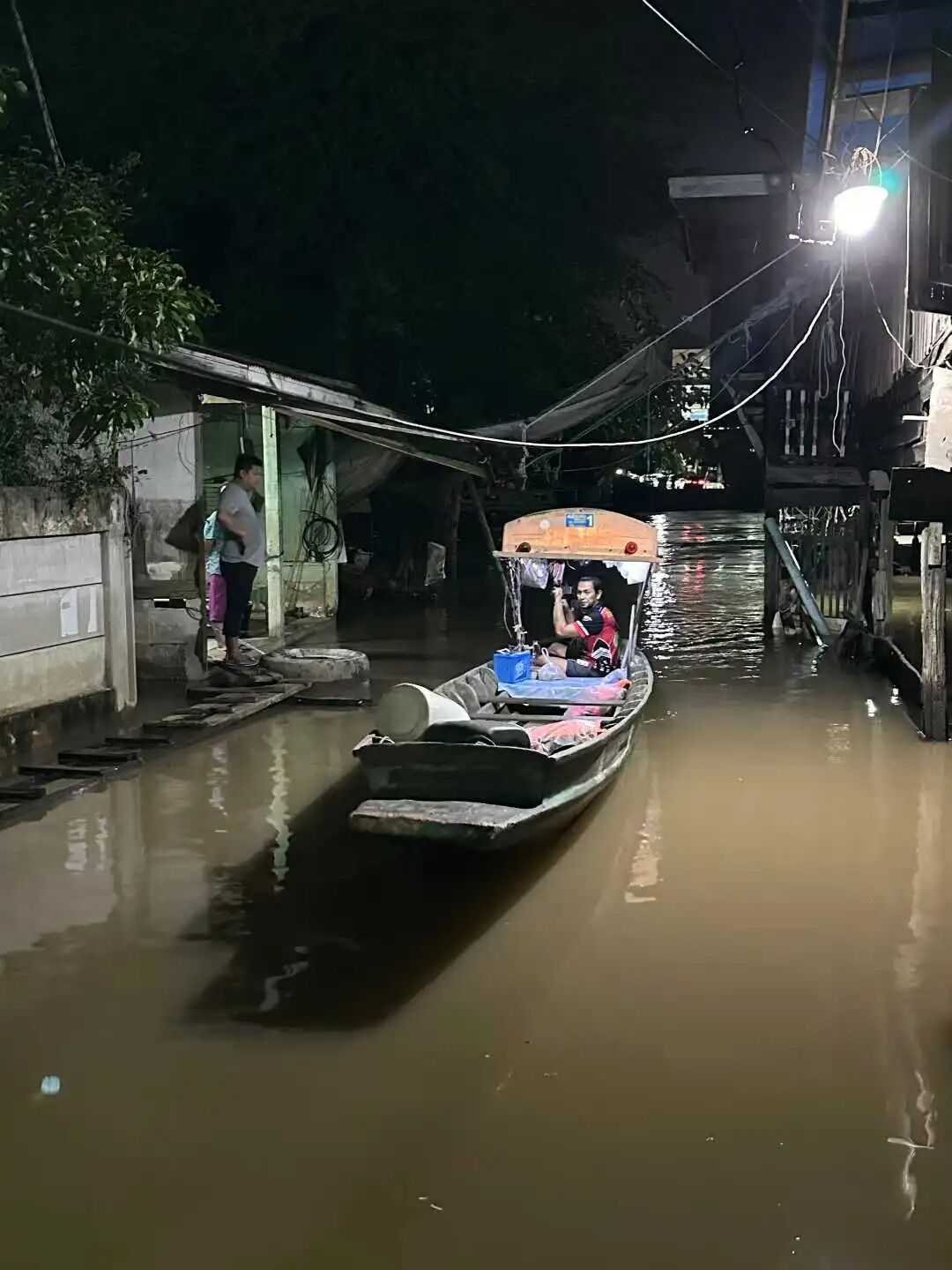
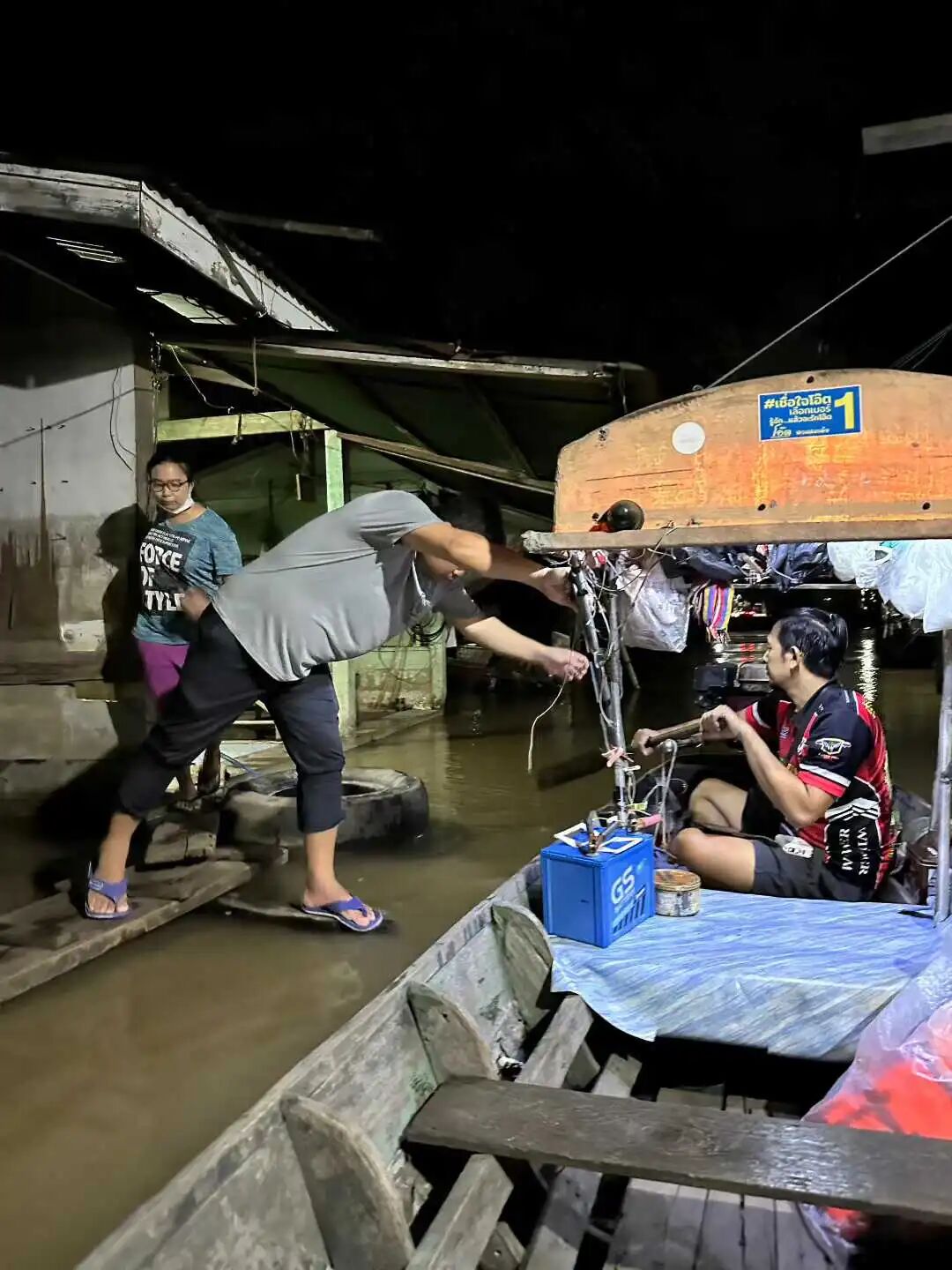
You must experience taking a small boat across the Chao Phraya River when you come to Ayutthaya. We took a small ferry at a pier in the south of the city, which easily connects to the Cham community on the south bank of the old city.
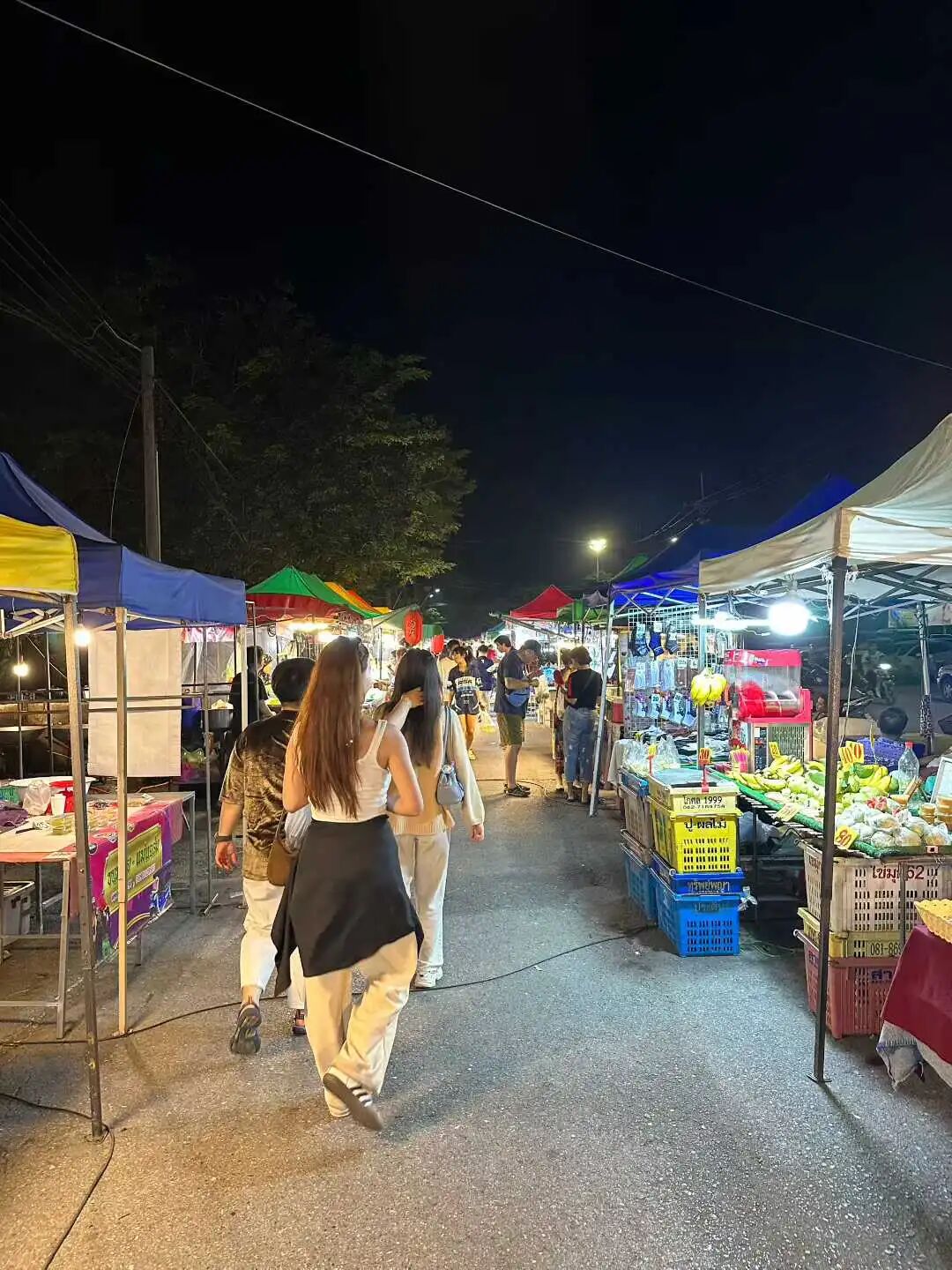
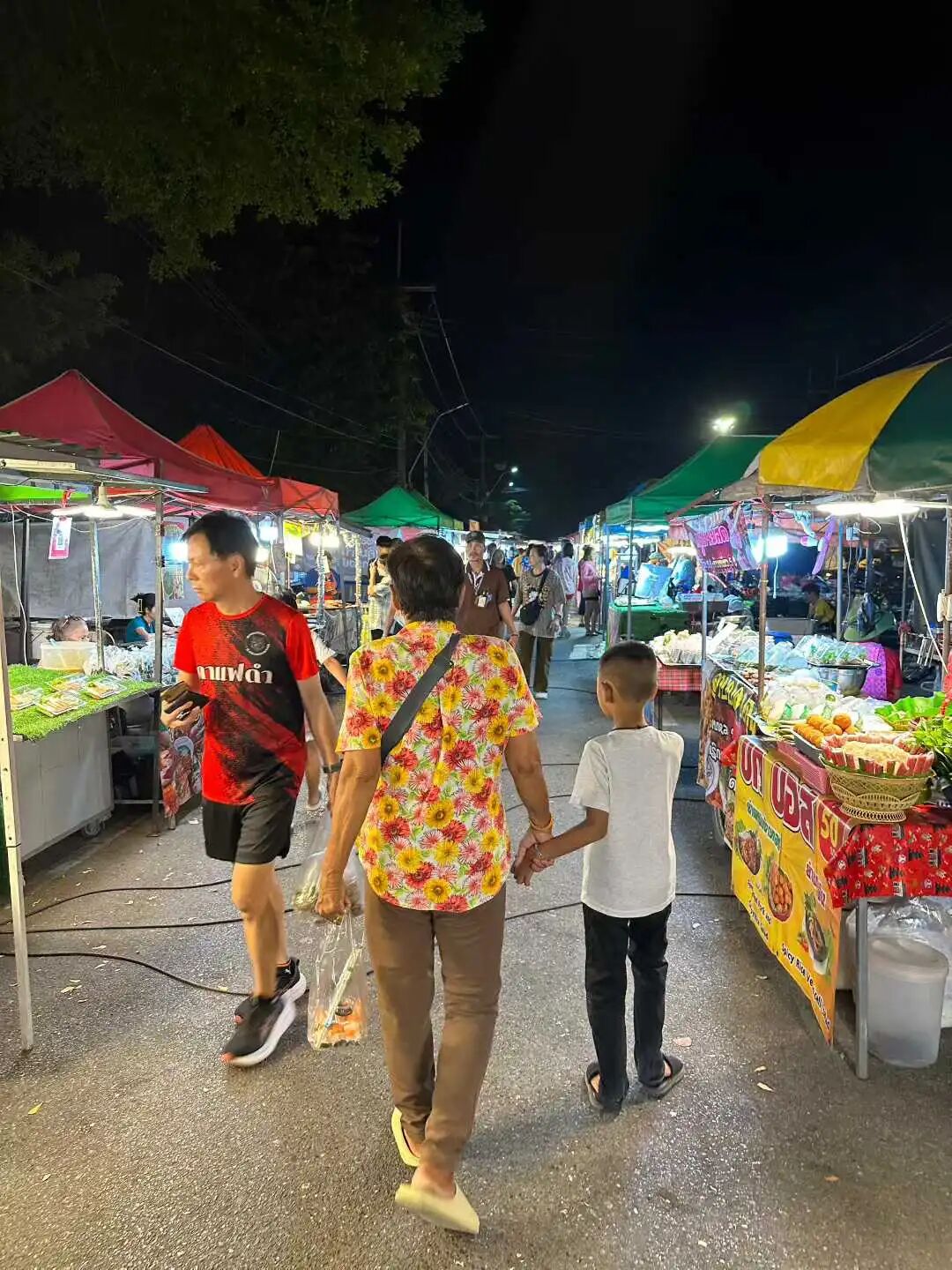
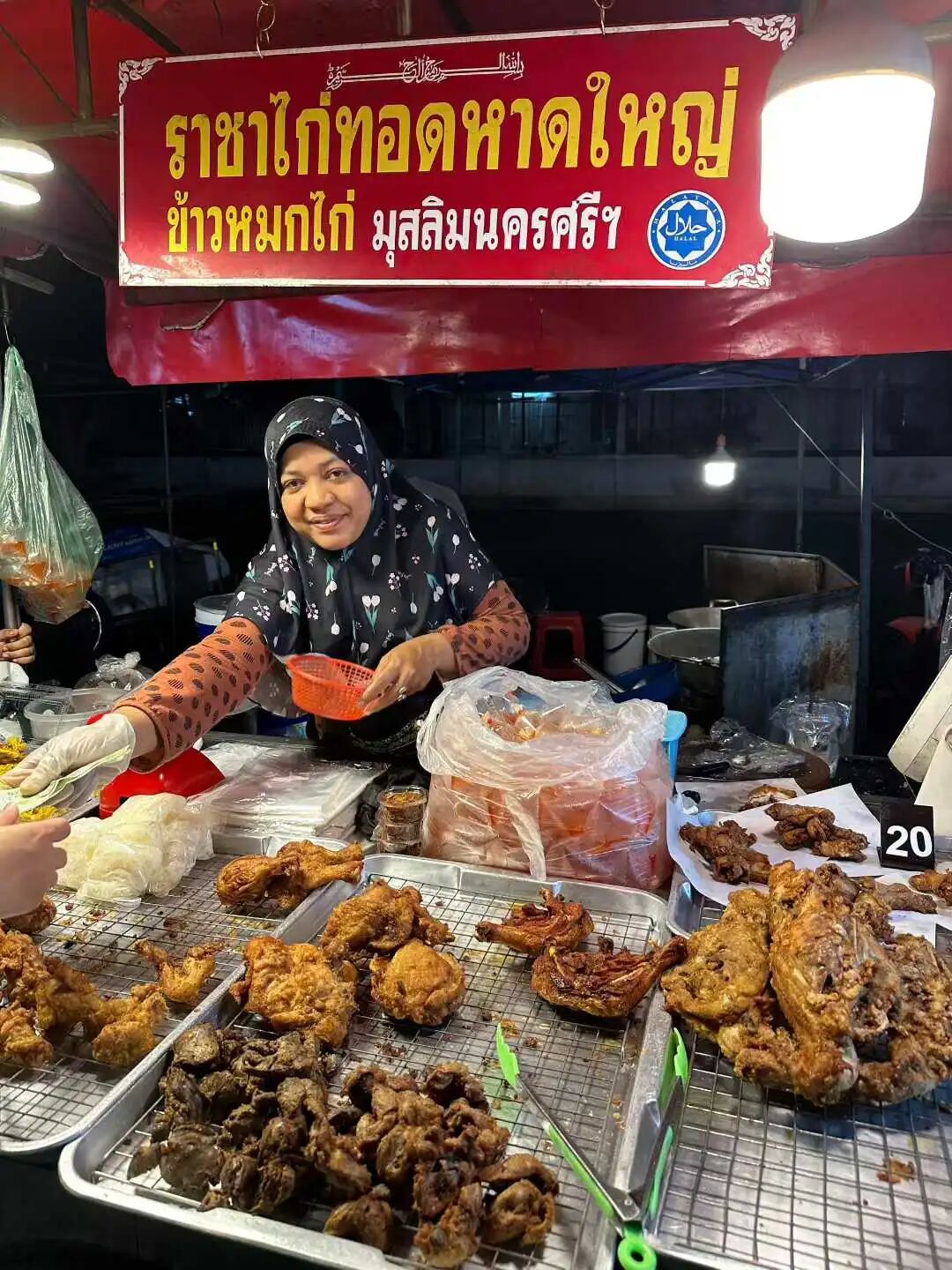
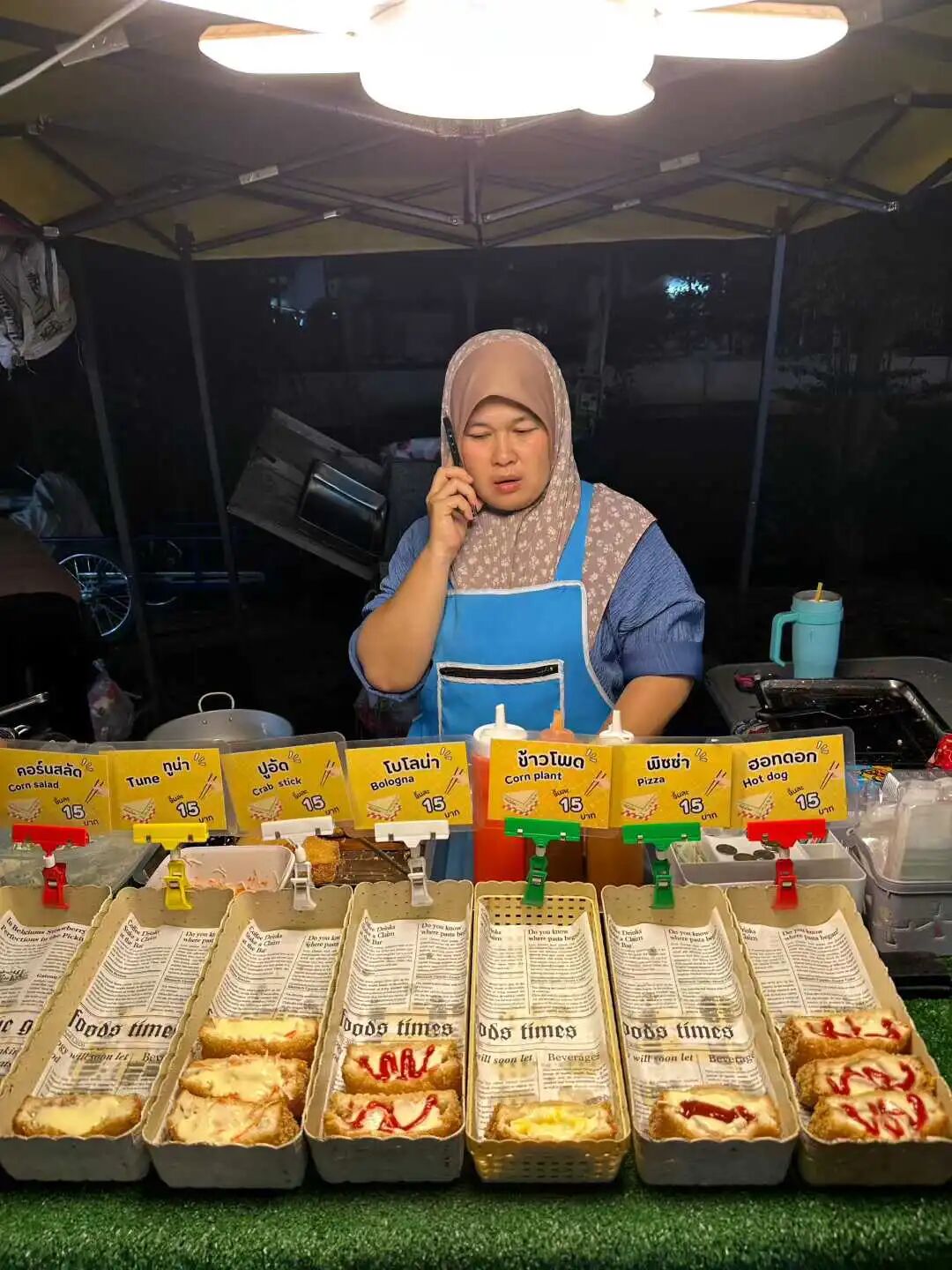
The Ayutthaya World Heritage night market is right across from Wat Mahathat. The market is just one street long and has some halal snacks like fried chicken, roti flatbread (roti), and shawarma, but there are no seats, so you have to stand and eat. The nearby historic sites are lit up at night, so it's nice to walk around the night market and look at the ruins.
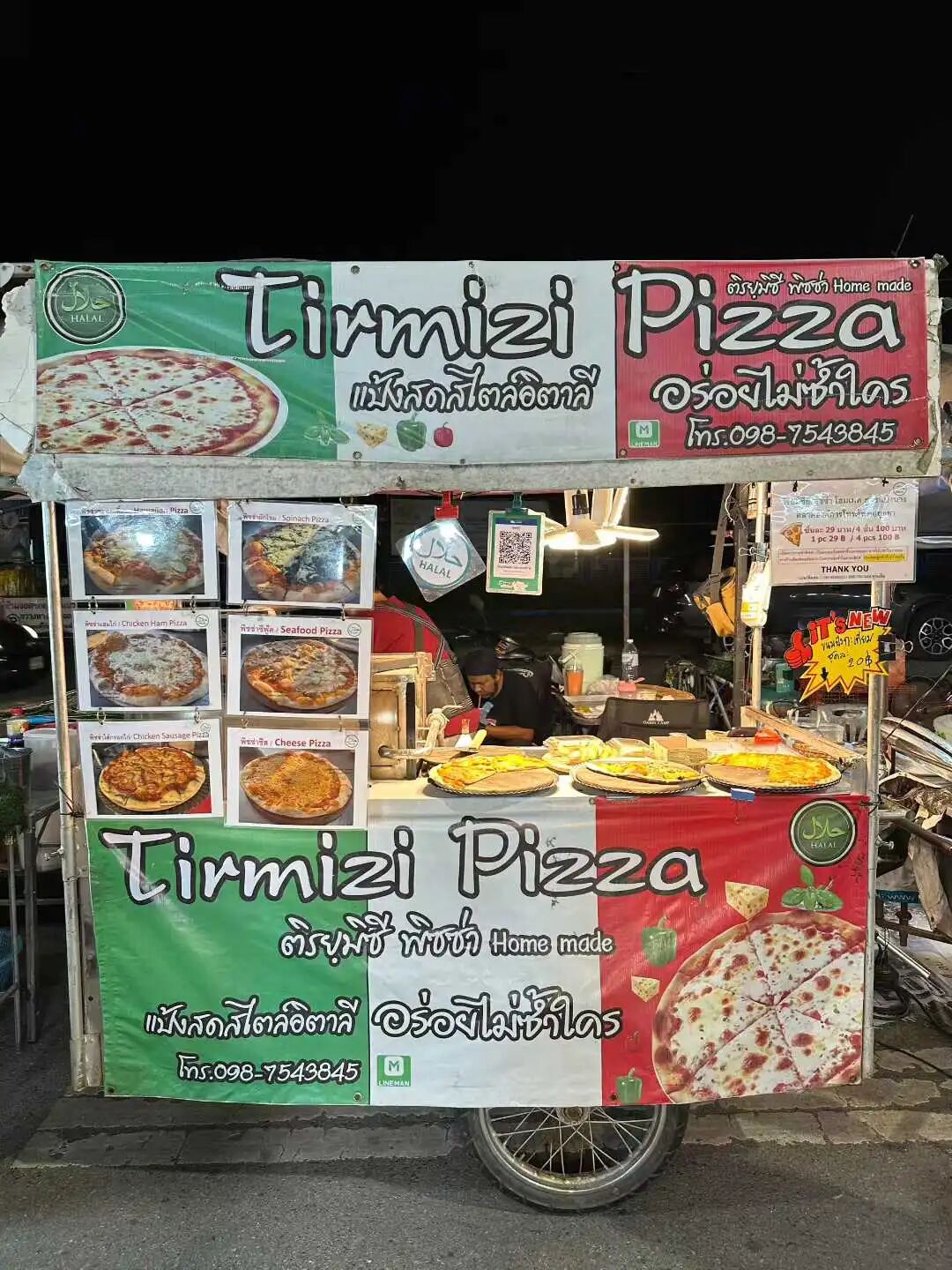
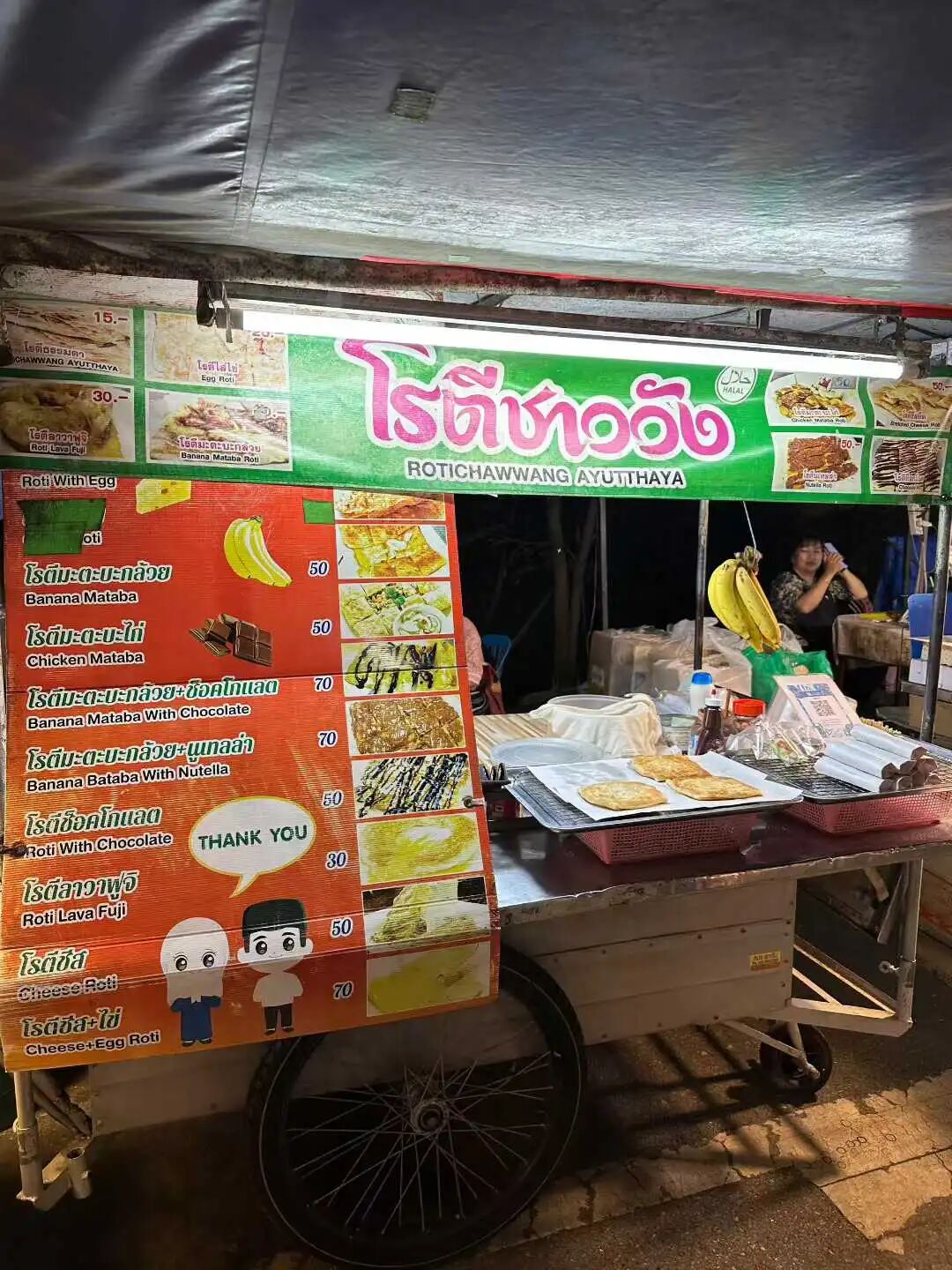
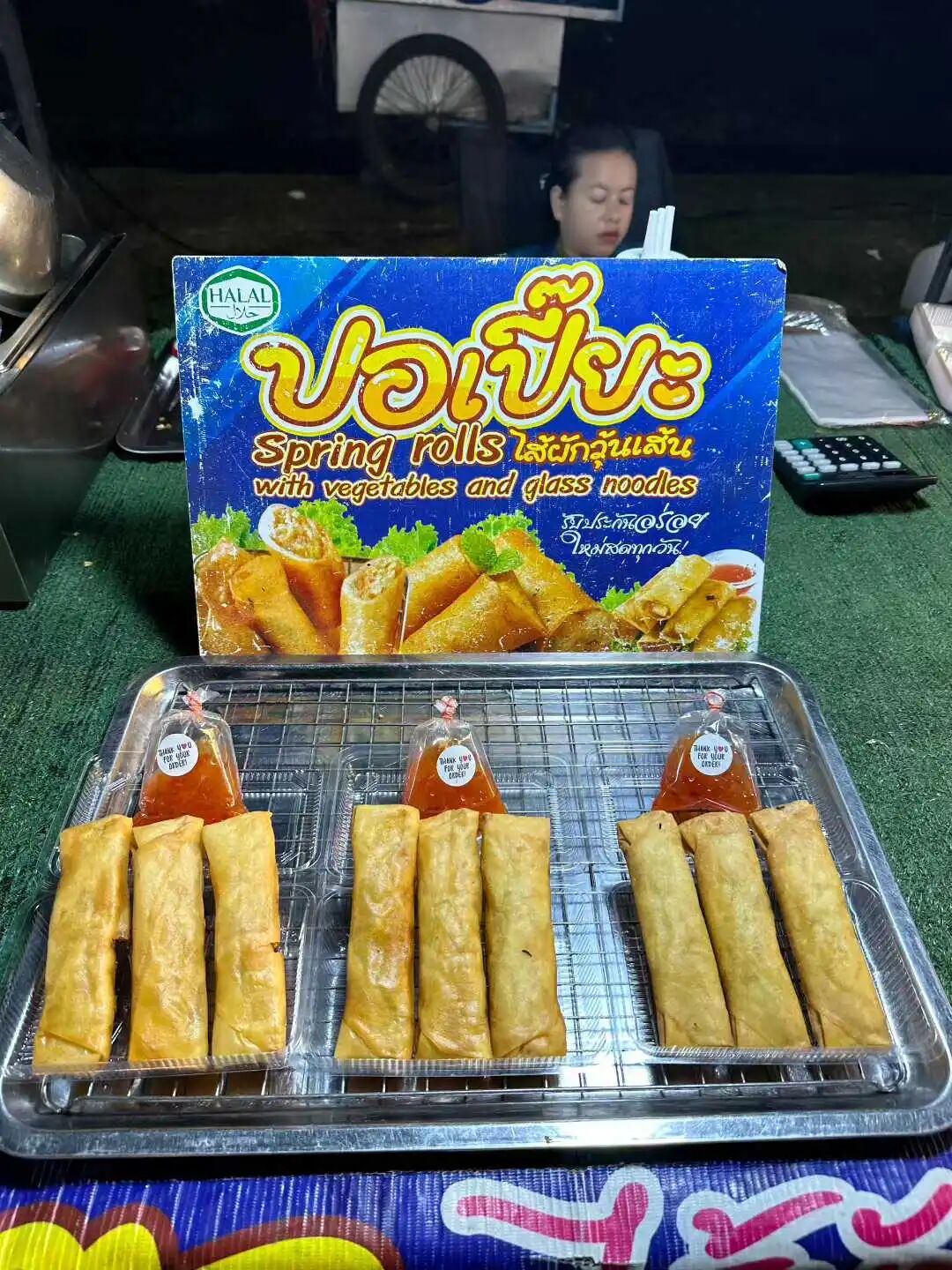
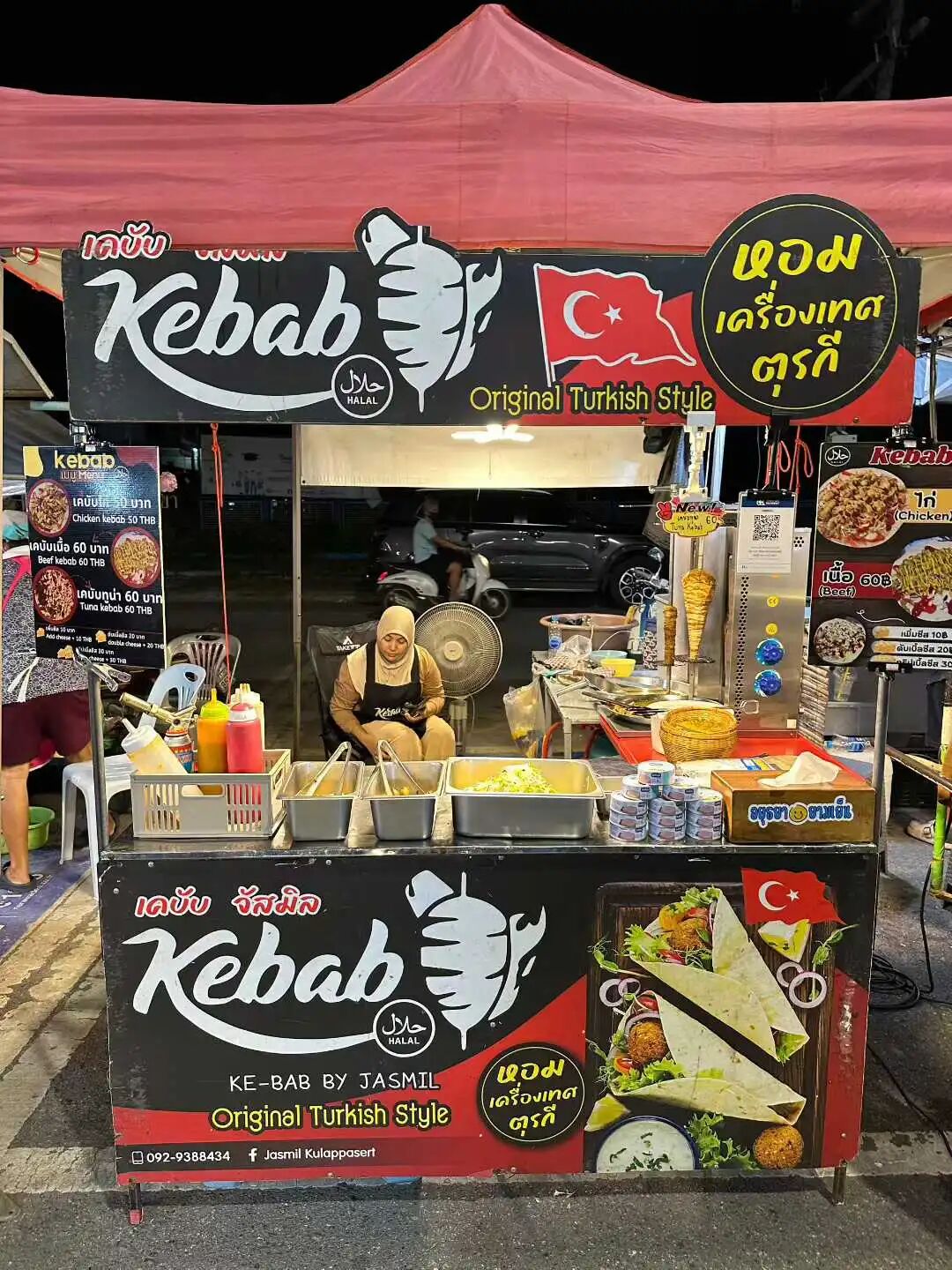
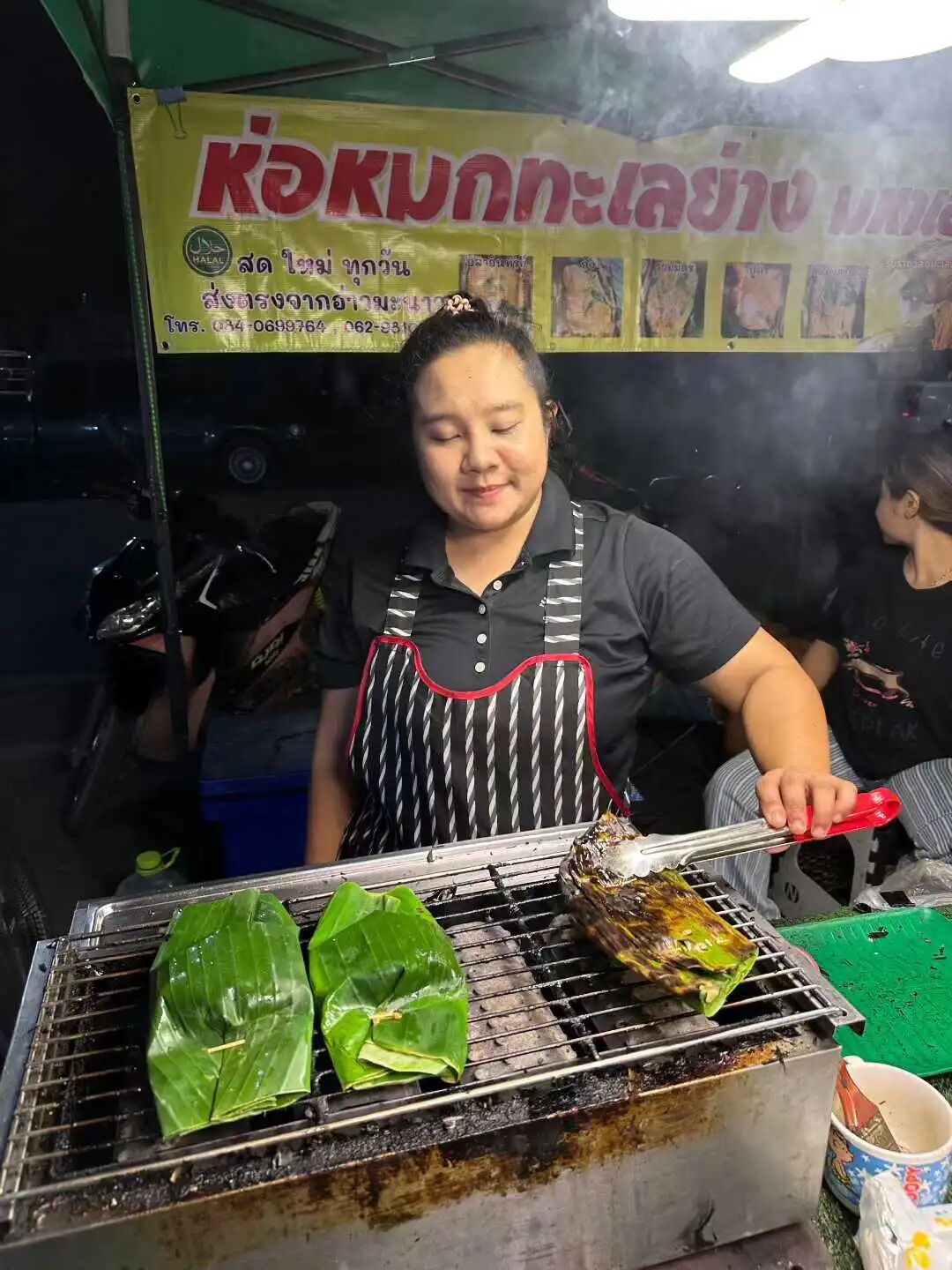
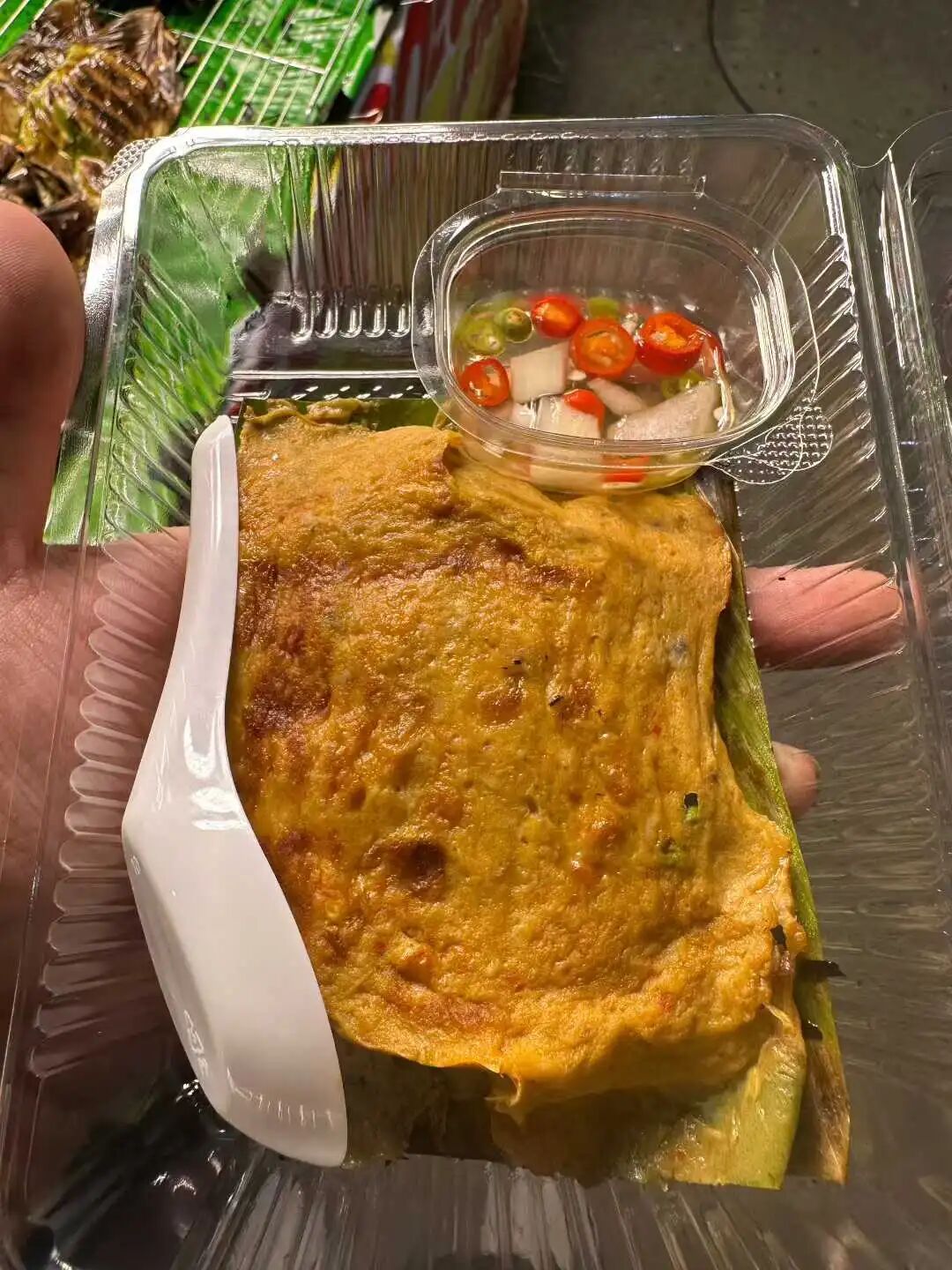
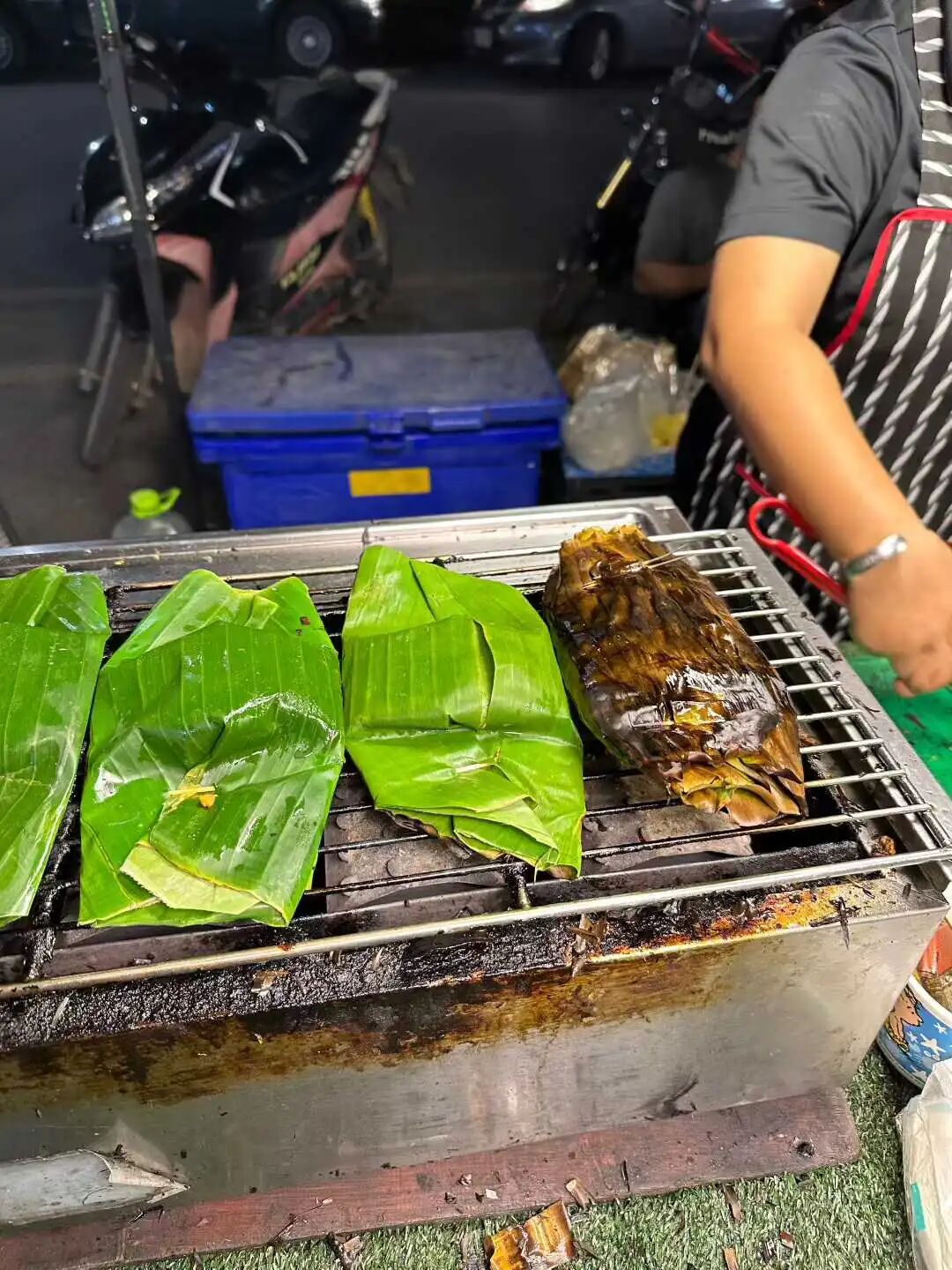
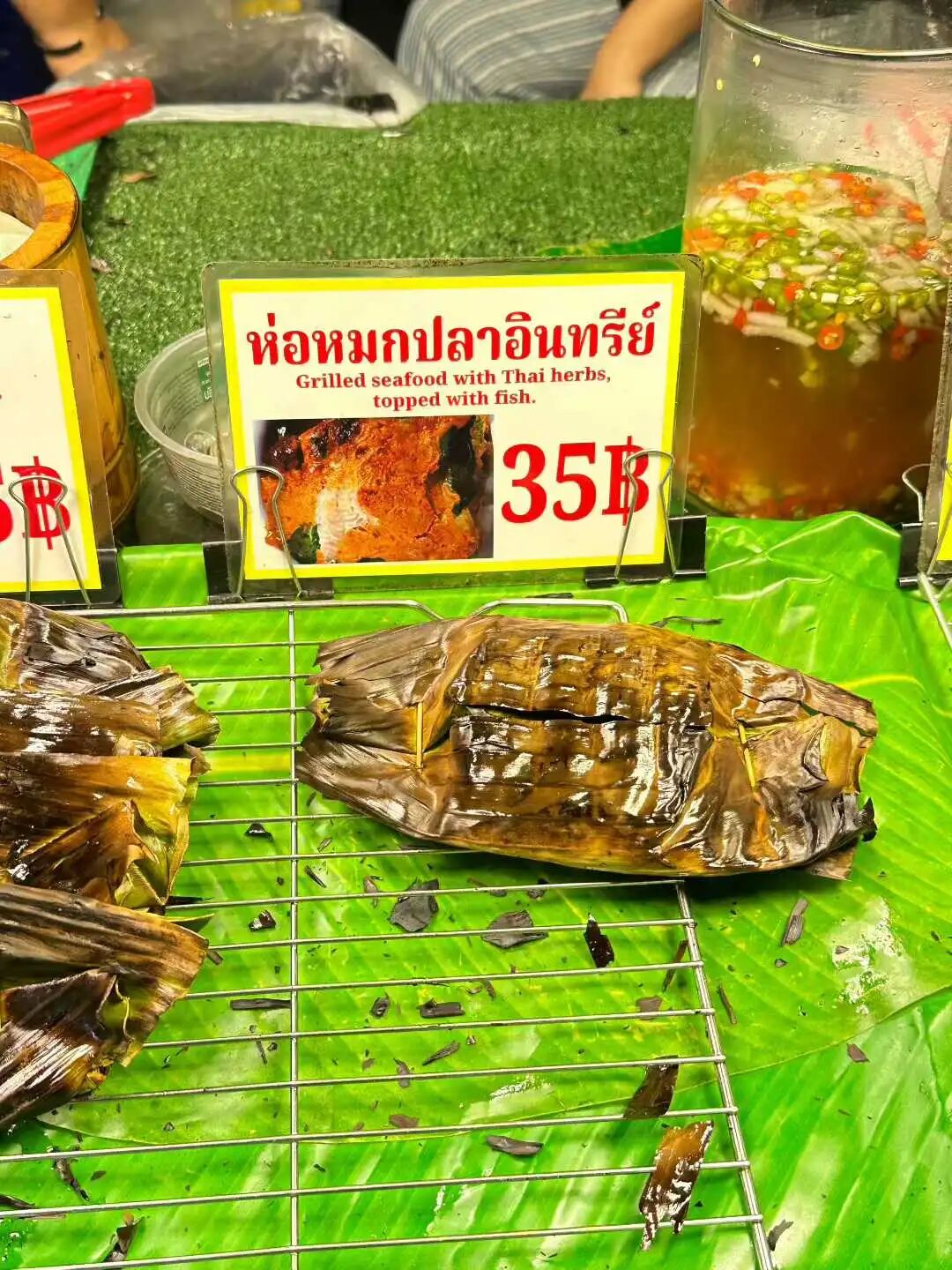
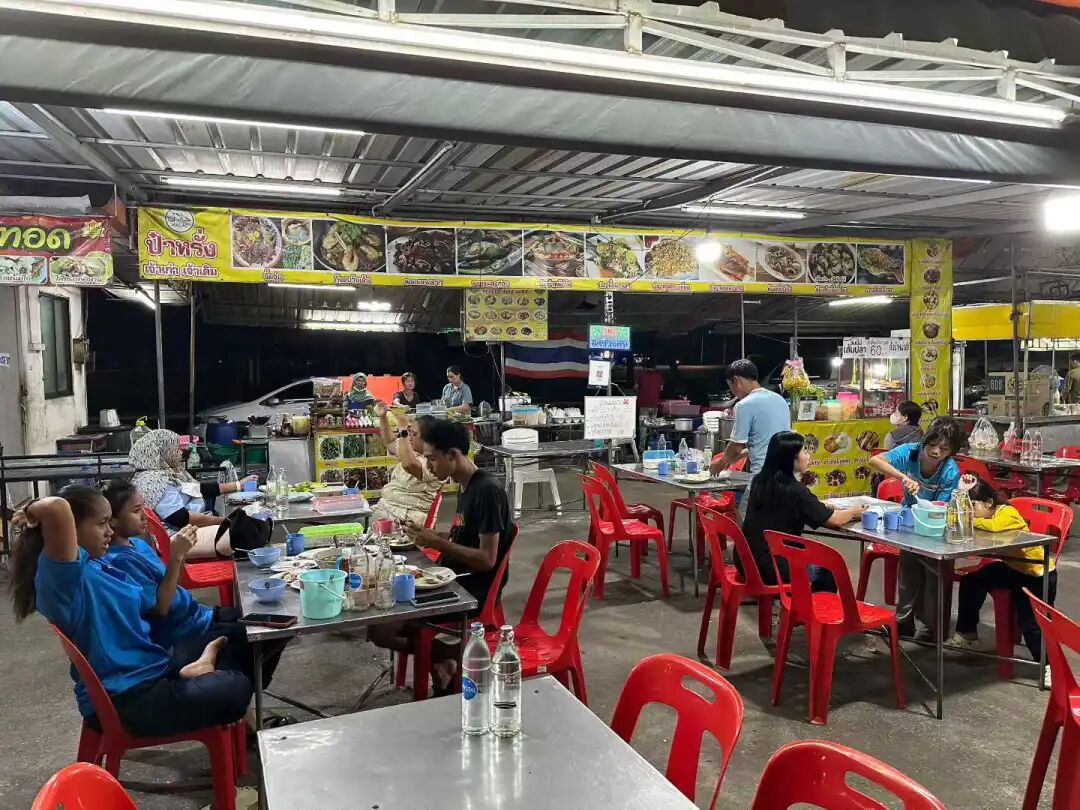
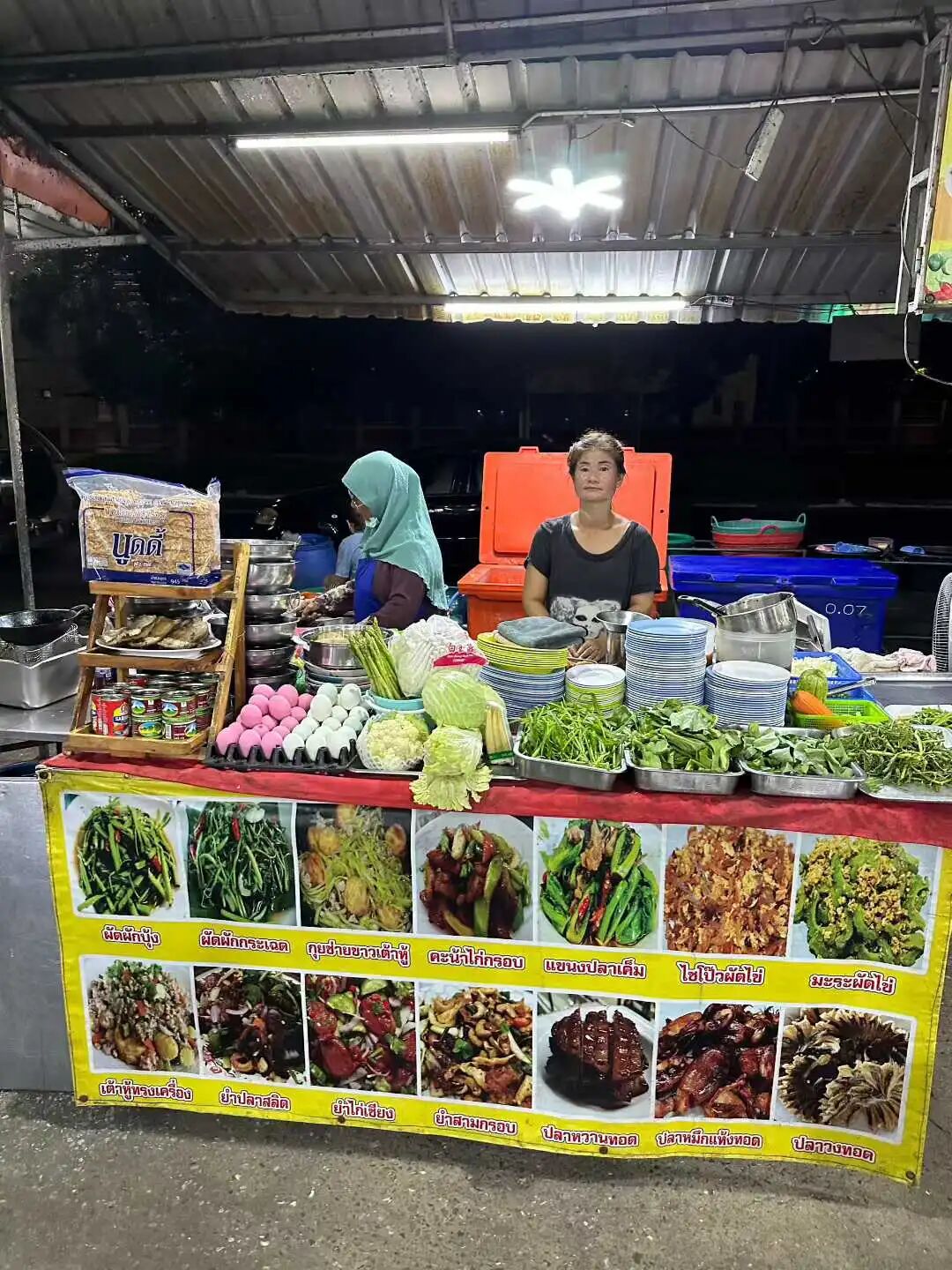
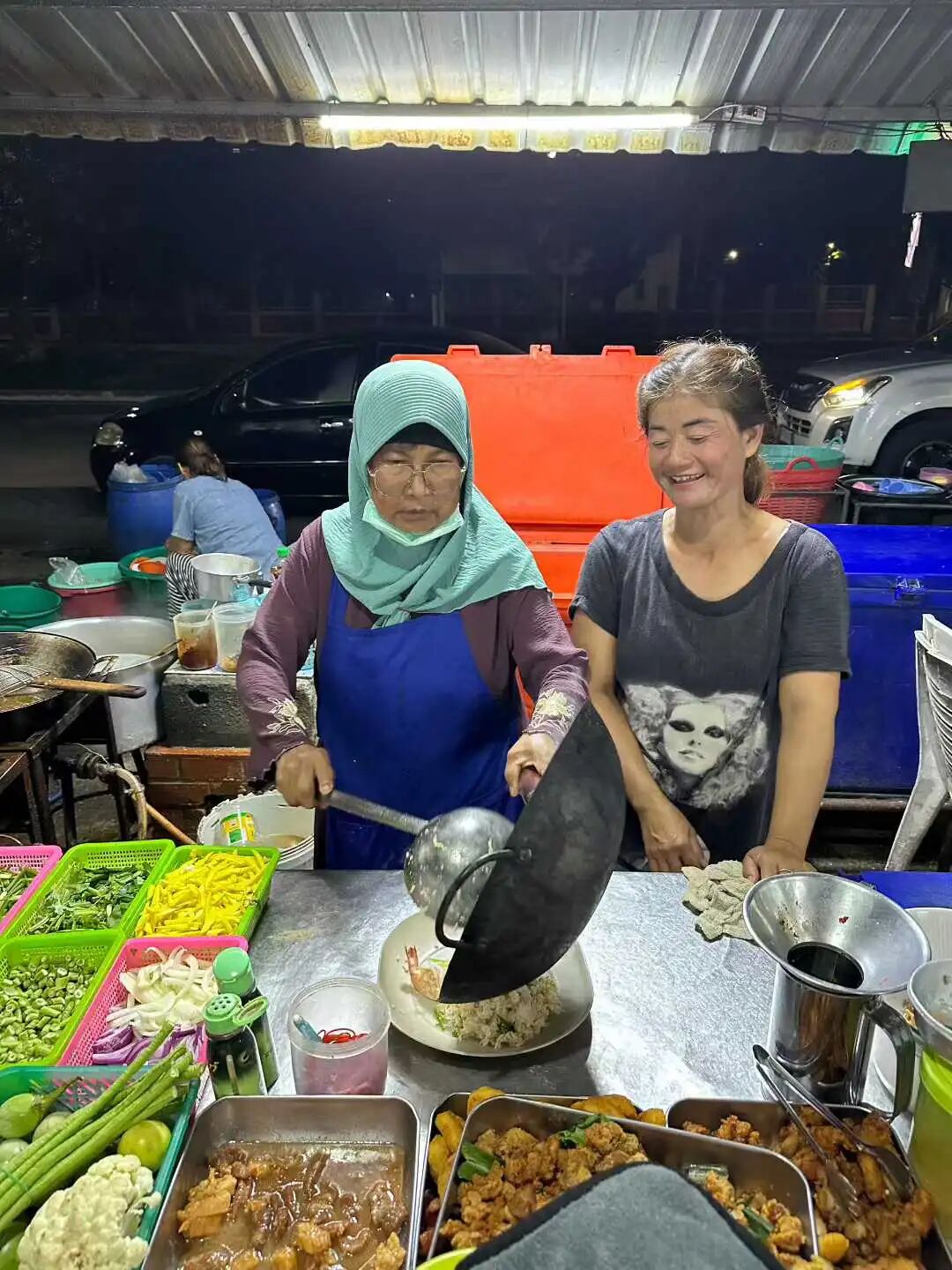
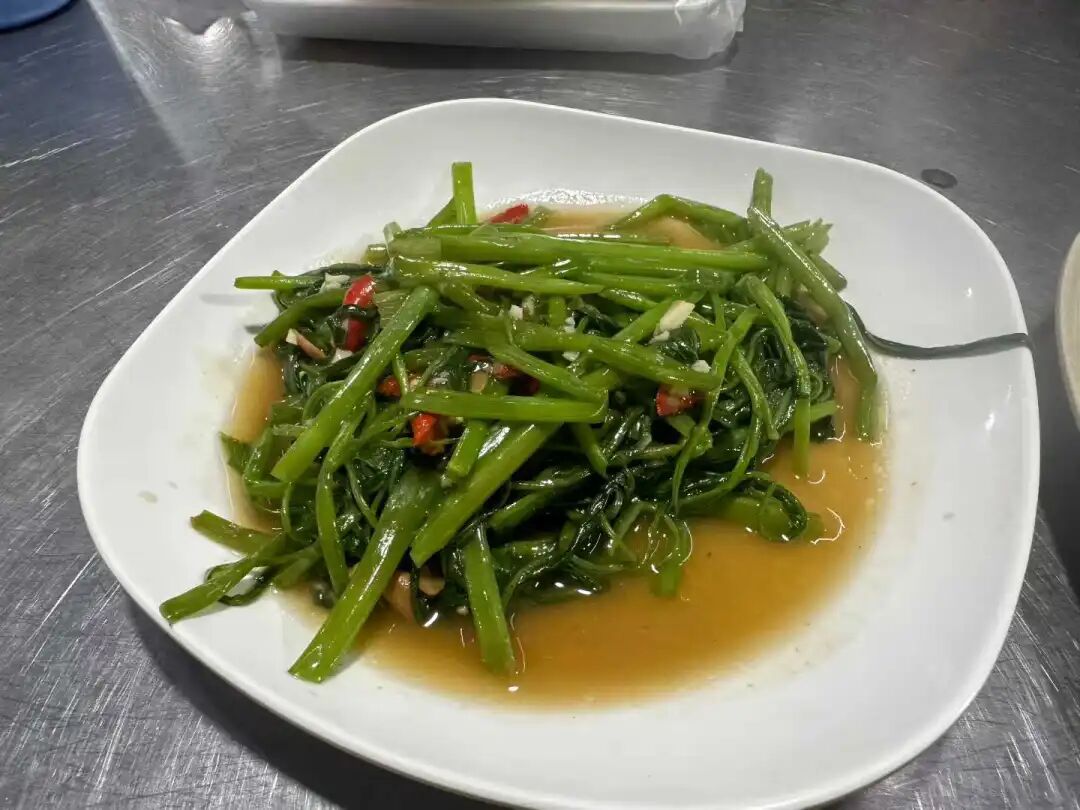
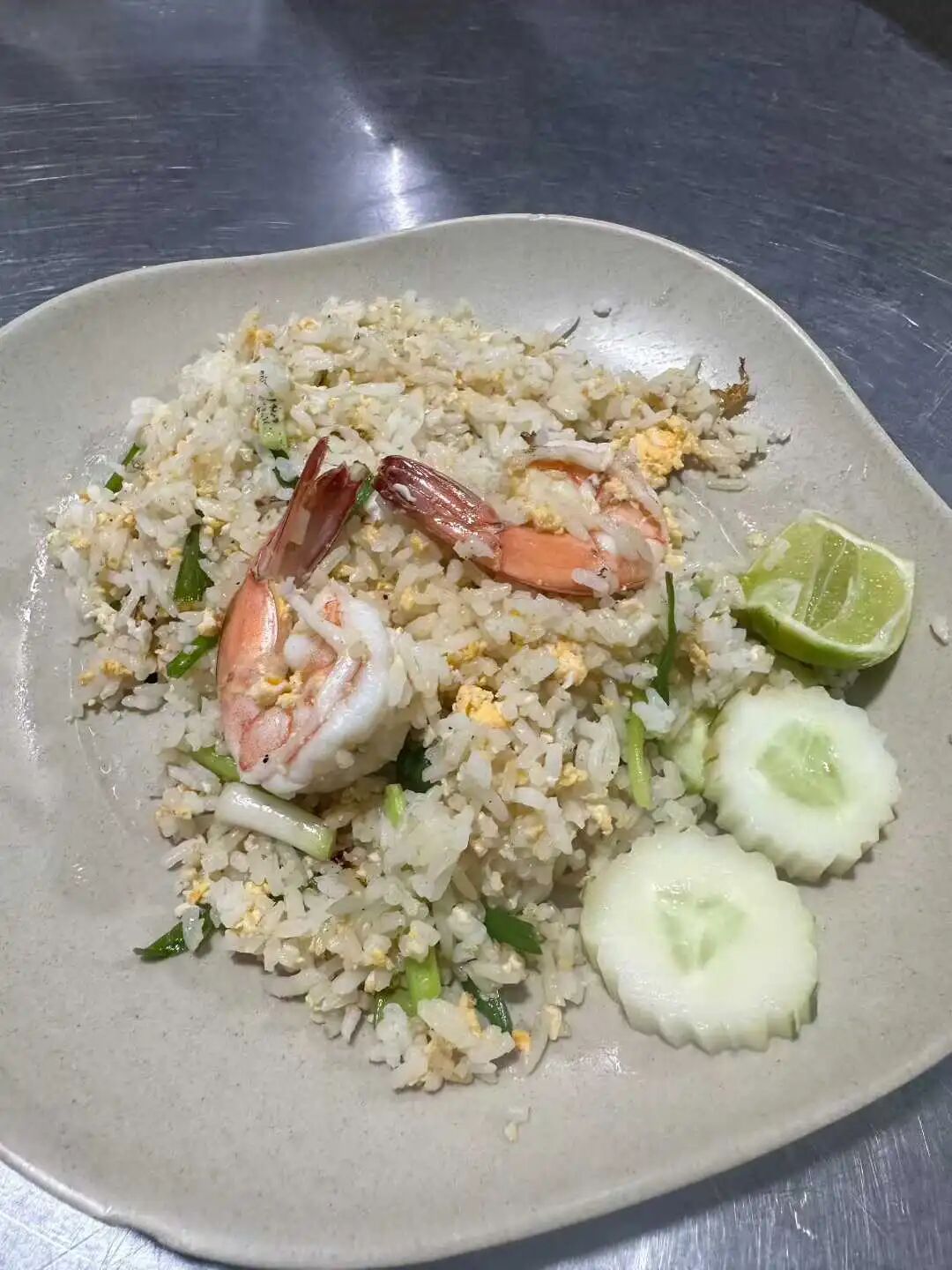
We ate a type of grilled fish cake wrapped in banana leaves at the night market, and it was very spicy. There is also a halal stall on the south side of the night market where I had some home-style dishes, shrimp fried rice and stir-fried crown daisy, which was a nice light meal.
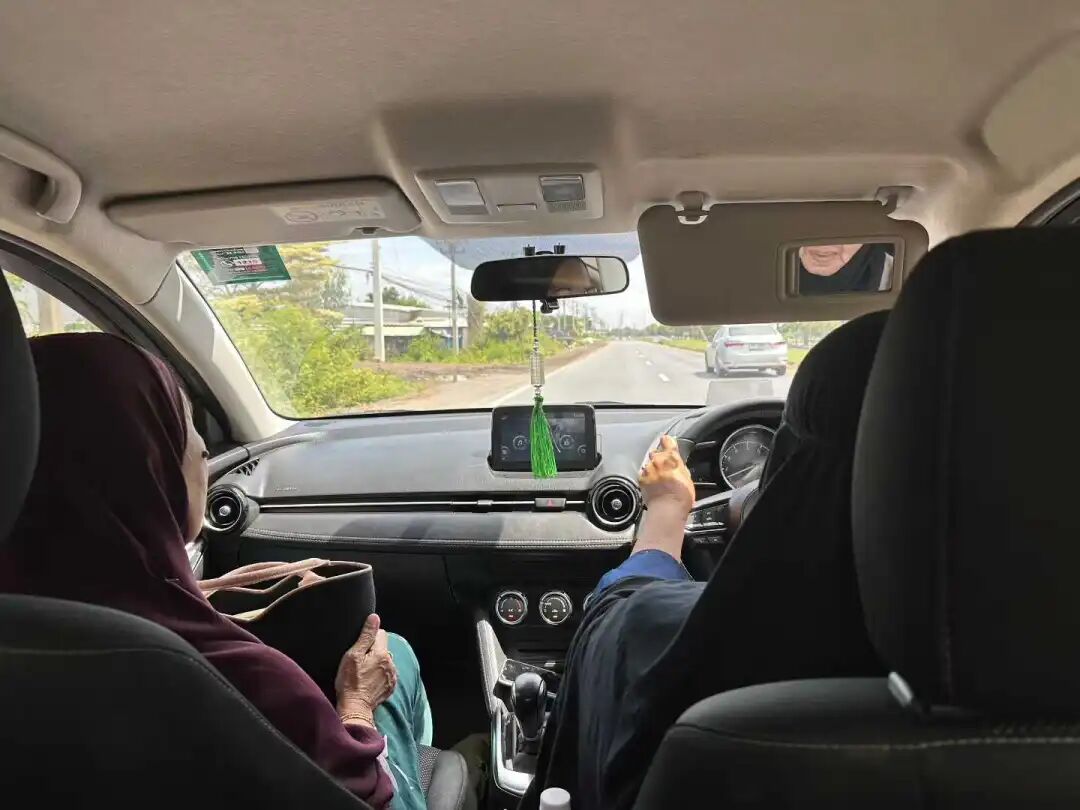
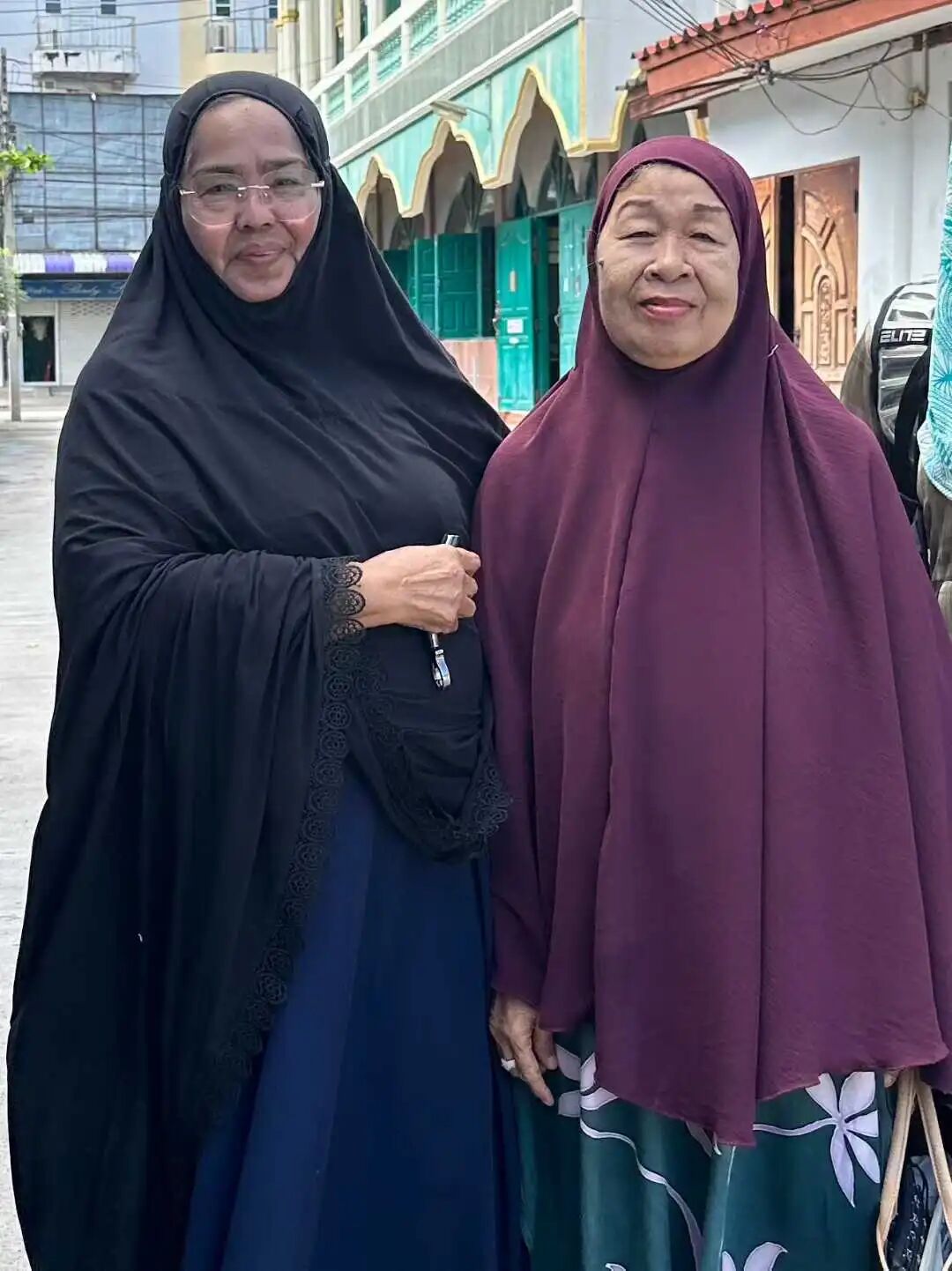
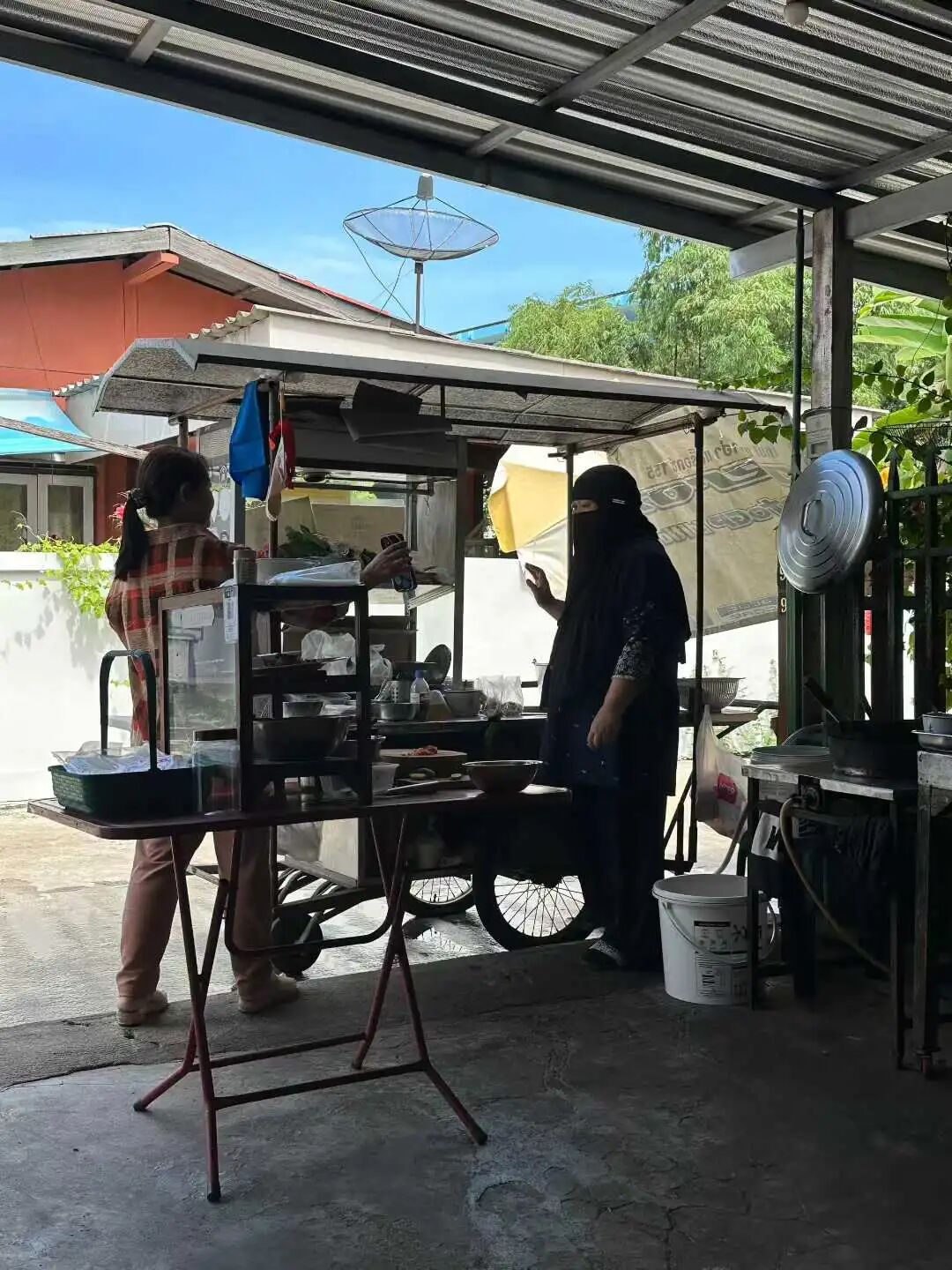
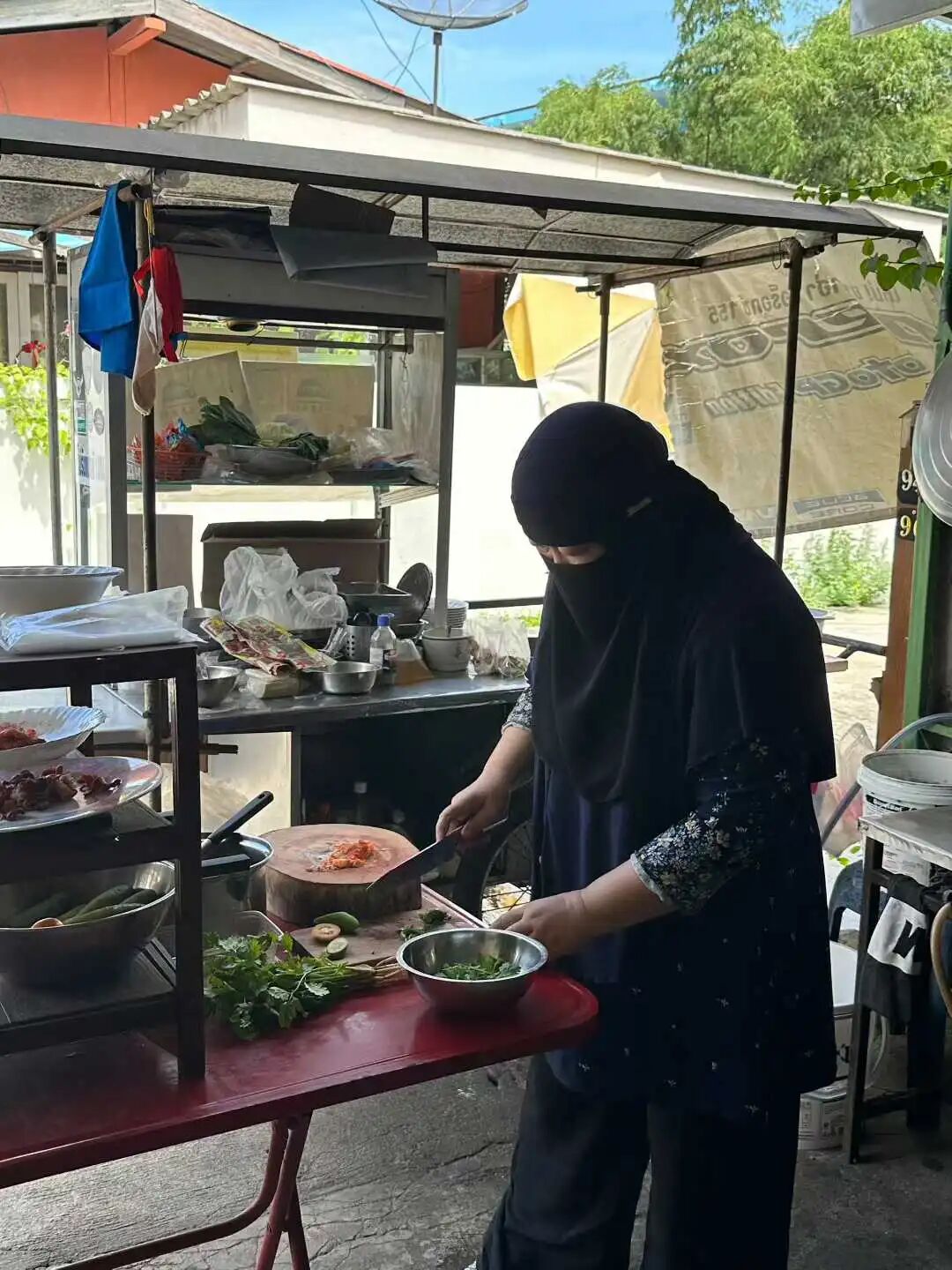
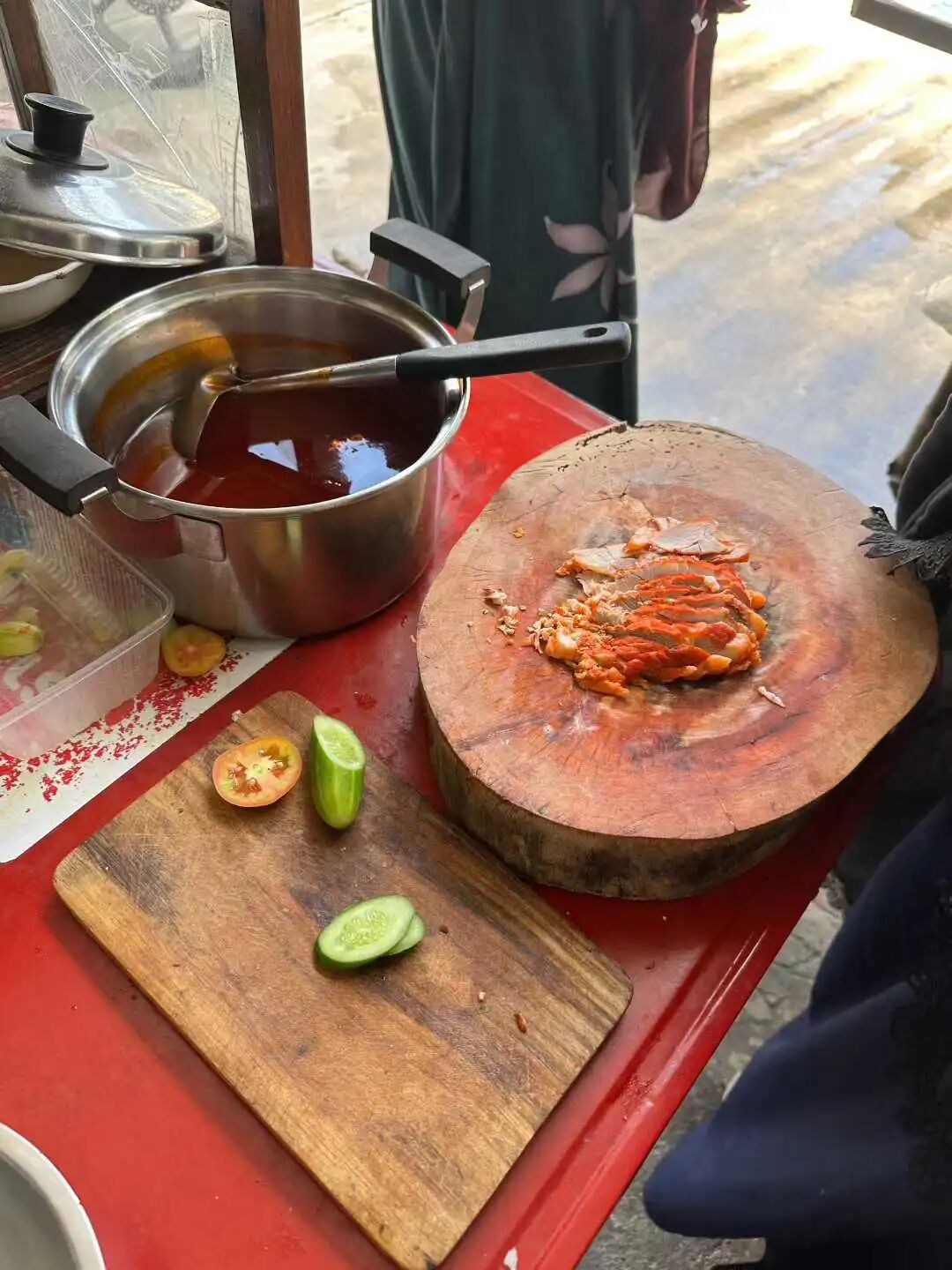
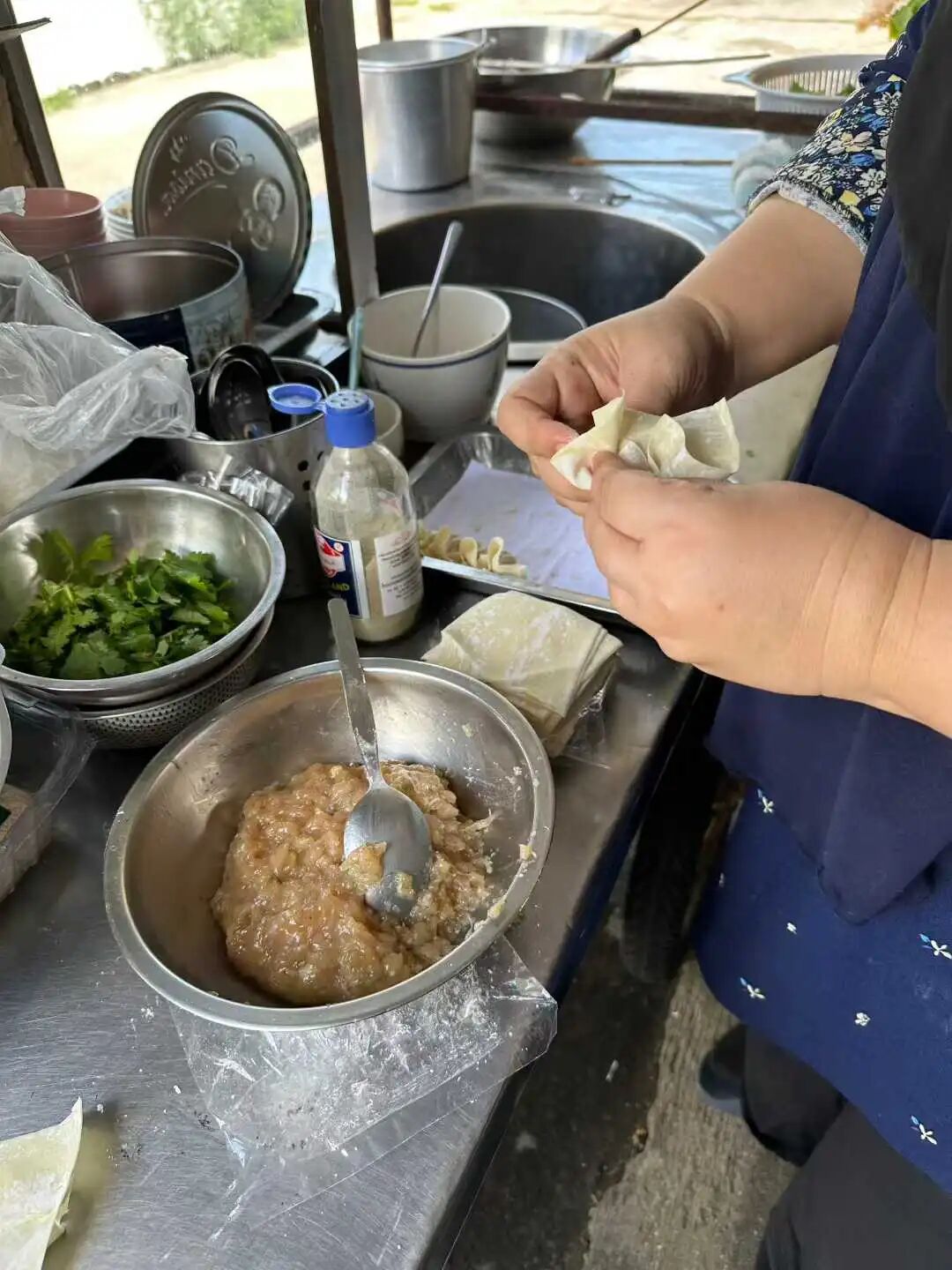
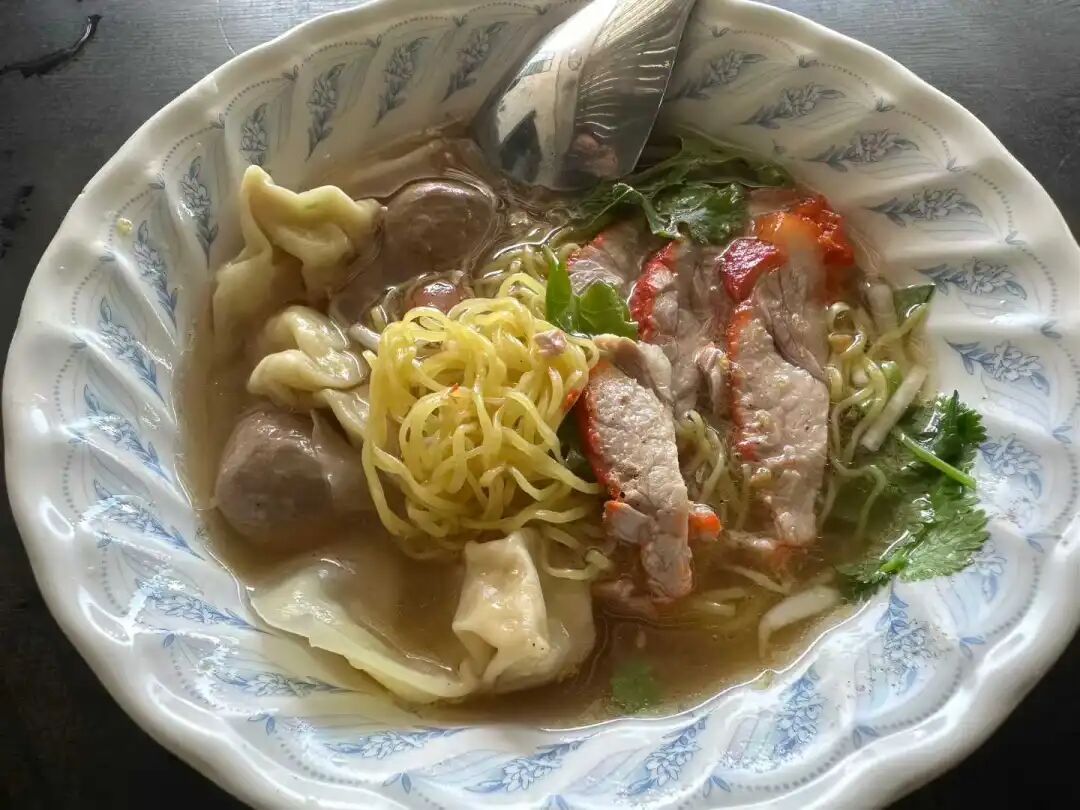
On Friday, while attending Jumu'ah prayers in Ayutthaya, I was invited to lunch by two aunties who were also there for prayers. The aunties drove us to the Pakistani Noor Mosque in the northern part of the old city. I was surprised to find a snack shop in the courtyard run by an auntie of mixed Chinese and Pakistani heritage. And that is how we magically ended up eating authentic chicken char siu wonton noodles in the courtyard of a Pakistani mosque in Thailand.
The auntie who owns the shop no longer speaks Chinese. Through another auntie who treated us to a meal and translated for us, she explained that her father was Chinese and settled here after marrying a Pakistani woman. Although she has never been back to China, she was still very excited to see friends (dost) from China. Judging by the barbecued pork wonton noodles (chashao yuntun mian) she makes, her father was likely from Guangdong.
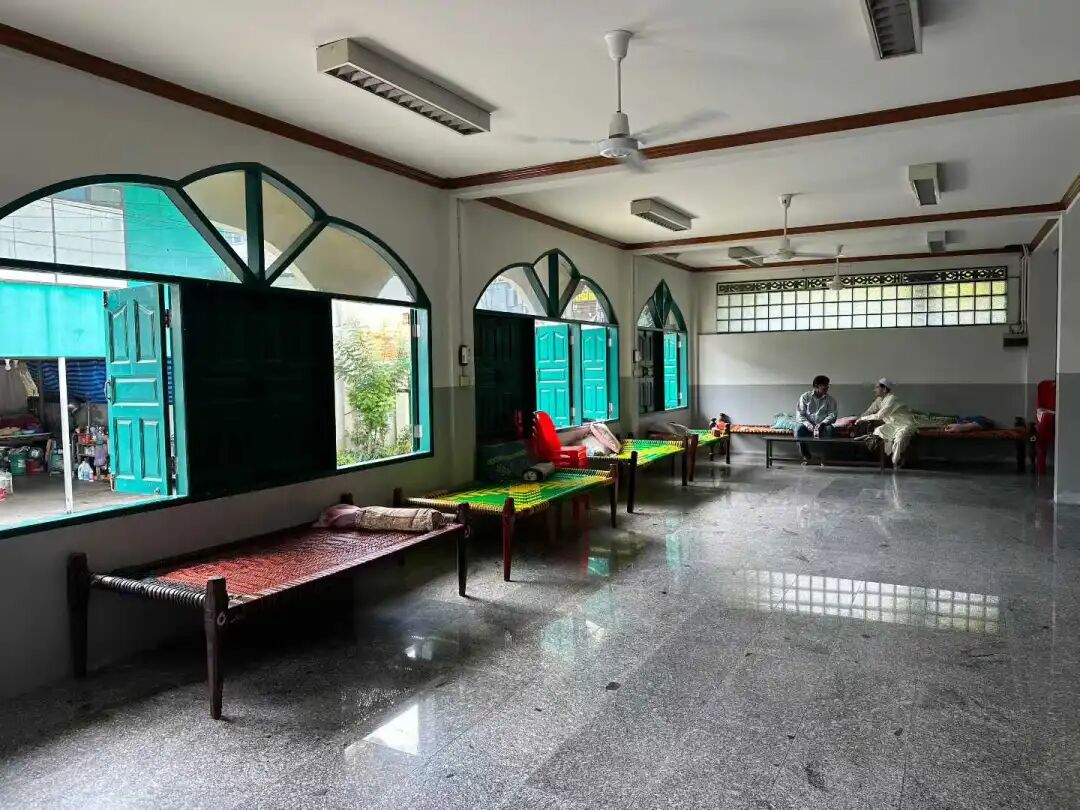
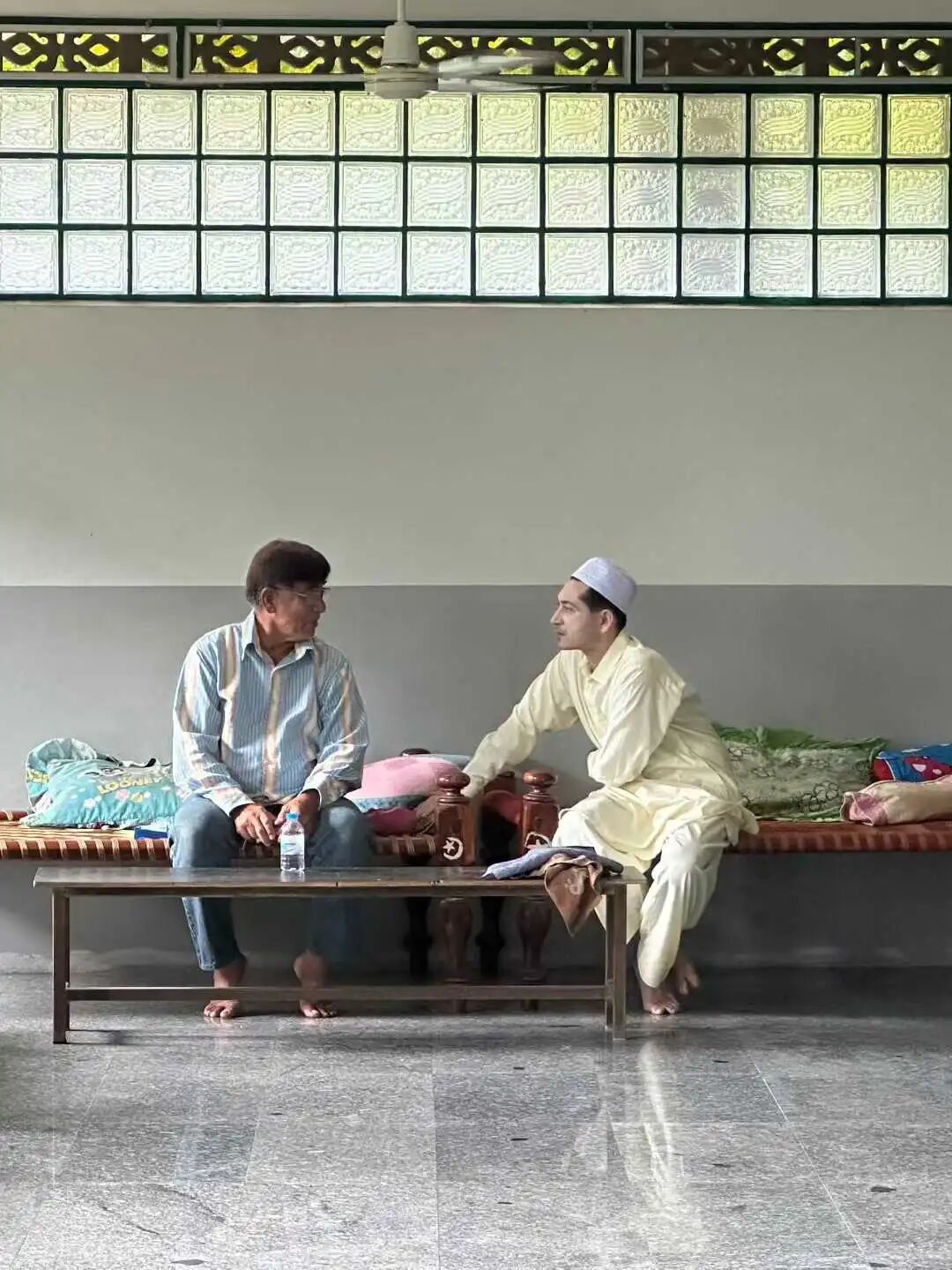
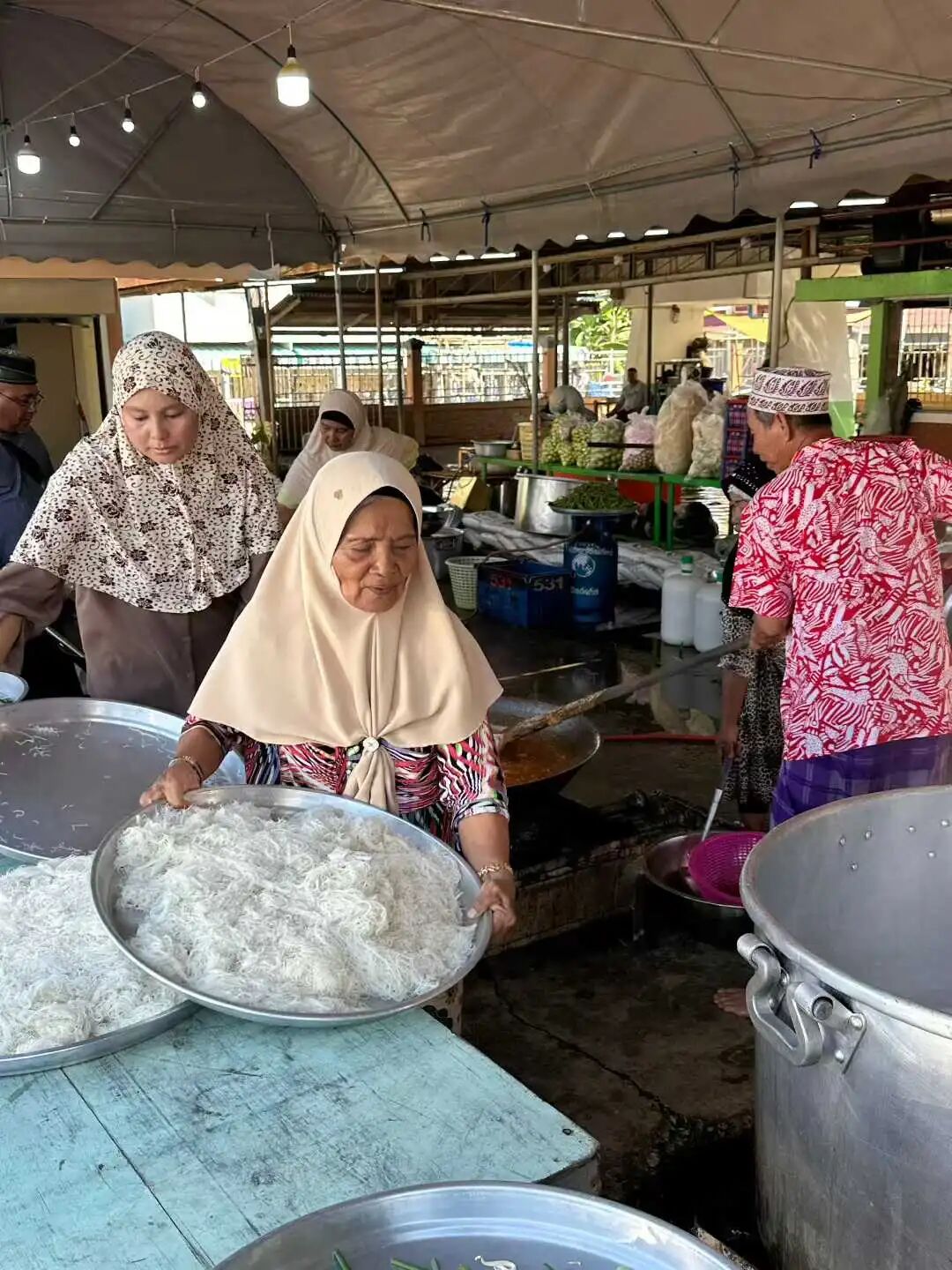
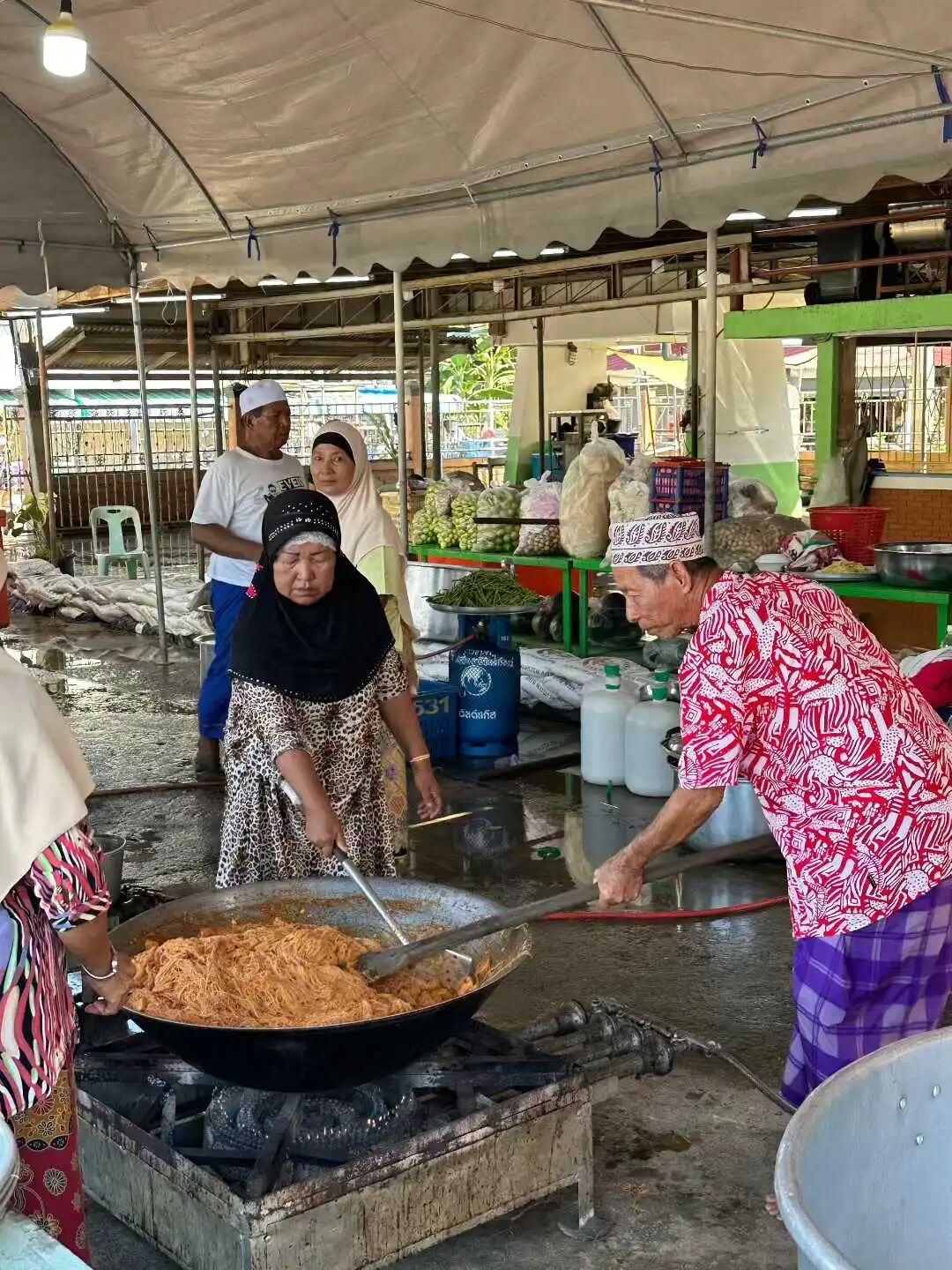
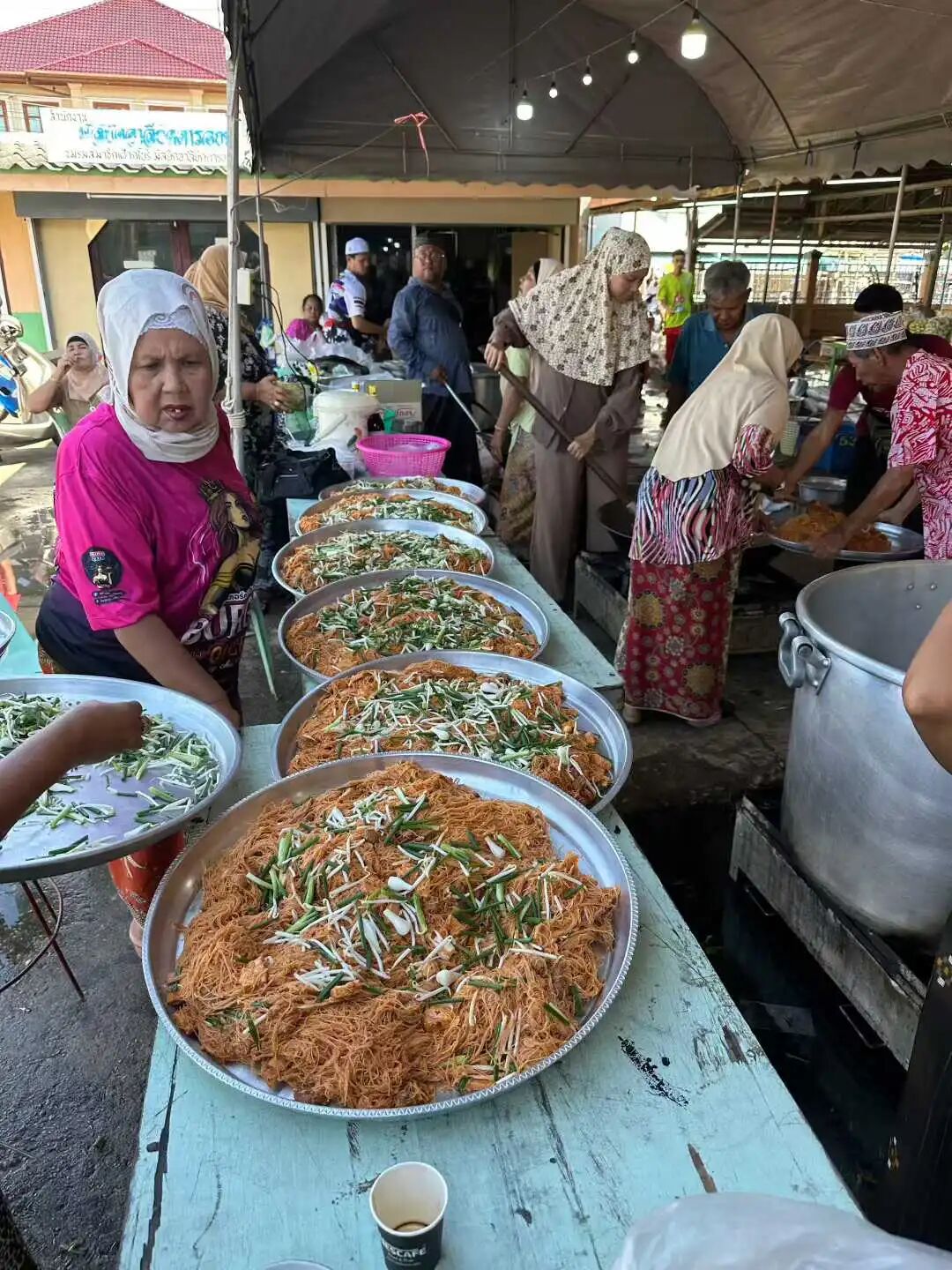
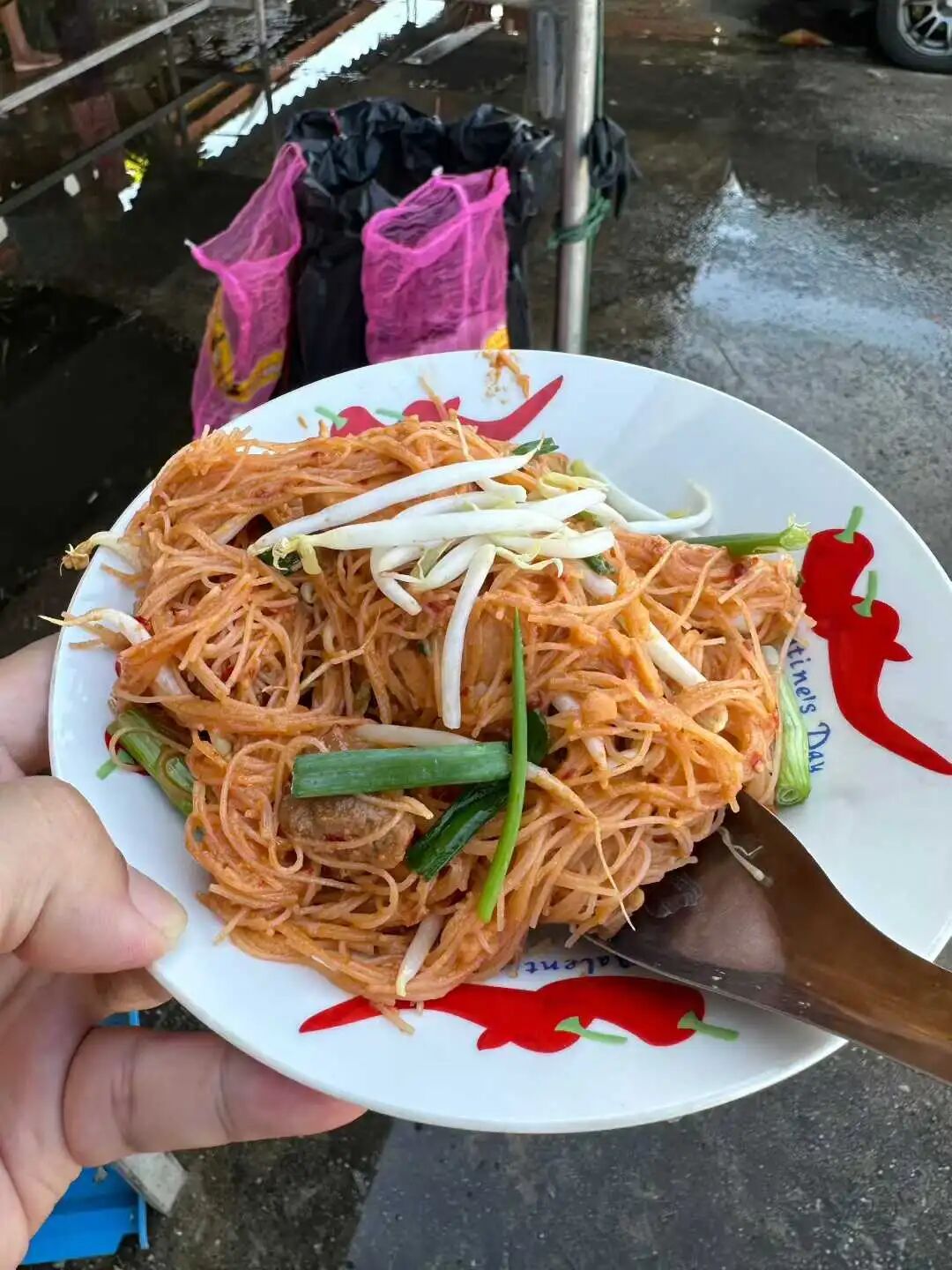
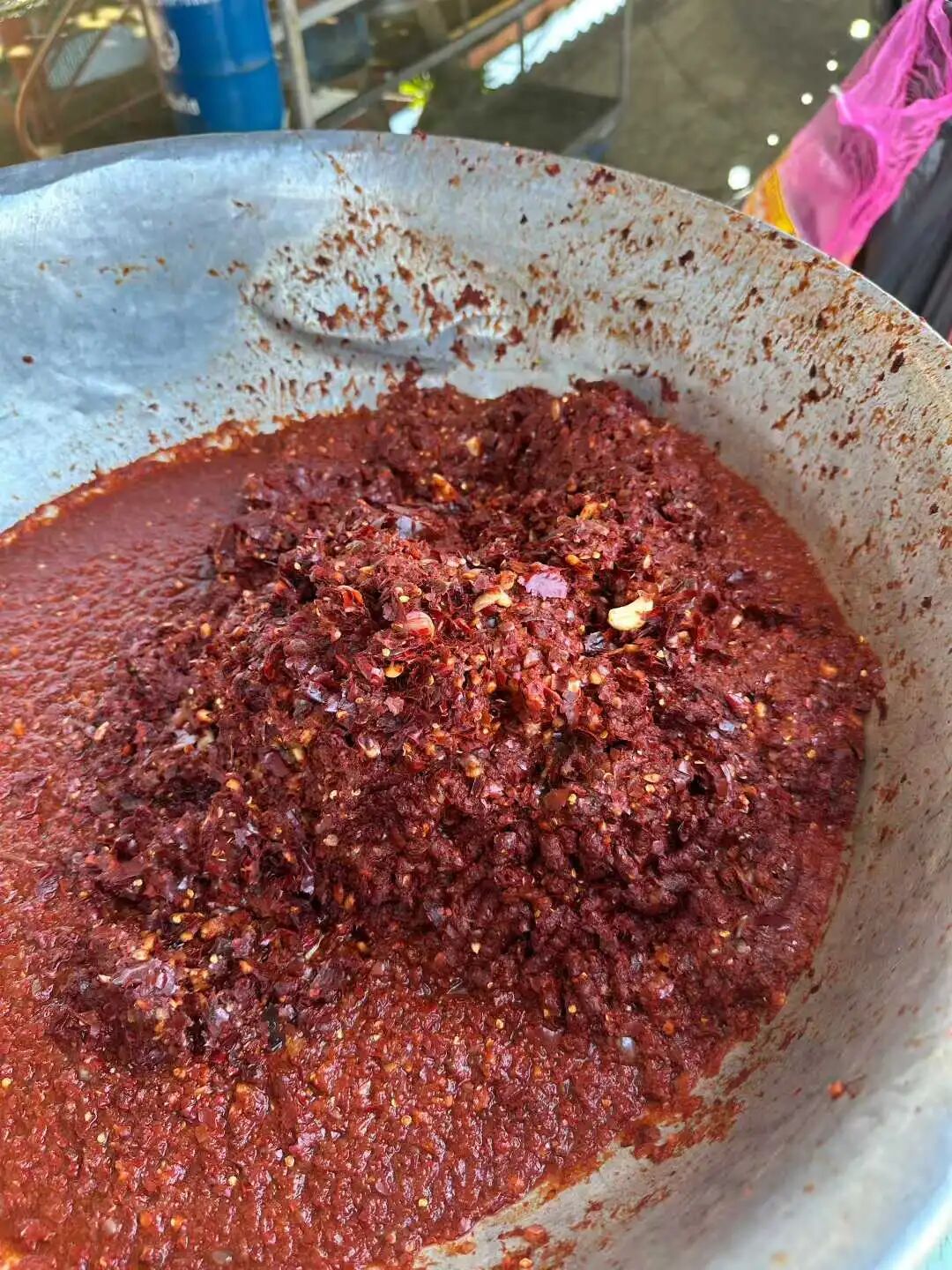
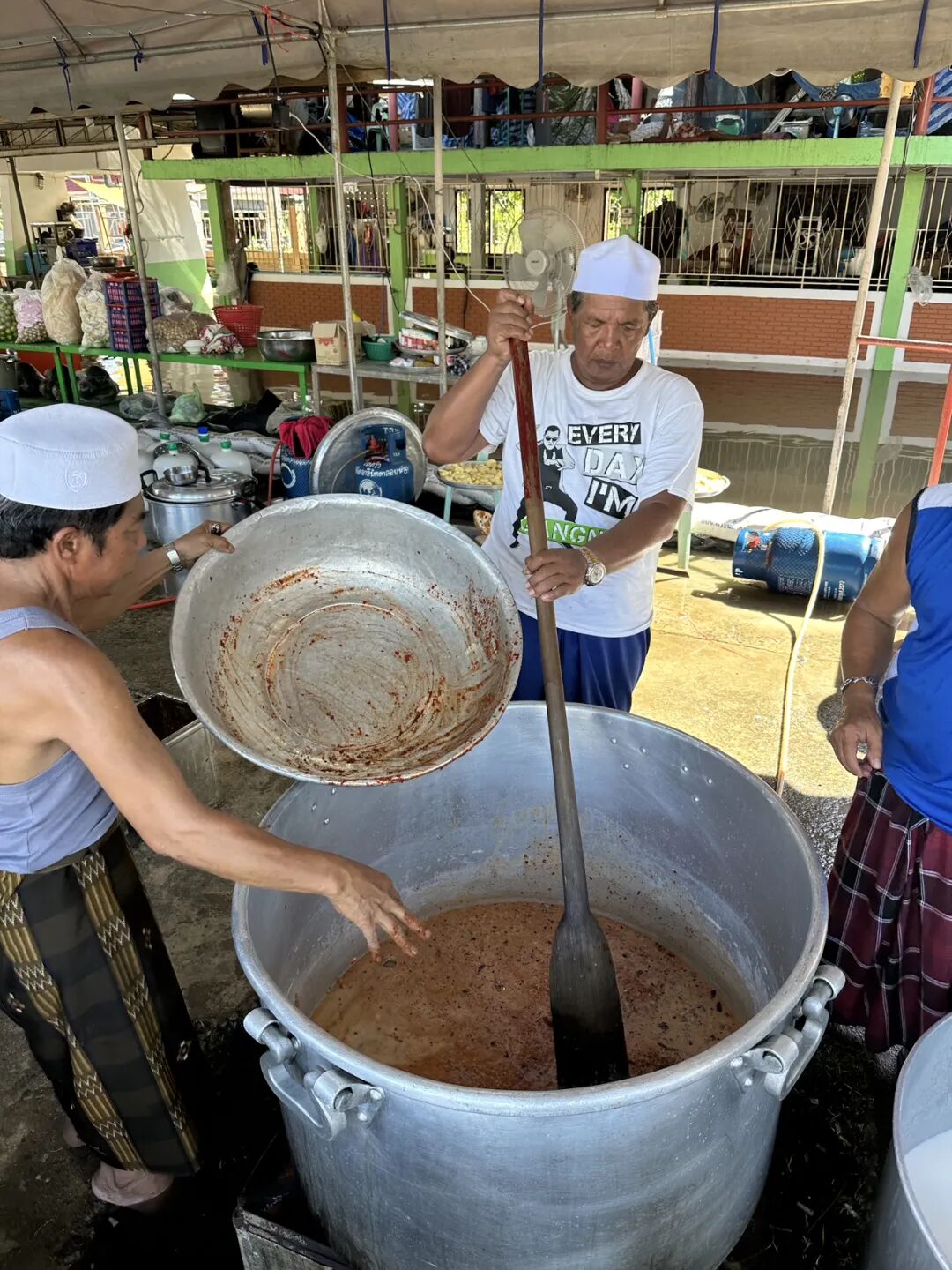
Our last stop in Ayutthaya was an important center for the Sufi Qadiriyya order in Thailand, the Sheikh Muhammad Ali Shukri shrine (gongbei) by the Chao Phraya River. Although we missed the religious gathering (a'mali), we unexpectedly caught a charity event (shesan) for flood victims. We were able to see how the Thai Sufi order performs their religious feast (nieti xi) and tasted the beef rice noodles served at the mosque.
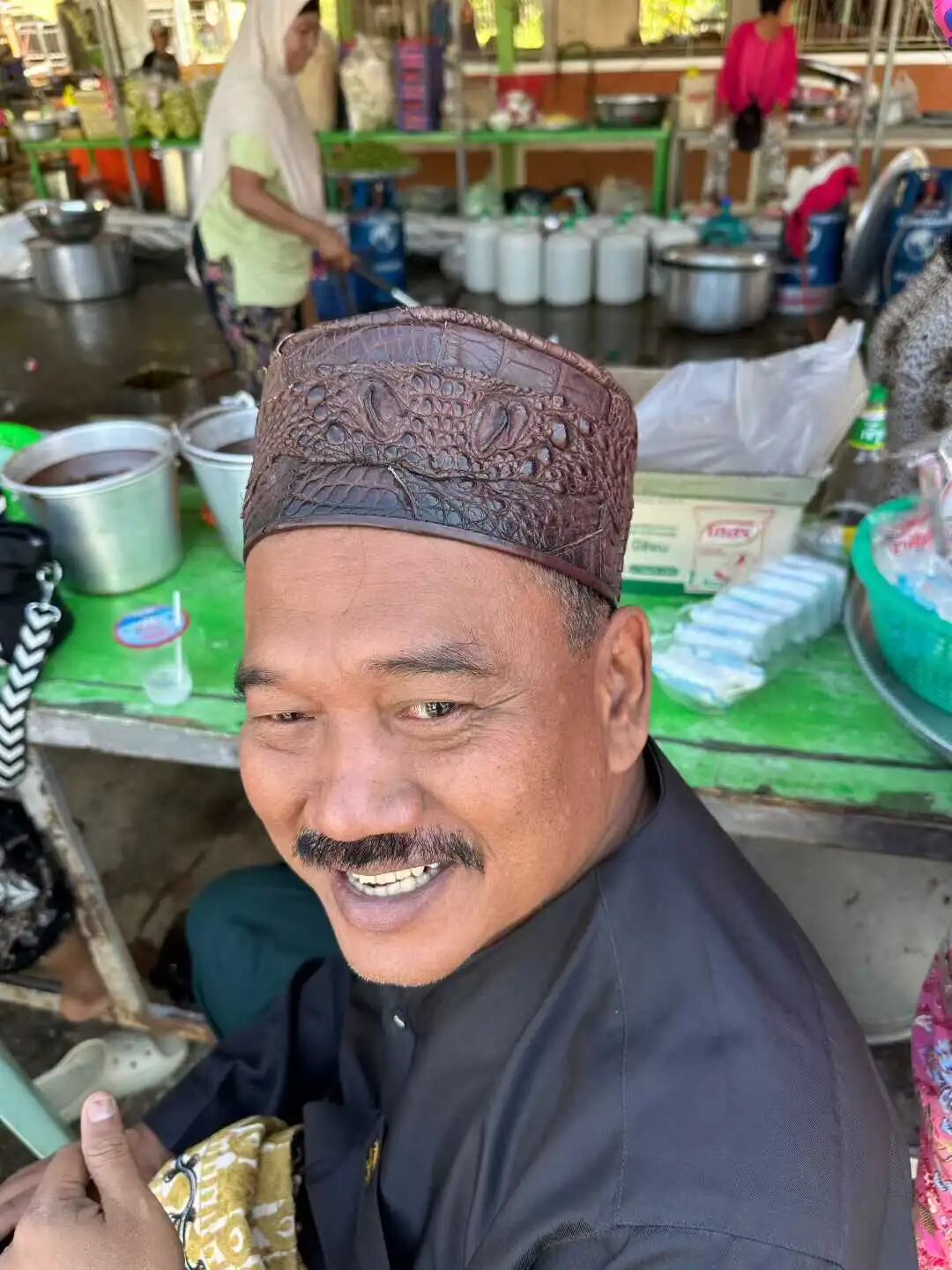
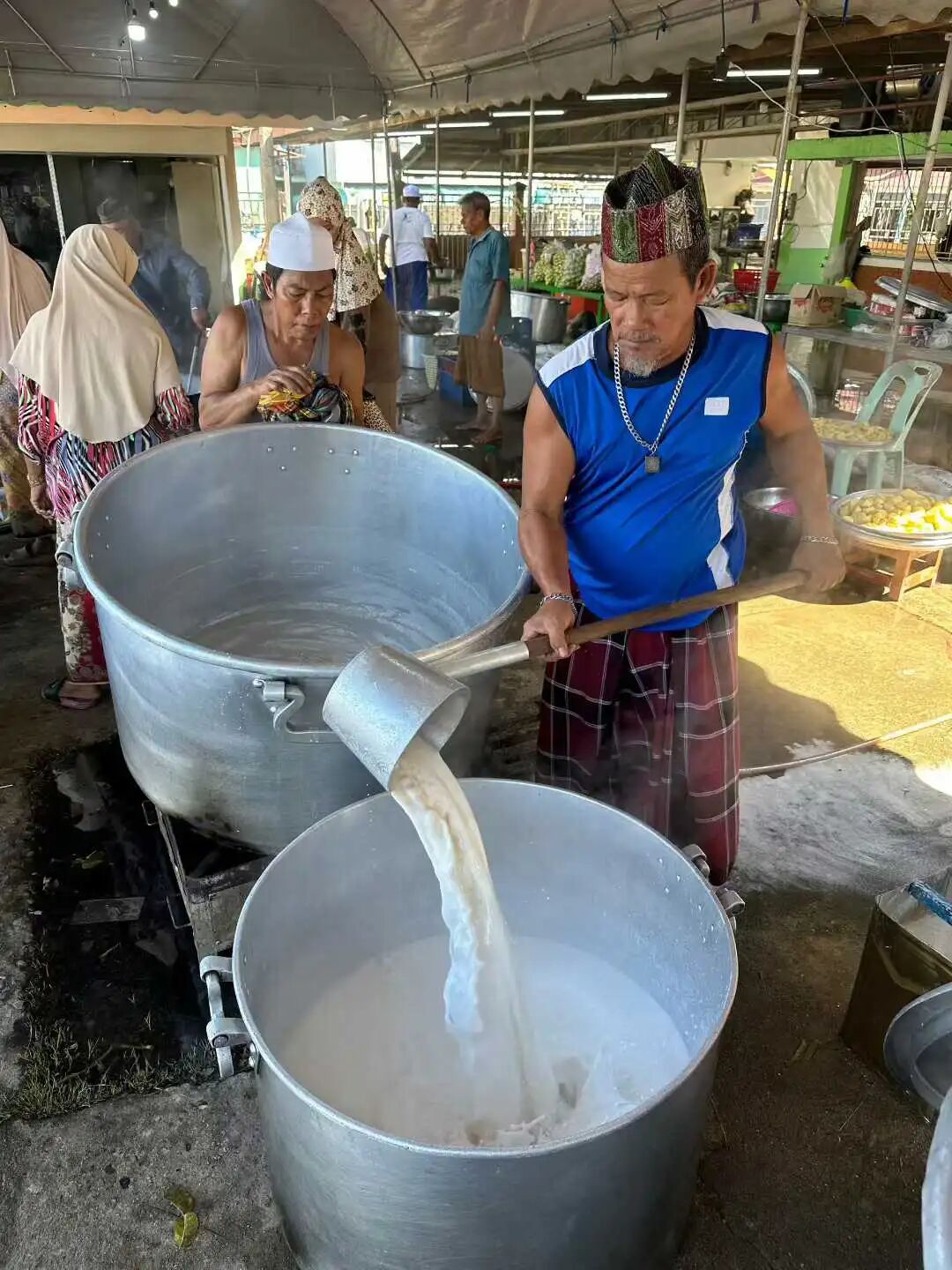
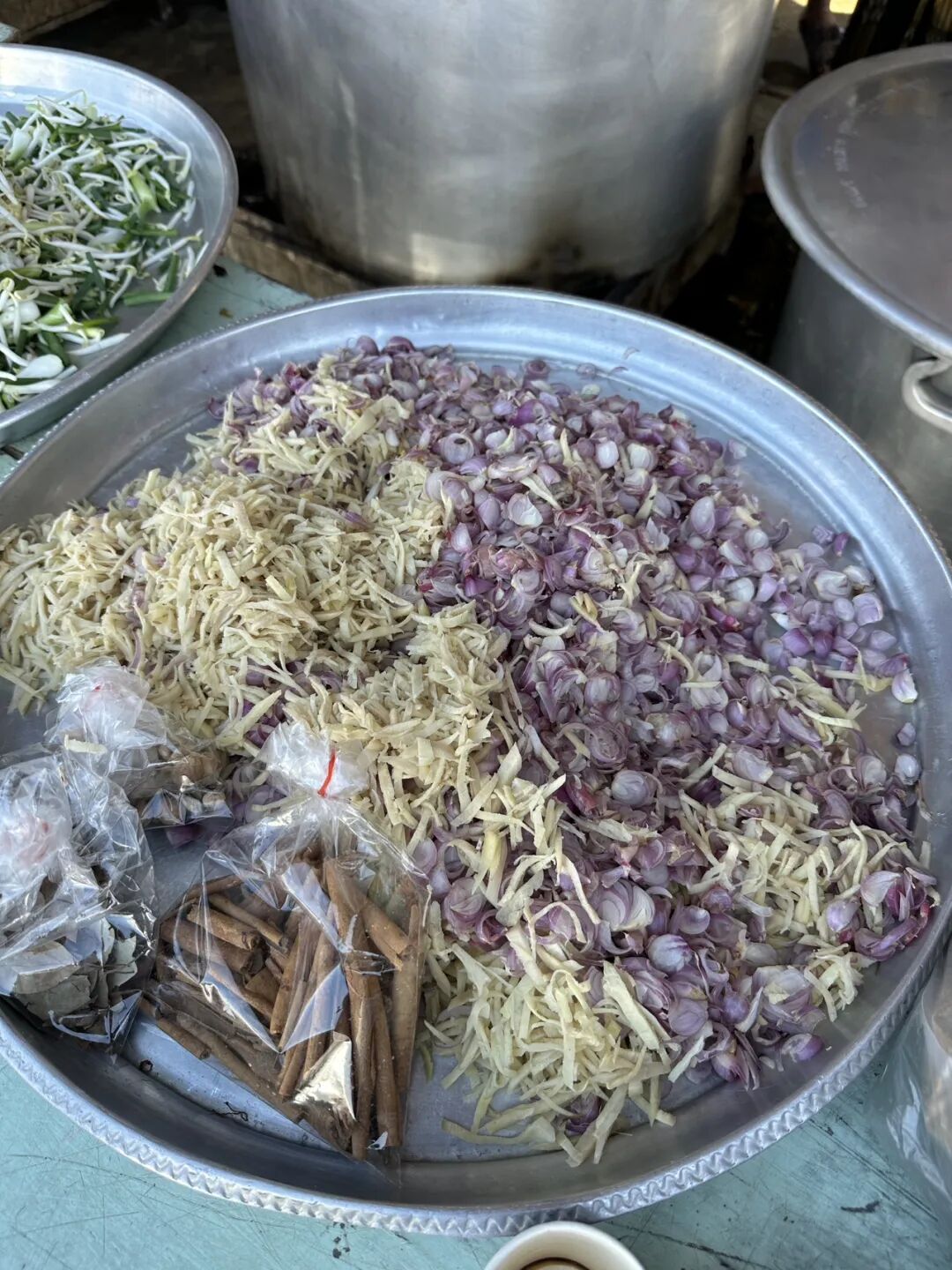
Central and Southern Thailand are influenced by the Malay people, so most religious practices follow the Shafi'i school, and there are relatively few Sufi activities. This was my first time experiencing the warmth of Thai Sufi elders in Ayutthaya. I saw them using boat oars to stir a giant pot of rice for the first time, and I also saw the process of making coconut rice, which is very similar to how the Hui Muslims in Huihui Village, Sanya, set their tables. Because we arrived early and the meal hadn't started yet, the elders here very warmly arranged for us to eat rice noodles first. The beef rice noodles with soup poured over them were delicious. I was also surprised to meet several elders who could speak English and Chinese.
Since we had to rush to Bangkok that evening, we didn't stay at the shrine (gongbei) for long. If any friends (dost) are traveling to Ayutthaya, Thailand, I highly recommend visiting this shrine (gongbei). It is a rare opportunity to see this side of Thai Sufism.
Summary: Ayutthaya offers halal resorts, Muslim-run restaurants, old mosque communities, and a gongbei gathering connected to local Sufi practice. This travel account keeps the original route, food, lodging, religious terms, and community details in one long English article.
We stayed at a halal resort called Vanida in Ayutthaya, Thailand. The resort is on a main road west of the historic city center and has beautiful scenery. It takes a bit longer to get a Grab here than in the city center, but we were always able to get one. If you take a Grab directly from Don Mueang Airport, it only takes a little over an hour.
We stayed in a townhouse-style villa with a lake and garden right outside our door. Besides breakfast, there is a formal restaurant in the courtyard, and the prayer hall is right across from it, which is very convenient.
Because it was the off-season and there were few tourists, the resort didn't serve a buffet. Instead, they prepared egg fried rice, fried eggs, sausages, various vegetables, bread, and watermelon for us. Eating by the lake was very relaxing. They keep miniature horses, cows, sheep, chickens, and rabbits in the yard, which children would probably love. There is also a children's pool in the yard where kids can swim.
The west and south sides of the Ayutthaya World Heritage historic city are surrounded by the Chao Phraya River. The area along the river in the south is mainly a residential area for the Cham people, and there are many halal restaurants there.
We had dinner on our first night at Kruta Steak on the north bank of the river. We found online that they had beautiful riverside seating, but when we arrived, the seats were flooded, so we ate inside instead.
They specialize in steaks and various mushrooms. We ordered mushroom chicken rice, fried mushrooms, and shrimp glass noodle salad, and we also drank fresh carrot juice. Their mushrooms were really good, especially the fried mushrooms, which were very fragrant. Even though we didn't speak the same language, the servers were very friendly and kept smiling at me. They also have a prayer room, which is very convenient.
You must experience taking a small boat across the Chao Phraya River when you come to Ayutthaya. We took a small ferry at a pier in the south of the city, which easily connects to the Cham community on the south bank of the old city.
The Ayutthaya World Heritage night market is right across from Wat Mahathat. The market is just one street long and has some halal snacks like fried chicken, roti flatbread (roti), and shawarma, but there are no seats, so you have to stand and eat. The nearby historic sites are lit up at night, so it's nice to walk around the night market and look at the ruins.
We ate a type of grilled fish cake wrapped in banana leaves at the night market, and it was very spicy. There is also a halal stall on the south side of the night market where I had some home-style dishes, shrimp fried rice and stir-fried crown daisy, which was a nice light meal.
On Friday, while attending Jumu'ah prayers in Ayutthaya, I was invited to lunch by two aunties who were also there for prayers. The aunties drove us to the Pakistani Noor Mosque in the northern part of the old city. I was surprised to find a snack shop in the courtyard run by an auntie of mixed Chinese and Pakistani heritage. And that is how we magically ended up eating authentic chicken char siu wonton noodles in the courtyard of a Pakistani mosque in Thailand.
The auntie who owns the shop no longer speaks Chinese. Through another auntie who treated us to a meal and translated for us, she explained that her father was Chinese and settled here after marrying a Pakistani woman. Although she has never been back to China, she was still very excited to see friends (dost) from China. Judging by the barbecued pork wonton noodles (chashao yuntun mian) she makes, her father was likely from Guangdong.
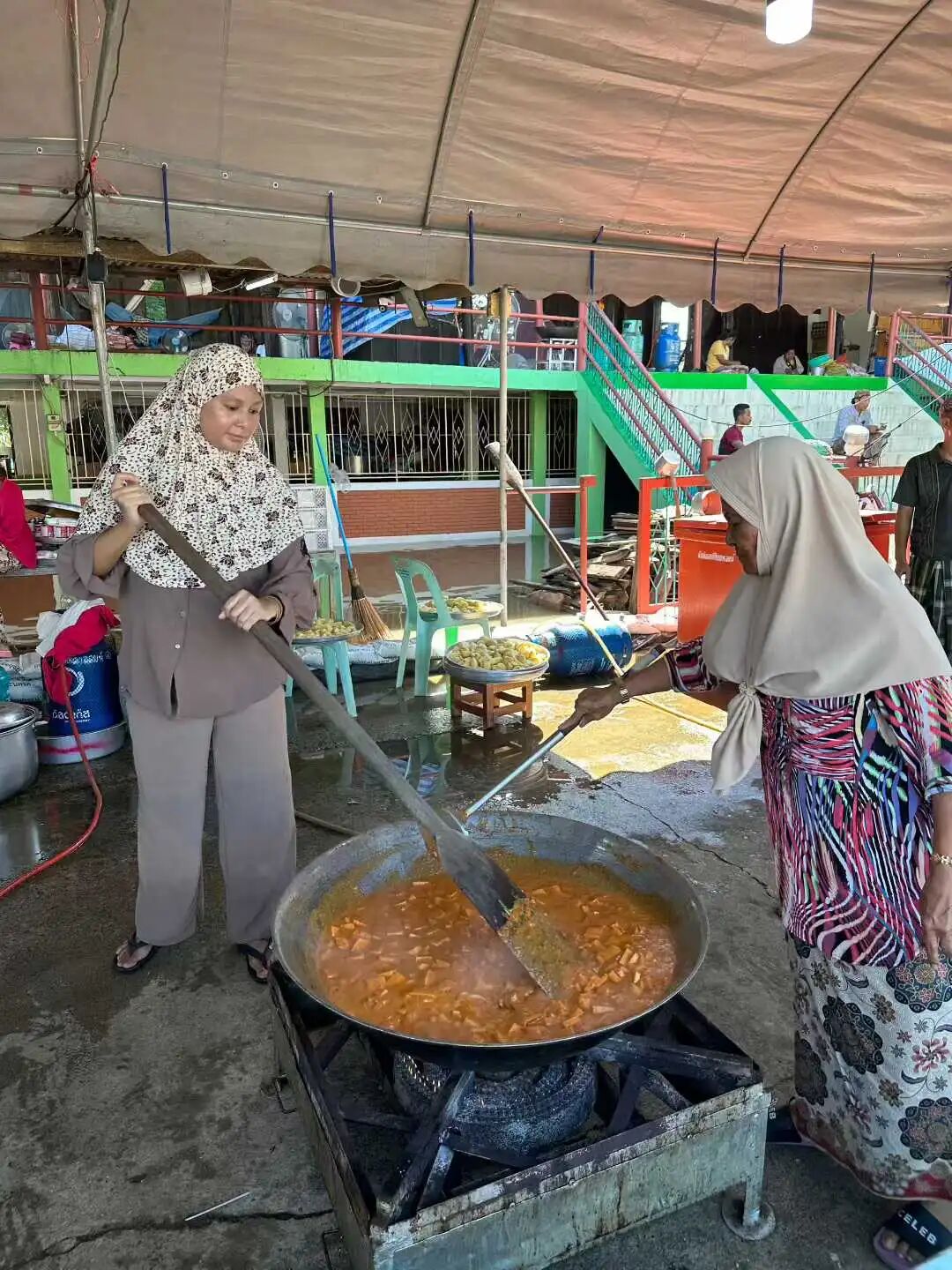
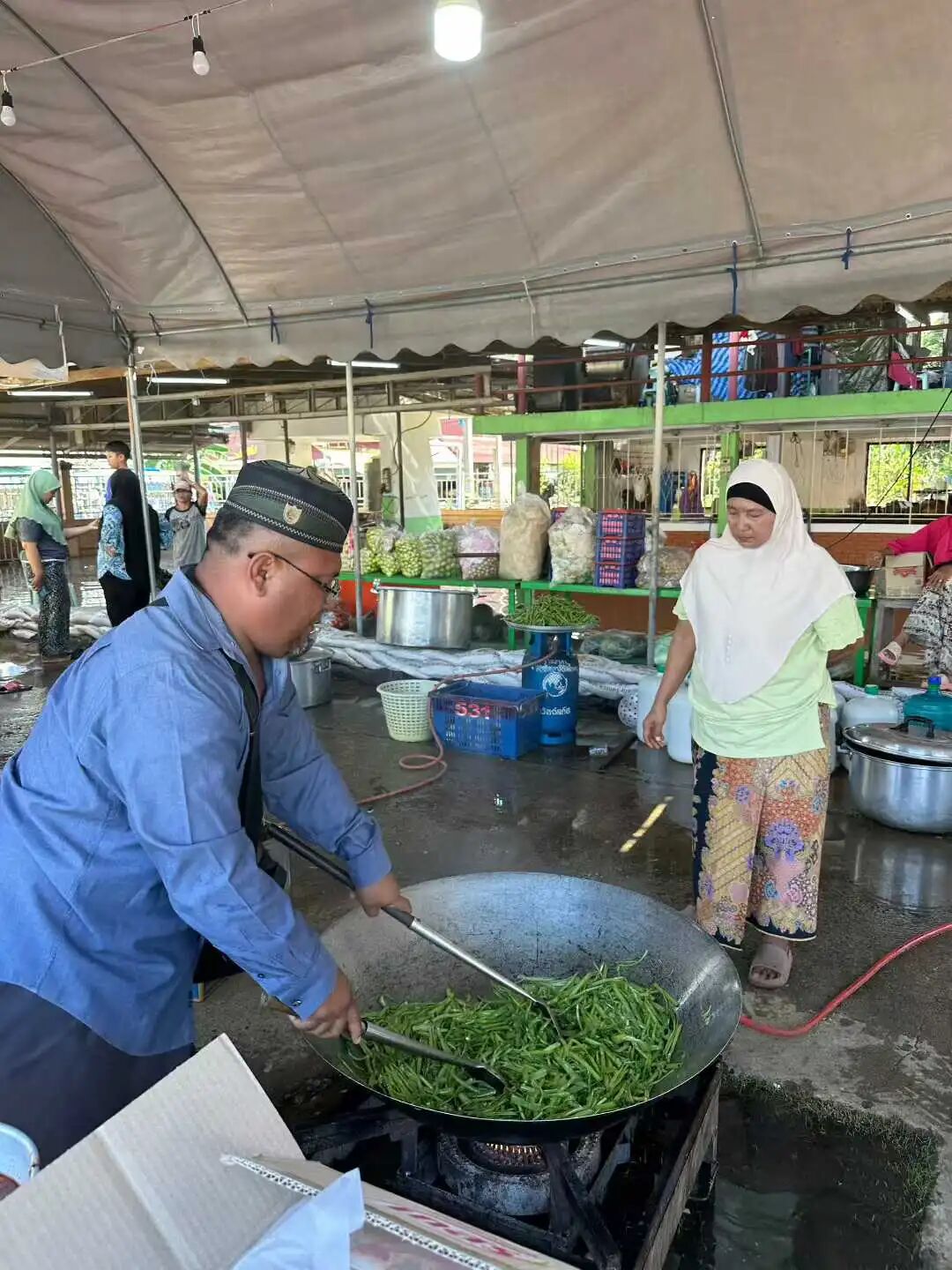
Our last stop in Ayutthaya was an important center for the Sufi Qadiriyya order in Thailand, the Sheikh Muhammad Ali Shukri shrine (gongbei) by the Chao Phraya River. Although we missed the religious gathering (a'mali), we unexpectedly caught a charity event (shesan) for flood victims. We were able to see how the Thai Sufi order performs their religious feast (nieti xi) and tasted the beef rice noodles served at the mosque.
Central and Southern Thailand are influenced by the Malay people, so most religious practices follow the Shafi'i school, and there are relatively few Sufi activities. This was my first time experiencing the warmth of Thai Sufi elders in Ayutthaya. I saw them using boat oars to stir a giant pot of rice for the first time, and I also saw the process of making coconut rice, which is very similar to how the Hui Muslims in Huihui Village, Sanya, set their tables. Because we arrived early and the meal hadn't started yet, the elders here very warmly arranged for us to eat rice noodles first. The beef rice noodles with soup poured over them were delicious. I was also surprised to meet several elders who could speak English and Chinese.
Since we had to rush to Bangkok that evening, we didn't stay at the shrine (gongbei) for long. If any friends (dost) are traveling to Ayutthaya, Thailand, I highly recommend visiting this shrine (gongbei). It is a rare opportunity to see this side of Thai Sufism.
