

Bangkok Mosques
Muslim Travel Guide Bangkok: Persian Shia Mosques and Muharram Traditions
Articles • yusuf908 posted the article • 0 comments • 258 views • 2026-05-23 23:30
Summary: Bangkok has a long Persian-descended Shia Muslim history, centered in communities such as Kudi Luang Chao Sen Mosque. This account follows the Muharram gatherings, Ashura preparations, symbols of Karbala, mosque details, food sharing, and local conversations described in the original travel note.
As the Islamic New Year arrives, Shia friends (dosti) around the world spend the first ten days of the first month, Muharram, honoring Imam Hussein. This leads up to the grand Ashura festival. Last weekend, I traveled to Thailand to join the Muharram commemorations held by the Persian-descended Shia community in Bangkok.
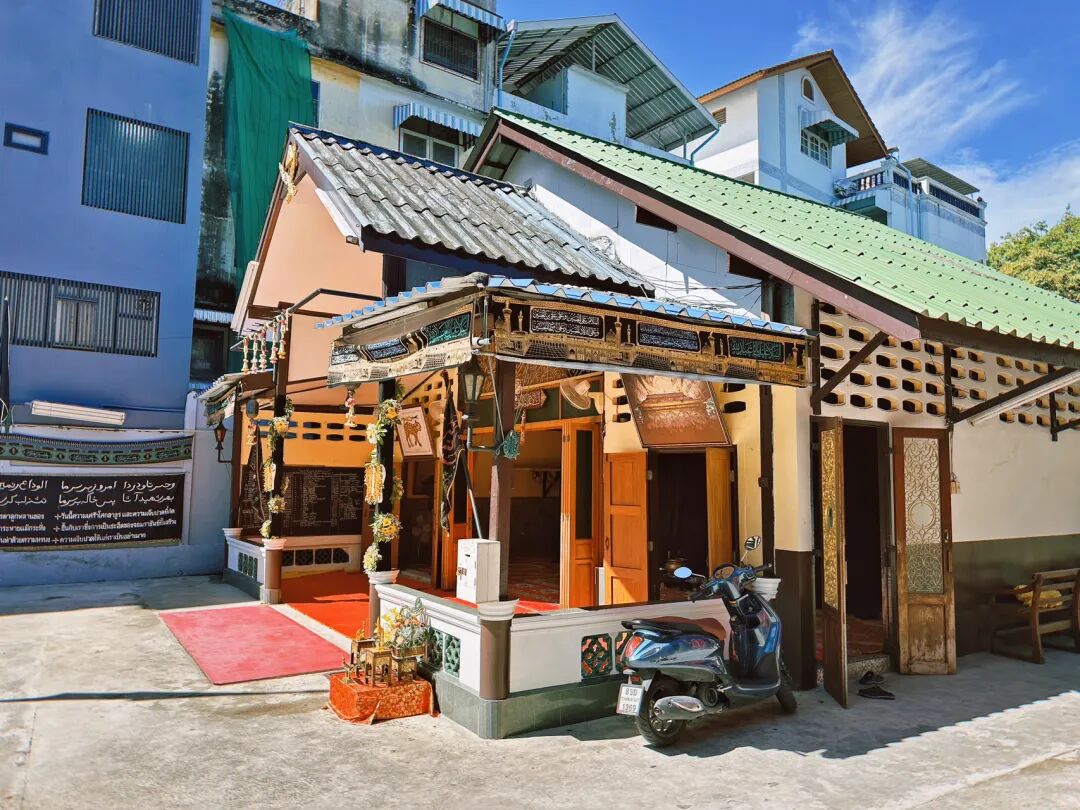
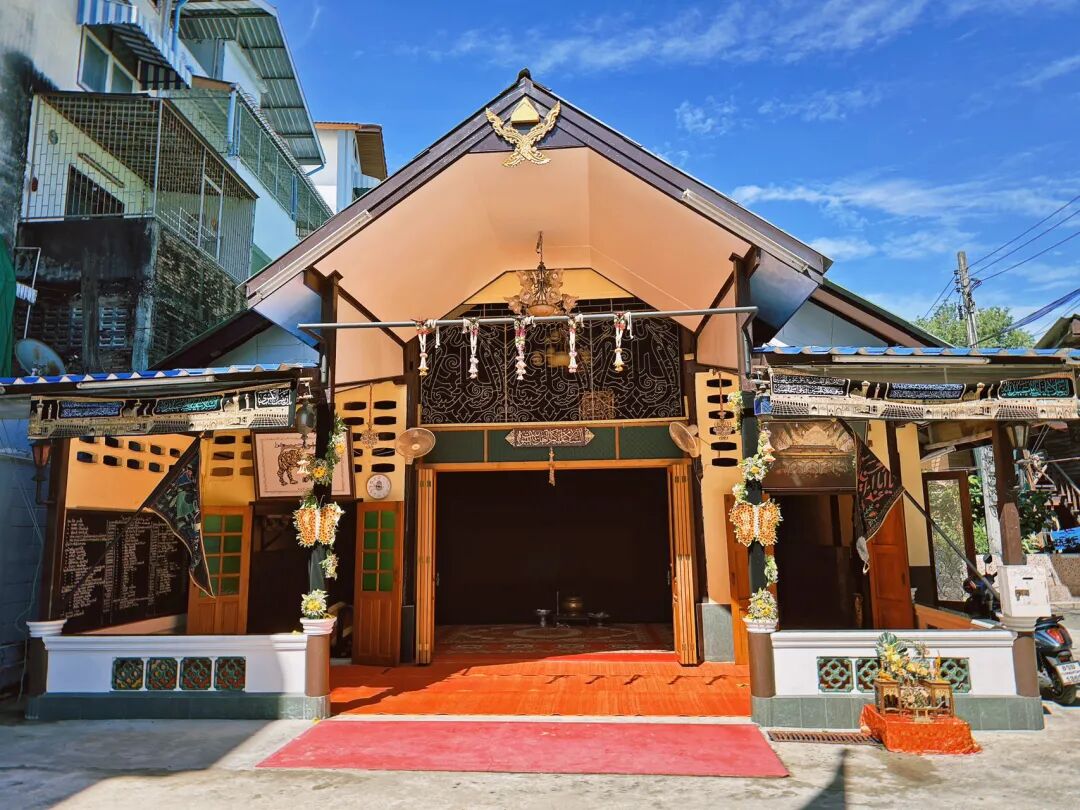
Bangkok currently has five Shia mosques, with two belonging to the Persian community and three to the Indian community. It is the city with the strongest Shia cultural presence in all of Southeast Asia. Since I only had Saturday evening, I chose to attend the memorial at the primary Shia mosque in Bangkok, Kudi Luang Mosque.
Between the 16th and 18th centuries, Shia merchants from the Persian Safavid dynasty traveled along the Indian Ocean coast to trade in Siam, where they were warmly welcomed and hosted by the Siamese royal family. Some Persian merchants married locals and settled down, eventually taking on important roles in the Siamese court. Starting in the 17th century, the Sheik Ahmad family from Qom, Persia, managed Siam's western maritime affairs, overseeing trade, shipping, and diplomacy across the Indian Ocean.
After the Siamese capital of Ayutthaya fell in 1767 and the capital moved to Bangkok in 1782, the Persian community from Ayutthaya moved there as well. The first leader of the Persian Shia community in Bangkok was Konkaew, the son of the last leader from Ayutthaya. In 1797, he began managing Siam's western trade and received a property in the Thonburi area across the Chao Phraya River. People say he and 400 Shia followers established Kudi Chao Sen Mosque, which became the primary Shia mosque in Bangkok.
After Konkaew passed away, his brother and eight direct descendants inherited the title, controlling Siam's western trade rights for a century. In 1897, King Rama V renovated Kudi Chao Sen Mosque and renamed it Kudi Luang Chao Sen Mosque. In 1947, the entire Kudi Luang Mosque was moved to its current location to make room for the Royal Thai Navy headquarters. The community still lives around the mosque, preserving the traditional Shia culture of Bangkok.
We visited Kudi Luang Mosque in the morning. The male and female friends (dosti) were very warm, offering us several bottles of water. Even after learning we were Sunni, they remained very welcoming and told us we were free to take photos. It was a pity that the grandest Ashura event was scheduled for Monday morning, and we could not attend because of work.
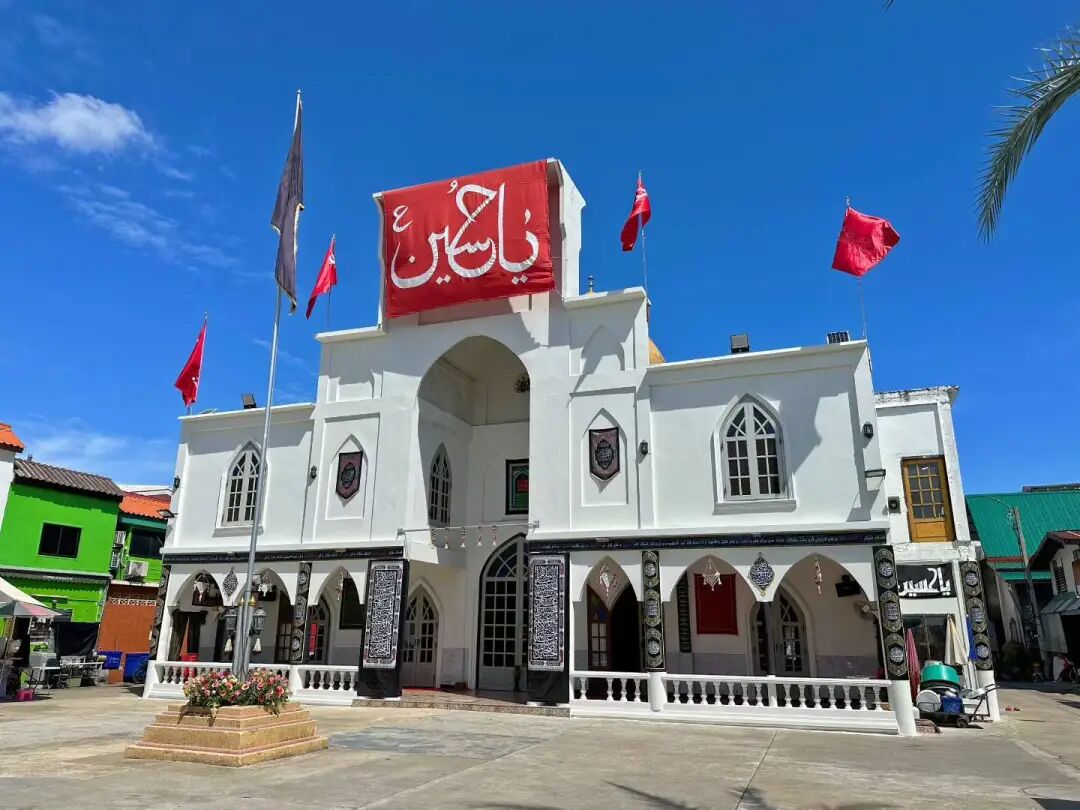
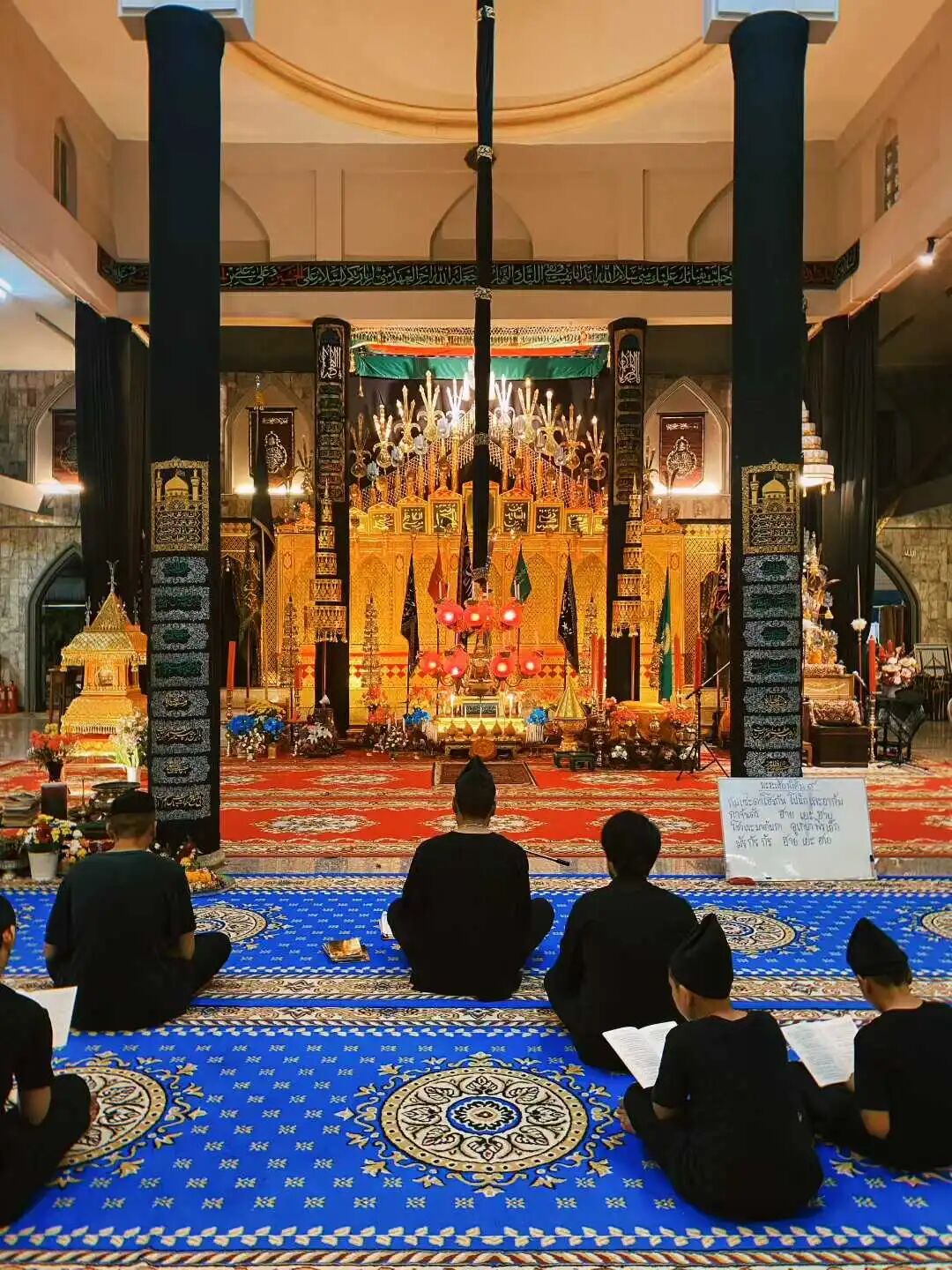
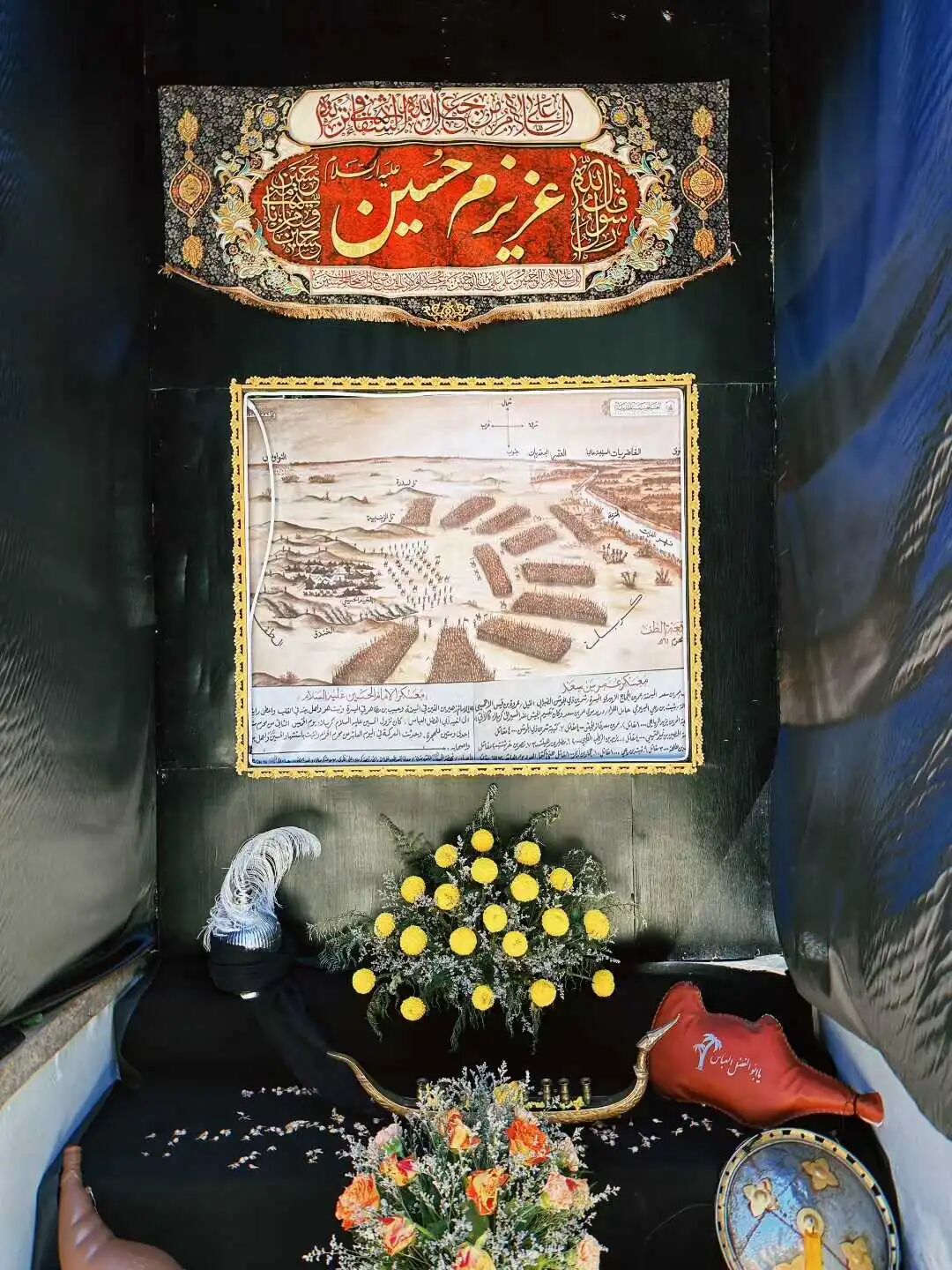
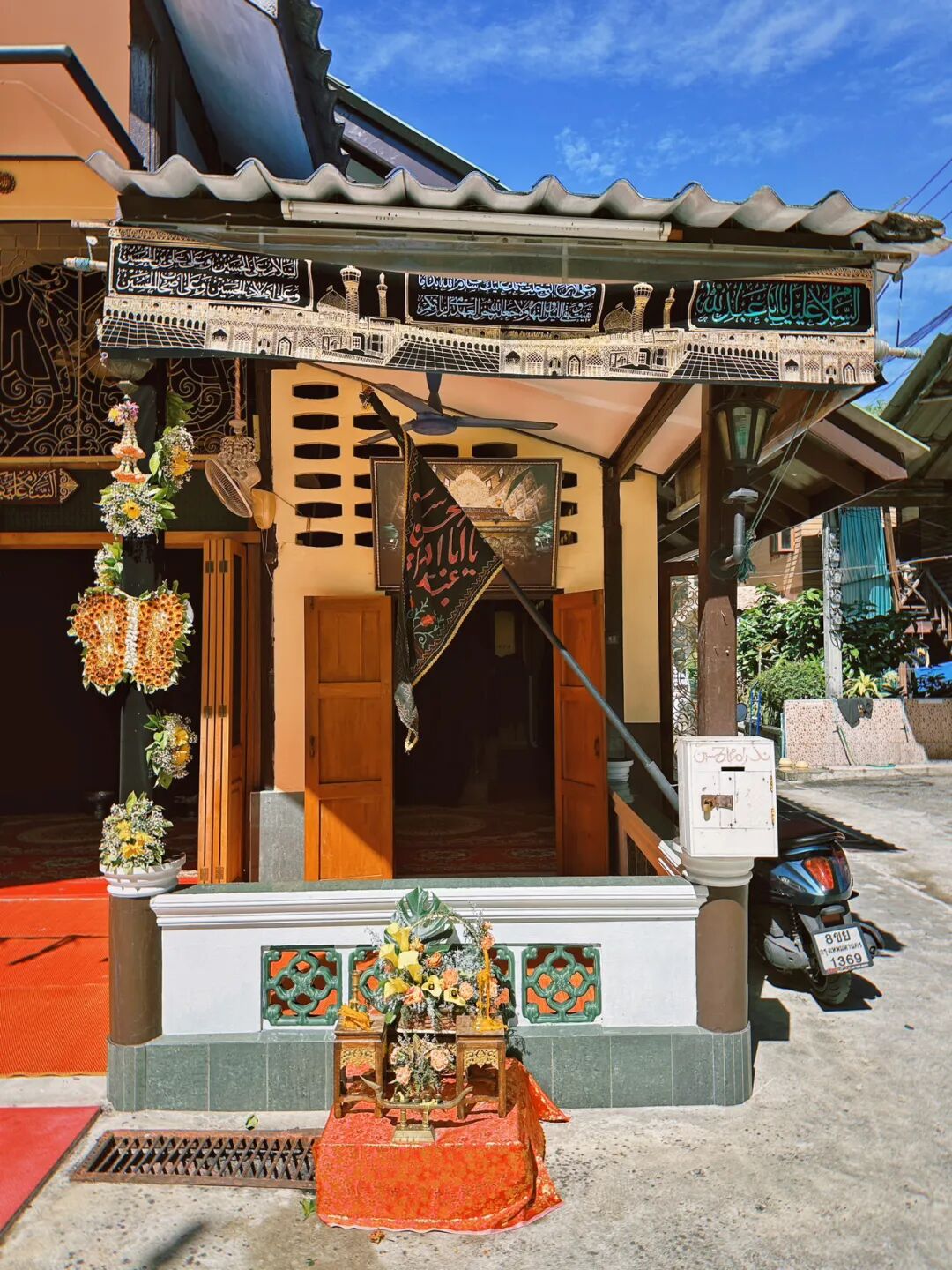
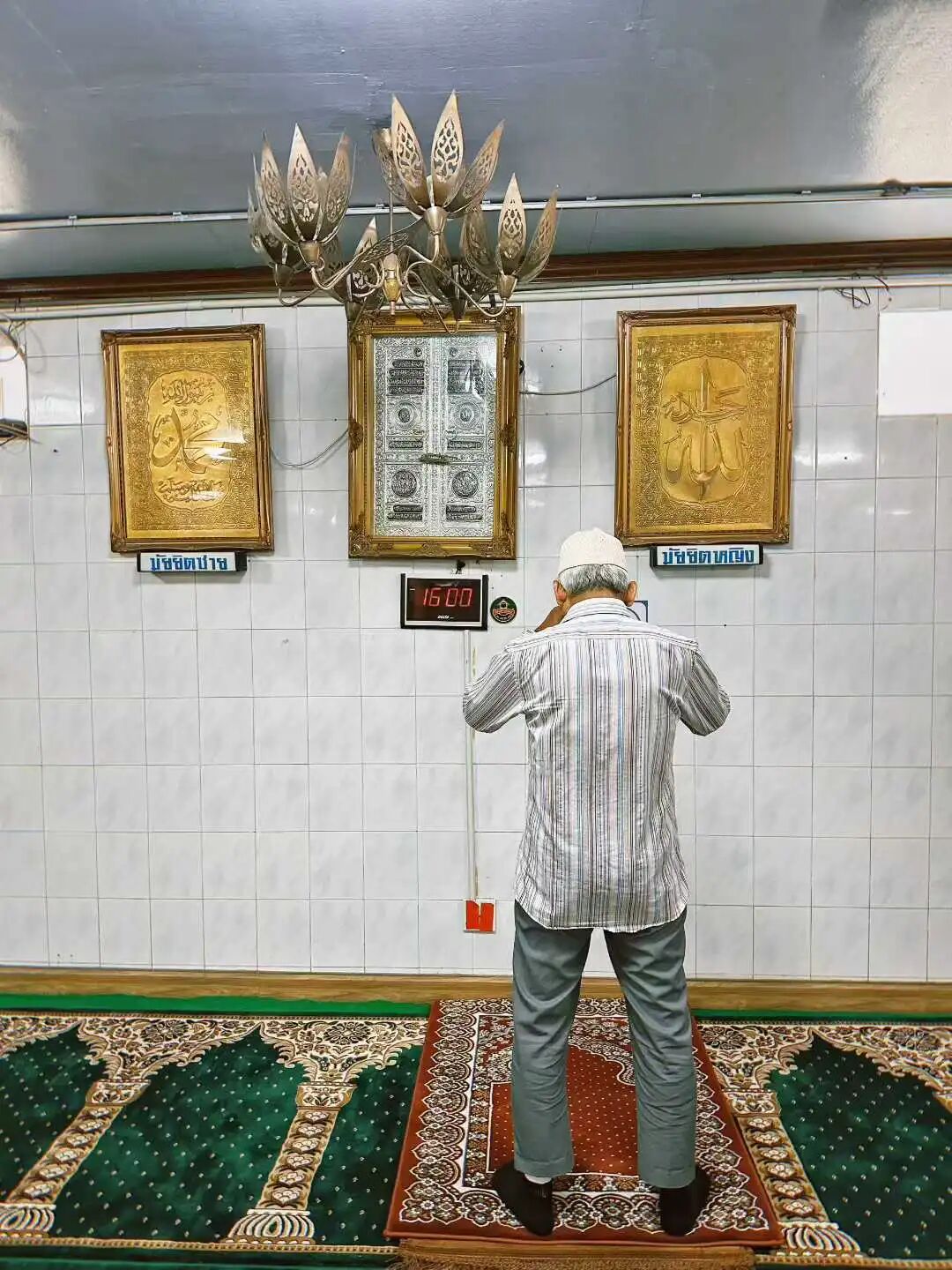
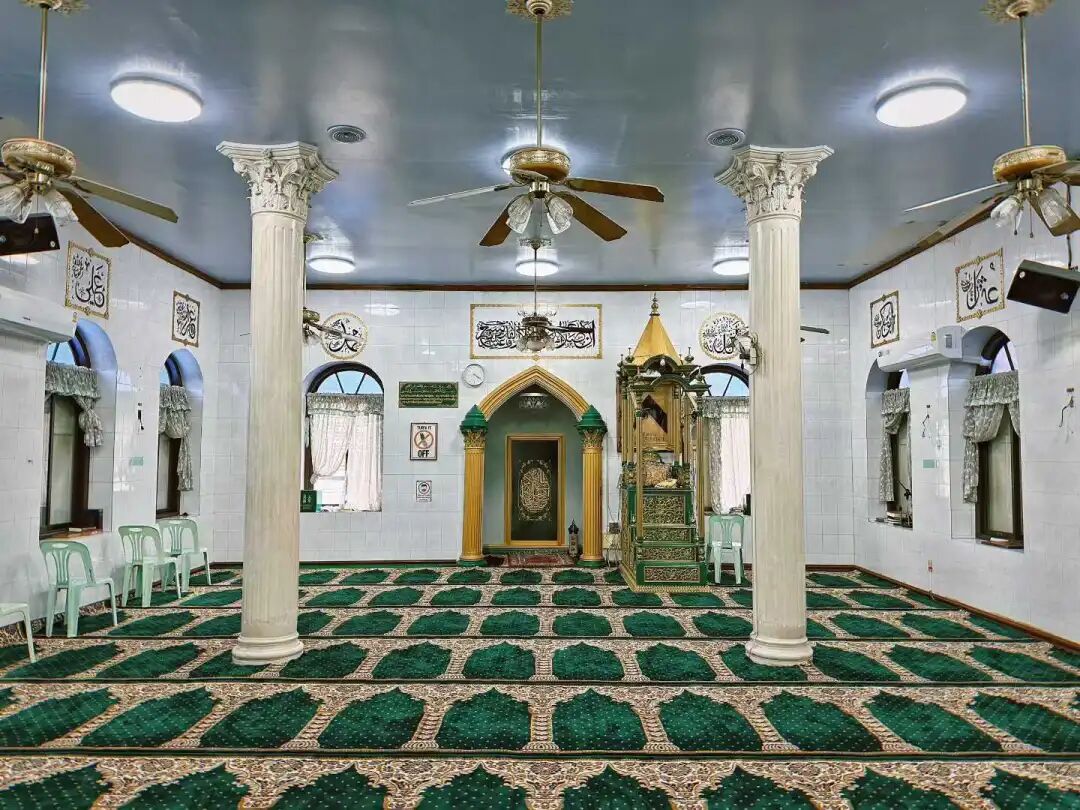
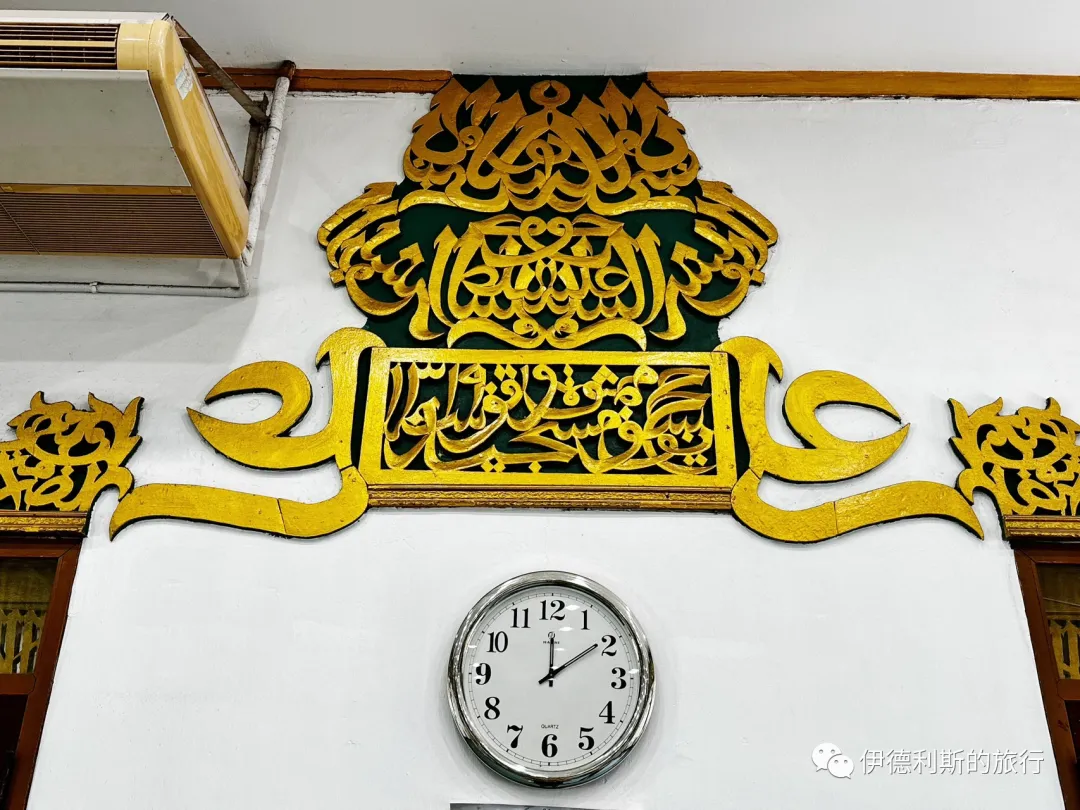
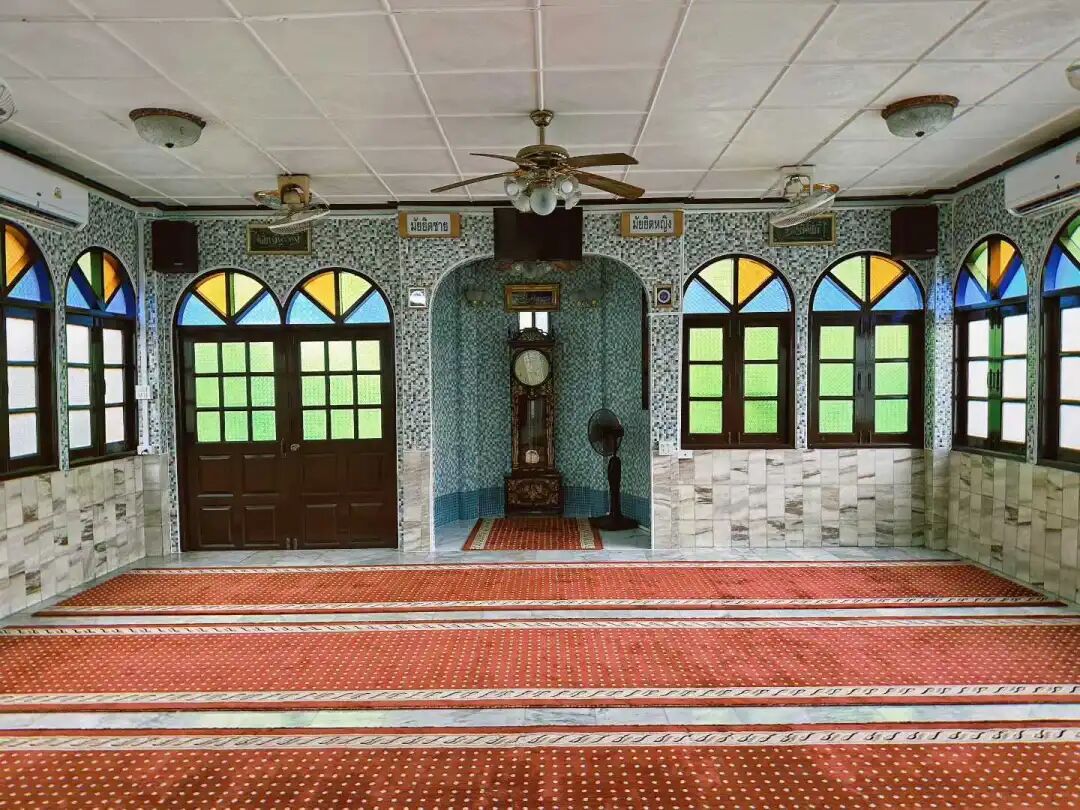
Inside the main hall of Kudi Luang Mosque, a banner hangs that reads, 'Oh!' Hussein. Honoring Imam Hussein is the theme of Muharram.
The Persian-descended Shia elders in Bangkok live around the mosque. They are open-minded and very welcoming to friends (dosti).
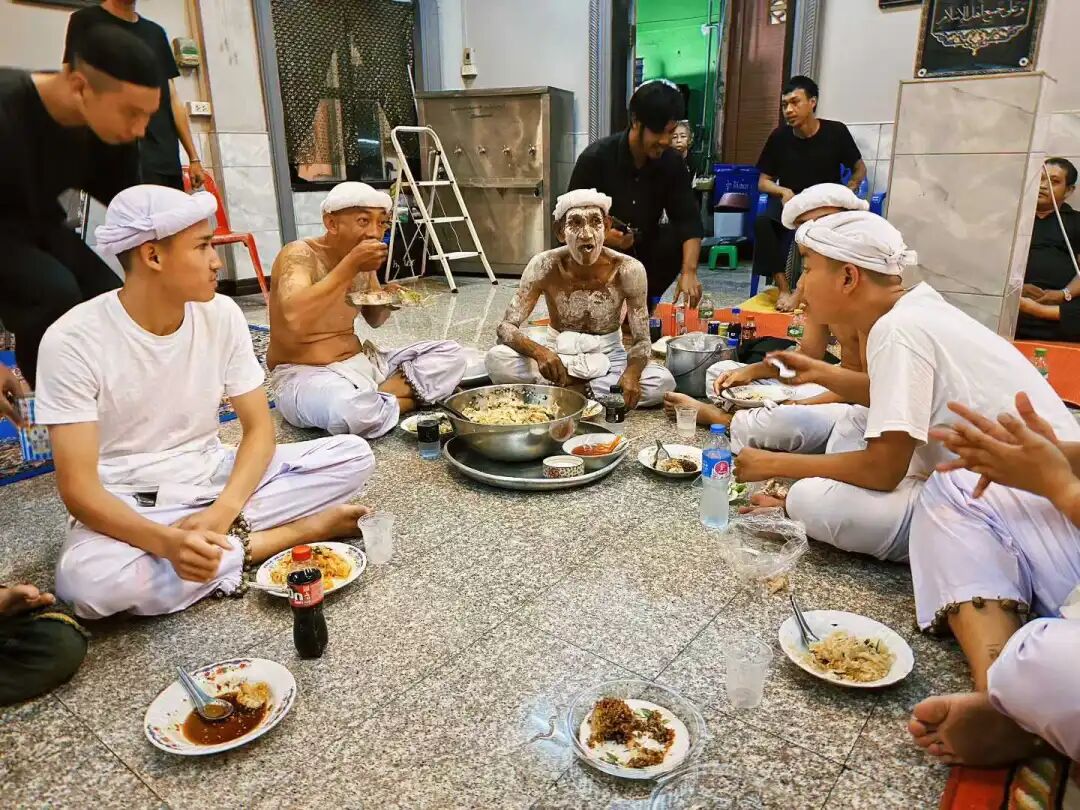
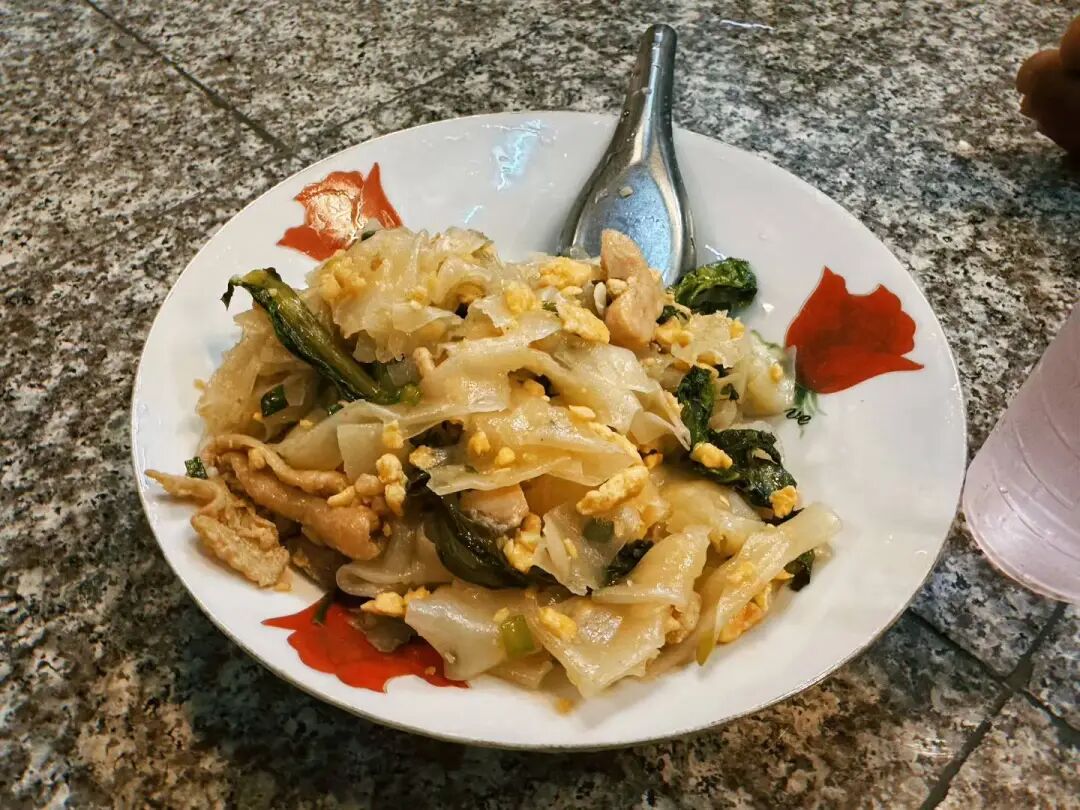
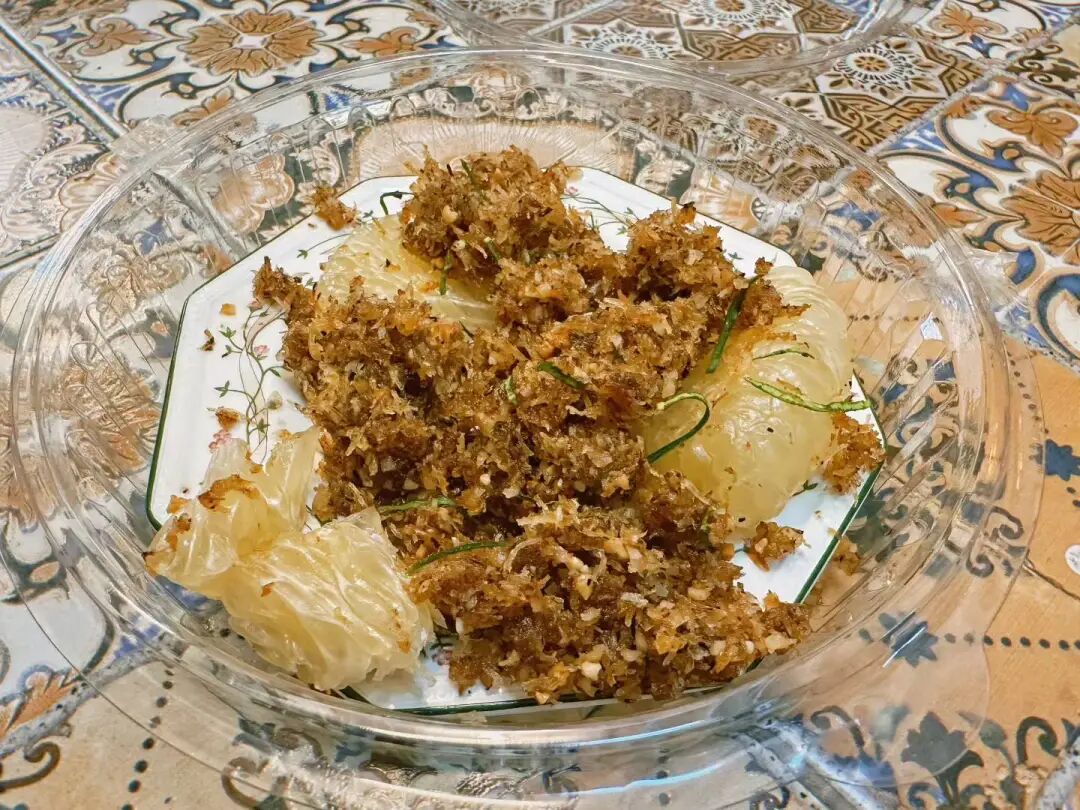
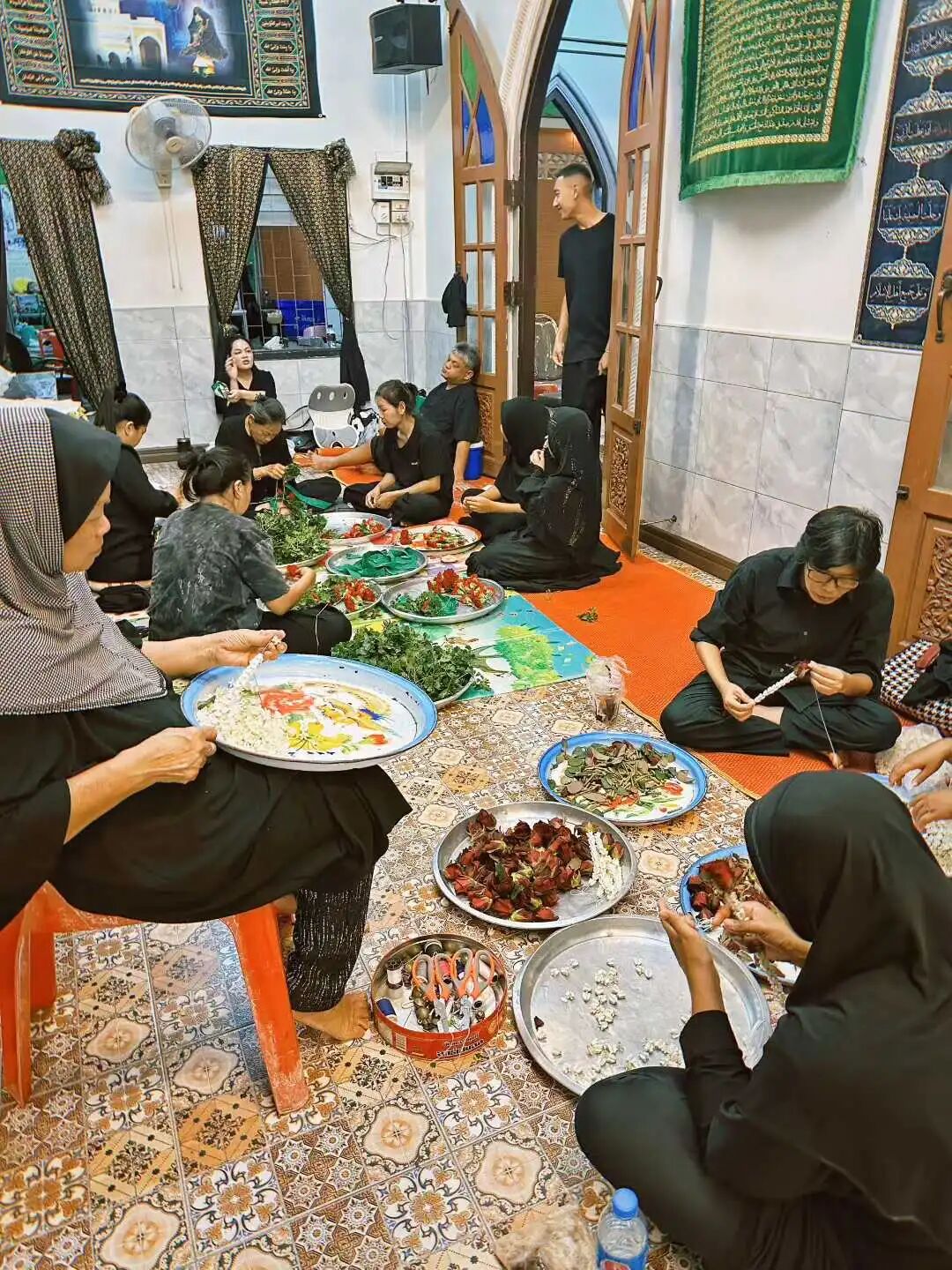
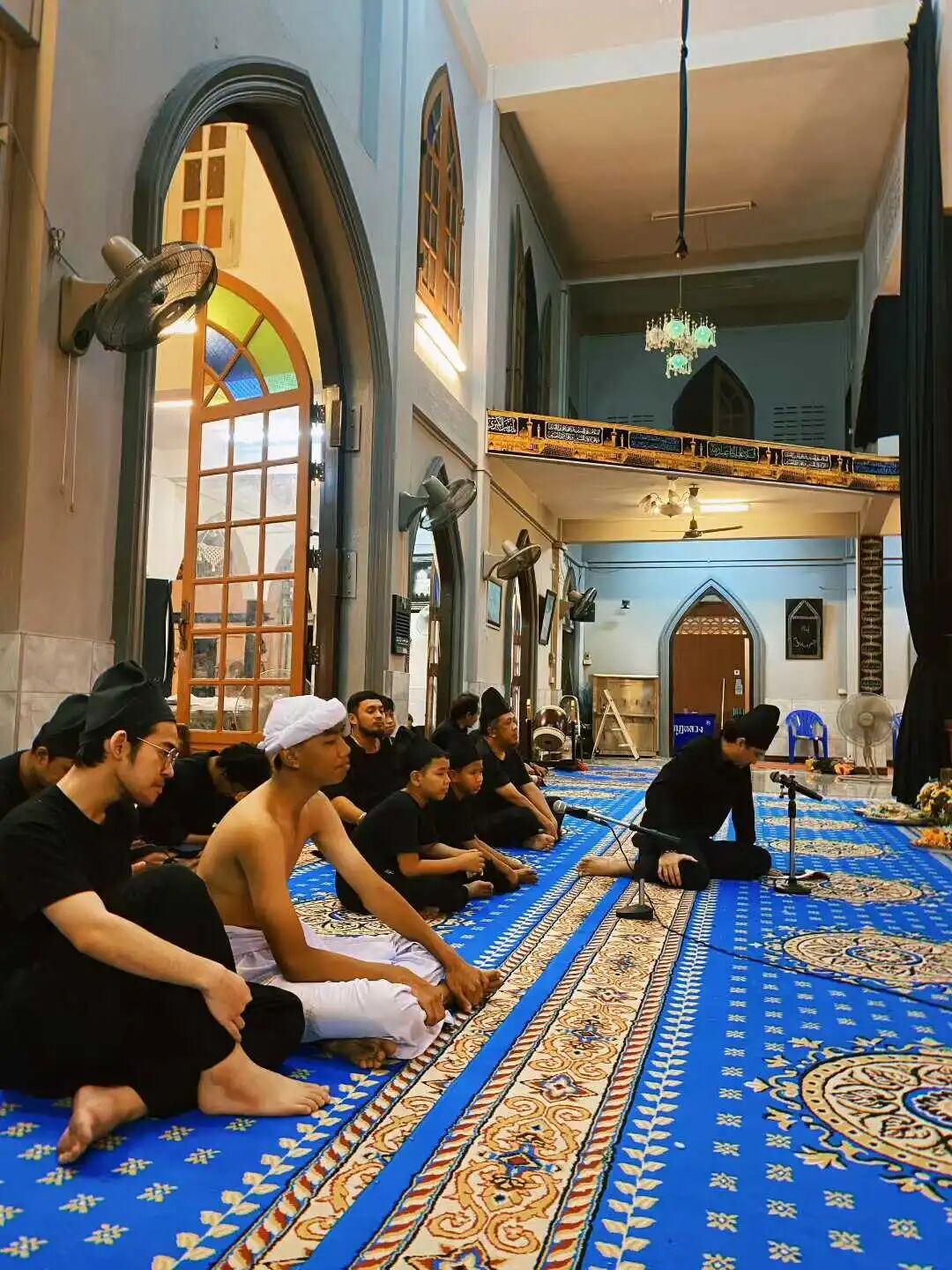
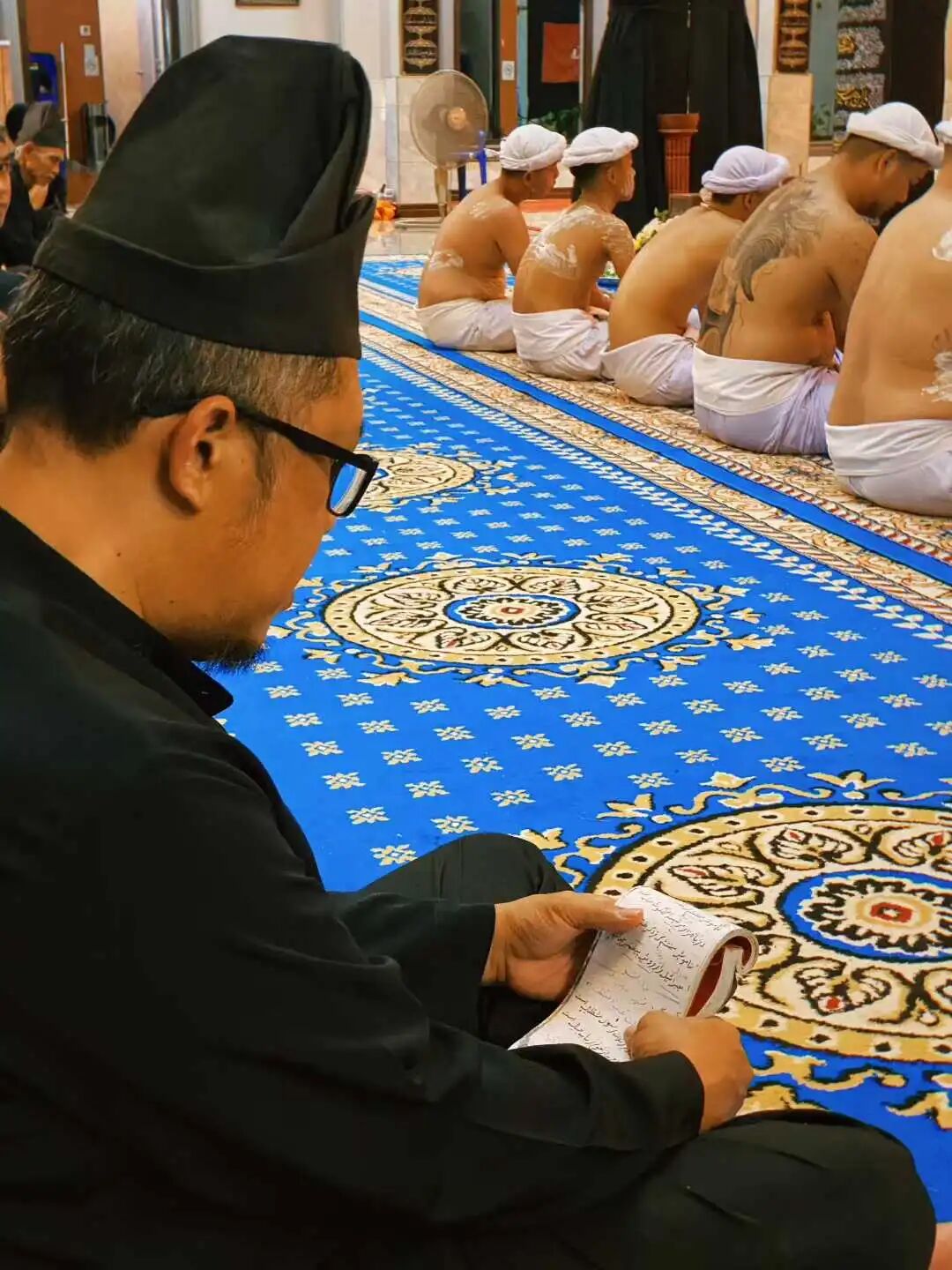
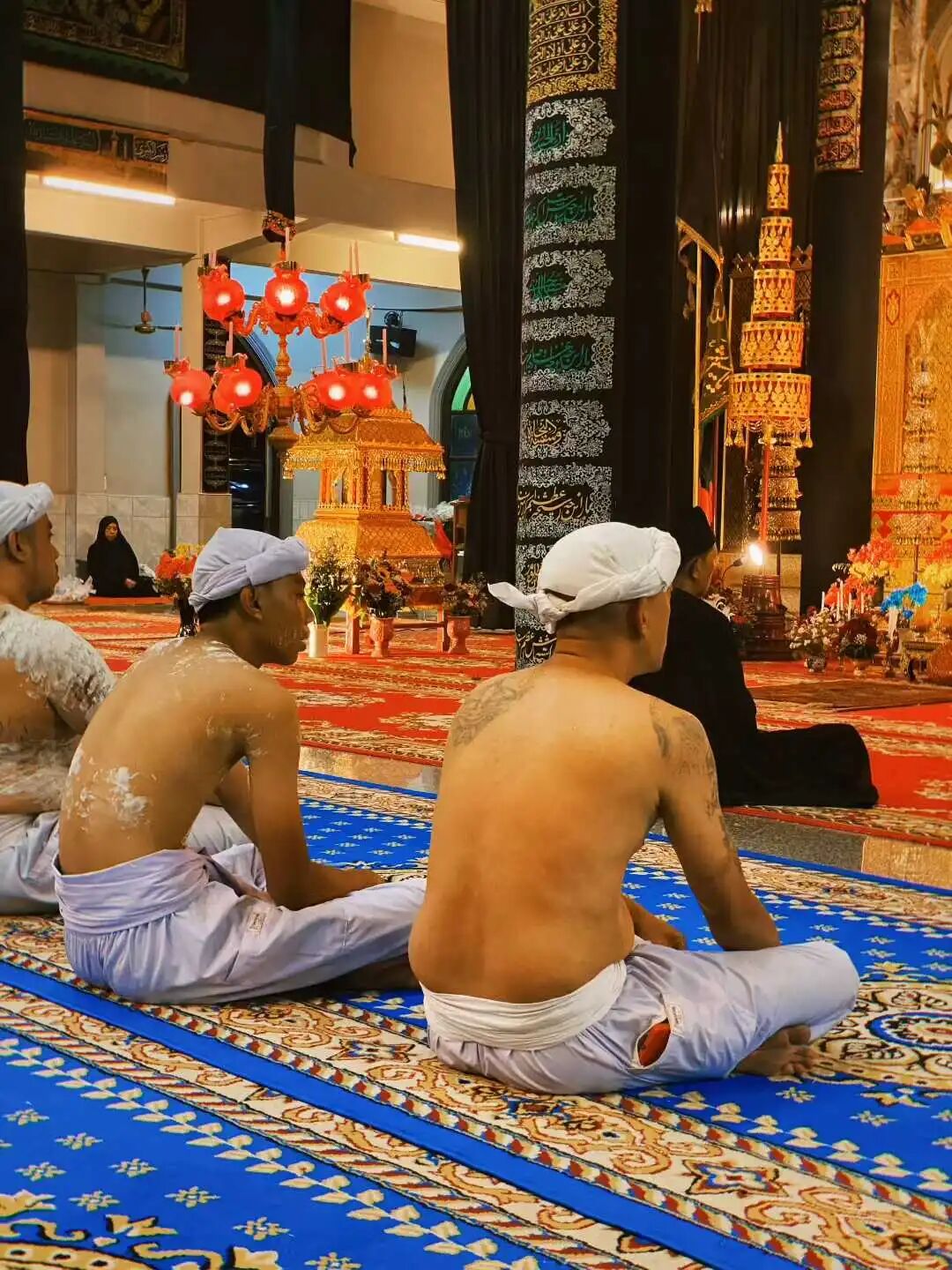
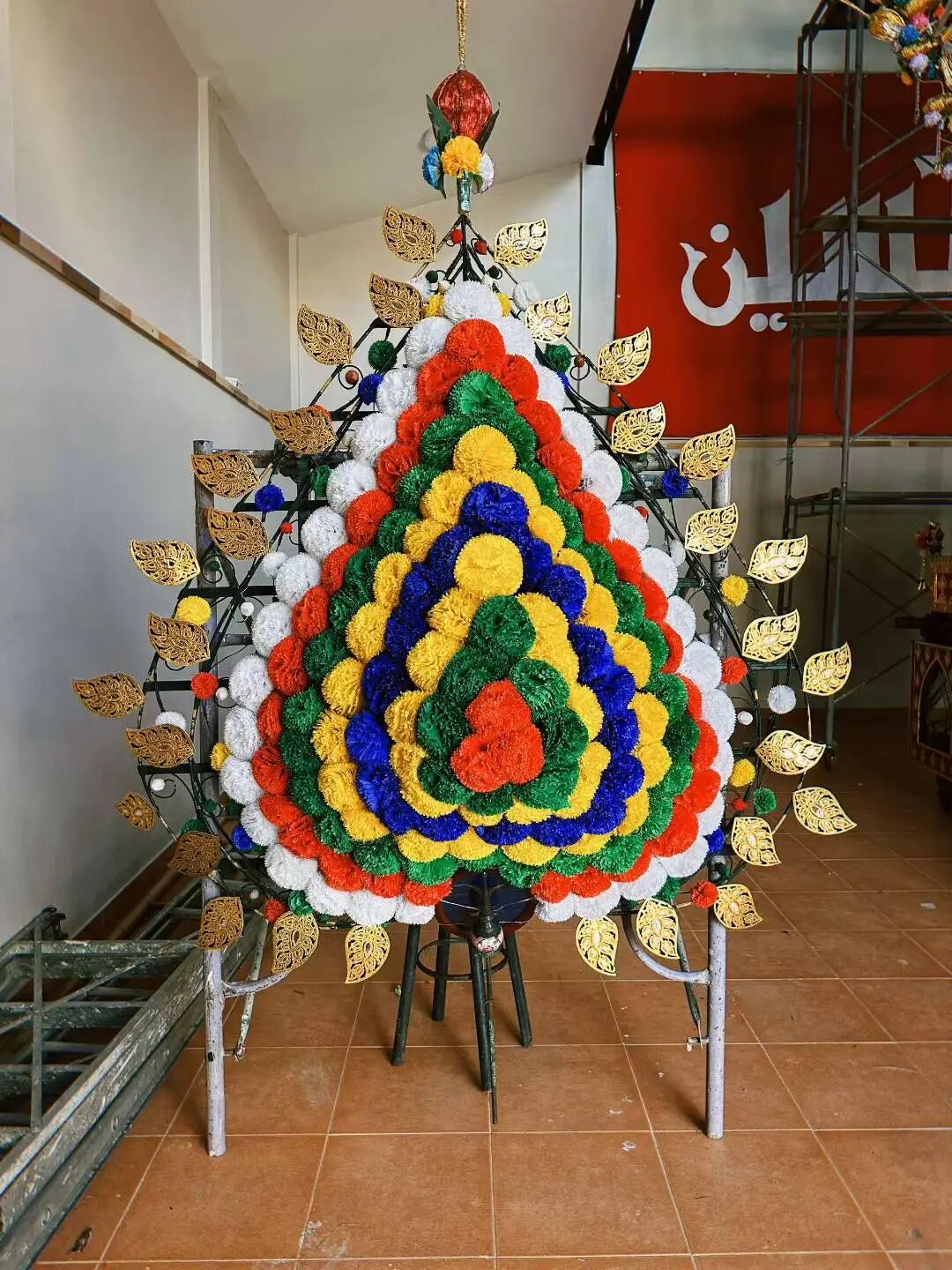
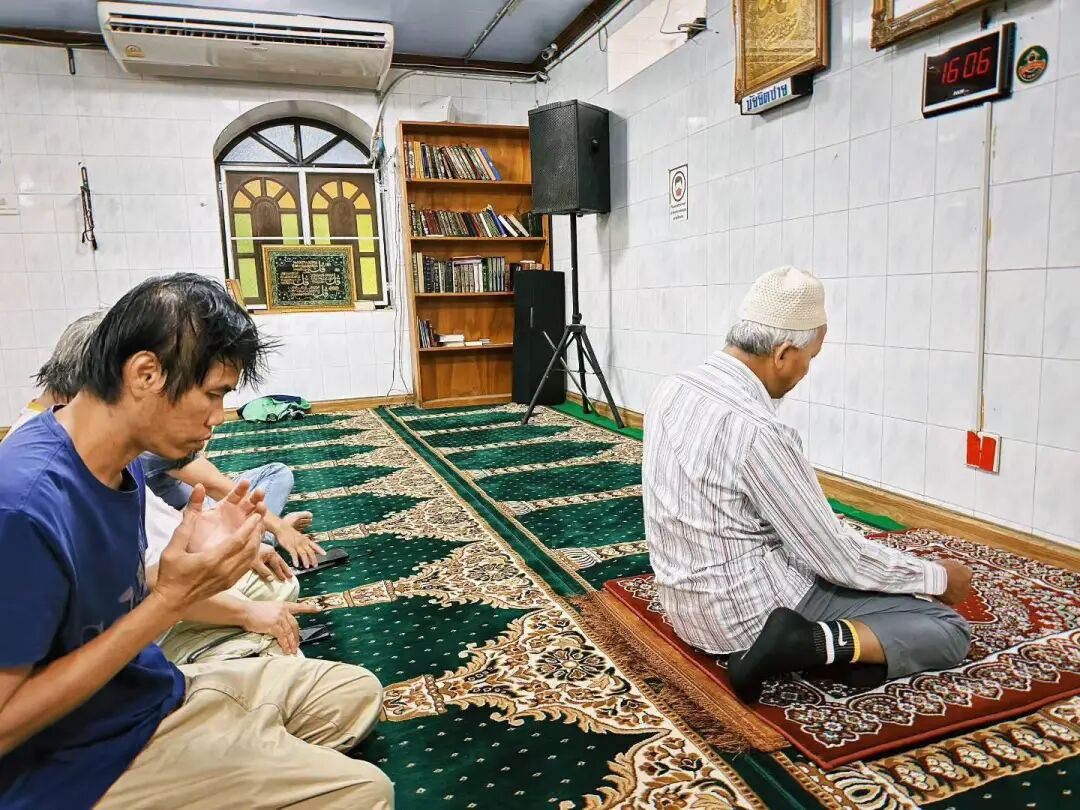
After the prayer (namaz), I returned to Kudi Luang Mosque to eat chicken rice noodle rolls (changfen) with everyone, along with a special dessert made of palm sugar and pomelo that the Persian community in Bangkok eats during Muharram. One of the themes for Shia Muslims during Muharram is sharing and giving. Food during this time is free, and everyone gathers to make the flowers used in the activities. Some people in the mosque wear white pants and headscarves, with bells hanging from their pant legs. They dedicate themselves to serving the mosque during the first ten days of Muharram.
I met a very interesting young man at the mosque who told me many stories about the Shia faith and Ashura. His parents are Afghan, he grew up in Iran, later went to Japan for school and work, and is now stationed in Bangkok by his company. He was the most fluent English speaker in the entire mosque, and I learned a lot from chatting with him. Like everyone else at the mosque, he was very welcoming to Sunni friends (dosti).
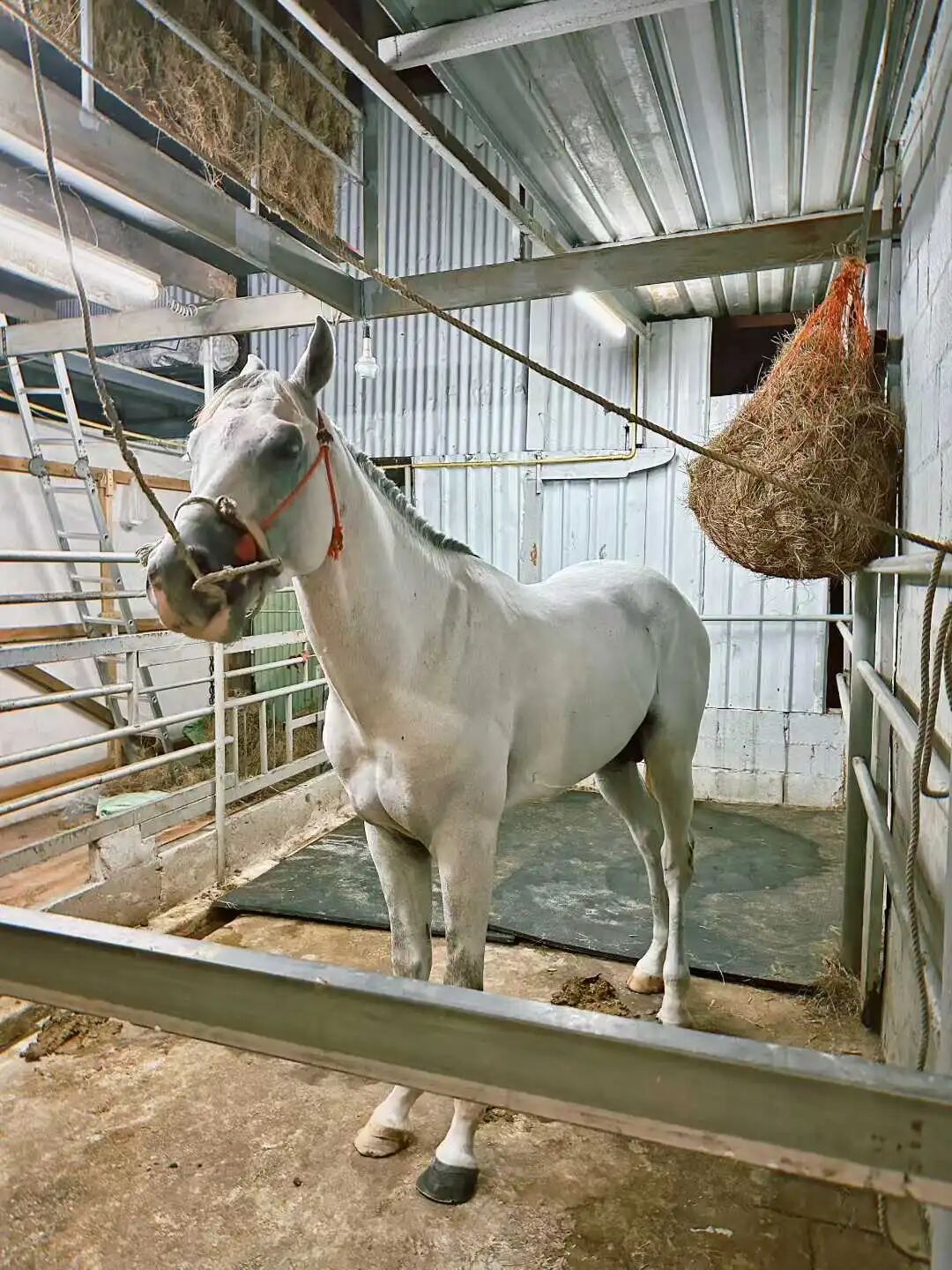
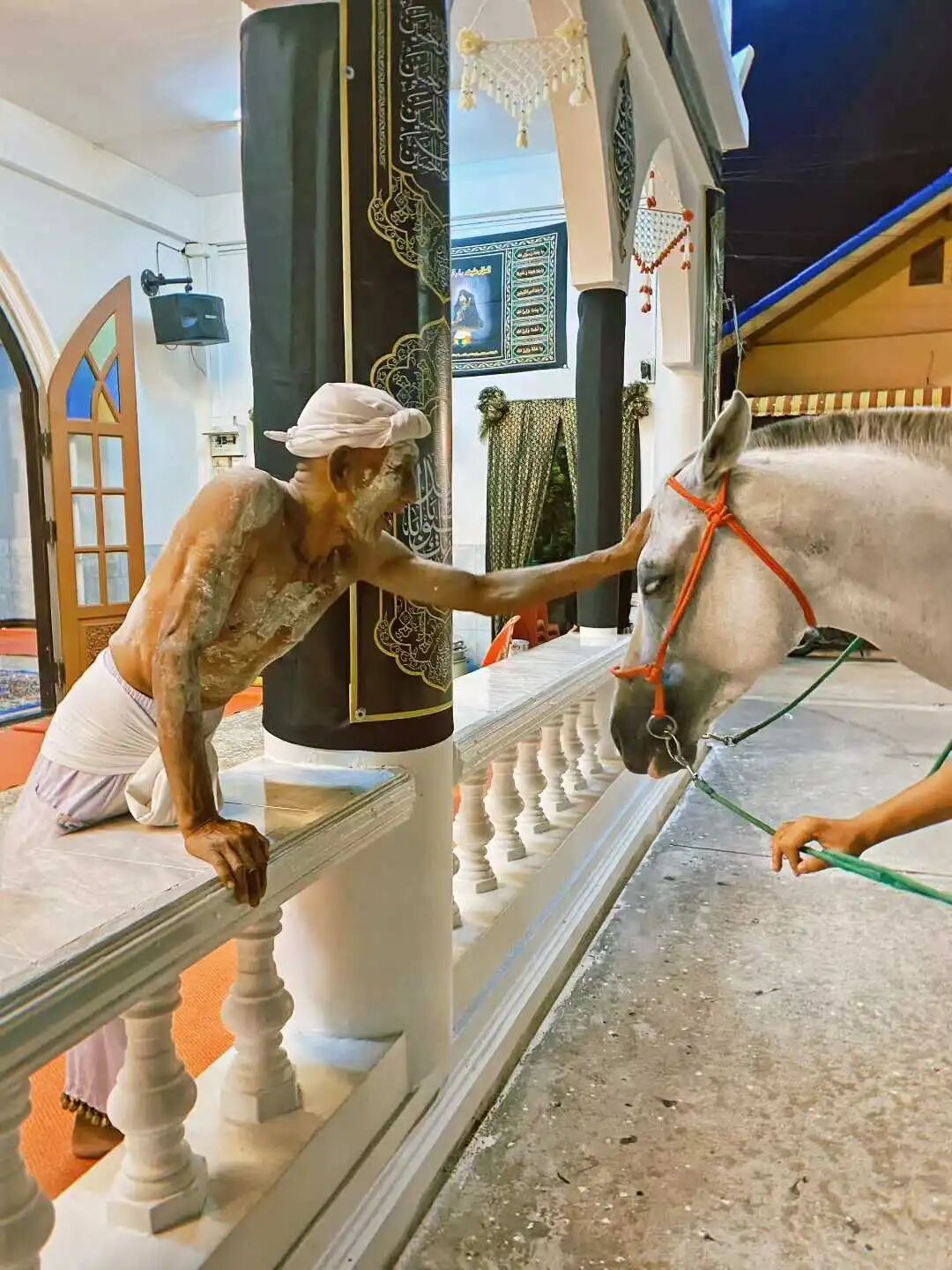
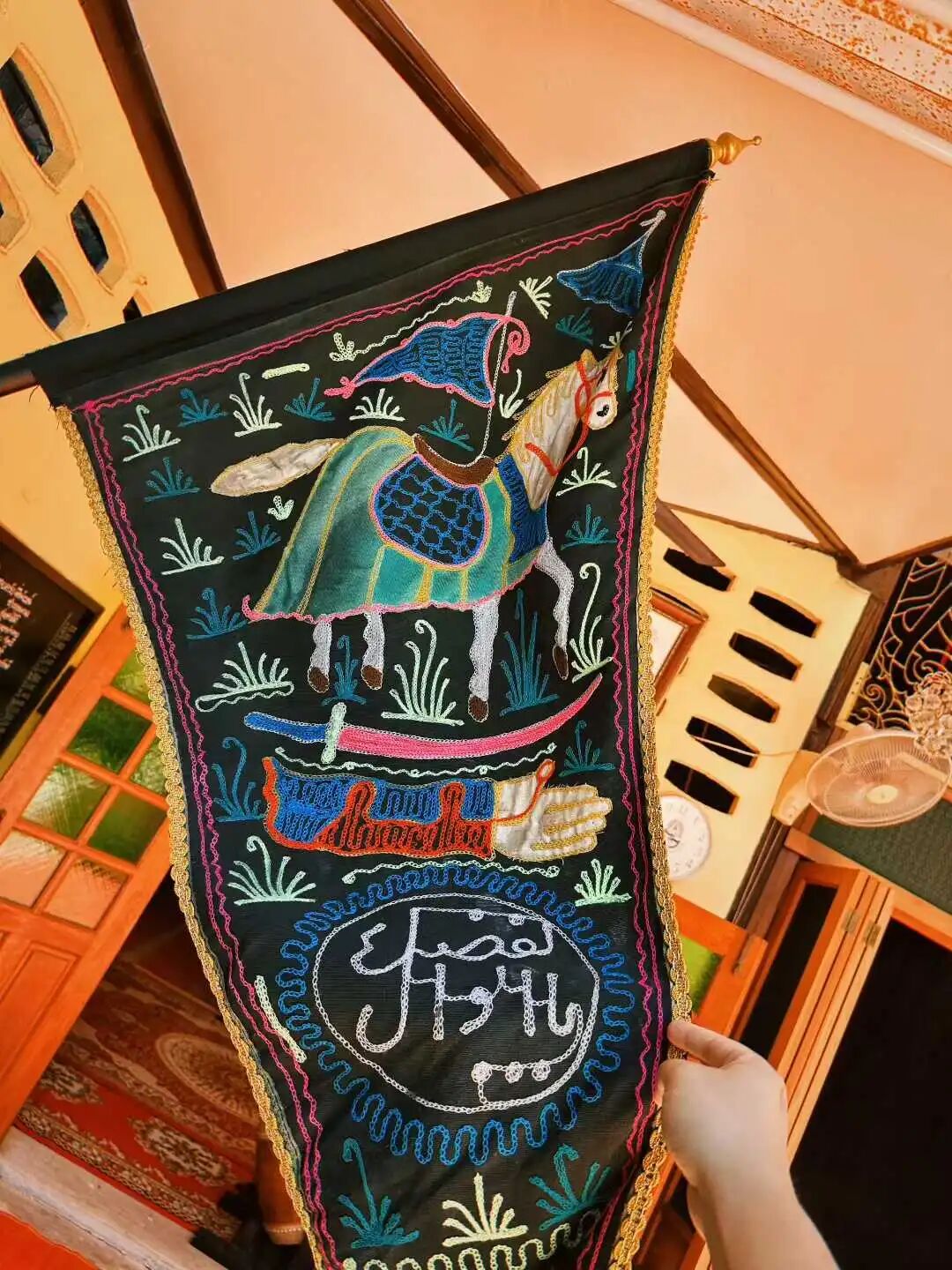
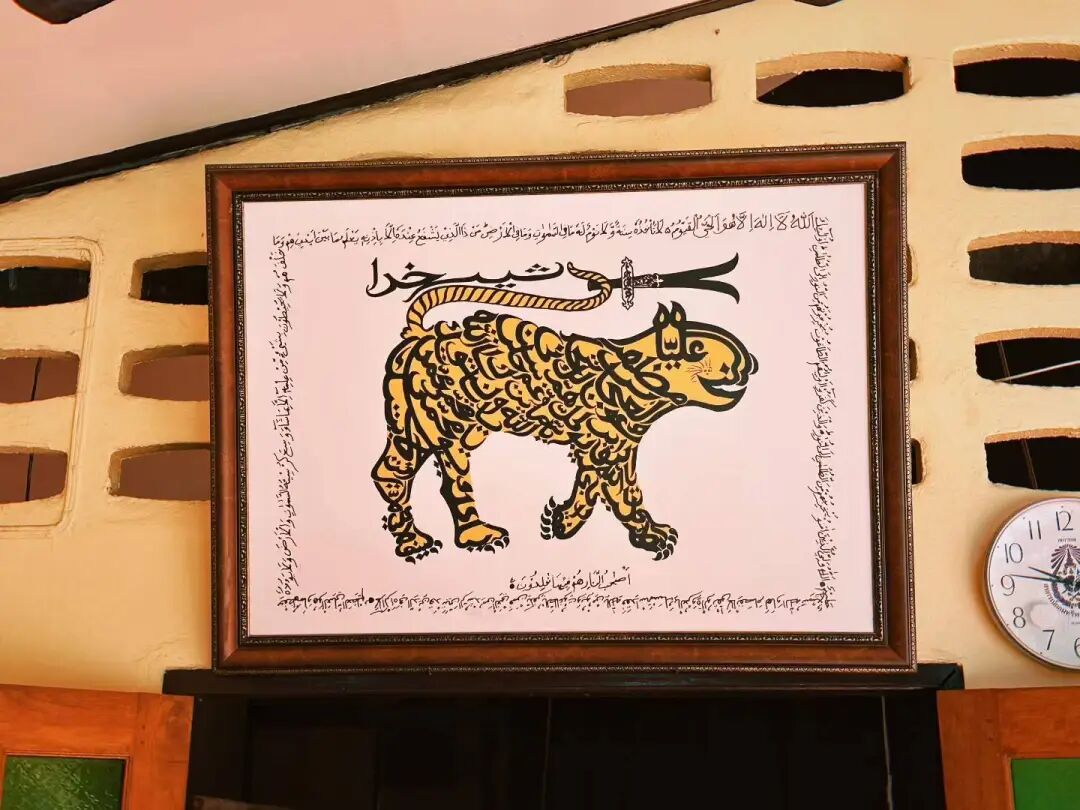
The most eye-catching thing in the mosque is a handsome, tall horse personally gifted by the King of Thailand. This horse represents Zuljanah, the warhorse of Imam Hussein. Zuljanah was raised by the noble Prophet from a young age and was known for loyalty, strength, endurance, and devotion. During the Battle of Karbala, Zuljanah used its body to block arrows aimed at Imam Hussein. After Imam Hussein passed away, Zuljanah returned to his family covered in blood to warn them of an ambush, then died from its wounds after fulfilling its final duty. During the month of Muharram, the horse is kept in the stables of Kudi Luang mosque, and people take turns walking it in the courtyard every night.
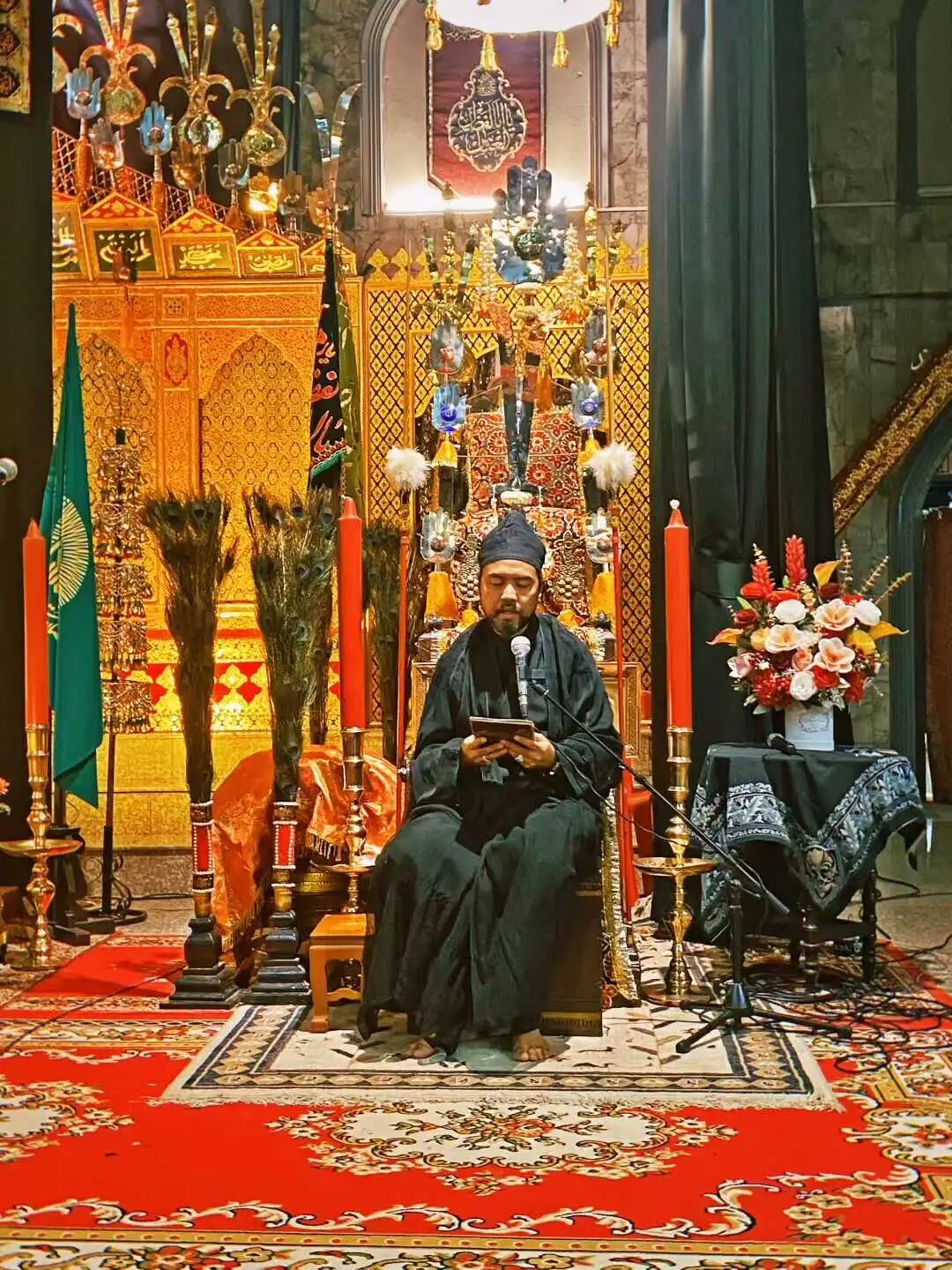
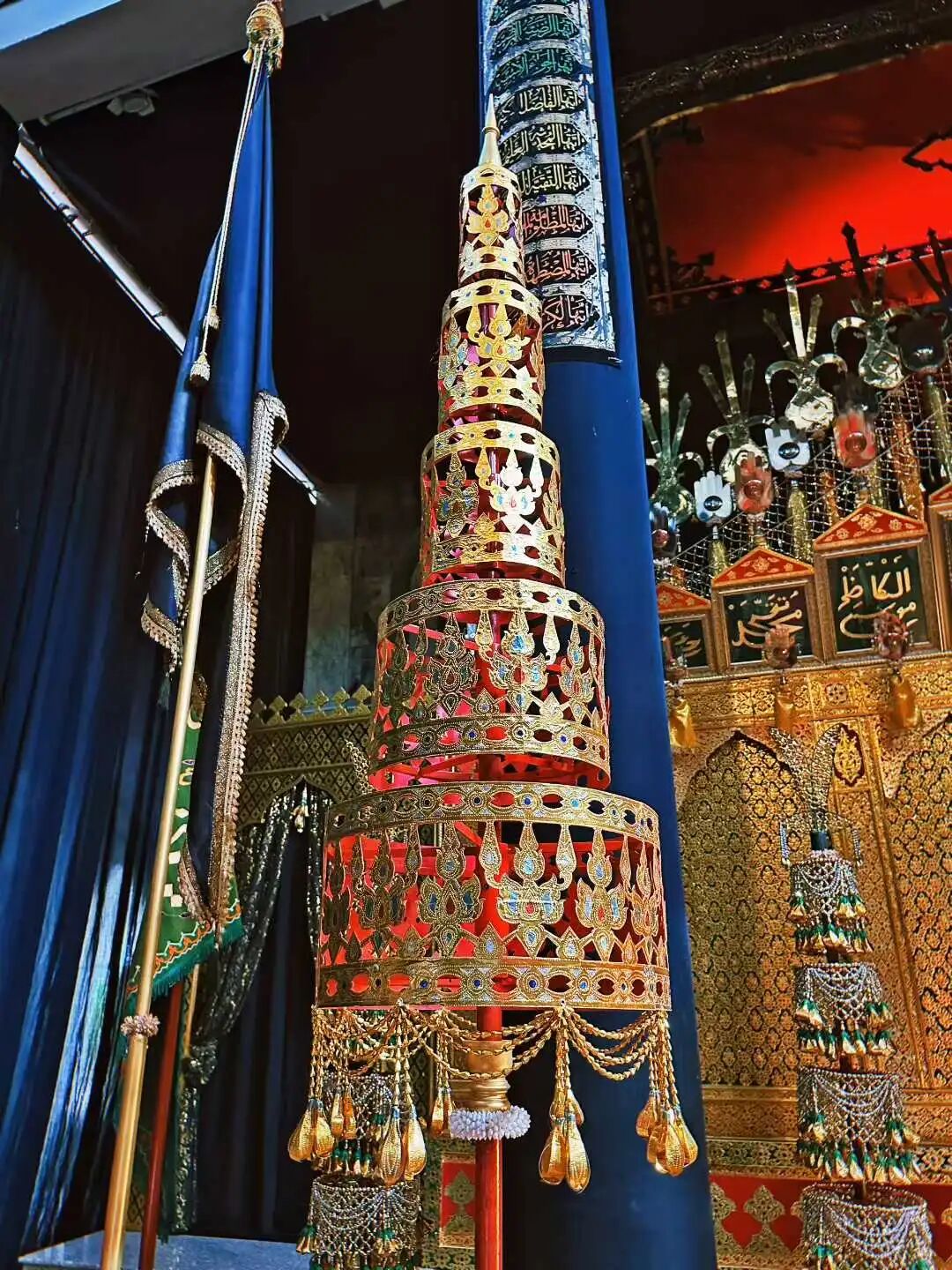
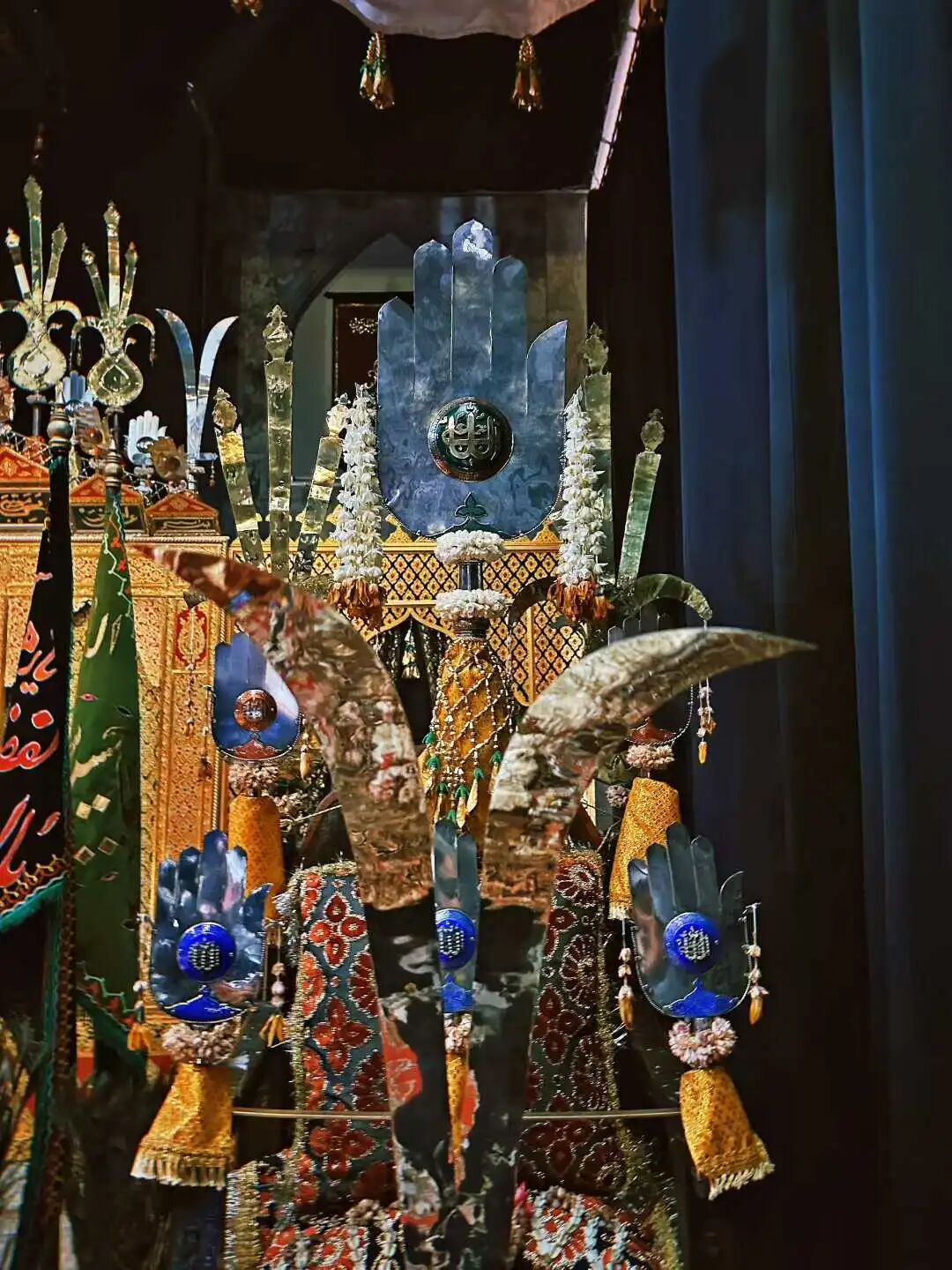
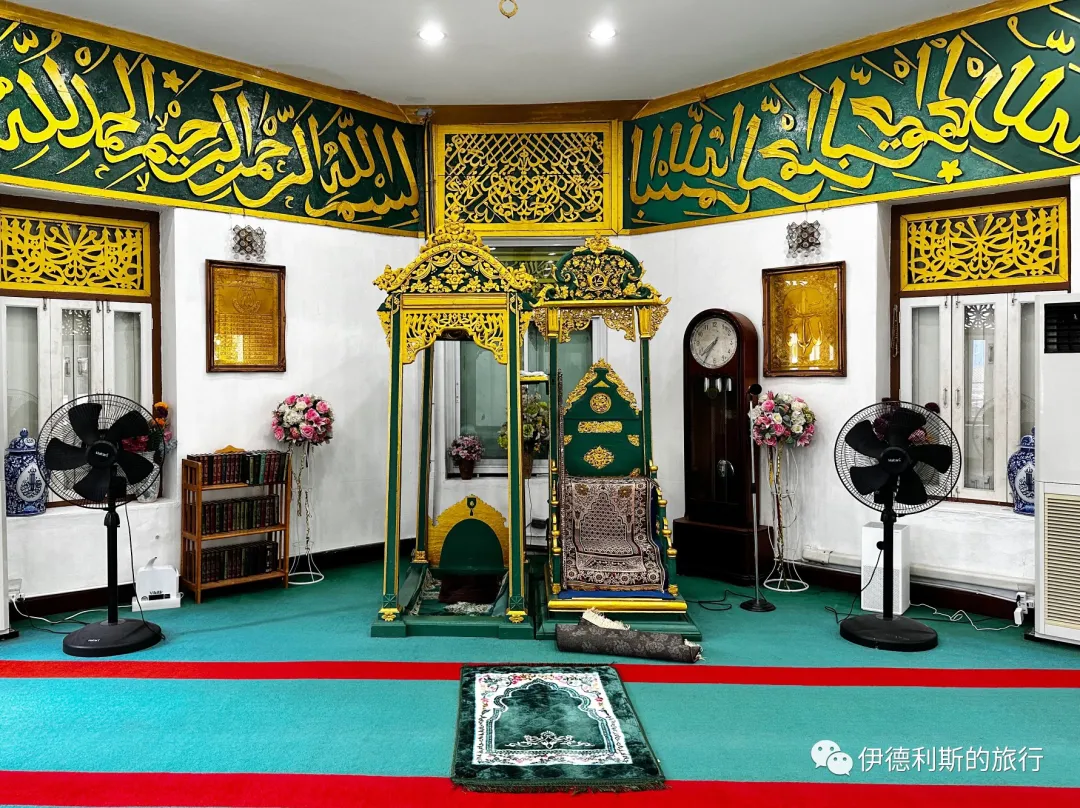
On the qibla wall of the main hall, the flagpole at the top is called an Alam, which represents the flag held by Abbas, the standard-bearer for Imam Hussein at the Battle of Karbala. The metal hand is called a Panja, which symbolizes the severed hands of Abbas. Abbas was the half-brother of Imam Hussein; he inherited the courage of Imam Ali and always held the flag of victory high on the battlefield. On the night of Ashura, he was blocked by enemy forces while returning with water from the Euphrates River; he fought alone, had both arms cut off, and eventually died in battle.
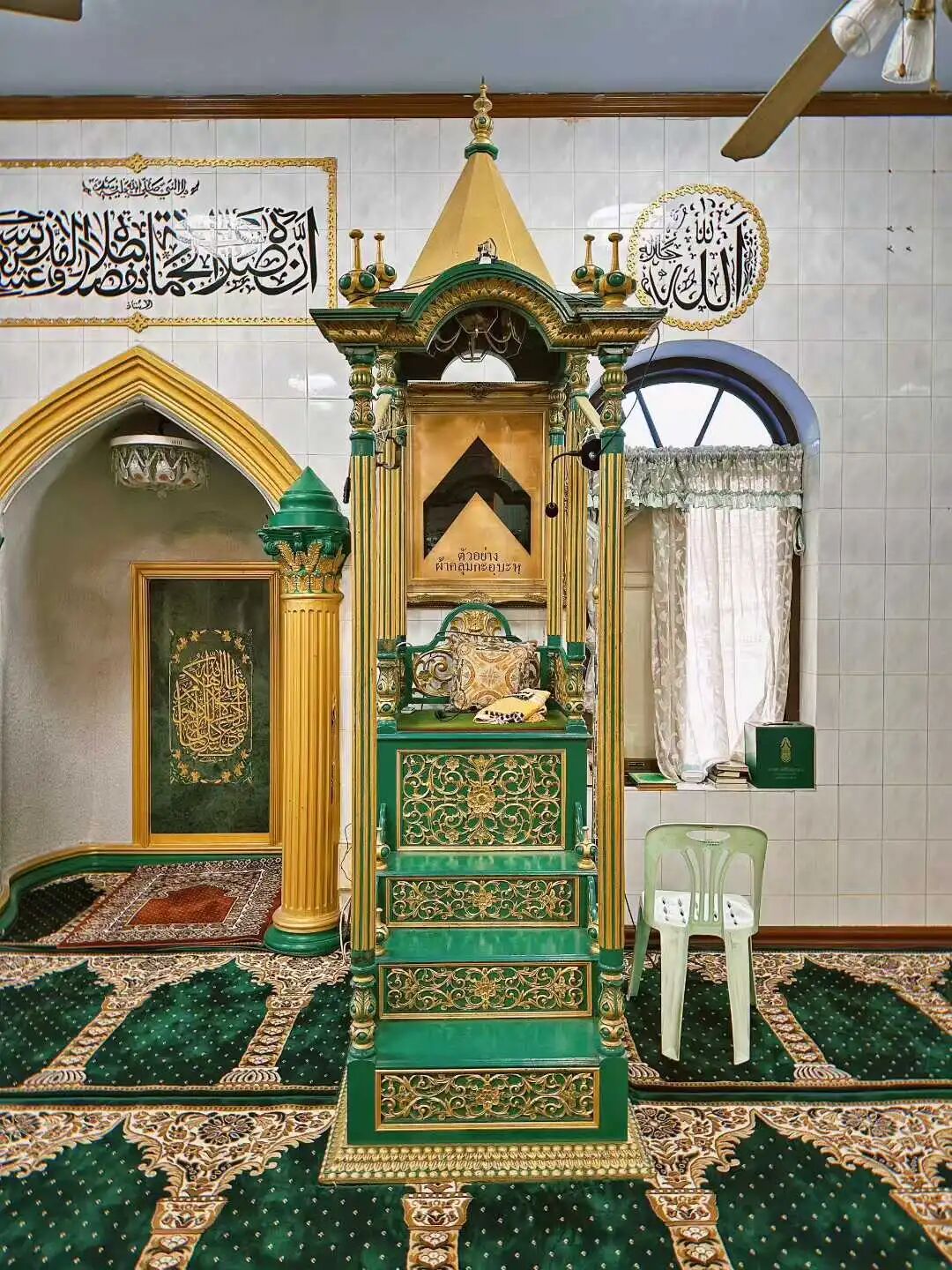
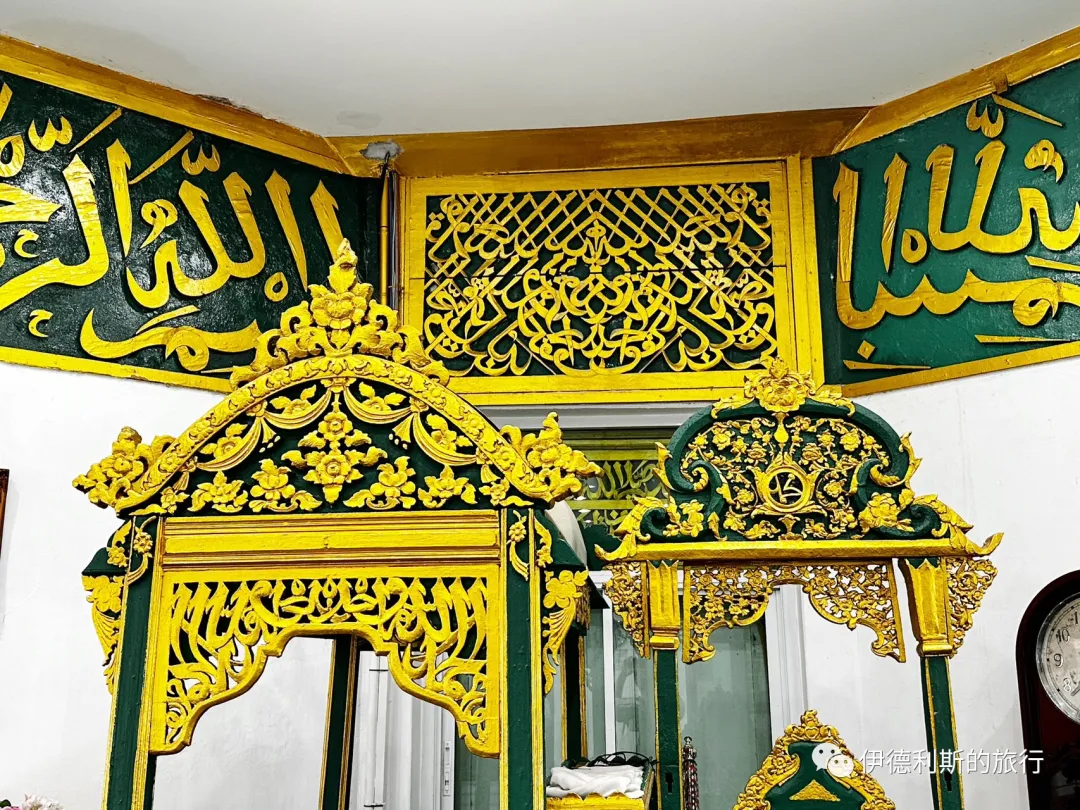
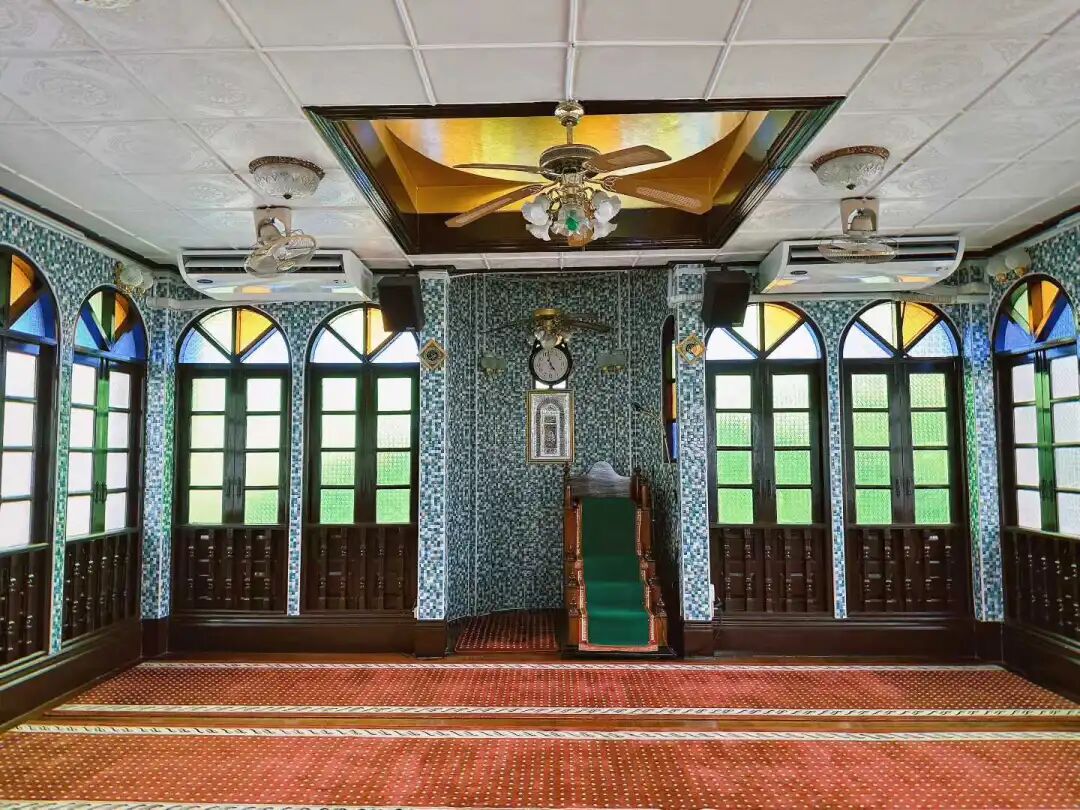
Above the niche on the qibla wall, the names of Allah, the noble Prophet, and the Twelve Imams of the Shia are written. The Twelver school is the largest branch of Shia Islam and is the state religion of Iran.
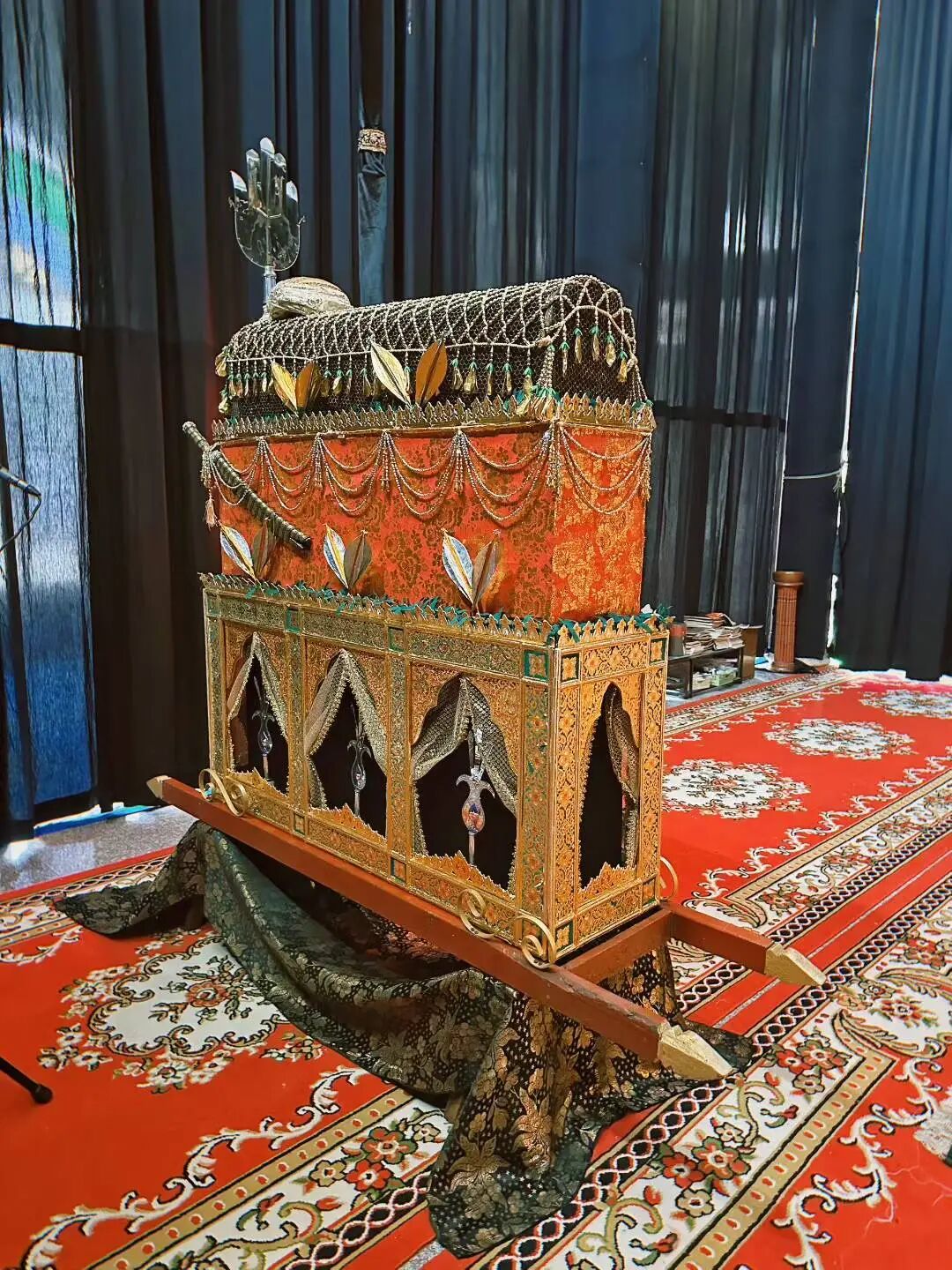
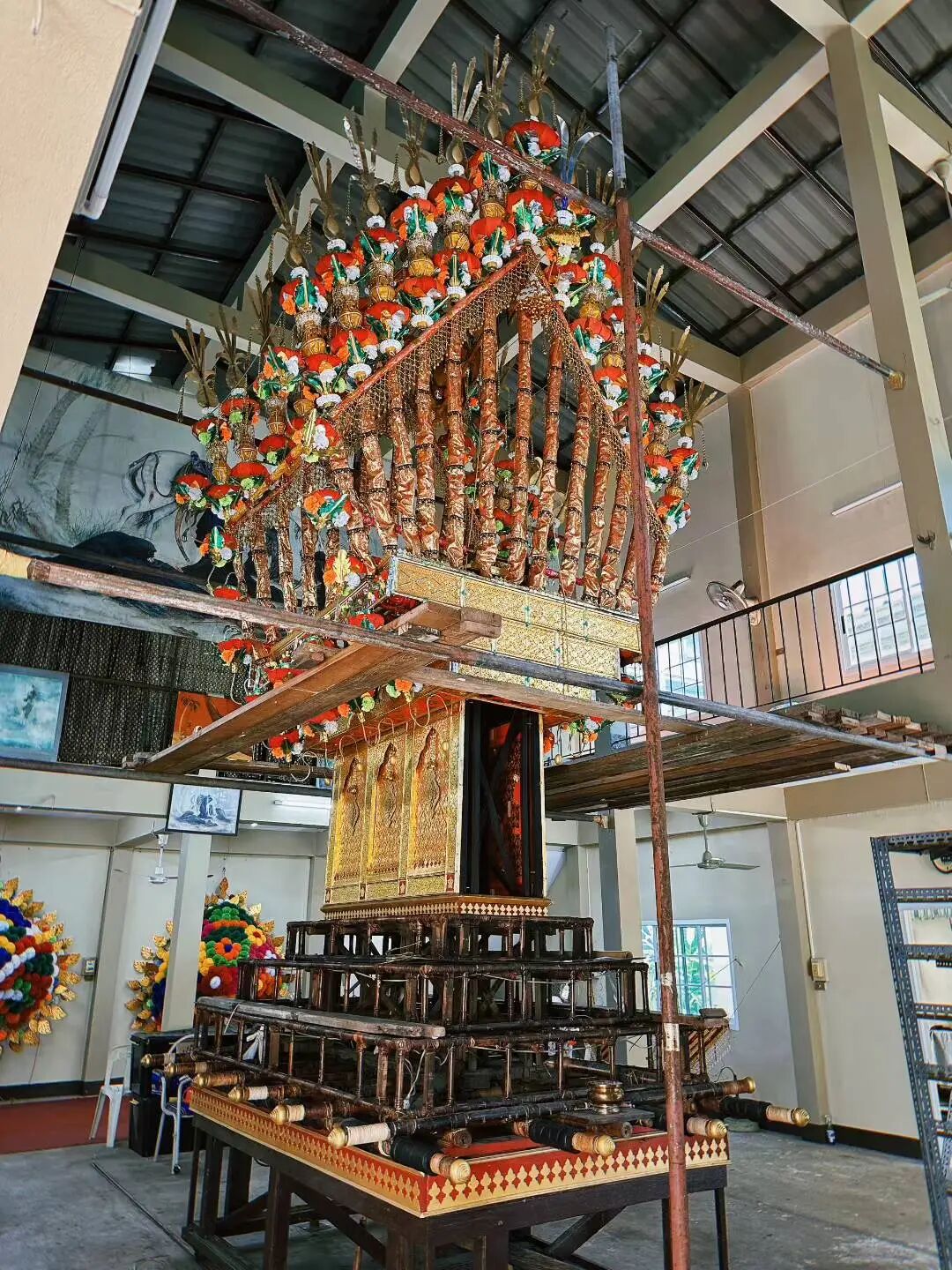
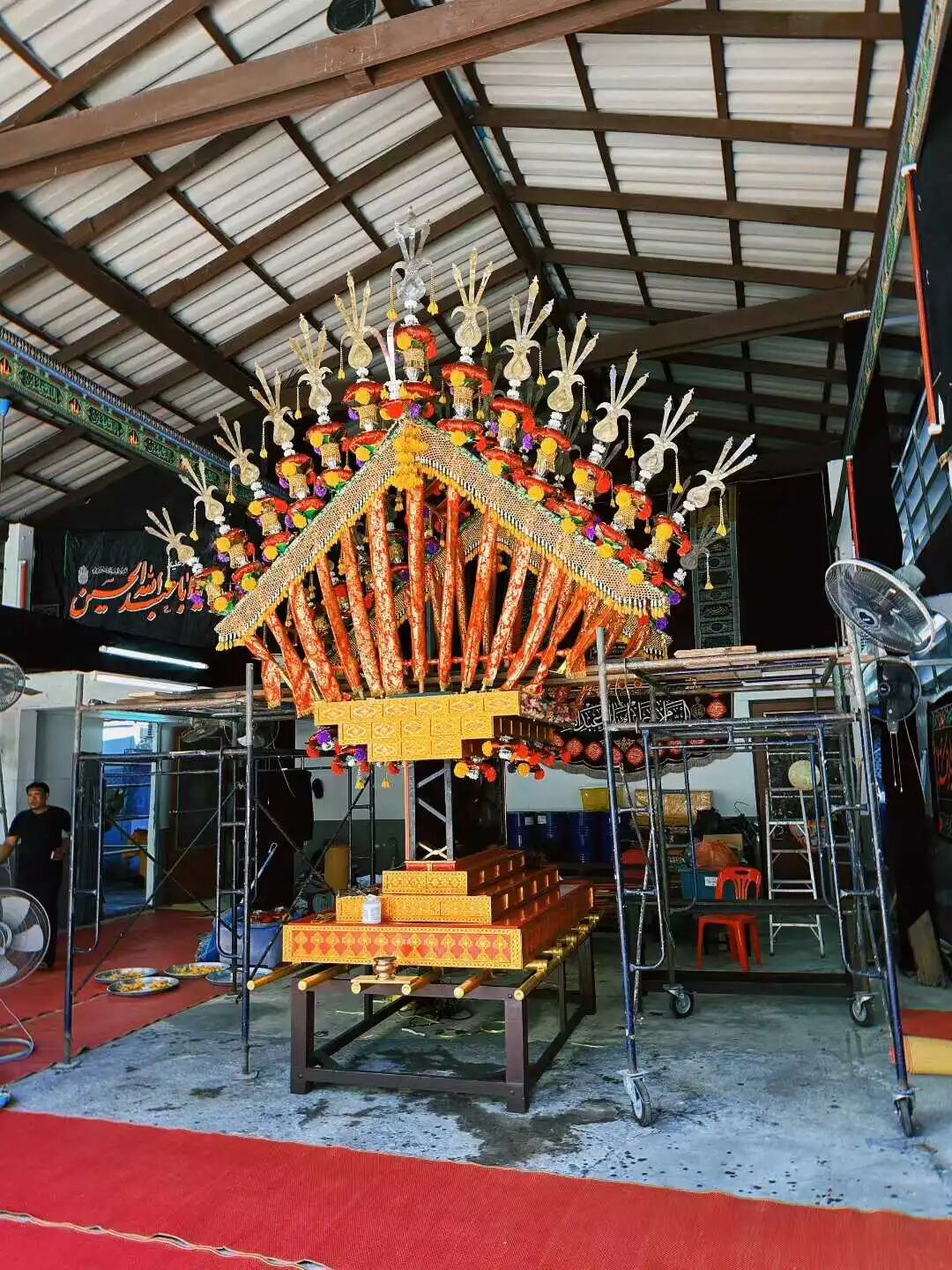
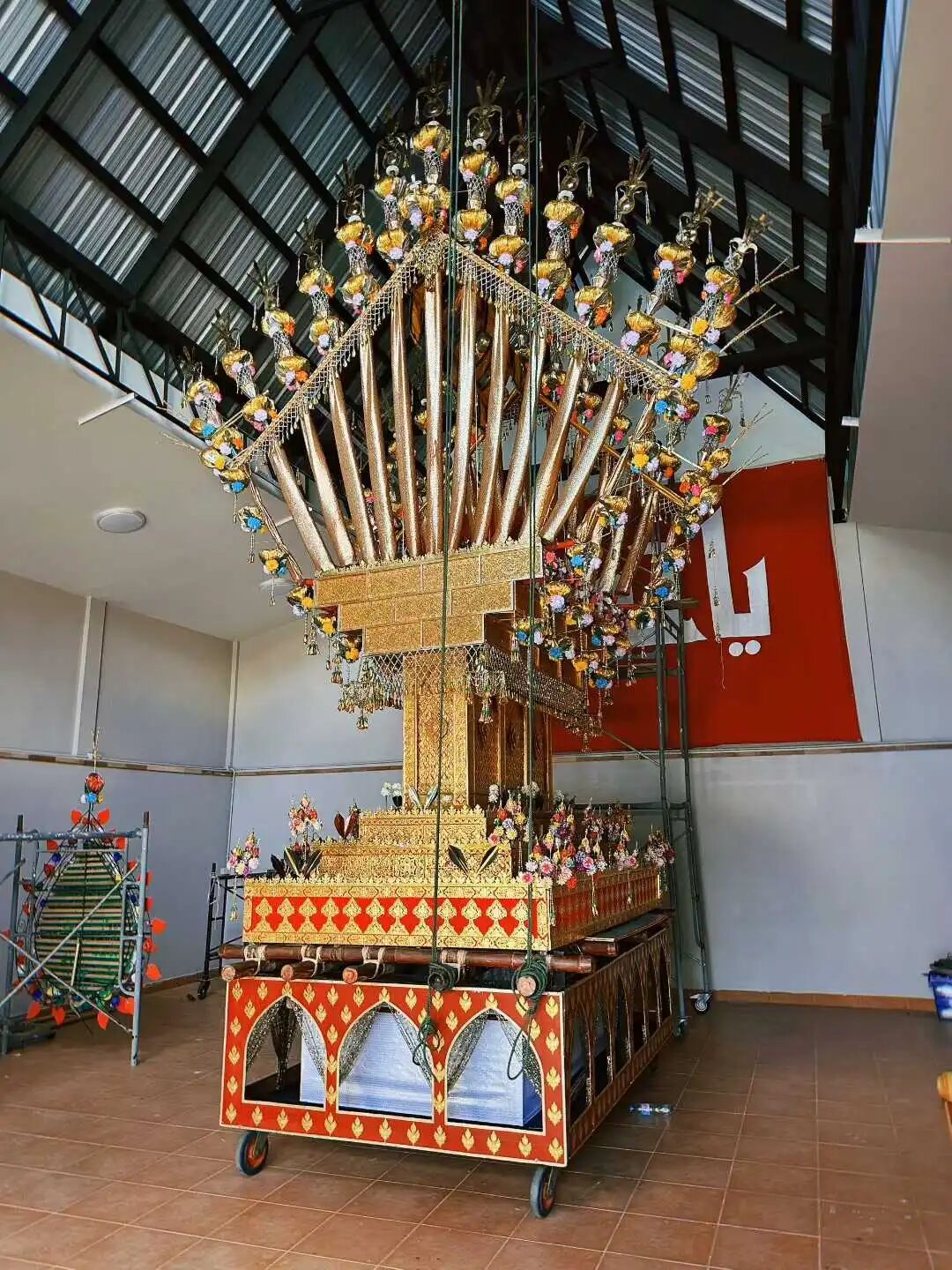
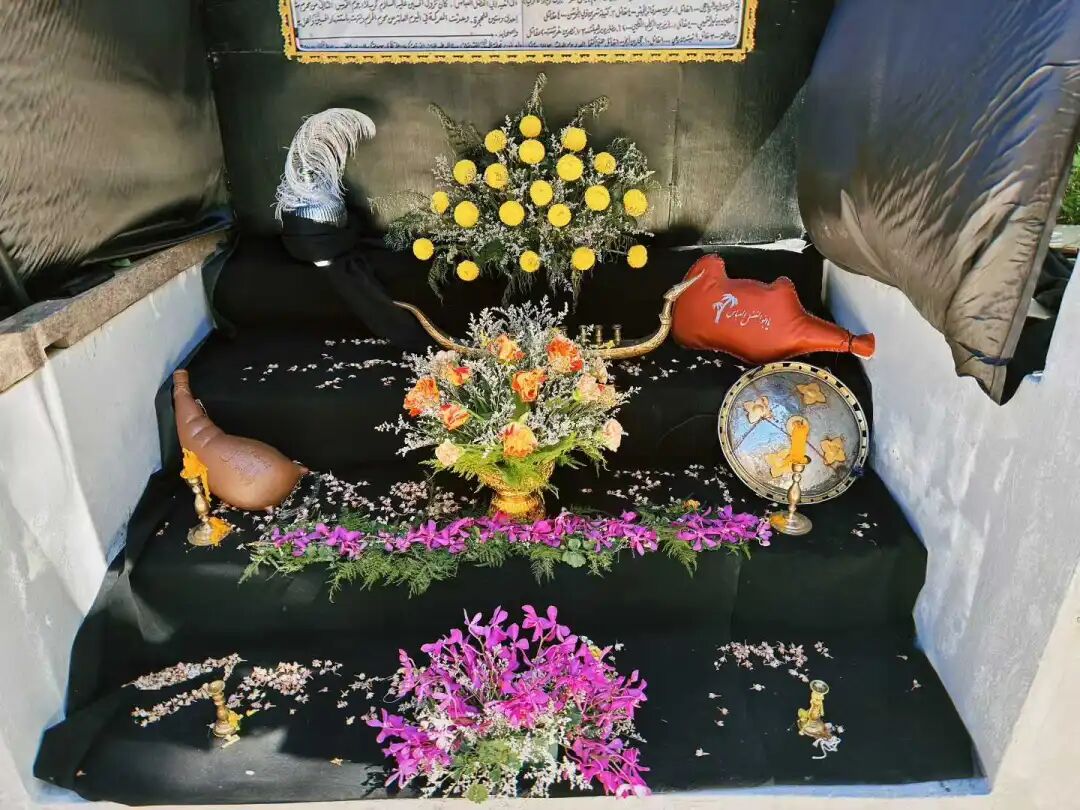
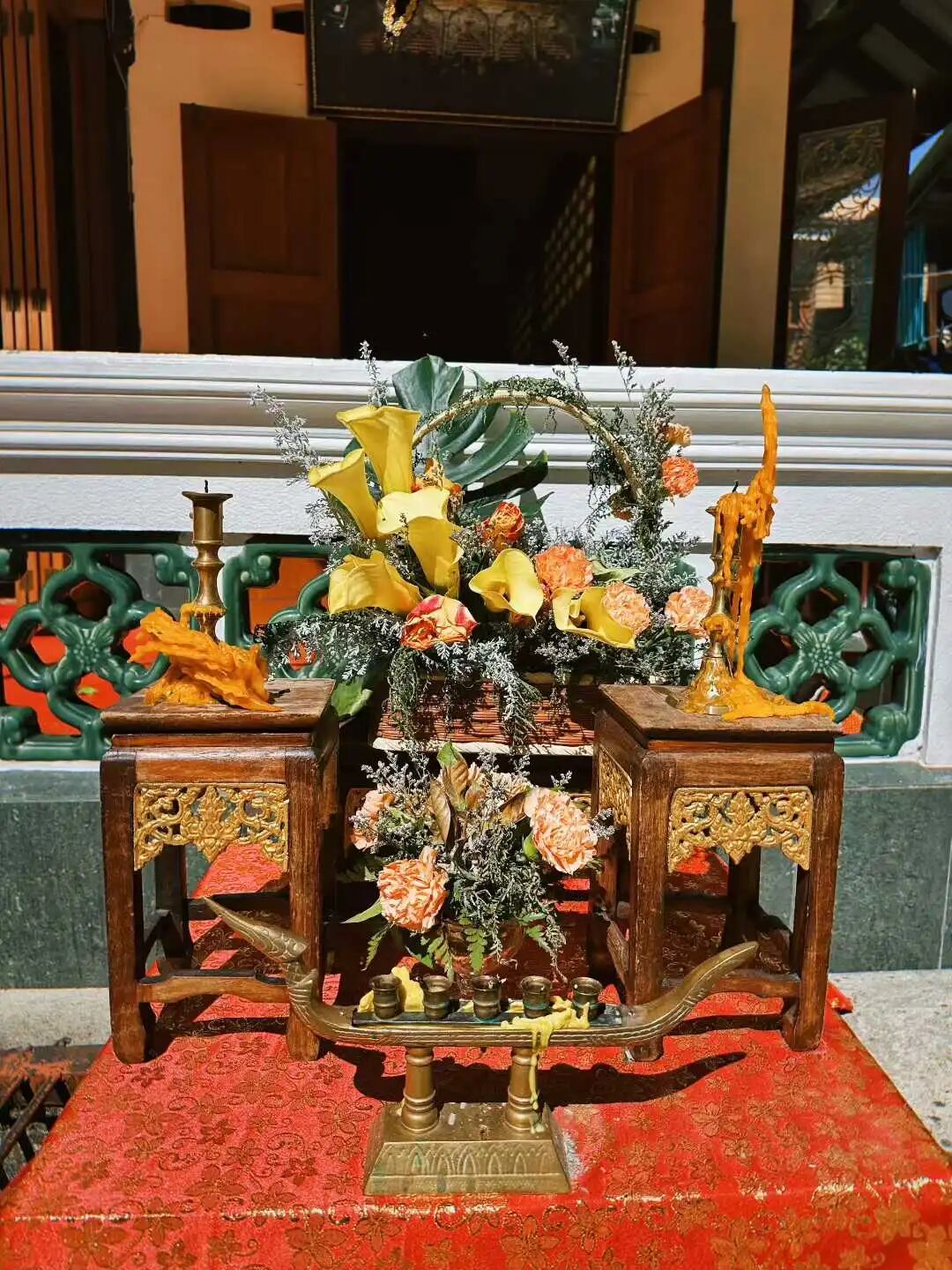
The Nakhl Gardani placed in the main hall symbolizes the funeral bier of Imam Hussein, decorated with a dagger and a turban (dastar) representing those used by him. During Ashura events, people carry the Nakhl Gardani to symbolize the funeral procession for Imam Hussein.
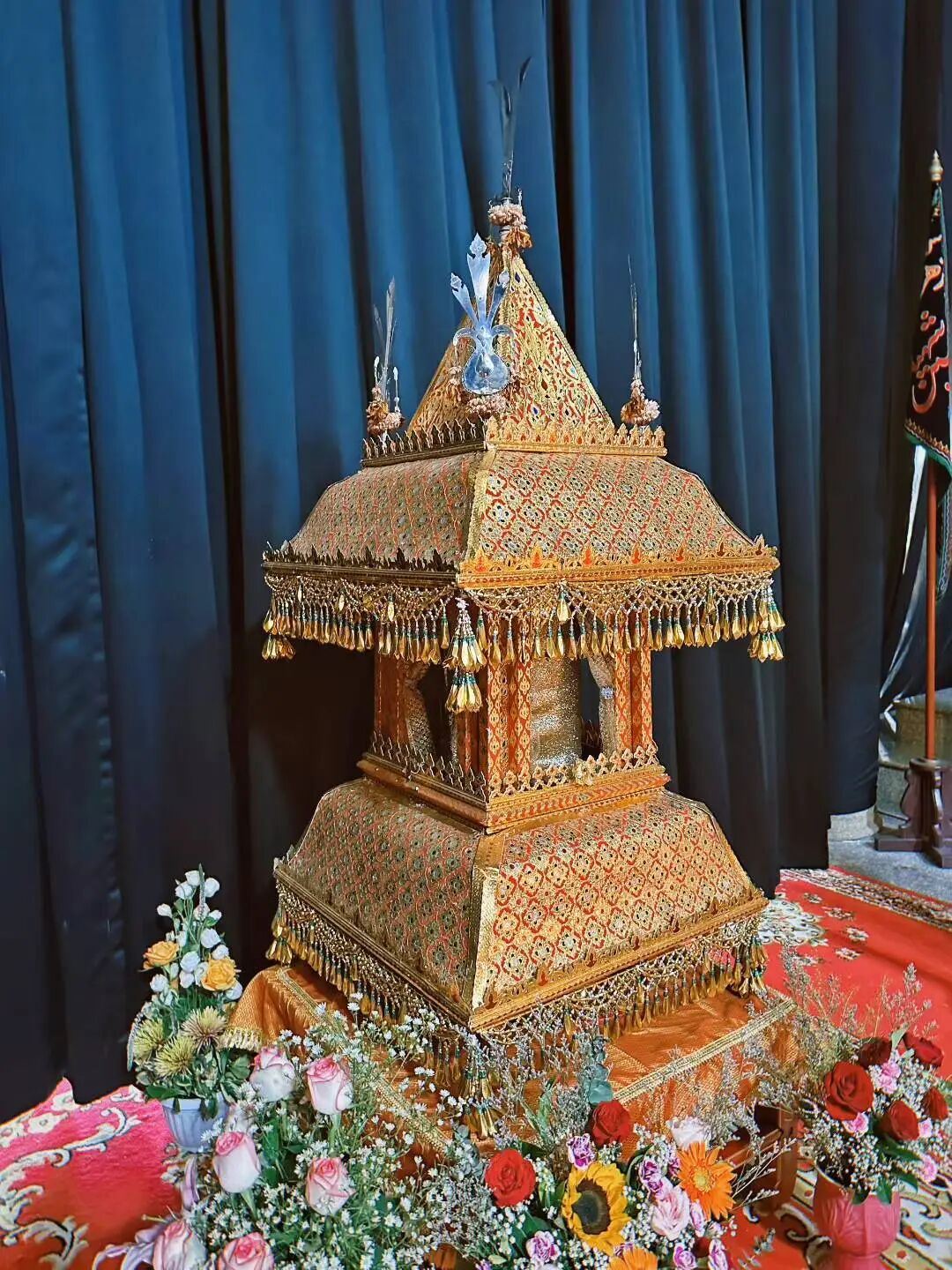
A Tadjah is also placed in the main hall to symbolize the tomb of Imam Hussein.
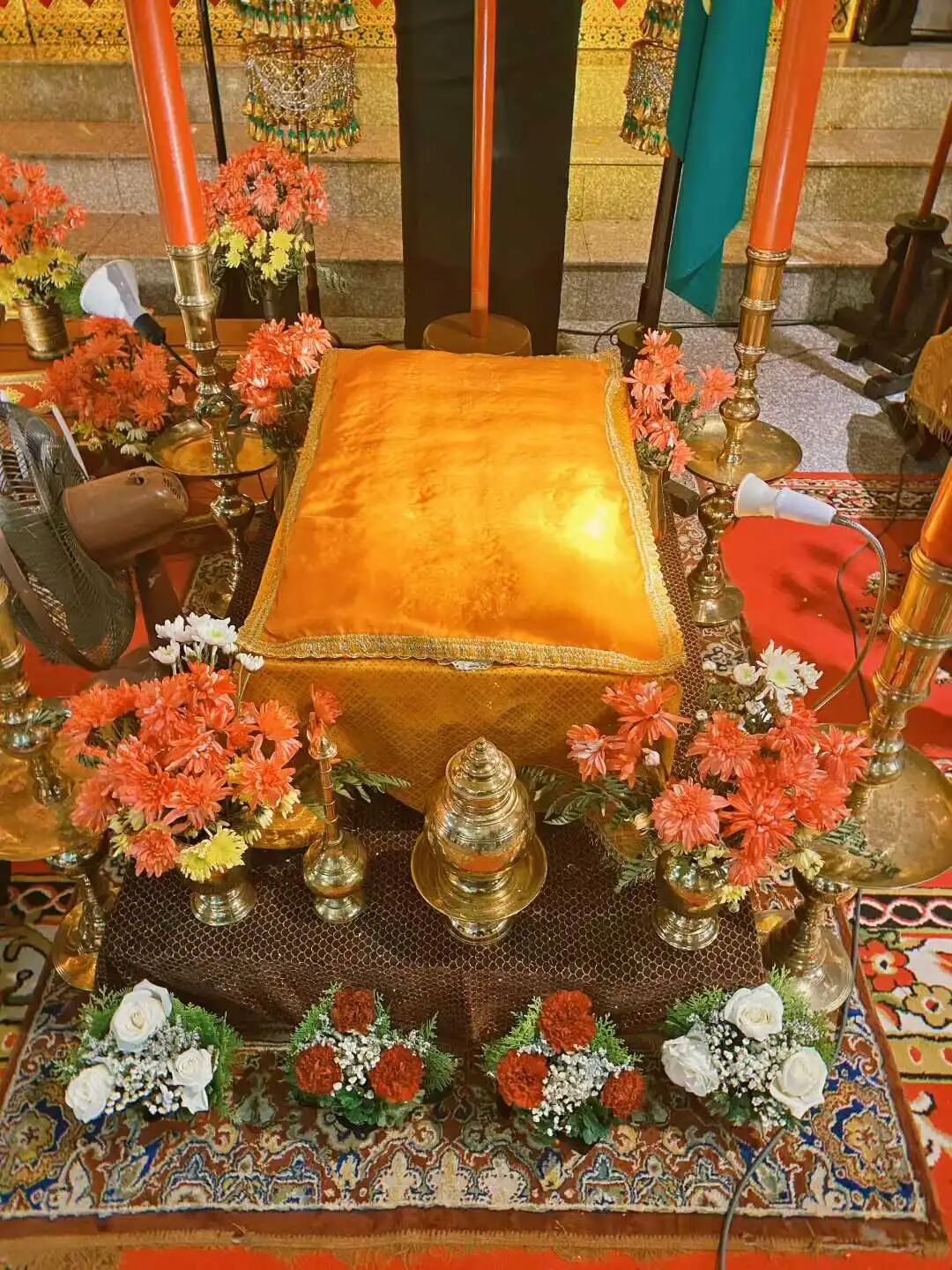
There is also a small decoration in the hall representing the youngest infant martyred at the Battle of Karbala, Ali Asghar, the six-month-old son of Imam Hussein. Records say that Imam Hussein held the thirsty Ali Asghar and asked the enemy for water for the child, but the enemy fired an arrow that pierced the baby's throat and Imam Hussein's arm at the same time. Ali Asghar later became a symbol of innocent victims and the most painful part of the mourning during Muharram.
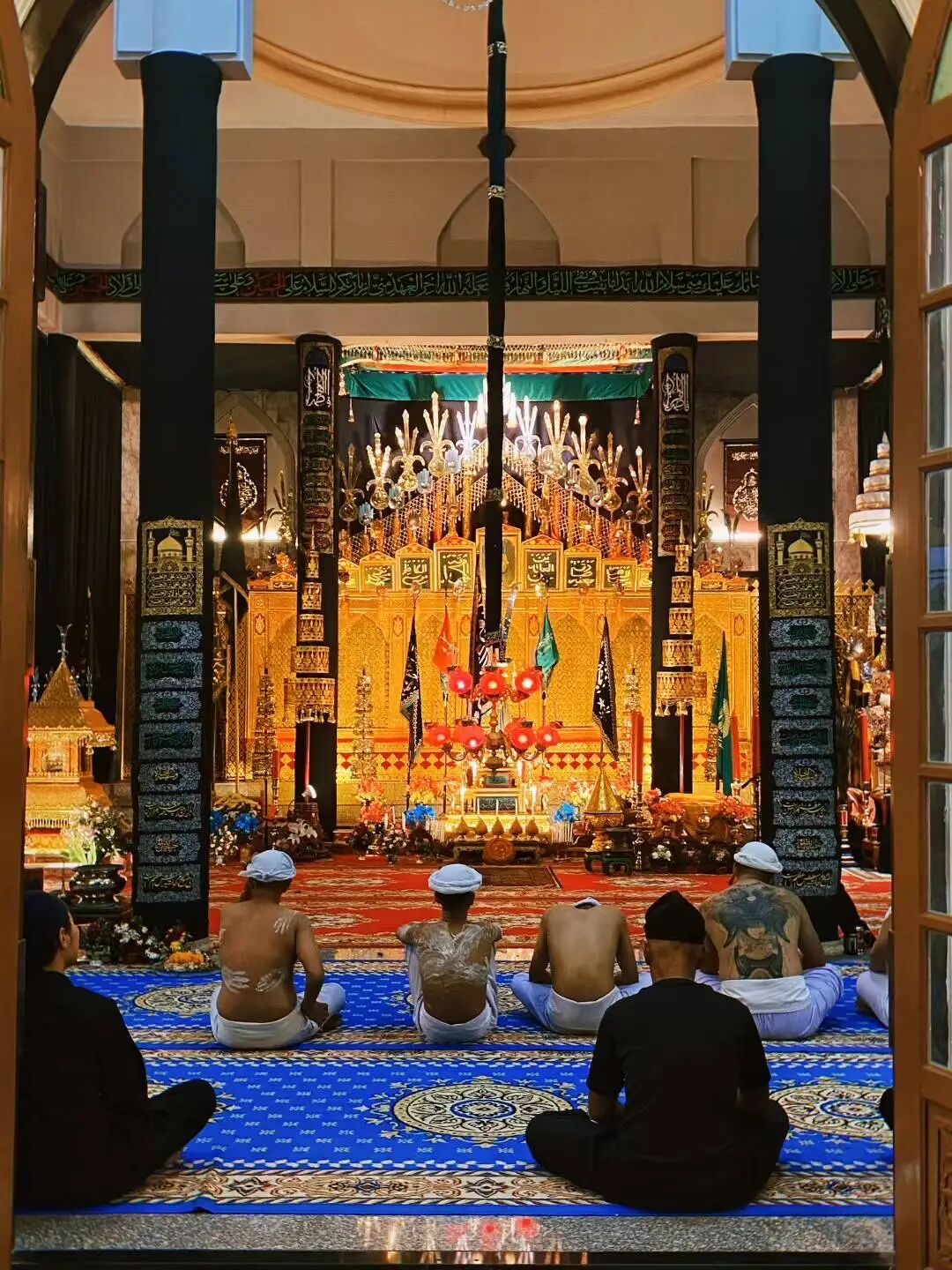
During the first ten nights of Muharram, Shia Muslims in Bangkok gather every night to chant in memory of Imam Hussein. During these gatherings, people known as Rawda khwan tell stories about the martyrdom of Imam Hussein and his followers at the Battle of Karbala. The stories come from famous books, the most well-known being The Garden of the Martyrs (Rawdat al-shuhada) by the famous Timurid-era Persian writer Hussein Kashifi. Afterward, the imam gives a sermon (waaz) in Thai, teaching everyone about the bravery, fearlessness, and sacrifice shown by Imam Hussein and his followers at the Battle of Karbala.
Besides the main Shia mosque in Bangkok, Kudi Luang, I also visited two others: the Persian-descended Kudi Charoenphat and the Indian-descended Dilfallah mosque. The people at Kudi Charoenphat told me they did not want me to take photos or visit, which I understand. The people at Dilfallah mosque were friendlier, but they told me their Ashura event was on Monday, which I did not quite understand, as I wondered why it was not held on the 10th day of the first month of the Islamic calendar.
In all three places, I saw the Nakhl Gardani used during Ashura events. It symbolizes the funeral bier of Imam Hussein, and the entire Ashura event is essentially a reenactment of his funeral procession.
I previously spent Muharram in Tehran, Iran. See: Encountering Ashura in Tehran. view all
Summary: Bangkok has a long Persian-descended Shia Muslim history, centered in communities such as Kudi Luang Chao Sen Mosque. This account follows the Muharram gatherings, Ashura preparations, symbols of Karbala, mosque details, food sharing, and local conversations described in the original travel note.
As the Islamic New Year arrives, Shia friends (dosti) around the world spend the first ten days of the first month, Muharram, honoring Imam Hussein. This leads up to the grand Ashura festival. Last weekend, I traveled to Thailand to join the Muharram commemorations held by the Persian-descended Shia community in Bangkok.
Bangkok currently has five Shia mosques, with two belonging to the Persian community and three to the Indian community. It is the city with the strongest Shia cultural presence in all of Southeast Asia. Since I only had Saturday evening, I chose to attend the memorial at the primary Shia mosque in Bangkok, Kudi Luang Mosque.
Between the 16th and 18th centuries, Shia merchants from the Persian Safavid dynasty traveled along the Indian Ocean coast to trade in Siam, where they were warmly welcomed and hosted by the Siamese royal family. Some Persian merchants married locals and settled down, eventually taking on important roles in the Siamese court. Starting in the 17th century, the Sheik Ahmad family from Qom, Persia, managed Siam's western maritime affairs, overseeing trade, shipping, and diplomacy across the Indian Ocean.
After the Siamese capital of Ayutthaya fell in 1767 and the capital moved to Bangkok in 1782, the Persian community from Ayutthaya moved there as well. The first leader of the Persian Shia community in Bangkok was Konkaew, the son of the last leader from Ayutthaya. In 1797, he began managing Siam's western trade and received a property in the Thonburi area across the Chao Phraya River. People say he and 400 Shia followers established Kudi Chao Sen Mosque, which became the primary Shia mosque in Bangkok.
After Konkaew passed away, his brother and eight direct descendants inherited the title, controlling Siam's western trade rights for a century. In 1897, King Rama V renovated Kudi Chao Sen Mosque and renamed it Kudi Luang Chao Sen Mosque. In 1947, the entire Kudi Luang Mosque was moved to its current location to make room for the Royal Thai Navy headquarters. The community still lives around the mosque, preserving the traditional Shia culture of Bangkok.
We visited Kudi Luang Mosque in the morning. The male and female friends (dosti) were very warm, offering us several bottles of water. Even after learning we were Sunni, they remained very welcoming and told us we were free to take photos. It was a pity that the grandest Ashura event was scheduled for Monday morning, and we could not attend because of work.
Inside the main hall of Kudi Luang Mosque, a banner hangs that reads, 'Oh!' Hussein. Honoring Imam Hussein is the theme of Muharram.
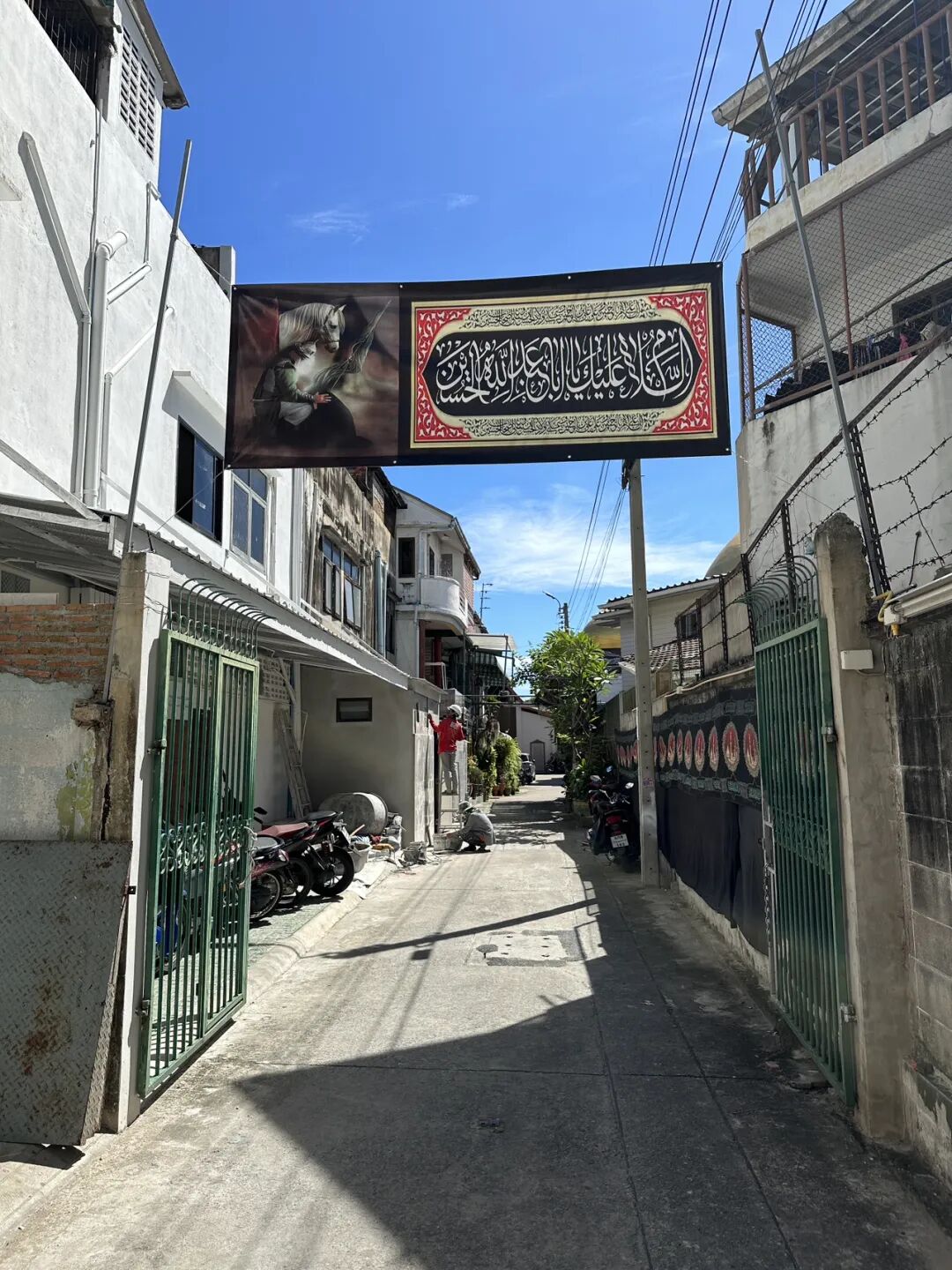
The Persian-descended Shia elders in Bangkok live around the mosque. They are open-minded and very welcoming to friends (dosti).
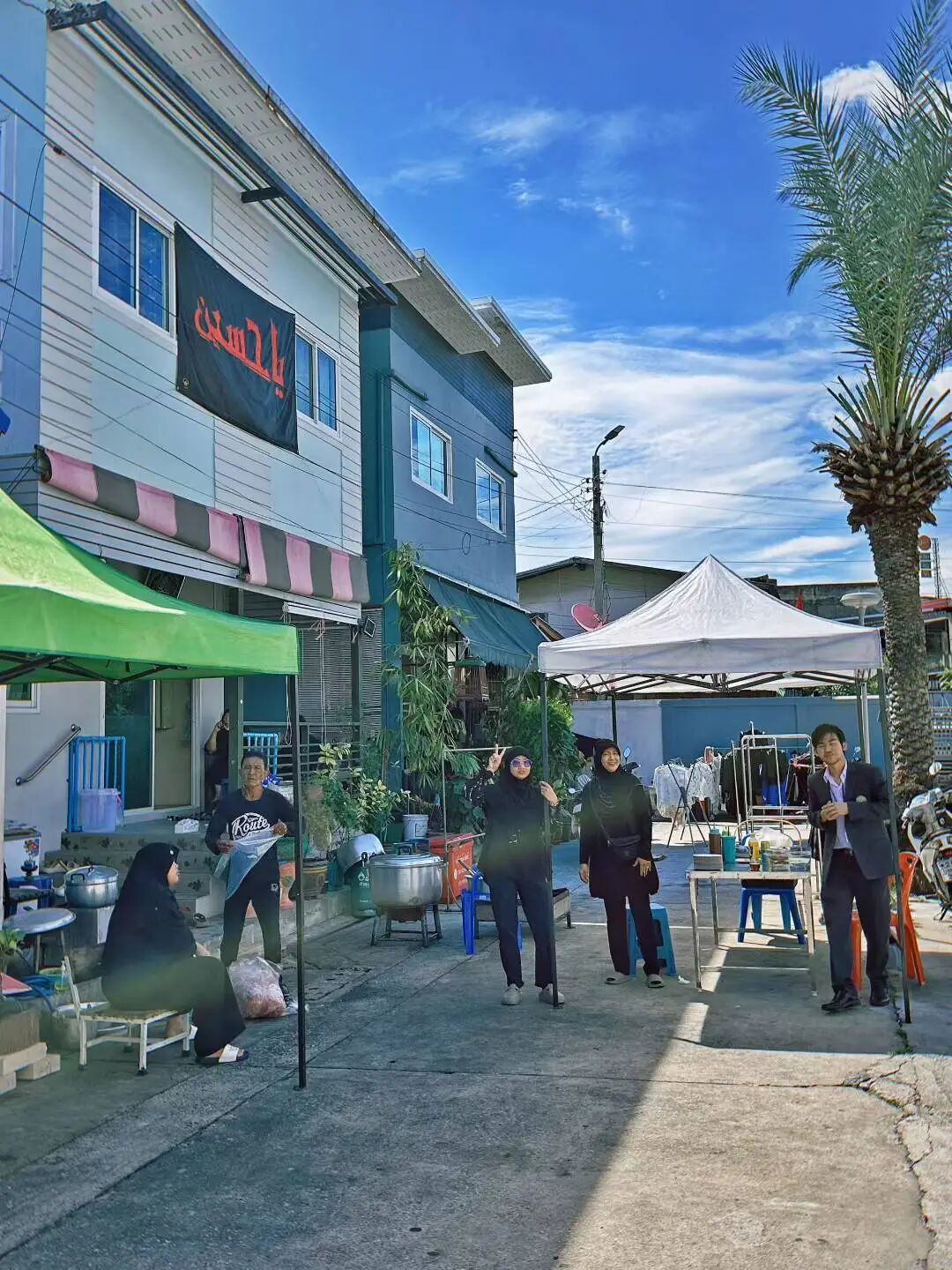
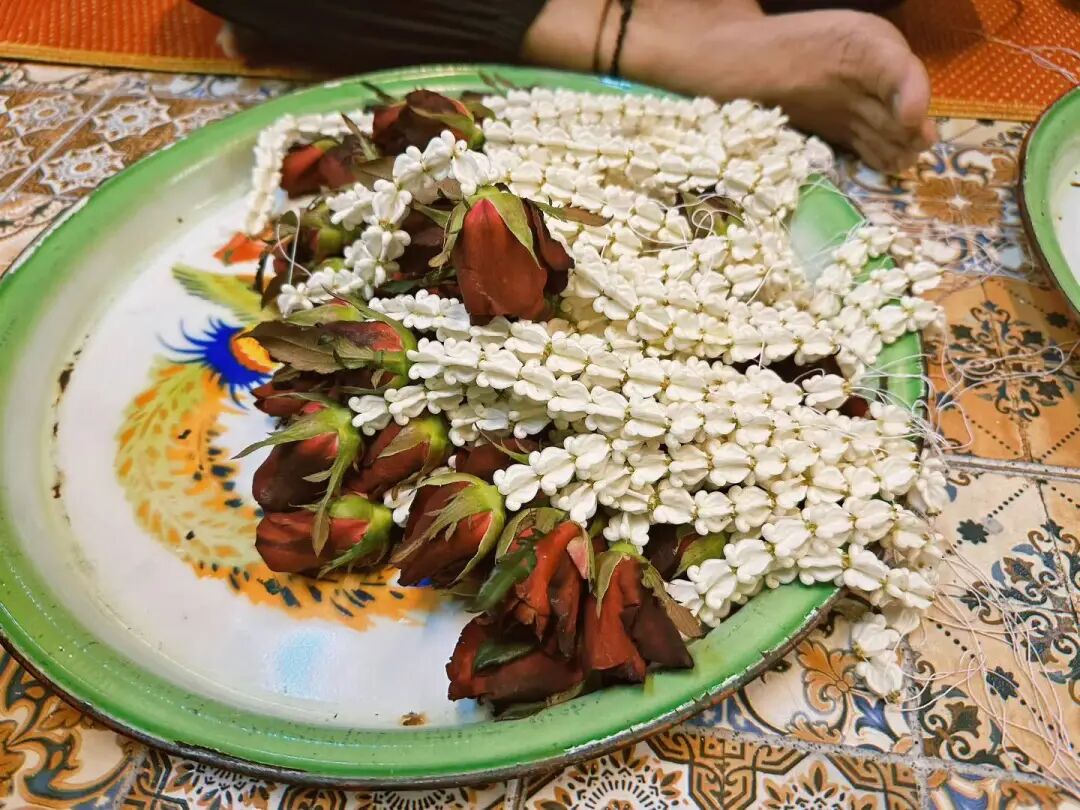
After the prayer (namaz), I returned to Kudi Luang Mosque to eat chicken rice noodle rolls (changfen) with everyone, along with a special dessert made of palm sugar and pomelo that the Persian community in Bangkok eats during Muharram. One of the themes for Shia Muslims during Muharram is sharing and giving. Food during this time is free, and everyone gathers to make the flowers used in the activities. Some people in the mosque wear white pants and headscarves, with bells hanging from their pant legs. They dedicate themselves to serving the mosque during the first ten days of Muharram.
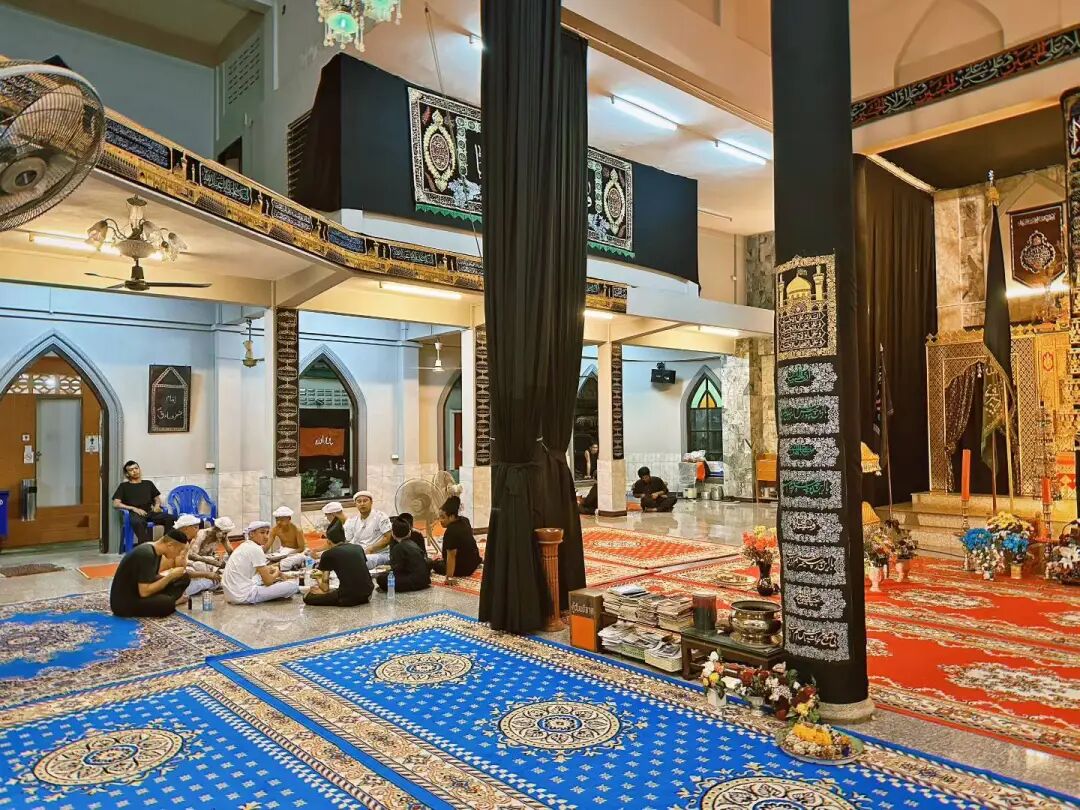
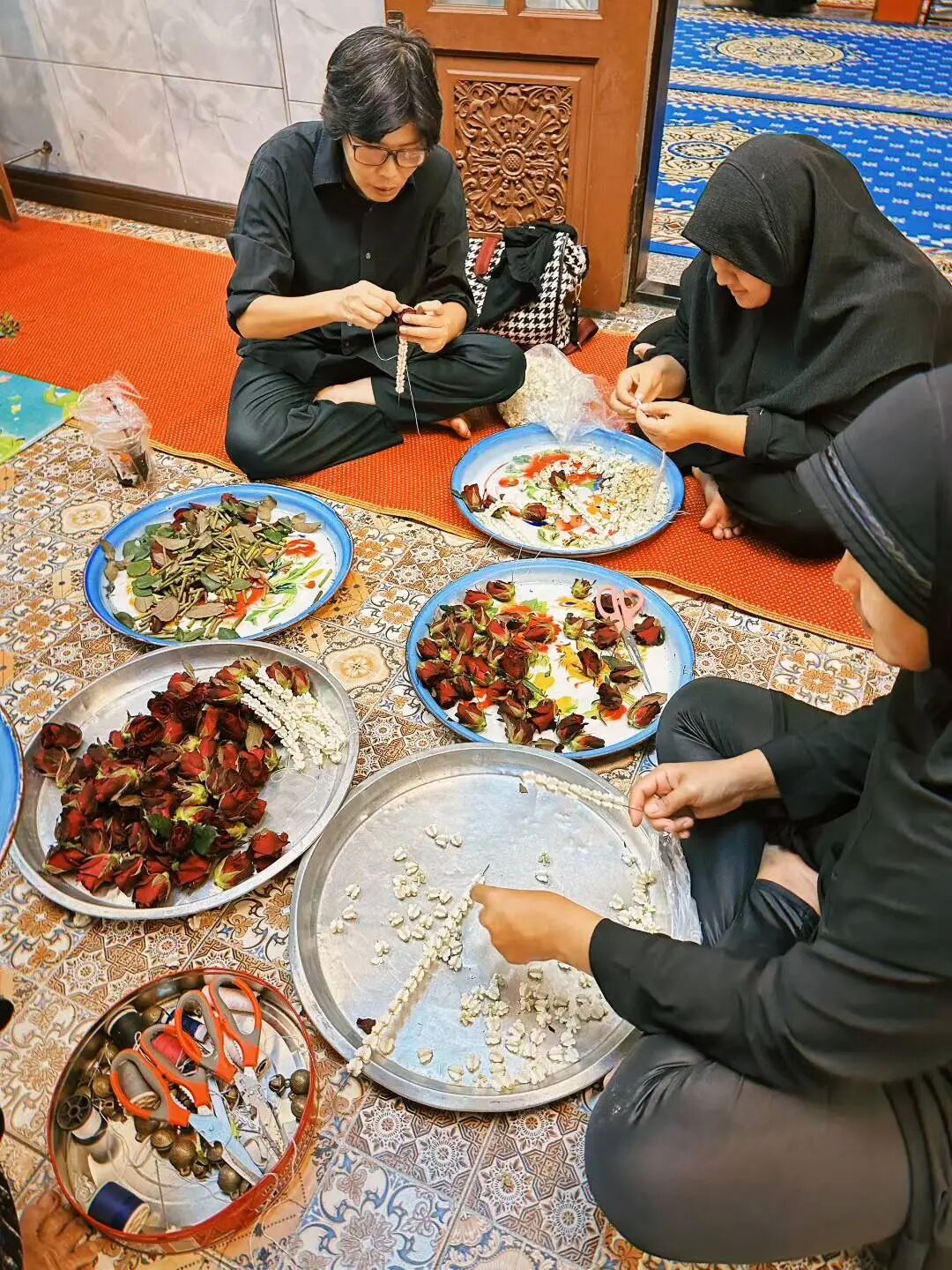
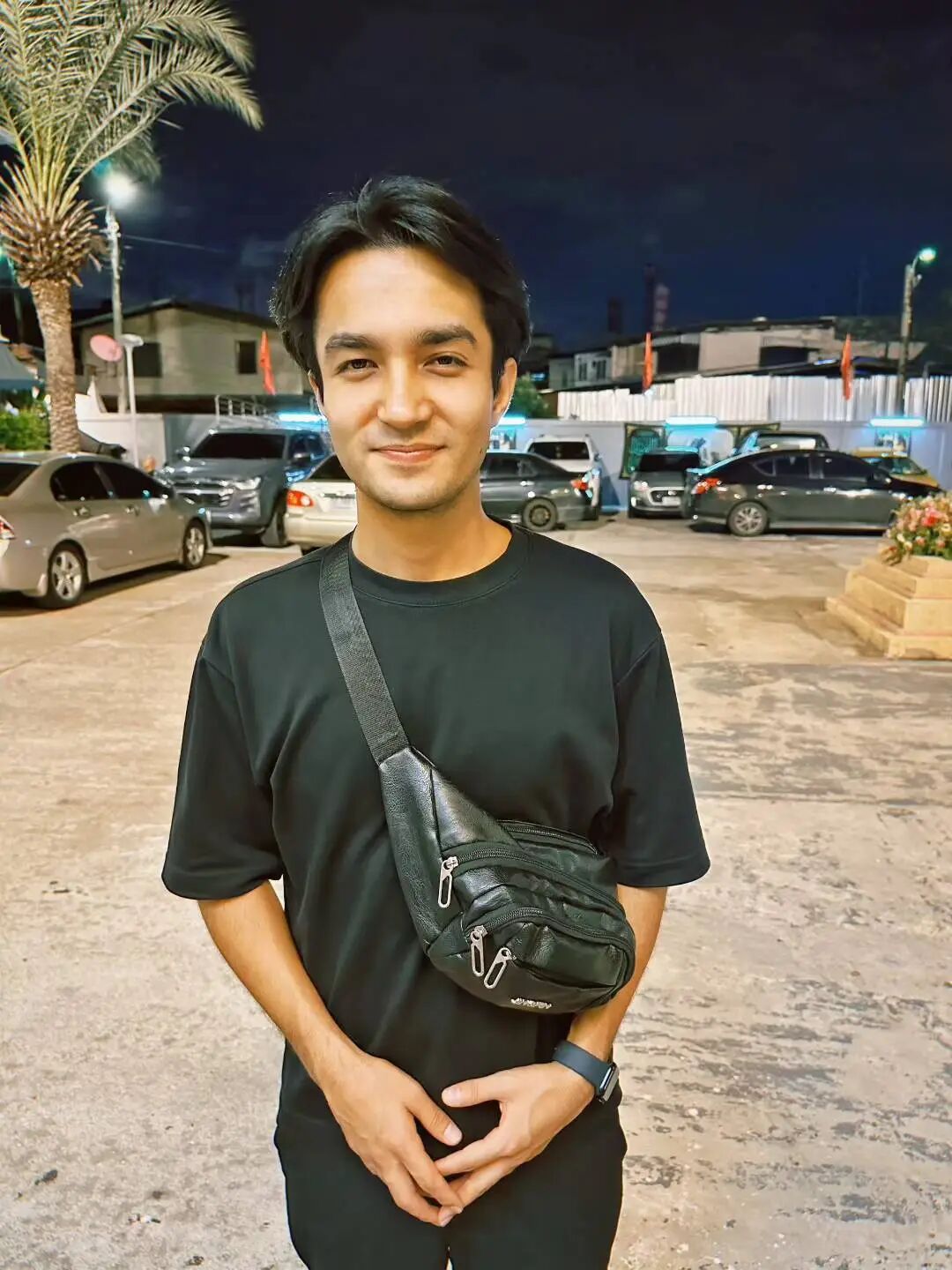
I met a very interesting young man at the mosque who told me many stories about the Shia faith and Ashura. His parents are Afghan, he grew up in Iran, later went to Japan for school and work, and is now stationed in Bangkok by his company. He was the most fluent English speaker in the entire mosque, and I learned a lot from chatting with him. Like everyone else at the mosque, he was very welcoming to Sunni friends (dosti).
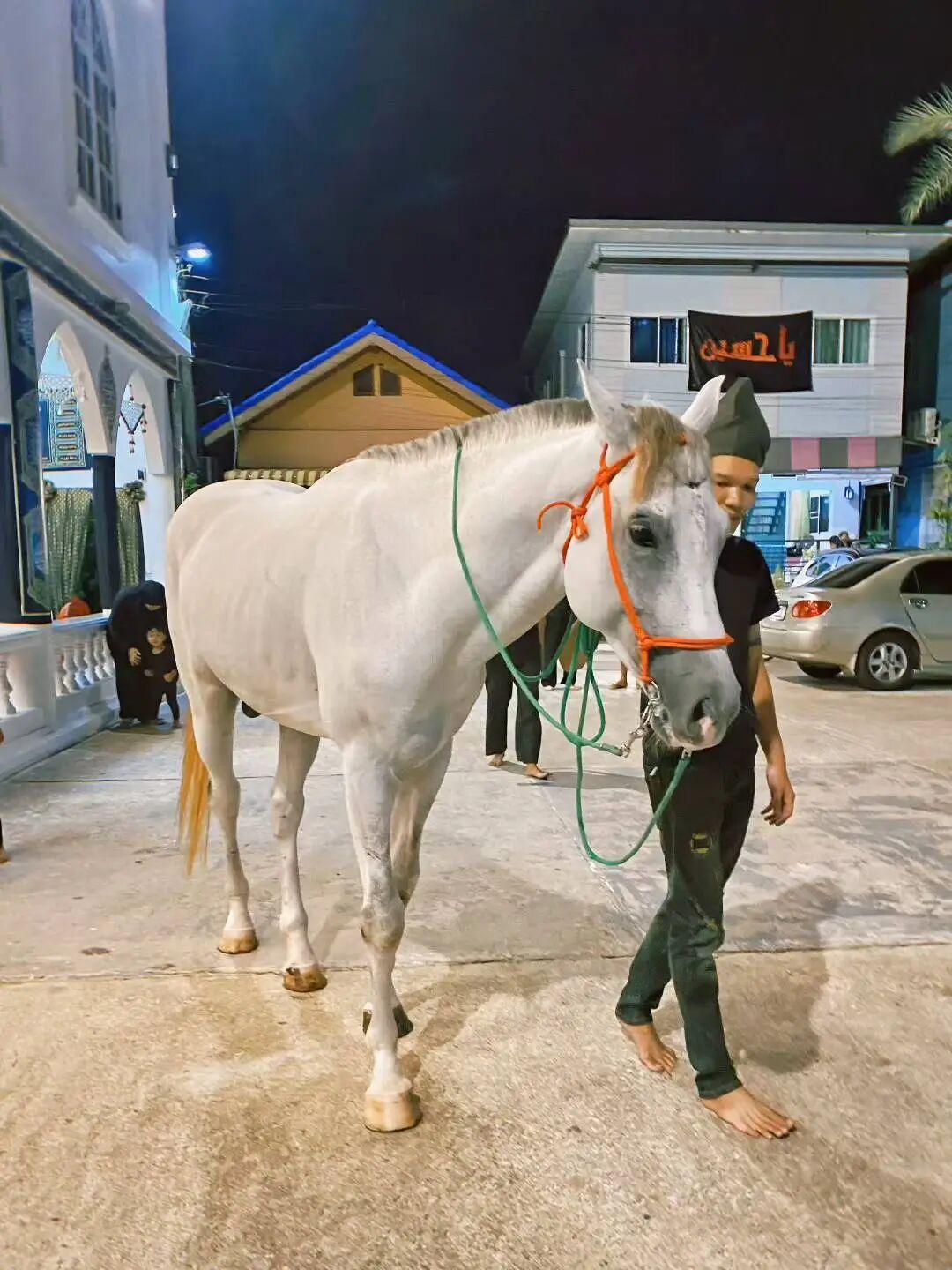
The most eye-catching thing in the mosque is a handsome, tall horse personally gifted by the King of Thailand. This horse represents Zuljanah, the warhorse of Imam Hussein. Zuljanah was raised by the noble Prophet from a young age and was known for loyalty, strength, endurance, and devotion. During the Battle of Karbala, Zuljanah used its body to block arrows aimed at Imam Hussein. After Imam Hussein passed away, Zuljanah returned to his family covered in blood to warn them of an ambush, then died from its wounds after fulfilling its final duty. During the month of Muharram, the horse is kept in the stables of Kudi Luang mosque, and people take turns walking it in the courtyard every night.
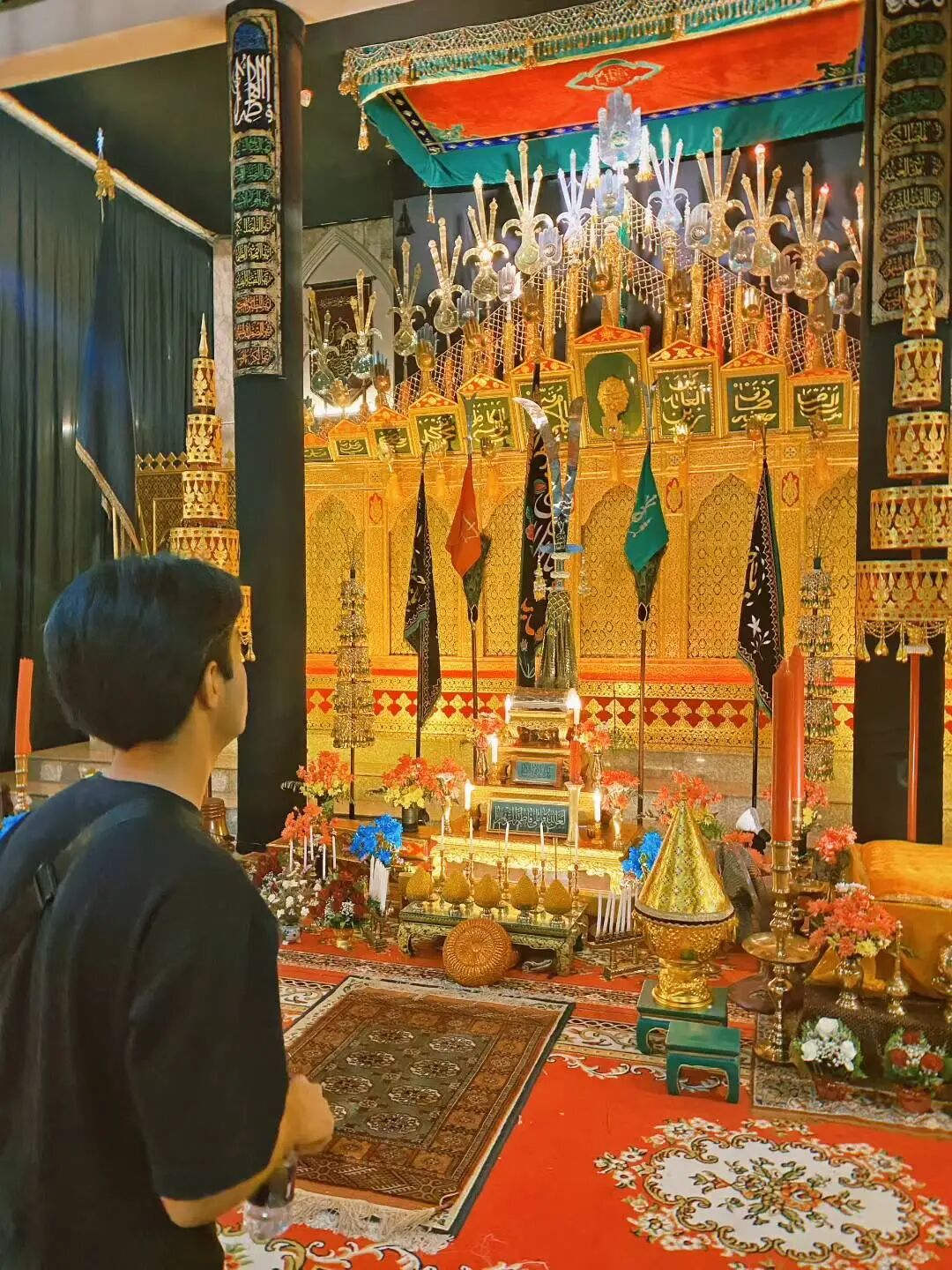
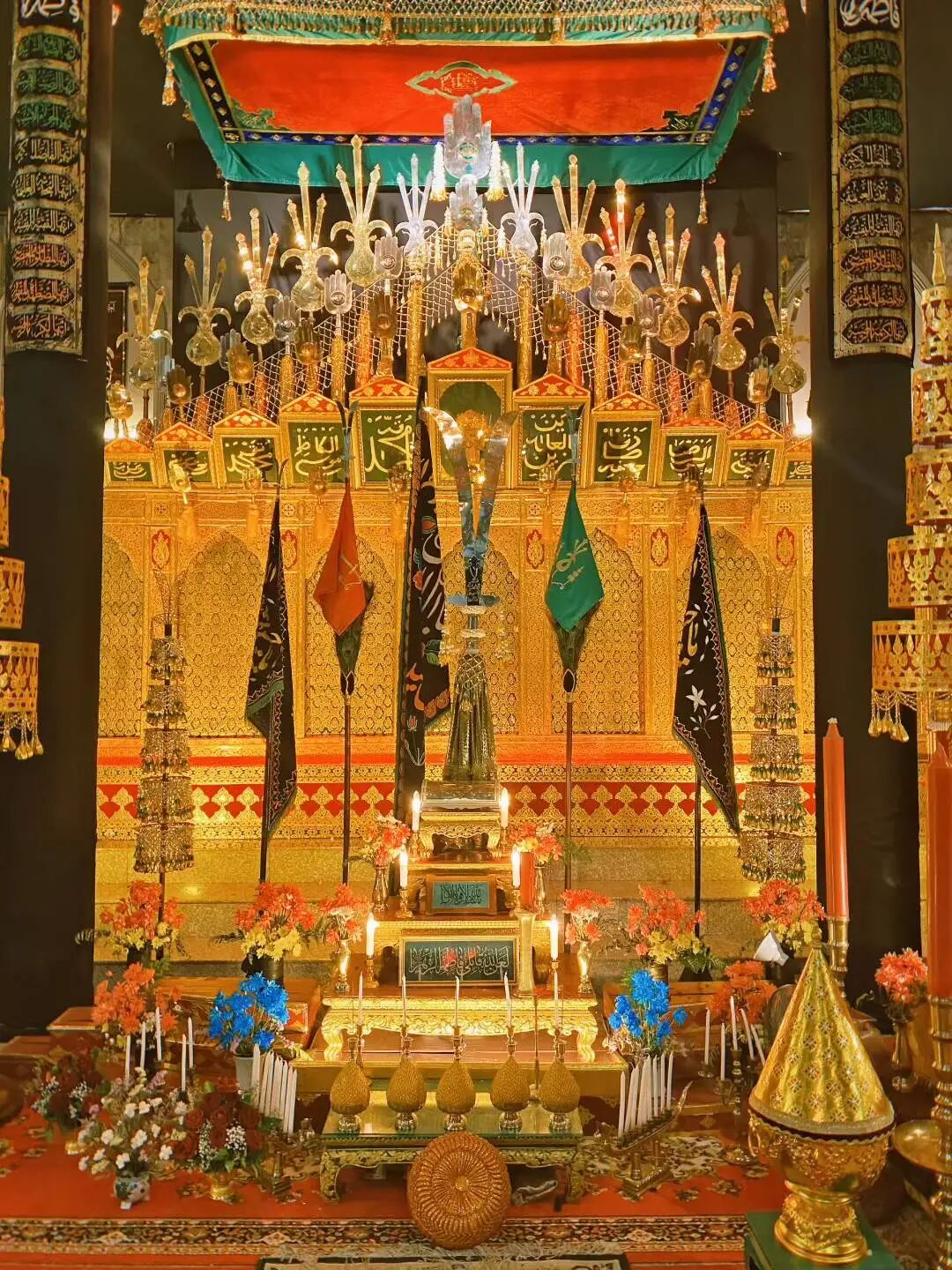
On the qibla wall of the main hall, the flagpole at the top is called an Alam, which represents the flag held by Abbas, the standard-bearer for Imam Hussein at the Battle of Karbala. The metal hand is called a Panja, which symbolizes the severed hands of Abbas. Abbas was the half-brother of Imam Hussein; he inherited the courage of Imam Ali and always held the flag of victory high on the battlefield. On the night of Ashura, he was blocked by enemy forces while returning with water from the Euphrates River; he fought alone, had both arms cut off, and eventually died in battle.
Above the niche on the qibla wall, the names of Allah, the noble Prophet, and the Twelve Imams of the Shia are written. The Twelver school is the largest branch of Shia Islam and is the state religion of Iran.
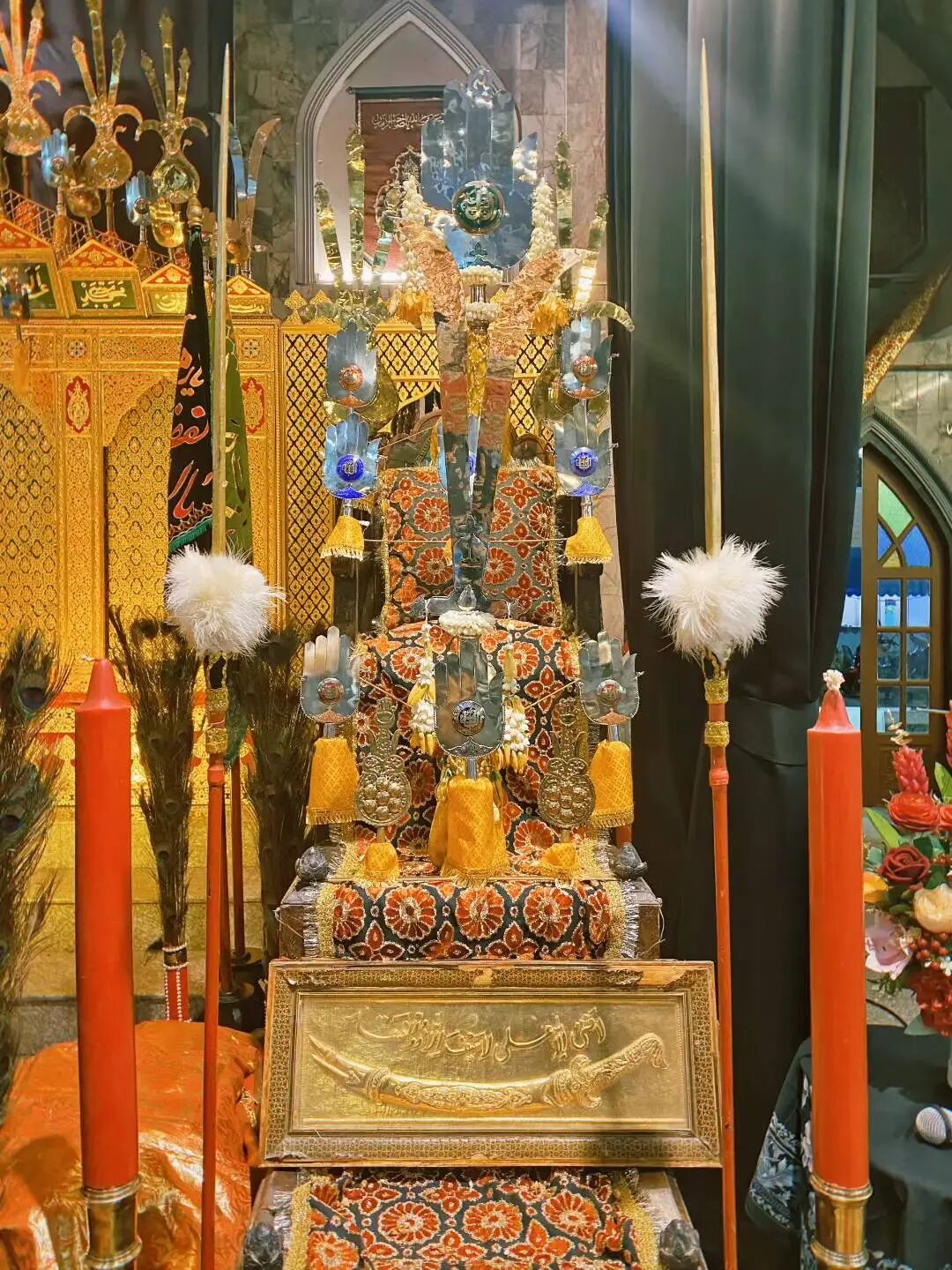
The Nakhl Gardani placed in the main hall symbolizes the funeral bier of Imam Hussein, decorated with a dagger and a turban (dastar) representing those used by him. During Ashura events, people carry the Nakhl Gardani to symbolize the funeral procession for Imam Hussein.
A Tadjah is also placed in the main hall to symbolize the tomb of Imam Hussein.
There is also a small decoration in the hall representing the youngest infant martyred at the Battle of Karbala, Ali Asghar, the six-month-old son of Imam Hussein. Records say that Imam Hussein held the thirsty Ali Asghar and asked the enemy for water for the child, but the enemy fired an arrow that pierced the baby's throat and Imam Hussein's arm at the same time. Ali Asghar later became a symbol of innocent victims and the most painful part of the mourning during Muharram.
During the first ten nights of Muharram, Shia Muslims in Bangkok gather every night to chant in memory of Imam Hussein. During these gatherings, people known as Rawda khwan tell stories about the martyrdom of Imam Hussein and his followers at the Battle of Karbala. The stories come from famous books, the most well-known being The Garden of the Martyrs (Rawdat al-shuhada) by the famous Timurid-era Persian writer Hussein Kashifi. Afterward, the imam gives a sermon (waaz) in Thai, teaching everyone about the bravery, fearlessness, and sacrifice shown by Imam Hussein and his followers at the Battle of Karbala.
Besides the main Shia mosque in Bangkok, Kudi Luang, I also visited two others: the Persian-descended Kudi Charoenphat and the Indian-descended Dilfallah mosque. The people at Kudi Charoenphat told me they did not want me to take photos or visit, which I understand. The people at Dilfallah mosque were friendlier, but they told me their Ashura event was on Monday, which I did not quite understand, as I wondered why it was not held on the 10th day of the first month of the Islamic calendar.
In all three places, I saw the Nakhl Gardani used during Ashura events. It symbolizes the funeral bier of Imam Hussein, and the entire Ashura event is essentially a reenactment of his funeral procession.
I previously spent Muharram in Tehran, Iran. See: Encountering Ashura in Tehran.
Halal Travel Guide: Bangkok - Persian Shia Mosques and Muharram Traditions
Articles • ali2007fr posted the article • 0 comments • 230 views • 2026-05-20 09:12
Summary: Bangkok has a long Persian-descended Shia Muslim history, centered in communities such as Kudi Luang Chao Sen Mosque. This account follows the Muharram gatherings, Ashura preparations, symbols of Karbala, mosque details, food sharing, and local conversations described in the original travel note.
As the Islamic New Year arrives, Shia friends (dosti) around the world spend the first ten days of the first month, Muharram, honoring Imam Hussein. This leads up to the grand Ashura festival. Last weekend, I traveled to Thailand to join the Muharram commemorations held by the Persian-descended Shia community in Bangkok.
Bangkok currently has five Shia mosques, with two belonging to the Persian community and three to the Indian community. It is the city with the strongest Shia cultural presence in all of Southeast Asia. Since I only had Saturday evening, I chose to attend the memorial at the primary Shia mosque in Bangkok, Kudi Luang Mosque.
Between the 16th and 18th centuries, Shia merchants from the Persian Safavid dynasty traveled along the Indian Ocean coast to trade in Siam, where they were warmly welcomed and hosted by the Siamese royal family. Some Persian merchants married locals and settled down, eventually taking on important roles in the Siamese court. Starting in the 17th century, the Sheik Ahmad family from Qom, Persia, managed Siam's western maritime affairs, overseeing trade, shipping, and diplomacy across the Indian Ocean.
After the Siamese capital of Ayutthaya fell in 1767 and the capital moved to Bangkok in 1782, the Persian community from Ayutthaya moved there as well. The first leader of the Persian Shia community in Bangkok was Konkaew, the son of the last leader from Ayutthaya. In 1797, he began managing Siam's western trade and received a property in the Thonburi area across the Chao Phraya River. People say he and 400 Shia followers established Kudi Chao Sen Mosque, which became the primary Shia mosque in Bangkok.
After Konkaew passed away, his brother and eight direct descendants inherited the title, controlling Siam's western trade rights for a century. In 1897, King Rama V renovated Kudi Chao Sen Mosque and renamed it Kudi Luang Chao Sen Mosque. In 1947, the entire Kudi Luang Mosque was moved to its current location to make room for the Royal Thai Navy headquarters. The community still lives around the mosque, preserving the traditional Shia culture of Bangkok.
We visited Kudi Luang Mosque in the morning. The male and female friends (dosti) were very warm, offering us several bottles of water. Even after learning we were Sunni, they remained very welcoming and told us we were free to take photos. It was a pity that the grandest Ashura event was scheduled for Monday morning, and we could not attend because of work.
Inside the main hall of Kudi Luang Mosque, a banner hangs that reads, 'Oh!' Hussein. Honoring Imam Hussein is the theme of Muharram.
The Persian-descended Shia elders in Bangkok live around the mosque. They are open-minded and very welcoming to friends (dosti).
After the prayer (namaz), I returned to Kudi Luang Mosque to eat chicken rice noodle rolls (changfen) with everyone, along with a special dessert made of palm sugar and pomelo that the Persian community in Bangkok eats during Muharram. One of the themes for Shia Muslims during Muharram is sharing and giving. Food during this time is free, and everyone gathers to make the flowers used in the activities. Some people in the mosque wear white pants and headscarves, with bells hanging from their pant legs. They dedicate themselves to serving the mosque during the first ten days of Muharram.
I met a very interesting young man at the mosque who told me many stories about the Shia faith and Ashura. His parents are Afghan, he grew up in Iran, later went to Japan for school and work, and is now stationed in Bangkok by his company. He was the most fluent English speaker in the entire mosque, and I learned a lot from chatting with him. Like everyone else at the mosque, he was very welcoming to Sunni friends (dosti).
The most eye-catching thing in the mosque is a handsome, tall horse personally gifted by the King of Thailand. This horse represents Zuljanah, the warhorse of Imam Hussein. Zuljanah was raised by the noble Prophet from a young age and was known for loyalty, strength, endurance, and devotion. During the Battle of Karbala, Zuljanah used its body to block arrows aimed at Imam Hussein. After Imam Hussein passed away, Zuljanah returned to his family covered in blood to warn them of an ambush, then died from its wounds after fulfilling its final duty. During the month of Muharram, the horse is kept in the stables of Kudi Luang mosque, and people take turns walking it in the courtyard every night.
On the qibla wall of the main hall, the flagpole at the top is called an Alam, which represents the flag held by Abbas, the standard-bearer for Imam Hussein at the Battle of Karbala. The metal hand is called a Panja, which symbolizes the severed hands of Abbas. Abbas was the half-brother of Imam Hussein; he inherited the courage of Imam Ali and always held the flag of victory high on the battlefield. On the night of Ashura, he was blocked by enemy forces while returning with water from the Euphrates River; he fought alone, had both arms cut off, and eventually died in battle.
Above the niche on the qibla wall, the names of Allah, the noble Prophet, and the Twelve Imams of the Shia are written. The Twelver school is the largest branch of Shia Islam and is the state religion of Iran.
The Nakhl Gardani placed in the main hall symbolizes the funeral bier of Imam Hussein, decorated with a dagger and a turban (dastar) representing those used by him. During Ashura events, people carry the Nakhl Gardani to symbolize the funeral procession for Imam Hussein.
A Tadjah is also placed in the main hall to symbolize the tomb of Imam Hussein.
There is also a small decoration in the hall representing the youngest infant martyred at the Battle of Karbala, Ali Asghar, the six-month-old son of Imam Hussein. Records say that Imam Hussein held the thirsty Ali Asghar and asked the enemy for water for the child, but the enemy fired an arrow that pierced the baby's throat and Imam Hussein's arm at the same time. Ali Asghar later became a symbol of innocent victims and the most painful part of the mourning during Muharram.
During the first ten nights of Muharram, Shia Muslims in Bangkok gather every night to chant in memory of Imam Hussein. During these gatherings, people known as Rawda khwan tell stories about the martyrdom of Imam Hussein and his followers at the Battle of Karbala. The stories come from famous books, the most well-known being The Garden of the Martyrs (Rawdat al-shuhada) by the famous Timurid-era Persian writer Hussein Kashifi. Afterward, the imam gives a sermon (waaz) in Thai, teaching everyone about the bravery, fearlessness, and sacrifice shown by Imam Hussein and his followers at the Battle of Karbala.
Besides the main Shia mosque in Bangkok, Kudi Luang, I also visited two others: the Persian-descended Kudi Charoenphat and the Indian-descended Dilfallah mosque. The people at Kudi Charoenphat told me they did not want me to take photos or visit, which I understand. The people at Dilfallah mosque were friendlier, but they told me their Ashura event was on Monday, which I did not quite understand, as I wondered why it was not held on the 10th day of the first month of the Islamic calendar.
In all three places, I saw the Nakhl Gardani used during Ashura events. It symbolizes the funeral bier of Imam Hussein, and the entire Ashura event is essentially a reenactment of his funeral procession.
I previously spent Muharram in Tehran, Iran. See: Encountering Ashura in Tehran. view all
Summary: Bangkok has a long Persian-descended Shia Muslim history, centered in communities such as Kudi Luang Chao Sen Mosque. This account follows the Muharram gatherings, Ashura preparations, symbols of Karbala, mosque details, food sharing, and local conversations described in the original travel note.
As the Islamic New Year arrives, Shia friends (dosti) around the world spend the first ten days of the first month, Muharram, honoring Imam Hussein. This leads up to the grand Ashura festival. Last weekend, I traveled to Thailand to join the Muharram commemorations held by the Persian-descended Shia community in Bangkok.
Bangkok currently has five Shia mosques, with two belonging to the Persian community and three to the Indian community. It is the city with the strongest Shia cultural presence in all of Southeast Asia. Since I only had Saturday evening, I chose to attend the memorial at the primary Shia mosque in Bangkok, Kudi Luang Mosque.
Between the 16th and 18th centuries, Shia merchants from the Persian Safavid dynasty traveled along the Indian Ocean coast to trade in Siam, where they were warmly welcomed and hosted by the Siamese royal family. Some Persian merchants married locals and settled down, eventually taking on important roles in the Siamese court. Starting in the 17th century, the Sheik Ahmad family from Qom, Persia, managed Siam's western maritime affairs, overseeing trade, shipping, and diplomacy across the Indian Ocean.
After the Siamese capital of Ayutthaya fell in 1767 and the capital moved to Bangkok in 1782, the Persian community from Ayutthaya moved there as well. The first leader of the Persian Shia community in Bangkok was Konkaew, the son of the last leader from Ayutthaya. In 1797, he began managing Siam's western trade and received a property in the Thonburi area across the Chao Phraya River. People say he and 400 Shia followers established Kudi Chao Sen Mosque, which became the primary Shia mosque in Bangkok.
After Konkaew passed away, his brother and eight direct descendants inherited the title, controlling Siam's western trade rights for a century. In 1897, King Rama V renovated Kudi Chao Sen Mosque and renamed it Kudi Luang Chao Sen Mosque. In 1947, the entire Kudi Luang Mosque was moved to its current location to make room for the Royal Thai Navy headquarters. The community still lives around the mosque, preserving the traditional Shia culture of Bangkok.
We visited Kudi Luang Mosque in the morning. The male and female friends (dosti) were very warm, offering us several bottles of water. Even after learning we were Sunni, they remained very welcoming and told us we were free to take photos. It was a pity that the grandest Ashura event was scheduled for Monday morning, and we could not attend because of work.
Inside the main hall of Kudi Luang Mosque, a banner hangs that reads, 'Oh!' Hussein. Honoring Imam Hussein is the theme of Muharram.
The Persian-descended Shia elders in Bangkok live around the mosque. They are open-minded and very welcoming to friends (dosti).
After the prayer (namaz), I returned to Kudi Luang Mosque to eat chicken rice noodle rolls (changfen) with everyone, along with a special dessert made of palm sugar and pomelo that the Persian community in Bangkok eats during Muharram. One of the themes for Shia Muslims during Muharram is sharing and giving. Food during this time is free, and everyone gathers to make the flowers used in the activities. Some people in the mosque wear white pants and headscarves, with bells hanging from their pant legs. They dedicate themselves to serving the mosque during the first ten days of Muharram.
I met a very interesting young man at the mosque who told me many stories about the Shia faith and Ashura. His parents are Afghan, he grew up in Iran, later went to Japan for school and work, and is now stationed in Bangkok by his company. He was the most fluent English speaker in the entire mosque, and I learned a lot from chatting with him. Like everyone else at the mosque, he was very welcoming to Sunni friends (dosti).
The most eye-catching thing in the mosque is a handsome, tall horse personally gifted by the King of Thailand. This horse represents Zuljanah, the warhorse of Imam Hussein. Zuljanah was raised by the noble Prophet from a young age and was known for loyalty, strength, endurance, and devotion. During the Battle of Karbala, Zuljanah used its body to block arrows aimed at Imam Hussein. After Imam Hussein passed away, Zuljanah returned to his family covered in blood to warn them of an ambush, then died from its wounds after fulfilling its final duty. During the month of Muharram, the horse is kept in the stables of Kudi Luang mosque, and people take turns walking it in the courtyard every night.
On the qibla wall of the main hall, the flagpole at the top is called an Alam, which represents the flag held by Abbas, the standard-bearer for Imam Hussein at the Battle of Karbala. The metal hand is called a Panja, which symbolizes the severed hands of Abbas. Abbas was the half-brother of Imam Hussein; he inherited the courage of Imam Ali and always held the flag of victory high on the battlefield. On the night of Ashura, he was blocked by enemy forces while returning with water from the Euphrates River; he fought alone, had both arms cut off, and eventually died in battle.
Above the niche on the qibla wall, the names of Allah, the noble Prophet, and the Twelve Imams of the Shia are written. The Twelver school is the largest branch of Shia Islam and is the state religion of Iran.
The Nakhl Gardani placed in the main hall symbolizes the funeral bier of Imam Hussein, decorated with a dagger and a turban (dastar) representing those used by him. During Ashura events, people carry the Nakhl Gardani to symbolize the funeral procession for Imam Hussein.
A Tadjah is also placed in the main hall to symbolize the tomb of Imam Hussein.
There is also a small decoration in the hall representing the youngest infant martyred at the Battle of Karbala, Ali Asghar, the six-month-old son of Imam Hussein. Records say that Imam Hussein held the thirsty Ali Asghar and asked the enemy for water for the child, but the enemy fired an arrow that pierced the baby's throat and Imam Hussein's arm at the same time. Ali Asghar later became a symbol of innocent victims and the most painful part of the mourning during Muharram.
During the first ten nights of Muharram, Shia Muslims in Bangkok gather every night to chant in memory of Imam Hussein. During these gatherings, people known as Rawda khwan tell stories about the martyrdom of Imam Hussein and his followers at the Battle of Karbala. The stories come from famous books, the most well-known being The Garden of the Martyrs (Rawdat al-shuhada) by the famous Timurid-era Persian writer Hussein Kashifi. Afterward, the imam gives a sermon (waaz) in Thai, teaching everyone about the bravery, fearlessness, and sacrifice shown by Imam Hussein and his followers at the Battle of Karbala.
Besides the main Shia mosque in Bangkok, Kudi Luang, I also visited two others: the Persian-descended Kudi Charoenphat and the Indian-descended Dilfallah mosque. The people at Kudi Charoenphat told me they did not want me to take photos or visit, which I understand. The people at Dilfallah mosque were friendlier, but they told me their Ashura event was on Monday, which I did not quite understand, as I wondered why it was not held on the 10th day of the first month of the Islamic calendar.
In all three places, I saw the Nakhl Gardani used during Ashura events. It symbolizes the funeral bier of Imam Hussein, and the entire Ashura event is essentially a reenactment of his funeral procession.
I previously spent Muharram in Tehran, Iran. See: Encountering Ashura in Tehran.
Halal Travel Guide: Bangkok - Indonesian Mosque Quarters, Part 1
Articles • ali2007fr posted the article • 0 comments • 210 views • 2026-05-20 09:11
Summary: Bangkok's Indonesian Muslim history includes Arab-Indonesian merchants, Javanese gardeners, riverside mosque communities, and halal street food near old neighborhoods. This first part follows Haroon Mosque, Saralom Park, Ban Tuk Din Mosque, Ayeesah Roddee Halal, Java Mosque, and the related food and architecture details.
The Indonesian mosque communities in downtown Bangkok come from two main sources: fishermen and traders who sailed from Borneo and the Sulu Archipelago, and Javanese gardeners hired by King Rama V in the late 19th century. Bangkok still preserves Indonesian-style food and Javanese-style mosques, which are an important part of the city's multicultural identity.
Indonesian sailors
Ban Oou Mosque
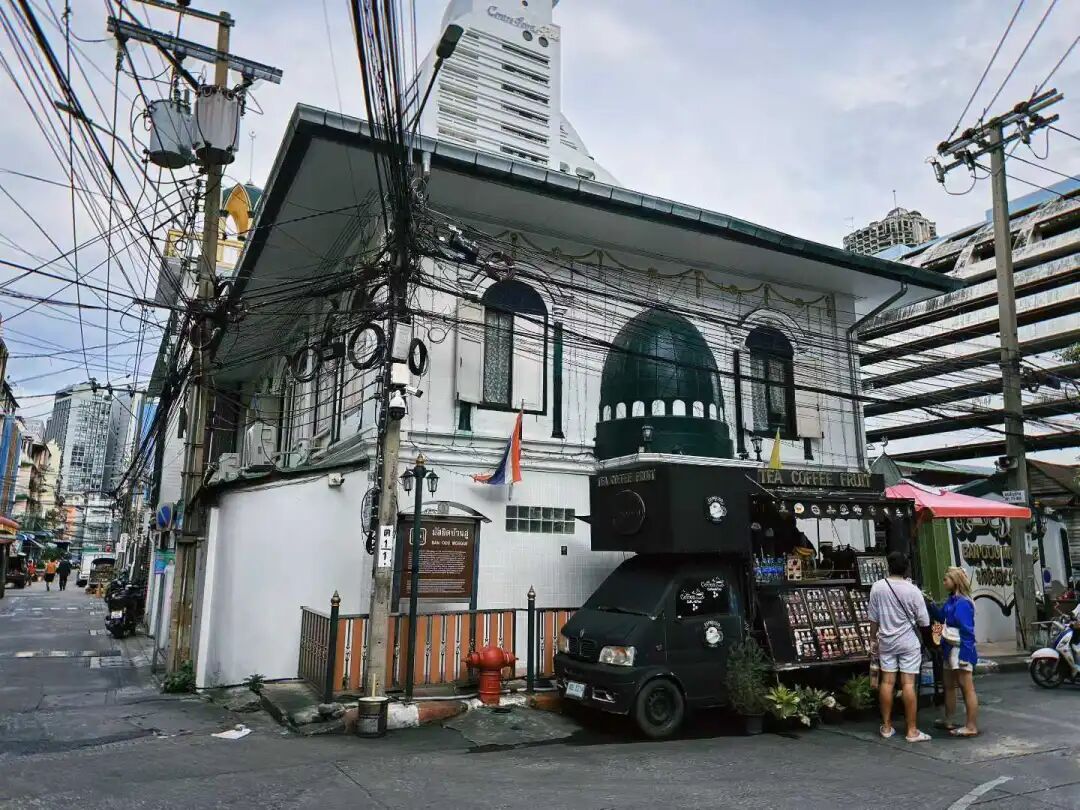
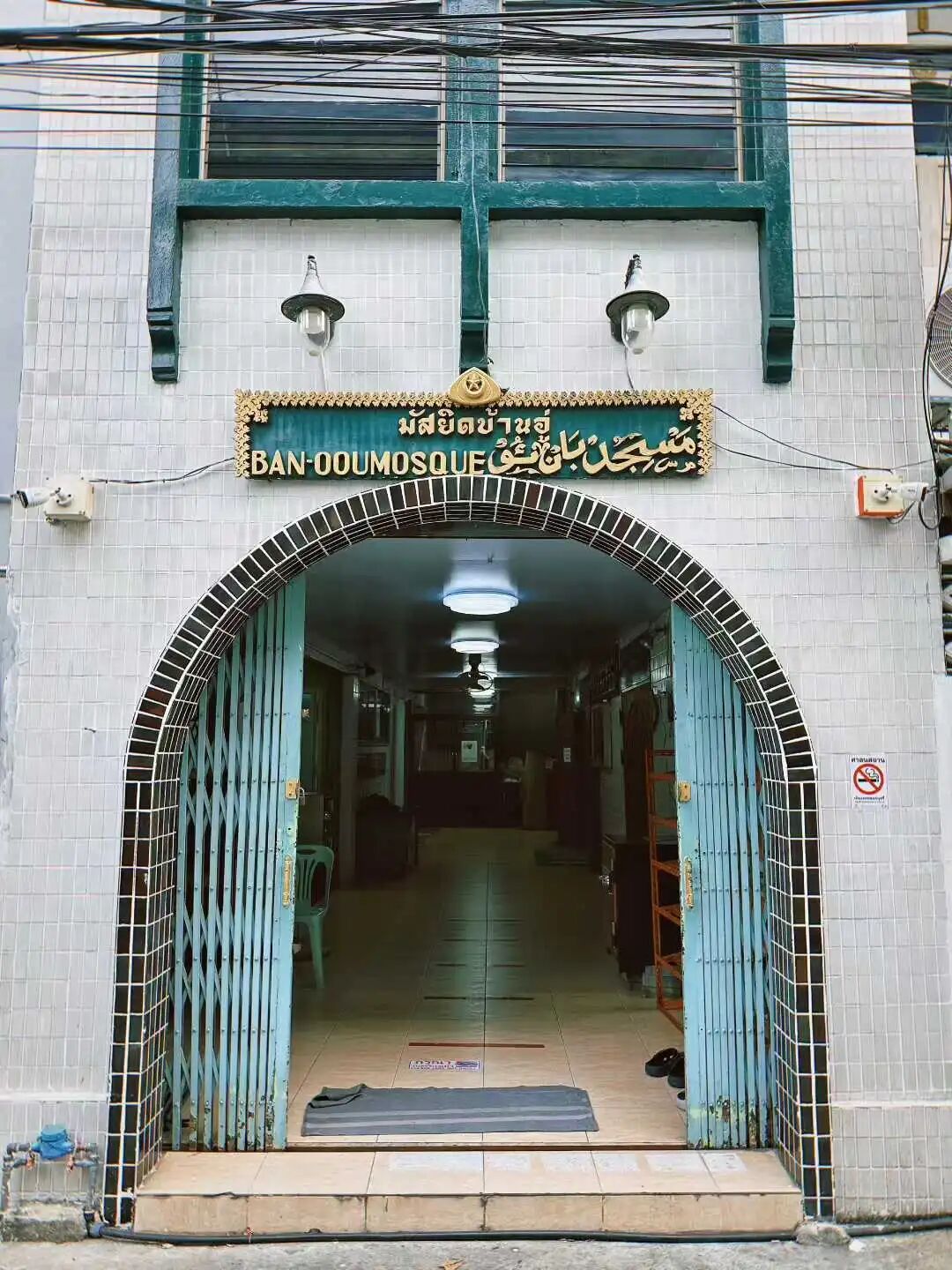
The Ban Oou Mosque community is right next to Saphan Taksin Bridge. It was built during the reign of King Rama IV (1851-68) by a group of Indonesian sailors who fished at the mouth of the Chao Phraya River year-round. After Britain and Thailand signed the Bowring Treaty in 1855, business in the Bang Rak area boomed. These Indonesian sailors sold their catch to Western sailors and merchants living in Bang Rak. During the reign of King Rama V (1868-1910), they became fishmongers in the market after it was established.
In the late 19th and early 20th centuries, as the port of Bangkok grew, many shipyards, piers, and docks were built around the Ban Oou Mosque community. Many residents became barge workers, handling cargo for nearby European shipping companies. As people stopped making a living from fishing, the mosque community began to move inland. In 1919, the community rebuilt the mosque 100 meters inland from the Chao Phraya River.
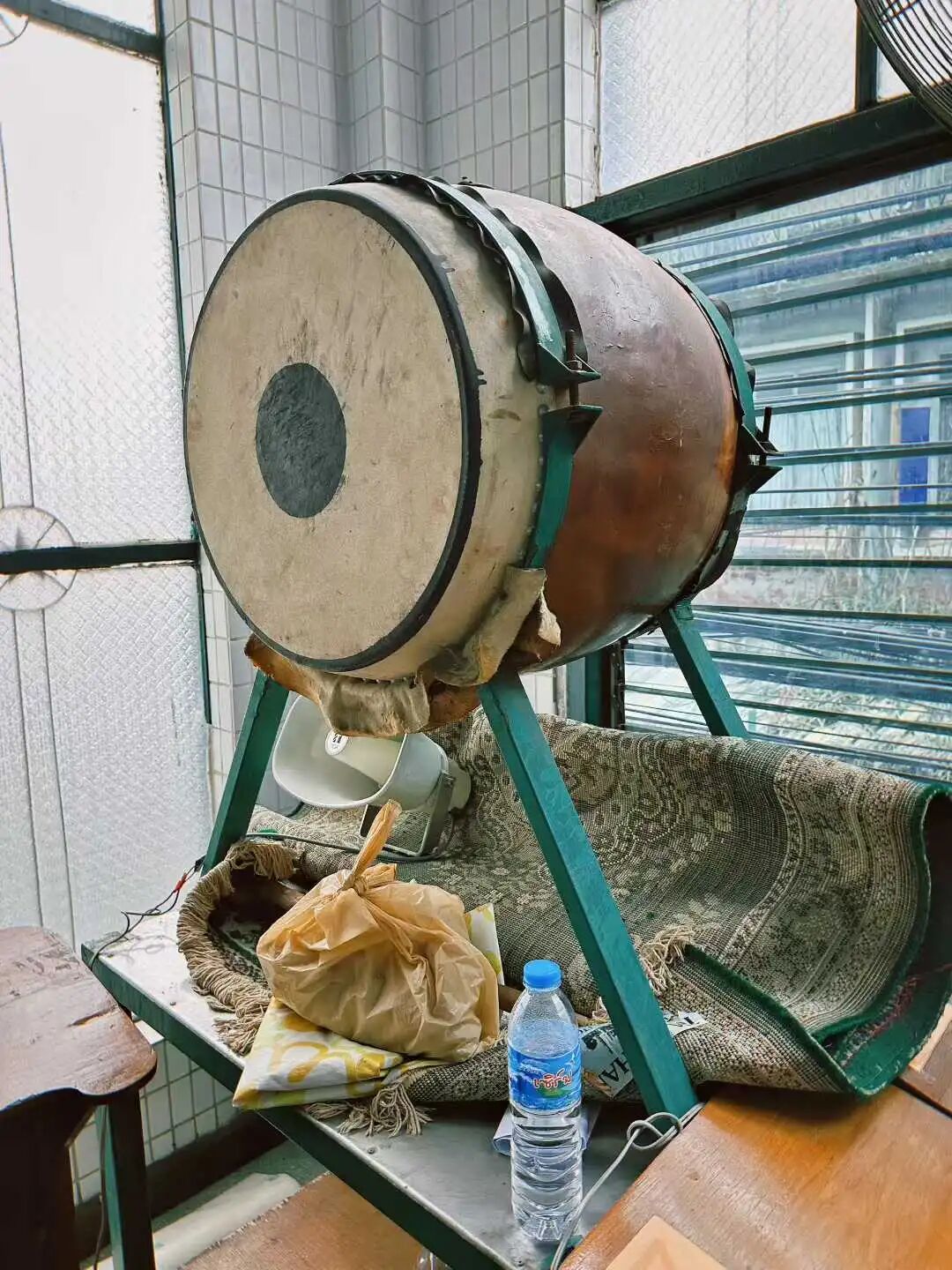
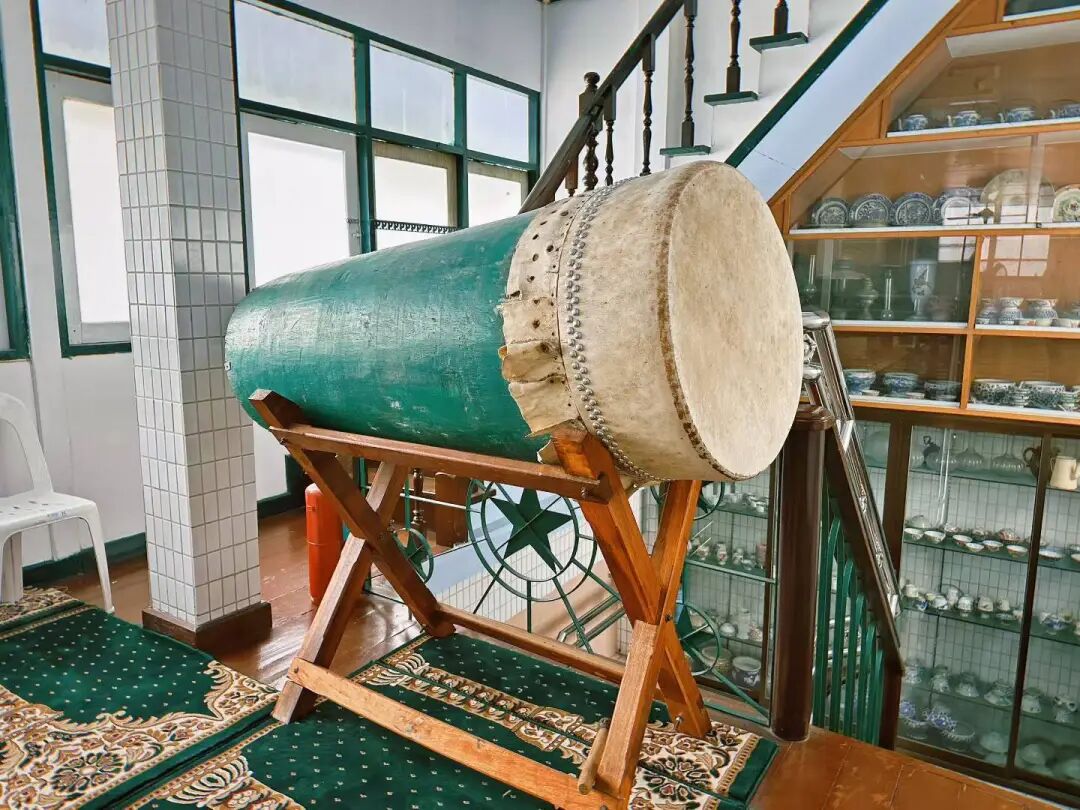
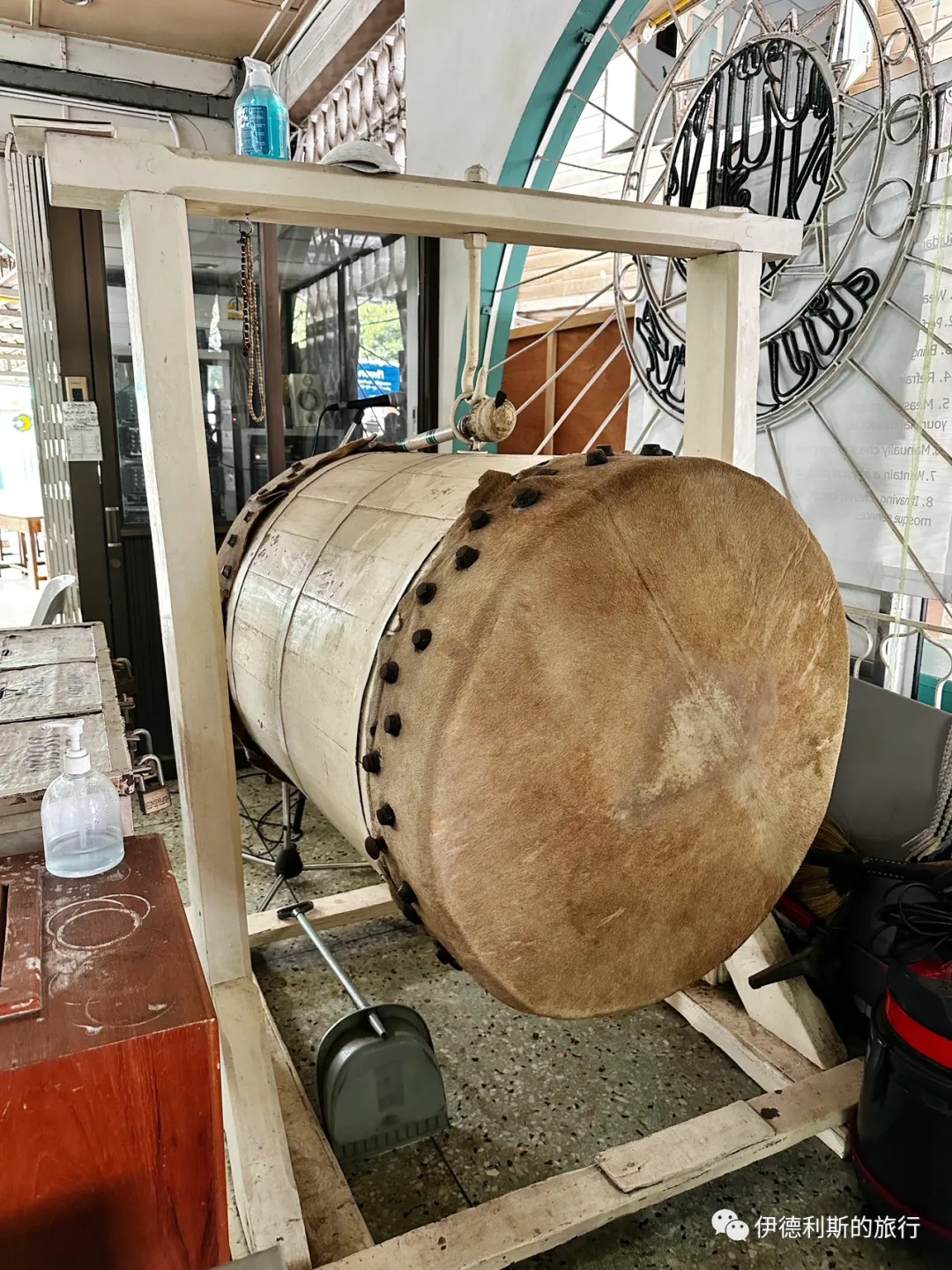
The mosque houses a traditional Indonesian Beduk drum. This single-sided drum is made from a hollowed-out log and covered with cowhide on one side. Slow beats on the Beduk drum signal the approach of prayer time, while rapid beats mean someone has passed away.
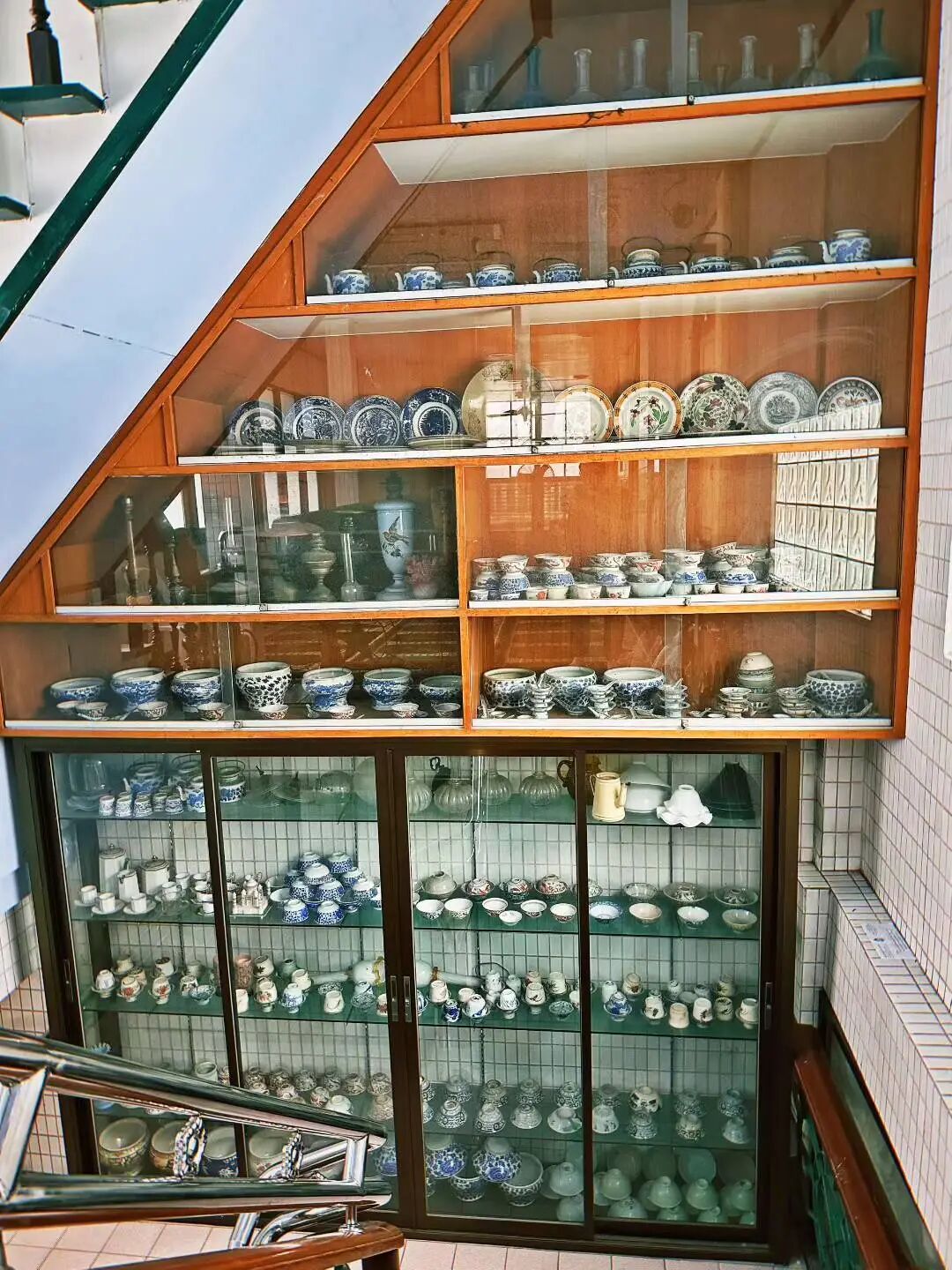
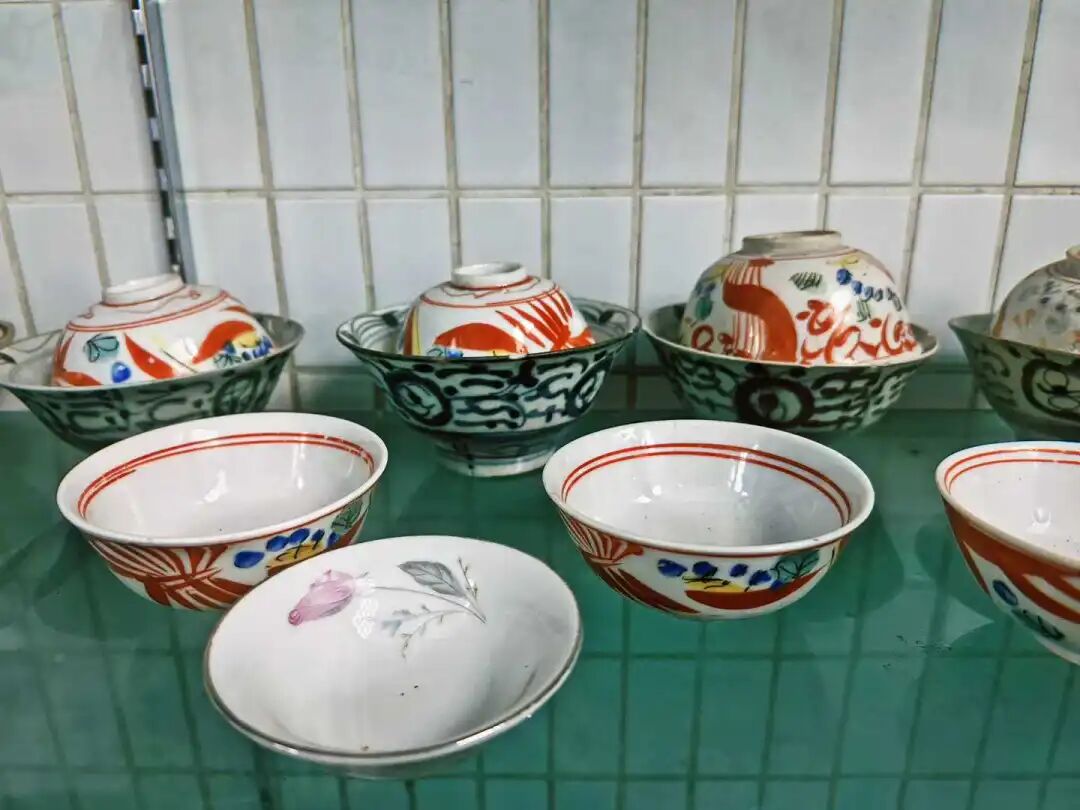
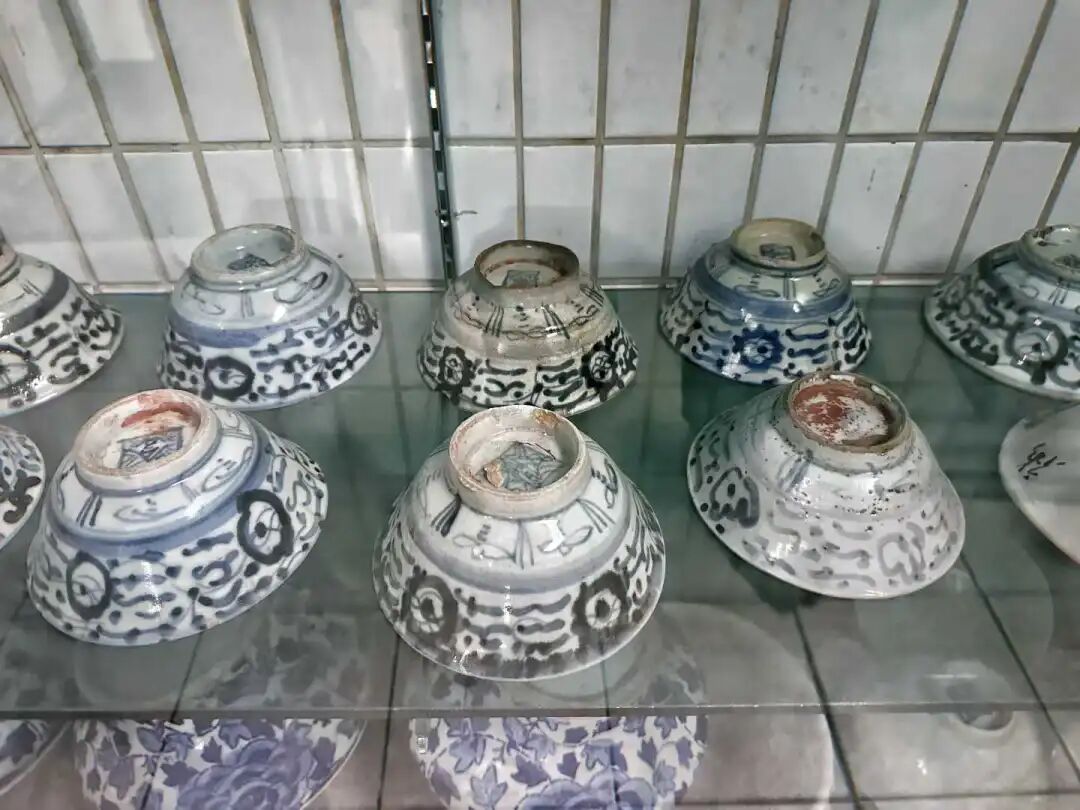
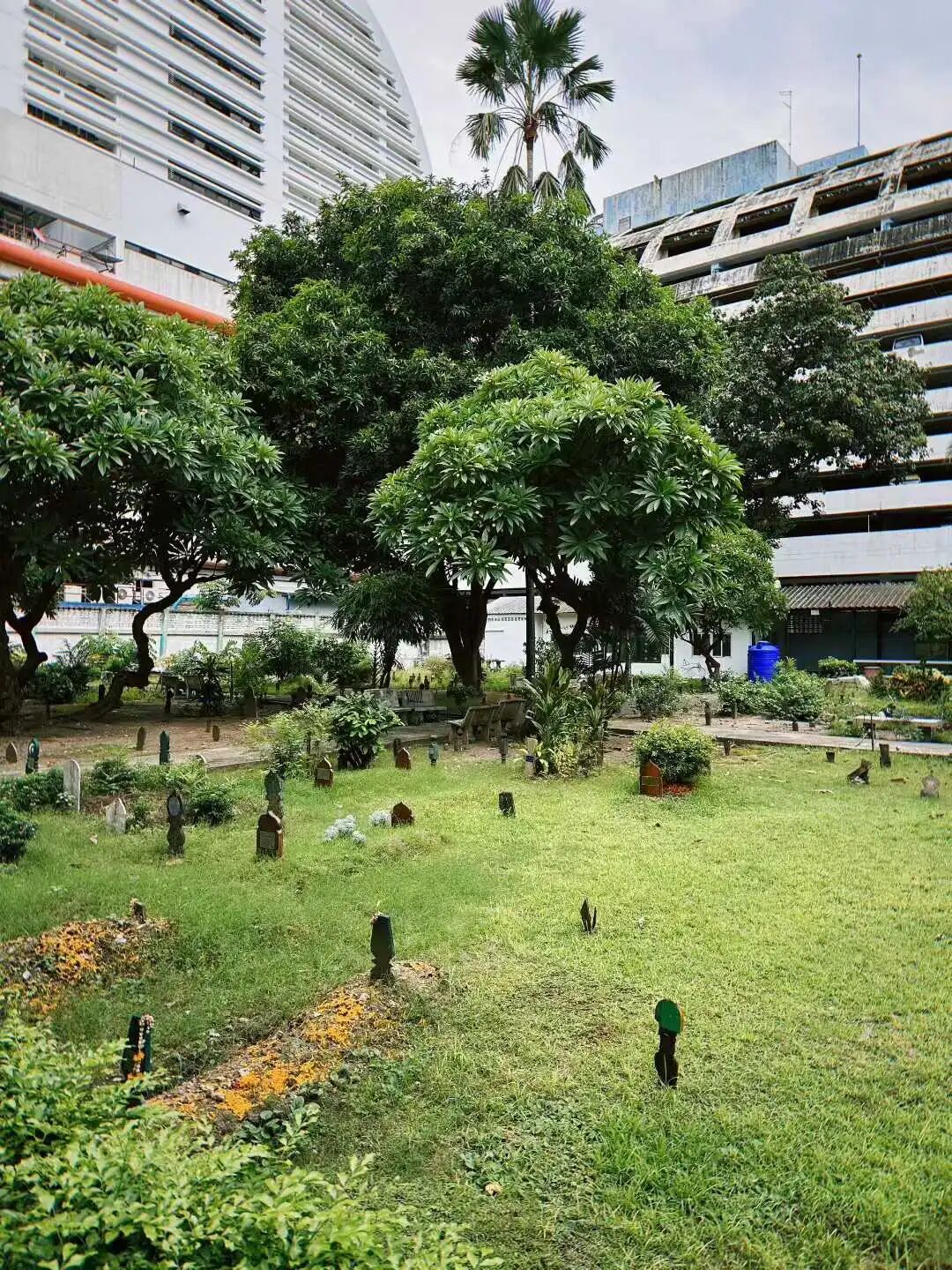
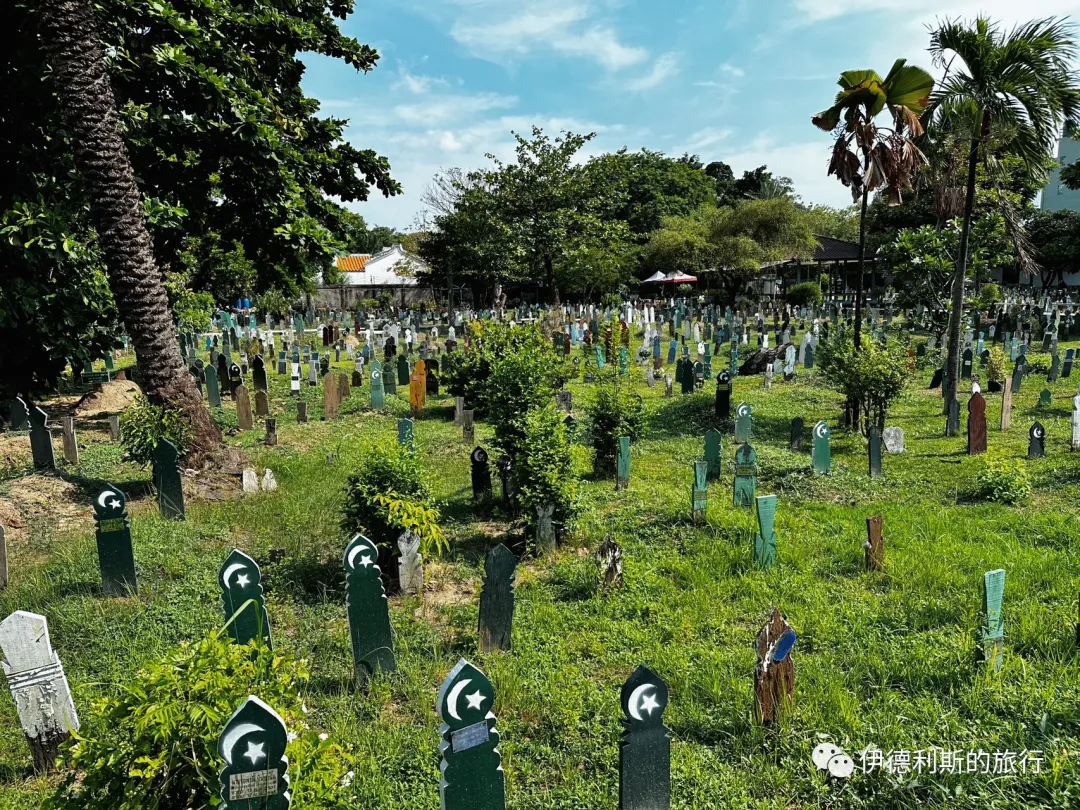
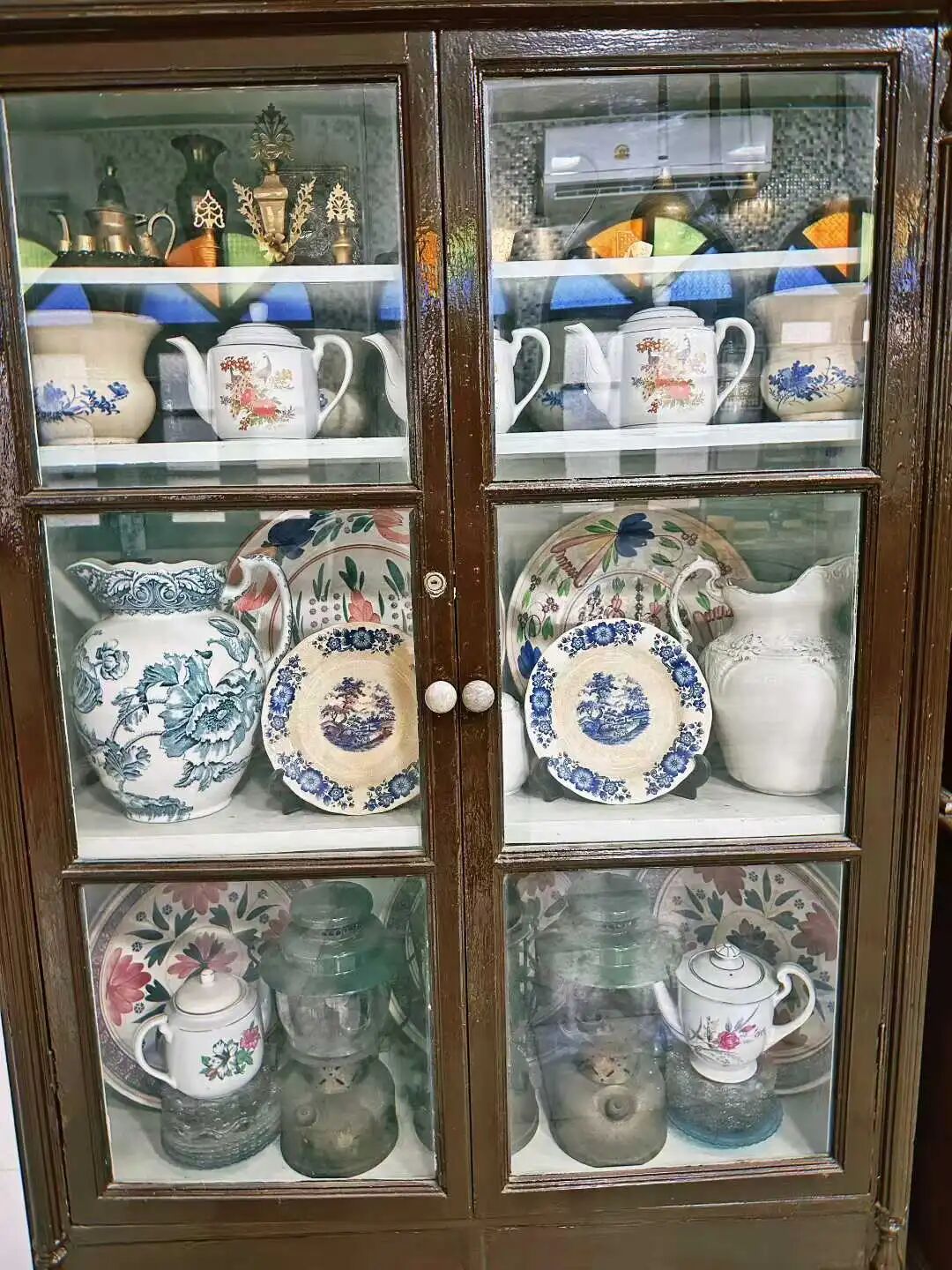
The mosque contains a collection of porcelain, giant turtles kept on the grounds, and a cemetery.
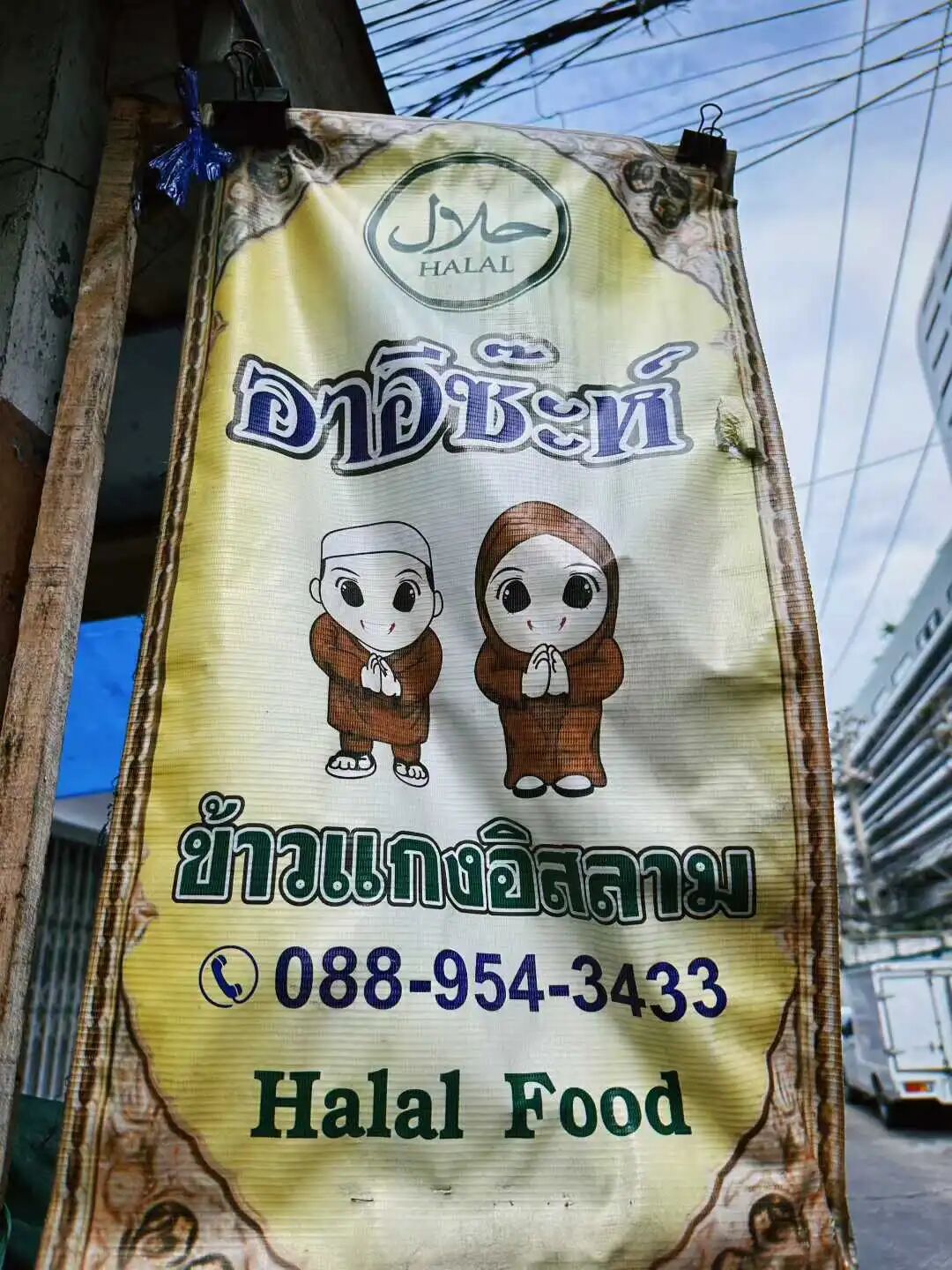
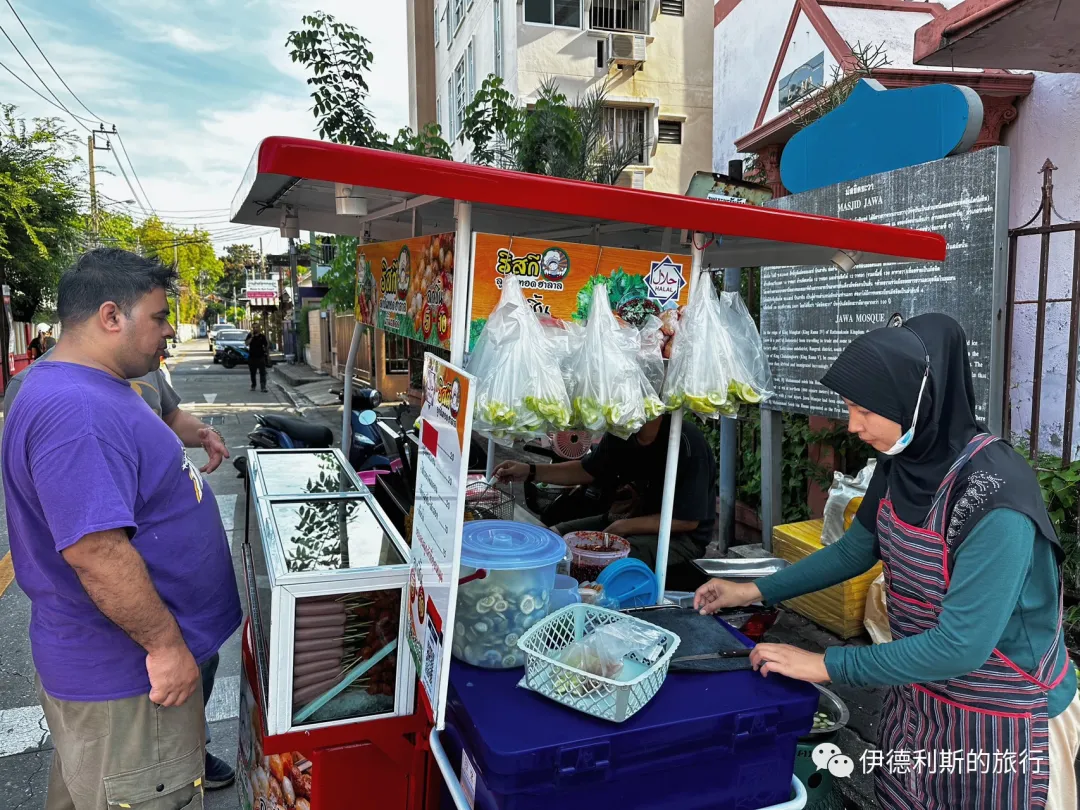
The sign at the snack shop next to the mosque shows a hand-shaking gesture, which is a common greeting among fellow Muslims (dosti) in Thailand and Indonesia. I have seen this in both countries.
Suwannaphum Mosque
The Suwannaphum Mosque community is near the busy ICONSIAM mall. It was built on the banks of the Chao Phraya River during the reign of King Rama III (1824-1851) by Indonesian sailors living along the coast of Trat Province, near the Thai-Cambodian border. It was originally called Ban Khaek Lang, a sparsely populated village in the southern suburbs of Bangkok. After the Bowring Treaty was signed in 1855, piers and warehouses were built, and many trading companies opened. These Indonesian fishermen started working as barge workers, loading and unloading cargo for Western shipping companies and Indian merchants.
Because there were many Indian merchants nearby, Indian Muslims (dosti) often came to the mosque for worship, and some Indian Muslims even married into the Indonesian Muslim community. Indian merchants donated money to rebuild the mosque during the reign of King Rama IV (1851-68). People say King Rama IV personally named it Suwannaphum Mosque after the nearby Wat Suwan Ubasikaram.
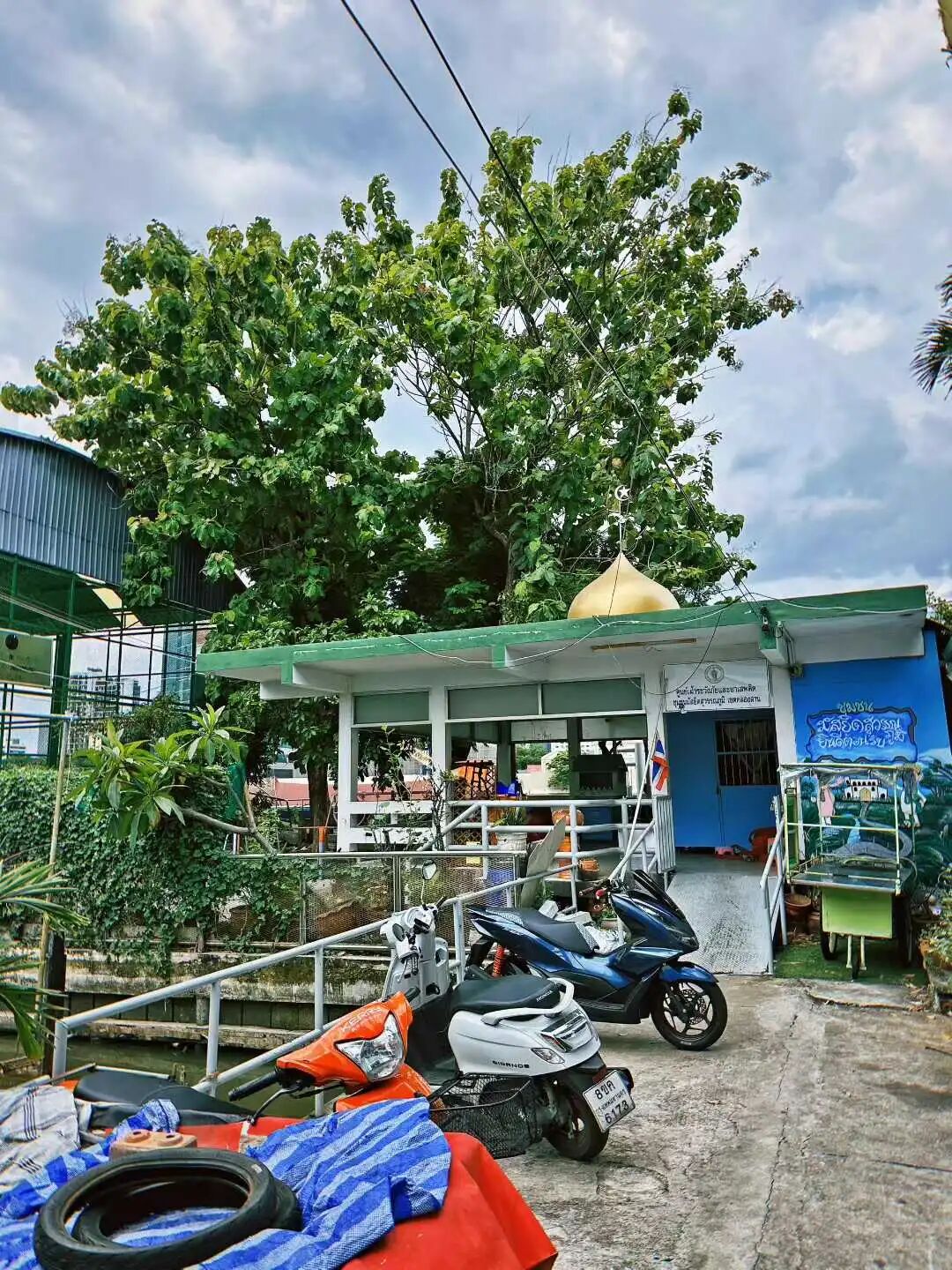
The most unique feature of this mosque is that the imam enters a special wooden pavilion to lead the prayer. I have never seen this before and wonder if it is a unique feature of Thai Islamic practice.
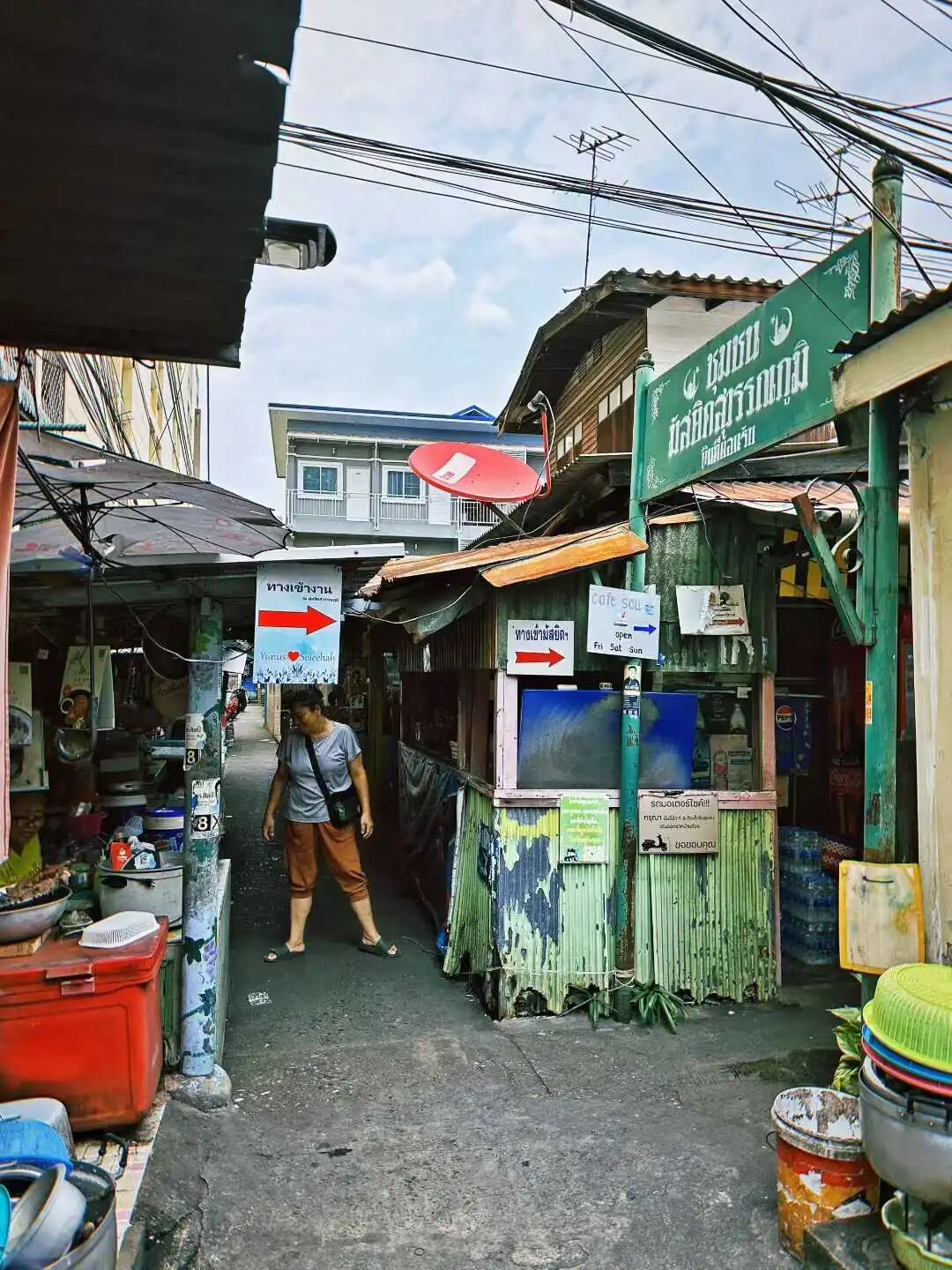
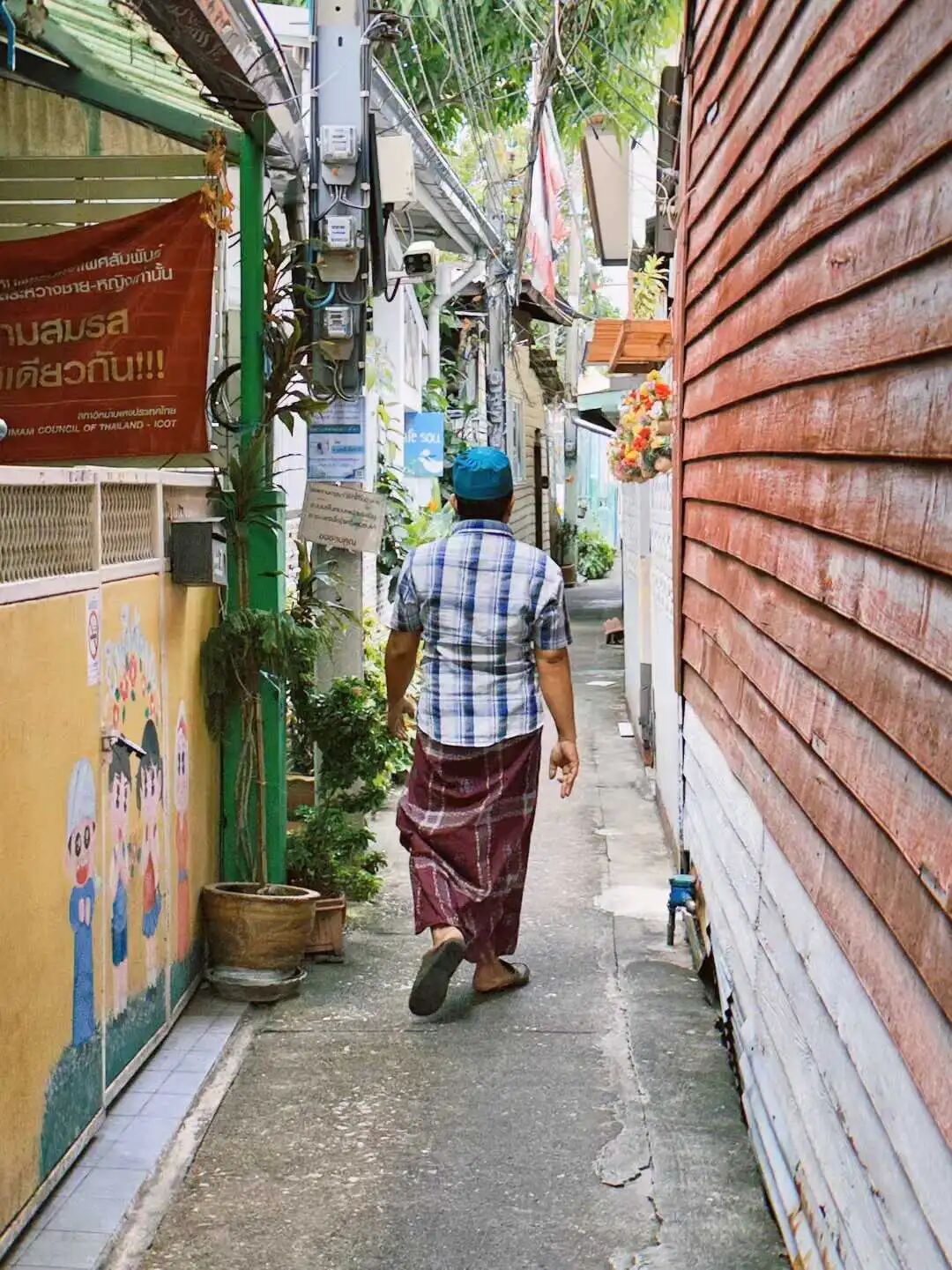
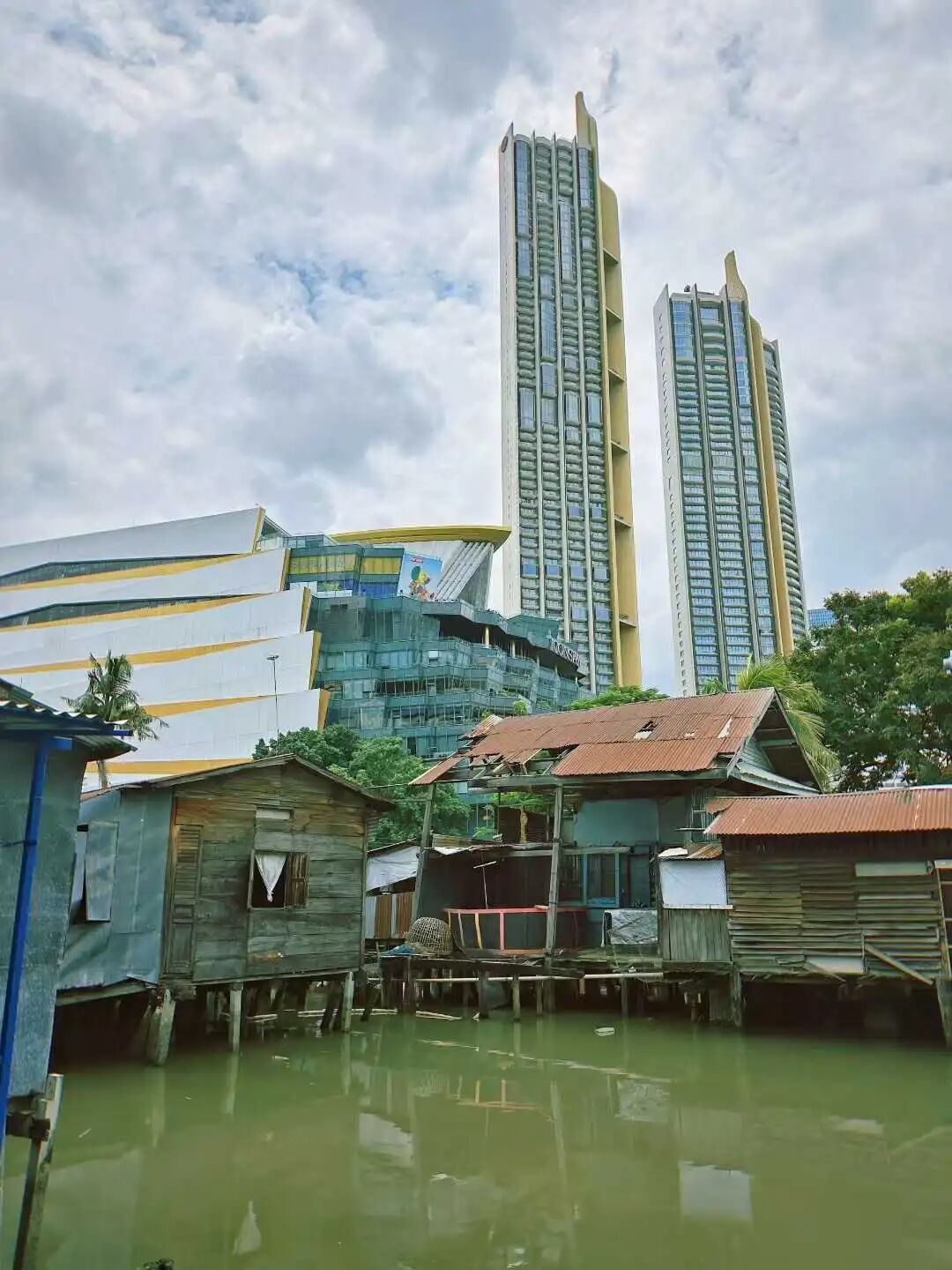
The view of Suwannaphum Mosque is beautiful. It is hard to imagine such a traditional water village mosque still exists right next to the busy ICONSIAM mall. The easiest way to get here is to take a boat along the Chao Phraya River to ICONSIAM and then walk over.
There are many halal restaurants near ICONSIAM, and we ate inside the mall last time. This time, we ate at a Thai halal restaurant called Nakhon Lerdros inside the ICS mall, which is across from ICONSIAM. You can walk between ICS and ICONSIAM using the upper-level walkway. The best part about eating in the mall is the air conditioning, though it costs more than street food.
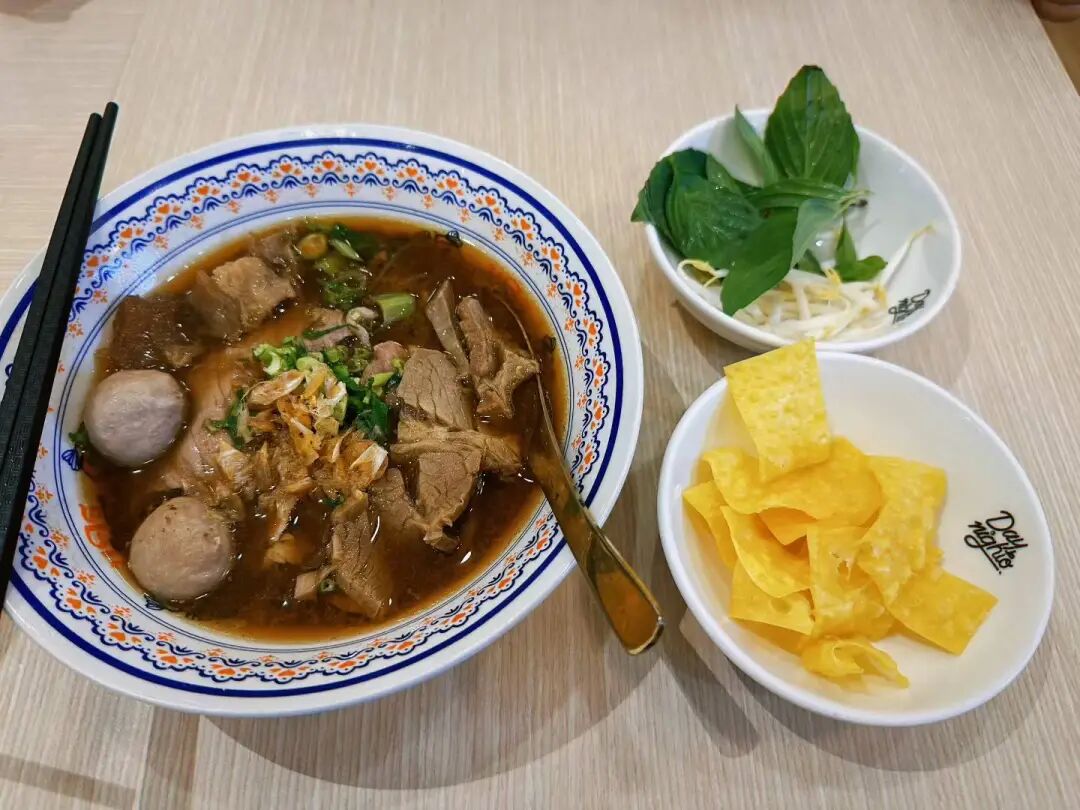
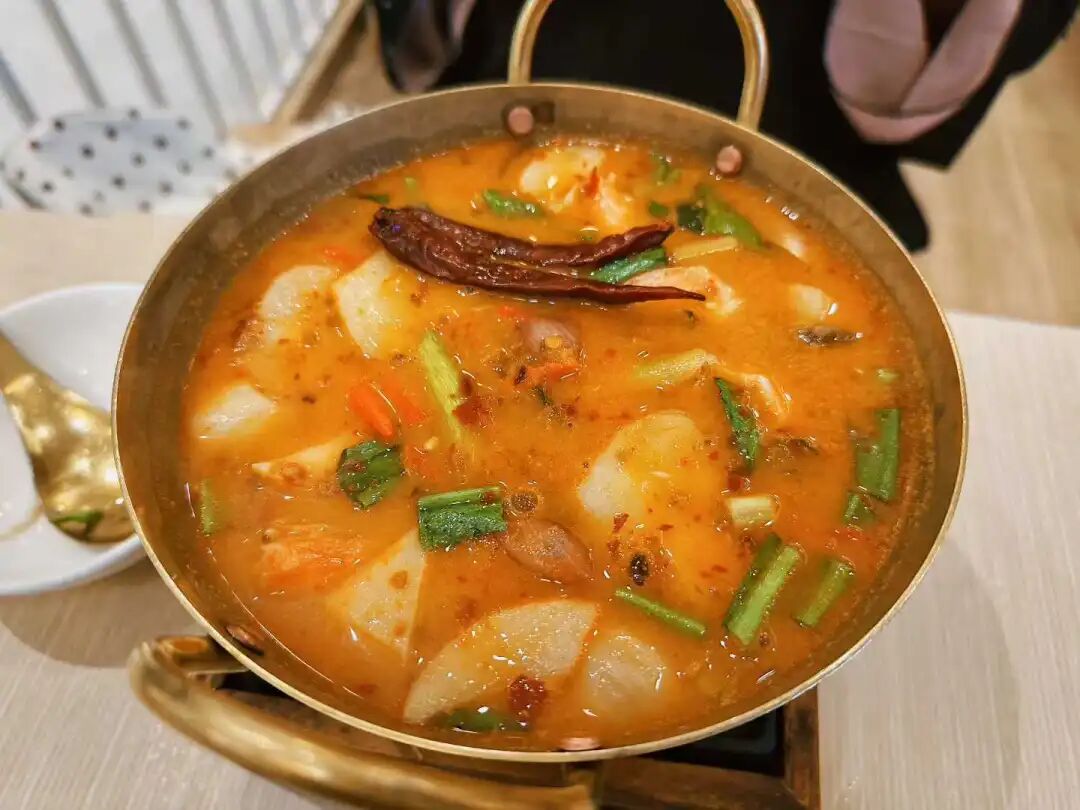
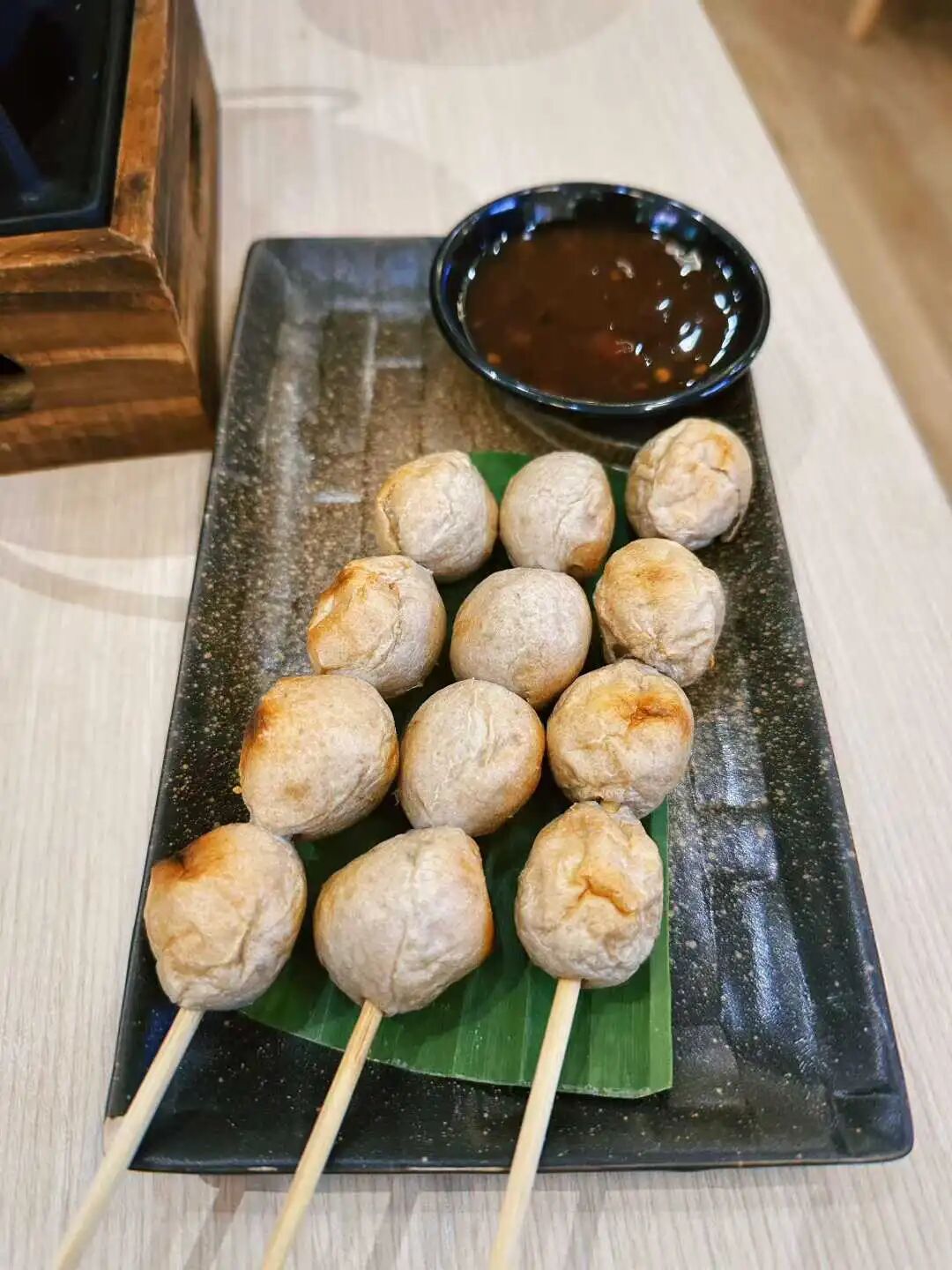
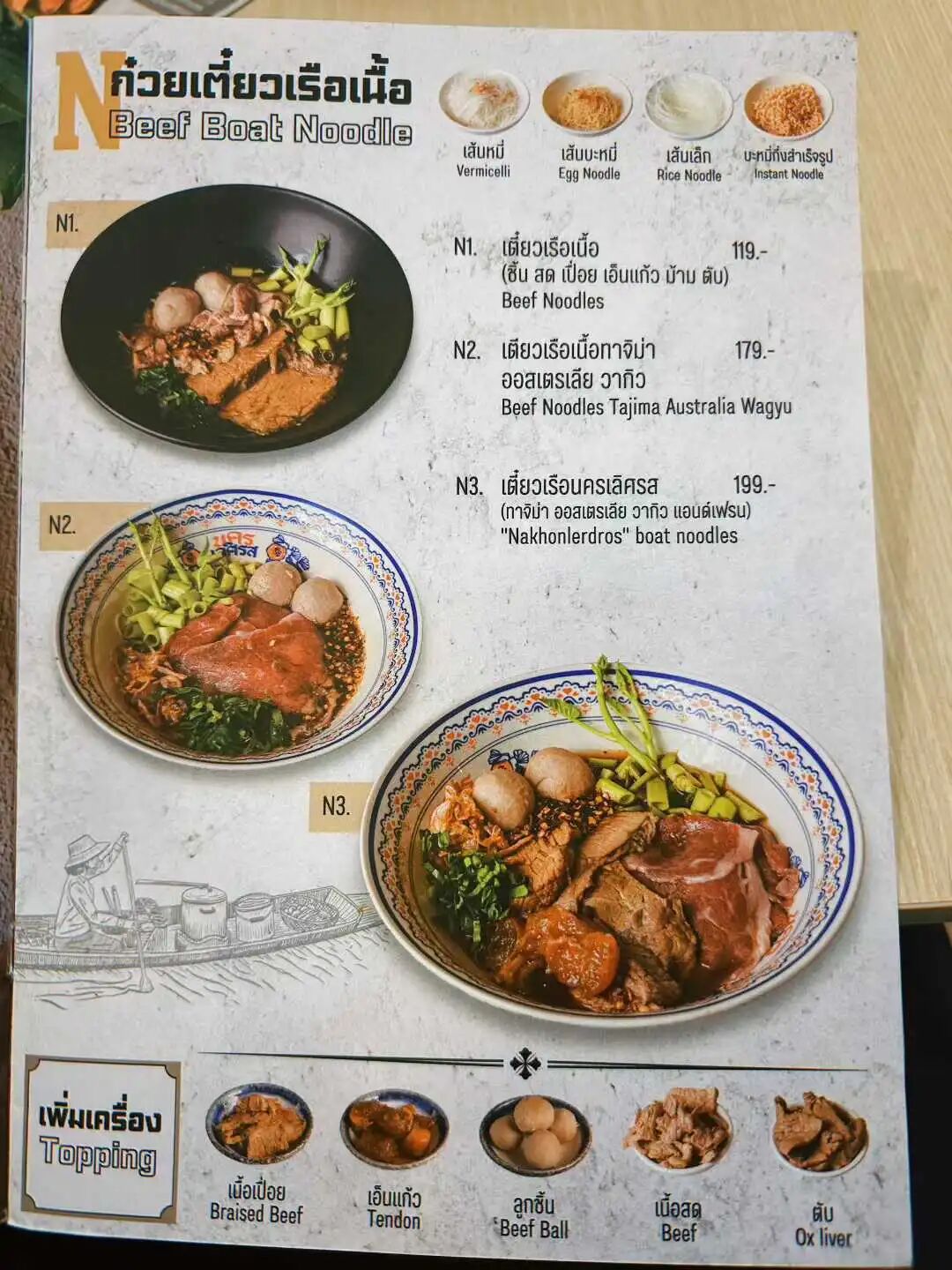
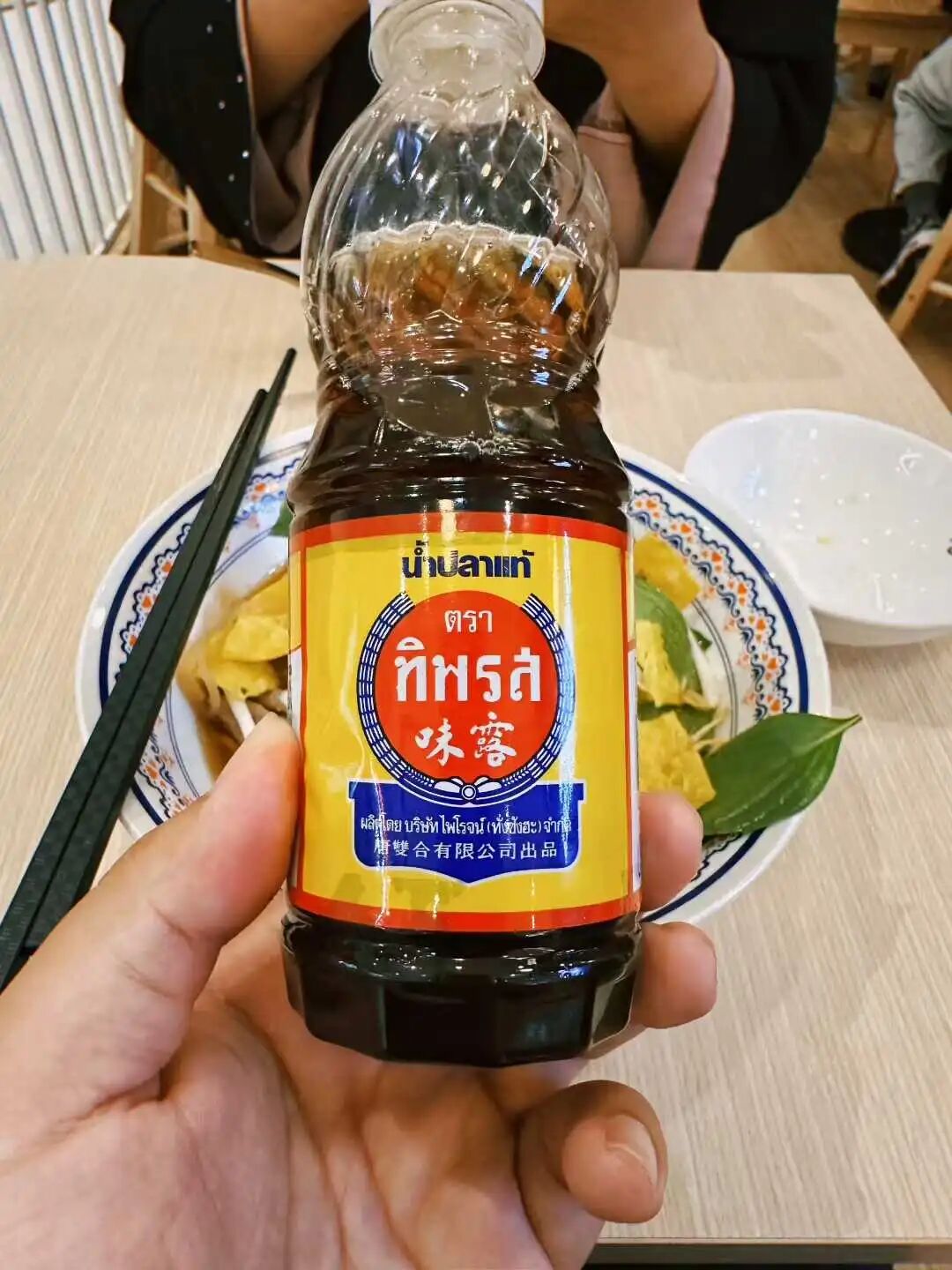
We ordered Thai boat noodles, tom yum soup, grilled meatballs, and longan juice. Boat noodles were originally sold by people rowing small boats along Bangkok's canals. One person did everything on the boat: cooking the noodles, making the broth, serving the food, collecting money, and washing the dishes. Halal boat noodles usually use beef and beef meatballs, and the broth is made from beef. They use Tang Shuang He brand fish sauce for seasoning. Most Thai condiments are halal-certified. The fish sauce only contains anchovies, salt, sugar, and water, which adds a special flavor.
The food court inside ICONSIAM is still very popular. There are several halal stalls here, making it a great place to eat snacks while enjoying the air conditioning on a hot day.
For more about snacks inside ICONSIAM, see my diary: Bangkok Halal Trip—Food and Lodging.
The pier at the entrance of ICONSIAM is very convenient for boats. You can take a boat downstream to the Asiatique night market or upstream back to Bangkok's old town.
Haroon Mosque.
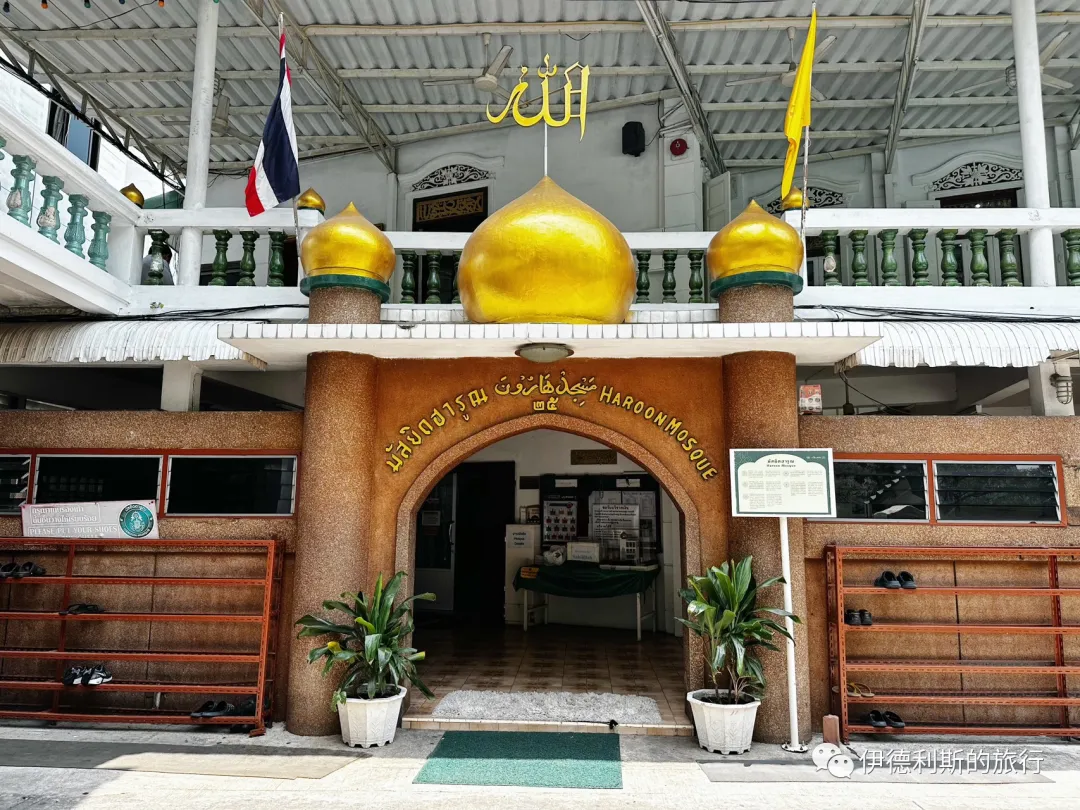
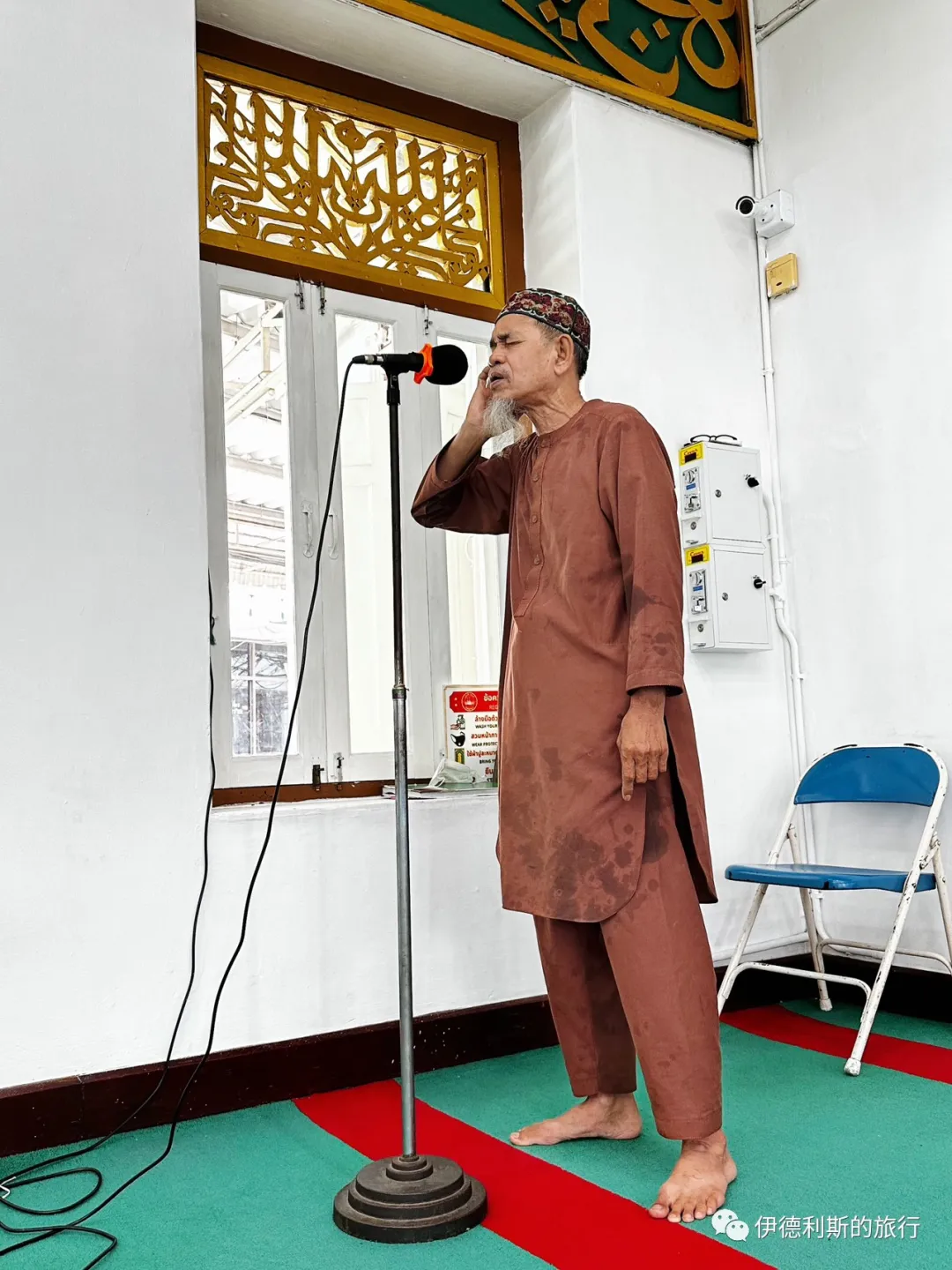
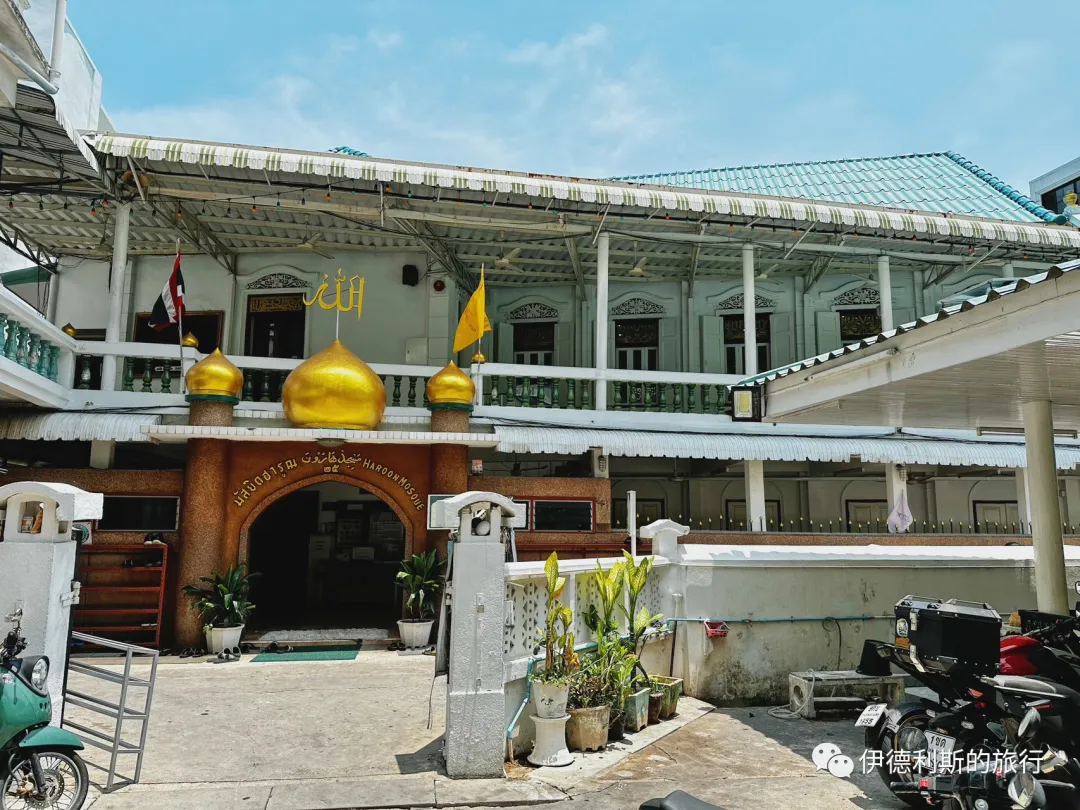
Haroon Mosque is named after an Indonesian Arab merchant named Toh Haroon Bafaden. He came to Bangkok from Indonesia with his father in 1828 (some say 1837) to do business. He later married, settled down, built Haroon Mosque, and became its first imam.
Haroon Mosque was originally located by the Chao Phraya River. It was a wooden building that combined Ayutthaya and Javanese styles. It moved to its current location in 1899 because of the construction of the Customs House. In 1934, the mosque was rebuilt into its current white brick and plaster structure. It features neoclassical floral patterns, Roman-style columns, and wooden shutters, looking a bit like a European townhouse from that era.
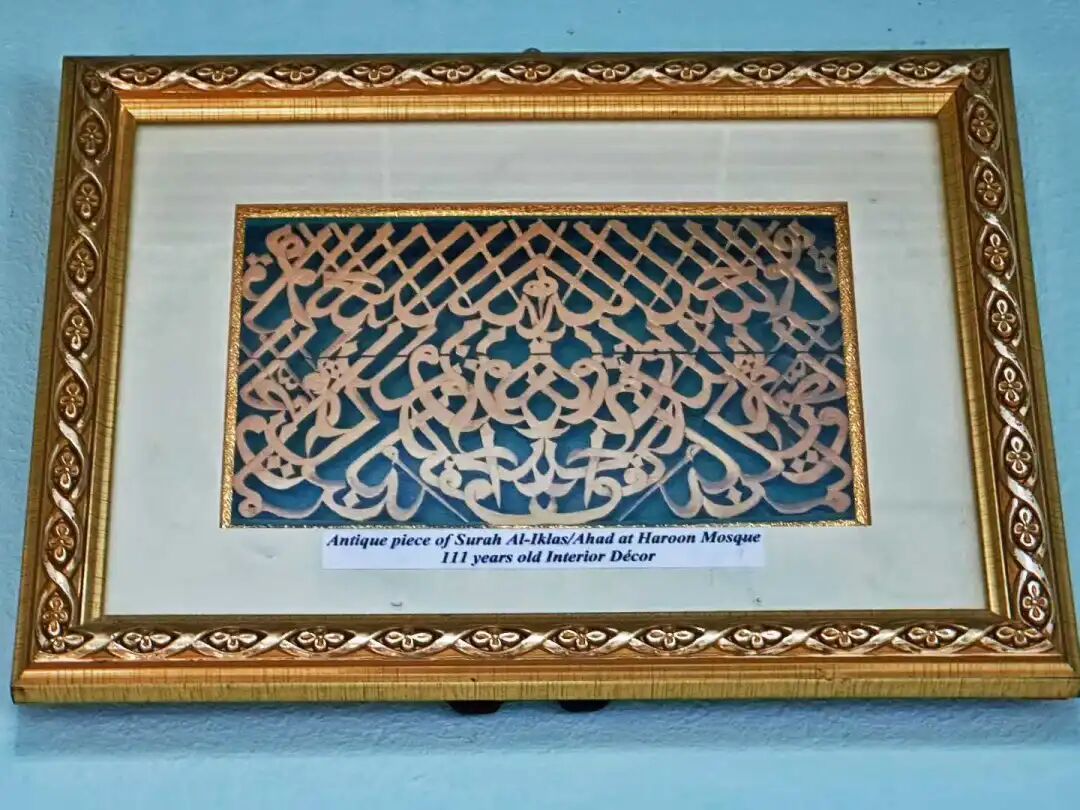
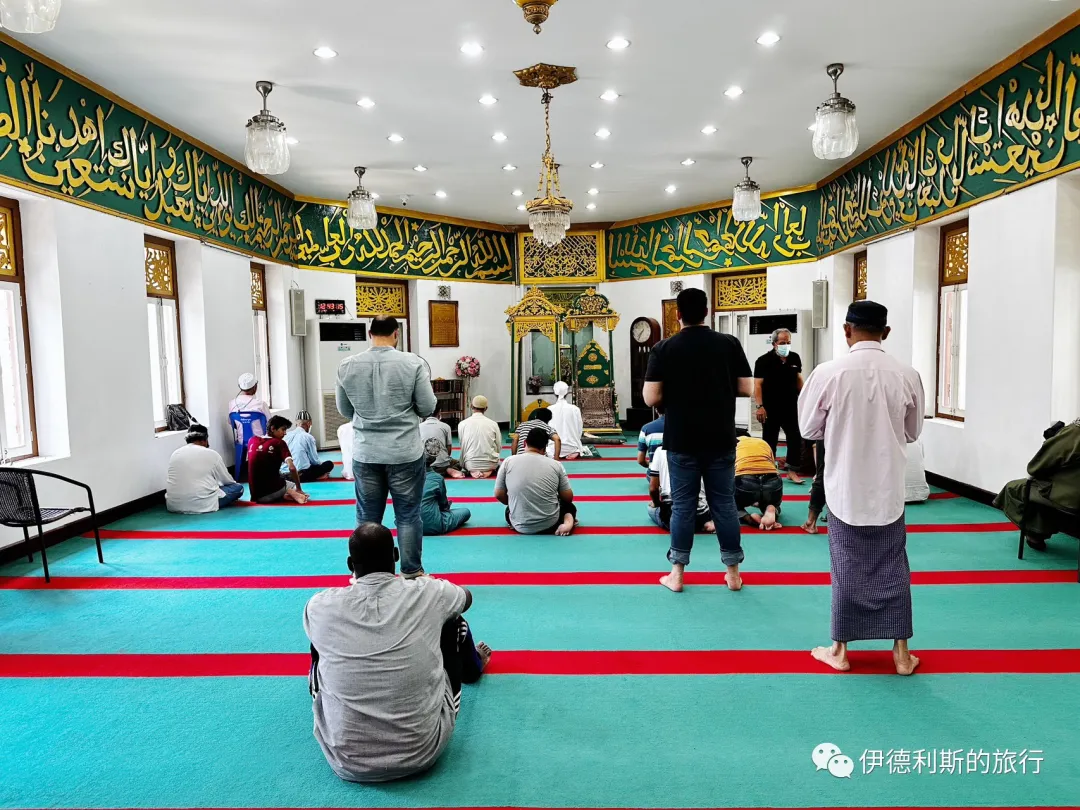
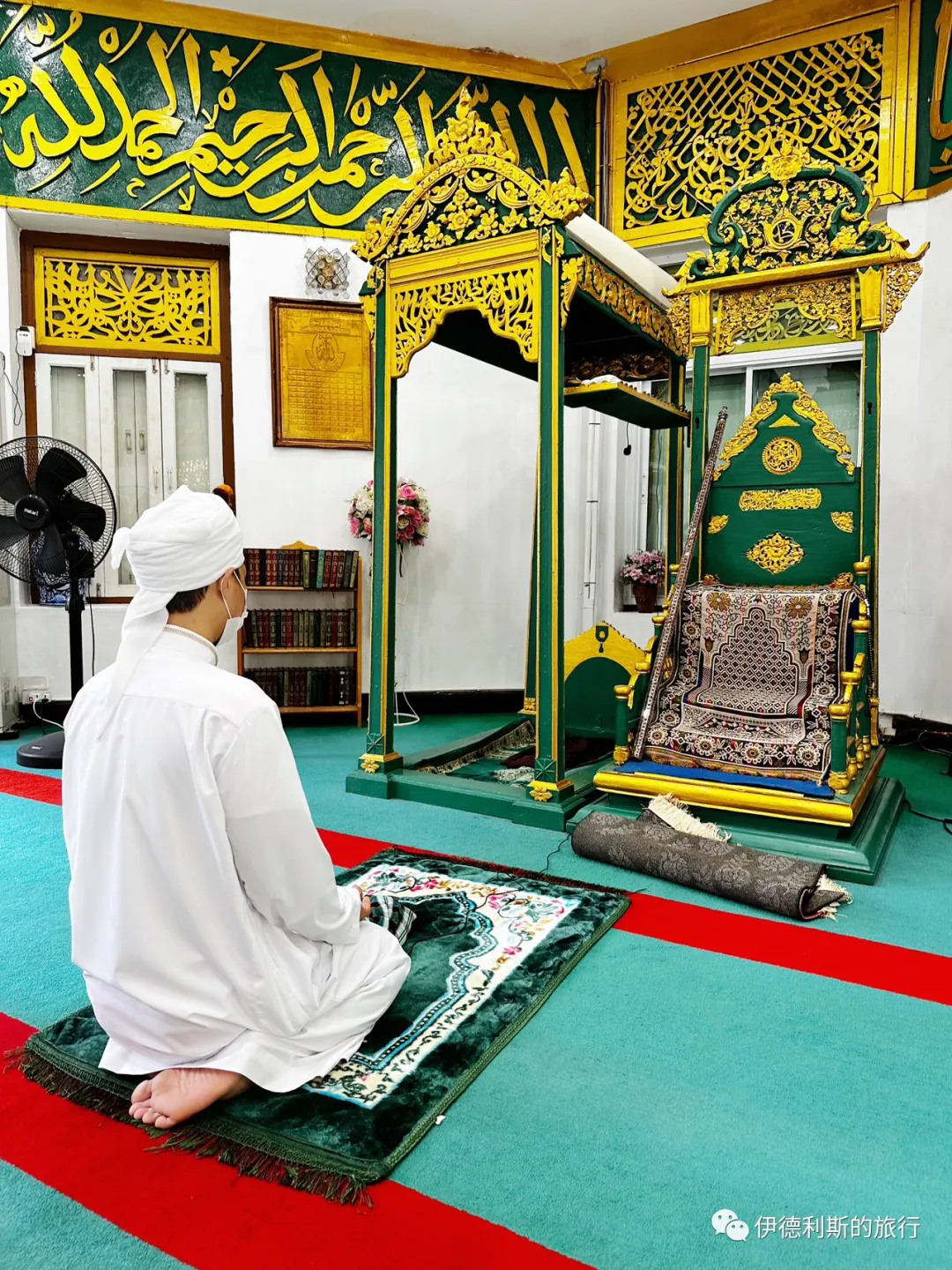
Today, the mosque preserves exquisite Javanese Jepara teak wood carvings of scripture from the old 19th-century building. They were created by Haji Said, a fellow Indonesian from Toh Haroon Bafaden's hometown.
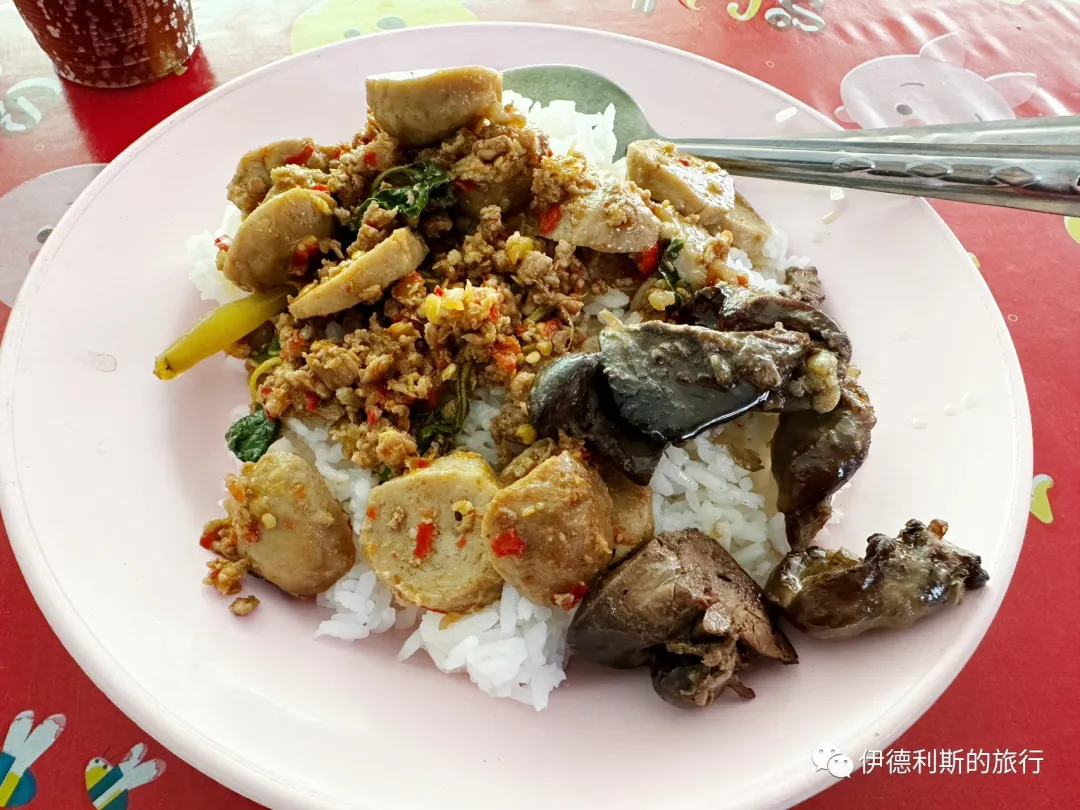
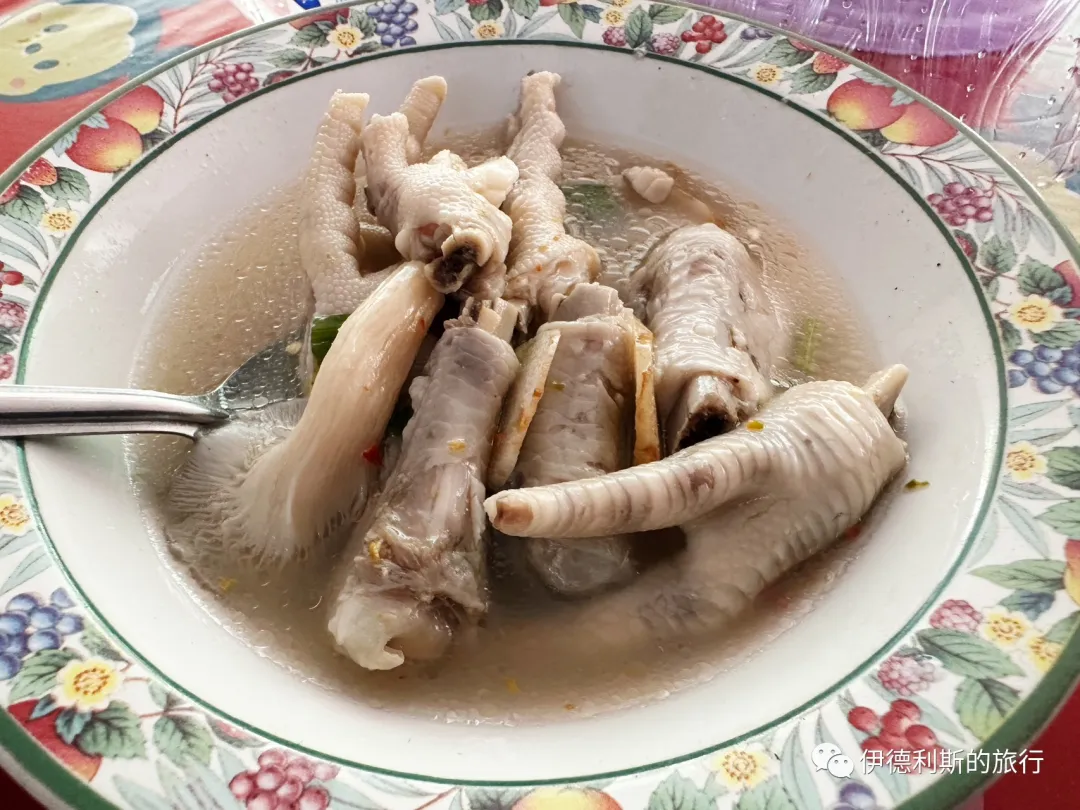
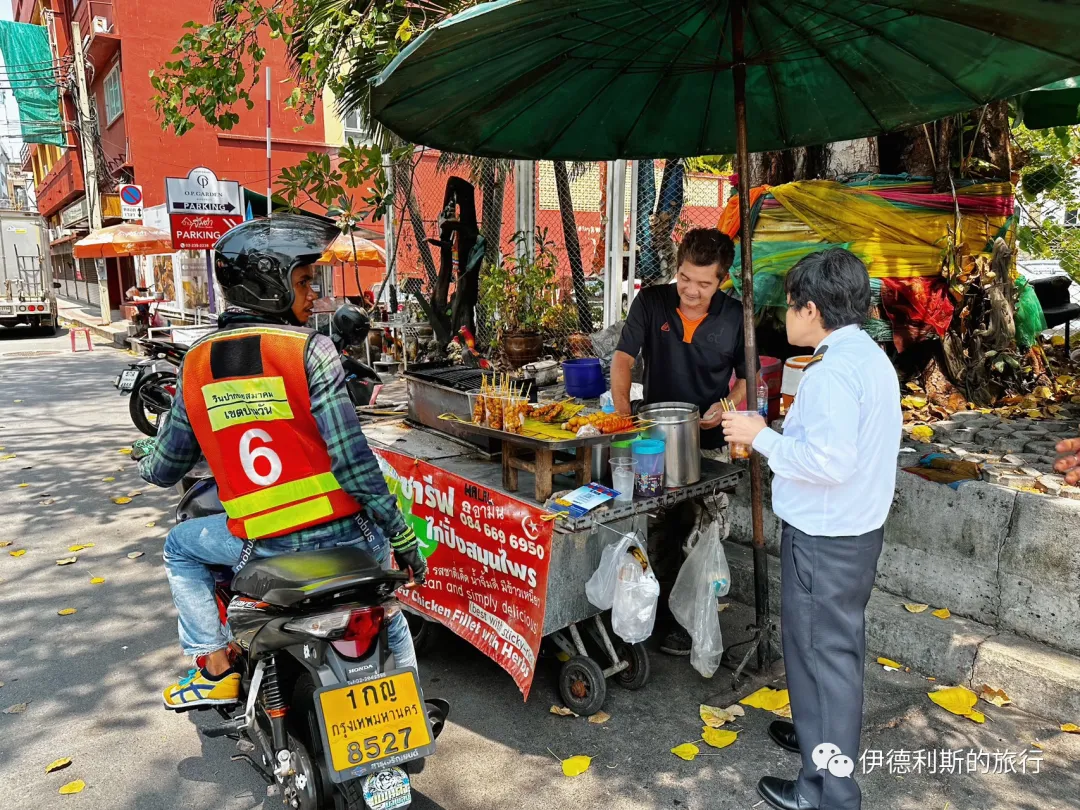
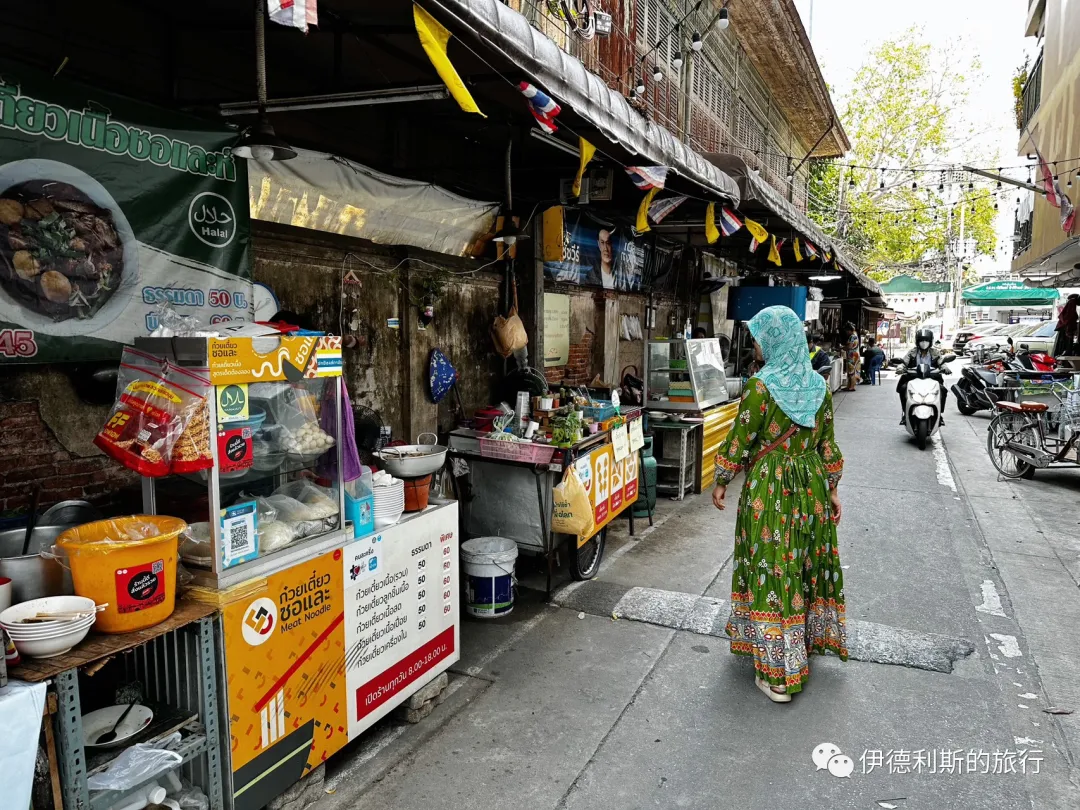
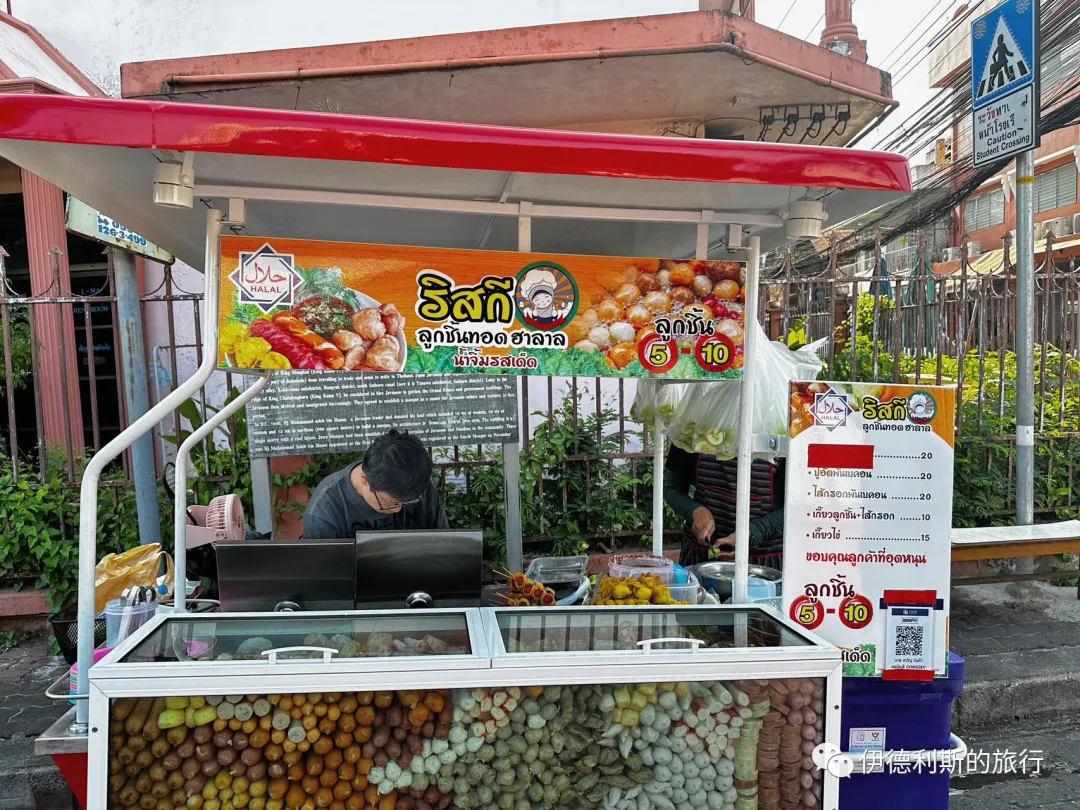
There are many snacks at the entrance of the mosque. We first had stewed beef and chicken meatball glass noodles. The beef was incredibly fragrant! Then we had rice with stir-fried basil chicken, meatballs, and chicken liver. After that, we had a bowl of stewed chicken feet. The chicken feet were soft and flavorful, but the soup was super spicy, haha.
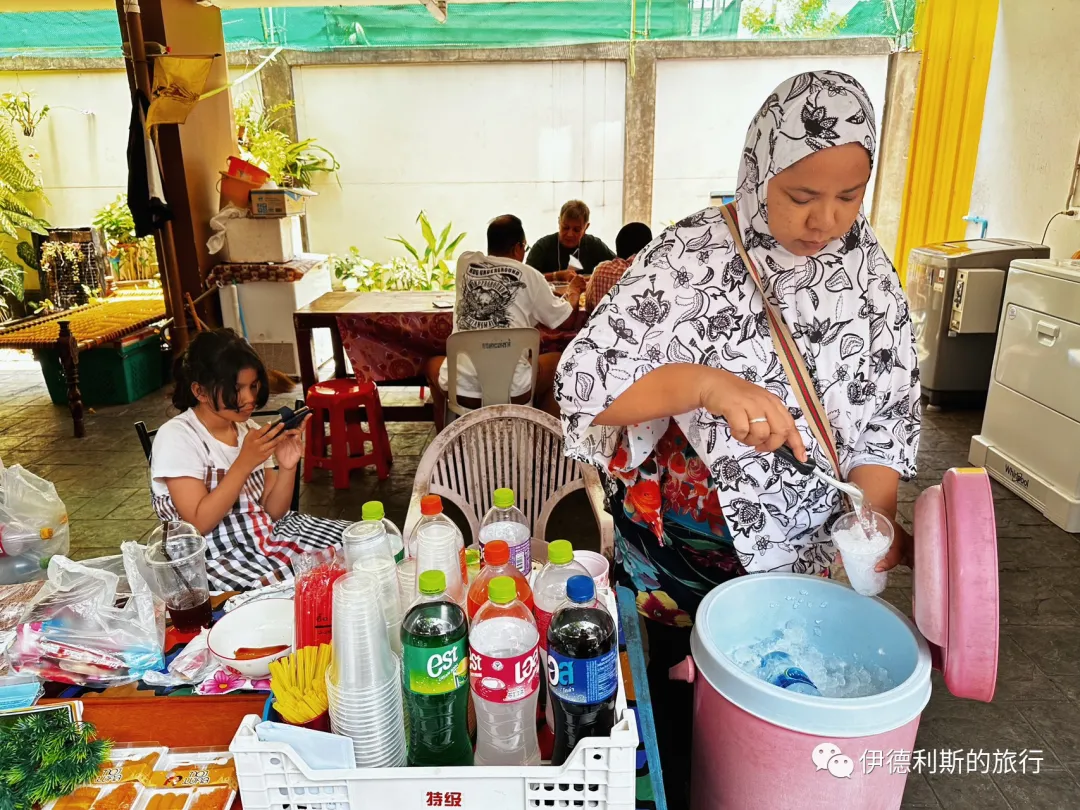
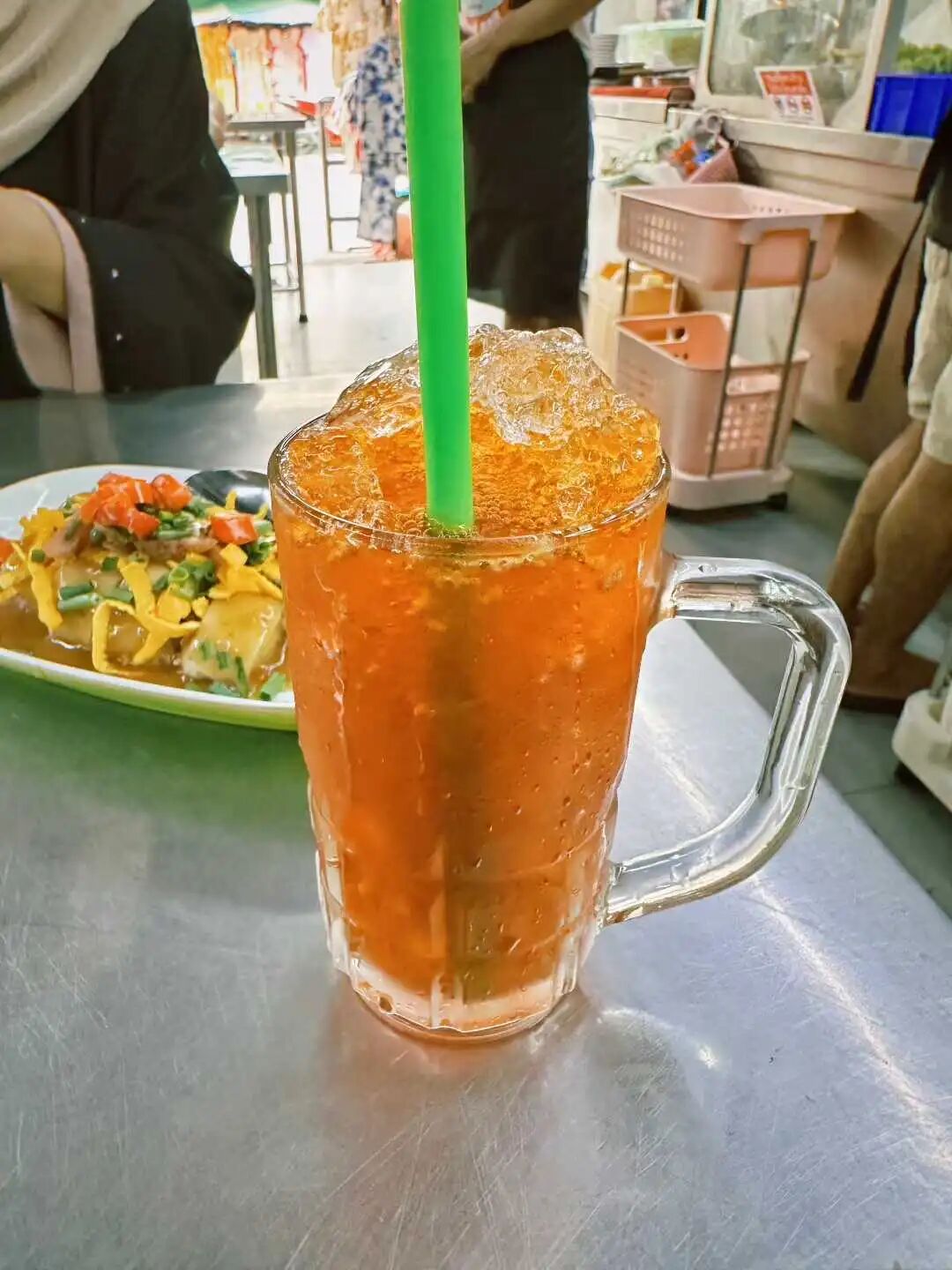
Two essentials for eating street food in Bangkok's hot summer are a strong electric fan and cold drinks with ice! Otherwise, it feels like you cannot eat anything at all, haha.
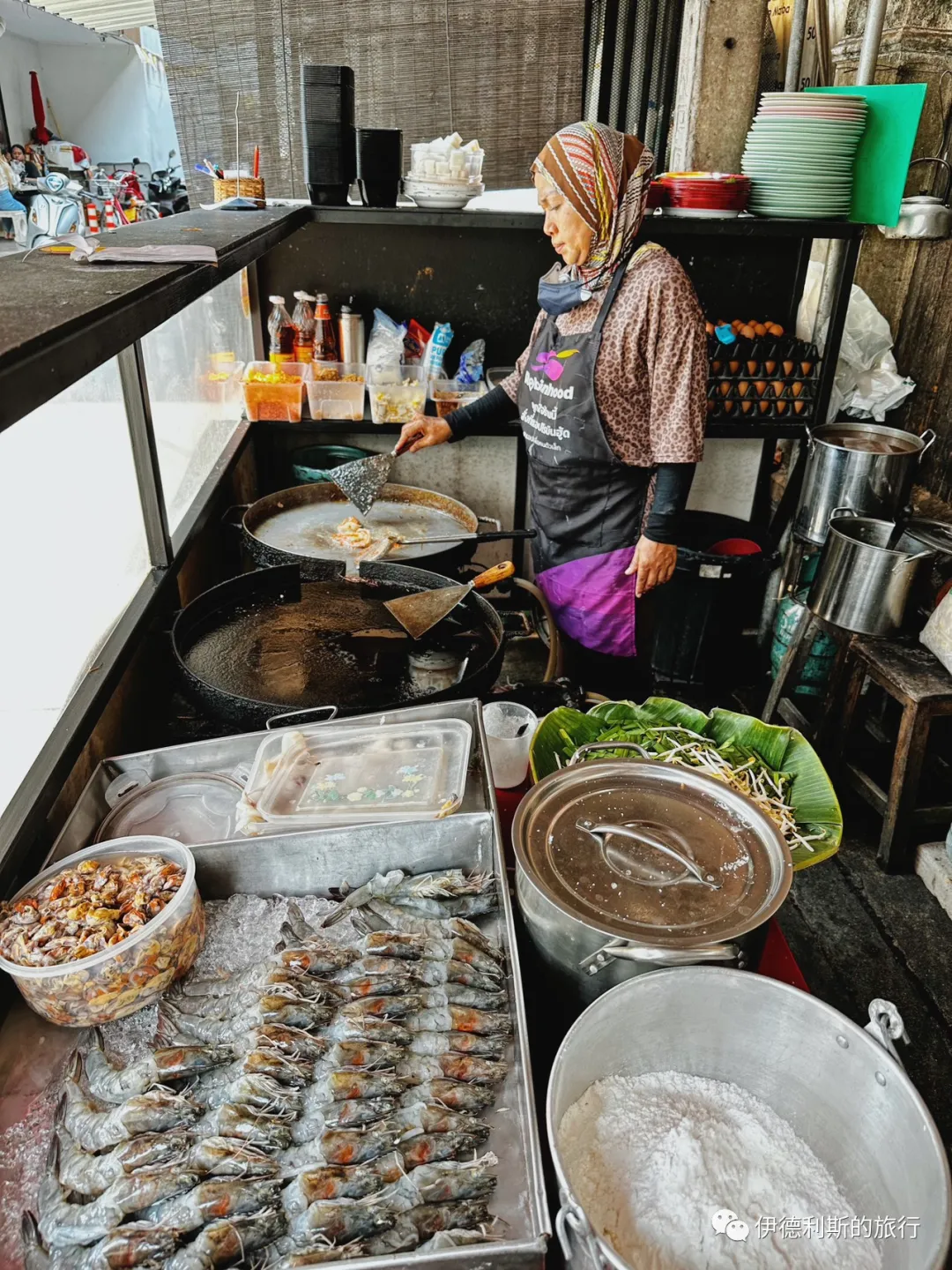
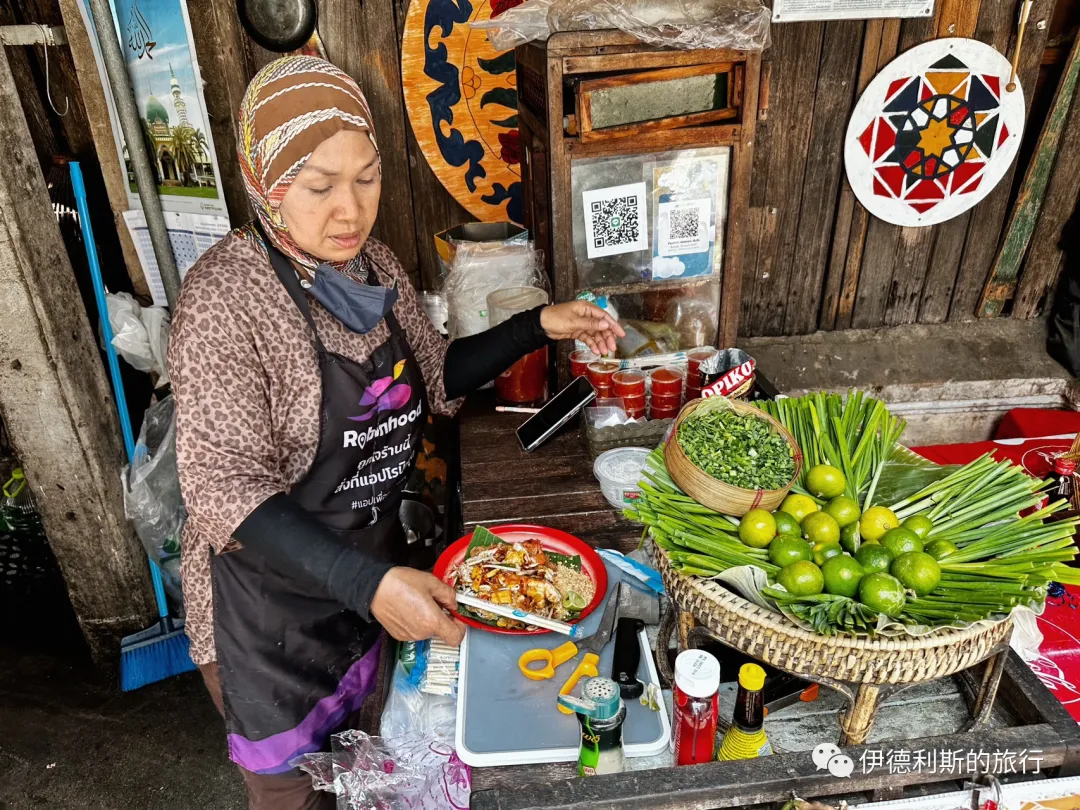
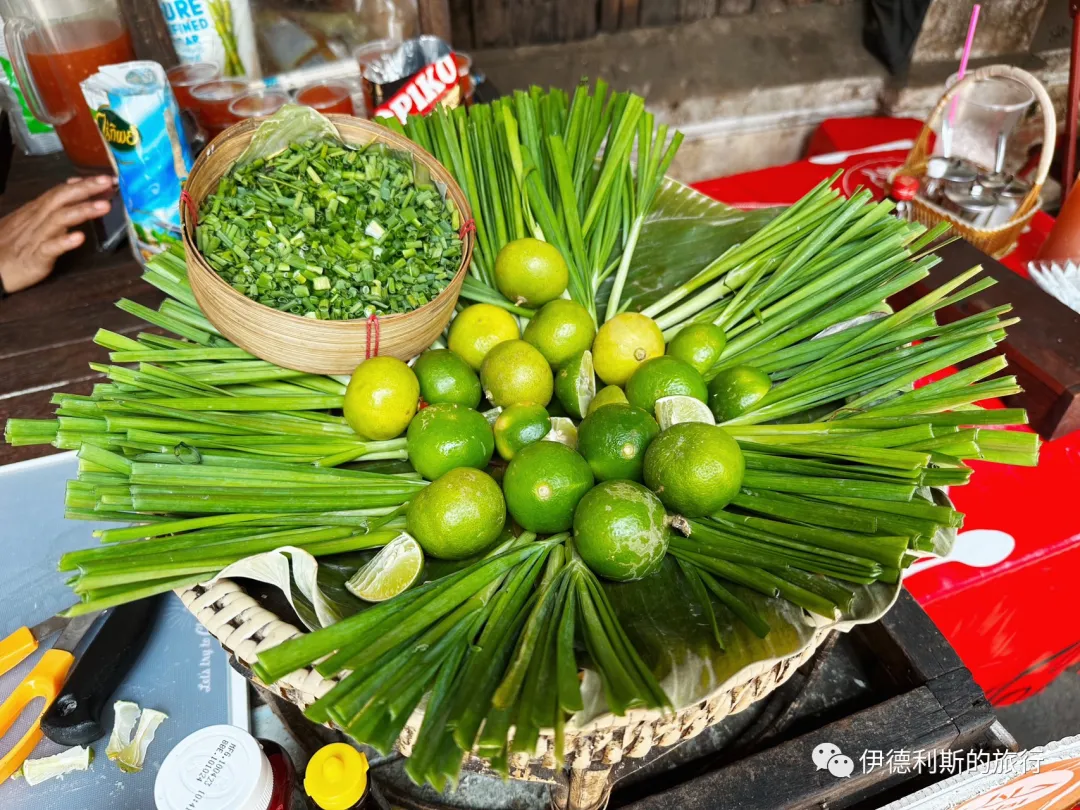
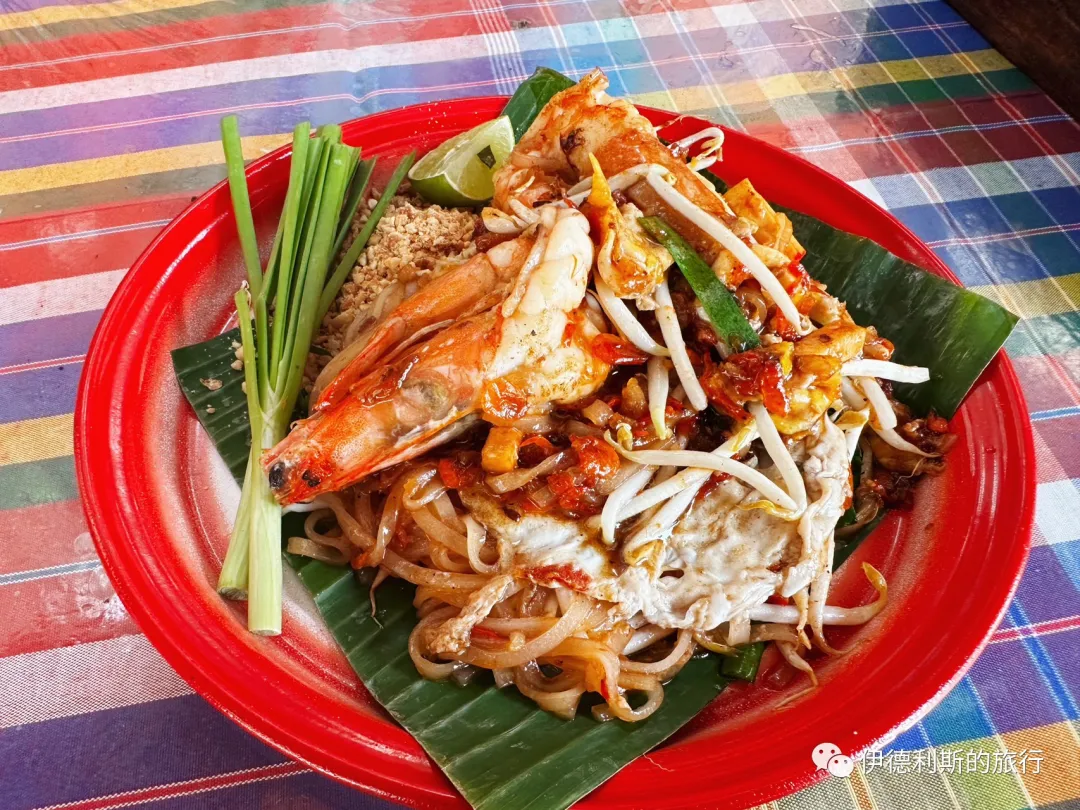
We ate the classic street snack, Thai stir-fried rice noodles (pad thai). Thai-style stir-fried rice noodles (pad thai), also called stir-fried rice noodles (pad mee), contain rice noodles, scrambled eggs, bean sprouts, crushed peanuts, and fresh shrimp, served with lime and chives. The style of stir-fried rice noodles was brought to Thailand by Chinese immigrants hundreds of years ago, but it did not become popular until the mid-20th century. During World War II, Thailand faced a rice shortage, so the government promoted a type of rice noodle from Chanthaburi Province in the east, which turned stir-fried noodles into a national snack.
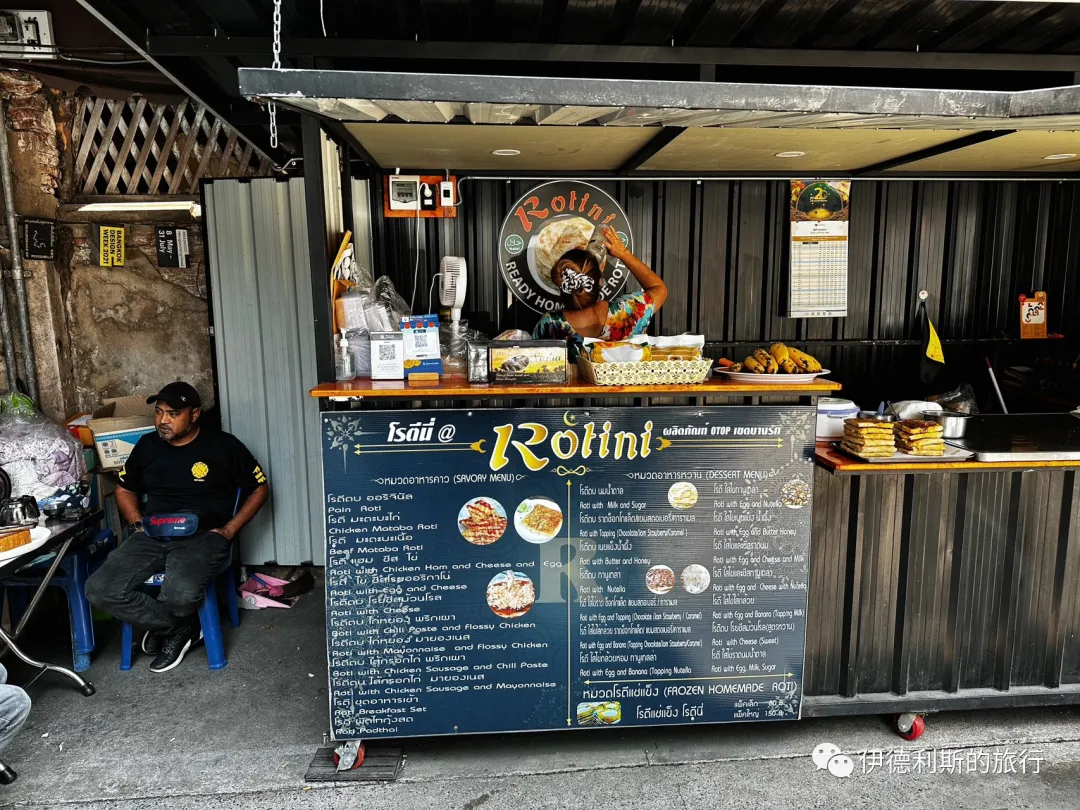
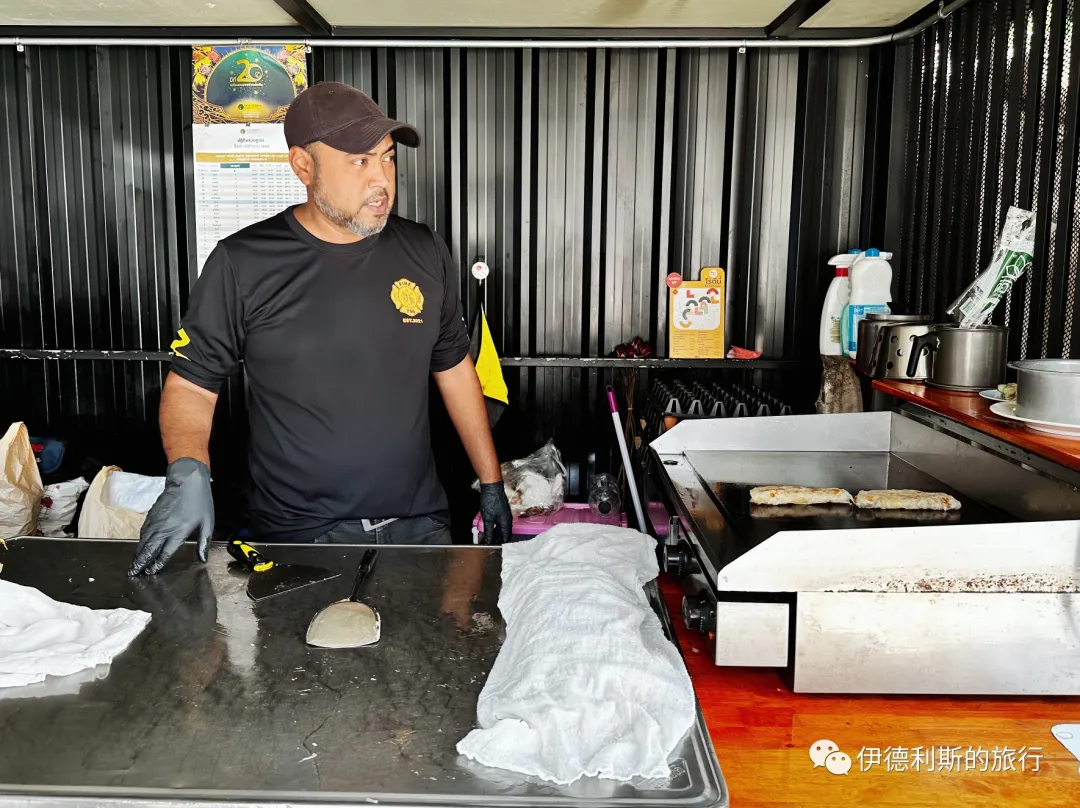
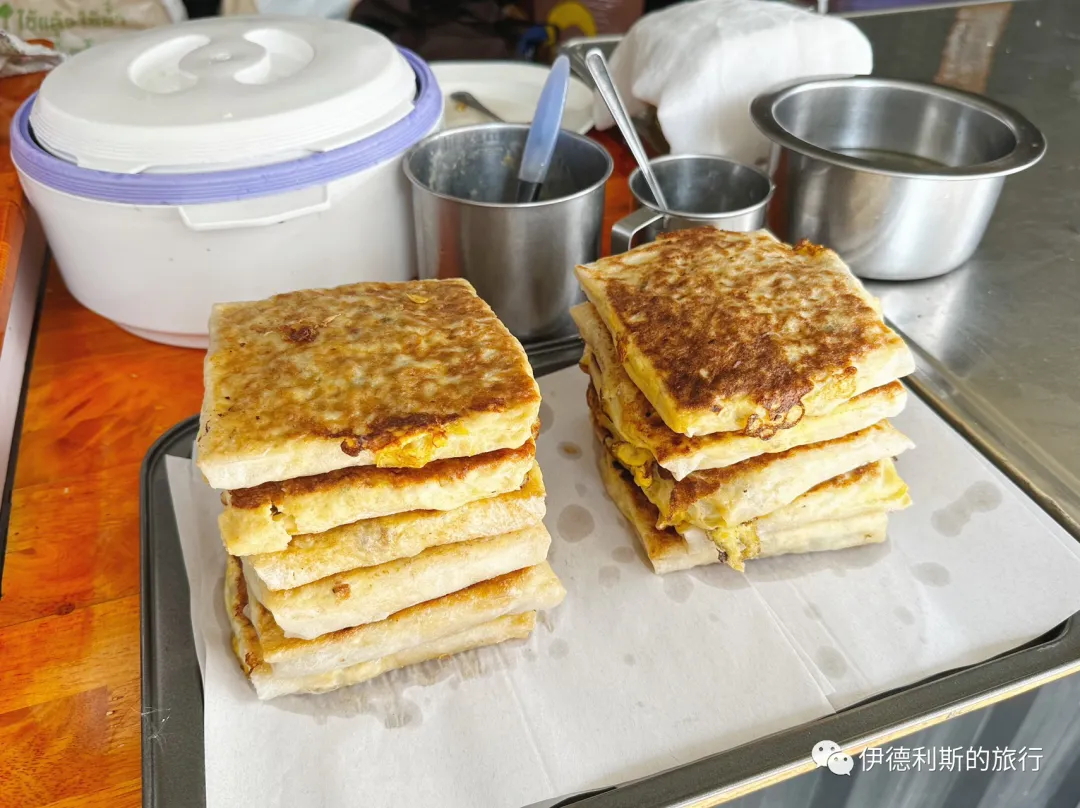
If stir-fried noodles are the first impression of Thai snacks, then roti flatbread (roti) is the first impression of Thai halal snacks. You can find Thai Muslim street carts selling roti flatbread in almost every night market in Thailand, and every stall is very popular.
Javanese gardeners
In 1896, King Rama V of Thailand visited the Dutch East Indies and toured the summer palace and gardens built by the Dutch Governor-General in Bogor, Java (now Bogor Botanical Gardens). He admired the beauty and variety of plants so much that shortly after returning home, he recruited a group of Javanese gardeners to care for the flowers and trees at the Grand Palace, Saranrom Palace, and Saranrom Park, as well as the rows of tamarind trees along the roads around the palace. After King Rama V visited the Dutch East Indies a second time in 1901, he recruited a second group of Javanese gardeners to help design the newly built Dusit Palace, and these Javanese people settled in Bangkok.
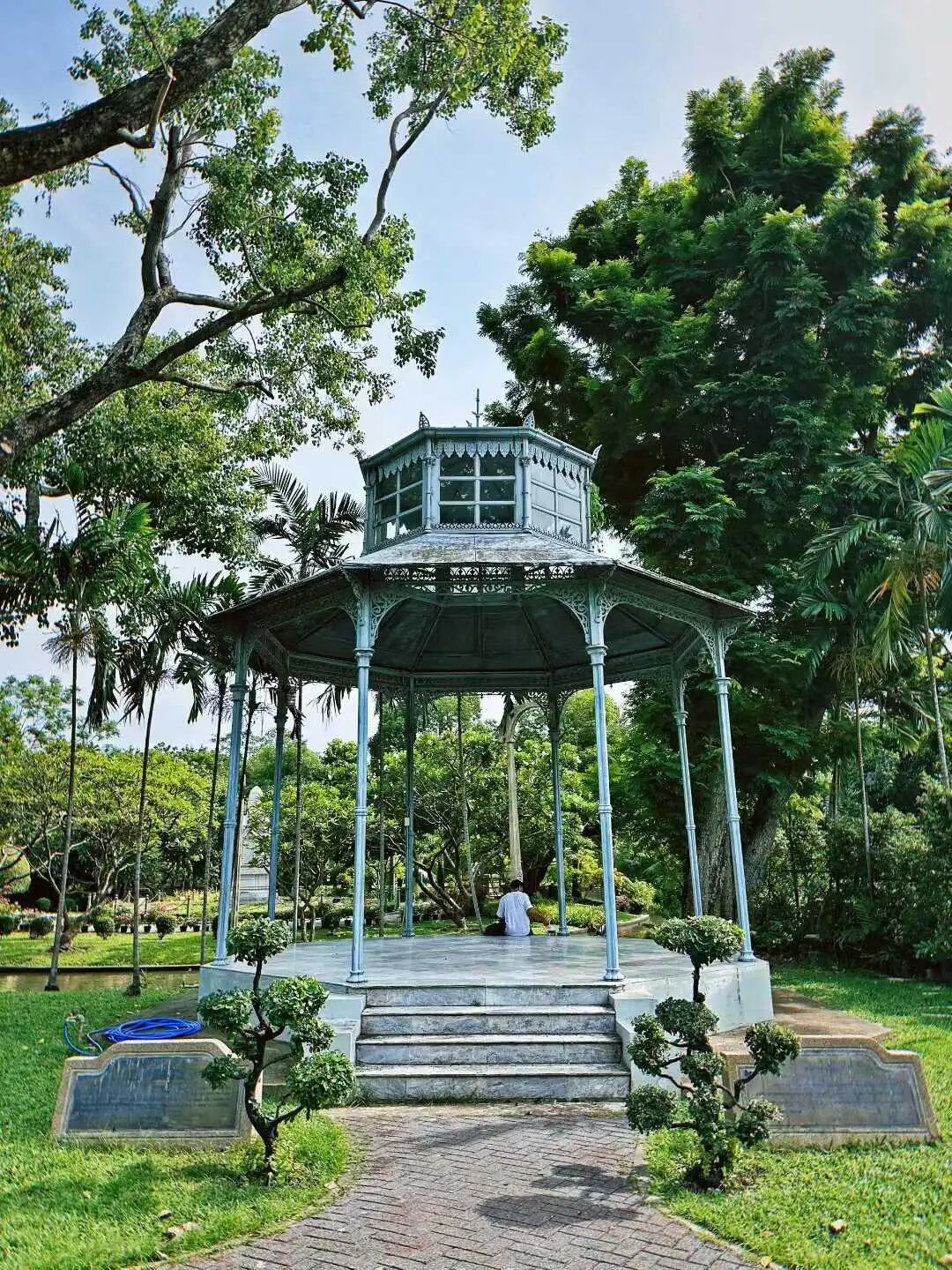
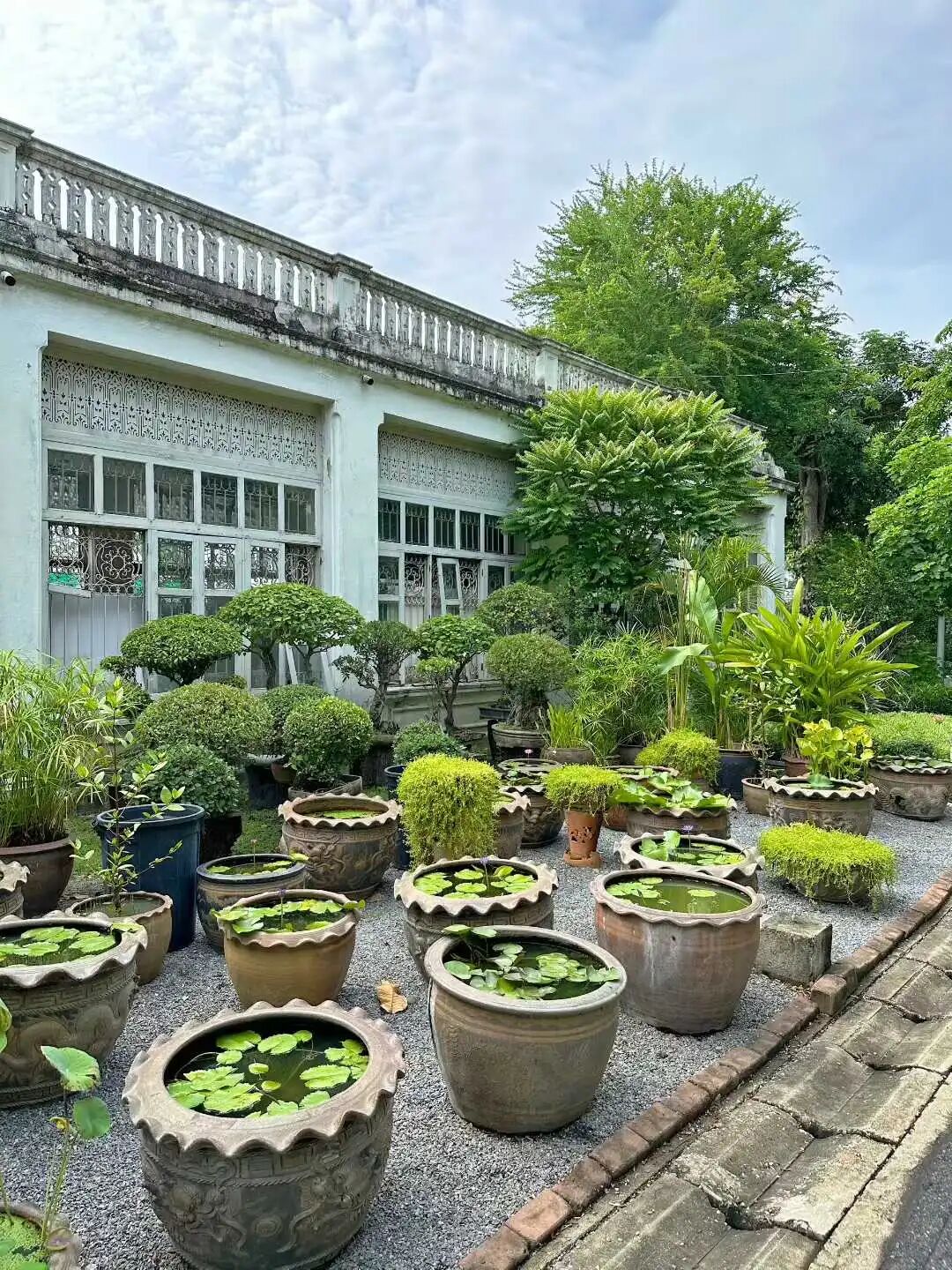
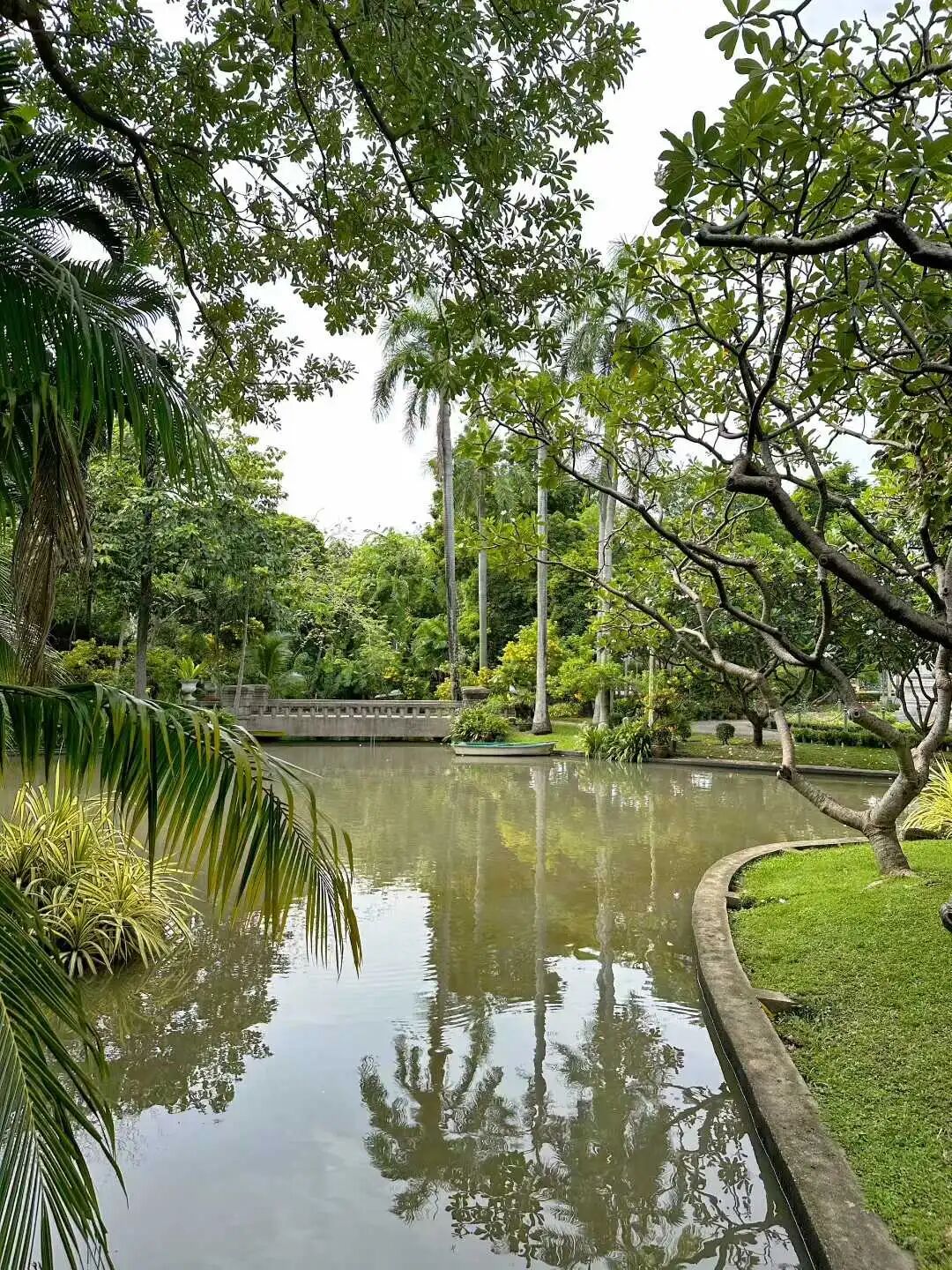
Saranrom Park, located opposite the Grand Palace in Bangkok, was built in 1866. It was originally part of the Saranrom Palace built by King Rama IV and was renovated by King Rama V in 1874 according to the modern botanical garden model. Records show that King Rama V hired 2,444 Javanese gardeners to maintain the gardens, decorating the park with fountains, flowers, birdcages, and animal enclosures, along with the King's favorite red roses.
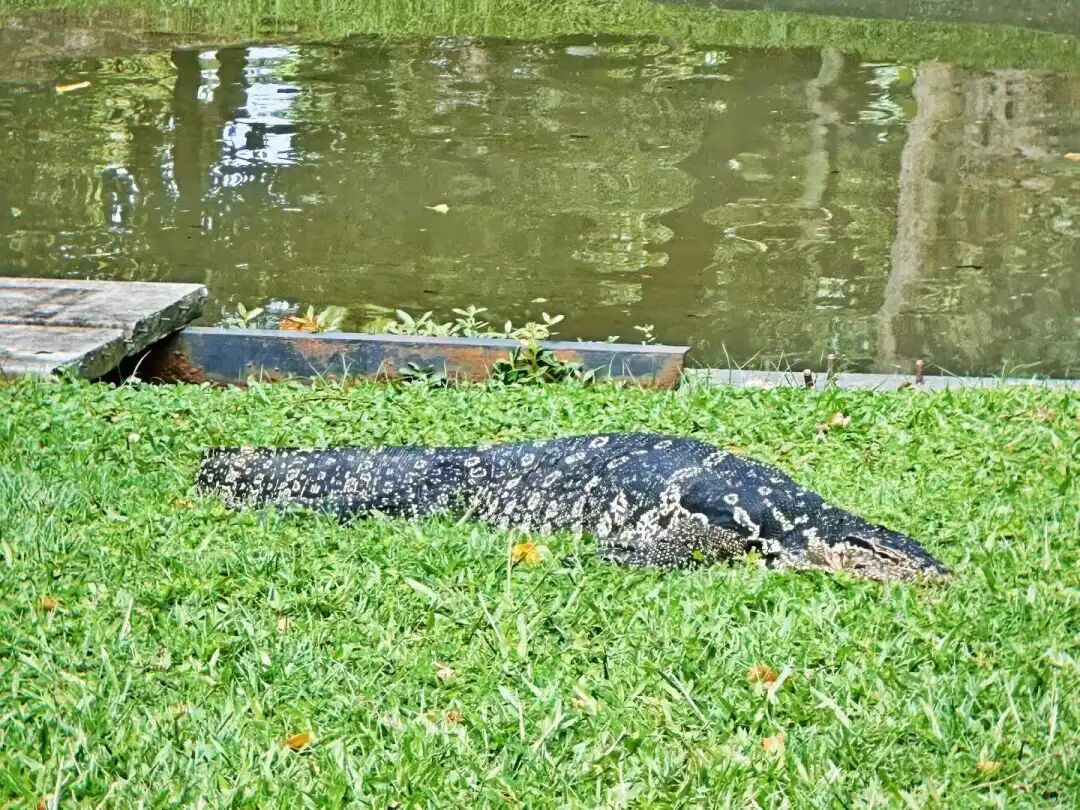
The park officially opened to the public in 1960, becoming Bangkok's first public botanical garden. Today, the park is filled with birdsong and flowers, with monitor lizards visible in the ponds and squirrels everywhere in the trees. When we visited, there were almost no tourists, only a few locals jogging or resting.
Ban Tuk Din Mosque
Ban Tuk Din Mosque is one of only two mosques located within the city walls of Bangkok, built by Javanese gardeners on royal land in the late 19th century.
During the late reign of King Rama VI and the reign of King Rama VII, the royal family cut spending and dismissed the Javanese gardeners. Afterward, most of the Javanese gardeners moved to the southern suburbs of Bangkok to continue working as gardeners and domestic helpers in mansions, while only a few remained in the Ban Tuk Din mosque community as small vendors and domestic workers.
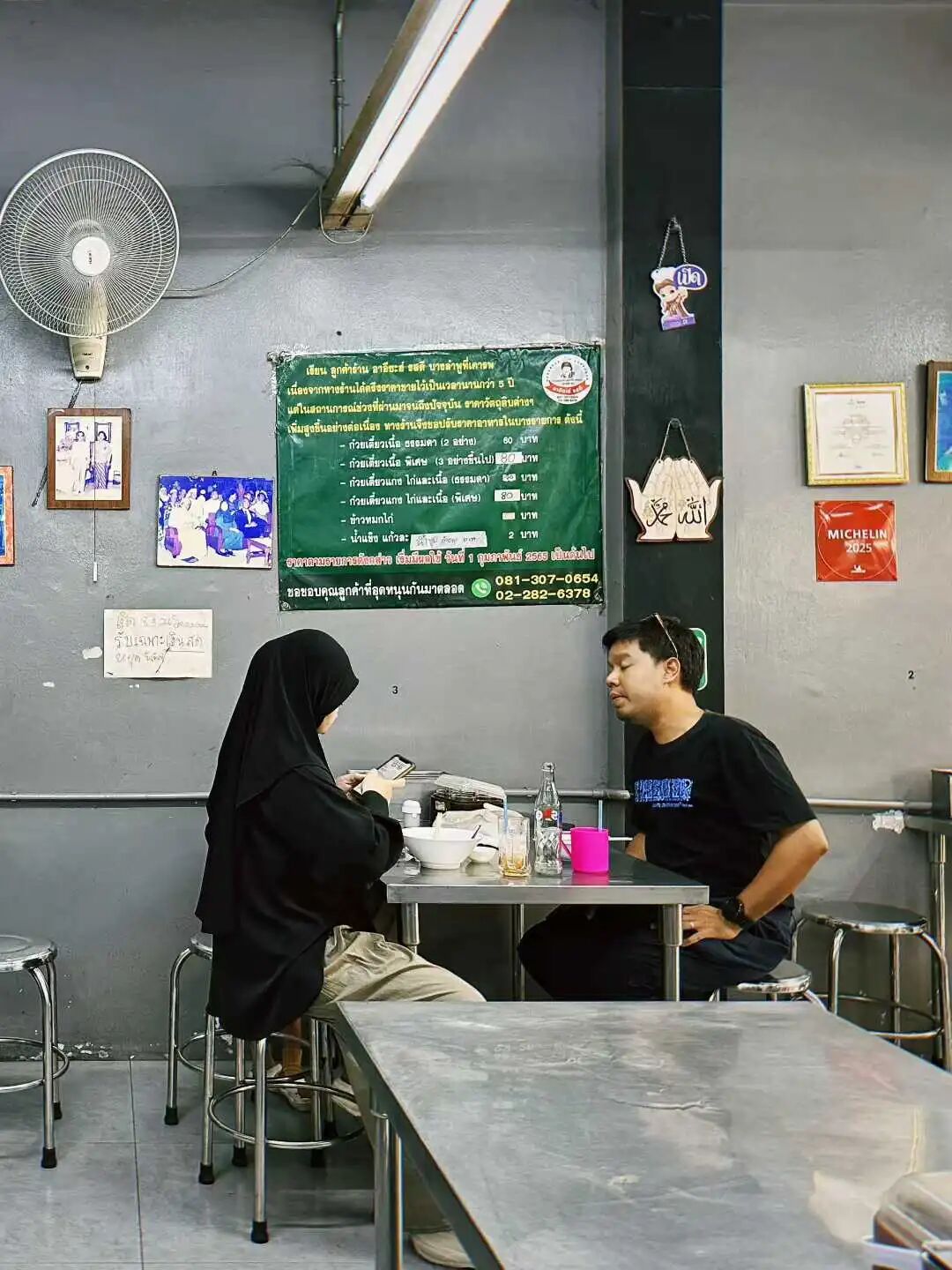
In the alley near Ban Tuk Din Mosque, there is a very famous local halal snack shop called Ayeesah Roddee Halal. Because it is right next to the backpacker hub of Khao San Road, many foreigners come here to eat. Historically, the Javanese community in Bangkok rarely intermarried with other groups, so they preserved many traditional cultural customs, and you can eat authentic Javanese-style halal snacks at this shop.
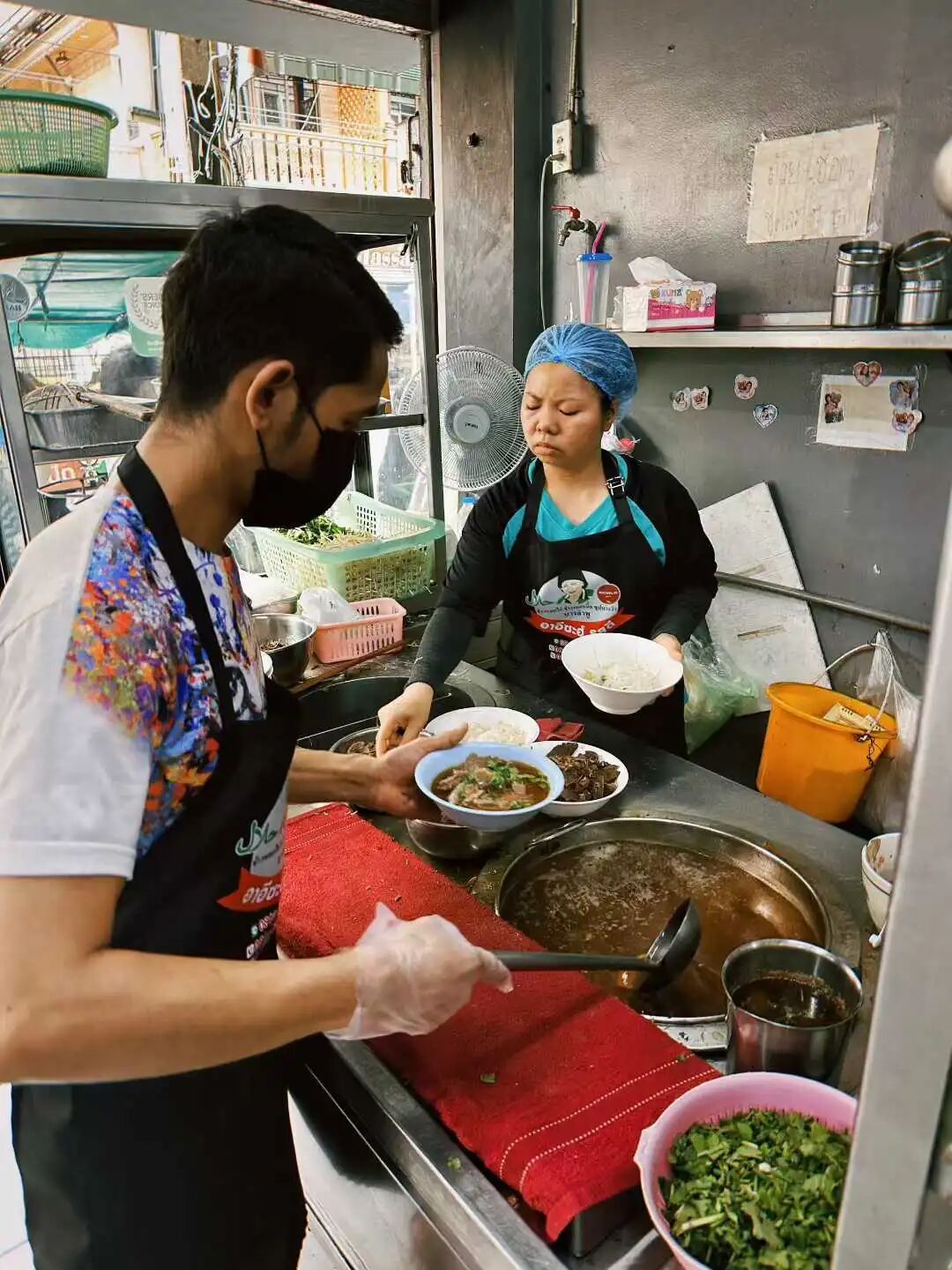
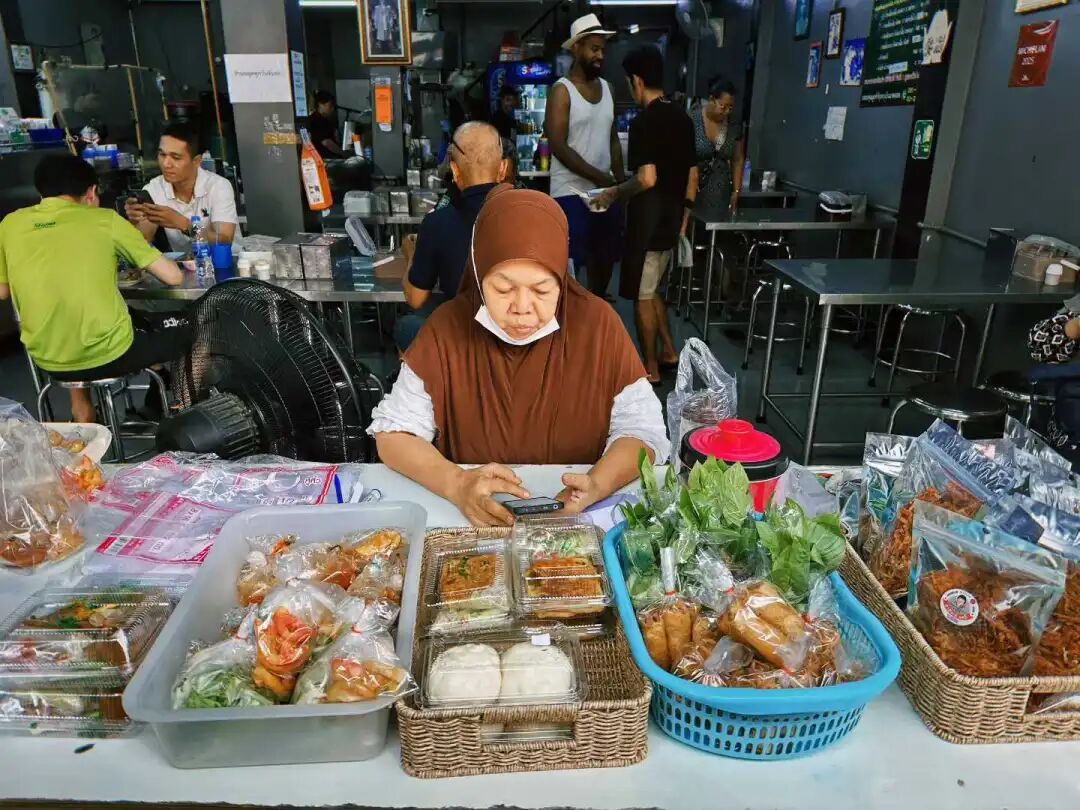
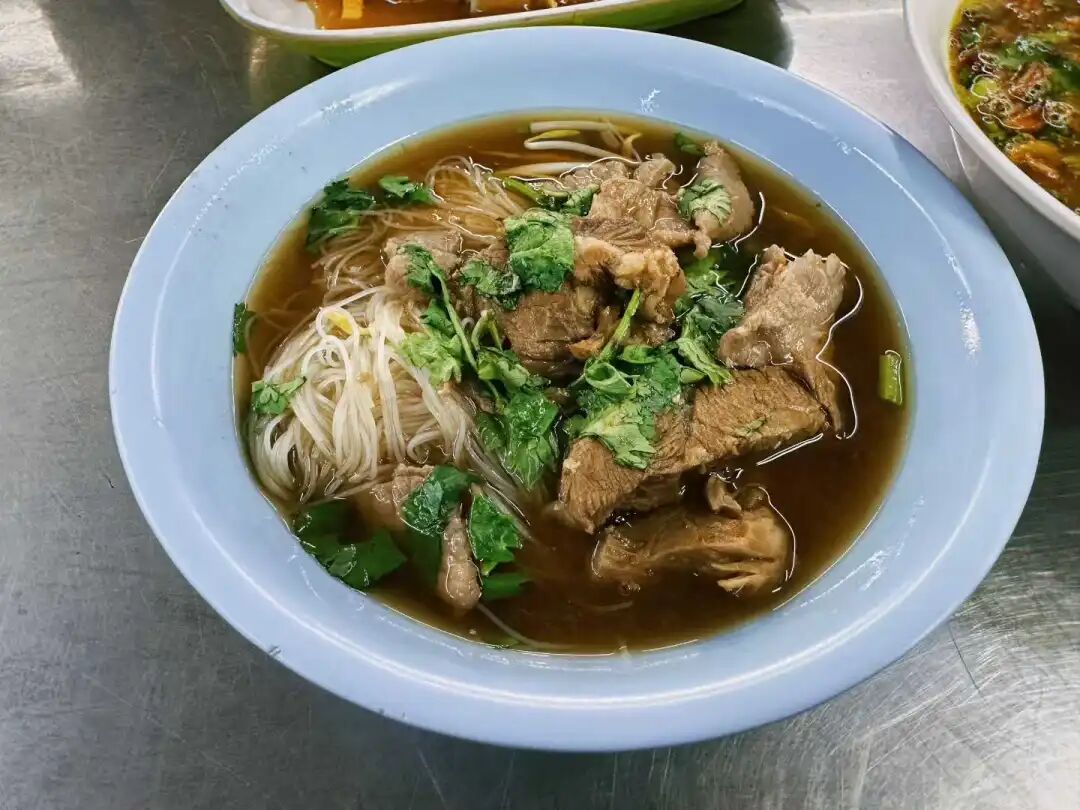
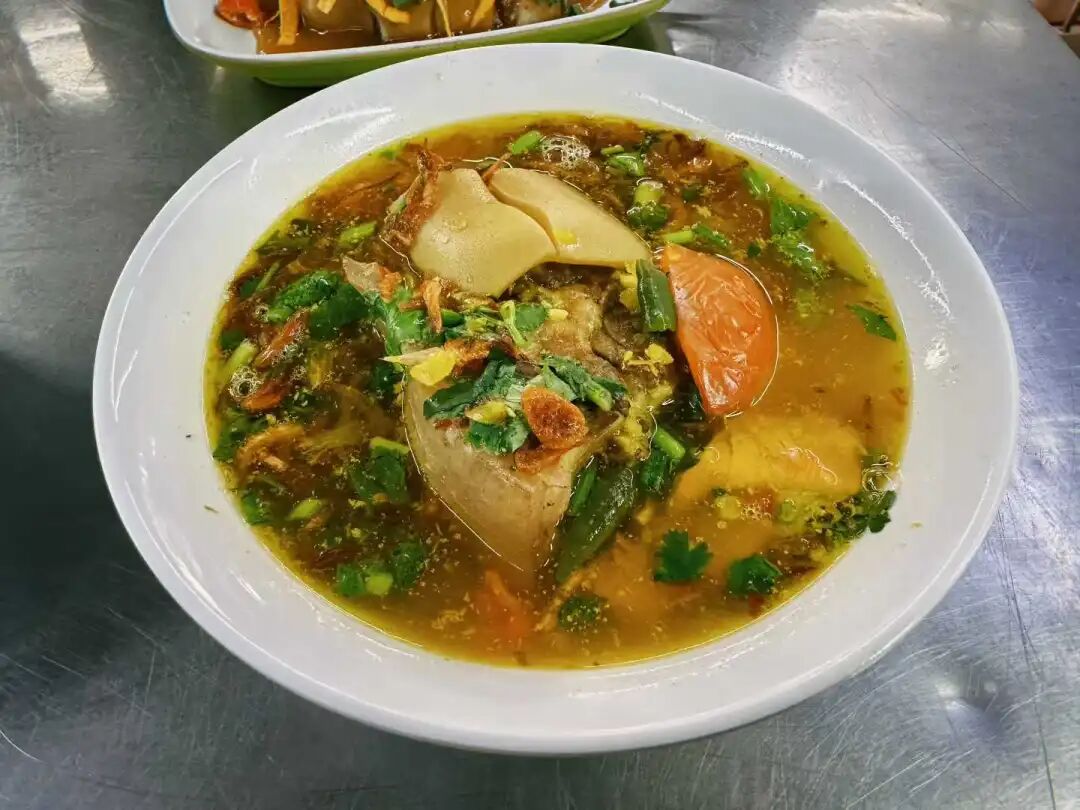
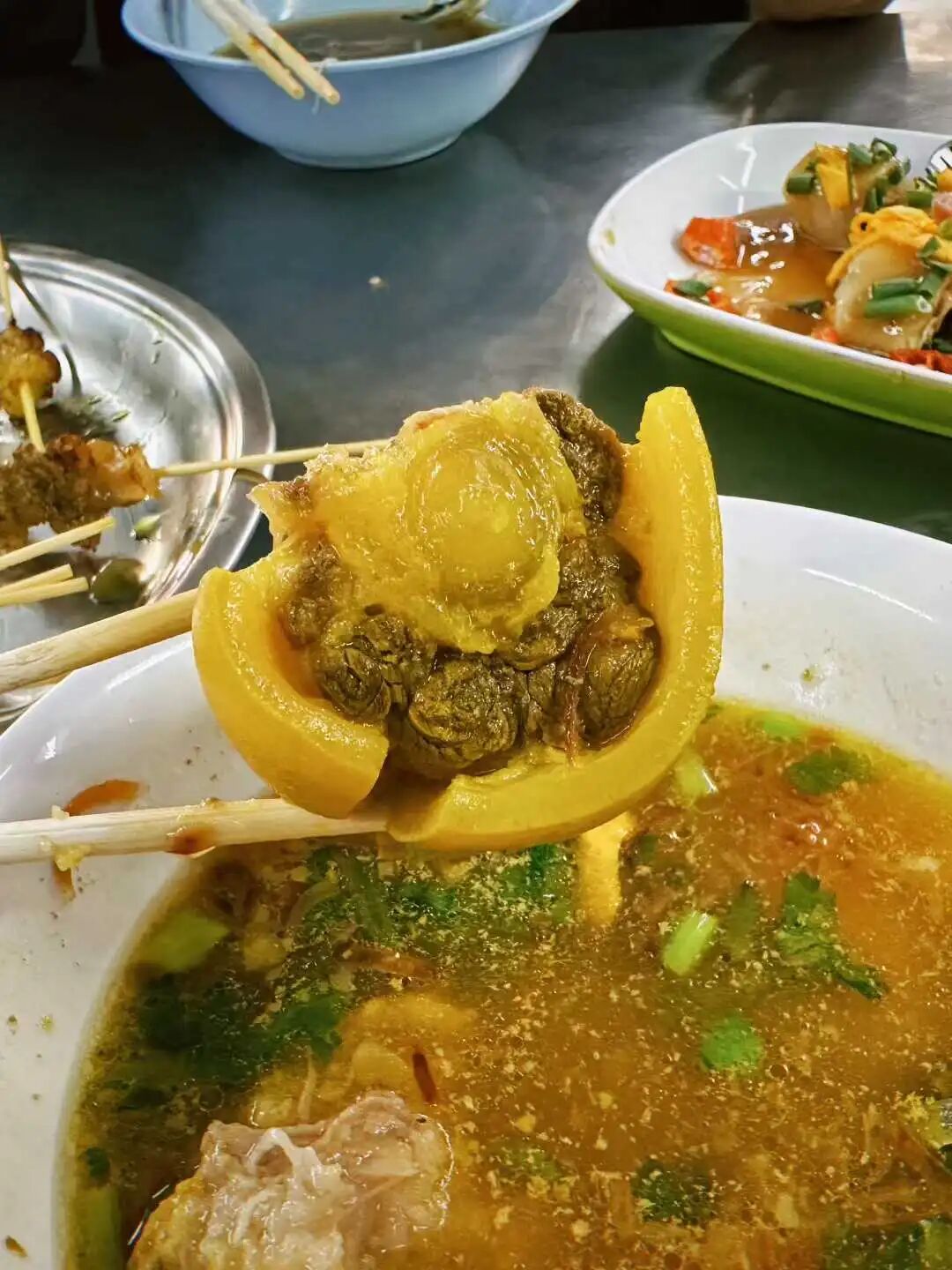
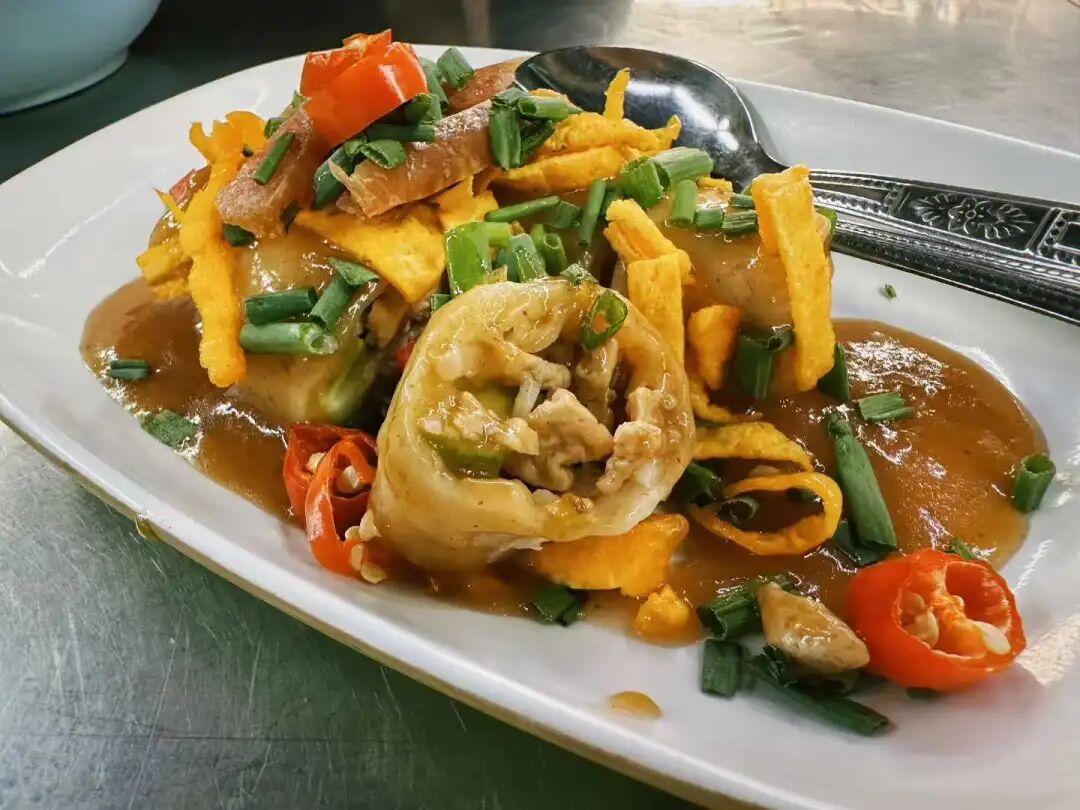
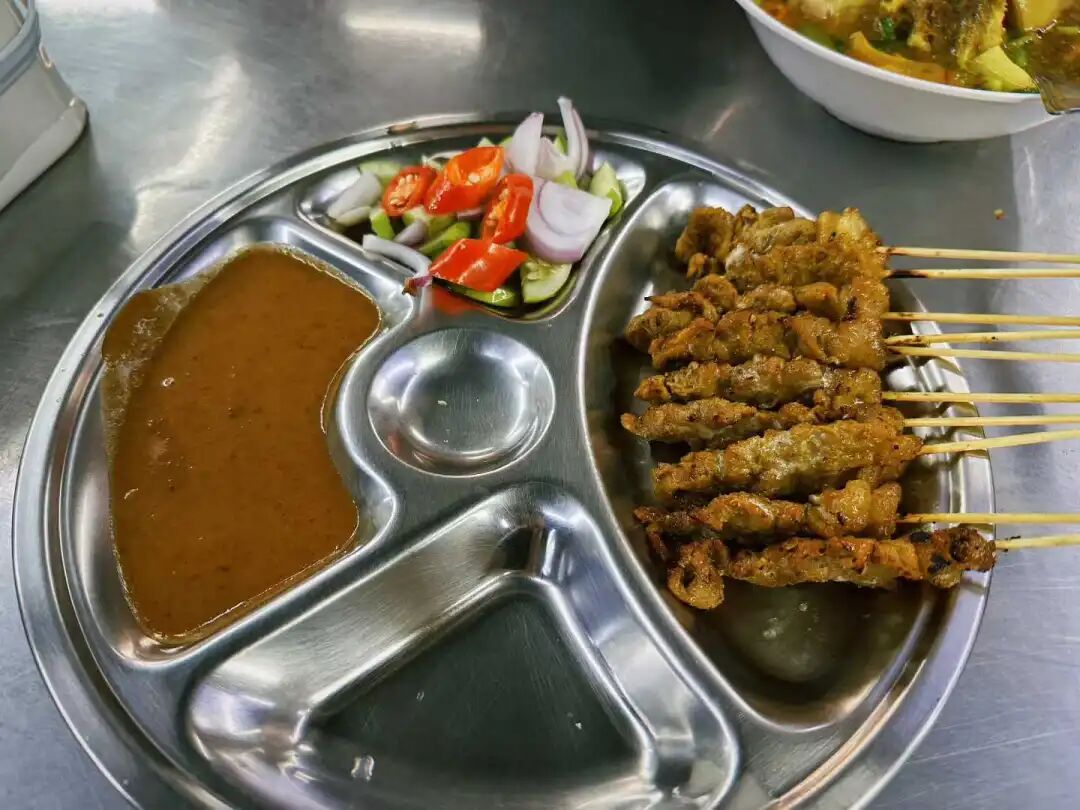
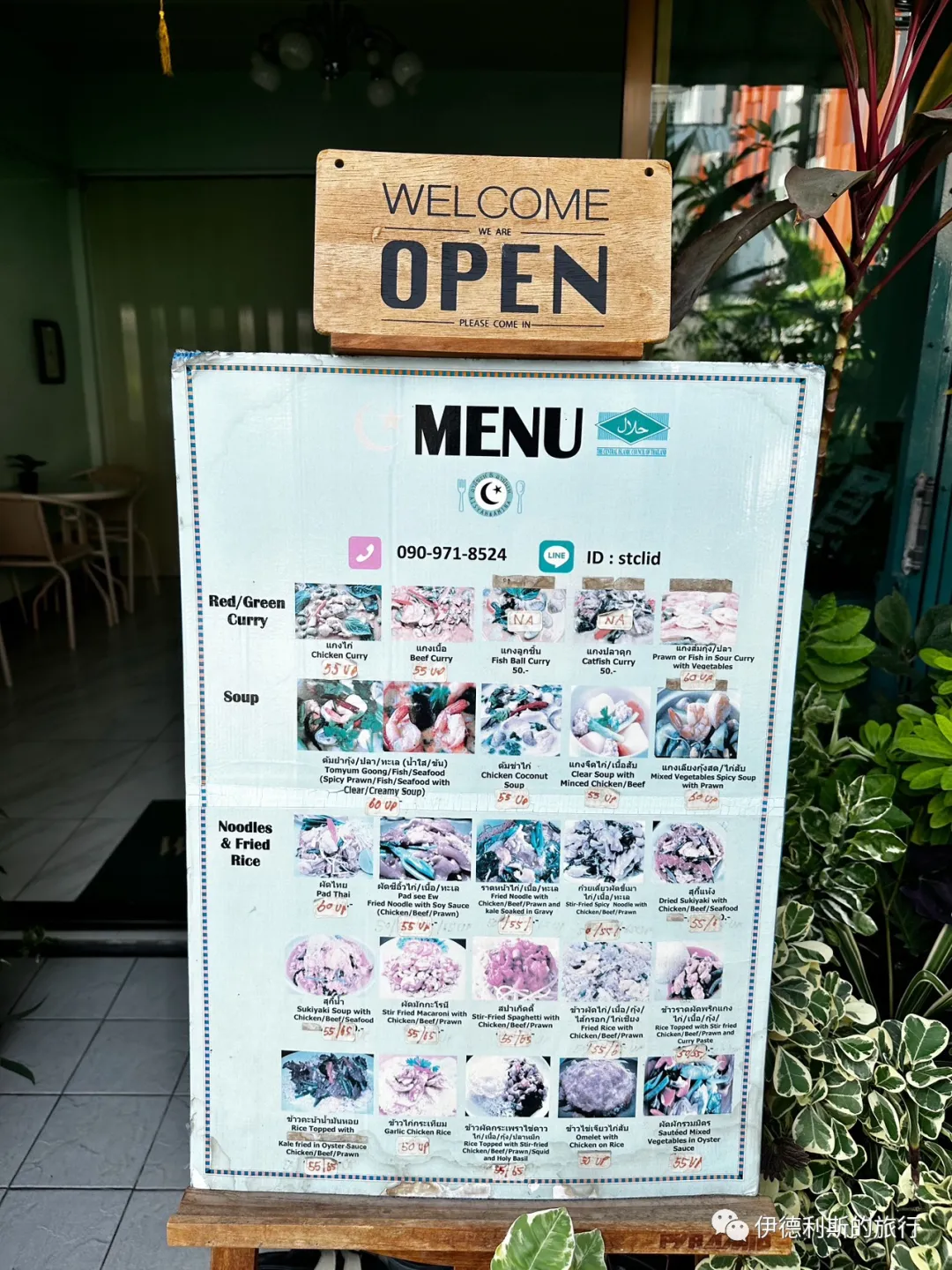
We ordered beef noodles, oxtail curry soup, fresh spring rolls, and beef satay skewers. Everything was delicious. The beef noodles were sweet and sour, the oxtail soup was rich with skin-on meat, and the spring rolls were unique with a chicken filling. Their beef satay skewers are the best I have ever eaten in all my many trips to Thailand, Malaysia, Indonesia, and Singapore! They were very tender, not dry at all, and you can dip them in the satay sauce yourself to control the sweetness. In fact, satay originated on the island of Java, developed by the Javanese based on the South Asian kebabs (kebab) brought by Indian merchants. After the 19th century, Javanese people spread satay grilled meat (satay) throughout Southeast Asia.
Javanese Mosque (Masjid Jawa)
During the late reign of King Rama VI and the reign of King Rama VII, the royal family cut spending and dismissed the Javanese gardeners. Later, most Javanese gardeners moved to the southern suburbs of Bangkok and built several mosque communities. The Javanese Mosque (Masjid Jawa) is the only one that still keeps its traditional Javanese style.
The Javanese Mosque is a community made up of Javanese and Malay Muslims, and the imam is chosen from both groups on a rotating basis. The Javanese Mosque was built in 1906 on land owned by a Javanese Muslim named Haji Muhammad Saleh. Even though it was expanded in 1927 and 1975, it still keeps its classic Javanese style.
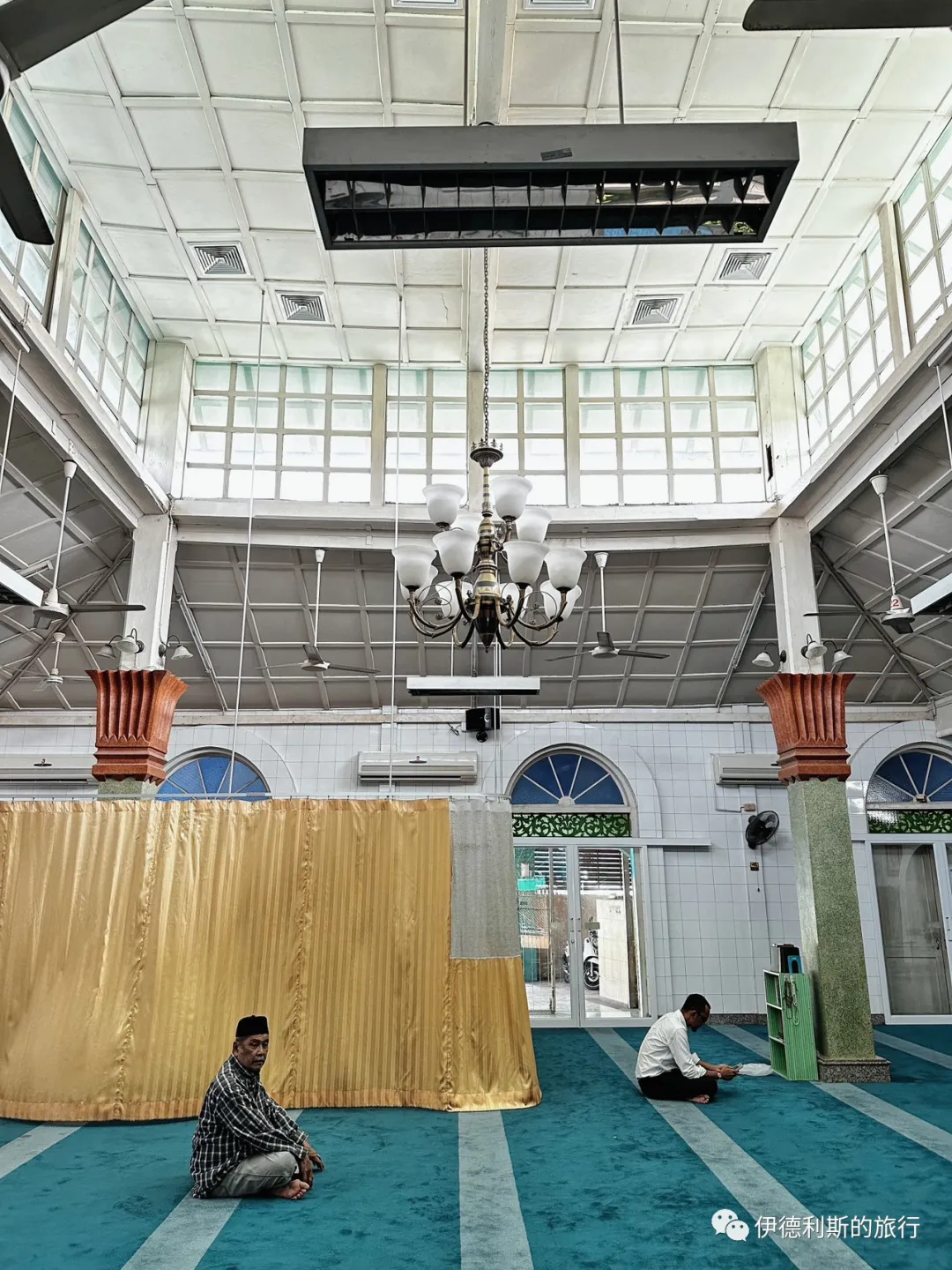
The mosque has a three-tiered pyramid-shaped roof called a Tajug, with a Mustoko decoration at the very top. The main hall is held up by four pillars called Soko Guru instead of using walls for support. In the front porch of the main hall, there is a large drum called a Bedug used for the call to prayer. Traditional Javanese mosques rarely have minarets, so they use the drum to call people to namaz and to announce the end of the daily fast. Also, next to the main hall, there is a wooden house on stilts used as a school that is over 60 years old. view all
Summary: Bangkok's Indonesian Muslim history includes Arab-Indonesian merchants, Javanese gardeners, riverside mosque communities, and halal street food near old neighborhoods. This first part follows Haroon Mosque, Saralom Park, Ban Tuk Din Mosque, Ayeesah Roddee Halal, Java Mosque, and the related food and architecture details.
The Indonesian mosque communities in downtown Bangkok come from two main sources: fishermen and traders who sailed from Borneo and the Sulu Archipelago, and Javanese gardeners hired by King Rama V in the late 19th century. Bangkok still preserves Indonesian-style food and Javanese-style mosques, which are an important part of the city's multicultural identity.
Indonesian sailors
Ban Oou Mosque
The Ban Oou Mosque community is right next to Saphan Taksin Bridge. It was built during the reign of King Rama IV (1851-68) by a group of Indonesian sailors who fished at the mouth of the Chao Phraya River year-round. After Britain and Thailand signed the Bowring Treaty in 1855, business in the Bang Rak area boomed. These Indonesian sailors sold their catch to Western sailors and merchants living in Bang Rak. During the reign of King Rama V (1868-1910), they became fishmongers in the market after it was established.
In the late 19th and early 20th centuries, as the port of Bangkok grew, many shipyards, piers, and docks were built around the Ban Oou Mosque community. Many residents became barge workers, handling cargo for nearby European shipping companies. As people stopped making a living from fishing, the mosque community began to move inland. In 1919, the community rebuilt the mosque 100 meters inland from the Chao Phraya River.
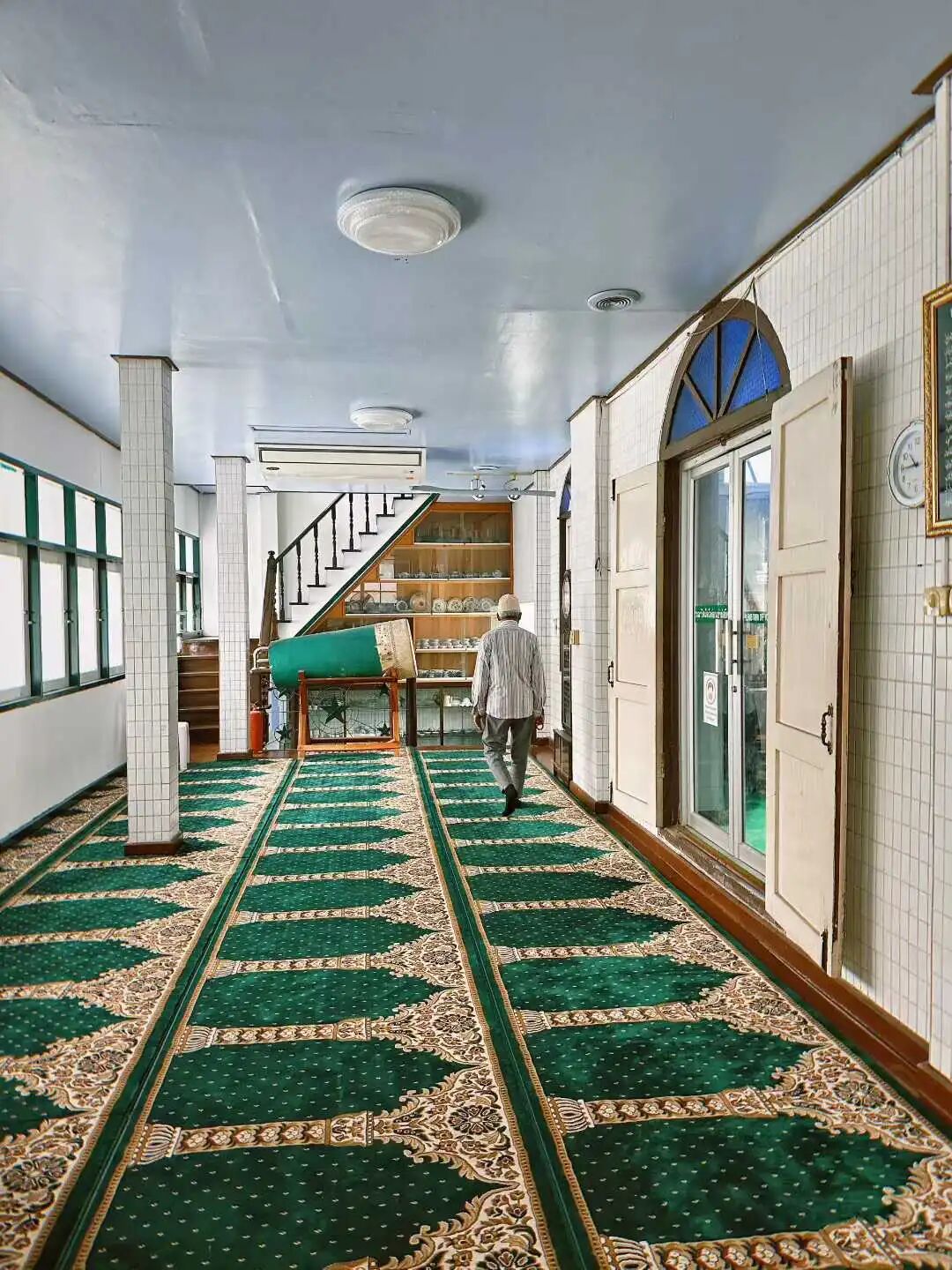
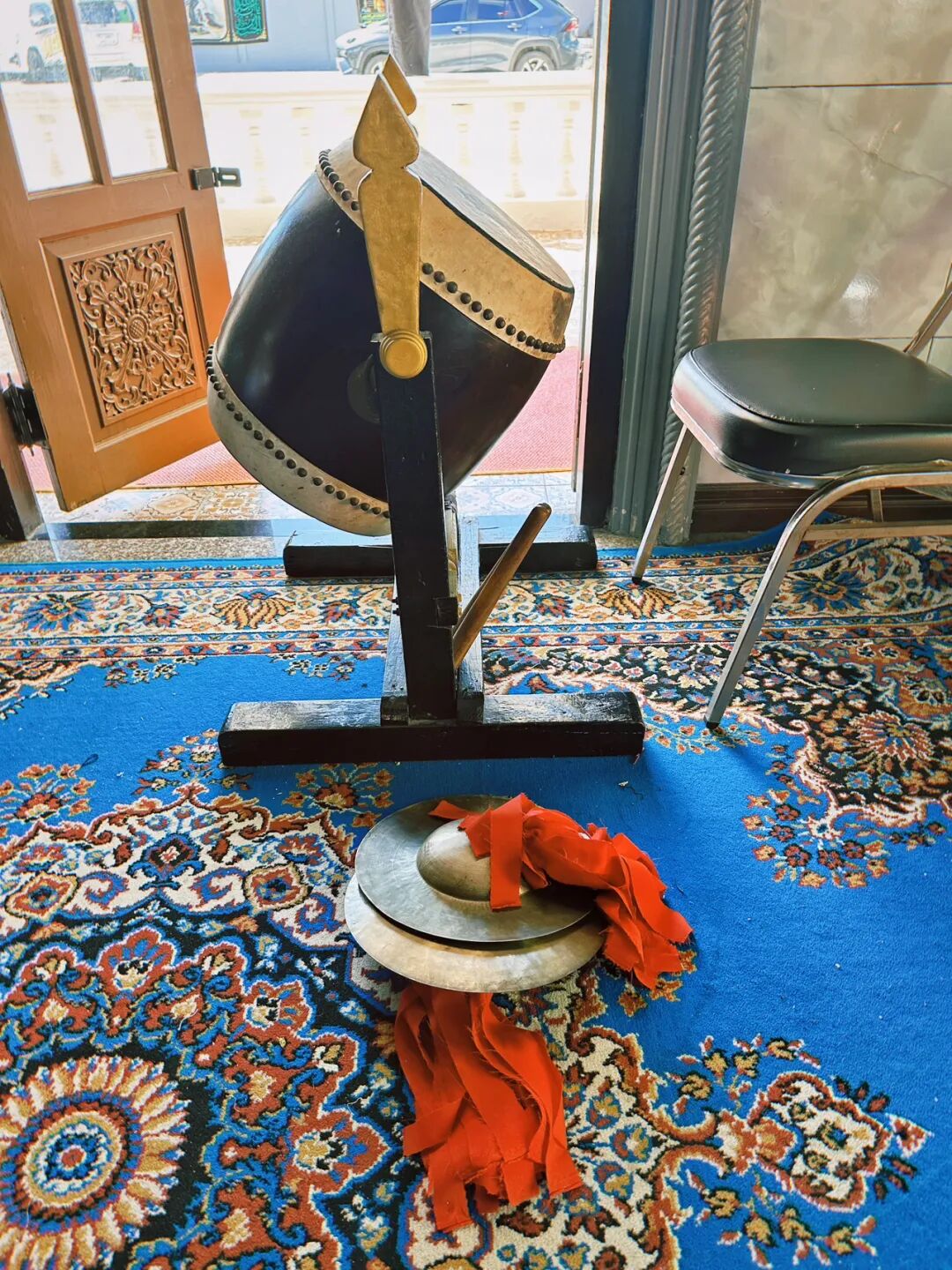
The mosque houses a traditional Indonesian Beduk drum. This single-sided drum is made from a hollowed-out log and covered with cowhide on one side. Slow beats on the Beduk drum signal the approach of prayer time, while rapid beats mean someone has passed away.
The mosque contains a collection of porcelain, giant turtles kept on the grounds, and a cemetery.

The sign at the snack shop next to the mosque shows a hand-shaking gesture, which is a common greeting among fellow Muslims (dosti) in Thailand and Indonesia. I have seen this in both countries.
Suwannaphum Mosque
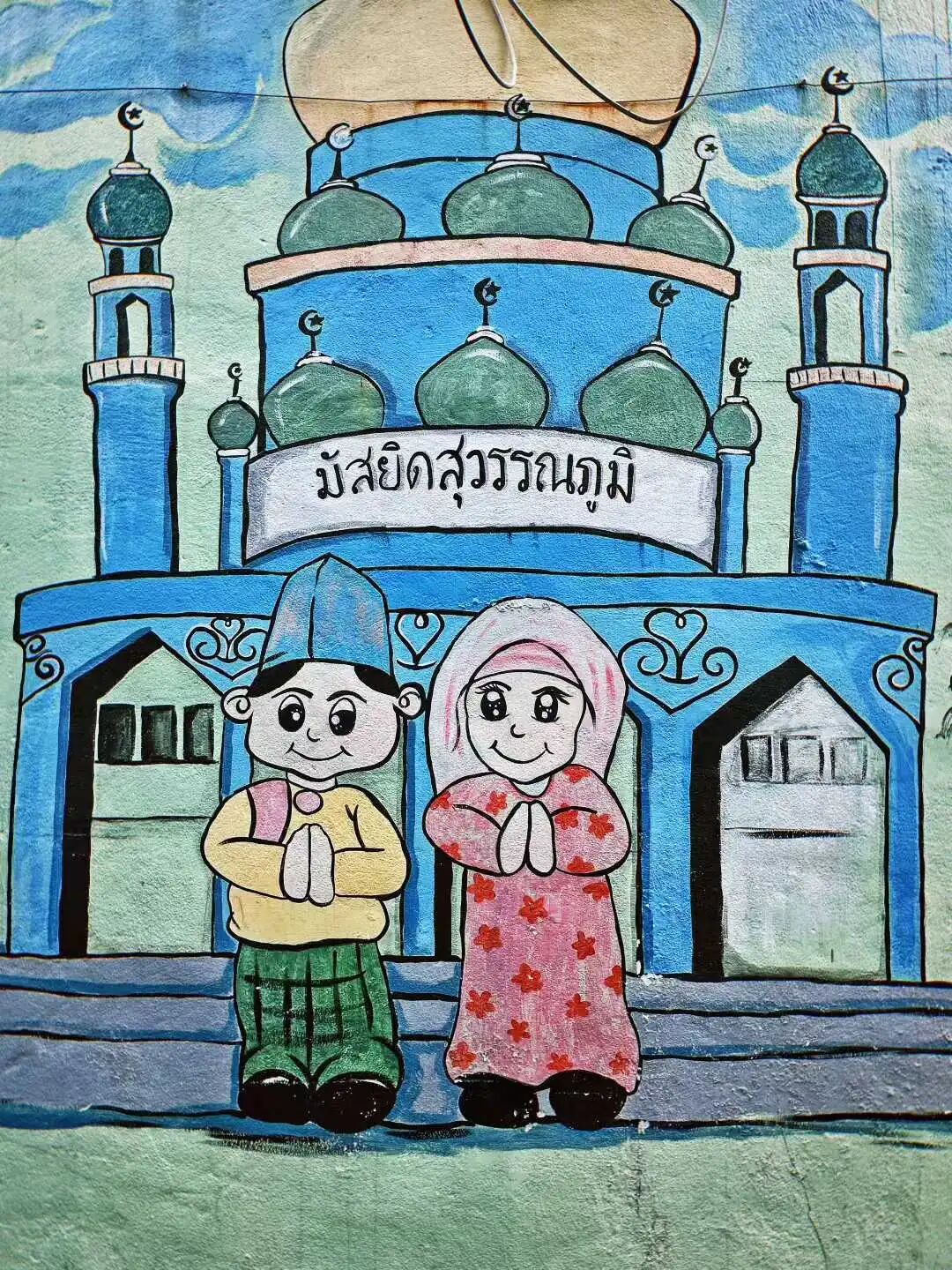
The Suwannaphum Mosque community is near the busy ICONSIAM mall. It was built on the banks of the Chao Phraya River during the reign of King Rama III (1824-1851) by Indonesian sailors living along the coast of Trat Province, near the Thai-Cambodian border. It was originally called Ban Khaek Lang, a sparsely populated village in the southern suburbs of Bangkok. After the Bowring Treaty was signed in 1855, piers and warehouses were built, and many trading companies opened. These Indonesian fishermen started working as barge workers, loading and unloading cargo for Western shipping companies and Indian merchants.
Because there were many Indian merchants nearby, Indian Muslims (dosti) often came to the mosque for worship, and some Indian Muslims even married into the Indonesian Muslim community. Indian merchants donated money to rebuild the mosque during the reign of King Rama IV (1851-68). People say King Rama IV personally named it Suwannaphum Mosque after the nearby Wat Suwan Ubasikaram.
The most unique feature of this mosque is that the imam enters a special wooden pavilion to lead the prayer. I have never seen this before and wonder if it is a unique feature of Thai Islamic practice.
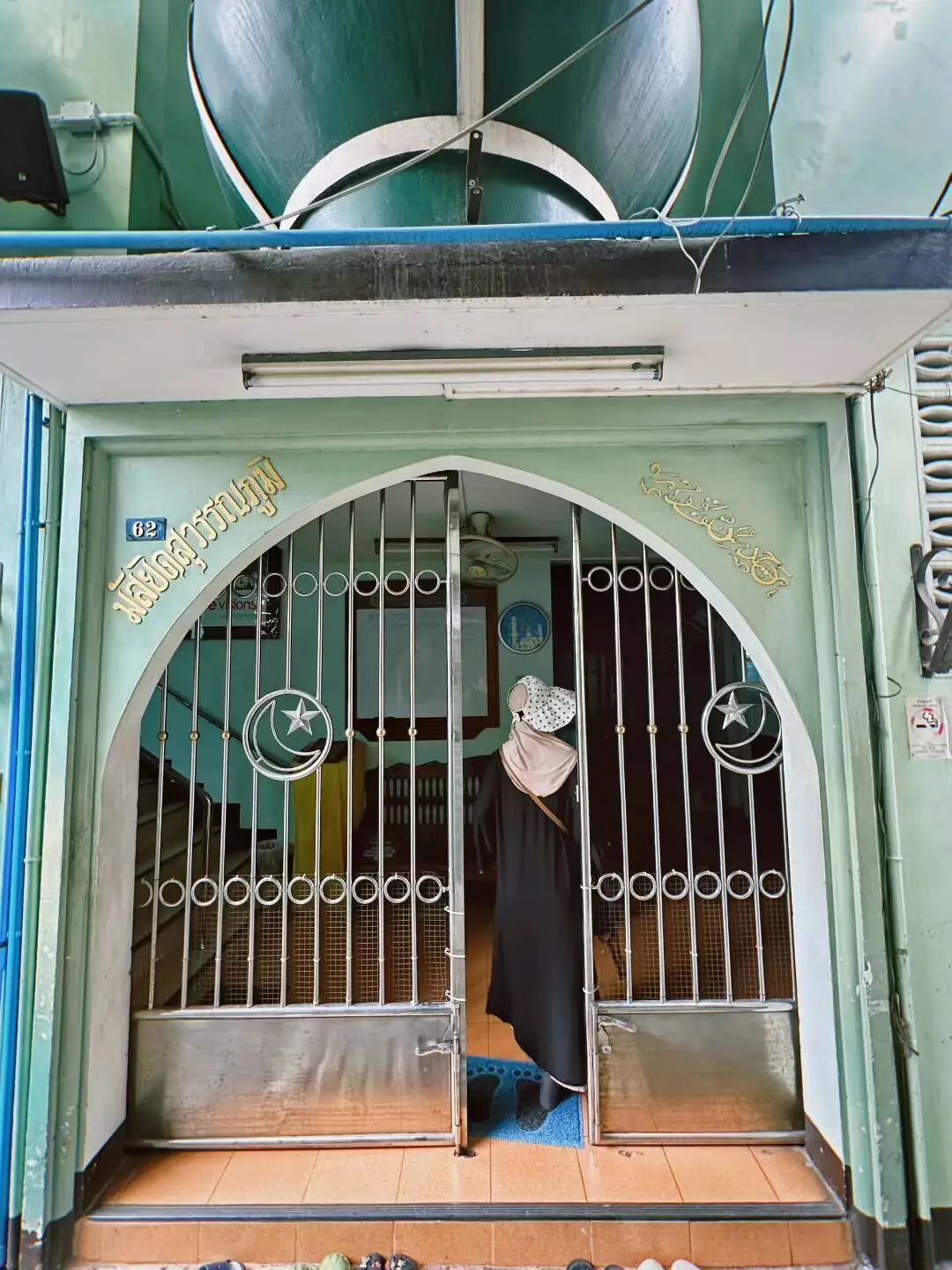
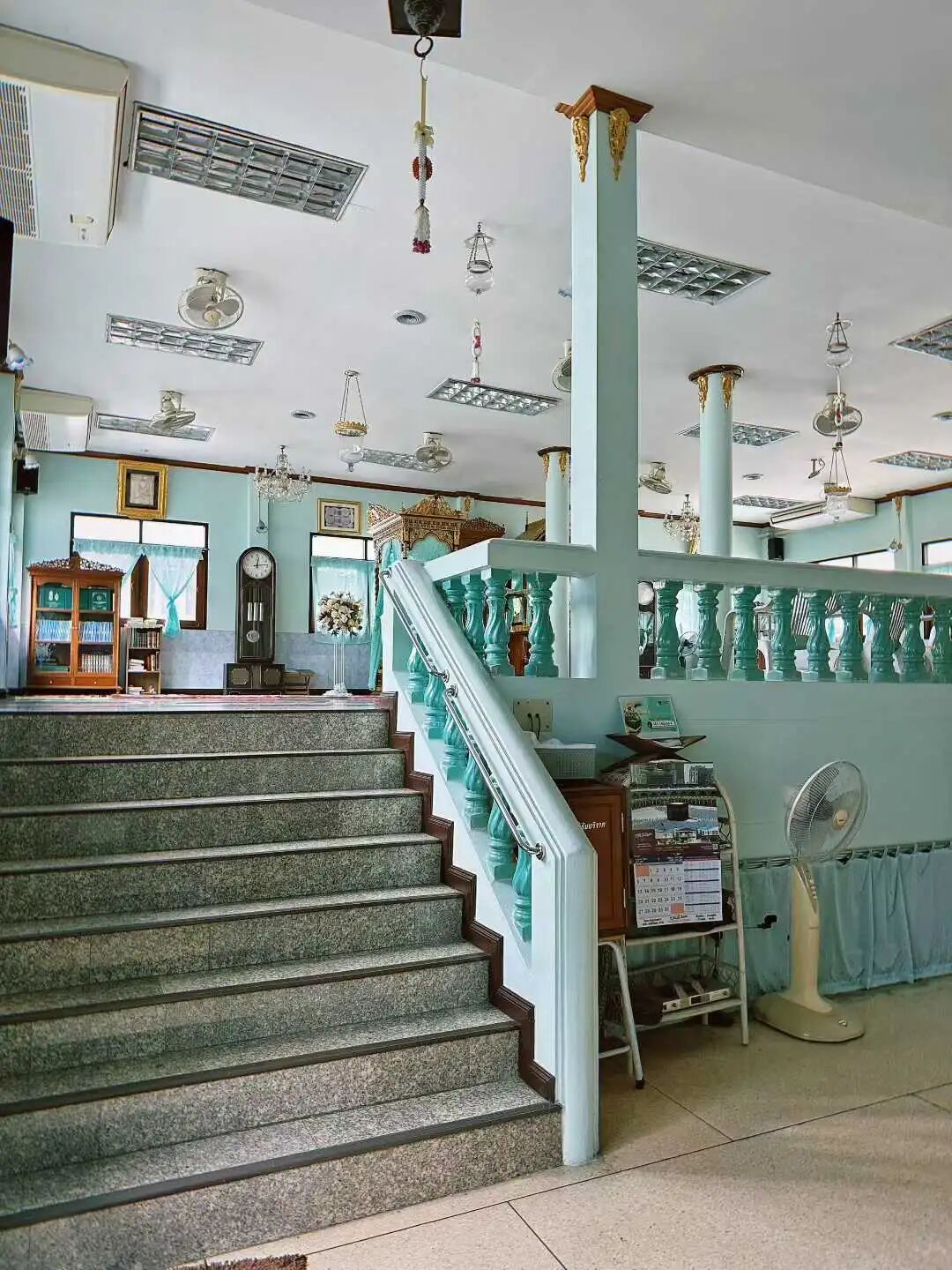
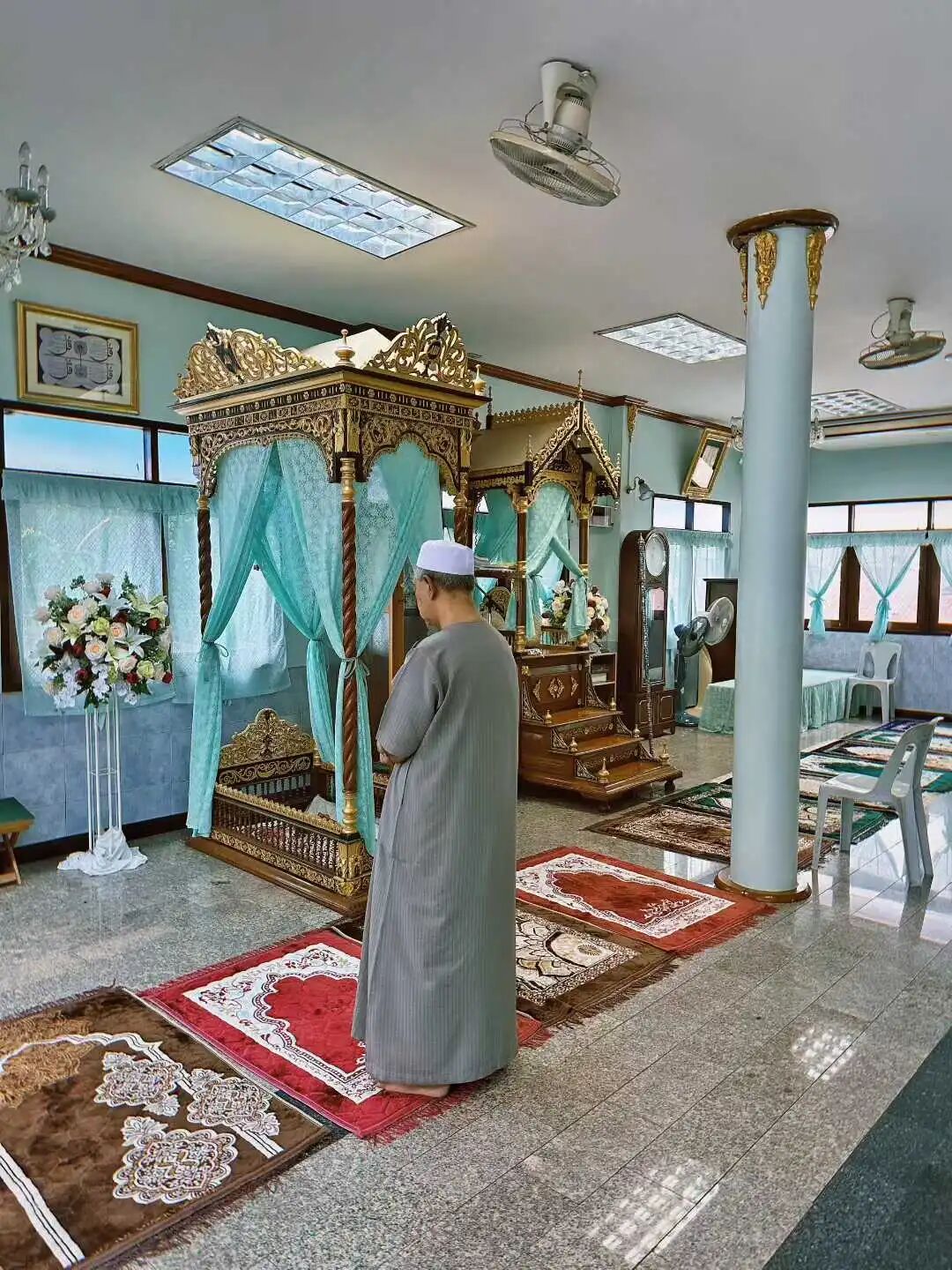
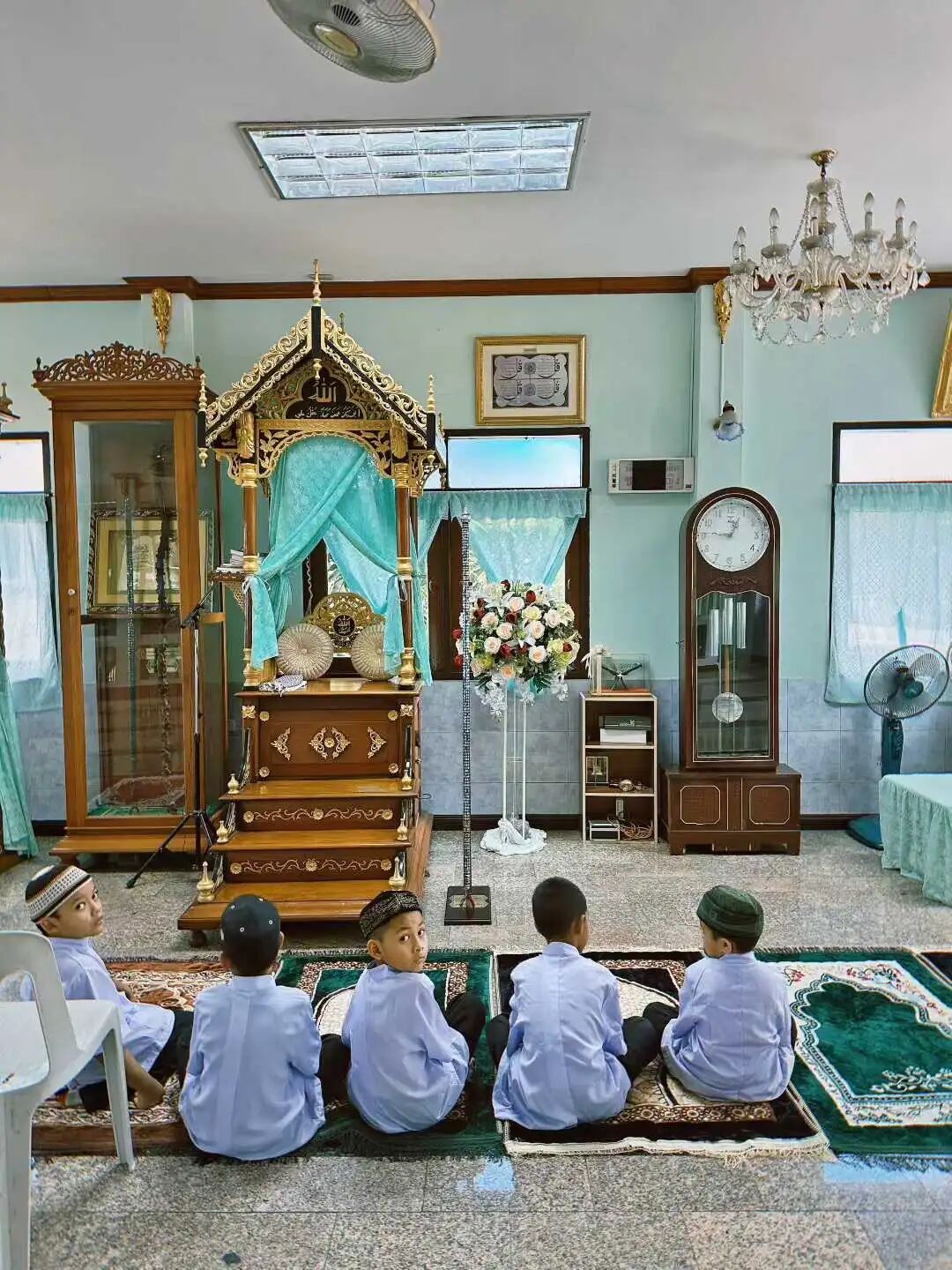
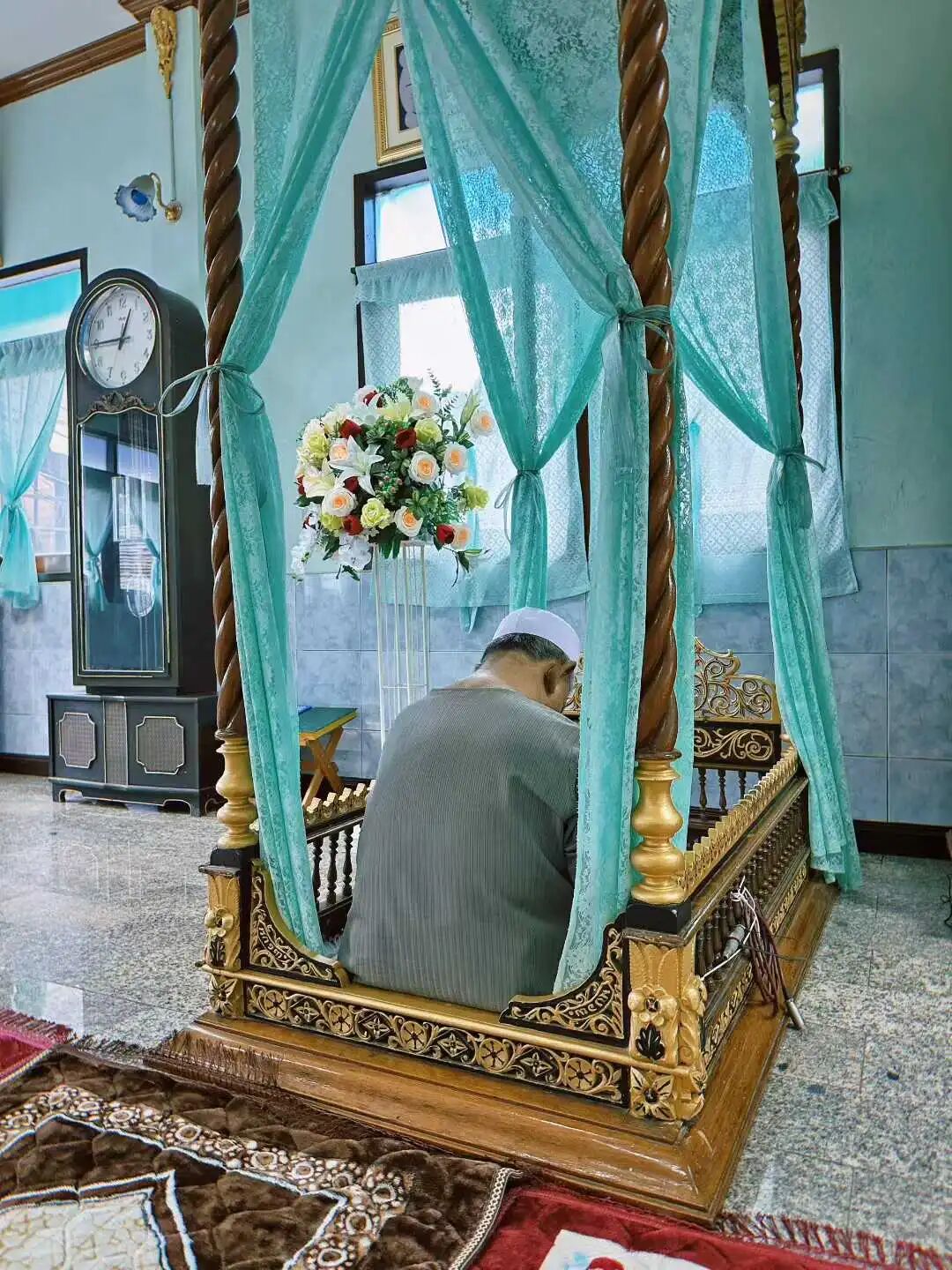
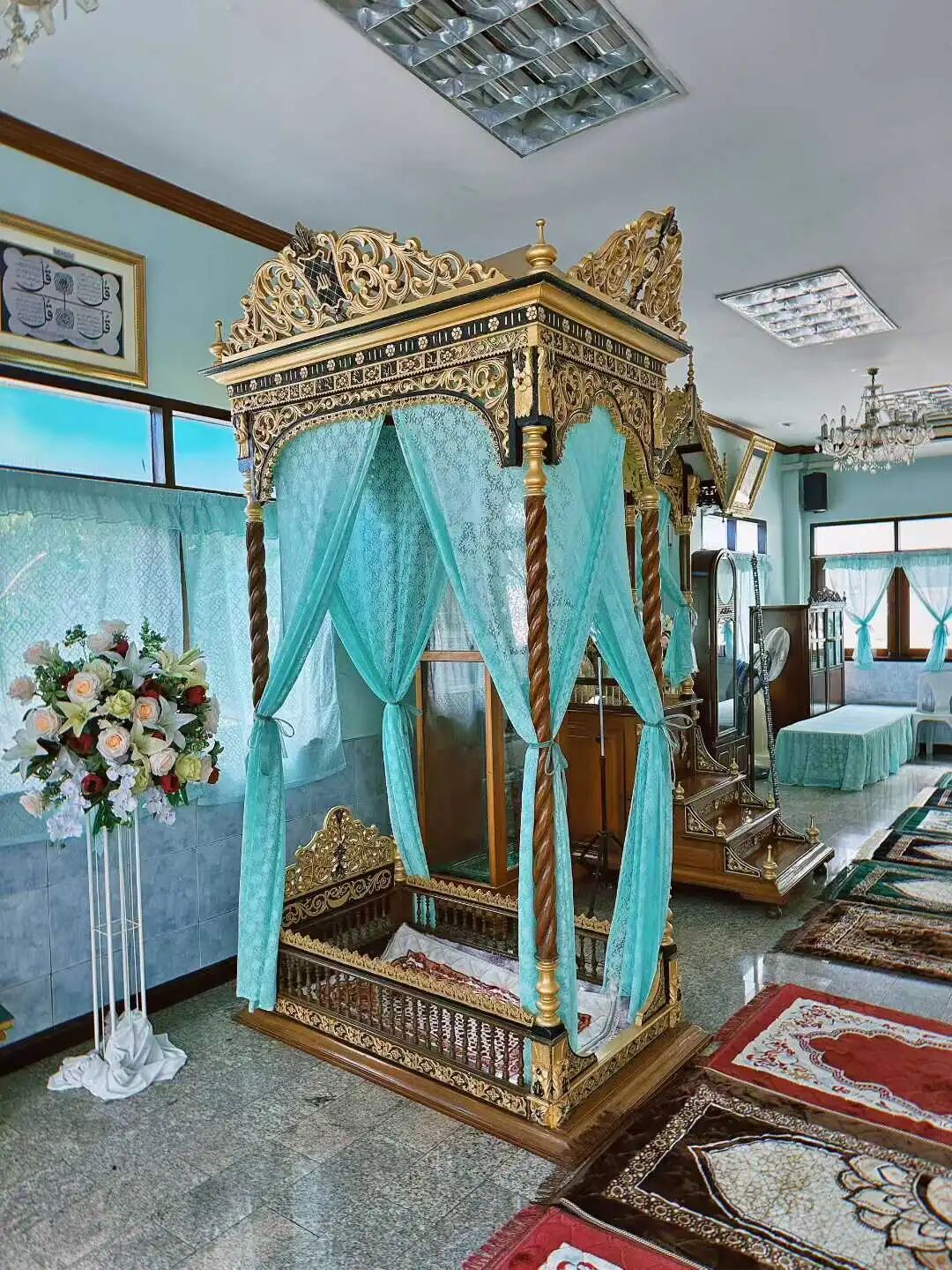
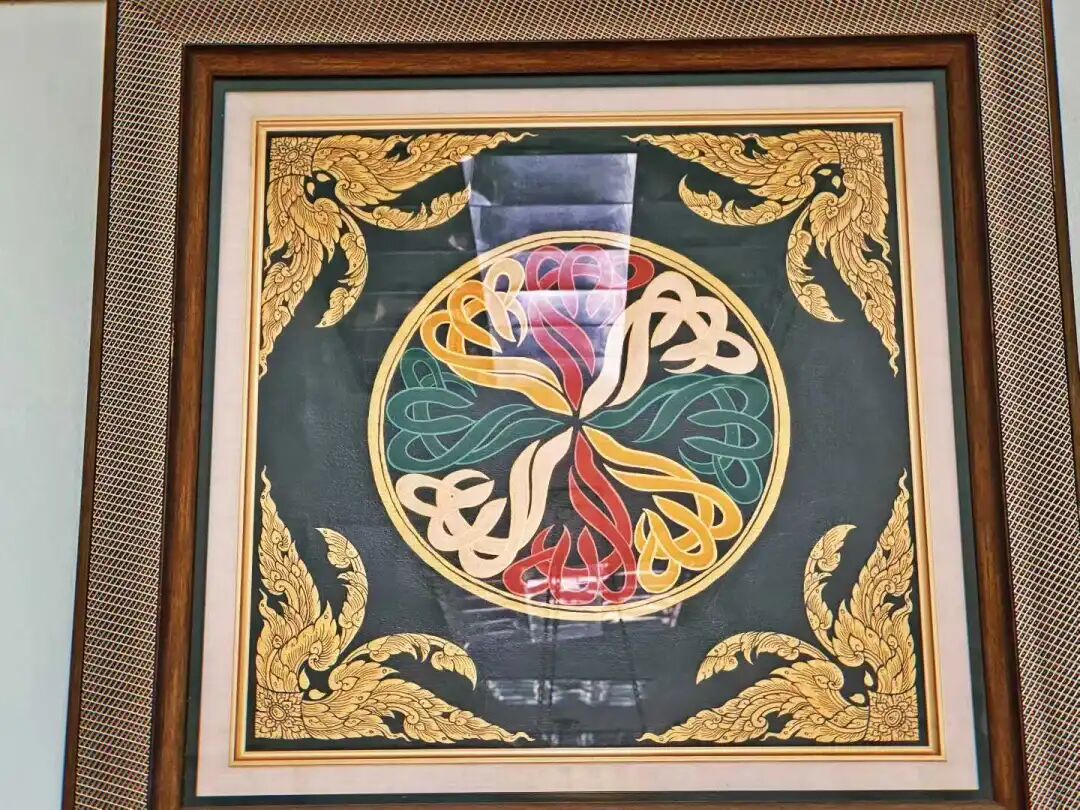
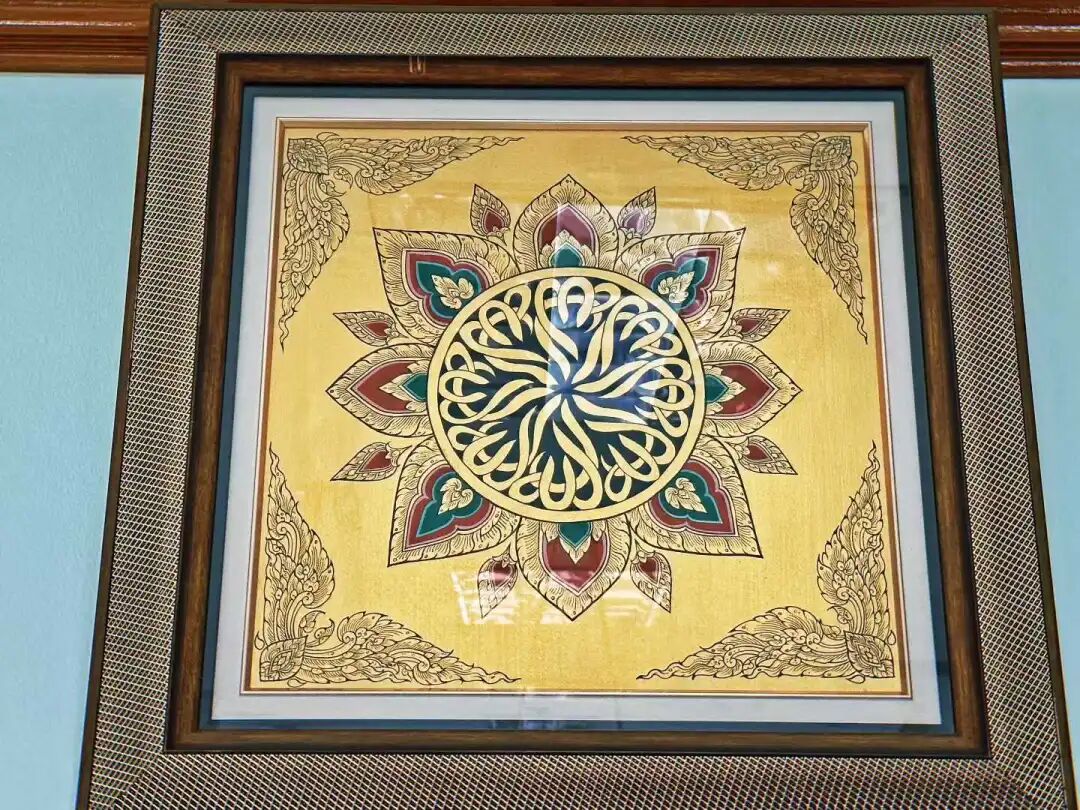
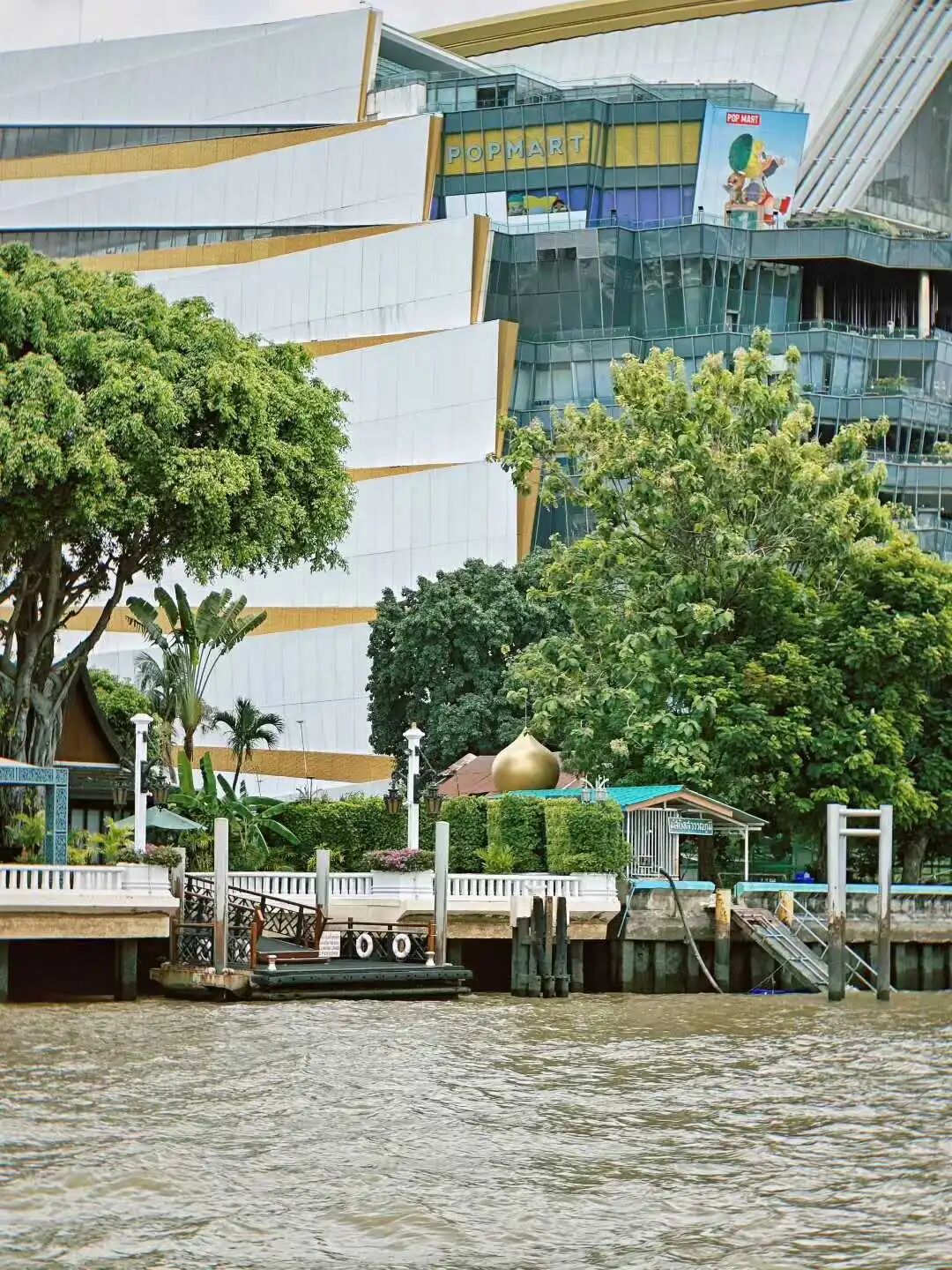
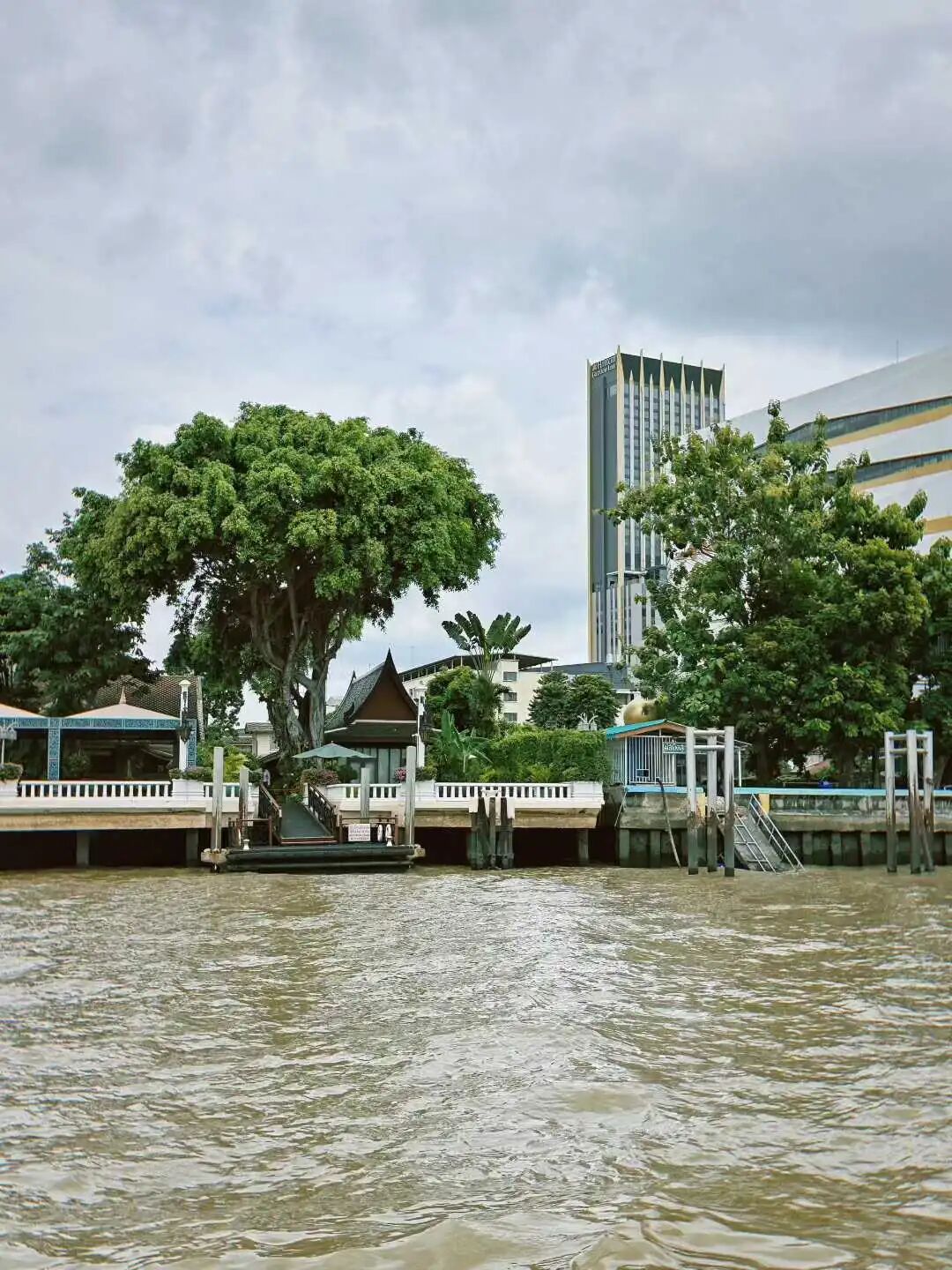
The view of Suwannaphum Mosque is beautiful. It is hard to imagine such a traditional water village mosque still exists right next to the busy ICONSIAM mall. The easiest way to get here is to take a boat along the Chao Phraya River to ICONSIAM and then walk over.
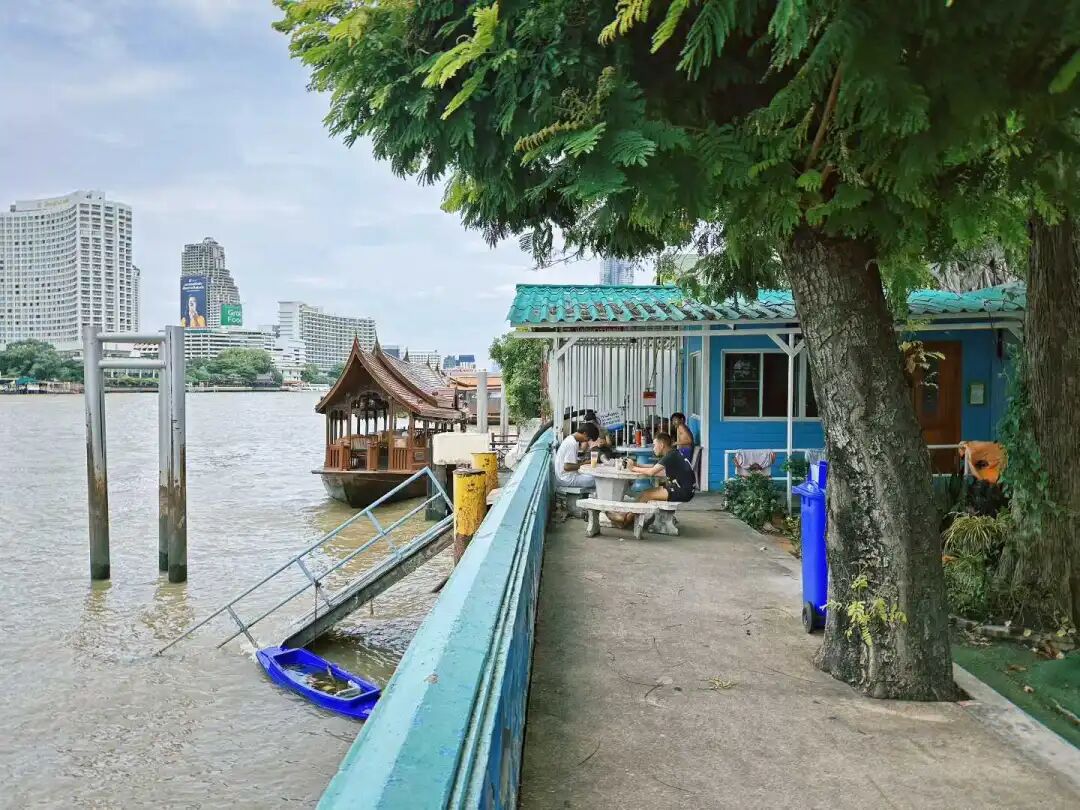
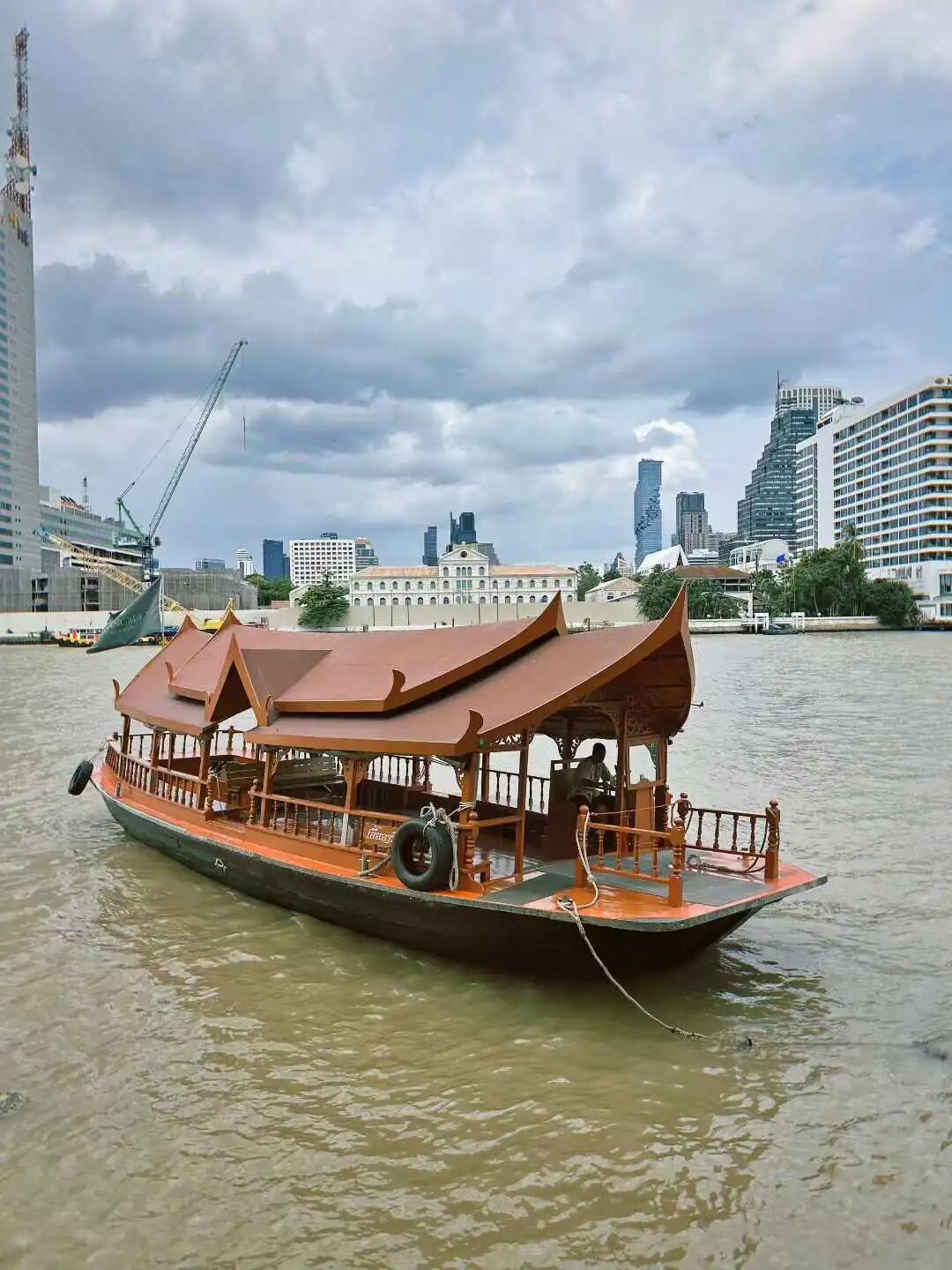
There are many halal restaurants near ICONSIAM, and we ate inside the mall last time. This time, we ate at a Thai halal restaurant called Nakhon Lerdros inside the ICS mall, which is across from ICONSIAM. You can walk between ICS and ICONSIAM using the upper-level walkway. The best part about eating in the mall is the air conditioning, though it costs more than street food.
We ordered Thai boat noodles, tom yum soup, grilled meatballs, and longan juice. Boat noodles were originally sold by people rowing small boats along Bangkok's canals. One person did everything on the boat: cooking the noodles, making the broth, serving the food, collecting money, and washing the dishes. Halal boat noodles usually use beef and beef meatballs, and the broth is made from beef. They use Tang Shuang He brand fish sauce for seasoning. Most Thai condiments are halal-certified. The fish sauce only contains anchovies, salt, sugar, and water, which adds a special flavor.
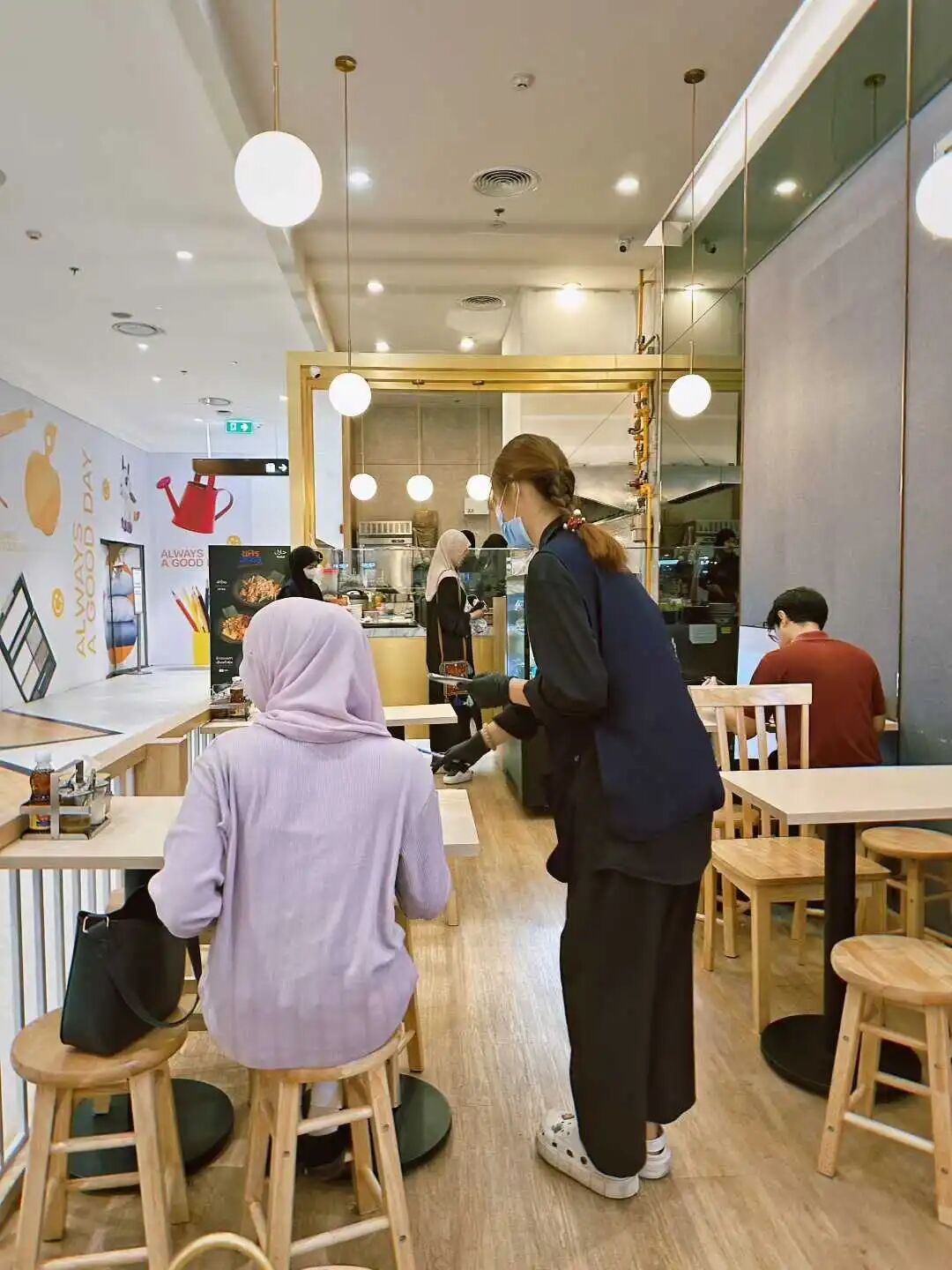

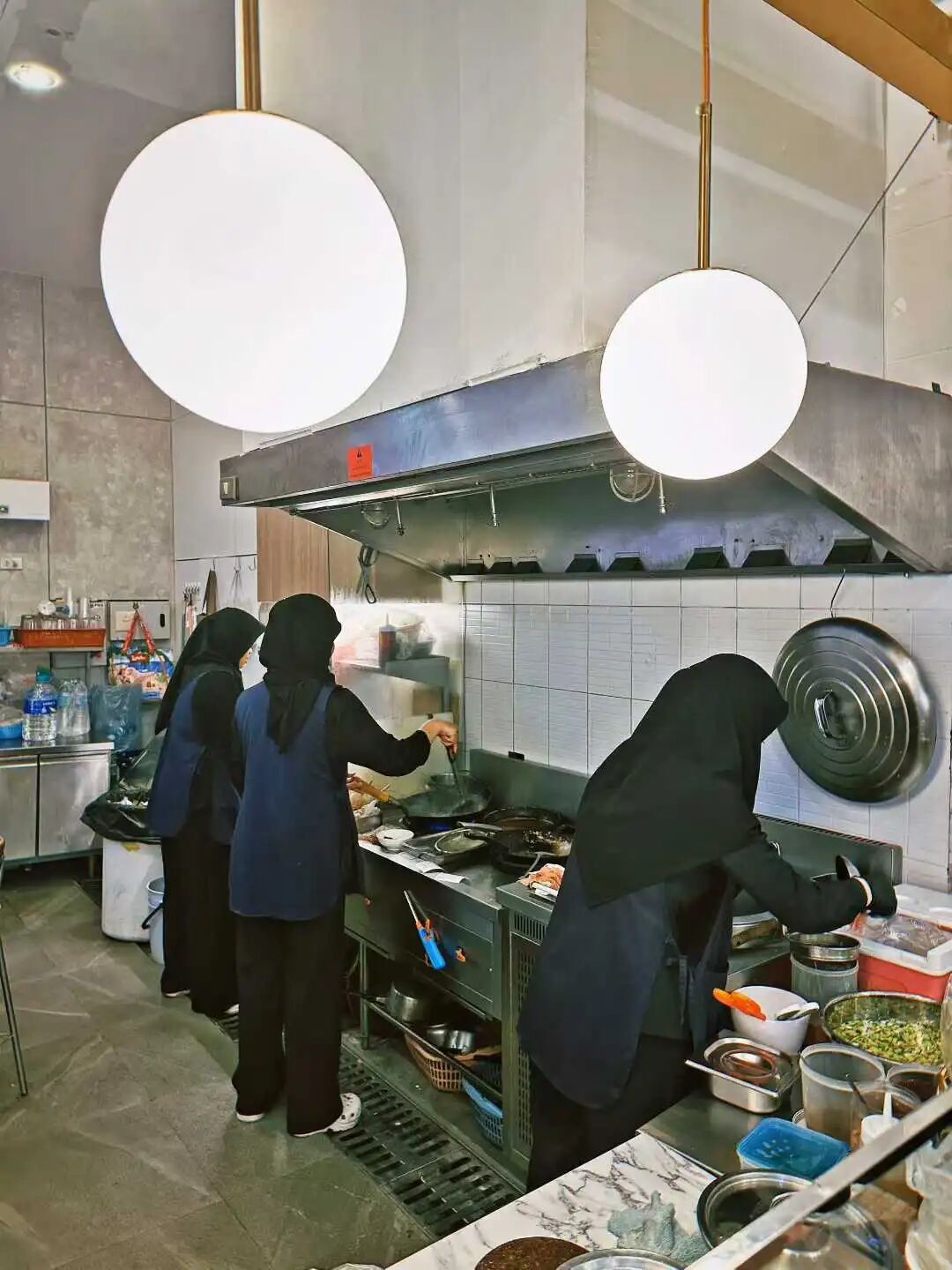
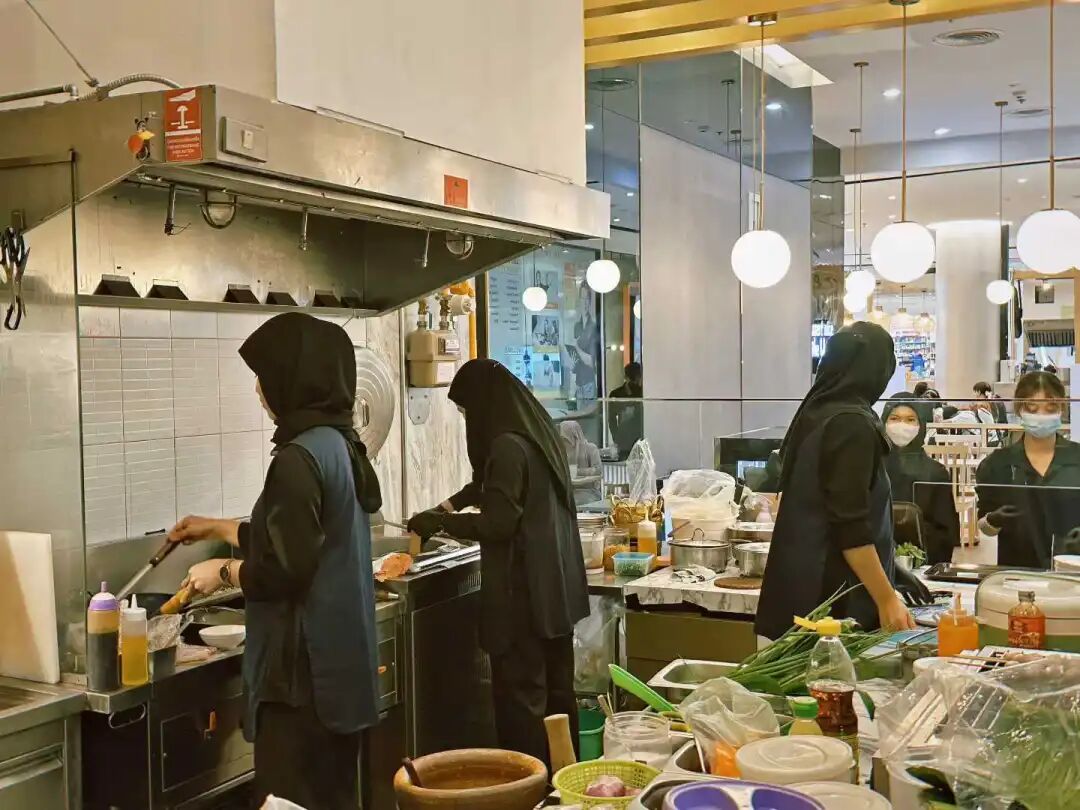
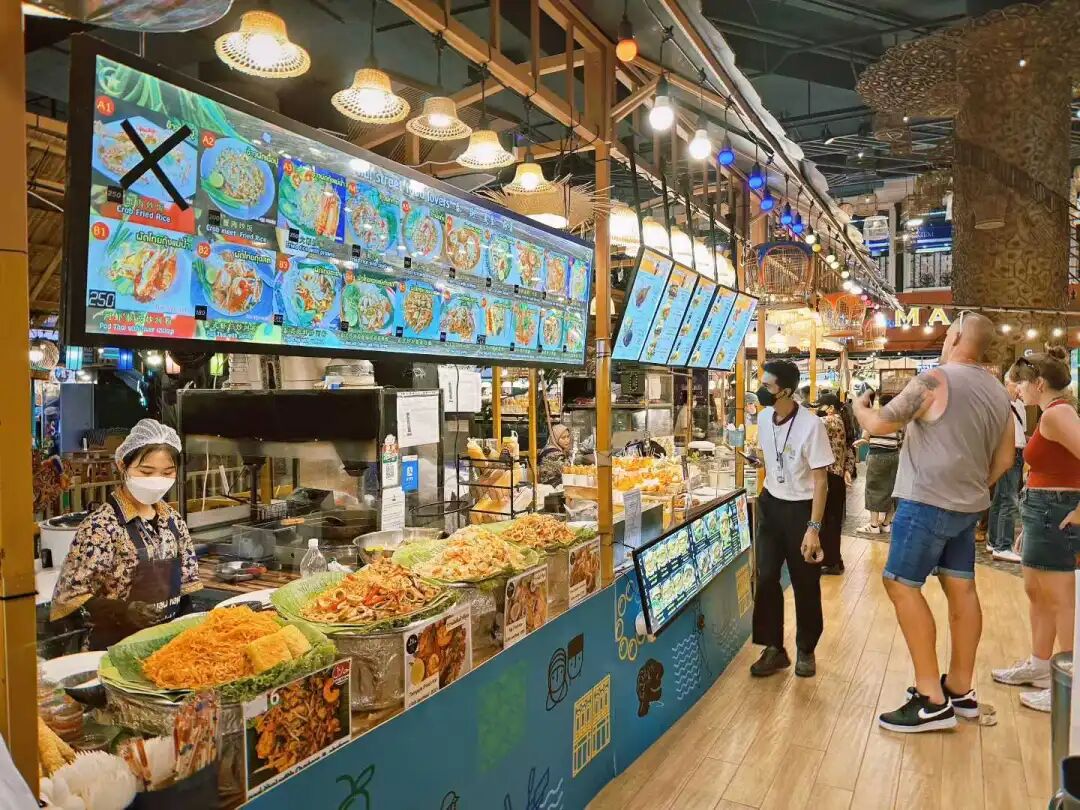
The food court inside ICONSIAM is still very popular. There are several halal stalls here, making it a great place to eat snacks while enjoying the air conditioning on a hot day.
For more about snacks inside ICONSIAM, see my diary: Bangkok Halal Trip—Food and Lodging.
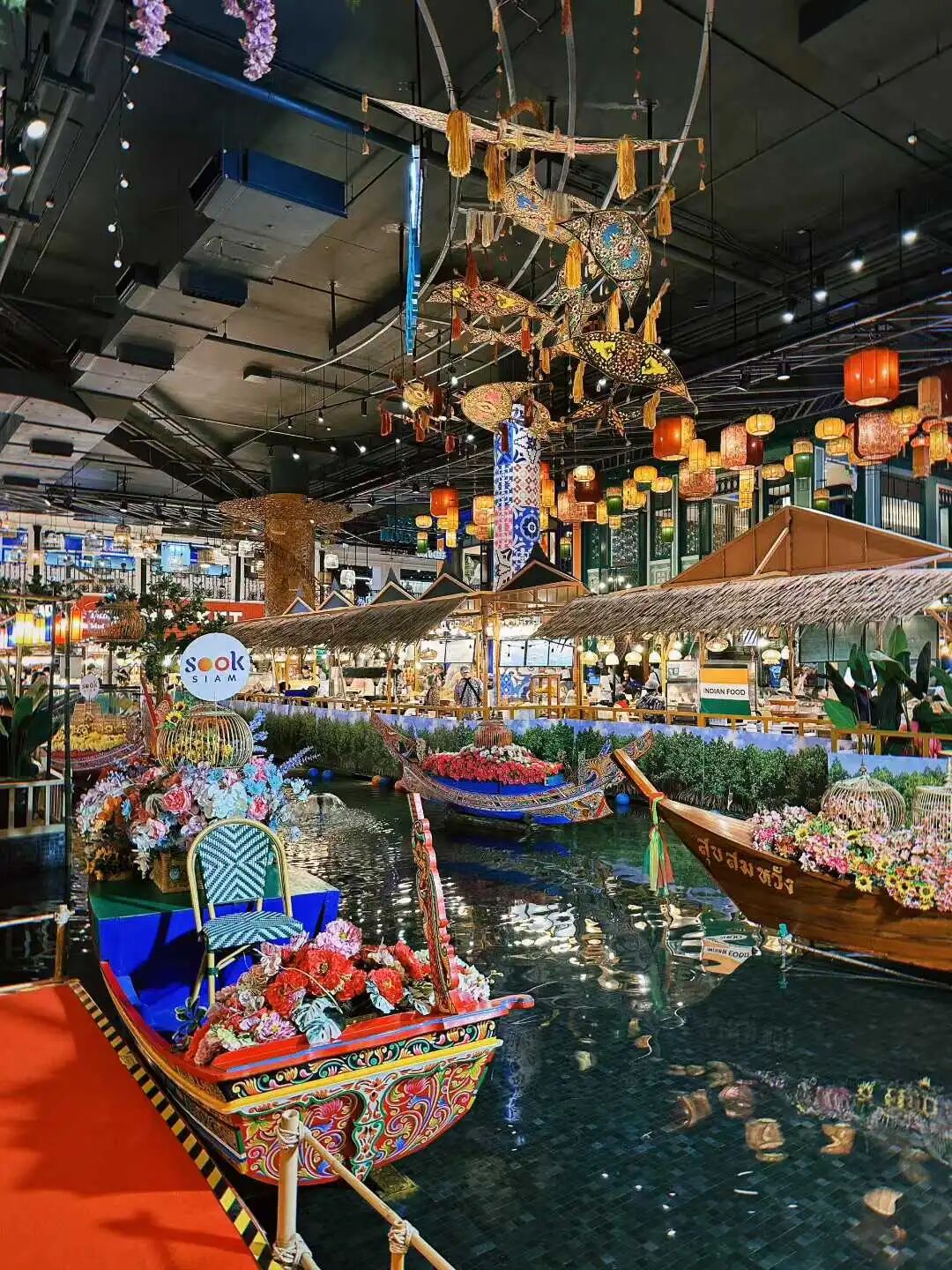
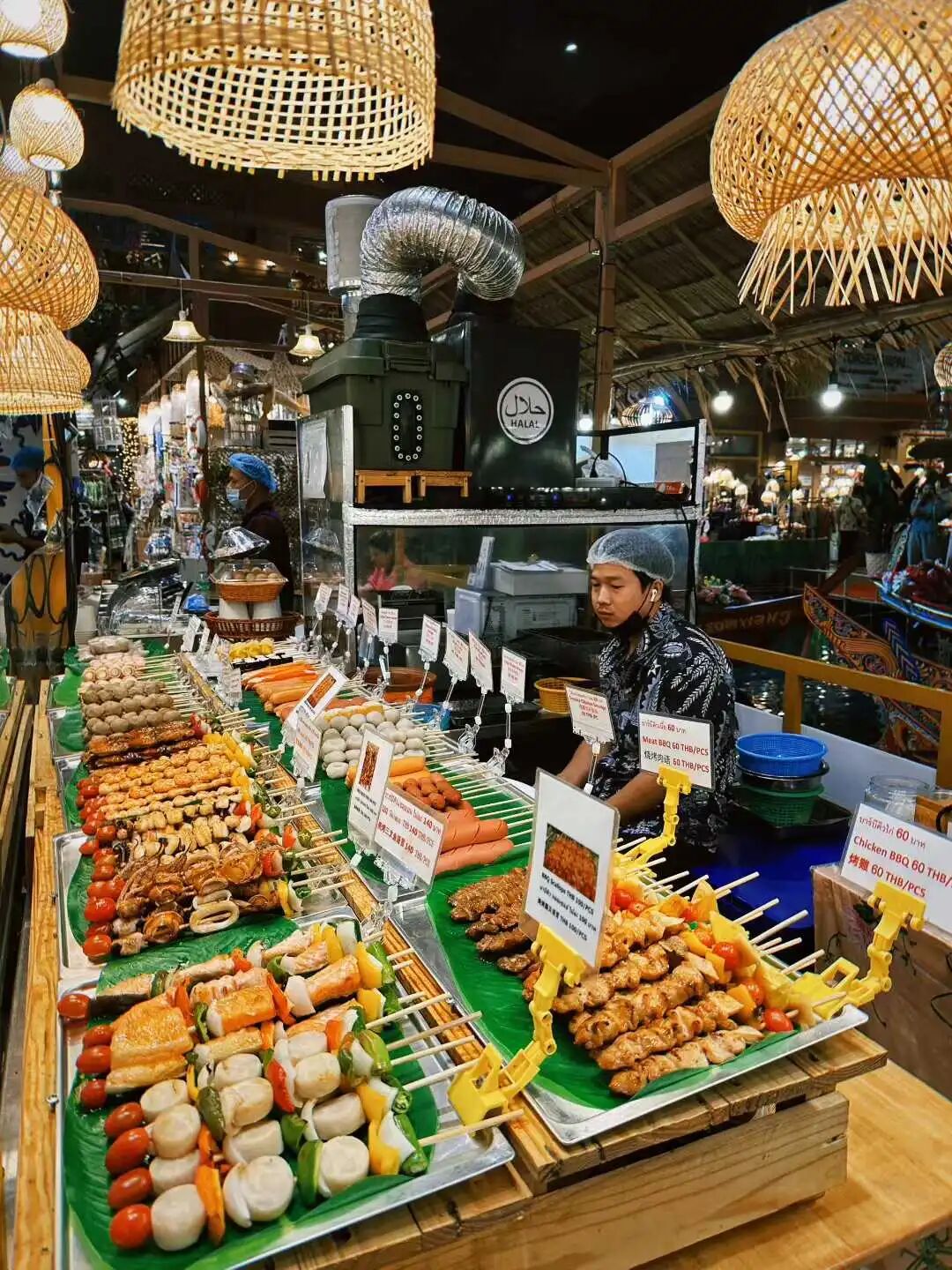
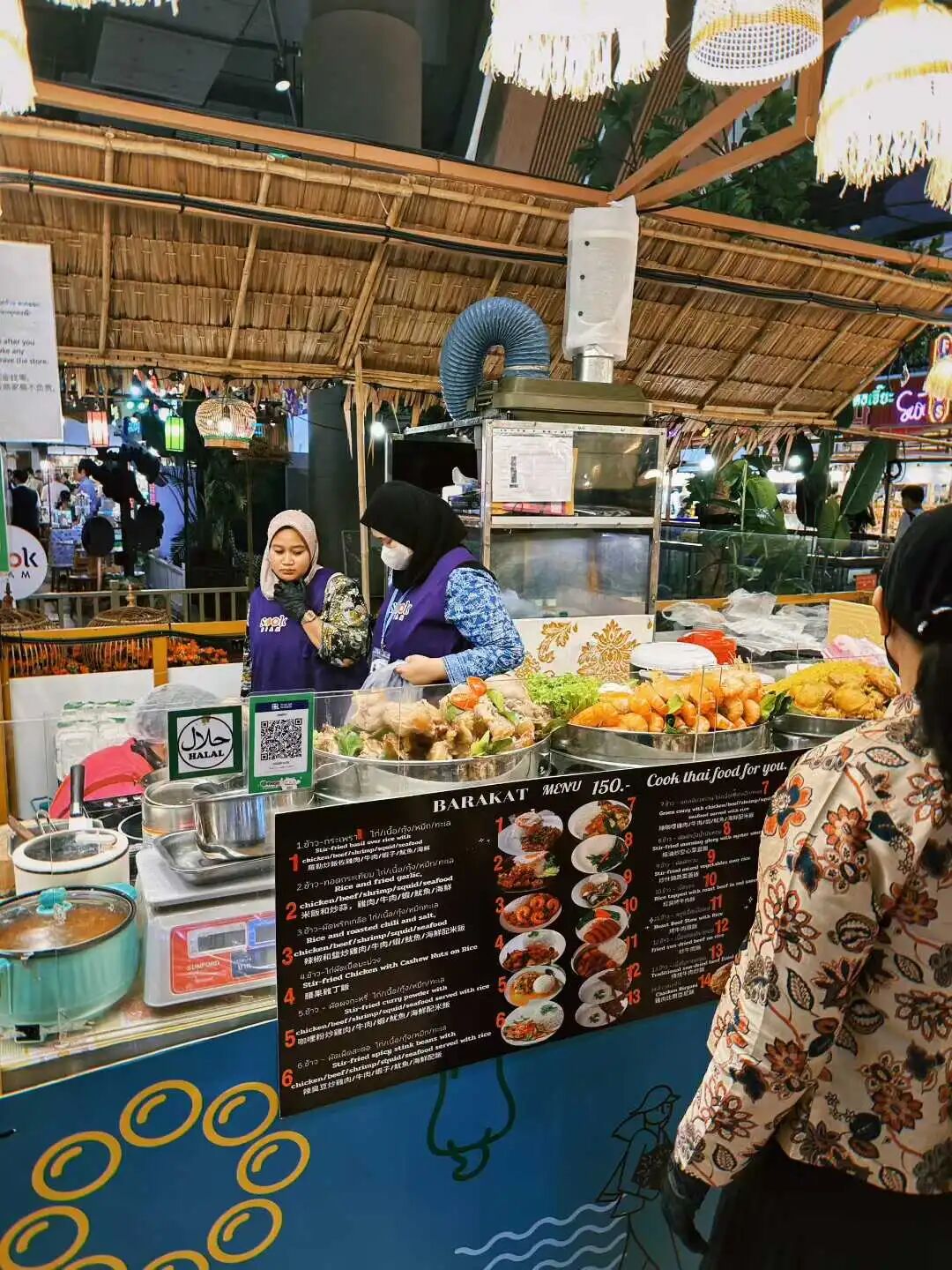
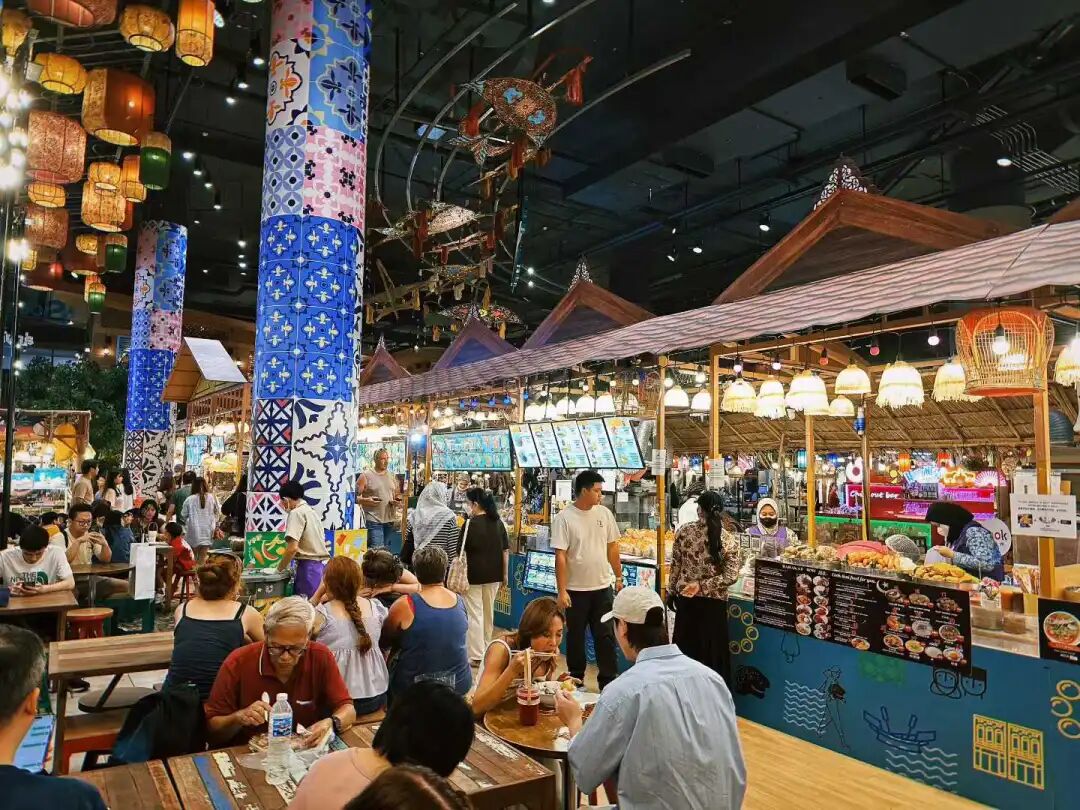
The pier at the entrance of ICONSIAM is very convenient for boats. You can take a boat downstream to the Asiatique night market or upstream back to Bangkok's old town.
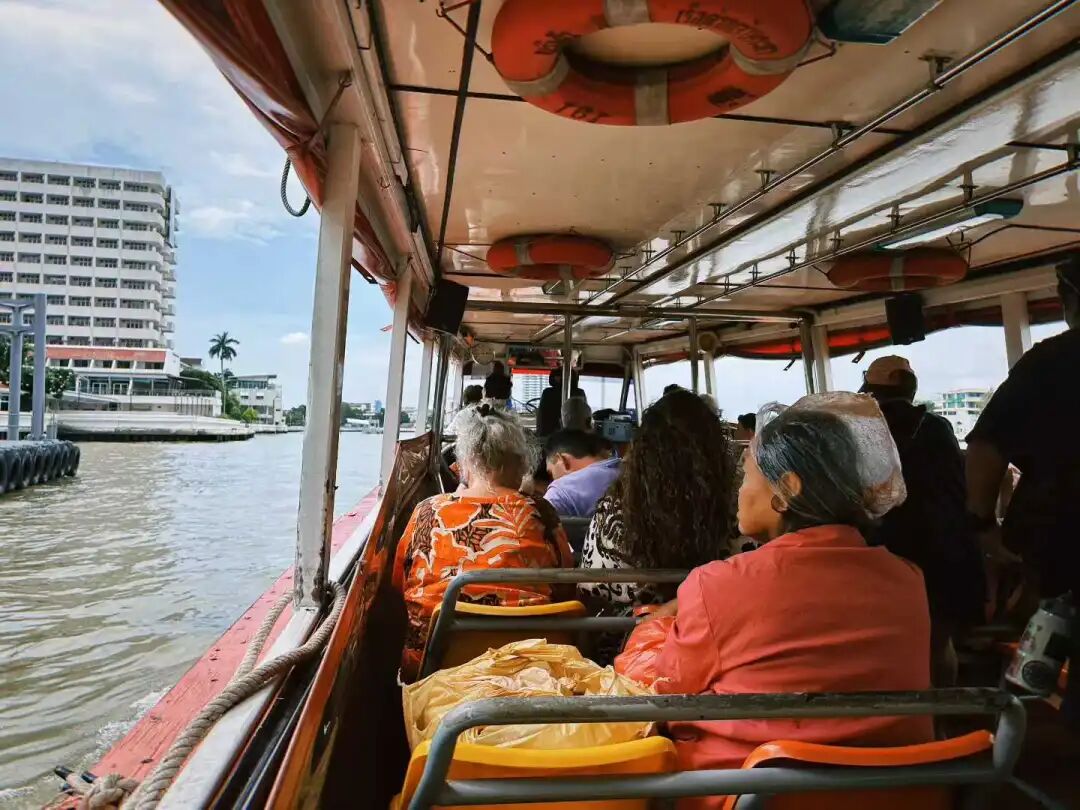
Haroon Mosque.
Haroon Mosque is named after an Indonesian Arab merchant named Toh Haroon Bafaden. He came to Bangkok from Indonesia with his father in 1828 (some say 1837) to do business. He later married, settled down, built Haroon Mosque, and became its first imam.
Haroon Mosque was originally located by the Chao Phraya River. It was a wooden building that combined Ayutthaya and Javanese styles. It moved to its current location in 1899 because of the construction of the Customs House. In 1934, the mosque was rebuilt into its current white brick and plaster structure. It features neoclassical floral patterns, Roman-style columns, and wooden shutters, looking a bit like a European townhouse from that era.
Today, the mosque preserves exquisite Javanese Jepara teak wood carvings of scripture from the old 19th-century building. They were created by Haji Said, a fellow Indonesian from Toh Haroon Bafaden's hometown.
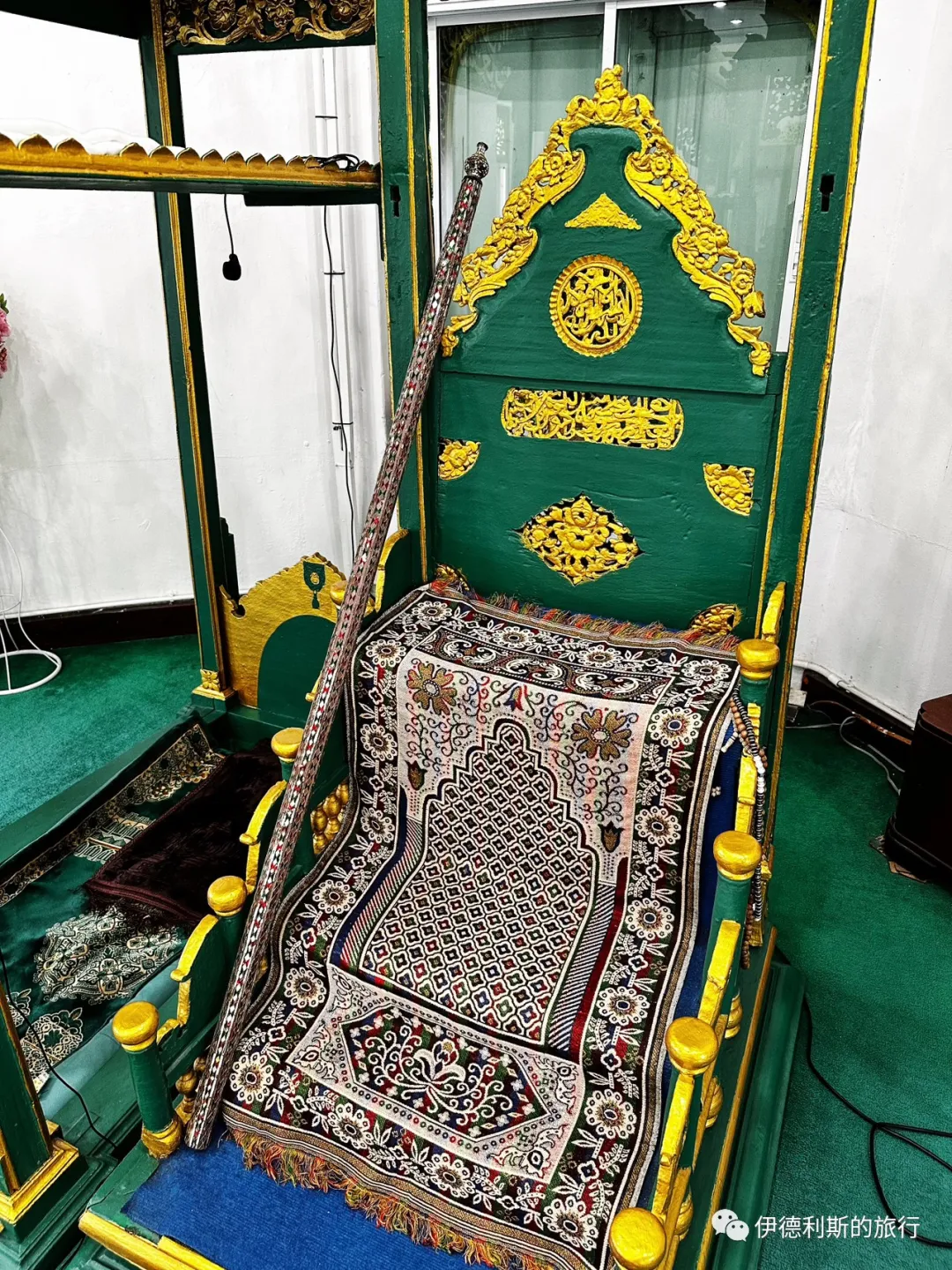
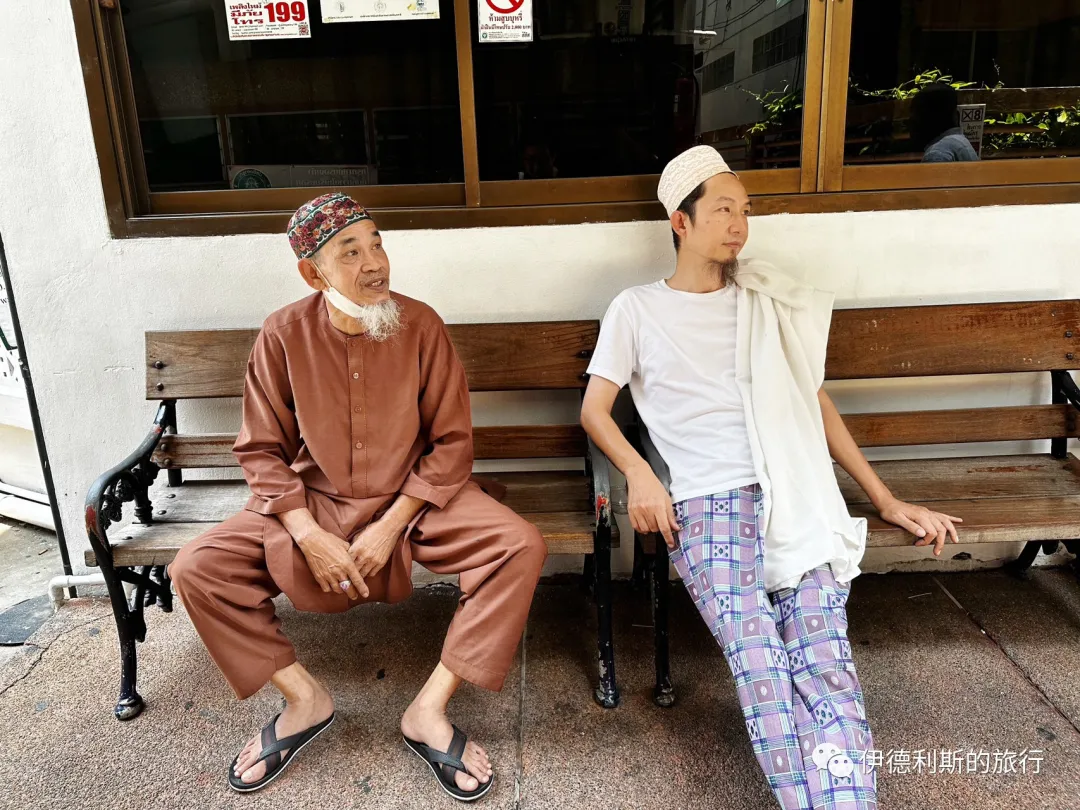
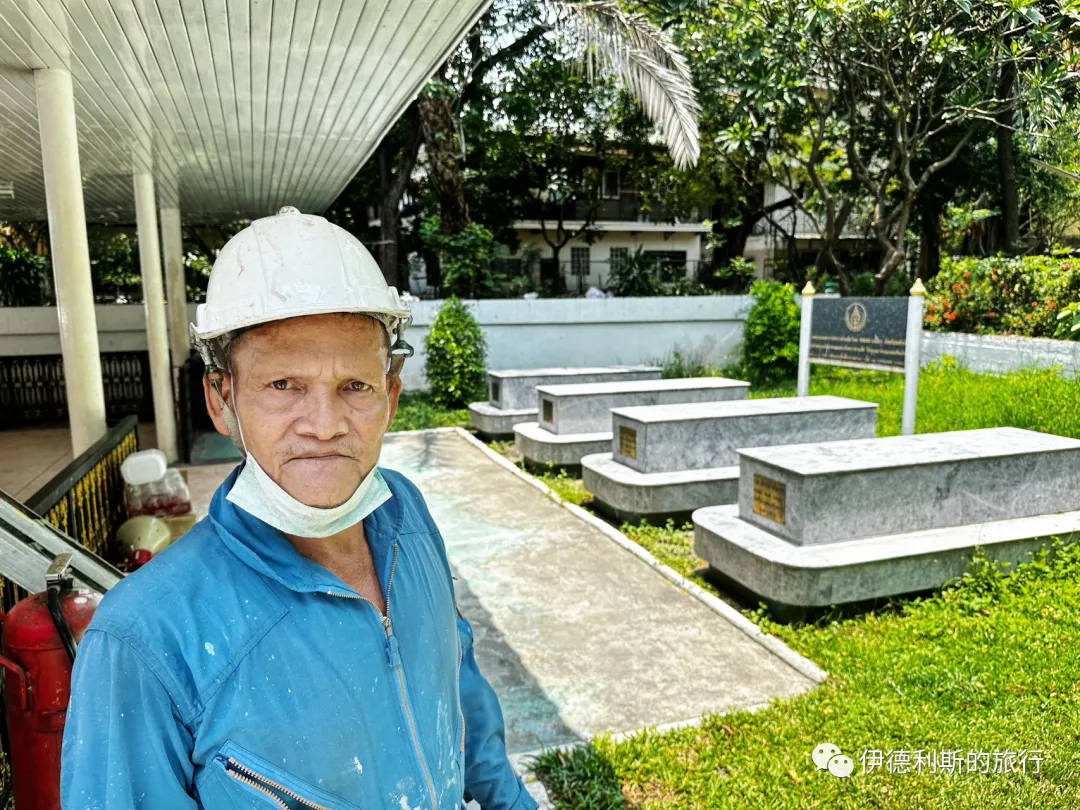
There are many snacks at the entrance of the mosque. We first had stewed beef and chicken meatball glass noodles. The beef was incredibly fragrant! Then we had rice with stir-fried basil chicken, meatballs, and chicken liver. After that, we had a bowl of stewed chicken feet. The chicken feet were soft and flavorful, but the soup was super spicy, haha.
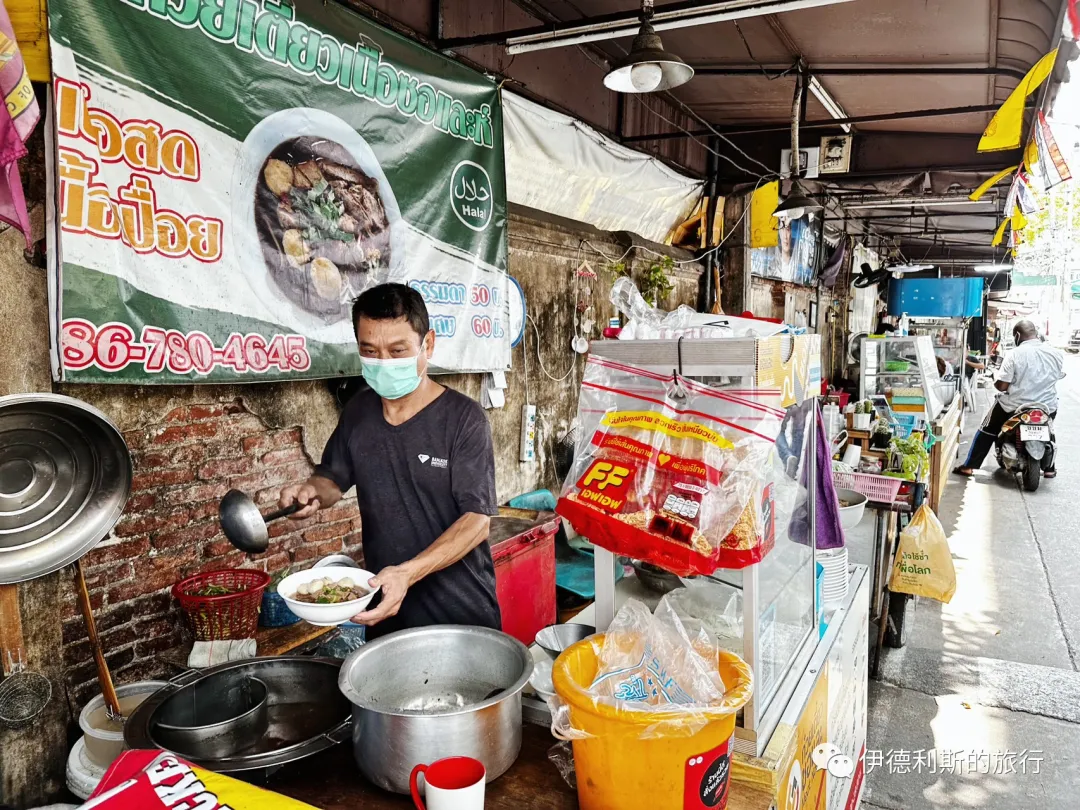
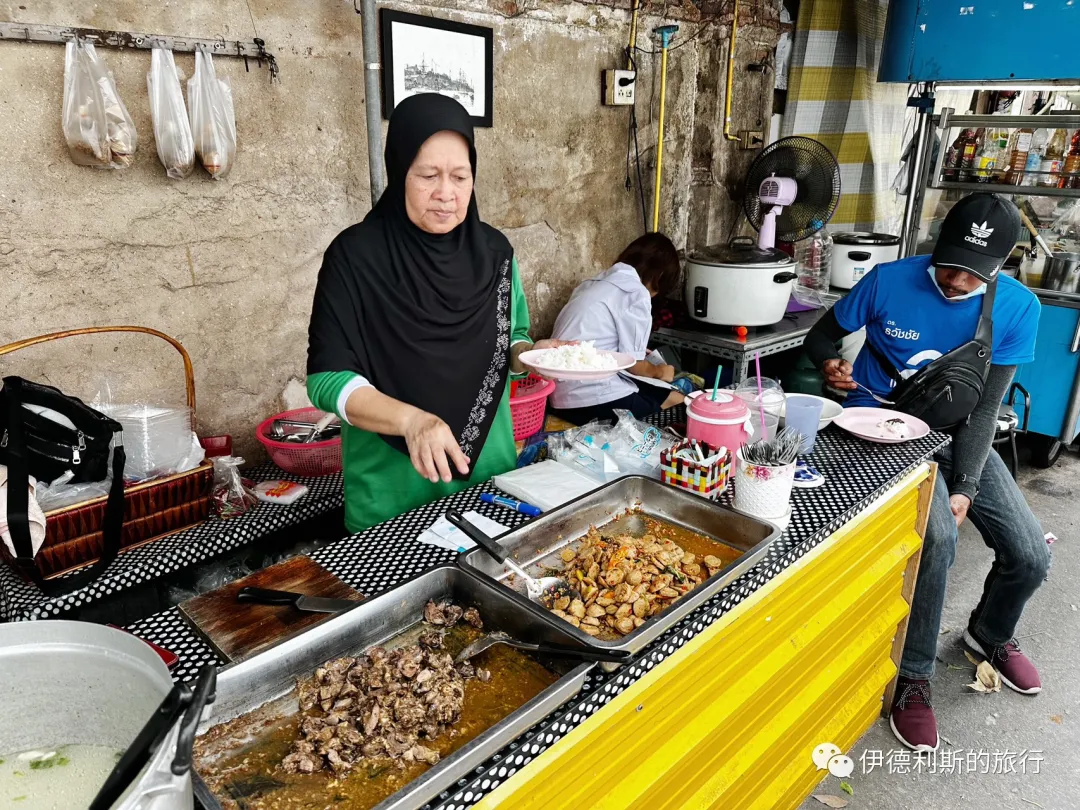
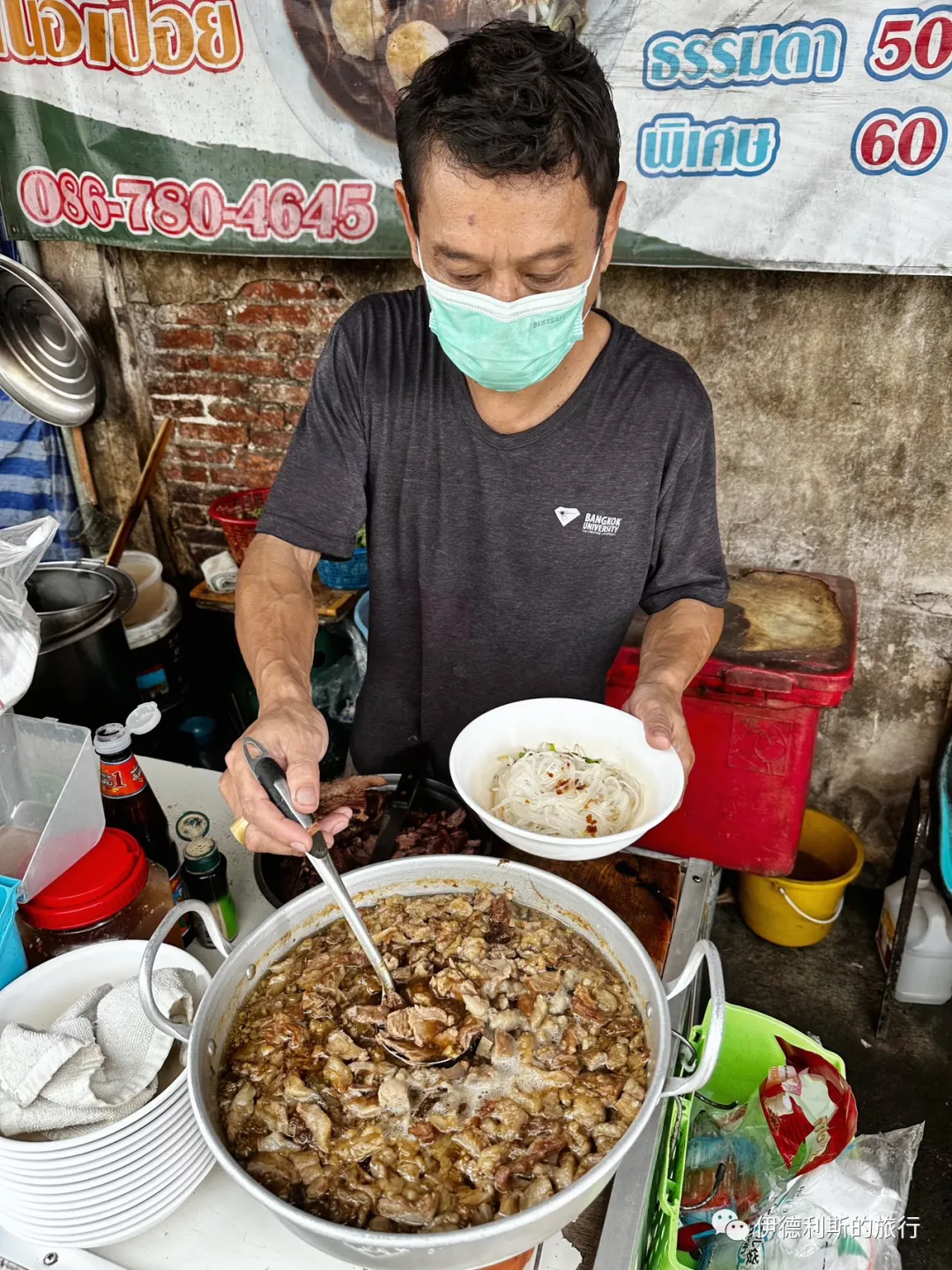
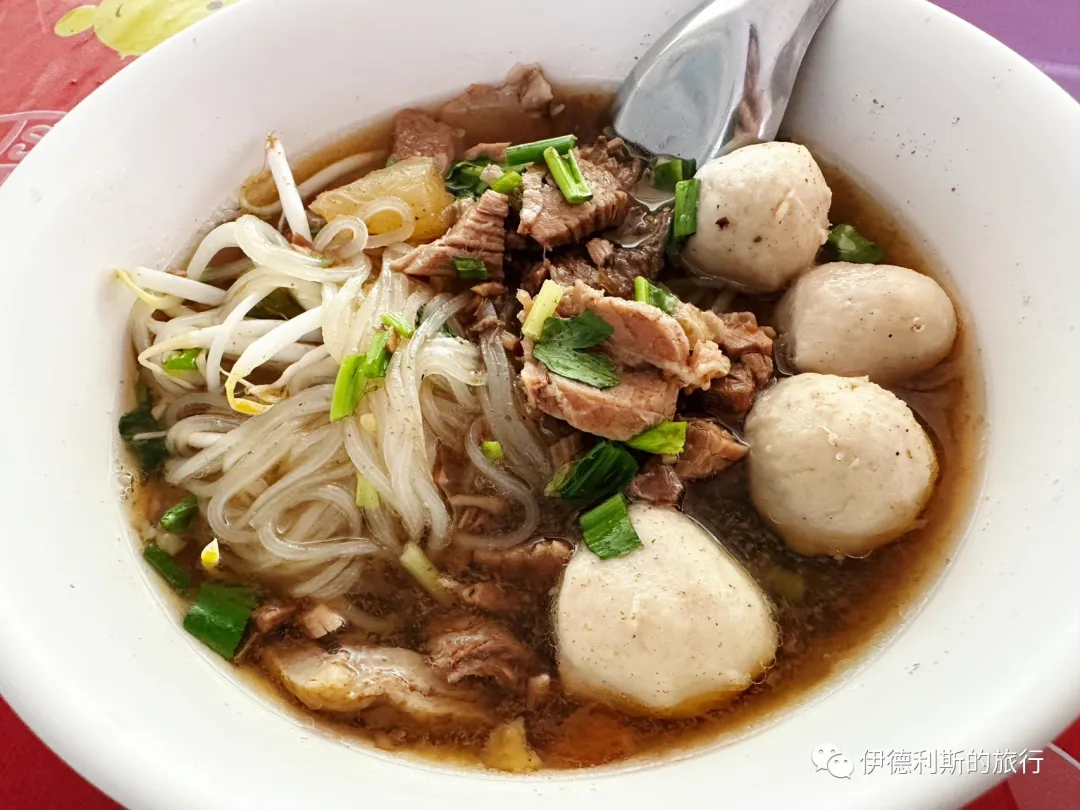
Two essentials for eating street food in Bangkok's hot summer are a strong electric fan and cold drinks with ice! Otherwise, it feels like you cannot eat anything at all, haha.
We ate the classic street snack, Thai stir-fried rice noodles (pad thai). Thai-style stir-fried rice noodles (pad thai), also called stir-fried rice noodles (pad mee), contain rice noodles, scrambled eggs, bean sprouts, crushed peanuts, and fresh shrimp, served with lime and chives. The style of stir-fried rice noodles was brought to Thailand by Chinese immigrants hundreds of years ago, but it did not become popular until the mid-20th century. During World War II, Thailand faced a rice shortage, so the government promoted a type of rice noodle from Chanthaburi Province in the east, which turned stir-fried noodles into a national snack.
If stir-fried noodles are the first impression of Thai snacks, then roti flatbread (roti) is the first impression of Thai halal snacks. You can find Thai Muslim street carts selling roti flatbread in almost every night market in Thailand, and every stall is very popular.
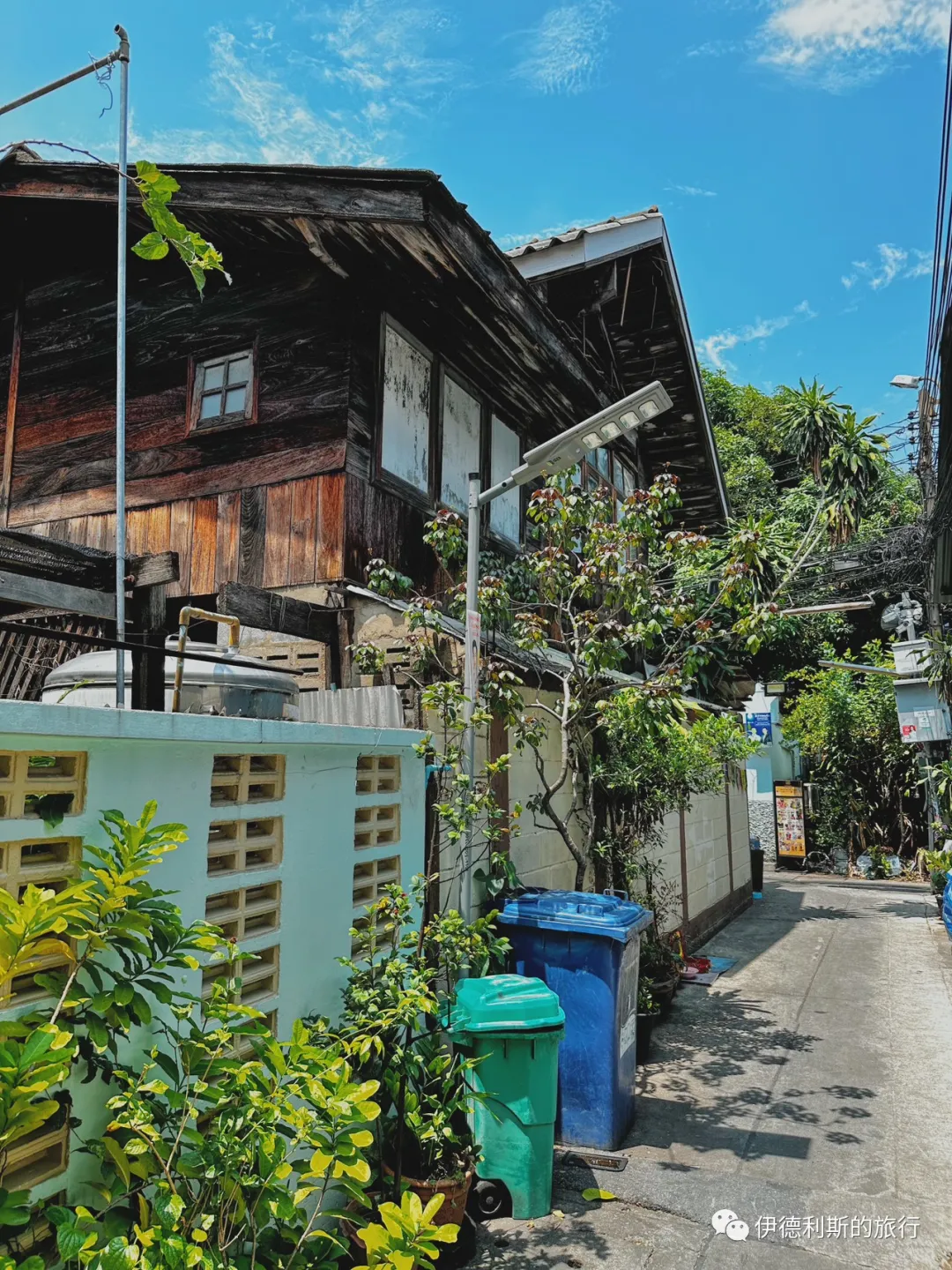
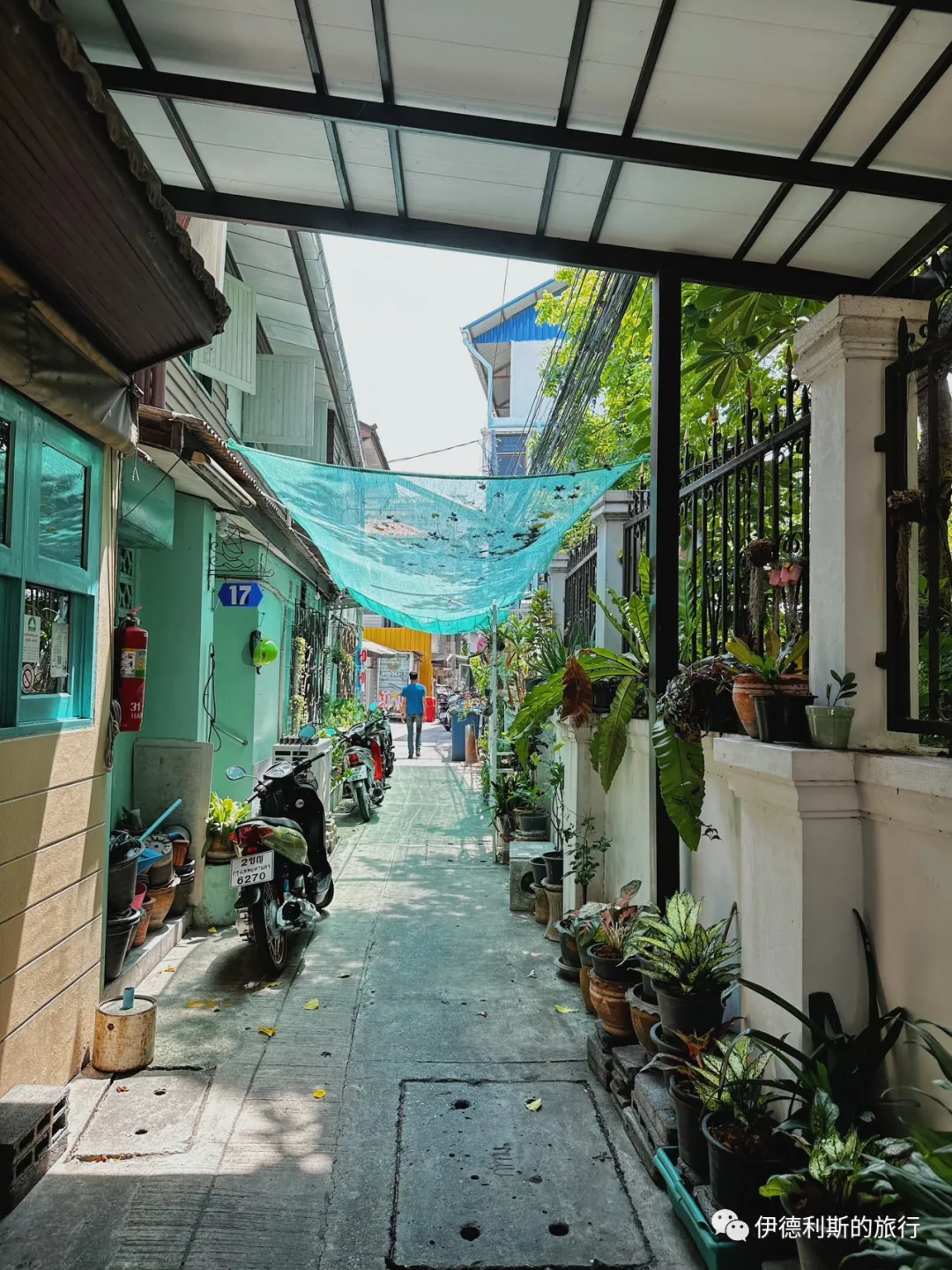
Javanese gardeners
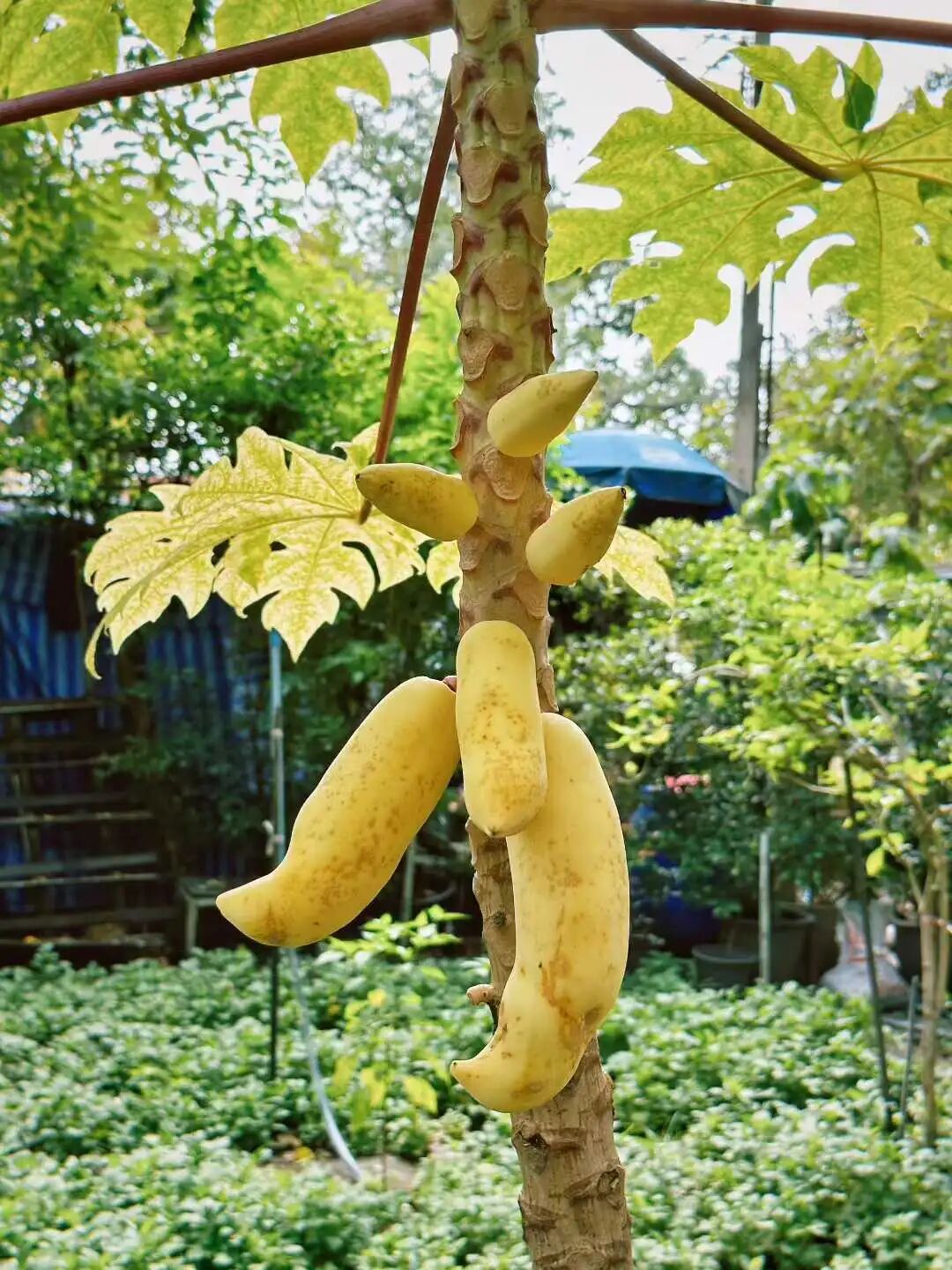
In 1896, King Rama V of Thailand visited the Dutch East Indies and toured the summer palace and gardens built by the Dutch Governor-General in Bogor, Java (now Bogor Botanical Gardens). He admired the beauty and variety of plants so much that shortly after returning home, he recruited a group of Javanese gardeners to care for the flowers and trees at the Grand Palace, Saranrom Palace, and Saranrom Park, as well as the rows of tamarind trees along the roads around the palace. After King Rama V visited the Dutch East Indies a second time in 1901, he recruited a second group of Javanese gardeners to help design the newly built Dusit Palace, and these Javanese people settled in Bangkok.
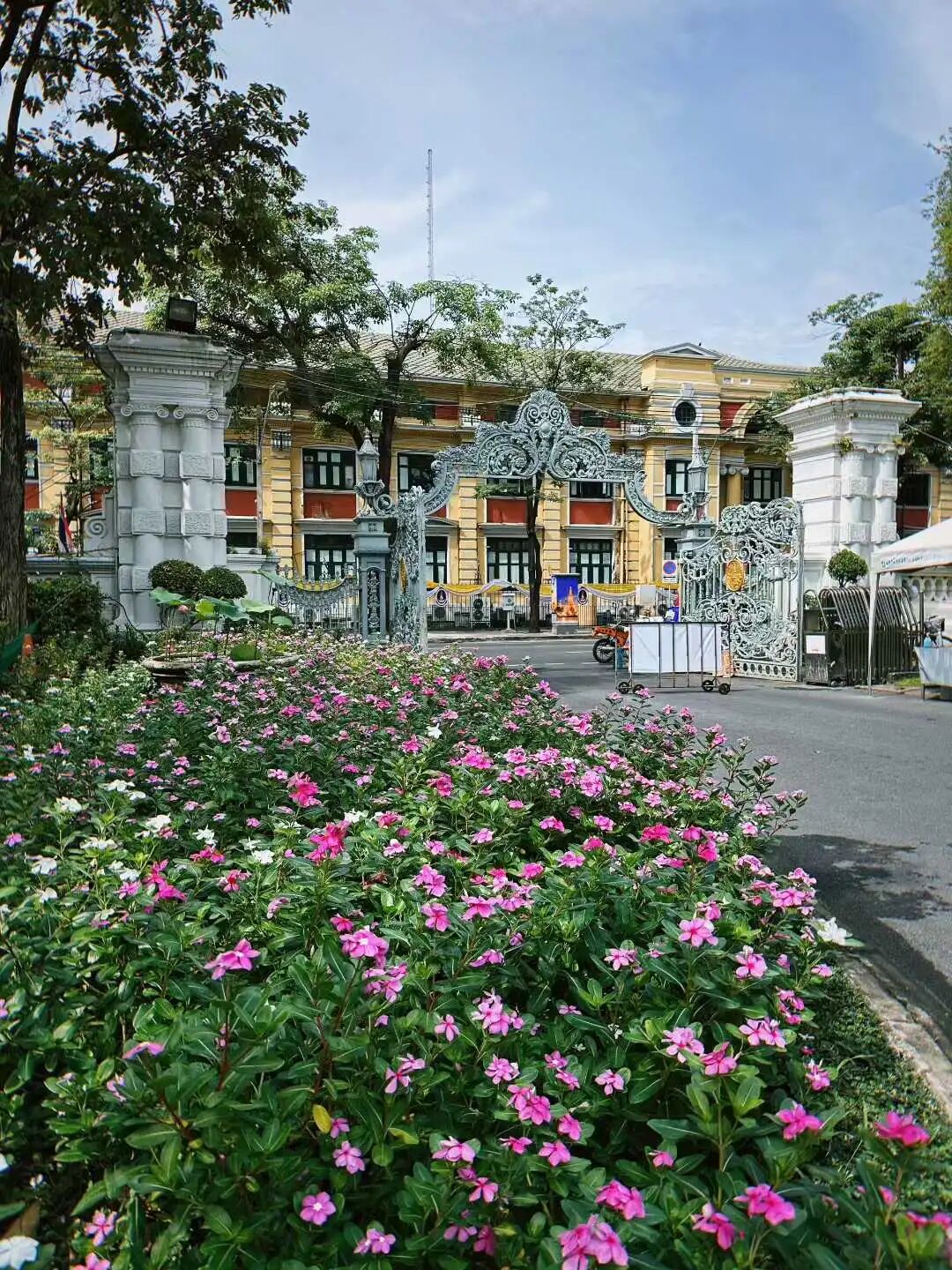
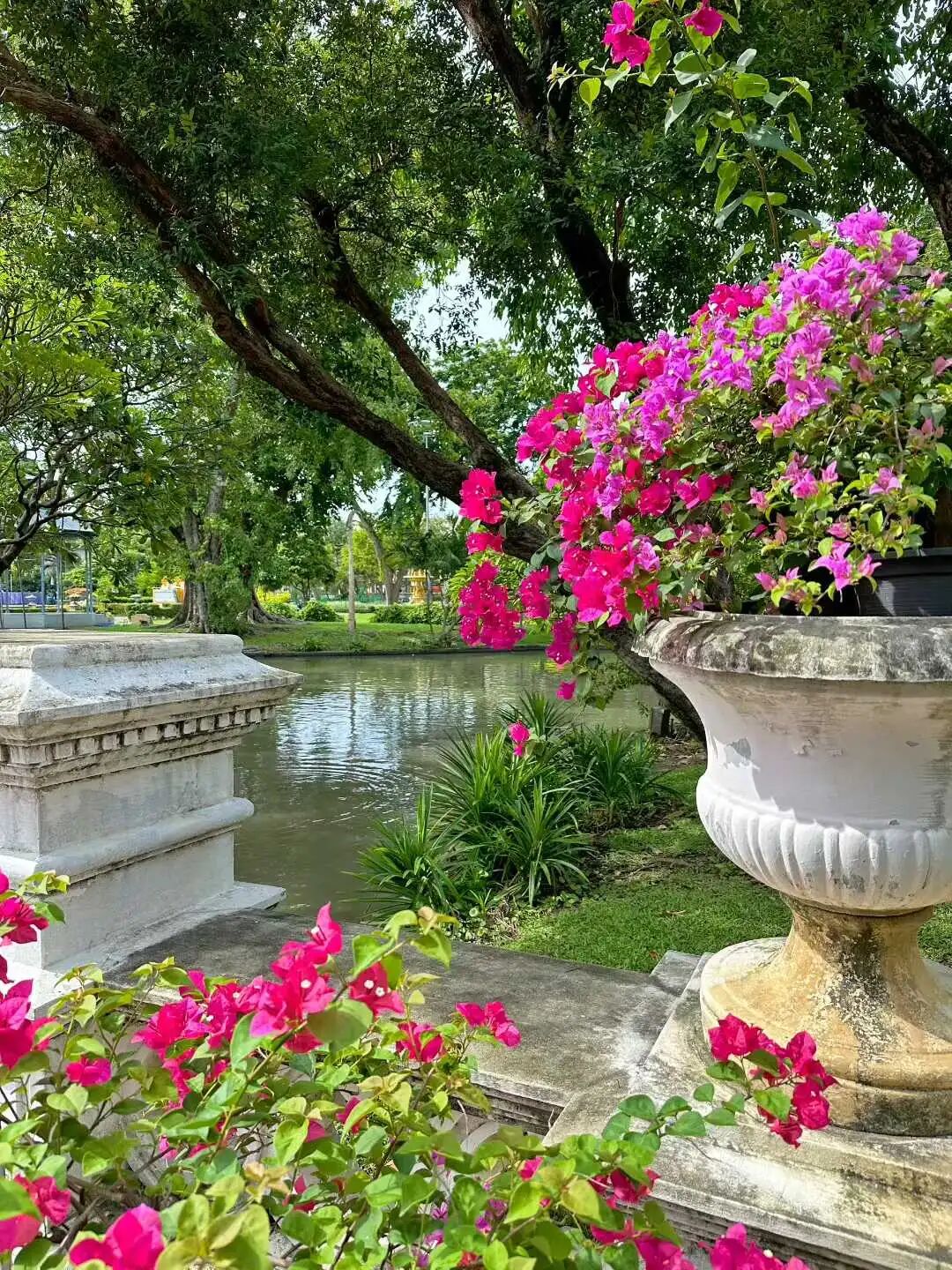
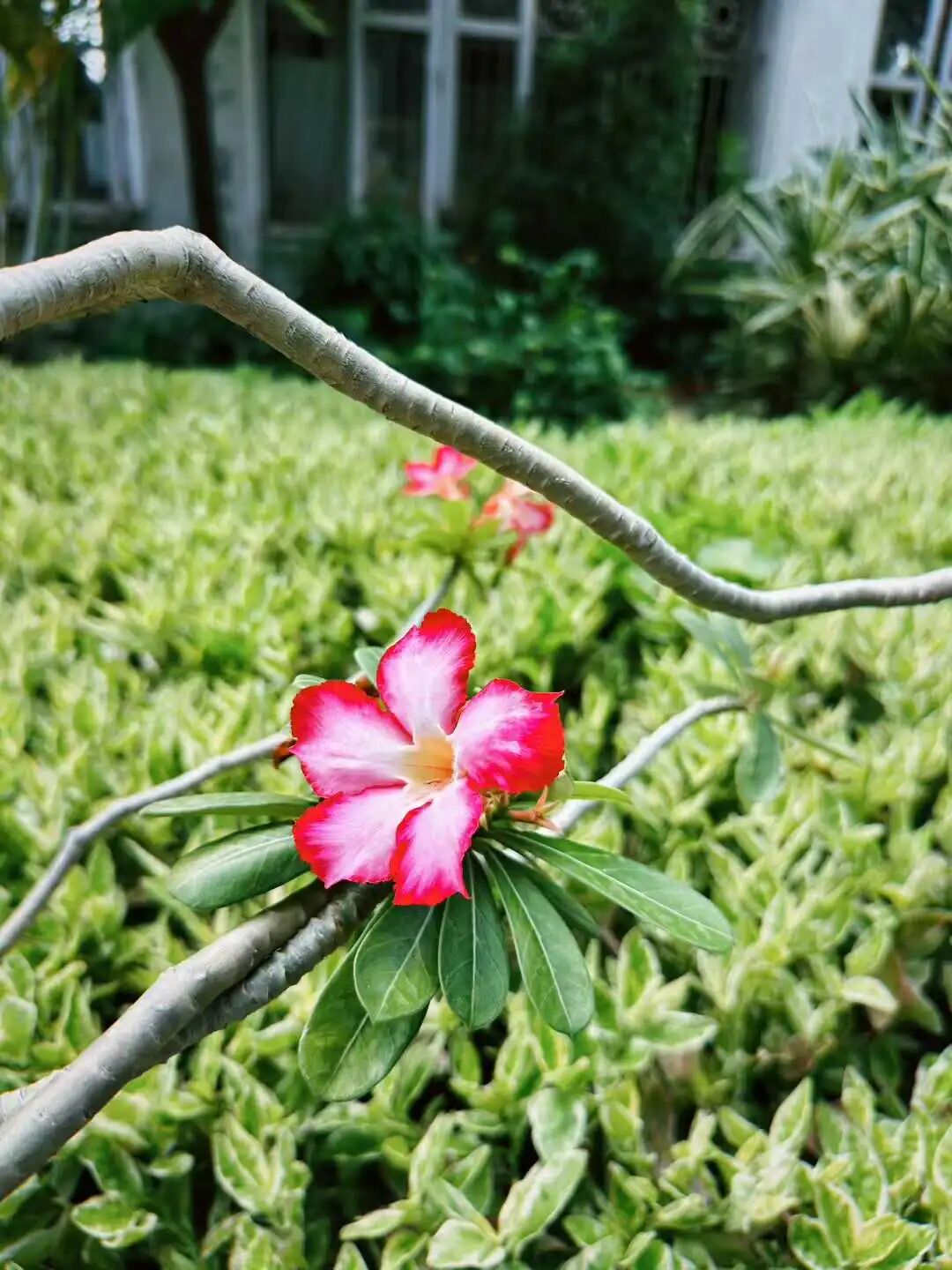
Saranrom Park, located opposite the Grand Palace in Bangkok, was built in 1866. It was originally part of the Saranrom Palace built by King Rama IV and was renovated by King Rama V in 1874 according to the modern botanical garden model. Records show that King Rama V hired 2,444 Javanese gardeners to maintain the gardens, decorating the park with fountains, flowers, birdcages, and animal enclosures, along with the King's favorite red roses.
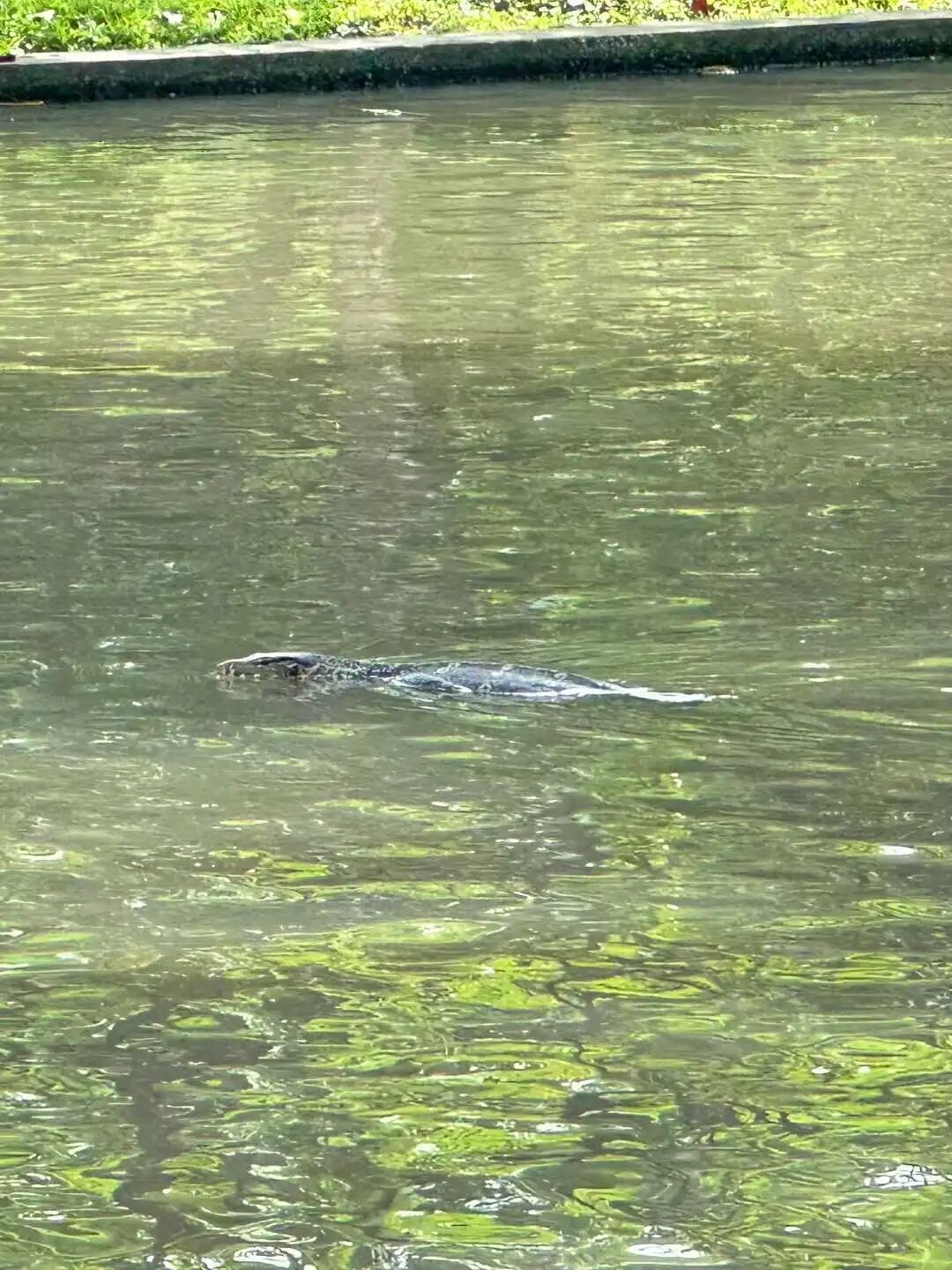
The park officially opened to the public in 1960, becoming Bangkok's first public botanical garden. Today, the park is filled with birdsong and flowers, with monitor lizards visible in the ponds and squirrels everywhere in the trees. When we visited, there were almost no tourists, only a few locals jogging or resting.
Ban Tuk Din Mosque
Ban Tuk Din Mosque is one of only two mosques located within the city walls of Bangkok, built by Javanese gardeners on royal land in the late 19th century.
During the late reign of King Rama VI and the reign of King Rama VII, the royal family cut spending and dismissed the Javanese gardeners. Afterward, most of the Javanese gardeners moved to the southern suburbs of Bangkok to continue working as gardeners and domestic helpers in mansions, while only a few remained in the Ban Tuk Din mosque community as small vendors and domestic workers.
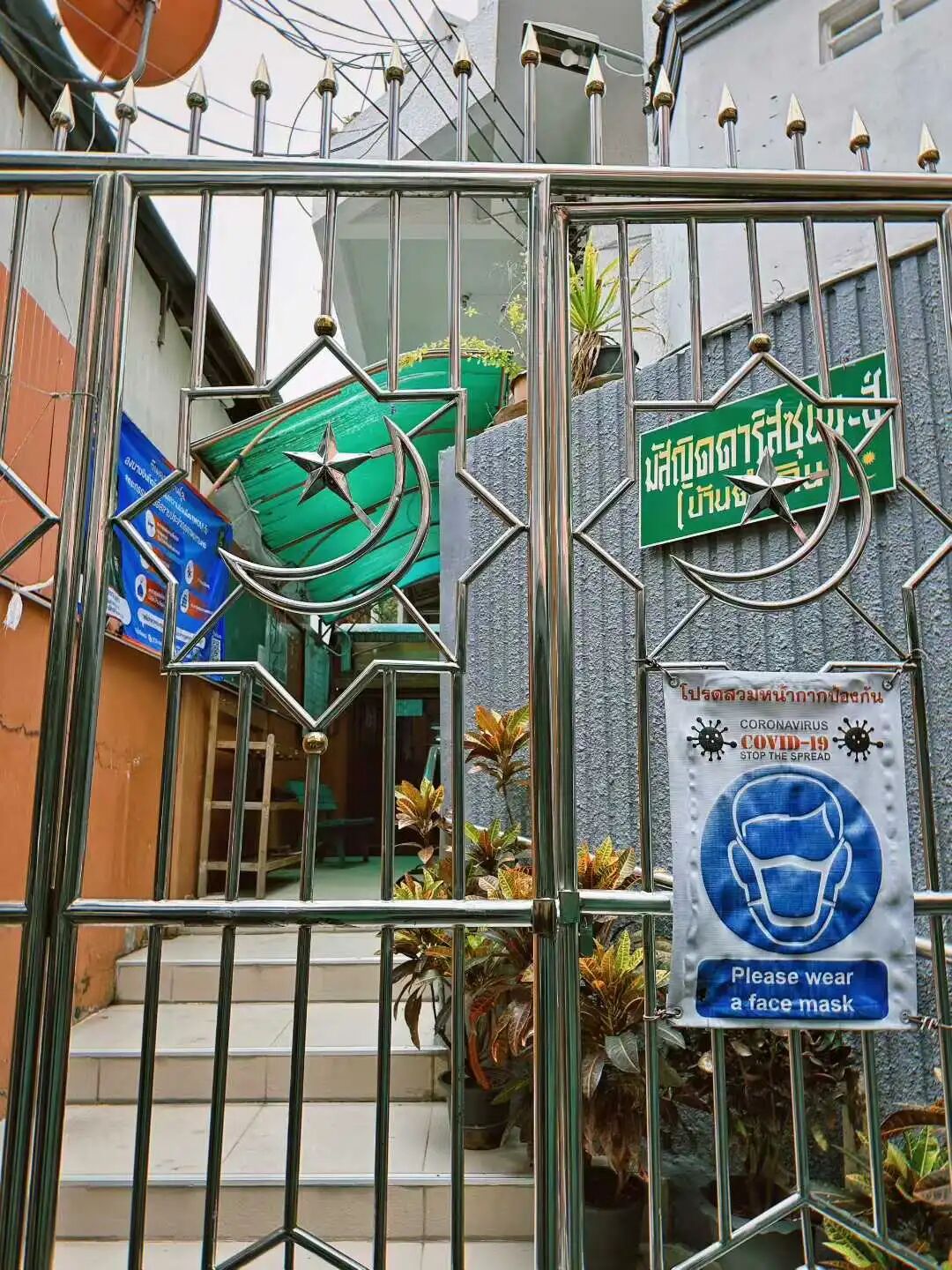
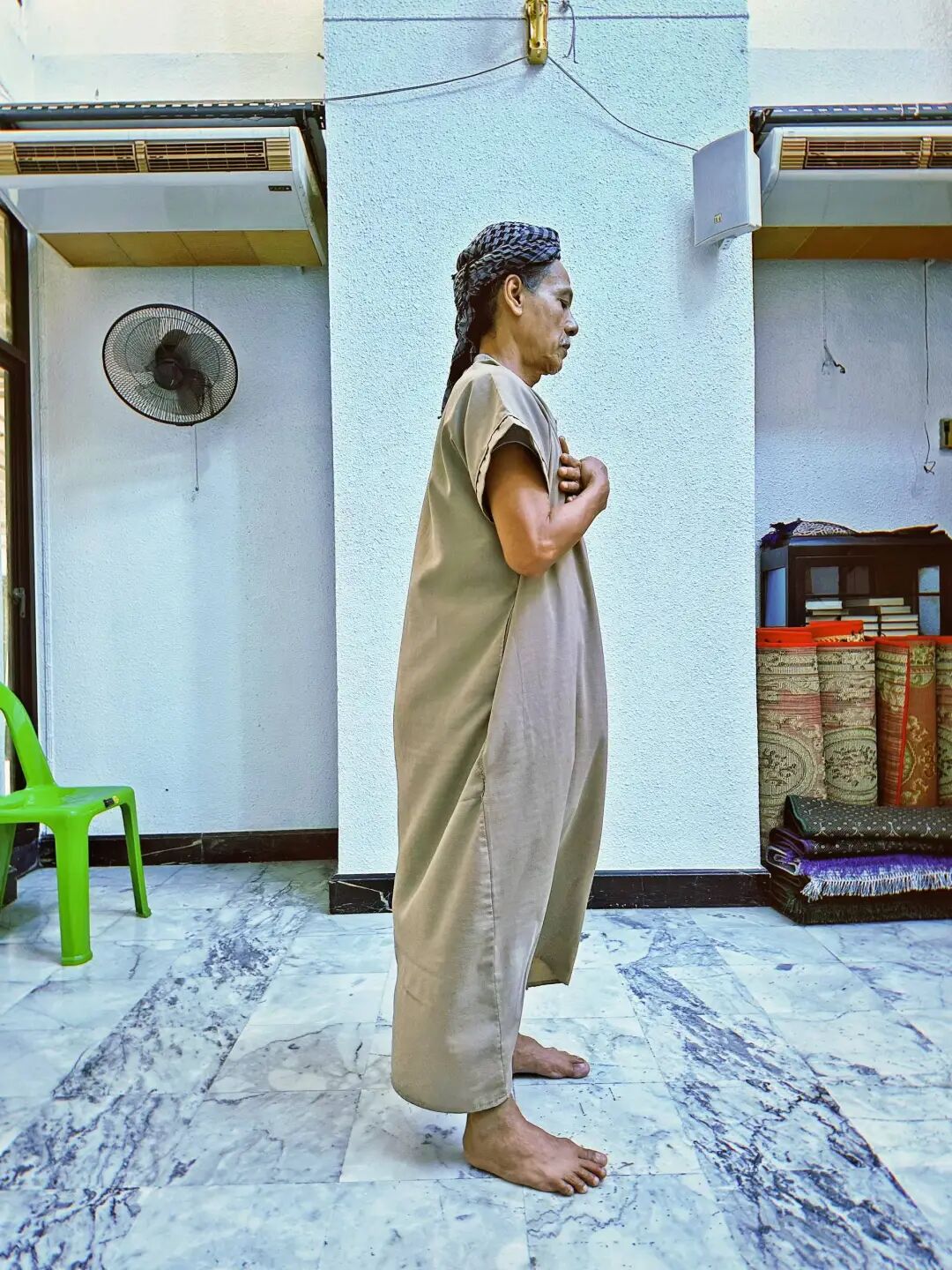
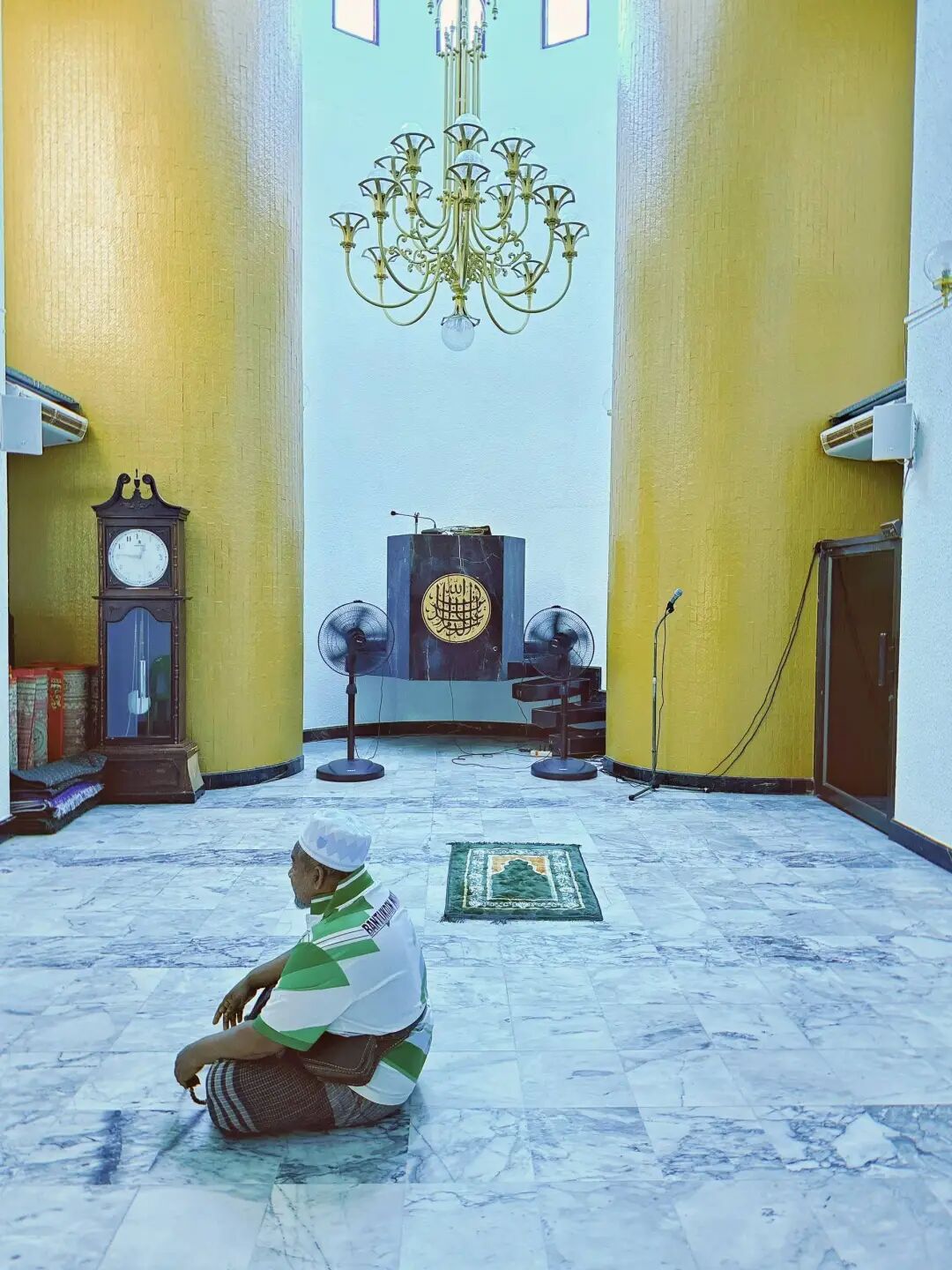
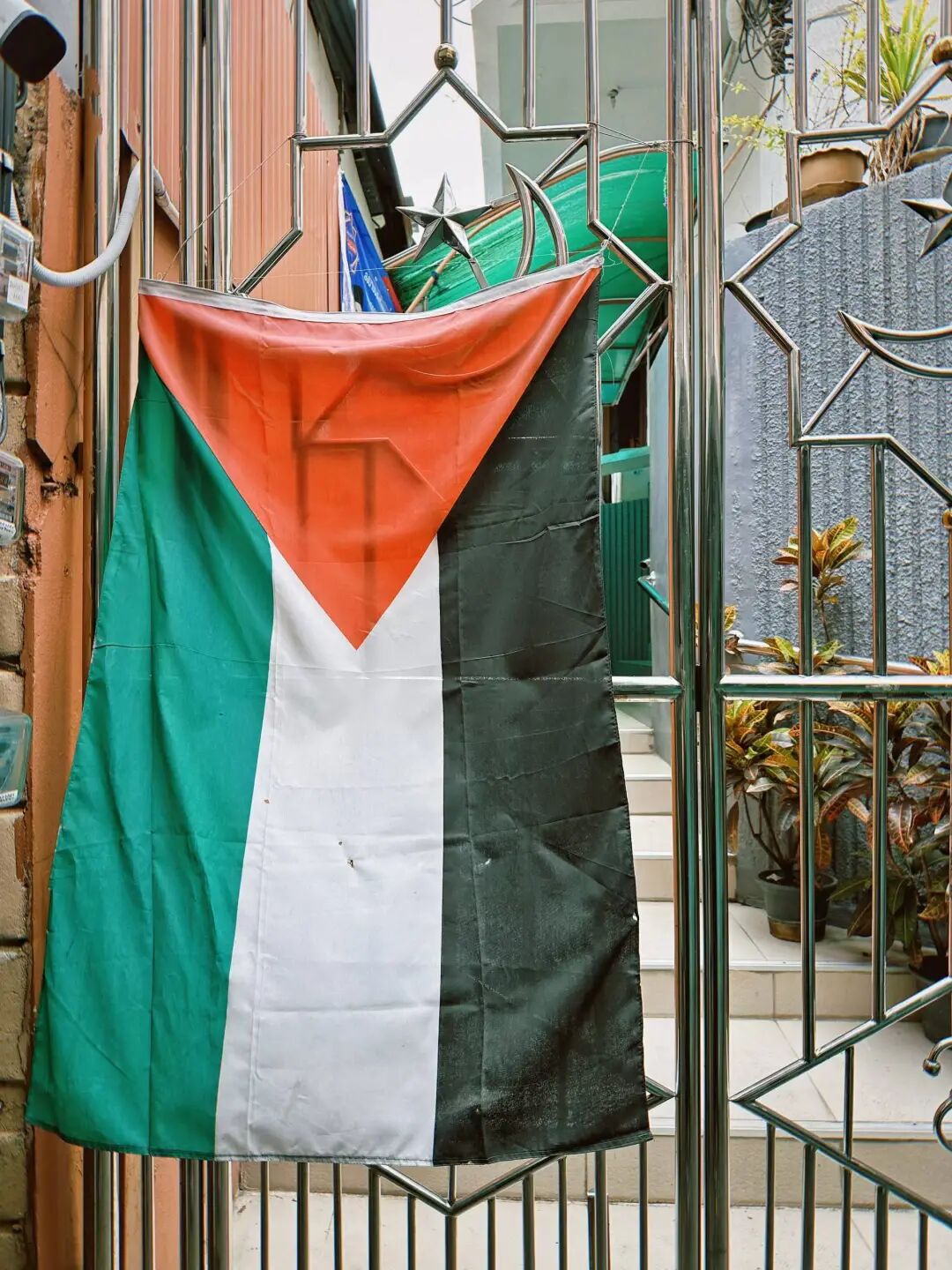
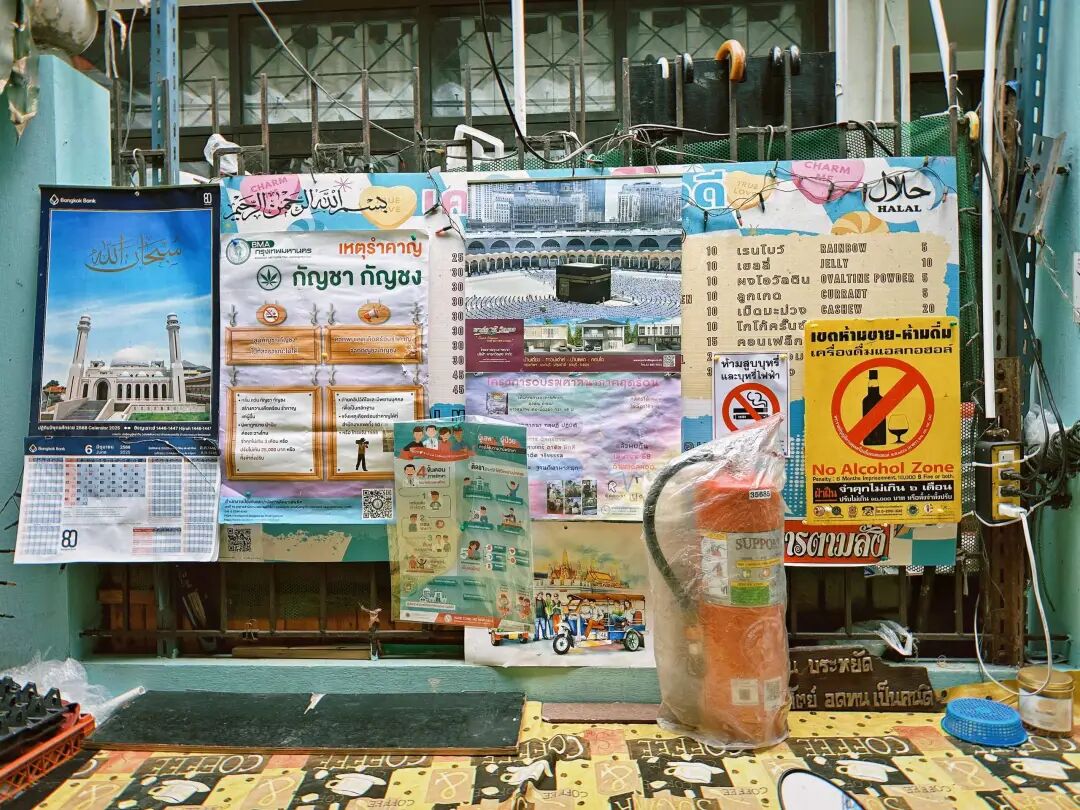
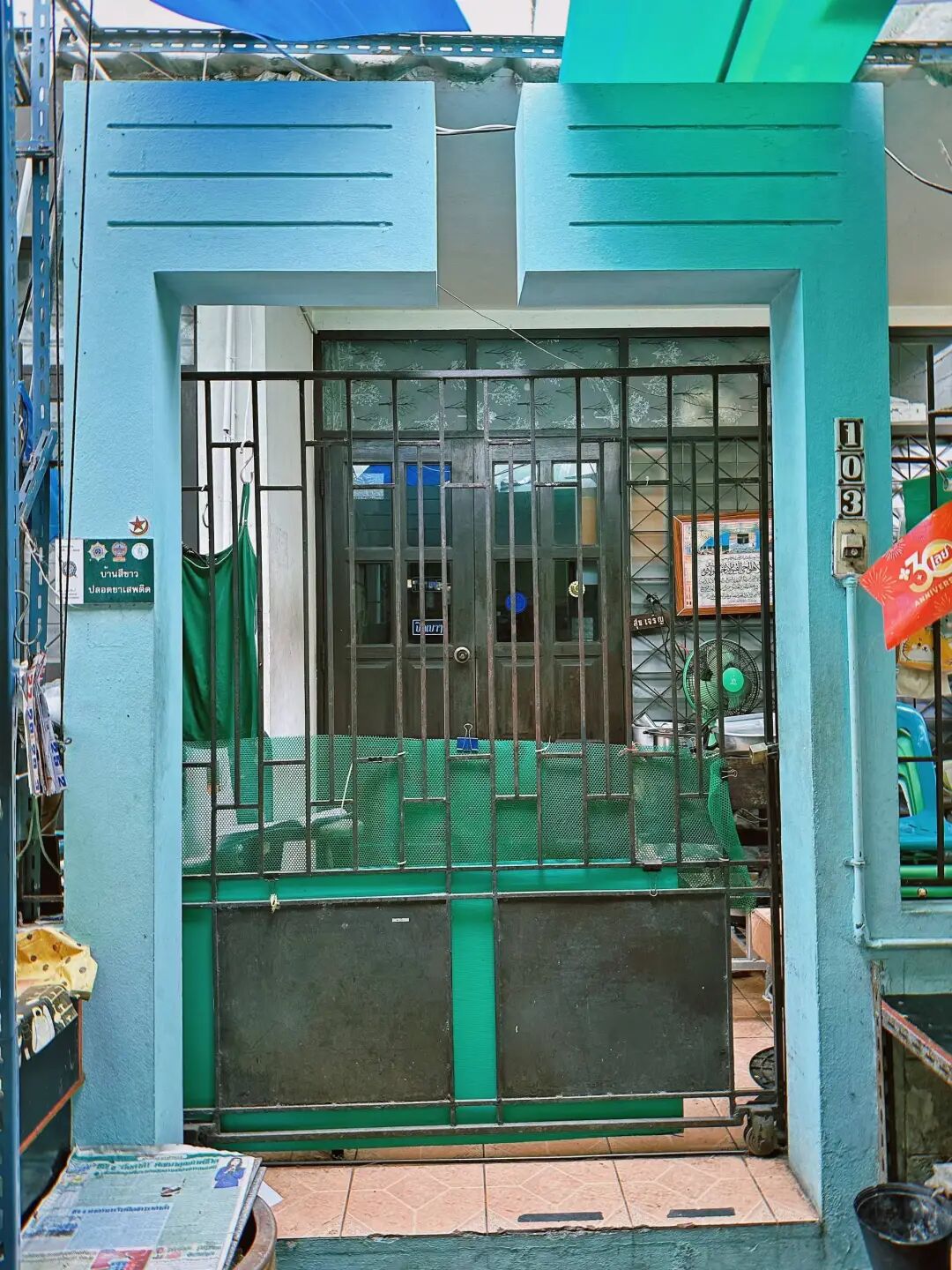
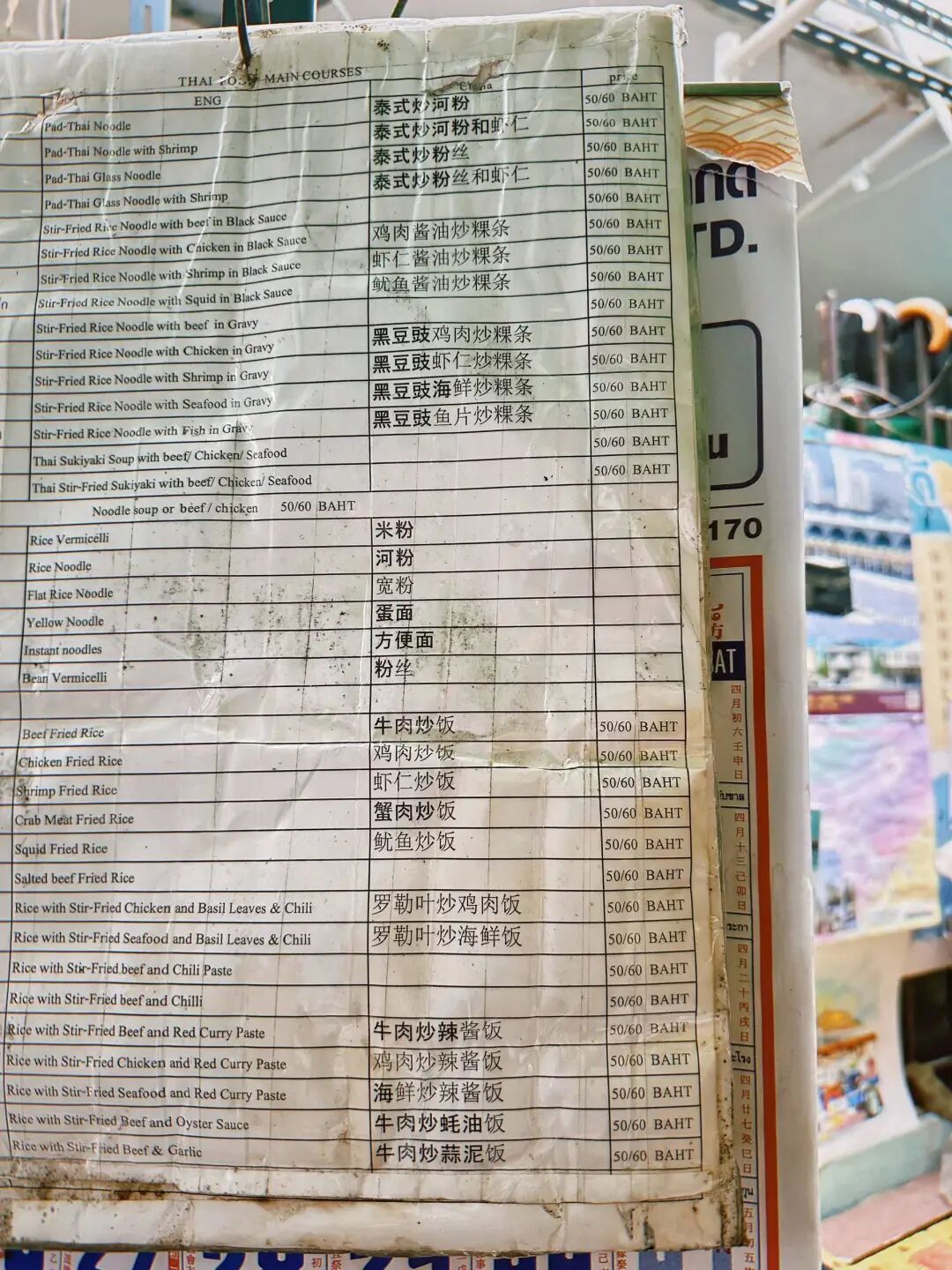
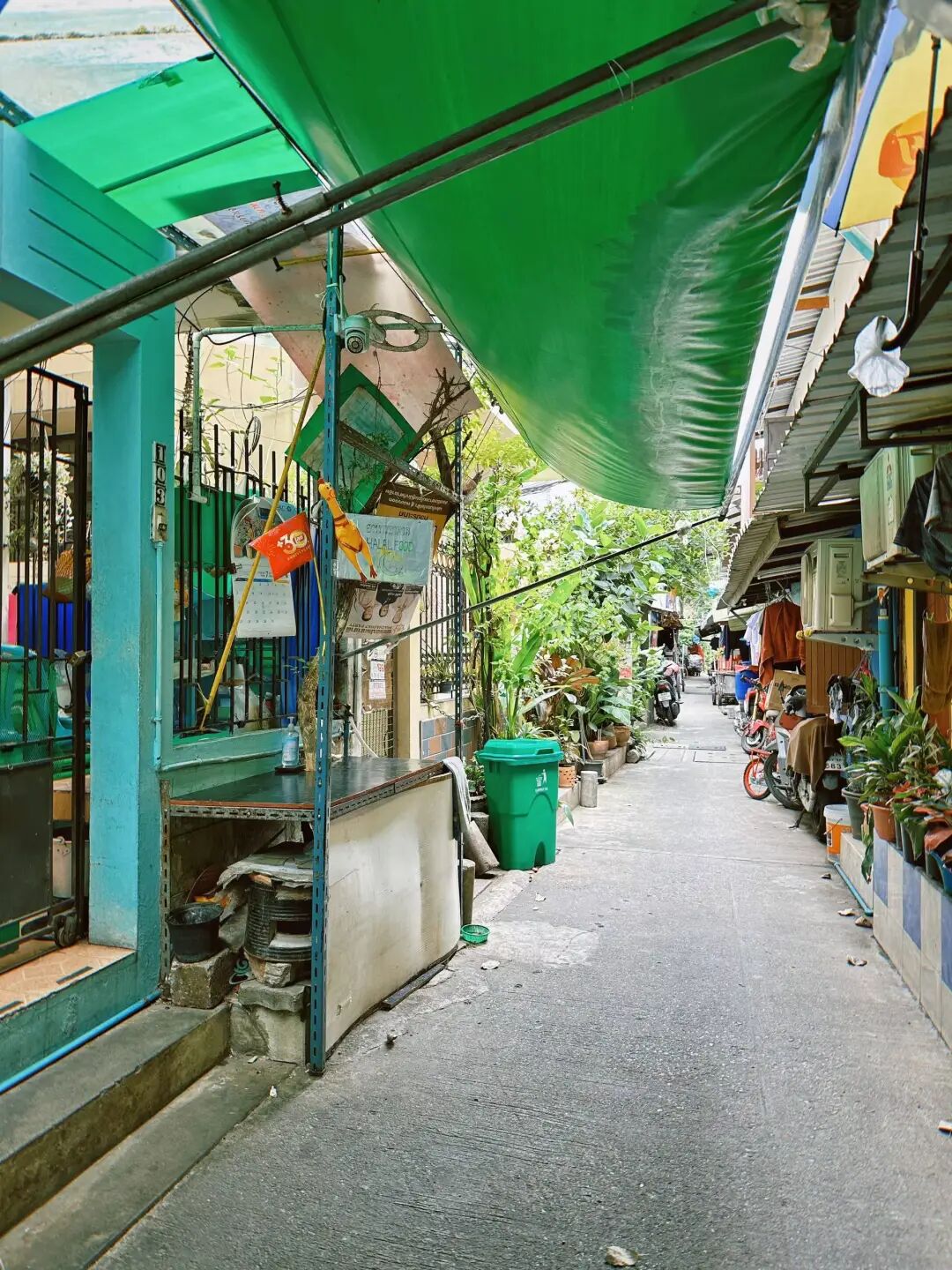
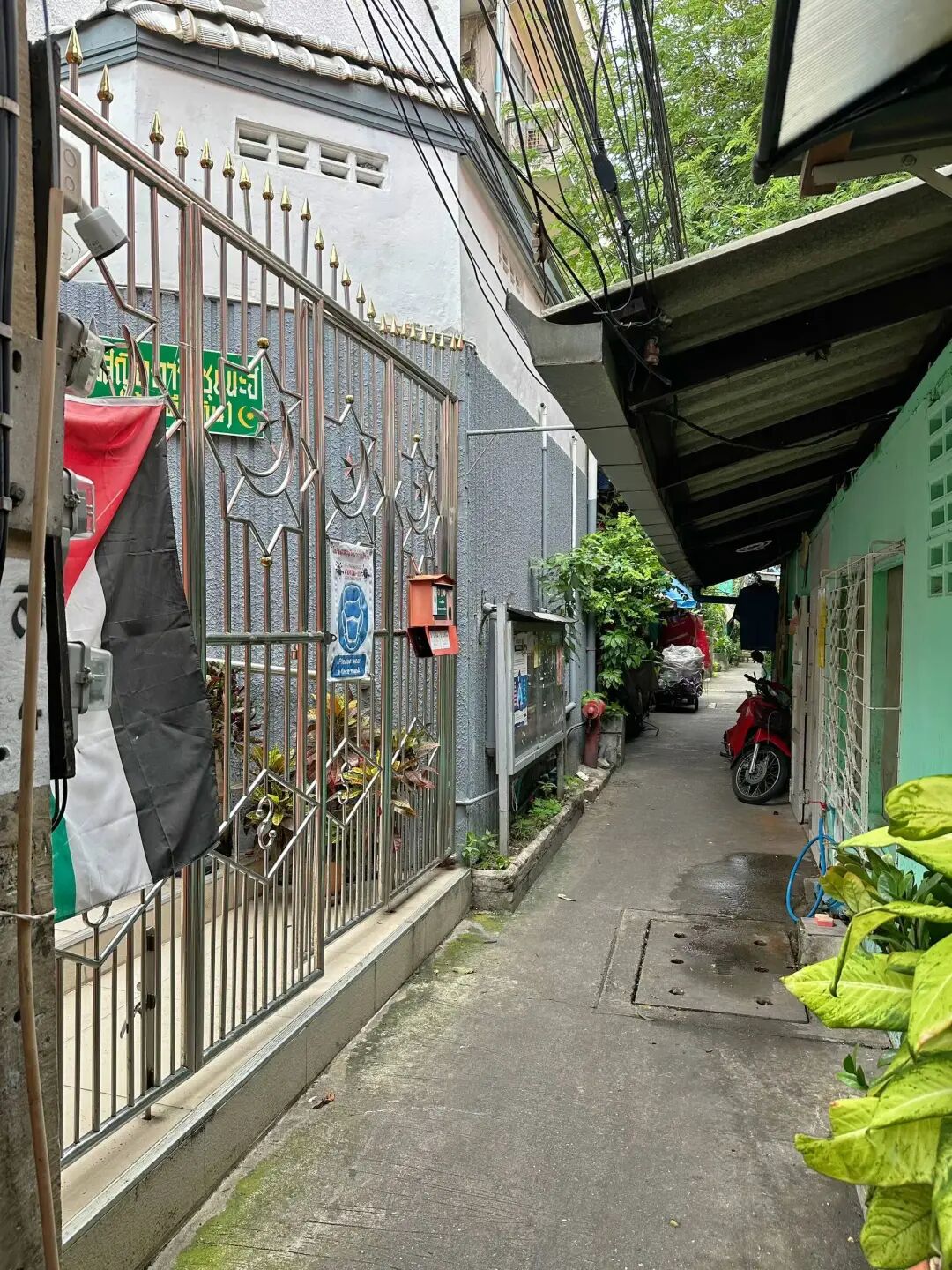
In the alley near Ban Tuk Din Mosque, there is a very famous local halal snack shop called Ayeesah Roddee Halal. Because it is right next to the backpacker hub of Khao San Road, many foreigners come here to eat. Historically, the Javanese community in Bangkok rarely intermarried with other groups, so they preserved many traditional cultural customs, and you can eat authentic Javanese-style halal snacks at this shop.
We ordered beef noodles, oxtail curry soup, fresh spring rolls, and beef satay skewers. Everything was delicious. The beef noodles were sweet and sour, the oxtail soup was rich with skin-on meat, and the spring rolls were unique with a chicken filling. Their beef satay skewers are the best I have ever eaten in all my many trips to Thailand, Malaysia, Indonesia, and Singapore! They were very tender, not dry at all, and you can dip them in the satay sauce yourself to control the sweetness. In fact, satay originated on the island of Java, developed by the Javanese based on the South Asian kebabs (kebab) brought by Indian merchants. After the 19th century, Javanese people spread satay grilled meat (satay) throughout Southeast Asia.
Javanese Mosque (Masjid Jawa)
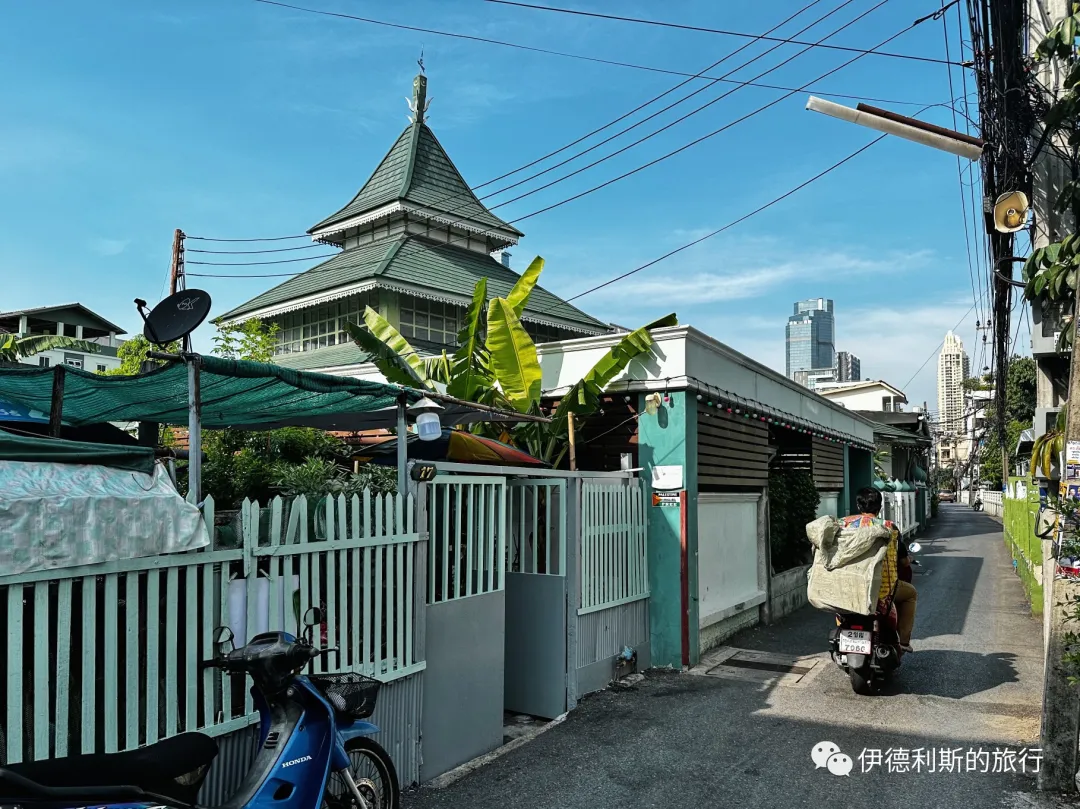
During the late reign of King Rama VI and the reign of King Rama VII, the royal family cut spending and dismissed the Javanese gardeners. Later, most Javanese gardeners moved to the southern suburbs of Bangkok and built several mosque communities. The Javanese Mosque (Masjid Jawa) is the only one that still keeps its traditional Javanese style.
The Javanese Mosque is a community made up of Javanese and Malay Muslims, and the imam is chosen from both groups on a rotating basis. The Javanese Mosque was built in 1906 on land owned by a Javanese Muslim named Haji Muhammad Saleh. Even though it was expanded in 1927 and 1975, it still keeps its classic Javanese style.
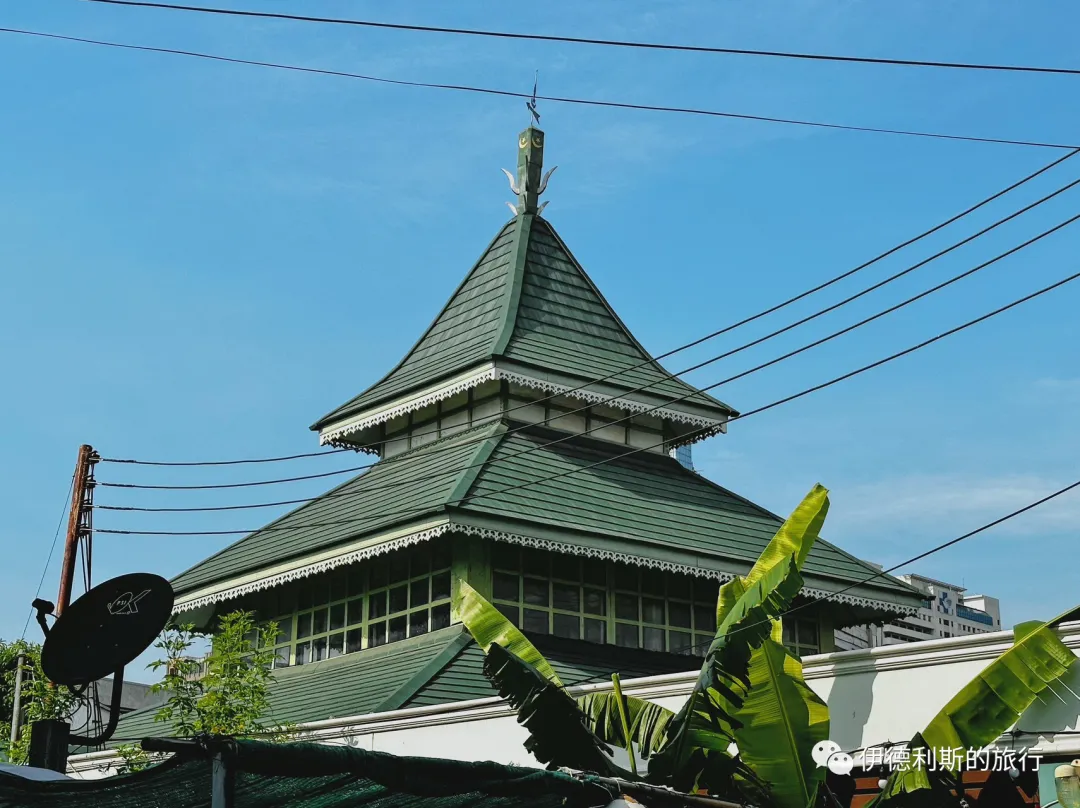
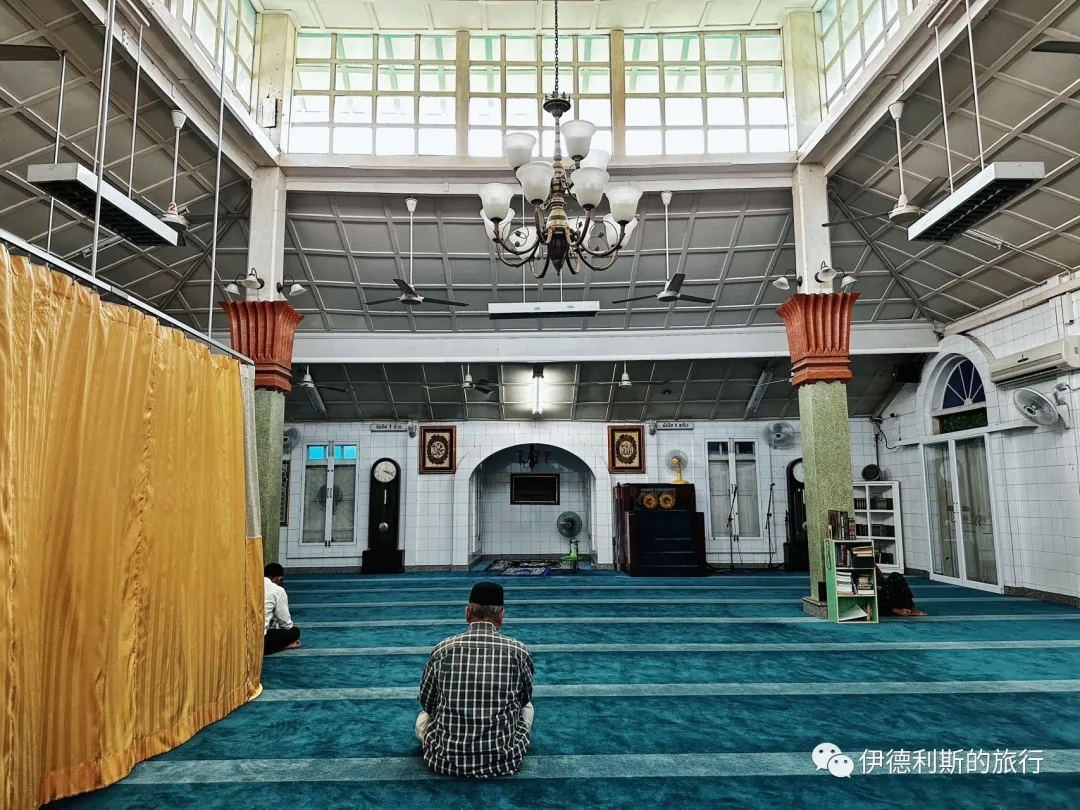
The mosque has a three-tiered pyramid-shaped roof called a Tajug, with a Mustoko decoration at the very top. The main hall is held up by four pillars called Soko Guru instead of using walls for support. In the front porch of the main hall, there is a large drum called a Bedug used for the call to prayer. Traditional Javanese mosques rarely have minarets, so they use the drum to call people to namaz and to announce the end of the daily fast. Also, next to the main hall, there is a wooden house on stilts used as a school that is over 60 years old.
Halal Travel Guide: Bangkok - Indonesian Mosque Quarters, Part 2
Articles • ali2007fr posted the article • 0 comments • 210 views • 2026-05-20 09:11
Summary: This second part of the Bangkok Indonesian mosque-quarter guide continues with Darul Abidin Mosque, Bayan Mosque, and the history of Javanese Muslim communities in the city. The article keeps the mosque dates, architectural details, Qur'anic fruit symbolism, community history, and images in order.
Darul Abidin Mosque
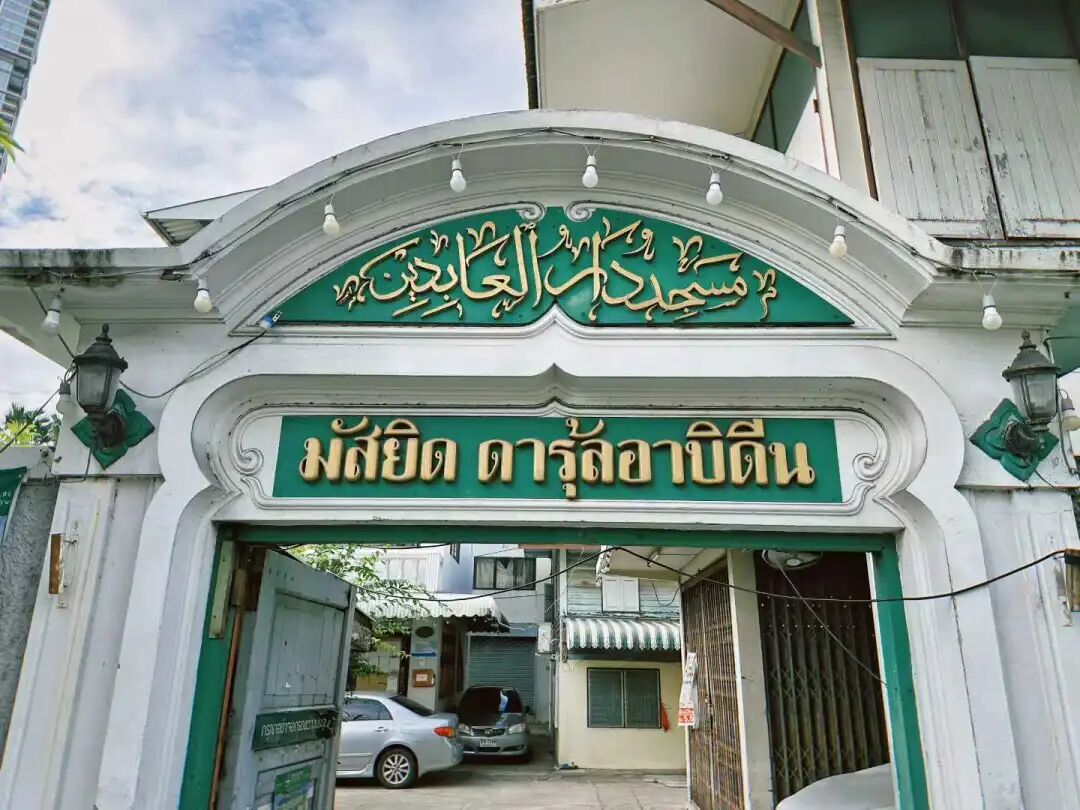
Famous architects M. A. Kasem and Kasem Ittikasem built Darul Abidin Mosque in 1912. It features a neoclassical style, and workers added mosaic tiles to it in 1986. The outer walls of the mosque feature pomegranate patterns. Pomegranates, dates, grapes, and other fruits are all mentioned in the Quran. In those two gardens, there are fruits, dates, and pomegranates. Because of this, they often appear in Islamic art.
Bayan Mosque sits right next to Darul Abidin Mosque. Javanese gardeners built this other mosque in the early 20th century. view all
Summary: This second part of the Bangkok Indonesian mosque-quarter guide continues with Darul Abidin Mosque, Bayan Mosque, and the history of Javanese Muslim communities in the city. The article keeps the mosque dates, architectural details, Qur'anic fruit symbolism, community history, and images in order.
Darul Abidin Mosque
Famous architects M. A. Kasem and Kasem Ittikasem built Darul Abidin Mosque in 1912. It features a neoclassical style, and workers added mosaic tiles to it in 1986. The outer walls of the mosque feature pomegranate patterns. Pomegranates, dates, grapes, and other fruits are all mentioned in the Quran. In those two gardens, there are fruits, dates, and pomegranates. Because of this, they often appear in Islamic art.
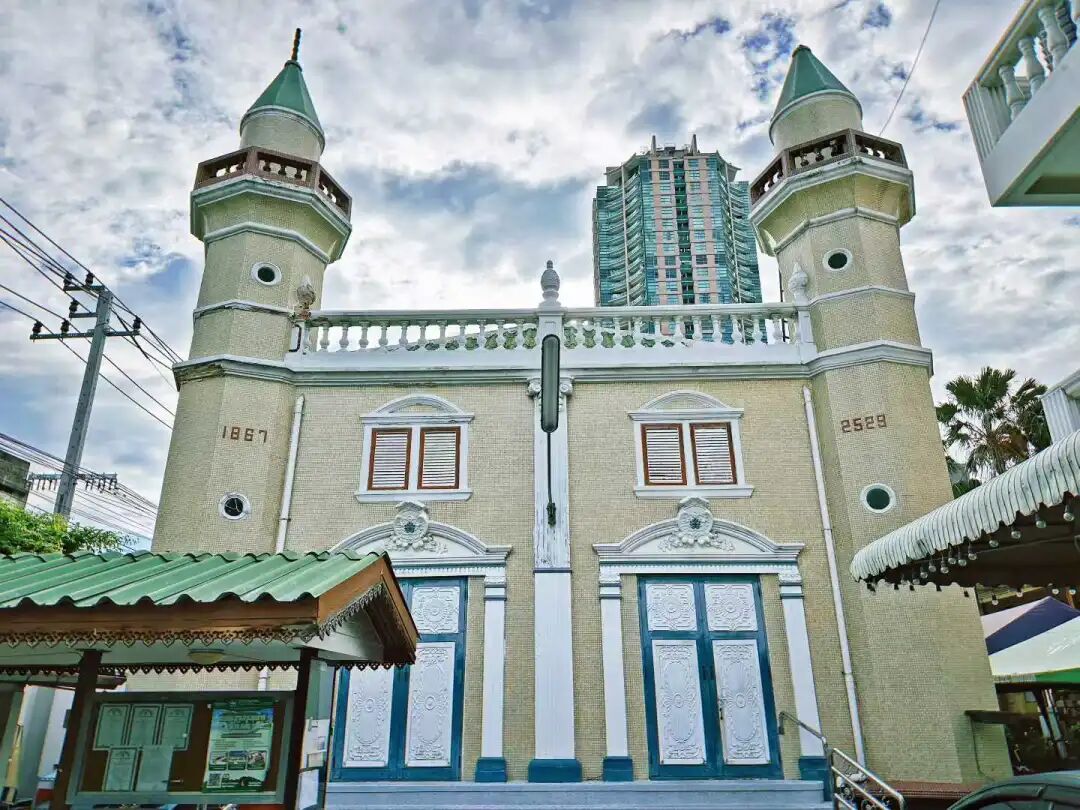
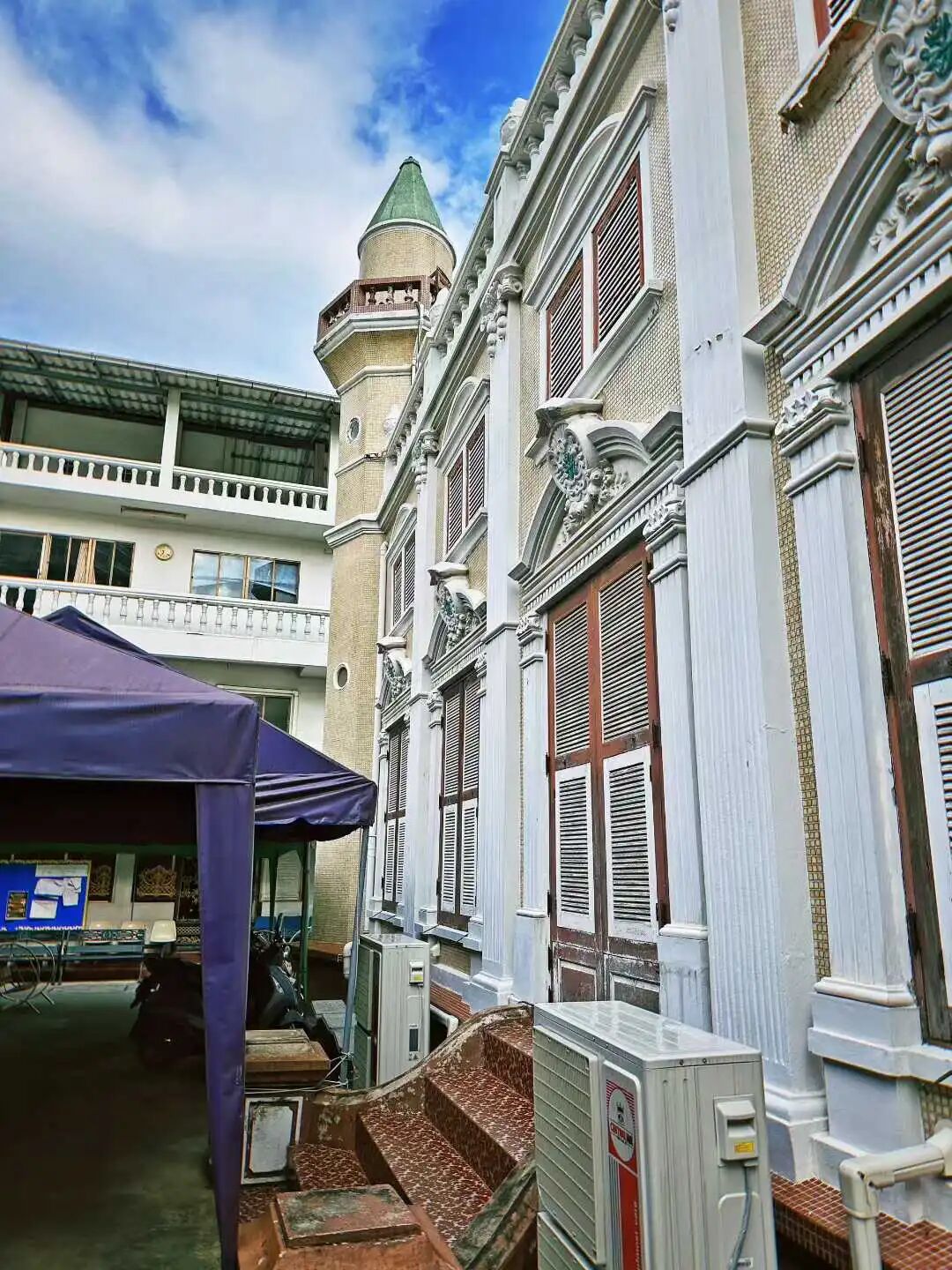
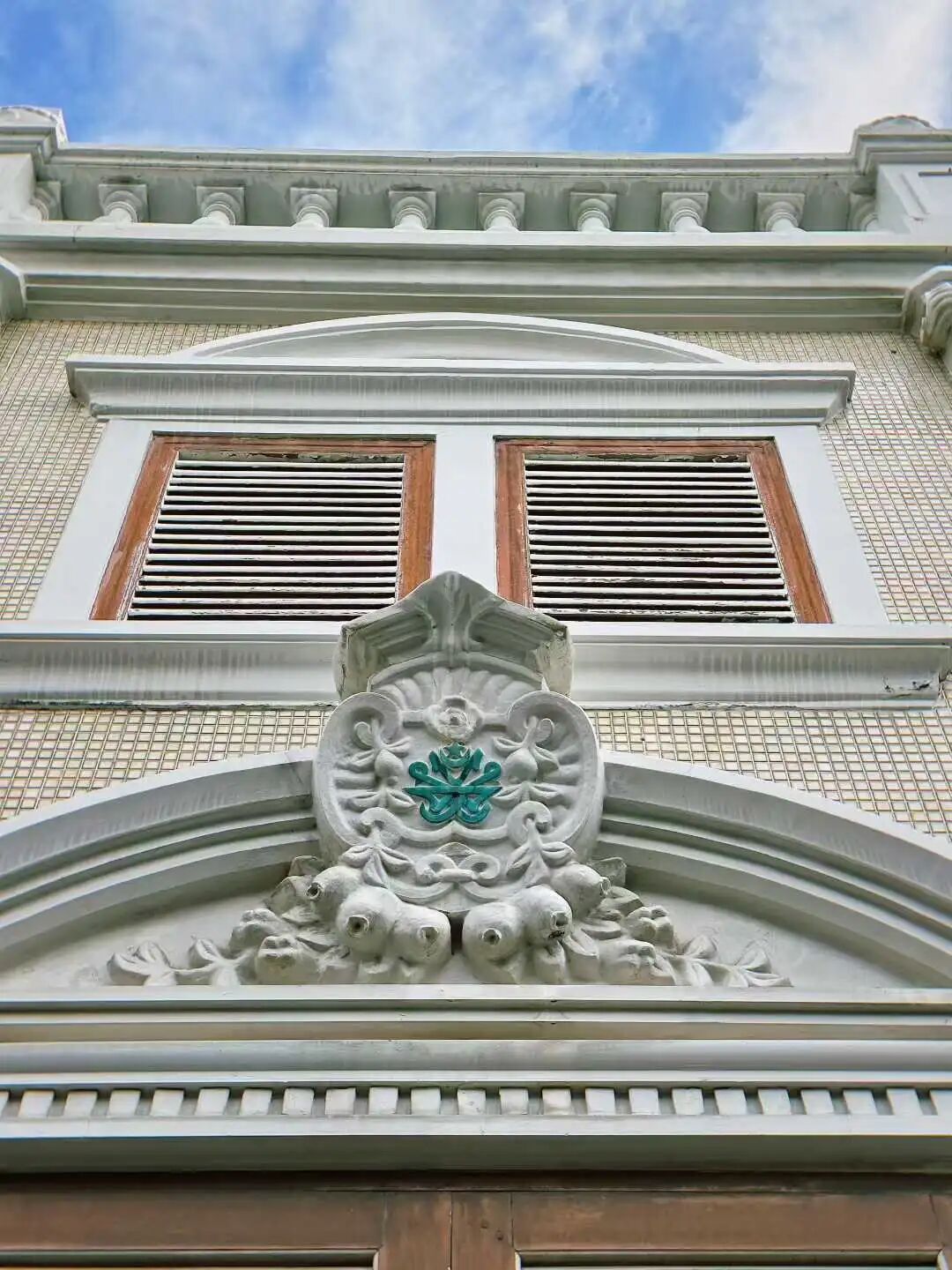
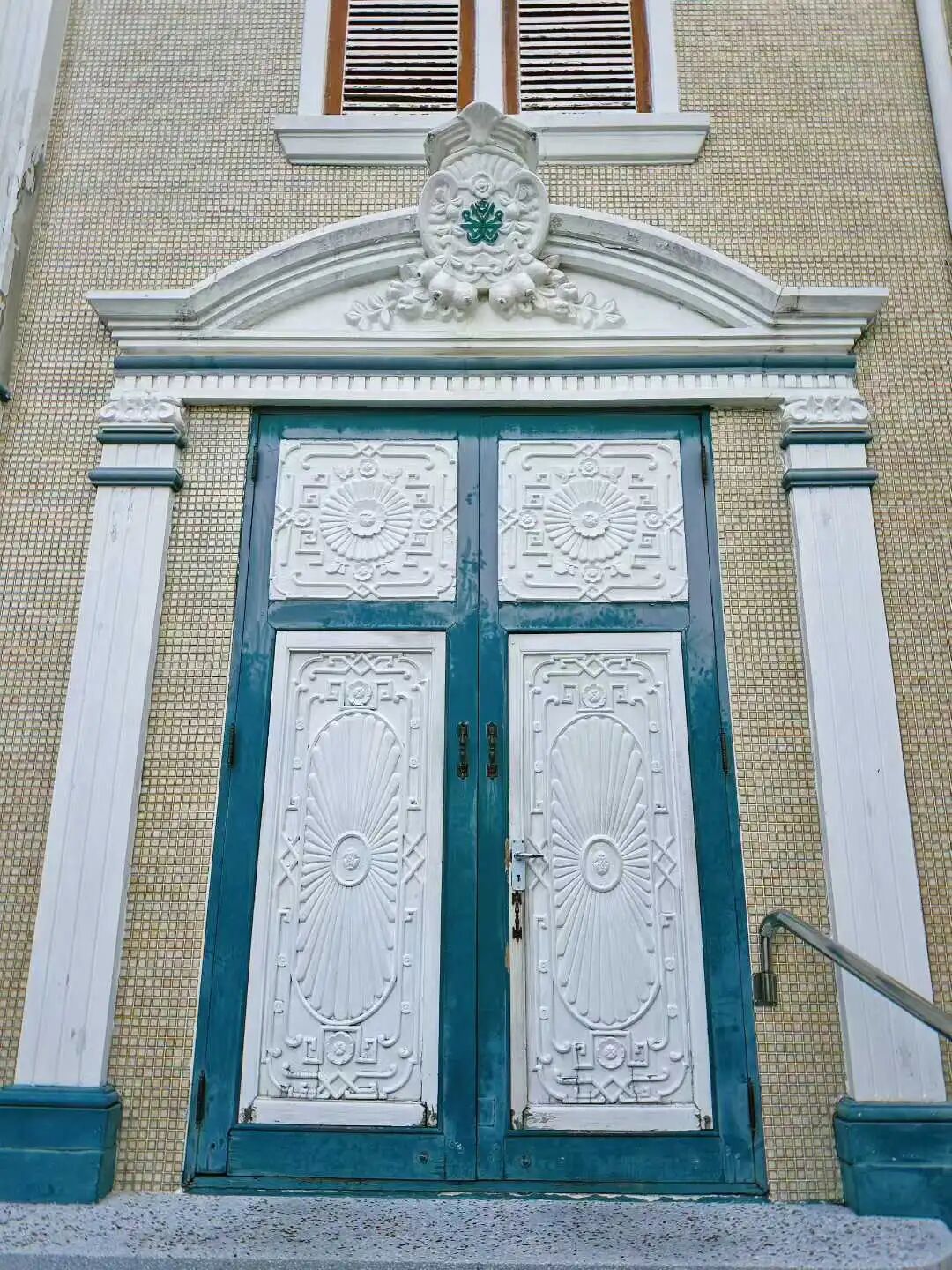
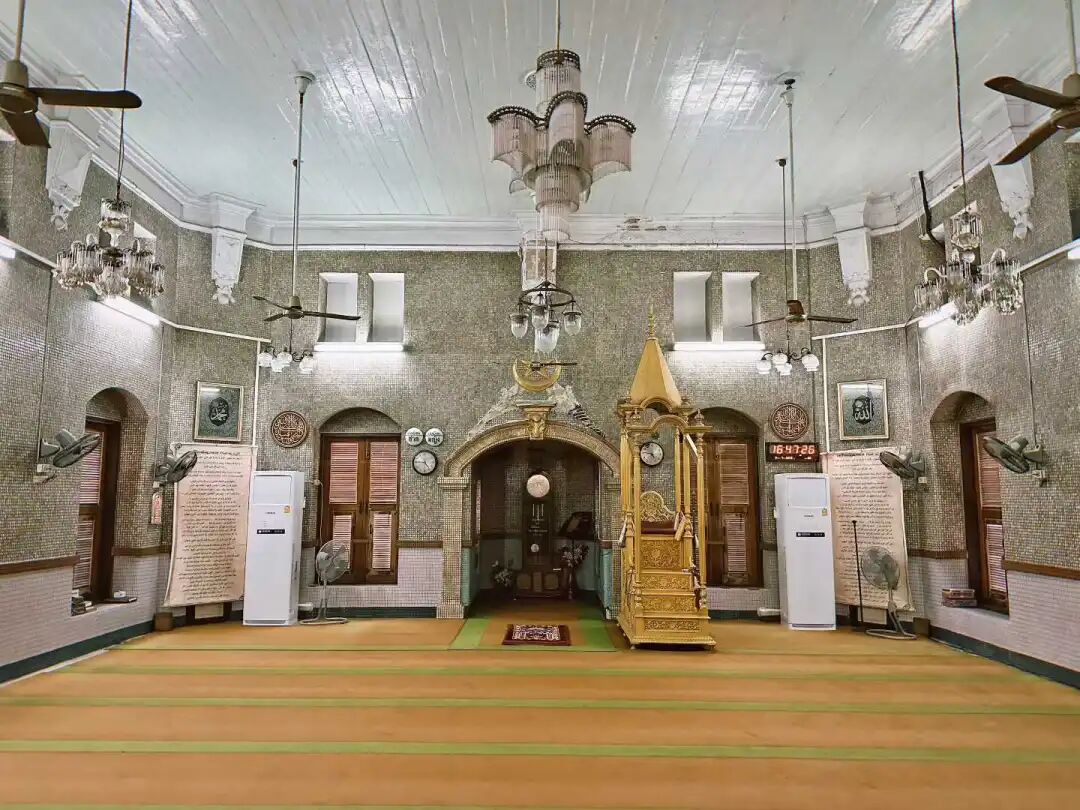
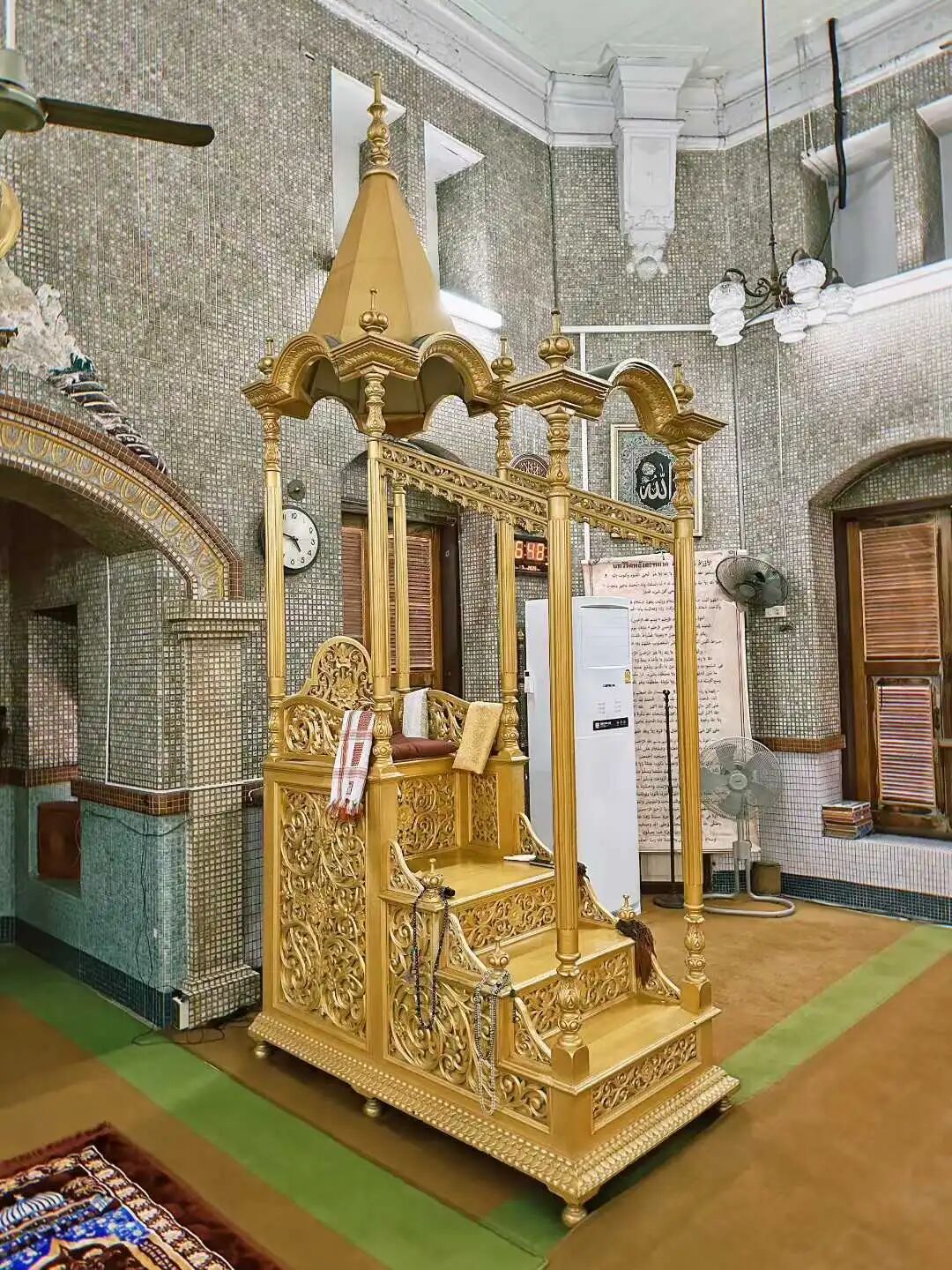
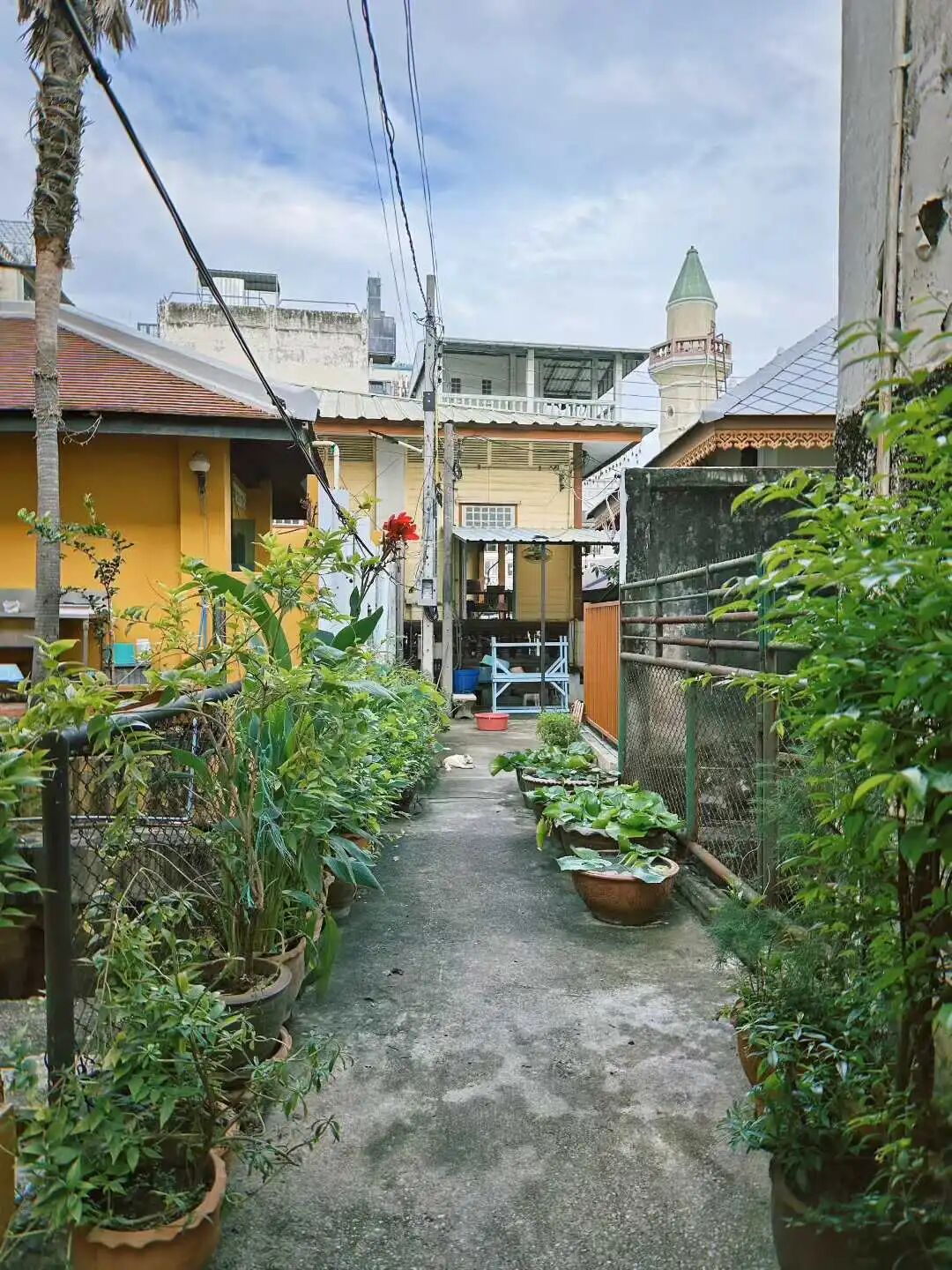
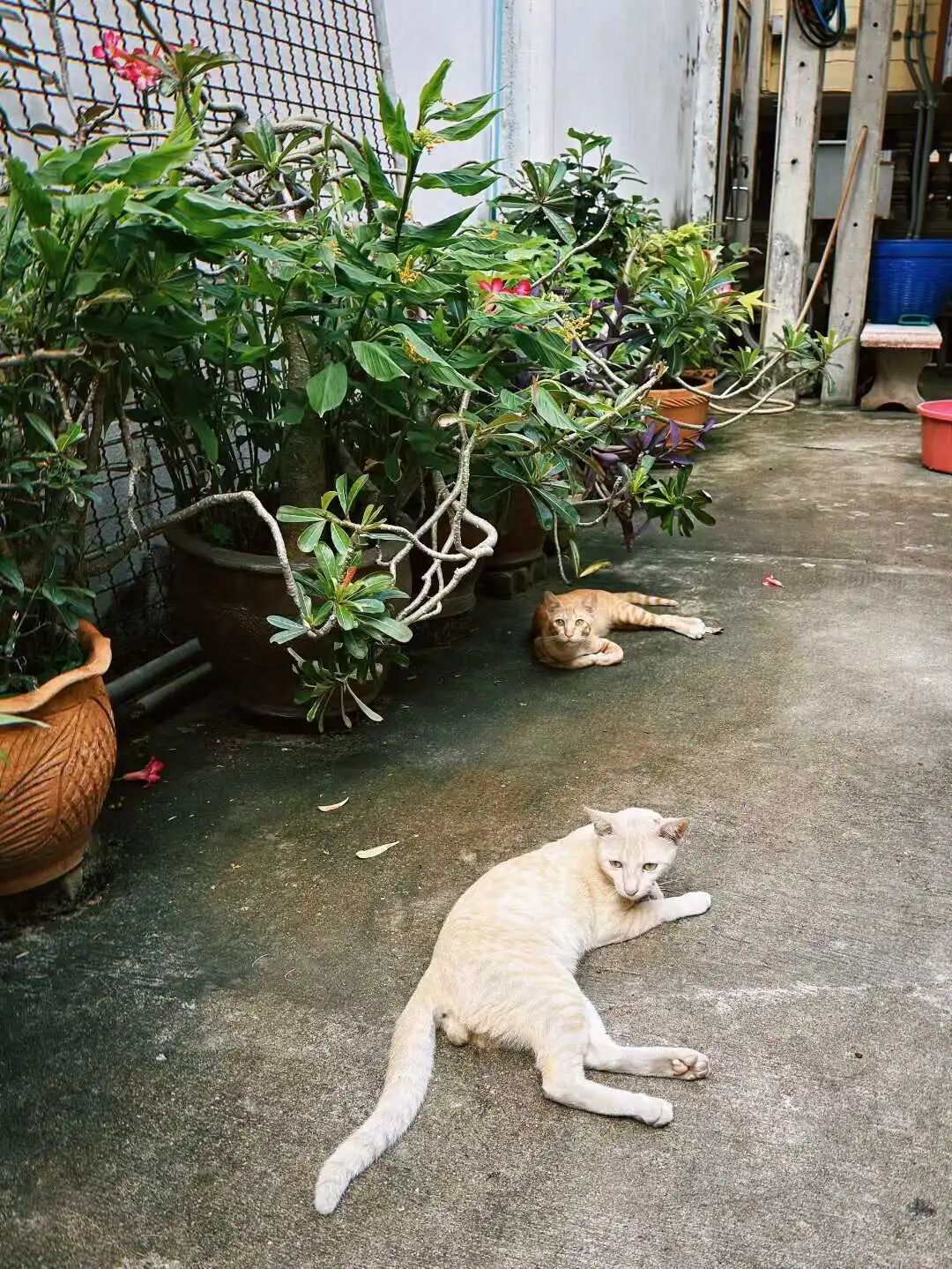
Bayan Mosque sits right next to Darul Abidin Mosque. Javanese gardeners built this other mosque in the early 20th century.
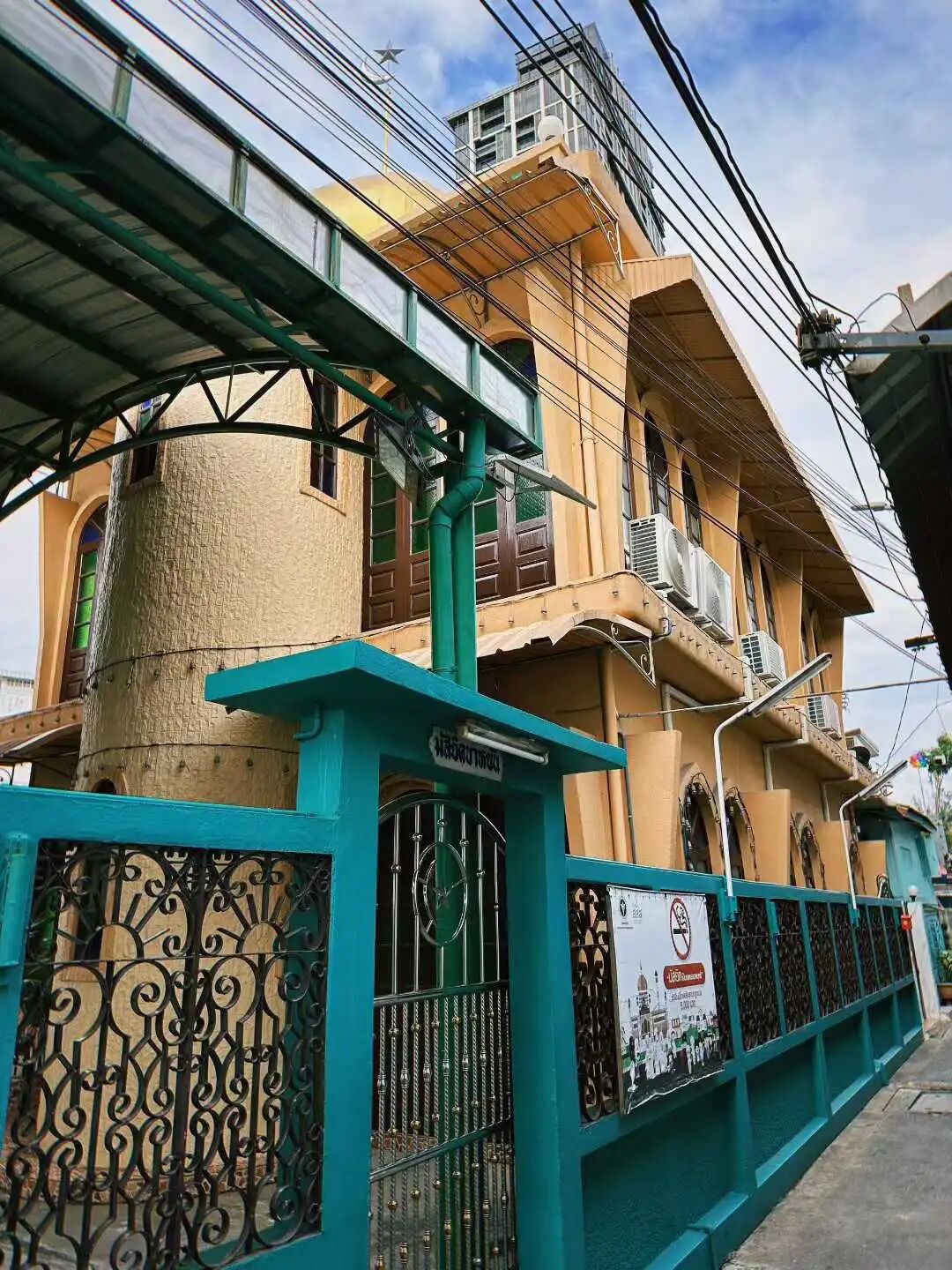
Halal Travel Guide: Bangkok - Malay Mosque Quarters, Hotels and Markets
Articles • ali2007fr posted the article • 0 comments • 216 views • 2026-05-20 09:11
Summary: Bangkok has Malay Muslim mosque quarters, halal hotels, river markets, and neighborhood food stops shaped by migration from the Malay world. This account follows the six Malay mosque areas, local markets, hotels, restaurants, and photos in the same order as the original travel note.
There are many Malay-founded mosque communities in Bangkok's city center and suburbs. They come from two main areas: the Pattani region in present-day southern Thailand (the three southern border provinces) and the Kedah region in northwestern Malaysia. I visited three Pattani Malay mosque communities and three Kedah Malay mosque communities on this trip.
Pattani Malay Mosque Communities
The Sultanate of Pattani was a Malay state founded in the 15th century, located in the southernmost part of modern-day Thailand. After the Sultanate of Malacca fell in the 16th century, the Sultanate of Pattani began to rise, becoming a center for trade and culture during that same century.
Thailand began invading the Sultanate of Pattani from the 17th century, and the war of conquest in 1688 caused chaos in the Pattani region. Long-term warfare led to many Pattani Malays being taken to Ayutthaya, the capital of Thailand at the time. In the mid-18th century, thousands of Pattani Malay captives were settled in the southern and southwestern suburbs of Ayutthaya, where they were forced to work to fill the capital's granaries. After Ayutthaya fell in 1767, some Pattani Malays managed to return home, while others stayed in Ayutthaya. A small number of Malays were invited by the Thai king to settle in the new capital, Thonburi, and were released from their status as captives.
Bang O Mosque
The Bang O mosque community is located 5 kilometers downstream from Thonburi and is one of the Pattani Malay mosque communities that relocated from Ayutthaya. During the reign of Rama I (1782-1809), the leader of the Bang O mosque community was granted the title of Director of Maritime Construction (Phraya Yotha Samut). He was responsible for supplying timber to the Thai naval base and established a sawmill. In the late 19th century, a Malay merchant from Songkhla named Mohammat Phet thongkham converted the Bang O mosque community's sawmill from manual labor to steam power and obtained a concession for inland teak. He built a thriving timber export trade in the Bang O mosque community and donated funds to rebuild the Bang O mosque in 1903. In 1924, the timber trade at the Bang O mosque community was interrupted by the construction of an upstream dam. Later, the community shifted to exporting timber and rice to the Middle East, which led to the introduction of more radical Salafi ideas from Arabia.
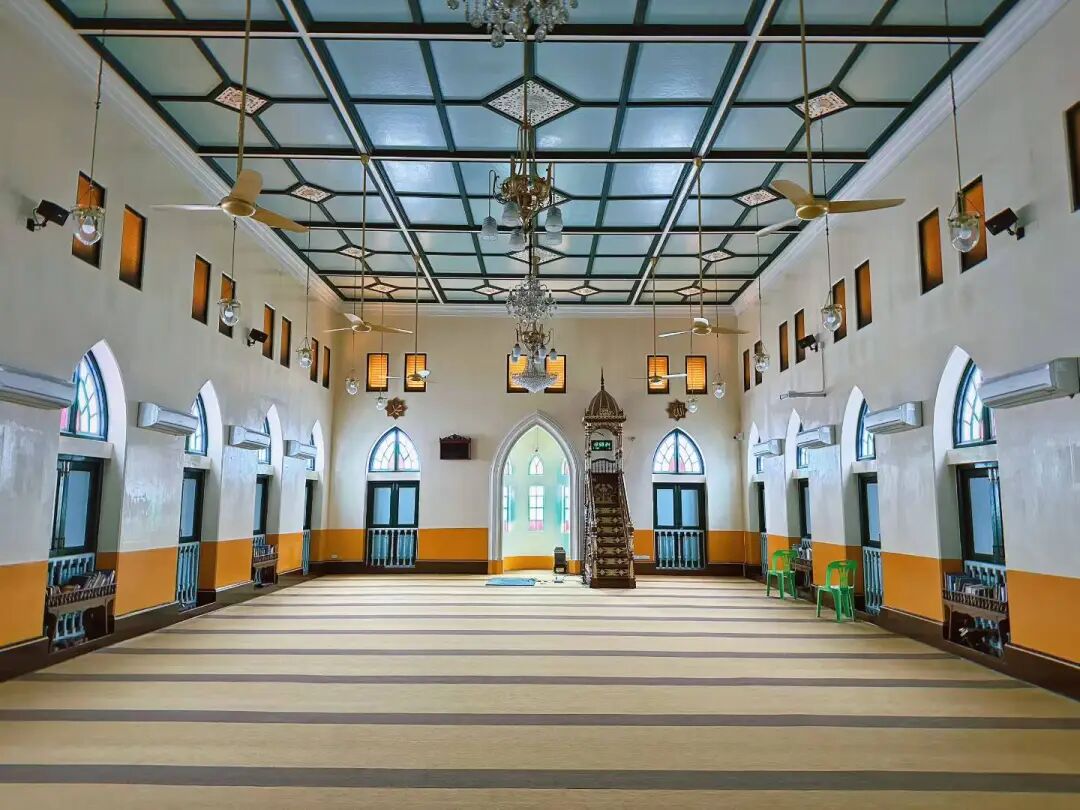
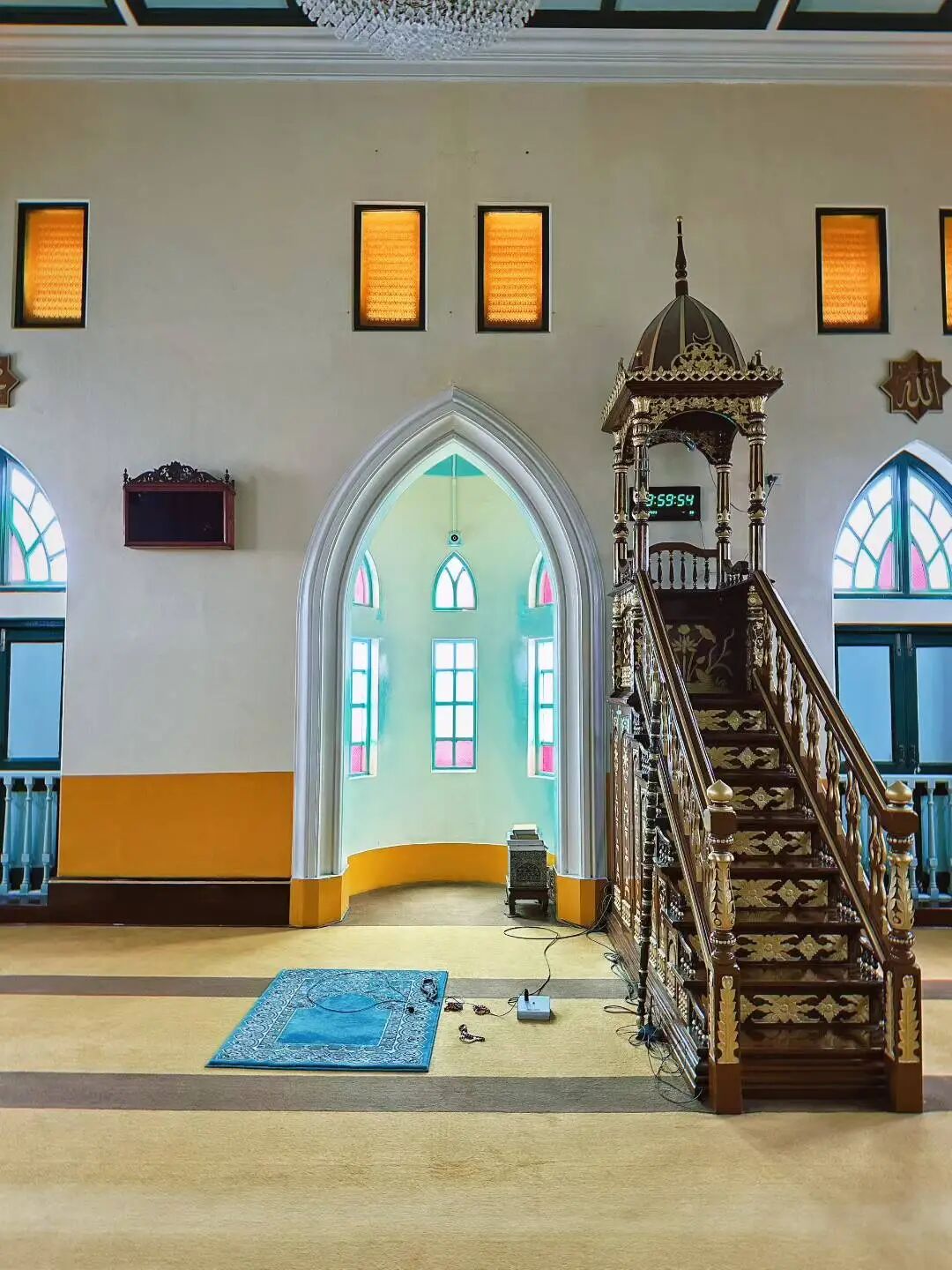
The main prayer hall of the Bang O mosque was built in 1918. It features a neoclassical style and a very exquisite design. Interestingly, the entrance hall faces southeast toward the banks of the Chao Phraya River, but the main hall behind it faces due west toward the Kaaba. Because of this, the entire building is not symmetrical along a single axis.
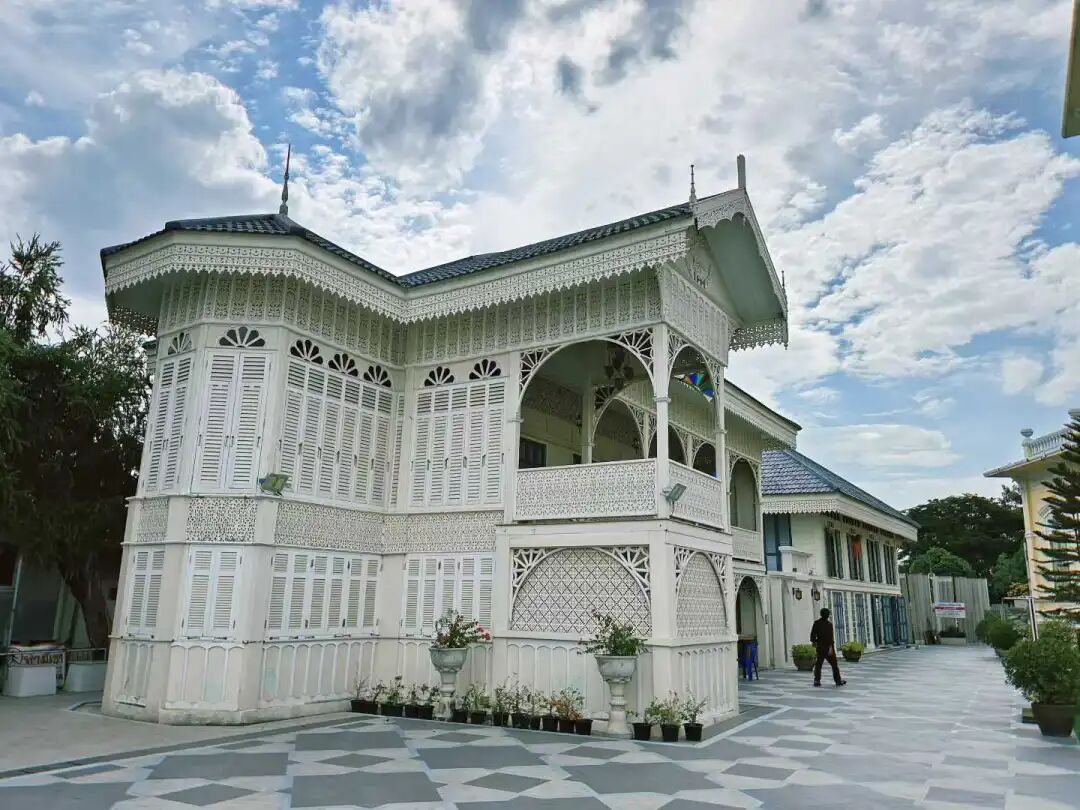
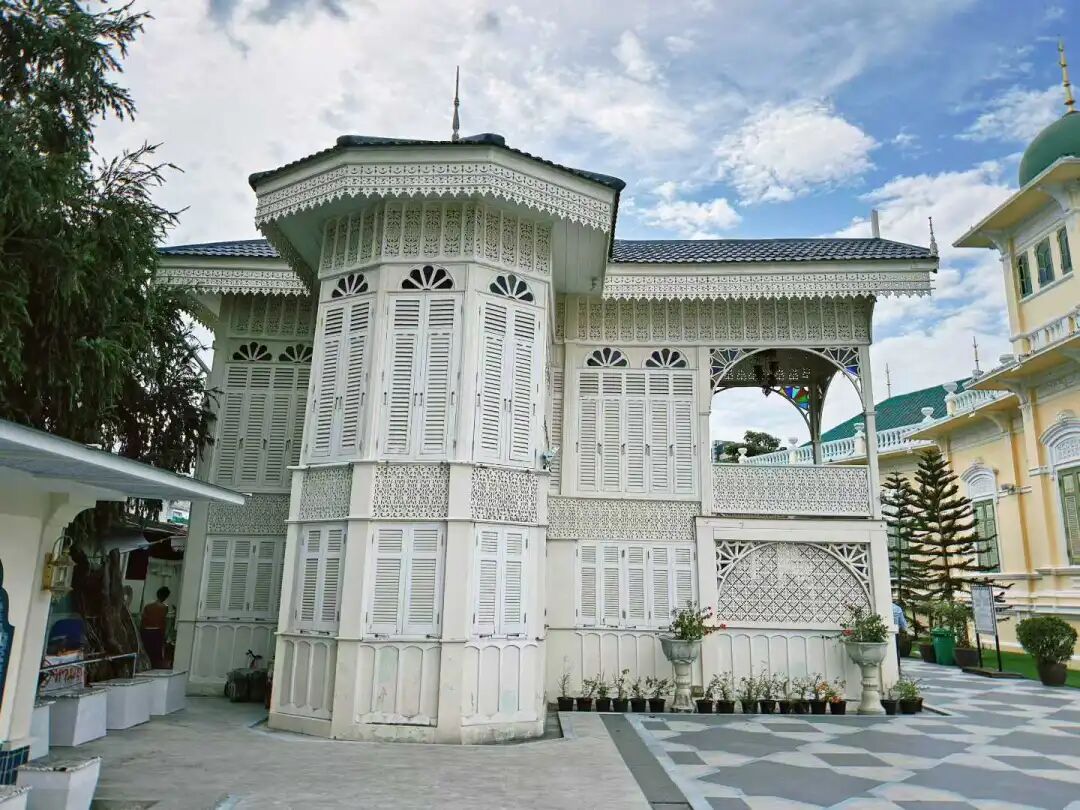
Additionally, the office of the Bang O mosque was built in 1920 using the teak gingerbread style, which is very characteristic of that era. This is a decorative style that originated in the United States in the 1860s. It involves cutting wood into small decorative pieces with very rich details. Because gingerbread houses have high ceilings and shutters on all sides to improve ventilation, they were very popular in tropical regions. During the reign of Rama V (1868-1910), many mansions belonging to Thai nobles were built in the teak gingerbread style.
Chakraphong Mosque
After Ayutthaya fell in 1767, the Sultanate of Pattani was briefly free from Thai control. However, with the establishment of the Chakri Dynasty in Thailand in 1782, the Thai government decided to restore its control over the Sultanate of Pattani. In 1786, Thailand sent an army led by the Second King Maha Sura Singhanat to launch a devastating attack on the Pattani Sultanate. To show their loyalty to Thailand, the Pattani Sultanate sent a large number of nobles and craftsmen to Bangkok as hostages. Under the supervision of the Thai Second King, these Pattani Malays were settled inside the northern city wall of Bangkok, near the mouth of the Bang Lamphu canal. Among the many mosque communities (masjid) established by Malay and Cham captives around Bangkok, the Chakraphong mosque community is the only one located inside the city walls.
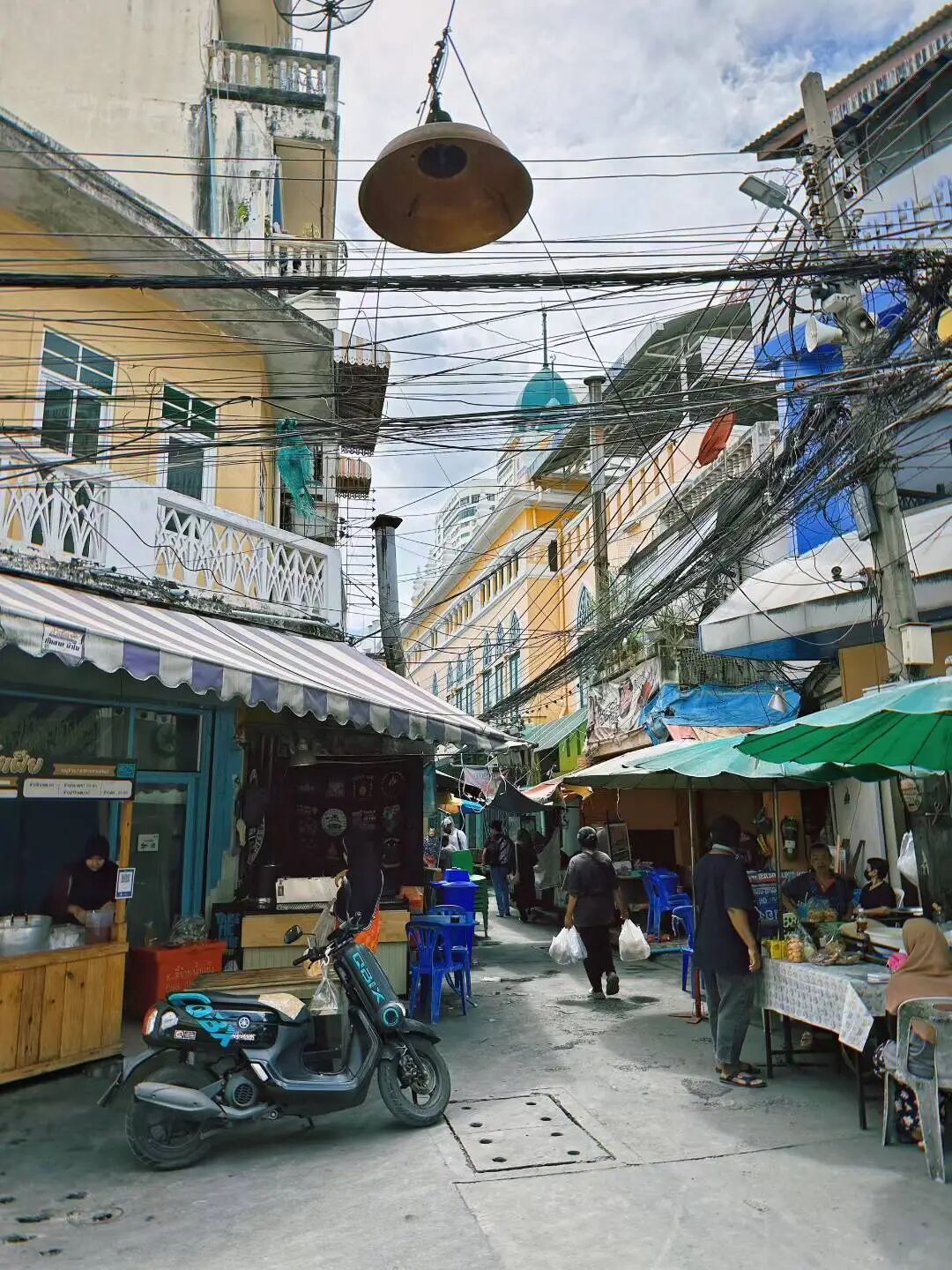
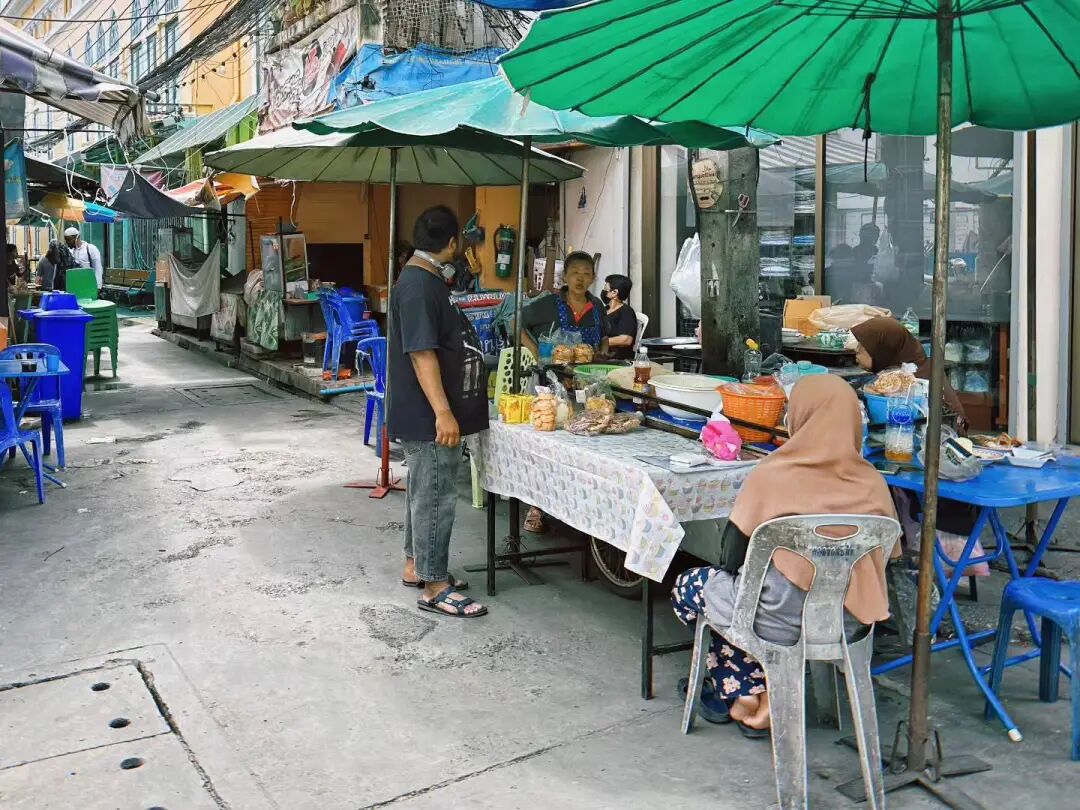
The Chakraphong mosque was originally called the Bang Lamphu mosque, and it only changed to its current name after Chakraphong Road was built in 1900. Before the 1960s, many Malay residents worked as goldsmiths, setting up stalls to trade along the roads around the mosque community. Today, the Bang Lamphu mosque community is famous for its specialty snacks.
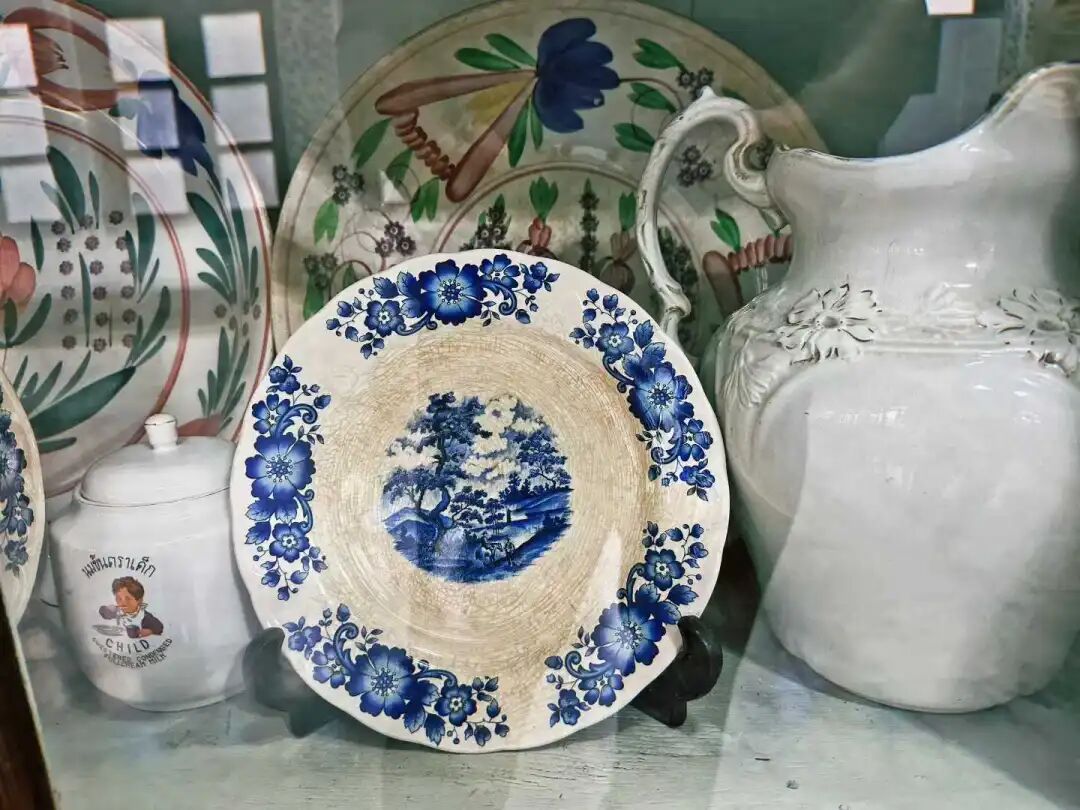
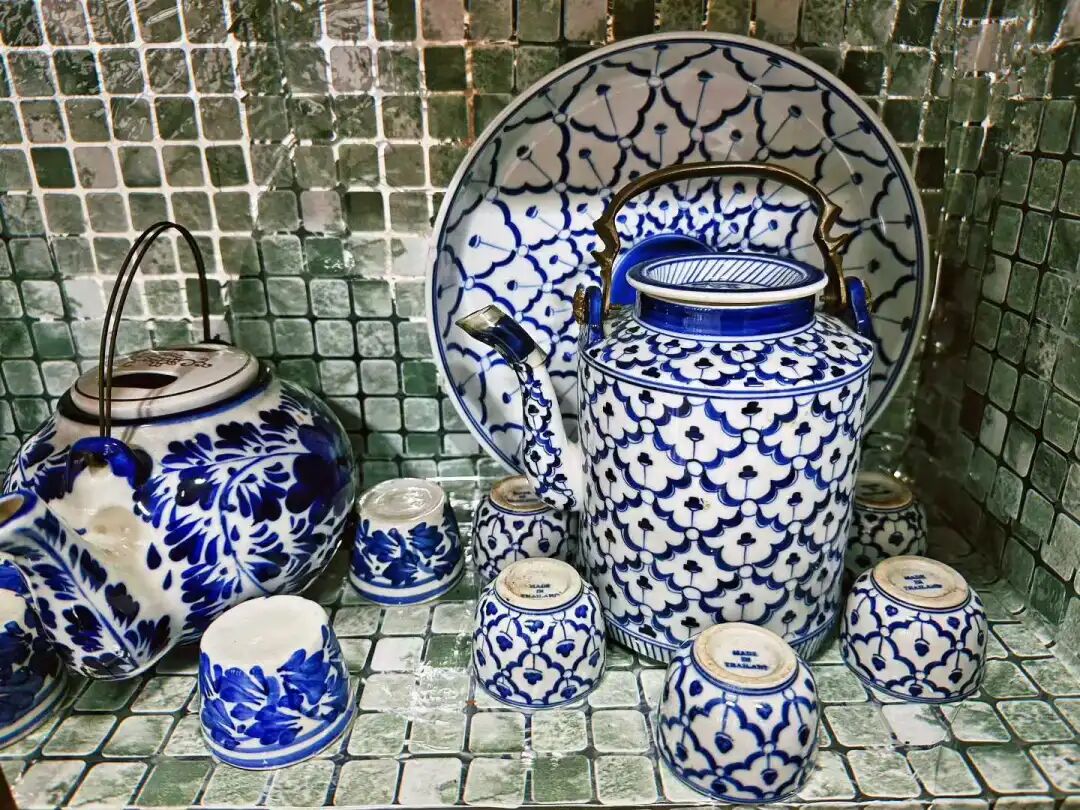
Chinese porcelain collected by the Chakraphong mosque.
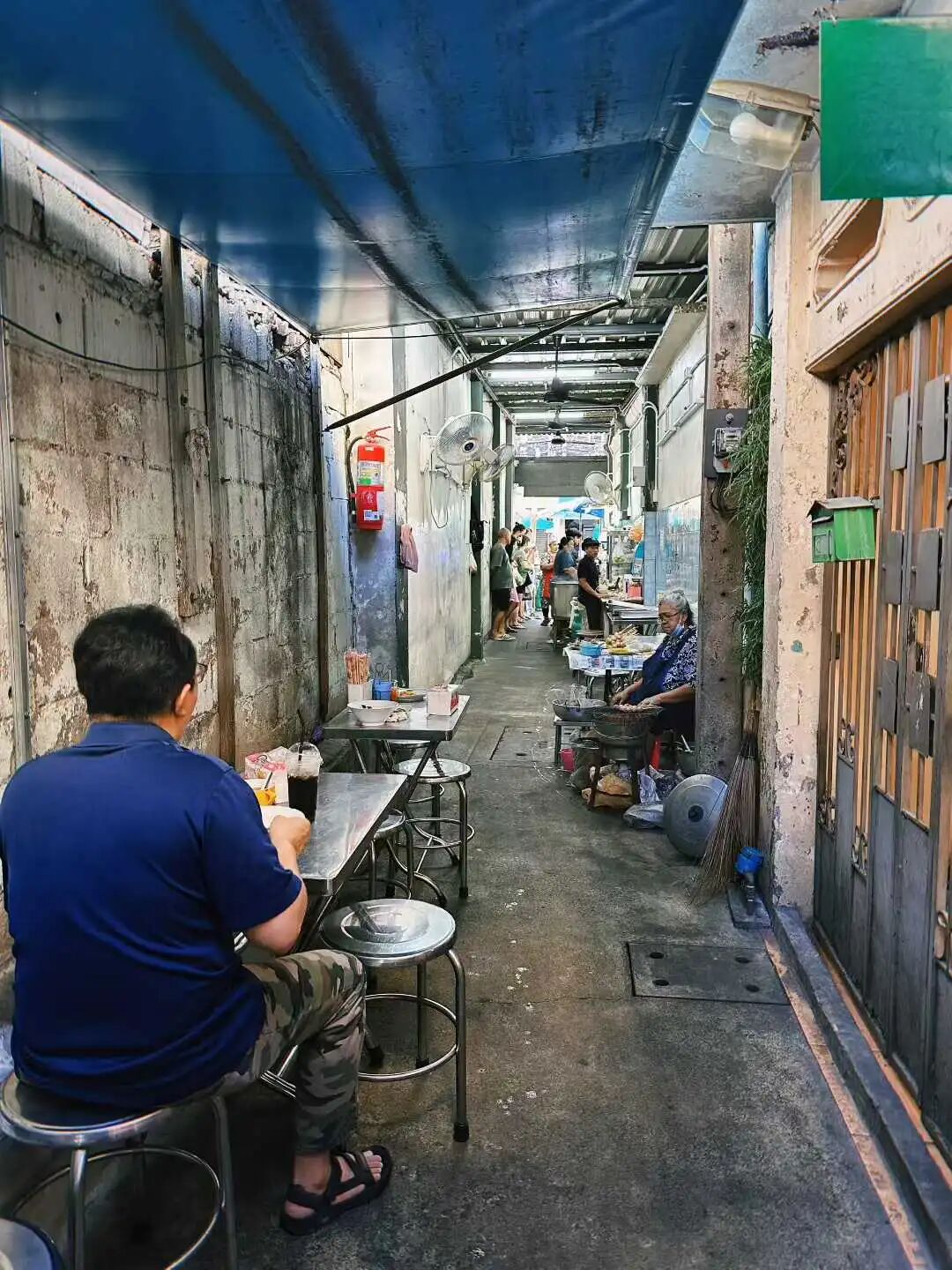
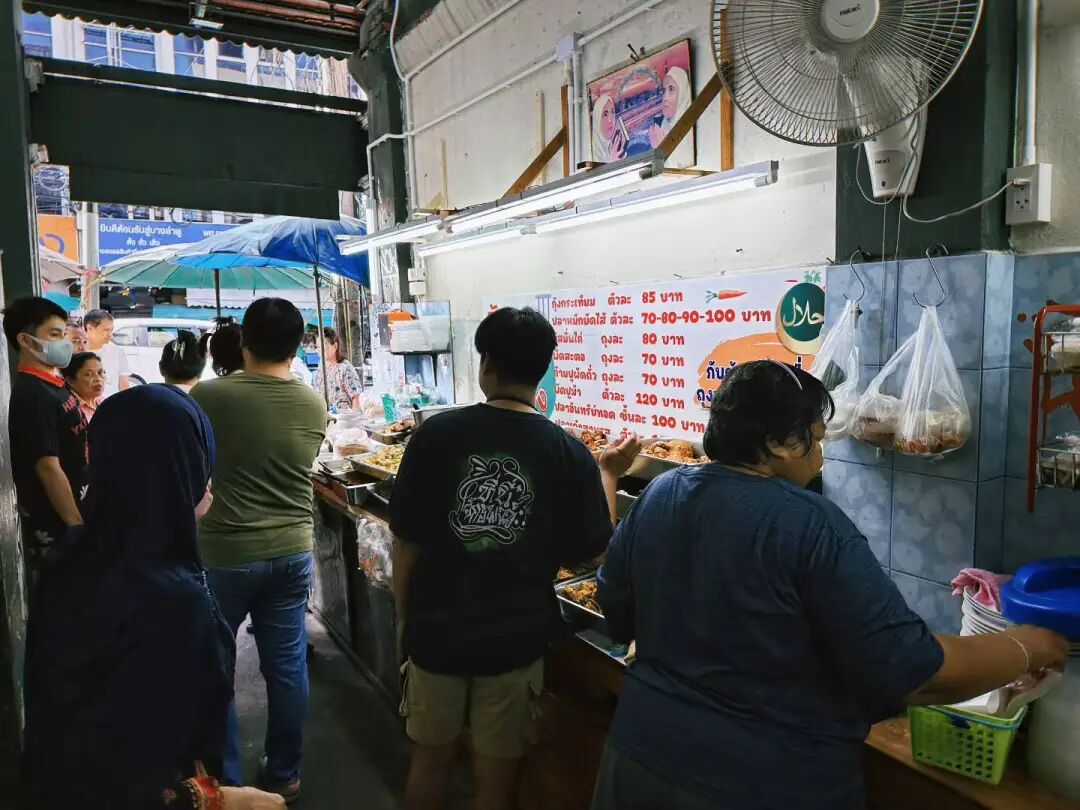
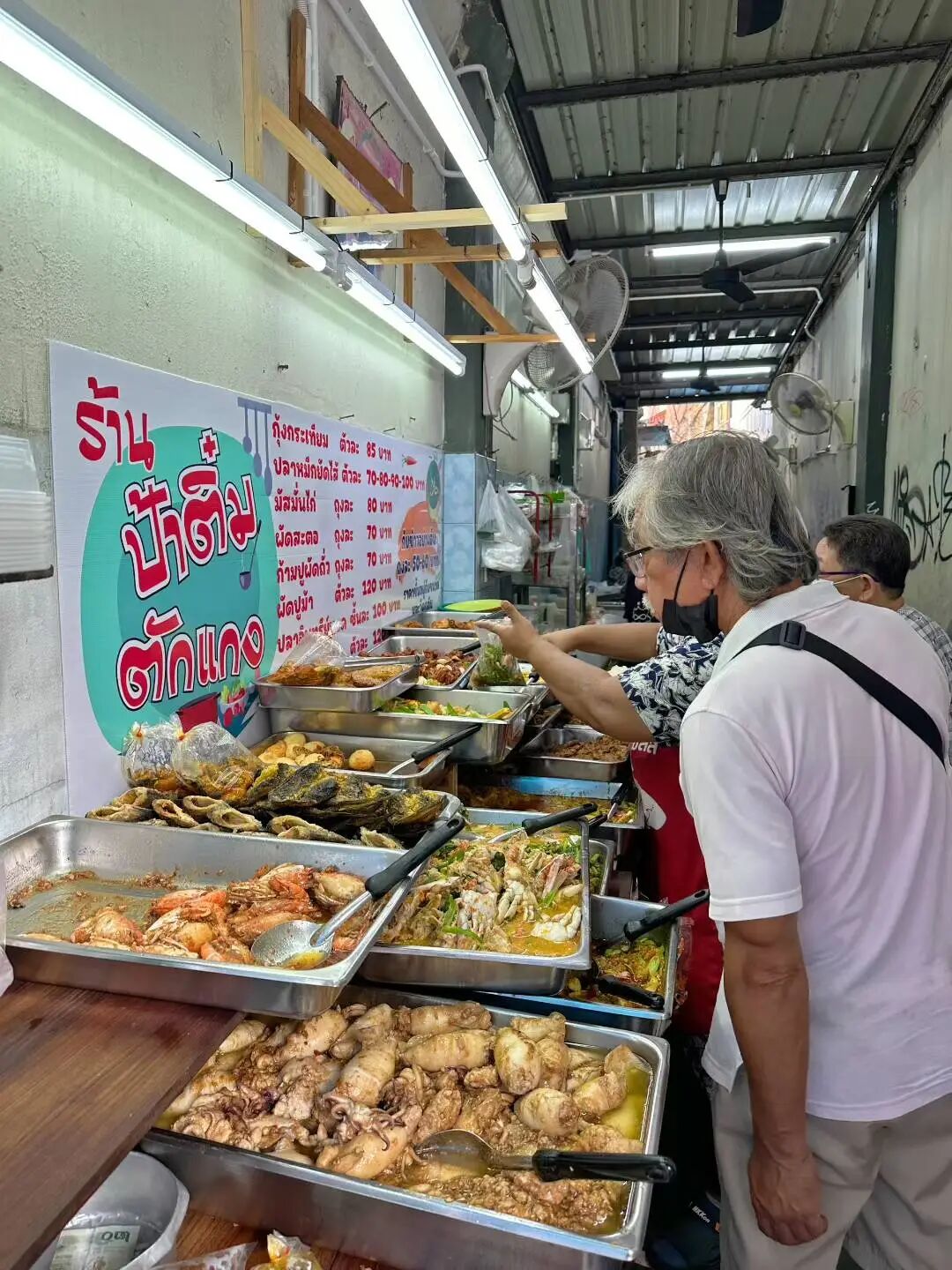
The snack stalls at the entrance are very busy, with people lining up to get food to go.
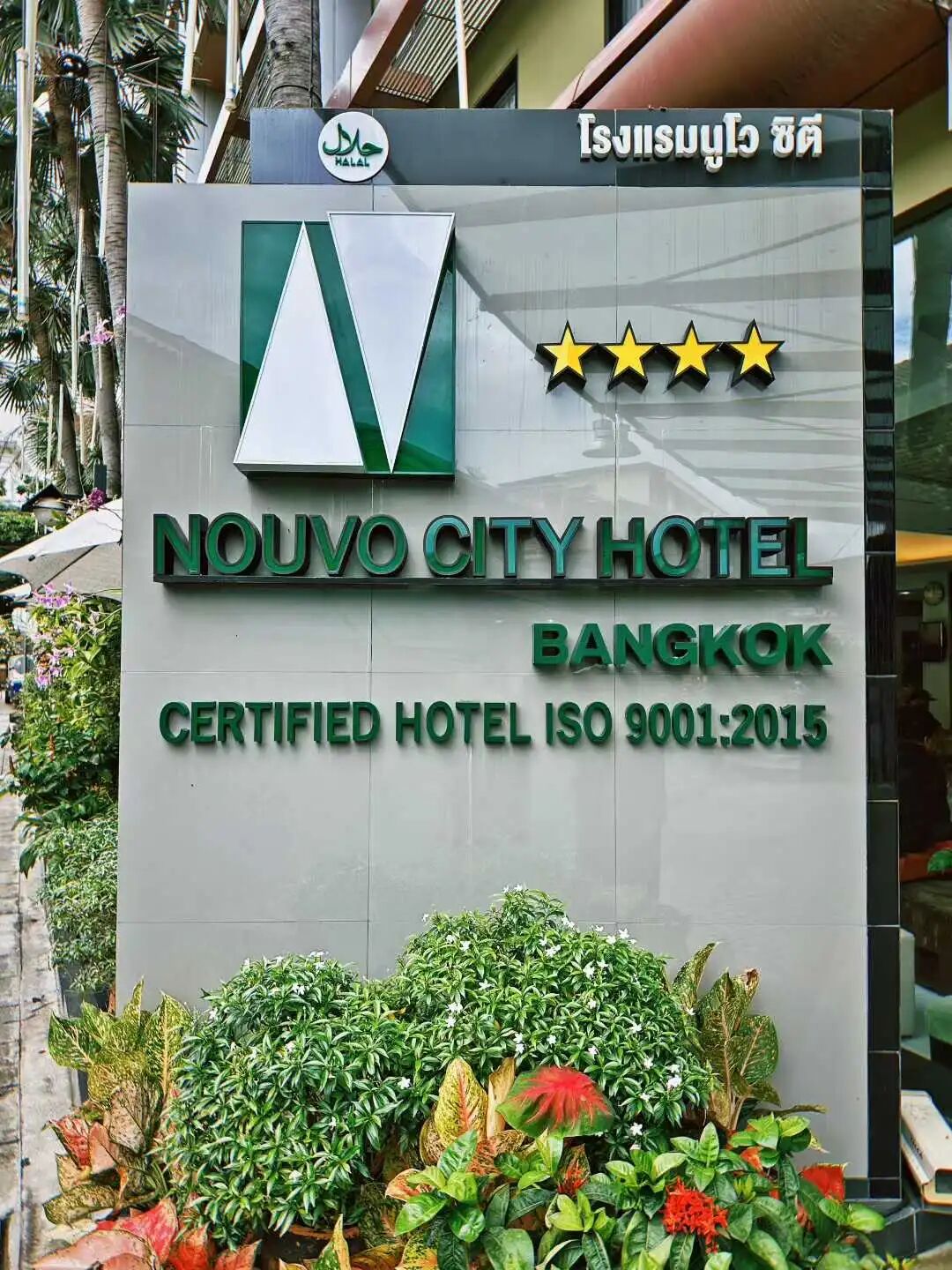
The Nouvo City Hotel where we stayed is only about 200 meters from the Chakraphong mosque, and it is the most famous halal hotel in Bangkok's old town. Near the hotel are piers for two express boat lines on the Chao Phraya River and the Bang Lamphu canal, making it very convenient to reach major Bangkok attractions without getting stuck in traffic.
The hotel has a gym, two swimming pools, and a prayer room, which is very convenient.
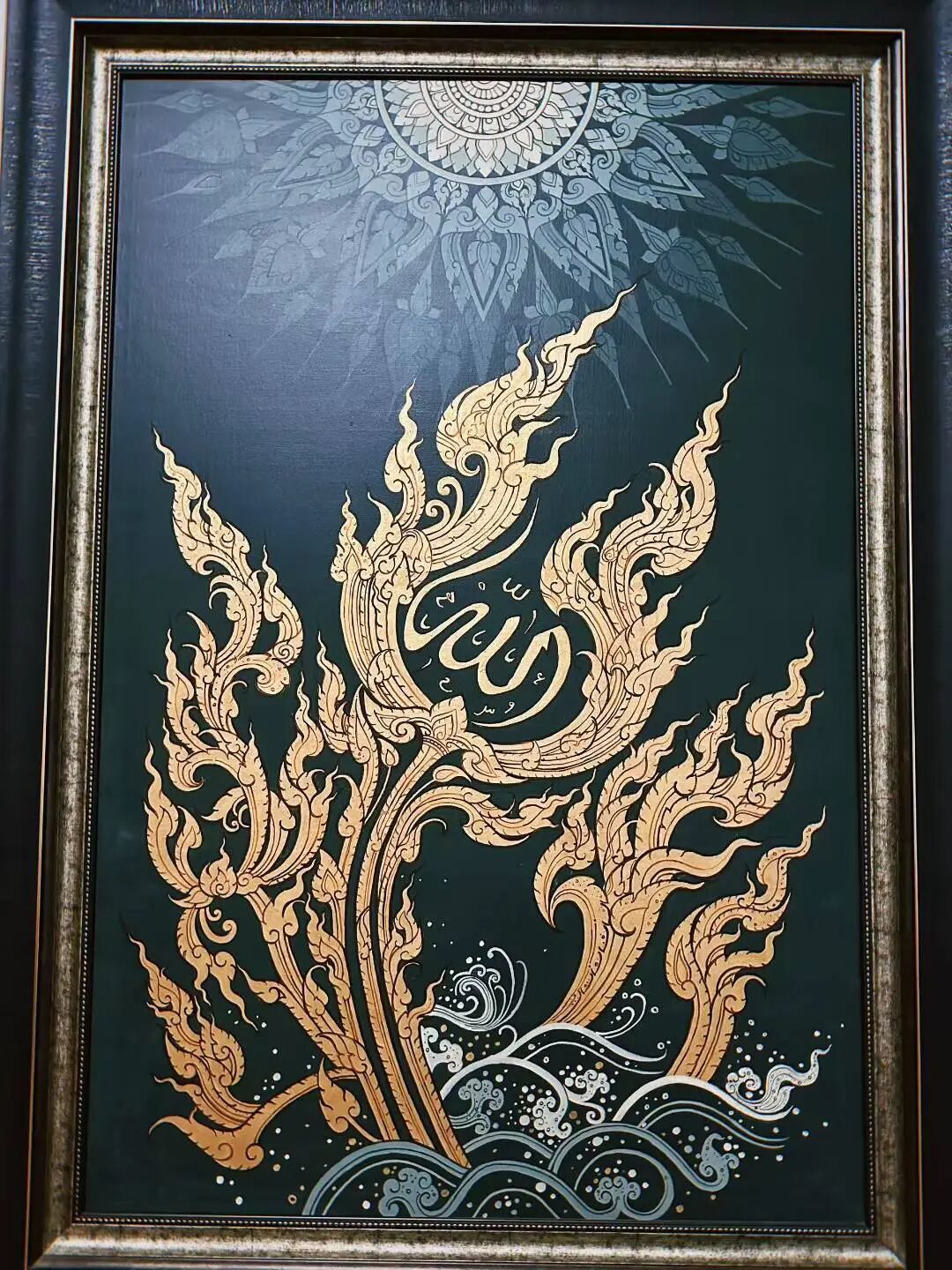
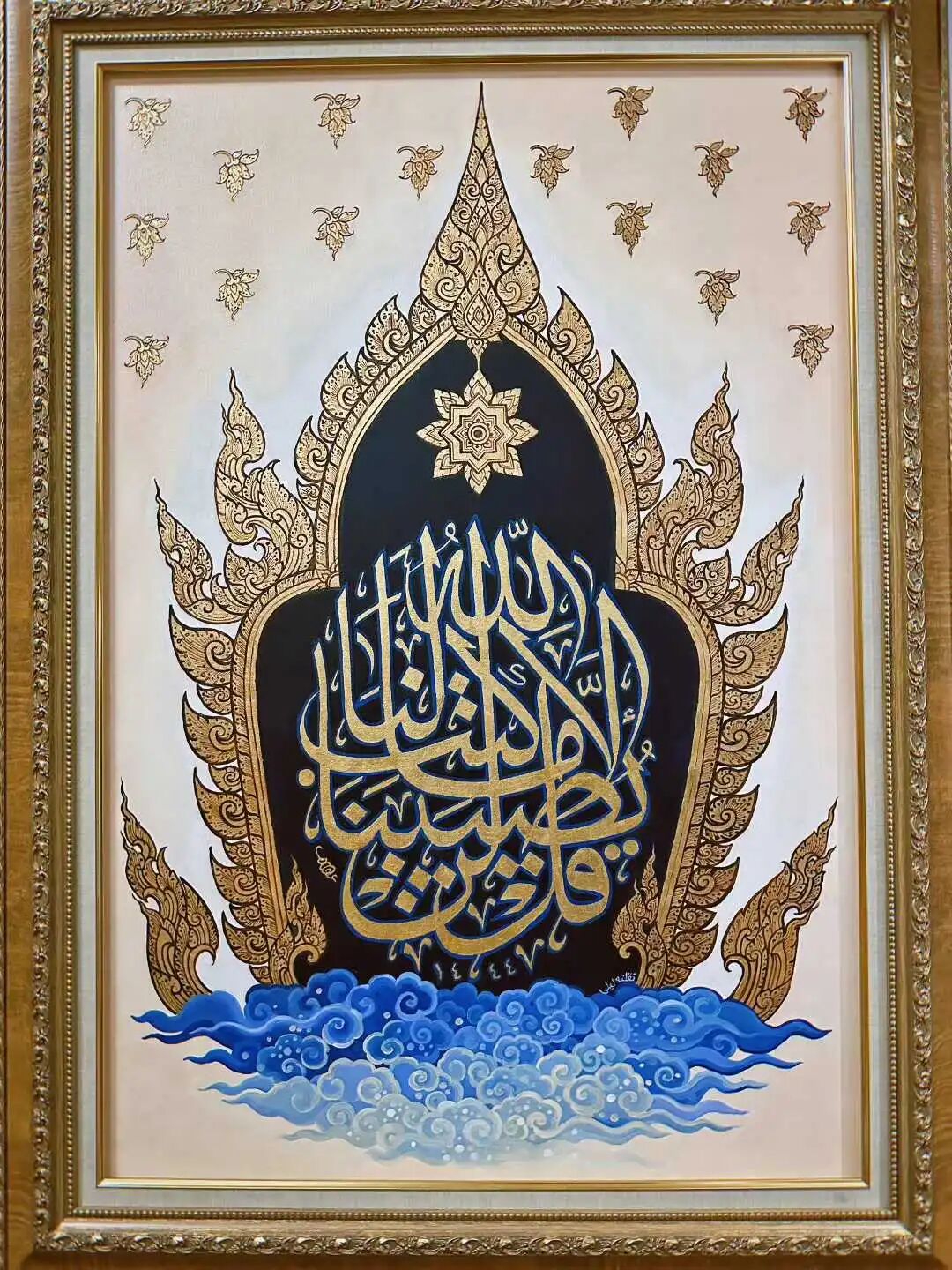
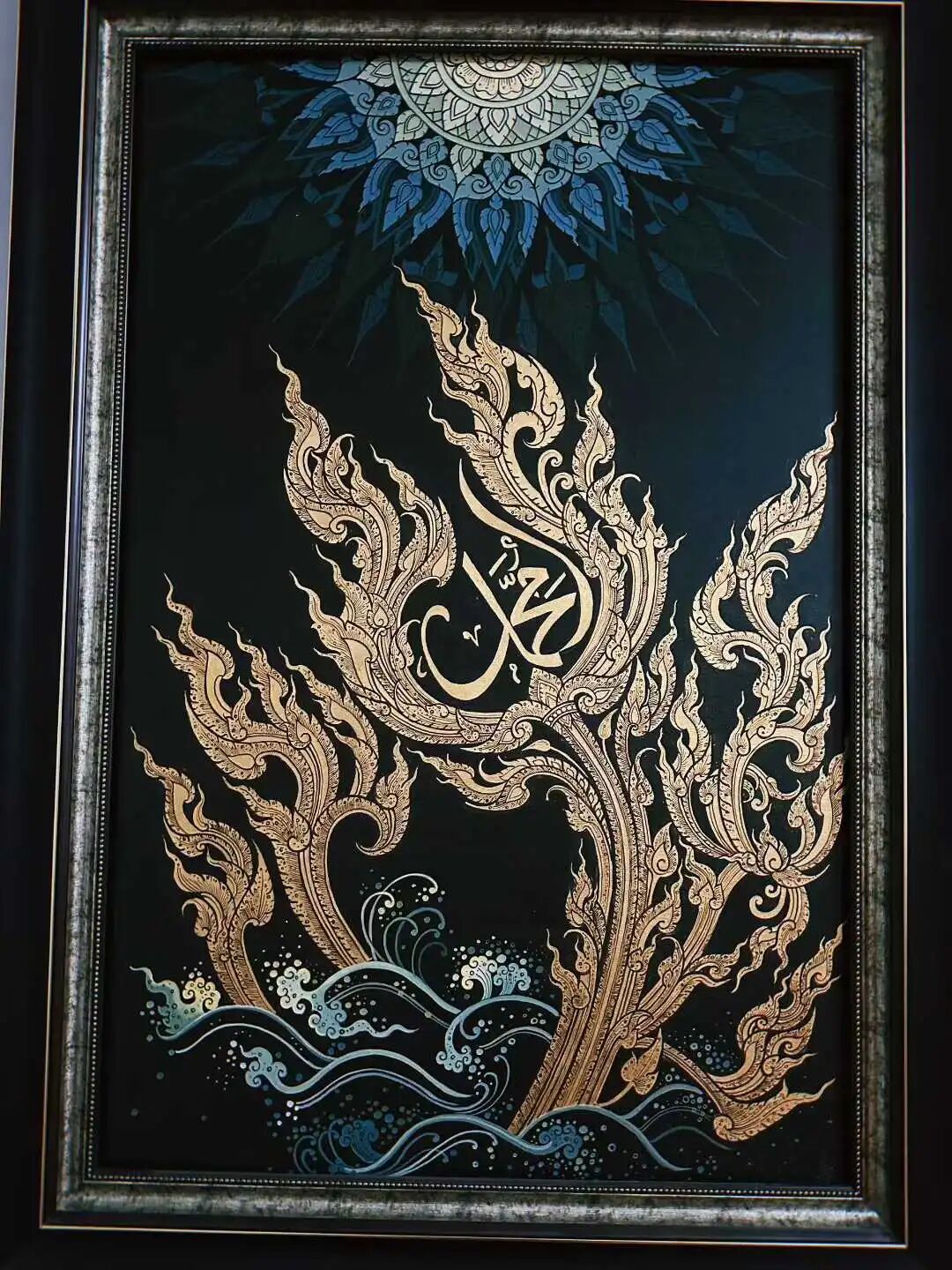
The prayer room features Thai-style Islamic decorative art, combining local Thai patterns with Islamic calligraphy, which looks very beautiful.
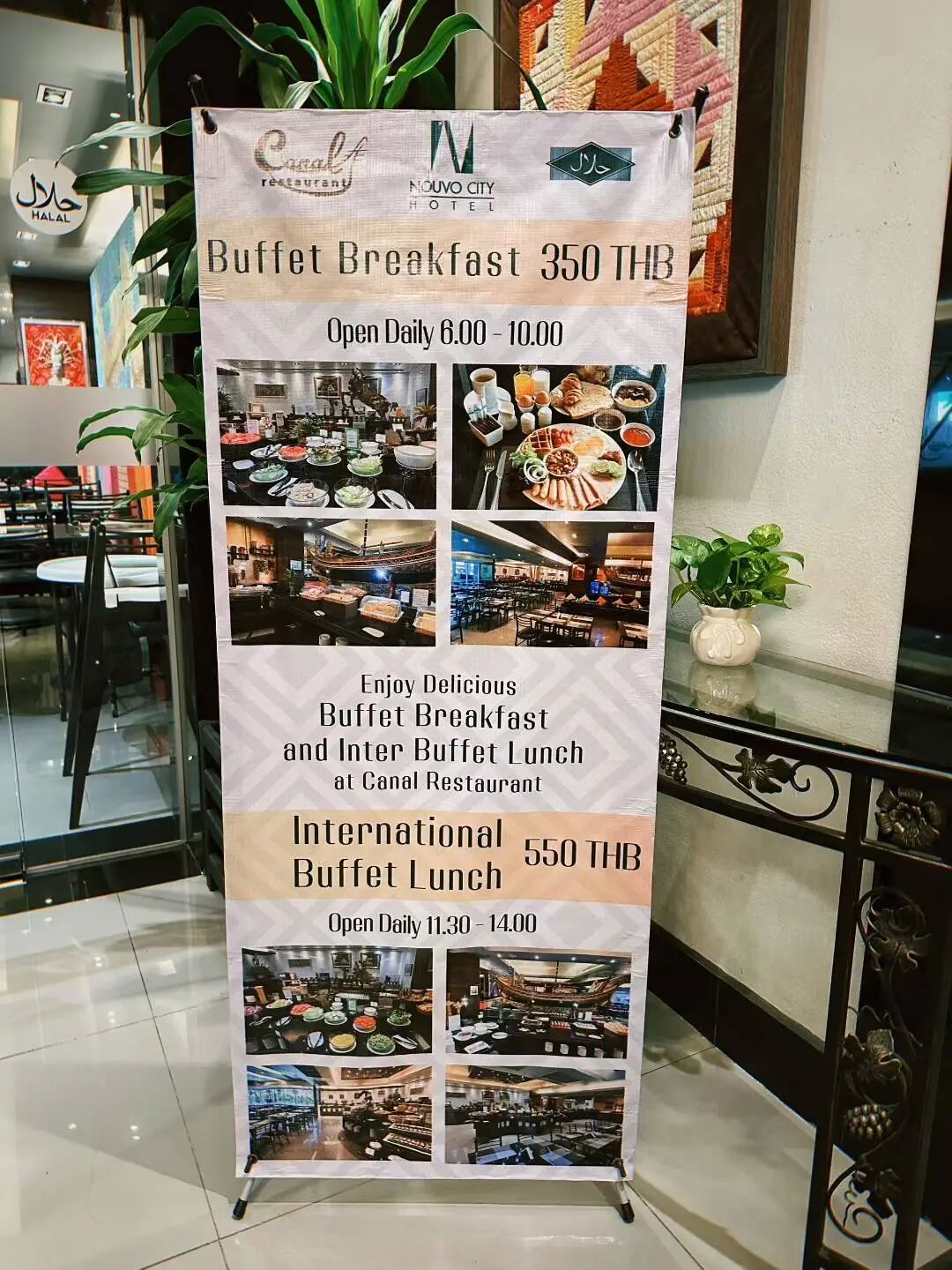
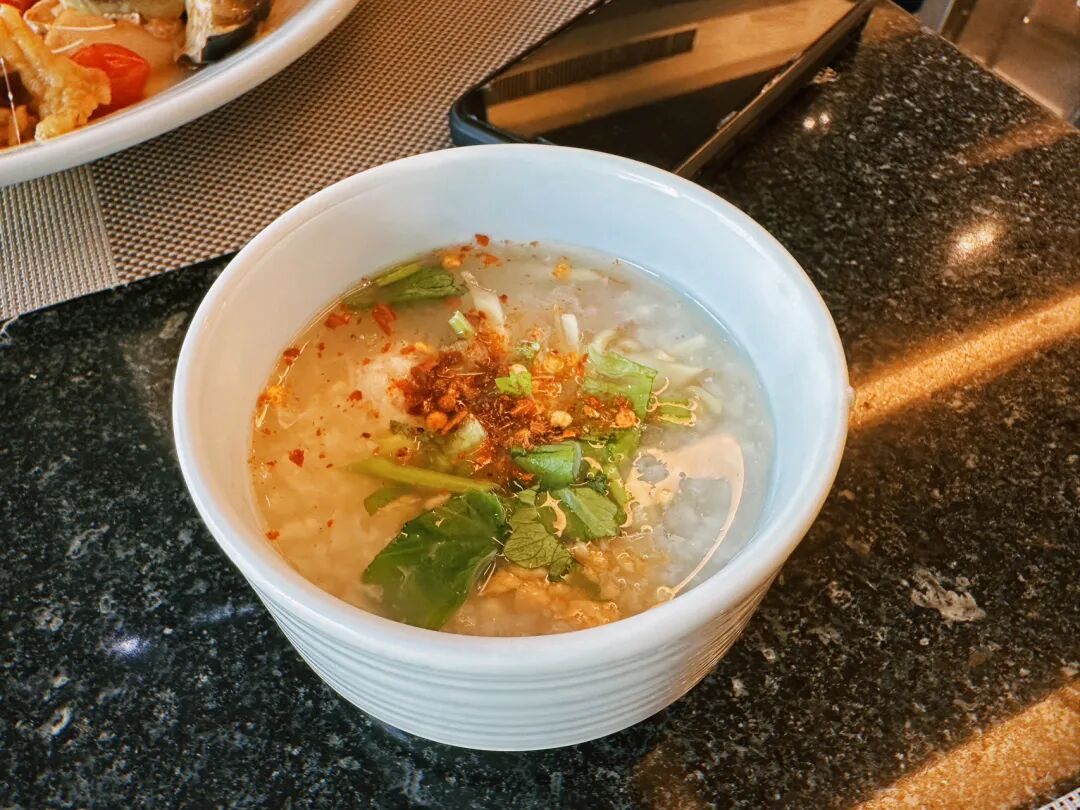
The hotel's buffet breakfast is also good, offering Thai, Indian, and Western styles, with specialties like coconut milk mushrooms, spicy porridge, and brown rice.
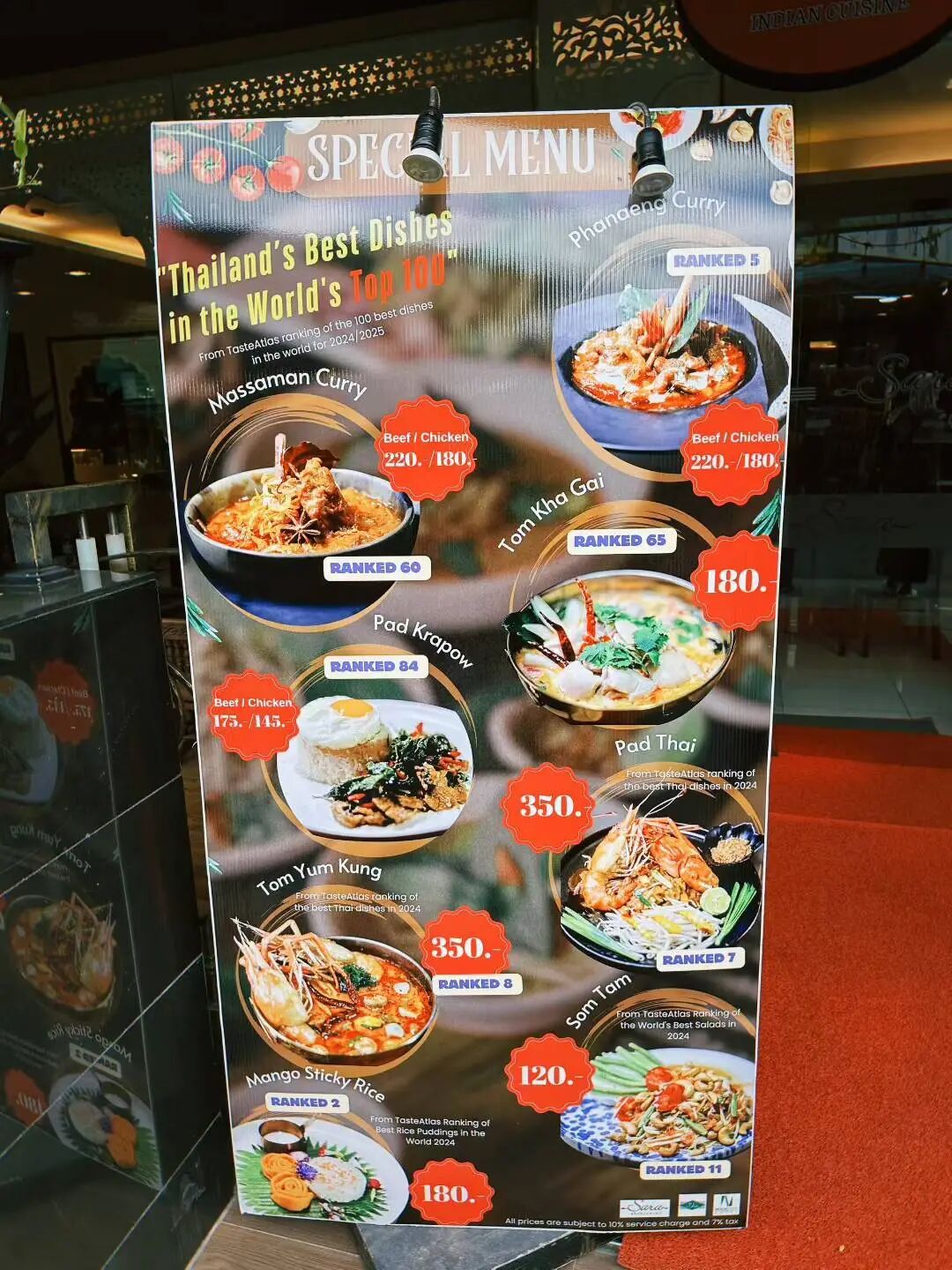
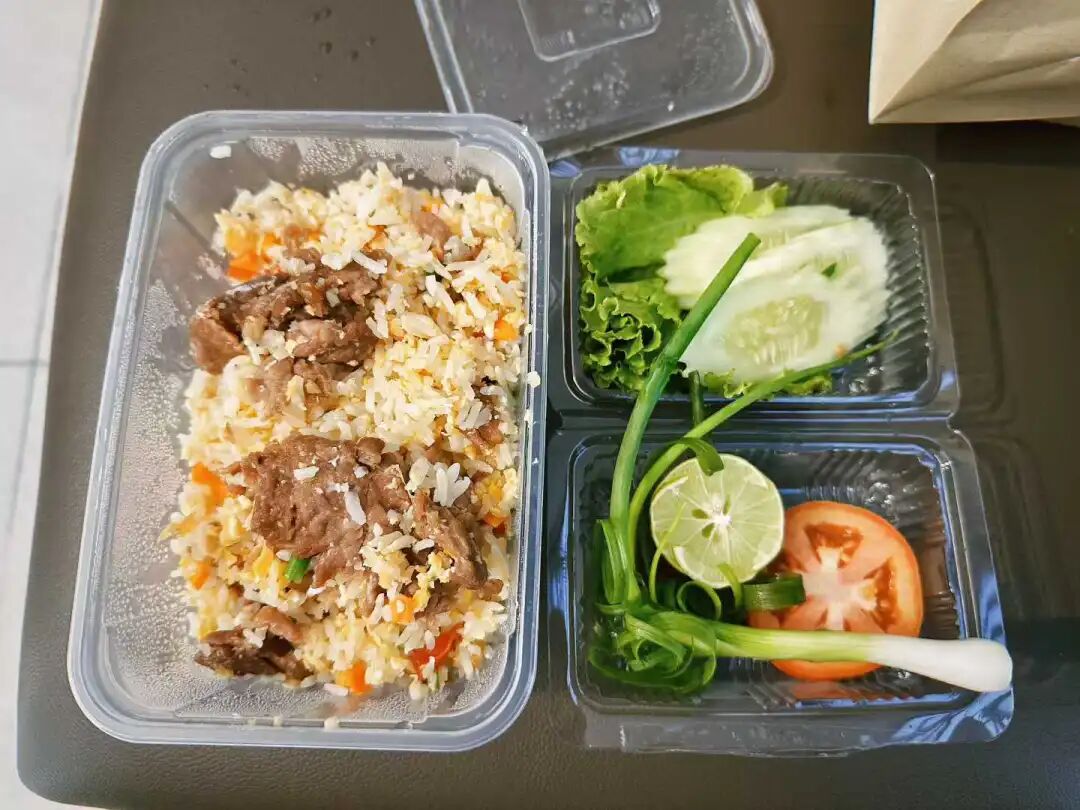
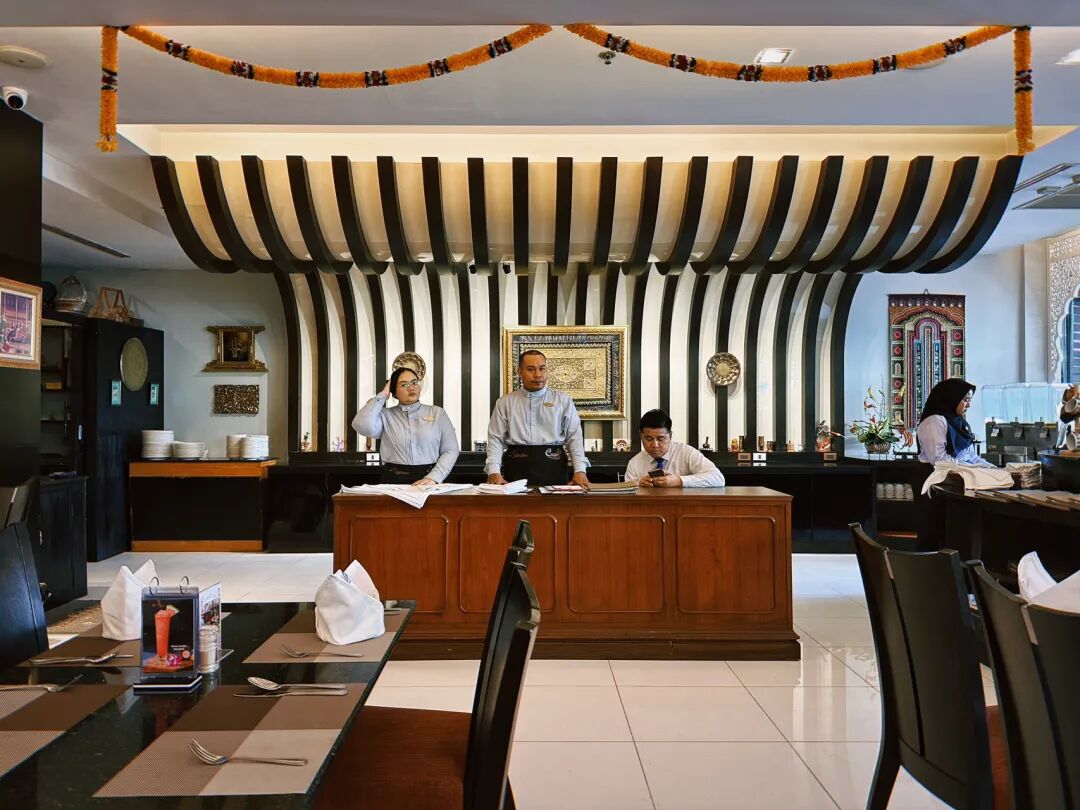
The hotel also has another restaurant called Sara where you can order from a menu, focusing on Thai and Indian food. Before I left for the airport, I ordered a beef fried rice to go; it was inexpensive and came with a box of side dishes. Their service is also quite good.
Mahanak mosque
Not long after Thailand invaded Pattani in 1786, the Pattani Sultanate soon began to resist Thailand again. Thailand invaded the Pattani Sultanate again in 1790 and then sent a second group of Pattani Malay captives to Bangkok, where they were settled in the eastern suburbs and established the Mahanak mosque community.
With the excavation of the Padung Krung Kasem canal and the Mahanak canal, the Mahanak mosque community gradually became a floating market. After the 20th century, a large group of Indian textile merchants on the other side of the canal provided more income opportunities for the mosque community.
Kedah Malay mosque community
The Kedah Sultanate is located in the northwest of present-day Malaysia, west of the Pattani Sultanate, and is another Malay state bordering Thailand.
Al-Athik mosque
In 1803, Thailand forcibly interfered in the internal affairs of the Kedah Sultanate, forcing the Sultan to abdicate and installing a new one, which led to the Kedah Sultanate splitting into two countries in 1808.
In 1808, a group of Malay captives from the Kedah Sultanate arrived in Bangkok. To avoid interaction with previously settled Pattani Malay villages, they were placed in a remote area on the east bank, five kilometers down the Chao Phraya River. These Kedah Malays dug canals to provide irrigation for their village, gradually turning jungle swamps into farmland reaching one kilometer inland, and they established the Al-Athik mosque, which means 'Old Mosque'.
After more than fifty years of isolation, Bangkok's first southern suburban road was finally built, which greatly improved transportation for the Al-Athik mosque community. In the late 19th century, ferry terminals, rice and timber export companies, a tram terminal, a slaughterhouse, and Bangkok's first coal-fired power plant were gradually built around the mosque community.
The Al-Athik mosque community holds a halal market on the morning of the first weekend of every month, which is the best chance to experience Bangkok's halal culture; you can find it on the map by searching for Riverside Market, Charoen Krung 103.
We first bought a pastry similar to Malay steamed rice cakes (dudu kuih), made by putting palm sugar inside rice flour, pressing it into stainless steel molds, steaming it, and sprinkling it with shredded coconut.
Then we drank longan water, which can be mixed with various ingredients like pearl barley, red beans, honey dates, green jelly noodles (cendol), and grass jelly (xiancao), finally topped with palm sugar and ice for a very rich flavor.
At the Al-Athik mosque halal market, we ate the specialty folded pancake (mataba) with a beef and onion filling. Mataba comes from the Arabic word 'Murtabak', which means 'folded'. This pancake likely originated with Arabs in Yemen, was brought to India by Indian merchants along the Arabian Sea, and finally reached Southeast Asia via the Indian Ocean monsoon winds; today it is a street snack shared across the Arabian Peninsula, South Asia, and Southeast Asia, though recipes vary by region. Thailand's mataba is similar to the version in Malaysia, and both are classic street breakfasts.
During the market, the courtyard of Al-Athik mosque hosts various charity activities, including medical check-ups and haircuts, which many middle-aged and elderly people attend.
Bang Uthit Mosque
In 1841, the Siamese-Vietnamese War broke out between Thailand and Vietnam, and King Rama III developed a shipyard in the Wat Phraya Krai area on the lower Chao Phraya River to support naval operations against Vietnam. After the Siamese-Vietnamese War ended in 1845, the shipyard was renovated to support the profitable China trade. After 1885, the shipyard continued to expand and began recruiting Malays from the nearby Al-Athik mosque community. The shipyard provided new settlements for these Malay workers near the shipyard, which became Bang Uthit village.
As the Wat Phraya Krai area continued to develop, rice mills and sawmills were built near the shipyard, and more and more Malays settled in Bang Uthit village. In the early 20th century, Bang Uthit mosque was built, officially separating from the Al-Athik mosque community. When Bang Uthit mosque was built, Ottoman Sultan Abdul Hamid II (reigned 1876-1909) sent an Ottoman shield-shaped emblem, making Bang Uthit mosque the only mosque in Thailand with an Ottoman emblem.
In 2015, the Turkish Cooperation and Coordination Agency (TİKA) renovated Bang Uthit mosque, using Turkish marble to build an Ottoman-style mihrab, minbar, and pulpit, and also added a mezzanine for women. This makes Bang Uthit mosque the only Ottoman-style mosque in Bangkok.
Next to Bang Uthit Mosque, there is a row of food stalls where you can eat authentic Thai halal home-cooked meals. We ordered holy basil chicken rice (gaprao gai) and shrimp porridge. Gaprao is also called holy basil. It is native to South Asia and widely grown in the tropical regions of Southeast Asia. Stir-frying meat with holy basil leaves is a famous Thai dish that I really love. Thai people love to drink meat porridge. The Thai word 'Chok' comes from the Minnan word for 'porridge'. The condiments on the table include fish sauce. I saw people at other tables adding a lot of it to their porridge and noodles, and adding a little really brings out the fresh flavor.
Kocha Itsahak Mosque
Near Sampeng Lane in Bangkok's Chinatown stands the European-style Kocha Itsahak Mosque, built in the late 19th century by the Siamese royal translator Luang Kocha Itsahak.
Luang Kocha Itsahak was of Malay descent from Kedah. He worked in the Siamese Department of Western Trade (Krom Tha Khwa), serving as a translator for foreign ambassadors visiting the Siamese court. He was also responsible for liaising with rulers of Siamese dependencies on the Malay Peninsula and foreign merchants trading with Siam. Luang Kocha Itsahak's father was a Malay merchant from the Kedah Sultanate who moved to Bangkok for business and married a Chinese wife.
After Siam established its capital in Bangkok in 1782, an import and trade district dominated by Teochew merchants gradually formed near Sampeng Lane. Before Don Mueang Airport was built in 1914, people wanting to travel from Bangkok to India, the Middle East, or Europe had to first take a steamship from the Kongsa Pier near Sampeng Lane to Singapore or Penang, then transfer to a cruise ship to continue westward. Because of this, the 19th-century Kongsa Pier was crowded with merchants from all over the world, and many Indians and Malays worked in the nearby warehouses and trading companies.
Seeing that there was no mosque in the Sampeng Lane area, Luang Kocha Itsahak donated a piece of his own land and had his children dismantle the bricks and stones from an old house he owned across the river in the Thonburi area to build this mosque. Today, the mosque is still owned by the descendants of Kocha Itsahak and provides convenience for the friends (dosti) working in Bangkok's Sampeng Lane.
Kocha Itsahak Mosque was originally a wooden building, but it was rebuilt into the current neoclassical structure during the reign of Rama V (reigned 1868-1910). view all
Summary: Bangkok has Malay Muslim mosque quarters, halal hotels, river markets, and neighborhood food stops shaped by migration from the Malay world. This account follows the six Malay mosque areas, local markets, hotels, restaurants, and photos in the same order as the original travel note.
There are many Malay-founded mosque communities in Bangkok's city center and suburbs. They come from two main areas: the Pattani region in present-day southern Thailand (the three southern border provinces) and the Kedah region in northwestern Malaysia. I visited three Pattani Malay mosque communities and three Kedah Malay mosque communities on this trip.
Pattani Malay Mosque Communities
The Sultanate of Pattani was a Malay state founded in the 15th century, located in the southernmost part of modern-day Thailand. After the Sultanate of Malacca fell in the 16th century, the Sultanate of Pattani began to rise, becoming a center for trade and culture during that same century.
Thailand began invading the Sultanate of Pattani from the 17th century, and the war of conquest in 1688 caused chaos in the Pattani region. Long-term warfare led to many Pattani Malays being taken to Ayutthaya, the capital of Thailand at the time. In the mid-18th century, thousands of Pattani Malay captives were settled in the southern and southwestern suburbs of Ayutthaya, where they were forced to work to fill the capital's granaries. After Ayutthaya fell in 1767, some Pattani Malays managed to return home, while others stayed in Ayutthaya. A small number of Malays were invited by the Thai king to settle in the new capital, Thonburi, and were released from their status as captives.
Bang O Mosque
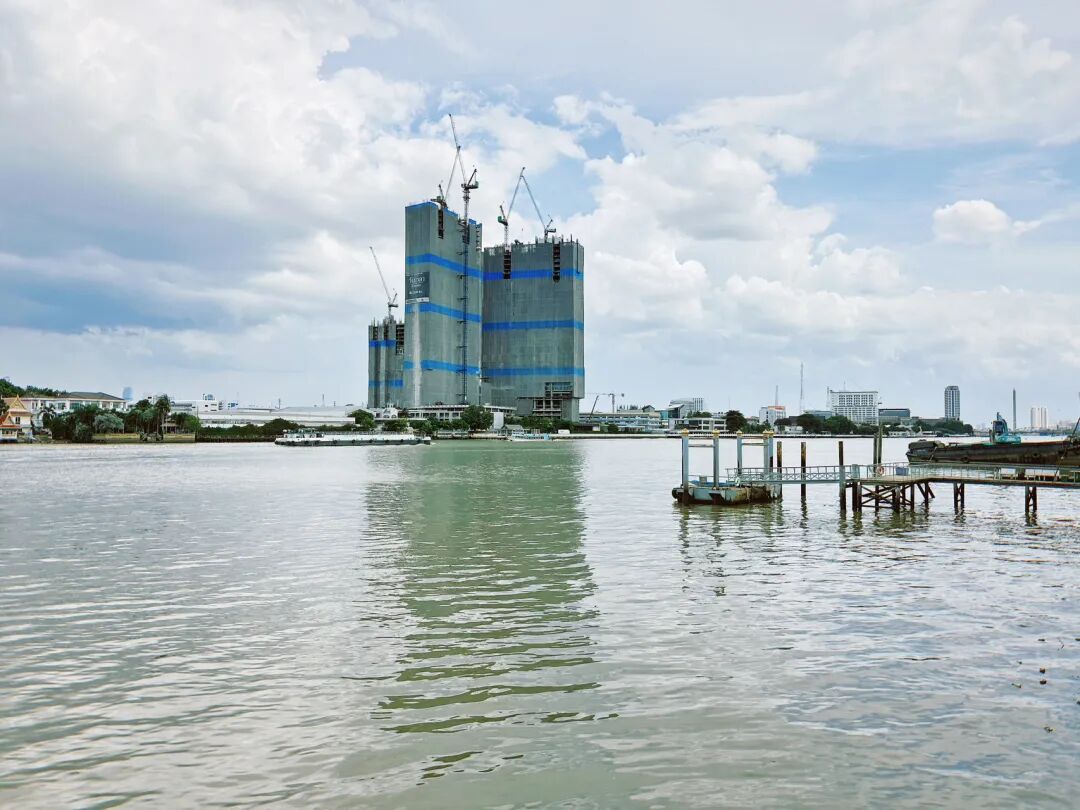
The Bang O mosque community is located 5 kilometers downstream from Thonburi and is one of the Pattani Malay mosque communities that relocated from Ayutthaya. During the reign of Rama I (1782-1809), the leader of the Bang O mosque community was granted the title of Director of Maritime Construction (Phraya Yotha Samut). He was responsible for supplying timber to the Thai naval base and established a sawmill. In the late 19th century, a Malay merchant from Songkhla named Mohammat Phet thongkham converted the Bang O mosque community's sawmill from manual labor to steam power and obtained a concession for inland teak. He built a thriving timber export trade in the Bang O mosque community and donated funds to rebuild the Bang O mosque in 1903. In 1924, the timber trade at the Bang O mosque community was interrupted by the construction of an upstream dam. Later, the community shifted to exporting timber and rice to the Middle East, which led to the introduction of more radical Salafi ideas from Arabia.
The main prayer hall of the Bang O mosque was built in 1918. It features a neoclassical style and a very exquisite design. Interestingly, the entrance hall faces southeast toward the banks of the Chao Phraya River, but the main hall behind it faces due west toward the Kaaba. Because of this, the entire building is not symmetrical along a single axis.
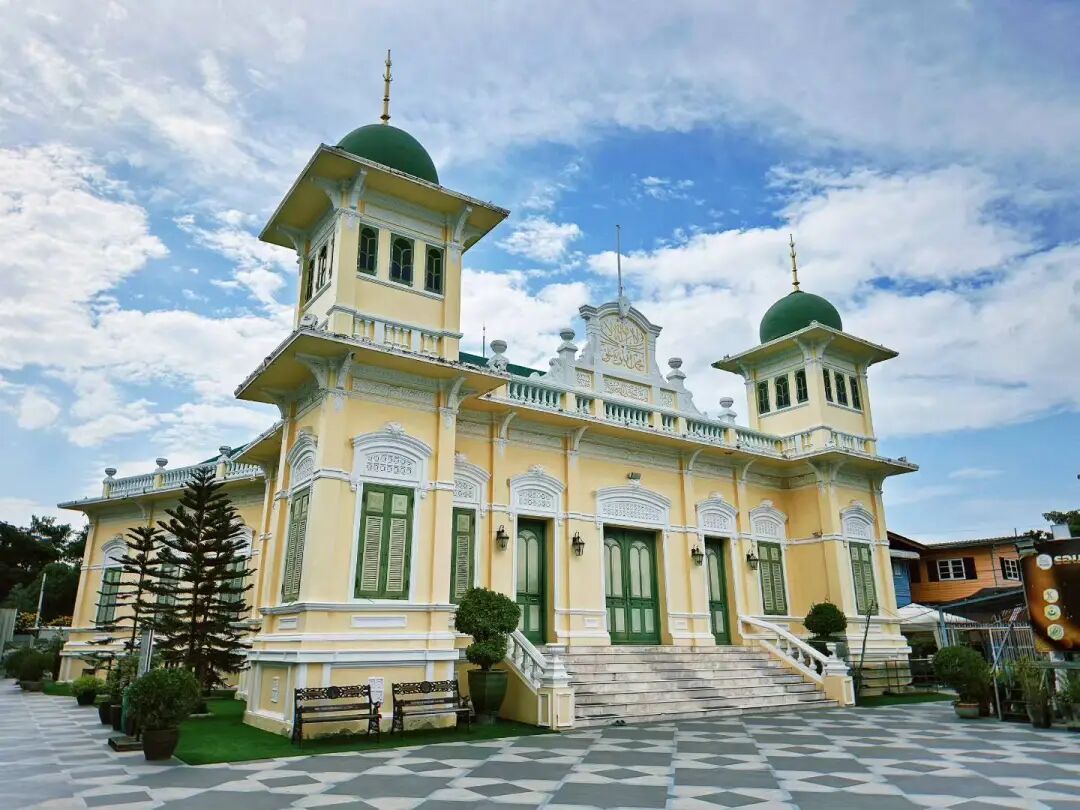
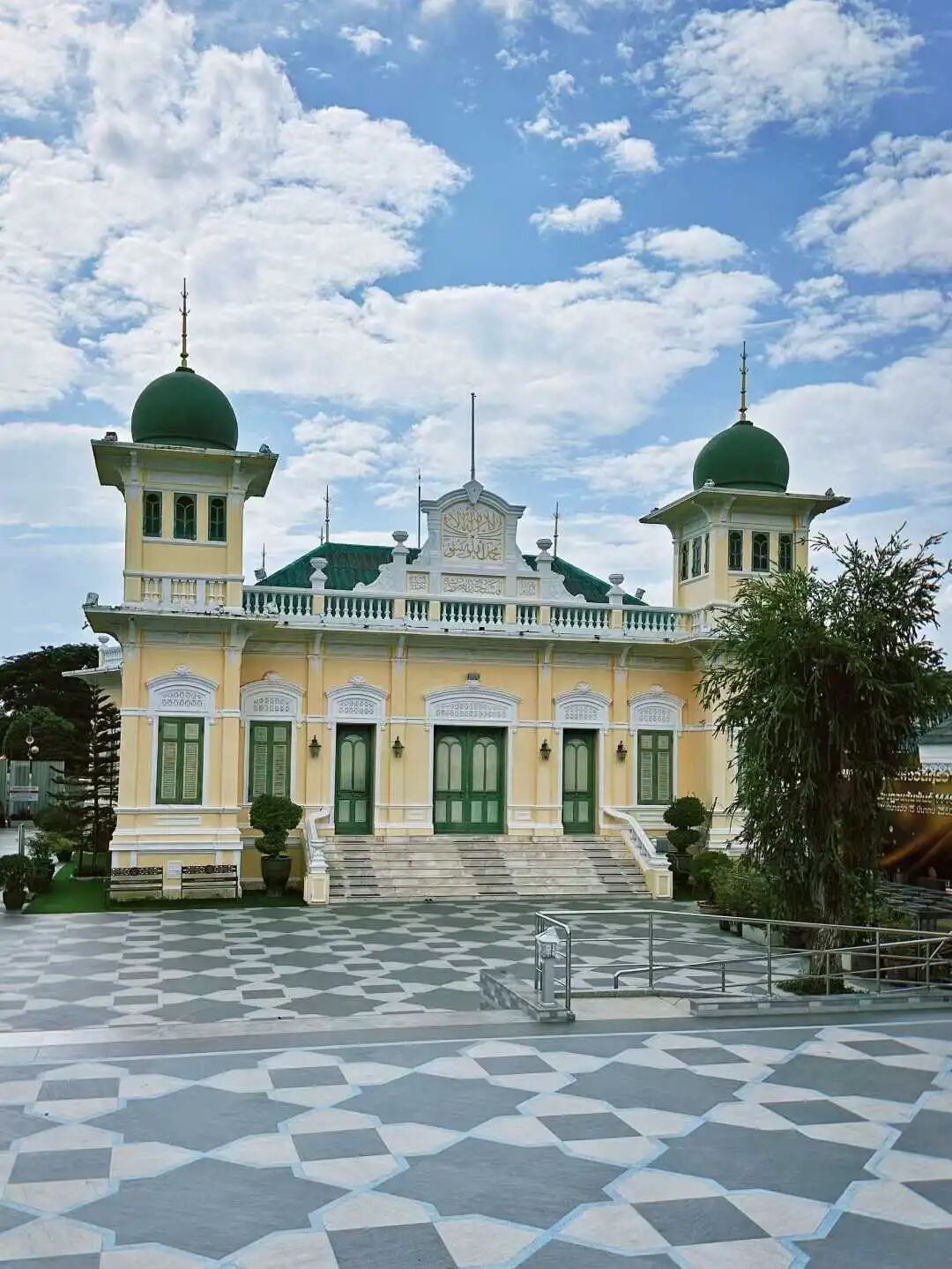
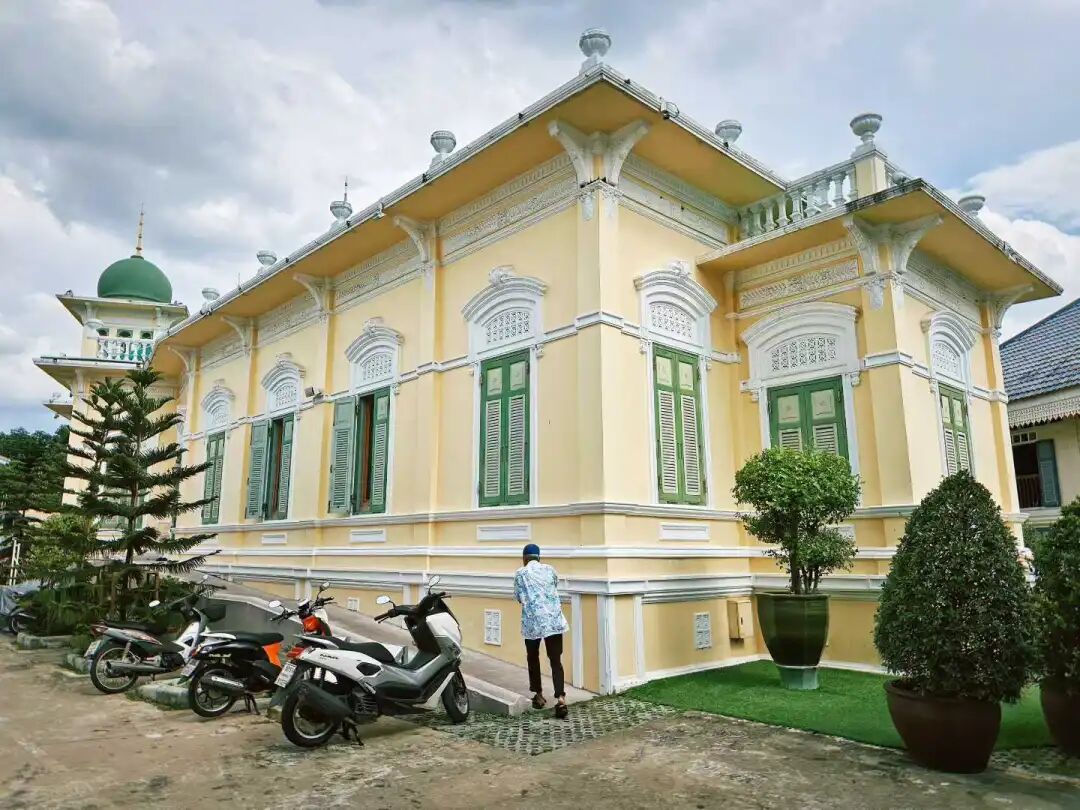
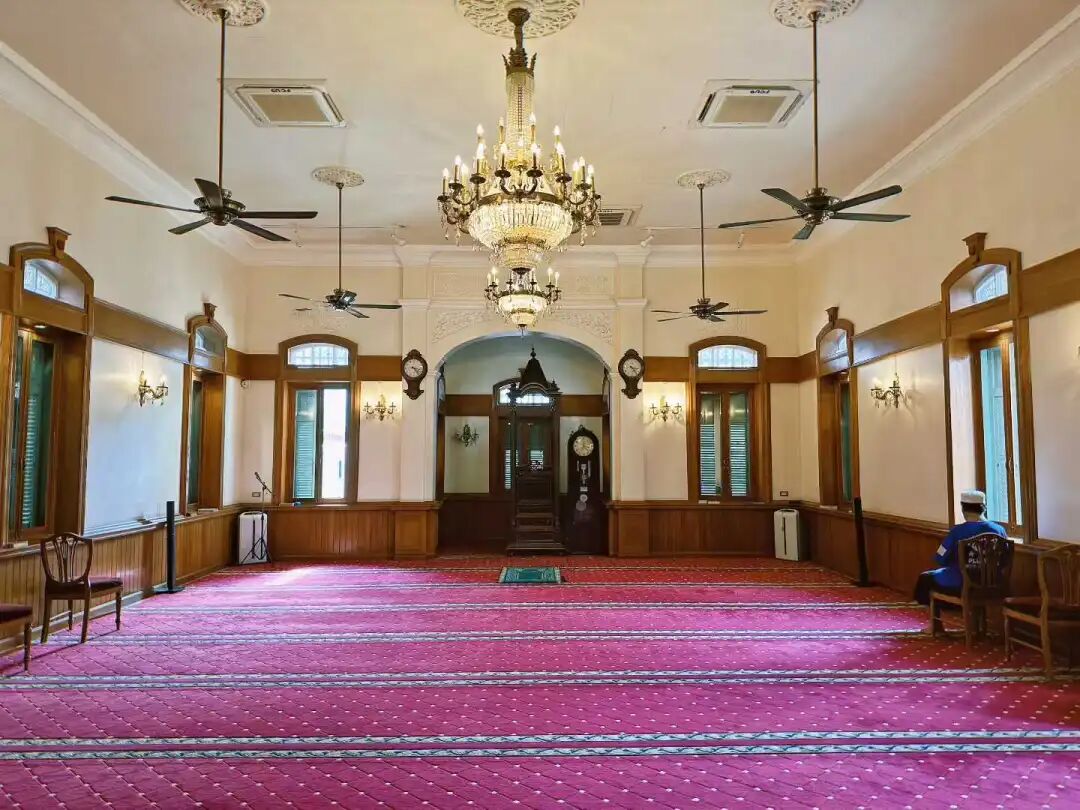
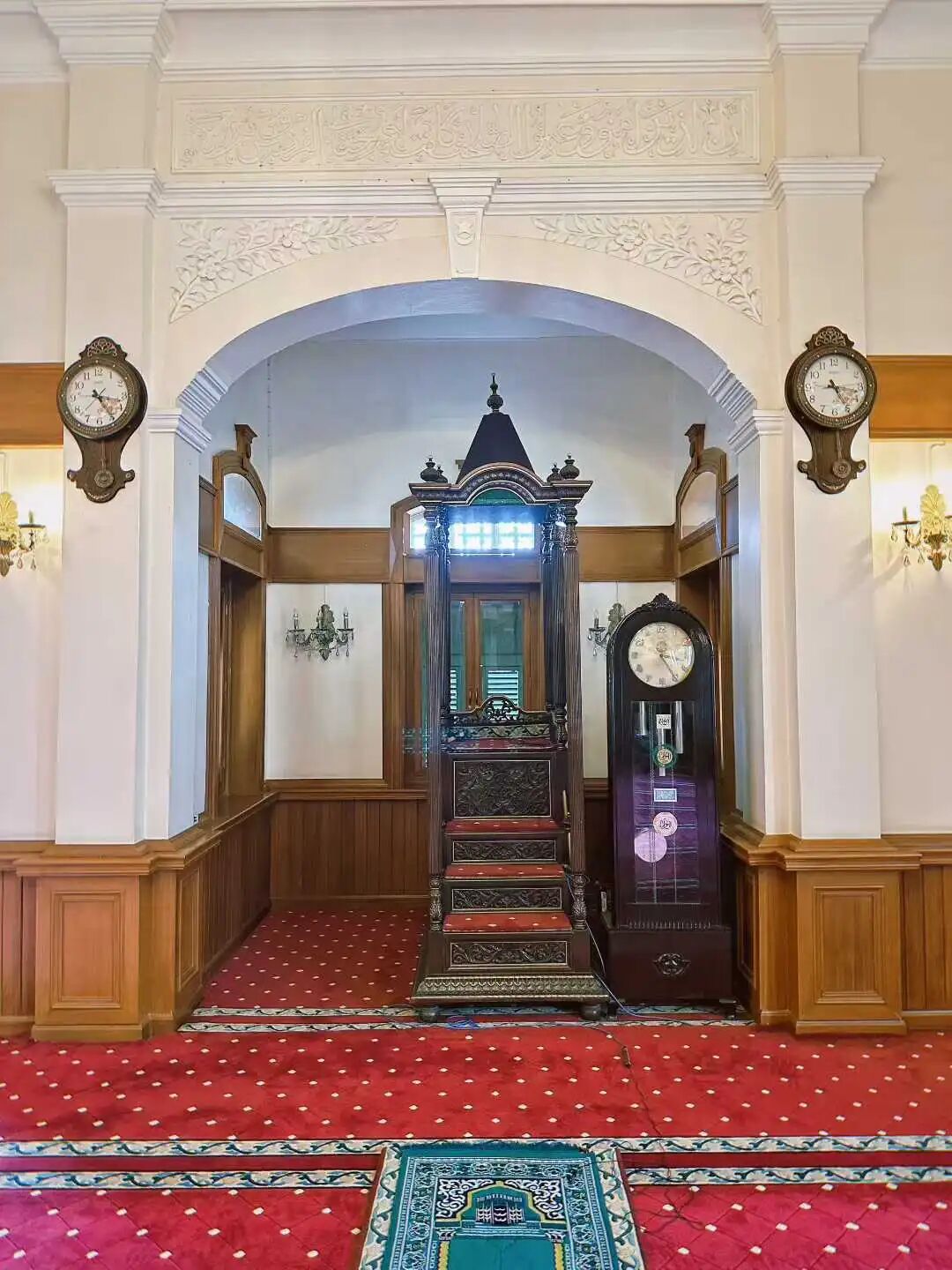
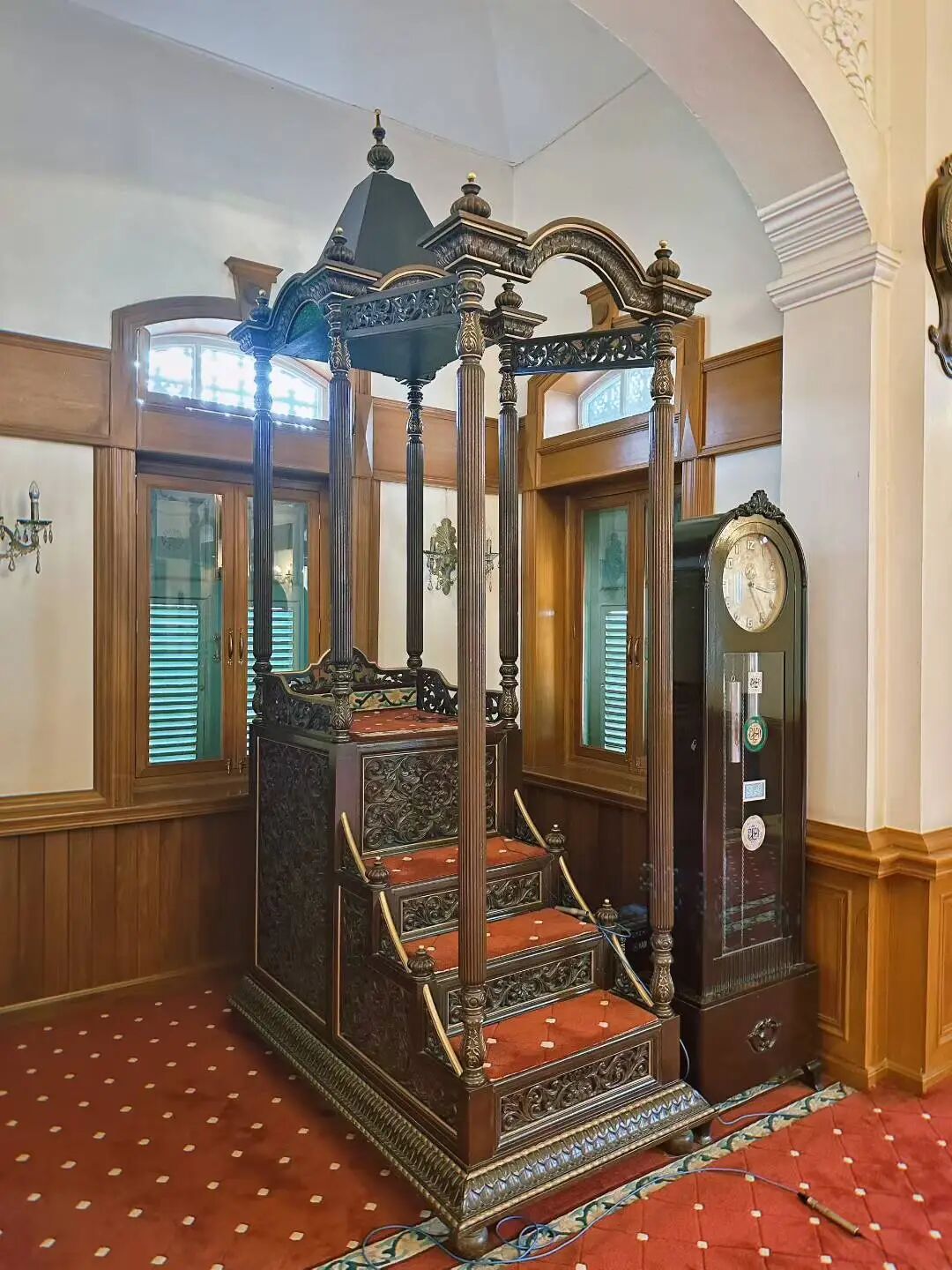
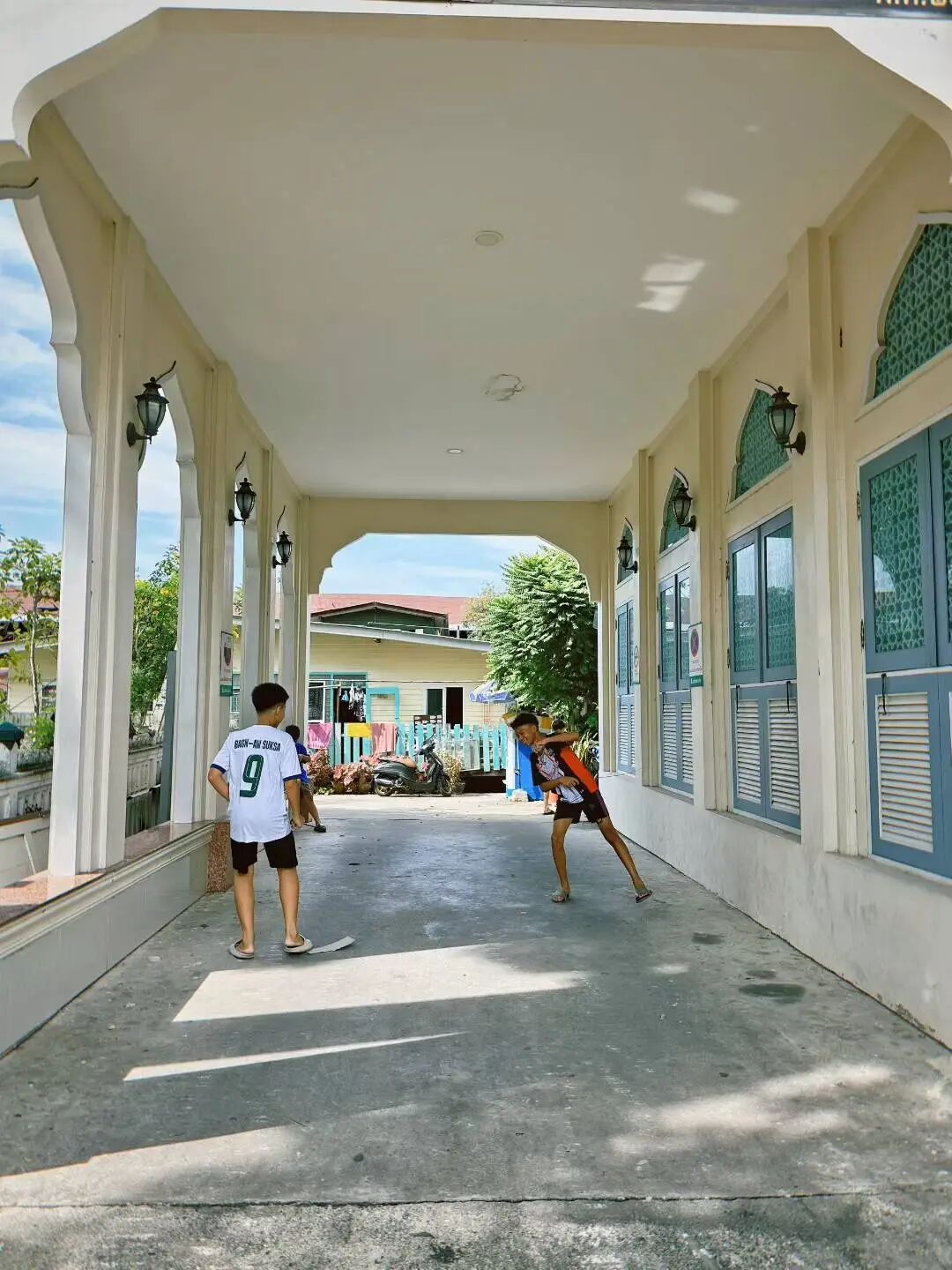
Additionally, the office of the Bang O mosque was built in 1920 using the teak gingerbread style, which is very characteristic of that era. This is a decorative style that originated in the United States in the 1860s. It involves cutting wood into small decorative pieces with very rich details. Because gingerbread houses have high ceilings and shutters on all sides to improve ventilation, they were very popular in tropical regions. During the reign of Rama V (1868-1910), many mansions belonging to Thai nobles were built in the teak gingerbread style.
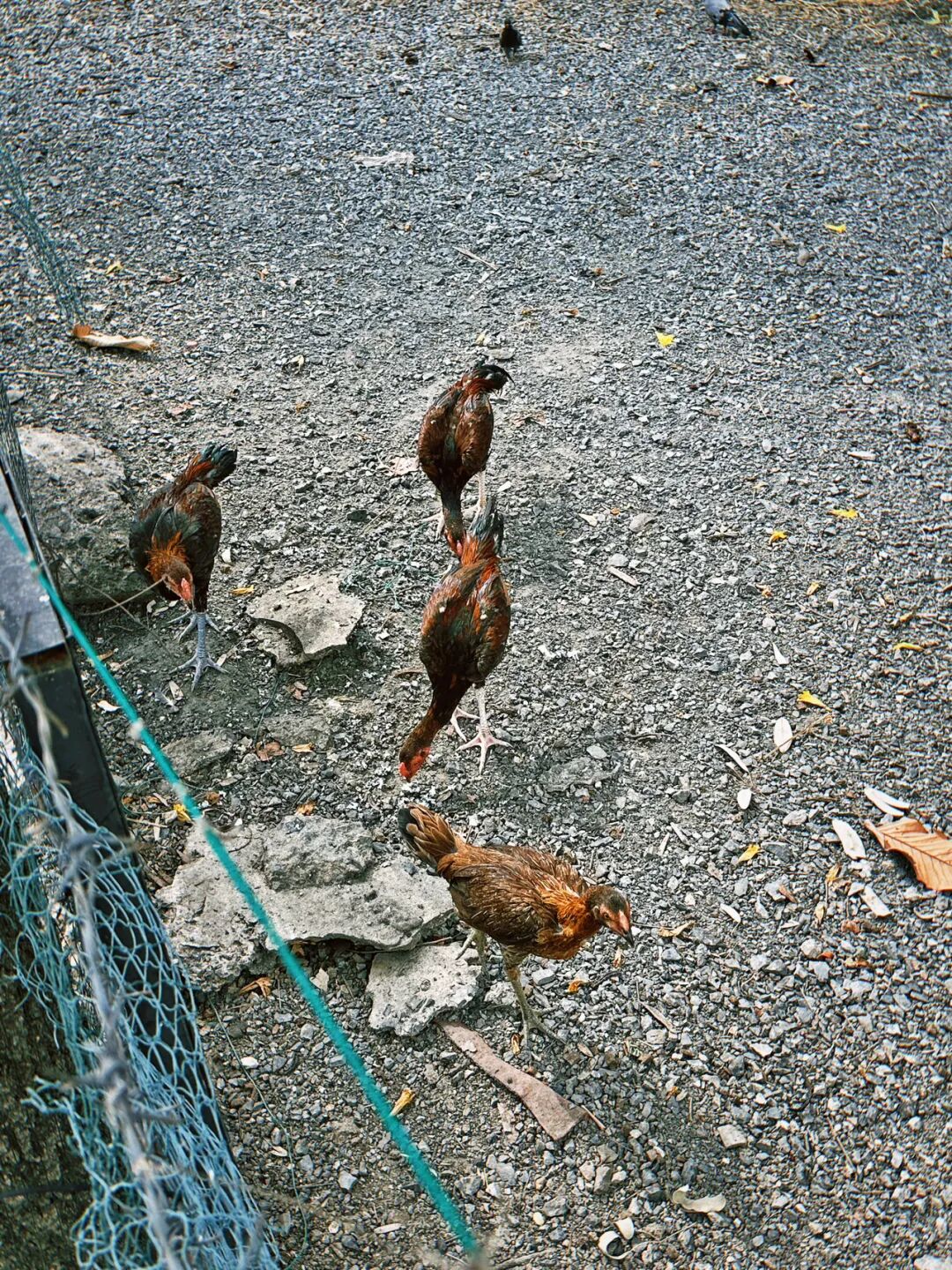
Chakraphong Mosque
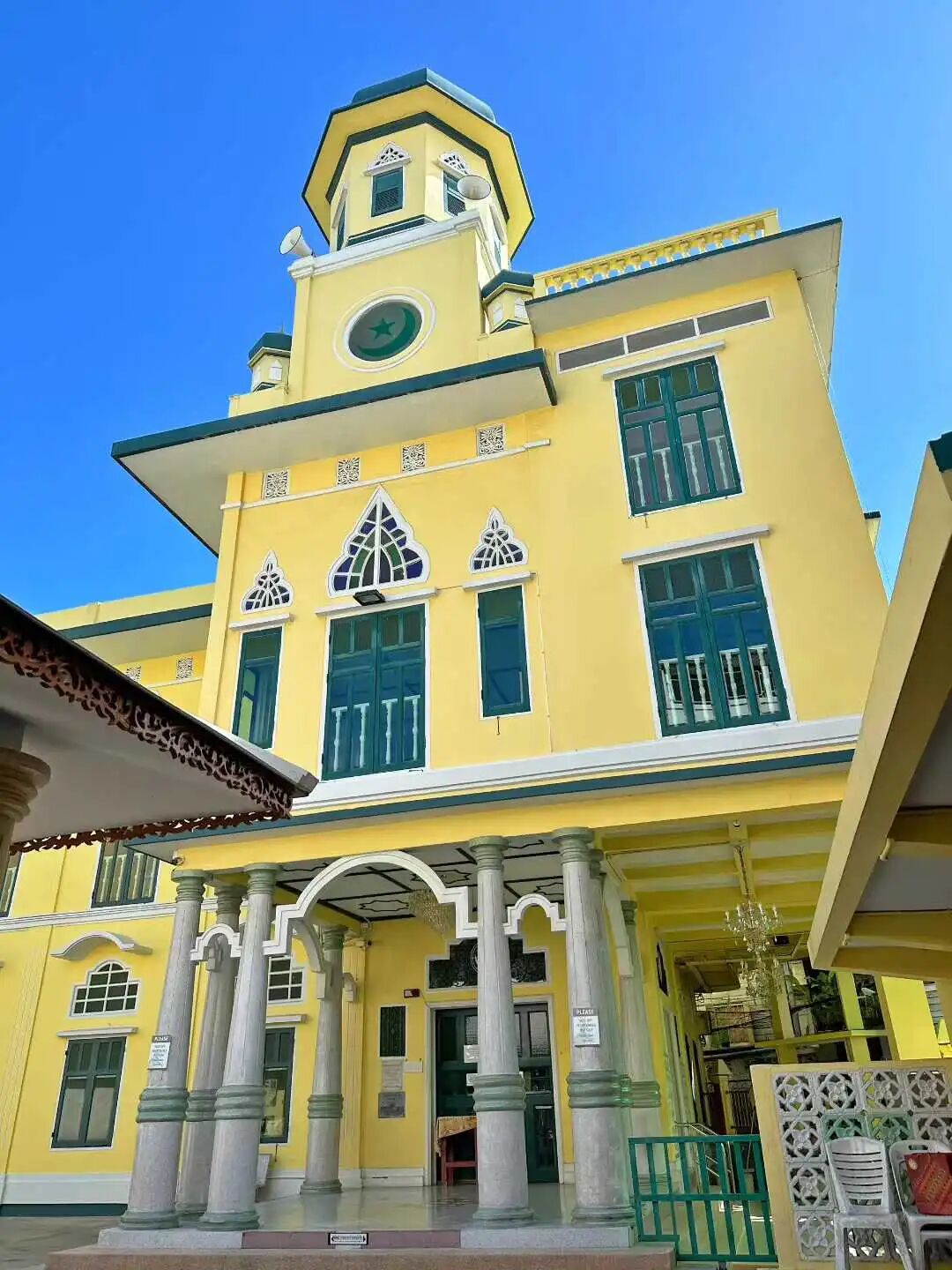
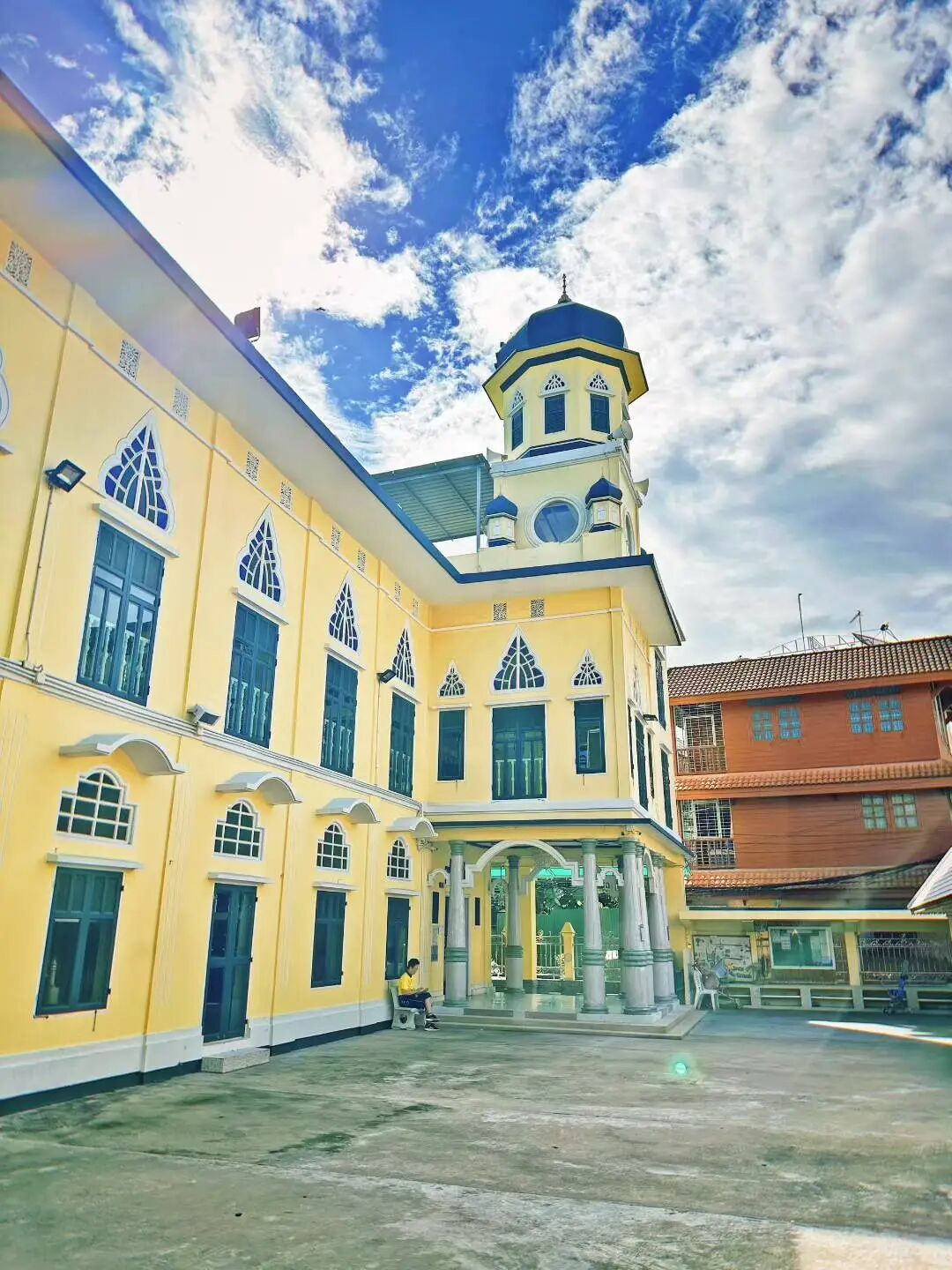
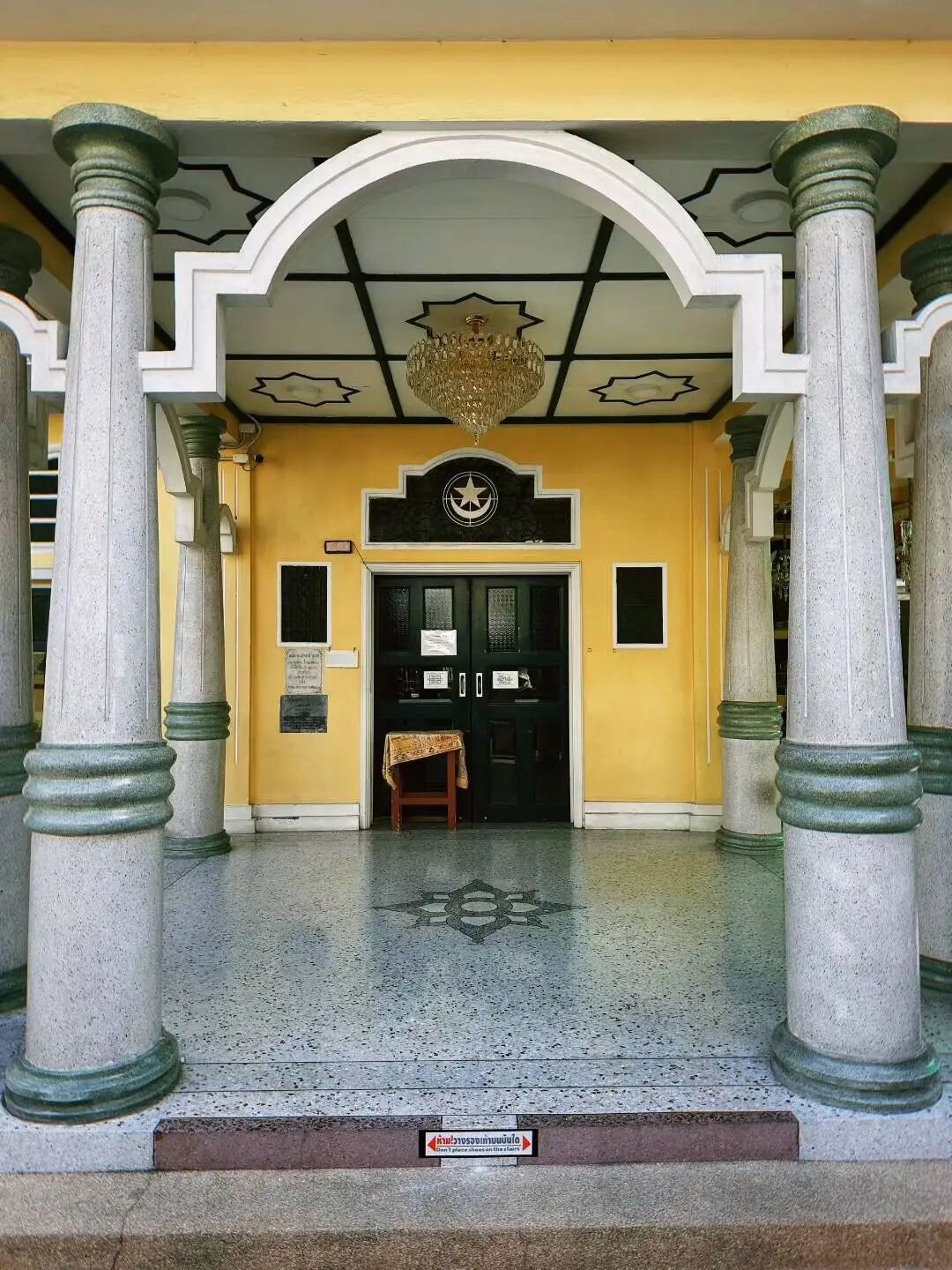
After Ayutthaya fell in 1767, the Sultanate of Pattani was briefly free from Thai control. However, with the establishment of the Chakri Dynasty in Thailand in 1782, the Thai government decided to restore its control over the Sultanate of Pattani. In 1786, Thailand sent an army led by the Second King Maha Sura Singhanat to launch a devastating attack on the Pattani Sultanate. To show their loyalty to Thailand, the Pattani Sultanate sent a large number of nobles and craftsmen to Bangkok as hostages. Under the supervision of the Thai Second King, these Pattani Malays were settled inside the northern city wall of Bangkok, near the mouth of the Bang Lamphu canal. Among the many mosque communities (masjid) established by Malay and Cham captives around Bangkok, the Chakraphong mosque community is the only one located inside the city walls.
The Chakraphong mosque was originally called the Bang Lamphu mosque, and it only changed to its current name after Chakraphong Road was built in 1900. Before the 1960s, many Malay residents worked as goldsmiths, setting up stalls to trade along the roads around the mosque community. Today, the Bang Lamphu mosque community is famous for its specialty snacks.
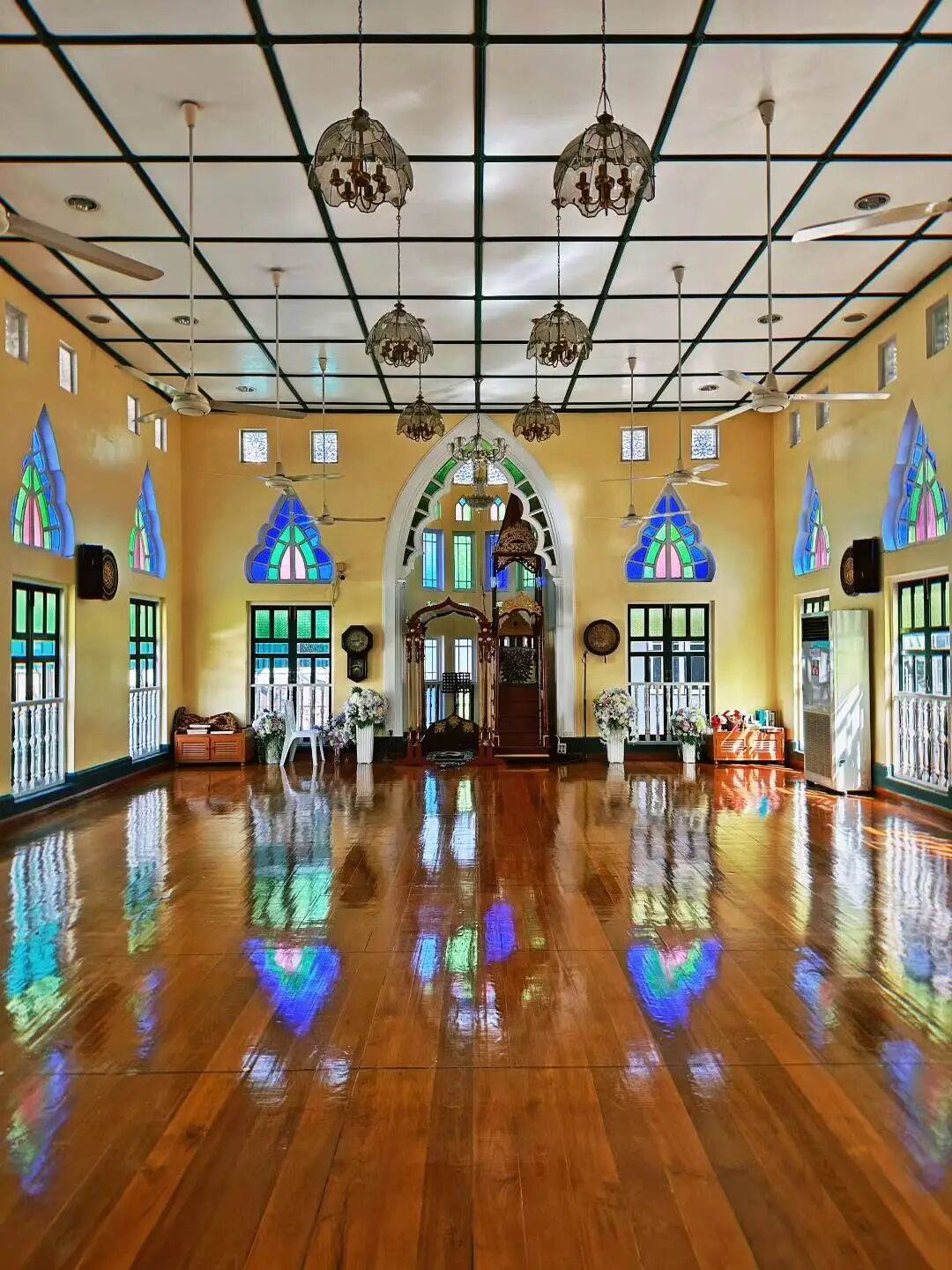
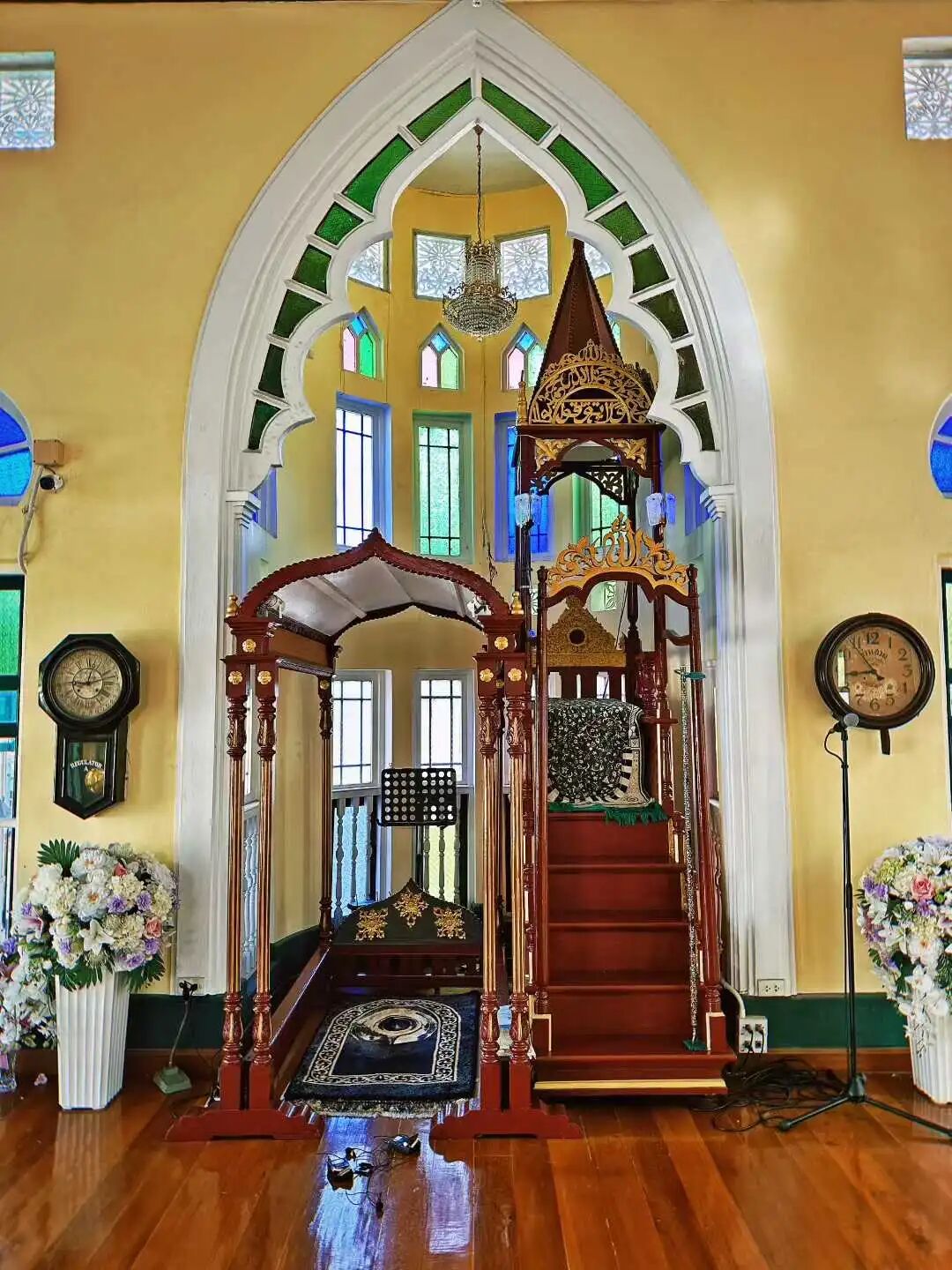
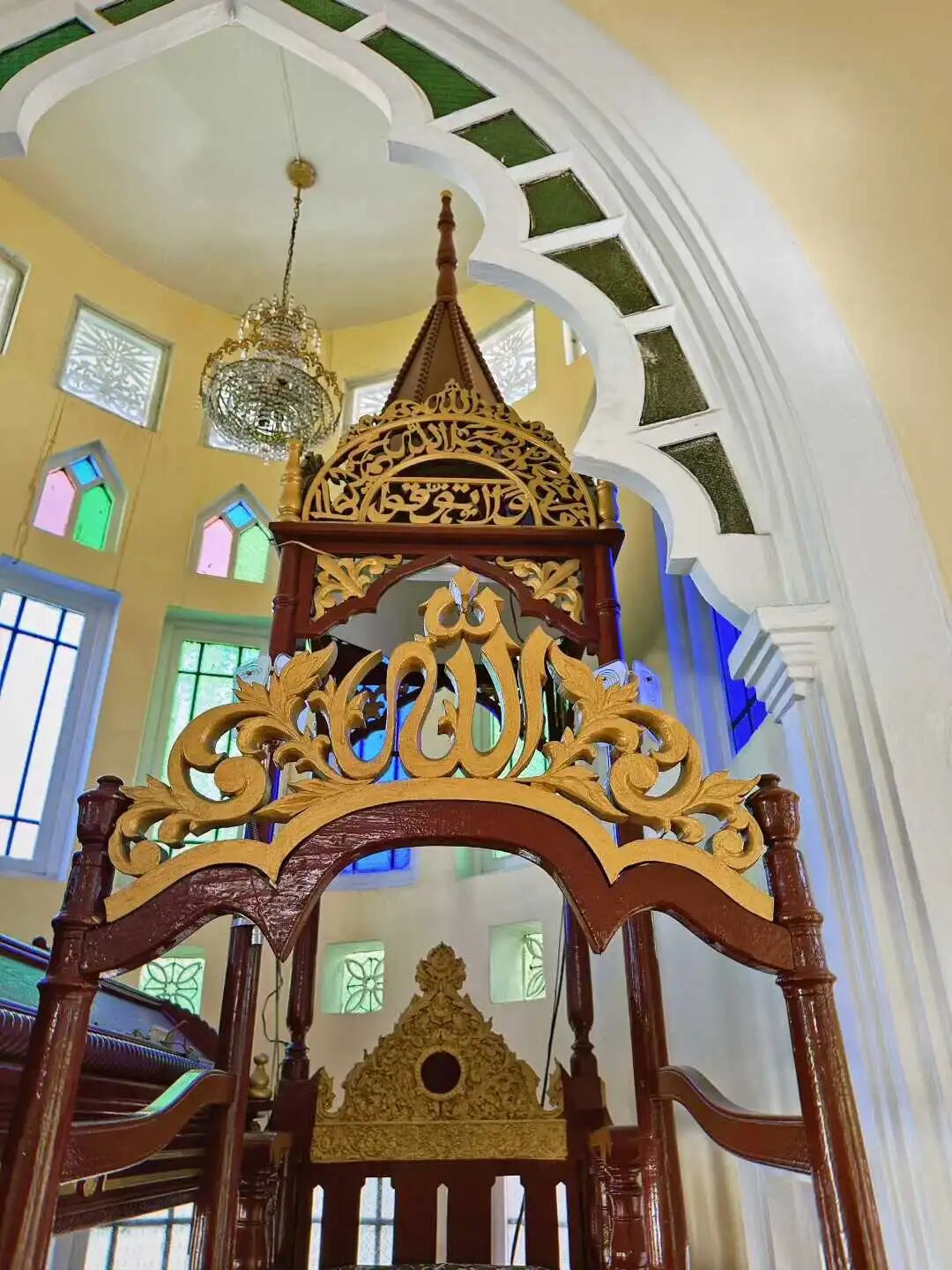
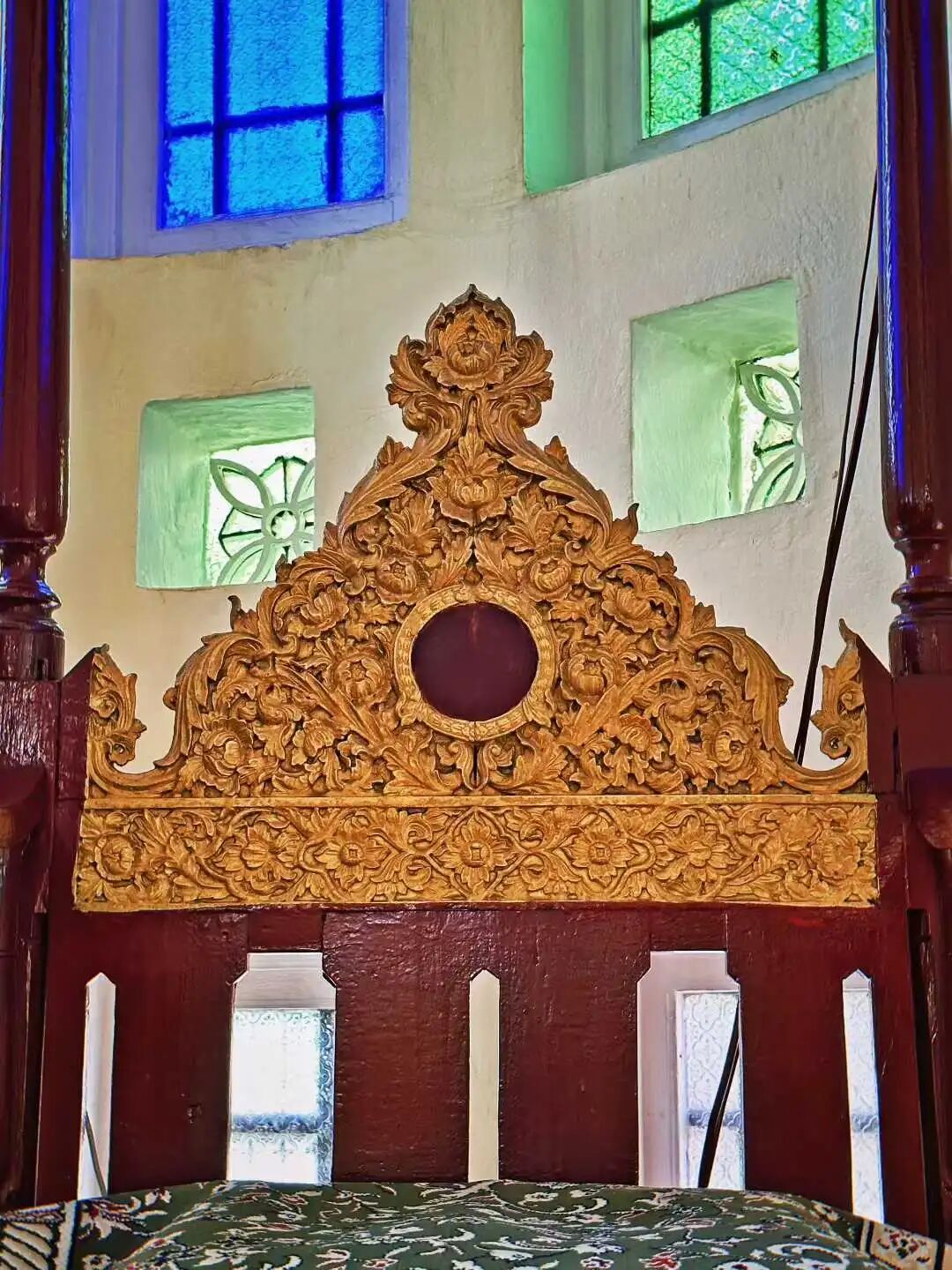
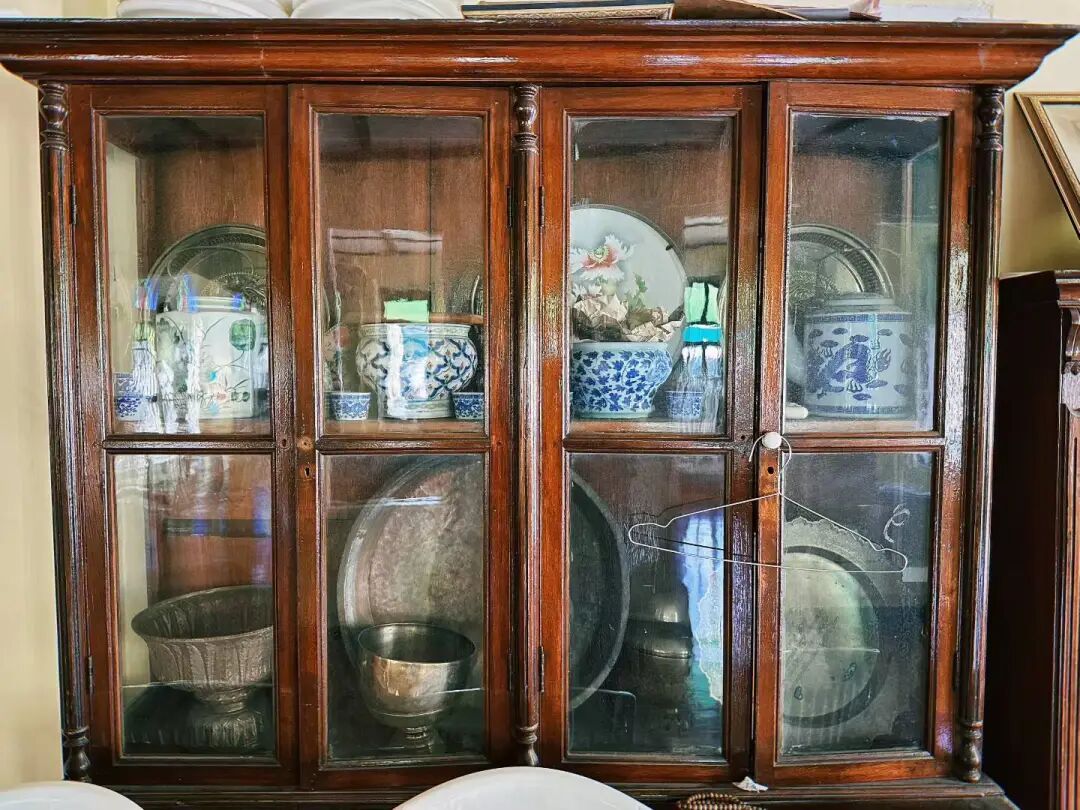
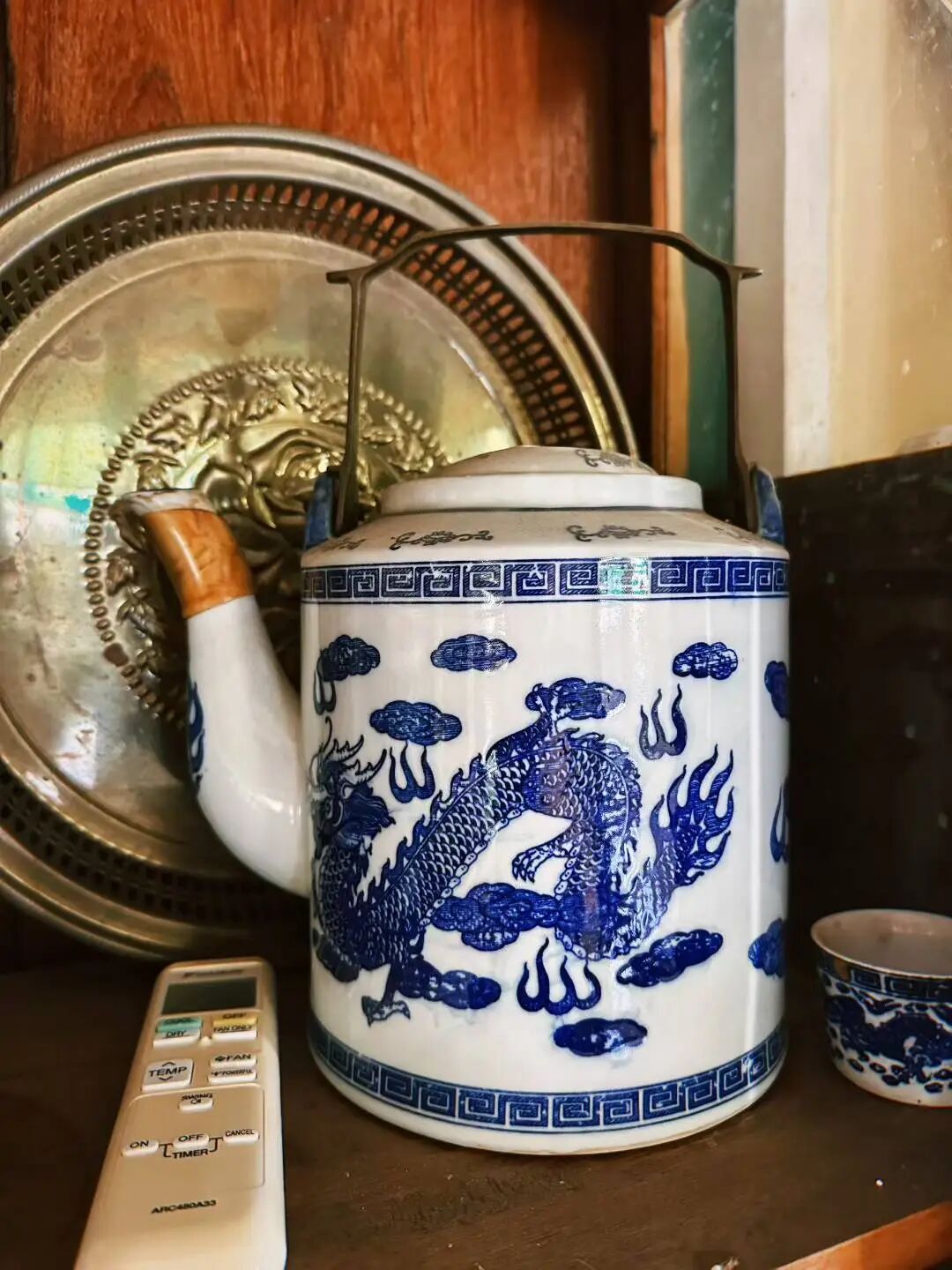
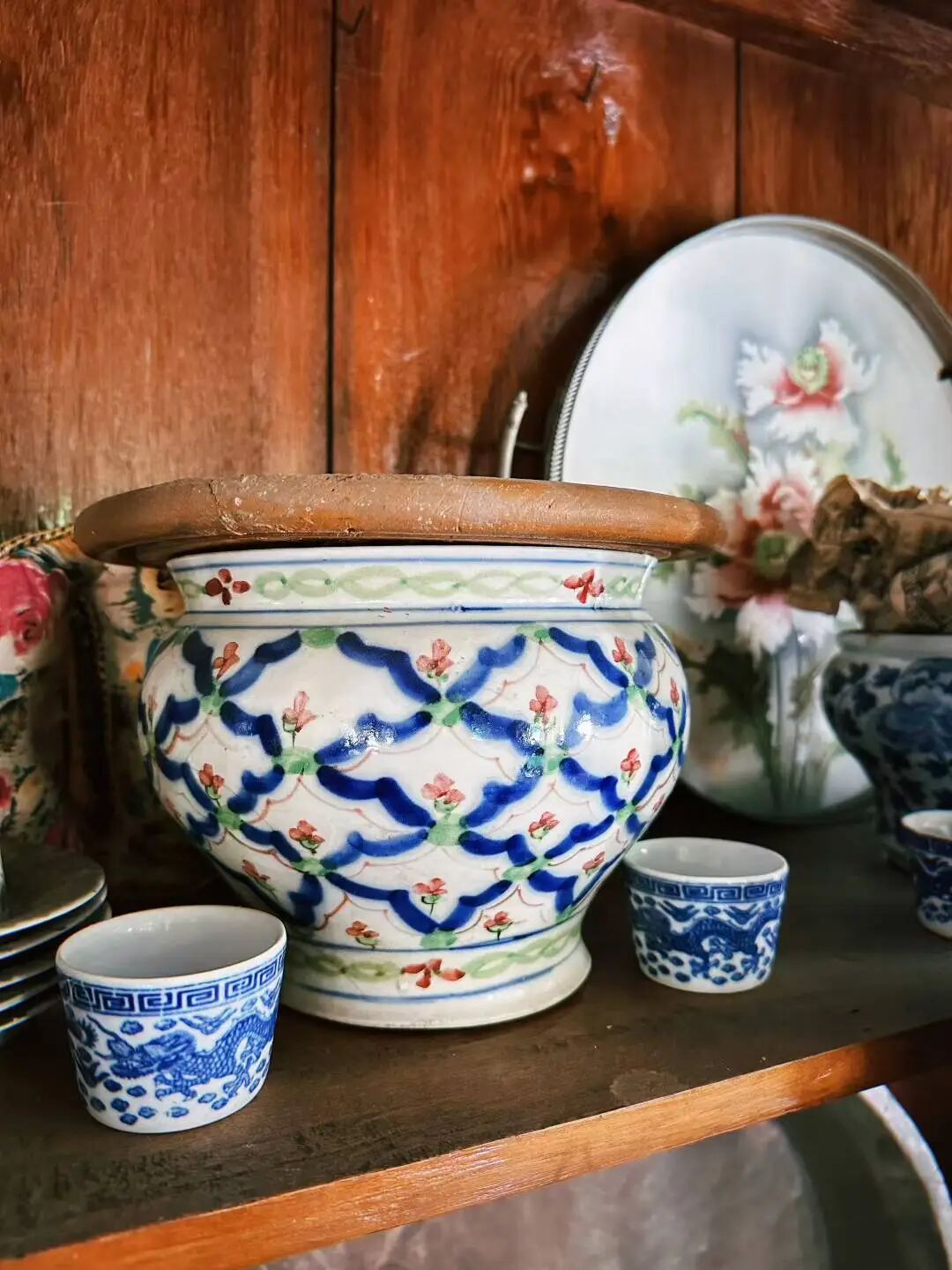
Chinese porcelain collected by the Chakraphong mosque.
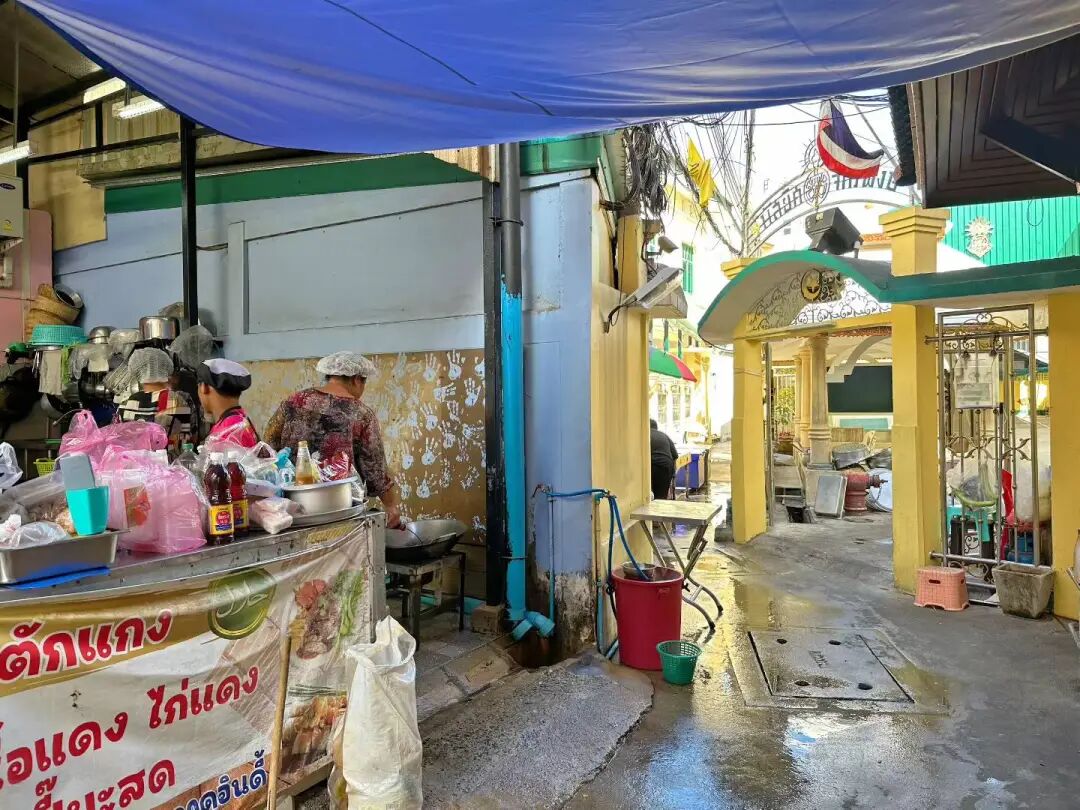
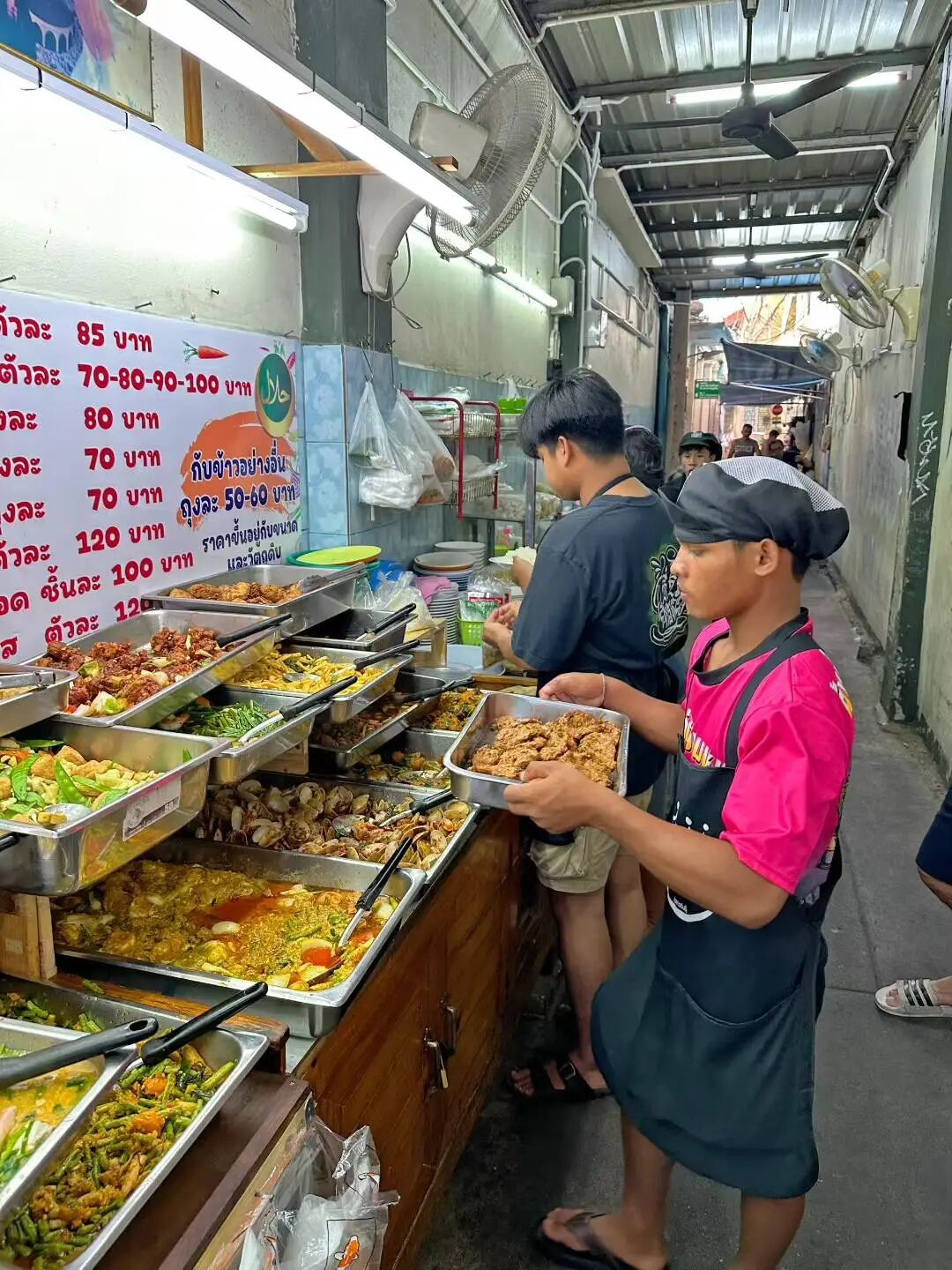
The snack stalls at the entrance are very busy, with people lining up to get food to go.
The Nouvo City Hotel where we stayed is only about 200 meters from the Chakraphong mosque, and it is the most famous halal hotel in Bangkok's old town. Near the hotel are piers for two express boat lines on the Chao Phraya River and the Bang Lamphu canal, making it very convenient to reach major Bangkok attractions without getting stuck in traffic.
The hotel has a gym, two swimming pools, and a prayer room, which is very convenient.
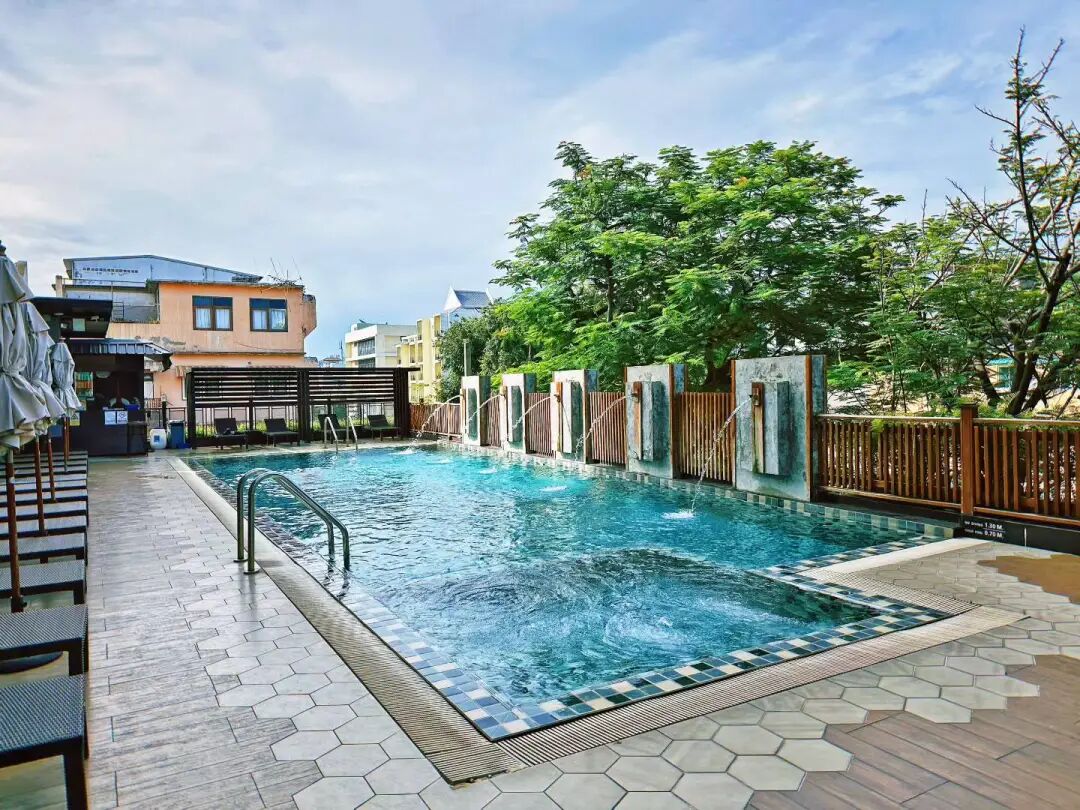
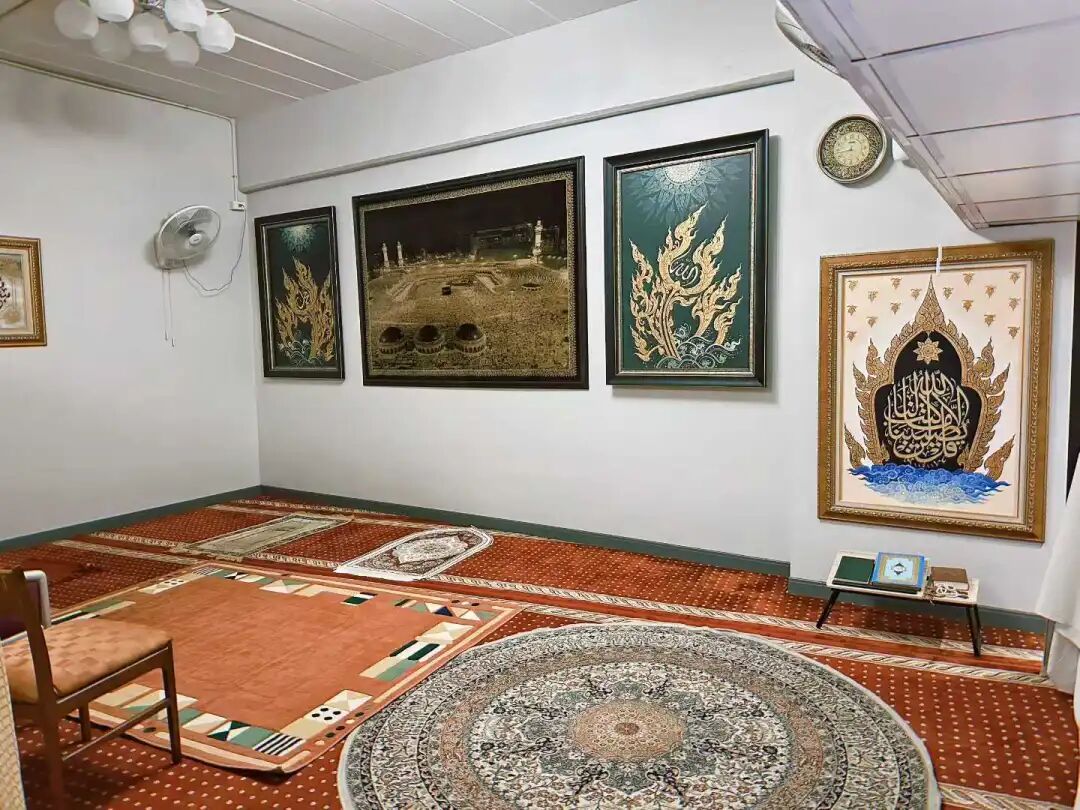
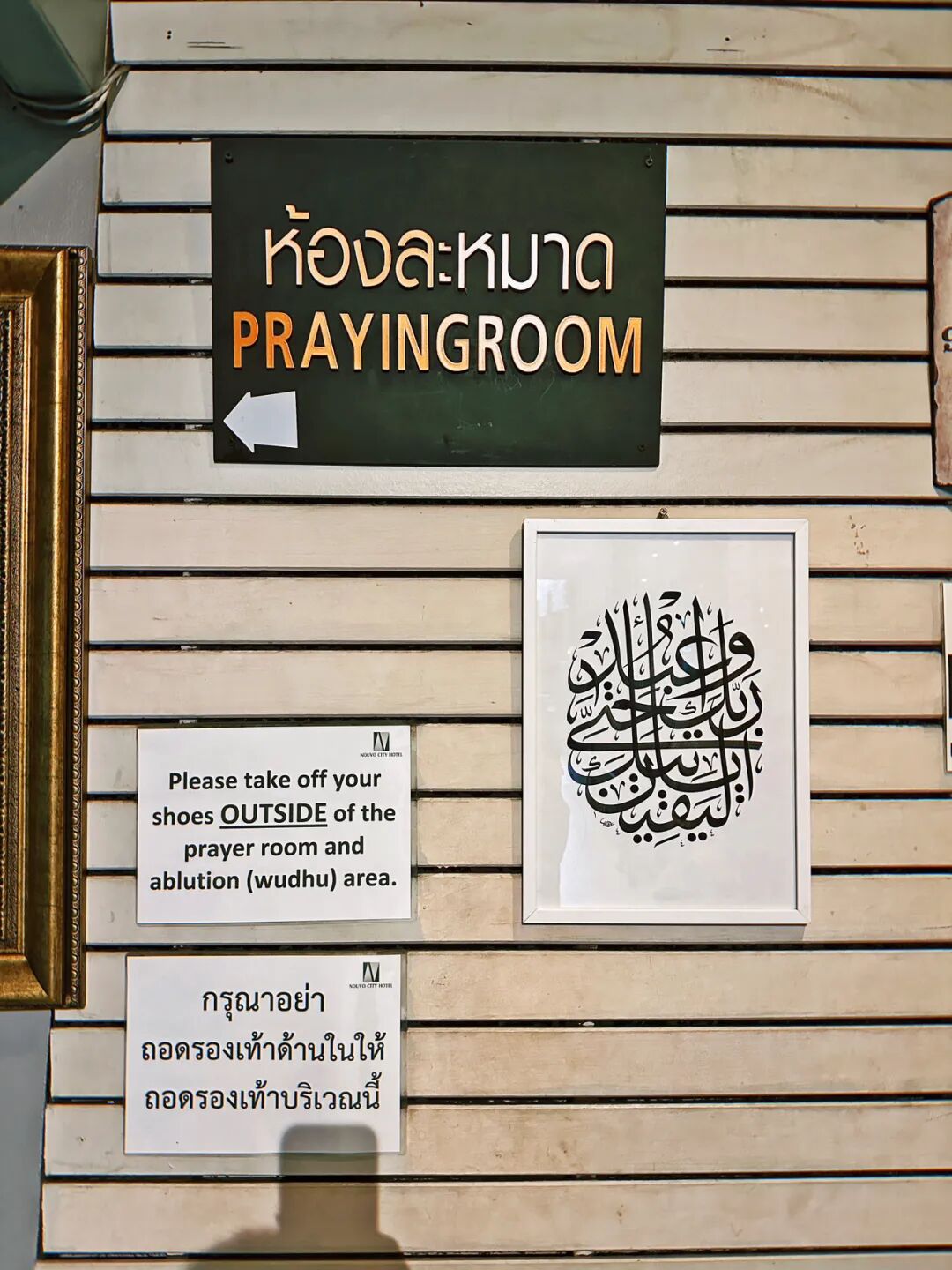
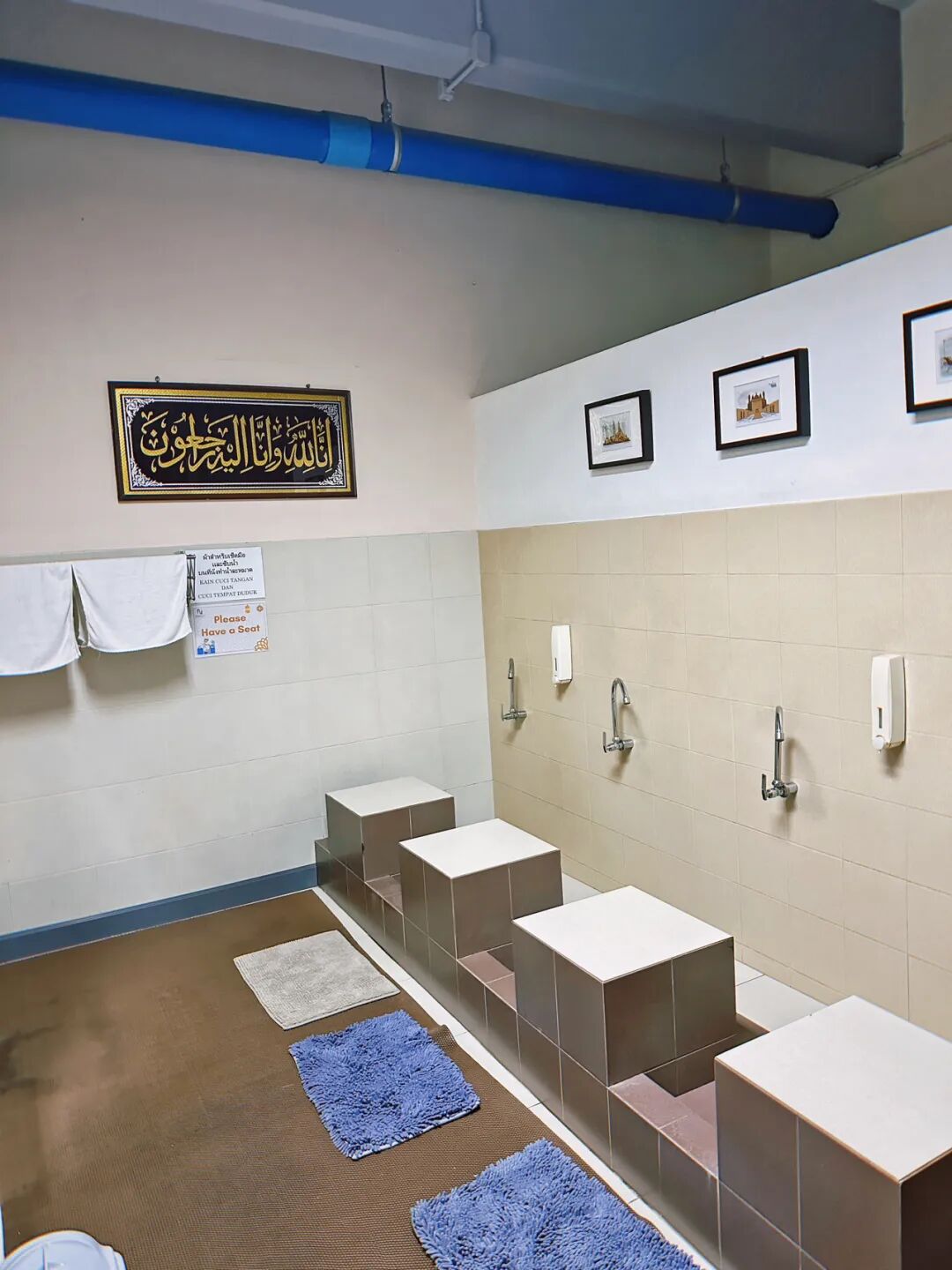
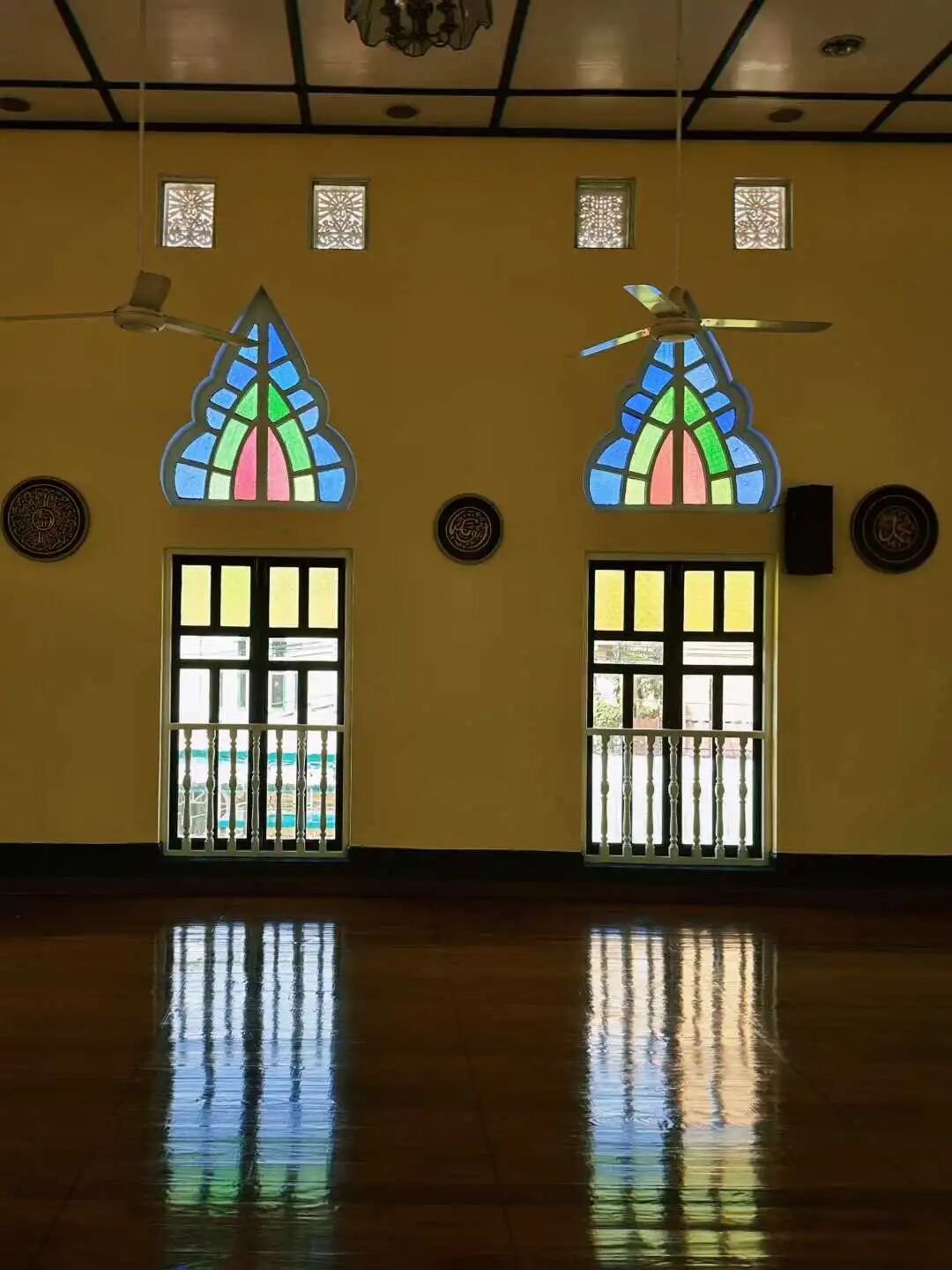
The prayer room features Thai-style Islamic decorative art, combining local Thai patterns with Islamic calligraphy, which looks very beautiful.
The hotel's buffet breakfast is also good, offering Thai, Indian, and Western styles, with specialties like coconut milk mushrooms, spicy porridge, and brown rice.
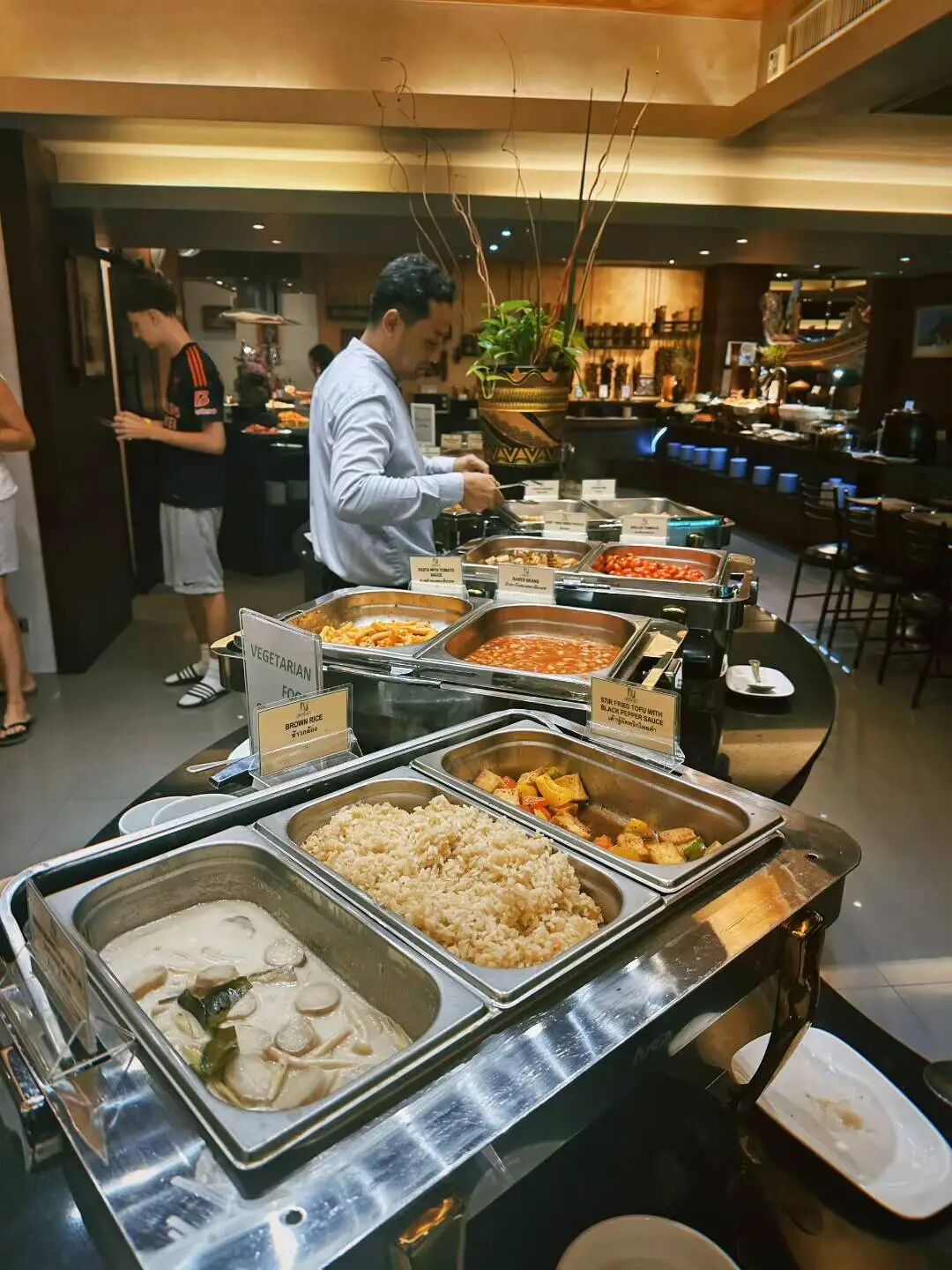
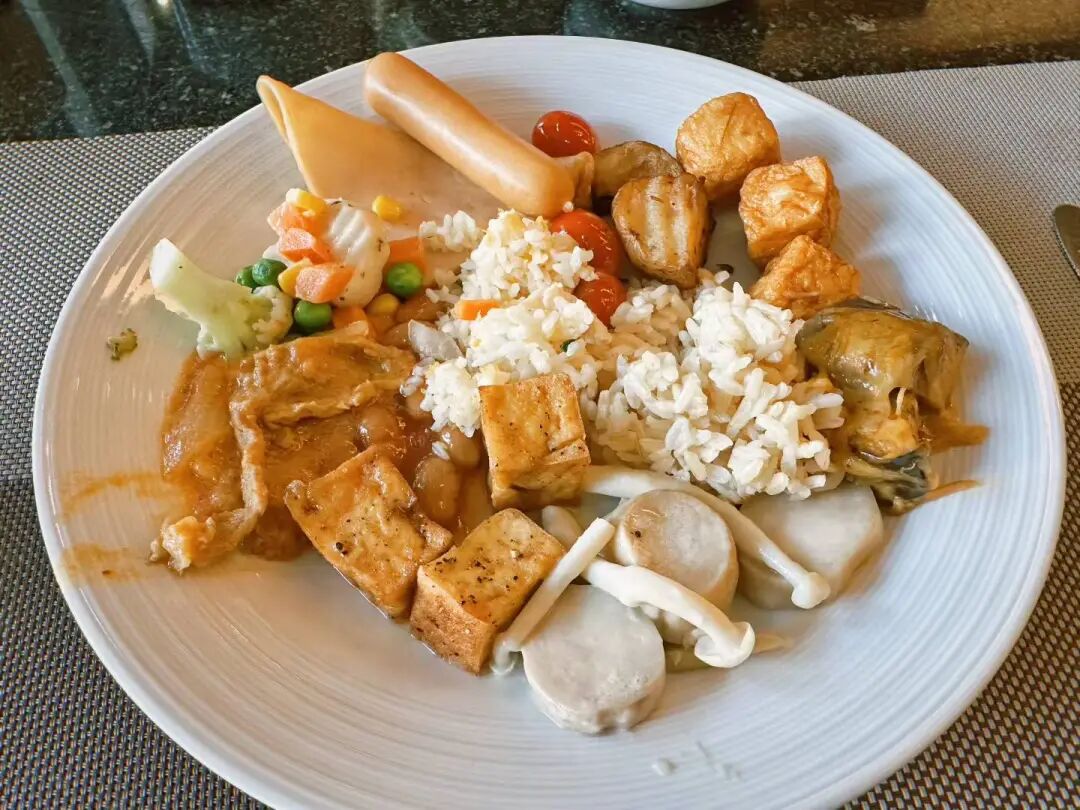
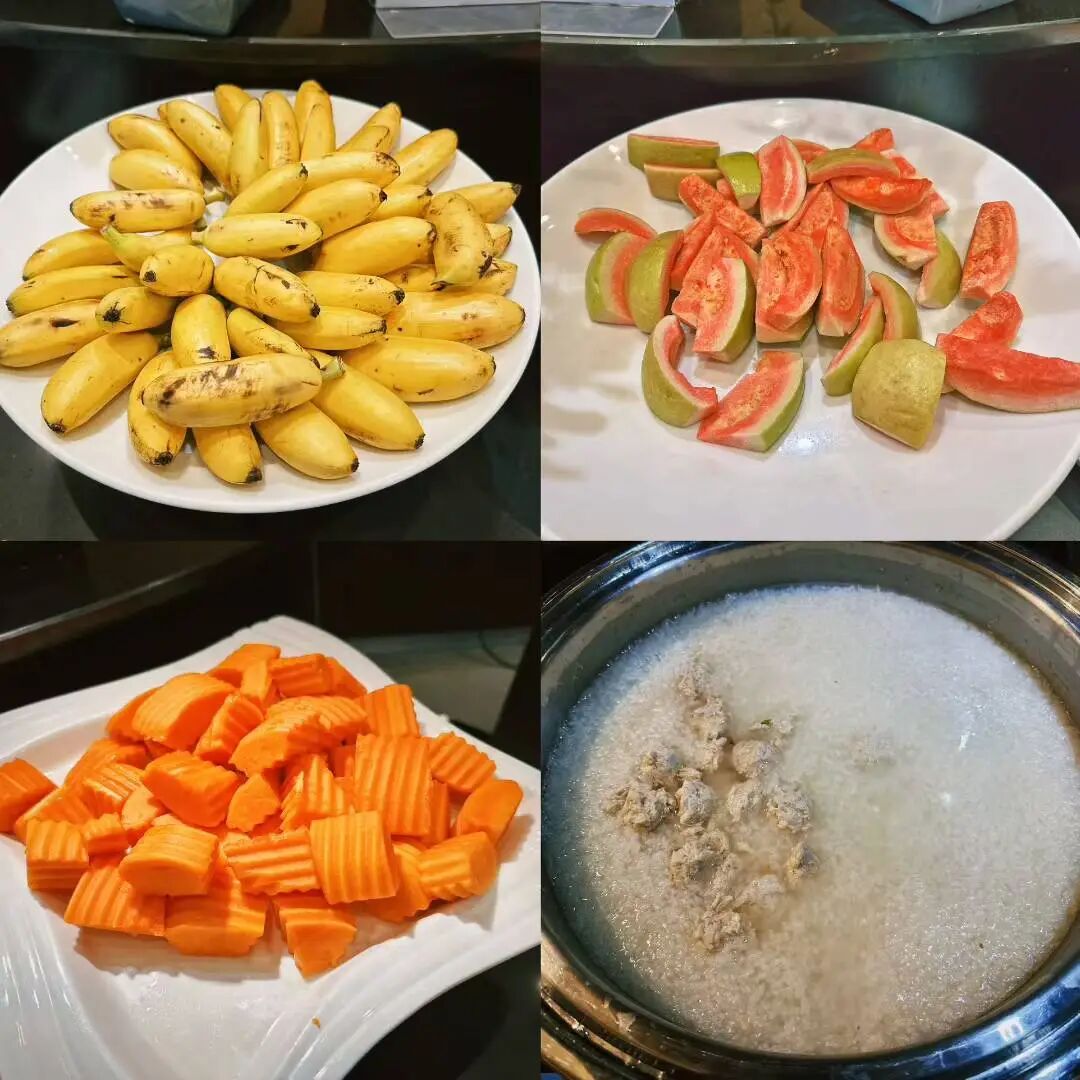
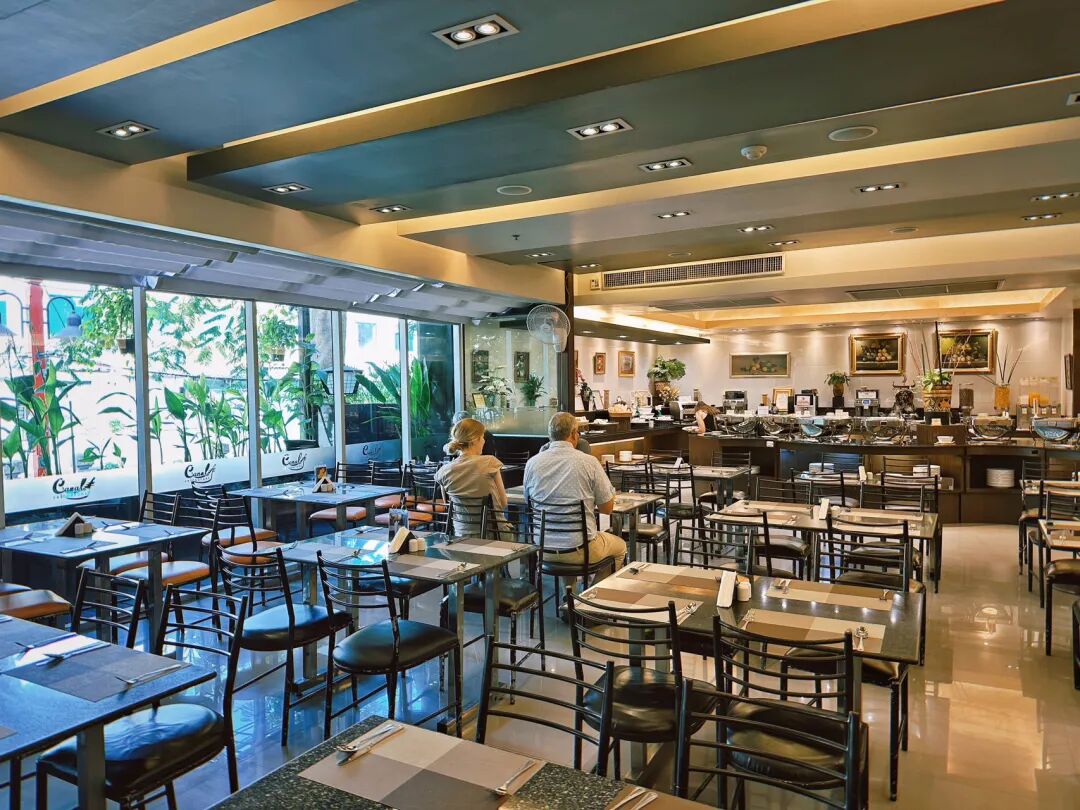
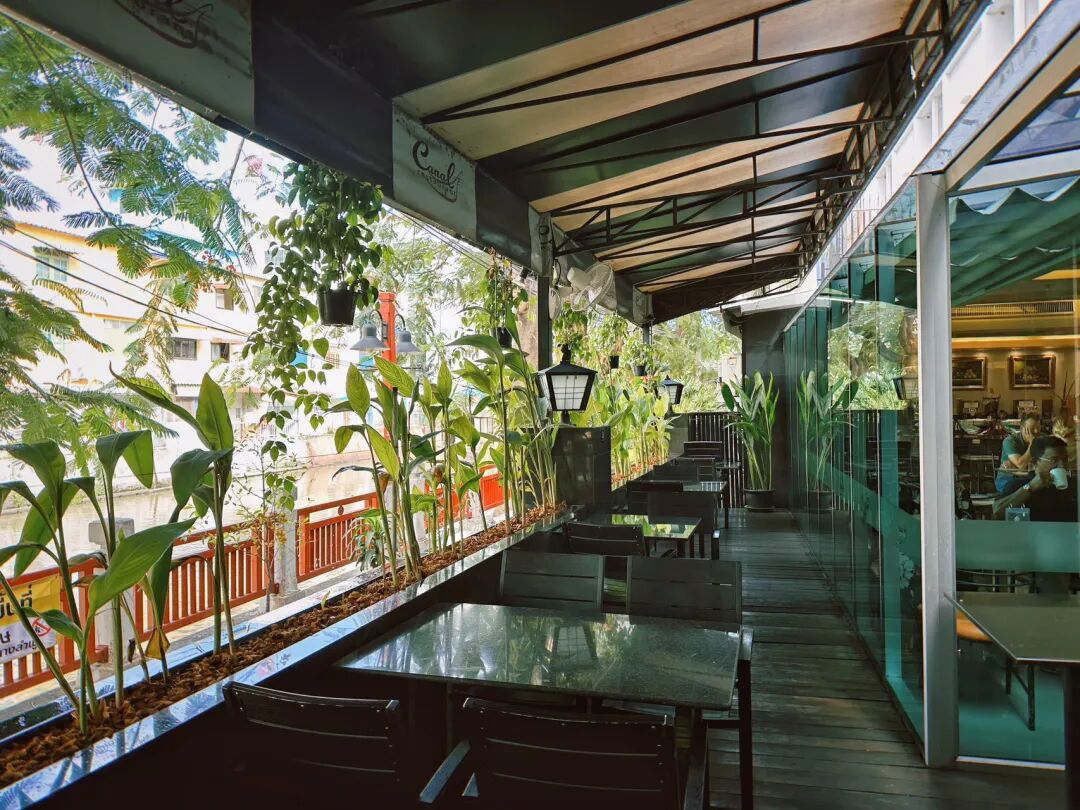
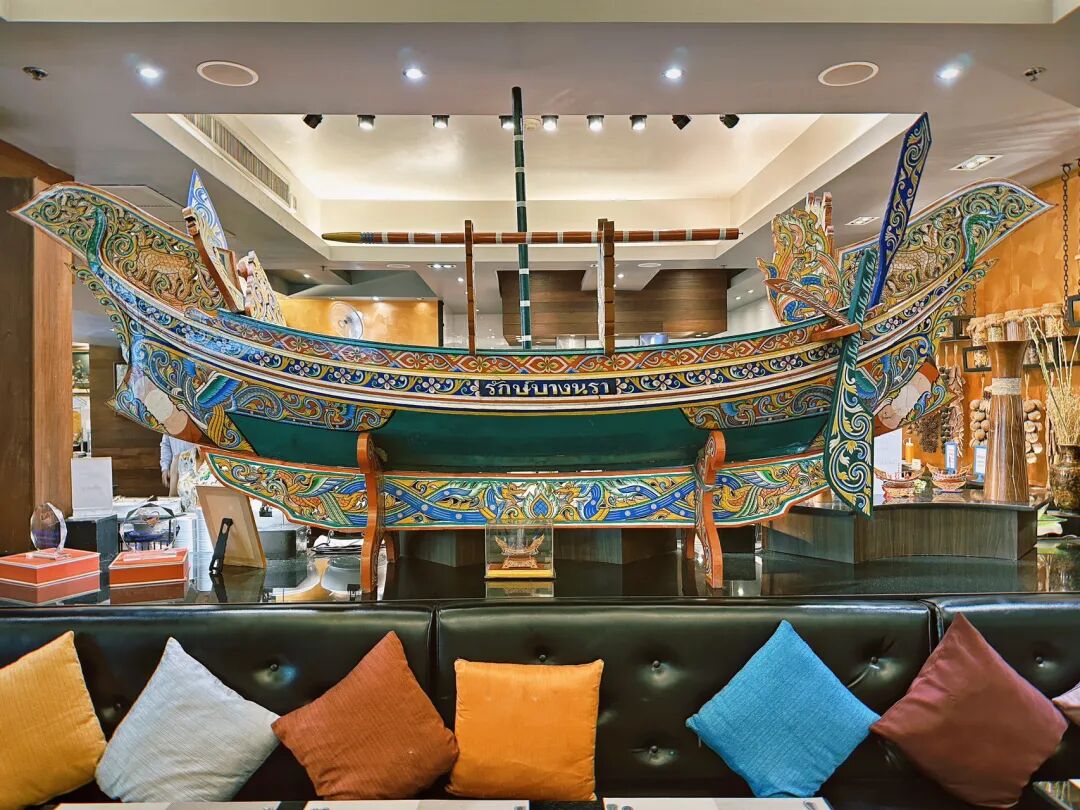
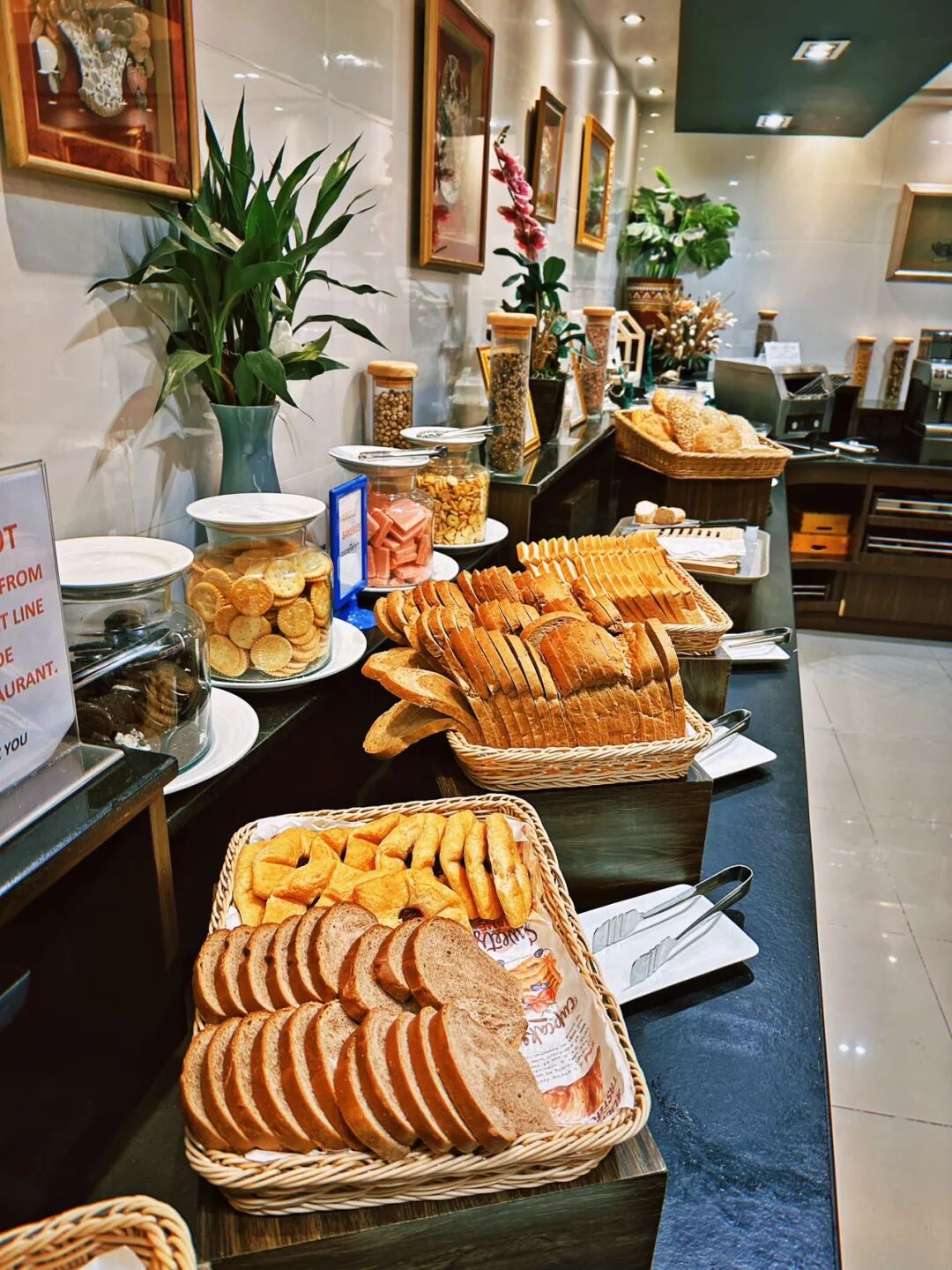
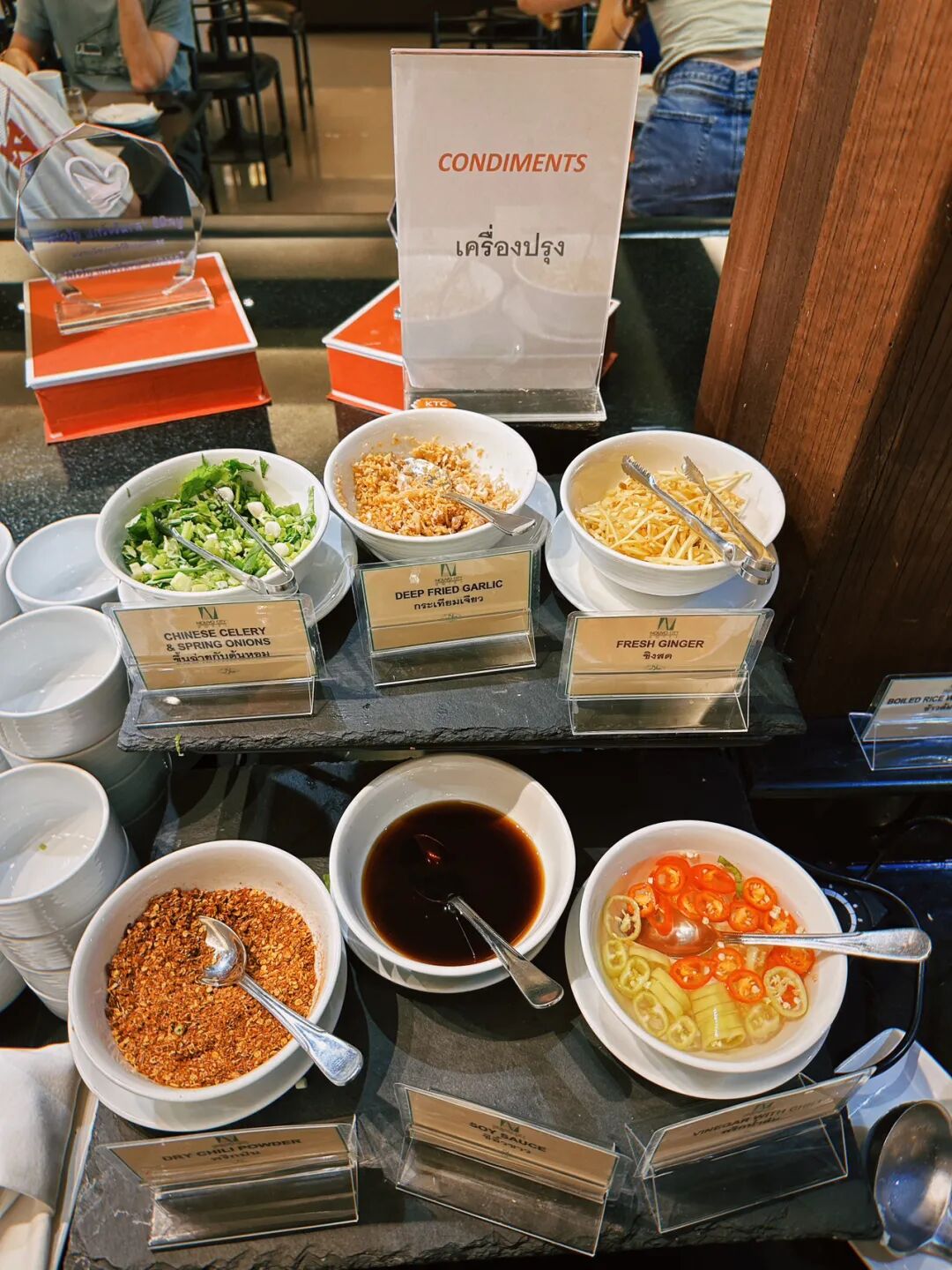
The hotel also has another restaurant called Sara where you can order from a menu, focusing on Thai and Indian food. Before I left for the airport, I ordered a beef fried rice to go; it was inexpensive and came with a box of side dishes. Their service is also quite good.
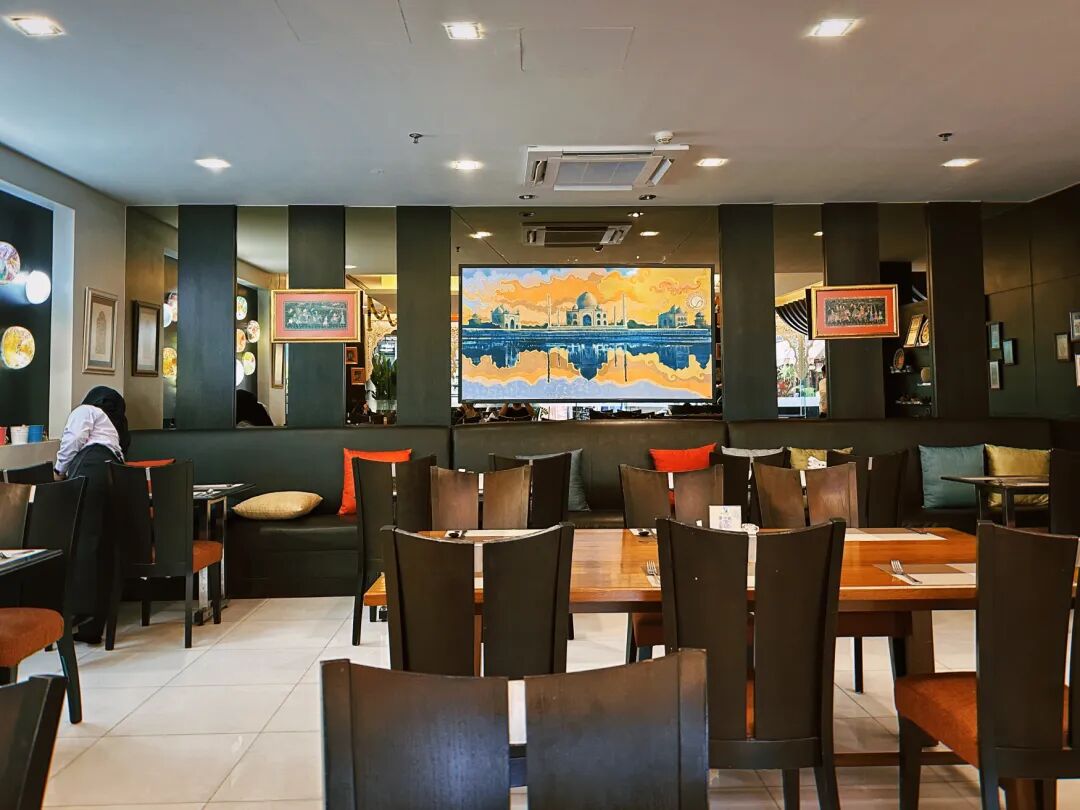
Mahanak mosque
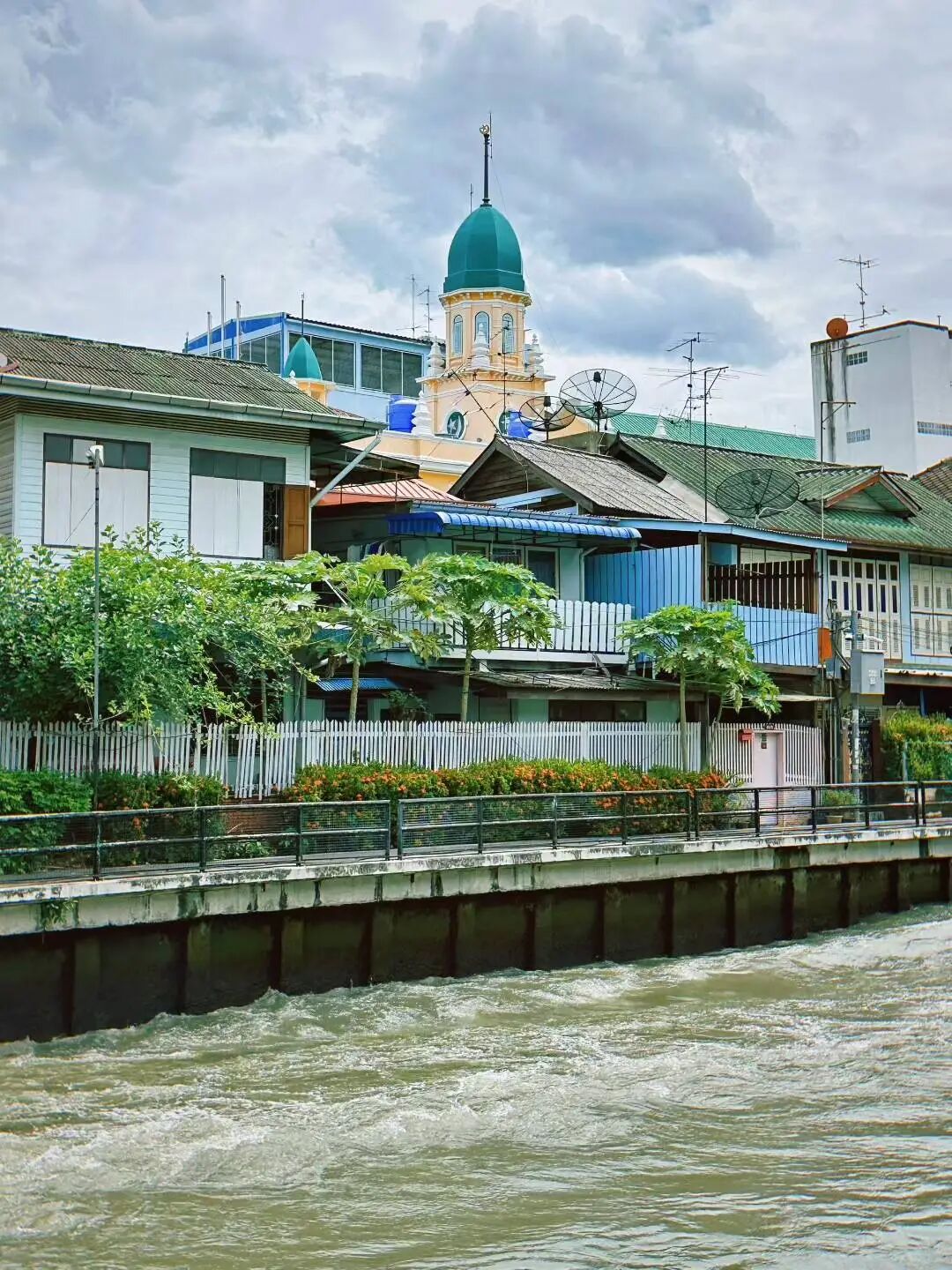
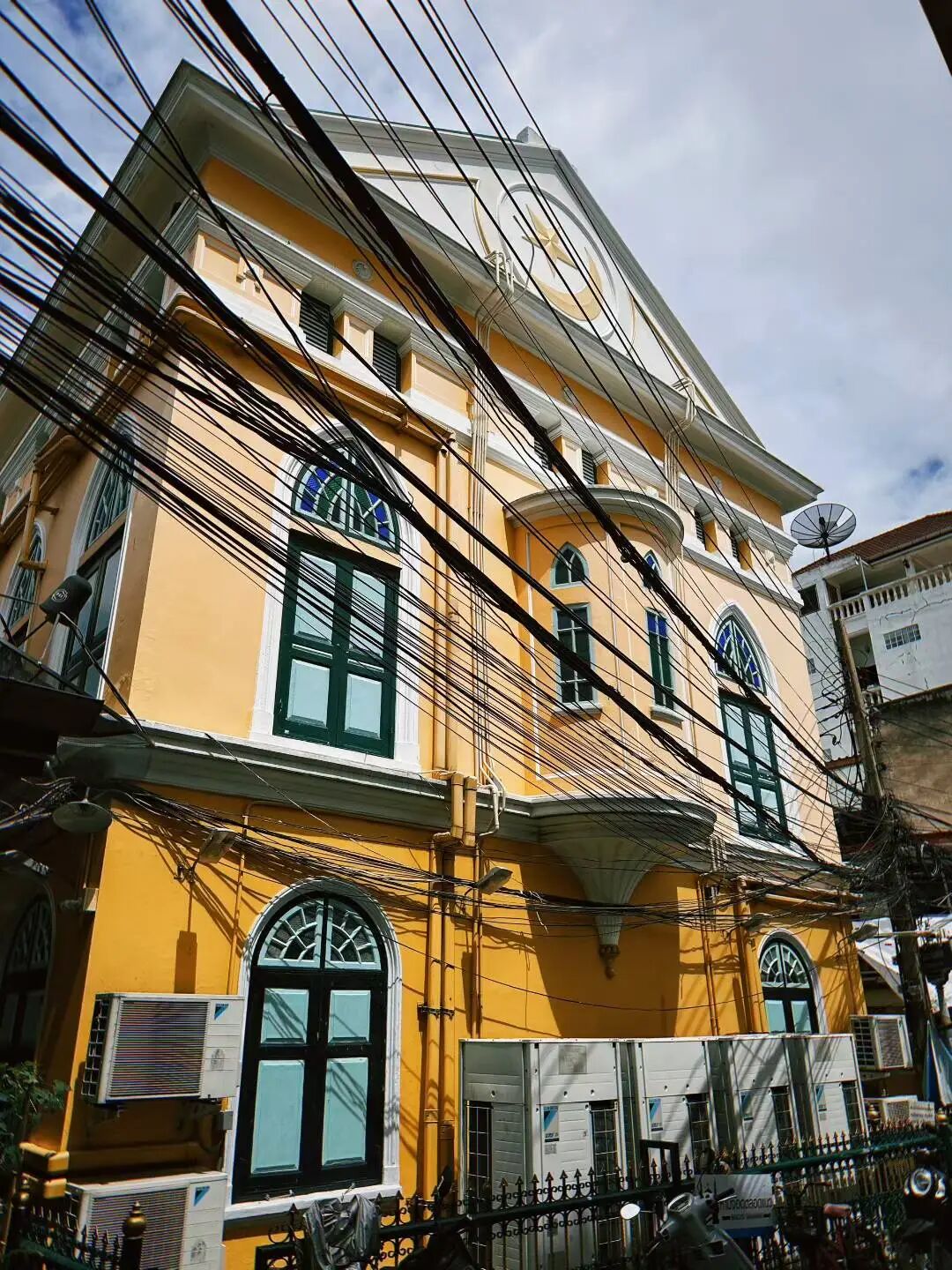
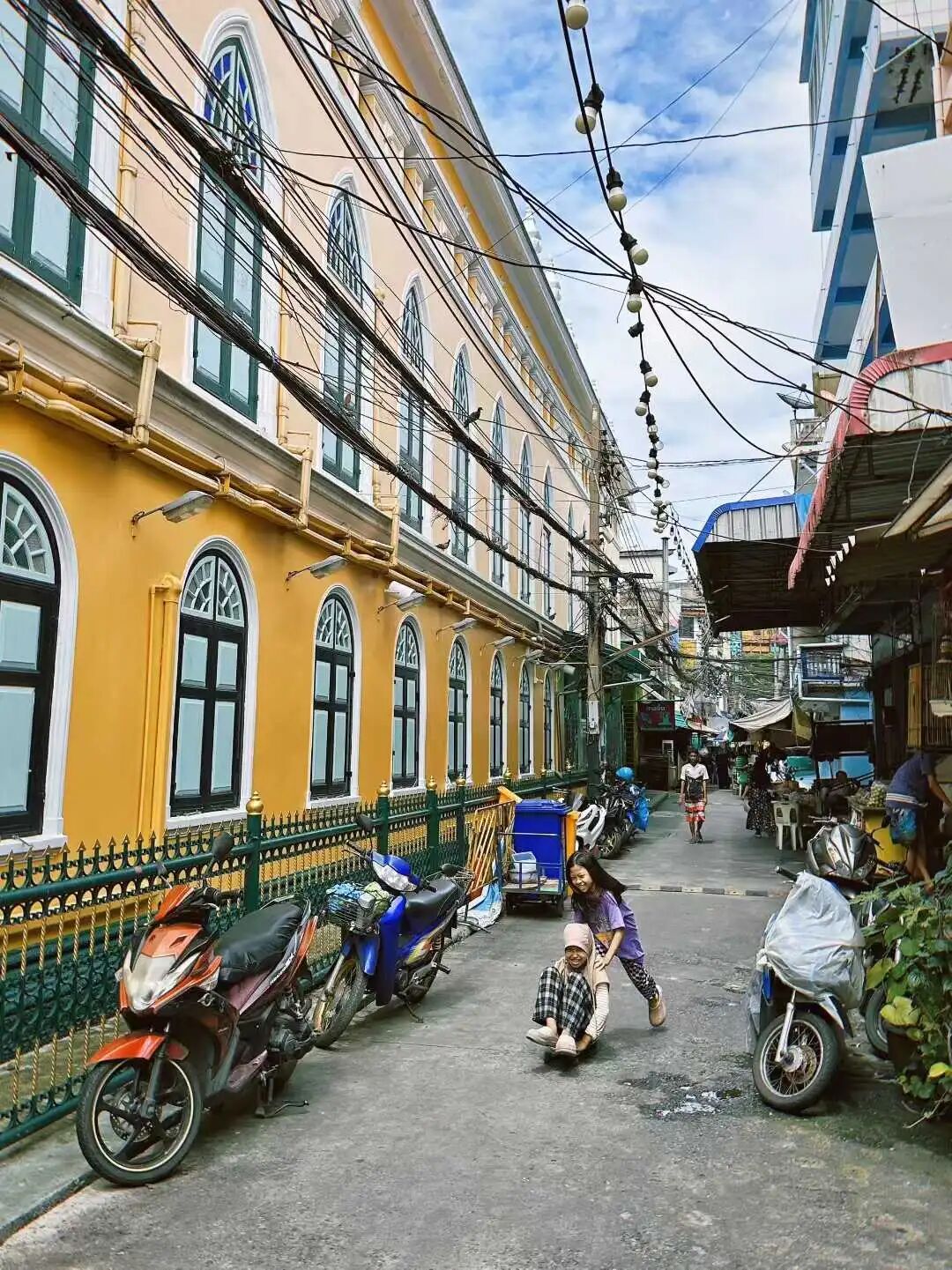
Not long after Thailand invaded Pattani in 1786, the Pattani Sultanate soon began to resist Thailand again. Thailand invaded the Pattani Sultanate again in 1790 and then sent a second group of Pattani Malay captives to Bangkok, where they were settled in the eastern suburbs and established the Mahanak mosque community.
With the excavation of the Padung Krung Kasem canal and the Mahanak canal, the Mahanak mosque community gradually became a floating market. After the 20th century, a large group of Indian textile merchants on the other side of the canal provided more income opportunities for the mosque community.
Kedah Malay mosque community
The Kedah Sultanate is located in the northwest of present-day Malaysia, west of the Pattani Sultanate, and is another Malay state bordering Thailand.
Al-Athik mosque
In 1803, Thailand forcibly interfered in the internal affairs of the Kedah Sultanate, forcing the Sultan to abdicate and installing a new one, which led to the Kedah Sultanate splitting into two countries in 1808.
In 1808, a group of Malay captives from the Kedah Sultanate arrived in Bangkok. To avoid interaction with previously settled Pattani Malay villages, they were placed in a remote area on the east bank, five kilometers down the Chao Phraya River. These Kedah Malays dug canals to provide irrigation for their village, gradually turning jungle swamps into farmland reaching one kilometer inland, and they established the Al-Athik mosque, which means 'Old Mosque'.
After more than fifty years of isolation, Bangkok's first southern suburban road was finally built, which greatly improved transportation for the Al-Athik mosque community. In the late 19th century, ferry terminals, rice and timber export companies, a tram terminal, a slaughterhouse, and Bangkok's first coal-fired power plant were gradually built around the mosque community.
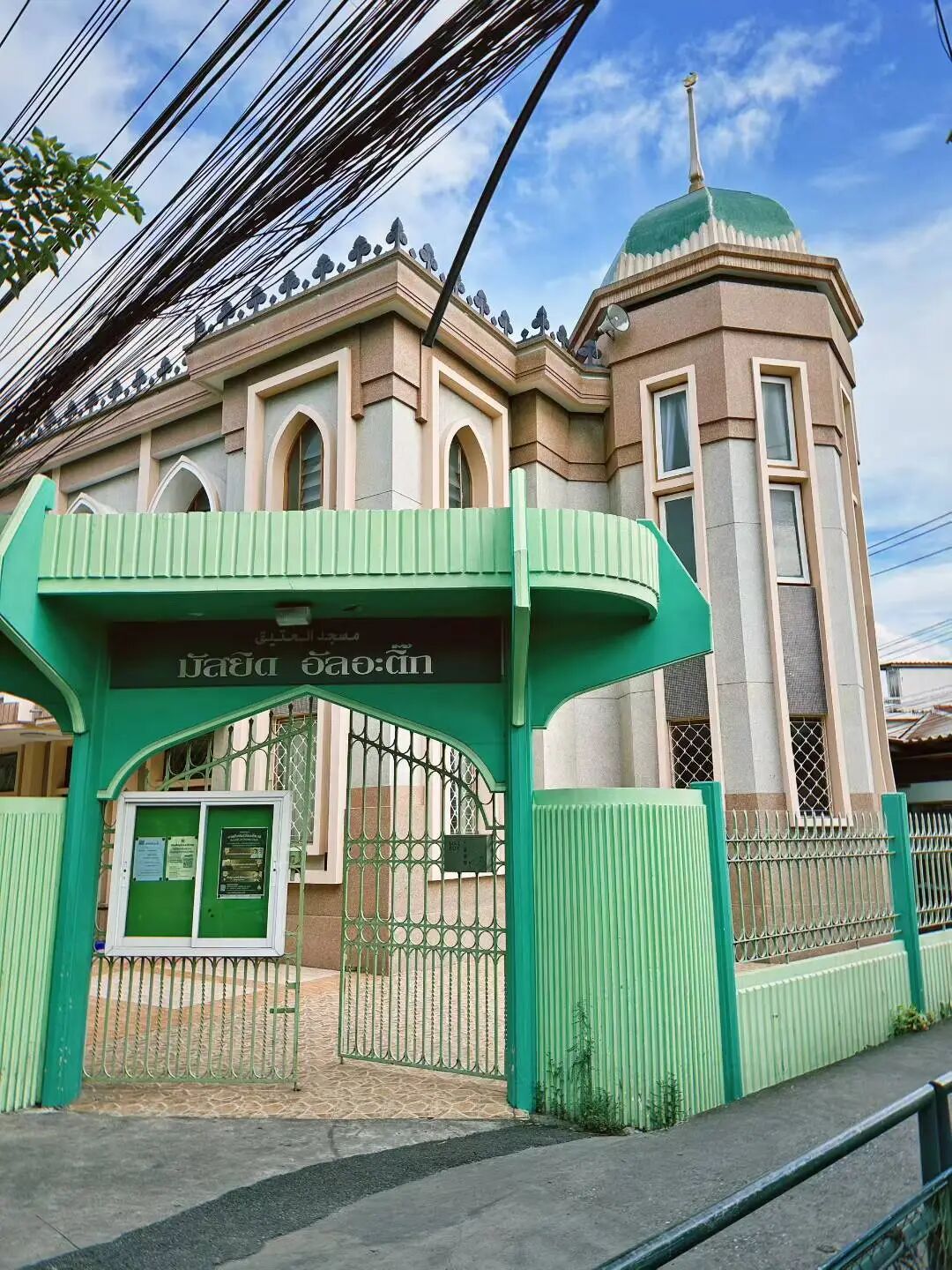
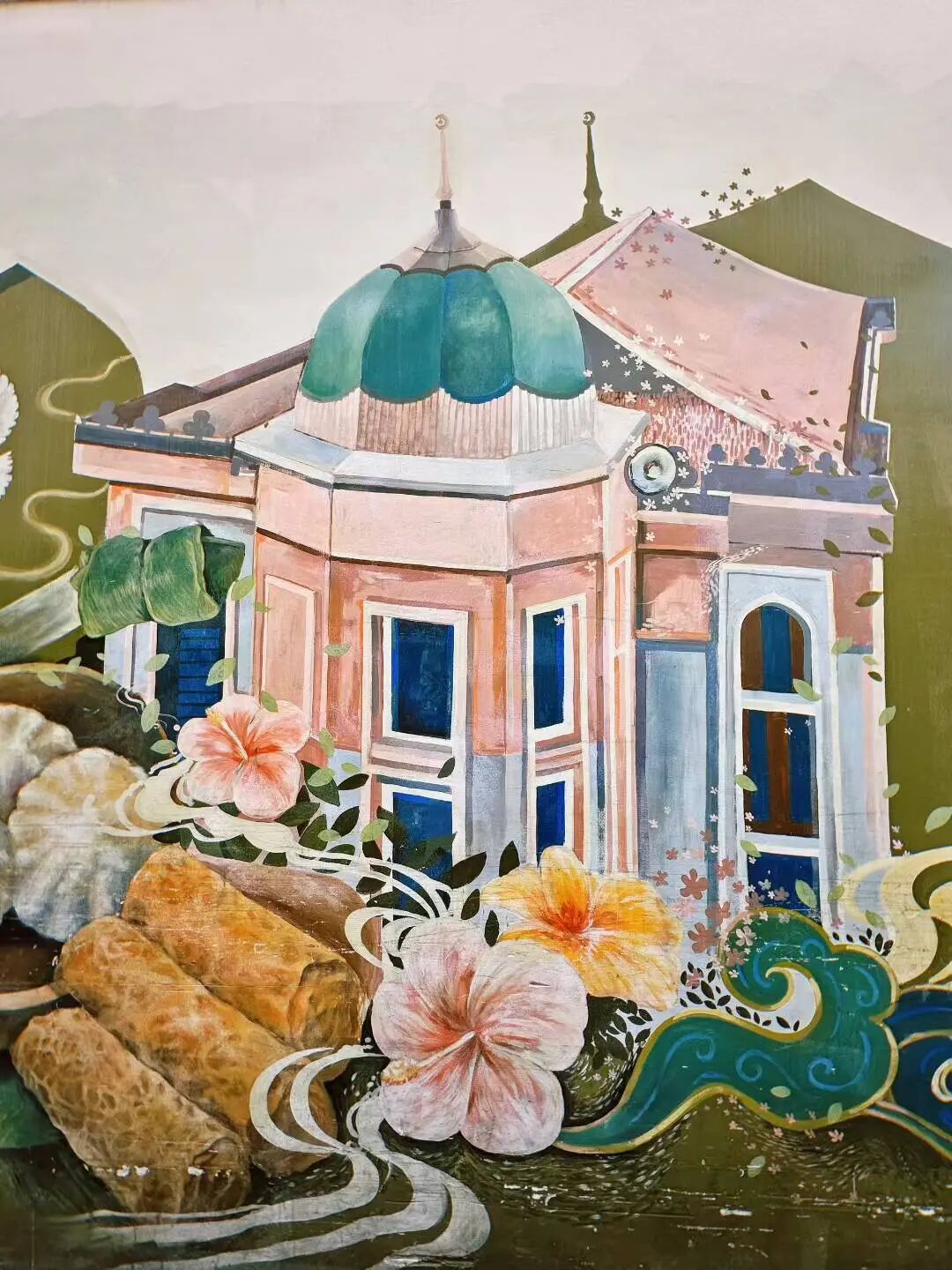
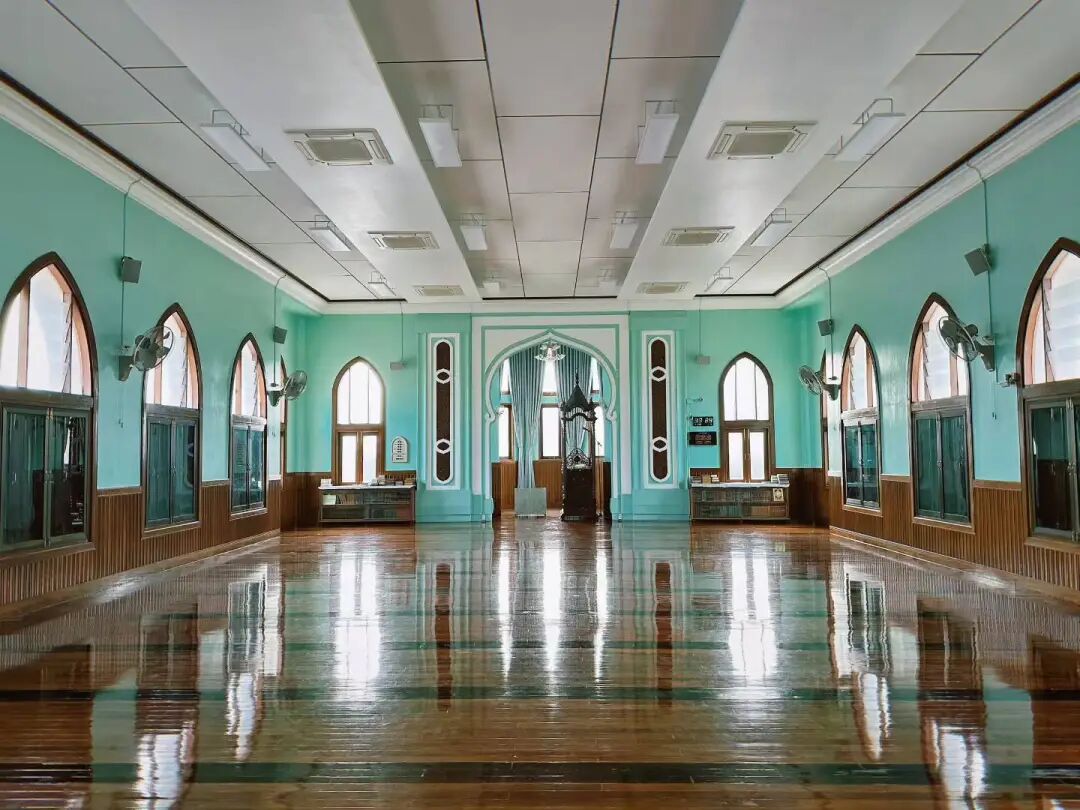
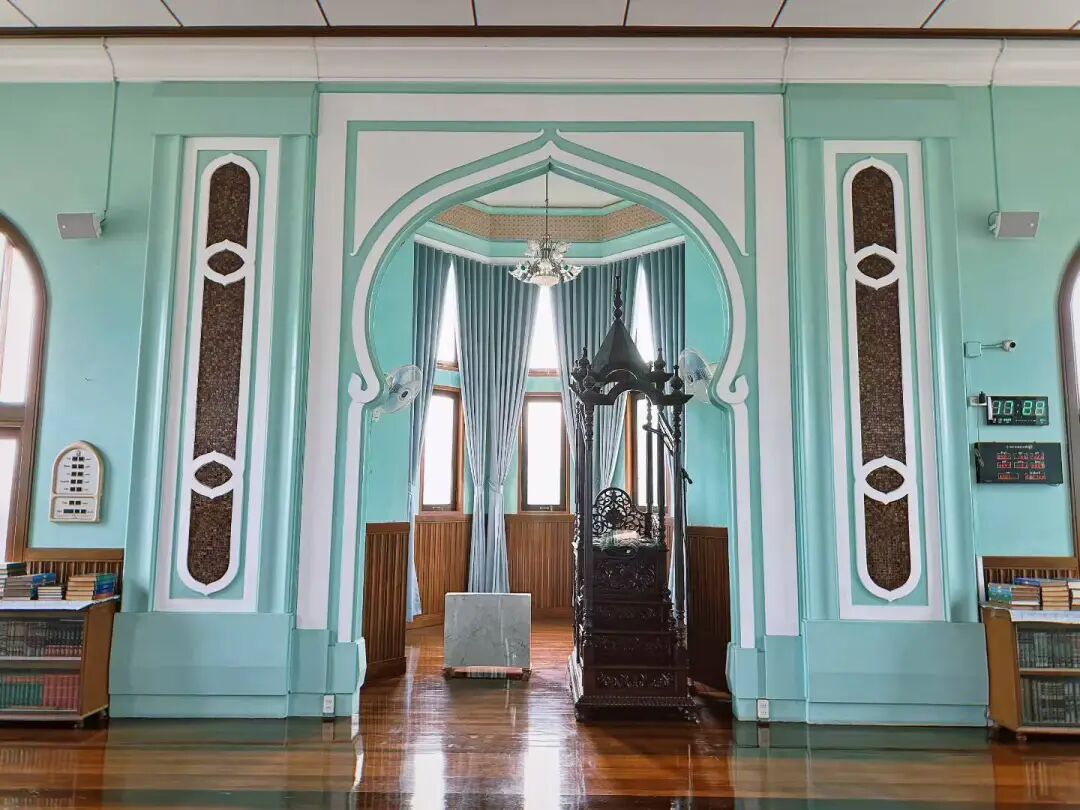
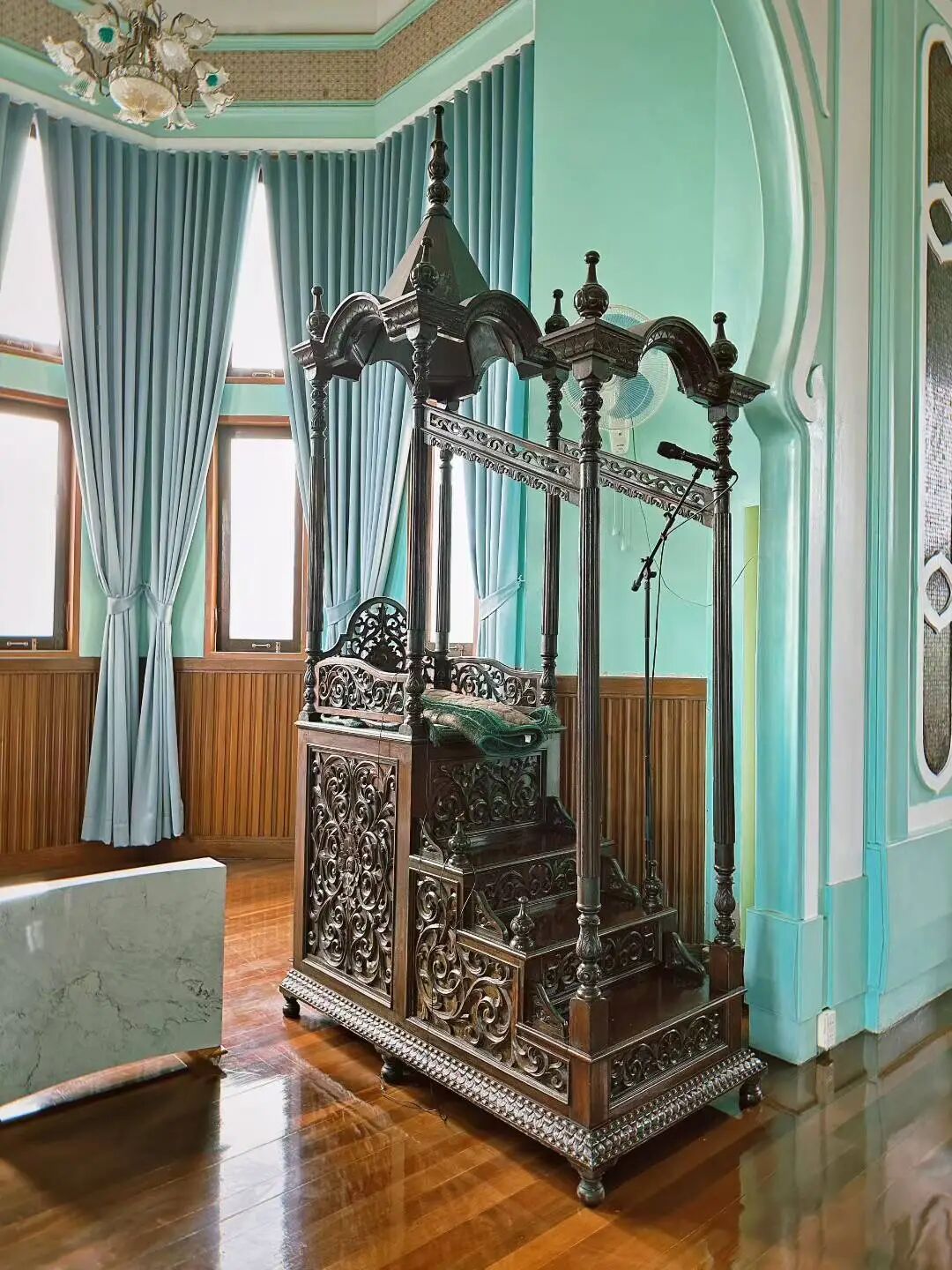
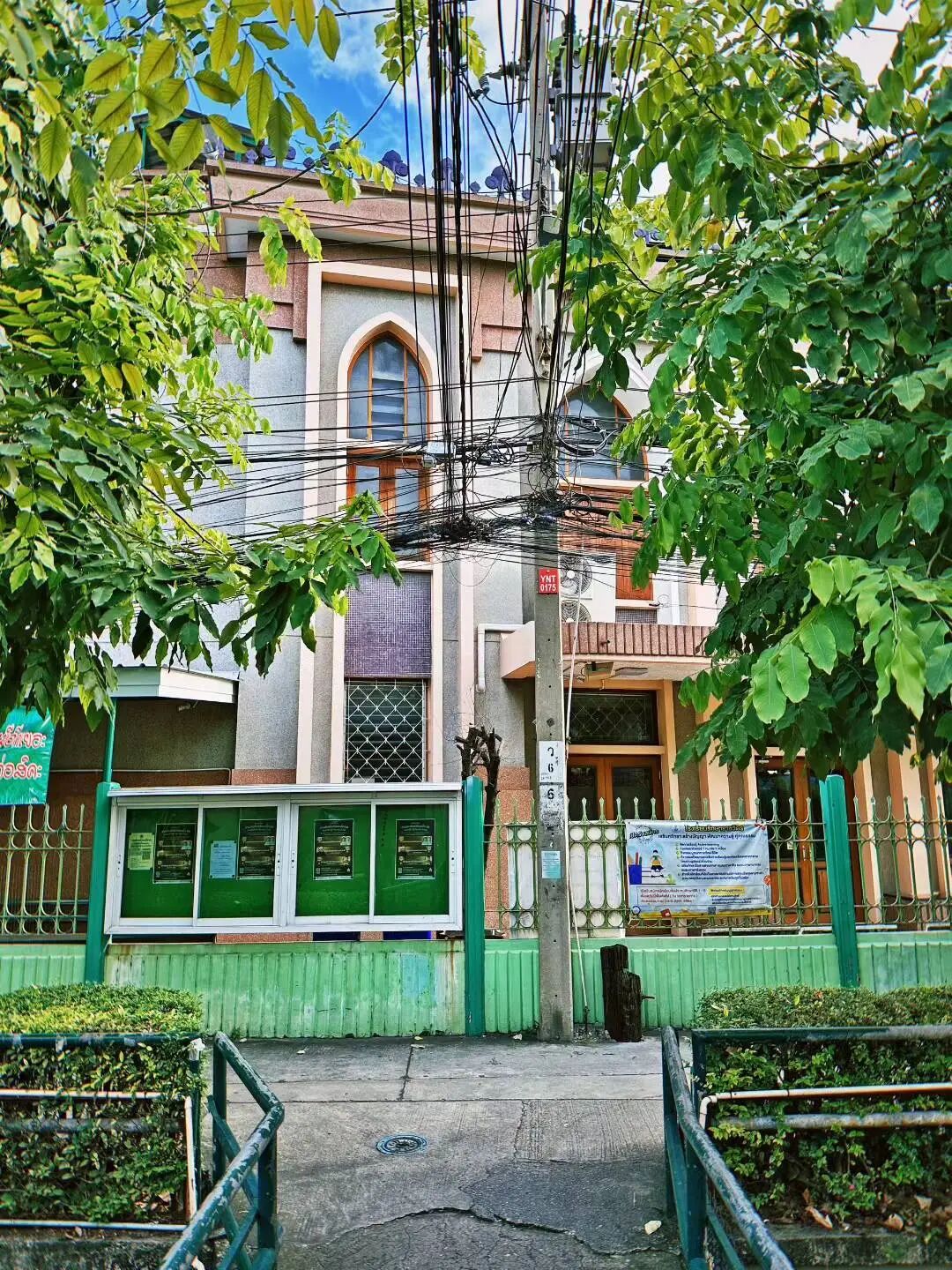
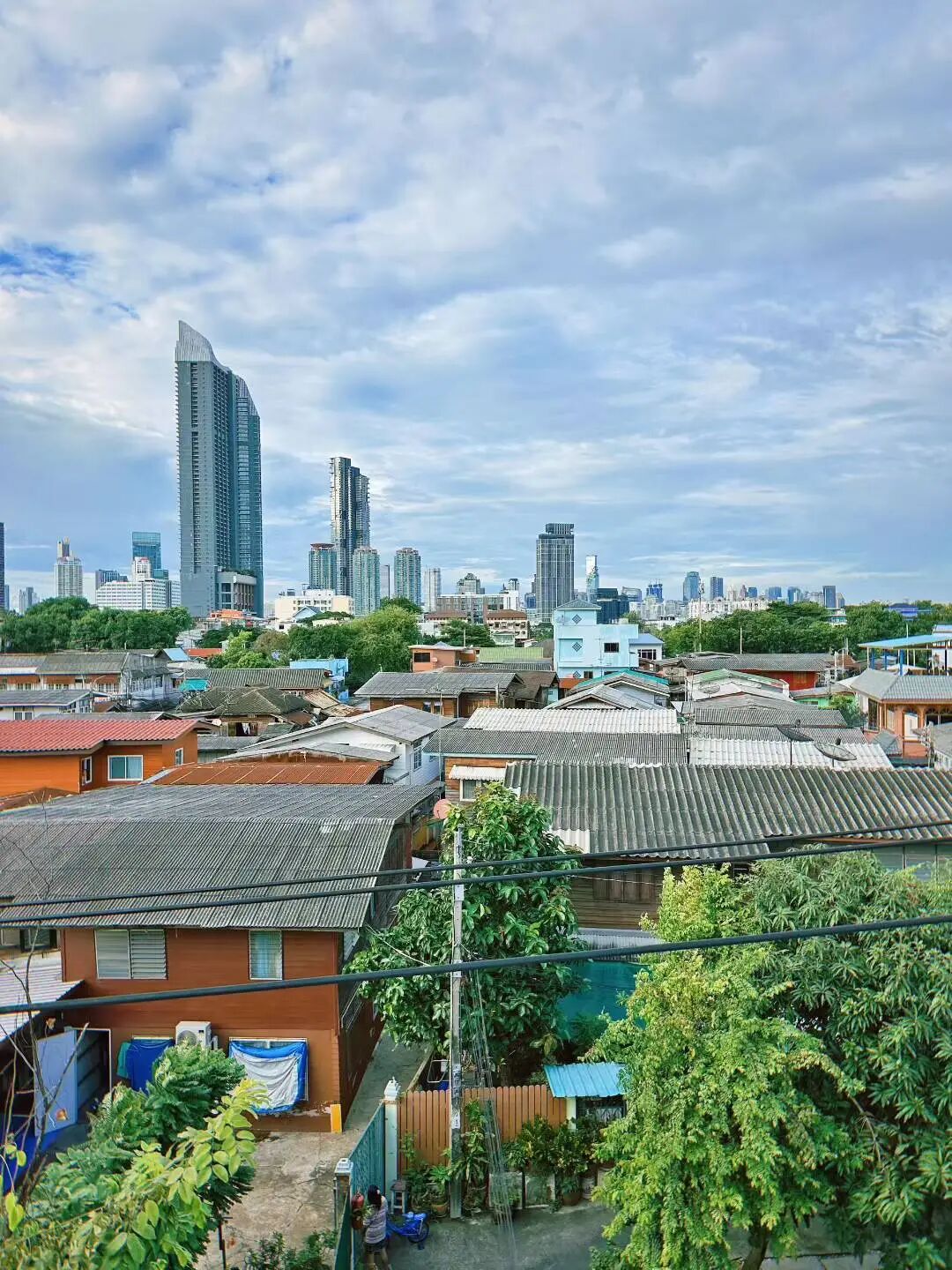
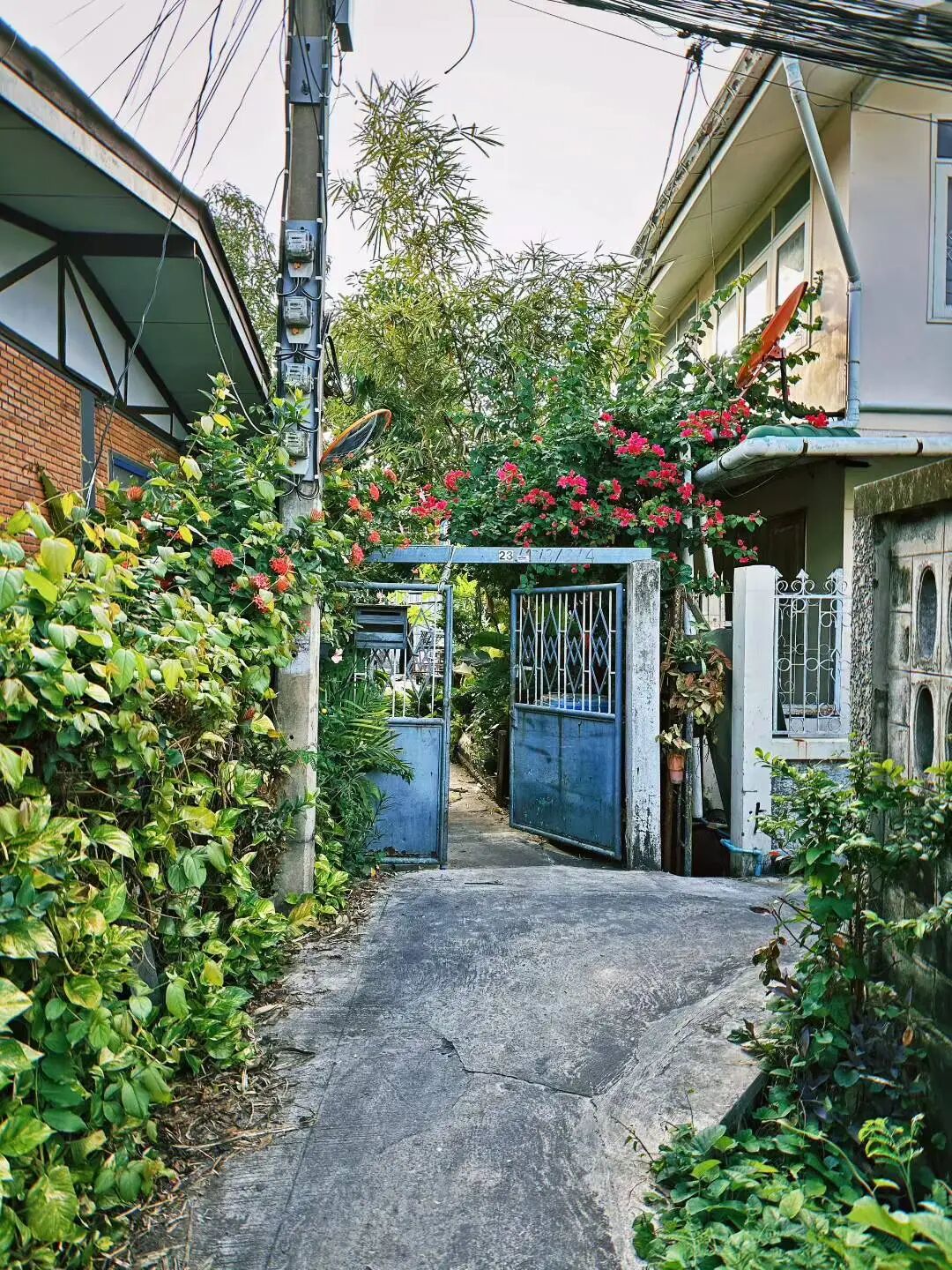
The Al-Athik mosque community holds a halal market on the morning of the first weekend of every month, which is the best chance to experience Bangkok's halal culture; you can find it on the map by searching for Riverside Market, Charoen Krung 103.
We first bought a pastry similar to Malay steamed rice cakes (dudu kuih), made by putting palm sugar inside rice flour, pressing it into stainless steel molds, steaming it, and sprinkling it with shredded coconut.
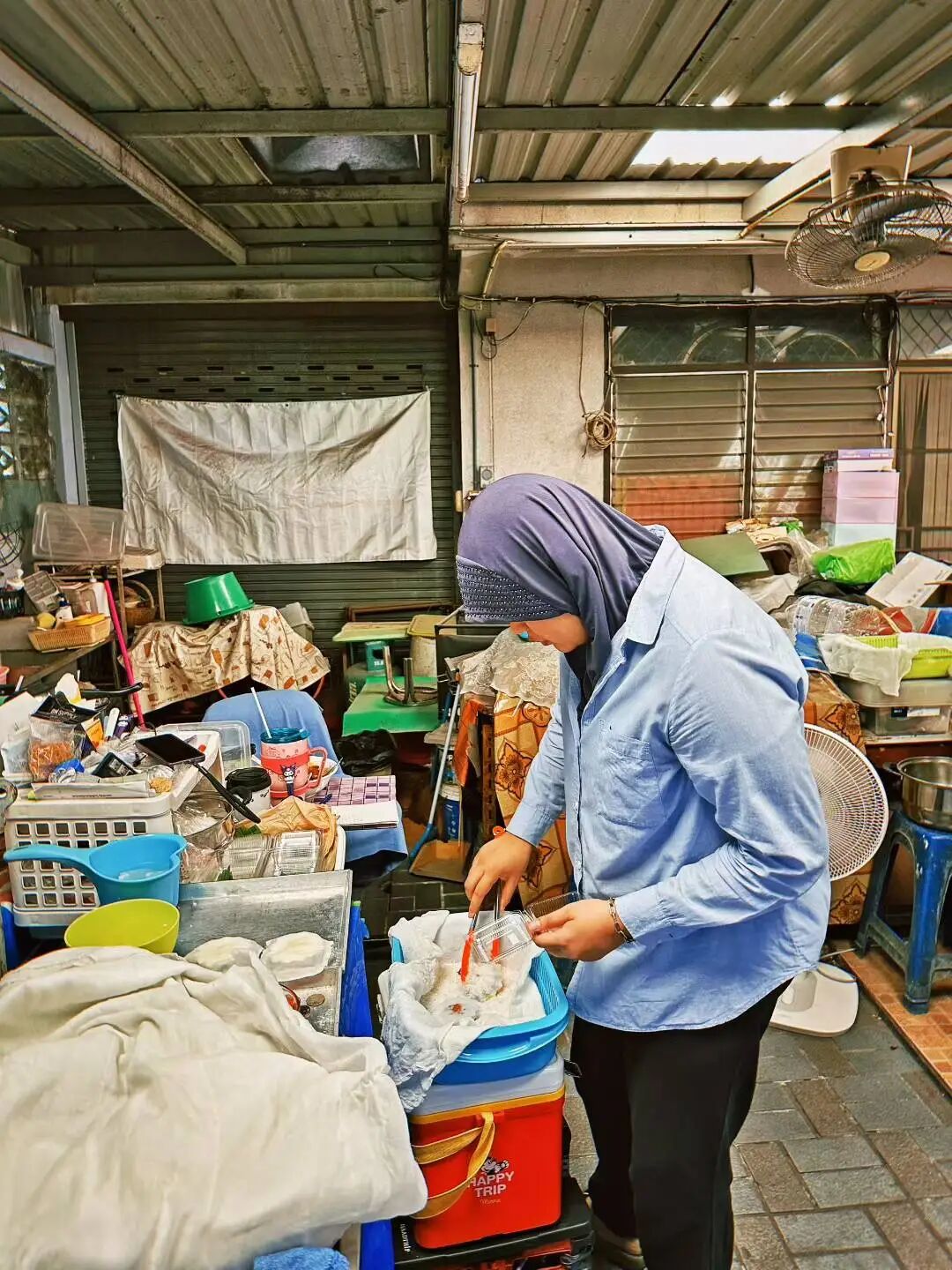
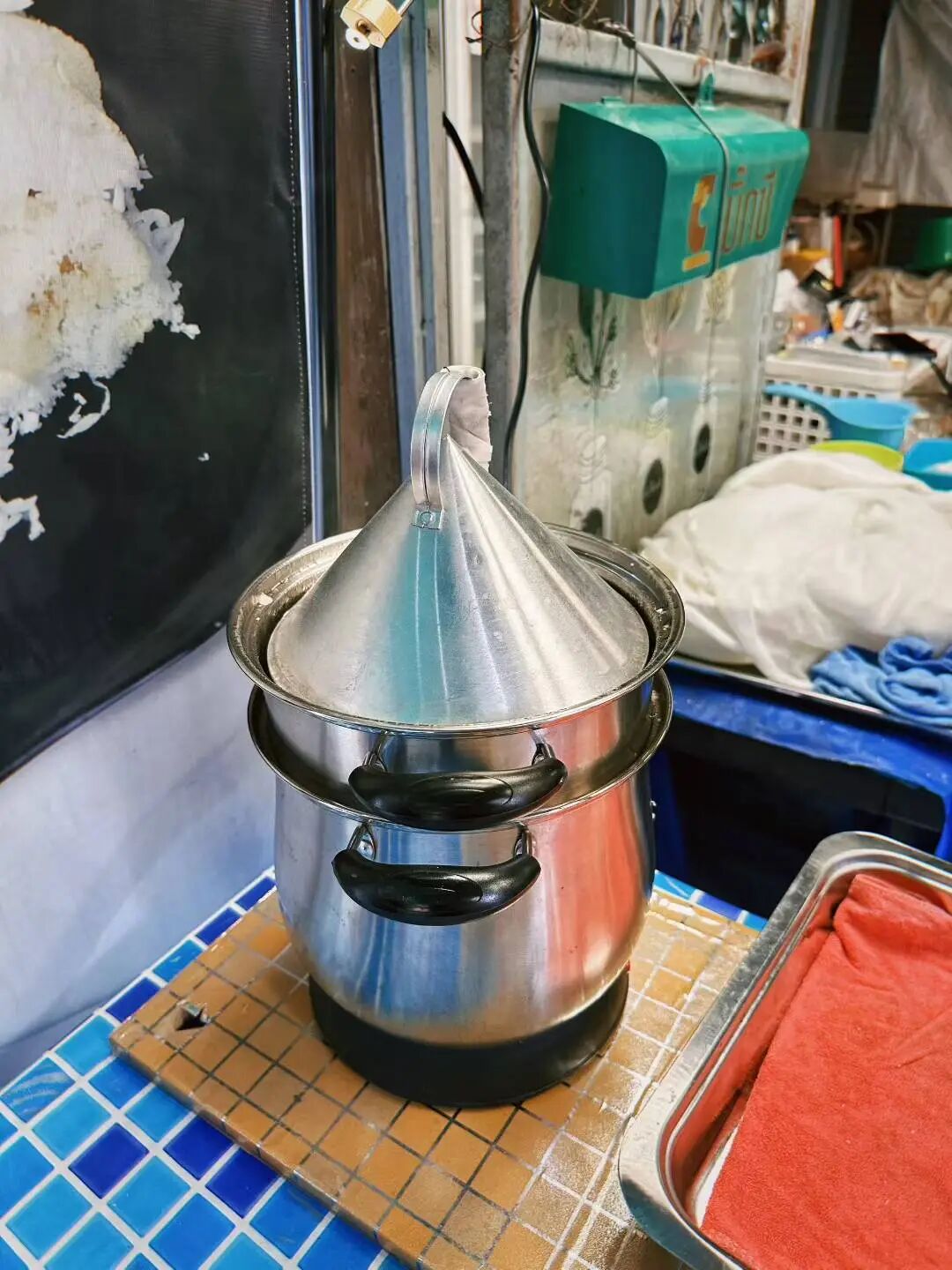

Then we drank longan water, which can be mixed with various ingredients like pearl barley, red beans, honey dates, green jelly noodles (cendol), and grass jelly (xiancao), finally topped with palm sugar and ice for a very rich flavor.
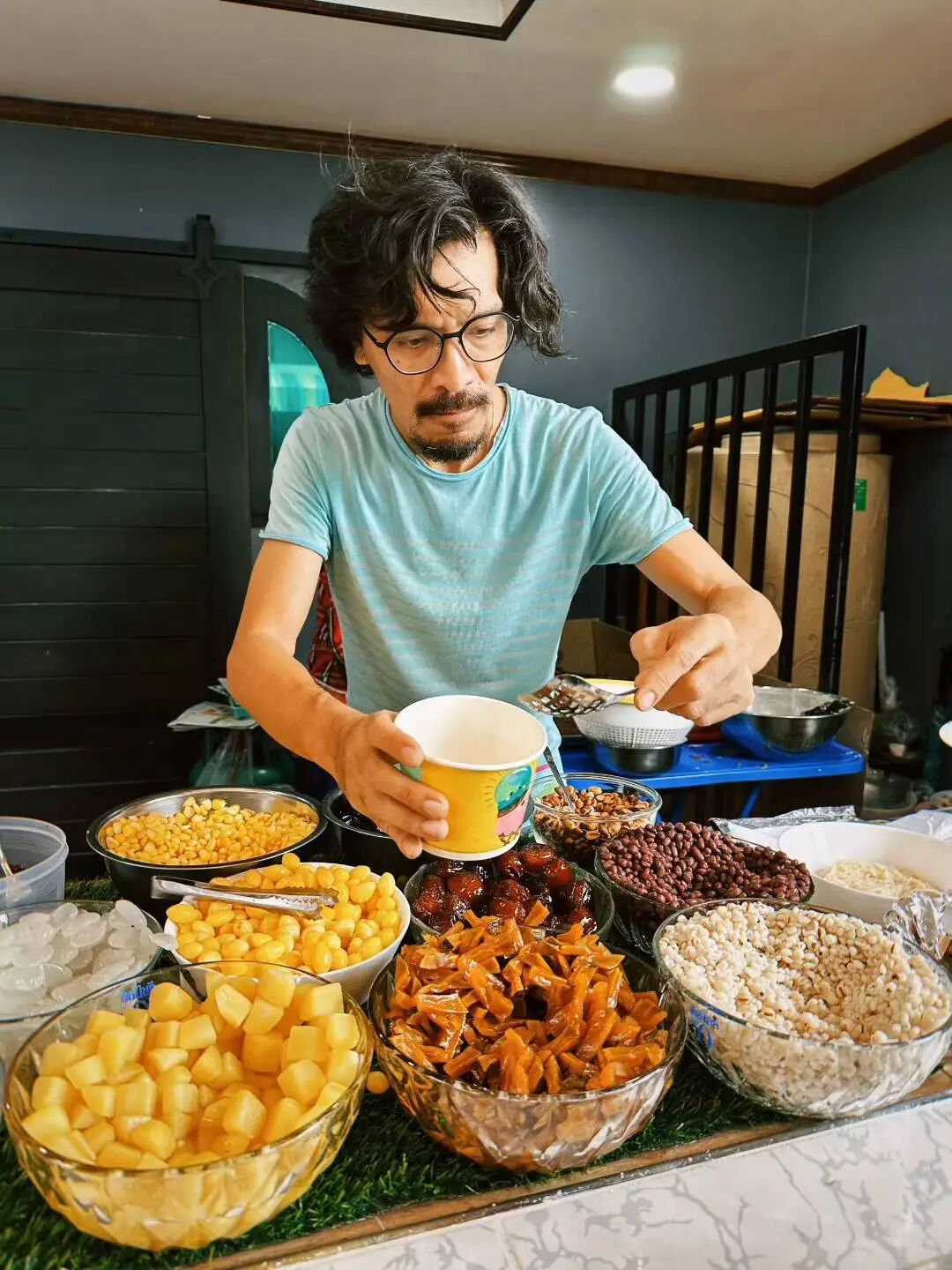
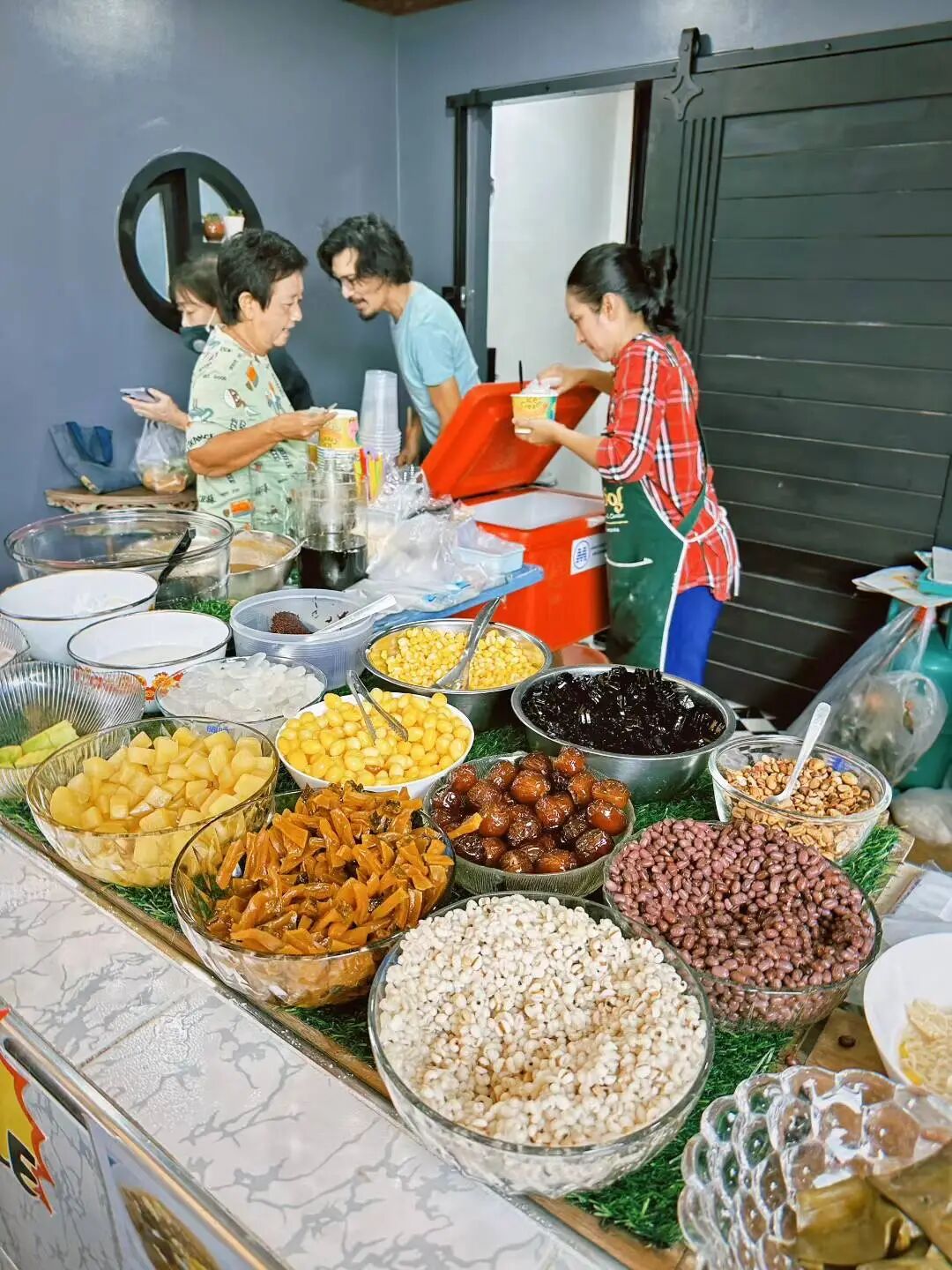
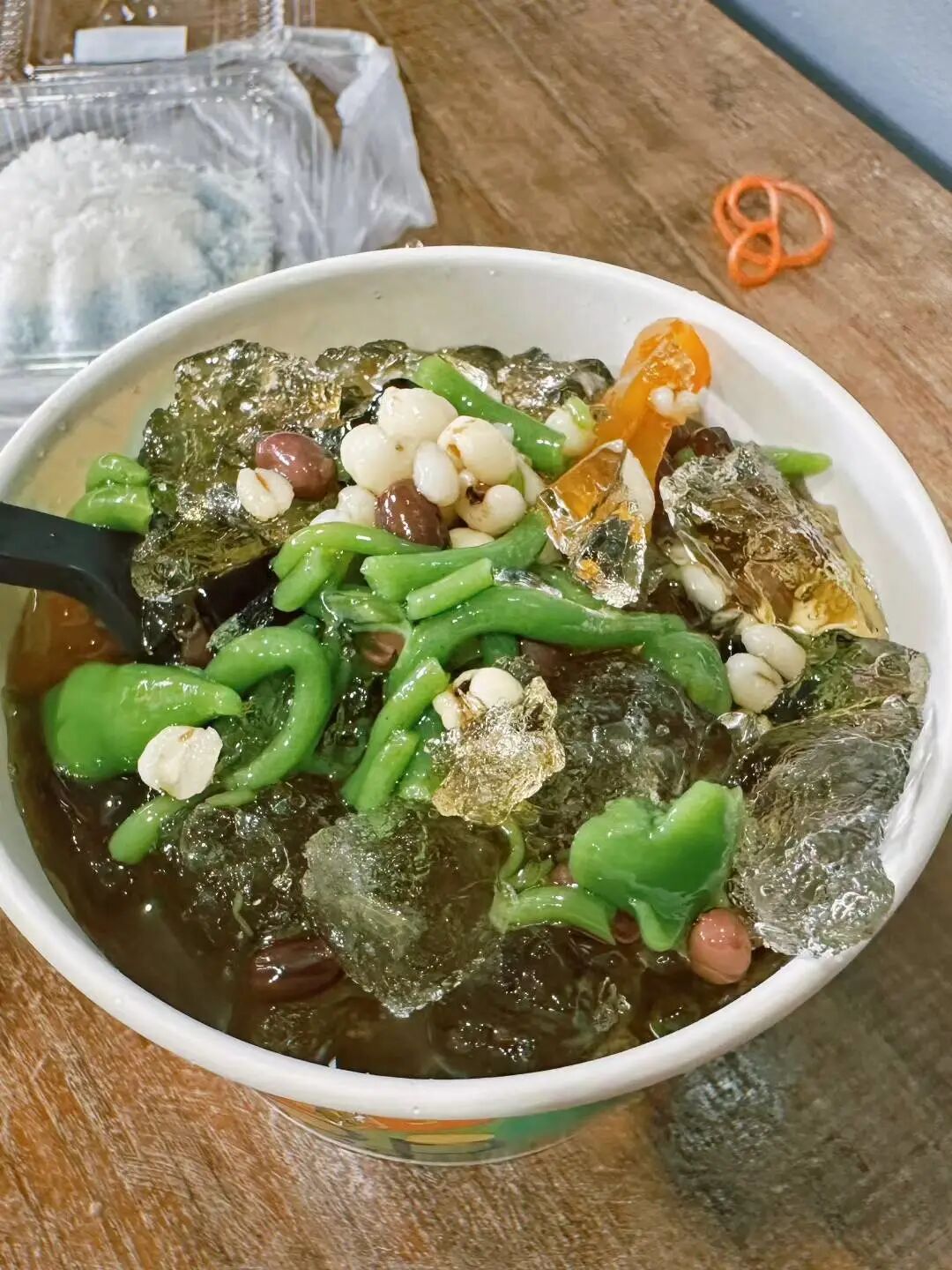
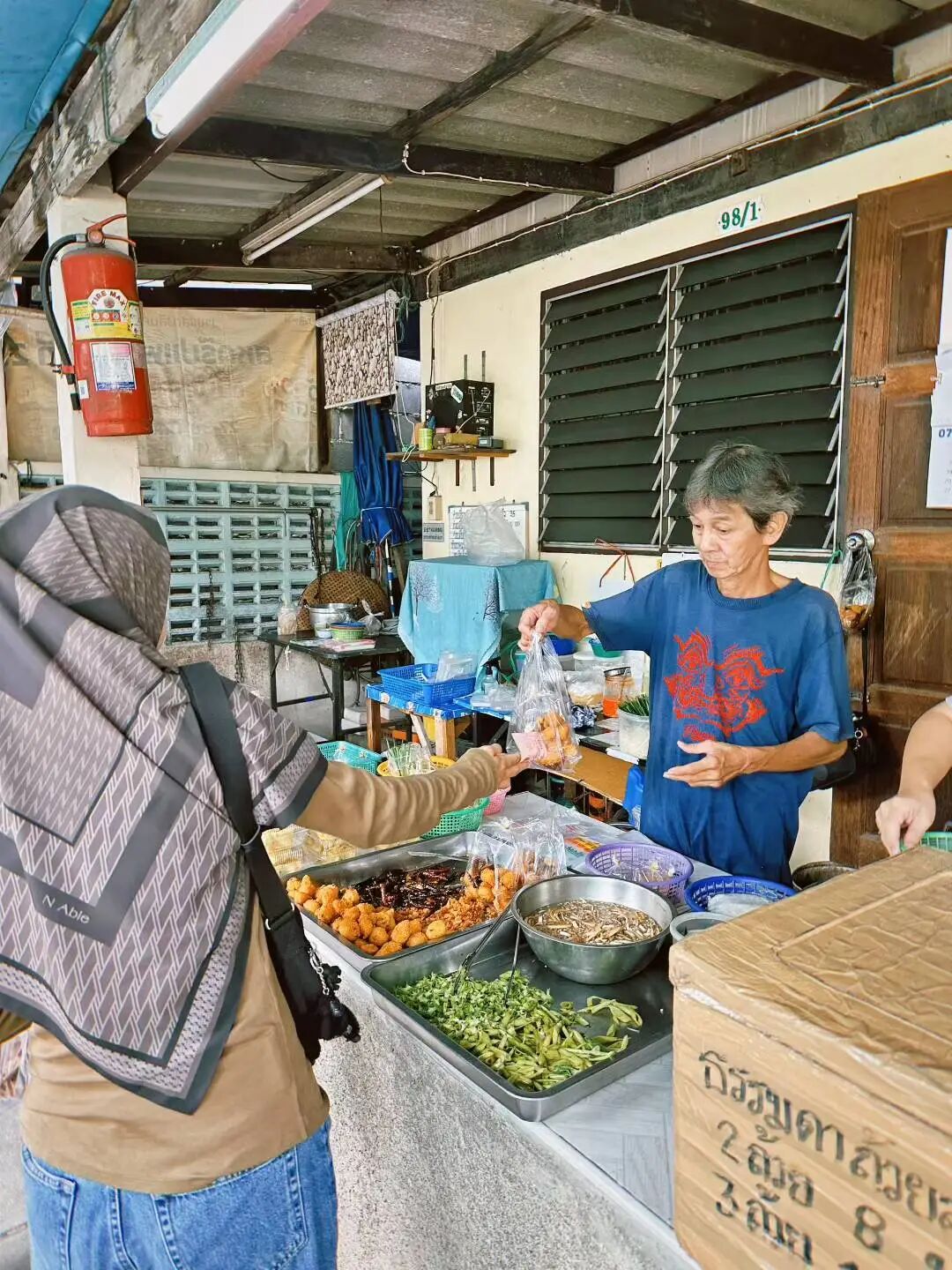
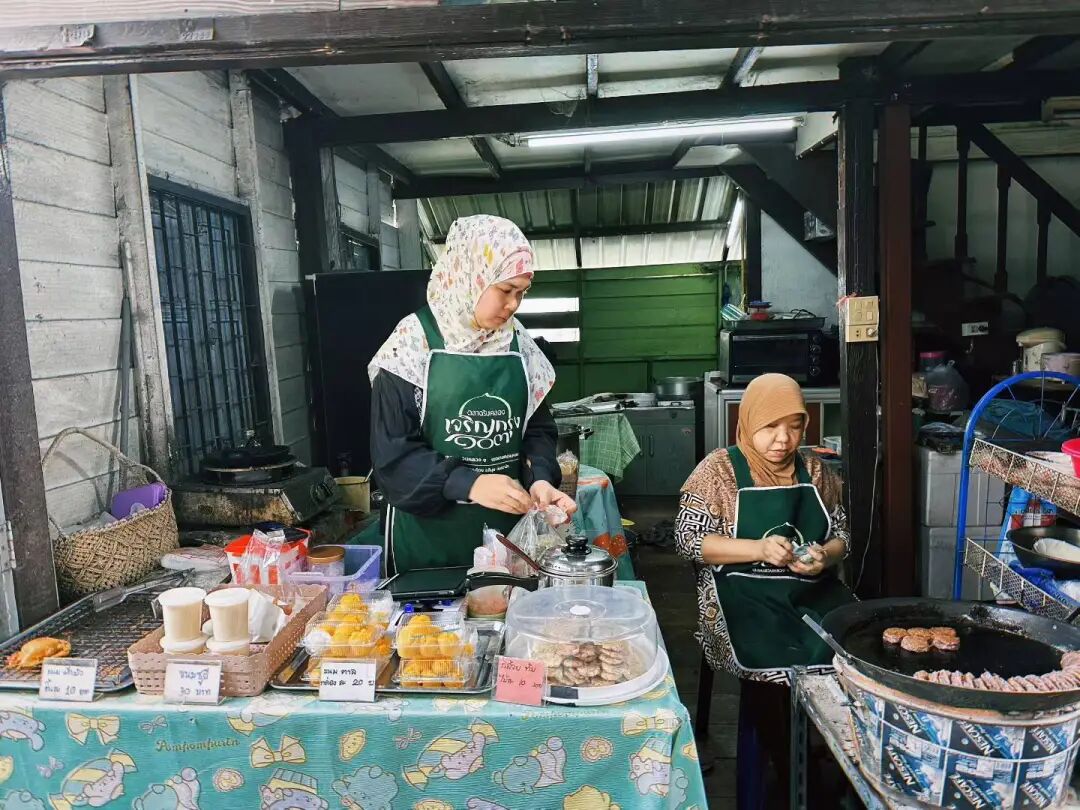
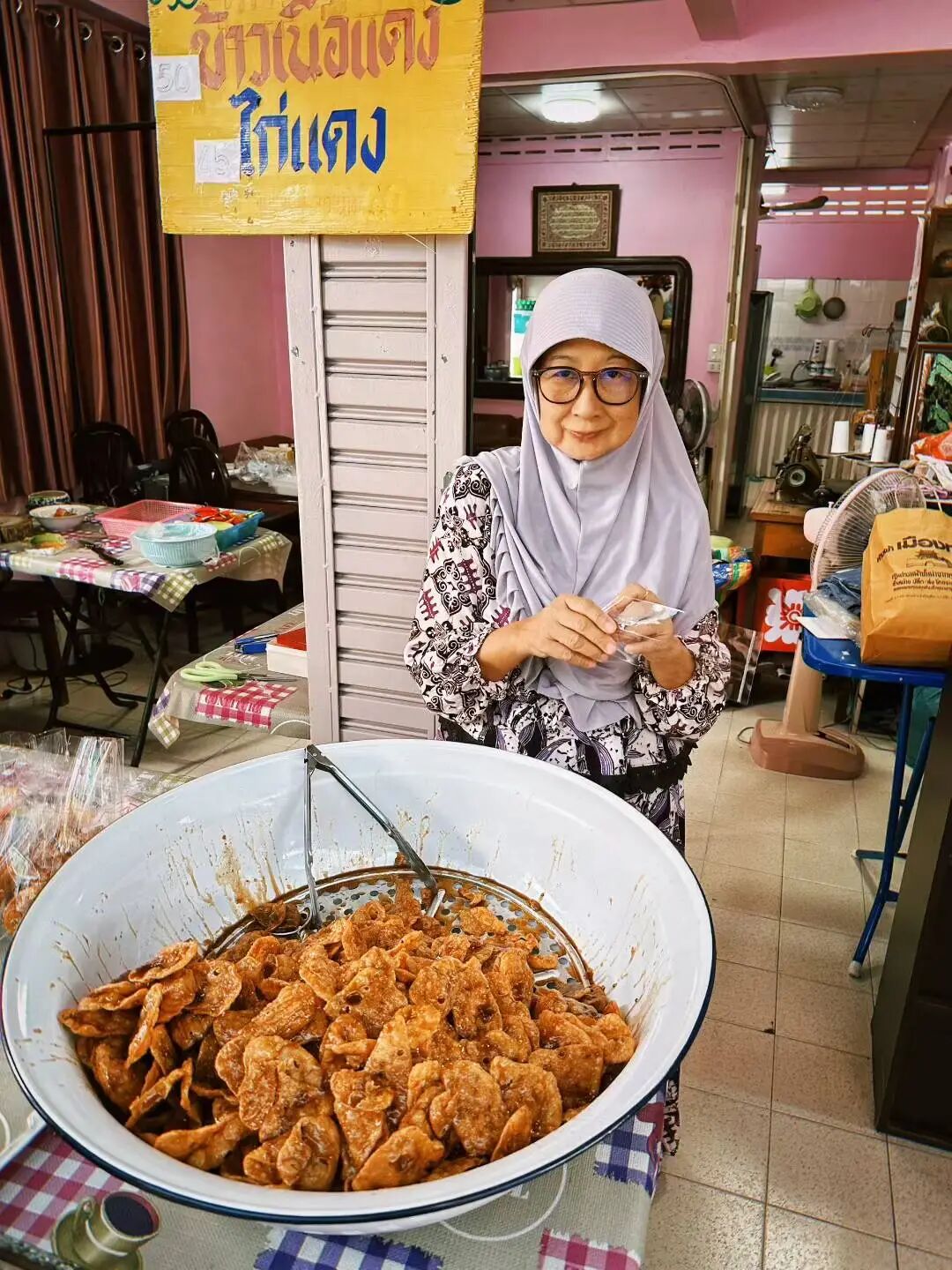
At the Al-Athik mosque halal market, we ate the specialty folded pancake (mataba) with a beef and onion filling. Mataba comes from the Arabic word 'Murtabak', which means 'folded'. This pancake likely originated with Arabs in Yemen, was brought to India by Indian merchants along the Arabian Sea, and finally reached Southeast Asia via the Indian Ocean monsoon winds; today it is a street snack shared across the Arabian Peninsula, South Asia, and Southeast Asia, though recipes vary by region. Thailand's mataba is similar to the version in Malaysia, and both are classic street breakfasts.
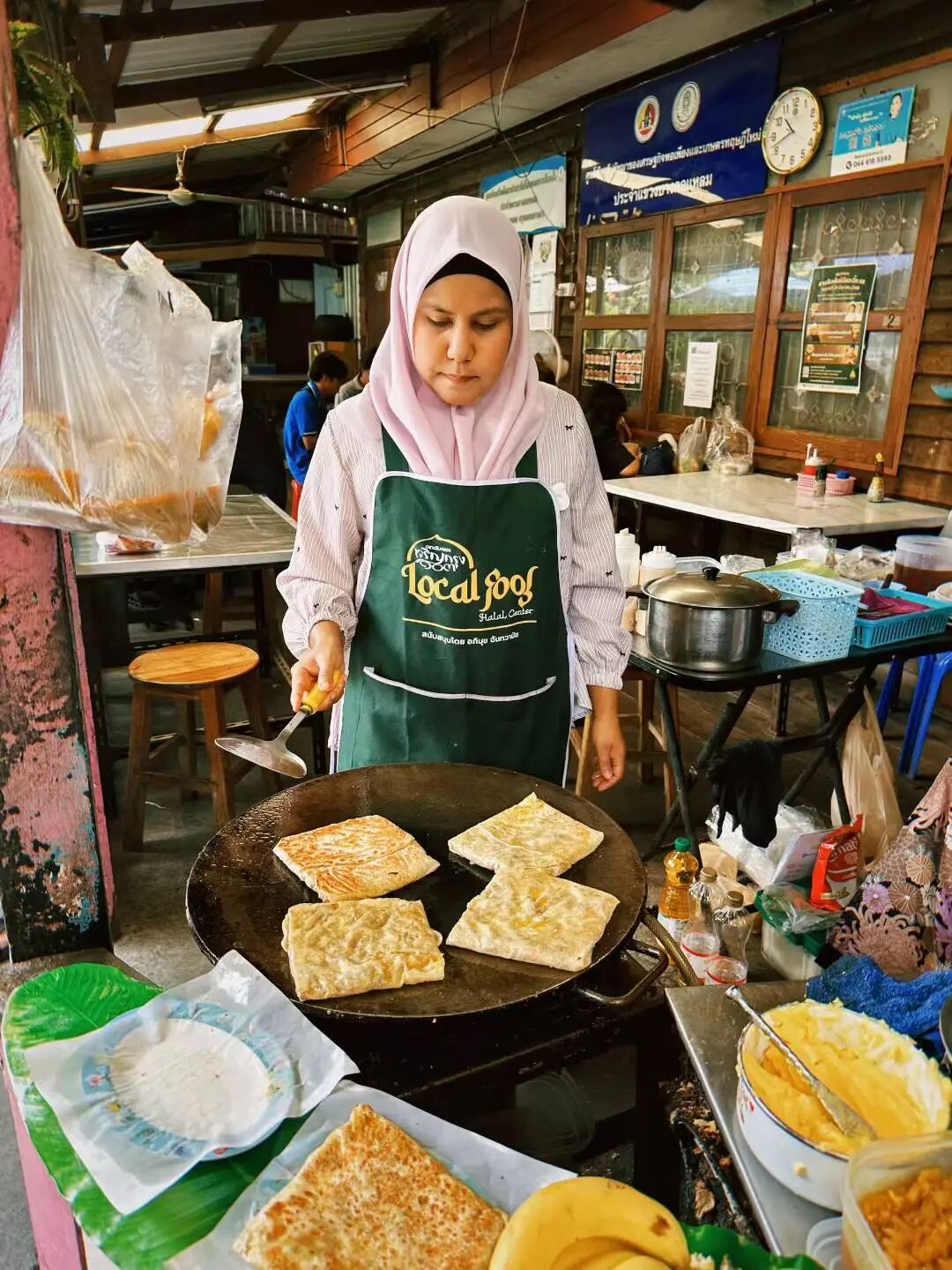
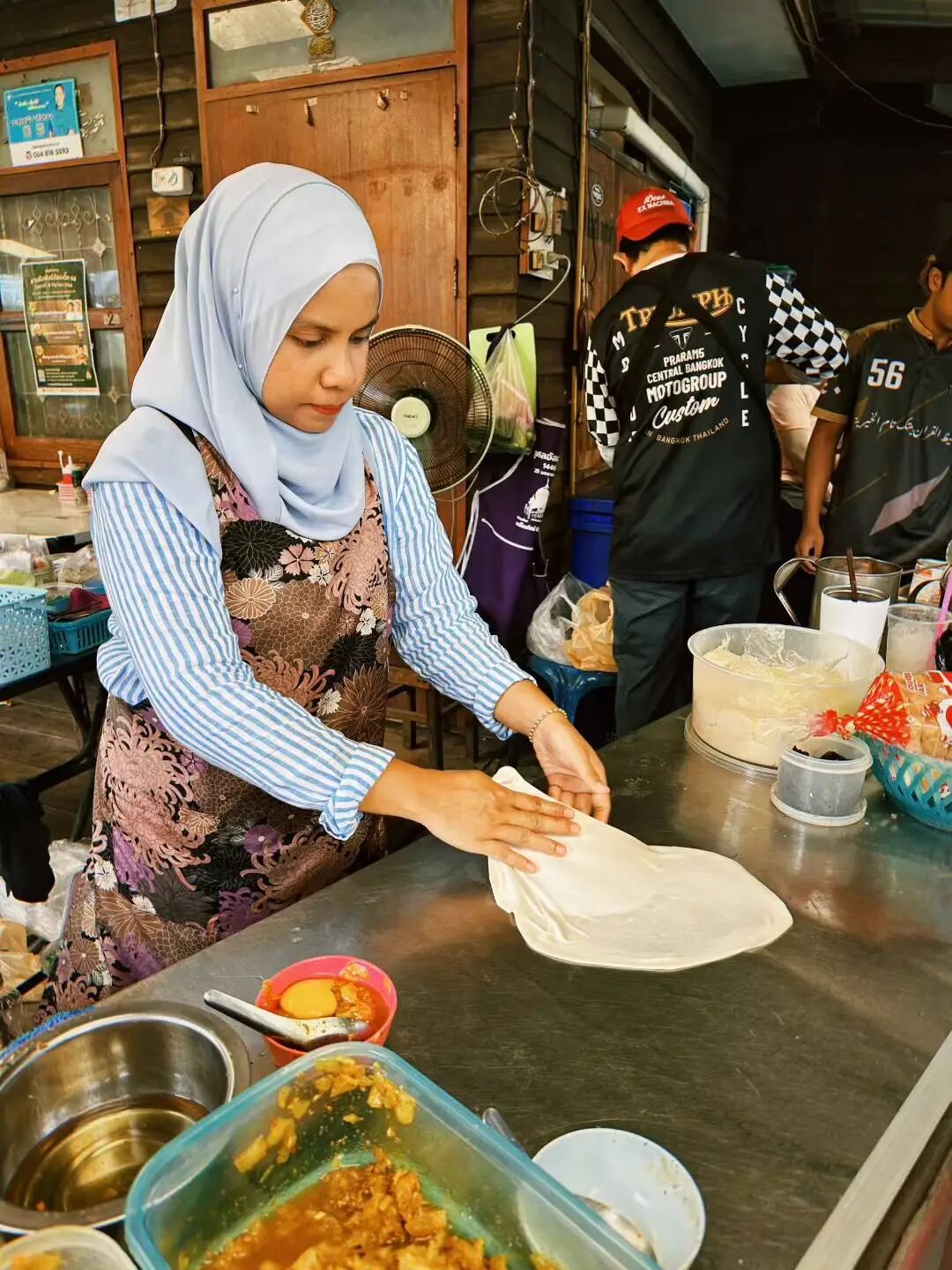
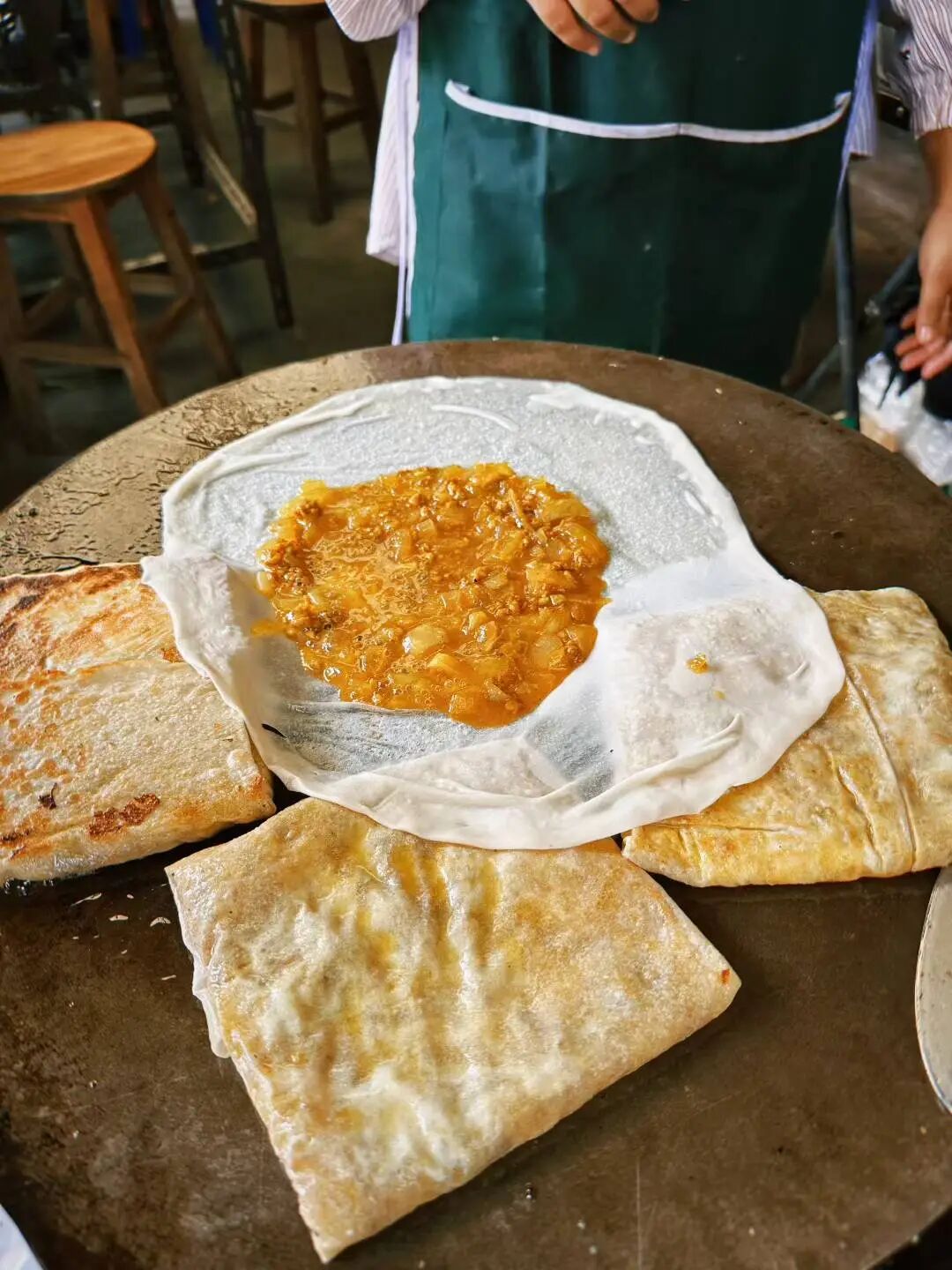
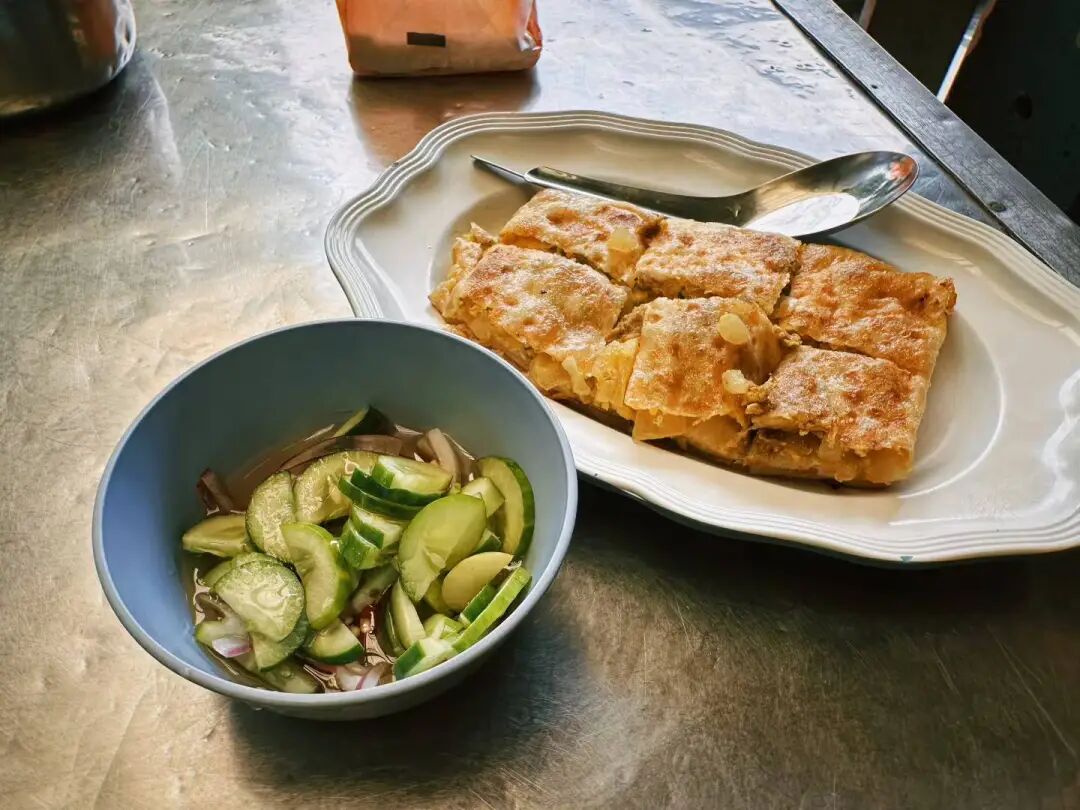
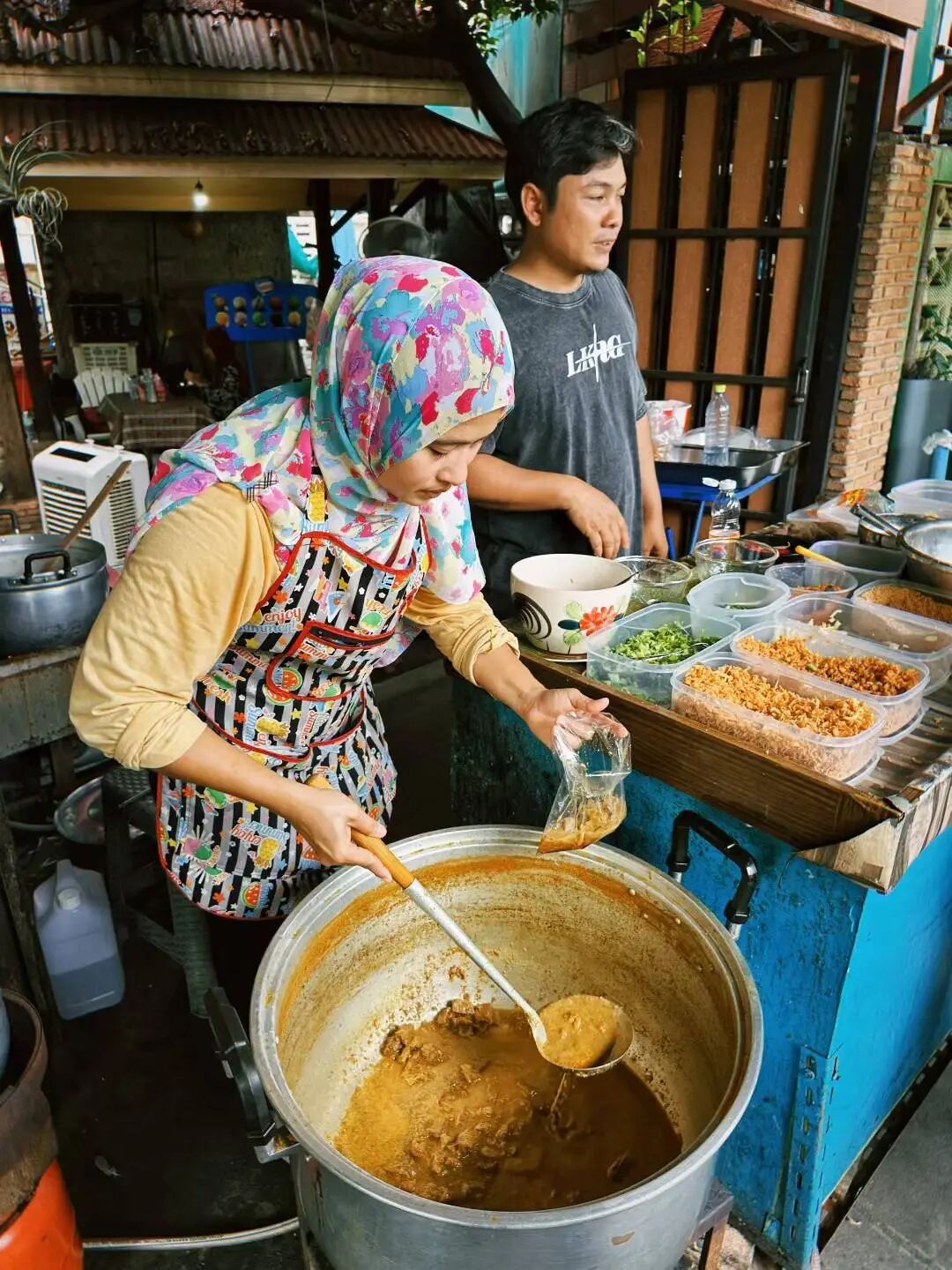
During the market, the courtyard of Al-Athik mosque hosts various charity activities, including medical check-ups and haircuts, which many middle-aged and elderly people attend.
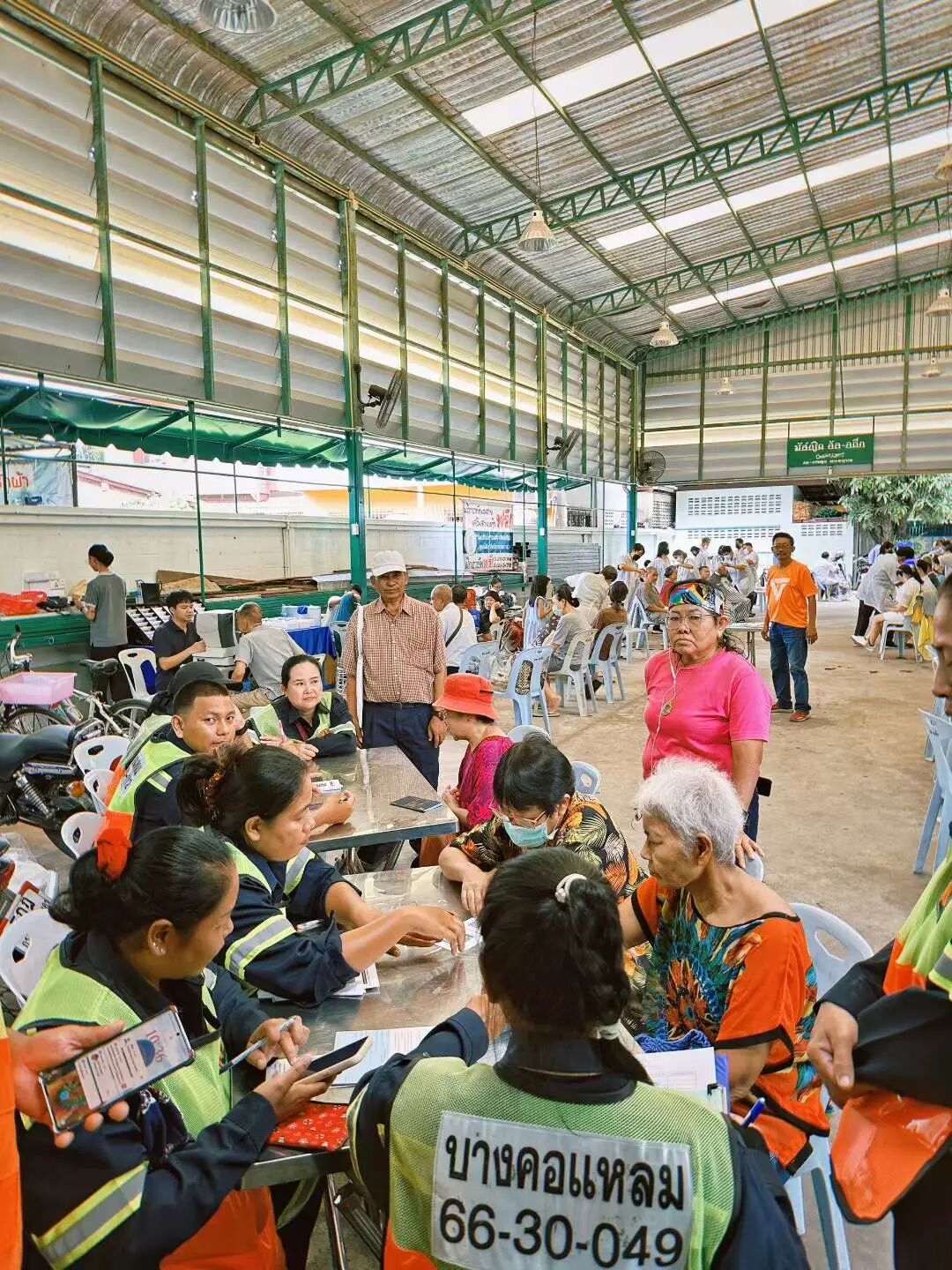
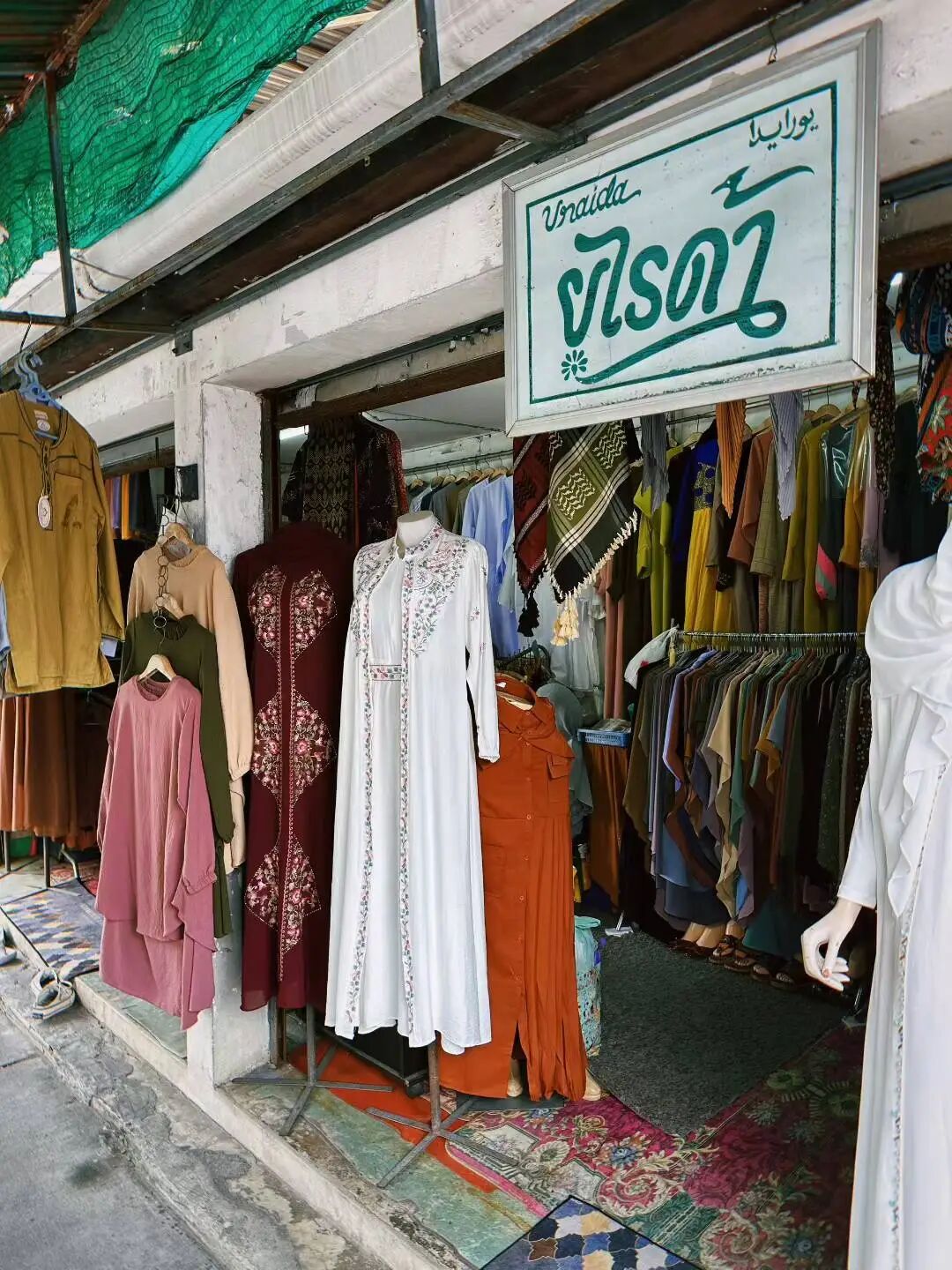
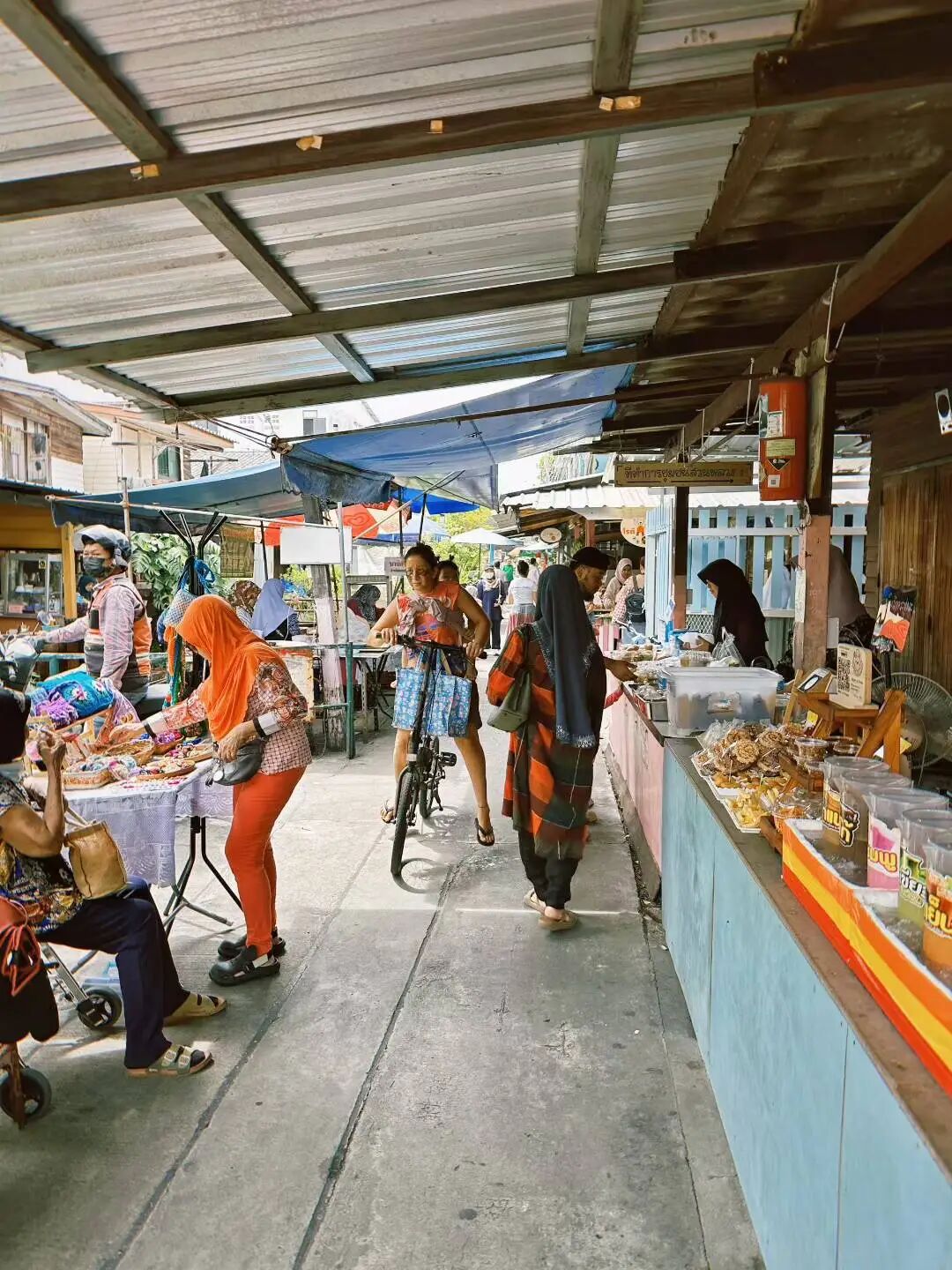
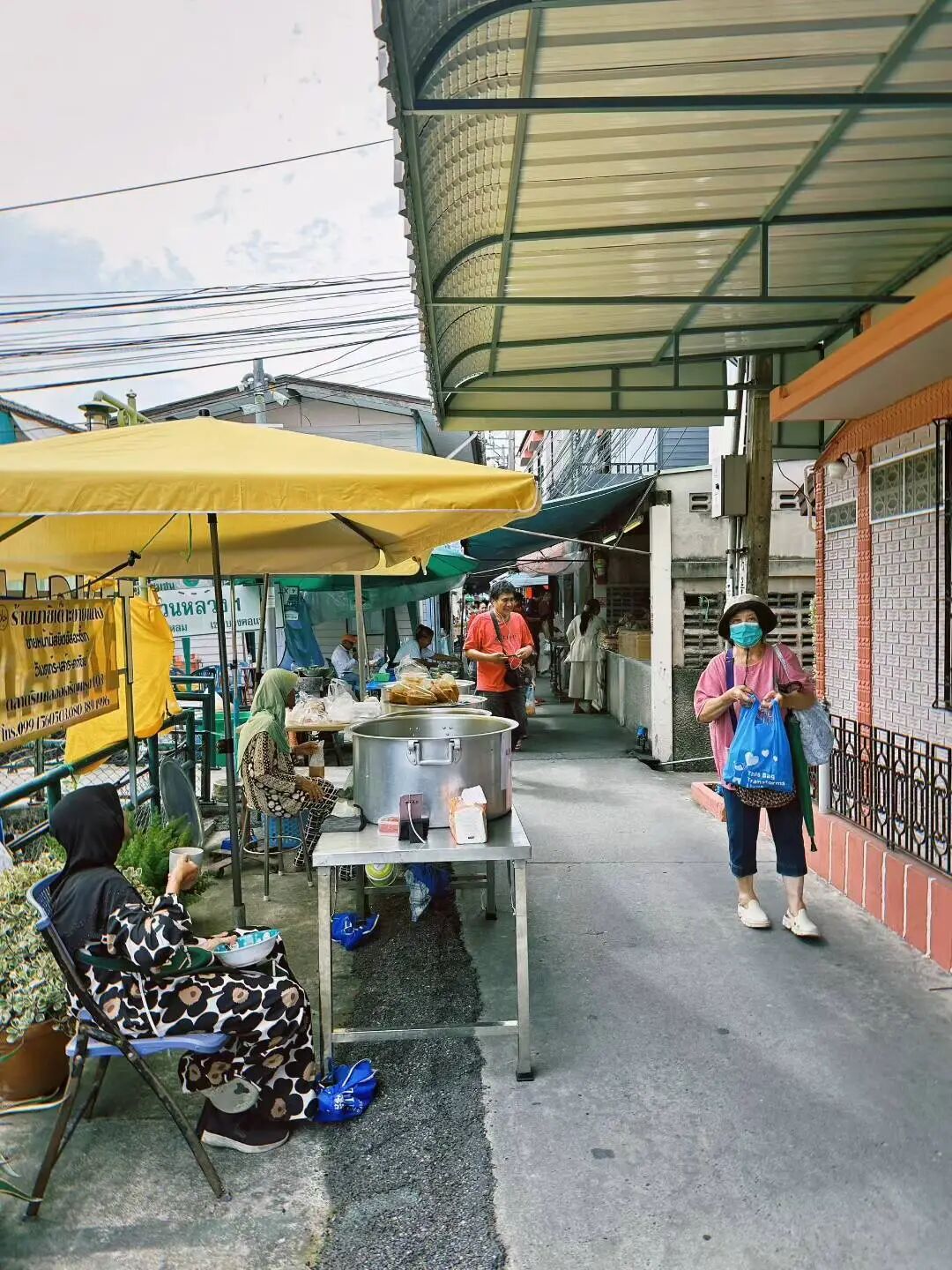
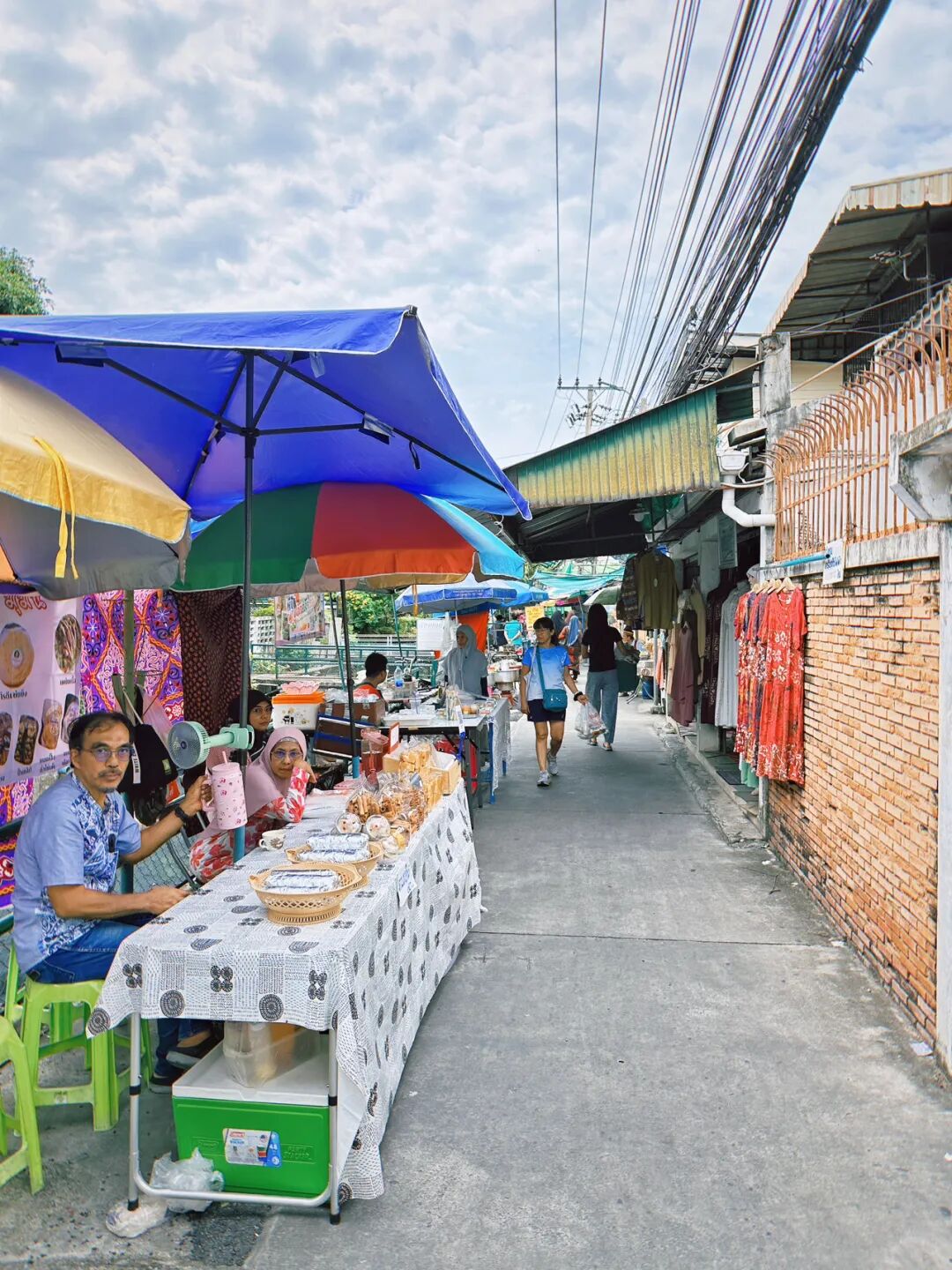
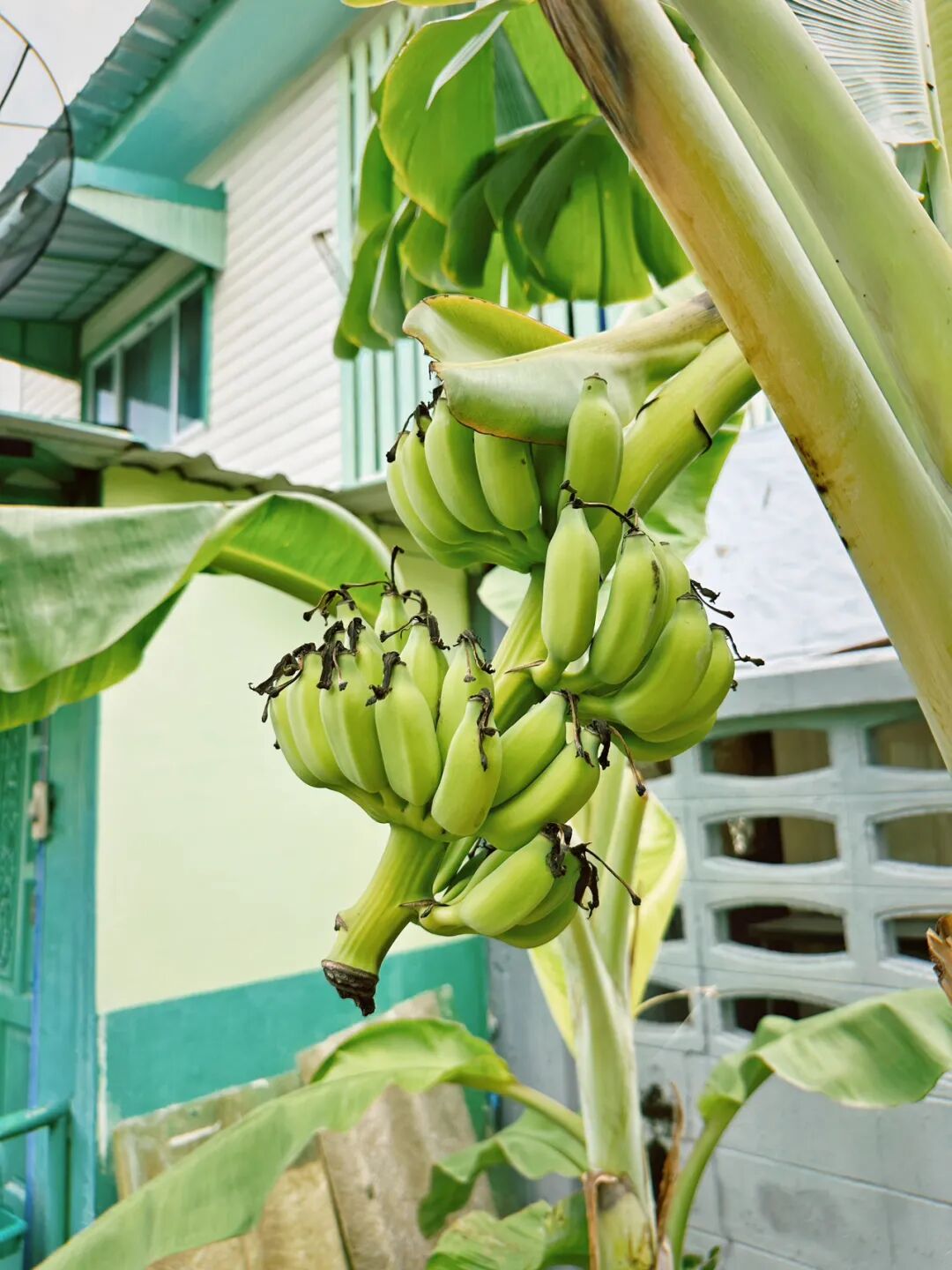
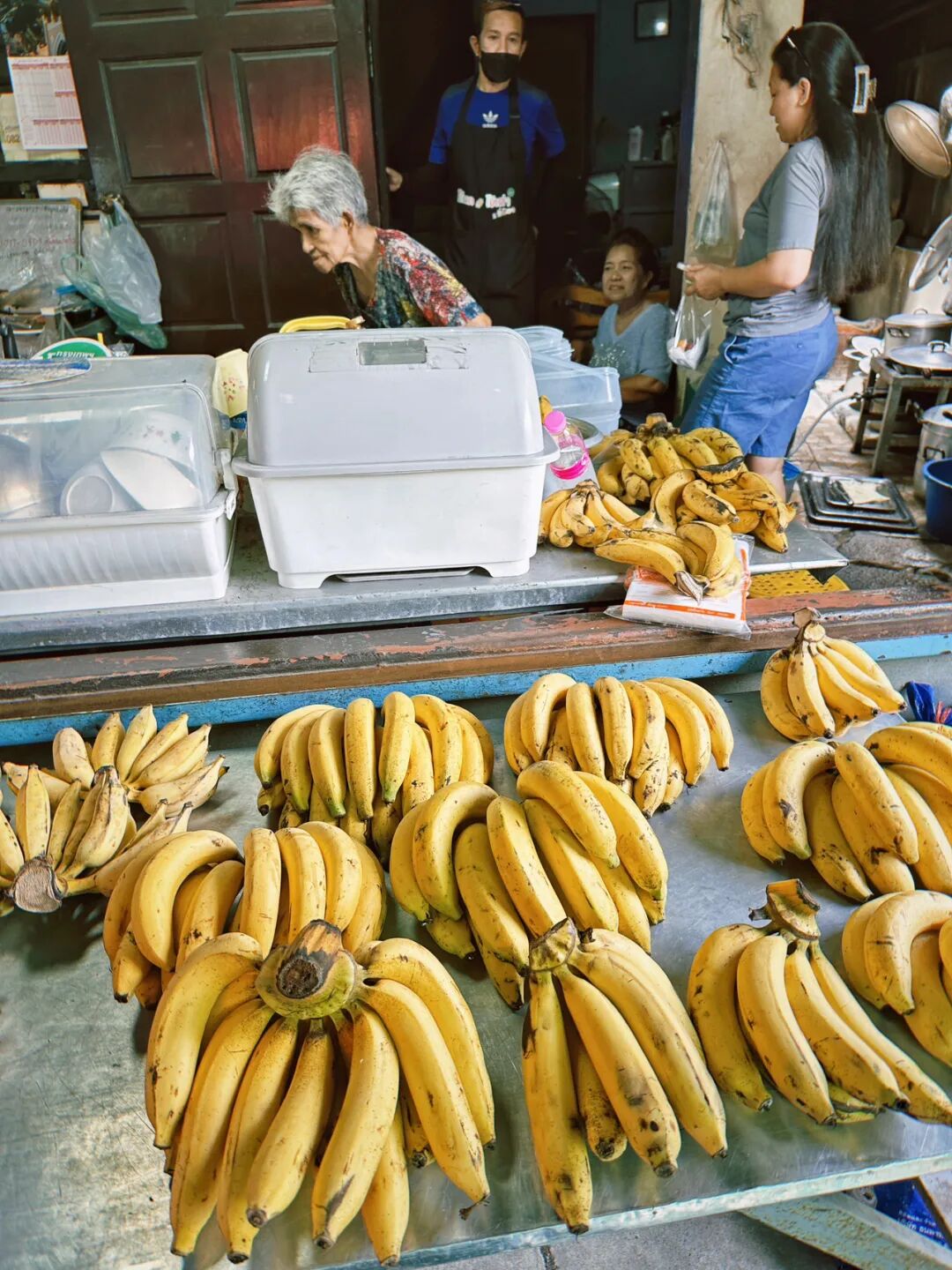
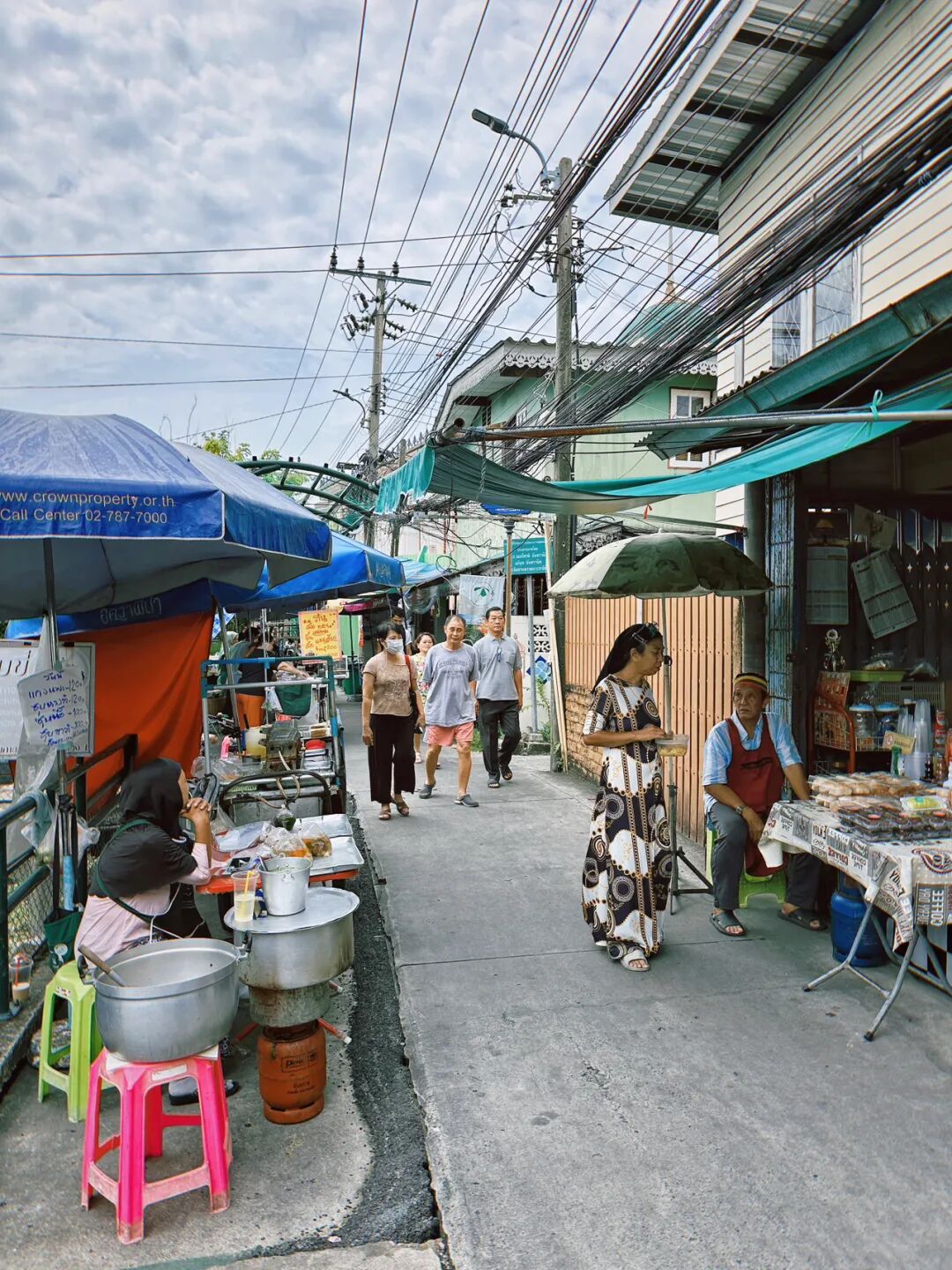
Bang Uthit Mosque
In 1841, the Siamese-Vietnamese War broke out between Thailand and Vietnam, and King Rama III developed a shipyard in the Wat Phraya Krai area on the lower Chao Phraya River to support naval operations against Vietnam. After the Siamese-Vietnamese War ended in 1845, the shipyard was renovated to support the profitable China trade. After 1885, the shipyard continued to expand and began recruiting Malays from the nearby Al-Athik mosque community. The shipyard provided new settlements for these Malay workers near the shipyard, which became Bang Uthit village.
As the Wat Phraya Krai area continued to develop, rice mills and sawmills were built near the shipyard, and more and more Malays settled in Bang Uthit village. In the early 20th century, Bang Uthit mosque was built, officially separating from the Al-Athik mosque community. When Bang Uthit mosque was built, Ottoman Sultan Abdul Hamid II (reigned 1876-1909) sent an Ottoman shield-shaped emblem, making Bang Uthit mosque the only mosque in Thailand with an Ottoman emblem.
In 2015, the Turkish Cooperation and Coordination Agency (TİKA) renovated Bang Uthit mosque, using Turkish marble to build an Ottoman-style mihrab, minbar, and pulpit, and also added a mezzanine for women. This makes Bang Uthit mosque the only Ottoman-style mosque in Bangkok.
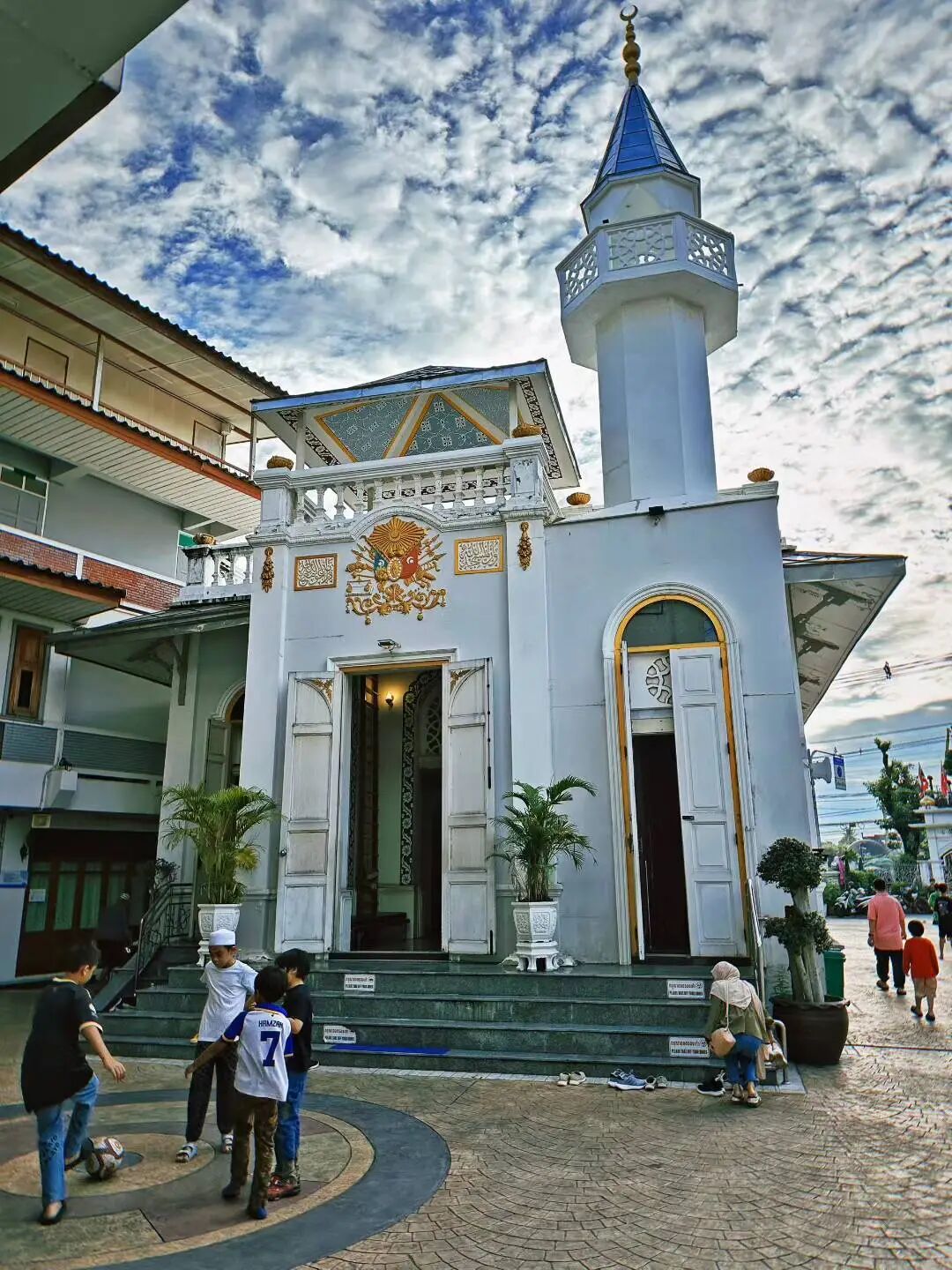
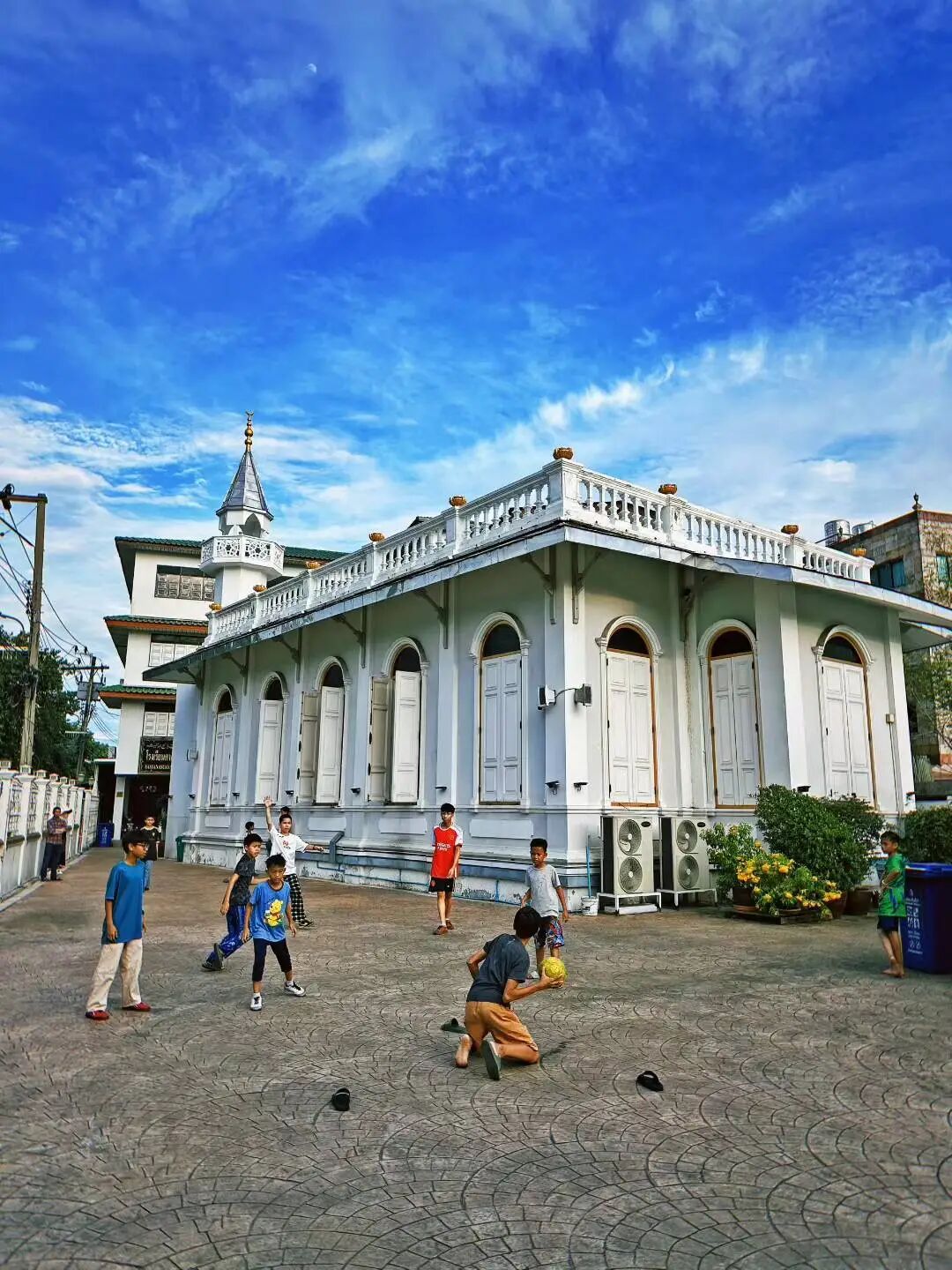
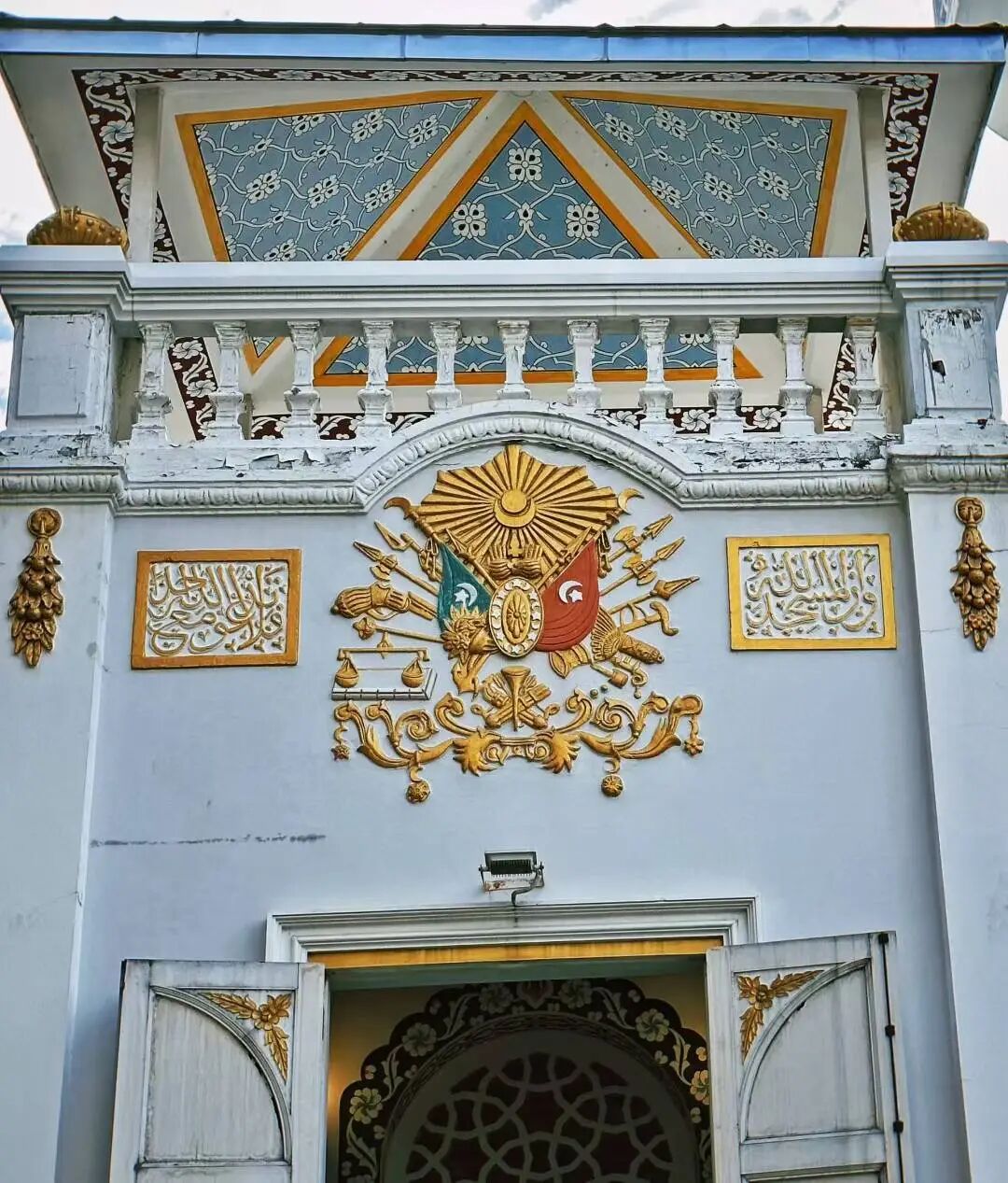
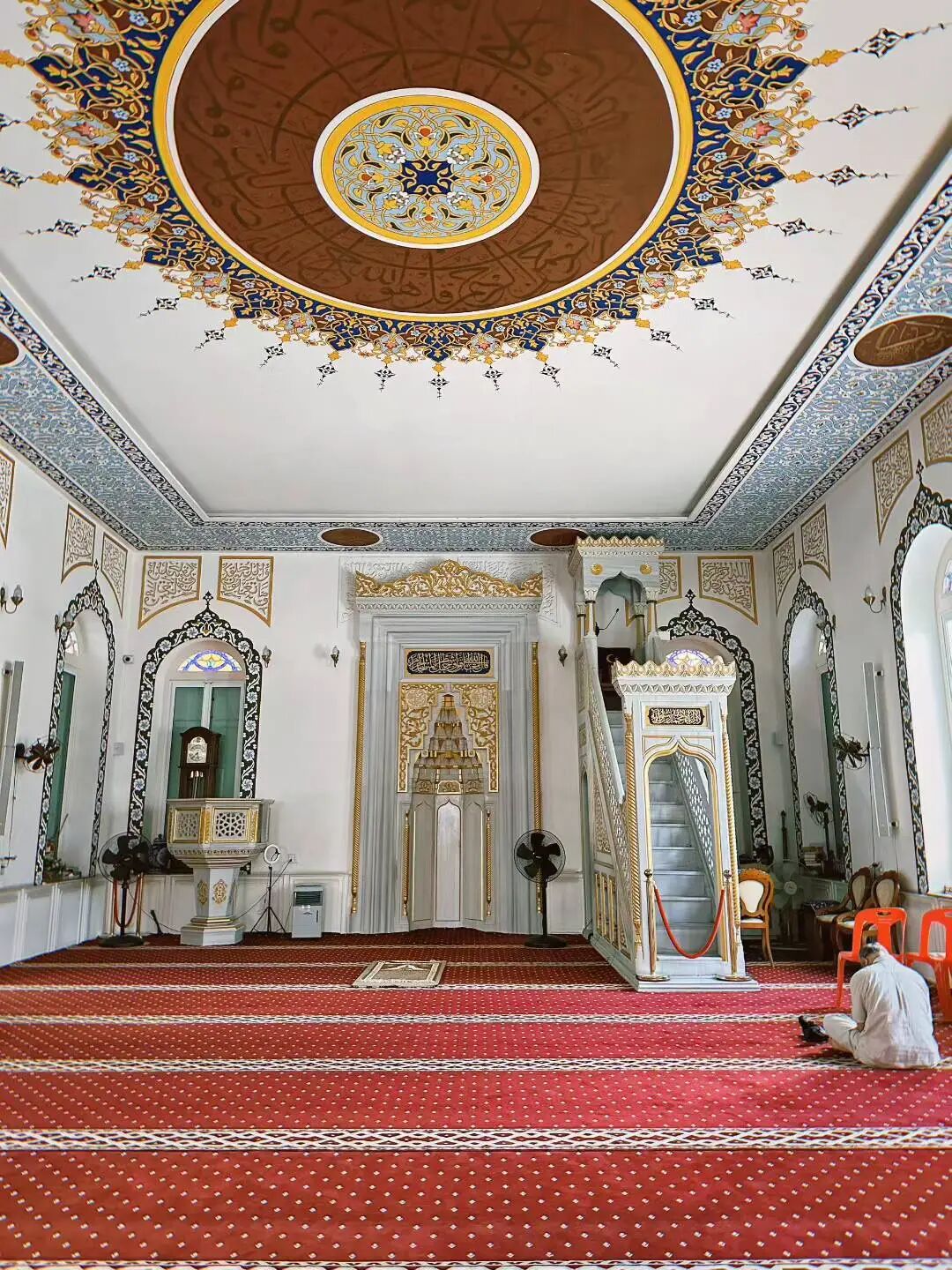
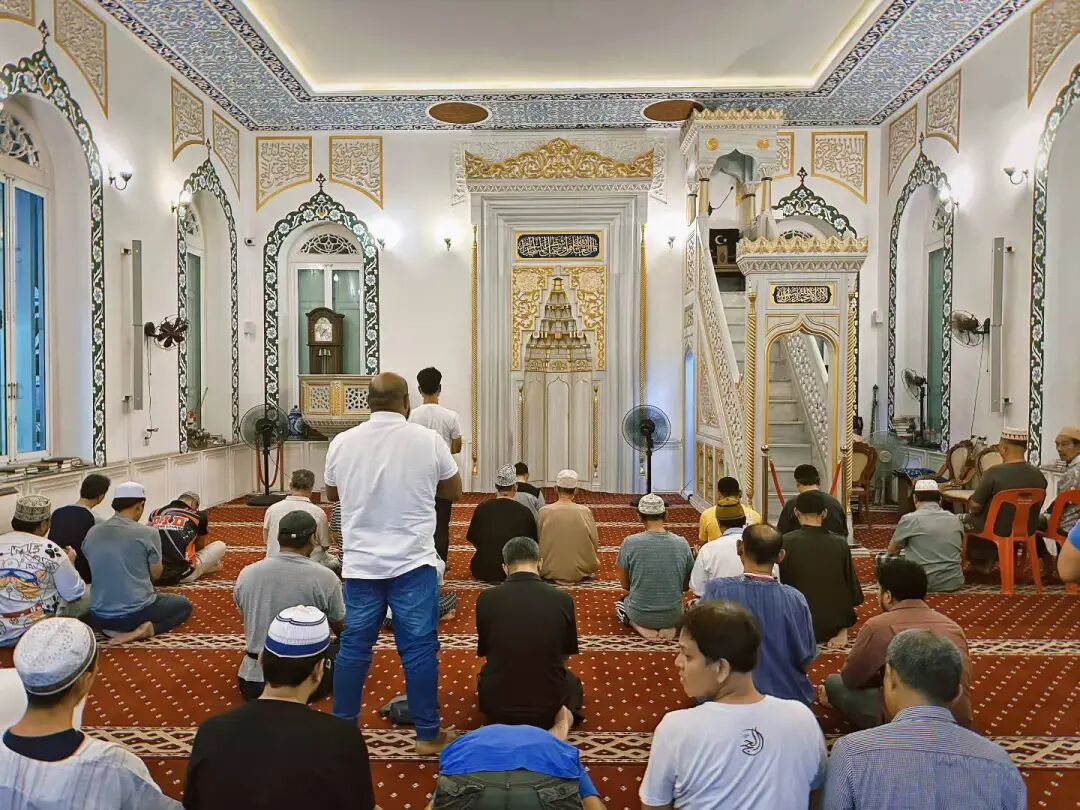
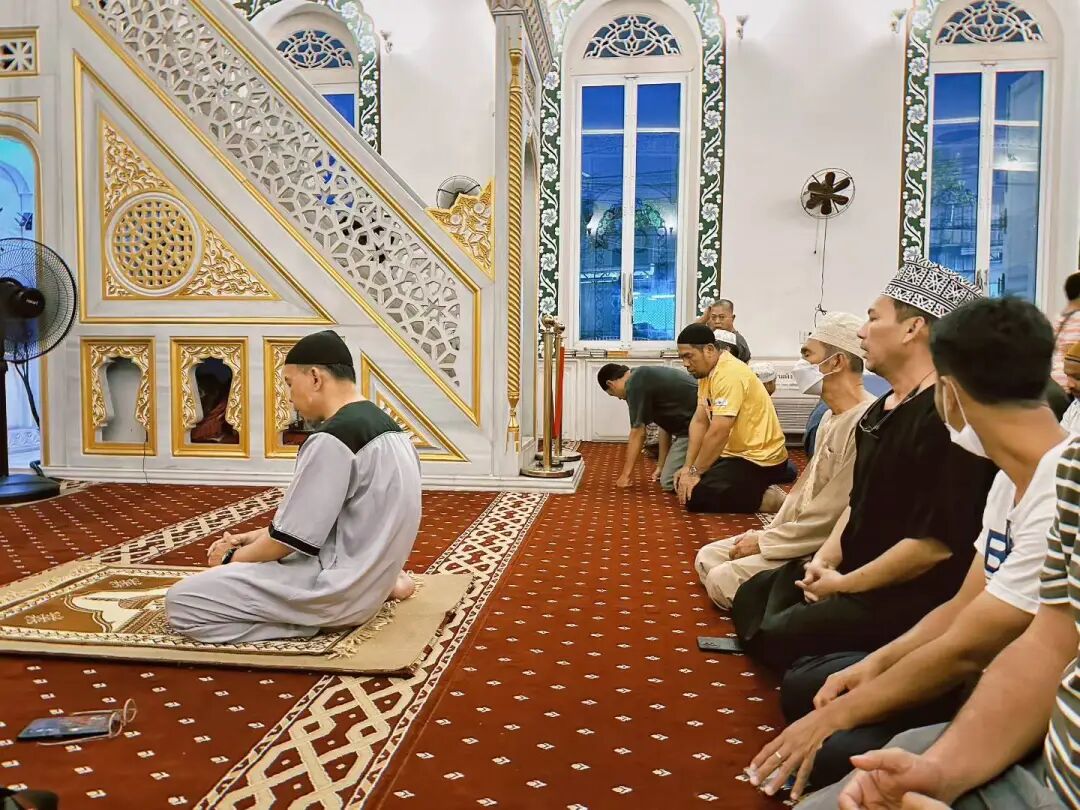
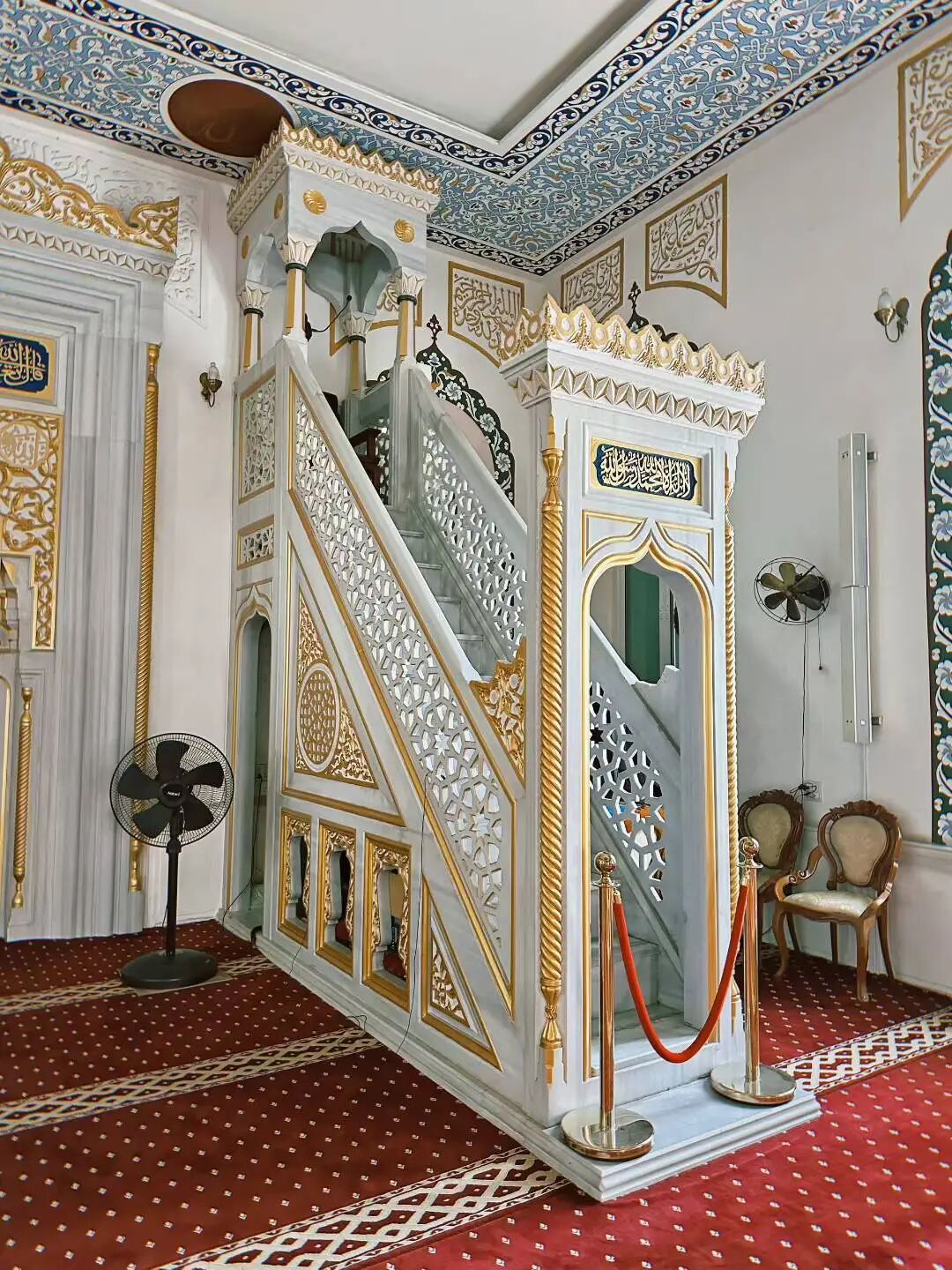
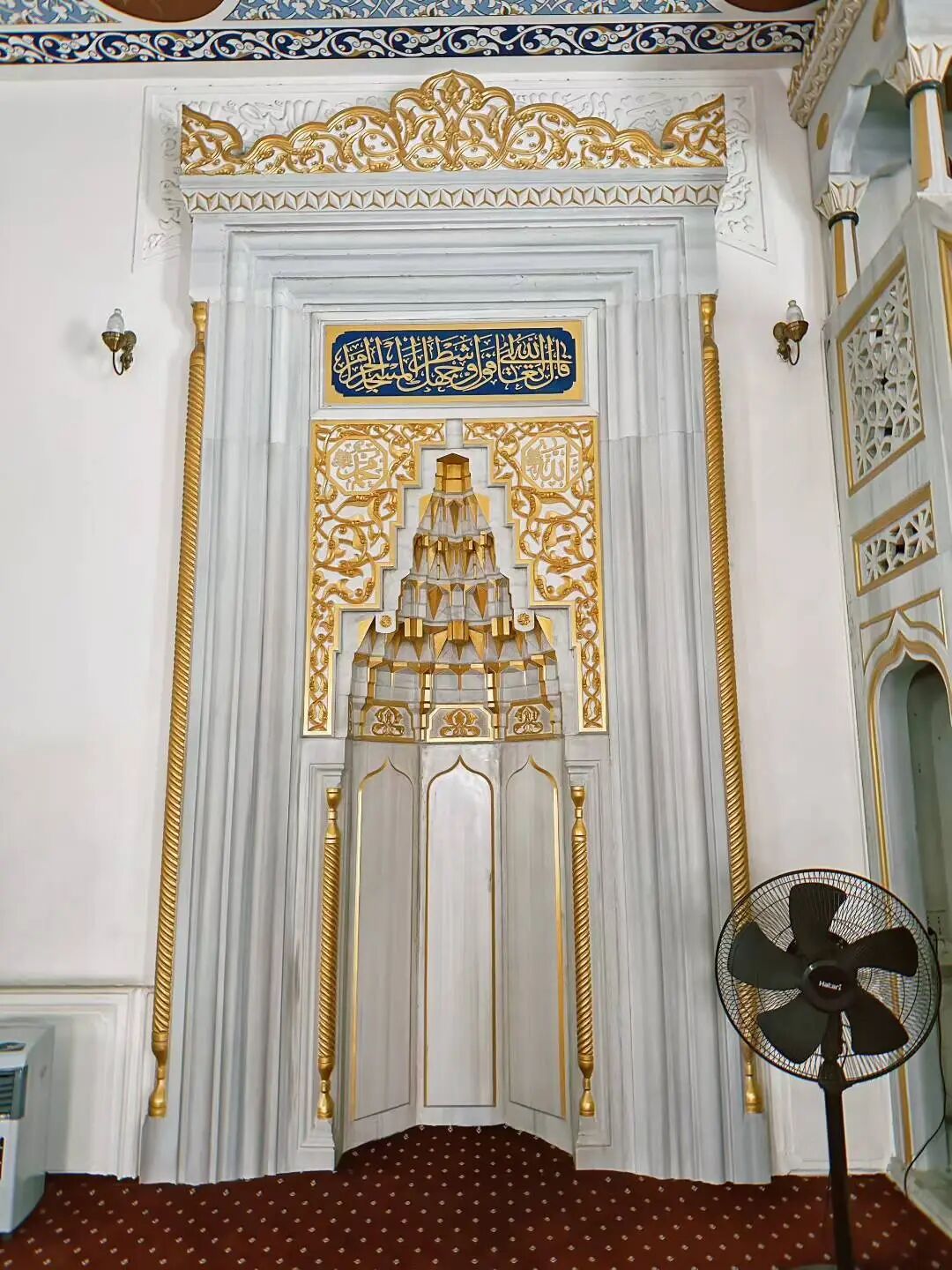
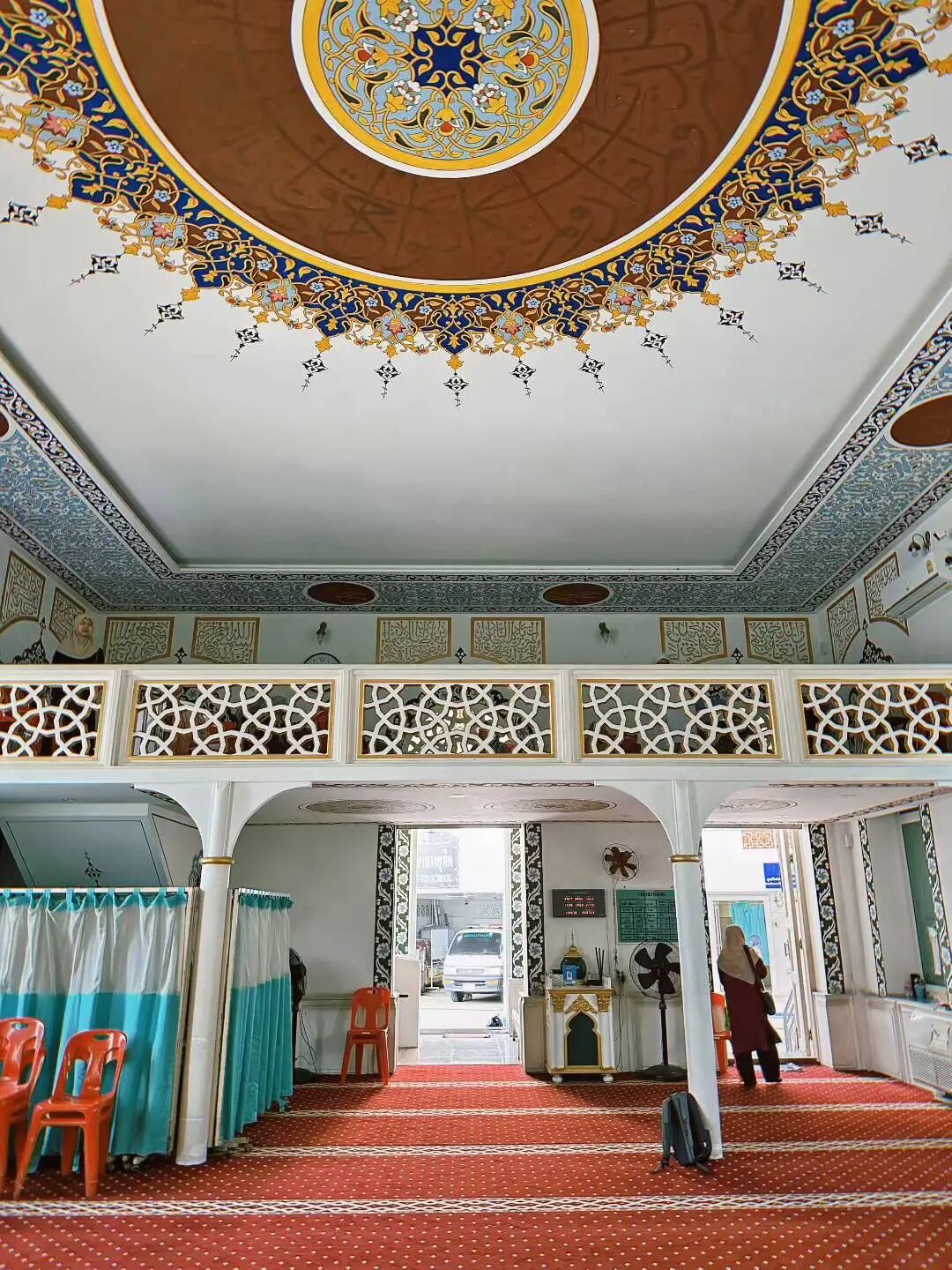
Next to Bang Uthit Mosque, there is a row of food stalls where you can eat authentic Thai halal home-cooked meals. We ordered holy basil chicken rice (gaprao gai) and shrimp porridge. Gaprao is also called holy basil. It is native to South Asia and widely grown in the tropical regions of Southeast Asia. Stir-frying meat with holy basil leaves is a famous Thai dish that I really love. Thai people love to drink meat porridge. The Thai word 'Chok' comes from the Minnan word for 'porridge'. The condiments on the table include fish sauce. I saw people at other tables adding a lot of it to their porridge and noodles, and adding a little really brings out the fresh flavor.
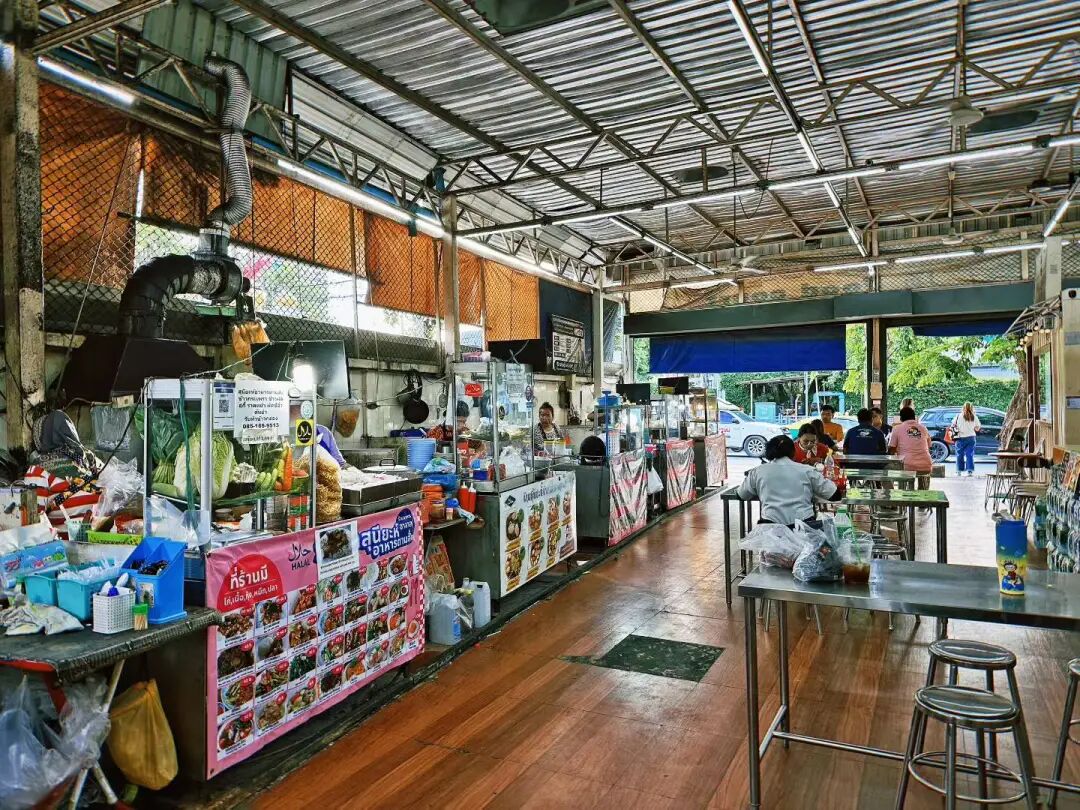
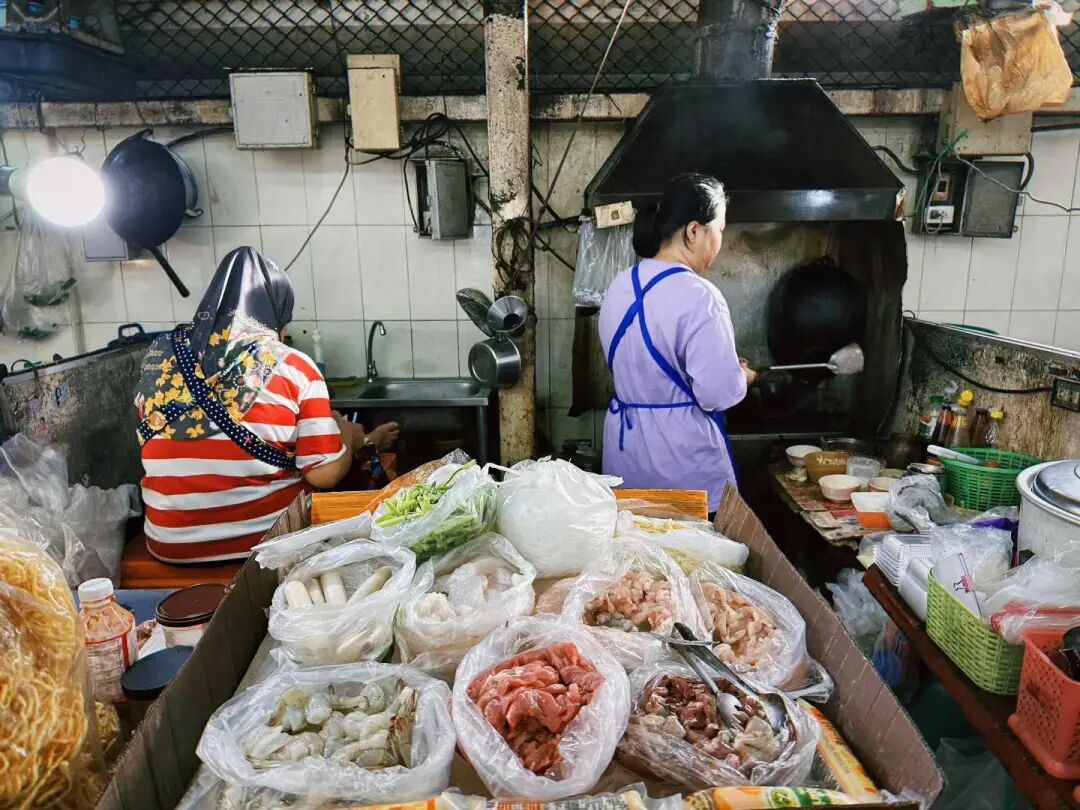
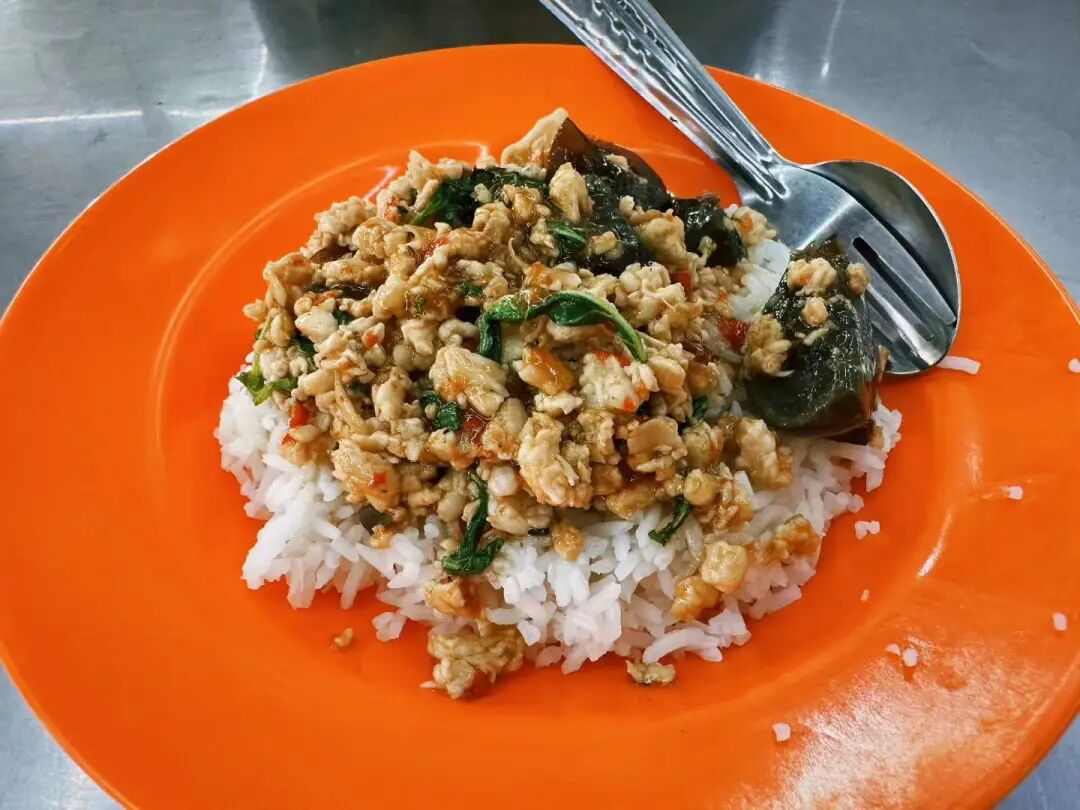
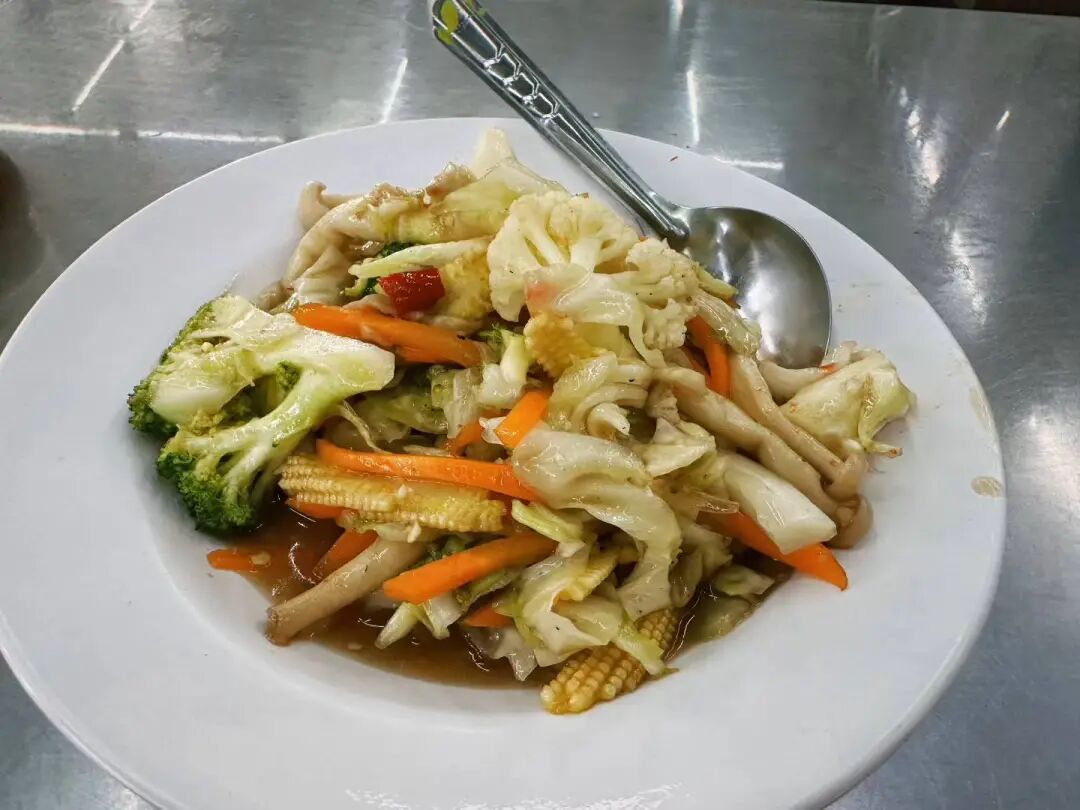
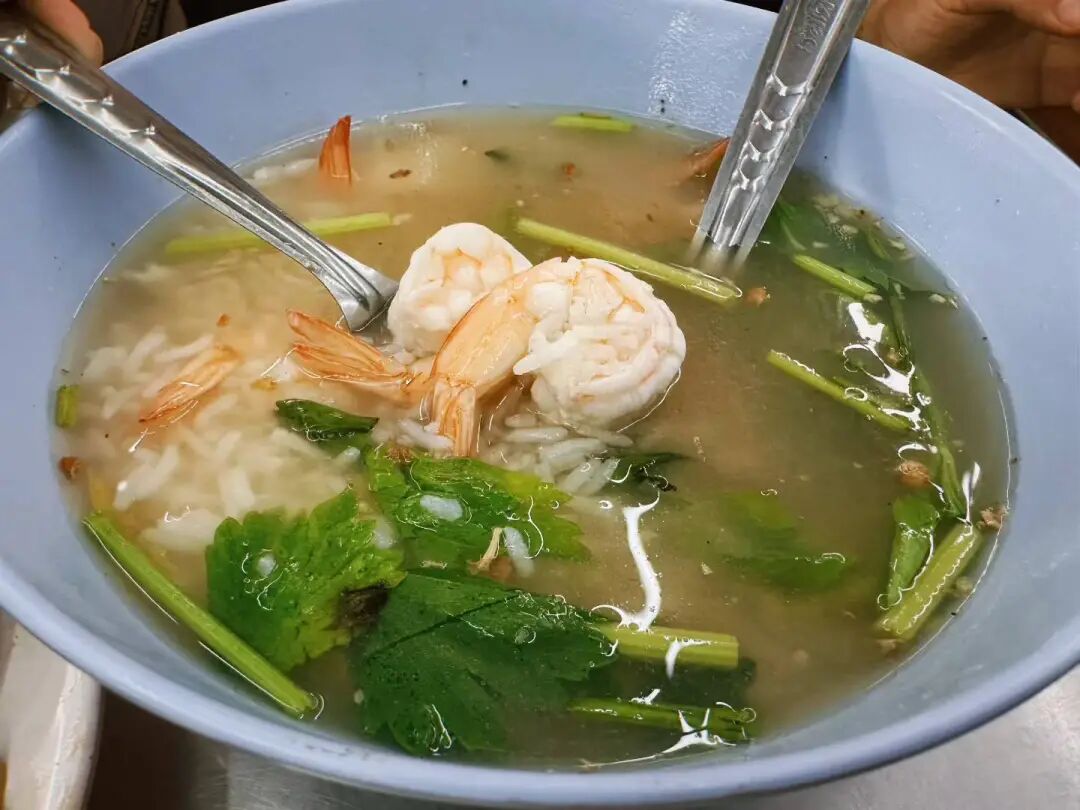
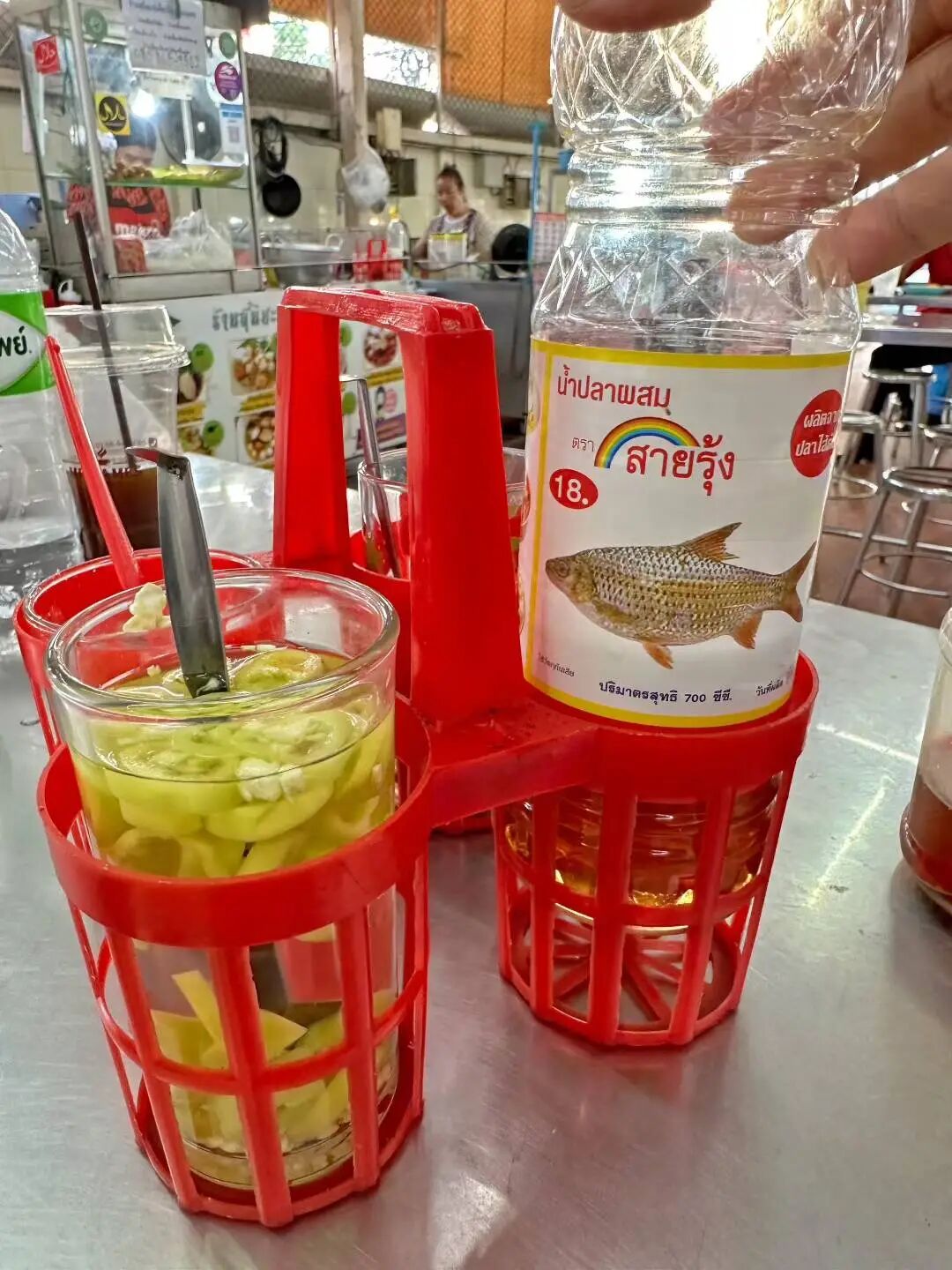
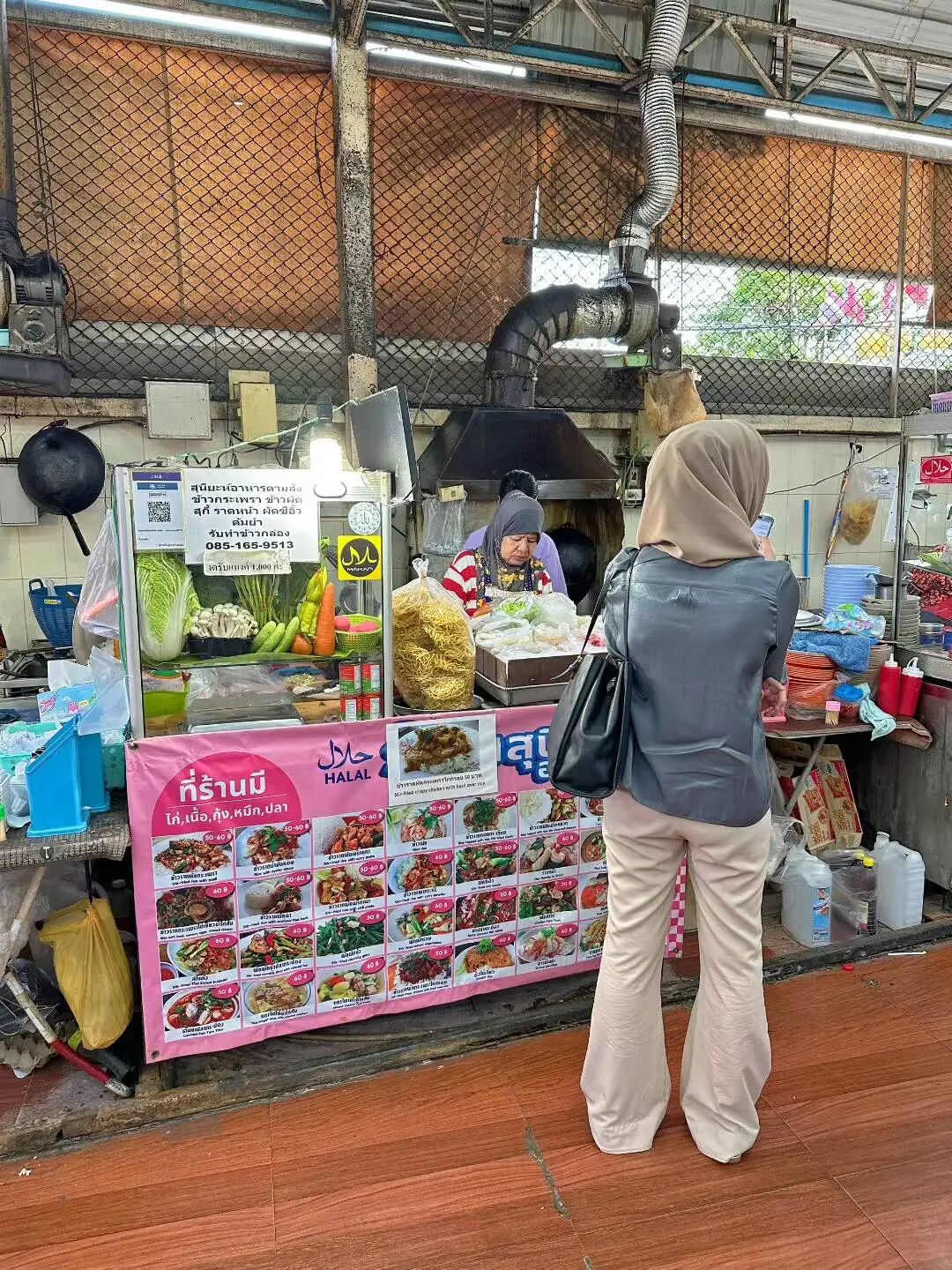
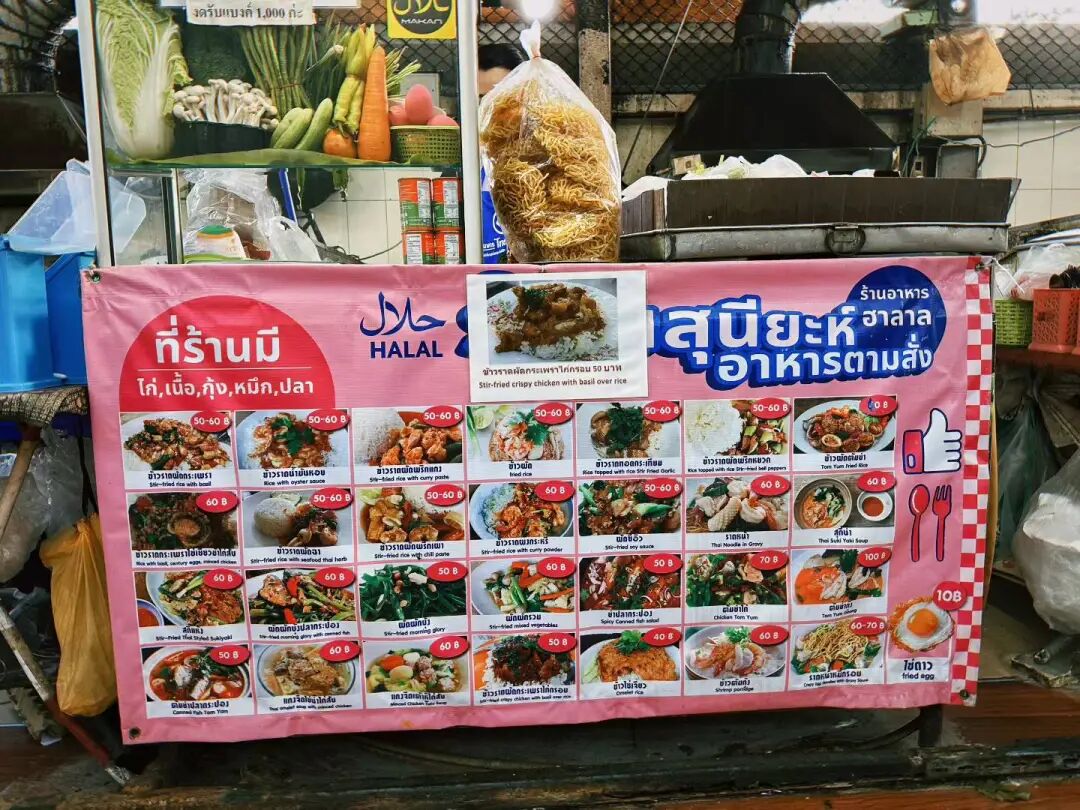
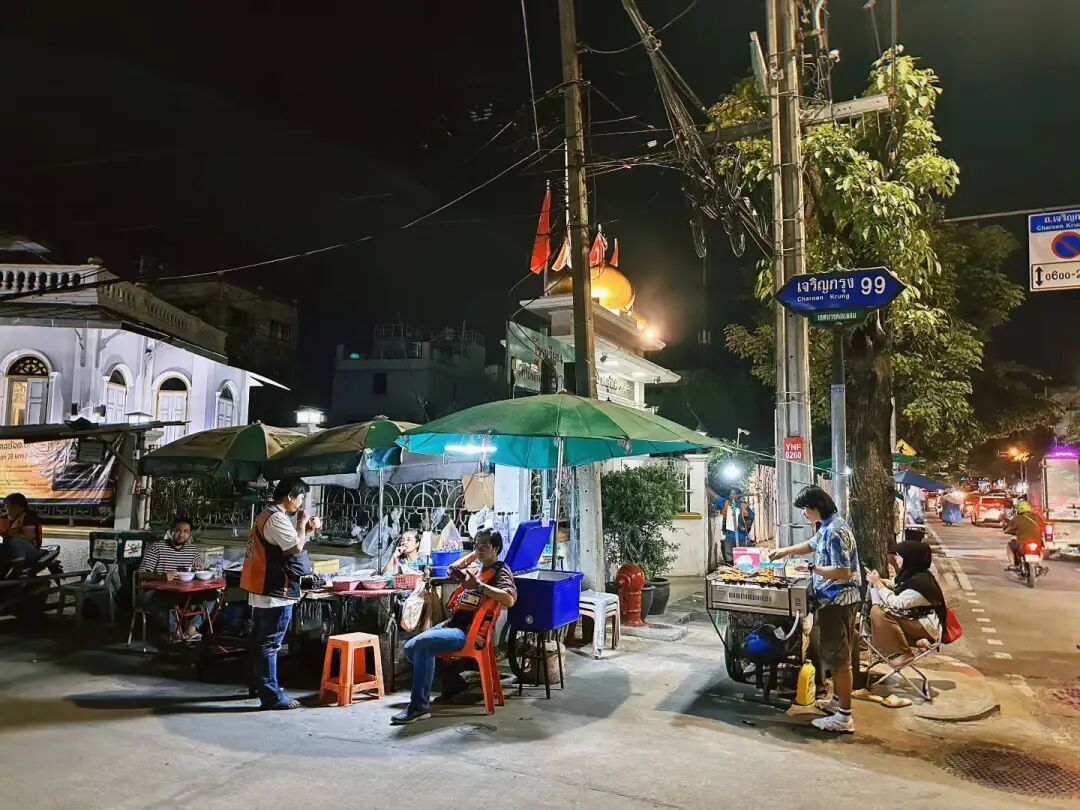
Kocha Itsahak Mosque
Near Sampeng Lane in Bangkok's Chinatown stands the European-style Kocha Itsahak Mosque, built in the late 19th century by the Siamese royal translator Luang Kocha Itsahak.
Luang Kocha Itsahak was of Malay descent from Kedah. He worked in the Siamese Department of Western Trade (Krom Tha Khwa), serving as a translator for foreign ambassadors visiting the Siamese court. He was also responsible for liaising with rulers of Siamese dependencies on the Malay Peninsula and foreign merchants trading with Siam. Luang Kocha Itsahak's father was a Malay merchant from the Kedah Sultanate who moved to Bangkok for business and married a Chinese wife.
After Siam established its capital in Bangkok in 1782, an import and trade district dominated by Teochew merchants gradually formed near Sampeng Lane. Before Don Mueang Airport was built in 1914, people wanting to travel from Bangkok to India, the Middle East, or Europe had to first take a steamship from the Kongsa Pier near Sampeng Lane to Singapore or Penang, then transfer to a cruise ship to continue westward. Because of this, the 19th-century Kongsa Pier was crowded with merchants from all over the world, and many Indians and Malays worked in the nearby warehouses and trading companies.
Seeing that there was no mosque in the Sampeng Lane area, Luang Kocha Itsahak donated a piece of his own land and had his children dismantle the bricks and stones from an old house he owned across the river in the Thonburi area to build this mosque. Today, the mosque is still owned by the descendants of Kocha Itsahak and provides convenience for the friends (dosti) working in Bangkok's Sampeng Lane.
Kocha Itsahak Mosque was originally a wooden building, but it was rebuilt into the current neoclassical structure during the reign of Rama V (reigned 1868-1910).
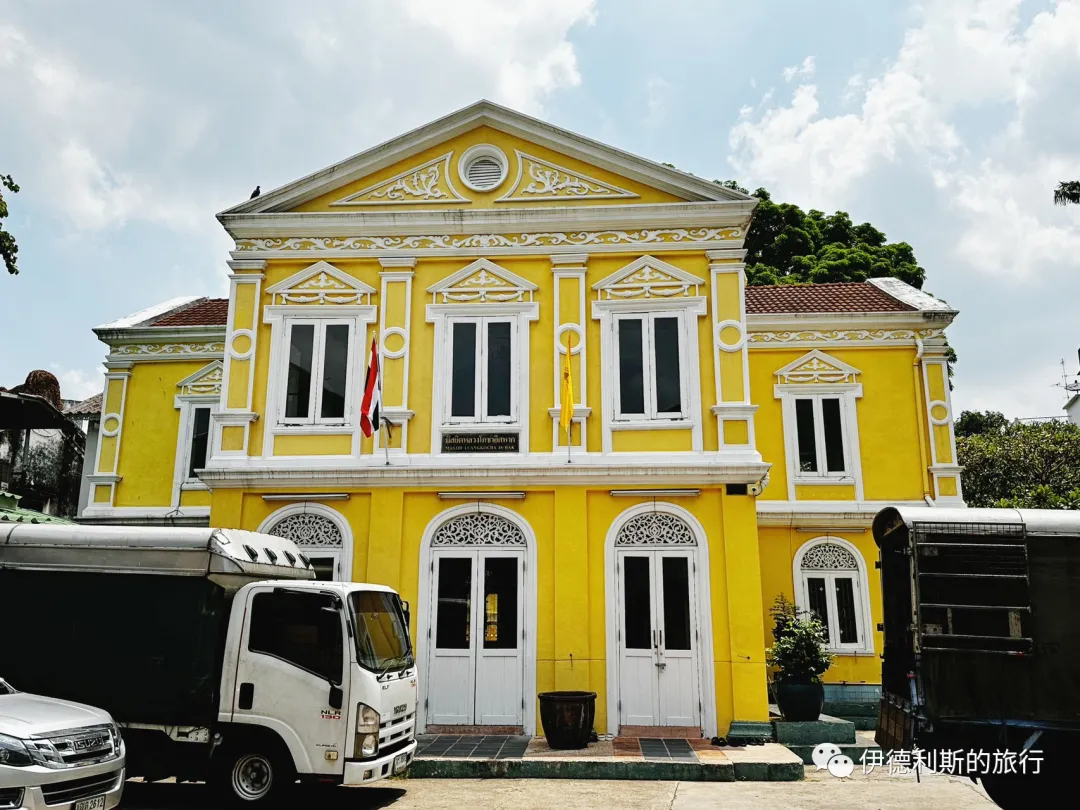
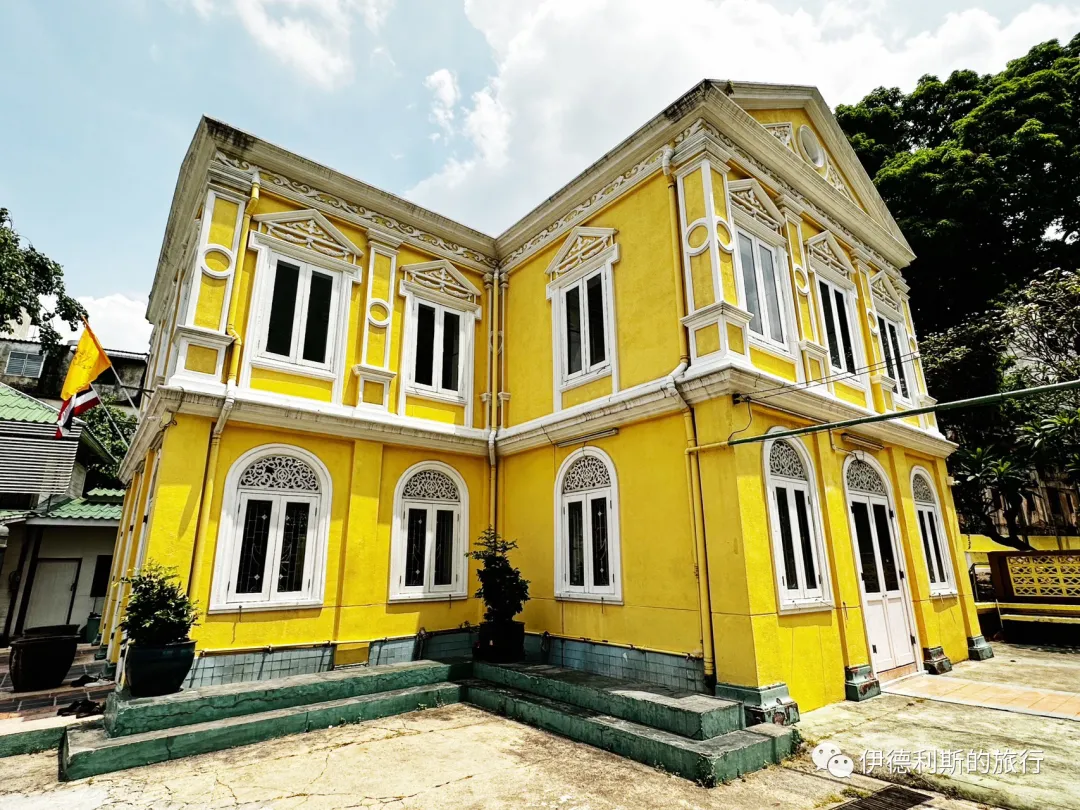
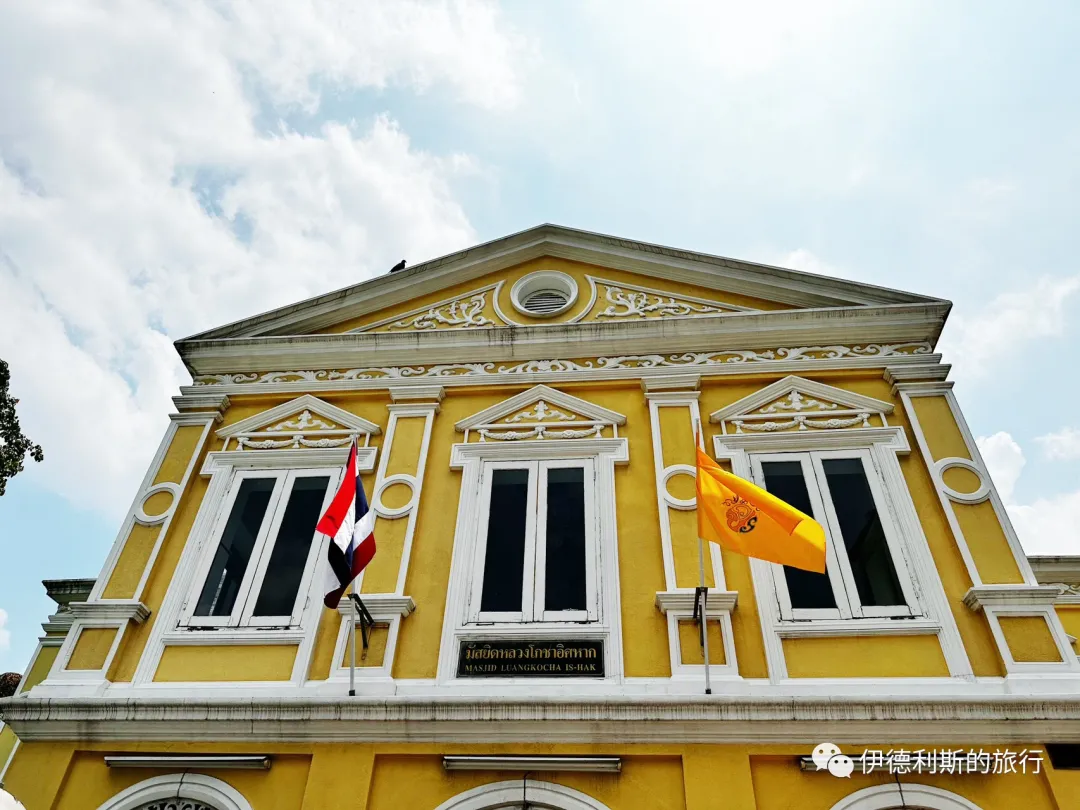
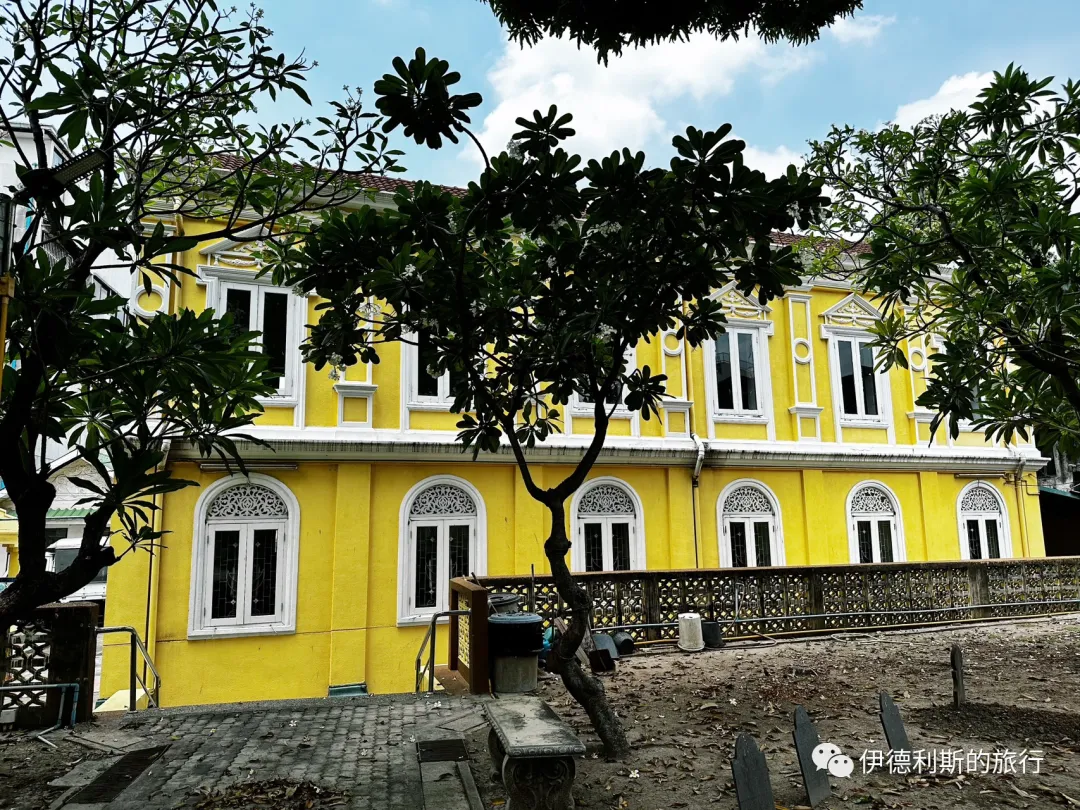
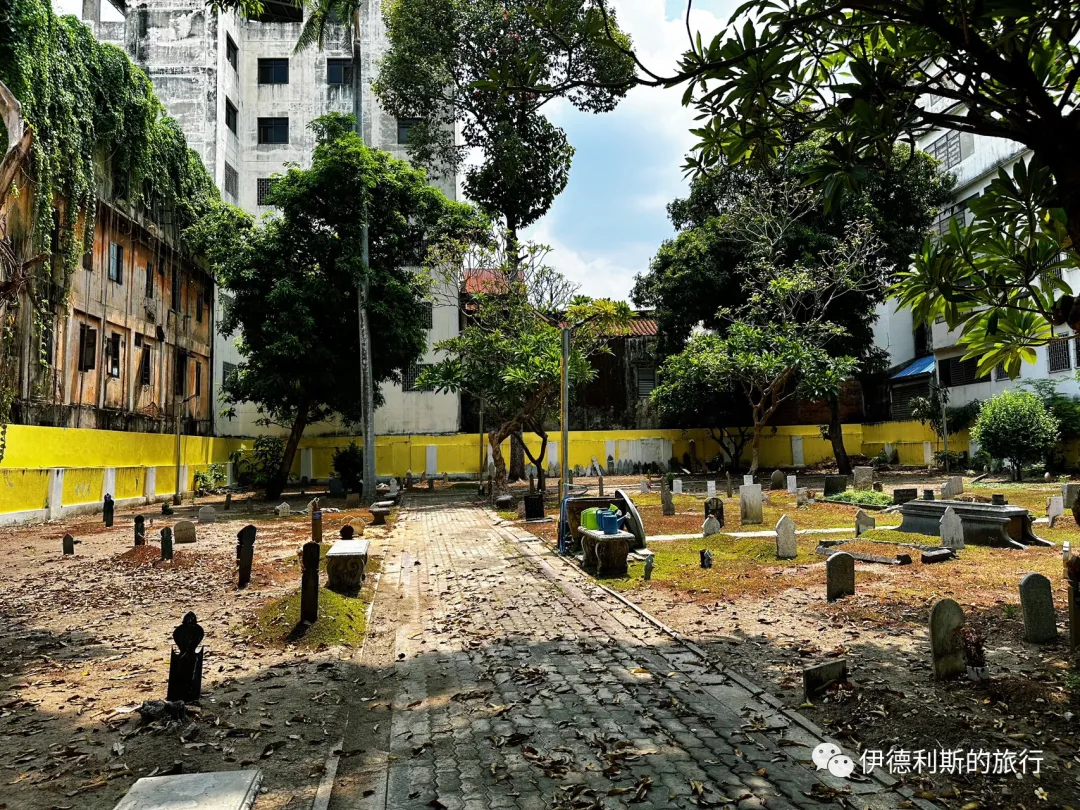
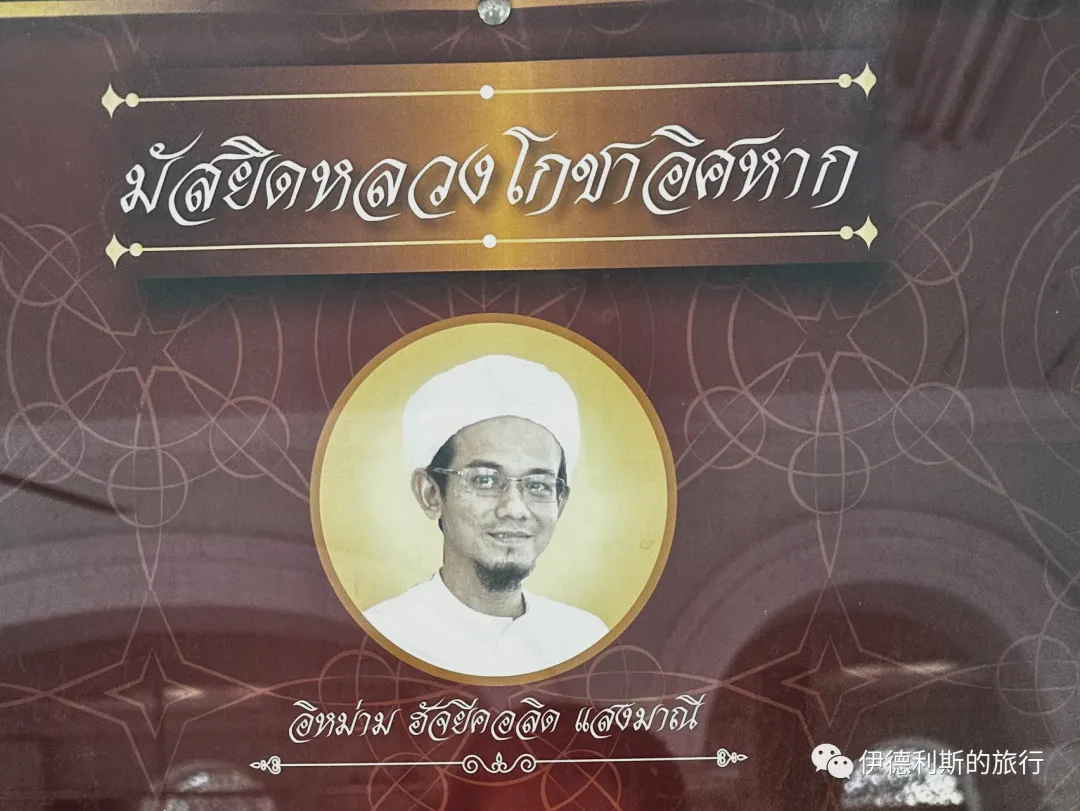
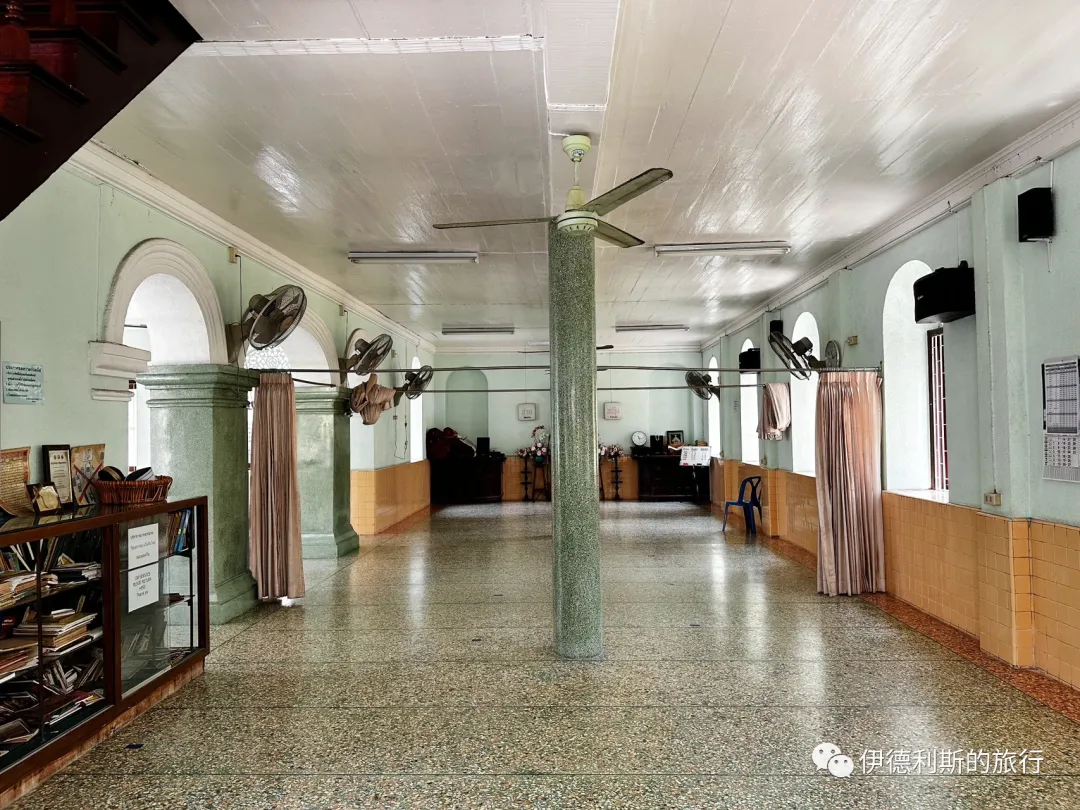
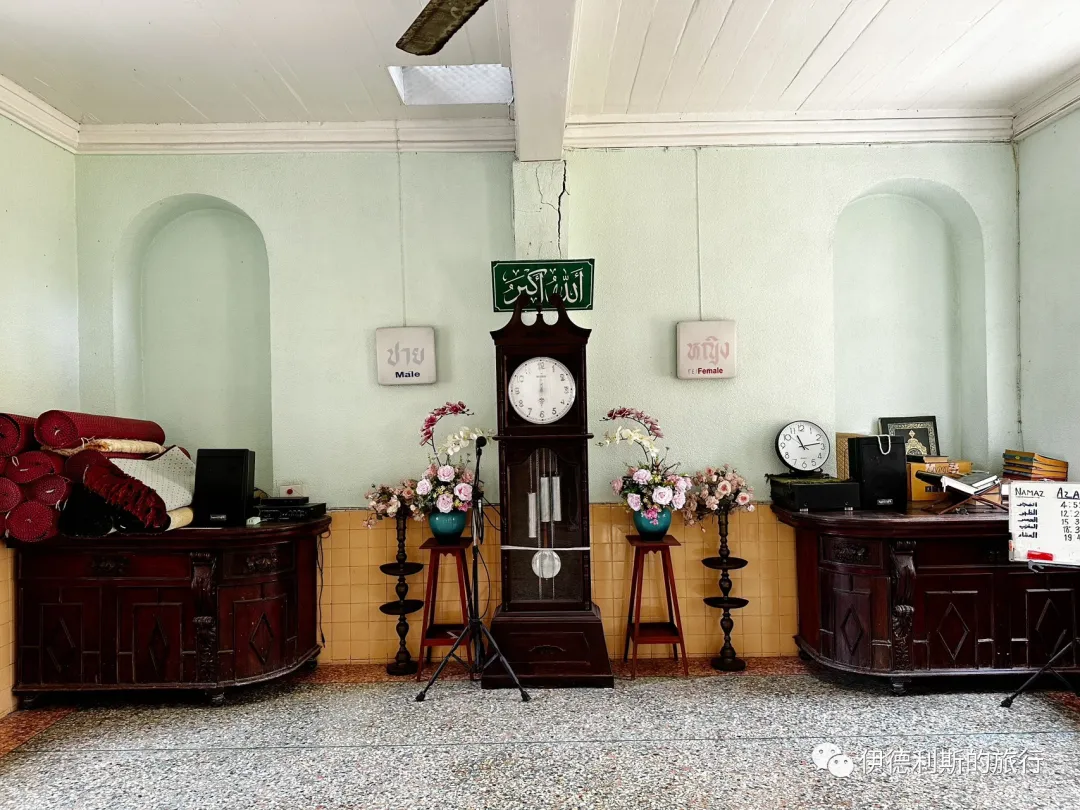
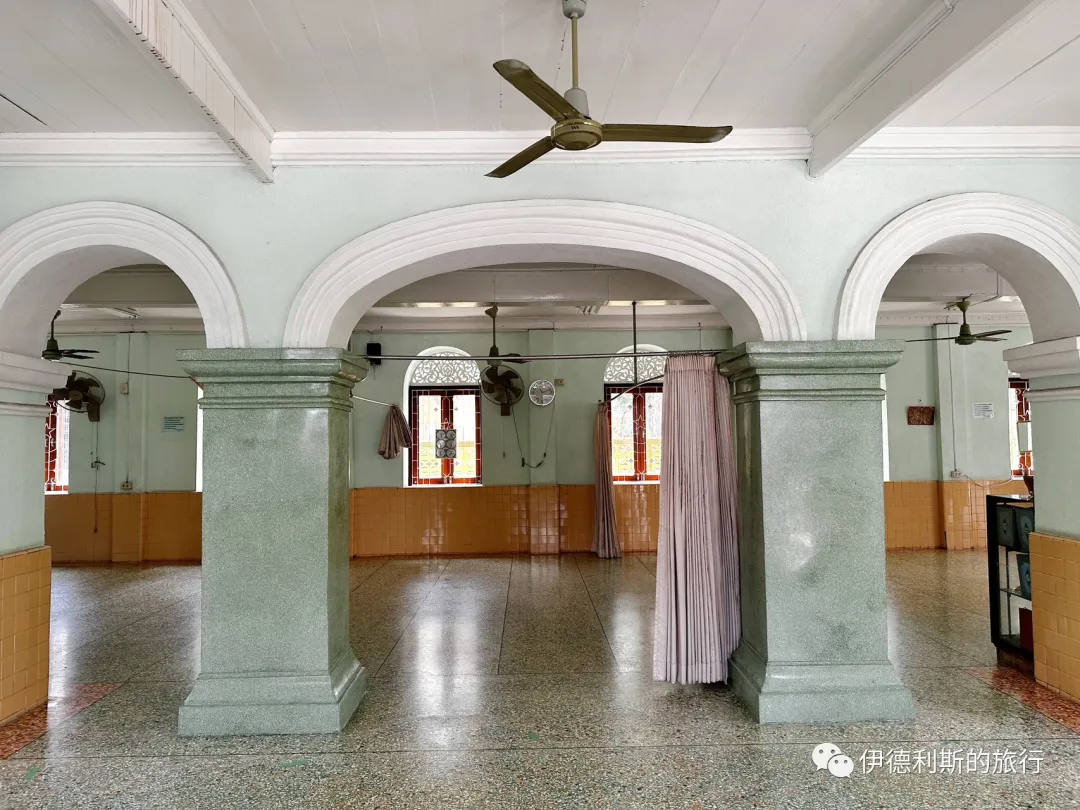
Halal Travel Guide: Bangkok - Cham Mosques, Canals and Muslim History
Articles • ali2007fr posted the article • 0 comments • 249 views • 2026-05-20 09:11
Summary: Bangkok has several historic Cham Muslim mosque neighborhoods tied to river trade, military service, canals, and royal boat history. This account covers Ton Son Mosque, Bang Luang Mosque, the Royal Barges Museum area, Jami-Ul-Khoy-Riyah Mosque, Zulugul Muttaqeen Mosque, Darul Falah Mosque, and the photographs in their original order.
I traveled to Bangkok, Thailand, in 2023 and 2025, visiting 25 mosques (masjid) in the city that represent six ethnic groups: Persian, Arab, Indian, Malay, Indonesian, and Champa. Although these friends (dosti) from different ethnic backgrounds have lived in Thailand for over a hundred years and speak Thai in their daily lives, they still keep their unique history, culture, and traditions. I will now share six articles introducing the 25 mosques of these six ethnic groups in Bangkok.
First, I will introduce the five Champa mosques in Bangkok.
Champa (Champa) was a country established by the Cham people (Chams) in southern Vietnam. After the 15th century, the Malacca Sultanate became a powerful state in Southeast Asia, and Champa maintained close ties with it. Malay friends (dosti) integrated with the Cham people through trade and marriage, leading many Cham people to embrace the faith.
After Vietnam broke free from Mongol control in the 14th century, it began moving south to invade Champa. In 1471, the Champa capital of Vijaya (Vijaya) fell, and many members of the Champa royal family and civilians fled to Cambodia for refuge. These Cham people in Cambodia united with the Malays who had settled there earlier, forming a military alliance in the 16th century.
Cham mercenary troops (krom asa Cham) began working for Siam in the early 17th century. Because of their excellent shipbuilding skills and naval combat strength, they were highly praised by the Siamese royal family. These Cham warriors were granted the honor of serving as rowers for the royal barges during Siamese royal processions.
The first mosque in Bangkok: Ton Son Mosque.
In the 17th century, the Thonburi area of Bangkok was a transit port on the Chao Phraya River leading to the Siamese capital of Ayutthaya. At that time, important trade warehouses and customs stations were set up at the mouth of the Yai (Yai) canal, and Cham troops were stationed nearby. In 1688, the royal eunuch (Chao Phraya Ratchawangsanseni) Mahmud built the first mosque in Bangkok here. Because it was located by the Yai canal, it was called Kudi Yai.
The original mosque was built entirely of teak wood, with an architectural style similar to the main halls of Buddhist temples. It was rebuilt as a brick structure in the early 19th century and rebuilt again in 1952 into the current reinforced concrete building. Because the Siamese royal family gifted tropical pine trees (ton son) to the mosque in the 19th century, the mosque was renamed Ton Son Mosque.
The pulpit (minbar) at Ton Son Mosque has a strong Siamese Ayutthaya style, and the prayer niche (mihrab) was preserved from the old building and is very beautifully crafted.
This is the area where the imam stands to lead the prayer (namaz), and it also has a very Thai style.
There is a depiction of Mecca (tianfang tu) in the center of the prayer niche (mihrab).
An old house in the mosque built in 1941.
The Yai canal at the entrance of the mosque.
The mosque area is filled with rivers.
Bang Luang Mosque, the only Thai-style mosque in Bangkok.
In 1767, Burma invaded Siam, the capital Ayutthaya fell, and the Cham military camp at the mouth of the Yai River was destroyed. Soon after, Siam moved its capital to Thonburi. The Cham people who fled from Ayutthaya settled around Ton Son Mosque, formed a new Cham community, and continued to serve in the Siamese navy. In 1782, Siam officially moved its capital to Bangkok on the east bank of the Chao Phraya River. They built a royal shipyard and dock opposite the Cham community, and many Cham people became royal sailors and shipbuilders.
With the establishment of the royal shipyard and dock, some Cham people moved to live on the other side of the Yai Canal. People of Malay descent who moved from Ayutthaya and Trat Province in the southeast originally lived here, making a living by rowing boats on the canal to sell goods. Around 1785, a merchant named Toh Yi led the construction of a new mosque called Kudi Mai (New Mosque) or Bang Luang Mosque.
Bang Luang Mosque is the only surviving Thai-style mosque in Bangkok. It has Thai-style white stucco brick walls, and its decorative roof looks very similar to those on Thai temples. The main hall is surrounded by a corridor with 30 pillars, representing the 30 parts of the Quran. The mihrab inside the main hall is the most exquisite part, featuring a purely Thai decorative style, including the Chofa decorative element found on Thai palace architecture. This shape is adapted from the Garuda in Hinduism and Buddhism, but it was redesigned to fit Islamic traditions.
The atmosphere at Bang Luang Mosque during namaz is very special. Every elder who arrives shakes hands with everyone, and an elder even gave me a drink. You can see everyone wearing a sarong (sarong) tube skirt, which means 'to cover' in Malay. This outfit is perfect for the humid and hot climate of Southeast Asia.
The wooden-framed scriptures hanging on the walls of Bang Luang Mosque and the porcelain plates embedded in the walls are both over a hundred years old.
This old bell feels like it has a lot of history.
The area around Bang Luang Mosque is still mainly inhabited by Cham and Malay descendants. We chatted for a while with the owner of a small shop opposite the mosque. The owner's family is of Malay descent; the father speaks fluent Thai and Malay, and the son's English is also very good.
Cham Navy and the National Museum of Royal Barges.
In 1778, Thailand invaded Laos. To attack Laos from two sides, Thailand recruited an army of over 10,000 people from the pro-Thai Kingdom of Cambodia, which included several naval companies made up of Cham dosti (friends/comrades). After these Cham naval companies finished participating in the war against Laos, some of them returned with the Thai army to Thonburi, the capital of Thailand at the time. They were under the command of the Second King of Siam (Front Palace). After 1782, they were stationed along the Noi Canal and built the Second King's shipyard and dock next to their camp.
These Cham sailors served for a long time in gunboat patrols against pirates along the Thai coast. Until the Grand Palace and Front Palace navies merged into the Royal Thai Navy in 1880, these Cham sailors continued to serve in the Royal Navy, with some stationed at naval fortifications in Samut Prakan. After the 1910s, the former station of the Cham navy was gradually abandoned.
The National Museum of Royal Barges is currently built on the former site of the Cham navy station. Before the 20th century, the Cham navy served as rowers for the royal barge, a high honor granted to Cham sailors by the Thai royal family.
Noi Canal
Cham community neighborhood—Jami-Ul-Khoy-Riyah Mosque
In 1781, Thailand attacked Cambodia and captured some Cham soldiers. These Cham soldiers were brought back to Bangkok in 1782. These Cham soldiers officially joined the Thai army in 1783 and helped dig the Maha Nak Canal. In the early 19th century, Thailand and Vietnam fought a long war over Cambodia. The canal east of Bangkok became a vital military transport route, moving supplies and soldiers to the Cambodian front, earning it the name Bangkok's Eastern Corridor. The Saen Saep Canal east of Bangkok was completed in 1840, and these Cham soldiers were responsible for guarding it.
Today, you can take a canal boat on the Saen Saep Canal to Sapan Charoenpol station. After crossing the bridge, you will see the Jami-Ul-Khoy-Riyah Mosque built by the descendants of these Cham soldiers. In the late 19th century, as peace returned to eastern Thailand, the area became a silk market and later a tourist destination.
The Jami-Ul-Khoy-Riyah Mosque displays a collection of porcelain. Many mosques in Bangkok have porcelain display cabinets, which is an interesting tradition.
Street view of the Jami-Ul-Khoy-Riyah Mosque neighborhood. There are small family-run snack shops in the narrow alleys, though they are usually closed in the afternoon. There is a pavilion by the canal built during the reign of Rama III (1824-1851). During this period, Thailand was frequently at war with Laos, Cambodia, and Vietnam, and the Saen Saep Canal was the main artery for transporting supplies east from Bangkok. There used to be a pier in front of the pavilion where many supplies were loaded and unloaded. The wood used to build the Jami-Ul-Khoy-Riyah Mosque was also unloaded here.
Today, it has become a place for people to cool off and chat. Next to the pavilion is a small shop selling cold drinks and waffles, where I bought a cup of authentic Thai red tea. Besides the Cham people, Malays from Pattani Province in southern Thailand also live in the Jami-Ul-Khoy-Riyah Mosque neighborhood. After 1786, Thailand invaded the southern Pattani Sultanate several times and captured a large number of Pattani Malays, some of whom were settled in the Jami-Ul-Khoy-Riyah Mosque neighborhood.
Cham community neighborhood—Zulugul Muttaqeen Mosque
The Zulugul Muttaqeen Mosque is located just west of the Jami-Ul-Khoy-Riyah Mosque. It was built by Cham captives brought back from Cambodia by Thailand during the Siamese-Vietnamese War of 1841-1845.
The mosque is clean and bright. The first floor is a classroom, the second floor is the main prayer hall, and the third-floor terrace offers a panoramic view of the neighborhood.
Cham community neighborhood—Darul Falah Mosque
The Darul Falah Mosque was also built by Cham captives brought back from Cambodia by Thailand during the Siamese-Vietnamese War of 1841-1845. Bangkok once had its most important Sufi shrine (gongbei), but it is hard to find any trace of it today.
In the early 20th century, Sheikh Hussein Bakri, a Sufi from the Shadhili order in the Hejaz region, lived at the Darul Falah mosque (masjid) in Bangkok. He married a local woman and they had two sons. Before Sheikh Hussein returned to his home country, he predicted that his youngest son, Ahmed Bakri, would pass away, so he told his wife to bury a piece of green cloth with him. Sure enough, his son died just a few days after he left. His wife did not follow his instructions to include the green cloth, so she later urgently asked everyone to open the grave to put it in, but when they opened the grave, Ahmed's body was already gone. The story of the Arab man and the green cloth spread quickly.
After the Saudis conquered the Hejaz region in 1925, they promoted Wahhabism there, forcing many Sufis in the Hejaz to flee. In 1929, Sheikh Hussein Bakri's other son, Sheikh Khalid Bakri, who was also in the Shadhili order, traveled by boat from the Hejaz to the Darul Falah mosque in Bangkok and built the Ahmed shrine (gongbei) inside the mosque. During World War II, when the U. S. military bombed Bangkok, people from all different groups took shelter near the shrine, believing it would keep them safe. The shrine was not moved outside the mosque until the Darul Falah mosque was renovated in the 1950s.
Starting from the Darul Falah mosque, the Shadhili order gradually grew in the eastern suburbs of Bangkok and expanded into central and southern Thailand, becoming an important Sufi order in the country. view all
Summary: Bangkok has several historic Cham Muslim mosque neighborhoods tied to river trade, military service, canals, and royal boat history. This account covers Ton Son Mosque, Bang Luang Mosque, the Royal Barges Museum area, Jami-Ul-Khoy-Riyah Mosque, Zulugul Muttaqeen Mosque, Darul Falah Mosque, and the photographs in their original order.
I traveled to Bangkok, Thailand, in 2023 and 2025, visiting 25 mosques (masjid) in the city that represent six ethnic groups: Persian, Arab, Indian, Malay, Indonesian, and Champa. Although these friends (dosti) from different ethnic backgrounds have lived in Thailand for over a hundred years and speak Thai in their daily lives, they still keep their unique history, culture, and traditions. I will now share six articles introducing the 25 mosques of these six ethnic groups in Bangkok.
First, I will introduce the five Champa mosques in Bangkok.
Champa (Champa) was a country established by the Cham people (Chams) in southern Vietnam. After the 15th century, the Malacca Sultanate became a powerful state in Southeast Asia, and Champa maintained close ties with it. Malay friends (dosti) integrated with the Cham people through trade and marriage, leading many Cham people to embrace the faith.
After Vietnam broke free from Mongol control in the 14th century, it began moving south to invade Champa. In 1471, the Champa capital of Vijaya (Vijaya) fell, and many members of the Champa royal family and civilians fled to Cambodia for refuge. These Cham people in Cambodia united with the Malays who had settled there earlier, forming a military alliance in the 16th century.
Cham mercenary troops (krom asa Cham) began working for Siam in the early 17th century. Because of their excellent shipbuilding skills and naval combat strength, they were highly praised by the Siamese royal family. These Cham warriors were granted the honor of serving as rowers for the royal barges during Siamese royal processions.
The first mosque in Bangkok: Ton Son Mosque.
In the 17th century, the Thonburi area of Bangkok was a transit port on the Chao Phraya River leading to the Siamese capital of Ayutthaya. At that time, important trade warehouses and customs stations were set up at the mouth of the Yai (Yai) canal, and Cham troops were stationed nearby. In 1688, the royal eunuch (Chao Phraya Ratchawangsanseni) Mahmud built the first mosque in Bangkok here. Because it was located by the Yai canal, it was called Kudi Yai.
The original mosque was built entirely of teak wood, with an architectural style similar to the main halls of Buddhist temples. It was rebuilt as a brick structure in the early 19th century and rebuilt again in 1952 into the current reinforced concrete building. Because the Siamese royal family gifted tropical pine trees (ton son) to the mosque in the 19th century, the mosque was renamed Ton Son Mosque.
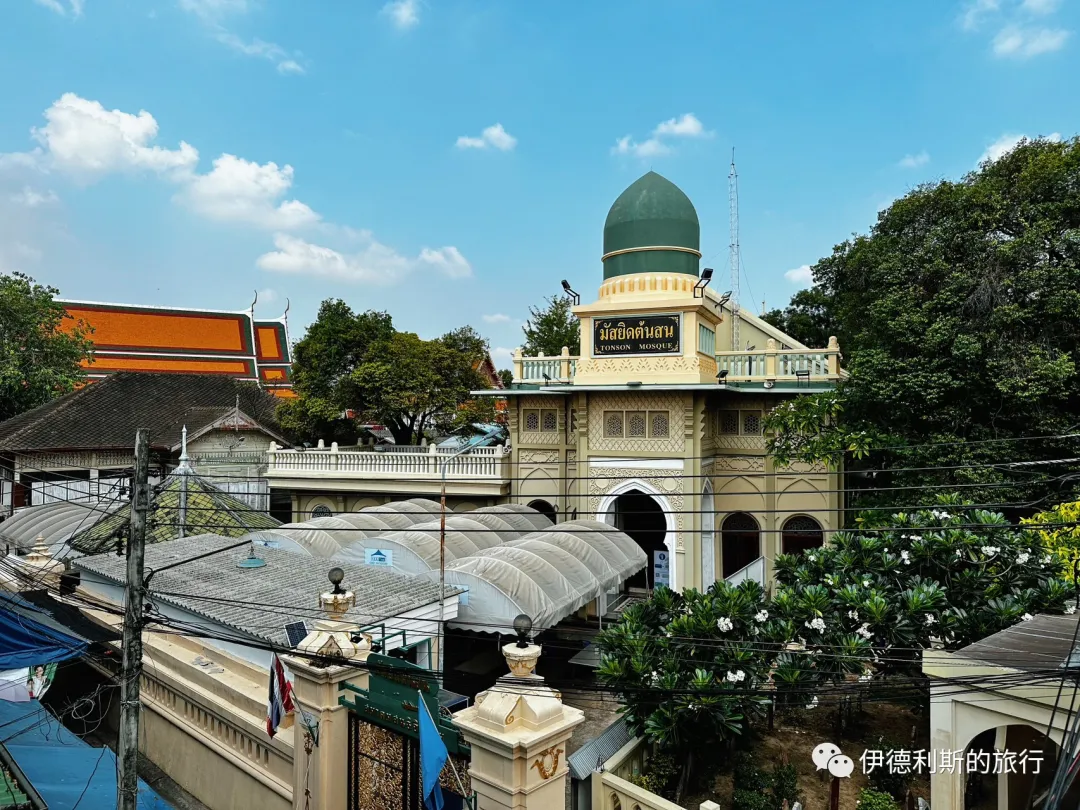
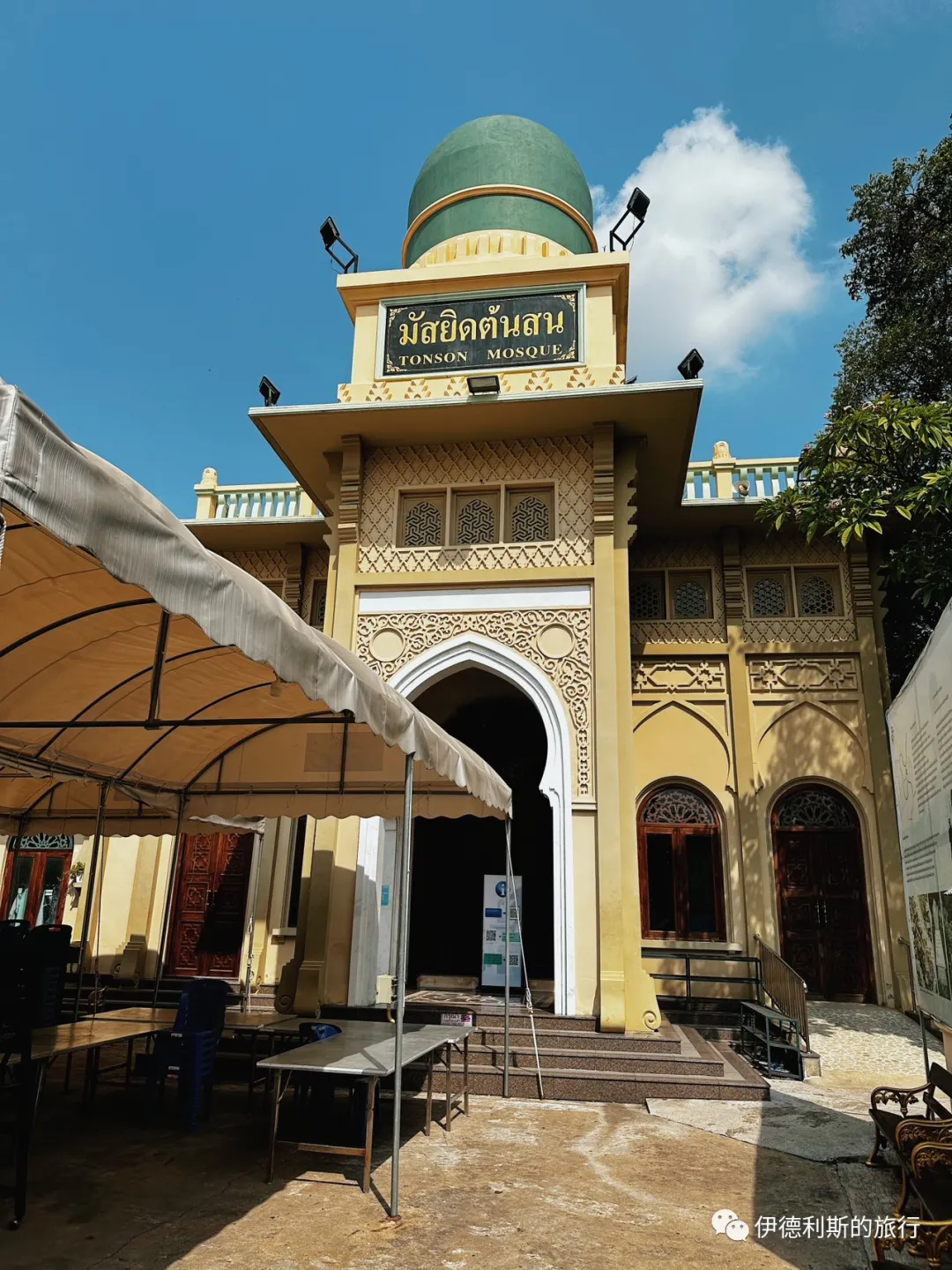
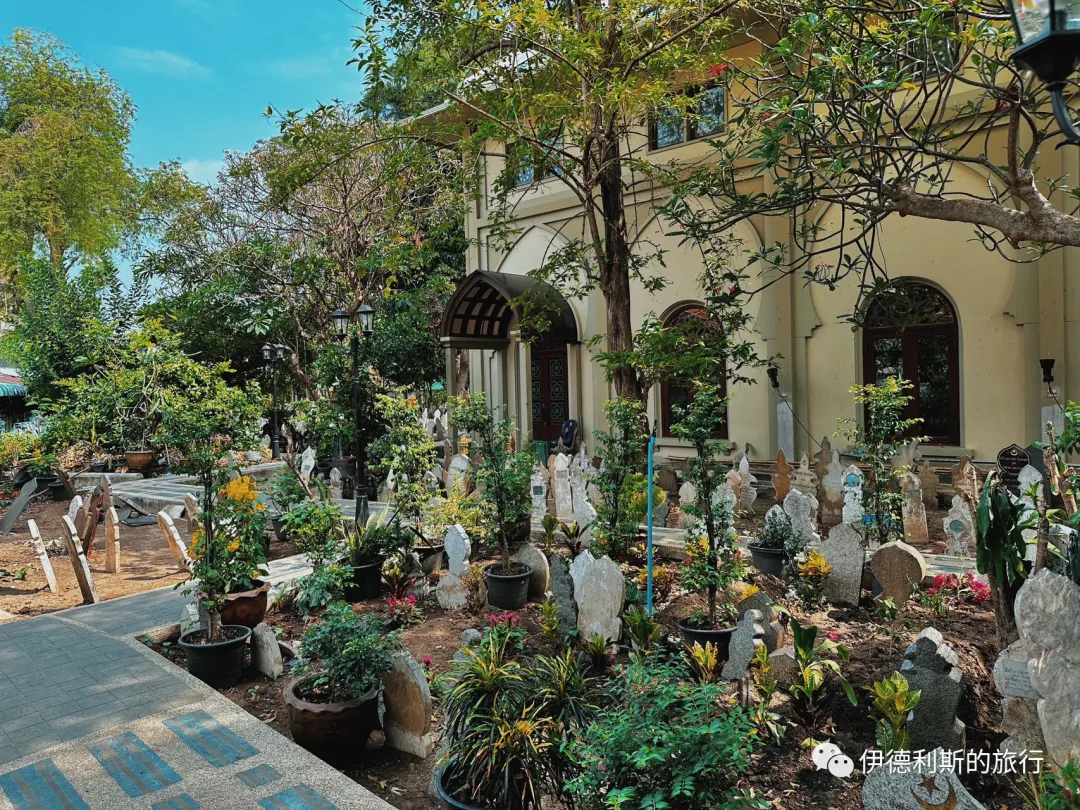
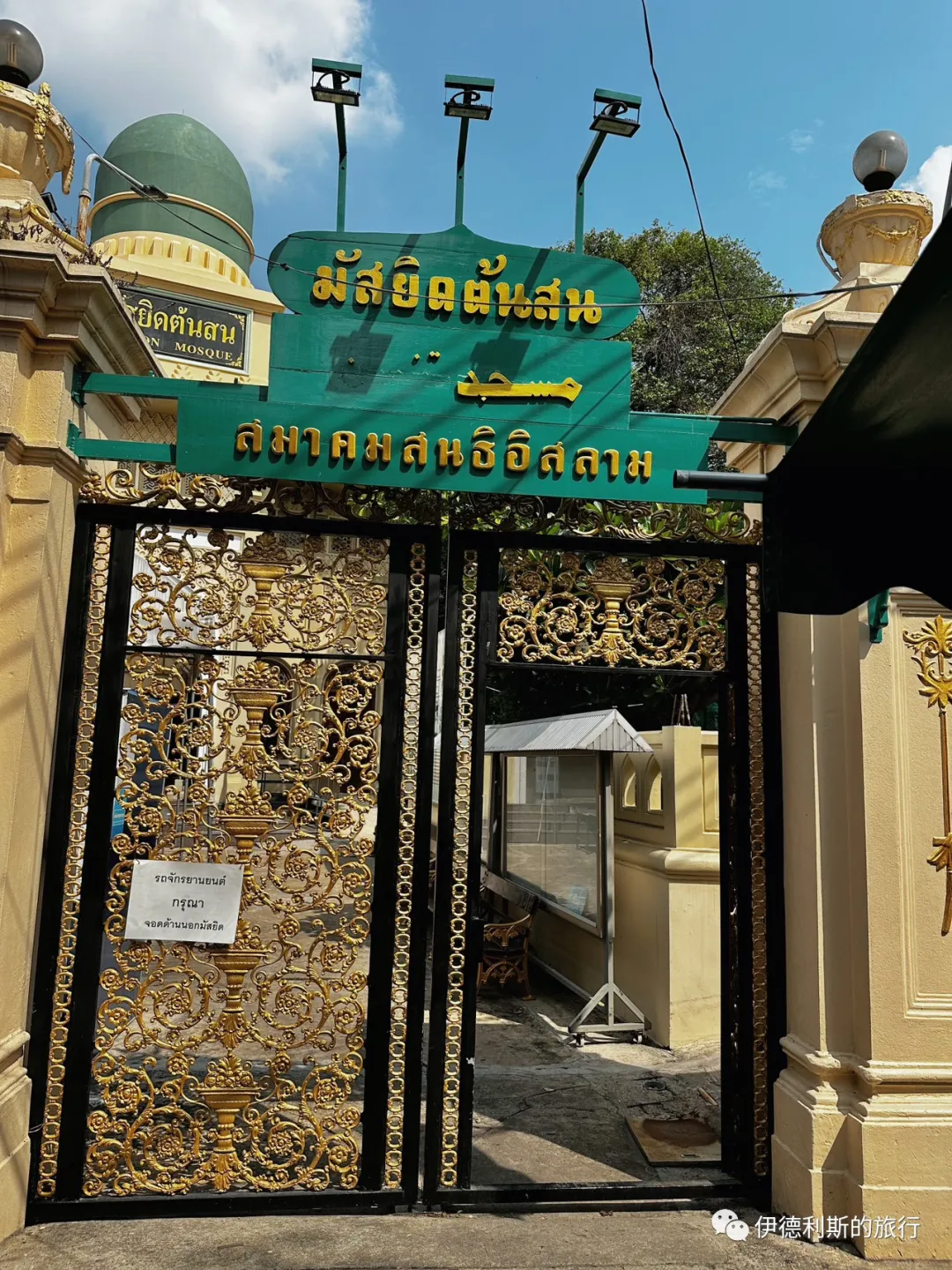
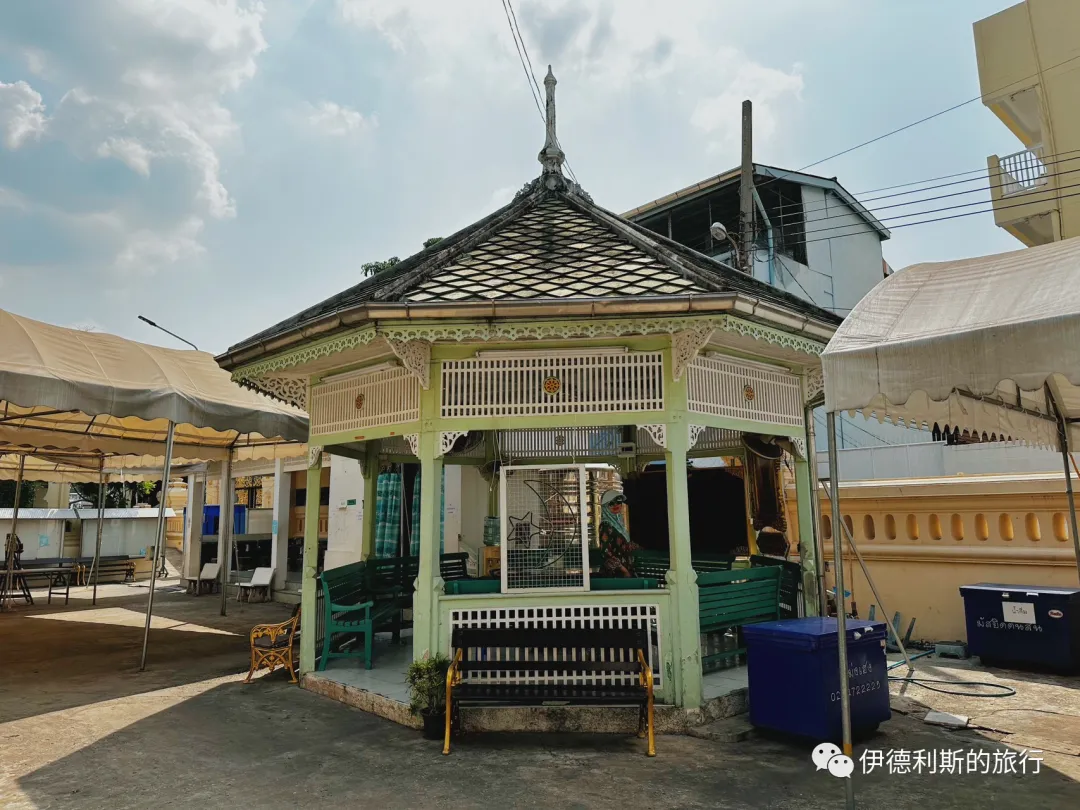
The pulpit (minbar) at Ton Son Mosque has a strong Siamese Ayutthaya style, and the prayer niche (mihrab) was preserved from the old building and is very beautifully crafted.
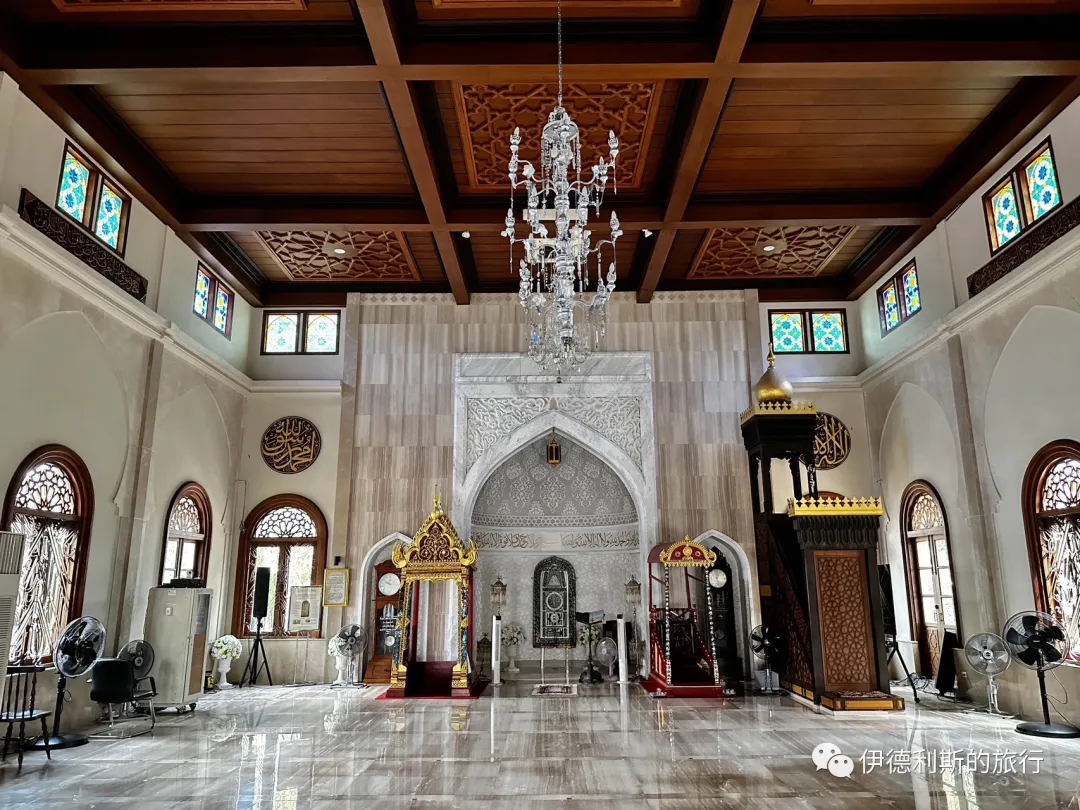
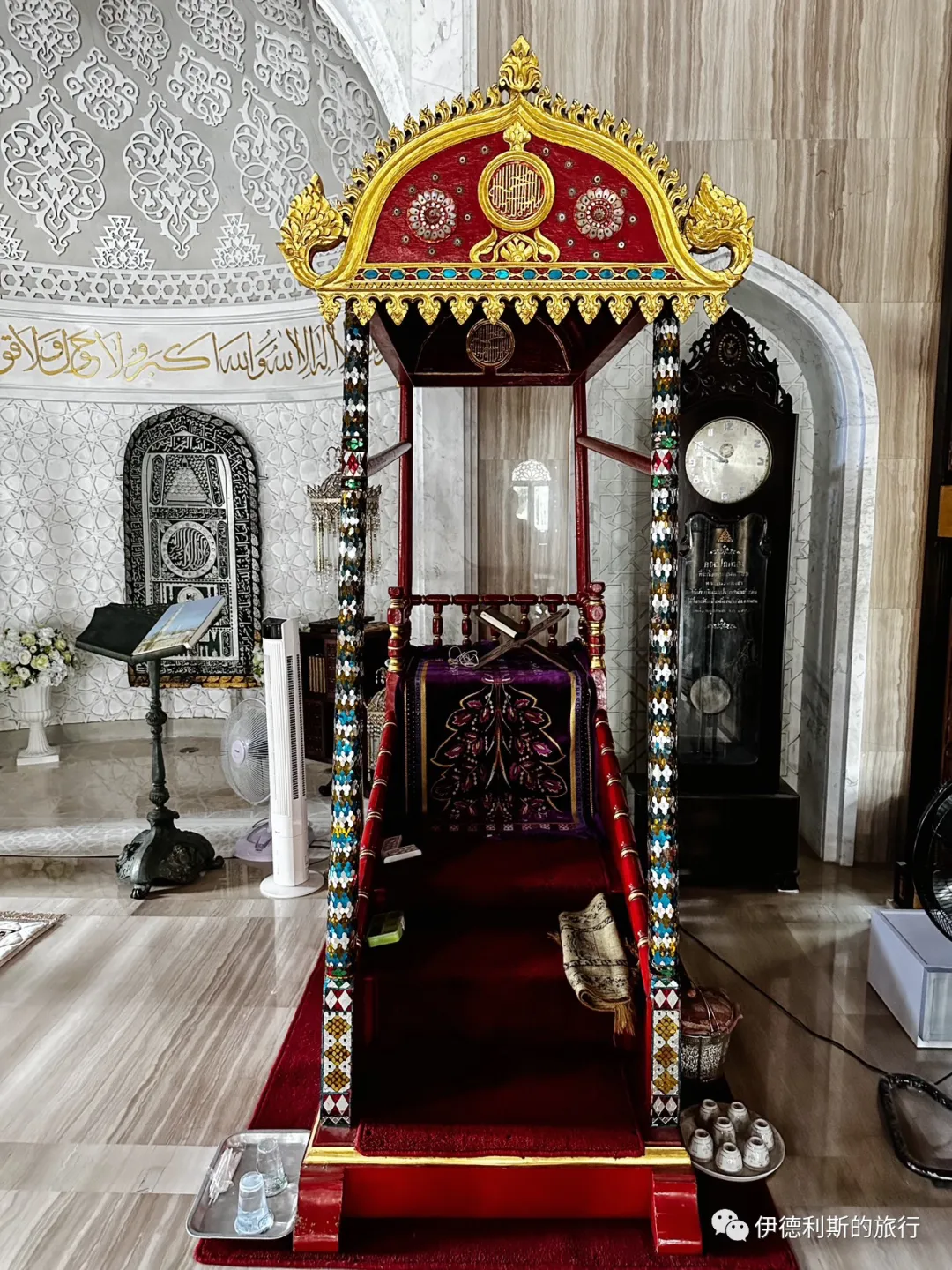
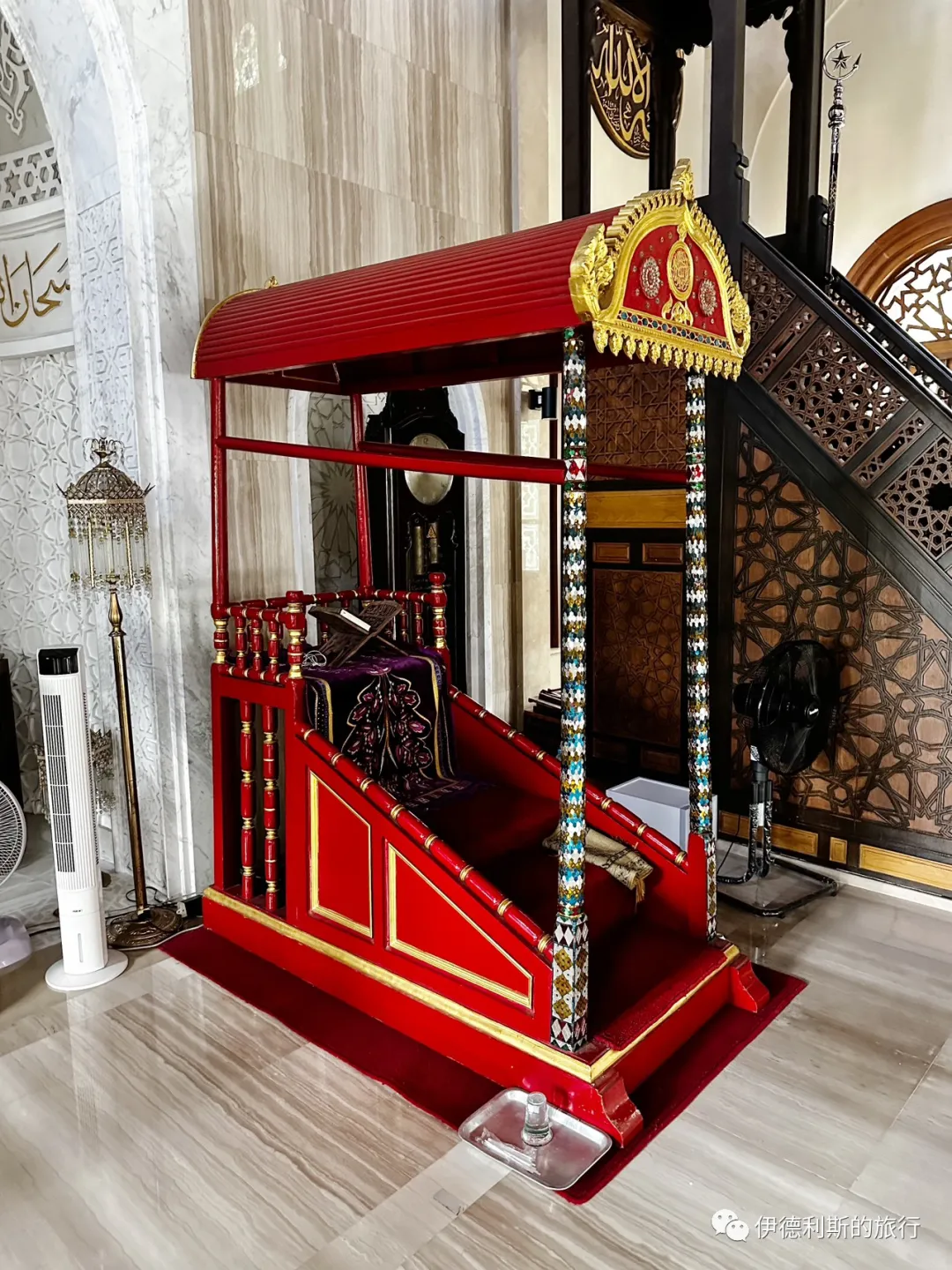
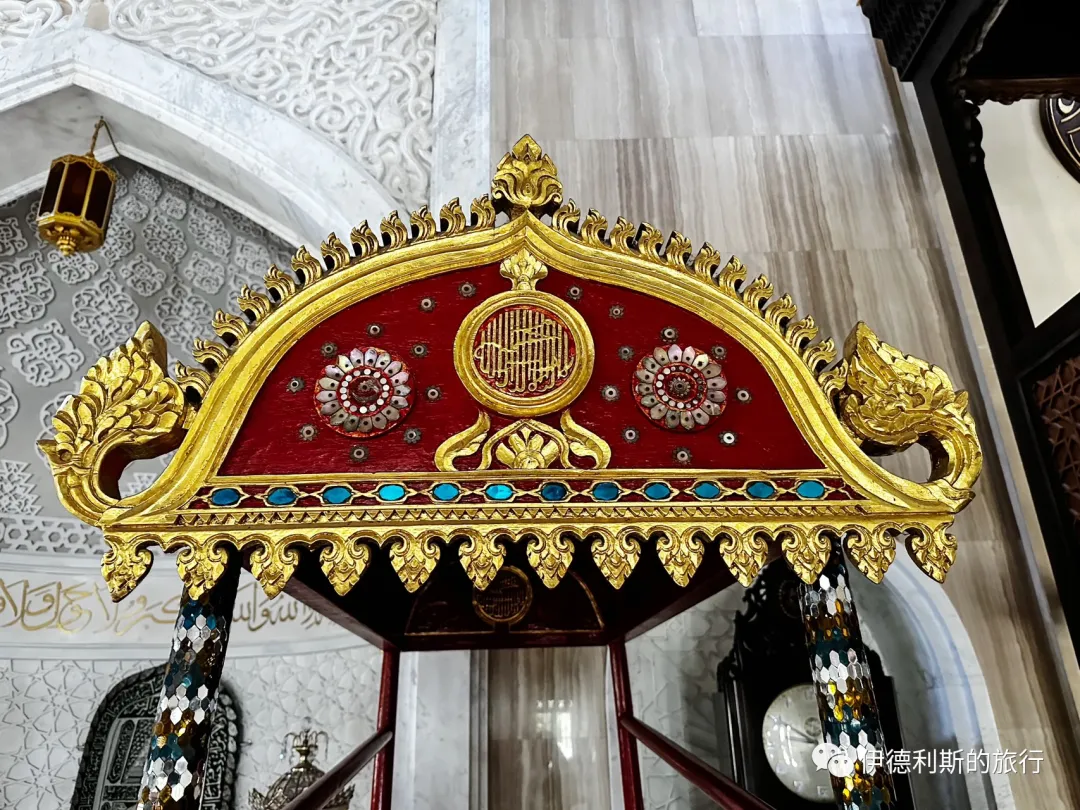
This is the area where the imam stands to lead the prayer (namaz), and it also has a very Thai style.
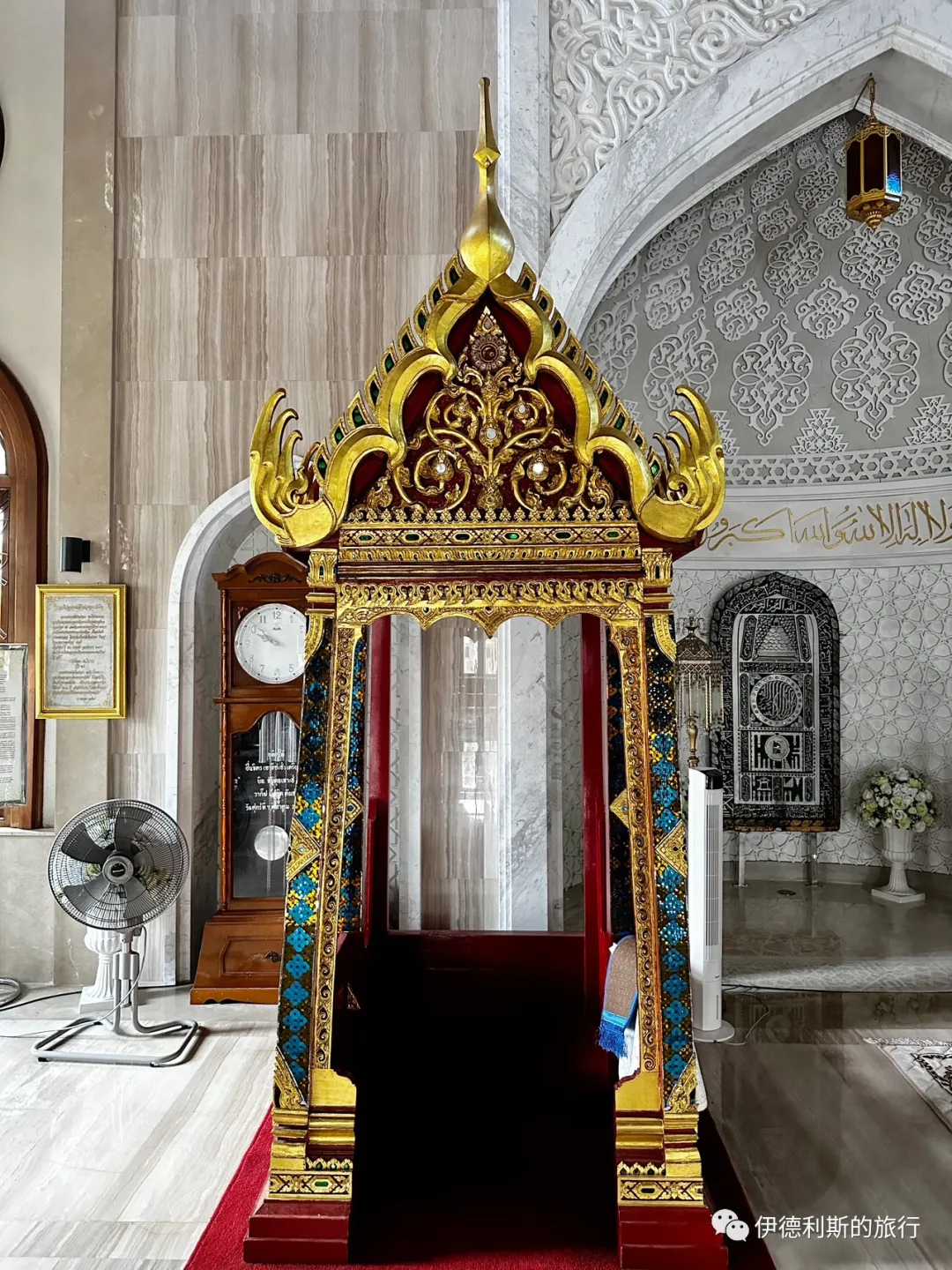
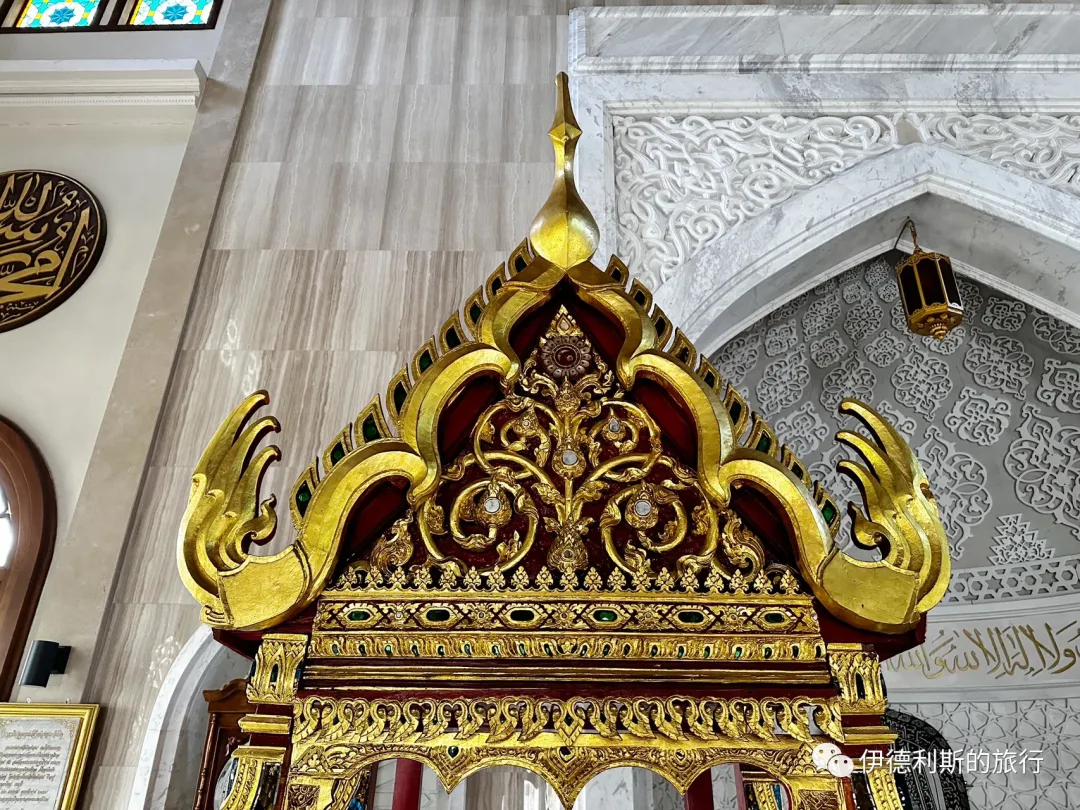
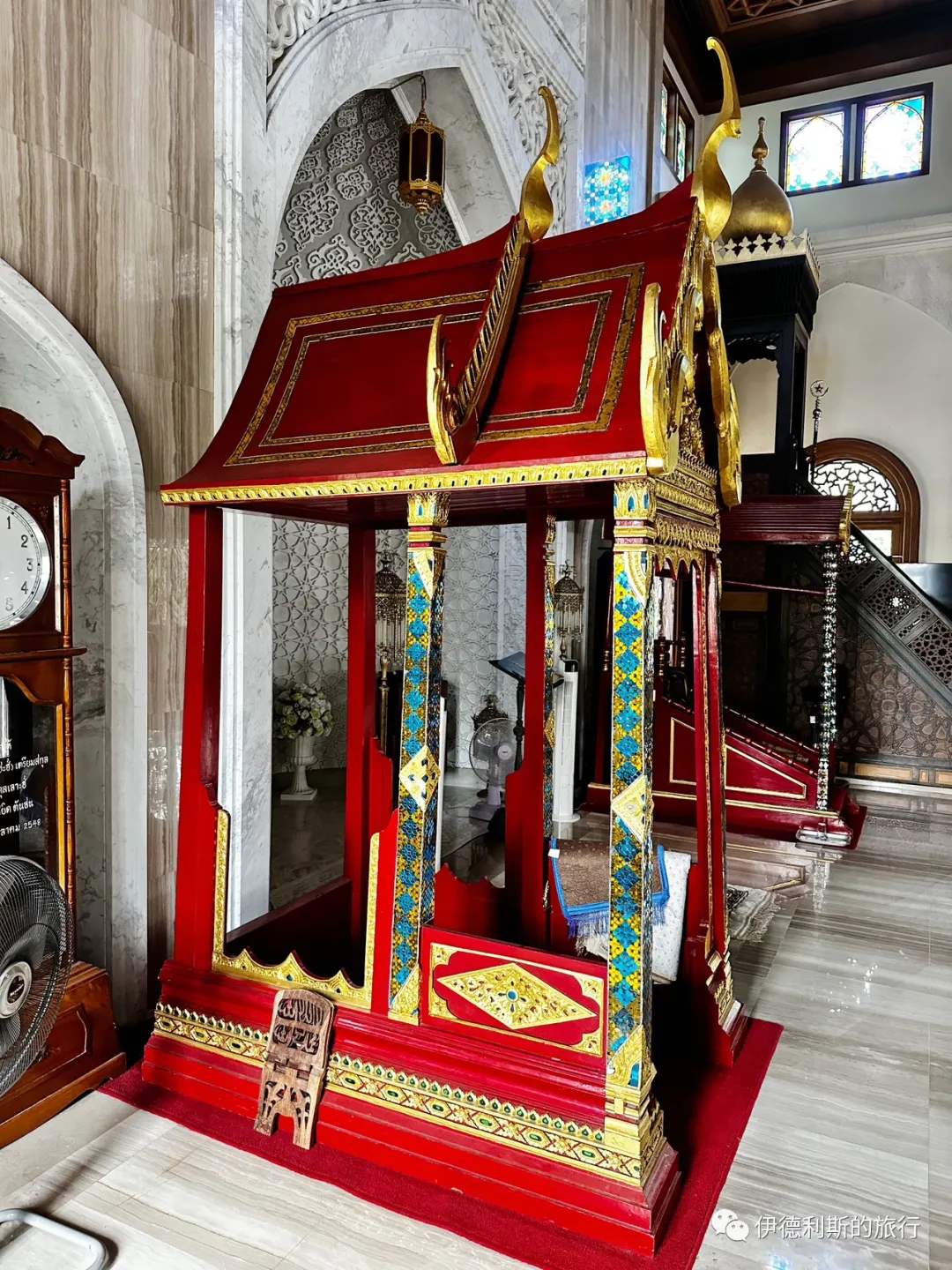
There is a depiction of Mecca (tianfang tu) in the center of the prayer niche (mihrab).
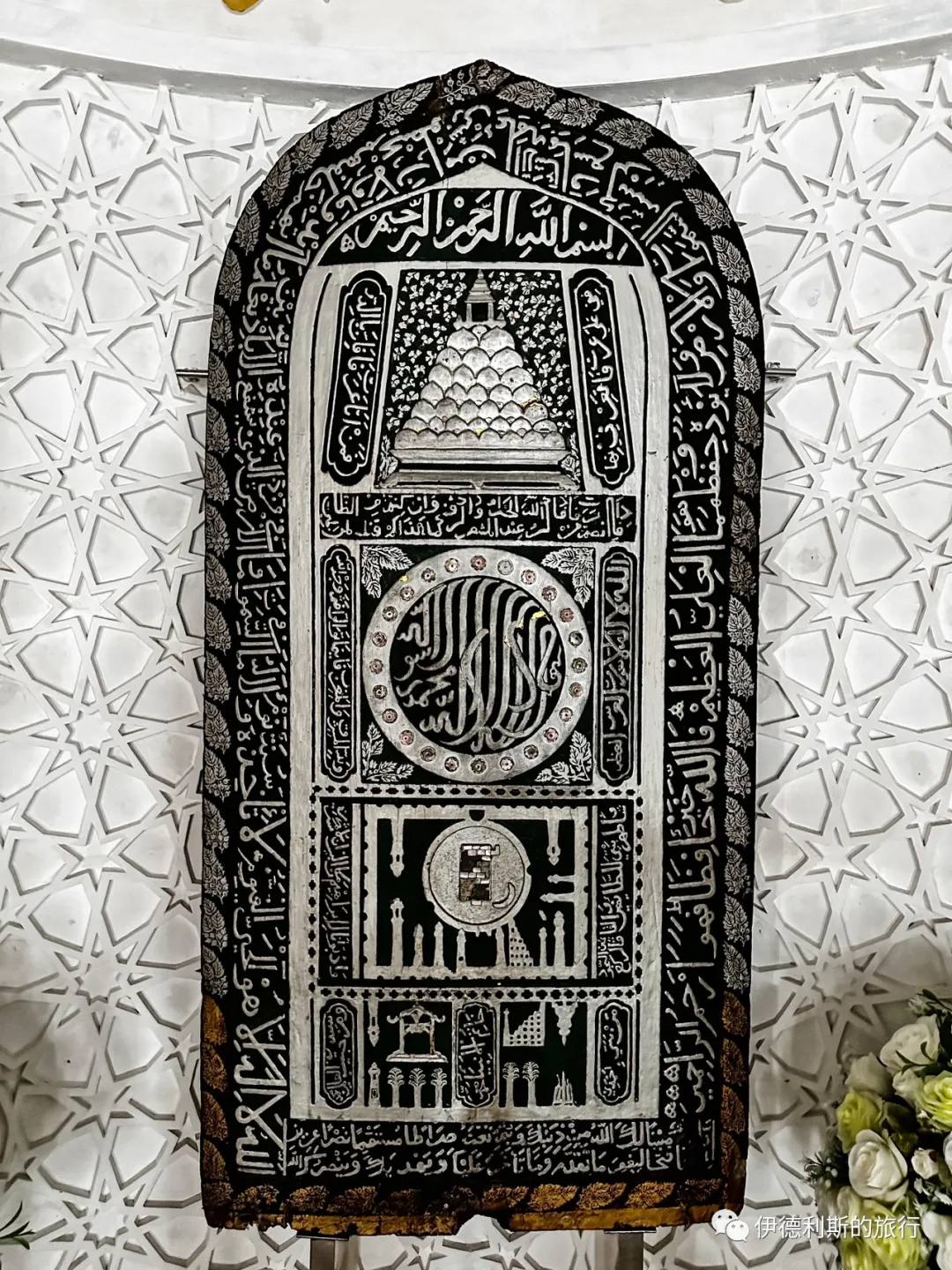
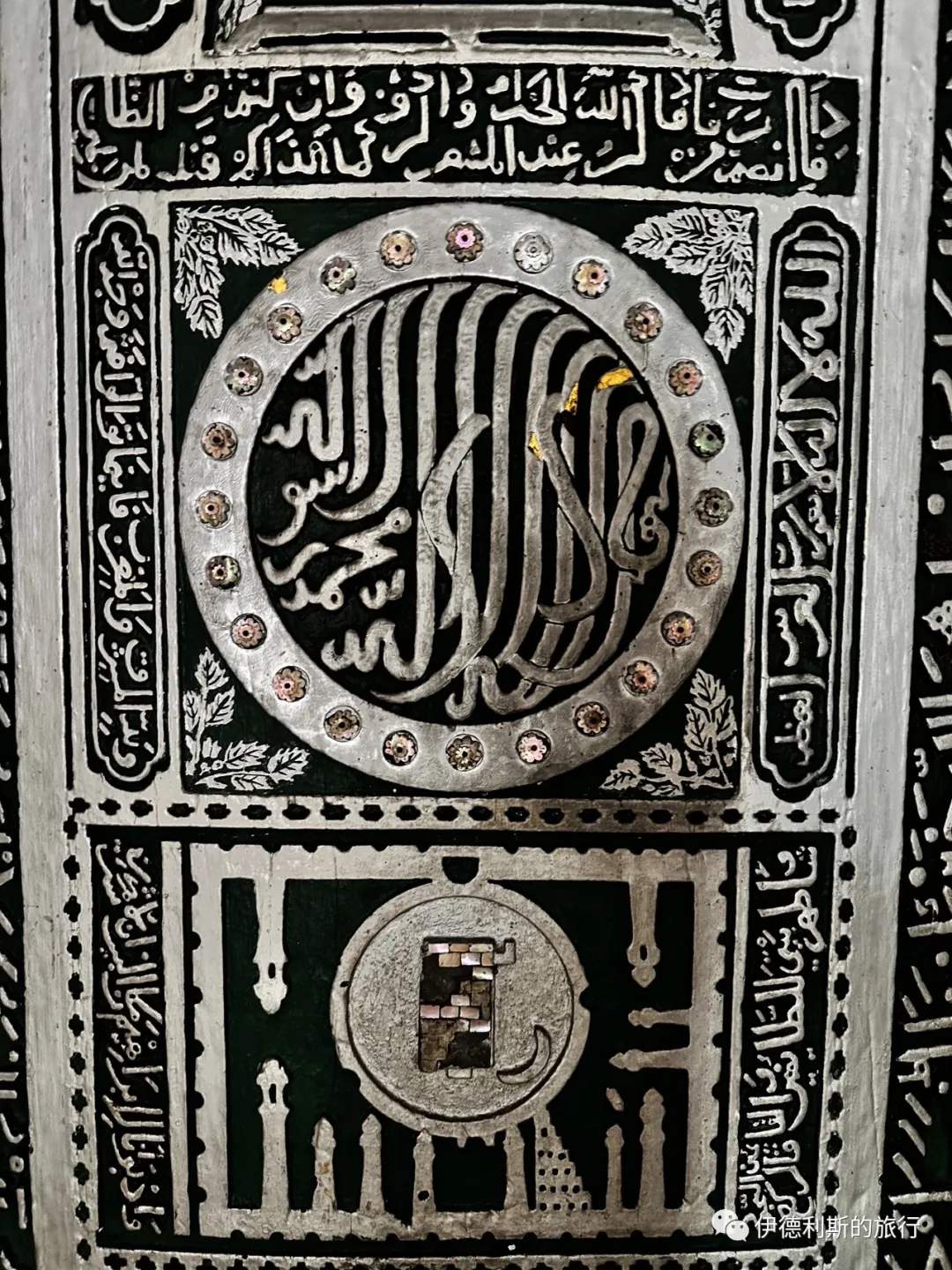
An old house in the mosque built in 1941.
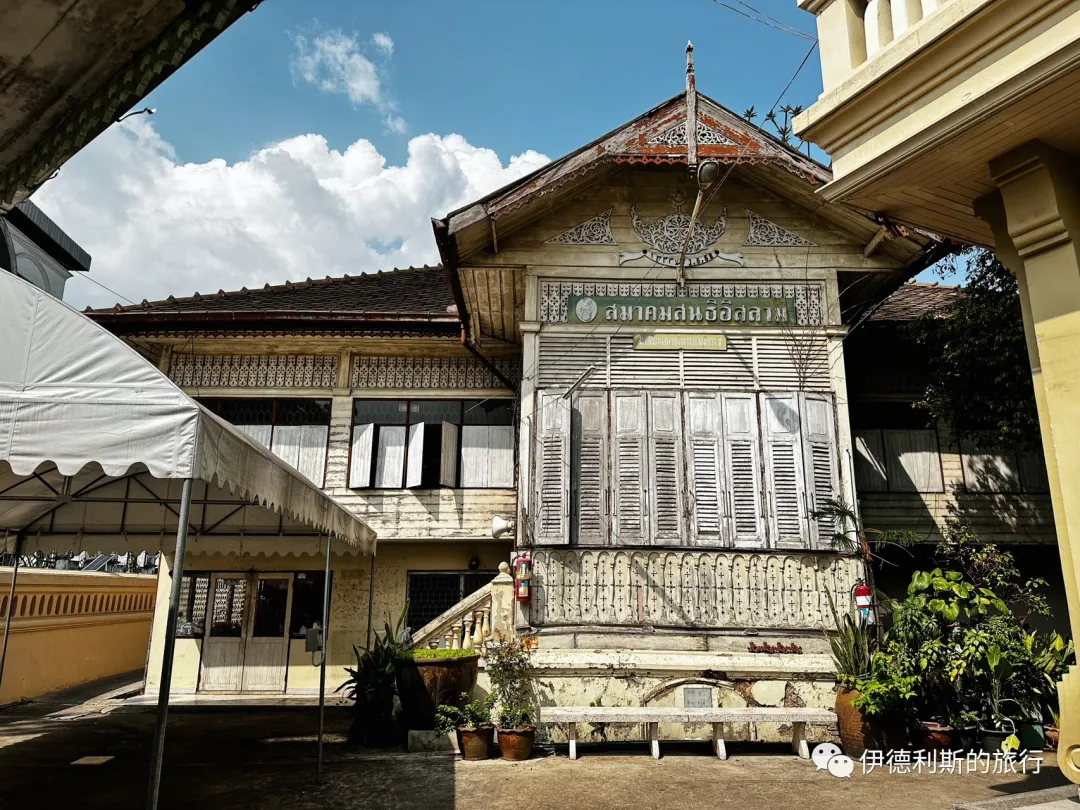
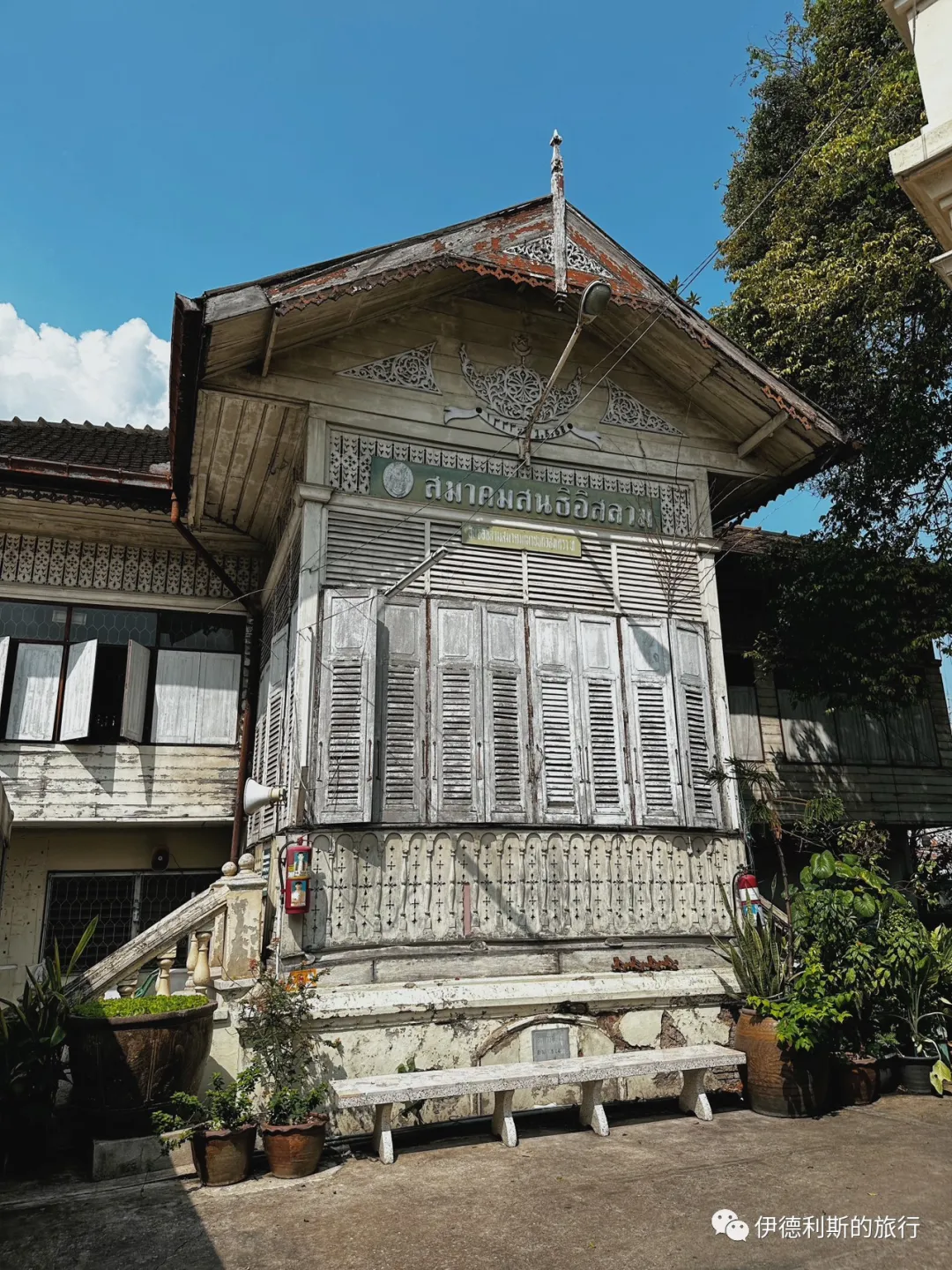
The Yai canal at the entrance of the mosque.
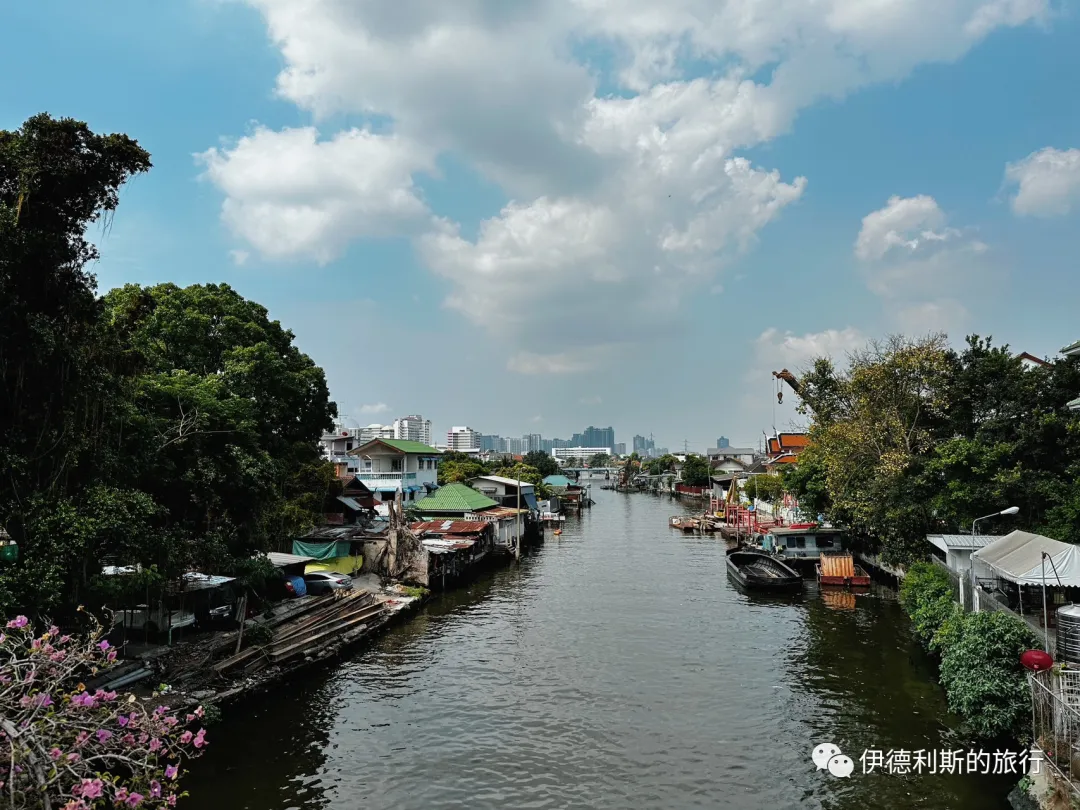
The mosque area is filled with rivers.
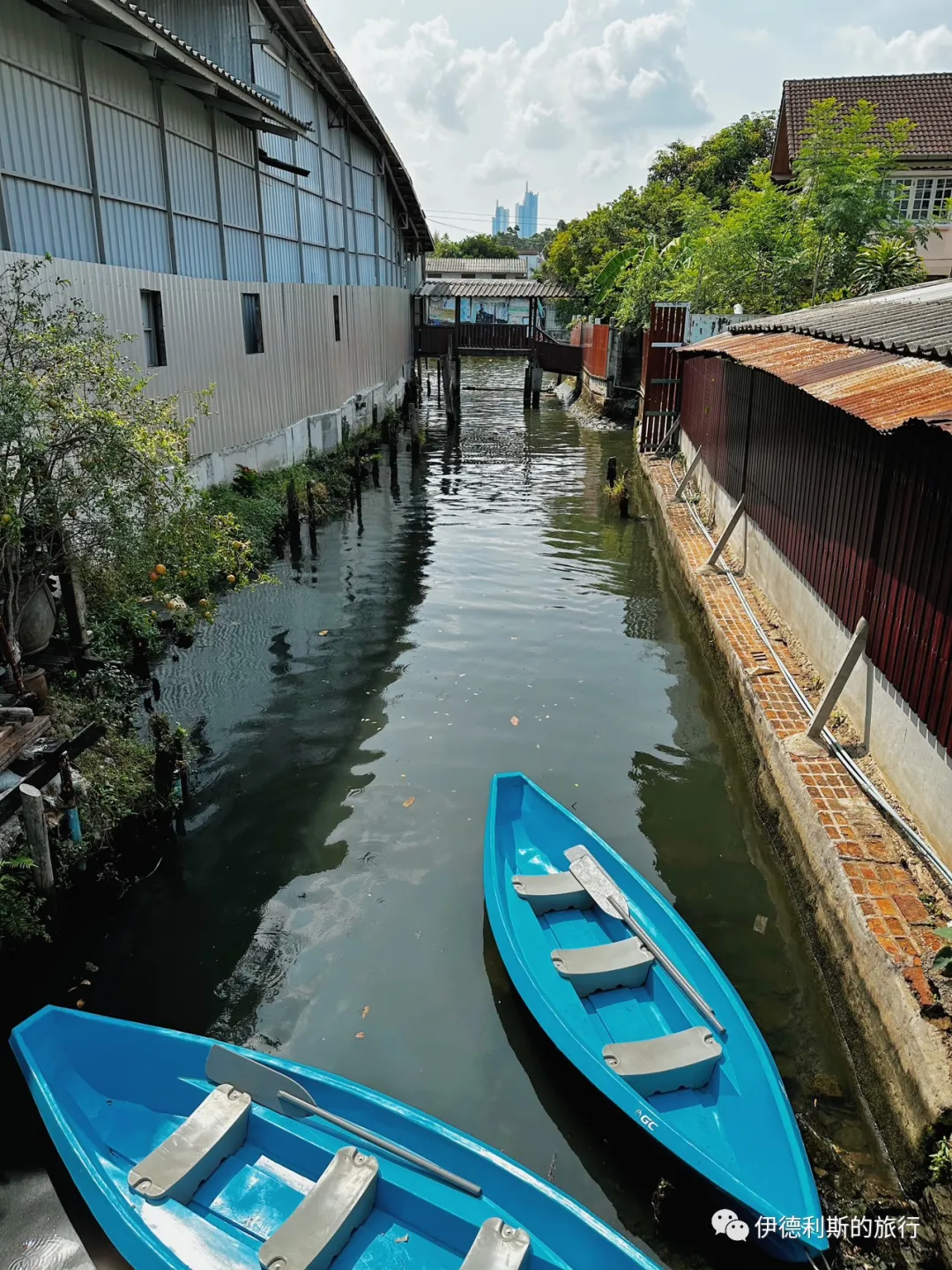
Bang Luang Mosque, the only Thai-style mosque in Bangkok.
In 1767, Burma invaded Siam, the capital Ayutthaya fell, and the Cham military camp at the mouth of the Yai River was destroyed. Soon after, Siam moved its capital to Thonburi. The Cham people who fled from Ayutthaya settled around Ton Son Mosque, formed a new Cham community, and continued to serve in the Siamese navy. In 1782, Siam officially moved its capital to Bangkok on the east bank of the Chao Phraya River. They built a royal shipyard and dock opposite the Cham community, and many Cham people became royal sailors and shipbuilders.
With the establishment of the royal shipyard and dock, some Cham people moved to live on the other side of the Yai Canal. People of Malay descent who moved from Ayutthaya and Trat Province in the southeast originally lived here, making a living by rowing boats on the canal to sell goods. Around 1785, a merchant named Toh Yi led the construction of a new mosque called Kudi Mai (New Mosque) or Bang Luang Mosque.
Bang Luang Mosque is the only surviving Thai-style mosque in Bangkok. It has Thai-style white stucco brick walls, and its decorative roof looks very similar to those on Thai temples. The main hall is surrounded by a corridor with 30 pillars, representing the 30 parts of the Quran. The mihrab inside the main hall is the most exquisite part, featuring a purely Thai decorative style, including the Chofa decorative element found on Thai palace architecture. This shape is adapted from the Garuda in Hinduism and Buddhism, but it was redesigned to fit Islamic traditions.
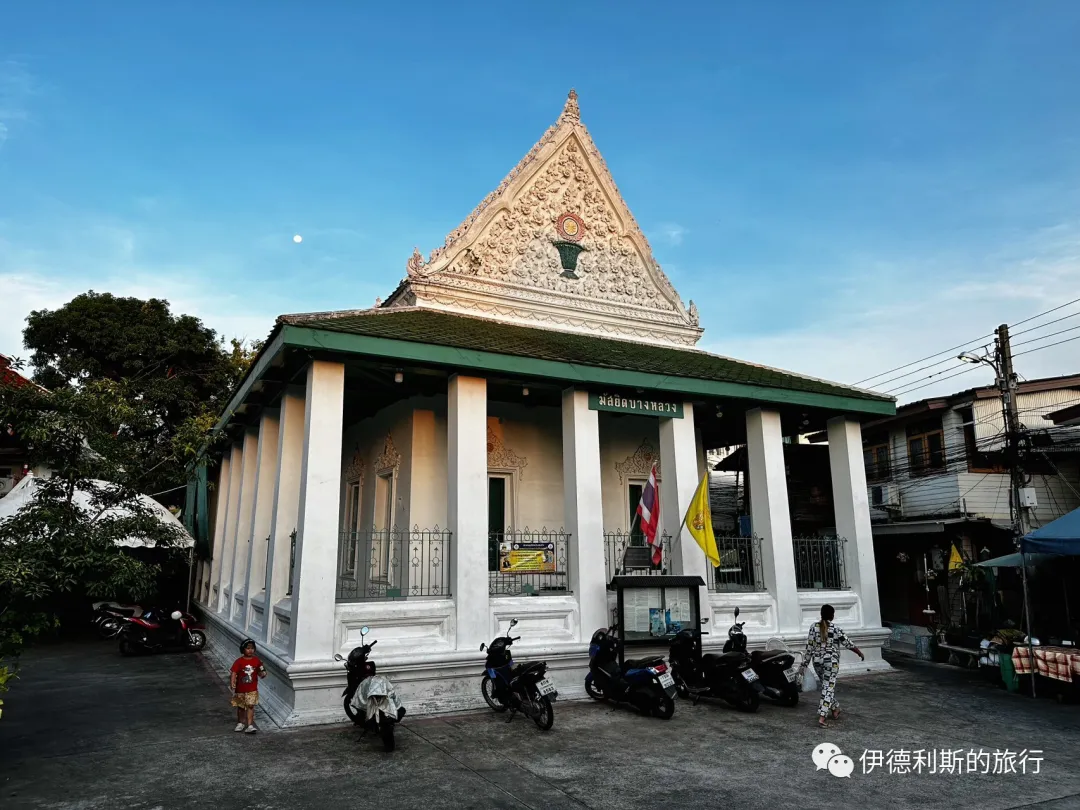
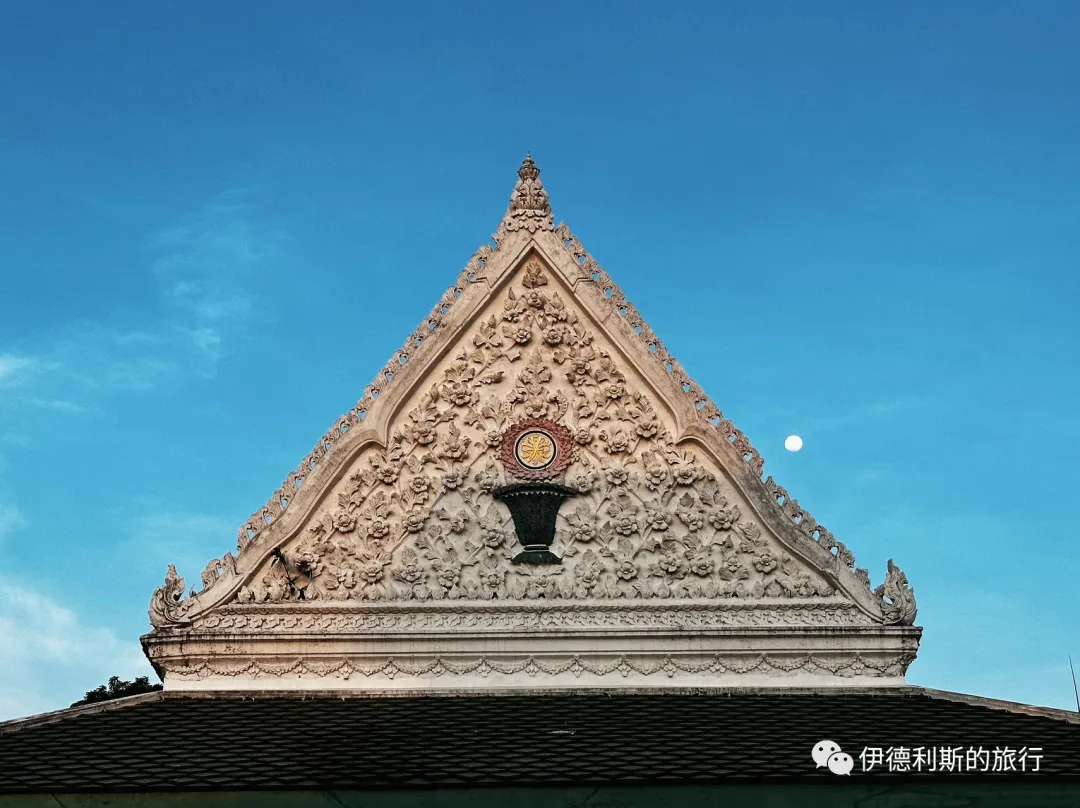
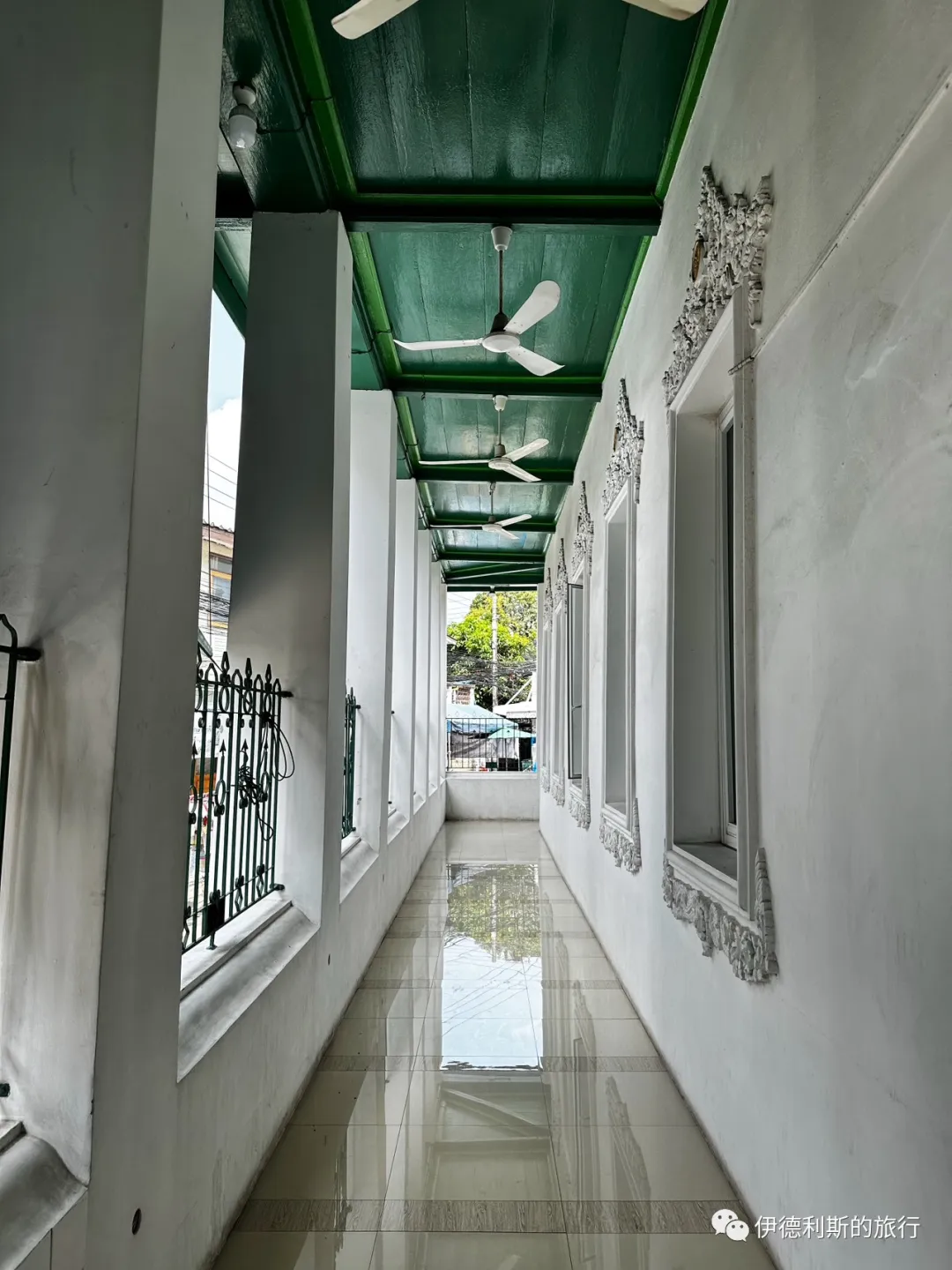
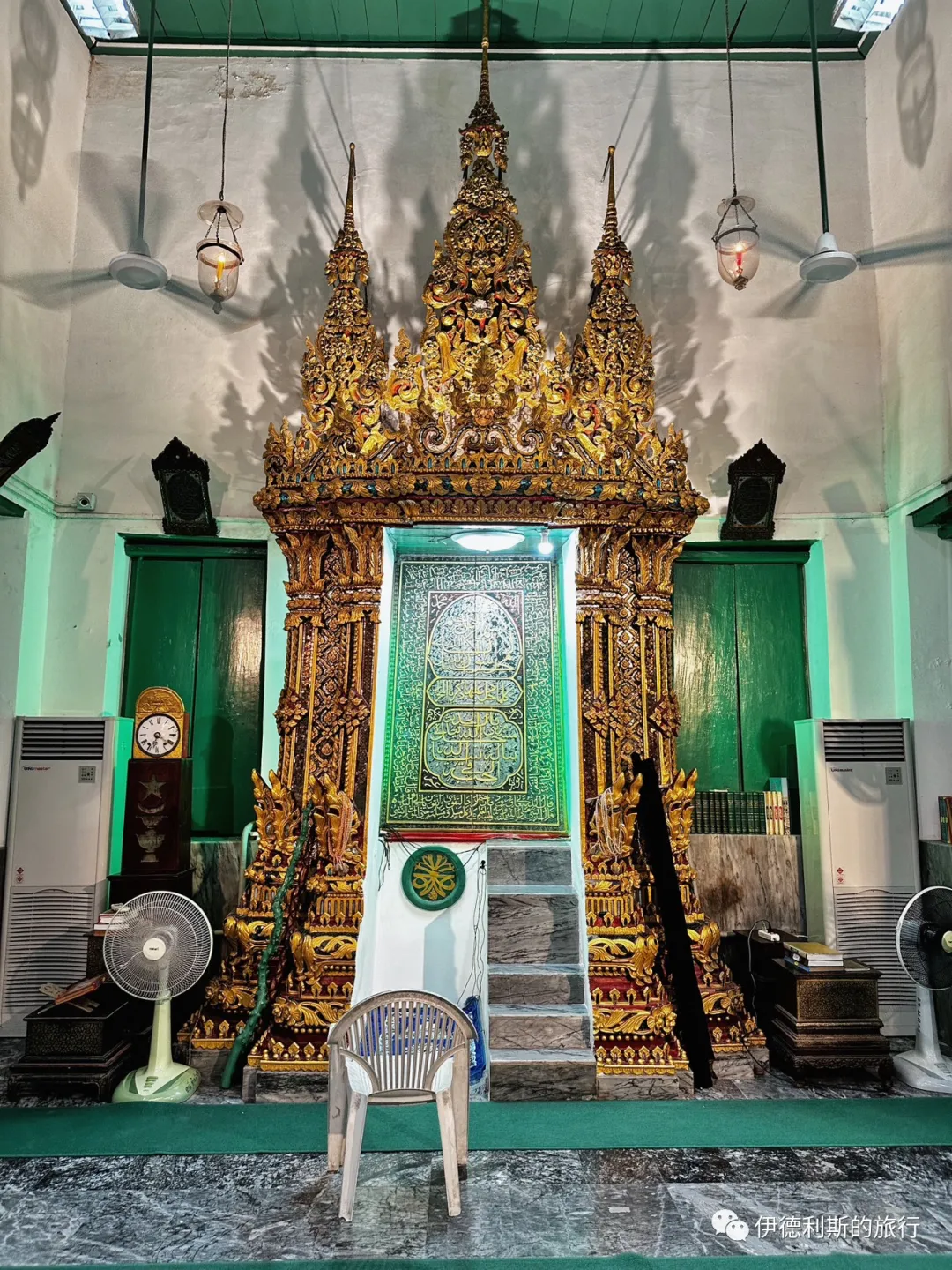
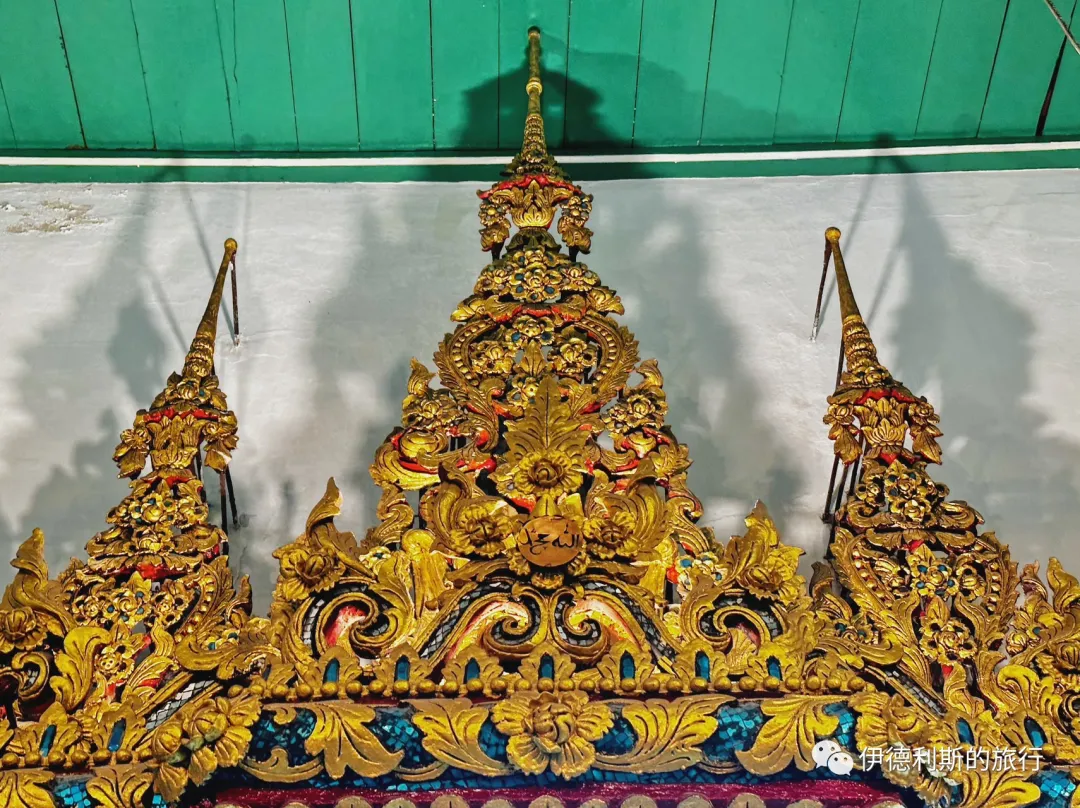
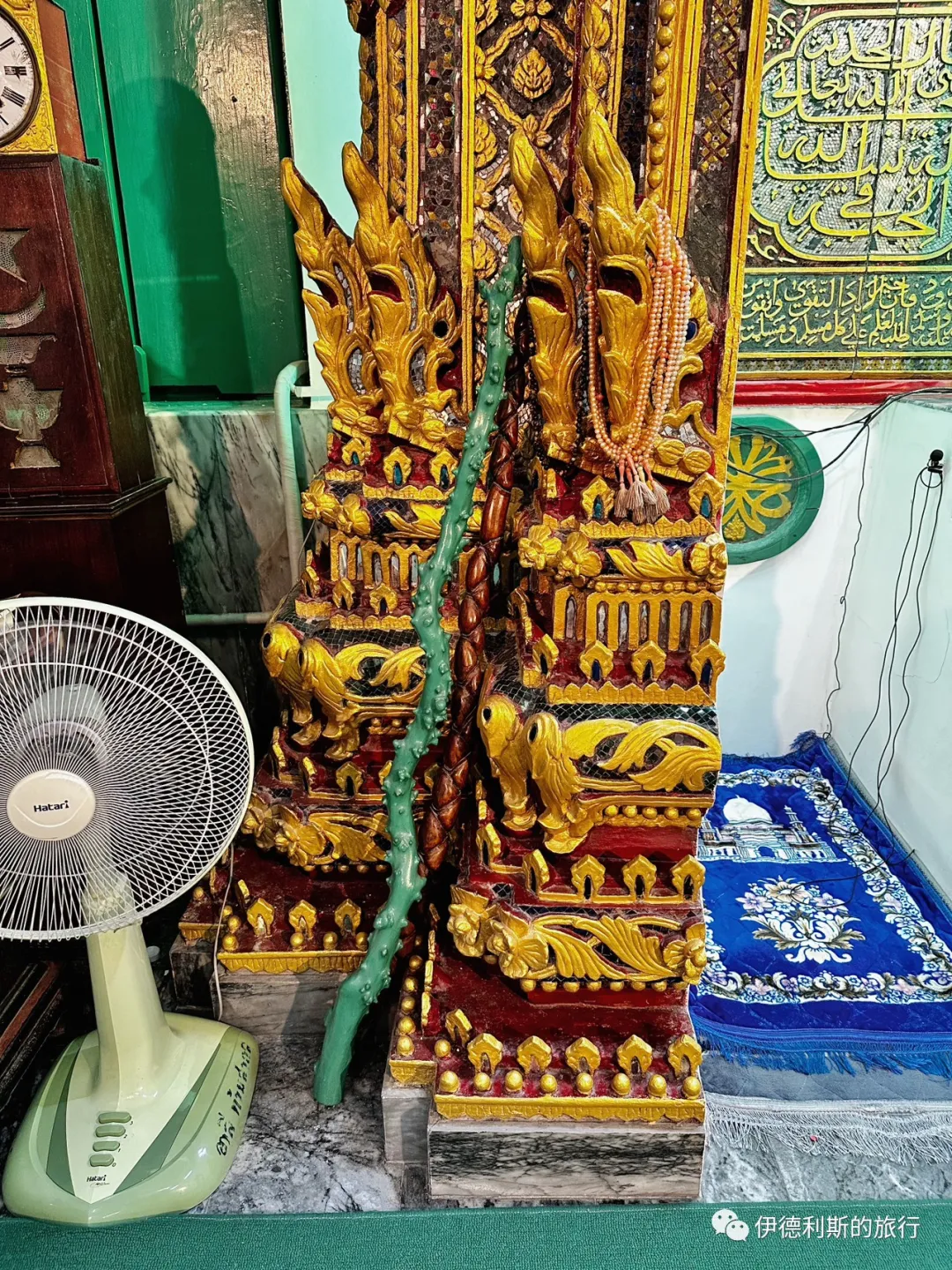
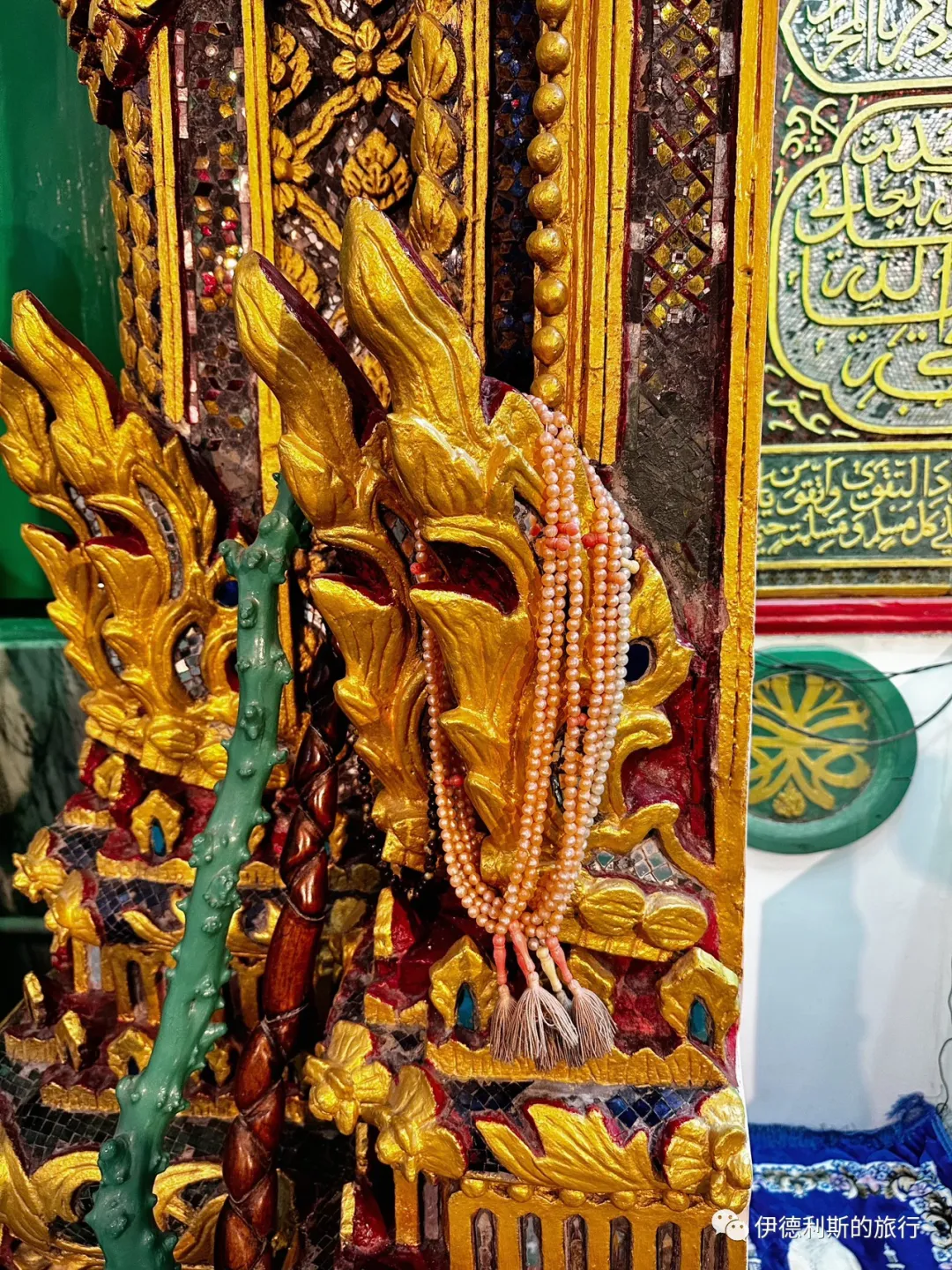
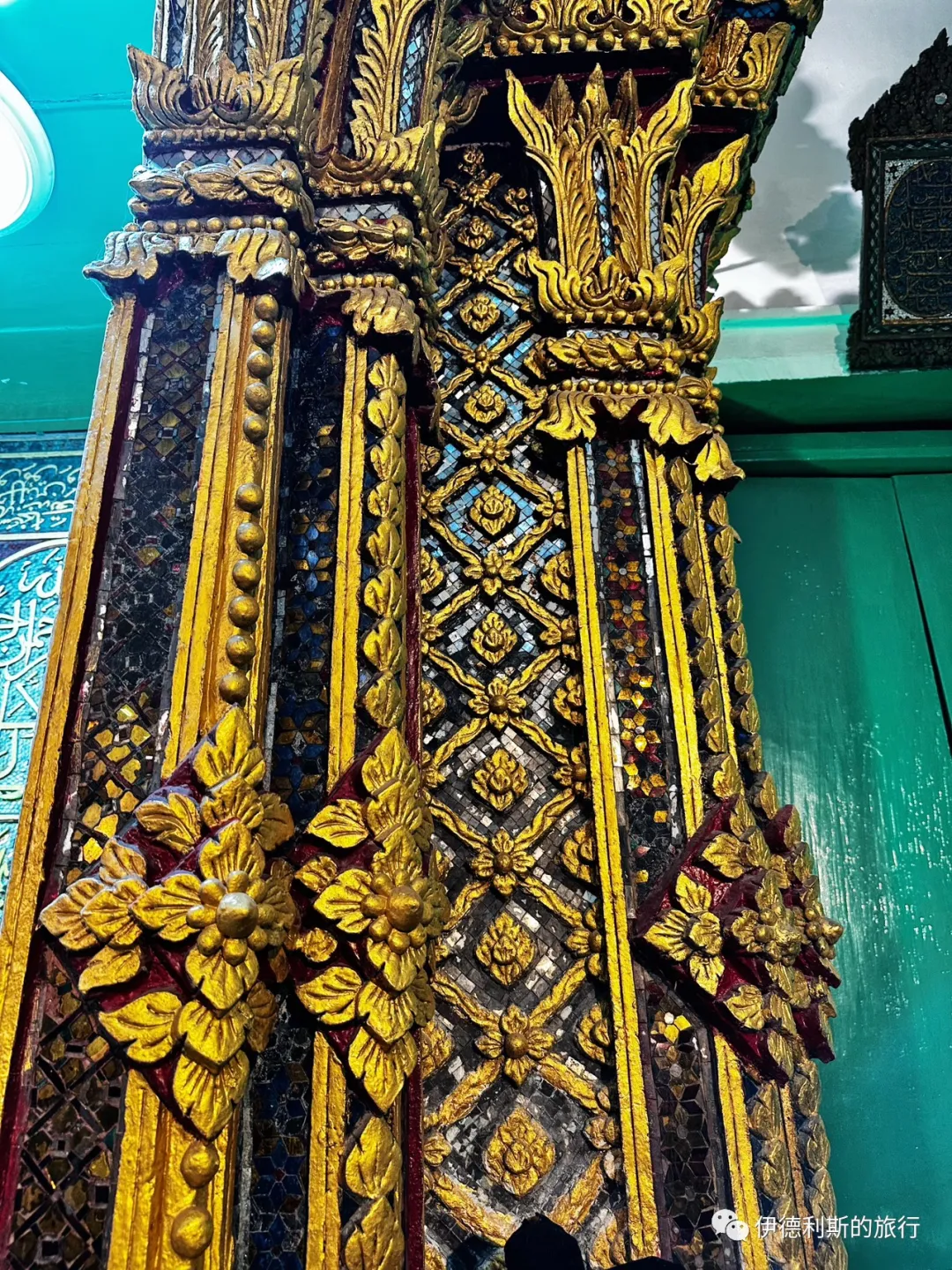
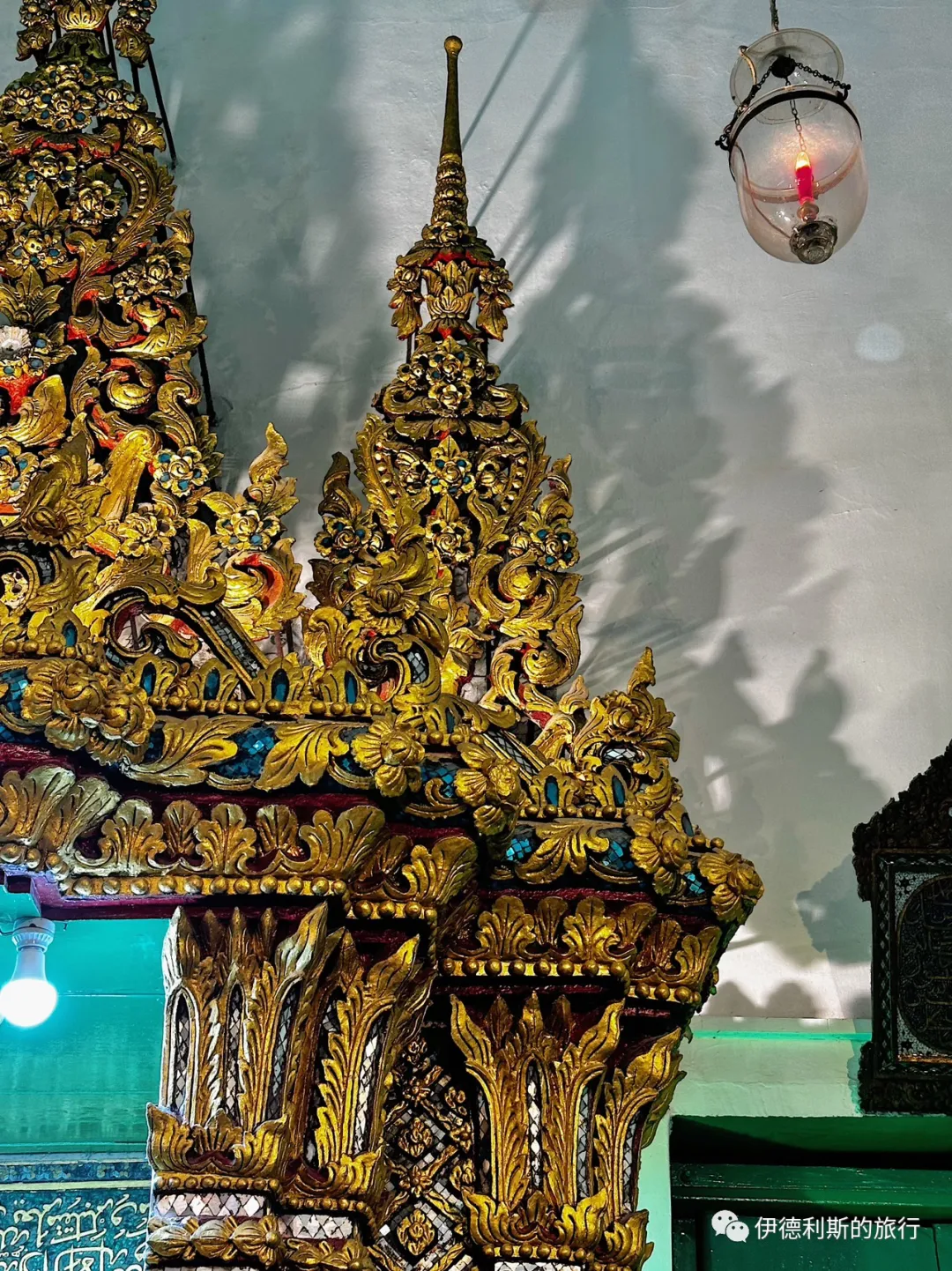
The atmosphere at Bang Luang Mosque during namaz is very special. Every elder who arrives shakes hands with everyone, and an elder even gave me a drink. You can see everyone wearing a sarong (sarong) tube skirt, which means 'to cover' in Malay. This outfit is perfect for the humid and hot climate of Southeast Asia.
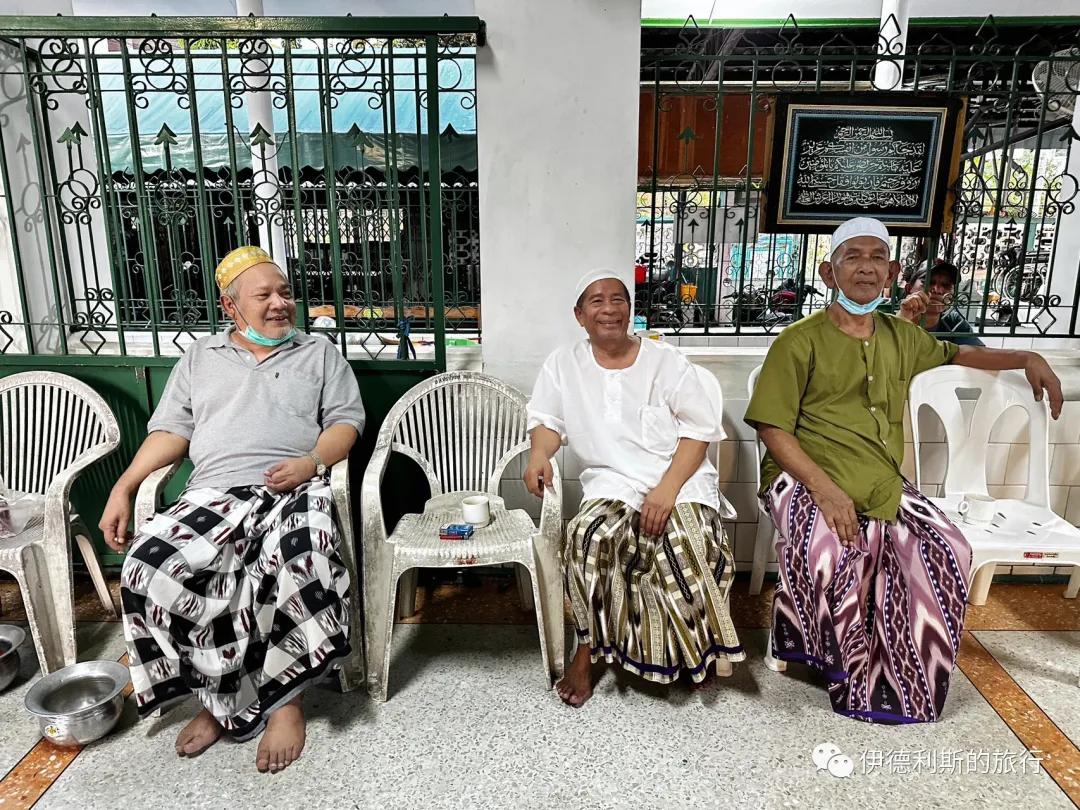
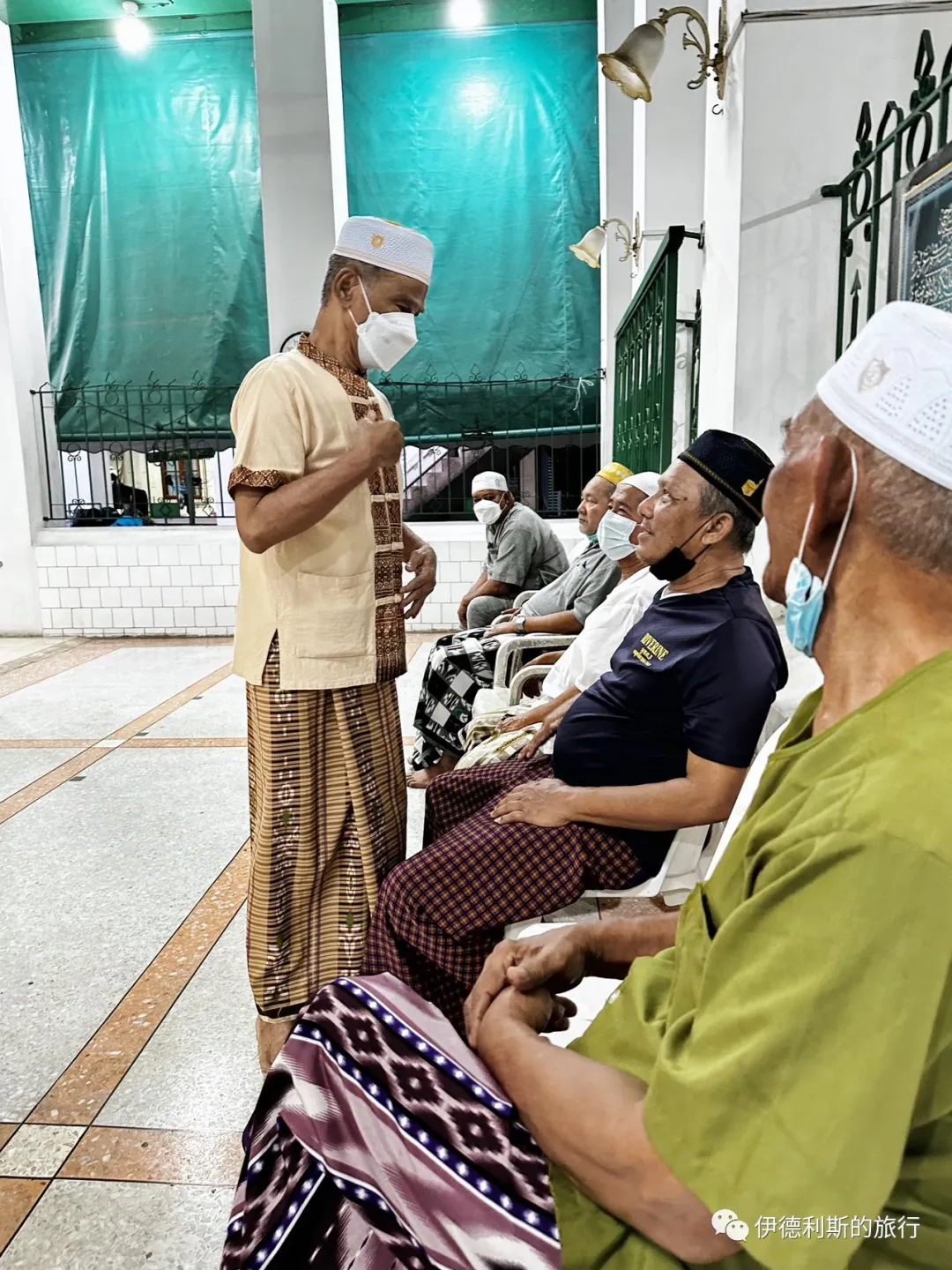
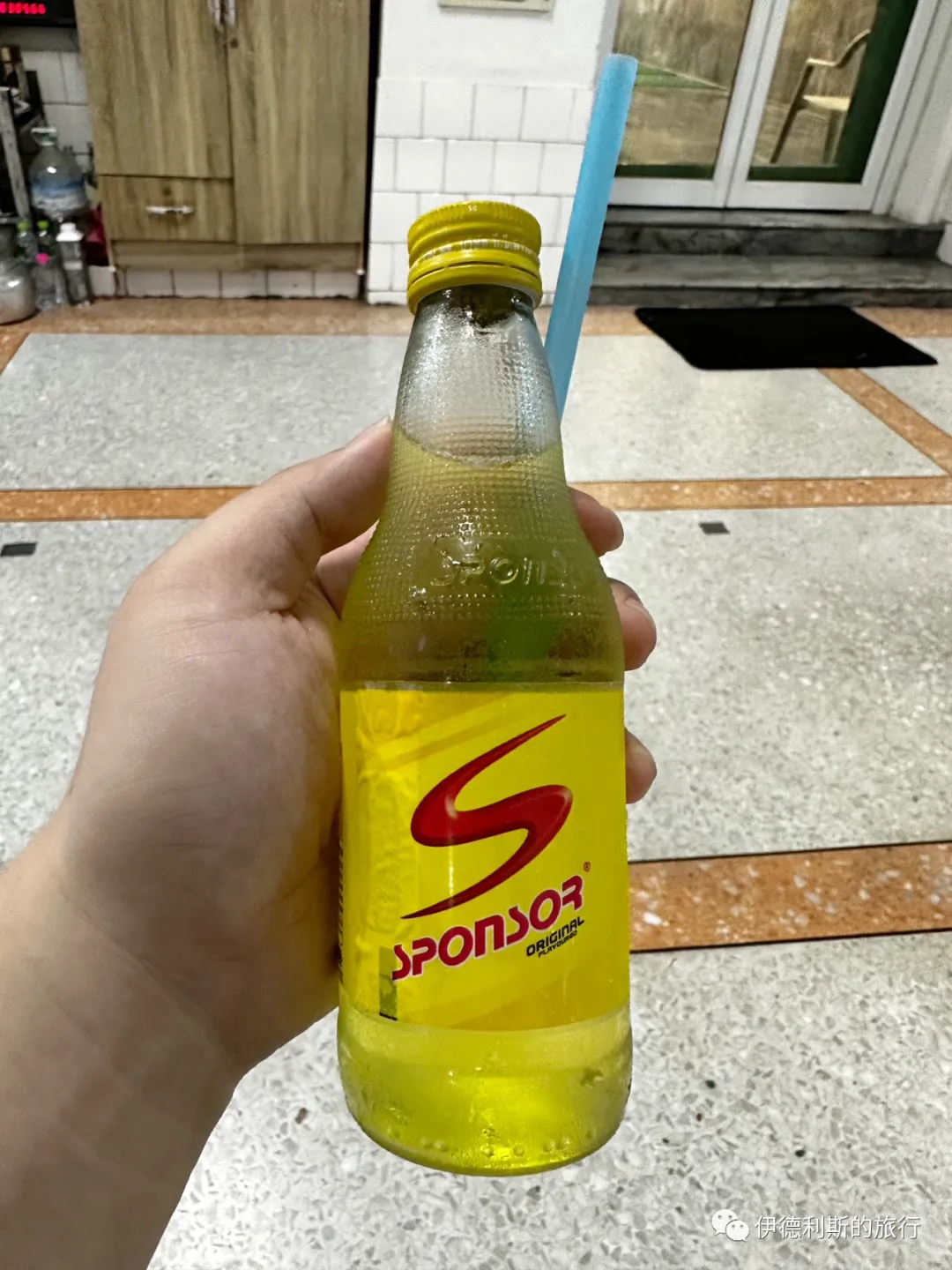
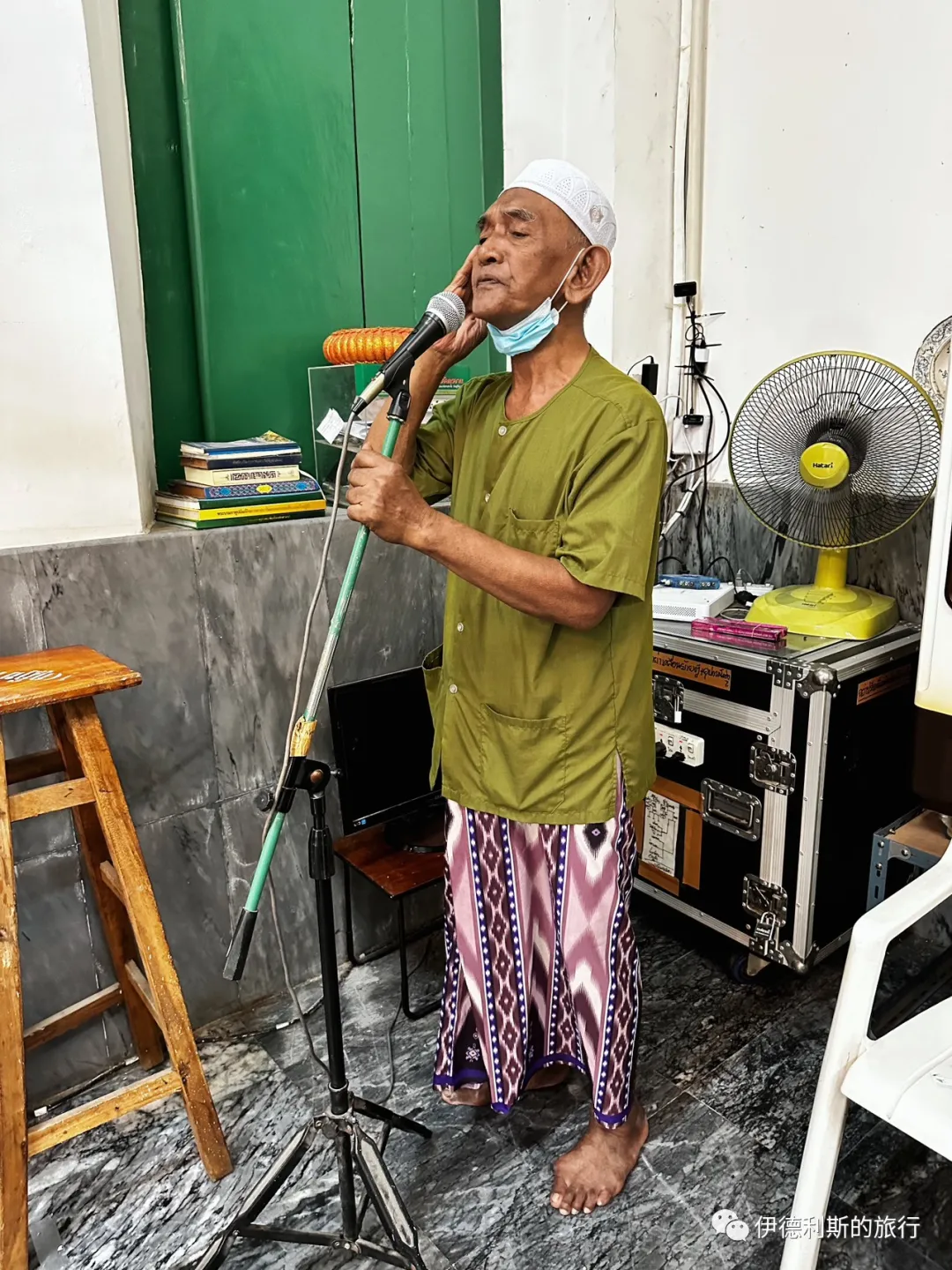
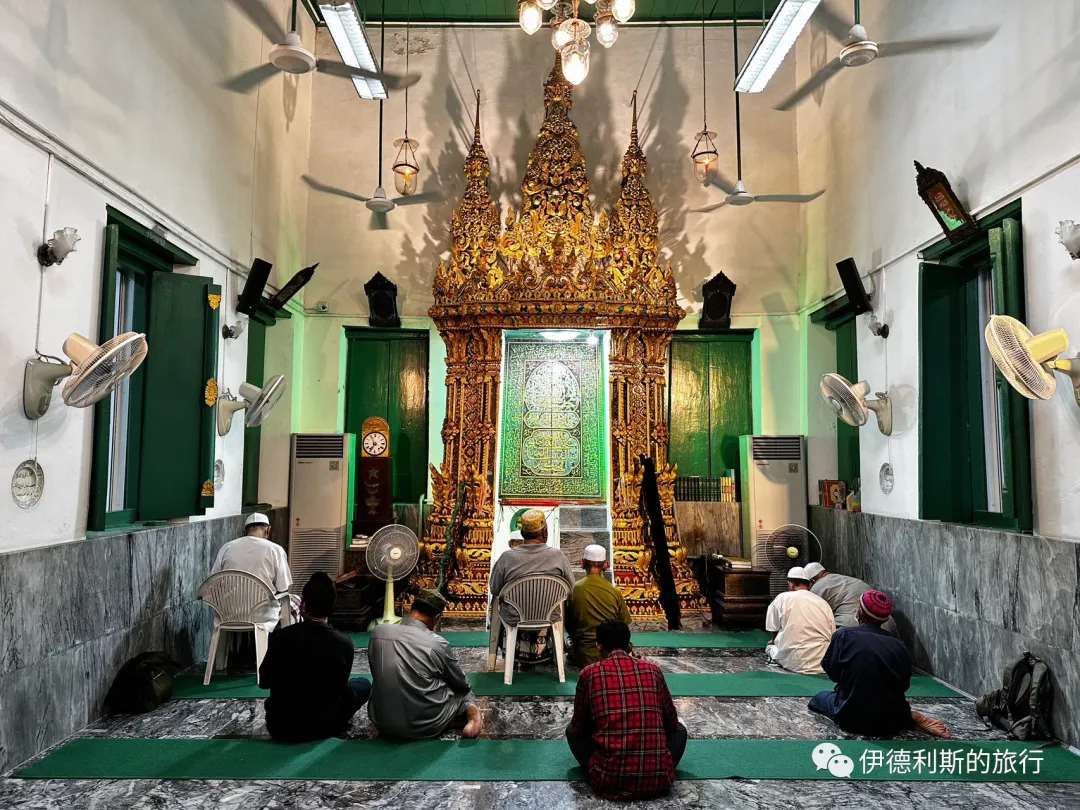
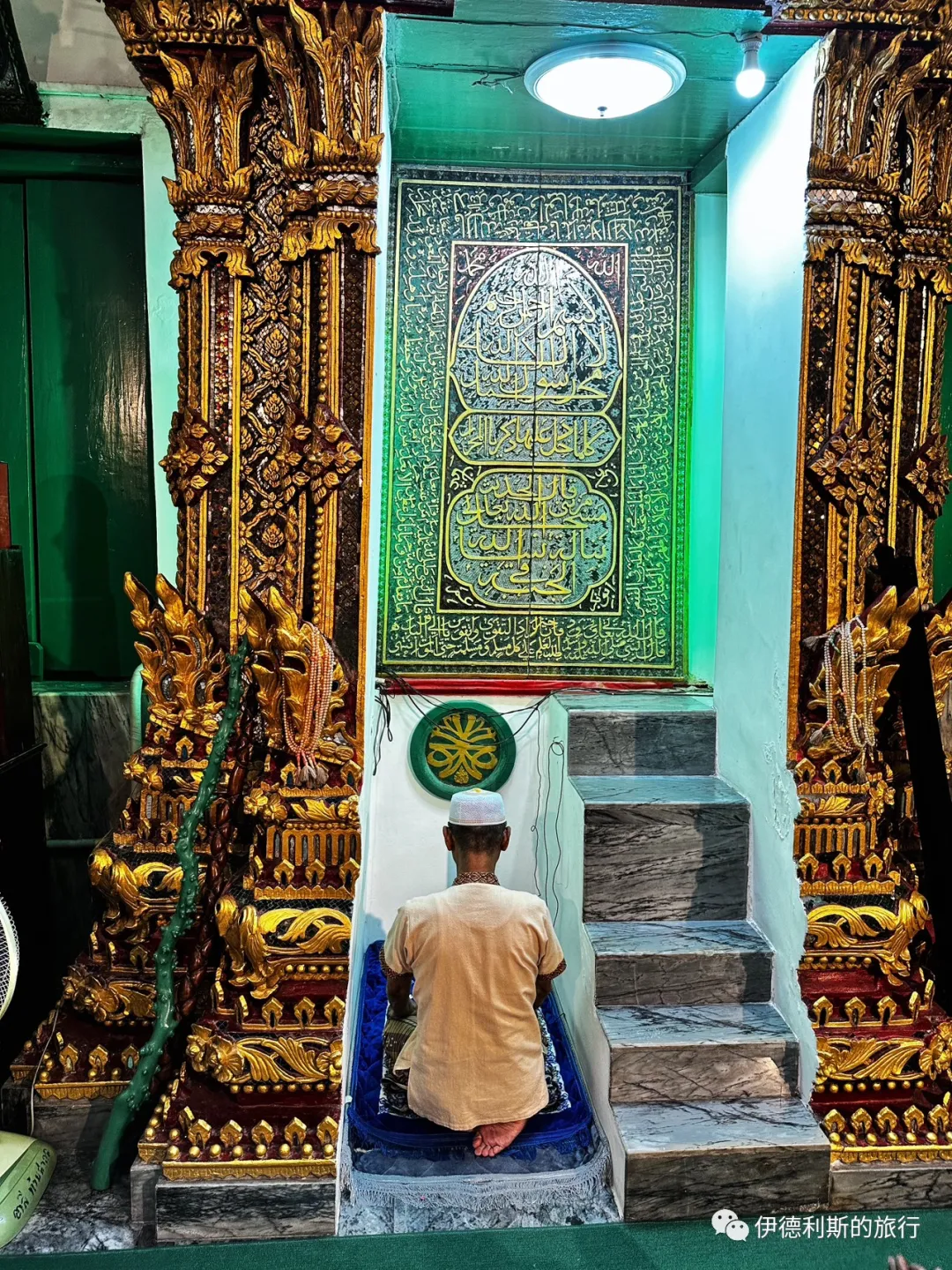
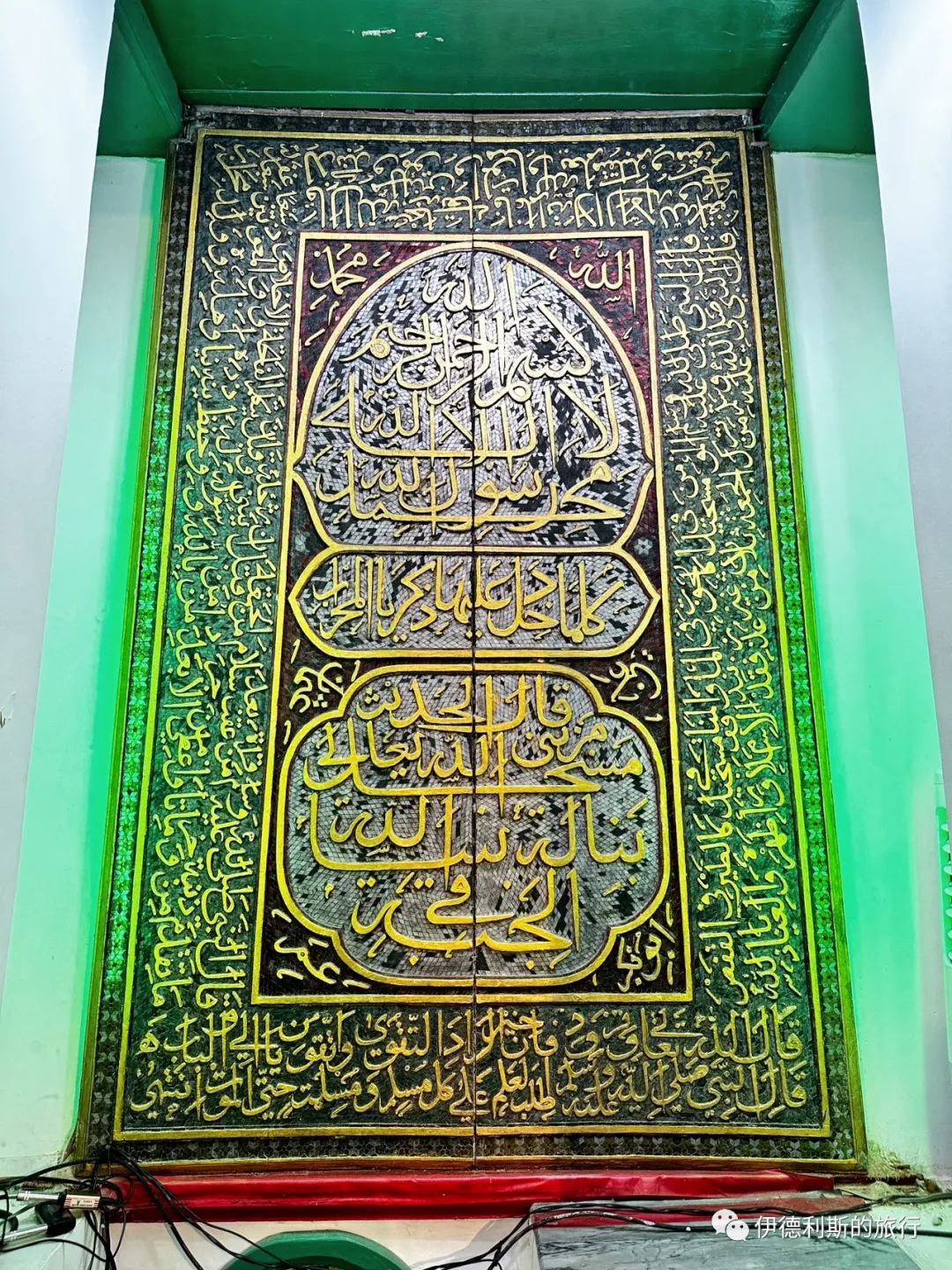
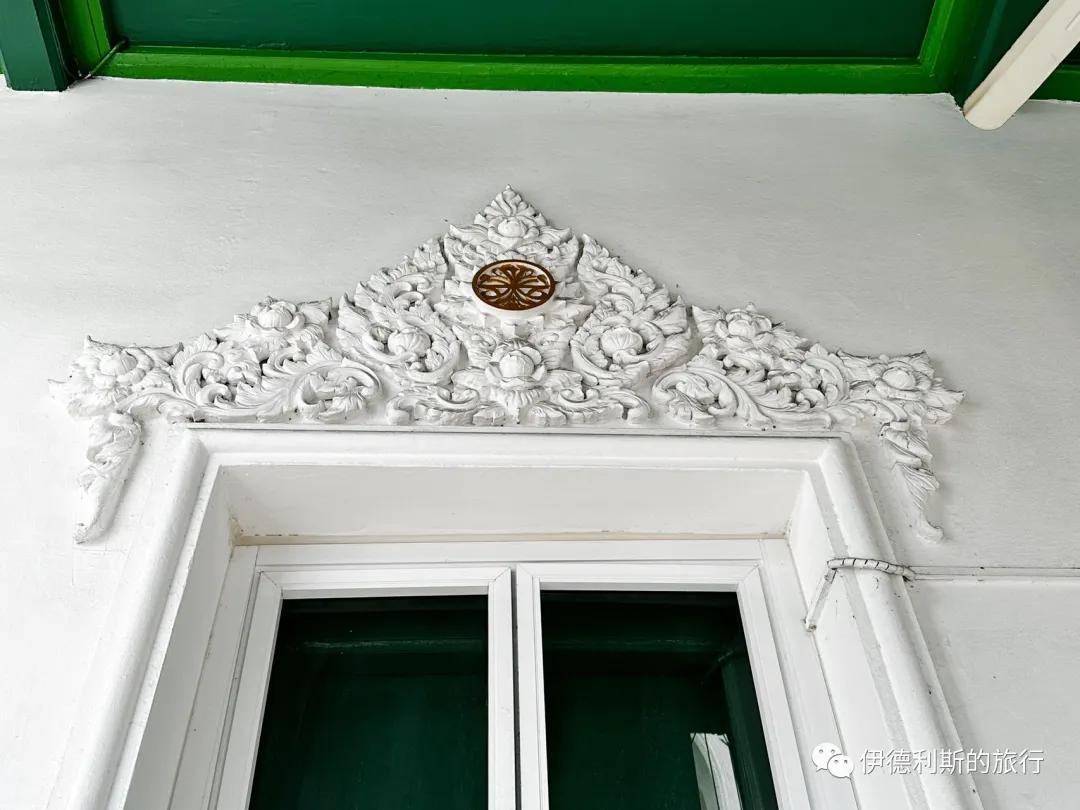
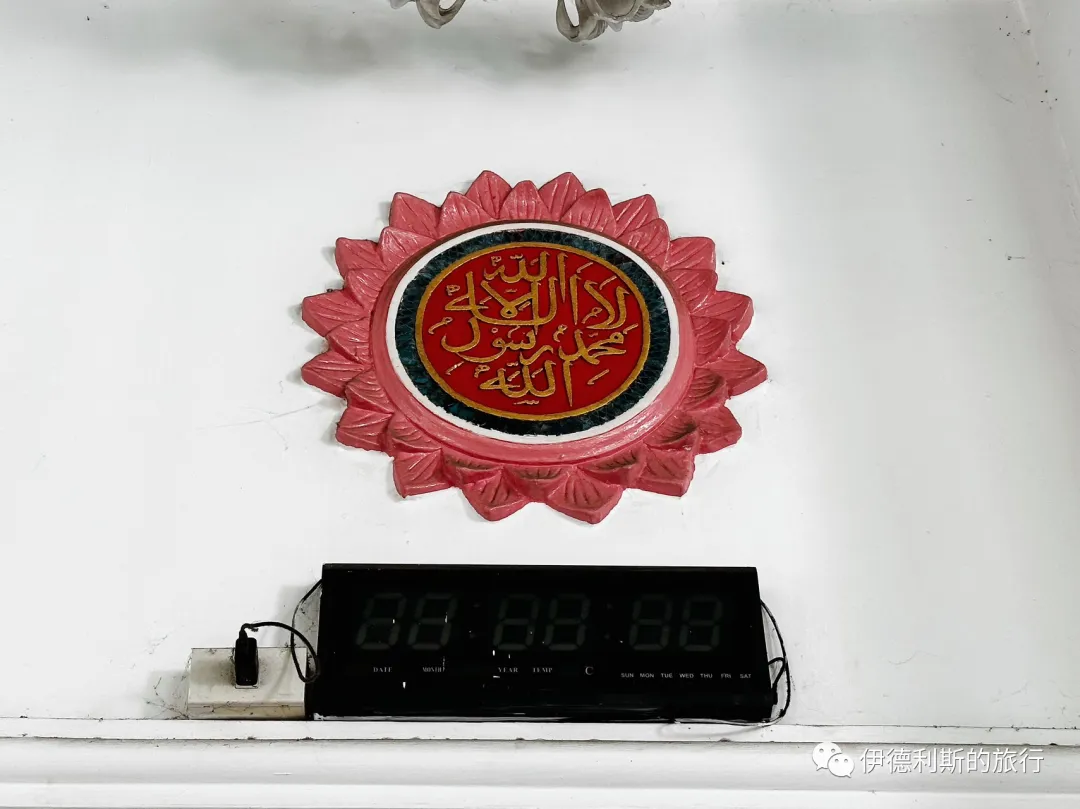
The wooden-framed scriptures hanging on the walls of Bang Luang Mosque and the porcelain plates embedded in the walls are both over a hundred years old.
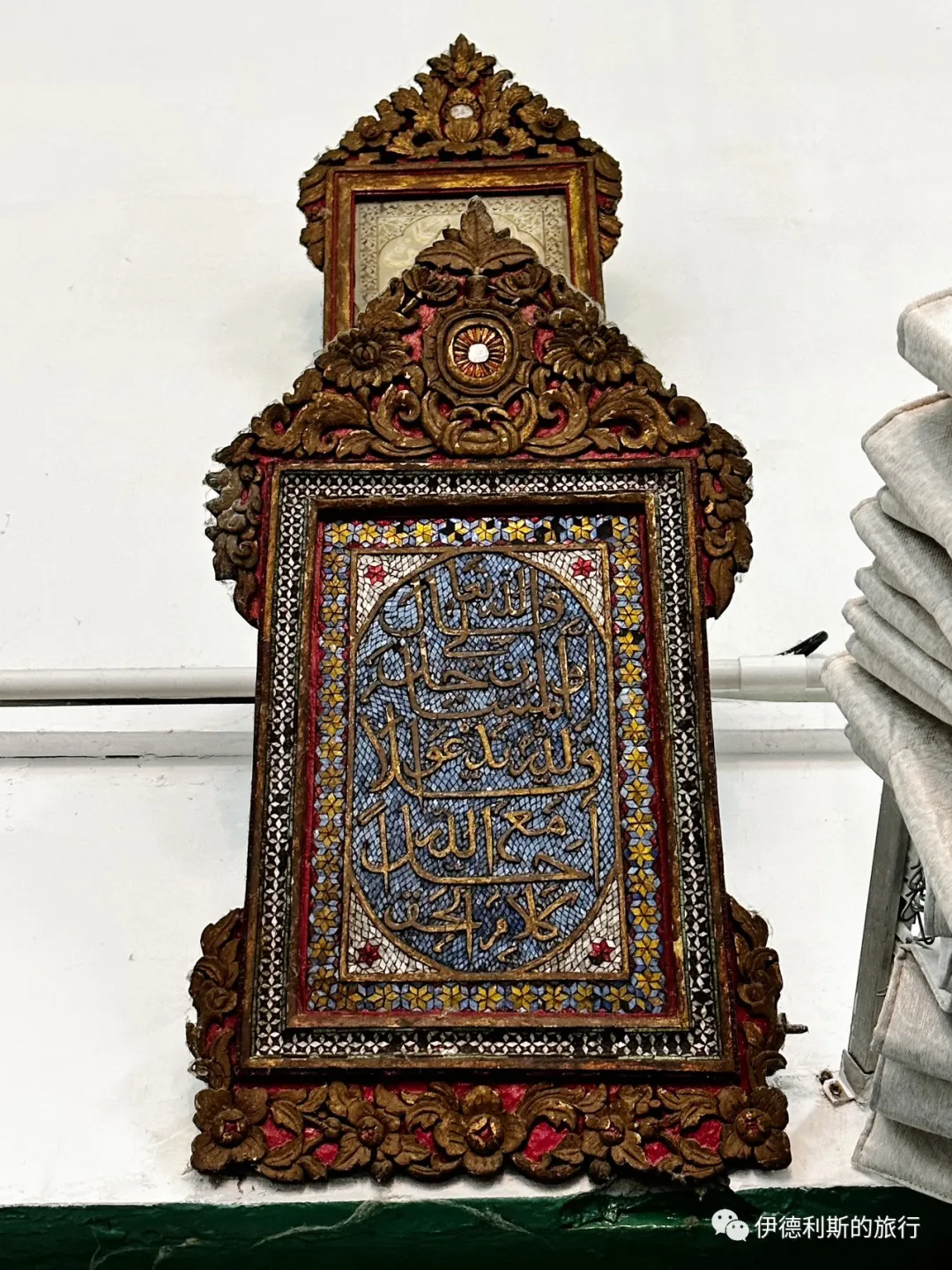
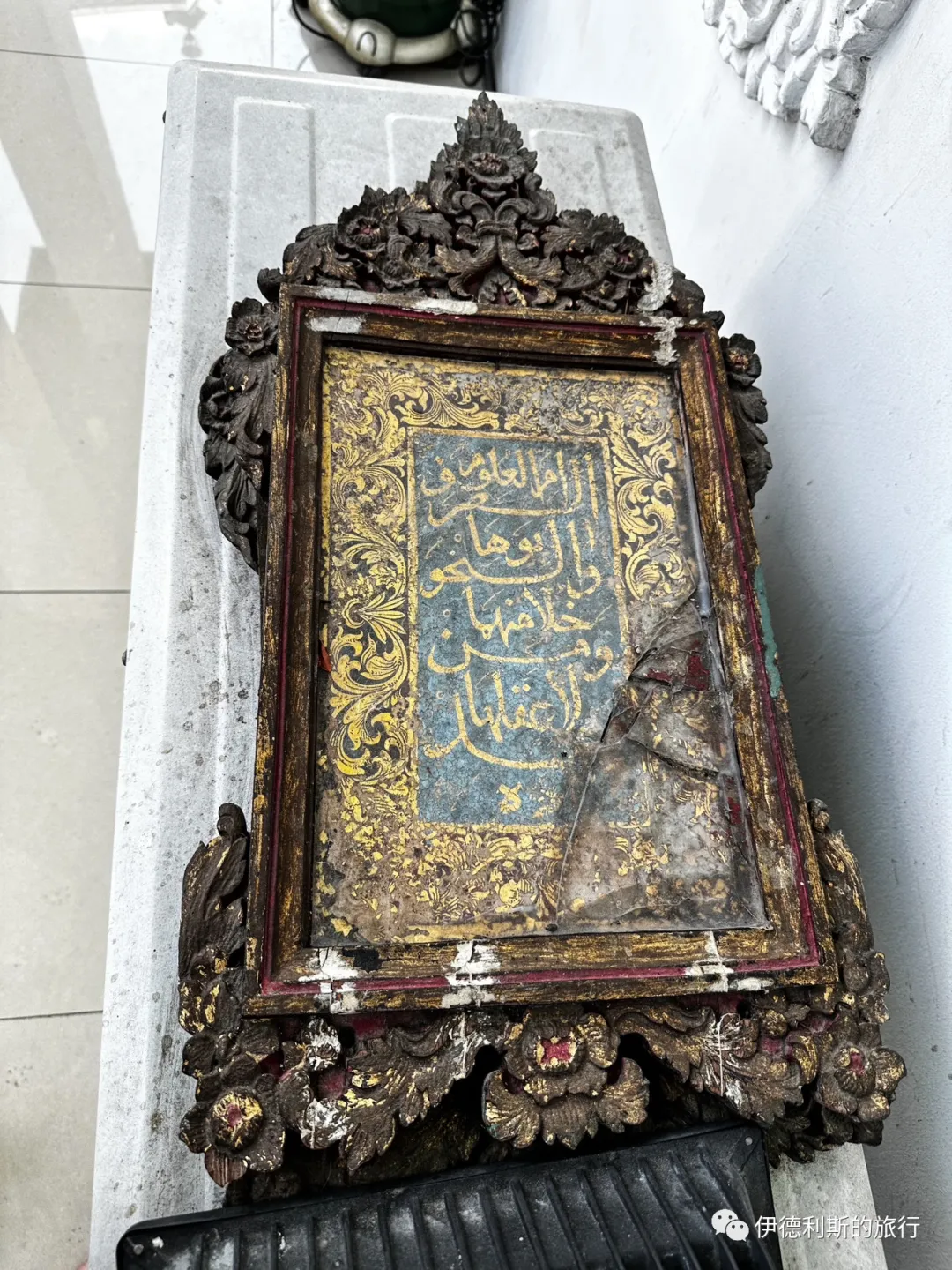
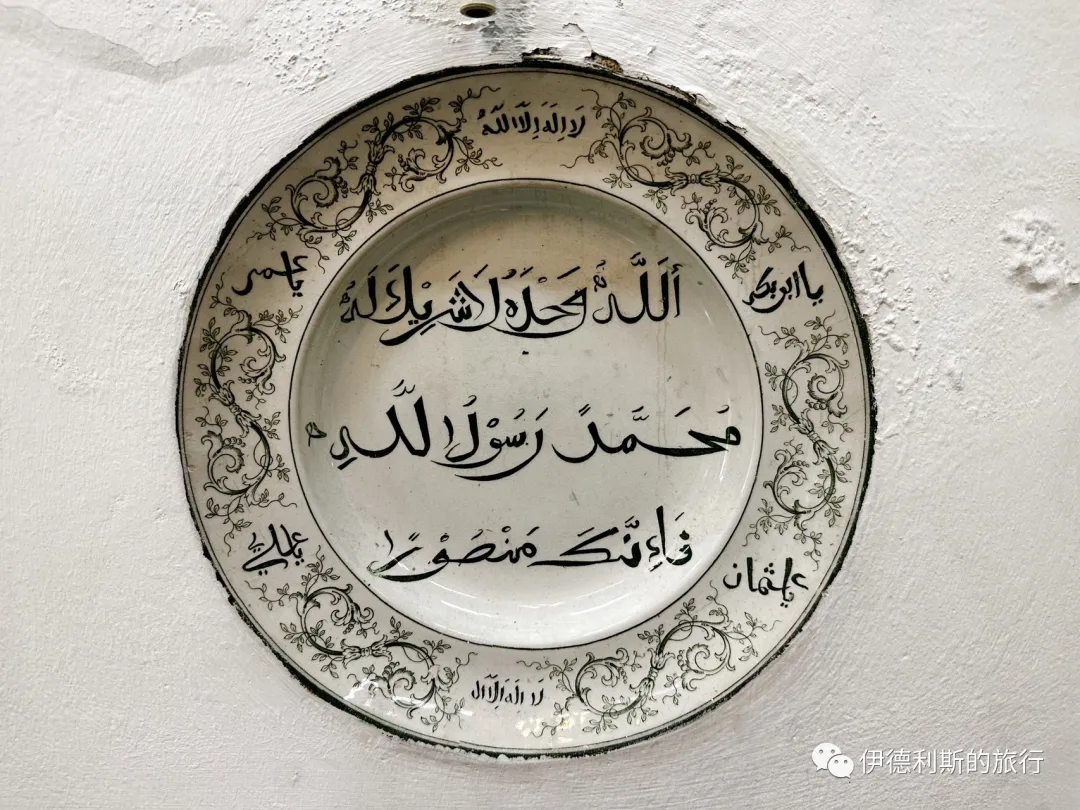
This old bell feels like it has a lot of history.
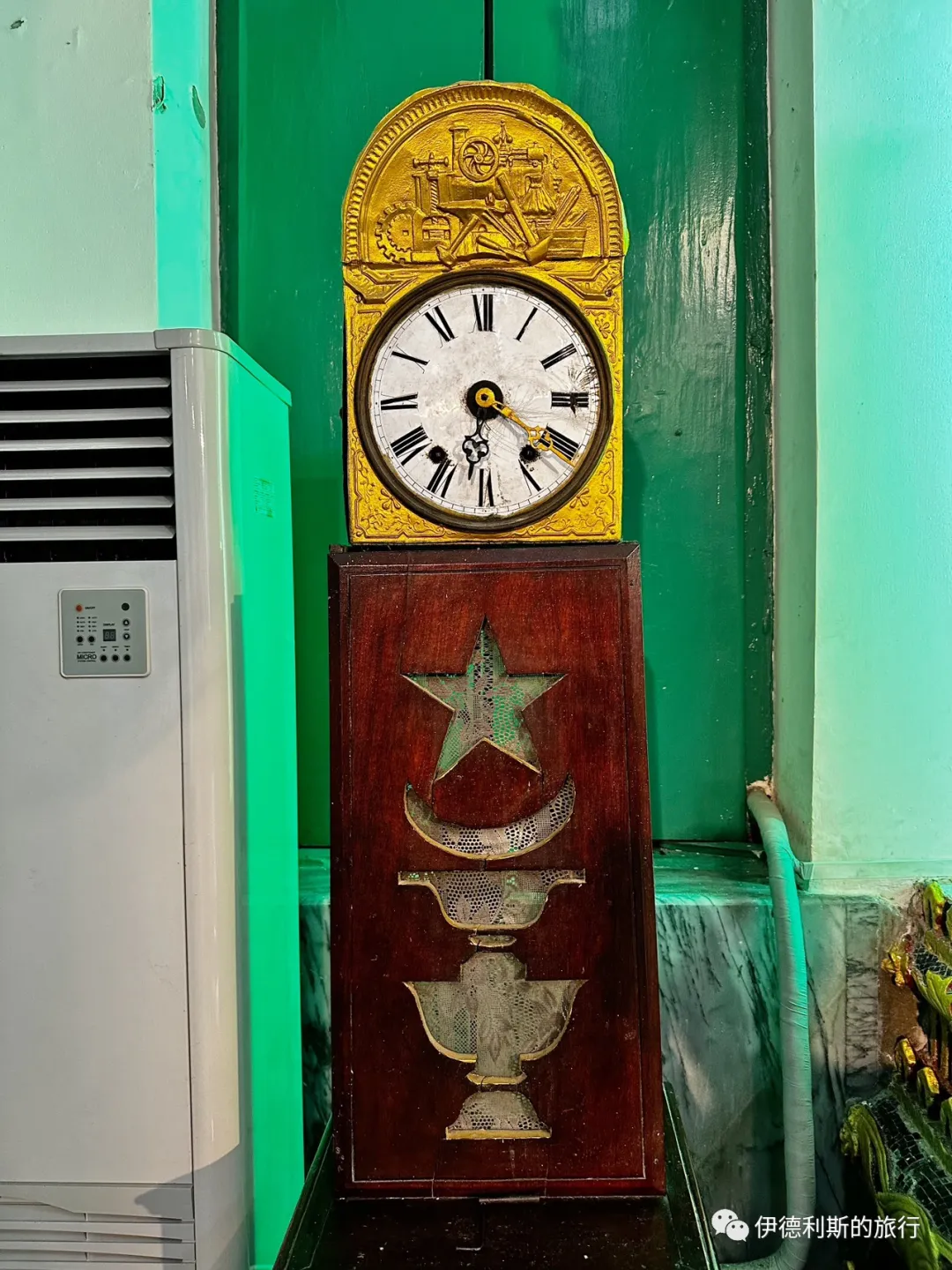
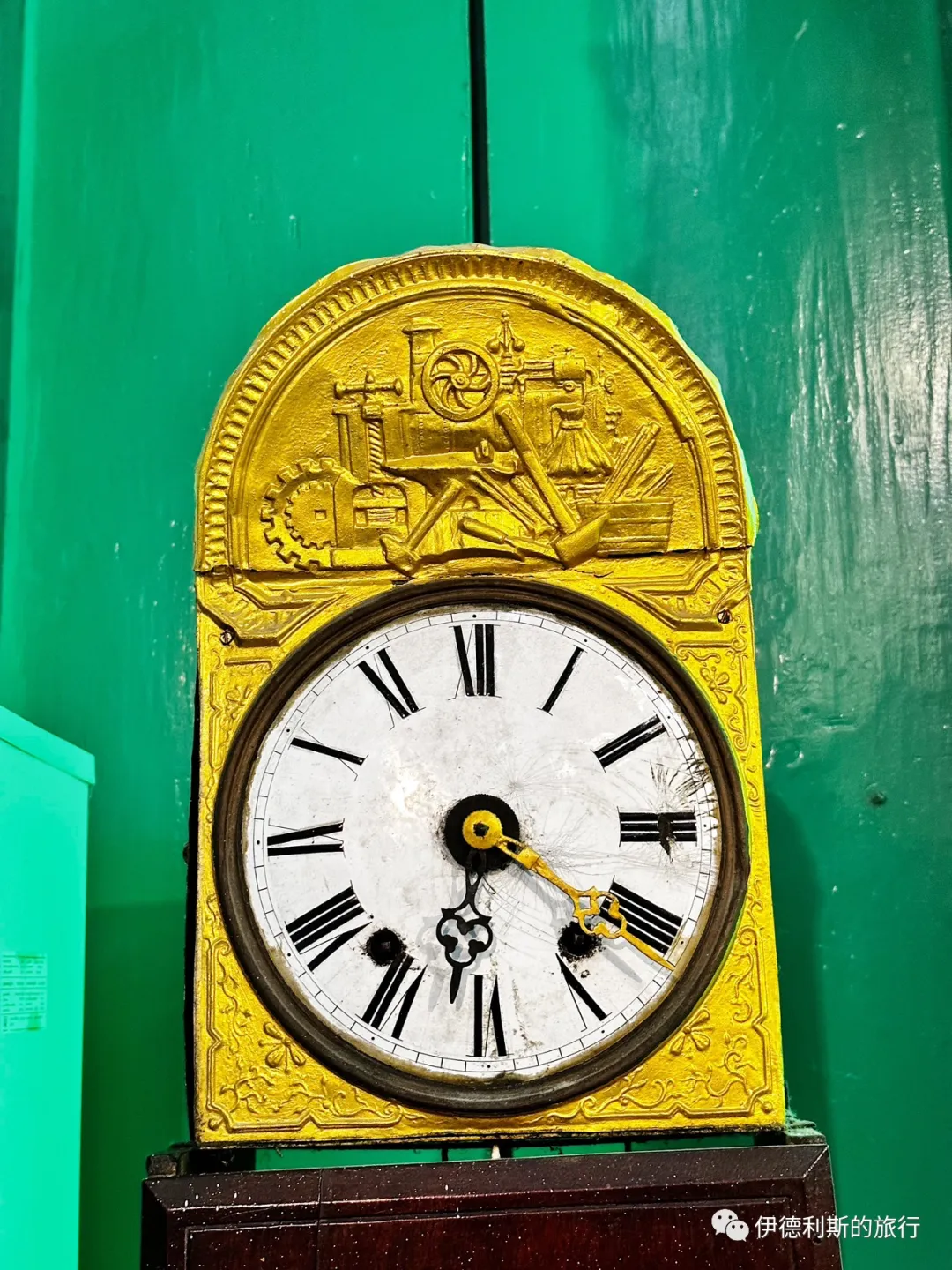
The area around Bang Luang Mosque is still mainly inhabited by Cham and Malay descendants. We chatted for a while with the owner of a small shop opposite the mosque. The owner's family is of Malay descent; the father speaks fluent Thai and Malay, and the son's English is also very good.
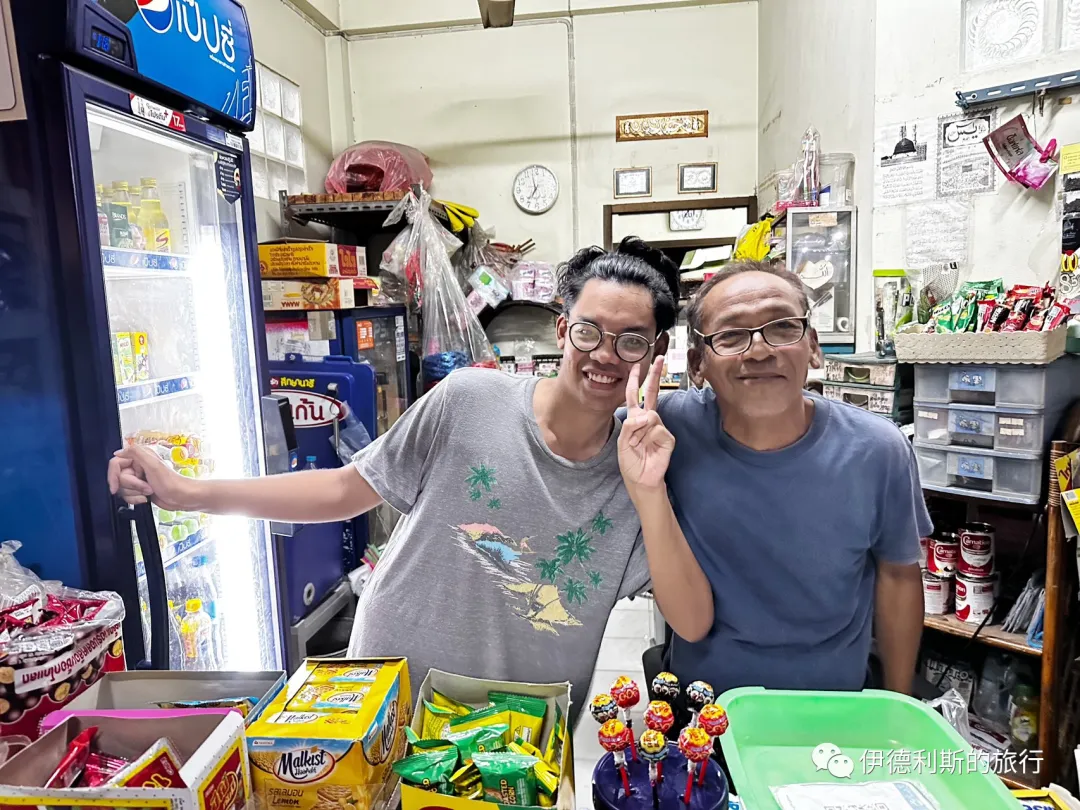
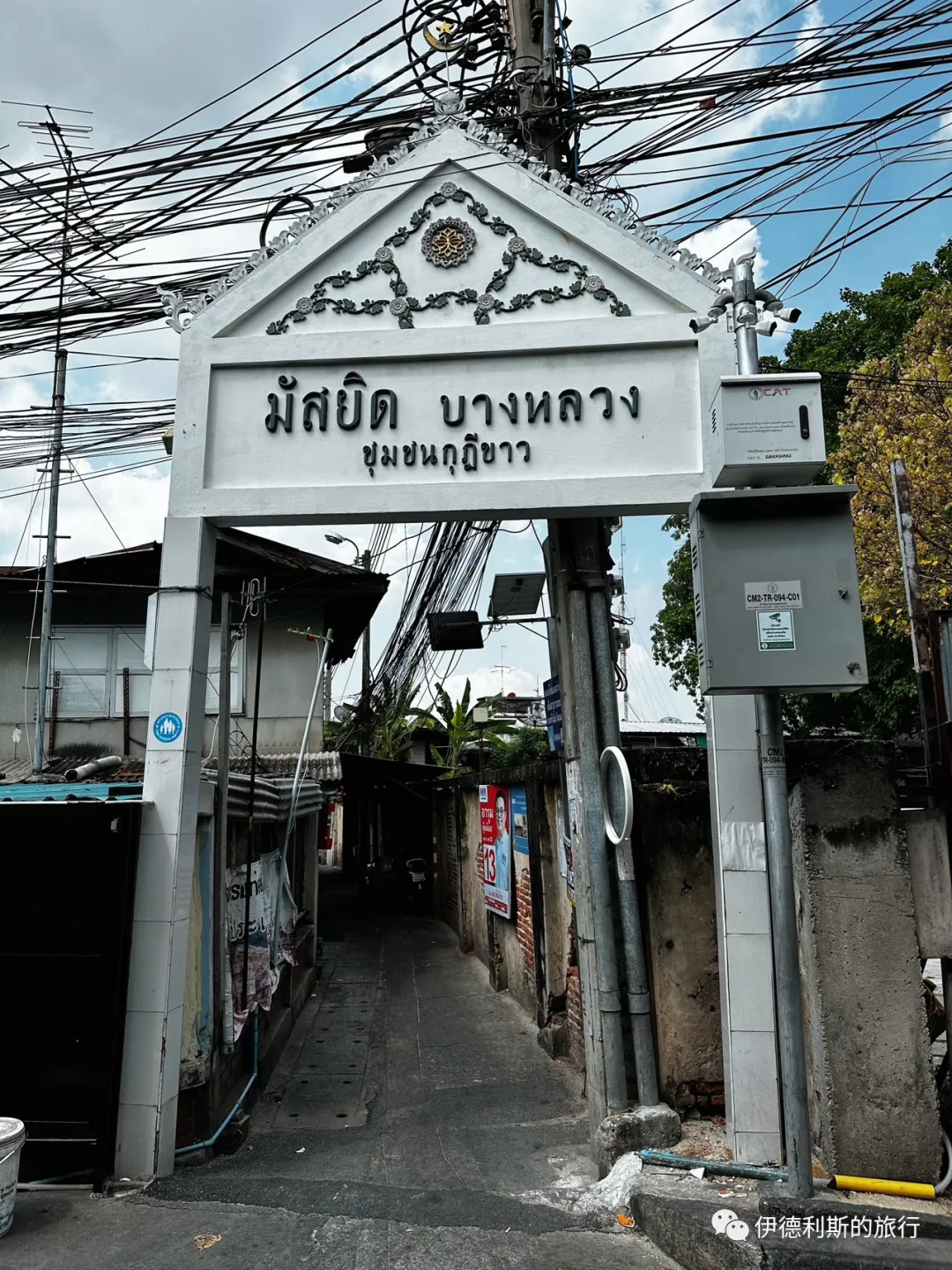
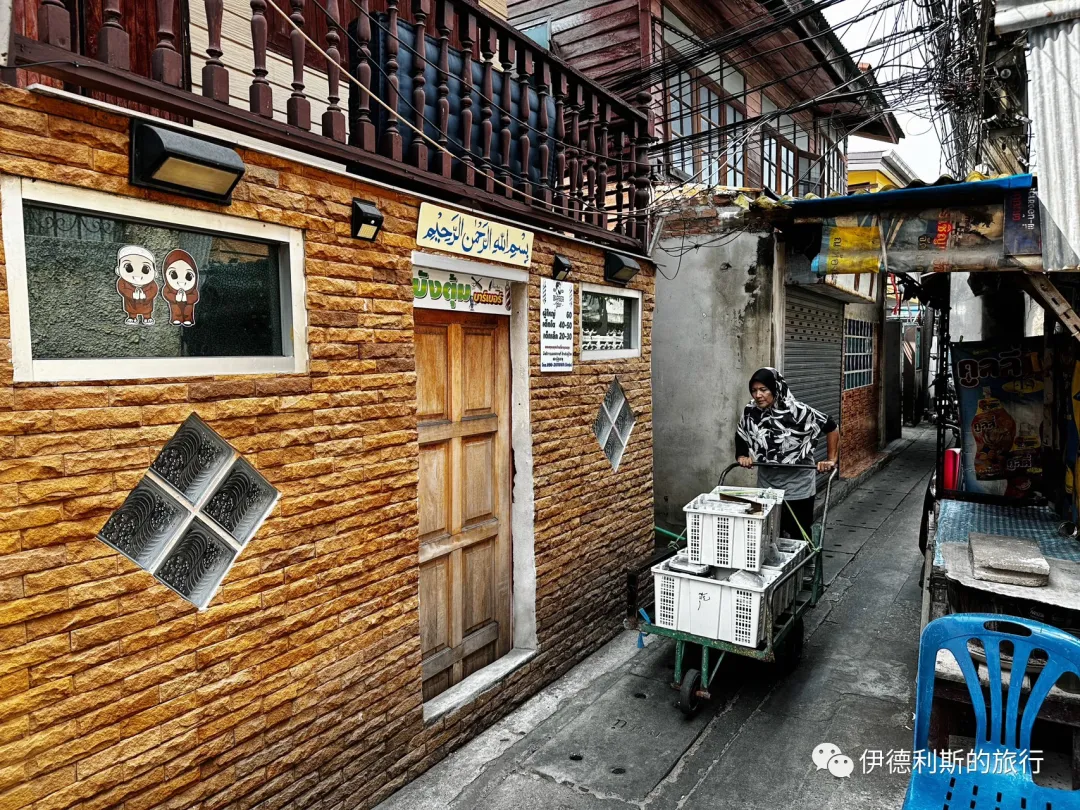
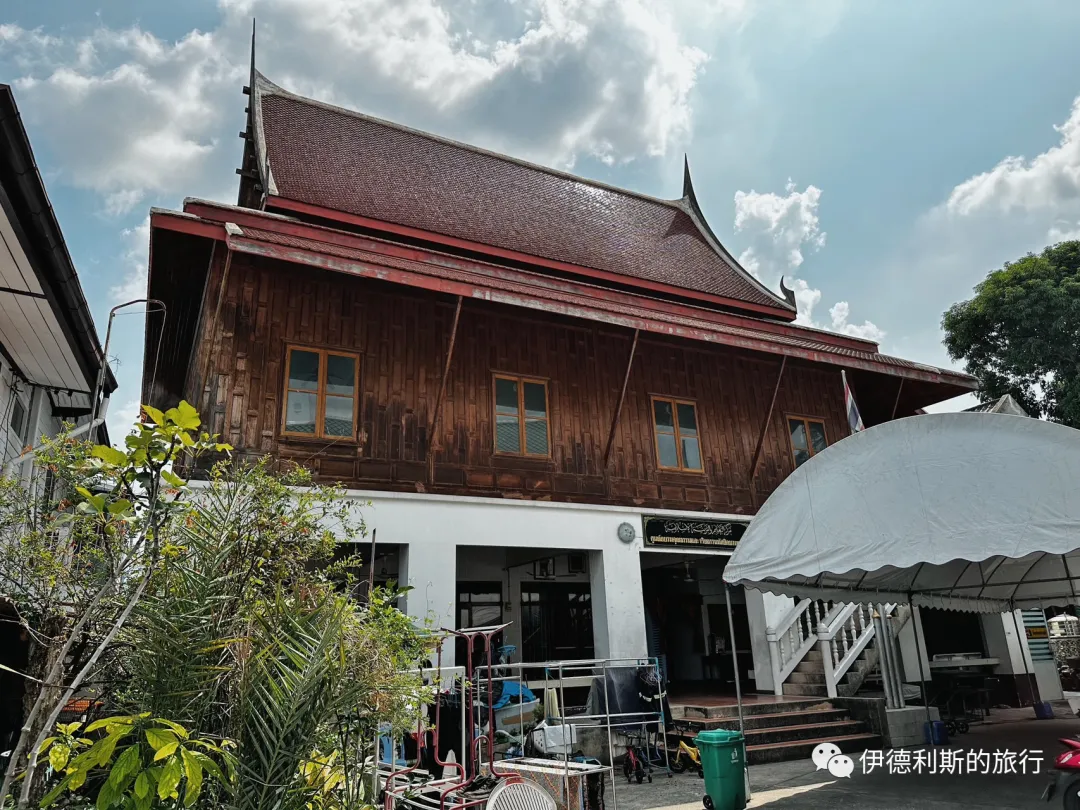
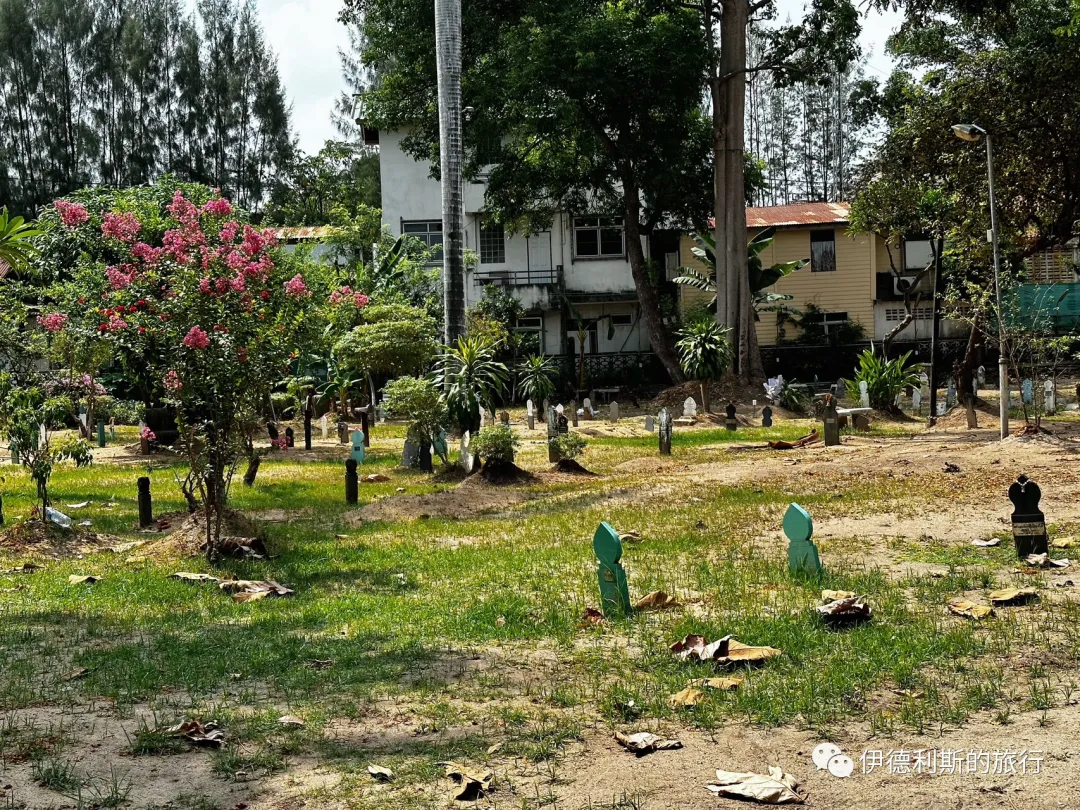
Cham Navy and the National Museum of Royal Barges.
In 1778, Thailand invaded Laos. To attack Laos from two sides, Thailand recruited an army of over 10,000 people from the pro-Thai Kingdom of Cambodia, which included several naval companies made up of Cham dosti (friends/comrades). After these Cham naval companies finished participating in the war against Laos, some of them returned with the Thai army to Thonburi, the capital of Thailand at the time. They were under the command of the Second King of Siam (Front Palace). After 1782, they were stationed along the Noi Canal and built the Second King's shipyard and dock next to their camp.
These Cham sailors served for a long time in gunboat patrols against pirates along the Thai coast. Until the Grand Palace and Front Palace navies merged into the Royal Thai Navy in 1880, these Cham sailors continued to serve in the Royal Navy, with some stationed at naval fortifications in Samut Prakan. After the 1910s, the former station of the Cham navy was gradually abandoned.
The National Museum of Royal Barges is currently built on the former site of the Cham navy station. Before the 20th century, the Cham navy served as rowers for the royal barge, a high honor granted to Cham sailors by the Thai royal family.
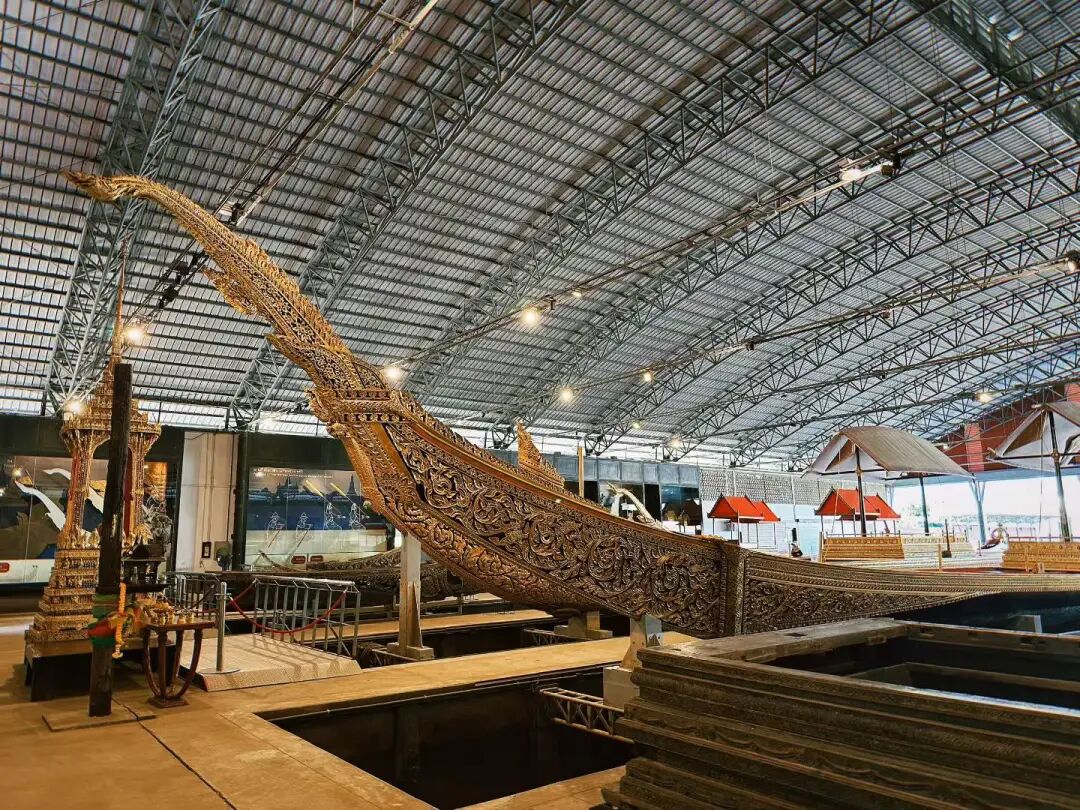
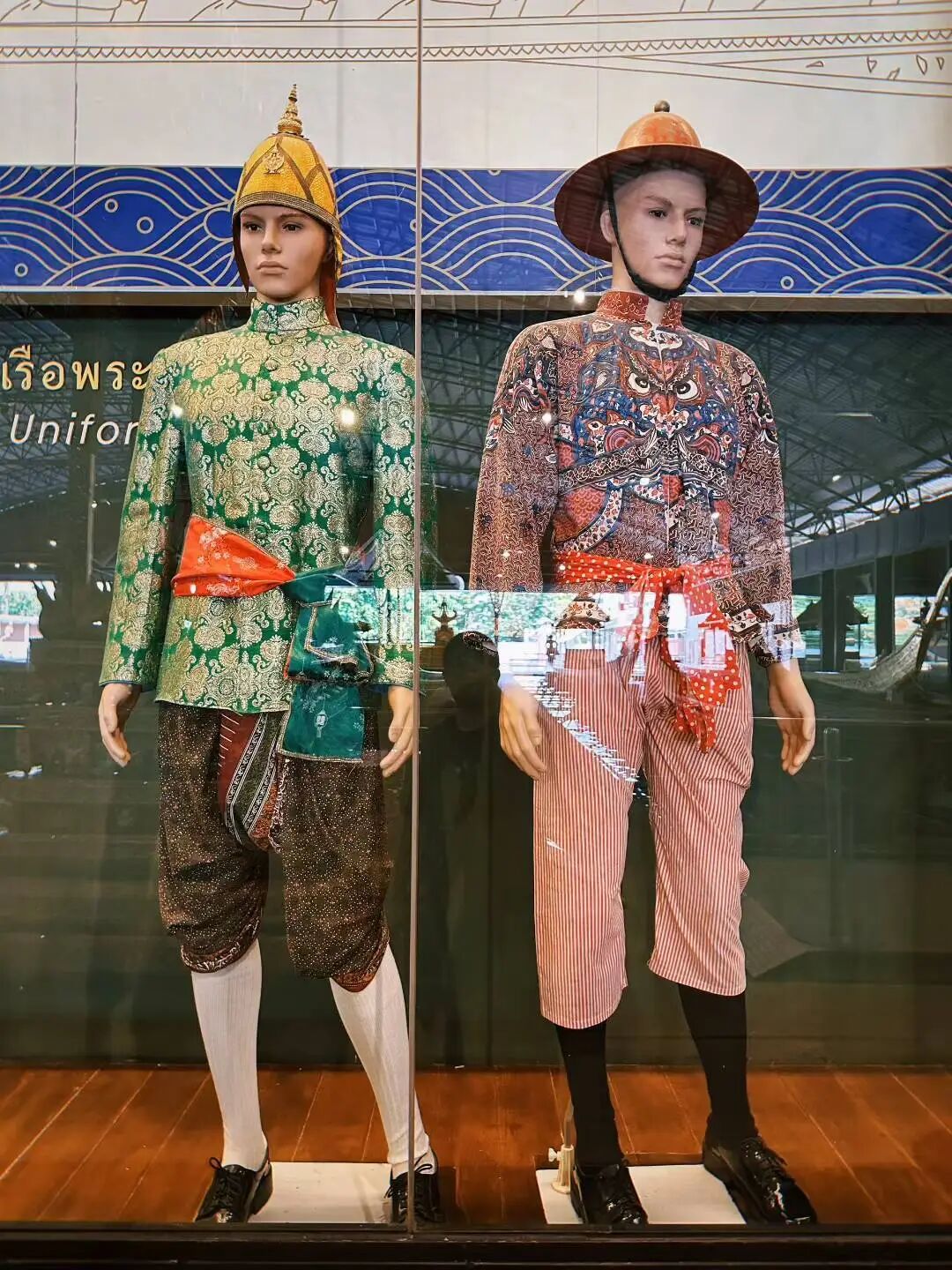
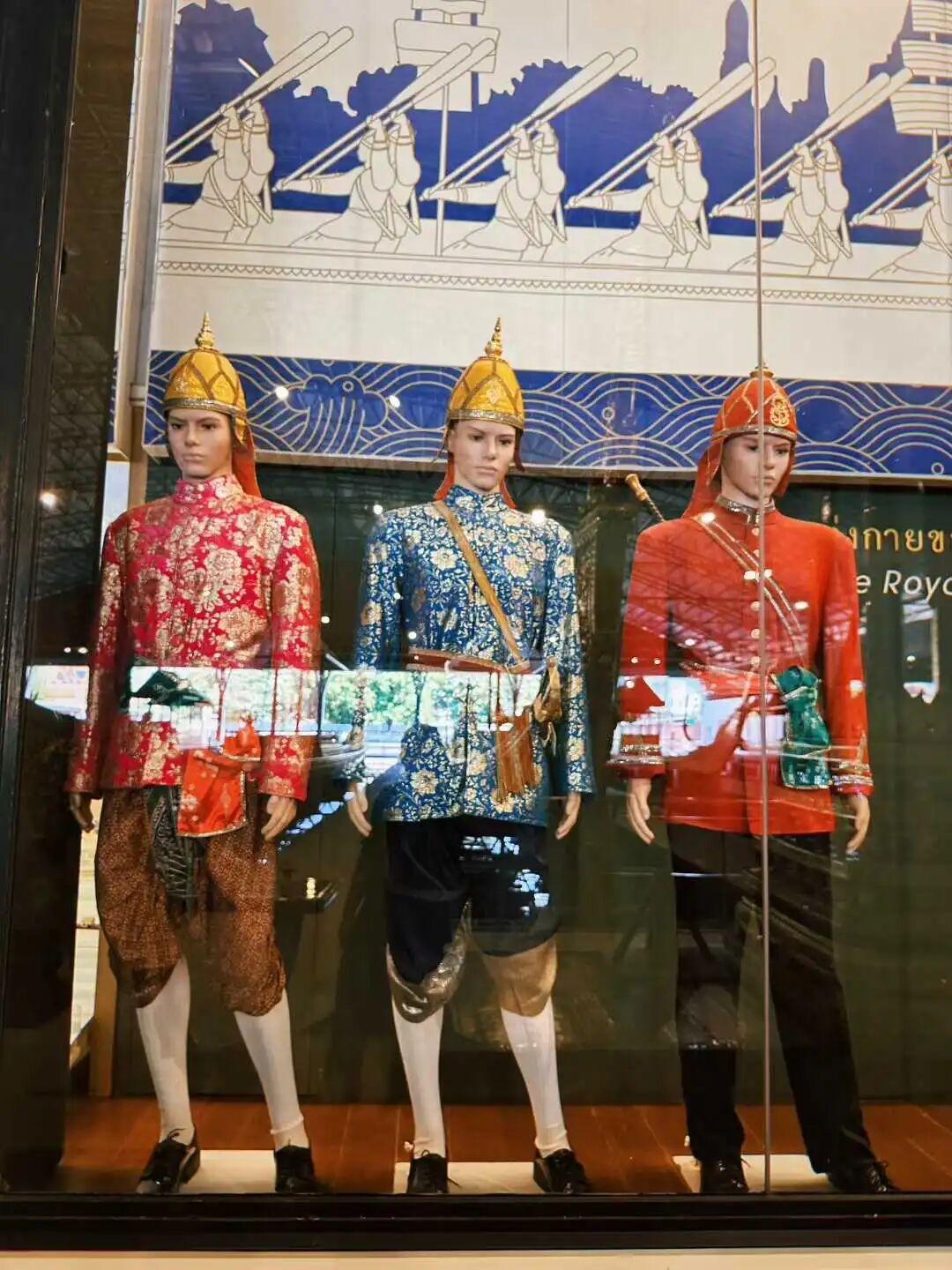
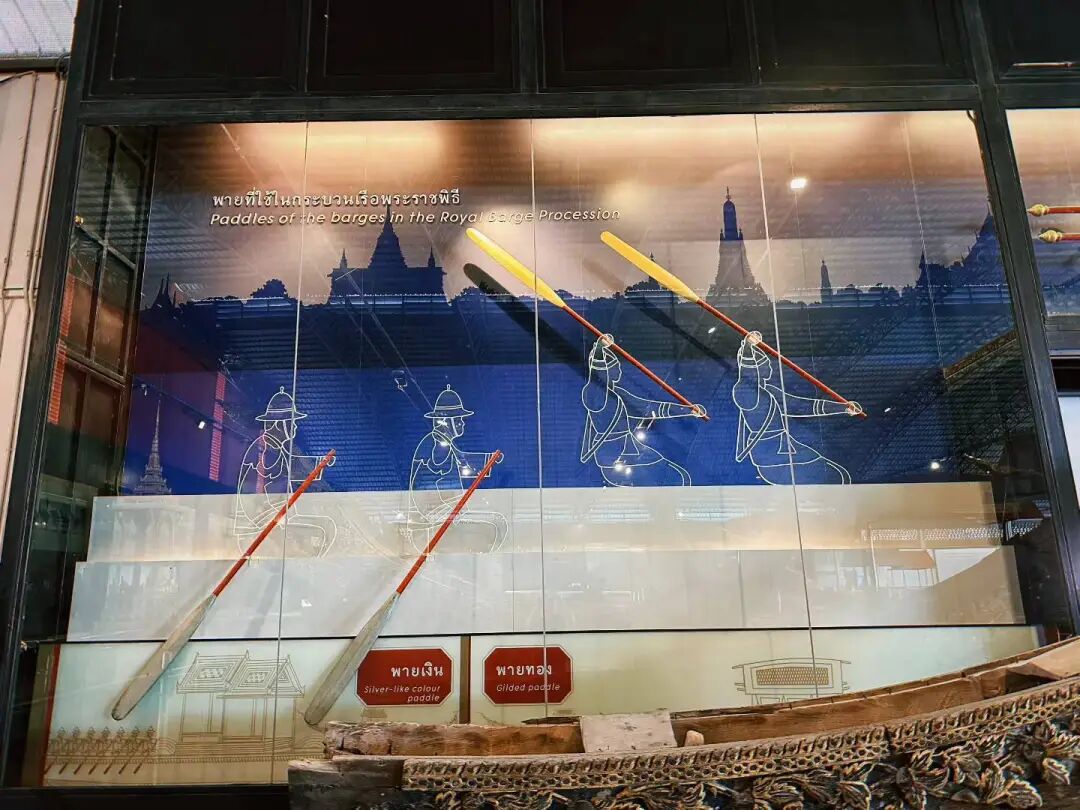
Noi Canal
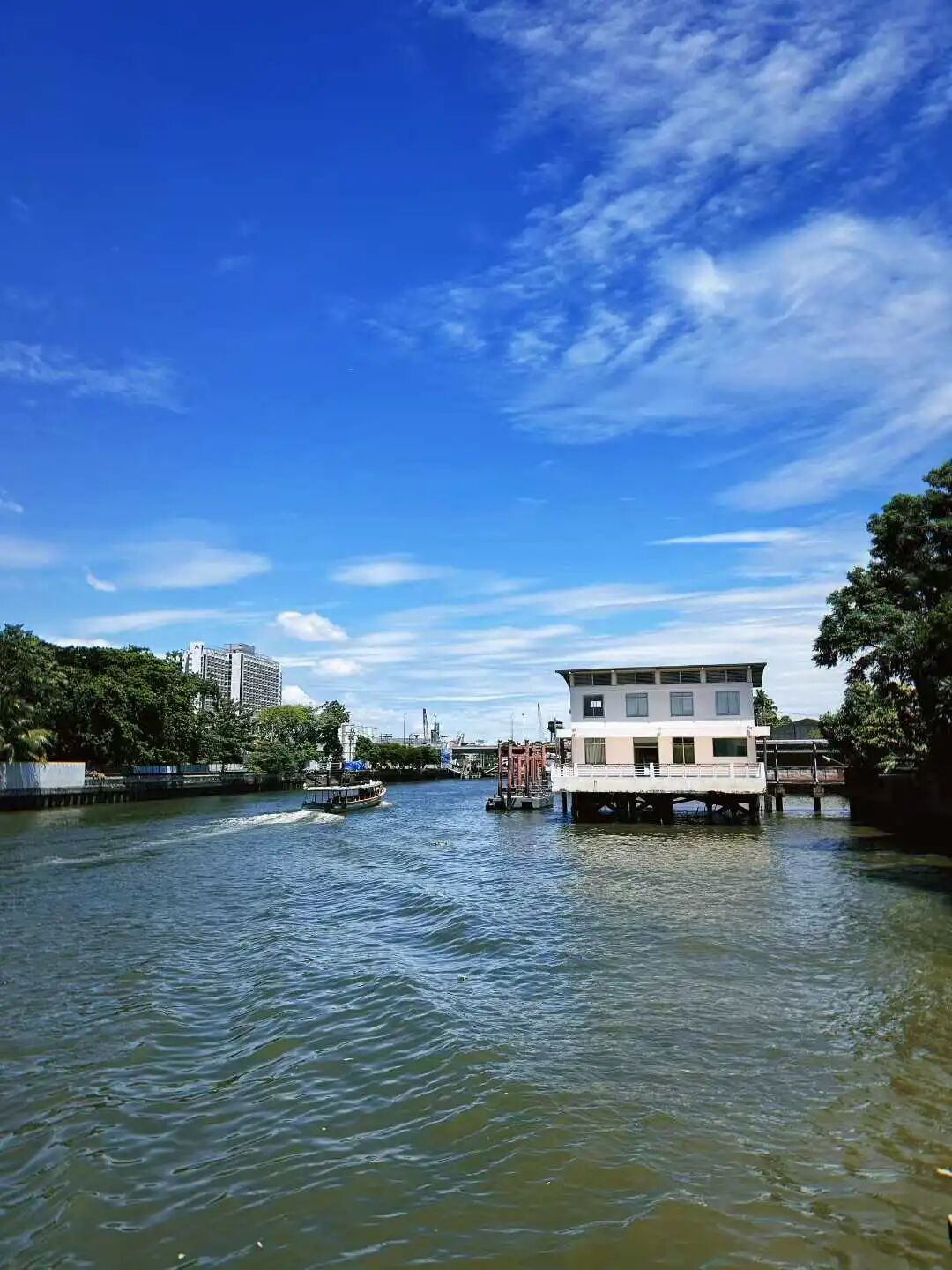
Cham community neighborhood—Jami-Ul-Khoy-Riyah Mosque
In 1781, Thailand attacked Cambodia and captured some Cham soldiers. These Cham soldiers were brought back to Bangkok in 1782. These Cham soldiers officially joined the Thai army in 1783 and helped dig the Maha Nak Canal. In the early 19th century, Thailand and Vietnam fought a long war over Cambodia. The canal east of Bangkok became a vital military transport route, moving supplies and soldiers to the Cambodian front, earning it the name Bangkok's Eastern Corridor. The Saen Saep Canal east of Bangkok was completed in 1840, and these Cham soldiers were responsible for guarding it.
Today, you can take a canal boat on the Saen Saep Canal to Sapan Charoenpol station. After crossing the bridge, you will see the Jami-Ul-Khoy-Riyah Mosque built by the descendants of these Cham soldiers. In the late 19th century, as peace returned to eastern Thailand, the area became a silk market and later a tourist destination.
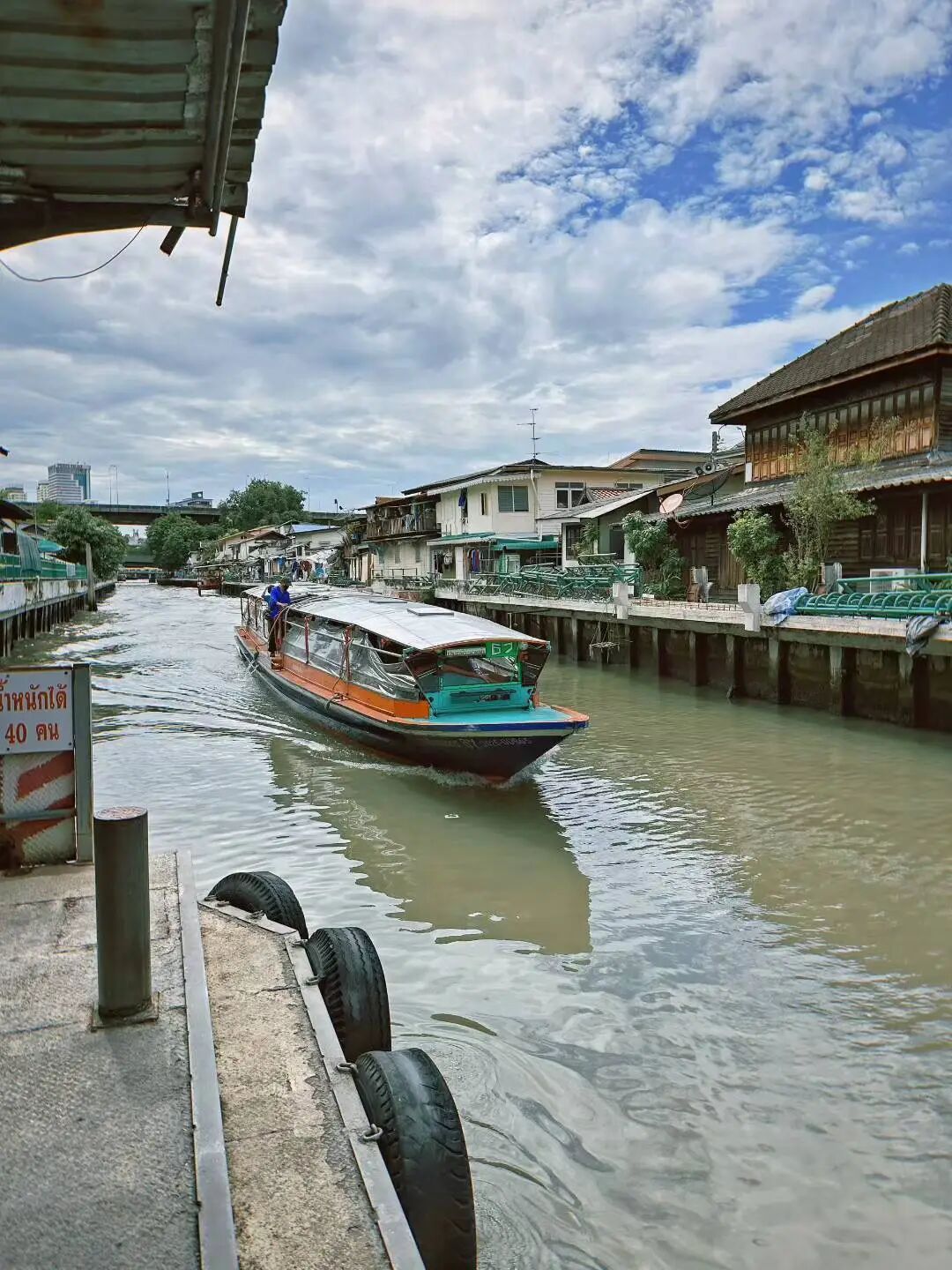
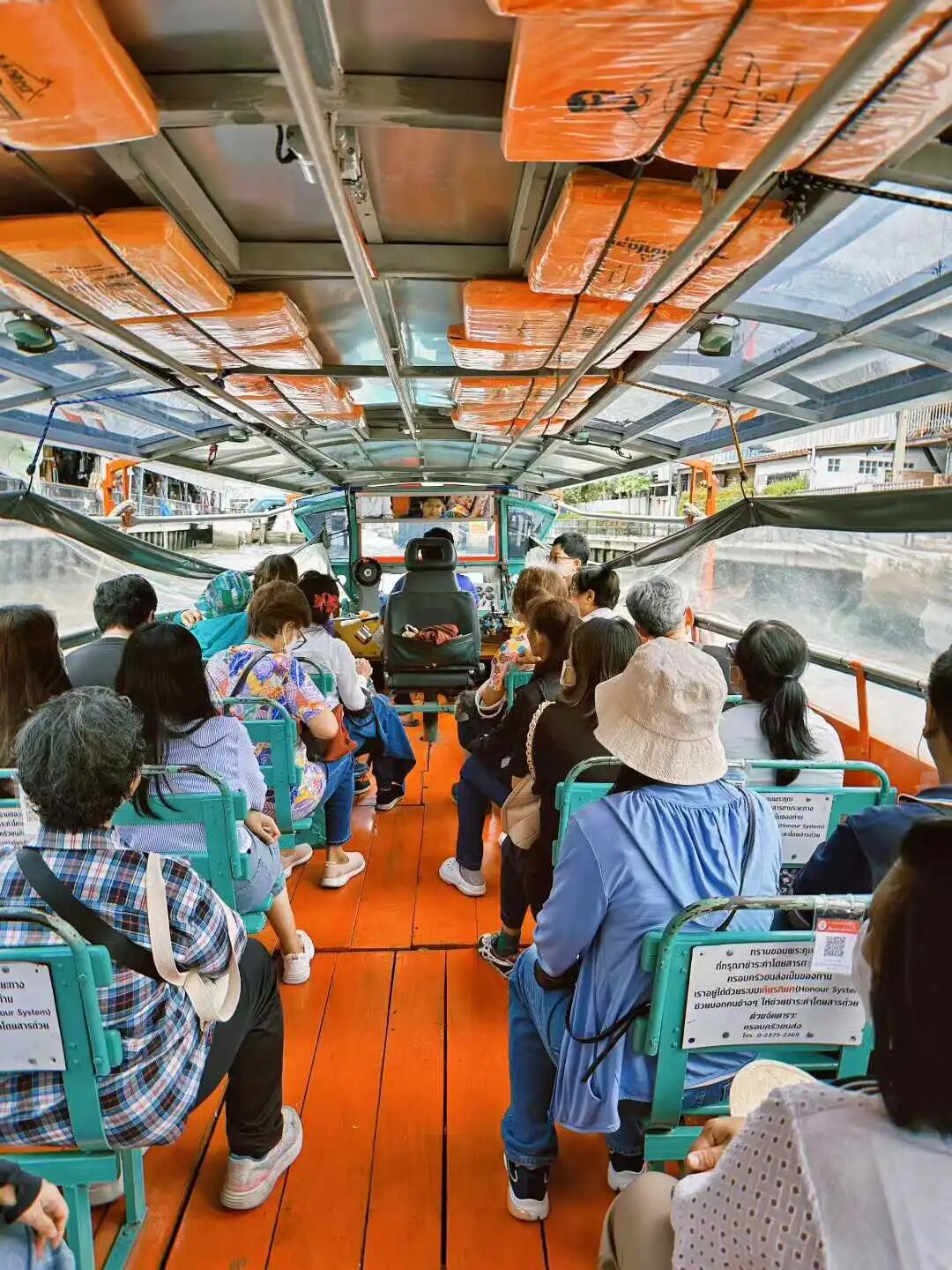
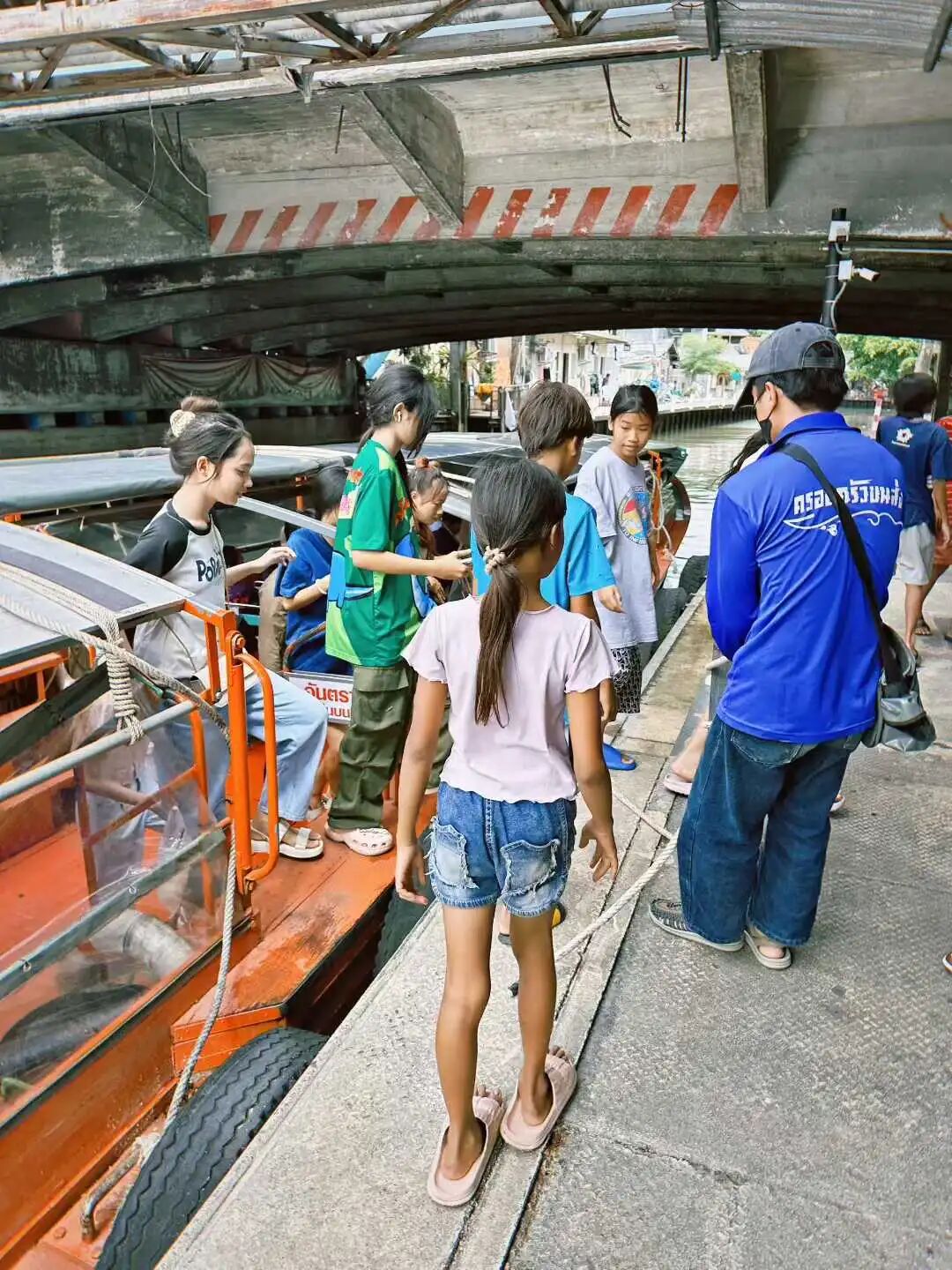
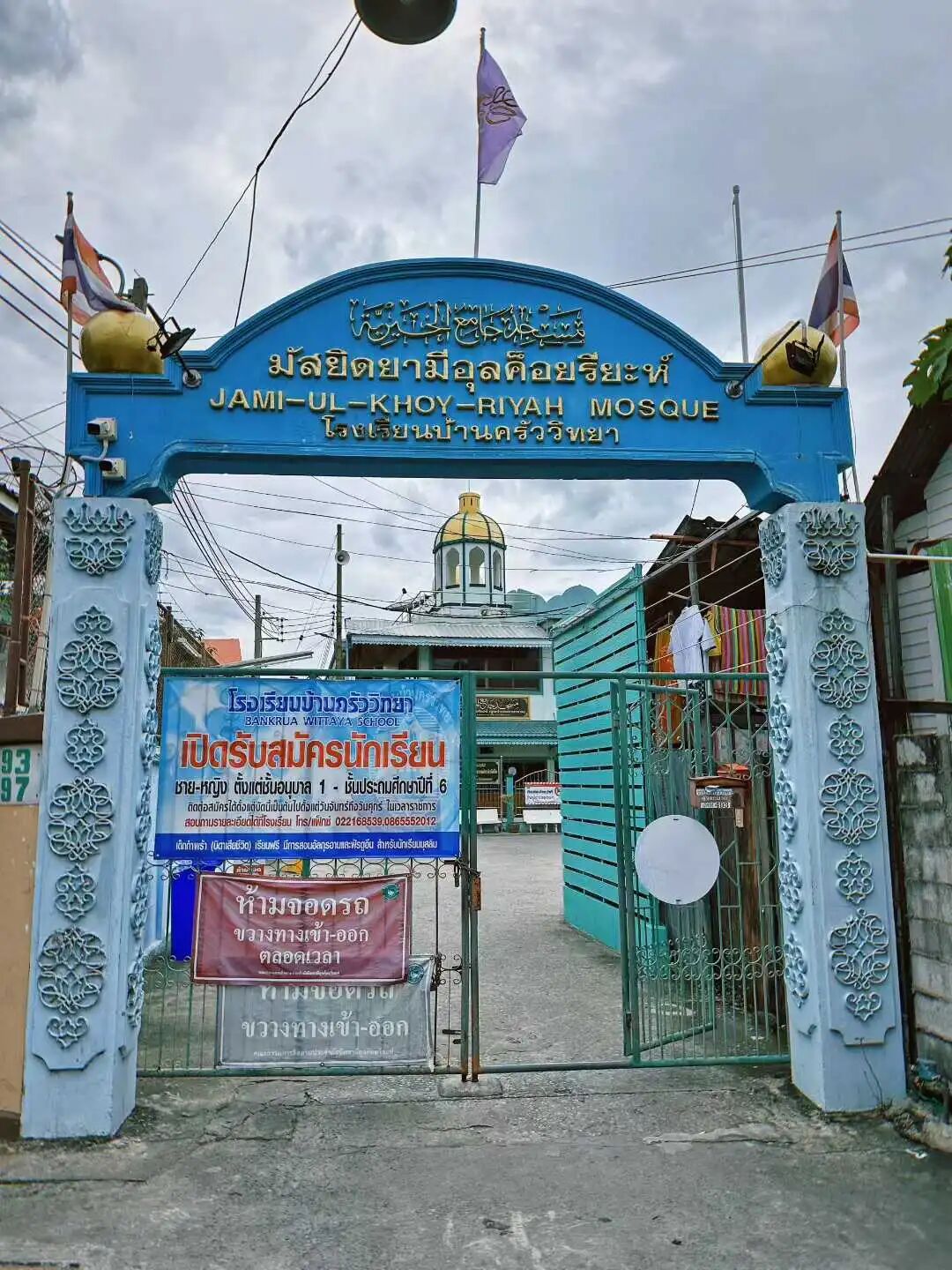
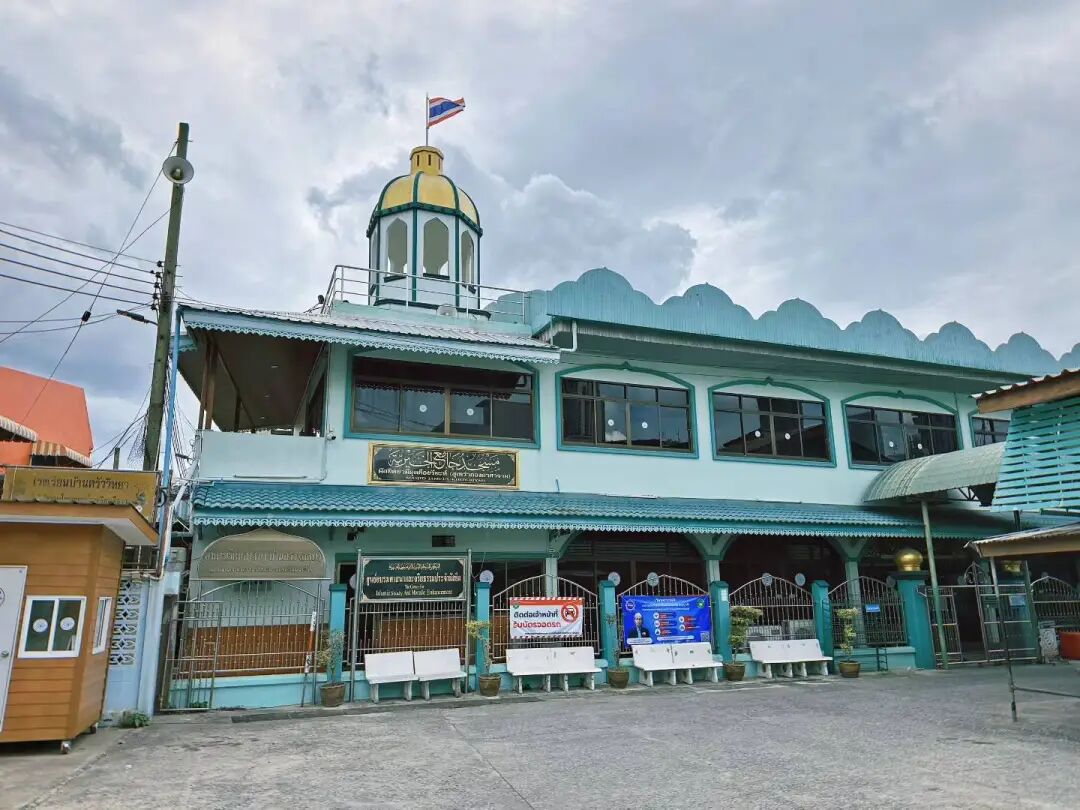
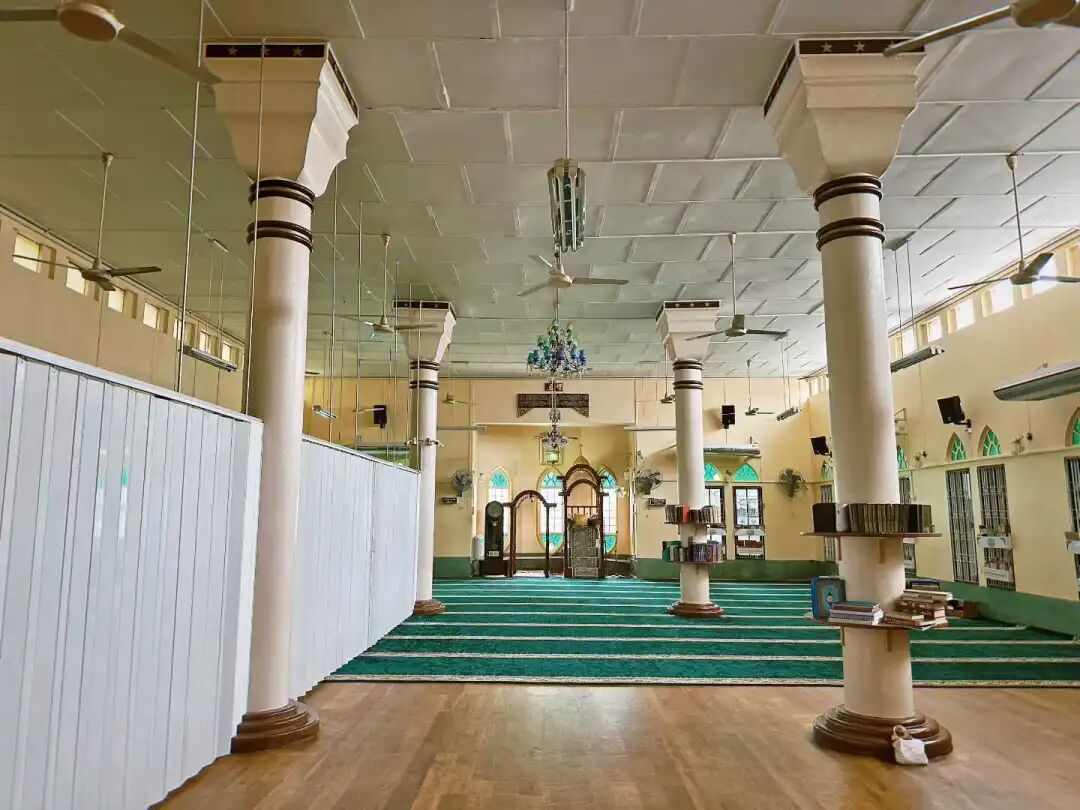
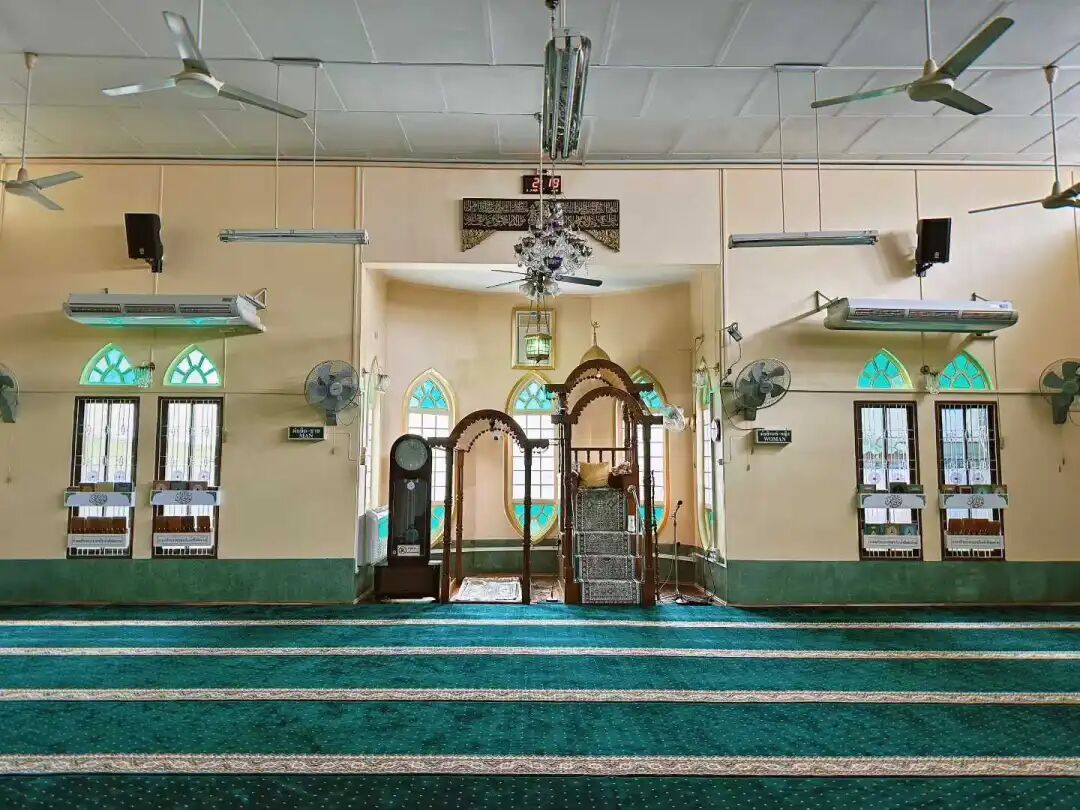
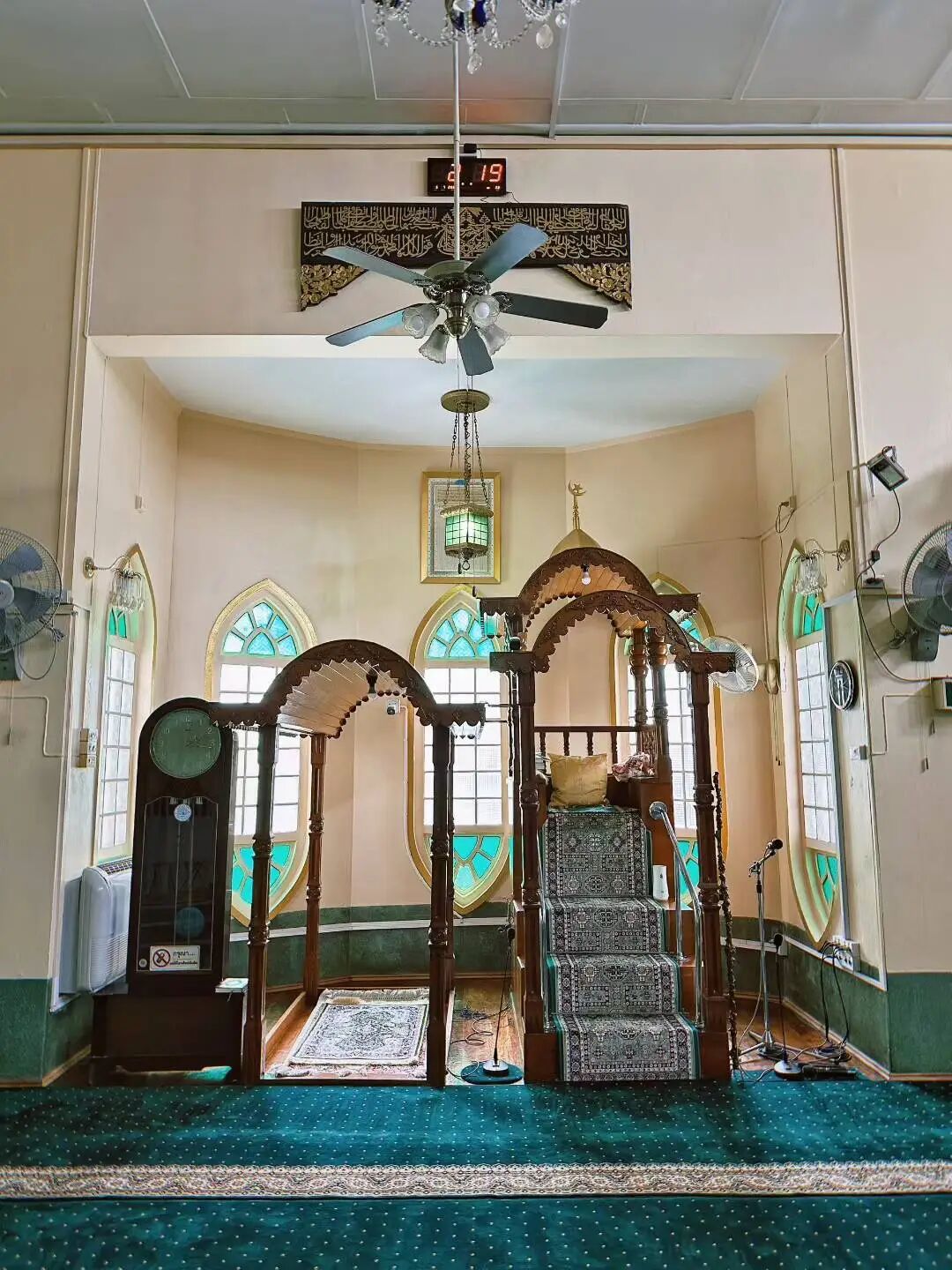
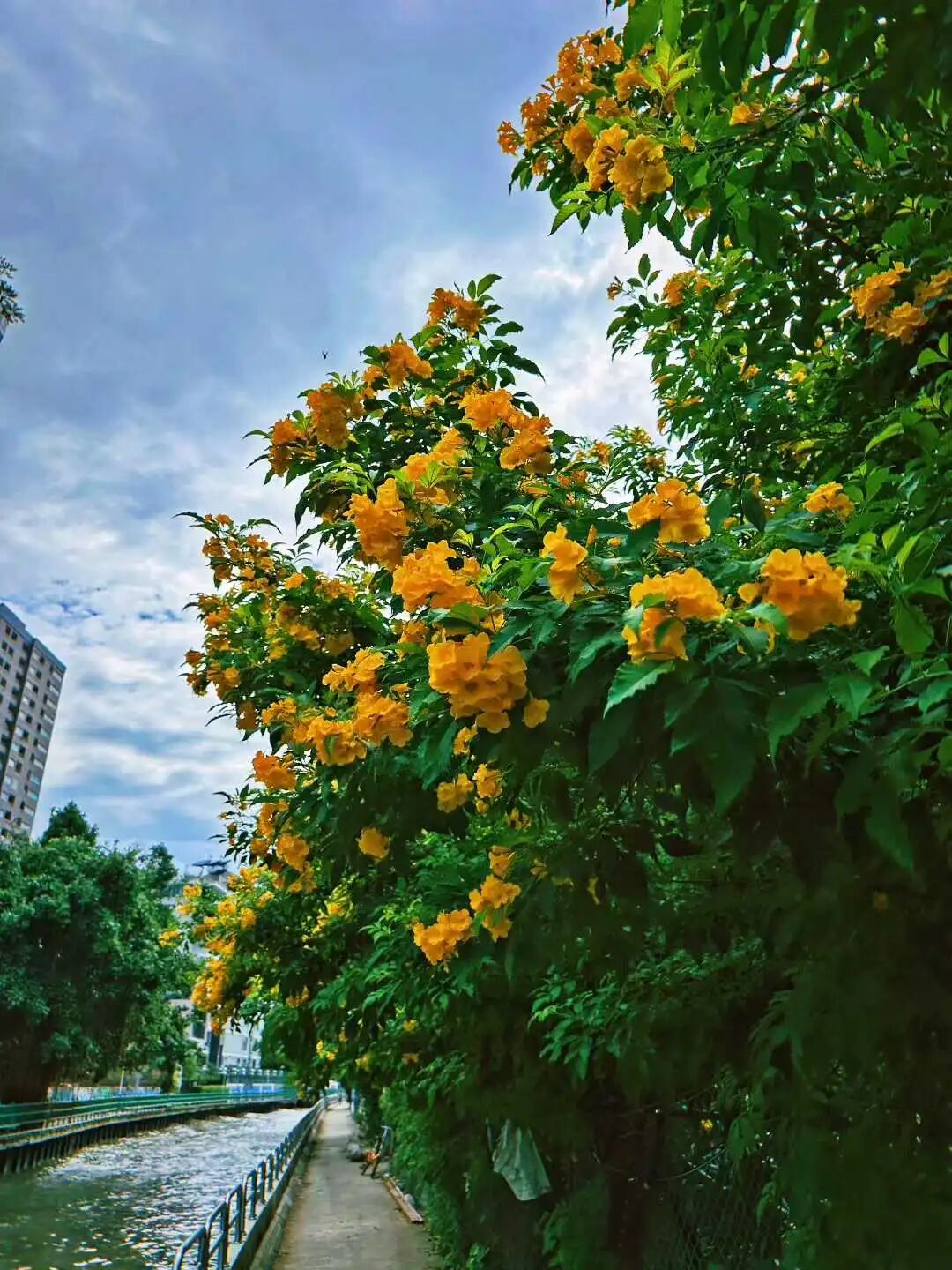
The Jami-Ul-Khoy-Riyah Mosque displays a collection of porcelain. Many mosques in Bangkok have porcelain display cabinets, which is an interesting tradition.
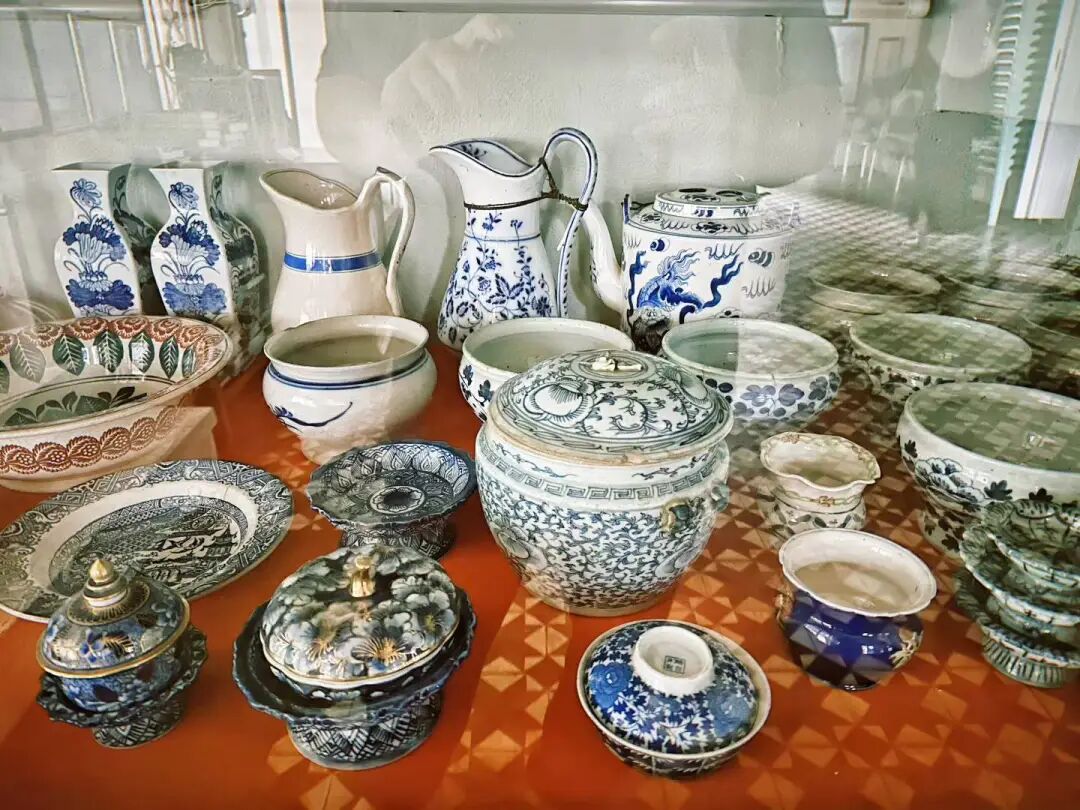
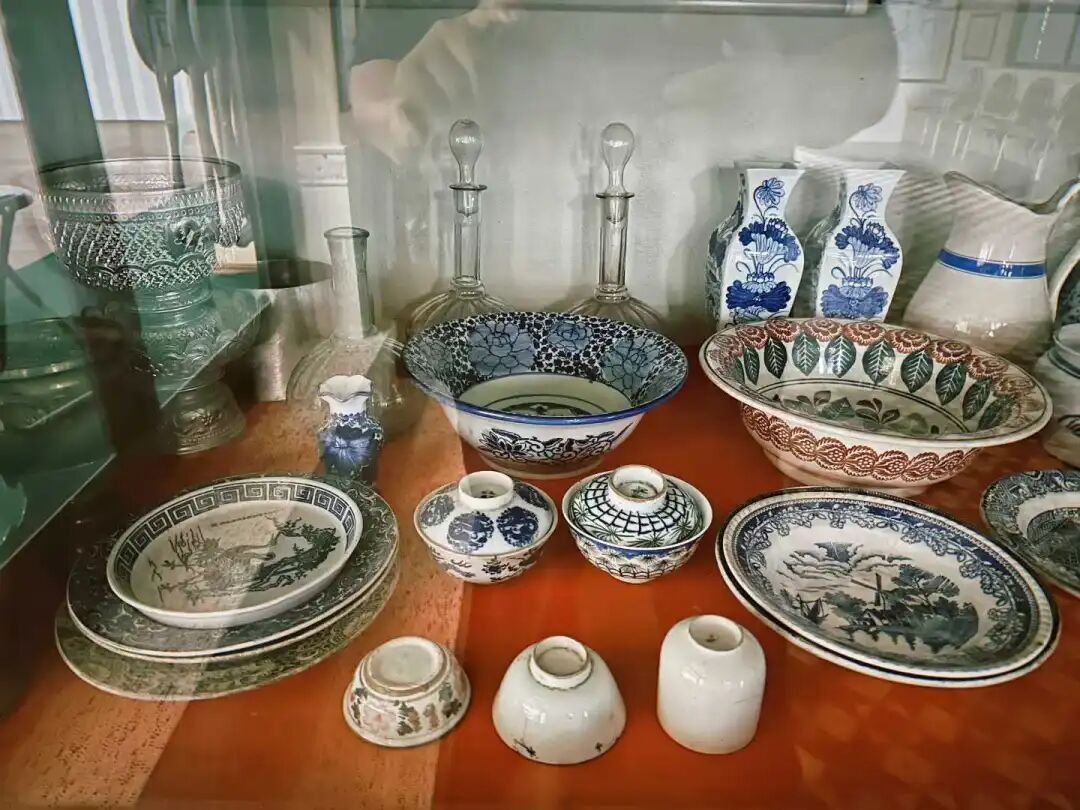
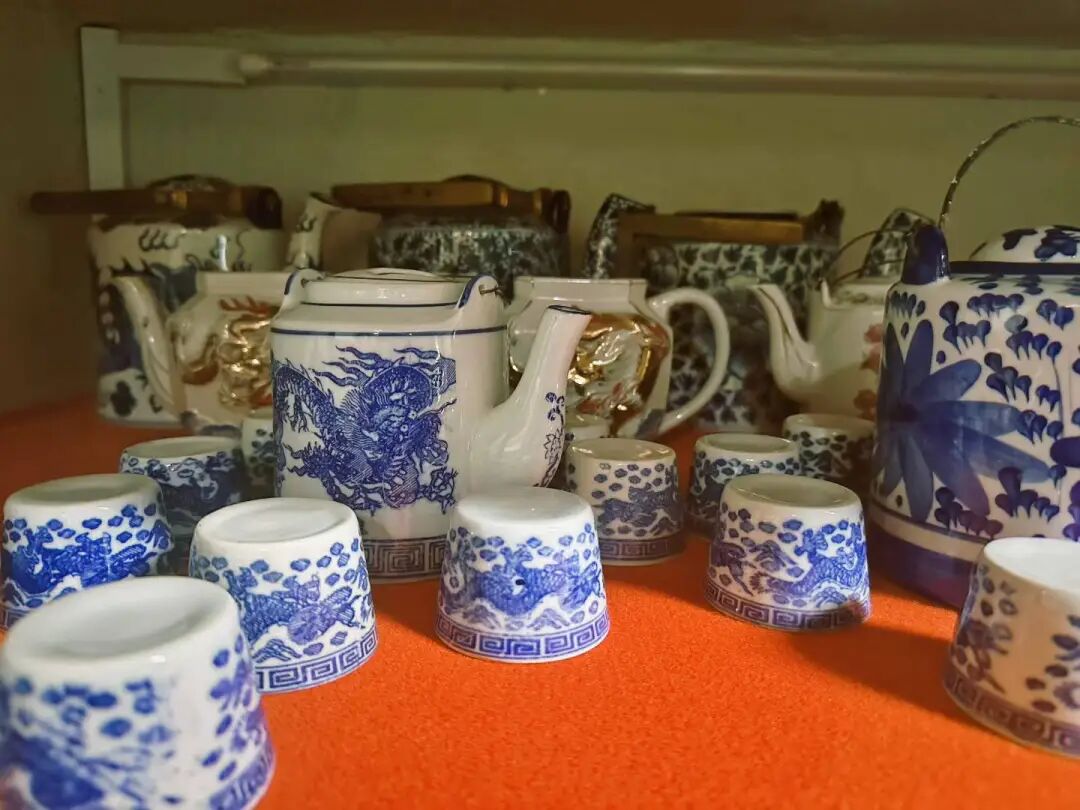
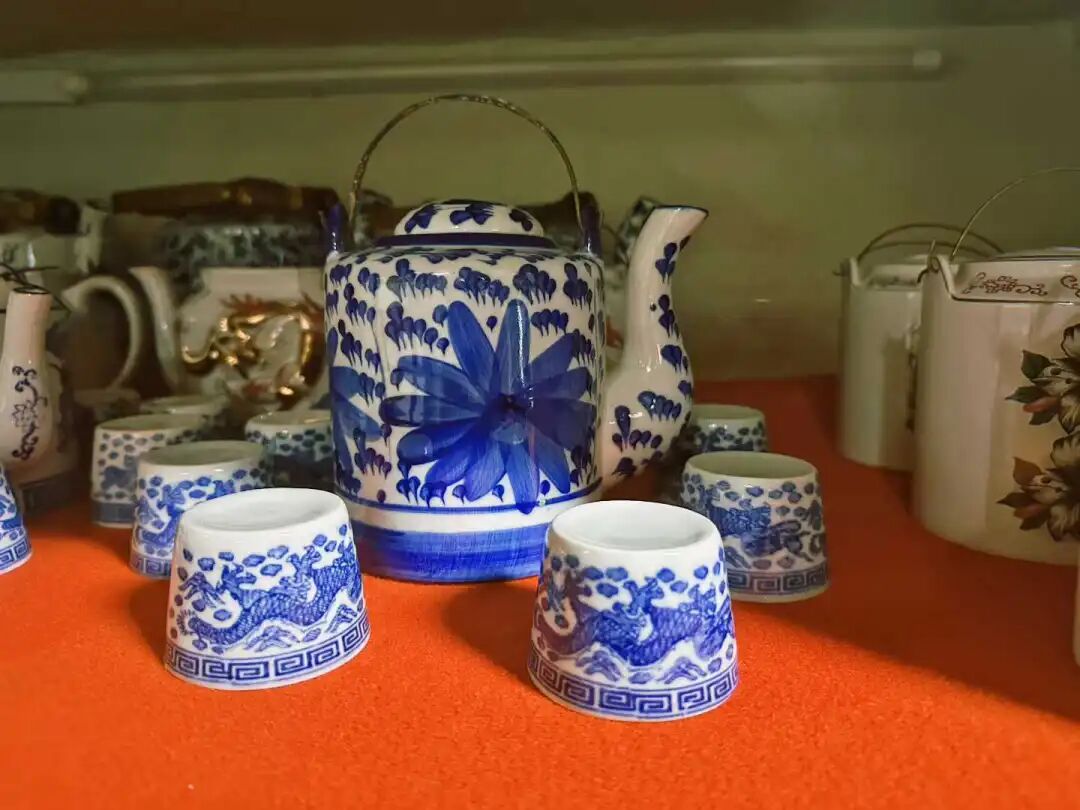
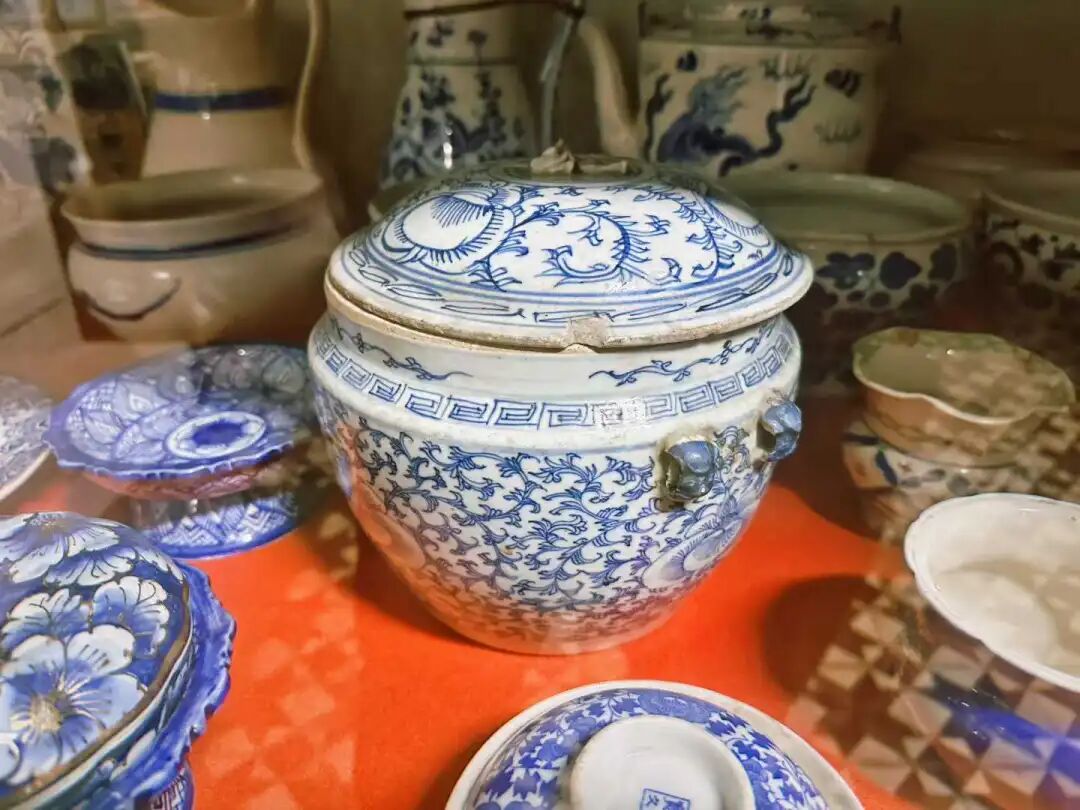
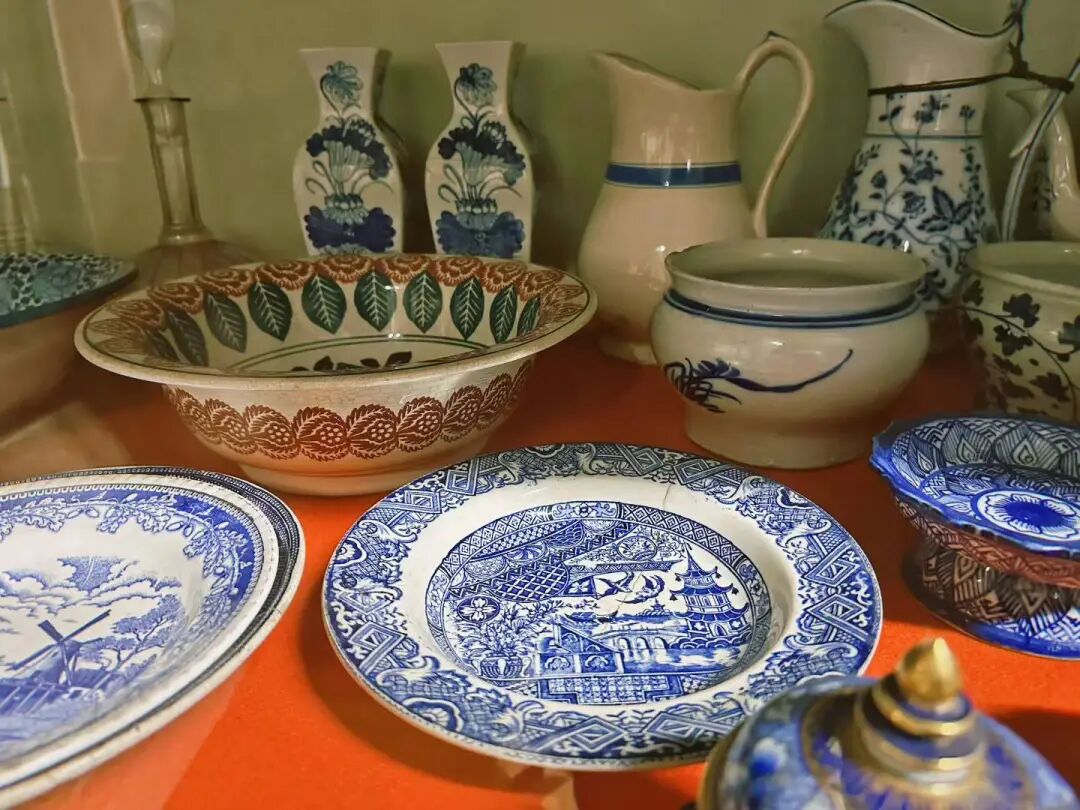
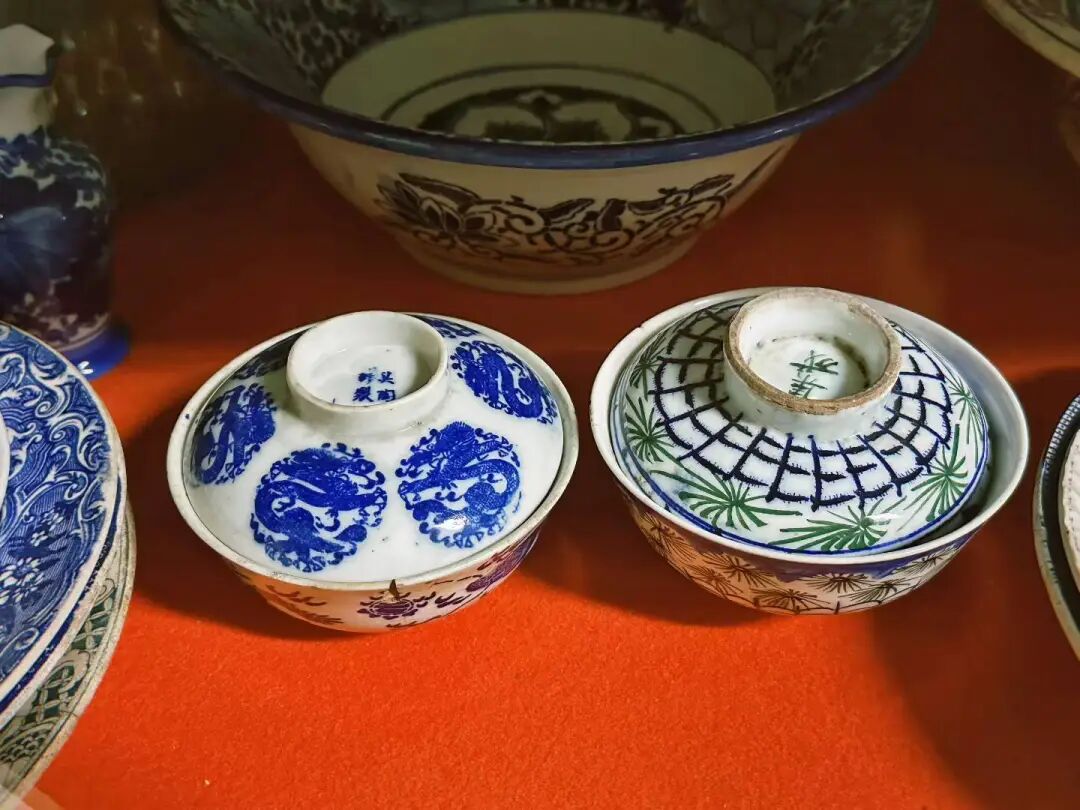
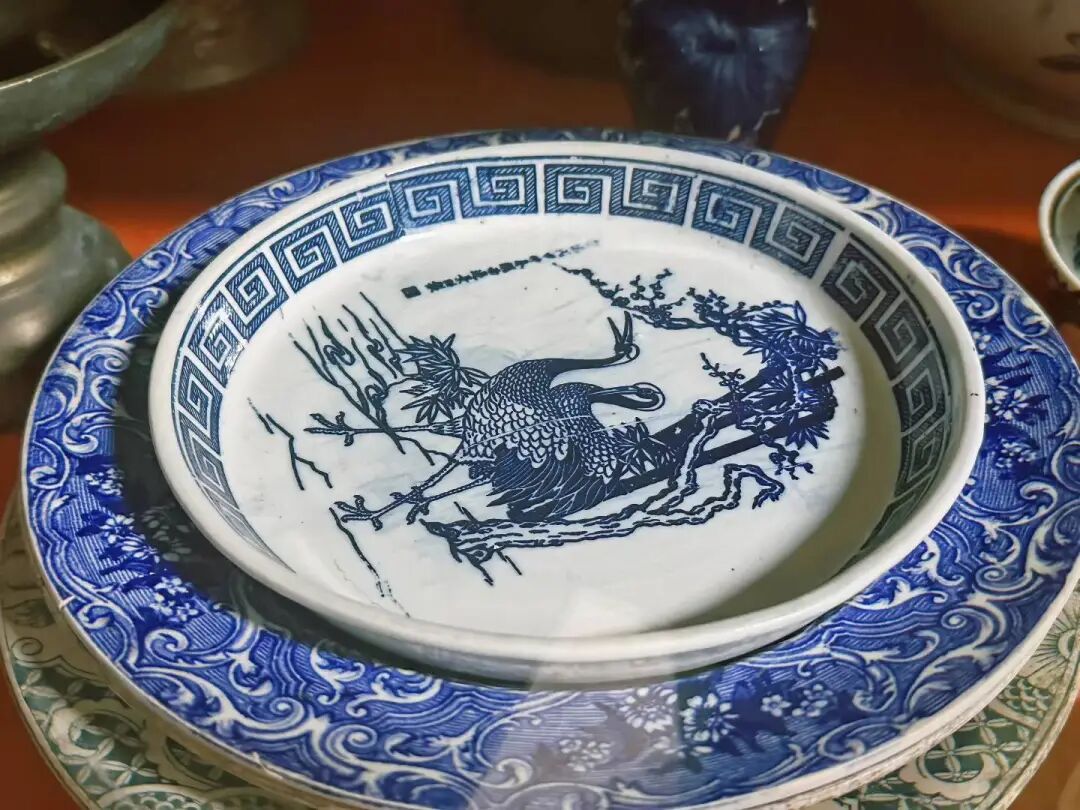
Street view of the Jami-Ul-Khoy-Riyah Mosque neighborhood. There are small family-run snack shops in the narrow alleys, though they are usually closed in the afternoon. There is a pavilion by the canal built during the reign of Rama III (1824-1851). During this period, Thailand was frequently at war with Laos, Cambodia, and Vietnam, and the Saen Saep Canal was the main artery for transporting supplies east from Bangkok. There used to be a pier in front of the pavilion where many supplies were loaded and unloaded. The wood used to build the Jami-Ul-Khoy-Riyah Mosque was also unloaded here.
Today, it has become a place for people to cool off and chat. Next to the pavilion is a small shop selling cold drinks and waffles, where I bought a cup of authentic Thai red tea. Besides the Cham people, Malays from Pattani Province in southern Thailand also live in the Jami-Ul-Khoy-Riyah Mosque neighborhood. After 1786, Thailand invaded the southern Pattani Sultanate several times and captured a large number of Pattani Malays, some of whom were settled in the Jami-Ul-Khoy-Riyah Mosque neighborhood.
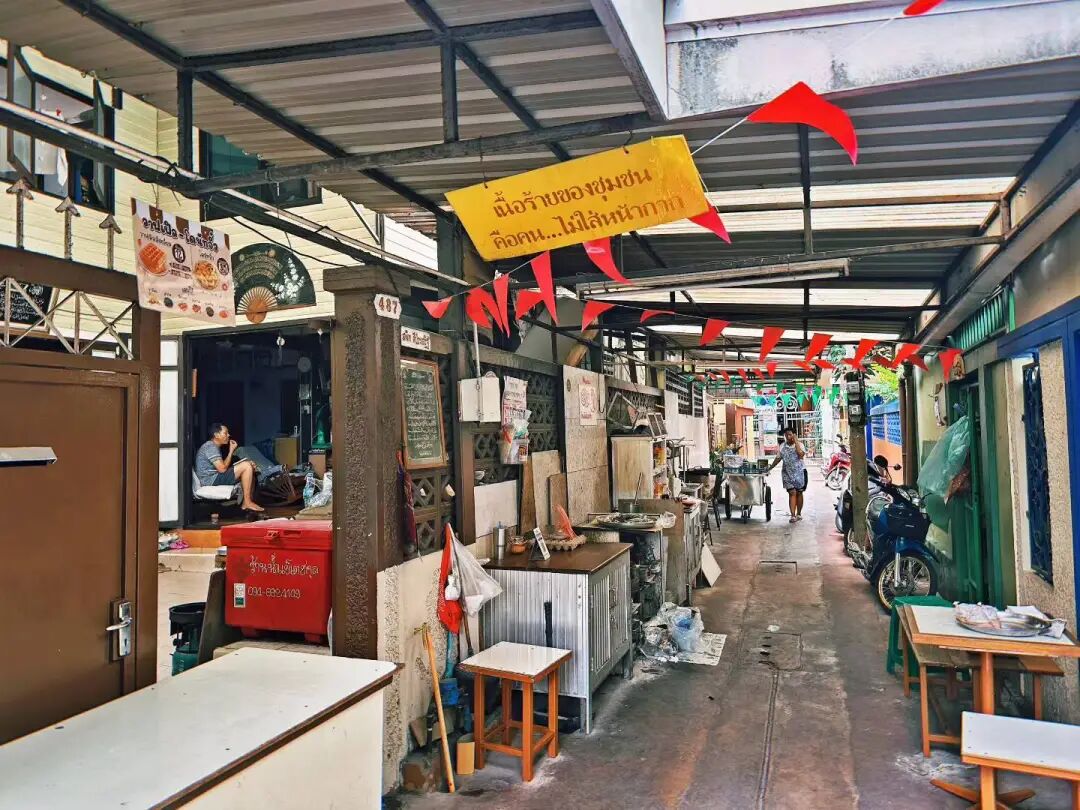
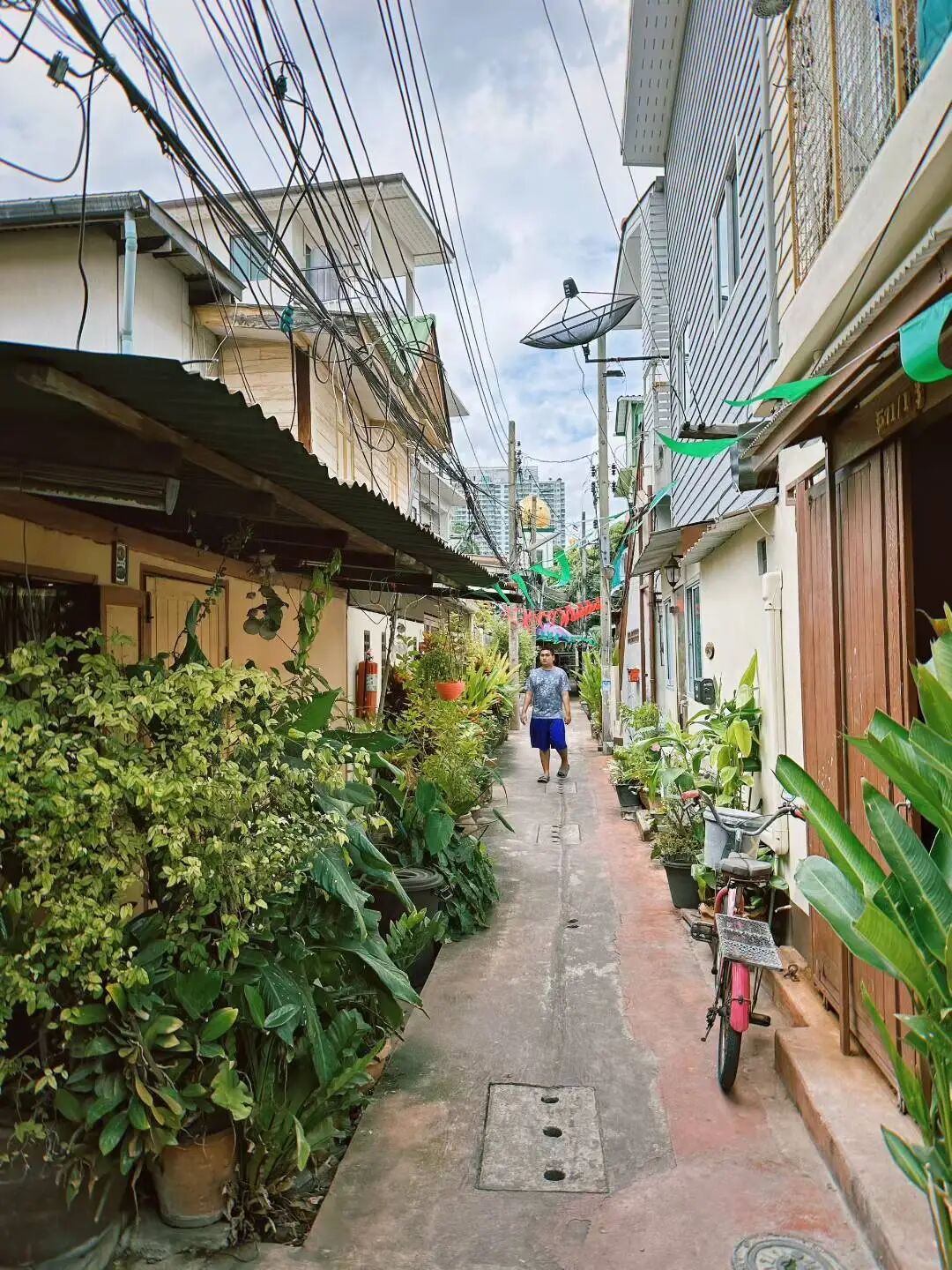
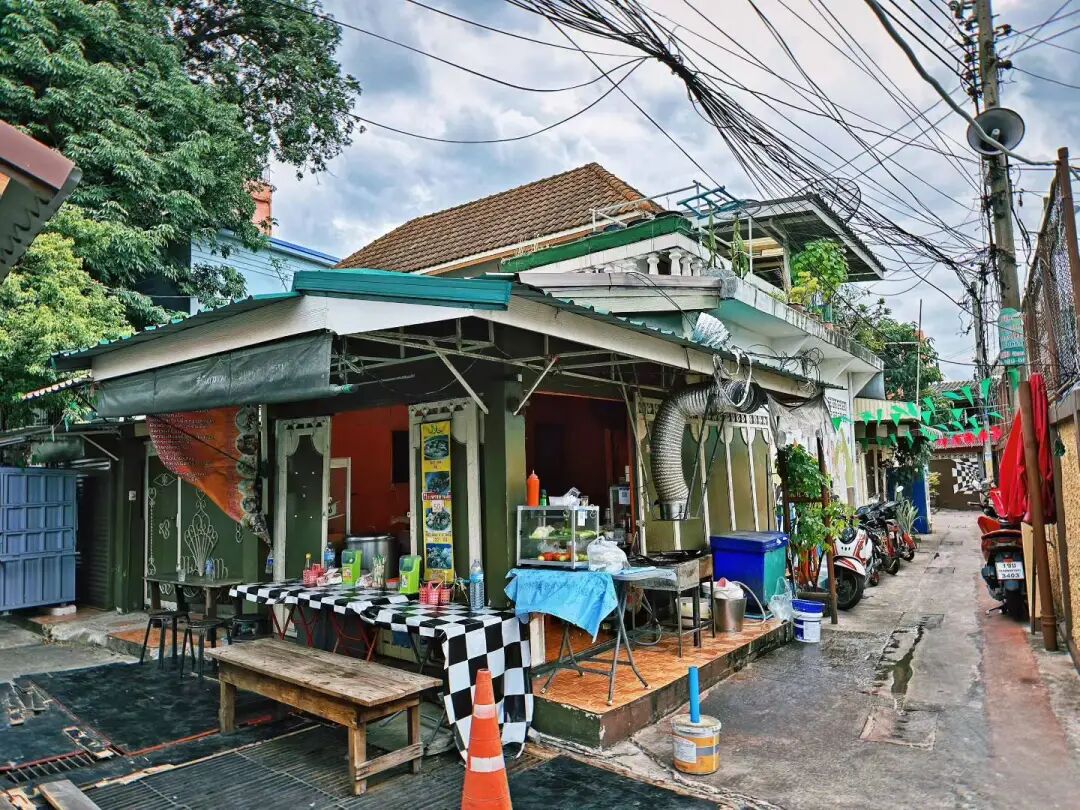
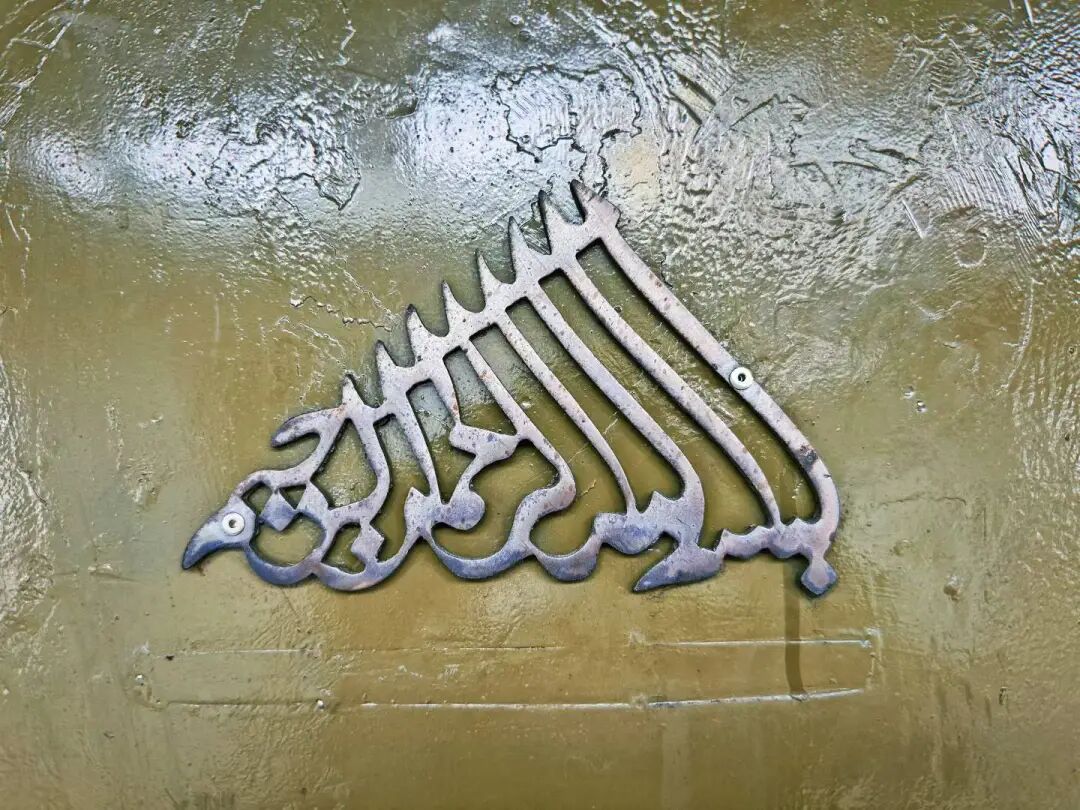
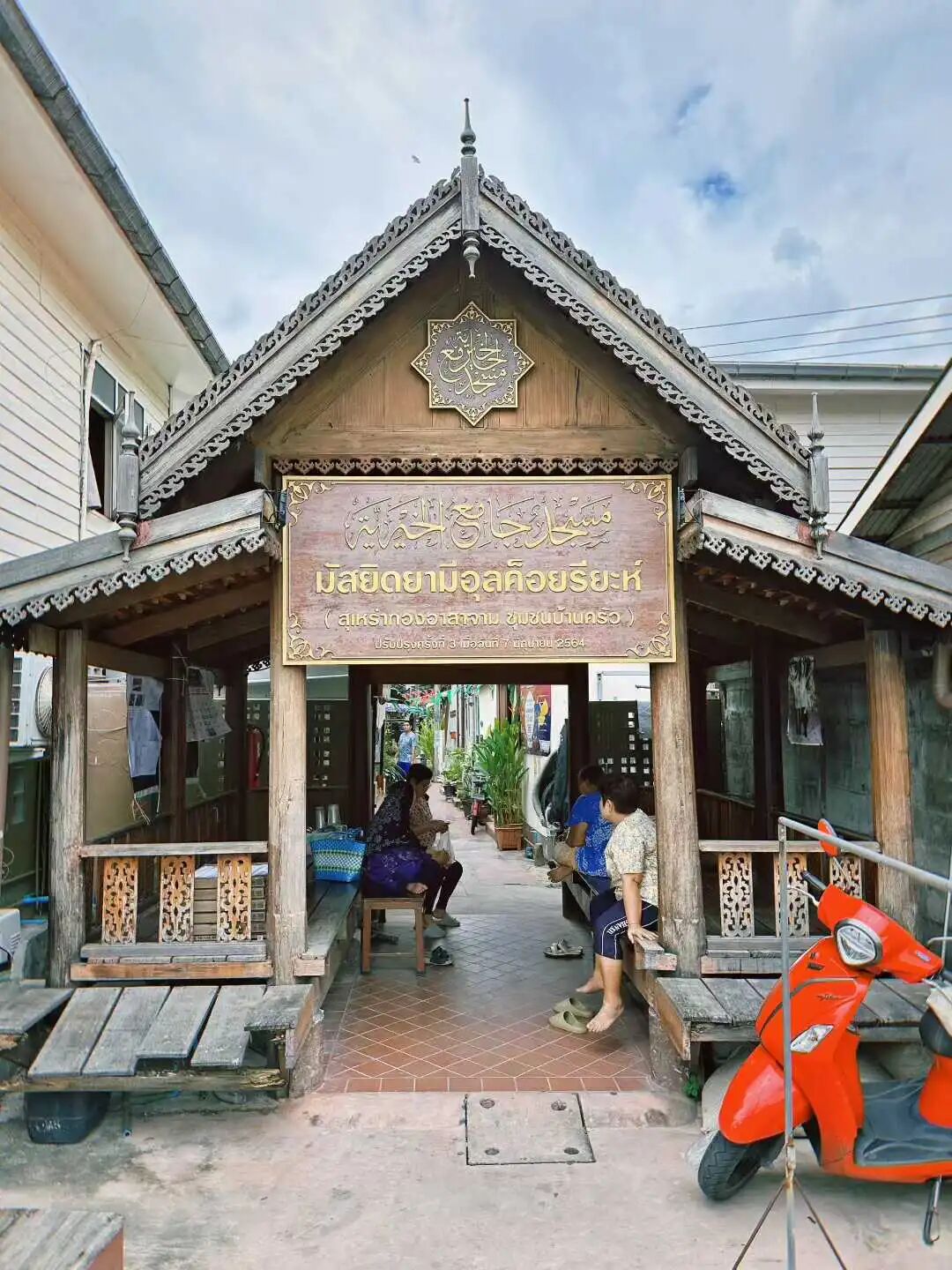
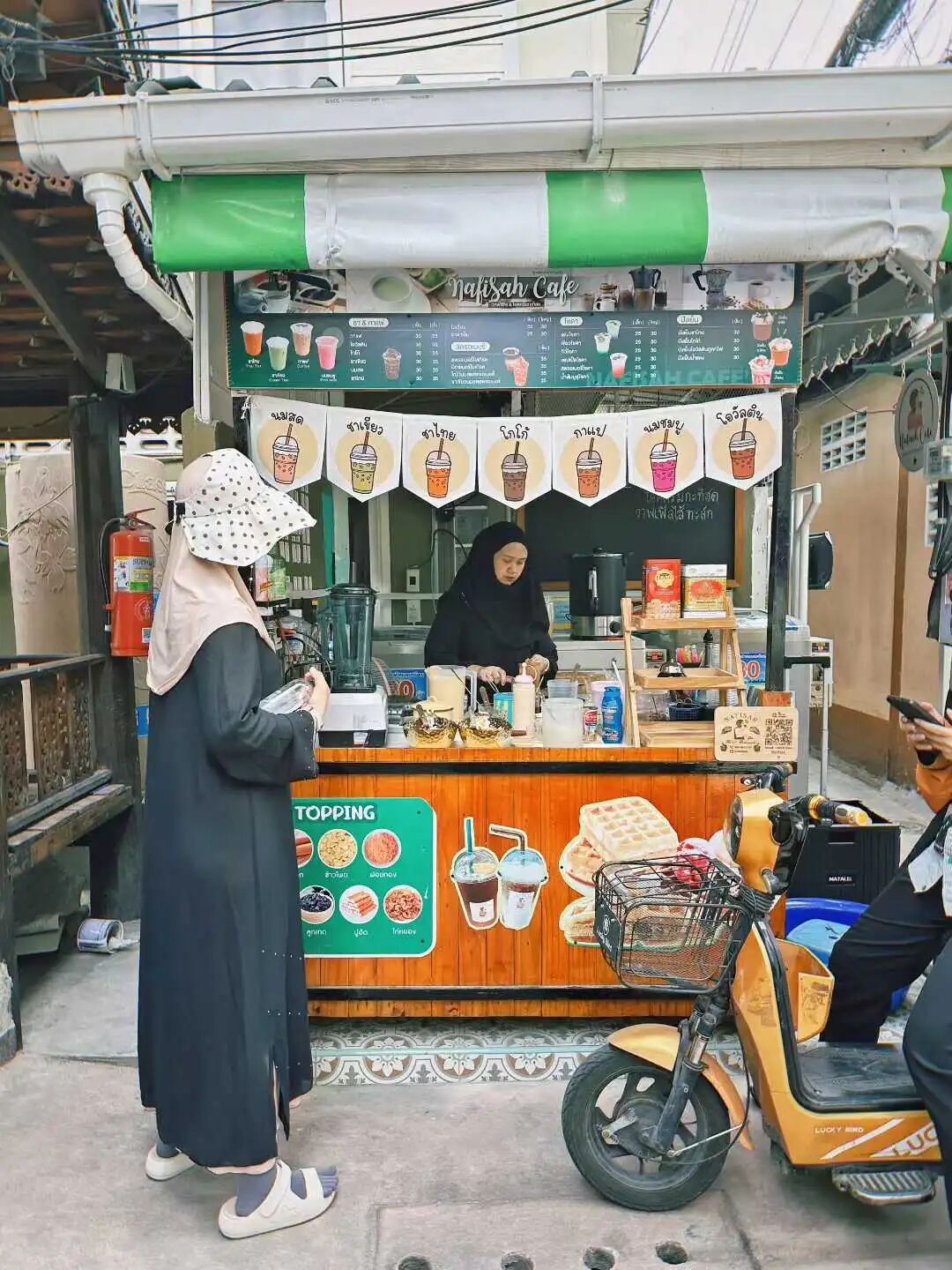
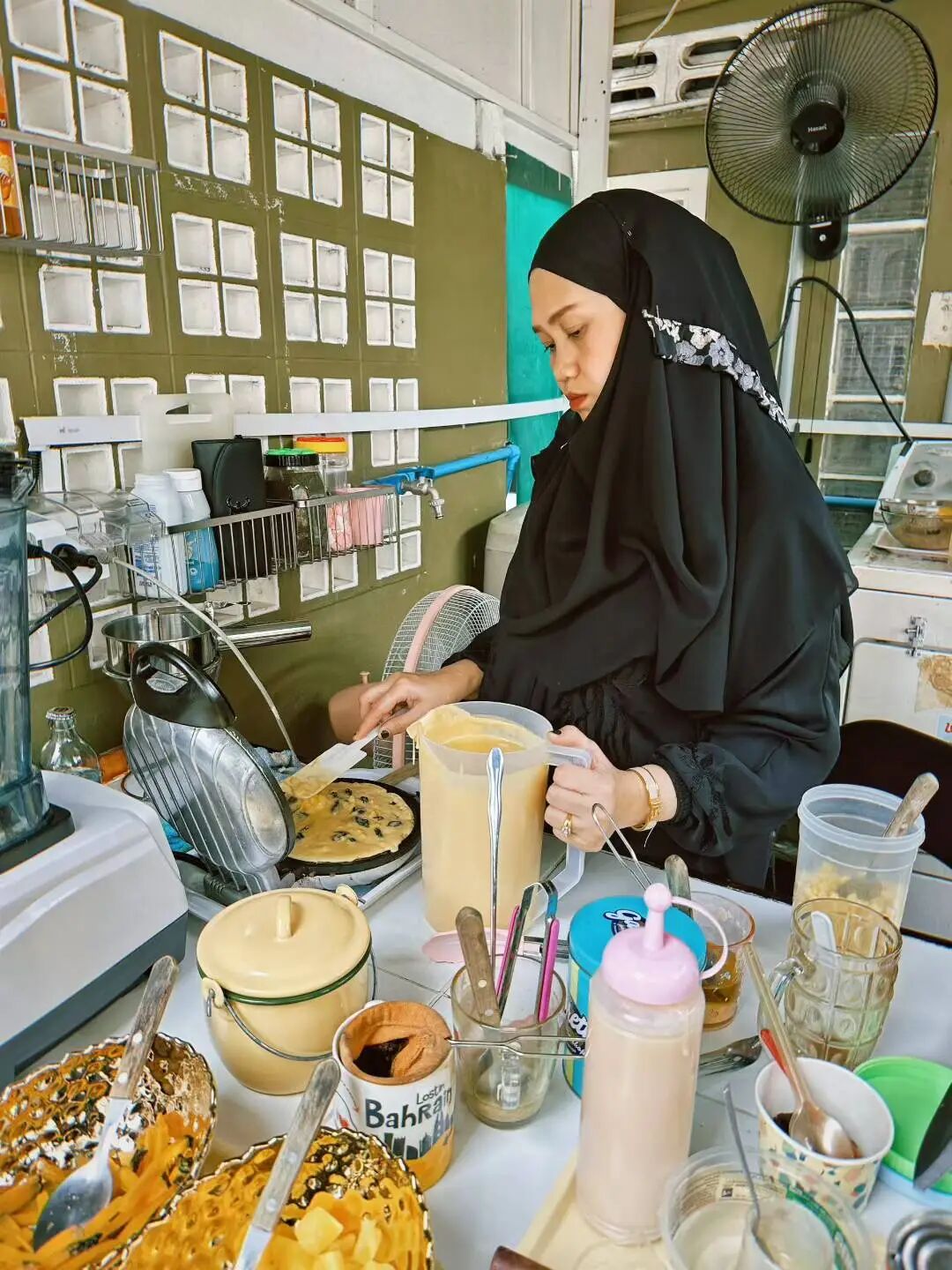
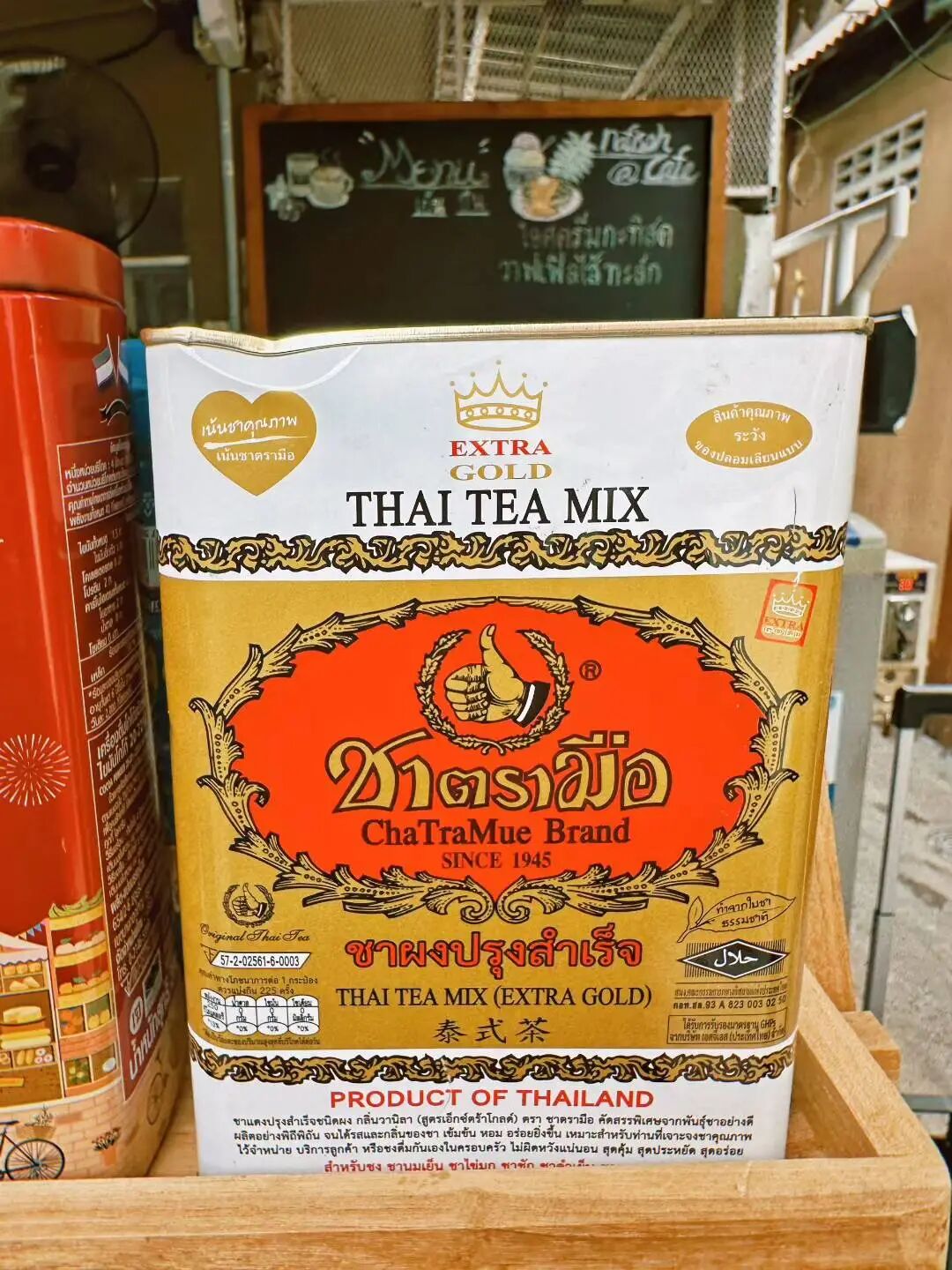
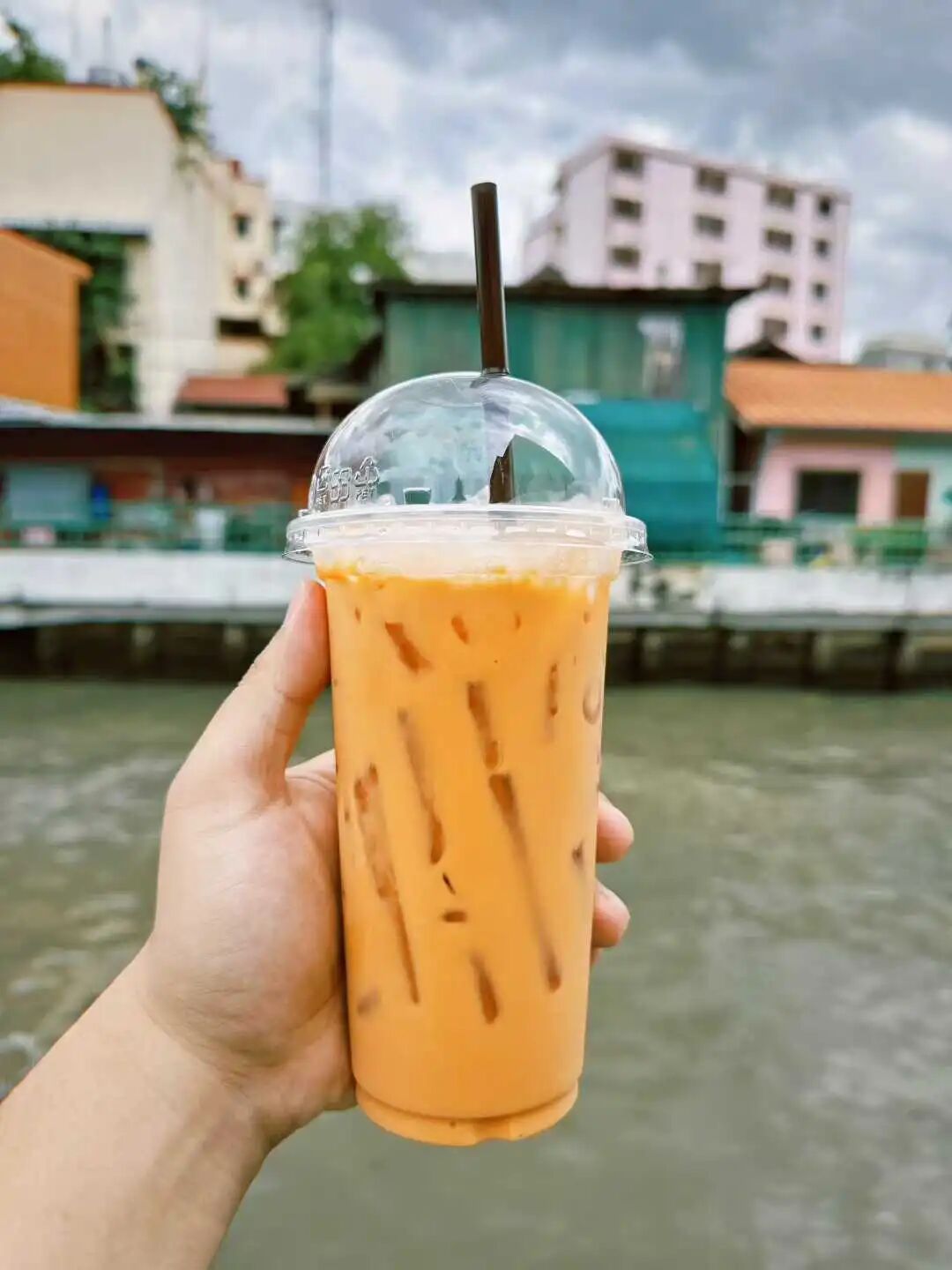
Cham community neighborhood—Zulugul Muttaqeen Mosque
The Zulugul Muttaqeen Mosque is located just west of the Jami-Ul-Khoy-Riyah Mosque. It was built by Cham captives brought back from Cambodia by Thailand during the Siamese-Vietnamese War of 1841-1845.
The mosque is clean and bright. The first floor is a classroom, the second floor is the main prayer hall, and the third-floor terrace offers a panoramic view of the neighborhood.
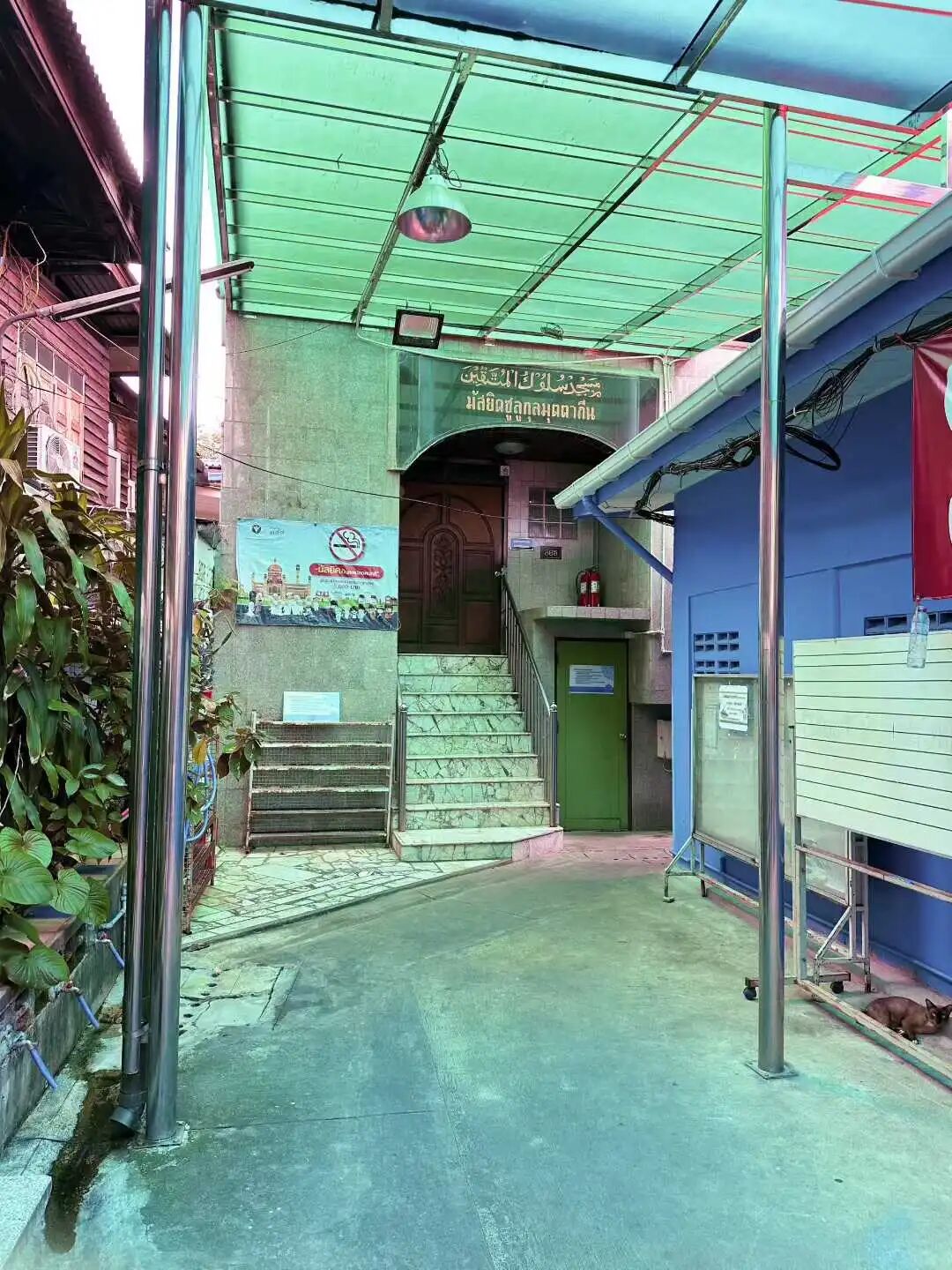
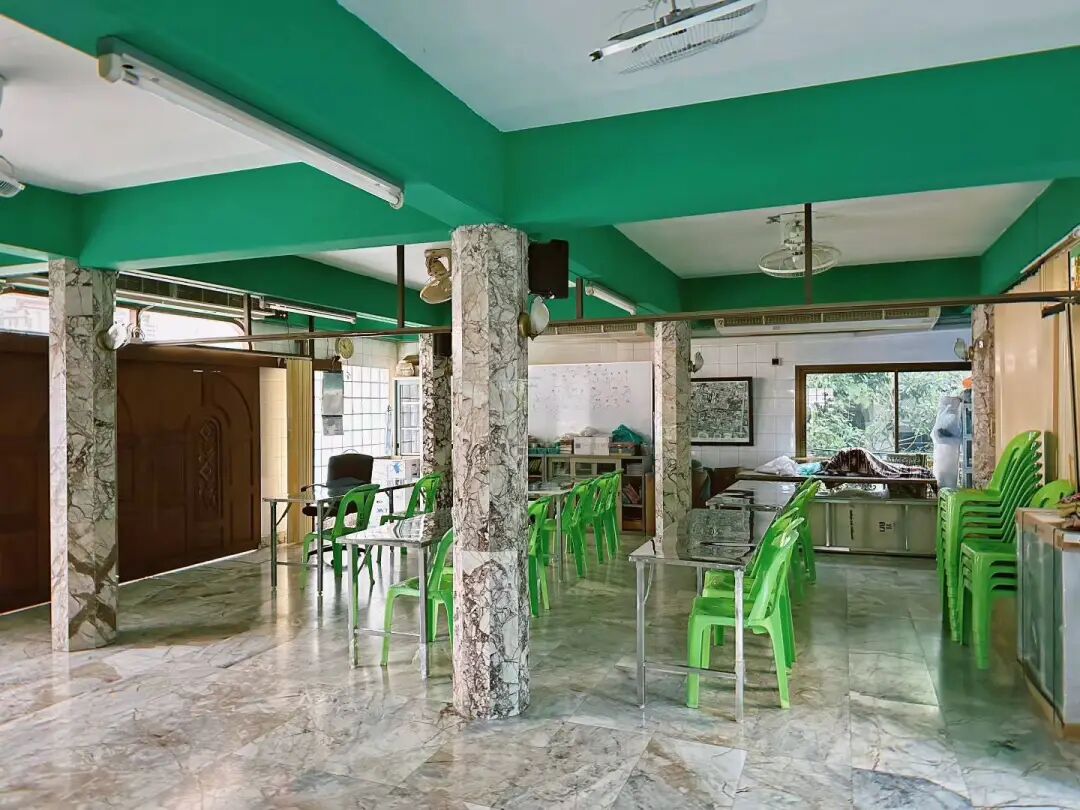
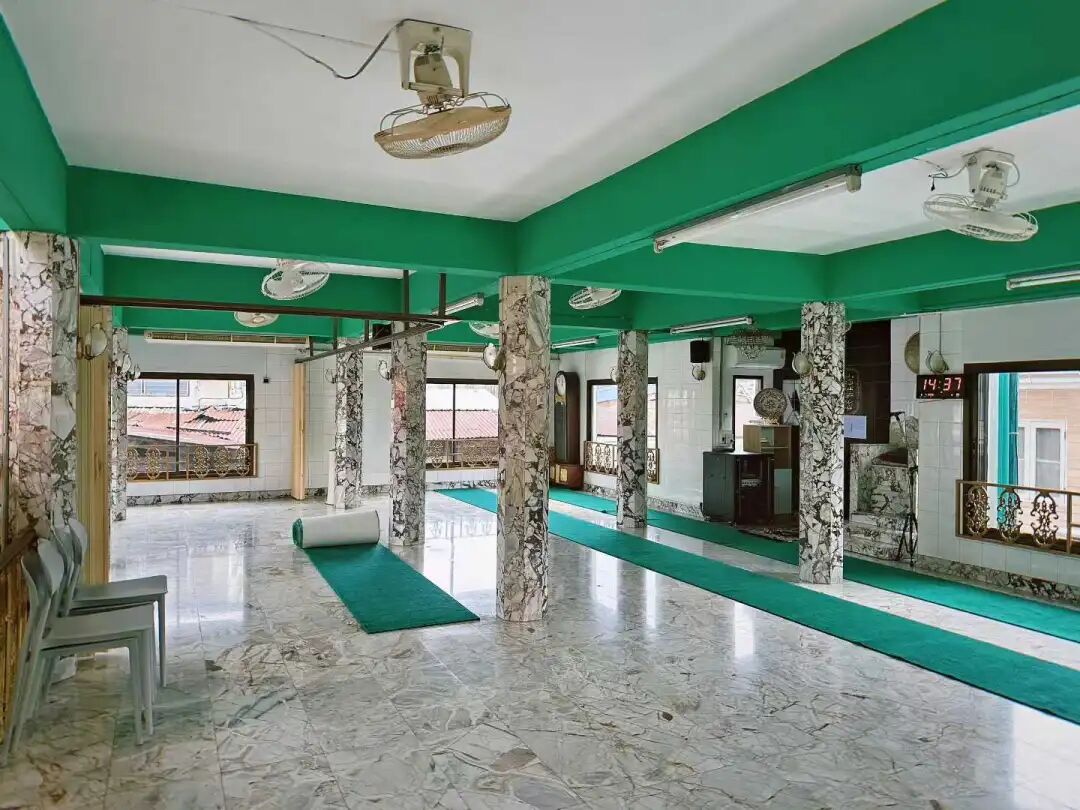
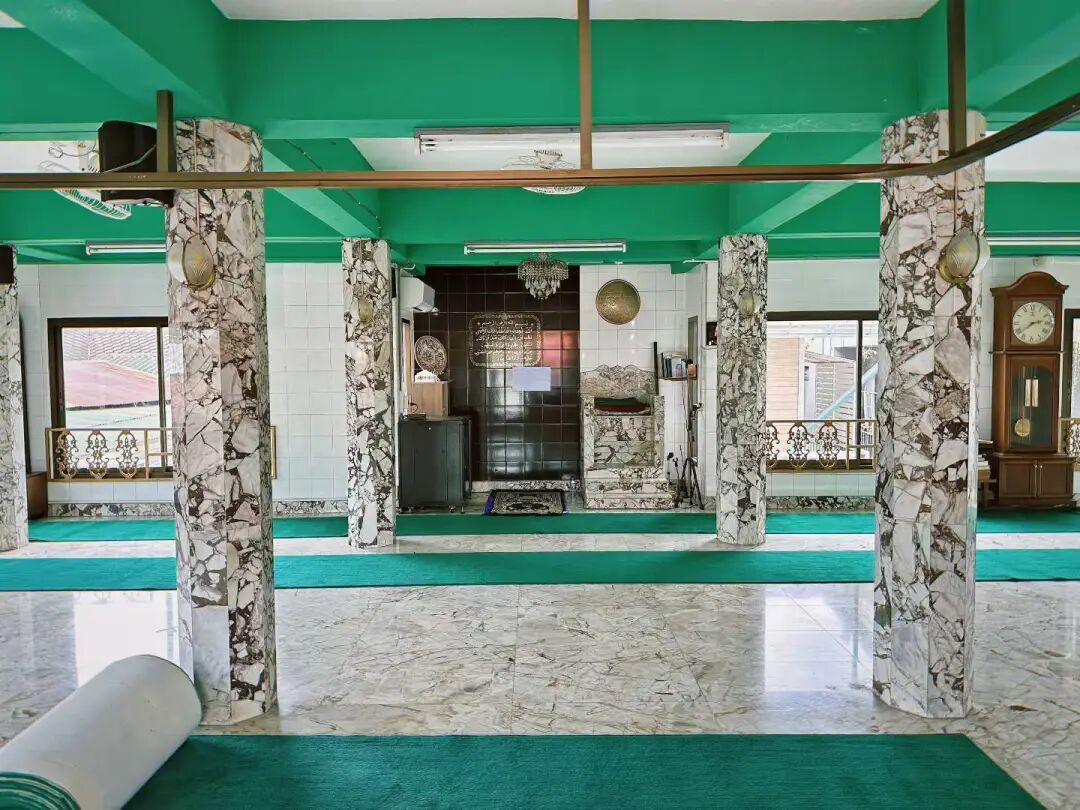
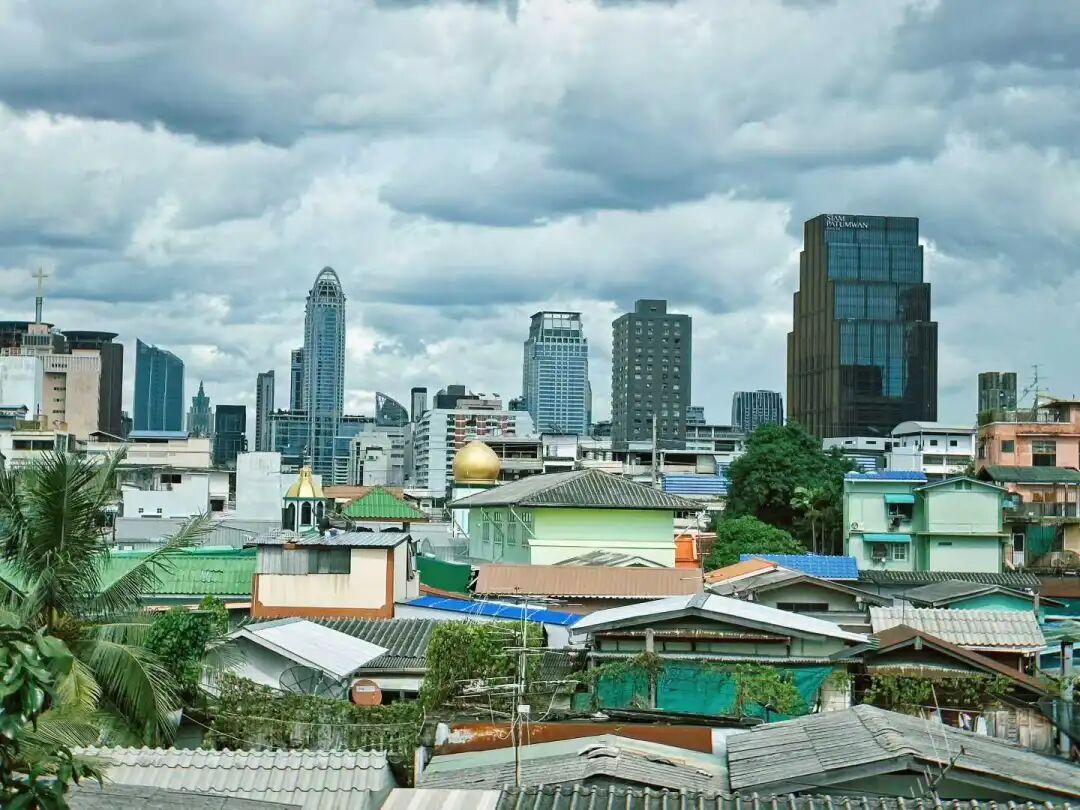
Cham community neighborhood—Darul Falah Mosque
The Darul Falah Mosque was also built by Cham captives brought back from Cambodia by Thailand during the Siamese-Vietnamese War of 1841-1845. Bangkok once had its most important Sufi shrine (gongbei), but it is hard to find any trace of it today.
In the early 20th century, Sheikh Hussein Bakri, a Sufi from the Shadhili order in the Hejaz region, lived at the Darul Falah mosque (masjid) in Bangkok. He married a local woman and they had two sons. Before Sheikh Hussein returned to his home country, he predicted that his youngest son, Ahmed Bakri, would pass away, so he told his wife to bury a piece of green cloth with him. Sure enough, his son died just a few days after he left. His wife did not follow his instructions to include the green cloth, so she later urgently asked everyone to open the grave to put it in, but when they opened the grave, Ahmed's body was already gone. The story of the Arab man and the green cloth spread quickly.
After the Saudis conquered the Hejaz region in 1925, they promoted Wahhabism there, forcing many Sufis in the Hejaz to flee. In 1929, Sheikh Hussein Bakri's other son, Sheikh Khalid Bakri, who was also in the Shadhili order, traveled by boat from the Hejaz to the Darul Falah mosque in Bangkok and built the Ahmed shrine (gongbei) inside the mosque. During World War II, when the U. S. military bombed Bangkok, people from all different groups took shelter near the shrine, believing it would keep them safe. The shrine was not moved outside the mosque until the Darul Falah mosque was renovated in the 1950s.
Starting from the Darul Falah mosque, the Shadhili order gradually grew in the eastern suburbs of Bangkok and expanded into central and southern Thailand, becoming an important Sufi order in the country.
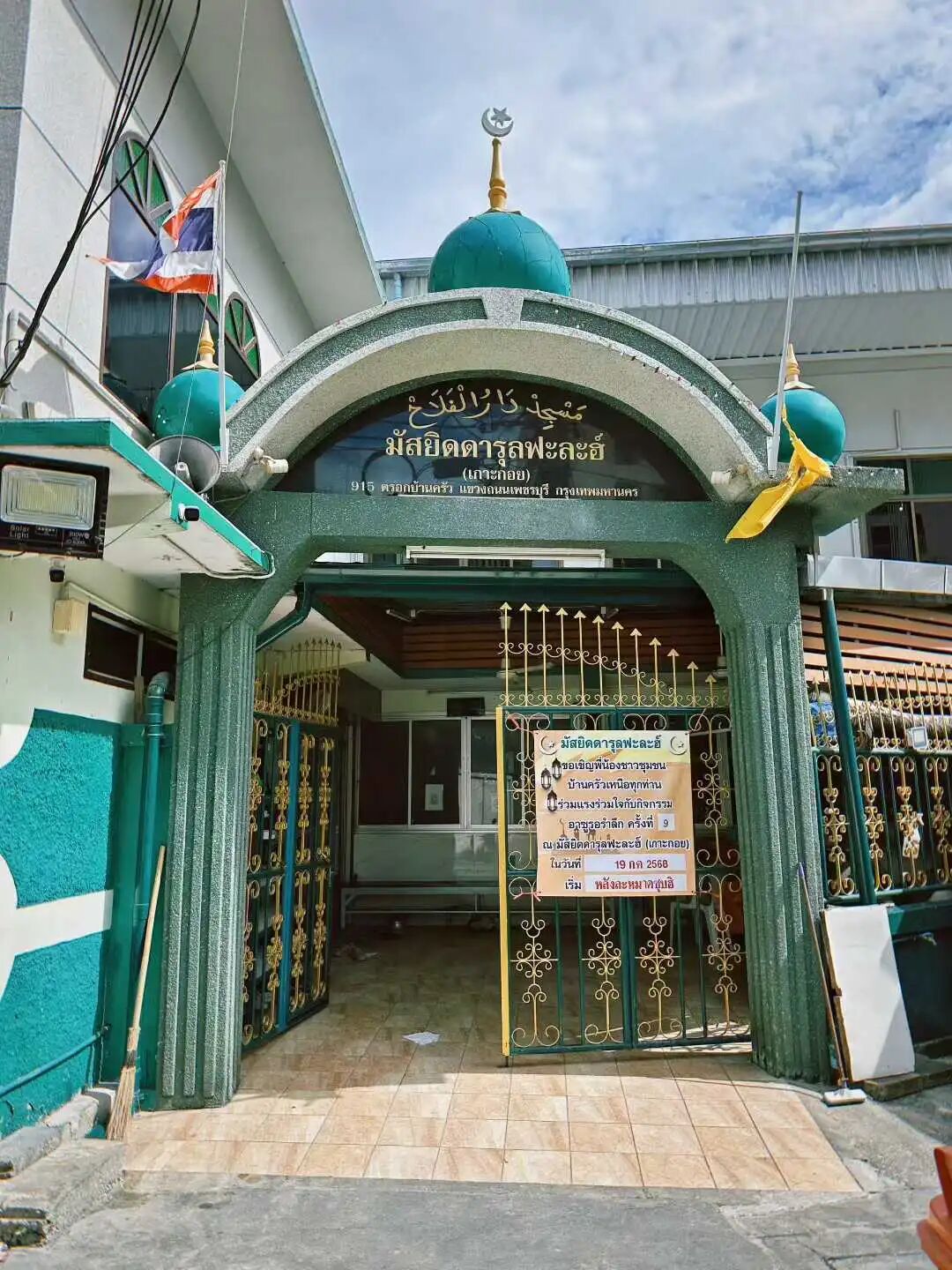
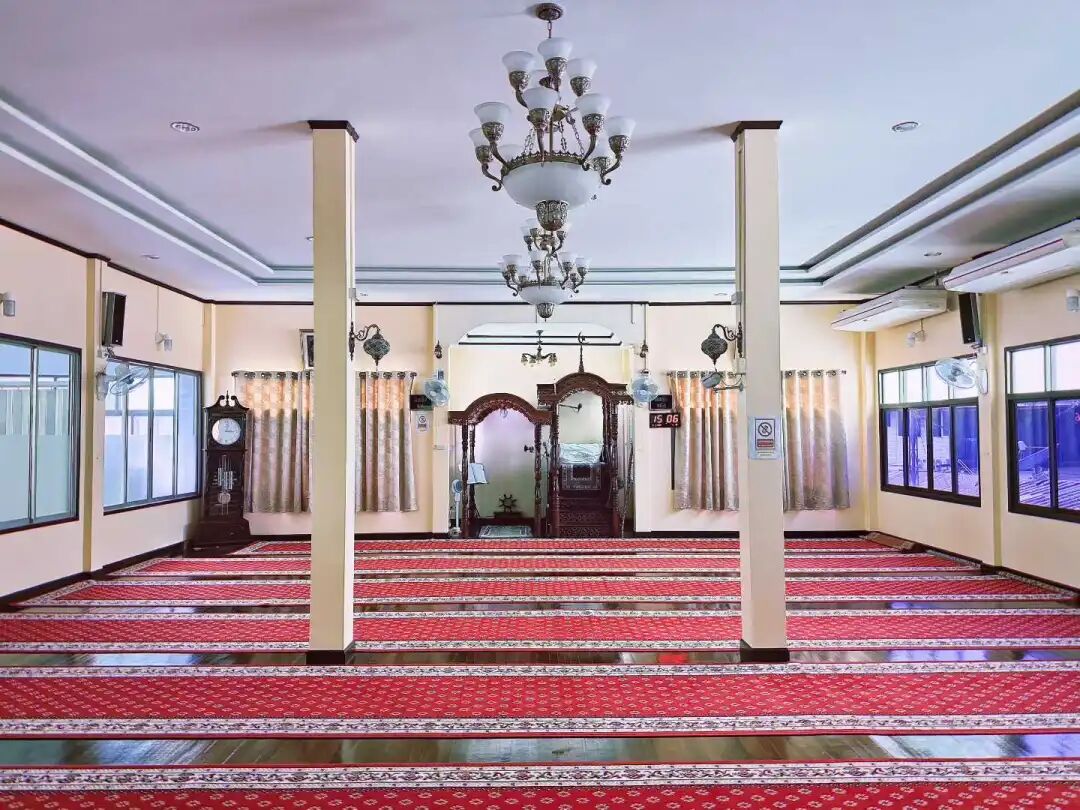
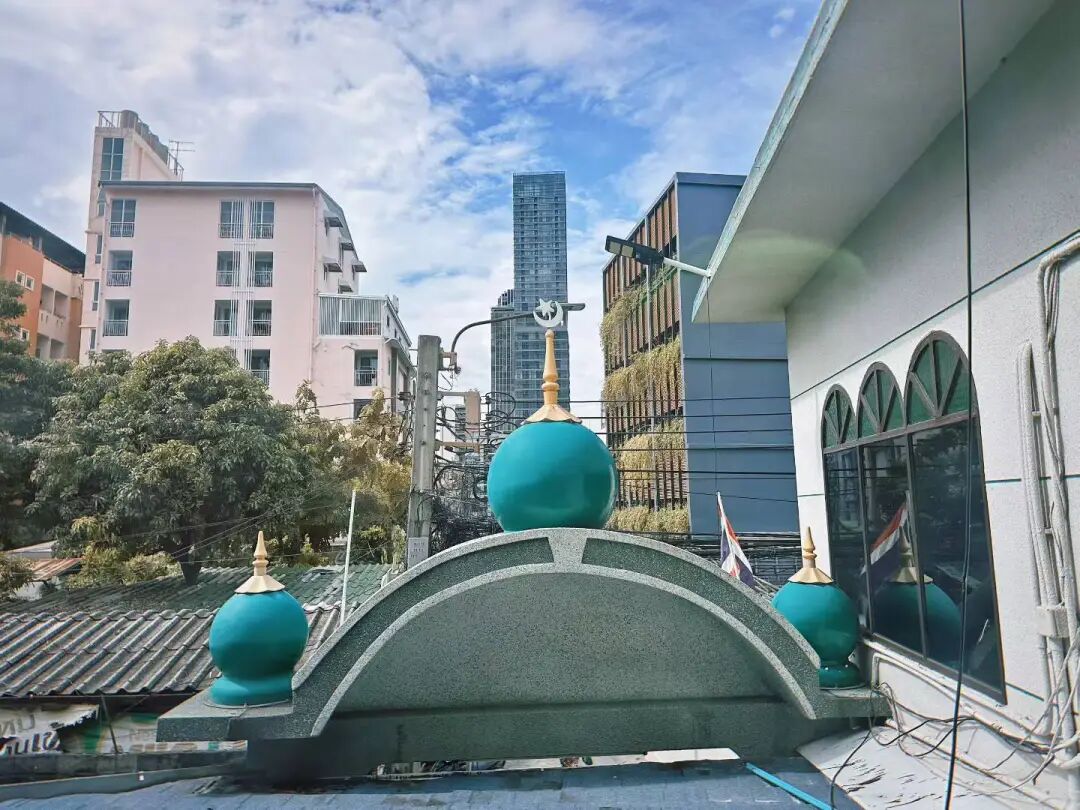
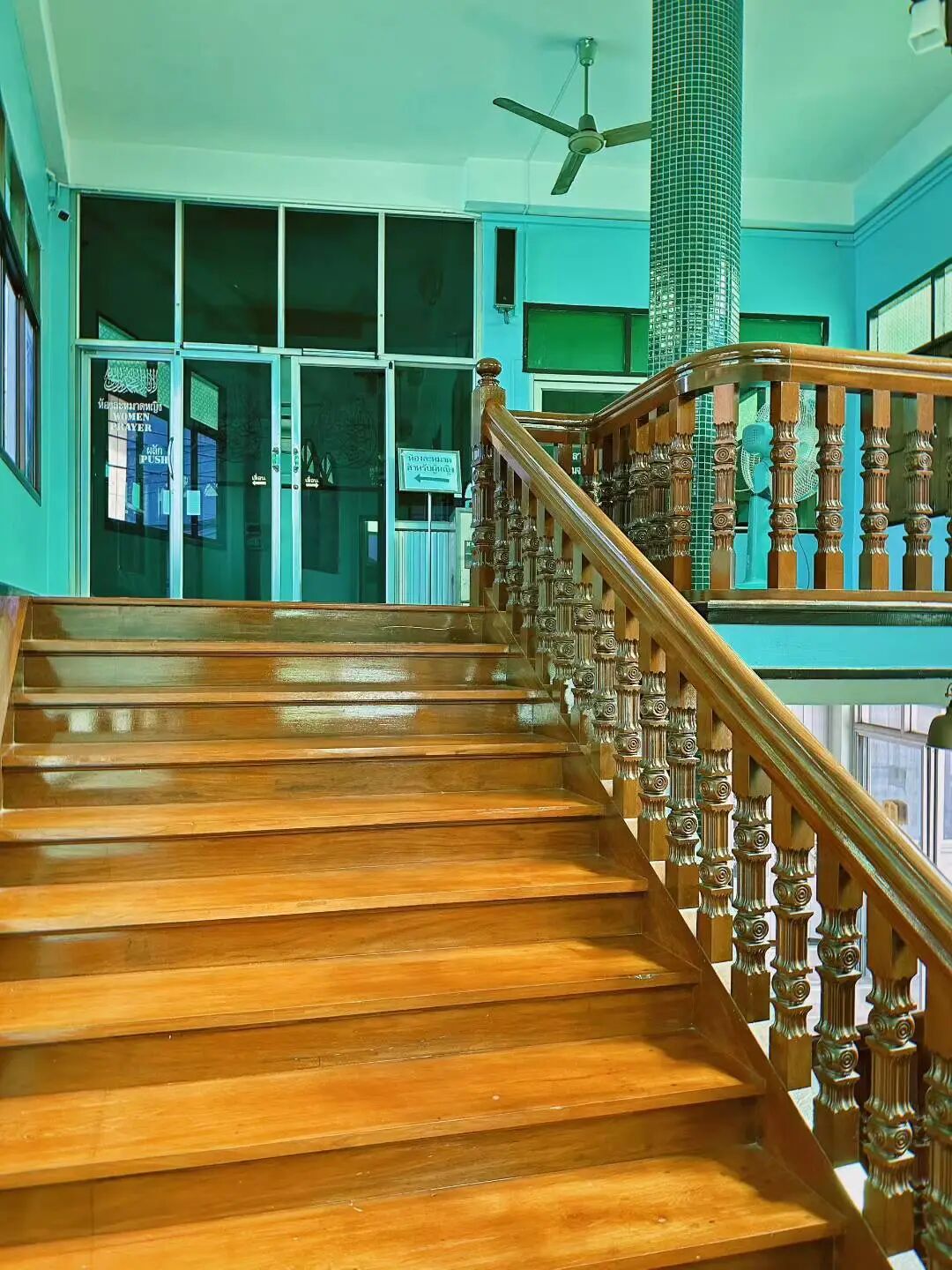
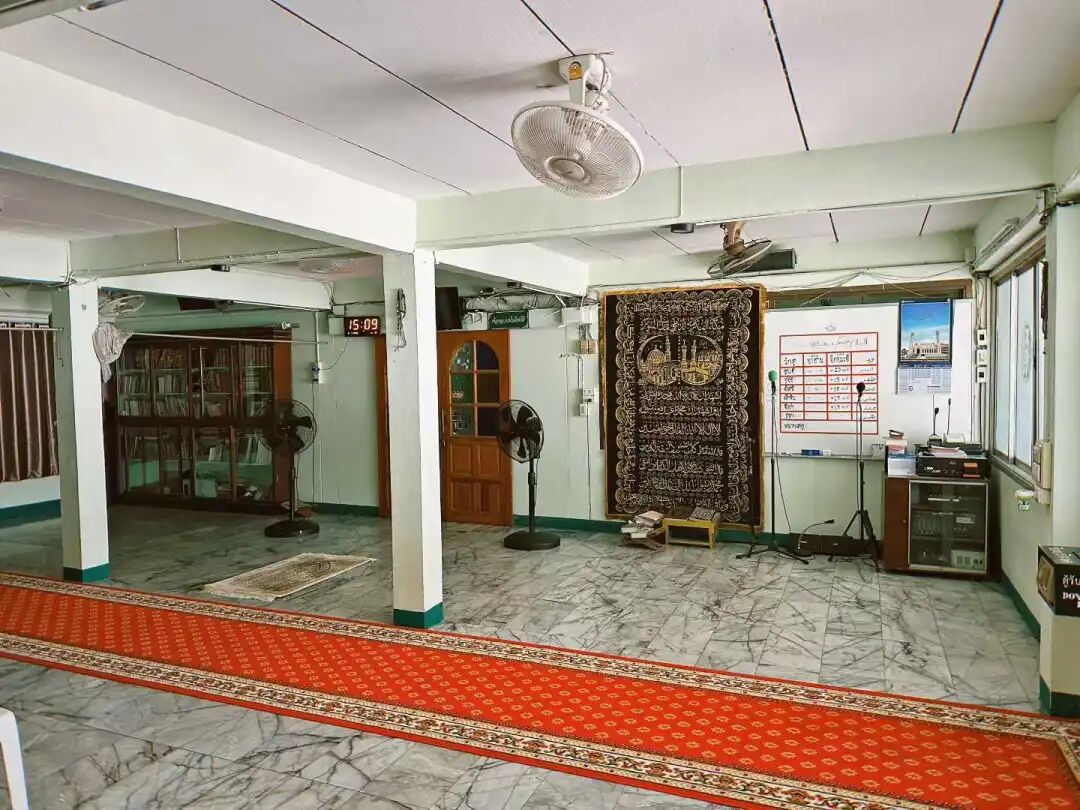
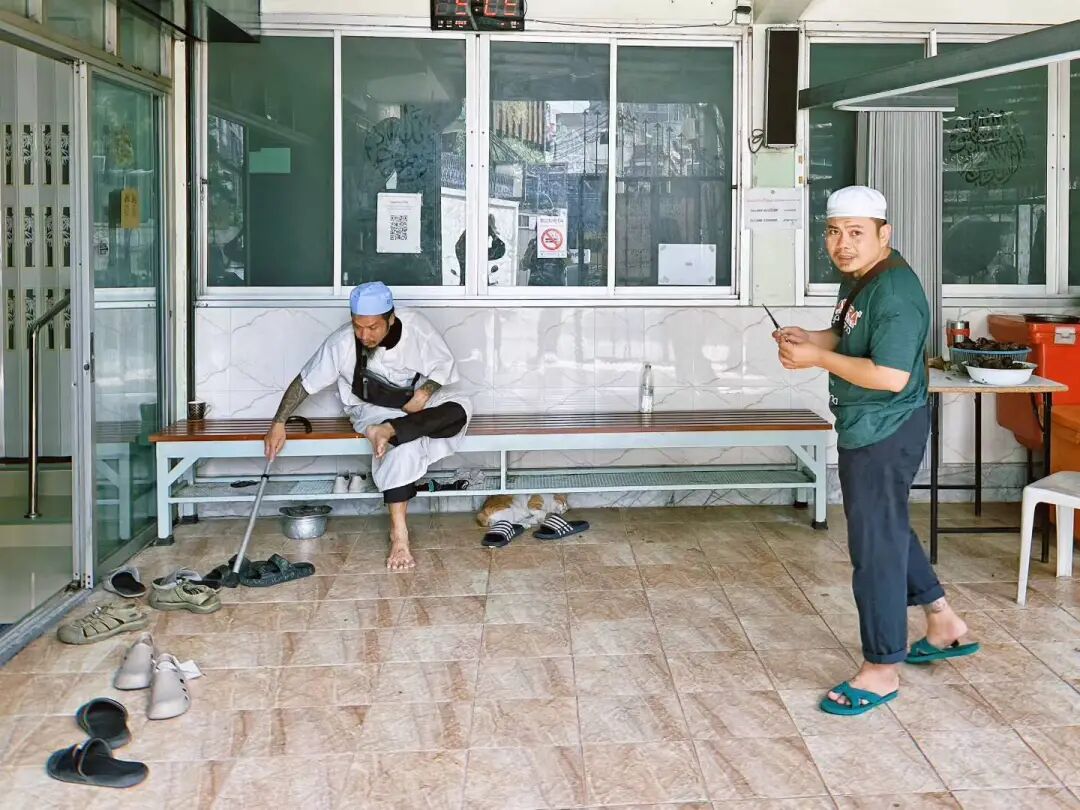
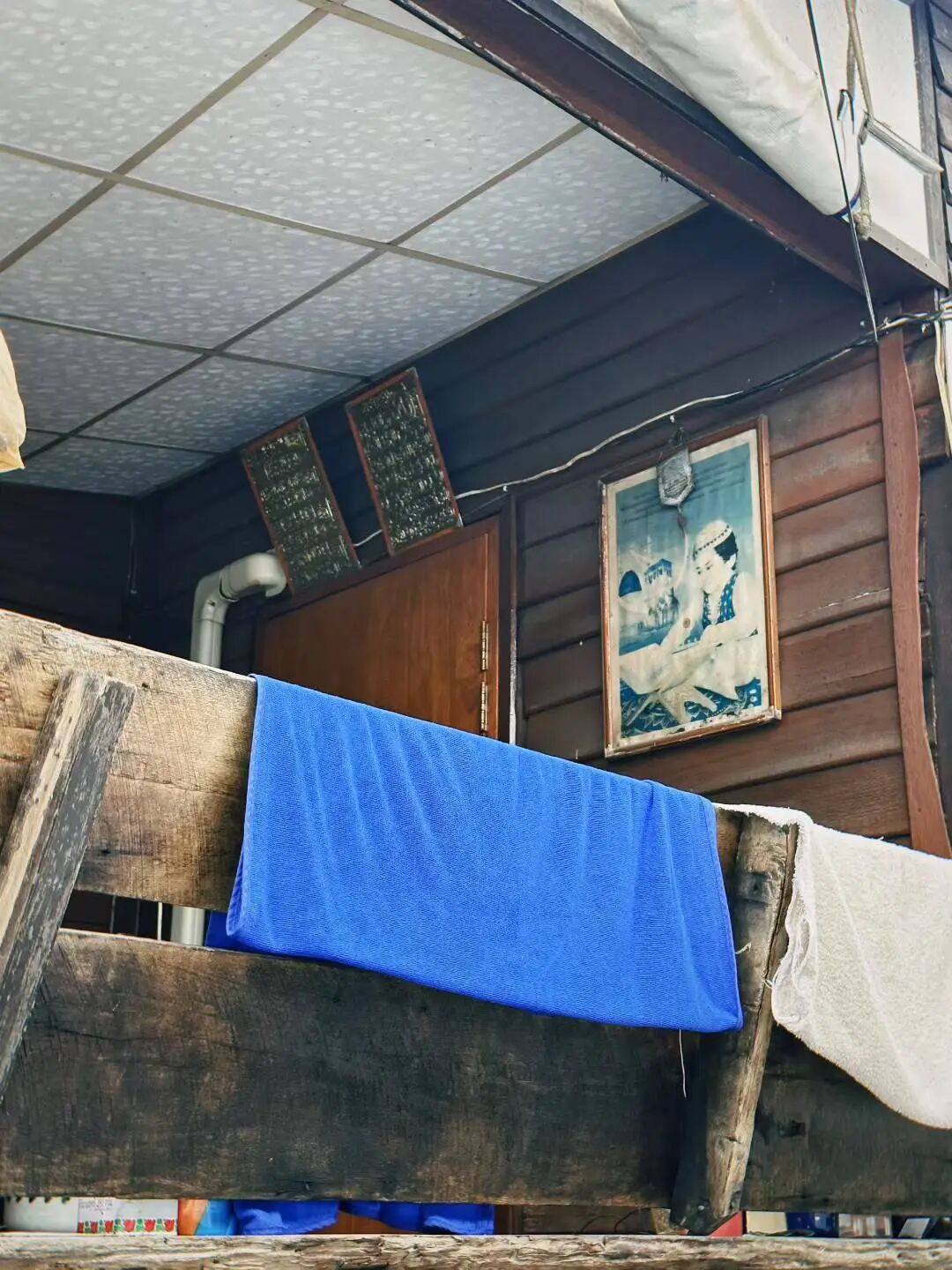
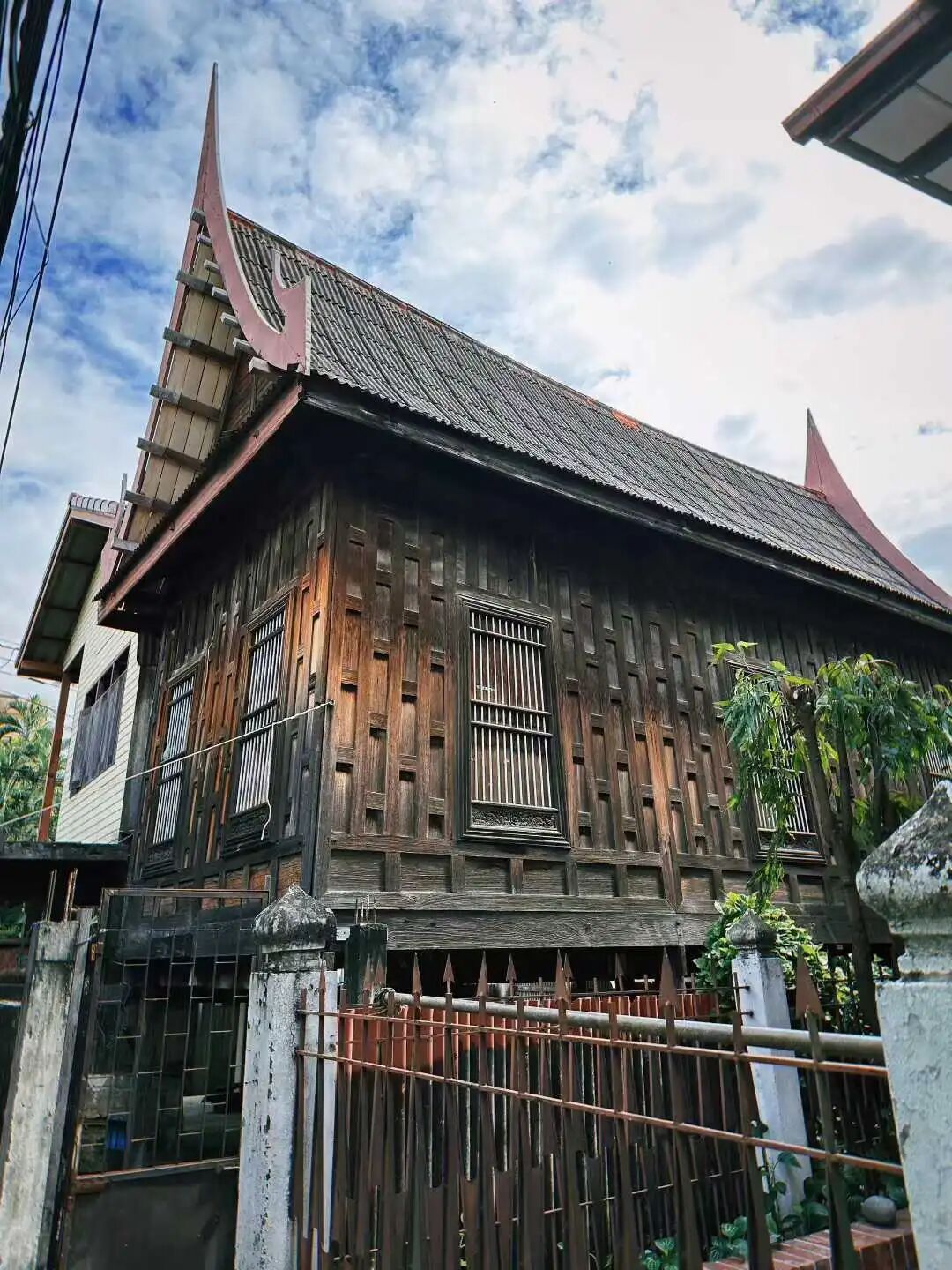
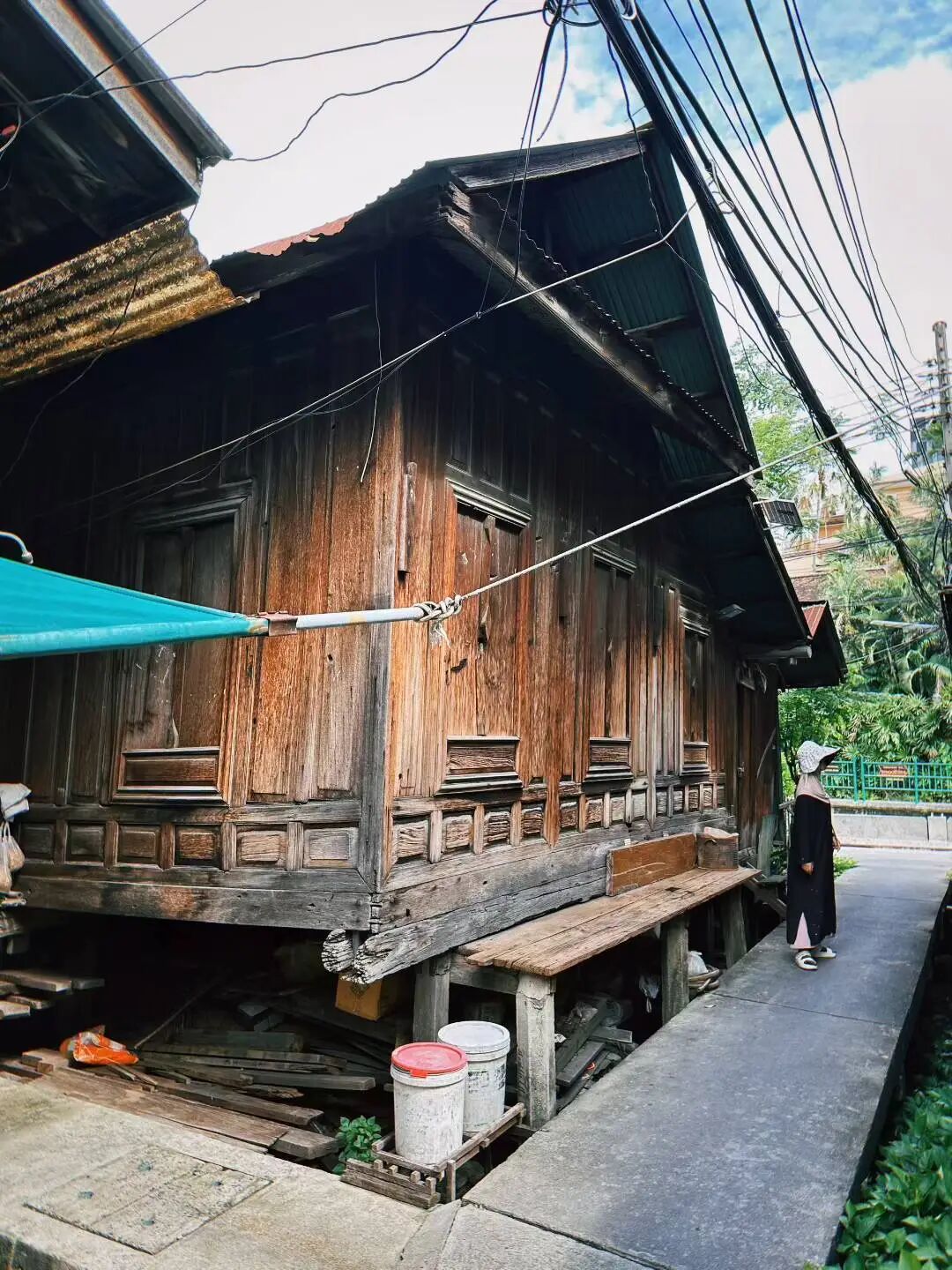
Muslim Travel Guide Bangkok: Persian Shia Mosques and Muharram Traditions
Articles • yusuf908 posted the article • 0 comments • 258 views • 2026-05-23 23:30
Summary: Bangkok has a long Persian-descended Shia Muslim history, centered in communities such as Kudi Luang Chao Sen Mosque. This account follows the Muharram gatherings, Ashura preparations, symbols of Karbala, mosque details, food sharing, and local conversations described in the original travel note.
As the Islamic New Year arrives, Shia friends (dosti) around the world spend the first ten days of the first month, Muharram, honoring Imam Hussein. This leads up to the grand Ashura festival. Last weekend, I traveled to Thailand to join the Muharram commemorations held by the Persian-descended Shia community in Bangkok.
Bangkok currently has five Shia mosques, with two belonging to the Persian community and three to the Indian community. It is the city with the strongest Shia cultural presence in all of Southeast Asia. Since I only had Saturday evening, I chose to attend the memorial at the primary Shia mosque in Bangkok, Kudi Luang Mosque.
Between the 16th and 18th centuries, Shia merchants from the Persian Safavid dynasty traveled along the Indian Ocean coast to trade in Siam, where they were warmly welcomed and hosted by the Siamese royal family. Some Persian merchants married locals and settled down, eventually taking on important roles in the Siamese court. Starting in the 17th century, the Sheik Ahmad family from Qom, Persia, managed Siam's western maritime affairs, overseeing trade, shipping, and diplomacy across the Indian Ocean.
After the Siamese capital of Ayutthaya fell in 1767 and the capital moved to Bangkok in 1782, the Persian community from Ayutthaya moved there as well. The first leader of the Persian Shia community in Bangkok was Konkaew, the son of the last leader from Ayutthaya. In 1797, he began managing Siam's western trade and received a property in the Thonburi area across the Chao Phraya River. People say he and 400 Shia followers established Kudi Chao Sen Mosque, which became the primary Shia mosque in Bangkok.
After Konkaew passed away, his brother and eight direct descendants inherited the title, controlling Siam's western trade rights for a century. In 1897, King Rama V renovated Kudi Chao Sen Mosque and renamed it Kudi Luang Chao Sen Mosque. In 1947, the entire Kudi Luang Mosque was moved to its current location to make room for the Royal Thai Navy headquarters. The community still lives around the mosque, preserving the traditional Shia culture of Bangkok.
We visited Kudi Luang Mosque in the morning. The male and female friends (dosti) were very warm, offering us several bottles of water. Even after learning we were Sunni, they remained very welcoming and told us we were free to take photos. It was a pity that the grandest Ashura event was scheduled for Monday morning, and we could not attend because of work.
Inside the main hall of Kudi Luang Mosque, a banner hangs that reads, 'Oh!' Hussein. Honoring Imam Hussein is the theme of Muharram.
The Persian-descended Shia elders in Bangkok live around the mosque. They are open-minded and very welcoming to friends (dosti).
After the prayer (namaz), I returned to Kudi Luang Mosque to eat chicken rice noodle rolls (changfen) with everyone, along with a special dessert made of palm sugar and pomelo that the Persian community in Bangkok eats during Muharram. One of the themes for Shia Muslims during Muharram is sharing and giving. Food during this time is free, and everyone gathers to make the flowers used in the activities. Some people in the mosque wear white pants and headscarves, with bells hanging from their pant legs. They dedicate themselves to serving the mosque during the first ten days of Muharram.
I met a very interesting young man at the mosque who told me many stories about the Shia faith and Ashura. His parents are Afghan, he grew up in Iran, later went to Japan for school and work, and is now stationed in Bangkok by his company. He was the most fluent English speaker in the entire mosque, and I learned a lot from chatting with him. Like everyone else at the mosque, he was very welcoming to Sunni friends (dosti).
The most eye-catching thing in the mosque is a handsome, tall horse personally gifted by the King of Thailand. This horse represents Zuljanah, the warhorse of Imam Hussein. Zuljanah was raised by the noble Prophet from a young age and was known for loyalty, strength, endurance, and devotion. During the Battle of Karbala, Zuljanah used its body to block arrows aimed at Imam Hussein. After Imam Hussein passed away, Zuljanah returned to his family covered in blood to warn them of an ambush, then died from its wounds after fulfilling its final duty. During the month of Muharram, the horse is kept in the stables of Kudi Luang mosque, and people take turns walking it in the courtyard every night.
On the qibla wall of the main hall, the flagpole at the top is called an Alam, which represents the flag held by Abbas, the standard-bearer for Imam Hussein at the Battle of Karbala. The metal hand is called a Panja, which symbolizes the severed hands of Abbas. Abbas was the half-brother of Imam Hussein; he inherited the courage of Imam Ali and always held the flag of victory high on the battlefield. On the night of Ashura, he was blocked by enemy forces while returning with water from the Euphrates River; he fought alone, had both arms cut off, and eventually died in battle.
Above the niche on the qibla wall, the names of Allah, the noble Prophet, and the Twelve Imams of the Shia are written. The Twelver school is the largest branch of Shia Islam and is the state religion of Iran.
The Nakhl Gardani placed in the main hall symbolizes the funeral bier of Imam Hussein, decorated with a dagger and a turban (dastar) representing those used by him. During Ashura events, people carry the Nakhl Gardani to symbolize the funeral procession for Imam Hussein.
A Tadjah is also placed in the main hall to symbolize the tomb of Imam Hussein.
There is also a small decoration in the hall representing the youngest infant martyred at the Battle of Karbala, Ali Asghar, the six-month-old son of Imam Hussein. Records say that Imam Hussein held the thirsty Ali Asghar and asked the enemy for water for the child, but the enemy fired an arrow that pierced the baby's throat and Imam Hussein's arm at the same time. Ali Asghar later became a symbol of innocent victims and the most painful part of the mourning during Muharram.
During the first ten nights of Muharram, Shia Muslims in Bangkok gather every night to chant in memory of Imam Hussein. During these gatherings, people known as Rawda khwan tell stories about the martyrdom of Imam Hussein and his followers at the Battle of Karbala. The stories come from famous books, the most well-known being The Garden of the Martyrs (Rawdat al-shuhada) by the famous Timurid-era Persian writer Hussein Kashifi. Afterward, the imam gives a sermon (waaz) in Thai, teaching everyone about the bravery, fearlessness, and sacrifice shown by Imam Hussein and his followers at the Battle of Karbala.
Besides the main Shia mosque in Bangkok, Kudi Luang, I also visited two others: the Persian-descended Kudi Charoenphat and the Indian-descended Dilfallah mosque. The people at Kudi Charoenphat told me they did not want me to take photos or visit, which I understand. The people at Dilfallah mosque were friendlier, but they told me their Ashura event was on Monday, which I did not quite understand, as I wondered why it was not held on the 10th day of the first month of the Islamic calendar.
In all three places, I saw the Nakhl Gardani used during Ashura events. It symbolizes the funeral bier of Imam Hussein, and the entire Ashura event is essentially a reenactment of his funeral procession.
I previously spent Muharram in Tehran, Iran. See: Encountering Ashura in Tehran. view all
Summary: Bangkok has a long Persian-descended Shia Muslim history, centered in communities such as Kudi Luang Chao Sen Mosque. This account follows the Muharram gatherings, Ashura preparations, symbols of Karbala, mosque details, food sharing, and local conversations described in the original travel note.
As the Islamic New Year arrives, Shia friends (dosti) around the world spend the first ten days of the first month, Muharram, honoring Imam Hussein. This leads up to the grand Ashura festival. Last weekend, I traveled to Thailand to join the Muharram commemorations held by the Persian-descended Shia community in Bangkok.
Bangkok currently has five Shia mosques, with two belonging to the Persian community and three to the Indian community. It is the city with the strongest Shia cultural presence in all of Southeast Asia. Since I only had Saturday evening, I chose to attend the memorial at the primary Shia mosque in Bangkok, Kudi Luang Mosque.
Between the 16th and 18th centuries, Shia merchants from the Persian Safavid dynasty traveled along the Indian Ocean coast to trade in Siam, where they were warmly welcomed and hosted by the Siamese royal family. Some Persian merchants married locals and settled down, eventually taking on important roles in the Siamese court. Starting in the 17th century, the Sheik Ahmad family from Qom, Persia, managed Siam's western maritime affairs, overseeing trade, shipping, and diplomacy across the Indian Ocean.
After the Siamese capital of Ayutthaya fell in 1767 and the capital moved to Bangkok in 1782, the Persian community from Ayutthaya moved there as well. The first leader of the Persian Shia community in Bangkok was Konkaew, the son of the last leader from Ayutthaya. In 1797, he began managing Siam's western trade and received a property in the Thonburi area across the Chao Phraya River. People say he and 400 Shia followers established Kudi Chao Sen Mosque, which became the primary Shia mosque in Bangkok.
After Konkaew passed away, his brother and eight direct descendants inherited the title, controlling Siam's western trade rights for a century. In 1897, King Rama V renovated Kudi Chao Sen Mosque and renamed it Kudi Luang Chao Sen Mosque. In 1947, the entire Kudi Luang Mosque was moved to its current location to make room for the Royal Thai Navy headquarters. The community still lives around the mosque, preserving the traditional Shia culture of Bangkok.
We visited Kudi Luang Mosque in the morning. The male and female friends (dosti) were very warm, offering us several bottles of water. Even after learning we were Sunni, they remained very welcoming and told us we were free to take photos. It was a pity that the grandest Ashura event was scheduled for Monday morning, and we could not attend because of work.
Inside the main hall of Kudi Luang Mosque, a banner hangs that reads, 'Oh!' Hussein. Honoring Imam Hussein is the theme of Muharram.
The Persian-descended Shia elders in Bangkok live around the mosque. They are open-minded and very welcoming to friends (dosti).
After the prayer (namaz), I returned to Kudi Luang Mosque to eat chicken rice noodle rolls (changfen) with everyone, along with a special dessert made of palm sugar and pomelo that the Persian community in Bangkok eats during Muharram. One of the themes for Shia Muslims during Muharram is sharing and giving. Food during this time is free, and everyone gathers to make the flowers used in the activities. Some people in the mosque wear white pants and headscarves, with bells hanging from their pant legs. They dedicate themselves to serving the mosque during the first ten days of Muharram.
I met a very interesting young man at the mosque who told me many stories about the Shia faith and Ashura. His parents are Afghan, he grew up in Iran, later went to Japan for school and work, and is now stationed in Bangkok by his company. He was the most fluent English speaker in the entire mosque, and I learned a lot from chatting with him. Like everyone else at the mosque, he was very welcoming to Sunni friends (dosti).
The most eye-catching thing in the mosque is a handsome, tall horse personally gifted by the King of Thailand. This horse represents Zuljanah, the warhorse of Imam Hussein. Zuljanah was raised by the noble Prophet from a young age and was known for loyalty, strength, endurance, and devotion. During the Battle of Karbala, Zuljanah used its body to block arrows aimed at Imam Hussein. After Imam Hussein passed away, Zuljanah returned to his family covered in blood to warn them of an ambush, then died from its wounds after fulfilling its final duty. During the month of Muharram, the horse is kept in the stables of Kudi Luang mosque, and people take turns walking it in the courtyard every night.
On the qibla wall of the main hall, the flagpole at the top is called an Alam, which represents the flag held by Abbas, the standard-bearer for Imam Hussein at the Battle of Karbala. The metal hand is called a Panja, which symbolizes the severed hands of Abbas. Abbas was the half-brother of Imam Hussein; he inherited the courage of Imam Ali and always held the flag of victory high on the battlefield. On the night of Ashura, he was blocked by enemy forces while returning with water from the Euphrates River; he fought alone, had both arms cut off, and eventually died in battle.
Above the niche on the qibla wall, the names of Allah, the noble Prophet, and the Twelve Imams of the Shia are written. The Twelver school is the largest branch of Shia Islam and is the state religion of Iran.
The Nakhl Gardani placed in the main hall symbolizes the funeral bier of Imam Hussein, decorated with a dagger and a turban (dastar) representing those used by him. During Ashura events, people carry the Nakhl Gardani to symbolize the funeral procession for Imam Hussein.
A Tadjah is also placed in the main hall to symbolize the tomb of Imam Hussein.
There is also a small decoration in the hall representing the youngest infant martyred at the Battle of Karbala, Ali Asghar, the six-month-old son of Imam Hussein. Records say that Imam Hussein held the thirsty Ali Asghar and asked the enemy for water for the child, but the enemy fired an arrow that pierced the baby's throat and Imam Hussein's arm at the same time. Ali Asghar later became a symbol of innocent victims and the most painful part of the mourning during Muharram.
During the first ten nights of Muharram, Shia Muslims in Bangkok gather every night to chant in memory of Imam Hussein. During these gatherings, people known as Rawda khwan tell stories about the martyrdom of Imam Hussein and his followers at the Battle of Karbala. The stories come from famous books, the most well-known being The Garden of the Martyrs (Rawdat al-shuhada) by the famous Timurid-era Persian writer Hussein Kashifi. Afterward, the imam gives a sermon (waaz) in Thai, teaching everyone about the bravery, fearlessness, and sacrifice shown by Imam Hussein and his followers at the Battle of Karbala.
Besides the main Shia mosque in Bangkok, Kudi Luang, I also visited two others: the Persian-descended Kudi Charoenphat and the Indian-descended Dilfallah mosque. The people at Kudi Charoenphat told me they did not want me to take photos or visit, which I understand. The people at Dilfallah mosque were friendlier, but they told me their Ashura event was on Monday, which I did not quite understand, as I wondered why it was not held on the 10th day of the first month of the Islamic calendar.
In all three places, I saw the Nakhl Gardani used during Ashura events. It symbolizes the funeral bier of Imam Hussein, and the entire Ashura event is essentially a reenactment of his funeral procession.
I previously spent Muharram in Tehran, Iran. See: Encountering Ashura in Tehran.
Halal Travel Guide: Bangkok - Persian Shia Mosques and Muharram Traditions
Articles • ali2007fr posted the article • 0 comments • 230 views • 2026-05-20 09:12
Summary: Bangkok has a long Persian-descended Shia Muslim history, centered in communities such as Kudi Luang Chao Sen Mosque. This account follows the Muharram gatherings, Ashura preparations, symbols of Karbala, mosque details, food sharing, and local conversations described in the original travel note.
As the Islamic New Year arrives, Shia friends (dosti) around the world spend the first ten days of the first month, Muharram, honoring Imam Hussein. This leads up to the grand Ashura festival. Last weekend, I traveled to Thailand to join the Muharram commemorations held by the Persian-descended Shia community in Bangkok.
Bangkok currently has five Shia mosques, with two belonging to the Persian community and three to the Indian community. It is the city with the strongest Shia cultural presence in all of Southeast Asia. Since I only had Saturday evening, I chose to attend the memorial at the primary Shia mosque in Bangkok, Kudi Luang Mosque.
Between the 16th and 18th centuries, Shia merchants from the Persian Safavid dynasty traveled along the Indian Ocean coast to trade in Siam, where they were warmly welcomed and hosted by the Siamese royal family. Some Persian merchants married locals and settled down, eventually taking on important roles in the Siamese court. Starting in the 17th century, the Sheik Ahmad family from Qom, Persia, managed Siam's western maritime affairs, overseeing trade, shipping, and diplomacy across the Indian Ocean.
After the Siamese capital of Ayutthaya fell in 1767 and the capital moved to Bangkok in 1782, the Persian community from Ayutthaya moved there as well. The first leader of the Persian Shia community in Bangkok was Konkaew, the son of the last leader from Ayutthaya. In 1797, he began managing Siam's western trade and received a property in the Thonburi area across the Chao Phraya River. People say he and 400 Shia followers established Kudi Chao Sen Mosque, which became the primary Shia mosque in Bangkok.
After Konkaew passed away, his brother and eight direct descendants inherited the title, controlling Siam's western trade rights for a century. In 1897, King Rama V renovated Kudi Chao Sen Mosque and renamed it Kudi Luang Chao Sen Mosque. In 1947, the entire Kudi Luang Mosque was moved to its current location to make room for the Royal Thai Navy headquarters. The community still lives around the mosque, preserving the traditional Shia culture of Bangkok.
We visited Kudi Luang Mosque in the morning. The male and female friends (dosti) were very warm, offering us several bottles of water. Even after learning we were Sunni, they remained very welcoming and told us we were free to take photos. It was a pity that the grandest Ashura event was scheduled for Monday morning, and we could not attend because of work.
Inside the main hall of Kudi Luang Mosque, a banner hangs that reads, 'Oh!' Hussein. Honoring Imam Hussein is the theme of Muharram.
The Persian-descended Shia elders in Bangkok live around the mosque. They are open-minded and very welcoming to friends (dosti).
After the prayer (namaz), I returned to Kudi Luang Mosque to eat chicken rice noodle rolls (changfen) with everyone, along with a special dessert made of palm sugar and pomelo that the Persian community in Bangkok eats during Muharram. One of the themes for Shia Muslims during Muharram is sharing and giving. Food during this time is free, and everyone gathers to make the flowers used in the activities. Some people in the mosque wear white pants and headscarves, with bells hanging from their pant legs. They dedicate themselves to serving the mosque during the first ten days of Muharram.
I met a very interesting young man at the mosque who told me many stories about the Shia faith and Ashura. His parents are Afghan, he grew up in Iran, later went to Japan for school and work, and is now stationed in Bangkok by his company. He was the most fluent English speaker in the entire mosque, and I learned a lot from chatting with him. Like everyone else at the mosque, he was very welcoming to Sunni friends (dosti).
The most eye-catching thing in the mosque is a handsome, tall horse personally gifted by the King of Thailand. This horse represents Zuljanah, the warhorse of Imam Hussein. Zuljanah was raised by the noble Prophet from a young age and was known for loyalty, strength, endurance, and devotion. During the Battle of Karbala, Zuljanah used its body to block arrows aimed at Imam Hussein. After Imam Hussein passed away, Zuljanah returned to his family covered in blood to warn them of an ambush, then died from its wounds after fulfilling its final duty. During the month of Muharram, the horse is kept in the stables of Kudi Luang mosque, and people take turns walking it in the courtyard every night.
On the qibla wall of the main hall, the flagpole at the top is called an Alam, which represents the flag held by Abbas, the standard-bearer for Imam Hussein at the Battle of Karbala. The metal hand is called a Panja, which symbolizes the severed hands of Abbas. Abbas was the half-brother of Imam Hussein; he inherited the courage of Imam Ali and always held the flag of victory high on the battlefield. On the night of Ashura, he was blocked by enemy forces while returning with water from the Euphrates River; he fought alone, had both arms cut off, and eventually died in battle.
Above the niche on the qibla wall, the names of Allah, the noble Prophet, and the Twelve Imams of the Shia are written. The Twelver school is the largest branch of Shia Islam and is the state religion of Iran.
The Nakhl Gardani placed in the main hall symbolizes the funeral bier of Imam Hussein, decorated with a dagger and a turban (dastar) representing those used by him. During Ashura events, people carry the Nakhl Gardani to symbolize the funeral procession for Imam Hussein.
A Tadjah is also placed in the main hall to symbolize the tomb of Imam Hussein.
There is also a small decoration in the hall representing the youngest infant martyred at the Battle of Karbala, Ali Asghar, the six-month-old son of Imam Hussein. Records say that Imam Hussein held the thirsty Ali Asghar and asked the enemy for water for the child, but the enemy fired an arrow that pierced the baby's throat and Imam Hussein's arm at the same time. Ali Asghar later became a symbol of innocent victims and the most painful part of the mourning during Muharram.
During the first ten nights of Muharram, Shia Muslims in Bangkok gather every night to chant in memory of Imam Hussein. During these gatherings, people known as Rawda khwan tell stories about the martyrdom of Imam Hussein and his followers at the Battle of Karbala. The stories come from famous books, the most well-known being The Garden of the Martyrs (Rawdat al-shuhada) by the famous Timurid-era Persian writer Hussein Kashifi. Afterward, the imam gives a sermon (waaz) in Thai, teaching everyone about the bravery, fearlessness, and sacrifice shown by Imam Hussein and his followers at the Battle of Karbala.
Besides the main Shia mosque in Bangkok, Kudi Luang, I also visited two others: the Persian-descended Kudi Charoenphat and the Indian-descended Dilfallah mosque. The people at Kudi Charoenphat told me they did not want me to take photos or visit, which I understand. The people at Dilfallah mosque were friendlier, but they told me their Ashura event was on Monday, which I did not quite understand, as I wondered why it was not held on the 10th day of the first month of the Islamic calendar.
In all three places, I saw the Nakhl Gardani used during Ashura events. It symbolizes the funeral bier of Imam Hussein, and the entire Ashura event is essentially a reenactment of his funeral procession.
I previously spent Muharram in Tehran, Iran. See: Encountering Ashura in Tehran. view all
Summary: Bangkok has a long Persian-descended Shia Muslim history, centered in communities such as Kudi Luang Chao Sen Mosque. This account follows the Muharram gatherings, Ashura preparations, symbols of Karbala, mosque details, food sharing, and local conversations described in the original travel note.
As the Islamic New Year arrives, Shia friends (dosti) around the world spend the first ten days of the first month, Muharram, honoring Imam Hussein. This leads up to the grand Ashura festival. Last weekend, I traveled to Thailand to join the Muharram commemorations held by the Persian-descended Shia community in Bangkok.
Bangkok currently has five Shia mosques, with two belonging to the Persian community and three to the Indian community. It is the city with the strongest Shia cultural presence in all of Southeast Asia. Since I only had Saturday evening, I chose to attend the memorial at the primary Shia mosque in Bangkok, Kudi Luang Mosque.
Between the 16th and 18th centuries, Shia merchants from the Persian Safavid dynasty traveled along the Indian Ocean coast to trade in Siam, where they were warmly welcomed and hosted by the Siamese royal family. Some Persian merchants married locals and settled down, eventually taking on important roles in the Siamese court. Starting in the 17th century, the Sheik Ahmad family from Qom, Persia, managed Siam's western maritime affairs, overseeing trade, shipping, and diplomacy across the Indian Ocean.
After the Siamese capital of Ayutthaya fell in 1767 and the capital moved to Bangkok in 1782, the Persian community from Ayutthaya moved there as well. The first leader of the Persian Shia community in Bangkok was Konkaew, the son of the last leader from Ayutthaya. In 1797, he began managing Siam's western trade and received a property in the Thonburi area across the Chao Phraya River. People say he and 400 Shia followers established Kudi Chao Sen Mosque, which became the primary Shia mosque in Bangkok.
After Konkaew passed away, his brother and eight direct descendants inherited the title, controlling Siam's western trade rights for a century. In 1897, King Rama V renovated Kudi Chao Sen Mosque and renamed it Kudi Luang Chao Sen Mosque. In 1947, the entire Kudi Luang Mosque was moved to its current location to make room for the Royal Thai Navy headquarters. The community still lives around the mosque, preserving the traditional Shia culture of Bangkok.
We visited Kudi Luang Mosque in the morning. The male and female friends (dosti) were very warm, offering us several bottles of water. Even after learning we were Sunni, they remained very welcoming and told us we were free to take photos. It was a pity that the grandest Ashura event was scheduled for Monday morning, and we could not attend because of work.
Inside the main hall of Kudi Luang Mosque, a banner hangs that reads, 'Oh!' Hussein. Honoring Imam Hussein is the theme of Muharram.
The Persian-descended Shia elders in Bangkok live around the mosque. They are open-minded and very welcoming to friends (dosti).
After the prayer (namaz), I returned to Kudi Luang Mosque to eat chicken rice noodle rolls (changfen) with everyone, along with a special dessert made of palm sugar and pomelo that the Persian community in Bangkok eats during Muharram. One of the themes for Shia Muslims during Muharram is sharing and giving. Food during this time is free, and everyone gathers to make the flowers used in the activities. Some people in the mosque wear white pants and headscarves, with bells hanging from their pant legs. They dedicate themselves to serving the mosque during the first ten days of Muharram.
I met a very interesting young man at the mosque who told me many stories about the Shia faith and Ashura. His parents are Afghan, he grew up in Iran, later went to Japan for school and work, and is now stationed in Bangkok by his company. He was the most fluent English speaker in the entire mosque, and I learned a lot from chatting with him. Like everyone else at the mosque, he was very welcoming to Sunni friends (dosti).
The most eye-catching thing in the mosque is a handsome, tall horse personally gifted by the King of Thailand. This horse represents Zuljanah, the warhorse of Imam Hussein. Zuljanah was raised by the noble Prophet from a young age and was known for loyalty, strength, endurance, and devotion. During the Battle of Karbala, Zuljanah used its body to block arrows aimed at Imam Hussein. After Imam Hussein passed away, Zuljanah returned to his family covered in blood to warn them of an ambush, then died from its wounds after fulfilling its final duty. During the month of Muharram, the horse is kept in the stables of Kudi Luang mosque, and people take turns walking it in the courtyard every night.
On the qibla wall of the main hall, the flagpole at the top is called an Alam, which represents the flag held by Abbas, the standard-bearer for Imam Hussein at the Battle of Karbala. The metal hand is called a Panja, which symbolizes the severed hands of Abbas. Abbas was the half-brother of Imam Hussein; he inherited the courage of Imam Ali and always held the flag of victory high on the battlefield. On the night of Ashura, he was blocked by enemy forces while returning with water from the Euphrates River; he fought alone, had both arms cut off, and eventually died in battle.
Above the niche on the qibla wall, the names of Allah, the noble Prophet, and the Twelve Imams of the Shia are written. The Twelver school is the largest branch of Shia Islam and is the state religion of Iran.
The Nakhl Gardani placed in the main hall symbolizes the funeral bier of Imam Hussein, decorated with a dagger and a turban (dastar) representing those used by him. During Ashura events, people carry the Nakhl Gardani to symbolize the funeral procession for Imam Hussein.
A Tadjah is also placed in the main hall to symbolize the tomb of Imam Hussein.
There is also a small decoration in the hall representing the youngest infant martyred at the Battle of Karbala, Ali Asghar, the six-month-old son of Imam Hussein. Records say that Imam Hussein held the thirsty Ali Asghar and asked the enemy for water for the child, but the enemy fired an arrow that pierced the baby's throat and Imam Hussein's arm at the same time. Ali Asghar later became a symbol of innocent victims and the most painful part of the mourning during Muharram.
During the first ten nights of Muharram, Shia Muslims in Bangkok gather every night to chant in memory of Imam Hussein. During these gatherings, people known as Rawda khwan tell stories about the martyrdom of Imam Hussein and his followers at the Battle of Karbala. The stories come from famous books, the most well-known being The Garden of the Martyrs (Rawdat al-shuhada) by the famous Timurid-era Persian writer Hussein Kashifi. Afterward, the imam gives a sermon (waaz) in Thai, teaching everyone about the bravery, fearlessness, and sacrifice shown by Imam Hussein and his followers at the Battle of Karbala.
Besides the main Shia mosque in Bangkok, Kudi Luang, I also visited two others: the Persian-descended Kudi Charoenphat and the Indian-descended Dilfallah mosque. The people at Kudi Charoenphat told me they did not want me to take photos or visit, which I understand. The people at Dilfallah mosque were friendlier, but they told me their Ashura event was on Monday, which I did not quite understand, as I wondered why it was not held on the 10th day of the first month of the Islamic calendar.
In all three places, I saw the Nakhl Gardani used during Ashura events. It symbolizes the funeral bier of Imam Hussein, and the entire Ashura event is essentially a reenactment of his funeral procession.
I previously spent Muharram in Tehran, Iran. See: Encountering Ashura in Tehran.
Halal Travel Guide: Bangkok - Indonesian Mosque Quarters, Part 1
Articles • ali2007fr posted the article • 0 comments • 210 views • 2026-05-20 09:11
Summary: Bangkok's Indonesian Muslim history includes Arab-Indonesian merchants, Javanese gardeners, riverside mosque communities, and halal street food near old neighborhoods. This first part follows Haroon Mosque, Saralom Park, Ban Tuk Din Mosque, Ayeesah Roddee Halal, Java Mosque, and the related food and architecture details.
The Indonesian mosque communities in downtown Bangkok come from two main sources: fishermen and traders who sailed from Borneo and the Sulu Archipelago, and Javanese gardeners hired by King Rama V in the late 19th century. Bangkok still preserves Indonesian-style food and Javanese-style mosques, which are an important part of the city's multicultural identity.
Indonesian sailors
Ban Oou Mosque
The Ban Oou Mosque community is right next to Saphan Taksin Bridge. It was built during the reign of King Rama IV (1851-68) by a group of Indonesian sailors who fished at the mouth of the Chao Phraya River year-round. After Britain and Thailand signed the Bowring Treaty in 1855, business in the Bang Rak area boomed. These Indonesian sailors sold their catch to Western sailors and merchants living in Bang Rak. During the reign of King Rama V (1868-1910), they became fishmongers in the market after it was established.
In the late 19th and early 20th centuries, as the port of Bangkok grew, many shipyards, piers, and docks were built around the Ban Oou Mosque community. Many residents became barge workers, handling cargo for nearby European shipping companies. As people stopped making a living from fishing, the mosque community began to move inland. In 1919, the community rebuilt the mosque 100 meters inland from the Chao Phraya River.
The mosque houses a traditional Indonesian Beduk drum. This single-sided drum is made from a hollowed-out log and covered with cowhide on one side. Slow beats on the Beduk drum signal the approach of prayer time, while rapid beats mean someone has passed away.
The mosque contains a collection of porcelain, giant turtles kept on the grounds, and a cemetery.
The sign at the snack shop next to the mosque shows a hand-shaking gesture, which is a common greeting among fellow Muslims (dosti) in Thailand and Indonesia. I have seen this in both countries.
Suwannaphum Mosque
The Suwannaphum Mosque community is near the busy ICONSIAM mall. It was built on the banks of the Chao Phraya River during the reign of King Rama III (1824-1851) by Indonesian sailors living along the coast of Trat Province, near the Thai-Cambodian border. It was originally called Ban Khaek Lang, a sparsely populated village in the southern suburbs of Bangkok. After the Bowring Treaty was signed in 1855, piers and warehouses were built, and many trading companies opened. These Indonesian fishermen started working as barge workers, loading and unloading cargo for Western shipping companies and Indian merchants.
Because there were many Indian merchants nearby, Indian Muslims (dosti) often came to the mosque for worship, and some Indian Muslims even married into the Indonesian Muslim community. Indian merchants donated money to rebuild the mosque during the reign of King Rama IV (1851-68). People say King Rama IV personally named it Suwannaphum Mosque after the nearby Wat Suwan Ubasikaram.
The most unique feature of this mosque is that the imam enters a special wooden pavilion to lead the prayer. I have never seen this before and wonder if it is a unique feature of Thai Islamic practice.
The view of Suwannaphum Mosque is beautiful. It is hard to imagine such a traditional water village mosque still exists right next to the busy ICONSIAM mall. The easiest way to get here is to take a boat along the Chao Phraya River to ICONSIAM and then walk over.
There are many halal restaurants near ICONSIAM, and we ate inside the mall last time. This time, we ate at a Thai halal restaurant called Nakhon Lerdros inside the ICS mall, which is across from ICONSIAM. You can walk between ICS and ICONSIAM using the upper-level walkway. The best part about eating in the mall is the air conditioning, though it costs more than street food.
We ordered Thai boat noodles, tom yum soup, grilled meatballs, and longan juice. Boat noodles were originally sold by people rowing small boats along Bangkok's canals. One person did everything on the boat: cooking the noodles, making the broth, serving the food, collecting money, and washing the dishes. Halal boat noodles usually use beef and beef meatballs, and the broth is made from beef. They use Tang Shuang He brand fish sauce for seasoning. Most Thai condiments are halal-certified. The fish sauce only contains anchovies, salt, sugar, and water, which adds a special flavor.
The food court inside ICONSIAM is still very popular. There are several halal stalls here, making it a great place to eat snacks while enjoying the air conditioning on a hot day.
For more about snacks inside ICONSIAM, see my diary: Bangkok Halal Trip—Food and Lodging.
The pier at the entrance of ICONSIAM is very convenient for boats. You can take a boat downstream to the Asiatique night market or upstream back to Bangkok's old town.
Haroon Mosque.
Haroon Mosque is named after an Indonesian Arab merchant named Toh Haroon Bafaden. He came to Bangkok from Indonesia with his father in 1828 (some say 1837) to do business. He later married, settled down, built Haroon Mosque, and became its first imam.
Haroon Mosque was originally located by the Chao Phraya River. It was a wooden building that combined Ayutthaya and Javanese styles. It moved to its current location in 1899 because of the construction of the Customs House. In 1934, the mosque was rebuilt into its current white brick and plaster structure. It features neoclassical floral patterns, Roman-style columns, and wooden shutters, looking a bit like a European townhouse from that era.
Today, the mosque preserves exquisite Javanese Jepara teak wood carvings of scripture from the old 19th-century building. They were created by Haji Said, a fellow Indonesian from Toh Haroon Bafaden's hometown.
There are many snacks at the entrance of the mosque. We first had stewed beef and chicken meatball glass noodles. The beef was incredibly fragrant! Then we had rice with stir-fried basil chicken, meatballs, and chicken liver. After that, we had a bowl of stewed chicken feet. The chicken feet were soft and flavorful, but the soup was super spicy, haha.
Two essentials for eating street food in Bangkok's hot summer are a strong electric fan and cold drinks with ice! Otherwise, it feels like you cannot eat anything at all, haha.
We ate the classic street snack, Thai stir-fried rice noodles (pad thai). Thai-style stir-fried rice noodles (pad thai), also called stir-fried rice noodles (pad mee), contain rice noodles, scrambled eggs, bean sprouts, crushed peanuts, and fresh shrimp, served with lime and chives. The style of stir-fried rice noodles was brought to Thailand by Chinese immigrants hundreds of years ago, but it did not become popular until the mid-20th century. During World War II, Thailand faced a rice shortage, so the government promoted a type of rice noodle from Chanthaburi Province in the east, which turned stir-fried noodles into a national snack.
If stir-fried noodles are the first impression of Thai snacks, then roti flatbread (roti) is the first impression of Thai halal snacks. You can find Thai Muslim street carts selling roti flatbread in almost every night market in Thailand, and every stall is very popular.
Javanese gardeners
In 1896, King Rama V of Thailand visited the Dutch East Indies and toured the summer palace and gardens built by the Dutch Governor-General in Bogor, Java (now Bogor Botanical Gardens). He admired the beauty and variety of plants so much that shortly after returning home, he recruited a group of Javanese gardeners to care for the flowers and trees at the Grand Palace, Saranrom Palace, and Saranrom Park, as well as the rows of tamarind trees along the roads around the palace. After King Rama V visited the Dutch East Indies a second time in 1901, he recruited a second group of Javanese gardeners to help design the newly built Dusit Palace, and these Javanese people settled in Bangkok.
Saranrom Park, located opposite the Grand Palace in Bangkok, was built in 1866. It was originally part of the Saranrom Palace built by King Rama IV and was renovated by King Rama V in 1874 according to the modern botanical garden model. Records show that King Rama V hired 2,444 Javanese gardeners to maintain the gardens, decorating the park with fountains, flowers, birdcages, and animal enclosures, along with the King's favorite red roses.
The park officially opened to the public in 1960, becoming Bangkok's first public botanical garden. Today, the park is filled with birdsong and flowers, with monitor lizards visible in the ponds and squirrels everywhere in the trees. When we visited, there were almost no tourists, only a few locals jogging or resting.
Ban Tuk Din Mosque
Ban Tuk Din Mosque is one of only two mosques located within the city walls of Bangkok, built by Javanese gardeners on royal land in the late 19th century.
During the late reign of King Rama VI and the reign of King Rama VII, the royal family cut spending and dismissed the Javanese gardeners. Afterward, most of the Javanese gardeners moved to the southern suburbs of Bangkok to continue working as gardeners and domestic helpers in mansions, while only a few remained in the Ban Tuk Din mosque community as small vendors and domestic workers.
In the alley near Ban Tuk Din Mosque, there is a very famous local halal snack shop called Ayeesah Roddee Halal. Because it is right next to the backpacker hub of Khao San Road, many foreigners come here to eat. Historically, the Javanese community in Bangkok rarely intermarried with other groups, so they preserved many traditional cultural customs, and you can eat authentic Javanese-style halal snacks at this shop.
We ordered beef noodles, oxtail curry soup, fresh spring rolls, and beef satay skewers. Everything was delicious. The beef noodles were sweet and sour, the oxtail soup was rich with skin-on meat, and the spring rolls were unique with a chicken filling. Their beef satay skewers are the best I have ever eaten in all my many trips to Thailand, Malaysia, Indonesia, and Singapore! They were very tender, not dry at all, and you can dip them in the satay sauce yourself to control the sweetness. In fact, satay originated on the island of Java, developed by the Javanese based on the South Asian kebabs (kebab) brought by Indian merchants. After the 19th century, Javanese people spread satay grilled meat (satay) throughout Southeast Asia.
Javanese Mosque (Masjid Jawa)
During the late reign of King Rama VI and the reign of King Rama VII, the royal family cut spending and dismissed the Javanese gardeners. Later, most Javanese gardeners moved to the southern suburbs of Bangkok and built several mosque communities. The Javanese Mosque (Masjid Jawa) is the only one that still keeps its traditional Javanese style.
The Javanese Mosque is a community made up of Javanese and Malay Muslims, and the imam is chosen from both groups on a rotating basis. The Javanese Mosque was built in 1906 on land owned by a Javanese Muslim named Haji Muhammad Saleh. Even though it was expanded in 1927 and 1975, it still keeps its classic Javanese style.
The mosque has a three-tiered pyramid-shaped roof called a Tajug, with a Mustoko decoration at the very top. The main hall is held up by four pillars called Soko Guru instead of using walls for support. In the front porch of the main hall, there is a large drum called a Bedug used for the call to prayer. Traditional Javanese mosques rarely have minarets, so they use the drum to call people to namaz and to announce the end of the daily fast. Also, next to the main hall, there is a wooden house on stilts used as a school that is over 60 years old. view all
Summary: Bangkok's Indonesian Muslim history includes Arab-Indonesian merchants, Javanese gardeners, riverside mosque communities, and halal street food near old neighborhoods. This first part follows Haroon Mosque, Saralom Park, Ban Tuk Din Mosque, Ayeesah Roddee Halal, Java Mosque, and the related food and architecture details.
The Indonesian mosque communities in downtown Bangkok come from two main sources: fishermen and traders who sailed from Borneo and the Sulu Archipelago, and Javanese gardeners hired by King Rama V in the late 19th century. Bangkok still preserves Indonesian-style food and Javanese-style mosques, which are an important part of the city's multicultural identity.
Indonesian sailors
Ban Oou Mosque
The Ban Oou Mosque community is right next to Saphan Taksin Bridge. It was built during the reign of King Rama IV (1851-68) by a group of Indonesian sailors who fished at the mouth of the Chao Phraya River year-round. After Britain and Thailand signed the Bowring Treaty in 1855, business in the Bang Rak area boomed. These Indonesian sailors sold their catch to Western sailors and merchants living in Bang Rak. During the reign of King Rama V (1868-1910), they became fishmongers in the market after it was established.
In the late 19th and early 20th centuries, as the port of Bangkok grew, many shipyards, piers, and docks were built around the Ban Oou Mosque community. Many residents became barge workers, handling cargo for nearby European shipping companies. As people stopped making a living from fishing, the mosque community began to move inland. In 1919, the community rebuilt the mosque 100 meters inland from the Chao Phraya River.
The mosque houses a traditional Indonesian Beduk drum. This single-sided drum is made from a hollowed-out log and covered with cowhide on one side. Slow beats on the Beduk drum signal the approach of prayer time, while rapid beats mean someone has passed away.
The mosque contains a collection of porcelain, giant turtles kept on the grounds, and a cemetery.
The sign at the snack shop next to the mosque shows a hand-shaking gesture, which is a common greeting among fellow Muslims (dosti) in Thailand and Indonesia. I have seen this in both countries.
Suwannaphum Mosque
The Suwannaphum Mosque community is near the busy ICONSIAM mall. It was built on the banks of the Chao Phraya River during the reign of King Rama III (1824-1851) by Indonesian sailors living along the coast of Trat Province, near the Thai-Cambodian border. It was originally called Ban Khaek Lang, a sparsely populated village in the southern suburbs of Bangkok. After the Bowring Treaty was signed in 1855, piers and warehouses were built, and many trading companies opened. These Indonesian fishermen started working as barge workers, loading and unloading cargo for Western shipping companies and Indian merchants.
Because there were many Indian merchants nearby, Indian Muslims (dosti) often came to the mosque for worship, and some Indian Muslims even married into the Indonesian Muslim community. Indian merchants donated money to rebuild the mosque during the reign of King Rama IV (1851-68). People say King Rama IV personally named it Suwannaphum Mosque after the nearby Wat Suwan Ubasikaram.
The most unique feature of this mosque is that the imam enters a special wooden pavilion to lead the prayer. I have never seen this before and wonder if it is a unique feature of Thai Islamic practice.
The view of Suwannaphum Mosque is beautiful. It is hard to imagine such a traditional water village mosque still exists right next to the busy ICONSIAM mall. The easiest way to get here is to take a boat along the Chao Phraya River to ICONSIAM and then walk over.
There are many halal restaurants near ICONSIAM, and we ate inside the mall last time. This time, we ate at a Thai halal restaurant called Nakhon Lerdros inside the ICS mall, which is across from ICONSIAM. You can walk between ICS and ICONSIAM using the upper-level walkway. The best part about eating in the mall is the air conditioning, though it costs more than street food.
We ordered Thai boat noodles, tom yum soup, grilled meatballs, and longan juice. Boat noodles were originally sold by people rowing small boats along Bangkok's canals. One person did everything on the boat: cooking the noodles, making the broth, serving the food, collecting money, and washing the dishes. Halal boat noodles usually use beef and beef meatballs, and the broth is made from beef. They use Tang Shuang He brand fish sauce for seasoning. Most Thai condiments are halal-certified. The fish sauce only contains anchovies, salt, sugar, and water, which adds a special flavor.
The food court inside ICONSIAM is still very popular. There are several halal stalls here, making it a great place to eat snacks while enjoying the air conditioning on a hot day.
For more about snacks inside ICONSIAM, see my diary: Bangkok Halal Trip—Food and Lodging.
The pier at the entrance of ICONSIAM is very convenient for boats. You can take a boat downstream to the Asiatique night market or upstream back to Bangkok's old town.
Haroon Mosque.
Haroon Mosque is named after an Indonesian Arab merchant named Toh Haroon Bafaden. He came to Bangkok from Indonesia with his father in 1828 (some say 1837) to do business. He later married, settled down, built Haroon Mosque, and became its first imam.
Haroon Mosque was originally located by the Chao Phraya River. It was a wooden building that combined Ayutthaya and Javanese styles. It moved to its current location in 1899 because of the construction of the Customs House. In 1934, the mosque was rebuilt into its current white brick and plaster structure. It features neoclassical floral patterns, Roman-style columns, and wooden shutters, looking a bit like a European townhouse from that era.
Today, the mosque preserves exquisite Javanese Jepara teak wood carvings of scripture from the old 19th-century building. They were created by Haji Said, a fellow Indonesian from Toh Haroon Bafaden's hometown.
There are many snacks at the entrance of the mosque. We first had stewed beef and chicken meatball glass noodles. The beef was incredibly fragrant! Then we had rice with stir-fried basil chicken, meatballs, and chicken liver. After that, we had a bowl of stewed chicken feet. The chicken feet were soft and flavorful, but the soup was super spicy, haha.
Two essentials for eating street food in Bangkok's hot summer are a strong electric fan and cold drinks with ice! Otherwise, it feels like you cannot eat anything at all, haha.
We ate the classic street snack, Thai stir-fried rice noodles (pad thai). Thai-style stir-fried rice noodles (pad thai), also called stir-fried rice noodles (pad mee), contain rice noodles, scrambled eggs, bean sprouts, crushed peanuts, and fresh shrimp, served with lime and chives. The style of stir-fried rice noodles was brought to Thailand by Chinese immigrants hundreds of years ago, but it did not become popular until the mid-20th century. During World War II, Thailand faced a rice shortage, so the government promoted a type of rice noodle from Chanthaburi Province in the east, which turned stir-fried noodles into a national snack.
If stir-fried noodles are the first impression of Thai snacks, then roti flatbread (roti) is the first impression of Thai halal snacks. You can find Thai Muslim street carts selling roti flatbread in almost every night market in Thailand, and every stall is very popular.
Javanese gardeners
In 1896, King Rama V of Thailand visited the Dutch East Indies and toured the summer palace and gardens built by the Dutch Governor-General in Bogor, Java (now Bogor Botanical Gardens). He admired the beauty and variety of plants so much that shortly after returning home, he recruited a group of Javanese gardeners to care for the flowers and trees at the Grand Palace, Saranrom Palace, and Saranrom Park, as well as the rows of tamarind trees along the roads around the palace. After King Rama V visited the Dutch East Indies a second time in 1901, he recruited a second group of Javanese gardeners to help design the newly built Dusit Palace, and these Javanese people settled in Bangkok.
Saranrom Park, located opposite the Grand Palace in Bangkok, was built in 1866. It was originally part of the Saranrom Palace built by King Rama IV and was renovated by King Rama V in 1874 according to the modern botanical garden model. Records show that King Rama V hired 2,444 Javanese gardeners to maintain the gardens, decorating the park with fountains, flowers, birdcages, and animal enclosures, along with the King's favorite red roses.
The park officially opened to the public in 1960, becoming Bangkok's first public botanical garden. Today, the park is filled with birdsong and flowers, with monitor lizards visible in the ponds and squirrels everywhere in the trees. When we visited, there were almost no tourists, only a few locals jogging or resting.
Ban Tuk Din Mosque
Ban Tuk Din Mosque is one of only two mosques located within the city walls of Bangkok, built by Javanese gardeners on royal land in the late 19th century.
During the late reign of King Rama VI and the reign of King Rama VII, the royal family cut spending and dismissed the Javanese gardeners. Afterward, most of the Javanese gardeners moved to the southern suburbs of Bangkok to continue working as gardeners and domestic helpers in mansions, while only a few remained in the Ban Tuk Din mosque community as small vendors and domestic workers.
In the alley near Ban Tuk Din Mosque, there is a very famous local halal snack shop called Ayeesah Roddee Halal. Because it is right next to the backpacker hub of Khao San Road, many foreigners come here to eat. Historically, the Javanese community in Bangkok rarely intermarried with other groups, so they preserved many traditional cultural customs, and you can eat authentic Javanese-style halal snacks at this shop.
We ordered beef noodles, oxtail curry soup, fresh spring rolls, and beef satay skewers. Everything was delicious. The beef noodles were sweet and sour, the oxtail soup was rich with skin-on meat, and the spring rolls were unique with a chicken filling. Their beef satay skewers are the best I have ever eaten in all my many trips to Thailand, Malaysia, Indonesia, and Singapore! They were very tender, not dry at all, and you can dip them in the satay sauce yourself to control the sweetness. In fact, satay originated on the island of Java, developed by the Javanese based on the South Asian kebabs (kebab) brought by Indian merchants. After the 19th century, Javanese people spread satay grilled meat (satay) throughout Southeast Asia.
Javanese Mosque (Masjid Jawa)
During the late reign of King Rama VI and the reign of King Rama VII, the royal family cut spending and dismissed the Javanese gardeners. Later, most Javanese gardeners moved to the southern suburbs of Bangkok and built several mosque communities. The Javanese Mosque (Masjid Jawa) is the only one that still keeps its traditional Javanese style.
The Javanese Mosque is a community made up of Javanese and Malay Muslims, and the imam is chosen from both groups on a rotating basis. The Javanese Mosque was built in 1906 on land owned by a Javanese Muslim named Haji Muhammad Saleh. Even though it was expanded in 1927 and 1975, it still keeps its classic Javanese style.
The mosque has a three-tiered pyramid-shaped roof called a Tajug, with a Mustoko decoration at the very top. The main hall is held up by four pillars called Soko Guru instead of using walls for support. In the front porch of the main hall, there is a large drum called a Bedug used for the call to prayer. Traditional Javanese mosques rarely have minarets, so they use the drum to call people to namaz and to announce the end of the daily fast. Also, next to the main hall, there is a wooden house on stilts used as a school that is over 60 years old.
Halal Travel Guide: Bangkok - Indonesian Mosque Quarters, Part 2
Articles • ali2007fr posted the article • 0 comments • 210 views • 2026-05-20 09:11
Summary: This second part of the Bangkok Indonesian mosque-quarter guide continues with Darul Abidin Mosque, Bayan Mosque, and the history of Javanese Muslim communities in the city. The article keeps the mosque dates, architectural details, Qur'anic fruit symbolism, community history, and images in order.
Darul Abidin Mosque
Famous architects M. A. Kasem and Kasem Ittikasem built Darul Abidin Mosque in 1912. It features a neoclassical style, and workers added mosaic tiles to it in 1986. The outer walls of the mosque feature pomegranate patterns. Pomegranates, dates, grapes, and other fruits are all mentioned in the Quran. In those two gardens, there are fruits, dates, and pomegranates. Because of this, they often appear in Islamic art.
Bayan Mosque sits right next to Darul Abidin Mosque. Javanese gardeners built this other mosque in the early 20th century. view all
Summary: This second part of the Bangkok Indonesian mosque-quarter guide continues with Darul Abidin Mosque, Bayan Mosque, and the history of Javanese Muslim communities in the city. The article keeps the mosque dates, architectural details, Qur'anic fruit symbolism, community history, and images in order.
Darul Abidin Mosque
Famous architects M. A. Kasem and Kasem Ittikasem built Darul Abidin Mosque in 1912. It features a neoclassical style, and workers added mosaic tiles to it in 1986. The outer walls of the mosque feature pomegranate patterns. Pomegranates, dates, grapes, and other fruits are all mentioned in the Quran. In those two gardens, there are fruits, dates, and pomegranates. Because of this, they often appear in Islamic art.
Bayan Mosque sits right next to Darul Abidin Mosque. Javanese gardeners built this other mosque in the early 20th century.
Halal Travel Guide: Bangkok - Malay Mosque Quarters, Hotels and Markets
Articles • ali2007fr posted the article • 0 comments • 216 views • 2026-05-20 09:11
Summary: Bangkok has Malay Muslim mosque quarters, halal hotels, river markets, and neighborhood food stops shaped by migration from the Malay world. This account follows the six Malay mosque areas, local markets, hotels, restaurants, and photos in the same order as the original travel note.
There are many Malay-founded mosque communities in Bangkok's city center and suburbs. They come from two main areas: the Pattani region in present-day southern Thailand (the three southern border provinces) and the Kedah region in northwestern Malaysia. I visited three Pattani Malay mosque communities and three Kedah Malay mosque communities on this trip.
Pattani Malay Mosque Communities
The Sultanate of Pattani was a Malay state founded in the 15th century, located in the southernmost part of modern-day Thailand. After the Sultanate of Malacca fell in the 16th century, the Sultanate of Pattani began to rise, becoming a center for trade and culture during that same century.
Thailand began invading the Sultanate of Pattani from the 17th century, and the war of conquest in 1688 caused chaos in the Pattani region. Long-term warfare led to many Pattani Malays being taken to Ayutthaya, the capital of Thailand at the time. In the mid-18th century, thousands of Pattani Malay captives were settled in the southern and southwestern suburbs of Ayutthaya, where they were forced to work to fill the capital's granaries. After Ayutthaya fell in 1767, some Pattani Malays managed to return home, while others stayed in Ayutthaya. A small number of Malays were invited by the Thai king to settle in the new capital, Thonburi, and were released from their status as captives.
Bang O Mosque
The Bang O mosque community is located 5 kilometers downstream from Thonburi and is one of the Pattani Malay mosque communities that relocated from Ayutthaya. During the reign of Rama I (1782-1809), the leader of the Bang O mosque community was granted the title of Director of Maritime Construction (Phraya Yotha Samut). He was responsible for supplying timber to the Thai naval base and established a sawmill. In the late 19th century, a Malay merchant from Songkhla named Mohammat Phet thongkham converted the Bang O mosque community's sawmill from manual labor to steam power and obtained a concession for inland teak. He built a thriving timber export trade in the Bang O mosque community and donated funds to rebuild the Bang O mosque in 1903. In 1924, the timber trade at the Bang O mosque community was interrupted by the construction of an upstream dam. Later, the community shifted to exporting timber and rice to the Middle East, which led to the introduction of more radical Salafi ideas from Arabia.
The main prayer hall of the Bang O mosque was built in 1918. It features a neoclassical style and a very exquisite design. Interestingly, the entrance hall faces southeast toward the banks of the Chao Phraya River, but the main hall behind it faces due west toward the Kaaba. Because of this, the entire building is not symmetrical along a single axis.
Additionally, the office of the Bang O mosque was built in 1920 using the teak gingerbread style, which is very characteristic of that era. This is a decorative style that originated in the United States in the 1860s. It involves cutting wood into small decorative pieces with very rich details. Because gingerbread houses have high ceilings and shutters on all sides to improve ventilation, they were very popular in tropical regions. During the reign of Rama V (1868-1910), many mansions belonging to Thai nobles were built in the teak gingerbread style.
Chakraphong Mosque
After Ayutthaya fell in 1767, the Sultanate of Pattani was briefly free from Thai control. However, with the establishment of the Chakri Dynasty in Thailand in 1782, the Thai government decided to restore its control over the Sultanate of Pattani. In 1786, Thailand sent an army led by the Second King Maha Sura Singhanat to launch a devastating attack on the Pattani Sultanate. To show their loyalty to Thailand, the Pattani Sultanate sent a large number of nobles and craftsmen to Bangkok as hostages. Under the supervision of the Thai Second King, these Pattani Malays were settled inside the northern city wall of Bangkok, near the mouth of the Bang Lamphu canal. Among the many mosque communities (masjid) established by Malay and Cham captives around Bangkok, the Chakraphong mosque community is the only one located inside the city walls.
The Chakraphong mosque was originally called the Bang Lamphu mosque, and it only changed to its current name after Chakraphong Road was built in 1900. Before the 1960s, many Malay residents worked as goldsmiths, setting up stalls to trade along the roads around the mosque community. Today, the Bang Lamphu mosque community is famous for its specialty snacks.
Chinese porcelain collected by the Chakraphong mosque.
The snack stalls at the entrance are very busy, with people lining up to get food to go.
The Nouvo City Hotel where we stayed is only about 200 meters from the Chakraphong mosque, and it is the most famous halal hotel in Bangkok's old town. Near the hotel are piers for two express boat lines on the Chao Phraya River and the Bang Lamphu canal, making it very convenient to reach major Bangkok attractions without getting stuck in traffic.
The hotel has a gym, two swimming pools, and a prayer room, which is very convenient.
The prayer room features Thai-style Islamic decorative art, combining local Thai patterns with Islamic calligraphy, which looks very beautiful.
The hotel's buffet breakfast is also good, offering Thai, Indian, and Western styles, with specialties like coconut milk mushrooms, spicy porridge, and brown rice.
The hotel also has another restaurant called Sara where you can order from a menu, focusing on Thai and Indian food. Before I left for the airport, I ordered a beef fried rice to go; it was inexpensive and came with a box of side dishes. Their service is also quite good.
Mahanak mosque
Not long after Thailand invaded Pattani in 1786, the Pattani Sultanate soon began to resist Thailand again. Thailand invaded the Pattani Sultanate again in 1790 and then sent a second group of Pattani Malay captives to Bangkok, where they were settled in the eastern suburbs and established the Mahanak mosque community.
With the excavation of the Padung Krung Kasem canal and the Mahanak canal, the Mahanak mosque community gradually became a floating market. After the 20th century, a large group of Indian textile merchants on the other side of the canal provided more income opportunities for the mosque community.
Kedah Malay mosque community
The Kedah Sultanate is located in the northwest of present-day Malaysia, west of the Pattani Sultanate, and is another Malay state bordering Thailand.
Al-Athik mosque
In 1803, Thailand forcibly interfered in the internal affairs of the Kedah Sultanate, forcing the Sultan to abdicate and installing a new one, which led to the Kedah Sultanate splitting into two countries in 1808.
In 1808, a group of Malay captives from the Kedah Sultanate arrived in Bangkok. To avoid interaction with previously settled Pattani Malay villages, they were placed in a remote area on the east bank, five kilometers down the Chao Phraya River. These Kedah Malays dug canals to provide irrigation for their village, gradually turning jungle swamps into farmland reaching one kilometer inland, and they established the Al-Athik mosque, which means 'Old Mosque'.
After more than fifty years of isolation, Bangkok's first southern suburban road was finally built, which greatly improved transportation for the Al-Athik mosque community. In the late 19th century, ferry terminals, rice and timber export companies, a tram terminal, a slaughterhouse, and Bangkok's first coal-fired power plant were gradually built around the mosque community.
The Al-Athik mosque community holds a halal market on the morning of the first weekend of every month, which is the best chance to experience Bangkok's halal culture; you can find it on the map by searching for Riverside Market, Charoen Krung 103.
We first bought a pastry similar to Malay steamed rice cakes (dudu kuih), made by putting palm sugar inside rice flour, pressing it into stainless steel molds, steaming it, and sprinkling it with shredded coconut.
Then we drank longan water, which can be mixed with various ingredients like pearl barley, red beans, honey dates, green jelly noodles (cendol), and grass jelly (xiancao), finally topped with palm sugar and ice for a very rich flavor.
At the Al-Athik mosque halal market, we ate the specialty folded pancake (mataba) with a beef and onion filling. Mataba comes from the Arabic word 'Murtabak', which means 'folded'. This pancake likely originated with Arabs in Yemen, was brought to India by Indian merchants along the Arabian Sea, and finally reached Southeast Asia via the Indian Ocean monsoon winds; today it is a street snack shared across the Arabian Peninsula, South Asia, and Southeast Asia, though recipes vary by region. Thailand's mataba is similar to the version in Malaysia, and both are classic street breakfasts.
During the market, the courtyard of Al-Athik mosque hosts various charity activities, including medical check-ups and haircuts, which many middle-aged and elderly people attend.
Bang Uthit Mosque
In 1841, the Siamese-Vietnamese War broke out between Thailand and Vietnam, and King Rama III developed a shipyard in the Wat Phraya Krai area on the lower Chao Phraya River to support naval operations against Vietnam. After the Siamese-Vietnamese War ended in 1845, the shipyard was renovated to support the profitable China trade. After 1885, the shipyard continued to expand and began recruiting Malays from the nearby Al-Athik mosque community. The shipyard provided new settlements for these Malay workers near the shipyard, which became Bang Uthit village.
As the Wat Phraya Krai area continued to develop, rice mills and sawmills were built near the shipyard, and more and more Malays settled in Bang Uthit village. In the early 20th century, Bang Uthit mosque was built, officially separating from the Al-Athik mosque community. When Bang Uthit mosque was built, Ottoman Sultan Abdul Hamid II (reigned 1876-1909) sent an Ottoman shield-shaped emblem, making Bang Uthit mosque the only mosque in Thailand with an Ottoman emblem.
In 2015, the Turkish Cooperation and Coordination Agency (TİKA) renovated Bang Uthit mosque, using Turkish marble to build an Ottoman-style mihrab, minbar, and pulpit, and also added a mezzanine for women. This makes Bang Uthit mosque the only Ottoman-style mosque in Bangkok.
Next to Bang Uthit Mosque, there is a row of food stalls where you can eat authentic Thai halal home-cooked meals. We ordered holy basil chicken rice (gaprao gai) and shrimp porridge. Gaprao is also called holy basil. It is native to South Asia and widely grown in the tropical regions of Southeast Asia. Stir-frying meat with holy basil leaves is a famous Thai dish that I really love. Thai people love to drink meat porridge. The Thai word 'Chok' comes from the Minnan word for 'porridge'. The condiments on the table include fish sauce. I saw people at other tables adding a lot of it to their porridge and noodles, and adding a little really brings out the fresh flavor.
Kocha Itsahak Mosque
Near Sampeng Lane in Bangkok's Chinatown stands the European-style Kocha Itsahak Mosque, built in the late 19th century by the Siamese royal translator Luang Kocha Itsahak.
Luang Kocha Itsahak was of Malay descent from Kedah. He worked in the Siamese Department of Western Trade (Krom Tha Khwa), serving as a translator for foreign ambassadors visiting the Siamese court. He was also responsible for liaising with rulers of Siamese dependencies on the Malay Peninsula and foreign merchants trading with Siam. Luang Kocha Itsahak's father was a Malay merchant from the Kedah Sultanate who moved to Bangkok for business and married a Chinese wife.
After Siam established its capital in Bangkok in 1782, an import and trade district dominated by Teochew merchants gradually formed near Sampeng Lane. Before Don Mueang Airport was built in 1914, people wanting to travel from Bangkok to India, the Middle East, or Europe had to first take a steamship from the Kongsa Pier near Sampeng Lane to Singapore or Penang, then transfer to a cruise ship to continue westward. Because of this, the 19th-century Kongsa Pier was crowded with merchants from all over the world, and many Indians and Malays worked in the nearby warehouses and trading companies.
Seeing that there was no mosque in the Sampeng Lane area, Luang Kocha Itsahak donated a piece of his own land and had his children dismantle the bricks and stones from an old house he owned across the river in the Thonburi area to build this mosque. Today, the mosque is still owned by the descendants of Kocha Itsahak and provides convenience for the friends (dosti) working in Bangkok's Sampeng Lane.
Kocha Itsahak Mosque was originally a wooden building, but it was rebuilt into the current neoclassical structure during the reign of Rama V (reigned 1868-1910). view all
Summary: Bangkok has Malay Muslim mosque quarters, halal hotels, river markets, and neighborhood food stops shaped by migration from the Malay world. This account follows the six Malay mosque areas, local markets, hotels, restaurants, and photos in the same order as the original travel note.
There are many Malay-founded mosque communities in Bangkok's city center and suburbs. They come from two main areas: the Pattani region in present-day southern Thailand (the three southern border provinces) and the Kedah region in northwestern Malaysia. I visited three Pattani Malay mosque communities and three Kedah Malay mosque communities on this trip.
Pattani Malay Mosque Communities
The Sultanate of Pattani was a Malay state founded in the 15th century, located in the southernmost part of modern-day Thailand. After the Sultanate of Malacca fell in the 16th century, the Sultanate of Pattani began to rise, becoming a center for trade and culture during that same century.
Thailand began invading the Sultanate of Pattani from the 17th century, and the war of conquest in 1688 caused chaos in the Pattani region. Long-term warfare led to many Pattani Malays being taken to Ayutthaya, the capital of Thailand at the time. In the mid-18th century, thousands of Pattani Malay captives were settled in the southern and southwestern suburbs of Ayutthaya, where they were forced to work to fill the capital's granaries. After Ayutthaya fell in 1767, some Pattani Malays managed to return home, while others stayed in Ayutthaya. A small number of Malays were invited by the Thai king to settle in the new capital, Thonburi, and were released from their status as captives.
Bang O Mosque
The Bang O mosque community is located 5 kilometers downstream from Thonburi and is one of the Pattani Malay mosque communities that relocated from Ayutthaya. During the reign of Rama I (1782-1809), the leader of the Bang O mosque community was granted the title of Director of Maritime Construction (Phraya Yotha Samut). He was responsible for supplying timber to the Thai naval base and established a sawmill. In the late 19th century, a Malay merchant from Songkhla named Mohammat Phet thongkham converted the Bang O mosque community's sawmill from manual labor to steam power and obtained a concession for inland teak. He built a thriving timber export trade in the Bang O mosque community and donated funds to rebuild the Bang O mosque in 1903. In 1924, the timber trade at the Bang O mosque community was interrupted by the construction of an upstream dam. Later, the community shifted to exporting timber and rice to the Middle East, which led to the introduction of more radical Salafi ideas from Arabia.
The main prayer hall of the Bang O mosque was built in 1918. It features a neoclassical style and a very exquisite design. Interestingly, the entrance hall faces southeast toward the banks of the Chao Phraya River, but the main hall behind it faces due west toward the Kaaba. Because of this, the entire building is not symmetrical along a single axis.
Additionally, the office of the Bang O mosque was built in 1920 using the teak gingerbread style, which is very characteristic of that era. This is a decorative style that originated in the United States in the 1860s. It involves cutting wood into small decorative pieces with very rich details. Because gingerbread houses have high ceilings and shutters on all sides to improve ventilation, they were very popular in tropical regions. During the reign of Rama V (1868-1910), many mansions belonging to Thai nobles were built in the teak gingerbread style.
Chakraphong Mosque
After Ayutthaya fell in 1767, the Sultanate of Pattani was briefly free from Thai control. However, with the establishment of the Chakri Dynasty in Thailand in 1782, the Thai government decided to restore its control over the Sultanate of Pattani. In 1786, Thailand sent an army led by the Second King Maha Sura Singhanat to launch a devastating attack on the Pattani Sultanate. To show their loyalty to Thailand, the Pattani Sultanate sent a large number of nobles and craftsmen to Bangkok as hostages. Under the supervision of the Thai Second King, these Pattani Malays were settled inside the northern city wall of Bangkok, near the mouth of the Bang Lamphu canal. Among the many mosque communities (masjid) established by Malay and Cham captives around Bangkok, the Chakraphong mosque community is the only one located inside the city walls.
The Chakraphong mosque was originally called the Bang Lamphu mosque, and it only changed to its current name after Chakraphong Road was built in 1900. Before the 1960s, many Malay residents worked as goldsmiths, setting up stalls to trade along the roads around the mosque community. Today, the Bang Lamphu mosque community is famous for its specialty snacks.
Chinese porcelain collected by the Chakraphong mosque.
The snack stalls at the entrance are very busy, with people lining up to get food to go.
The Nouvo City Hotel where we stayed is only about 200 meters from the Chakraphong mosque, and it is the most famous halal hotel in Bangkok's old town. Near the hotel are piers for two express boat lines on the Chao Phraya River and the Bang Lamphu canal, making it very convenient to reach major Bangkok attractions without getting stuck in traffic.
The hotel has a gym, two swimming pools, and a prayer room, which is very convenient.
The prayer room features Thai-style Islamic decorative art, combining local Thai patterns with Islamic calligraphy, which looks very beautiful.
The hotel's buffet breakfast is also good, offering Thai, Indian, and Western styles, with specialties like coconut milk mushrooms, spicy porridge, and brown rice.
The hotel also has another restaurant called Sara where you can order from a menu, focusing on Thai and Indian food. Before I left for the airport, I ordered a beef fried rice to go; it was inexpensive and came with a box of side dishes. Their service is also quite good.
Mahanak mosque
Not long after Thailand invaded Pattani in 1786, the Pattani Sultanate soon began to resist Thailand again. Thailand invaded the Pattani Sultanate again in 1790 and then sent a second group of Pattani Malay captives to Bangkok, where they were settled in the eastern suburbs and established the Mahanak mosque community.
With the excavation of the Padung Krung Kasem canal and the Mahanak canal, the Mahanak mosque community gradually became a floating market. After the 20th century, a large group of Indian textile merchants on the other side of the canal provided more income opportunities for the mosque community.
Kedah Malay mosque community
The Kedah Sultanate is located in the northwest of present-day Malaysia, west of the Pattani Sultanate, and is another Malay state bordering Thailand.
Al-Athik mosque
In 1803, Thailand forcibly interfered in the internal affairs of the Kedah Sultanate, forcing the Sultan to abdicate and installing a new one, which led to the Kedah Sultanate splitting into two countries in 1808.
In 1808, a group of Malay captives from the Kedah Sultanate arrived in Bangkok. To avoid interaction with previously settled Pattani Malay villages, they were placed in a remote area on the east bank, five kilometers down the Chao Phraya River. These Kedah Malays dug canals to provide irrigation for their village, gradually turning jungle swamps into farmland reaching one kilometer inland, and they established the Al-Athik mosque, which means 'Old Mosque'.
After more than fifty years of isolation, Bangkok's first southern suburban road was finally built, which greatly improved transportation for the Al-Athik mosque community. In the late 19th century, ferry terminals, rice and timber export companies, a tram terminal, a slaughterhouse, and Bangkok's first coal-fired power plant were gradually built around the mosque community.
The Al-Athik mosque community holds a halal market on the morning of the first weekend of every month, which is the best chance to experience Bangkok's halal culture; you can find it on the map by searching for Riverside Market, Charoen Krung 103.
We first bought a pastry similar to Malay steamed rice cakes (dudu kuih), made by putting palm sugar inside rice flour, pressing it into stainless steel molds, steaming it, and sprinkling it with shredded coconut.
Then we drank longan water, which can be mixed with various ingredients like pearl barley, red beans, honey dates, green jelly noodles (cendol), and grass jelly (xiancao), finally topped with palm sugar and ice for a very rich flavor.
At the Al-Athik mosque halal market, we ate the specialty folded pancake (mataba) with a beef and onion filling. Mataba comes from the Arabic word 'Murtabak', which means 'folded'. This pancake likely originated with Arabs in Yemen, was brought to India by Indian merchants along the Arabian Sea, and finally reached Southeast Asia via the Indian Ocean monsoon winds; today it is a street snack shared across the Arabian Peninsula, South Asia, and Southeast Asia, though recipes vary by region. Thailand's mataba is similar to the version in Malaysia, and both are classic street breakfasts.
During the market, the courtyard of Al-Athik mosque hosts various charity activities, including medical check-ups and haircuts, which many middle-aged and elderly people attend.
Bang Uthit Mosque
In 1841, the Siamese-Vietnamese War broke out between Thailand and Vietnam, and King Rama III developed a shipyard in the Wat Phraya Krai area on the lower Chao Phraya River to support naval operations against Vietnam. After the Siamese-Vietnamese War ended in 1845, the shipyard was renovated to support the profitable China trade. After 1885, the shipyard continued to expand and began recruiting Malays from the nearby Al-Athik mosque community. The shipyard provided new settlements for these Malay workers near the shipyard, which became Bang Uthit village.
As the Wat Phraya Krai area continued to develop, rice mills and sawmills were built near the shipyard, and more and more Malays settled in Bang Uthit village. In the early 20th century, Bang Uthit mosque was built, officially separating from the Al-Athik mosque community. When Bang Uthit mosque was built, Ottoman Sultan Abdul Hamid II (reigned 1876-1909) sent an Ottoman shield-shaped emblem, making Bang Uthit mosque the only mosque in Thailand with an Ottoman emblem.
In 2015, the Turkish Cooperation and Coordination Agency (TİKA) renovated Bang Uthit mosque, using Turkish marble to build an Ottoman-style mihrab, minbar, and pulpit, and also added a mezzanine for women. This makes Bang Uthit mosque the only Ottoman-style mosque in Bangkok.
Next to Bang Uthit Mosque, there is a row of food stalls where you can eat authentic Thai halal home-cooked meals. We ordered holy basil chicken rice (gaprao gai) and shrimp porridge. Gaprao is also called holy basil. It is native to South Asia and widely grown in the tropical regions of Southeast Asia. Stir-frying meat with holy basil leaves is a famous Thai dish that I really love. Thai people love to drink meat porridge. The Thai word 'Chok' comes from the Minnan word for 'porridge'. The condiments on the table include fish sauce. I saw people at other tables adding a lot of it to their porridge and noodles, and adding a little really brings out the fresh flavor.
Kocha Itsahak Mosque
Near Sampeng Lane in Bangkok's Chinatown stands the European-style Kocha Itsahak Mosque, built in the late 19th century by the Siamese royal translator Luang Kocha Itsahak.
Luang Kocha Itsahak was of Malay descent from Kedah. He worked in the Siamese Department of Western Trade (Krom Tha Khwa), serving as a translator for foreign ambassadors visiting the Siamese court. He was also responsible for liaising with rulers of Siamese dependencies on the Malay Peninsula and foreign merchants trading with Siam. Luang Kocha Itsahak's father was a Malay merchant from the Kedah Sultanate who moved to Bangkok for business and married a Chinese wife.
After Siam established its capital in Bangkok in 1782, an import and trade district dominated by Teochew merchants gradually formed near Sampeng Lane. Before Don Mueang Airport was built in 1914, people wanting to travel from Bangkok to India, the Middle East, or Europe had to first take a steamship from the Kongsa Pier near Sampeng Lane to Singapore or Penang, then transfer to a cruise ship to continue westward. Because of this, the 19th-century Kongsa Pier was crowded with merchants from all over the world, and many Indians and Malays worked in the nearby warehouses and trading companies.
Seeing that there was no mosque in the Sampeng Lane area, Luang Kocha Itsahak donated a piece of his own land and had his children dismantle the bricks and stones from an old house he owned across the river in the Thonburi area to build this mosque. Today, the mosque is still owned by the descendants of Kocha Itsahak and provides convenience for the friends (dosti) working in Bangkok's Sampeng Lane.
Kocha Itsahak Mosque was originally a wooden building, but it was rebuilt into the current neoclassical structure during the reign of Rama V (reigned 1868-1910).
Halal Travel Guide: Bangkok - Cham Mosques, Canals and Muslim History
Articles • ali2007fr posted the article • 0 comments • 249 views • 2026-05-20 09:11
Summary: Bangkok has several historic Cham Muslim mosque neighborhoods tied to river trade, military service, canals, and royal boat history. This account covers Ton Son Mosque, Bang Luang Mosque, the Royal Barges Museum area, Jami-Ul-Khoy-Riyah Mosque, Zulugul Muttaqeen Mosque, Darul Falah Mosque, and the photographs in their original order.
I traveled to Bangkok, Thailand, in 2023 and 2025, visiting 25 mosques (masjid) in the city that represent six ethnic groups: Persian, Arab, Indian, Malay, Indonesian, and Champa. Although these friends (dosti) from different ethnic backgrounds have lived in Thailand for over a hundred years and speak Thai in their daily lives, they still keep their unique history, culture, and traditions. I will now share six articles introducing the 25 mosques of these six ethnic groups in Bangkok.
First, I will introduce the five Champa mosques in Bangkok.
Champa (Champa) was a country established by the Cham people (Chams) in southern Vietnam. After the 15th century, the Malacca Sultanate became a powerful state in Southeast Asia, and Champa maintained close ties with it. Malay friends (dosti) integrated with the Cham people through trade and marriage, leading many Cham people to embrace the faith.
After Vietnam broke free from Mongol control in the 14th century, it began moving south to invade Champa. In 1471, the Champa capital of Vijaya (Vijaya) fell, and many members of the Champa royal family and civilians fled to Cambodia for refuge. These Cham people in Cambodia united with the Malays who had settled there earlier, forming a military alliance in the 16th century.
Cham mercenary troops (krom asa Cham) began working for Siam in the early 17th century. Because of their excellent shipbuilding skills and naval combat strength, they were highly praised by the Siamese royal family. These Cham warriors were granted the honor of serving as rowers for the royal barges during Siamese royal processions.
The first mosque in Bangkok: Ton Son Mosque.
In the 17th century, the Thonburi area of Bangkok was a transit port on the Chao Phraya River leading to the Siamese capital of Ayutthaya. At that time, important trade warehouses and customs stations were set up at the mouth of the Yai (Yai) canal, and Cham troops were stationed nearby. In 1688, the royal eunuch (Chao Phraya Ratchawangsanseni) Mahmud built the first mosque in Bangkok here. Because it was located by the Yai canal, it was called Kudi Yai.
The original mosque was built entirely of teak wood, with an architectural style similar to the main halls of Buddhist temples. It was rebuilt as a brick structure in the early 19th century and rebuilt again in 1952 into the current reinforced concrete building. Because the Siamese royal family gifted tropical pine trees (ton son) to the mosque in the 19th century, the mosque was renamed Ton Son Mosque.
The pulpit (minbar) at Ton Son Mosque has a strong Siamese Ayutthaya style, and the prayer niche (mihrab) was preserved from the old building and is very beautifully crafted.
This is the area where the imam stands to lead the prayer (namaz), and it also has a very Thai style.
There is a depiction of Mecca (tianfang tu) in the center of the prayer niche (mihrab).
An old house in the mosque built in 1941.
The Yai canal at the entrance of the mosque.
The mosque area is filled with rivers.
Bang Luang Mosque, the only Thai-style mosque in Bangkok.
In 1767, Burma invaded Siam, the capital Ayutthaya fell, and the Cham military camp at the mouth of the Yai River was destroyed. Soon after, Siam moved its capital to Thonburi. The Cham people who fled from Ayutthaya settled around Ton Son Mosque, formed a new Cham community, and continued to serve in the Siamese navy. In 1782, Siam officially moved its capital to Bangkok on the east bank of the Chao Phraya River. They built a royal shipyard and dock opposite the Cham community, and many Cham people became royal sailors and shipbuilders.
With the establishment of the royal shipyard and dock, some Cham people moved to live on the other side of the Yai Canal. People of Malay descent who moved from Ayutthaya and Trat Province in the southeast originally lived here, making a living by rowing boats on the canal to sell goods. Around 1785, a merchant named Toh Yi led the construction of a new mosque called Kudi Mai (New Mosque) or Bang Luang Mosque.
Bang Luang Mosque is the only surviving Thai-style mosque in Bangkok. It has Thai-style white stucco brick walls, and its decorative roof looks very similar to those on Thai temples. The main hall is surrounded by a corridor with 30 pillars, representing the 30 parts of the Quran. The mihrab inside the main hall is the most exquisite part, featuring a purely Thai decorative style, including the Chofa decorative element found on Thai palace architecture. This shape is adapted from the Garuda in Hinduism and Buddhism, but it was redesigned to fit Islamic traditions.
The atmosphere at Bang Luang Mosque during namaz is very special. Every elder who arrives shakes hands with everyone, and an elder even gave me a drink. You can see everyone wearing a sarong (sarong) tube skirt, which means 'to cover' in Malay. This outfit is perfect for the humid and hot climate of Southeast Asia.
The wooden-framed scriptures hanging on the walls of Bang Luang Mosque and the porcelain plates embedded in the walls are both over a hundred years old.
This old bell feels like it has a lot of history.
The area around Bang Luang Mosque is still mainly inhabited by Cham and Malay descendants. We chatted for a while with the owner of a small shop opposite the mosque. The owner's family is of Malay descent; the father speaks fluent Thai and Malay, and the son's English is also very good.
Cham Navy and the National Museum of Royal Barges.
In 1778, Thailand invaded Laos. To attack Laos from two sides, Thailand recruited an army of over 10,000 people from the pro-Thai Kingdom of Cambodia, which included several naval companies made up of Cham dosti (friends/comrades). After these Cham naval companies finished participating in the war against Laos, some of them returned with the Thai army to Thonburi, the capital of Thailand at the time. They were under the command of the Second King of Siam (Front Palace). After 1782, they were stationed along the Noi Canal and built the Second King's shipyard and dock next to their camp.
These Cham sailors served for a long time in gunboat patrols against pirates along the Thai coast. Until the Grand Palace and Front Palace navies merged into the Royal Thai Navy in 1880, these Cham sailors continued to serve in the Royal Navy, with some stationed at naval fortifications in Samut Prakan. After the 1910s, the former station of the Cham navy was gradually abandoned.
The National Museum of Royal Barges is currently built on the former site of the Cham navy station. Before the 20th century, the Cham navy served as rowers for the royal barge, a high honor granted to Cham sailors by the Thai royal family.
Noi Canal
Cham community neighborhood—Jami-Ul-Khoy-Riyah Mosque
In 1781, Thailand attacked Cambodia and captured some Cham soldiers. These Cham soldiers were brought back to Bangkok in 1782. These Cham soldiers officially joined the Thai army in 1783 and helped dig the Maha Nak Canal. In the early 19th century, Thailand and Vietnam fought a long war over Cambodia. The canal east of Bangkok became a vital military transport route, moving supplies and soldiers to the Cambodian front, earning it the name Bangkok's Eastern Corridor. The Saen Saep Canal east of Bangkok was completed in 1840, and these Cham soldiers were responsible for guarding it.
Today, you can take a canal boat on the Saen Saep Canal to Sapan Charoenpol station. After crossing the bridge, you will see the Jami-Ul-Khoy-Riyah Mosque built by the descendants of these Cham soldiers. In the late 19th century, as peace returned to eastern Thailand, the area became a silk market and later a tourist destination.
The Jami-Ul-Khoy-Riyah Mosque displays a collection of porcelain. Many mosques in Bangkok have porcelain display cabinets, which is an interesting tradition.
Street view of the Jami-Ul-Khoy-Riyah Mosque neighborhood. There are small family-run snack shops in the narrow alleys, though they are usually closed in the afternoon. There is a pavilion by the canal built during the reign of Rama III (1824-1851). During this period, Thailand was frequently at war with Laos, Cambodia, and Vietnam, and the Saen Saep Canal was the main artery for transporting supplies east from Bangkok. There used to be a pier in front of the pavilion where many supplies were loaded and unloaded. The wood used to build the Jami-Ul-Khoy-Riyah Mosque was also unloaded here.
Today, it has become a place for people to cool off and chat. Next to the pavilion is a small shop selling cold drinks and waffles, where I bought a cup of authentic Thai red tea. Besides the Cham people, Malays from Pattani Province in southern Thailand also live in the Jami-Ul-Khoy-Riyah Mosque neighborhood. After 1786, Thailand invaded the southern Pattani Sultanate several times and captured a large number of Pattani Malays, some of whom were settled in the Jami-Ul-Khoy-Riyah Mosque neighborhood.
Cham community neighborhood—Zulugul Muttaqeen Mosque
The Zulugul Muttaqeen Mosque is located just west of the Jami-Ul-Khoy-Riyah Mosque. It was built by Cham captives brought back from Cambodia by Thailand during the Siamese-Vietnamese War of 1841-1845.
The mosque is clean and bright. The first floor is a classroom, the second floor is the main prayer hall, and the third-floor terrace offers a panoramic view of the neighborhood.
Cham community neighborhood—Darul Falah Mosque
The Darul Falah Mosque was also built by Cham captives brought back from Cambodia by Thailand during the Siamese-Vietnamese War of 1841-1845. Bangkok once had its most important Sufi shrine (gongbei), but it is hard to find any trace of it today.
In the early 20th century, Sheikh Hussein Bakri, a Sufi from the Shadhili order in the Hejaz region, lived at the Darul Falah mosque (masjid) in Bangkok. He married a local woman and they had two sons. Before Sheikh Hussein returned to his home country, he predicted that his youngest son, Ahmed Bakri, would pass away, so he told his wife to bury a piece of green cloth with him. Sure enough, his son died just a few days after he left. His wife did not follow his instructions to include the green cloth, so she later urgently asked everyone to open the grave to put it in, but when they opened the grave, Ahmed's body was already gone. The story of the Arab man and the green cloth spread quickly.
After the Saudis conquered the Hejaz region in 1925, they promoted Wahhabism there, forcing many Sufis in the Hejaz to flee. In 1929, Sheikh Hussein Bakri's other son, Sheikh Khalid Bakri, who was also in the Shadhili order, traveled by boat from the Hejaz to the Darul Falah mosque in Bangkok and built the Ahmed shrine (gongbei) inside the mosque. During World War II, when the U. S. military bombed Bangkok, people from all different groups took shelter near the shrine, believing it would keep them safe. The shrine was not moved outside the mosque until the Darul Falah mosque was renovated in the 1950s.
Starting from the Darul Falah mosque, the Shadhili order gradually grew in the eastern suburbs of Bangkok and expanded into central and southern Thailand, becoming an important Sufi order in the country. view all
Summary: Bangkok has several historic Cham Muslim mosque neighborhoods tied to river trade, military service, canals, and royal boat history. This account covers Ton Son Mosque, Bang Luang Mosque, the Royal Barges Museum area, Jami-Ul-Khoy-Riyah Mosque, Zulugul Muttaqeen Mosque, Darul Falah Mosque, and the photographs in their original order.
I traveled to Bangkok, Thailand, in 2023 and 2025, visiting 25 mosques (masjid) in the city that represent six ethnic groups: Persian, Arab, Indian, Malay, Indonesian, and Champa. Although these friends (dosti) from different ethnic backgrounds have lived in Thailand for over a hundred years and speak Thai in their daily lives, they still keep their unique history, culture, and traditions. I will now share six articles introducing the 25 mosques of these six ethnic groups in Bangkok.
First, I will introduce the five Champa mosques in Bangkok.
Champa (Champa) was a country established by the Cham people (Chams) in southern Vietnam. After the 15th century, the Malacca Sultanate became a powerful state in Southeast Asia, and Champa maintained close ties with it. Malay friends (dosti) integrated with the Cham people through trade and marriage, leading many Cham people to embrace the faith.
After Vietnam broke free from Mongol control in the 14th century, it began moving south to invade Champa. In 1471, the Champa capital of Vijaya (Vijaya) fell, and many members of the Champa royal family and civilians fled to Cambodia for refuge. These Cham people in Cambodia united with the Malays who had settled there earlier, forming a military alliance in the 16th century.
Cham mercenary troops (krom asa Cham) began working for Siam in the early 17th century. Because of their excellent shipbuilding skills and naval combat strength, they were highly praised by the Siamese royal family. These Cham warriors were granted the honor of serving as rowers for the royal barges during Siamese royal processions.
The first mosque in Bangkok: Ton Son Mosque.
In the 17th century, the Thonburi area of Bangkok was a transit port on the Chao Phraya River leading to the Siamese capital of Ayutthaya. At that time, important trade warehouses and customs stations were set up at the mouth of the Yai (Yai) canal, and Cham troops were stationed nearby. In 1688, the royal eunuch (Chao Phraya Ratchawangsanseni) Mahmud built the first mosque in Bangkok here. Because it was located by the Yai canal, it was called Kudi Yai.
The original mosque was built entirely of teak wood, with an architectural style similar to the main halls of Buddhist temples. It was rebuilt as a brick structure in the early 19th century and rebuilt again in 1952 into the current reinforced concrete building. Because the Siamese royal family gifted tropical pine trees (ton son) to the mosque in the 19th century, the mosque was renamed Ton Son Mosque.
The pulpit (minbar) at Ton Son Mosque has a strong Siamese Ayutthaya style, and the prayer niche (mihrab) was preserved from the old building and is very beautifully crafted.
This is the area where the imam stands to lead the prayer (namaz), and it also has a very Thai style.
There is a depiction of Mecca (tianfang tu) in the center of the prayer niche (mihrab).
An old house in the mosque built in 1941.
The Yai canal at the entrance of the mosque.
The mosque area is filled with rivers.
Bang Luang Mosque, the only Thai-style mosque in Bangkok.
In 1767, Burma invaded Siam, the capital Ayutthaya fell, and the Cham military camp at the mouth of the Yai River was destroyed. Soon after, Siam moved its capital to Thonburi. The Cham people who fled from Ayutthaya settled around Ton Son Mosque, formed a new Cham community, and continued to serve in the Siamese navy. In 1782, Siam officially moved its capital to Bangkok on the east bank of the Chao Phraya River. They built a royal shipyard and dock opposite the Cham community, and many Cham people became royal sailors and shipbuilders.
With the establishment of the royal shipyard and dock, some Cham people moved to live on the other side of the Yai Canal. People of Malay descent who moved from Ayutthaya and Trat Province in the southeast originally lived here, making a living by rowing boats on the canal to sell goods. Around 1785, a merchant named Toh Yi led the construction of a new mosque called Kudi Mai (New Mosque) or Bang Luang Mosque.
Bang Luang Mosque is the only surviving Thai-style mosque in Bangkok. It has Thai-style white stucco brick walls, and its decorative roof looks very similar to those on Thai temples. The main hall is surrounded by a corridor with 30 pillars, representing the 30 parts of the Quran. The mihrab inside the main hall is the most exquisite part, featuring a purely Thai decorative style, including the Chofa decorative element found on Thai palace architecture. This shape is adapted from the Garuda in Hinduism and Buddhism, but it was redesigned to fit Islamic traditions.
The atmosphere at Bang Luang Mosque during namaz is very special. Every elder who arrives shakes hands with everyone, and an elder even gave me a drink. You can see everyone wearing a sarong (sarong) tube skirt, which means 'to cover' in Malay. This outfit is perfect for the humid and hot climate of Southeast Asia.
The wooden-framed scriptures hanging on the walls of Bang Luang Mosque and the porcelain plates embedded in the walls are both over a hundred years old.
This old bell feels like it has a lot of history.
The area around Bang Luang Mosque is still mainly inhabited by Cham and Malay descendants. We chatted for a while with the owner of a small shop opposite the mosque. The owner's family is of Malay descent; the father speaks fluent Thai and Malay, and the son's English is also very good.
Cham Navy and the National Museum of Royal Barges.
In 1778, Thailand invaded Laos. To attack Laos from two sides, Thailand recruited an army of over 10,000 people from the pro-Thai Kingdom of Cambodia, which included several naval companies made up of Cham dosti (friends/comrades). After these Cham naval companies finished participating in the war against Laos, some of them returned with the Thai army to Thonburi, the capital of Thailand at the time. They were under the command of the Second King of Siam (Front Palace). After 1782, they were stationed along the Noi Canal and built the Second King's shipyard and dock next to their camp.
These Cham sailors served for a long time in gunboat patrols against pirates along the Thai coast. Until the Grand Palace and Front Palace navies merged into the Royal Thai Navy in 1880, these Cham sailors continued to serve in the Royal Navy, with some stationed at naval fortifications in Samut Prakan. After the 1910s, the former station of the Cham navy was gradually abandoned.
The National Museum of Royal Barges is currently built on the former site of the Cham navy station. Before the 20th century, the Cham navy served as rowers for the royal barge, a high honor granted to Cham sailors by the Thai royal family.
Noi Canal
Cham community neighborhood—Jami-Ul-Khoy-Riyah Mosque
In 1781, Thailand attacked Cambodia and captured some Cham soldiers. These Cham soldiers were brought back to Bangkok in 1782. These Cham soldiers officially joined the Thai army in 1783 and helped dig the Maha Nak Canal. In the early 19th century, Thailand and Vietnam fought a long war over Cambodia. The canal east of Bangkok became a vital military transport route, moving supplies and soldiers to the Cambodian front, earning it the name Bangkok's Eastern Corridor. The Saen Saep Canal east of Bangkok was completed in 1840, and these Cham soldiers were responsible for guarding it.
Today, you can take a canal boat on the Saen Saep Canal to Sapan Charoenpol station. After crossing the bridge, you will see the Jami-Ul-Khoy-Riyah Mosque built by the descendants of these Cham soldiers. In the late 19th century, as peace returned to eastern Thailand, the area became a silk market and later a tourist destination.
The Jami-Ul-Khoy-Riyah Mosque displays a collection of porcelain. Many mosques in Bangkok have porcelain display cabinets, which is an interesting tradition.
Street view of the Jami-Ul-Khoy-Riyah Mosque neighborhood. There are small family-run snack shops in the narrow alleys, though they are usually closed in the afternoon. There is a pavilion by the canal built during the reign of Rama III (1824-1851). During this period, Thailand was frequently at war with Laos, Cambodia, and Vietnam, and the Saen Saep Canal was the main artery for transporting supplies east from Bangkok. There used to be a pier in front of the pavilion where many supplies were loaded and unloaded. The wood used to build the Jami-Ul-Khoy-Riyah Mosque was also unloaded here.
Today, it has become a place for people to cool off and chat. Next to the pavilion is a small shop selling cold drinks and waffles, where I bought a cup of authentic Thai red tea. Besides the Cham people, Malays from Pattani Province in southern Thailand also live in the Jami-Ul-Khoy-Riyah Mosque neighborhood. After 1786, Thailand invaded the southern Pattani Sultanate several times and captured a large number of Pattani Malays, some of whom were settled in the Jami-Ul-Khoy-Riyah Mosque neighborhood.
Cham community neighborhood—Zulugul Muttaqeen Mosque
The Zulugul Muttaqeen Mosque is located just west of the Jami-Ul-Khoy-Riyah Mosque. It was built by Cham captives brought back from Cambodia by Thailand during the Siamese-Vietnamese War of 1841-1845.
The mosque is clean and bright. The first floor is a classroom, the second floor is the main prayer hall, and the third-floor terrace offers a panoramic view of the neighborhood.
Cham community neighborhood—Darul Falah Mosque
The Darul Falah Mosque was also built by Cham captives brought back from Cambodia by Thailand during the Siamese-Vietnamese War of 1841-1845. Bangkok once had its most important Sufi shrine (gongbei), but it is hard to find any trace of it today.
In the early 20th century, Sheikh Hussein Bakri, a Sufi from the Shadhili order in the Hejaz region, lived at the Darul Falah mosque (masjid) in Bangkok. He married a local woman and they had two sons. Before Sheikh Hussein returned to his home country, he predicted that his youngest son, Ahmed Bakri, would pass away, so he told his wife to bury a piece of green cloth with him. Sure enough, his son died just a few days after he left. His wife did not follow his instructions to include the green cloth, so she later urgently asked everyone to open the grave to put it in, but when they opened the grave, Ahmed's body was already gone. The story of the Arab man and the green cloth spread quickly.
After the Saudis conquered the Hejaz region in 1925, they promoted Wahhabism there, forcing many Sufis in the Hejaz to flee. In 1929, Sheikh Hussein Bakri's other son, Sheikh Khalid Bakri, who was also in the Shadhili order, traveled by boat from the Hejaz to the Darul Falah mosque in Bangkok and built the Ahmed shrine (gongbei) inside the mosque. During World War II, when the U. S. military bombed Bangkok, people from all different groups took shelter near the shrine, believing it would keep them safe. The shrine was not moved outside the mosque until the Darul Falah mosque was renovated in the 1950s.
Starting from the Darul Falah mosque, the Shadhili order gradually grew in the eastern suburbs of Bangkok and expanded into central and southern Thailand, becoming an important Sufi order in the country.