

Beijing Food
Authentic Halal Chinese Food Beijing: Xinjiang Restaurant, Yunnan Dishes & Niujie Snacks
Articles • yusuf908 posted the article • 0 comments • 177 views • 2026-05-24 00:17
Summary: A Beijing halal food guide focused on Xinjiang restaurants, Yunnan Muslim dishes, Niujie snacks, beef noodles, and other local qingzhen (halal) finds, keeping the original restaurant names, addresses, and photos in order.
[Beijing Special Halal Dining Guide (Including the Most Complete List of Foreign Restaurants)] (Part 1)
[Beijing Special Halal Dining Guide (Including the Most Complete List of Foreign Restaurants)] (Part 2)
[Beijing Special Halal Dining Guide (Including the Most Complete List of Foreign Restaurants)] (Part 3)
A Guide to Halal Dining in Beijing (Part 4)
101. Jinjiang Western Regions Restaurant
This is a high-end Xinjiang restaurant very close to Olympic Forest Park.
The space is quite large with a nice dining atmosphere, making it suitable for banquets and group meals.
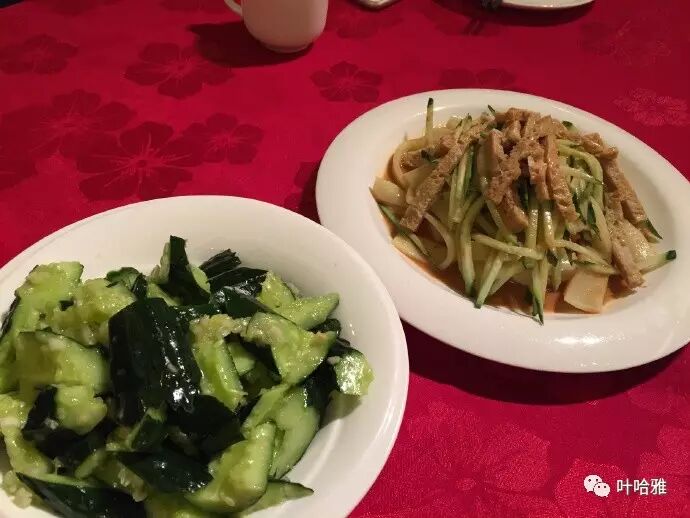
The lamb chops are a bit gamey, but the overall taste of the dishes is decent, costing about 100 yuan per person.
Address: No. 411, Zone 4, Huizhong Beili, Asian Games Village, Chaoyang District.
102. Ayidian Chang Halal Yunnan Cuisine
It is not easy to find authentic halal Yunnan food in Beijing, but this restaurant, which opened recently, is quite genuine.
The decor is fresh and elegant, and the owner is a young woman from Yunnan.
Tamarind (suanjiao) is a local specialty of Yunnan, so I chose to try the tamarind juice.
Beef wrapped in mint leaves; mint is as common in Yunnan as cilantro and is delicious even when eaten raw.
This is fried grasshopper.
Ibn Abi Awfa narrated: We went on seven expeditions with the Prophet, and we ate locusts. Sunan an-Nasa'i, Hadith 37;
The Prophet described the sea, saying: 'Its water is pure, and its dead creatures are halal.' He also said: 'We are permitted two types of dead creatures: fish and locusts;' and two types of blood: liver and spleen.' (Musnad Ahmad)
Sour soup beef jerky (niuganba); you must eat beef jerky in Yunnan cuisine because the most famous beef jerky in Yunnan is made by Hui Muslims.
It happened to be just before the Dragon Boat Festival, and the restaurant was developing beef rice dumplings (zongzi). The manager gave me two; I had only eaten sweet ones before, so this was my first time trying a meat version.
Yunnan cold rice noodles (mixian); the broth is rich and fragrant, and the noodles are chewy.
Address: First floor, north commercial section, axes 19-21, west side of Fengyayuan Zone 2, Huilongguan Town.
103. Dai Family Savory Crepe (jianbing) on Niujie Street.
This savory crepe is made by Hui Muslims from Niujie, and the neighbors all say it tastes great.
The savory crepe is a breakfast item, sold only in the morning, and they are closed on Mondays.
Address: Niujie Xili, in front of the barbershop.
104. Old Neighborhood Beef Noodles (laojiefang niuroumian).
The row of snack shops on Jiaozihu Hutong in Niujie has been mostly cleared out due to wall-breaking renovations. Only this Old Neighborhood Beef Noodles remains. The owner, Uncle Ma, is a true old neighbor who lived on the same Shouliu Hutong as my family. His beef noodles and small bowls of beef are excellent. It is not easy to find an authentic bowl of Beijing-style beef noodles these days.
Address: Ground floor shops on the west side of Jiaozihu Hutong.
105. Old Ma Halal Lamb Spine Potstickers (guotie).
Halal lamb spine is easy to find, but halal potstickers are rare these days. This shop makes pretty good ones.
Beef and green onion potstickers were my childhood favorite. There used to be a tent in Xuanwu District that sold halal snacks, but after it was torn down, I never found good potstickers again. I later heard the old man who made them passed away (wuchang), so that authentic skill is likely lost forever.
I was surprised to find they also sell spicy hot pot (maocai), a Chengdu snack similar to spicy soup (malatang), but you can drink the broth.
Address: South entrance of Hongju Street, Xicheng District.
106. Noodles at the Drum Tower.
I found this popular restaurant on Dazhong Dianping. At first, I thought it was categorized incorrectly because it had no obvious halal sign. I learned from the reviews that it is a halal shop owned by a Beijing Hui Muslim, and the halal sign is in a very inconspicuous spot inside.
This is a Western-style rock music restaurant.
They have mushrooms with foie gras.
Roasted chicken leg, but it is named Eight Hammers (badachui).
It is called Gold Medal Meat Sauce Noodles, but when it arrived, it was just soybean paste noodles (zhajiangmian).
Vegetable salad. Overall, the taste suits women, and the environment is good for dates.
Address: No. 25 Gongjie, Gulou East Street.
107. Old Yang's Halal Restaurant.
This is the highest-rated restaurant in the Changping area and is highly recommended.
Let's start with the environment: they have small semicircular tables that make it easy to chat.
I told the owner I came here specifically to break my fast. He recommended the house-made sour plum drink (suanmeitang). It was very thirst-quenching, sweet, and tart. I ordered two pitchers and took the second one to go.
I ordered the restaurant's signature dishes, starting with the cold shredded bottle gourd with sesame paste (majiang liangban hulusi), which was crisp and refreshing.
Fairy tofu (shenxian doufu) is another popular delicacy, and the tofu is made in-house.
Old Yang's beef pie (lao yangjia niuroubing) is crispy on the outside and tender on the inside. You have to eat it with raw garlic.
The dry-pot duck heads (ganguo yatou) are spicy, numbing, and fragrant.
The stir-fried radish sprouts (qingchao luobomiao) were great. Another feature of Old Yang's restaurant is the attentive service. They greet you with a smile and check in on how you like the food. It is rare to see such good service in a place that is so busy. I didn't get to eat the fish head with flatbread (yutou paobing) at Old Yang's today, so I will have to try it next time.
Address: No. 30, West Lane 1, Xiguanshi Village, Yangfang Town, Changping District.
108. Cheng's Shan County Lamb Soup Restaurant (Chengji Shanxian Yangtangguan).
I didn't expect to find such good lamb soup in Beijing. Shan County is a place in Shandong famous for its lamb soup.
The oil and salt flatbread (yousuan shaobing) is hollow inside, perfect for soaking in lamb soup or stuffing with spiced beef.
The soup is milky white, a natural color from boiling lamb bones.
Large starch noodles (dalapi).
Half a jin of spiced beef (jiang niurou) stuffed into a freshly baked flatbread is delicious.
I also had some grilled fish tofu and seafood skewers.
Address: Sanzhong Lane (near Xingfeng Street), about 525 meters from Huangcun West Street Station.
109. Huguosi Snack Shop (Airport Branch).
I found a Huguosi Snack Shop at Terminal 2 of Capital Airport. Many traveling friends (dostis) are used to eating hand-pulled noodles (lamian) at the airport, but now with Huguosi, there are more options.
The prices are relatively cheap compared to noodles, and most importantly, there is a wider variety of dishes.
Address: B1, Terminal 2, Capital Airport.
110. Northwest Muslim Restaurant.
There are not many restaurants in the Niujie area that don't have a line. This Northwest Muslim Restaurant has become even more popular after a renovation, and it is still packed every day since switching to 24-hour service.
Summer is the season for skewers. There are all kinds of large skewers to choose from. Since the small alley shops were cleared out, you have to choose these mid-range restaurants for skewers in Niujie, but at least the meat quality is guaranteed.
It is popular because everyone comes for the skewers. What annoys me is that I used to be able to eat without waiting, but now I have to wait at least half an hour.
Address: Nanheng West Street, ground floor shops on the north side
[Beijing Special Halal Dining Guide (Including the Most Complete List of Foreign Restaurants)] (Part 1)
[Beijing Special Halal Dining Guide (Including the Most Complete List of Foreign Restaurants)] (Part 2)
[Beijing Special Halal Dining Guide (Including the Most Complete List of Foreign Restaurants)] (Part 3)
A Guide to Halal Dining in Beijing (Part 4) view all
Summary: A Beijing halal food guide focused on Xinjiang restaurants, Yunnan Muslim dishes, Niujie snacks, beef noodles, and other local qingzhen (halal) finds, keeping the original restaurant names, addresses, and photos in order.
[Beijing Special Halal Dining Guide (Including the Most Complete List of Foreign Restaurants)] (Part 1)
[Beijing Special Halal Dining Guide (Including the Most Complete List of Foreign Restaurants)] (Part 2)
[Beijing Special Halal Dining Guide (Including the Most Complete List of Foreign Restaurants)] (Part 3)
A Guide to Halal Dining in Beijing (Part 4)
101. Jinjiang Western Regions Restaurant
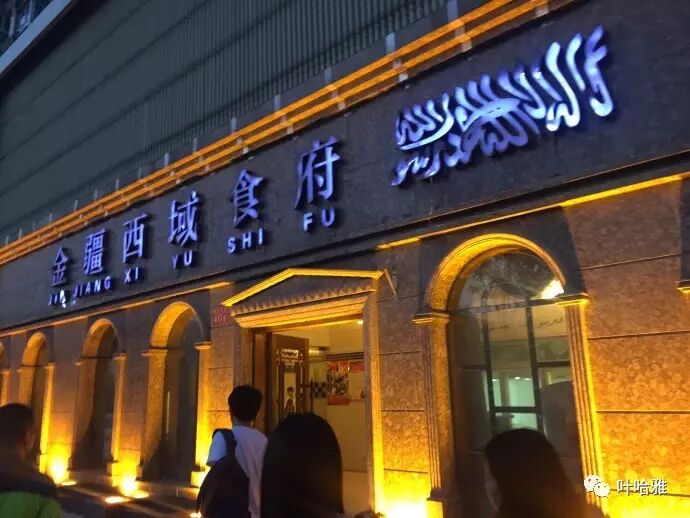
This is a high-end Xinjiang restaurant very close to Olympic Forest Park.
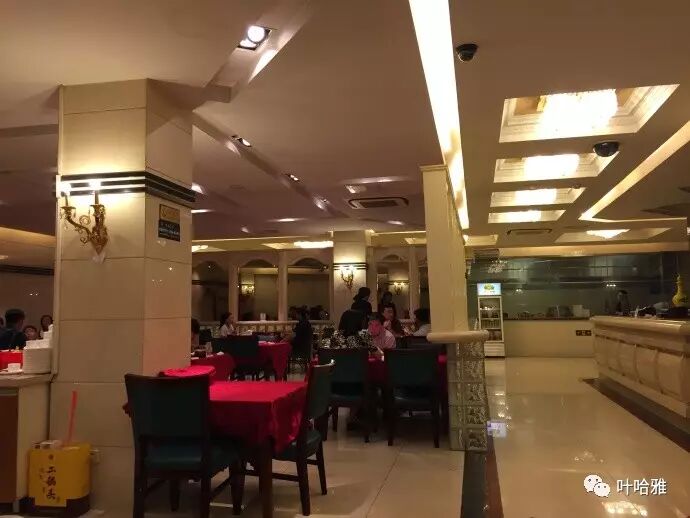
The space is quite large with a nice dining atmosphere, making it suitable for banquets and group meals.
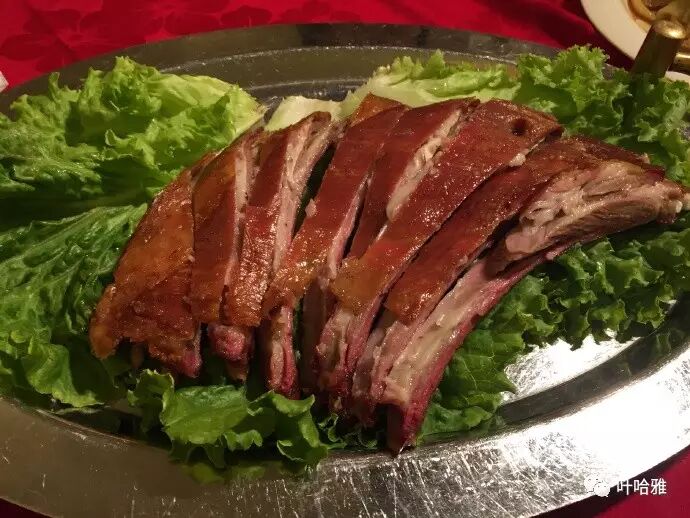
The lamb chops are a bit gamey, but the overall taste of the dishes is decent, costing about 100 yuan per person.
Address: No. 411, Zone 4, Huizhong Beili, Asian Games Village, Chaoyang District.
102. Ayidian Chang Halal Yunnan Cuisine
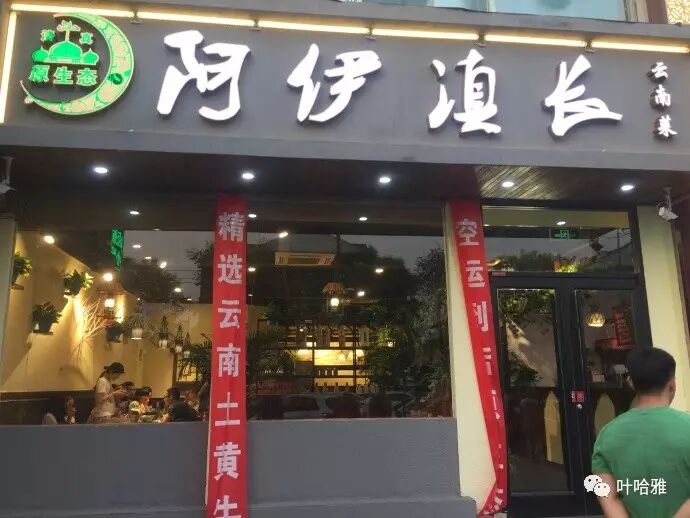
It is not easy to find authentic halal Yunnan food in Beijing, but this restaurant, which opened recently, is quite genuine.
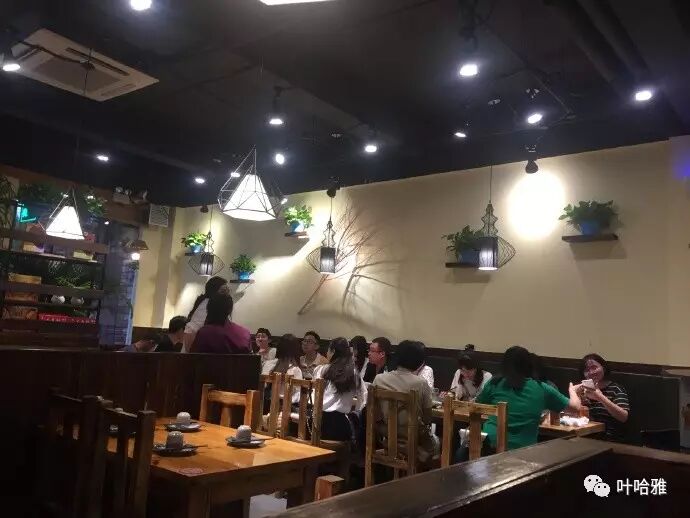
The decor is fresh and elegant, and the owner is a young woman from Yunnan.
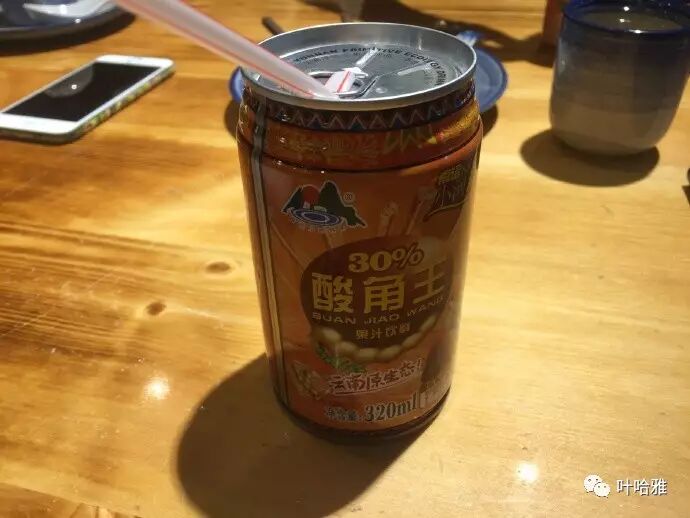
Tamarind (suanjiao) is a local specialty of Yunnan, so I chose to try the tamarind juice.
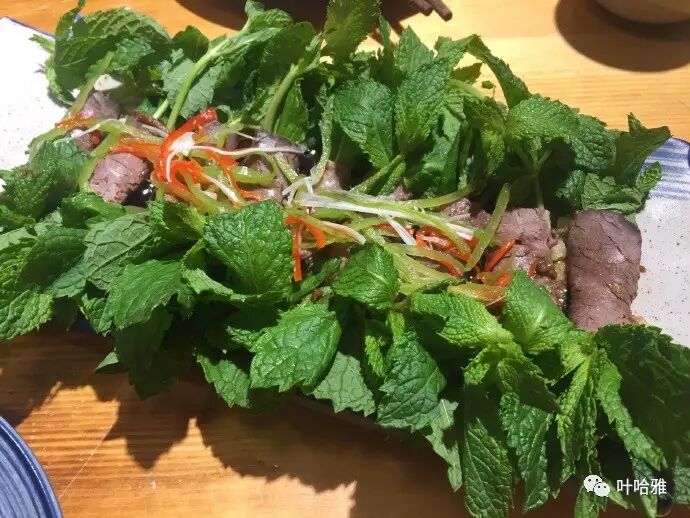
Beef wrapped in mint leaves; mint is as common in Yunnan as cilantro and is delicious even when eaten raw.
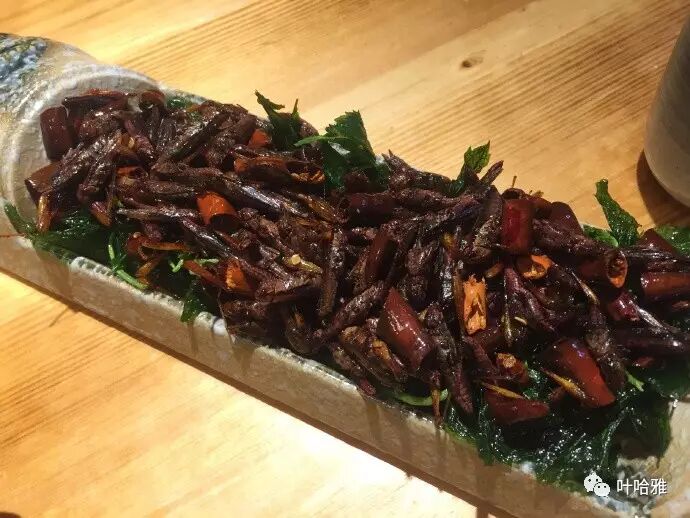
This is fried grasshopper.
Ibn Abi Awfa narrated: We went on seven expeditions with the Prophet, and we ate locusts. Sunan an-Nasa'i, Hadith 37;
The Prophet described the sea, saying: 'Its water is pure, and its dead creatures are halal.' He also said: 'We are permitted two types of dead creatures: fish and locusts;' and two types of blood: liver and spleen.' (Musnad Ahmad)
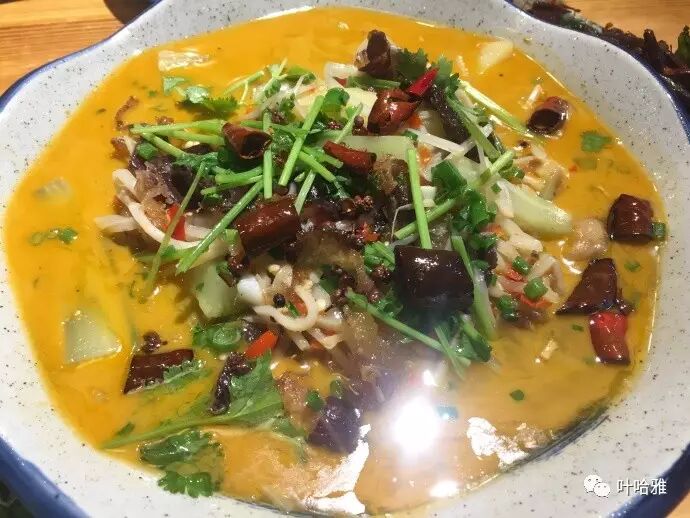
Sour soup beef jerky (niuganba); you must eat beef jerky in Yunnan cuisine because the most famous beef jerky in Yunnan is made by Hui Muslims.
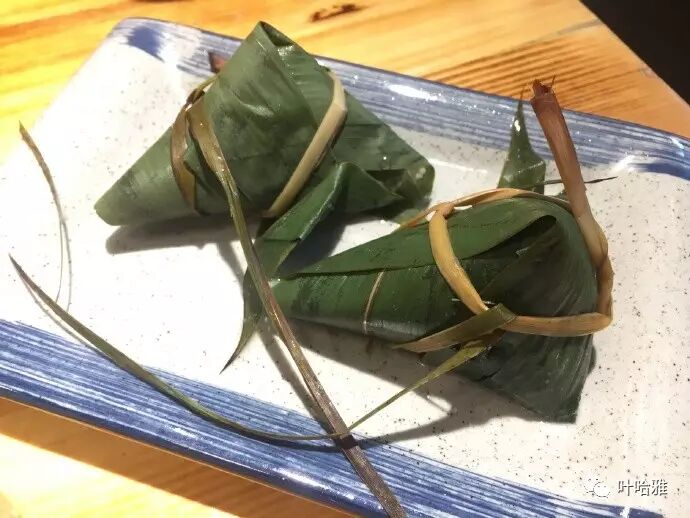
It happened to be just before the Dragon Boat Festival, and the restaurant was developing beef rice dumplings (zongzi). The manager gave me two; I had only eaten sweet ones before, so this was my first time trying a meat version.
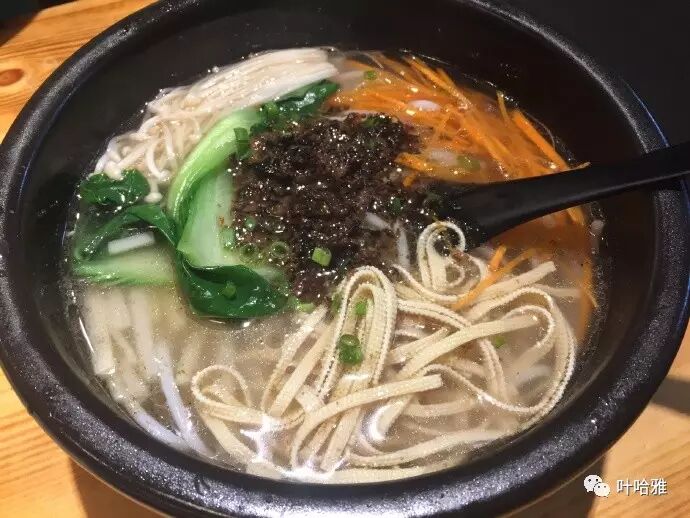
Yunnan cold rice noodles (mixian); the broth is rich and fragrant, and the noodles are chewy.
Address: First floor, north commercial section, axes 19-21, west side of Fengyayuan Zone 2, Huilongguan Town.
103. Dai Family Savory Crepe (jianbing) on Niujie Street.
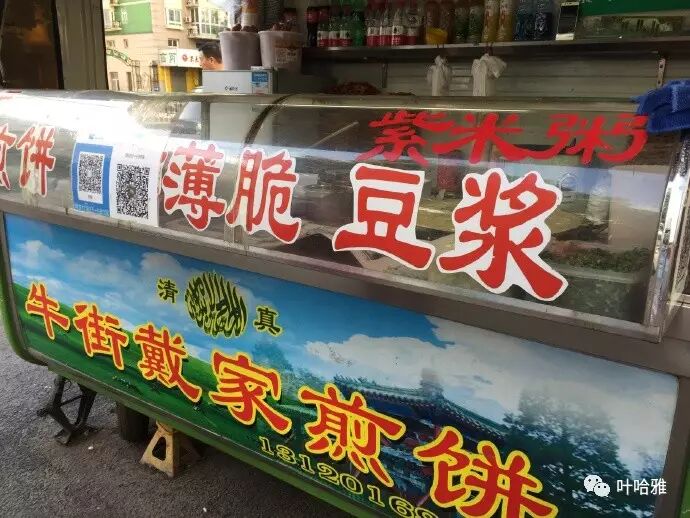
This savory crepe is made by Hui Muslims from Niujie, and the neighbors all say it tastes great.
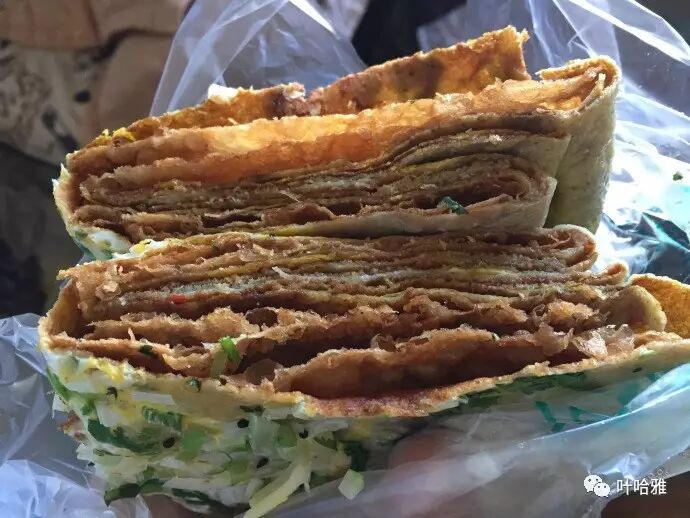
The savory crepe is a breakfast item, sold only in the morning, and they are closed on Mondays.
Address: Niujie Xili, in front of the barbershop.
104. Old Neighborhood Beef Noodles (laojiefang niuroumian).
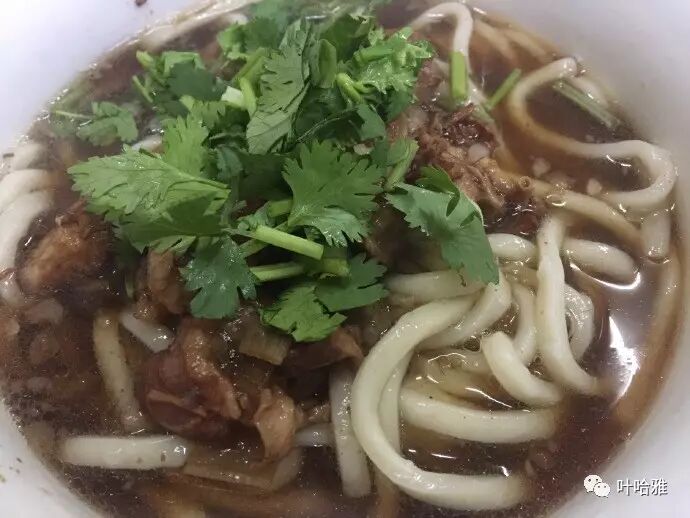
The row of snack shops on Jiaozihu Hutong in Niujie has been mostly cleared out due to wall-breaking renovations. Only this Old Neighborhood Beef Noodles remains. The owner, Uncle Ma, is a true old neighbor who lived on the same Shouliu Hutong as my family. His beef noodles and small bowls of beef are excellent. It is not easy to find an authentic bowl of Beijing-style beef noodles these days.
Address: Ground floor shops on the west side of Jiaozihu Hutong.
105. Old Ma Halal Lamb Spine Potstickers (guotie).
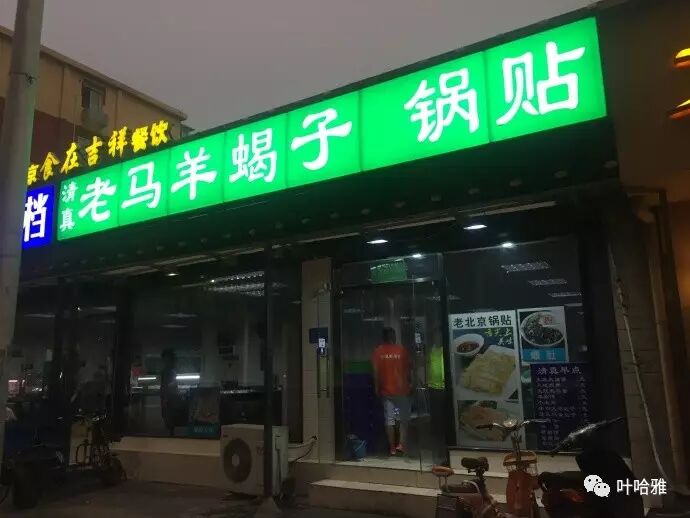
Halal lamb spine is easy to find, but halal potstickers are rare these days. This shop makes pretty good ones.
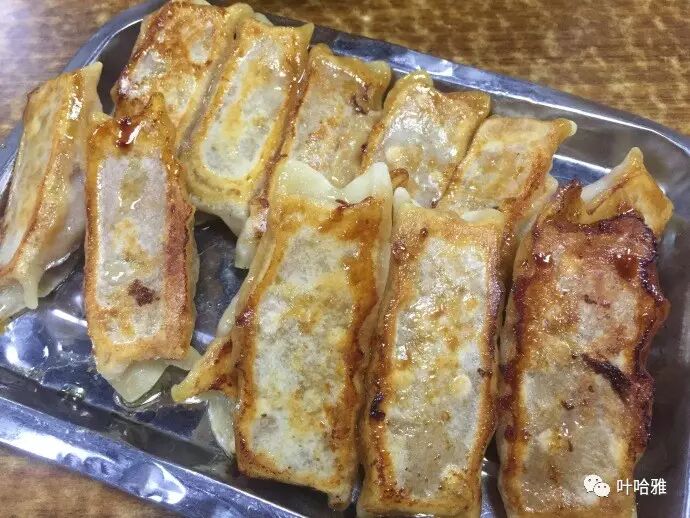
Beef and green onion potstickers were my childhood favorite. There used to be a tent in Xuanwu District that sold halal snacks, but after it was torn down, I never found good potstickers again. I later heard the old man who made them passed away (wuchang), so that authentic skill is likely lost forever.
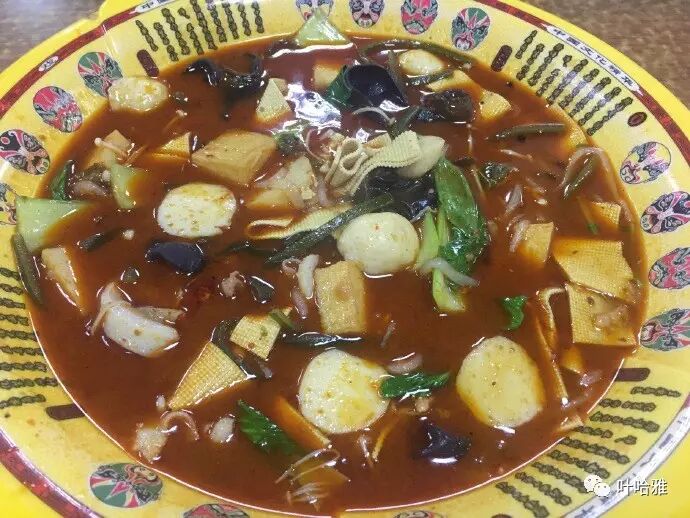
I was surprised to find they also sell spicy hot pot (maocai), a Chengdu snack similar to spicy soup (malatang), but you can drink the broth.
Address: South entrance of Hongju Street, Xicheng District.
106. Noodles at the Drum Tower.
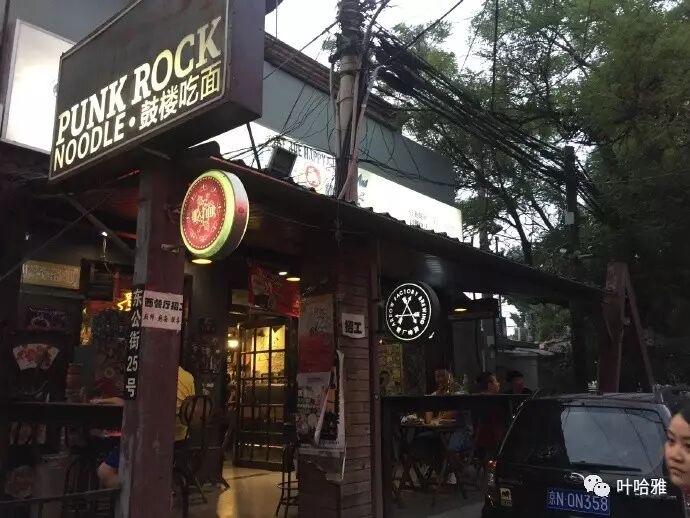
I found this popular restaurant on Dazhong Dianping. At first, I thought it was categorized incorrectly because it had no obvious halal sign. I learned from the reviews that it is a halal shop owned by a Beijing Hui Muslim, and the halal sign is in a very inconspicuous spot inside.
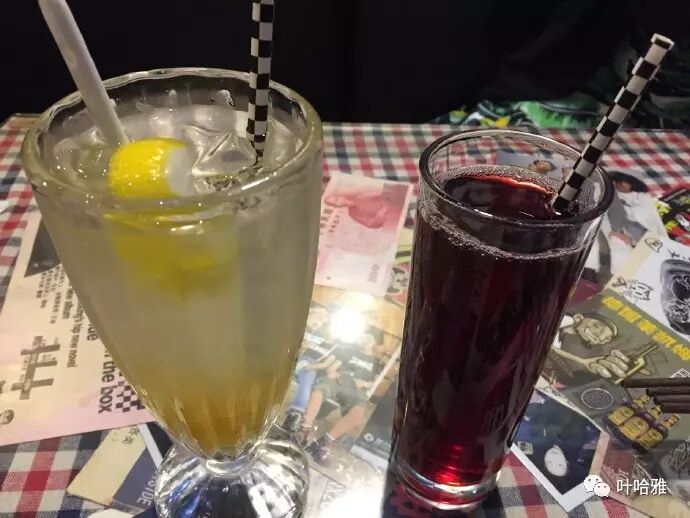
This is a Western-style rock music restaurant.
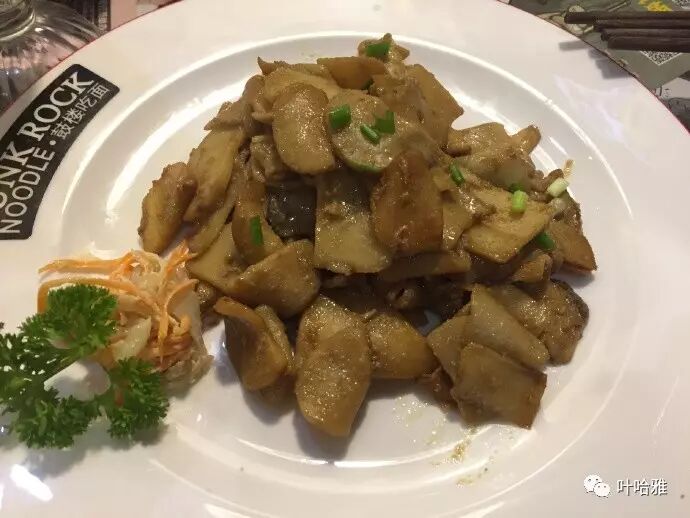
They have mushrooms with foie gras.
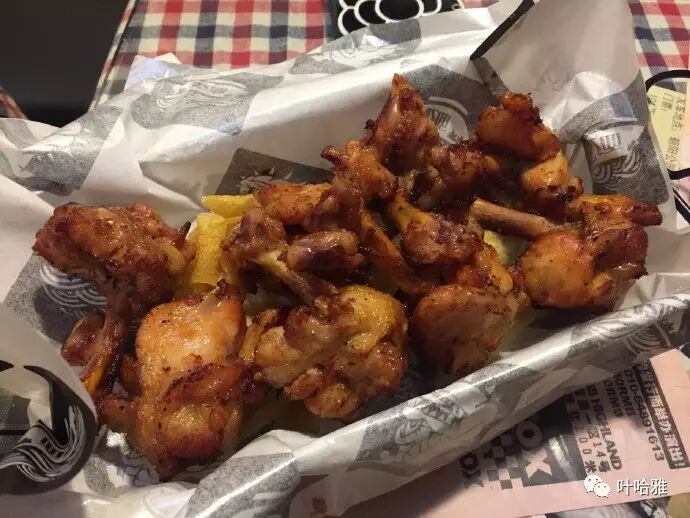
Roasted chicken leg, but it is named Eight Hammers (badachui).
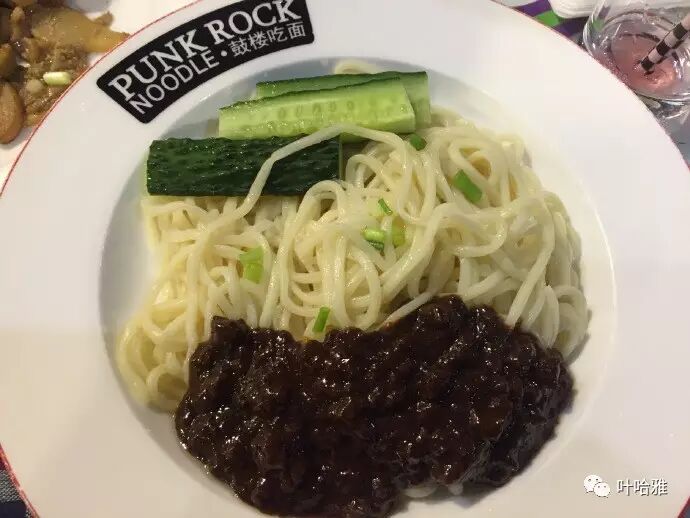
It is called Gold Medal Meat Sauce Noodles, but when it arrived, it was just soybean paste noodles (zhajiangmian).
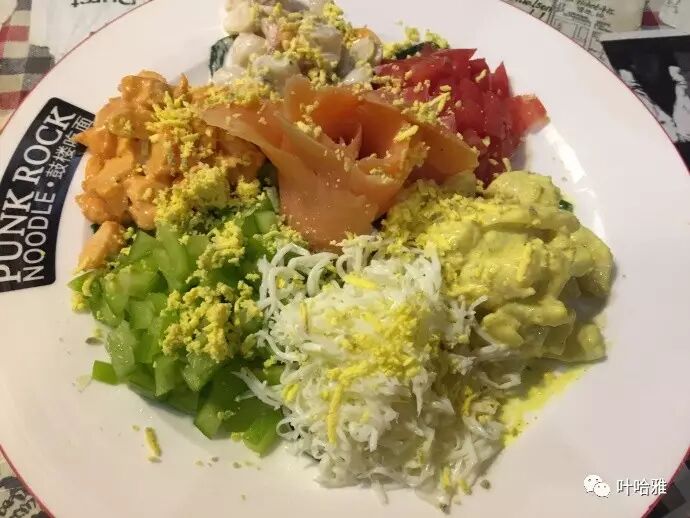
Vegetable salad. Overall, the taste suits women, and the environment is good for dates.
Address: No. 25 Gongjie, Gulou East Street.
107. Old Yang's Halal Restaurant.
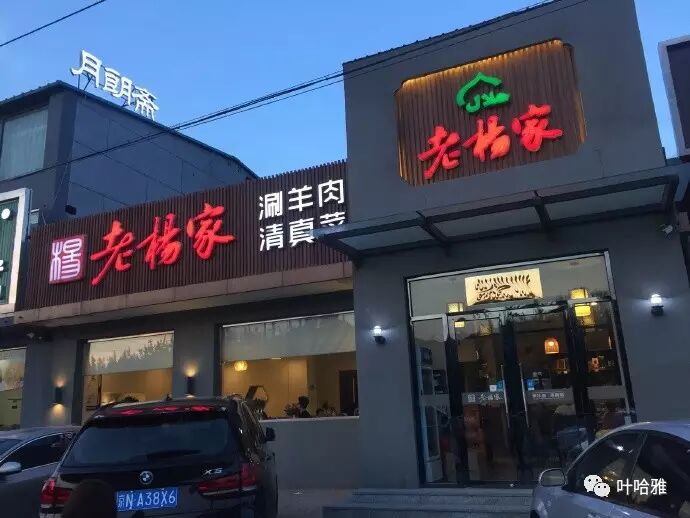
This is the highest-rated restaurant in the Changping area and is highly recommended.
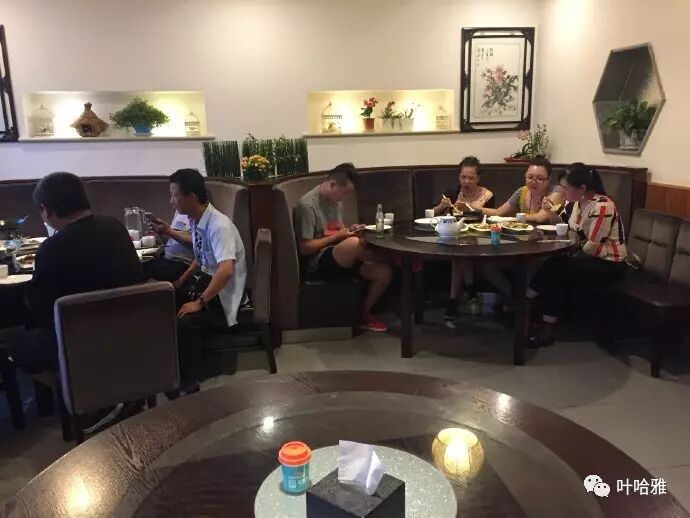
Let's start with the environment: they have small semicircular tables that make it easy to chat.
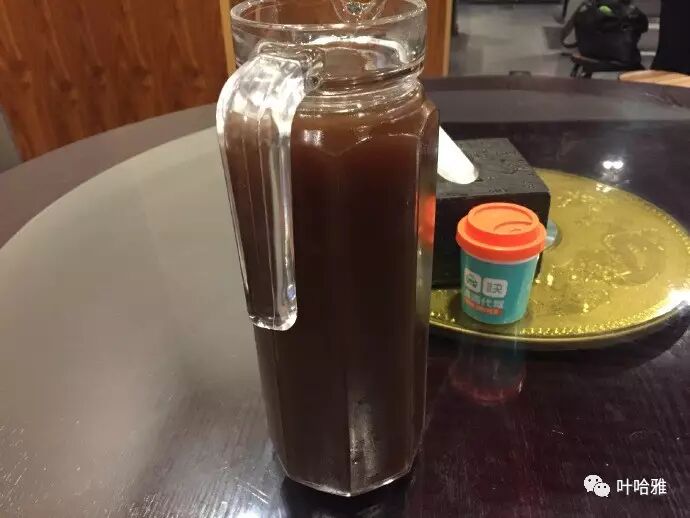
I told the owner I came here specifically to break my fast. He recommended the house-made sour plum drink (suanmeitang). It was very thirst-quenching, sweet, and tart. I ordered two pitchers and took the second one to go.
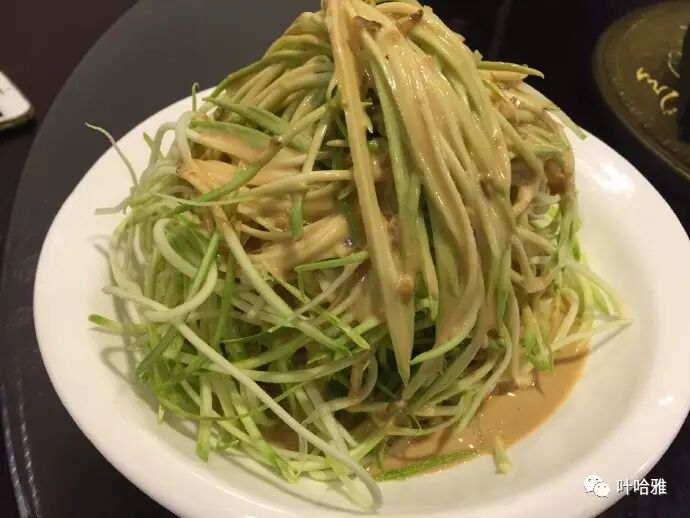
I ordered the restaurant's signature dishes, starting with the cold shredded bottle gourd with sesame paste (majiang liangban hulusi), which was crisp and refreshing.
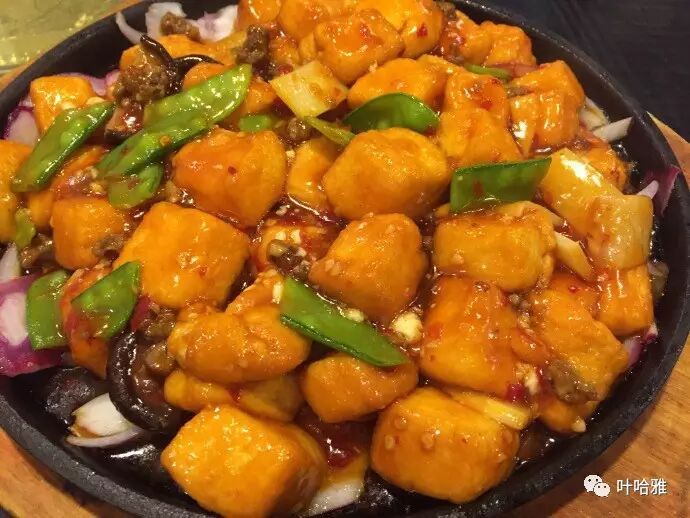
Fairy tofu (shenxian doufu) is another popular delicacy, and the tofu is made in-house.
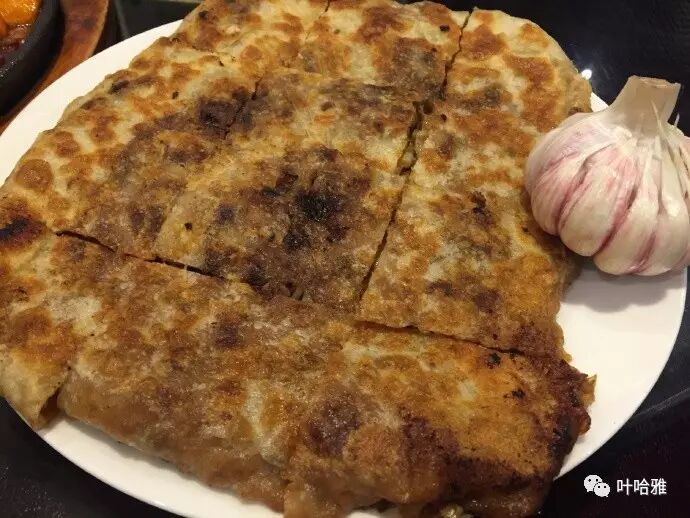
Old Yang's beef pie (lao yangjia niuroubing) is crispy on the outside and tender on the inside. You have to eat it with raw garlic.
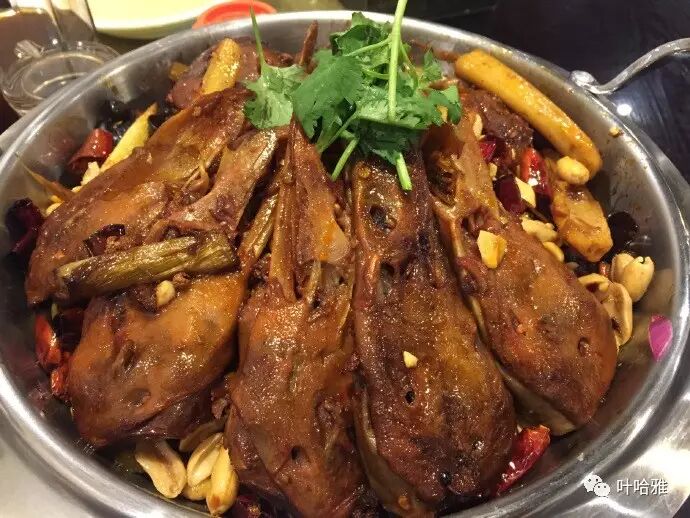
The dry-pot duck heads (ganguo yatou) are spicy, numbing, and fragrant.
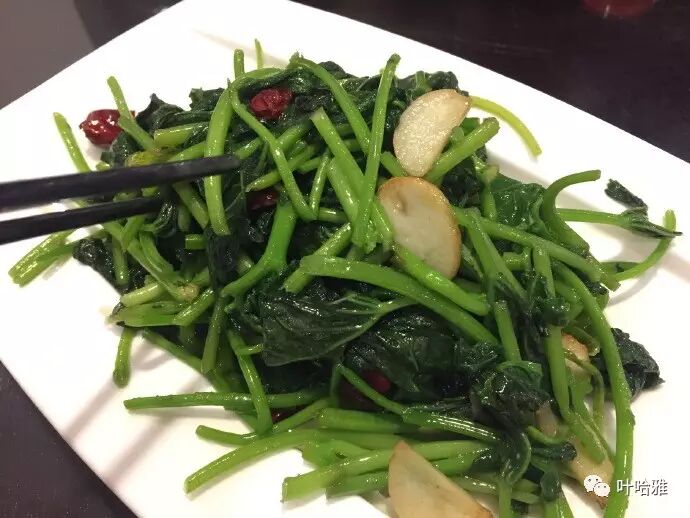
The stir-fried radish sprouts (qingchao luobomiao) were great. Another feature of Old Yang's restaurant is the attentive service. They greet you with a smile and check in on how you like the food. It is rare to see such good service in a place that is so busy. I didn't get to eat the fish head with flatbread (yutou paobing) at Old Yang's today, so I will have to try it next time.
Address: No. 30, West Lane 1, Xiguanshi Village, Yangfang Town, Changping District.
108. Cheng's Shan County Lamb Soup Restaurant (Chengji Shanxian Yangtangguan).
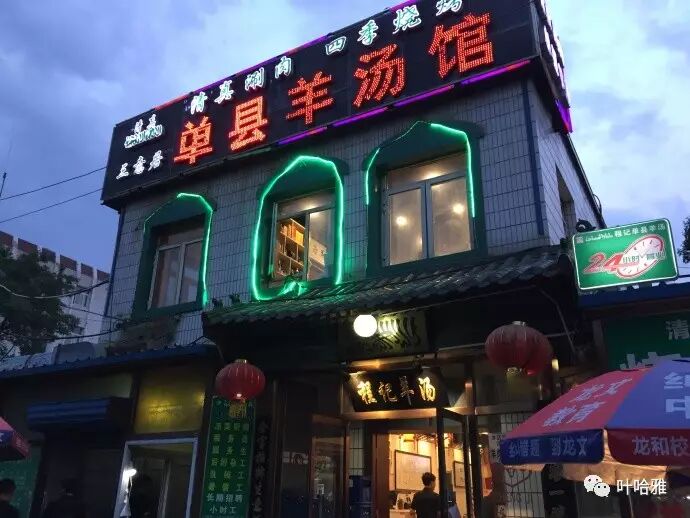
I didn't expect to find such good lamb soup in Beijing. Shan County is a place in Shandong famous for its lamb soup.
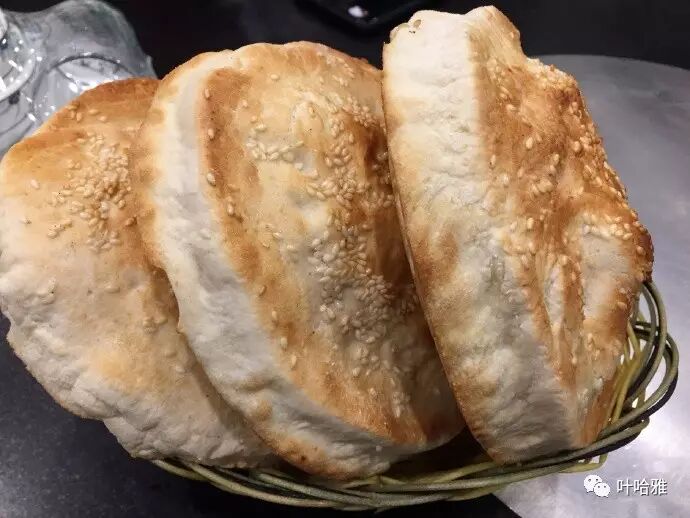
The oil and salt flatbread (yousuan shaobing) is hollow inside, perfect for soaking in lamb soup or stuffing with spiced beef.
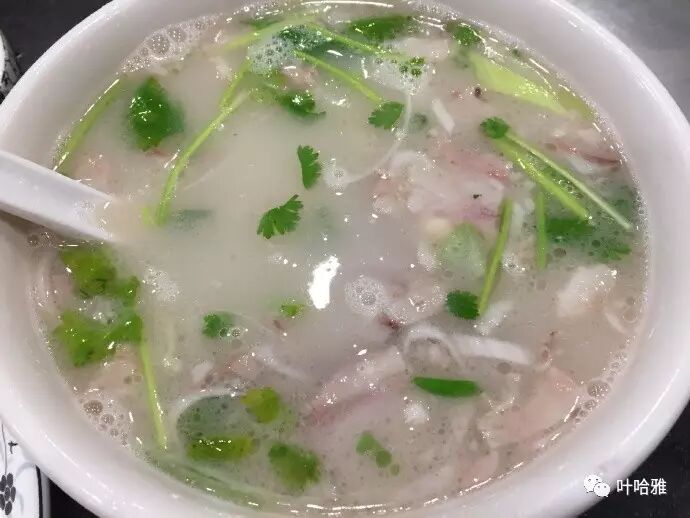
The soup is milky white, a natural color from boiling lamb bones.
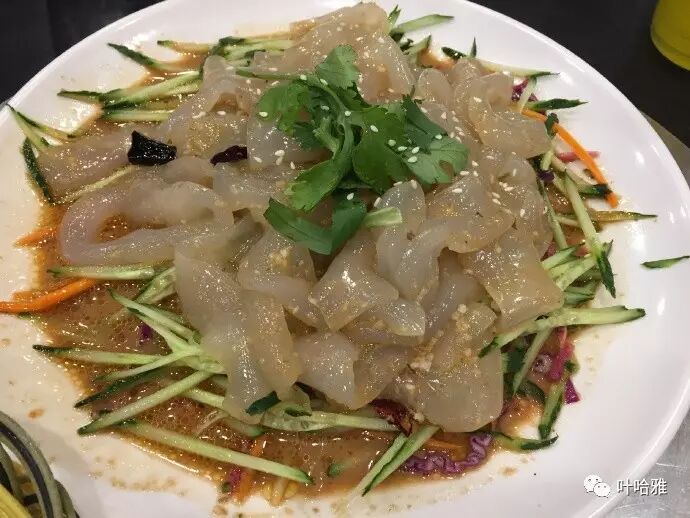
Large starch noodles (dalapi).
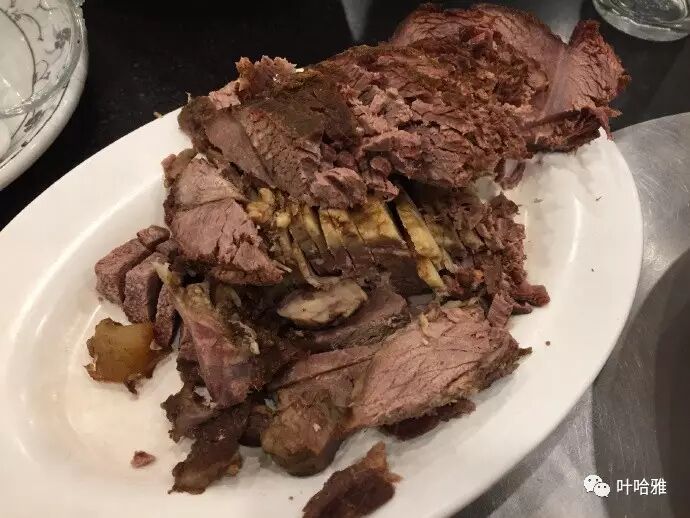
Half a jin of spiced beef (jiang niurou) stuffed into a freshly baked flatbread is delicious.
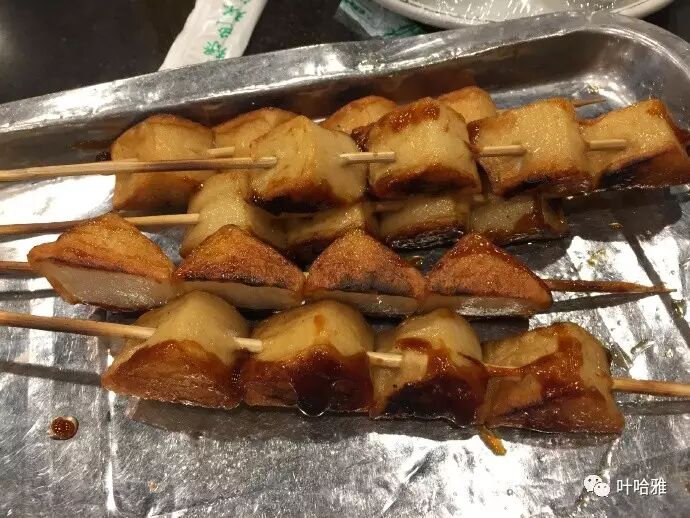
I also had some grilled fish tofu and seafood skewers.
Address: Sanzhong Lane (near Xingfeng Street), about 525 meters from Huangcun West Street Station.
109. Huguosi Snack Shop (Airport Branch).
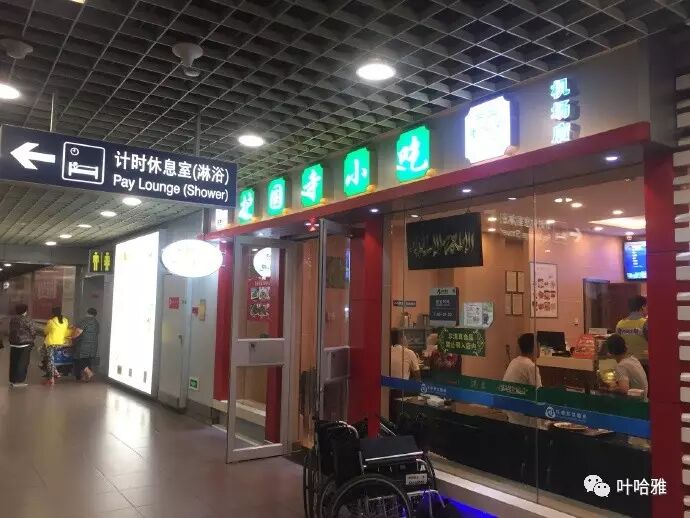
I found a Huguosi Snack Shop at Terminal 2 of Capital Airport. Many traveling friends (dostis) are used to eating hand-pulled noodles (lamian) at the airport, but now with Huguosi, there are more options.
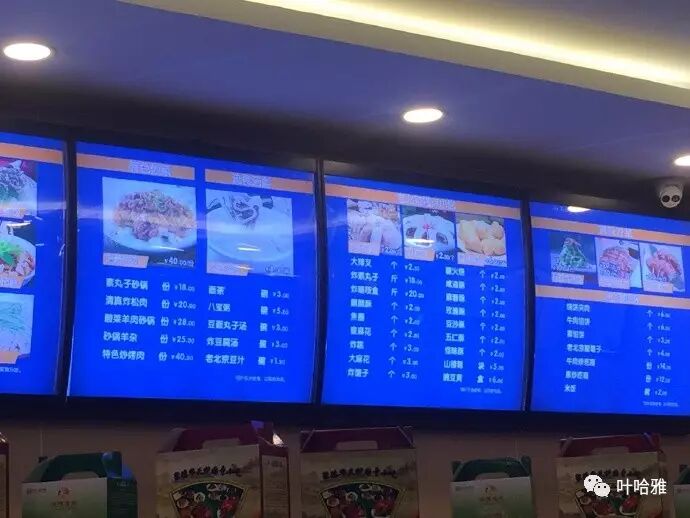
The prices are relatively cheap compared to noodles, and most importantly, there is a wider variety of dishes.
Address: B1, Terminal 2, Capital Airport.
110. Northwest Muslim Restaurant.
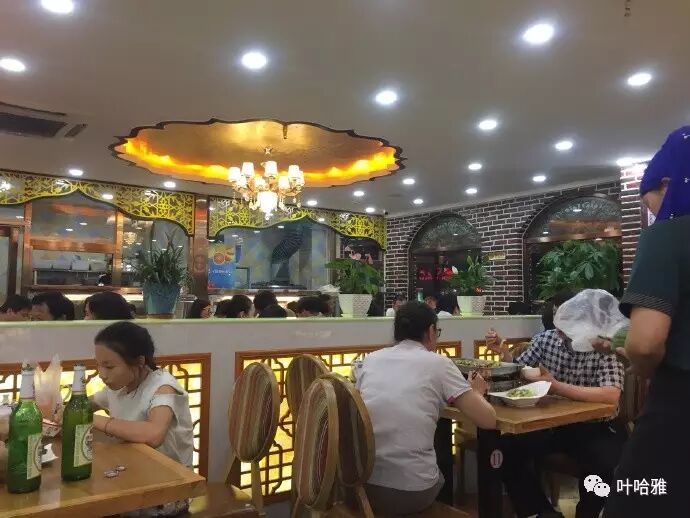
There are not many restaurants in the Niujie area that don't have a line. This Northwest Muslim Restaurant has become even more popular after a renovation, and it is still packed every day since switching to 24-hour service.
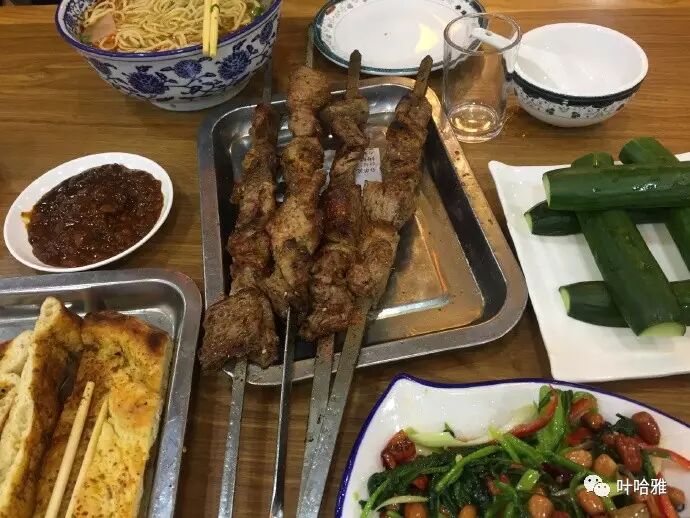
Summer is the season for skewers. There are all kinds of large skewers to choose from. Since the small alley shops were cleared out, you have to choose these mid-range restaurants for skewers in Niujie, but at least the meat quality is guaranteed.
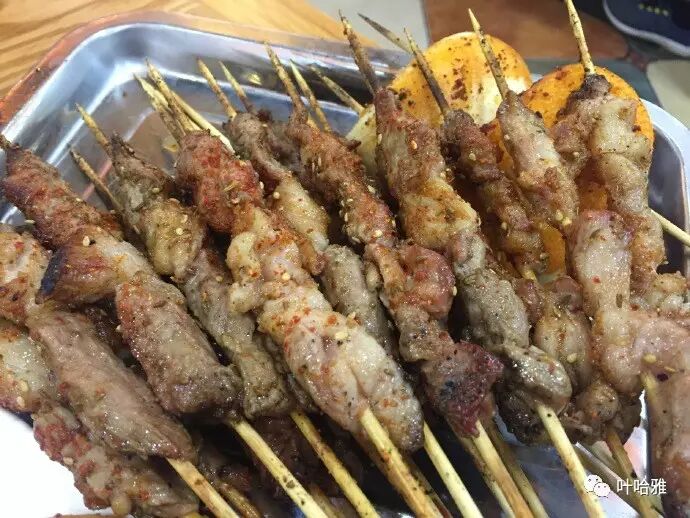
It is popular because everyone comes for the skewers. What annoys me is that I used to be able to eat without waiting, but now I have to wait at least half an hour.
Address: Nanheng West Street, ground floor shops on the north side
[Beijing Special Halal Dining Guide (Including the Most Complete List of Foreign Restaurants)] (Part 1)
[Beijing Special Halal Dining Guide (Including the Most Complete List of Foreign Restaurants)] (Part 2)
[Beijing Special Halal Dining Guide (Including the Most Complete List of Foreign Restaurants)] (Part 3)
A Guide to Halal Dining in Beijing (Part 4)
Authentic Halal Chinese Food Beijing: Xinjiang Restaurant, Yunnan Dishes & Niujie Snacks
Articles • ali2007fr posted the article • 0 comments • 179 views • 2026-05-21 10:17
Summary: A Beijing halal food guide focused on Xinjiang restaurants, Yunnan Muslim dishes, Niujie snacks, beef noodles, and other local qingzhen (halal) finds, keeping the original restaurant names, addresses, and photos in order.
[Beijing Special Halal Dining Guide (Including the Most Complete List of Foreign Restaurants)] (Part 1)
[Beijing Special Halal Dining Guide (Including the Most Complete List of Foreign Restaurants)] (Part 2)
[Beijing Special Halal Dining Guide (Including the Most Complete List of Foreign Restaurants)] (Part 3)
A Guide to Halal Dining in Beijing (Part 4)
101. Jinjiang Western Regions Restaurant
This is a high-end Xinjiang restaurant very close to Olympic Forest Park.
The space is quite large with a nice dining atmosphere, making it suitable for banquets and group meals.
The lamb chops are a bit gamey, but the overall taste of the dishes is decent, costing about 100 yuan per person.
Address: No. 411, Zone 4, Huizhong Beili, Asian Games Village, Chaoyang District.
102. Ayidian Chang Halal Yunnan Cuisine
It is not easy to find authentic halal Yunnan food in Beijing, but this restaurant, which opened recently, is quite genuine.
The decor is fresh and elegant, and the owner is a young woman from Yunnan.
Tamarind (suanjiao) is a local specialty of Yunnan, so I chose to try the tamarind juice.
Beef wrapped in mint leaves; mint is as common in Yunnan as cilantro and is delicious even when eaten raw.
This is fried grasshopper.
Ibn Abi Awfa narrated: We went on seven expeditions with the Prophet, and we ate locusts. Sunan an-Nasa'i, Hadith 37;
The Prophet described the sea, saying: 'Its water is pure, and its dead creatures are halal.' He also said: 'We are permitted two types of dead creatures: fish and locusts;' and two types of blood: liver and spleen.' (Musnad Ahmad)
Sour soup beef jerky (niuganba); you must eat beef jerky in Yunnan cuisine because the most famous beef jerky in Yunnan is made by Hui Muslims.
It happened to be just before the Dragon Boat Festival, and the restaurant was developing beef rice dumplings (zongzi). The manager gave me two; I had only eaten sweet ones before, so this was my first time trying a meat version.
Yunnan cold rice noodles (mixian); the broth is rich and fragrant, and the noodles are chewy.
Address: First floor, north commercial section, axes 19-21, west side of Fengyayuan Zone 2, Huilongguan Town.
103. Dai Family Savory Crepe (jianbing) on Niujie Street.
This savory crepe is made by Hui Muslims from Niujie, and the neighbors all say it tastes great.
The savory crepe is a breakfast item, sold only in the morning, and they are closed on Mondays.
Address: Niujie Xili, in front of the barbershop.
104. Old Neighborhood Beef Noodles (laojiefang niuroumian).
The row of snack shops on Jiaozihu Hutong in Niujie has been mostly cleared out due to wall-breaking renovations. Only this Old Neighborhood Beef Noodles remains. The owner, Uncle Ma, is a true old neighbor who lived on the same Shouliu Hutong as my family. His beef noodles and small bowls of beef are excellent. It is not easy to find an authentic bowl of Beijing-style beef noodles these days.
Address: Ground floor shops on the west side of Jiaozihu Hutong.
105. Old Ma Halal Lamb Spine Potstickers (guotie).
Halal lamb spine is easy to find, but halal potstickers are rare these days. This shop makes pretty good ones.
Beef and green onion potstickers were my childhood favorite. There used to be a tent in Xuanwu District that sold halal snacks, but after it was torn down, I never found good potstickers again. I later heard the old man who made them passed away (wuchang), so that authentic skill is likely lost forever.
I was surprised to find they also sell spicy hot pot (maocai), a Chengdu snack similar to spicy soup (malatang), but you can drink the broth.
Address: South entrance of Hongju Street, Xicheng District.
106. Noodles at the Drum Tower.
I found this popular restaurant on Dazhong Dianping. At first, I thought it was categorized incorrectly because it had no obvious halal sign. I learned from the reviews that it is a halal shop owned by a Beijing Hui Muslim, and the halal sign is in a very inconspicuous spot inside.
This is a Western-style rock music restaurant.
They have mushrooms with foie gras.
Roasted chicken leg, but it is named Eight Hammers (badachui).
It is called Gold Medal Meat Sauce Noodles, but when it arrived, it was just soybean paste noodles (zhajiangmian).
Vegetable salad. Overall, the taste suits women, and the environment is good for dates.
Address: No. 25 Gongjie, Gulou East Street.
107. Old Yang's Halal Restaurant.
This is the highest-rated restaurant in the Changping area and is highly recommended.
Let's start with the environment: they have small semicircular tables that make it easy to chat.
I told the owner I came here specifically to break my fast. He recommended the house-made sour plum drink (suanmeitang). It was very thirst-quenching, sweet, and tart. I ordered two pitchers and took the second one to go.
I ordered the restaurant's signature dishes, starting with the cold shredded bottle gourd with sesame paste (majiang liangban hulusi), which was crisp and refreshing.
Fairy tofu (shenxian doufu) is another popular delicacy, and the tofu is made in-house.
Old Yang's beef pie (lao yangjia niuroubing) is crispy on the outside and tender on the inside. You have to eat it with raw garlic.
The dry-pot duck heads (ganguo yatou) are spicy, numbing, and fragrant.
The stir-fried radish sprouts (qingchao luobomiao) were great. Another feature of Old Yang's restaurant is the attentive service. They greet you with a smile and check in on how you like the food. It is rare to see such good service in a place that is so busy. I didn't get to eat the fish head with flatbread (yutou paobing) at Old Yang's today, so I will have to try it next time.
Address: No. 30, West Lane 1, Xiguanshi Village, Yangfang Town, Changping District.
108. Cheng's Shan County Lamb Soup Restaurant (Chengji Shanxian Yangtangguan).
I didn't expect to find such good lamb soup in Beijing. Shan County is a place in Shandong famous for its lamb soup.
The oil and salt flatbread (yousuan shaobing) is hollow inside, perfect for soaking in lamb soup or stuffing with spiced beef.
The soup is milky white, a natural color from boiling lamb bones.
Large starch noodles (dalapi).
Half a jin of spiced beef (jiang niurou) stuffed into a freshly baked flatbread is delicious.
I also had some grilled fish tofu and seafood skewers.
Address: Sanzhong Lane (near Xingfeng Street), about 525 meters from Huangcun West Street Station.
109. Huguosi Snack Shop (Airport Branch).
I found a Huguosi Snack Shop at Terminal 2 of Capital Airport. Many traveling friends (dostis) are used to eating hand-pulled noodles (lamian) at the airport, but now with Huguosi, there are more options.
The prices are relatively cheap compared to noodles, and most importantly, there is a wider variety of dishes.
Address: B1, Terminal 2, Capital Airport.
110. Northwest Muslim Restaurant.
There are not many restaurants in the Niujie area that don't have a line. This Northwest Muslim Restaurant has become even more popular after a renovation, and it is still packed every day since switching to 24-hour service.
Summer is the season for skewers. There are all kinds of large skewers to choose from. Since the small alley shops were cleared out, you have to choose these mid-range restaurants for skewers in Niujie, but at least the meat quality is guaranteed.
It is popular because everyone comes for the skewers. What annoys me is that I used to be able to eat without waiting, but now I have to wait at least half an hour.
Address: Nanheng West Street, ground floor shops on the north side
[Beijing Special Halal Dining Guide (Including the Most Complete List of Foreign Restaurants)] (Part 1)
[Beijing Special Halal Dining Guide (Including the Most Complete List of Foreign Restaurants)] (Part 2)
[Beijing Special Halal Dining Guide (Including the Most Complete List of Foreign Restaurants)] (Part 3)
A Guide to Halal Dining in Beijing (Part 4) view all
Summary: A Beijing halal food guide focused on Xinjiang restaurants, Yunnan Muslim dishes, Niujie snacks, beef noodles, and other local qingzhen (halal) finds, keeping the original restaurant names, addresses, and photos in order.
[Beijing Special Halal Dining Guide (Including the Most Complete List of Foreign Restaurants)] (Part 1)
[Beijing Special Halal Dining Guide (Including the Most Complete List of Foreign Restaurants)] (Part 2)
[Beijing Special Halal Dining Guide (Including the Most Complete List of Foreign Restaurants)] (Part 3)
A Guide to Halal Dining in Beijing (Part 4)
101. Jinjiang Western Regions Restaurant
This is a high-end Xinjiang restaurant very close to Olympic Forest Park.
The space is quite large with a nice dining atmosphere, making it suitable for banquets and group meals.
The lamb chops are a bit gamey, but the overall taste of the dishes is decent, costing about 100 yuan per person.
Address: No. 411, Zone 4, Huizhong Beili, Asian Games Village, Chaoyang District.
102. Ayidian Chang Halal Yunnan Cuisine
It is not easy to find authentic halal Yunnan food in Beijing, but this restaurant, which opened recently, is quite genuine.
The decor is fresh and elegant, and the owner is a young woman from Yunnan.
Tamarind (suanjiao) is a local specialty of Yunnan, so I chose to try the tamarind juice.
Beef wrapped in mint leaves; mint is as common in Yunnan as cilantro and is delicious even when eaten raw.
This is fried grasshopper.
Ibn Abi Awfa narrated: We went on seven expeditions with the Prophet, and we ate locusts. Sunan an-Nasa'i, Hadith 37;
The Prophet described the sea, saying: 'Its water is pure, and its dead creatures are halal.' He also said: 'We are permitted two types of dead creatures: fish and locusts;' and two types of blood: liver and spleen.' (Musnad Ahmad)
Sour soup beef jerky (niuganba); you must eat beef jerky in Yunnan cuisine because the most famous beef jerky in Yunnan is made by Hui Muslims.
It happened to be just before the Dragon Boat Festival, and the restaurant was developing beef rice dumplings (zongzi). The manager gave me two; I had only eaten sweet ones before, so this was my first time trying a meat version.
Yunnan cold rice noodles (mixian); the broth is rich and fragrant, and the noodles are chewy.
Address: First floor, north commercial section, axes 19-21, west side of Fengyayuan Zone 2, Huilongguan Town.
103. Dai Family Savory Crepe (jianbing) on Niujie Street.
This savory crepe is made by Hui Muslims from Niujie, and the neighbors all say it tastes great.
The savory crepe is a breakfast item, sold only in the morning, and they are closed on Mondays.
Address: Niujie Xili, in front of the barbershop.
104. Old Neighborhood Beef Noodles (laojiefang niuroumian).
The row of snack shops on Jiaozihu Hutong in Niujie has been mostly cleared out due to wall-breaking renovations. Only this Old Neighborhood Beef Noodles remains. The owner, Uncle Ma, is a true old neighbor who lived on the same Shouliu Hutong as my family. His beef noodles and small bowls of beef are excellent. It is not easy to find an authentic bowl of Beijing-style beef noodles these days.
Address: Ground floor shops on the west side of Jiaozihu Hutong.
105. Old Ma Halal Lamb Spine Potstickers (guotie).
Halal lamb spine is easy to find, but halal potstickers are rare these days. This shop makes pretty good ones.
Beef and green onion potstickers were my childhood favorite. There used to be a tent in Xuanwu District that sold halal snacks, but after it was torn down, I never found good potstickers again. I later heard the old man who made them passed away (wuchang), so that authentic skill is likely lost forever.
I was surprised to find they also sell spicy hot pot (maocai), a Chengdu snack similar to spicy soup (malatang), but you can drink the broth.
Address: South entrance of Hongju Street, Xicheng District.
106. Noodles at the Drum Tower.
I found this popular restaurant on Dazhong Dianping. At first, I thought it was categorized incorrectly because it had no obvious halal sign. I learned from the reviews that it is a halal shop owned by a Beijing Hui Muslim, and the halal sign is in a very inconspicuous spot inside.
This is a Western-style rock music restaurant.
They have mushrooms with foie gras.
Roasted chicken leg, but it is named Eight Hammers (badachui).
It is called Gold Medal Meat Sauce Noodles, but when it arrived, it was just soybean paste noodles (zhajiangmian).
Vegetable salad. Overall, the taste suits women, and the environment is good for dates.
Address: No. 25 Gongjie, Gulou East Street.
107. Old Yang's Halal Restaurant.
This is the highest-rated restaurant in the Changping area and is highly recommended.
Let's start with the environment: they have small semicircular tables that make it easy to chat.
I told the owner I came here specifically to break my fast. He recommended the house-made sour plum drink (suanmeitang). It was very thirst-quenching, sweet, and tart. I ordered two pitchers and took the second one to go.
I ordered the restaurant's signature dishes, starting with the cold shredded bottle gourd with sesame paste (majiang liangban hulusi), which was crisp and refreshing.
Fairy tofu (shenxian doufu) is another popular delicacy, and the tofu is made in-house.
Old Yang's beef pie (lao yangjia niuroubing) is crispy on the outside and tender on the inside. You have to eat it with raw garlic.
The dry-pot duck heads (ganguo yatou) are spicy, numbing, and fragrant.
The stir-fried radish sprouts (qingchao luobomiao) were great. Another feature of Old Yang's restaurant is the attentive service. They greet you with a smile and check in on how you like the food. It is rare to see such good service in a place that is so busy. I didn't get to eat the fish head with flatbread (yutou paobing) at Old Yang's today, so I will have to try it next time.
Address: No. 30, West Lane 1, Xiguanshi Village, Yangfang Town, Changping District.
108. Cheng's Shan County Lamb Soup Restaurant (Chengji Shanxian Yangtangguan).
I didn't expect to find such good lamb soup in Beijing. Shan County is a place in Shandong famous for its lamb soup.
The oil and salt flatbread (yousuan shaobing) is hollow inside, perfect for soaking in lamb soup or stuffing with spiced beef.
The soup is milky white, a natural color from boiling lamb bones.
Large starch noodles (dalapi).
Half a jin of spiced beef (jiang niurou) stuffed into a freshly baked flatbread is delicious.
I also had some grilled fish tofu and seafood skewers.
Address: Sanzhong Lane (near Xingfeng Street), about 525 meters from Huangcun West Street Station.
109. Huguosi Snack Shop (Airport Branch).
I found a Huguosi Snack Shop at Terminal 2 of Capital Airport. Many traveling friends (dostis) are used to eating hand-pulled noodles (lamian) at the airport, but now with Huguosi, there are more options.
The prices are relatively cheap compared to noodles, and most importantly, there is a wider variety of dishes.
Address: B1, Terminal 2, Capital Airport.
110. Northwest Muslim Restaurant.
There are not many restaurants in the Niujie area that don't have a line. This Northwest Muslim Restaurant has become even more popular after a renovation, and it is still packed every day since switching to 24-hour service.
Summer is the season for skewers. There are all kinds of large skewers to choose from. Since the small alley shops were cleared out, you have to choose these mid-range restaurants for skewers in Niujie, but at least the meat quality is guaranteed.
It is popular because everyone comes for the skewers. What annoys me is that I used to be able to eat without waiting, but now I have to wait at least half an hour.
Address: Nanheng West Street, ground floor shops on the north side
[Beijing Special Halal Dining Guide (Including the Most Complete List of Foreign Restaurants)] (Part 1)
[Beijing Special Halal Dining Guide (Including the Most Complete List of Foreign Restaurants)] (Part 2)
[Beijing Special Halal Dining Guide (Including the Most Complete List of Foreign Restaurants)] (Part 3)
A Guide to Halal Dining in Beijing (Part 4)
Halal Street Food China: Beijing Wudaokou Xinjiang Lamb Ribs, Naan Ding & Qinghai Noodles
Articles • ali2007fr posted the article • 0 comments • 184 views • 2026-05-21 10:01
Summary: A Beijing halal street food and restaurant guide featuring Wudaokou Xinjiang food, crispy lamb ribs, naan ding (diced naan with grilled meat), Qinghai noodles, and other dishes from the original source.
140. Halime Kitchen
Open for one month, it is already the third most popular Xinjiang restaurant in Wudaokou.
The decor is stylish with elegant seating, and it can host group dinners for over twenty people.
Barbecue is a specialty here. They use high-quality lamb. You can choose between large or small skewers of red willow grilled meat (hongliu kaorou), and the chicken wings come in secret recipe or spicy flavors.
Crispy lamb chops (xiangsu yangpai)
Qinghai-style summer flavor mixed noodles (xiawei banmian)
Choose between Shawan big plate chicken (dapanji) or diced naan bread with grilled meat (nangding kaorou). They are half-price until the end of the month, and the big plate chicken comes with a free serving of white noodles.
Diced naan bread with grilled meat (nangding kaorou)
Golden soup sole fish (jintang longliyu) is a popular recommendation. The pickled vegetable soup is tasty, and the fish is tender with few bones.
Dongxiang potato slices (dongxiang tudoupian) are a popular recommendation. The potatoes are soft and full of flavor.
Secret recipe lamb spine (yangxiezi) comes in large or small portions, and you can add hot pot sides.
Salar handmade noodle pieces (shougong mianpian) are cooked by the owner herself. They are the best noodle pieces I have ever eaten.
Qinghai little liver (xiaoxingan) is made from lamb intestines and is also highly praised.
Peppery chicken (jiaomaji) is numbing and spicy, and very satisfying.
Address: 3rd Floor, Wudaokou International Food Plaza.
141. Meisi Cafe
This cafe opened recently. It is a casual spot serving Western food and only non-alcoholic drinks in a spacious setting.
The shop displays the Shahada, confirming it is a halal cafe. Coffee drinking was first invented by Muslims in Damascus, Syria, and it took another hundred years for the first European cafe to open in France.
Niujie has been missing a quiet, elegant place for dates. Now that this cafe is here, there is finally a place to go.
I ordered a beef burger. It had many thick layers, and people with small mouths cannot even take a full bite.
The Australian steak was served with dried vegetables on the side. I am not used to eating raw meat, so I asked for it well-done.
Pan-fried salmon is fresh and delicious.
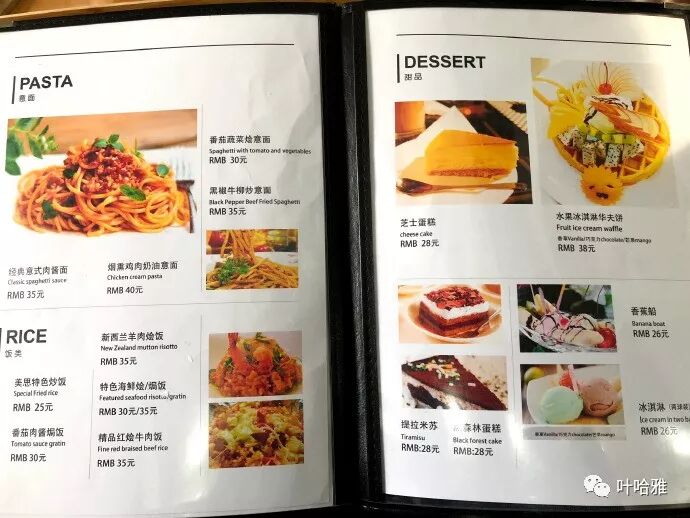
The pasta tastes very authentic.
I took a picture of the menu, which includes pizza. I will come back to try it next time.
Address: 100 meters south of the main gate of the Niujie Mosque.
142. Tongshunzhai Restaurant.
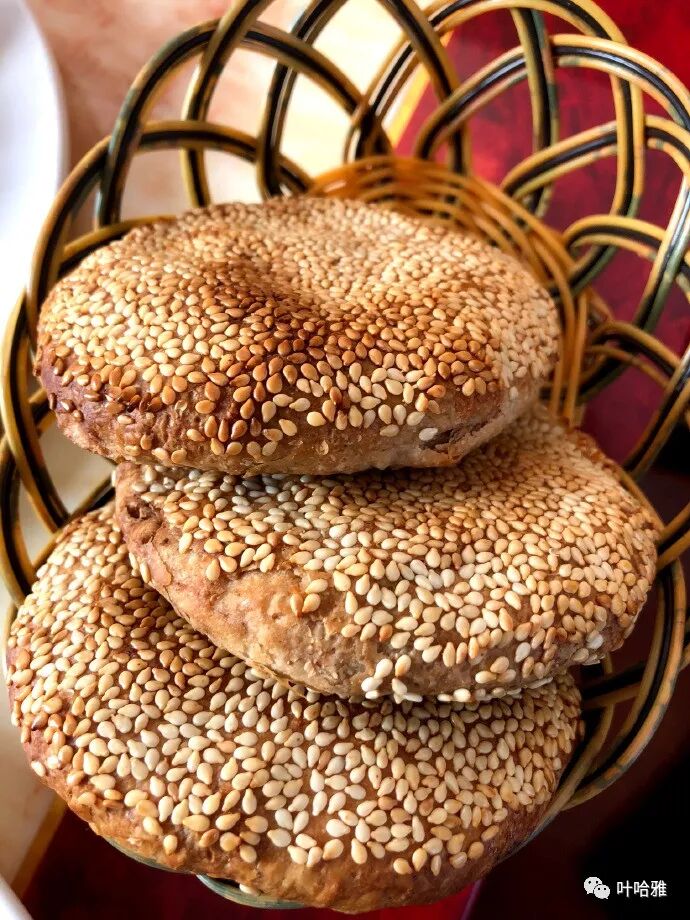
I came here for the ox head feast, but once I arrived, I learned that it takes 10 people to finish one ox head.
The courtyard is large and spacious, and all the seating is in private rooms.
I looked at the menu and saw only heavy meat dishes. The waiter said that for three grown men, one oxtail would be enough.
So I ordered two cold dishes, shredded vegetables in sauce (bansansi).
And tofu with scallions (xiao cong ban doufu).
When the oxtail arrived, I was shocked. It was a full half-meter long and stewed until very tender.
The lamb strips (yangrou tiao) seemed a bit extra; we really couldn't eat any more.
Address: South entrance of Doudian Village, Fangshan District, Beijing.
143. 36 Degrees North Latitude Hot Pot.
A very refined Qinghai-style hot pot restaurant that opened recently.
The environment is beautiful, it is not crowded, and the service is warm.
The beef and lamb all come from Qinghai.
We had the split pot (yuanyang guo), and the spicy side was not particularly hot.
Freshly sliced secret-recipe beef tenderloin.
Marbled beef (xuehua fu niurou).
Highland barley flatbread (qingke bing).
Address: B1, Huacai Commercial Center, Wangjing.
144. Yi Dai Yi Lu Xinjiang Cuisine.
This shop used to be called Tajike Spring Water Lamb Restaurant. They recently changed the name, but the menu is basically the same.
There is a Quran hanging on the wall.
Baked buns (kao baozi).
Address: 4F-4C12, Jiayi Youth Hub, Qingnian Road, Chaoyang District.
145. Jinghummen Hot Pot
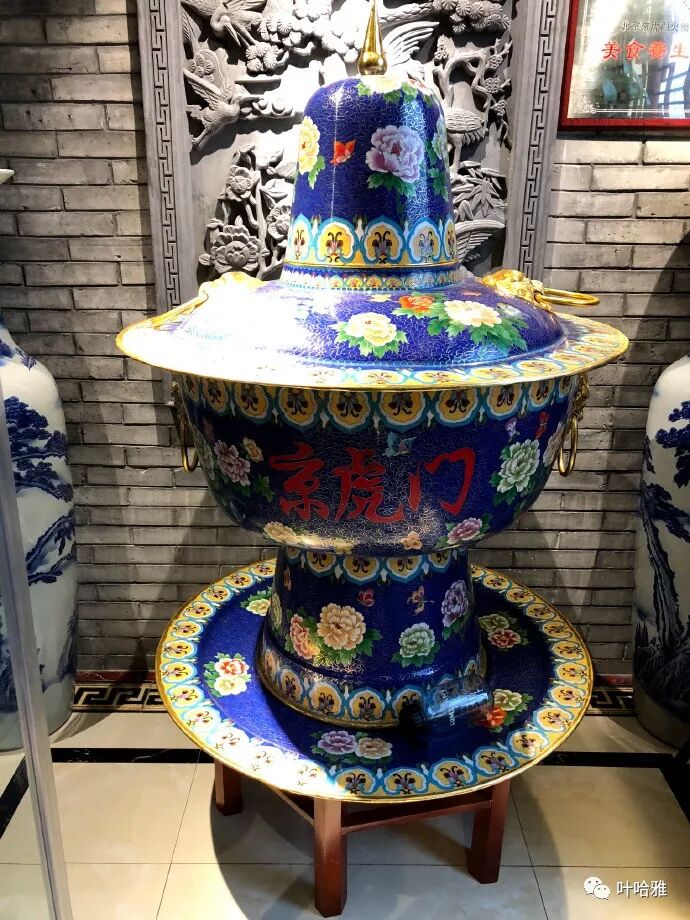
A newly opened traditional Beijing copper pot hot pot (shuanrou) restaurant next to Guangqumen Subway Station.
The beef ball platter is unique, and the meatballs are delicious.
The environment is spacious.
There is a Northwest-style restaurant next door, and People say both shops share the same landlord.
Address: Second floor of Hongdu Building, Guangqumen Subway Station.
146. Ailifu Lamb Hot Pot
Ailifu Lamb Hot Pot on Chaoyang North Road in Fangshan District is a long-standing shop that has been operating for over ten years.
Address: Chaoyang North Road, Fangshan District.
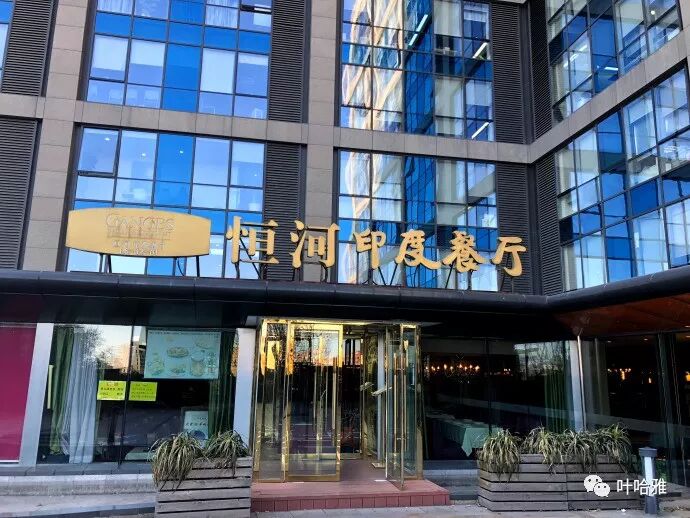
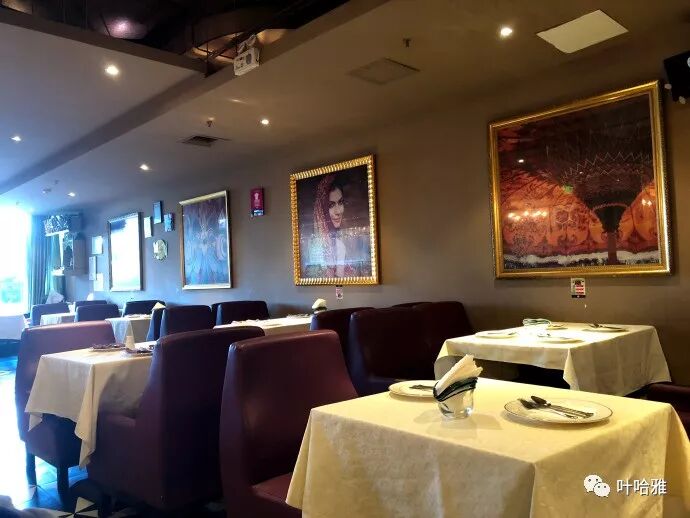
147.
Ganges Indian Restaurant
Pan-fried salmon.
Indian milk tea.
Address: Sixth floor of Wudaokou Shopping Center.
148. Yilao Baiwei Dipping Sauce Hot Pot
A newly opened modern-style hot pot restaurant in Changying.
The signature dipping sauces come in a wide variety and are beautifully presented.
Silky fowl meat rolls.
High-calcium lamb.
The staff recommends the hand-beaten beef, a Chaoshan specialty; you can watch the chef beat the beef on-site.
Durian pastry, which smells fragrant and has a strong durian flavor.
The average cost is about 130 yuan per person, and you can buy group-purchase vouchers.
Address: No. 13 Changying Guanzhuang Road.
149. Alan Restaurant
This old Beijing halal restaurant has been open for years near Temple of Heaven Park. The owner has photos with many celebrities on the wall. Because it is close to the General Administration of Sport of China, many athletes come here to eat.
Sesame lamb (zhima yangrou)
Small bowl beef (xiaowan niurou)
Address: West of Building 2, Tiantan Dongli South District, Dongcheng District (1 Yongdingmen East Street)
150. Ashan Diadili Restaurant
This shop has been operating on Gongti North Road for 7 years. Whenever there is a game, this place is packed.
At night, it is full of sports fans eating skewers.
Grilled fish (kaoyu)
Salar family dish made with potatoes and beef. The owner cooks it himself, so you need some luck to get a taste.
Sour soup beef (suantang feiniu)
Cumin lamb (ziran yangrou)
Address: Gongti North Road view all
Summary: A Beijing halal street food and restaurant guide featuring Wudaokou Xinjiang food, crispy lamb ribs, naan ding (diced naan with grilled meat), Qinghai noodles, and other dishes from the original source.
140. Halime Kitchen
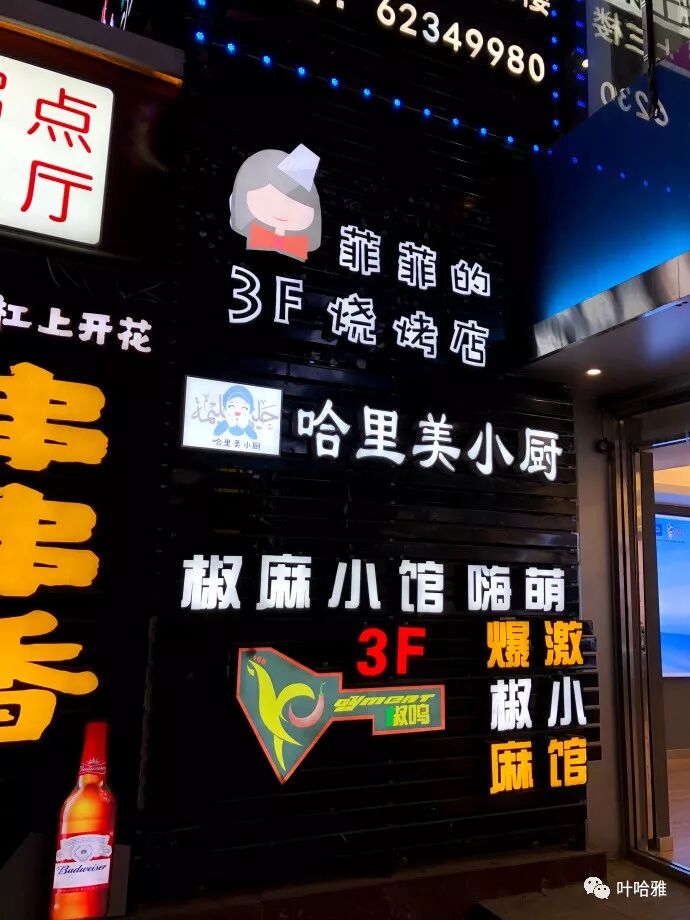
Open for one month, it is already the third most popular Xinjiang restaurant in Wudaokou.
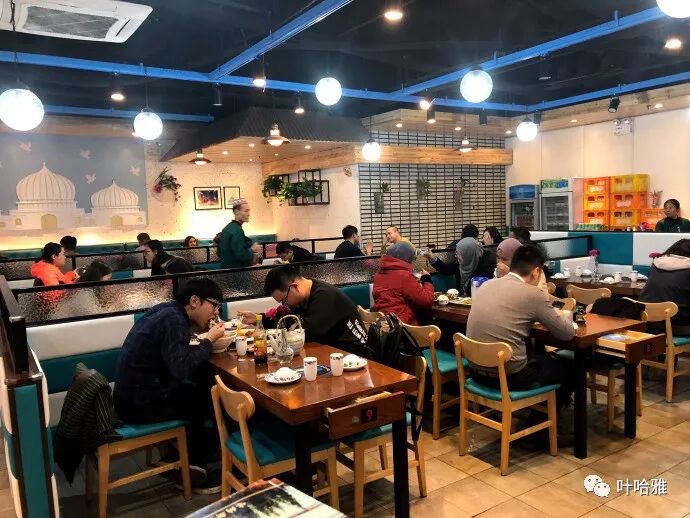
The decor is stylish with elegant seating, and it can host group dinners for over twenty people.
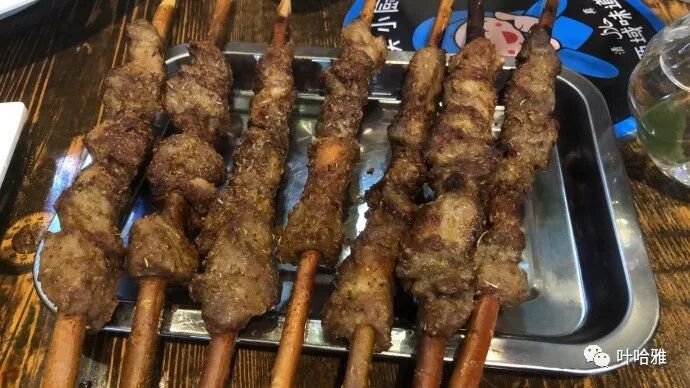
Barbecue is a specialty here. They use high-quality lamb. You can choose between large or small skewers of red willow grilled meat (hongliu kaorou), and the chicken wings come in secret recipe or spicy flavors.
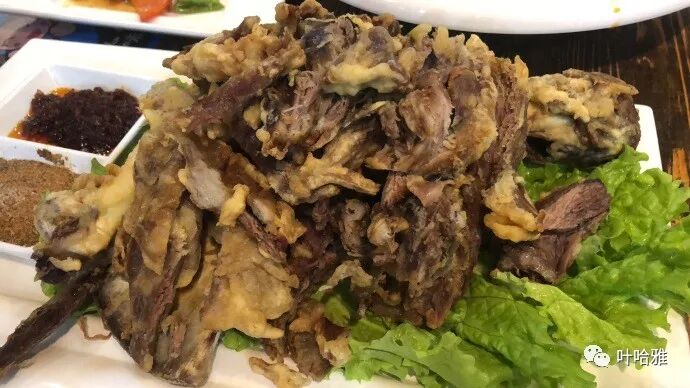
Crispy lamb chops (xiangsu yangpai)
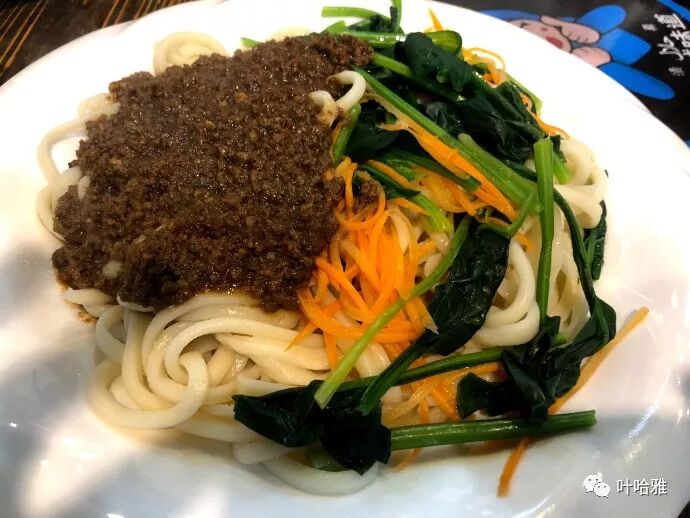
Qinghai-style summer flavor mixed noodles (xiawei banmian)
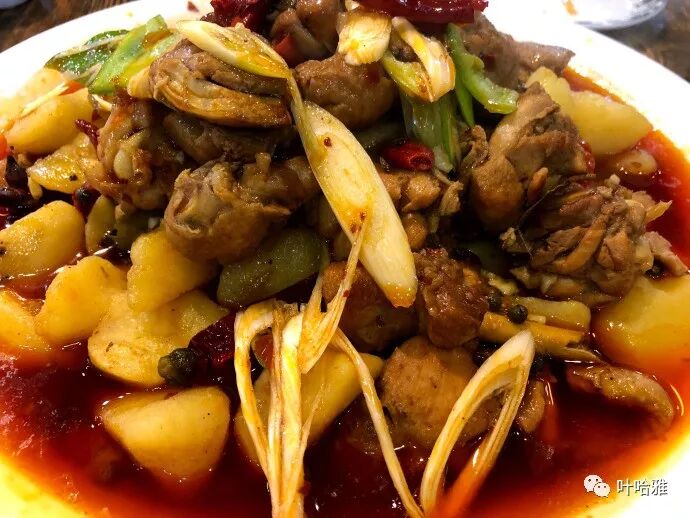
Choose between Shawan big plate chicken (dapanji) or diced naan bread with grilled meat (nangding kaorou). They are half-price until the end of the month, and the big plate chicken comes with a free serving of white noodles.
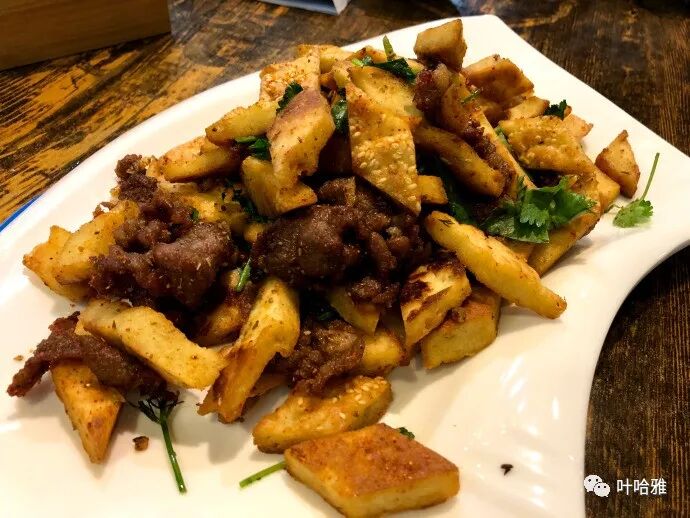
Diced naan bread with grilled meat (nangding kaorou)
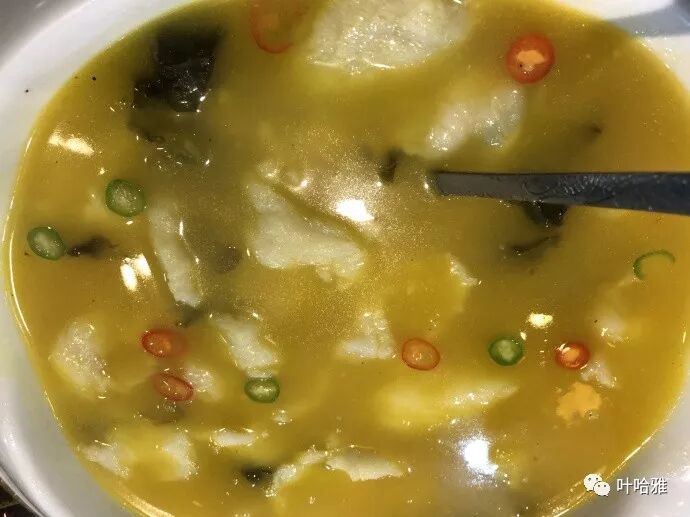
Golden soup sole fish (jintang longliyu) is a popular recommendation. The pickled vegetable soup is tasty, and the fish is tender with few bones.
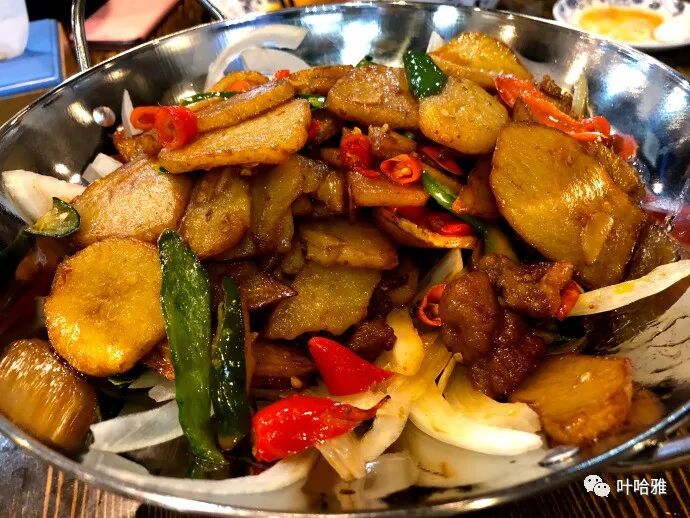
Dongxiang potato slices (dongxiang tudoupian) are a popular recommendation. The potatoes are soft and full of flavor.
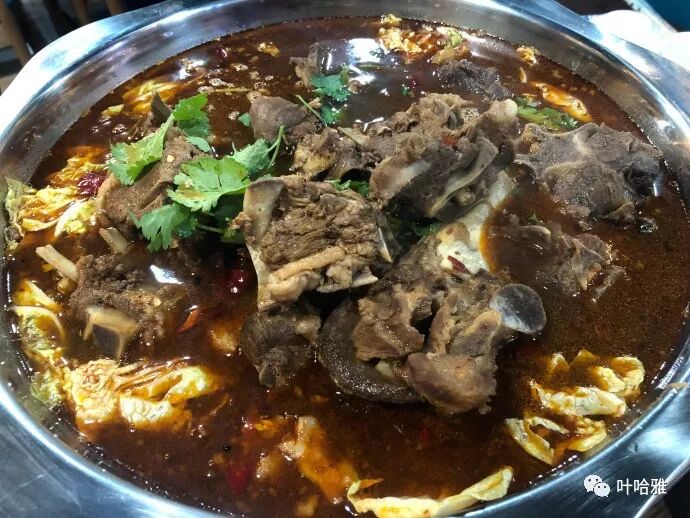
Secret recipe lamb spine (yangxiezi) comes in large or small portions, and you can add hot pot sides.
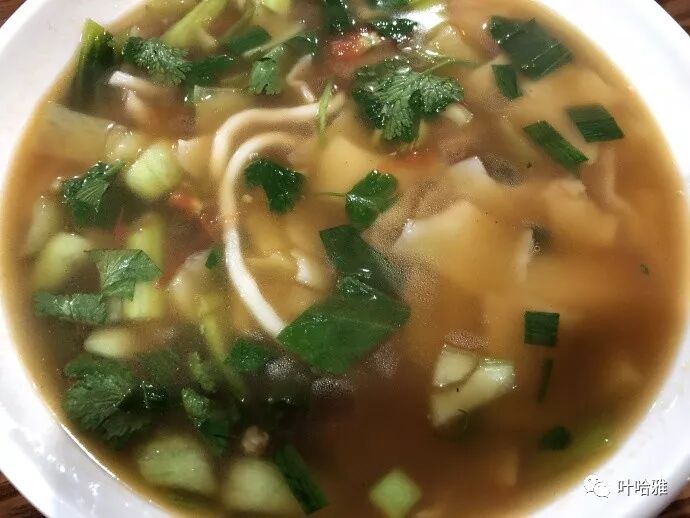
Salar handmade noodle pieces (shougong mianpian) are cooked by the owner herself. They are the best noodle pieces I have ever eaten.
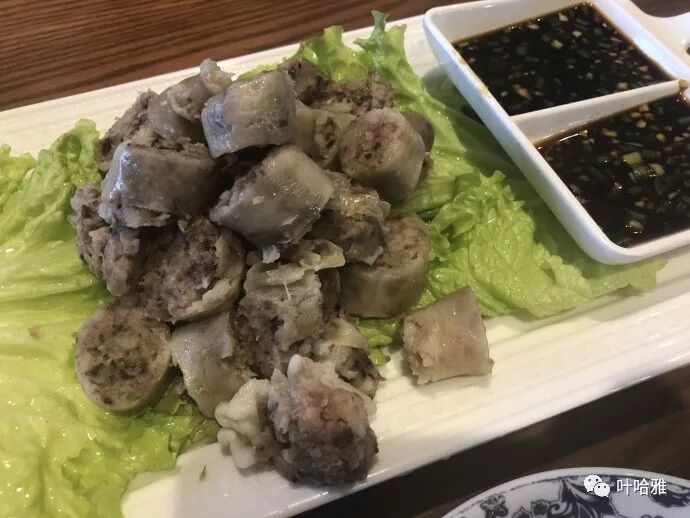
Qinghai little liver (xiaoxingan) is made from lamb intestines and is also highly praised.
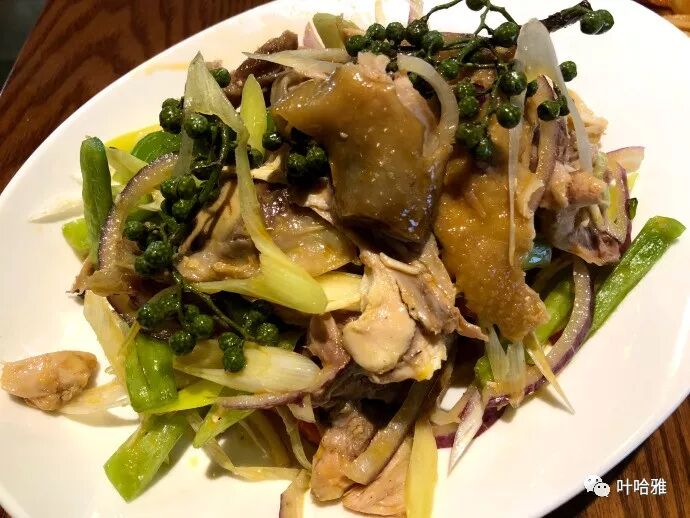
Peppery chicken (jiaomaji) is numbing and spicy, and very satisfying.
Address: 3rd Floor, Wudaokou International Food Plaza.
141. Meisi Cafe
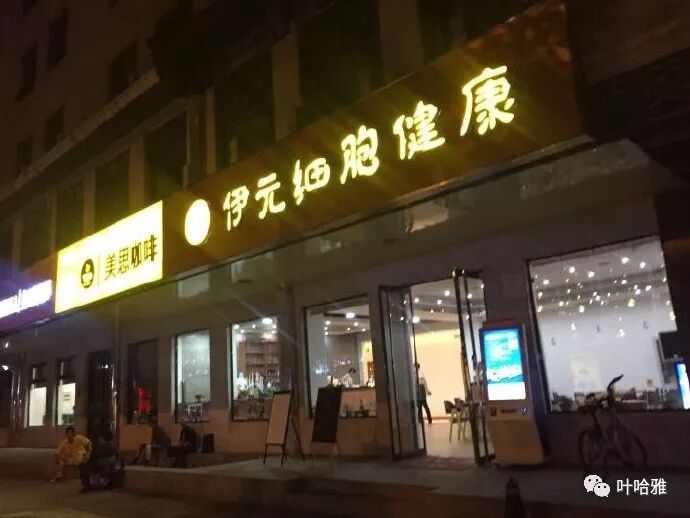
This cafe opened recently. It is a casual spot serving Western food and only non-alcoholic drinks in a spacious setting.
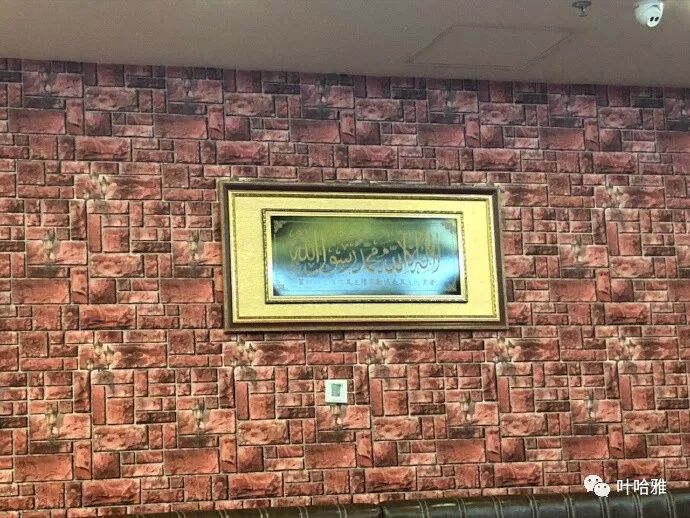
The shop displays the Shahada, confirming it is a halal cafe. Coffee drinking was first invented by Muslims in Damascus, Syria, and it took another hundred years for the first European cafe to open in France.
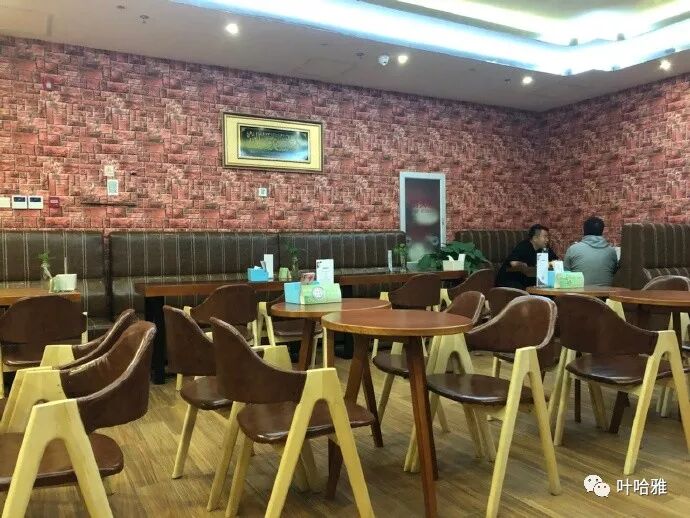
Niujie has been missing a quiet, elegant place for dates. Now that this cafe is here, there is finally a place to go.
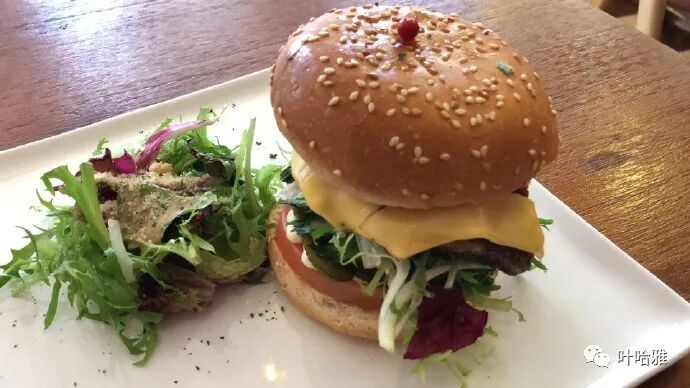
I ordered a beef burger. It had many thick layers, and people with small mouths cannot even take a full bite.
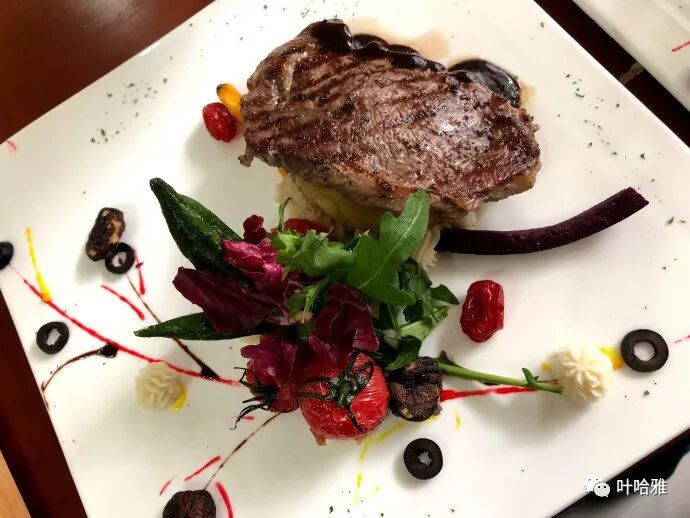
The Australian steak was served with dried vegetables on the side. I am not used to eating raw meat, so I asked for it well-done.
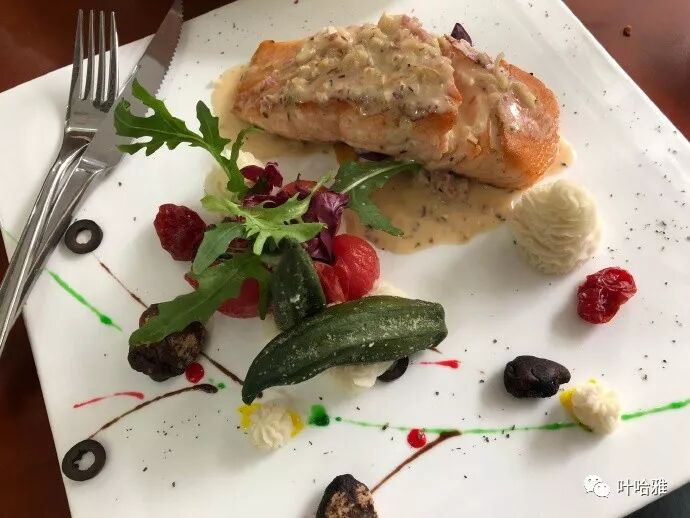
Pan-fried salmon is fresh and delicious.
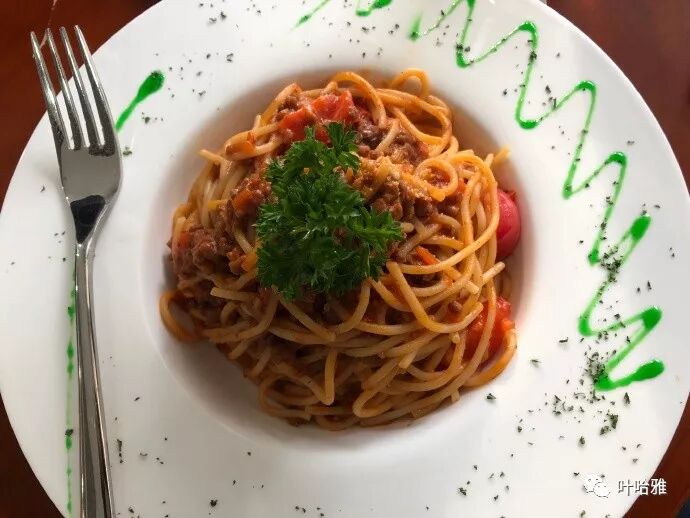
The pasta tastes very authentic.
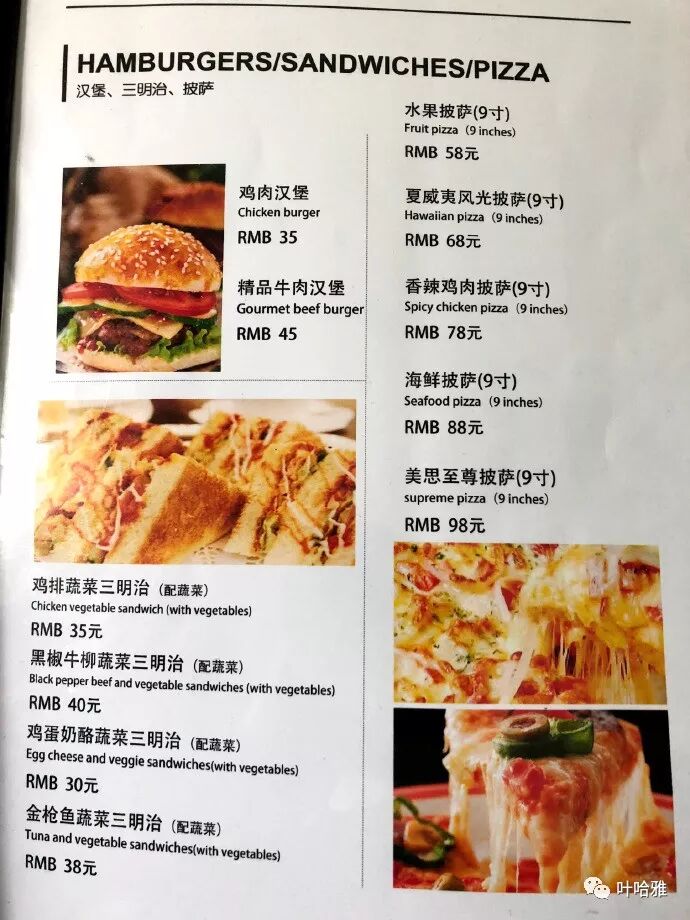
I took a picture of the menu, which includes pizza. I will come back to try it next time.
Address: 100 meters south of the main gate of the Niujie Mosque.
142. Tongshunzhai Restaurant.
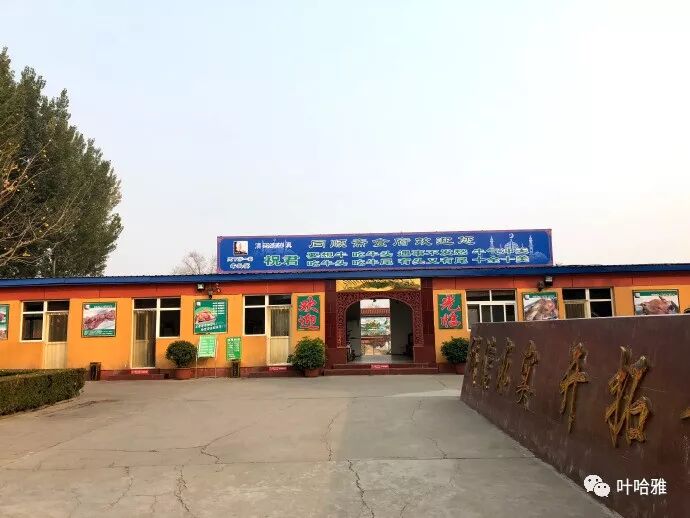
I came here for the ox head feast, but once I arrived, I learned that it takes 10 people to finish one ox head.
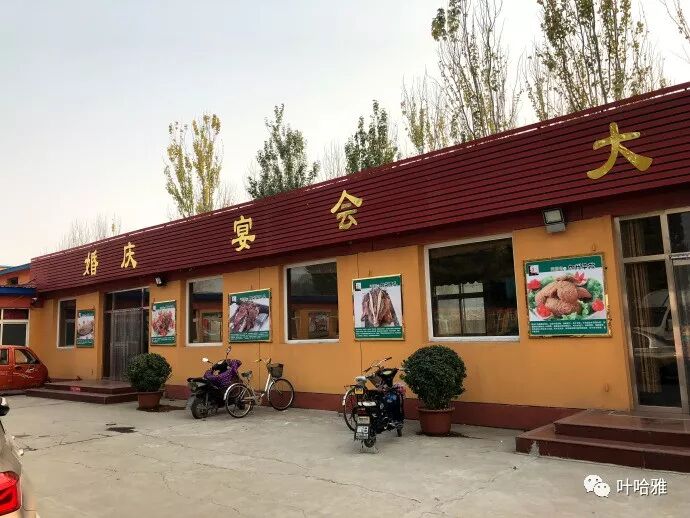
The courtyard is large and spacious, and all the seating is in private rooms.
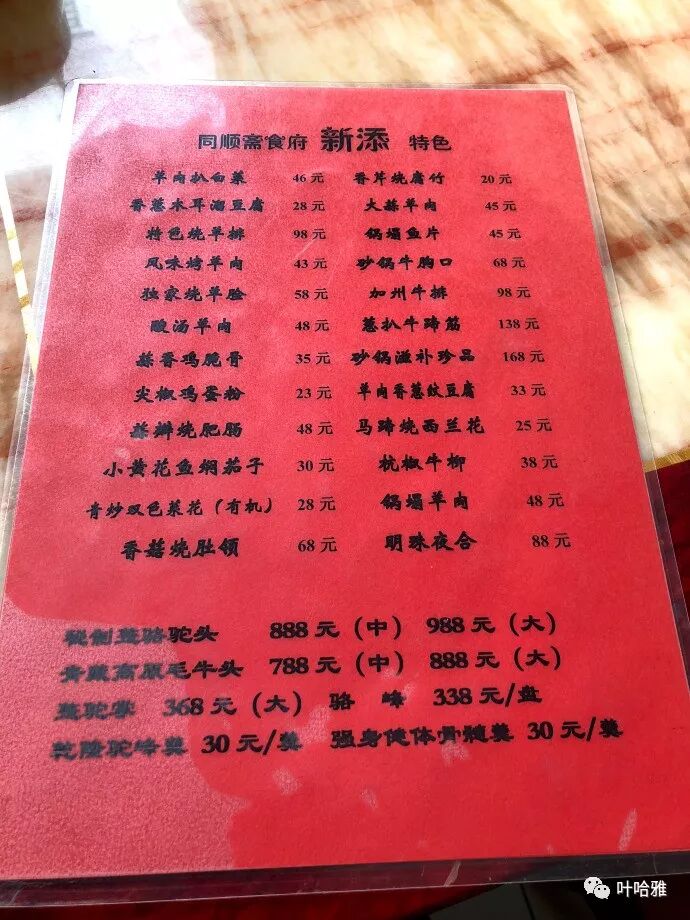
I looked at the menu and saw only heavy meat dishes. The waiter said that for three grown men, one oxtail would be enough.
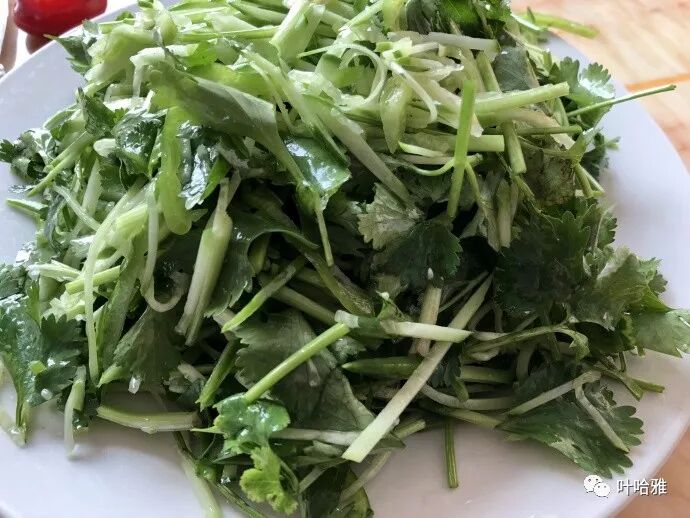
So I ordered two cold dishes, shredded vegetables in sauce (bansansi).
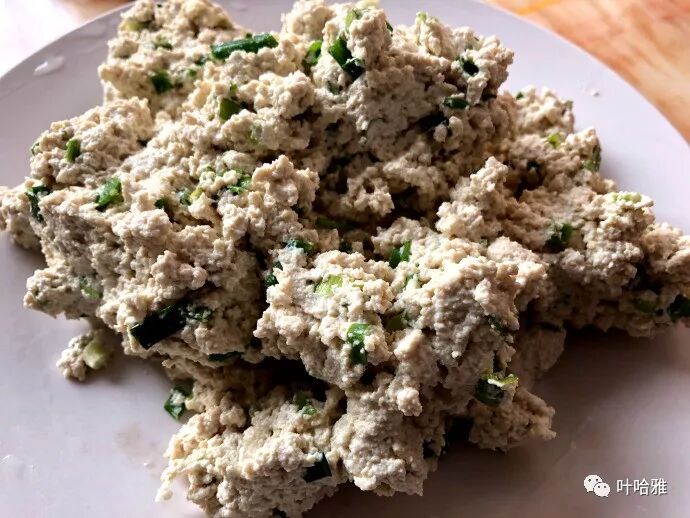
And tofu with scallions (xiao cong ban doufu).
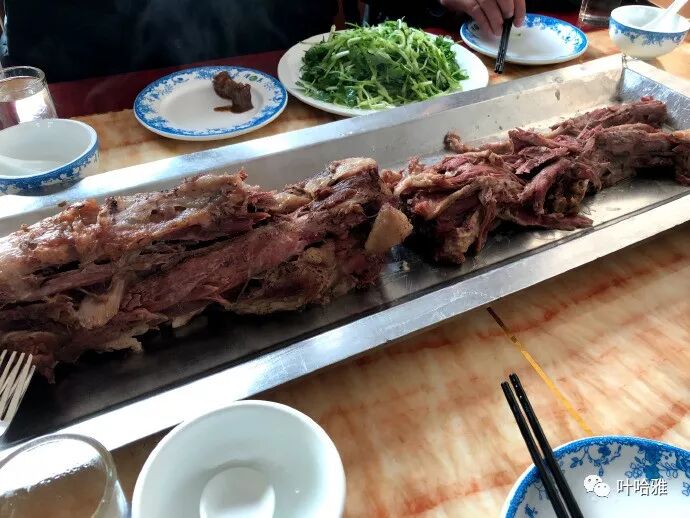
When the oxtail arrived, I was shocked. It was a full half-meter long and stewed until very tender.
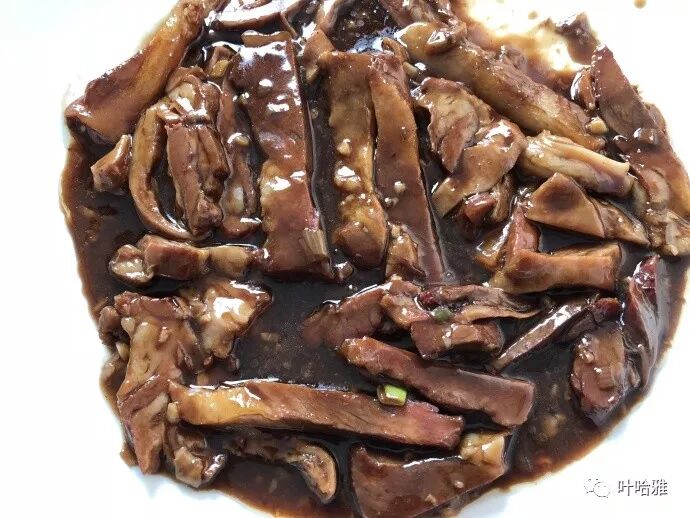
The lamb strips (yangrou tiao) seemed a bit extra; we really couldn't eat any more.
Address: South entrance of Doudian Village, Fangshan District, Beijing.
143. 36 Degrees North Latitude Hot Pot.
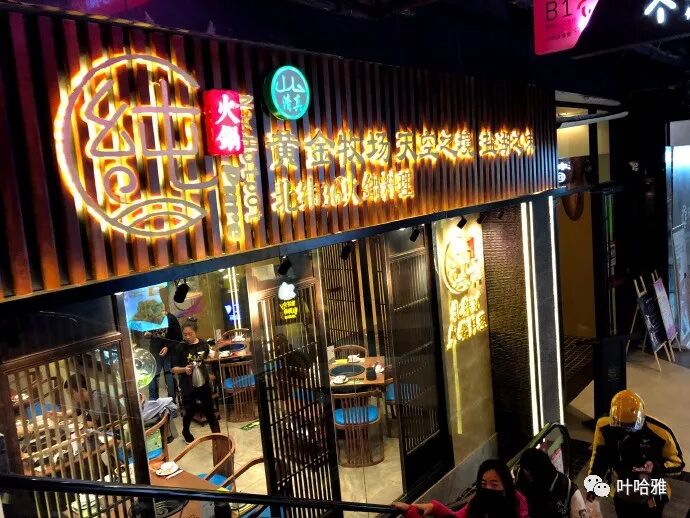
A very refined Qinghai-style hot pot restaurant that opened recently.
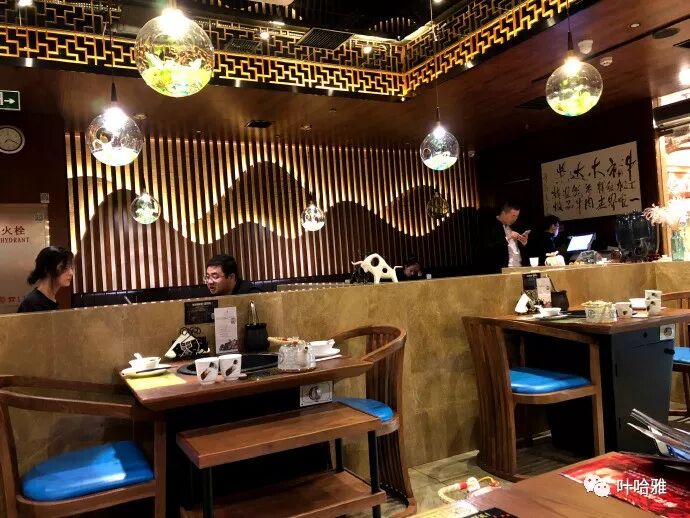
The environment is beautiful, it is not crowded, and the service is warm.
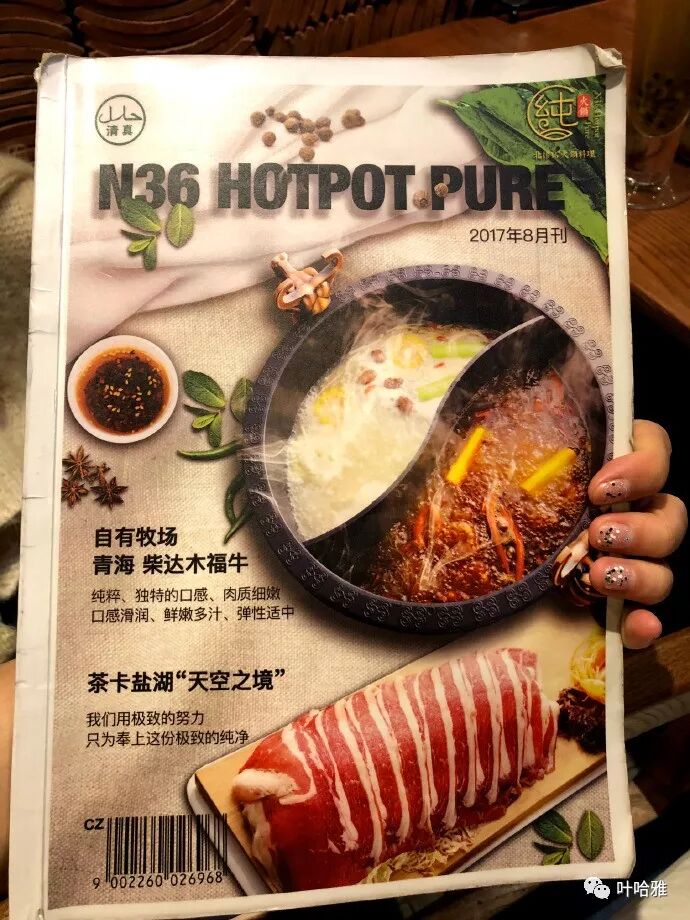
The beef and lamb all come from Qinghai.
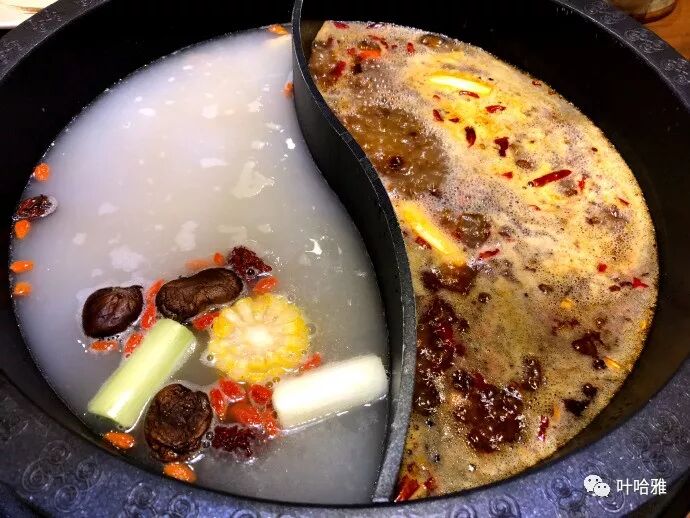
We had the split pot (yuanyang guo), and the spicy side was not particularly hot.
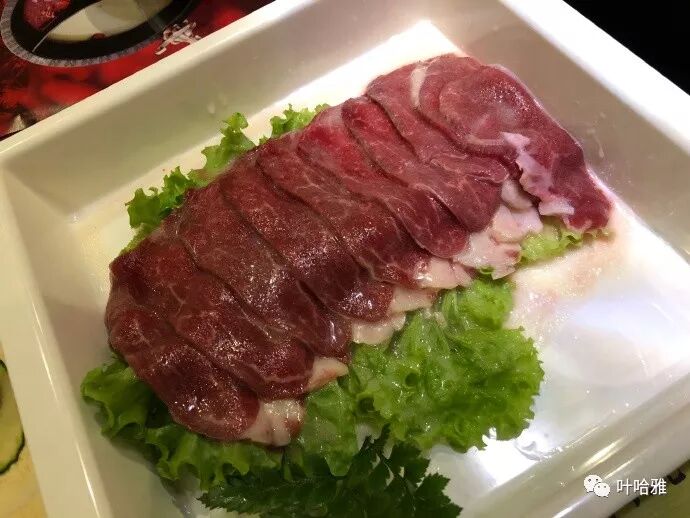
Freshly sliced secret-recipe beef tenderloin.
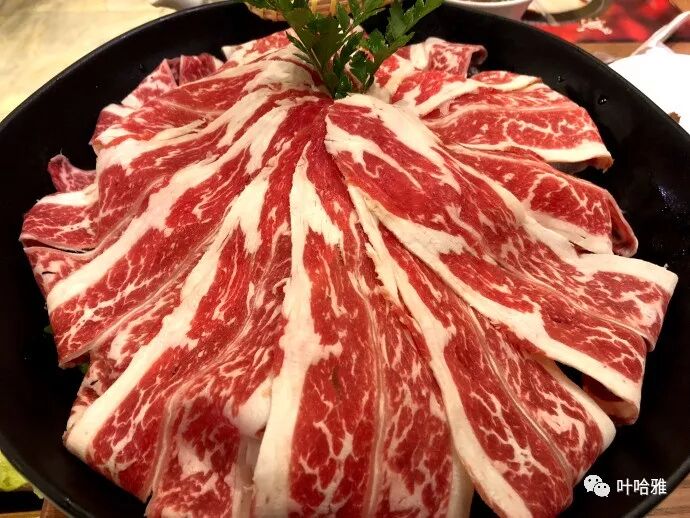
Marbled beef (xuehua fu niurou).
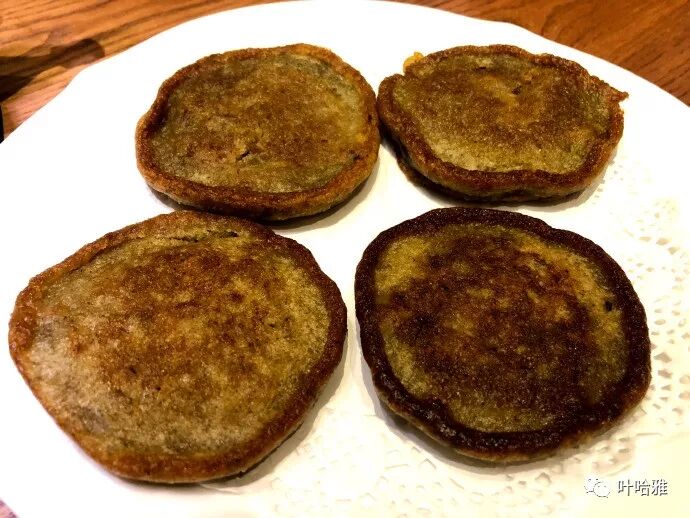
Highland barley flatbread (qingke bing).
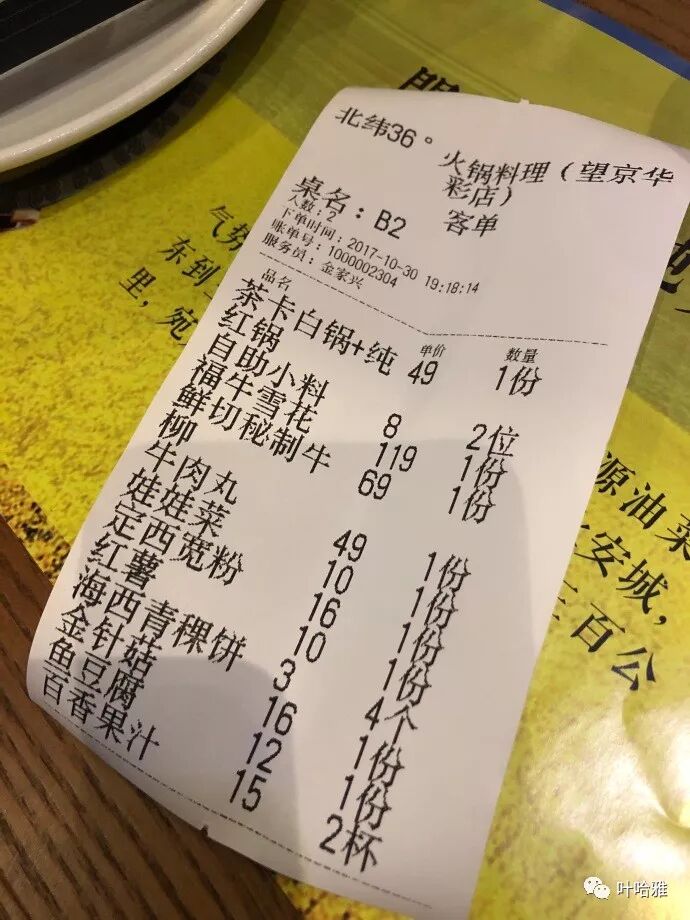
Address: B1, Huacai Commercial Center, Wangjing.
144. Yi Dai Yi Lu Xinjiang Cuisine.
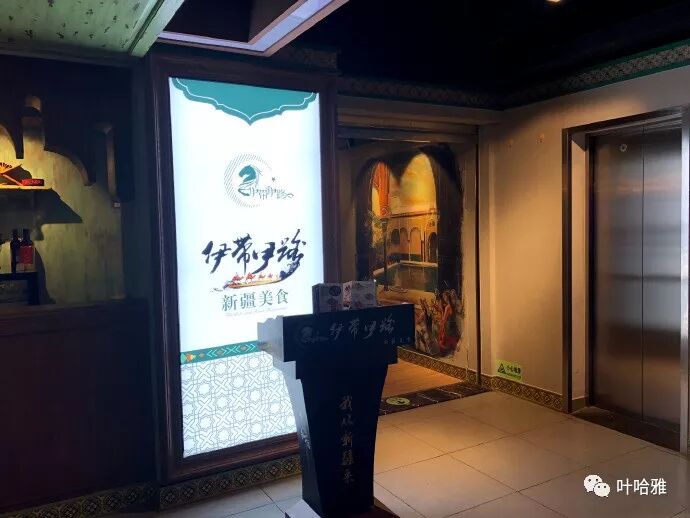
This shop used to be called Tajike Spring Water Lamb Restaurant. They recently changed the name, but the menu is basically the same.
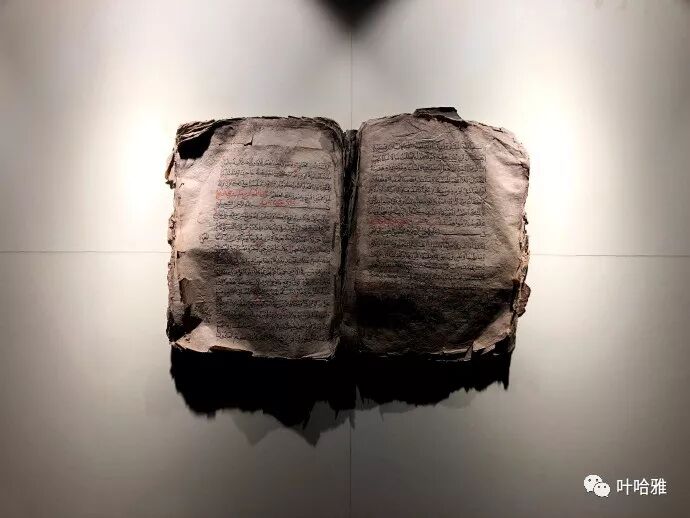
There is a Quran hanging on the wall.
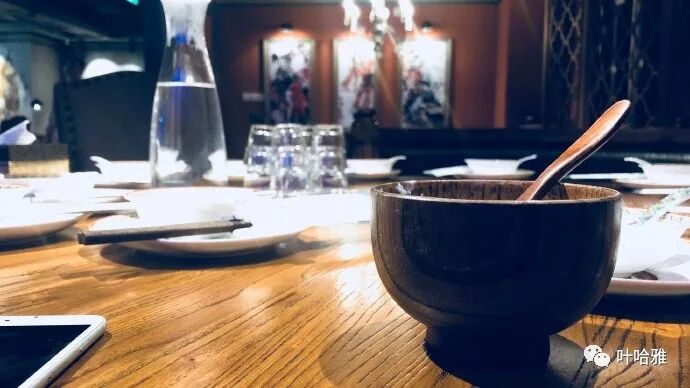
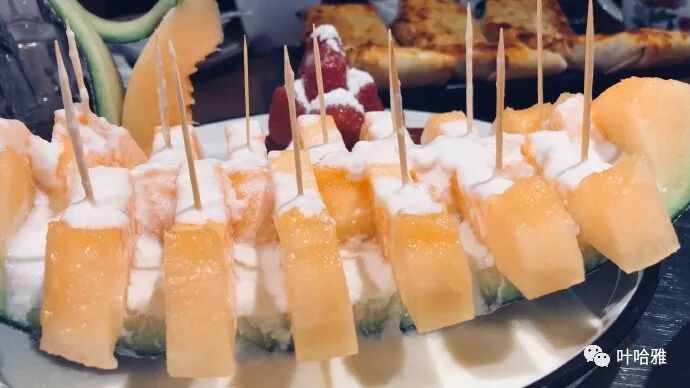
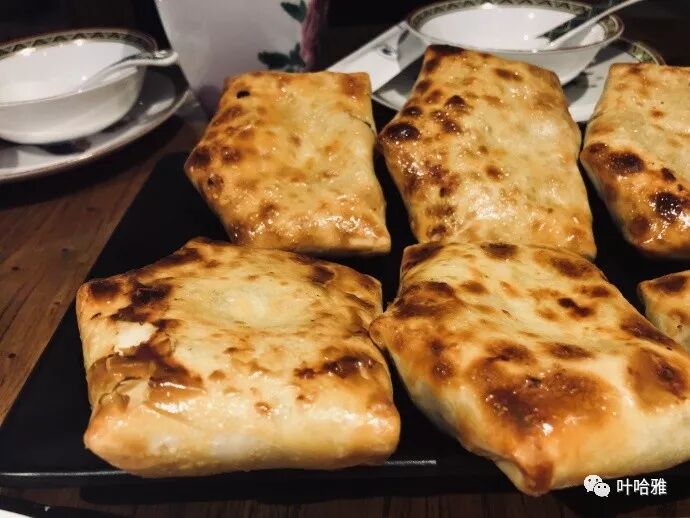
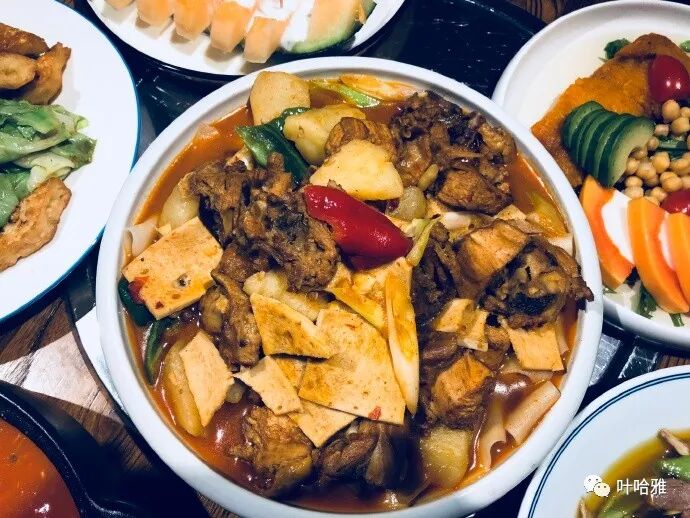
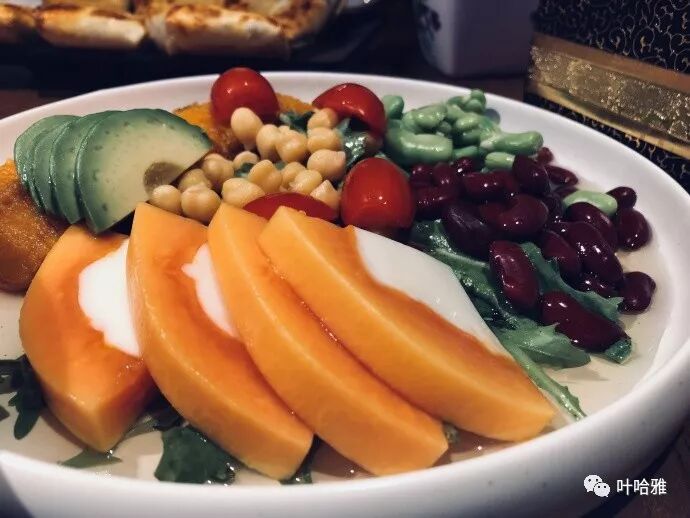
Baked buns (kao baozi).
Address: 4F-4C12, Jiayi Youth Hub, Qingnian Road, Chaoyang District.
145. Jinghummen Hot Pot
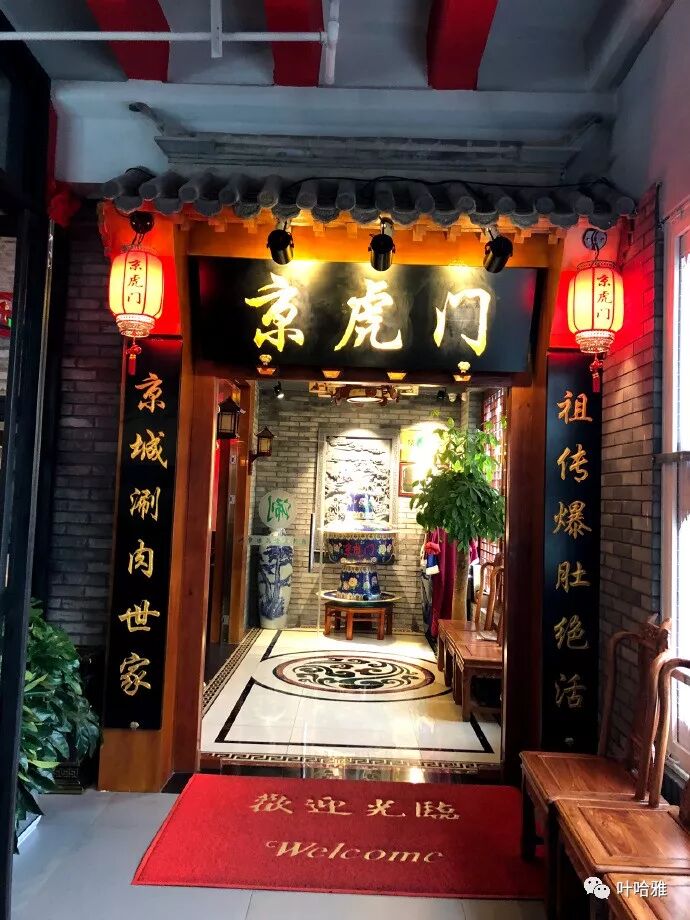
A newly opened traditional Beijing copper pot hot pot (shuanrou) restaurant next to Guangqumen Subway Station.
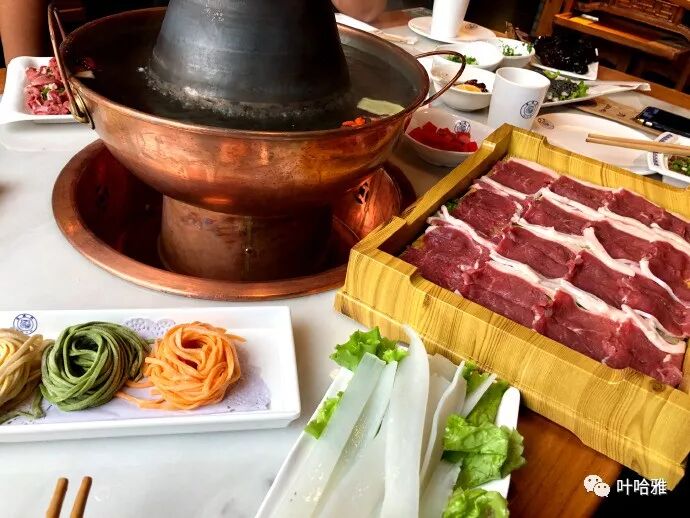
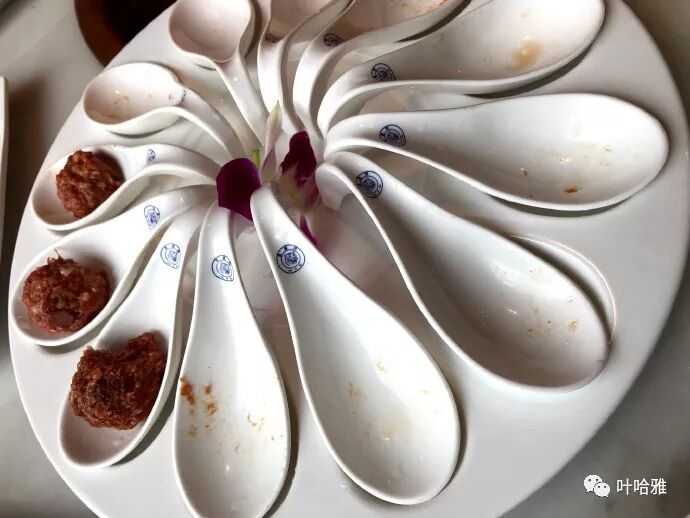
The beef ball platter is unique, and the meatballs are delicious.
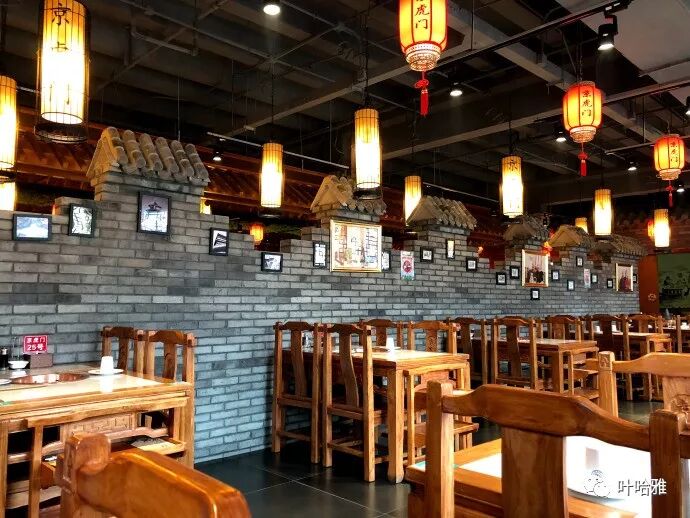
The environment is spacious.
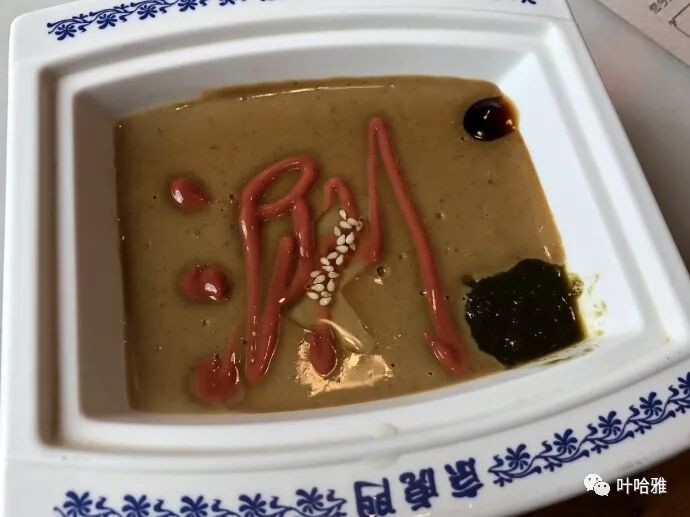
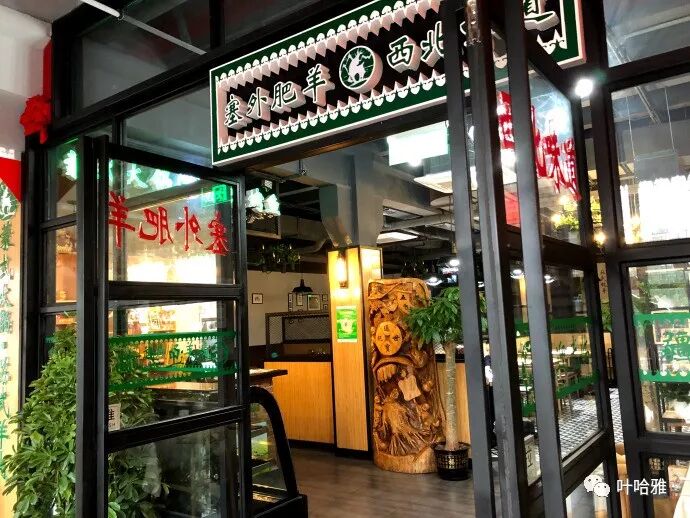
There is a Northwest-style restaurant next door, and People say both shops share the same landlord.
Address: Second floor of Hongdu Building, Guangqumen Subway Station.
146. Ailifu Lamb Hot Pot
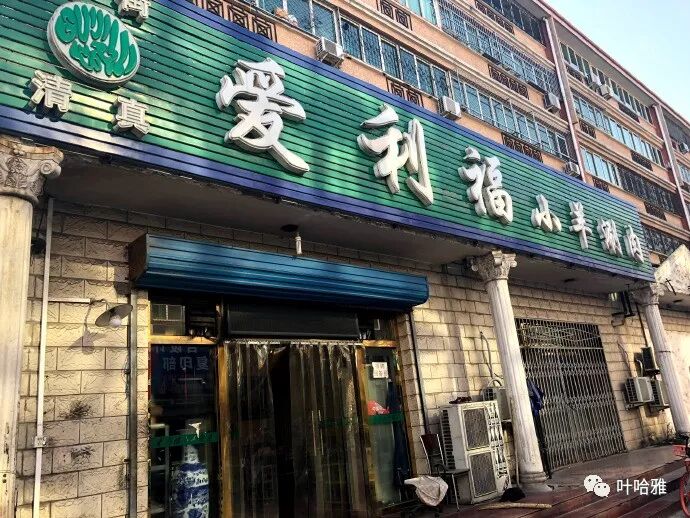
Ailifu Lamb Hot Pot on Chaoyang North Road in Fangshan District is a long-standing shop that has been operating for over ten years.
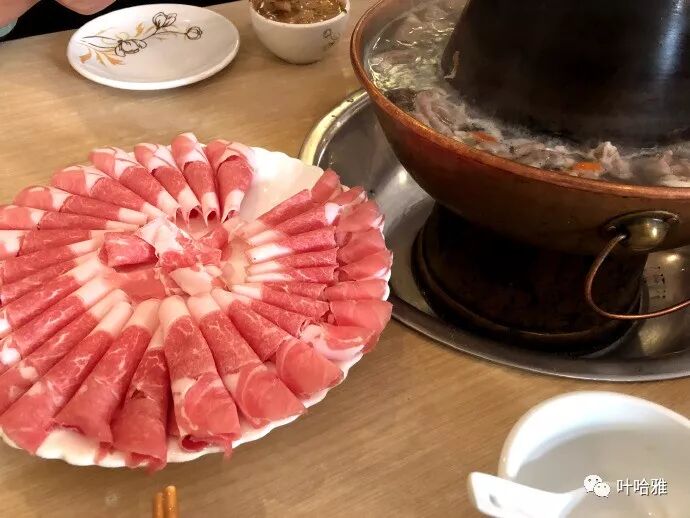
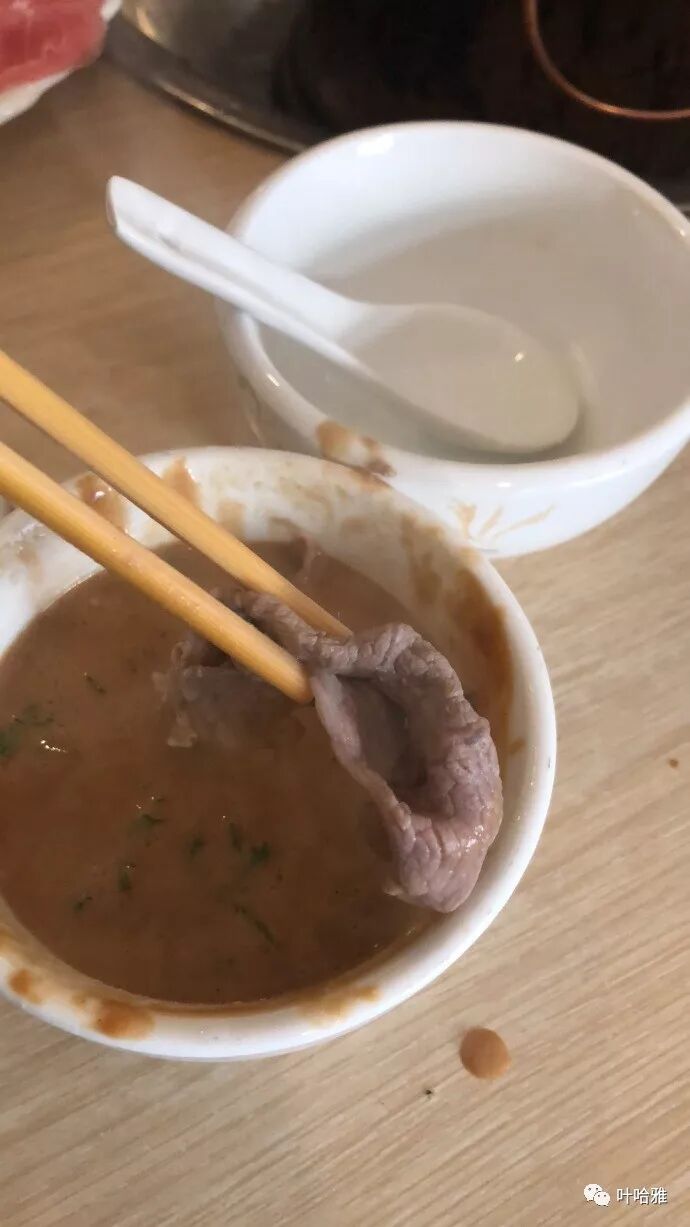
Address: Chaoyang North Road, Fangshan District.
147.
Ganges Indian Restaurant
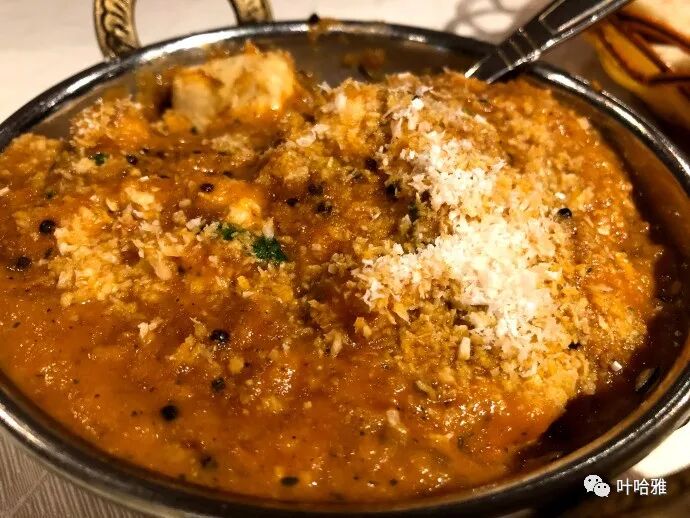
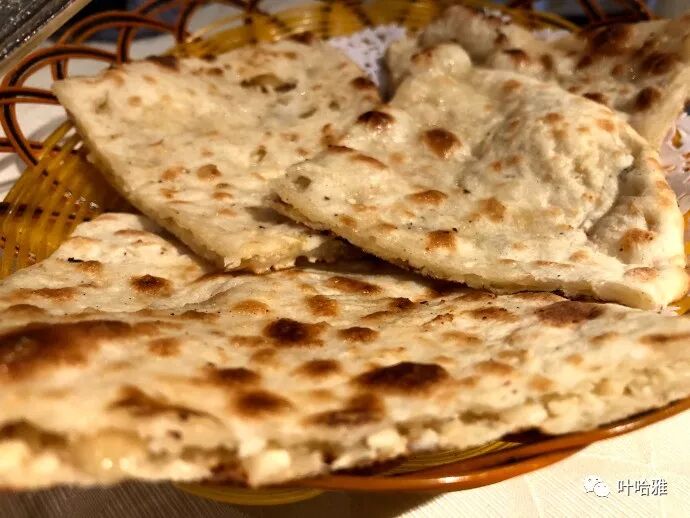
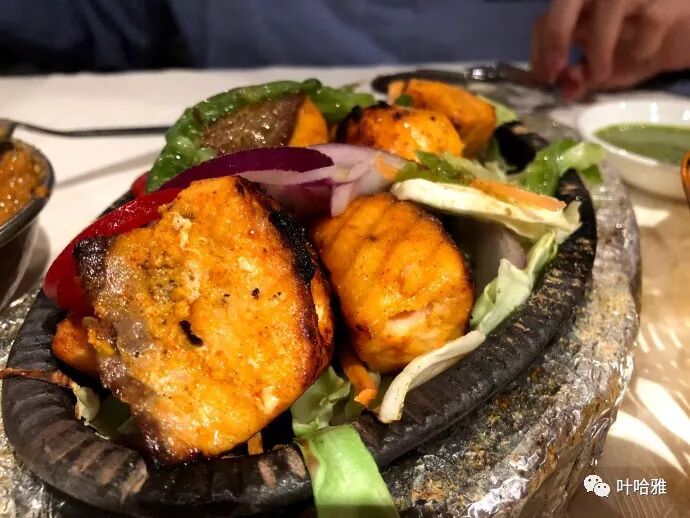
Pan-fried salmon.
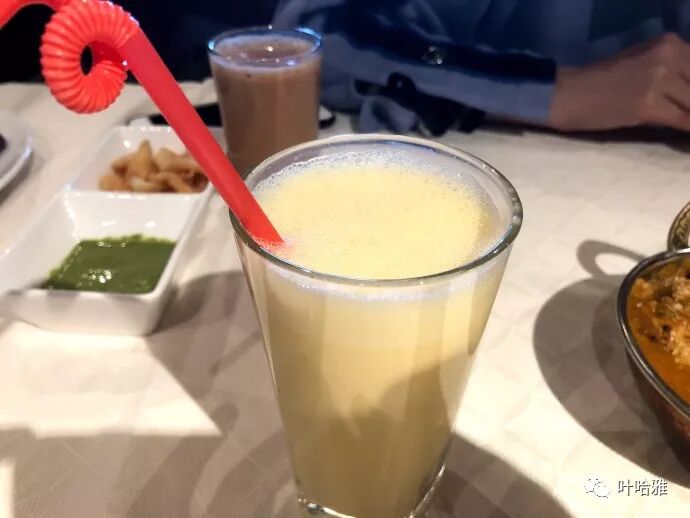
Indian milk tea.
Address: Sixth floor of Wudaokou Shopping Center.
148. Yilao Baiwei Dipping Sauce Hot Pot
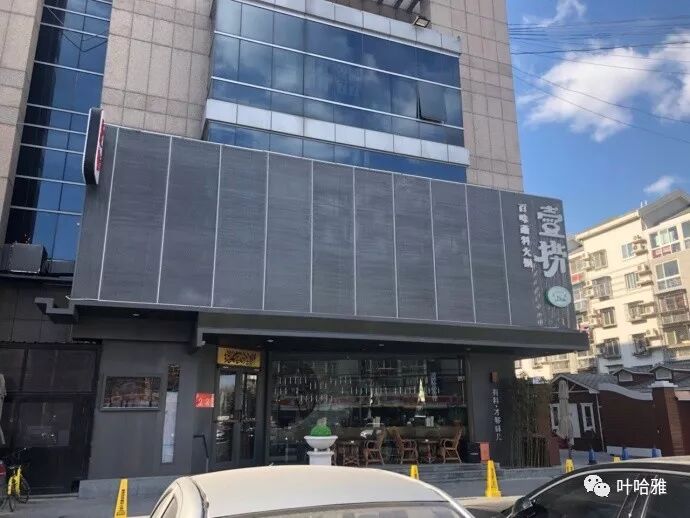
A newly opened modern-style hot pot restaurant in Changying.
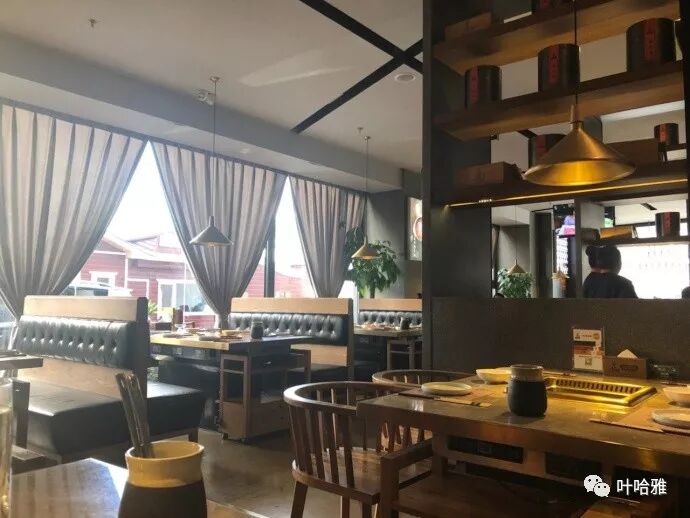
The signature dipping sauces come in a wide variety and are beautifully presented.
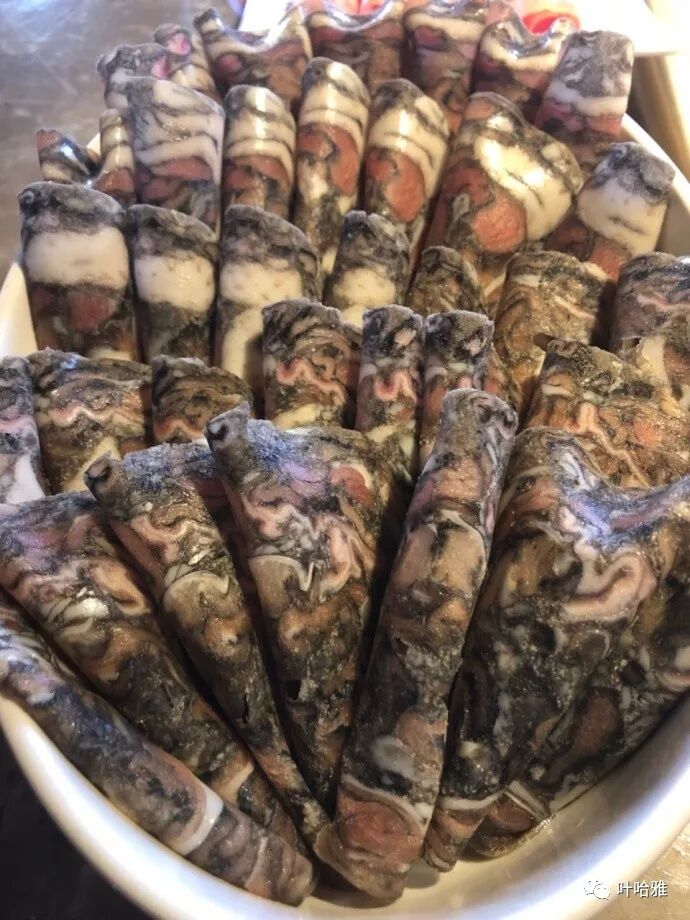
Silky fowl meat rolls.
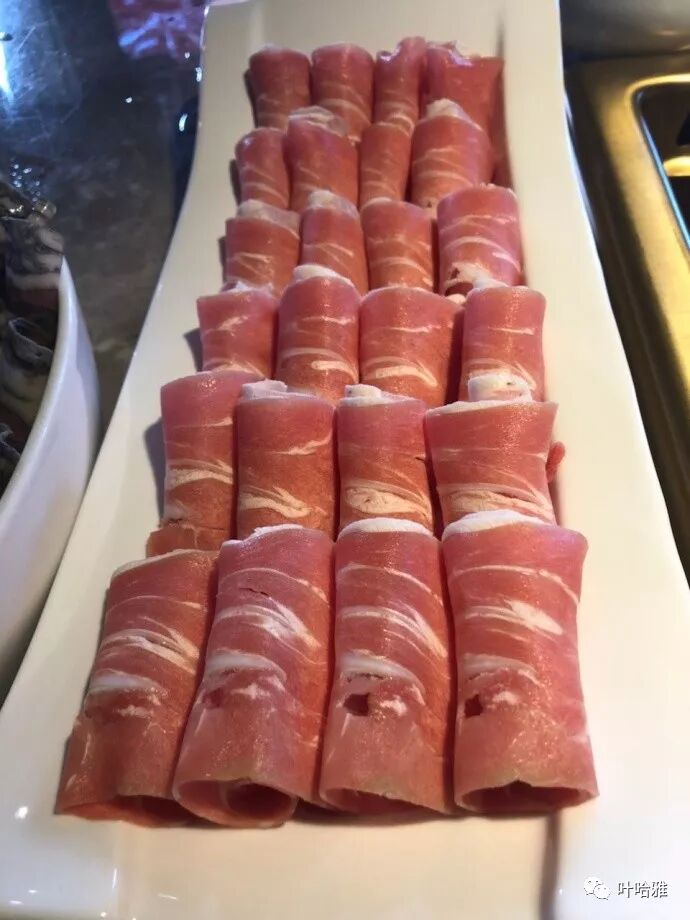
High-calcium lamb.
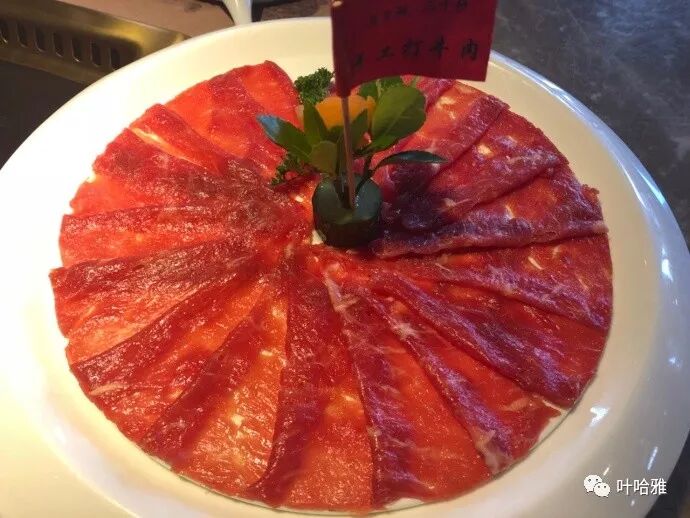
The staff recommends the hand-beaten beef, a Chaoshan specialty; you can watch the chef beat the beef on-site.
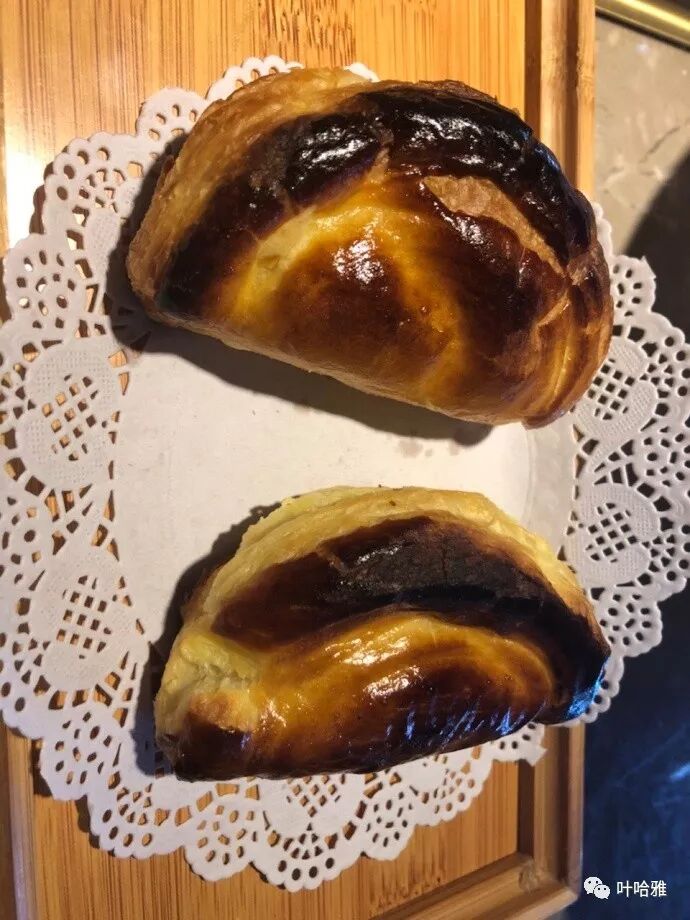
Durian pastry, which smells fragrant and has a strong durian flavor.
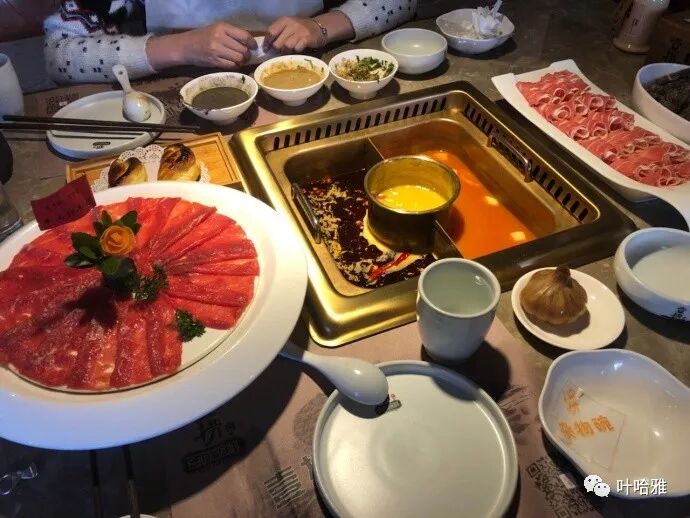
The average cost is about 130 yuan per person, and you can buy group-purchase vouchers.
Address: No. 13 Changying Guanzhuang Road.
149. Alan Restaurant
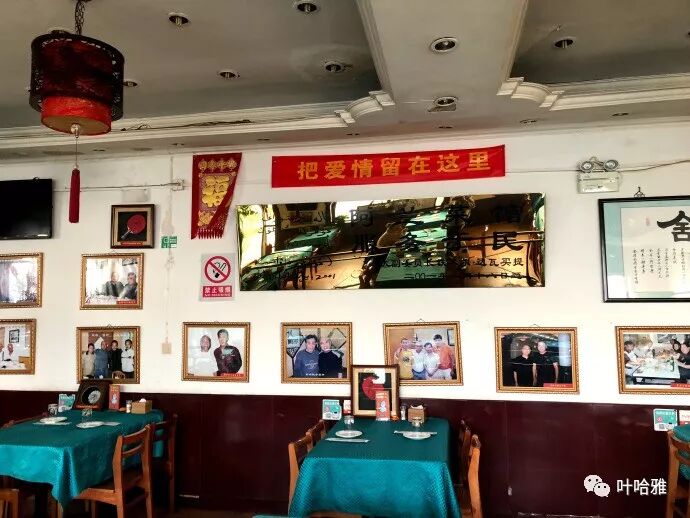
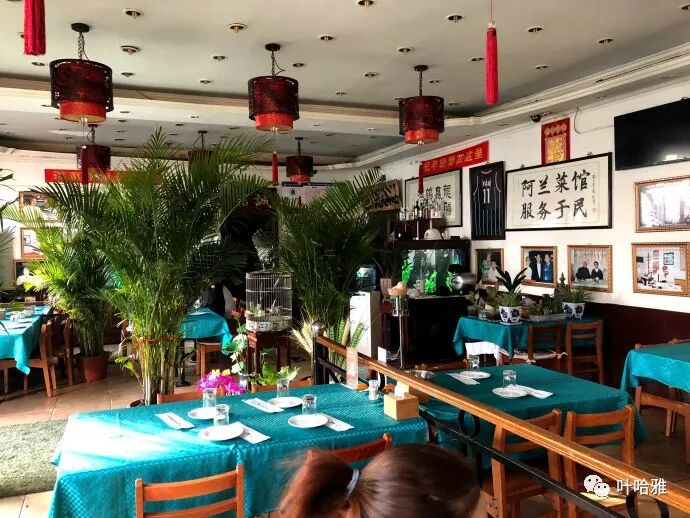
This old Beijing halal restaurant has been open for years near Temple of Heaven Park. The owner has photos with many celebrities on the wall. Because it is close to the General Administration of Sport of China, many athletes come here to eat.
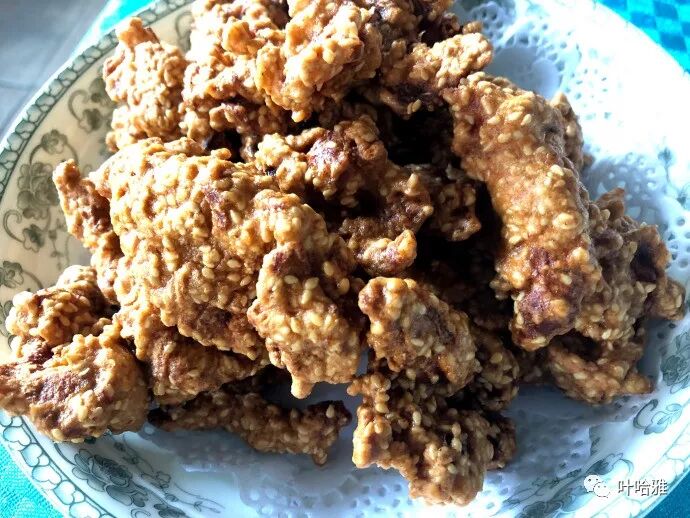
Sesame lamb (zhima yangrou)
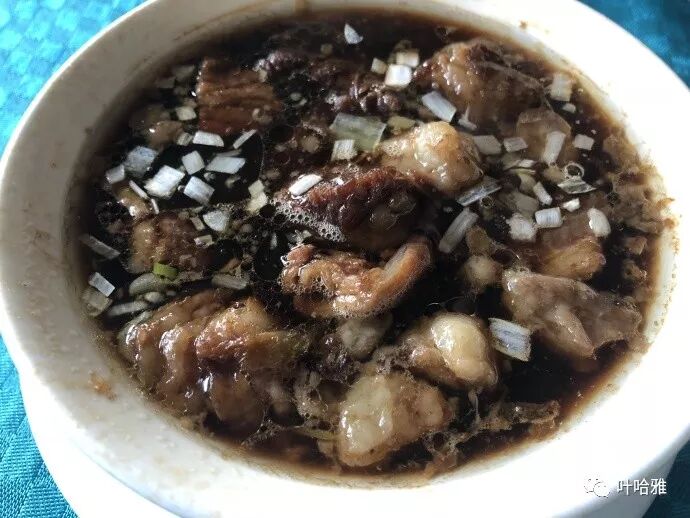
Small bowl beef (xiaowan niurou)
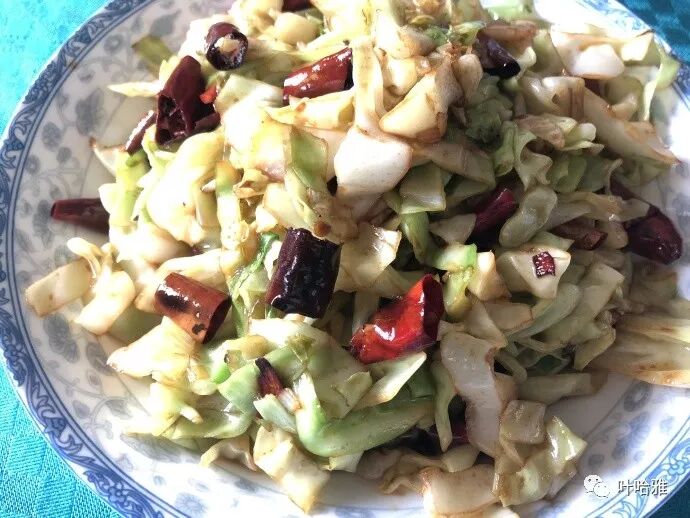
Address: West of Building 2, Tiantan Dongli South District, Dongcheng District (1 Yongdingmen East Street)
150. Ashan Diadili Restaurant
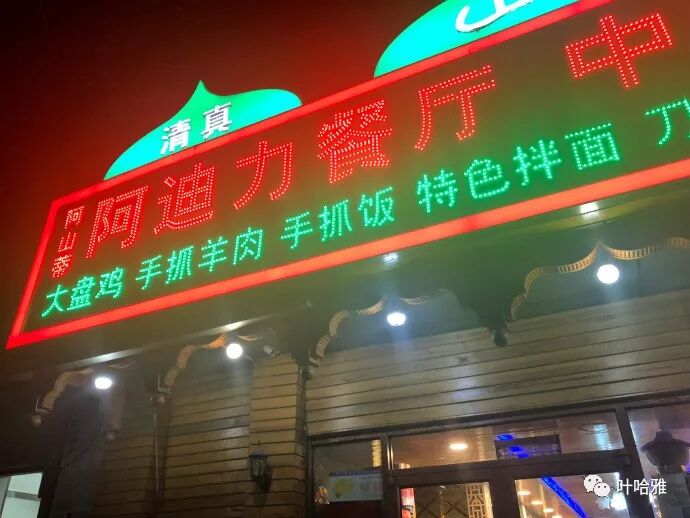
This shop has been operating on Gongti North Road for 7 years. Whenever there is a game, this place is packed.
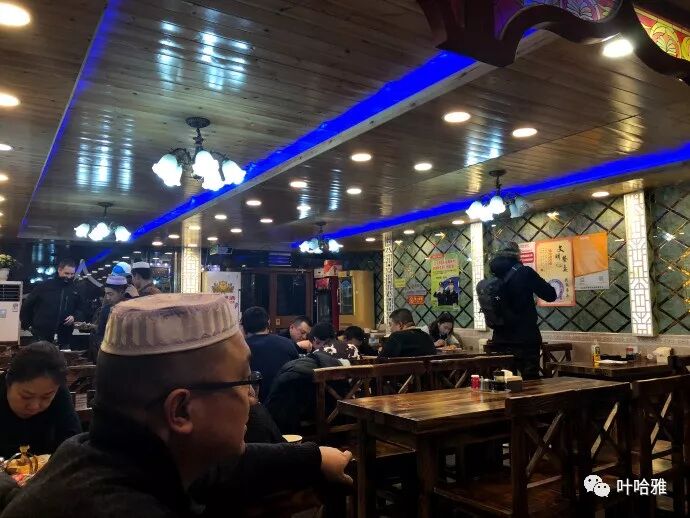
At night, it is full of sports fans eating skewers.
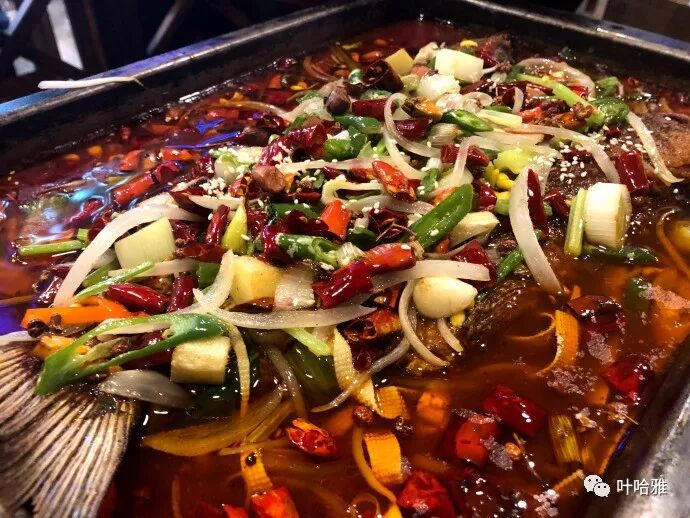
Grilled fish (kaoyu)
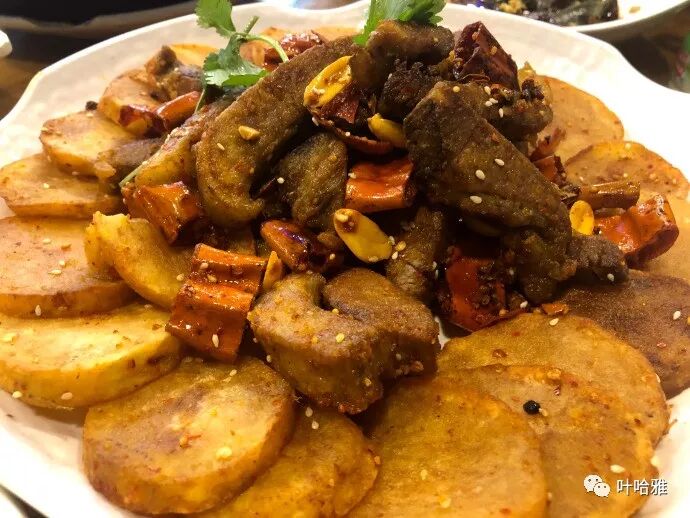
Salar family dish made with potatoes and beef. The owner cooks it himself, so you need some luck to get a taste.
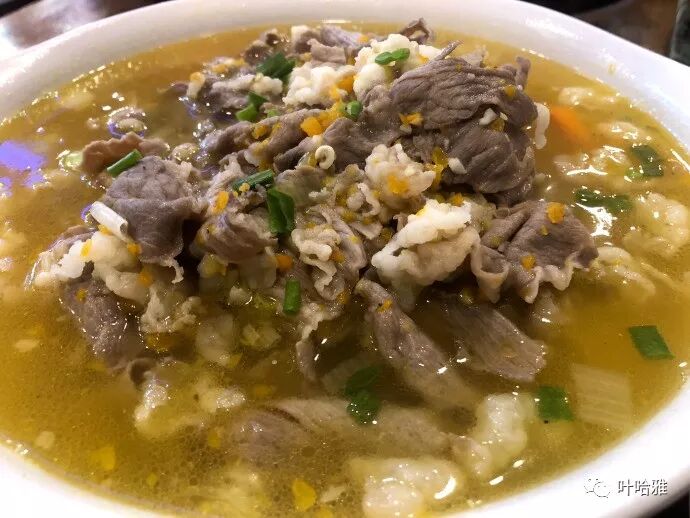
Sour soup beef (suantang feiniu)
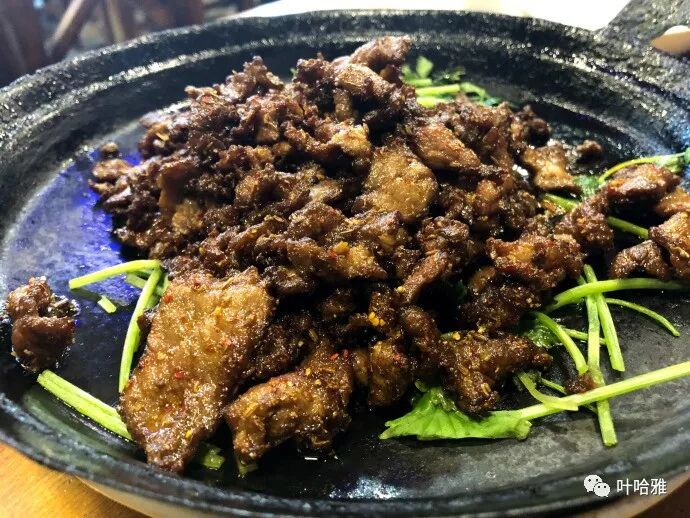
Cumin lamb (ziran yangrou)
Address: Gongti North Road
Authentic Halal Hotpot Beijing: Fangchengshun Mutton, Korean Chicken & Hui Muslim Noodles
Articles • ali2007fr posted the article • 0 comments • 182 views • 2026-05-21 10:01
Summary: A Beijing halal restaurant guide centered on Fangchengshun mutton hotpot, Korean-style dishes, Jingdong meat pie, lamb noodles, and other Hui Muslim food stops, with source details and photos preserved.
129. Fangchengshun Hot Pot
This old Beijing-style hot pot restaurant near Liuliqiao has been open for nearly twenty years.
It is usually very popular, so you will need to wait in line during meal times.
We highly recommend their sesame flatbread (shaobing), which is crispy and delicious, rivaling the ones at Jubaoyuan.
Address: No. 45, Lianjian Residential Area, Taipingqiao West Road
130. Yueshengguan
This is a newly opened modern barbecue restaurant. It has an east and a west wing, both owned by the same place, just separated into private rooms and general seating.
Korean-style stir-fried rice cakes (chaoniangao)
Fresh steak and marinated steak
Ginseng chicken soup
Grilled chicken nuggets
Servers will help you grill the meat. The service is great, but it is a bit pricey, costing over 150 yuan per person.
Address: Ground floor shops, Yabao City, No. 19 Ritan North Road, Chaoyang District
131. Heiji Shuangheshun Restaurant
This is an old Beijing-style restaurant serving various halal snacks, hot pot, and stir-fried dishes.
It is near Wangfujing, so it gets a bit crowded at lunch.
Beijing-style meat pie (jingdong roubing)
Lamb noodle soup (yangrou cuamian)
Address: No. 76, Donghuangchenggen South Street, Dongcheng District
132. Xi'an Jiasan Steamed Buns
This is the Beijing branch of the famous Xi'an Jiasan soup-filled steamed bun (guantang baozi) shop.
They sell various Xi'an halal snacks, including crumbled flatbread in soup (paomo), barbecue, and steamed beef with rice flour (fenzheng niurou).
Three-treasure covered bowl tea (sanpaotai gaiwancha)
For the soup-filled steamed buns, you should take a small bite first to drink the broth before eating the rest of the bun.
I quite like eating this mixed vegetable stew (huicai).
Eight-treasure porridge (babaozhou).
Address: No. 1A, Baiyunguan Street, Xicheng District.
133. Baodu Feng (Caishikou Branch).
This is a time-honored brand founded in the late Qing Dynasty and one of the most famous Beijing snacks.
There are many branches, but I suggest coming to this one at Caishikou. It is away from the tourist spots, not crowded, and you can also eat hot pot mutton (shuanrou) here.
There are dozens of types of tripe (baodu). If you do not know which part to choose, I suggest picking the first two on the menu, as they are the most classic flavors.
Address: Lianhua Hutong, southwest of the Caishikou intersection (west side of Fenghua Haojing).
134. Indian Kitchen (Yindu Xiaochu).
It is near the Liangma River, and there is a halal sign hanging at the entrance.
The storefront is small, but the space on the second floor is quite large.
Indian cuisine naturally offers a variety of curries to choose from.
Address: 2nd Floor, No. 2 Sanlitun North Street.
135. Ali Fast Food Restaurant.
This Xinjiang-style restaurant is run by Uyghurs, and the taste is quite authentic.
Roasted lamb chops (kao yangpai).
Hand-pulled noodle soup (tang mianpian).
Address: No. 4 Ritan North Road.
136. Father's New Style Western Regions Cuisine (Fuqin Xinpai Xiyu Meishi).
This is also a newly opened restaurant run by Xinjiang Uyghurs.
It features a very nice environment with elegant decor.
Meat in naan bread (nang bao rou).
Baked buns (kao baozi).
Big plate chicken (dapanji).
Address: No. 12 Courtyard, Liangmahe South Road, Chaoyang District
137. Jianghu No. 80
This is a modern-style Xinjiang restaurant with several chain locations.
House-made drinks.
Spicy lamb hooves (hula yangti)
Peppery chicken (jiaoma ji)
Stir-fried tripe strips (chao dusi)
Barbecue meat (kaorou)
Address: Ground floor shops, Chaoyang Road Entrepreneurship Park
138.
Wengasi Muslim Restaurant
Wengasi shares the same name as a companion of the Prophet who came to China to spread Islam during the Tang Dynasty. His tomb is still preserved in Guangzhou today.
Potato chips (zha shupian)
Turkish grilled fish (tuerqi kaoyu)
Address: Ground floor shops, first floor, Wanda Plaza, Guomao, Chaoyang District
139. Xueying Heshunzhai Lamb Spine Hot Pot
Xueying is a village for Hui Muslims. There are several small to medium-sized halal restaurants at the village entrance, and this one is the busiest.
They serve lamb spine hot pot (yangxiezi) and instant-boiled lamb (shuanyangrou).
The lamb spine has a unique flavor and is stewed until very tender. It comes with side dishes and is affordably priced.
Address: Daxing District
No. 10, Lane 16, Qingzheng South Road, Xueying Village, Panggezhuang Town
More information on halal restaurants in Beijing can be found at the link below:
[Beijing Special Halal Dining Guide (Including the Most Complete List of Foreign Restaurants)] (Part 1)
[Beijing Special Halal Dining Guide (Including the Most Complete List of Foreign Restaurants)] (Part 2)
[Beijing Special Halal Dining Guide (Including the Most Complete List of Foreign Restaurants)] (Part 3)
A Guide to Halal Dining in Beijing (Part 4)
A Guide to Halal Dining in Beijing (Part 5)
A Guide to Halal Dining in Beijing (Part 6)
A Guide to Halal Dining in Beijing (Part 7) view all
Summary: A Beijing halal restaurant guide centered on Fangchengshun mutton hotpot, Korean-style dishes, Jingdong meat pie, lamb noodles, and other Hui Muslim food stops, with source details and photos preserved.
129. Fangchengshun Hot Pot
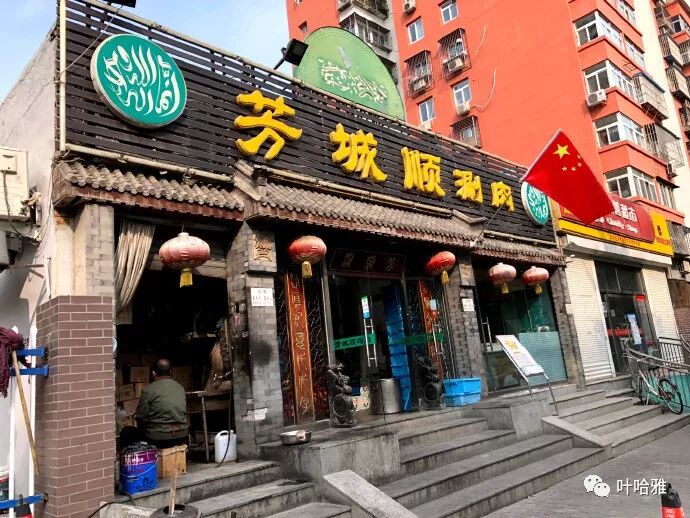
This old Beijing-style hot pot restaurant near Liuliqiao has been open for nearly twenty years.
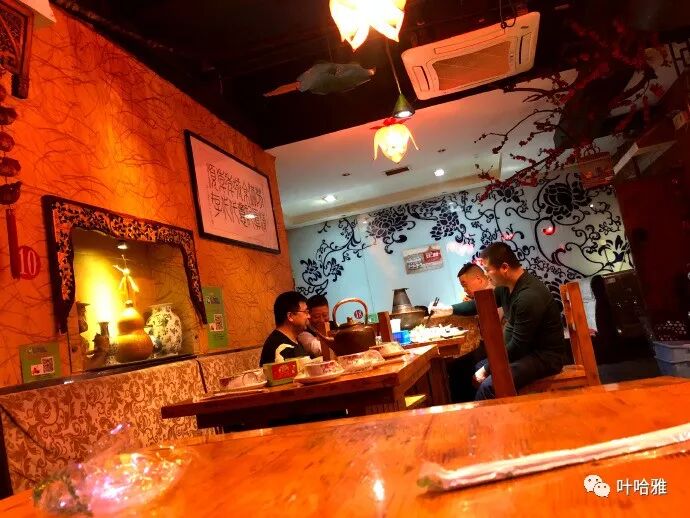
It is usually very popular, so you will need to wait in line during meal times.
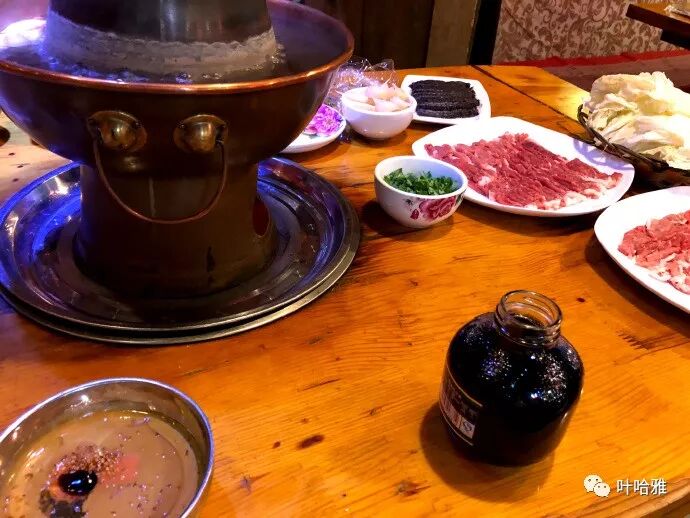
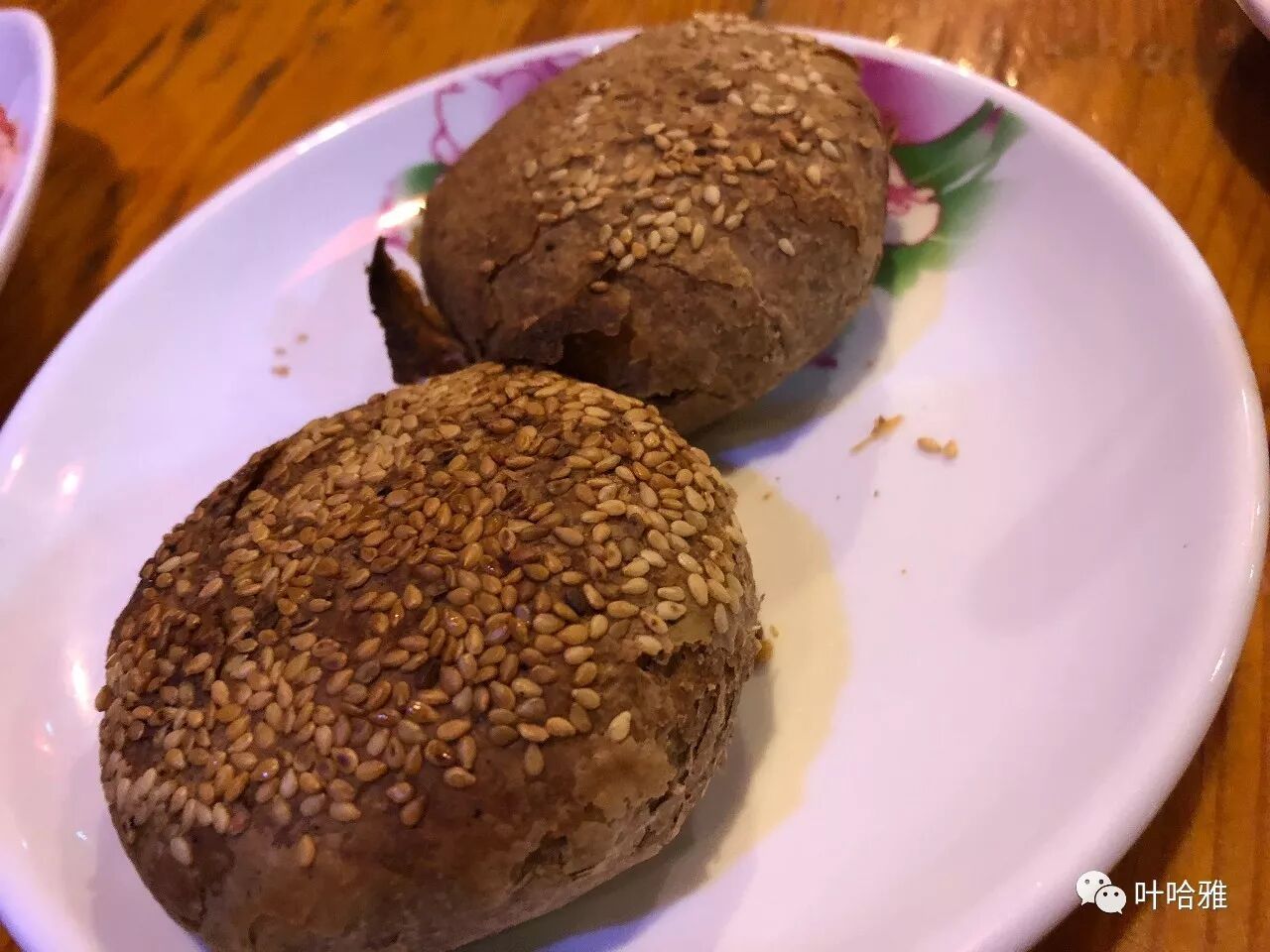
We highly recommend their sesame flatbread (shaobing), which is crispy and delicious, rivaling the ones at Jubaoyuan.
Address: No. 45, Lianjian Residential Area, Taipingqiao West Road
130. Yueshengguan
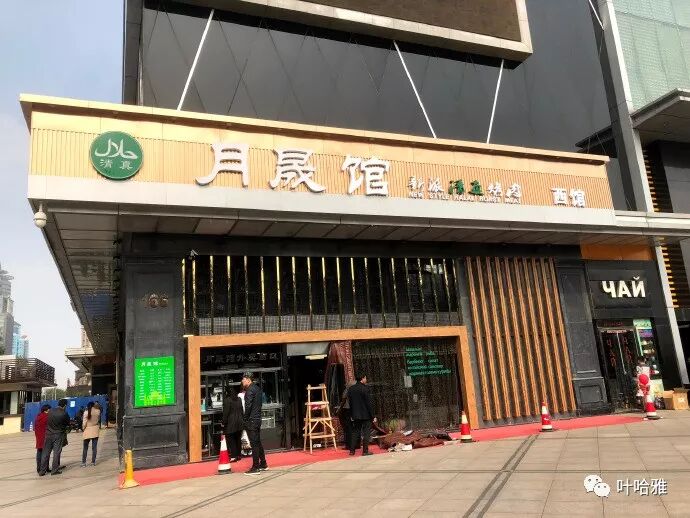
This is a newly opened modern barbecue restaurant. It has an east and a west wing, both owned by the same place, just separated into private rooms and general seating.
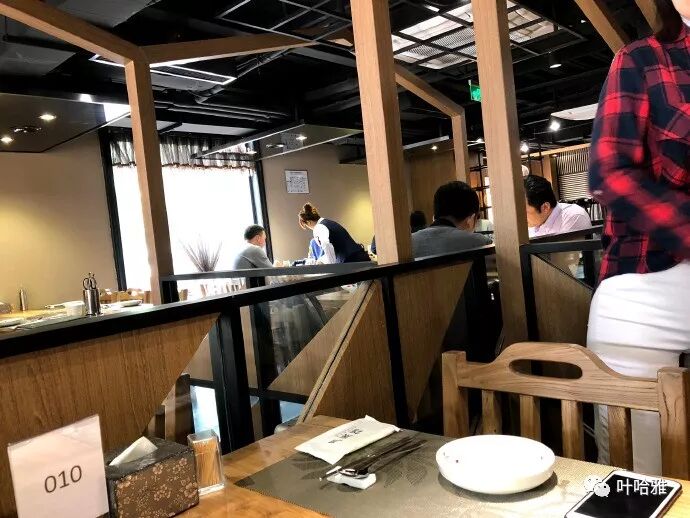
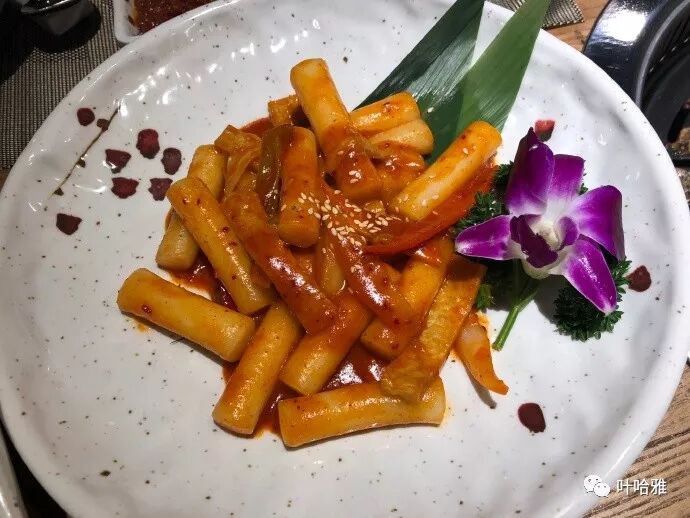
Korean-style stir-fried rice cakes (chaoniangao)
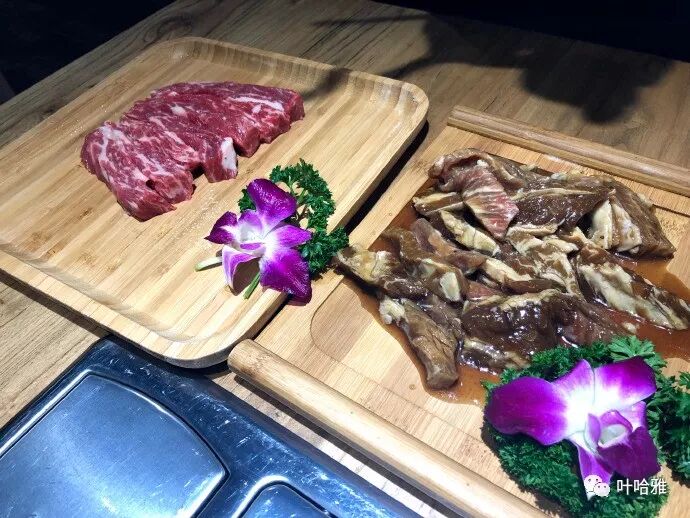
Fresh steak and marinated steak
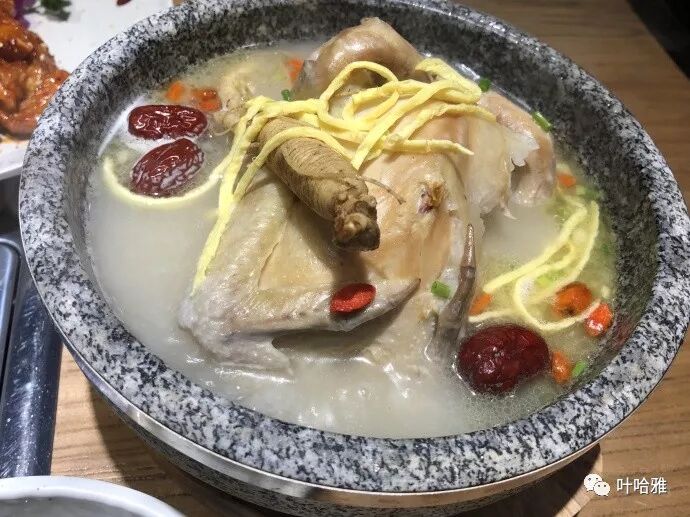
Ginseng chicken soup
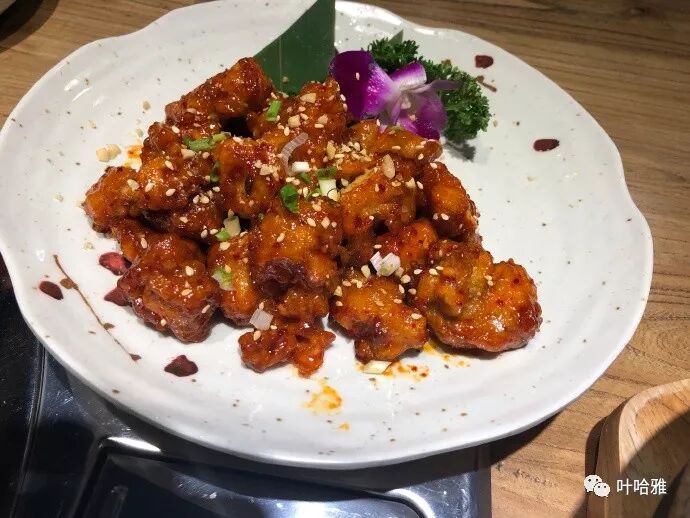
Grilled chicken nuggets
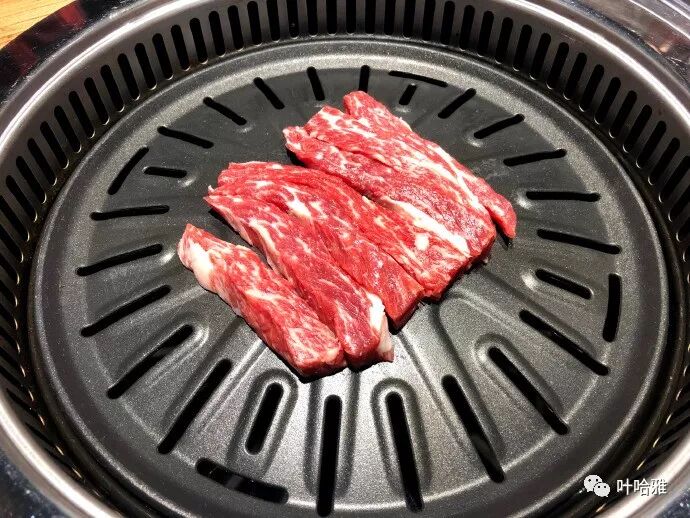
Servers will help you grill the meat. The service is great, but it is a bit pricey, costing over 150 yuan per person.
Address: Ground floor shops, Yabao City, No. 19 Ritan North Road, Chaoyang District
131. Heiji Shuangheshun Restaurant
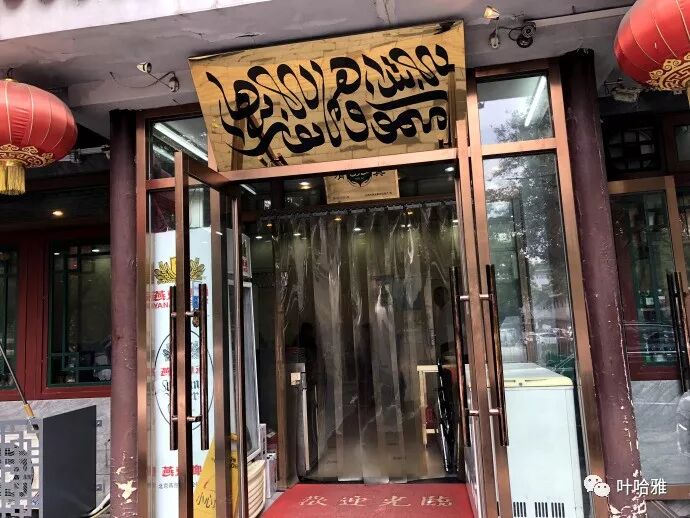
This is an old Beijing-style restaurant serving various halal snacks, hot pot, and stir-fried dishes.
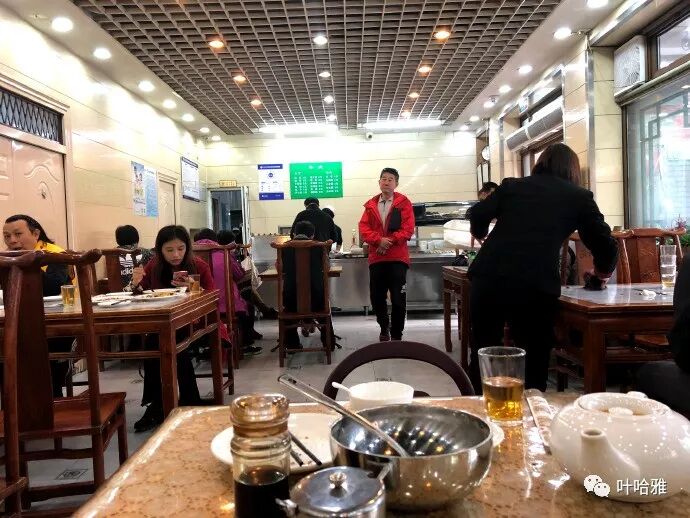
It is near Wangfujing, so it gets a bit crowded at lunch.
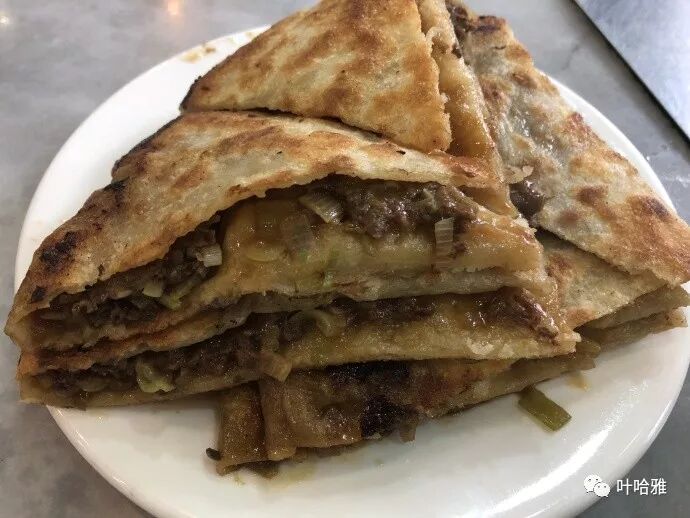
Beijing-style meat pie (jingdong roubing)
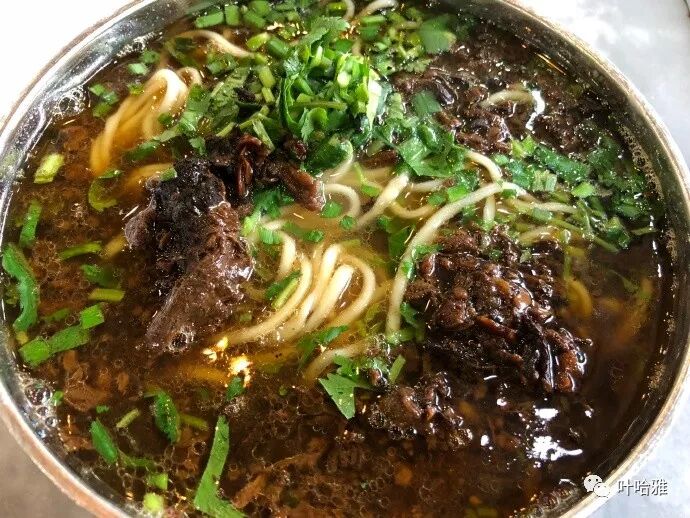
Lamb noodle soup (yangrou cuamian)
Address: No. 76, Donghuangchenggen South Street, Dongcheng District
132. Xi'an Jiasan Steamed Buns
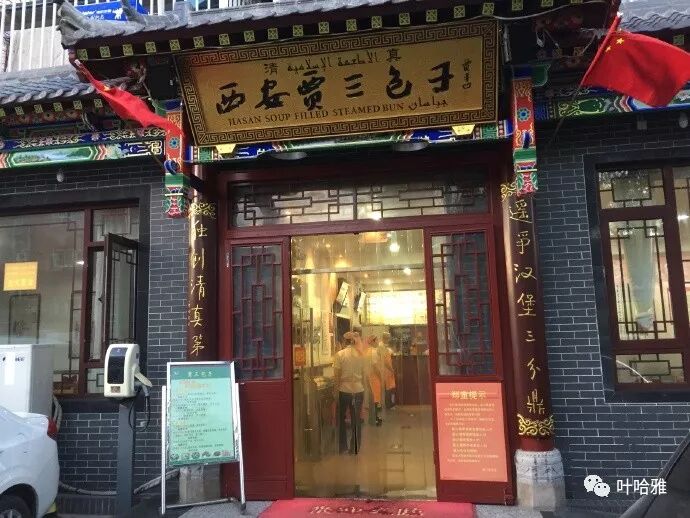
This is the Beijing branch of the famous Xi'an Jiasan soup-filled steamed bun (guantang baozi) shop.
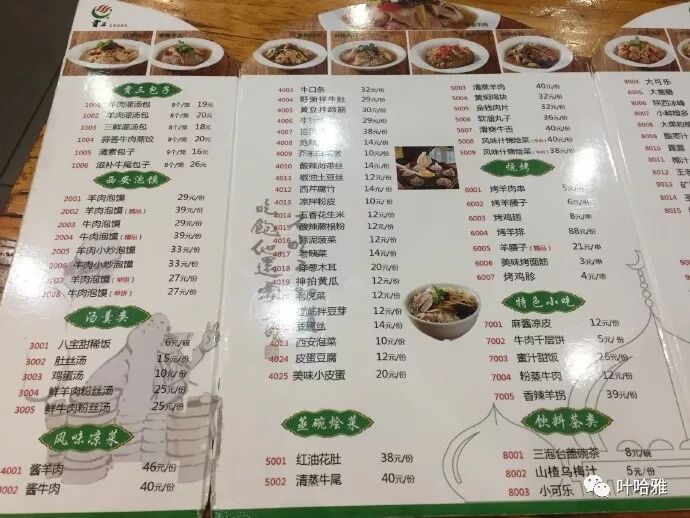
They sell various Xi'an halal snacks, including crumbled flatbread in soup (paomo), barbecue, and steamed beef with rice flour (fenzheng niurou).
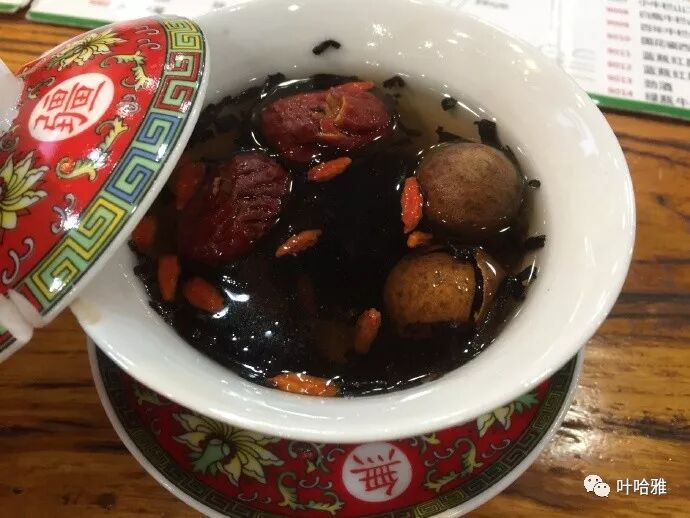
Three-treasure covered bowl tea (sanpaotai gaiwancha)
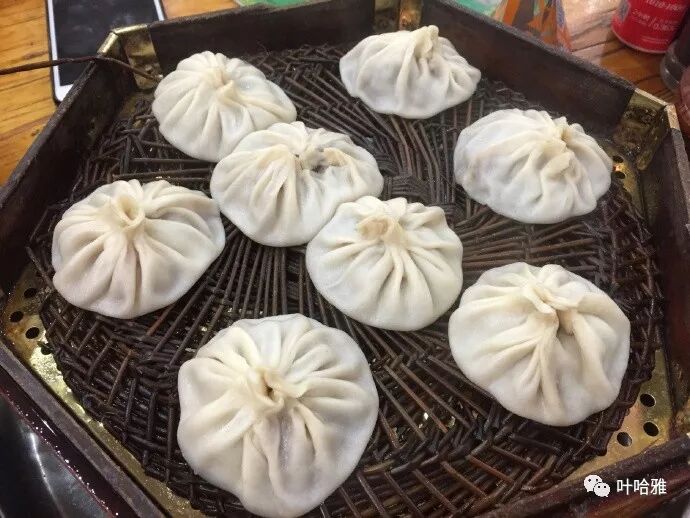
For the soup-filled steamed buns, you should take a small bite first to drink the broth before eating the rest of the bun.
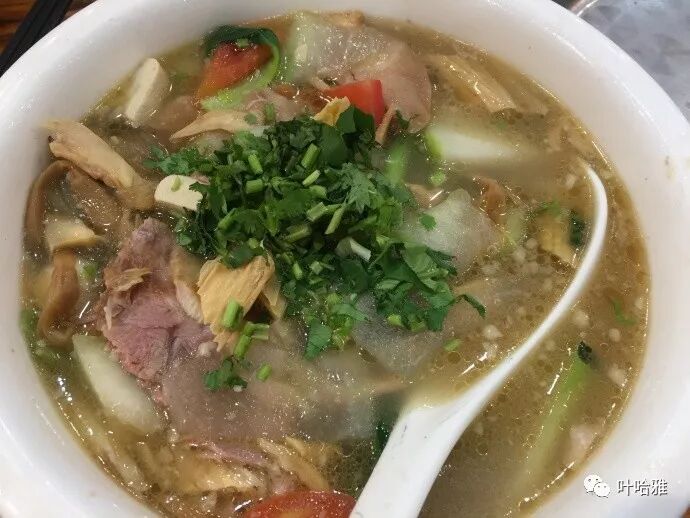
I quite like eating this mixed vegetable stew (huicai).
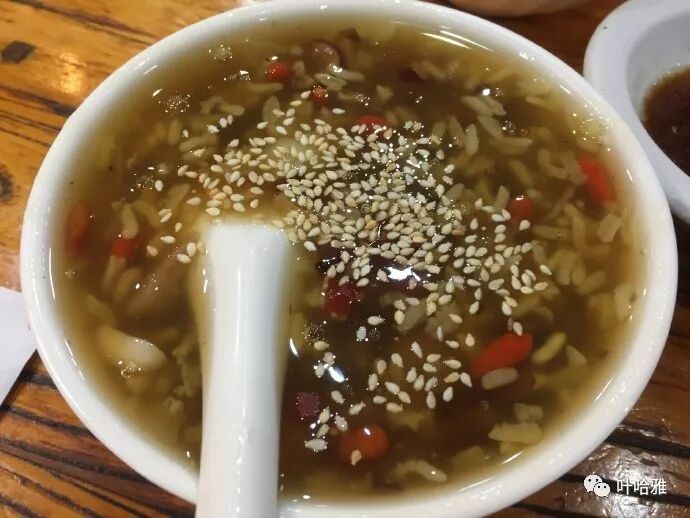
Eight-treasure porridge (babaozhou).
Address: No. 1A, Baiyunguan Street, Xicheng District.
133. Baodu Feng (Caishikou Branch).
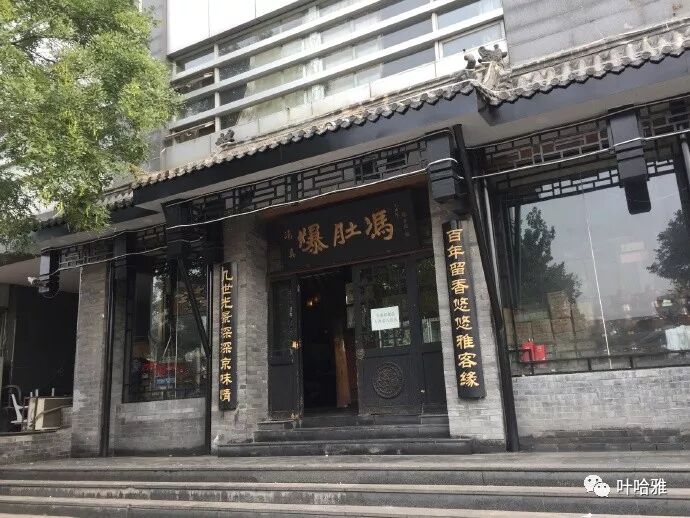
This is a time-honored brand founded in the late Qing Dynasty and one of the most famous Beijing snacks.
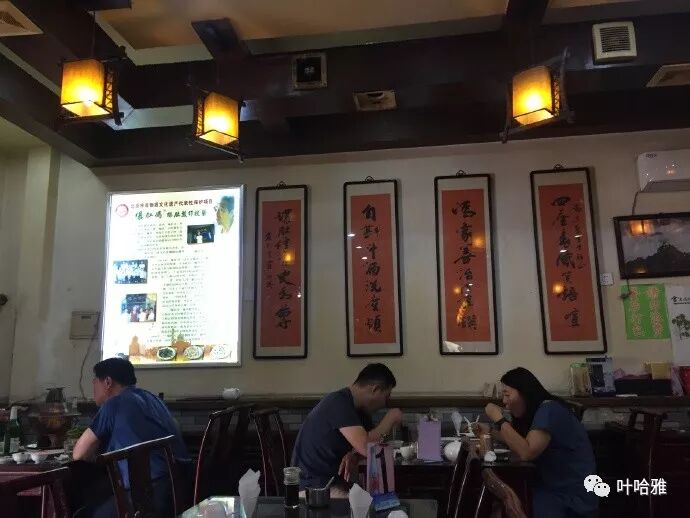
There are many branches, but I suggest coming to this one at Caishikou. It is away from the tourist spots, not crowded, and you can also eat hot pot mutton (shuanrou) here.
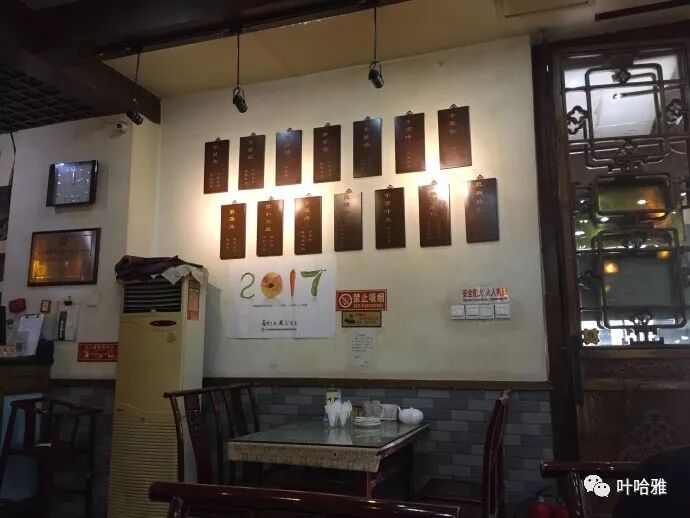
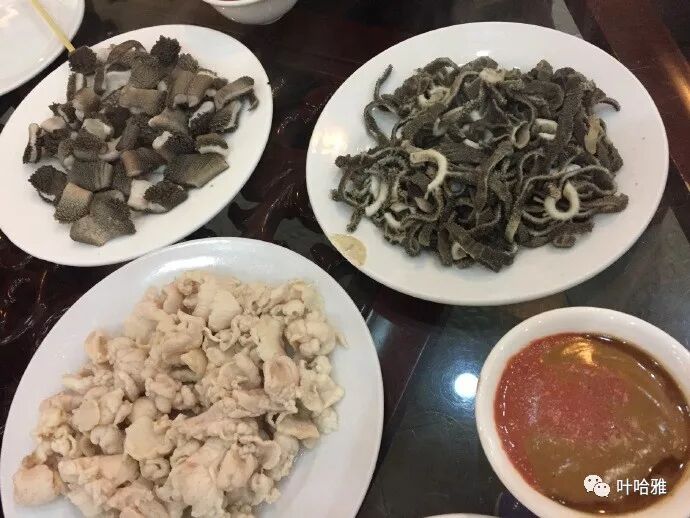
There are dozens of types of tripe (baodu). If you do not know which part to choose, I suggest picking the first two on the menu, as they are the most classic flavors.
Address: Lianhua Hutong, southwest of the Caishikou intersection (west side of Fenghua Haojing).
134. Indian Kitchen (Yindu Xiaochu).
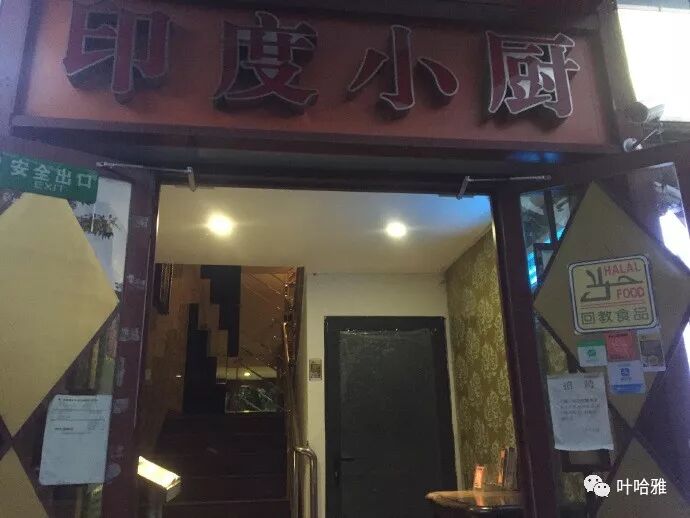
It is near the Liangma River, and there is a halal sign hanging at the entrance.
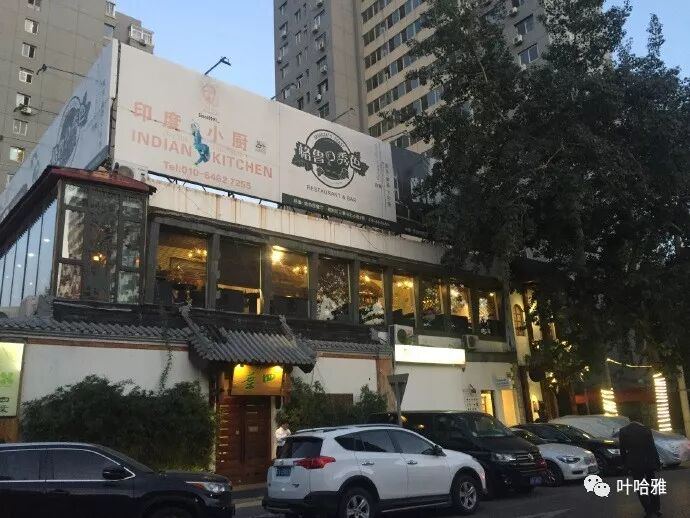
The storefront is small, but the space on the second floor is quite large.
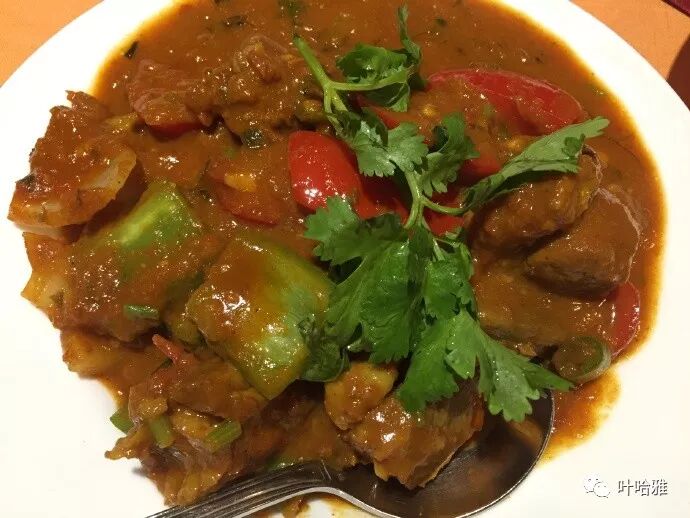
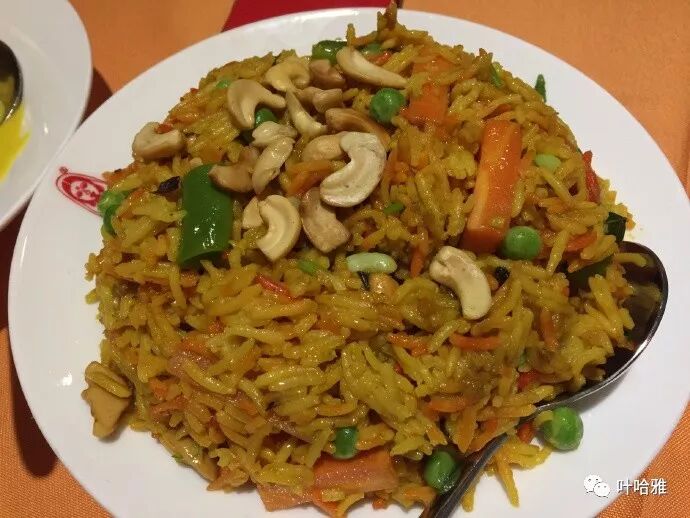
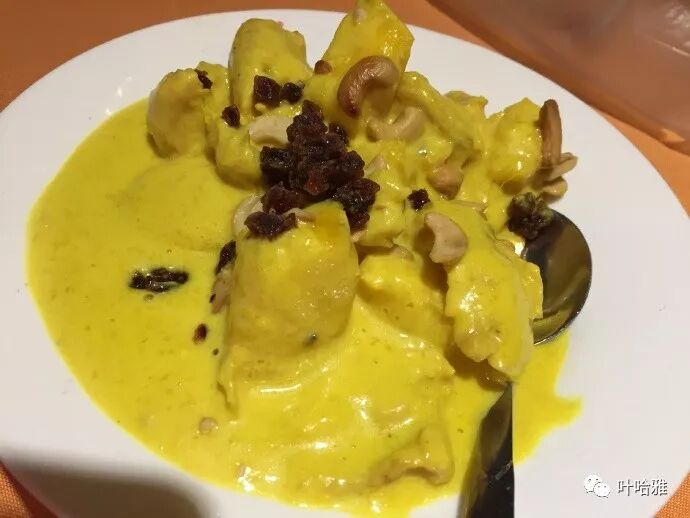
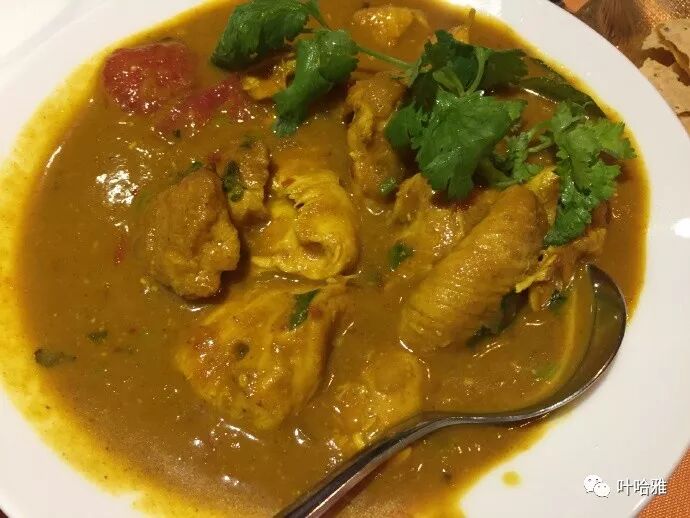
Indian cuisine naturally offers a variety of curries to choose from.
Address: 2nd Floor, No. 2 Sanlitun North Street.
135. Ali Fast Food Restaurant.
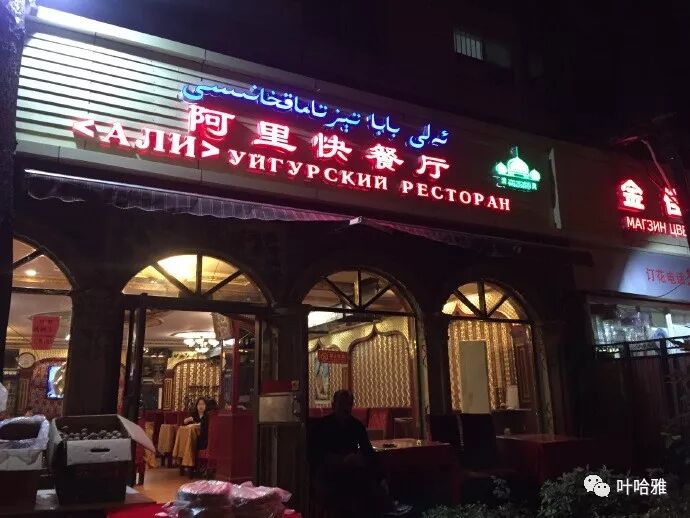
This Xinjiang-style restaurant is run by Uyghurs, and the taste is quite authentic.
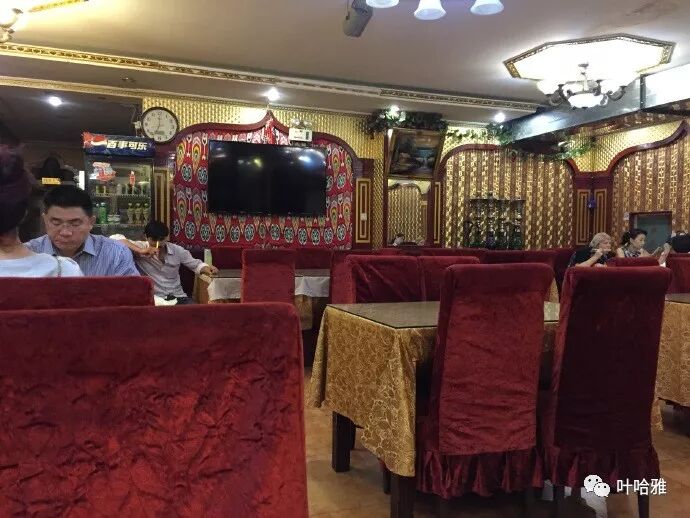
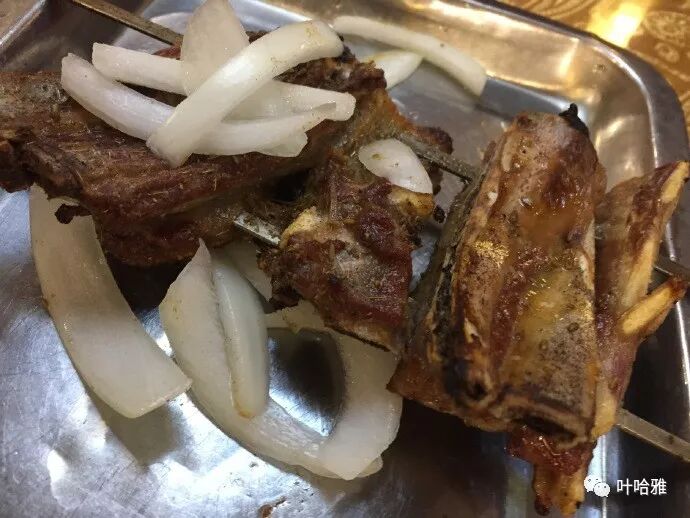
Roasted lamb chops (kao yangpai).
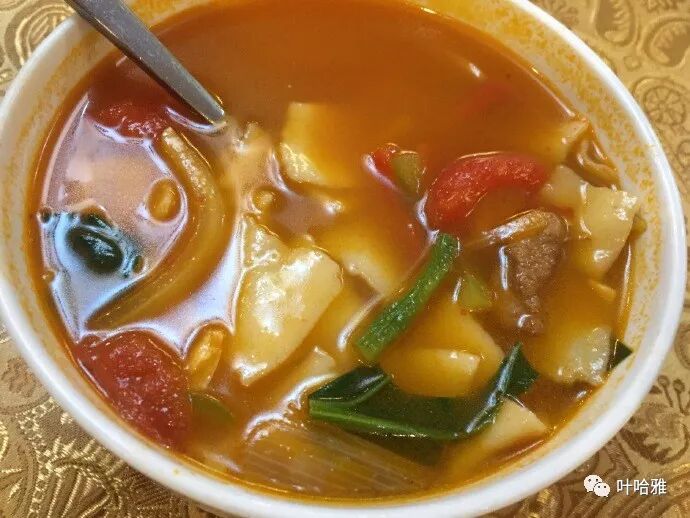
Hand-pulled noodle soup (tang mianpian).
Address: No. 4 Ritan North Road.
136. Father's New Style Western Regions Cuisine (Fuqin Xinpai Xiyu Meishi).
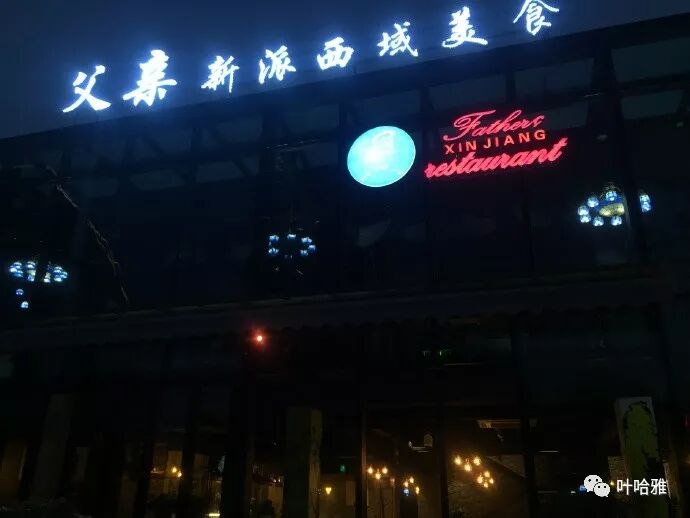
This is also a newly opened restaurant run by Xinjiang Uyghurs.
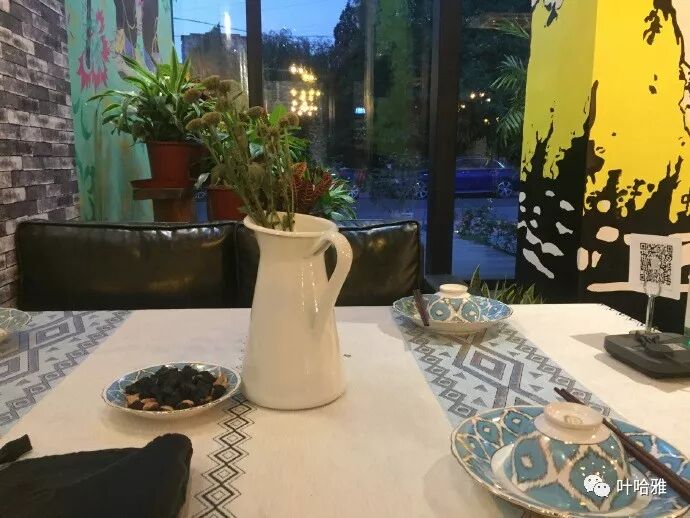
It features a very nice environment with elegant decor.
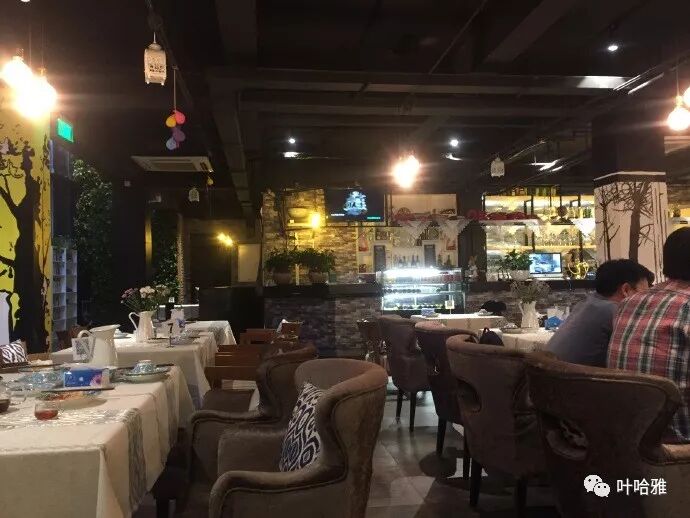
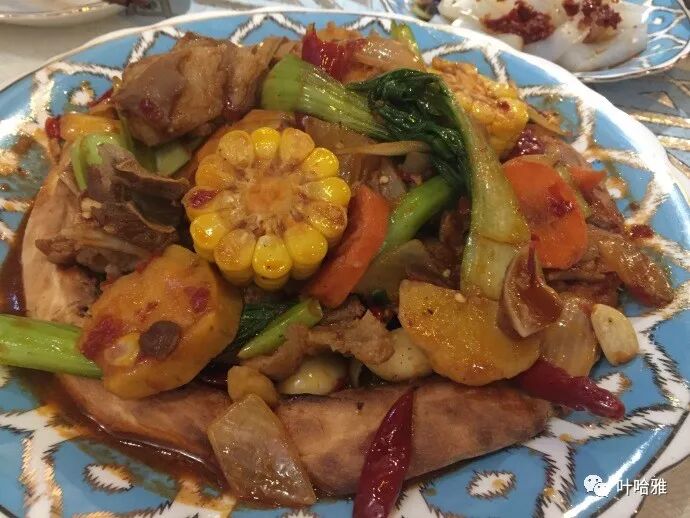
Meat in naan bread (nang bao rou).
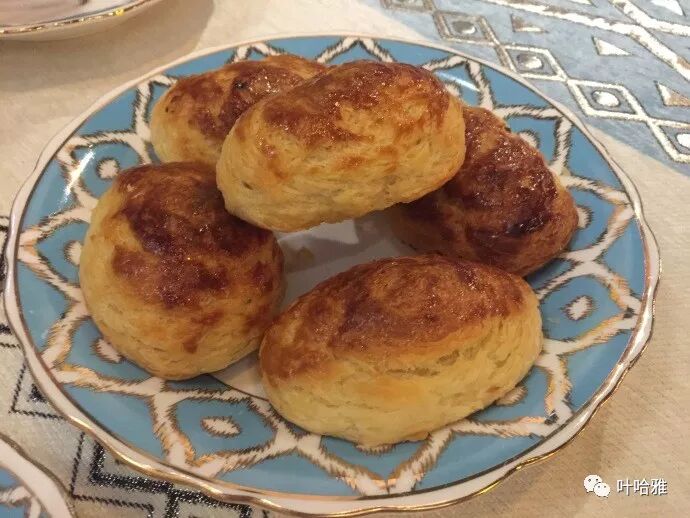
Baked buns (kao baozi).
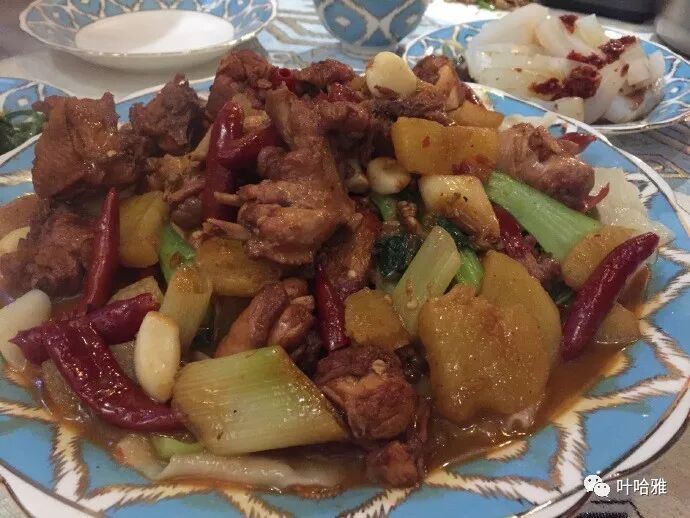
Big plate chicken (dapanji).
Address: No. 12 Courtyard, Liangmahe South Road, Chaoyang District
137. Jianghu No. 80
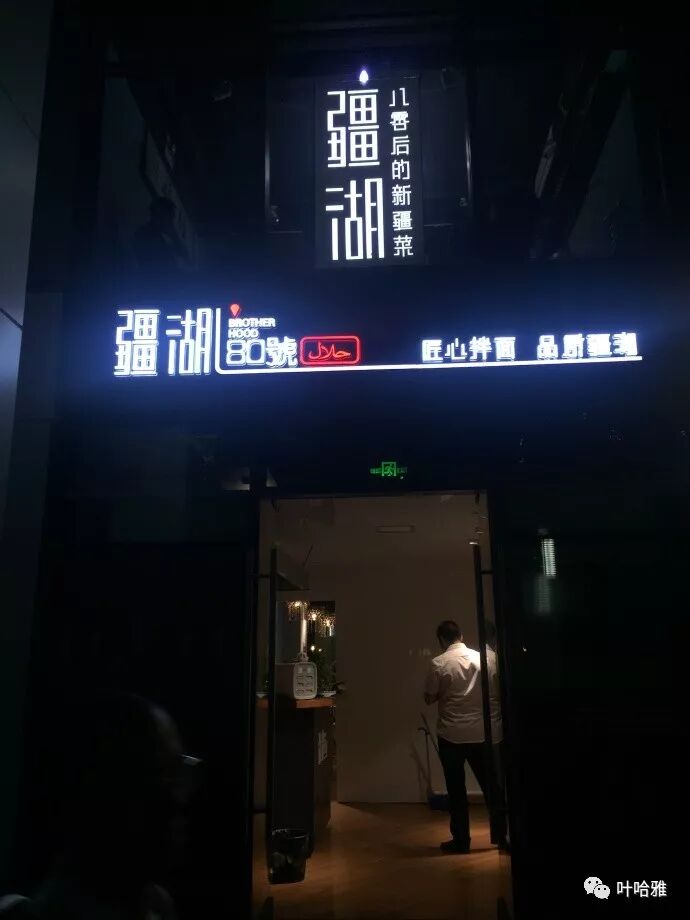
This is a modern-style Xinjiang restaurant with several chain locations.
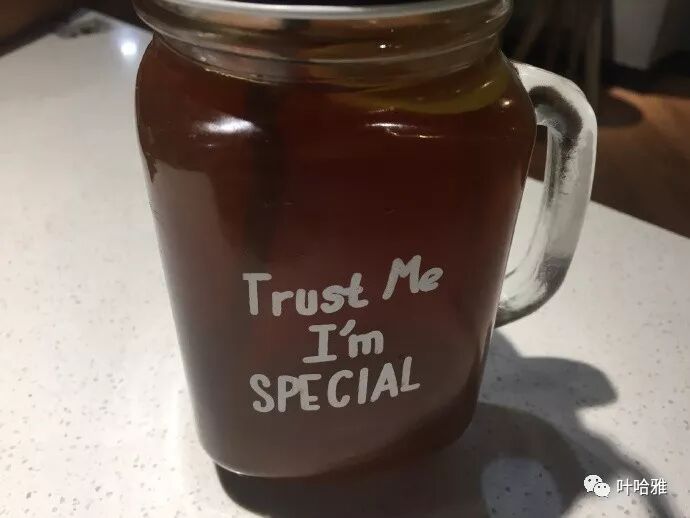
House-made drinks.
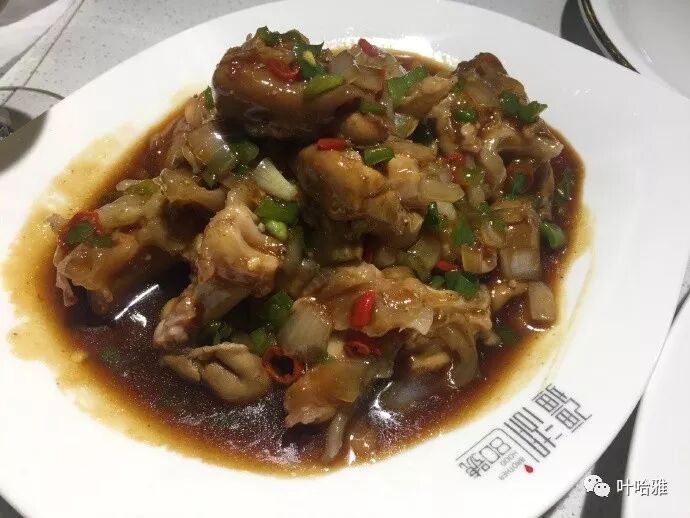
Spicy lamb hooves (hula yangti)
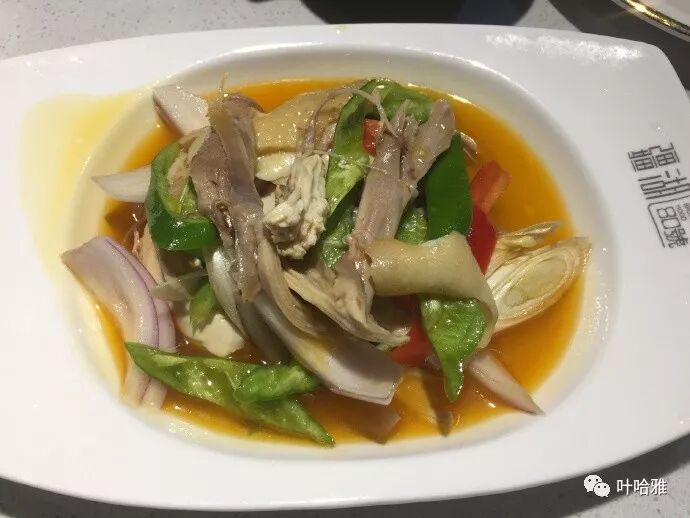
Peppery chicken (jiaoma ji)
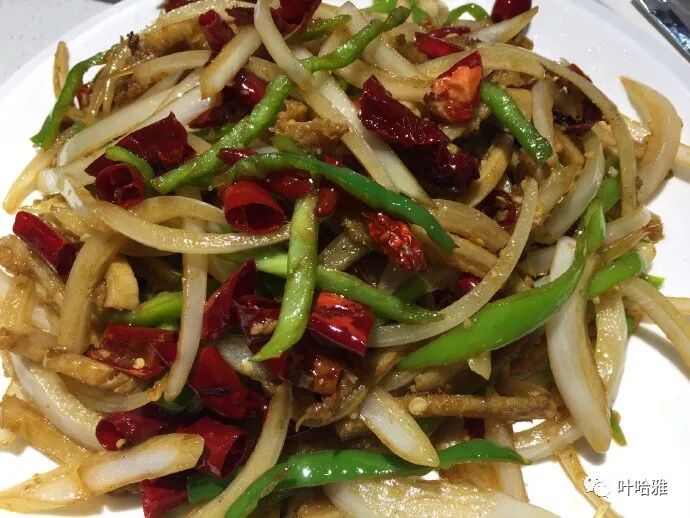
Stir-fried tripe strips (chao dusi)
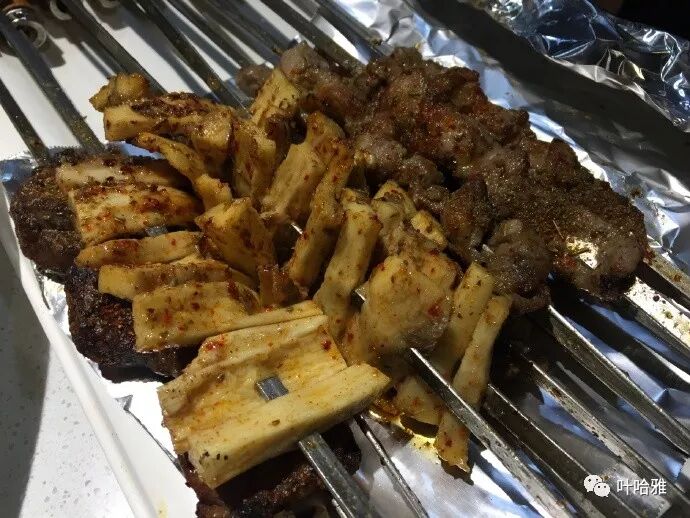
Barbecue meat (kaorou)
Address: Ground floor shops, Chaoyang Road Entrepreneurship Park
138.
Wengasi Muslim Restaurant
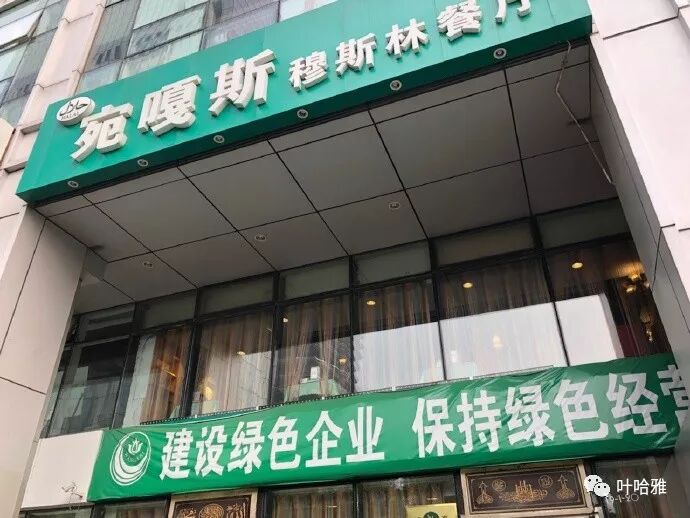
Wengasi shares the same name as a companion of the Prophet who came to China to spread Islam during the Tang Dynasty. His tomb is still preserved in Guangzhou today.
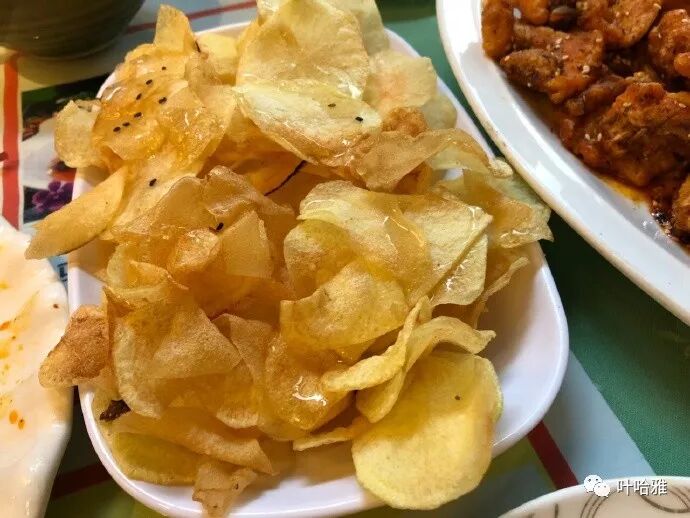
Potato chips (zha shupian)
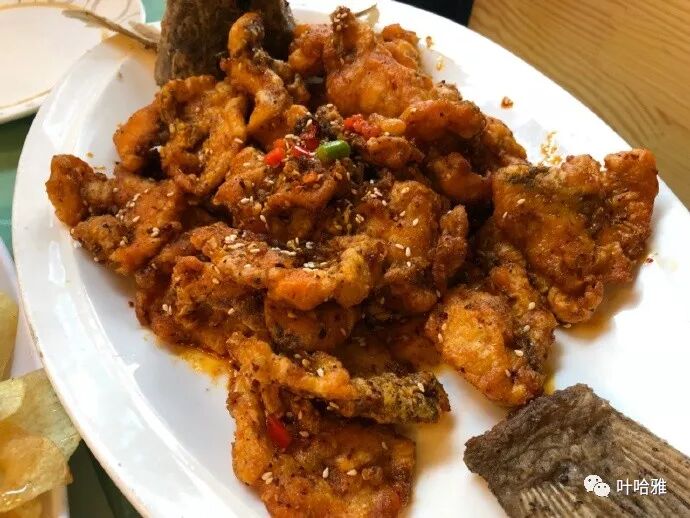
Turkish grilled fish (tuerqi kaoyu)
Address: Ground floor shops, first floor, Wanda Plaza, Guomao, Chaoyang District
139. Xueying Heshunzhai Lamb Spine Hot Pot
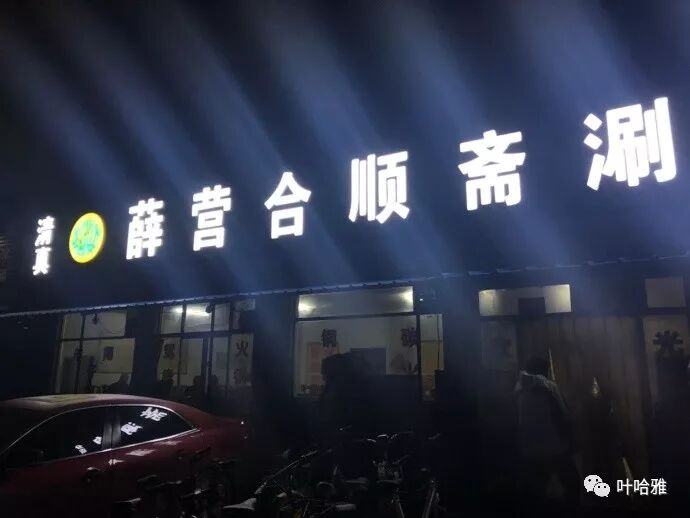
Xueying is a village for Hui Muslims. There are several small to medium-sized halal restaurants at the village entrance, and this one is the busiest.
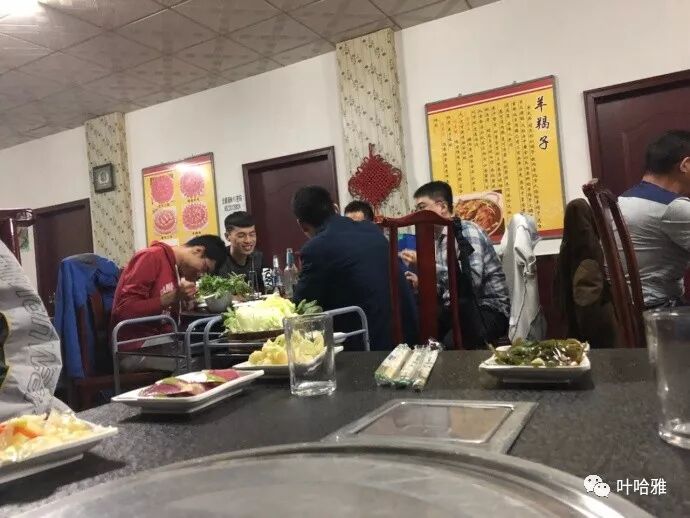
They serve lamb spine hot pot (yangxiezi) and instant-boiled lamb (shuanyangrou).
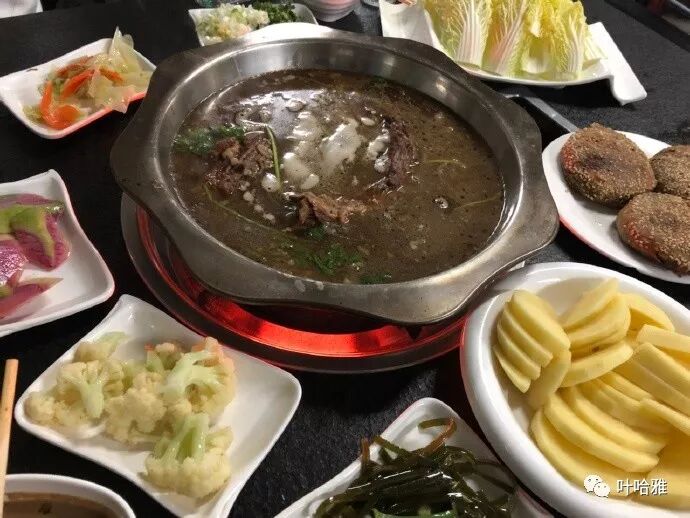
The lamb spine has a unique flavor and is stewed until very tender. It comes with side dishes and is affordably priced.
Address: Daxing District
No. 10, Lane 16, Qingzheng South Road, Xueying Village, Panggezhuang Town
More information on halal restaurants in Beijing can be found at the link below:
[Beijing Special Halal Dining Guide (Including the Most Complete List of Foreign Restaurants)] (Part 1)
[Beijing Special Halal Dining Guide (Including the Most Complete List of Foreign Restaurants)] (Part 2)
[Beijing Special Halal Dining Guide (Including the Most Complete List of Foreign Restaurants)] (Part 3)
A Guide to Halal Dining in Beijing (Part 4)
A Guide to Halal Dining in Beijing (Part 5)
A Guide to Halal Dining in Beijing (Part 6)
A Guide to Halal Dining in Beijing (Part 7)
Food Guide: Beijing - Christmas Atmosphere at JM Coffee and Bakery
Articles • ali2007fr posted the article • 0 comments • 236 views • 2026-05-21 02:25
Summary: JM Coffee and Bakery is a Beijing chain opened by Xinjiang dost, with shops around Niujie, Dongsi, Beiluoguxiang, Baita Mosque, and Tuanjiehu. This short account keeps the source's bakery details, Christmas atmosphere, food, locations, and community observations.
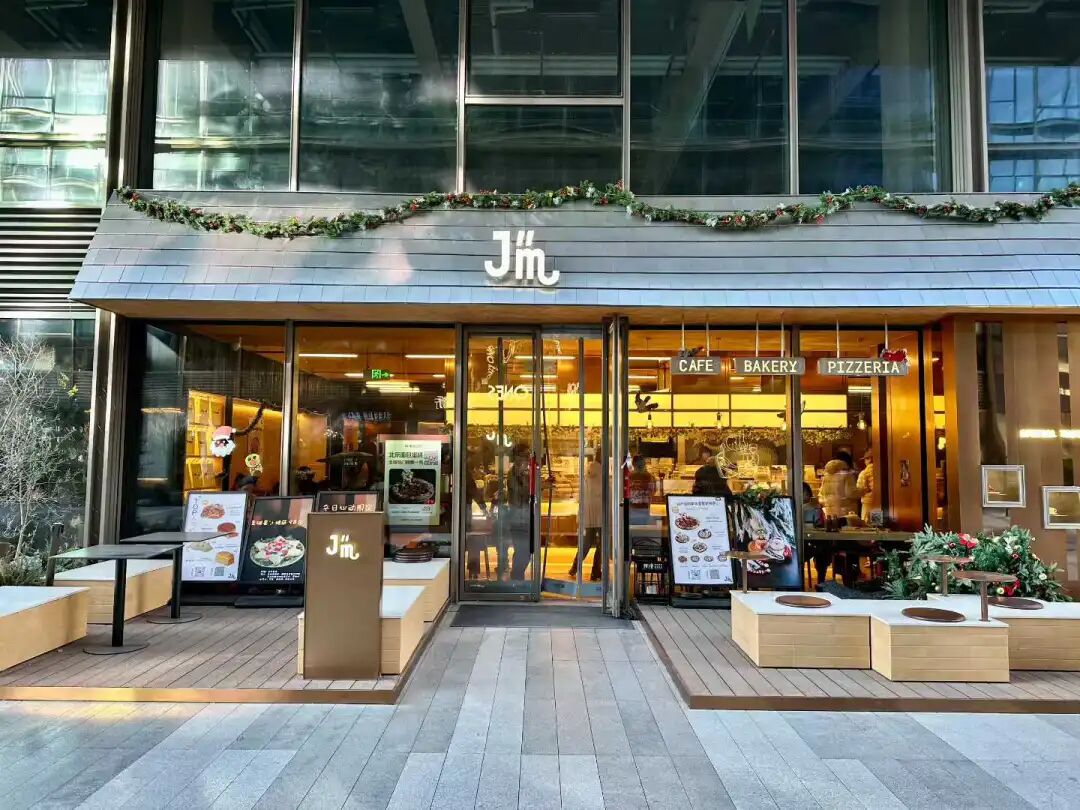
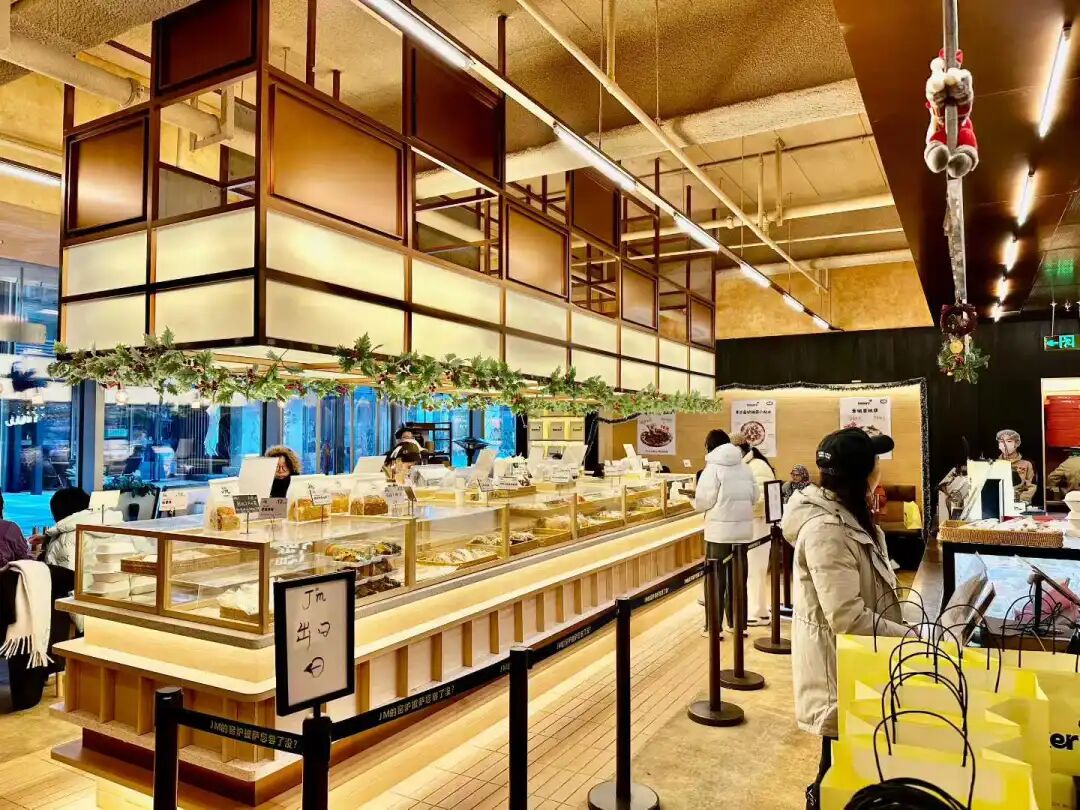
JM is a coffee and bakery chain in Beijing opened by Xinjiang Dosti. They have shops in major areas like Niujie, Dongsi, Beiluoguxiang, Baita Mosque, and Tuanjiehu. The Daji Lane shop specializes in pizza, while the Niujie shop focuses on hot dogs.
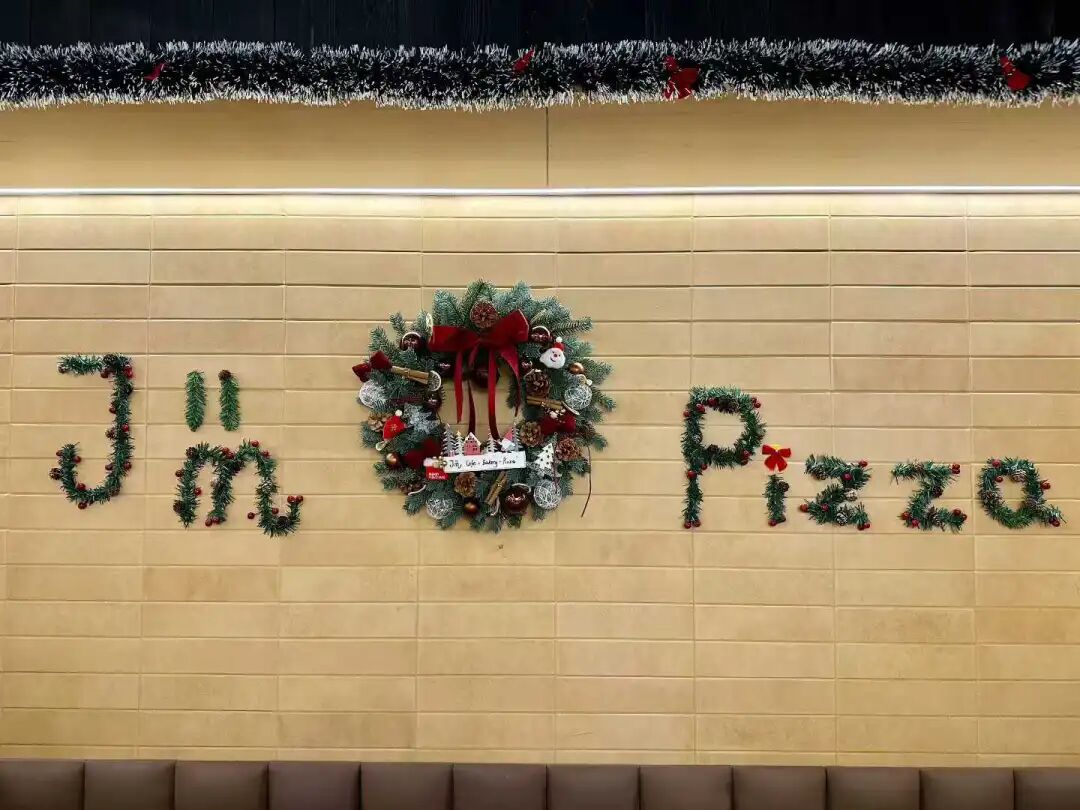
While they stay halal and alcohol-free, they also keep an open mind and embrace cultural diversity, launching special Christmas-themed baked goods in December. Even though we don't celebrate Christmas, we still enjoy experiencing the festive atmosphere. There is a Kazakh lady working at the shop who is very popular with the kids.
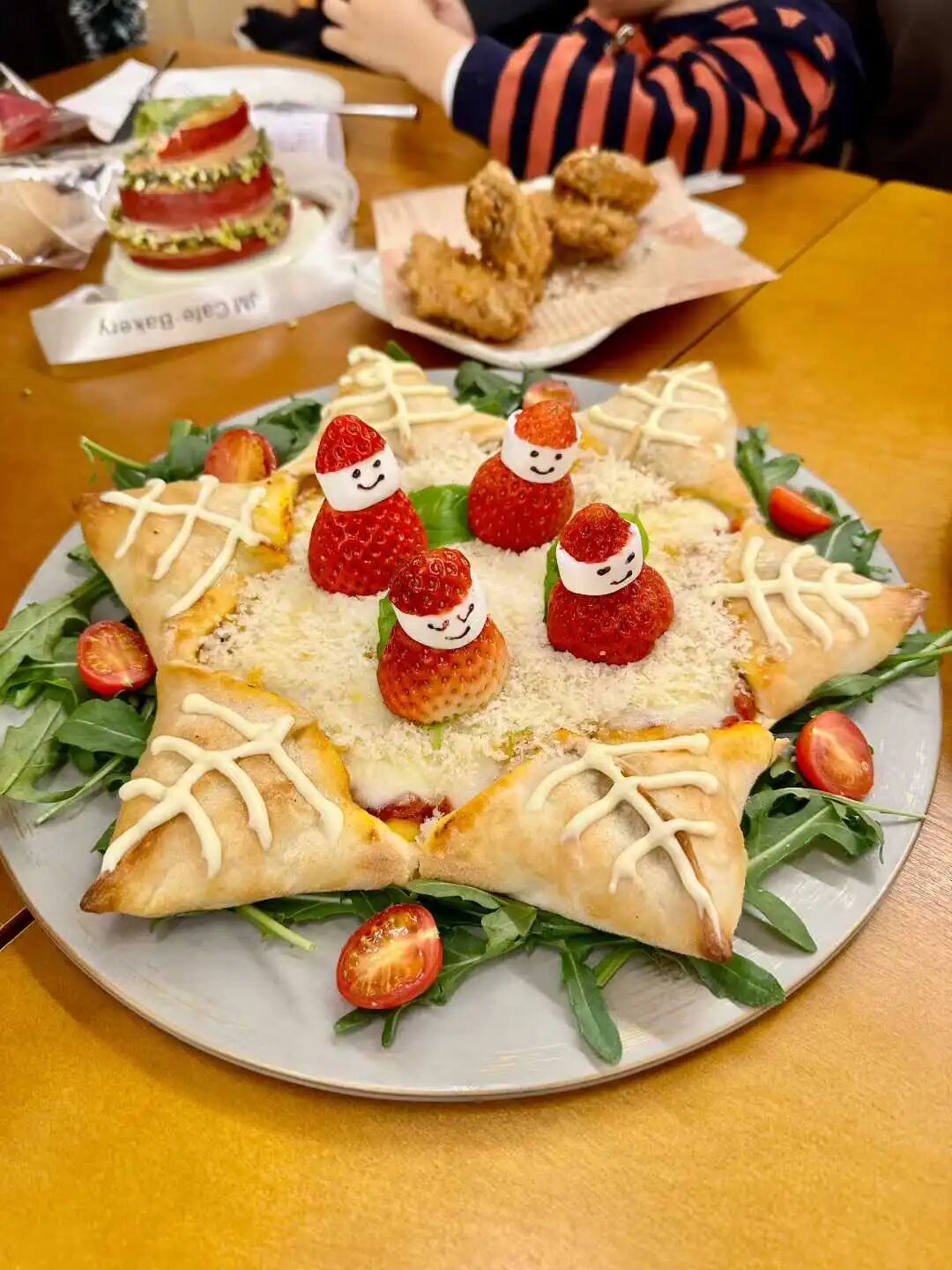
During Christmas, they launched a Christmas Star Pizza. The crust is filled with tuna, diced carrots, and a touch of mustard. The center has homemade tomato sauce, fresh mozzarella, imported Italian Padano cheese, and basil. It is topped with a little snowman made of strawberries and marshmallows. The staff specifically told us they checked the source of the marshmallows to ensure they use fish gelatin.
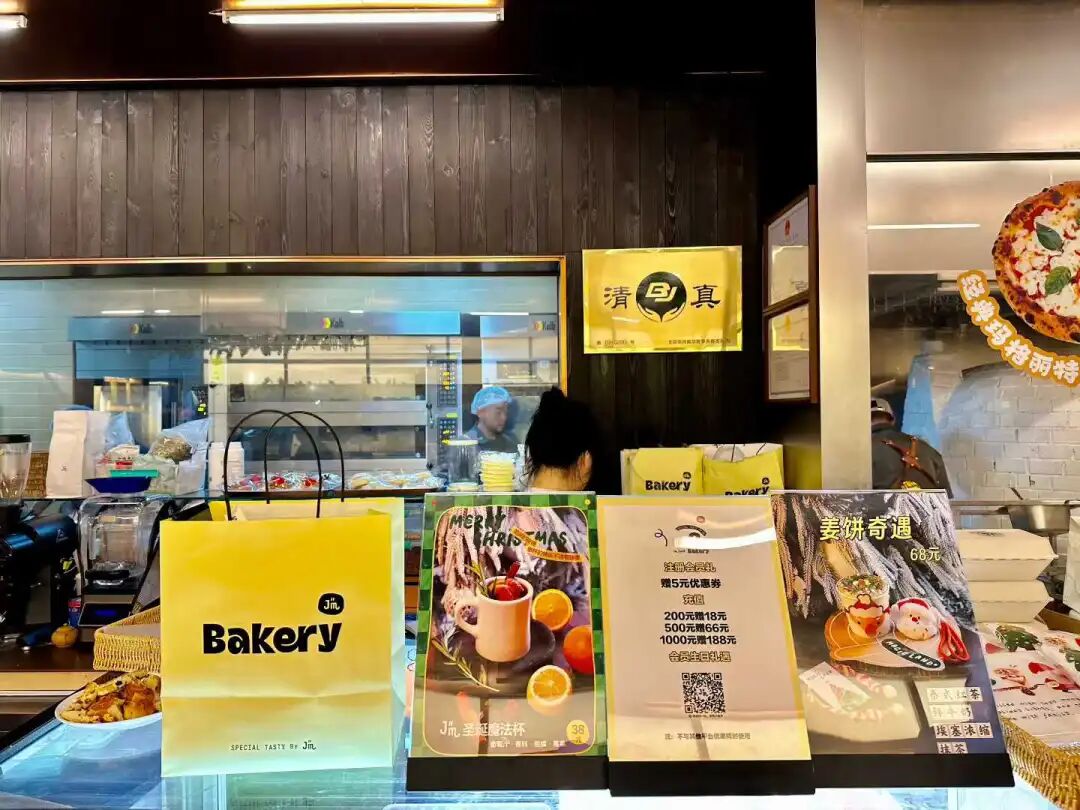
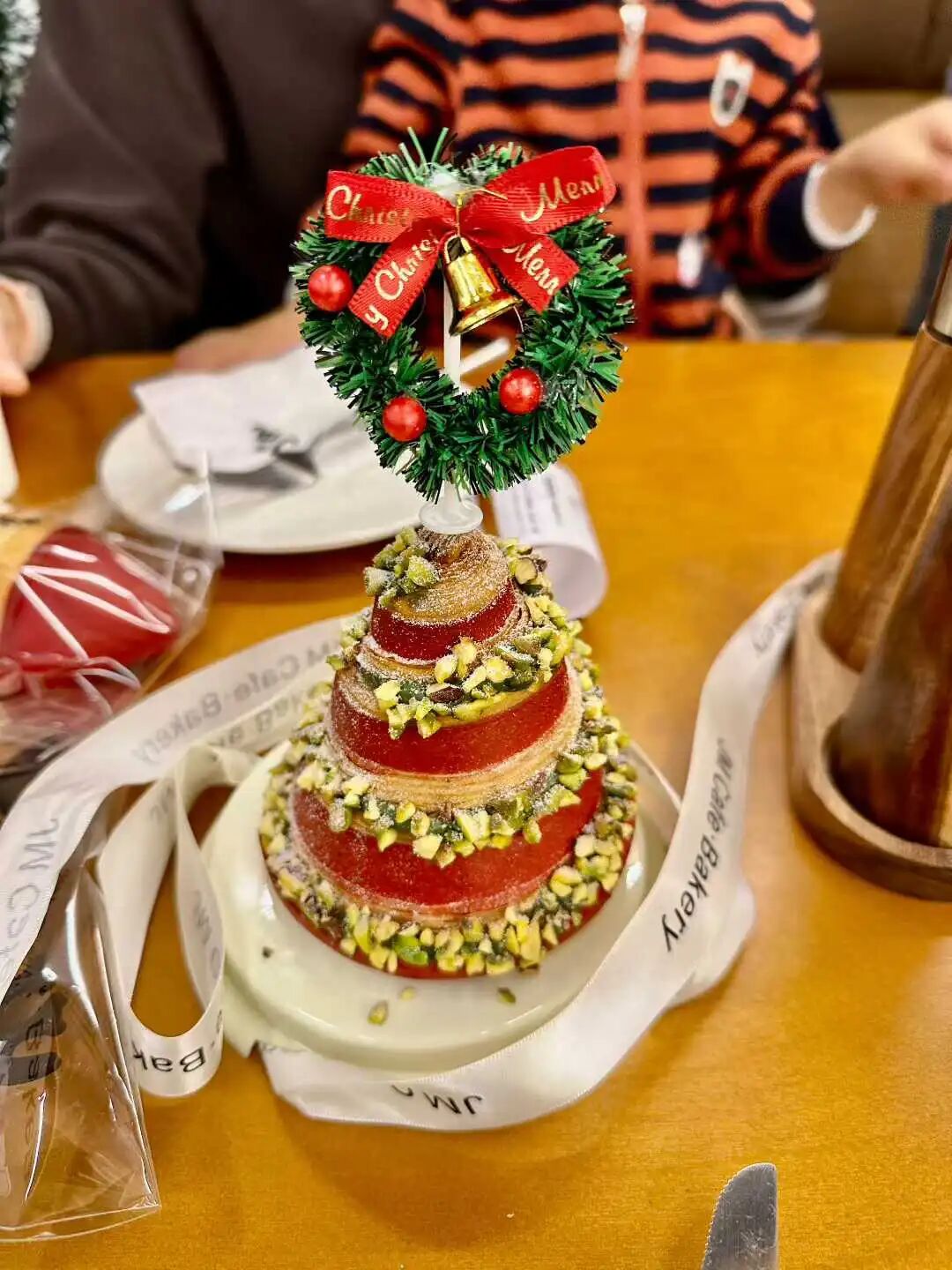
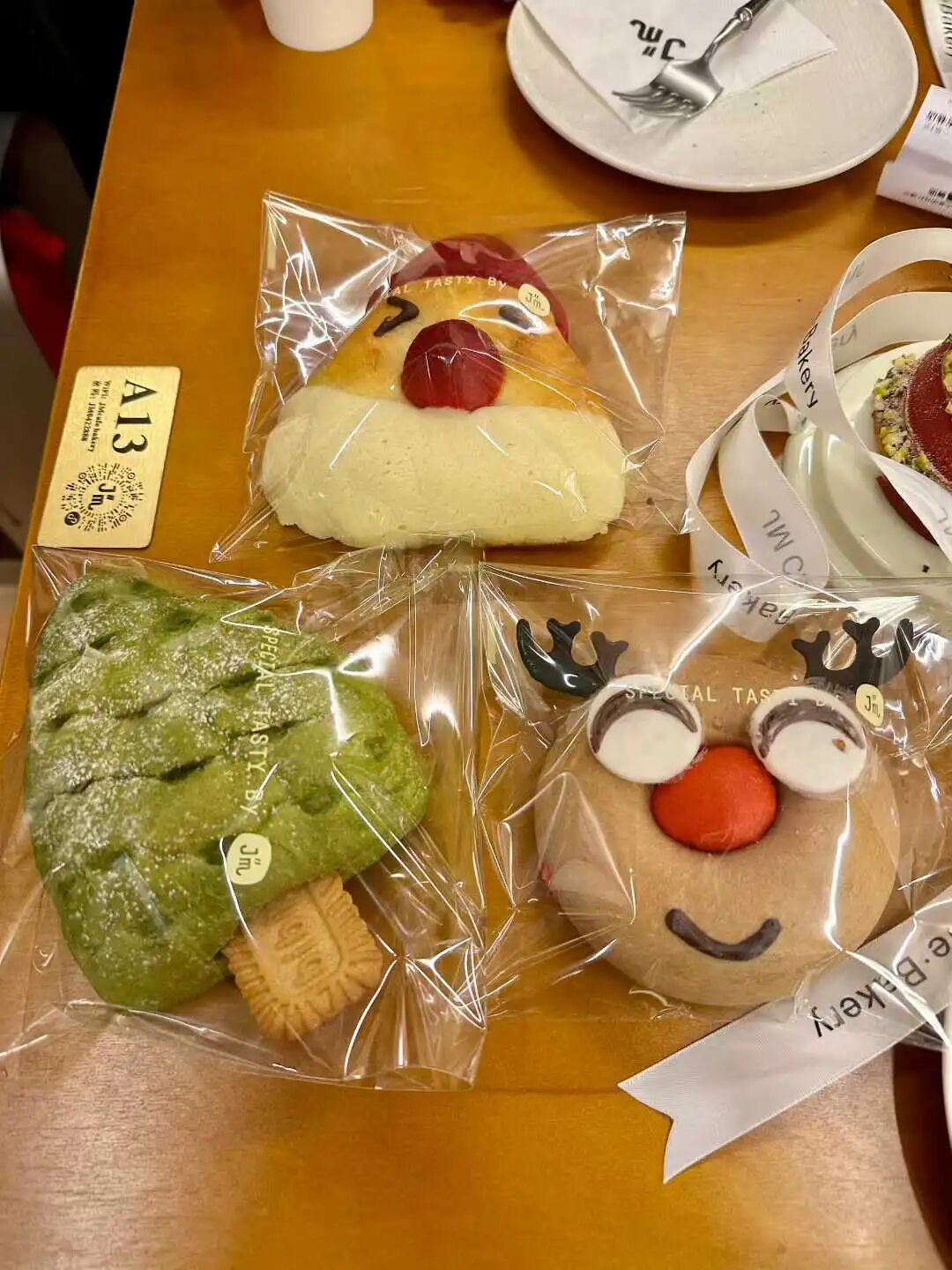
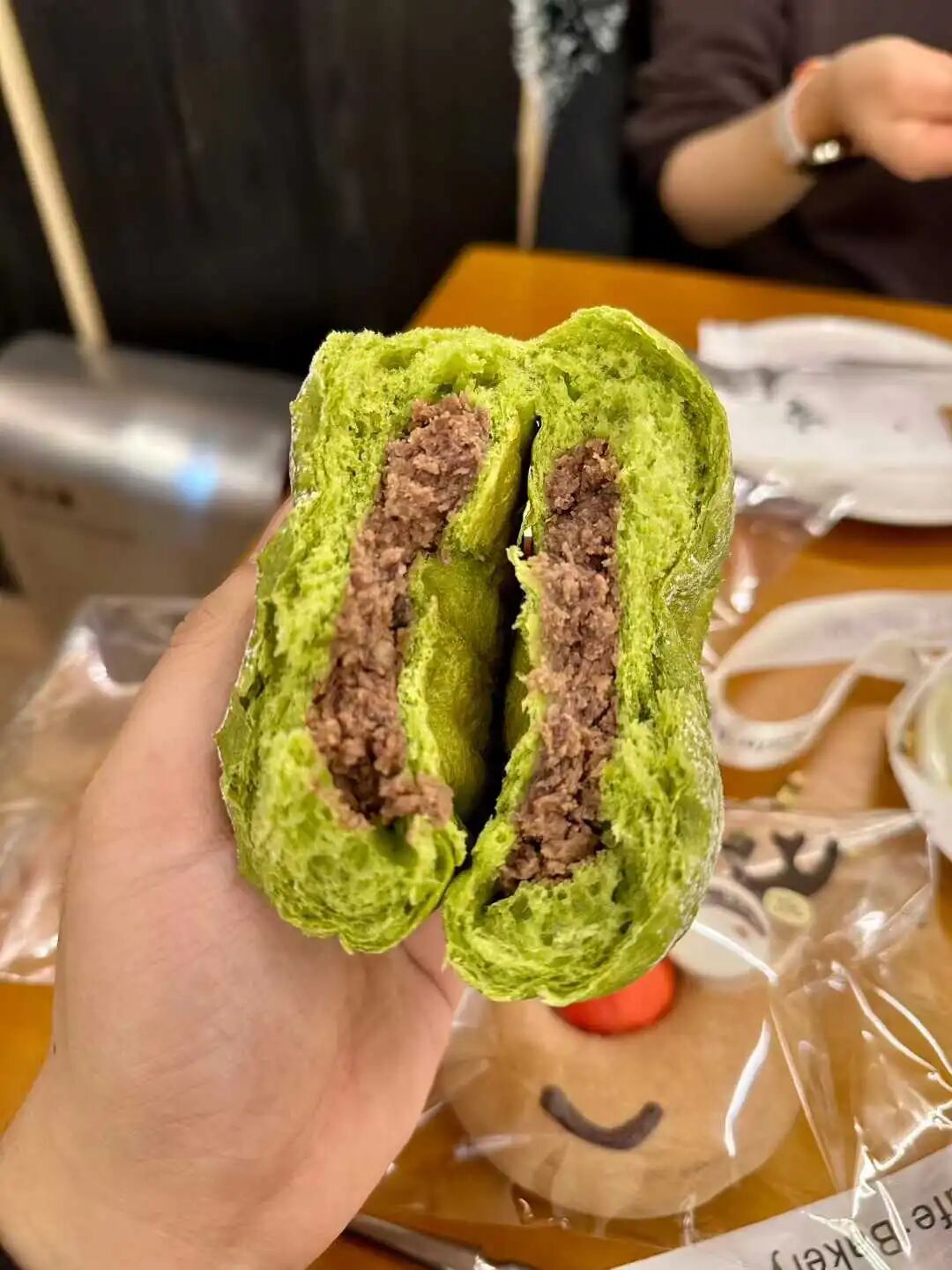
We also tried the Christmas tree bread, reindeer bagel, red bean and chestnut European-style bread, and Santa Claus bread. The Christmas tree bread contains milk, butter, milk powder, pistachio paste, and mascarpone cheese. The reindeer bagel is filled with chocolate, hazelnuts, cheese, and cocoa powder. The red bean and chestnut European-style bread contains matcha powder, chestnut puree, red beans, and milk, and it is topped with a caramel cookie. The Santa Claus bread is made with camellia flour, broomcorn millet (dahuangmi), condensed milk, and hawthorn. Their bread is not too sweet, which suits the tastes of young people. Plus, the ingredients are listed very clearly.
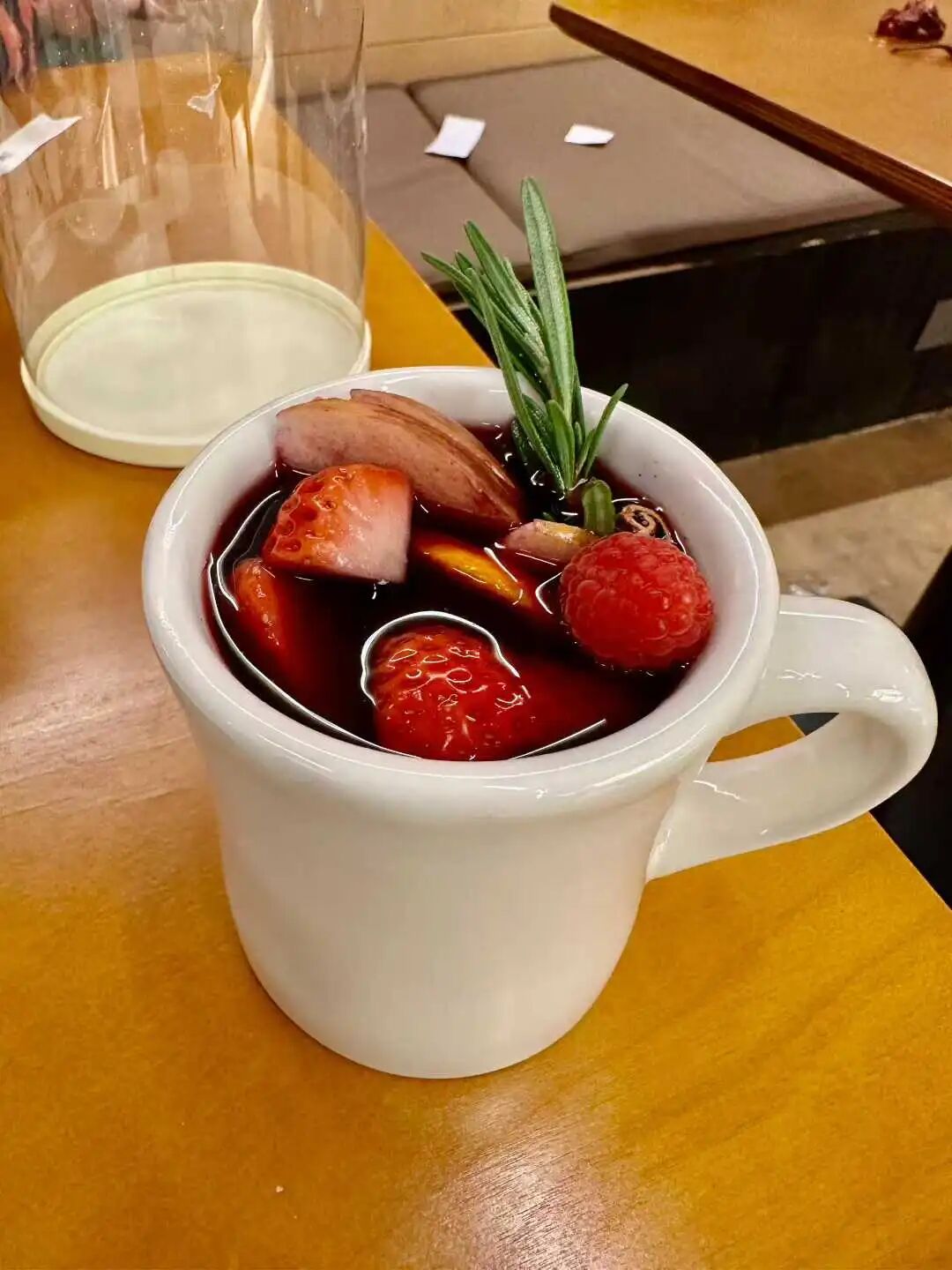
For drinks, you can choose the Christmas Magic Cup, which is pure grape juice with apples, cinnamon, and strawberries. This is likely the only place in Beijing where we can drink this, and it is worth a try.
We were surprised to find Big Plate Chicken (dapanji) pizza at the JM Daji Lane shop; it really shows it is run by Xinjiang Dosti. The Big Plate Chicken uses Anjihai chili peppers flown in from Xinjiang. They are spicy yet sweet, and the flavor is very authentic. It is a pity that they use chicken chunks instead of stir-frying the whole chicken like they do back home in Xinjiang.
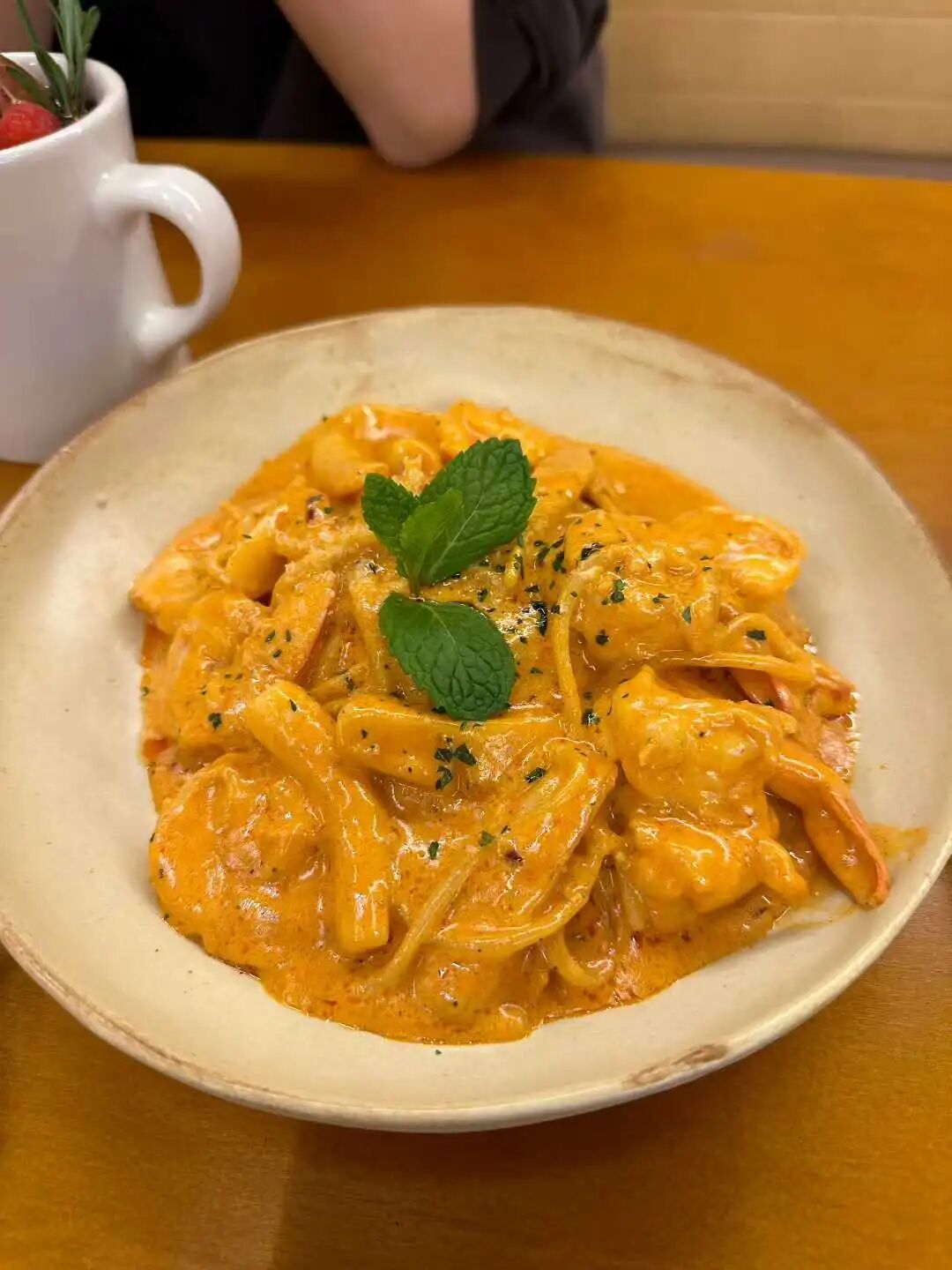
We also had the Korean-style spicy cream shrimp pasta and fried chicken. The pasta came with plenty of shrimp, and the cream sauce was very rich. The fried chicken was cooked perfectly, and I really liked it.
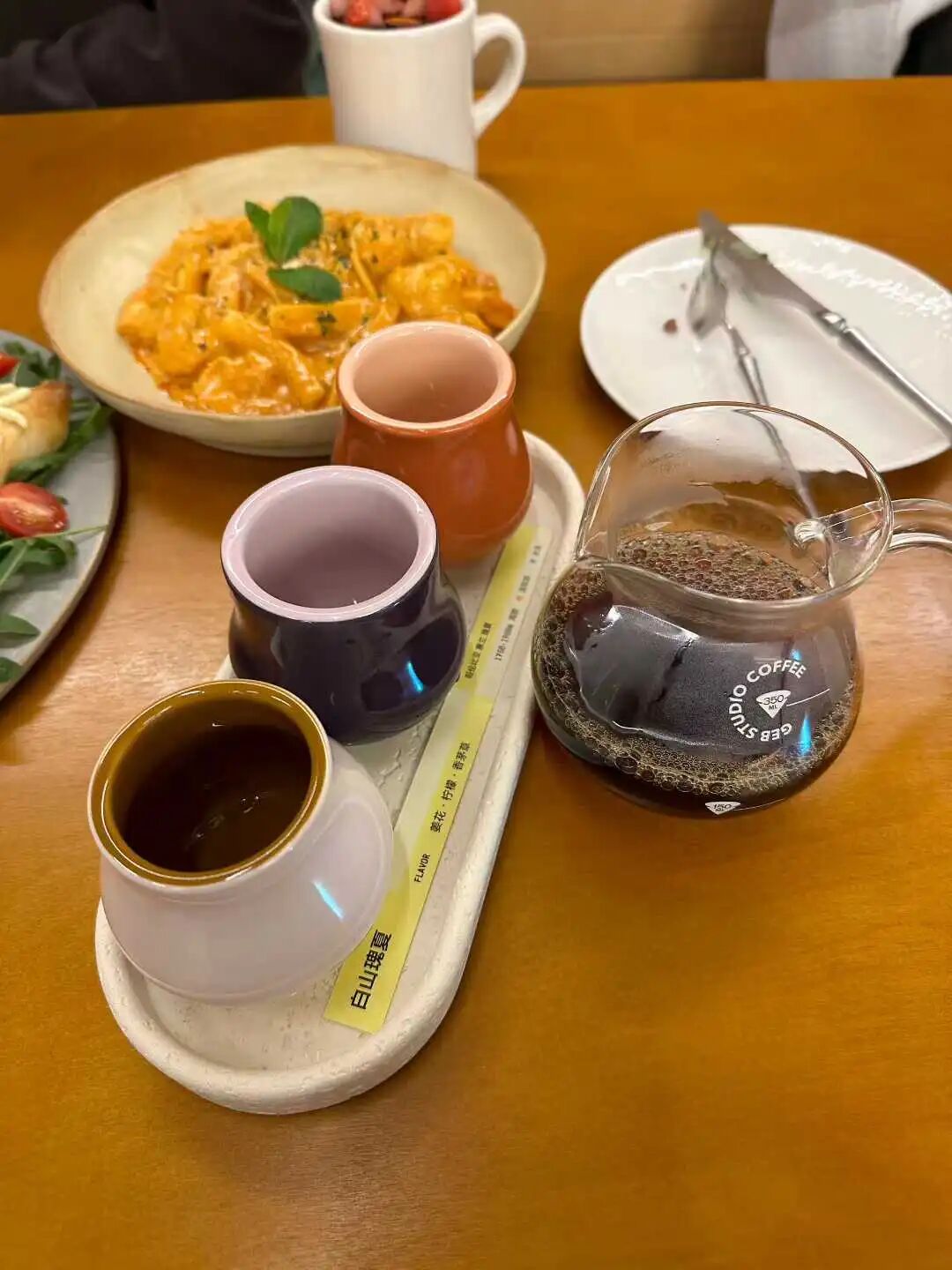
We also tasted their pour-over coffee, and it was quite good. However, the shop is very crowded on weekends, so it is not the best place for a quiet coffee. It is probably better on weekdays. view all
Summary: JM Coffee and Bakery is a Beijing chain opened by Xinjiang dost, with shops around Niujie, Dongsi, Beiluoguxiang, Baita Mosque, and Tuanjiehu. This short account keeps the source's bakery details, Christmas atmosphere, food, locations, and community observations.
JM is a coffee and bakery chain in Beijing opened by Xinjiang Dosti. They have shops in major areas like Niujie, Dongsi, Beiluoguxiang, Baita Mosque, and Tuanjiehu. The Daji Lane shop specializes in pizza, while the Niujie shop focuses on hot dogs.
While they stay halal and alcohol-free, they also keep an open mind and embrace cultural diversity, launching special Christmas-themed baked goods in December. Even though we don't celebrate Christmas, we still enjoy experiencing the festive atmosphere. There is a Kazakh lady working at the shop who is very popular with the kids.
During Christmas, they launched a Christmas Star Pizza. The crust is filled with tuna, diced carrots, and a touch of mustard. The center has homemade tomato sauce, fresh mozzarella, imported Italian Padano cheese, and basil. It is topped with a little snowman made of strawberries and marshmallows. The staff specifically told us they checked the source of the marshmallows to ensure they use fish gelatin.
We also tried the Christmas tree bread, reindeer bagel, red bean and chestnut European-style bread, and Santa Claus bread. The Christmas tree bread contains milk, butter, milk powder, pistachio paste, and mascarpone cheese. The reindeer bagel is filled with chocolate, hazelnuts, cheese, and cocoa powder. The red bean and chestnut European-style bread contains matcha powder, chestnut puree, red beans, and milk, and it is topped with a caramel cookie. The Santa Claus bread is made with camellia flour, broomcorn millet (dahuangmi), condensed milk, and hawthorn. Their bread is not too sweet, which suits the tastes of young people. Plus, the ingredients are listed very clearly.
For drinks, you can choose the Christmas Magic Cup, which is pure grape juice with apples, cinnamon, and strawberries. This is likely the only place in Beijing where we can drink this, and it is worth a try.
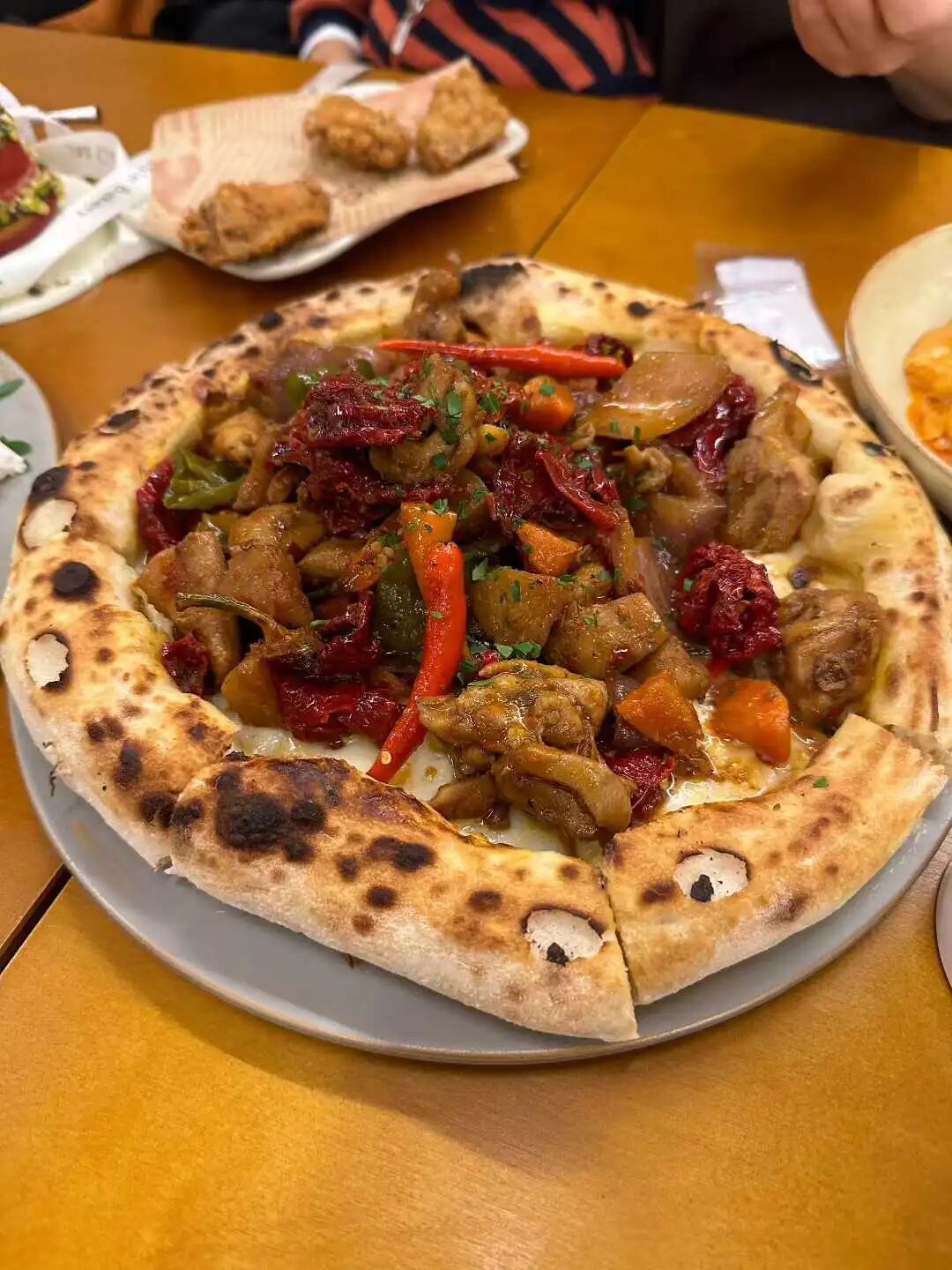
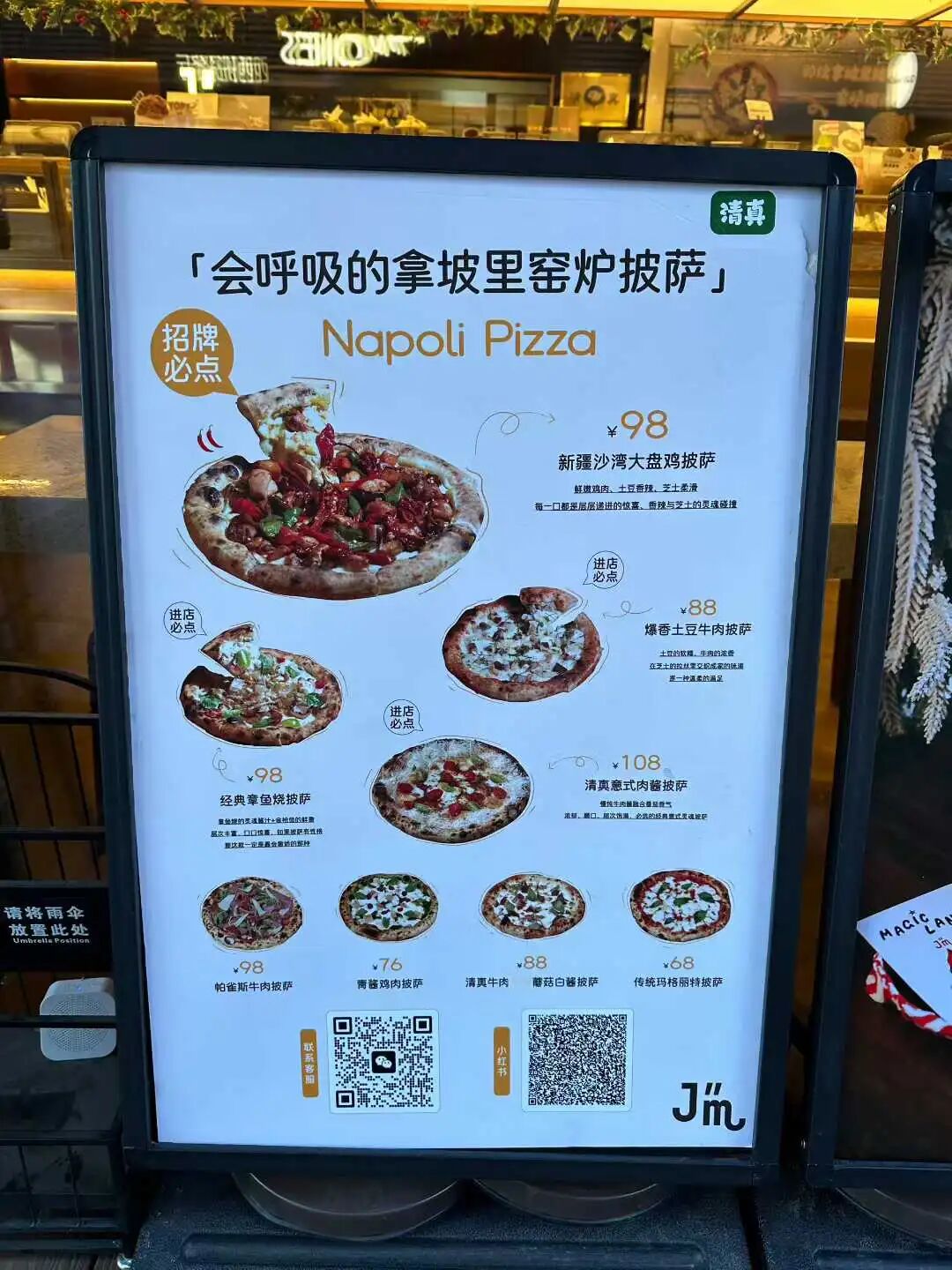
We were surprised to find Big Plate Chicken (dapanji) pizza at the JM Daji Lane shop; it really shows it is run by Xinjiang Dosti. The Big Plate Chicken uses Anjihai chili peppers flown in from Xinjiang. They are spicy yet sweet, and the flavor is very authentic. It is a pity that they use chicken chunks instead of stir-frying the whole chicken like they do back home in Xinjiang.
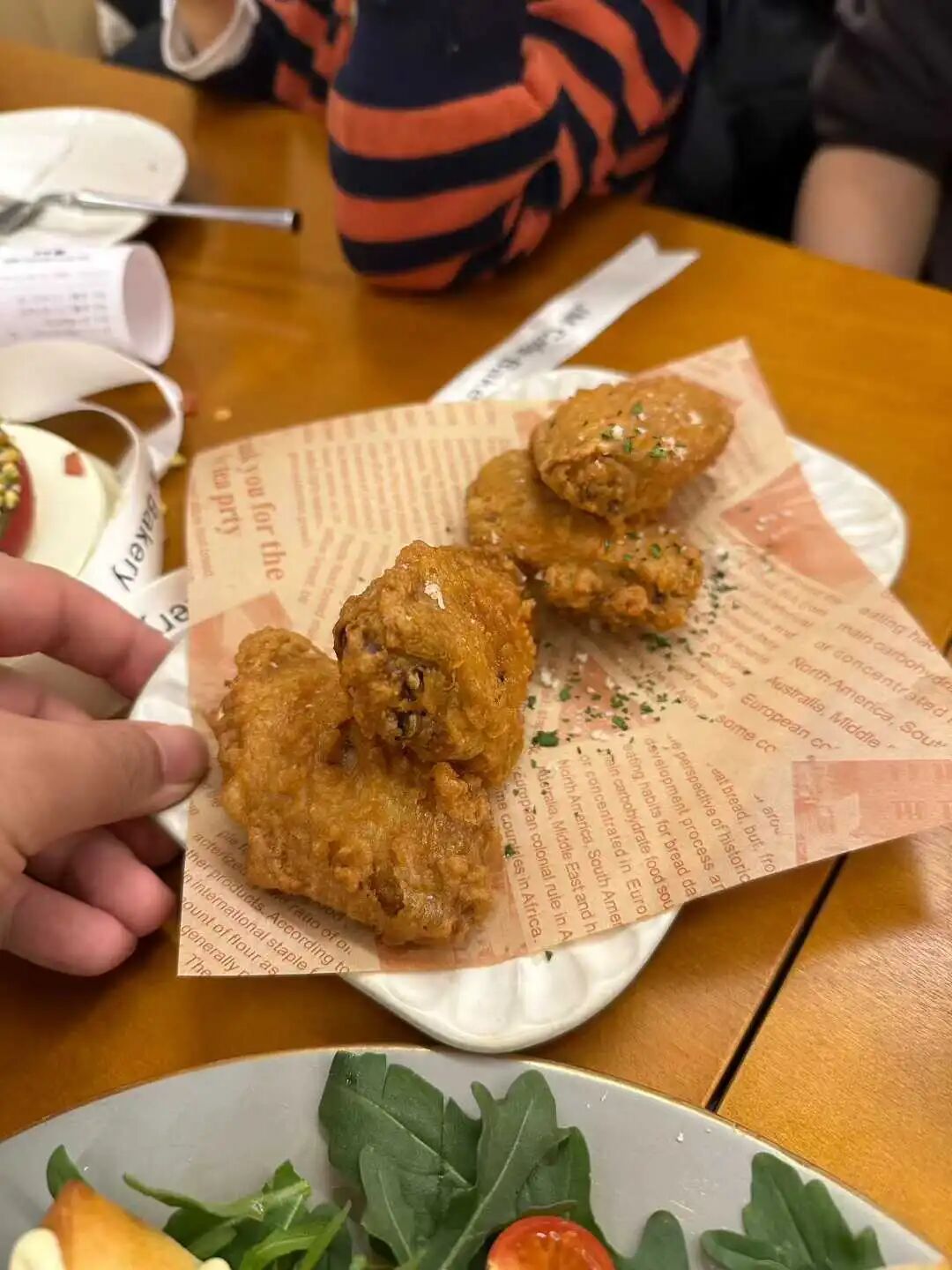
We also had the Korean-style spicy cream shrimp pasta and fried chicken. The pasta came with plenty of shrimp, and the cream sauce was very rich. The fried chicken was cooked perfectly, and I really liked it.
We also tasted their pour-over coffee, and it was quite good. However, the shop is very crowded on weekends, so it is not the best place for a quiet coffee. It is probably better on weekdays.
Halal Food Guide: Beijing - 10 New Restaurants Worth Trying
Articles • ali2007fr posted the article • 0 comments • 227 views • 2026-05-20 09:11
Summary: This Beijing food note records ten restaurants the writer recently tried, with names, dishes, locations, and photos kept from the original article. The account focuses on practical eating details, including flavors, portions, service, and where each stop fits into Beijing's wider halal and international food scene.
JM Italian Coffee Dongsi Branch
The JM Coffee shop owned by Brother Ma, a fellow Muslim (dosti), now has several locations in Dongsi, Beiluoguxiang, Tuanjiehu, and Baita Mosque, with new shops opening soon in Daji Lane and Niujie. Brother Ma is strict about where he gets his ingredients, and the shop is smoke-free and alcohol-free, so fellow Muslims can eat with peace of mind.
On Saturday, we had afternoon tea at the JM Coffee Dongsi branch. They focus on four types of coffee beans: Ethiopia Sidamo, Brazil Cerrado, Peru, and Kenya. Each is roasted differently, and you can smell each one in the shop before you decide. Besides Americano, latte, and dirty coffee, you can also order a half-black, half-white coffee. I ordered the Kenya latte, which had dried dark plum, roasted nuts, and brown sugar in it. It was very pleasant to drink.
They also have some special caffeine-free drinks, which are great for kids. We ordered the "One Peach" iced drink, which contains kaffir lime leaves, sous-vide nectarine, cardamom, lactic acid bacteria, and oolong tea.
For dessert and bread, we ordered cheesecake, cumin beef ciabatta, and a cinnamon roll. The cheesecake itself isn't sweet, and it comes with hawthorn sauce that really whets the appetite. The kids loved it. The cinnamon roll has tons of pecans and a strong cinnamon flavor. Ciabatta, also known as slipper bread, was invented by Venetian bakers to compete with the French baguette. Their ciabatta is made with cumin and beef, giving it a flavor similar to meat naan (rounang).
Halal Hunan Cuisine Huixiangyun Halal Stir-fry
Huixiangyun Halal Stir-fry just reopened after an upgrade at the Wangjing Food City. They specialize in Sichuan and Hunan style stir-fries. The owner is a fellow Muslim (dosti) from Qinghai, and the shop is smoke-free, alcohol-free, clean, and tidy. We had Dongting poached fish, spicy chicken feet with yam, spicy shrimp tails, Zhangshugang pepper stir-fried beef, stir-fried chicken giblets Hunan-style, mashed pepper with century egg, and mouth-watering chicken (kou shu ji). The Hunan-style stir-fries are cooked over high heat with plenty of peppers, making them perfect with rice! The Dongting poached fish is delicious, and the Zhangshugang peppers are a Hunan specialty with a great texture. The beef is stir-fried until very tender.
Besides Hunan dishes, they also serve Qinghai dishes from the owner's hometown, such as the sweet and sour pork tenderloin and stewed beef (hu niurou) from the Qinghai "Old Eight Dishes" (lao ba pan), which are hard to find in Beijing. Huangyuan sweet and sour pork tenderloin is made by simmering aged vinegar and chili into a thick soup, which is poured over fried tenderloin when served. Stewed beef (hu niurou) is made by boiling and slicing the beef, steaming it, and then pouring a savory sauce and toppings over it. The beef is soft and tender, making it a favorite for both the elderly and children.
To accommodate those who can't eat spicy food during group meals, they also offer non-spicy dishes like Beijing grilled lamb (zhizi kaorou) and braised luffa with garlic. The handmade yogurt made by the Qinghai chef is also excellent, with a texture like creamy ice cream.
Shandong Dezhou Lamb Soup and Steamed Dumplings
In the morning, I had steamed dumplings (zhengjiao), lamb bone broth (yangtang), and sesame flatbread with meat (shaobing jiarou) at Old Ma's place in Zhaogongkou, Fengtai. The owner is from Dezhou, Shandong, and the lamb broth is in the style of Shan County. It is a milky white broth made by boiling crushed lamb leg bones over high heat until they emulsify. White broth and clear broth taste different, and the white broth is much richer.
Their sesame flatbread with meat tastes great. The flatbread is very crispy and softer than the typical Beijing style, with plenty of sesame seeds on both sides. The meat inside is shredded and also softer than the usual Beijing-style sesame flatbread with meat. We ordered shepherd's purse dumplings and beef dumplings. The beef ones are juicy, and the shepherd's purse filling is rare in Beijing and tastes quite fresh and fragrant.
Philly cheesesteak
In the evening, after my son fell asleep, my wife and I went for a walk in Sanlitun. We often eat at the shawarma shop run by a Palestinian owner in Sanlitun SOHO. Before, we could only eat outside, but now we can sit inside to eat grilled meat, drink tea, and have coffee.
Besides shawarma wraps, they also serve Philly cheesesteaks, which are a classic street food. The Philly cheesesteak was invented by Italian-Americans on the streets of Philadelphia in the 1930s. It is made by putting shredded beef, cooked onions, and melted cheese into an Italian roll, often with other toppings. I think their Philly cheesesteak is more filling than the shawarma wrap; one is enough to make me feel full and satisfied. For a drink, I highly recommend the Middle Eastern diluted yogurt drink ayran, which is just yogurt mixed with water and a little salt. Their ayran has a rich, tangy, and milky flavor that is very appetizing.
This reminds me that food has no borders. On a summer evening in Beijing, we are eating Italian-American snacks made by our Palestinian brothers, and as long as the food is good, that is enough.
Roma Restaurant
Roma Restaurant is a very hidden spot inside Chaoyangmen, located in the basement next to a pool hall across from Galaxy SOHO. The owner is Pakistani and speaks fluent Chinese. He says he has a PhD from Peking Union Medical College and is currently a doctor at the Panjiayuan Cancer Hospital, so running the restaurant is just a side job.
They specialize in Western-style light meals and Pakistani curry. We ordered the spaghetti set, beef burger set, charcoal-grilled lamb cheese pizza, Caesar salad, and yogurt sauce. Their set meals offer great value for money.
I highly recommend the pizza; they are generous with the cheese and it tastes good. The Caesar salad portion is huge with plenty of chicken breast. It is healthy enough for one person to eat as a meal, and my child really likes it.
The spaghetti uses a creamy white sauce with chicken chunks, which my child loves. The set also includes two pieces of chicken pizza, a slice of chocolate cake, four grilled shrimp, and a small salad. It is really a great place to bring kids for a change of pace. The salad uses Thousand Island dressing, which gives it that old-school Western restaurant vibe. Usually, our Pakistani friends don't serve salads this way.
The beef burger tastes okay and the meat is good. It has various vegetables inside, but it is rare to find carrot slices in it. The burger combo comes with cola, fried chicken wings, french fries, and salad. The fries are fried well, but the chicken wings feel like they have a bit too little meat.
I do not recommend the yogurt sauce at the end. The yogurt has no flavor, and the side vegetables are the same as the salad, which feels a bit repetitive.
Mashed garlic lamb intestines (lansu yangchang).
I came to Muyuzhai on Dongsi Shitiao for breakfast and ordered mashed garlic lamb intestines (lansu yangchang) with beef and fennel buns (baozi). The mashed garlic lamb intestines (lansu yangchang) is their original creation. It mimics the thickened sauce of the traditional snack fried liver (chaogan), and it contains lamb intestines and lamb liver. After eating, I felt the thickened sauce was quite authentic. The lamb intestines were a bit tough, but the lamb liver was okay. Also, their paper cups are too deep, which makes them inconvenient to drink from and hard to hold. If you are not careful, they can easily fall into the pot. I hope the owner can change this.
I personally strongly support the learning and innovation of halal food as long as it stays within the rules of the faith. This is because halal food has been developing for hundreds of years by learning from and integrating various food cultures. Nearly a hundred years ago, the famous Beijing chef Chu Xiang boldly introduced ingredients never before used in Chinese cooking at Xilaishun, such as tomatoes, asparagus, lettuce, tomato sauce, and salad dressing, which made halal cuisine much richer than before. Many dishes that we take for granted today were actually only passed down because our predecessors boldly tried them despite controversy.
Inner Mongolia Lianying Steamed Dumplings (shaomai) Grassland Pomegranate Red (caoyuan shiliuhong).
The Lianying Steamed Dumplings (shaomai) from Ulanqab, Inner Mongolia, which we often eat at Huguosi, has opened a branch on Qianmen Street. We went there for a group dinner on Sunday night. The Qianmen branch is right next to Xianyukou Food Street. The shop is very spacious with open tables on the first floor and private rooms on the second. There are young ladies performing Mongolian dances, and there is a viewing platform to enjoy the night view of Qianmen. They specialize in steamed dumplings (shaomai), Mongolian food, and grassland hot pot. We ordered pot tea (guocha), wild onion lamb steamed dumplings (shaomai), lamb leg steamed dumplings (shaomai), hand-grabbed lamb (shouba yangrou), Mongolian lamb intestines (yangchang), and stir-fried lamb with vermicelli. The taste is basically the same as the Huguosi branch.
For the pot tea (guocha), they first stir-fry butter, then pour in milk tea, roasted rice, milk tofu, milk skin, and dried meat. It is very comforting to drink. The steamed dumplings (shaomai) are wrapped and steamed to order. The wild onion flavor is between green onion and chives, and it is more pungent than the lamb leg flavor. If there are many people, I suggest ordering both fillings to try. The hand-grabbed lamb (shouba yangrou) is very tender, and children love it too. Dipping it in fresh chive flowers really brings out the flavor.
This is my second visit to Lianying Steamed Dumplings (shaomai) Grassland Pomegranate Red outside Qianmen. Last time I had the pot tea (guocha) and hand-grabbed lamb (shouba yangrou), and this time I had lamb spine (yangxiezi) and roasted whole lamb. The lamb spine (yangxiezi) is neither spicy nor salty. The lamb is stewed in old broth and does not have a gamey smell. There is just a little less meat on the bones, so you mainly eat it for the pleasure of gnawing on the bones. The skin of the roasted whole lamb is a bit tough, but the meat is very tender and the flavor is relatively light. Dipping it in cumin powder and chili powder makes it suitable for the whole family to eat together. The restaurant hired Mongolian dancers and a horse-head fiddle player, so you can experience grassland culture while you eat.
I chatted with Boss Li this time. He started learning to make baked flatbread (beizi) at seventeen. Later, he moved from Hohhot to Jining to build his career, and now he has even opened two shops in Beijing. He is truly impressive.
Gansu spicy hot pot (malatang) in Wangfujing
I came to Mufu, a newly opened Gansu spicy hot pot (malatang) restaurant in Wangfujing, for a meal and to offer a sacrifice (qurbani). The shop is right next to WF Central, so the location is great. The chili for the spicy hot pot (malatang) comes from the owner's hometown in Linxia, Gansu. The mild version is fragrant but not spicy, and they can also make it extra spicy or non-spicy to suit everyone.
This shop and the beef noodle place next door are the same business, so you can order grilled skewers (kaochuan) to eat in the spicy hot pot (malatang) shop. The grilled meat is very fragrant and tender. It is quite pleasant to eat skewers (chuan) under the shade of the trees by the door on a summer evening.
A restaurant in a courtyard house (siheyuan)
I was invited by a friend (dosti) to have a meal at Yuezhen Yayuan next to the Lama Temple. It is probably the halal restaurant with the best atmosphere near my home. The small courtyard house (siheyuan) is very unique, lush, and relaxing, though there are mosquitoes in the summer.
We ordered braised oxtail, crystal vegetable buns, crispy golden beef ribs, clay pot king beans, healthy corn cakes, and baked chicken wings with golden orchid sauce. They have updated their menu, and the dishes are all very refined now. I think the braised oxtail is delicious. It is cooked until very soft, and the seasoning is good. The crystal vegetable buns have a Cantonese feel; they are small but quite refreshing. The corn cakes are like snacks, perfect for eating while drinking tea and chatting. I thought the chicken and pan-fried dumplings (jianjiao) were just average this time. The chicken texture was not good, and the pan-fried dumplings (jianjiao) were not cooked through at first and had hard centers, so they took them back to redo.
Dongsi Naan Shop
The newly opened Afanti Naan Shop on Dongsi North Street is right at the entrance of Lingtouyang. A Uyghur brother was making meat naan, sesame naan, and onion naan (piyazi naan). When I arrived, I caught the baked buns (kaobaozi) coming out of the oven, so I ate two while they were hot. I also bought some meat naan and sesame naan to bring home for soaking in lamb soup (yangtang) in the morning.
Thinking back, there were not many specialized naan shops in Beijing a few years ago, but now they are everywhere. It is becoming more and more convenient for Beijingers to eat fresh, hot naan. view all
Summary: This Beijing food note records ten restaurants the writer recently tried, with names, dishes, locations, and photos kept from the original article. The account focuses on practical eating details, including flavors, portions, service, and where each stop fits into Beijing's wider halal and international food scene.
JM Italian Coffee Dongsi Branch
The JM Coffee shop owned by Brother Ma, a fellow Muslim (dosti), now has several locations in Dongsi, Beiluoguxiang, Tuanjiehu, and Baita Mosque, with new shops opening soon in Daji Lane and Niujie. Brother Ma is strict about where he gets his ingredients, and the shop is smoke-free and alcohol-free, so fellow Muslims can eat with peace of mind.
On Saturday, we had afternoon tea at the JM Coffee Dongsi branch. They focus on four types of coffee beans: Ethiopia Sidamo, Brazil Cerrado, Peru, and Kenya. Each is roasted differently, and you can smell each one in the shop before you decide. Besides Americano, latte, and dirty coffee, you can also order a half-black, half-white coffee. I ordered the Kenya latte, which had dried dark plum, roasted nuts, and brown sugar in it. It was very pleasant to drink.
They also have some special caffeine-free drinks, which are great for kids. We ordered the "One Peach" iced drink, which contains kaffir lime leaves, sous-vide nectarine, cardamom, lactic acid bacteria, and oolong tea.
For dessert and bread, we ordered cheesecake, cumin beef ciabatta, and a cinnamon roll. The cheesecake itself isn't sweet, and it comes with hawthorn sauce that really whets the appetite. The kids loved it. The cinnamon roll has tons of pecans and a strong cinnamon flavor. Ciabatta, also known as slipper bread, was invented by Venetian bakers to compete with the French baguette. Their ciabatta is made with cumin and beef, giving it a flavor similar to meat naan (rounang).
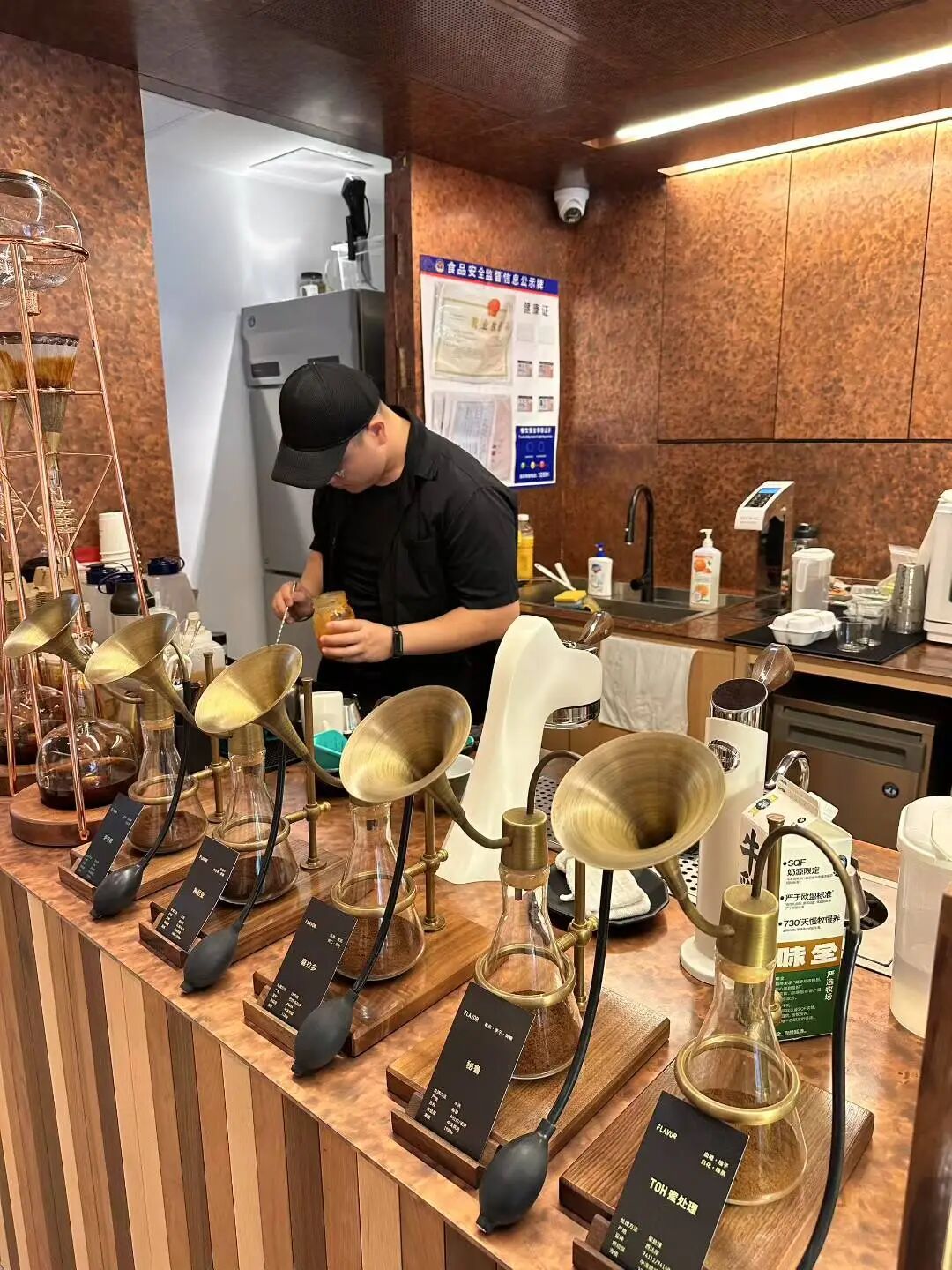
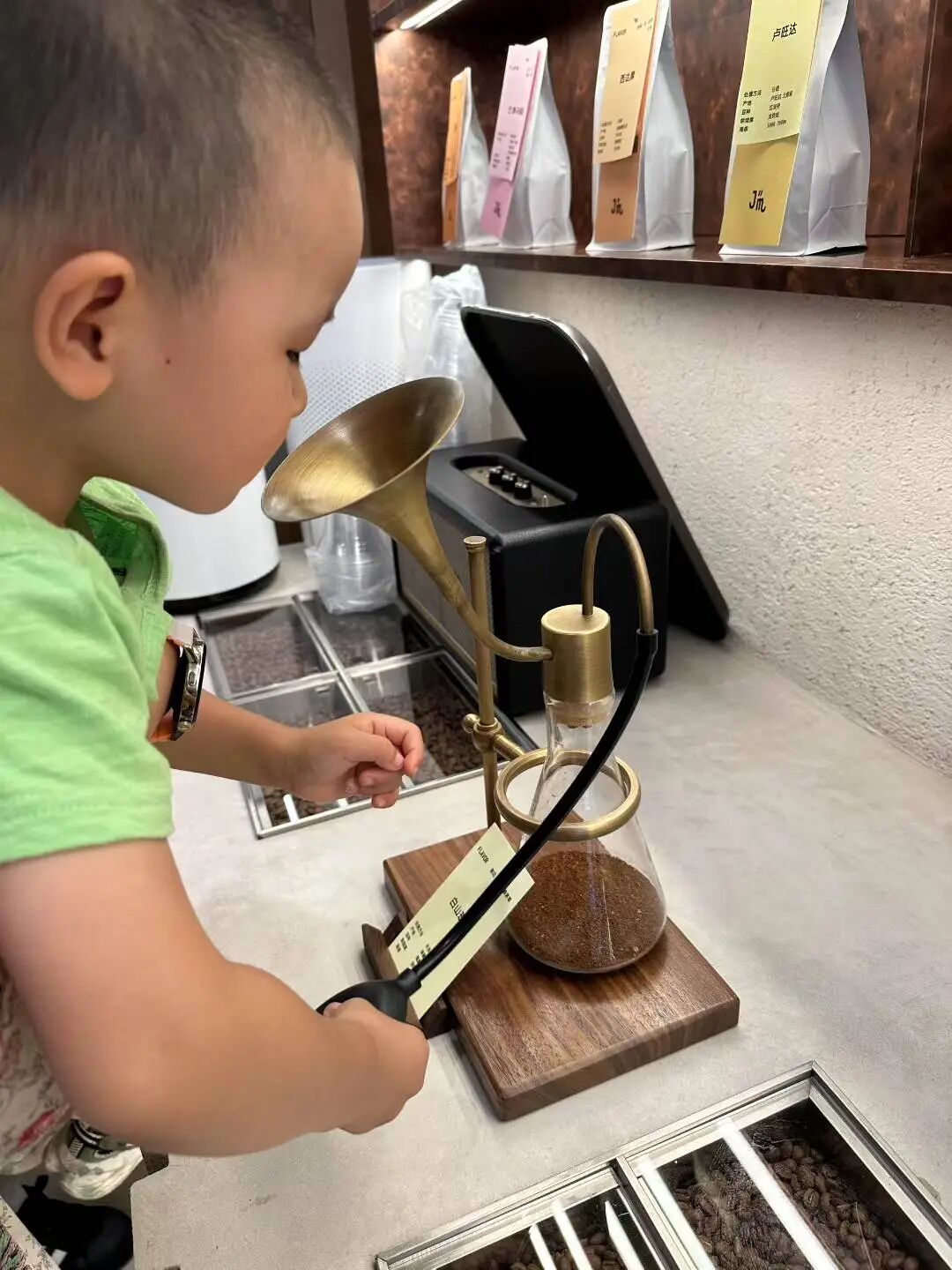
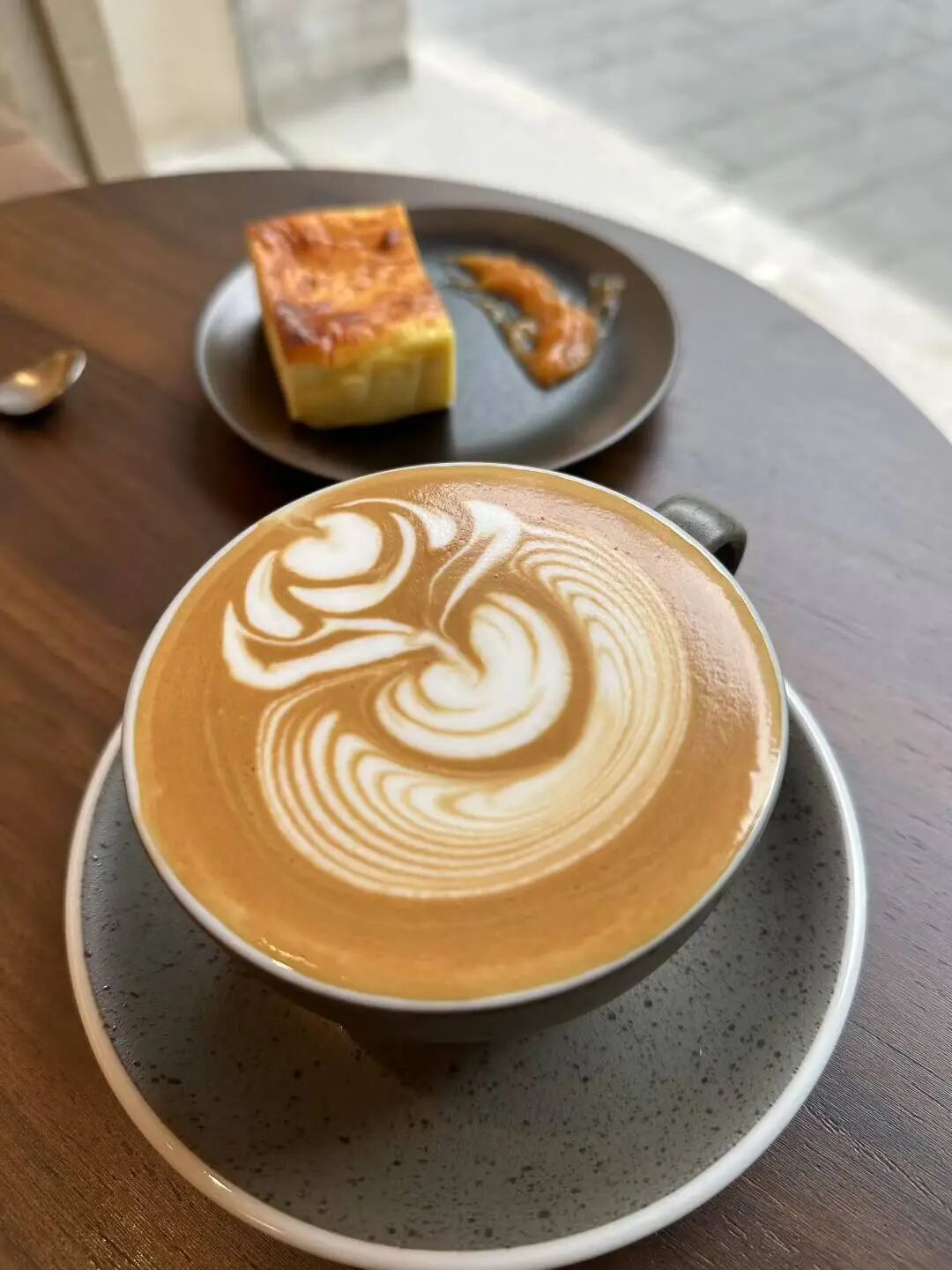
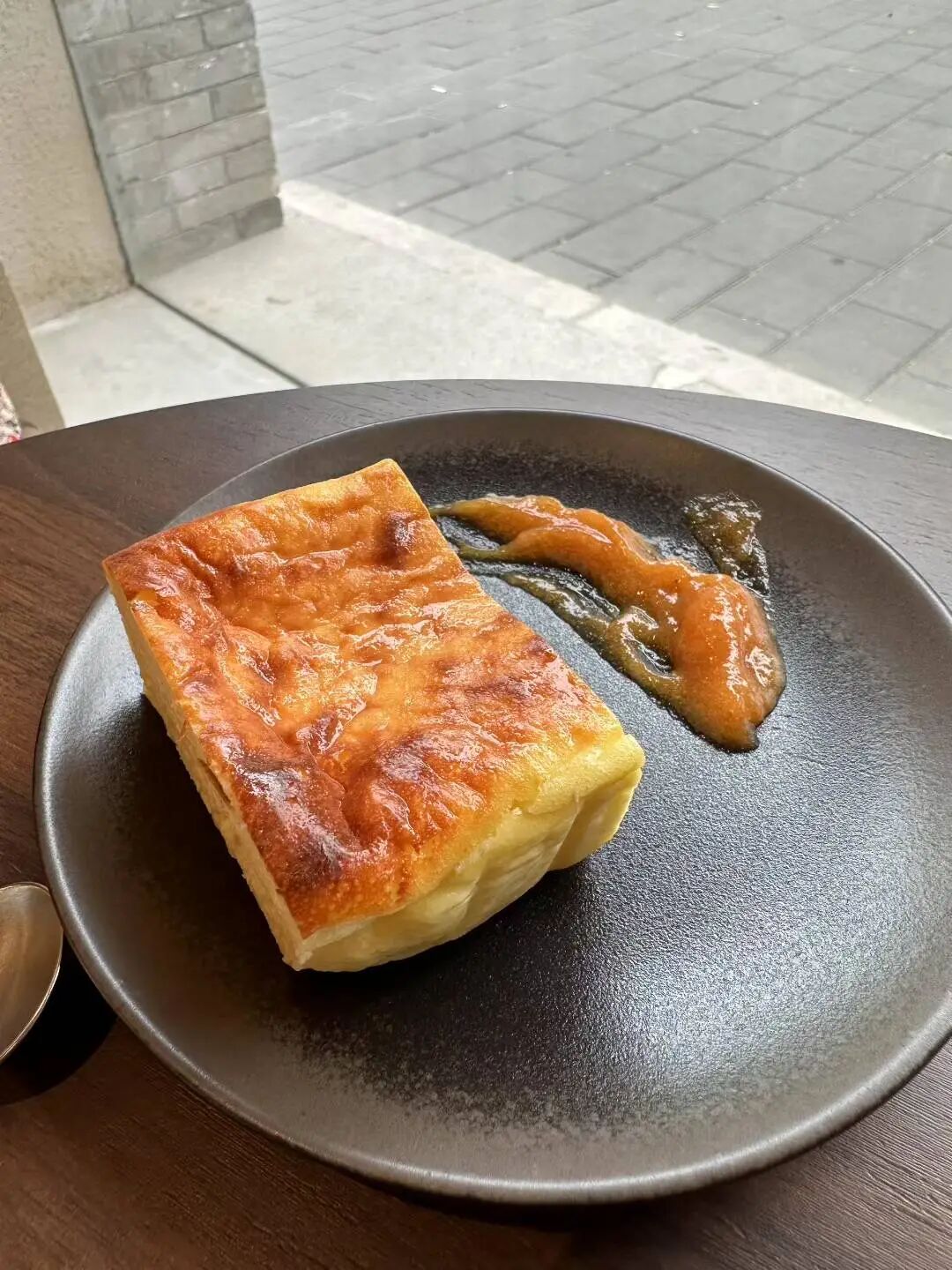
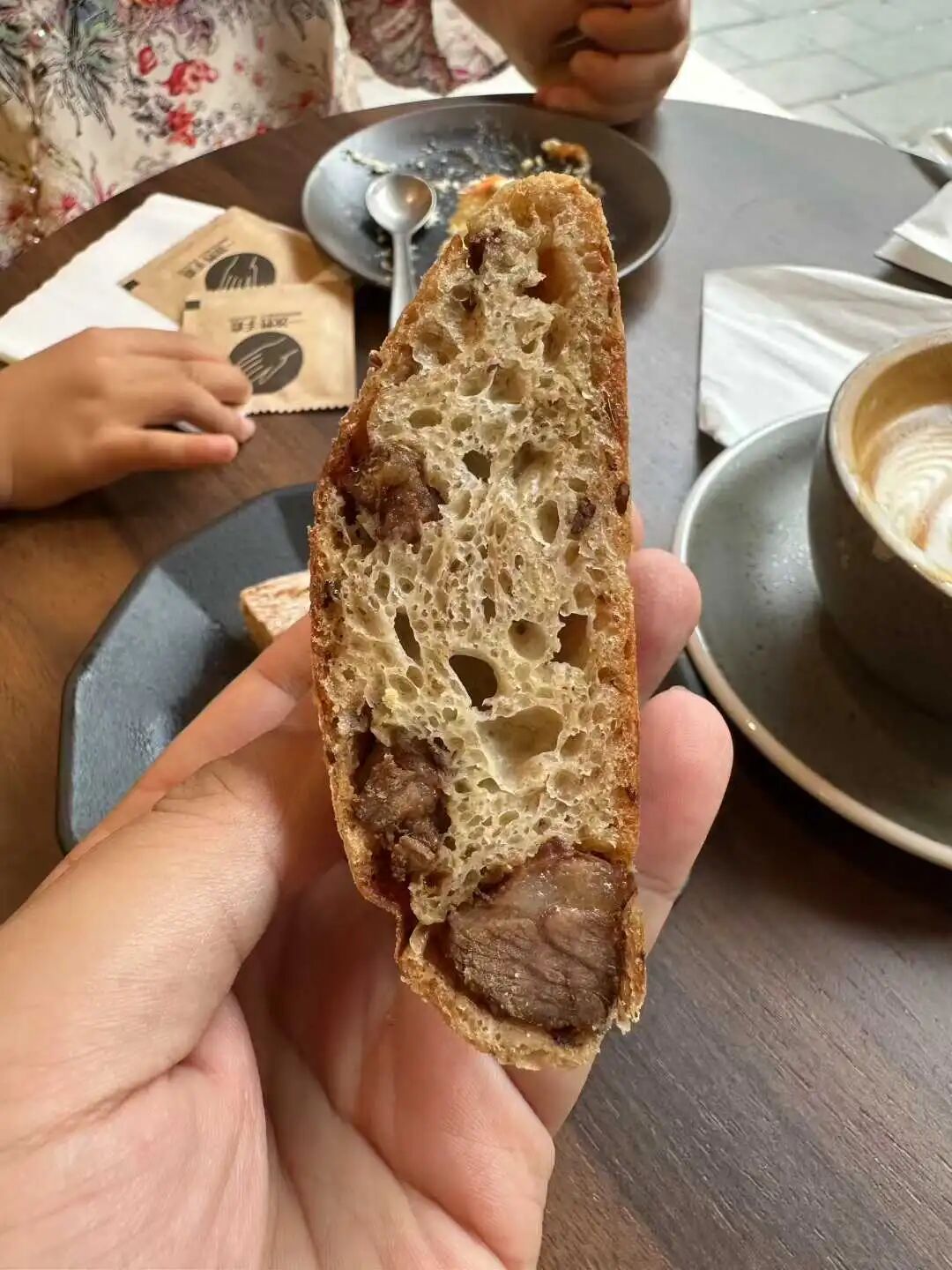
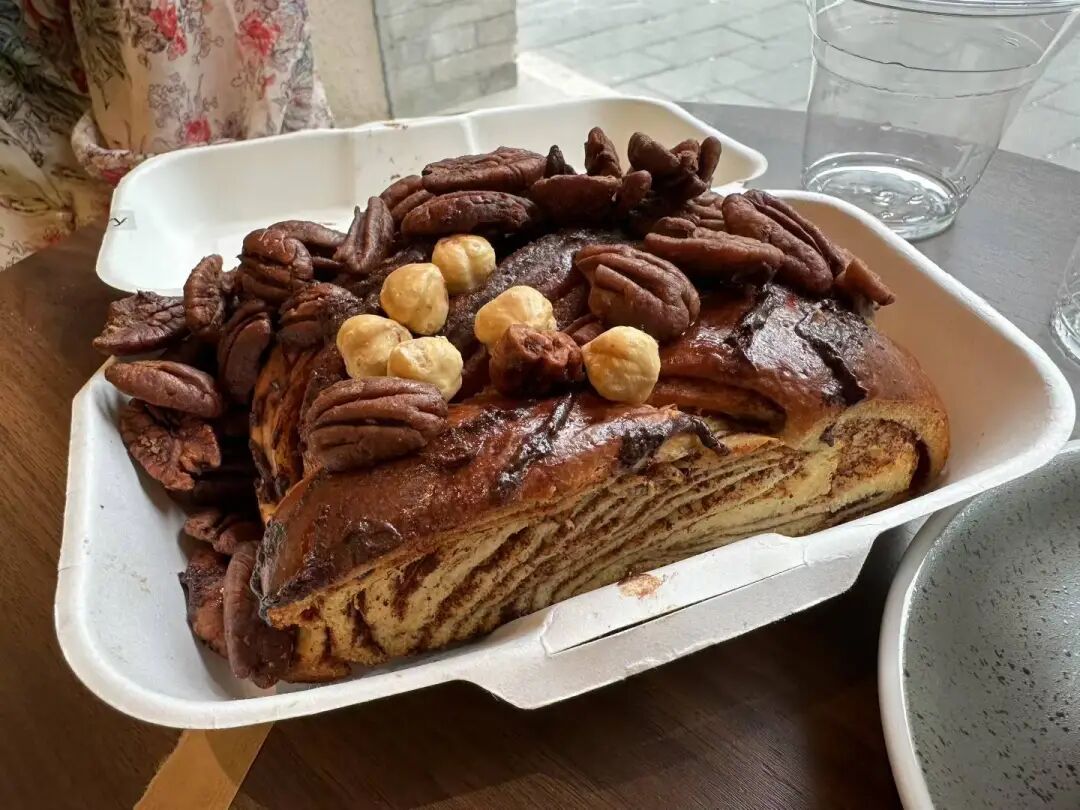
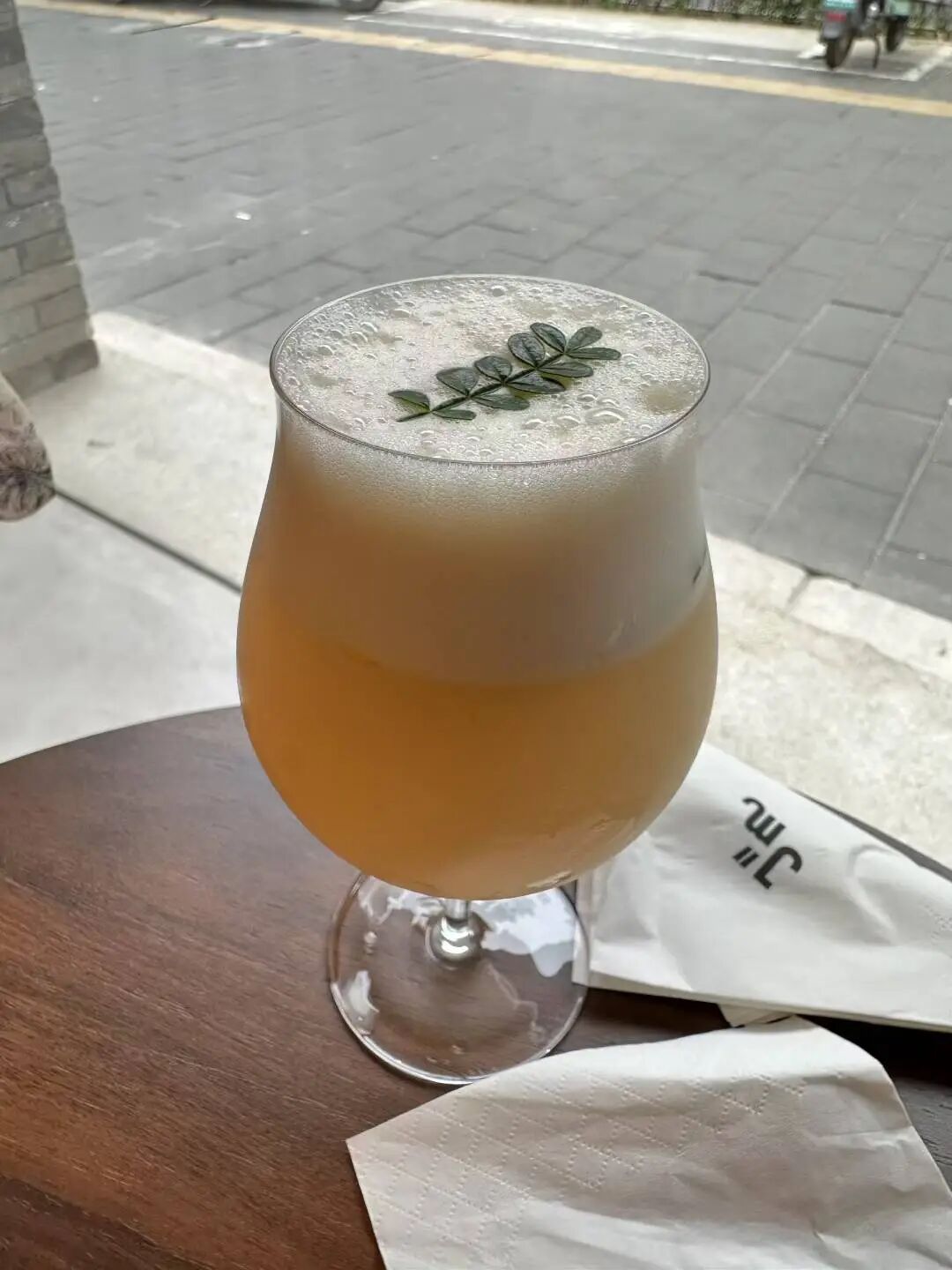
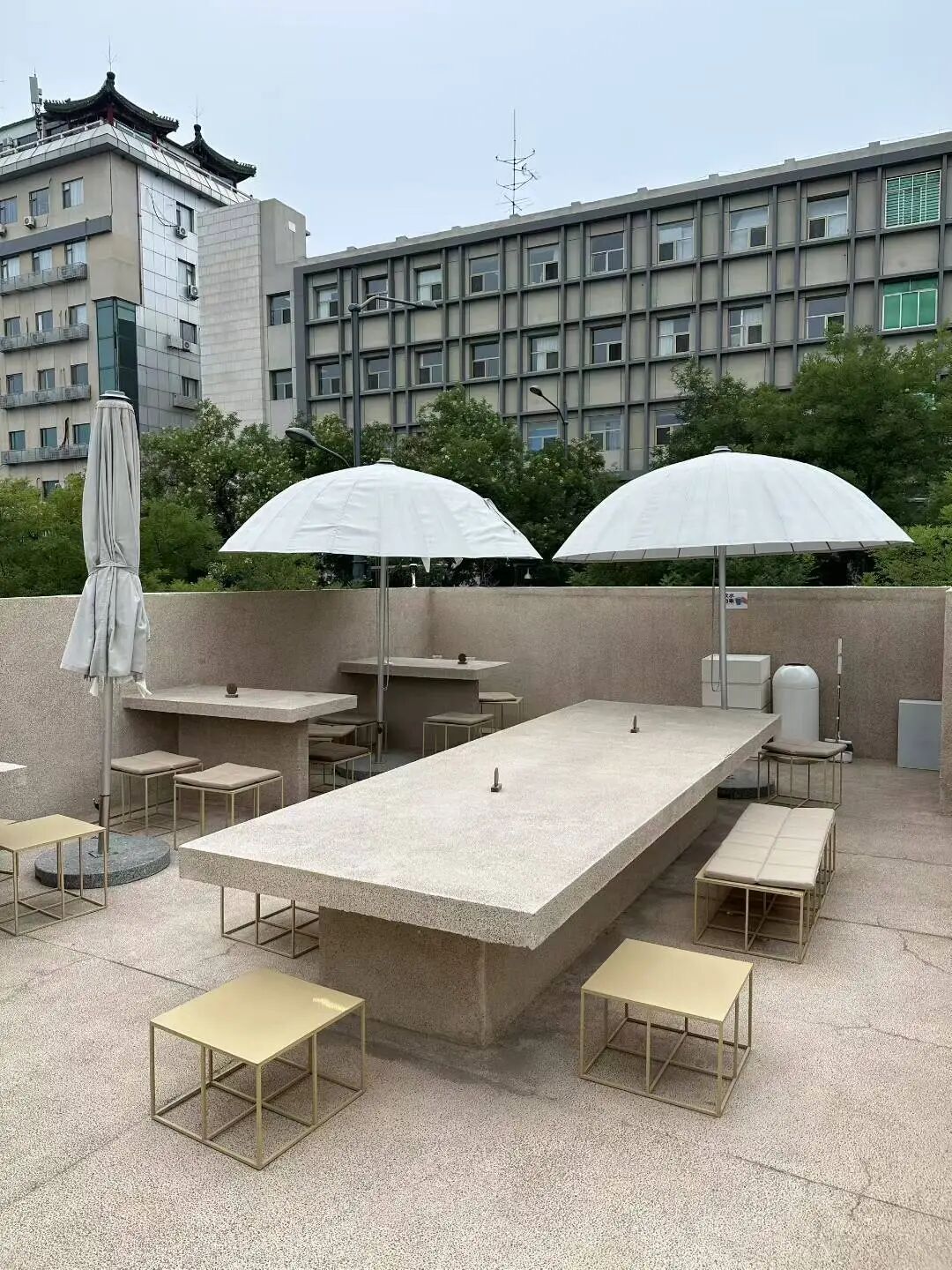
Halal Hunan Cuisine Huixiangyun Halal Stir-fry
Huixiangyun Halal Stir-fry just reopened after an upgrade at the Wangjing Food City. They specialize in Sichuan and Hunan style stir-fries. The owner is a fellow Muslim (dosti) from Qinghai, and the shop is smoke-free, alcohol-free, clean, and tidy. We had Dongting poached fish, spicy chicken feet with yam, spicy shrimp tails, Zhangshugang pepper stir-fried beef, stir-fried chicken giblets Hunan-style, mashed pepper with century egg, and mouth-watering chicken (kou shu ji). The Hunan-style stir-fries are cooked over high heat with plenty of peppers, making them perfect with rice! The Dongting poached fish is delicious, and the Zhangshugang peppers are a Hunan specialty with a great texture. The beef is stir-fried until very tender.
Besides Hunan dishes, they also serve Qinghai dishes from the owner's hometown, such as the sweet and sour pork tenderloin and stewed beef (hu niurou) from the Qinghai "Old Eight Dishes" (lao ba pan), which are hard to find in Beijing. Huangyuan sweet and sour pork tenderloin is made by simmering aged vinegar and chili into a thick soup, which is poured over fried tenderloin when served. Stewed beef (hu niurou) is made by boiling and slicing the beef, steaming it, and then pouring a savory sauce and toppings over it. The beef is soft and tender, making it a favorite for both the elderly and children.
To accommodate those who can't eat spicy food during group meals, they also offer non-spicy dishes like Beijing grilled lamb (zhizi kaorou) and braised luffa with garlic. The handmade yogurt made by the Qinghai chef is also excellent, with a texture like creamy ice cream.
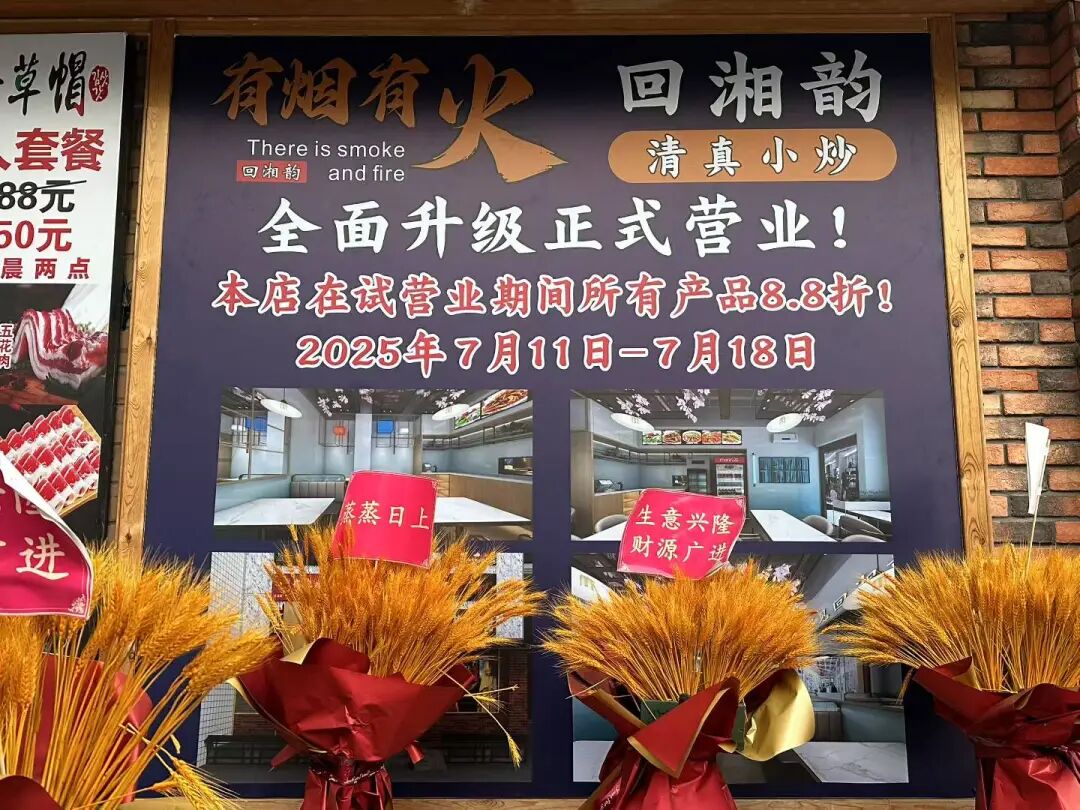
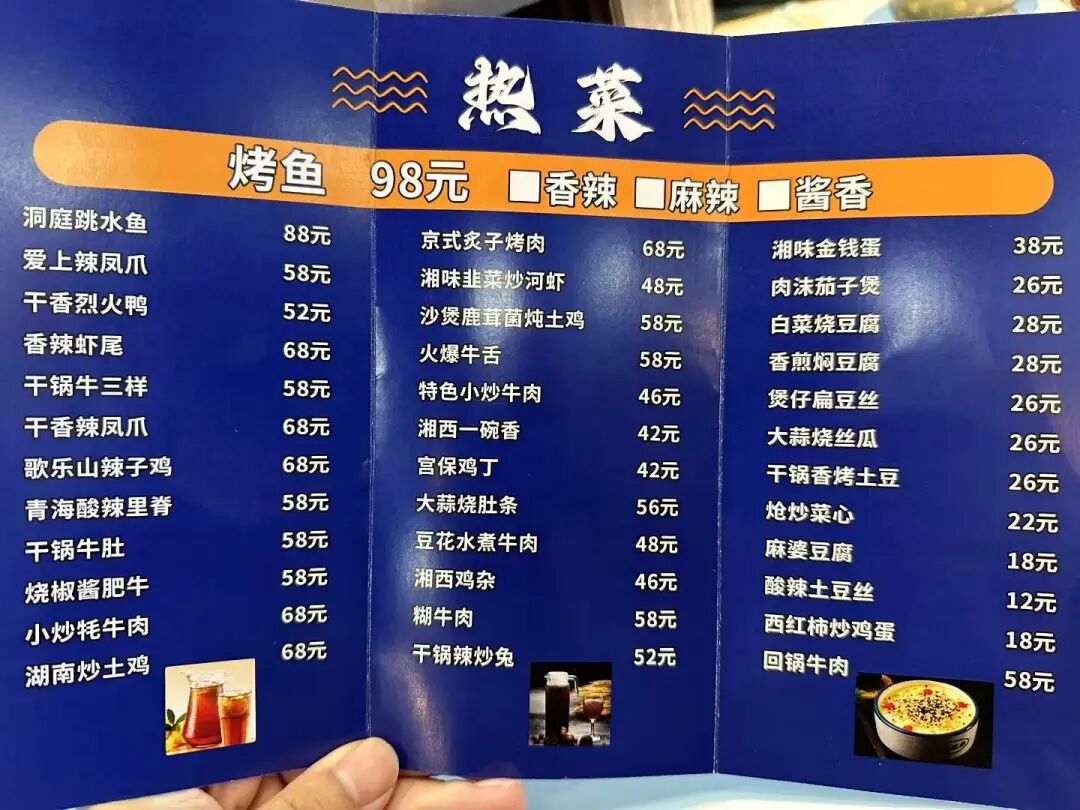
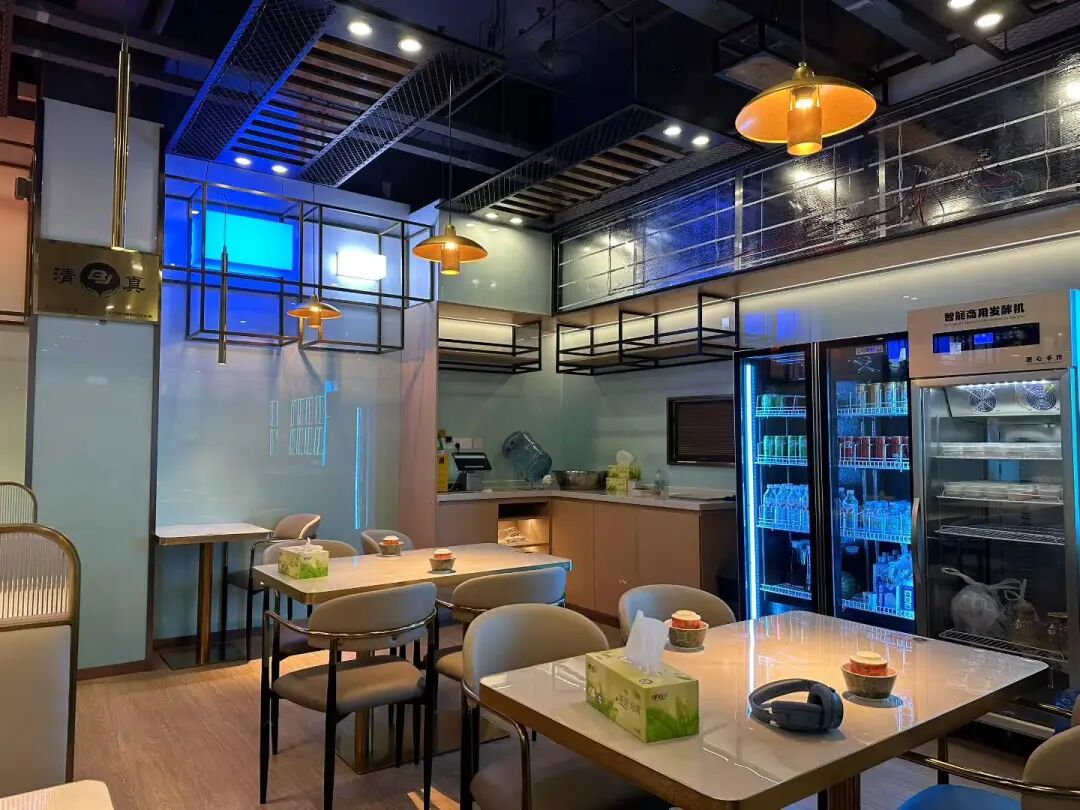
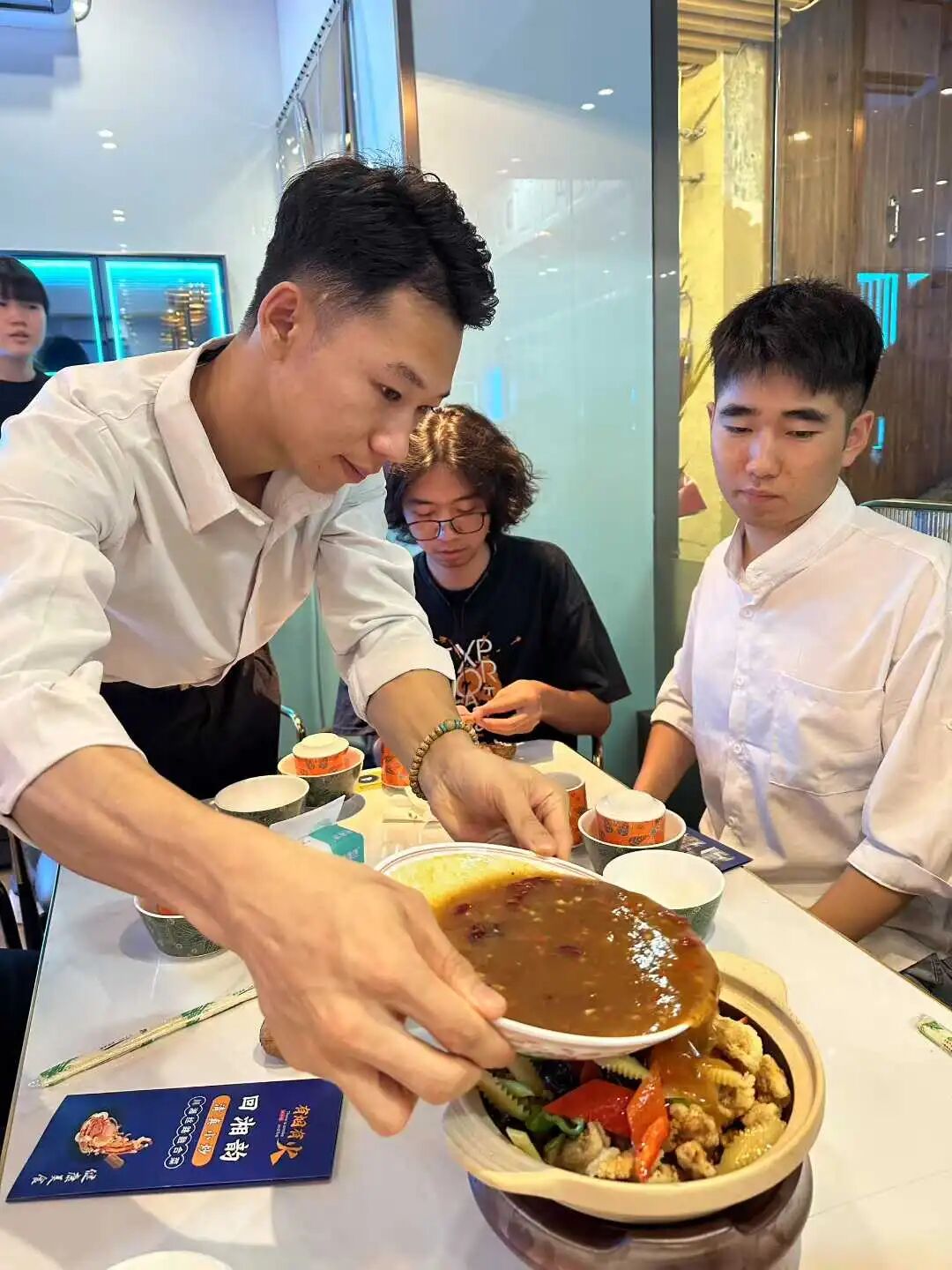
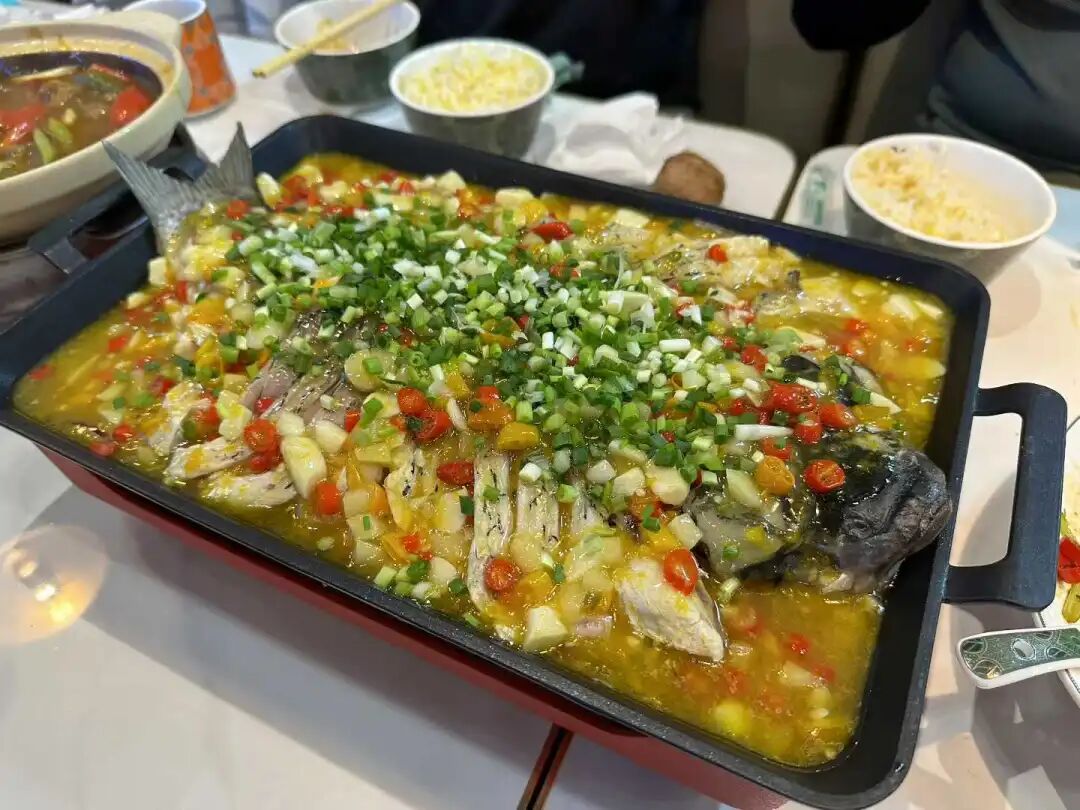
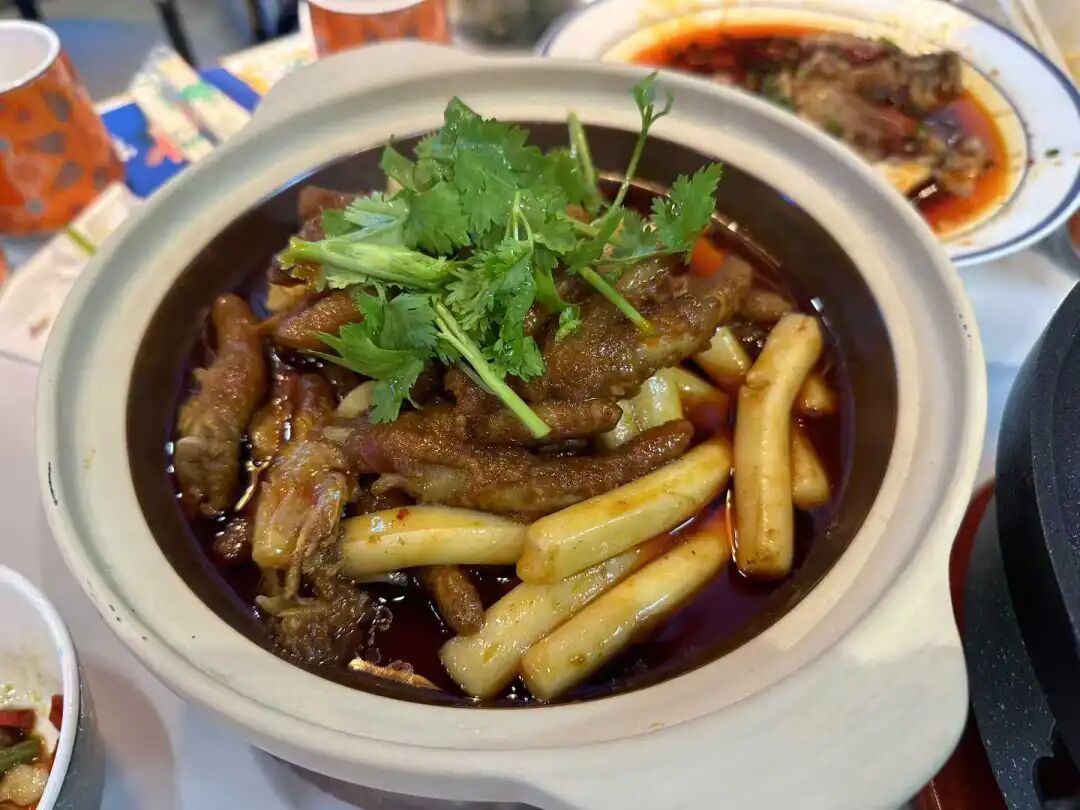
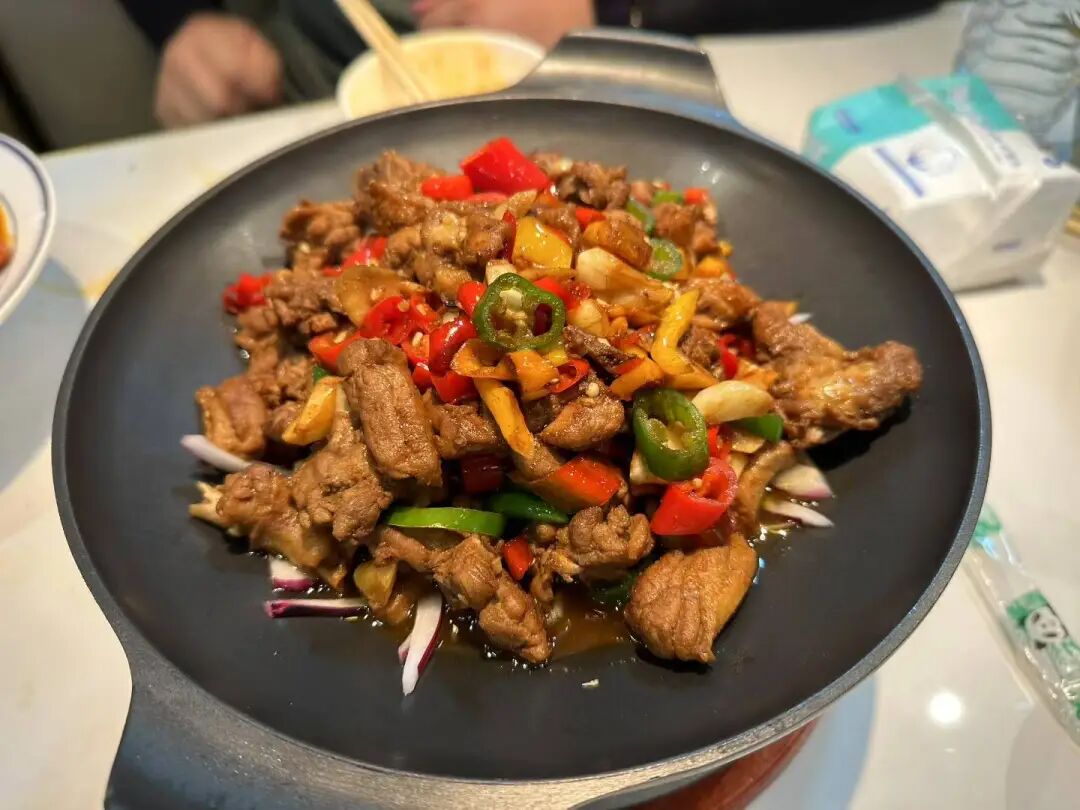
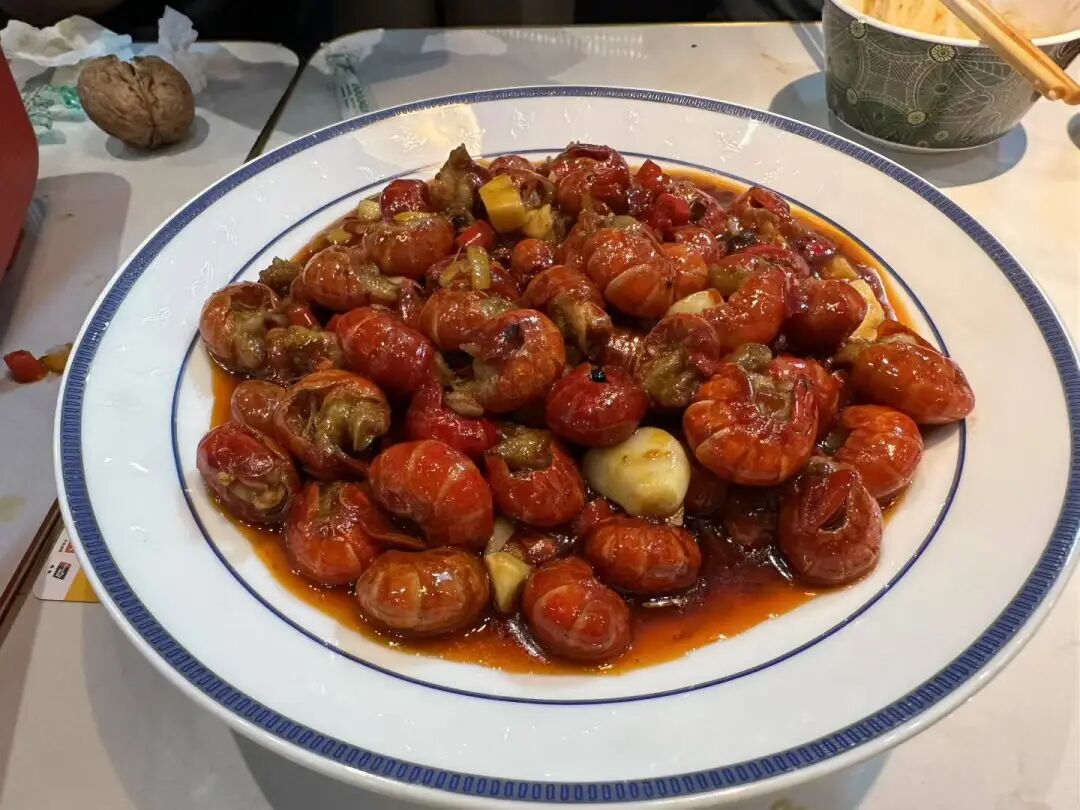
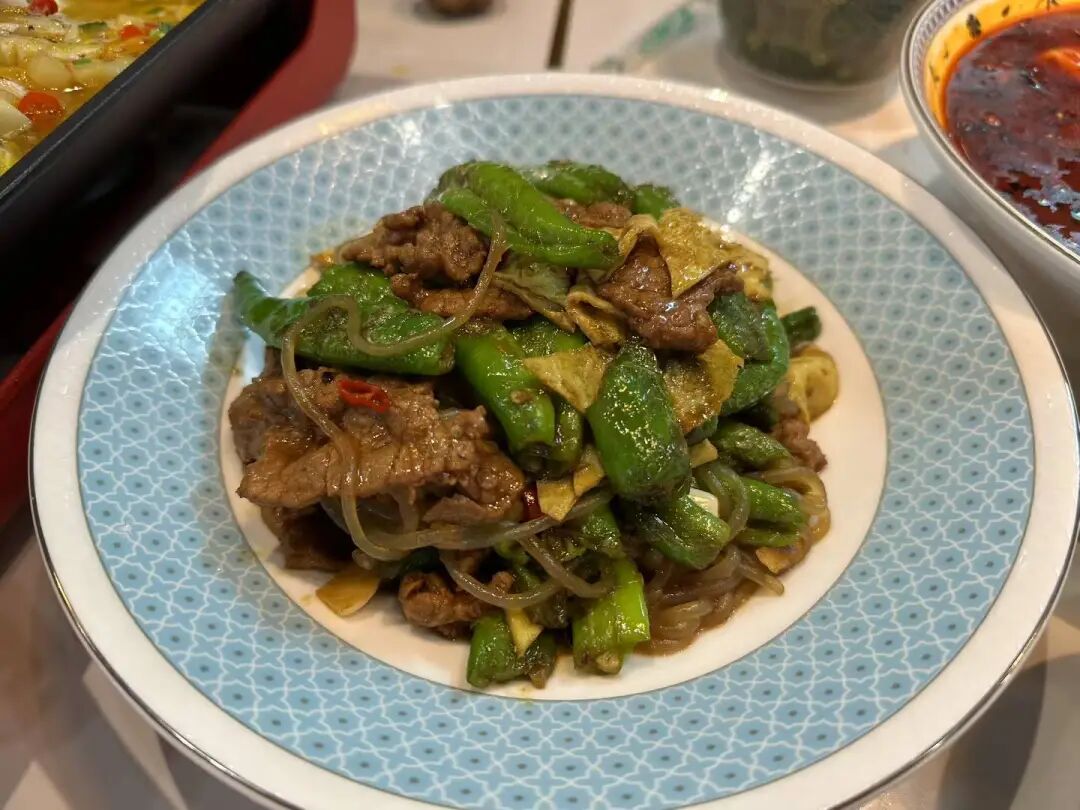
Shandong Dezhou Lamb Soup and Steamed Dumplings
In the morning, I had steamed dumplings (zhengjiao), lamb bone broth (yangtang), and sesame flatbread with meat (shaobing jiarou) at Old Ma's place in Zhaogongkou, Fengtai. The owner is from Dezhou, Shandong, and the lamb broth is in the style of Shan County. It is a milky white broth made by boiling crushed lamb leg bones over high heat until they emulsify. White broth and clear broth taste different, and the white broth is much richer.
Their sesame flatbread with meat tastes great. The flatbread is very crispy and softer than the typical Beijing style, with plenty of sesame seeds on both sides. The meat inside is shredded and also softer than the usual Beijing-style sesame flatbread with meat. We ordered shepherd's purse dumplings and beef dumplings. The beef ones are juicy, and the shepherd's purse filling is rare in Beijing and tastes quite fresh and fragrant.
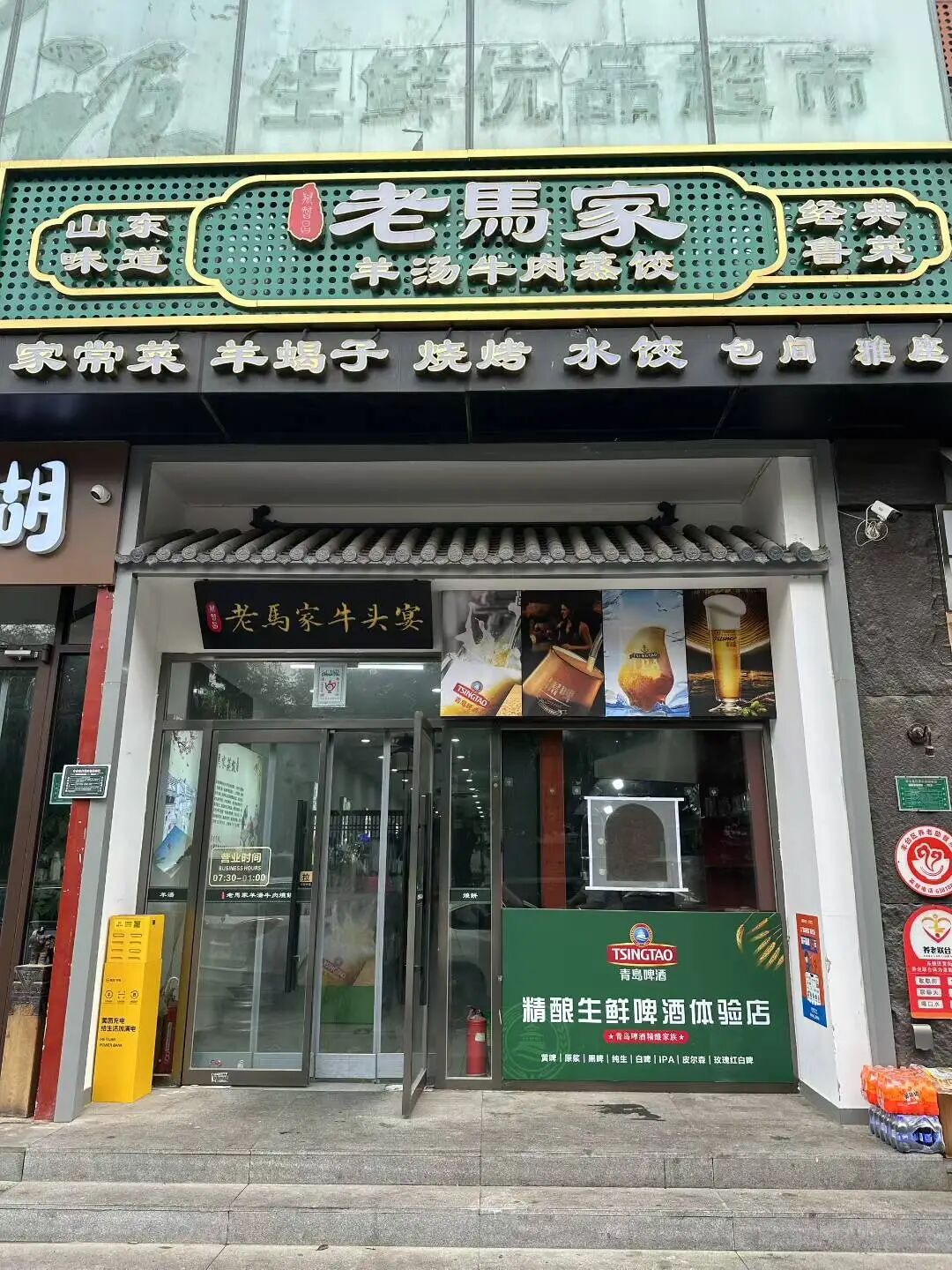
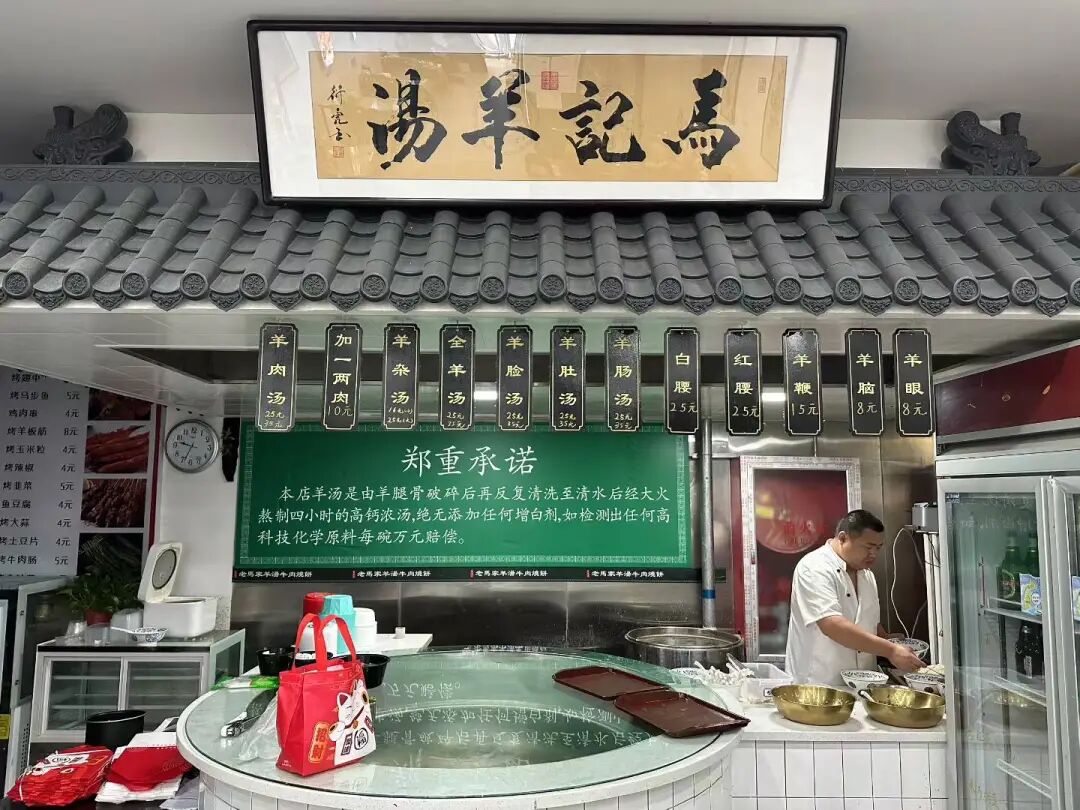
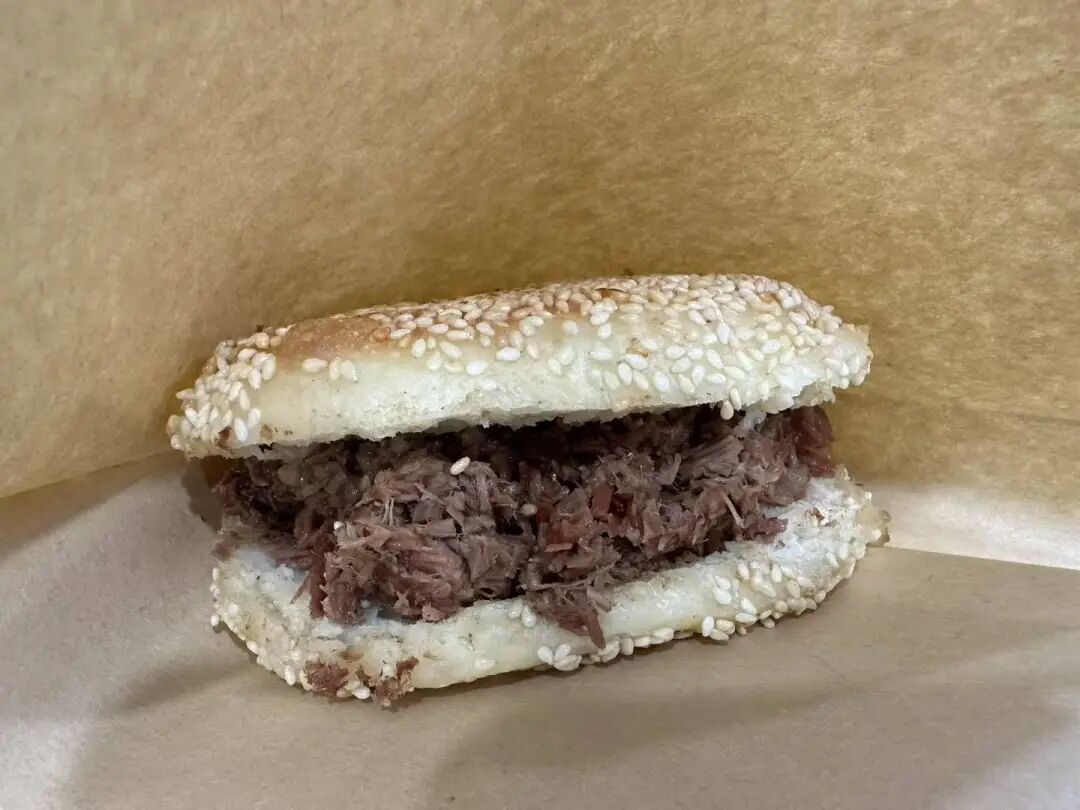
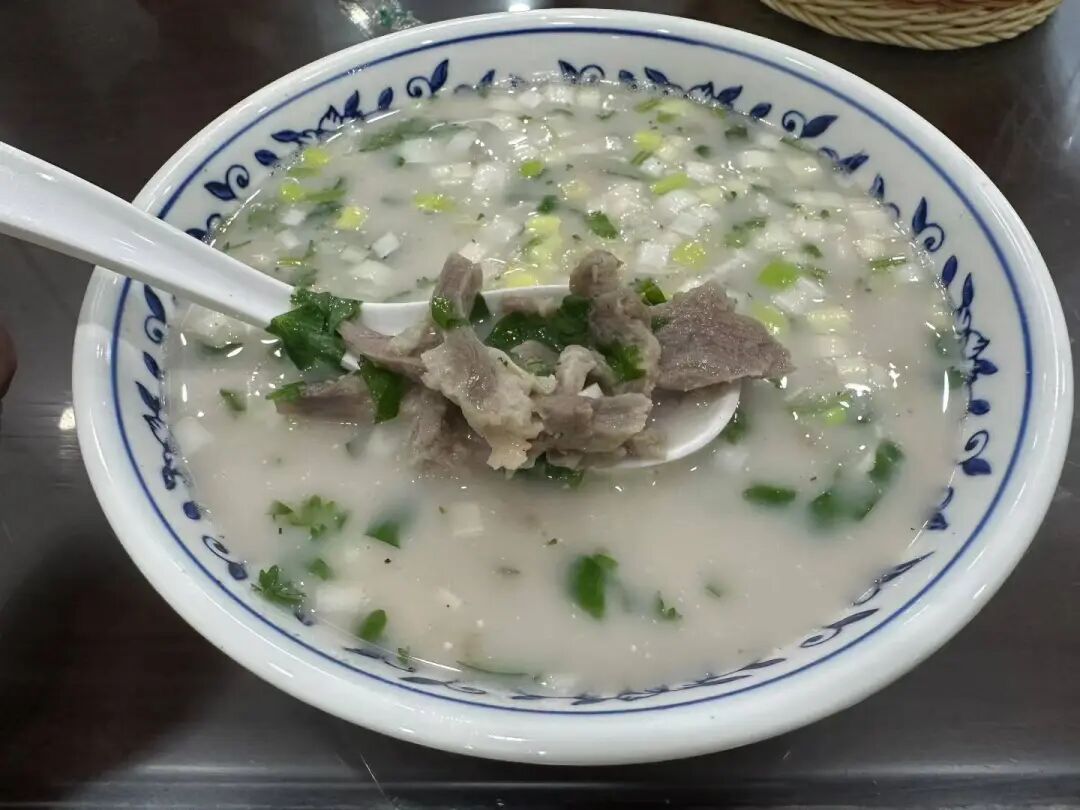
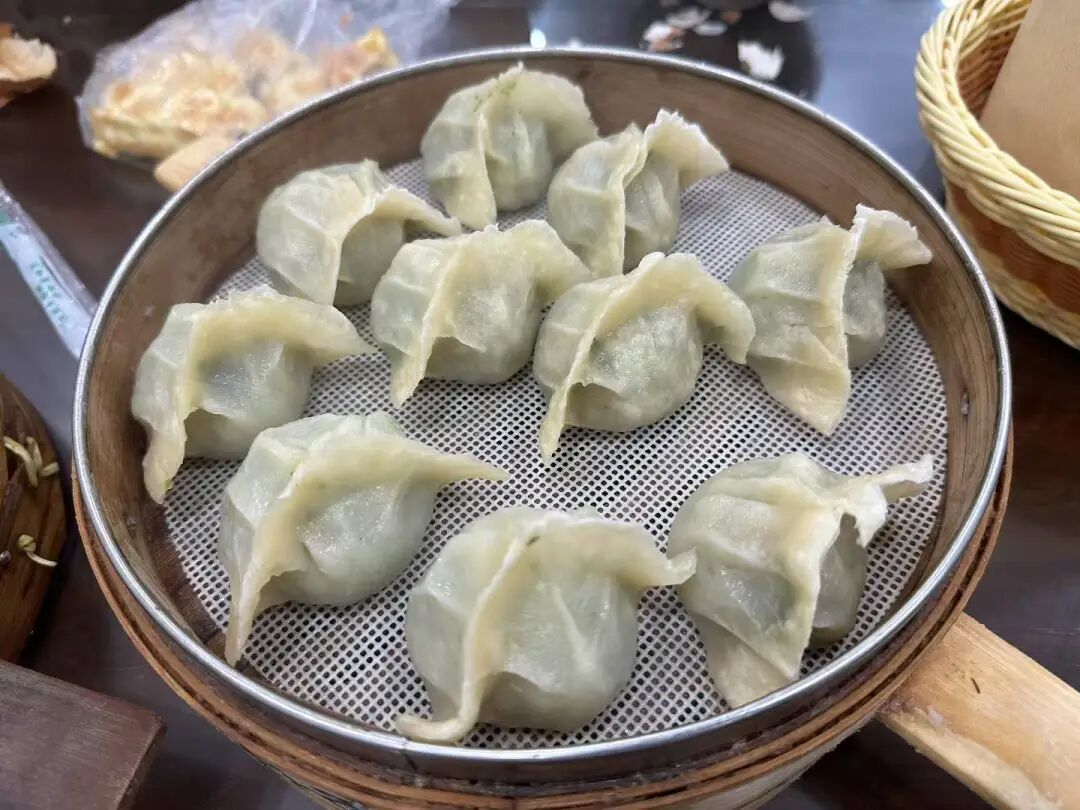
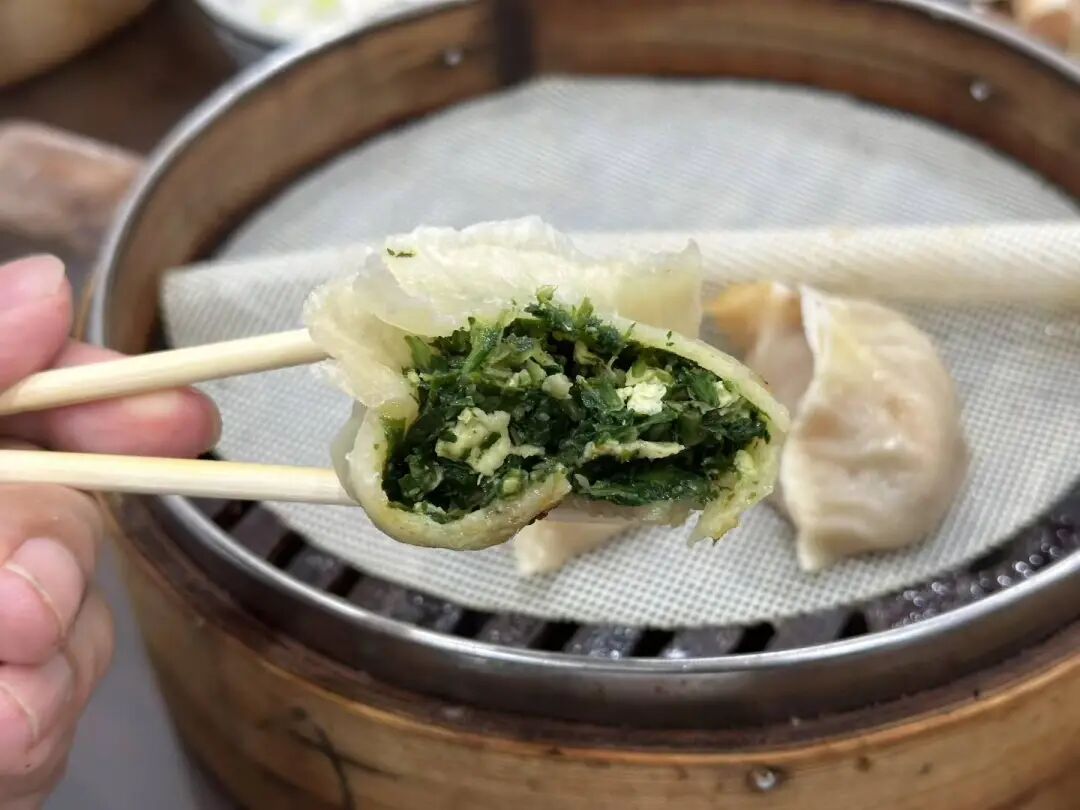
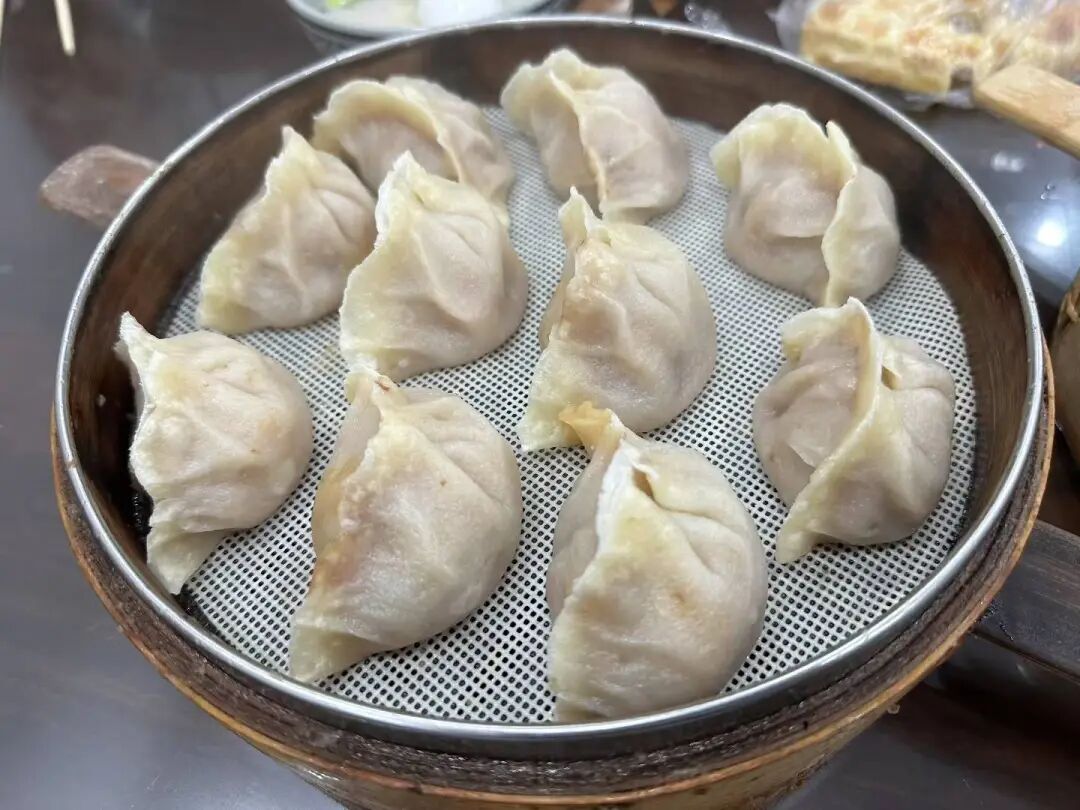
Philly cheesesteak
In the evening, after my son fell asleep, my wife and I went for a walk in Sanlitun. We often eat at the shawarma shop run by a Palestinian owner in Sanlitun SOHO. Before, we could only eat outside, but now we can sit inside to eat grilled meat, drink tea, and have coffee.
Besides shawarma wraps, they also serve Philly cheesesteaks, which are a classic street food. The Philly cheesesteak was invented by Italian-Americans on the streets of Philadelphia in the 1930s. It is made by putting shredded beef, cooked onions, and melted cheese into an Italian roll, often with other toppings. I think their Philly cheesesteak is more filling than the shawarma wrap; one is enough to make me feel full and satisfied. For a drink, I highly recommend the Middle Eastern diluted yogurt drink ayran, which is just yogurt mixed with water and a little salt. Their ayran has a rich, tangy, and milky flavor that is very appetizing.
This reminds me that food has no borders. On a summer evening in Beijing, we are eating Italian-American snacks made by our Palestinian brothers, and as long as the food is good, that is enough.
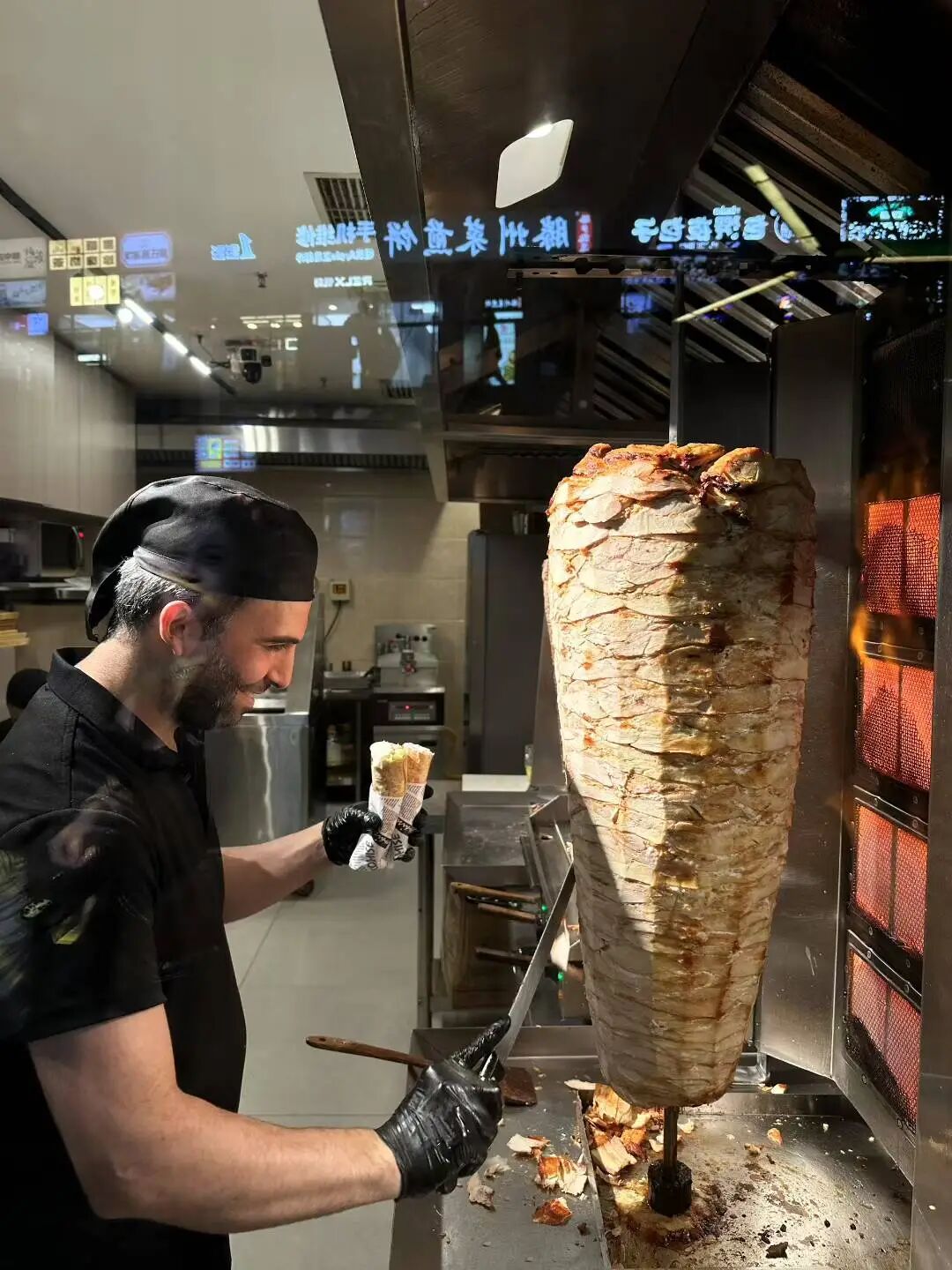
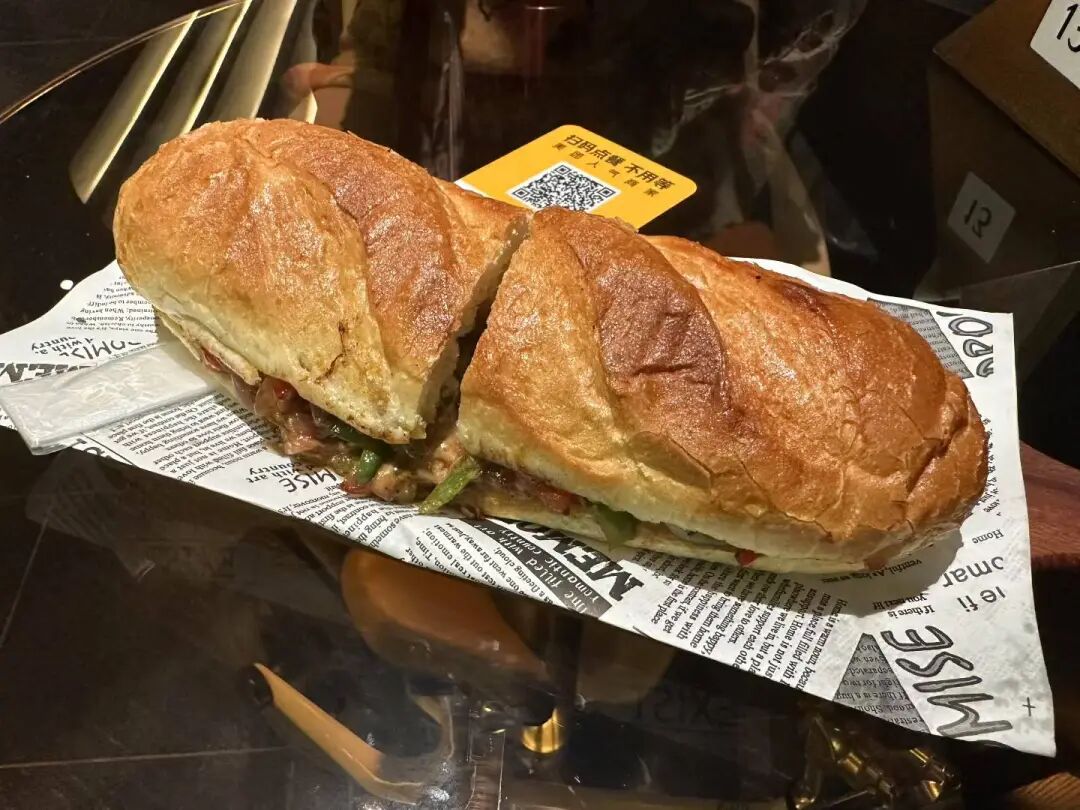
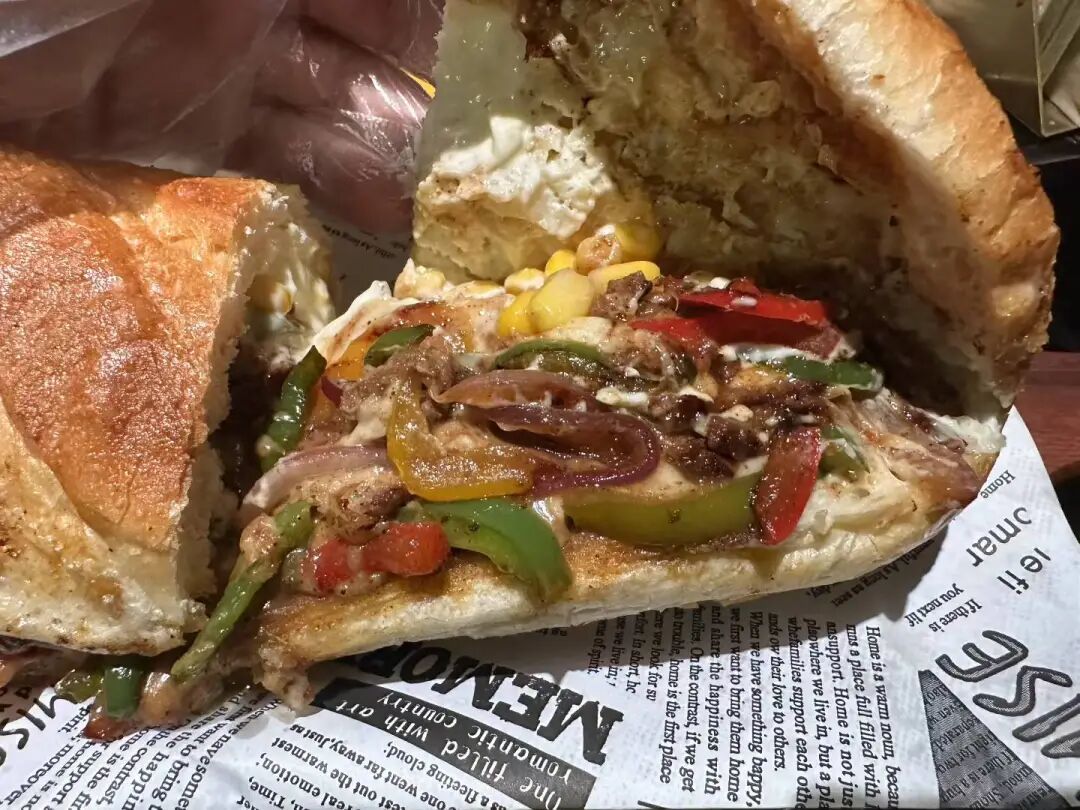
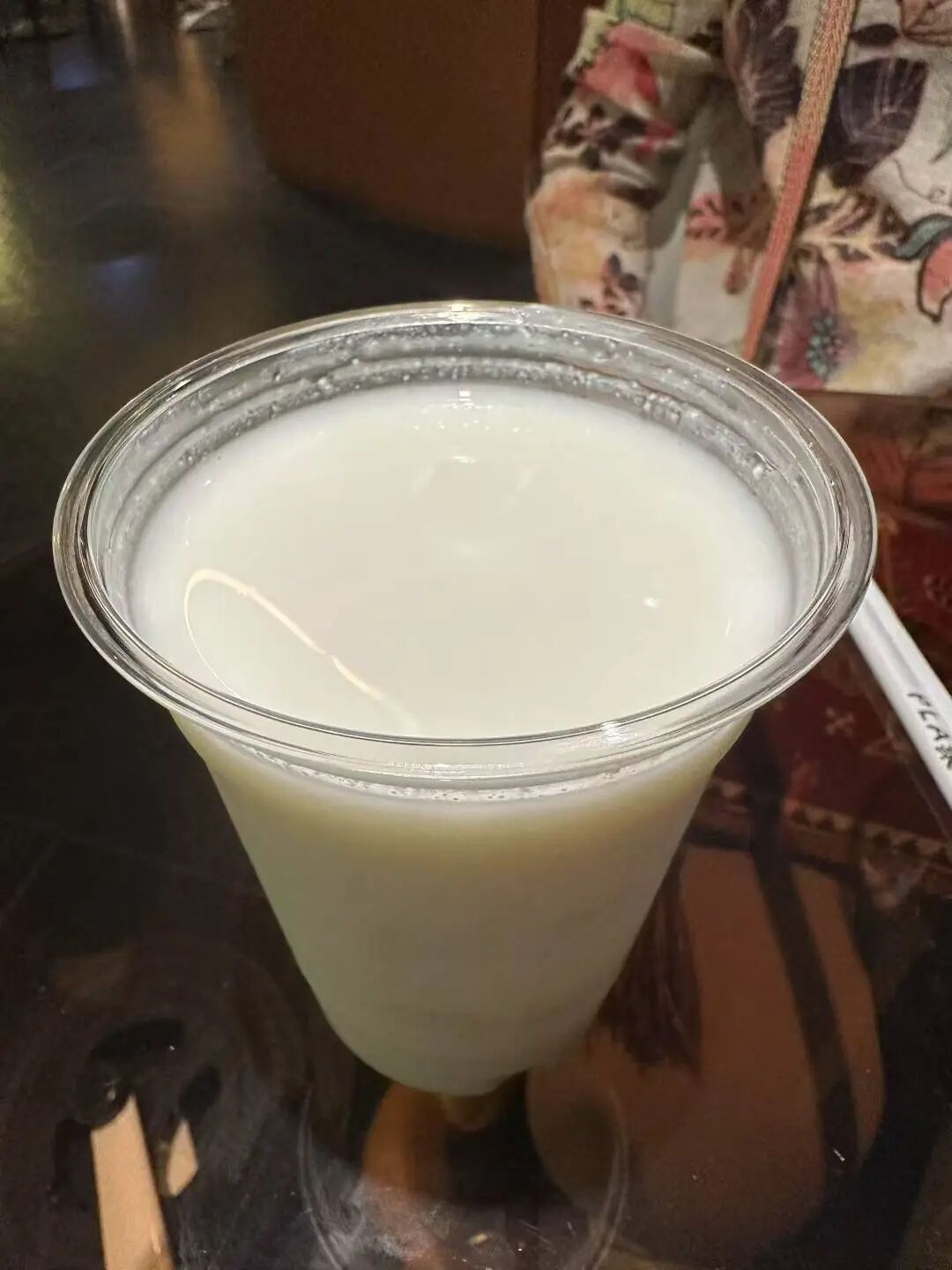
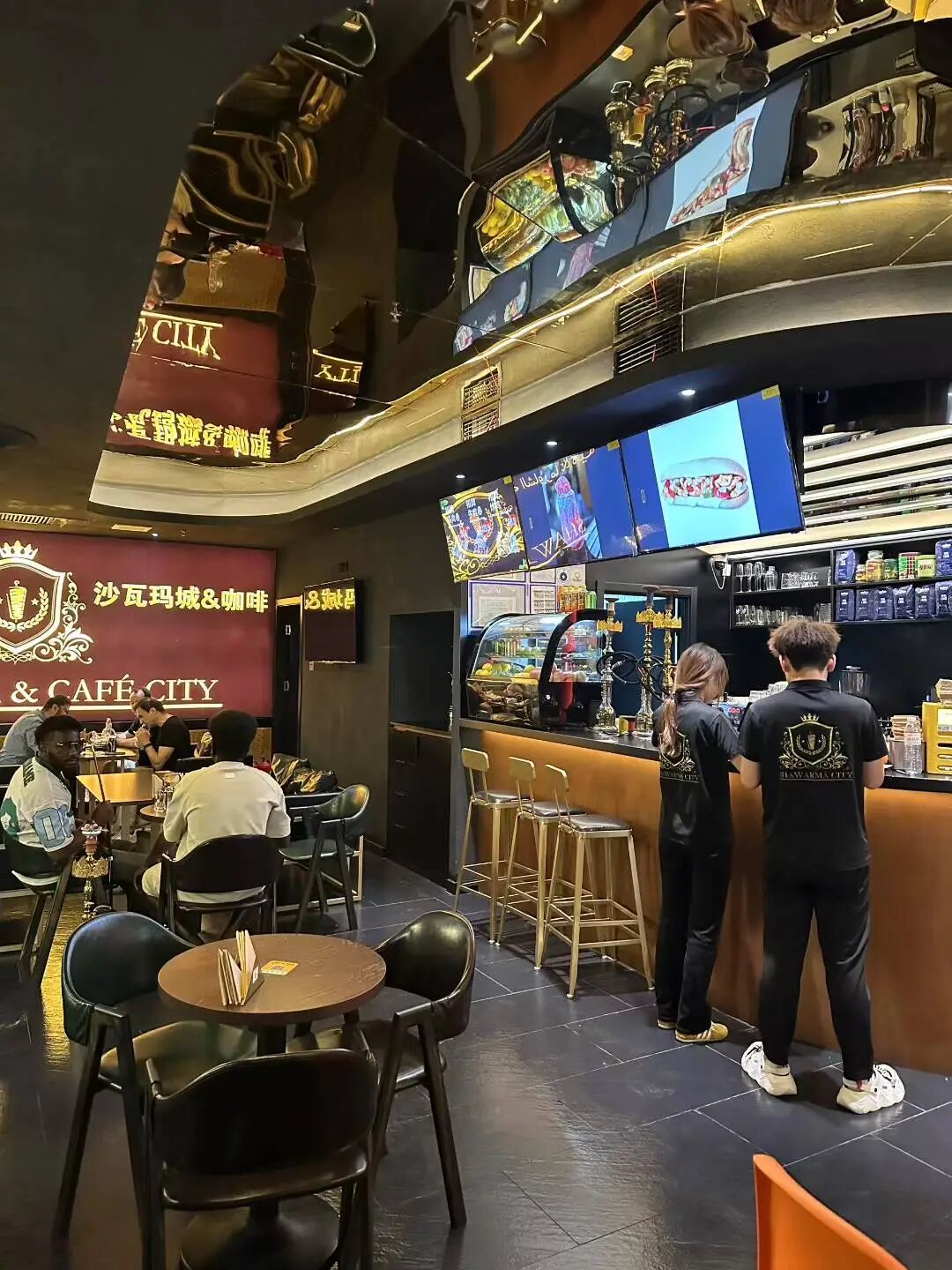
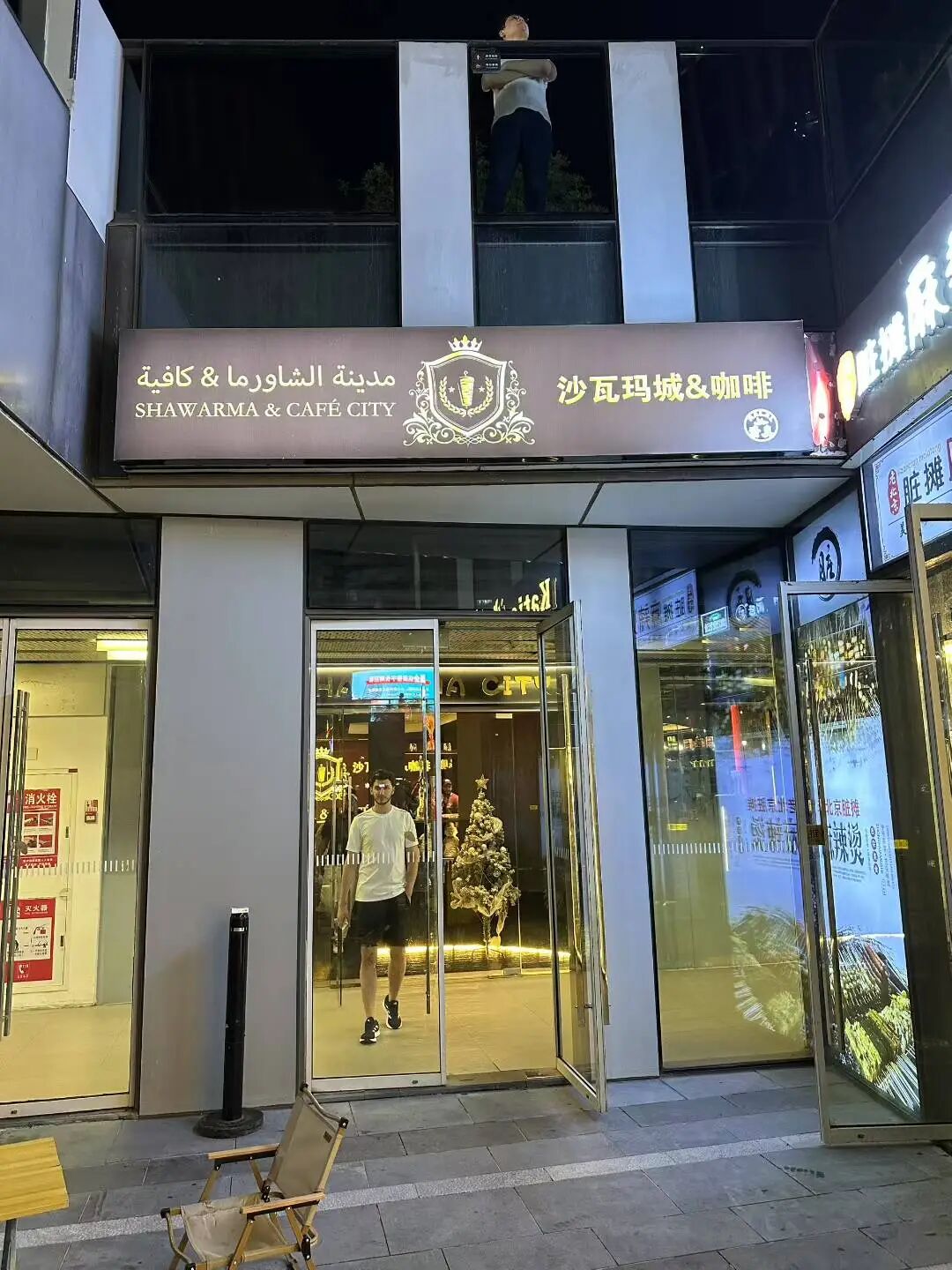
Roma Restaurant
Roma Restaurant is a very hidden spot inside Chaoyangmen, located in the basement next to a pool hall across from Galaxy SOHO. The owner is Pakistani and speaks fluent Chinese. He says he has a PhD from Peking Union Medical College and is currently a doctor at the Panjiayuan Cancer Hospital, so running the restaurant is just a side job.
They specialize in Western-style light meals and Pakistani curry. We ordered the spaghetti set, beef burger set, charcoal-grilled lamb cheese pizza, Caesar salad, and yogurt sauce. Their set meals offer great value for money.
I highly recommend the pizza; they are generous with the cheese and it tastes good. The Caesar salad portion is huge with plenty of chicken breast. It is healthy enough for one person to eat as a meal, and my child really likes it.
The spaghetti uses a creamy white sauce with chicken chunks, which my child loves. The set also includes two pieces of chicken pizza, a slice of chocolate cake, four grilled shrimp, and a small salad. It is really a great place to bring kids for a change of pace. The salad uses Thousand Island dressing, which gives it that old-school Western restaurant vibe. Usually, our Pakistani friends don't serve salads this way.
The beef burger tastes okay and the meat is good. It has various vegetables inside, but it is rare to find carrot slices in it. The burger combo comes with cola, fried chicken wings, french fries, and salad. The fries are fried well, but the chicken wings feel like they have a bit too little meat.
I do not recommend the yogurt sauce at the end. The yogurt has no flavor, and the side vegetables are the same as the salad, which feels a bit repetitive.
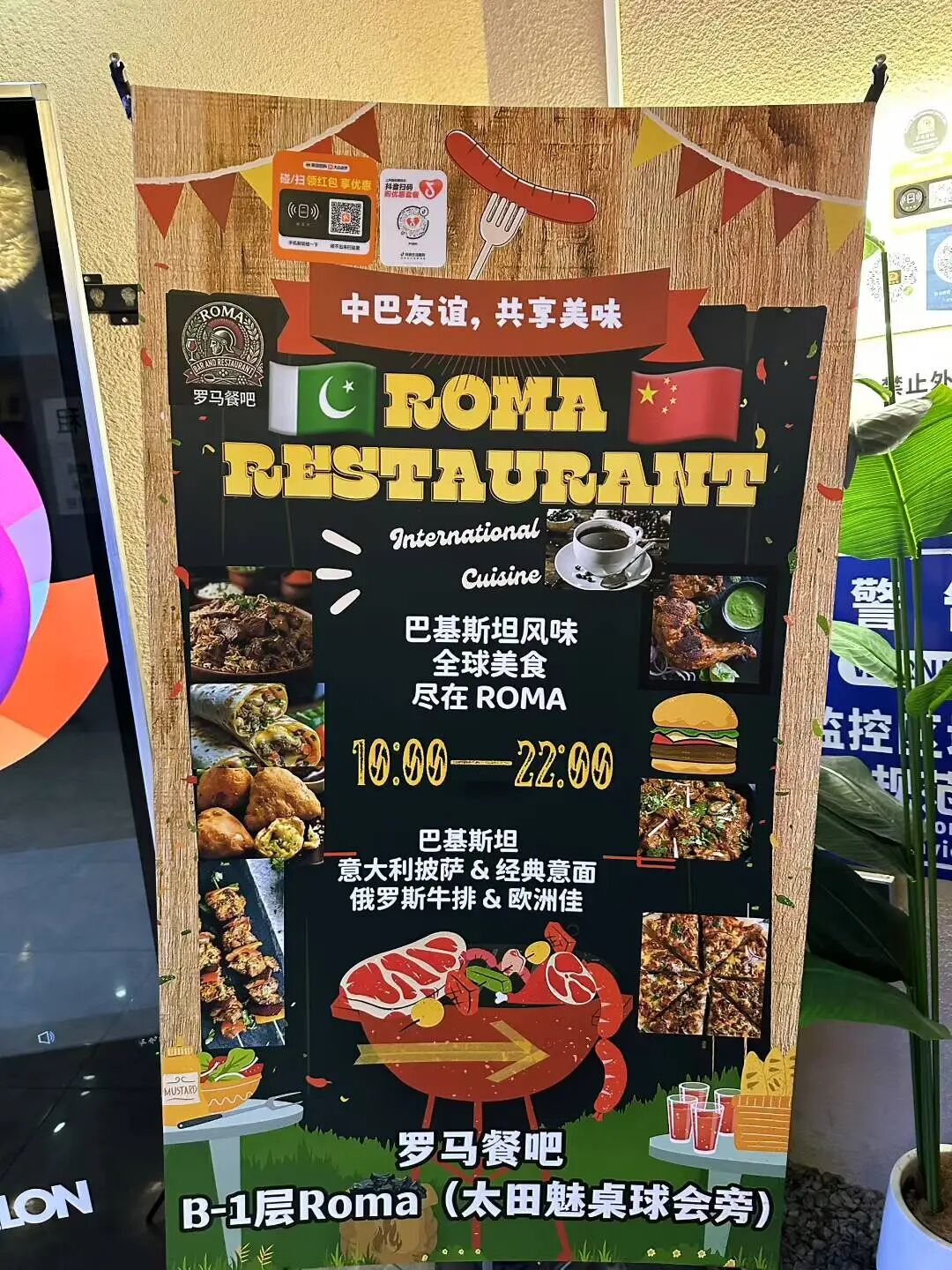
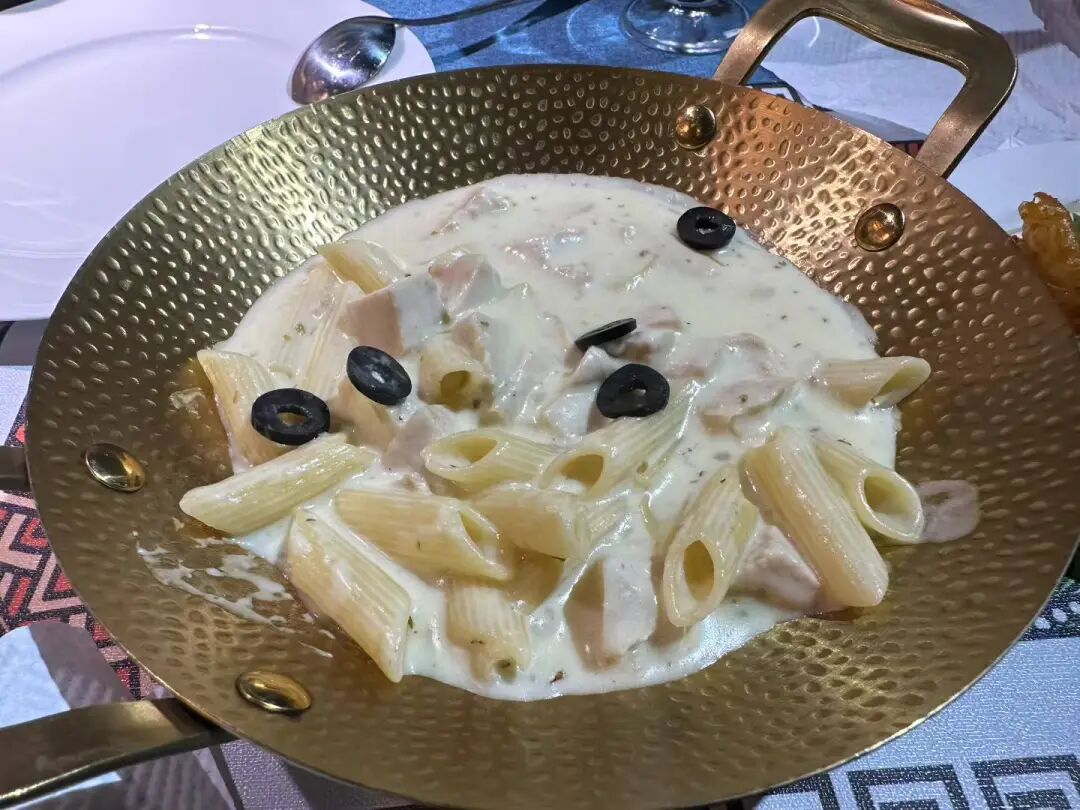
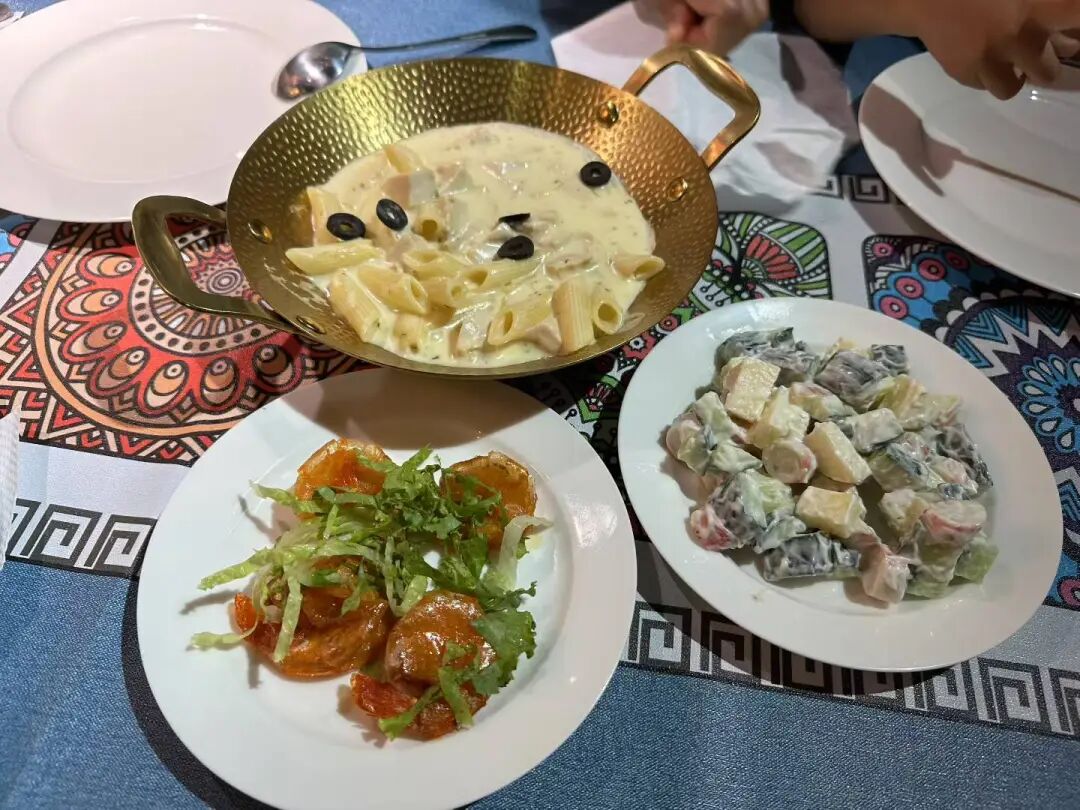
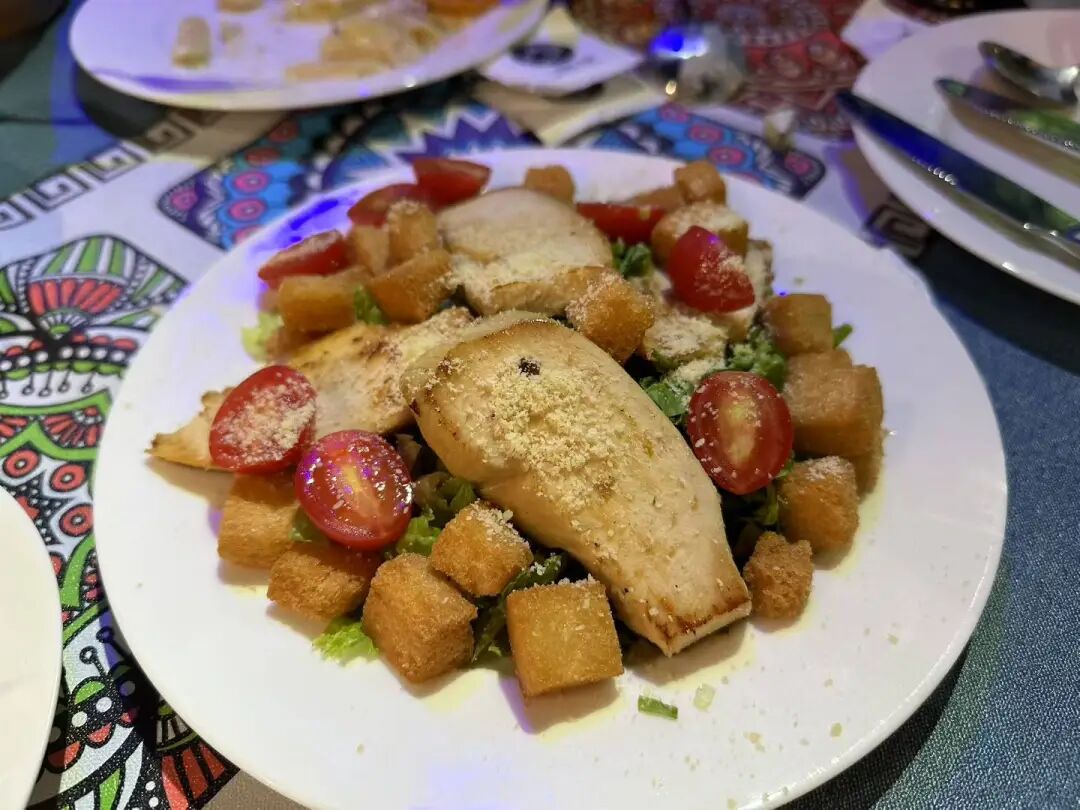
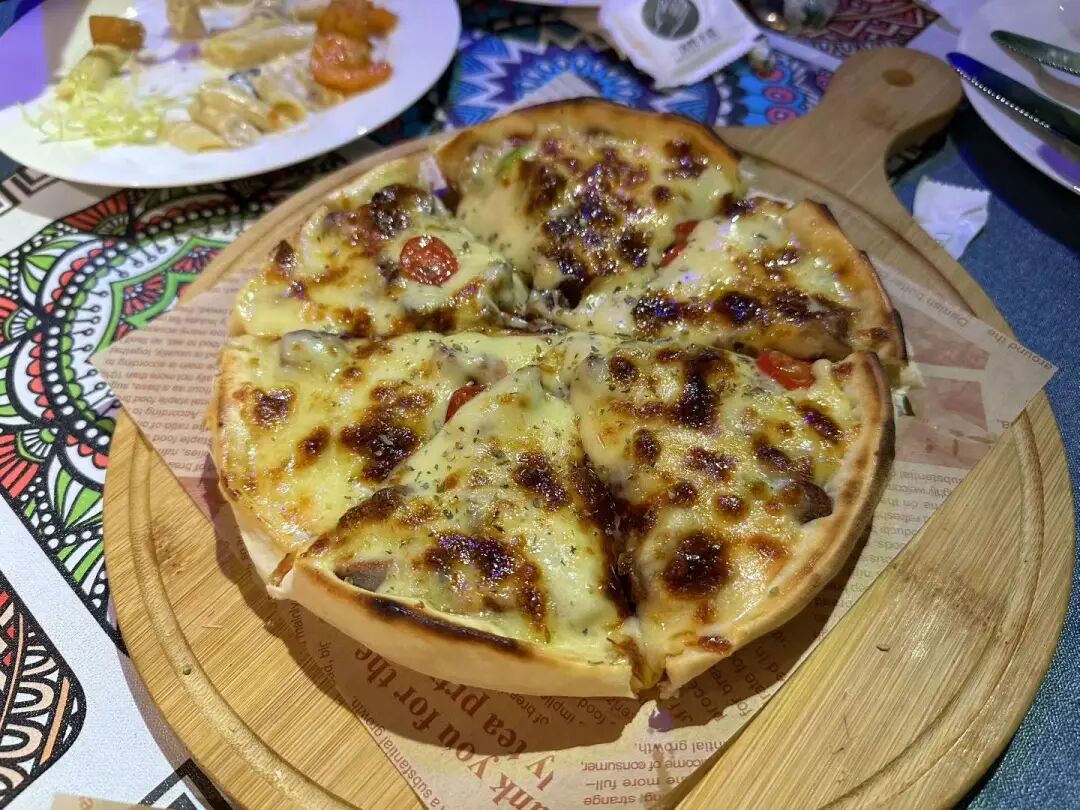
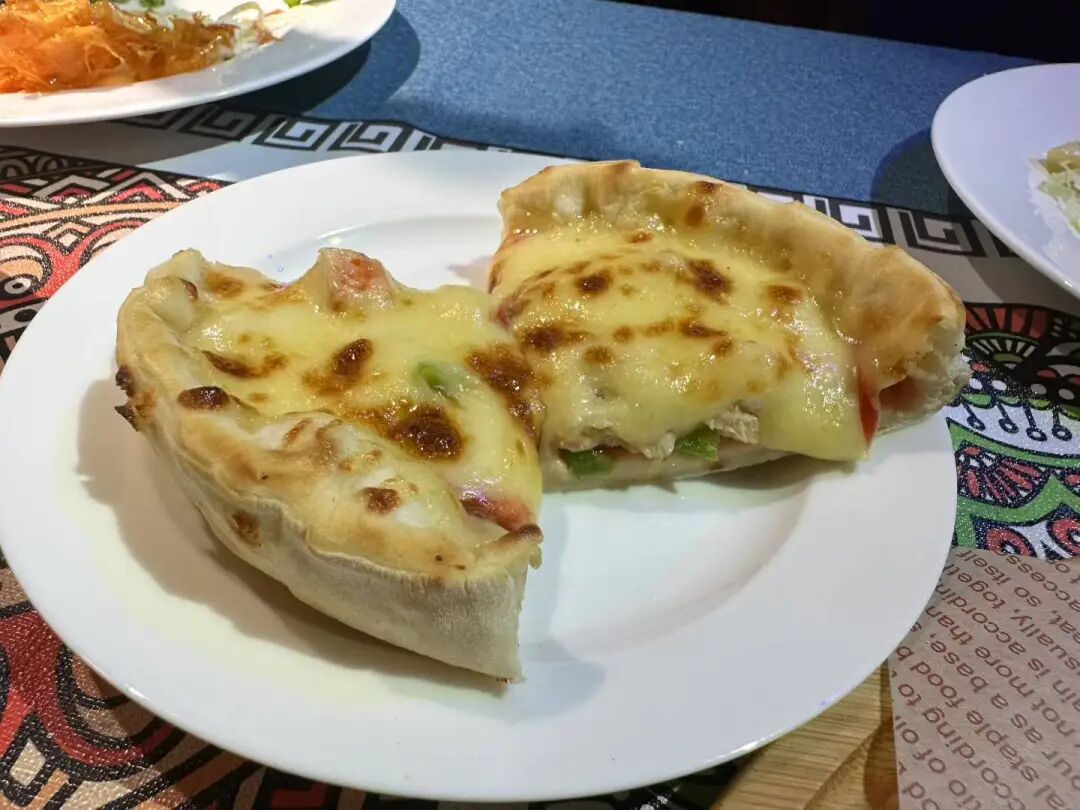
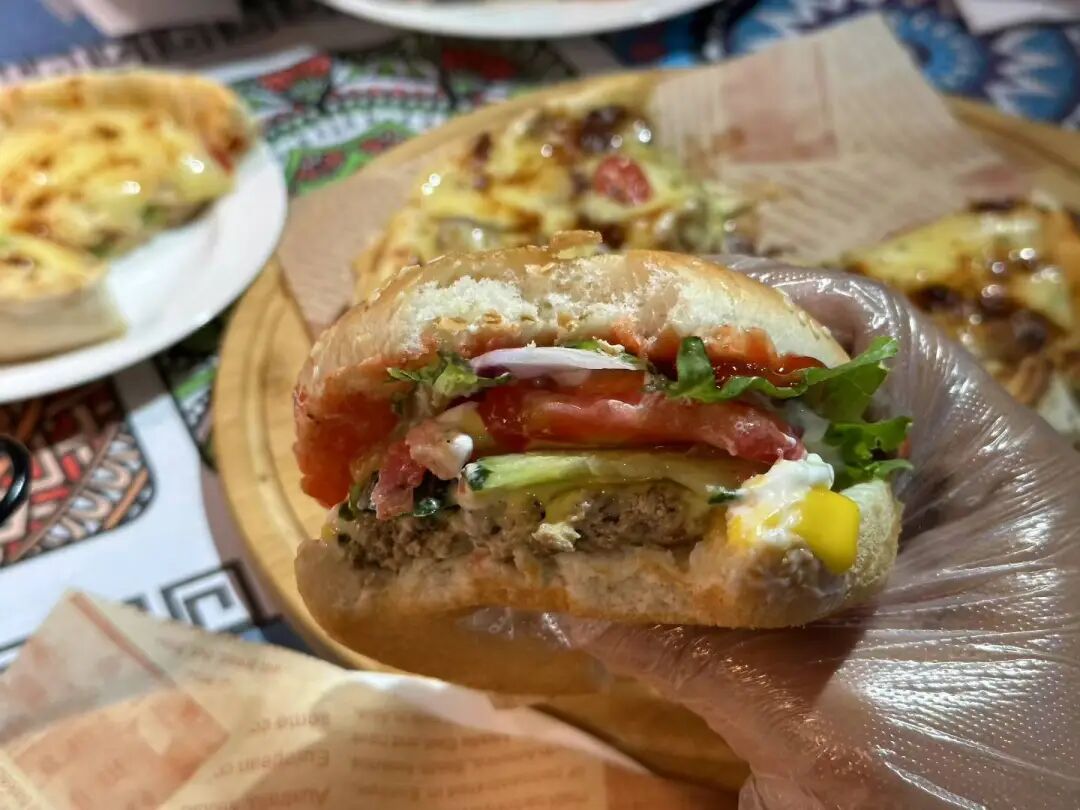
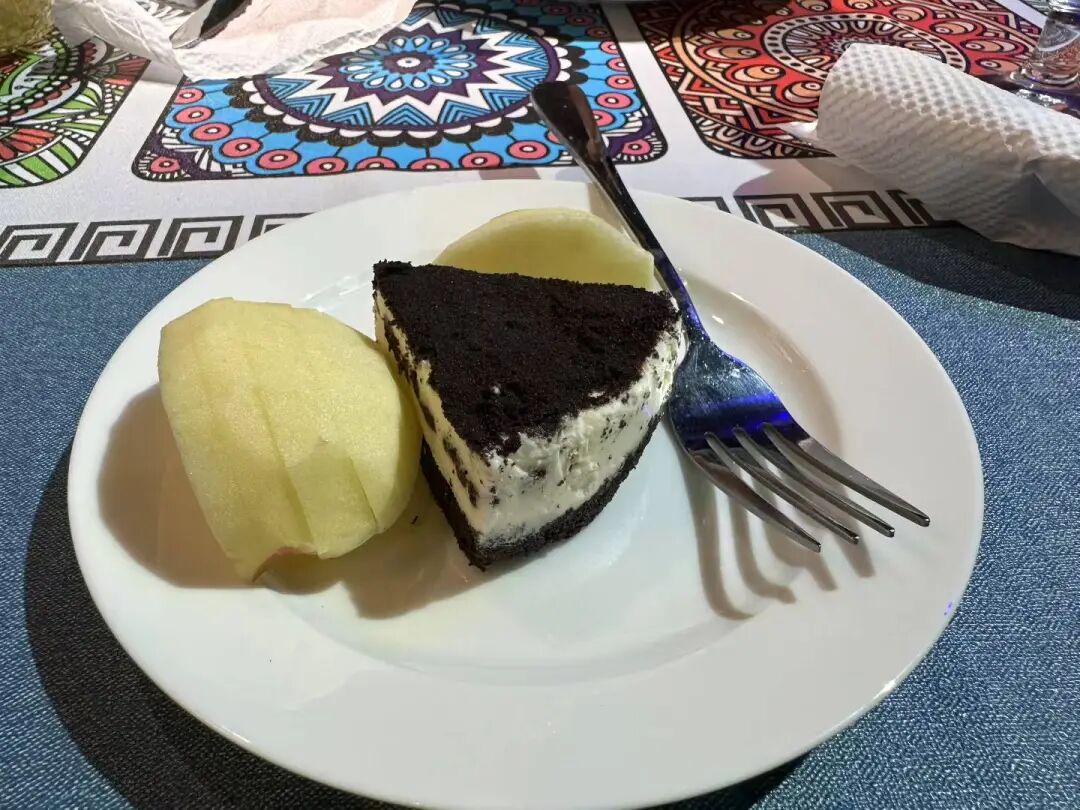
Mashed garlic lamb intestines (lansu yangchang).
I came to Muyuzhai on Dongsi Shitiao for breakfast and ordered mashed garlic lamb intestines (lansu yangchang) with beef and fennel buns (baozi). The mashed garlic lamb intestines (lansu yangchang) is their original creation. It mimics the thickened sauce of the traditional snack fried liver (chaogan), and it contains lamb intestines and lamb liver. After eating, I felt the thickened sauce was quite authentic. The lamb intestines were a bit tough, but the lamb liver was okay. Also, their paper cups are too deep, which makes them inconvenient to drink from and hard to hold. If you are not careful, they can easily fall into the pot. I hope the owner can change this.
I personally strongly support the learning and innovation of halal food as long as it stays within the rules of the faith. This is because halal food has been developing for hundreds of years by learning from and integrating various food cultures. Nearly a hundred years ago, the famous Beijing chef Chu Xiang boldly introduced ingredients never before used in Chinese cooking at Xilaishun, such as tomatoes, asparagus, lettuce, tomato sauce, and salad dressing, which made halal cuisine much richer than before. Many dishes that we take for granted today were actually only passed down because our predecessors boldly tried them despite controversy.
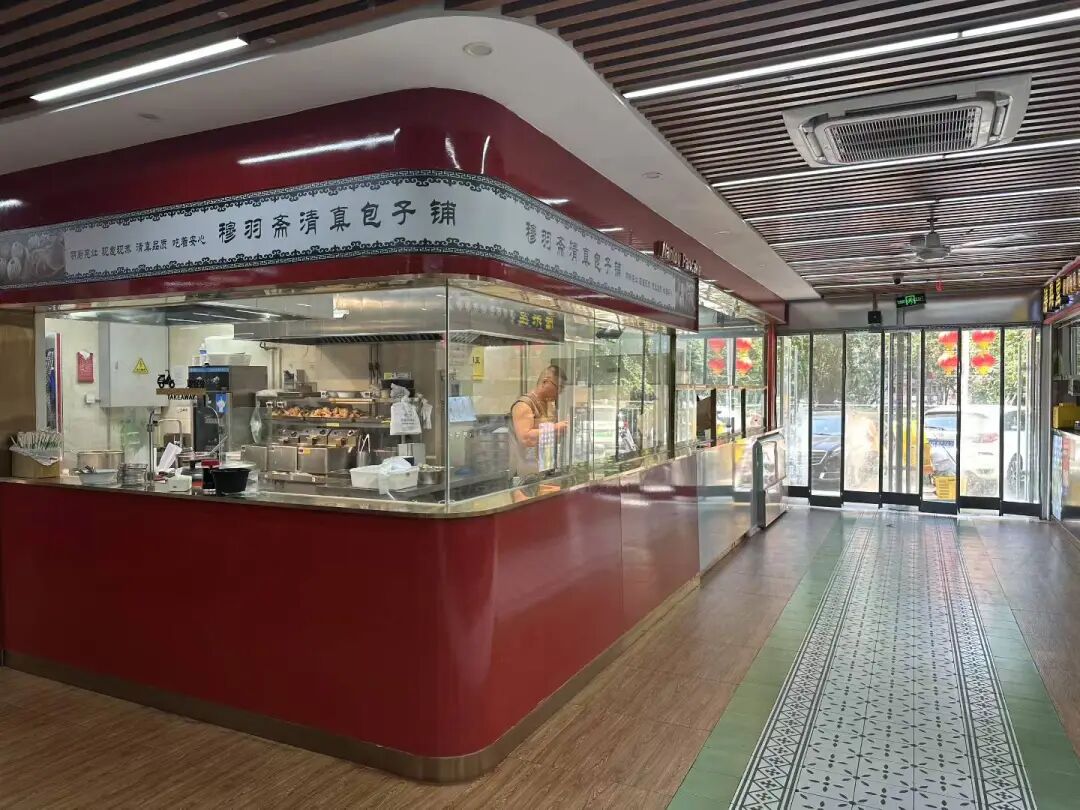
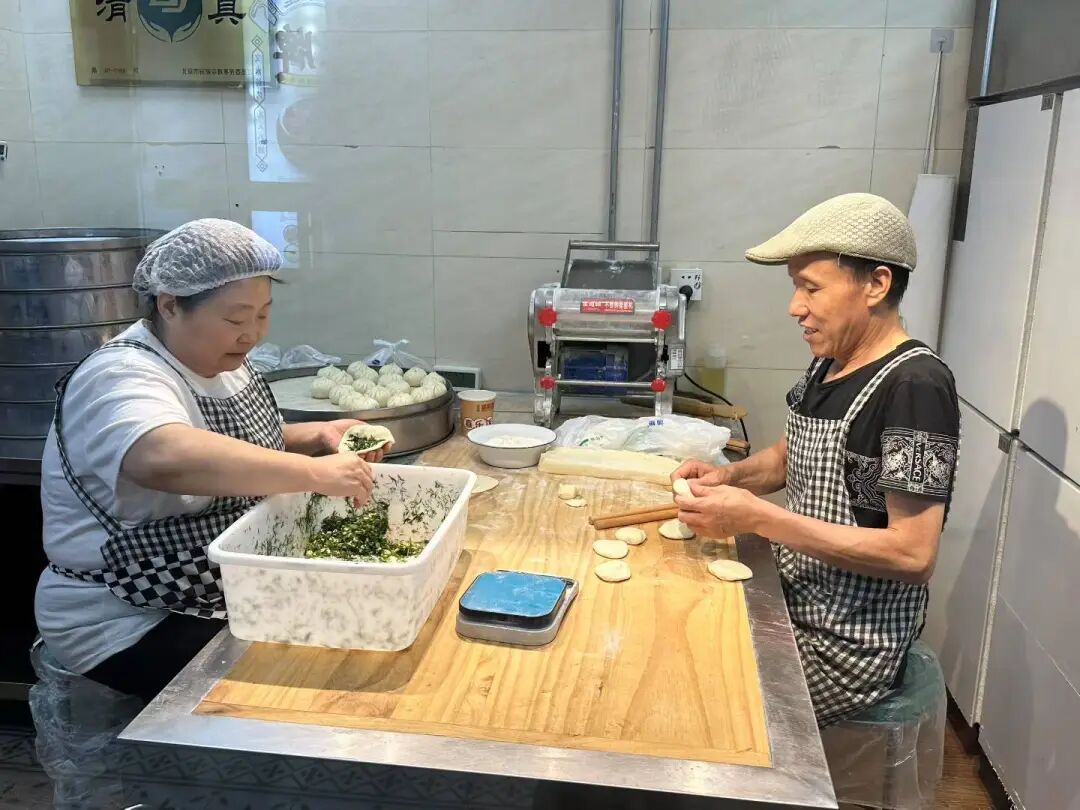
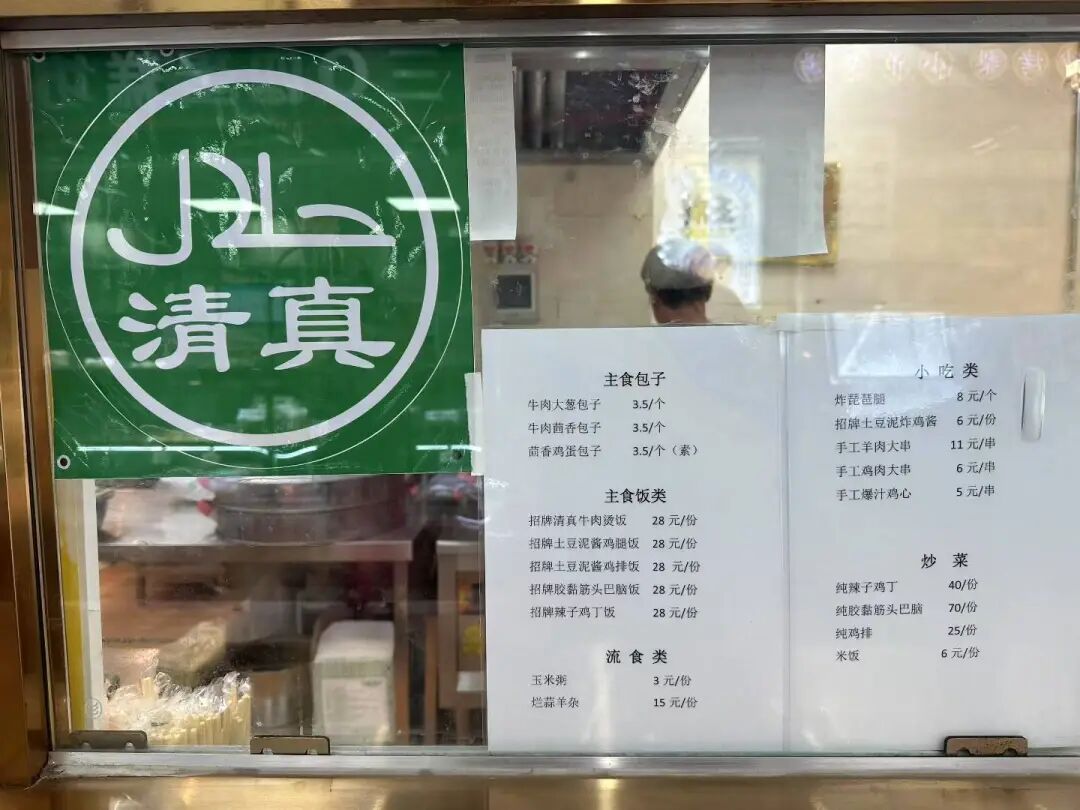
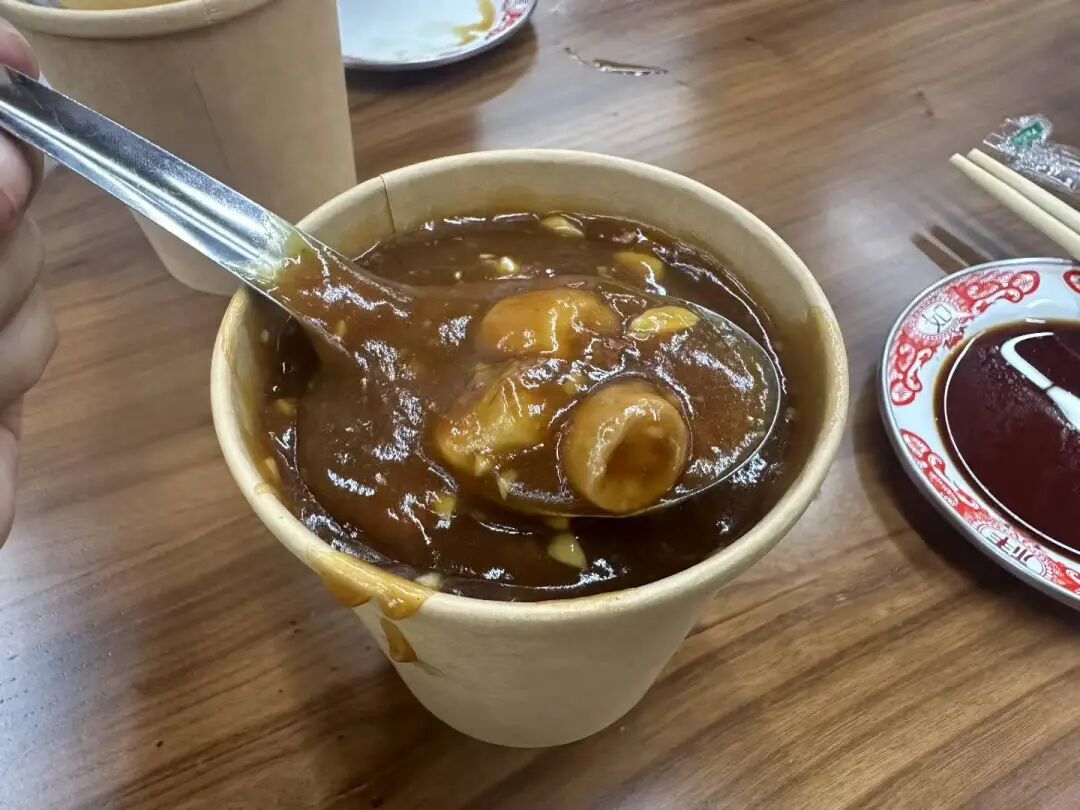
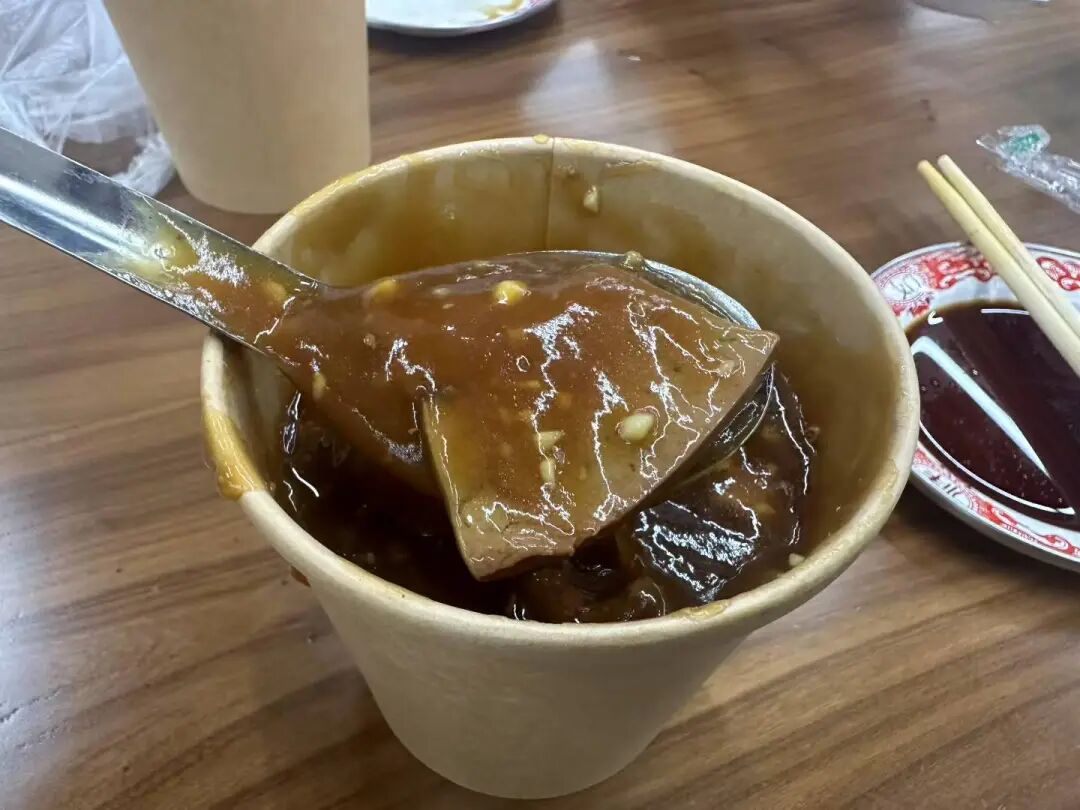
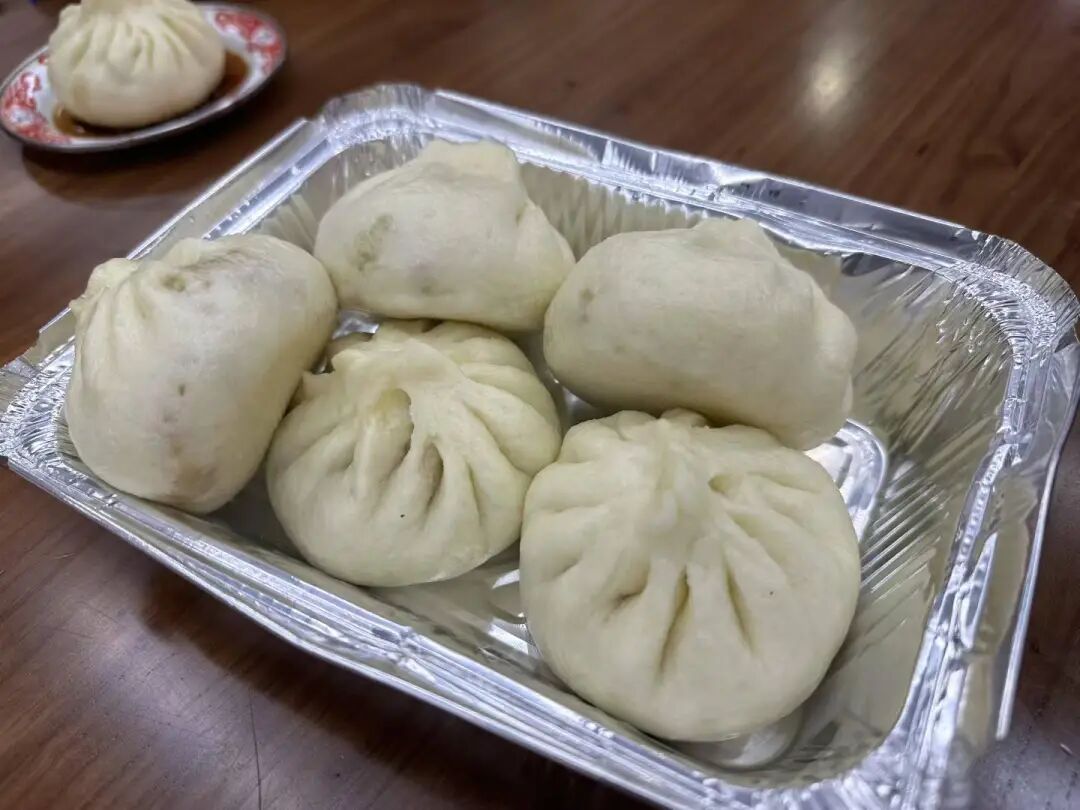
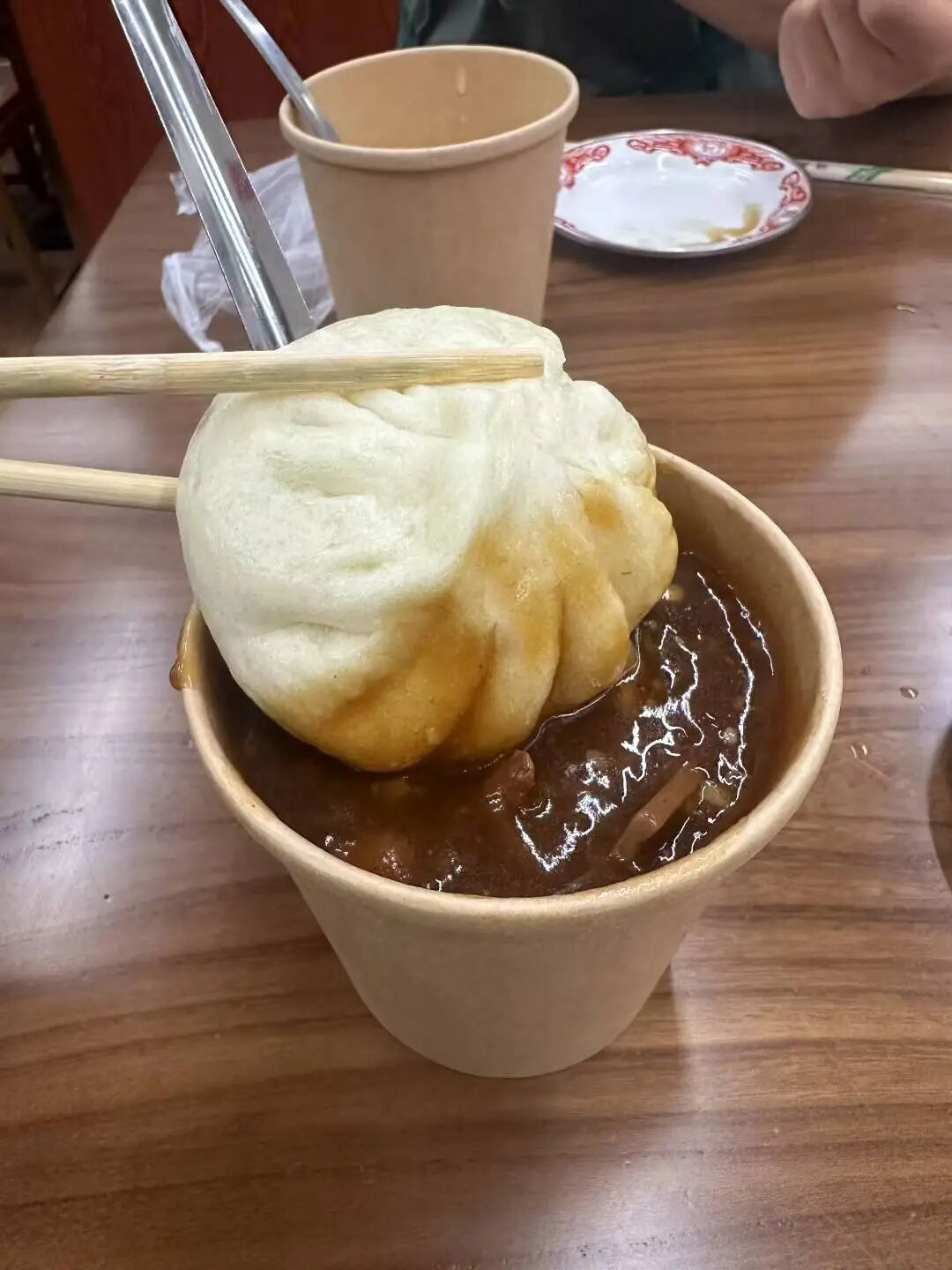
Inner Mongolia Lianying Steamed Dumplings (shaomai) Grassland Pomegranate Red (caoyuan shiliuhong).
The Lianying Steamed Dumplings (shaomai) from Ulanqab, Inner Mongolia, which we often eat at Huguosi, has opened a branch on Qianmen Street. We went there for a group dinner on Sunday night. The Qianmen branch is right next to Xianyukou Food Street. The shop is very spacious with open tables on the first floor and private rooms on the second. There are young ladies performing Mongolian dances, and there is a viewing platform to enjoy the night view of Qianmen. They specialize in steamed dumplings (shaomai), Mongolian food, and grassland hot pot. We ordered pot tea (guocha), wild onion lamb steamed dumplings (shaomai), lamb leg steamed dumplings (shaomai), hand-grabbed lamb (shouba yangrou), Mongolian lamb intestines (yangchang), and stir-fried lamb with vermicelli. The taste is basically the same as the Huguosi branch.
For the pot tea (guocha), they first stir-fry butter, then pour in milk tea, roasted rice, milk tofu, milk skin, and dried meat. It is very comforting to drink. The steamed dumplings (shaomai) are wrapped and steamed to order. The wild onion flavor is between green onion and chives, and it is more pungent than the lamb leg flavor. If there are many people, I suggest ordering both fillings to try. The hand-grabbed lamb (shouba yangrou) is very tender, and children love it too. Dipping it in fresh chive flowers really brings out the flavor.
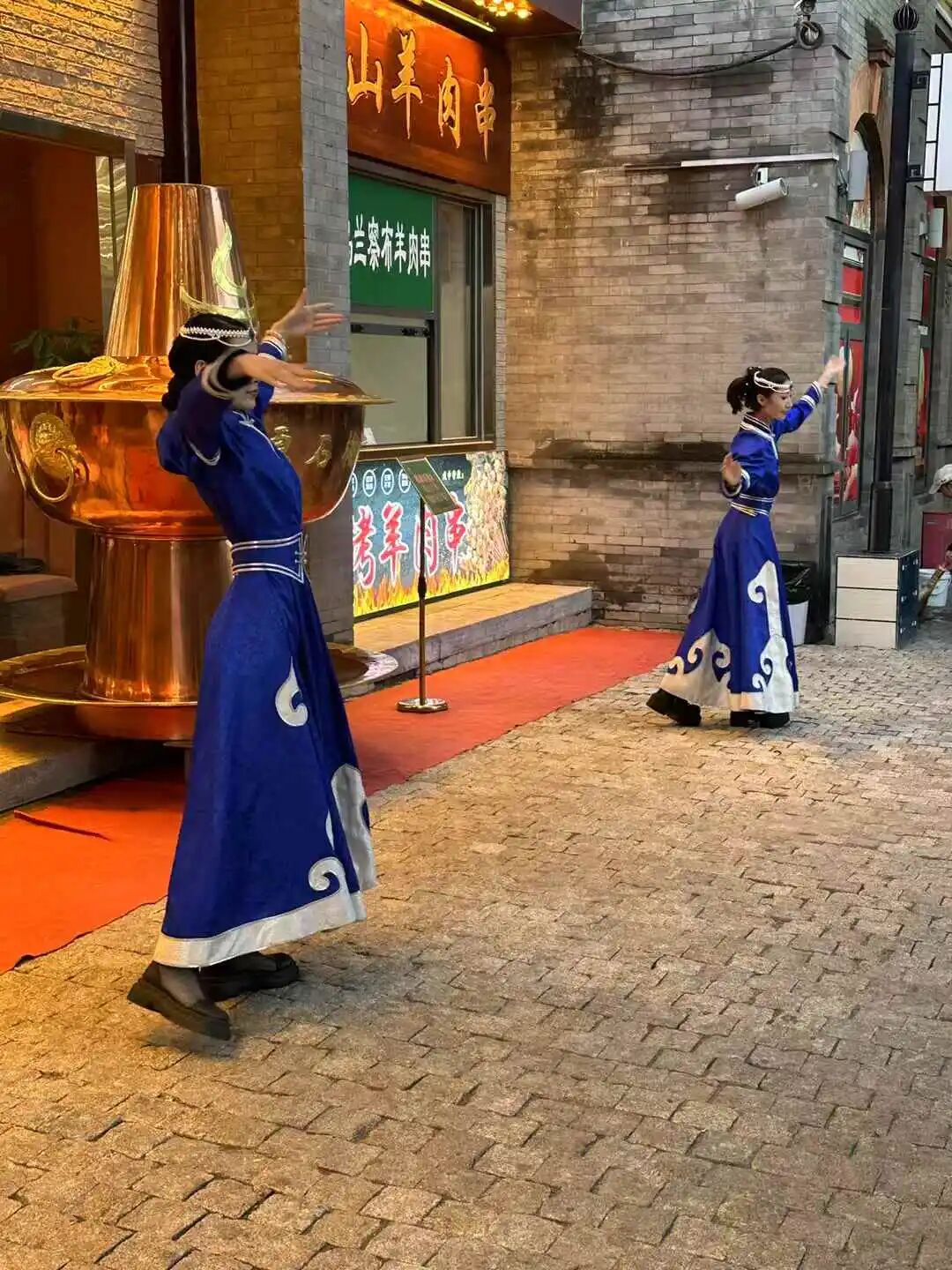
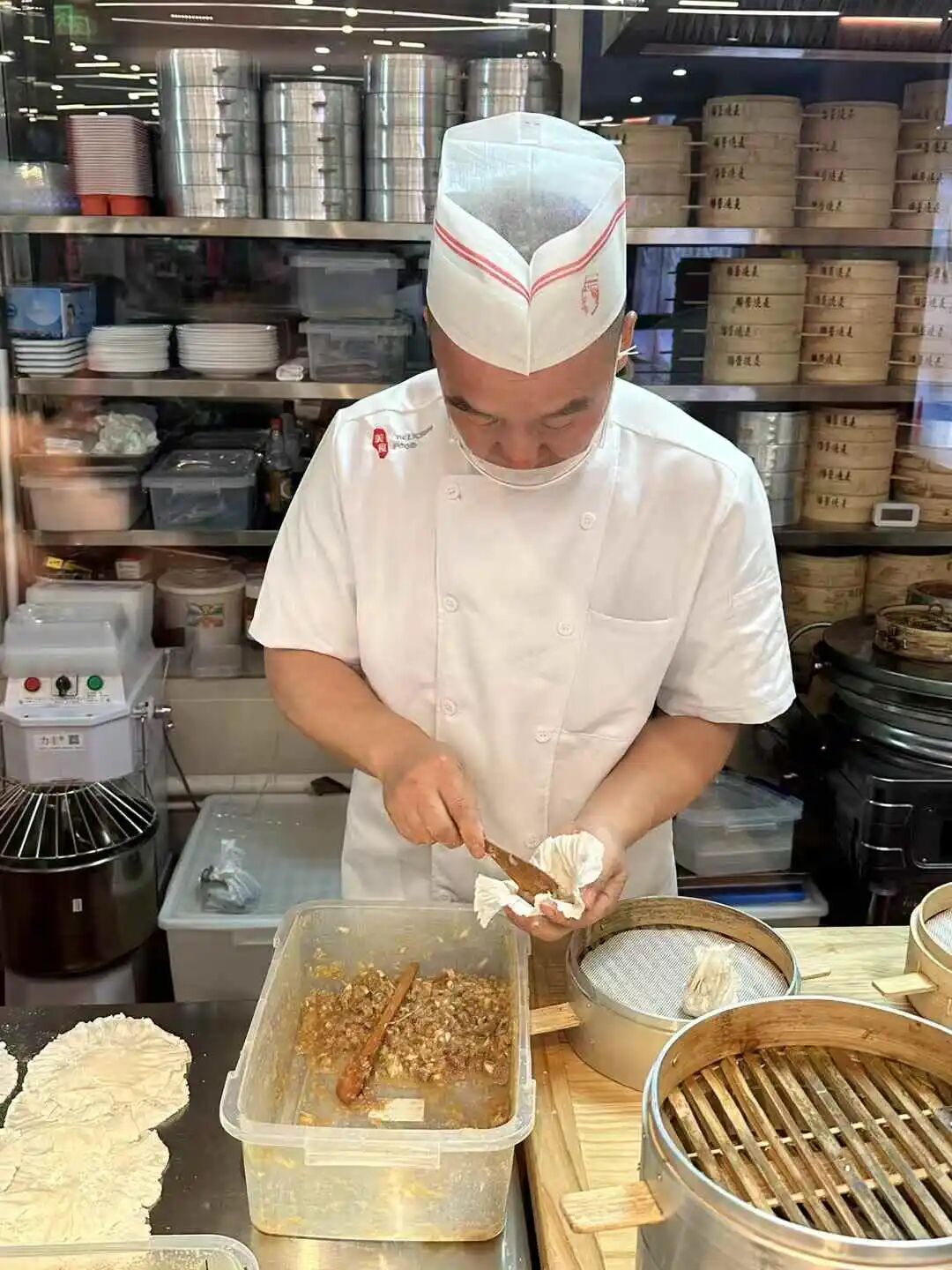
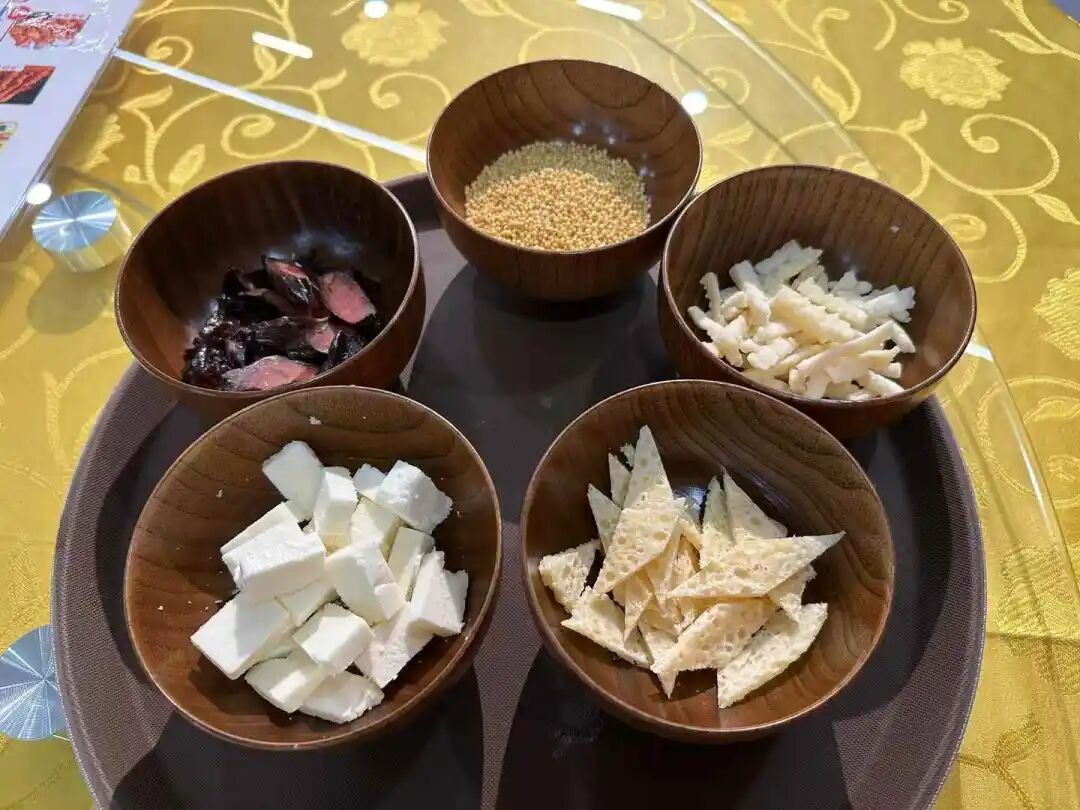
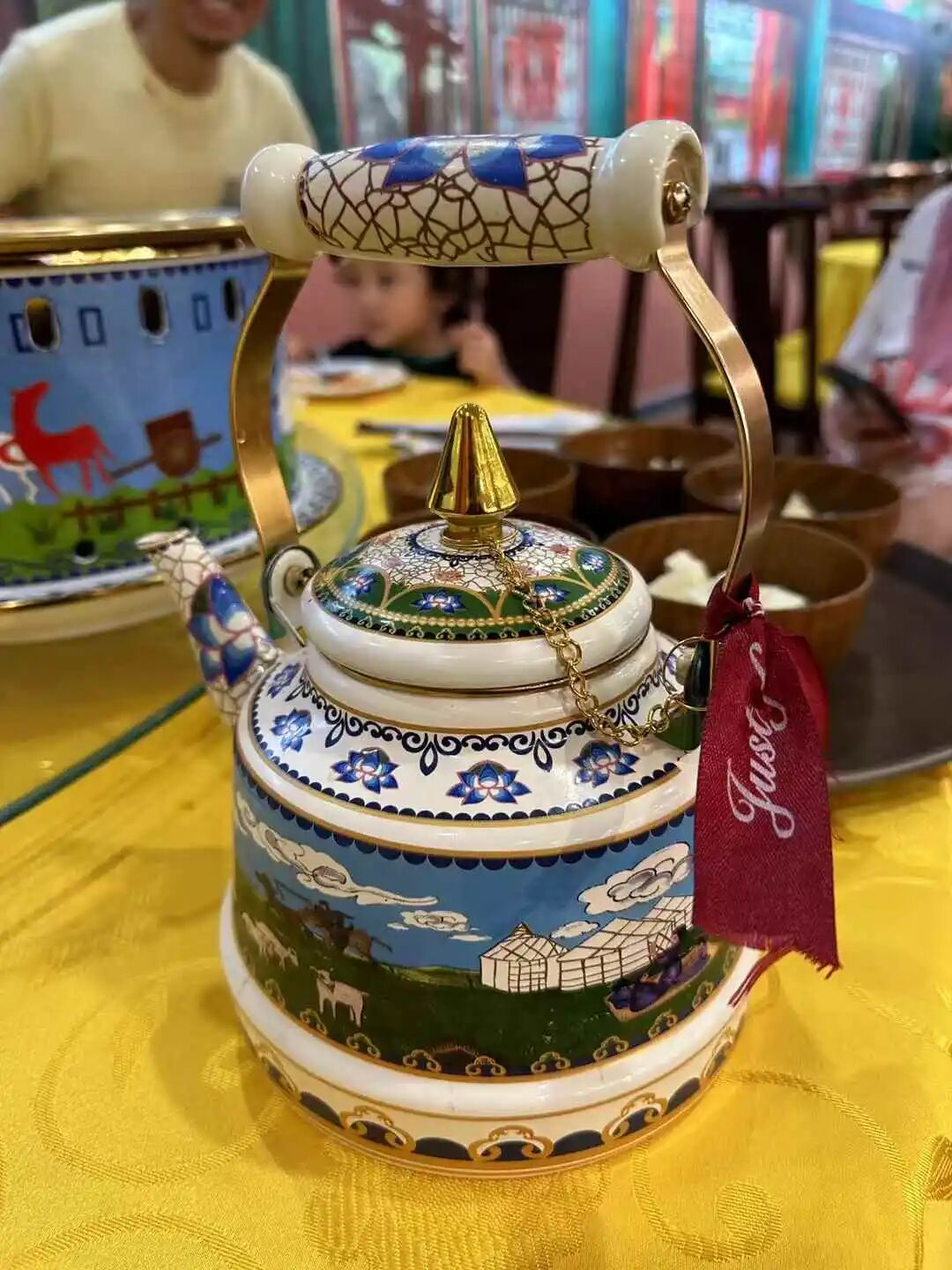
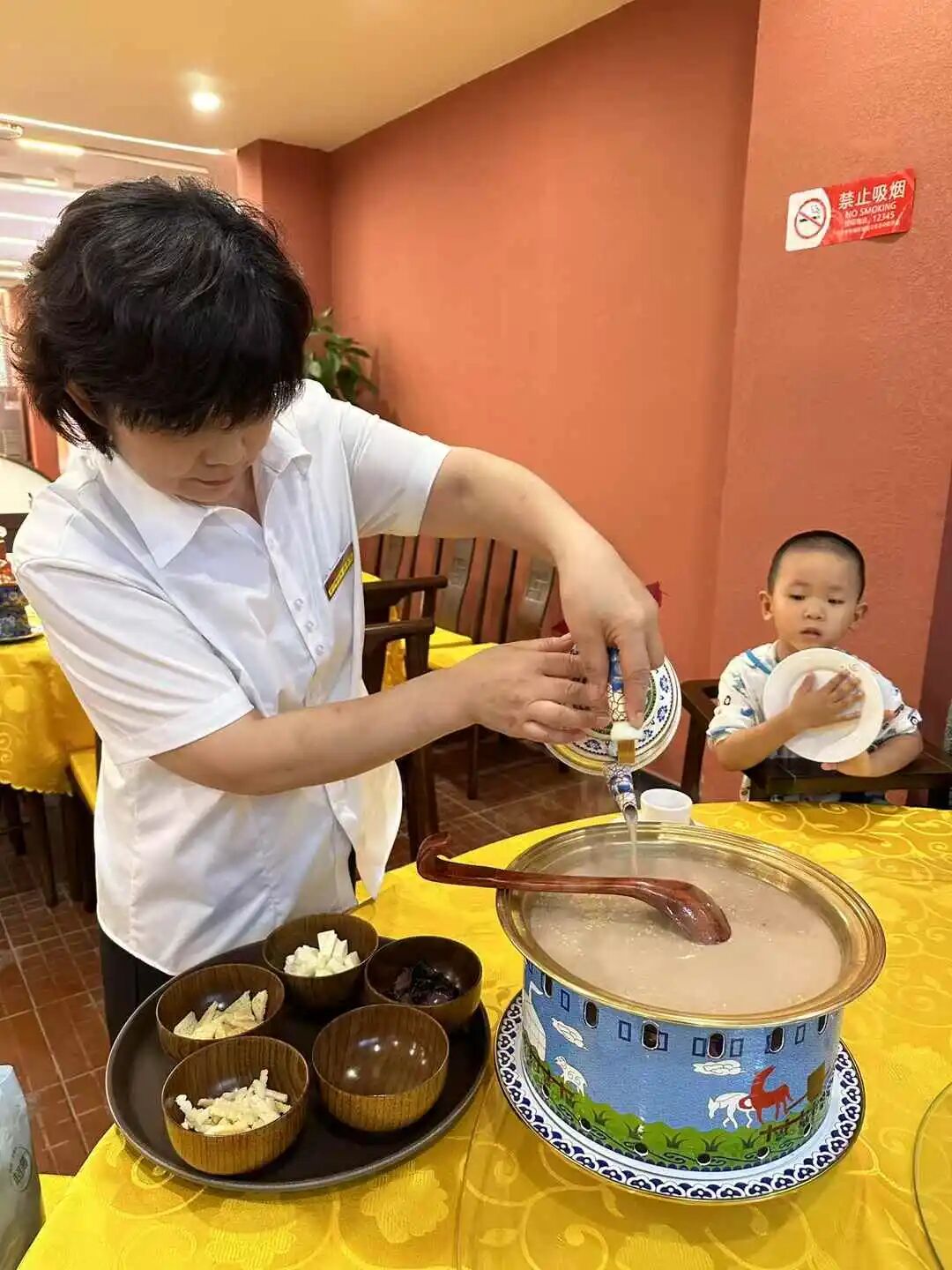
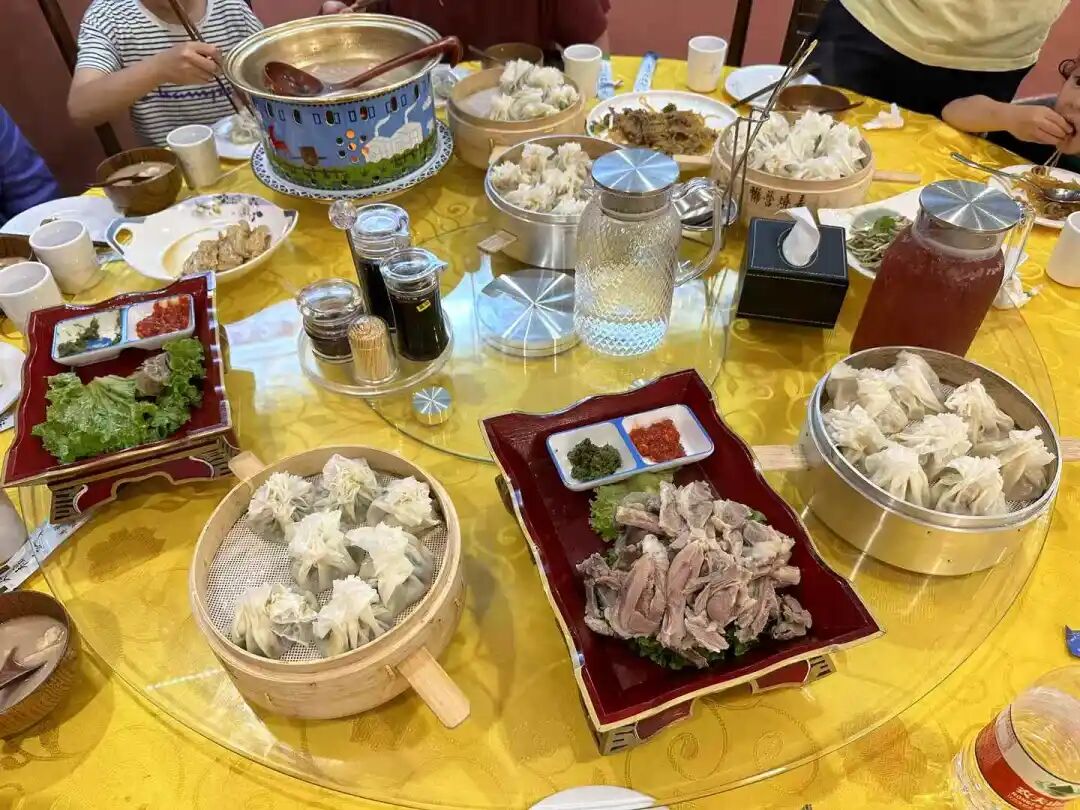
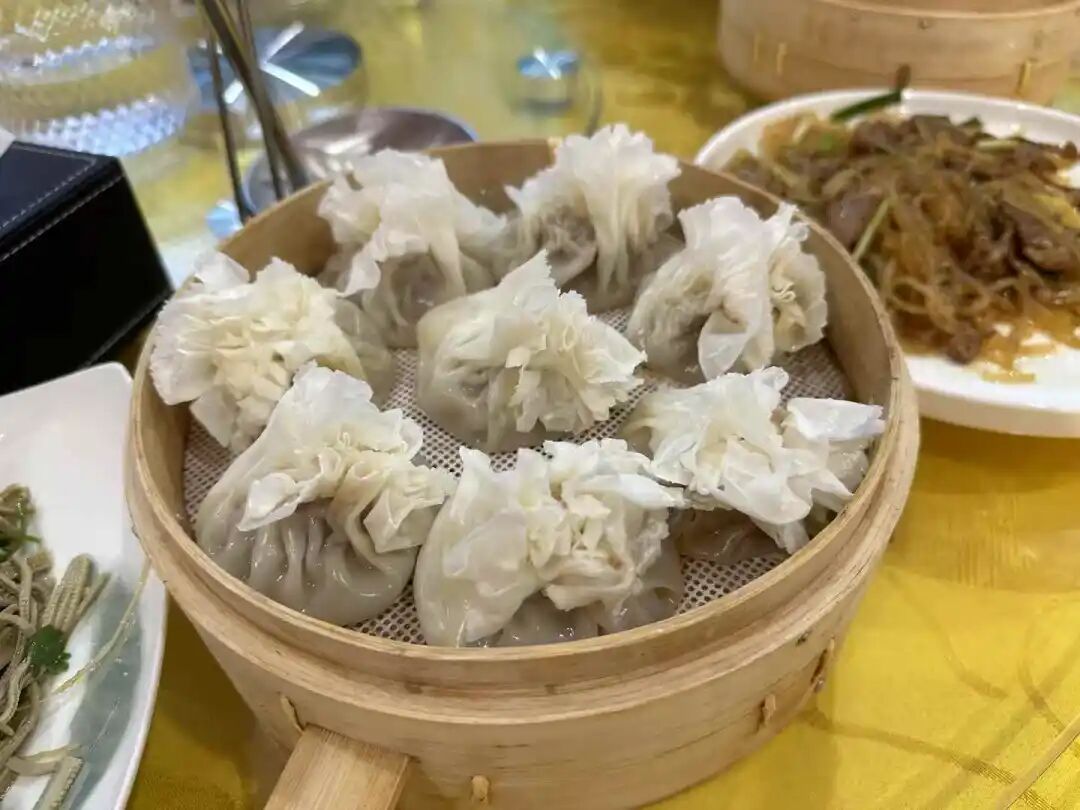
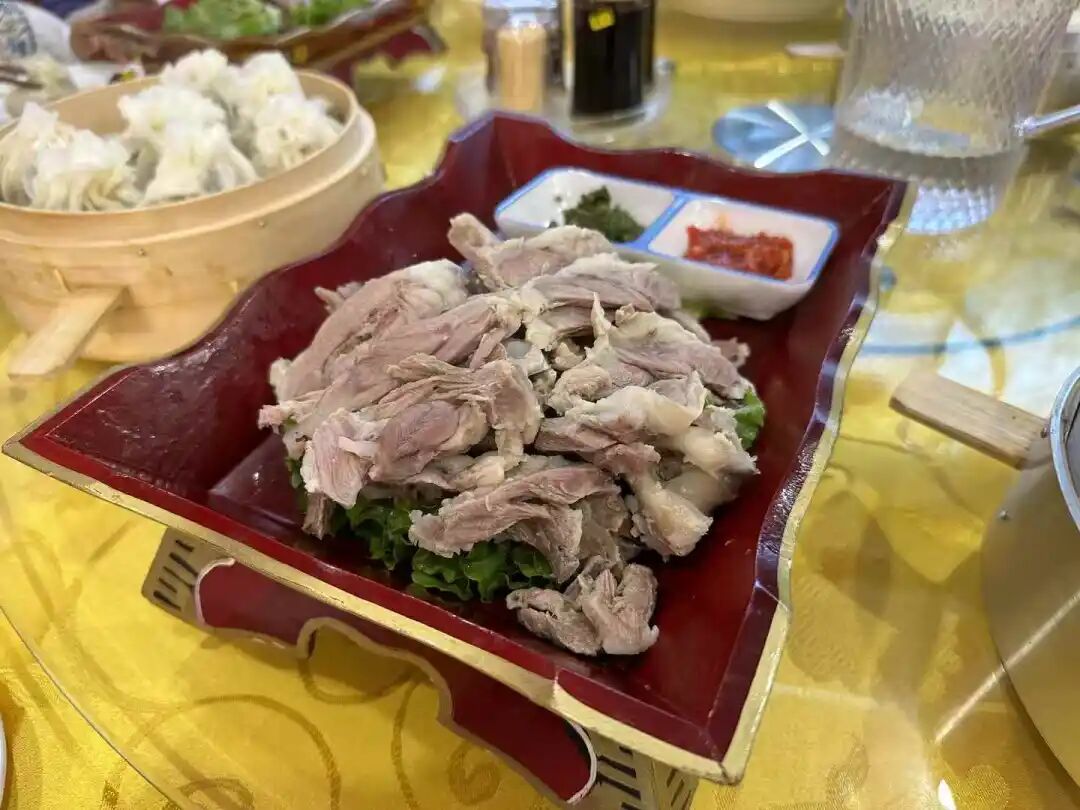
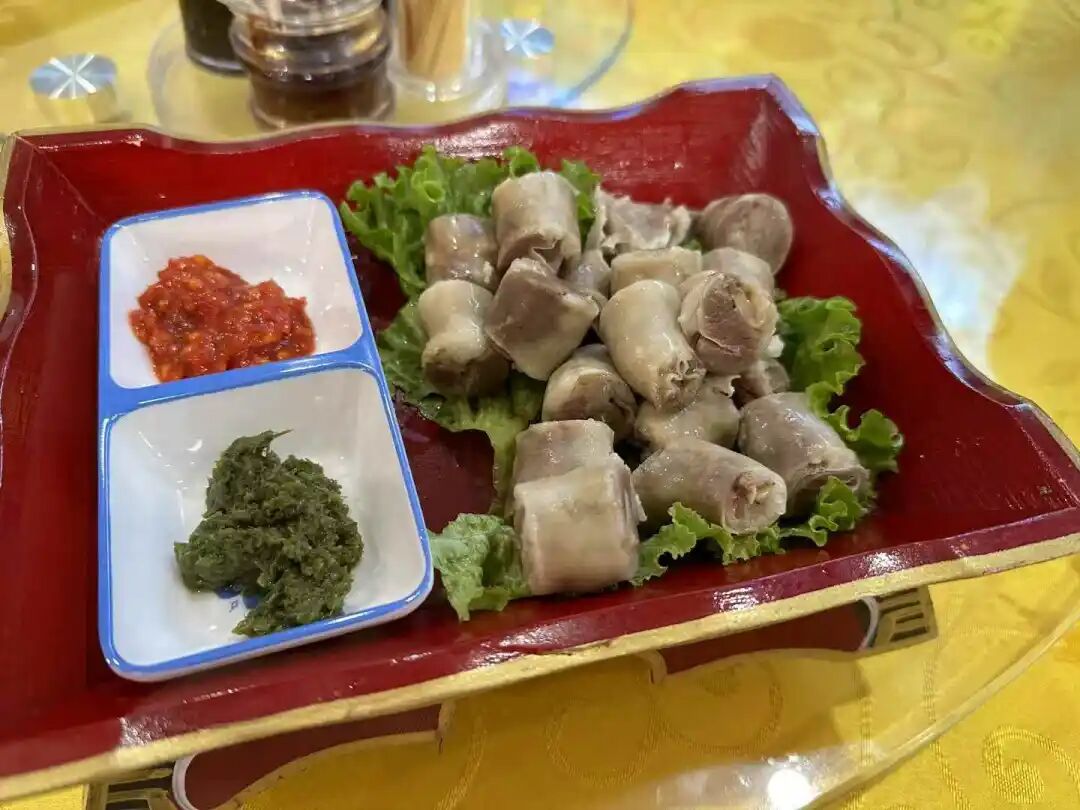
This is my second visit to Lianying Steamed Dumplings (shaomai) Grassland Pomegranate Red outside Qianmen. Last time I had the pot tea (guocha) and hand-grabbed lamb (shouba yangrou), and this time I had lamb spine (yangxiezi) and roasted whole lamb. The lamb spine (yangxiezi) is neither spicy nor salty. The lamb is stewed in old broth and does not have a gamey smell. There is just a little less meat on the bones, so you mainly eat it for the pleasure of gnawing on the bones. The skin of the roasted whole lamb is a bit tough, but the meat is very tender and the flavor is relatively light. Dipping it in cumin powder and chili powder makes it suitable for the whole family to eat together. The restaurant hired Mongolian dancers and a horse-head fiddle player, so you can experience grassland culture while you eat.
I chatted with Boss Li this time. He started learning to make baked flatbread (beizi) at seventeen. Later, he moved from Hohhot to Jining to build his career, and now he has even opened two shops in Beijing. He is truly impressive.
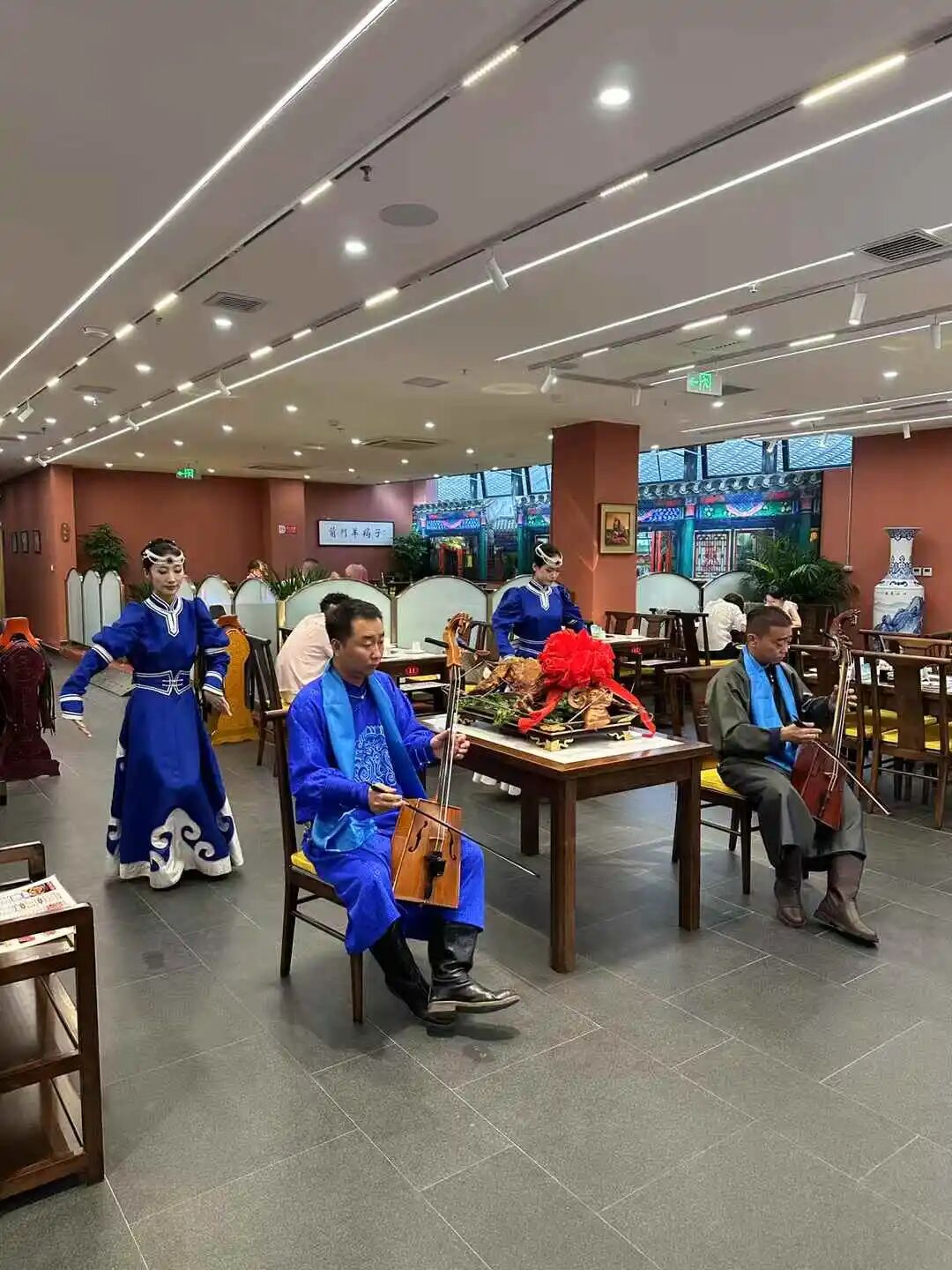
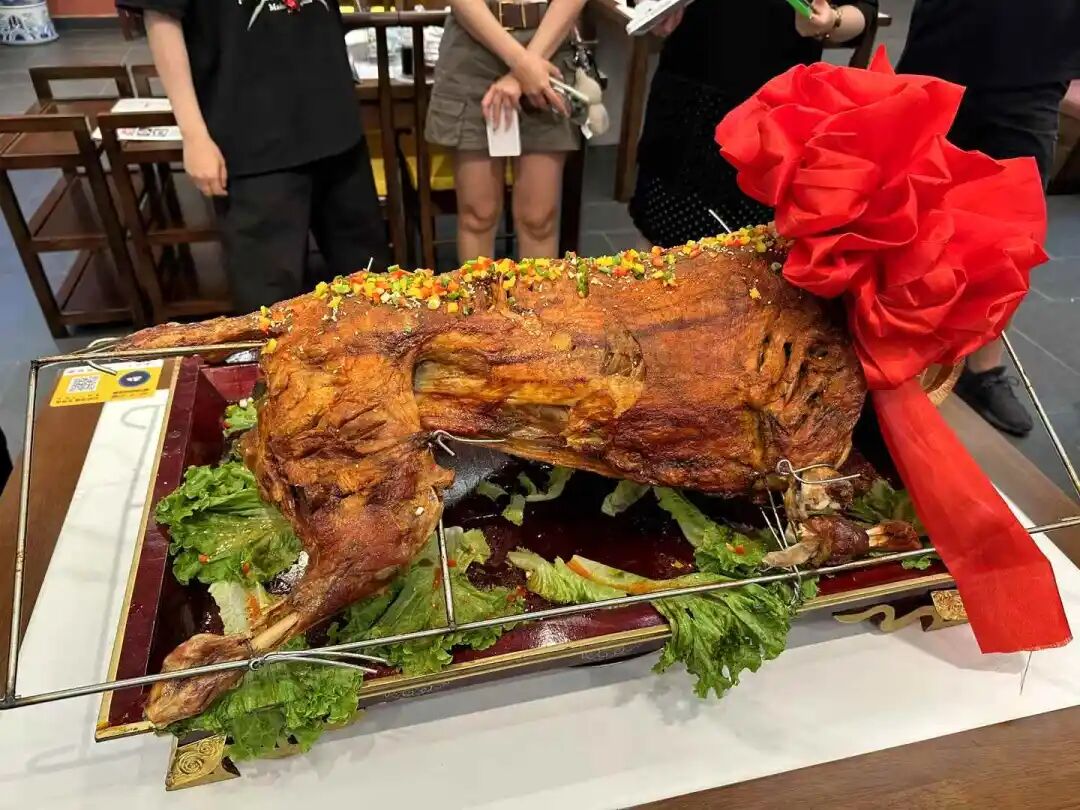
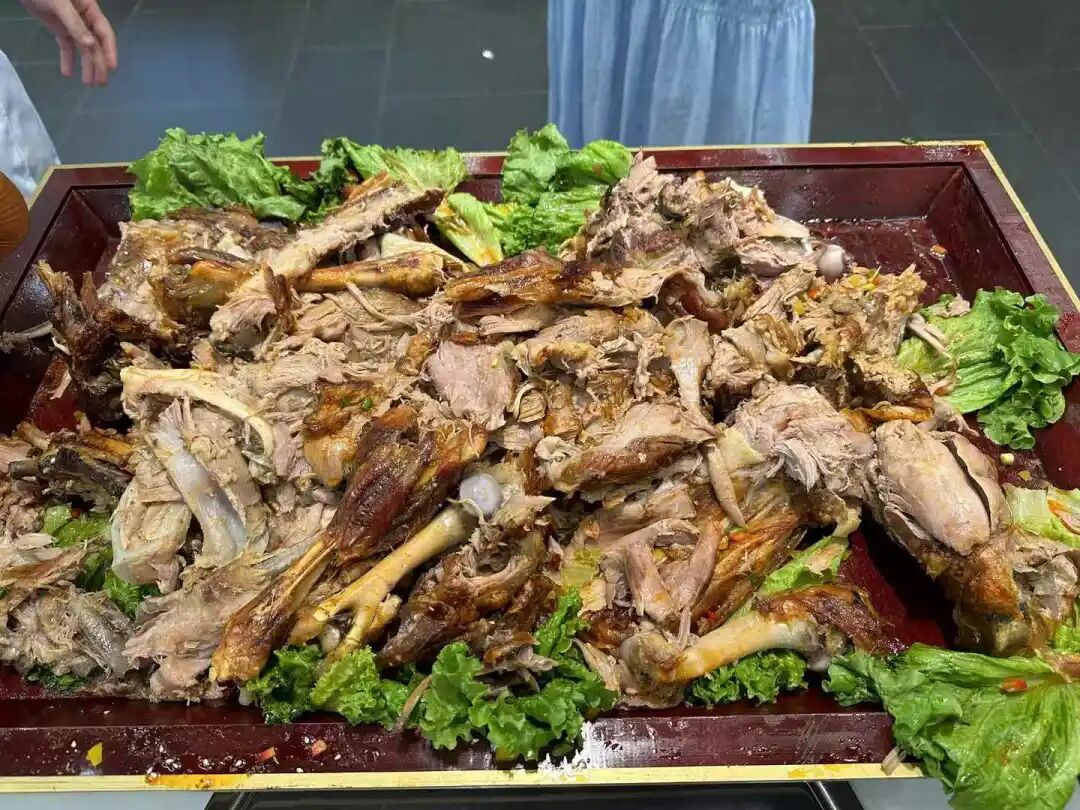
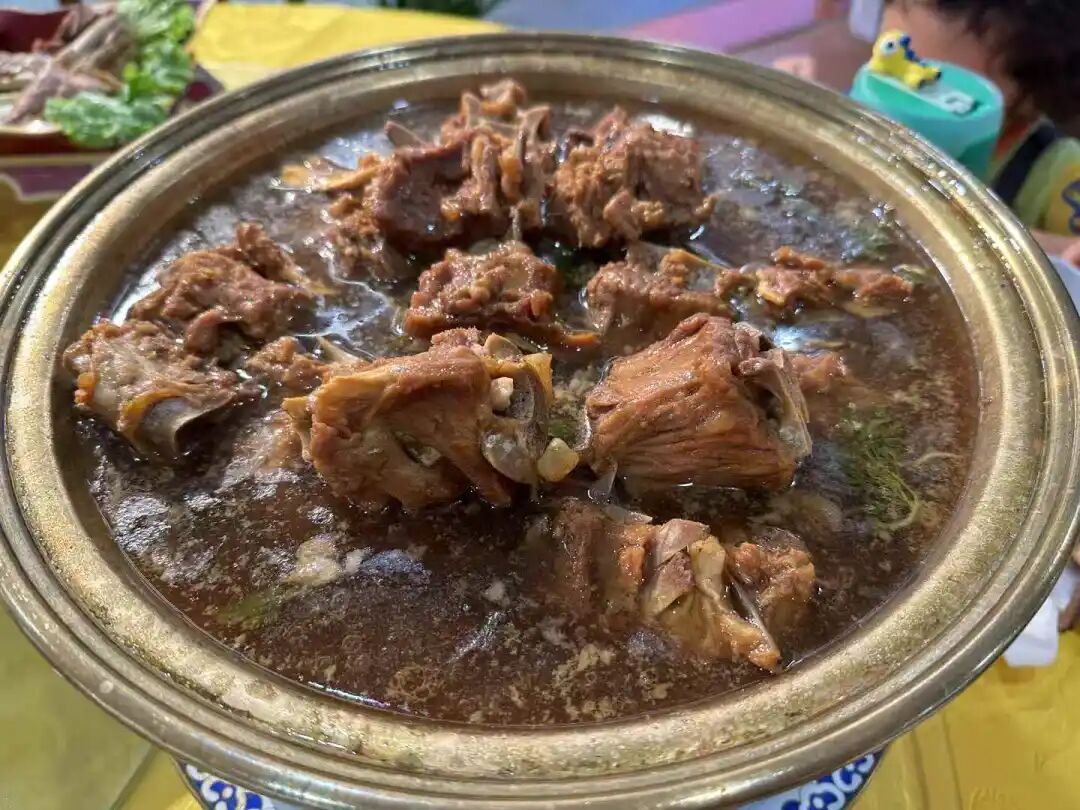
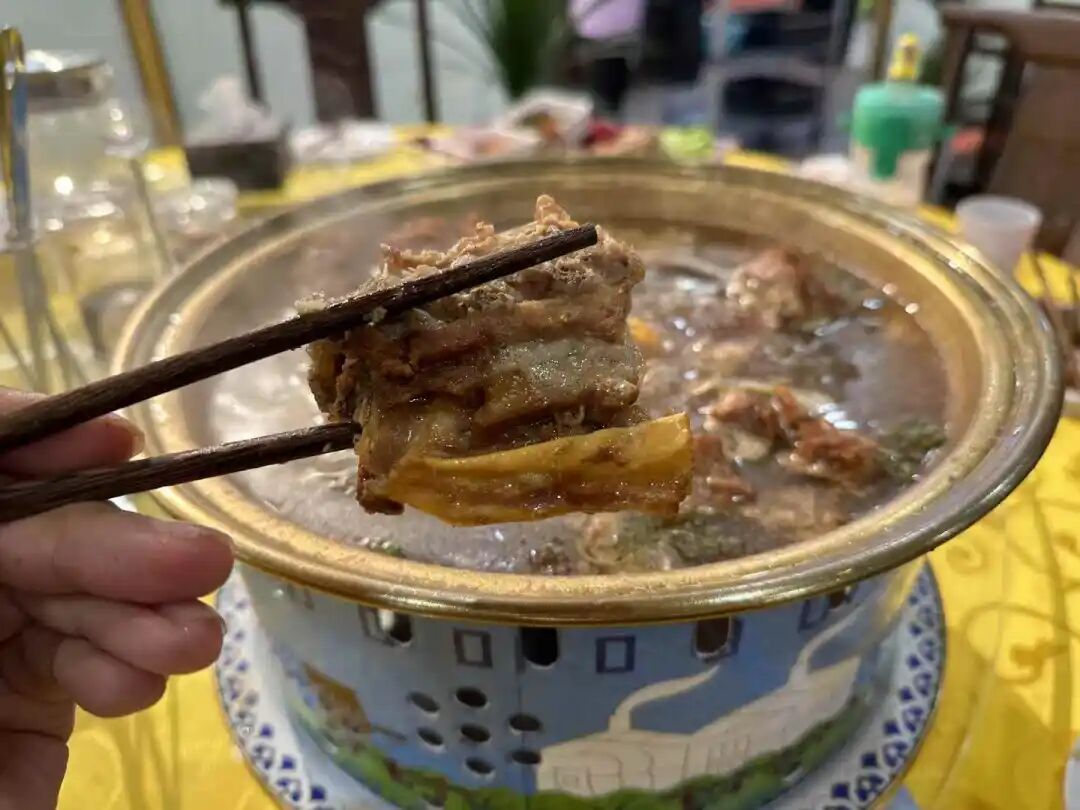
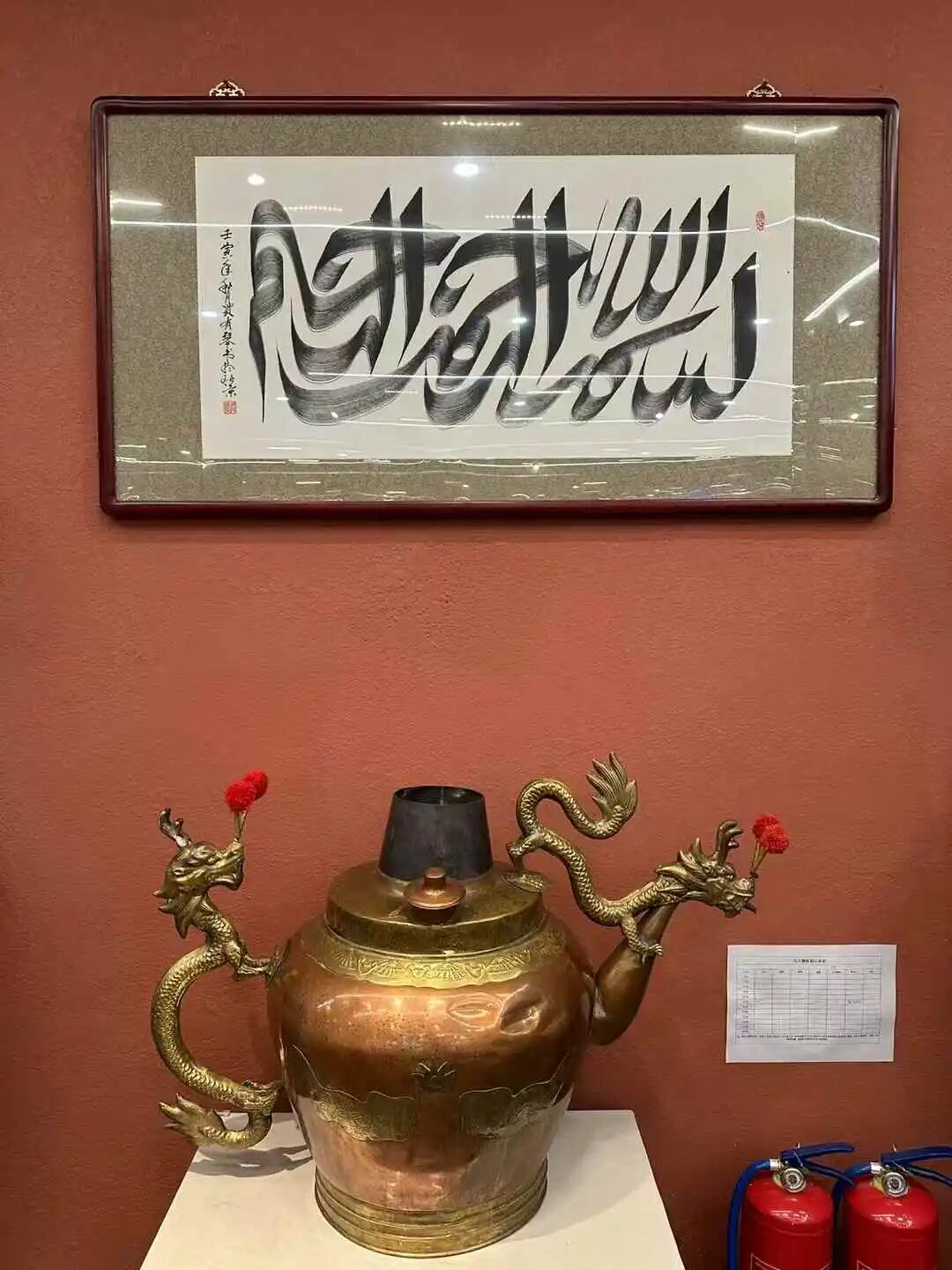
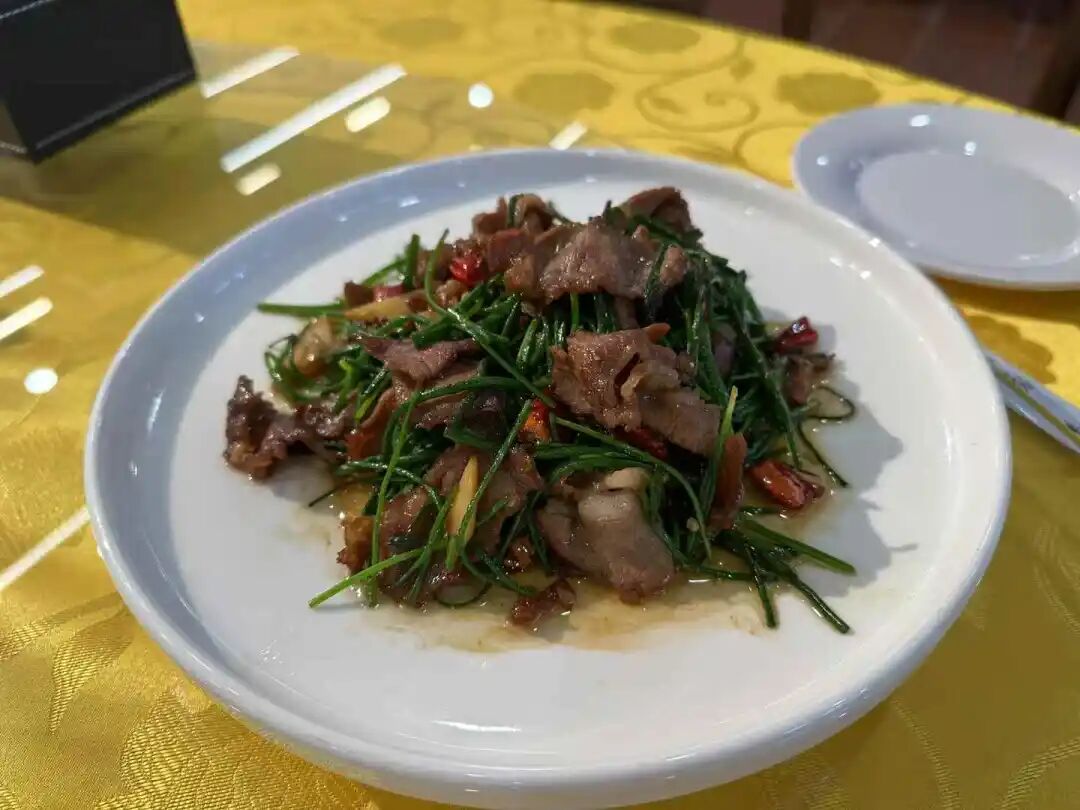
Gansu spicy hot pot (malatang) in Wangfujing
I came to Mufu, a newly opened Gansu spicy hot pot (malatang) restaurant in Wangfujing, for a meal and to offer a sacrifice (qurbani). The shop is right next to WF Central, so the location is great. The chili for the spicy hot pot (malatang) comes from the owner's hometown in Linxia, Gansu. The mild version is fragrant but not spicy, and they can also make it extra spicy or non-spicy to suit everyone.
This shop and the beef noodle place next door are the same business, so you can order grilled skewers (kaochuan) to eat in the spicy hot pot (malatang) shop. The grilled meat is very fragrant and tender. It is quite pleasant to eat skewers (chuan) under the shade of the trees by the door on a summer evening.
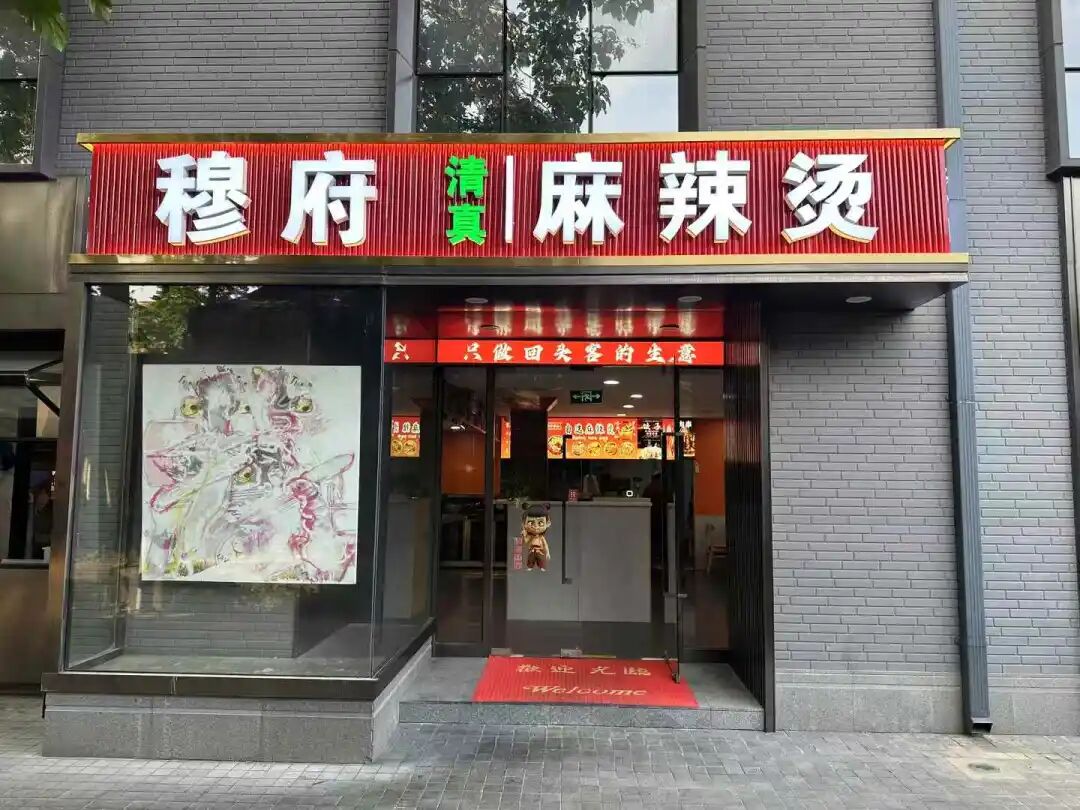
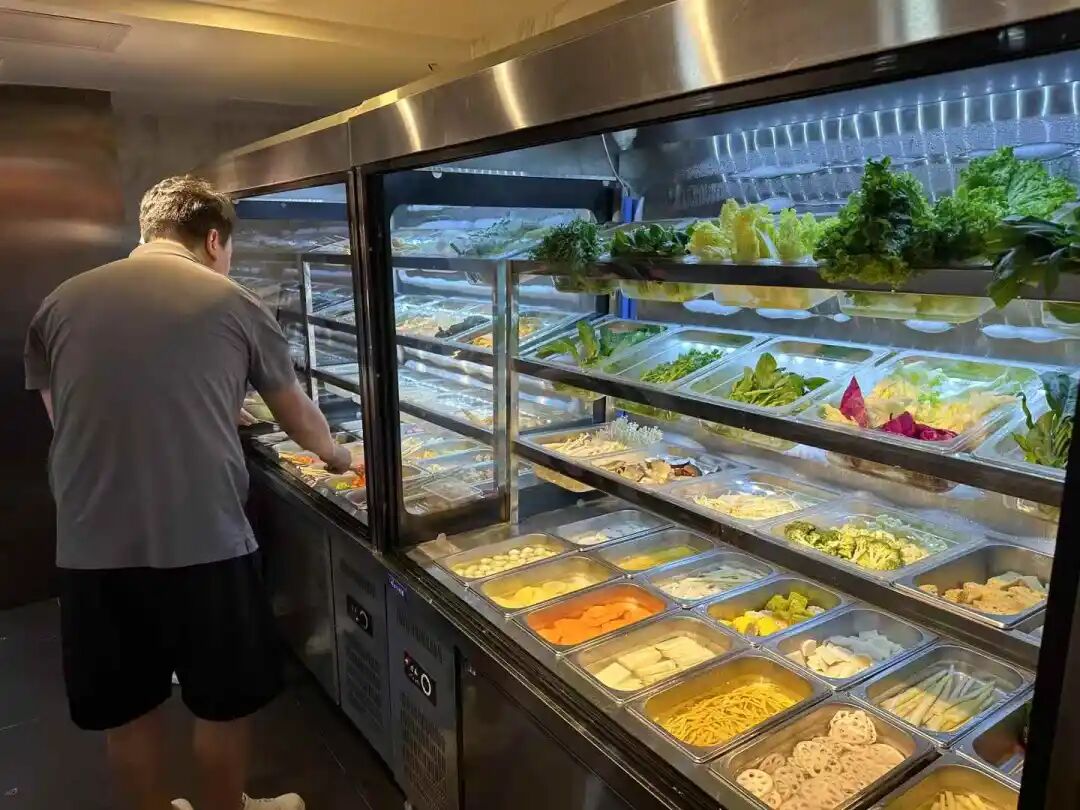
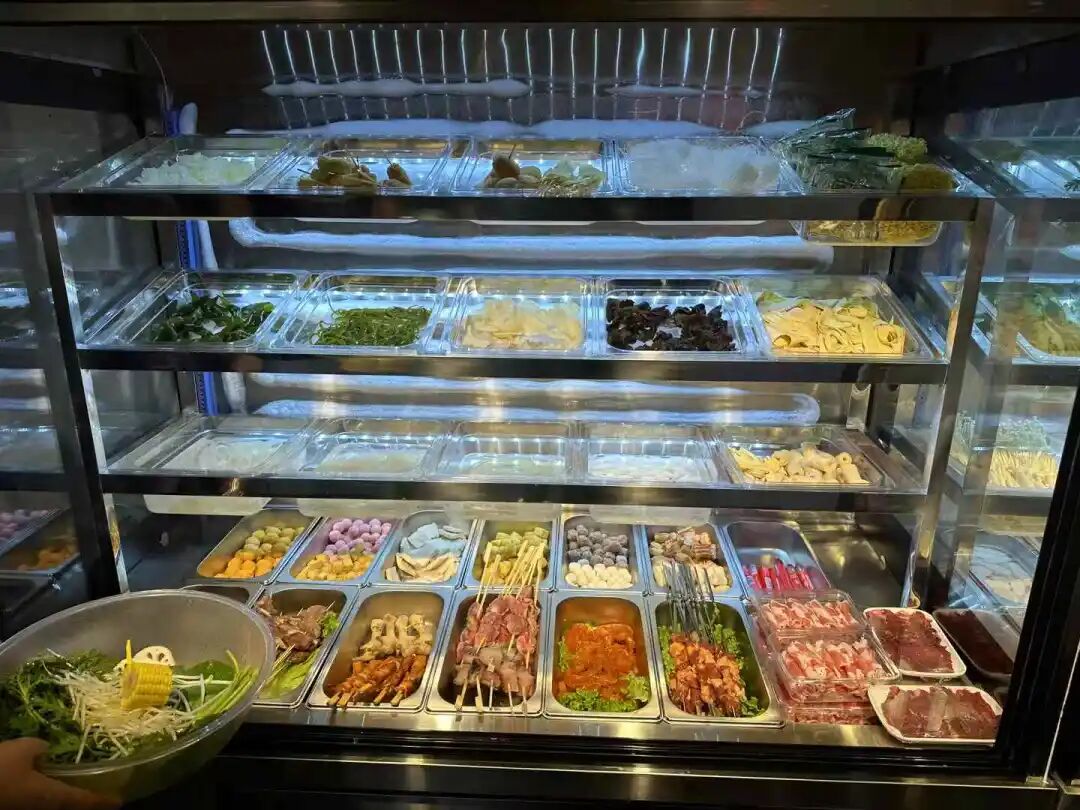
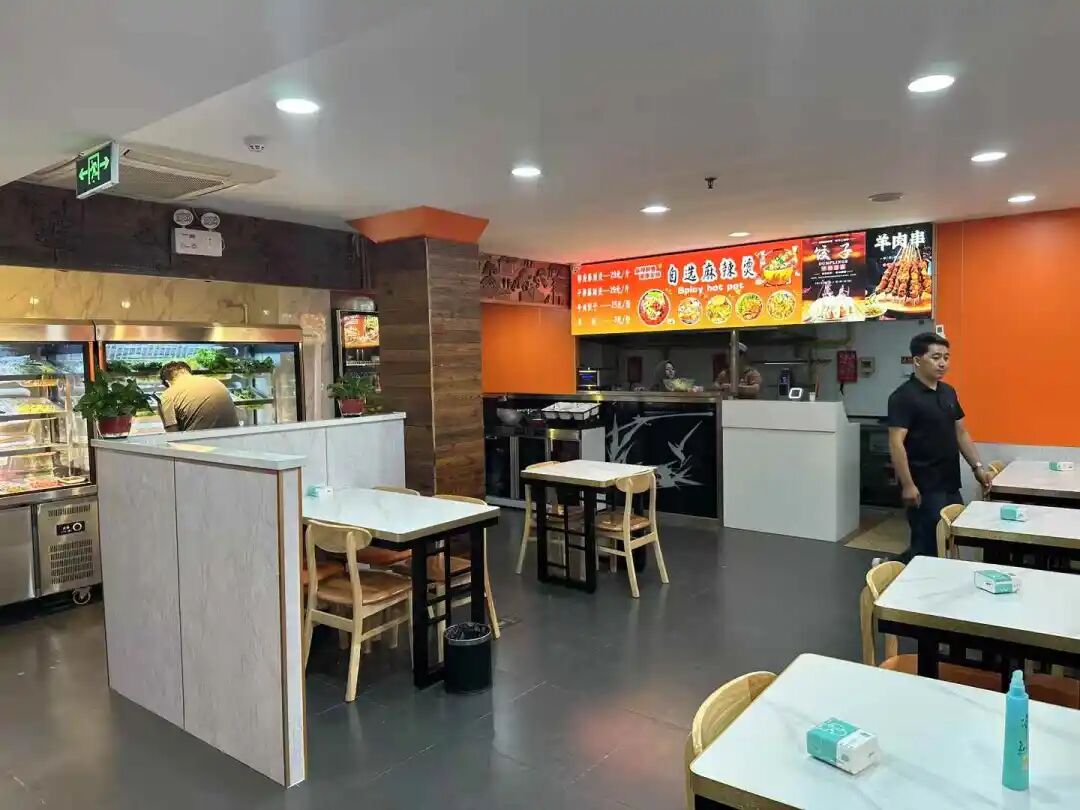
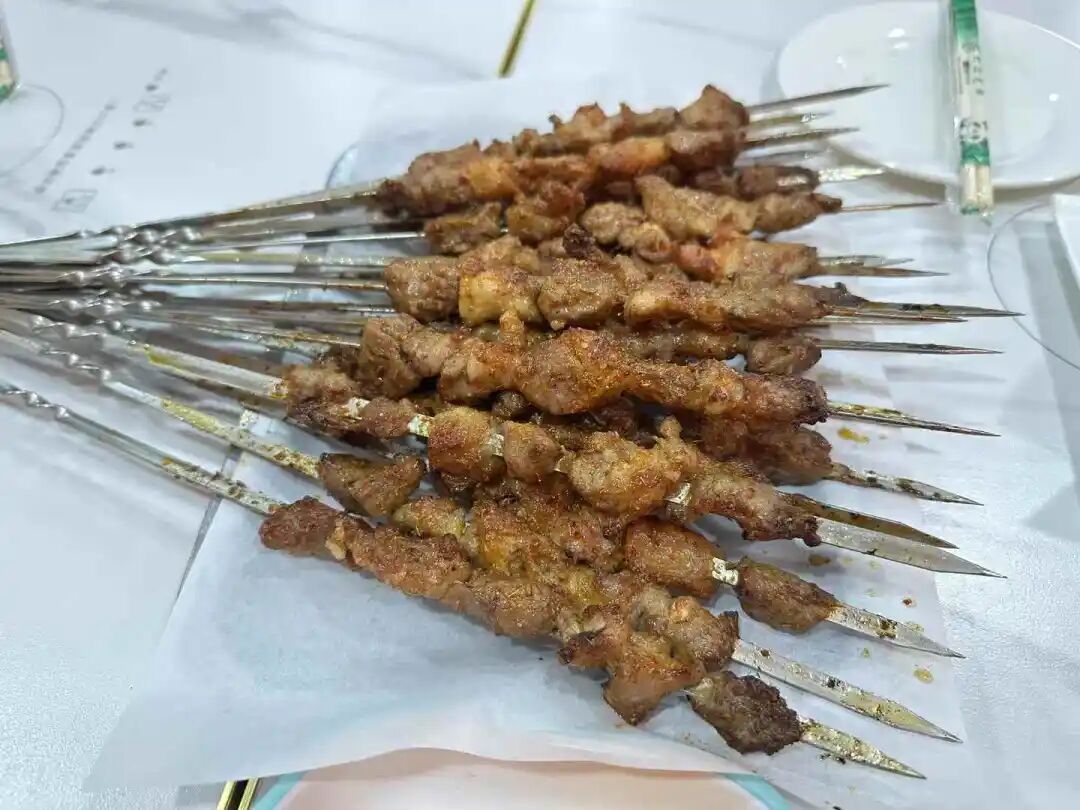
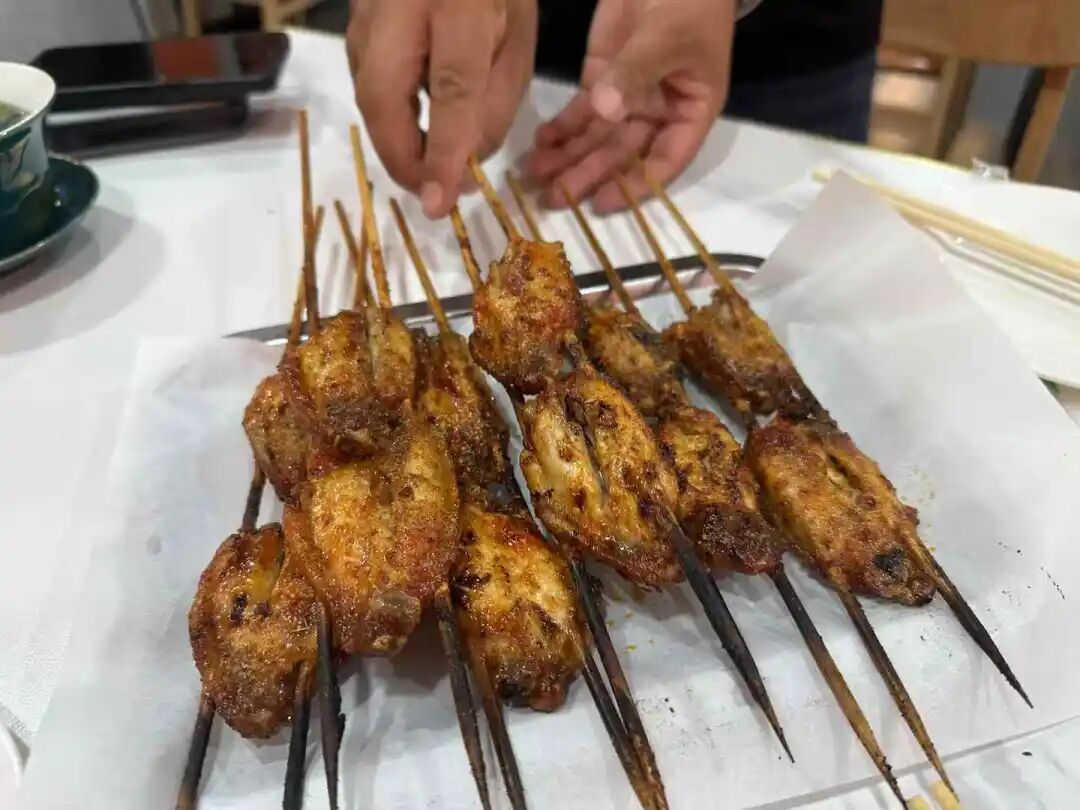
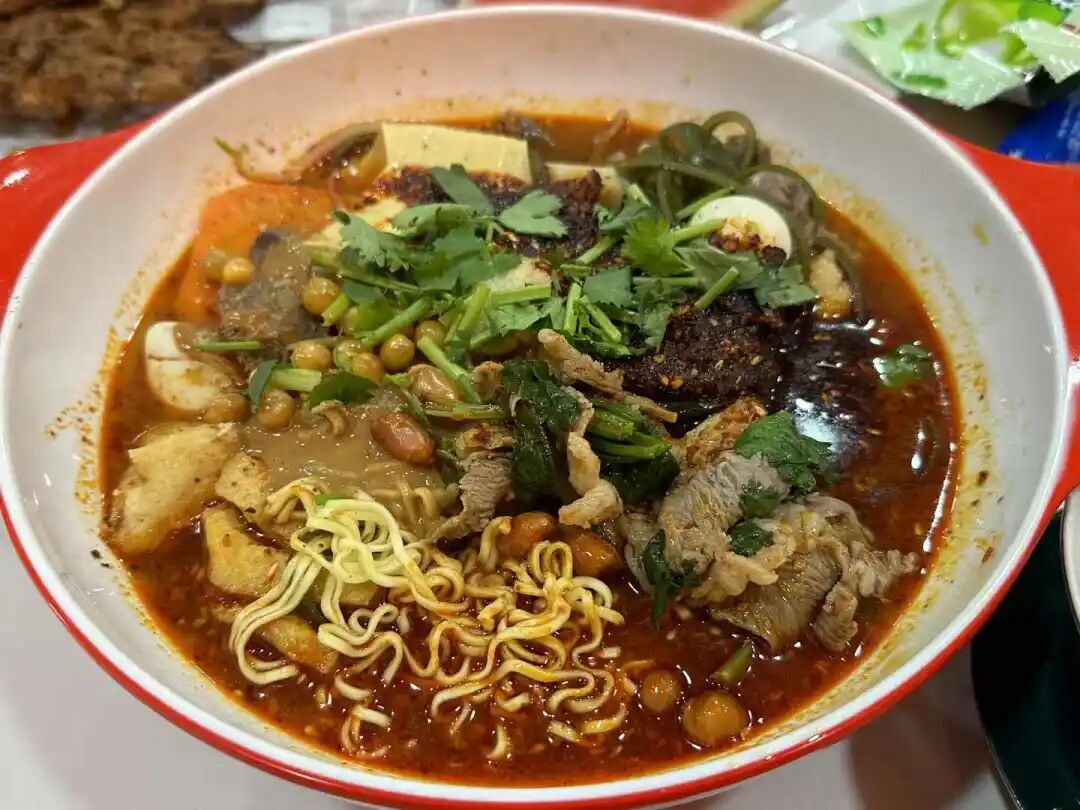
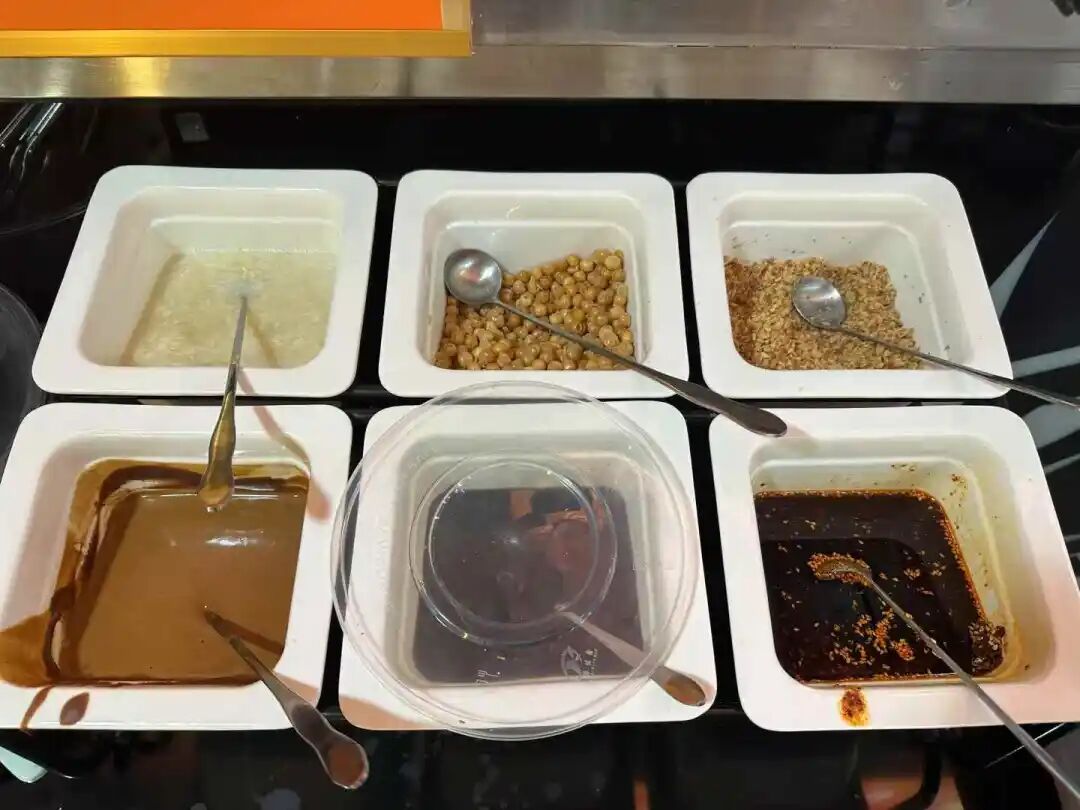
A restaurant in a courtyard house (siheyuan)
I was invited by a friend (dosti) to have a meal at Yuezhen Yayuan next to the Lama Temple. It is probably the halal restaurant with the best atmosphere near my home. The small courtyard house (siheyuan) is very unique, lush, and relaxing, though there are mosquitoes in the summer.
We ordered braised oxtail, crystal vegetable buns, crispy golden beef ribs, clay pot king beans, healthy corn cakes, and baked chicken wings with golden orchid sauce. They have updated their menu, and the dishes are all very refined now. I think the braised oxtail is delicious. It is cooked until very soft, and the seasoning is good. The crystal vegetable buns have a Cantonese feel; they are small but quite refreshing. The corn cakes are like snacks, perfect for eating while drinking tea and chatting. I thought the chicken and pan-fried dumplings (jianjiao) were just average this time. The chicken texture was not good, and the pan-fried dumplings (jianjiao) were not cooked through at first and had hard centers, so they took them back to redo.
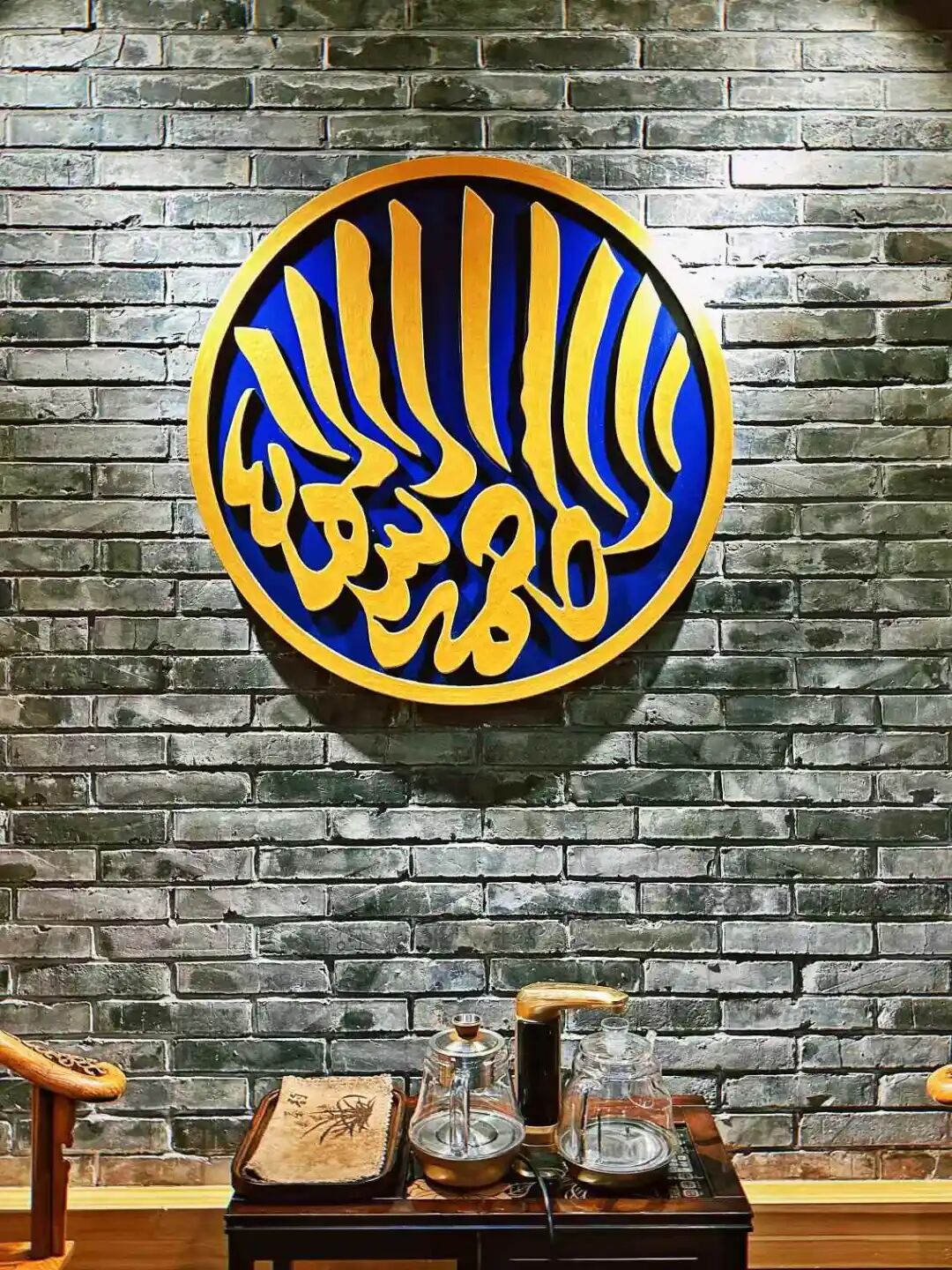
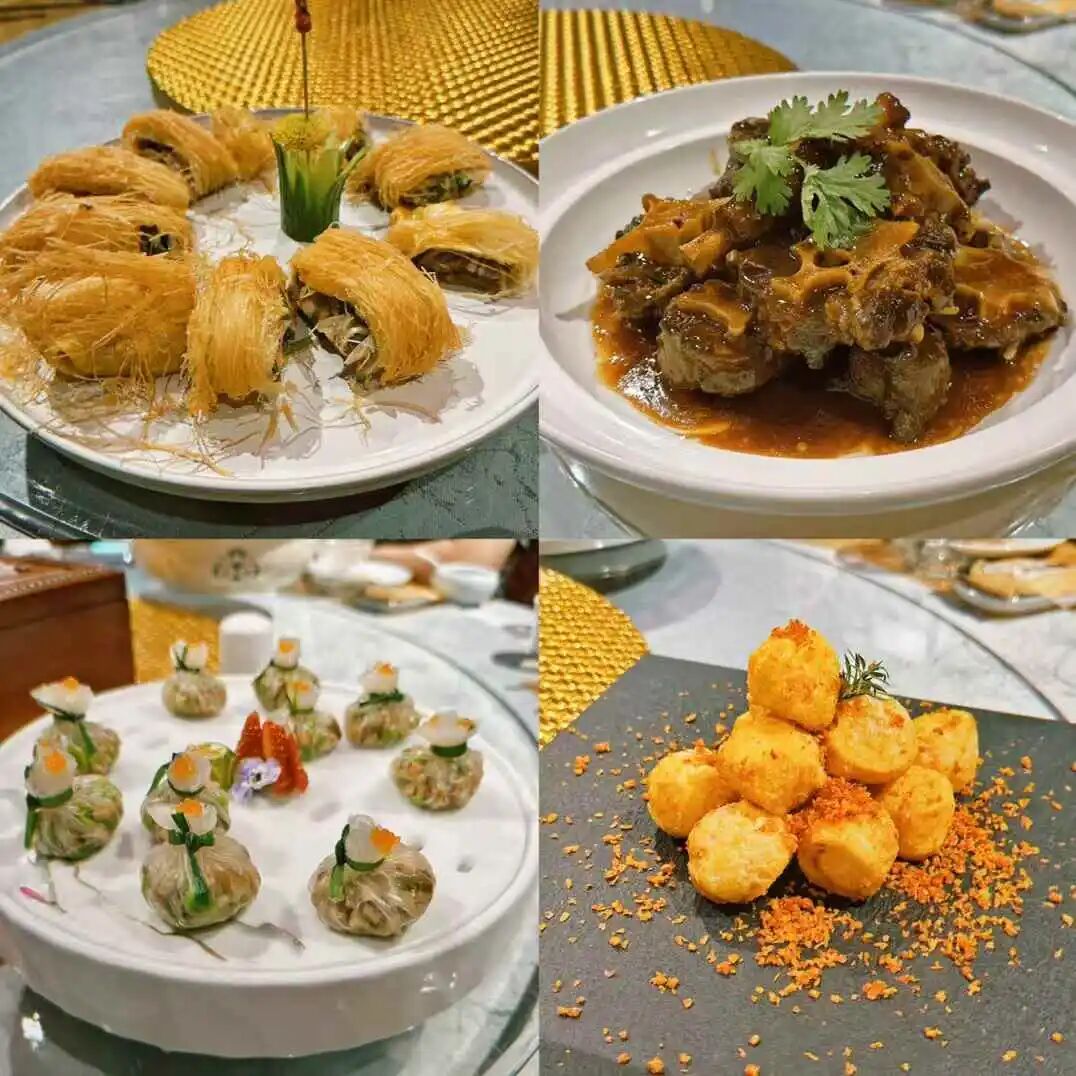
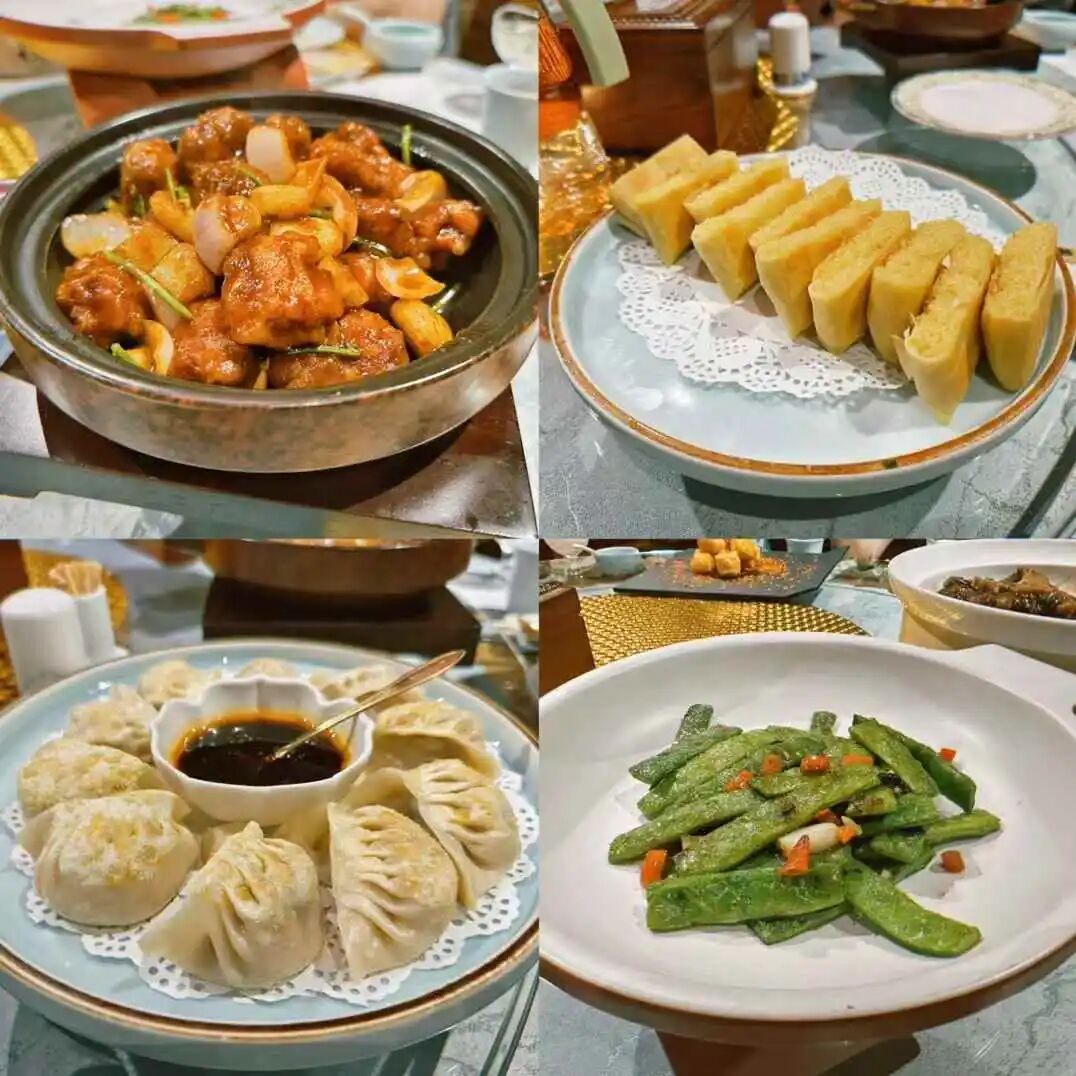
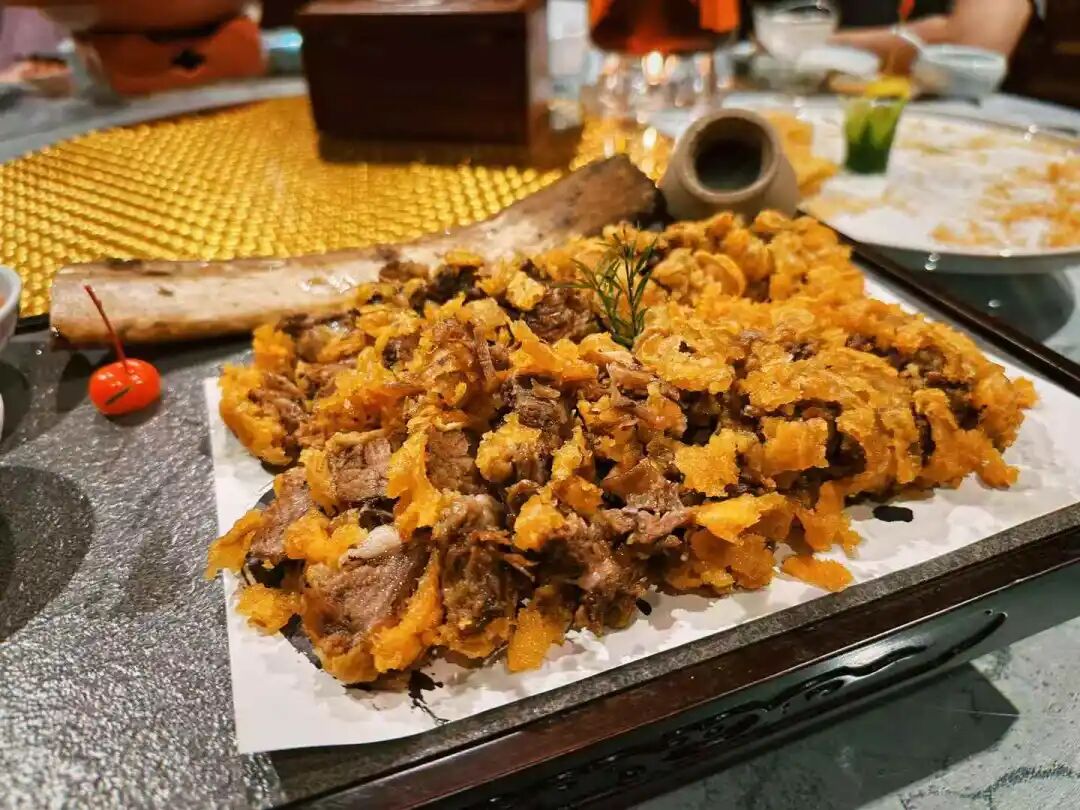
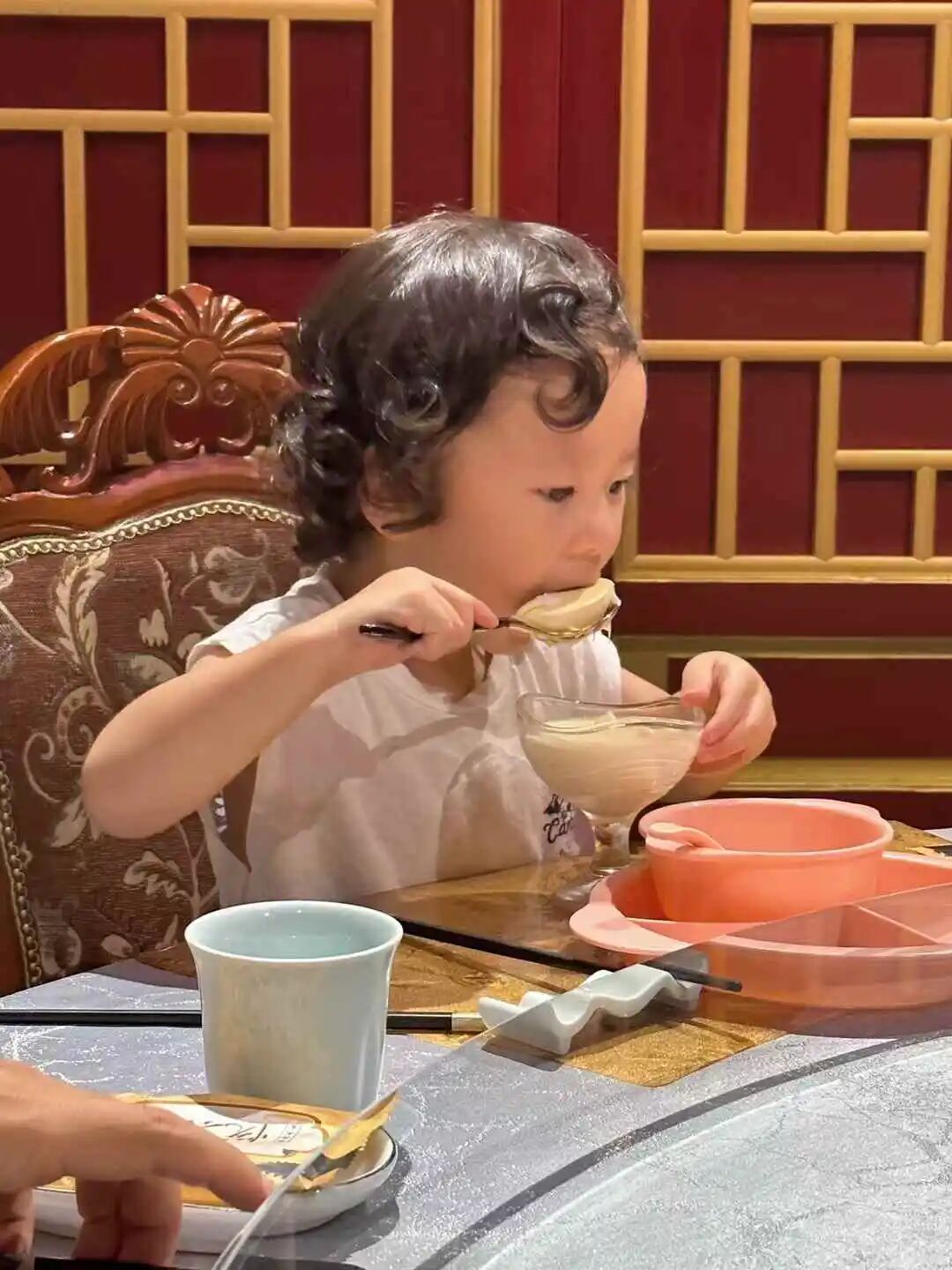
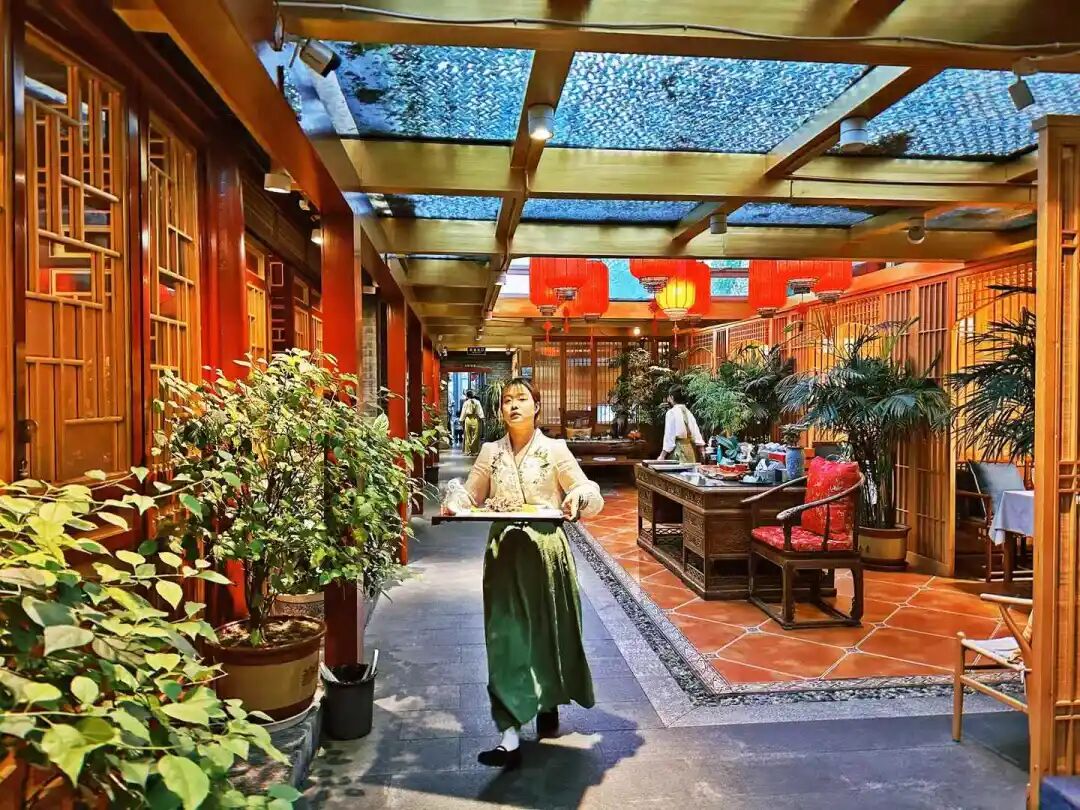
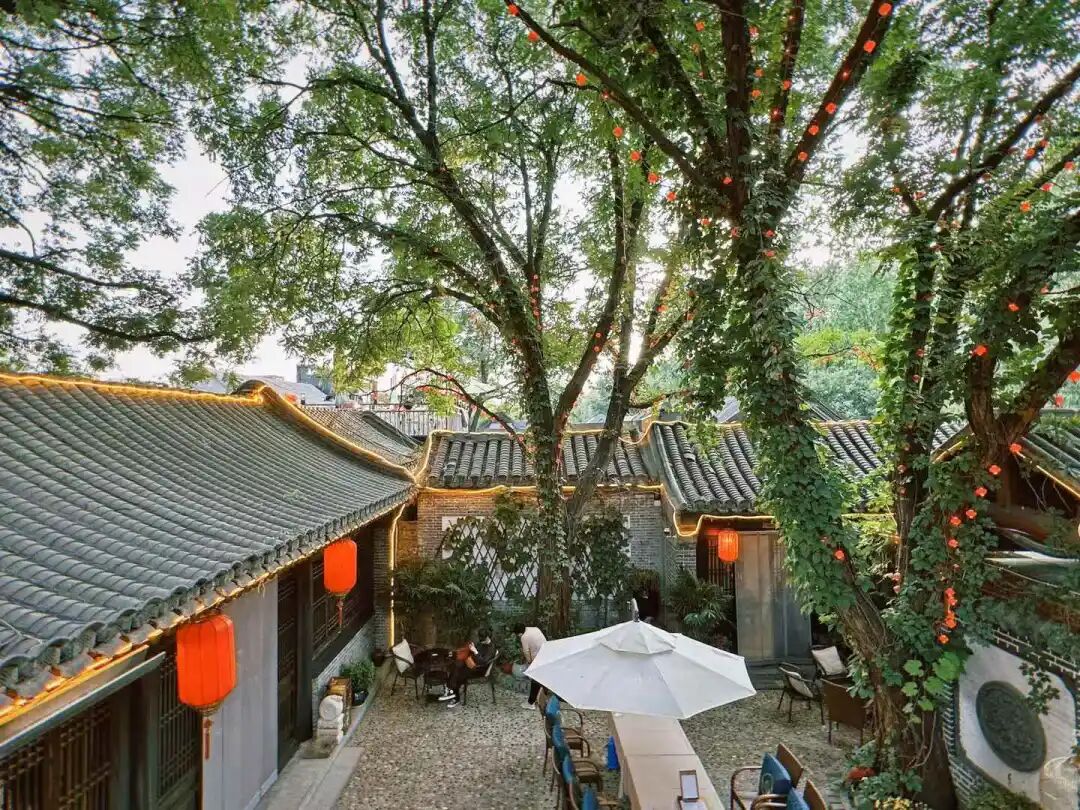
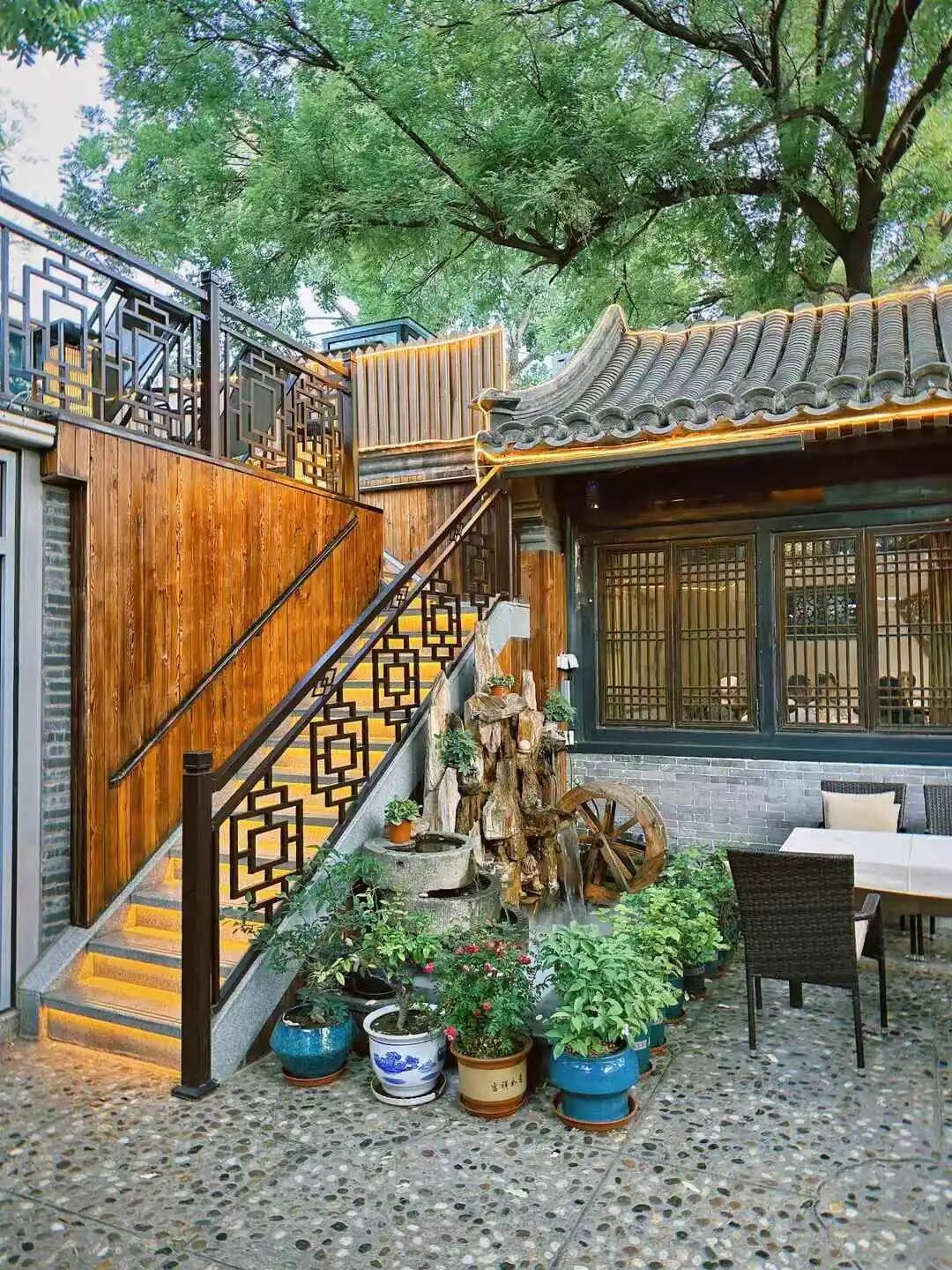
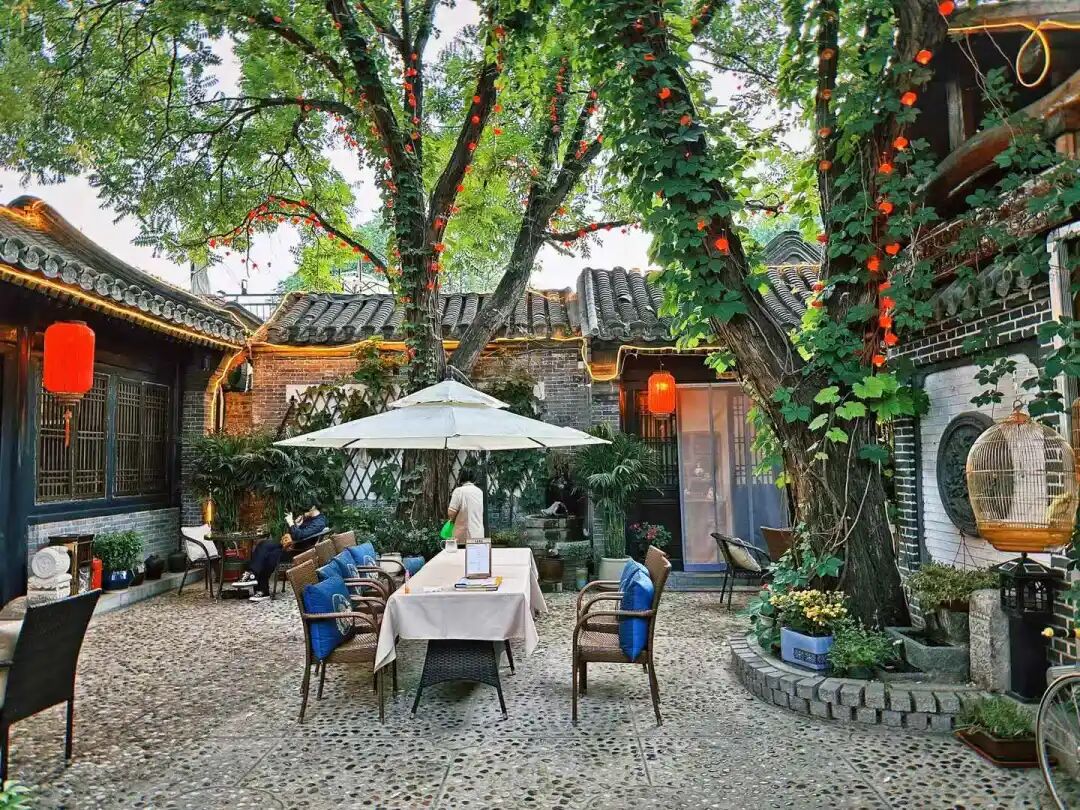
Dongsi Naan Shop
The newly opened Afanti Naan Shop on Dongsi North Street is right at the entrance of Lingtouyang. A Uyghur brother was making meat naan, sesame naan, and onion naan (piyazi naan). When I arrived, I caught the baked buns (kaobaozi) coming out of the oven, so I ate two while they were hot. I also bought some meat naan and sesame naan to bring home for soaking in lamb soup (yangtang) in the morning.
Thinking back, there were not many specialized naan shops in Beijing a few years ago, but now they are everywhere. It is becoming more and more convenient for Beijingers to eat fresh, hot naan.
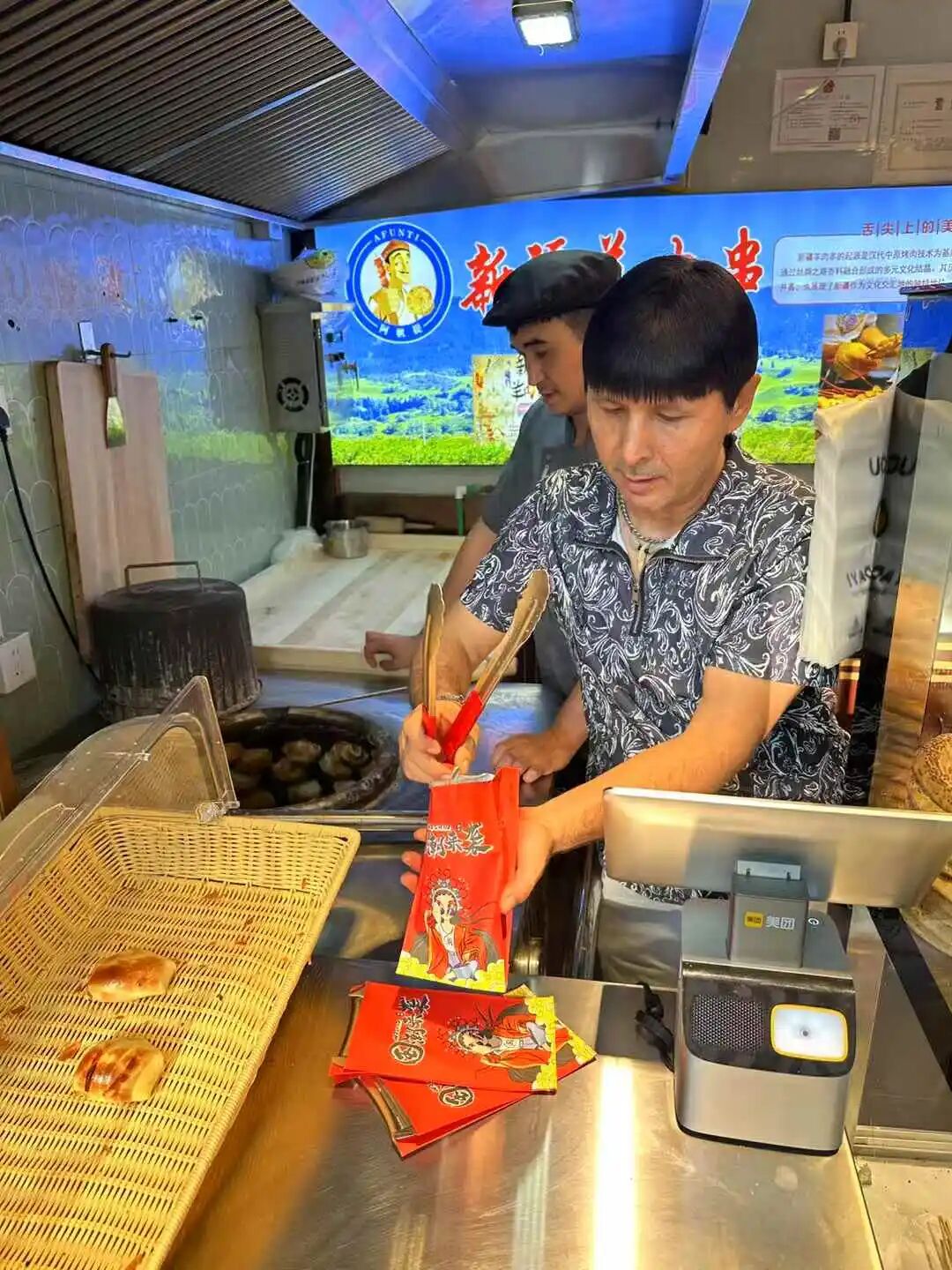
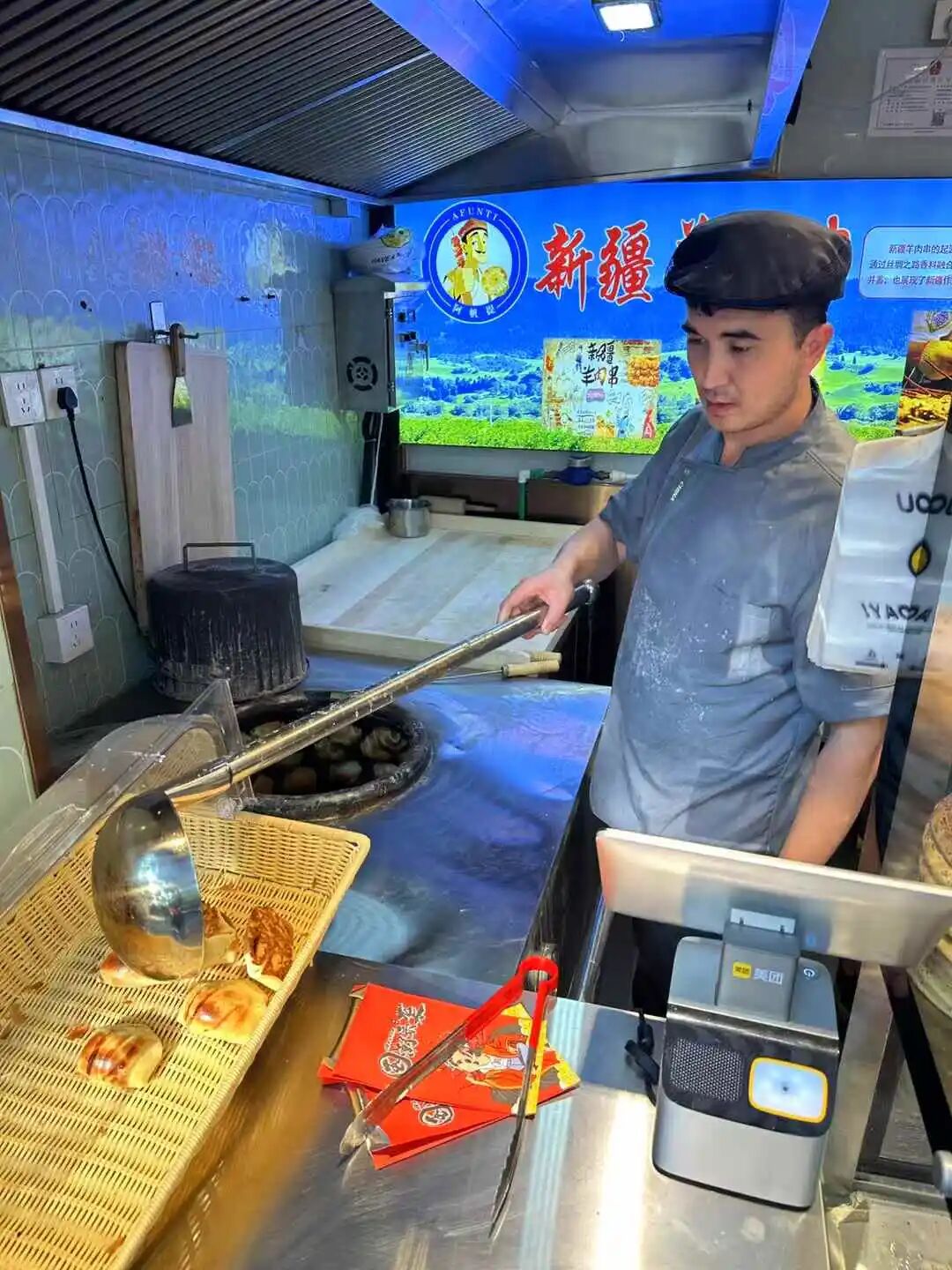
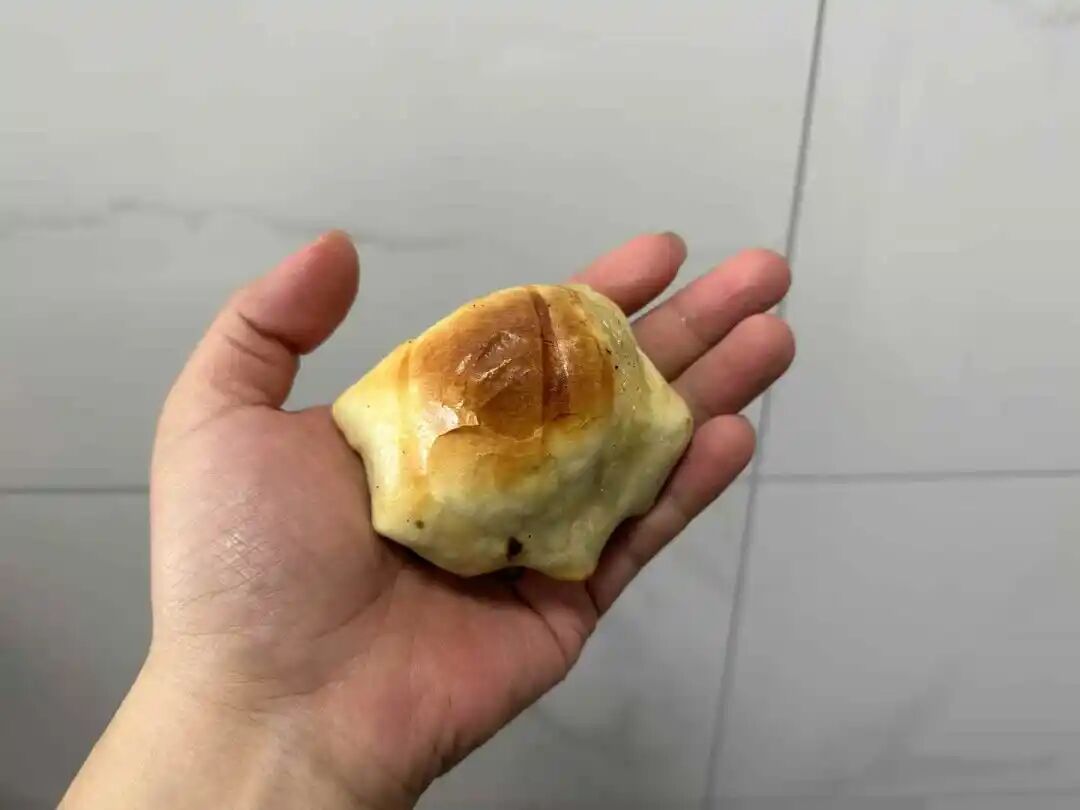
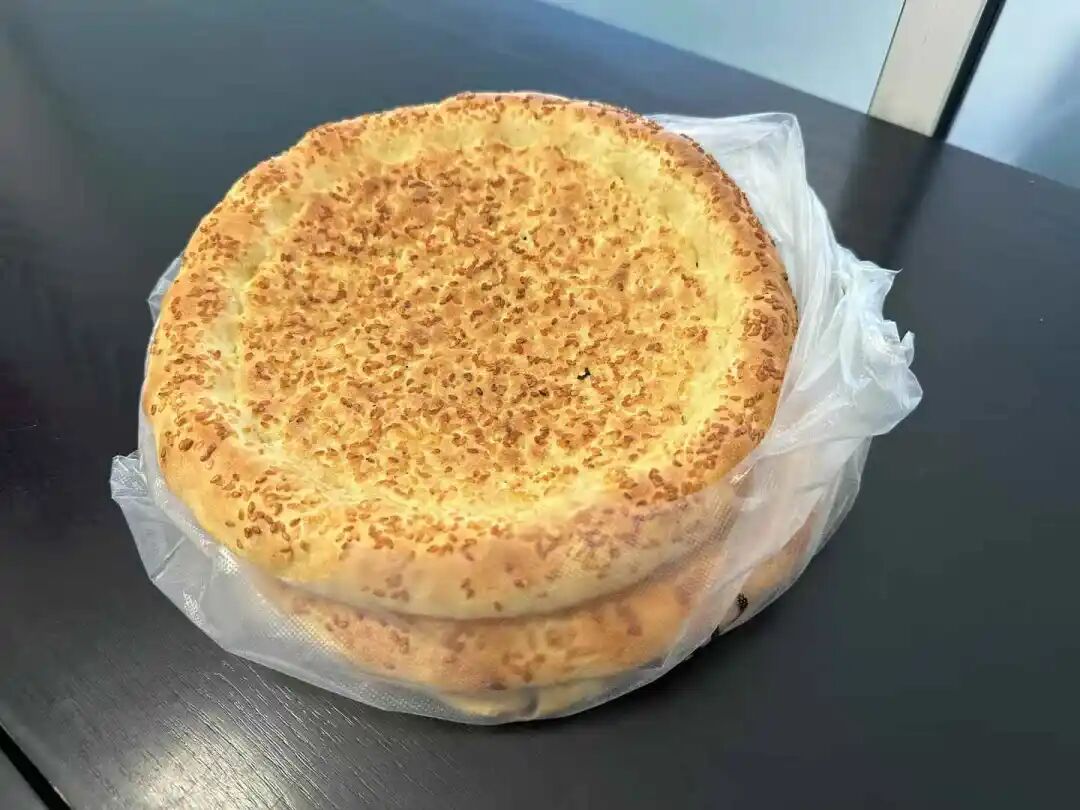
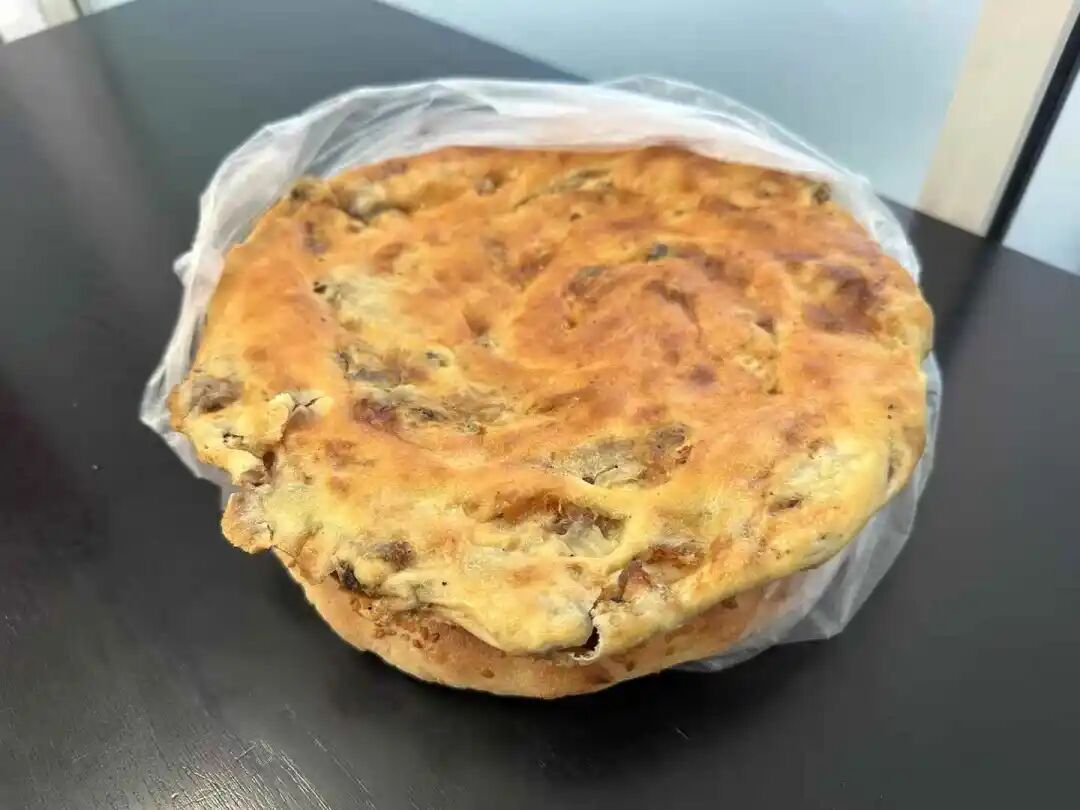
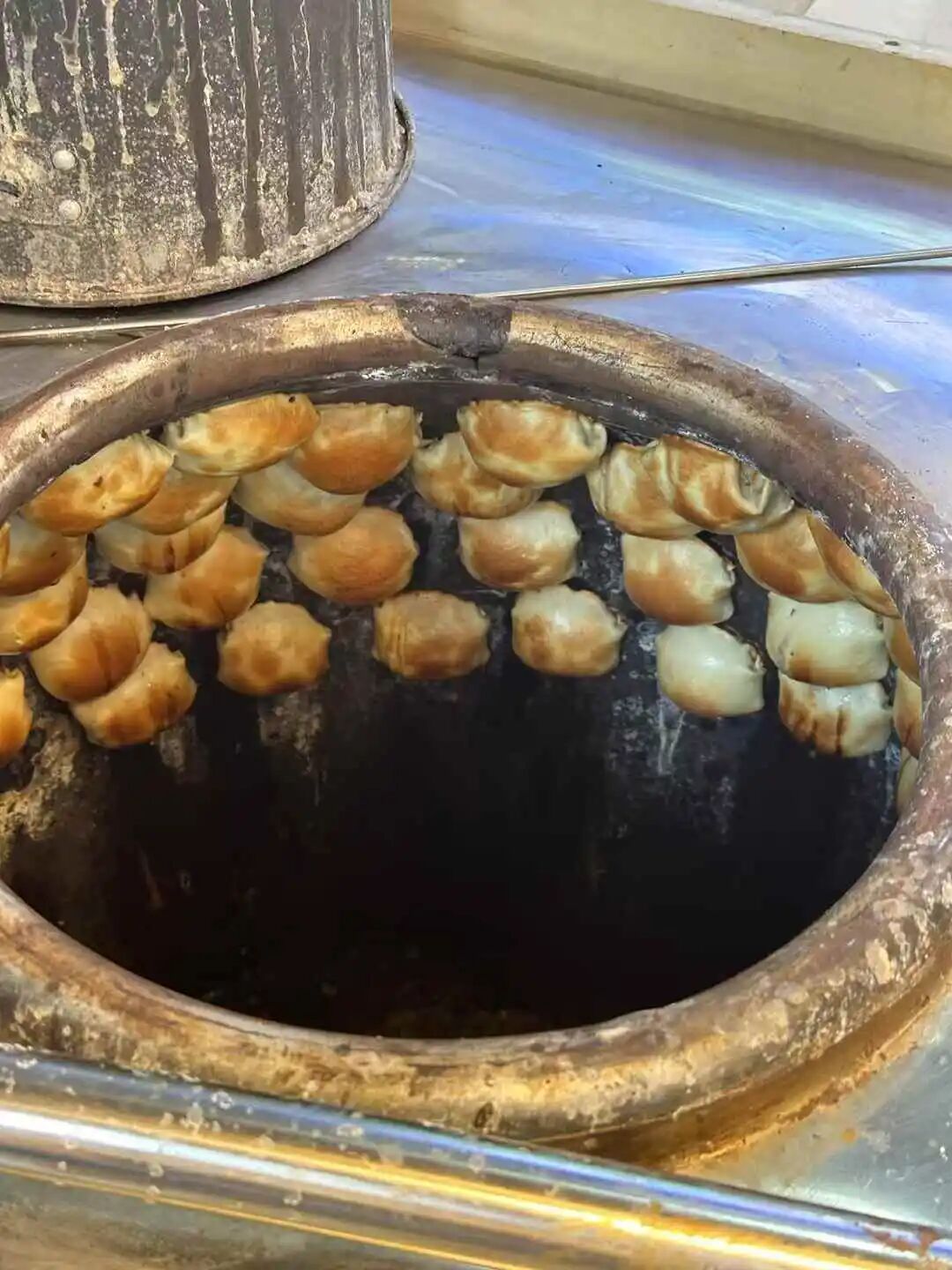
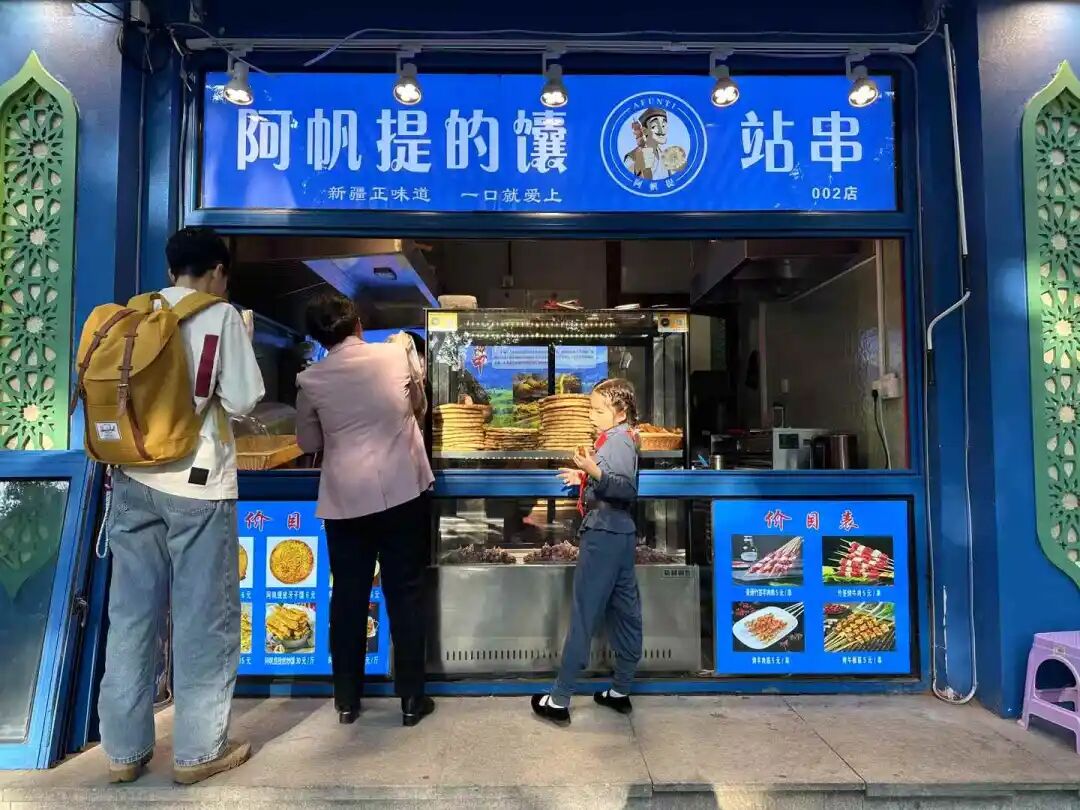
Halal Food Guide: Beijing Breakfast — Pakistani, Turkish, Inner Mongolian & Henan Food
Articles • ali2007fr posted the article • 0 comments • 254 views • 2026-05-19 23:57
Summary: This Beijing breakfast guide introduces four distinctive places connected with Pakistani, Turkish, Inner Mongolian, and Henan food. The article keeps the original shop details, dishes, photos, and personal notes while presenting them as a practical English food account.
Pakistani breakfast: flatbread (naan) and curry.
The Pakistani restaurant Samosa in Xibahe just started serving breakfast! You can order a la carte or choose a set meal from 7:30 to 11:00 in the morning. The three-person set includes three staples: butter naan, layered flatbread (paratha), and thin crispy bread (puri). It also comes with three dishes: chickpea masala curry, potato bhaji curry, and a Pakistani-style spicy scrambled egg (khagina). For dessert, there is homemade yogurt and semolina pudding (halawa), plus a unique mango pickle. For hot drinks, you can choose milk tea, milk, or coffee. This three-person set has a huge variety, making it perfect for a family to eat and chat on a weekend morning. Their naan is softer than the kind in Xinjiang, which makes it perfect for dipping in curry. The paratha is similar to northern Chinese griddle cakes, but it is made with butter and is very fragrant. The puri is very popular with kids, and it tastes great paired with the halawa dessert. Their yogurt is homemade, unsweetened, and has a very rich milky flavor. The halawa is not too sweet, so it feels light to eat.
You can also choose a simple meal of a sandwich and a hot drink. Their sandwiches are delicious, with chicken breast or tuna options, plus vegetables and eggs. They are very healthy and great for when you are in a rush for work.
Since subway lines 12 and 17 opened, it is very convenient to get to Samosa. After eating, you can take the subway directly to Sanlitun for shopping and enjoy a wonderful weekend.
Turkish breakfast: bread and...
cheese.
Mado is a famous Turkish snack chain from the city of Kahramanmarash in southeastern Turkey. Its biggest feature is that it uses goat milk from its hometown to make all its signature dairy products and ice cream. Their breakfast is also very rich.
I have eaten Mado breakfast at their Yiwu and Guangzhou locations before, and in 2024, it became available at the Sultan Turkish Restaurant in Beijing. Mado has many breakfast options. We ordered the two-person set, which is served starting at 10:30 and is available all day. The two-person set includes Turkish-style fried eggs with sausage, Marash cheese, feta cheese, a yellow cheese platter, honey with Turkish cream, green olives, black olives, tomato chili paste, tahini syrup, cherry jam, dried apricots, walnuts, feta cheese spring rolls, a kiwi-orange-banana platter, a cucumber-tomato platter, plus bread, flatbread (naan), and Turkish black tea. It is a very rich variety. Their naan is very fluffy, and it tastes great when you tear it open and spread different jams on it.
Inner Mongolian breakfast: steamed dumplings (shaomai) and pot tea (guocha).
Lianying Shaomai is a time-honored brand from Jining, Inner Mongolia, and they also have a branch on Huguosi Street in Beijing. You can have an Inner Mongolian breakfast there in the morning. The pot tea contains milk skin, milk tofu, beef jerky, and roasted millet. It has a very rich milky flavor, and our whole family loves it. We ordered the mutton filling and the mutton with wild onion (shacong) filling for the shaomai. Both are made with chunks of meat and have very thin skins. The wild onion flavor is between green onion and chives; it is very pungent and suits the taste of people from Xinjiang. You can get free refills on their cold dishes and corn grit porridge (bangzazhou). They also serve salty baked flatbread (beizi) with Inner Mongolian lamb offal. We ordered the flatbread this time, and it was quite good.
Henan breakfast: bean flour soup (doumo) and vegetable snake-shaped rolls (caimang).
The Yuwei Xiaoyao Town spicy soup (hulatang) shop on Dongsi North Street opened in 2024. When we don't want to cook breakfast at home on weekends, we go there to eat. We often order the fennel and egg or chive and egg vegetable snake-shaped rolls (caimang), spicy soup (hulatang), bean flour soup (doumo), and millet and pumpkin porridge. The skin of the vegetable snake-shaped roll (caimang) is very thin, and I think it tastes better than steamed buns (baozi).
They serve braised noodles (huimian) in the morning, made in the Zhengzhou style with kelp, shredded tofu, vermicelli, quail eggs, and sliced meat. The white broth is light, so you can add chili and pickled garlic yourself. view all
Summary: This Beijing breakfast guide introduces four distinctive places connected with Pakistani, Turkish, Inner Mongolian, and Henan food. The article keeps the original shop details, dishes, photos, and personal notes while presenting them as a practical English food account.
Pakistani breakfast: flatbread (naan) and curry.
The Pakistani restaurant Samosa in Xibahe just started serving breakfast! You can order a la carte or choose a set meal from 7:30 to 11:00 in the morning. The three-person set includes three staples: butter naan, layered flatbread (paratha), and thin crispy bread (puri). It also comes with three dishes: chickpea masala curry, potato bhaji curry, and a Pakistani-style spicy scrambled egg (khagina). For dessert, there is homemade yogurt and semolina pudding (halawa), plus a unique mango pickle. For hot drinks, you can choose milk tea, milk, or coffee. This three-person set has a huge variety, making it perfect for a family to eat and chat on a weekend morning. Their naan is softer than the kind in Xinjiang, which makes it perfect for dipping in curry. The paratha is similar to northern Chinese griddle cakes, but it is made with butter and is very fragrant. The puri is very popular with kids, and it tastes great paired with the halawa dessert. Their yogurt is homemade, unsweetened, and has a very rich milky flavor. The halawa is not too sweet, so it feels light to eat.
You can also choose a simple meal of a sandwich and a hot drink. Their sandwiches are delicious, with chicken breast or tuna options, plus vegetables and eggs. They are very healthy and great for when you are in a rush for work.
Since subway lines 12 and 17 opened, it is very convenient to get to Samosa. After eating, you can take the subway directly to Sanlitun for shopping and enjoy a wonderful weekend.
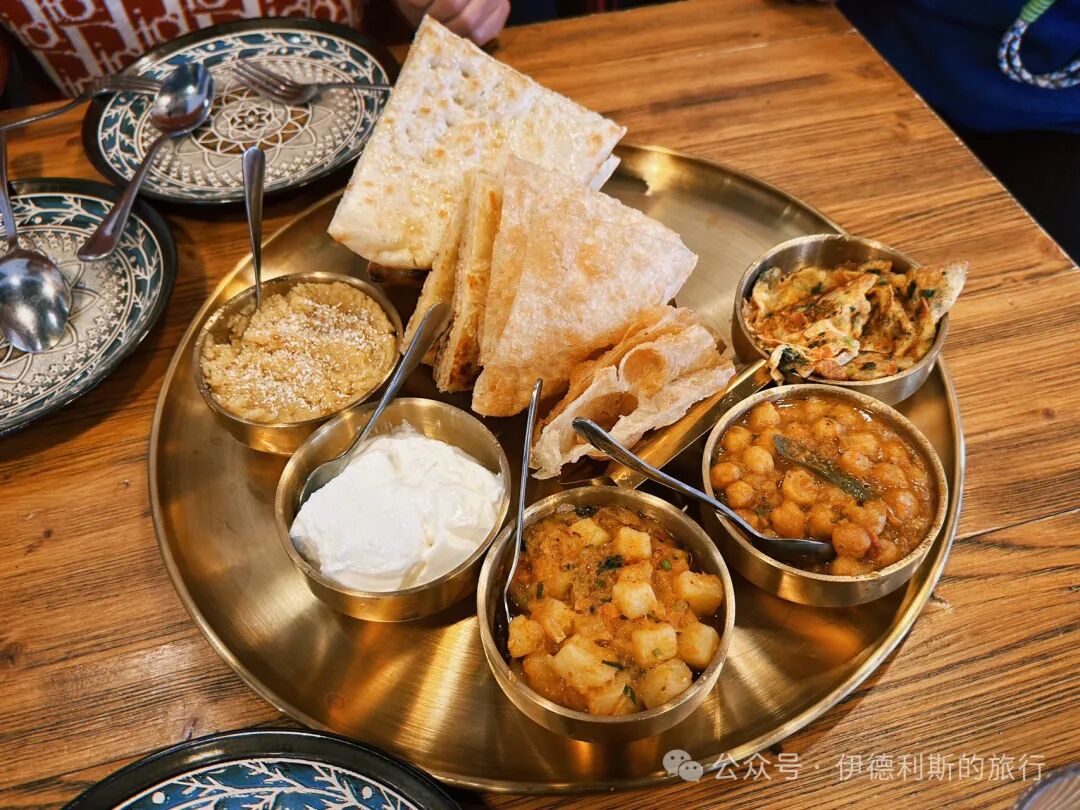
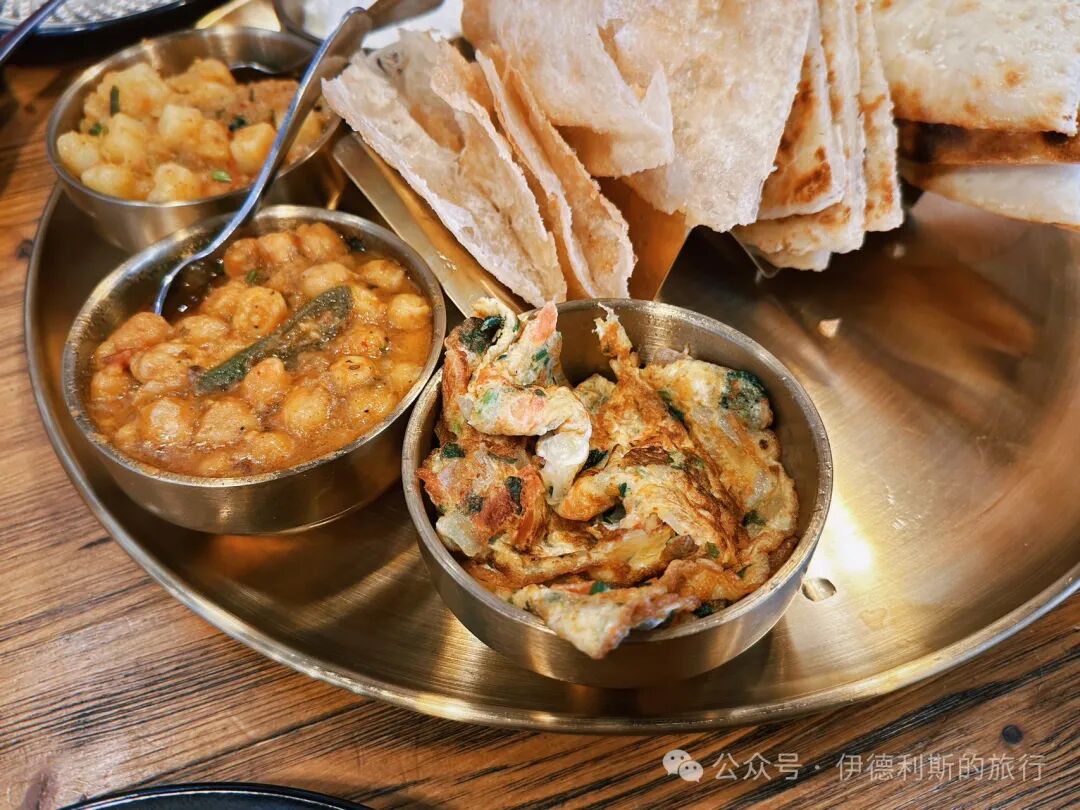
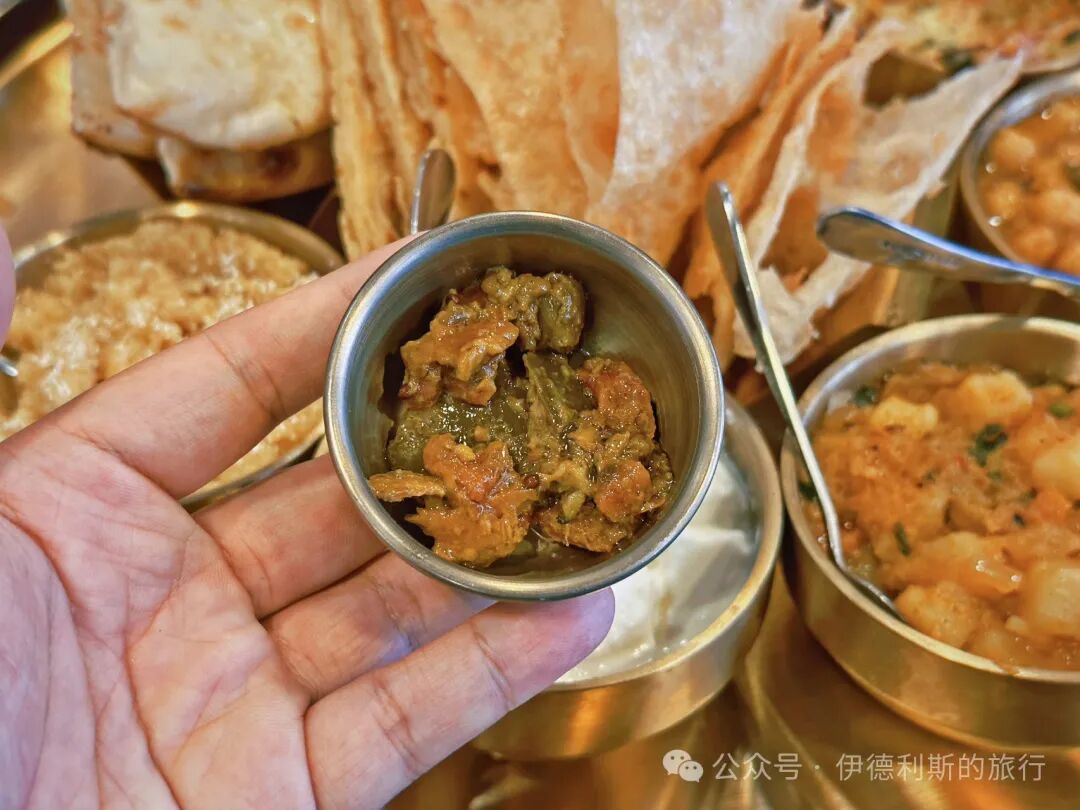
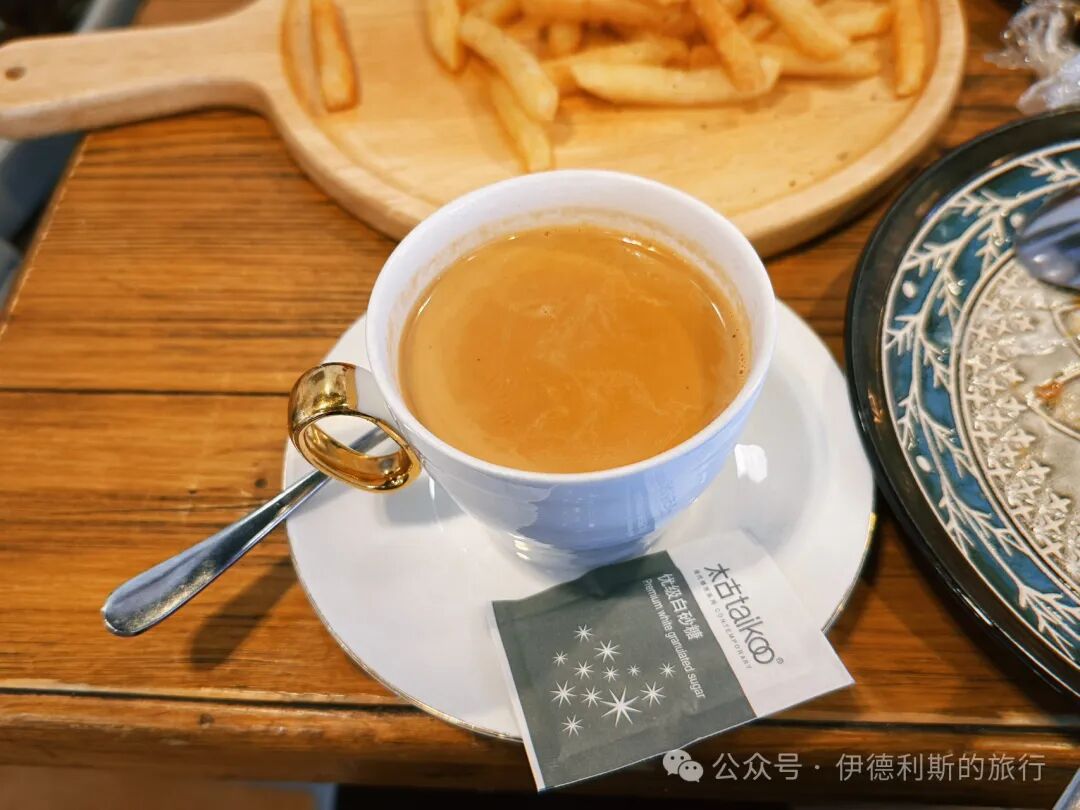
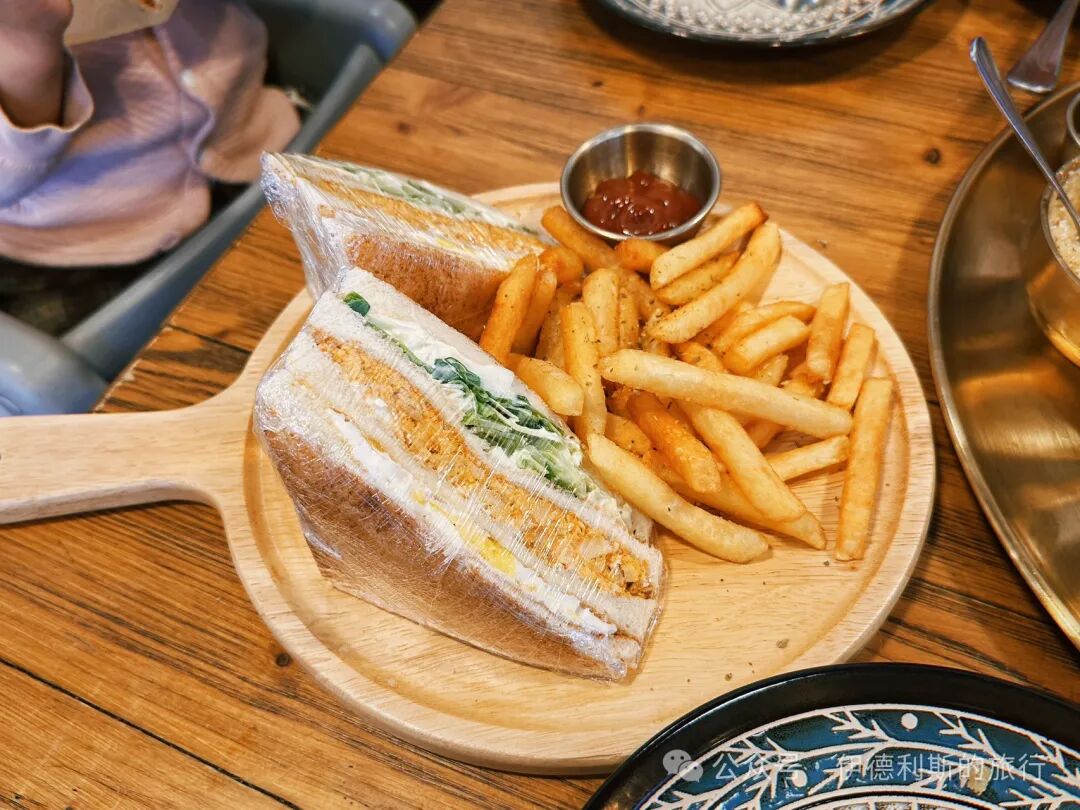
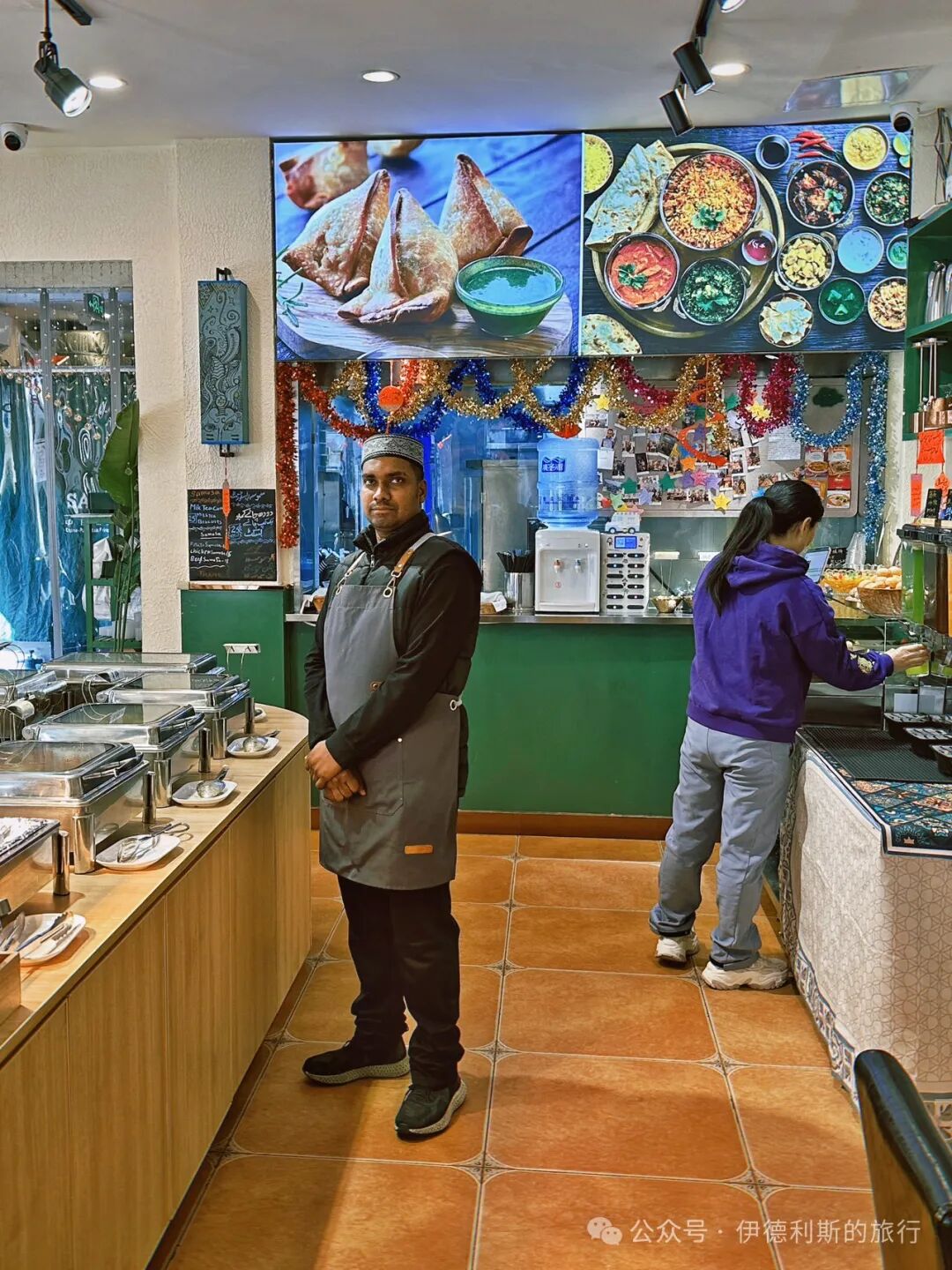
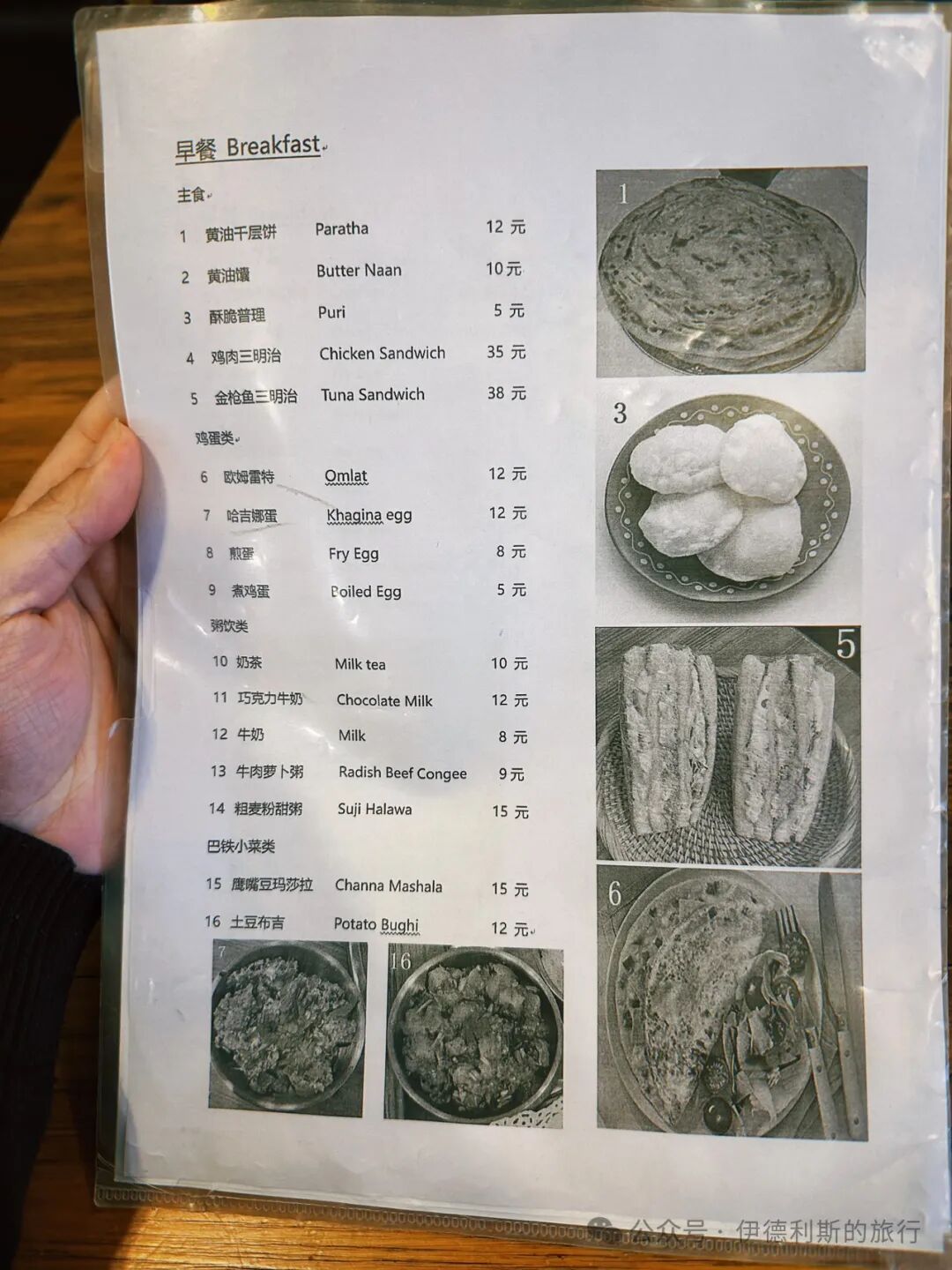
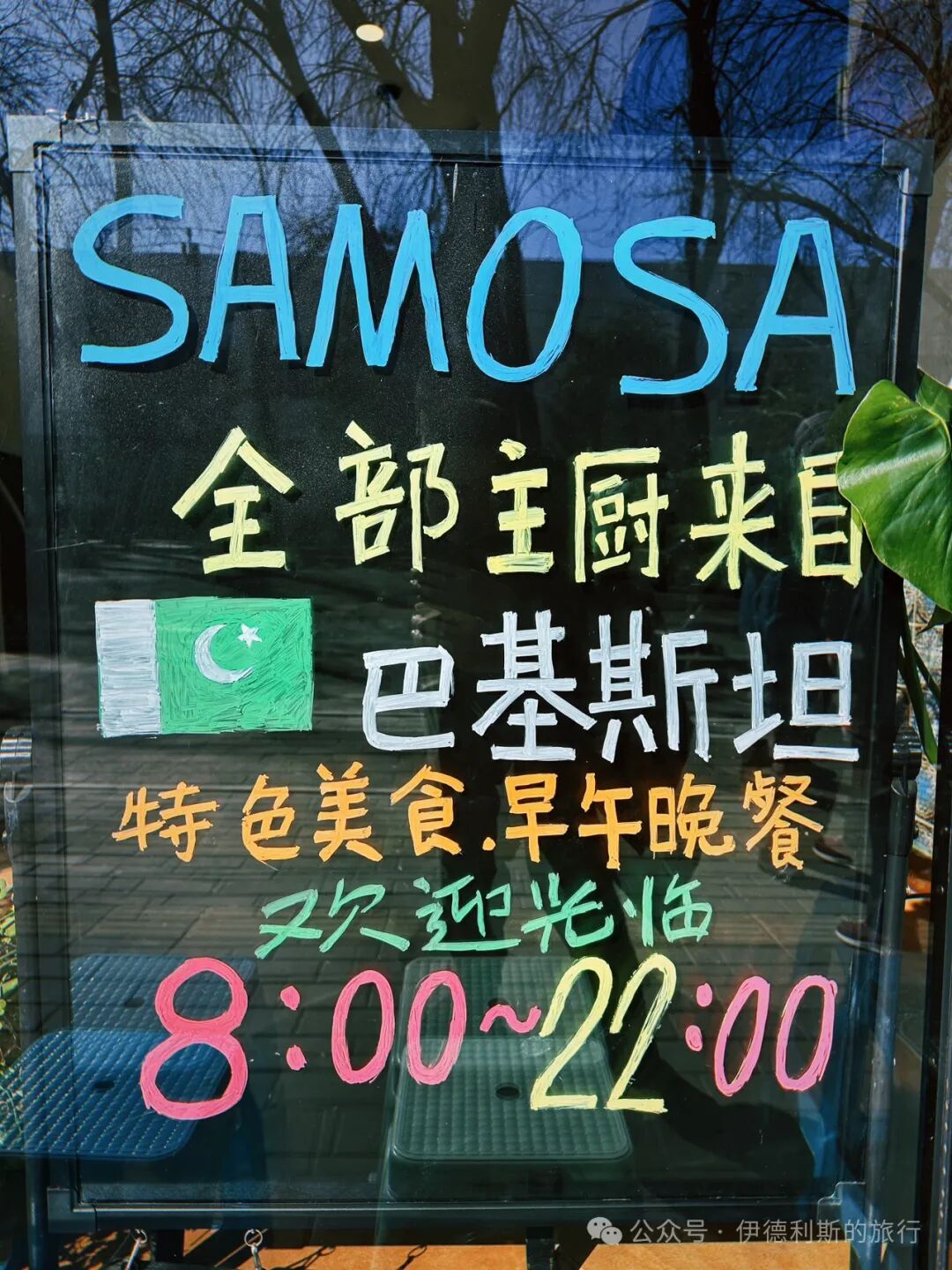
Turkish breakfast: bread and...
cheese.
Mado is a famous Turkish snack chain from the city of Kahramanmarash in southeastern Turkey. Its biggest feature is that it uses goat milk from its hometown to make all its signature dairy products and ice cream. Their breakfast is also very rich.
I have eaten Mado breakfast at their Yiwu and Guangzhou locations before, and in 2024, it became available at the Sultan Turkish Restaurant in Beijing. Mado has many breakfast options. We ordered the two-person set, which is served starting at 10:30 and is available all day. The two-person set includes Turkish-style fried eggs with sausage, Marash cheese, feta cheese, a yellow cheese platter, honey with Turkish cream, green olives, black olives, tomato chili paste, tahini syrup, cherry jam, dried apricots, walnuts, feta cheese spring rolls, a kiwi-orange-banana platter, a cucumber-tomato platter, plus bread, flatbread (naan), and Turkish black tea. It is a very rich variety. Their naan is very fluffy, and it tastes great when you tear it open and spread different jams on it.
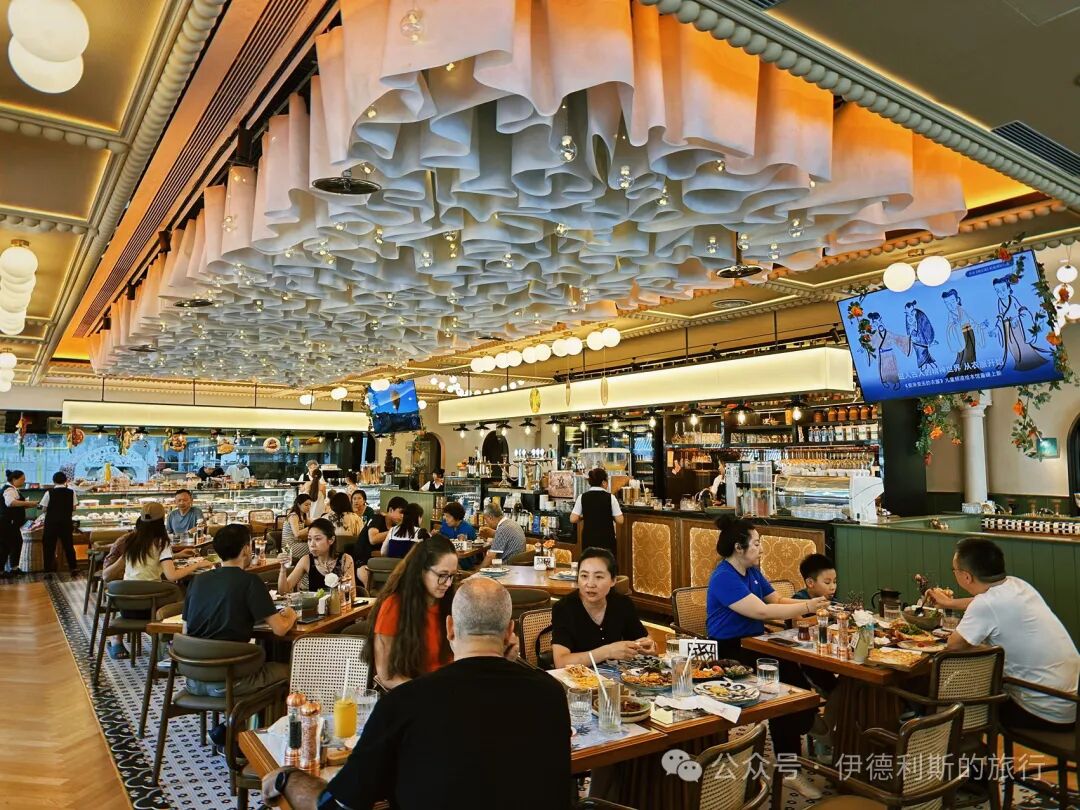
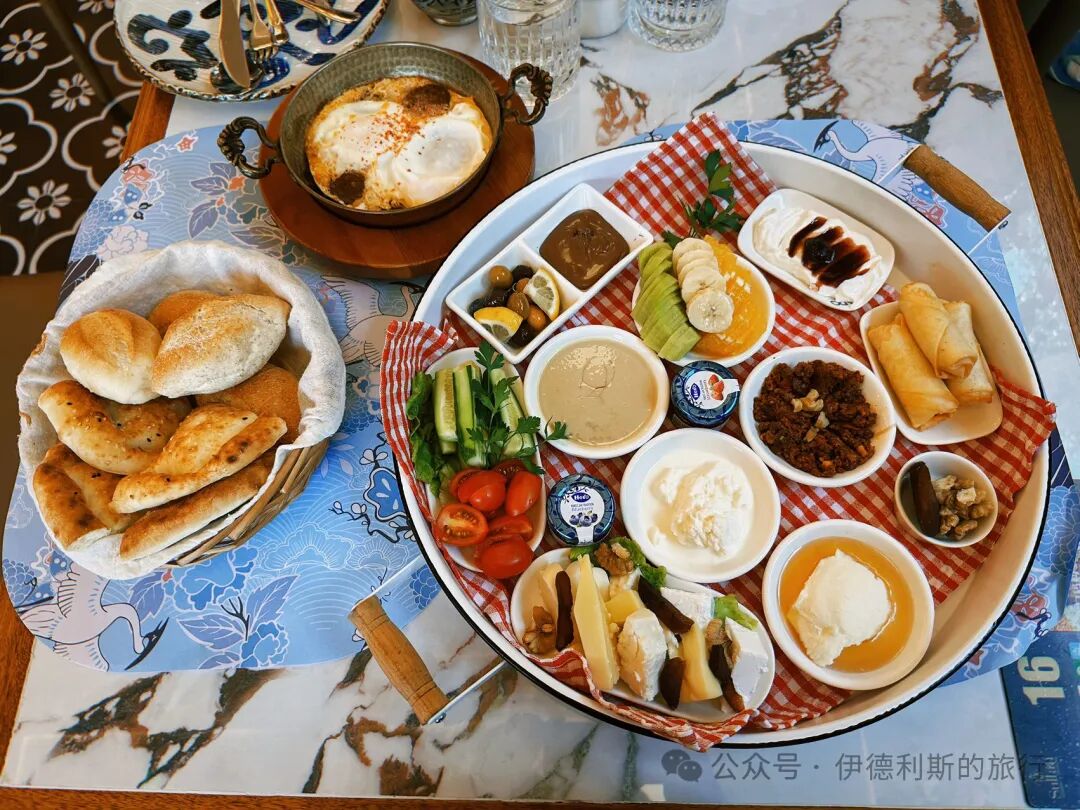
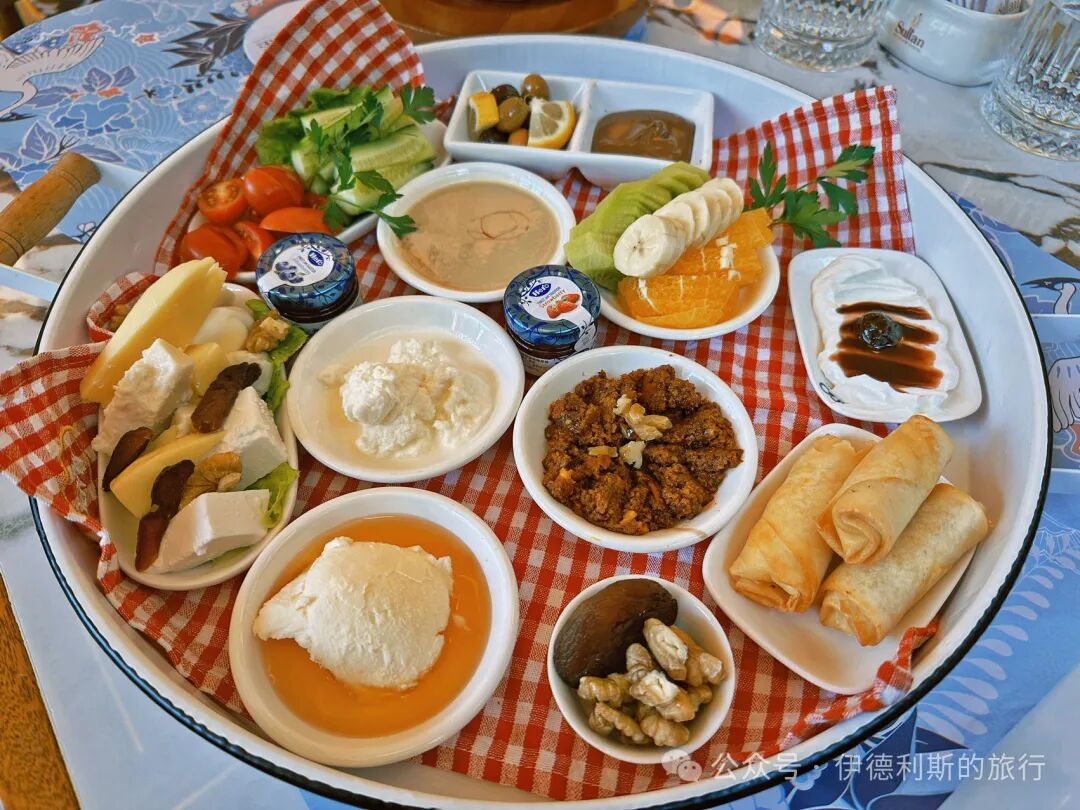
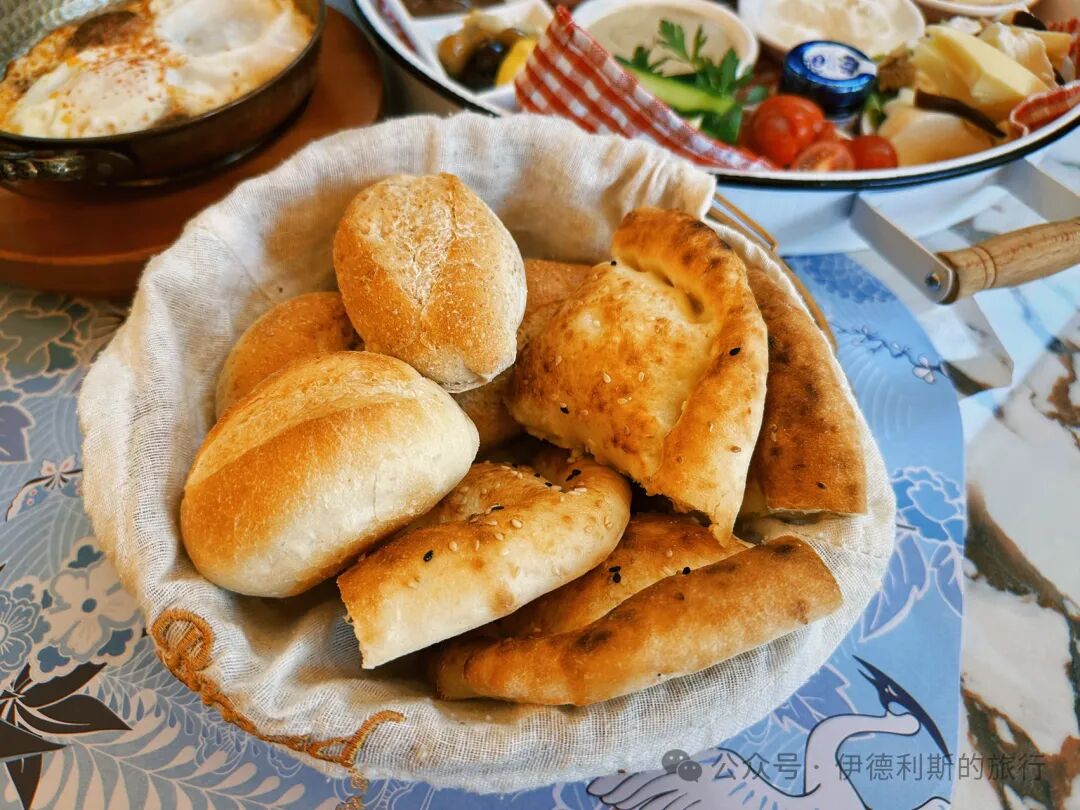
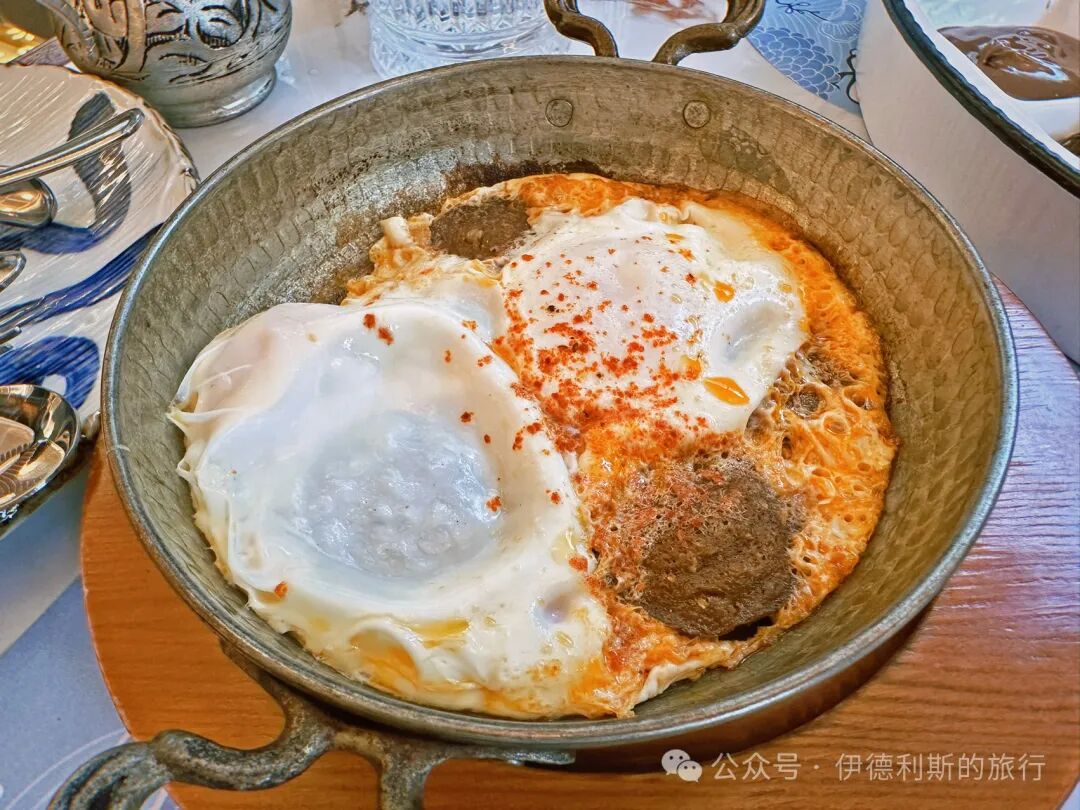
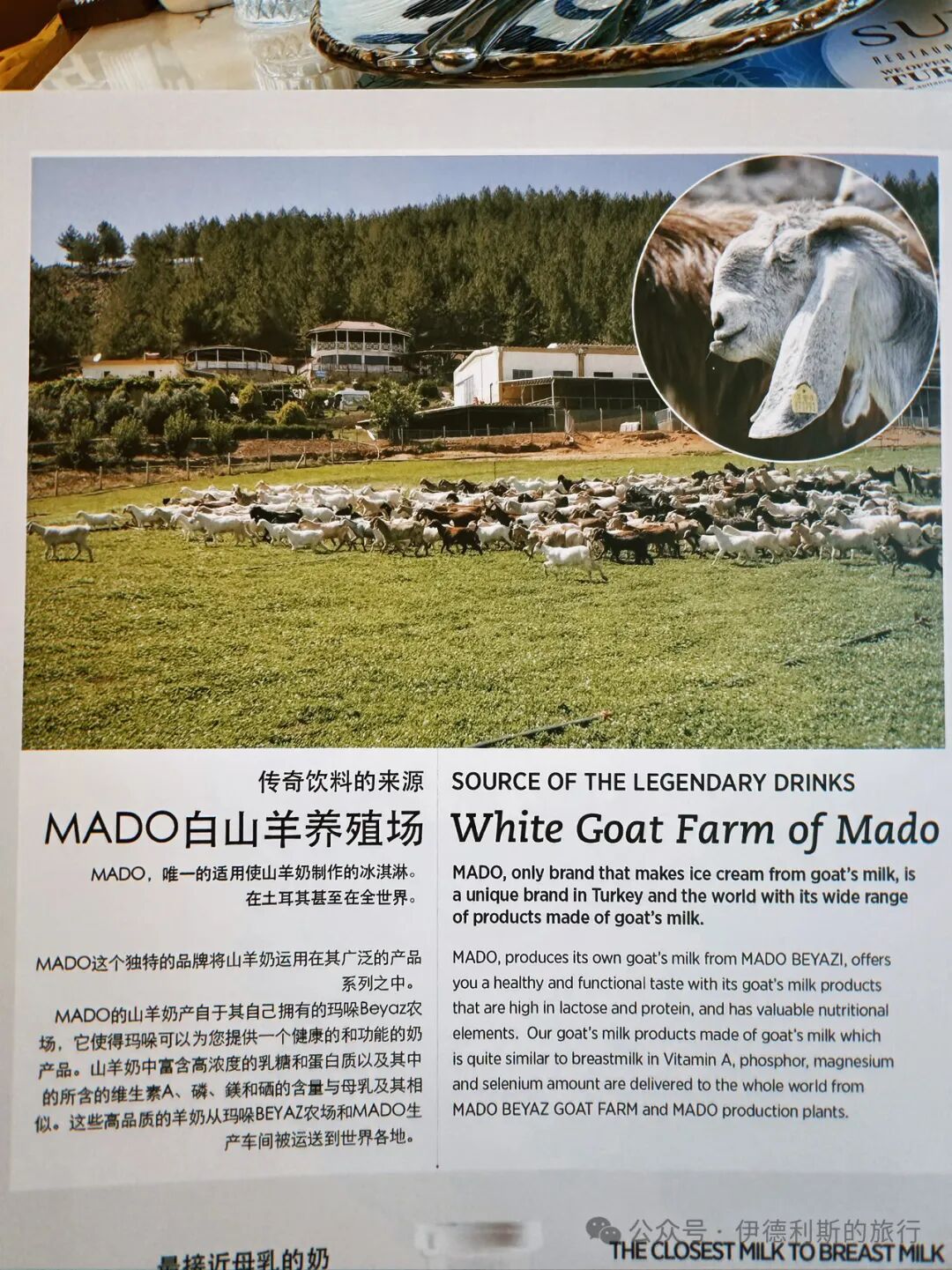
Inner Mongolian breakfast: steamed dumplings (shaomai) and pot tea (guocha).
Lianying Shaomai is a time-honored brand from Jining, Inner Mongolia, and they also have a branch on Huguosi Street in Beijing. You can have an Inner Mongolian breakfast there in the morning. The pot tea contains milk skin, milk tofu, beef jerky, and roasted millet. It has a very rich milky flavor, and our whole family loves it. We ordered the mutton filling and the mutton with wild onion (shacong) filling for the shaomai. Both are made with chunks of meat and have very thin skins. The wild onion flavor is between green onion and chives; it is very pungent and suits the taste of people from Xinjiang. You can get free refills on their cold dishes and corn grit porridge (bangzazhou). They also serve salty baked flatbread (beizi) with Inner Mongolian lamb offal. We ordered the flatbread this time, and it was quite good.
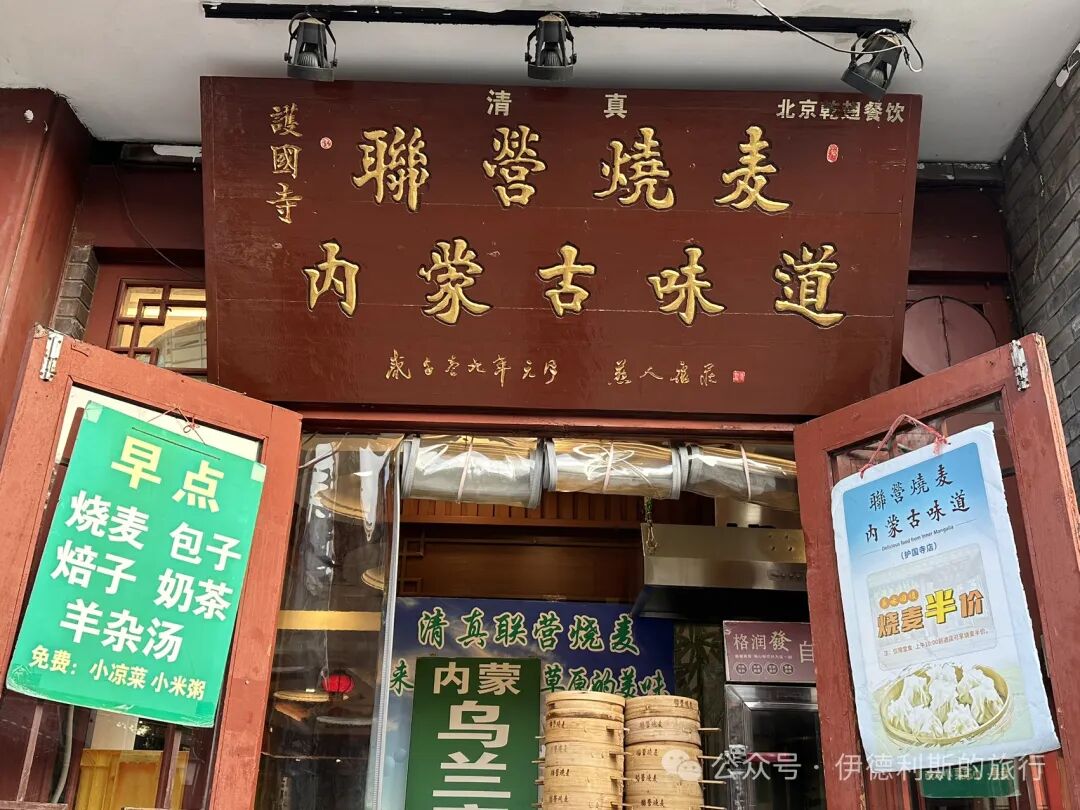
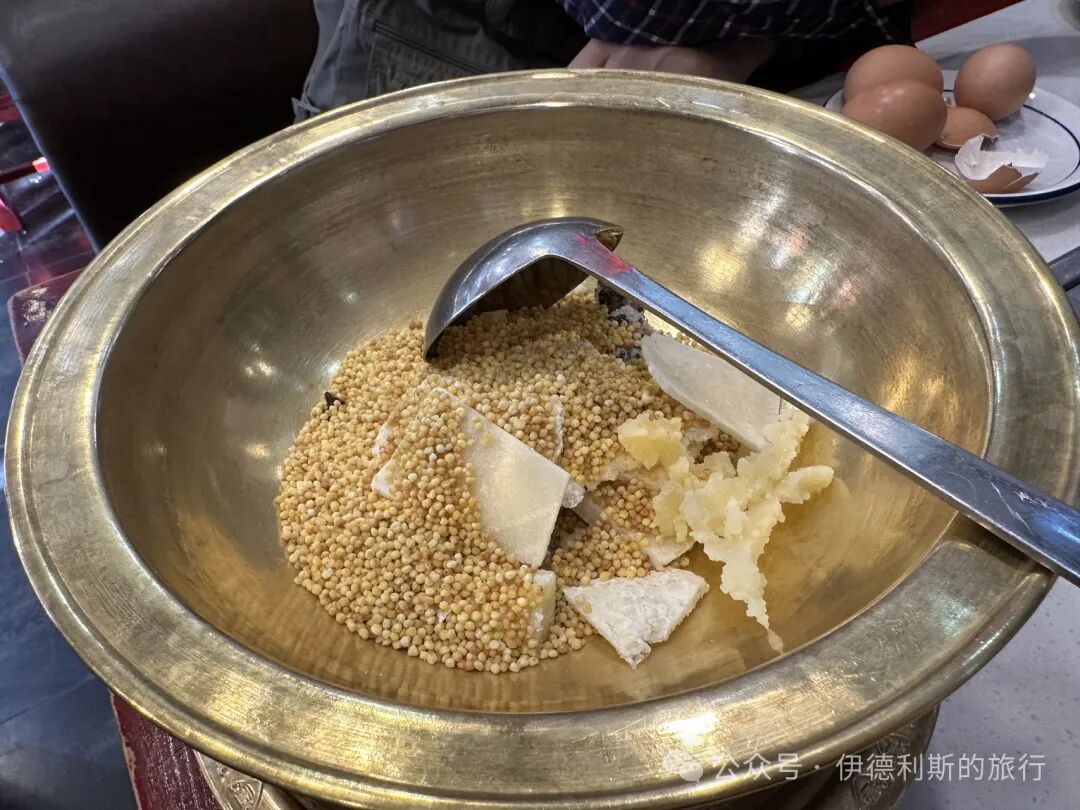
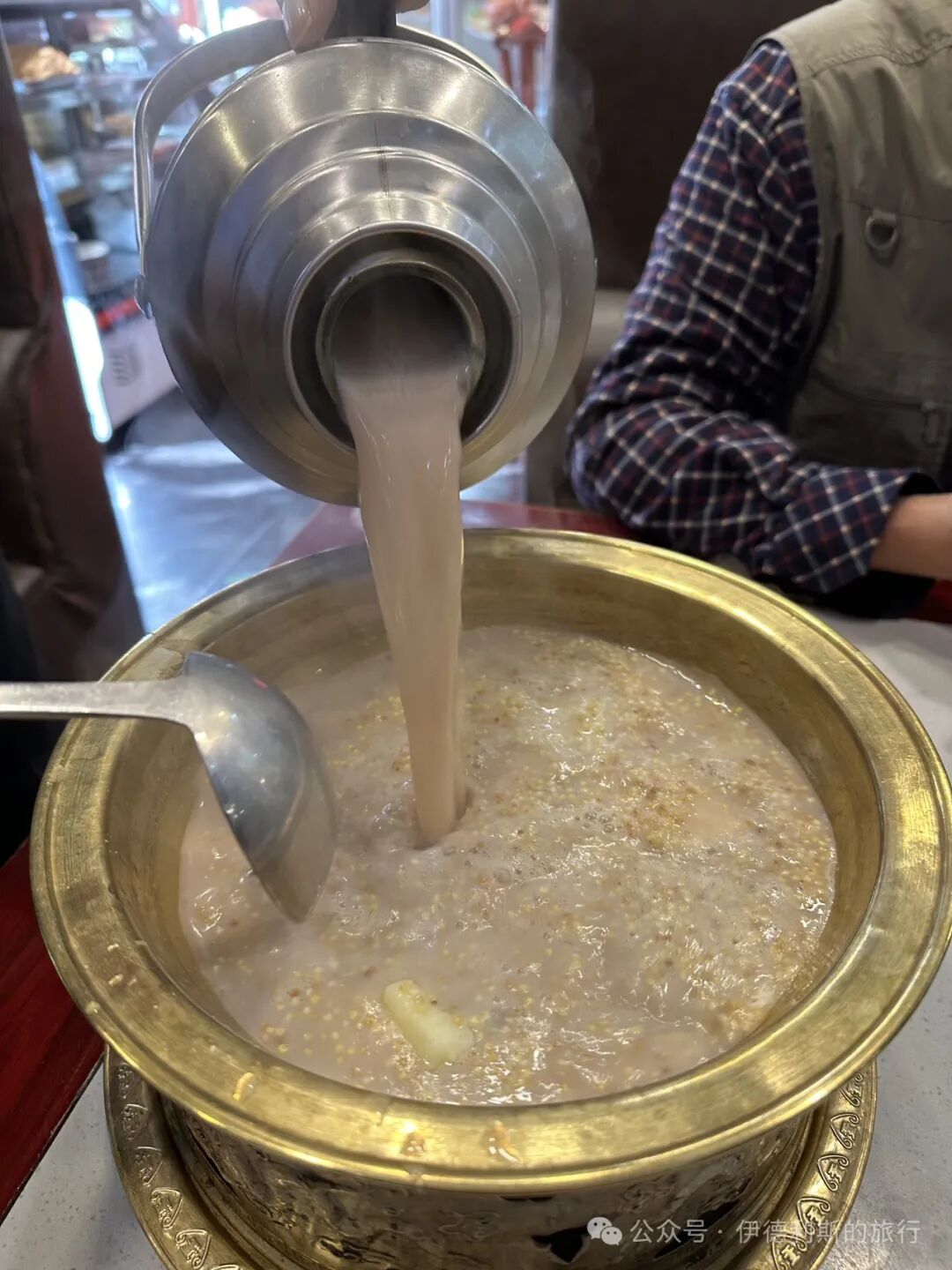
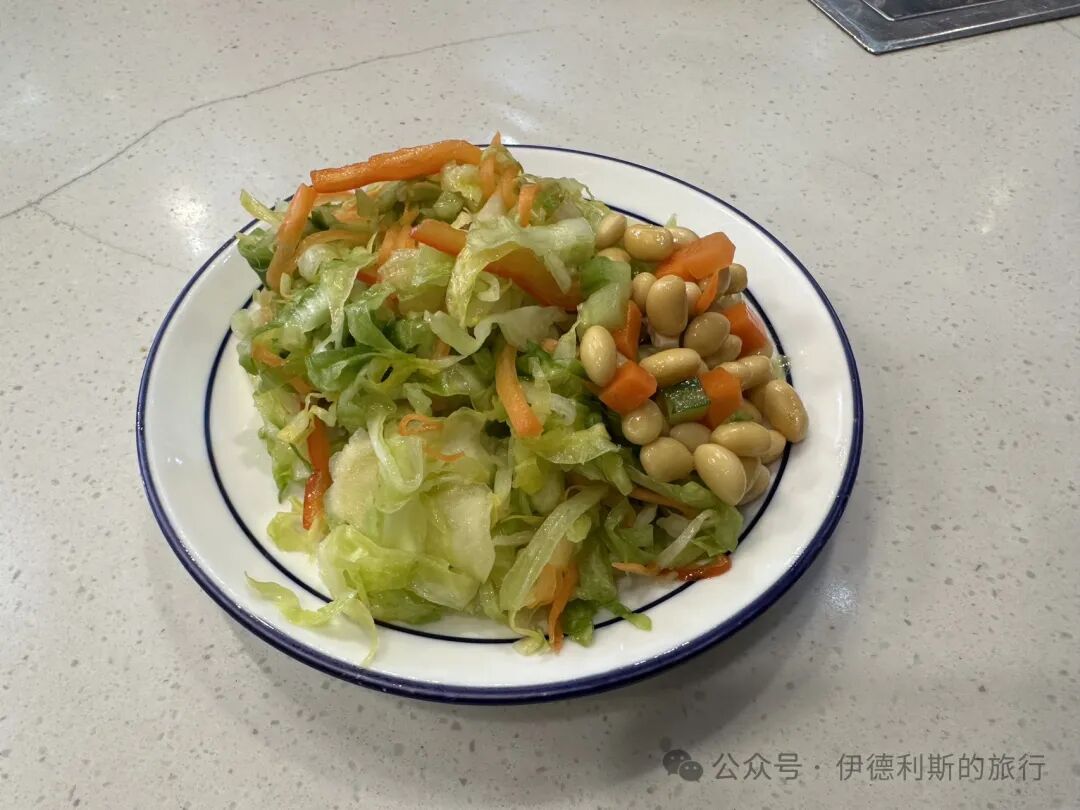
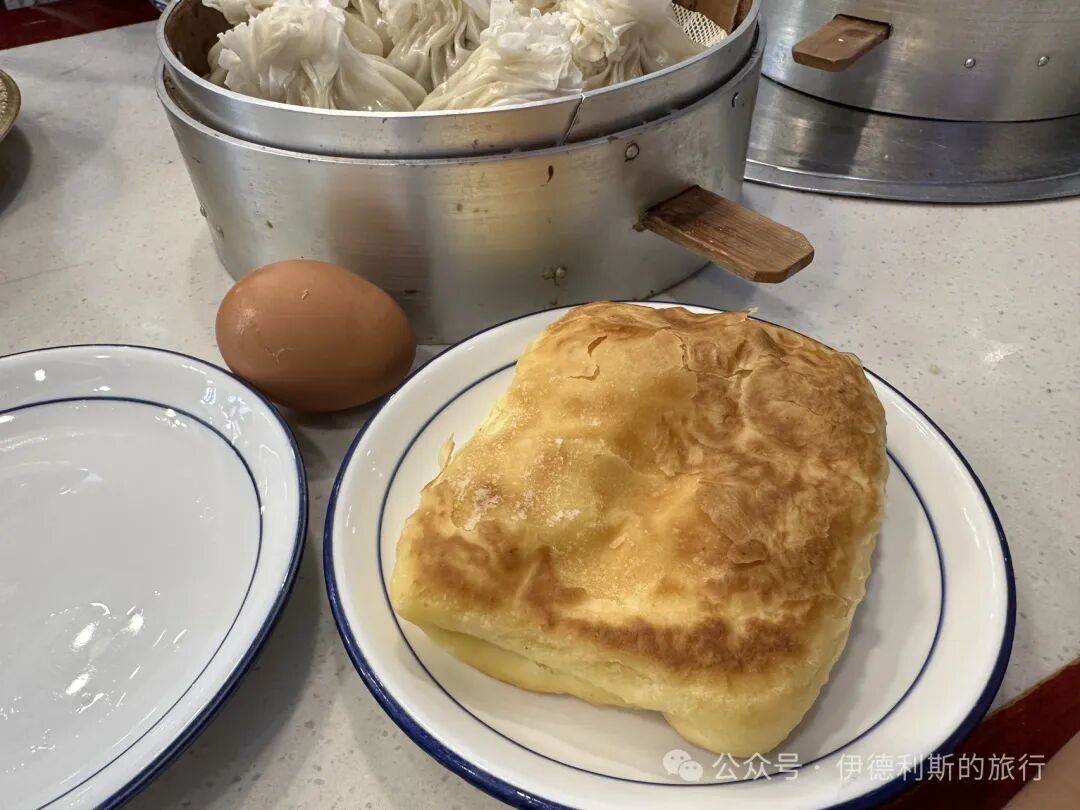
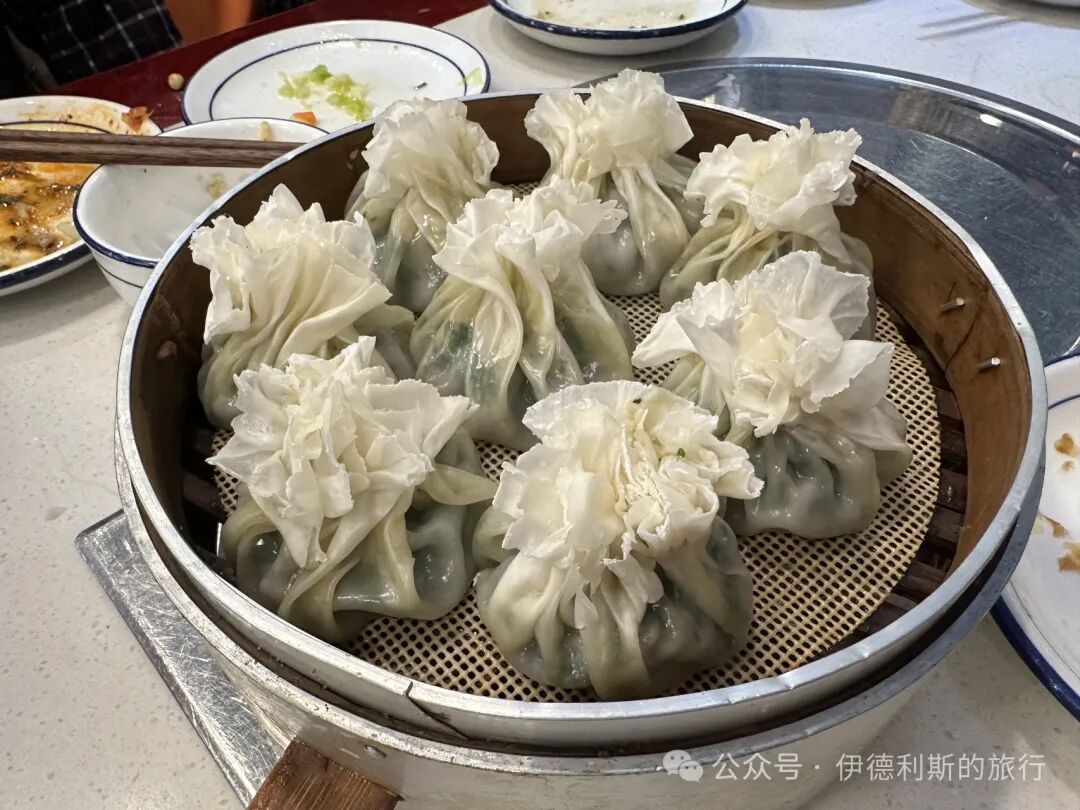
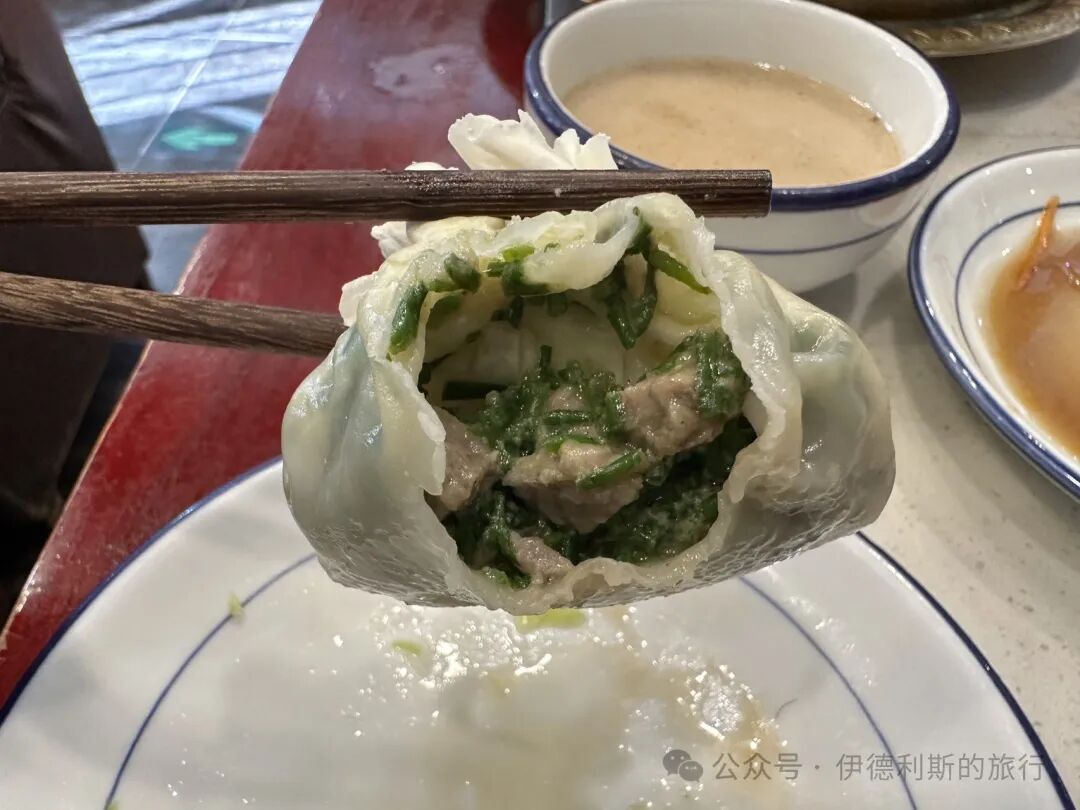
Henan breakfast: bean flour soup (doumo) and vegetable snake-shaped rolls (caimang).
The Yuwei Xiaoyao Town spicy soup (hulatang) shop on Dongsi North Street opened in 2024. When we don't want to cook breakfast at home on weekends, we go there to eat. We often order the fennel and egg or chive and egg vegetable snake-shaped rolls (caimang), spicy soup (hulatang), bean flour soup (doumo), and millet and pumpkin porridge. The skin of the vegetable snake-shaped roll (caimang) is very thin, and I think it tastes better than steamed buns (baozi).
They serve braised noodles (huimian) in the morning, made in the Zhengzhou style with kelp, shredded tofu, vermicelli, quail eggs, and sliced meat. The white broth is light, so you can add chili and pickled garlic yourself.
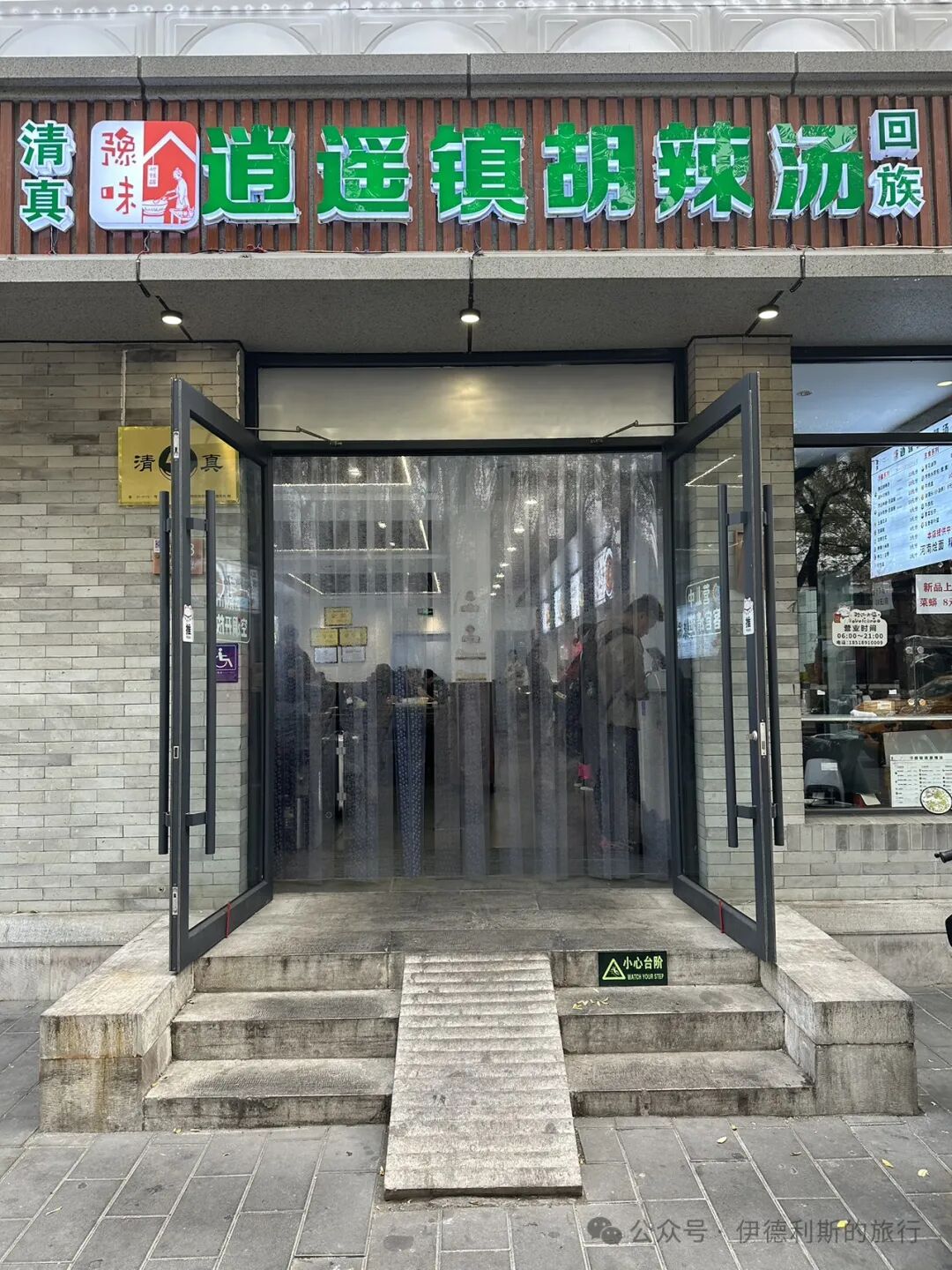
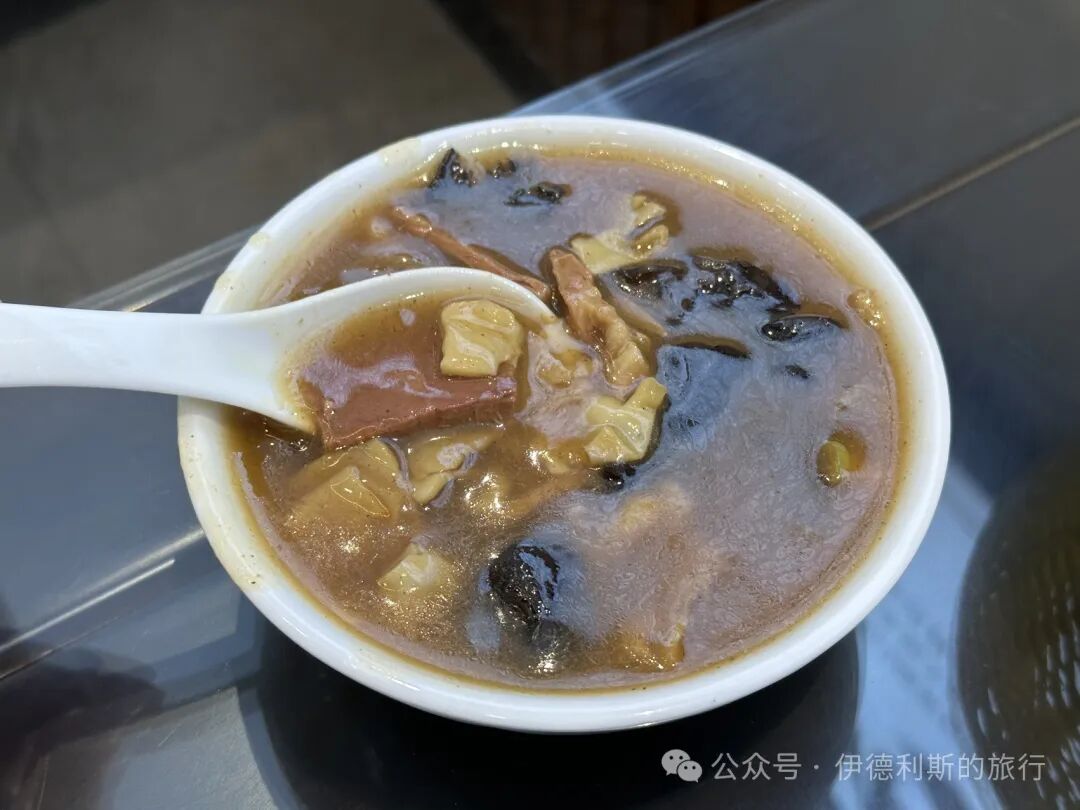
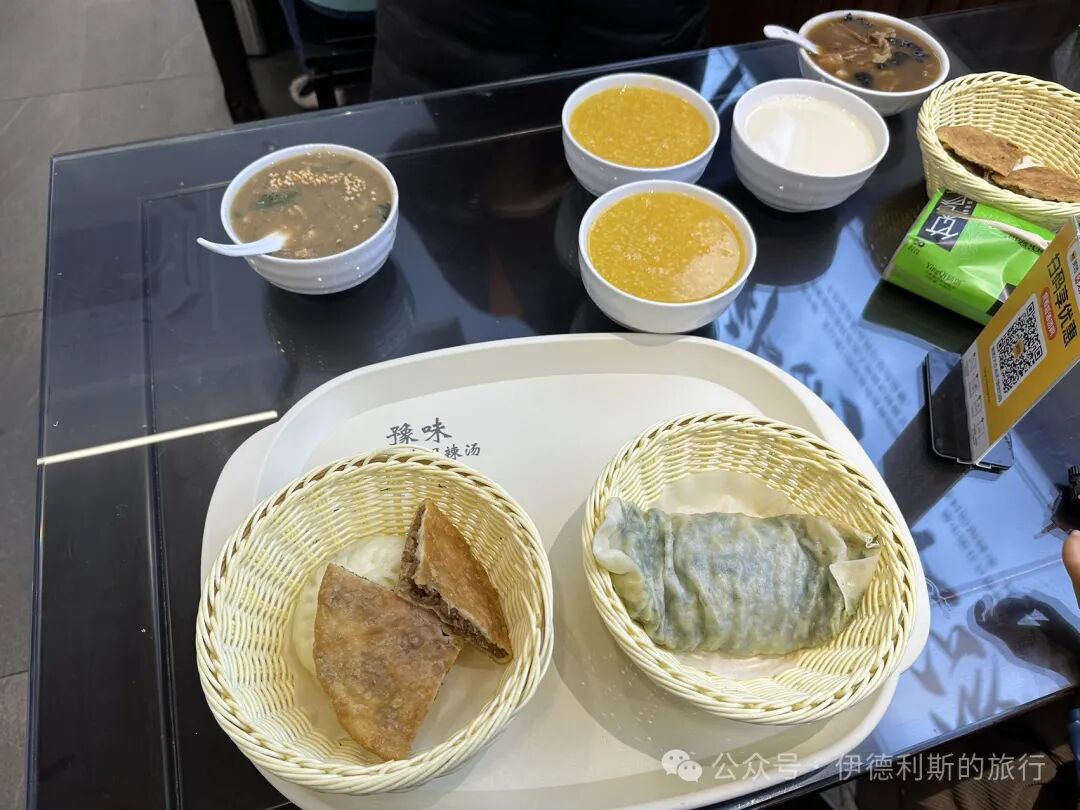
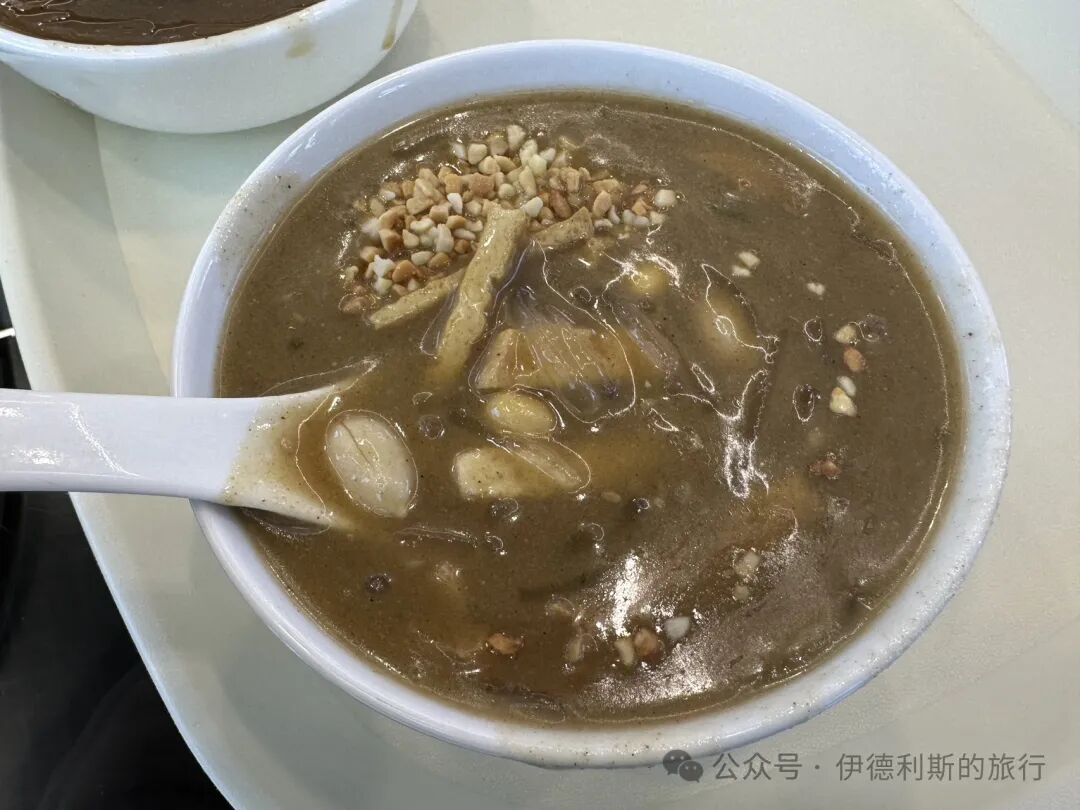
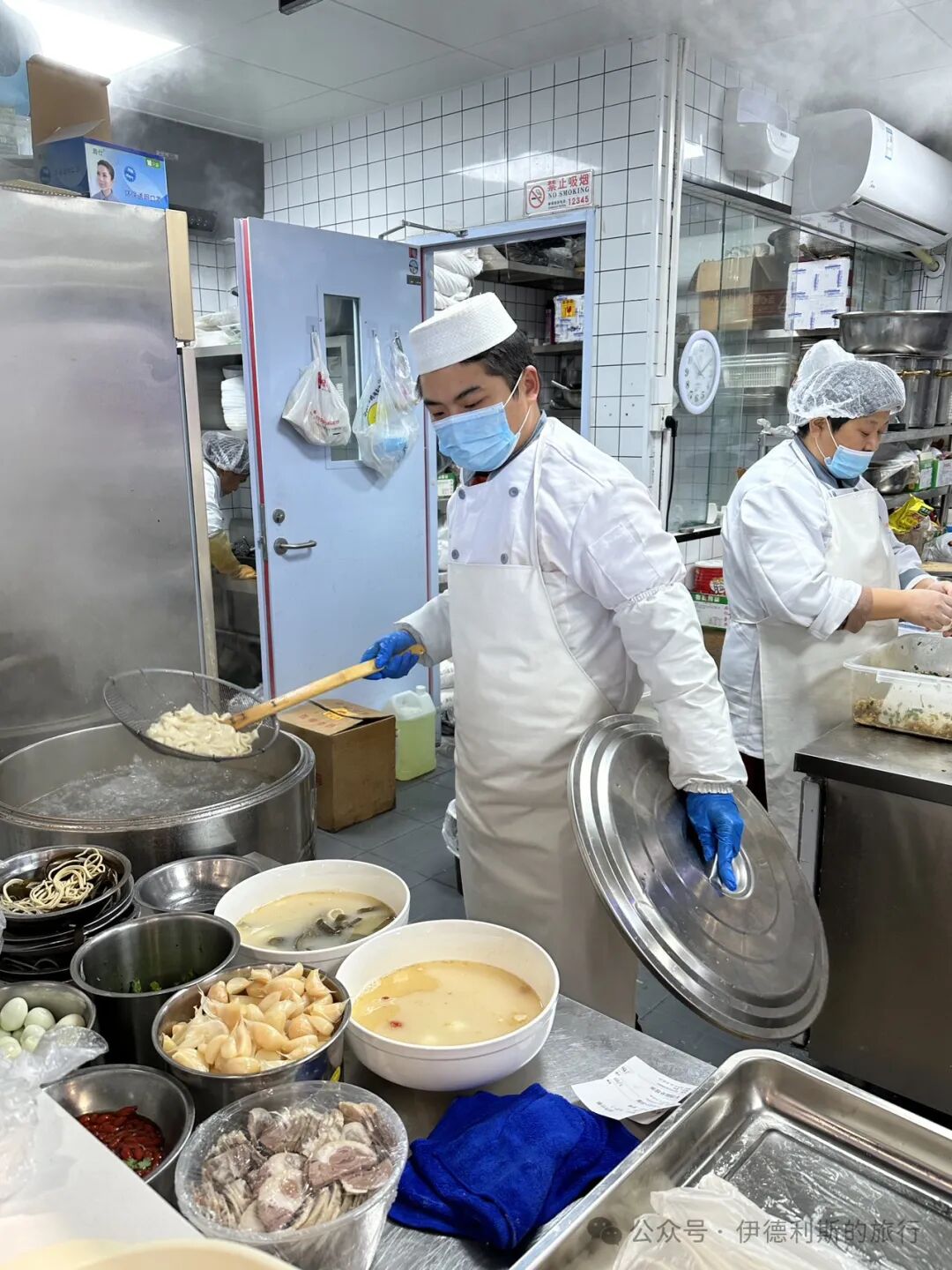
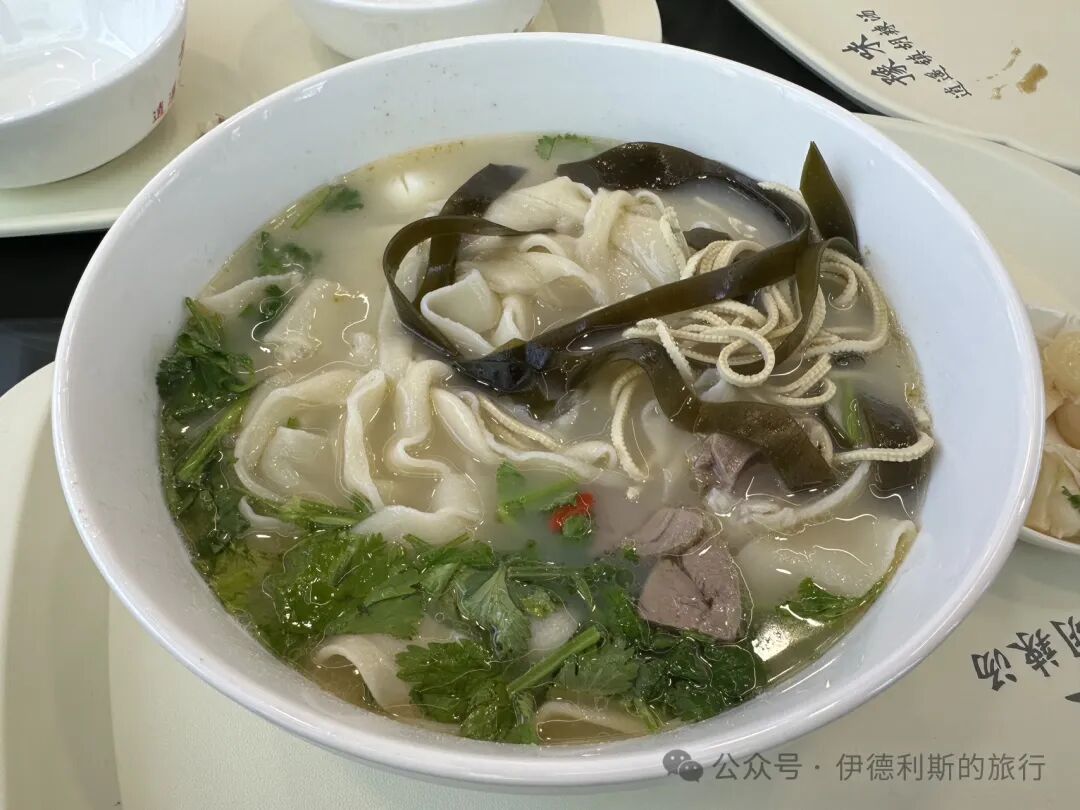
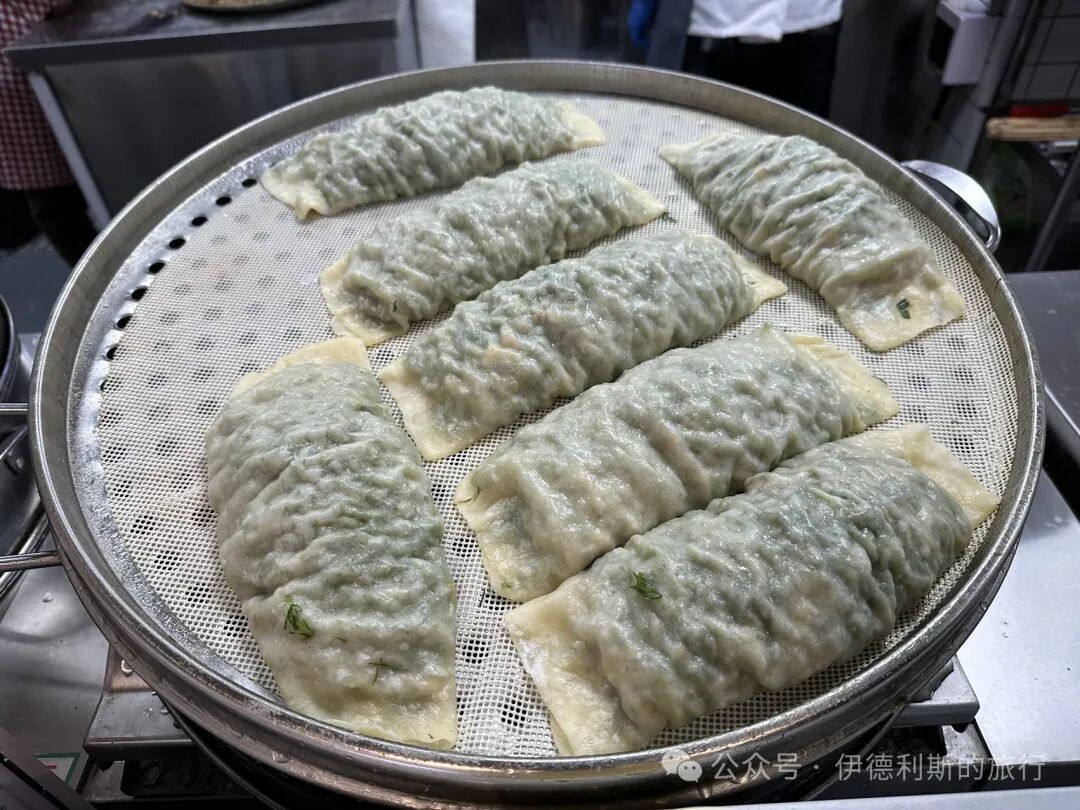
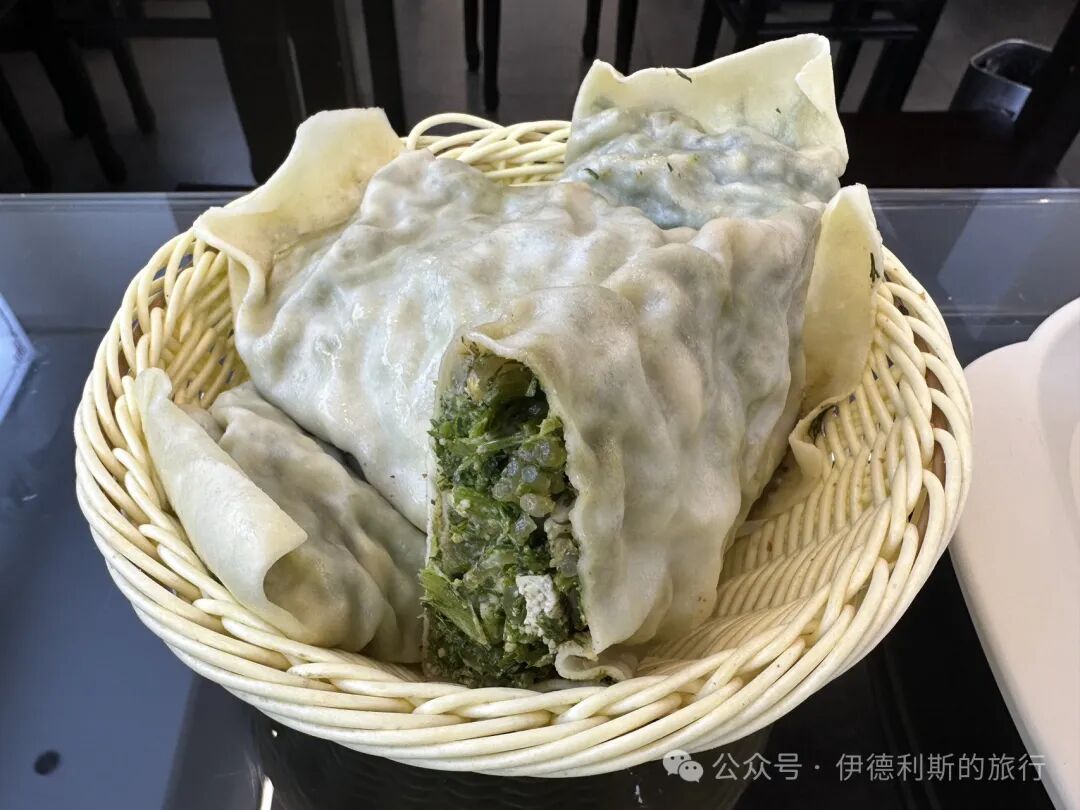
Halal Food Guide: Beijing International Neighbors Festival - Iranian, Azerbaijani and Maldivian Food
Articles • ali2007fr posted the article • 0 comments • 142 views • 2026-05-19 21:35
Summary: Beijing International Neighbors Festival - Iranian, Azerbaijani and Maldivian Food is presented as a clear English travel account for readers interested in Muslim life, halal food, architecture, and local history. The article keeps the original names, food details, photographs, and cultural context while focusing on Beijing Food, Cultural Festival, Halal Food.
Yesterday, I attended the International Neighborhood Festival at the Jianwai Diplomatic Apartment. This festival has been held for six years. You can eat snacks from different countries and experience a rich variety of cultures.
At the Iran booth, we ate chocolate cake and butter raisin cookies, and drank saffron tea. Sholezard is a special Iranian saffron pudding. It is a rice pudding made with saffron, sugar, rose water, cinnamon, and cardamom. It is the most common dessert Iranians eat to break their fast during Ramadan every year.
At the Azerbaijan booth, we tasted stuffed grape leaves (dolma) and the signature grilled meat skewers (lula kebab). There were also children wearing traditional Azerbaijani clothing.
In Turkish, dolma means "stuffed." It refers to putting meat filling inside various vegetables. Dolma was a staple dish for farmers during the Ottoman Empire. They usually stuffed cabbage in the winter and grape leaves in the summer. Today, dolma is widely found across Southeast Europe, West Asia, and North Africa, where the Ottoman Empire once ruled. Every place has its own unique version.
Lula kebab is made by grinding lamb and onions together into a mince, seasoning it with salt and pepper, and then grilling the meat on iron skewers.
I also saw a Maldives booth, and the Maldives embassy is located right inside the apartment building. The booth had all kinds of Maldivian snacks. We bought a spicy Maldivian flatbread (Kulhi Roshi) that contained ginger, garlic, onion, curry leaves (jiulixiang), shredded coconut, red chili powder, black pepper, cumin powder, tuna powder, fish paste (Rihaakuru), and lime juice. It had a very strong flavor. view all
Summary: Beijing International Neighbors Festival - Iranian, Azerbaijani and Maldivian Food is presented as a clear English travel account for readers interested in Muslim life, halal food, architecture, and local history. The article keeps the original names, food details, photographs, and cultural context while focusing on Beijing Food, Cultural Festival, Halal Food.
Yesterday, I attended the International Neighborhood Festival at the Jianwai Diplomatic Apartment. This festival has been held for six years. You can eat snacks from different countries and experience a rich variety of cultures.
At the Iran booth, we ate chocolate cake and butter raisin cookies, and drank saffron tea. Sholezard is a special Iranian saffron pudding. It is a rice pudding made with saffron, sugar, rose water, cinnamon, and cardamom. It is the most common dessert Iranians eat to break their fast during Ramadan every year.
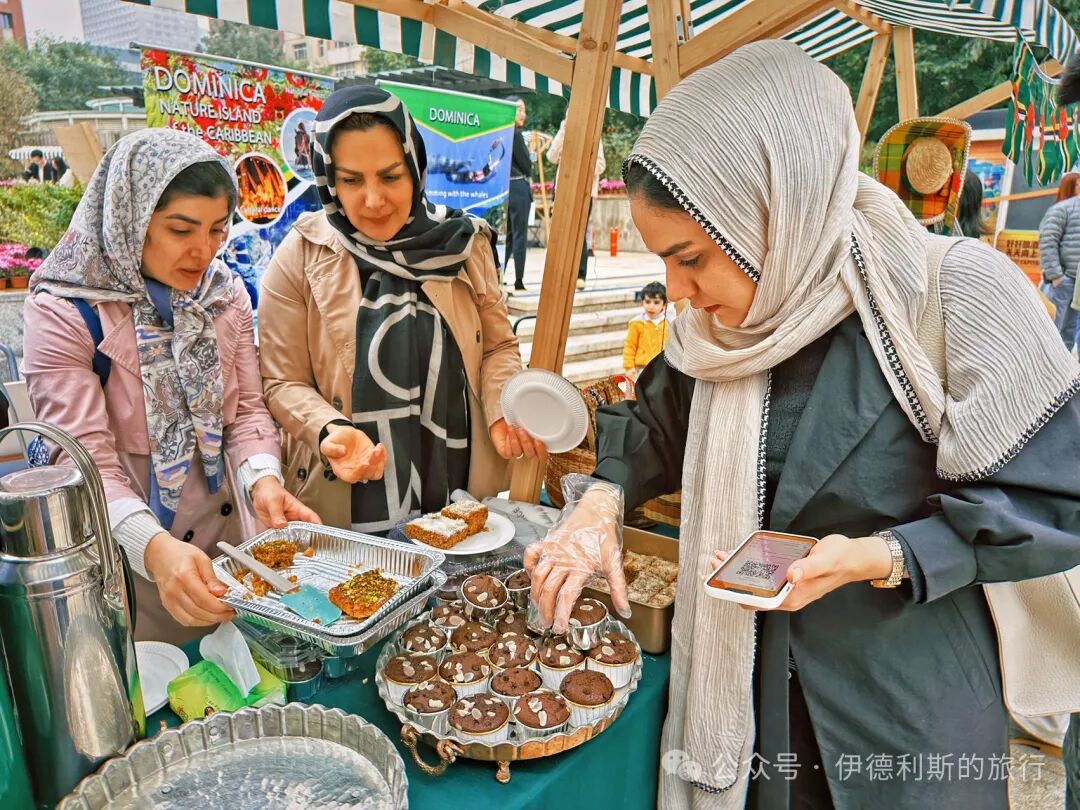
At the Azerbaijan booth, we tasted stuffed grape leaves (dolma) and the signature grilled meat skewers (lula kebab). There were also children wearing traditional Azerbaijani clothing.
In Turkish, dolma means "stuffed." It refers to putting meat filling inside various vegetables. Dolma was a staple dish for farmers during the Ottoman Empire. They usually stuffed cabbage in the winter and grape leaves in the summer. Today, dolma is widely found across Southeast Europe, West Asia, and North Africa, where the Ottoman Empire once ruled. Every place has its own unique version.
Lula kebab is made by grinding lamb and onions together into a mince, seasoning it with salt and pepper, and then grilling the meat on iron skewers.
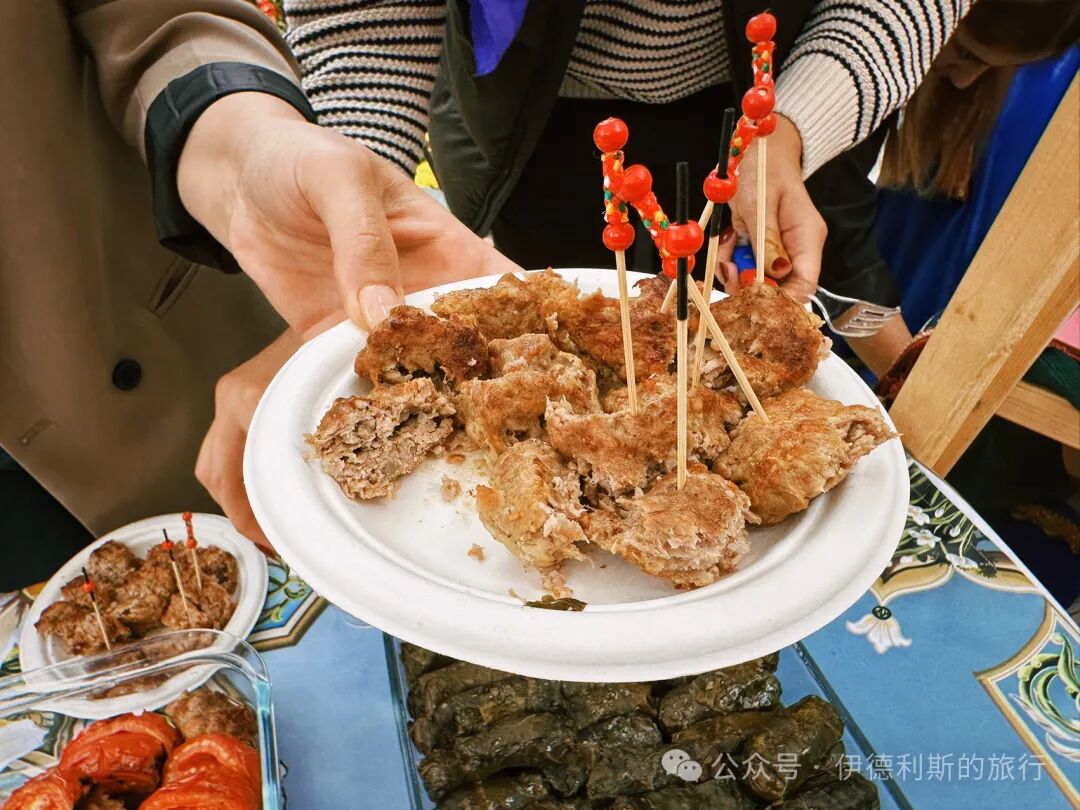
I also saw a Maldives booth, and the Maldives embassy is located right inside the apartment building. The booth had all kinds of Maldivian snacks. We bought a spicy Maldivian flatbread (Kulhi Roshi) that contained ginger, garlic, onion, curry leaves (jiulixiang), shredded coconut, red chili powder, black pepper, cumin powder, tuna powder, fish paste (Rihaakuru), and lime juice. It had a very strong flavor.
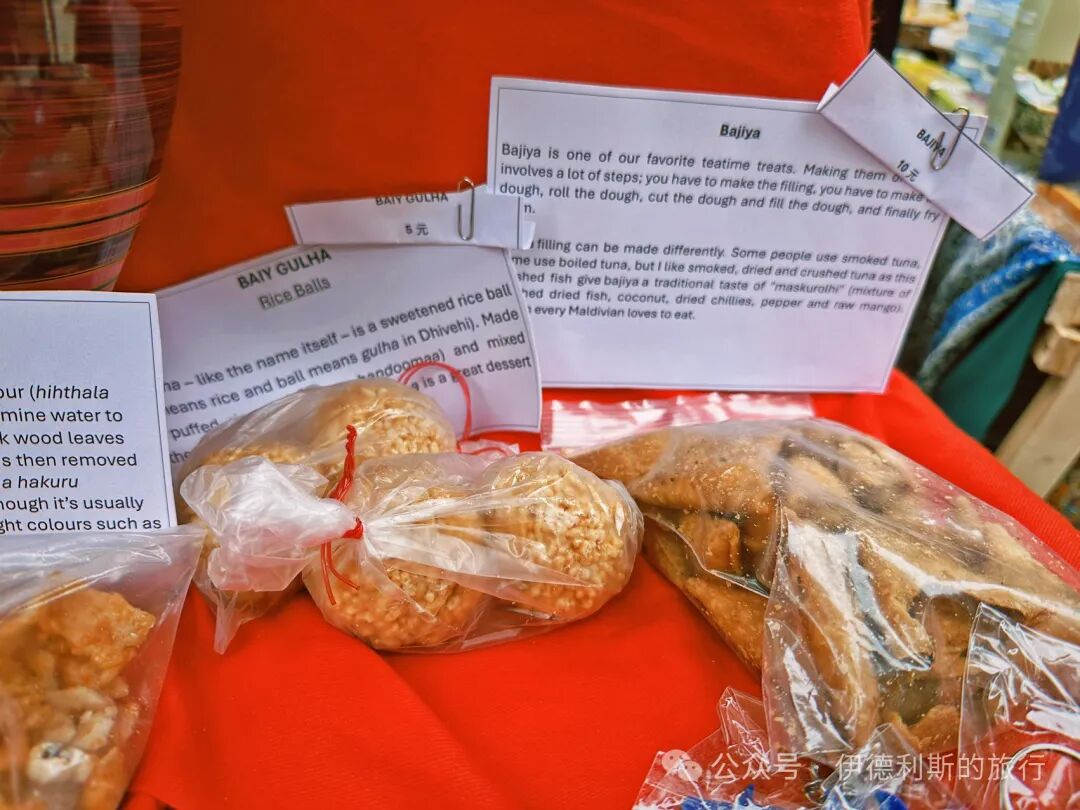
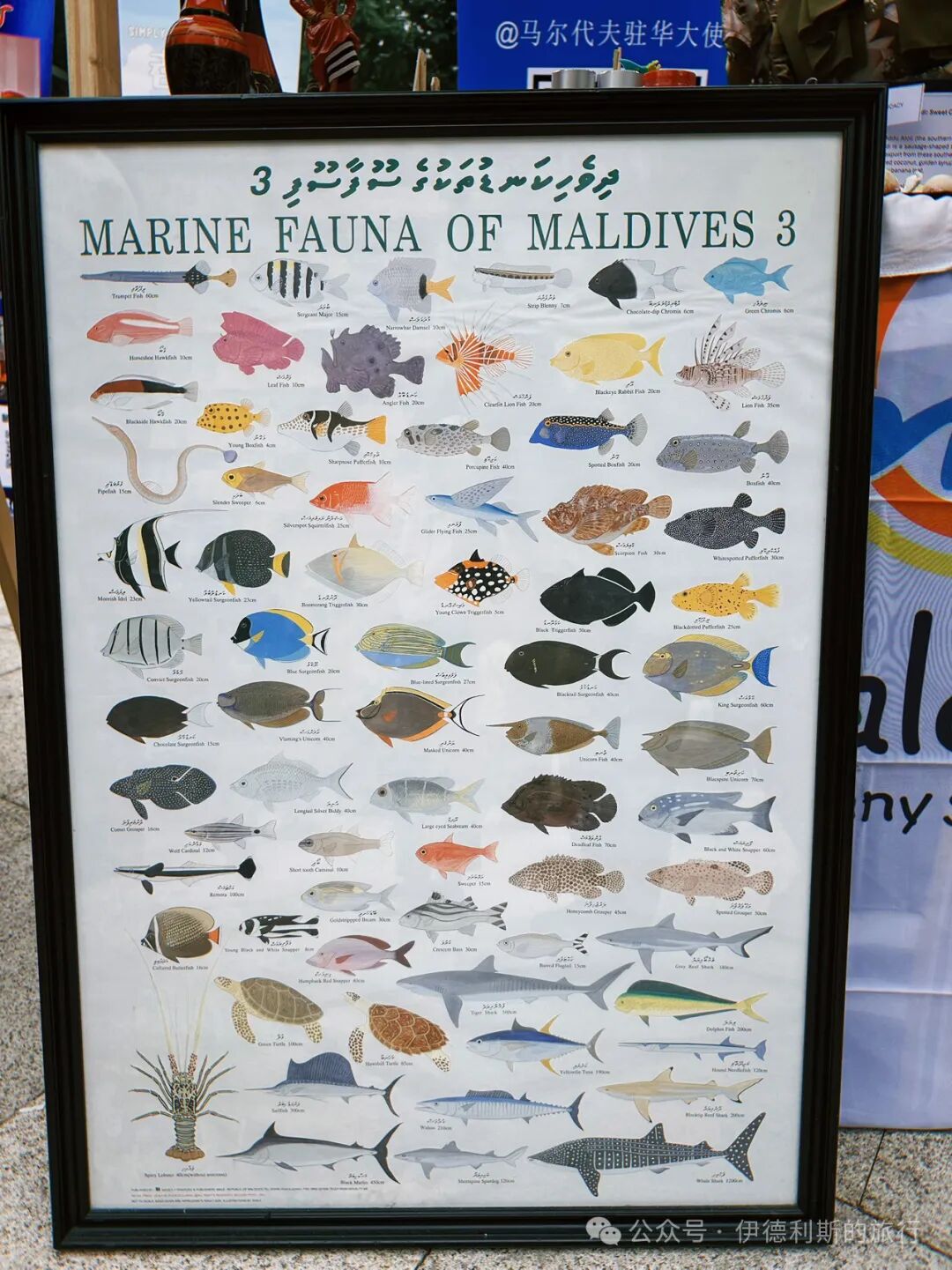
Authentic Halal Chinese Food Beijing: Xinjiang Restaurant, Yunnan Dishes & Niujie Snacks
Articles • yusuf908 posted the article • 0 comments • 177 views • 2026-05-24 00:17
Summary: A Beijing halal food guide focused on Xinjiang restaurants, Yunnan Muslim dishes, Niujie snacks, beef noodles, and other local qingzhen (halal) finds, keeping the original restaurant names, addresses, and photos in order.
[Beijing Special Halal Dining Guide (Including the Most Complete List of Foreign Restaurants)] (Part 1)
[Beijing Special Halal Dining Guide (Including the Most Complete List of Foreign Restaurants)] (Part 2)
[Beijing Special Halal Dining Guide (Including the Most Complete List of Foreign Restaurants)] (Part 3)
A Guide to Halal Dining in Beijing (Part 4)
101. Jinjiang Western Regions Restaurant
This is a high-end Xinjiang restaurant very close to Olympic Forest Park.
The space is quite large with a nice dining atmosphere, making it suitable for banquets and group meals.
The lamb chops are a bit gamey, but the overall taste of the dishes is decent, costing about 100 yuan per person.
Address: No. 411, Zone 4, Huizhong Beili, Asian Games Village, Chaoyang District.
102. Ayidian Chang Halal Yunnan Cuisine
It is not easy to find authentic halal Yunnan food in Beijing, but this restaurant, which opened recently, is quite genuine.
The decor is fresh and elegant, and the owner is a young woman from Yunnan.
Tamarind (suanjiao) is a local specialty of Yunnan, so I chose to try the tamarind juice.
Beef wrapped in mint leaves; mint is as common in Yunnan as cilantro and is delicious even when eaten raw.
This is fried grasshopper.
Ibn Abi Awfa narrated: We went on seven expeditions with the Prophet, and we ate locusts. Sunan an-Nasa'i, Hadith 37;
The Prophet described the sea, saying: 'Its water is pure, and its dead creatures are halal.' He also said: 'We are permitted two types of dead creatures: fish and locusts;' and two types of blood: liver and spleen.' (Musnad Ahmad)
Sour soup beef jerky (niuganba); you must eat beef jerky in Yunnan cuisine because the most famous beef jerky in Yunnan is made by Hui Muslims.
It happened to be just before the Dragon Boat Festival, and the restaurant was developing beef rice dumplings (zongzi). The manager gave me two; I had only eaten sweet ones before, so this was my first time trying a meat version.
Yunnan cold rice noodles (mixian); the broth is rich and fragrant, and the noodles are chewy.
Address: First floor, north commercial section, axes 19-21, west side of Fengyayuan Zone 2, Huilongguan Town.
103. Dai Family Savory Crepe (jianbing) on Niujie Street.
This savory crepe is made by Hui Muslims from Niujie, and the neighbors all say it tastes great.
The savory crepe is a breakfast item, sold only in the morning, and they are closed on Mondays.
Address: Niujie Xili, in front of the barbershop.
104. Old Neighborhood Beef Noodles (laojiefang niuroumian).
The row of snack shops on Jiaozihu Hutong in Niujie has been mostly cleared out due to wall-breaking renovations. Only this Old Neighborhood Beef Noodles remains. The owner, Uncle Ma, is a true old neighbor who lived on the same Shouliu Hutong as my family. His beef noodles and small bowls of beef are excellent. It is not easy to find an authentic bowl of Beijing-style beef noodles these days.
Address: Ground floor shops on the west side of Jiaozihu Hutong.
105. Old Ma Halal Lamb Spine Potstickers (guotie).
Halal lamb spine is easy to find, but halal potstickers are rare these days. This shop makes pretty good ones.
Beef and green onion potstickers were my childhood favorite. There used to be a tent in Xuanwu District that sold halal snacks, but after it was torn down, I never found good potstickers again. I later heard the old man who made them passed away (wuchang), so that authentic skill is likely lost forever.
I was surprised to find they also sell spicy hot pot (maocai), a Chengdu snack similar to spicy soup (malatang), but you can drink the broth.
Address: South entrance of Hongju Street, Xicheng District.
106. Noodles at the Drum Tower.
I found this popular restaurant on Dazhong Dianping. At first, I thought it was categorized incorrectly because it had no obvious halal sign. I learned from the reviews that it is a halal shop owned by a Beijing Hui Muslim, and the halal sign is in a very inconspicuous spot inside.
This is a Western-style rock music restaurant.
They have mushrooms with foie gras.
Roasted chicken leg, but it is named Eight Hammers (badachui).
It is called Gold Medal Meat Sauce Noodles, but when it arrived, it was just soybean paste noodles (zhajiangmian).
Vegetable salad. Overall, the taste suits women, and the environment is good for dates.
Address: No. 25 Gongjie, Gulou East Street.
107. Old Yang's Halal Restaurant.
This is the highest-rated restaurant in the Changping area and is highly recommended.
Let's start with the environment: they have small semicircular tables that make it easy to chat.
I told the owner I came here specifically to break my fast. He recommended the house-made sour plum drink (suanmeitang). It was very thirst-quenching, sweet, and tart. I ordered two pitchers and took the second one to go.
I ordered the restaurant's signature dishes, starting with the cold shredded bottle gourd with sesame paste (majiang liangban hulusi), which was crisp and refreshing.
Fairy tofu (shenxian doufu) is another popular delicacy, and the tofu is made in-house.
Old Yang's beef pie (lao yangjia niuroubing) is crispy on the outside and tender on the inside. You have to eat it with raw garlic.
The dry-pot duck heads (ganguo yatou) are spicy, numbing, and fragrant.
The stir-fried radish sprouts (qingchao luobomiao) were great. Another feature of Old Yang's restaurant is the attentive service. They greet you with a smile and check in on how you like the food. It is rare to see such good service in a place that is so busy. I didn't get to eat the fish head with flatbread (yutou paobing) at Old Yang's today, so I will have to try it next time.
Address: No. 30, West Lane 1, Xiguanshi Village, Yangfang Town, Changping District.
108. Cheng's Shan County Lamb Soup Restaurant (Chengji Shanxian Yangtangguan).
I didn't expect to find such good lamb soup in Beijing. Shan County is a place in Shandong famous for its lamb soup.
The oil and salt flatbread (yousuan shaobing) is hollow inside, perfect for soaking in lamb soup or stuffing with spiced beef.
The soup is milky white, a natural color from boiling lamb bones.
Large starch noodles (dalapi).
Half a jin of spiced beef (jiang niurou) stuffed into a freshly baked flatbread is delicious.
I also had some grilled fish tofu and seafood skewers.
Address: Sanzhong Lane (near Xingfeng Street), about 525 meters from Huangcun West Street Station.
109. Huguosi Snack Shop (Airport Branch).
I found a Huguosi Snack Shop at Terminal 2 of Capital Airport. Many traveling friends (dostis) are used to eating hand-pulled noodles (lamian) at the airport, but now with Huguosi, there are more options.
The prices are relatively cheap compared to noodles, and most importantly, there is a wider variety of dishes.
Address: B1, Terminal 2, Capital Airport.
110. Northwest Muslim Restaurant.
There are not many restaurants in the Niujie area that don't have a line. This Northwest Muslim Restaurant has become even more popular after a renovation, and it is still packed every day since switching to 24-hour service.
Summer is the season for skewers. There are all kinds of large skewers to choose from. Since the small alley shops were cleared out, you have to choose these mid-range restaurants for skewers in Niujie, but at least the meat quality is guaranteed.
It is popular because everyone comes for the skewers. What annoys me is that I used to be able to eat without waiting, but now I have to wait at least half an hour.
Address: Nanheng West Street, ground floor shops on the north side
[Beijing Special Halal Dining Guide (Including the Most Complete List of Foreign Restaurants)] (Part 1)
[Beijing Special Halal Dining Guide (Including the Most Complete List of Foreign Restaurants)] (Part 2)
[Beijing Special Halal Dining Guide (Including the Most Complete List of Foreign Restaurants)] (Part 3)
A Guide to Halal Dining in Beijing (Part 4) view all
Summary: A Beijing halal food guide focused on Xinjiang restaurants, Yunnan Muslim dishes, Niujie snacks, beef noodles, and other local qingzhen (halal) finds, keeping the original restaurant names, addresses, and photos in order.
[Beijing Special Halal Dining Guide (Including the Most Complete List of Foreign Restaurants)] (Part 1)
[Beijing Special Halal Dining Guide (Including the Most Complete List of Foreign Restaurants)] (Part 2)
[Beijing Special Halal Dining Guide (Including the Most Complete List of Foreign Restaurants)] (Part 3)
A Guide to Halal Dining in Beijing (Part 4)
101. Jinjiang Western Regions Restaurant
This is a high-end Xinjiang restaurant very close to Olympic Forest Park.
The space is quite large with a nice dining atmosphere, making it suitable for banquets and group meals.
The lamb chops are a bit gamey, but the overall taste of the dishes is decent, costing about 100 yuan per person.
Address: No. 411, Zone 4, Huizhong Beili, Asian Games Village, Chaoyang District.
102. Ayidian Chang Halal Yunnan Cuisine
It is not easy to find authentic halal Yunnan food in Beijing, but this restaurant, which opened recently, is quite genuine.
The decor is fresh and elegant, and the owner is a young woman from Yunnan.
Tamarind (suanjiao) is a local specialty of Yunnan, so I chose to try the tamarind juice.
Beef wrapped in mint leaves; mint is as common in Yunnan as cilantro and is delicious even when eaten raw.
This is fried grasshopper.
Ibn Abi Awfa narrated: We went on seven expeditions with the Prophet, and we ate locusts. Sunan an-Nasa'i, Hadith 37;
The Prophet described the sea, saying: 'Its water is pure, and its dead creatures are halal.' He also said: 'We are permitted two types of dead creatures: fish and locusts;' and two types of blood: liver and spleen.' (Musnad Ahmad)
Sour soup beef jerky (niuganba); you must eat beef jerky in Yunnan cuisine because the most famous beef jerky in Yunnan is made by Hui Muslims.
It happened to be just before the Dragon Boat Festival, and the restaurant was developing beef rice dumplings (zongzi). The manager gave me two; I had only eaten sweet ones before, so this was my first time trying a meat version.
Yunnan cold rice noodles (mixian); the broth is rich and fragrant, and the noodles are chewy.
Address: First floor, north commercial section, axes 19-21, west side of Fengyayuan Zone 2, Huilongguan Town.
103. Dai Family Savory Crepe (jianbing) on Niujie Street.
This savory crepe is made by Hui Muslims from Niujie, and the neighbors all say it tastes great.
The savory crepe is a breakfast item, sold only in the morning, and they are closed on Mondays.
Address: Niujie Xili, in front of the barbershop.
104. Old Neighborhood Beef Noodles (laojiefang niuroumian).
The row of snack shops on Jiaozihu Hutong in Niujie has been mostly cleared out due to wall-breaking renovations. Only this Old Neighborhood Beef Noodles remains. The owner, Uncle Ma, is a true old neighbor who lived on the same Shouliu Hutong as my family. His beef noodles and small bowls of beef are excellent. It is not easy to find an authentic bowl of Beijing-style beef noodles these days.
Address: Ground floor shops on the west side of Jiaozihu Hutong.
105. Old Ma Halal Lamb Spine Potstickers (guotie).
Halal lamb spine is easy to find, but halal potstickers are rare these days. This shop makes pretty good ones.
Beef and green onion potstickers were my childhood favorite. There used to be a tent in Xuanwu District that sold halal snacks, but after it was torn down, I never found good potstickers again. I later heard the old man who made them passed away (wuchang), so that authentic skill is likely lost forever.
I was surprised to find they also sell spicy hot pot (maocai), a Chengdu snack similar to spicy soup (malatang), but you can drink the broth.
Address: South entrance of Hongju Street, Xicheng District.
106. Noodles at the Drum Tower.
I found this popular restaurant on Dazhong Dianping. At first, I thought it was categorized incorrectly because it had no obvious halal sign. I learned from the reviews that it is a halal shop owned by a Beijing Hui Muslim, and the halal sign is in a very inconspicuous spot inside.
This is a Western-style rock music restaurant.
They have mushrooms with foie gras.
Roasted chicken leg, but it is named Eight Hammers (badachui).
It is called Gold Medal Meat Sauce Noodles, but when it arrived, it was just soybean paste noodles (zhajiangmian).
Vegetable salad. Overall, the taste suits women, and the environment is good for dates.
Address: No. 25 Gongjie, Gulou East Street.
107. Old Yang's Halal Restaurant.
This is the highest-rated restaurant in the Changping area and is highly recommended.
Let's start with the environment: they have small semicircular tables that make it easy to chat.
I told the owner I came here specifically to break my fast. He recommended the house-made sour plum drink (suanmeitang). It was very thirst-quenching, sweet, and tart. I ordered two pitchers and took the second one to go.
I ordered the restaurant's signature dishes, starting with the cold shredded bottle gourd with sesame paste (majiang liangban hulusi), which was crisp and refreshing.
Fairy tofu (shenxian doufu) is another popular delicacy, and the tofu is made in-house.
Old Yang's beef pie (lao yangjia niuroubing) is crispy on the outside and tender on the inside. You have to eat it with raw garlic.
The dry-pot duck heads (ganguo yatou) are spicy, numbing, and fragrant.
The stir-fried radish sprouts (qingchao luobomiao) were great. Another feature of Old Yang's restaurant is the attentive service. They greet you with a smile and check in on how you like the food. It is rare to see such good service in a place that is so busy. I didn't get to eat the fish head with flatbread (yutou paobing) at Old Yang's today, so I will have to try it next time.
Address: No. 30, West Lane 1, Xiguanshi Village, Yangfang Town, Changping District.
108. Cheng's Shan County Lamb Soup Restaurant (Chengji Shanxian Yangtangguan).
I didn't expect to find such good lamb soup in Beijing. Shan County is a place in Shandong famous for its lamb soup.
The oil and salt flatbread (yousuan shaobing) is hollow inside, perfect for soaking in lamb soup or stuffing with spiced beef.
The soup is milky white, a natural color from boiling lamb bones.
Large starch noodles (dalapi).
Half a jin of spiced beef (jiang niurou) stuffed into a freshly baked flatbread is delicious.
I also had some grilled fish tofu and seafood skewers.
Address: Sanzhong Lane (near Xingfeng Street), about 525 meters from Huangcun West Street Station.
109. Huguosi Snack Shop (Airport Branch).
I found a Huguosi Snack Shop at Terminal 2 of Capital Airport. Many traveling friends (dostis) are used to eating hand-pulled noodles (lamian) at the airport, but now with Huguosi, there are more options.
The prices are relatively cheap compared to noodles, and most importantly, there is a wider variety of dishes.
Address: B1, Terminal 2, Capital Airport.
110. Northwest Muslim Restaurant.
There are not many restaurants in the Niujie area that don't have a line. This Northwest Muslim Restaurant has become even more popular after a renovation, and it is still packed every day since switching to 24-hour service.
Summer is the season for skewers. There are all kinds of large skewers to choose from. Since the small alley shops were cleared out, you have to choose these mid-range restaurants for skewers in Niujie, but at least the meat quality is guaranteed.
It is popular because everyone comes for the skewers. What annoys me is that I used to be able to eat without waiting, but now I have to wait at least half an hour.
Address: Nanheng West Street, ground floor shops on the north side
[Beijing Special Halal Dining Guide (Including the Most Complete List of Foreign Restaurants)] (Part 1)
[Beijing Special Halal Dining Guide (Including the Most Complete List of Foreign Restaurants)] (Part 2)
[Beijing Special Halal Dining Guide (Including the Most Complete List of Foreign Restaurants)] (Part 3)
A Guide to Halal Dining in Beijing (Part 4)
Authentic Halal Chinese Food Beijing: Xinjiang Restaurant, Yunnan Dishes & Niujie Snacks
Articles • ali2007fr posted the article • 0 comments • 179 views • 2026-05-21 10:17
Summary: A Beijing halal food guide focused on Xinjiang restaurants, Yunnan Muslim dishes, Niujie snacks, beef noodles, and other local qingzhen (halal) finds, keeping the original restaurant names, addresses, and photos in order.
[Beijing Special Halal Dining Guide (Including the Most Complete List of Foreign Restaurants)] (Part 1)
[Beijing Special Halal Dining Guide (Including the Most Complete List of Foreign Restaurants)] (Part 2)
[Beijing Special Halal Dining Guide (Including the Most Complete List of Foreign Restaurants)] (Part 3)
A Guide to Halal Dining in Beijing (Part 4)
101. Jinjiang Western Regions Restaurant
This is a high-end Xinjiang restaurant very close to Olympic Forest Park.
The space is quite large with a nice dining atmosphere, making it suitable for banquets and group meals.
The lamb chops are a bit gamey, but the overall taste of the dishes is decent, costing about 100 yuan per person.
Address: No. 411, Zone 4, Huizhong Beili, Asian Games Village, Chaoyang District.
102. Ayidian Chang Halal Yunnan Cuisine
It is not easy to find authentic halal Yunnan food in Beijing, but this restaurant, which opened recently, is quite genuine.
The decor is fresh and elegant, and the owner is a young woman from Yunnan.
Tamarind (suanjiao) is a local specialty of Yunnan, so I chose to try the tamarind juice.
Beef wrapped in mint leaves; mint is as common in Yunnan as cilantro and is delicious even when eaten raw.
This is fried grasshopper.
Ibn Abi Awfa narrated: We went on seven expeditions with the Prophet, and we ate locusts. Sunan an-Nasa'i, Hadith 37;
The Prophet described the sea, saying: 'Its water is pure, and its dead creatures are halal.' He also said: 'We are permitted two types of dead creatures: fish and locusts;' and two types of blood: liver and spleen.' (Musnad Ahmad)
Sour soup beef jerky (niuganba); you must eat beef jerky in Yunnan cuisine because the most famous beef jerky in Yunnan is made by Hui Muslims.
It happened to be just before the Dragon Boat Festival, and the restaurant was developing beef rice dumplings (zongzi). The manager gave me two; I had only eaten sweet ones before, so this was my first time trying a meat version.
Yunnan cold rice noodles (mixian); the broth is rich and fragrant, and the noodles are chewy.
Address: First floor, north commercial section, axes 19-21, west side of Fengyayuan Zone 2, Huilongguan Town.
103. Dai Family Savory Crepe (jianbing) on Niujie Street.
This savory crepe is made by Hui Muslims from Niujie, and the neighbors all say it tastes great.
The savory crepe is a breakfast item, sold only in the morning, and they are closed on Mondays.
Address: Niujie Xili, in front of the barbershop.
104. Old Neighborhood Beef Noodles (laojiefang niuroumian).
The row of snack shops on Jiaozihu Hutong in Niujie has been mostly cleared out due to wall-breaking renovations. Only this Old Neighborhood Beef Noodles remains. The owner, Uncle Ma, is a true old neighbor who lived on the same Shouliu Hutong as my family. His beef noodles and small bowls of beef are excellent. It is not easy to find an authentic bowl of Beijing-style beef noodles these days.
Address: Ground floor shops on the west side of Jiaozihu Hutong.
105. Old Ma Halal Lamb Spine Potstickers (guotie).
Halal lamb spine is easy to find, but halal potstickers are rare these days. This shop makes pretty good ones.
Beef and green onion potstickers were my childhood favorite. There used to be a tent in Xuanwu District that sold halal snacks, but after it was torn down, I never found good potstickers again. I later heard the old man who made them passed away (wuchang), so that authentic skill is likely lost forever.
I was surprised to find they also sell spicy hot pot (maocai), a Chengdu snack similar to spicy soup (malatang), but you can drink the broth.
Address: South entrance of Hongju Street, Xicheng District.
106. Noodles at the Drum Tower.
I found this popular restaurant on Dazhong Dianping. At first, I thought it was categorized incorrectly because it had no obvious halal sign. I learned from the reviews that it is a halal shop owned by a Beijing Hui Muslim, and the halal sign is in a very inconspicuous spot inside.
This is a Western-style rock music restaurant.
They have mushrooms with foie gras.
Roasted chicken leg, but it is named Eight Hammers (badachui).
It is called Gold Medal Meat Sauce Noodles, but when it arrived, it was just soybean paste noodles (zhajiangmian).
Vegetable salad. Overall, the taste suits women, and the environment is good for dates.
Address: No. 25 Gongjie, Gulou East Street.
107. Old Yang's Halal Restaurant.
This is the highest-rated restaurant in the Changping area and is highly recommended.
Let's start with the environment: they have small semicircular tables that make it easy to chat.
I told the owner I came here specifically to break my fast. He recommended the house-made sour plum drink (suanmeitang). It was very thirst-quenching, sweet, and tart. I ordered two pitchers and took the second one to go.
I ordered the restaurant's signature dishes, starting with the cold shredded bottle gourd with sesame paste (majiang liangban hulusi), which was crisp and refreshing.
Fairy tofu (shenxian doufu) is another popular delicacy, and the tofu is made in-house.
Old Yang's beef pie (lao yangjia niuroubing) is crispy on the outside and tender on the inside. You have to eat it with raw garlic.
The dry-pot duck heads (ganguo yatou) are spicy, numbing, and fragrant.
The stir-fried radish sprouts (qingchao luobomiao) were great. Another feature of Old Yang's restaurant is the attentive service. They greet you with a smile and check in on how you like the food. It is rare to see such good service in a place that is so busy. I didn't get to eat the fish head with flatbread (yutou paobing) at Old Yang's today, so I will have to try it next time.
Address: No. 30, West Lane 1, Xiguanshi Village, Yangfang Town, Changping District.
108. Cheng's Shan County Lamb Soup Restaurant (Chengji Shanxian Yangtangguan).
I didn't expect to find such good lamb soup in Beijing. Shan County is a place in Shandong famous for its lamb soup.
The oil and salt flatbread (yousuan shaobing) is hollow inside, perfect for soaking in lamb soup or stuffing with spiced beef.
The soup is milky white, a natural color from boiling lamb bones.
Large starch noodles (dalapi).
Half a jin of spiced beef (jiang niurou) stuffed into a freshly baked flatbread is delicious.
I also had some grilled fish tofu and seafood skewers.
Address: Sanzhong Lane (near Xingfeng Street), about 525 meters from Huangcun West Street Station.
109. Huguosi Snack Shop (Airport Branch).
I found a Huguosi Snack Shop at Terminal 2 of Capital Airport. Many traveling friends (dostis) are used to eating hand-pulled noodles (lamian) at the airport, but now with Huguosi, there are more options.
The prices are relatively cheap compared to noodles, and most importantly, there is a wider variety of dishes.
Address: B1, Terminal 2, Capital Airport.
110. Northwest Muslim Restaurant.
There are not many restaurants in the Niujie area that don't have a line. This Northwest Muslim Restaurant has become even more popular after a renovation, and it is still packed every day since switching to 24-hour service.
Summer is the season for skewers. There are all kinds of large skewers to choose from. Since the small alley shops were cleared out, you have to choose these mid-range restaurants for skewers in Niujie, but at least the meat quality is guaranteed.
It is popular because everyone comes for the skewers. What annoys me is that I used to be able to eat without waiting, but now I have to wait at least half an hour.
Address: Nanheng West Street, ground floor shops on the north side
[Beijing Special Halal Dining Guide (Including the Most Complete List of Foreign Restaurants)] (Part 1)
[Beijing Special Halal Dining Guide (Including the Most Complete List of Foreign Restaurants)] (Part 2)
[Beijing Special Halal Dining Guide (Including the Most Complete List of Foreign Restaurants)] (Part 3)
A Guide to Halal Dining in Beijing (Part 4) view all
Summary: A Beijing halal food guide focused on Xinjiang restaurants, Yunnan Muslim dishes, Niujie snacks, beef noodles, and other local qingzhen (halal) finds, keeping the original restaurant names, addresses, and photos in order.
[Beijing Special Halal Dining Guide (Including the Most Complete List of Foreign Restaurants)] (Part 1)
[Beijing Special Halal Dining Guide (Including the Most Complete List of Foreign Restaurants)] (Part 2)
[Beijing Special Halal Dining Guide (Including the Most Complete List of Foreign Restaurants)] (Part 3)
A Guide to Halal Dining in Beijing (Part 4)
101. Jinjiang Western Regions Restaurant
This is a high-end Xinjiang restaurant very close to Olympic Forest Park.
The space is quite large with a nice dining atmosphere, making it suitable for banquets and group meals.
The lamb chops are a bit gamey, but the overall taste of the dishes is decent, costing about 100 yuan per person.
Address: No. 411, Zone 4, Huizhong Beili, Asian Games Village, Chaoyang District.
102. Ayidian Chang Halal Yunnan Cuisine
It is not easy to find authentic halal Yunnan food in Beijing, but this restaurant, which opened recently, is quite genuine.
The decor is fresh and elegant, and the owner is a young woman from Yunnan.
Tamarind (suanjiao) is a local specialty of Yunnan, so I chose to try the tamarind juice.
Beef wrapped in mint leaves; mint is as common in Yunnan as cilantro and is delicious even when eaten raw.
This is fried grasshopper.
Ibn Abi Awfa narrated: We went on seven expeditions with the Prophet, and we ate locusts. Sunan an-Nasa'i, Hadith 37;
The Prophet described the sea, saying: 'Its water is pure, and its dead creatures are halal.' He also said: 'We are permitted two types of dead creatures: fish and locusts;' and two types of blood: liver and spleen.' (Musnad Ahmad)
Sour soup beef jerky (niuganba); you must eat beef jerky in Yunnan cuisine because the most famous beef jerky in Yunnan is made by Hui Muslims.
It happened to be just before the Dragon Boat Festival, and the restaurant was developing beef rice dumplings (zongzi). The manager gave me two; I had only eaten sweet ones before, so this was my first time trying a meat version.
Yunnan cold rice noodles (mixian); the broth is rich and fragrant, and the noodles are chewy.
Address: First floor, north commercial section, axes 19-21, west side of Fengyayuan Zone 2, Huilongguan Town.
103. Dai Family Savory Crepe (jianbing) on Niujie Street.
This savory crepe is made by Hui Muslims from Niujie, and the neighbors all say it tastes great.
The savory crepe is a breakfast item, sold only in the morning, and they are closed on Mondays.
Address: Niujie Xili, in front of the barbershop.
104. Old Neighborhood Beef Noodles (laojiefang niuroumian).
The row of snack shops on Jiaozihu Hutong in Niujie has been mostly cleared out due to wall-breaking renovations. Only this Old Neighborhood Beef Noodles remains. The owner, Uncle Ma, is a true old neighbor who lived on the same Shouliu Hutong as my family. His beef noodles and small bowls of beef are excellent. It is not easy to find an authentic bowl of Beijing-style beef noodles these days.
Address: Ground floor shops on the west side of Jiaozihu Hutong.
105. Old Ma Halal Lamb Spine Potstickers (guotie).
Halal lamb spine is easy to find, but halal potstickers are rare these days. This shop makes pretty good ones.
Beef and green onion potstickers were my childhood favorite. There used to be a tent in Xuanwu District that sold halal snacks, but after it was torn down, I never found good potstickers again. I later heard the old man who made them passed away (wuchang), so that authentic skill is likely lost forever.
I was surprised to find they also sell spicy hot pot (maocai), a Chengdu snack similar to spicy soup (malatang), but you can drink the broth.
Address: South entrance of Hongju Street, Xicheng District.
106. Noodles at the Drum Tower.
I found this popular restaurant on Dazhong Dianping. At first, I thought it was categorized incorrectly because it had no obvious halal sign. I learned from the reviews that it is a halal shop owned by a Beijing Hui Muslim, and the halal sign is in a very inconspicuous spot inside.
This is a Western-style rock music restaurant.
They have mushrooms with foie gras.
Roasted chicken leg, but it is named Eight Hammers (badachui).
It is called Gold Medal Meat Sauce Noodles, but when it arrived, it was just soybean paste noodles (zhajiangmian).
Vegetable salad. Overall, the taste suits women, and the environment is good for dates.
Address: No. 25 Gongjie, Gulou East Street.
107. Old Yang's Halal Restaurant.
This is the highest-rated restaurant in the Changping area and is highly recommended.
Let's start with the environment: they have small semicircular tables that make it easy to chat.
I told the owner I came here specifically to break my fast. He recommended the house-made sour plum drink (suanmeitang). It was very thirst-quenching, sweet, and tart. I ordered two pitchers and took the second one to go.
I ordered the restaurant's signature dishes, starting with the cold shredded bottle gourd with sesame paste (majiang liangban hulusi), which was crisp and refreshing.
Fairy tofu (shenxian doufu) is another popular delicacy, and the tofu is made in-house.
Old Yang's beef pie (lao yangjia niuroubing) is crispy on the outside and tender on the inside. You have to eat it with raw garlic.
The dry-pot duck heads (ganguo yatou) are spicy, numbing, and fragrant.
The stir-fried radish sprouts (qingchao luobomiao) were great. Another feature of Old Yang's restaurant is the attentive service. They greet you with a smile and check in on how you like the food. It is rare to see such good service in a place that is so busy. I didn't get to eat the fish head with flatbread (yutou paobing) at Old Yang's today, so I will have to try it next time.
Address: No. 30, West Lane 1, Xiguanshi Village, Yangfang Town, Changping District.
108. Cheng's Shan County Lamb Soup Restaurant (Chengji Shanxian Yangtangguan).
I didn't expect to find such good lamb soup in Beijing. Shan County is a place in Shandong famous for its lamb soup.
The oil and salt flatbread (yousuan shaobing) is hollow inside, perfect for soaking in lamb soup or stuffing with spiced beef.
The soup is milky white, a natural color from boiling lamb bones.
Large starch noodles (dalapi).
Half a jin of spiced beef (jiang niurou) stuffed into a freshly baked flatbread is delicious.
I also had some grilled fish tofu and seafood skewers.
Address: Sanzhong Lane (near Xingfeng Street), about 525 meters from Huangcun West Street Station.
109. Huguosi Snack Shop (Airport Branch).
I found a Huguosi Snack Shop at Terminal 2 of Capital Airport. Many traveling friends (dostis) are used to eating hand-pulled noodles (lamian) at the airport, but now with Huguosi, there are more options.
The prices are relatively cheap compared to noodles, and most importantly, there is a wider variety of dishes.
Address: B1, Terminal 2, Capital Airport.
110. Northwest Muslim Restaurant.
There are not many restaurants in the Niujie area that don't have a line. This Northwest Muslim Restaurant has become even more popular after a renovation, and it is still packed every day since switching to 24-hour service.
Summer is the season for skewers. There are all kinds of large skewers to choose from. Since the small alley shops were cleared out, you have to choose these mid-range restaurants for skewers in Niujie, but at least the meat quality is guaranteed.
It is popular because everyone comes for the skewers. What annoys me is that I used to be able to eat without waiting, but now I have to wait at least half an hour.
Address: Nanheng West Street, ground floor shops on the north side
[Beijing Special Halal Dining Guide (Including the Most Complete List of Foreign Restaurants)] (Part 1)
[Beijing Special Halal Dining Guide (Including the Most Complete List of Foreign Restaurants)] (Part 2)
[Beijing Special Halal Dining Guide (Including the Most Complete List of Foreign Restaurants)] (Part 3)
A Guide to Halal Dining in Beijing (Part 4)
Halal Street Food China: Beijing Wudaokou Xinjiang Lamb Ribs, Naan Ding & Qinghai Noodles
Articles • ali2007fr posted the article • 0 comments • 184 views • 2026-05-21 10:01
Summary: A Beijing halal street food and restaurant guide featuring Wudaokou Xinjiang food, crispy lamb ribs, naan ding (diced naan with grilled meat), Qinghai noodles, and other dishes from the original source.
140. Halime Kitchen
Open for one month, it is already the third most popular Xinjiang restaurant in Wudaokou.
The decor is stylish with elegant seating, and it can host group dinners for over twenty people.
Barbecue is a specialty here. They use high-quality lamb. You can choose between large or small skewers of red willow grilled meat (hongliu kaorou), and the chicken wings come in secret recipe or spicy flavors.
Crispy lamb chops (xiangsu yangpai)
Qinghai-style summer flavor mixed noodles (xiawei banmian)
Choose between Shawan big plate chicken (dapanji) or diced naan bread with grilled meat (nangding kaorou). They are half-price until the end of the month, and the big plate chicken comes with a free serving of white noodles.
Diced naan bread with grilled meat (nangding kaorou)
Golden soup sole fish (jintang longliyu) is a popular recommendation. The pickled vegetable soup is tasty, and the fish is tender with few bones.
Dongxiang potato slices (dongxiang tudoupian) are a popular recommendation. The potatoes are soft and full of flavor.
Secret recipe lamb spine (yangxiezi) comes in large or small portions, and you can add hot pot sides.
Salar handmade noodle pieces (shougong mianpian) are cooked by the owner herself. They are the best noodle pieces I have ever eaten.
Qinghai little liver (xiaoxingan) is made from lamb intestines and is also highly praised.
Peppery chicken (jiaomaji) is numbing and spicy, and very satisfying.
Address: 3rd Floor, Wudaokou International Food Plaza.
141. Meisi Cafe
This cafe opened recently. It is a casual spot serving Western food and only non-alcoholic drinks in a spacious setting.
The shop displays the Shahada, confirming it is a halal cafe. Coffee drinking was first invented by Muslims in Damascus, Syria, and it took another hundred years for the first European cafe to open in France.
Niujie has been missing a quiet, elegant place for dates. Now that this cafe is here, there is finally a place to go.
I ordered a beef burger. It had many thick layers, and people with small mouths cannot even take a full bite.
The Australian steak was served with dried vegetables on the side. I am not used to eating raw meat, so I asked for it well-done.
Pan-fried salmon is fresh and delicious.
The pasta tastes very authentic.
I took a picture of the menu, which includes pizza. I will come back to try it next time.
Address: 100 meters south of the main gate of the Niujie Mosque.
142. Tongshunzhai Restaurant.
I came here for the ox head feast, but once I arrived, I learned that it takes 10 people to finish one ox head.
The courtyard is large and spacious, and all the seating is in private rooms.
I looked at the menu and saw only heavy meat dishes. The waiter said that for three grown men, one oxtail would be enough.
So I ordered two cold dishes, shredded vegetables in sauce (bansansi).
And tofu with scallions (xiao cong ban doufu).
When the oxtail arrived, I was shocked. It was a full half-meter long and stewed until very tender.
The lamb strips (yangrou tiao) seemed a bit extra; we really couldn't eat any more.
Address: South entrance of Doudian Village, Fangshan District, Beijing.
143. 36 Degrees North Latitude Hot Pot.
A very refined Qinghai-style hot pot restaurant that opened recently.
The environment is beautiful, it is not crowded, and the service is warm.
The beef and lamb all come from Qinghai.
We had the split pot (yuanyang guo), and the spicy side was not particularly hot.
Freshly sliced secret-recipe beef tenderloin.
Marbled beef (xuehua fu niurou).
Highland barley flatbread (qingke bing).
Address: B1, Huacai Commercial Center, Wangjing.
144. Yi Dai Yi Lu Xinjiang Cuisine.
This shop used to be called Tajike Spring Water Lamb Restaurant. They recently changed the name, but the menu is basically the same.
There is a Quran hanging on the wall.
Baked buns (kao baozi).
Address: 4F-4C12, Jiayi Youth Hub, Qingnian Road, Chaoyang District.
145. Jinghummen Hot Pot
A newly opened traditional Beijing copper pot hot pot (shuanrou) restaurant next to Guangqumen Subway Station.
The beef ball platter is unique, and the meatballs are delicious.
The environment is spacious.
There is a Northwest-style restaurant next door, and People say both shops share the same landlord.
Address: Second floor of Hongdu Building, Guangqumen Subway Station.
146. Ailifu Lamb Hot Pot
Ailifu Lamb Hot Pot on Chaoyang North Road in Fangshan District is a long-standing shop that has been operating for over ten years.
Address: Chaoyang North Road, Fangshan District.
147.
Ganges Indian Restaurant
Pan-fried salmon.
Indian milk tea.
Address: Sixth floor of Wudaokou Shopping Center.
148. Yilao Baiwei Dipping Sauce Hot Pot
A newly opened modern-style hot pot restaurant in Changying.
The signature dipping sauces come in a wide variety and are beautifully presented.
Silky fowl meat rolls.
High-calcium lamb.
The staff recommends the hand-beaten beef, a Chaoshan specialty; you can watch the chef beat the beef on-site.
Durian pastry, which smells fragrant and has a strong durian flavor.
The average cost is about 130 yuan per person, and you can buy group-purchase vouchers.
Address: No. 13 Changying Guanzhuang Road.
149. Alan Restaurant
This old Beijing halal restaurant has been open for years near Temple of Heaven Park. The owner has photos with many celebrities on the wall. Because it is close to the General Administration of Sport of China, many athletes come here to eat.
Sesame lamb (zhima yangrou)
Small bowl beef (xiaowan niurou)
Address: West of Building 2, Tiantan Dongli South District, Dongcheng District (1 Yongdingmen East Street)
150. Ashan Diadili Restaurant
This shop has been operating on Gongti North Road for 7 years. Whenever there is a game, this place is packed.
At night, it is full of sports fans eating skewers.
Grilled fish (kaoyu)
Salar family dish made with potatoes and beef. The owner cooks it himself, so you need some luck to get a taste.
Sour soup beef (suantang feiniu)
Cumin lamb (ziran yangrou)
Address: Gongti North Road view all
Summary: A Beijing halal street food and restaurant guide featuring Wudaokou Xinjiang food, crispy lamb ribs, naan ding (diced naan with grilled meat), Qinghai noodles, and other dishes from the original source.
140. Halime Kitchen
Open for one month, it is already the third most popular Xinjiang restaurant in Wudaokou.
The decor is stylish with elegant seating, and it can host group dinners for over twenty people.
Barbecue is a specialty here. They use high-quality lamb. You can choose between large or small skewers of red willow grilled meat (hongliu kaorou), and the chicken wings come in secret recipe or spicy flavors.
Crispy lamb chops (xiangsu yangpai)
Qinghai-style summer flavor mixed noodles (xiawei banmian)
Choose between Shawan big plate chicken (dapanji) or diced naan bread with grilled meat (nangding kaorou). They are half-price until the end of the month, and the big plate chicken comes with a free serving of white noodles.
Diced naan bread with grilled meat (nangding kaorou)
Golden soup sole fish (jintang longliyu) is a popular recommendation. The pickled vegetable soup is tasty, and the fish is tender with few bones.
Dongxiang potato slices (dongxiang tudoupian) are a popular recommendation. The potatoes are soft and full of flavor.
Secret recipe lamb spine (yangxiezi) comes in large or small portions, and you can add hot pot sides.
Salar handmade noodle pieces (shougong mianpian) are cooked by the owner herself. They are the best noodle pieces I have ever eaten.
Qinghai little liver (xiaoxingan) is made from lamb intestines and is also highly praised.
Peppery chicken (jiaomaji) is numbing and spicy, and very satisfying.
Address: 3rd Floor, Wudaokou International Food Plaza.
141. Meisi Cafe
This cafe opened recently. It is a casual spot serving Western food and only non-alcoholic drinks in a spacious setting.
The shop displays the Shahada, confirming it is a halal cafe. Coffee drinking was first invented by Muslims in Damascus, Syria, and it took another hundred years for the first European cafe to open in France.
Niujie has been missing a quiet, elegant place for dates. Now that this cafe is here, there is finally a place to go.
I ordered a beef burger. It had many thick layers, and people with small mouths cannot even take a full bite.
The Australian steak was served with dried vegetables on the side. I am not used to eating raw meat, so I asked for it well-done.
Pan-fried salmon is fresh and delicious.
The pasta tastes very authentic.
I took a picture of the menu, which includes pizza. I will come back to try it next time.
Address: 100 meters south of the main gate of the Niujie Mosque.
142. Tongshunzhai Restaurant.
I came here for the ox head feast, but once I arrived, I learned that it takes 10 people to finish one ox head.
The courtyard is large and spacious, and all the seating is in private rooms.
I looked at the menu and saw only heavy meat dishes. The waiter said that for three grown men, one oxtail would be enough.
So I ordered two cold dishes, shredded vegetables in sauce (bansansi).
And tofu with scallions (xiao cong ban doufu).
When the oxtail arrived, I was shocked. It was a full half-meter long and stewed until very tender.
The lamb strips (yangrou tiao) seemed a bit extra; we really couldn't eat any more.
Address: South entrance of Doudian Village, Fangshan District, Beijing.
143. 36 Degrees North Latitude Hot Pot.
A very refined Qinghai-style hot pot restaurant that opened recently.
The environment is beautiful, it is not crowded, and the service is warm.
The beef and lamb all come from Qinghai.
We had the split pot (yuanyang guo), and the spicy side was not particularly hot.
Freshly sliced secret-recipe beef tenderloin.
Marbled beef (xuehua fu niurou).
Highland barley flatbread (qingke bing).
Address: B1, Huacai Commercial Center, Wangjing.
144. Yi Dai Yi Lu Xinjiang Cuisine.
This shop used to be called Tajike Spring Water Lamb Restaurant. They recently changed the name, but the menu is basically the same.
There is a Quran hanging on the wall.
Baked buns (kao baozi).
Address: 4F-4C12, Jiayi Youth Hub, Qingnian Road, Chaoyang District.
145. Jinghummen Hot Pot
A newly opened traditional Beijing copper pot hot pot (shuanrou) restaurant next to Guangqumen Subway Station.
The beef ball platter is unique, and the meatballs are delicious.
The environment is spacious.
There is a Northwest-style restaurant next door, and People say both shops share the same landlord.
Address: Second floor of Hongdu Building, Guangqumen Subway Station.
146. Ailifu Lamb Hot Pot
Ailifu Lamb Hot Pot on Chaoyang North Road in Fangshan District is a long-standing shop that has been operating for over ten years.
Address: Chaoyang North Road, Fangshan District.
147.
Ganges Indian Restaurant
Pan-fried salmon.
Indian milk tea.
Address: Sixth floor of Wudaokou Shopping Center.
148. Yilao Baiwei Dipping Sauce Hot Pot
A newly opened modern-style hot pot restaurant in Changying.
The signature dipping sauces come in a wide variety and are beautifully presented.
Silky fowl meat rolls.
High-calcium lamb.
The staff recommends the hand-beaten beef, a Chaoshan specialty; you can watch the chef beat the beef on-site.
Durian pastry, which smells fragrant and has a strong durian flavor.
The average cost is about 130 yuan per person, and you can buy group-purchase vouchers.
Address: No. 13 Changying Guanzhuang Road.
149. Alan Restaurant
This old Beijing halal restaurant has been open for years near Temple of Heaven Park. The owner has photos with many celebrities on the wall. Because it is close to the General Administration of Sport of China, many athletes come here to eat.
Sesame lamb (zhima yangrou)
Small bowl beef (xiaowan niurou)
Address: West of Building 2, Tiantan Dongli South District, Dongcheng District (1 Yongdingmen East Street)
150. Ashan Diadili Restaurant
This shop has been operating on Gongti North Road for 7 years. Whenever there is a game, this place is packed.
At night, it is full of sports fans eating skewers.
Grilled fish (kaoyu)
Salar family dish made with potatoes and beef. The owner cooks it himself, so you need some luck to get a taste.
Sour soup beef (suantang feiniu)
Cumin lamb (ziran yangrou)
Address: Gongti North Road
Authentic Halal Hotpot Beijing: Fangchengshun Mutton, Korean Chicken & Hui Muslim Noodles
Articles • ali2007fr posted the article • 0 comments • 182 views • 2026-05-21 10:01
Summary: A Beijing halal restaurant guide centered on Fangchengshun mutton hotpot, Korean-style dishes, Jingdong meat pie, lamb noodles, and other Hui Muslim food stops, with source details and photos preserved.
129. Fangchengshun Hot Pot
This old Beijing-style hot pot restaurant near Liuliqiao has been open for nearly twenty years.
It is usually very popular, so you will need to wait in line during meal times.
We highly recommend their sesame flatbread (shaobing), which is crispy and delicious, rivaling the ones at Jubaoyuan.
Address: No. 45, Lianjian Residential Area, Taipingqiao West Road
130. Yueshengguan
This is a newly opened modern barbecue restaurant. It has an east and a west wing, both owned by the same place, just separated into private rooms and general seating.
Korean-style stir-fried rice cakes (chaoniangao)
Fresh steak and marinated steak
Ginseng chicken soup
Grilled chicken nuggets
Servers will help you grill the meat. The service is great, but it is a bit pricey, costing over 150 yuan per person.
Address: Ground floor shops, Yabao City, No. 19 Ritan North Road, Chaoyang District
131. Heiji Shuangheshun Restaurant
This is an old Beijing-style restaurant serving various halal snacks, hot pot, and stir-fried dishes.
It is near Wangfujing, so it gets a bit crowded at lunch.
Beijing-style meat pie (jingdong roubing)
Lamb noodle soup (yangrou cuamian)
Address: No. 76, Donghuangchenggen South Street, Dongcheng District
132. Xi'an Jiasan Steamed Buns
This is the Beijing branch of the famous Xi'an Jiasan soup-filled steamed bun (guantang baozi) shop.
They sell various Xi'an halal snacks, including crumbled flatbread in soup (paomo), barbecue, and steamed beef with rice flour (fenzheng niurou).
Three-treasure covered bowl tea (sanpaotai gaiwancha)
For the soup-filled steamed buns, you should take a small bite first to drink the broth before eating the rest of the bun.
I quite like eating this mixed vegetable stew (huicai).
Eight-treasure porridge (babaozhou).
Address: No. 1A, Baiyunguan Street, Xicheng District.
133. Baodu Feng (Caishikou Branch).
This is a time-honored brand founded in the late Qing Dynasty and one of the most famous Beijing snacks.
There are many branches, but I suggest coming to this one at Caishikou. It is away from the tourist spots, not crowded, and you can also eat hot pot mutton (shuanrou) here.
There are dozens of types of tripe (baodu). If you do not know which part to choose, I suggest picking the first two on the menu, as they are the most classic flavors.
Address: Lianhua Hutong, southwest of the Caishikou intersection (west side of Fenghua Haojing).
134. Indian Kitchen (Yindu Xiaochu).
It is near the Liangma River, and there is a halal sign hanging at the entrance.
The storefront is small, but the space on the second floor is quite large.
Indian cuisine naturally offers a variety of curries to choose from.
Address: 2nd Floor, No. 2 Sanlitun North Street.
135. Ali Fast Food Restaurant.
This Xinjiang-style restaurant is run by Uyghurs, and the taste is quite authentic.
Roasted lamb chops (kao yangpai).
Hand-pulled noodle soup (tang mianpian).
Address: No. 4 Ritan North Road.
136. Father's New Style Western Regions Cuisine (Fuqin Xinpai Xiyu Meishi).
This is also a newly opened restaurant run by Xinjiang Uyghurs.
It features a very nice environment with elegant decor.
Meat in naan bread (nang bao rou).
Baked buns (kao baozi).
Big plate chicken (dapanji).
Address: No. 12 Courtyard, Liangmahe South Road, Chaoyang District
137. Jianghu No. 80
This is a modern-style Xinjiang restaurant with several chain locations.
House-made drinks.
Spicy lamb hooves (hula yangti)
Peppery chicken (jiaoma ji)
Stir-fried tripe strips (chao dusi)
Barbecue meat (kaorou)
Address: Ground floor shops, Chaoyang Road Entrepreneurship Park
138.
Wengasi Muslim Restaurant
Wengasi shares the same name as a companion of the Prophet who came to China to spread Islam during the Tang Dynasty. His tomb is still preserved in Guangzhou today.
Potato chips (zha shupian)
Turkish grilled fish (tuerqi kaoyu)
Address: Ground floor shops, first floor, Wanda Plaza, Guomao, Chaoyang District
139. Xueying Heshunzhai Lamb Spine Hot Pot
Xueying is a village for Hui Muslims. There are several small to medium-sized halal restaurants at the village entrance, and this one is the busiest.
They serve lamb spine hot pot (yangxiezi) and instant-boiled lamb (shuanyangrou).
The lamb spine has a unique flavor and is stewed until very tender. It comes with side dishes and is affordably priced.
Address: Daxing District
No. 10, Lane 16, Qingzheng South Road, Xueying Village, Panggezhuang Town
More information on halal restaurants in Beijing can be found at the link below:
[Beijing Special Halal Dining Guide (Including the Most Complete List of Foreign Restaurants)] (Part 1)
[Beijing Special Halal Dining Guide (Including the Most Complete List of Foreign Restaurants)] (Part 2)
[Beijing Special Halal Dining Guide (Including the Most Complete List of Foreign Restaurants)] (Part 3)
A Guide to Halal Dining in Beijing (Part 4)
A Guide to Halal Dining in Beijing (Part 5)
A Guide to Halal Dining in Beijing (Part 6)
A Guide to Halal Dining in Beijing (Part 7) view all
Summary: A Beijing halal restaurant guide centered on Fangchengshun mutton hotpot, Korean-style dishes, Jingdong meat pie, lamb noodles, and other Hui Muslim food stops, with source details and photos preserved.
129. Fangchengshun Hot Pot
This old Beijing-style hot pot restaurant near Liuliqiao has been open for nearly twenty years.
It is usually very popular, so you will need to wait in line during meal times.
We highly recommend their sesame flatbread (shaobing), which is crispy and delicious, rivaling the ones at Jubaoyuan.
Address: No. 45, Lianjian Residential Area, Taipingqiao West Road
130. Yueshengguan
This is a newly opened modern barbecue restaurant. It has an east and a west wing, both owned by the same place, just separated into private rooms and general seating.
Korean-style stir-fried rice cakes (chaoniangao)
Fresh steak and marinated steak
Ginseng chicken soup
Grilled chicken nuggets
Servers will help you grill the meat. The service is great, but it is a bit pricey, costing over 150 yuan per person.
Address: Ground floor shops, Yabao City, No. 19 Ritan North Road, Chaoyang District
131. Heiji Shuangheshun Restaurant
This is an old Beijing-style restaurant serving various halal snacks, hot pot, and stir-fried dishes.
It is near Wangfujing, so it gets a bit crowded at lunch.
Beijing-style meat pie (jingdong roubing)
Lamb noodle soup (yangrou cuamian)
Address: No. 76, Donghuangchenggen South Street, Dongcheng District
132. Xi'an Jiasan Steamed Buns
This is the Beijing branch of the famous Xi'an Jiasan soup-filled steamed bun (guantang baozi) shop.
They sell various Xi'an halal snacks, including crumbled flatbread in soup (paomo), barbecue, and steamed beef with rice flour (fenzheng niurou).
Three-treasure covered bowl tea (sanpaotai gaiwancha)
For the soup-filled steamed buns, you should take a small bite first to drink the broth before eating the rest of the bun.
I quite like eating this mixed vegetable stew (huicai).
Eight-treasure porridge (babaozhou).
Address: No. 1A, Baiyunguan Street, Xicheng District.
133. Baodu Feng (Caishikou Branch).
This is a time-honored brand founded in the late Qing Dynasty and one of the most famous Beijing snacks.
There are many branches, but I suggest coming to this one at Caishikou. It is away from the tourist spots, not crowded, and you can also eat hot pot mutton (shuanrou) here.
There are dozens of types of tripe (baodu). If you do not know which part to choose, I suggest picking the first two on the menu, as they are the most classic flavors.
Address: Lianhua Hutong, southwest of the Caishikou intersection (west side of Fenghua Haojing).
134. Indian Kitchen (Yindu Xiaochu).
It is near the Liangma River, and there is a halal sign hanging at the entrance.
The storefront is small, but the space on the second floor is quite large.
Indian cuisine naturally offers a variety of curries to choose from.
Address: 2nd Floor, No. 2 Sanlitun North Street.
135. Ali Fast Food Restaurant.
This Xinjiang-style restaurant is run by Uyghurs, and the taste is quite authentic.
Roasted lamb chops (kao yangpai).
Hand-pulled noodle soup (tang mianpian).
Address: No. 4 Ritan North Road.
136. Father's New Style Western Regions Cuisine (Fuqin Xinpai Xiyu Meishi).
This is also a newly opened restaurant run by Xinjiang Uyghurs.
It features a very nice environment with elegant decor.
Meat in naan bread (nang bao rou).
Baked buns (kao baozi).
Big plate chicken (dapanji).
Address: No. 12 Courtyard, Liangmahe South Road, Chaoyang District
137. Jianghu No. 80
This is a modern-style Xinjiang restaurant with several chain locations.
House-made drinks.
Spicy lamb hooves (hula yangti)
Peppery chicken (jiaoma ji)
Stir-fried tripe strips (chao dusi)
Barbecue meat (kaorou)
Address: Ground floor shops, Chaoyang Road Entrepreneurship Park
138.
Wengasi Muslim Restaurant
Wengasi shares the same name as a companion of the Prophet who came to China to spread Islam during the Tang Dynasty. His tomb is still preserved in Guangzhou today.
Potato chips (zha shupian)
Turkish grilled fish (tuerqi kaoyu)
Address: Ground floor shops, first floor, Wanda Plaza, Guomao, Chaoyang District
139. Xueying Heshunzhai Lamb Spine Hot Pot
Xueying is a village for Hui Muslims. There are several small to medium-sized halal restaurants at the village entrance, and this one is the busiest.
They serve lamb spine hot pot (yangxiezi) and instant-boiled lamb (shuanyangrou).
The lamb spine has a unique flavor and is stewed until very tender. It comes with side dishes and is affordably priced.
Address: Daxing District
No. 10, Lane 16, Qingzheng South Road, Xueying Village, Panggezhuang Town
More information on halal restaurants in Beijing can be found at the link below:
[Beijing Special Halal Dining Guide (Including the Most Complete List of Foreign Restaurants)] (Part 1)
[Beijing Special Halal Dining Guide (Including the Most Complete List of Foreign Restaurants)] (Part 2)
[Beijing Special Halal Dining Guide (Including the Most Complete List of Foreign Restaurants)] (Part 3)
A Guide to Halal Dining in Beijing (Part 4)
A Guide to Halal Dining in Beijing (Part 5)
A Guide to Halal Dining in Beijing (Part 6)
A Guide to Halal Dining in Beijing (Part 7)
Food Guide: Beijing - Christmas Atmosphere at JM Coffee and Bakery
Articles • ali2007fr posted the article • 0 comments • 236 views • 2026-05-21 02:25
Summary: JM Coffee and Bakery is a Beijing chain opened by Xinjiang dost, with shops around Niujie, Dongsi, Beiluoguxiang, Baita Mosque, and Tuanjiehu. This short account keeps the source's bakery details, Christmas atmosphere, food, locations, and community observations.
JM is a coffee and bakery chain in Beijing opened by Xinjiang Dosti. They have shops in major areas like Niujie, Dongsi, Beiluoguxiang, Baita Mosque, and Tuanjiehu. The Daji Lane shop specializes in pizza, while the Niujie shop focuses on hot dogs.
While they stay halal and alcohol-free, they also keep an open mind and embrace cultural diversity, launching special Christmas-themed baked goods in December. Even though we don't celebrate Christmas, we still enjoy experiencing the festive atmosphere. There is a Kazakh lady working at the shop who is very popular with the kids.
During Christmas, they launched a Christmas Star Pizza. The crust is filled with tuna, diced carrots, and a touch of mustard. The center has homemade tomato sauce, fresh mozzarella, imported Italian Padano cheese, and basil. It is topped with a little snowman made of strawberries and marshmallows. The staff specifically told us they checked the source of the marshmallows to ensure they use fish gelatin.
We also tried the Christmas tree bread, reindeer bagel, red bean and chestnut European-style bread, and Santa Claus bread. The Christmas tree bread contains milk, butter, milk powder, pistachio paste, and mascarpone cheese. The reindeer bagel is filled with chocolate, hazelnuts, cheese, and cocoa powder. The red bean and chestnut European-style bread contains matcha powder, chestnut puree, red beans, and milk, and it is topped with a caramel cookie. The Santa Claus bread is made with camellia flour, broomcorn millet (dahuangmi), condensed milk, and hawthorn. Their bread is not too sweet, which suits the tastes of young people. Plus, the ingredients are listed very clearly.
For drinks, you can choose the Christmas Magic Cup, which is pure grape juice with apples, cinnamon, and strawberries. This is likely the only place in Beijing where we can drink this, and it is worth a try.
We were surprised to find Big Plate Chicken (dapanji) pizza at the JM Daji Lane shop; it really shows it is run by Xinjiang Dosti. The Big Plate Chicken uses Anjihai chili peppers flown in from Xinjiang. They are spicy yet sweet, and the flavor is very authentic. It is a pity that they use chicken chunks instead of stir-frying the whole chicken like they do back home in Xinjiang.
We also had the Korean-style spicy cream shrimp pasta and fried chicken. The pasta came with plenty of shrimp, and the cream sauce was very rich. The fried chicken was cooked perfectly, and I really liked it.
We also tasted their pour-over coffee, and it was quite good. However, the shop is very crowded on weekends, so it is not the best place for a quiet coffee. It is probably better on weekdays. view all
Summary: JM Coffee and Bakery is a Beijing chain opened by Xinjiang dost, with shops around Niujie, Dongsi, Beiluoguxiang, Baita Mosque, and Tuanjiehu. This short account keeps the source's bakery details, Christmas atmosphere, food, locations, and community observations.
JM is a coffee and bakery chain in Beijing opened by Xinjiang Dosti. They have shops in major areas like Niujie, Dongsi, Beiluoguxiang, Baita Mosque, and Tuanjiehu. The Daji Lane shop specializes in pizza, while the Niujie shop focuses on hot dogs.
While they stay halal and alcohol-free, they also keep an open mind and embrace cultural diversity, launching special Christmas-themed baked goods in December. Even though we don't celebrate Christmas, we still enjoy experiencing the festive atmosphere. There is a Kazakh lady working at the shop who is very popular with the kids.
During Christmas, they launched a Christmas Star Pizza. The crust is filled with tuna, diced carrots, and a touch of mustard. The center has homemade tomato sauce, fresh mozzarella, imported Italian Padano cheese, and basil. It is topped with a little snowman made of strawberries and marshmallows. The staff specifically told us they checked the source of the marshmallows to ensure they use fish gelatin.
We also tried the Christmas tree bread, reindeer bagel, red bean and chestnut European-style bread, and Santa Claus bread. The Christmas tree bread contains milk, butter, milk powder, pistachio paste, and mascarpone cheese. The reindeer bagel is filled with chocolate, hazelnuts, cheese, and cocoa powder. The red bean and chestnut European-style bread contains matcha powder, chestnut puree, red beans, and milk, and it is topped with a caramel cookie. The Santa Claus bread is made with camellia flour, broomcorn millet (dahuangmi), condensed milk, and hawthorn. Their bread is not too sweet, which suits the tastes of young people. Plus, the ingredients are listed very clearly.
For drinks, you can choose the Christmas Magic Cup, which is pure grape juice with apples, cinnamon, and strawberries. This is likely the only place in Beijing where we can drink this, and it is worth a try.
We were surprised to find Big Plate Chicken (dapanji) pizza at the JM Daji Lane shop; it really shows it is run by Xinjiang Dosti. The Big Plate Chicken uses Anjihai chili peppers flown in from Xinjiang. They are spicy yet sweet, and the flavor is very authentic. It is a pity that they use chicken chunks instead of stir-frying the whole chicken like they do back home in Xinjiang.
We also had the Korean-style spicy cream shrimp pasta and fried chicken. The pasta came with plenty of shrimp, and the cream sauce was very rich. The fried chicken was cooked perfectly, and I really liked it.
We also tasted their pour-over coffee, and it was quite good. However, the shop is very crowded on weekends, so it is not the best place for a quiet coffee. It is probably better on weekdays.
Halal Food Guide: Beijing - 10 New Restaurants Worth Trying
Articles • ali2007fr posted the article • 0 comments • 227 views • 2026-05-20 09:11
Summary: This Beijing food note records ten restaurants the writer recently tried, with names, dishes, locations, and photos kept from the original article. The account focuses on practical eating details, including flavors, portions, service, and where each stop fits into Beijing's wider halal and international food scene.
JM Italian Coffee Dongsi Branch
The JM Coffee shop owned by Brother Ma, a fellow Muslim (dosti), now has several locations in Dongsi, Beiluoguxiang, Tuanjiehu, and Baita Mosque, with new shops opening soon in Daji Lane and Niujie. Brother Ma is strict about where he gets his ingredients, and the shop is smoke-free and alcohol-free, so fellow Muslims can eat with peace of mind.
On Saturday, we had afternoon tea at the JM Coffee Dongsi branch. They focus on four types of coffee beans: Ethiopia Sidamo, Brazil Cerrado, Peru, and Kenya. Each is roasted differently, and you can smell each one in the shop before you decide. Besides Americano, latte, and dirty coffee, you can also order a half-black, half-white coffee. I ordered the Kenya latte, which had dried dark plum, roasted nuts, and brown sugar in it. It was very pleasant to drink.
They also have some special caffeine-free drinks, which are great for kids. We ordered the "One Peach" iced drink, which contains kaffir lime leaves, sous-vide nectarine, cardamom, lactic acid bacteria, and oolong tea.
For dessert and bread, we ordered cheesecake, cumin beef ciabatta, and a cinnamon roll. The cheesecake itself isn't sweet, and it comes with hawthorn sauce that really whets the appetite. The kids loved it. The cinnamon roll has tons of pecans and a strong cinnamon flavor. Ciabatta, also known as slipper bread, was invented by Venetian bakers to compete with the French baguette. Their ciabatta is made with cumin and beef, giving it a flavor similar to meat naan (rounang).
Halal Hunan Cuisine Huixiangyun Halal Stir-fry
Huixiangyun Halal Stir-fry just reopened after an upgrade at the Wangjing Food City. They specialize in Sichuan and Hunan style stir-fries. The owner is a fellow Muslim (dosti) from Qinghai, and the shop is smoke-free, alcohol-free, clean, and tidy. We had Dongting poached fish, spicy chicken feet with yam, spicy shrimp tails, Zhangshugang pepper stir-fried beef, stir-fried chicken giblets Hunan-style, mashed pepper with century egg, and mouth-watering chicken (kou shu ji). The Hunan-style stir-fries are cooked over high heat with plenty of peppers, making them perfect with rice! The Dongting poached fish is delicious, and the Zhangshugang peppers are a Hunan specialty with a great texture. The beef is stir-fried until very tender.
Besides Hunan dishes, they also serve Qinghai dishes from the owner's hometown, such as the sweet and sour pork tenderloin and stewed beef (hu niurou) from the Qinghai "Old Eight Dishes" (lao ba pan), which are hard to find in Beijing. Huangyuan sweet and sour pork tenderloin is made by simmering aged vinegar and chili into a thick soup, which is poured over fried tenderloin when served. Stewed beef (hu niurou) is made by boiling and slicing the beef, steaming it, and then pouring a savory sauce and toppings over it. The beef is soft and tender, making it a favorite for both the elderly and children.
To accommodate those who can't eat spicy food during group meals, they also offer non-spicy dishes like Beijing grilled lamb (zhizi kaorou) and braised luffa with garlic. The handmade yogurt made by the Qinghai chef is also excellent, with a texture like creamy ice cream.
Shandong Dezhou Lamb Soup and Steamed Dumplings
In the morning, I had steamed dumplings (zhengjiao), lamb bone broth (yangtang), and sesame flatbread with meat (shaobing jiarou) at Old Ma's place in Zhaogongkou, Fengtai. The owner is from Dezhou, Shandong, and the lamb broth is in the style of Shan County. It is a milky white broth made by boiling crushed lamb leg bones over high heat until they emulsify. White broth and clear broth taste different, and the white broth is much richer.
Their sesame flatbread with meat tastes great. The flatbread is very crispy and softer than the typical Beijing style, with plenty of sesame seeds on both sides. The meat inside is shredded and also softer than the usual Beijing-style sesame flatbread with meat. We ordered shepherd's purse dumplings and beef dumplings. The beef ones are juicy, and the shepherd's purse filling is rare in Beijing and tastes quite fresh and fragrant.
Philly cheesesteak
In the evening, after my son fell asleep, my wife and I went for a walk in Sanlitun. We often eat at the shawarma shop run by a Palestinian owner in Sanlitun SOHO. Before, we could only eat outside, but now we can sit inside to eat grilled meat, drink tea, and have coffee.
Besides shawarma wraps, they also serve Philly cheesesteaks, which are a classic street food. The Philly cheesesteak was invented by Italian-Americans on the streets of Philadelphia in the 1930s. It is made by putting shredded beef, cooked onions, and melted cheese into an Italian roll, often with other toppings. I think their Philly cheesesteak is more filling than the shawarma wrap; one is enough to make me feel full and satisfied. For a drink, I highly recommend the Middle Eastern diluted yogurt drink ayran, which is just yogurt mixed with water and a little salt. Their ayran has a rich, tangy, and milky flavor that is very appetizing.
This reminds me that food has no borders. On a summer evening in Beijing, we are eating Italian-American snacks made by our Palestinian brothers, and as long as the food is good, that is enough.
Roma Restaurant
Roma Restaurant is a very hidden spot inside Chaoyangmen, located in the basement next to a pool hall across from Galaxy SOHO. The owner is Pakistani and speaks fluent Chinese. He says he has a PhD from Peking Union Medical College and is currently a doctor at the Panjiayuan Cancer Hospital, so running the restaurant is just a side job.
They specialize in Western-style light meals and Pakistani curry. We ordered the spaghetti set, beef burger set, charcoal-grilled lamb cheese pizza, Caesar salad, and yogurt sauce. Their set meals offer great value for money.
I highly recommend the pizza; they are generous with the cheese and it tastes good. The Caesar salad portion is huge with plenty of chicken breast. It is healthy enough for one person to eat as a meal, and my child really likes it.
The spaghetti uses a creamy white sauce with chicken chunks, which my child loves. The set also includes two pieces of chicken pizza, a slice of chocolate cake, four grilled shrimp, and a small salad. It is really a great place to bring kids for a change of pace. The salad uses Thousand Island dressing, which gives it that old-school Western restaurant vibe. Usually, our Pakistani friends don't serve salads this way.
The beef burger tastes okay and the meat is good. It has various vegetables inside, but it is rare to find carrot slices in it. The burger combo comes with cola, fried chicken wings, french fries, and salad. The fries are fried well, but the chicken wings feel like they have a bit too little meat.
I do not recommend the yogurt sauce at the end. The yogurt has no flavor, and the side vegetables are the same as the salad, which feels a bit repetitive.
Mashed garlic lamb intestines (lansu yangchang).
I came to Muyuzhai on Dongsi Shitiao for breakfast and ordered mashed garlic lamb intestines (lansu yangchang) with beef and fennel buns (baozi). The mashed garlic lamb intestines (lansu yangchang) is their original creation. It mimics the thickened sauce of the traditional snack fried liver (chaogan), and it contains lamb intestines and lamb liver. After eating, I felt the thickened sauce was quite authentic. The lamb intestines were a bit tough, but the lamb liver was okay. Also, their paper cups are too deep, which makes them inconvenient to drink from and hard to hold. If you are not careful, they can easily fall into the pot. I hope the owner can change this.
I personally strongly support the learning and innovation of halal food as long as it stays within the rules of the faith. This is because halal food has been developing for hundreds of years by learning from and integrating various food cultures. Nearly a hundred years ago, the famous Beijing chef Chu Xiang boldly introduced ingredients never before used in Chinese cooking at Xilaishun, such as tomatoes, asparagus, lettuce, tomato sauce, and salad dressing, which made halal cuisine much richer than before. Many dishes that we take for granted today were actually only passed down because our predecessors boldly tried them despite controversy.
Inner Mongolia Lianying Steamed Dumplings (shaomai) Grassland Pomegranate Red (caoyuan shiliuhong).
The Lianying Steamed Dumplings (shaomai) from Ulanqab, Inner Mongolia, which we often eat at Huguosi, has opened a branch on Qianmen Street. We went there for a group dinner on Sunday night. The Qianmen branch is right next to Xianyukou Food Street. The shop is very spacious with open tables on the first floor and private rooms on the second. There are young ladies performing Mongolian dances, and there is a viewing platform to enjoy the night view of Qianmen. They specialize in steamed dumplings (shaomai), Mongolian food, and grassland hot pot. We ordered pot tea (guocha), wild onion lamb steamed dumplings (shaomai), lamb leg steamed dumplings (shaomai), hand-grabbed lamb (shouba yangrou), Mongolian lamb intestines (yangchang), and stir-fried lamb with vermicelli. The taste is basically the same as the Huguosi branch.
For the pot tea (guocha), they first stir-fry butter, then pour in milk tea, roasted rice, milk tofu, milk skin, and dried meat. It is very comforting to drink. The steamed dumplings (shaomai) are wrapped and steamed to order. The wild onion flavor is between green onion and chives, and it is more pungent than the lamb leg flavor. If there are many people, I suggest ordering both fillings to try. The hand-grabbed lamb (shouba yangrou) is very tender, and children love it too. Dipping it in fresh chive flowers really brings out the flavor.
This is my second visit to Lianying Steamed Dumplings (shaomai) Grassland Pomegranate Red outside Qianmen. Last time I had the pot tea (guocha) and hand-grabbed lamb (shouba yangrou), and this time I had lamb spine (yangxiezi) and roasted whole lamb. The lamb spine (yangxiezi) is neither spicy nor salty. The lamb is stewed in old broth and does not have a gamey smell. There is just a little less meat on the bones, so you mainly eat it for the pleasure of gnawing on the bones. The skin of the roasted whole lamb is a bit tough, but the meat is very tender and the flavor is relatively light. Dipping it in cumin powder and chili powder makes it suitable for the whole family to eat together. The restaurant hired Mongolian dancers and a horse-head fiddle player, so you can experience grassland culture while you eat.
I chatted with Boss Li this time. He started learning to make baked flatbread (beizi) at seventeen. Later, he moved from Hohhot to Jining to build his career, and now he has even opened two shops in Beijing. He is truly impressive.
Gansu spicy hot pot (malatang) in Wangfujing
I came to Mufu, a newly opened Gansu spicy hot pot (malatang) restaurant in Wangfujing, for a meal and to offer a sacrifice (qurbani). The shop is right next to WF Central, so the location is great. The chili for the spicy hot pot (malatang) comes from the owner's hometown in Linxia, Gansu. The mild version is fragrant but not spicy, and they can also make it extra spicy or non-spicy to suit everyone.
This shop and the beef noodle place next door are the same business, so you can order grilled skewers (kaochuan) to eat in the spicy hot pot (malatang) shop. The grilled meat is very fragrant and tender. It is quite pleasant to eat skewers (chuan) under the shade of the trees by the door on a summer evening.
A restaurant in a courtyard house (siheyuan)
I was invited by a friend (dosti) to have a meal at Yuezhen Yayuan next to the Lama Temple. It is probably the halal restaurant with the best atmosphere near my home. The small courtyard house (siheyuan) is very unique, lush, and relaxing, though there are mosquitoes in the summer.
We ordered braised oxtail, crystal vegetable buns, crispy golden beef ribs, clay pot king beans, healthy corn cakes, and baked chicken wings with golden orchid sauce. They have updated their menu, and the dishes are all very refined now. I think the braised oxtail is delicious. It is cooked until very soft, and the seasoning is good. The crystal vegetable buns have a Cantonese feel; they are small but quite refreshing. The corn cakes are like snacks, perfect for eating while drinking tea and chatting. I thought the chicken and pan-fried dumplings (jianjiao) were just average this time. The chicken texture was not good, and the pan-fried dumplings (jianjiao) were not cooked through at first and had hard centers, so they took them back to redo.
Dongsi Naan Shop
The newly opened Afanti Naan Shop on Dongsi North Street is right at the entrance of Lingtouyang. A Uyghur brother was making meat naan, sesame naan, and onion naan (piyazi naan). When I arrived, I caught the baked buns (kaobaozi) coming out of the oven, so I ate two while they were hot. I also bought some meat naan and sesame naan to bring home for soaking in lamb soup (yangtang) in the morning.
Thinking back, there were not many specialized naan shops in Beijing a few years ago, but now they are everywhere. It is becoming more and more convenient for Beijingers to eat fresh, hot naan. view all
Summary: This Beijing food note records ten restaurants the writer recently tried, with names, dishes, locations, and photos kept from the original article. The account focuses on practical eating details, including flavors, portions, service, and where each stop fits into Beijing's wider halal and international food scene.
JM Italian Coffee Dongsi Branch
The JM Coffee shop owned by Brother Ma, a fellow Muslim (dosti), now has several locations in Dongsi, Beiluoguxiang, Tuanjiehu, and Baita Mosque, with new shops opening soon in Daji Lane and Niujie. Brother Ma is strict about where he gets his ingredients, and the shop is smoke-free and alcohol-free, so fellow Muslims can eat with peace of mind.
On Saturday, we had afternoon tea at the JM Coffee Dongsi branch. They focus on four types of coffee beans: Ethiopia Sidamo, Brazil Cerrado, Peru, and Kenya. Each is roasted differently, and you can smell each one in the shop before you decide. Besides Americano, latte, and dirty coffee, you can also order a half-black, half-white coffee. I ordered the Kenya latte, which had dried dark plum, roasted nuts, and brown sugar in it. It was very pleasant to drink.
They also have some special caffeine-free drinks, which are great for kids. We ordered the "One Peach" iced drink, which contains kaffir lime leaves, sous-vide nectarine, cardamom, lactic acid bacteria, and oolong tea.
For dessert and bread, we ordered cheesecake, cumin beef ciabatta, and a cinnamon roll. The cheesecake itself isn't sweet, and it comes with hawthorn sauce that really whets the appetite. The kids loved it. The cinnamon roll has tons of pecans and a strong cinnamon flavor. Ciabatta, also known as slipper bread, was invented by Venetian bakers to compete with the French baguette. Their ciabatta is made with cumin and beef, giving it a flavor similar to meat naan (rounang).
Halal Hunan Cuisine Huixiangyun Halal Stir-fry
Huixiangyun Halal Stir-fry just reopened after an upgrade at the Wangjing Food City. They specialize in Sichuan and Hunan style stir-fries. The owner is a fellow Muslim (dosti) from Qinghai, and the shop is smoke-free, alcohol-free, clean, and tidy. We had Dongting poached fish, spicy chicken feet with yam, spicy shrimp tails, Zhangshugang pepper stir-fried beef, stir-fried chicken giblets Hunan-style, mashed pepper with century egg, and mouth-watering chicken (kou shu ji). The Hunan-style stir-fries are cooked over high heat with plenty of peppers, making them perfect with rice! The Dongting poached fish is delicious, and the Zhangshugang peppers are a Hunan specialty with a great texture. The beef is stir-fried until very tender.
Besides Hunan dishes, they also serve Qinghai dishes from the owner's hometown, such as the sweet and sour pork tenderloin and stewed beef (hu niurou) from the Qinghai "Old Eight Dishes" (lao ba pan), which are hard to find in Beijing. Huangyuan sweet and sour pork tenderloin is made by simmering aged vinegar and chili into a thick soup, which is poured over fried tenderloin when served. Stewed beef (hu niurou) is made by boiling and slicing the beef, steaming it, and then pouring a savory sauce and toppings over it. The beef is soft and tender, making it a favorite for both the elderly and children.
To accommodate those who can't eat spicy food during group meals, they also offer non-spicy dishes like Beijing grilled lamb (zhizi kaorou) and braised luffa with garlic. The handmade yogurt made by the Qinghai chef is also excellent, with a texture like creamy ice cream.
Shandong Dezhou Lamb Soup and Steamed Dumplings
In the morning, I had steamed dumplings (zhengjiao), lamb bone broth (yangtang), and sesame flatbread with meat (shaobing jiarou) at Old Ma's place in Zhaogongkou, Fengtai. The owner is from Dezhou, Shandong, and the lamb broth is in the style of Shan County. It is a milky white broth made by boiling crushed lamb leg bones over high heat until they emulsify. White broth and clear broth taste different, and the white broth is much richer.
Their sesame flatbread with meat tastes great. The flatbread is very crispy and softer than the typical Beijing style, with plenty of sesame seeds on both sides. The meat inside is shredded and also softer than the usual Beijing-style sesame flatbread with meat. We ordered shepherd's purse dumplings and beef dumplings. The beef ones are juicy, and the shepherd's purse filling is rare in Beijing and tastes quite fresh and fragrant.
Philly cheesesteak
In the evening, after my son fell asleep, my wife and I went for a walk in Sanlitun. We often eat at the shawarma shop run by a Palestinian owner in Sanlitun SOHO. Before, we could only eat outside, but now we can sit inside to eat grilled meat, drink tea, and have coffee.
Besides shawarma wraps, they also serve Philly cheesesteaks, which are a classic street food. The Philly cheesesteak was invented by Italian-Americans on the streets of Philadelphia in the 1930s. It is made by putting shredded beef, cooked onions, and melted cheese into an Italian roll, often with other toppings. I think their Philly cheesesteak is more filling than the shawarma wrap; one is enough to make me feel full and satisfied. For a drink, I highly recommend the Middle Eastern diluted yogurt drink ayran, which is just yogurt mixed with water and a little salt. Their ayran has a rich, tangy, and milky flavor that is very appetizing.
This reminds me that food has no borders. On a summer evening in Beijing, we are eating Italian-American snacks made by our Palestinian brothers, and as long as the food is good, that is enough.
Roma Restaurant
Roma Restaurant is a very hidden spot inside Chaoyangmen, located in the basement next to a pool hall across from Galaxy SOHO. The owner is Pakistani and speaks fluent Chinese. He says he has a PhD from Peking Union Medical College and is currently a doctor at the Panjiayuan Cancer Hospital, so running the restaurant is just a side job.
They specialize in Western-style light meals and Pakistani curry. We ordered the spaghetti set, beef burger set, charcoal-grilled lamb cheese pizza, Caesar salad, and yogurt sauce. Their set meals offer great value for money.
I highly recommend the pizza; they are generous with the cheese and it tastes good. The Caesar salad portion is huge with plenty of chicken breast. It is healthy enough for one person to eat as a meal, and my child really likes it.
The spaghetti uses a creamy white sauce with chicken chunks, which my child loves. The set also includes two pieces of chicken pizza, a slice of chocolate cake, four grilled shrimp, and a small salad. It is really a great place to bring kids for a change of pace. The salad uses Thousand Island dressing, which gives it that old-school Western restaurant vibe. Usually, our Pakistani friends don't serve salads this way.
The beef burger tastes okay and the meat is good. It has various vegetables inside, but it is rare to find carrot slices in it. The burger combo comes with cola, fried chicken wings, french fries, and salad. The fries are fried well, but the chicken wings feel like they have a bit too little meat.
I do not recommend the yogurt sauce at the end. The yogurt has no flavor, and the side vegetables are the same as the salad, which feels a bit repetitive.
Mashed garlic lamb intestines (lansu yangchang).
I came to Muyuzhai on Dongsi Shitiao for breakfast and ordered mashed garlic lamb intestines (lansu yangchang) with beef and fennel buns (baozi). The mashed garlic lamb intestines (lansu yangchang) is their original creation. It mimics the thickened sauce of the traditional snack fried liver (chaogan), and it contains lamb intestines and lamb liver. After eating, I felt the thickened sauce was quite authentic. The lamb intestines were a bit tough, but the lamb liver was okay. Also, their paper cups are too deep, which makes them inconvenient to drink from and hard to hold. If you are not careful, they can easily fall into the pot. I hope the owner can change this.
I personally strongly support the learning and innovation of halal food as long as it stays within the rules of the faith. This is because halal food has been developing for hundreds of years by learning from and integrating various food cultures. Nearly a hundred years ago, the famous Beijing chef Chu Xiang boldly introduced ingredients never before used in Chinese cooking at Xilaishun, such as tomatoes, asparagus, lettuce, tomato sauce, and salad dressing, which made halal cuisine much richer than before. Many dishes that we take for granted today were actually only passed down because our predecessors boldly tried them despite controversy.
Inner Mongolia Lianying Steamed Dumplings (shaomai) Grassland Pomegranate Red (caoyuan shiliuhong).
The Lianying Steamed Dumplings (shaomai) from Ulanqab, Inner Mongolia, which we often eat at Huguosi, has opened a branch on Qianmen Street. We went there for a group dinner on Sunday night. The Qianmen branch is right next to Xianyukou Food Street. The shop is very spacious with open tables on the first floor and private rooms on the second. There are young ladies performing Mongolian dances, and there is a viewing platform to enjoy the night view of Qianmen. They specialize in steamed dumplings (shaomai), Mongolian food, and grassland hot pot. We ordered pot tea (guocha), wild onion lamb steamed dumplings (shaomai), lamb leg steamed dumplings (shaomai), hand-grabbed lamb (shouba yangrou), Mongolian lamb intestines (yangchang), and stir-fried lamb with vermicelli. The taste is basically the same as the Huguosi branch.
For the pot tea (guocha), they first stir-fry butter, then pour in milk tea, roasted rice, milk tofu, milk skin, and dried meat. It is very comforting to drink. The steamed dumplings (shaomai) are wrapped and steamed to order. The wild onion flavor is between green onion and chives, and it is more pungent than the lamb leg flavor. If there are many people, I suggest ordering both fillings to try. The hand-grabbed lamb (shouba yangrou) is very tender, and children love it too. Dipping it in fresh chive flowers really brings out the flavor.
This is my second visit to Lianying Steamed Dumplings (shaomai) Grassland Pomegranate Red outside Qianmen. Last time I had the pot tea (guocha) and hand-grabbed lamb (shouba yangrou), and this time I had lamb spine (yangxiezi) and roasted whole lamb. The lamb spine (yangxiezi) is neither spicy nor salty. The lamb is stewed in old broth and does not have a gamey smell. There is just a little less meat on the bones, so you mainly eat it for the pleasure of gnawing on the bones. The skin of the roasted whole lamb is a bit tough, but the meat is very tender and the flavor is relatively light. Dipping it in cumin powder and chili powder makes it suitable for the whole family to eat together. The restaurant hired Mongolian dancers and a horse-head fiddle player, so you can experience grassland culture while you eat.
I chatted with Boss Li this time. He started learning to make baked flatbread (beizi) at seventeen. Later, he moved from Hohhot to Jining to build his career, and now he has even opened two shops in Beijing. He is truly impressive.
Gansu spicy hot pot (malatang) in Wangfujing
I came to Mufu, a newly opened Gansu spicy hot pot (malatang) restaurant in Wangfujing, for a meal and to offer a sacrifice (qurbani). The shop is right next to WF Central, so the location is great. The chili for the spicy hot pot (malatang) comes from the owner's hometown in Linxia, Gansu. The mild version is fragrant but not spicy, and they can also make it extra spicy or non-spicy to suit everyone.
This shop and the beef noodle place next door are the same business, so you can order grilled skewers (kaochuan) to eat in the spicy hot pot (malatang) shop. The grilled meat is very fragrant and tender. It is quite pleasant to eat skewers (chuan) under the shade of the trees by the door on a summer evening.
A restaurant in a courtyard house (siheyuan)
I was invited by a friend (dosti) to have a meal at Yuezhen Yayuan next to the Lama Temple. It is probably the halal restaurant with the best atmosphere near my home. The small courtyard house (siheyuan) is very unique, lush, and relaxing, though there are mosquitoes in the summer.
We ordered braised oxtail, crystal vegetable buns, crispy golden beef ribs, clay pot king beans, healthy corn cakes, and baked chicken wings with golden orchid sauce. They have updated their menu, and the dishes are all very refined now. I think the braised oxtail is delicious. It is cooked until very soft, and the seasoning is good. The crystal vegetable buns have a Cantonese feel; they are small but quite refreshing. The corn cakes are like snacks, perfect for eating while drinking tea and chatting. I thought the chicken and pan-fried dumplings (jianjiao) were just average this time. The chicken texture was not good, and the pan-fried dumplings (jianjiao) were not cooked through at first and had hard centers, so they took them back to redo.
Dongsi Naan Shop
The newly opened Afanti Naan Shop on Dongsi North Street is right at the entrance of Lingtouyang. A Uyghur brother was making meat naan, sesame naan, and onion naan (piyazi naan). When I arrived, I caught the baked buns (kaobaozi) coming out of the oven, so I ate two while they were hot. I also bought some meat naan and sesame naan to bring home for soaking in lamb soup (yangtang) in the morning.
Thinking back, there were not many specialized naan shops in Beijing a few years ago, but now they are everywhere. It is becoming more and more convenient for Beijingers to eat fresh, hot naan.
Halal Food Guide: Beijing Breakfast — Pakistani, Turkish, Inner Mongolian & Henan Food
Articles • ali2007fr posted the article • 0 comments • 254 views • 2026-05-19 23:57
Summary: This Beijing breakfast guide introduces four distinctive places connected with Pakistani, Turkish, Inner Mongolian, and Henan food. The article keeps the original shop details, dishes, photos, and personal notes while presenting them as a practical English food account.
Pakistani breakfast: flatbread (naan) and curry.
The Pakistani restaurant Samosa in Xibahe just started serving breakfast! You can order a la carte or choose a set meal from 7:30 to 11:00 in the morning. The three-person set includes three staples: butter naan, layered flatbread (paratha), and thin crispy bread (puri). It also comes with three dishes: chickpea masala curry, potato bhaji curry, and a Pakistani-style spicy scrambled egg (khagina). For dessert, there is homemade yogurt and semolina pudding (halawa), plus a unique mango pickle. For hot drinks, you can choose milk tea, milk, or coffee. This three-person set has a huge variety, making it perfect for a family to eat and chat on a weekend morning. Their naan is softer than the kind in Xinjiang, which makes it perfect for dipping in curry. The paratha is similar to northern Chinese griddle cakes, but it is made with butter and is very fragrant. The puri is very popular with kids, and it tastes great paired with the halawa dessert. Their yogurt is homemade, unsweetened, and has a very rich milky flavor. The halawa is not too sweet, so it feels light to eat.
You can also choose a simple meal of a sandwich and a hot drink. Their sandwiches are delicious, with chicken breast or tuna options, plus vegetables and eggs. They are very healthy and great for when you are in a rush for work.
Since subway lines 12 and 17 opened, it is very convenient to get to Samosa. After eating, you can take the subway directly to Sanlitun for shopping and enjoy a wonderful weekend.
Turkish breakfast: bread and...
cheese.
Mado is a famous Turkish snack chain from the city of Kahramanmarash in southeastern Turkey. Its biggest feature is that it uses goat milk from its hometown to make all its signature dairy products and ice cream. Their breakfast is also very rich.
I have eaten Mado breakfast at their Yiwu and Guangzhou locations before, and in 2024, it became available at the Sultan Turkish Restaurant in Beijing. Mado has many breakfast options. We ordered the two-person set, which is served starting at 10:30 and is available all day. The two-person set includes Turkish-style fried eggs with sausage, Marash cheese, feta cheese, a yellow cheese platter, honey with Turkish cream, green olives, black olives, tomato chili paste, tahini syrup, cherry jam, dried apricots, walnuts, feta cheese spring rolls, a kiwi-orange-banana platter, a cucumber-tomato platter, plus bread, flatbread (naan), and Turkish black tea. It is a very rich variety. Their naan is very fluffy, and it tastes great when you tear it open and spread different jams on it.
Inner Mongolian breakfast: steamed dumplings (shaomai) and pot tea (guocha).
Lianying Shaomai is a time-honored brand from Jining, Inner Mongolia, and they also have a branch on Huguosi Street in Beijing. You can have an Inner Mongolian breakfast there in the morning. The pot tea contains milk skin, milk tofu, beef jerky, and roasted millet. It has a very rich milky flavor, and our whole family loves it. We ordered the mutton filling and the mutton with wild onion (shacong) filling for the shaomai. Both are made with chunks of meat and have very thin skins. The wild onion flavor is between green onion and chives; it is very pungent and suits the taste of people from Xinjiang. You can get free refills on their cold dishes and corn grit porridge (bangzazhou). They also serve salty baked flatbread (beizi) with Inner Mongolian lamb offal. We ordered the flatbread this time, and it was quite good.
Henan breakfast: bean flour soup (doumo) and vegetable snake-shaped rolls (caimang).
The Yuwei Xiaoyao Town spicy soup (hulatang) shop on Dongsi North Street opened in 2024. When we don't want to cook breakfast at home on weekends, we go there to eat. We often order the fennel and egg or chive and egg vegetable snake-shaped rolls (caimang), spicy soup (hulatang), bean flour soup (doumo), and millet and pumpkin porridge. The skin of the vegetable snake-shaped roll (caimang) is very thin, and I think it tastes better than steamed buns (baozi).
They serve braised noodles (huimian) in the morning, made in the Zhengzhou style with kelp, shredded tofu, vermicelli, quail eggs, and sliced meat. The white broth is light, so you can add chili and pickled garlic yourself. view all
Summary: This Beijing breakfast guide introduces four distinctive places connected with Pakistani, Turkish, Inner Mongolian, and Henan food. The article keeps the original shop details, dishes, photos, and personal notes while presenting them as a practical English food account.
Pakistani breakfast: flatbread (naan) and curry.
The Pakistani restaurant Samosa in Xibahe just started serving breakfast! You can order a la carte or choose a set meal from 7:30 to 11:00 in the morning. The three-person set includes three staples: butter naan, layered flatbread (paratha), and thin crispy bread (puri). It also comes with three dishes: chickpea masala curry, potato bhaji curry, and a Pakistani-style spicy scrambled egg (khagina). For dessert, there is homemade yogurt and semolina pudding (halawa), plus a unique mango pickle. For hot drinks, you can choose milk tea, milk, or coffee. This three-person set has a huge variety, making it perfect for a family to eat and chat on a weekend morning. Their naan is softer than the kind in Xinjiang, which makes it perfect for dipping in curry. The paratha is similar to northern Chinese griddle cakes, but it is made with butter and is very fragrant. The puri is very popular with kids, and it tastes great paired with the halawa dessert. Their yogurt is homemade, unsweetened, and has a very rich milky flavor. The halawa is not too sweet, so it feels light to eat.
You can also choose a simple meal of a sandwich and a hot drink. Their sandwiches are delicious, with chicken breast or tuna options, plus vegetables and eggs. They are very healthy and great for when you are in a rush for work.
Since subway lines 12 and 17 opened, it is very convenient to get to Samosa. After eating, you can take the subway directly to Sanlitun for shopping and enjoy a wonderful weekend.
Turkish breakfast: bread and...
cheese.
Mado is a famous Turkish snack chain from the city of Kahramanmarash in southeastern Turkey. Its biggest feature is that it uses goat milk from its hometown to make all its signature dairy products and ice cream. Their breakfast is also very rich.
I have eaten Mado breakfast at their Yiwu and Guangzhou locations before, and in 2024, it became available at the Sultan Turkish Restaurant in Beijing. Mado has many breakfast options. We ordered the two-person set, which is served starting at 10:30 and is available all day. The two-person set includes Turkish-style fried eggs with sausage, Marash cheese, feta cheese, a yellow cheese platter, honey with Turkish cream, green olives, black olives, tomato chili paste, tahini syrup, cherry jam, dried apricots, walnuts, feta cheese spring rolls, a kiwi-orange-banana platter, a cucumber-tomato platter, plus bread, flatbread (naan), and Turkish black tea. It is a very rich variety. Their naan is very fluffy, and it tastes great when you tear it open and spread different jams on it.
Inner Mongolian breakfast: steamed dumplings (shaomai) and pot tea (guocha).
Lianying Shaomai is a time-honored brand from Jining, Inner Mongolia, and they also have a branch on Huguosi Street in Beijing. You can have an Inner Mongolian breakfast there in the morning. The pot tea contains milk skin, milk tofu, beef jerky, and roasted millet. It has a very rich milky flavor, and our whole family loves it. We ordered the mutton filling and the mutton with wild onion (shacong) filling for the shaomai. Both are made with chunks of meat and have very thin skins. The wild onion flavor is between green onion and chives; it is very pungent and suits the taste of people from Xinjiang. You can get free refills on their cold dishes and corn grit porridge (bangzazhou). They also serve salty baked flatbread (beizi) with Inner Mongolian lamb offal. We ordered the flatbread this time, and it was quite good.
Henan breakfast: bean flour soup (doumo) and vegetable snake-shaped rolls (caimang).
The Yuwei Xiaoyao Town spicy soup (hulatang) shop on Dongsi North Street opened in 2024. When we don't want to cook breakfast at home on weekends, we go there to eat. We often order the fennel and egg or chive and egg vegetable snake-shaped rolls (caimang), spicy soup (hulatang), bean flour soup (doumo), and millet and pumpkin porridge. The skin of the vegetable snake-shaped roll (caimang) is very thin, and I think it tastes better than steamed buns (baozi).
They serve braised noodles (huimian) in the morning, made in the Zhengzhou style with kelp, shredded tofu, vermicelli, quail eggs, and sliced meat. The white broth is light, so you can add chili and pickled garlic yourself.
Halal Food Guide: Beijing International Neighbors Festival - Iranian, Azerbaijani and Maldivian Food
Articles • ali2007fr posted the article • 0 comments • 142 views • 2026-05-19 21:35
Summary: Beijing International Neighbors Festival - Iranian, Azerbaijani and Maldivian Food is presented as a clear English travel account for readers interested in Muslim life, halal food, architecture, and local history. The article keeps the original names, food details, photographs, and cultural context while focusing on Beijing Food, Cultural Festival, Halal Food.
Yesterday, I attended the International Neighborhood Festival at the Jianwai Diplomatic Apartment. This festival has been held for six years. You can eat snacks from different countries and experience a rich variety of cultures.
At the Iran booth, we ate chocolate cake and butter raisin cookies, and drank saffron tea. Sholezard is a special Iranian saffron pudding. It is a rice pudding made with saffron, sugar, rose water, cinnamon, and cardamom. It is the most common dessert Iranians eat to break their fast during Ramadan every year.
At the Azerbaijan booth, we tasted stuffed grape leaves (dolma) and the signature grilled meat skewers (lula kebab). There were also children wearing traditional Azerbaijani clothing.
In Turkish, dolma means "stuffed." It refers to putting meat filling inside various vegetables. Dolma was a staple dish for farmers during the Ottoman Empire. They usually stuffed cabbage in the winter and grape leaves in the summer. Today, dolma is widely found across Southeast Europe, West Asia, and North Africa, where the Ottoman Empire once ruled. Every place has its own unique version.
Lula kebab is made by grinding lamb and onions together into a mince, seasoning it with salt and pepper, and then grilling the meat on iron skewers.
I also saw a Maldives booth, and the Maldives embassy is located right inside the apartment building. The booth had all kinds of Maldivian snacks. We bought a spicy Maldivian flatbread (Kulhi Roshi) that contained ginger, garlic, onion, curry leaves (jiulixiang), shredded coconut, red chili powder, black pepper, cumin powder, tuna powder, fish paste (Rihaakuru), and lime juice. It had a very strong flavor. view all
Summary: Beijing International Neighbors Festival - Iranian, Azerbaijani and Maldivian Food is presented as a clear English travel account for readers interested in Muslim life, halal food, architecture, and local history. The article keeps the original names, food details, photographs, and cultural context while focusing on Beijing Food, Cultural Festival, Halal Food.
Yesterday, I attended the International Neighborhood Festival at the Jianwai Diplomatic Apartment. This festival has been held for six years. You can eat snacks from different countries and experience a rich variety of cultures.
At the Iran booth, we ate chocolate cake and butter raisin cookies, and drank saffron tea. Sholezard is a special Iranian saffron pudding. It is a rice pudding made with saffron, sugar, rose water, cinnamon, and cardamom. It is the most common dessert Iranians eat to break their fast during Ramadan every year.
At the Azerbaijan booth, we tasted stuffed grape leaves (dolma) and the signature grilled meat skewers (lula kebab). There were also children wearing traditional Azerbaijani clothing.
In Turkish, dolma means "stuffed." It refers to putting meat filling inside various vegetables. Dolma was a staple dish for farmers during the Ottoman Empire. They usually stuffed cabbage in the winter and grape leaves in the summer. Today, dolma is widely found across Southeast Europe, West Asia, and North Africa, where the Ottoman Empire once ruled. Every place has its own unique version.
Lula kebab is made by grinding lamb and onions together into a mince, seasoning it with salt and pepper, and then grilling the meat on iron skewers.
I also saw a Maldives booth, and the Maldives embassy is located right inside the apartment building. The booth had all kinds of Maldivian snacks. We bought a spicy Maldivian flatbread (Kulhi Roshi) that contained ginger, garlic, onion, curry leaves (jiulixiang), shredded coconut, red chili powder, black pepper, cumin powder, tuna powder, fish paste (Rihaakuru), and lime juice. It had a very strong flavor.