

Bukhara Travel
Bukhara Travel Guide: Capital of the Bukhara Khanate, Mosques and Islamic Heritage (Part 1)
Articles • ali2007fr posted the article • 0 comments • 150 views • 2026-05-17 08:19
Reposted from the web
Summary: This travel note introduces Bukhara Travel Guide: Capital of the Bukhara Khanate, Mosques and Islamic Heritage (Part 1). In the previous article, "The Capital of Timur—Samarkand," we introduced how the Timurid Dynasty declined after the death of the ruler Ulugh Beg and fell into division. It is useful for readers interested in Bukhara Travel, Islamic Heritage, Uzbekistan.
In the previous article, "The Capital of Timur—Samarkand," we introduced how the Timurid Dynasty declined after the death of the ruler Ulugh Beg and fell into division. In the early 16th century, Muhammad Shaybani, a descendant of Shayban (the fifth son of Jochi, the eldest son of Genghis Khan), led the Uzbeks who were nomadic in the northern steppes of Central Asia to overthrow the Timurid Dynasty's rule in the Transoxiana region, establishing the Shaybanid Dynasty (1506–1598), opening a new chapter in the history of the Transoxiana region of Central Asia.
The capital of the Shaybanid Dynasty was initially in Samarkand, and was moved to Bukhara after 1533. In 1598, the Shaybanid Dynasty line ended, and the khanate was passed to the Janid family, later known as the Janid Dynasty. The Janid Dynasty continued to rule with Bukhara as its capital until 1785. Later generations collectively refer to the Shaybanid Dynasty and the Janid Dynasty as the Khanate of Bukhara.
The city of Bukhara served as the capital of the Khanate of Bukhara for 252 years from 1533 to 1785, and many buildings constructed at that time remain to this day. Among them, the architecture from the period of Abdullah Khan II, who ruled Bukhara from 1557 to 1598, is the most abundant, which was also the most prosperous period of the Khanate of Bukhara.
Table of Contents
Prologue: Kalyan Mosque: Rebuilt in 1515
1. Mir-i-Arab Madrasa: 1535
2. Khoja Zaynuddin Mosque: First half of the 16th century
3. Naqshbandi Complex: 1544
4. Chor-Bakr Necropolis: 1563
5. Kosh Madrasa: 1567, 1590
1. Modari-khan Madrasa: 1567
2. Abdullah Khan Madrasa: 1590
6. Lyab-i Hauz: 1568, 1619, 1622
1. Kukeldash Madrasa: 1568
2. Nadir Divan-begi Khanaka: 1619
3. Nadir Divan-begi Madrasa: 1622
7. Khoja-Gaukushan Complex: 1570, 1598
8. Tok-i-Zargaron (Jewelry Dome Market): 1570
9. Toqi Telpak Furushon (Hat Dome Market): Late 16th century
10. Toki Sarrafon (Currency Exchange Dome Market): Late 16th century
11. Abdullakhan Tim (Market): 1577
12. Fayzabad Khanaka: 1598
13. Magok-i-Kurpa Mosque: 1637
14. Abdul Aziz Khan Madrasah: 1651
Prologue: Kalyan Mosque: Rebuilt in 1515
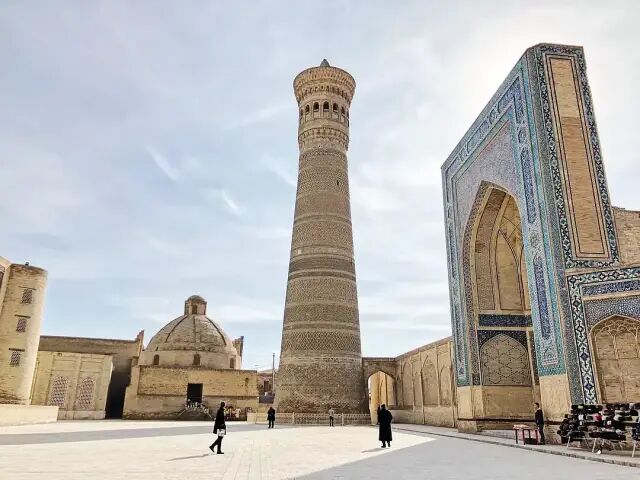
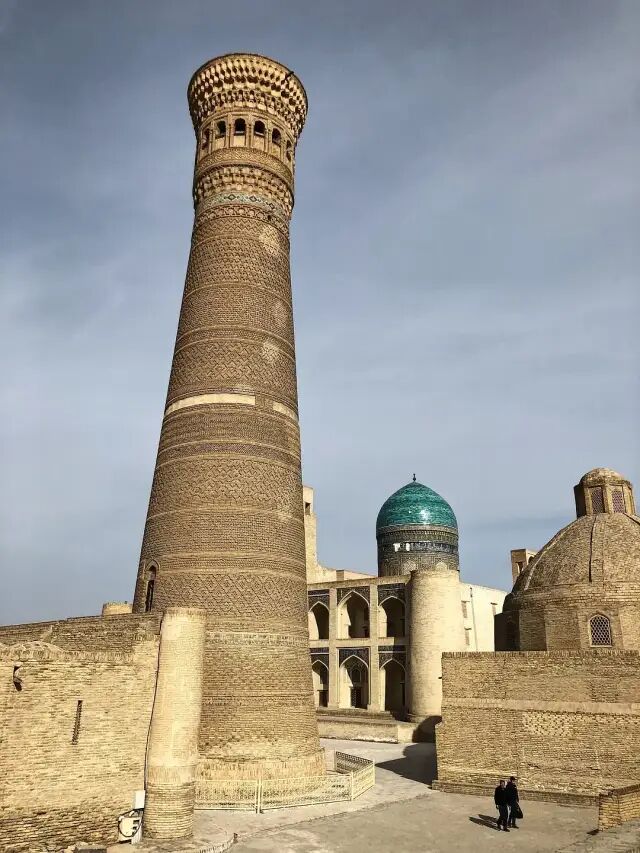
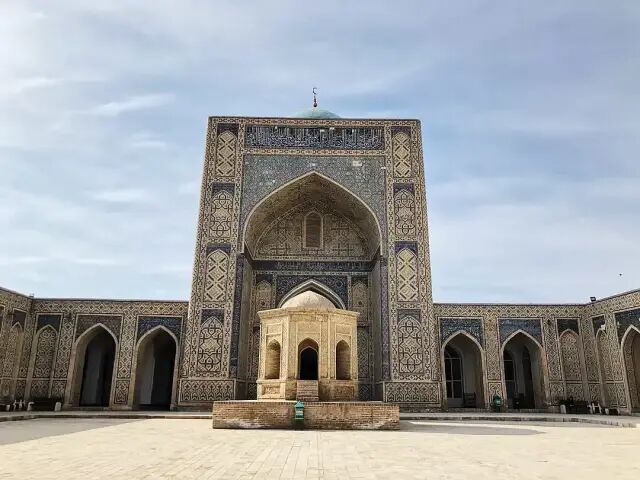
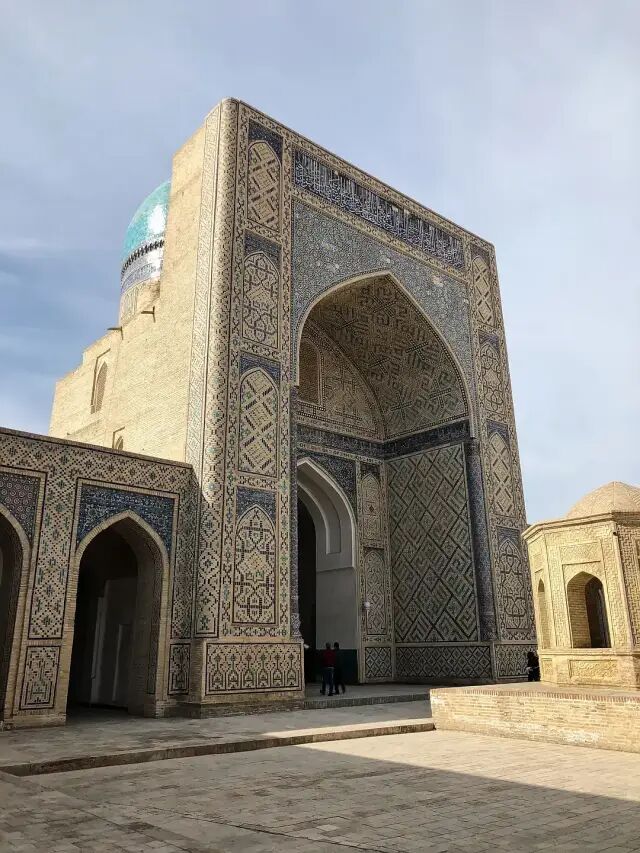
The Kalyan Mosque is the Jumu'ah (Friday) mosque of Bukhara. In 1220, the mosque was destroyed by the Mongol army, leaving only the 46-meter-high minaret. In 1515, Ubaidullah, the nephew of Muhammad Shaybani, the founder of the Shaybanid Dynasty of the Khanate of Bukhara, rebuilt the mosque. He was the ruler of Bukhara at the time, and the name of the Khanate of Bukhara also comes from his order to move the capital of the khanate from Samarkand to Bukhara after he became Khan in 1533. After Bukhara became the capital of the khanate, the Kalyan Mosque became the most important mosque in the Khanate of Bukhara.
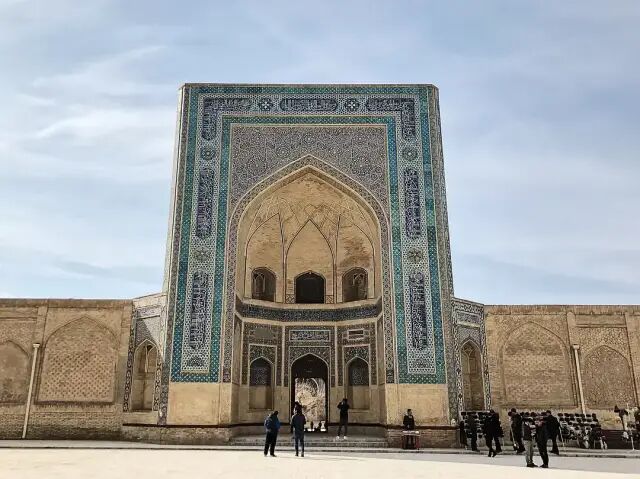
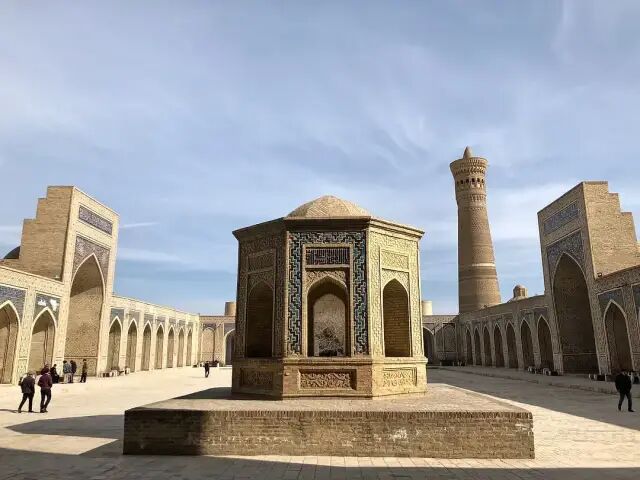
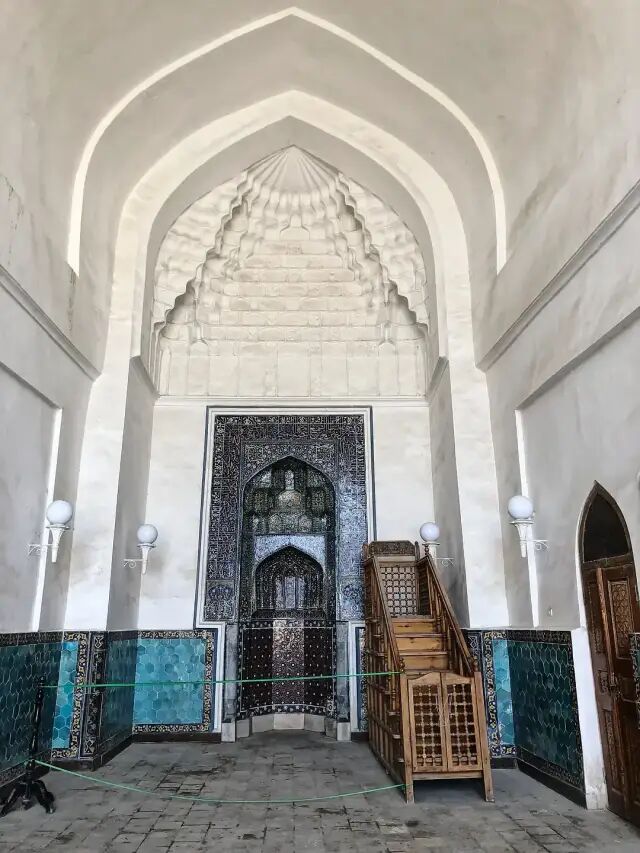
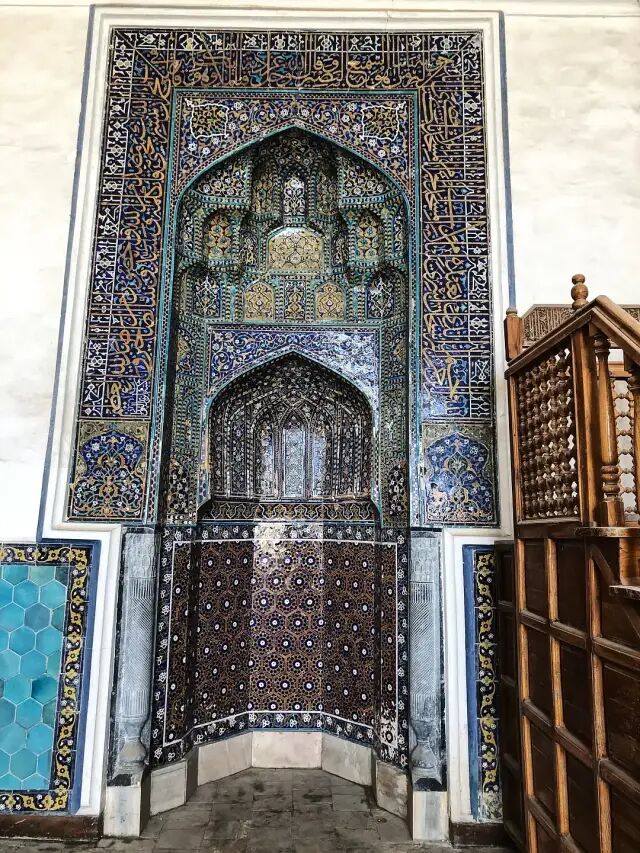
The architectural style of the Kalyan Mosque is similar to the Bibi-Khanym Mosque in Samarkand, both being courtyards composed of four Iwan (vaulted hall) arches. The Kalyan Mosque has as many as 288 domes, the largest of which is a blue dome 30 meters high above the mihrab (niche indicating the direction of prayer). The mihrab and Iwan arches are decorated with blue and white tiles in the late Timurid style, featuring plant and calligraphic patterns.
1. Mir-i-Arab Madrasa: 1535
The Mir-i-Arab Madrasa was built in 1535 by order of Ubaidullah, the Khan of the Shaybanid Dynasty of the Khanate of Bukhara (reigned 1533–1539), and named after the Khan's Sufi mentor, Mir-i-Arab (also known as Sheikh Abdullah Yamani).
In 1533, Ubaidullah became Khan and moved the capital from Samarkand to his fiefdom of Bukhara, starting large-scale construction in Bukhara, of which the Mir-i-Arab Madrasa was one.
To compete for territory, Khan Ubaidullah fought many wars with the Persian Safavid Dynasty, the most famous of which was the siege of the ancient Afghan city of Herat. During the many raids on Persia, the Shaybanid Dynasty obtained many captives, and it is said that the Khan used the funds obtained from selling 3,000 Persian captives to build the Mir-i-Arab Madrasa.
The Mir-i-Arab Madrasa was built opposite the Kalyan Mosque, forming a "kosh" (paired) structure with the mosque. Inside the madrasa are buried the Sufi mentor Mir-i-Arab and Khan Ubaidullah himself. Unfortunately, the madrasa is still a school, and ordinary tourists are not allowed to enter, so I could not see the tomb.
The Mir-i-Arab Madrasa was closed in the 1920s but reopened in 1947, becoming the only open madrasa in Bukhara at the time; almost all Imams of that era were trained at this school.
2. Khoja Zaynuddin Mosque: First half of the 16th century
The Khoja Zaynuddin Mosque was built in the first half of the 16th century, located next to an ancient pond (Hauz) in Bukhara. This architectural form is called a "Mosque-Khanaka," which is both a mosque and a Sufi activity center, where one can both pray and hold Sufi rituals.
There are many legends about the history of the mosque. One theory is that this mosque was built by the Khan of the Khanate of Bukhara to thank a minister named Khoja Zaynuddin, and another theory is that the Sufi master Khoja Zaynuddin is buried next to the mosque.
3. Naqshbandi Complex: 1544
The Naqshbandi Complex (Bahouddin Naqshbandi Complex) is an important Islamic holy site in Central Asia, known as the "Little Mecca" of Central Asia, where Hazrat Muhammad Bahauddin Shah Naqshband, the founder of the famous Sufi Naqshbandia order, is buried.
After Naqshband died in 1389, he was buried in his family garden outside the city of Bukhara. Since then, people have constantly come to visit his tomb, which is even called a "small Hajj."
During the Shaybanid Dynasty, the Naqshbandia order eventually won out in competition with other Sufi orders and became the dominant Sufi order in the Khanate. Unlike other Sufi orders that advocate seclusion and asceticism, the Naqshbandia order, from its founder Naqshband, proposed the principle of "inwardly with Allah, outwardly with the people" (practicing in the crowd, traveling in the world, being cautious in action, and enjoying the time). In the 15th century, the third leader of the order, Ubaydullah al-Ahrar, proposed that political and social life were fundamental components of the order's spiritual pursuit, and after continuous improvement by later generations, it received increasing support from the rulers.
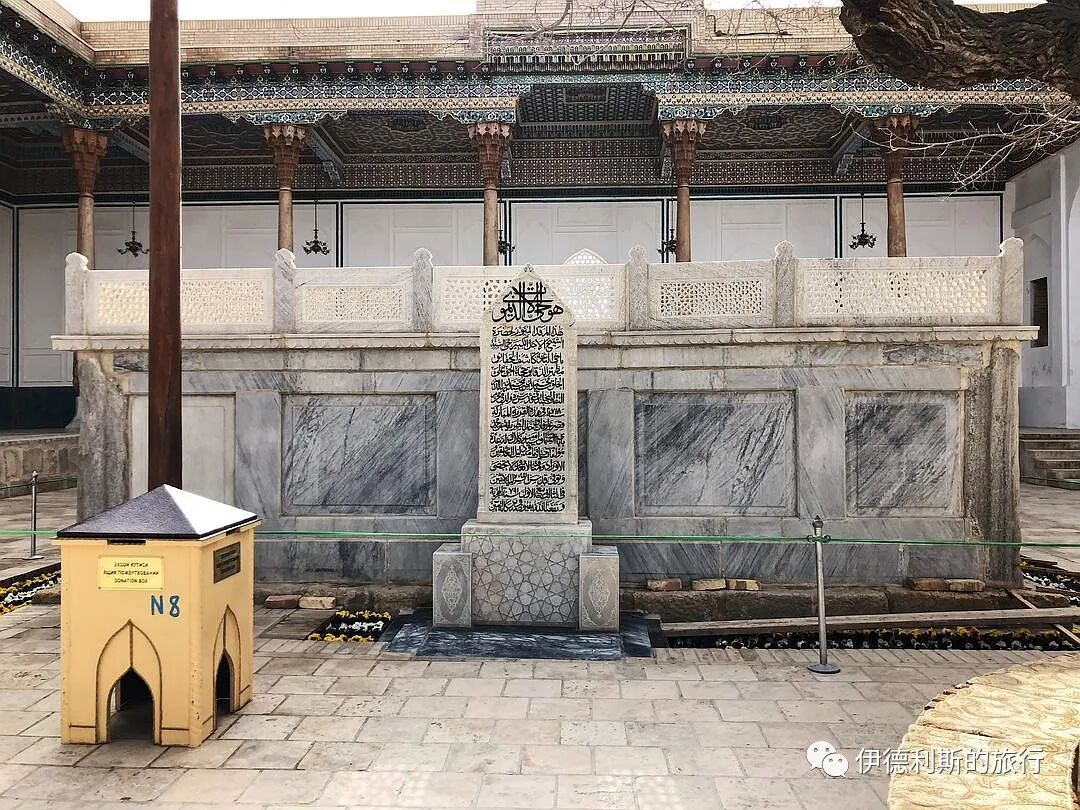
In 1544, the Khan of the Shaybanid Dynasty, Abdulaziz (reigned 1539–1550), built a Dakhma (raised platform) with a marble carved fence over the holy tomb, next to which was a Sufi Khanaka. Later, a large cemetery of Bukhara rulers appeared near the holy tomb, and every ruler felt honored to be buried near the holy tomb. Through the donations of successive Bukhara rulers, two mosques, Muzaffarkhan and Khakim Kushbegi, a small minaret, and a madrasa were built next to the Dakhma. These buildings form an entire complex around the central pond (Hauz).
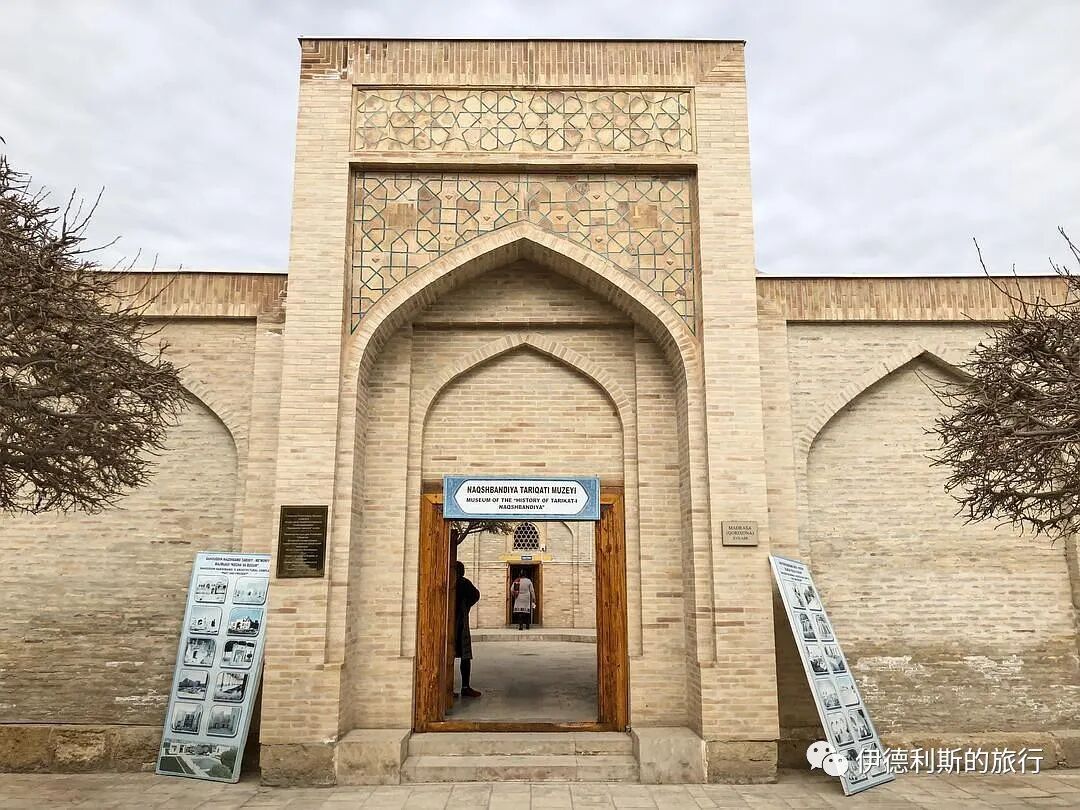
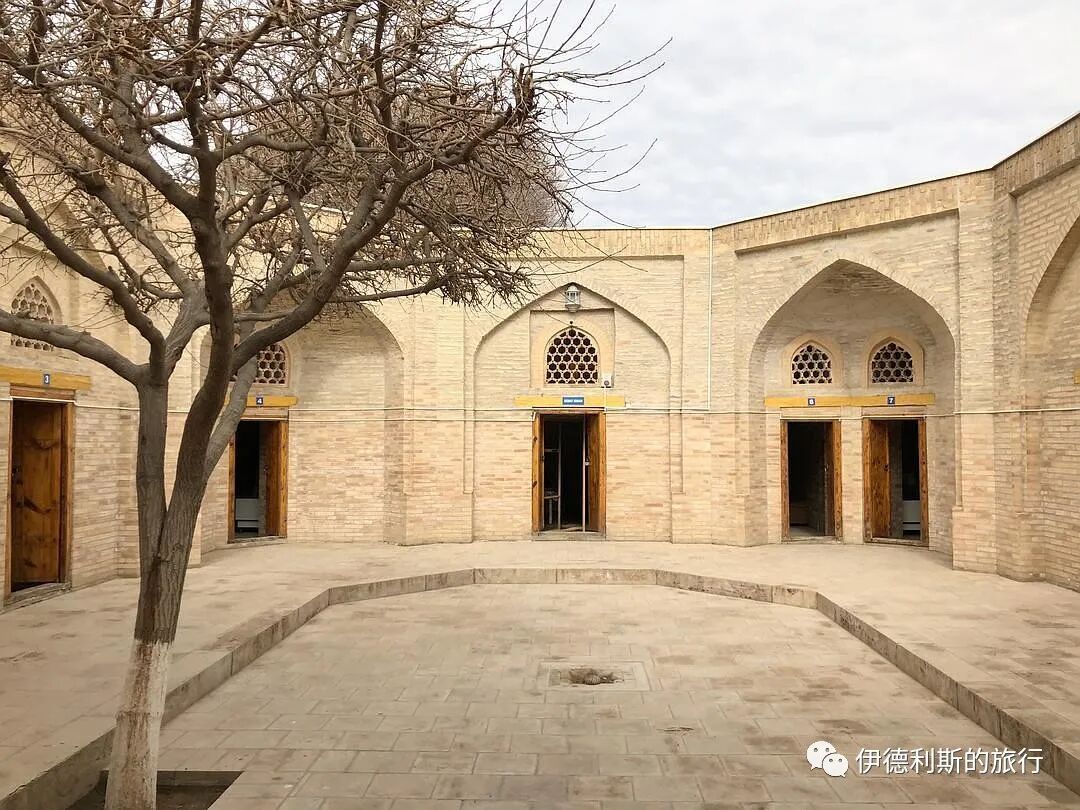
Inside the Naqshbandi holy tomb is a small madrasa built in the 17th century, which has now been converted into a museum displaying some Sufi artifacts.
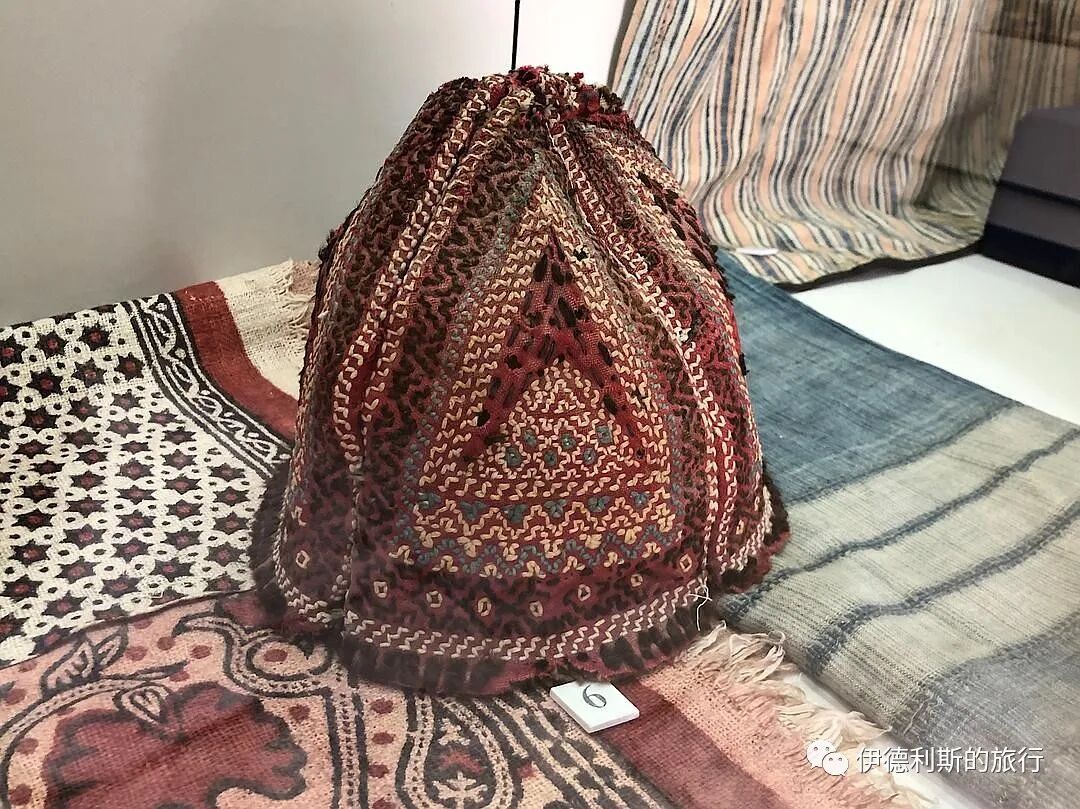
Kuloh (Sufi practitioner's hat)
Robe
White cloth robe with scriptures written on it
4. Chor-Bakr Necropolis: 1563
The Shaybanid Dynasty fell into division in the mid-16th century, with the four regions of Bukhara, Samarkand, Tashkent, and Balkh each acting independently. In 1557, Abdullah Khan II (reigned 1583–1598) successfully occupied Bukhara and in 1561 declared his father Iskander the supreme Khan of the Uzbeks. Iskander was more interested in religion, so he handed over full authority over state affairs to his son.
In order to achieve the reunification of the dynasty, Abdullah Khan fought long-term wars with the surrounding areas. In 1573, after a siege, Abdullah Khan finally captured Balkh, and in 1576 he captured Samarkand and Tashkent in succession. In 1583, Abdullah Khan's father died, and he officially succeeded as Khan. After succeeding to the throne, he occupied Badakhshan and the Khorasan region in 1584 and 1588, and later occupied Khwarezm in 1594, executing the Sultan of Khiva, as the territory of the Shaybanid Dynasty continued to expand.
To strengthen his rule, Abdullah Khan built a large number of post stations, reservoirs, madrasas, and bridges, making Bukhara the most important trade center in Central Asia in the late 16th century. The Chor-Bakr Necropolis is a representative work of this.
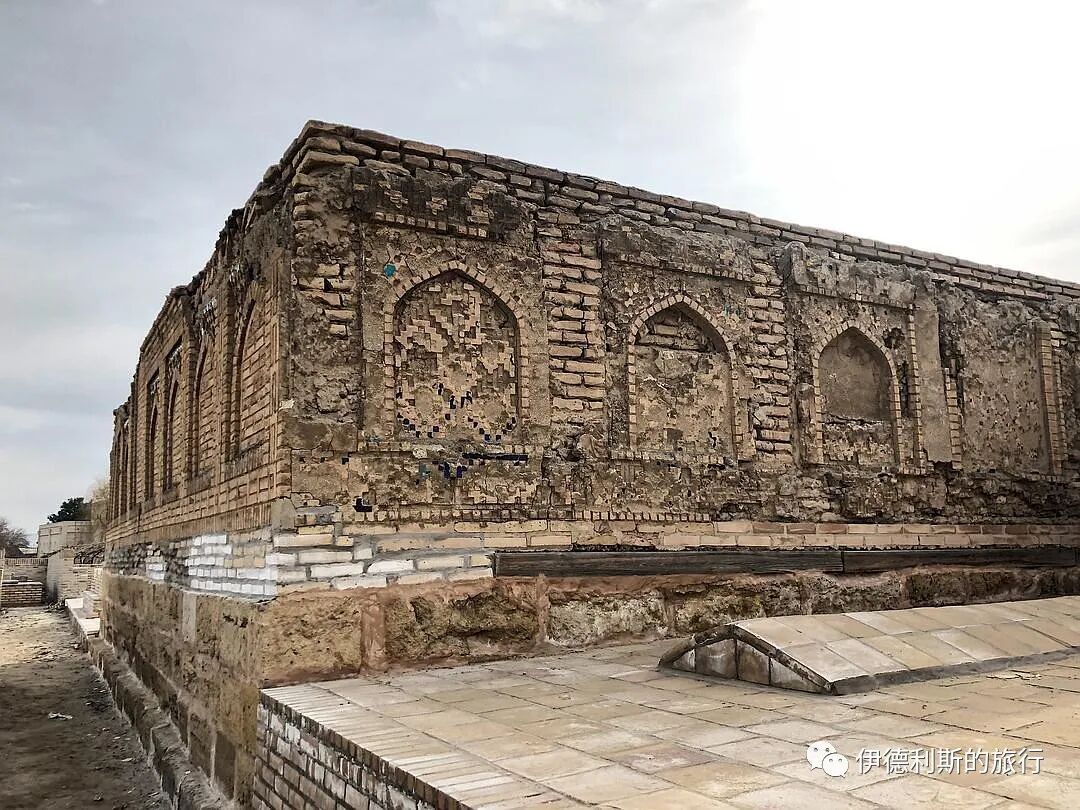
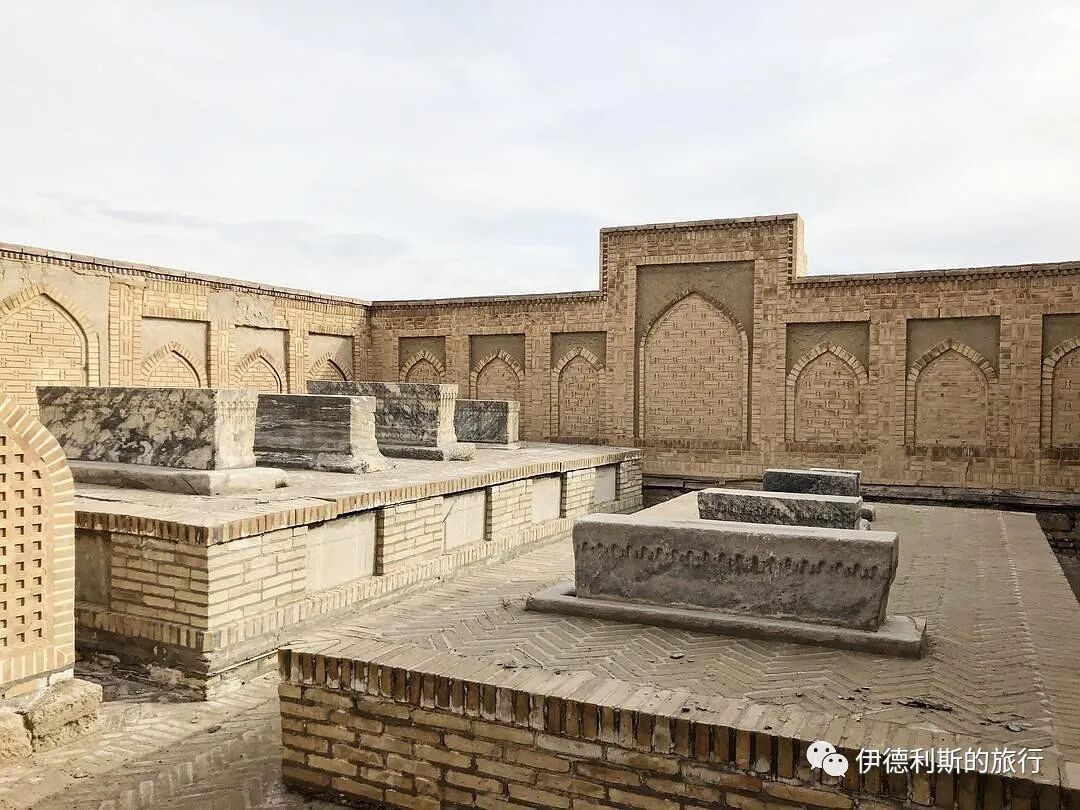
The Chor-Bakr Necropolis is located in the western suburbs of Bukhara and is also called the "City of the Dead." Starting from the Samanid Dynasty in the 10th century, the Djuybar Seyyids family, descendants of the Prophet Muhammad, came to live in Bukhara. This family played an important role in Bukhara, and after they died, they were buried in the western suburbs of the city.
In 1560, Abdullah Khan II decided to build a complex consisting of a mosque, a madrasa, and a Sufi Khanaka next to the Djuybar Seyyids family tomb as a gift to his teacher, Djuybar Sheikh Muhammad Islam Khoja, who belonged to the same family. The Khan's teacher died in 1563 and was buried in the tomb, and the complex was completed in the same year.
In 1593, the teacher's son, Khodja Bakr Sadi, died and was buried next to his father. After this, three other family members with the title "Bakr" were also buried here, and it has since been called "Chor-Bakr," meaning "Four Bakrs."
After the 19th century, it gradually lost its importance and was closed during the Soviet era. After the 1990s, it reopened, and more and more people have come here on pilgrimage. Many Uzbek Muslims believe that they must visit here before going on the Hajj to Mecca.
On the right is the mosque, in the middle is the madrasa, and on the left is the Khanaka.
On the left is the Khanaka, in the middle is the madrasa, and on the right is the mosque.
The minaret was built in the 20th century.
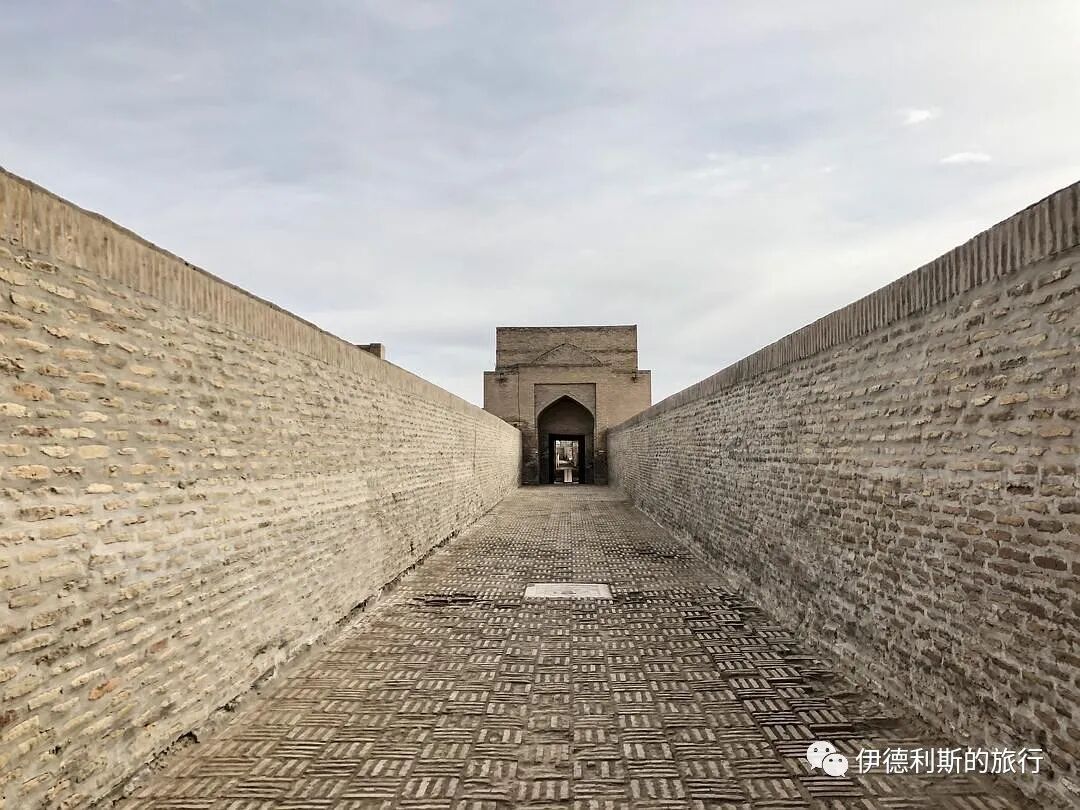
A Khazira is a special tomb structure consisting of a courtyard surrounded by walls with a beautifully decorated gate at the entrance; this type of tomb structure is rarely seen in other parts of Uzbekistan. The Khazira of the Djuybar Seyyids is in the northwest of the complex, connected by a long corridor, where you can hear the sound of footsteps reflected by the brick walls with every step.
5. Kosh Madrasa: 1567, 1590
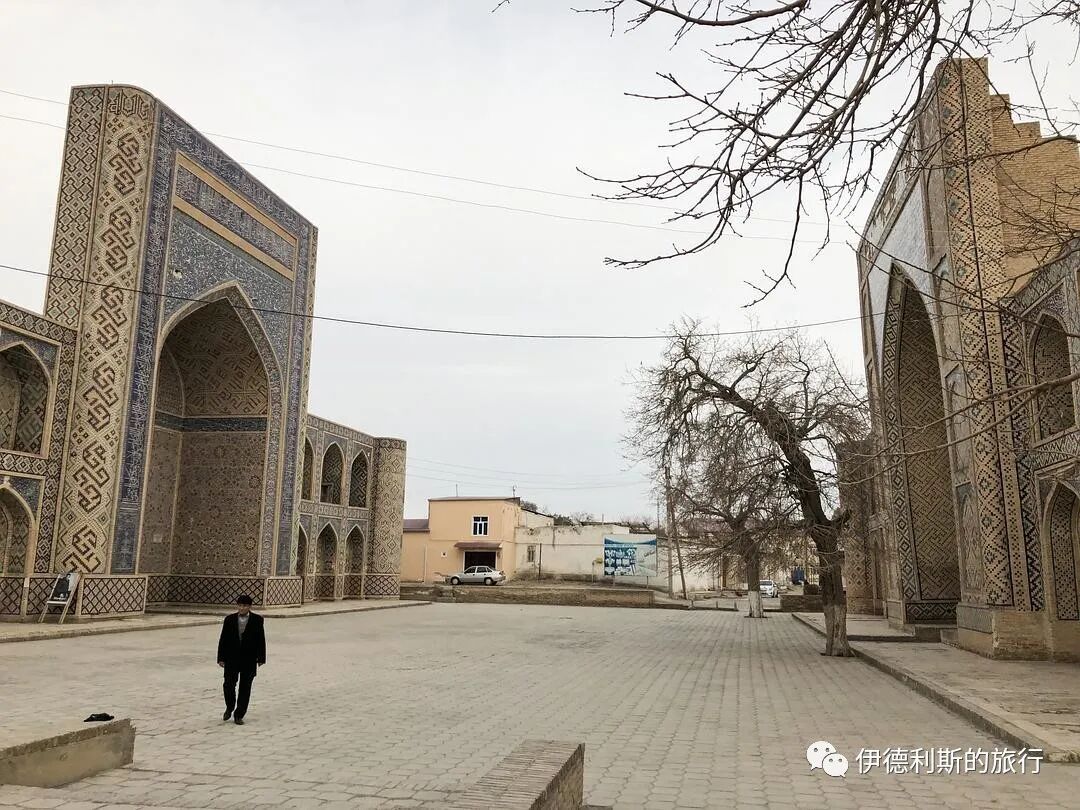
The Kosh Madrasa (Double Madrasa) was built by Abdullah Khan II, the Khan of the Shaybanid Dynasty, and consists of the Modari-khan and Abdullah-khan madrasas standing opposite each other. The Modari-khan Madrasa was built in 1566, and the Abdullah Khan Madrasa was built in 1590; they are representative buildings built by Abdullah Khan II in the city of Bukhara.
1. Modari-khan Madrasa: 1567
"Modari-khan" means "the Khan's mother," and it was built by Abdullah Khan to commemorate his mother. The madrasa consists of an Iwan arch, two-story dormitories (Hujras), and a large classroom (Darskhana). Because the streets at the time did not allow the building to remain a rectangular right angle, the madrasa was actually built in a trapezoidal shape.
2. Abdullah Khan Madrasa: 1590
The Abdullah Khan Madrasa is named after Abdullah Khan II himself and was built after the Khan officially succeeded to the throne, so it is larger and more magnificent than the Modari-khan Madrasa opposite, featuring three Iwan arches.
6. Lyab-i Hauz: 1568, 1619, 1622
Lyab-i Hauz means "by the pond" in Persian and is one of the few remaining complexes in the ancient city of Bukhara built around a pond (Hauz). During the Khanate of Bukhara, there were many ponds in the ancient city, which were the main source of water for the city. However, because they were prone to spreading diseases, most of the ponds were filled in by the Soviets in the 1920s and 1930s, while Lyab-i Hauz survived because of its important historical complex.
1. Kukeldash Madrasa: 1568
On the north side of the pond is the Kukeldash Madrasa, built in 1568 during the reign of Abdullah Khan II, the Khan of the Shaybanid Dynasty of the Khanate of Bukhara. The Kukeldash Madrasa is the largest madrasa in Bukhara, consisting of 160 rooms. The architect very artistically used arched loggias to break up the facades on both sides, which is also a feature of this building.
2. Nadir Divan-begi Khanaka: 1619
Fifty years after the completion of the Kukeldash Madrasa, during the reign of Imam Quli Khan (reigned 1611–1642), the third Khan of the Janid Dynasty of the Khanate of Bukhara, the then-vizier (minister), who was also the Khan's uncle, Nadir Divan-begi, wanted to build a Sufi Khanaka next to the Kukeldash Madrasa. Vizier Nadir Divan-begi had great influence at court and could sometimes even represent the Khan in negotiations with foreign envoys.
According to legend, while building the Khanaka, the vizier wanted to build a pond next to it, but the land where the pond was located belonged to a Jewish widow who refused to sell the land. So the vizier brought the widow before the Khan and asked the Khan to make a ruling. The Khan ordered his jurists to study it, and the final conclusion was that there was no other way except for the widow to agree personally. So the vizier had to build a canal around the widow's land, and the water washed away the foundation of the widow's house, making it impossible for her to live there.
The widow negotiated with the vizier again. The vizier hoped to buy the house at a reasonable price, but the widow set a condition that if he gave her another piece of land and allowed the construction of a synagogue, she would agree to give up the current house. The vizier agreed to the widow's request, and the land given to the widow formed the Bukhara Jewish community, Mahalli Kuma.
Soon, the pond and the Bukhara synagogue were completed at the same time. This complex began to be called "Lyab-i Hauz," which is Persian for "by the pond," but it also has another popular name among the people, "Haus-i Bazur," meaning "built by force."
The Khanaka has a long, narrow gate that is different from the traditional form and is decorated very simply. The hall (dhikr-hana) has good acoustics, suitable for performing Sufi music. The corners and side exterior walls of the hall are places where Sufi practitioners live.
3. Nadir Divan-begi Madrasa: 1622
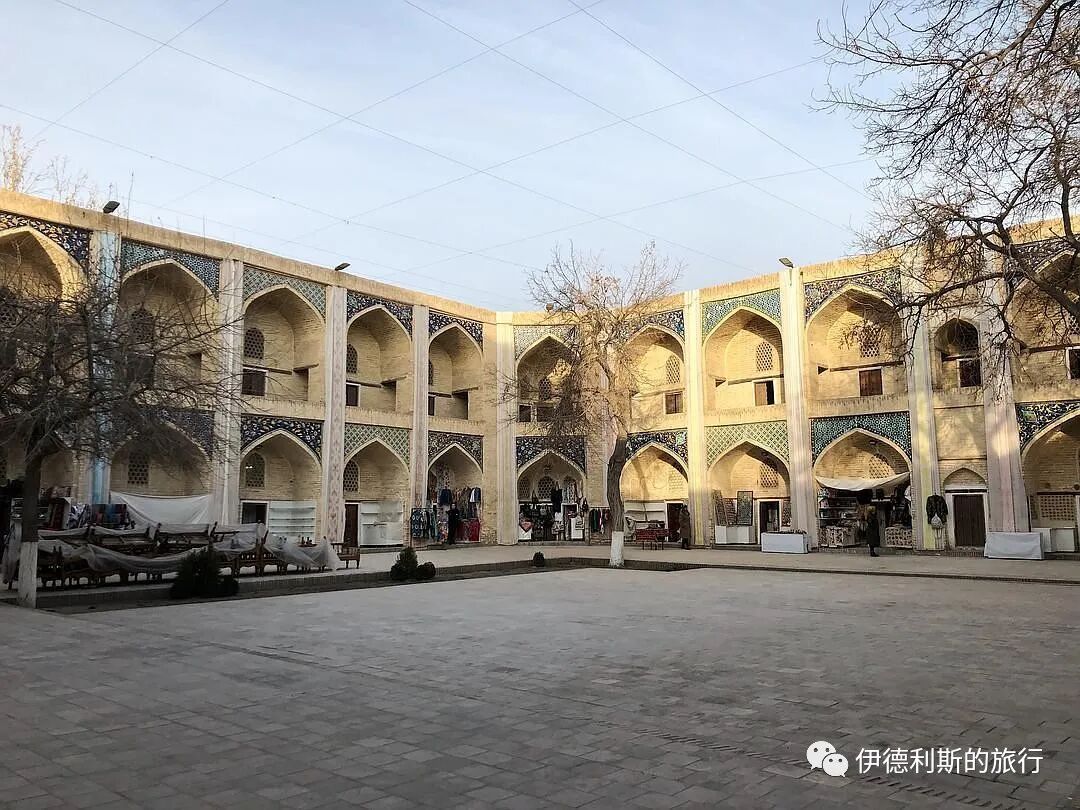
After building the Sufi Khanaka, Vizier Nadir Divan-begi planned to build a caravanserai (merchant inn) on the other side of the pond. After the inn was built, the vizier invited Khan Imam Quli Khan to the opening ceremony, but the Khan did not like his uncle's inn. At the opening ceremony, the Khan said that this building was built for the glory of the Lord, so it should be used as a madrasa. So the vizier had to convert the inn into a madrasa.
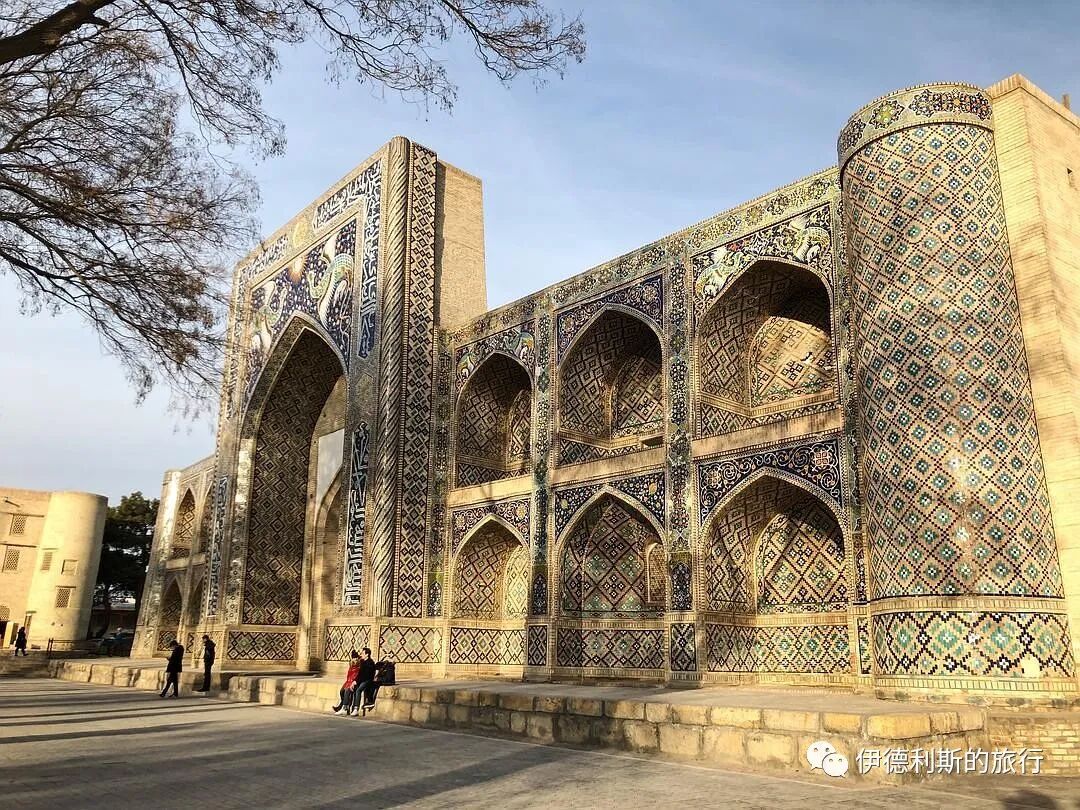
From the structural layout of the building, it can also be seen that this building was once a caravanserai. The entrance to the building is straight, not angular like the Kukeldash next to it, and there is no Darskhona classroom or Ayvan terrace for summer classes.
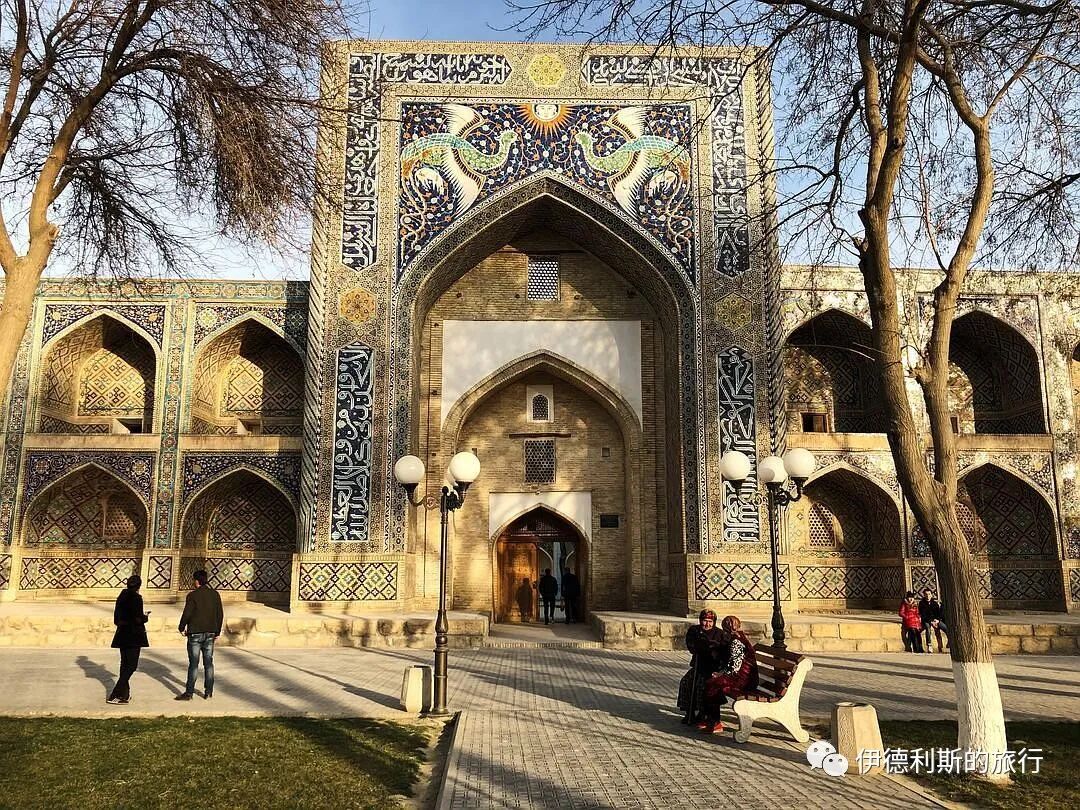
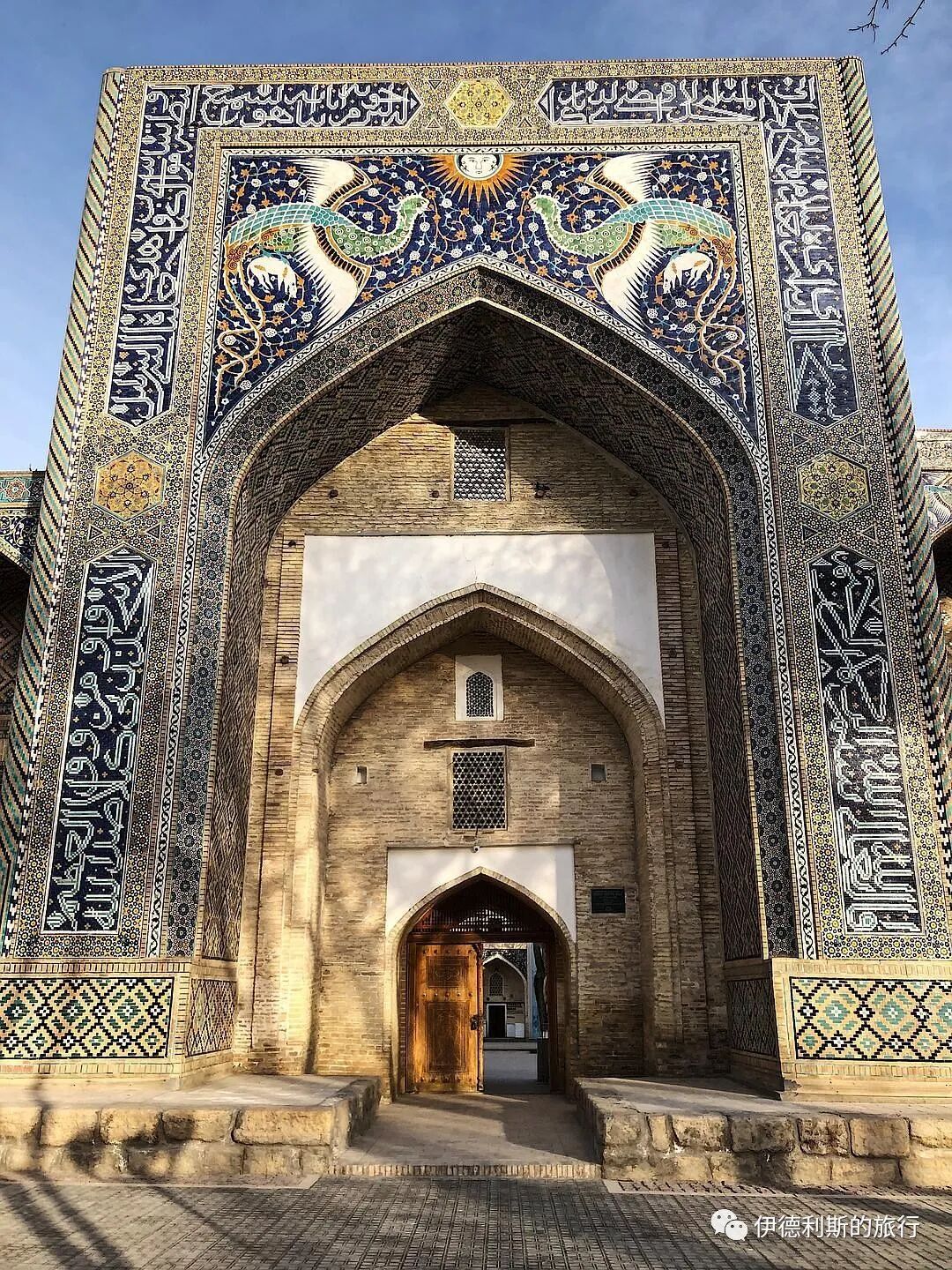
The gate of the madrasa depicts two phoenixes, two white deer, and a human face in the sun, which is very rare in Islamic architecture and similar to the Sher-Dor Madrasa in the Registan of Samarkand from the same period.
7. Khoja-Gaukushan Complex: 1570, 1598
The Khoja Gaukushan complex consists of a madrasa and a mosque. The madrasa was built in 1570 during the reign of Abdullah Khan II, the Khan of the Shaybanid Dynasty, and the mosque was built in 1598 by the master Djuybar Sheikh, known as "Khoja Kalon" (the Great Khoja).
In front of the mosque is a pond (Hauz), and on one side is a tall minaret, second only in height to the most famous Kalyan Minaret in Bukhara.
Madrasa
8. Tok-i-Zargaron (Jewelry Dome Market): 1570
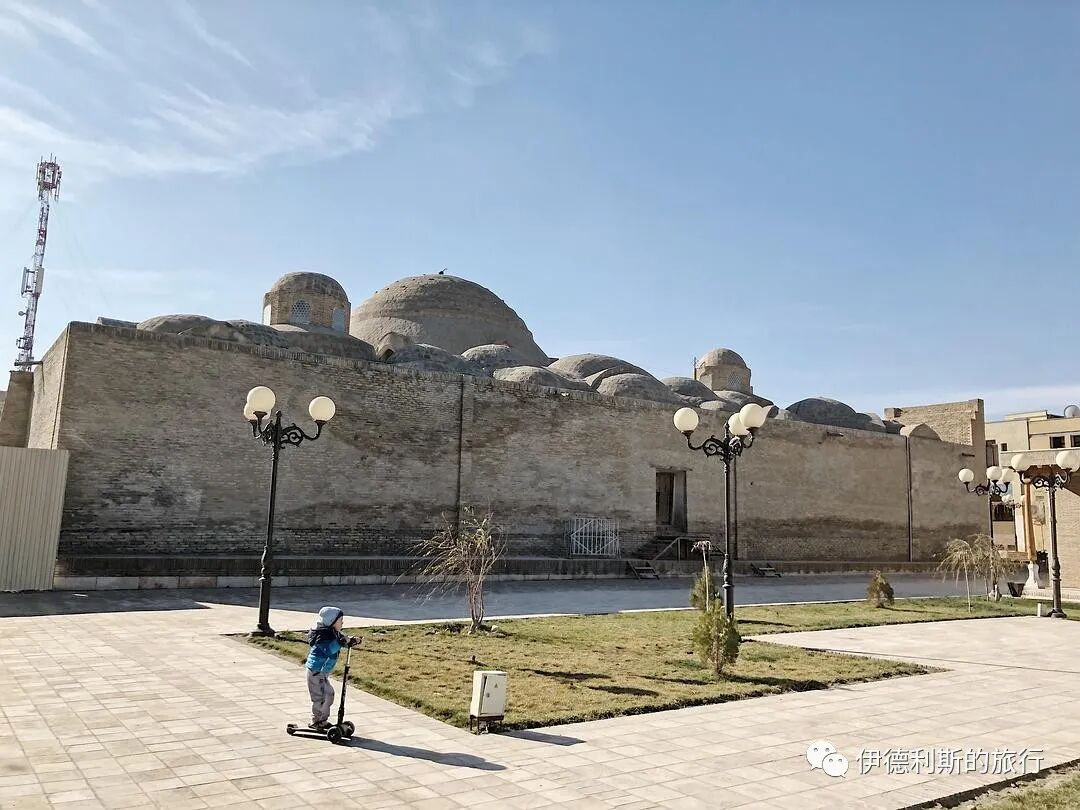
The Tok-i-Zargaron (Jewelry Dome Market) was built in 1570 and is the largest of the four surviving dome markets from the Khanate of Bukhara in the ancient city of Bukhara, and is the best witness to Bukhara as a trade center in Central Asia in the 16th century.
"Tok-i-Zargaron" means "jeweler's dome," and it has four arched passages for Silk Road trade caravans to pass through, as well as 16 domes on an octagonal base. During the Khanate of Bukhara, there were 36 jewelry workshops and shops under the dome, selling various jewelry such as rings, earrings, and necklaces.
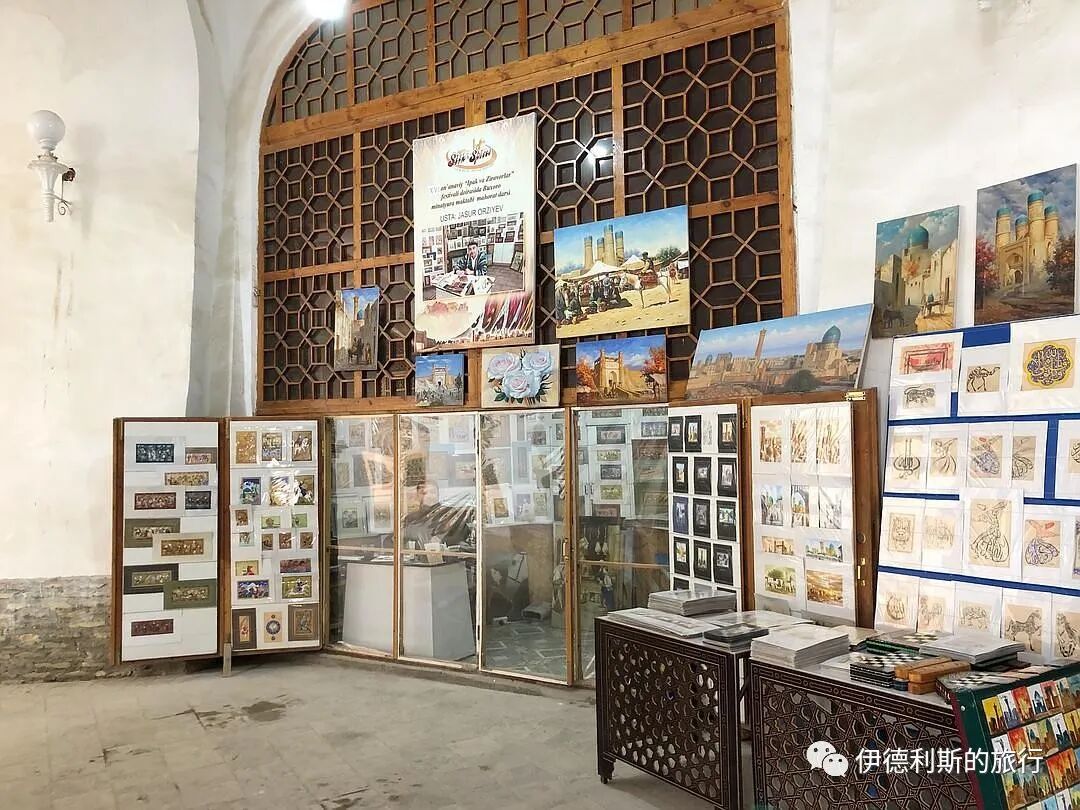
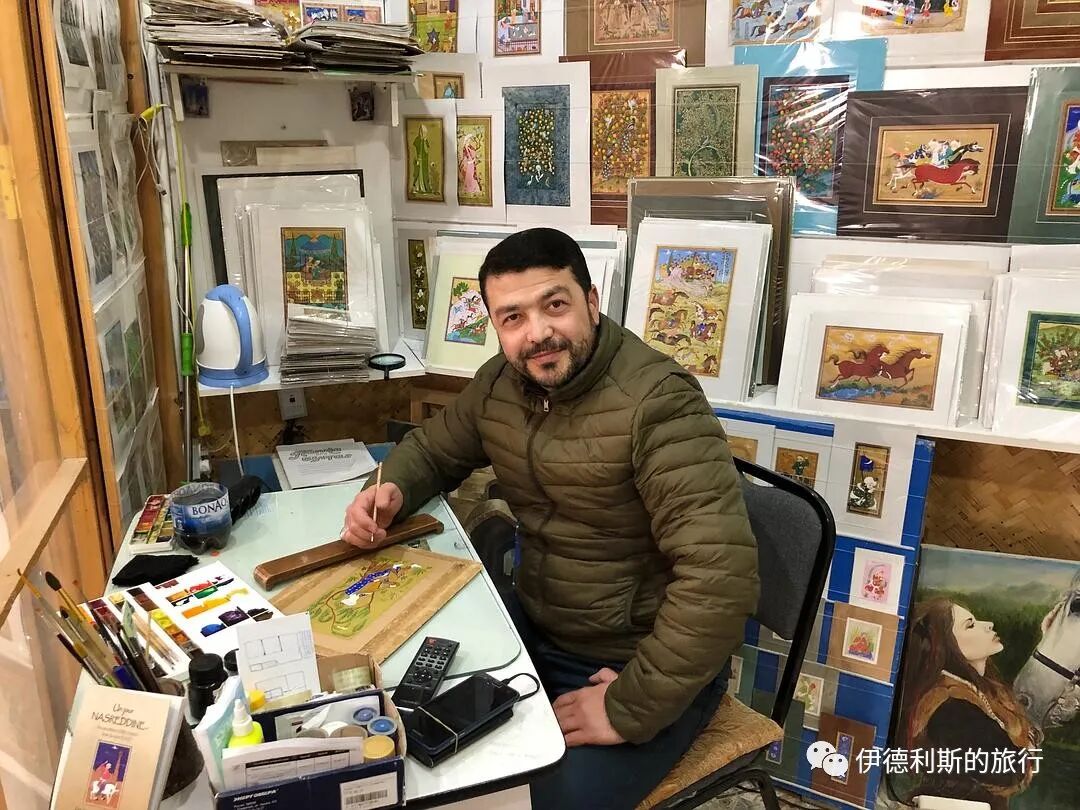
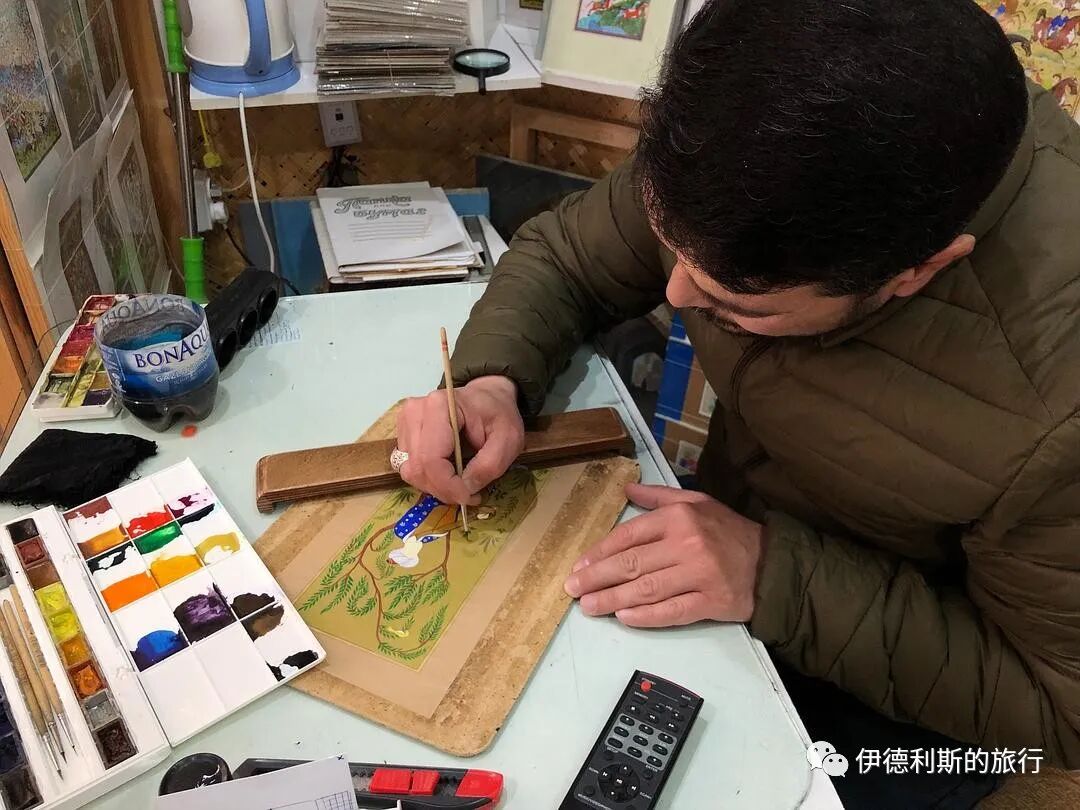
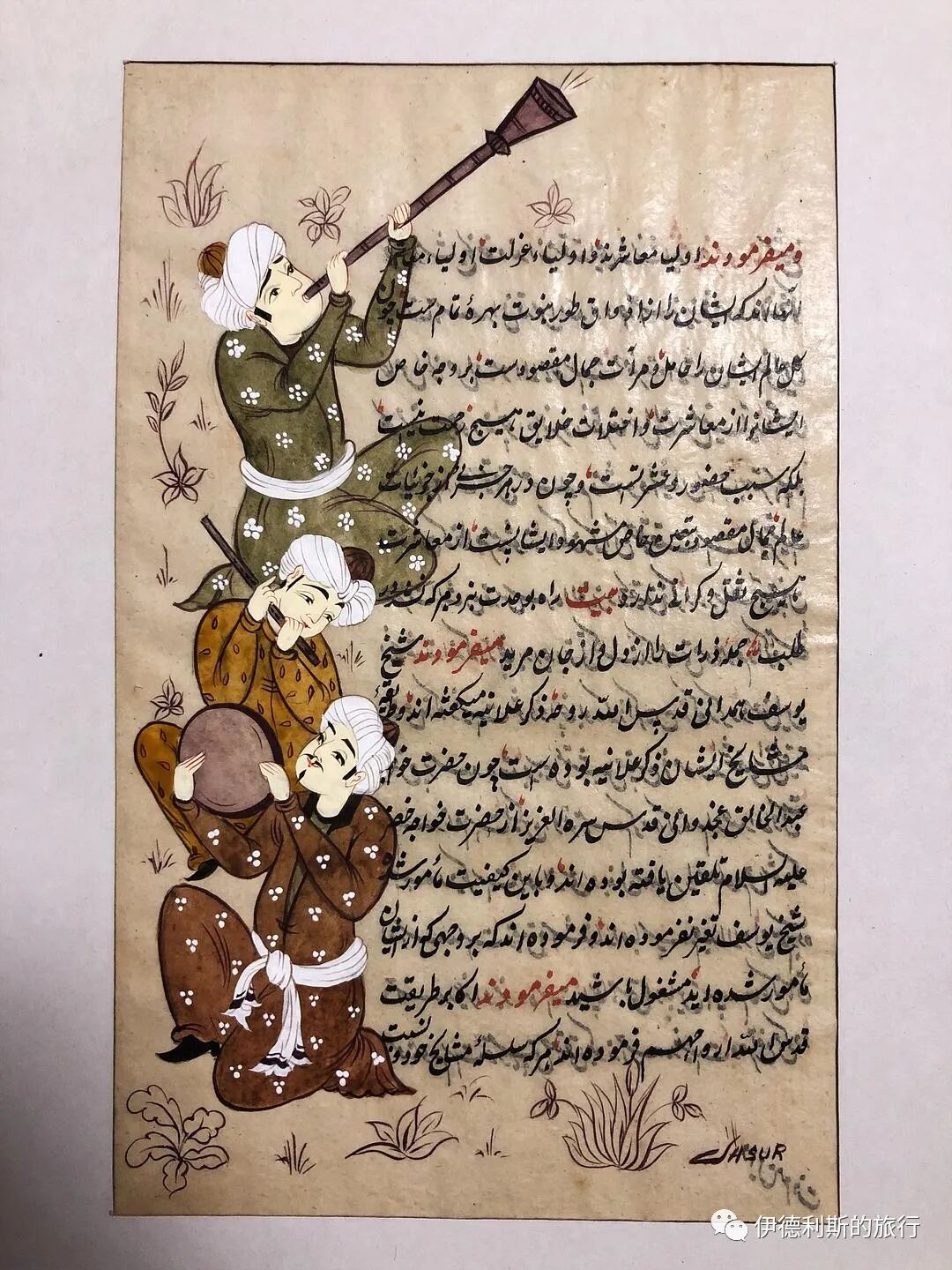
I bought a miniature painting at a miniature painting workshop inside the market.
9. Toqi Telpak Furushon (Hat Dome Market): Late 16th century
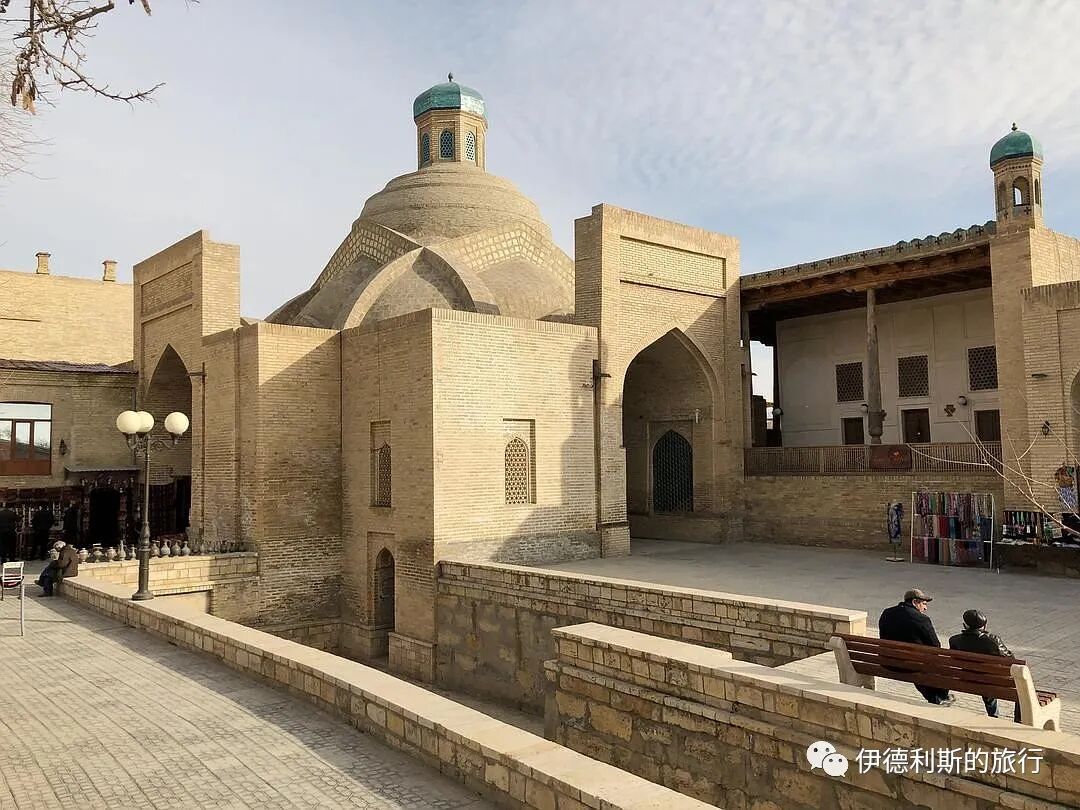
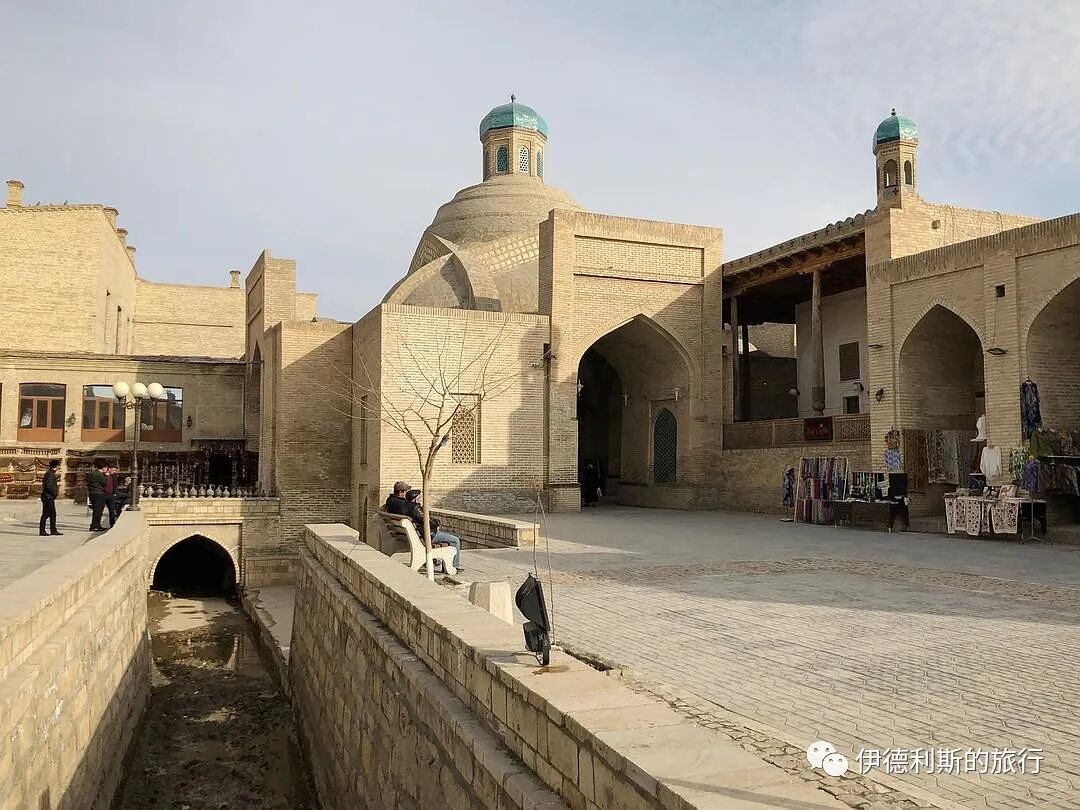
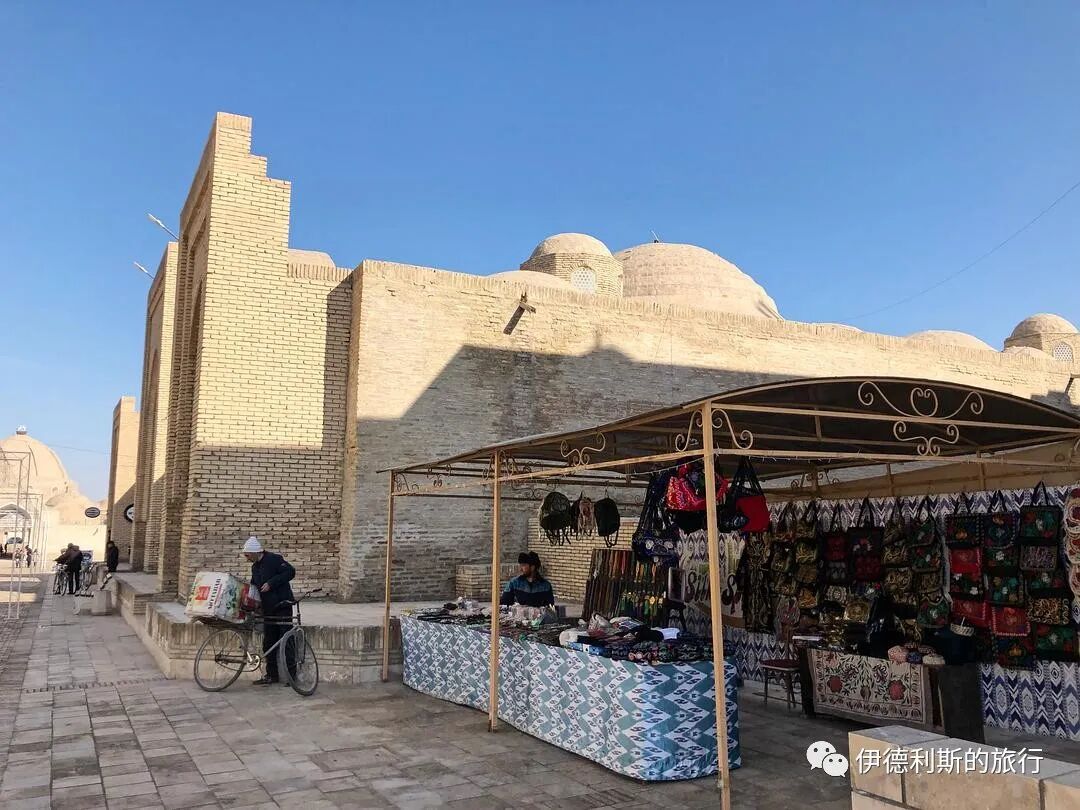
The Toqi Telpak Furushon (Hat Dome Market) consists of a central dome and a hexagonal base, connecting five streets in the old city. It was originally called the book (Kitab-Furushon) market, but later it gradually changed to selling various turbans, leather hat boxes, and skullcaps, and now it has become a place to sell tourist souvenirs.
I bought a miniature painting at the miniature painting workshop in the market.
10. Toki Sarrafon (Currency Exchange Dome Market): Late 16th century
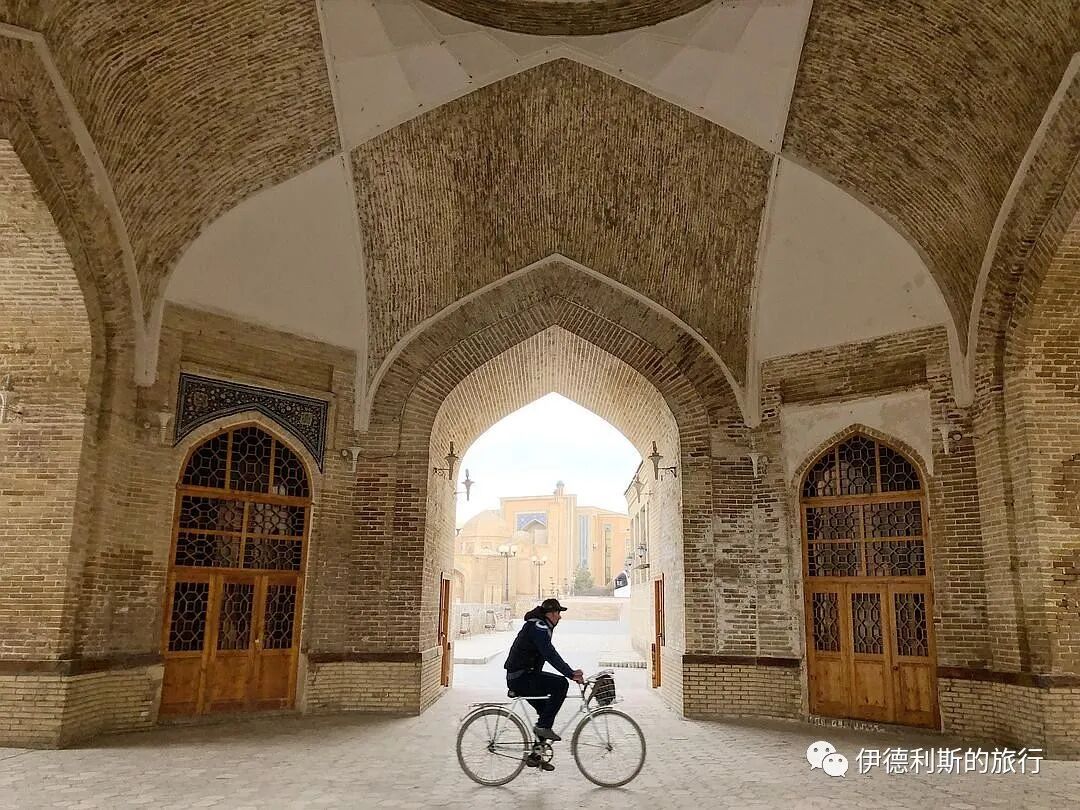
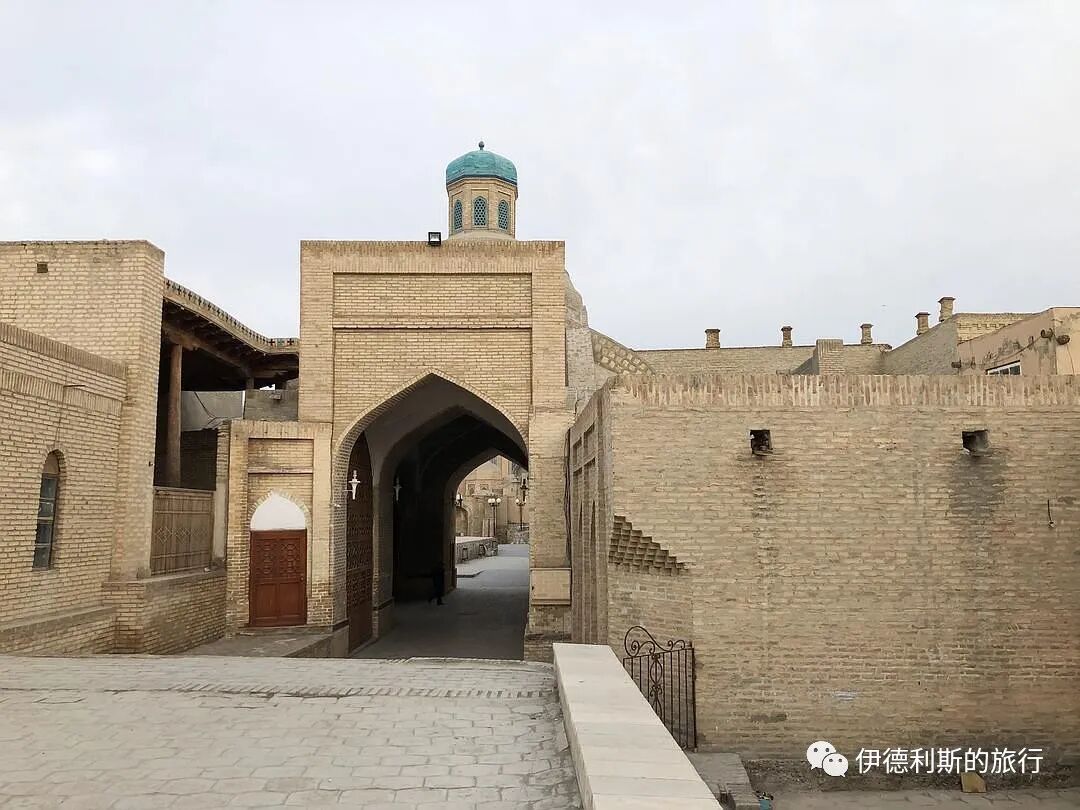
The Toki Sarrafon (Currency Exchange Dome Market) is on the main road in the southern part of the old city of Bukhara, with four arches connecting four roads. In the 16th and 17th centuries, it was one of the largest currency exchange markets in Central Asia, where merchants from India, China, and other regions exchanged currency. But today it only sells tourist souvenirs.
11. Abdullakhan Tim (Market): 1577
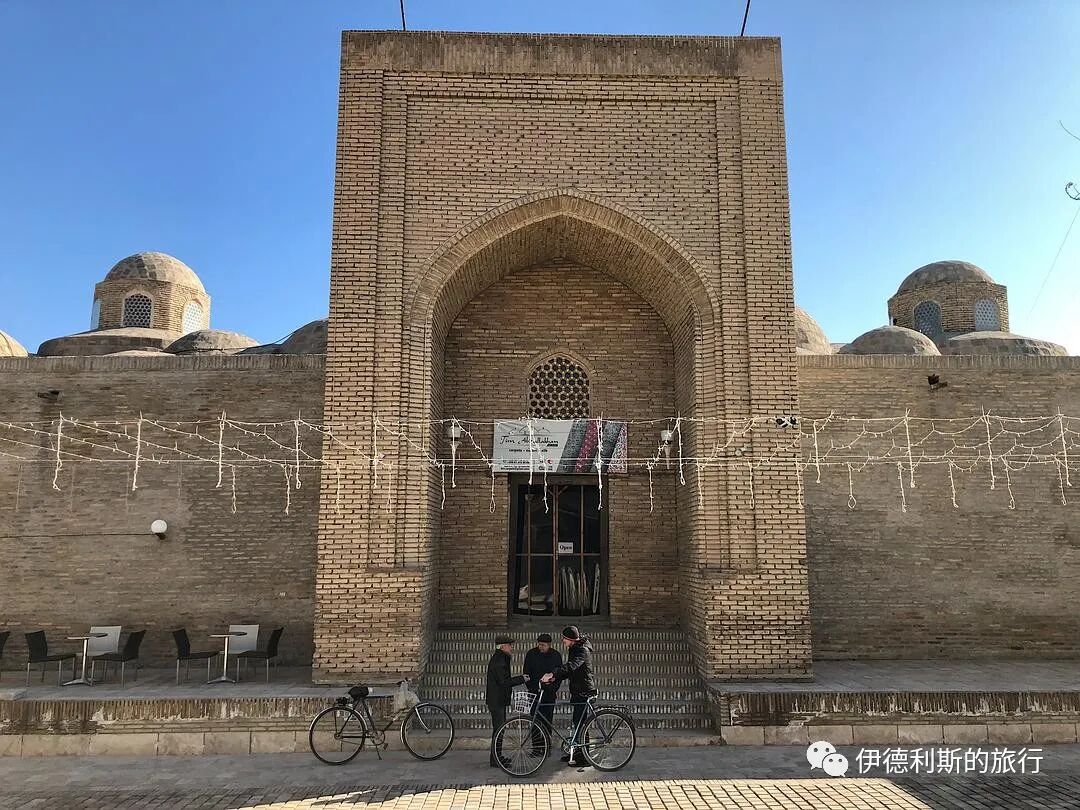
During the Shaybanid Dynasty, many huge dome markets were built in the city of Bukhara, called "Tim." Today, only one "Tim" market named after Abdullah Khan II survives.
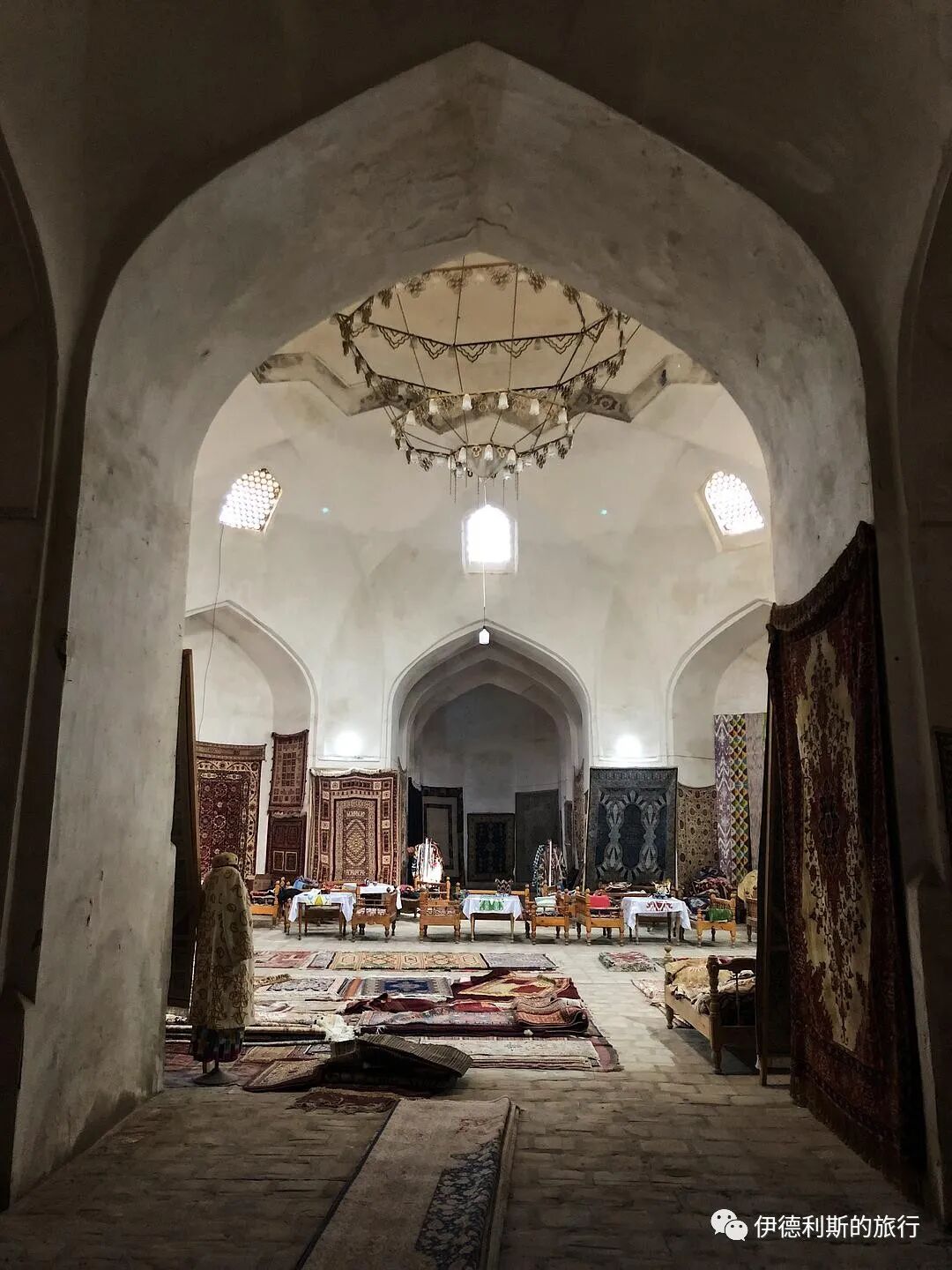
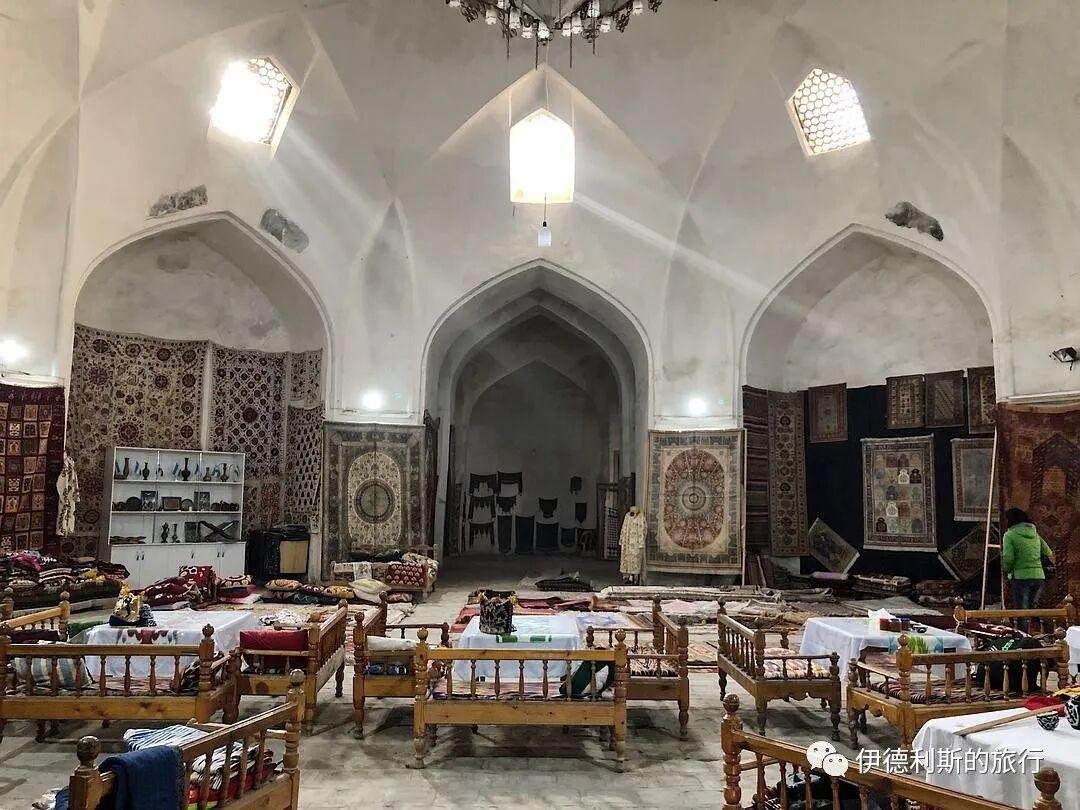
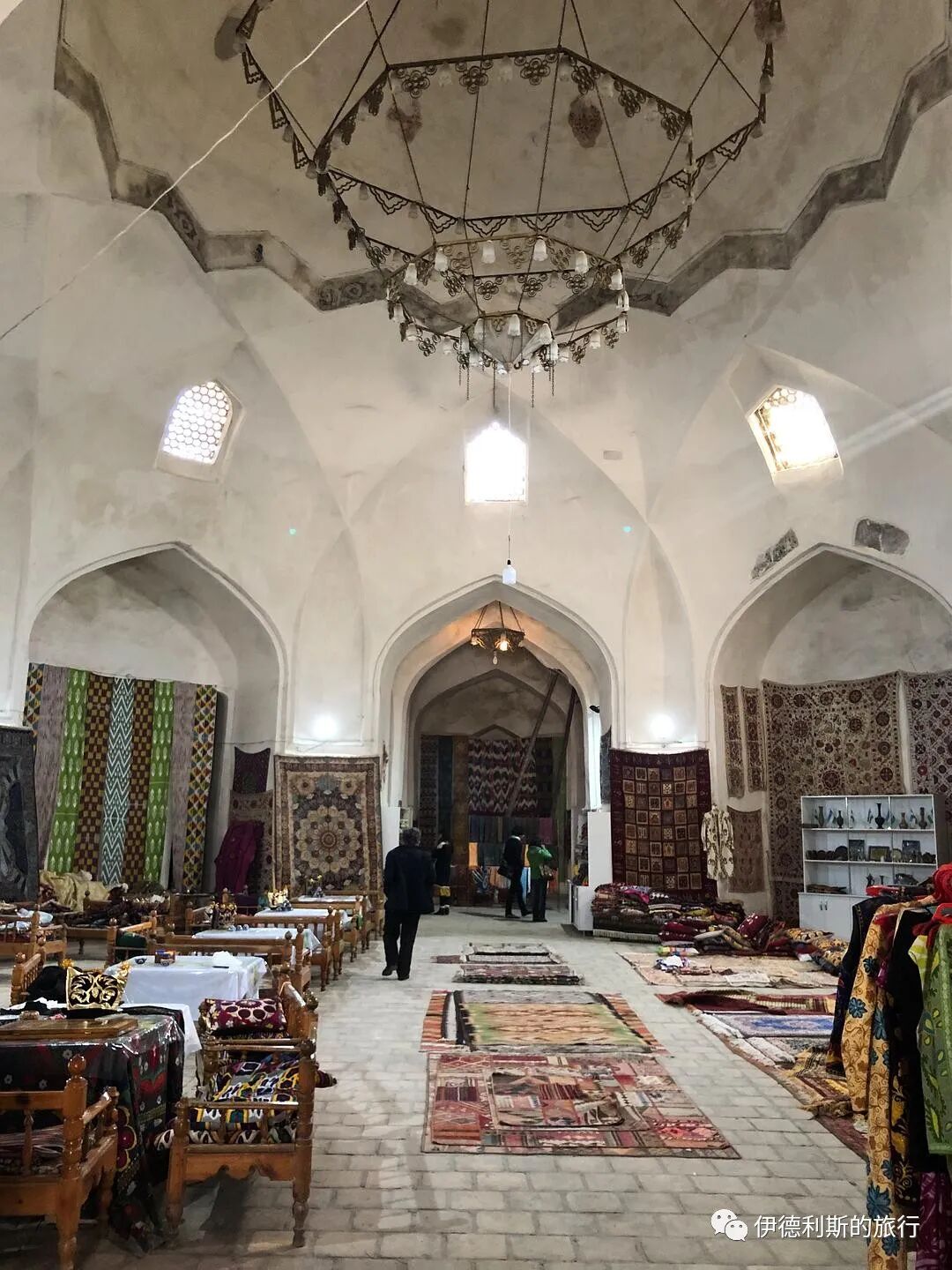
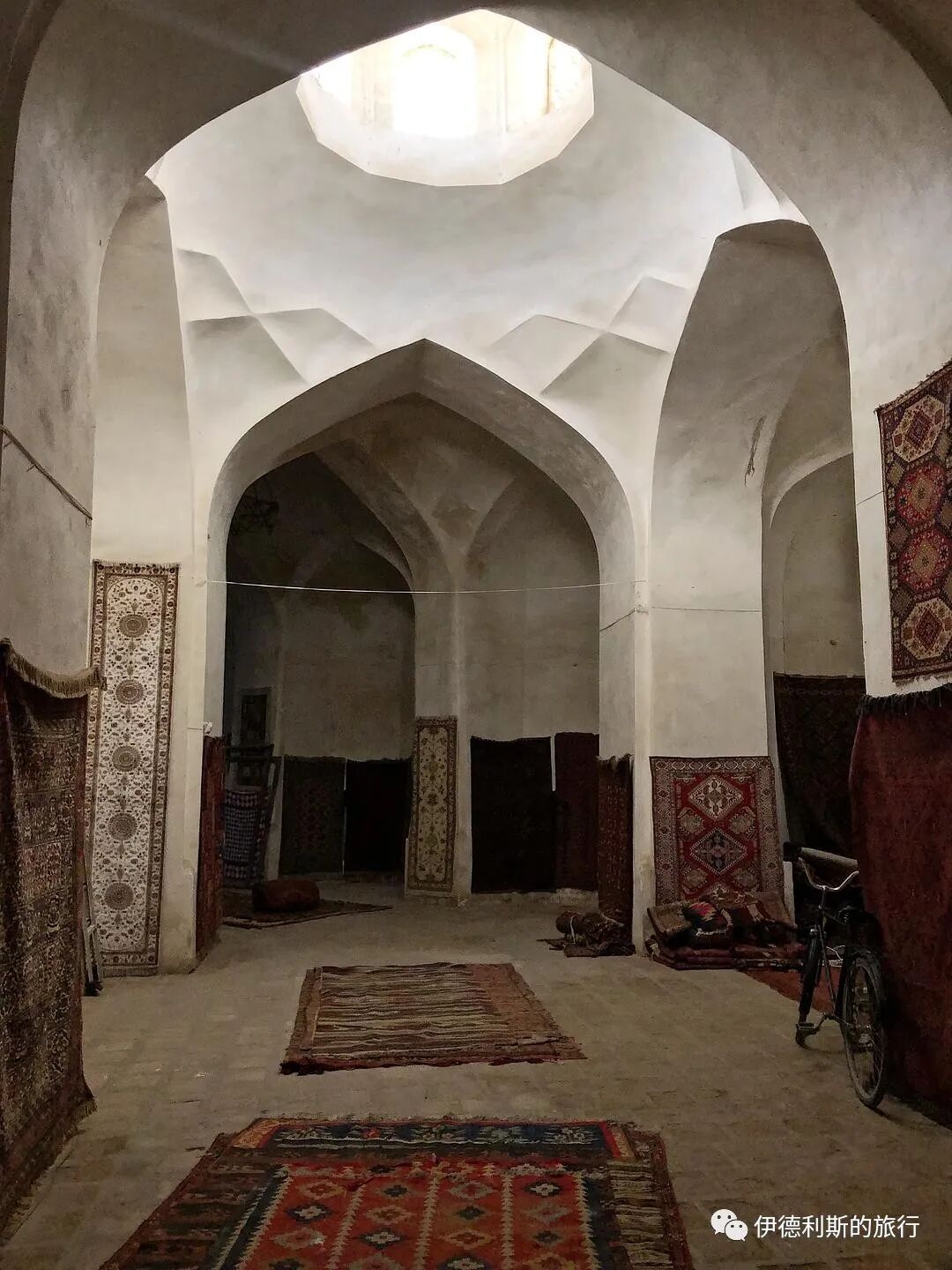
Abdullakhan Tim was once the most high-end market in Bukhara, focusing on high-quality silk and wool products. The market is divided into 56 shopping stalls by arched structures, and soft light pours in through small windows on the dome. In the hot summer, customers can enjoy the cool air.
12. Fayzabad Khanaka: 1598
The Fayzabad Khanaka was built in 1598 by the famous Sufi master Mavlono Poyand-Mukhammad Ahsi (Ahsiketi) Fayzobodi, who died two years later in 1601.
This building is both a mosque and a Sufi Khanaka. Behind the mihrab niche are three-story Khudjras rooms for Sufi practitioners to live in. Sufi activities continued here until the Soviet era, but now only the function of the mosque remains. view all
Summary: This travel note introduces Bukhara Travel Guide: Capital of the Bukhara Khanate, Mosques and Islamic Heritage (Part 1). In the previous article, "The Capital of Timur—Samarkand," we introduced how the Timurid Dynasty declined after the death of the ruler Ulugh Beg and fell into division. It is useful for readers interested in Bukhara Travel, Islamic Heritage, Uzbekistan.
In the previous article, "The Capital of Timur—Samarkand," we introduced how the Timurid Dynasty declined after the death of the ruler Ulugh Beg and fell into division. In the early 16th century, Muhammad Shaybani, a descendant of Shayban (the fifth son of Jochi, the eldest son of Genghis Khan), led the Uzbeks who were nomadic in the northern steppes of Central Asia to overthrow the Timurid Dynasty's rule in the Transoxiana region, establishing the Shaybanid Dynasty (1506–1598), opening a new chapter in the history of the Transoxiana region of Central Asia.
The capital of the Shaybanid Dynasty was initially in Samarkand, and was moved to Bukhara after 1533. In 1598, the Shaybanid Dynasty line ended, and the khanate was passed to the Janid family, later known as the Janid Dynasty. The Janid Dynasty continued to rule with Bukhara as its capital until 1785. Later generations collectively refer to the Shaybanid Dynasty and the Janid Dynasty as the Khanate of Bukhara.
The city of Bukhara served as the capital of the Khanate of Bukhara for 252 years from 1533 to 1785, and many buildings constructed at that time remain to this day. Among them, the architecture from the period of Abdullah Khan II, who ruled Bukhara from 1557 to 1598, is the most abundant, which was also the most prosperous period of the Khanate of Bukhara.
Table of Contents
Prologue: Kalyan Mosque: Rebuilt in 1515
1. Mir-i-Arab Madrasa: 1535
2. Khoja Zaynuddin Mosque: First half of the 16th century
3. Naqshbandi Complex: 1544
4. Chor-Bakr Necropolis: 1563
5. Kosh Madrasa: 1567, 1590
1. Modari-khan Madrasa: 1567
2. Abdullah Khan Madrasa: 1590
6. Lyab-i Hauz: 1568, 1619, 1622
1. Kukeldash Madrasa: 1568
2. Nadir Divan-begi Khanaka: 1619
3. Nadir Divan-begi Madrasa: 1622
7. Khoja-Gaukushan Complex: 1570, 1598
8. Tok-i-Zargaron (Jewelry Dome Market): 1570
9. Toqi Telpak Furushon (Hat Dome Market): Late 16th century
10. Toki Sarrafon (Currency Exchange Dome Market): Late 16th century
11. Abdullakhan Tim (Market): 1577
12. Fayzabad Khanaka: 1598
13. Magok-i-Kurpa Mosque: 1637
14. Abdul Aziz Khan Madrasah: 1651
Prologue: Kalyan Mosque: Rebuilt in 1515
The Kalyan Mosque is the Jumu'ah (Friday) mosque of Bukhara. In 1220, the mosque was destroyed by the Mongol army, leaving only the 46-meter-high minaret. In 1515, Ubaidullah, the nephew of Muhammad Shaybani, the founder of the Shaybanid Dynasty of the Khanate of Bukhara, rebuilt the mosque. He was the ruler of Bukhara at the time, and the name of the Khanate of Bukhara also comes from his order to move the capital of the khanate from Samarkand to Bukhara after he became Khan in 1533. After Bukhara became the capital of the khanate, the Kalyan Mosque became the most important mosque in the Khanate of Bukhara.
The architectural style of the Kalyan Mosque is similar to the Bibi-Khanym Mosque in Samarkand, both being courtyards composed of four Iwan (vaulted hall) arches. The Kalyan Mosque has as many as 288 domes, the largest of which is a blue dome 30 meters high above the mihrab (niche indicating the direction of prayer). The mihrab and Iwan arches are decorated with blue and white tiles in the late Timurid style, featuring plant and calligraphic patterns.
1. Mir-i-Arab Madrasa: 1535
The Mir-i-Arab Madrasa was built in 1535 by order of Ubaidullah, the Khan of the Shaybanid Dynasty of the Khanate of Bukhara (reigned 1533–1539), and named after the Khan's Sufi mentor, Mir-i-Arab (also known as Sheikh Abdullah Yamani).
In 1533, Ubaidullah became Khan and moved the capital from Samarkand to his fiefdom of Bukhara, starting large-scale construction in Bukhara, of which the Mir-i-Arab Madrasa was one.
To compete for territory, Khan Ubaidullah fought many wars with the Persian Safavid Dynasty, the most famous of which was the siege of the ancient Afghan city of Herat. During the many raids on Persia, the Shaybanid Dynasty obtained many captives, and it is said that the Khan used the funds obtained from selling 3,000 Persian captives to build the Mir-i-Arab Madrasa.
The Mir-i-Arab Madrasa was built opposite the Kalyan Mosque, forming a "kosh" (paired) structure with the mosque. Inside the madrasa are buried the Sufi mentor Mir-i-Arab and Khan Ubaidullah himself. Unfortunately, the madrasa is still a school, and ordinary tourists are not allowed to enter, so I could not see the tomb.
The Mir-i-Arab Madrasa was closed in the 1920s but reopened in 1947, becoming the only open madrasa in Bukhara at the time; almost all Imams of that era were trained at this school.
2. Khoja Zaynuddin Mosque: First half of the 16th century
The Khoja Zaynuddin Mosque was built in the first half of the 16th century, located next to an ancient pond (Hauz) in Bukhara. This architectural form is called a "Mosque-Khanaka," which is both a mosque and a Sufi activity center, where one can both pray and hold Sufi rituals.
There are many legends about the history of the mosque. One theory is that this mosque was built by the Khan of the Khanate of Bukhara to thank a minister named Khoja Zaynuddin, and another theory is that the Sufi master Khoja Zaynuddin is buried next to the mosque.
3. Naqshbandi Complex: 1544
The Naqshbandi Complex (Bahouddin Naqshbandi Complex) is an important Islamic holy site in Central Asia, known as the "Little Mecca" of Central Asia, where Hazrat Muhammad Bahauddin Shah Naqshband, the founder of the famous Sufi Naqshbandia order, is buried.
After Naqshband died in 1389, he was buried in his family garden outside the city of Bukhara. Since then, people have constantly come to visit his tomb, which is even called a "small Hajj."
During the Shaybanid Dynasty, the Naqshbandia order eventually won out in competition with other Sufi orders and became the dominant Sufi order in the Khanate. Unlike other Sufi orders that advocate seclusion and asceticism, the Naqshbandia order, from its founder Naqshband, proposed the principle of "inwardly with Allah, outwardly with the people" (practicing in the crowd, traveling in the world, being cautious in action, and enjoying the time). In the 15th century, the third leader of the order, Ubaydullah al-Ahrar, proposed that political and social life were fundamental components of the order's spiritual pursuit, and after continuous improvement by later generations, it received increasing support from the rulers.
In 1544, the Khan of the Shaybanid Dynasty, Abdulaziz (reigned 1539–1550), built a Dakhma (raised platform) with a marble carved fence over the holy tomb, next to which was a Sufi Khanaka. Later, a large cemetery of Bukhara rulers appeared near the holy tomb, and every ruler felt honored to be buried near the holy tomb. Through the donations of successive Bukhara rulers, two mosques, Muzaffarkhan and Khakim Kushbegi, a small minaret, and a madrasa were built next to the Dakhma. These buildings form an entire complex around the central pond (Hauz).
Inside the Naqshbandi holy tomb is a small madrasa built in the 17th century, which has now been converted into a museum displaying some Sufi artifacts.
Kuloh (Sufi practitioner's hat)
Robe
White cloth robe with scriptures written on it
4. Chor-Bakr Necropolis: 1563
The Shaybanid Dynasty fell into division in the mid-16th century, with the four regions of Bukhara, Samarkand, Tashkent, and Balkh each acting independently. In 1557, Abdullah Khan II (reigned 1583–1598) successfully occupied Bukhara and in 1561 declared his father Iskander the supreme Khan of the Uzbeks. Iskander was more interested in religion, so he handed over full authority over state affairs to his son.
In order to achieve the reunification of the dynasty, Abdullah Khan fought long-term wars with the surrounding areas. In 1573, after a siege, Abdullah Khan finally captured Balkh, and in 1576 he captured Samarkand and Tashkent in succession. In 1583, Abdullah Khan's father died, and he officially succeeded as Khan. After succeeding to the throne, he occupied Badakhshan and the Khorasan region in 1584 and 1588, and later occupied Khwarezm in 1594, executing the Sultan of Khiva, as the territory of the Shaybanid Dynasty continued to expand.
To strengthen his rule, Abdullah Khan built a large number of post stations, reservoirs, madrasas, and bridges, making Bukhara the most important trade center in Central Asia in the late 16th century. The Chor-Bakr Necropolis is a representative work of this.
The Chor-Bakr Necropolis is located in the western suburbs of Bukhara and is also called the "City of the Dead." Starting from the Samanid Dynasty in the 10th century, the Djuybar Seyyids family, descendants of the Prophet Muhammad, came to live in Bukhara. This family played an important role in Bukhara, and after they died, they were buried in the western suburbs of the city.
In 1560, Abdullah Khan II decided to build a complex consisting of a mosque, a madrasa, and a Sufi Khanaka next to the Djuybar Seyyids family tomb as a gift to his teacher, Djuybar Sheikh Muhammad Islam Khoja, who belonged to the same family. The Khan's teacher died in 1563 and was buried in the tomb, and the complex was completed in the same year.
In 1593, the teacher's son, Khodja Bakr Sadi, died and was buried next to his father. After this, three other family members with the title "Bakr" were also buried here, and it has since been called "Chor-Bakr," meaning "Four Bakrs."
After the 19th century, it gradually lost its importance and was closed during the Soviet era. After the 1990s, it reopened, and more and more people have come here on pilgrimage. Many Uzbek Muslims believe that they must visit here before going on the Hajj to Mecca.
On the right is the mosque, in the middle is the madrasa, and on the left is the Khanaka.
On the left is the Khanaka, in the middle is the madrasa, and on the right is the mosque.
The minaret was built in the 20th century.
A Khazira is a special tomb structure consisting of a courtyard surrounded by walls with a beautifully decorated gate at the entrance; this type of tomb structure is rarely seen in other parts of Uzbekistan. The Khazira of the Djuybar Seyyids is in the northwest of the complex, connected by a long corridor, where you can hear the sound of footsteps reflected by the brick walls with every step.
5. Kosh Madrasa: 1567, 1590
The Kosh Madrasa (Double Madrasa) was built by Abdullah Khan II, the Khan of the Shaybanid Dynasty, and consists of the Modari-khan and Abdullah-khan madrasas standing opposite each other. The Modari-khan Madrasa was built in 1566, and the Abdullah Khan Madrasa was built in 1590; they are representative buildings built by Abdullah Khan II in the city of Bukhara.
1. Modari-khan Madrasa: 1567
"Modari-khan" means "the Khan's mother," and it was built by Abdullah Khan to commemorate his mother. The madrasa consists of an Iwan arch, two-story dormitories (Hujras), and a large classroom (Darskhana). Because the streets at the time did not allow the building to remain a rectangular right angle, the madrasa was actually built in a trapezoidal shape.
2. Abdullah Khan Madrasa: 1590
The Abdullah Khan Madrasa is named after Abdullah Khan II himself and was built after the Khan officially succeeded to the throne, so it is larger and more magnificent than the Modari-khan Madrasa opposite, featuring three Iwan arches.
6. Lyab-i Hauz: 1568, 1619, 1622
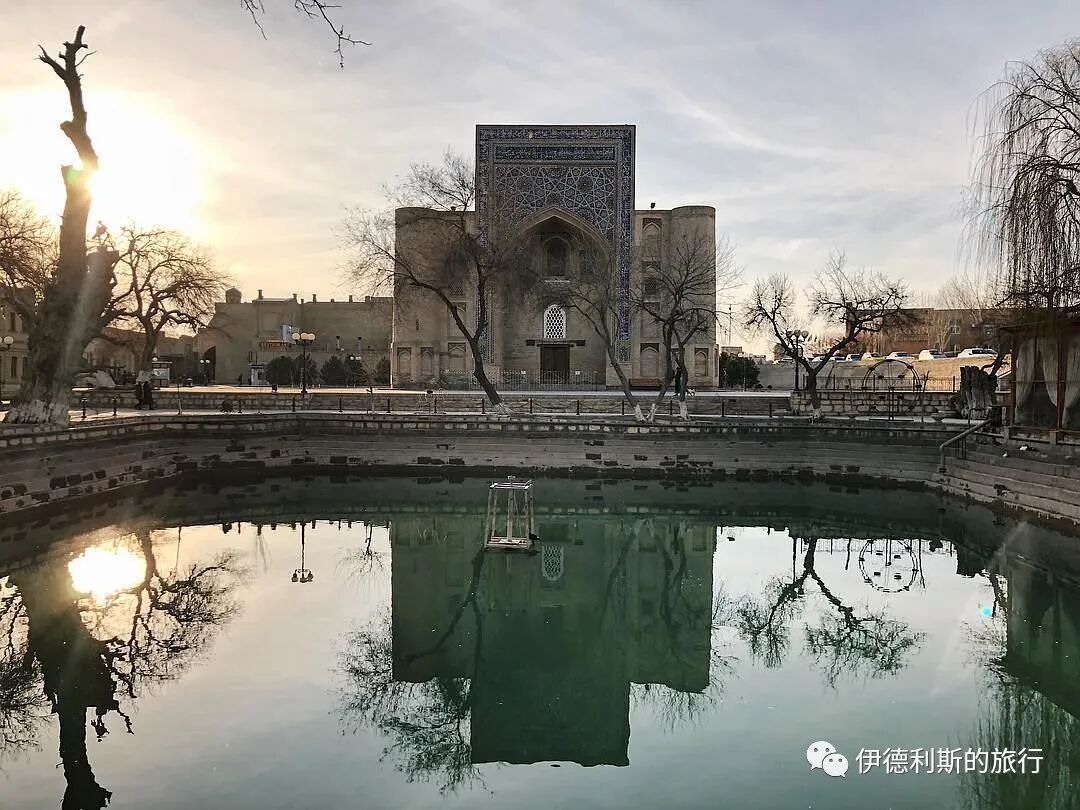
Lyab-i Hauz means "by the pond" in Persian and is one of the few remaining complexes in the ancient city of Bukhara built around a pond (Hauz). During the Khanate of Bukhara, there were many ponds in the ancient city, which were the main source of water for the city. However, because they were prone to spreading diseases, most of the ponds were filled in by the Soviets in the 1920s and 1930s, while Lyab-i Hauz survived because of its important historical complex.
1. Kukeldash Madrasa: 1568
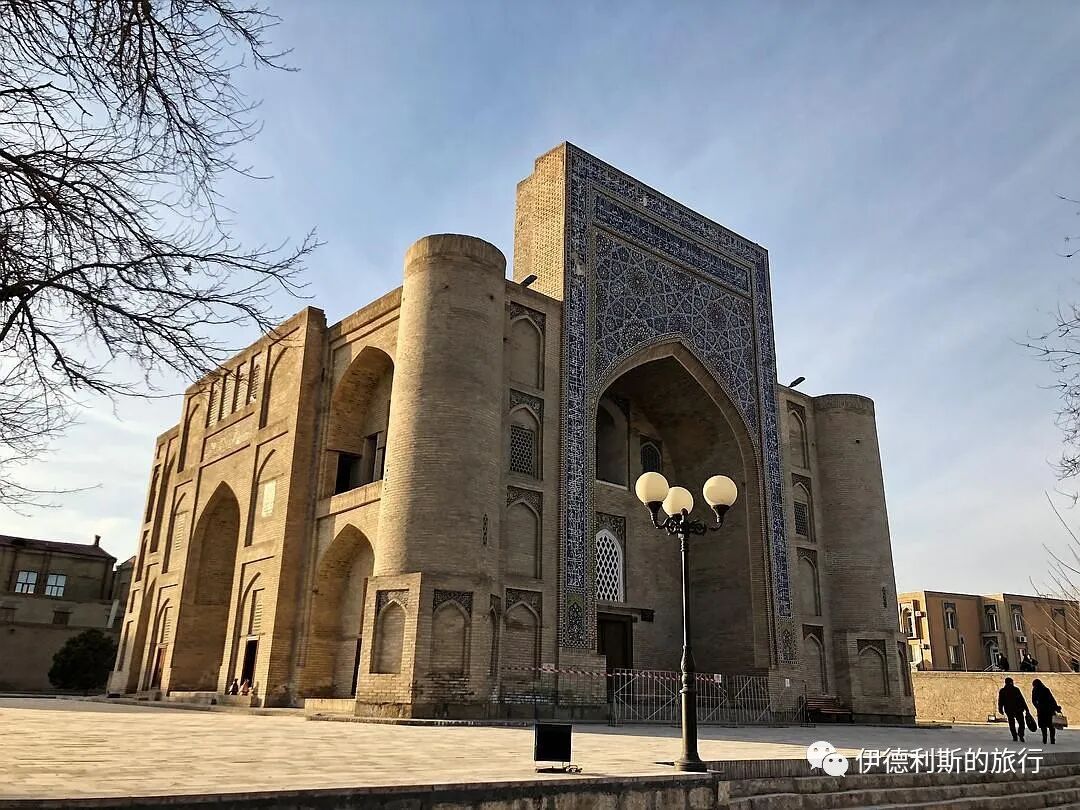
On the north side of the pond is the Kukeldash Madrasa, built in 1568 during the reign of Abdullah Khan II, the Khan of the Shaybanid Dynasty of the Khanate of Bukhara. The Kukeldash Madrasa is the largest madrasa in Bukhara, consisting of 160 rooms. The architect very artistically used arched loggias to break up the facades on both sides, which is also a feature of this building.
2. Nadir Divan-begi Khanaka: 1619
Fifty years after the completion of the Kukeldash Madrasa, during the reign of Imam Quli Khan (reigned 1611–1642), the third Khan of the Janid Dynasty of the Khanate of Bukhara, the then-vizier (minister), who was also the Khan's uncle, Nadir Divan-begi, wanted to build a Sufi Khanaka next to the Kukeldash Madrasa. Vizier Nadir Divan-begi had great influence at court and could sometimes even represent the Khan in negotiations with foreign envoys.
According to legend, while building the Khanaka, the vizier wanted to build a pond next to it, but the land where the pond was located belonged to a Jewish widow who refused to sell the land. So the vizier brought the widow before the Khan and asked the Khan to make a ruling. The Khan ordered his jurists to study it, and the final conclusion was that there was no other way except for the widow to agree personally. So the vizier had to build a canal around the widow's land, and the water washed away the foundation of the widow's house, making it impossible for her to live there.
The widow negotiated with the vizier again. The vizier hoped to buy the house at a reasonable price, but the widow set a condition that if he gave her another piece of land and allowed the construction of a synagogue, she would agree to give up the current house. The vizier agreed to the widow's request, and the land given to the widow formed the Bukhara Jewish community, Mahalli Kuma.
Soon, the pond and the Bukhara synagogue were completed at the same time. This complex began to be called "Lyab-i Hauz," which is Persian for "by the pond," but it also has another popular name among the people, "Haus-i Bazur," meaning "built by force."
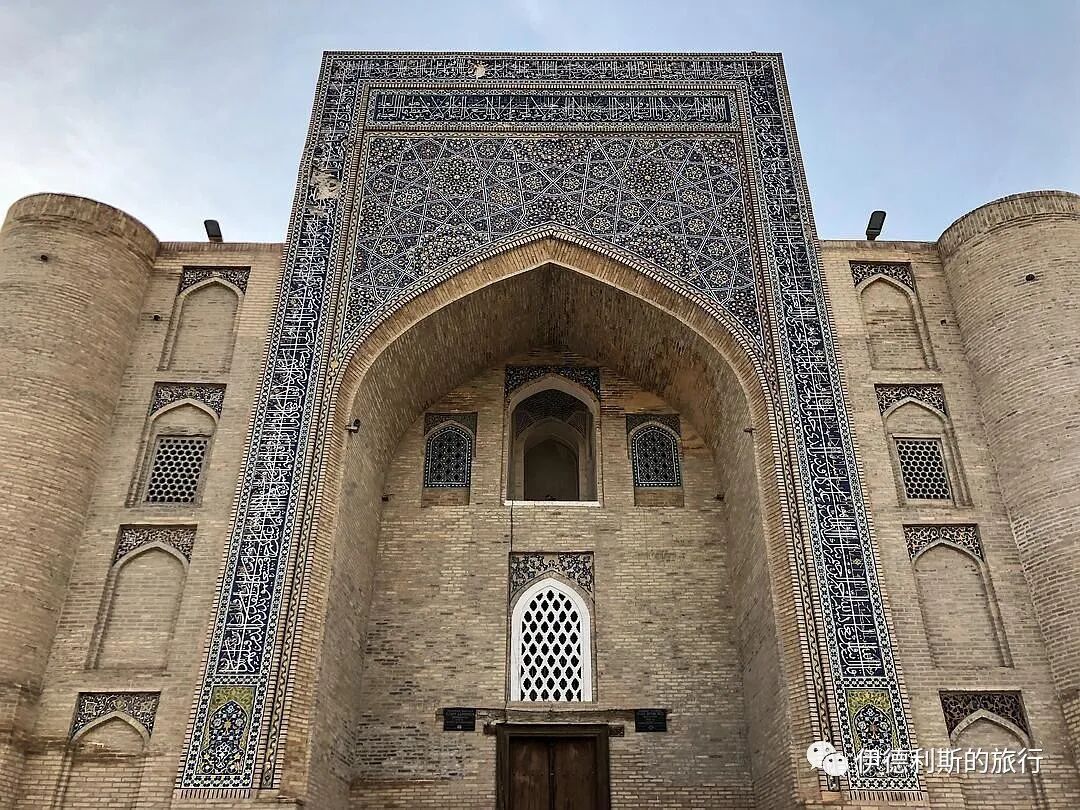
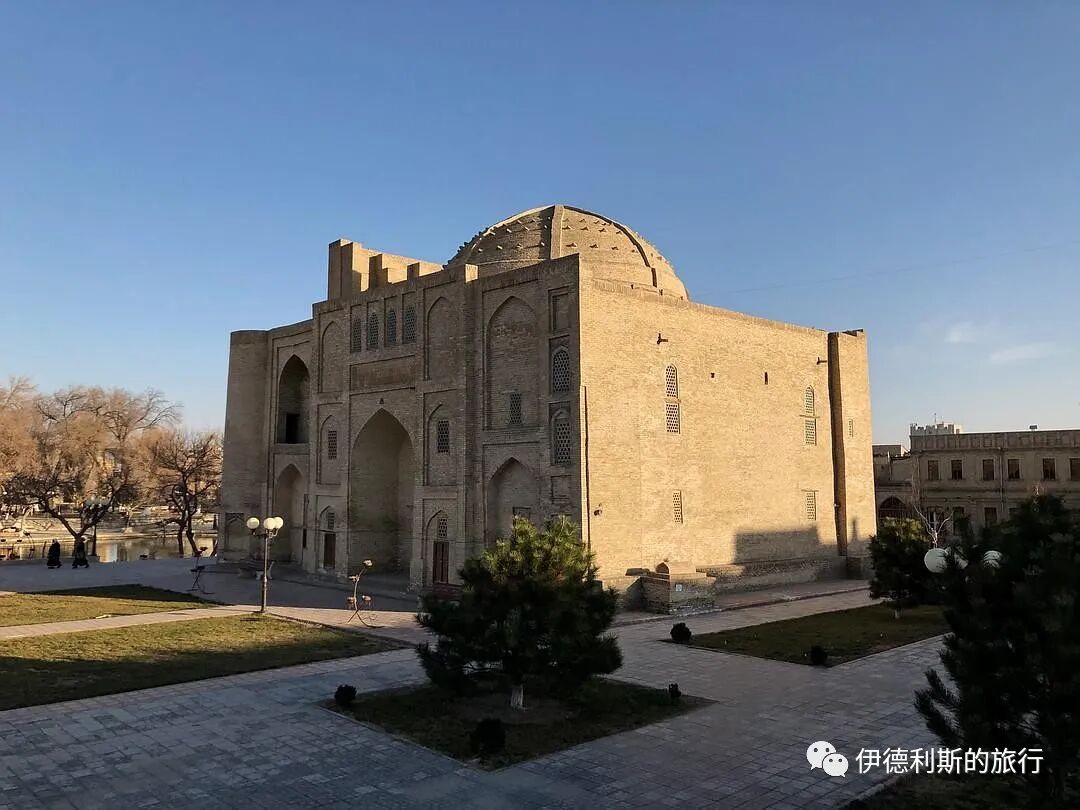
The Khanaka has a long, narrow gate that is different from the traditional form and is decorated very simply. The hall (dhikr-hana) has good acoustics, suitable for performing Sufi music. The corners and side exterior walls of the hall are places where Sufi practitioners live.
3. Nadir Divan-begi Madrasa: 1622
After building the Sufi Khanaka, Vizier Nadir Divan-begi planned to build a caravanserai (merchant inn) on the other side of the pond. After the inn was built, the vizier invited Khan Imam Quli Khan to the opening ceremony, but the Khan did not like his uncle's inn. At the opening ceremony, the Khan said that this building was built for the glory of the Lord, so it should be used as a madrasa. So the vizier had to convert the inn into a madrasa.
From the structural layout of the building, it can also be seen that this building was once a caravanserai. The entrance to the building is straight, not angular like the Kukeldash next to it, and there is no Darskhona classroom or Ayvan terrace for summer classes.
The gate of the madrasa depicts two phoenixes, two white deer, and a human face in the sun, which is very rare in Islamic architecture and similar to the Sher-Dor Madrasa in the Registan of Samarkand from the same period.
7. Khoja-Gaukushan Complex: 1570, 1598
The Khoja Gaukushan complex consists of a madrasa and a mosque. The madrasa was built in 1570 during the reign of Abdullah Khan II, the Khan of the Shaybanid Dynasty, and the mosque was built in 1598 by the master Djuybar Sheikh, known as "Khoja Kalon" (the Great Khoja).
In front of the mosque is a pond (Hauz), and on one side is a tall minaret, second only in height to the most famous Kalyan Minaret in Bukhara.
Madrasa
8. Tok-i-Zargaron (Jewelry Dome Market): 1570
The Tok-i-Zargaron (Jewelry Dome Market) was built in 1570 and is the largest of the four surviving dome markets from the Khanate of Bukhara in the ancient city of Bukhara, and is the best witness to Bukhara as a trade center in Central Asia in the 16th century.
"Tok-i-Zargaron" means "jeweler's dome," and it has four arched passages for Silk Road trade caravans to pass through, as well as 16 domes on an octagonal base. During the Khanate of Bukhara, there were 36 jewelry workshops and shops under the dome, selling various jewelry such as rings, earrings, and necklaces.
I bought a miniature painting at a miniature painting workshop inside the market.
9. Toqi Telpak Furushon (Hat Dome Market): Late 16th century
The Toqi Telpak Furushon (Hat Dome Market) consists of a central dome and a hexagonal base, connecting five streets in the old city. It was originally called the book (Kitab-Furushon) market, but later it gradually changed to selling various turbans, leather hat boxes, and skullcaps, and now it has become a place to sell tourist souvenirs.
I bought a miniature painting at the miniature painting workshop in the market.
10. Toki Sarrafon (Currency Exchange Dome Market): Late 16th century
The Toki Sarrafon (Currency Exchange Dome Market) is on the main road in the southern part of the old city of Bukhara, with four arches connecting four roads. In the 16th and 17th centuries, it was one of the largest currency exchange markets in Central Asia, where merchants from India, China, and other regions exchanged currency. But today it only sells tourist souvenirs.
11. Abdullakhan Tim (Market): 1577
During the Shaybanid Dynasty, many huge dome markets were built in the city of Bukhara, called "Tim." Today, only one "Tim" market named after Abdullah Khan II survives.
Abdullakhan Tim was once the most high-end market in Bukhara, focusing on high-quality silk and wool products. The market is divided into 56 shopping stalls by arched structures, and soft light pours in through small windows on the dome. In the hot summer, customers can enjoy the cool air.
12. Fayzabad Khanaka: 1598
The Fayzabad Khanaka was built in 1598 by the famous Sufi master Mavlono Poyand-Mukhammad Ahsi (Ahsiketi) Fayzobodi, who died two years later in 1601.
This building is both a mosque and a Sufi Khanaka. Behind the mihrab niche are three-story Khudjras rooms for Sufi practitioners to live in. Sufi activities continued here until the Soviet era, but now only the function of the mosque remains. view all
Reposted from the web
Summary: This travel note introduces Bukhara Travel Guide: Capital of the Bukhara Khanate, Mosques and Islamic Heritage (Part 1). In the previous article, "The Capital of Timur—Samarkand," we introduced how the Timurid Dynasty declined after the death of the ruler Ulugh Beg and fell into division. It is useful for readers interested in Bukhara Travel, Islamic Heritage, Uzbekistan.
In the previous article, "The Capital of Timur—Samarkand," we introduced how the Timurid Dynasty declined after the death of the ruler Ulugh Beg and fell into division. In the early 16th century, Muhammad Shaybani, a descendant of Shayban (the fifth son of Jochi, the eldest son of Genghis Khan), led the Uzbeks who were nomadic in the northern steppes of Central Asia to overthrow the Timurid Dynasty's rule in the Transoxiana region, establishing the Shaybanid Dynasty (1506–1598), opening a new chapter in the history of the Transoxiana region of Central Asia.
The capital of the Shaybanid Dynasty was initially in Samarkand, and was moved to Bukhara after 1533. In 1598, the Shaybanid Dynasty line ended, and the khanate was passed to the Janid family, later known as the Janid Dynasty. The Janid Dynasty continued to rule with Bukhara as its capital until 1785. Later generations collectively refer to the Shaybanid Dynasty and the Janid Dynasty as the Khanate of Bukhara.
The city of Bukhara served as the capital of the Khanate of Bukhara for 252 years from 1533 to 1785, and many buildings constructed at that time remain to this day. Among them, the architecture from the period of Abdullah Khan II, who ruled Bukhara from 1557 to 1598, is the most abundant, which was also the most prosperous period of the Khanate of Bukhara.
Table of Contents
Prologue: Kalyan Mosque: Rebuilt in 1515
1. Mir-i-Arab Madrasa: 1535
2. Khoja Zaynuddin Mosque: First half of the 16th century
3. Naqshbandi Complex: 1544
4. Chor-Bakr Necropolis: 1563
5. Kosh Madrasa: 1567, 1590
1. Modari-khan Madrasa: 1567
2. Abdullah Khan Madrasa: 1590
6. Lyab-i Hauz: 1568, 1619, 1622
1. Kukeldash Madrasa: 1568
2. Nadir Divan-begi Khanaka: 1619
3. Nadir Divan-begi Madrasa: 1622
7. Khoja-Gaukushan Complex: 1570, 1598
8. Tok-i-Zargaron (Jewelry Dome Market): 1570
9. Toqi Telpak Furushon (Hat Dome Market): Late 16th century
10. Toki Sarrafon (Currency Exchange Dome Market): Late 16th century
11. Abdullakhan Tim (Market): 1577
12. Fayzabad Khanaka: 1598
13. Magok-i-Kurpa Mosque: 1637
14. Abdul Aziz Khan Madrasah: 1651
Prologue: Kalyan Mosque: Rebuilt in 1515
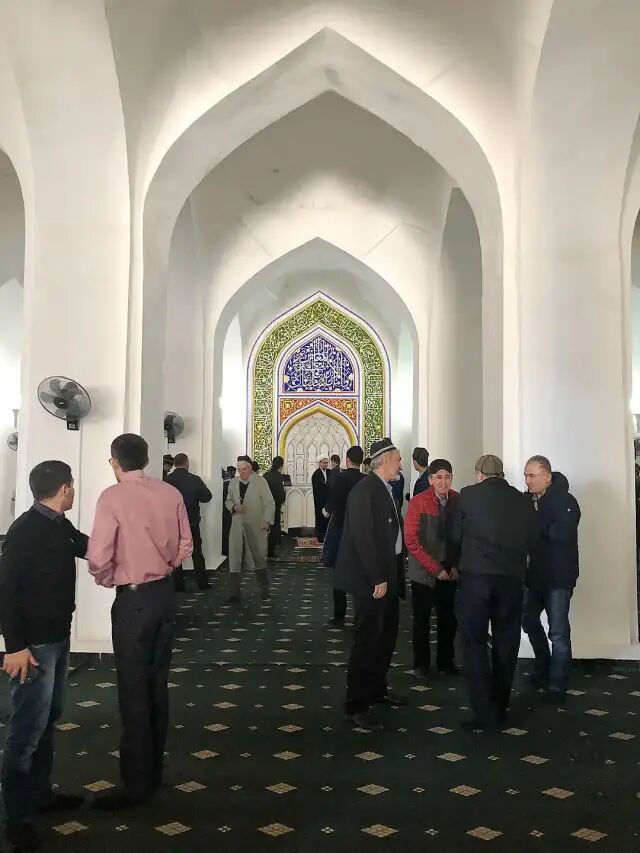
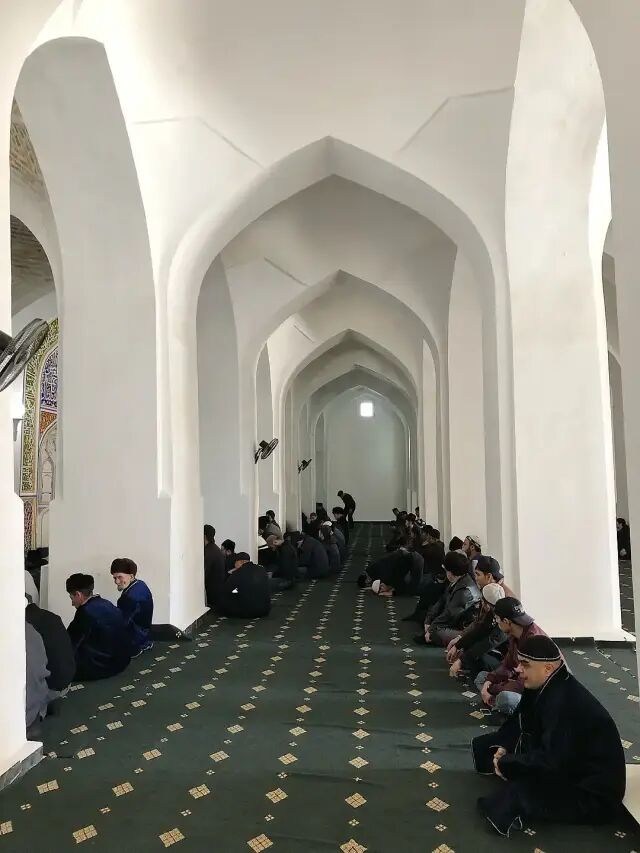
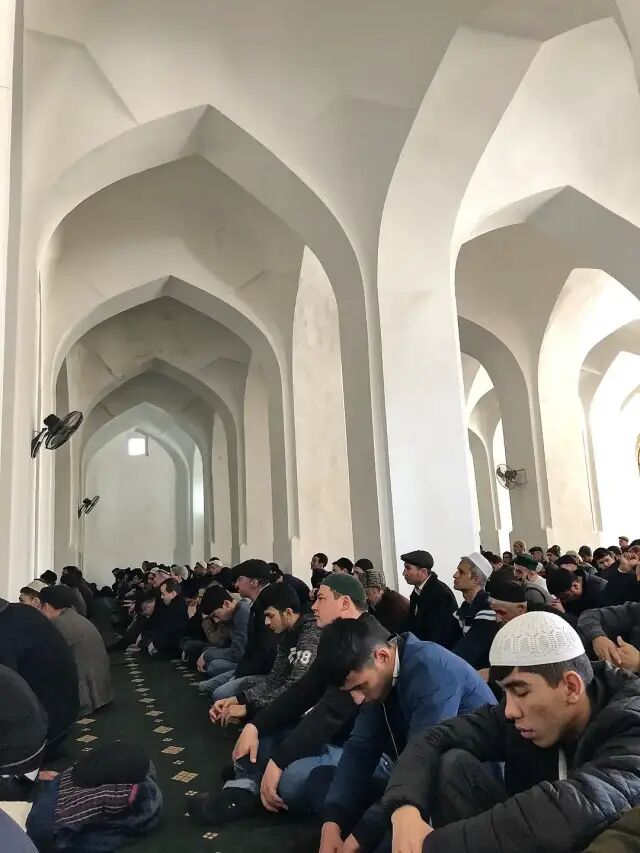
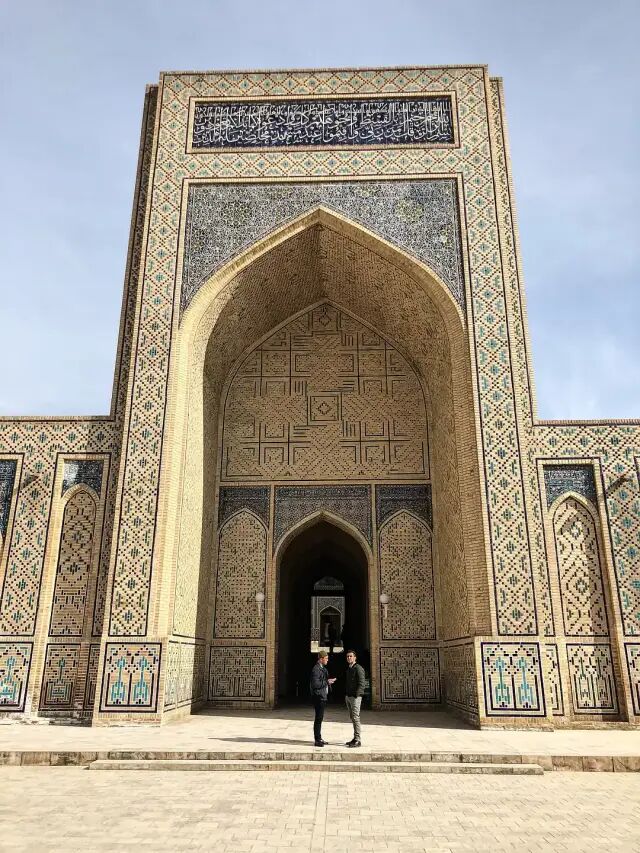
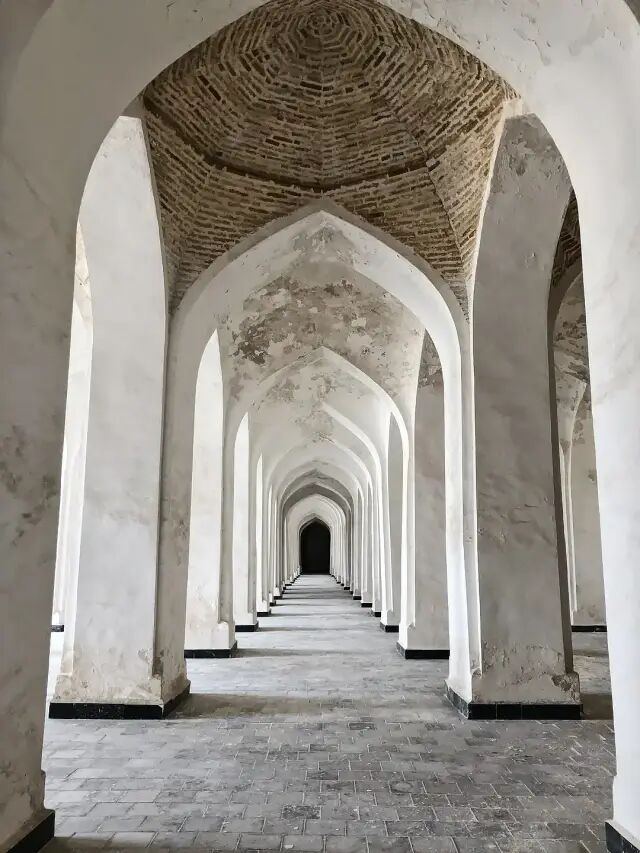
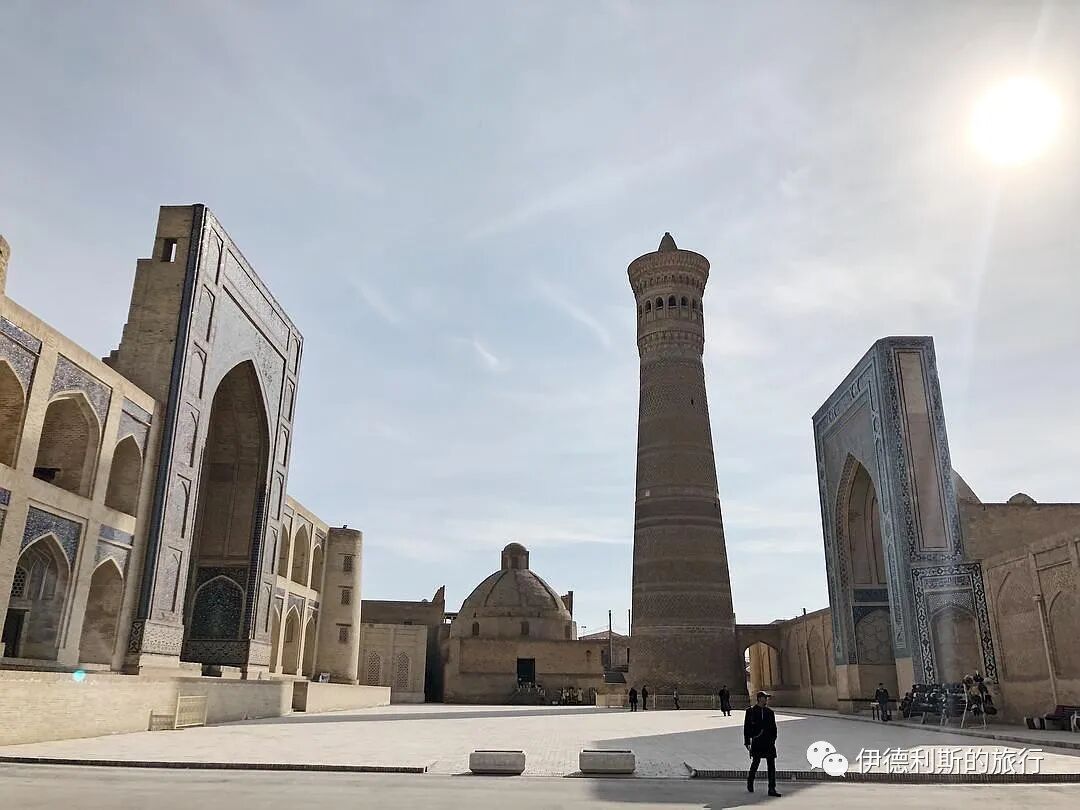
The Kalyan Mosque is the Jumu'ah (Friday) mosque of Bukhara. In 1220, the mosque was destroyed by the Mongol army, leaving only the 46-meter-high minaret. In 1515, Ubaidullah, the nephew of Muhammad Shaybani, the founder of the Shaybanid Dynasty of the Khanate of Bukhara, rebuilt the mosque. He was the ruler of Bukhara at the time, and the name of the Khanate of Bukhara also comes from his order to move the capital of the khanate from Samarkand to Bukhara after he became Khan in 1533. After Bukhara became the capital of the khanate, the Kalyan Mosque became the most important mosque in the Khanate of Bukhara.
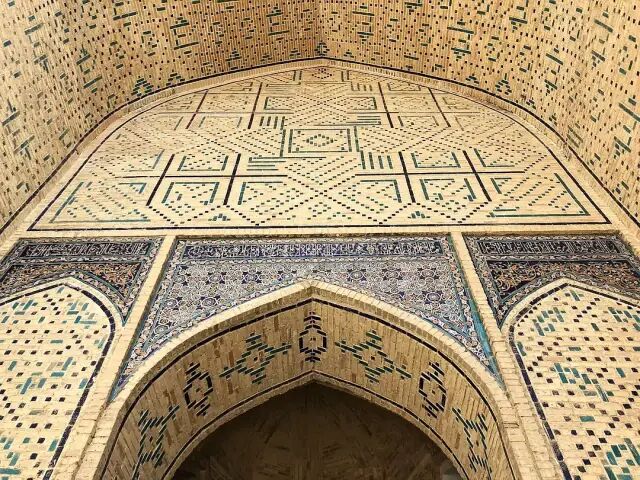
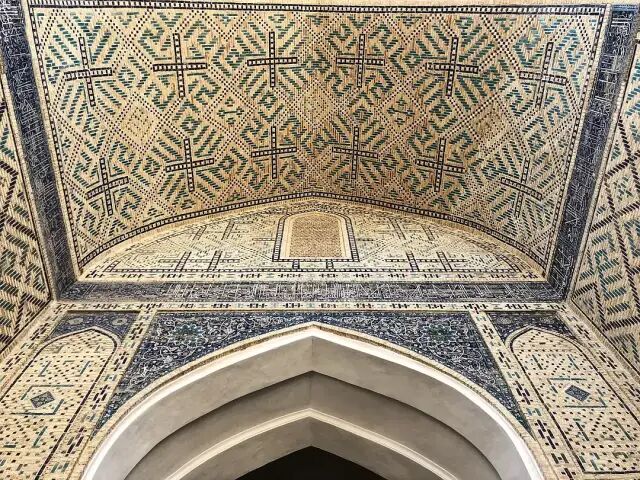
The architectural style of the Kalyan Mosque is similar to the Bibi-Khanym Mosque in Samarkand, both being courtyards composed of four Iwan (vaulted hall) arches. The Kalyan Mosque has as many as 288 domes, the largest of which is a blue dome 30 meters high above the mihrab (niche indicating the direction of prayer). The mihrab and Iwan arches are decorated with blue and white tiles in the late Timurid style, featuring plant and calligraphic patterns.
1. Mir-i-Arab Madrasa: 1535
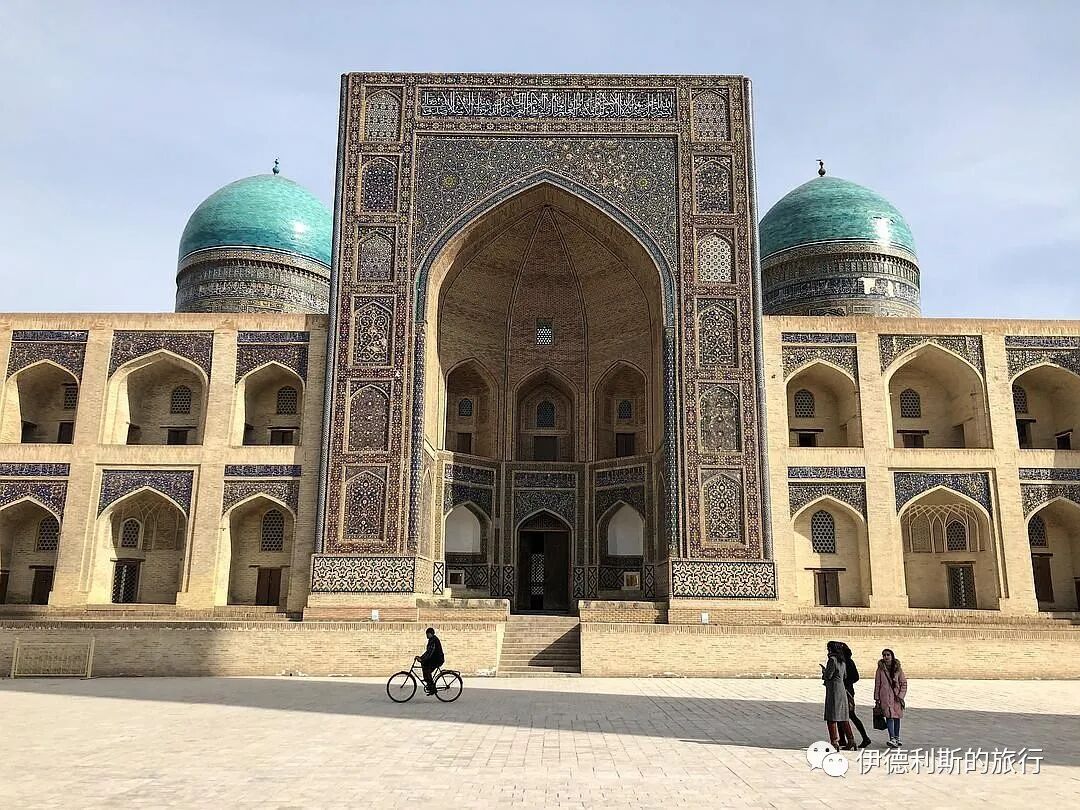
The Mir-i-Arab Madrasa was built in 1535 by order of Ubaidullah, the Khan of the Shaybanid Dynasty of the Khanate of Bukhara (reigned 1533–1539), and named after the Khan's Sufi mentor, Mir-i-Arab (also known as Sheikh Abdullah Yamani).
In 1533, Ubaidullah became Khan and moved the capital from Samarkand to his fiefdom of Bukhara, starting large-scale construction in Bukhara, of which the Mir-i-Arab Madrasa was one.
To compete for territory, Khan Ubaidullah fought many wars with the Persian Safavid Dynasty, the most famous of which was the siege of the ancient Afghan city of Herat. During the many raids on Persia, the Shaybanid Dynasty obtained many captives, and it is said that the Khan used the funds obtained from selling 3,000 Persian captives to build the Mir-i-Arab Madrasa.
The Mir-i-Arab Madrasa was built opposite the Kalyan Mosque, forming a "kosh" (paired) structure with the mosque. Inside the madrasa are buried the Sufi mentor Mir-i-Arab and Khan Ubaidullah himself. Unfortunately, the madrasa is still a school, and ordinary tourists are not allowed to enter, so I could not see the tomb.
The Mir-i-Arab Madrasa was closed in the 1920s but reopened in 1947, becoming the only open madrasa in Bukhara at the time; almost all Imams of that era were trained at this school.
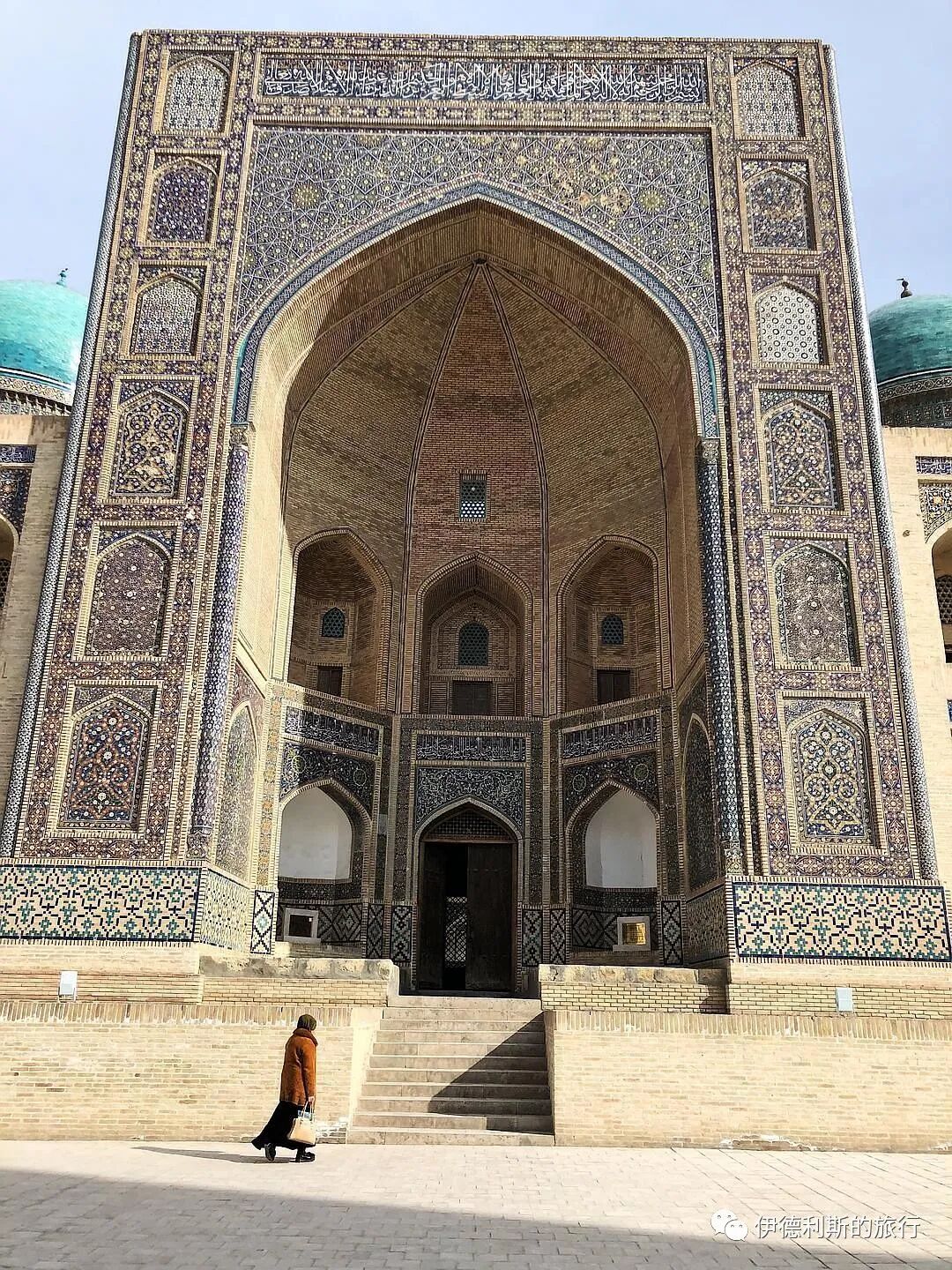
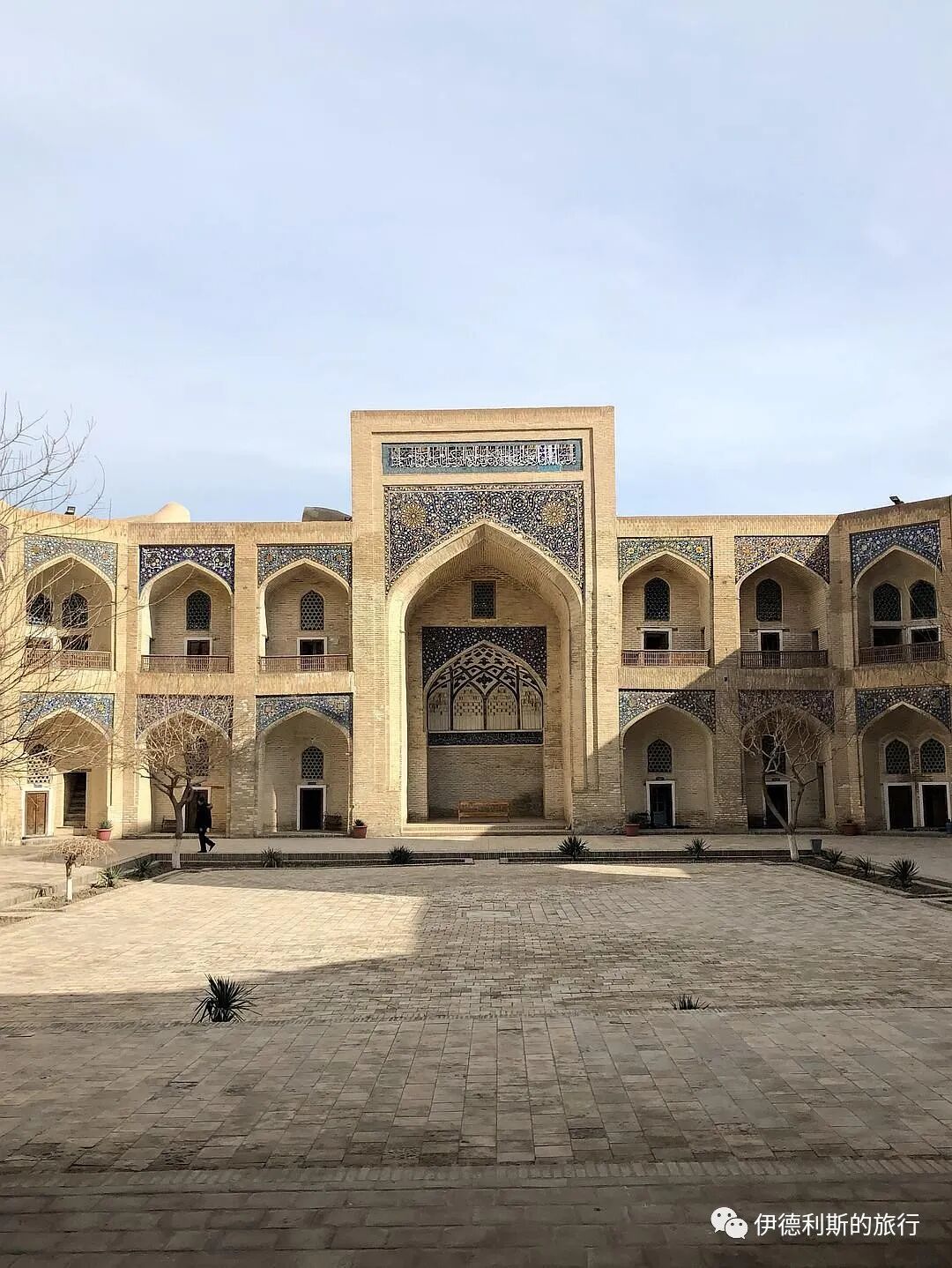
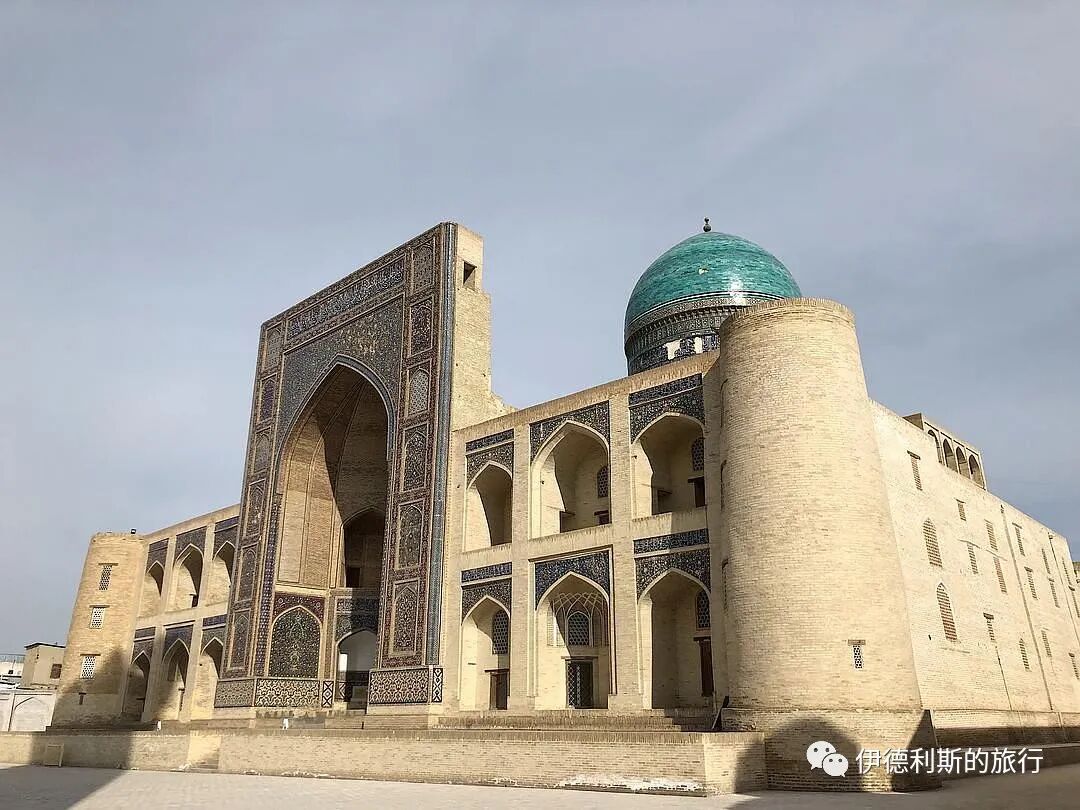
2. Khoja Zaynuddin Mosque: First half of the 16th century
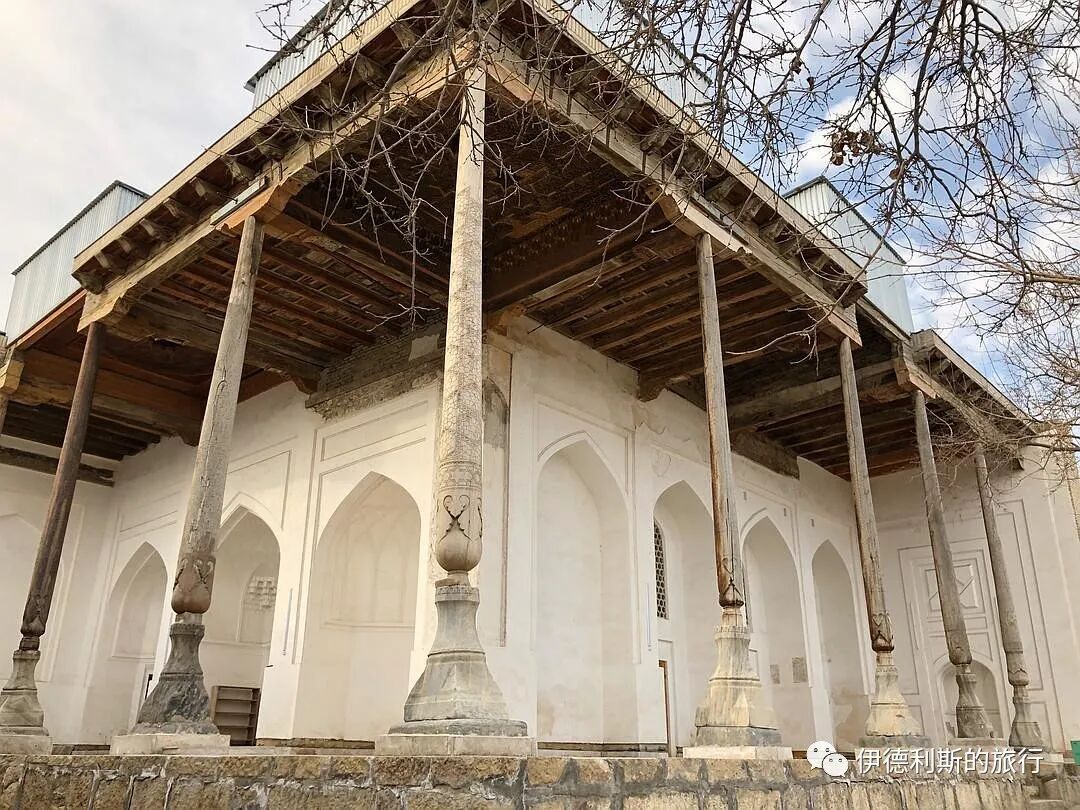
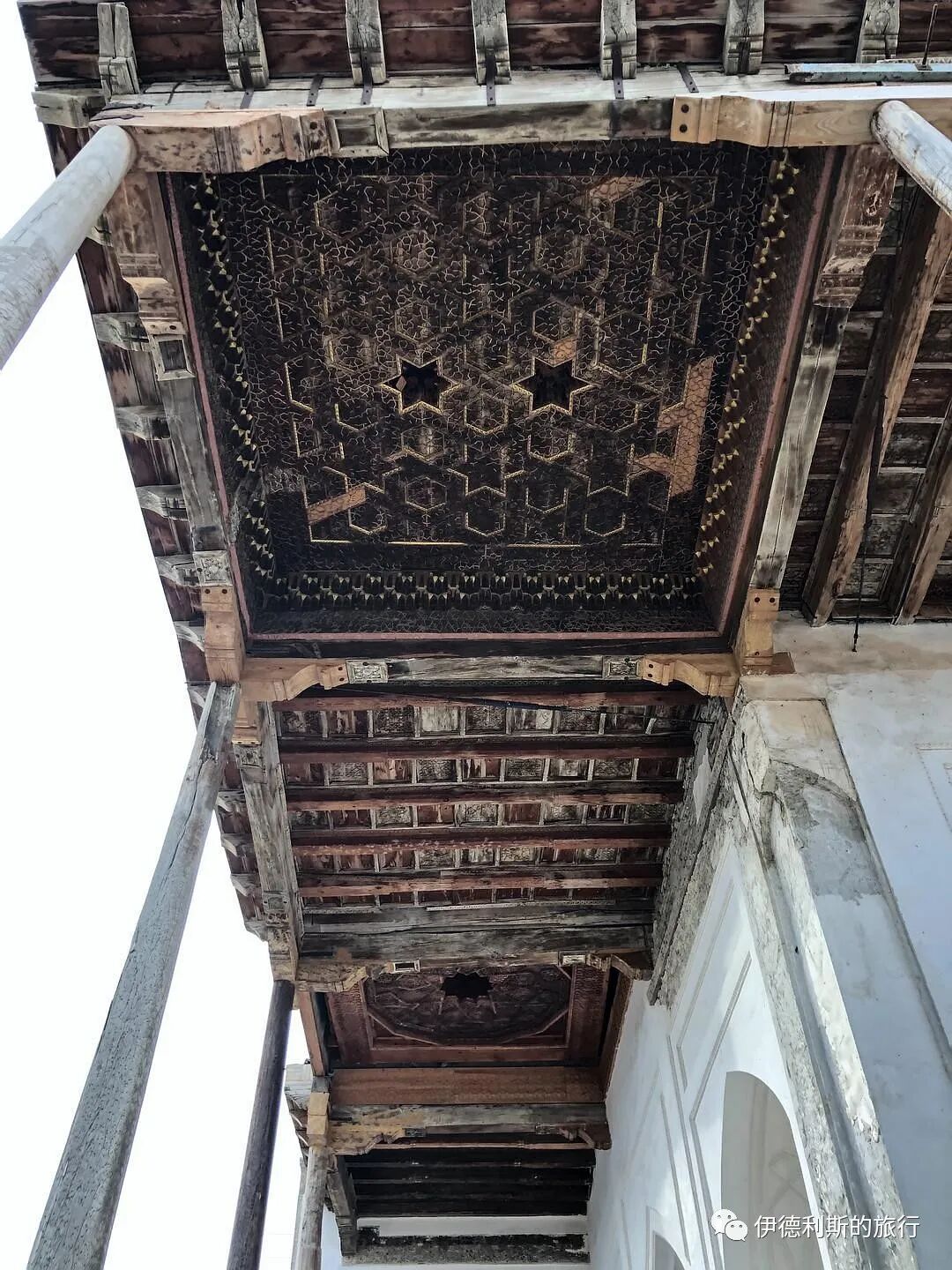
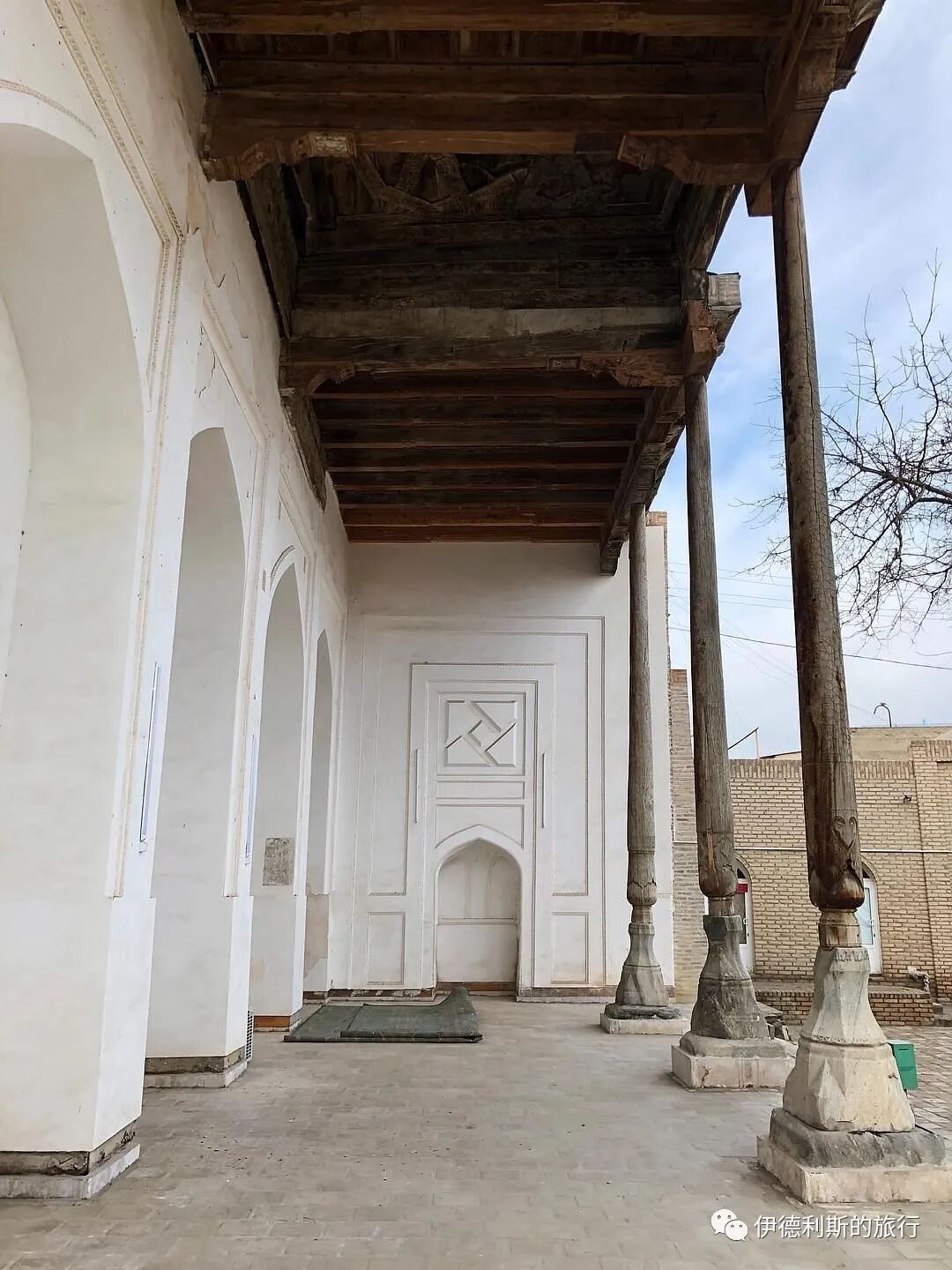
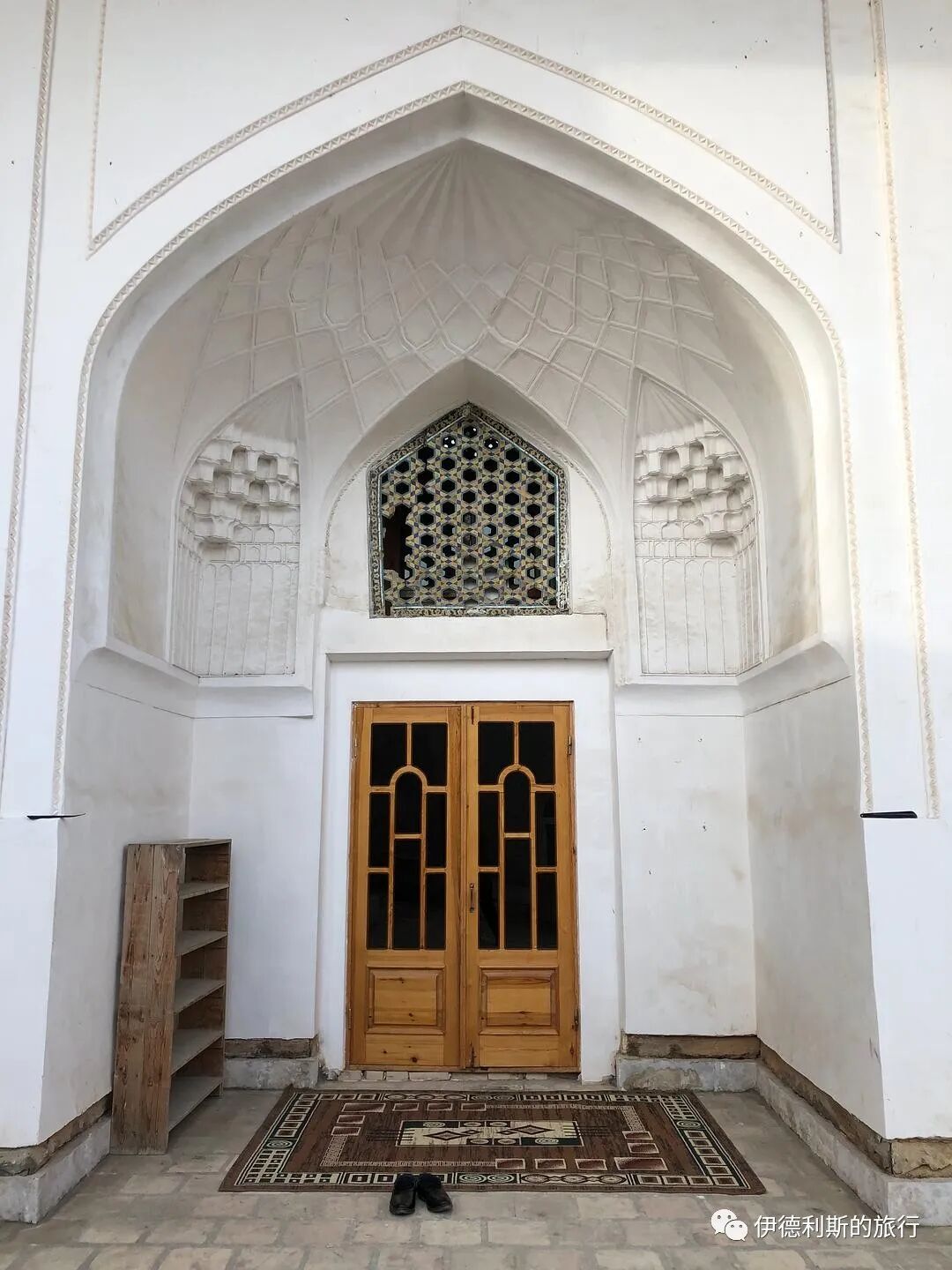
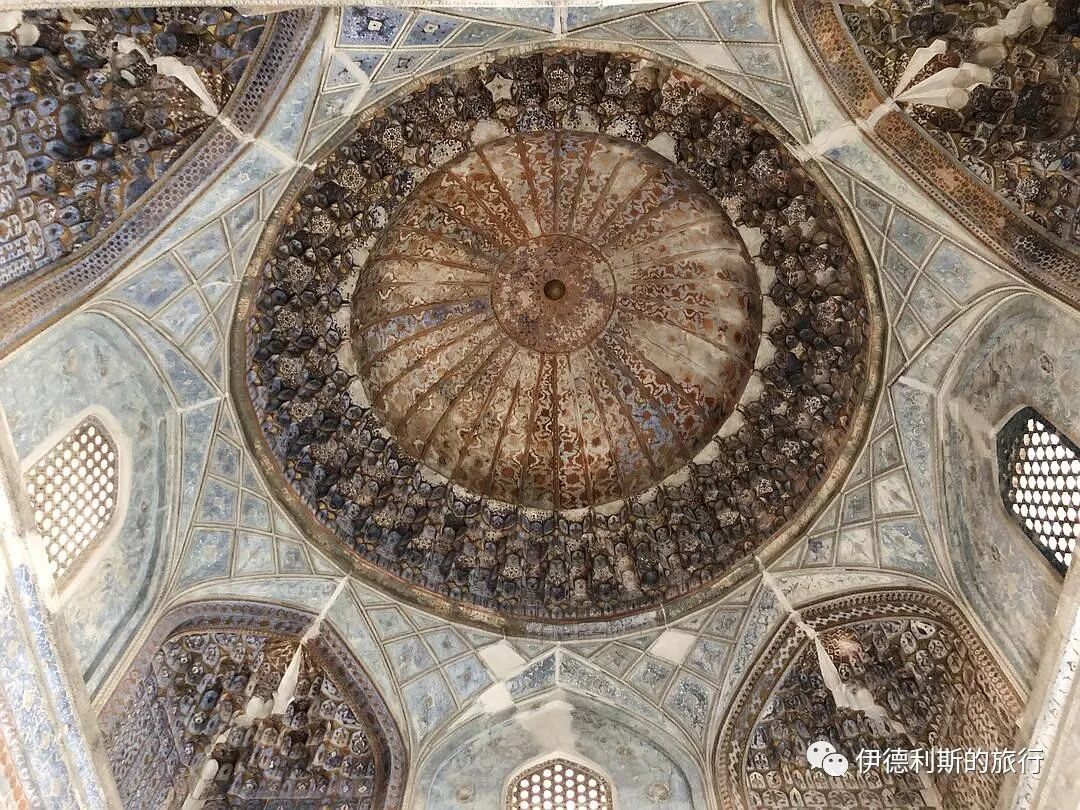
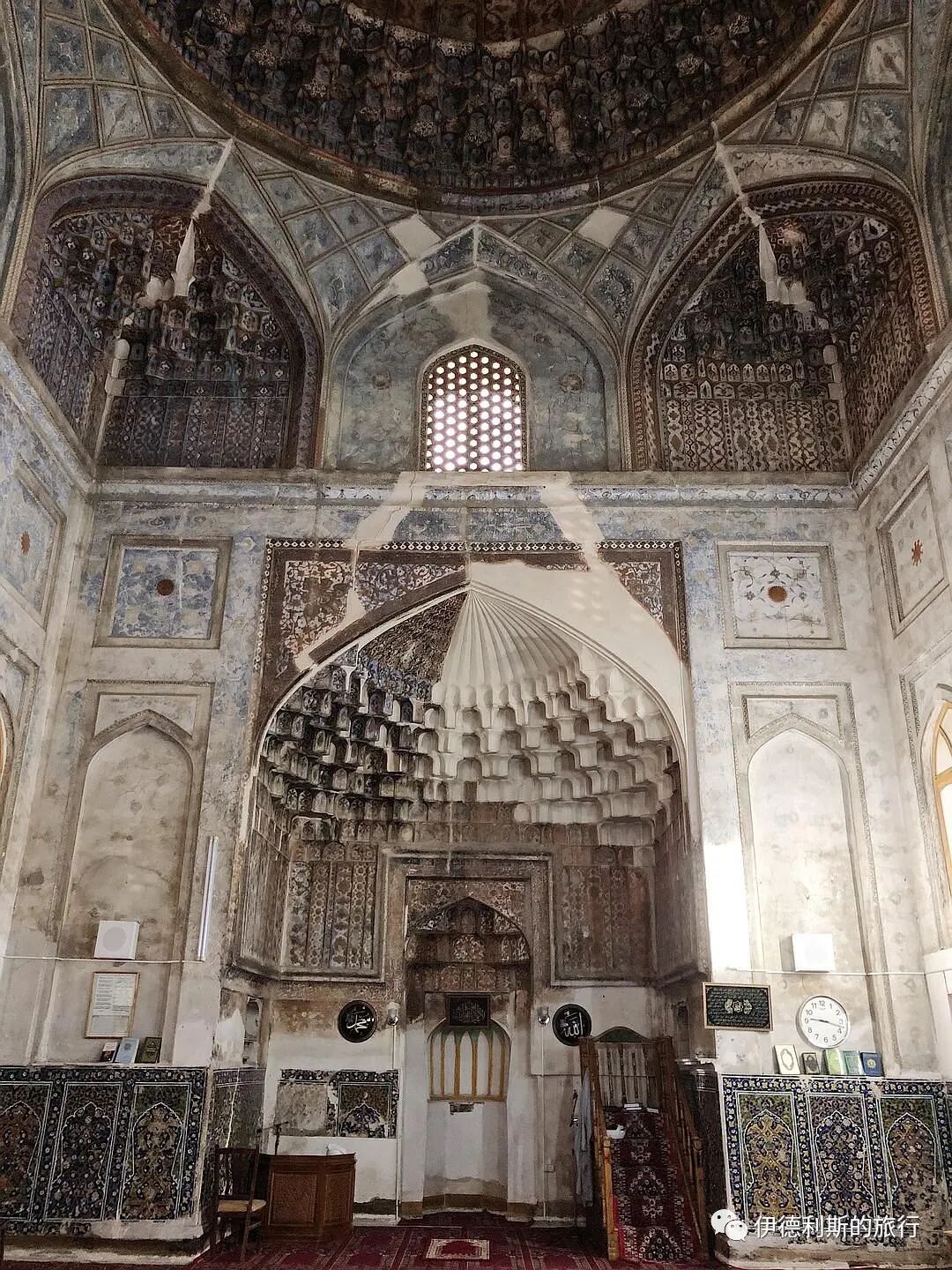
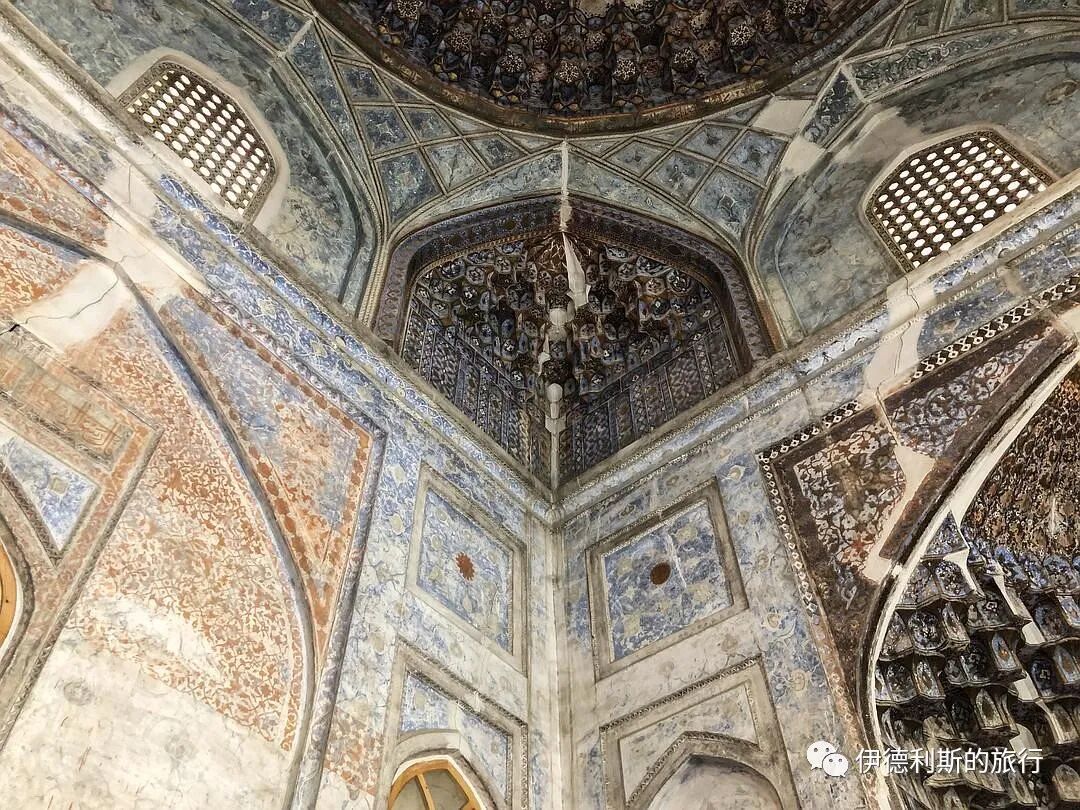
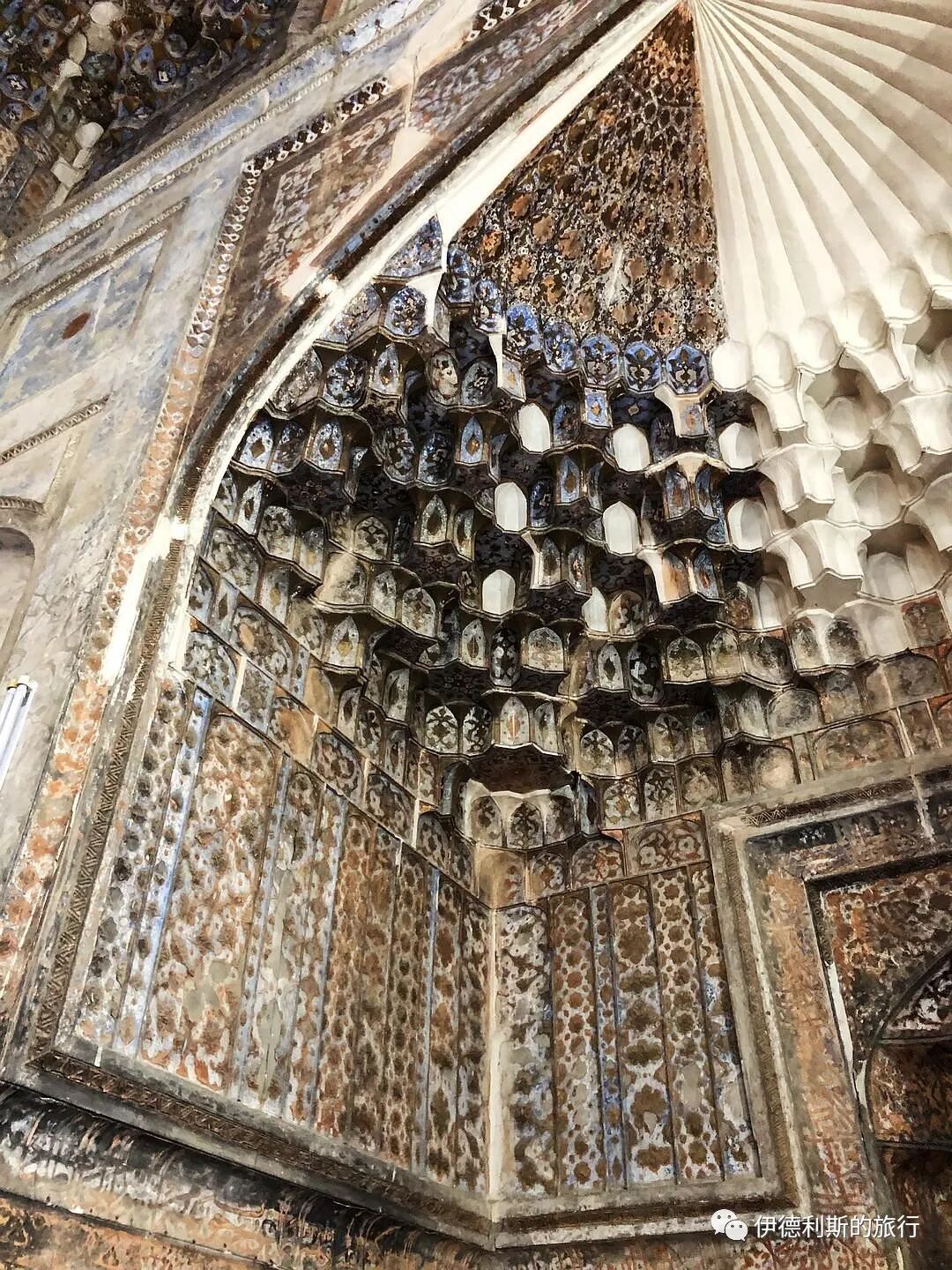
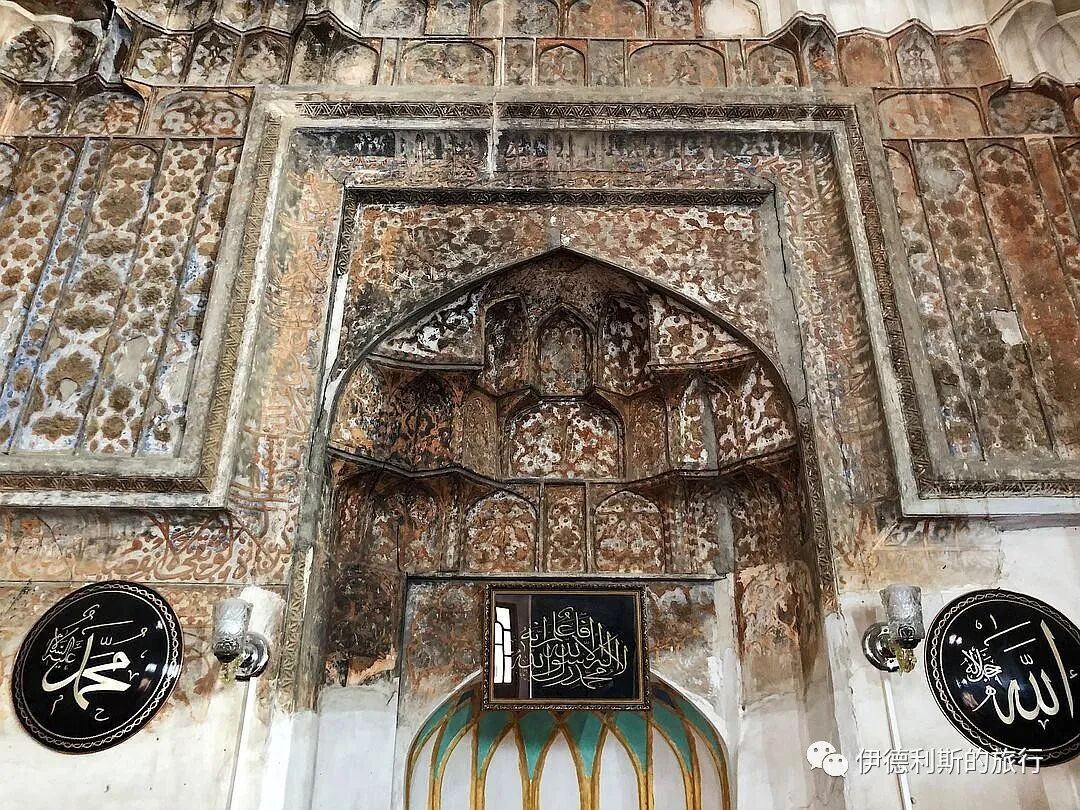
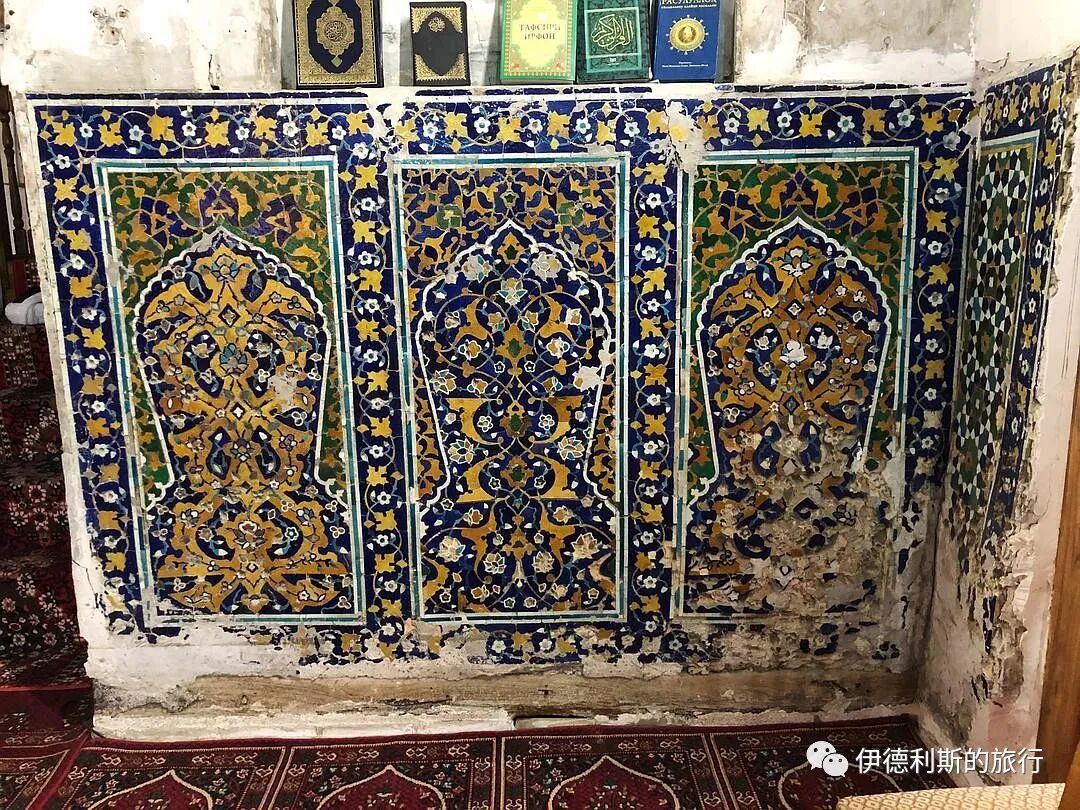
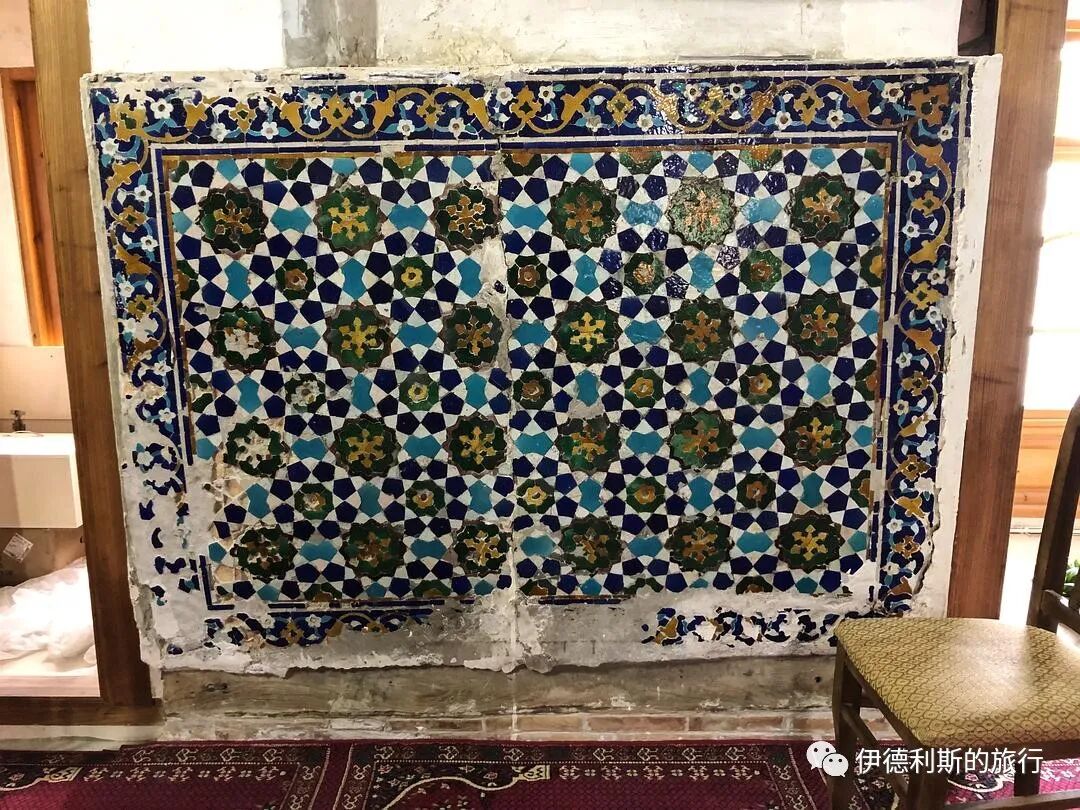
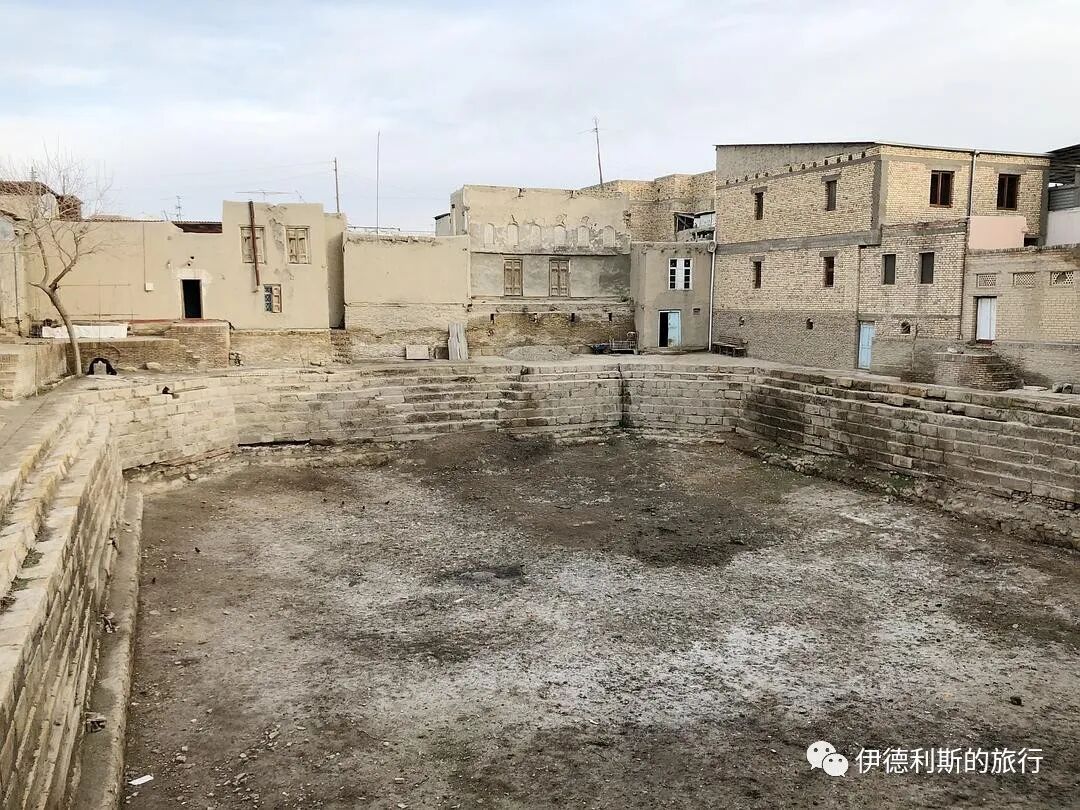
The Khoja Zaynuddin Mosque was built in the first half of the 16th century, located next to an ancient pond (Hauz) in Bukhara. This architectural form is called a "Mosque-Khanaka," which is both a mosque and a Sufi activity center, where one can both pray and hold Sufi rituals.
There are many legends about the history of the mosque. One theory is that this mosque was built by the Khan of the Khanate of Bukhara to thank a minister named Khoja Zaynuddin, and another theory is that the Sufi master Khoja Zaynuddin is buried next to the mosque.
3. Naqshbandi Complex: 1544
The Naqshbandi Complex (Bahouddin Naqshbandi Complex) is an important Islamic holy site in Central Asia, known as the "Little Mecca" of Central Asia, where Hazrat Muhammad Bahauddin Shah Naqshband, the founder of the famous Sufi Naqshbandia order, is buried.
After Naqshband died in 1389, he was buried in his family garden outside the city of Bukhara. Since then, people have constantly come to visit his tomb, which is even called a "small Hajj."
During the Shaybanid Dynasty, the Naqshbandia order eventually won out in competition with other Sufi orders and became the dominant Sufi order in the Khanate. Unlike other Sufi orders that advocate seclusion and asceticism, the Naqshbandia order, from its founder Naqshband, proposed the principle of "inwardly with Allah, outwardly with the people" (practicing in the crowd, traveling in the world, being cautious in action, and enjoying the time). In the 15th century, the third leader of the order, Ubaydullah al-Ahrar, proposed that political and social life were fundamental components of the order's spiritual pursuit, and after continuous improvement by later generations, it received increasing support from the rulers.
In 1544, the Khan of the Shaybanid Dynasty, Abdulaziz (reigned 1539–1550), built a Dakhma (raised platform) with a marble carved fence over the holy tomb, next to which was a Sufi Khanaka. Later, a large cemetery of Bukhara rulers appeared near the holy tomb, and every ruler felt honored to be buried near the holy tomb. Through the donations of successive Bukhara rulers, two mosques, Muzaffarkhan and Khakim Kushbegi, a small minaret, and a madrasa were built next to the Dakhma. These buildings form an entire complex around the central pond (Hauz).
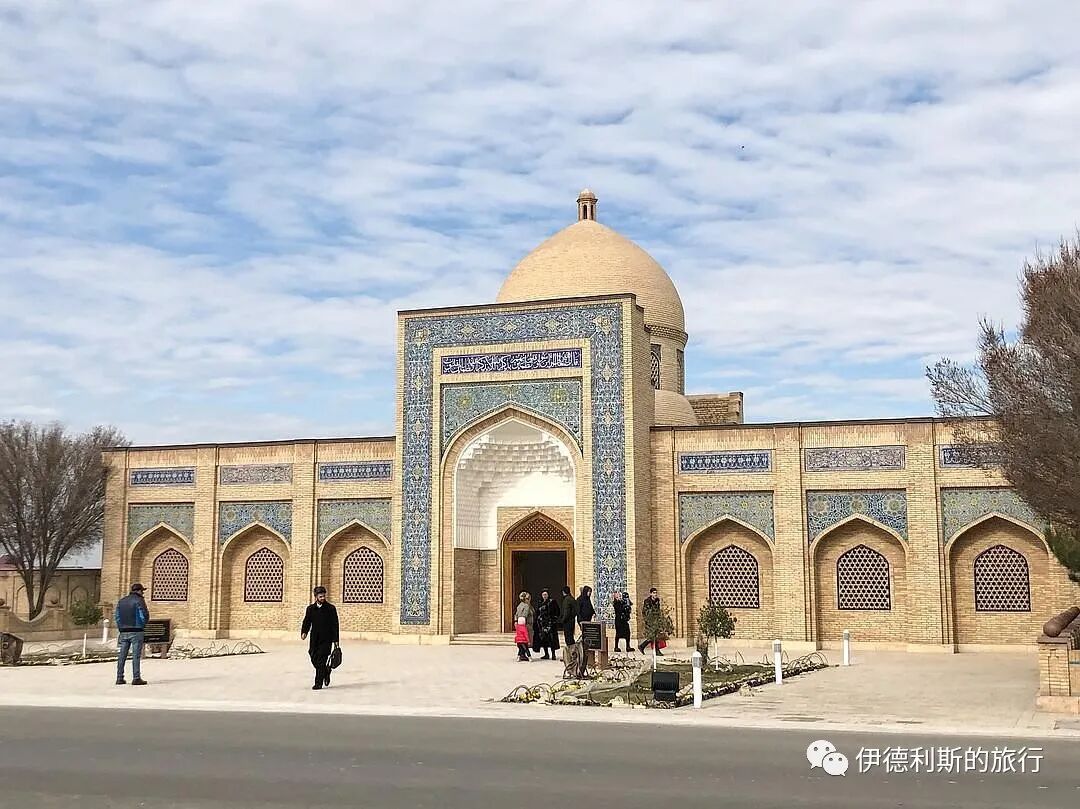
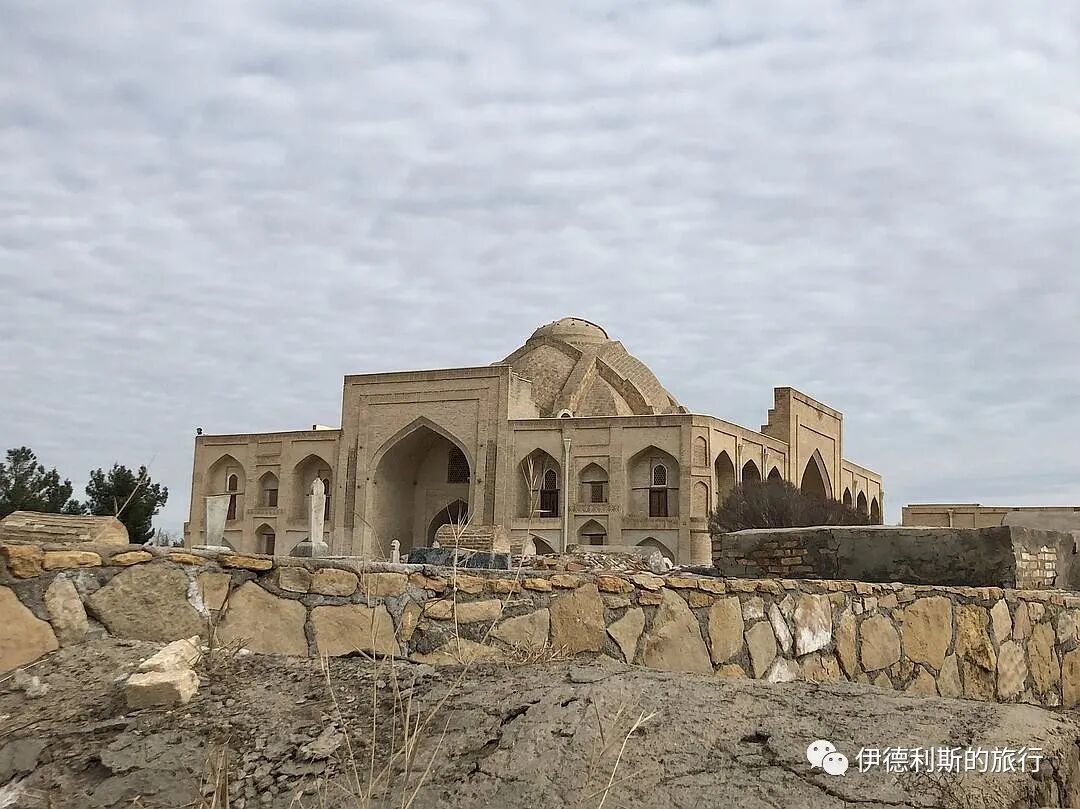
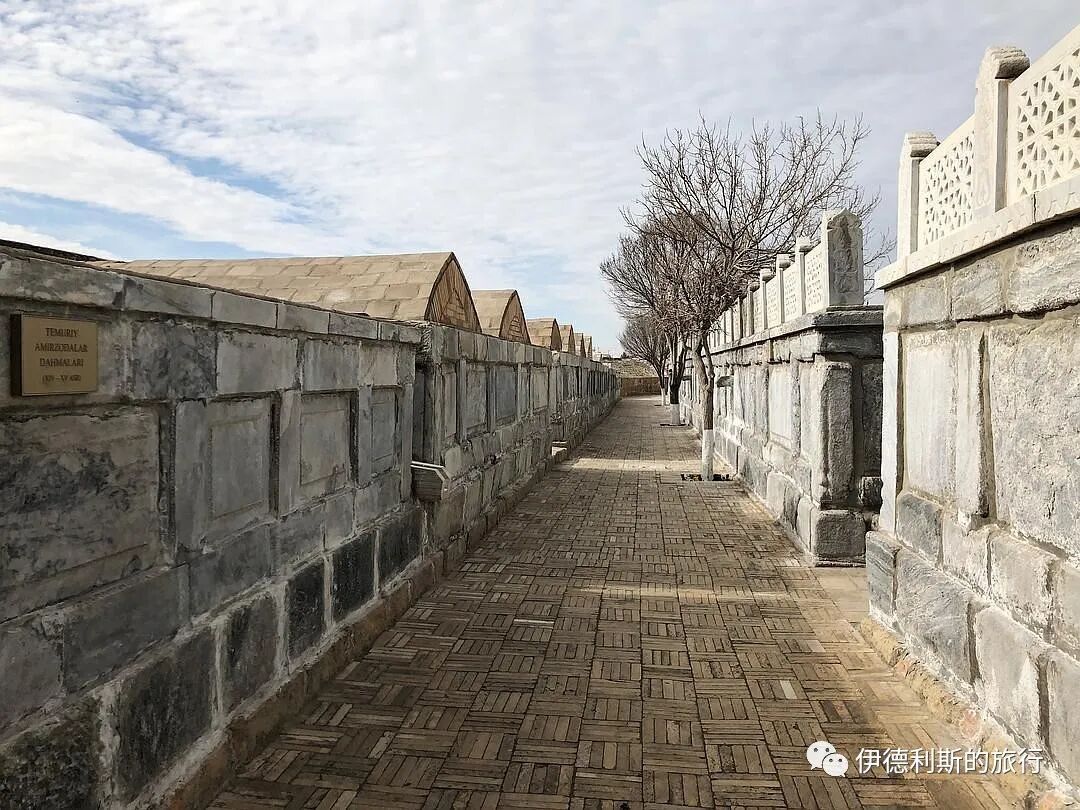
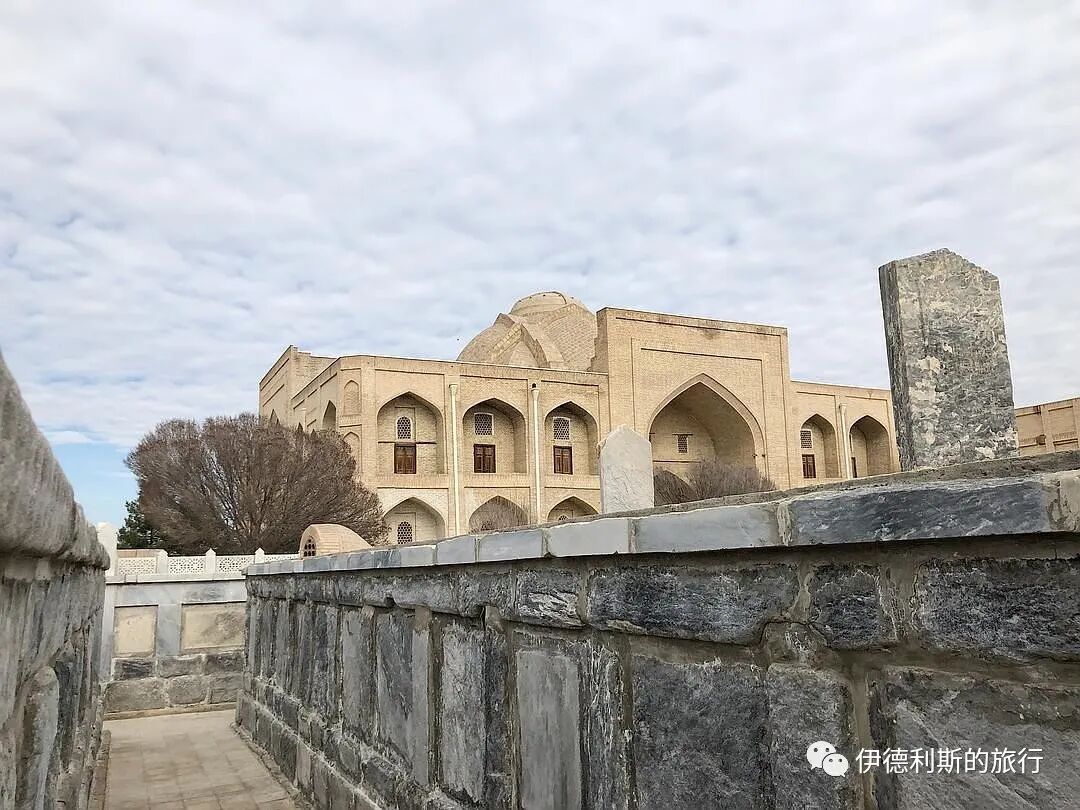
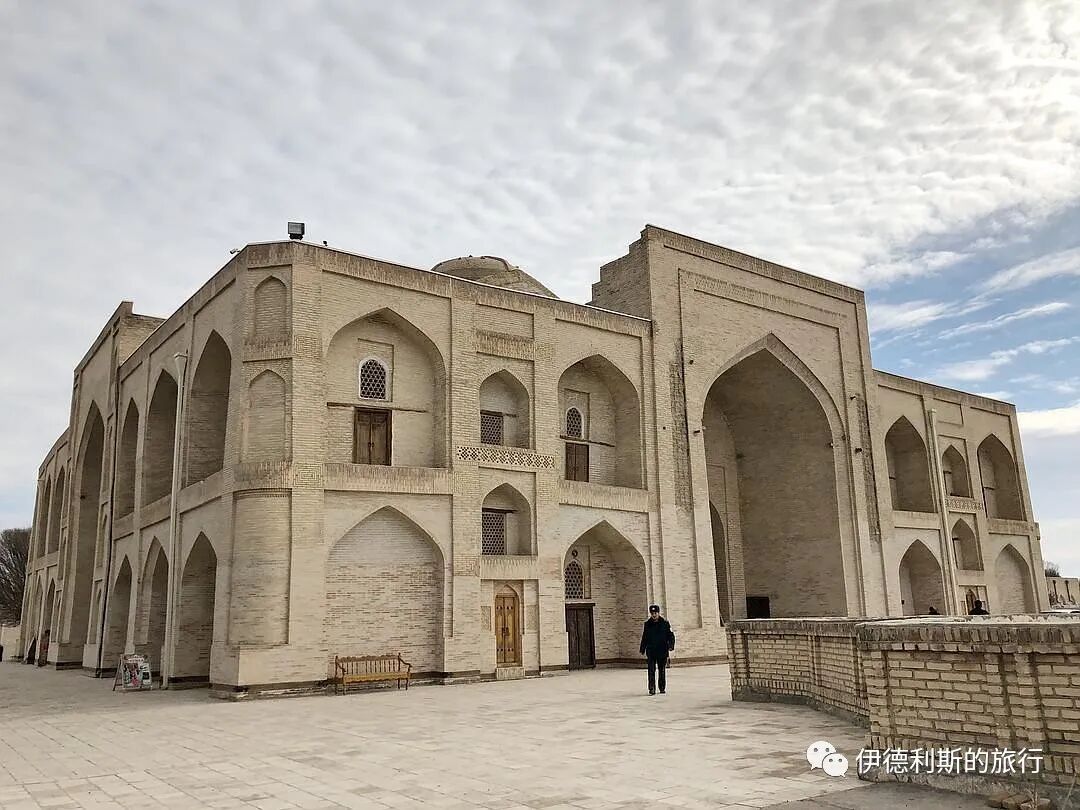
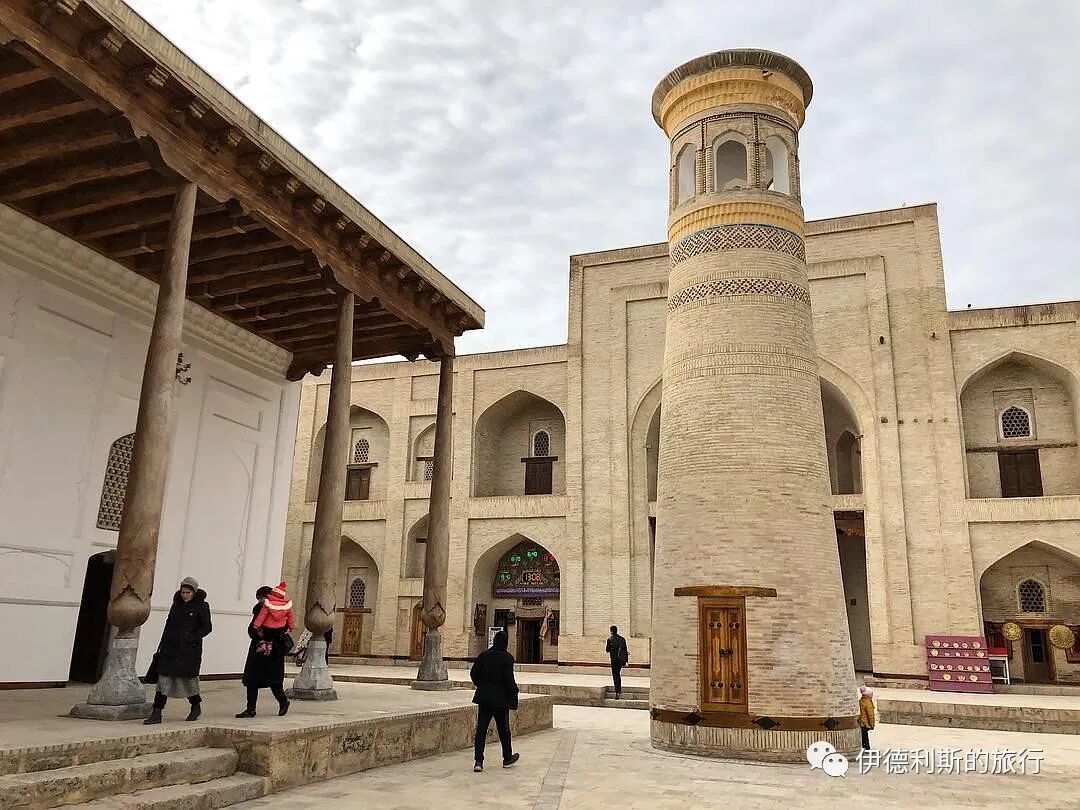
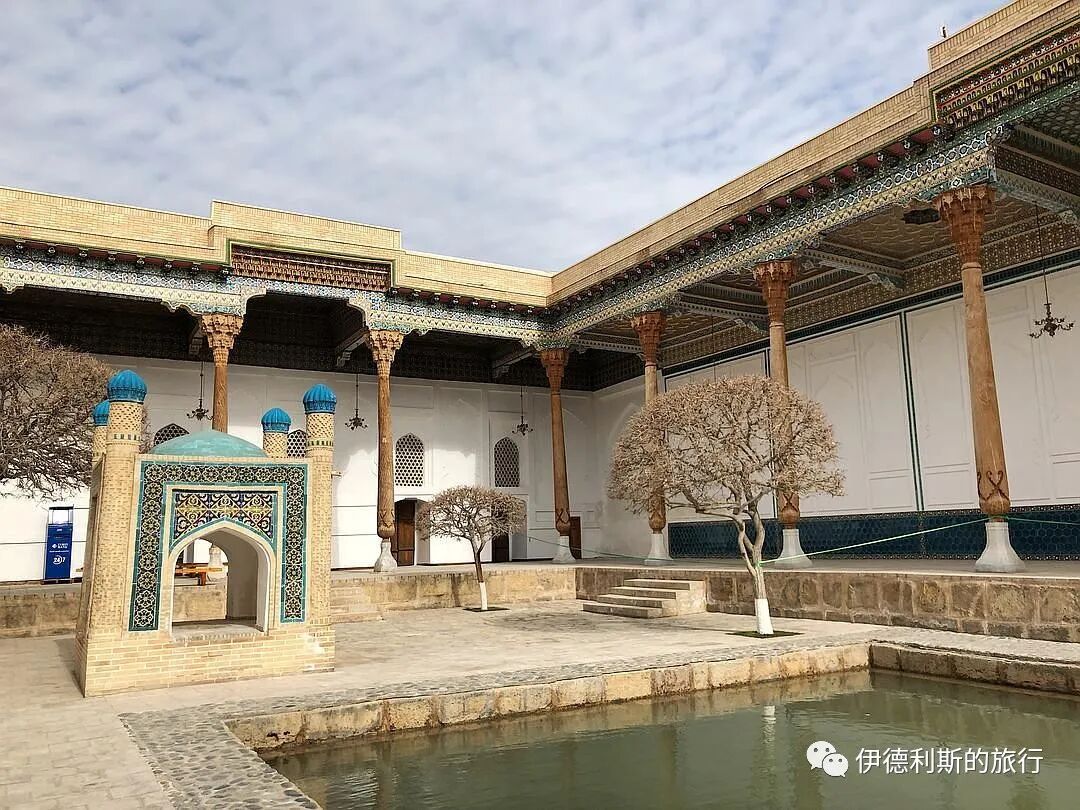
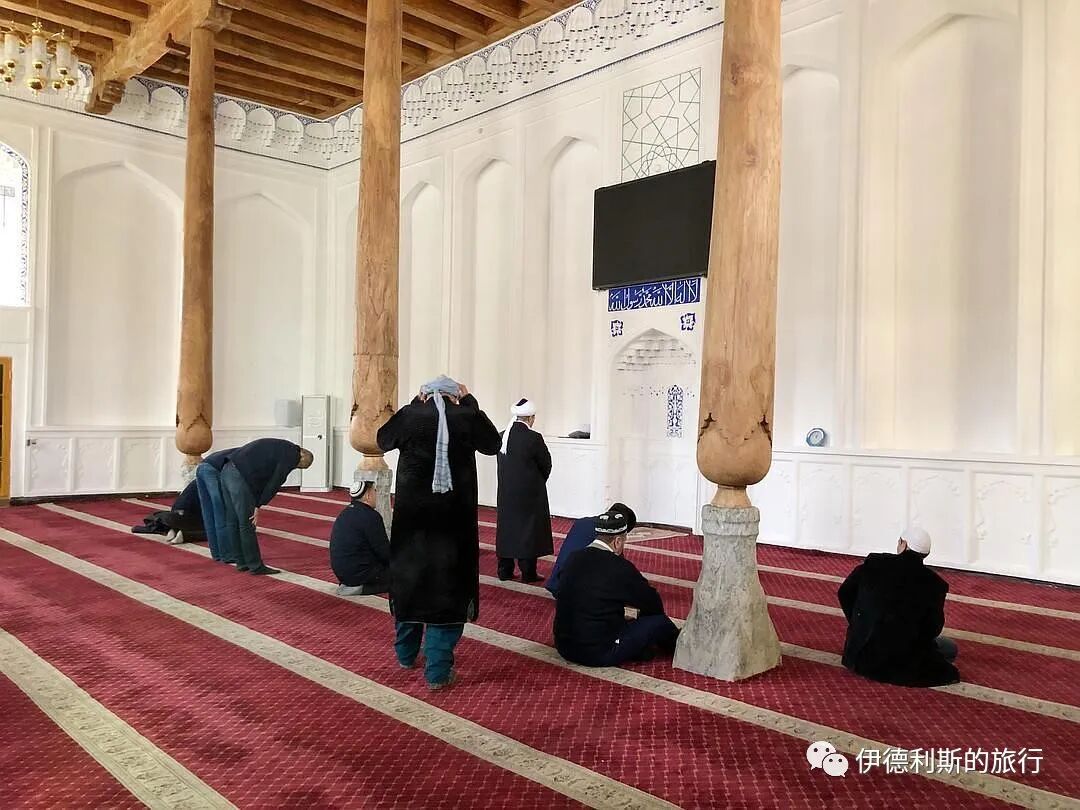
Inside the Naqshbandi holy tomb is a small madrasa built in the 17th century, which has now been converted into a museum displaying some Sufi artifacts.
Kuloh (Sufi practitioner's hat)
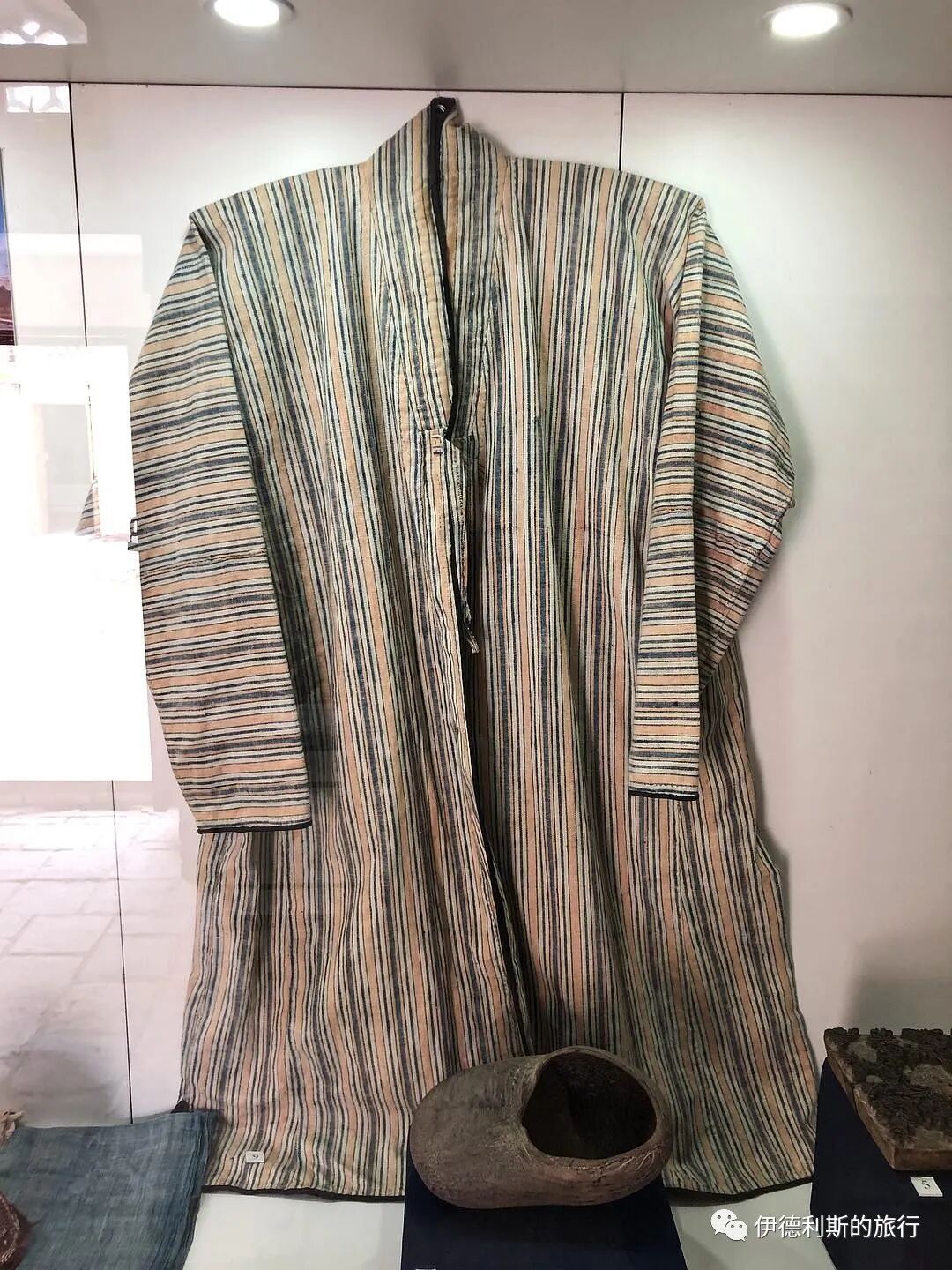
Robe
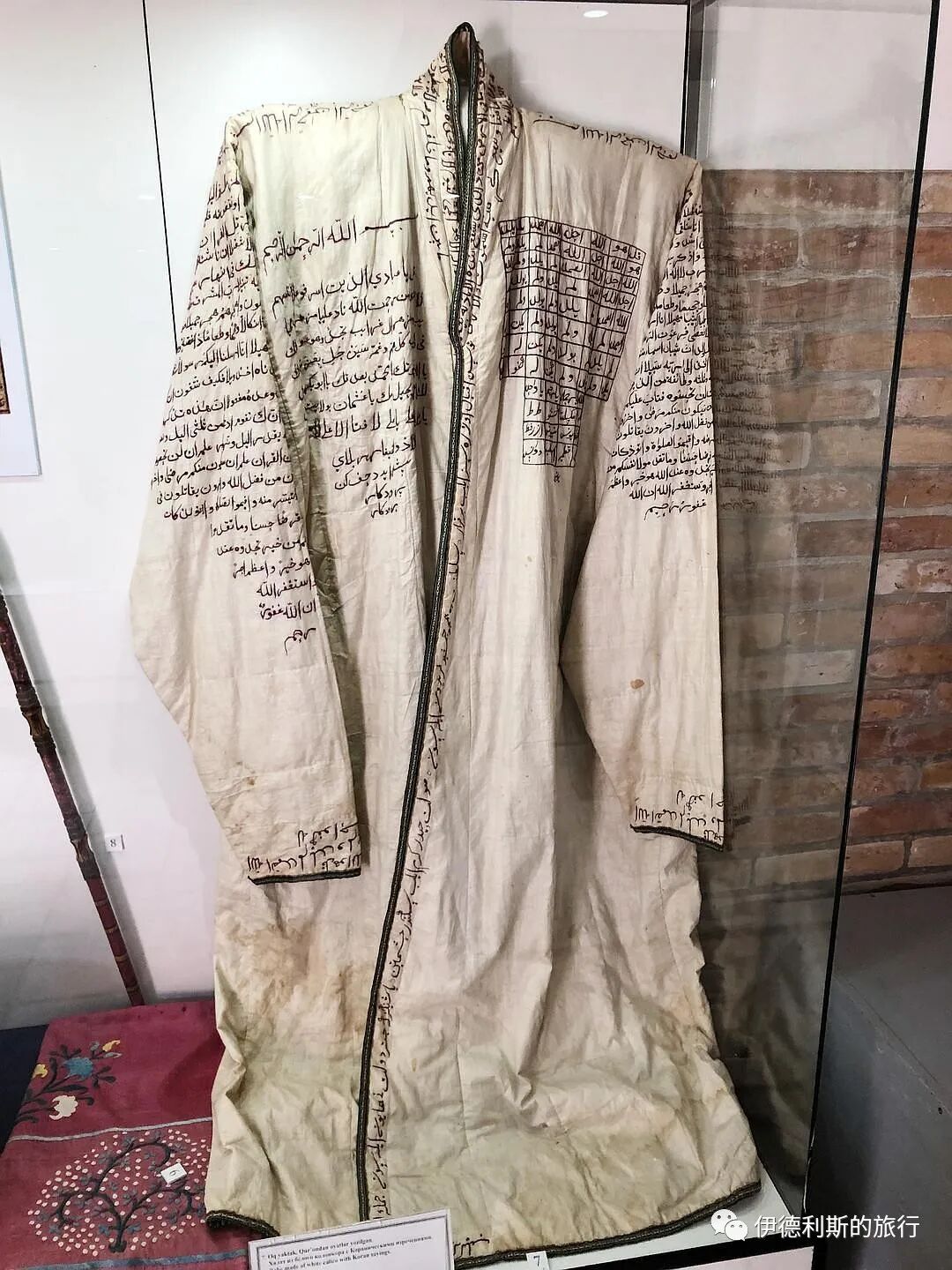
White cloth robe with scriptures written on it
4. Chor-Bakr Necropolis: 1563
The Shaybanid Dynasty fell into division in the mid-16th century, with the four regions of Bukhara, Samarkand, Tashkent, and Balkh each acting independently. In 1557, Abdullah Khan II (reigned 1583–1598) successfully occupied Bukhara and in 1561 declared his father Iskander the supreme Khan of the Uzbeks. Iskander was more interested in religion, so he handed over full authority over state affairs to his son.
In order to achieve the reunification of the dynasty, Abdullah Khan fought long-term wars with the surrounding areas. In 1573, after a siege, Abdullah Khan finally captured Balkh, and in 1576 he captured Samarkand and Tashkent in succession. In 1583, Abdullah Khan's father died, and he officially succeeded as Khan. After succeeding to the throne, he occupied Badakhshan and the Khorasan region in 1584 and 1588, and later occupied Khwarezm in 1594, executing the Sultan of Khiva, as the territory of the Shaybanid Dynasty continued to expand.
To strengthen his rule, Abdullah Khan built a large number of post stations, reservoirs, madrasas, and bridges, making Bukhara the most important trade center in Central Asia in the late 16th century. The Chor-Bakr Necropolis is a representative work of this.
The Chor-Bakr Necropolis is located in the western suburbs of Bukhara and is also called the "City of the Dead." Starting from the Samanid Dynasty in the 10th century, the Djuybar Seyyids family, descendants of the Prophet Muhammad, came to live in Bukhara. This family played an important role in Bukhara, and after they died, they were buried in the western suburbs of the city.
In 1560, Abdullah Khan II decided to build a complex consisting of a mosque, a madrasa, and a Sufi Khanaka next to the Djuybar Seyyids family tomb as a gift to his teacher, Djuybar Sheikh Muhammad Islam Khoja, who belonged to the same family. The Khan's teacher died in 1563 and was buried in the tomb, and the complex was completed in the same year.
In 1593, the teacher's son, Khodja Bakr Sadi, died and was buried next to his father. After this, three other family members with the title "Bakr" were also buried here, and it has since been called "Chor-Bakr," meaning "Four Bakrs."
After the 19th century, it gradually lost its importance and was closed during the Soviet era. After the 1990s, it reopened, and more and more people have come here on pilgrimage. Many Uzbek Muslims believe that they must visit here before going on the Hajj to Mecca.
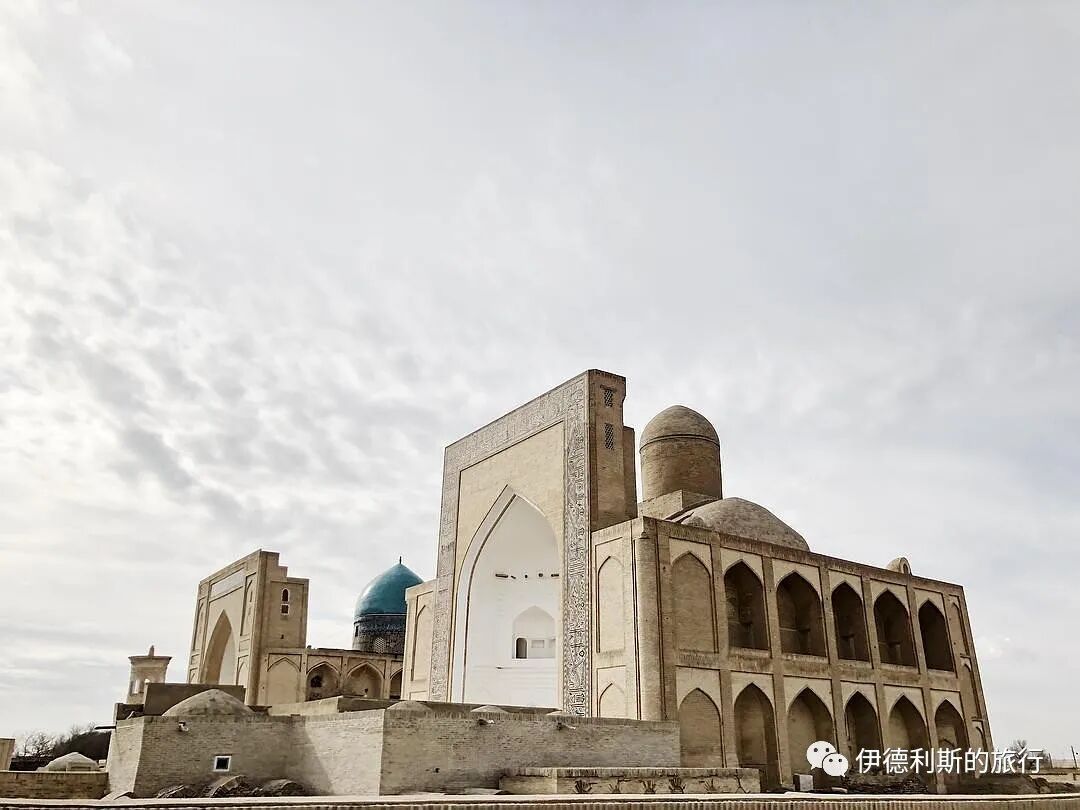
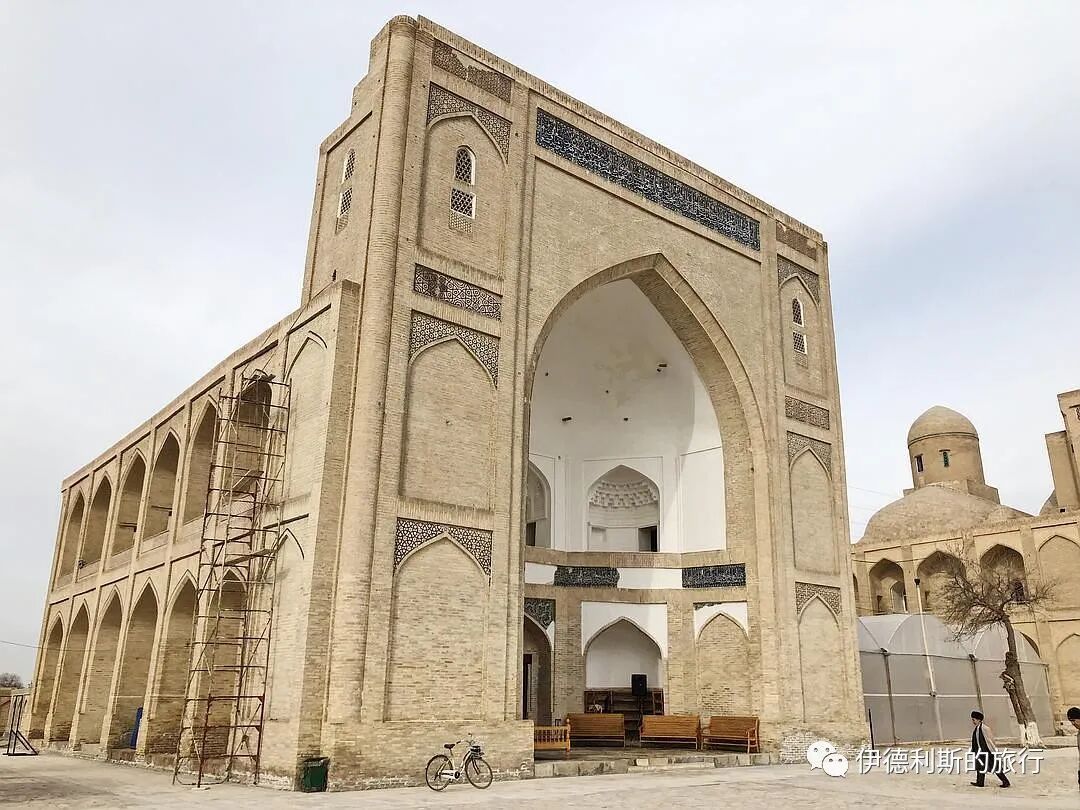
On the right is the mosque, in the middle is the madrasa, and on the left is the Khanaka.
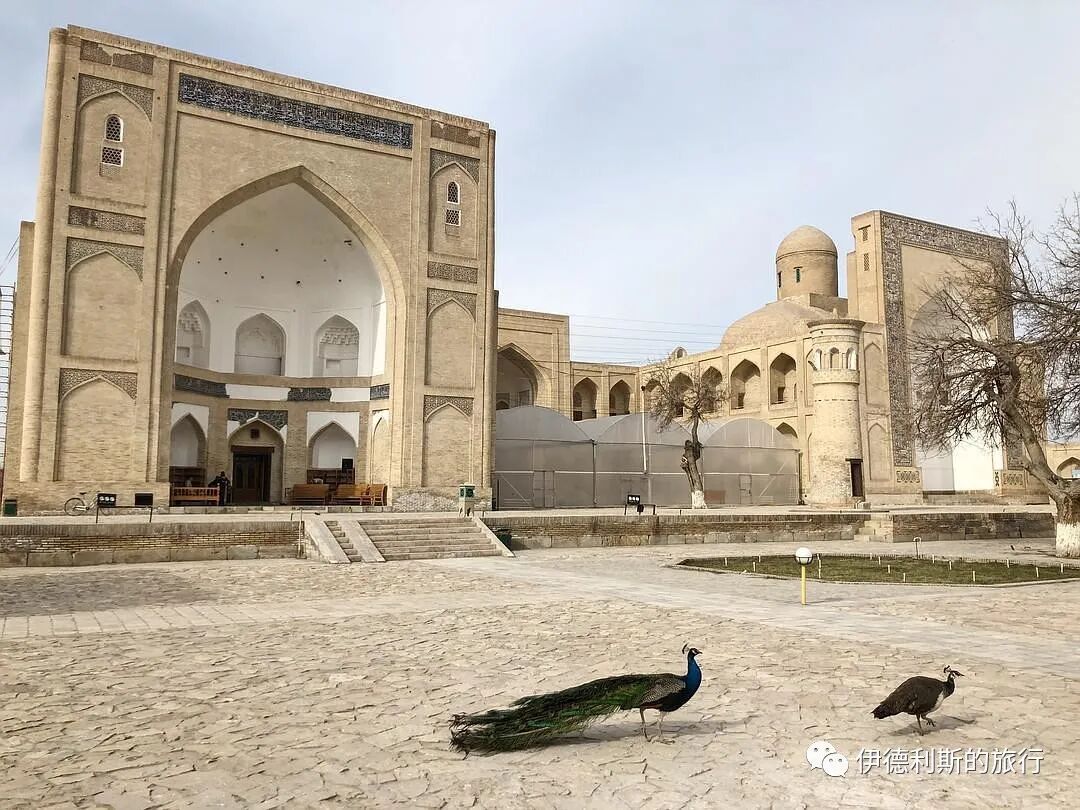
On the left is the Khanaka, in the middle is the madrasa, and on the right is the mosque.
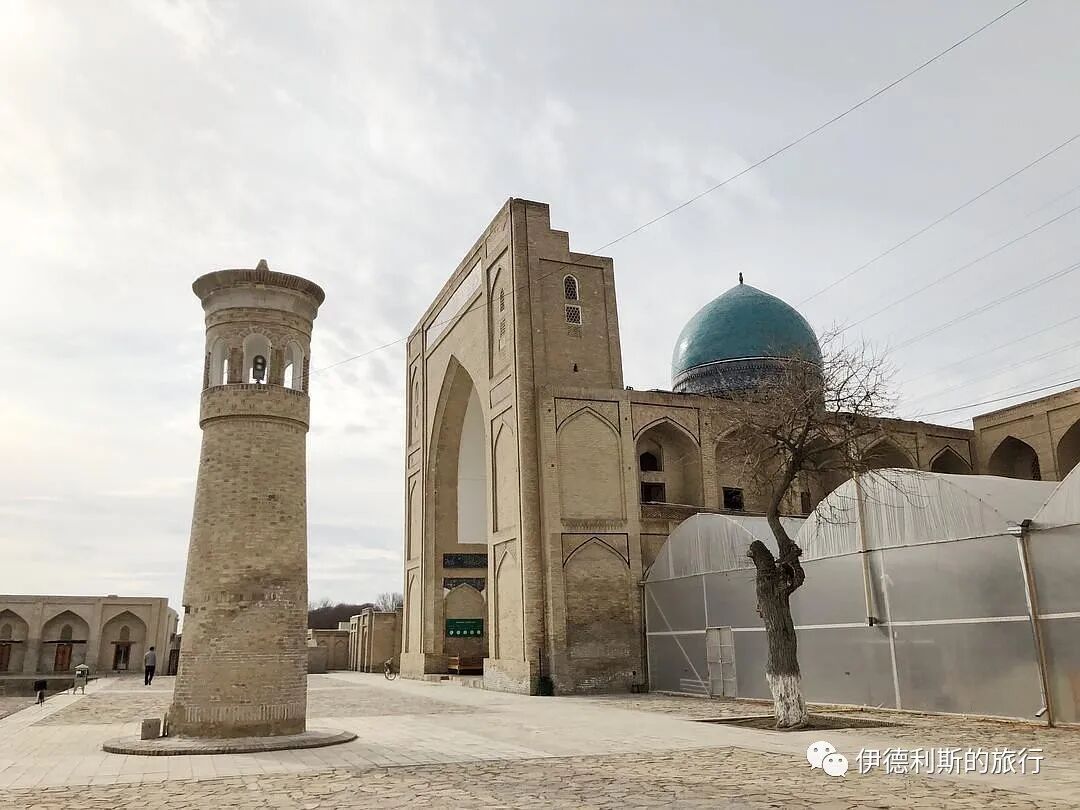
The minaret was built in the 20th century.
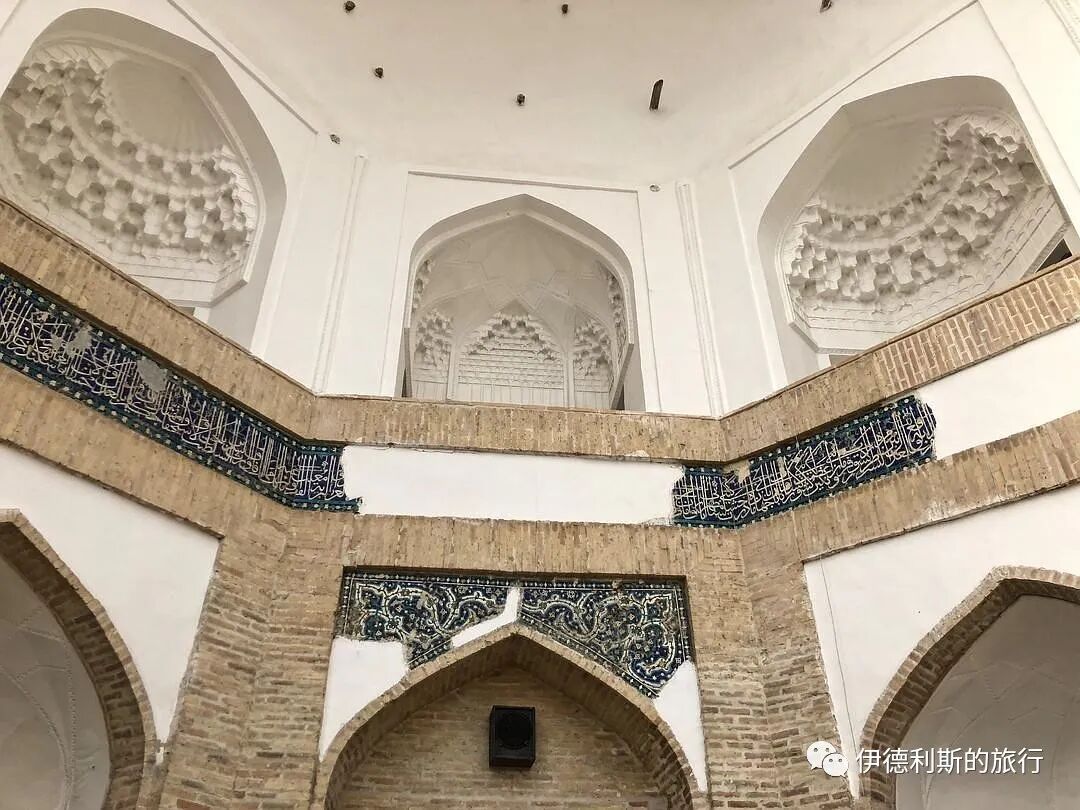
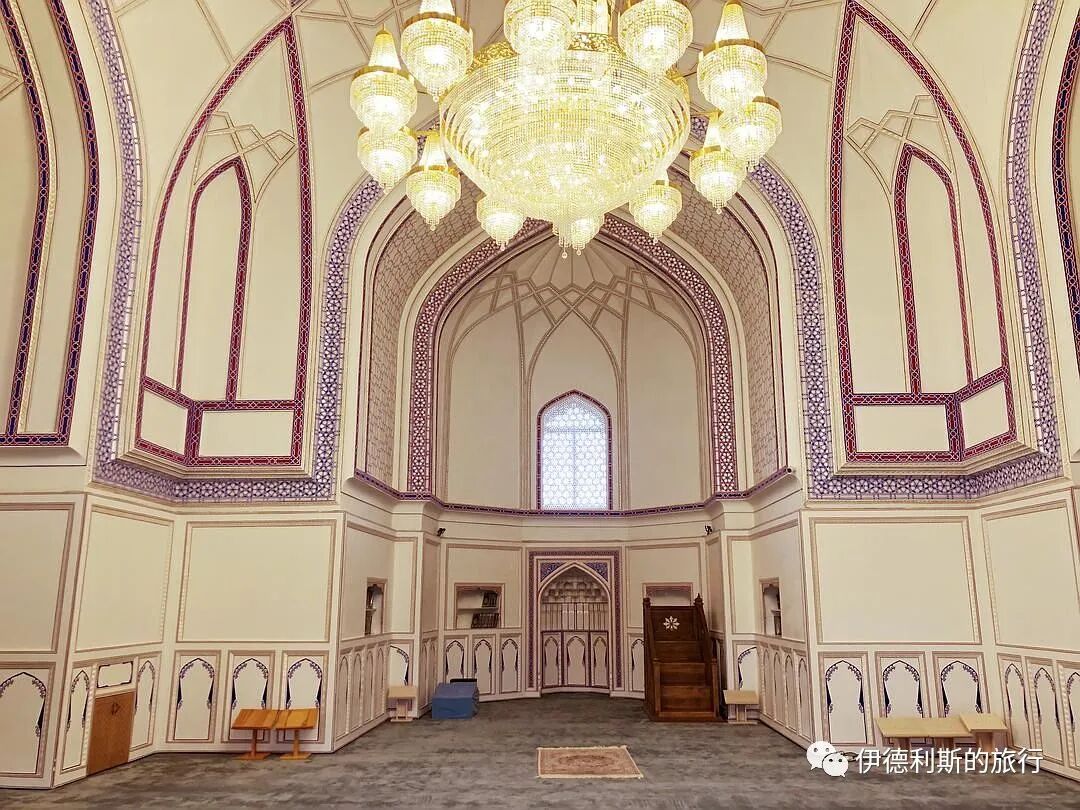
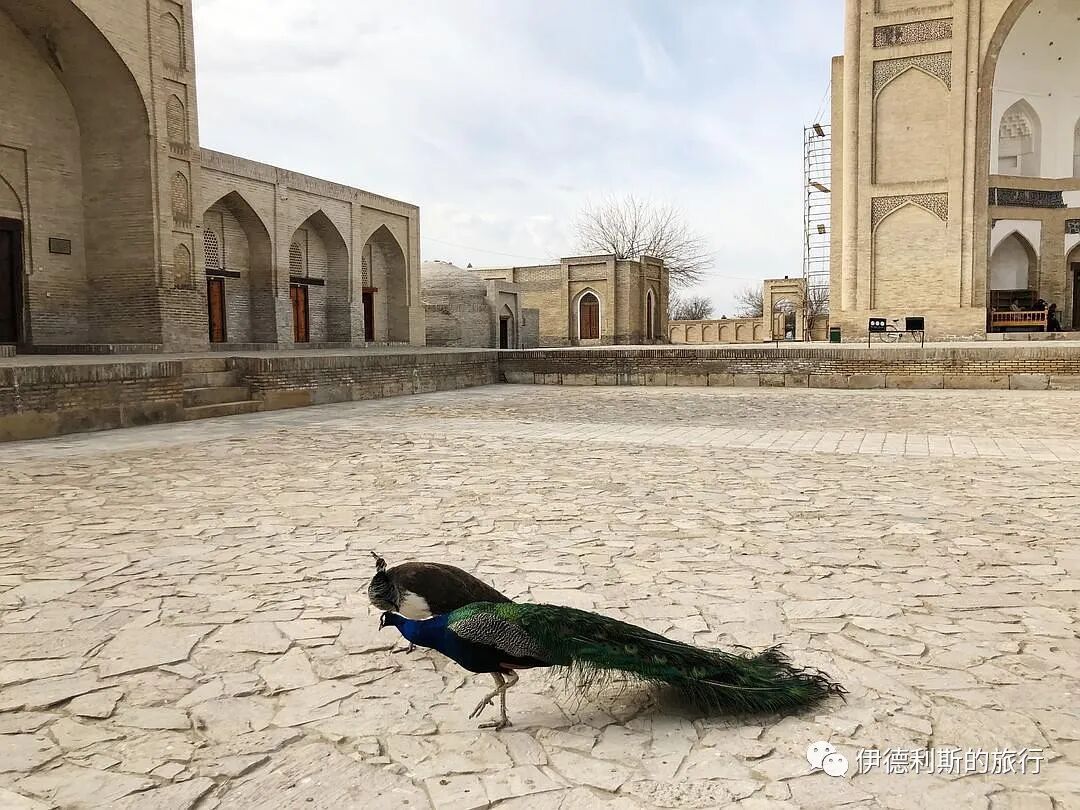
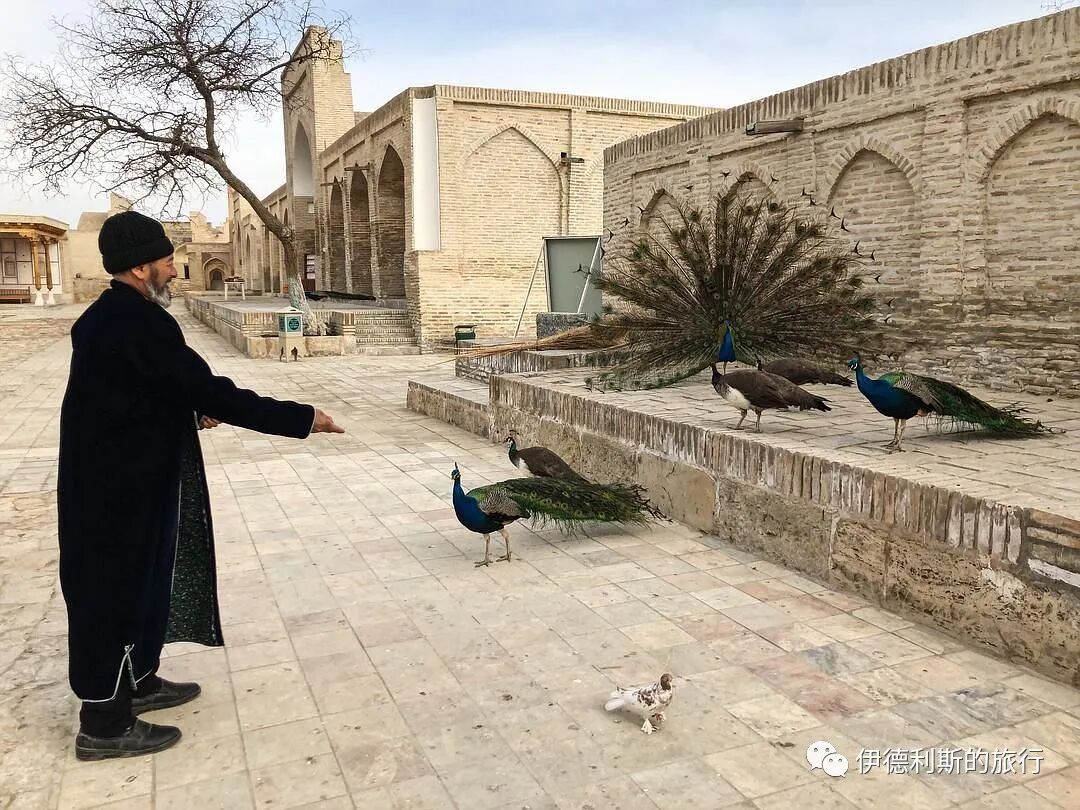
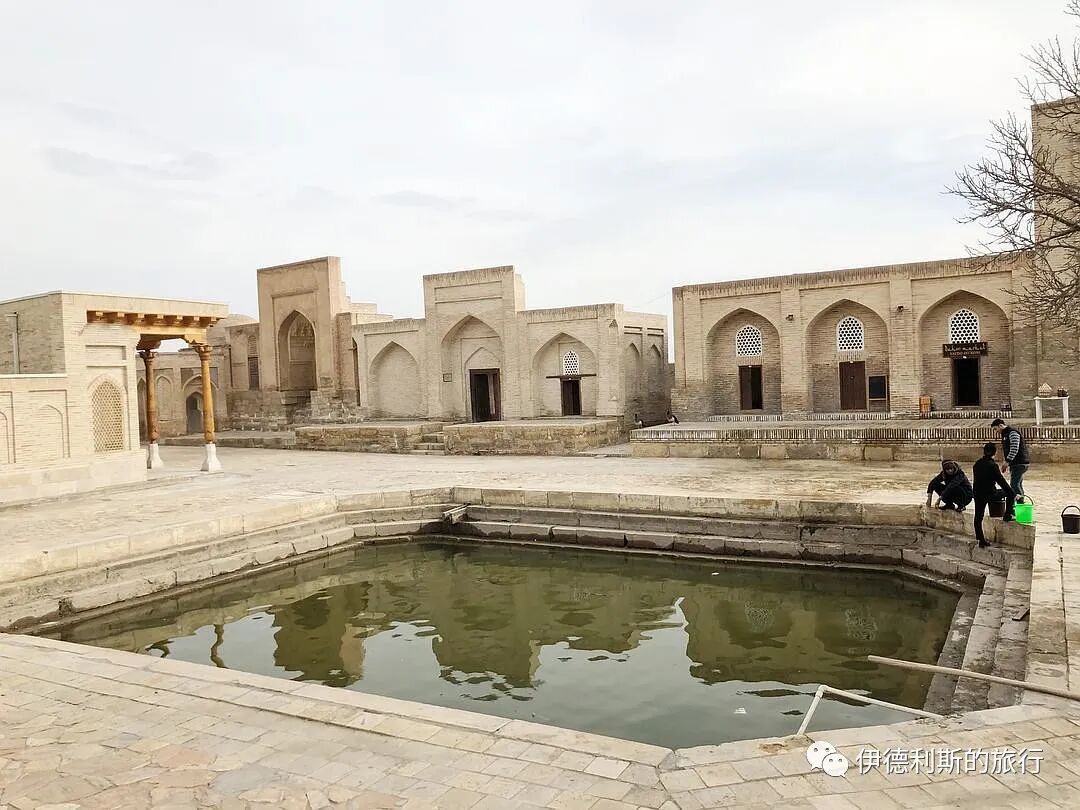
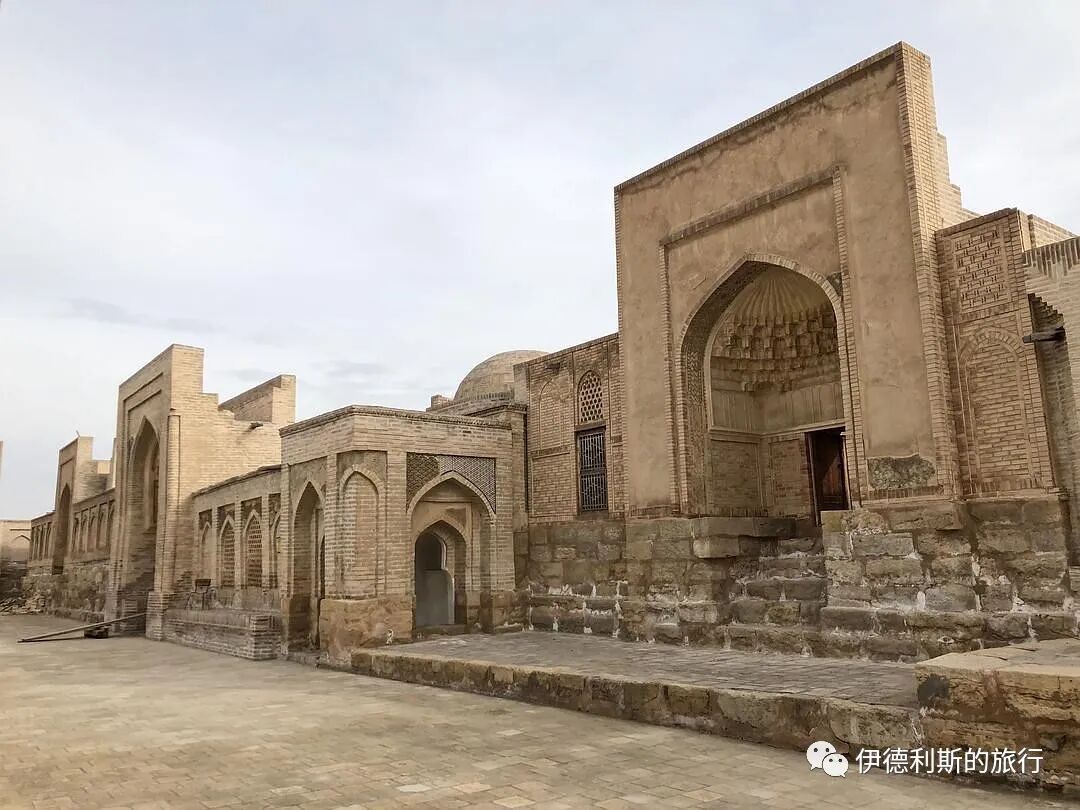
A Khazira is a special tomb structure consisting of a courtyard surrounded by walls with a beautifully decorated gate at the entrance; this type of tomb structure is rarely seen in other parts of Uzbekistan. The Khazira of the Djuybar Seyyids is in the northwest of the complex, connected by a long corridor, where you can hear the sound of footsteps reflected by the brick walls with every step.
5. Kosh Madrasa: 1567, 1590
The Kosh Madrasa (Double Madrasa) was built by Abdullah Khan II, the Khan of the Shaybanid Dynasty, and consists of the Modari-khan and Abdullah-khan madrasas standing opposite each other. The Modari-khan Madrasa was built in 1566, and the Abdullah Khan Madrasa was built in 1590; they are representative buildings built by Abdullah Khan II in the city of Bukhara.
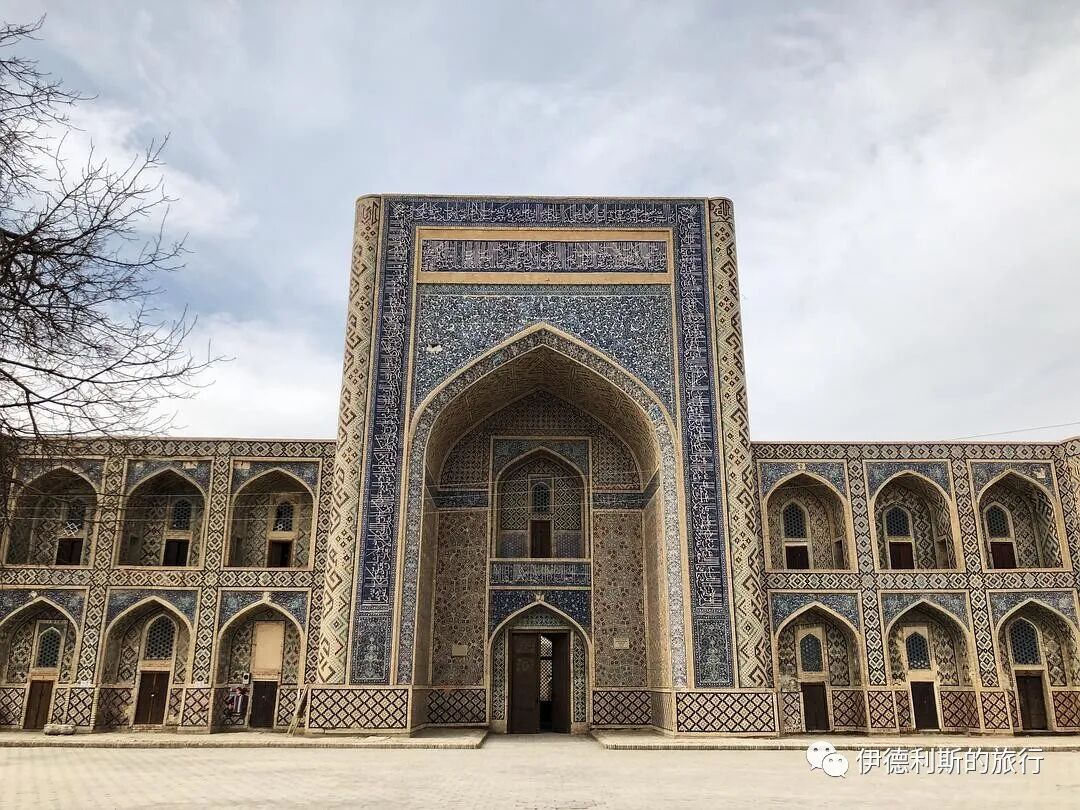
1. Modari-khan Madrasa: 1567
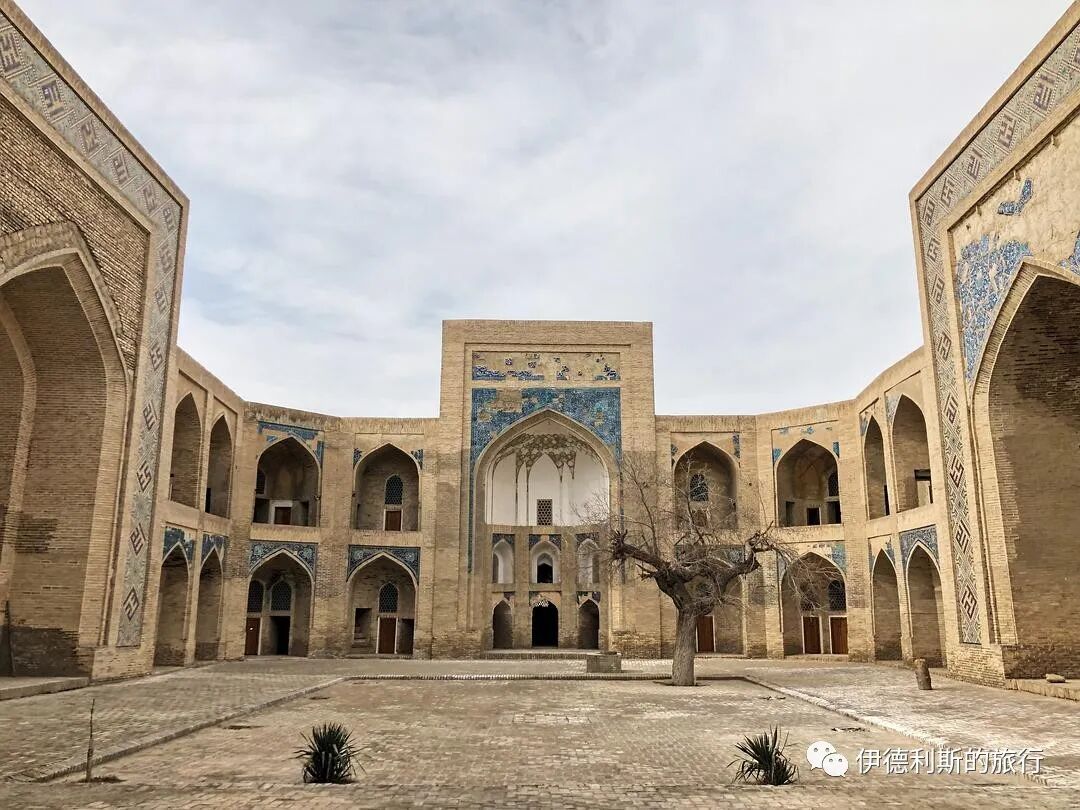
"Modari-khan" means "the Khan's mother," and it was built by Abdullah Khan to commemorate his mother. The madrasa consists of an Iwan arch, two-story dormitories (Hujras), and a large classroom (Darskhana). Because the streets at the time did not allow the building to remain a rectangular right angle, the madrasa was actually built in a trapezoidal shape.
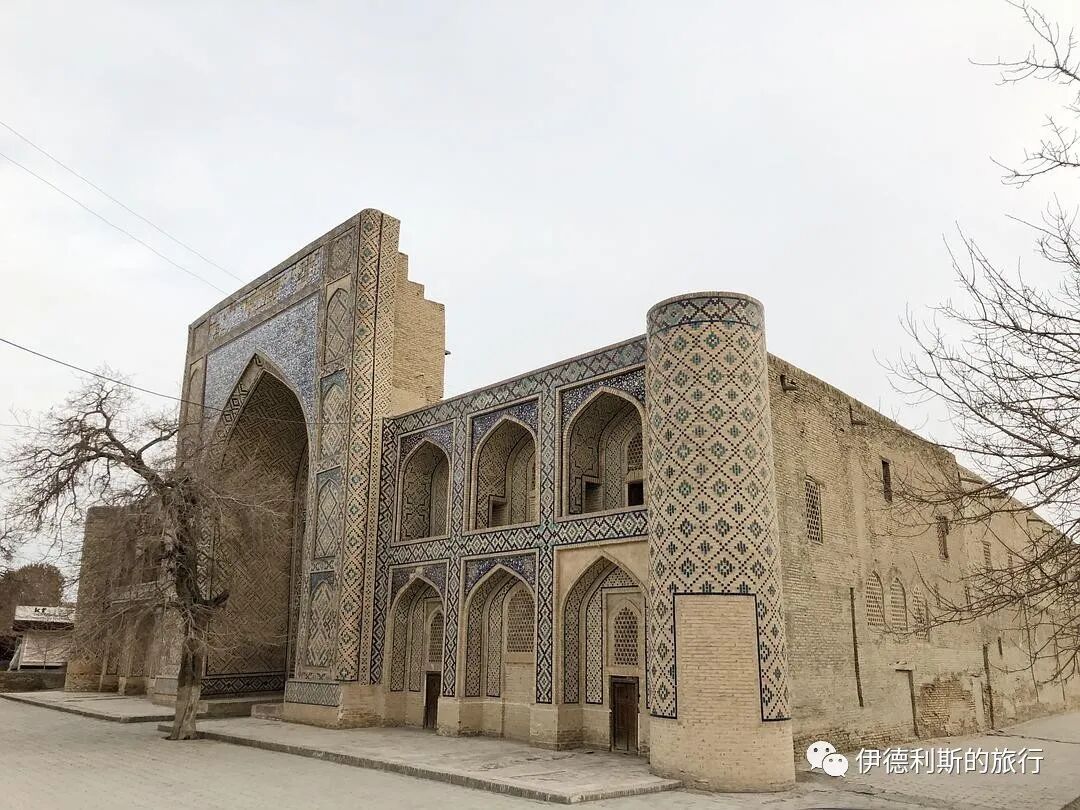
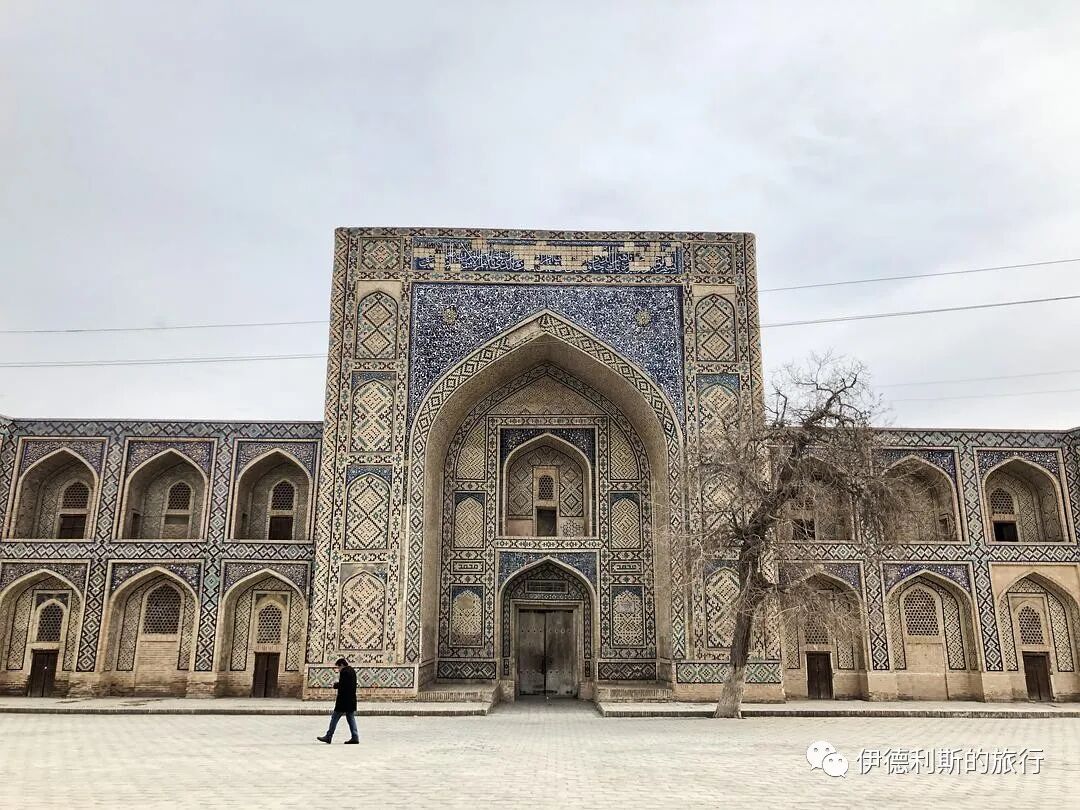
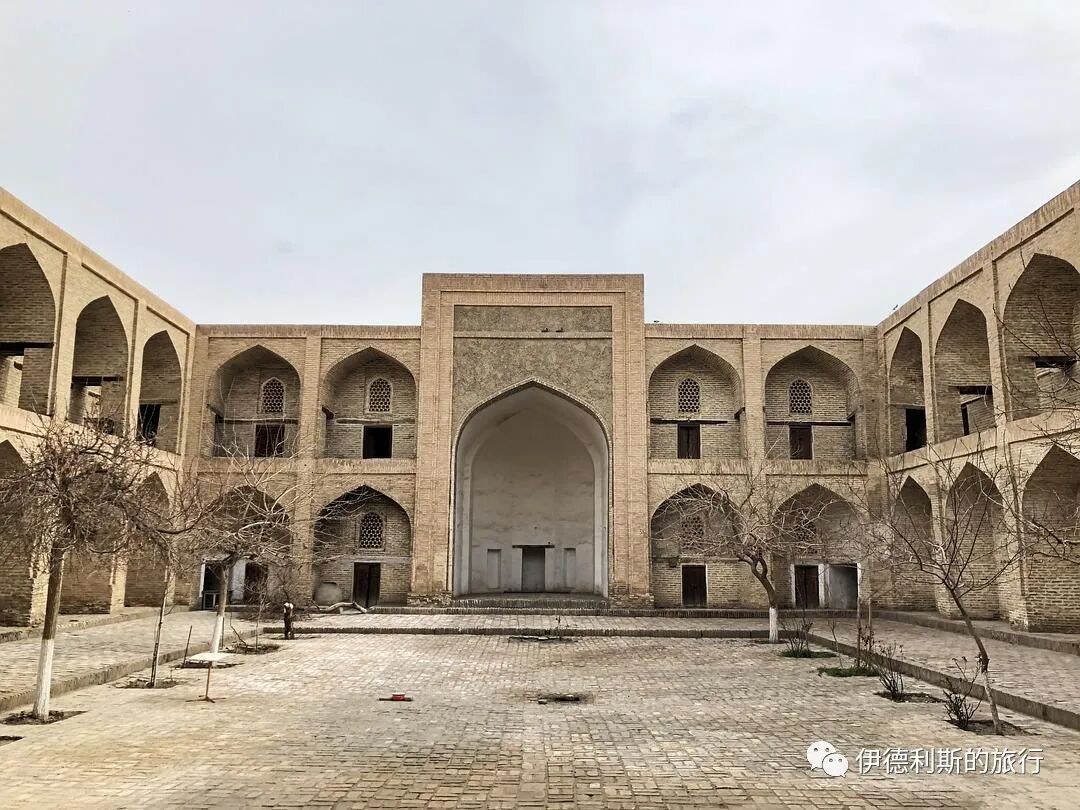
2. Abdullah Khan Madrasa: 1590
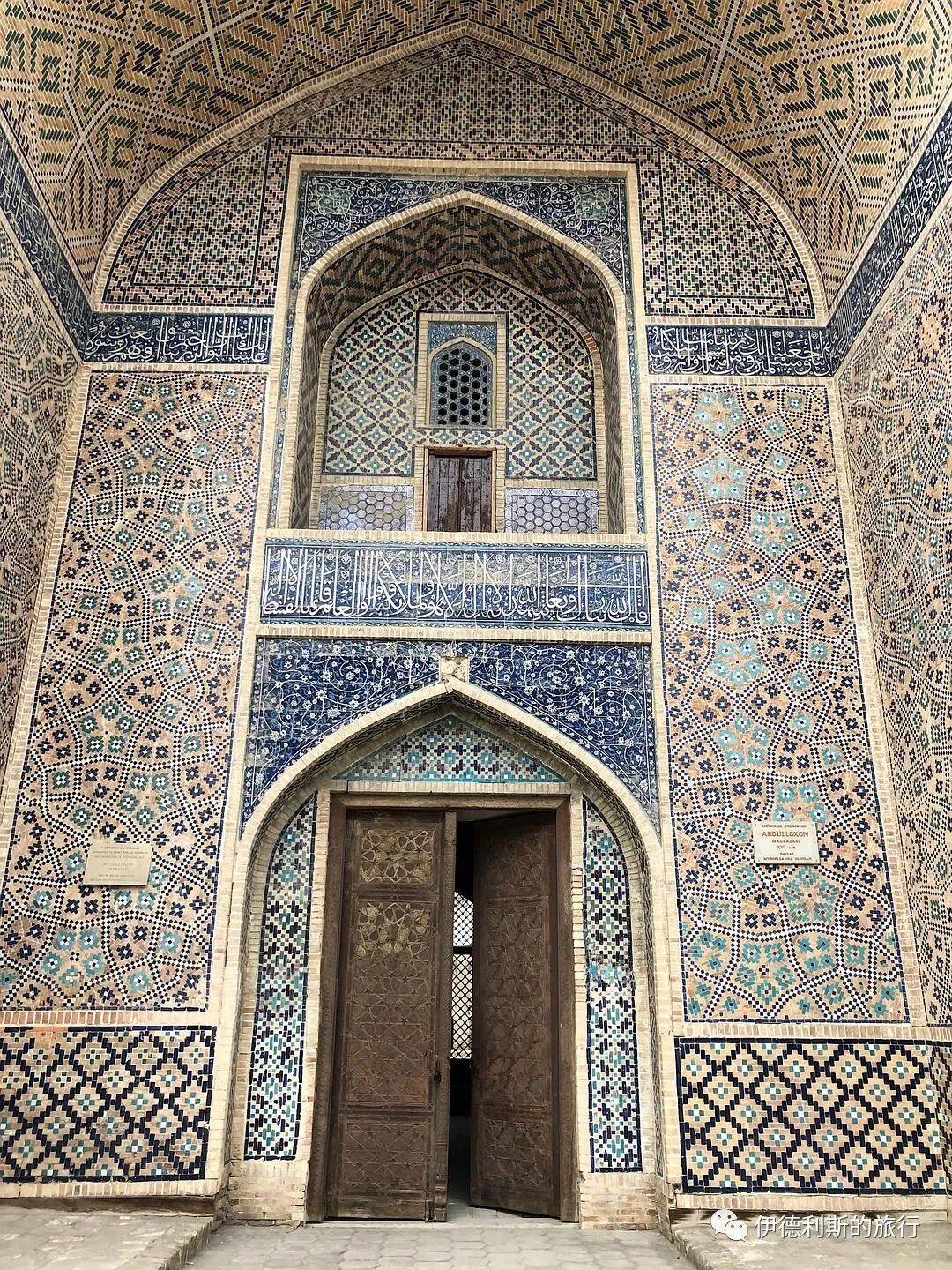
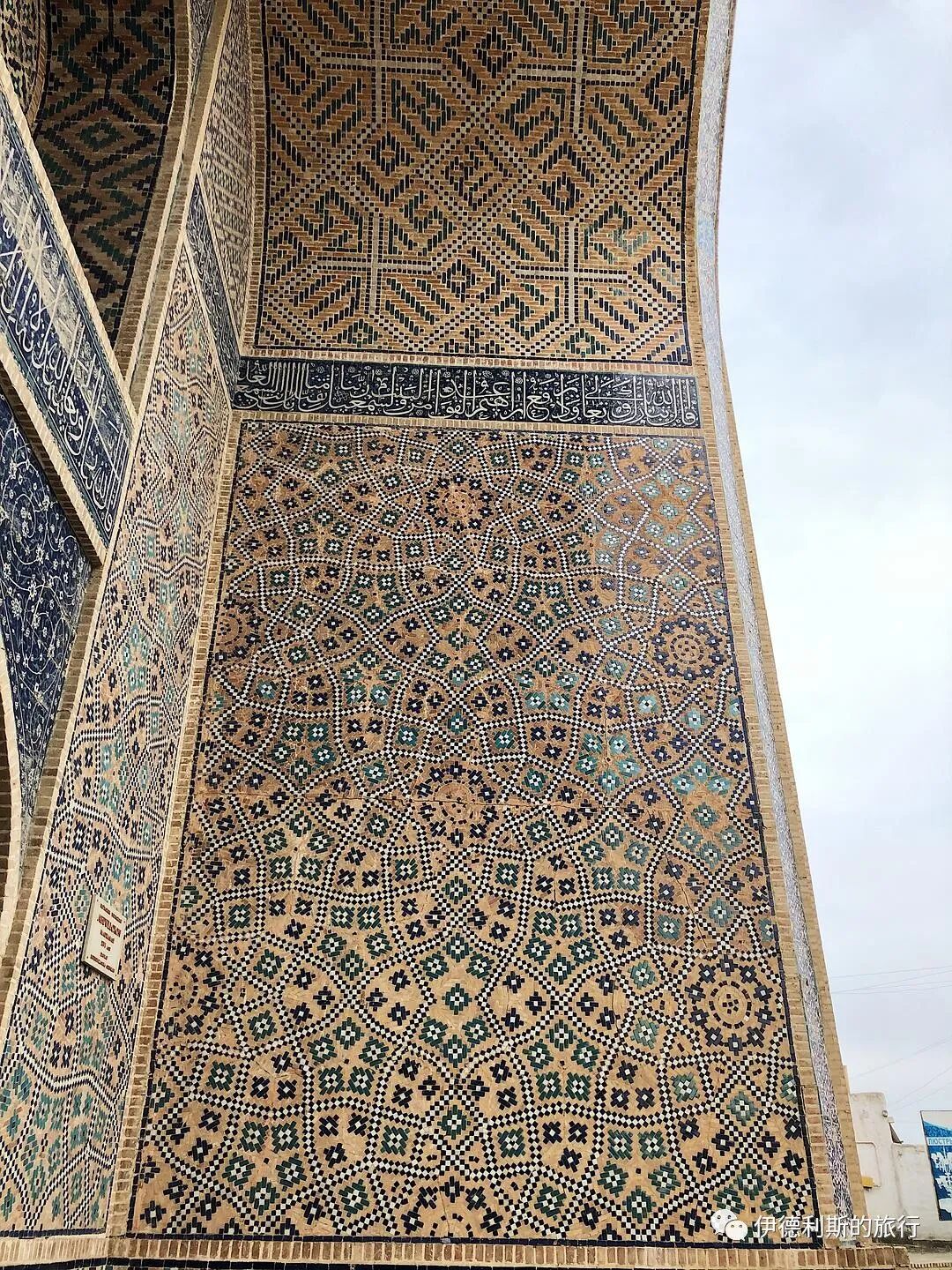
The Abdullah Khan Madrasa is named after Abdullah Khan II himself and was built after the Khan officially succeeded to the throne, so it is larger and more magnificent than the Modari-khan Madrasa opposite, featuring three Iwan arches.
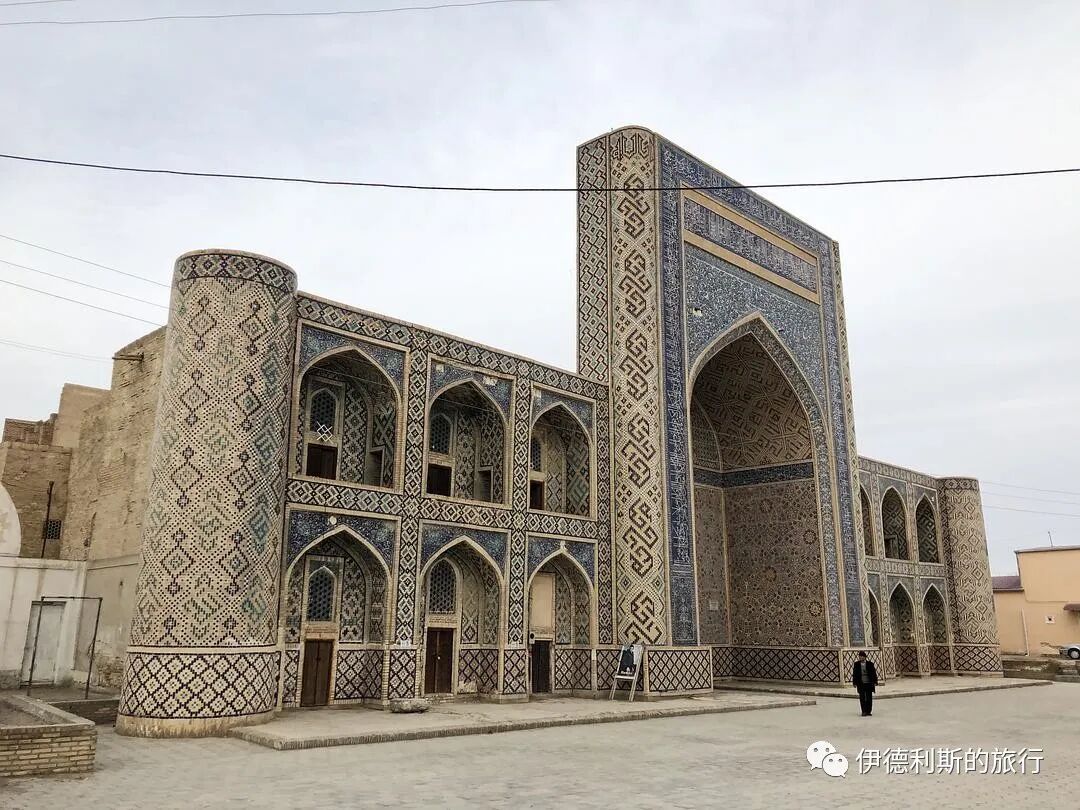
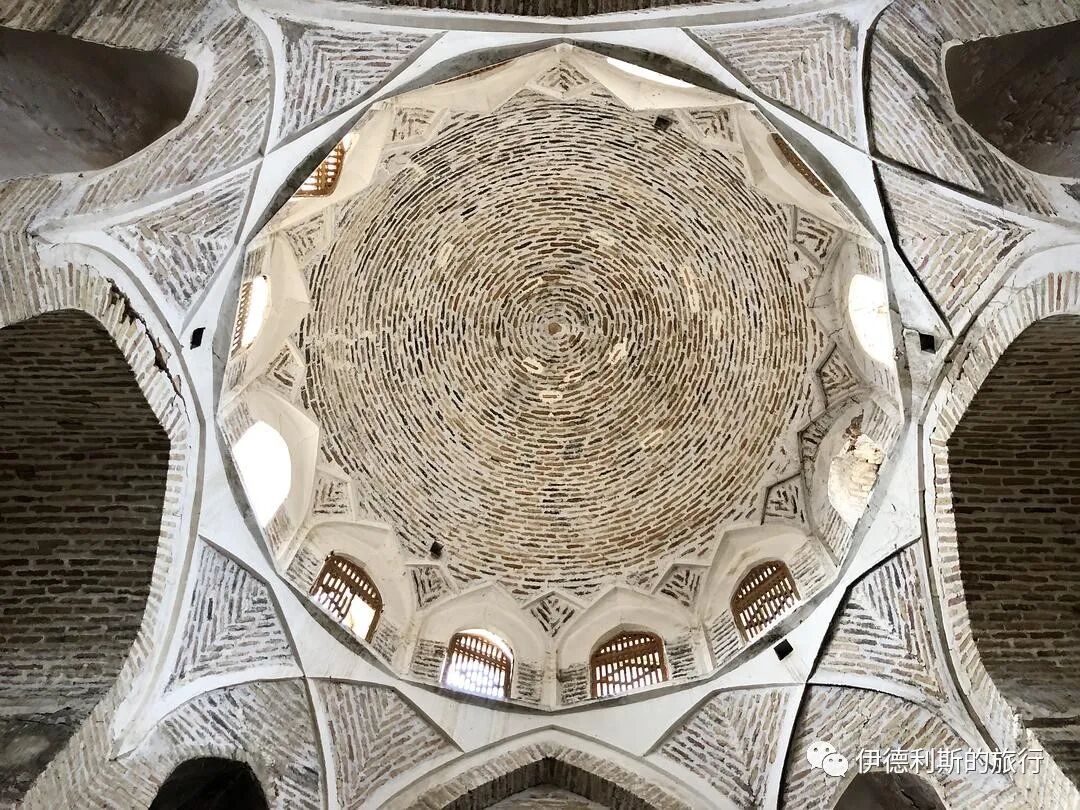
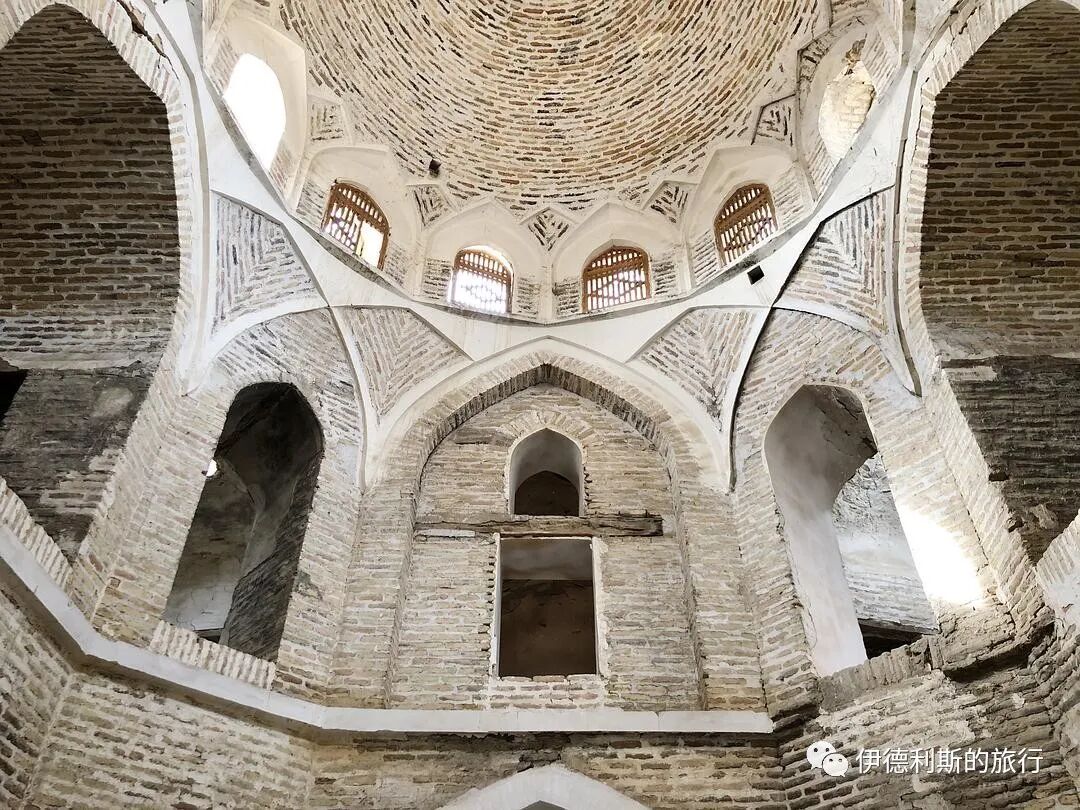
6. Lyab-i Hauz: 1568, 1619, 1622
Lyab-i Hauz means "by the pond" in Persian and is one of the few remaining complexes in the ancient city of Bukhara built around a pond (Hauz). During the Khanate of Bukhara, there were many ponds in the ancient city, which were the main source of water for the city. However, because they were prone to spreading diseases, most of the ponds were filled in by the Soviets in the 1920s and 1930s, while Lyab-i Hauz survived because of its important historical complex.
1. Kukeldash Madrasa: 1568
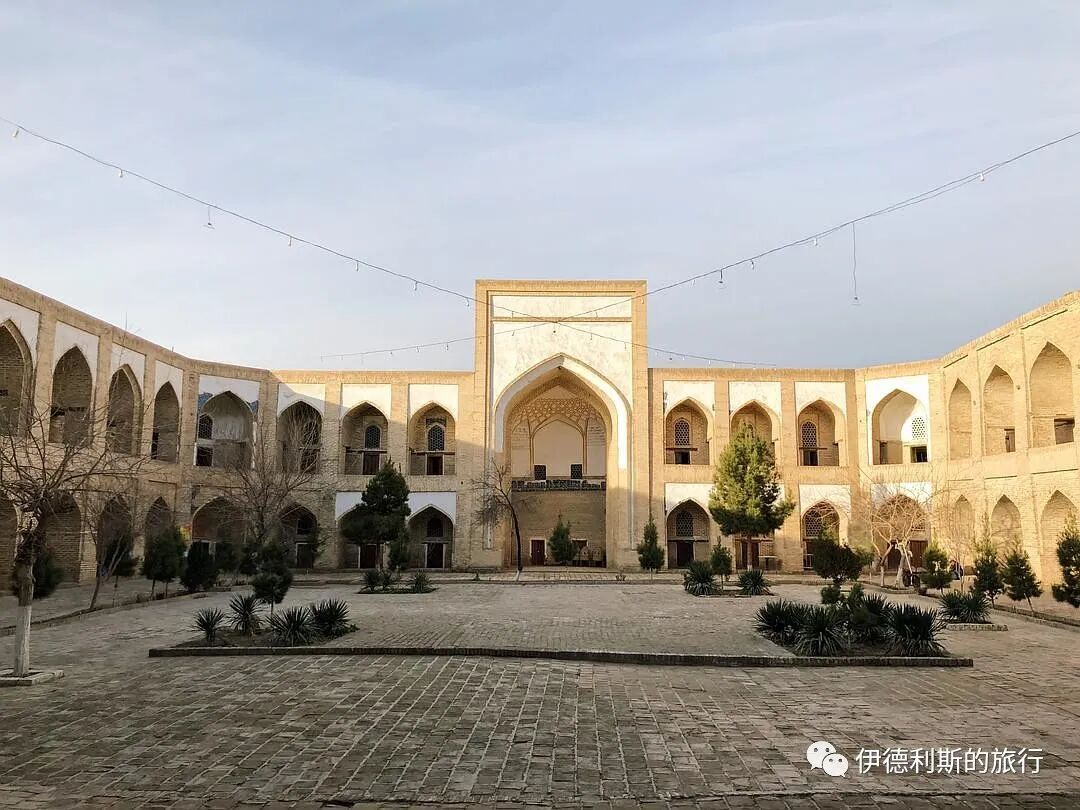
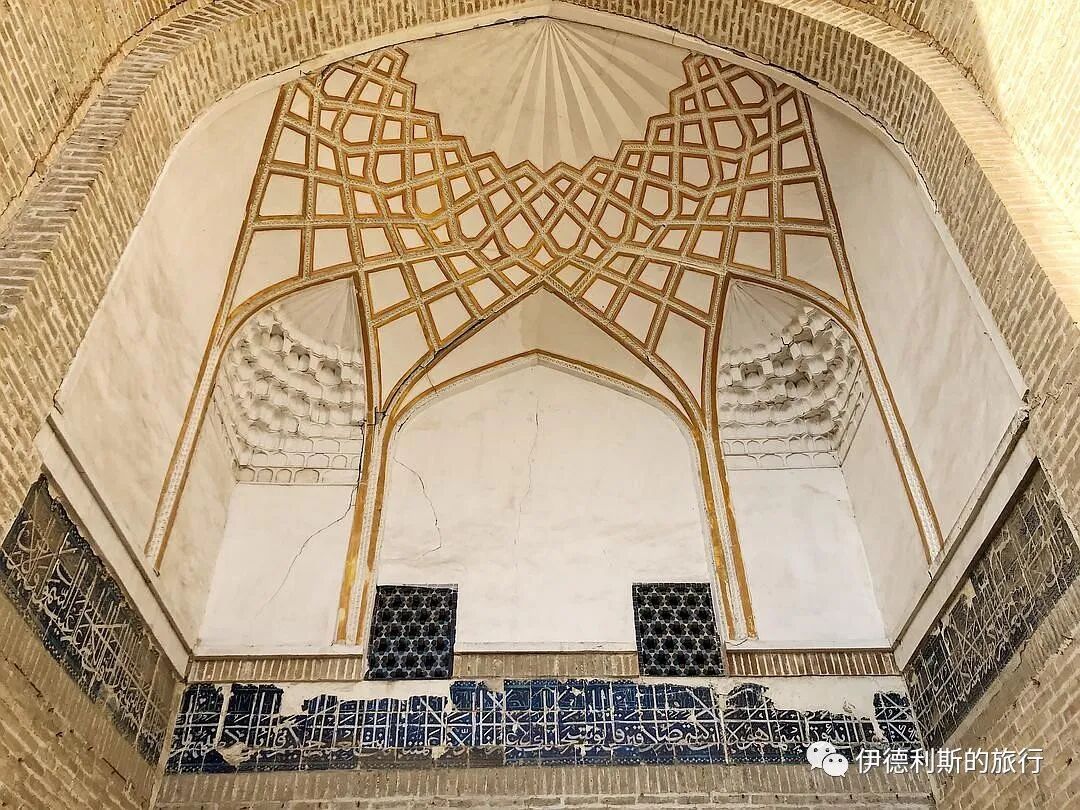
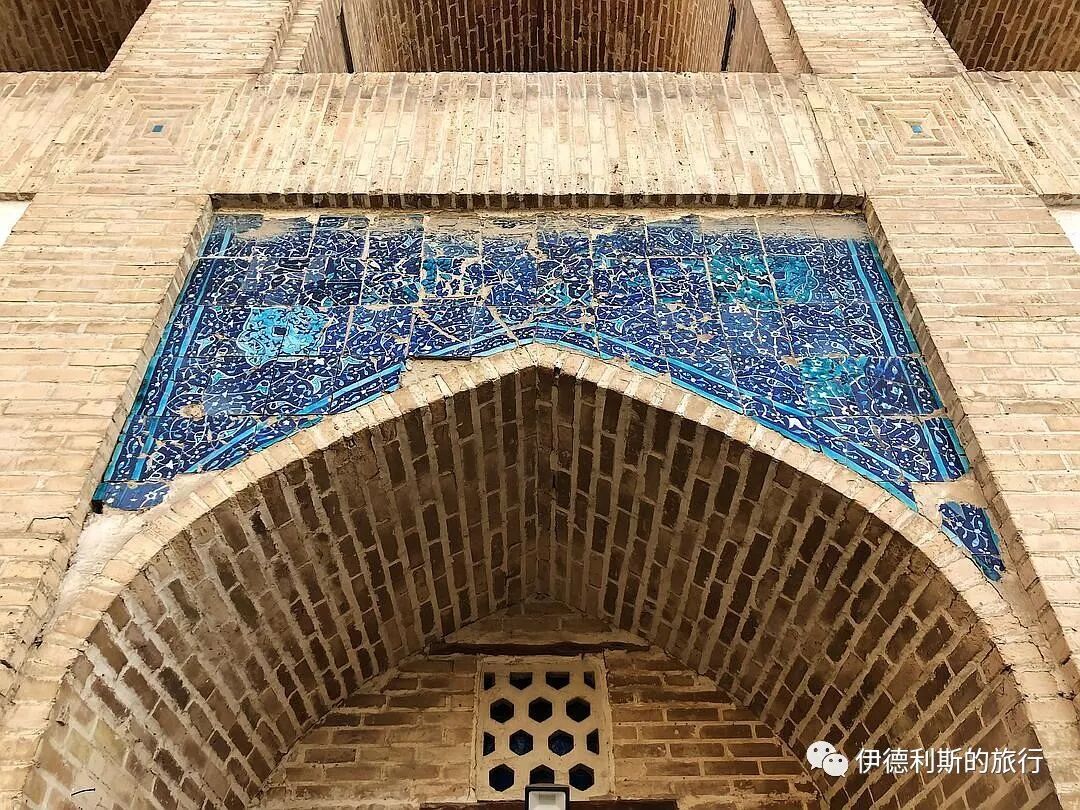
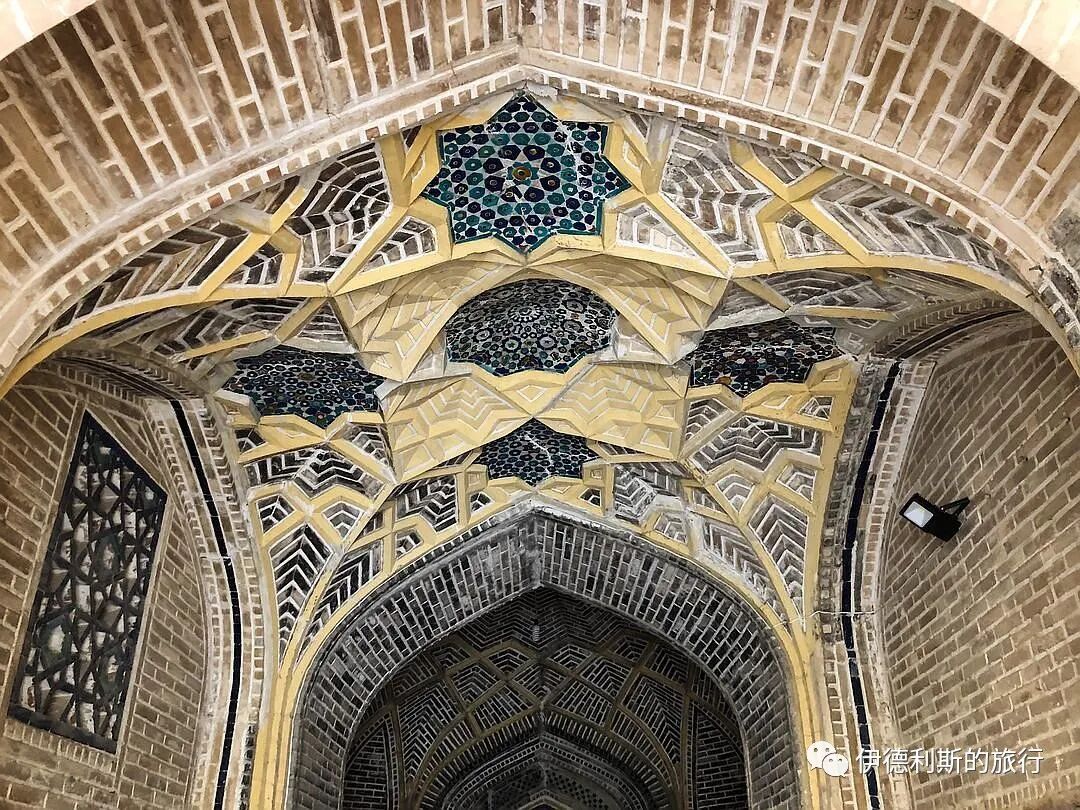
On the north side of the pond is the Kukeldash Madrasa, built in 1568 during the reign of Abdullah Khan II, the Khan of the Shaybanid Dynasty of the Khanate of Bukhara. The Kukeldash Madrasa is the largest madrasa in Bukhara, consisting of 160 rooms. The architect very artistically used arched loggias to break up the facades on both sides, which is also a feature of this building.
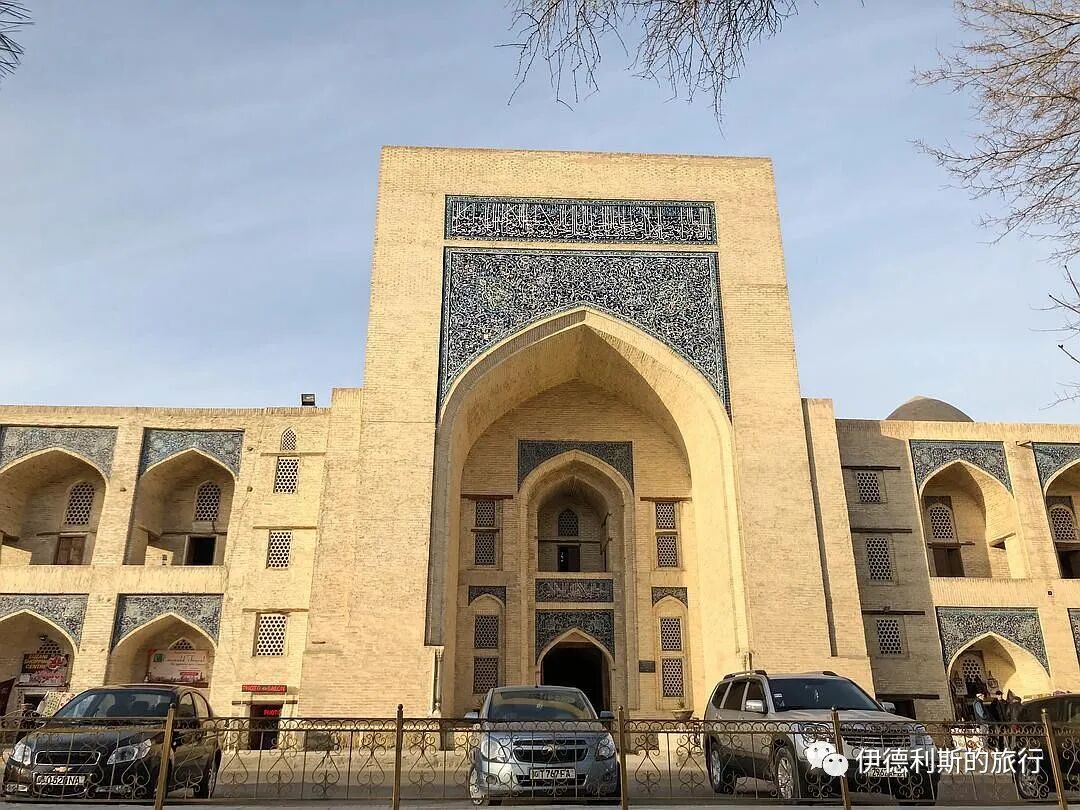
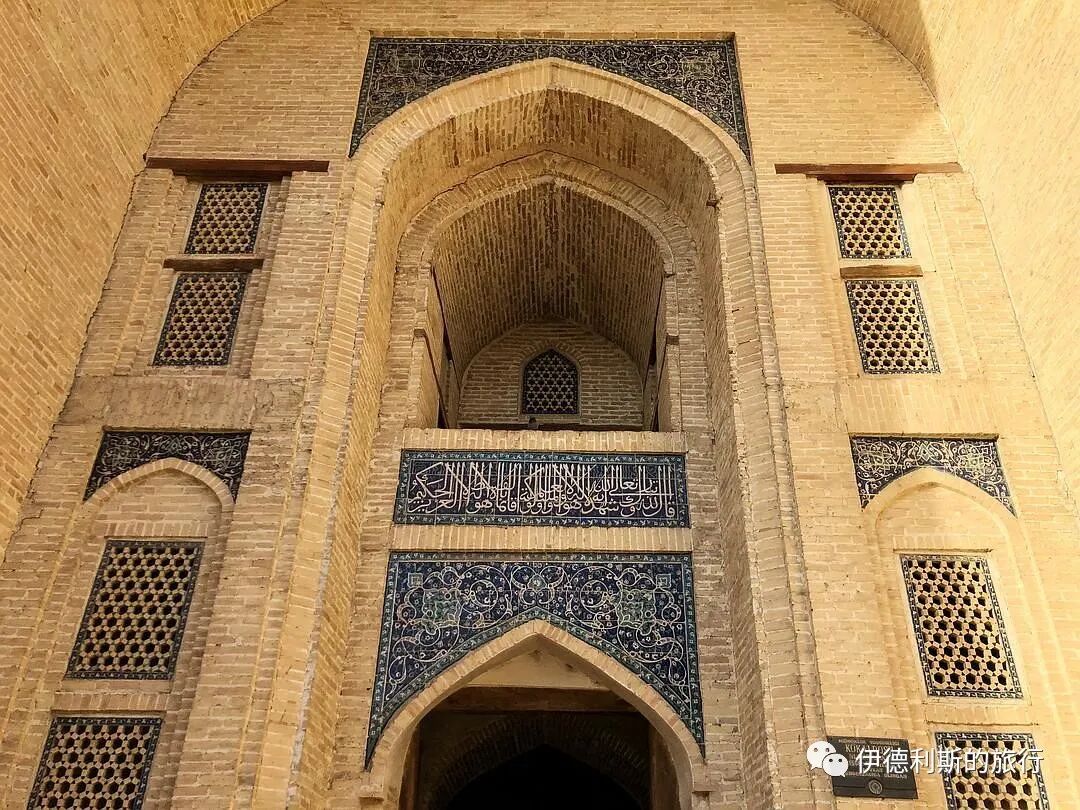
2. Nadir Divan-begi Khanaka: 1619
Fifty years after the completion of the Kukeldash Madrasa, during the reign of Imam Quli Khan (reigned 1611–1642), the third Khan of the Janid Dynasty of the Khanate of Bukhara, the then-vizier (minister), who was also the Khan's uncle, Nadir Divan-begi, wanted to build a Sufi Khanaka next to the Kukeldash Madrasa. Vizier Nadir Divan-begi had great influence at court and could sometimes even represent the Khan in negotiations with foreign envoys.
According to legend, while building the Khanaka, the vizier wanted to build a pond next to it, but the land where the pond was located belonged to a Jewish widow who refused to sell the land. So the vizier brought the widow before the Khan and asked the Khan to make a ruling. The Khan ordered his jurists to study it, and the final conclusion was that there was no other way except for the widow to agree personally. So the vizier had to build a canal around the widow's land, and the water washed away the foundation of the widow's house, making it impossible for her to live there.
The widow negotiated with the vizier again. The vizier hoped to buy the house at a reasonable price, but the widow set a condition that if he gave her another piece of land and allowed the construction of a synagogue, she would agree to give up the current house. The vizier agreed to the widow's request, and the land given to the widow formed the Bukhara Jewish community, Mahalli Kuma.
Soon, the pond and the Bukhara synagogue were completed at the same time. This complex began to be called "Lyab-i Hauz," which is Persian for "by the pond," but it also has another popular name among the people, "Haus-i Bazur," meaning "built by force."
The Khanaka has a long, narrow gate that is different from the traditional form and is decorated very simply. The hall (dhikr-hana) has good acoustics, suitable for performing Sufi music. The corners and side exterior walls of the hall are places where Sufi practitioners live.
3. Nadir Divan-begi Madrasa: 1622
After building the Sufi Khanaka, Vizier Nadir Divan-begi planned to build a caravanserai (merchant inn) on the other side of the pond. After the inn was built, the vizier invited Khan Imam Quli Khan to the opening ceremony, but the Khan did not like his uncle's inn. At the opening ceremony, the Khan said that this building was built for the glory of the Lord, so it should be used as a madrasa. So the vizier had to convert the inn into a madrasa.
From the structural layout of the building, it can also be seen that this building was once a caravanserai. The entrance to the building is straight, not angular like the Kukeldash next to it, and there is no Darskhona classroom or Ayvan terrace for summer classes.
The gate of the madrasa depicts two phoenixes, two white deer, and a human face in the sun, which is very rare in Islamic architecture and similar to the Sher-Dor Madrasa in the Registan of Samarkand from the same period.
7. Khoja-Gaukushan Complex: 1570, 1598
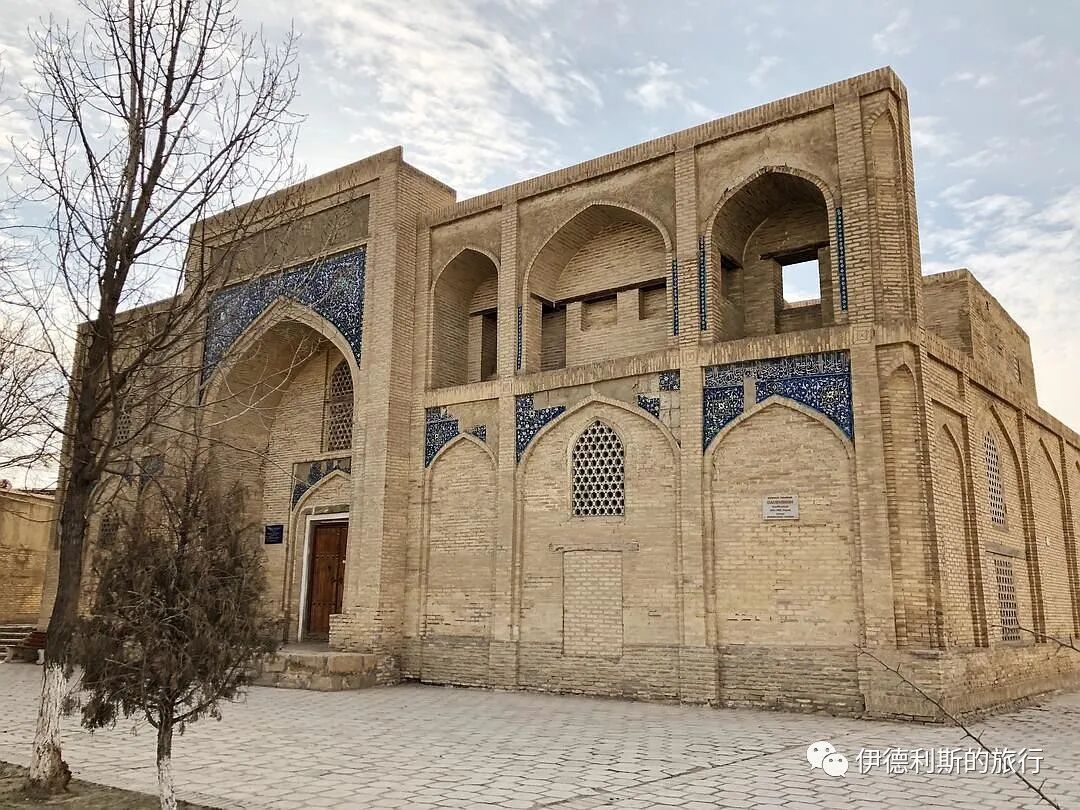
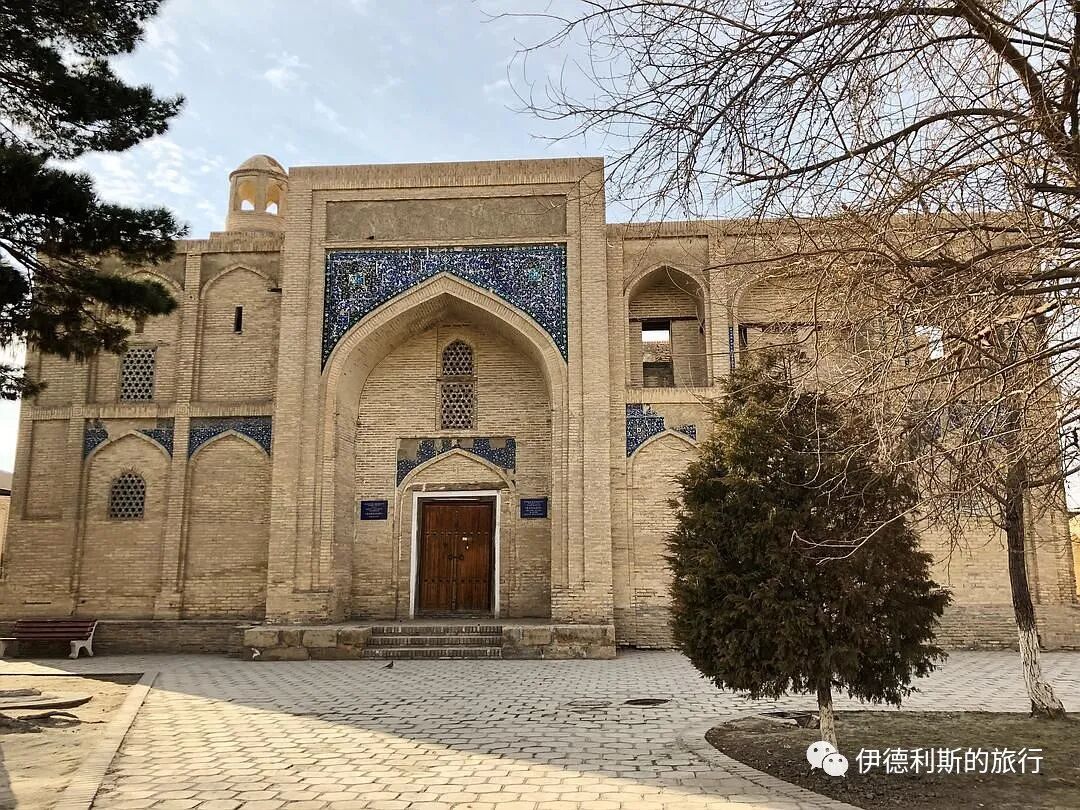
The Khoja Gaukushan complex consists of a madrasa and a mosque. The madrasa was built in 1570 during the reign of Abdullah Khan II, the Khan of the Shaybanid Dynasty, and the mosque was built in 1598 by the master Djuybar Sheikh, known as "Khoja Kalon" (the Great Khoja).
In front of the mosque is a pond (Hauz), and on one side is a tall minaret, second only in height to the most famous Kalyan Minaret in Bukhara.
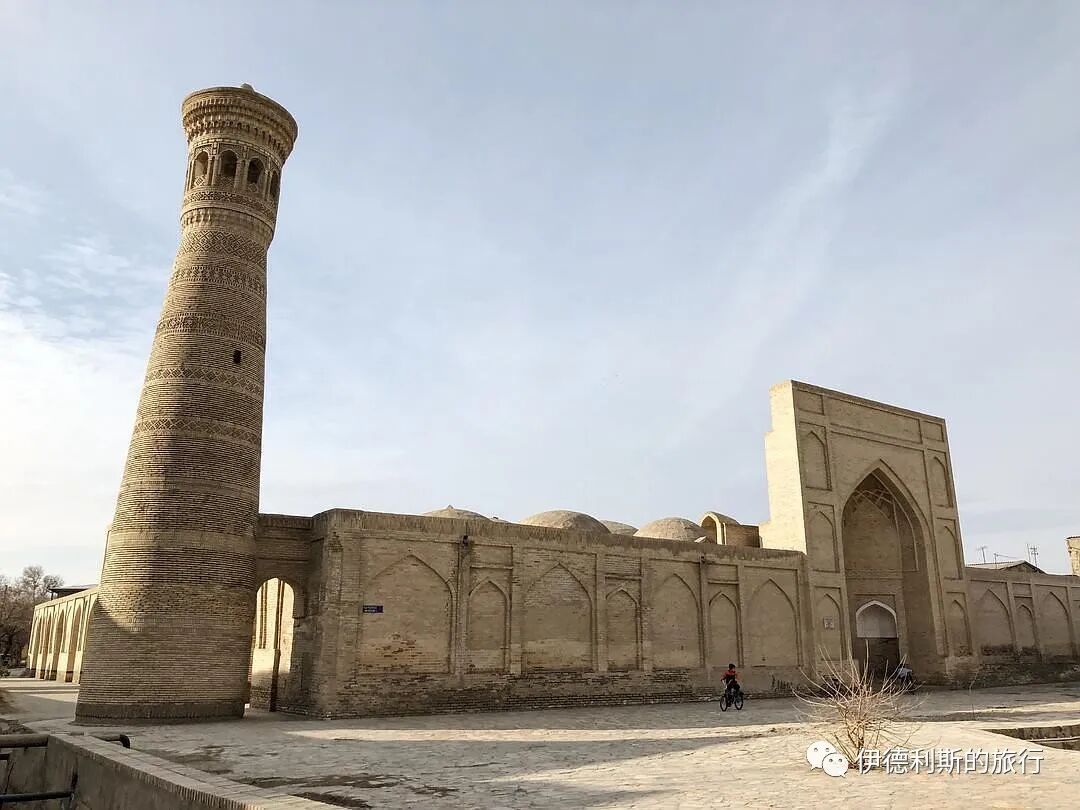
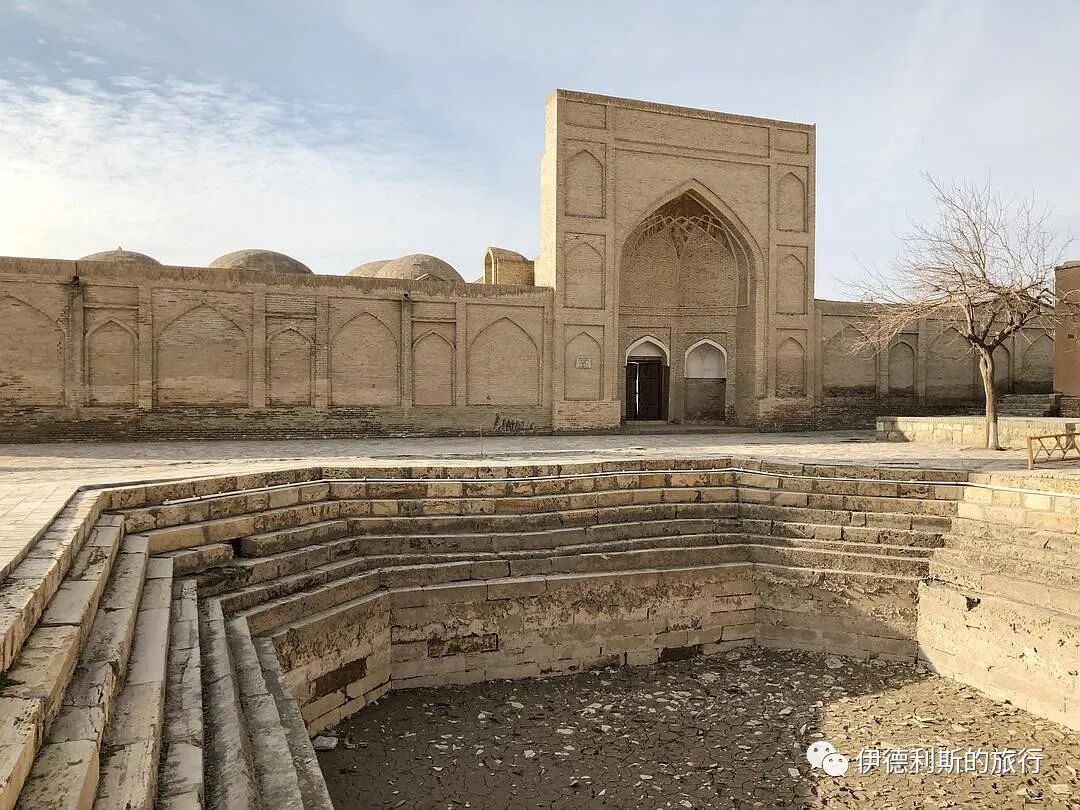
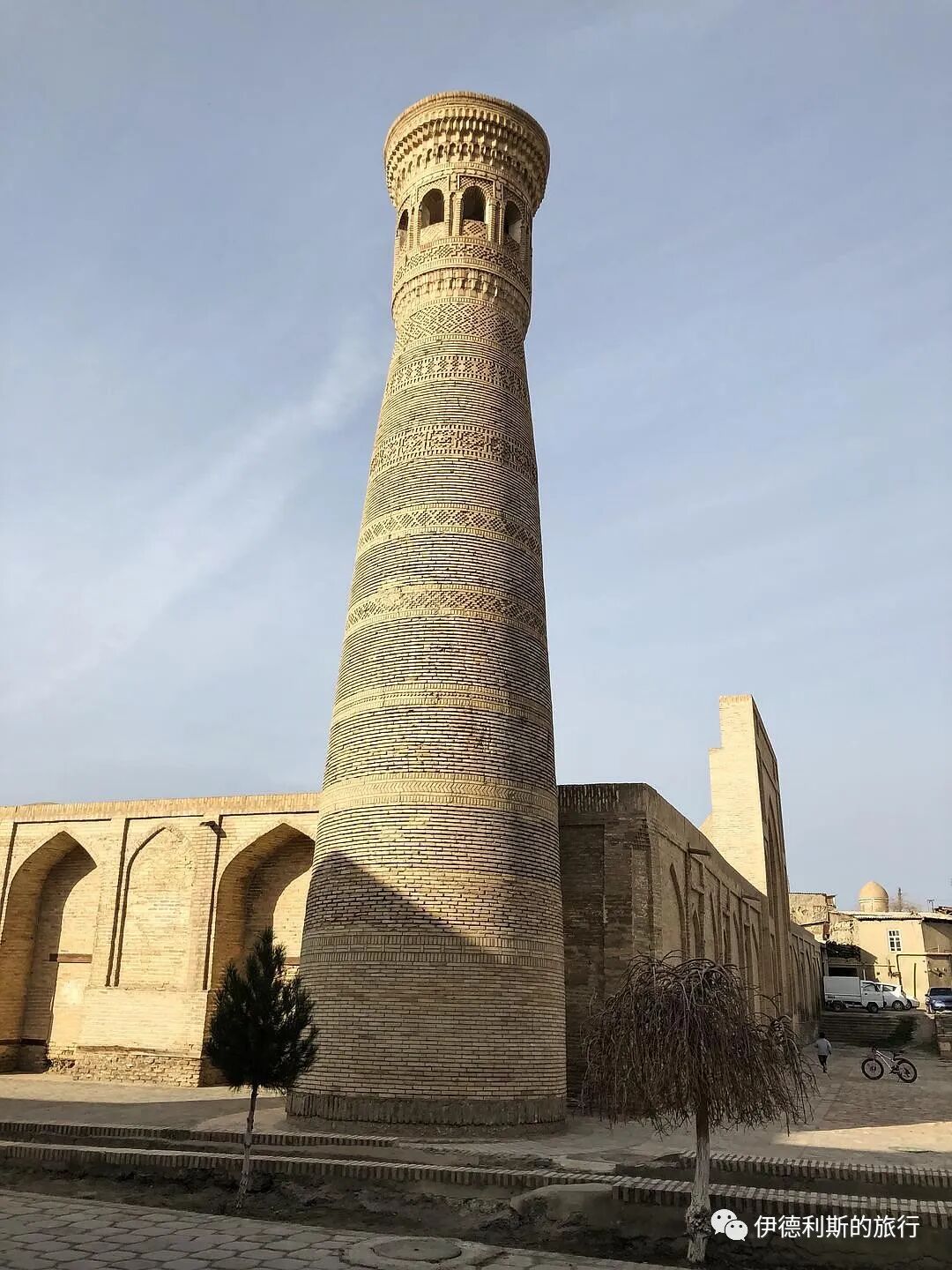
Madrasa
8. Tok-i-Zargaron (Jewelry Dome Market): 1570
The Tok-i-Zargaron (Jewelry Dome Market) was built in 1570 and is the largest of the four surviving dome markets from the Khanate of Bukhara in the ancient city of Bukhara, and is the best witness to Bukhara as a trade center in Central Asia in the 16th century.
"Tok-i-Zargaron" means "jeweler's dome," and it has four arched passages for Silk Road trade caravans to pass through, as well as 16 domes on an octagonal base. During the Khanate of Bukhara, there were 36 jewelry workshops and shops under the dome, selling various jewelry such as rings, earrings, and necklaces.
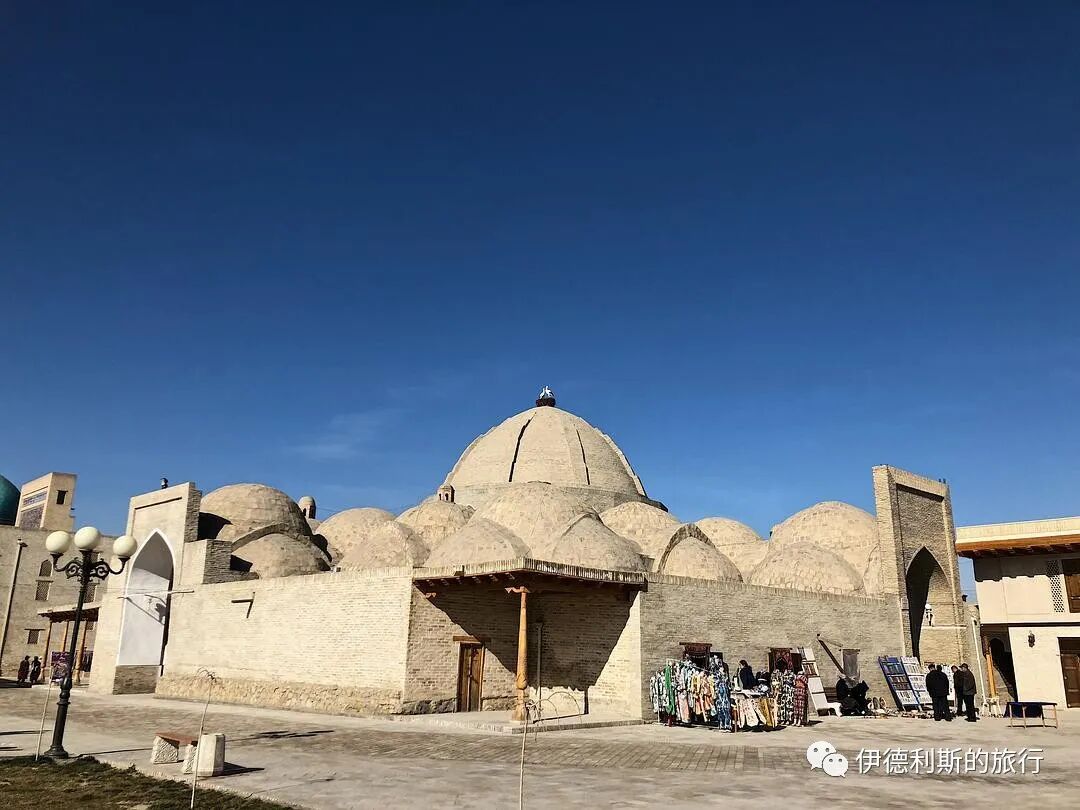
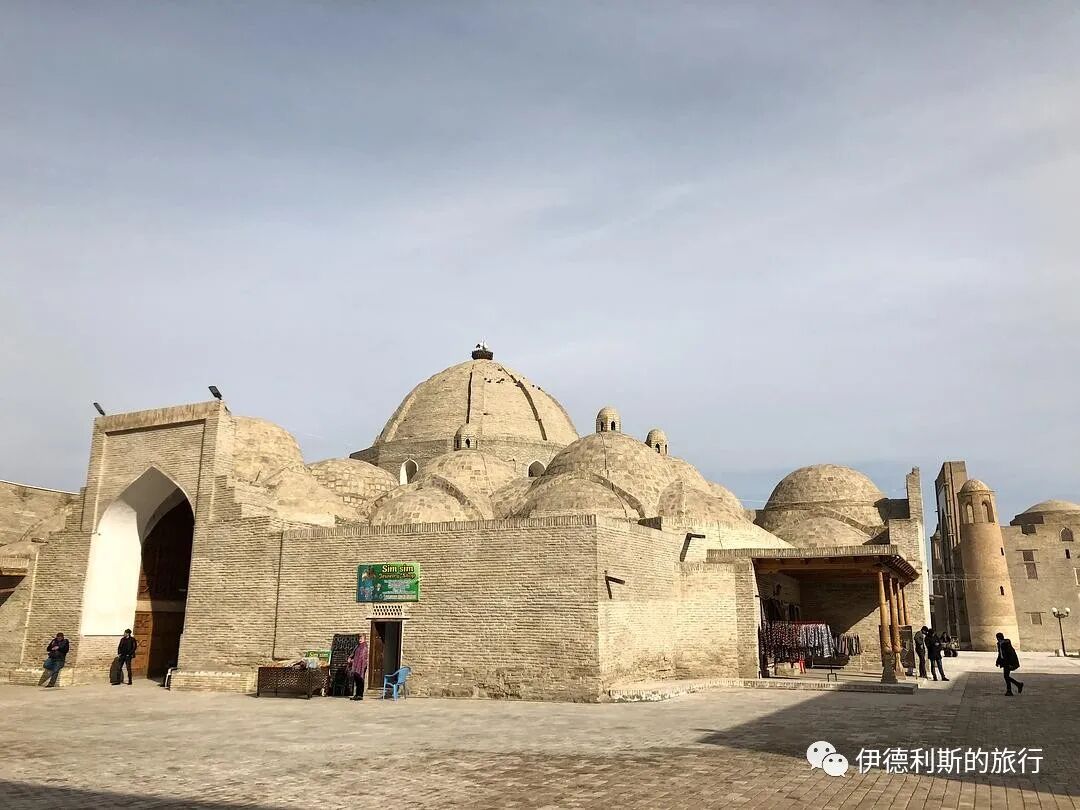
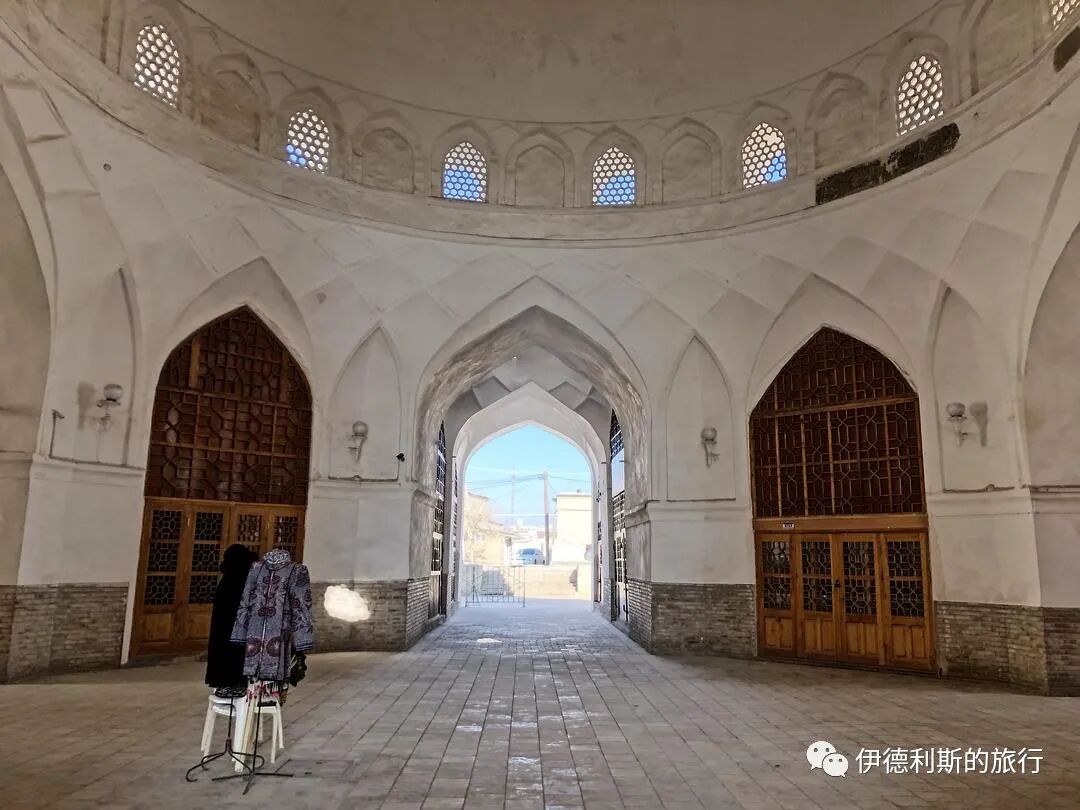
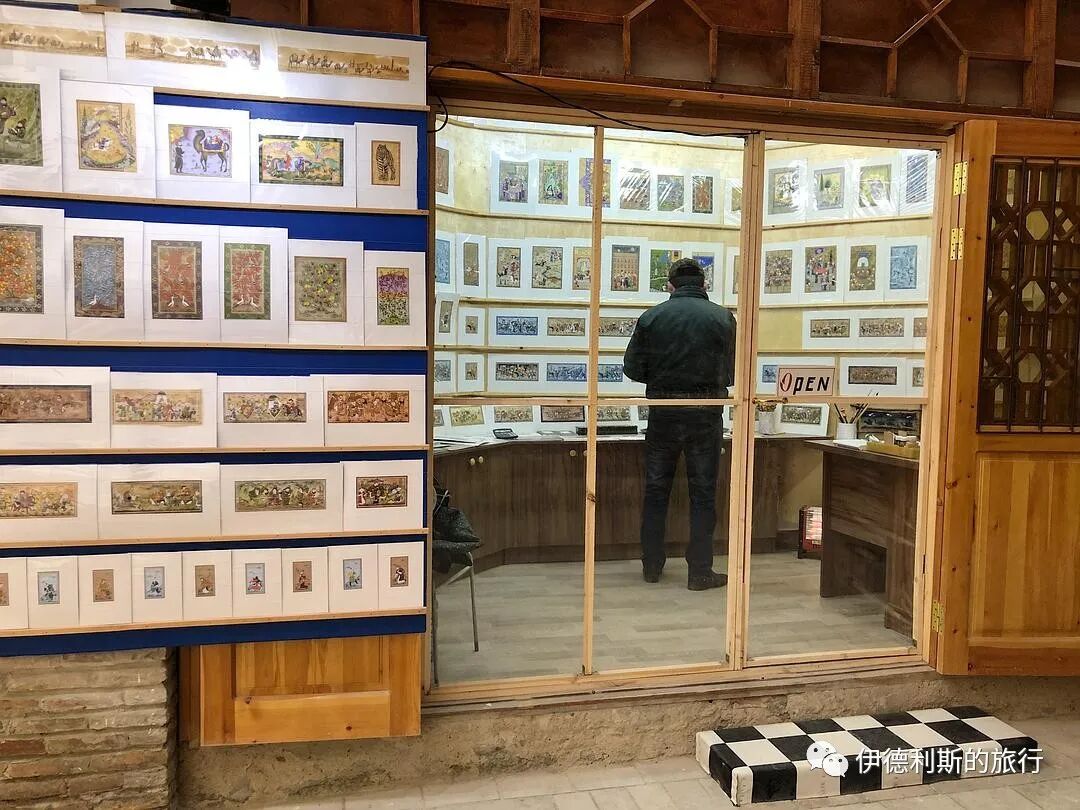
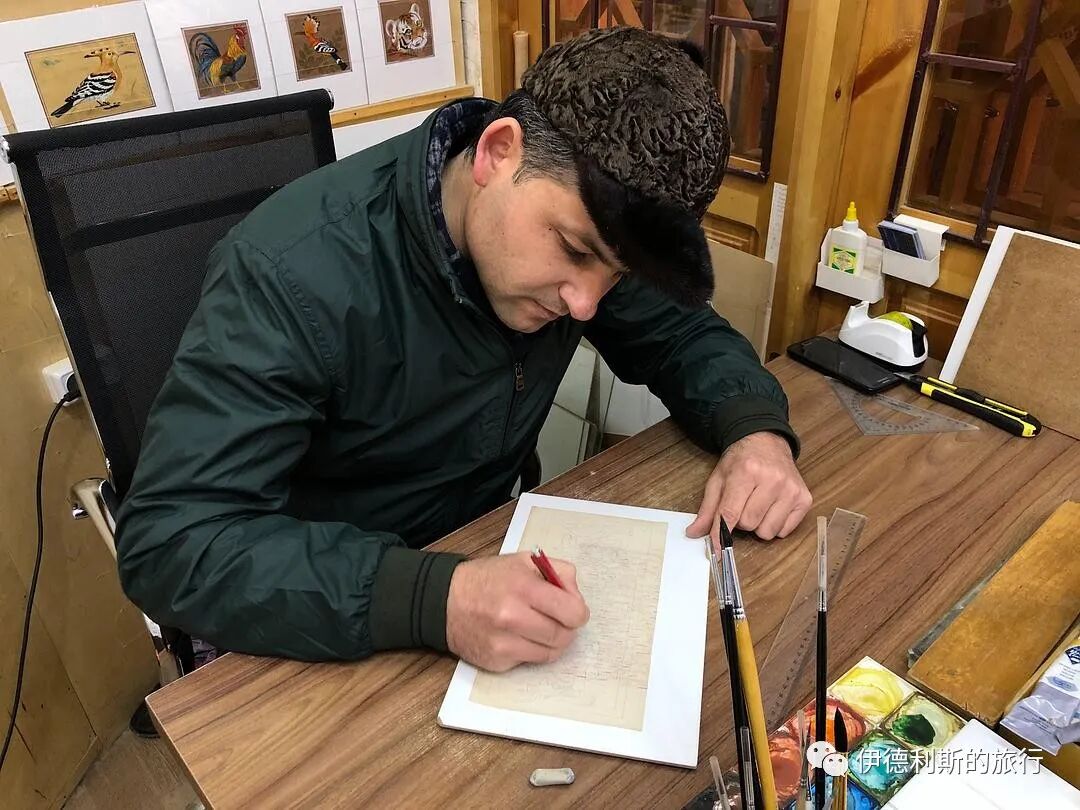
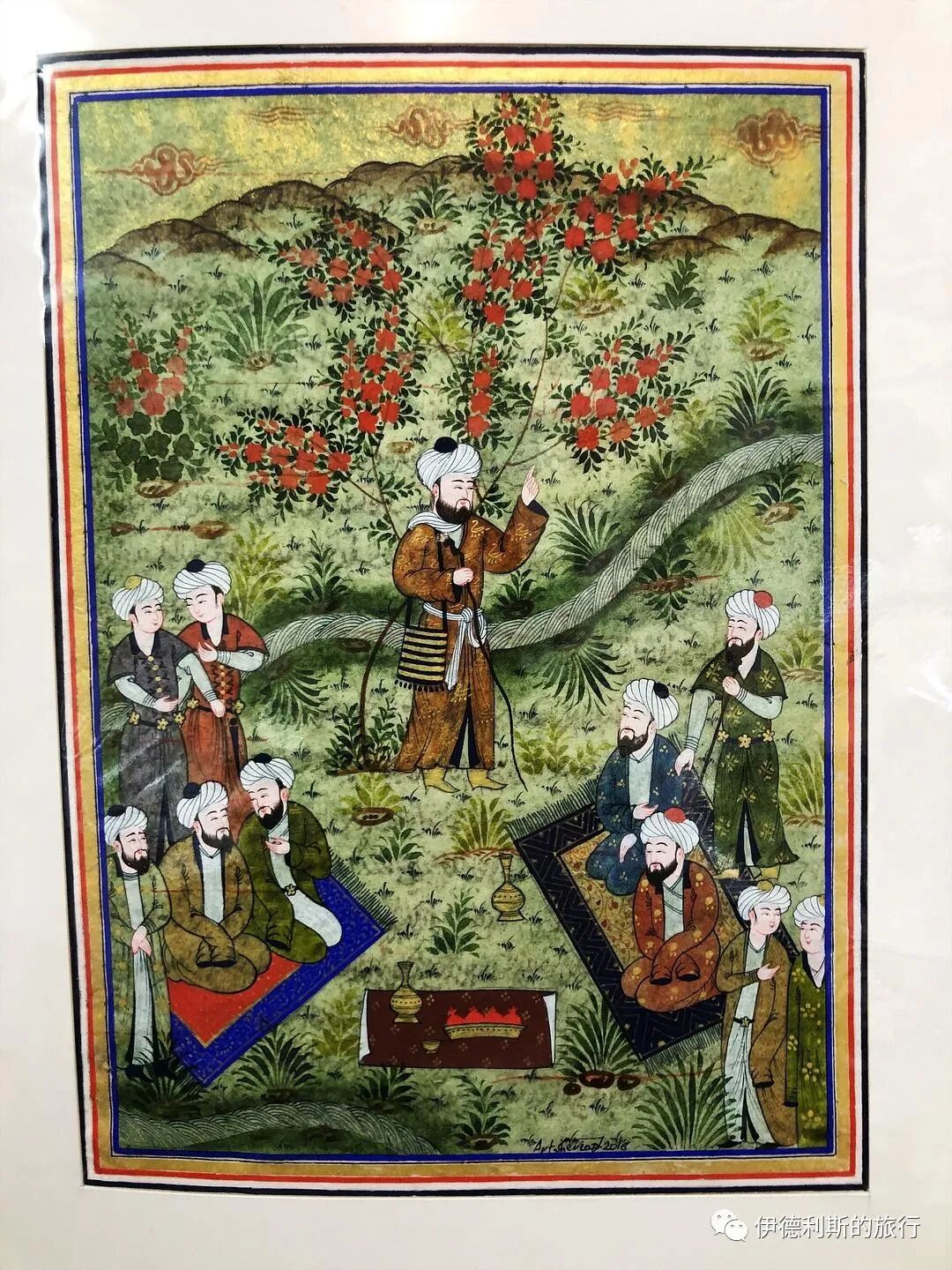
I bought a miniature painting at a miniature painting workshop inside the market.
9. Toqi Telpak Furushon (Hat Dome Market): Late 16th century
The Toqi Telpak Furushon (Hat Dome Market) consists of a central dome and a hexagonal base, connecting five streets in the old city. It was originally called the book (Kitab-Furushon) market, but later it gradually changed to selling various turbans, leather hat boxes, and skullcaps, and now it has become a place to sell tourist souvenirs.
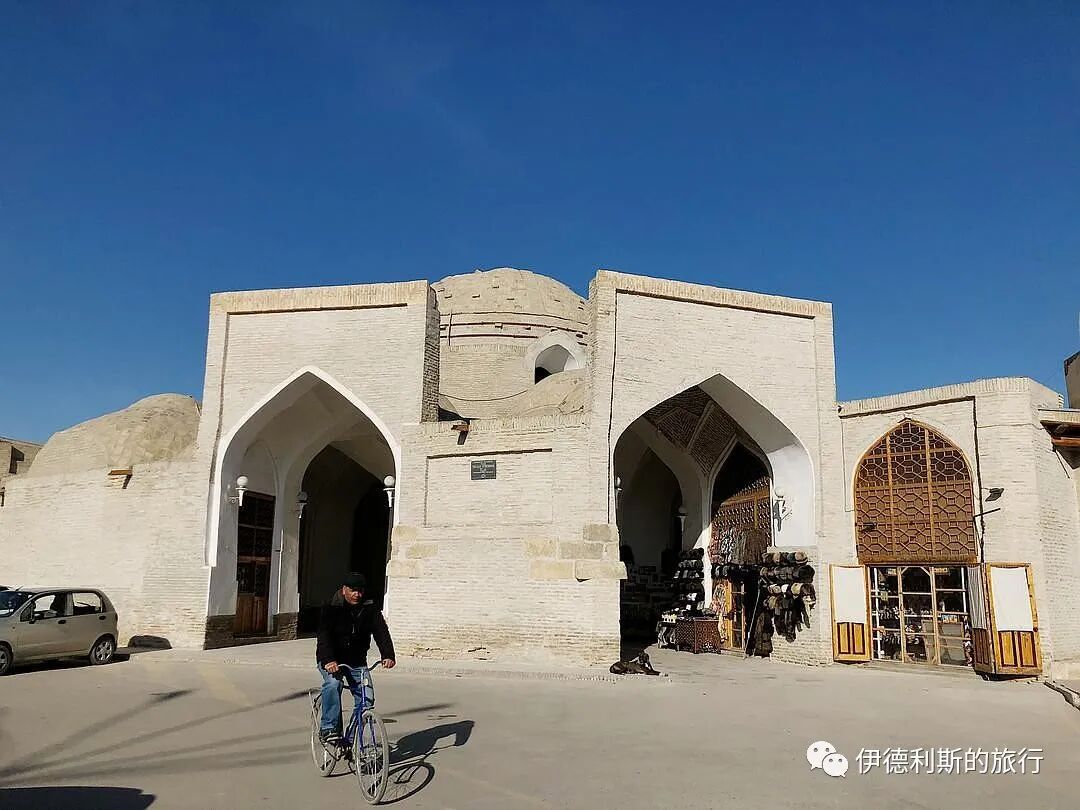
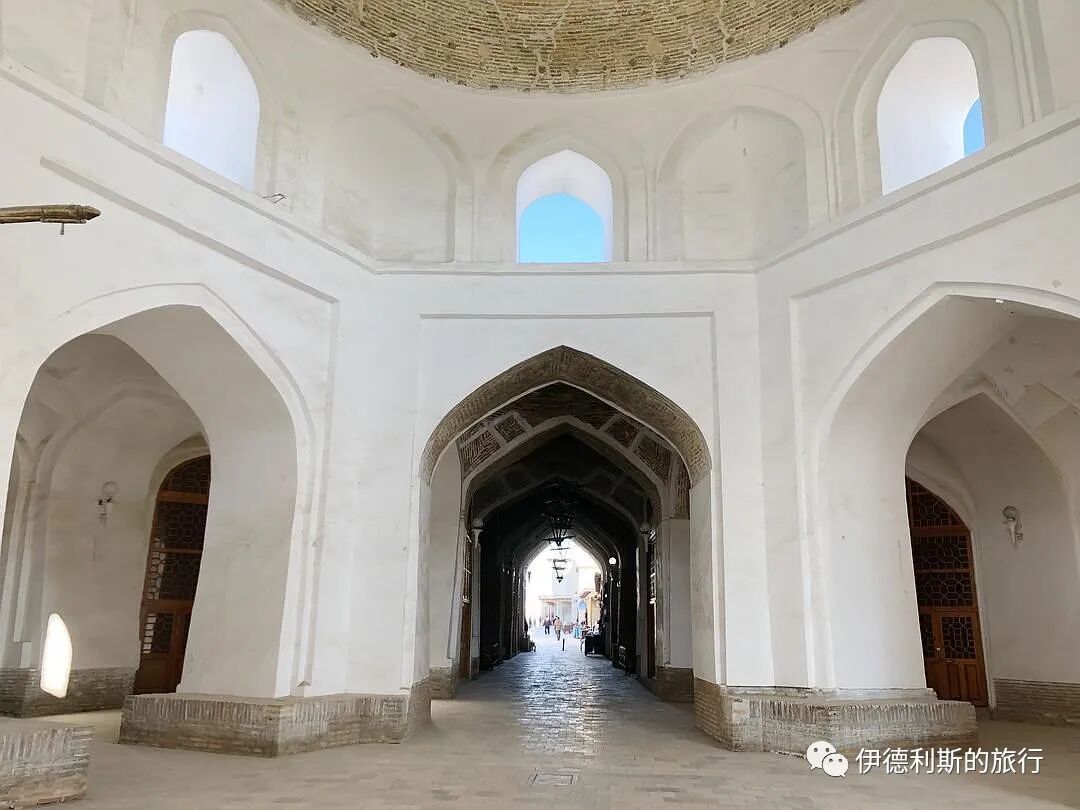
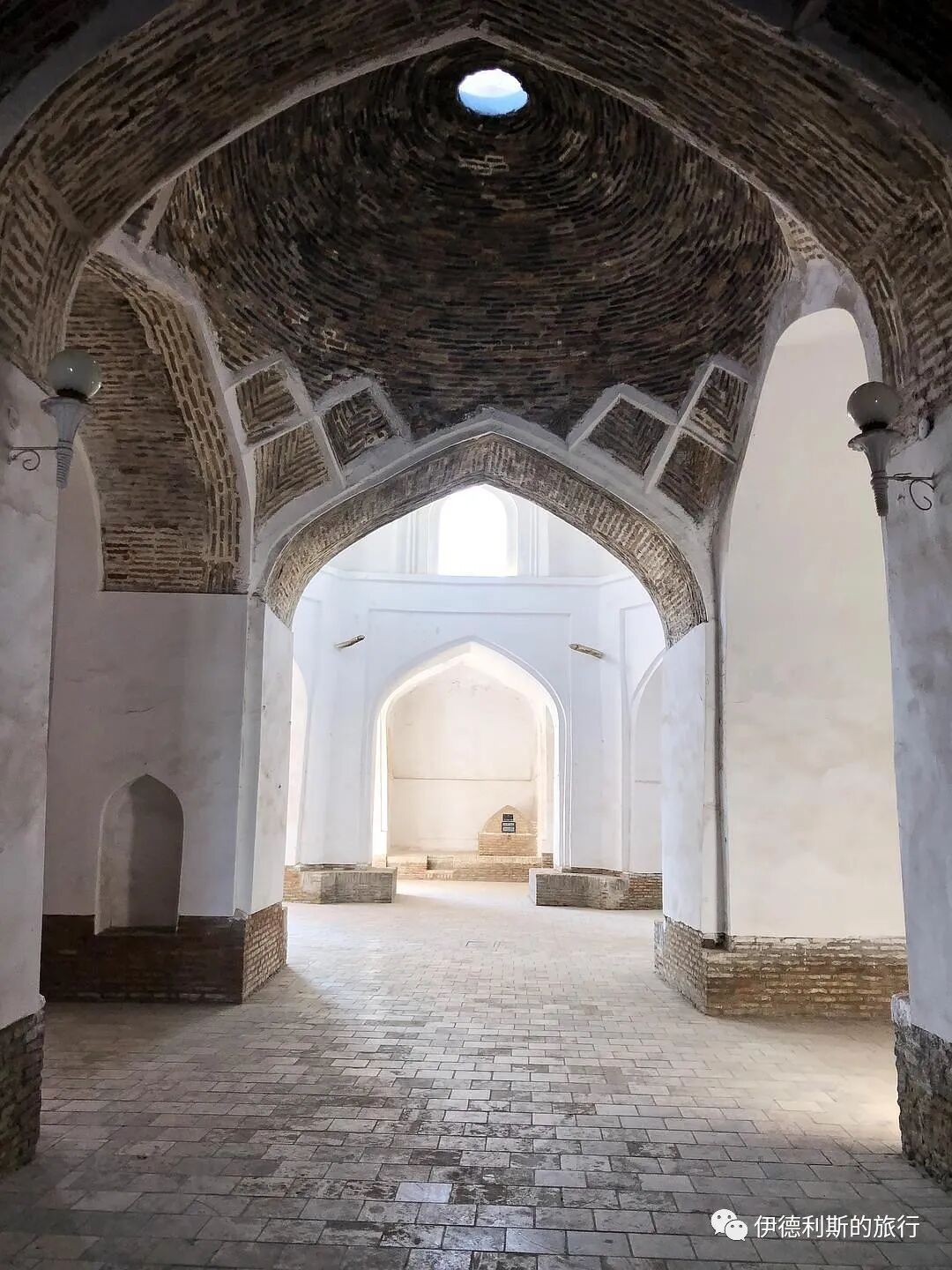
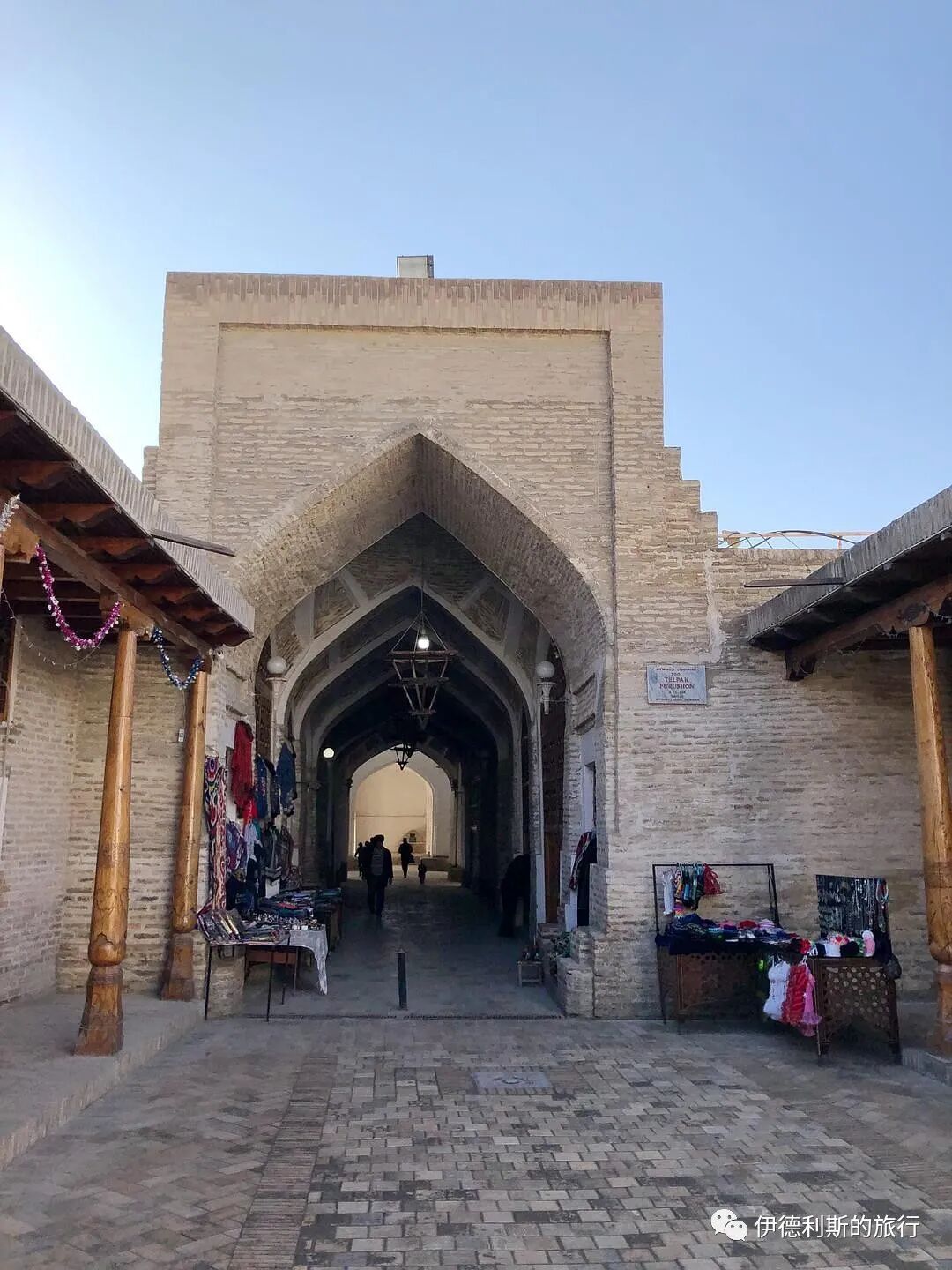
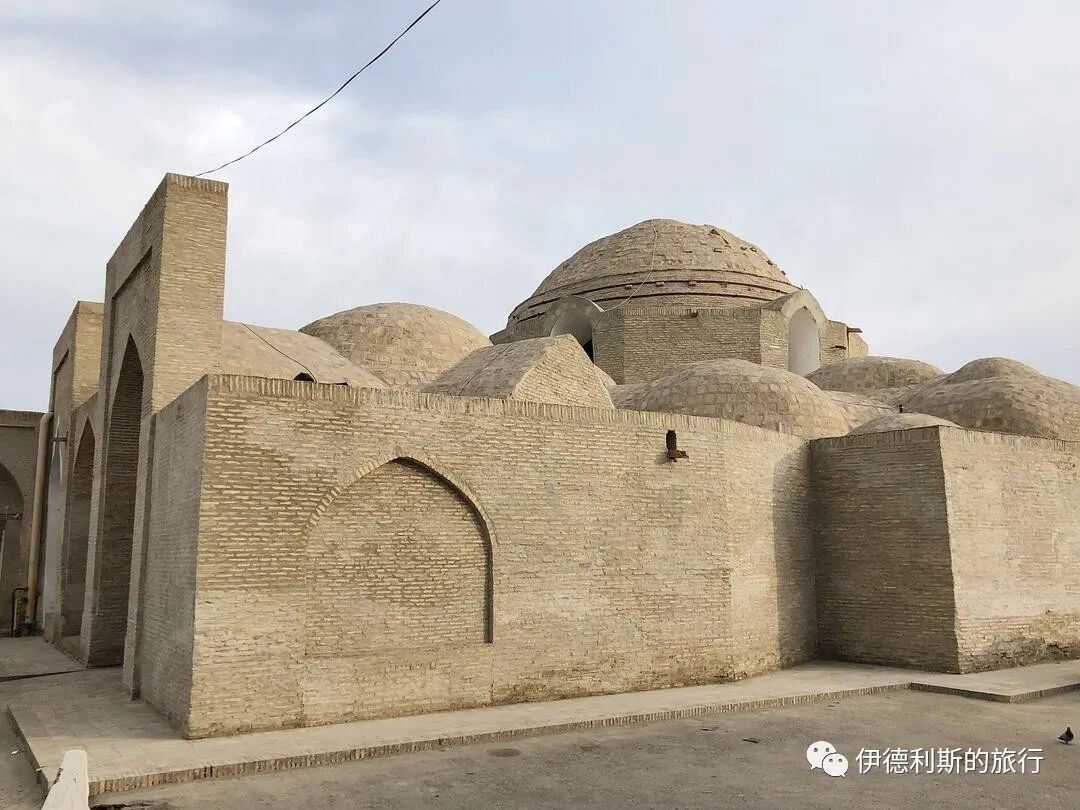
I bought a miniature painting at the miniature painting workshop in the market.
10. Toki Sarrafon (Currency Exchange Dome Market): Late 16th century
The Toki Sarrafon (Currency Exchange Dome Market) is on the main road in the southern part of the old city of Bukhara, with four arches connecting four roads. In the 16th and 17th centuries, it was one of the largest currency exchange markets in Central Asia, where merchants from India, China, and other regions exchanged currency. But today it only sells tourist souvenirs.
11. Abdullakhan Tim (Market): 1577
During the Shaybanid Dynasty, many huge dome markets were built in the city of Bukhara, called "Tim." Today, only one "Tim" market named after Abdullah Khan II survives.
Abdullakhan Tim was once the most high-end market in Bukhara, focusing on high-quality silk and wool products. The market is divided into 56 shopping stalls by arched structures, and soft light pours in through small windows on the dome. In the hot summer, customers can enjoy the cool air.
12. Fayzabad Khanaka: 1598
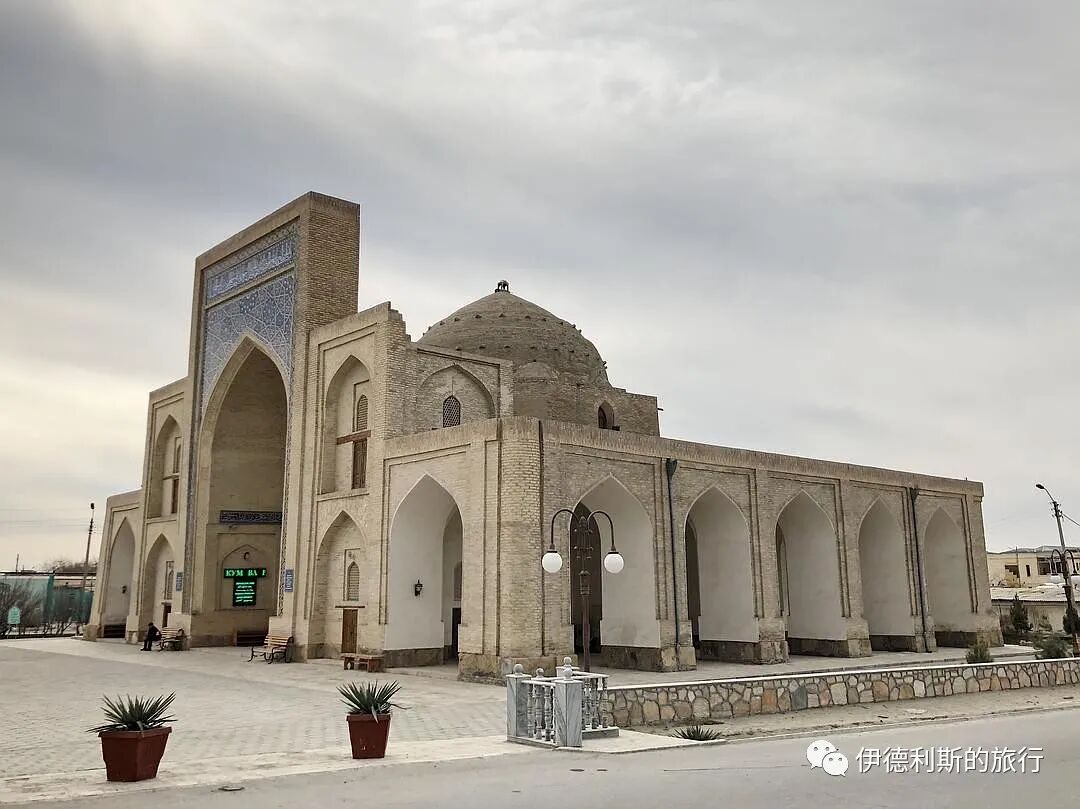
The Fayzabad Khanaka was built in 1598 by the famous Sufi master Mavlono Poyand-Mukhammad Ahsi (Ahsiketi) Fayzobodi, who died two years later in 1601.
This building is both a mosque and a Sufi Khanaka. Behind the mihrab niche are three-story Khudjras rooms for Sufi practitioners to live in. Sufi activities continued here until the Soviet era, but now only the function of the mosque remains.
Summary: This travel note introduces Bukhara Travel Guide: Capital of the Bukhara Khanate, Mosques and Islamic Heritage (Part 1). In the previous article, "The Capital of Timur—Samarkand," we introduced how the Timurid Dynasty declined after the death of the ruler Ulugh Beg and fell into division. It is useful for readers interested in Bukhara Travel, Islamic Heritage, Uzbekistan.
In the previous article, "The Capital of Timur—Samarkand," we introduced how the Timurid Dynasty declined after the death of the ruler Ulugh Beg and fell into division. In the early 16th century, Muhammad Shaybani, a descendant of Shayban (the fifth son of Jochi, the eldest son of Genghis Khan), led the Uzbeks who were nomadic in the northern steppes of Central Asia to overthrow the Timurid Dynasty's rule in the Transoxiana region, establishing the Shaybanid Dynasty (1506–1598), opening a new chapter in the history of the Transoxiana region of Central Asia.
The capital of the Shaybanid Dynasty was initially in Samarkand, and was moved to Bukhara after 1533. In 1598, the Shaybanid Dynasty line ended, and the khanate was passed to the Janid family, later known as the Janid Dynasty. The Janid Dynasty continued to rule with Bukhara as its capital until 1785. Later generations collectively refer to the Shaybanid Dynasty and the Janid Dynasty as the Khanate of Bukhara.
The city of Bukhara served as the capital of the Khanate of Bukhara for 252 years from 1533 to 1785, and many buildings constructed at that time remain to this day. Among them, the architecture from the period of Abdullah Khan II, who ruled Bukhara from 1557 to 1598, is the most abundant, which was also the most prosperous period of the Khanate of Bukhara.
Table of Contents
Prologue: Kalyan Mosque: Rebuilt in 1515
1. Mir-i-Arab Madrasa: 1535
2. Khoja Zaynuddin Mosque: First half of the 16th century
3. Naqshbandi Complex: 1544
4. Chor-Bakr Necropolis: 1563
5. Kosh Madrasa: 1567, 1590
1. Modari-khan Madrasa: 1567
2. Abdullah Khan Madrasa: 1590
6. Lyab-i Hauz: 1568, 1619, 1622
1. Kukeldash Madrasa: 1568
2. Nadir Divan-begi Khanaka: 1619
3. Nadir Divan-begi Madrasa: 1622
7. Khoja-Gaukushan Complex: 1570, 1598
8. Tok-i-Zargaron (Jewelry Dome Market): 1570
9. Toqi Telpak Furushon (Hat Dome Market): Late 16th century
10. Toki Sarrafon (Currency Exchange Dome Market): Late 16th century
11. Abdullakhan Tim (Market): 1577
12. Fayzabad Khanaka: 1598
13. Magok-i-Kurpa Mosque: 1637
14. Abdul Aziz Khan Madrasah: 1651
Prologue: Kalyan Mosque: Rebuilt in 1515
The Kalyan Mosque is the Jumu'ah (Friday) mosque of Bukhara. In 1220, the mosque was destroyed by the Mongol army, leaving only the 46-meter-high minaret. In 1515, Ubaidullah, the nephew of Muhammad Shaybani, the founder of the Shaybanid Dynasty of the Khanate of Bukhara, rebuilt the mosque. He was the ruler of Bukhara at the time, and the name of the Khanate of Bukhara also comes from his order to move the capital of the khanate from Samarkand to Bukhara after he became Khan in 1533. After Bukhara became the capital of the khanate, the Kalyan Mosque became the most important mosque in the Khanate of Bukhara.
The architectural style of the Kalyan Mosque is similar to the Bibi-Khanym Mosque in Samarkand, both being courtyards composed of four Iwan (vaulted hall) arches. The Kalyan Mosque has as many as 288 domes, the largest of which is a blue dome 30 meters high above the mihrab (niche indicating the direction of prayer). The mihrab and Iwan arches are decorated with blue and white tiles in the late Timurid style, featuring plant and calligraphic patterns.
1. Mir-i-Arab Madrasa: 1535
The Mir-i-Arab Madrasa was built in 1535 by order of Ubaidullah, the Khan of the Shaybanid Dynasty of the Khanate of Bukhara (reigned 1533–1539), and named after the Khan's Sufi mentor, Mir-i-Arab (also known as Sheikh Abdullah Yamani).
In 1533, Ubaidullah became Khan and moved the capital from Samarkand to his fiefdom of Bukhara, starting large-scale construction in Bukhara, of which the Mir-i-Arab Madrasa was one.
To compete for territory, Khan Ubaidullah fought many wars with the Persian Safavid Dynasty, the most famous of which was the siege of the ancient Afghan city of Herat. During the many raids on Persia, the Shaybanid Dynasty obtained many captives, and it is said that the Khan used the funds obtained from selling 3,000 Persian captives to build the Mir-i-Arab Madrasa.
The Mir-i-Arab Madrasa was built opposite the Kalyan Mosque, forming a "kosh" (paired) structure with the mosque. Inside the madrasa are buried the Sufi mentor Mir-i-Arab and Khan Ubaidullah himself. Unfortunately, the madrasa is still a school, and ordinary tourists are not allowed to enter, so I could not see the tomb.
The Mir-i-Arab Madrasa was closed in the 1920s but reopened in 1947, becoming the only open madrasa in Bukhara at the time; almost all Imams of that era were trained at this school.
2. Khoja Zaynuddin Mosque: First half of the 16th century
The Khoja Zaynuddin Mosque was built in the first half of the 16th century, located next to an ancient pond (Hauz) in Bukhara. This architectural form is called a "Mosque-Khanaka," which is both a mosque and a Sufi activity center, where one can both pray and hold Sufi rituals.
There are many legends about the history of the mosque. One theory is that this mosque was built by the Khan of the Khanate of Bukhara to thank a minister named Khoja Zaynuddin, and another theory is that the Sufi master Khoja Zaynuddin is buried next to the mosque.
3. Naqshbandi Complex: 1544
The Naqshbandi Complex (Bahouddin Naqshbandi Complex) is an important Islamic holy site in Central Asia, known as the "Little Mecca" of Central Asia, where Hazrat Muhammad Bahauddin Shah Naqshband, the founder of the famous Sufi Naqshbandia order, is buried.
After Naqshband died in 1389, he was buried in his family garden outside the city of Bukhara. Since then, people have constantly come to visit his tomb, which is even called a "small Hajj."
During the Shaybanid Dynasty, the Naqshbandia order eventually won out in competition with other Sufi orders and became the dominant Sufi order in the Khanate. Unlike other Sufi orders that advocate seclusion and asceticism, the Naqshbandia order, from its founder Naqshband, proposed the principle of "inwardly with Allah, outwardly with the people" (practicing in the crowd, traveling in the world, being cautious in action, and enjoying the time). In the 15th century, the third leader of the order, Ubaydullah al-Ahrar, proposed that political and social life were fundamental components of the order's spiritual pursuit, and after continuous improvement by later generations, it received increasing support from the rulers.
In 1544, the Khan of the Shaybanid Dynasty, Abdulaziz (reigned 1539–1550), built a Dakhma (raised platform) with a marble carved fence over the holy tomb, next to which was a Sufi Khanaka. Later, a large cemetery of Bukhara rulers appeared near the holy tomb, and every ruler felt honored to be buried near the holy tomb. Through the donations of successive Bukhara rulers, two mosques, Muzaffarkhan and Khakim Kushbegi, a small minaret, and a madrasa were built next to the Dakhma. These buildings form an entire complex around the central pond (Hauz).
Inside the Naqshbandi holy tomb is a small madrasa built in the 17th century, which has now been converted into a museum displaying some Sufi artifacts.
Kuloh (Sufi practitioner's hat)
Robe
White cloth robe with scriptures written on it
4. Chor-Bakr Necropolis: 1563
The Shaybanid Dynasty fell into division in the mid-16th century, with the four regions of Bukhara, Samarkand, Tashkent, and Balkh each acting independently. In 1557, Abdullah Khan II (reigned 1583–1598) successfully occupied Bukhara and in 1561 declared his father Iskander the supreme Khan of the Uzbeks. Iskander was more interested in religion, so he handed over full authority over state affairs to his son.
In order to achieve the reunification of the dynasty, Abdullah Khan fought long-term wars with the surrounding areas. In 1573, after a siege, Abdullah Khan finally captured Balkh, and in 1576 he captured Samarkand and Tashkent in succession. In 1583, Abdullah Khan's father died, and he officially succeeded as Khan. After succeeding to the throne, he occupied Badakhshan and the Khorasan region in 1584 and 1588, and later occupied Khwarezm in 1594, executing the Sultan of Khiva, as the territory of the Shaybanid Dynasty continued to expand.
To strengthen his rule, Abdullah Khan built a large number of post stations, reservoirs, madrasas, and bridges, making Bukhara the most important trade center in Central Asia in the late 16th century. The Chor-Bakr Necropolis is a representative work of this.
The Chor-Bakr Necropolis is located in the western suburbs of Bukhara and is also called the "City of the Dead." Starting from the Samanid Dynasty in the 10th century, the Djuybar Seyyids family, descendants of the Prophet Muhammad, came to live in Bukhara. This family played an important role in Bukhara, and after they died, they were buried in the western suburbs of the city.
In 1560, Abdullah Khan II decided to build a complex consisting of a mosque, a madrasa, and a Sufi Khanaka next to the Djuybar Seyyids family tomb as a gift to his teacher, Djuybar Sheikh Muhammad Islam Khoja, who belonged to the same family. The Khan's teacher died in 1563 and was buried in the tomb, and the complex was completed in the same year.
In 1593, the teacher's son, Khodja Bakr Sadi, died and was buried next to his father. After this, three other family members with the title "Bakr" were also buried here, and it has since been called "Chor-Bakr," meaning "Four Bakrs."
After the 19th century, it gradually lost its importance and was closed during the Soviet era. After the 1990s, it reopened, and more and more people have come here on pilgrimage. Many Uzbek Muslims believe that they must visit here before going on the Hajj to Mecca.
On the right is the mosque, in the middle is the madrasa, and on the left is the Khanaka.
On the left is the Khanaka, in the middle is the madrasa, and on the right is the mosque.
The minaret was built in the 20th century.
A Khazira is a special tomb structure consisting of a courtyard surrounded by walls with a beautifully decorated gate at the entrance; this type of tomb structure is rarely seen in other parts of Uzbekistan. The Khazira of the Djuybar Seyyids is in the northwest of the complex, connected by a long corridor, where you can hear the sound of footsteps reflected by the brick walls with every step.
5. Kosh Madrasa: 1567, 1590
The Kosh Madrasa (Double Madrasa) was built by Abdullah Khan II, the Khan of the Shaybanid Dynasty, and consists of the Modari-khan and Abdullah-khan madrasas standing opposite each other. The Modari-khan Madrasa was built in 1566, and the Abdullah Khan Madrasa was built in 1590; they are representative buildings built by Abdullah Khan II in the city of Bukhara.
1. Modari-khan Madrasa: 1567
"Modari-khan" means "the Khan's mother," and it was built by Abdullah Khan to commemorate his mother. The madrasa consists of an Iwan arch, two-story dormitories (Hujras), and a large classroom (Darskhana). Because the streets at the time did not allow the building to remain a rectangular right angle, the madrasa was actually built in a trapezoidal shape.
2. Abdullah Khan Madrasa: 1590
The Abdullah Khan Madrasa is named after Abdullah Khan II himself and was built after the Khan officially succeeded to the throne, so it is larger and more magnificent than the Modari-khan Madrasa opposite, featuring three Iwan arches.
6. Lyab-i Hauz: 1568, 1619, 1622
Lyab-i Hauz means "by the pond" in Persian and is one of the few remaining complexes in the ancient city of Bukhara built around a pond (Hauz). During the Khanate of Bukhara, there were many ponds in the ancient city, which were the main source of water for the city. However, because they were prone to spreading diseases, most of the ponds were filled in by the Soviets in the 1920s and 1930s, while Lyab-i Hauz survived because of its important historical complex.
1. Kukeldash Madrasa: 1568
On the north side of the pond is the Kukeldash Madrasa, built in 1568 during the reign of Abdullah Khan II, the Khan of the Shaybanid Dynasty of the Khanate of Bukhara. The Kukeldash Madrasa is the largest madrasa in Bukhara, consisting of 160 rooms. The architect very artistically used arched loggias to break up the facades on both sides, which is also a feature of this building.
2. Nadir Divan-begi Khanaka: 1619
Fifty years after the completion of the Kukeldash Madrasa, during the reign of Imam Quli Khan (reigned 1611–1642), the third Khan of the Janid Dynasty of the Khanate of Bukhara, the then-vizier (minister), who was also the Khan's uncle, Nadir Divan-begi, wanted to build a Sufi Khanaka next to the Kukeldash Madrasa. Vizier Nadir Divan-begi had great influence at court and could sometimes even represent the Khan in negotiations with foreign envoys.
According to legend, while building the Khanaka, the vizier wanted to build a pond next to it, but the land where the pond was located belonged to a Jewish widow who refused to sell the land. So the vizier brought the widow before the Khan and asked the Khan to make a ruling. The Khan ordered his jurists to study it, and the final conclusion was that there was no other way except for the widow to agree personally. So the vizier had to build a canal around the widow's land, and the water washed away the foundation of the widow's house, making it impossible for her to live there.
The widow negotiated with the vizier again. The vizier hoped to buy the house at a reasonable price, but the widow set a condition that if he gave her another piece of land and allowed the construction of a synagogue, she would agree to give up the current house. The vizier agreed to the widow's request, and the land given to the widow formed the Bukhara Jewish community, Mahalli Kuma.
Soon, the pond and the Bukhara synagogue were completed at the same time. This complex began to be called "Lyab-i Hauz," which is Persian for "by the pond," but it also has another popular name among the people, "Haus-i Bazur," meaning "built by force."
The Khanaka has a long, narrow gate that is different from the traditional form and is decorated very simply. The hall (dhikr-hana) has good acoustics, suitable for performing Sufi music. The corners and side exterior walls of the hall are places where Sufi practitioners live.
3. Nadir Divan-begi Madrasa: 1622
After building the Sufi Khanaka, Vizier Nadir Divan-begi planned to build a caravanserai (merchant inn) on the other side of the pond. After the inn was built, the vizier invited Khan Imam Quli Khan to the opening ceremony, but the Khan did not like his uncle's inn. At the opening ceremony, the Khan said that this building was built for the glory of the Lord, so it should be used as a madrasa. So the vizier had to convert the inn into a madrasa.
From the structural layout of the building, it can also be seen that this building was once a caravanserai. The entrance to the building is straight, not angular like the Kukeldash next to it, and there is no Darskhona classroom or Ayvan terrace for summer classes.
The gate of the madrasa depicts two phoenixes, two white deer, and a human face in the sun, which is very rare in Islamic architecture and similar to the Sher-Dor Madrasa in the Registan of Samarkand from the same period.
7. Khoja-Gaukushan Complex: 1570, 1598
The Khoja Gaukushan complex consists of a madrasa and a mosque. The madrasa was built in 1570 during the reign of Abdullah Khan II, the Khan of the Shaybanid Dynasty, and the mosque was built in 1598 by the master Djuybar Sheikh, known as "Khoja Kalon" (the Great Khoja).
In front of the mosque is a pond (Hauz), and on one side is a tall minaret, second only in height to the most famous Kalyan Minaret in Bukhara.
Madrasa
8. Tok-i-Zargaron (Jewelry Dome Market): 1570
The Tok-i-Zargaron (Jewelry Dome Market) was built in 1570 and is the largest of the four surviving dome markets from the Khanate of Bukhara in the ancient city of Bukhara, and is the best witness to Bukhara as a trade center in Central Asia in the 16th century.
"Tok-i-Zargaron" means "jeweler's dome," and it has four arched passages for Silk Road trade caravans to pass through, as well as 16 domes on an octagonal base. During the Khanate of Bukhara, there were 36 jewelry workshops and shops under the dome, selling various jewelry such as rings, earrings, and necklaces.
I bought a miniature painting at a miniature painting workshop inside the market.
9. Toqi Telpak Furushon (Hat Dome Market): Late 16th century
The Toqi Telpak Furushon (Hat Dome Market) consists of a central dome and a hexagonal base, connecting five streets in the old city. It was originally called the book (Kitab-Furushon) market, but later it gradually changed to selling various turbans, leather hat boxes, and skullcaps, and now it has become a place to sell tourist souvenirs.
I bought a miniature painting at the miniature painting workshop in the market.
10. Toki Sarrafon (Currency Exchange Dome Market): Late 16th century
The Toki Sarrafon (Currency Exchange Dome Market) is on the main road in the southern part of the old city of Bukhara, with four arches connecting four roads. In the 16th and 17th centuries, it was one of the largest currency exchange markets in Central Asia, where merchants from India, China, and other regions exchanged currency. But today it only sells tourist souvenirs.
11. Abdullakhan Tim (Market): 1577
During the Shaybanid Dynasty, many huge dome markets were built in the city of Bukhara, called "Tim." Today, only one "Tim" market named after Abdullah Khan II survives.
Abdullakhan Tim was once the most high-end market in Bukhara, focusing on high-quality silk and wool products. The market is divided into 56 shopping stalls by arched structures, and soft light pours in through small windows on the dome. In the hot summer, customers can enjoy the cool air.
12. Fayzabad Khanaka: 1598
The Fayzabad Khanaka was built in 1598 by the famous Sufi master Mavlono Poyand-Mukhammad Ahsi (Ahsiketi) Fayzobodi, who died two years later in 1601.
This building is both a mosque and a Sufi Khanaka. Behind the mihrab niche are three-story Khudjras rooms for Sufi practitioners to live in. Sufi activities continued here until the Soviet era, but now only the function of the mosque remains.
Bukhara Travel Guide: Capital of the Bukhara Khanate, Mosques and Islamic Heritage (Part 2)
Articles • ali2007fr posted the article • 0 comments • 127 views • 2026-05-17 08:19
Reposted from the web
Summary: This travel note introduces Bukhara Travel Guide: Capital of the Bukhara Khanate, Mosques and Islamic Heritage (Part 2). 13. Magok-i-Kurpa Mosque: 1637. It is useful for readers interested in Bukhara Travel, Islamic Heritage, Uzbekistan.
13. Magok-i-Kurpa Mosque: 1637
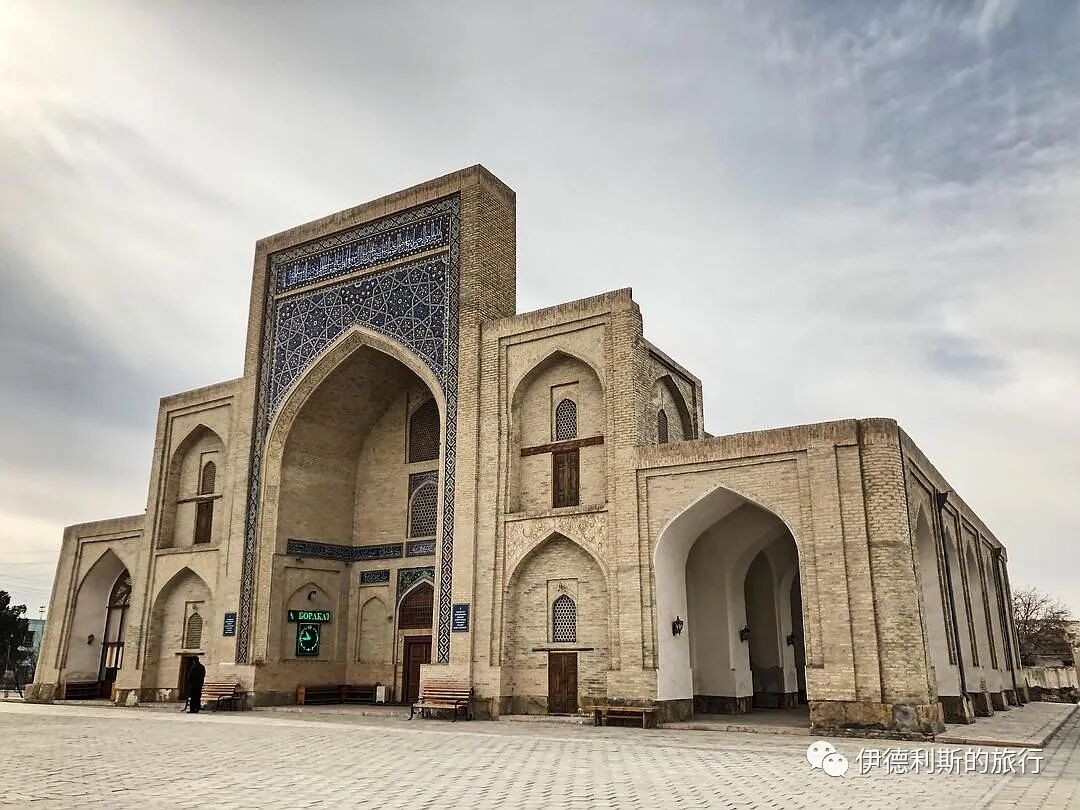
The Magok-i-Kurpa Mosque was built in 1637. It was originally two stories, but the first floor is almost submerged underground, which is why it is called "Magok-i" (in the pit). The mosque is rectangular and has 12 domes on the roof. Because the mosque was under renovation, I was unable to enter for a visit.
14. Abdul Aziz Khan Madrasah: 1651
The Abdul Aziz Khan Madrasah was ordered to be built in 1651 by Abdul Aziz Khan (reigned 1645-1680), the fifth khan of the Janid Dynasty of the Bukhara Khanate. Together with the Ulugbek Madrasah, built in 1417 by Ulugbek, the third ruler of the Timurid Dynasty, it forms an architectural complex.
The Abdul Aziz Khan Madrasah is hailed as a representative work of 17th-century Central Asian architecture. Compared to the Timurid-era Ulugbek Madrasah, the Abdul Aziz Khan Madrasah, built 200 years later, is more ornate and exquisite. The madrasah's pishtaq (monumental portal) is very tall, and the iwan (vaulted hall) arch is decorated with exquisite patterns and verses from famous poets. The walls and rooms utilize almost all the architectural decoration techniques of that era, including relief majolica, marble carving, mosaic tiles, and gilded murals.
Abdul Aziz Khan himself attached great importance to Islamic religious education, but due to the invasion of the Khanate of Khiva and the intensification of internal divisions within the Bukhara Khanate, he was ultimately unable to rule the khanate. He chose to abdicate in favor of his younger brother and set off for Mecca for Hajj (pilgrimage). When Abdul Aziz left, some of the decorations in the madrasah were still unfinished.
Turki Jandi Mausoleum: 16th-18th century
The Turki Jandi Mausoleum is a holy shrine in the ancient city of Bukhara. Because it is not in the tourist area, the atmosphere is very good. There is a well in front of the mausoleum, and the well water is believed to have miraculous properties. Here, you can see a mullah chatting kindly with people in the room at the entrance, and you can also see locals drinking the well water and then piously making dua (dua) in front of the holy shrine. This is the more everyday side of the ancient city of Bukhara. view all
Summary: This travel note introduces Bukhara Travel Guide: Capital of the Bukhara Khanate, Mosques and Islamic Heritage (Part 2). 13. Magok-i-Kurpa Mosque: 1637. It is useful for readers interested in Bukhara Travel, Islamic Heritage, Uzbekistan.
13. Magok-i-Kurpa Mosque: 1637
The Magok-i-Kurpa Mosque was built in 1637. It was originally two stories, but the first floor is almost submerged underground, which is why it is called "Magok-i" (in the pit). The mosque is rectangular and has 12 domes on the roof. Because the mosque was under renovation, I was unable to enter for a visit.
14. Abdul Aziz Khan Madrasah: 1651
The Abdul Aziz Khan Madrasah was ordered to be built in 1651 by Abdul Aziz Khan (reigned 1645-1680), the fifth khan of the Janid Dynasty of the Bukhara Khanate. Together with the Ulugbek Madrasah, built in 1417 by Ulugbek, the third ruler of the Timurid Dynasty, it forms an architectural complex.
The Abdul Aziz Khan Madrasah is hailed as a representative work of 17th-century Central Asian architecture. Compared to the Timurid-era Ulugbek Madrasah, the Abdul Aziz Khan Madrasah, built 200 years later, is more ornate and exquisite. The madrasah's pishtaq (monumental portal) is very tall, and the iwan (vaulted hall) arch is decorated with exquisite patterns and verses from famous poets. The walls and rooms utilize almost all the architectural decoration techniques of that era, including relief majolica, marble carving, mosaic tiles, and gilded murals.
Abdul Aziz Khan himself attached great importance to Islamic religious education, but due to the invasion of the Khanate of Khiva and the intensification of internal divisions within the Bukhara Khanate, he was ultimately unable to rule the khanate. He chose to abdicate in favor of his younger brother and set off for Mecca for Hajj (pilgrimage). When Abdul Aziz left, some of the decorations in the madrasah were still unfinished.
Turki Jandi Mausoleum: 16th-18th century
The Turki Jandi Mausoleum is a holy shrine in the ancient city of Bukhara. Because it is not in the tourist area, the atmosphere is very good. There is a well in front of the mausoleum, and the well water is believed to have miraculous properties. Here, you can see a mullah chatting kindly with people in the room at the entrance, and you can also see locals drinking the well water and then piously making dua (dua) in front of the holy shrine. This is the more everyday side of the ancient city of Bukhara. view all
Reposted from the web
Summary: This travel note introduces Bukhara Travel Guide: Capital of the Bukhara Khanate, Mosques and Islamic Heritage (Part 2). 13. Magok-i-Kurpa Mosque: 1637. It is useful for readers interested in Bukhara Travel, Islamic Heritage, Uzbekistan.
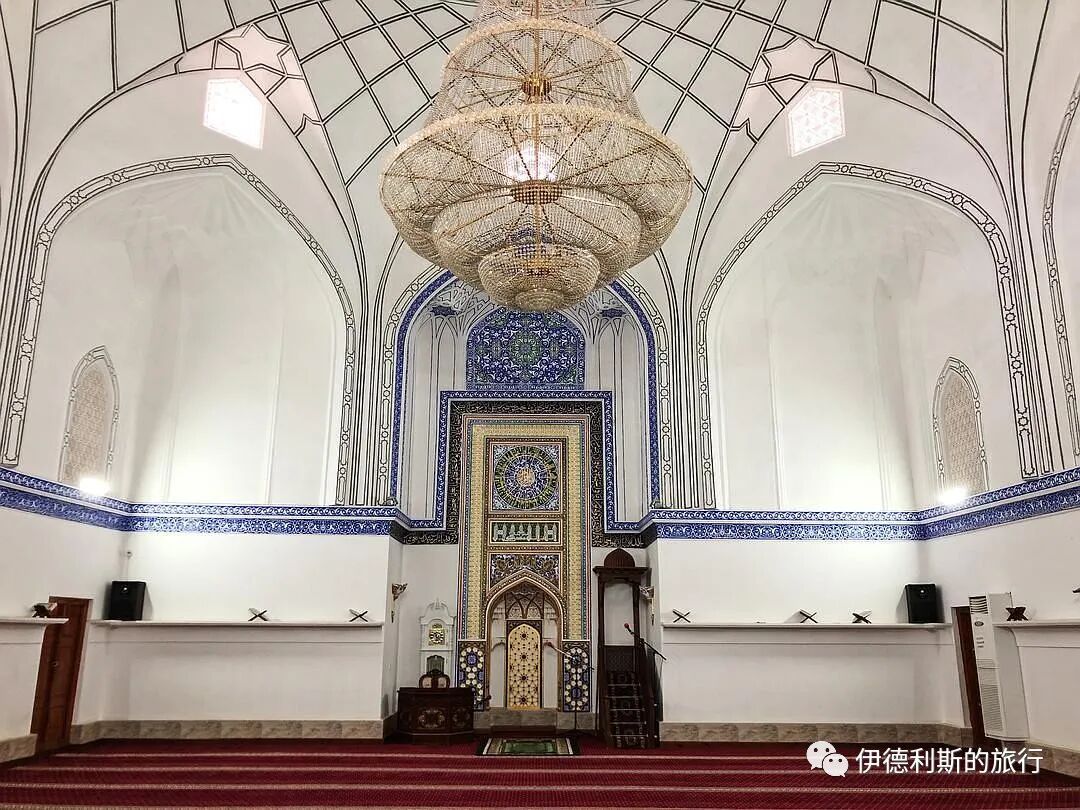
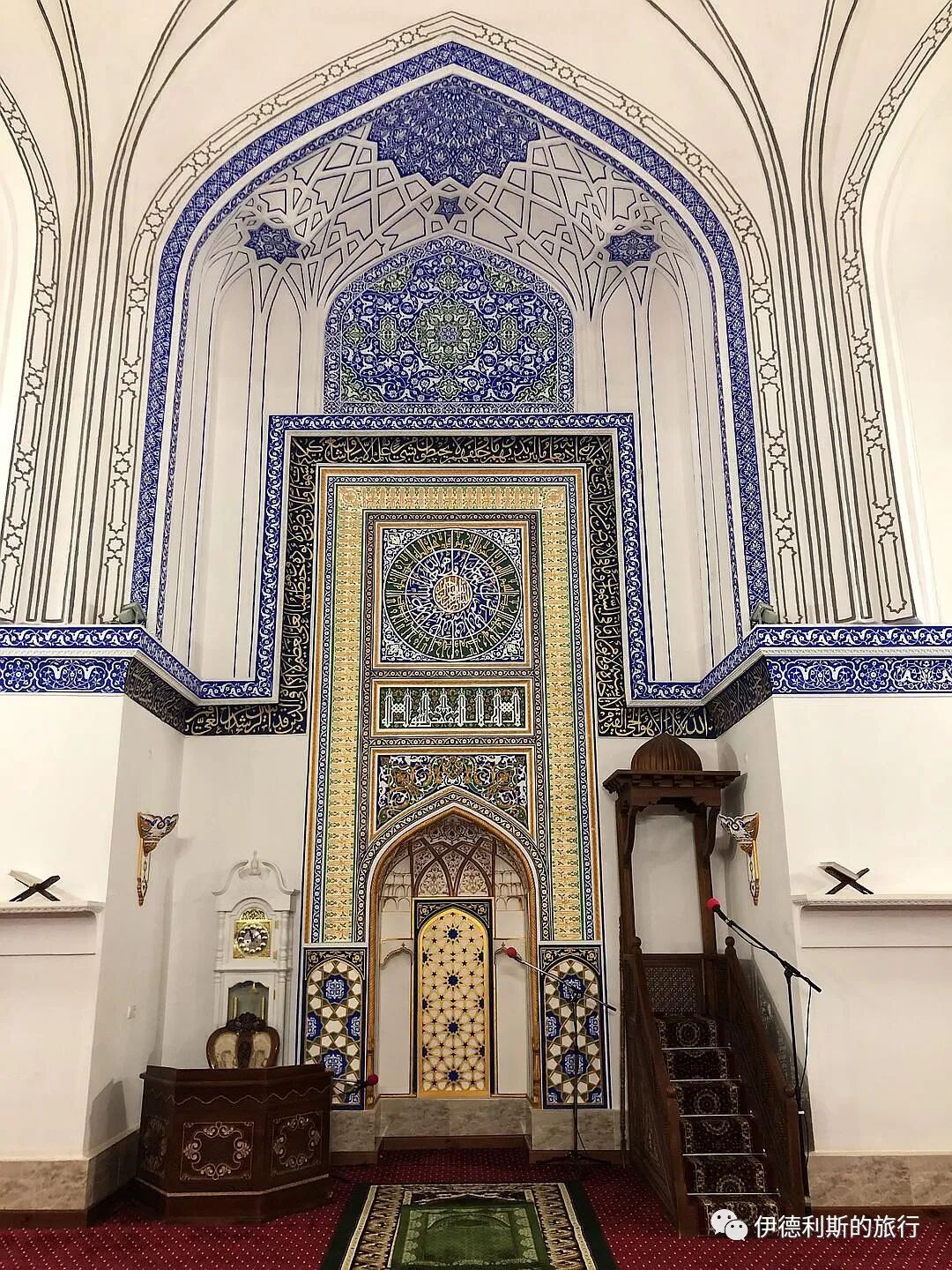
13. Magok-i-Kurpa Mosque: 1637
The Magok-i-Kurpa Mosque was built in 1637. It was originally two stories, but the first floor is almost submerged underground, which is why it is called "Magok-i" (in the pit). The mosque is rectangular and has 12 domes on the roof. Because the mosque was under renovation, I was unable to enter for a visit.
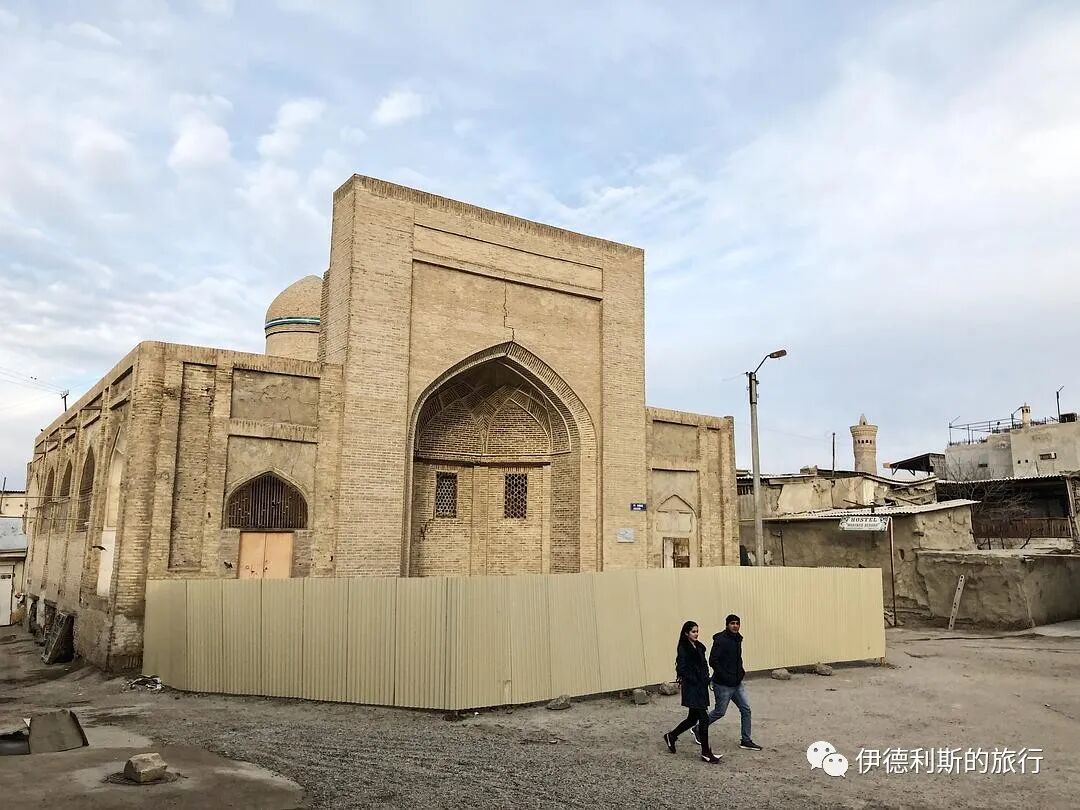
14. Abdul Aziz Khan Madrasah: 1651
The Abdul Aziz Khan Madrasah was ordered to be built in 1651 by Abdul Aziz Khan (reigned 1645-1680), the fifth khan of the Janid Dynasty of the Bukhara Khanate. Together with the Ulugbek Madrasah, built in 1417 by Ulugbek, the third ruler of the Timurid Dynasty, it forms an architectural complex.
The Abdul Aziz Khan Madrasah is hailed as a representative work of 17th-century Central Asian architecture. Compared to the Timurid-era Ulugbek Madrasah, the Abdul Aziz Khan Madrasah, built 200 years later, is more ornate and exquisite. The madrasah's pishtaq (monumental portal) is very tall, and the iwan (vaulted hall) arch is decorated with exquisite patterns and verses from famous poets. The walls and rooms utilize almost all the architectural decoration techniques of that era, including relief majolica, marble carving, mosaic tiles, and gilded murals.
Abdul Aziz Khan himself attached great importance to Islamic religious education, but due to the invasion of the Khanate of Khiva and the intensification of internal divisions within the Bukhara Khanate, he was ultimately unable to rule the khanate. He chose to abdicate in favor of his younger brother and set off for Mecca for Hajj (pilgrimage). When Abdul Aziz left, some of the decorations in the madrasah were still unfinished.
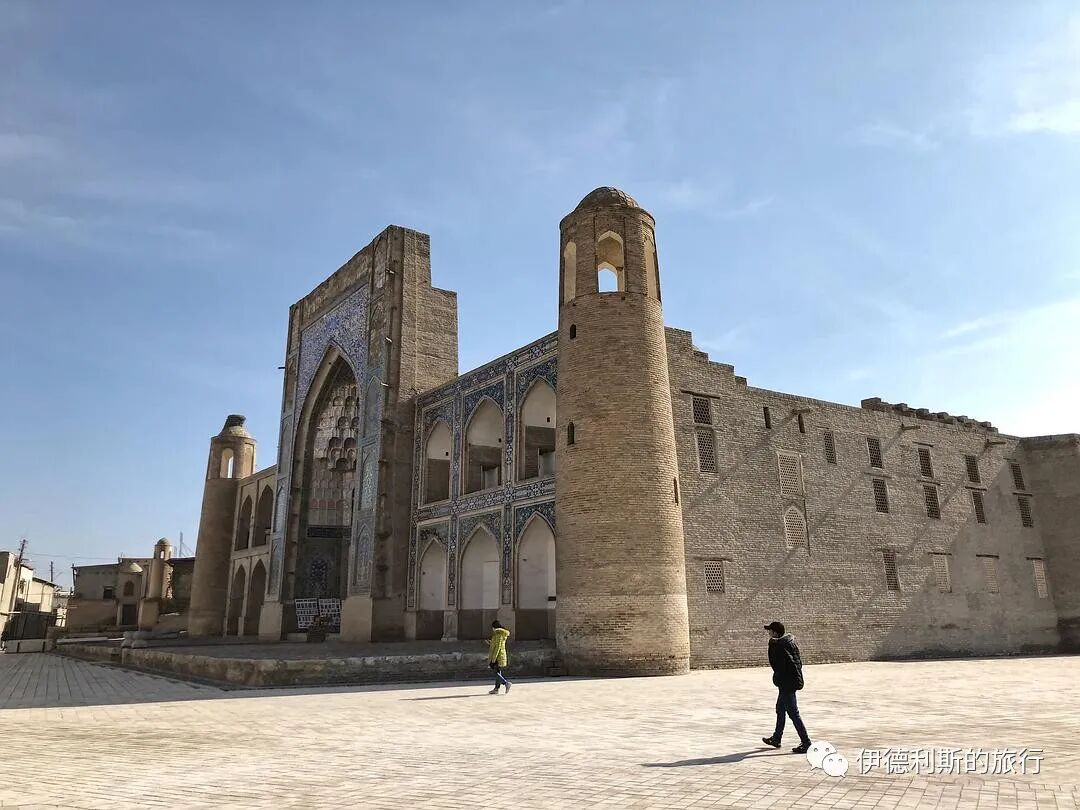
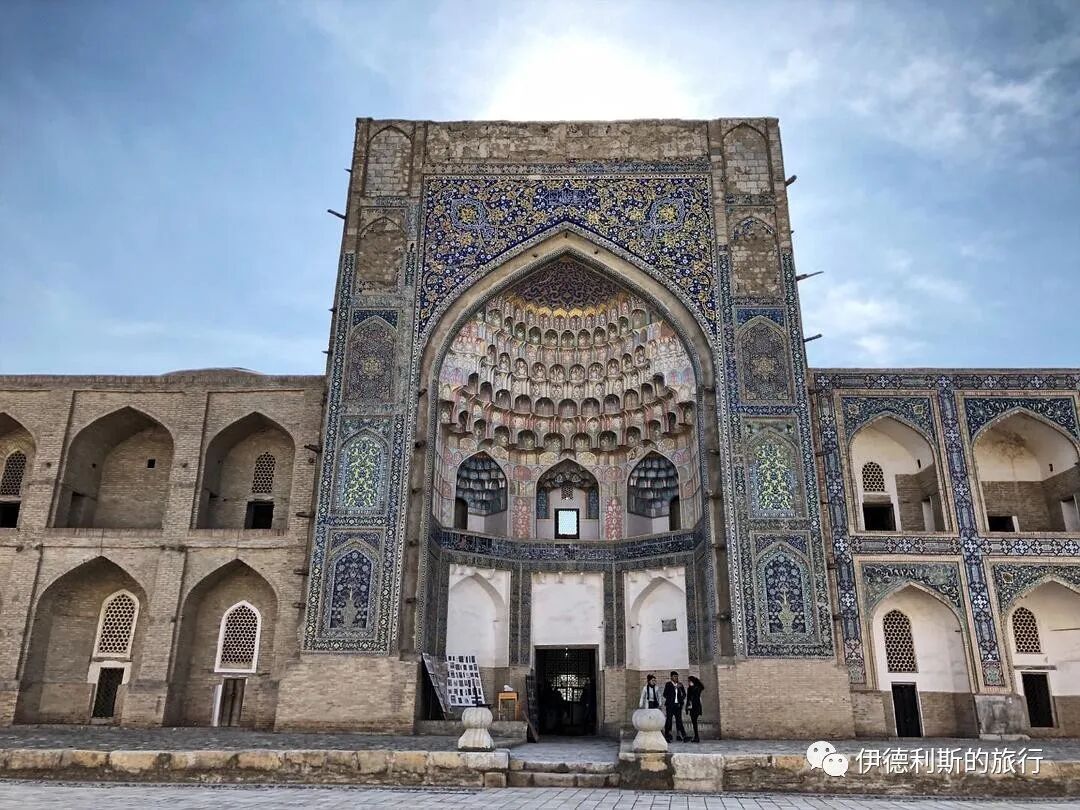
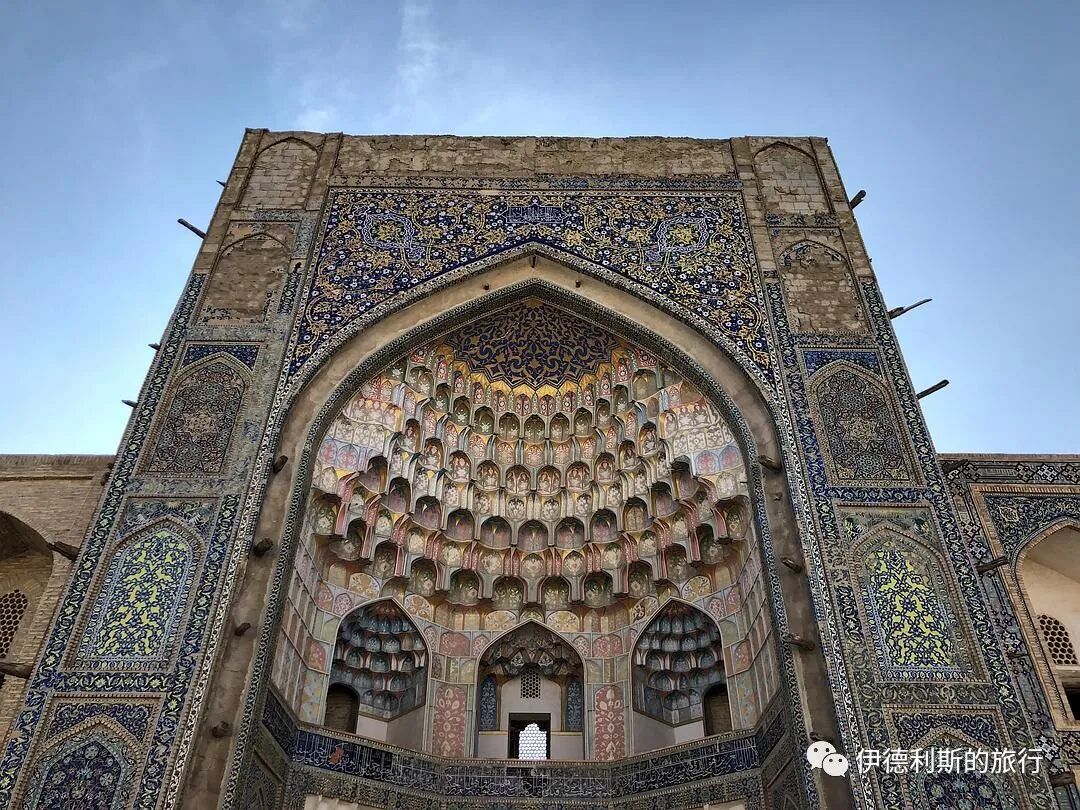
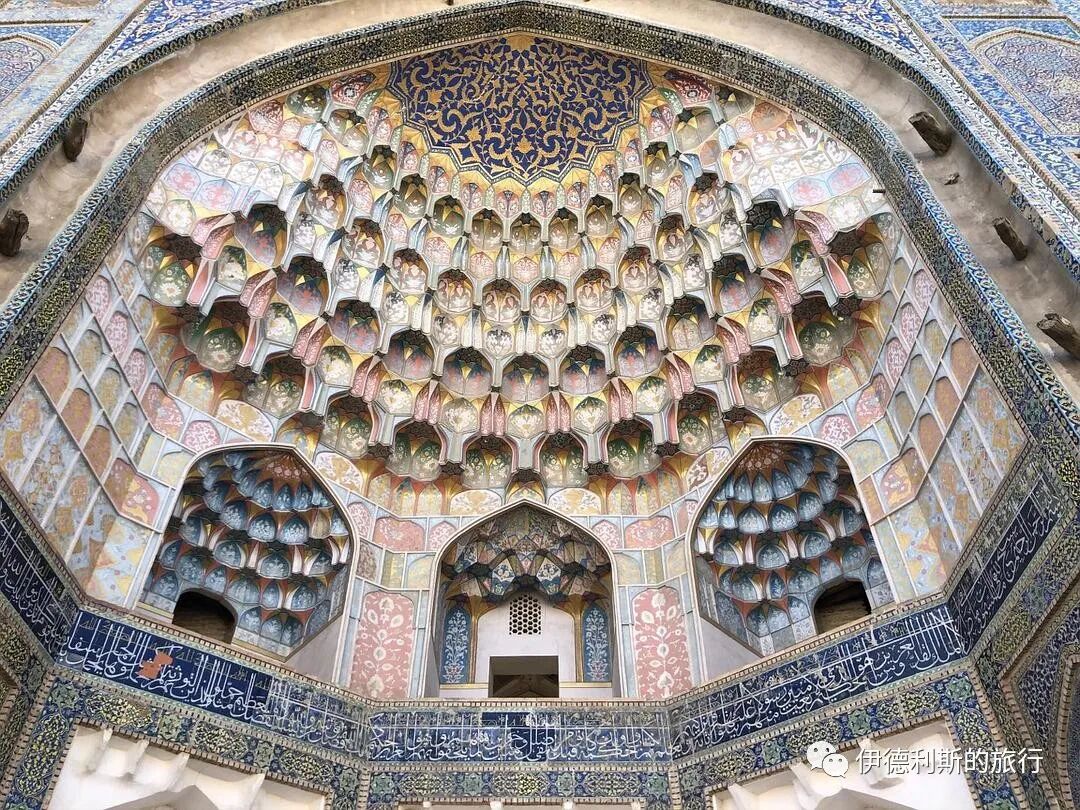
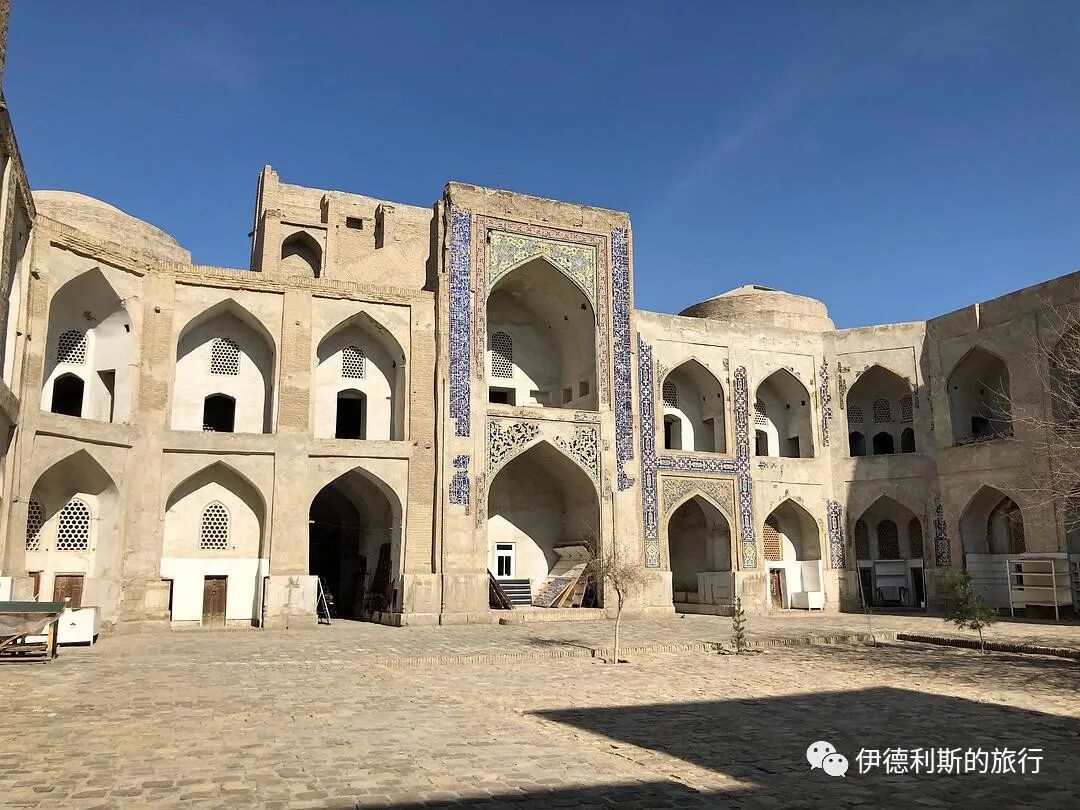
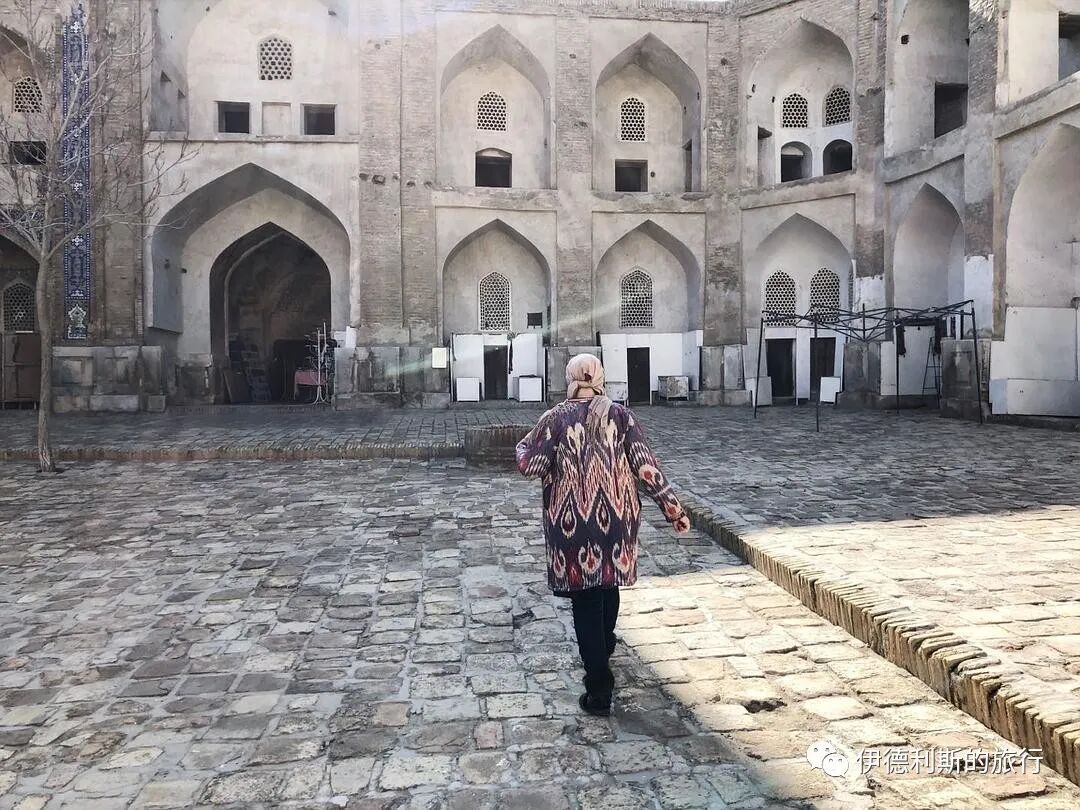
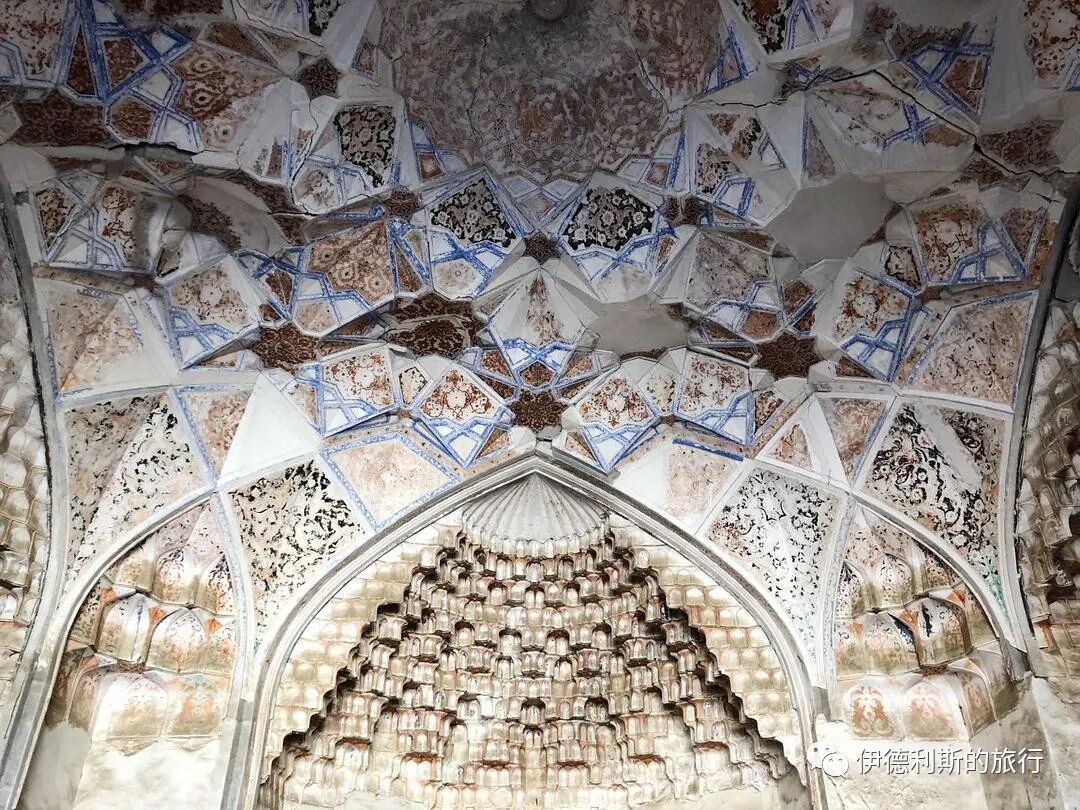
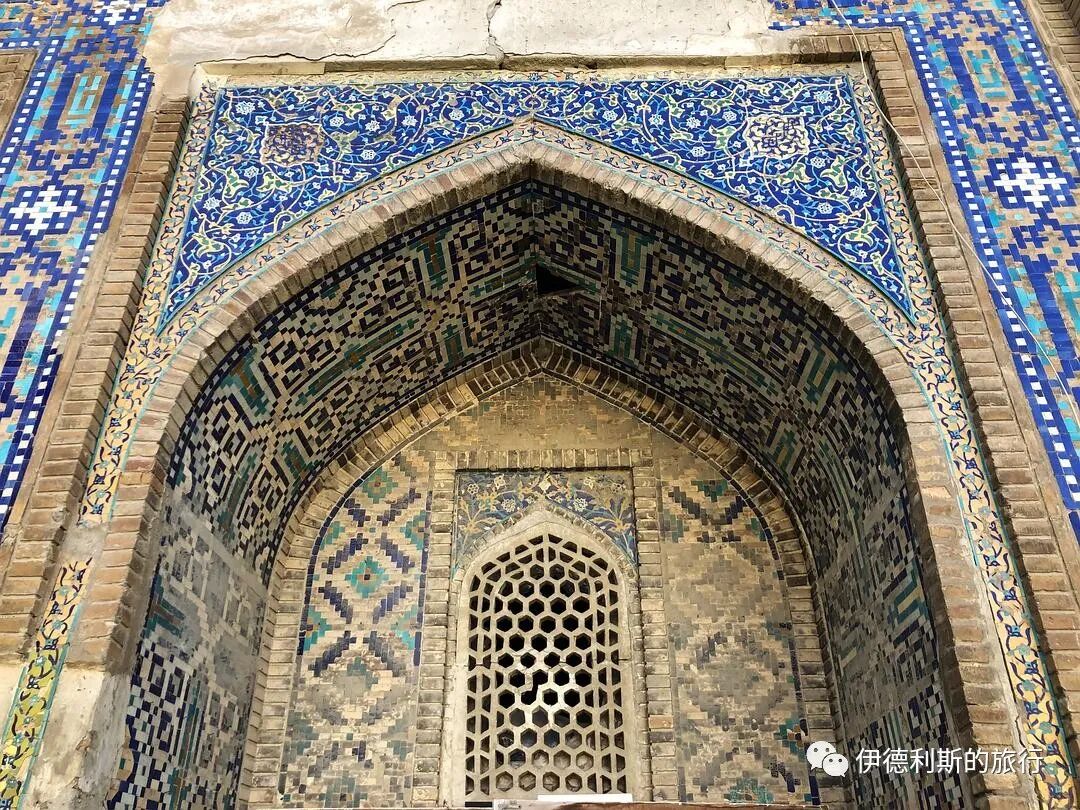
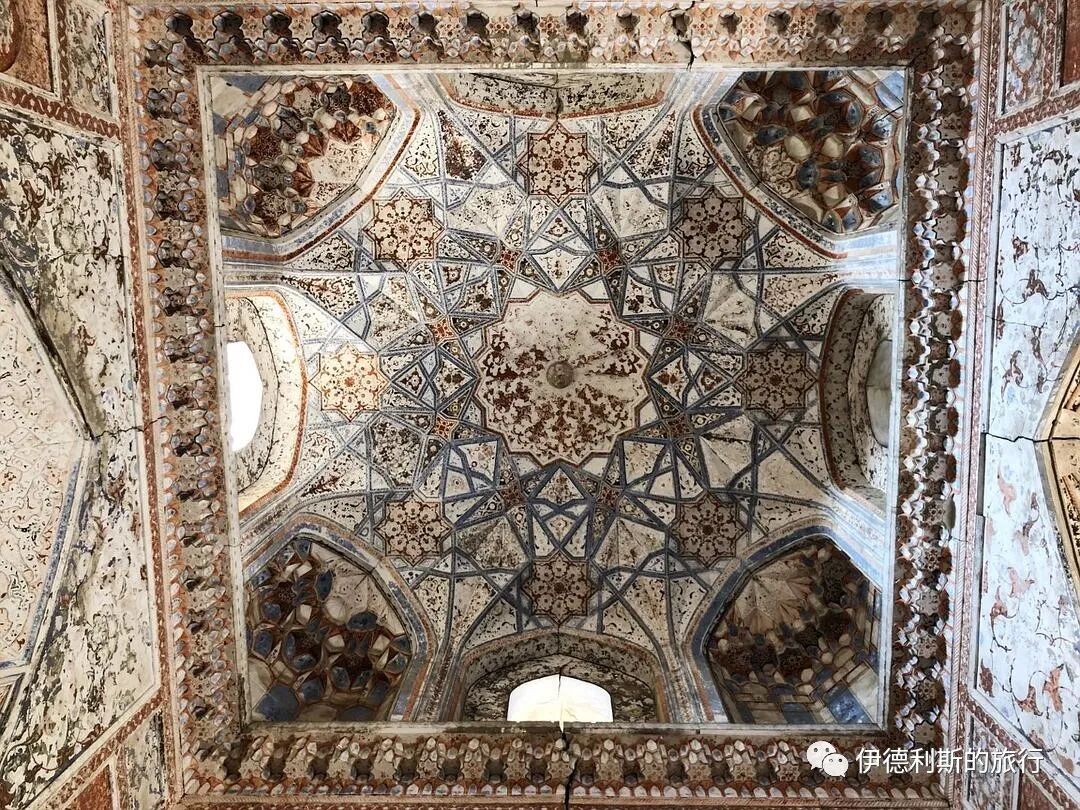
Turki Jandi Mausoleum: 16th-18th century
The Turki Jandi Mausoleum is a holy shrine in the ancient city of Bukhara. Because it is not in the tourist area, the atmosphere is very good. There is a well in front of the mausoleum, and the well water is believed to have miraculous properties. Here, you can see a mullah chatting kindly with people in the room at the entrance, and you can also see locals drinking the well water and then piously making dua (dua) in front of the holy shrine. This is the more everyday side of the ancient city of Bukhara.
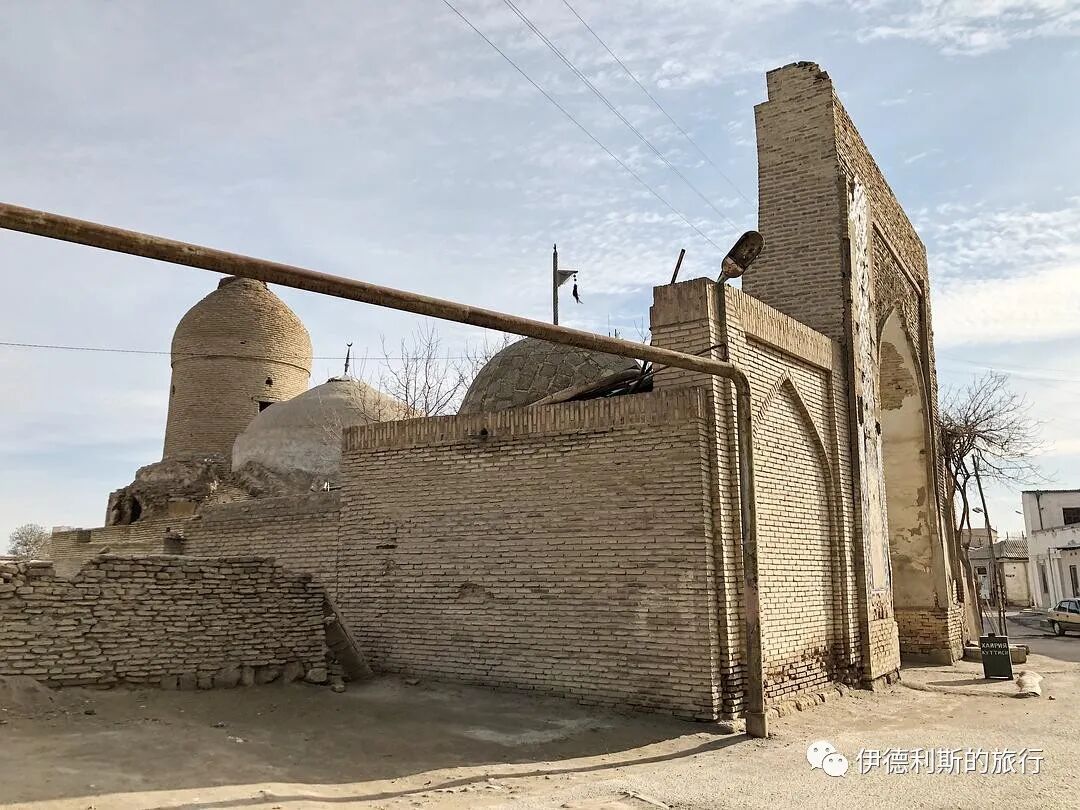
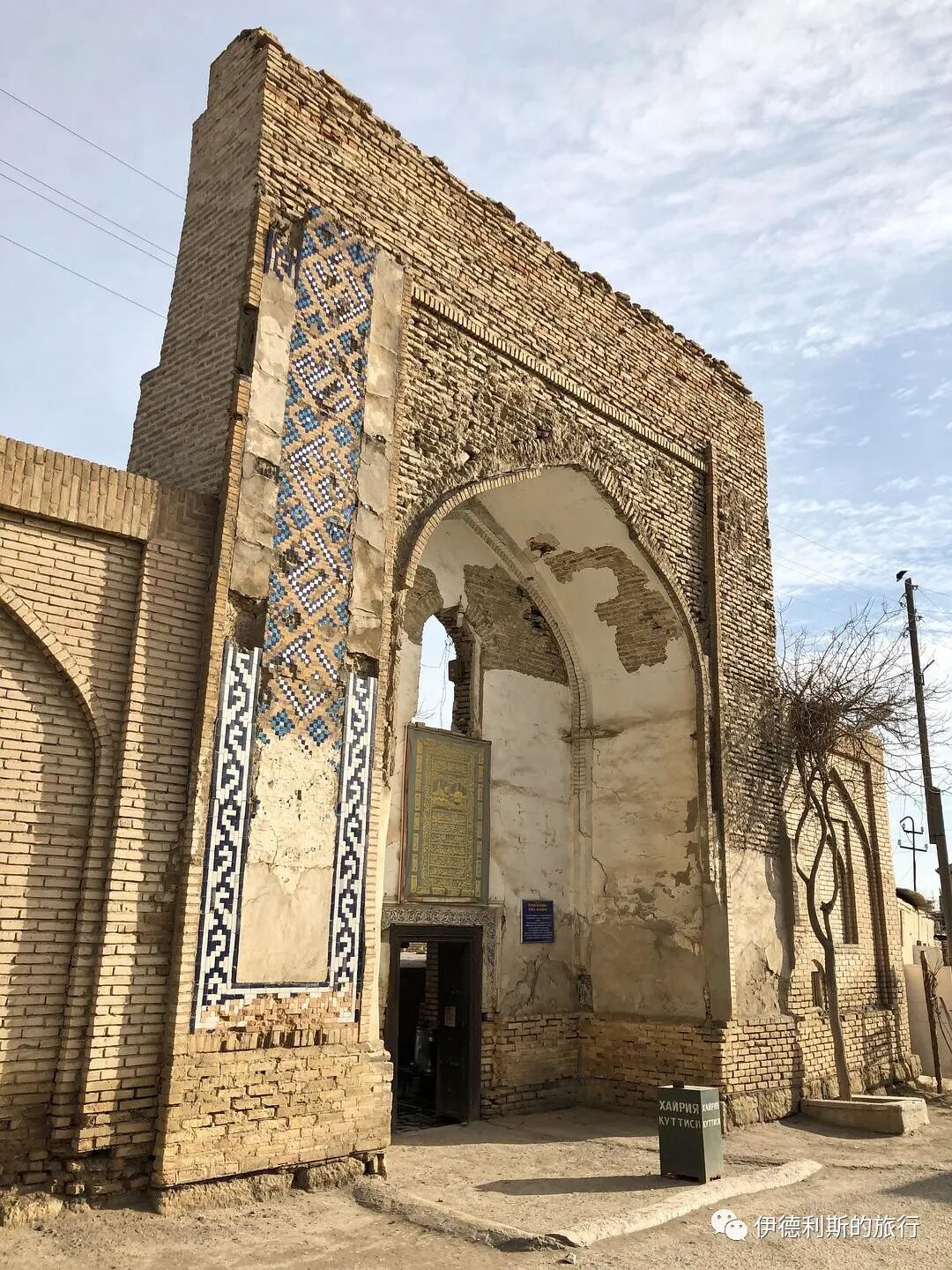
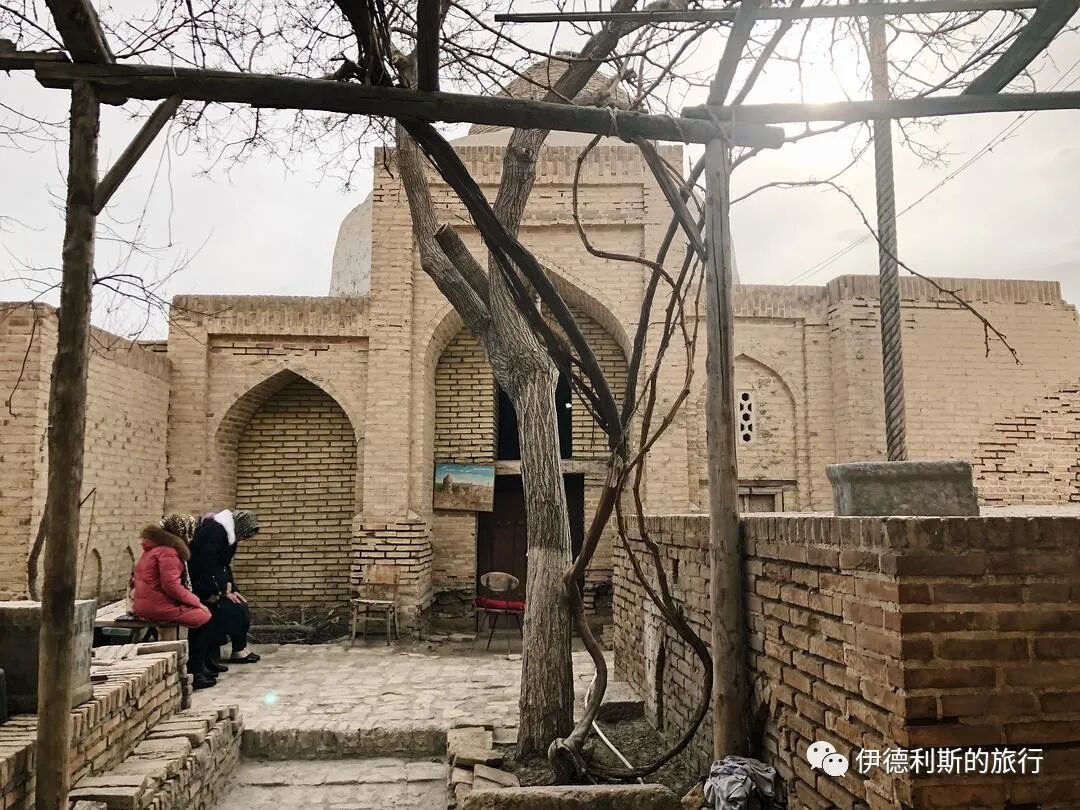
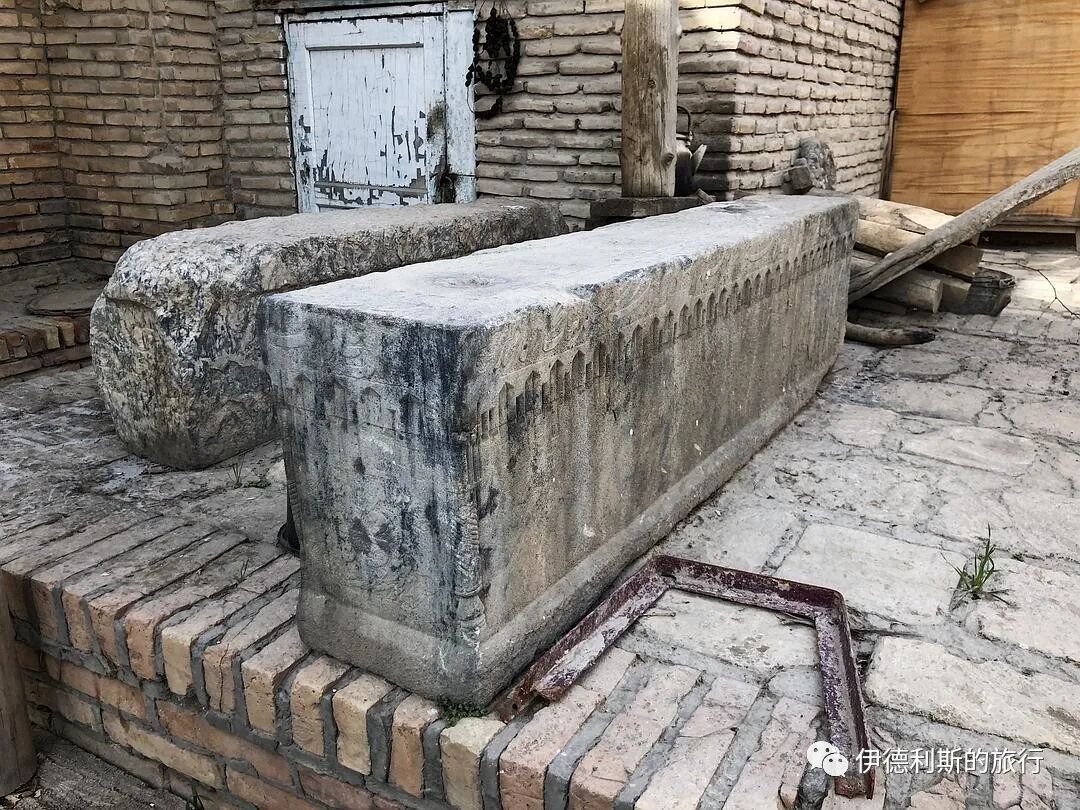
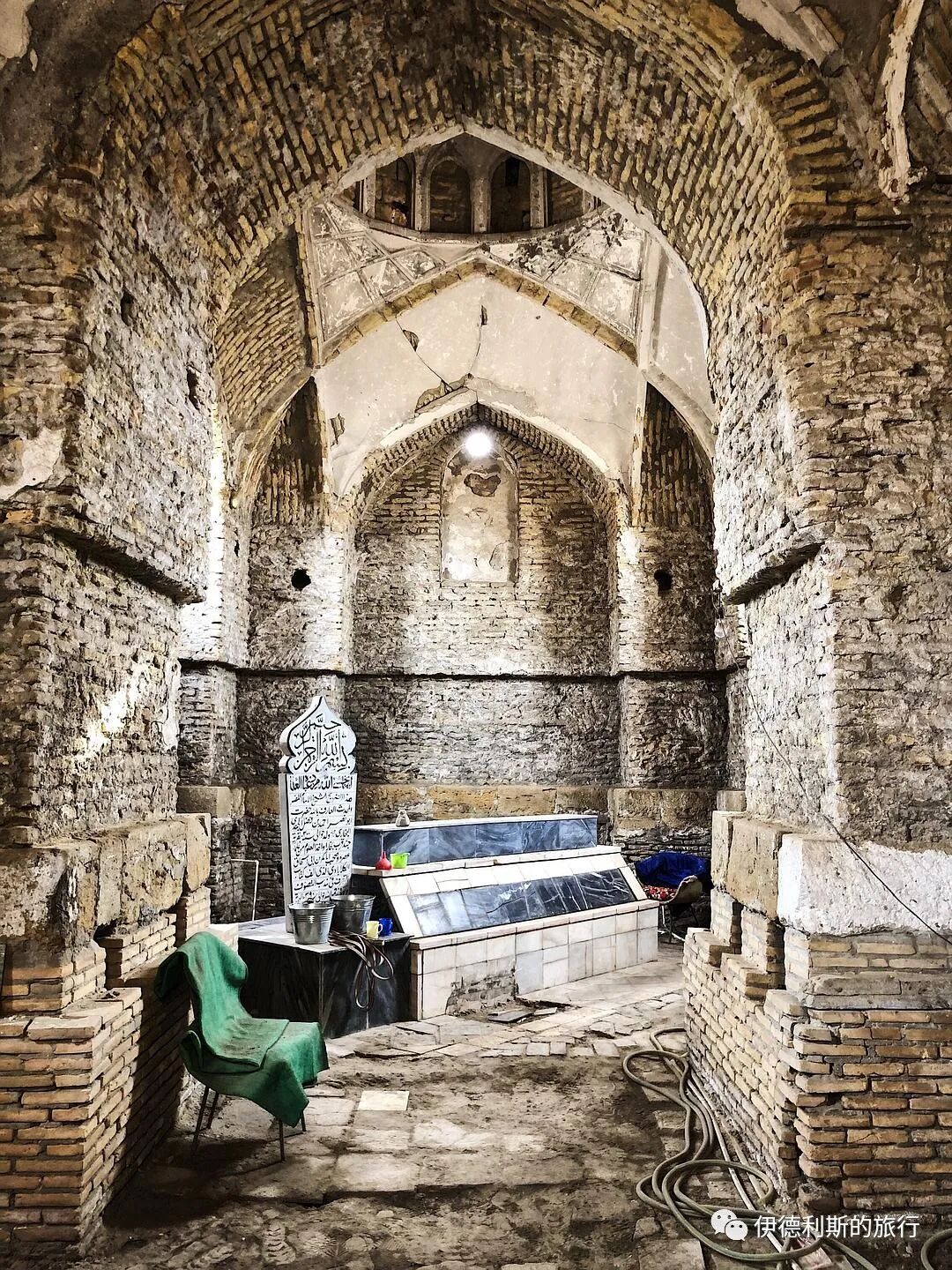
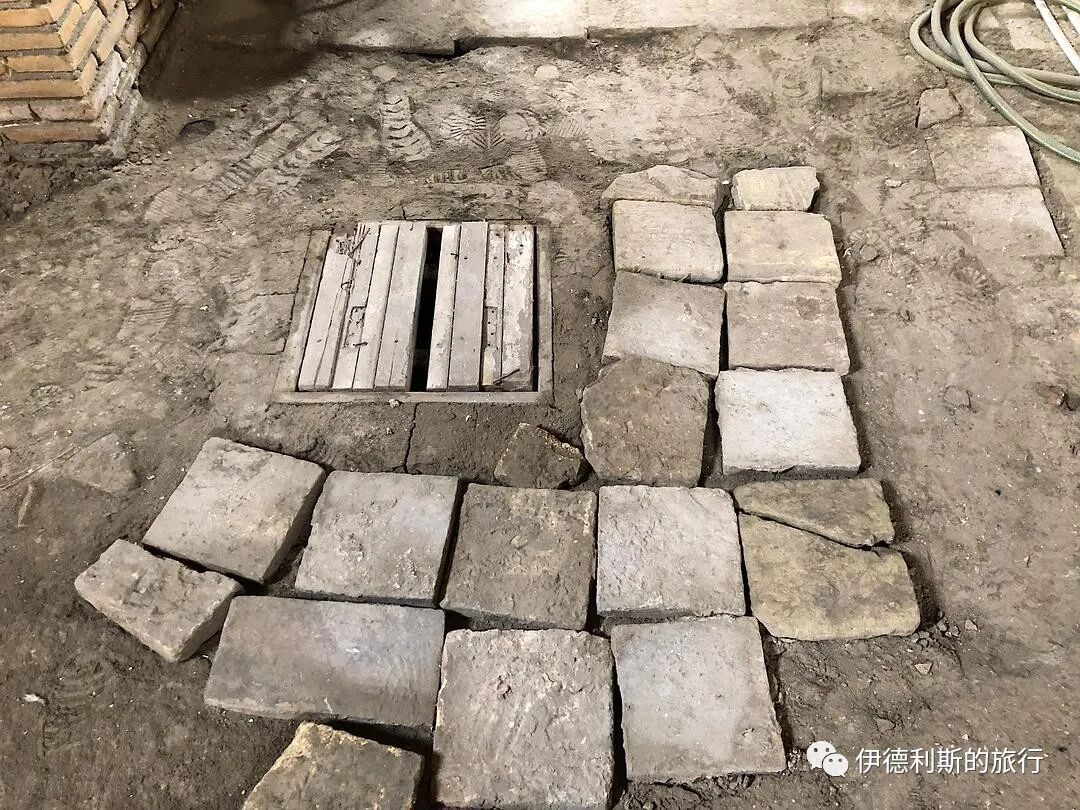
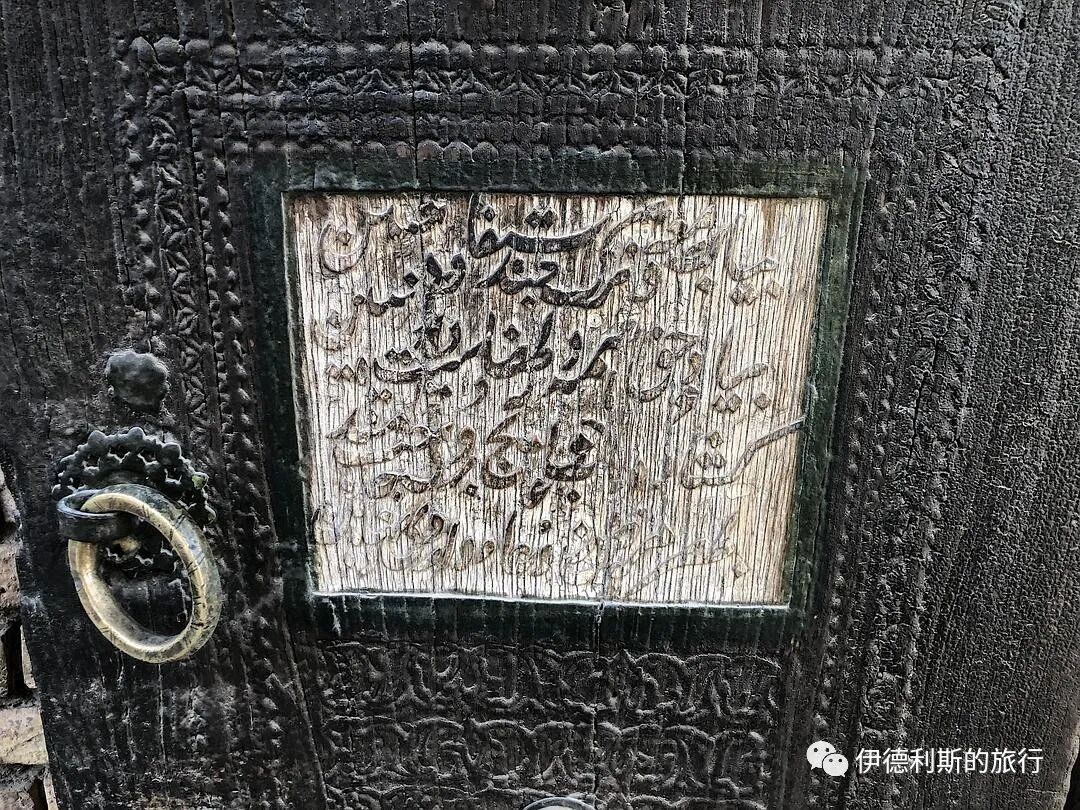
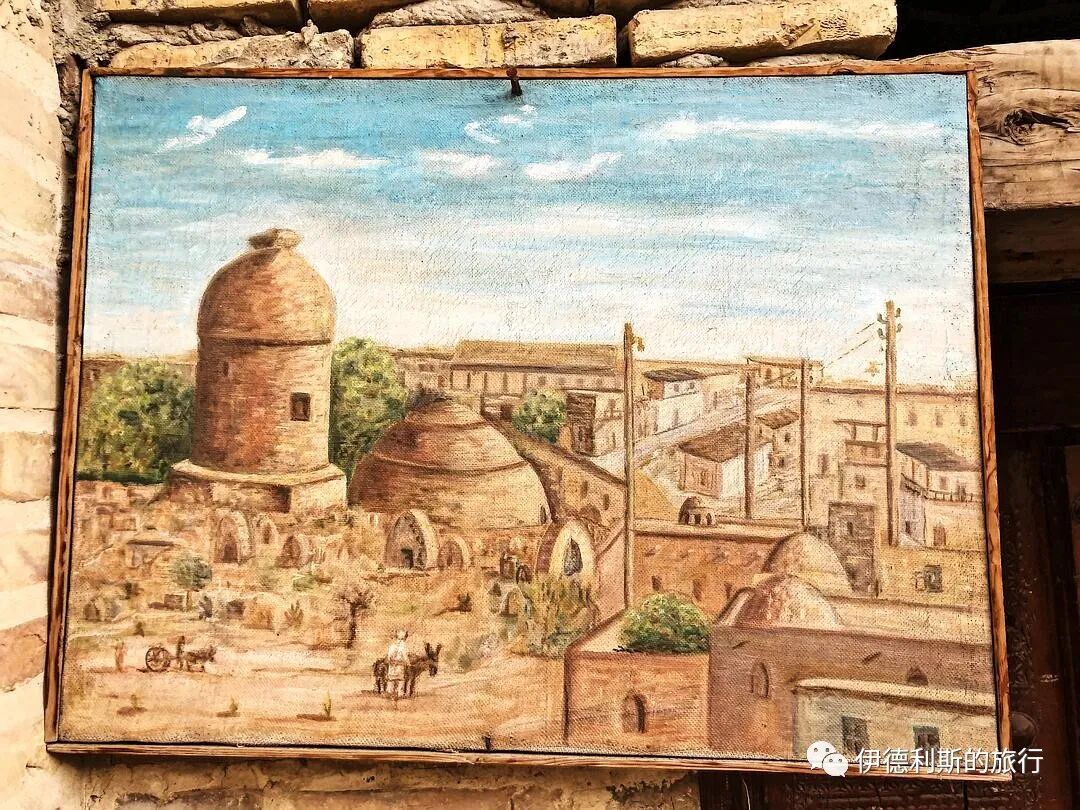
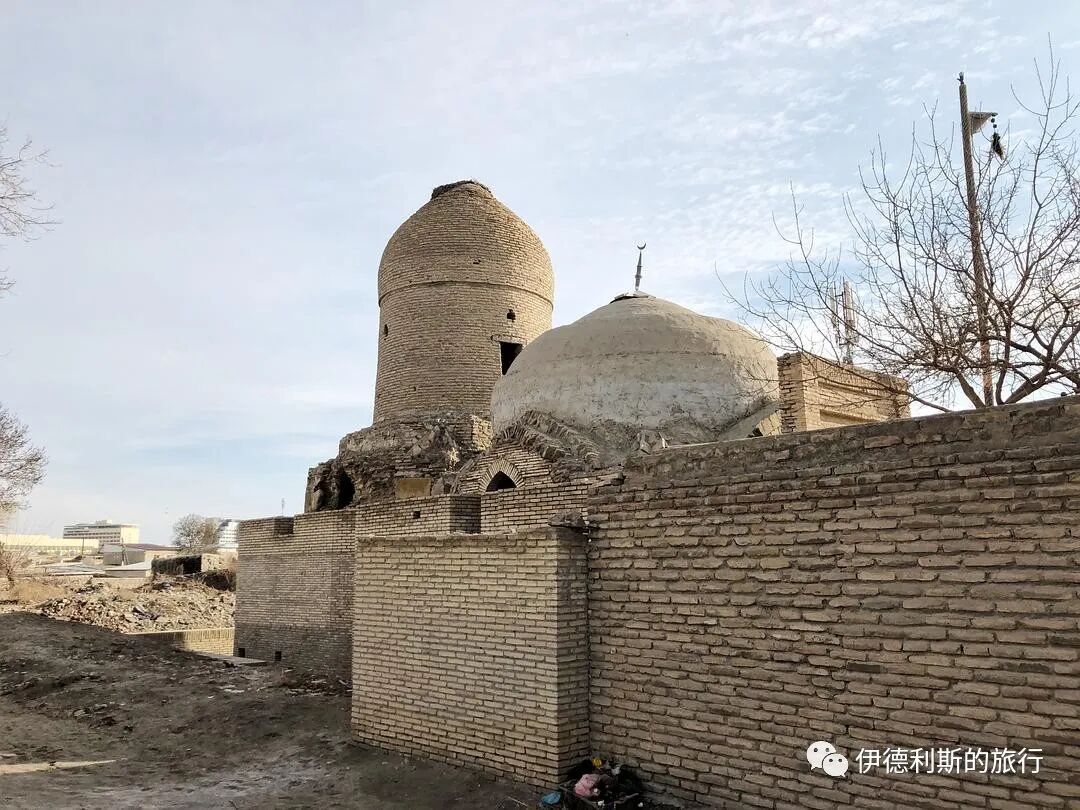
Summary: This travel note introduces Bukhara Travel Guide: Capital of the Bukhara Khanate, Mosques and Islamic Heritage (Part 2). 13. Magok-i-Kurpa Mosque: 1637. It is useful for readers interested in Bukhara Travel, Islamic Heritage, Uzbekistan.
13. Magok-i-Kurpa Mosque: 1637
The Magok-i-Kurpa Mosque was built in 1637. It was originally two stories, but the first floor is almost submerged underground, which is why it is called "Magok-i" (in the pit). The mosque is rectangular and has 12 domes on the roof. Because the mosque was under renovation, I was unable to enter for a visit.
14. Abdul Aziz Khan Madrasah: 1651
The Abdul Aziz Khan Madrasah was ordered to be built in 1651 by Abdul Aziz Khan (reigned 1645-1680), the fifth khan of the Janid Dynasty of the Bukhara Khanate. Together with the Ulugbek Madrasah, built in 1417 by Ulugbek, the third ruler of the Timurid Dynasty, it forms an architectural complex.
The Abdul Aziz Khan Madrasah is hailed as a representative work of 17th-century Central Asian architecture. Compared to the Timurid-era Ulugbek Madrasah, the Abdul Aziz Khan Madrasah, built 200 years later, is more ornate and exquisite. The madrasah's pishtaq (monumental portal) is very tall, and the iwan (vaulted hall) arch is decorated with exquisite patterns and verses from famous poets. The walls and rooms utilize almost all the architectural decoration techniques of that era, including relief majolica, marble carving, mosaic tiles, and gilded murals.
Abdul Aziz Khan himself attached great importance to Islamic religious education, but due to the invasion of the Khanate of Khiva and the intensification of internal divisions within the Bukhara Khanate, he was ultimately unable to rule the khanate. He chose to abdicate in favor of his younger brother and set off for Mecca for Hajj (pilgrimage). When Abdul Aziz left, some of the decorations in the madrasah were still unfinished.
Turki Jandi Mausoleum: 16th-18th century
The Turki Jandi Mausoleum is a holy shrine in the ancient city of Bukhara. Because it is not in the tourist area, the atmosphere is very good. There is a well in front of the mausoleum, and the well water is believed to have miraculous properties. Here, you can see a mullah chatting kindly with people in the room at the entrance, and you can also see locals drinking the well water and then piously making dua (dua) in front of the holy shrine. This is the more everyday side of the ancient city of Bukhara.
Bukhara Old City Bazaar Guide: Miniature Art, Muslim Heritage and Local Crafts
Articles • ali2007fr posted the article • 0 comments • 192 views • 2026-05-17 07:16
Reposted from the web
Summary: This travel note introduces Bukhara Old City Bazaar Guide: Miniature Art, Muslim Heritage and Local Crafts. A record of my trip to the ancient city of Bukhara during the 2019 Spring Festival holiday to eat, shop, buy hats, and purchase miniature paintings. It is useful for readers interested in Bukhara Travel, Islamic Art, Bazaar Culture.
A record of my trip to the ancient city of Bukhara during the 2019 Spring Festival holiday to eat, shop, buy hats, and purchase miniature paintings.
Food
When I was in Bukhara, I stayed at the Komil Hotel, which is recommended by Lonely Planet. The hotel is located in an alley in the center of the ancient city. It was originally a wealthy merchant's residence built in the 19th century, purchased by Komil's grandfather 50 years ago, and opened as a hotel in 2000. The owner, Komil Kadirov, speaks fluent English and is very welcoming to guests.
The hotel still retains the wood carvings and paintings of traditional 19th-century Bukhara architecture. The room I stayed in has been partially renovated, but the dining room where breakfast is served is very well preserved, as if I had traveled back to Bukhara over 100 years ago. Their breakfast is very hearty; even for one person, it fills the entire table, which made me feel a bit embarrassed. Breakfast was truly a highlight of my trip to Uzbekistan. Basically, every hotel prepares more than ten types of dishes and will ask if you want boiled or fried eggs, and black or green tea. The service attitude is really great.
The Bukhara Central Bazaar (Buxoro markaziy bozori; the 'a' in Uyghur is pronounced as 'o' in Uzbek) is in the western part of the old city. It is very lively and sells everything. The best snack to eat in winter is, of course, the flaky somsa (baked meat buns; 'Samsa' in Uyghur)! Uzbek somsa is served with a homemade sauce, often containing fennel and onions, and sometimes cilantro.
Naan stalls are the most common stalls in the bazaar.
Eating kebabs at the Doniyorbek restaurant opposite the Bukhara Central Bazaar. While walking through the bazaar, I saw a very Soviet-style restaurant across the street. After going inside, I found it had such a great atmosphere—the green walls, the stove in the room, and the classic service window made it feel like I had returned to the Soviet Union.
Note that in the former Soviet regions, when talking about eating kebabs, you should say 'Shashlik' instead of the Uyghur word 'Kewap'. The term 'Shashlik' originated from the Crimean Tatars and became popular throughout the Russian Empire after the 18th century. In Uzbekistan, saying 'Kebab' will get you Middle Eastern-style minced meat skewers; 'Shashlik' is the meat-chunk skewers we are familiar with.
In addition, the side dishes for the meat are very rich. I chose yogurt with small side dishes, which is very refreshing and cuts through the greasiness.
Eating Kifta Shurva (clear meatball soup), Manti (steamed dumplings), and grilled lamb chops at Temir's restaurant in the center of the old city of Bukhara. Their environment is nice, and it is the only place in the old city of Bukhara where you can withdraw cash using a Mastercard credit card.
Manti is believed to have been spread from East Asia to West Asia and even Eastern Europe by Mongol and Turkic peoples along the Silk Road during the Mongol Empire era. Now, Manti has become a traditional delicacy in Xinjiang, the former Soviet Union, Afghanistan, Turkey, and the Balkans. Central Asian Manti is generally eaten dipped in thick yogurt.
Their restaurant is right next to the famous Magoki Attor Mosque in Bukhara. This mosque, built in the 12th century, is a model of architecture from the Karakhanid dynasty period in Bukhara and even all of Central Asia.
Another meal of fried chuchvara (dumplings) and lamb soup.
Eating plov (pilaf) and drinking meat soup, as well as having two types of salads, at the Chayxana chinar teahouse in the ancient city of Bukhara. Teahouses in Central Asia serve food and are also a type of public activity space.
Performing Jumu'ah (Friday prayer) at the Po-i-Kalyan Mosque (Maedjid-i Kalan). The Kalyan Mosque was originally built in 1121 by Arslan Khan of the Karakhanid dynasty. It was later destroyed during Genghis Khan's siege of Bukhara, leaving only the minaret. The current mosque was built in 1514 during the Bukhara Khanate period. Today, the Kalyan Mosque is the most important Jumu'ah mosque in Bukhara. It consists of a rectangular courtyard with 288 domes and 208 pillars, with a tall Iwan (vaulted hall) gate in the center. The main hall can accommodate 12,000 people.
According to archaeological findings, there are two layers of mosque ruins buried beneath the current mosque. The bottom layer is a mosque from the Karakhanid dynasty in 1121, with the same scale as the current one, and the upper layer is a mosque built in the early 14th century during the Chagatai Khanate period, made entirely of brick.
Miniature painting
I visited the first miniature painting workshop in Bukhara and bought a few small miniature paintings.
The Tok-i-Zargaron (Jewelry Dome Market) was built in 1570. It is the largest of the four remaining dome markets from the Bukhara Khanate period in the ancient city of Bukhara and is the best witness to Bukhara's role as a trade center in Central Asia in the 16th century.
'Tok-i-Zargaron' means 'Dome of the Jewelers.' It has four arched passages for Silk Road trade caravans to pass through, as well as 16 domes on an octagonal base. During the Bukhara Khanate period, there were 36 jewelry workshops and shops under the dome, selling rings, earrings, necklaces, and various other jewelry.
Buying miniature paintings in the market.
The Toqi Telpak Furushon (Hat Dome Market), built at the end of the 16th century during the Bukhara Khanate, consists of a central dome and a hexagonal base, connecting five streets in the old city. This place was originally called the Kitab-Furushon (Book Market), but later gradually switched to selling various headscarves, fur hats, and skullcaps. Now it has become a place for selling tourist souvenirs.
I bought a miniature painting at a workshop in the market; this one was painted directly on old paper.
Hats
Some historical sites in the ancient city of Bukhara have shops selling traditional hats. This time, I bought several at the Abdulaziz Khan Madrasah (Islamic school), which was built in 1652.
As soon as you enter the gate of the madrasah, there is an auntie on the right selling antique jewelry.
I helped a friend purchase a 19th-century Uzbek Tilla Qash (gold brow headpiece) here.
Then I went to another auntie's shop in the madrasah.
I bought two Soviet-era almond-patterned doppa (traditional skullcaps). These colorful almond-patterned doppas are rare now; the ones worn on the street today are basically black and white.
There was also a traditional Central Asian hat; this pointed style is hard to find in Xinjiang.
I also bought a traditional tablecloth from her shop.
I helped a friend purchase five hats in the old city of Bukhara. The young girl selling the hats took a liking to my portable charger and wanted to trade it for a hat, but since I was still traveling, I didn't agree.
Streets of Bukhara view all
Summary: This travel note introduces Bukhara Old City Bazaar Guide: Miniature Art, Muslim Heritage and Local Crafts. A record of my trip to the ancient city of Bukhara during the 2019 Spring Festival holiday to eat, shop, buy hats, and purchase miniature paintings. It is useful for readers interested in Bukhara Travel, Islamic Art, Bazaar Culture.
A record of my trip to the ancient city of Bukhara during the 2019 Spring Festival holiday to eat, shop, buy hats, and purchase miniature paintings.
Food
When I was in Bukhara, I stayed at the Komil Hotel, which is recommended by Lonely Planet. The hotel is located in an alley in the center of the ancient city. It was originally a wealthy merchant's residence built in the 19th century, purchased by Komil's grandfather 50 years ago, and opened as a hotel in 2000. The owner, Komil Kadirov, speaks fluent English and is very welcoming to guests.
The hotel still retains the wood carvings and paintings of traditional 19th-century Bukhara architecture. The room I stayed in has been partially renovated, but the dining room where breakfast is served is very well preserved, as if I had traveled back to Bukhara over 100 years ago. Their breakfast is very hearty; even for one person, it fills the entire table, which made me feel a bit embarrassed. Breakfast was truly a highlight of my trip to Uzbekistan. Basically, every hotel prepares more than ten types of dishes and will ask if you want boiled or fried eggs, and black or green tea. The service attitude is really great.
The Bukhara Central Bazaar (Buxoro markaziy bozori; the 'a' in Uyghur is pronounced as 'o' in Uzbek) is in the western part of the old city. It is very lively and sells everything. The best snack to eat in winter is, of course, the flaky somsa (baked meat buns; 'Samsa' in Uyghur)! Uzbek somsa is served with a homemade sauce, often containing fennel and onions, and sometimes cilantro.
Naan stalls are the most common stalls in the bazaar.
Eating kebabs at the Doniyorbek restaurant opposite the Bukhara Central Bazaar. While walking through the bazaar, I saw a very Soviet-style restaurant across the street. After going inside, I found it had such a great atmosphere—the green walls, the stove in the room, and the classic service window made it feel like I had returned to the Soviet Union.
Note that in the former Soviet regions, when talking about eating kebabs, you should say 'Shashlik' instead of the Uyghur word 'Kewap'. The term 'Shashlik' originated from the Crimean Tatars and became popular throughout the Russian Empire after the 18th century. In Uzbekistan, saying 'Kebab' will get you Middle Eastern-style minced meat skewers; 'Shashlik' is the meat-chunk skewers we are familiar with.
In addition, the side dishes for the meat are very rich. I chose yogurt with small side dishes, which is very refreshing and cuts through the greasiness.
Eating Kifta Shurva (clear meatball soup), Manti (steamed dumplings), and grilled lamb chops at Temir's restaurant in the center of the old city of Bukhara. Their environment is nice, and it is the only place in the old city of Bukhara where you can withdraw cash using a Mastercard credit card.
Manti is believed to have been spread from East Asia to West Asia and even Eastern Europe by Mongol and Turkic peoples along the Silk Road during the Mongol Empire era. Now, Manti has become a traditional delicacy in Xinjiang, the former Soviet Union, Afghanistan, Turkey, and the Balkans. Central Asian Manti is generally eaten dipped in thick yogurt.
Their restaurant is right next to the famous Magoki Attor Mosque in Bukhara. This mosque, built in the 12th century, is a model of architecture from the Karakhanid dynasty period in Bukhara and even all of Central Asia.
Another meal of fried chuchvara (dumplings) and lamb soup.
Eating plov (pilaf) and drinking meat soup, as well as having two types of salads, at the Chayxana chinar teahouse in the ancient city of Bukhara. Teahouses in Central Asia serve food and are also a type of public activity space.
Performing Jumu'ah (Friday prayer) at the Po-i-Kalyan Mosque (Maedjid-i Kalan). The Kalyan Mosque was originally built in 1121 by Arslan Khan of the Karakhanid dynasty. It was later destroyed during Genghis Khan's siege of Bukhara, leaving only the minaret. The current mosque was built in 1514 during the Bukhara Khanate period. Today, the Kalyan Mosque is the most important Jumu'ah mosque in Bukhara. It consists of a rectangular courtyard with 288 domes and 208 pillars, with a tall Iwan (vaulted hall) gate in the center. The main hall can accommodate 12,000 people.
According to archaeological findings, there are two layers of mosque ruins buried beneath the current mosque. The bottom layer is a mosque from the Karakhanid dynasty in 1121, with the same scale as the current one, and the upper layer is a mosque built in the early 14th century during the Chagatai Khanate period, made entirely of brick.
Miniature painting
I visited the first miniature painting workshop in Bukhara and bought a few small miniature paintings.
The Tok-i-Zargaron (Jewelry Dome Market) was built in 1570. It is the largest of the four remaining dome markets from the Bukhara Khanate period in the ancient city of Bukhara and is the best witness to Bukhara's role as a trade center in Central Asia in the 16th century.
'Tok-i-Zargaron' means 'Dome of the Jewelers.' It has four arched passages for Silk Road trade caravans to pass through, as well as 16 domes on an octagonal base. During the Bukhara Khanate period, there were 36 jewelry workshops and shops under the dome, selling rings, earrings, necklaces, and various other jewelry.
Buying miniature paintings in the market.
The Toqi Telpak Furushon (Hat Dome Market), built at the end of the 16th century during the Bukhara Khanate, consists of a central dome and a hexagonal base, connecting five streets in the old city. This place was originally called the Kitab-Furushon (Book Market), but later gradually switched to selling various headscarves, fur hats, and skullcaps. Now it has become a place for selling tourist souvenirs.
I bought a miniature painting at a workshop in the market; this one was painted directly on old paper.
Hats
Some historical sites in the ancient city of Bukhara have shops selling traditional hats. This time, I bought several at the Abdulaziz Khan Madrasah (Islamic school), which was built in 1652.
As soon as you enter the gate of the madrasah, there is an auntie on the right selling antique jewelry.
I helped a friend purchase a 19th-century Uzbek Tilla Qash (gold brow headpiece) here.
Then I went to another auntie's shop in the madrasah.
I bought two Soviet-era almond-patterned doppa (traditional skullcaps). These colorful almond-patterned doppas are rare now; the ones worn on the street today are basically black and white.
There was also a traditional Central Asian hat; this pointed style is hard to find in Xinjiang.
I also bought a traditional tablecloth from her shop.
I helped a friend purchase five hats in the old city of Bukhara. The young girl selling the hats took a liking to my portable charger and wanted to trade it for a hat, but since I was still traveling, I didn't agree.
Streets of Bukhara view all
Reposted from the web
Summary: This travel note introduces Bukhara Old City Bazaar Guide: Miniature Art, Muslim Heritage and Local Crafts. A record of my trip to the ancient city of Bukhara during the 2019 Spring Festival holiday to eat, shop, buy hats, and purchase miniature paintings. It is useful for readers interested in Bukhara Travel, Islamic Art, Bazaar Culture.
A record of my trip to the ancient city of Bukhara during the 2019 Spring Festival holiday to eat, shop, buy hats, and purchase miniature paintings.
Food
When I was in Bukhara, I stayed at the Komil Hotel, which is recommended by Lonely Planet. The hotel is located in an alley in the center of the ancient city. It was originally a wealthy merchant's residence built in the 19th century, purchased by Komil's grandfather 50 years ago, and opened as a hotel in 2000. The owner, Komil Kadirov, speaks fluent English and is very welcoming to guests.
The hotel still retains the wood carvings and paintings of traditional 19th-century Bukhara architecture. The room I stayed in has been partially renovated, but the dining room where breakfast is served is very well preserved, as if I had traveled back to Bukhara over 100 years ago. Their breakfast is very hearty; even for one person, it fills the entire table, which made me feel a bit embarrassed. Breakfast was truly a highlight of my trip to Uzbekistan. Basically, every hotel prepares more than ten types of dishes and will ask if you want boiled or fried eggs, and black or green tea. The service attitude is really great.
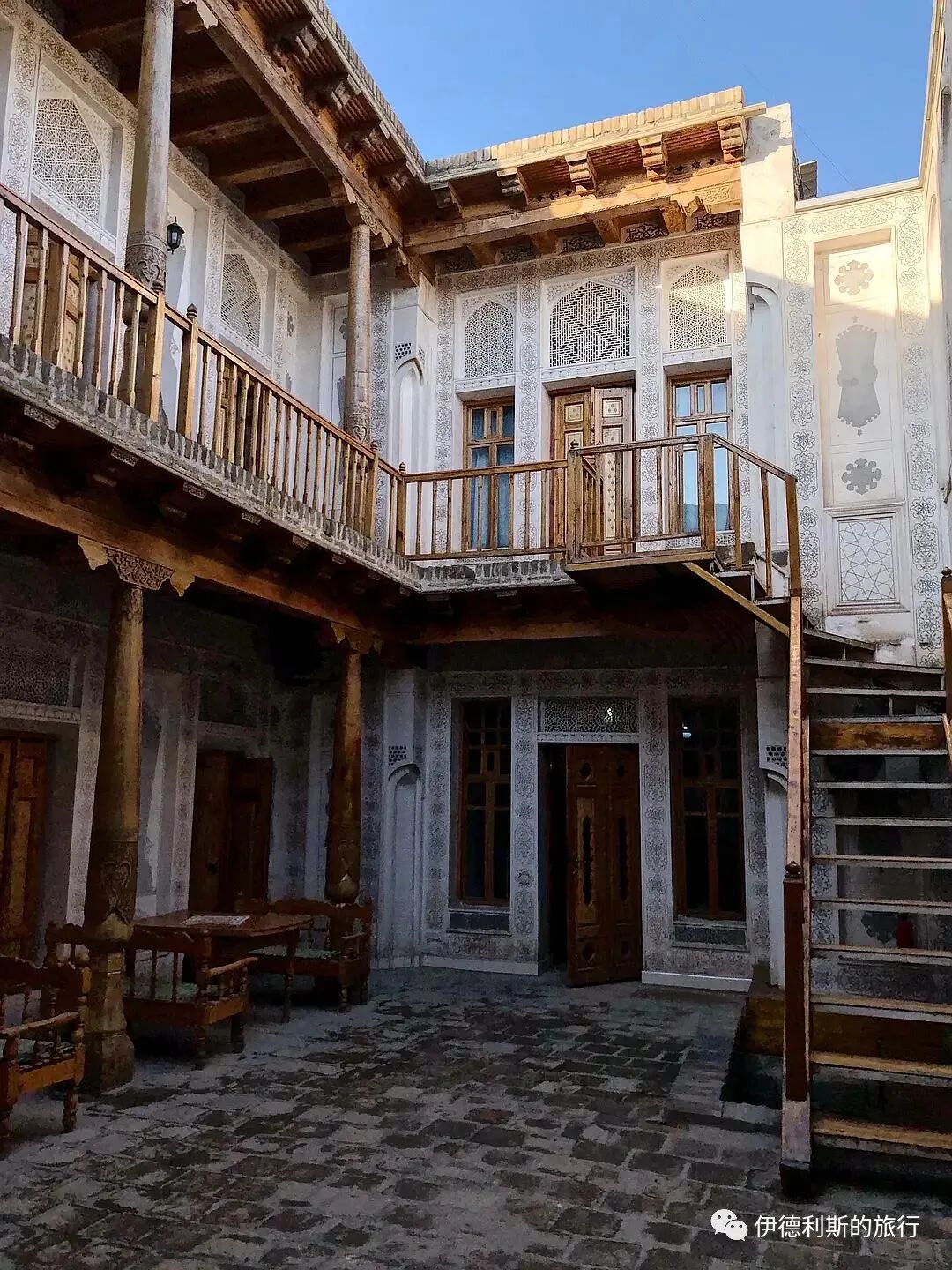
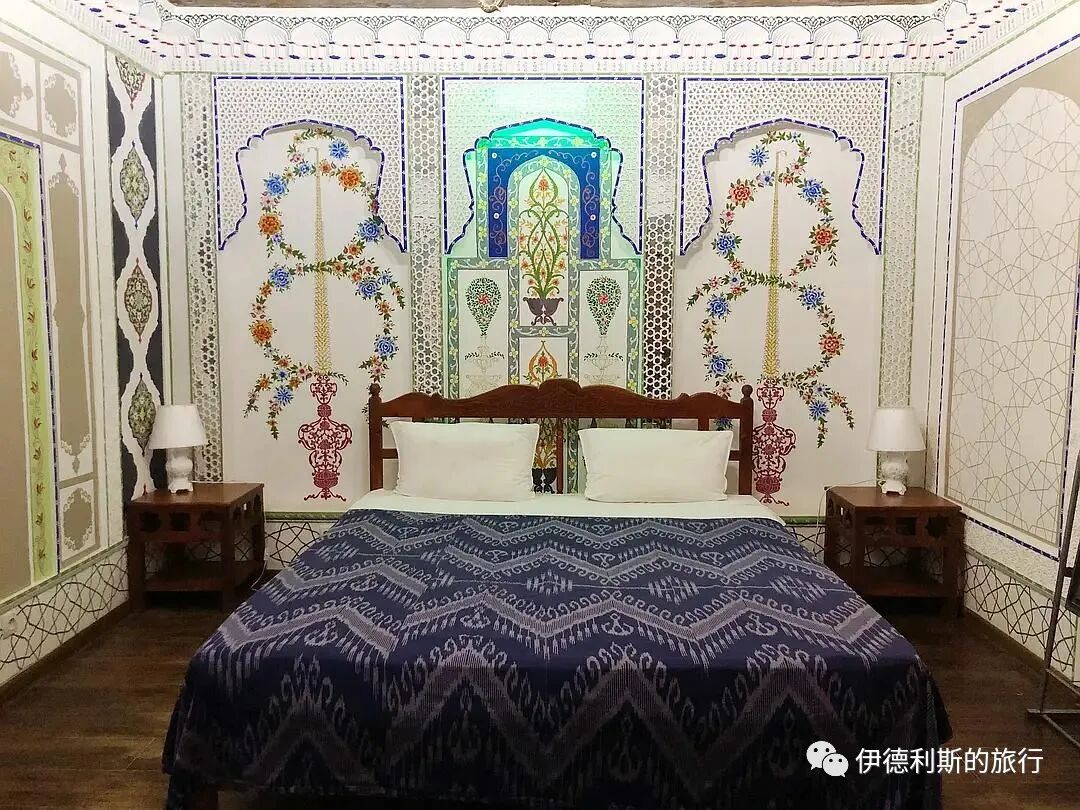
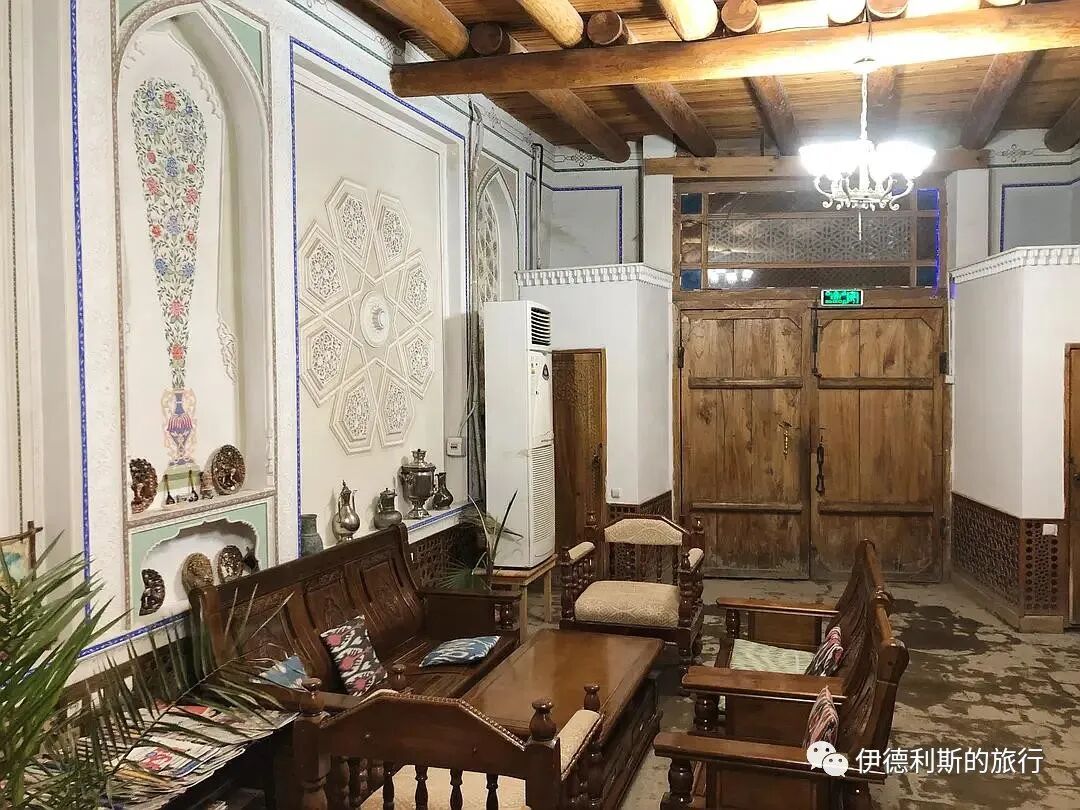
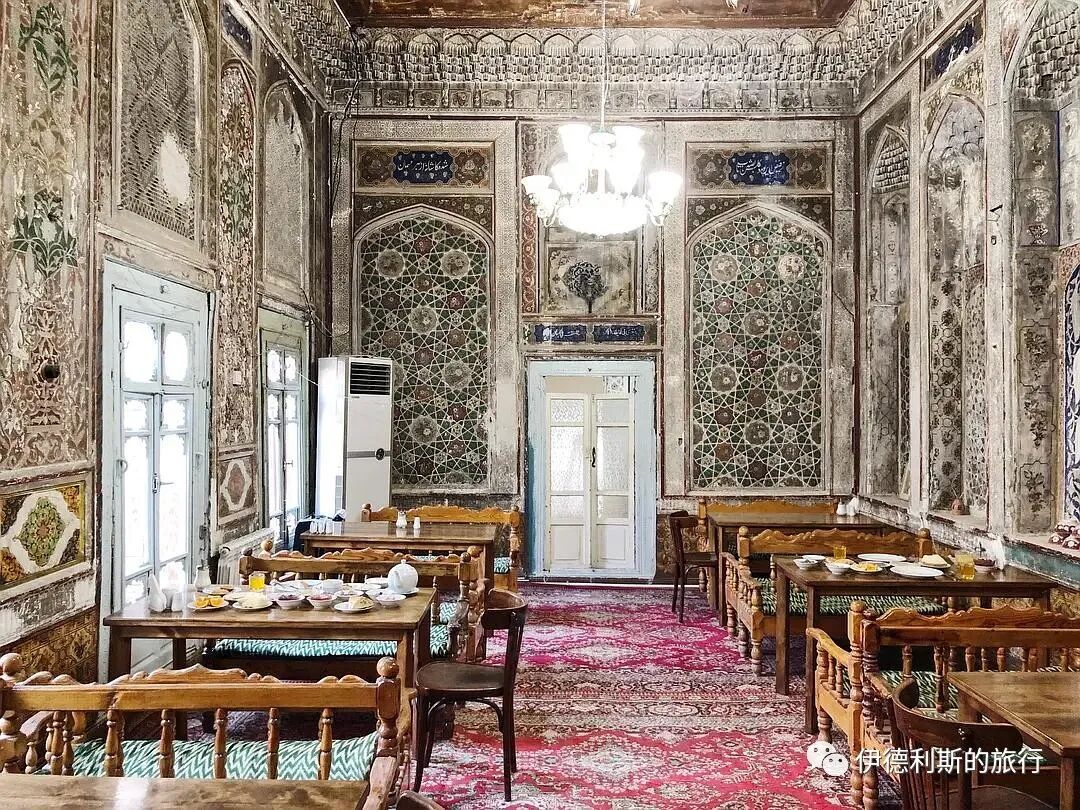
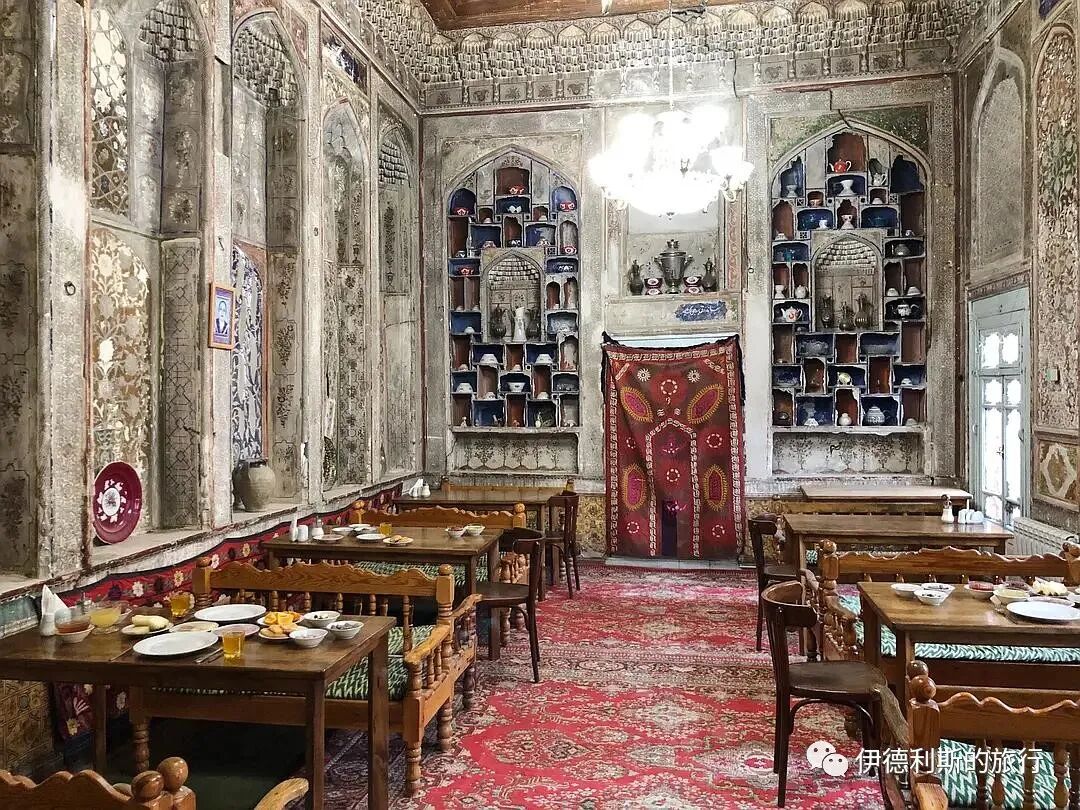
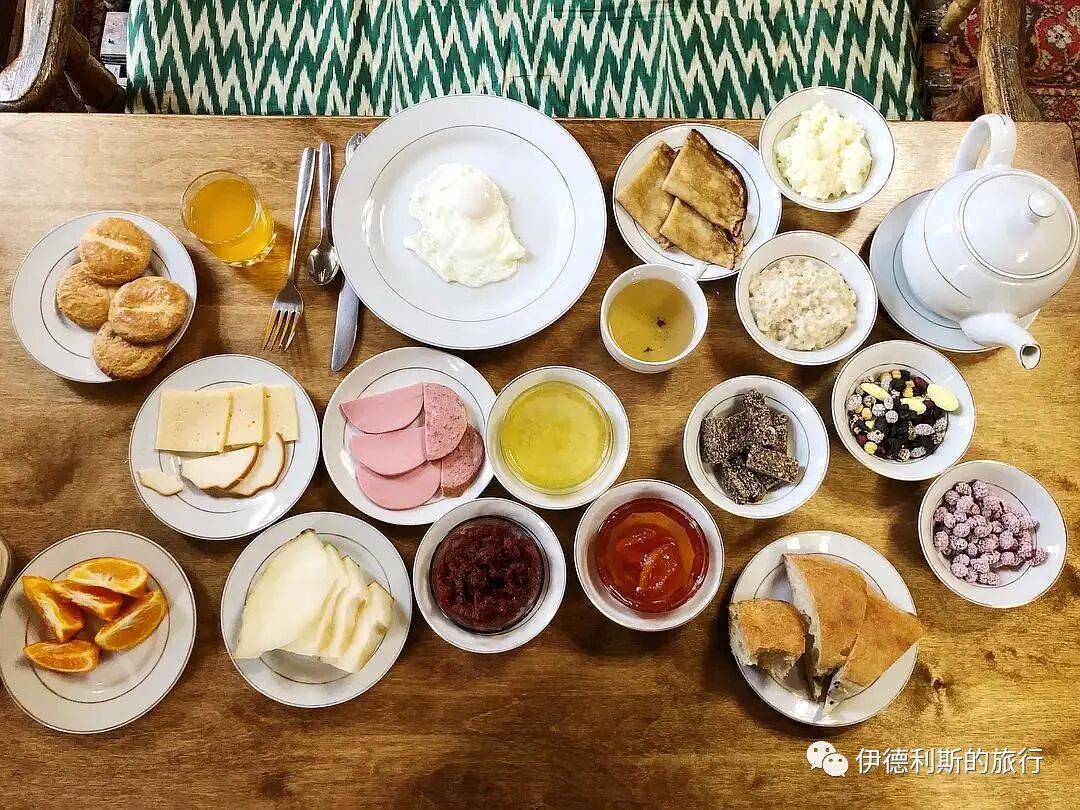
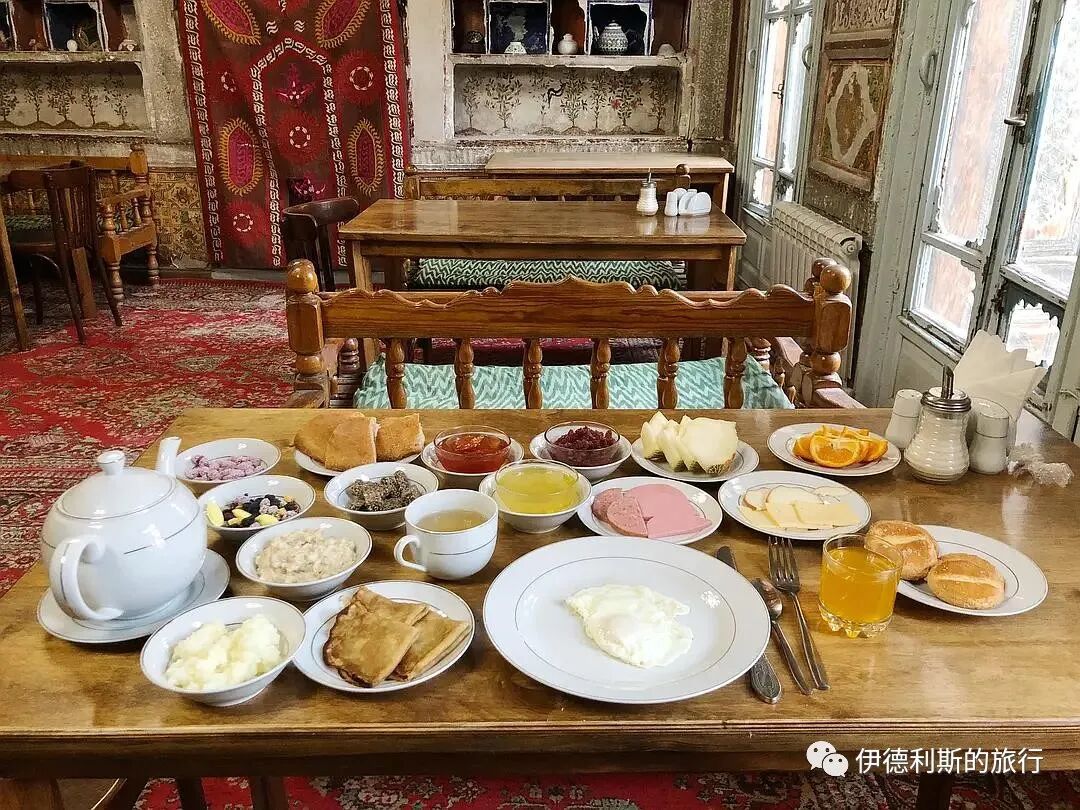
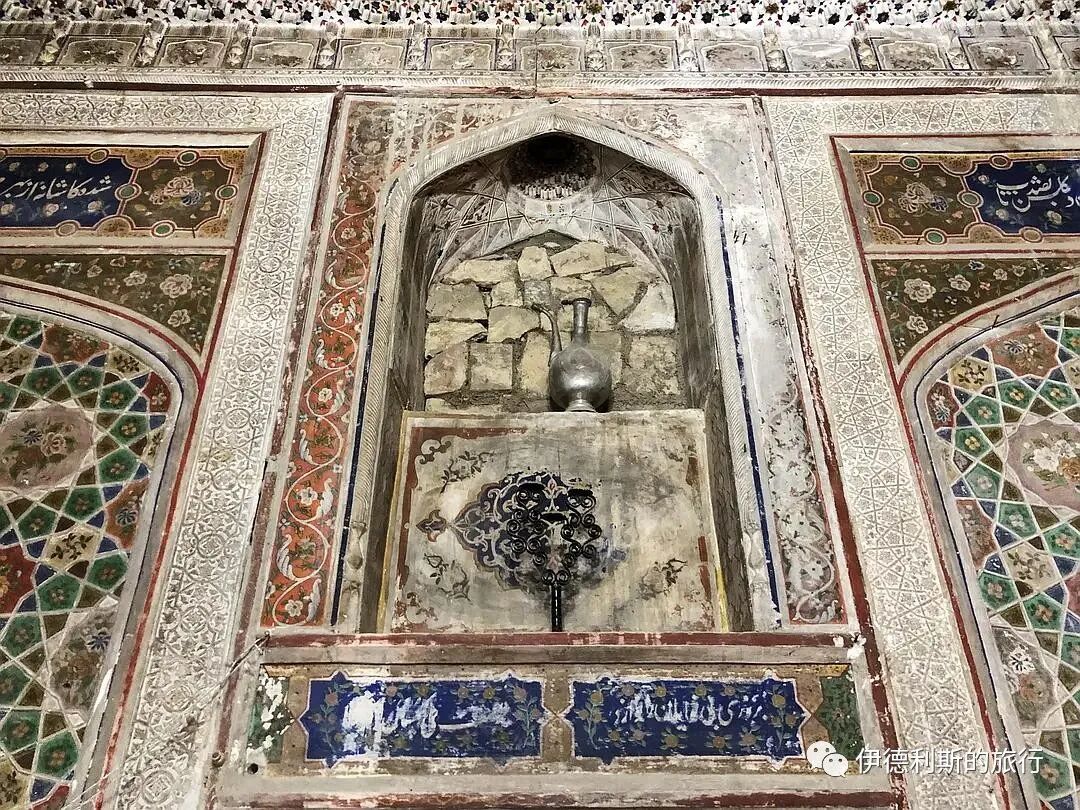
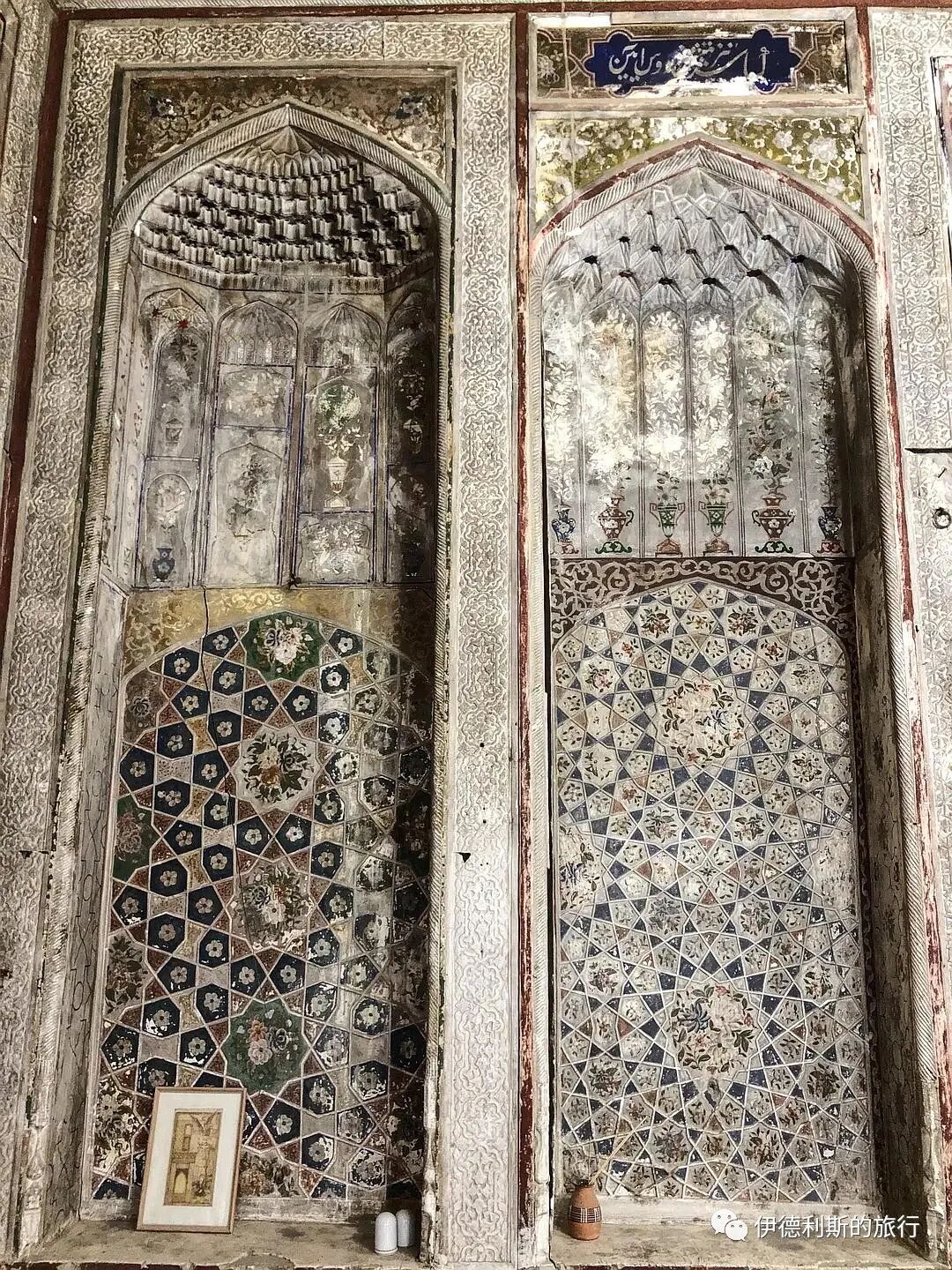
The Bukhara Central Bazaar (Buxoro markaziy bozori; the 'a' in Uyghur is pronounced as 'o' in Uzbek) is in the western part of the old city. It is very lively and sells everything. The best snack to eat in winter is, of course, the flaky somsa (baked meat buns; 'Samsa' in Uyghur)! Uzbek somsa is served with a homemade sauce, often containing fennel and onions, and sometimes cilantro.
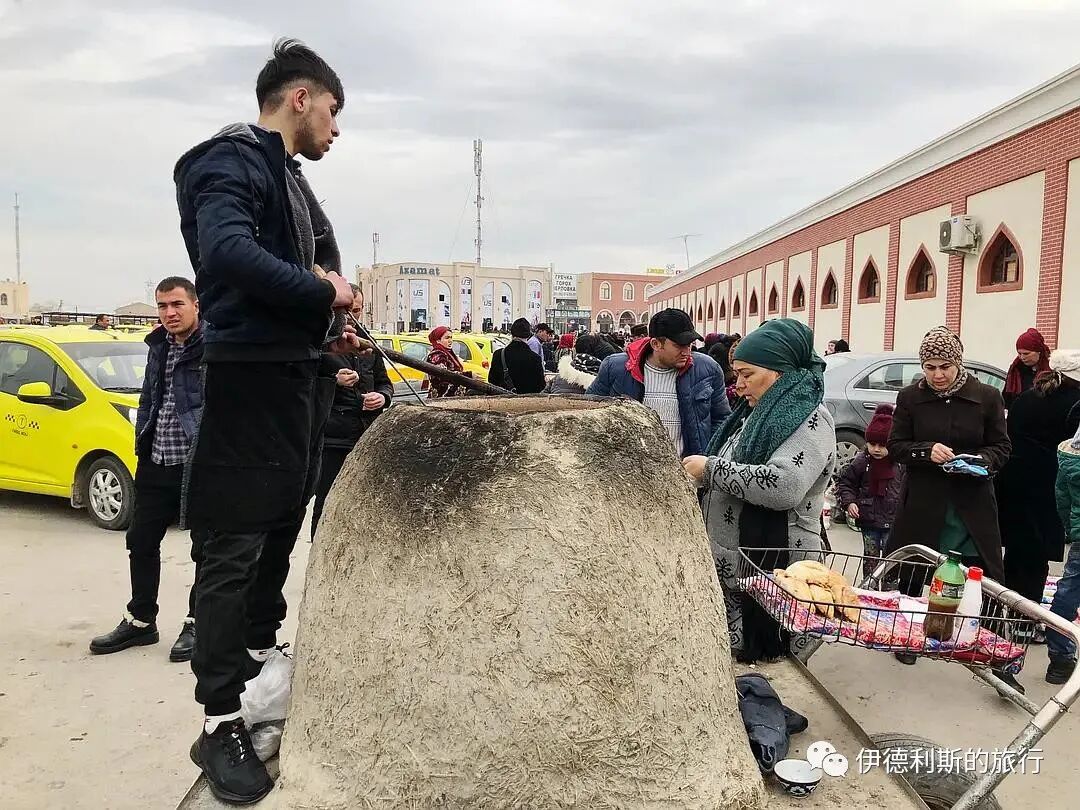
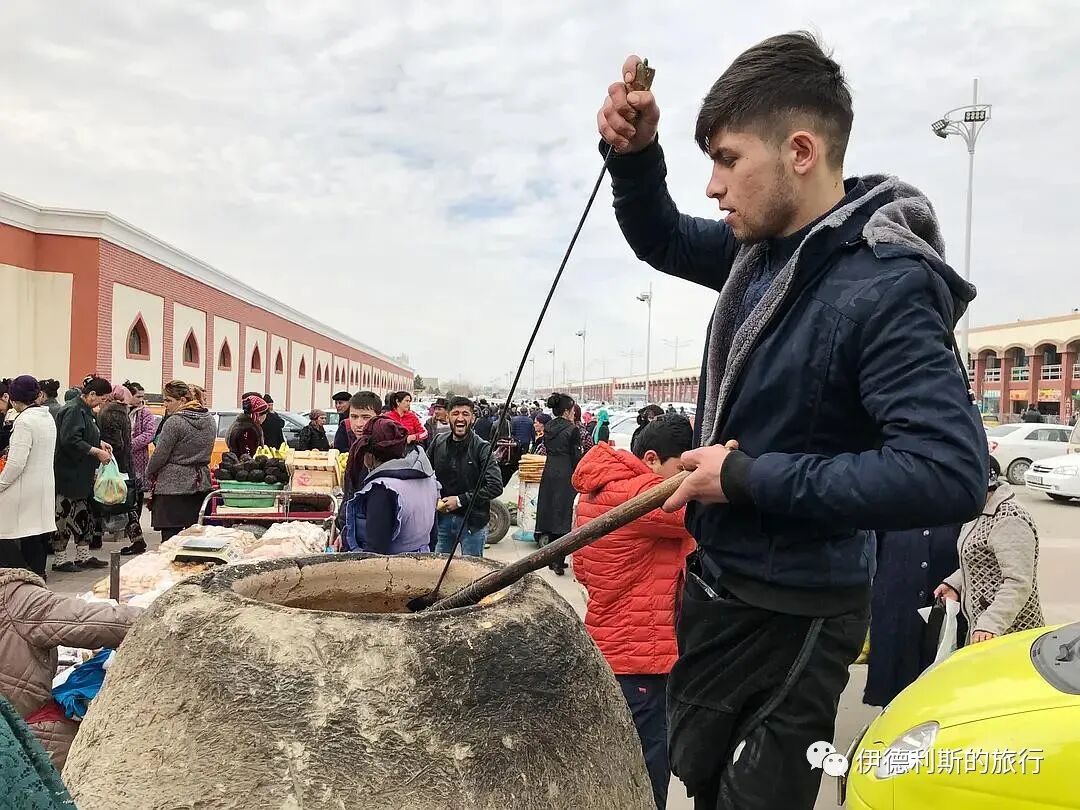
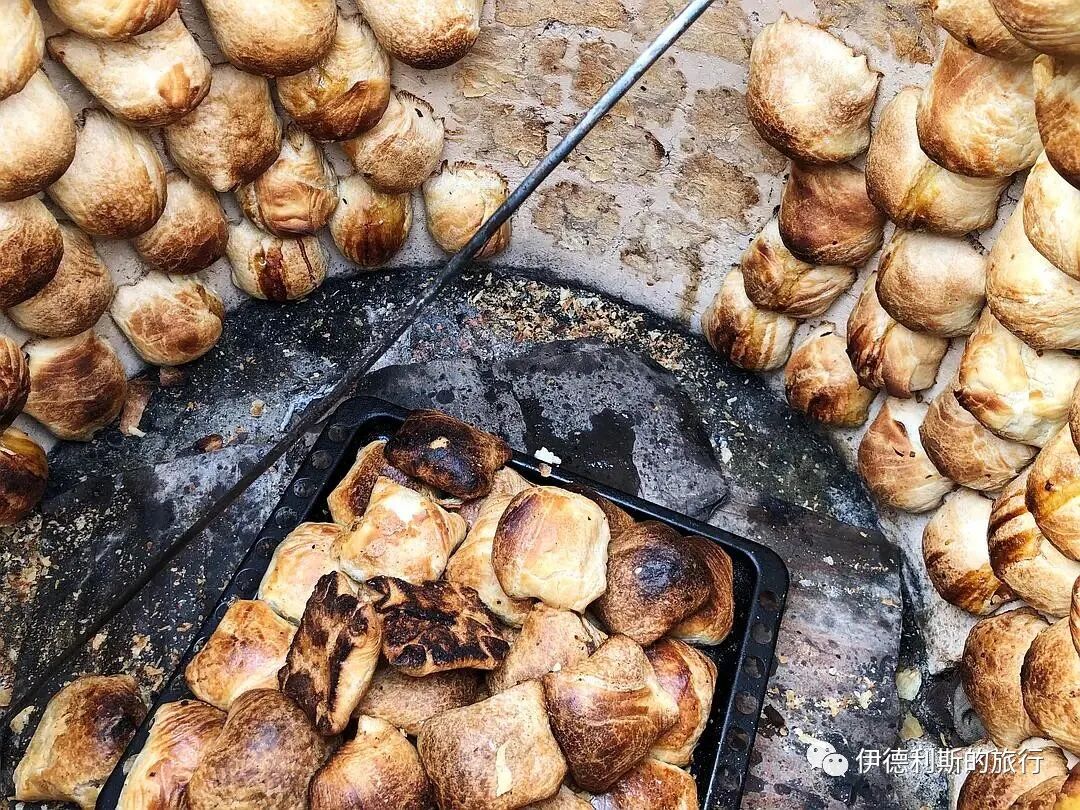
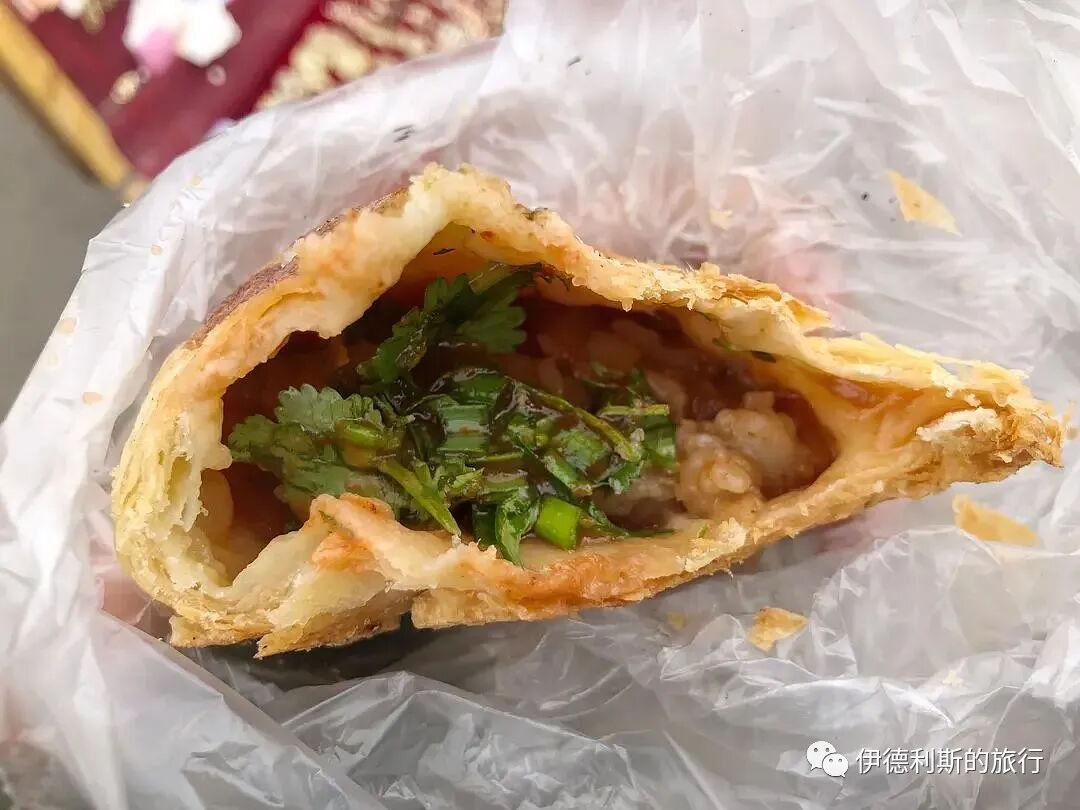
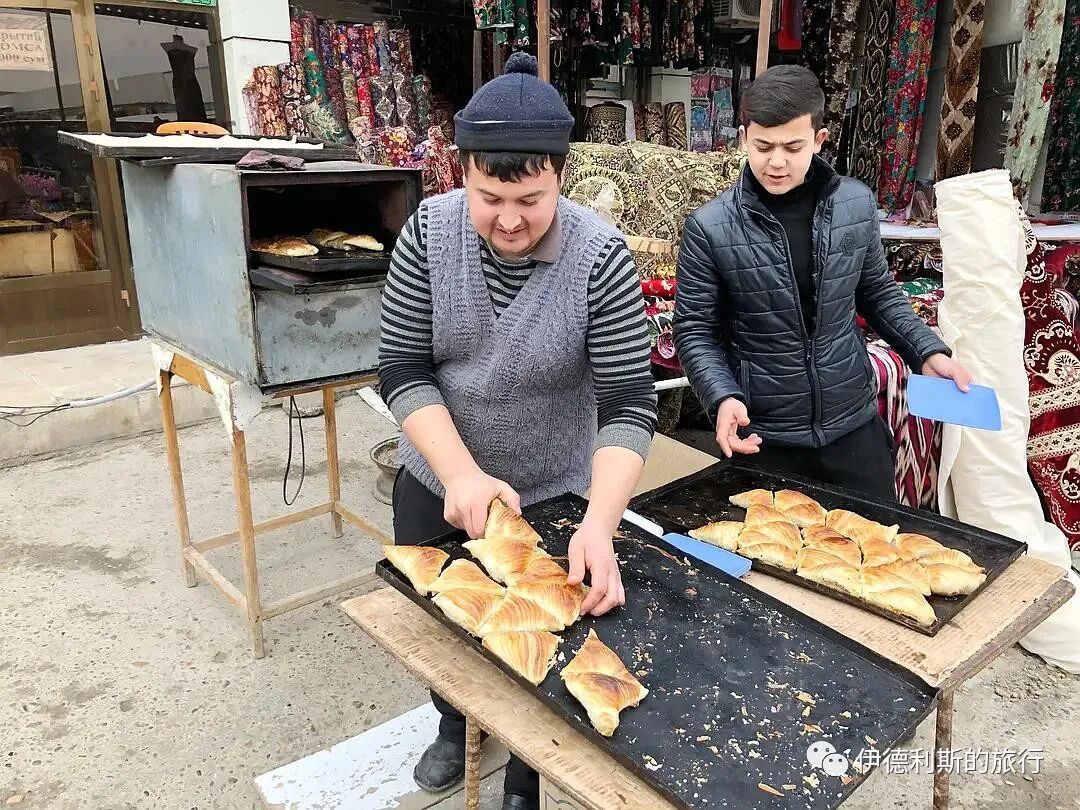
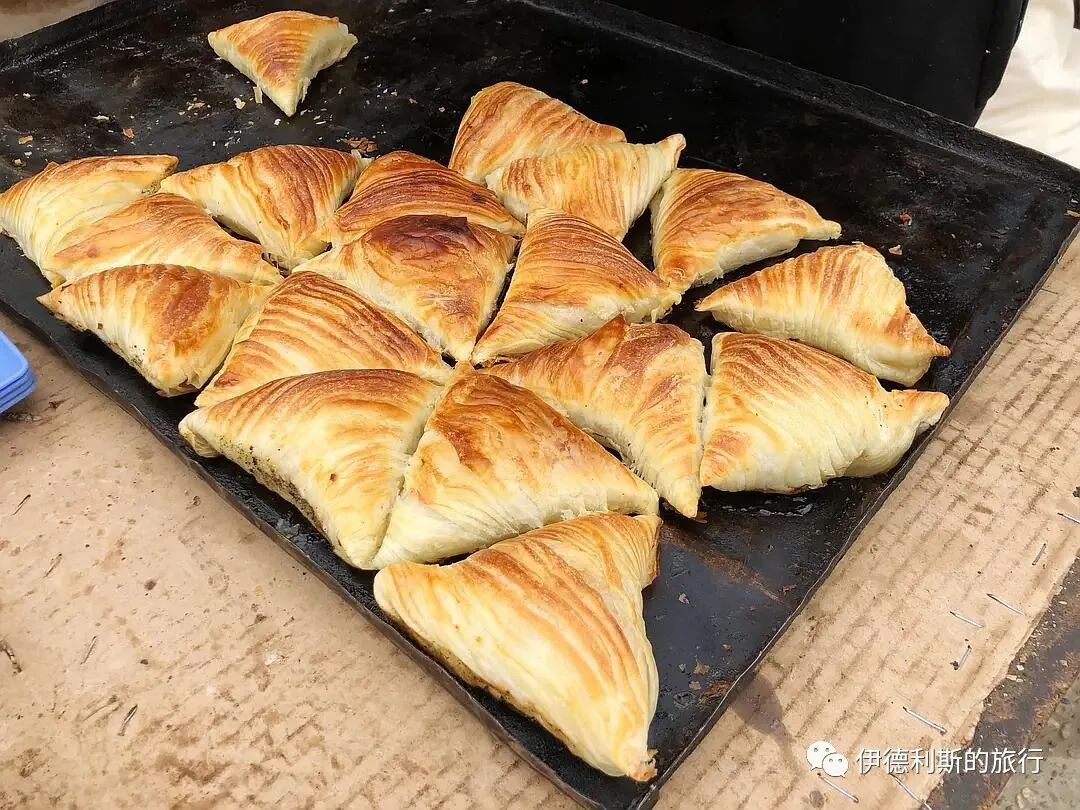
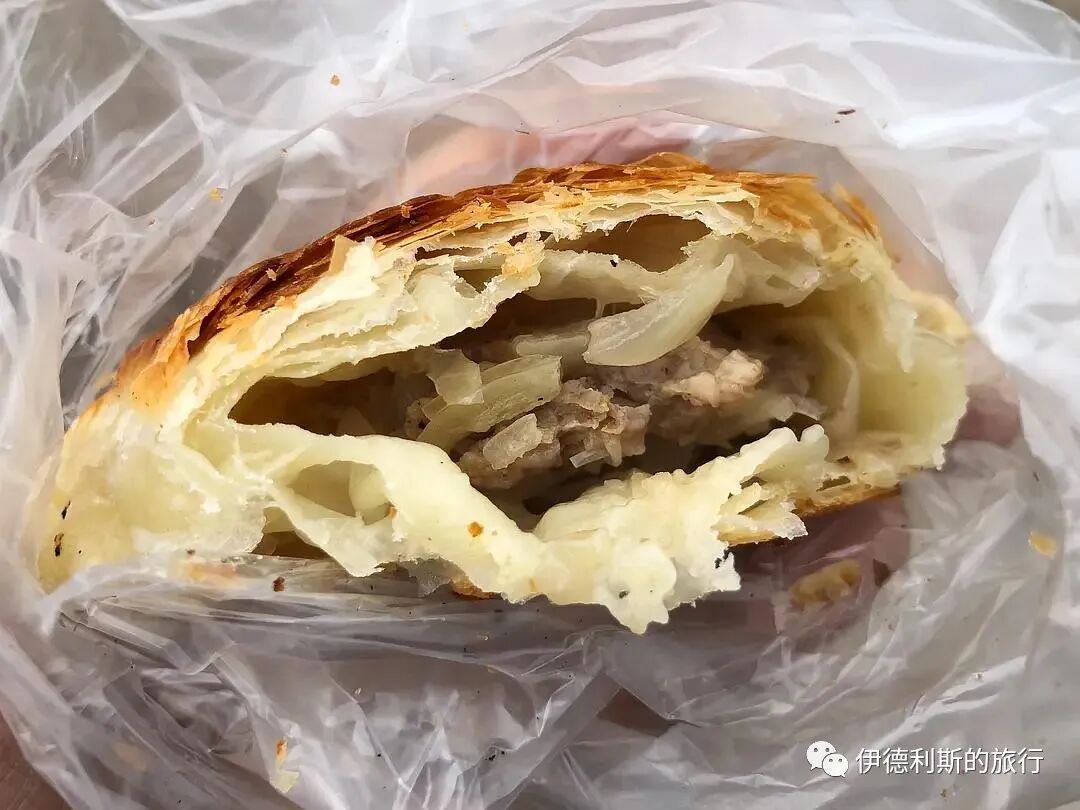

Naan stalls are the most common stalls in the bazaar.
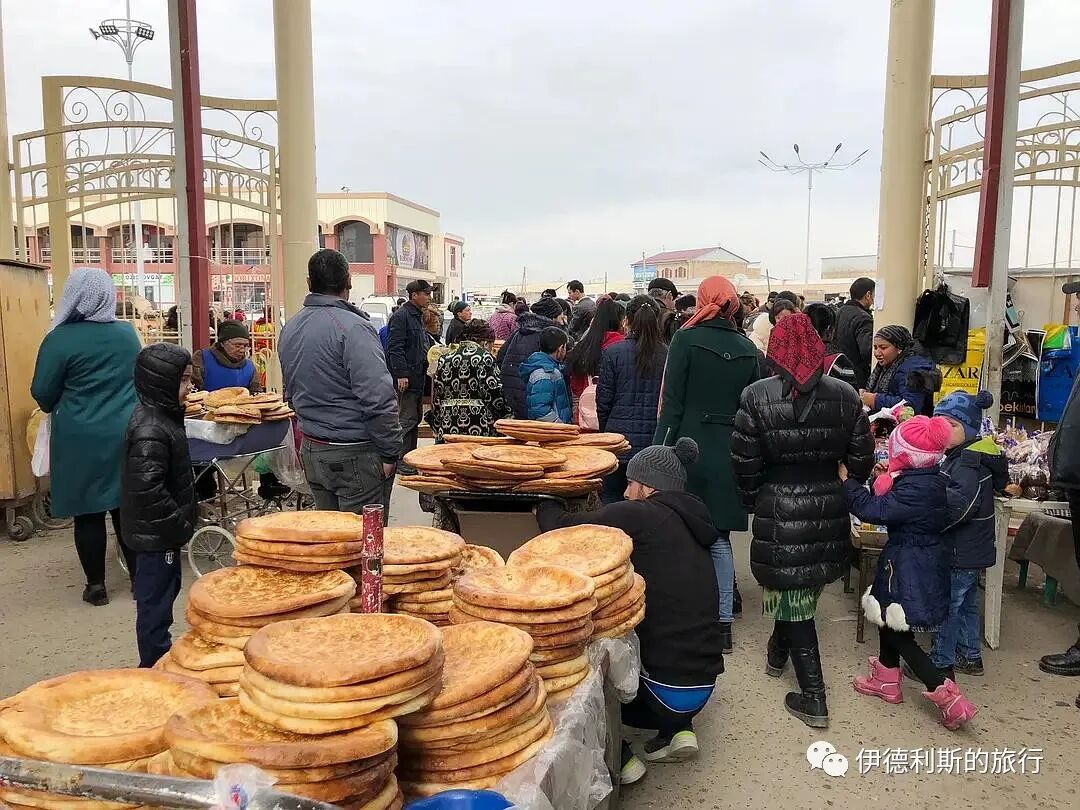
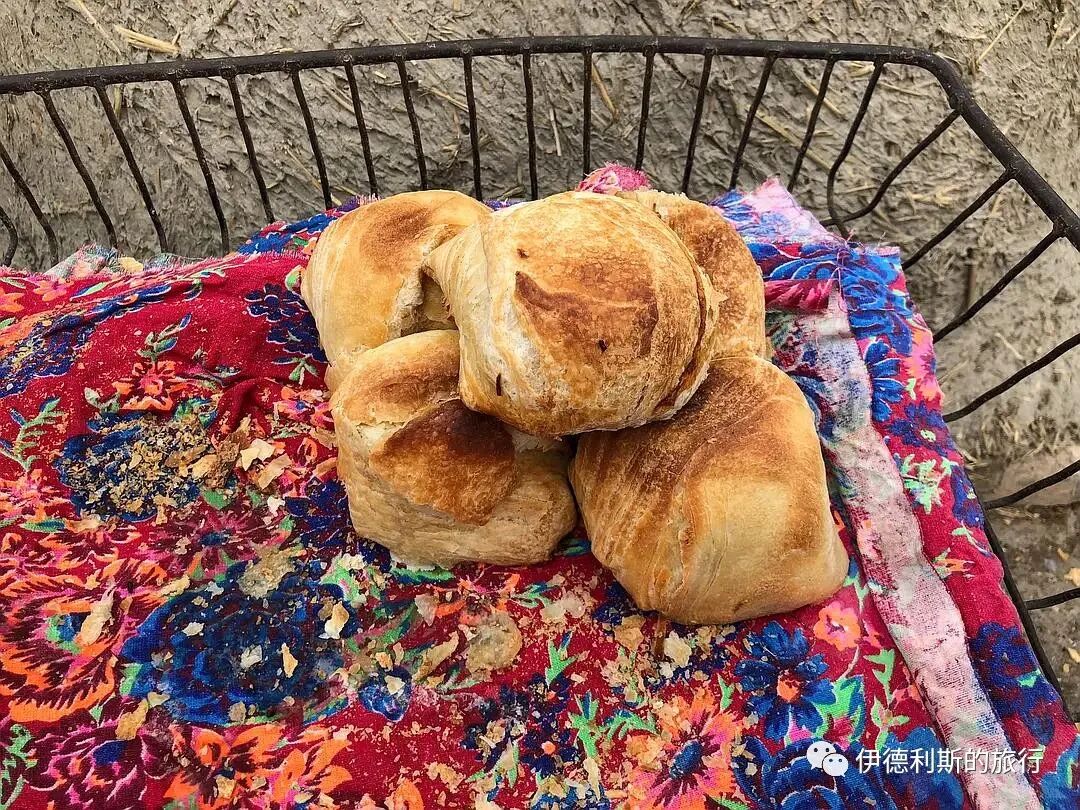
Eating kebabs at the Doniyorbek restaurant opposite the Bukhara Central Bazaar. While walking through the bazaar, I saw a very Soviet-style restaurant across the street. After going inside, I found it had such a great atmosphere—the green walls, the stove in the room, and the classic service window made it feel like I had returned to the Soviet Union.
Note that in the former Soviet regions, when talking about eating kebabs, you should say 'Shashlik' instead of the Uyghur word 'Kewap'. The term 'Shashlik' originated from the Crimean Tatars and became popular throughout the Russian Empire after the 18th century. In Uzbekistan, saying 'Kebab' will get you Middle Eastern-style minced meat skewers; 'Shashlik' is the meat-chunk skewers we are familiar with.
In addition, the side dishes for the meat are very rich. I chose yogurt with small side dishes, which is very refreshing and cuts through the greasiness.
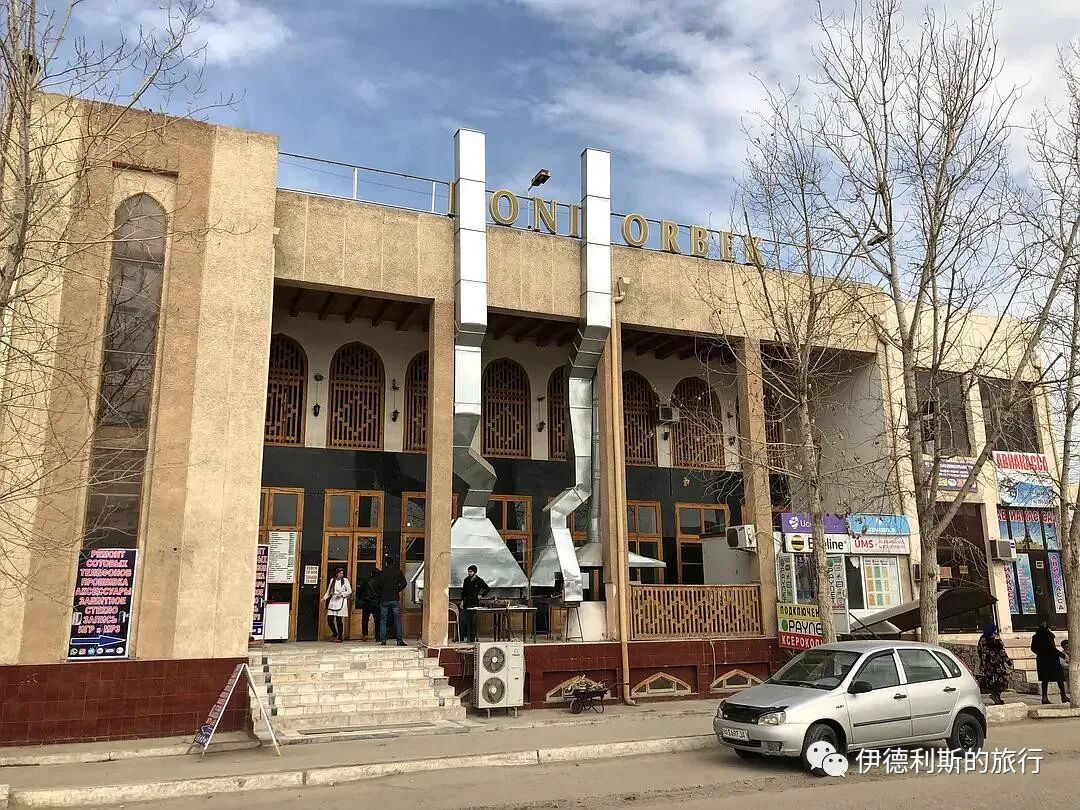
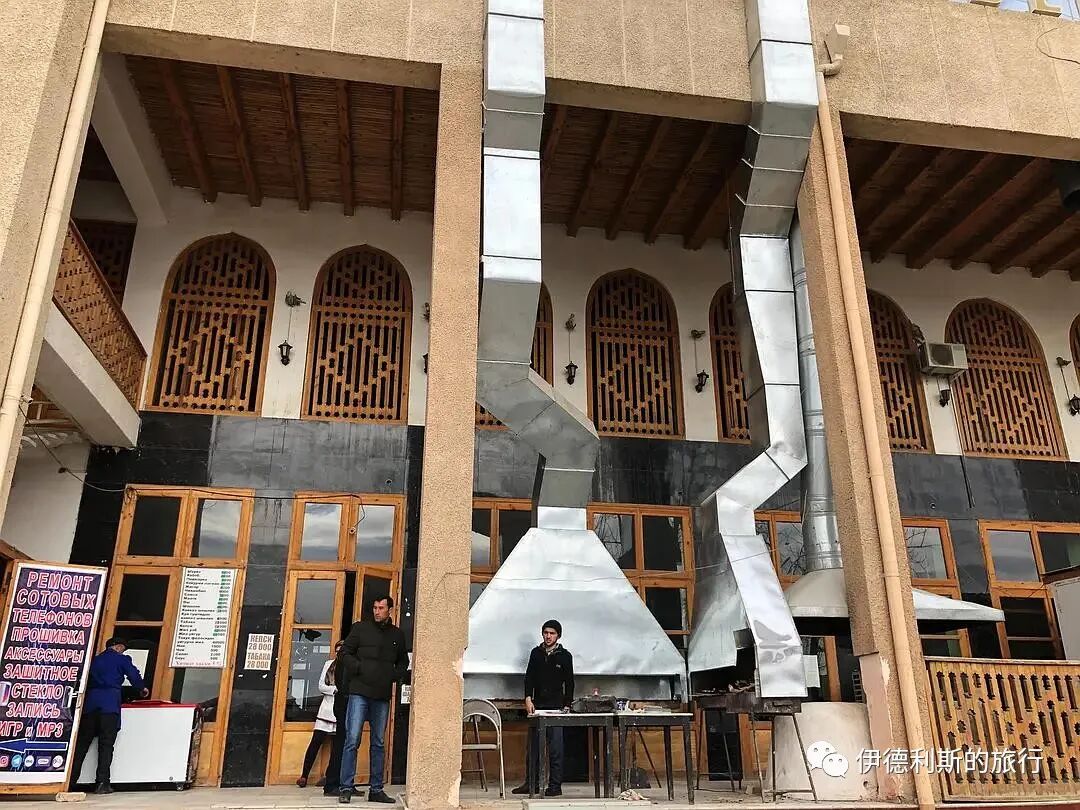
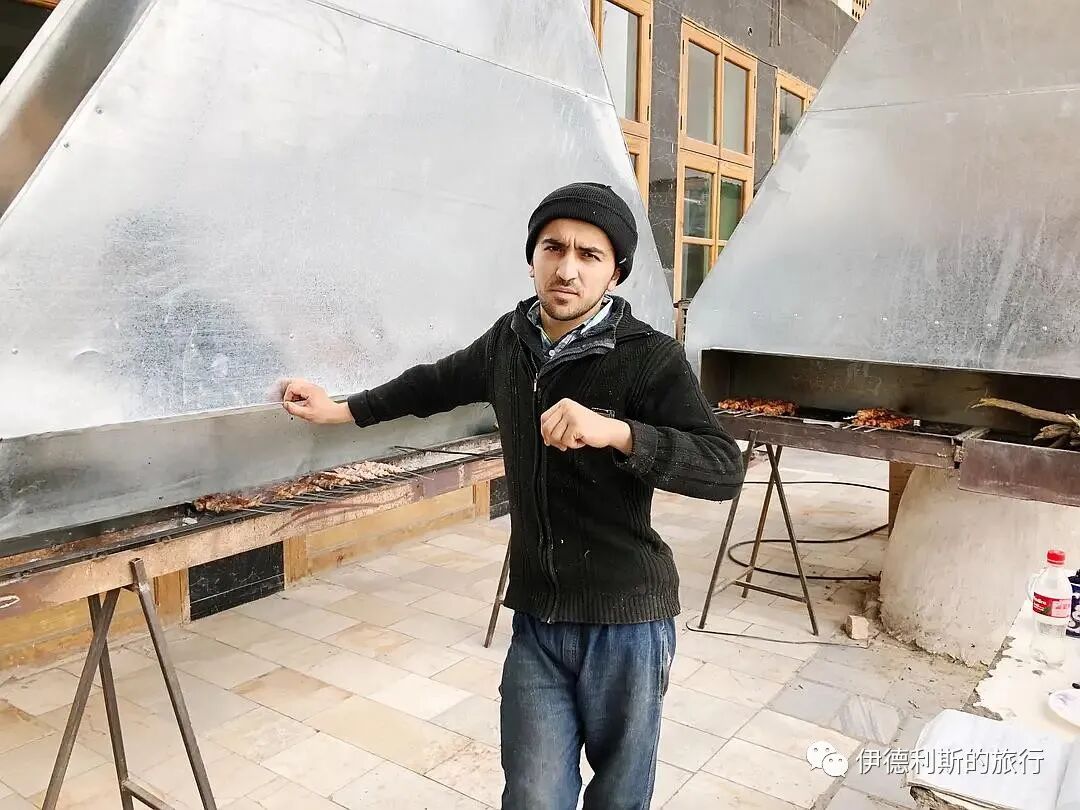

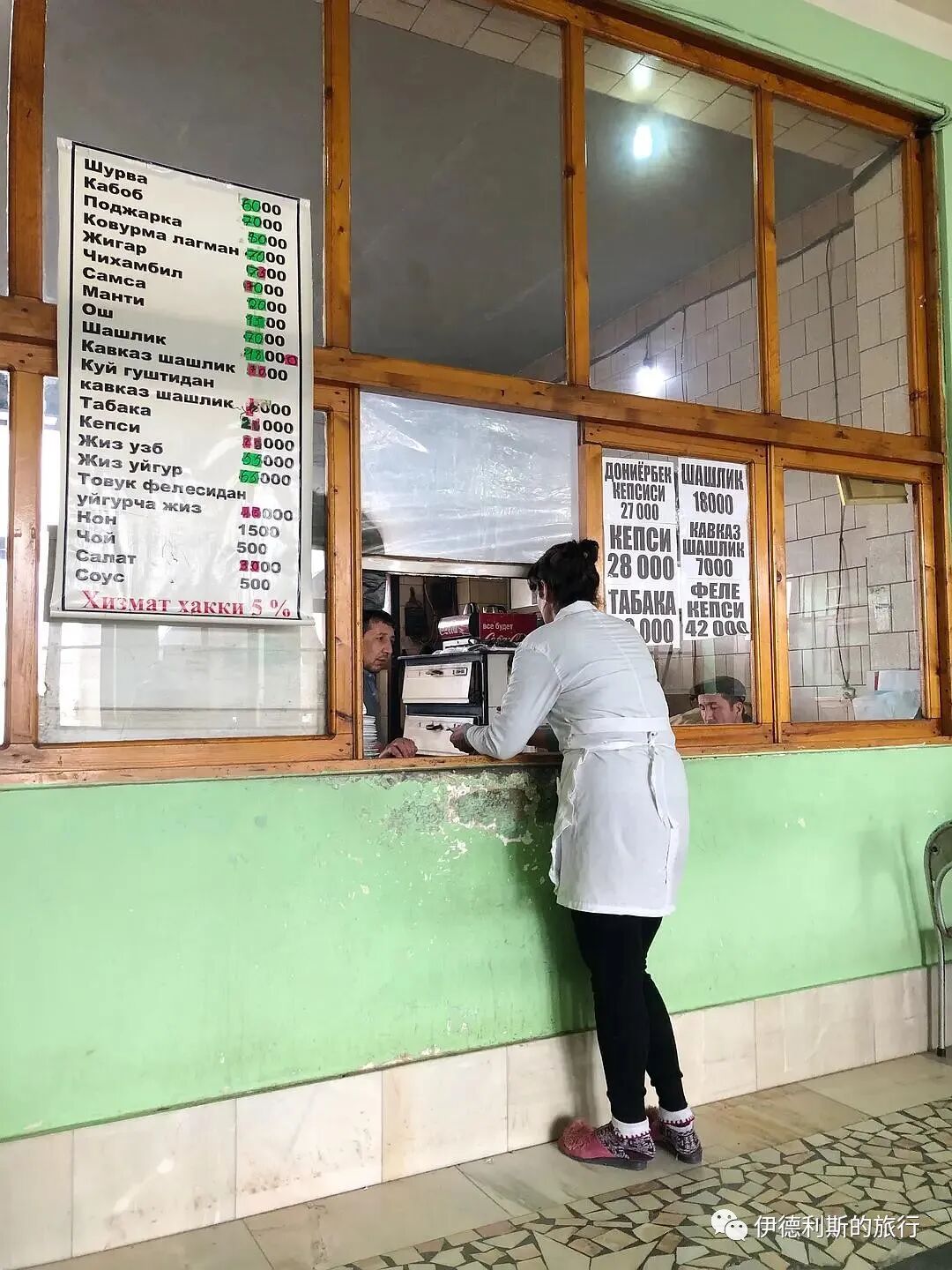
Eating Kifta Shurva (clear meatball soup), Manti (steamed dumplings), and grilled lamb chops at Temir's restaurant in the center of the old city of Bukhara. Their environment is nice, and it is the only place in the old city of Bukhara where you can withdraw cash using a Mastercard credit card.
Manti is believed to have been spread from East Asia to West Asia and even Eastern Europe by Mongol and Turkic peoples along the Silk Road during the Mongol Empire era. Now, Manti has become a traditional delicacy in Xinjiang, the former Soviet Union, Afghanistan, Turkey, and the Balkans. Central Asian Manti is generally eaten dipped in thick yogurt.
Their restaurant is right next to the famous Magoki Attor Mosque in Bukhara. This mosque, built in the 12th century, is a model of architecture from the Karakhanid dynasty period in Bukhara and even all of Central Asia.
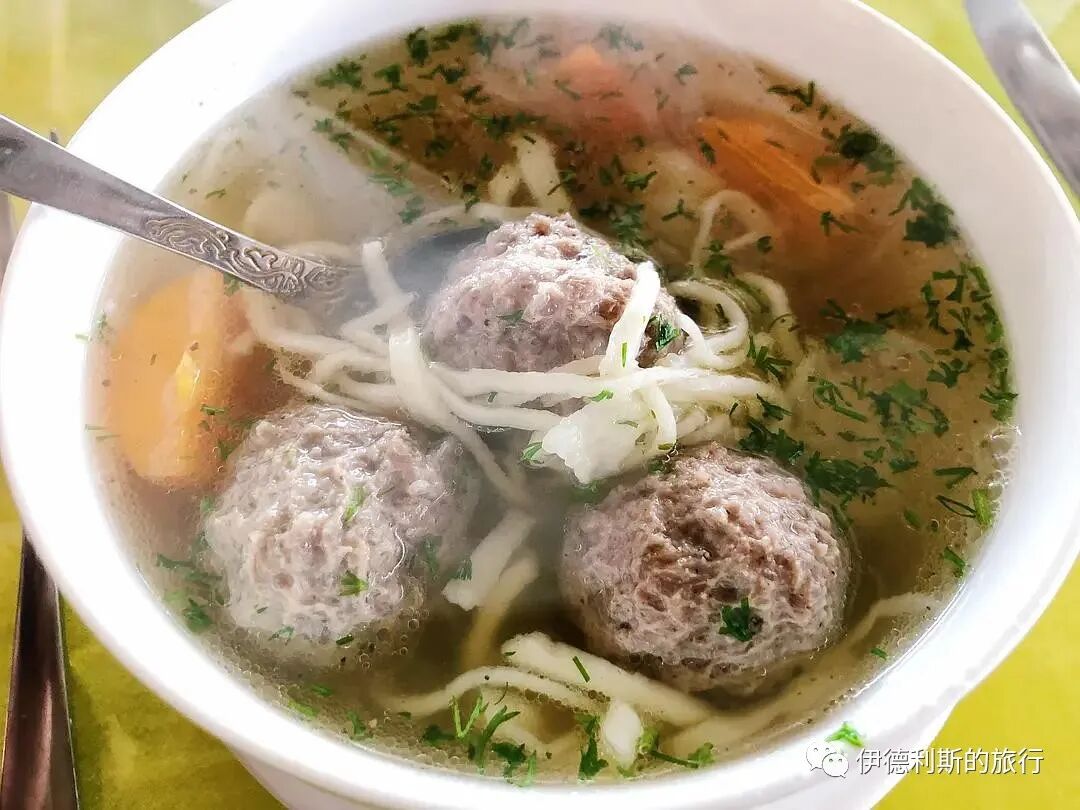
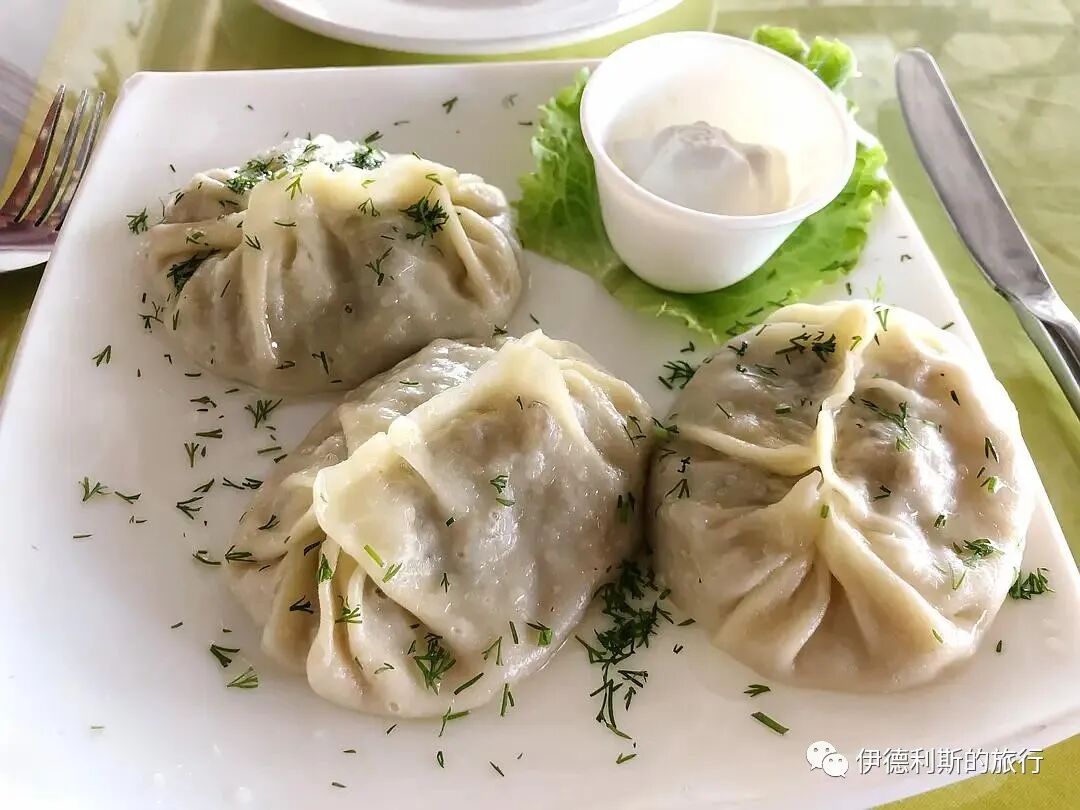
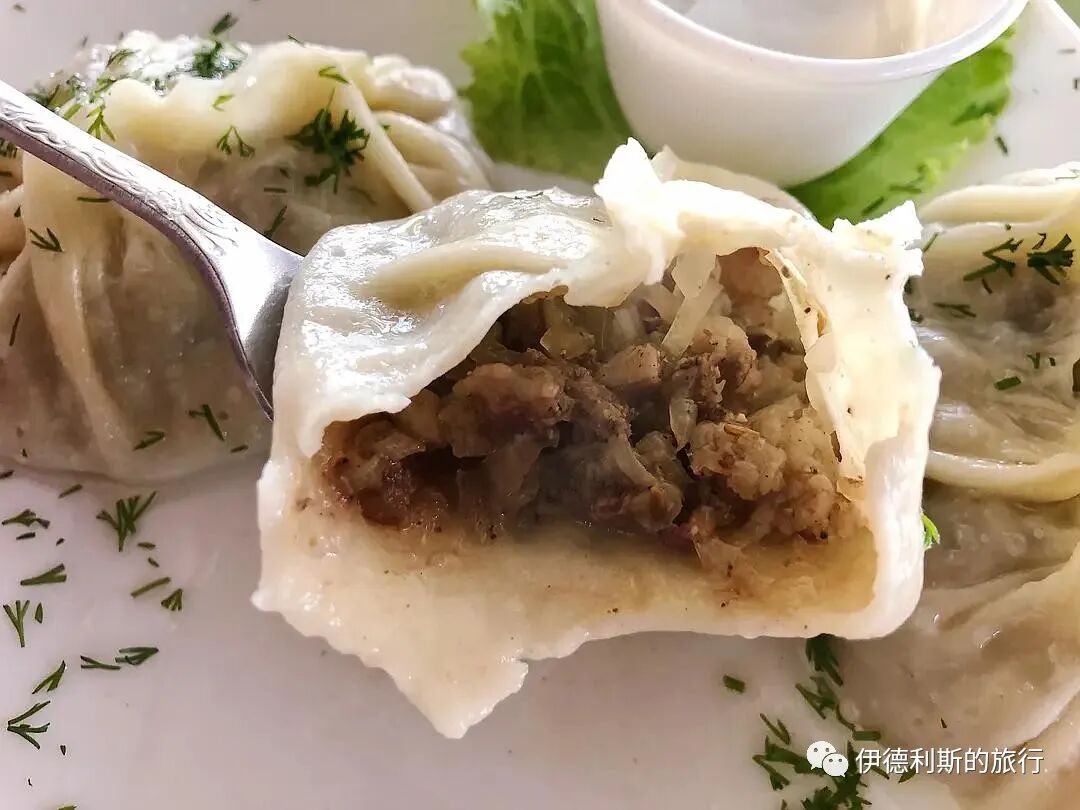
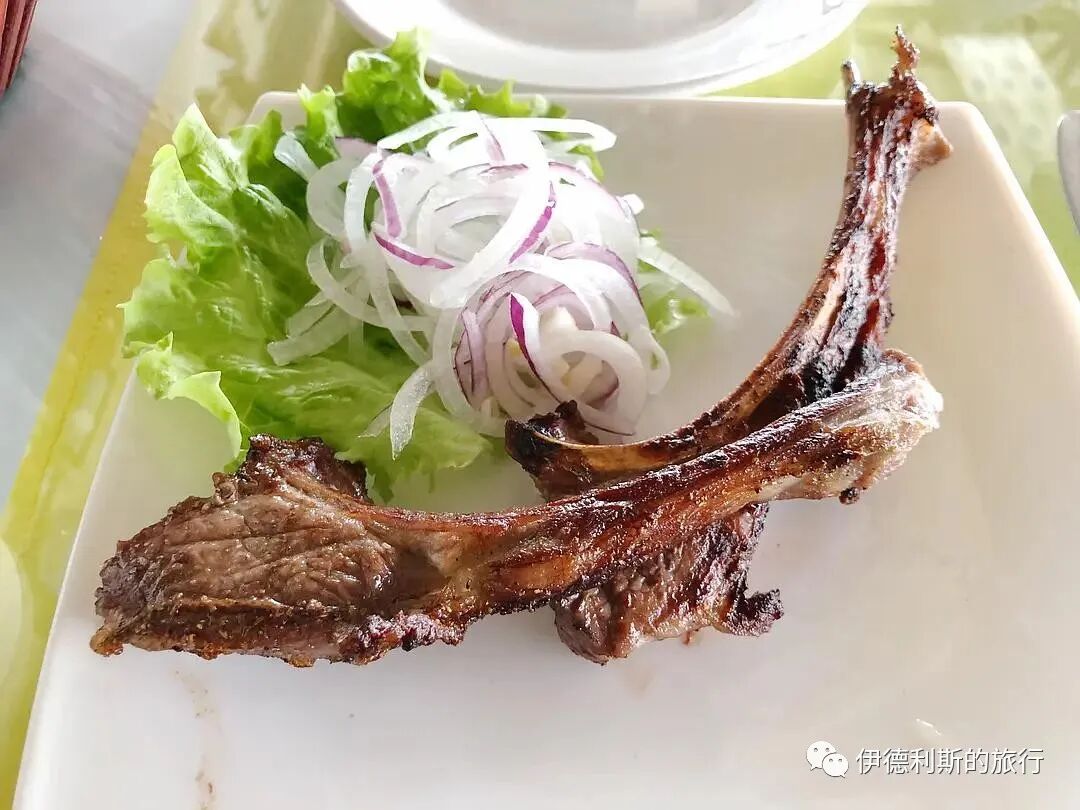
Another meal of fried chuchvara (dumplings) and lamb soup.
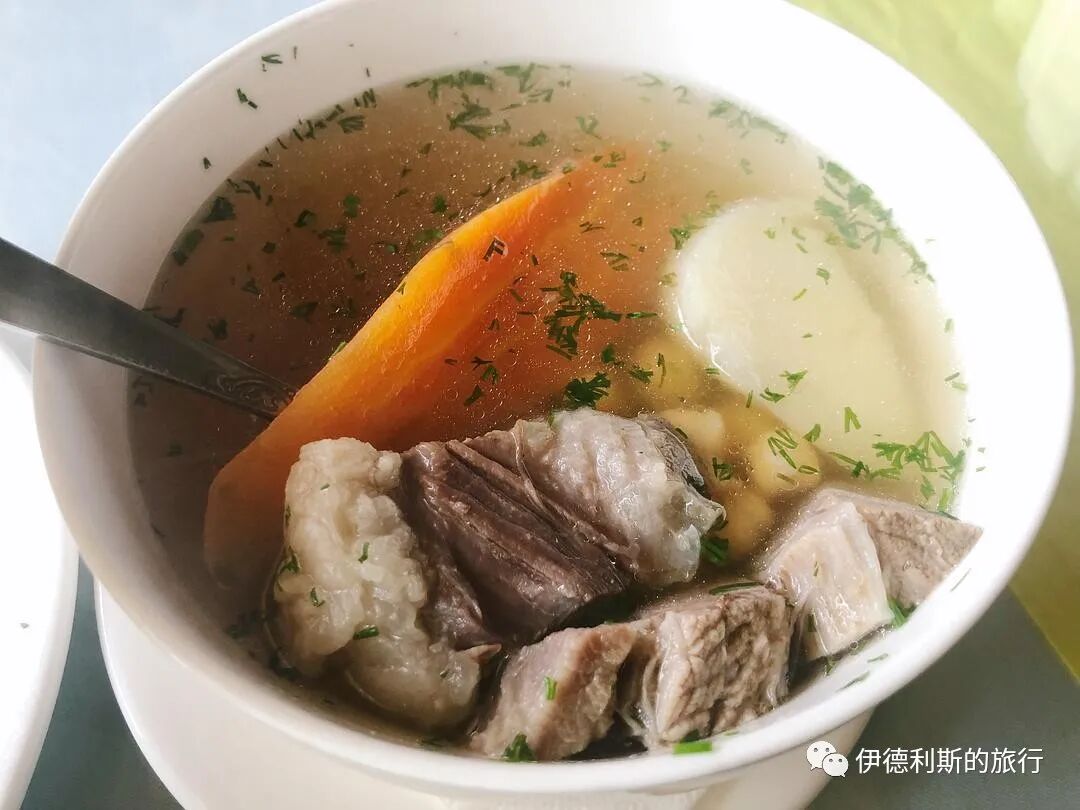
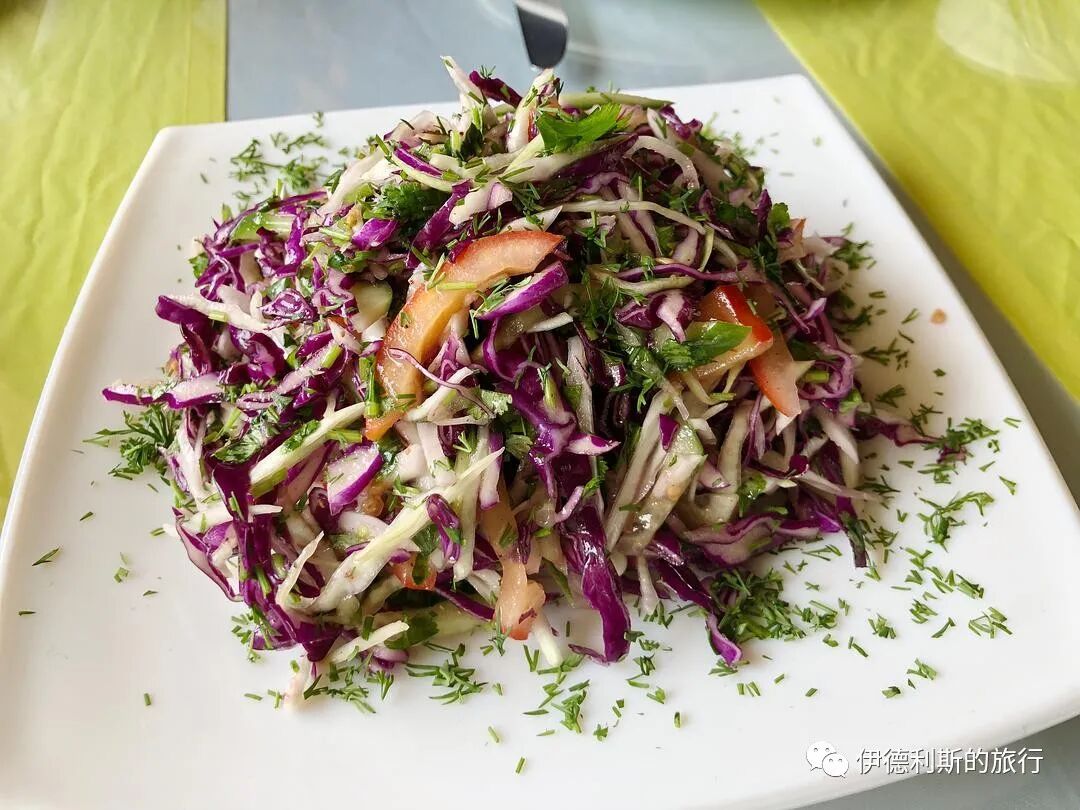

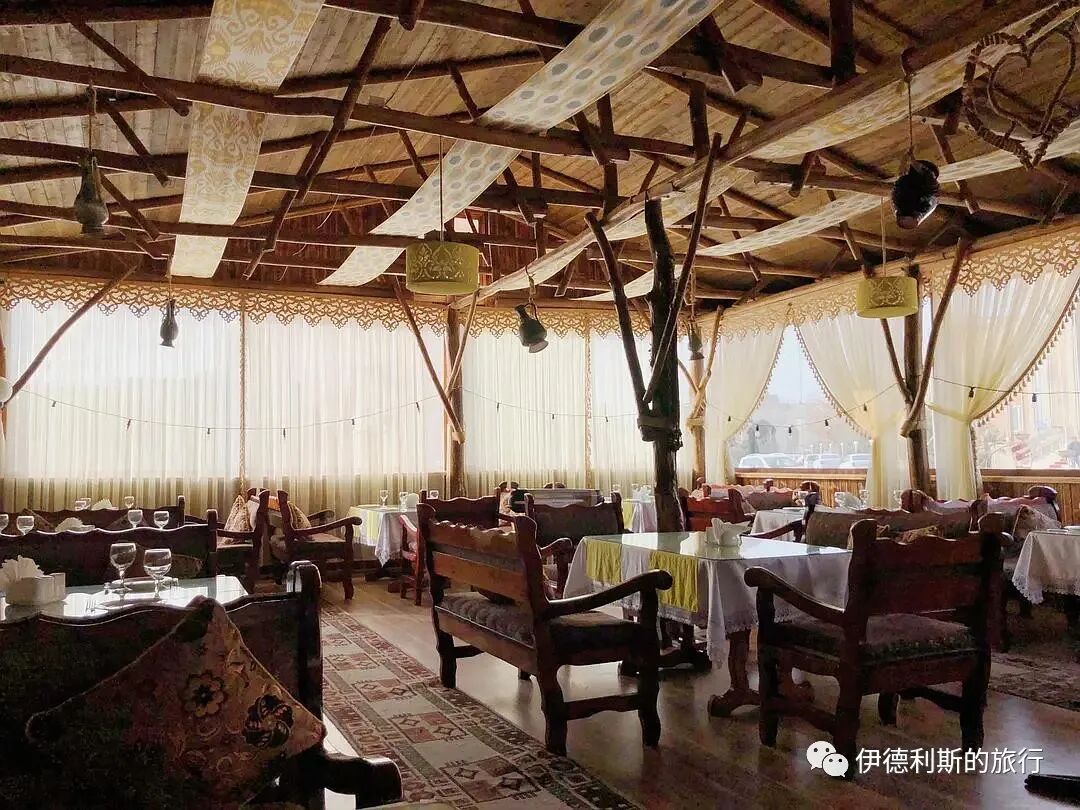
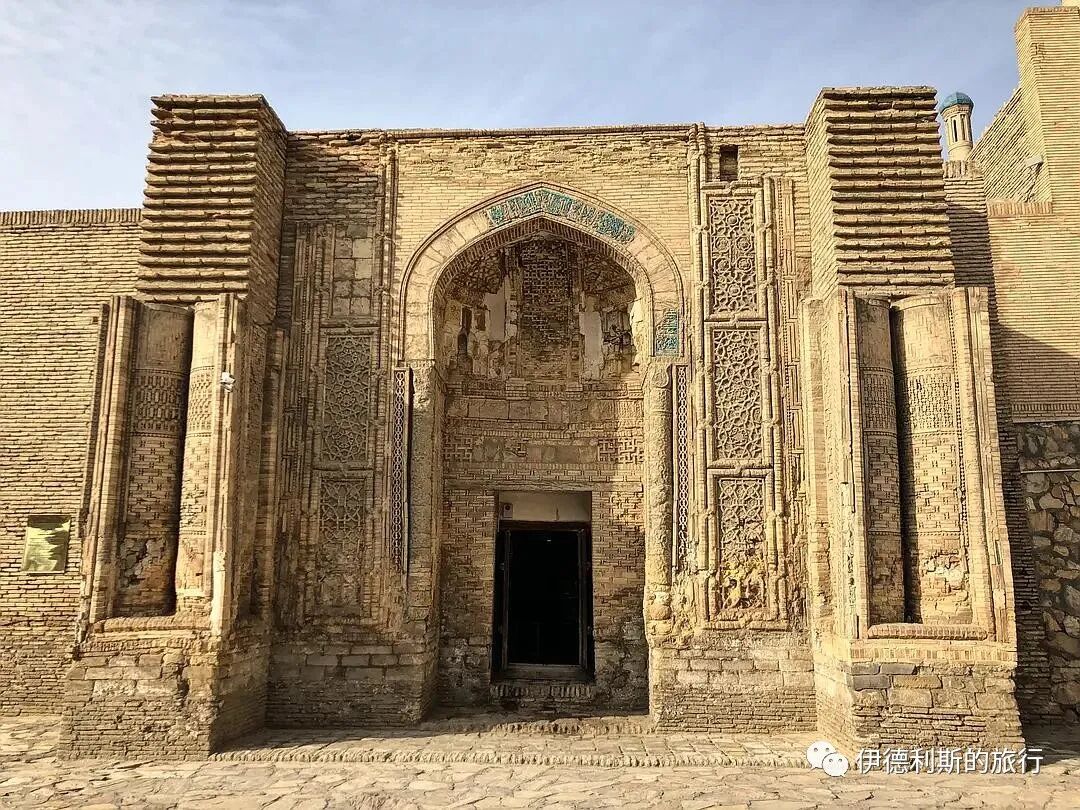
Eating plov (pilaf) and drinking meat soup, as well as having two types of salads, at the Chayxana chinar teahouse in the ancient city of Bukhara. Teahouses in Central Asia serve food and are also a type of public activity space.
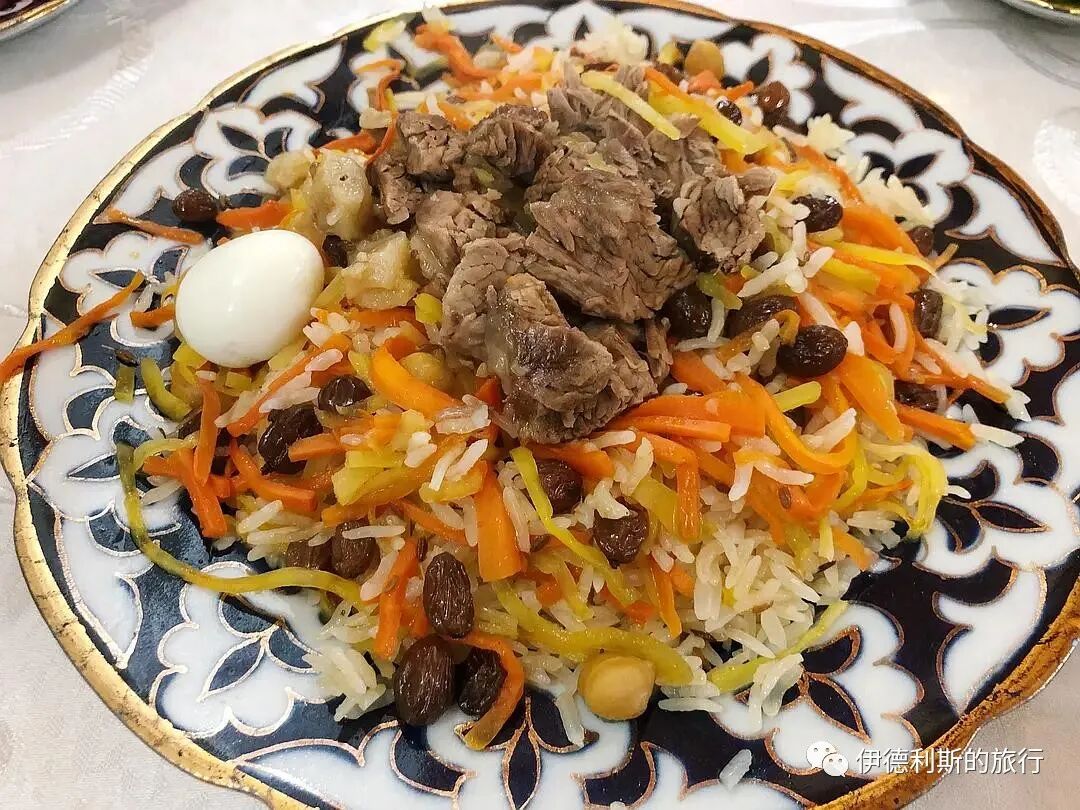
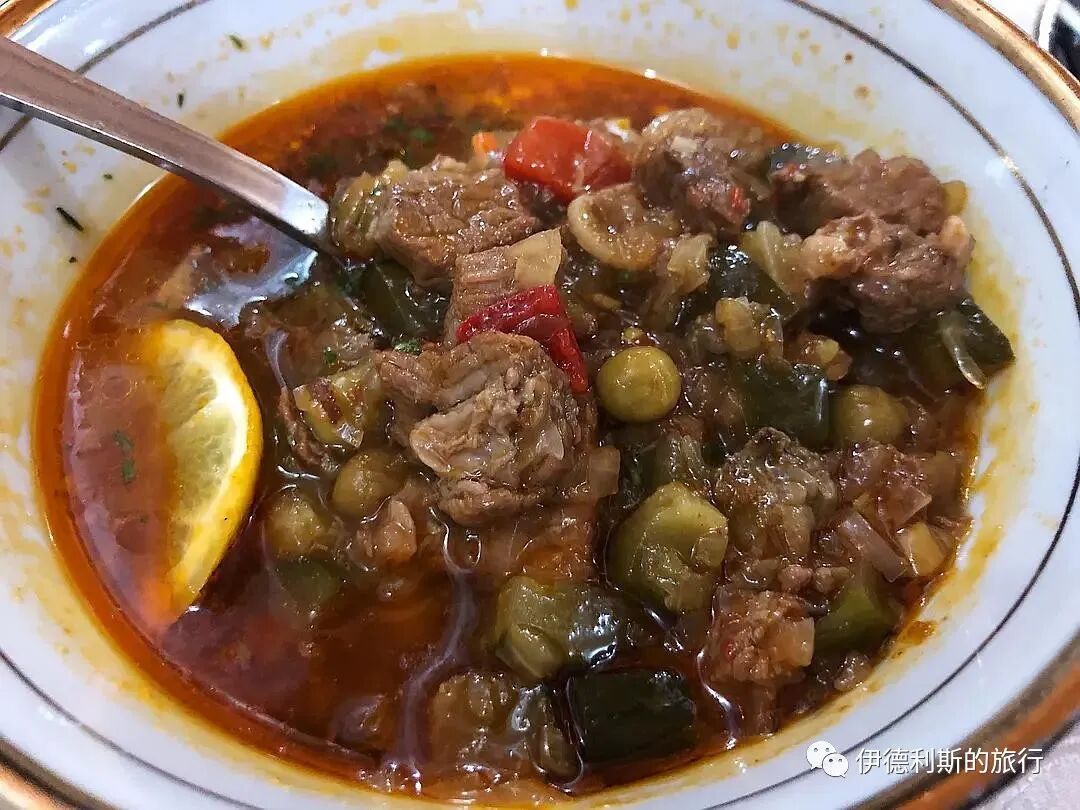
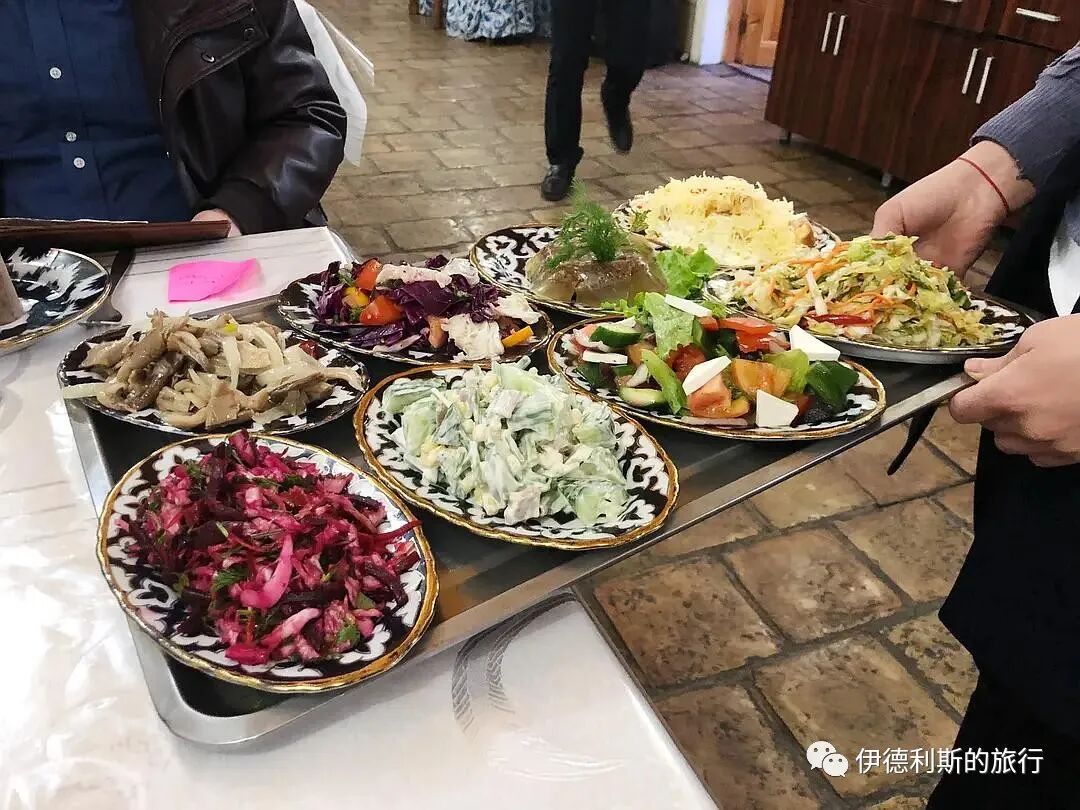
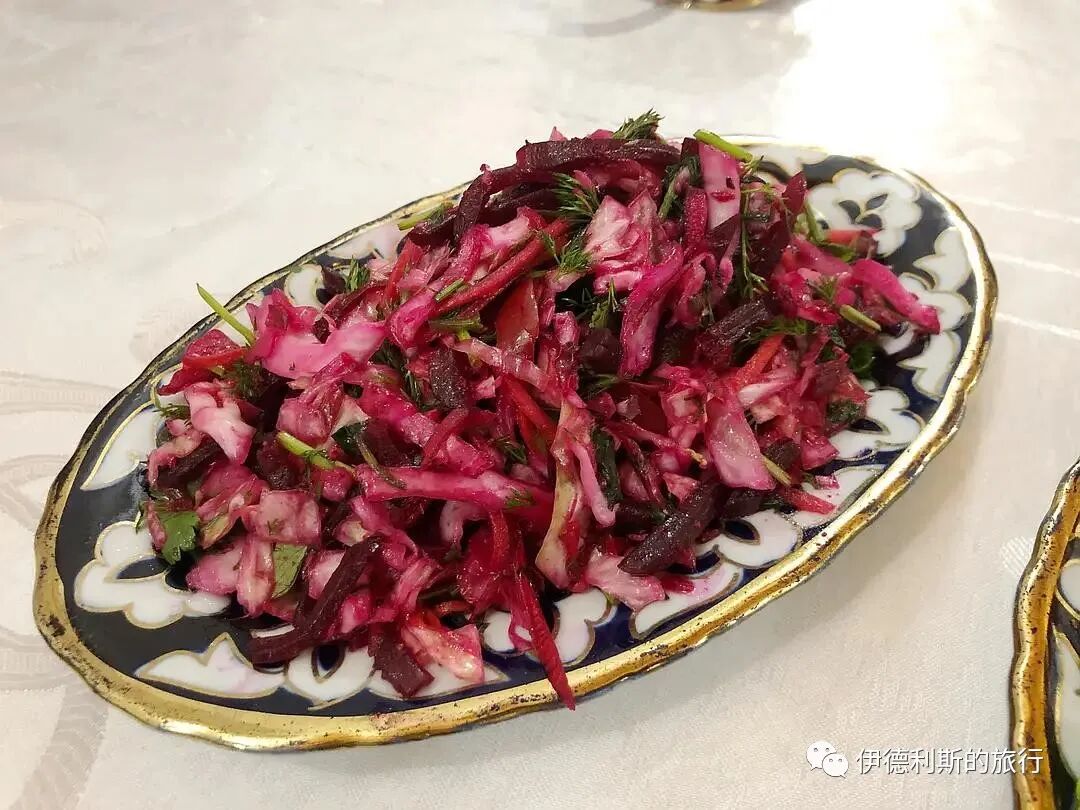
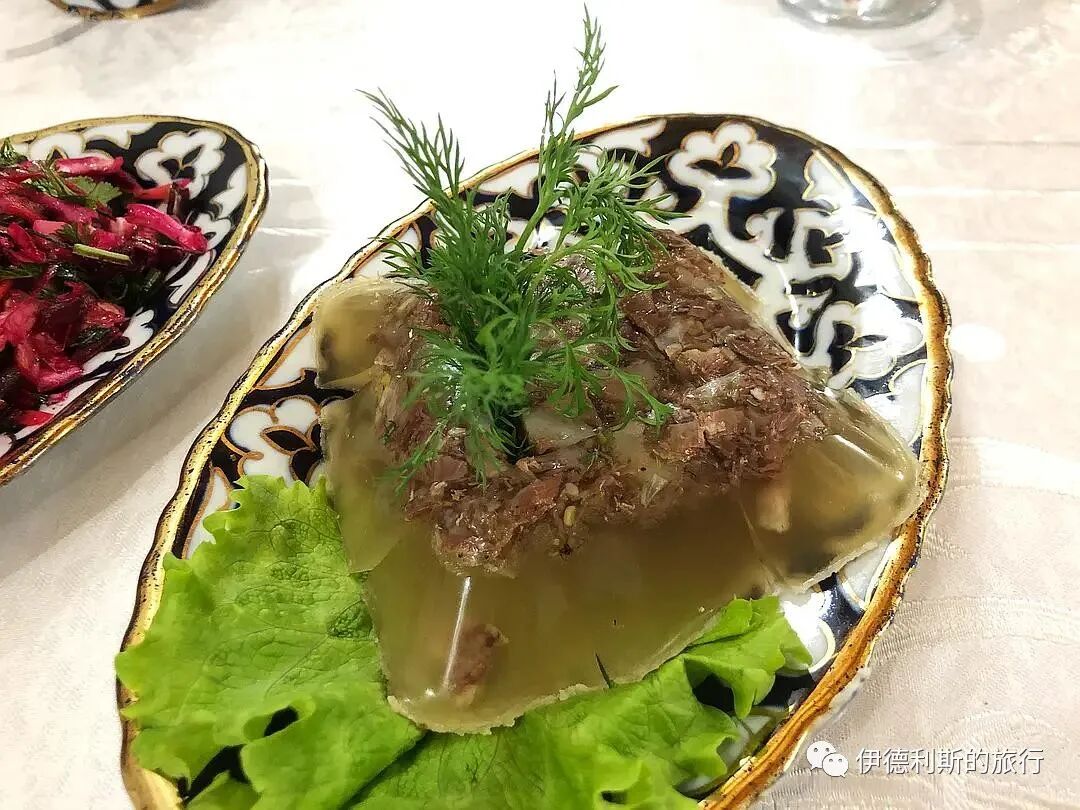
Performing Jumu'ah (Friday prayer) at the Po-i-Kalyan Mosque (Maedjid-i Kalan). The Kalyan Mosque was originally built in 1121 by Arslan Khan of the Karakhanid dynasty. It was later destroyed during Genghis Khan's siege of Bukhara, leaving only the minaret. The current mosque was built in 1514 during the Bukhara Khanate period. Today, the Kalyan Mosque is the most important Jumu'ah mosque in Bukhara. It consists of a rectangular courtyard with 288 domes and 208 pillars, with a tall Iwan (vaulted hall) gate in the center. The main hall can accommodate 12,000 people.
According to archaeological findings, there are two layers of mosque ruins buried beneath the current mosque. The bottom layer is a mosque from the Karakhanid dynasty in 1121, with the same scale as the current one, and the upper layer is a mosque built in the early 14th century during the Chagatai Khanate period, made entirely of brick.
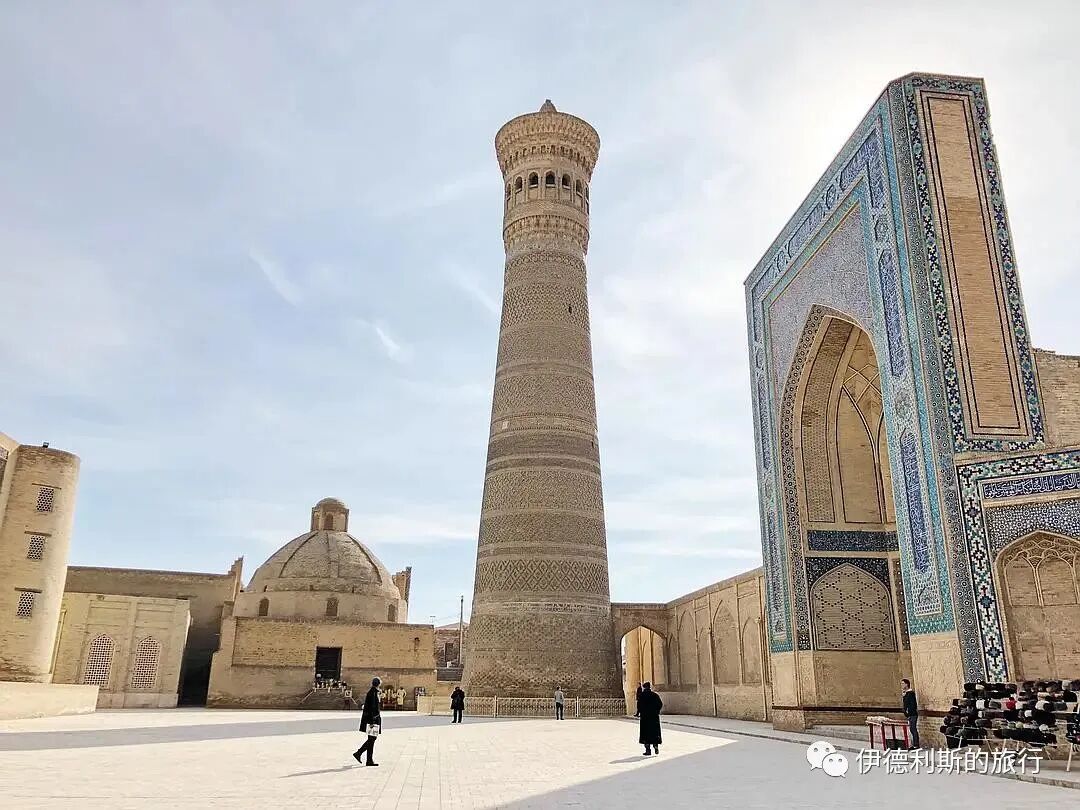
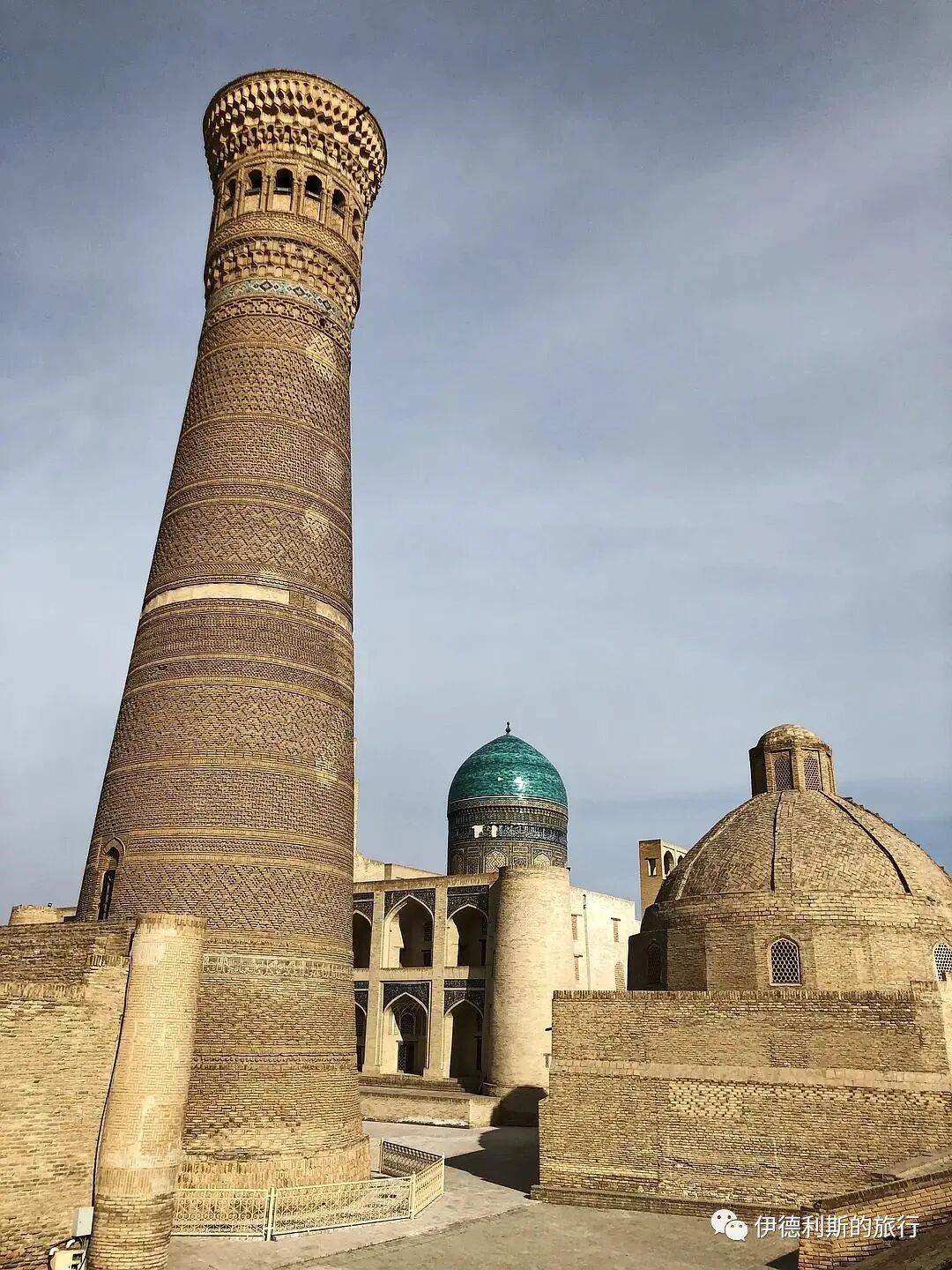
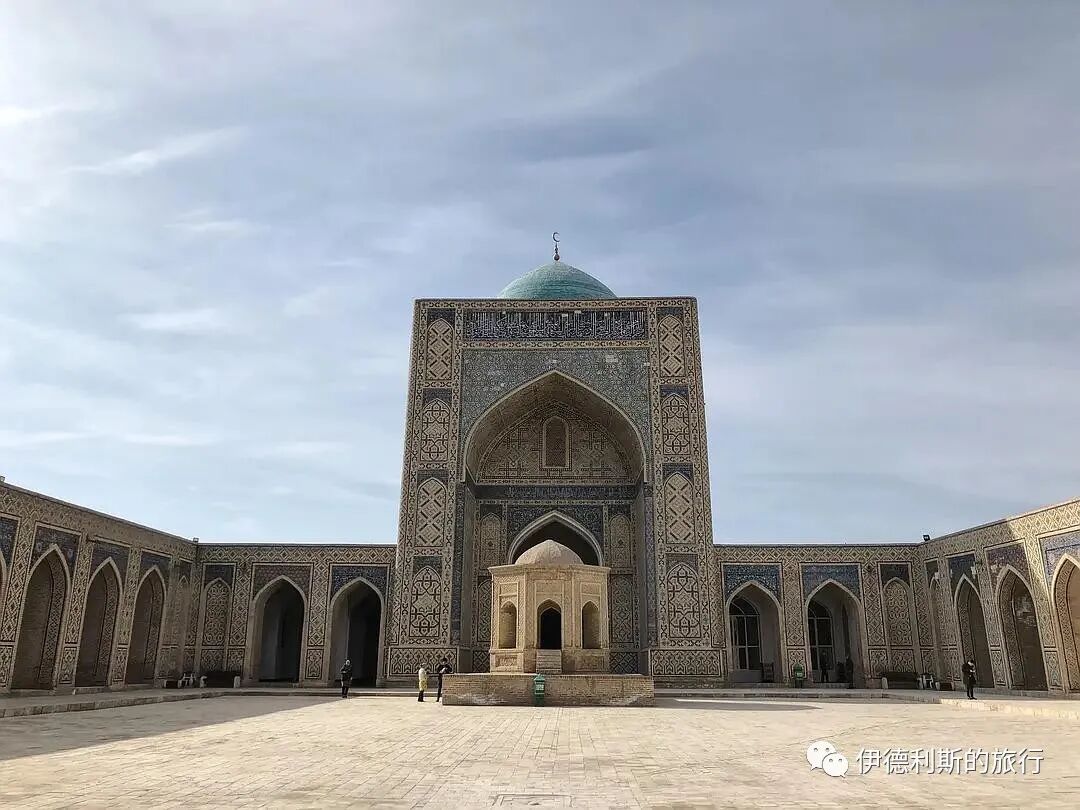
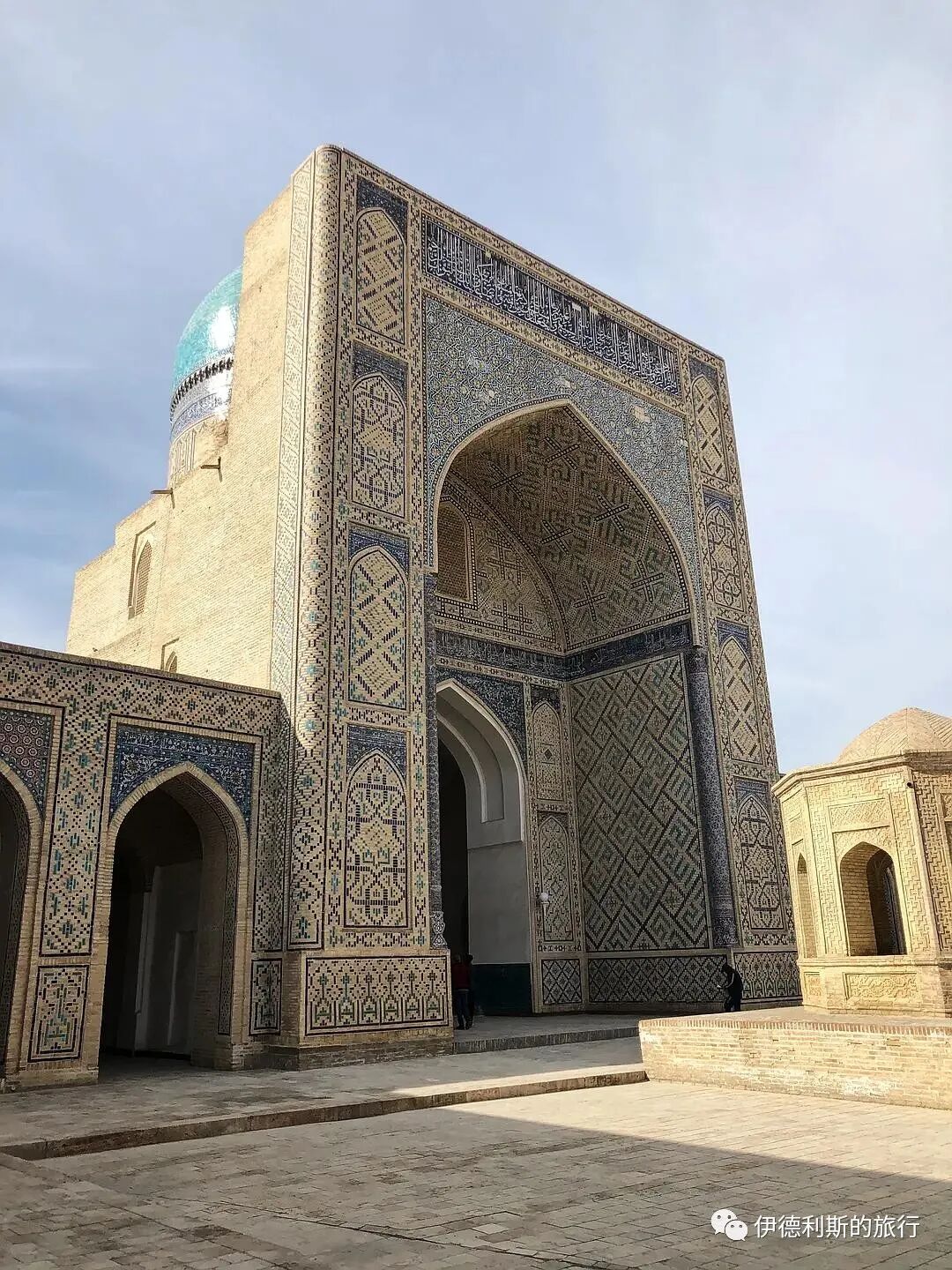
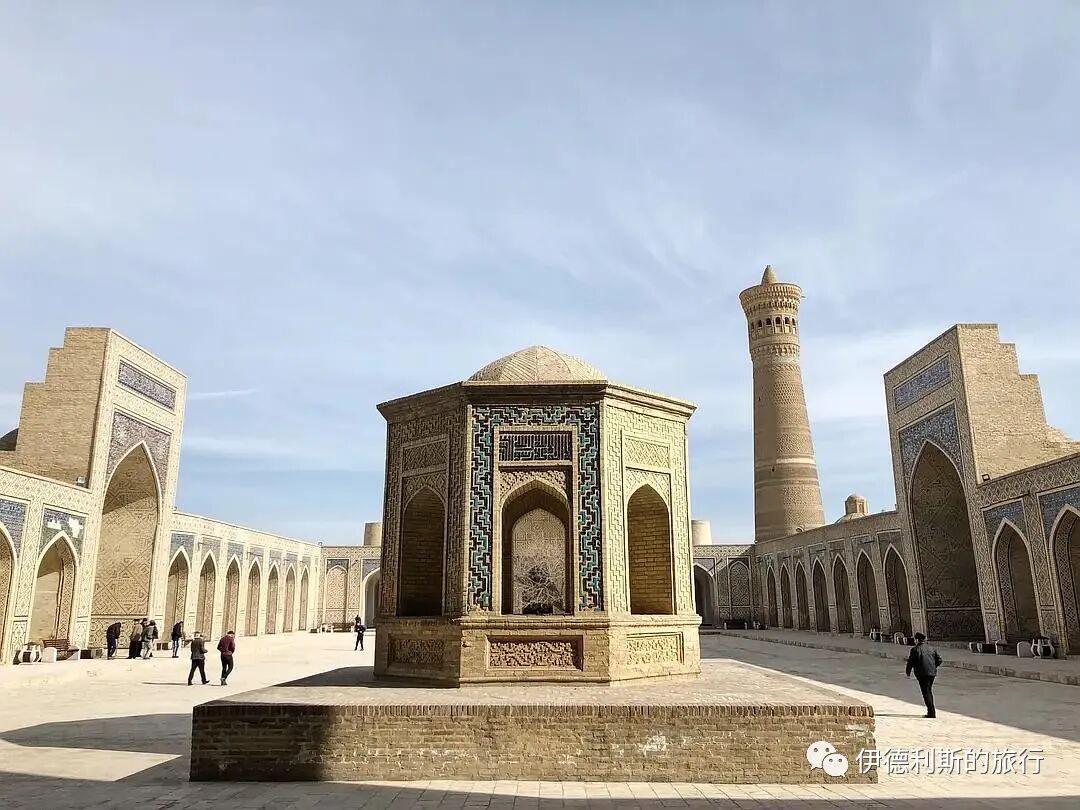
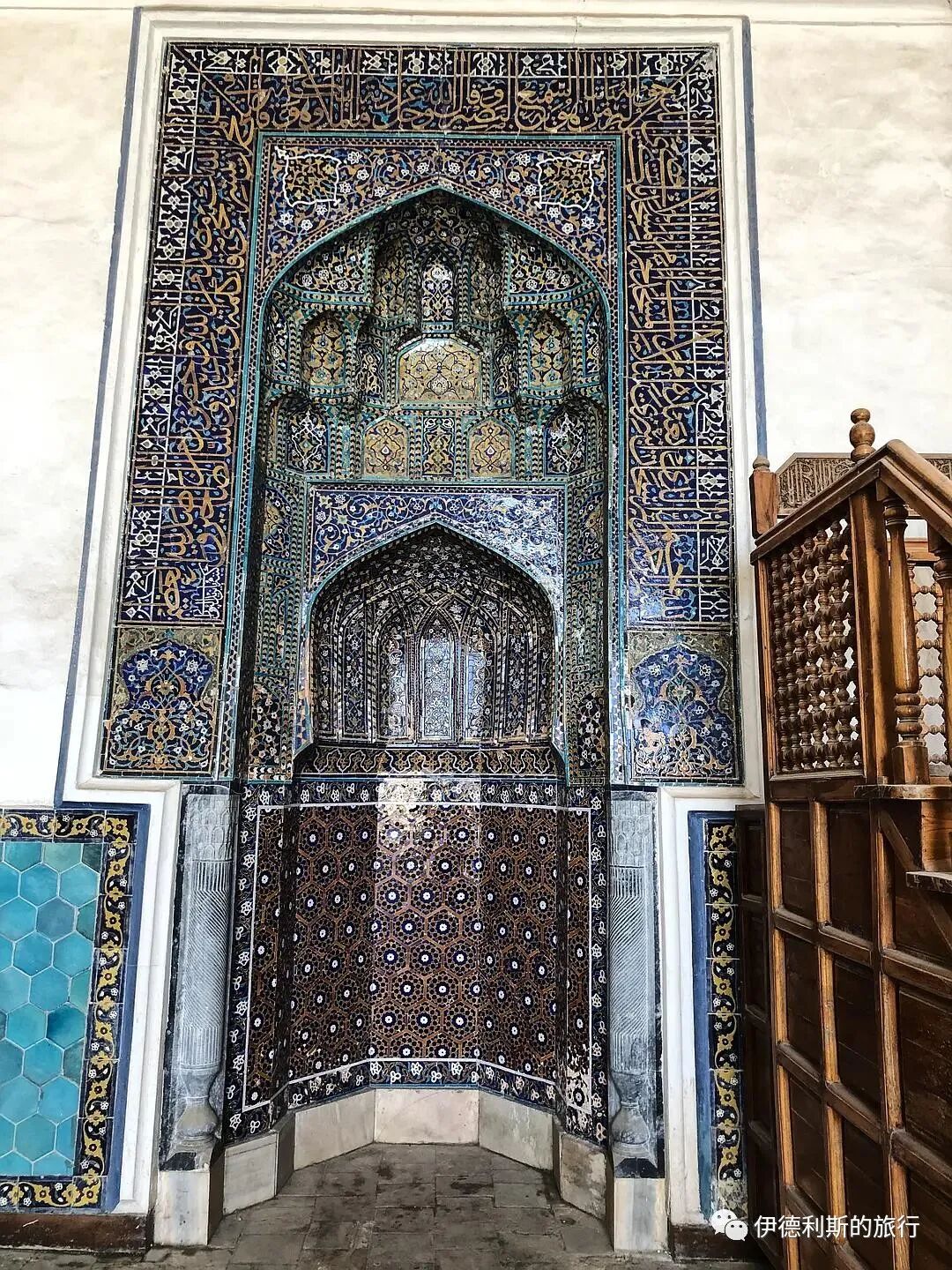
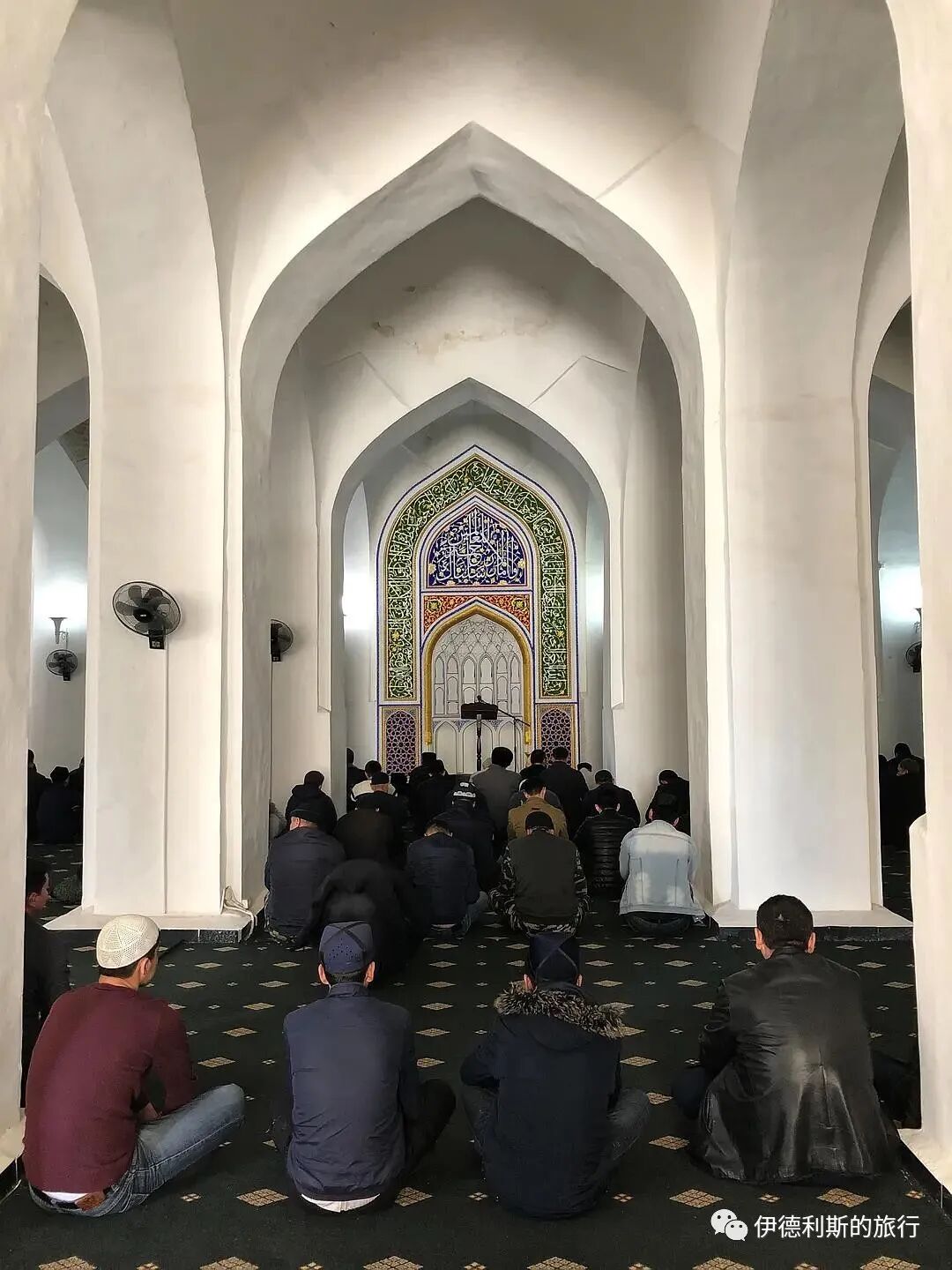
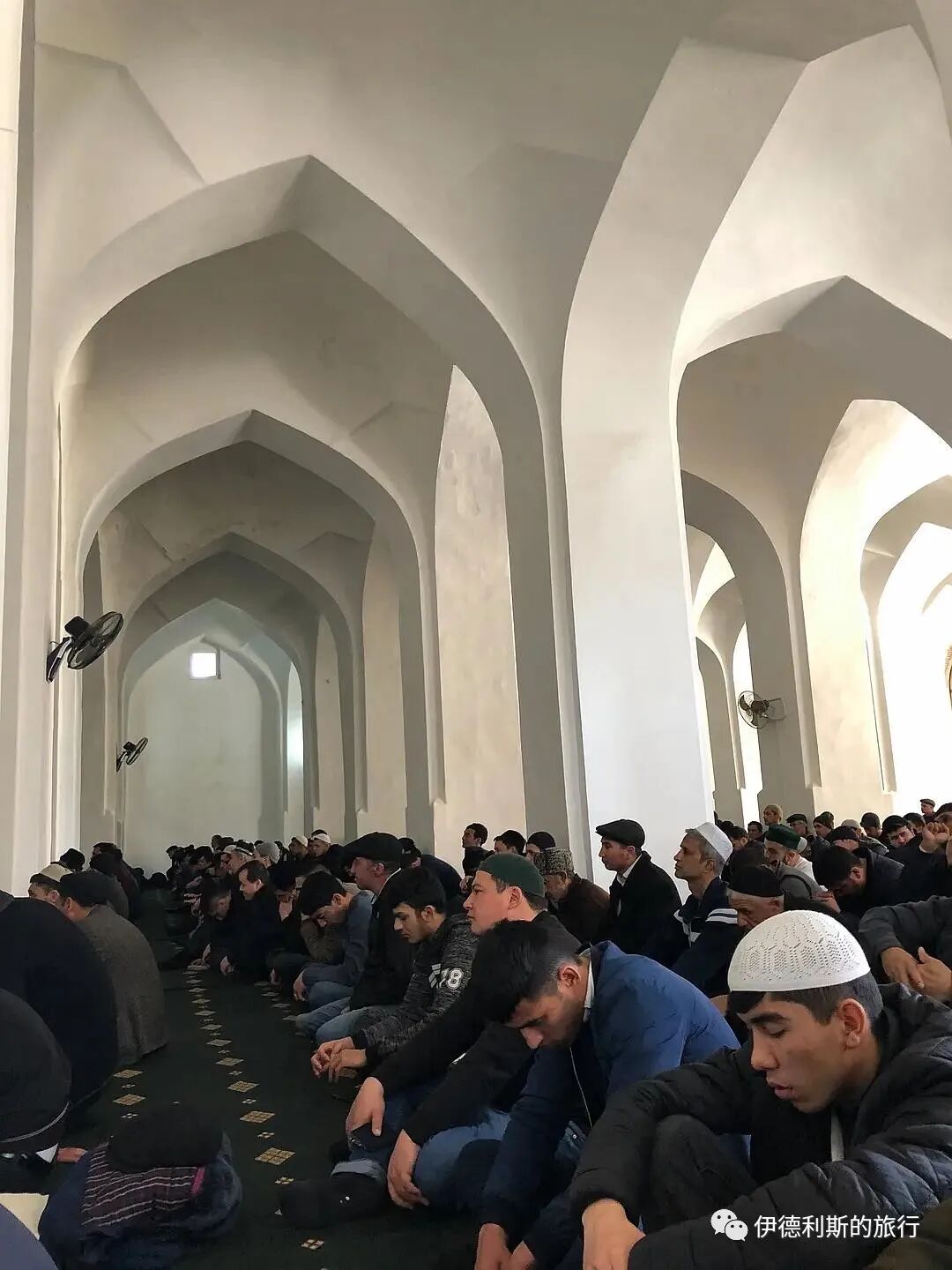
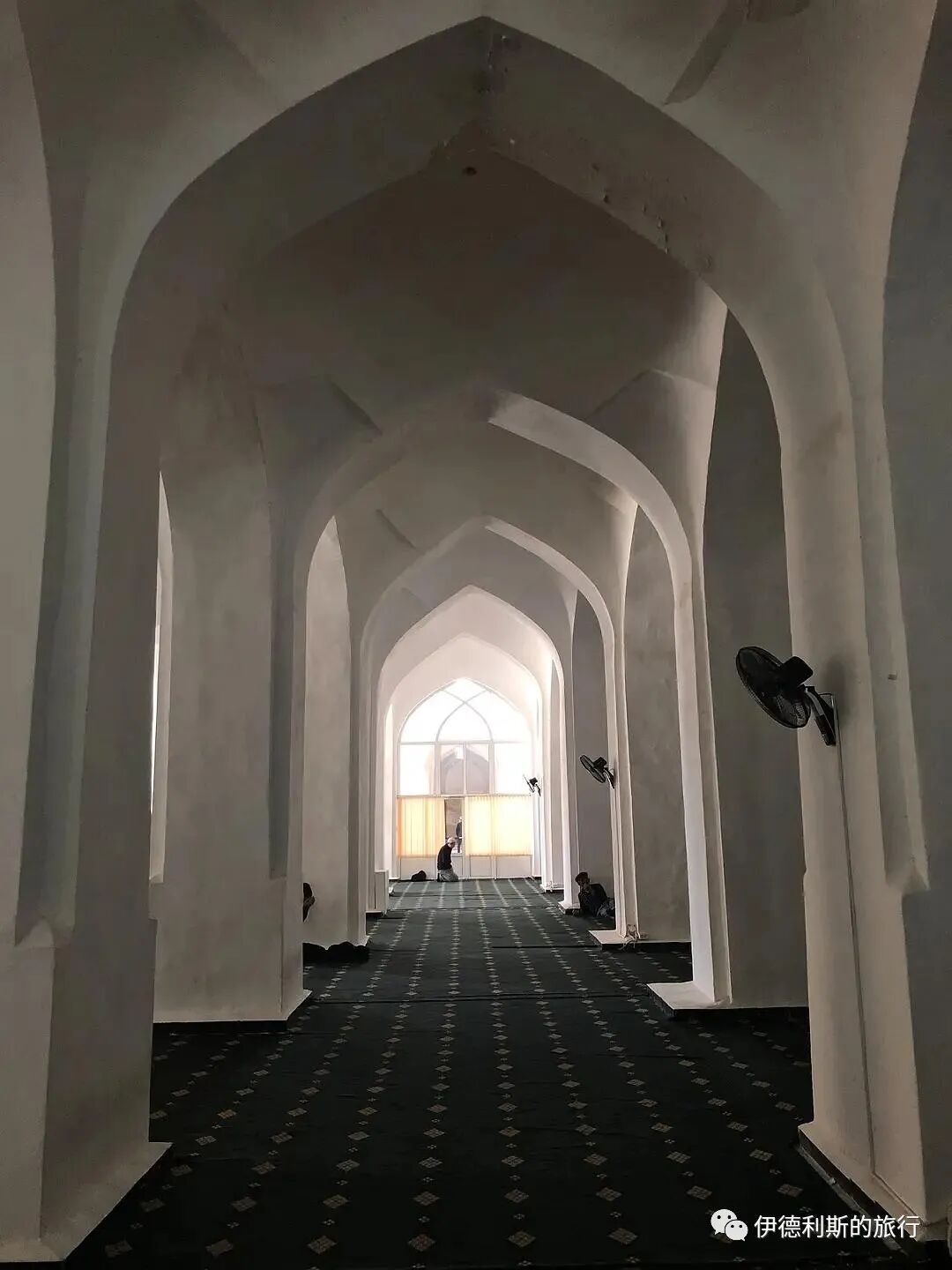
Miniature painting
I visited the first miniature painting workshop in Bukhara and bought a few small miniature paintings.
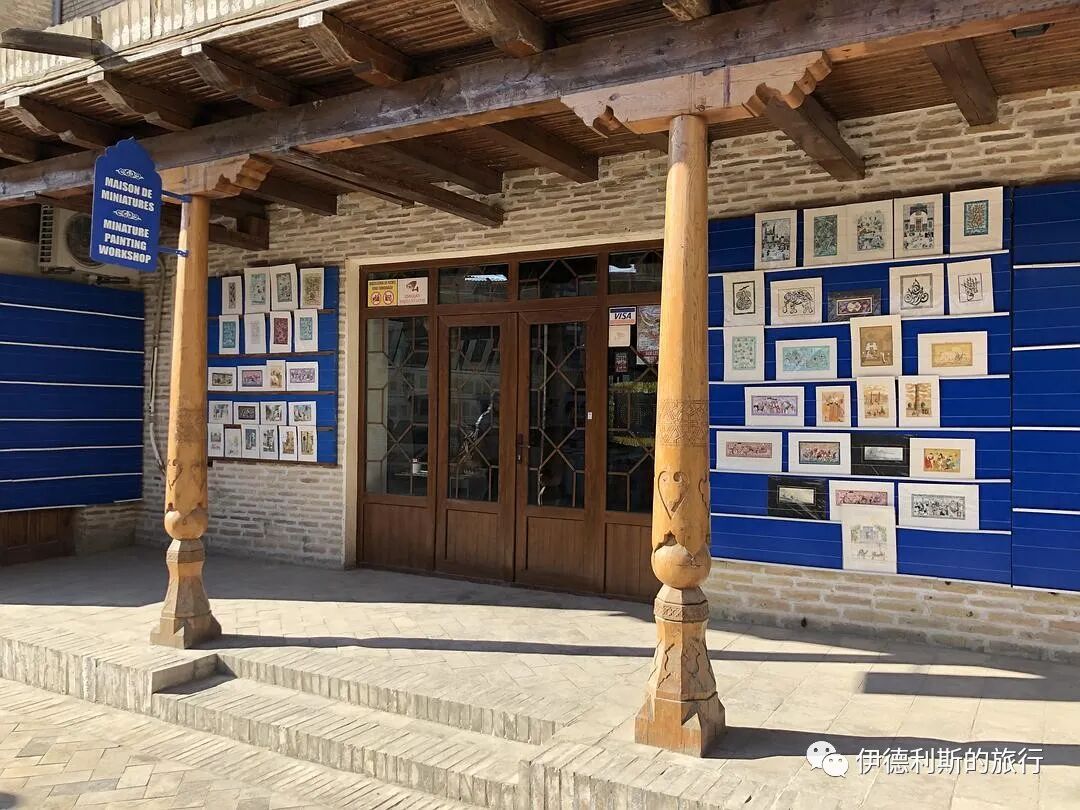
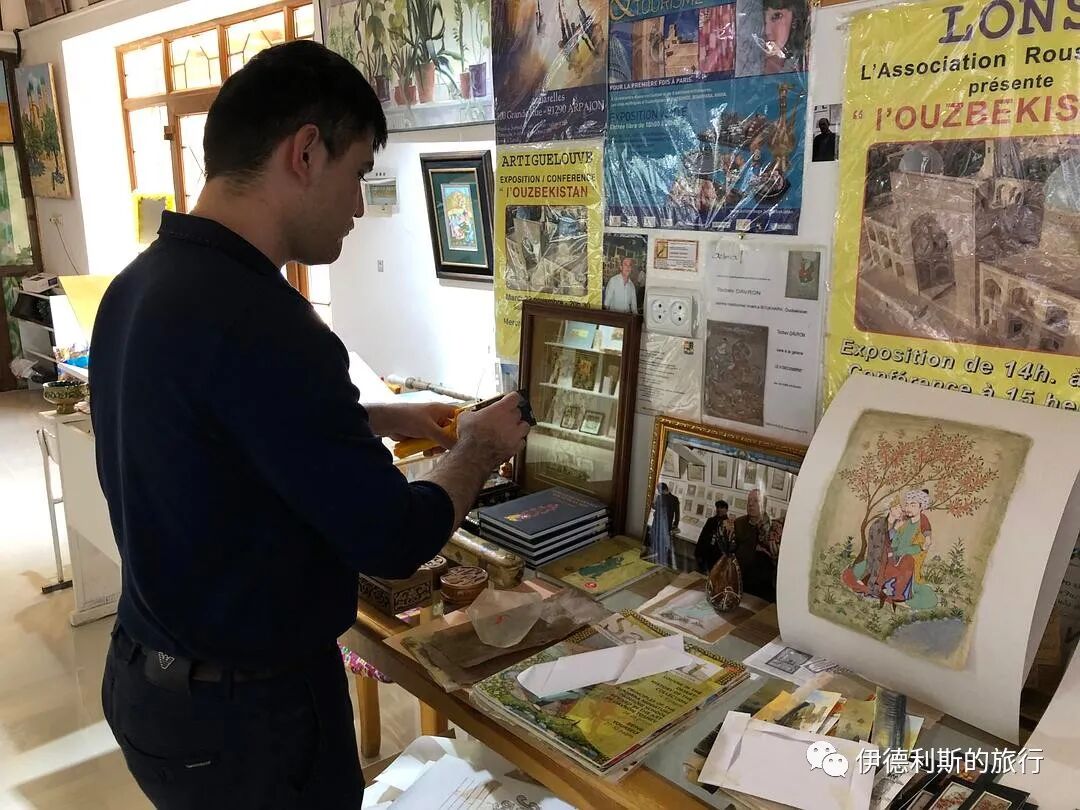
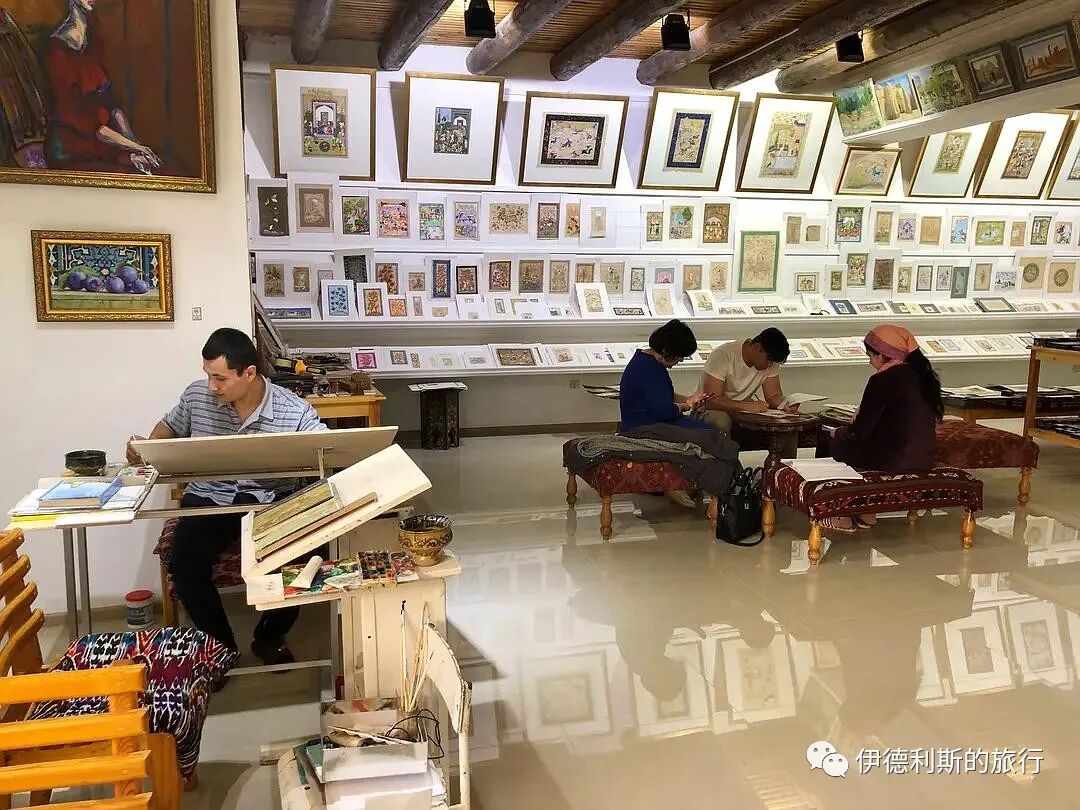
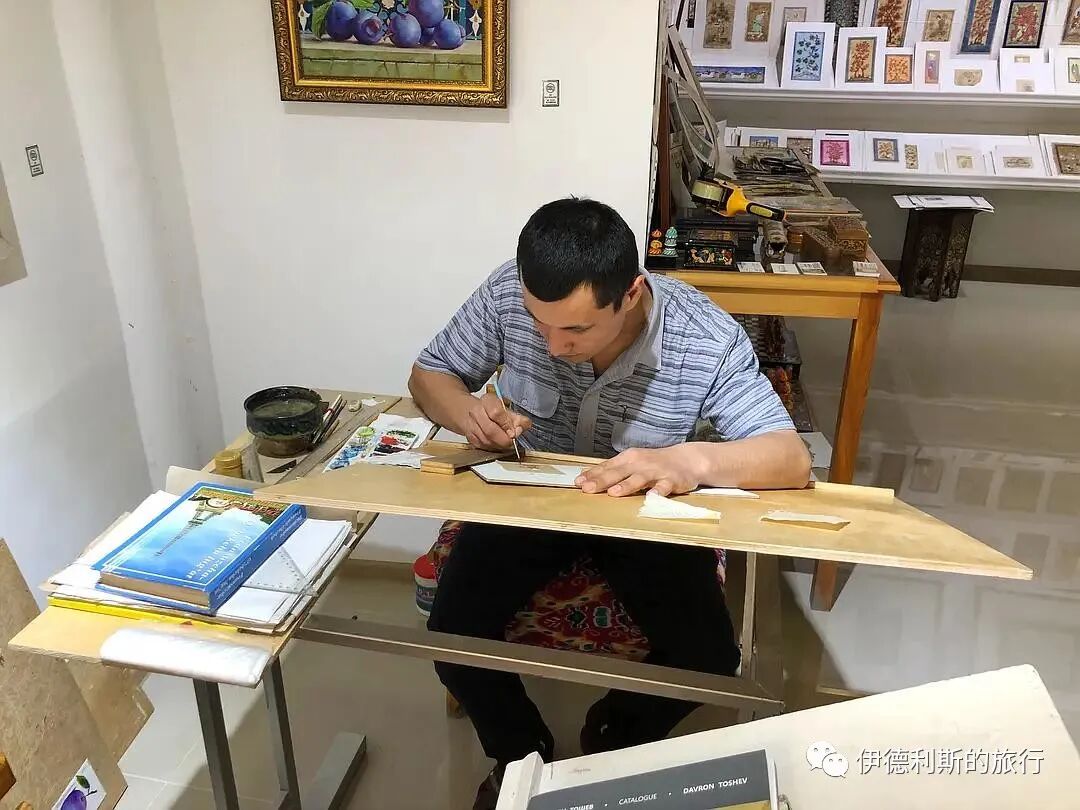
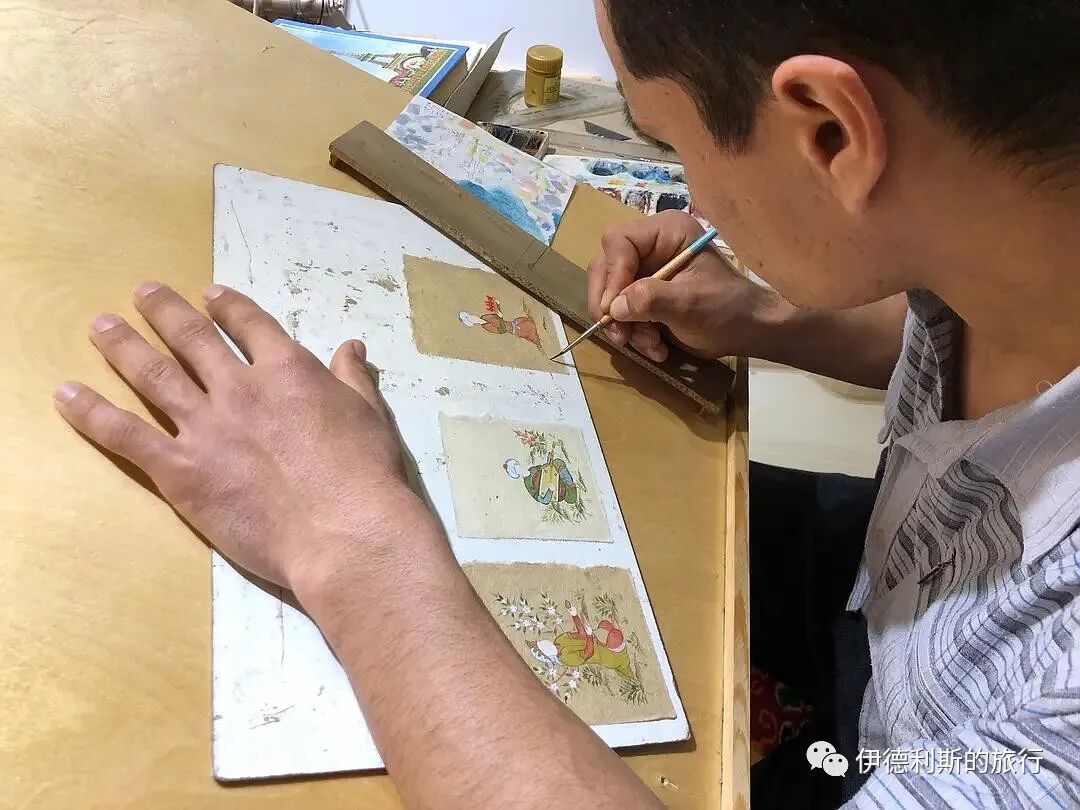
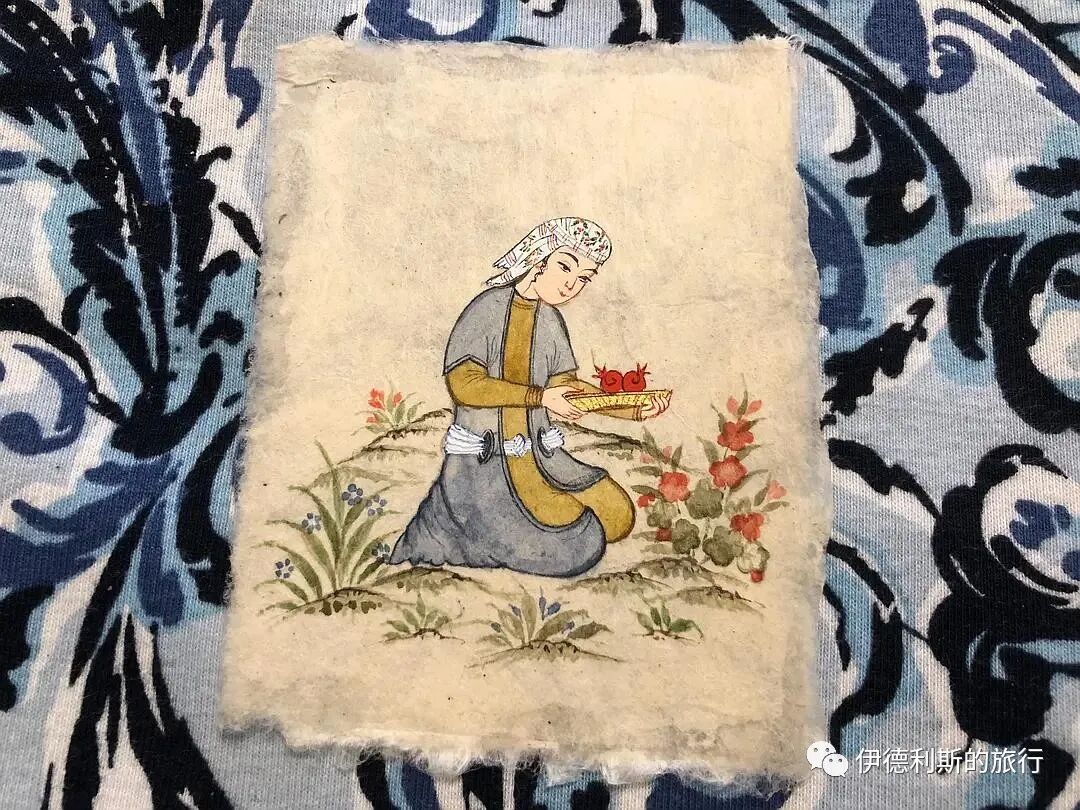
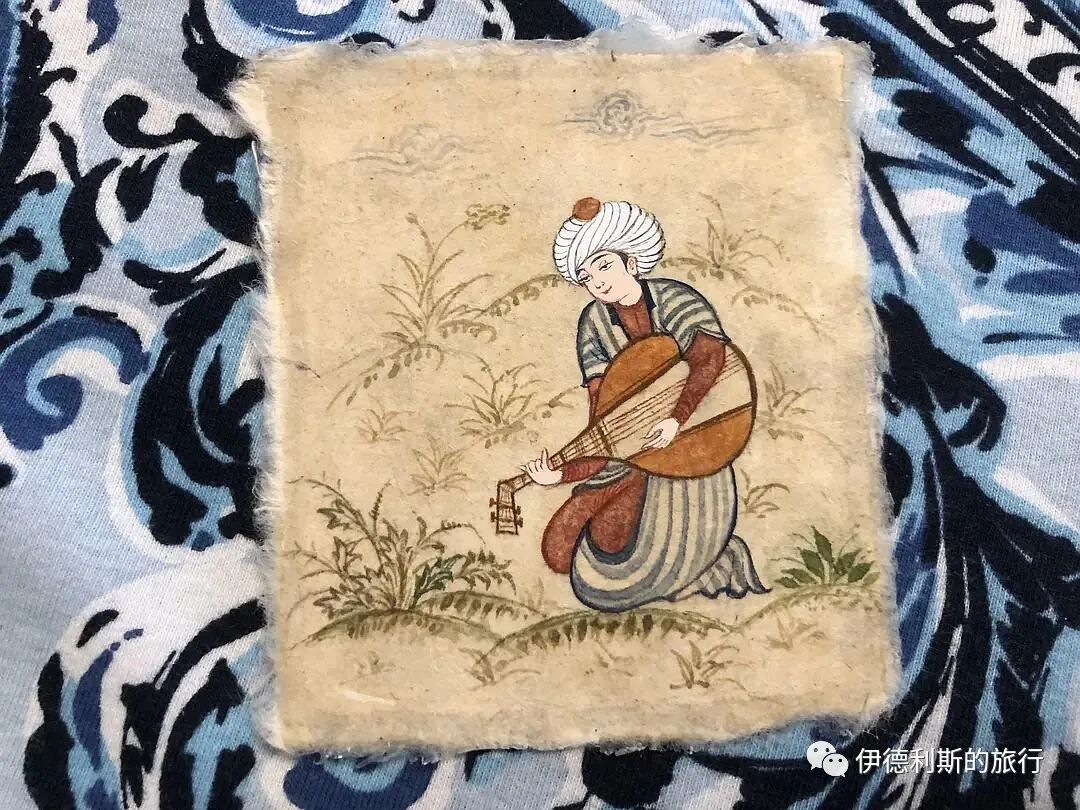
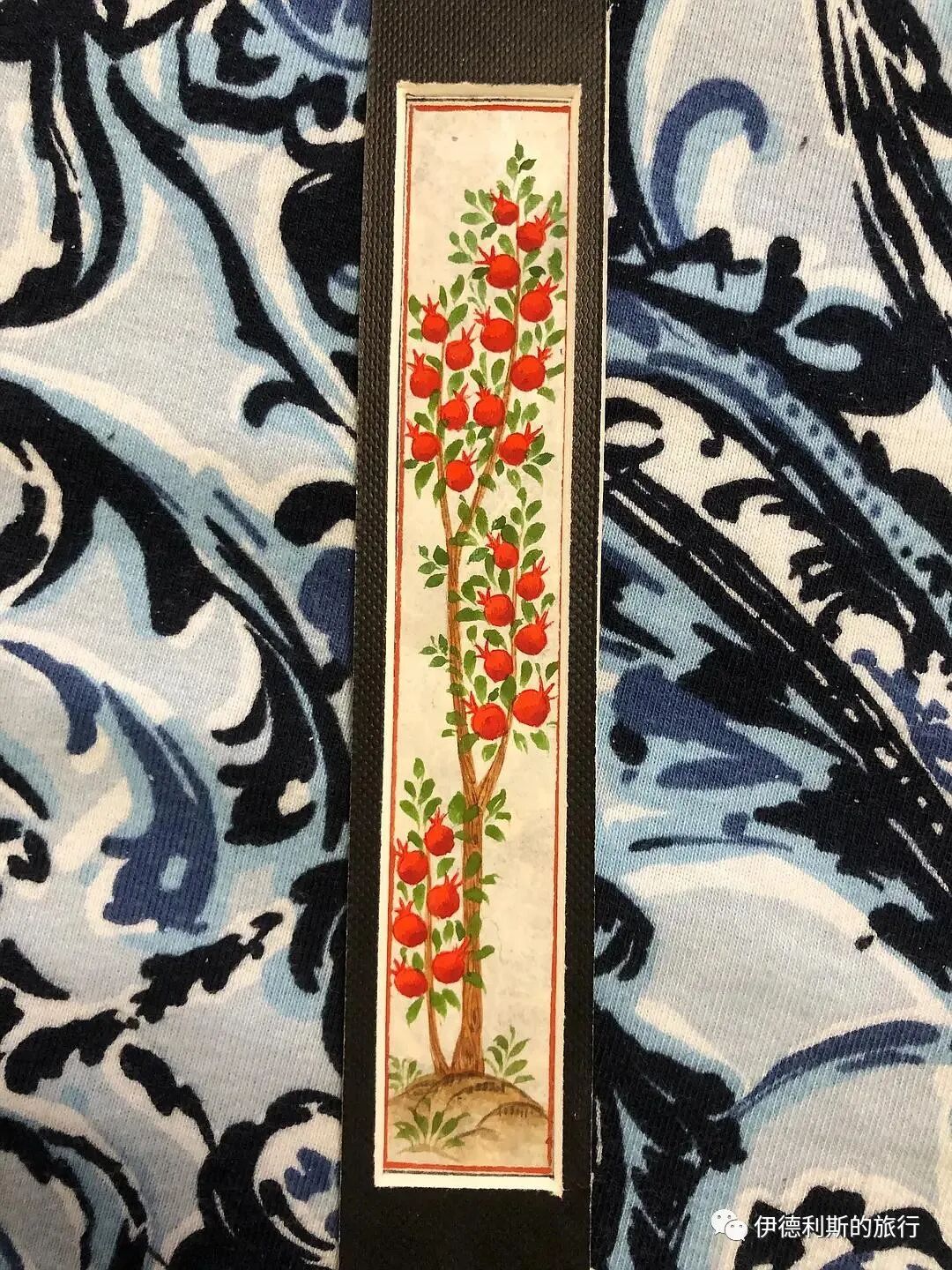
The Tok-i-Zargaron (Jewelry Dome Market) was built in 1570. It is the largest of the four remaining dome markets from the Bukhara Khanate period in the ancient city of Bukhara and is the best witness to Bukhara's role as a trade center in Central Asia in the 16th century.
'Tok-i-Zargaron' means 'Dome of the Jewelers.' It has four arched passages for Silk Road trade caravans to pass through, as well as 16 domes on an octagonal base. During the Bukhara Khanate period, there were 36 jewelry workshops and shops under the dome, selling rings, earrings, necklaces, and various other jewelry.
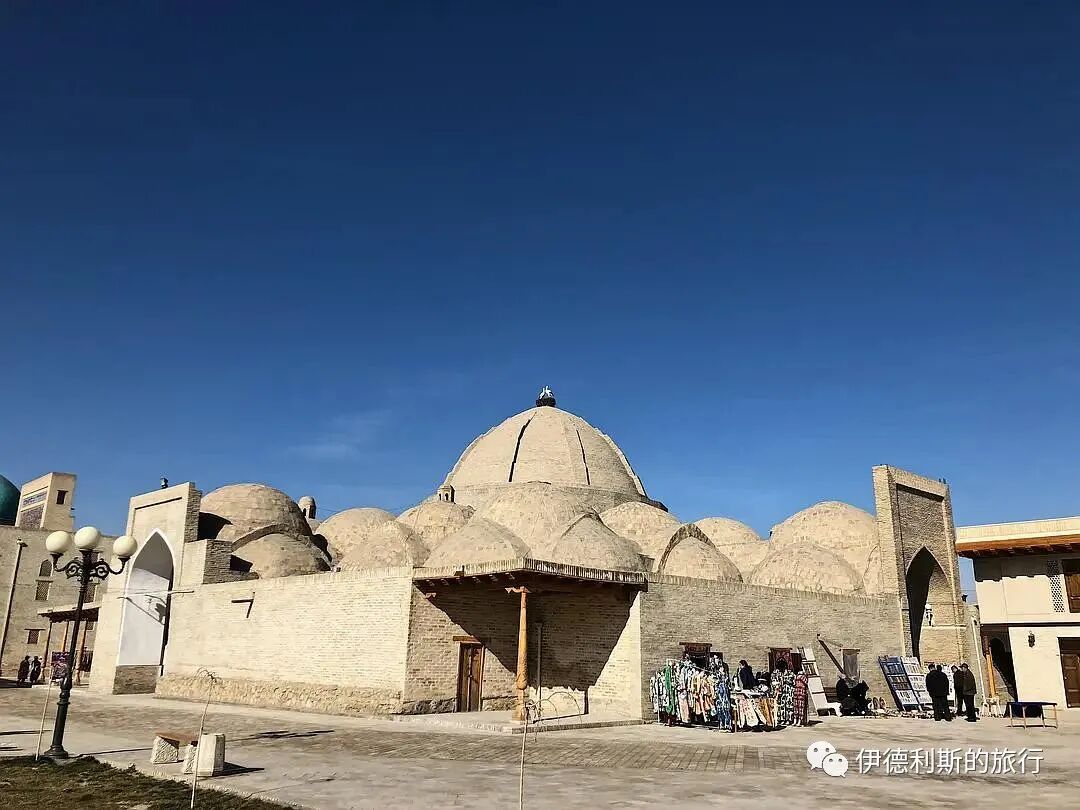
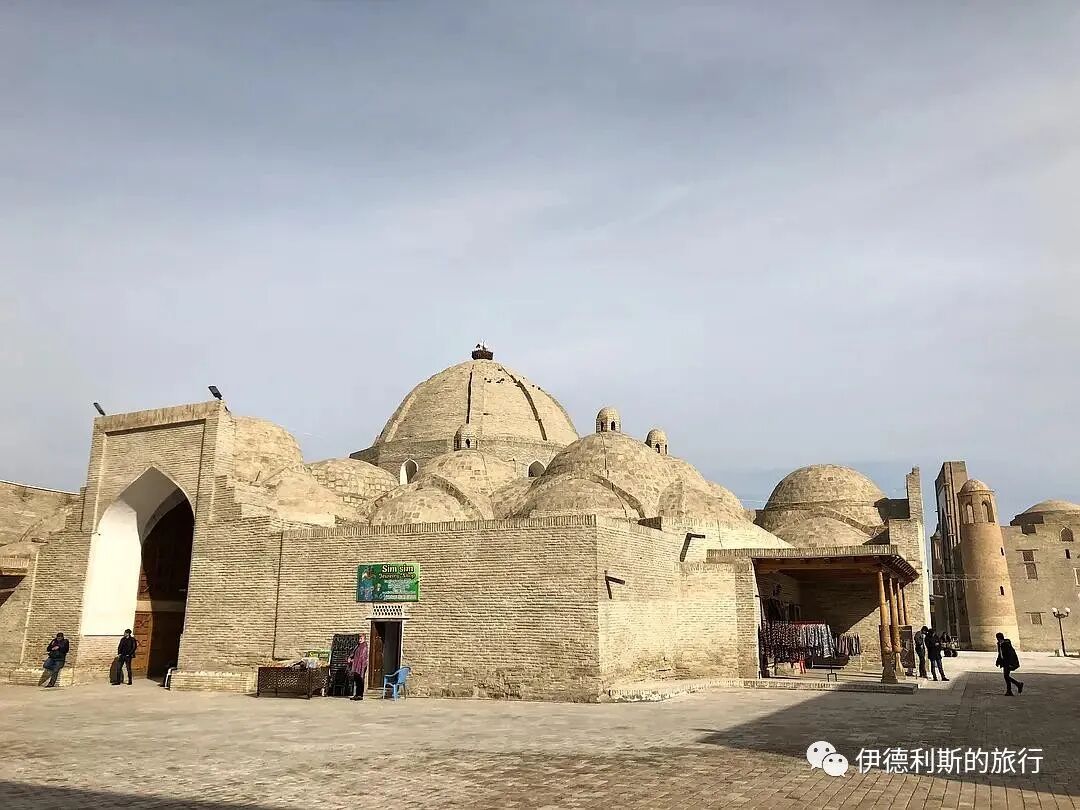
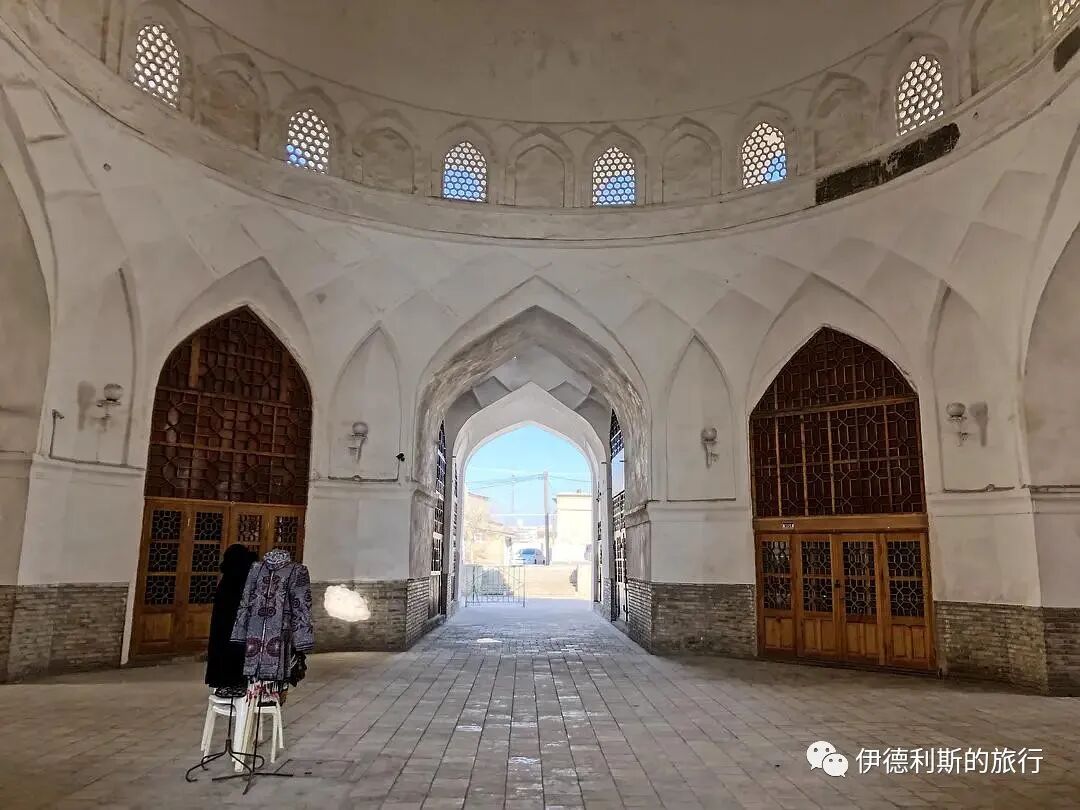
Buying miniature paintings in the market.
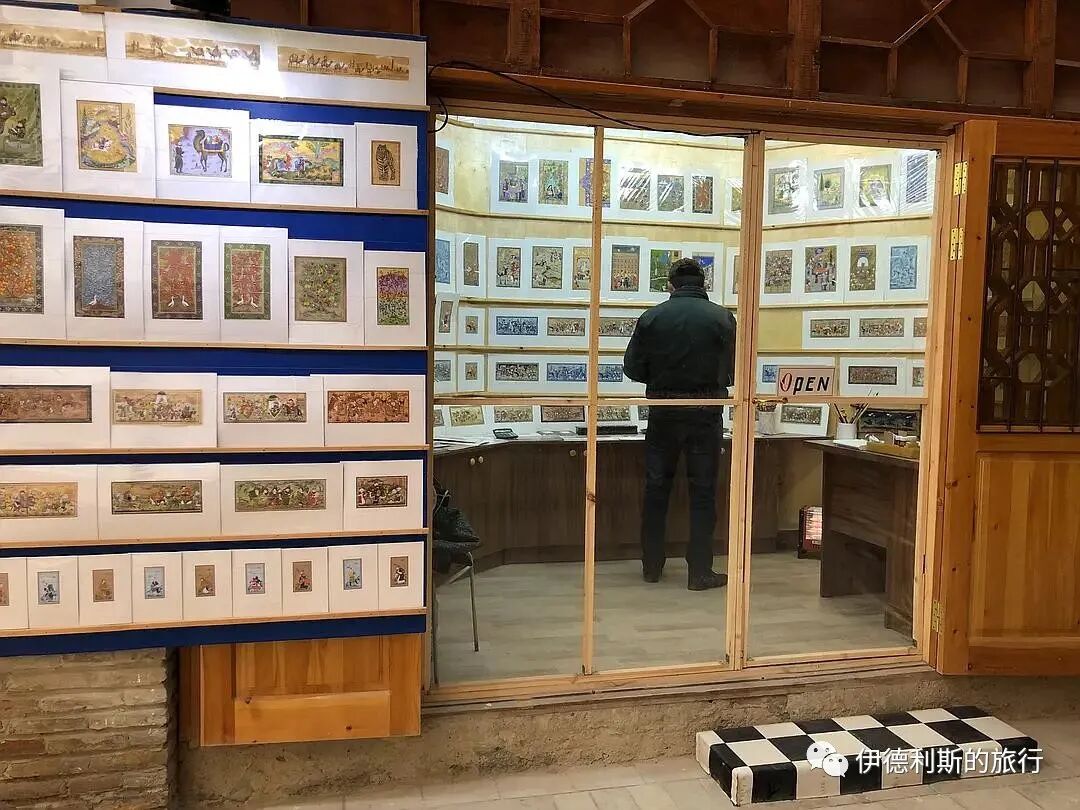
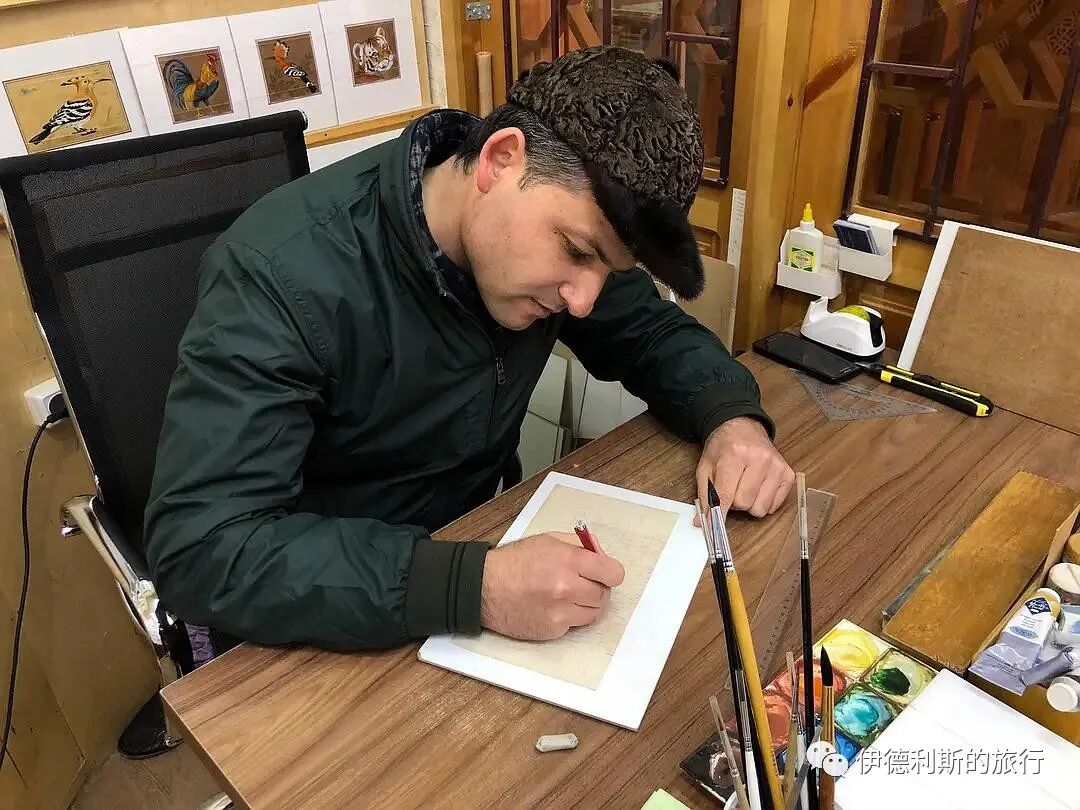
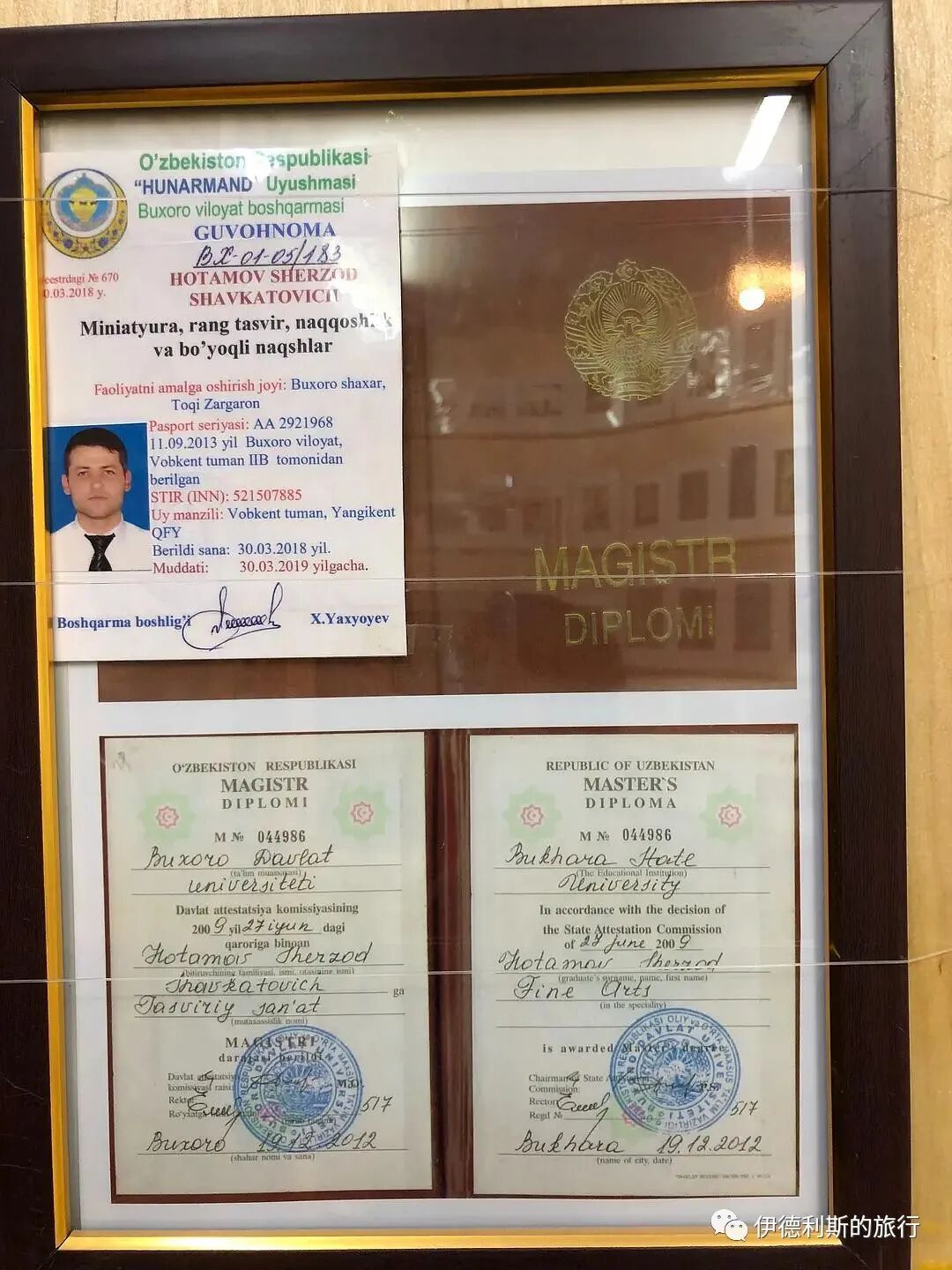
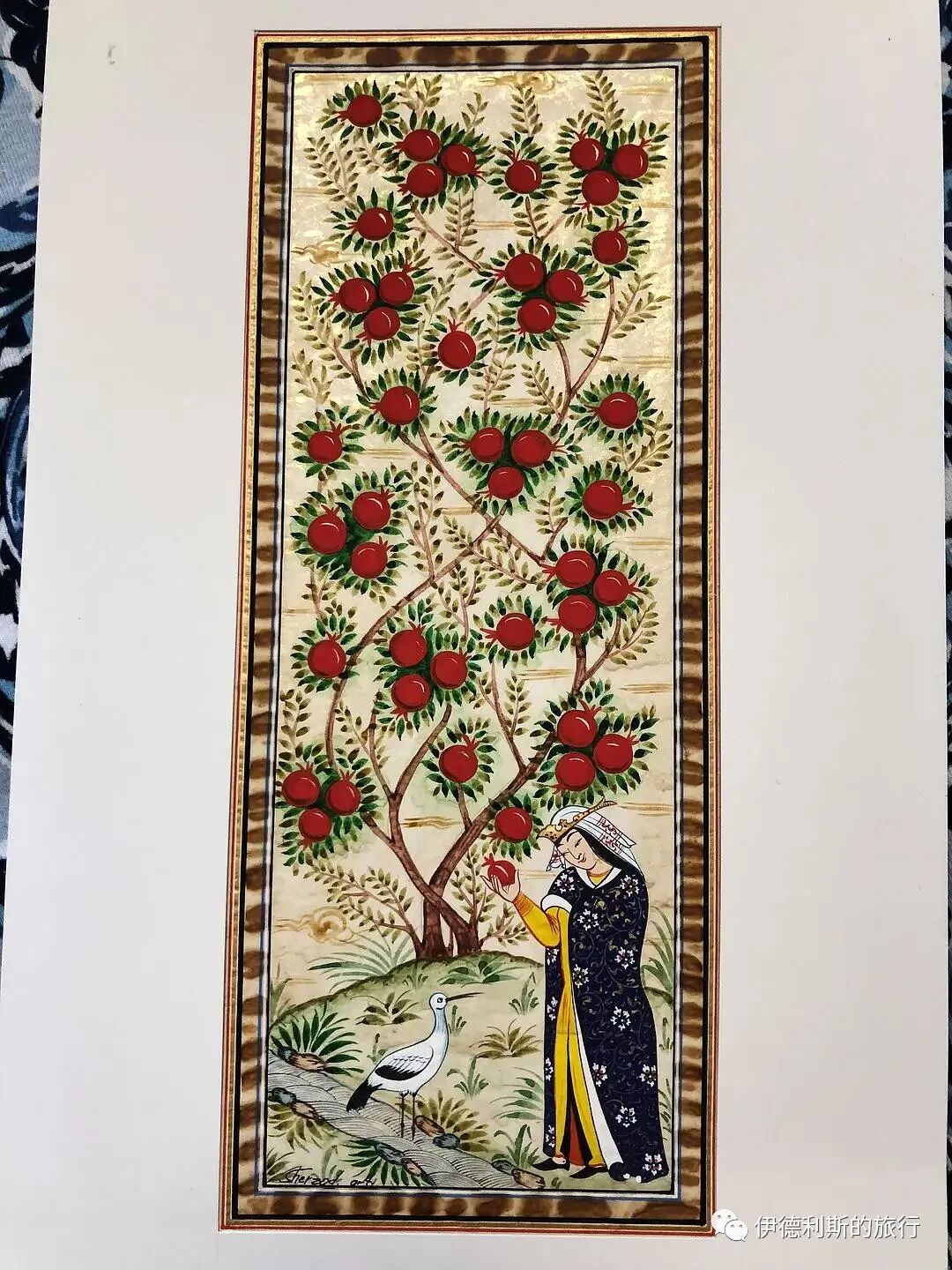
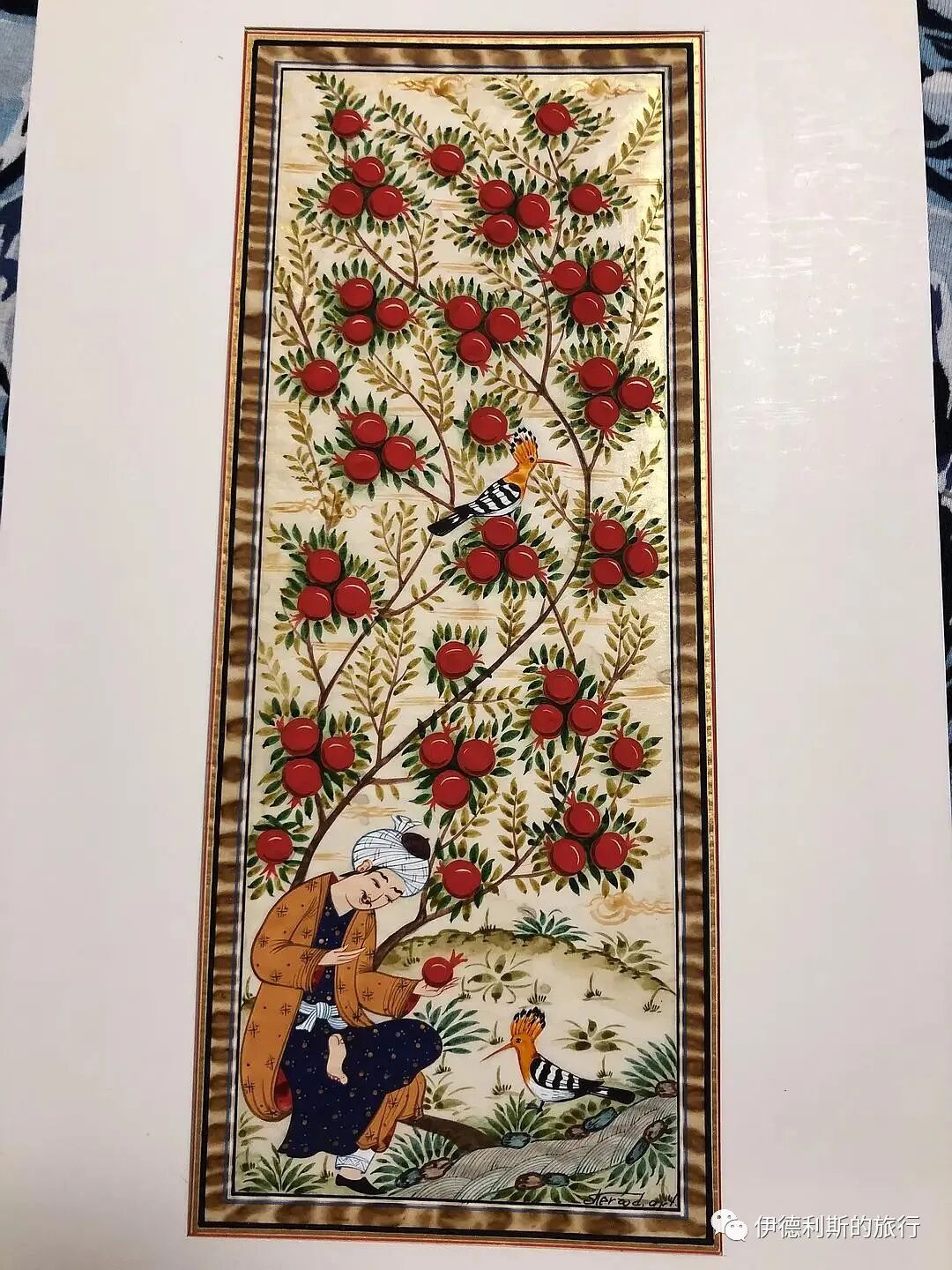
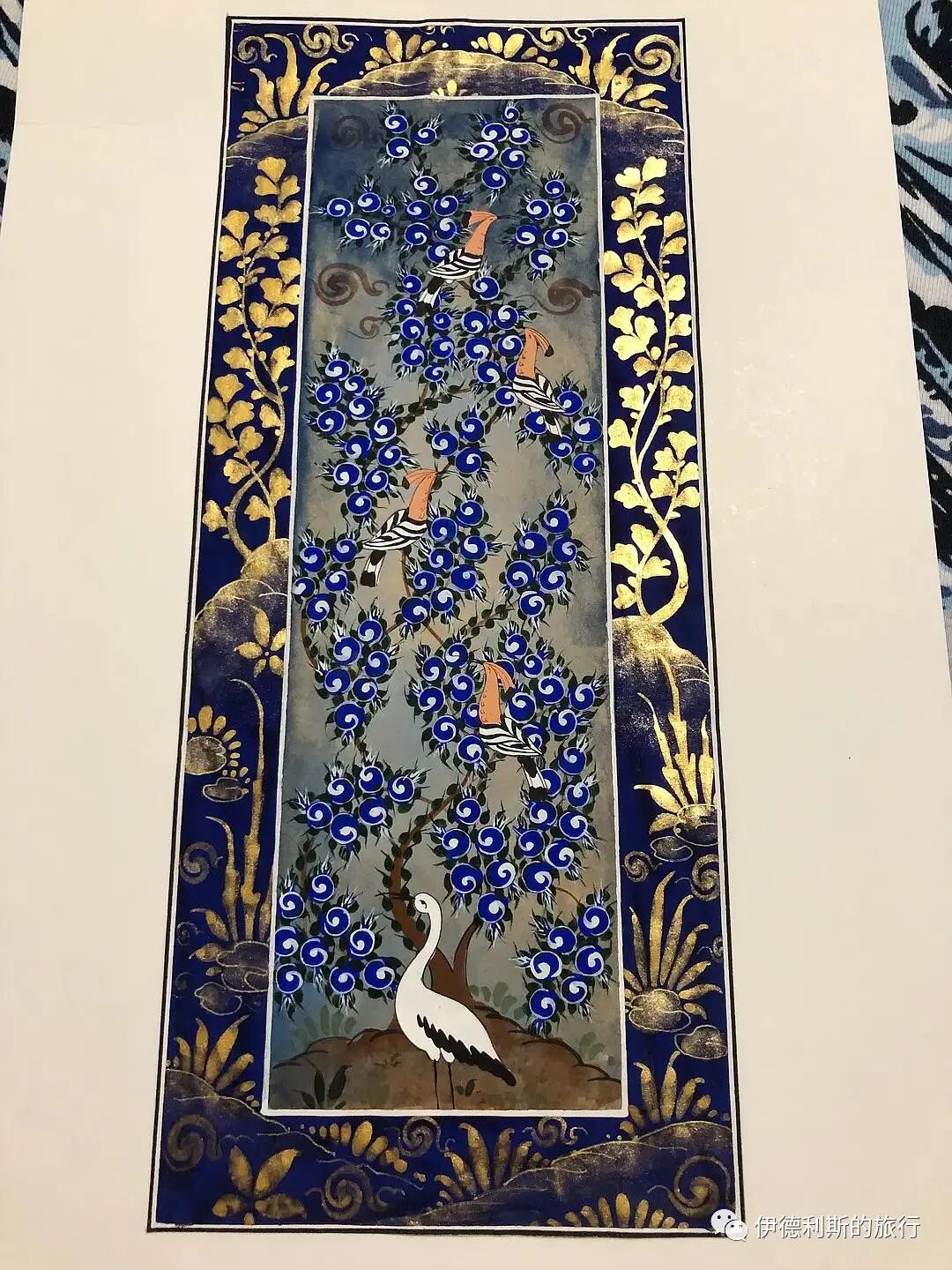
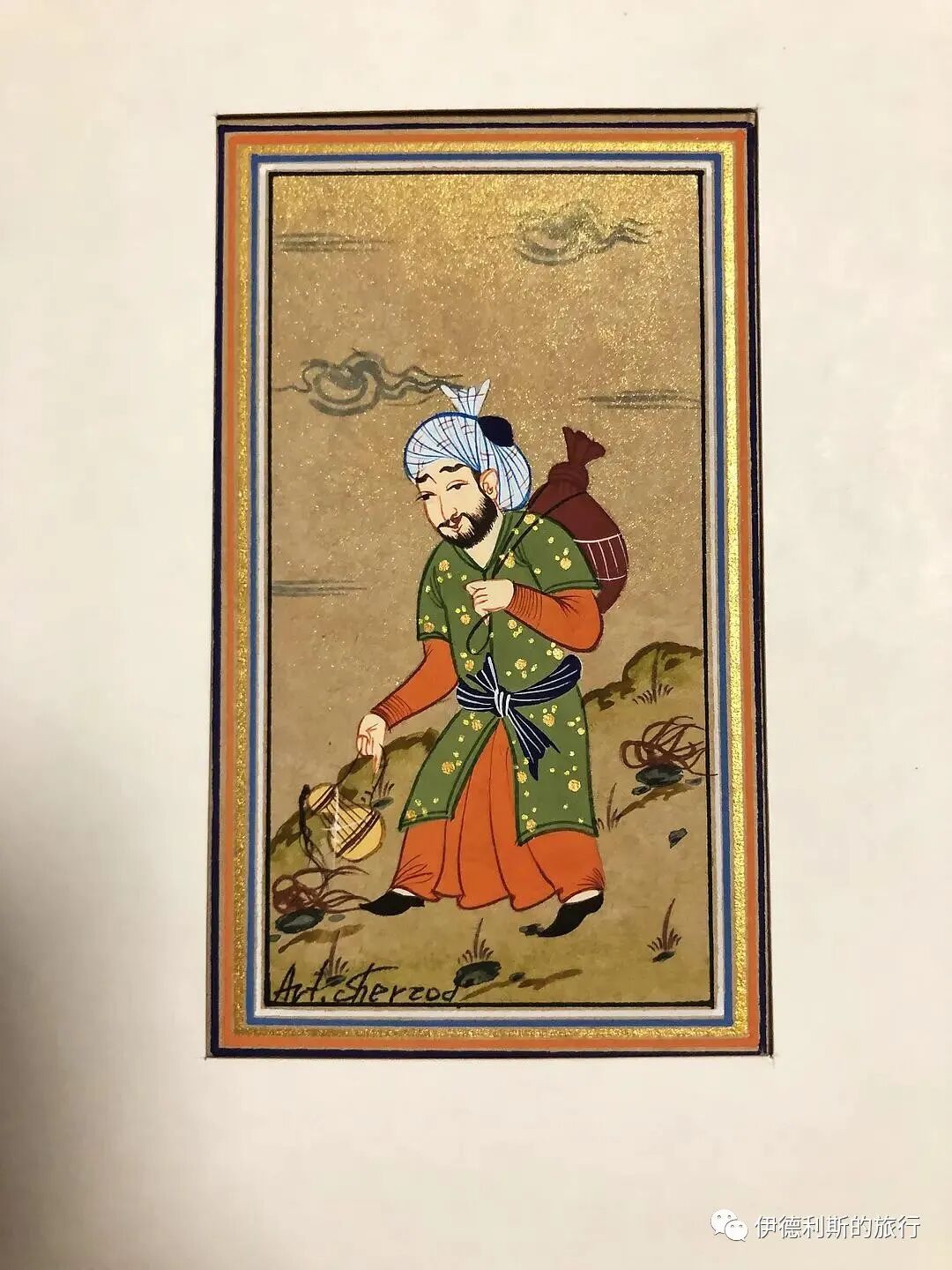
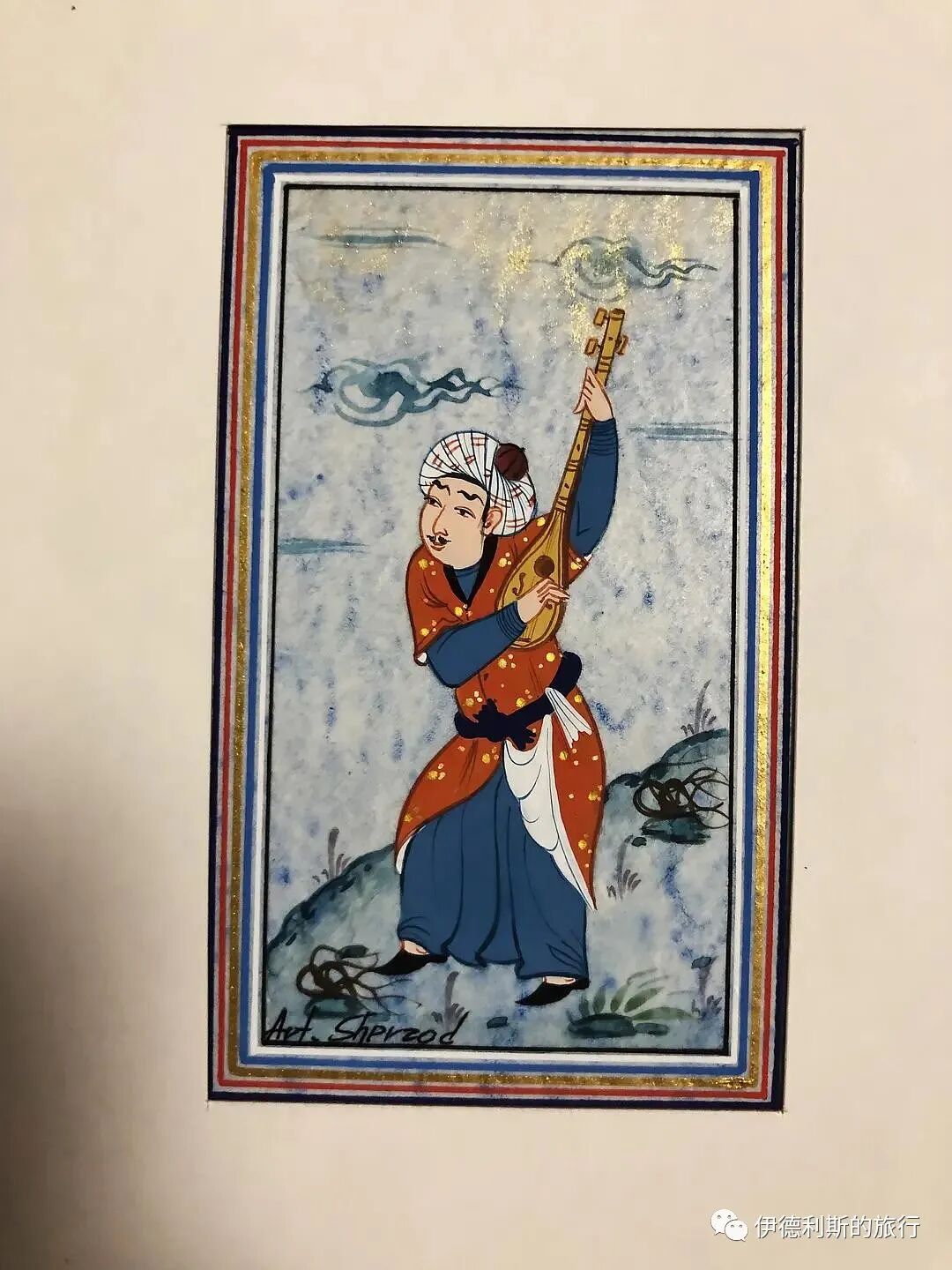
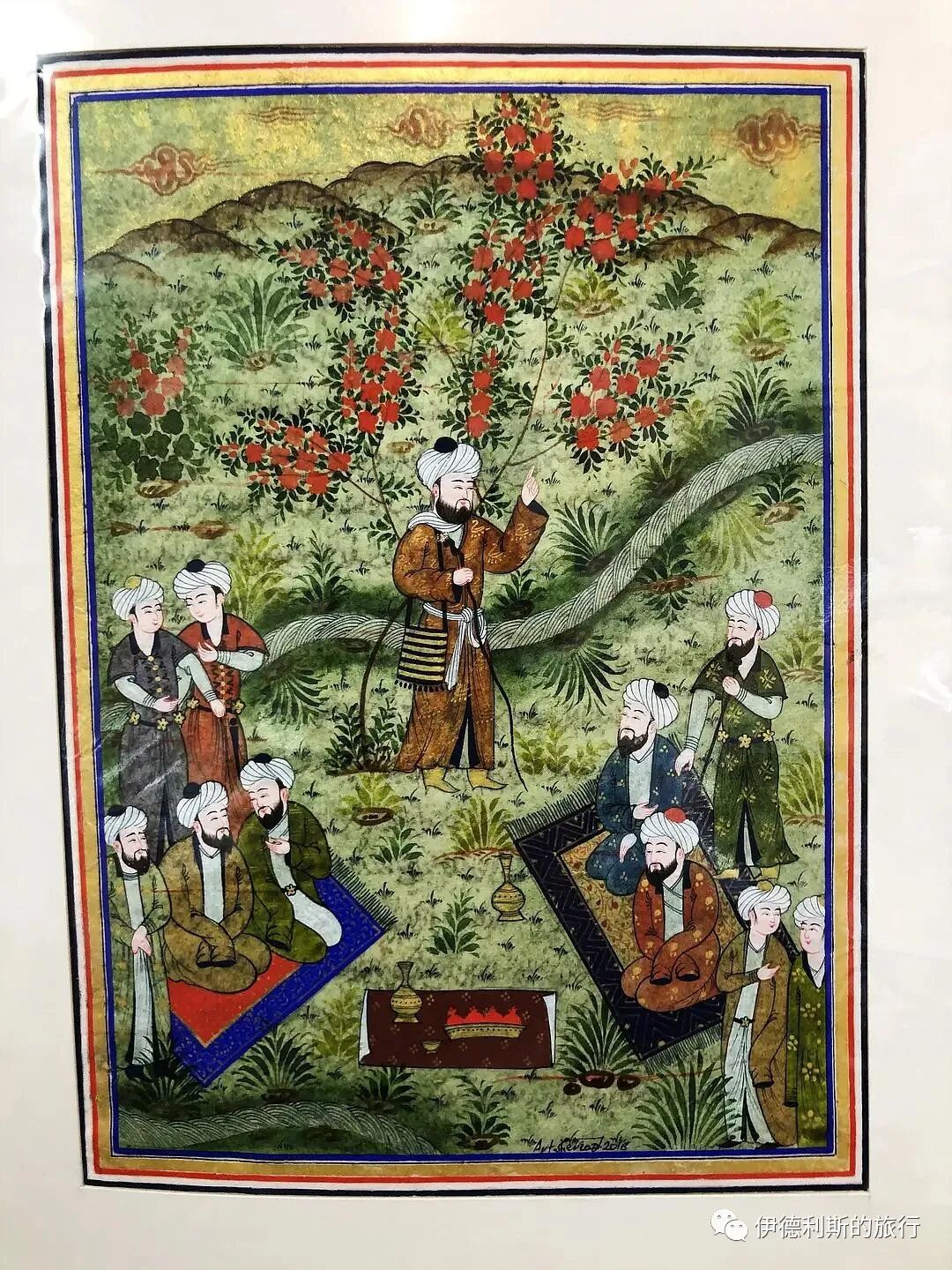
The Toqi Telpak Furushon (Hat Dome Market), built at the end of the 16th century during the Bukhara Khanate, consists of a central dome and a hexagonal base, connecting five streets in the old city. This place was originally called the Kitab-Furushon (Book Market), but later gradually switched to selling various headscarves, fur hats, and skullcaps. Now it has become a place for selling tourist souvenirs.
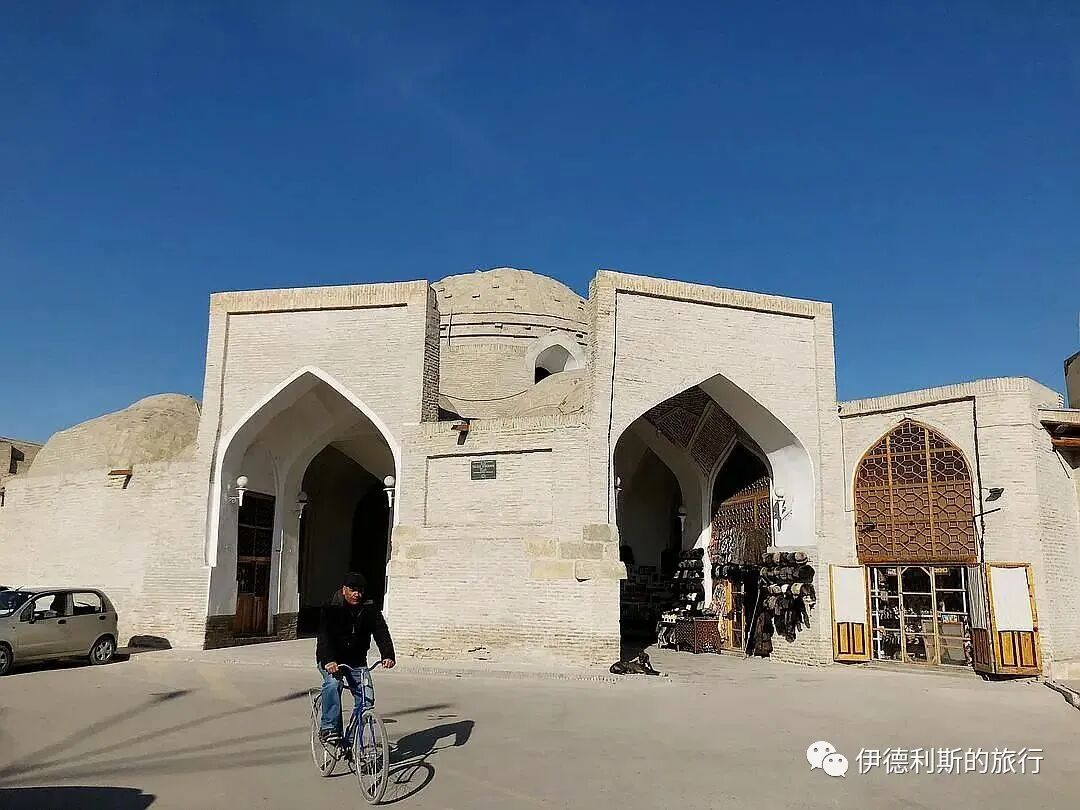
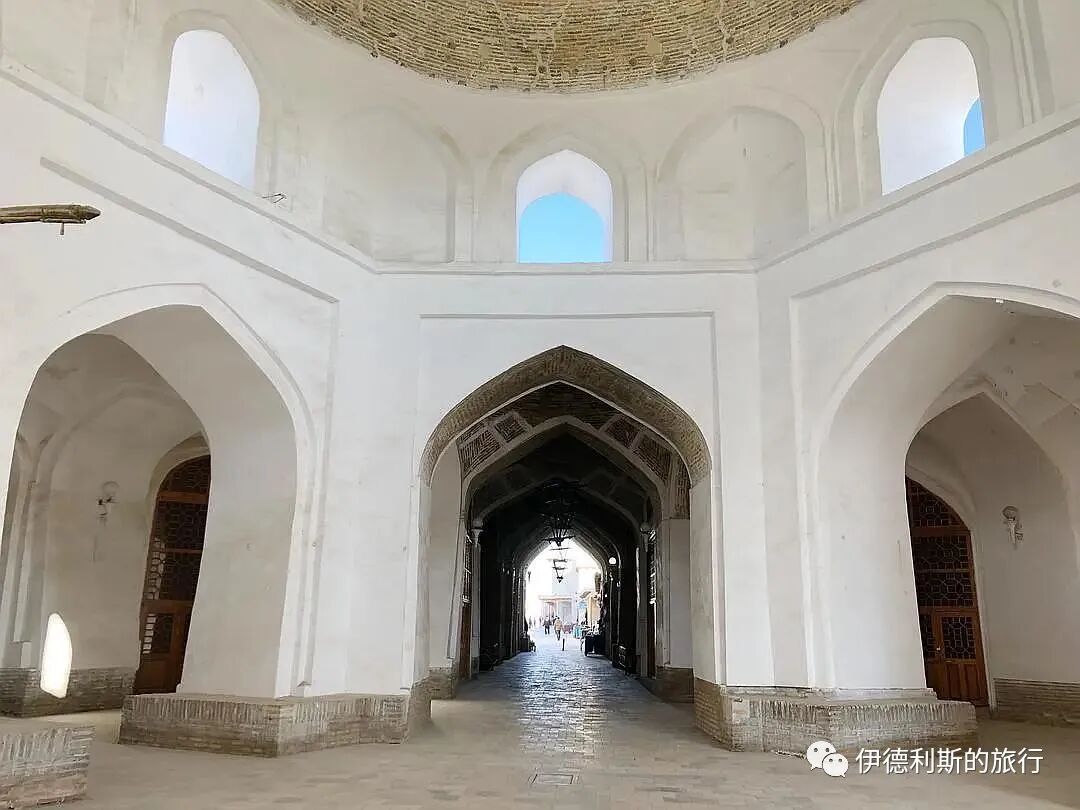
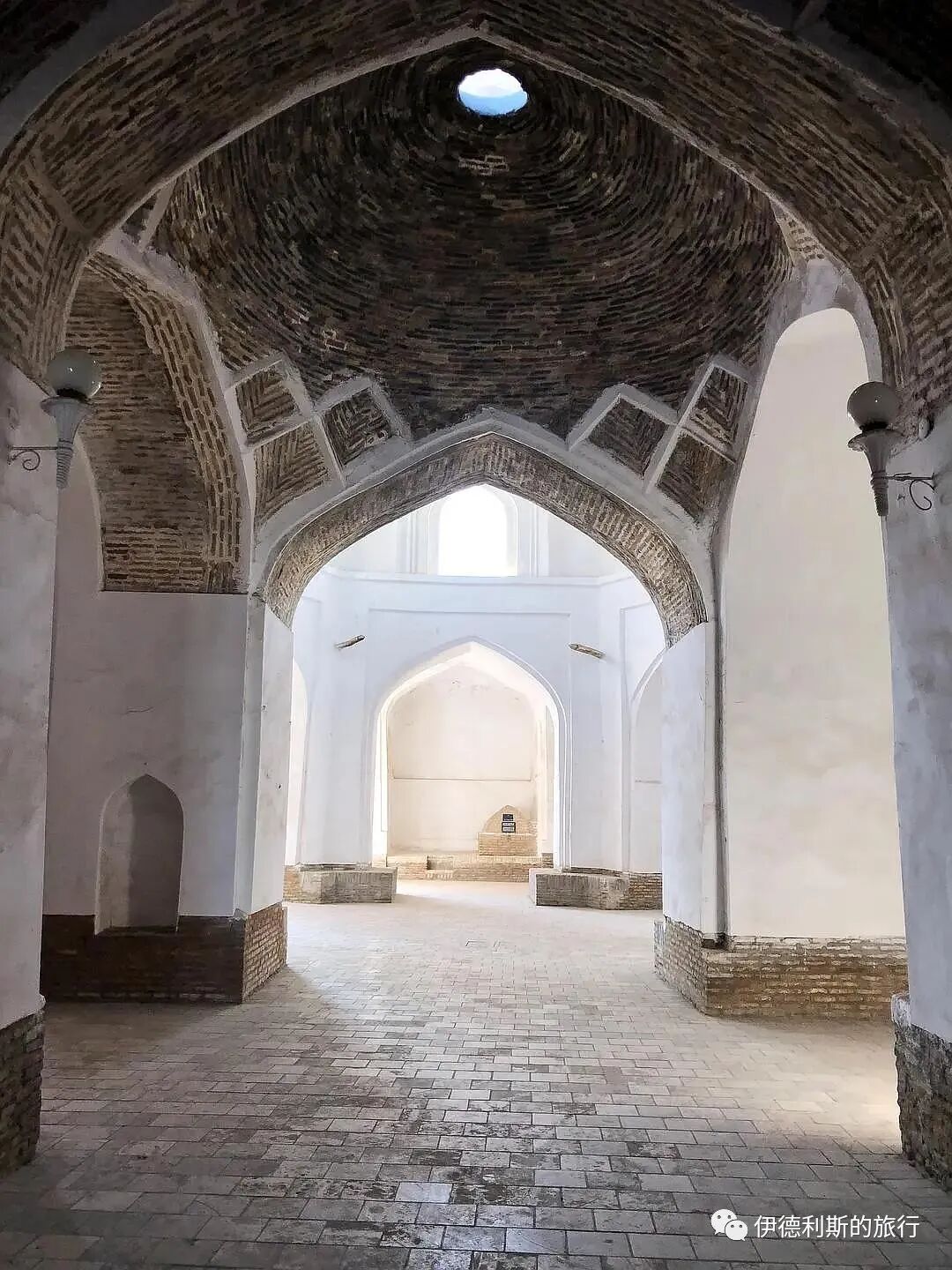
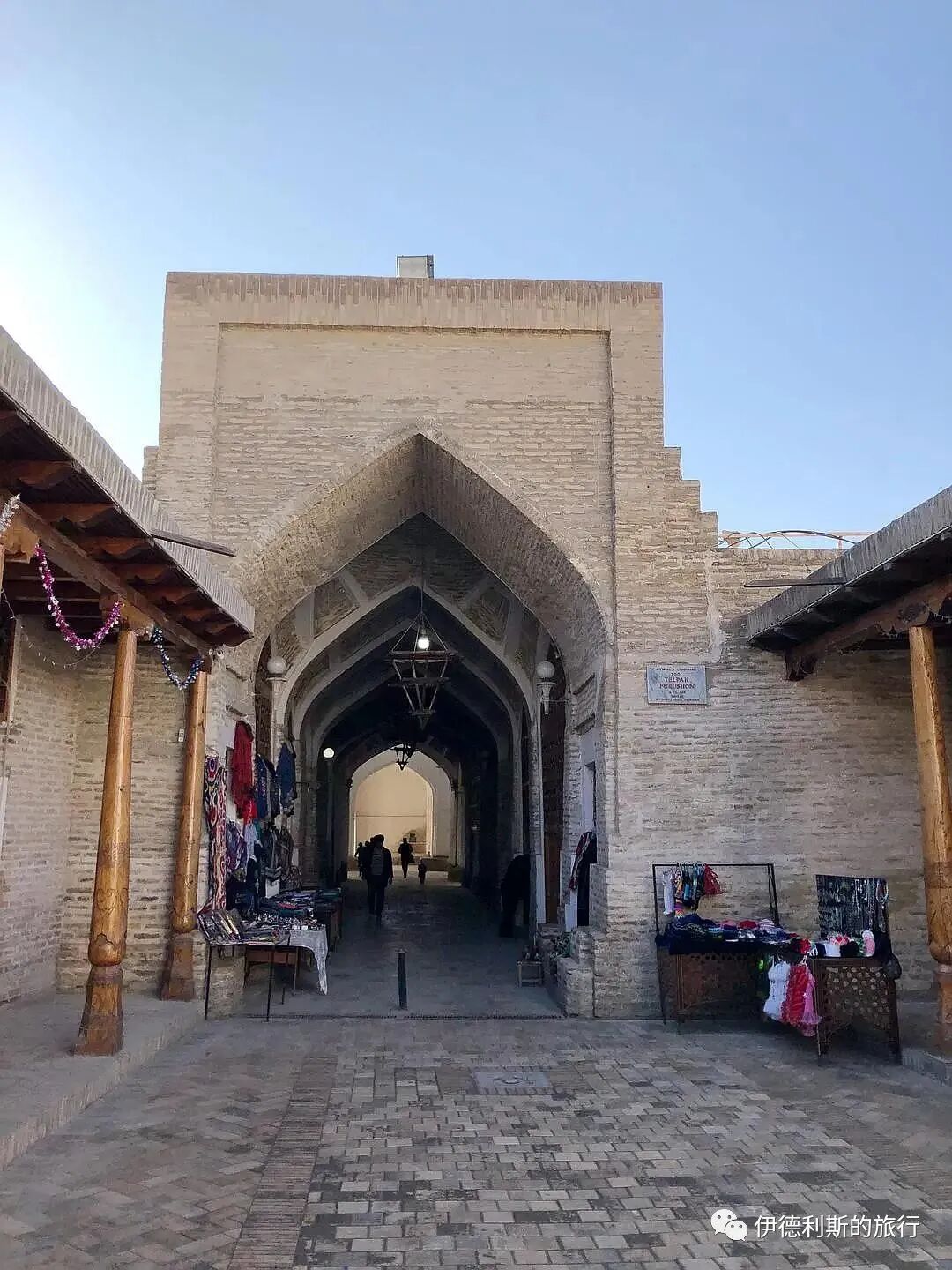
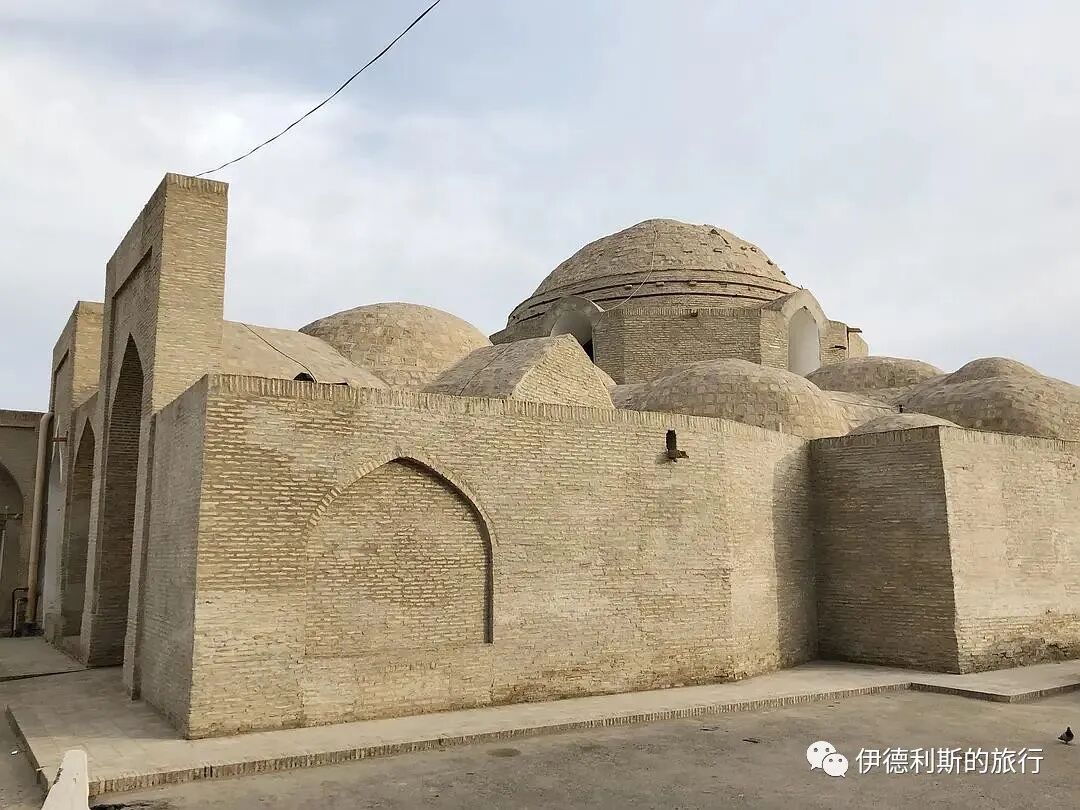
I bought a miniature painting at a workshop in the market; this one was painted directly on old paper.
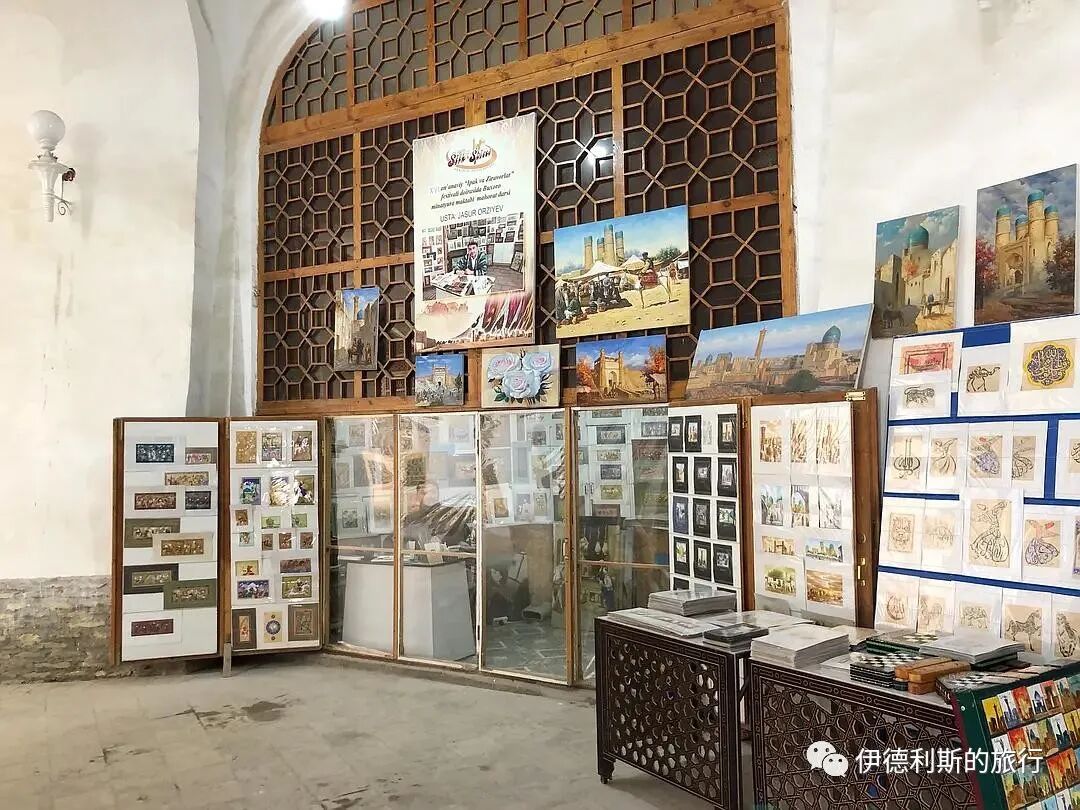
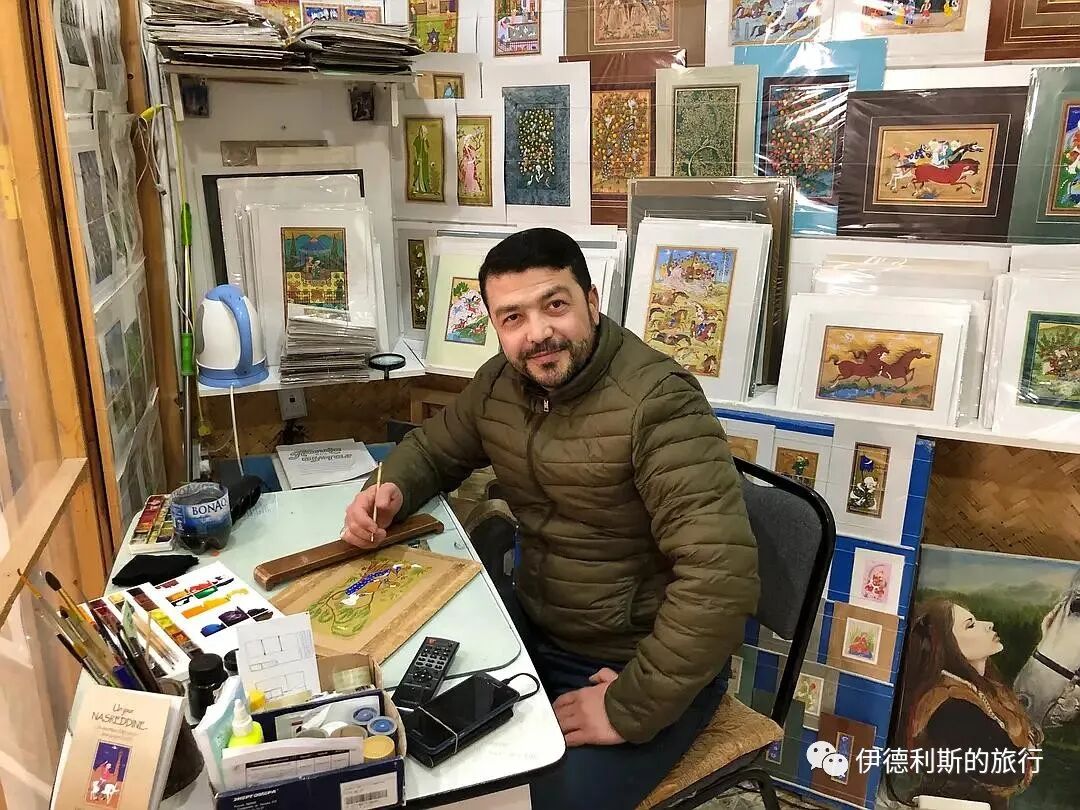
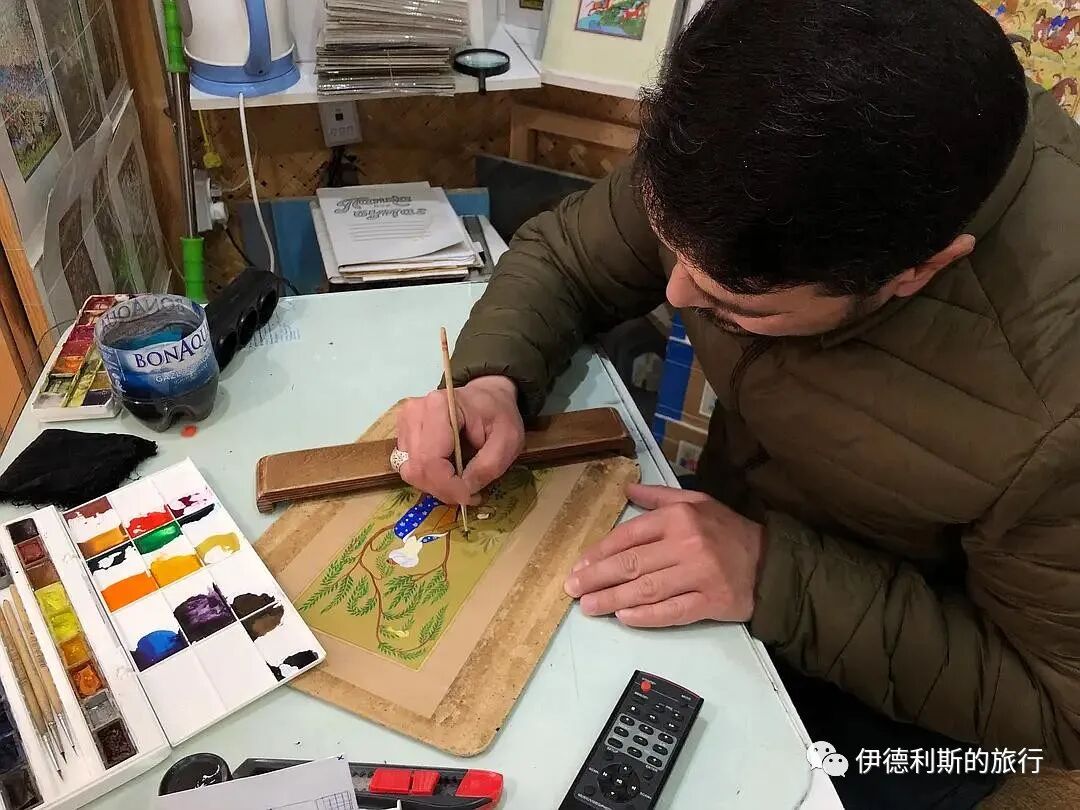
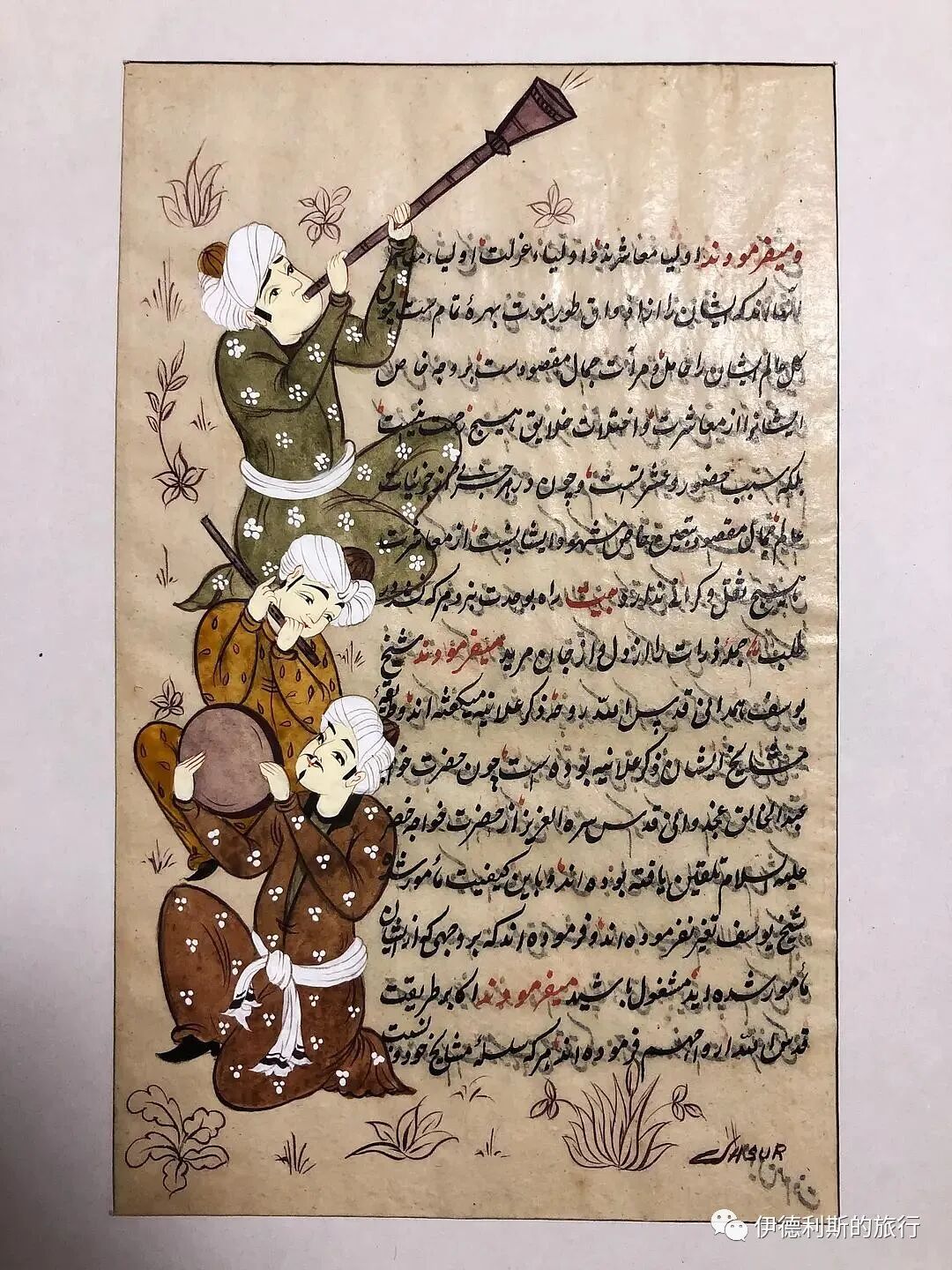
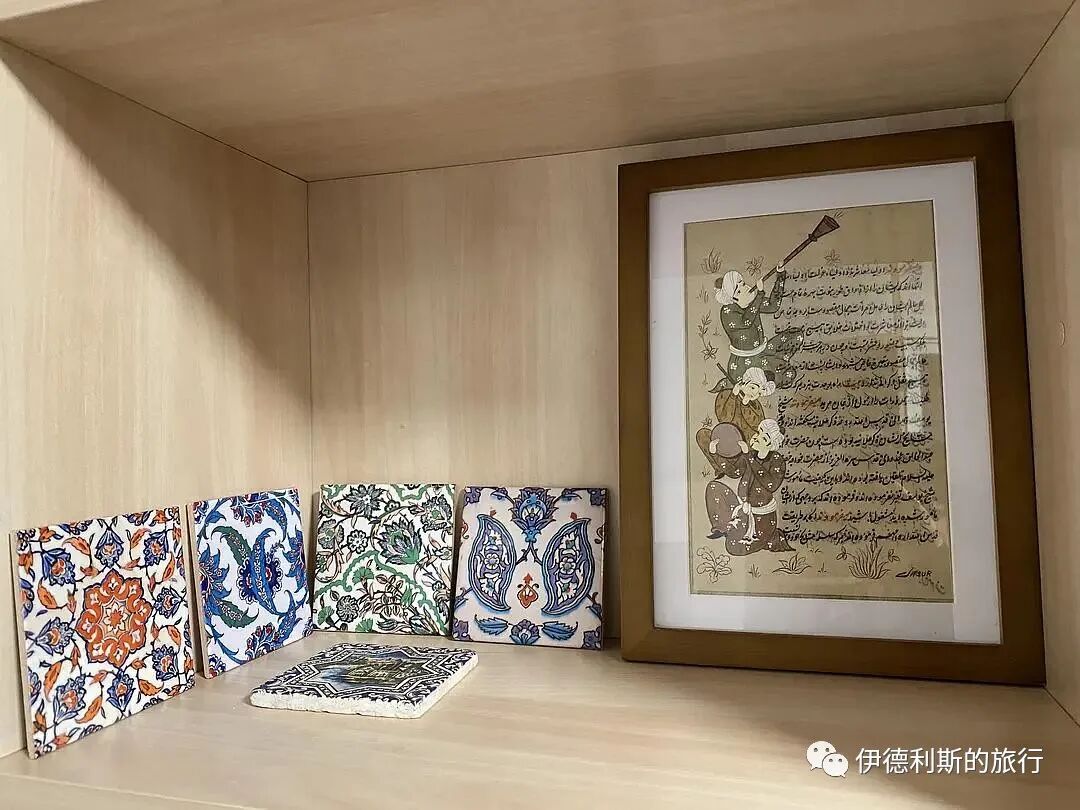
Hats
Some historical sites in the ancient city of Bukhara have shops selling traditional hats. This time, I bought several at the Abdulaziz Khan Madrasah (Islamic school), which was built in 1652.
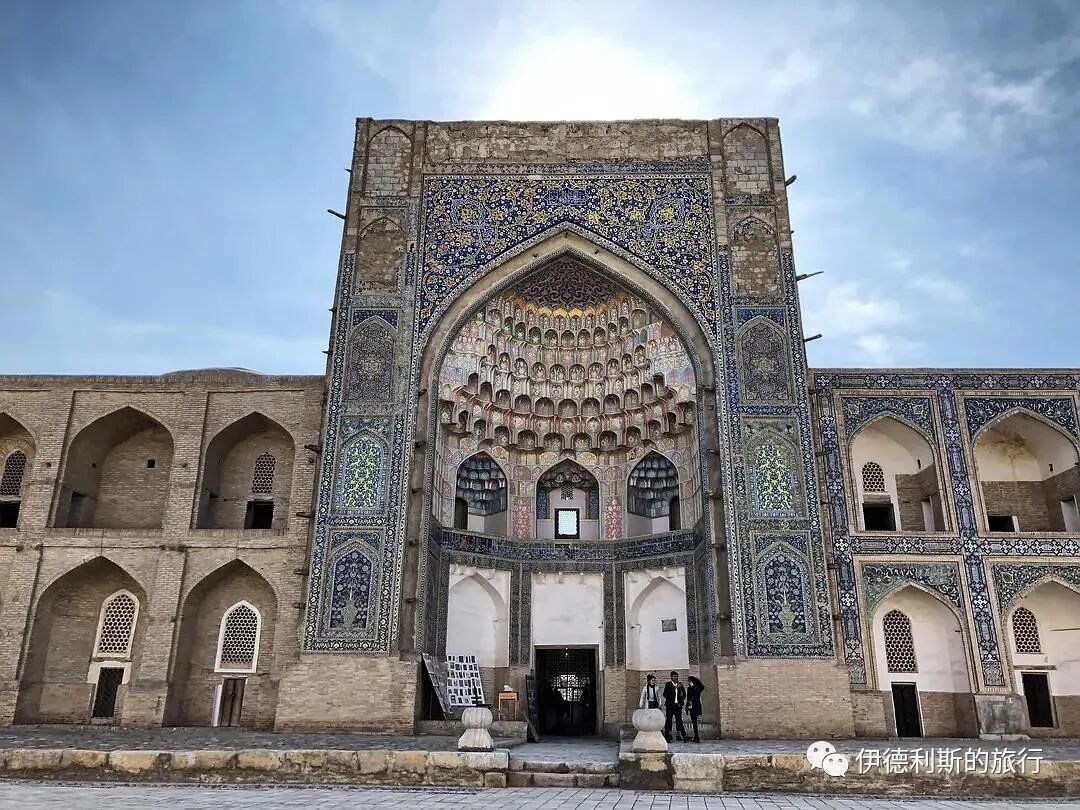
As soon as you enter the gate of the madrasah, there is an auntie on the right selling antique jewelry.
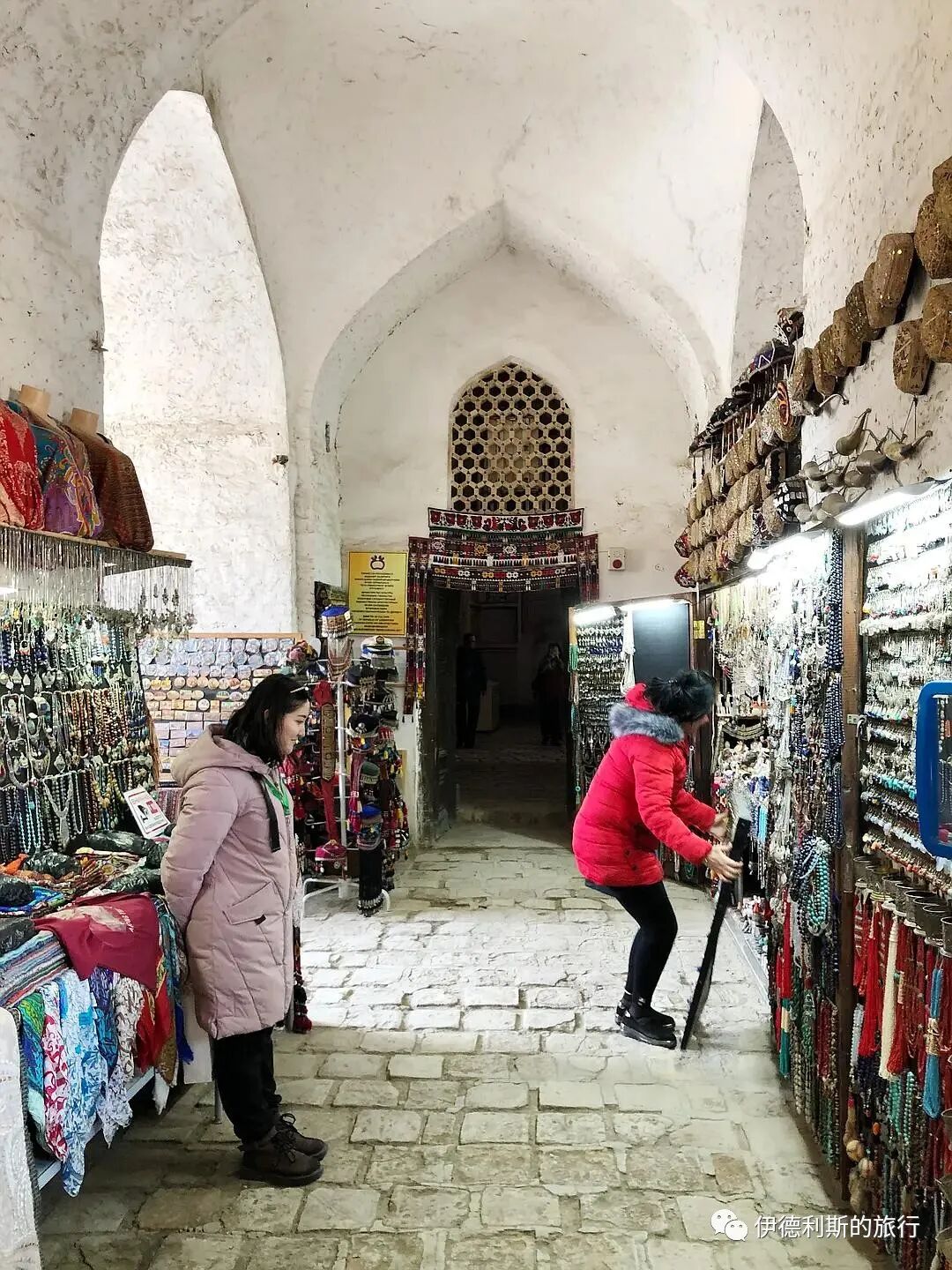
I helped a friend purchase a 19th-century Uzbek Tilla Qash (gold brow headpiece) here.
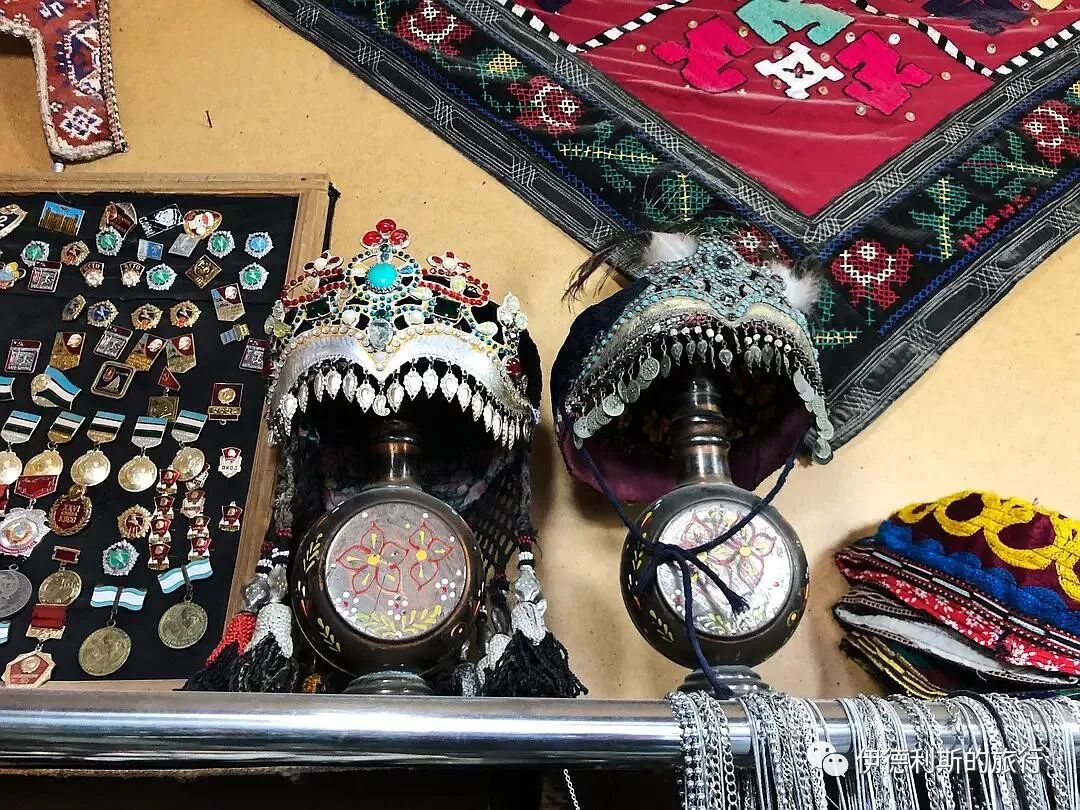
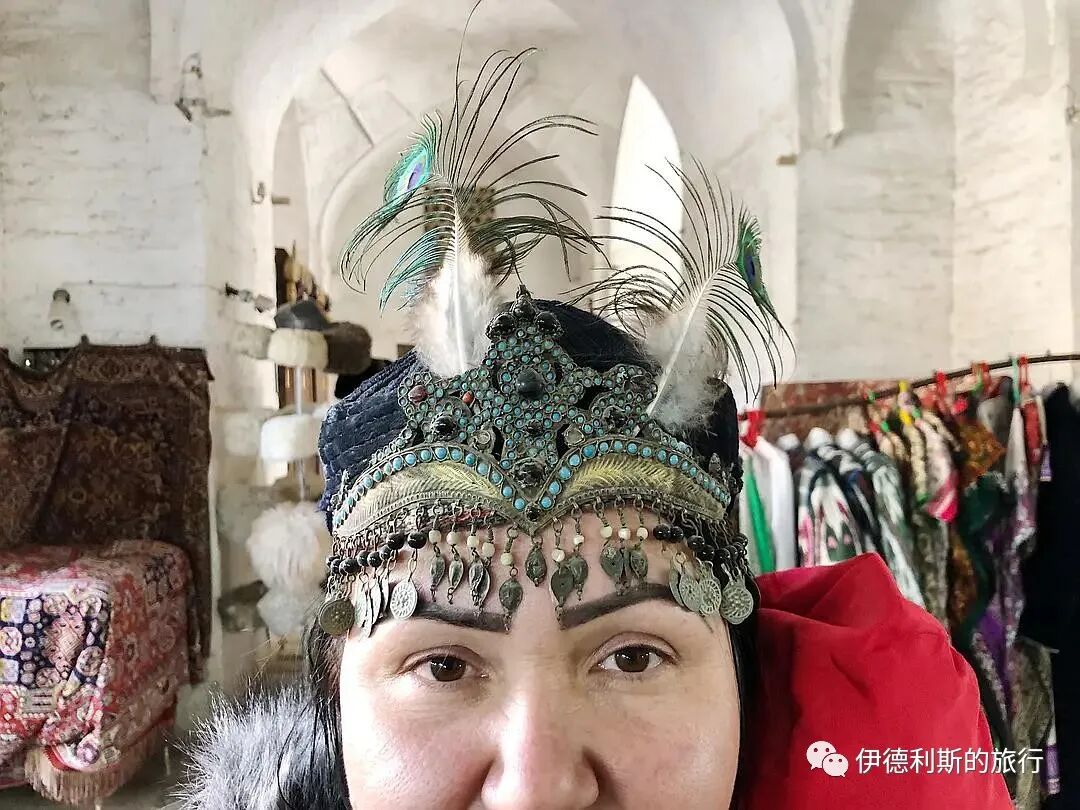
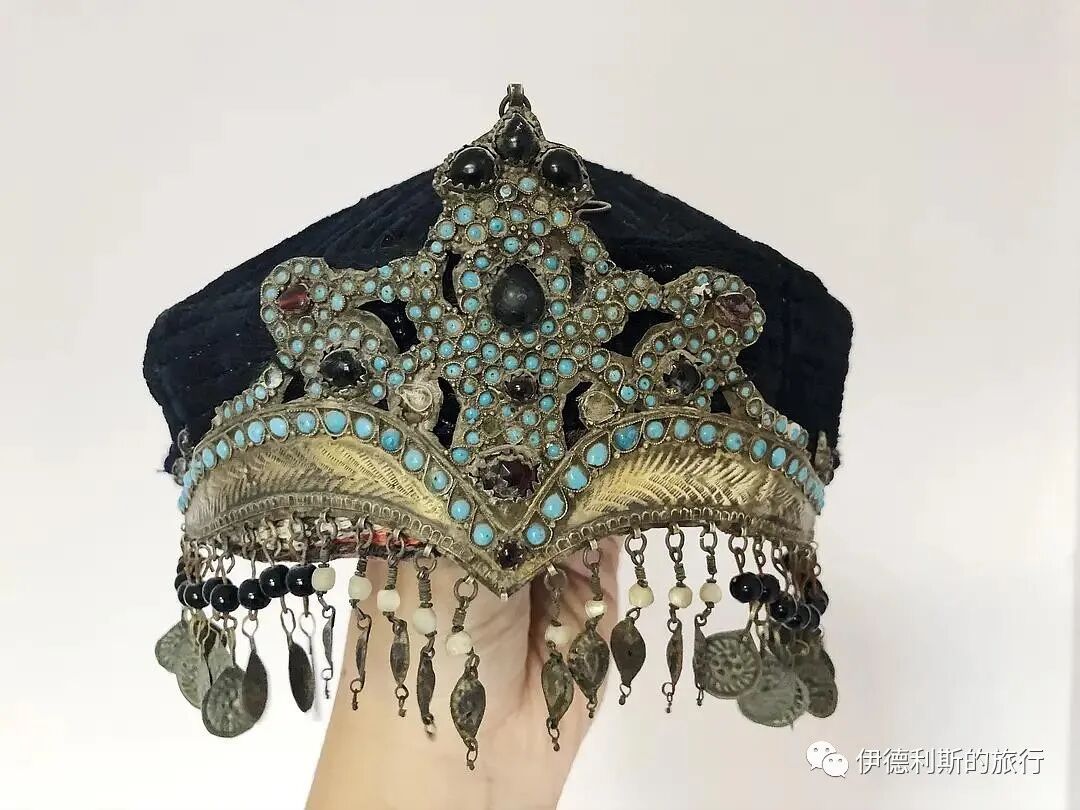
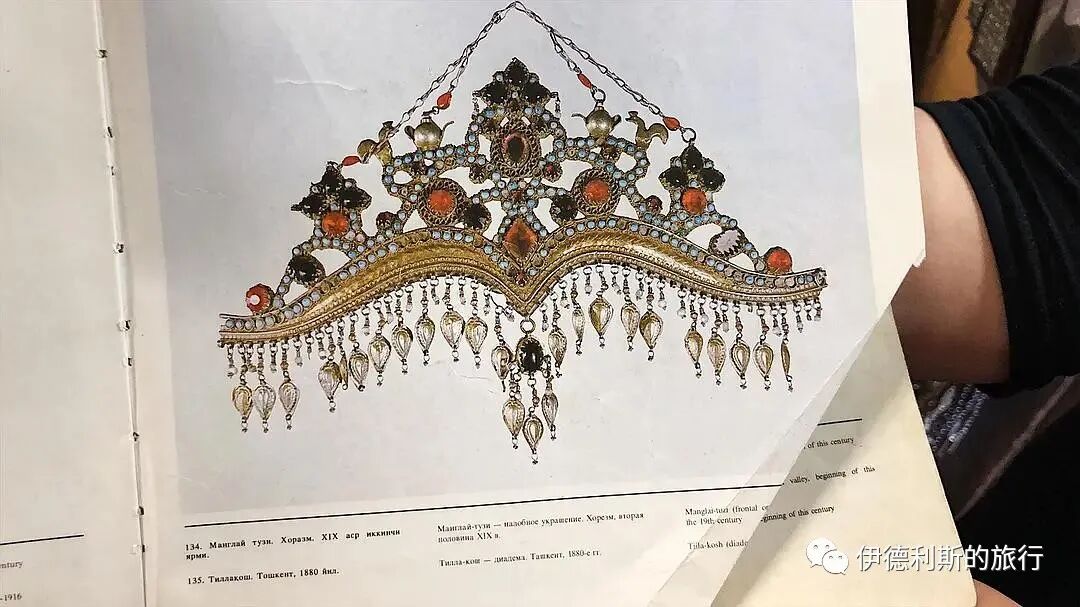
Then I went to another auntie's shop in the madrasah.
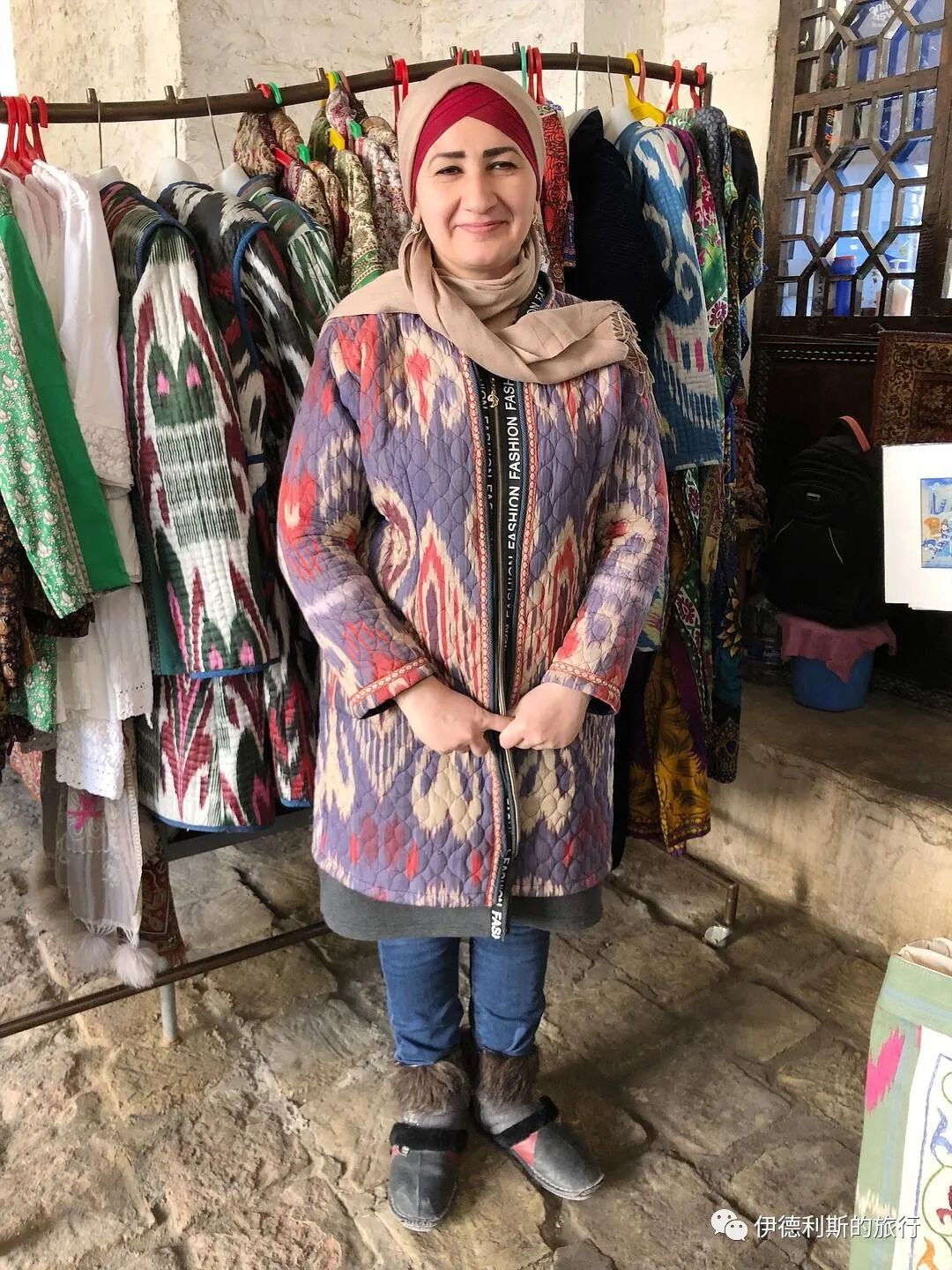
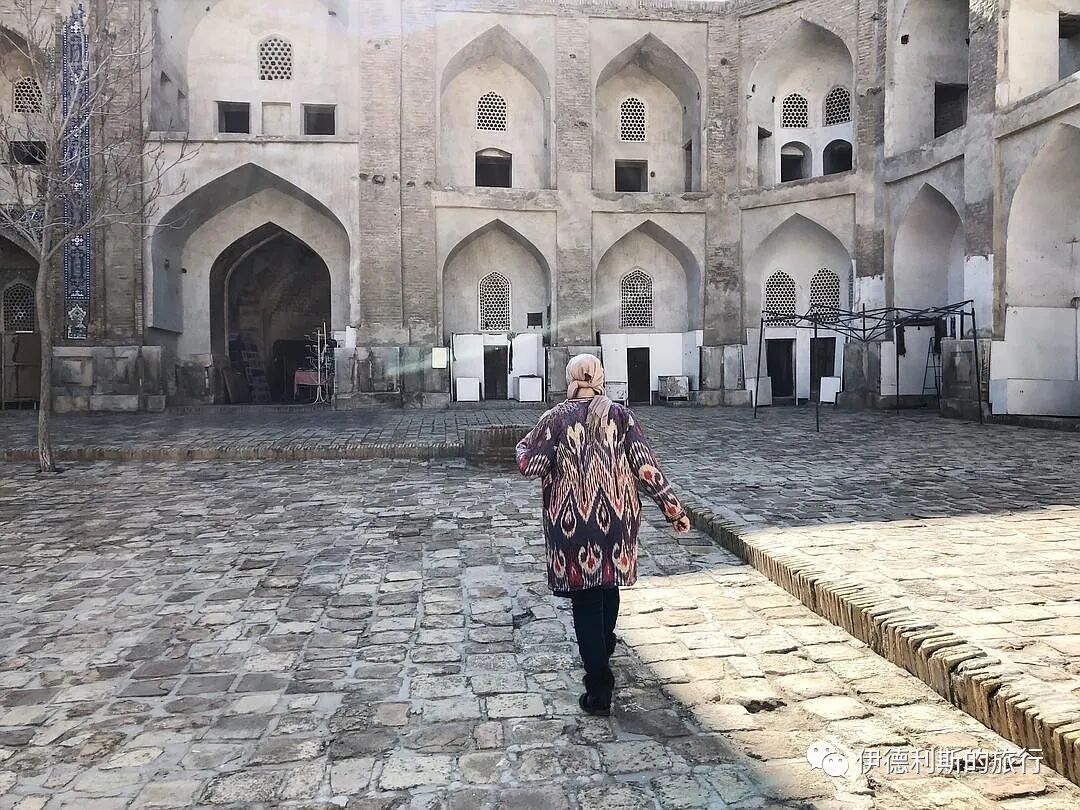
I bought two Soviet-era almond-patterned doppa (traditional skullcaps). These colorful almond-patterned doppas are rare now; the ones worn on the street today are basically black and white.
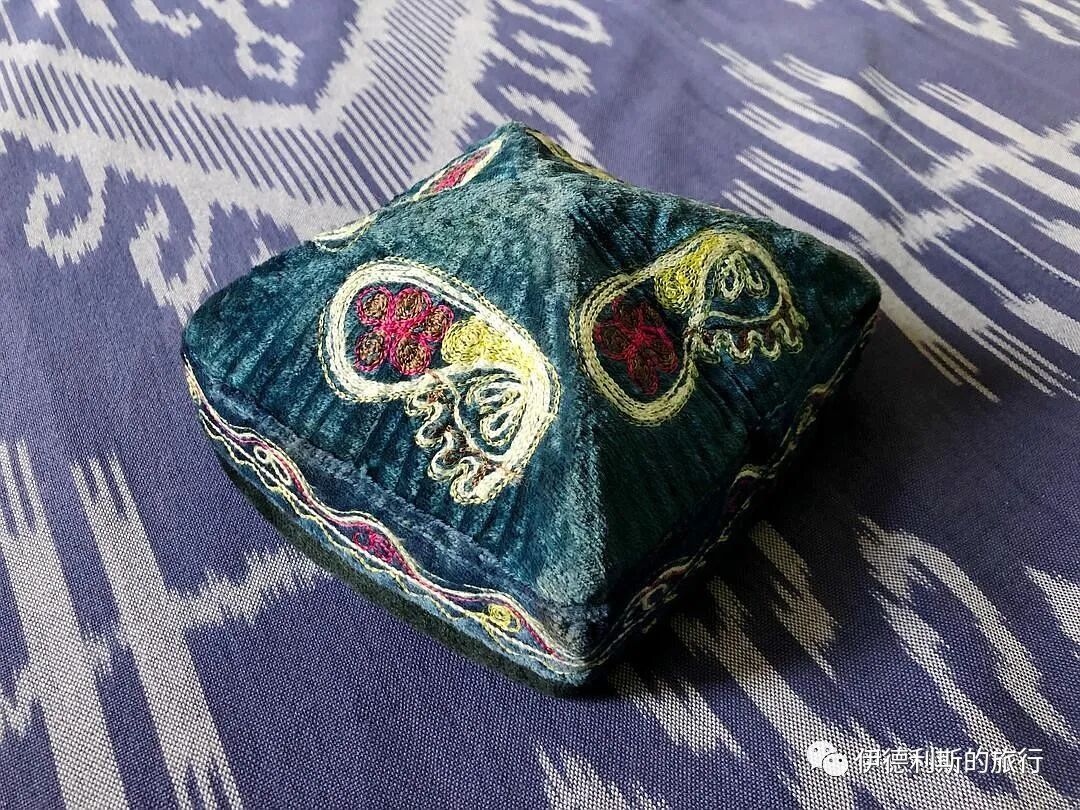
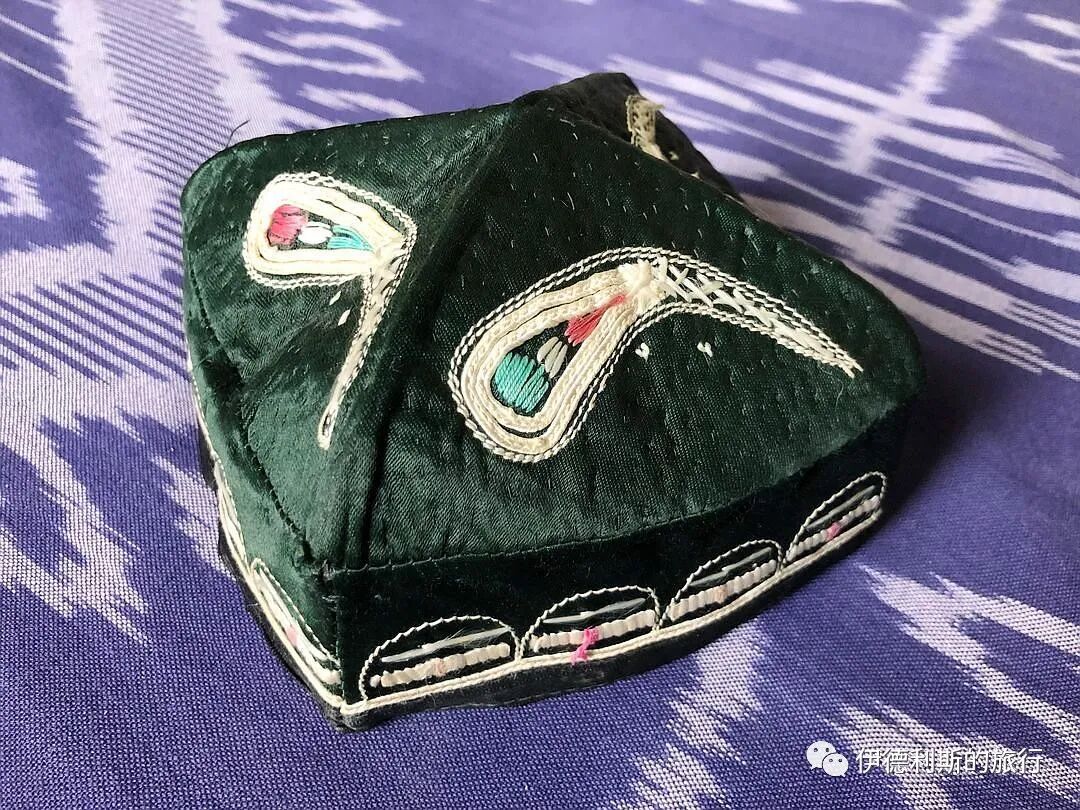
There was also a traditional Central Asian hat; this pointed style is hard to find in Xinjiang.
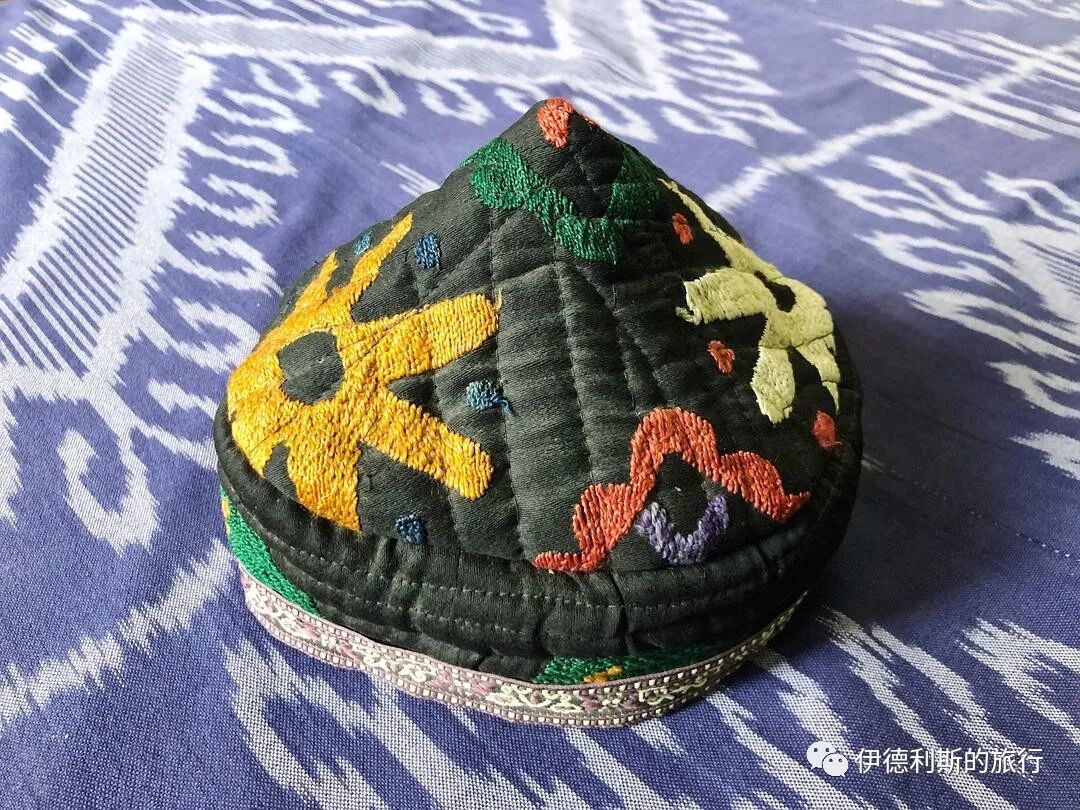
I also bought a traditional tablecloth from her shop.
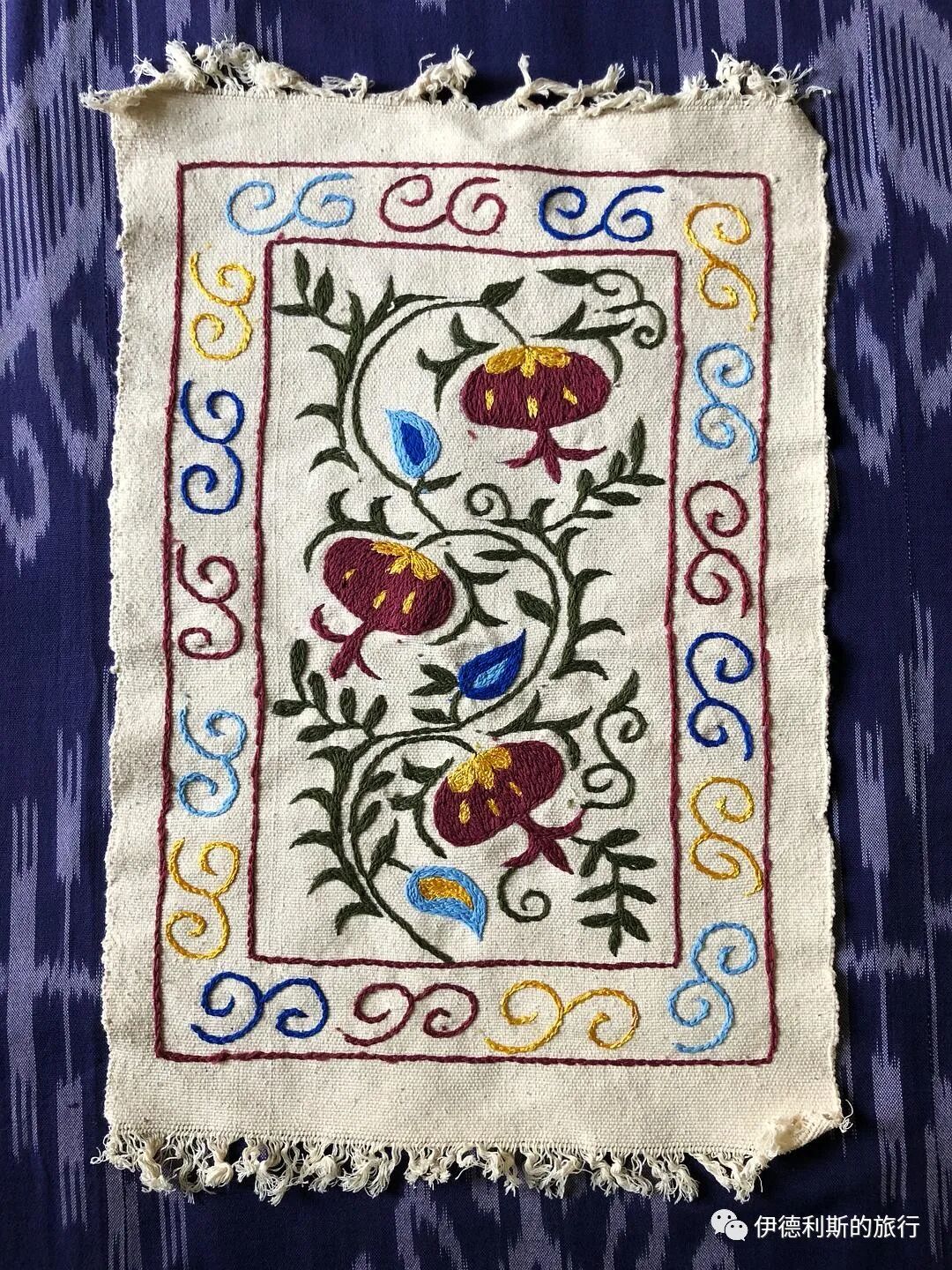
I helped a friend purchase five hats in the old city of Bukhara. The young girl selling the hats took a liking to my portable charger and wanted to trade it for a hat, but since I was still traveling, I didn't agree.
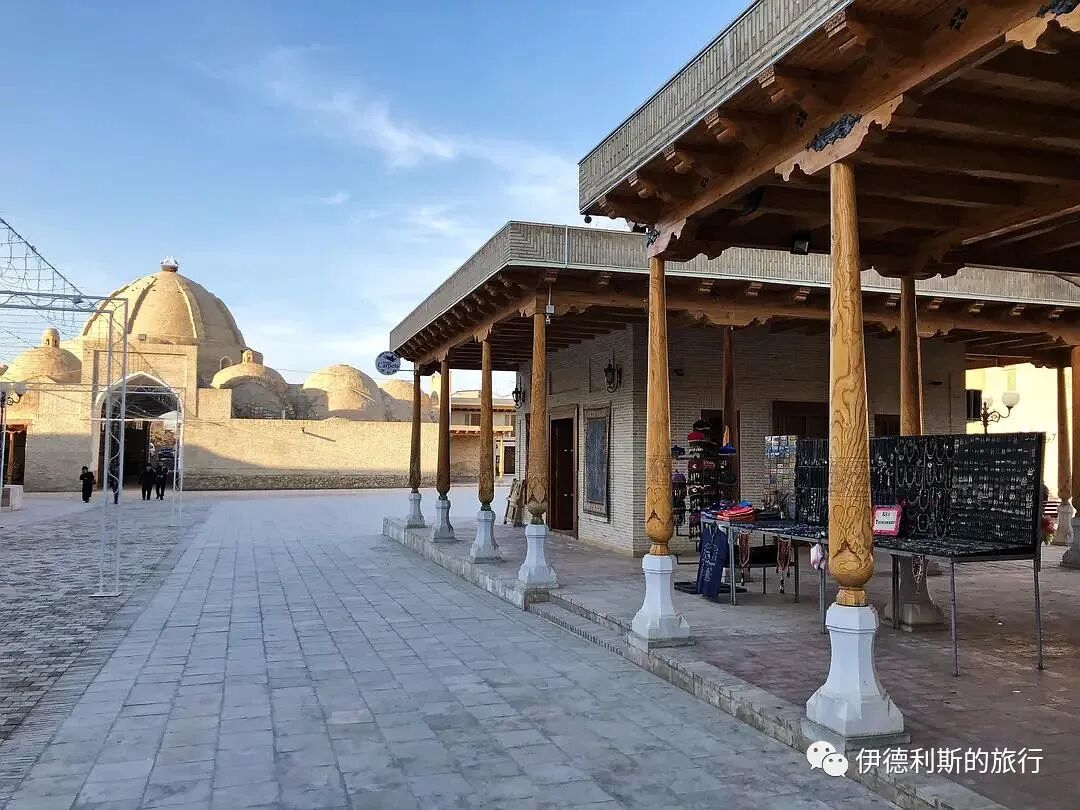
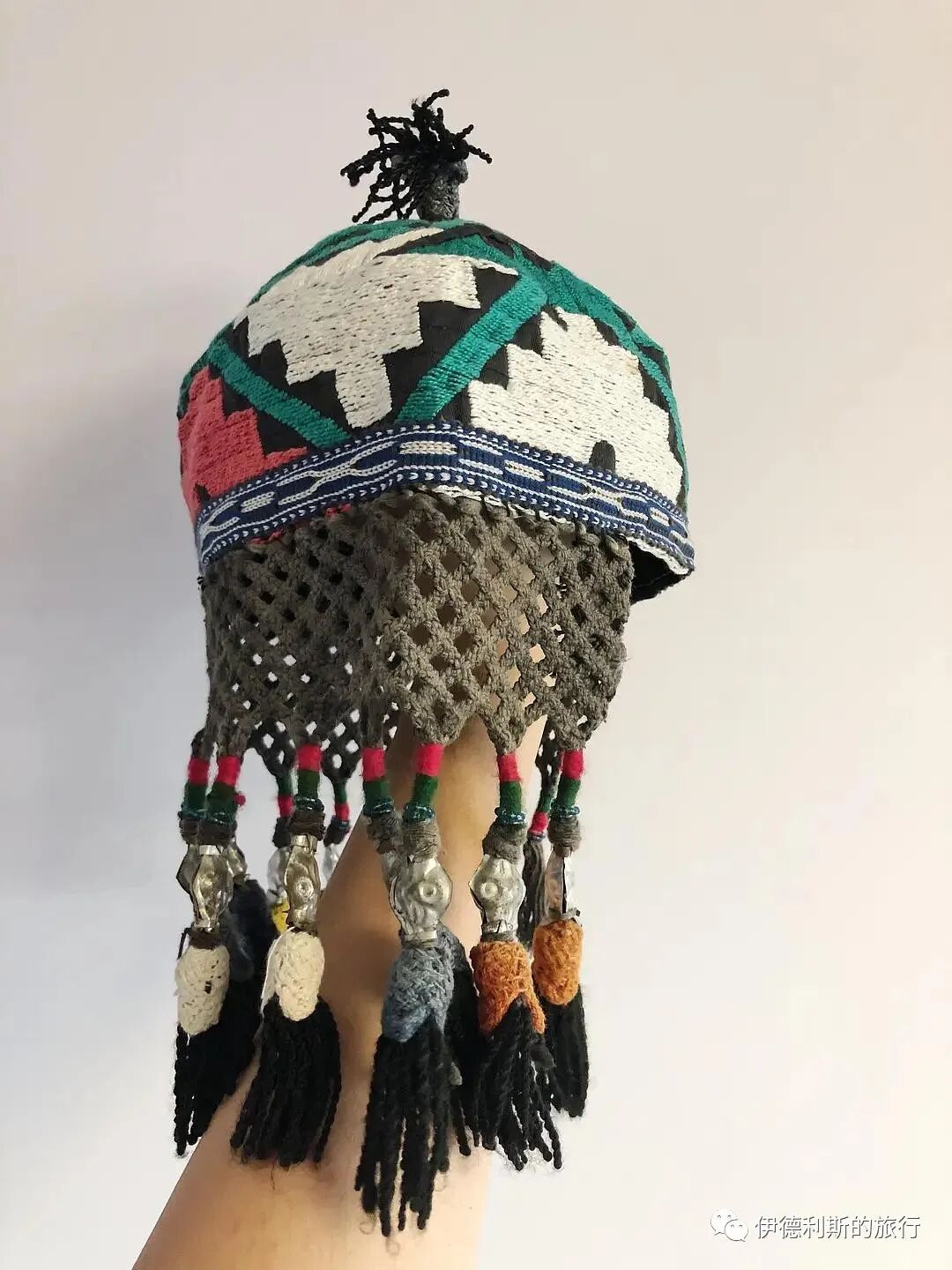
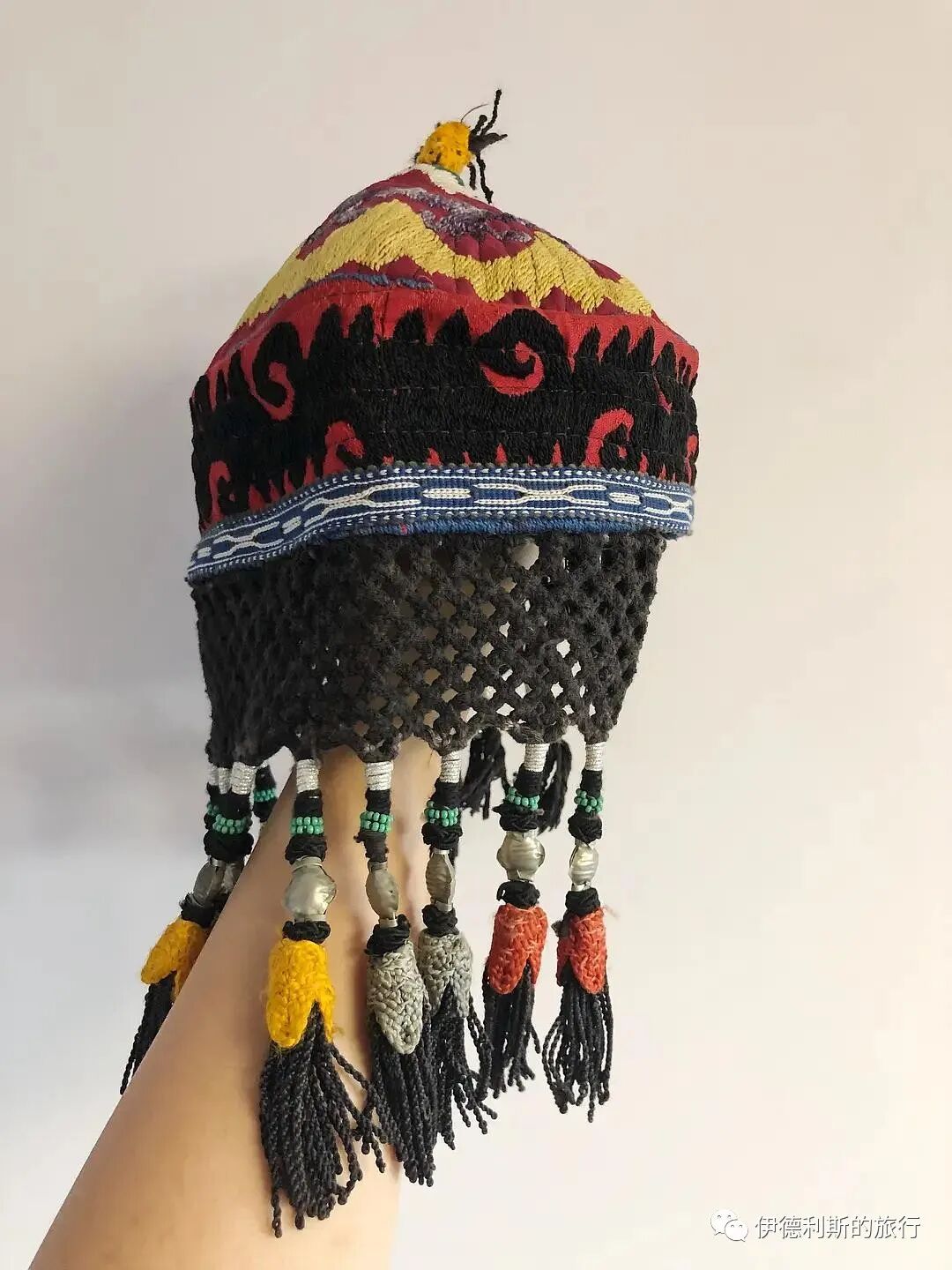
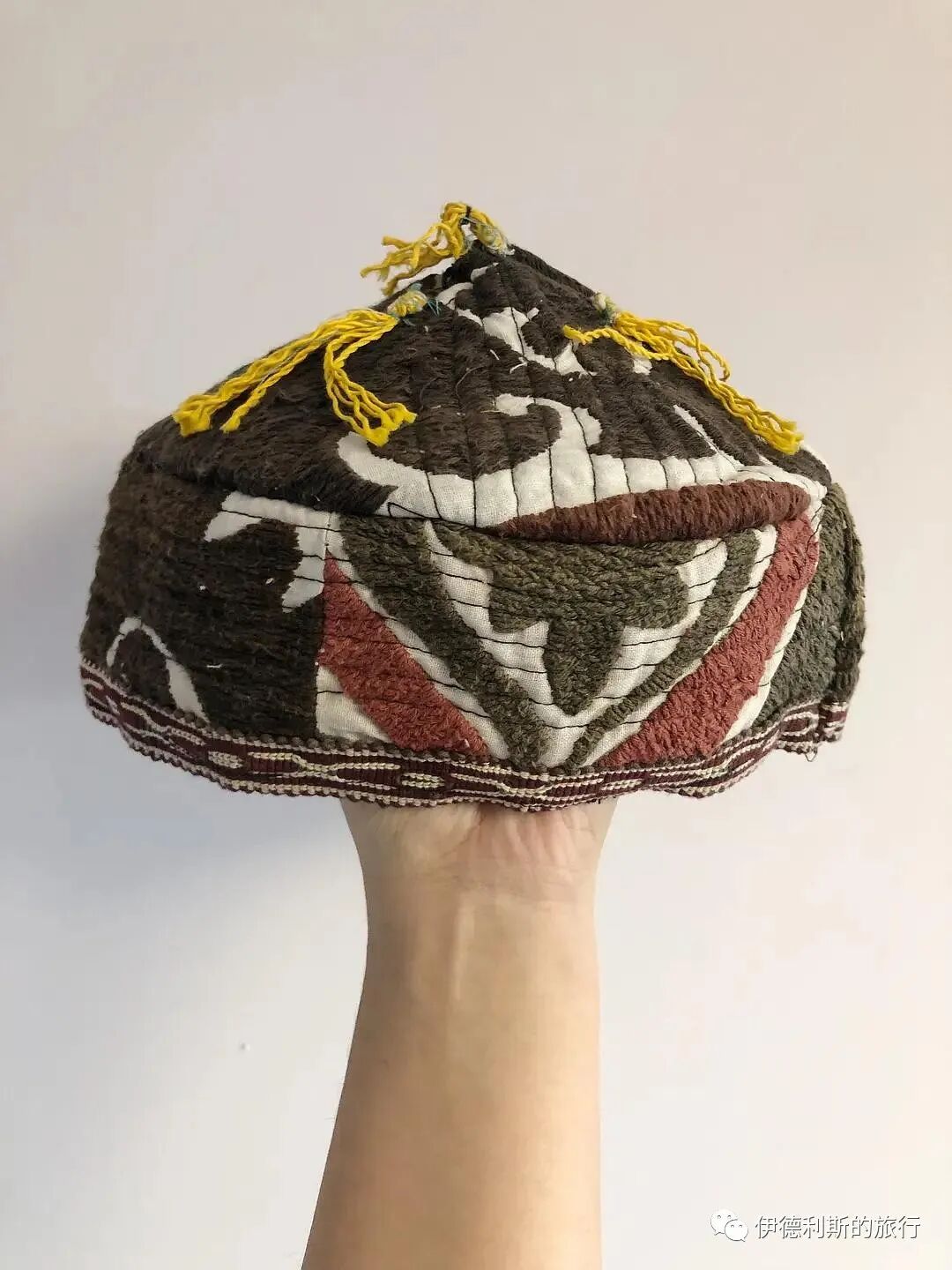
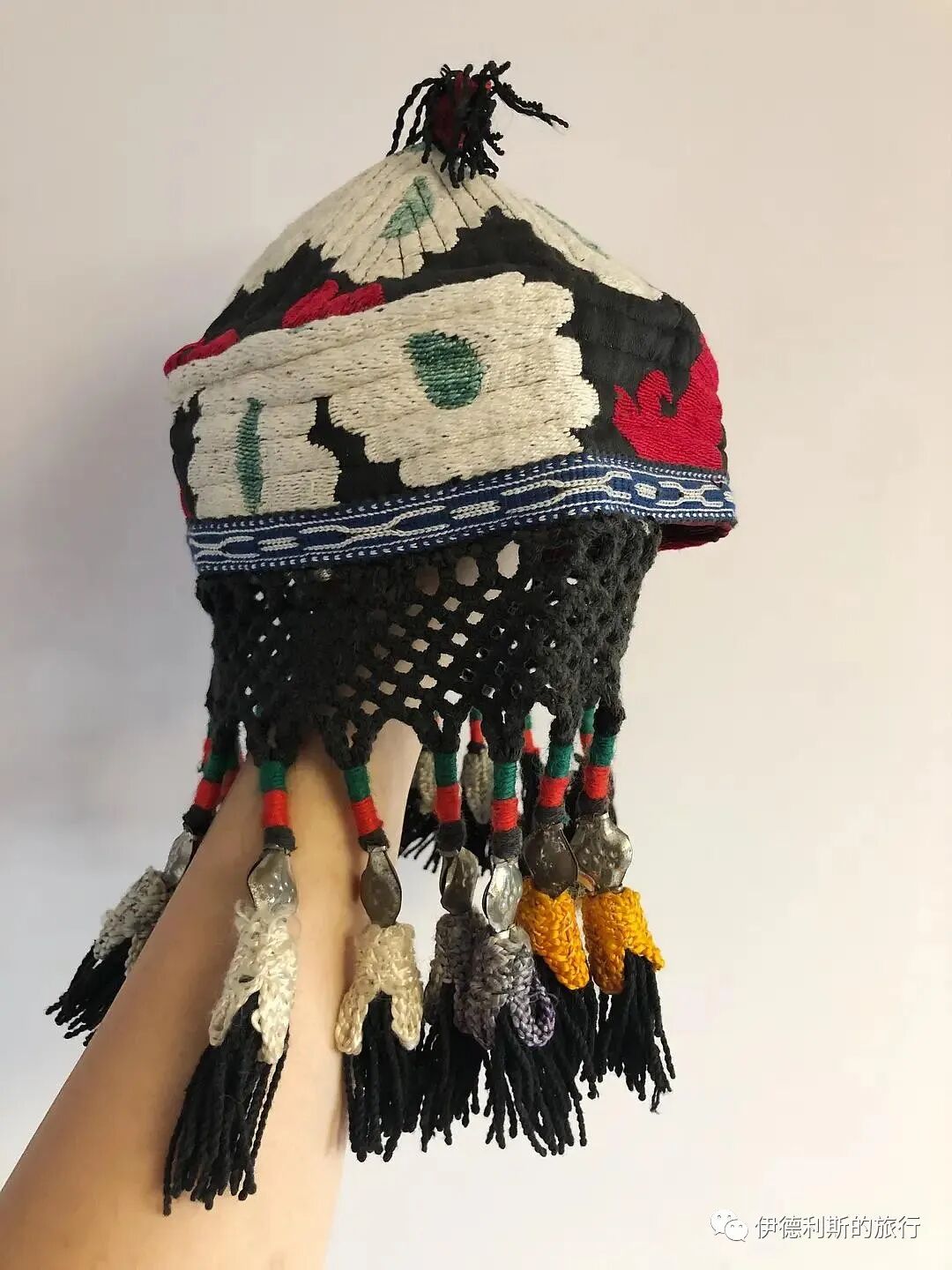
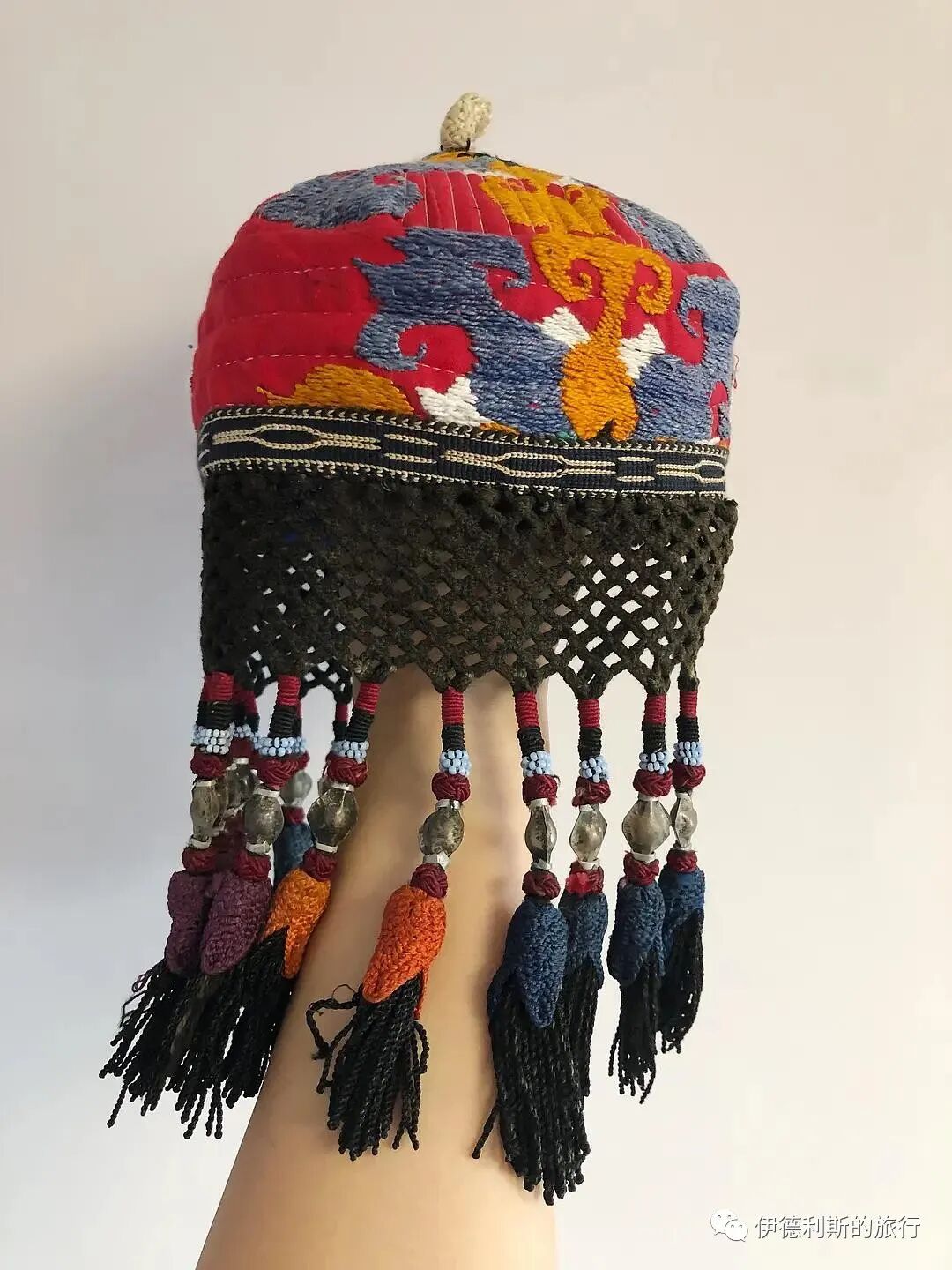
Streets of Bukhara
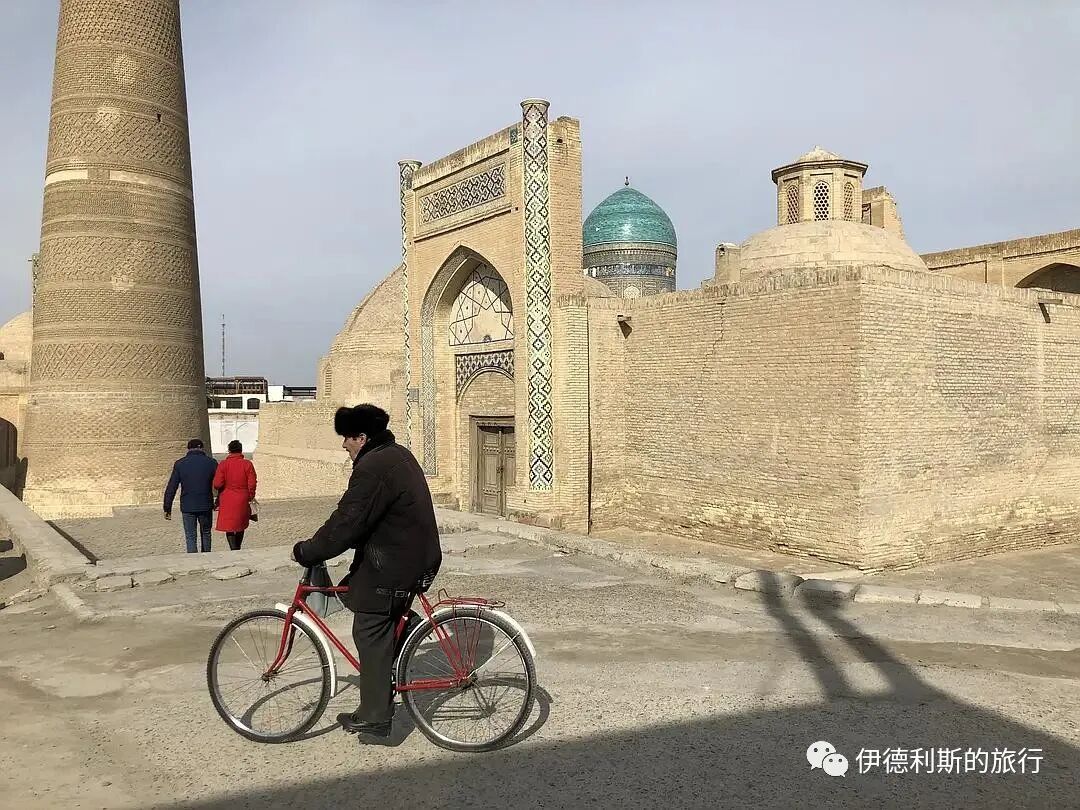
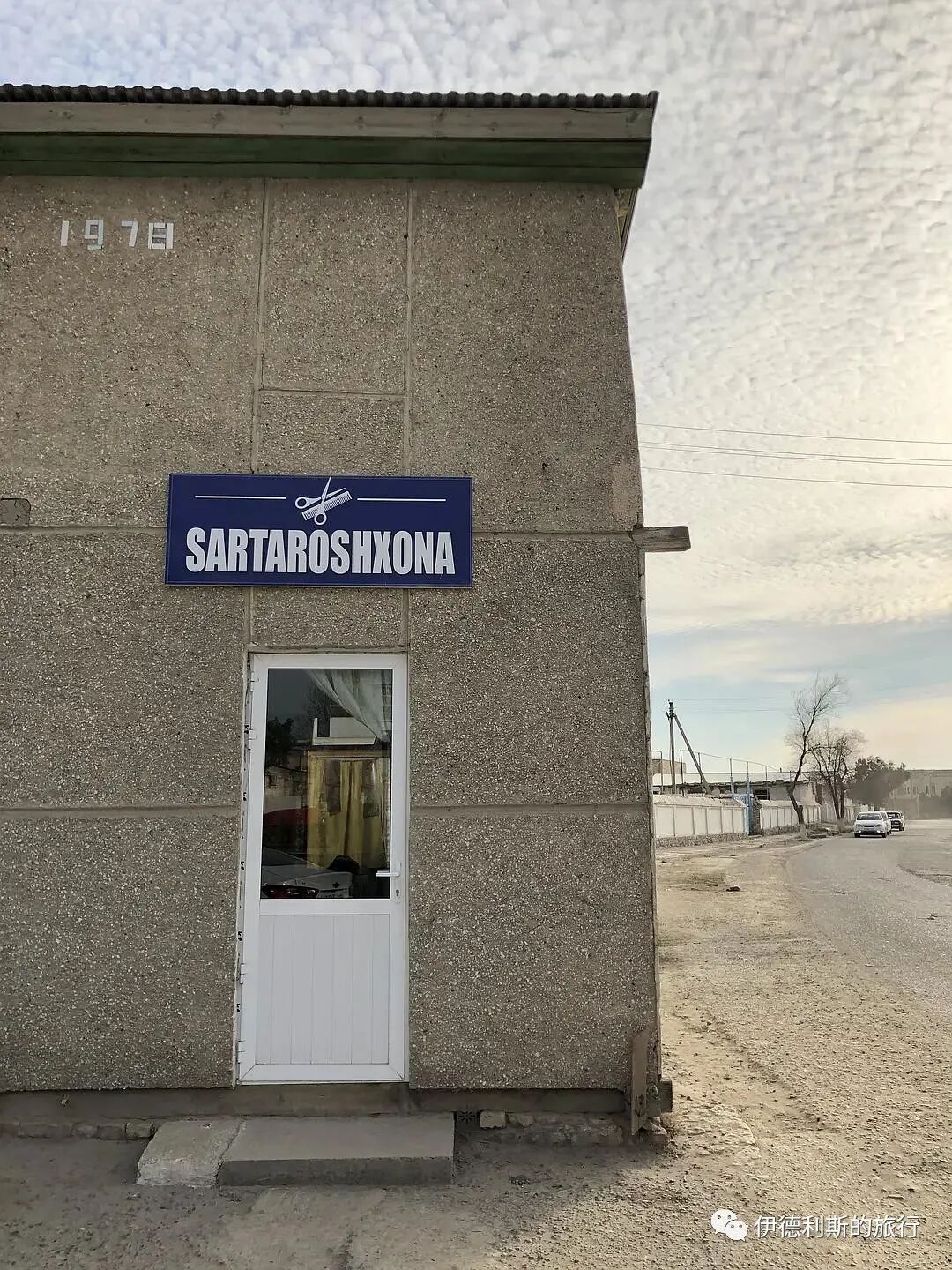
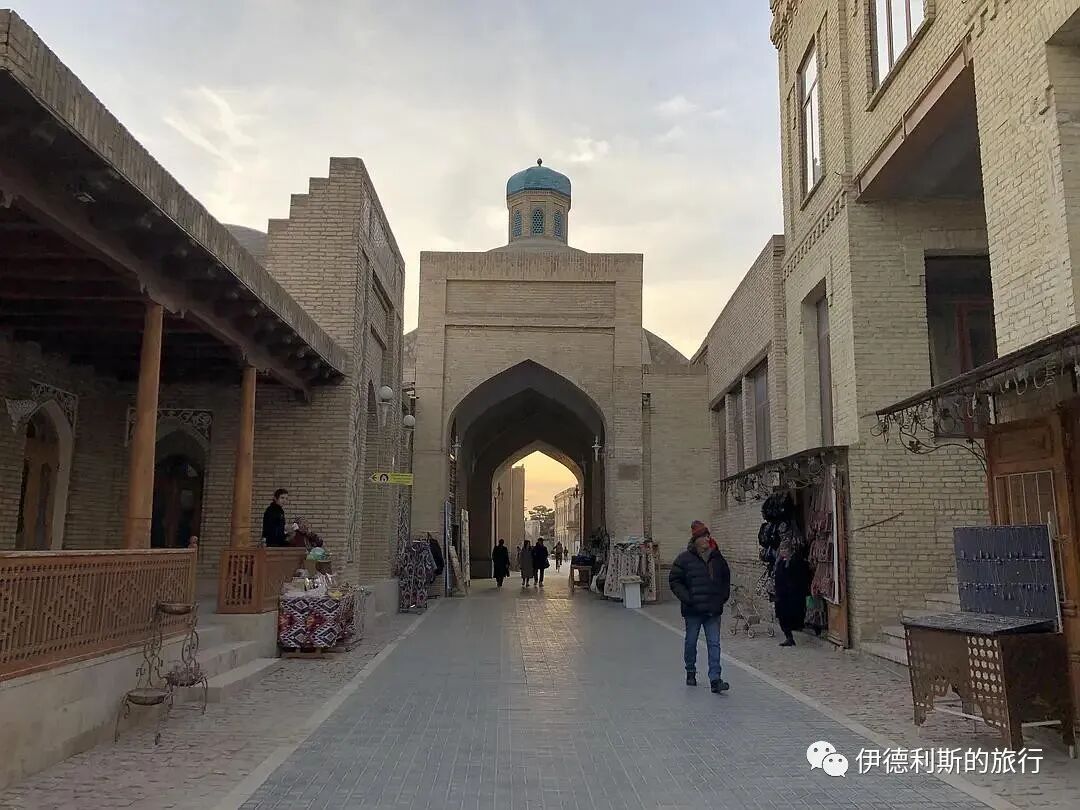
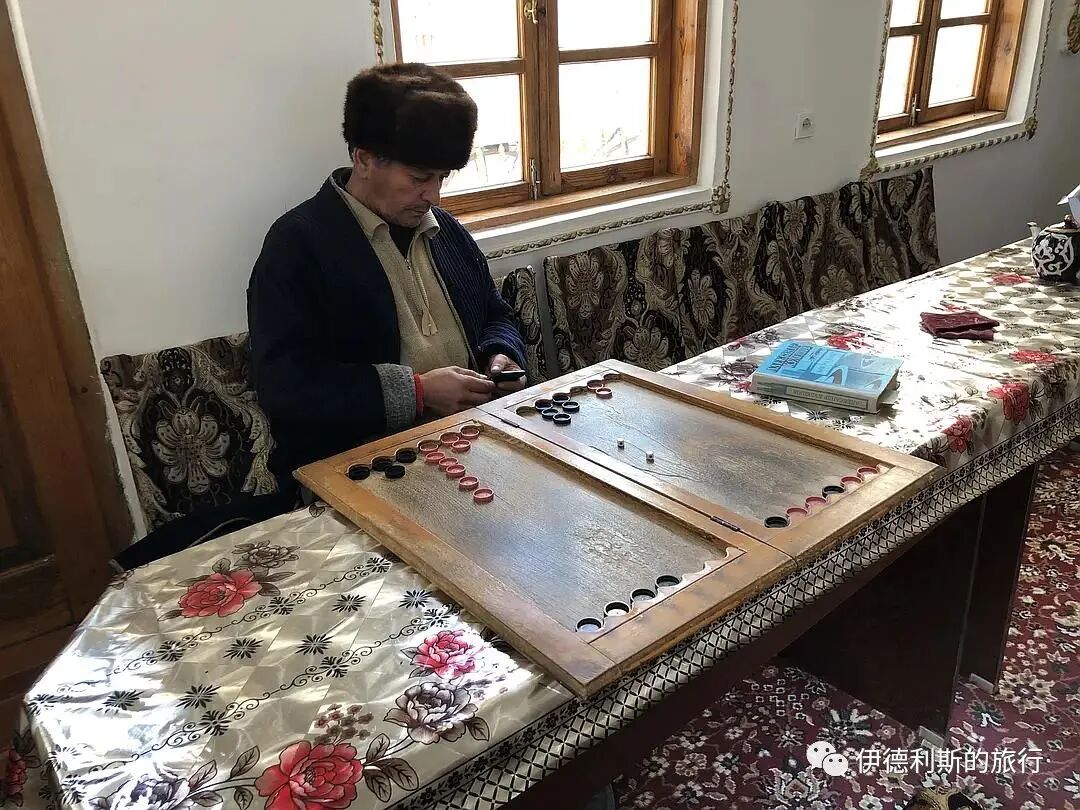
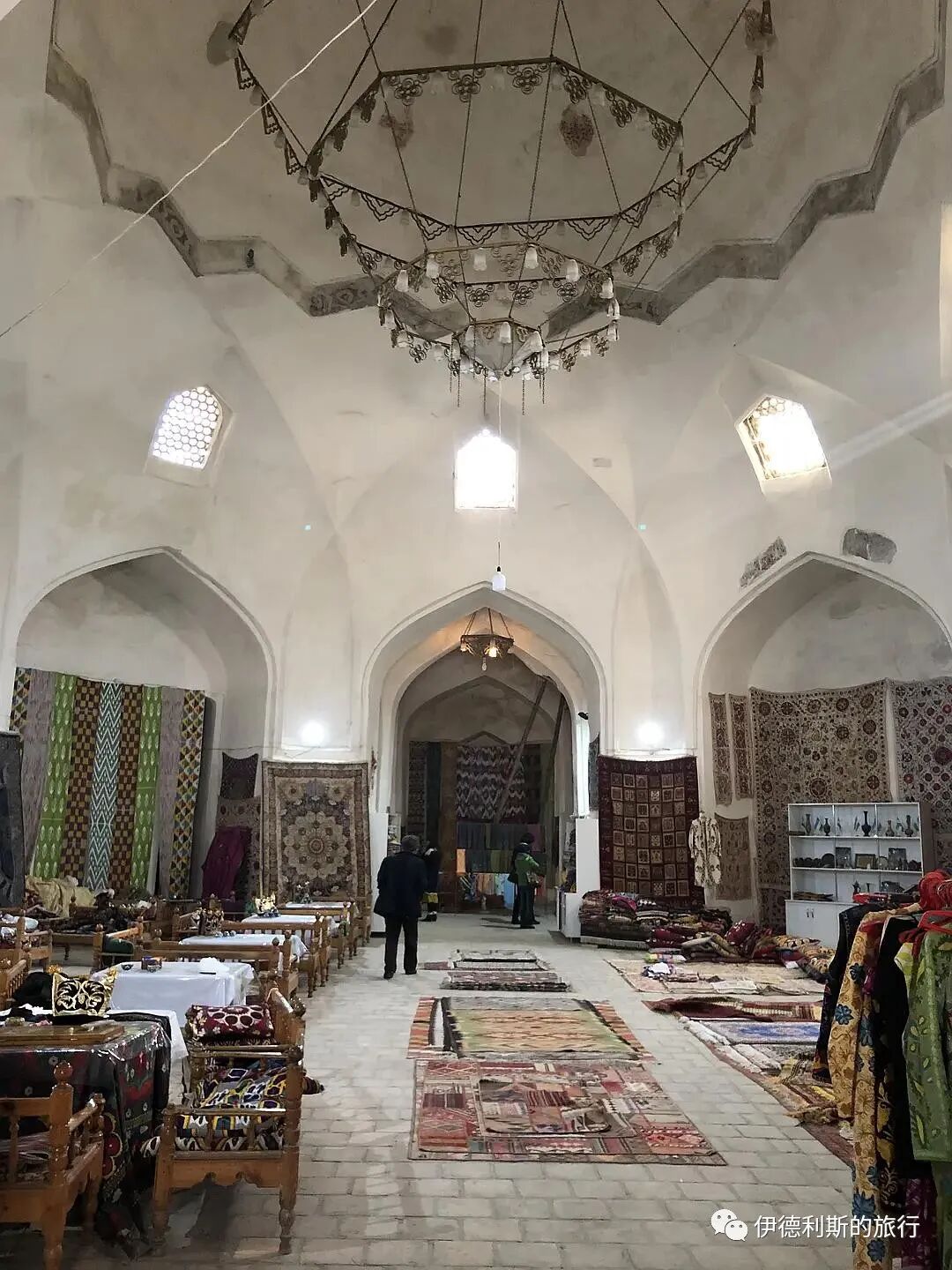
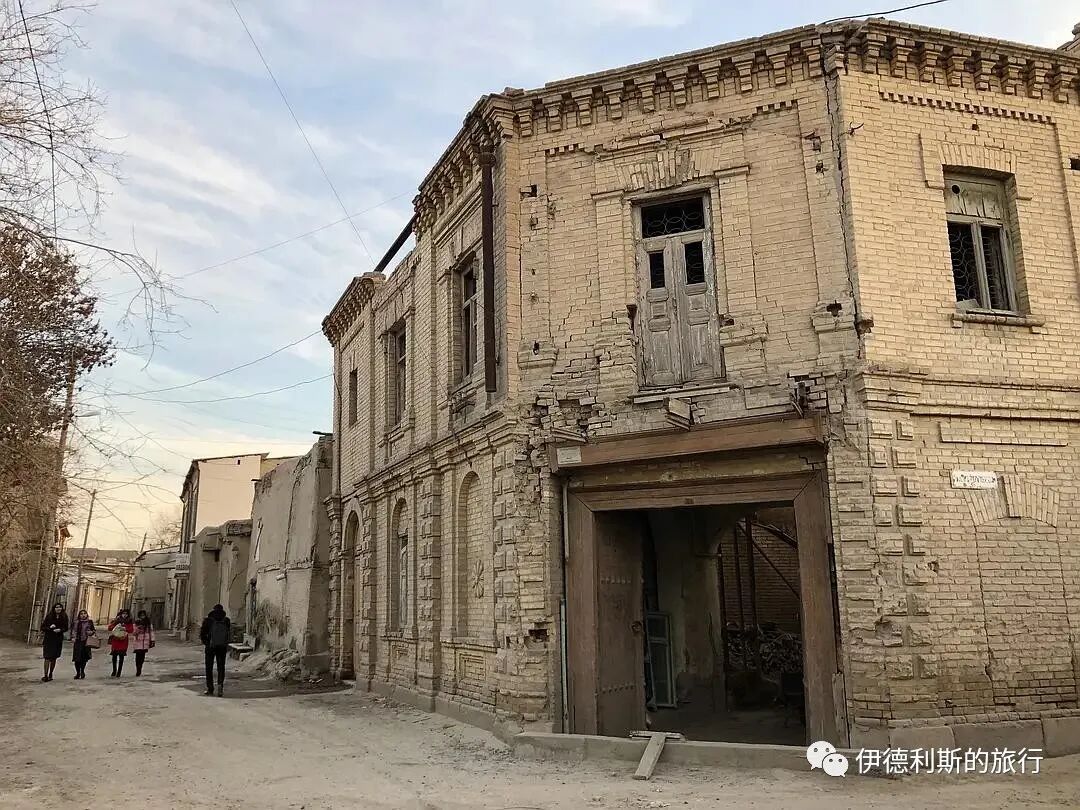
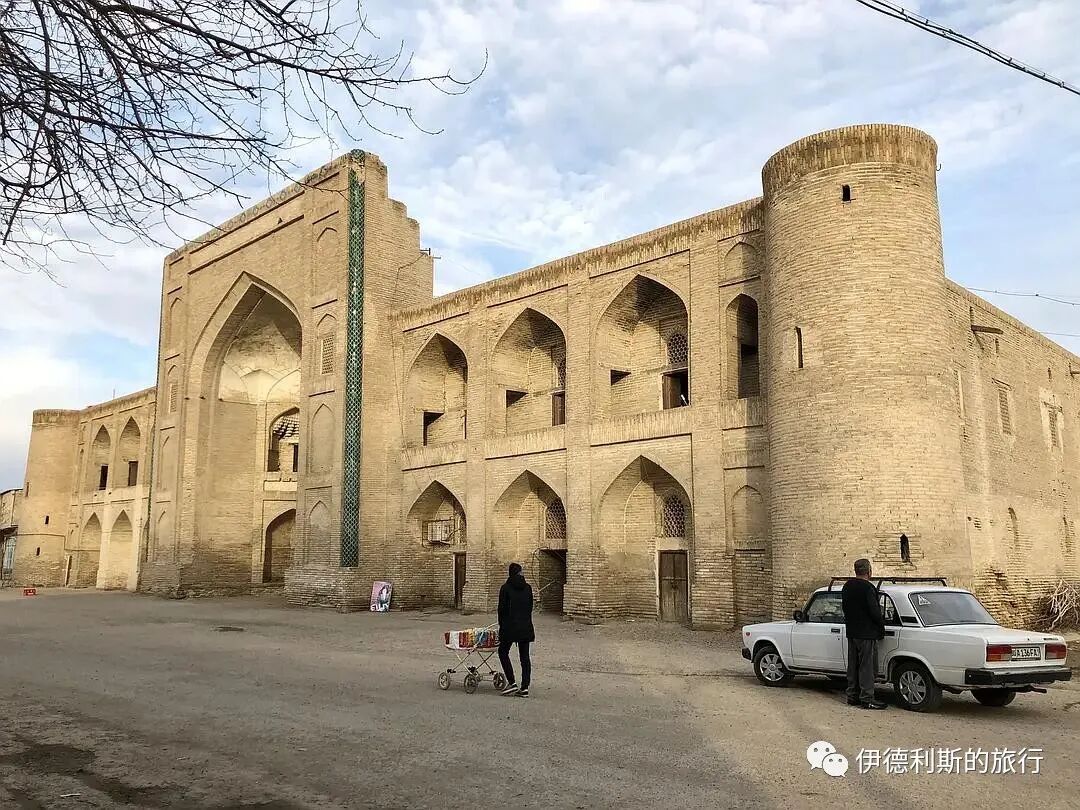
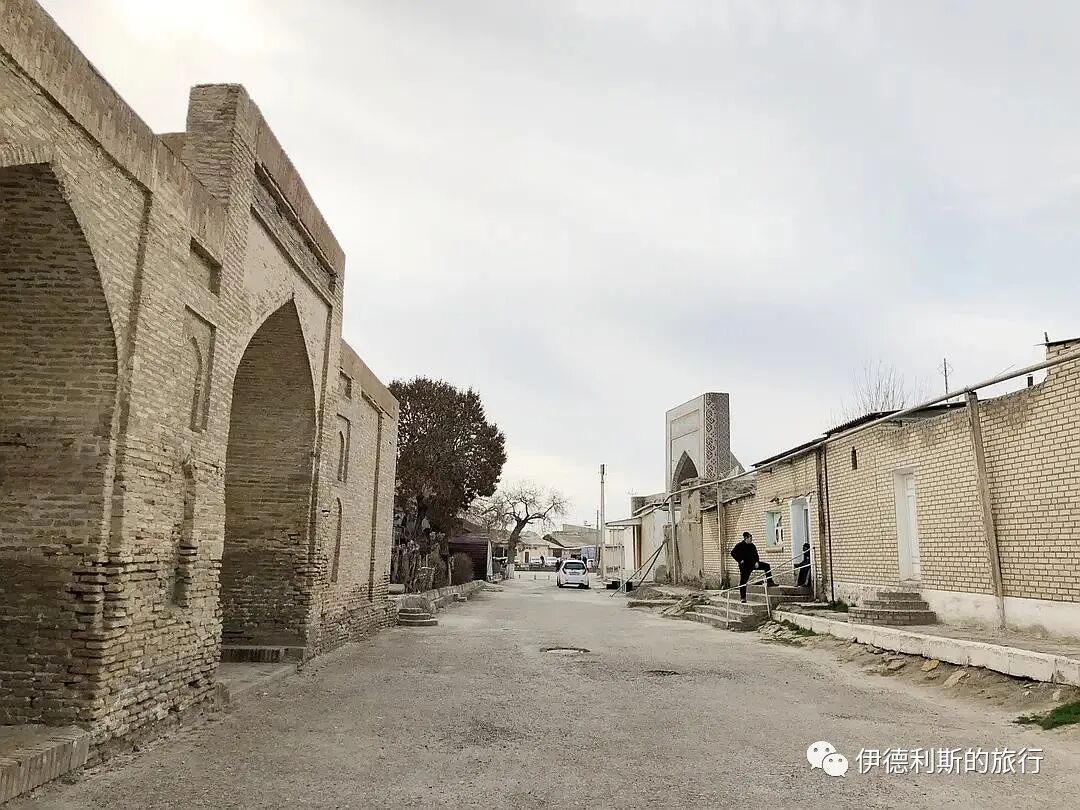
Summary: This travel note introduces Bukhara Old City Bazaar Guide: Miniature Art, Muslim Heritage and Local Crafts. A record of my trip to the ancient city of Bukhara during the 2019 Spring Festival holiday to eat, shop, buy hats, and purchase miniature paintings. It is useful for readers interested in Bukhara Travel, Islamic Art, Bazaar Culture.
A record of my trip to the ancient city of Bukhara during the 2019 Spring Festival holiday to eat, shop, buy hats, and purchase miniature paintings.
Food
When I was in Bukhara, I stayed at the Komil Hotel, which is recommended by Lonely Planet. The hotel is located in an alley in the center of the ancient city. It was originally a wealthy merchant's residence built in the 19th century, purchased by Komil's grandfather 50 years ago, and opened as a hotel in 2000. The owner, Komil Kadirov, speaks fluent English and is very welcoming to guests.
The hotel still retains the wood carvings and paintings of traditional 19th-century Bukhara architecture. The room I stayed in has been partially renovated, but the dining room where breakfast is served is very well preserved, as if I had traveled back to Bukhara over 100 years ago. Their breakfast is very hearty; even for one person, it fills the entire table, which made me feel a bit embarrassed. Breakfast was truly a highlight of my trip to Uzbekistan. Basically, every hotel prepares more than ten types of dishes and will ask if you want boiled or fried eggs, and black or green tea. The service attitude is really great.
The Bukhara Central Bazaar (Buxoro markaziy bozori; the 'a' in Uyghur is pronounced as 'o' in Uzbek) is in the western part of the old city. It is very lively and sells everything. The best snack to eat in winter is, of course, the flaky somsa (baked meat buns; 'Samsa' in Uyghur)! Uzbek somsa is served with a homemade sauce, often containing fennel and onions, and sometimes cilantro.
Naan stalls are the most common stalls in the bazaar.
Eating kebabs at the Doniyorbek restaurant opposite the Bukhara Central Bazaar. While walking through the bazaar, I saw a very Soviet-style restaurant across the street. After going inside, I found it had such a great atmosphere—the green walls, the stove in the room, and the classic service window made it feel like I had returned to the Soviet Union.
Note that in the former Soviet regions, when talking about eating kebabs, you should say 'Shashlik' instead of the Uyghur word 'Kewap'. The term 'Shashlik' originated from the Crimean Tatars and became popular throughout the Russian Empire after the 18th century. In Uzbekistan, saying 'Kebab' will get you Middle Eastern-style minced meat skewers; 'Shashlik' is the meat-chunk skewers we are familiar with.
In addition, the side dishes for the meat are very rich. I chose yogurt with small side dishes, which is very refreshing and cuts through the greasiness.
Eating Kifta Shurva (clear meatball soup), Manti (steamed dumplings), and grilled lamb chops at Temir's restaurant in the center of the old city of Bukhara. Their environment is nice, and it is the only place in the old city of Bukhara where you can withdraw cash using a Mastercard credit card.
Manti is believed to have been spread from East Asia to West Asia and even Eastern Europe by Mongol and Turkic peoples along the Silk Road during the Mongol Empire era. Now, Manti has become a traditional delicacy in Xinjiang, the former Soviet Union, Afghanistan, Turkey, and the Balkans. Central Asian Manti is generally eaten dipped in thick yogurt.
Their restaurant is right next to the famous Magoki Attor Mosque in Bukhara. This mosque, built in the 12th century, is a model of architecture from the Karakhanid dynasty period in Bukhara and even all of Central Asia.
Another meal of fried chuchvara (dumplings) and lamb soup.
Eating plov (pilaf) and drinking meat soup, as well as having two types of salads, at the Chayxana chinar teahouse in the ancient city of Bukhara. Teahouses in Central Asia serve food and are also a type of public activity space.
Performing Jumu'ah (Friday prayer) at the Po-i-Kalyan Mosque (Maedjid-i Kalan). The Kalyan Mosque was originally built in 1121 by Arslan Khan of the Karakhanid dynasty. It was later destroyed during Genghis Khan's siege of Bukhara, leaving only the minaret. The current mosque was built in 1514 during the Bukhara Khanate period. Today, the Kalyan Mosque is the most important Jumu'ah mosque in Bukhara. It consists of a rectangular courtyard with 288 domes and 208 pillars, with a tall Iwan (vaulted hall) gate in the center. The main hall can accommodate 12,000 people.
According to archaeological findings, there are two layers of mosque ruins buried beneath the current mosque. The bottom layer is a mosque from the Karakhanid dynasty in 1121, with the same scale as the current one, and the upper layer is a mosque built in the early 14th century during the Chagatai Khanate period, made entirely of brick.
Miniature painting
I visited the first miniature painting workshop in Bukhara and bought a few small miniature paintings.
The Tok-i-Zargaron (Jewelry Dome Market) was built in 1570. It is the largest of the four remaining dome markets from the Bukhara Khanate period in the ancient city of Bukhara and is the best witness to Bukhara's role as a trade center in Central Asia in the 16th century.
'Tok-i-Zargaron' means 'Dome of the Jewelers.' It has four arched passages for Silk Road trade caravans to pass through, as well as 16 domes on an octagonal base. During the Bukhara Khanate period, there were 36 jewelry workshops and shops under the dome, selling rings, earrings, necklaces, and various other jewelry.
Buying miniature paintings in the market.
The Toqi Telpak Furushon (Hat Dome Market), built at the end of the 16th century during the Bukhara Khanate, consists of a central dome and a hexagonal base, connecting five streets in the old city. This place was originally called the Kitab-Furushon (Book Market), but later gradually switched to selling various headscarves, fur hats, and skullcaps. Now it has become a place for selling tourist souvenirs.
I bought a miniature painting at a workshop in the market; this one was painted directly on old paper.
Hats
Some historical sites in the ancient city of Bukhara have shops selling traditional hats. This time, I bought several at the Abdulaziz Khan Madrasah (Islamic school), which was built in 1652.
As soon as you enter the gate of the madrasah, there is an auntie on the right selling antique jewelry.
I helped a friend purchase a 19th-century Uzbek Tilla Qash (gold brow headpiece) here.
Then I went to another auntie's shop in the madrasah.
I bought two Soviet-era almond-patterned doppa (traditional skullcaps). These colorful almond-patterned doppas are rare now; the ones worn on the street today are basically black and white.
There was also a traditional Central Asian hat; this pointed style is hard to find in Xinjiang.
I also bought a traditional tablecloth from her shop.
I helped a friend purchase five hats in the old city of Bukhara. The young girl selling the hats took a liking to my portable charger and wanted to trade it for a hat, but since I was still traveling, I didn't agree.
Streets of Bukhara
Bukhara Travel Guide: Capital of the Bukhara Khanate, Mosques and Islamic Heritage (Part 1)
Articles • ali2007fr posted the article • 0 comments • 150 views • 2026-05-17 08:19
Reposted from the web
Summary: This travel note introduces Bukhara Travel Guide: Capital of the Bukhara Khanate, Mosques and Islamic Heritage (Part 1). In the previous article, "The Capital of Timur—Samarkand," we introduced how the Timurid Dynasty declined after the death of the ruler Ulugh Beg and fell into division. It is useful for readers interested in Bukhara Travel, Islamic Heritage, Uzbekistan.
In the previous article, "The Capital of Timur—Samarkand," we introduced how the Timurid Dynasty declined after the death of the ruler Ulugh Beg and fell into division. In the early 16th century, Muhammad Shaybani, a descendant of Shayban (the fifth son of Jochi, the eldest son of Genghis Khan), led the Uzbeks who were nomadic in the northern steppes of Central Asia to overthrow the Timurid Dynasty's rule in the Transoxiana region, establishing the Shaybanid Dynasty (1506–1598), opening a new chapter in the history of the Transoxiana region of Central Asia.
The capital of the Shaybanid Dynasty was initially in Samarkand, and was moved to Bukhara after 1533. In 1598, the Shaybanid Dynasty line ended, and the khanate was passed to the Janid family, later known as the Janid Dynasty. The Janid Dynasty continued to rule with Bukhara as its capital until 1785. Later generations collectively refer to the Shaybanid Dynasty and the Janid Dynasty as the Khanate of Bukhara.
The city of Bukhara served as the capital of the Khanate of Bukhara for 252 years from 1533 to 1785, and many buildings constructed at that time remain to this day. Among them, the architecture from the period of Abdullah Khan II, who ruled Bukhara from 1557 to 1598, is the most abundant, which was also the most prosperous period of the Khanate of Bukhara.
Table of Contents
Prologue: Kalyan Mosque: Rebuilt in 1515
1. Mir-i-Arab Madrasa: 1535
2. Khoja Zaynuddin Mosque: First half of the 16th century
3. Naqshbandi Complex: 1544
4. Chor-Bakr Necropolis: 1563
5. Kosh Madrasa: 1567, 1590
1. Modari-khan Madrasa: 1567
2. Abdullah Khan Madrasa: 1590
6. Lyab-i Hauz: 1568, 1619, 1622
1. Kukeldash Madrasa: 1568
2. Nadir Divan-begi Khanaka: 1619
3. Nadir Divan-begi Madrasa: 1622
7. Khoja-Gaukushan Complex: 1570, 1598
8. Tok-i-Zargaron (Jewelry Dome Market): 1570
9. Toqi Telpak Furushon (Hat Dome Market): Late 16th century
10. Toki Sarrafon (Currency Exchange Dome Market): Late 16th century
11. Abdullakhan Tim (Market): 1577
12. Fayzabad Khanaka: 1598
13. Magok-i-Kurpa Mosque: 1637
14. Abdul Aziz Khan Madrasah: 1651
Prologue: Kalyan Mosque: Rebuilt in 1515
The Kalyan Mosque is the Jumu'ah (Friday) mosque of Bukhara. In 1220, the mosque was destroyed by the Mongol army, leaving only the 46-meter-high minaret. In 1515, Ubaidullah, the nephew of Muhammad Shaybani, the founder of the Shaybanid Dynasty of the Khanate of Bukhara, rebuilt the mosque. He was the ruler of Bukhara at the time, and the name of the Khanate of Bukhara also comes from his order to move the capital of the khanate from Samarkand to Bukhara after he became Khan in 1533. After Bukhara became the capital of the khanate, the Kalyan Mosque became the most important mosque in the Khanate of Bukhara.
The architectural style of the Kalyan Mosque is similar to the Bibi-Khanym Mosque in Samarkand, both being courtyards composed of four Iwan (vaulted hall) arches. The Kalyan Mosque has as many as 288 domes, the largest of which is a blue dome 30 meters high above the mihrab (niche indicating the direction of prayer). The mihrab and Iwan arches are decorated with blue and white tiles in the late Timurid style, featuring plant and calligraphic patterns.
1. Mir-i-Arab Madrasa: 1535
The Mir-i-Arab Madrasa was built in 1535 by order of Ubaidullah, the Khan of the Shaybanid Dynasty of the Khanate of Bukhara (reigned 1533–1539), and named after the Khan's Sufi mentor, Mir-i-Arab (also known as Sheikh Abdullah Yamani).
In 1533, Ubaidullah became Khan and moved the capital from Samarkand to his fiefdom of Bukhara, starting large-scale construction in Bukhara, of which the Mir-i-Arab Madrasa was one.
To compete for territory, Khan Ubaidullah fought many wars with the Persian Safavid Dynasty, the most famous of which was the siege of the ancient Afghan city of Herat. During the many raids on Persia, the Shaybanid Dynasty obtained many captives, and it is said that the Khan used the funds obtained from selling 3,000 Persian captives to build the Mir-i-Arab Madrasa.
The Mir-i-Arab Madrasa was built opposite the Kalyan Mosque, forming a "kosh" (paired) structure with the mosque. Inside the madrasa are buried the Sufi mentor Mir-i-Arab and Khan Ubaidullah himself. Unfortunately, the madrasa is still a school, and ordinary tourists are not allowed to enter, so I could not see the tomb.
The Mir-i-Arab Madrasa was closed in the 1920s but reopened in 1947, becoming the only open madrasa in Bukhara at the time; almost all Imams of that era were trained at this school.
2. Khoja Zaynuddin Mosque: First half of the 16th century
The Khoja Zaynuddin Mosque was built in the first half of the 16th century, located next to an ancient pond (Hauz) in Bukhara. This architectural form is called a "Mosque-Khanaka," which is both a mosque and a Sufi activity center, where one can both pray and hold Sufi rituals.
There are many legends about the history of the mosque. One theory is that this mosque was built by the Khan of the Khanate of Bukhara to thank a minister named Khoja Zaynuddin, and another theory is that the Sufi master Khoja Zaynuddin is buried next to the mosque.
3. Naqshbandi Complex: 1544
The Naqshbandi Complex (Bahouddin Naqshbandi Complex) is an important Islamic holy site in Central Asia, known as the "Little Mecca" of Central Asia, where Hazrat Muhammad Bahauddin Shah Naqshband, the founder of the famous Sufi Naqshbandia order, is buried.
After Naqshband died in 1389, he was buried in his family garden outside the city of Bukhara. Since then, people have constantly come to visit his tomb, which is even called a "small Hajj."
During the Shaybanid Dynasty, the Naqshbandia order eventually won out in competition with other Sufi orders and became the dominant Sufi order in the Khanate. Unlike other Sufi orders that advocate seclusion and asceticism, the Naqshbandia order, from its founder Naqshband, proposed the principle of "inwardly with Allah, outwardly with the people" (practicing in the crowd, traveling in the world, being cautious in action, and enjoying the time). In the 15th century, the third leader of the order, Ubaydullah al-Ahrar, proposed that political and social life were fundamental components of the order's spiritual pursuit, and after continuous improvement by later generations, it received increasing support from the rulers.
In 1544, the Khan of the Shaybanid Dynasty, Abdulaziz (reigned 1539–1550), built a Dakhma (raised platform) with a marble carved fence over the holy tomb, next to which was a Sufi Khanaka. Later, a large cemetery of Bukhara rulers appeared near the holy tomb, and every ruler felt honored to be buried near the holy tomb. Through the donations of successive Bukhara rulers, two mosques, Muzaffarkhan and Khakim Kushbegi, a small minaret, and a madrasa were built next to the Dakhma. These buildings form an entire complex around the central pond (Hauz).
Inside the Naqshbandi holy tomb is a small madrasa built in the 17th century, which has now been converted into a museum displaying some Sufi artifacts.
Kuloh (Sufi practitioner's hat)
Robe
White cloth robe with scriptures written on it
4. Chor-Bakr Necropolis: 1563
The Shaybanid Dynasty fell into division in the mid-16th century, with the four regions of Bukhara, Samarkand, Tashkent, and Balkh each acting independently. In 1557, Abdullah Khan II (reigned 1583–1598) successfully occupied Bukhara and in 1561 declared his father Iskander the supreme Khan of the Uzbeks. Iskander was more interested in religion, so he handed over full authority over state affairs to his son.
In order to achieve the reunification of the dynasty, Abdullah Khan fought long-term wars with the surrounding areas. In 1573, after a siege, Abdullah Khan finally captured Balkh, and in 1576 he captured Samarkand and Tashkent in succession. In 1583, Abdullah Khan's father died, and he officially succeeded as Khan. After succeeding to the throne, he occupied Badakhshan and the Khorasan region in 1584 and 1588, and later occupied Khwarezm in 1594, executing the Sultan of Khiva, as the territory of the Shaybanid Dynasty continued to expand.
To strengthen his rule, Abdullah Khan built a large number of post stations, reservoirs, madrasas, and bridges, making Bukhara the most important trade center in Central Asia in the late 16th century. The Chor-Bakr Necropolis is a representative work of this.
The Chor-Bakr Necropolis is located in the western suburbs of Bukhara and is also called the "City of the Dead." Starting from the Samanid Dynasty in the 10th century, the Djuybar Seyyids family, descendants of the Prophet Muhammad, came to live in Bukhara. This family played an important role in Bukhara, and after they died, they were buried in the western suburbs of the city.
In 1560, Abdullah Khan II decided to build a complex consisting of a mosque, a madrasa, and a Sufi Khanaka next to the Djuybar Seyyids family tomb as a gift to his teacher, Djuybar Sheikh Muhammad Islam Khoja, who belonged to the same family. The Khan's teacher died in 1563 and was buried in the tomb, and the complex was completed in the same year.
In 1593, the teacher's son, Khodja Bakr Sadi, died and was buried next to his father. After this, three other family members with the title "Bakr" were also buried here, and it has since been called "Chor-Bakr," meaning "Four Bakrs."
After the 19th century, it gradually lost its importance and was closed during the Soviet era. After the 1990s, it reopened, and more and more people have come here on pilgrimage. Many Uzbek Muslims believe that they must visit here before going on the Hajj to Mecca.
On the right is the mosque, in the middle is the madrasa, and on the left is the Khanaka.
On the left is the Khanaka, in the middle is the madrasa, and on the right is the mosque.
The minaret was built in the 20th century.
A Khazira is a special tomb structure consisting of a courtyard surrounded by walls with a beautifully decorated gate at the entrance; this type of tomb structure is rarely seen in other parts of Uzbekistan. The Khazira of the Djuybar Seyyids is in the northwest of the complex, connected by a long corridor, where you can hear the sound of footsteps reflected by the brick walls with every step.
5. Kosh Madrasa: 1567, 1590
The Kosh Madrasa (Double Madrasa) was built by Abdullah Khan II, the Khan of the Shaybanid Dynasty, and consists of the Modari-khan and Abdullah-khan madrasas standing opposite each other. The Modari-khan Madrasa was built in 1566, and the Abdullah Khan Madrasa was built in 1590; they are representative buildings built by Abdullah Khan II in the city of Bukhara.
1. Modari-khan Madrasa: 1567
"Modari-khan" means "the Khan's mother," and it was built by Abdullah Khan to commemorate his mother. The madrasa consists of an Iwan arch, two-story dormitories (Hujras), and a large classroom (Darskhana). Because the streets at the time did not allow the building to remain a rectangular right angle, the madrasa was actually built in a trapezoidal shape.
2. Abdullah Khan Madrasa: 1590
The Abdullah Khan Madrasa is named after Abdullah Khan II himself and was built after the Khan officially succeeded to the throne, so it is larger and more magnificent than the Modari-khan Madrasa opposite, featuring three Iwan arches.
6. Lyab-i Hauz: 1568, 1619, 1622
Lyab-i Hauz means "by the pond" in Persian and is one of the few remaining complexes in the ancient city of Bukhara built around a pond (Hauz). During the Khanate of Bukhara, there were many ponds in the ancient city, which were the main source of water for the city. However, because they were prone to spreading diseases, most of the ponds were filled in by the Soviets in the 1920s and 1930s, while Lyab-i Hauz survived because of its important historical complex.
1. Kukeldash Madrasa: 1568
On the north side of the pond is the Kukeldash Madrasa, built in 1568 during the reign of Abdullah Khan II, the Khan of the Shaybanid Dynasty of the Khanate of Bukhara. The Kukeldash Madrasa is the largest madrasa in Bukhara, consisting of 160 rooms. The architect very artistically used arched loggias to break up the facades on both sides, which is also a feature of this building.
2. Nadir Divan-begi Khanaka: 1619
Fifty years after the completion of the Kukeldash Madrasa, during the reign of Imam Quli Khan (reigned 1611–1642), the third Khan of the Janid Dynasty of the Khanate of Bukhara, the then-vizier (minister), who was also the Khan's uncle, Nadir Divan-begi, wanted to build a Sufi Khanaka next to the Kukeldash Madrasa. Vizier Nadir Divan-begi had great influence at court and could sometimes even represent the Khan in negotiations with foreign envoys.
According to legend, while building the Khanaka, the vizier wanted to build a pond next to it, but the land where the pond was located belonged to a Jewish widow who refused to sell the land. So the vizier brought the widow before the Khan and asked the Khan to make a ruling. The Khan ordered his jurists to study it, and the final conclusion was that there was no other way except for the widow to agree personally. So the vizier had to build a canal around the widow's land, and the water washed away the foundation of the widow's house, making it impossible for her to live there.
The widow negotiated with the vizier again. The vizier hoped to buy the house at a reasonable price, but the widow set a condition that if he gave her another piece of land and allowed the construction of a synagogue, she would agree to give up the current house. The vizier agreed to the widow's request, and the land given to the widow formed the Bukhara Jewish community, Mahalli Kuma.
Soon, the pond and the Bukhara synagogue were completed at the same time. This complex began to be called "Lyab-i Hauz," which is Persian for "by the pond," but it also has another popular name among the people, "Haus-i Bazur," meaning "built by force."
The Khanaka has a long, narrow gate that is different from the traditional form and is decorated very simply. The hall (dhikr-hana) has good acoustics, suitable for performing Sufi music. The corners and side exterior walls of the hall are places where Sufi practitioners live.
3. Nadir Divan-begi Madrasa: 1622
After building the Sufi Khanaka, Vizier Nadir Divan-begi planned to build a caravanserai (merchant inn) on the other side of the pond. After the inn was built, the vizier invited Khan Imam Quli Khan to the opening ceremony, but the Khan did not like his uncle's inn. At the opening ceremony, the Khan said that this building was built for the glory of the Lord, so it should be used as a madrasa. So the vizier had to convert the inn into a madrasa.
From the structural layout of the building, it can also be seen that this building was once a caravanserai. The entrance to the building is straight, not angular like the Kukeldash next to it, and there is no Darskhona classroom or Ayvan terrace for summer classes.
The gate of the madrasa depicts two phoenixes, two white deer, and a human face in the sun, which is very rare in Islamic architecture and similar to the Sher-Dor Madrasa in the Registan of Samarkand from the same period.
7. Khoja-Gaukushan Complex: 1570, 1598
The Khoja Gaukushan complex consists of a madrasa and a mosque. The madrasa was built in 1570 during the reign of Abdullah Khan II, the Khan of the Shaybanid Dynasty, and the mosque was built in 1598 by the master Djuybar Sheikh, known as "Khoja Kalon" (the Great Khoja).
In front of the mosque is a pond (Hauz), and on one side is a tall minaret, second only in height to the most famous Kalyan Minaret in Bukhara.
Madrasa
8. Tok-i-Zargaron (Jewelry Dome Market): 1570
The Tok-i-Zargaron (Jewelry Dome Market) was built in 1570 and is the largest of the four surviving dome markets from the Khanate of Bukhara in the ancient city of Bukhara, and is the best witness to Bukhara as a trade center in Central Asia in the 16th century.
"Tok-i-Zargaron" means "jeweler's dome," and it has four arched passages for Silk Road trade caravans to pass through, as well as 16 domes on an octagonal base. During the Khanate of Bukhara, there were 36 jewelry workshops and shops under the dome, selling various jewelry such as rings, earrings, and necklaces.
I bought a miniature painting at a miniature painting workshop inside the market.
9. Toqi Telpak Furushon (Hat Dome Market): Late 16th century
The Toqi Telpak Furushon (Hat Dome Market) consists of a central dome and a hexagonal base, connecting five streets in the old city. It was originally called the book (Kitab-Furushon) market, but later it gradually changed to selling various turbans, leather hat boxes, and skullcaps, and now it has become a place to sell tourist souvenirs.
I bought a miniature painting at the miniature painting workshop in the market.
10. Toki Sarrafon (Currency Exchange Dome Market): Late 16th century
The Toki Sarrafon (Currency Exchange Dome Market) is on the main road in the southern part of the old city of Bukhara, with four arches connecting four roads. In the 16th and 17th centuries, it was one of the largest currency exchange markets in Central Asia, where merchants from India, China, and other regions exchanged currency. But today it only sells tourist souvenirs.
11. Abdullakhan Tim (Market): 1577
During the Shaybanid Dynasty, many huge dome markets were built in the city of Bukhara, called "Tim." Today, only one "Tim" market named after Abdullah Khan II survives.
Abdullakhan Tim was once the most high-end market in Bukhara, focusing on high-quality silk and wool products. The market is divided into 56 shopping stalls by arched structures, and soft light pours in through small windows on the dome. In the hot summer, customers can enjoy the cool air.
12. Fayzabad Khanaka: 1598
The Fayzabad Khanaka was built in 1598 by the famous Sufi master Mavlono Poyand-Mukhammad Ahsi (Ahsiketi) Fayzobodi, who died two years later in 1601.
This building is both a mosque and a Sufi Khanaka. Behind the mihrab niche are three-story Khudjras rooms for Sufi practitioners to live in. Sufi activities continued here until the Soviet era, but now only the function of the mosque remains. view all
Summary: This travel note introduces Bukhara Travel Guide: Capital of the Bukhara Khanate, Mosques and Islamic Heritage (Part 1). In the previous article, "The Capital of Timur—Samarkand," we introduced how the Timurid Dynasty declined after the death of the ruler Ulugh Beg and fell into division. It is useful for readers interested in Bukhara Travel, Islamic Heritage, Uzbekistan.
In the previous article, "The Capital of Timur—Samarkand," we introduced how the Timurid Dynasty declined after the death of the ruler Ulugh Beg and fell into division. In the early 16th century, Muhammad Shaybani, a descendant of Shayban (the fifth son of Jochi, the eldest son of Genghis Khan), led the Uzbeks who were nomadic in the northern steppes of Central Asia to overthrow the Timurid Dynasty's rule in the Transoxiana region, establishing the Shaybanid Dynasty (1506–1598), opening a new chapter in the history of the Transoxiana region of Central Asia.
The capital of the Shaybanid Dynasty was initially in Samarkand, and was moved to Bukhara after 1533. In 1598, the Shaybanid Dynasty line ended, and the khanate was passed to the Janid family, later known as the Janid Dynasty. The Janid Dynasty continued to rule with Bukhara as its capital until 1785. Later generations collectively refer to the Shaybanid Dynasty and the Janid Dynasty as the Khanate of Bukhara.
The city of Bukhara served as the capital of the Khanate of Bukhara for 252 years from 1533 to 1785, and many buildings constructed at that time remain to this day. Among them, the architecture from the period of Abdullah Khan II, who ruled Bukhara from 1557 to 1598, is the most abundant, which was also the most prosperous period of the Khanate of Bukhara.
Table of Contents
Prologue: Kalyan Mosque: Rebuilt in 1515
1. Mir-i-Arab Madrasa: 1535
2. Khoja Zaynuddin Mosque: First half of the 16th century
3. Naqshbandi Complex: 1544
4. Chor-Bakr Necropolis: 1563
5. Kosh Madrasa: 1567, 1590
1. Modari-khan Madrasa: 1567
2. Abdullah Khan Madrasa: 1590
6. Lyab-i Hauz: 1568, 1619, 1622
1. Kukeldash Madrasa: 1568
2. Nadir Divan-begi Khanaka: 1619
3. Nadir Divan-begi Madrasa: 1622
7. Khoja-Gaukushan Complex: 1570, 1598
8. Tok-i-Zargaron (Jewelry Dome Market): 1570
9. Toqi Telpak Furushon (Hat Dome Market): Late 16th century
10. Toki Sarrafon (Currency Exchange Dome Market): Late 16th century
11. Abdullakhan Tim (Market): 1577
12. Fayzabad Khanaka: 1598
13. Magok-i-Kurpa Mosque: 1637
14. Abdul Aziz Khan Madrasah: 1651
Prologue: Kalyan Mosque: Rebuilt in 1515
The Kalyan Mosque is the Jumu'ah (Friday) mosque of Bukhara. In 1220, the mosque was destroyed by the Mongol army, leaving only the 46-meter-high minaret. In 1515, Ubaidullah, the nephew of Muhammad Shaybani, the founder of the Shaybanid Dynasty of the Khanate of Bukhara, rebuilt the mosque. He was the ruler of Bukhara at the time, and the name of the Khanate of Bukhara also comes from his order to move the capital of the khanate from Samarkand to Bukhara after he became Khan in 1533. After Bukhara became the capital of the khanate, the Kalyan Mosque became the most important mosque in the Khanate of Bukhara.
The architectural style of the Kalyan Mosque is similar to the Bibi-Khanym Mosque in Samarkand, both being courtyards composed of four Iwan (vaulted hall) arches. The Kalyan Mosque has as many as 288 domes, the largest of which is a blue dome 30 meters high above the mihrab (niche indicating the direction of prayer). The mihrab and Iwan arches are decorated with blue and white tiles in the late Timurid style, featuring plant and calligraphic patterns.
1. Mir-i-Arab Madrasa: 1535
The Mir-i-Arab Madrasa was built in 1535 by order of Ubaidullah, the Khan of the Shaybanid Dynasty of the Khanate of Bukhara (reigned 1533–1539), and named after the Khan's Sufi mentor, Mir-i-Arab (also known as Sheikh Abdullah Yamani).
In 1533, Ubaidullah became Khan and moved the capital from Samarkand to his fiefdom of Bukhara, starting large-scale construction in Bukhara, of which the Mir-i-Arab Madrasa was one.
To compete for territory, Khan Ubaidullah fought many wars with the Persian Safavid Dynasty, the most famous of which was the siege of the ancient Afghan city of Herat. During the many raids on Persia, the Shaybanid Dynasty obtained many captives, and it is said that the Khan used the funds obtained from selling 3,000 Persian captives to build the Mir-i-Arab Madrasa.
The Mir-i-Arab Madrasa was built opposite the Kalyan Mosque, forming a "kosh" (paired) structure with the mosque. Inside the madrasa are buried the Sufi mentor Mir-i-Arab and Khan Ubaidullah himself. Unfortunately, the madrasa is still a school, and ordinary tourists are not allowed to enter, so I could not see the tomb.
The Mir-i-Arab Madrasa was closed in the 1920s but reopened in 1947, becoming the only open madrasa in Bukhara at the time; almost all Imams of that era were trained at this school.
2. Khoja Zaynuddin Mosque: First half of the 16th century
The Khoja Zaynuddin Mosque was built in the first half of the 16th century, located next to an ancient pond (Hauz) in Bukhara. This architectural form is called a "Mosque-Khanaka," which is both a mosque and a Sufi activity center, where one can both pray and hold Sufi rituals.
There are many legends about the history of the mosque. One theory is that this mosque was built by the Khan of the Khanate of Bukhara to thank a minister named Khoja Zaynuddin, and another theory is that the Sufi master Khoja Zaynuddin is buried next to the mosque.
3. Naqshbandi Complex: 1544
The Naqshbandi Complex (Bahouddin Naqshbandi Complex) is an important Islamic holy site in Central Asia, known as the "Little Mecca" of Central Asia, where Hazrat Muhammad Bahauddin Shah Naqshband, the founder of the famous Sufi Naqshbandia order, is buried.
After Naqshband died in 1389, he was buried in his family garden outside the city of Bukhara. Since then, people have constantly come to visit his tomb, which is even called a "small Hajj."
During the Shaybanid Dynasty, the Naqshbandia order eventually won out in competition with other Sufi orders and became the dominant Sufi order in the Khanate. Unlike other Sufi orders that advocate seclusion and asceticism, the Naqshbandia order, from its founder Naqshband, proposed the principle of "inwardly with Allah, outwardly with the people" (practicing in the crowd, traveling in the world, being cautious in action, and enjoying the time). In the 15th century, the third leader of the order, Ubaydullah al-Ahrar, proposed that political and social life were fundamental components of the order's spiritual pursuit, and after continuous improvement by later generations, it received increasing support from the rulers.
In 1544, the Khan of the Shaybanid Dynasty, Abdulaziz (reigned 1539–1550), built a Dakhma (raised platform) with a marble carved fence over the holy tomb, next to which was a Sufi Khanaka. Later, a large cemetery of Bukhara rulers appeared near the holy tomb, and every ruler felt honored to be buried near the holy tomb. Through the donations of successive Bukhara rulers, two mosques, Muzaffarkhan and Khakim Kushbegi, a small minaret, and a madrasa were built next to the Dakhma. These buildings form an entire complex around the central pond (Hauz).
Inside the Naqshbandi holy tomb is a small madrasa built in the 17th century, which has now been converted into a museum displaying some Sufi artifacts.
Kuloh (Sufi practitioner's hat)
Robe
White cloth robe with scriptures written on it
4. Chor-Bakr Necropolis: 1563
The Shaybanid Dynasty fell into division in the mid-16th century, with the four regions of Bukhara, Samarkand, Tashkent, and Balkh each acting independently. In 1557, Abdullah Khan II (reigned 1583–1598) successfully occupied Bukhara and in 1561 declared his father Iskander the supreme Khan of the Uzbeks. Iskander was more interested in religion, so he handed over full authority over state affairs to his son.
In order to achieve the reunification of the dynasty, Abdullah Khan fought long-term wars with the surrounding areas. In 1573, after a siege, Abdullah Khan finally captured Balkh, and in 1576 he captured Samarkand and Tashkent in succession. In 1583, Abdullah Khan's father died, and he officially succeeded as Khan. After succeeding to the throne, he occupied Badakhshan and the Khorasan region in 1584 and 1588, and later occupied Khwarezm in 1594, executing the Sultan of Khiva, as the territory of the Shaybanid Dynasty continued to expand.
To strengthen his rule, Abdullah Khan built a large number of post stations, reservoirs, madrasas, and bridges, making Bukhara the most important trade center in Central Asia in the late 16th century. The Chor-Bakr Necropolis is a representative work of this.
The Chor-Bakr Necropolis is located in the western suburbs of Bukhara and is also called the "City of the Dead." Starting from the Samanid Dynasty in the 10th century, the Djuybar Seyyids family, descendants of the Prophet Muhammad, came to live in Bukhara. This family played an important role in Bukhara, and after they died, they were buried in the western suburbs of the city.
In 1560, Abdullah Khan II decided to build a complex consisting of a mosque, a madrasa, and a Sufi Khanaka next to the Djuybar Seyyids family tomb as a gift to his teacher, Djuybar Sheikh Muhammad Islam Khoja, who belonged to the same family. The Khan's teacher died in 1563 and was buried in the tomb, and the complex was completed in the same year.
In 1593, the teacher's son, Khodja Bakr Sadi, died and was buried next to his father. After this, three other family members with the title "Bakr" were also buried here, and it has since been called "Chor-Bakr," meaning "Four Bakrs."
After the 19th century, it gradually lost its importance and was closed during the Soviet era. After the 1990s, it reopened, and more and more people have come here on pilgrimage. Many Uzbek Muslims believe that they must visit here before going on the Hajj to Mecca.
On the right is the mosque, in the middle is the madrasa, and on the left is the Khanaka.
On the left is the Khanaka, in the middle is the madrasa, and on the right is the mosque.
The minaret was built in the 20th century.
A Khazira is a special tomb structure consisting of a courtyard surrounded by walls with a beautifully decorated gate at the entrance; this type of tomb structure is rarely seen in other parts of Uzbekistan. The Khazira of the Djuybar Seyyids is in the northwest of the complex, connected by a long corridor, where you can hear the sound of footsteps reflected by the brick walls with every step.
5. Kosh Madrasa: 1567, 1590
The Kosh Madrasa (Double Madrasa) was built by Abdullah Khan II, the Khan of the Shaybanid Dynasty, and consists of the Modari-khan and Abdullah-khan madrasas standing opposite each other. The Modari-khan Madrasa was built in 1566, and the Abdullah Khan Madrasa was built in 1590; they are representative buildings built by Abdullah Khan II in the city of Bukhara.
1. Modari-khan Madrasa: 1567
"Modari-khan" means "the Khan's mother," and it was built by Abdullah Khan to commemorate his mother. The madrasa consists of an Iwan arch, two-story dormitories (Hujras), and a large classroom (Darskhana). Because the streets at the time did not allow the building to remain a rectangular right angle, the madrasa was actually built in a trapezoidal shape.
2. Abdullah Khan Madrasa: 1590
The Abdullah Khan Madrasa is named after Abdullah Khan II himself and was built after the Khan officially succeeded to the throne, so it is larger and more magnificent than the Modari-khan Madrasa opposite, featuring three Iwan arches.
6. Lyab-i Hauz: 1568, 1619, 1622
Lyab-i Hauz means "by the pond" in Persian and is one of the few remaining complexes in the ancient city of Bukhara built around a pond (Hauz). During the Khanate of Bukhara, there were many ponds in the ancient city, which were the main source of water for the city. However, because they were prone to spreading diseases, most of the ponds were filled in by the Soviets in the 1920s and 1930s, while Lyab-i Hauz survived because of its important historical complex.
1. Kukeldash Madrasa: 1568
On the north side of the pond is the Kukeldash Madrasa, built in 1568 during the reign of Abdullah Khan II, the Khan of the Shaybanid Dynasty of the Khanate of Bukhara. The Kukeldash Madrasa is the largest madrasa in Bukhara, consisting of 160 rooms. The architect very artistically used arched loggias to break up the facades on both sides, which is also a feature of this building.
2. Nadir Divan-begi Khanaka: 1619
Fifty years after the completion of the Kukeldash Madrasa, during the reign of Imam Quli Khan (reigned 1611–1642), the third Khan of the Janid Dynasty of the Khanate of Bukhara, the then-vizier (minister), who was also the Khan's uncle, Nadir Divan-begi, wanted to build a Sufi Khanaka next to the Kukeldash Madrasa. Vizier Nadir Divan-begi had great influence at court and could sometimes even represent the Khan in negotiations with foreign envoys.
According to legend, while building the Khanaka, the vizier wanted to build a pond next to it, but the land where the pond was located belonged to a Jewish widow who refused to sell the land. So the vizier brought the widow before the Khan and asked the Khan to make a ruling. The Khan ordered his jurists to study it, and the final conclusion was that there was no other way except for the widow to agree personally. So the vizier had to build a canal around the widow's land, and the water washed away the foundation of the widow's house, making it impossible for her to live there.
The widow negotiated with the vizier again. The vizier hoped to buy the house at a reasonable price, but the widow set a condition that if he gave her another piece of land and allowed the construction of a synagogue, she would agree to give up the current house. The vizier agreed to the widow's request, and the land given to the widow formed the Bukhara Jewish community, Mahalli Kuma.
Soon, the pond and the Bukhara synagogue were completed at the same time. This complex began to be called "Lyab-i Hauz," which is Persian for "by the pond," but it also has another popular name among the people, "Haus-i Bazur," meaning "built by force."
The Khanaka has a long, narrow gate that is different from the traditional form and is decorated very simply. The hall (dhikr-hana) has good acoustics, suitable for performing Sufi music. The corners and side exterior walls of the hall are places where Sufi practitioners live.
3. Nadir Divan-begi Madrasa: 1622
After building the Sufi Khanaka, Vizier Nadir Divan-begi planned to build a caravanserai (merchant inn) on the other side of the pond. After the inn was built, the vizier invited Khan Imam Quli Khan to the opening ceremony, but the Khan did not like his uncle's inn. At the opening ceremony, the Khan said that this building was built for the glory of the Lord, so it should be used as a madrasa. So the vizier had to convert the inn into a madrasa.
From the structural layout of the building, it can also be seen that this building was once a caravanserai. The entrance to the building is straight, not angular like the Kukeldash next to it, and there is no Darskhona classroom or Ayvan terrace for summer classes.
The gate of the madrasa depicts two phoenixes, two white deer, and a human face in the sun, which is very rare in Islamic architecture and similar to the Sher-Dor Madrasa in the Registan of Samarkand from the same period.
7. Khoja-Gaukushan Complex: 1570, 1598
The Khoja Gaukushan complex consists of a madrasa and a mosque. The madrasa was built in 1570 during the reign of Abdullah Khan II, the Khan of the Shaybanid Dynasty, and the mosque was built in 1598 by the master Djuybar Sheikh, known as "Khoja Kalon" (the Great Khoja).
In front of the mosque is a pond (Hauz), and on one side is a tall minaret, second only in height to the most famous Kalyan Minaret in Bukhara.
Madrasa
8. Tok-i-Zargaron (Jewelry Dome Market): 1570
The Tok-i-Zargaron (Jewelry Dome Market) was built in 1570 and is the largest of the four surviving dome markets from the Khanate of Bukhara in the ancient city of Bukhara, and is the best witness to Bukhara as a trade center in Central Asia in the 16th century.
"Tok-i-Zargaron" means "jeweler's dome," and it has four arched passages for Silk Road trade caravans to pass through, as well as 16 domes on an octagonal base. During the Khanate of Bukhara, there were 36 jewelry workshops and shops under the dome, selling various jewelry such as rings, earrings, and necklaces.
I bought a miniature painting at a miniature painting workshop inside the market.
9. Toqi Telpak Furushon (Hat Dome Market): Late 16th century
The Toqi Telpak Furushon (Hat Dome Market) consists of a central dome and a hexagonal base, connecting five streets in the old city. It was originally called the book (Kitab-Furushon) market, but later it gradually changed to selling various turbans, leather hat boxes, and skullcaps, and now it has become a place to sell tourist souvenirs.
I bought a miniature painting at the miniature painting workshop in the market.
10. Toki Sarrafon (Currency Exchange Dome Market): Late 16th century
The Toki Sarrafon (Currency Exchange Dome Market) is on the main road in the southern part of the old city of Bukhara, with four arches connecting four roads. In the 16th and 17th centuries, it was one of the largest currency exchange markets in Central Asia, where merchants from India, China, and other regions exchanged currency. But today it only sells tourist souvenirs.
11. Abdullakhan Tim (Market): 1577
During the Shaybanid Dynasty, many huge dome markets were built in the city of Bukhara, called "Tim." Today, only one "Tim" market named after Abdullah Khan II survives.
Abdullakhan Tim was once the most high-end market in Bukhara, focusing on high-quality silk and wool products. The market is divided into 56 shopping stalls by arched structures, and soft light pours in through small windows on the dome. In the hot summer, customers can enjoy the cool air.
12. Fayzabad Khanaka: 1598
The Fayzabad Khanaka was built in 1598 by the famous Sufi master Mavlono Poyand-Mukhammad Ahsi (Ahsiketi) Fayzobodi, who died two years later in 1601.
This building is both a mosque and a Sufi Khanaka. Behind the mihrab niche are three-story Khudjras rooms for Sufi practitioners to live in. Sufi activities continued here until the Soviet era, but now only the function of the mosque remains. view all
Reposted from the web
Summary: This travel note introduces Bukhara Travel Guide: Capital of the Bukhara Khanate, Mosques and Islamic Heritage (Part 1). In the previous article, "The Capital of Timur—Samarkand," we introduced how the Timurid Dynasty declined after the death of the ruler Ulugh Beg and fell into division. It is useful for readers interested in Bukhara Travel, Islamic Heritage, Uzbekistan.
In the previous article, "The Capital of Timur—Samarkand," we introduced how the Timurid Dynasty declined after the death of the ruler Ulugh Beg and fell into division. In the early 16th century, Muhammad Shaybani, a descendant of Shayban (the fifth son of Jochi, the eldest son of Genghis Khan), led the Uzbeks who were nomadic in the northern steppes of Central Asia to overthrow the Timurid Dynasty's rule in the Transoxiana region, establishing the Shaybanid Dynasty (1506–1598), opening a new chapter in the history of the Transoxiana region of Central Asia.
The capital of the Shaybanid Dynasty was initially in Samarkand, and was moved to Bukhara after 1533. In 1598, the Shaybanid Dynasty line ended, and the khanate was passed to the Janid family, later known as the Janid Dynasty. The Janid Dynasty continued to rule with Bukhara as its capital until 1785. Later generations collectively refer to the Shaybanid Dynasty and the Janid Dynasty as the Khanate of Bukhara.
The city of Bukhara served as the capital of the Khanate of Bukhara for 252 years from 1533 to 1785, and many buildings constructed at that time remain to this day. Among them, the architecture from the period of Abdullah Khan II, who ruled Bukhara from 1557 to 1598, is the most abundant, which was also the most prosperous period of the Khanate of Bukhara.
Table of Contents
Prologue: Kalyan Mosque: Rebuilt in 1515
1. Mir-i-Arab Madrasa: 1535
2. Khoja Zaynuddin Mosque: First half of the 16th century
3. Naqshbandi Complex: 1544
4. Chor-Bakr Necropolis: 1563
5. Kosh Madrasa: 1567, 1590
1. Modari-khan Madrasa: 1567
2. Abdullah Khan Madrasa: 1590
6. Lyab-i Hauz: 1568, 1619, 1622
1. Kukeldash Madrasa: 1568
2. Nadir Divan-begi Khanaka: 1619
3. Nadir Divan-begi Madrasa: 1622
7. Khoja-Gaukushan Complex: 1570, 1598
8. Tok-i-Zargaron (Jewelry Dome Market): 1570
9. Toqi Telpak Furushon (Hat Dome Market): Late 16th century
10. Toki Sarrafon (Currency Exchange Dome Market): Late 16th century
11. Abdullakhan Tim (Market): 1577
12. Fayzabad Khanaka: 1598
13. Magok-i-Kurpa Mosque: 1637
14. Abdul Aziz Khan Madrasah: 1651
Prologue: Kalyan Mosque: Rebuilt in 1515
The Kalyan Mosque is the Jumu'ah (Friday) mosque of Bukhara. In 1220, the mosque was destroyed by the Mongol army, leaving only the 46-meter-high minaret. In 1515, Ubaidullah, the nephew of Muhammad Shaybani, the founder of the Shaybanid Dynasty of the Khanate of Bukhara, rebuilt the mosque. He was the ruler of Bukhara at the time, and the name of the Khanate of Bukhara also comes from his order to move the capital of the khanate from Samarkand to Bukhara after he became Khan in 1533. After Bukhara became the capital of the khanate, the Kalyan Mosque became the most important mosque in the Khanate of Bukhara.
The architectural style of the Kalyan Mosque is similar to the Bibi-Khanym Mosque in Samarkand, both being courtyards composed of four Iwan (vaulted hall) arches. The Kalyan Mosque has as many as 288 domes, the largest of which is a blue dome 30 meters high above the mihrab (niche indicating the direction of prayer). The mihrab and Iwan arches are decorated with blue and white tiles in the late Timurid style, featuring plant and calligraphic patterns.
1. Mir-i-Arab Madrasa: 1535
The Mir-i-Arab Madrasa was built in 1535 by order of Ubaidullah, the Khan of the Shaybanid Dynasty of the Khanate of Bukhara (reigned 1533–1539), and named after the Khan's Sufi mentor, Mir-i-Arab (also known as Sheikh Abdullah Yamani).
In 1533, Ubaidullah became Khan and moved the capital from Samarkand to his fiefdom of Bukhara, starting large-scale construction in Bukhara, of which the Mir-i-Arab Madrasa was one.
To compete for territory, Khan Ubaidullah fought many wars with the Persian Safavid Dynasty, the most famous of which was the siege of the ancient Afghan city of Herat. During the many raids on Persia, the Shaybanid Dynasty obtained many captives, and it is said that the Khan used the funds obtained from selling 3,000 Persian captives to build the Mir-i-Arab Madrasa.
The Mir-i-Arab Madrasa was built opposite the Kalyan Mosque, forming a "kosh" (paired) structure with the mosque. Inside the madrasa are buried the Sufi mentor Mir-i-Arab and Khan Ubaidullah himself. Unfortunately, the madrasa is still a school, and ordinary tourists are not allowed to enter, so I could not see the tomb.
The Mir-i-Arab Madrasa was closed in the 1920s but reopened in 1947, becoming the only open madrasa in Bukhara at the time; almost all Imams of that era were trained at this school.
2. Khoja Zaynuddin Mosque: First half of the 16th century
The Khoja Zaynuddin Mosque was built in the first half of the 16th century, located next to an ancient pond (Hauz) in Bukhara. This architectural form is called a "Mosque-Khanaka," which is both a mosque and a Sufi activity center, where one can both pray and hold Sufi rituals.
There are many legends about the history of the mosque. One theory is that this mosque was built by the Khan of the Khanate of Bukhara to thank a minister named Khoja Zaynuddin, and another theory is that the Sufi master Khoja Zaynuddin is buried next to the mosque.
3. Naqshbandi Complex: 1544
The Naqshbandi Complex (Bahouddin Naqshbandi Complex) is an important Islamic holy site in Central Asia, known as the "Little Mecca" of Central Asia, where Hazrat Muhammad Bahauddin Shah Naqshband, the founder of the famous Sufi Naqshbandia order, is buried.
After Naqshband died in 1389, he was buried in his family garden outside the city of Bukhara. Since then, people have constantly come to visit his tomb, which is even called a "small Hajj."
During the Shaybanid Dynasty, the Naqshbandia order eventually won out in competition with other Sufi orders and became the dominant Sufi order in the Khanate. Unlike other Sufi orders that advocate seclusion and asceticism, the Naqshbandia order, from its founder Naqshband, proposed the principle of "inwardly with Allah, outwardly with the people" (practicing in the crowd, traveling in the world, being cautious in action, and enjoying the time). In the 15th century, the third leader of the order, Ubaydullah al-Ahrar, proposed that political and social life were fundamental components of the order's spiritual pursuit, and after continuous improvement by later generations, it received increasing support from the rulers.
In 1544, the Khan of the Shaybanid Dynasty, Abdulaziz (reigned 1539–1550), built a Dakhma (raised platform) with a marble carved fence over the holy tomb, next to which was a Sufi Khanaka. Later, a large cemetery of Bukhara rulers appeared near the holy tomb, and every ruler felt honored to be buried near the holy tomb. Through the donations of successive Bukhara rulers, two mosques, Muzaffarkhan and Khakim Kushbegi, a small minaret, and a madrasa were built next to the Dakhma. These buildings form an entire complex around the central pond (Hauz).
Inside the Naqshbandi holy tomb is a small madrasa built in the 17th century, which has now been converted into a museum displaying some Sufi artifacts.
Kuloh (Sufi practitioner's hat)
Robe
White cloth robe with scriptures written on it
4. Chor-Bakr Necropolis: 1563
The Shaybanid Dynasty fell into division in the mid-16th century, with the four regions of Bukhara, Samarkand, Tashkent, and Balkh each acting independently. In 1557, Abdullah Khan II (reigned 1583–1598) successfully occupied Bukhara and in 1561 declared his father Iskander the supreme Khan of the Uzbeks. Iskander was more interested in religion, so he handed over full authority over state affairs to his son.
In order to achieve the reunification of the dynasty, Abdullah Khan fought long-term wars with the surrounding areas. In 1573, after a siege, Abdullah Khan finally captured Balkh, and in 1576 he captured Samarkand and Tashkent in succession. In 1583, Abdullah Khan's father died, and he officially succeeded as Khan. After succeeding to the throne, he occupied Badakhshan and the Khorasan region in 1584 and 1588, and later occupied Khwarezm in 1594, executing the Sultan of Khiva, as the territory of the Shaybanid Dynasty continued to expand.
To strengthen his rule, Abdullah Khan built a large number of post stations, reservoirs, madrasas, and bridges, making Bukhara the most important trade center in Central Asia in the late 16th century. The Chor-Bakr Necropolis is a representative work of this.
The Chor-Bakr Necropolis is located in the western suburbs of Bukhara and is also called the "City of the Dead." Starting from the Samanid Dynasty in the 10th century, the Djuybar Seyyids family, descendants of the Prophet Muhammad, came to live in Bukhara. This family played an important role in Bukhara, and after they died, they were buried in the western suburbs of the city.
In 1560, Abdullah Khan II decided to build a complex consisting of a mosque, a madrasa, and a Sufi Khanaka next to the Djuybar Seyyids family tomb as a gift to his teacher, Djuybar Sheikh Muhammad Islam Khoja, who belonged to the same family. The Khan's teacher died in 1563 and was buried in the tomb, and the complex was completed in the same year.
In 1593, the teacher's son, Khodja Bakr Sadi, died and was buried next to his father. After this, three other family members with the title "Bakr" were also buried here, and it has since been called "Chor-Bakr," meaning "Four Bakrs."
After the 19th century, it gradually lost its importance and was closed during the Soviet era. After the 1990s, it reopened, and more and more people have come here on pilgrimage. Many Uzbek Muslims believe that they must visit here before going on the Hajj to Mecca.
On the right is the mosque, in the middle is the madrasa, and on the left is the Khanaka.
On the left is the Khanaka, in the middle is the madrasa, and on the right is the mosque.
The minaret was built in the 20th century.
A Khazira is a special tomb structure consisting of a courtyard surrounded by walls with a beautifully decorated gate at the entrance; this type of tomb structure is rarely seen in other parts of Uzbekistan. The Khazira of the Djuybar Seyyids is in the northwest of the complex, connected by a long corridor, where you can hear the sound of footsteps reflected by the brick walls with every step.
5. Kosh Madrasa: 1567, 1590
The Kosh Madrasa (Double Madrasa) was built by Abdullah Khan II, the Khan of the Shaybanid Dynasty, and consists of the Modari-khan and Abdullah-khan madrasas standing opposite each other. The Modari-khan Madrasa was built in 1566, and the Abdullah Khan Madrasa was built in 1590; they are representative buildings built by Abdullah Khan II in the city of Bukhara.
1. Modari-khan Madrasa: 1567
"Modari-khan" means "the Khan's mother," and it was built by Abdullah Khan to commemorate his mother. The madrasa consists of an Iwan arch, two-story dormitories (Hujras), and a large classroom (Darskhana). Because the streets at the time did not allow the building to remain a rectangular right angle, the madrasa was actually built in a trapezoidal shape.
2. Abdullah Khan Madrasa: 1590
The Abdullah Khan Madrasa is named after Abdullah Khan II himself and was built after the Khan officially succeeded to the throne, so it is larger and more magnificent than the Modari-khan Madrasa opposite, featuring three Iwan arches.
6. Lyab-i Hauz: 1568, 1619, 1622
Lyab-i Hauz means "by the pond" in Persian and is one of the few remaining complexes in the ancient city of Bukhara built around a pond (Hauz). During the Khanate of Bukhara, there were many ponds in the ancient city, which were the main source of water for the city. However, because they were prone to spreading diseases, most of the ponds were filled in by the Soviets in the 1920s and 1930s, while Lyab-i Hauz survived because of its important historical complex.
1. Kukeldash Madrasa: 1568
On the north side of the pond is the Kukeldash Madrasa, built in 1568 during the reign of Abdullah Khan II, the Khan of the Shaybanid Dynasty of the Khanate of Bukhara. The Kukeldash Madrasa is the largest madrasa in Bukhara, consisting of 160 rooms. The architect very artistically used arched loggias to break up the facades on both sides, which is also a feature of this building.
2. Nadir Divan-begi Khanaka: 1619
Fifty years after the completion of the Kukeldash Madrasa, during the reign of Imam Quli Khan (reigned 1611–1642), the third Khan of the Janid Dynasty of the Khanate of Bukhara, the then-vizier (minister), who was also the Khan's uncle, Nadir Divan-begi, wanted to build a Sufi Khanaka next to the Kukeldash Madrasa. Vizier Nadir Divan-begi had great influence at court and could sometimes even represent the Khan in negotiations with foreign envoys.
According to legend, while building the Khanaka, the vizier wanted to build a pond next to it, but the land where the pond was located belonged to a Jewish widow who refused to sell the land. So the vizier brought the widow before the Khan and asked the Khan to make a ruling. The Khan ordered his jurists to study it, and the final conclusion was that there was no other way except for the widow to agree personally. So the vizier had to build a canal around the widow's land, and the water washed away the foundation of the widow's house, making it impossible for her to live there.
The widow negotiated with the vizier again. The vizier hoped to buy the house at a reasonable price, but the widow set a condition that if he gave her another piece of land and allowed the construction of a synagogue, she would agree to give up the current house. The vizier agreed to the widow's request, and the land given to the widow formed the Bukhara Jewish community, Mahalli Kuma.
Soon, the pond and the Bukhara synagogue were completed at the same time. This complex began to be called "Lyab-i Hauz," which is Persian for "by the pond," but it also has another popular name among the people, "Haus-i Bazur," meaning "built by force."
The Khanaka has a long, narrow gate that is different from the traditional form and is decorated very simply. The hall (dhikr-hana) has good acoustics, suitable for performing Sufi music. The corners and side exterior walls of the hall are places where Sufi practitioners live.
3. Nadir Divan-begi Madrasa: 1622
After building the Sufi Khanaka, Vizier Nadir Divan-begi planned to build a caravanserai (merchant inn) on the other side of the pond. After the inn was built, the vizier invited Khan Imam Quli Khan to the opening ceremony, but the Khan did not like his uncle's inn. At the opening ceremony, the Khan said that this building was built for the glory of the Lord, so it should be used as a madrasa. So the vizier had to convert the inn into a madrasa.
From the structural layout of the building, it can also be seen that this building was once a caravanserai. The entrance to the building is straight, not angular like the Kukeldash next to it, and there is no Darskhona classroom or Ayvan terrace for summer classes.
The gate of the madrasa depicts two phoenixes, two white deer, and a human face in the sun, which is very rare in Islamic architecture and similar to the Sher-Dor Madrasa in the Registan of Samarkand from the same period.
7. Khoja-Gaukushan Complex: 1570, 1598
The Khoja Gaukushan complex consists of a madrasa and a mosque. The madrasa was built in 1570 during the reign of Abdullah Khan II, the Khan of the Shaybanid Dynasty, and the mosque was built in 1598 by the master Djuybar Sheikh, known as "Khoja Kalon" (the Great Khoja).
In front of the mosque is a pond (Hauz), and on one side is a tall minaret, second only in height to the most famous Kalyan Minaret in Bukhara.
Madrasa
8. Tok-i-Zargaron (Jewelry Dome Market): 1570
The Tok-i-Zargaron (Jewelry Dome Market) was built in 1570 and is the largest of the four surviving dome markets from the Khanate of Bukhara in the ancient city of Bukhara, and is the best witness to Bukhara as a trade center in Central Asia in the 16th century.
"Tok-i-Zargaron" means "jeweler's dome," and it has four arched passages for Silk Road trade caravans to pass through, as well as 16 domes on an octagonal base. During the Khanate of Bukhara, there were 36 jewelry workshops and shops under the dome, selling various jewelry such as rings, earrings, and necklaces.
I bought a miniature painting at a miniature painting workshop inside the market.
9. Toqi Telpak Furushon (Hat Dome Market): Late 16th century
The Toqi Telpak Furushon (Hat Dome Market) consists of a central dome and a hexagonal base, connecting five streets in the old city. It was originally called the book (Kitab-Furushon) market, but later it gradually changed to selling various turbans, leather hat boxes, and skullcaps, and now it has become a place to sell tourist souvenirs.
I bought a miniature painting at the miniature painting workshop in the market.
10. Toki Sarrafon (Currency Exchange Dome Market): Late 16th century
The Toki Sarrafon (Currency Exchange Dome Market) is on the main road in the southern part of the old city of Bukhara, with four arches connecting four roads. In the 16th and 17th centuries, it was one of the largest currency exchange markets in Central Asia, where merchants from India, China, and other regions exchanged currency. But today it only sells tourist souvenirs.
11. Abdullakhan Tim (Market): 1577
During the Shaybanid Dynasty, many huge dome markets were built in the city of Bukhara, called "Tim." Today, only one "Tim" market named after Abdullah Khan II survives.
Abdullakhan Tim was once the most high-end market in Bukhara, focusing on high-quality silk and wool products. The market is divided into 56 shopping stalls by arched structures, and soft light pours in through small windows on the dome. In the hot summer, customers can enjoy the cool air.
12. Fayzabad Khanaka: 1598
The Fayzabad Khanaka was built in 1598 by the famous Sufi master Mavlono Poyand-Mukhammad Ahsi (Ahsiketi) Fayzobodi, who died two years later in 1601.
This building is both a mosque and a Sufi Khanaka. Behind the mihrab niche are three-story Khudjras rooms for Sufi practitioners to live in. Sufi activities continued here until the Soviet era, but now only the function of the mosque remains.
Summary: This travel note introduces Bukhara Travel Guide: Capital of the Bukhara Khanate, Mosques and Islamic Heritage (Part 1). In the previous article, "The Capital of Timur—Samarkand," we introduced how the Timurid Dynasty declined after the death of the ruler Ulugh Beg and fell into division. It is useful for readers interested in Bukhara Travel, Islamic Heritage, Uzbekistan.
In the previous article, "The Capital of Timur—Samarkand," we introduced how the Timurid Dynasty declined after the death of the ruler Ulugh Beg and fell into division. In the early 16th century, Muhammad Shaybani, a descendant of Shayban (the fifth son of Jochi, the eldest son of Genghis Khan), led the Uzbeks who were nomadic in the northern steppes of Central Asia to overthrow the Timurid Dynasty's rule in the Transoxiana region, establishing the Shaybanid Dynasty (1506–1598), opening a new chapter in the history of the Transoxiana region of Central Asia.
The capital of the Shaybanid Dynasty was initially in Samarkand, and was moved to Bukhara after 1533. In 1598, the Shaybanid Dynasty line ended, and the khanate was passed to the Janid family, later known as the Janid Dynasty. The Janid Dynasty continued to rule with Bukhara as its capital until 1785. Later generations collectively refer to the Shaybanid Dynasty and the Janid Dynasty as the Khanate of Bukhara.
The city of Bukhara served as the capital of the Khanate of Bukhara for 252 years from 1533 to 1785, and many buildings constructed at that time remain to this day. Among them, the architecture from the period of Abdullah Khan II, who ruled Bukhara from 1557 to 1598, is the most abundant, which was also the most prosperous period of the Khanate of Bukhara.
Table of Contents
Prologue: Kalyan Mosque: Rebuilt in 1515
1. Mir-i-Arab Madrasa: 1535
2. Khoja Zaynuddin Mosque: First half of the 16th century
3. Naqshbandi Complex: 1544
4. Chor-Bakr Necropolis: 1563
5. Kosh Madrasa: 1567, 1590
1. Modari-khan Madrasa: 1567
2. Abdullah Khan Madrasa: 1590
6. Lyab-i Hauz: 1568, 1619, 1622
1. Kukeldash Madrasa: 1568
2. Nadir Divan-begi Khanaka: 1619
3. Nadir Divan-begi Madrasa: 1622
7. Khoja-Gaukushan Complex: 1570, 1598
8. Tok-i-Zargaron (Jewelry Dome Market): 1570
9. Toqi Telpak Furushon (Hat Dome Market): Late 16th century
10. Toki Sarrafon (Currency Exchange Dome Market): Late 16th century
11. Abdullakhan Tim (Market): 1577
12. Fayzabad Khanaka: 1598
13. Magok-i-Kurpa Mosque: 1637
14. Abdul Aziz Khan Madrasah: 1651
Prologue: Kalyan Mosque: Rebuilt in 1515
The Kalyan Mosque is the Jumu'ah (Friday) mosque of Bukhara. In 1220, the mosque was destroyed by the Mongol army, leaving only the 46-meter-high minaret. In 1515, Ubaidullah, the nephew of Muhammad Shaybani, the founder of the Shaybanid Dynasty of the Khanate of Bukhara, rebuilt the mosque. He was the ruler of Bukhara at the time, and the name of the Khanate of Bukhara also comes from his order to move the capital of the khanate from Samarkand to Bukhara after he became Khan in 1533. After Bukhara became the capital of the khanate, the Kalyan Mosque became the most important mosque in the Khanate of Bukhara.
The architectural style of the Kalyan Mosque is similar to the Bibi-Khanym Mosque in Samarkand, both being courtyards composed of four Iwan (vaulted hall) arches. The Kalyan Mosque has as many as 288 domes, the largest of which is a blue dome 30 meters high above the mihrab (niche indicating the direction of prayer). The mihrab and Iwan arches are decorated with blue and white tiles in the late Timurid style, featuring plant and calligraphic patterns.
1. Mir-i-Arab Madrasa: 1535
The Mir-i-Arab Madrasa was built in 1535 by order of Ubaidullah, the Khan of the Shaybanid Dynasty of the Khanate of Bukhara (reigned 1533–1539), and named after the Khan's Sufi mentor, Mir-i-Arab (also known as Sheikh Abdullah Yamani).
In 1533, Ubaidullah became Khan and moved the capital from Samarkand to his fiefdom of Bukhara, starting large-scale construction in Bukhara, of which the Mir-i-Arab Madrasa was one.
To compete for territory, Khan Ubaidullah fought many wars with the Persian Safavid Dynasty, the most famous of which was the siege of the ancient Afghan city of Herat. During the many raids on Persia, the Shaybanid Dynasty obtained many captives, and it is said that the Khan used the funds obtained from selling 3,000 Persian captives to build the Mir-i-Arab Madrasa.
The Mir-i-Arab Madrasa was built opposite the Kalyan Mosque, forming a "kosh" (paired) structure with the mosque. Inside the madrasa are buried the Sufi mentor Mir-i-Arab and Khan Ubaidullah himself. Unfortunately, the madrasa is still a school, and ordinary tourists are not allowed to enter, so I could not see the tomb.
The Mir-i-Arab Madrasa was closed in the 1920s but reopened in 1947, becoming the only open madrasa in Bukhara at the time; almost all Imams of that era were trained at this school.
2. Khoja Zaynuddin Mosque: First half of the 16th century
The Khoja Zaynuddin Mosque was built in the first half of the 16th century, located next to an ancient pond (Hauz) in Bukhara. This architectural form is called a "Mosque-Khanaka," which is both a mosque and a Sufi activity center, where one can both pray and hold Sufi rituals.
There are many legends about the history of the mosque. One theory is that this mosque was built by the Khan of the Khanate of Bukhara to thank a minister named Khoja Zaynuddin, and another theory is that the Sufi master Khoja Zaynuddin is buried next to the mosque.
3. Naqshbandi Complex: 1544
The Naqshbandi Complex (Bahouddin Naqshbandi Complex) is an important Islamic holy site in Central Asia, known as the "Little Mecca" of Central Asia, where Hazrat Muhammad Bahauddin Shah Naqshband, the founder of the famous Sufi Naqshbandia order, is buried.
After Naqshband died in 1389, he was buried in his family garden outside the city of Bukhara. Since then, people have constantly come to visit his tomb, which is even called a "small Hajj."
During the Shaybanid Dynasty, the Naqshbandia order eventually won out in competition with other Sufi orders and became the dominant Sufi order in the Khanate. Unlike other Sufi orders that advocate seclusion and asceticism, the Naqshbandia order, from its founder Naqshband, proposed the principle of "inwardly with Allah, outwardly with the people" (practicing in the crowd, traveling in the world, being cautious in action, and enjoying the time). In the 15th century, the third leader of the order, Ubaydullah al-Ahrar, proposed that political and social life were fundamental components of the order's spiritual pursuit, and after continuous improvement by later generations, it received increasing support from the rulers.
In 1544, the Khan of the Shaybanid Dynasty, Abdulaziz (reigned 1539–1550), built a Dakhma (raised platform) with a marble carved fence over the holy tomb, next to which was a Sufi Khanaka. Later, a large cemetery of Bukhara rulers appeared near the holy tomb, and every ruler felt honored to be buried near the holy tomb. Through the donations of successive Bukhara rulers, two mosques, Muzaffarkhan and Khakim Kushbegi, a small minaret, and a madrasa were built next to the Dakhma. These buildings form an entire complex around the central pond (Hauz).
Inside the Naqshbandi holy tomb is a small madrasa built in the 17th century, which has now been converted into a museum displaying some Sufi artifacts.
Kuloh (Sufi practitioner's hat)
Robe
White cloth robe with scriptures written on it
4. Chor-Bakr Necropolis: 1563
The Shaybanid Dynasty fell into division in the mid-16th century, with the four regions of Bukhara, Samarkand, Tashkent, and Balkh each acting independently. In 1557, Abdullah Khan II (reigned 1583–1598) successfully occupied Bukhara and in 1561 declared his father Iskander the supreme Khan of the Uzbeks. Iskander was more interested in religion, so he handed over full authority over state affairs to his son.
In order to achieve the reunification of the dynasty, Abdullah Khan fought long-term wars with the surrounding areas. In 1573, after a siege, Abdullah Khan finally captured Balkh, and in 1576 he captured Samarkand and Tashkent in succession. In 1583, Abdullah Khan's father died, and he officially succeeded as Khan. After succeeding to the throne, he occupied Badakhshan and the Khorasan region in 1584 and 1588, and later occupied Khwarezm in 1594, executing the Sultan of Khiva, as the territory of the Shaybanid Dynasty continued to expand.
To strengthen his rule, Abdullah Khan built a large number of post stations, reservoirs, madrasas, and bridges, making Bukhara the most important trade center in Central Asia in the late 16th century. The Chor-Bakr Necropolis is a representative work of this.
The Chor-Bakr Necropolis is located in the western suburbs of Bukhara and is also called the "City of the Dead." Starting from the Samanid Dynasty in the 10th century, the Djuybar Seyyids family, descendants of the Prophet Muhammad, came to live in Bukhara. This family played an important role in Bukhara, and after they died, they were buried in the western suburbs of the city.
In 1560, Abdullah Khan II decided to build a complex consisting of a mosque, a madrasa, and a Sufi Khanaka next to the Djuybar Seyyids family tomb as a gift to his teacher, Djuybar Sheikh Muhammad Islam Khoja, who belonged to the same family. The Khan's teacher died in 1563 and was buried in the tomb, and the complex was completed in the same year.
In 1593, the teacher's son, Khodja Bakr Sadi, died and was buried next to his father. After this, three other family members with the title "Bakr" were also buried here, and it has since been called "Chor-Bakr," meaning "Four Bakrs."
After the 19th century, it gradually lost its importance and was closed during the Soviet era. After the 1990s, it reopened, and more and more people have come here on pilgrimage. Many Uzbek Muslims believe that they must visit here before going on the Hajj to Mecca.
On the right is the mosque, in the middle is the madrasa, and on the left is the Khanaka.
On the left is the Khanaka, in the middle is the madrasa, and on the right is the mosque.
The minaret was built in the 20th century.
A Khazira is a special tomb structure consisting of a courtyard surrounded by walls with a beautifully decorated gate at the entrance; this type of tomb structure is rarely seen in other parts of Uzbekistan. The Khazira of the Djuybar Seyyids is in the northwest of the complex, connected by a long corridor, where you can hear the sound of footsteps reflected by the brick walls with every step.
5. Kosh Madrasa: 1567, 1590
The Kosh Madrasa (Double Madrasa) was built by Abdullah Khan II, the Khan of the Shaybanid Dynasty, and consists of the Modari-khan and Abdullah-khan madrasas standing opposite each other. The Modari-khan Madrasa was built in 1566, and the Abdullah Khan Madrasa was built in 1590; they are representative buildings built by Abdullah Khan II in the city of Bukhara.
1. Modari-khan Madrasa: 1567
"Modari-khan" means "the Khan's mother," and it was built by Abdullah Khan to commemorate his mother. The madrasa consists of an Iwan arch, two-story dormitories (Hujras), and a large classroom (Darskhana). Because the streets at the time did not allow the building to remain a rectangular right angle, the madrasa was actually built in a trapezoidal shape.
2. Abdullah Khan Madrasa: 1590
The Abdullah Khan Madrasa is named after Abdullah Khan II himself and was built after the Khan officially succeeded to the throne, so it is larger and more magnificent than the Modari-khan Madrasa opposite, featuring three Iwan arches.
6. Lyab-i Hauz: 1568, 1619, 1622
Lyab-i Hauz means "by the pond" in Persian and is one of the few remaining complexes in the ancient city of Bukhara built around a pond (Hauz). During the Khanate of Bukhara, there were many ponds in the ancient city, which were the main source of water for the city. However, because they were prone to spreading diseases, most of the ponds were filled in by the Soviets in the 1920s and 1930s, while Lyab-i Hauz survived because of its important historical complex.
1. Kukeldash Madrasa: 1568
On the north side of the pond is the Kukeldash Madrasa, built in 1568 during the reign of Abdullah Khan II, the Khan of the Shaybanid Dynasty of the Khanate of Bukhara. The Kukeldash Madrasa is the largest madrasa in Bukhara, consisting of 160 rooms. The architect very artistically used arched loggias to break up the facades on both sides, which is also a feature of this building.
2. Nadir Divan-begi Khanaka: 1619
Fifty years after the completion of the Kukeldash Madrasa, during the reign of Imam Quli Khan (reigned 1611–1642), the third Khan of the Janid Dynasty of the Khanate of Bukhara, the then-vizier (minister), who was also the Khan's uncle, Nadir Divan-begi, wanted to build a Sufi Khanaka next to the Kukeldash Madrasa. Vizier Nadir Divan-begi had great influence at court and could sometimes even represent the Khan in negotiations with foreign envoys.
According to legend, while building the Khanaka, the vizier wanted to build a pond next to it, but the land where the pond was located belonged to a Jewish widow who refused to sell the land. So the vizier brought the widow before the Khan and asked the Khan to make a ruling. The Khan ordered his jurists to study it, and the final conclusion was that there was no other way except for the widow to agree personally. So the vizier had to build a canal around the widow's land, and the water washed away the foundation of the widow's house, making it impossible for her to live there.
The widow negotiated with the vizier again. The vizier hoped to buy the house at a reasonable price, but the widow set a condition that if he gave her another piece of land and allowed the construction of a synagogue, she would agree to give up the current house. The vizier agreed to the widow's request, and the land given to the widow formed the Bukhara Jewish community, Mahalli Kuma.
Soon, the pond and the Bukhara synagogue were completed at the same time. This complex began to be called "Lyab-i Hauz," which is Persian for "by the pond," but it also has another popular name among the people, "Haus-i Bazur," meaning "built by force."
The Khanaka has a long, narrow gate that is different from the traditional form and is decorated very simply. The hall (dhikr-hana) has good acoustics, suitable for performing Sufi music. The corners and side exterior walls of the hall are places where Sufi practitioners live.
3. Nadir Divan-begi Madrasa: 1622
After building the Sufi Khanaka, Vizier Nadir Divan-begi planned to build a caravanserai (merchant inn) on the other side of the pond. After the inn was built, the vizier invited Khan Imam Quli Khan to the opening ceremony, but the Khan did not like his uncle's inn. At the opening ceremony, the Khan said that this building was built for the glory of the Lord, so it should be used as a madrasa. So the vizier had to convert the inn into a madrasa.
From the structural layout of the building, it can also be seen that this building was once a caravanserai. The entrance to the building is straight, not angular like the Kukeldash next to it, and there is no Darskhona classroom or Ayvan terrace for summer classes.
The gate of the madrasa depicts two phoenixes, two white deer, and a human face in the sun, which is very rare in Islamic architecture and similar to the Sher-Dor Madrasa in the Registan of Samarkand from the same period.
7. Khoja-Gaukushan Complex: 1570, 1598
The Khoja Gaukushan complex consists of a madrasa and a mosque. The madrasa was built in 1570 during the reign of Abdullah Khan II, the Khan of the Shaybanid Dynasty, and the mosque was built in 1598 by the master Djuybar Sheikh, known as "Khoja Kalon" (the Great Khoja).
In front of the mosque is a pond (Hauz), and on one side is a tall minaret, second only in height to the most famous Kalyan Minaret in Bukhara.
Madrasa
8. Tok-i-Zargaron (Jewelry Dome Market): 1570
The Tok-i-Zargaron (Jewelry Dome Market) was built in 1570 and is the largest of the four surviving dome markets from the Khanate of Bukhara in the ancient city of Bukhara, and is the best witness to Bukhara as a trade center in Central Asia in the 16th century.
"Tok-i-Zargaron" means "jeweler's dome," and it has four arched passages for Silk Road trade caravans to pass through, as well as 16 domes on an octagonal base. During the Khanate of Bukhara, there were 36 jewelry workshops and shops under the dome, selling various jewelry such as rings, earrings, and necklaces.
I bought a miniature painting at a miniature painting workshop inside the market.
9. Toqi Telpak Furushon (Hat Dome Market): Late 16th century
The Toqi Telpak Furushon (Hat Dome Market) consists of a central dome and a hexagonal base, connecting five streets in the old city. It was originally called the book (Kitab-Furushon) market, but later it gradually changed to selling various turbans, leather hat boxes, and skullcaps, and now it has become a place to sell tourist souvenirs.
I bought a miniature painting at the miniature painting workshop in the market.
10. Toki Sarrafon (Currency Exchange Dome Market): Late 16th century
The Toki Sarrafon (Currency Exchange Dome Market) is on the main road in the southern part of the old city of Bukhara, with four arches connecting four roads. In the 16th and 17th centuries, it was one of the largest currency exchange markets in Central Asia, where merchants from India, China, and other regions exchanged currency. But today it only sells tourist souvenirs.
11. Abdullakhan Tim (Market): 1577
During the Shaybanid Dynasty, many huge dome markets were built in the city of Bukhara, called "Tim." Today, only one "Tim" market named after Abdullah Khan II survives.
Abdullakhan Tim was once the most high-end market in Bukhara, focusing on high-quality silk and wool products. The market is divided into 56 shopping stalls by arched structures, and soft light pours in through small windows on the dome. In the hot summer, customers can enjoy the cool air.
12. Fayzabad Khanaka: 1598
The Fayzabad Khanaka was built in 1598 by the famous Sufi master Mavlono Poyand-Mukhammad Ahsi (Ahsiketi) Fayzobodi, who died two years later in 1601.
This building is both a mosque and a Sufi Khanaka. Behind the mihrab niche are three-story Khudjras rooms for Sufi practitioners to live in. Sufi activities continued here until the Soviet era, but now only the function of the mosque remains.
Bukhara Travel Guide: Capital of the Bukhara Khanate, Mosques and Islamic Heritage (Part 2)
Articles • ali2007fr posted the article • 0 comments • 127 views • 2026-05-17 08:19
Reposted from the web
Summary: This travel note introduces Bukhara Travel Guide: Capital of the Bukhara Khanate, Mosques and Islamic Heritage (Part 2). 13. Magok-i-Kurpa Mosque: 1637. It is useful for readers interested in Bukhara Travel, Islamic Heritage, Uzbekistan.
13. Magok-i-Kurpa Mosque: 1637
The Magok-i-Kurpa Mosque was built in 1637. It was originally two stories, but the first floor is almost submerged underground, which is why it is called "Magok-i" (in the pit). The mosque is rectangular and has 12 domes on the roof. Because the mosque was under renovation, I was unable to enter for a visit.
14. Abdul Aziz Khan Madrasah: 1651
The Abdul Aziz Khan Madrasah was ordered to be built in 1651 by Abdul Aziz Khan (reigned 1645-1680), the fifth khan of the Janid Dynasty of the Bukhara Khanate. Together with the Ulugbek Madrasah, built in 1417 by Ulugbek, the third ruler of the Timurid Dynasty, it forms an architectural complex.
The Abdul Aziz Khan Madrasah is hailed as a representative work of 17th-century Central Asian architecture. Compared to the Timurid-era Ulugbek Madrasah, the Abdul Aziz Khan Madrasah, built 200 years later, is more ornate and exquisite. The madrasah's pishtaq (monumental portal) is very tall, and the iwan (vaulted hall) arch is decorated with exquisite patterns and verses from famous poets. The walls and rooms utilize almost all the architectural decoration techniques of that era, including relief majolica, marble carving, mosaic tiles, and gilded murals.
Abdul Aziz Khan himself attached great importance to Islamic religious education, but due to the invasion of the Khanate of Khiva and the intensification of internal divisions within the Bukhara Khanate, he was ultimately unable to rule the khanate. He chose to abdicate in favor of his younger brother and set off for Mecca for Hajj (pilgrimage). When Abdul Aziz left, some of the decorations in the madrasah were still unfinished.
Turki Jandi Mausoleum: 16th-18th century
The Turki Jandi Mausoleum is a holy shrine in the ancient city of Bukhara. Because it is not in the tourist area, the atmosphere is very good. There is a well in front of the mausoleum, and the well water is believed to have miraculous properties. Here, you can see a mullah chatting kindly with people in the room at the entrance, and you can also see locals drinking the well water and then piously making dua (dua) in front of the holy shrine. This is the more everyday side of the ancient city of Bukhara. view all
Summary: This travel note introduces Bukhara Travel Guide: Capital of the Bukhara Khanate, Mosques and Islamic Heritage (Part 2). 13. Magok-i-Kurpa Mosque: 1637. It is useful for readers interested in Bukhara Travel, Islamic Heritage, Uzbekistan.
13. Magok-i-Kurpa Mosque: 1637
The Magok-i-Kurpa Mosque was built in 1637. It was originally two stories, but the first floor is almost submerged underground, which is why it is called "Magok-i" (in the pit). The mosque is rectangular and has 12 domes on the roof. Because the mosque was under renovation, I was unable to enter for a visit.
14. Abdul Aziz Khan Madrasah: 1651
The Abdul Aziz Khan Madrasah was ordered to be built in 1651 by Abdul Aziz Khan (reigned 1645-1680), the fifth khan of the Janid Dynasty of the Bukhara Khanate. Together with the Ulugbek Madrasah, built in 1417 by Ulugbek, the third ruler of the Timurid Dynasty, it forms an architectural complex.
The Abdul Aziz Khan Madrasah is hailed as a representative work of 17th-century Central Asian architecture. Compared to the Timurid-era Ulugbek Madrasah, the Abdul Aziz Khan Madrasah, built 200 years later, is more ornate and exquisite. The madrasah's pishtaq (monumental portal) is very tall, and the iwan (vaulted hall) arch is decorated with exquisite patterns and verses from famous poets. The walls and rooms utilize almost all the architectural decoration techniques of that era, including relief majolica, marble carving, mosaic tiles, and gilded murals.
Abdul Aziz Khan himself attached great importance to Islamic religious education, but due to the invasion of the Khanate of Khiva and the intensification of internal divisions within the Bukhara Khanate, he was ultimately unable to rule the khanate. He chose to abdicate in favor of his younger brother and set off for Mecca for Hajj (pilgrimage). When Abdul Aziz left, some of the decorations in the madrasah were still unfinished.
Turki Jandi Mausoleum: 16th-18th century
The Turki Jandi Mausoleum is a holy shrine in the ancient city of Bukhara. Because it is not in the tourist area, the atmosphere is very good. There is a well in front of the mausoleum, and the well water is believed to have miraculous properties. Here, you can see a mullah chatting kindly with people in the room at the entrance, and you can also see locals drinking the well water and then piously making dua (dua) in front of the holy shrine. This is the more everyday side of the ancient city of Bukhara. view all
Reposted from the web
Summary: This travel note introduces Bukhara Travel Guide: Capital of the Bukhara Khanate, Mosques and Islamic Heritage (Part 2). 13. Magok-i-Kurpa Mosque: 1637. It is useful for readers interested in Bukhara Travel, Islamic Heritage, Uzbekistan.
13. Magok-i-Kurpa Mosque: 1637
The Magok-i-Kurpa Mosque was built in 1637. It was originally two stories, but the first floor is almost submerged underground, which is why it is called "Magok-i" (in the pit). The mosque is rectangular and has 12 domes on the roof. Because the mosque was under renovation, I was unable to enter for a visit.
14. Abdul Aziz Khan Madrasah: 1651
The Abdul Aziz Khan Madrasah was ordered to be built in 1651 by Abdul Aziz Khan (reigned 1645-1680), the fifth khan of the Janid Dynasty of the Bukhara Khanate. Together with the Ulugbek Madrasah, built in 1417 by Ulugbek, the third ruler of the Timurid Dynasty, it forms an architectural complex.
The Abdul Aziz Khan Madrasah is hailed as a representative work of 17th-century Central Asian architecture. Compared to the Timurid-era Ulugbek Madrasah, the Abdul Aziz Khan Madrasah, built 200 years later, is more ornate and exquisite. The madrasah's pishtaq (monumental portal) is very tall, and the iwan (vaulted hall) arch is decorated with exquisite patterns and verses from famous poets. The walls and rooms utilize almost all the architectural decoration techniques of that era, including relief majolica, marble carving, mosaic tiles, and gilded murals.
Abdul Aziz Khan himself attached great importance to Islamic religious education, but due to the invasion of the Khanate of Khiva and the intensification of internal divisions within the Bukhara Khanate, he was ultimately unable to rule the khanate. He chose to abdicate in favor of his younger brother and set off for Mecca for Hajj (pilgrimage). When Abdul Aziz left, some of the decorations in the madrasah were still unfinished.
Turki Jandi Mausoleum: 16th-18th century
The Turki Jandi Mausoleum is a holy shrine in the ancient city of Bukhara. Because it is not in the tourist area, the atmosphere is very good. There is a well in front of the mausoleum, and the well water is believed to have miraculous properties. Here, you can see a mullah chatting kindly with people in the room at the entrance, and you can also see locals drinking the well water and then piously making dua (dua) in front of the holy shrine. This is the more everyday side of the ancient city of Bukhara.
Summary: This travel note introduces Bukhara Travel Guide: Capital of the Bukhara Khanate, Mosques and Islamic Heritage (Part 2). 13. Magok-i-Kurpa Mosque: 1637. It is useful for readers interested in Bukhara Travel, Islamic Heritage, Uzbekistan.
13. Magok-i-Kurpa Mosque: 1637
The Magok-i-Kurpa Mosque was built in 1637. It was originally two stories, but the first floor is almost submerged underground, which is why it is called "Magok-i" (in the pit). The mosque is rectangular and has 12 domes on the roof. Because the mosque was under renovation, I was unable to enter for a visit.
14. Abdul Aziz Khan Madrasah: 1651
The Abdul Aziz Khan Madrasah was ordered to be built in 1651 by Abdul Aziz Khan (reigned 1645-1680), the fifth khan of the Janid Dynasty of the Bukhara Khanate. Together with the Ulugbek Madrasah, built in 1417 by Ulugbek, the third ruler of the Timurid Dynasty, it forms an architectural complex.
The Abdul Aziz Khan Madrasah is hailed as a representative work of 17th-century Central Asian architecture. Compared to the Timurid-era Ulugbek Madrasah, the Abdul Aziz Khan Madrasah, built 200 years later, is more ornate and exquisite. The madrasah's pishtaq (monumental portal) is very tall, and the iwan (vaulted hall) arch is decorated with exquisite patterns and verses from famous poets. The walls and rooms utilize almost all the architectural decoration techniques of that era, including relief majolica, marble carving, mosaic tiles, and gilded murals.
Abdul Aziz Khan himself attached great importance to Islamic religious education, but due to the invasion of the Khanate of Khiva and the intensification of internal divisions within the Bukhara Khanate, he was ultimately unable to rule the khanate. He chose to abdicate in favor of his younger brother and set off for Mecca for Hajj (pilgrimage). When Abdul Aziz left, some of the decorations in the madrasah were still unfinished.
Turki Jandi Mausoleum: 16th-18th century
The Turki Jandi Mausoleum is a holy shrine in the ancient city of Bukhara. Because it is not in the tourist area, the atmosphere is very good. There is a well in front of the mausoleum, and the well water is believed to have miraculous properties. Here, you can see a mullah chatting kindly with people in the room at the entrance, and you can also see locals drinking the well water and then piously making dua (dua) in front of the holy shrine. This is the more everyday side of the ancient city of Bukhara.
Bukhara Old City Bazaar Guide: Miniature Art, Muslim Heritage and Local Crafts
Articles • ali2007fr posted the article • 0 comments • 192 views • 2026-05-17 07:16
Reposted from the web
Summary: This travel note introduces Bukhara Old City Bazaar Guide: Miniature Art, Muslim Heritage and Local Crafts. A record of my trip to the ancient city of Bukhara during the 2019 Spring Festival holiday to eat, shop, buy hats, and purchase miniature paintings. It is useful for readers interested in Bukhara Travel, Islamic Art, Bazaar Culture.
A record of my trip to the ancient city of Bukhara during the 2019 Spring Festival holiday to eat, shop, buy hats, and purchase miniature paintings.
Food
When I was in Bukhara, I stayed at the Komil Hotel, which is recommended by Lonely Planet. The hotel is located in an alley in the center of the ancient city. It was originally a wealthy merchant's residence built in the 19th century, purchased by Komil's grandfather 50 years ago, and opened as a hotel in 2000. The owner, Komil Kadirov, speaks fluent English and is very welcoming to guests.
The hotel still retains the wood carvings and paintings of traditional 19th-century Bukhara architecture. The room I stayed in has been partially renovated, but the dining room where breakfast is served is very well preserved, as if I had traveled back to Bukhara over 100 years ago. Their breakfast is very hearty; even for one person, it fills the entire table, which made me feel a bit embarrassed. Breakfast was truly a highlight of my trip to Uzbekistan. Basically, every hotel prepares more than ten types of dishes and will ask if you want boiled or fried eggs, and black or green tea. The service attitude is really great.
The Bukhara Central Bazaar (Buxoro markaziy bozori; the 'a' in Uyghur is pronounced as 'o' in Uzbek) is in the western part of the old city. It is very lively and sells everything. The best snack to eat in winter is, of course, the flaky somsa (baked meat buns; 'Samsa' in Uyghur)! Uzbek somsa is served with a homemade sauce, often containing fennel and onions, and sometimes cilantro.
Naan stalls are the most common stalls in the bazaar.
Eating kebabs at the Doniyorbek restaurant opposite the Bukhara Central Bazaar. While walking through the bazaar, I saw a very Soviet-style restaurant across the street. After going inside, I found it had such a great atmosphere—the green walls, the stove in the room, and the classic service window made it feel like I had returned to the Soviet Union.
Note that in the former Soviet regions, when talking about eating kebabs, you should say 'Shashlik' instead of the Uyghur word 'Kewap'. The term 'Shashlik' originated from the Crimean Tatars and became popular throughout the Russian Empire after the 18th century. In Uzbekistan, saying 'Kebab' will get you Middle Eastern-style minced meat skewers; 'Shashlik' is the meat-chunk skewers we are familiar with.
In addition, the side dishes for the meat are very rich. I chose yogurt with small side dishes, which is very refreshing and cuts through the greasiness.
Eating Kifta Shurva (clear meatball soup), Manti (steamed dumplings), and grilled lamb chops at Temir's restaurant in the center of the old city of Bukhara. Their environment is nice, and it is the only place in the old city of Bukhara where you can withdraw cash using a Mastercard credit card.
Manti is believed to have been spread from East Asia to West Asia and even Eastern Europe by Mongol and Turkic peoples along the Silk Road during the Mongol Empire era. Now, Manti has become a traditional delicacy in Xinjiang, the former Soviet Union, Afghanistan, Turkey, and the Balkans. Central Asian Manti is generally eaten dipped in thick yogurt.
Their restaurant is right next to the famous Magoki Attor Mosque in Bukhara. This mosque, built in the 12th century, is a model of architecture from the Karakhanid dynasty period in Bukhara and even all of Central Asia.
Another meal of fried chuchvara (dumplings) and lamb soup.
Eating plov (pilaf) and drinking meat soup, as well as having two types of salads, at the Chayxana chinar teahouse in the ancient city of Bukhara. Teahouses in Central Asia serve food and are also a type of public activity space.
Performing Jumu'ah (Friday prayer) at the Po-i-Kalyan Mosque (Maedjid-i Kalan). The Kalyan Mosque was originally built in 1121 by Arslan Khan of the Karakhanid dynasty. It was later destroyed during Genghis Khan's siege of Bukhara, leaving only the minaret. The current mosque was built in 1514 during the Bukhara Khanate period. Today, the Kalyan Mosque is the most important Jumu'ah mosque in Bukhara. It consists of a rectangular courtyard with 288 domes and 208 pillars, with a tall Iwan (vaulted hall) gate in the center. The main hall can accommodate 12,000 people.
According to archaeological findings, there are two layers of mosque ruins buried beneath the current mosque. The bottom layer is a mosque from the Karakhanid dynasty in 1121, with the same scale as the current one, and the upper layer is a mosque built in the early 14th century during the Chagatai Khanate period, made entirely of brick.
Miniature painting
I visited the first miniature painting workshop in Bukhara and bought a few small miniature paintings.
The Tok-i-Zargaron (Jewelry Dome Market) was built in 1570. It is the largest of the four remaining dome markets from the Bukhara Khanate period in the ancient city of Bukhara and is the best witness to Bukhara's role as a trade center in Central Asia in the 16th century.
'Tok-i-Zargaron' means 'Dome of the Jewelers.' It has four arched passages for Silk Road trade caravans to pass through, as well as 16 domes on an octagonal base. During the Bukhara Khanate period, there were 36 jewelry workshops and shops under the dome, selling rings, earrings, necklaces, and various other jewelry.
Buying miniature paintings in the market.
The Toqi Telpak Furushon (Hat Dome Market), built at the end of the 16th century during the Bukhara Khanate, consists of a central dome and a hexagonal base, connecting five streets in the old city. This place was originally called the Kitab-Furushon (Book Market), but later gradually switched to selling various headscarves, fur hats, and skullcaps. Now it has become a place for selling tourist souvenirs.
I bought a miniature painting at a workshop in the market; this one was painted directly on old paper.
Hats
Some historical sites in the ancient city of Bukhara have shops selling traditional hats. This time, I bought several at the Abdulaziz Khan Madrasah (Islamic school), which was built in 1652.
As soon as you enter the gate of the madrasah, there is an auntie on the right selling antique jewelry.
I helped a friend purchase a 19th-century Uzbek Tilla Qash (gold brow headpiece) here.
Then I went to another auntie's shop in the madrasah.
I bought two Soviet-era almond-patterned doppa (traditional skullcaps). These colorful almond-patterned doppas are rare now; the ones worn on the street today are basically black and white.
There was also a traditional Central Asian hat; this pointed style is hard to find in Xinjiang.
I also bought a traditional tablecloth from her shop.
I helped a friend purchase five hats in the old city of Bukhara. The young girl selling the hats took a liking to my portable charger and wanted to trade it for a hat, but since I was still traveling, I didn't agree.
Streets of Bukhara view all
Summary: This travel note introduces Bukhara Old City Bazaar Guide: Miniature Art, Muslim Heritage and Local Crafts. A record of my trip to the ancient city of Bukhara during the 2019 Spring Festival holiday to eat, shop, buy hats, and purchase miniature paintings. It is useful for readers interested in Bukhara Travel, Islamic Art, Bazaar Culture.
A record of my trip to the ancient city of Bukhara during the 2019 Spring Festival holiday to eat, shop, buy hats, and purchase miniature paintings.
Food
When I was in Bukhara, I stayed at the Komil Hotel, which is recommended by Lonely Planet. The hotel is located in an alley in the center of the ancient city. It was originally a wealthy merchant's residence built in the 19th century, purchased by Komil's grandfather 50 years ago, and opened as a hotel in 2000. The owner, Komil Kadirov, speaks fluent English and is very welcoming to guests.
The hotel still retains the wood carvings and paintings of traditional 19th-century Bukhara architecture. The room I stayed in has been partially renovated, but the dining room where breakfast is served is very well preserved, as if I had traveled back to Bukhara over 100 years ago. Their breakfast is very hearty; even for one person, it fills the entire table, which made me feel a bit embarrassed. Breakfast was truly a highlight of my trip to Uzbekistan. Basically, every hotel prepares more than ten types of dishes and will ask if you want boiled or fried eggs, and black or green tea. The service attitude is really great.
The Bukhara Central Bazaar (Buxoro markaziy bozori; the 'a' in Uyghur is pronounced as 'o' in Uzbek) is in the western part of the old city. It is very lively and sells everything. The best snack to eat in winter is, of course, the flaky somsa (baked meat buns; 'Samsa' in Uyghur)! Uzbek somsa is served with a homemade sauce, often containing fennel and onions, and sometimes cilantro.
Naan stalls are the most common stalls in the bazaar.
Eating kebabs at the Doniyorbek restaurant opposite the Bukhara Central Bazaar. While walking through the bazaar, I saw a very Soviet-style restaurant across the street. After going inside, I found it had such a great atmosphere—the green walls, the stove in the room, and the classic service window made it feel like I had returned to the Soviet Union.
Note that in the former Soviet regions, when talking about eating kebabs, you should say 'Shashlik' instead of the Uyghur word 'Kewap'. The term 'Shashlik' originated from the Crimean Tatars and became popular throughout the Russian Empire after the 18th century. In Uzbekistan, saying 'Kebab' will get you Middle Eastern-style minced meat skewers; 'Shashlik' is the meat-chunk skewers we are familiar with.
In addition, the side dishes for the meat are very rich. I chose yogurt with small side dishes, which is very refreshing and cuts through the greasiness.
Eating Kifta Shurva (clear meatball soup), Manti (steamed dumplings), and grilled lamb chops at Temir's restaurant in the center of the old city of Bukhara. Their environment is nice, and it is the only place in the old city of Bukhara where you can withdraw cash using a Mastercard credit card.
Manti is believed to have been spread from East Asia to West Asia and even Eastern Europe by Mongol and Turkic peoples along the Silk Road during the Mongol Empire era. Now, Manti has become a traditional delicacy in Xinjiang, the former Soviet Union, Afghanistan, Turkey, and the Balkans. Central Asian Manti is generally eaten dipped in thick yogurt.
Their restaurant is right next to the famous Magoki Attor Mosque in Bukhara. This mosque, built in the 12th century, is a model of architecture from the Karakhanid dynasty period in Bukhara and even all of Central Asia.
Another meal of fried chuchvara (dumplings) and lamb soup.
Eating plov (pilaf) and drinking meat soup, as well as having two types of salads, at the Chayxana chinar teahouse in the ancient city of Bukhara. Teahouses in Central Asia serve food and are also a type of public activity space.
Performing Jumu'ah (Friday prayer) at the Po-i-Kalyan Mosque (Maedjid-i Kalan). The Kalyan Mosque was originally built in 1121 by Arslan Khan of the Karakhanid dynasty. It was later destroyed during Genghis Khan's siege of Bukhara, leaving only the minaret. The current mosque was built in 1514 during the Bukhara Khanate period. Today, the Kalyan Mosque is the most important Jumu'ah mosque in Bukhara. It consists of a rectangular courtyard with 288 domes and 208 pillars, with a tall Iwan (vaulted hall) gate in the center. The main hall can accommodate 12,000 people.
According to archaeological findings, there are two layers of mosque ruins buried beneath the current mosque. The bottom layer is a mosque from the Karakhanid dynasty in 1121, with the same scale as the current one, and the upper layer is a mosque built in the early 14th century during the Chagatai Khanate period, made entirely of brick.
Miniature painting
I visited the first miniature painting workshop in Bukhara and bought a few small miniature paintings.
The Tok-i-Zargaron (Jewelry Dome Market) was built in 1570. It is the largest of the four remaining dome markets from the Bukhara Khanate period in the ancient city of Bukhara and is the best witness to Bukhara's role as a trade center in Central Asia in the 16th century.
'Tok-i-Zargaron' means 'Dome of the Jewelers.' It has four arched passages for Silk Road trade caravans to pass through, as well as 16 domes on an octagonal base. During the Bukhara Khanate period, there were 36 jewelry workshops and shops under the dome, selling rings, earrings, necklaces, and various other jewelry.
Buying miniature paintings in the market.
The Toqi Telpak Furushon (Hat Dome Market), built at the end of the 16th century during the Bukhara Khanate, consists of a central dome and a hexagonal base, connecting five streets in the old city. This place was originally called the Kitab-Furushon (Book Market), but later gradually switched to selling various headscarves, fur hats, and skullcaps. Now it has become a place for selling tourist souvenirs.
I bought a miniature painting at a workshop in the market; this one was painted directly on old paper.
Hats
Some historical sites in the ancient city of Bukhara have shops selling traditional hats. This time, I bought several at the Abdulaziz Khan Madrasah (Islamic school), which was built in 1652.
As soon as you enter the gate of the madrasah, there is an auntie on the right selling antique jewelry.
I helped a friend purchase a 19th-century Uzbek Tilla Qash (gold brow headpiece) here.
Then I went to another auntie's shop in the madrasah.
I bought two Soviet-era almond-patterned doppa (traditional skullcaps). These colorful almond-patterned doppas are rare now; the ones worn on the street today are basically black and white.
There was also a traditional Central Asian hat; this pointed style is hard to find in Xinjiang.
I also bought a traditional tablecloth from her shop.
I helped a friend purchase five hats in the old city of Bukhara. The young girl selling the hats took a liking to my portable charger and wanted to trade it for a hat, but since I was still traveling, I didn't agree.
Streets of Bukhara view all
Reposted from the web
Summary: This travel note introduces Bukhara Old City Bazaar Guide: Miniature Art, Muslim Heritage and Local Crafts. A record of my trip to the ancient city of Bukhara during the 2019 Spring Festival holiday to eat, shop, buy hats, and purchase miniature paintings. It is useful for readers interested in Bukhara Travel, Islamic Art, Bazaar Culture.
A record of my trip to the ancient city of Bukhara during the 2019 Spring Festival holiday to eat, shop, buy hats, and purchase miniature paintings.
Food
When I was in Bukhara, I stayed at the Komil Hotel, which is recommended by Lonely Planet. The hotel is located in an alley in the center of the ancient city. It was originally a wealthy merchant's residence built in the 19th century, purchased by Komil's grandfather 50 years ago, and opened as a hotel in 2000. The owner, Komil Kadirov, speaks fluent English and is very welcoming to guests.
The hotel still retains the wood carvings and paintings of traditional 19th-century Bukhara architecture. The room I stayed in has been partially renovated, but the dining room where breakfast is served is very well preserved, as if I had traveled back to Bukhara over 100 years ago. Their breakfast is very hearty; even for one person, it fills the entire table, which made me feel a bit embarrassed. Breakfast was truly a highlight of my trip to Uzbekistan. Basically, every hotel prepares more than ten types of dishes and will ask if you want boiled or fried eggs, and black or green tea. The service attitude is really great.
The Bukhara Central Bazaar (Buxoro markaziy bozori; the 'a' in Uyghur is pronounced as 'o' in Uzbek) is in the western part of the old city. It is very lively and sells everything. The best snack to eat in winter is, of course, the flaky somsa (baked meat buns; 'Samsa' in Uyghur)! Uzbek somsa is served with a homemade sauce, often containing fennel and onions, and sometimes cilantro.
Naan stalls are the most common stalls in the bazaar.
Eating kebabs at the Doniyorbek restaurant opposite the Bukhara Central Bazaar. While walking through the bazaar, I saw a very Soviet-style restaurant across the street. After going inside, I found it had such a great atmosphere—the green walls, the stove in the room, and the classic service window made it feel like I had returned to the Soviet Union.
Note that in the former Soviet regions, when talking about eating kebabs, you should say 'Shashlik' instead of the Uyghur word 'Kewap'. The term 'Shashlik' originated from the Crimean Tatars and became popular throughout the Russian Empire after the 18th century. In Uzbekistan, saying 'Kebab' will get you Middle Eastern-style minced meat skewers; 'Shashlik' is the meat-chunk skewers we are familiar with.
In addition, the side dishes for the meat are very rich. I chose yogurt with small side dishes, which is very refreshing and cuts through the greasiness.
Eating Kifta Shurva (clear meatball soup), Manti (steamed dumplings), and grilled lamb chops at Temir's restaurant in the center of the old city of Bukhara. Their environment is nice, and it is the only place in the old city of Bukhara where you can withdraw cash using a Mastercard credit card.
Manti is believed to have been spread from East Asia to West Asia and even Eastern Europe by Mongol and Turkic peoples along the Silk Road during the Mongol Empire era. Now, Manti has become a traditional delicacy in Xinjiang, the former Soviet Union, Afghanistan, Turkey, and the Balkans. Central Asian Manti is generally eaten dipped in thick yogurt.
Their restaurant is right next to the famous Magoki Attor Mosque in Bukhara. This mosque, built in the 12th century, is a model of architecture from the Karakhanid dynasty period in Bukhara and even all of Central Asia.
Another meal of fried chuchvara (dumplings) and lamb soup.
Eating plov (pilaf) and drinking meat soup, as well as having two types of salads, at the Chayxana chinar teahouse in the ancient city of Bukhara. Teahouses in Central Asia serve food and are also a type of public activity space.
Performing Jumu'ah (Friday prayer) at the Po-i-Kalyan Mosque (Maedjid-i Kalan). The Kalyan Mosque was originally built in 1121 by Arslan Khan of the Karakhanid dynasty. It was later destroyed during Genghis Khan's siege of Bukhara, leaving only the minaret. The current mosque was built in 1514 during the Bukhara Khanate period. Today, the Kalyan Mosque is the most important Jumu'ah mosque in Bukhara. It consists of a rectangular courtyard with 288 domes and 208 pillars, with a tall Iwan (vaulted hall) gate in the center. The main hall can accommodate 12,000 people.
According to archaeological findings, there are two layers of mosque ruins buried beneath the current mosque. The bottom layer is a mosque from the Karakhanid dynasty in 1121, with the same scale as the current one, and the upper layer is a mosque built in the early 14th century during the Chagatai Khanate period, made entirely of brick.
Miniature painting
I visited the first miniature painting workshop in Bukhara and bought a few small miniature paintings.
The Tok-i-Zargaron (Jewelry Dome Market) was built in 1570. It is the largest of the four remaining dome markets from the Bukhara Khanate period in the ancient city of Bukhara and is the best witness to Bukhara's role as a trade center in Central Asia in the 16th century.
'Tok-i-Zargaron' means 'Dome of the Jewelers.' It has four arched passages for Silk Road trade caravans to pass through, as well as 16 domes on an octagonal base. During the Bukhara Khanate period, there were 36 jewelry workshops and shops under the dome, selling rings, earrings, necklaces, and various other jewelry.
Buying miniature paintings in the market.
The Toqi Telpak Furushon (Hat Dome Market), built at the end of the 16th century during the Bukhara Khanate, consists of a central dome and a hexagonal base, connecting five streets in the old city. This place was originally called the Kitab-Furushon (Book Market), but later gradually switched to selling various headscarves, fur hats, and skullcaps. Now it has become a place for selling tourist souvenirs.
I bought a miniature painting at a workshop in the market; this one was painted directly on old paper.
Hats
Some historical sites in the ancient city of Bukhara have shops selling traditional hats. This time, I bought several at the Abdulaziz Khan Madrasah (Islamic school), which was built in 1652.
As soon as you enter the gate of the madrasah, there is an auntie on the right selling antique jewelry.
I helped a friend purchase a 19th-century Uzbek Tilla Qash (gold brow headpiece) here.
Then I went to another auntie's shop in the madrasah.
I bought two Soviet-era almond-patterned doppa (traditional skullcaps). These colorful almond-patterned doppas are rare now; the ones worn on the street today are basically black and white.
There was also a traditional Central Asian hat; this pointed style is hard to find in Xinjiang.
I also bought a traditional tablecloth from her shop.
I helped a friend purchase five hats in the old city of Bukhara. The young girl selling the hats took a liking to my portable charger and wanted to trade it for a hat, but since I was still traveling, I didn't agree.
Streets of Bukhara
Summary: This travel note introduces Bukhara Old City Bazaar Guide: Miniature Art, Muslim Heritage and Local Crafts. A record of my trip to the ancient city of Bukhara during the 2019 Spring Festival holiday to eat, shop, buy hats, and purchase miniature paintings. It is useful for readers interested in Bukhara Travel, Islamic Art, Bazaar Culture.
A record of my trip to the ancient city of Bukhara during the 2019 Spring Festival holiday to eat, shop, buy hats, and purchase miniature paintings.
Food
When I was in Bukhara, I stayed at the Komil Hotel, which is recommended by Lonely Planet. The hotel is located in an alley in the center of the ancient city. It was originally a wealthy merchant's residence built in the 19th century, purchased by Komil's grandfather 50 years ago, and opened as a hotel in 2000. The owner, Komil Kadirov, speaks fluent English and is very welcoming to guests.
The hotel still retains the wood carvings and paintings of traditional 19th-century Bukhara architecture. The room I stayed in has been partially renovated, but the dining room where breakfast is served is very well preserved, as if I had traveled back to Bukhara over 100 years ago. Their breakfast is very hearty; even for one person, it fills the entire table, which made me feel a bit embarrassed. Breakfast was truly a highlight of my trip to Uzbekistan. Basically, every hotel prepares more than ten types of dishes and will ask if you want boiled or fried eggs, and black or green tea. The service attitude is really great.
The Bukhara Central Bazaar (Buxoro markaziy bozori; the 'a' in Uyghur is pronounced as 'o' in Uzbek) is in the western part of the old city. It is very lively and sells everything. The best snack to eat in winter is, of course, the flaky somsa (baked meat buns; 'Samsa' in Uyghur)! Uzbek somsa is served with a homemade sauce, often containing fennel and onions, and sometimes cilantro.
Naan stalls are the most common stalls in the bazaar.
Eating kebabs at the Doniyorbek restaurant opposite the Bukhara Central Bazaar. While walking through the bazaar, I saw a very Soviet-style restaurant across the street. After going inside, I found it had such a great atmosphere—the green walls, the stove in the room, and the classic service window made it feel like I had returned to the Soviet Union.
Note that in the former Soviet regions, when talking about eating kebabs, you should say 'Shashlik' instead of the Uyghur word 'Kewap'. The term 'Shashlik' originated from the Crimean Tatars and became popular throughout the Russian Empire after the 18th century. In Uzbekistan, saying 'Kebab' will get you Middle Eastern-style minced meat skewers; 'Shashlik' is the meat-chunk skewers we are familiar with.
In addition, the side dishes for the meat are very rich. I chose yogurt with small side dishes, which is very refreshing and cuts through the greasiness.
Eating Kifta Shurva (clear meatball soup), Manti (steamed dumplings), and grilled lamb chops at Temir's restaurant in the center of the old city of Bukhara. Their environment is nice, and it is the only place in the old city of Bukhara where you can withdraw cash using a Mastercard credit card.
Manti is believed to have been spread from East Asia to West Asia and even Eastern Europe by Mongol and Turkic peoples along the Silk Road during the Mongol Empire era. Now, Manti has become a traditional delicacy in Xinjiang, the former Soviet Union, Afghanistan, Turkey, and the Balkans. Central Asian Manti is generally eaten dipped in thick yogurt.
Their restaurant is right next to the famous Magoki Attor Mosque in Bukhara. This mosque, built in the 12th century, is a model of architecture from the Karakhanid dynasty period in Bukhara and even all of Central Asia.
Another meal of fried chuchvara (dumplings) and lamb soup.
Eating plov (pilaf) and drinking meat soup, as well as having two types of salads, at the Chayxana chinar teahouse in the ancient city of Bukhara. Teahouses in Central Asia serve food and are also a type of public activity space.
Performing Jumu'ah (Friday prayer) at the Po-i-Kalyan Mosque (Maedjid-i Kalan). The Kalyan Mosque was originally built in 1121 by Arslan Khan of the Karakhanid dynasty. It was later destroyed during Genghis Khan's siege of Bukhara, leaving only the minaret. The current mosque was built in 1514 during the Bukhara Khanate period. Today, the Kalyan Mosque is the most important Jumu'ah mosque in Bukhara. It consists of a rectangular courtyard with 288 domes and 208 pillars, with a tall Iwan (vaulted hall) gate in the center. The main hall can accommodate 12,000 people.
According to archaeological findings, there are two layers of mosque ruins buried beneath the current mosque. The bottom layer is a mosque from the Karakhanid dynasty in 1121, with the same scale as the current one, and the upper layer is a mosque built in the early 14th century during the Chagatai Khanate period, made entirely of brick.
Miniature painting
I visited the first miniature painting workshop in Bukhara and bought a few small miniature paintings.
The Tok-i-Zargaron (Jewelry Dome Market) was built in 1570. It is the largest of the four remaining dome markets from the Bukhara Khanate period in the ancient city of Bukhara and is the best witness to Bukhara's role as a trade center in Central Asia in the 16th century.
'Tok-i-Zargaron' means 'Dome of the Jewelers.' It has four arched passages for Silk Road trade caravans to pass through, as well as 16 domes on an octagonal base. During the Bukhara Khanate period, there were 36 jewelry workshops and shops under the dome, selling rings, earrings, necklaces, and various other jewelry.
Buying miniature paintings in the market.
The Toqi Telpak Furushon (Hat Dome Market), built at the end of the 16th century during the Bukhara Khanate, consists of a central dome and a hexagonal base, connecting five streets in the old city. This place was originally called the Kitab-Furushon (Book Market), but later gradually switched to selling various headscarves, fur hats, and skullcaps. Now it has become a place for selling tourist souvenirs.
I bought a miniature painting at a workshop in the market; this one was painted directly on old paper.
Hats
Some historical sites in the ancient city of Bukhara have shops selling traditional hats. This time, I bought several at the Abdulaziz Khan Madrasah (Islamic school), which was built in 1652.
As soon as you enter the gate of the madrasah, there is an auntie on the right selling antique jewelry.
I helped a friend purchase a 19th-century Uzbek Tilla Qash (gold brow headpiece) here.
Then I went to another auntie's shop in the madrasah.
I bought two Soviet-era almond-patterned doppa (traditional skullcaps). These colorful almond-patterned doppas are rare now; the ones worn on the street today are basically black and white.
There was also a traditional Central Asian hat; this pointed style is hard to find in Xinjiang.
I also bought a traditional tablecloth from her shop.
I helped a friend purchase five hats in the old city of Bukhara. The young girl selling the hats took a liking to my portable charger and wanted to trade it for a hat, but since I was still traveling, I didn't agree.
Streets of Bukhara