

Cairo Mosques
Muslim History Guide Cairo: 22 Ancient Mosques and Islamic Heritage (Part 1)
Articles • yusuf908 posted the article • 0 comments • 259 views • 2026-05-23 23:30
Reposted from the web
Summary: This first part of the Cairo mosque journey begins with early landmarks such as Al-Hakim Mosque and Al-Aqmar Mosque. It preserves the source's mosque names, founding years, dynastic context, street route, architectural details, and photographs.
Al-Hakim Mosque: 1013
Al-Aqmar Mosque: 1125
Al-Ashraf Mosque: 1424
Al-Azhar Mosque: 972
Al-Hussein Mosque: built in 1154, rebuilt in 1874
Abu al-Dhahab Mosque: 1774
Al-Muayyad Mosque: 1415
Al-Salih Tala'i Mosque: 1160
Mahmud al-Kurdi Mosque: 1395
Qijmas al-Ishaqi Mosque: 1480
Mosque of Ahmad al-Mihmandar: 1324
Mosque of Amir Altinbugha al-Mardani: 1338
Mosque of Umm al-Sultan Sha'ban: 1368
Blue Mosque: 1347
Sayyida Fatima Mosque: 18th-century expansion
Khayrbak Mosque: 1519
Sultan Hasan Mosque: 1356
Rifa'i Mosque: 1869.
Ibn Tulun Mosque: 876.
Taghribirdi Mosque: 1440
Shaykhu Mosque: 1349
Qanibay al-Muhammadi Mosque: 1413
Al-Hakim Mosque: 1013
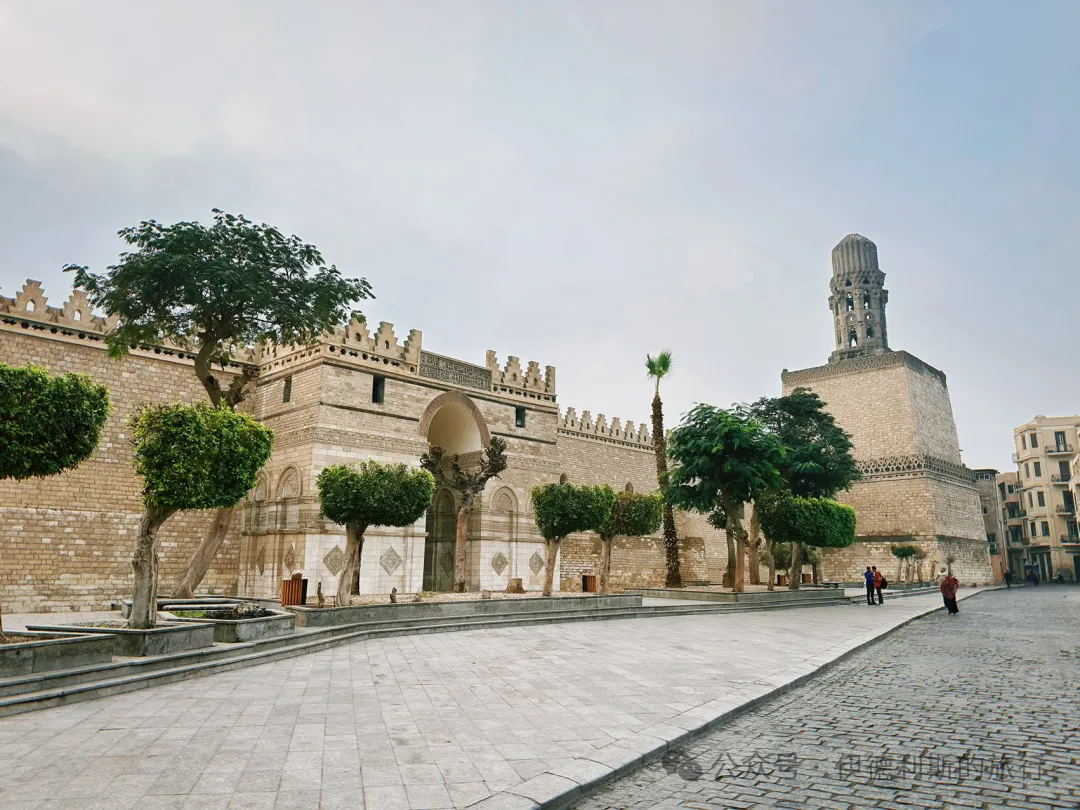
Right next to the north wall of Old Cairo is the Al-Hakim Mosque. It is named after the sixth caliph of the Fatimid dynasty, who was also the 16th imam of the Ismaili branch of Shia Islam, Al-Hakim bi-Amr Allah (reigned 996-1021). The Al-Hakim Mosque was started in 990 by the fifth Fatimid Caliph, al-Aziz Billah (reigned 975-996), and finished in 1013 by Caliph al-Hakim. It is now 1,012 years old.
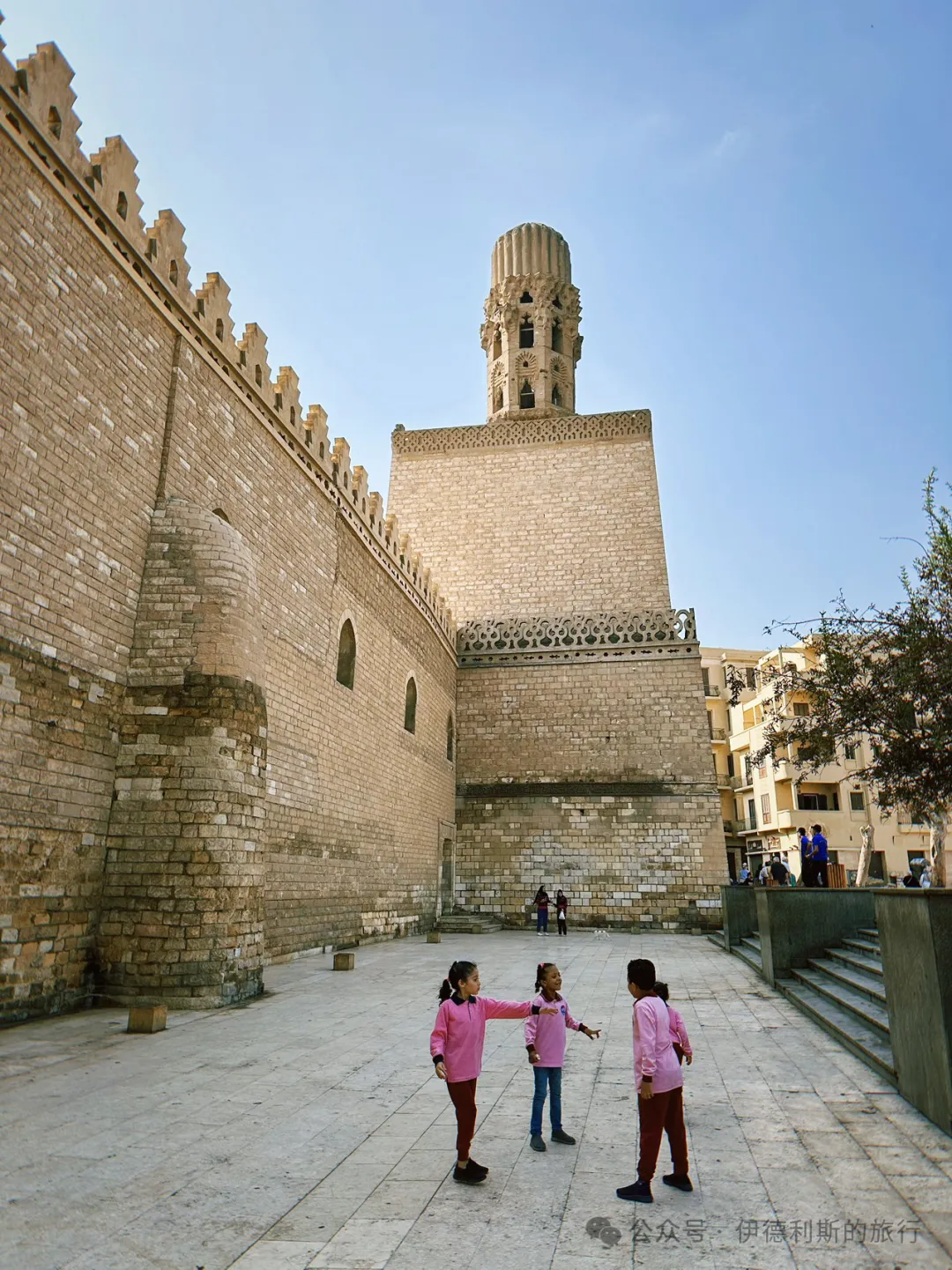
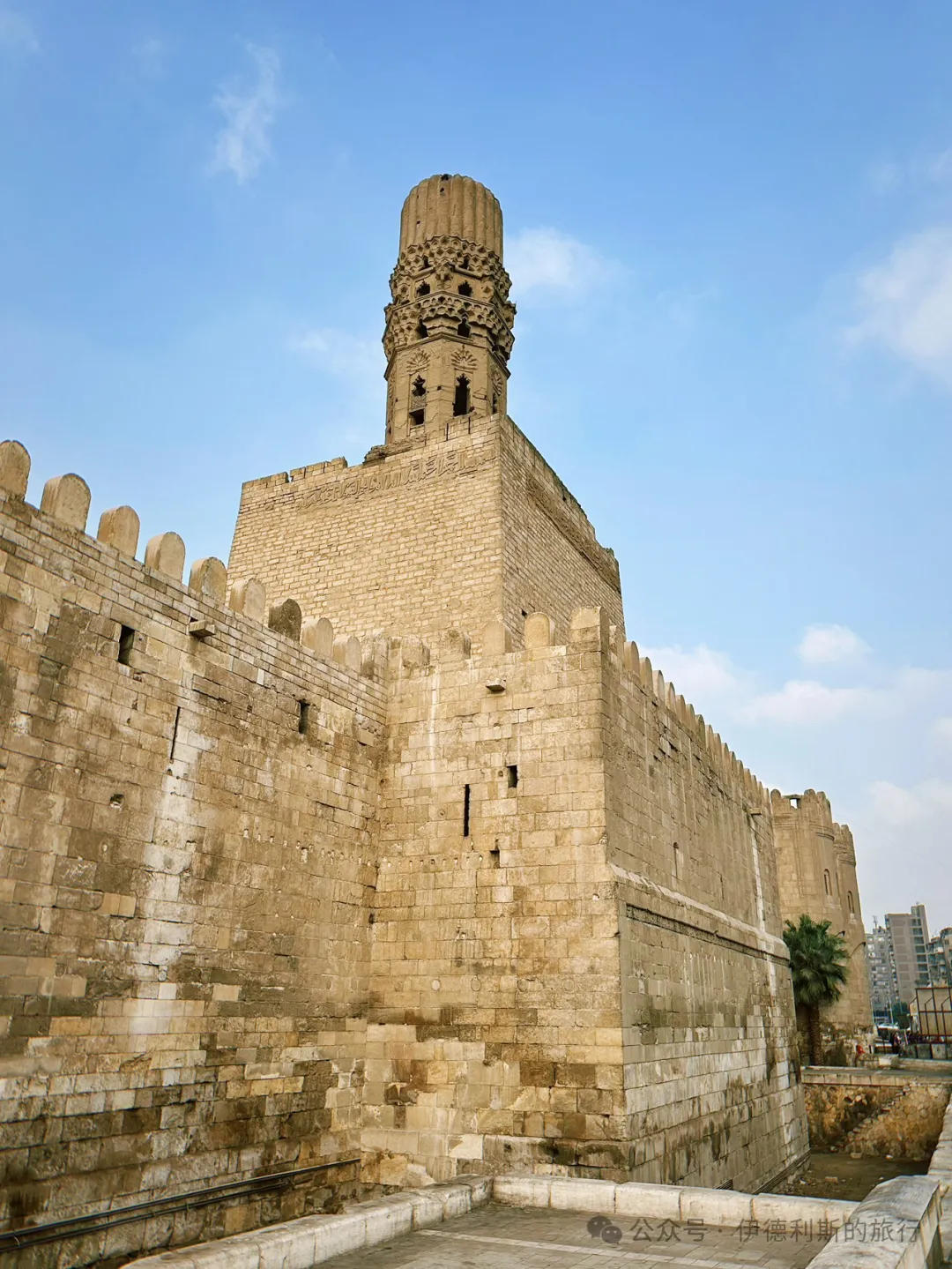
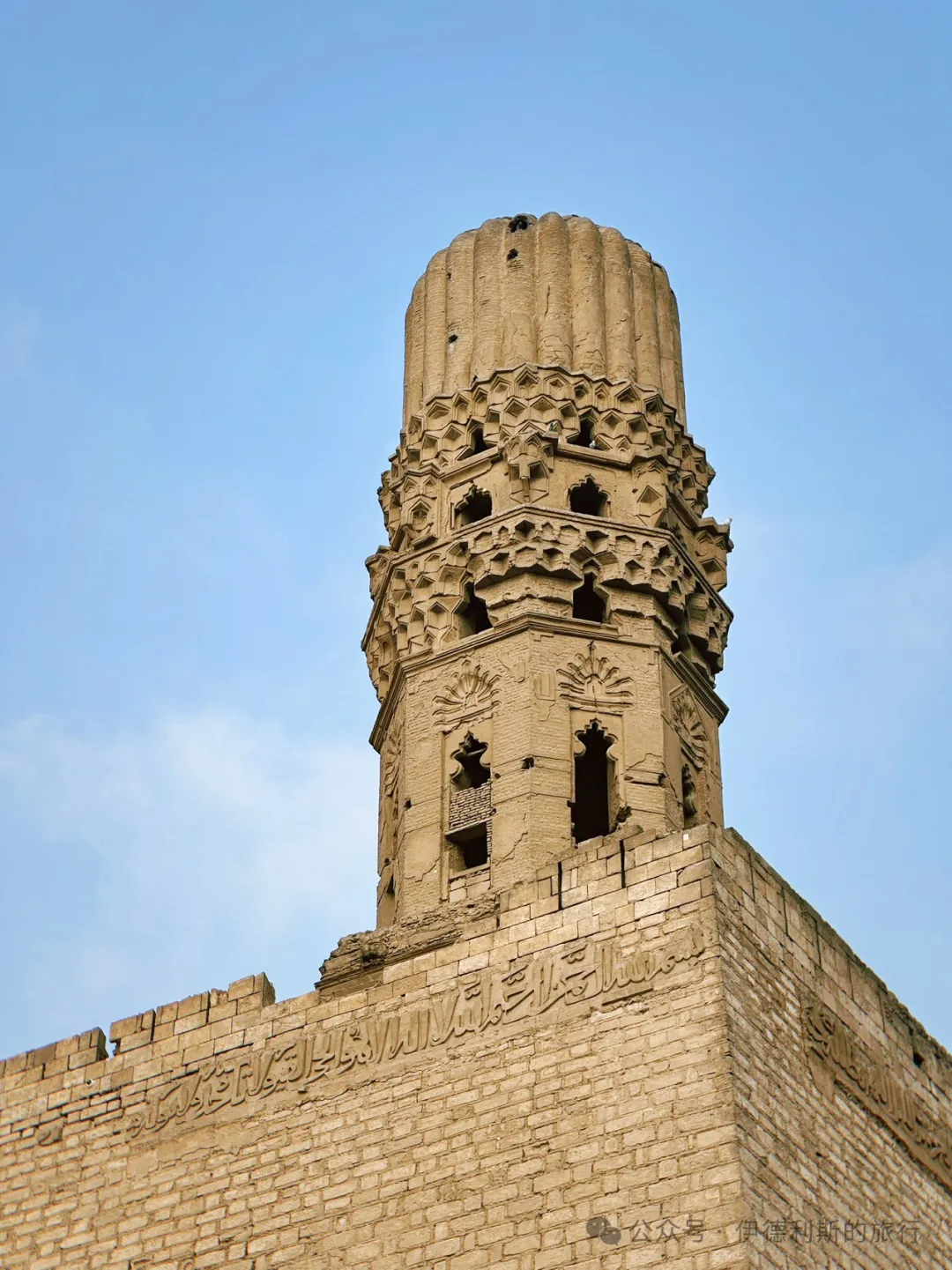
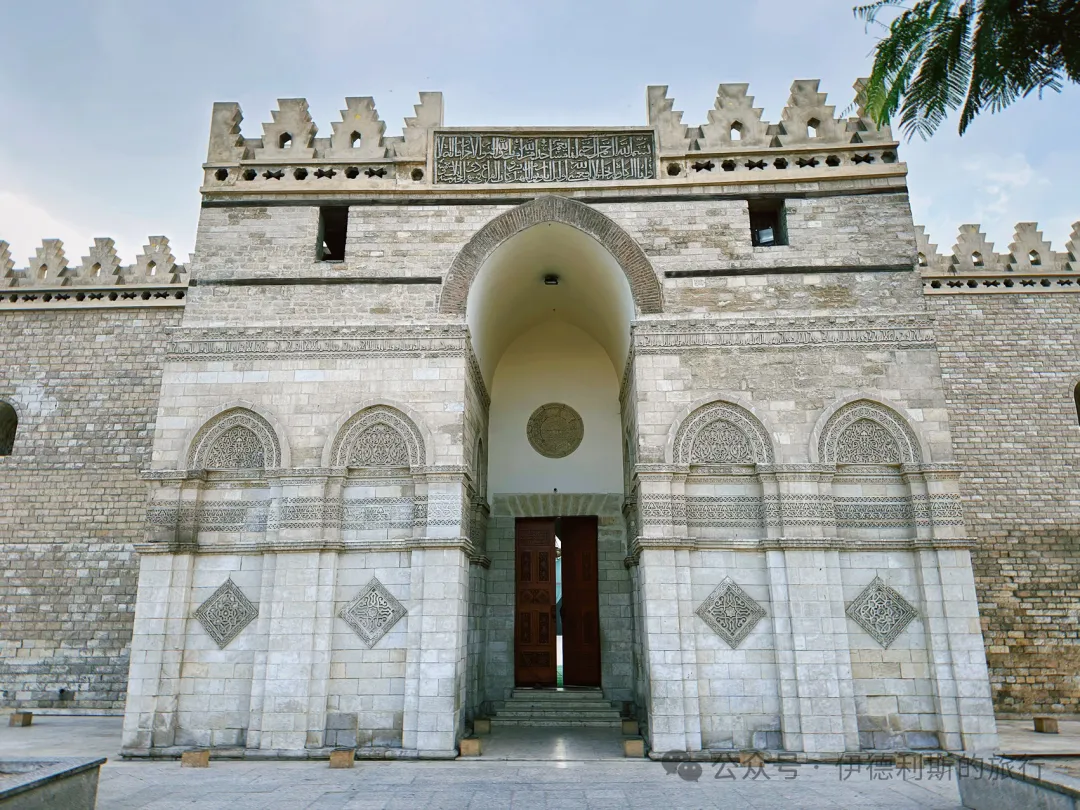
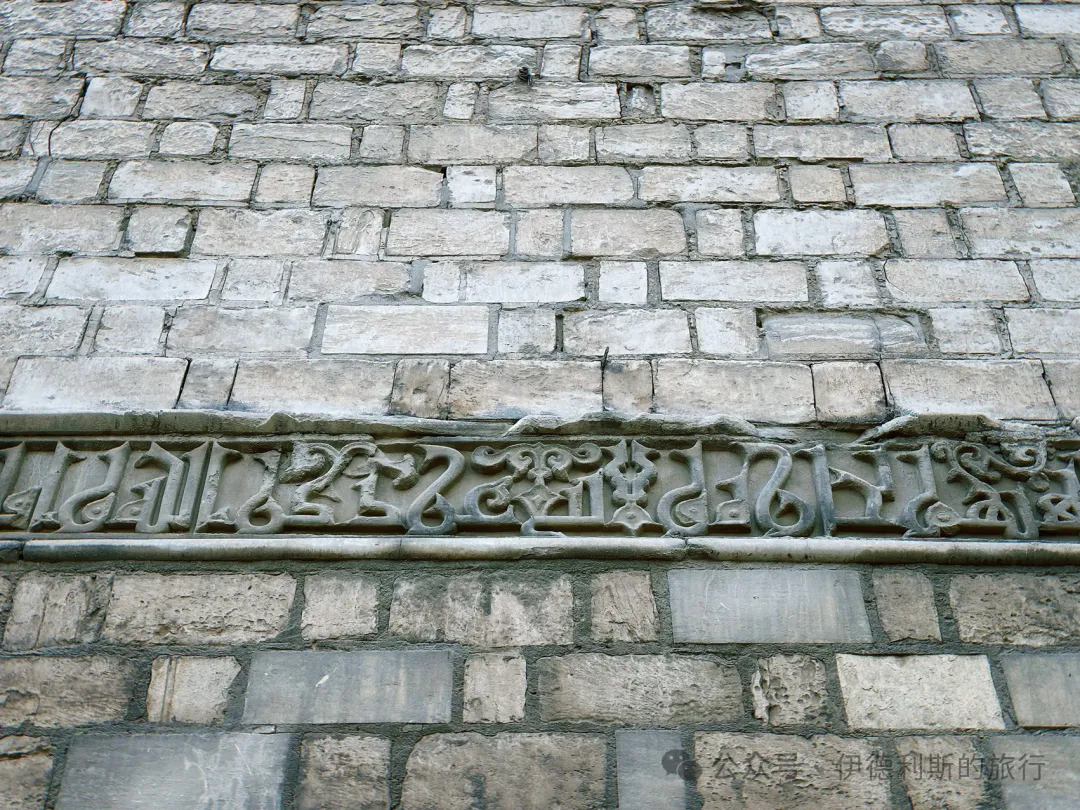
The mosque originally sat outside the Cairo city walls, but it was brought inside after the walls were rebuilt in 1087. Its architectural style is similar to the Al-Azhar Mosque, but it is twice as large. The most striking features are the two minarets built on square brick bases. When the minarets were first built in 1003, they were separate structures. They were not encased in brick until 1010. Some scholars suggest this change relates to 1010, when the ruler of Mecca rejected Fatimid authority, weakening the dynasty's power. The outer wall of the southern brick base has Fatimid-era marble carvings in Kufic script. Because the northern base was incorporated into the northern wall of Old Cairo in 1087, its Kufic carvings were moved to the outside of the city wall.
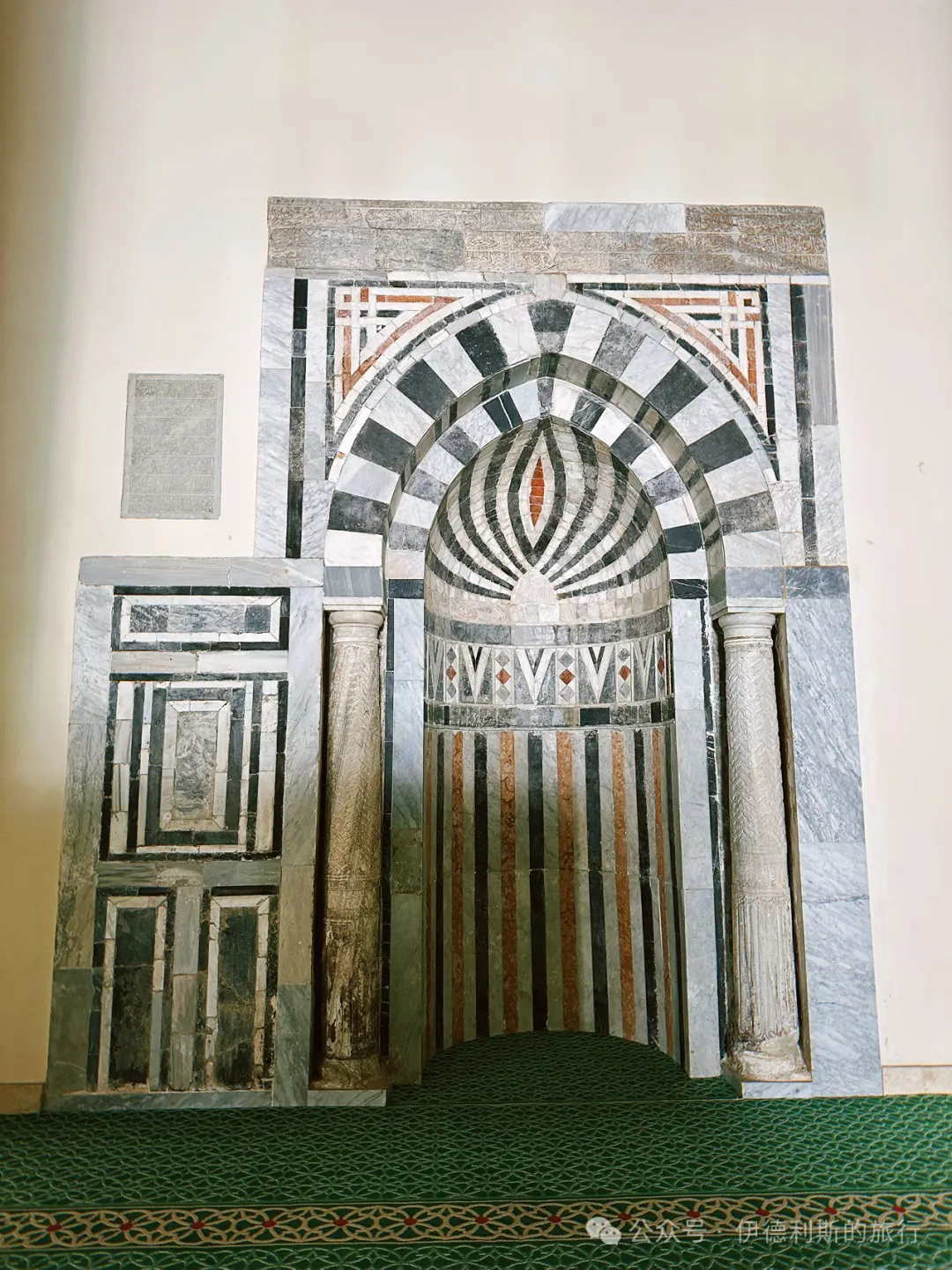
During the Crusades, the Franks used the mosque as a prison. Later, Saladin used it as a stable. It was repaired during the Mamluk period in the 14th century, but it eventually fell into ruin for a long time. The mosque was repaired in 1808, and a small, colorful marble mihrab added during that time still exists today.
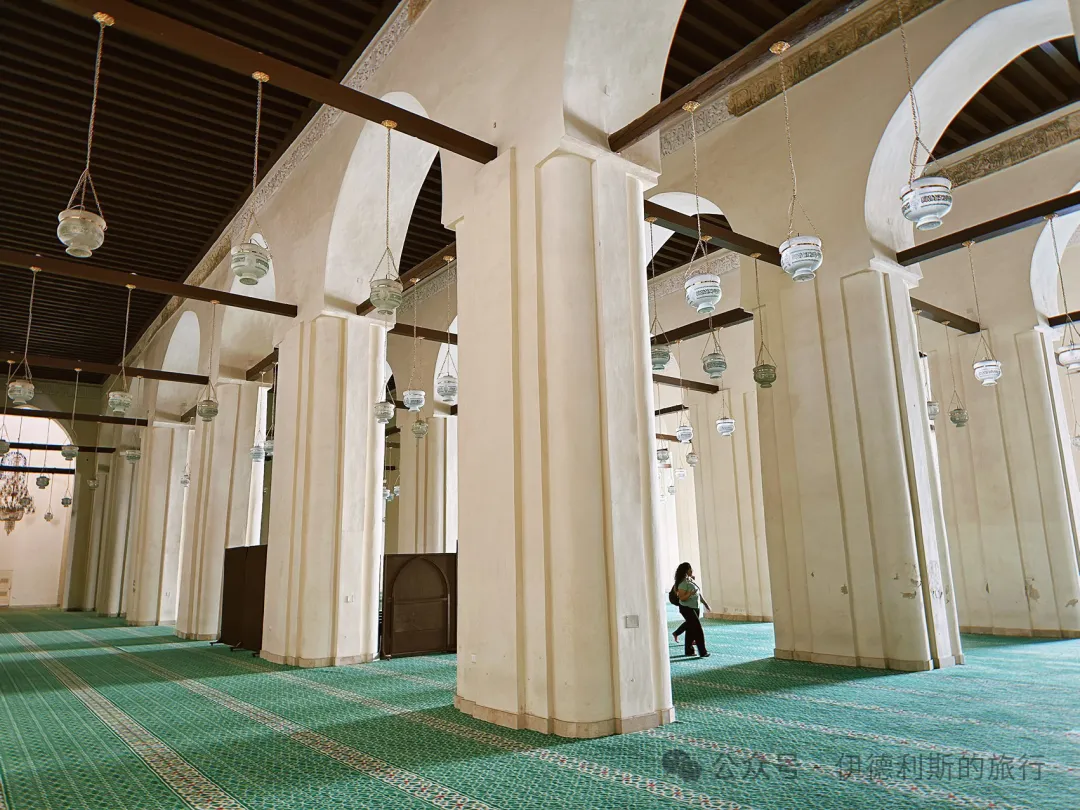
In the 20th century, the mosque served as a school until 1980, when the Dawoodi Bohra branch of Shia Islam carried out a massive reconstruction and renovation using white marble. Inside the main hall after the reconstruction, only the original plaster carvings, wooden beams, and scripture remained. This restoration was criticized by scholars for being 'inauthentic' and sparked widespread debate. In 2017, the Dawoodi Bohra community and the Egyptian Ministry of Tourism and Antiquities launched a new round of repairs, and the mosque did not reopen until February 2023.
Al-Aqmar Mosque: 1125
Walking south from the Al-Hakim Mosque along Al-Mu'izz Street, the main road of Old Cairo, you can see the famous Fatimid-era Aqmar Mosque. The Aqmar Mosque was built in 1125-1126 by order of the Fatimid vizier Al-Ma'mun al-Bata'ihi. It sat at the northeast corner of the Fatimid Eastern Palace, right next to the palace grounds.
The Aqmar Mosque is a landmark in Egyptian architectural history. It was the first mosque with a main entrance aligned with the street rather than the qibla wall, meaning it was the first planned according to Cairo's street layout. It was also the first to feature complex stone carvings. The facade of the Aqmar Mosque is very luxurious. Above the entrance is a medallion surrounded by a grille, with the names of the Prophet and Ali in the center and scripture around it—a unique decoration in Cairo.
At the top of the left facade are carvings of doors and windows. The window on the left symbolizes the ceremonial grille the Fatimids took back from the palace of their rivals, the Abbasids in Baghdad, representing victory. Inside the window are a lamp and a six-pointed star, based on the Shia hadith: 'The star is a promise to the world, and it will not be submerged.' Below the window are carvings of plants growing from a flower pot, referencing the Prophet's words about Hasan and Husayn: 'My two fragrant herbs in the world.' The door in the upper right corner comes from the famous Shia hadith: 'I am the city of knowledge, and Ali is its gate.'
Because it was near the Fatimid palace, the Aqmar Mosque originally had no minaret. One was added by the Mamluk dynasty at the end of the 14th century, and the cylindrical top was rebuilt during the Ottoman period.
In 1993, the Dawoodi Bohras branch of Shia Islam carried out a large-scale renovation of the Aqmar Mosque. Most of the historical elements inside the main hall were not preserved, which led to criticism.
Al-Ashraf Mosque: 1424
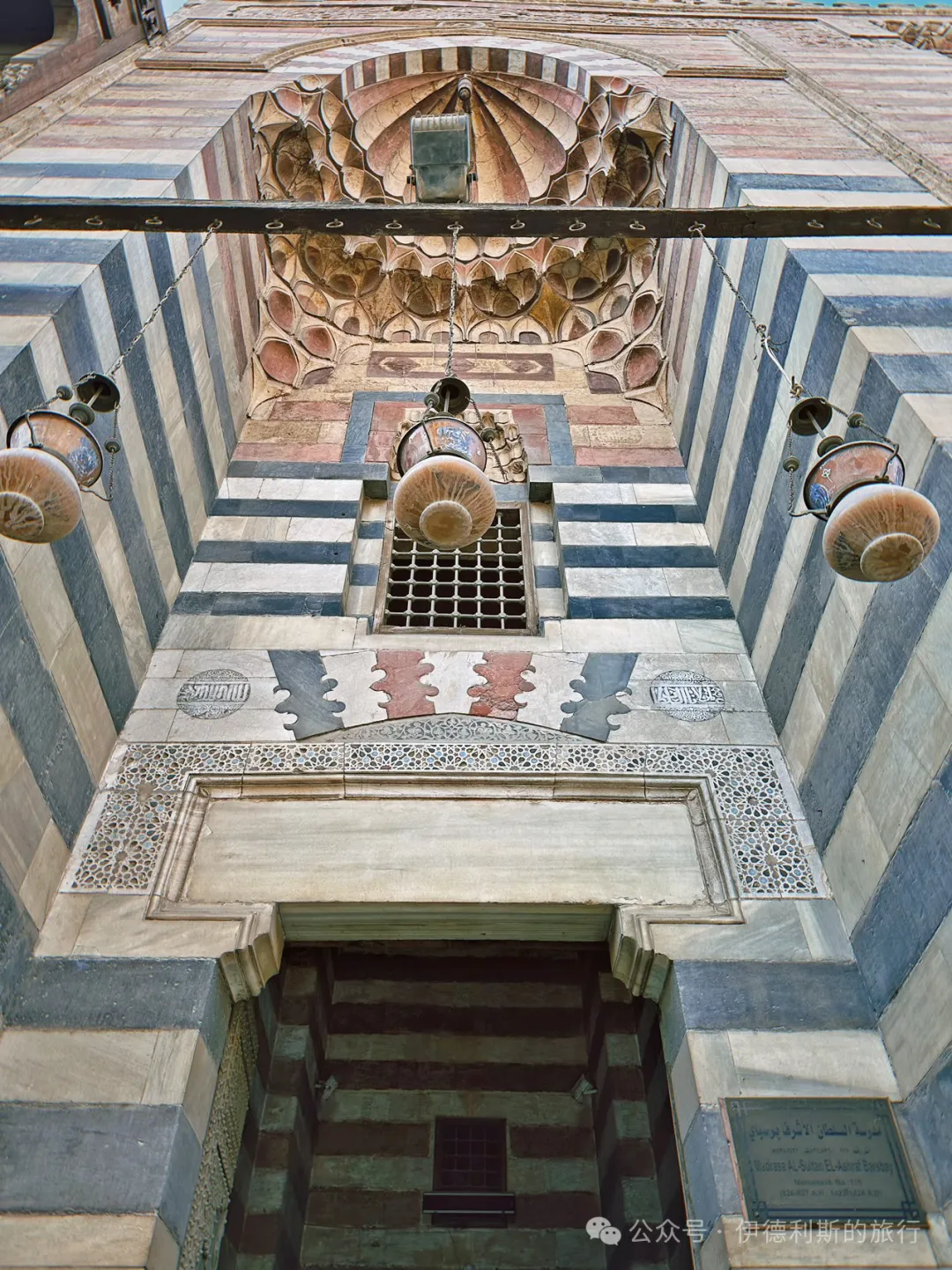
The Ashraf Mosque (Al-Ashraf Mosque) was built in 1424 by the Mamluk Sultan Al-Ashraf Barsbay, who reigned from 1422 to 1438. The complex includes a main prayer hall, a school, a tomb, and a Sufi lodge (khanqah). It features a dome with geometric carvings, which is an early example of decorative dome carving.
Barsbay was once a Mamluk slave of Sultan Barquq and later served as a tutor to the young Sultan Muhammad. With support from the governor of Damascus and other emirs, Barsbay deposed the young sultan in 1422 and took the throne himself.
Barsbay’s 16-year reign was a time of relative safety and stability for the Mamluk Sultanate, with almost no wars. He was very generous to the poor and to Sufis, and he carried out a series of administrative reforms.
People called Barsbay the Merchant Sultan because he placed great importance on trade. He took steps to strengthen control over the Mediterranean and Red Seas, diverted Indian Ocean trade routes through Jeddah, and created state monopolies on sugar and pepper. He lowered tariffs to attract merchants and monopolized most of the trade from the East, which angered many European powers.
Al-Azhar Mosque: 972
In 969 AD, the Shia Ismaili Fatimid dynasty conquered Egypt and began building their new capital, Cairo. At that time, the densely populated Sunni city of Fustat already existed south of Cairo, so the new city became the center for the Shia Ismaili faith.
After two years of construction, the first Friday mosque (Jami) in Cairo opened in 972 and was named the Cairo Mosque (Jami al-Qahira) after the city. The Cairo Mosque was later renamed the Al-Azhar Mosque (al-Jami al-Azhar), with Al-Azhar meaning the Radiant.
After the Al-Azhar Mosque opened, the Ismailis moved from secret to public preaching. The mosque's first chief judge, Qadi al-Numan, became the founder of Ismaili law and the author of the authoritative Ismaili text, The Pillars of Islam (Kitab da'a'im al-Islam).
The main hall of the Al-Azhar Mosque is a columned hall. The marble columns in the four rows of arcades came from ruins of the Pharaohs, ancient Rome, and the Copts, and they were leveled using bases of different heights.
The roof of the main hall originally had three domes, but none survived later renovations. The original mihrab was rediscovered in 1933, and the niche still preserves ornate stucco carvings from the Fatimid period.
Several Fatimid caliphs expanded and renovated the Al-Azhar Mosque. Caliph al-Hafiz, who reigned from 1132 to 1149, carried out a major renovation in 1138. The four-centered arches in the courtyard and the dome at the entrance to the main hall date from this time. The stucco carvings in the courtyard also come from this period, though they were renovated again in 1891.
In 1171, Saladin overthrew the Fatimid dynasty and established the Sunni Ayyubid dynasty. The Friday prayers for Cairo moved to the Hakim Mosque in the north of the city, and the Al-Azhar Mosque was neglected because it had been the center of the Ismaili faith. Saladin removed the silver bands from the mihrab niche of the Al-Azhar Mosque that bore the names of the Fatimid caliphs and destroyed all the Ismaili manuscripts kept in the mosque.
It was not until 1266 that the Mamluk Sultan Baybars, who reigned from 1260 to 1277, restored Friday prayers at the Al-Azhar Mosque and repaired the building. The Ayyubid dynasty followed the Shafi'i school of law, which held that a community should have only one main Friday mosque. The Mamluk dynasty followed the Hanafi school, which did not have this rule.
The Mamluk dynasty left two grand minarets at Al-Azhar Mosque: the Qaytbay minaret and the twin minarets of Al-Ghuri, along with the Qaytbay Gate. The Qaytbay minaret was built in 1483 or 1495 and features three balconies decorated with ornate carvings. The Qaytbay Gate was built in 1495 and leads directly into the courtyard. Both are exquisite examples of late Mamluk architecture. During the reign of Sultan Qaytbay (1468-96), the Mamluk dynasty was politically and economically stable and won several military victories against the Ottoman Empire. The Sultan was very interested in art and architecture and sponsored as many as 230 buildings.
In 1509, the Mamluk Sultan Al-Ashraf Qansuh al-Ghuri (reigned 1501-16) built the twin minarets of Al-Ghuri. Al-Ghuri was the last powerful ruler of the Mamluk dynasty. He was eventually defeated by the Ottoman Empire and fell on the battlefield in Syria.
In 1517, the Ottoman Empire conquered the Mamluk dynasty and occupied Egypt, causing the status of Al-Azhar Mosque to decline once again. It was not until after the 18th century, when the Mamluk elite regained influence in Egypt, that renovations and expansions of Al-Azhar Mosque continued.
In 1749, Abd al-Rahman was appointed as the head of the guards (Katkhuda). In 1753, he oversaw the construction of three Ottoman-style gates for Al-Azhar Mosque: the Barbers' Gate (Bab al-Muzayinīn), the Gate of the Upper Egyptians (Bab al-Sa'ayida), and the Soup Gate (Bab al-Shurba). Outside the Barbers' Gate was where students got their hair cut, 'Sa'ayida' means people from Upper Egypt, and the Soup Gate was where students went to get soup. From then on, the Barbers' Gate became the main entrance to Al-Azhar Mosque.
Abd al-Rahman also doubled the size of the main prayer hall of Al-Azhar Mosque to the south and added a new mihrab, giving the hall its current shape. After Abd al-Rahman died in 1776, he was buried inside Al-Azhar Mosque, becoming the last person in history to be buried there.
After the 18th century, Al-Azhar Mosque became the most influential educational institution in Egypt, and the ulama (scholars) could report to the Pasha (governor) as official advisors.
Napoleon occupied Cairo on July 22, 1798. On October 21, an uprising against the French broke out at Al-Azhar Mosque. Napoleon shelled the mosque directly from the Cairo Citadel, resulting in over 3,000 Egyptian casualties and the death of six Al-Azhar ulama. Napoleon's troops tied their horses to the mihrab of Al-Azhar Mosque and ransacked the student dormitories and the library. In 1800, the commander-in-chief of the French expeditionary force was assassinated by an Al-Azhar student, after which Napoleon ordered the closure of Al-Azhar Mosque. In June 1801, Cairo was recaptured by the British and the Ottoman Empire, and Al-Azhar Mosque reopened.
Between 1892 and 1901, the last Khedive (viceroy) of Ottoman Egypt, Abbas II Hilmi Pasha, rebuilt the facade of Al-Azhar Mosque as part of a wave of modernization in British-occupied Egypt. At the same time, Al-Azhar University also carried out educational reforms to oppose fundamentalism. To mitigate the impact of the Saudi Wahhabi movement, many students from Indonesia and other parts of Southeast Asia came to study at Al-Azhar University during this period.
The last two pictures show the Fatimid dynasty stucco carvings restored by the Committee for the Preservation of Arab Art Monuments during the reign of Abbas II Hilmi Pasha.
Al-Hussein Mosque: built in 1154, rebuilt in 1874
Across from Al-Azhar Mosque is Al-Hussein Mosque, where Shia Muslims believe the head of Imam Hussein is buried. The mosque was first built in 1154, but its current appearance dates to a reconstruction in 1874.
The Fatimid dynasty believed the Abbasid dynasty secretly moved Imam Hussein's head from the Umayyad Mosque cemetery in Damascus. The Fatimids rediscovered it in 1091 and built a shrine for it in Ashkelon, Palestine.
In 1153, the Fatimid dynasty ordered the head of Hussein moved to Cairo to be buried with past Fatimid caliphs, and they built Al-Hussein Mosque in 1154. The lower part of the south gate of Al-Hussein Mosque still keeps its original Fatimid structure.
Al-Hussein Mosque was rebuilt by the Ayyubid dynasty in 1237, but it later burned down, leaving only one Ayyubid minaret today.
In 1874, Isma'il Pasha (reigned 1863-79), the ruler of the Muhammad Ali dynasty, rebuilt Al-Hussein Mosque in a Gothic Revival style and added a minaret blending Gothic and Ottoman styles. During his rule, Isma'il Pasha modernized Egypt on a large scale, trying to align Egypt with Europe, and the renovation of Al-Hussein Mosque was part of this effort.
In 1893, a room for Prophet Muhammad's relics (Bab al-Mukhallafat al-Nabawiyya) was added next to the shrine. It holds four strands of the Prophet's hair, a linen cloak he wore, a lantern, a copper kohl applicator, a staff, and a sword given to him by a companion.
The center of the shrine today is a metal grille (Zarih) made in Mumbai in 1965 by Taher Saifuddin, the leader of the Dawoodi Bohras. It is said this Zarih was originally designed for the shrine of Abbas ibn Ali in Karbala, but it could not be installed there. Taher Saifuddin believed this was guided by Allah, so he had the Zarih flown to Cairo and installed in Al-Hussein Mosque.
Abu al-Dhahab Mosque: 1774
Right next to the west wall of Al-Azhar Mosque is the Abu al-Dhahab Mosque, built in 1774 by the Egyptian Mamluk ruler Abu al-Dhahab. This was the last large building complex the Mamluks built in Egypt, but only the mosque remains today.
Abu al-Dhahab means 'Father of Gold,' and he was a wealthy and generous Mamluk emir. During the Russo-Turkish War, the Egyptian Mamluk emir Ali Bey declared independence from the Ottoman Empire, and Abu al-Dhahab led troops to conquer most of the Hejaz and Syria. After taking Damascus in 1772, Abu al-Dhahab turned his army to occupy Cairo, becoming the actual ruler of Egypt until he died suddenly of the plague in 1775 while conquering Palestine.
The architecture of Abu al-Dhahab Mosque mixes different elements, including Mamluk-style outer walls, Ottoman-style domes, and a minaret inspired by the early 16th-century minaret of the nearby Sultan Qaytbay complex.
The prayer niche (mihrab) and the pulpit (minbar) of Abu al-Dhahab Mosque feature Mamluk-style decorations inlaid with mother-of-pearl and marble.
Al-Muayyad Mosque: 1415
Right next to the south gate of the old city of Cairo is the Sultan Al-Mu'ayyad Mosque, built between 1415 and 1421 by the Mamluk Sultan Al-Mu'ayyad Shaykh (reigned 1412-1421). This site was originally a prison, and legend says Sultan Al-Mu'ayyad was held here when he was young. At the time, he suffered greatly from fleas and lice, so he made a dua that if he ever became Sultan, he would turn the site into a place for teaching and learning. This wish later came true.
With the Sultan's funding, the madrasa inside the Sultan al-Mu'ayyad Mosque became one of Cairo's most famous academic institutions in the 15th century. The large endowment left after the Sultan passed away allowed the school to hire the most brilliant scholars of the time. Ibn Hajar 'Asqalani, the most famous authority on Islamic jurisprudence in Egypt, taught Shafi'i law here.
The madrasa at the Sultan al-Mu'ayyad Mosque taught the four schools of Islamic law: Hanafi, Shafi'i, Maliki, and Hanbali. According to mosque records, the school could accommodate 50 Hanafi students, 40 Shafi'i students, 15 Maliki students, and 10 Hanbali students, along with their teachers and imams. There were also two classes with 20 students each dedicated to studying Quranic exegesis and Hadith.
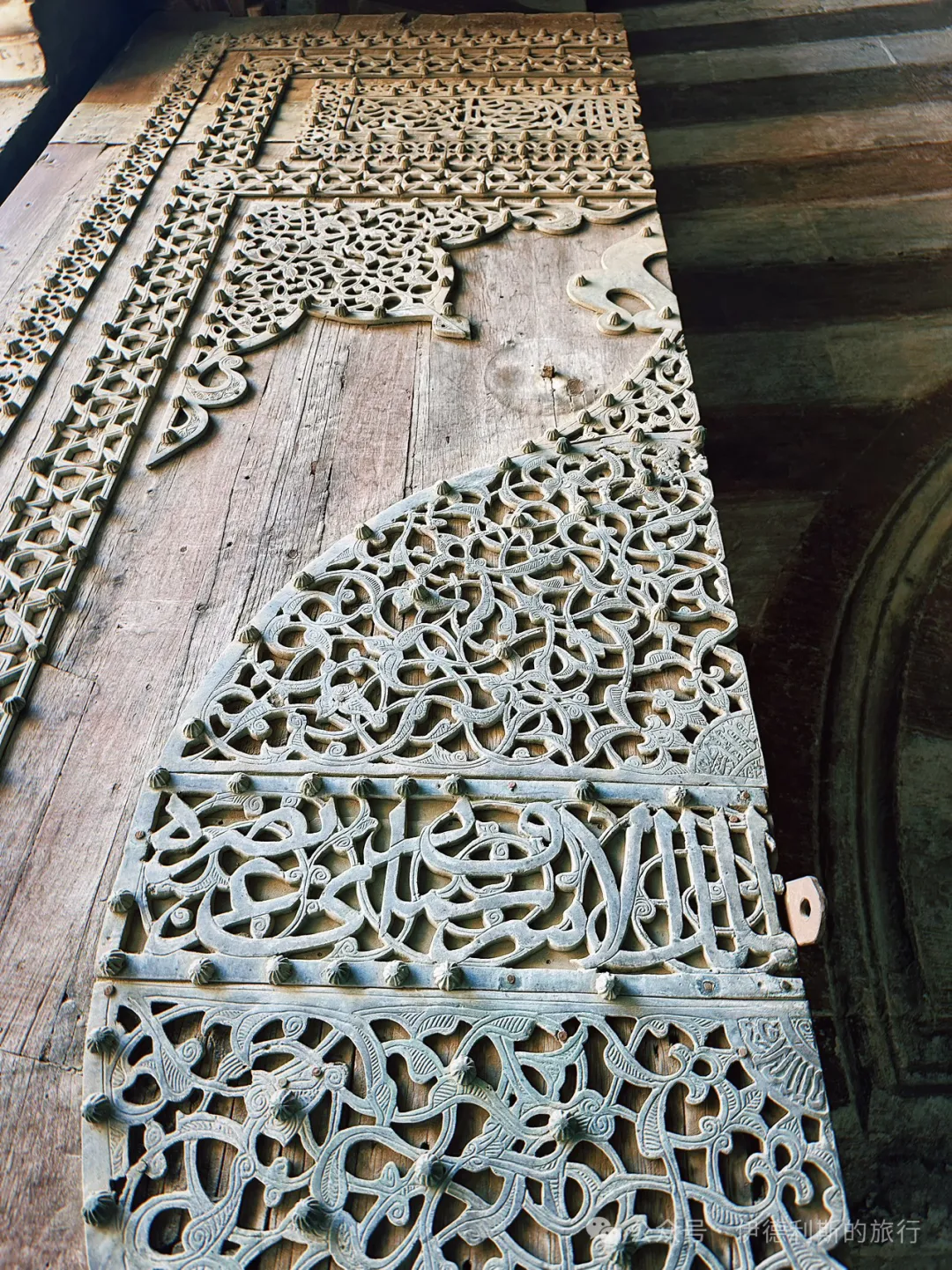
The Sultan al-Mu'ayyad Mosque is the last large hypostyle mosque in Cairo. It originally had four facades, but today only the east side and the main prayer hall remain from the original structure. The mosque's main gate is known as the last grand gate of the Mamluk dynasty. It is decorated with beautiful geometric marble patterns, Kufic calligraphy, and complex stucco carvings.
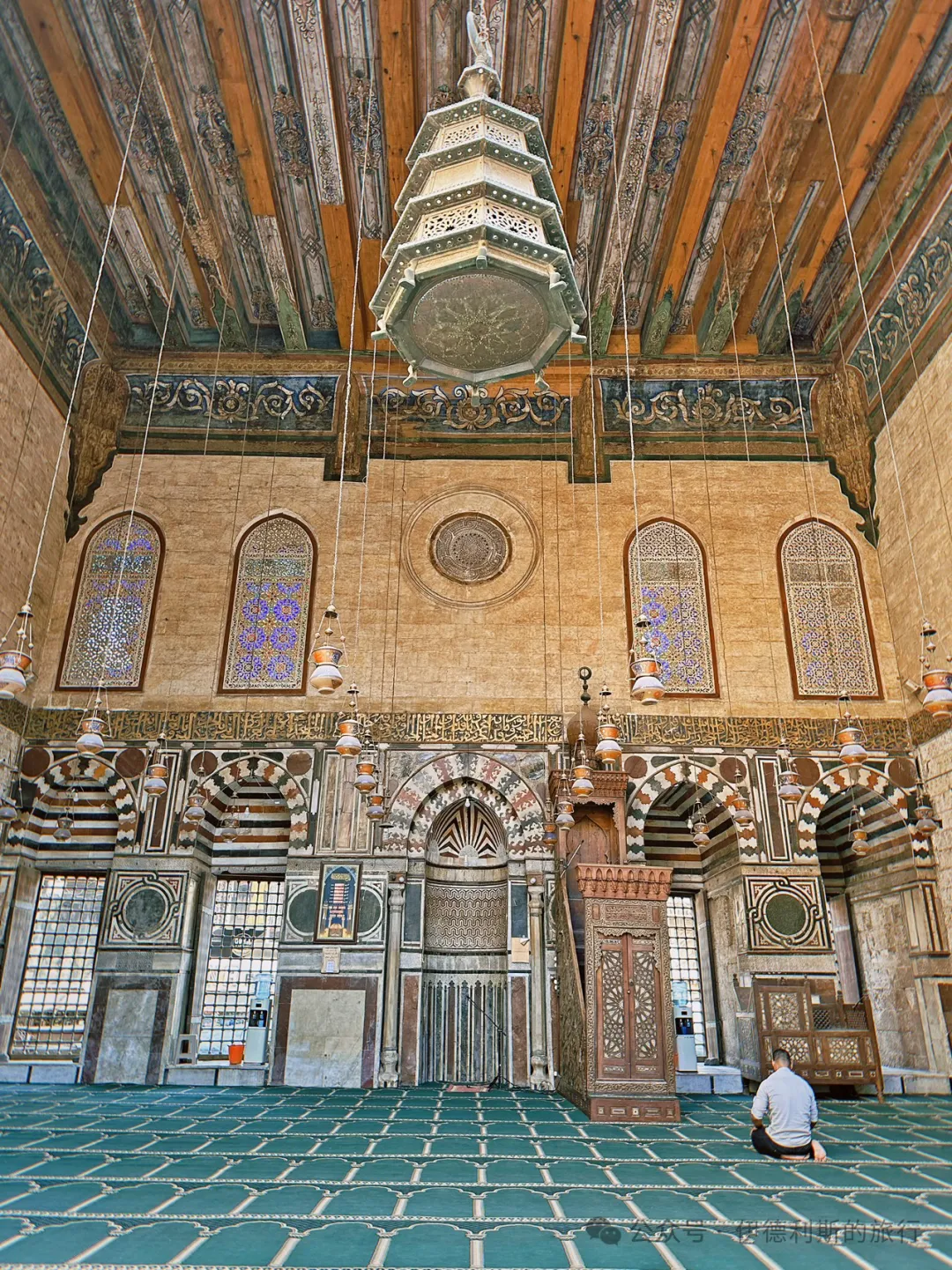
The main prayer hall of the Sultan al-Mu'ayyad Mosque was one of the most ornate in Egypt at the time, and the qibla wall is decorated with colorful marble. The supporting stone columns were collected from Cairo and the surrounding areas, and they likely date back to the pre-Islamic era. The circular colorful marble decoration above the mihrab is also very unique, as this style was almost always used for floors rather than walls. Turkish tiles were added to the qibla wall in the 1840s, but they were removed to restore the original design during a 2001 renovation.
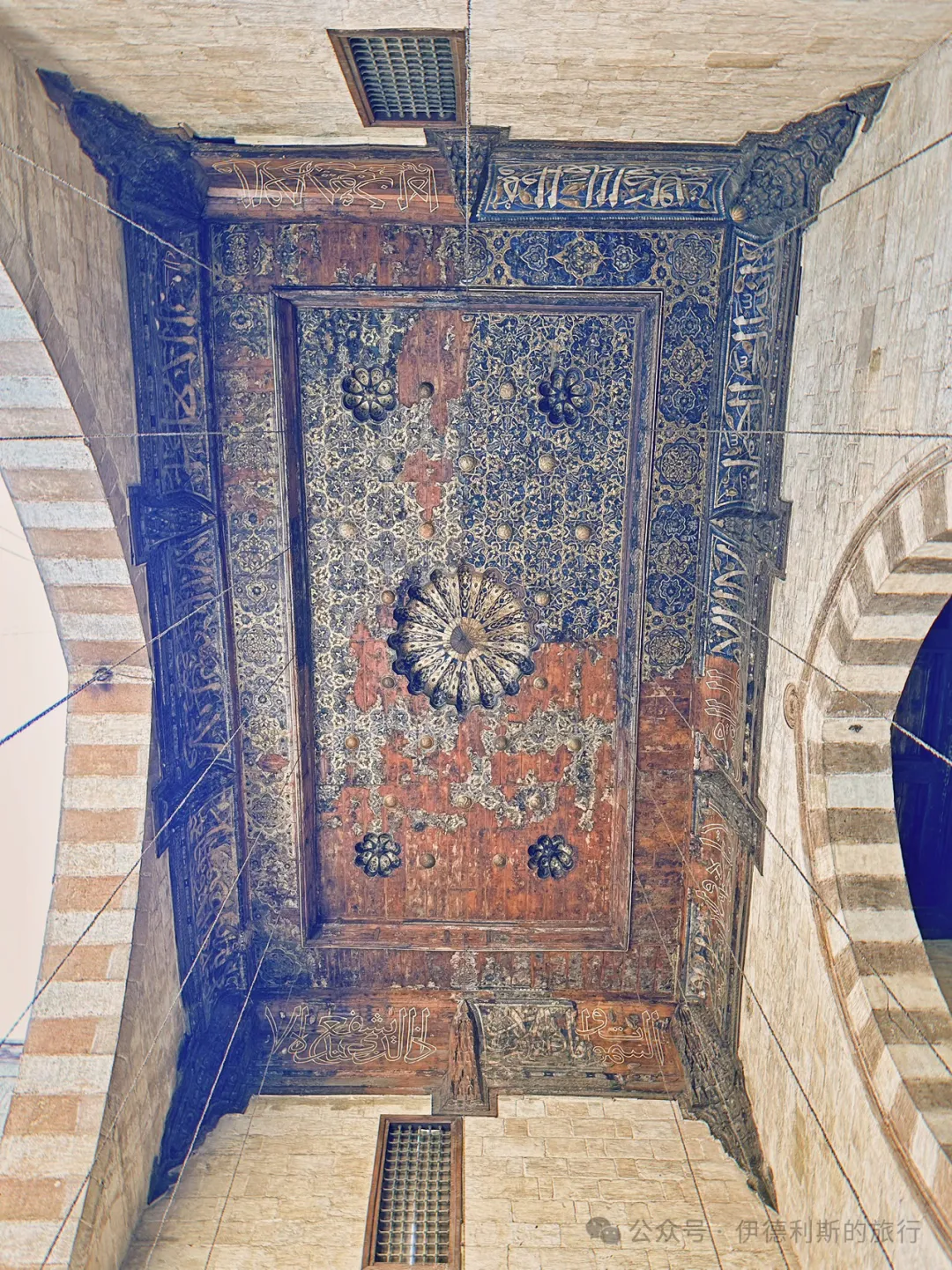
The Sultan al-Mu'ayyad Mosque features exquisite wood carvings from the Mamluk period, including the minbar, wooden doors, and ceilings. view all
Summary: This first part of the Cairo mosque journey begins with early landmarks such as Al-Hakim Mosque and Al-Aqmar Mosque. It preserves the source's mosque names, founding years, dynastic context, street route, architectural details, and photographs.
Al-Hakim Mosque: 1013
Al-Aqmar Mosque: 1125
Al-Ashraf Mosque: 1424
Al-Azhar Mosque: 972
Al-Hussein Mosque: built in 1154, rebuilt in 1874
Abu al-Dhahab Mosque: 1774
Al-Muayyad Mosque: 1415
Al-Salih Tala'i Mosque: 1160
Mahmud al-Kurdi Mosque: 1395
Qijmas al-Ishaqi Mosque: 1480
Mosque of Ahmad al-Mihmandar: 1324
Mosque of Amir Altinbugha al-Mardani: 1338
Mosque of Umm al-Sultan Sha'ban: 1368
Blue Mosque: 1347
Sayyida Fatima Mosque: 18th-century expansion
Khayrbak Mosque: 1519
Sultan Hasan Mosque: 1356
Rifa'i Mosque: 1869.
Ibn Tulun Mosque: 876.
Taghribirdi Mosque: 1440
Shaykhu Mosque: 1349
Qanibay al-Muhammadi Mosque: 1413
Al-Hakim Mosque: 1013
Right next to the north wall of Old Cairo is the Al-Hakim Mosque. It is named after the sixth caliph of the Fatimid dynasty, who was also the 16th imam of the Ismaili branch of Shia Islam, Al-Hakim bi-Amr Allah (reigned 996-1021). The Al-Hakim Mosque was started in 990 by the fifth Fatimid Caliph, al-Aziz Billah (reigned 975-996), and finished in 1013 by Caliph al-Hakim. It is now 1,012 years old.
The mosque originally sat outside the Cairo city walls, but it was brought inside after the walls were rebuilt in 1087. Its architectural style is similar to the Al-Azhar Mosque, but it is twice as large. The most striking features are the two minarets built on square brick bases. When the minarets were first built in 1003, they were separate structures. They were not encased in brick until 1010. Some scholars suggest this change relates to 1010, when the ruler of Mecca rejected Fatimid authority, weakening the dynasty's power. The outer wall of the southern brick base has Fatimid-era marble carvings in Kufic script. Because the northern base was incorporated into the northern wall of Old Cairo in 1087, its Kufic carvings were moved to the outside of the city wall.
During the Crusades, the Franks used the mosque as a prison. Later, Saladin used it as a stable. It was repaired during the Mamluk period in the 14th century, but it eventually fell into ruin for a long time. The mosque was repaired in 1808, and a small, colorful marble mihrab added during that time still exists today.
In the 20th century, the mosque served as a school until 1980, when the Dawoodi Bohra branch of Shia Islam carried out a massive reconstruction and renovation using white marble. Inside the main hall after the reconstruction, only the original plaster carvings, wooden beams, and scripture remained. This restoration was criticized by scholars for being 'inauthentic' and sparked widespread debate. In 2017, the Dawoodi Bohra community and the Egyptian Ministry of Tourism and Antiquities launched a new round of repairs, and the mosque did not reopen until February 2023.
Al-Aqmar Mosque: 1125
Walking south from the Al-Hakim Mosque along Al-Mu'izz Street, the main road of Old Cairo, you can see the famous Fatimid-era Aqmar Mosque. The Aqmar Mosque was built in 1125-1126 by order of the Fatimid vizier Al-Ma'mun al-Bata'ihi. It sat at the northeast corner of the Fatimid Eastern Palace, right next to the palace grounds.
The Aqmar Mosque is a landmark in Egyptian architectural history. It was the first mosque with a main entrance aligned with the street rather than the qibla wall, meaning it was the first planned according to Cairo's street layout. It was also the first to feature complex stone carvings. The facade of the Aqmar Mosque is very luxurious. Above the entrance is a medallion surrounded by a grille, with the names of the Prophet and Ali in the center and scripture around it—a unique decoration in Cairo.
At the top of the left facade are carvings of doors and windows. The window on the left symbolizes the ceremonial grille the Fatimids took back from the palace of their rivals, the Abbasids in Baghdad, representing victory. Inside the window are a lamp and a six-pointed star, based on the Shia hadith: 'The star is a promise to the world, and it will not be submerged.' Below the window are carvings of plants growing from a flower pot, referencing the Prophet's words about Hasan and Husayn: 'My two fragrant herbs in the world.' The door in the upper right corner comes from the famous Shia hadith: 'I am the city of knowledge, and Ali is its gate.'
Because it was near the Fatimid palace, the Aqmar Mosque originally had no minaret. One was added by the Mamluk dynasty at the end of the 14th century, and the cylindrical top was rebuilt during the Ottoman period.
In 1993, the Dawoodi Bohras branch of Shia Islam carried out a large-scale renovation of the Aqmar Mosque. Most of the historical elements inside the main hall were not preserved, which led to criticism.
Al-Ashraf Mosque: 1424
The Ashraf Mosque (Al-Ashraf Mosque) was built in 1424 by the Mamluk Sultan Al-Ashraf Barsbay, who reigned from 1422 to 1438. The complex includes a main prayer hall, a school, a tomb, and a Sufi lodge (khanqah). It features a dome with geometric carvings, which is an early example of decorative dome carving.
Barsbay was once a Mamluk slave of Sultan Barquq and later served as a tutor to the young Sultan Muhammad. With support from the governor of Damascus and other emirs, Barsbay deposed the young sultan in 1422 and took the throne himself.
Barsbay’s 16-year reign was a time of relative safety and stability for the Mamluk Sultanate, with almost no wars. He was very generous to the poor and to Sufis, and he carried out a series of administrative reforms.
People called Barsbay the Merchant Sultan because he placed great importance on trade. He took steps to strengthen control over the Mediterranean and Red Seas, diverted Indian Ocean trade routes through Jeddah, and created state monopolies on sugar and pepper. He lowered tariffs to attract merchants and monopolized most of the trade from the East, which angered many European powers.
Al-Azhar Mosque: 972
In 969 AD, the Shia Ismaili Fatimid dynasty conquered Egypt and began building their new capital, Cairo. At that time, the densely populated Sunni city of Fustat already existed south of Cairo, so the new city became the center for the Shia Ismaili faith.
After two years of construction, the first Friday mosque (Jami) in Cairo opened in 972 and was named the Cairo Mosque (Jami al-Qahira) after the city. The Cairo Mosque was later renamed the Al-Azhar Mosque (al-Jami al-Azhar), with Al-Azhar meaning the Radiant.
After the Al-Azhar Mosque opened, the Ismailis moved from secret to public preaching. The mosque's first chief judge, Qadi al-Numan, became the founder of Ismaili law and the author of the authoritative Ismaili text, The Pillars of Islam (Kitab da'a'im al-Islam).
The main hall of the Al-Azhar Mosque is a columned hall. The marble columns in the four rows of arcades came from ruins of the Pharaohs, ancient Rome, and the Copts, and they were leveled using bases of different heights.
The roof of the main hall originally had three domes, but none survived later renovations. The original mihrab was rediscovered in 1933, and the niche still preserves ornate stucco carvings from the Fatimid period.
Several Fatimid caliphs expanded and renovated the Al-Azhar Mosque. Caliph al-Hafiz, who reigned from 1132 to 1149, carried out a major renovation in 1138. The four-centered arches in the courtyard and the dome at the entrance to the main hall date from this time. The stucco carvings in the courtyard also come from this period, though they were renovated again in 1891.
In 1171, Saladin overthrew the Fatimid dynasty and established the Sunni Ayyubid dynasty. The Friday prayers for Cairo moved to the Hakim Mosque in the north of the city, and the Al-Azhar Mosque was neglected because it had been the center of the Ismaili faith. Saladin removed the silver bands from the mihrab niche of the Al-Azhar Mosque that bore the names of the Fatimid caliphs and destroyed all the Ismaili manuscripts kept in the mosque.
It was not until 1266 that the Mamluk Sultan Baybars, who reigned from 1260 to 1277, restored Friday prayers at the Al-Azhar Mosque and repaired the building. The Ayyubid dynasty followed the Shafi'i school of law, which held that a community should have only one main Friday mosque. The Mamluk dynasty followed the Hanafi school, which did not have this rule.
The Mamluk dynasty left two grand minarets at Al-Azhar Mosque: the Qaytbay minaret and the twin minarets of Al-Ghuri, along with the Qaytbay Gate. The Qaytbay minaret was built in 1483 or 1495 and features three balconies decorated with ornate carvings. The Qaytbay Gate was built in 1495 and leads directly into the courtyard. Both are exquisite examples of late Mamluk architecture. During the reign of Sultan Qaytbay (1468-96), the Mamluk dynasty was politically and economically stable and won several military victories against the Ottoman Empire. The Sultan was very interested in art and architecture and sponsored as many as 230 buildings.
In 1509, the Mamluk Sultan Al-Ashraf Qansuh al-Ghuri (reigned 1501-16) built the twin minarets of Al-Ghuri. Al-Ghuri was the last powerful ruler of the Mamluk dynasty. He was eventually defeated by the Ottoman Empire and fell on the battlefield in Syria.
In 1517, the Ottoman Empire conquered the Mamluk dynasty and occupied Egypt, causing the status of Al-Azhar Mosque to decline once again. It was not until after the 18th century, when the Mamluk elite regained influence in Egypt, that renovations and expansions of Al-Azhar Mosque continued.
In 1749, Abd al-Rahman was appointed as the head of the guards (Katkhuda). In 1753, he oversaw the construction of three Ottoman-style gates for Al-Azhar Mosque: the Barbers' Gate (Bab al-Muzayinīn), the Gate of the Upper Egyptians (Bab al-Sa'ayida), and the Soup Gate (Bab al-Shurba). Outside the Barbers' Gate was where students got their hair cut, 'Sa'ayida' means people from Upper Egypt, and the Soup Gate was where students went to get soup. From then on, the Barbers' Gate became the main entrance to Al-Azhar Mosque.
Abd al-Rahman also doubled the size of the main prayer hall of Al-Azhar Mosque to the south and added a new mihrab, giving the hall its current shape. After Abd al-Rahman died in 1776, he was buried inside Al-Azhar Mosque, becoming the last person in history to be buried there.
After the 18th century, Al-Azhar Mosque became the most influential educational institution in Egypt, and the ulama (scholars) could report to the Pasha (governor) as official advisors.
Napoleon occupied Cairo on July 22, 1798. On October 21, an uprising against the French broke out at Al-Azhar Mosque. Napoleon shelled the mosque directly from the Cairo Citadel, resulting in over 3,000 Egyptian casualties and the death of six Al-Azhar ulama. Napoleon's troops tied their horses to the mihrab of Al-Azhar Mosque and ransacked the student dormitories and the library. In 1800, the commander-in-chief of the French expeditionary force was assassinated by an Al-Azhar student, after which Napoleon ordered the closure of Al-Azhar Mosque. In June 1801, Cairo was recaptured by the British and the Ottoman Empire, and Al-Azhar Mosque reopened.
Between 1892 and 1901, the last Khedive (viceroy) of Ottoman Egypt, Abbas II Hilmi Pasha, rebuilt the facade of Al-Azhar Mosque as part of a wave of modernization in British-occupied Egypt. At the same time, Al-Azhar University also carried out educational reforms to oppose fundamentalism. To mitigate the impact of the Saudi Wahhabi movement, many students from Indonesia and other parts of Southeast Asia came to study at Al-Azhar University during this period.
The last two pictures show the Fatimid dynasty stucco carvings restored by the Committee for the Preservation of Arab Art Monuments during the reign of Abbas II Hilmi Pasha.
Al-Hussein Mosque: built in 1154, rebuilt in 1874
Across from Al-Azhar Mosque is Al-Hussein Mosque, where Shia Muslims believe the head of Imam Hussein is buried. The mosque was first built in 1154, but its current appearance dates to a reconstruction in 1874.
The Fatimid dynasty believed the Abbasid dynasty secretly moved Imam Hussein's head from the Umayyad Mosque cemetery in Damascus. The Fatimids rediscovered it in 1091 and built a shrine for it in Ashkelon, Palestine.
In 1153, the Fatimid dynasty ordered the head of Hussein moved to Cairo to be buried with past Fatimid caliphs, and they built Al-Hussein Mosque in 1154. The lower part of the south gate of Al-Hussein Mosque still keeps its original Fatimid structure.
Al-Hussein Mosque was rebuilt by the Ayyubid dynasty in 1237, but it later burned down, leaving only one Ayyubid minaret today.
In 1874, Isma'il Pasha (reigned 1863-79), the ruler of the Muhammad Ali dynasty, rebuilt Al-Hussein Mosque in a Gothic Revival style and added a minaret blending Gothic and Ottoman styles. During his rule, Isma'il Pasha modernized Egypt on a large scale, trying to align Egypt with Europe, and the renovation of Al-Hussein Mosque was part of this effort.
In 1893, a room for Prophet Muhammad's relics (Bab al-Mukhallafat al-Nabawiyya) was added next to the shrine. It holds four strands of the Prophet's hair, a linen cloak he wore, a lantern, a copper kohl applicator, a staff, and a sword given to him by a companion.
The center of the shrine today is a metal grille (Zarih) made in Mumbai in 1965 by Taher Saifuddin, the leader of the Dawoodi Bohras. It is said this Zarih was originally designed for the shrine of Abbas ibn Ali in Karbala, but it could not be installed there. Taher Saifuddin believed this was guided by Allah, so he had the Zarih flown to Cairo and installed in Al-Hussein Mosque.
Abu al-Dhahab Mosque: 1774
Right next to the west wall of Al-Azhar Mosque is the Abu al-Dhahab Mosque, built in 1774 by the Egyptian Mamluk ruler Abu al-Dhahab. This was the last large building complex the Mamluks built in Egypt, but only the mosque remains today.
Abu al-Dhahab means 'Father of Gold,' and he was a wealthy and generous Mamluk emir. During the Russo-Turkish War, the Egyptian Mamluk emir Ali Bey declared independence from the Ottoman Empire, and Abu al-Dhahab led troops to conquer most of the Hejaz and Syria. After taking Damascus in 1772, Abu al-Dhahab turned his army to occupy Cairo, becoming the actual ruler of Egypt until he died suddenly of the plague in 1775 while conquering Palestine.
The architecture of Abu al-Dhahab Mosque mixes different elements, including Mamluk-style outer walls, Ottoman-style domes, and a minaret inspired by the early 16th-century minaret of the nearby Sultan Qaytbay complex.
The prayer niche (mihrab) and the pulpit (minbar) of Abu al-Dhahab Mosque feature Mamluk-style decorations inlaid with mother-of-pearl and marble.
Al-Muayyad Mosque: 1415
Right next to the south gate of the old city of Cairo is the Sultan Al-Mu'ayyad Mosque, built between 1415 and 1421 by the Mamluk Sultan Al-Mu'ayyad Shaykh (reigned 1412-1421). This site was originally a prison, and legend says Sultan Al-Mu'ayyad was held here when he was young. At the time, he suffered greatly from fleas and lice, so he made a dua that if he ever became Sultan, he would turn the site into a place for teaching and learning. This wish later came true.
With the Sultan's funding, the madrasa inside the Sultan al-Mu'ayyad Mosque became one of Cairo's most famous academic institutions in the 15th century. The large endowment left after the Sultan passed away allowed the school to hire the most brilliant scholars of the time. Ibn Hajar 'Asqalani, the most famous authority on Islamic jurisprudence in Egypt, taught Shafi'i law here.
The madrasa at the Sultan al-Mu'ayyad Mosque taught the four schools of Islamic law: Hanafi, Shafi'i, Maliki, and Hanbali. According to mosque records, the school could accommodate 50 Hanafi students, 40 Shafi'i students, 15 Maliki students, and 10 Hanbali students, along with their teachers and imams. There were also two classes with 20 students each dedicated to studying Quranic exegesis and Hadith.
The Sultan al-Mu'ayyad Mosque is the last large hypostyle mosque in Cairo. It originally had four facades, but today only the east side and the main prayer hall remain from the original structure. The mosque's main gate is known as the last grand gate of the Mamluk dynasty. It is decorated with beautiful geometric marble patterns, Kufic calligraphy, and complex stucco carvings.
The main prayer hall of the Sultan al-Mu'ayyad Mosque was one of the most ornate in Egypt at the time, and the qibla wall is decorated with colorful marble. The supporting stone columns were collected from Cairo and the surrounding areas, and they likely date back to the pre-Islamic era. The circular colorful marble decoration above the mihrab is also very unique, as this style was almost always used for floors rather than walls. Turkish tiles were added to the qibla wall in the 1840s, but they were removed to restore the original design during a 2001 renovation.
The Sultan al-Mu'ayyad Mosque features exquisite wood carvings from the Mamluk period, including the minbar, wooden doors, and ceilings. view all
Reposted from the web
Summary: This first part of the Cairo mosque journey begins with early landmarks such as Al-Hakim Mosque and Al-Aqmar Mosque. It preserves the source's mosque names, founding years, dynastic context, street route, architectural details, and photographs.
Al-Hakim Mosque: 1013
Al-Aqmar Mosque: 1125
Al-Ashraf Mosque: 1424
Al-Azhar Mosque: 972
Al-Hussein Mosque: built in 1154, rebuilt in 1874
Abu al-Dhahab Mosque: 1774
Al-Muayyad Mosque: 1415
Al-Salih Tala'i Mosque: 1160
Mahmud al-Kurdi Mosque: 1395
Qijmas al-Ishaqi Mosque: 1480
Mosque of Ahmad al-Mihmandar: 1324
Mosque of Amir Altinbugha al-Mardani: 1338
Mosque of Umm al-Sultan Sha'ban: 1368
Blue Mosque: 1347
Sayyida Fatima Mosque: 18th-century expansion
Khayrbak Mosque: 1519
Sultan Hasan Mosque: 1356
Rifa'i Mosque: 1869.
Ibn Tulun Mosque: 876.
Taghribirdi Mosque: 1440
Shaykhu Mosque: 1349
Qanibay al-Muhammadi Mosque: 1413
Al-Hakim Mosque: 1013
Right next to the north wall of Old Cairo is the Al-Hakim Mosque. It is named after the sixth caliph of the Fatimid dynasty, who was also the 16th imam of the Ismaili branch of Shia Islam, Al-Hakim bi-Amr Allah (reigned 996-1021). The Al-Hakim Mosque was started in 990 by the fifth Fatimid Caliph, al-Aziz Billah (reigned 975-996), and finished in 1013 by Caliph al-Hakim. It is now 1,012 years old.
The mosque originally sat outside the Cairo city walls, but it was brought inside after the walls were rebuilt in 1087. Its architectural style is similar to the Al-Azhar Mosque, but it is twice as large. The most striking features are the two minarets built on square brick bases. When the minarets were first built in 1003, they were separate structures. They were not encased in brick until 1010. Some scholars suggest this change relates to 1010, when the ruler of Mecca rejected Fatimid authority, weakening the dynasty's power. The outer wall of the southern brick base has Fatimid-era marble carvings in Kufic script. Because the northern base was incorporated into the northern wall of Old Cairo in 1087, its Kufic carvings were moved to the outside of the city wall.
During the Crusades, the Franks used the mosque as a prison. Later, Saladin used it as a stable. It was repaired during the Mamluk period in the 14th century, but it eventually fell into ruin for a long time. The mosque was repaired in 1808, and a small, colorful marble mihrab added during that time still exists today.
In the 20th century, the mosque served as a school until 1980, when the Dawoodi Bohra branch of Shia Islam carried out a massive reconstruction and renovation using white marble. Inside the main hall after the reconstruction, only the original plaster carvings, wooden beams, and scripture remained. This restoration was criticized by scholars for being 'inauthentic' and sparked widespread debate. In 2017, the Dawoodi Bohra community and the Egyptian Ministry of Tourism and Antiquities launched a new round of repairs, and the mosque did not reopen until February 2023.
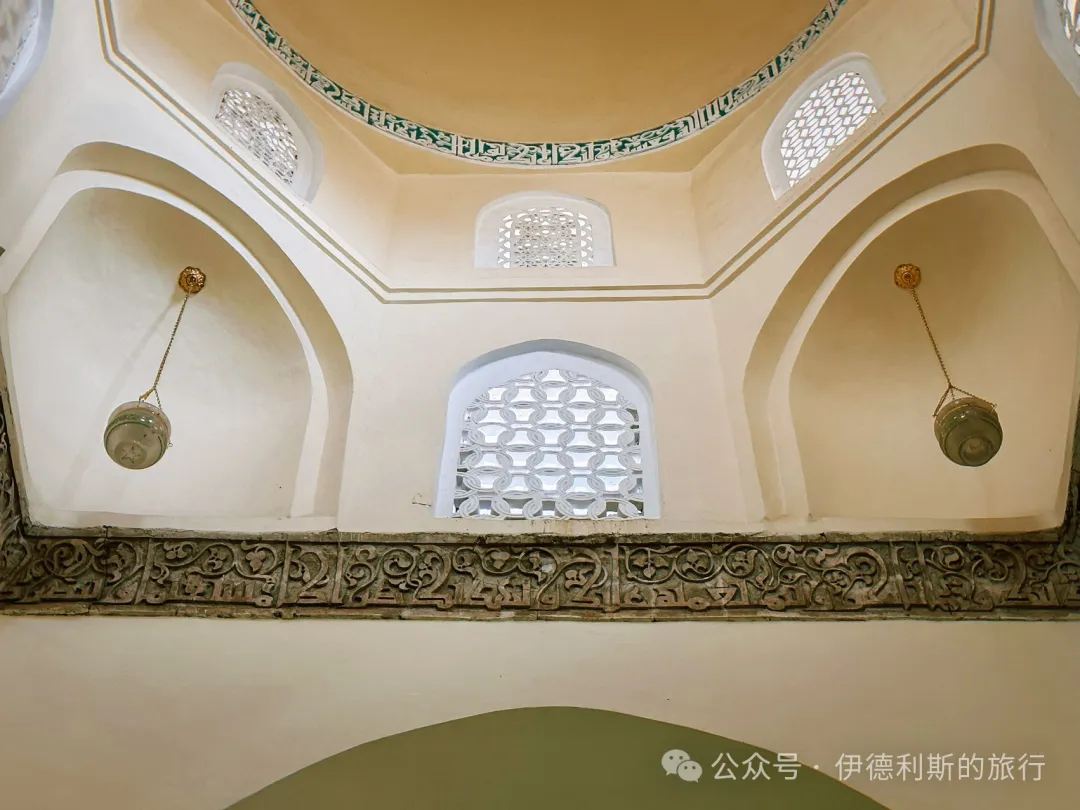
Al-Aqmar Mosque: 1125
Walking south from the Al-Hakim Mosque along Al-Mu'izz Street, the main road of Old Cairo, you can see the famous Fatimid-era Aqmar Mosque. The Aqmar Mosque was built in 1125-1126 by order of the Fatimid vizier Al-Ma'mun al-Bata'ihi. It sat at the northeast corner of the Fatimid Eastern Palace, right next to the palace grounds.
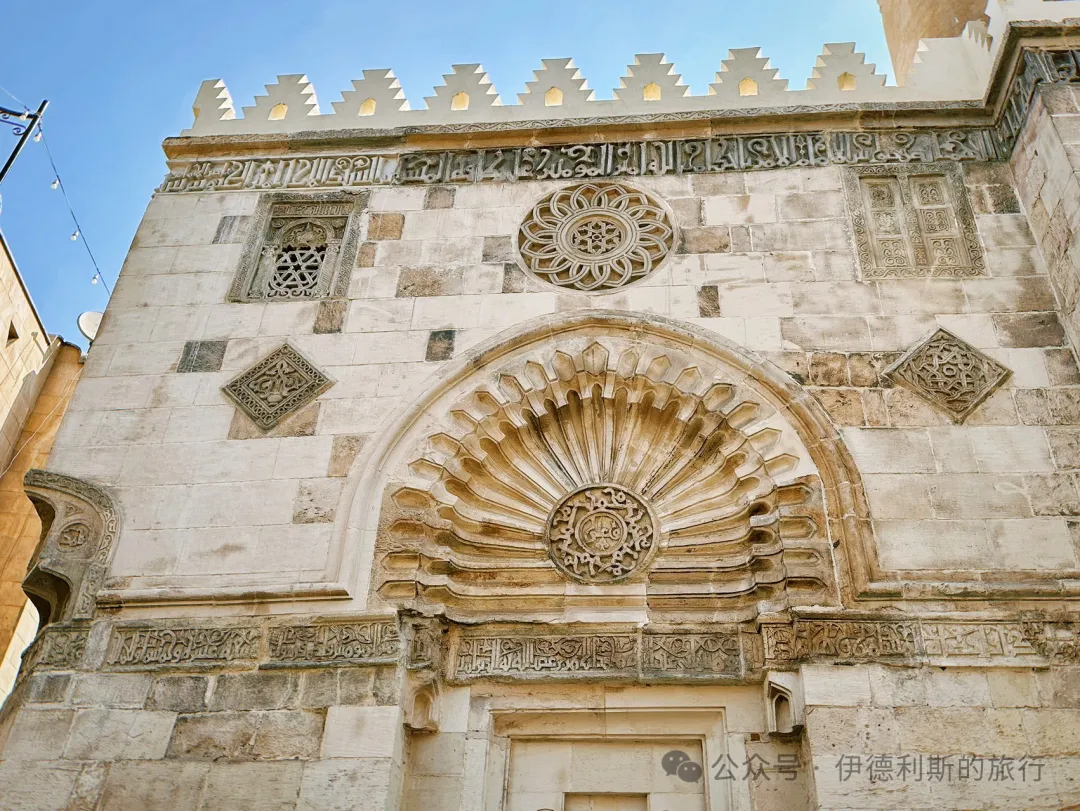
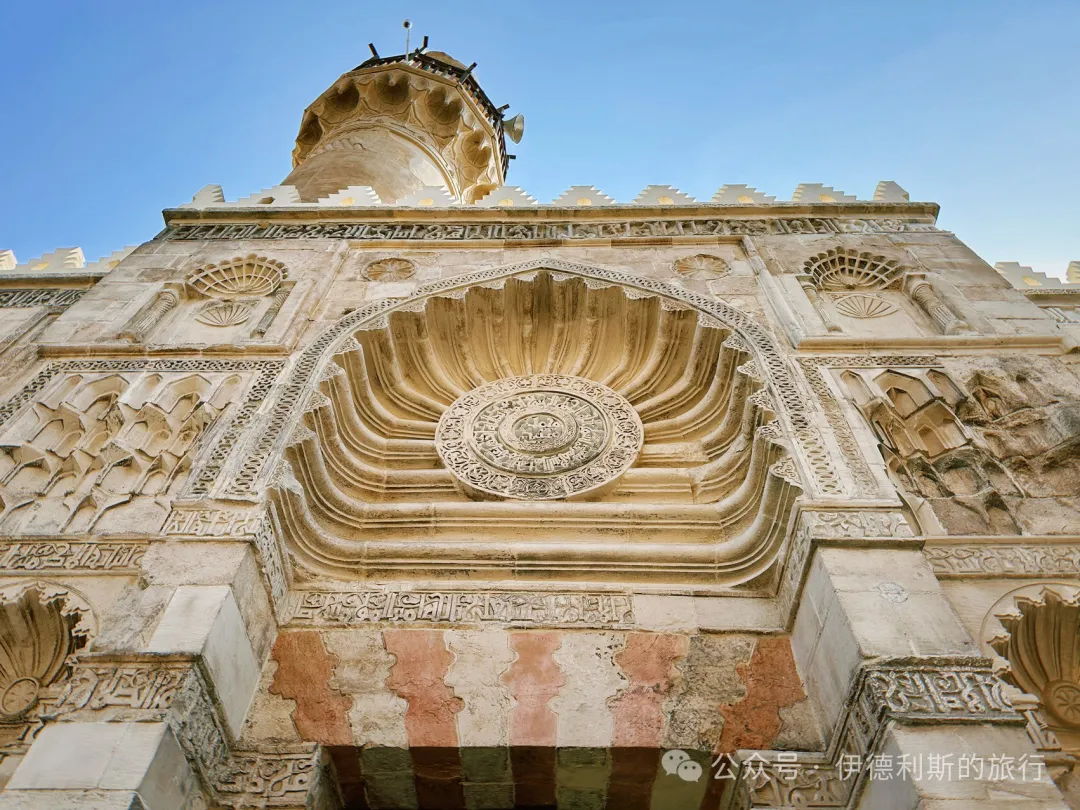
The Aqmar Mosque is a landmark in Egyptian architectural history. It was the first mosque with a main entrance aligned with the street rather than the qibla wall, meaning it was the first planned according to Cairo's street layout. It was also the first to feature complex stone carvings. The facade of the Aqmar Mosque is very luxurious. Above the entrance is a medallion surrounded by a grille, with the names of the Prophet and Ali in the center and scripture around it—a unique decoration in Cairo.
At the top of the left facade are carvings of doors and windows. The window on the left symbolizes the ceremonial grille the Fatimids took back from the palace of their rivals, the Abbasids in Baghdad, representing victory. Inside the window are a lamp and a six-pointed star, based on the Shia hadith: 'The star is a promise to the world, and it will not be submerged.' Below the window are carvings of plants growing from a flower pot, referencing the Prophet's words about Hasan and Husayn: 'My two fragrant herbs in the world.' The door in the upper right corner comes from the famous Shia hadith: 'I am the city of knowledge, and Ali is its gate.'
Because it was near the Fatimid palace, the Aqmar Mosque originally had no minaret. One was added by the Mamluk dynasty at the end of the 14th century, and the cylindrical top was rebuilt during the Ottoman period.
In 1993, the Dawoodi Bohras branch of Shia Islam carried out a large-scale renovation of the Aqmar Mosque. Most of the historical elements inside the main hall were not preserved, which led to criticism.
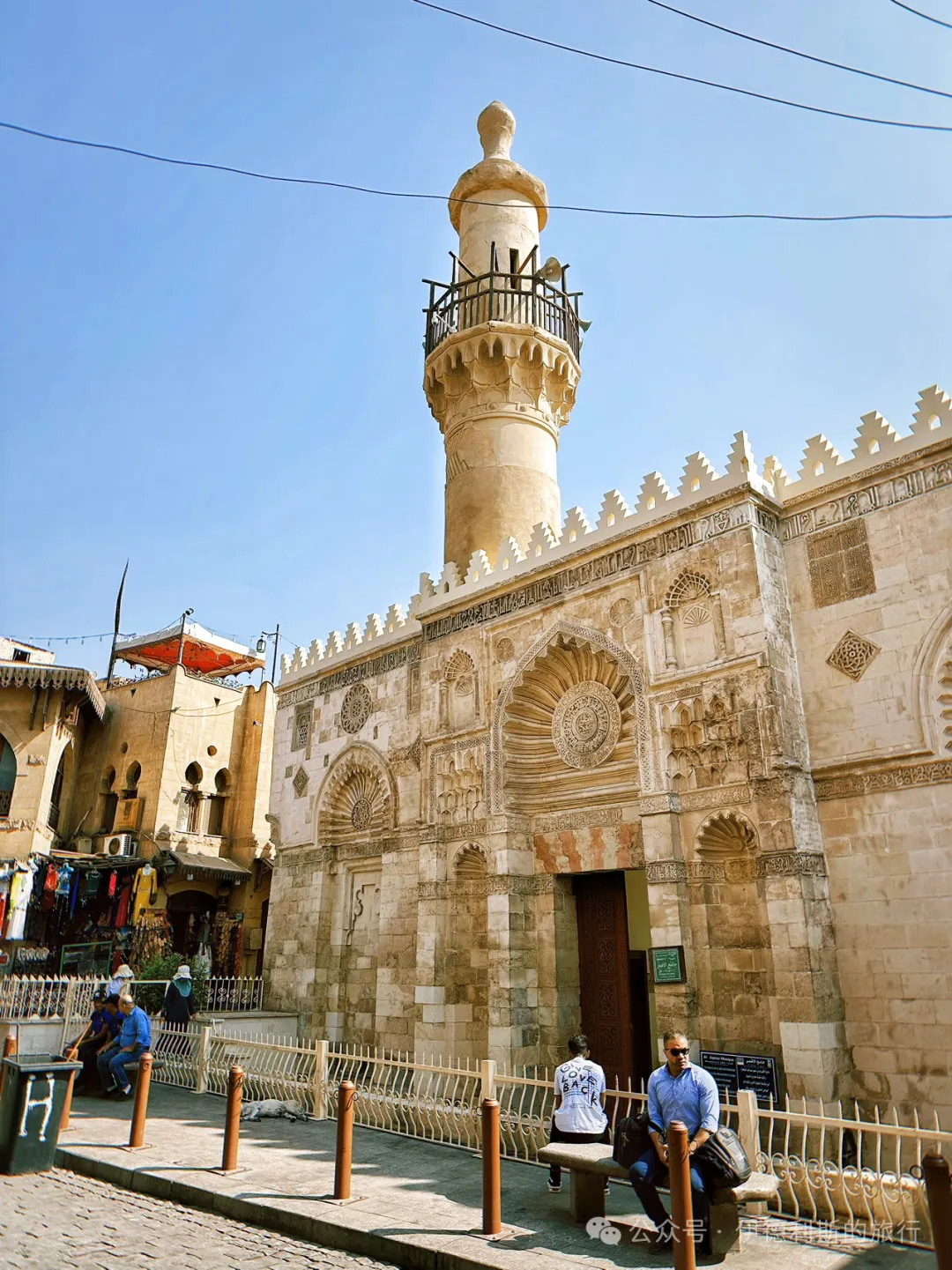
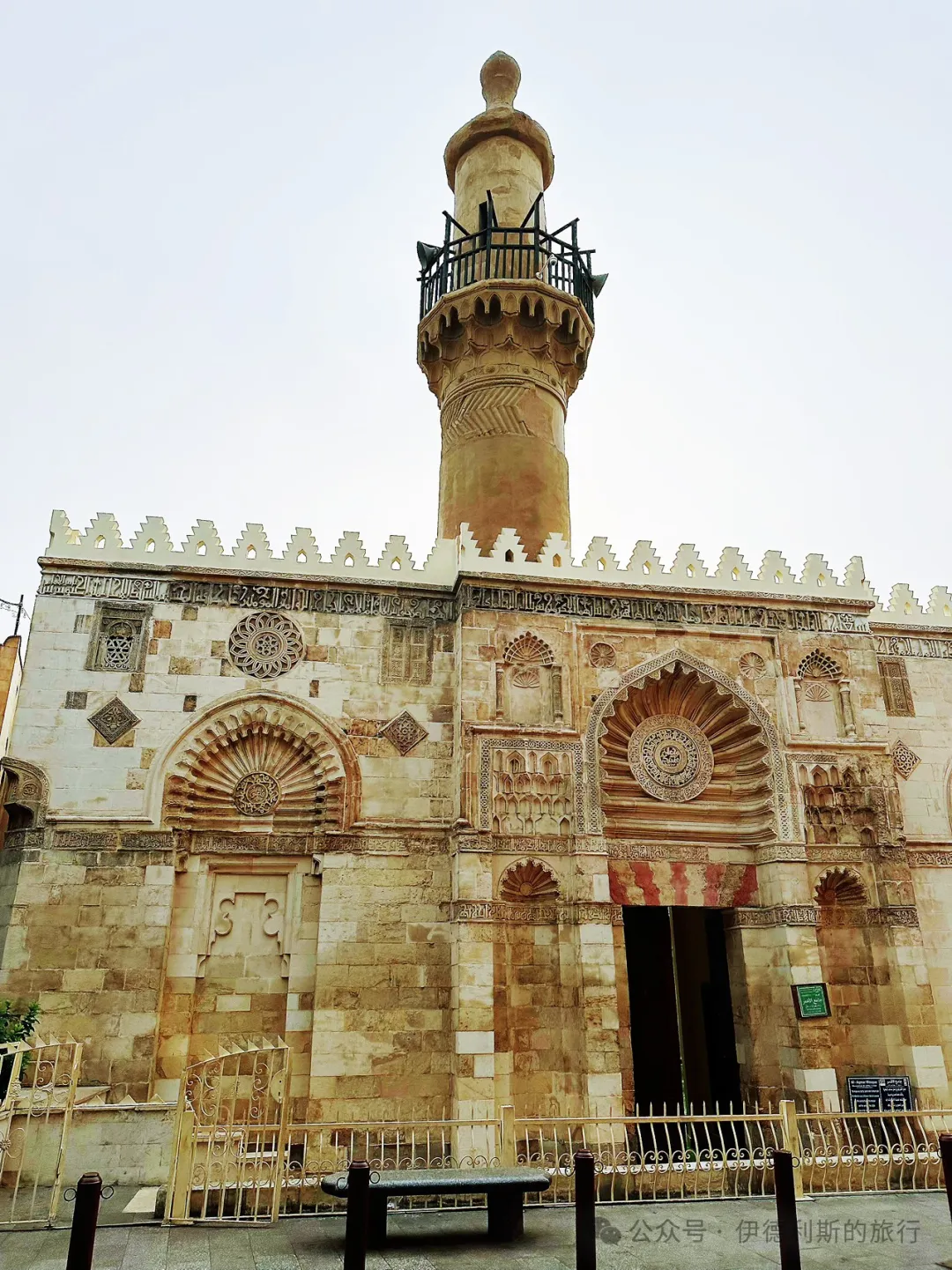
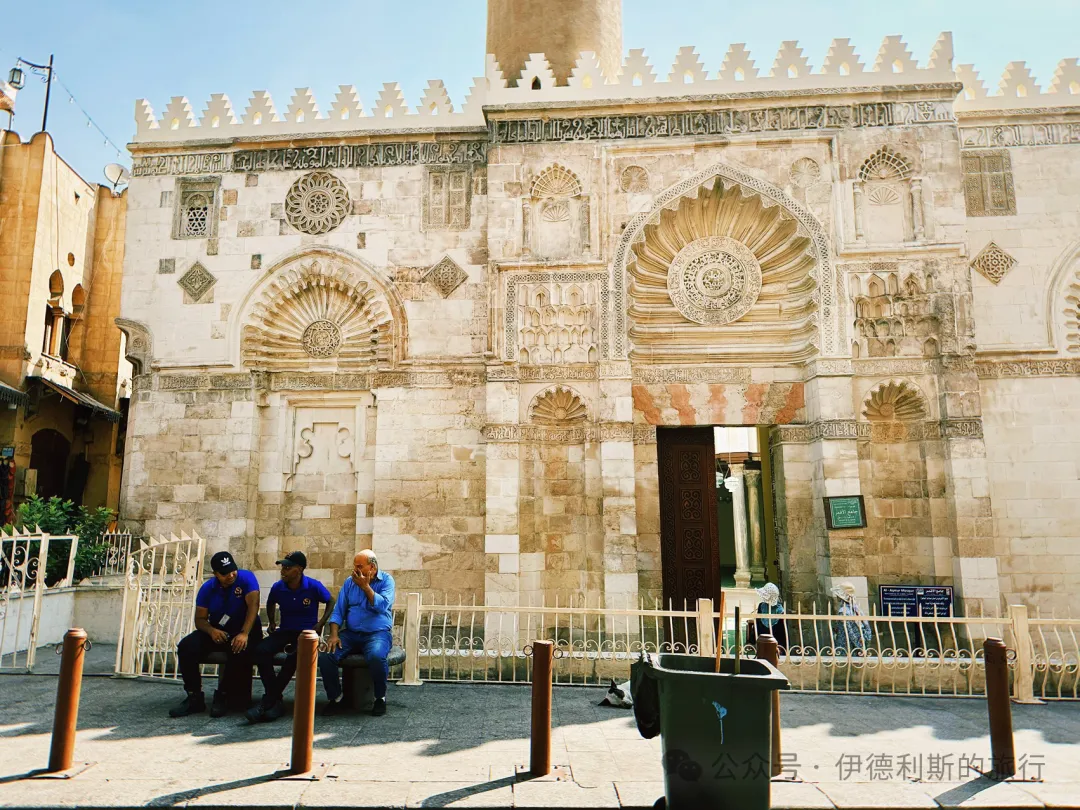
Al-Ashraf Mosque: 1424
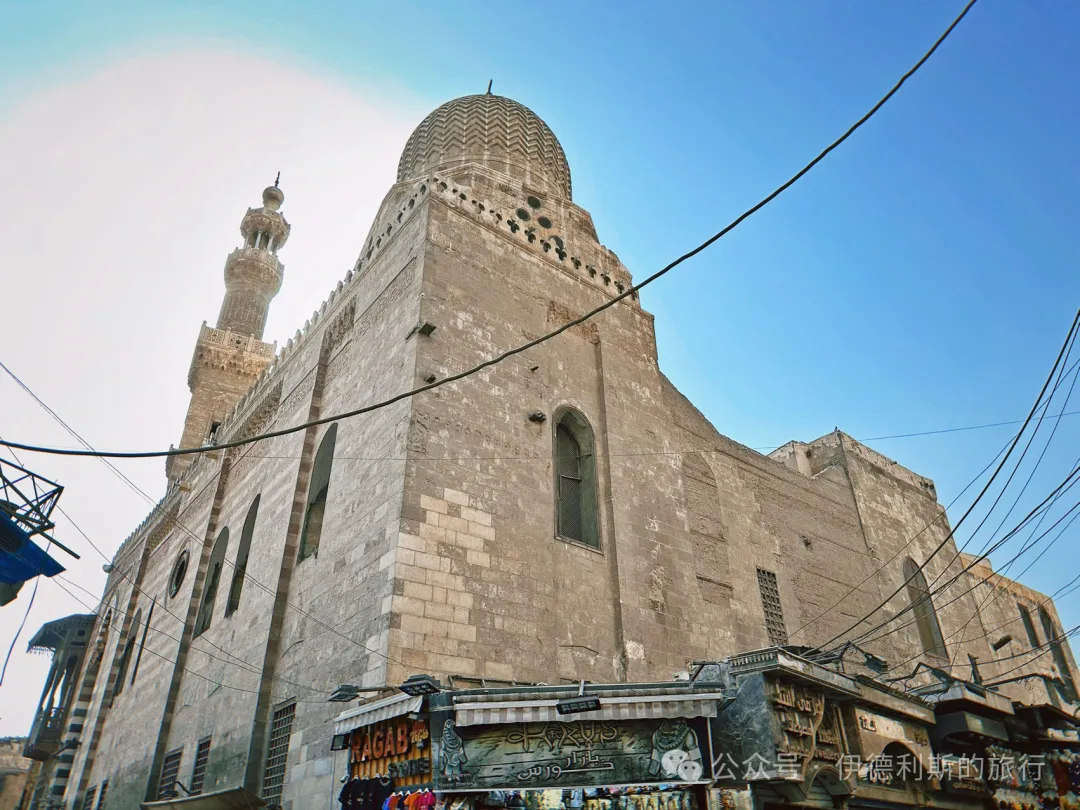
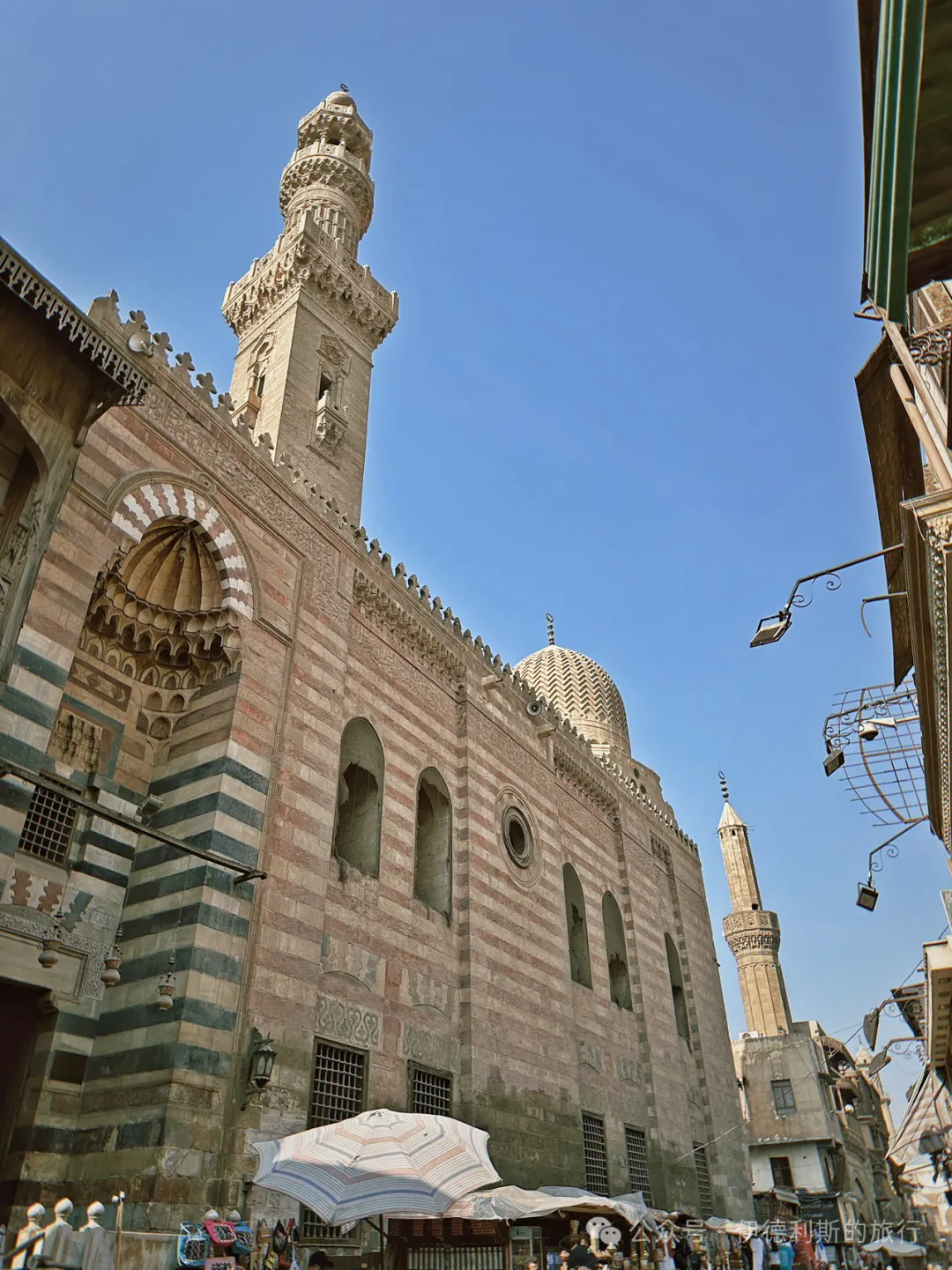
The Ashraf Mosque (Al-Ashraf Mosque) was built in 1424 by the Mamluk Sultan Al-Ashraf Barsbay, who reigned from 1422 to 1438. The complex includes a main prayer hall, a school, a tomb, and a Sufi lodge (khanqah). It features a dome with geometric carvings, which is an early example of decorative dome carving.
Barsbay was once a Mamluk slave of Sultan Barquq and later served as a tutor to the young Sultan Muhammad. With support from the governor of Damascus and other emirs, Barsbay deposed the young sultan in 1422 and took the throne himself.
Barsbay’s 16-year reign was a time of relative safety and stability for the Mamluk Sultanate, with almost no wars. He was very generous to the poor and to Sufis, and he carried out a series of administrative reforms.
People called Barsbay the Merchant Sultan because he placed great importance on trade. He took steps to strengthen control over the Mediterranean and Red Seas, diverted Indian Ocean trade routes through Jeddah, and created state monopolies on sugar and pepper. He lowered tariffs to attract merchants and monopolized most of the trade from the East, which angered many European powers.
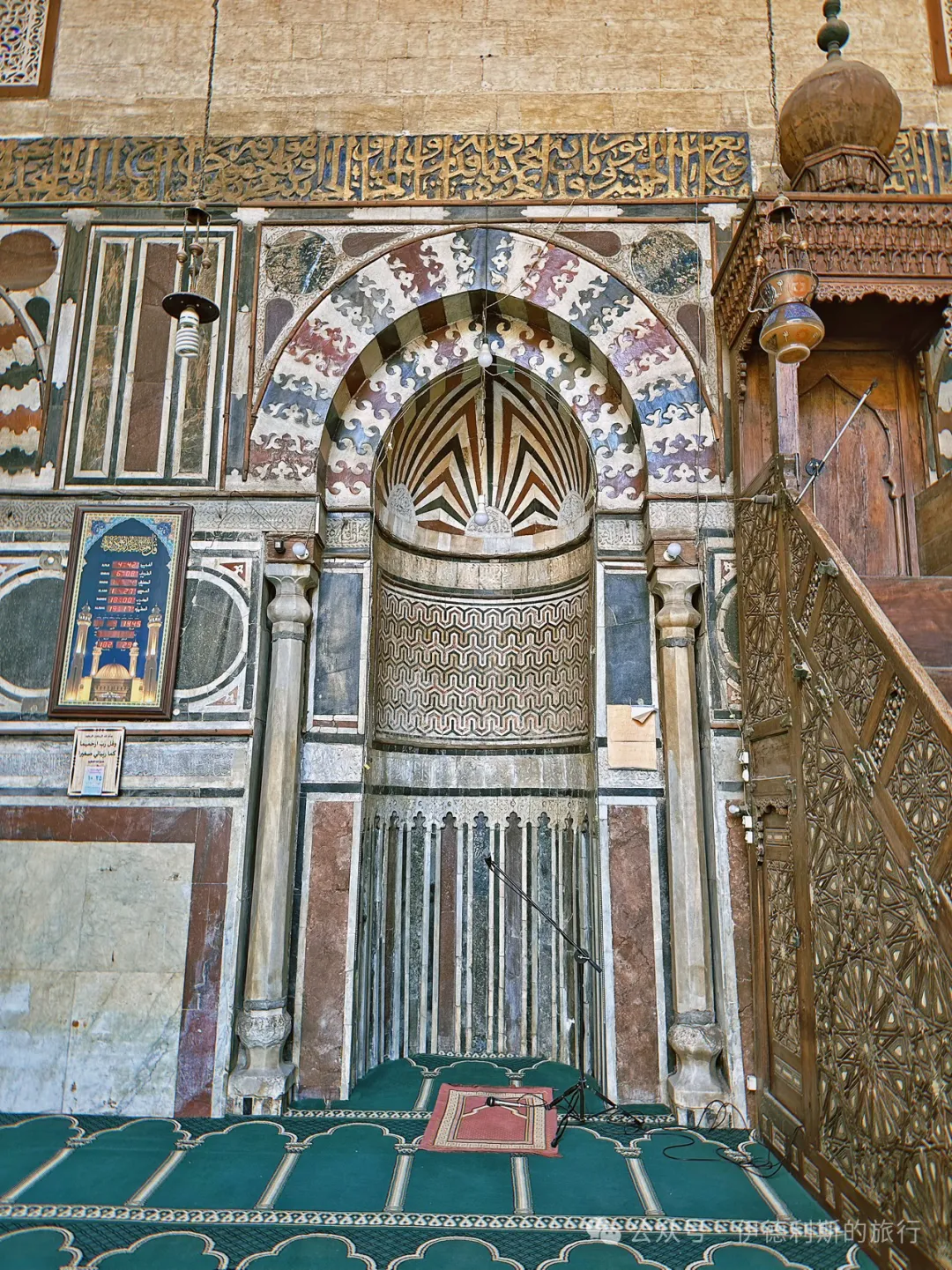
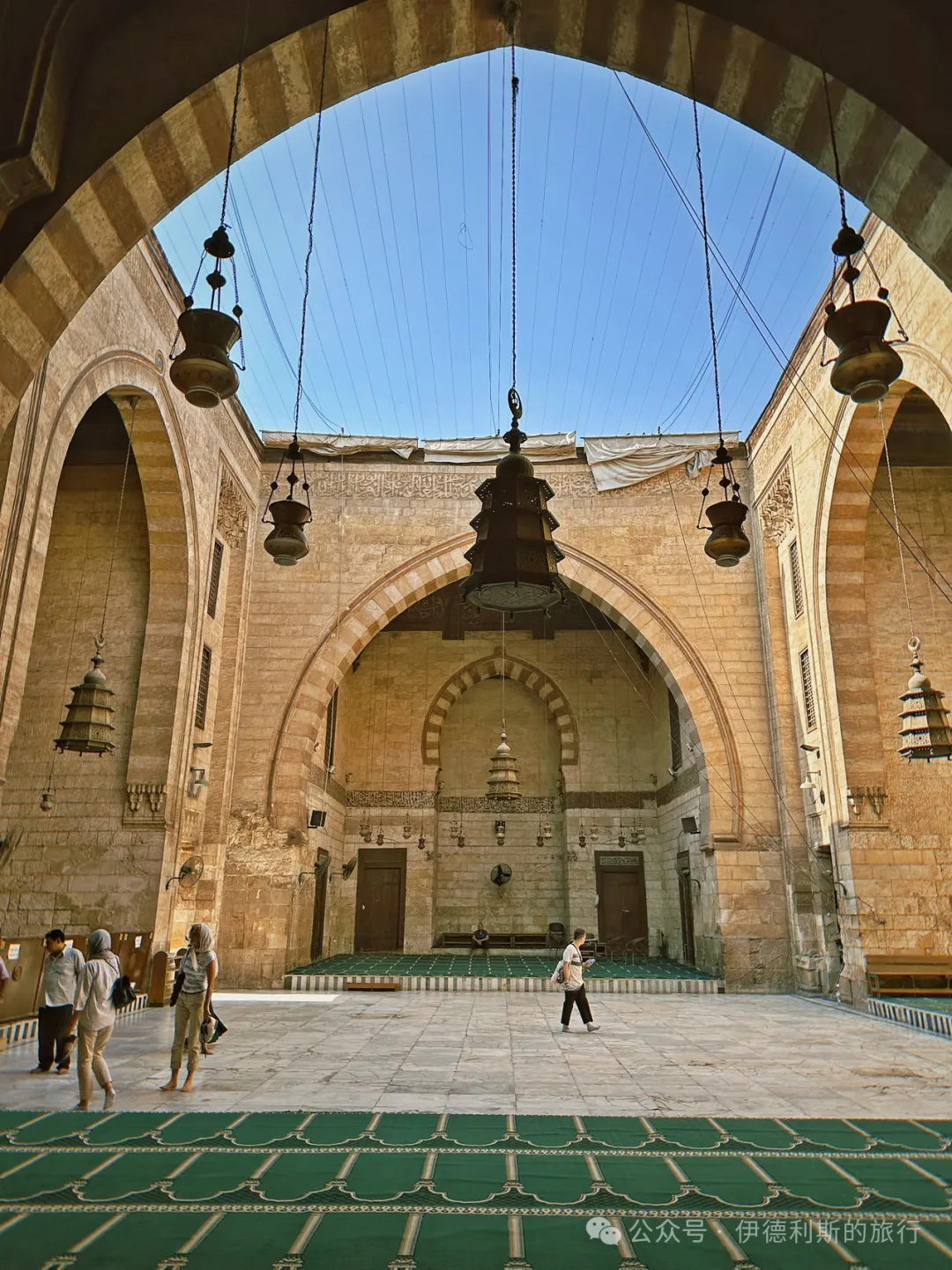
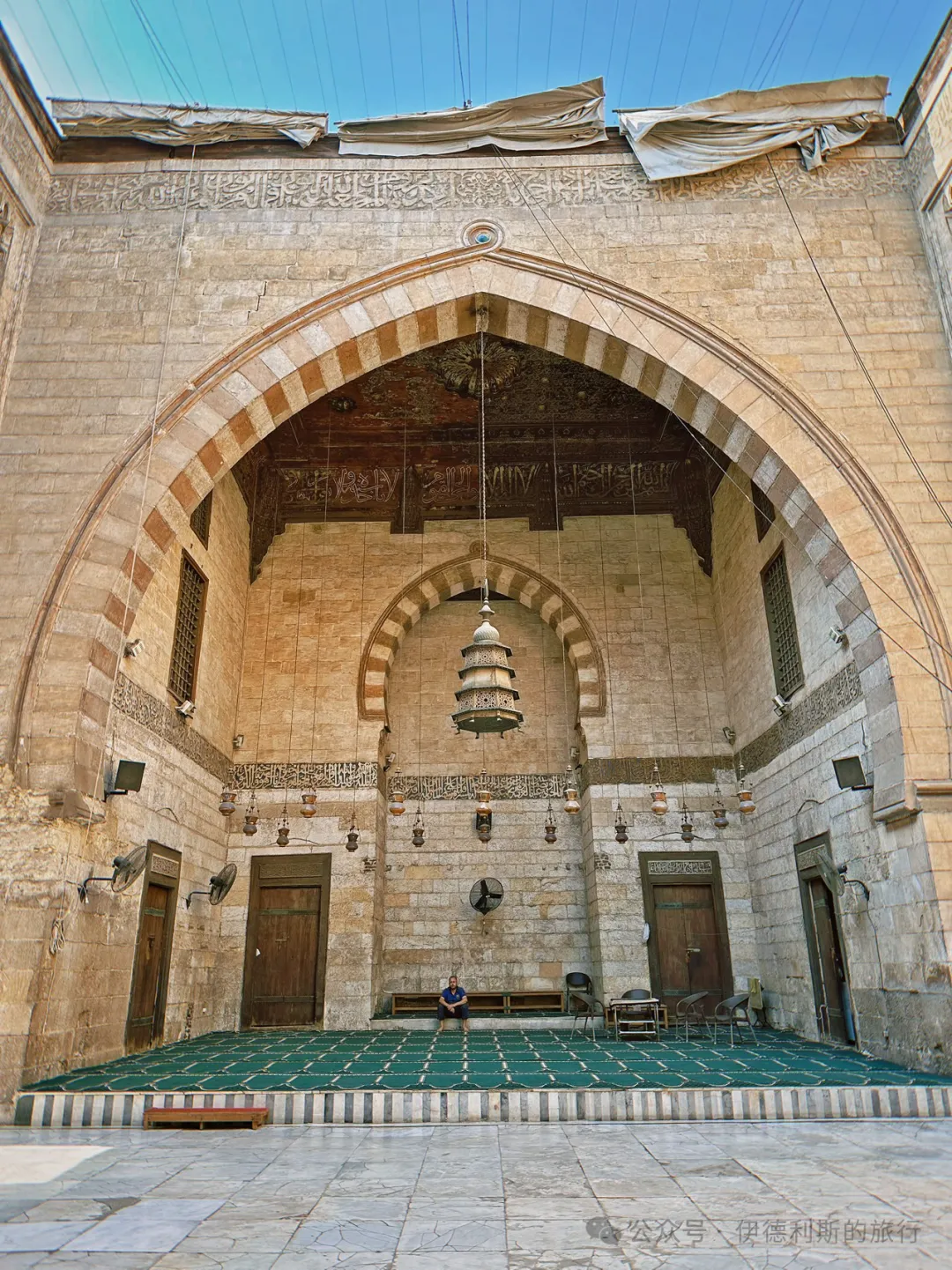
Al-Azhar Mosque: 972
In 969 AD, the Shia Ismaili Fatimid dynasty conquered Egypt and began building their new capital, Cairo. At that time, the densely populated Sunni city of Fustat already existed south of Cairo, so the new city became the center for the Shia Ismaili faith.
After two years of construction, the first Friday mosque (Jami) in Cairo opened in 972 and was named the Cairo Mosque (Jami al-Qahira) after the city. The Cairo Mosque was later renamed the Al-Azhar Mosque (al-Jami al-Azhar), with Al-Azhar meaning the Radiant.
After the Al-Azhar Mosque opened, the Ismailis moved from secret to public preaching. The mosque's first chief judge, Qadi al-Numan, became the founder of Ismaili law and the author of the authoritative Ismaili text, The Pillars of Islam (Kitab da'a'im al-Islam).
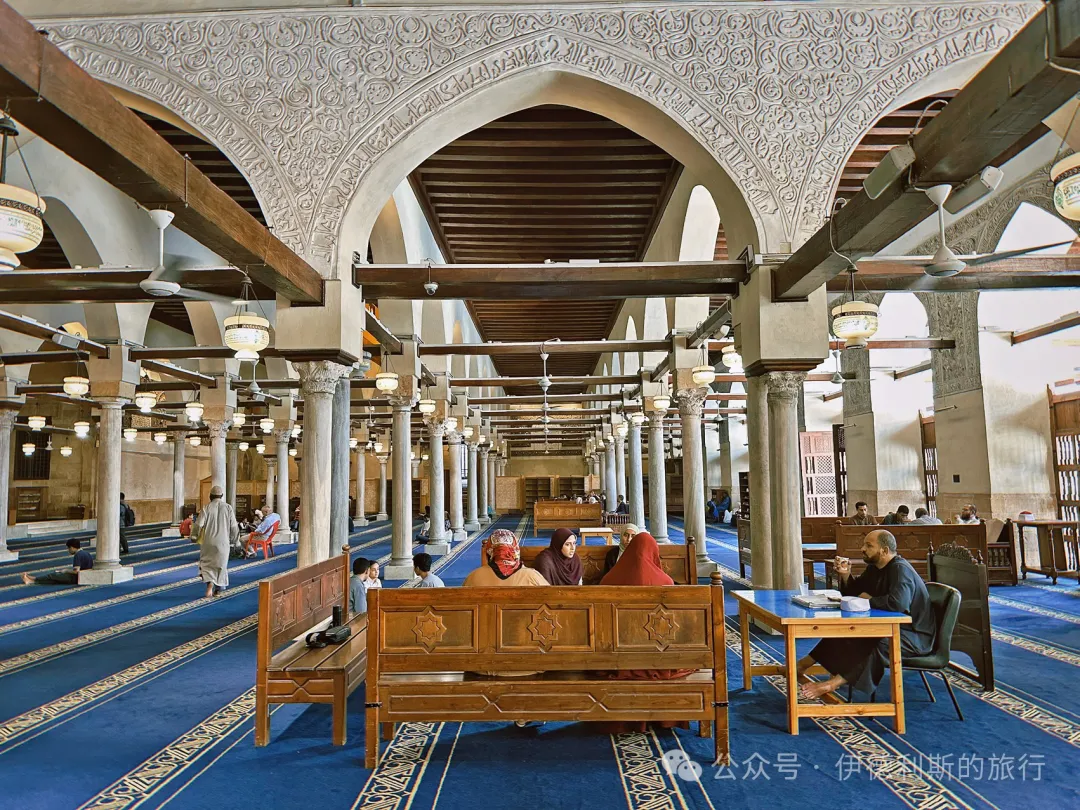
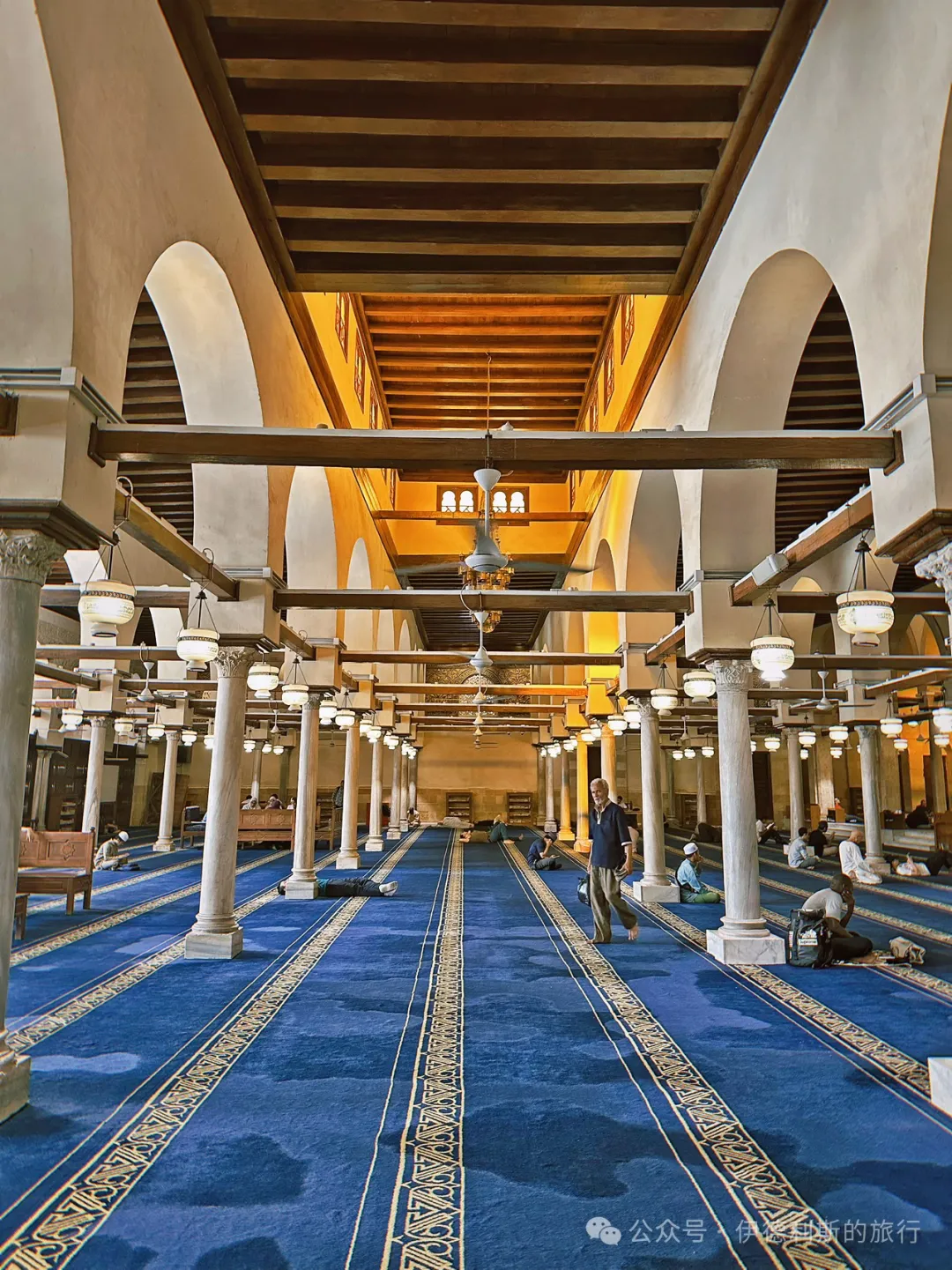
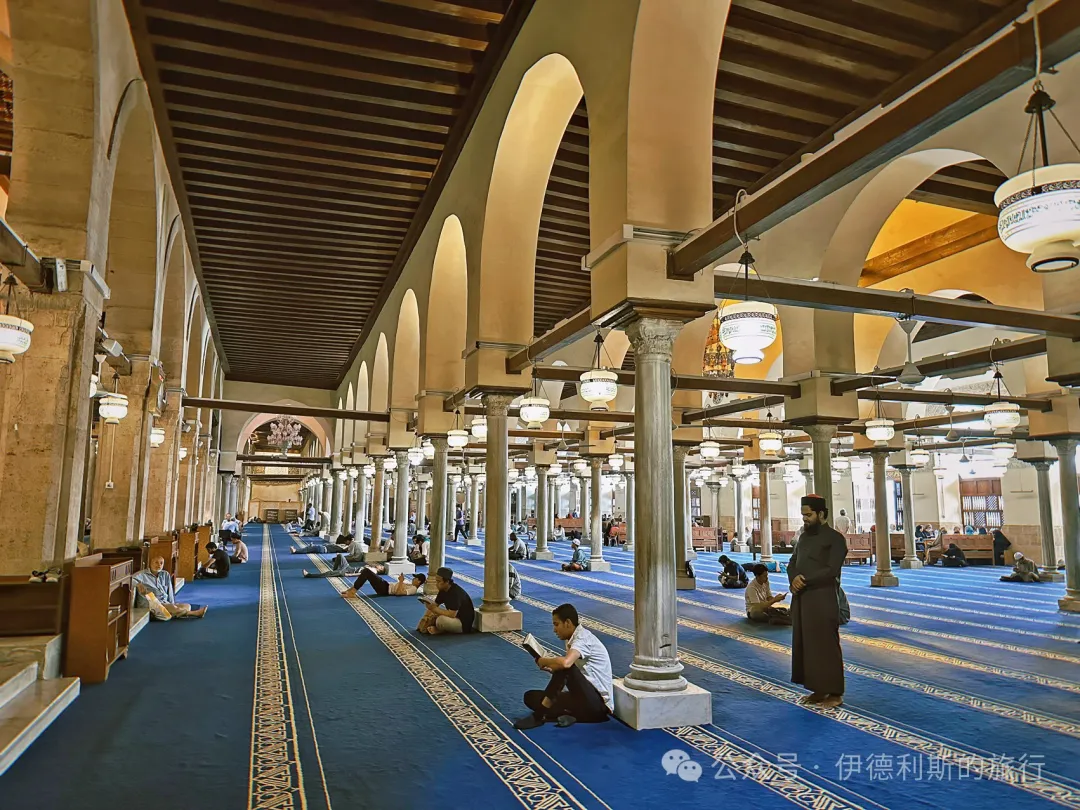
The main hall of the Al-Azhar Mosque is a columned hall. The marble columns in the four rows of arcades came from ruins of the Pharaohs, ancient Rome, and the Copts, and they were leveled using bases of different heights.
The roof of the main hall originally had three domes, but none survived later renovations. The original mihrab was rediscovered in 1933, and the niche still preserves ornate stucco carvings from the Fatimid period.
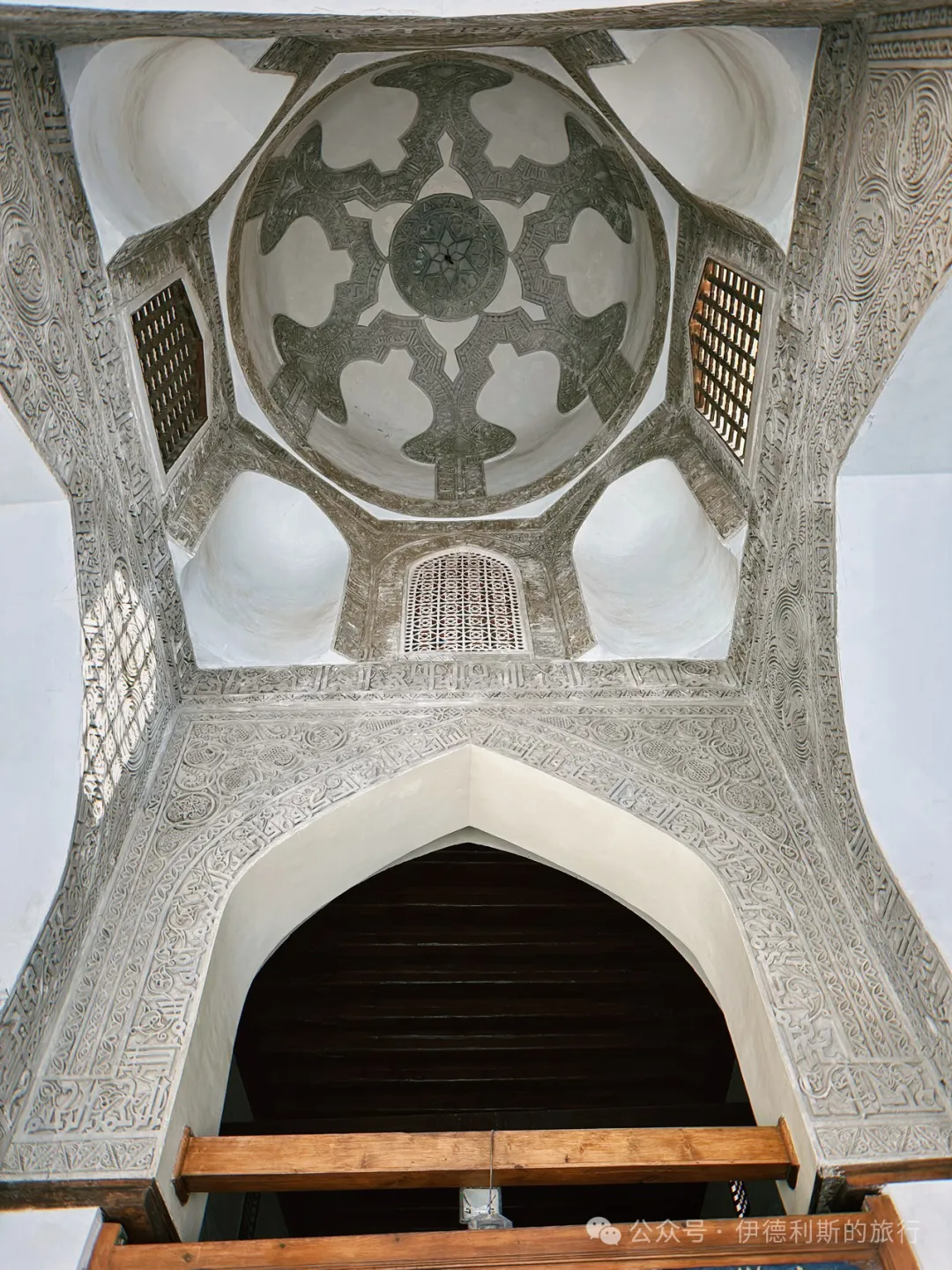
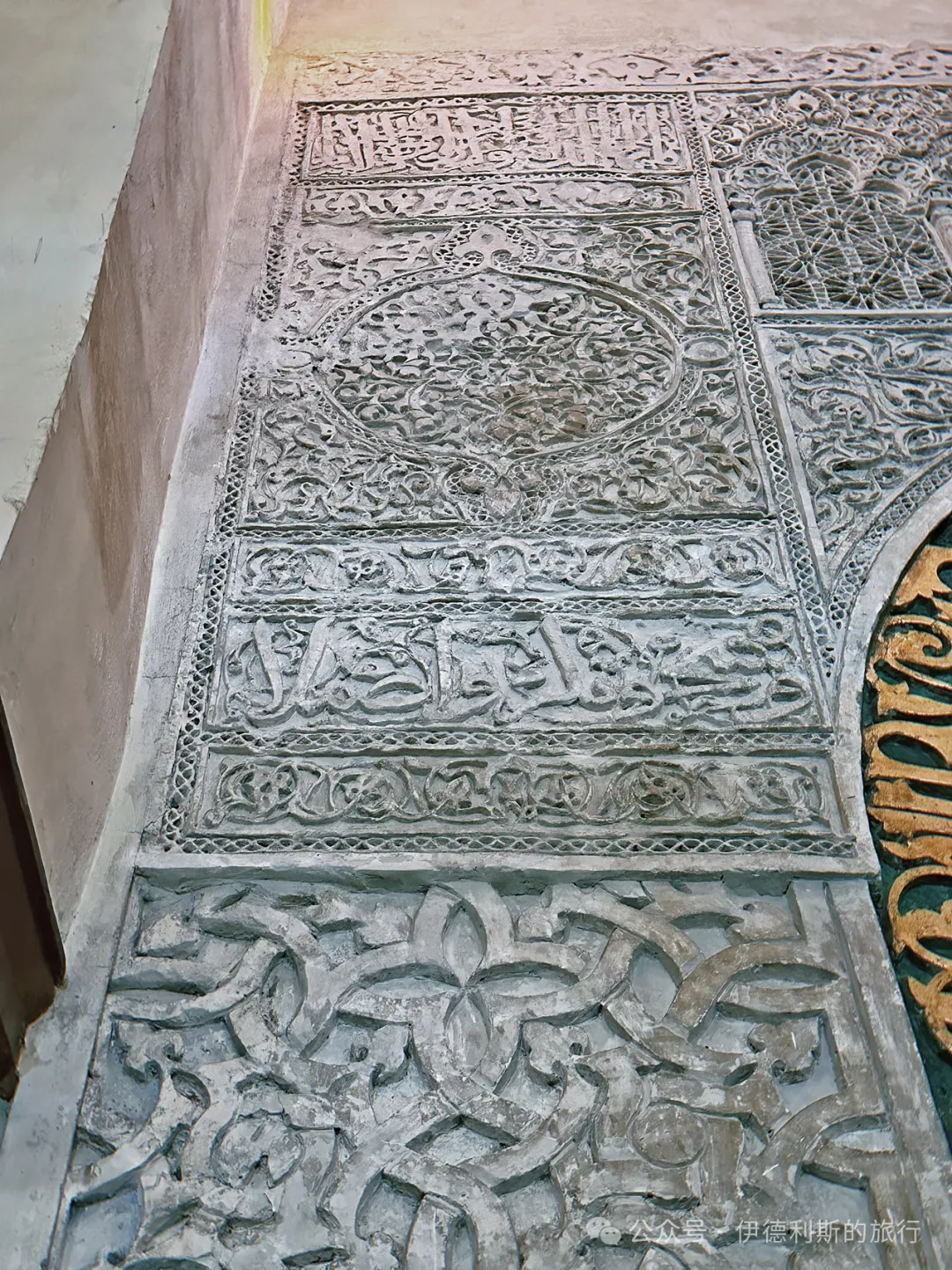
Several Fatimid caliphs expanded and renovated the Al-Azhar Mosque. Caliph al-Hafiz, who reigned from 1132 to 1149, carried out a major renovation in 1138. The four-centered arches in the courtyard and the dome at the entrance to the main hall date from this time. The stucco carvings in the courtyard also come from this period, though they were renovated again in 1891.
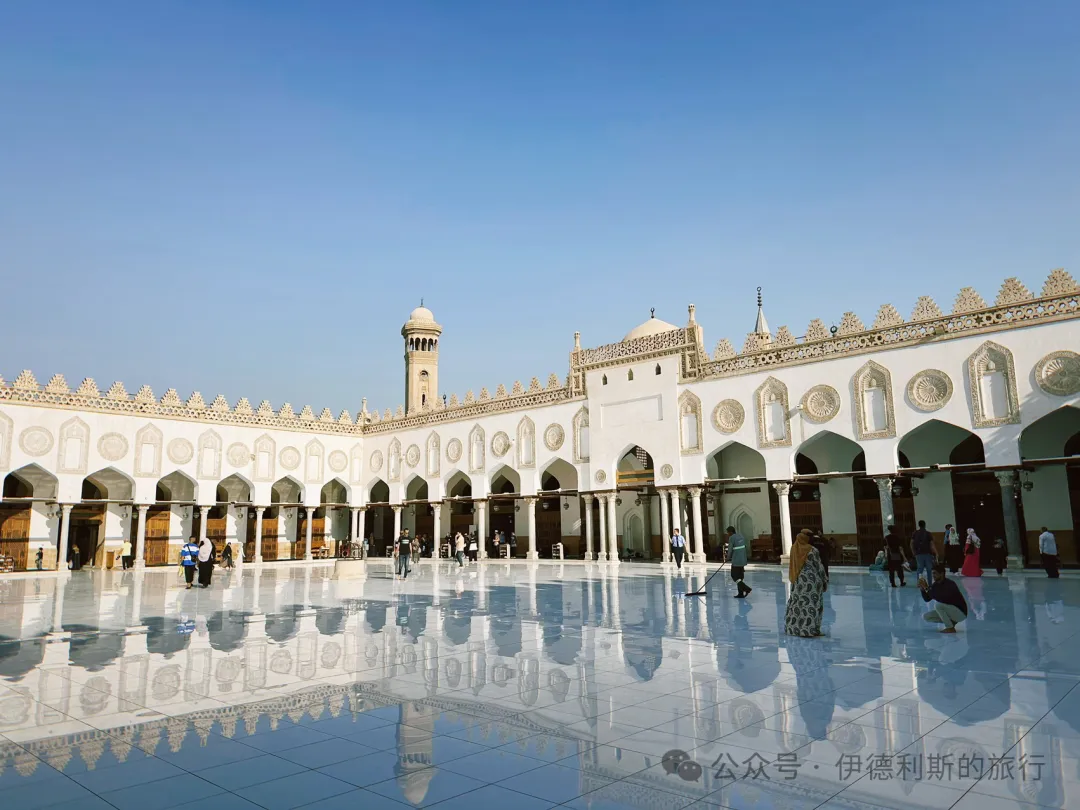
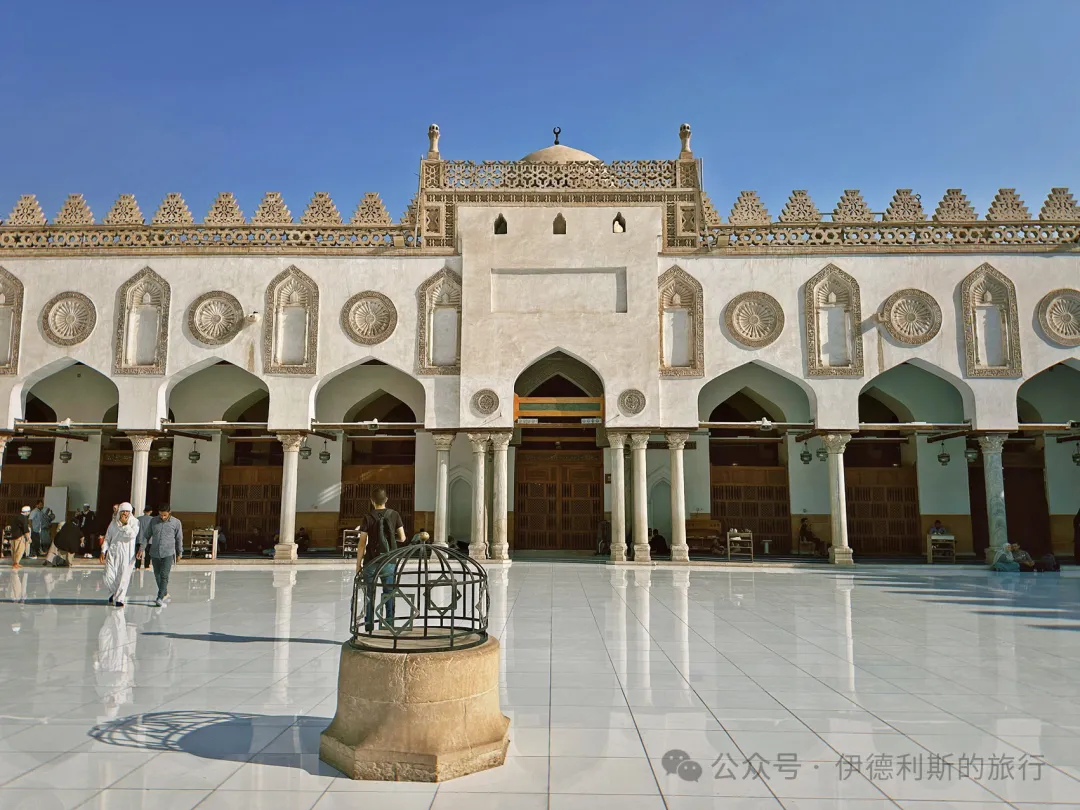
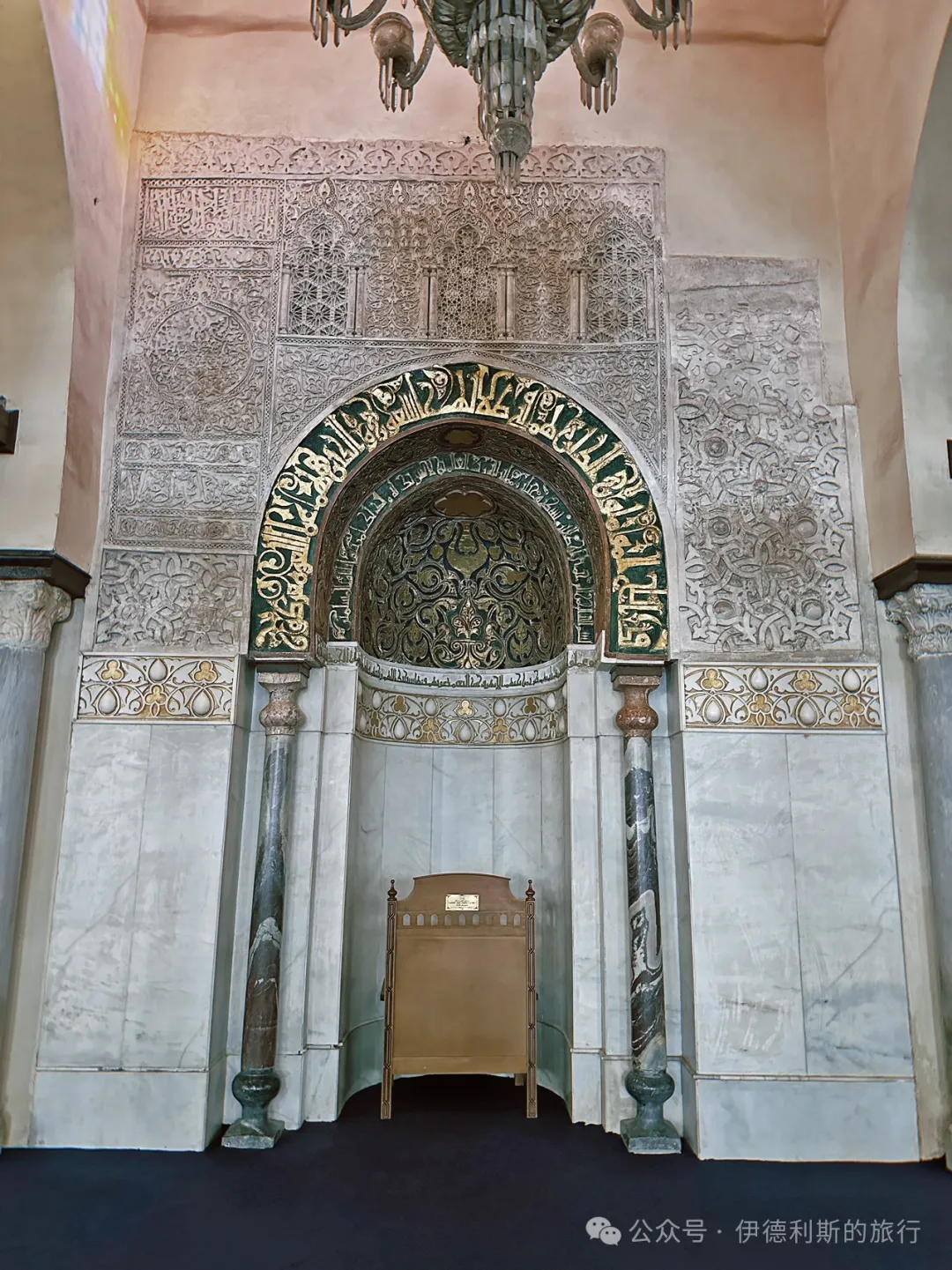
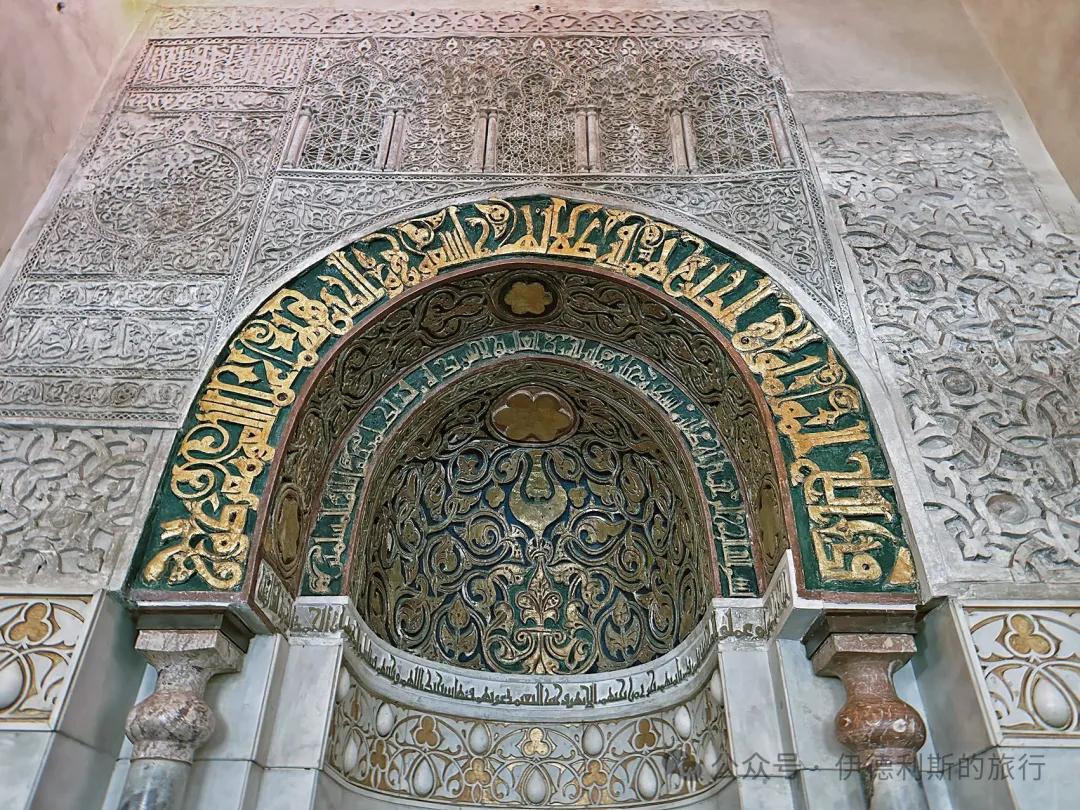
In 1171, Saladin overthrew the Fatimid dynasty and established the Sunni Ayyubid dynasty. The Friday prayers for Cairo moved to the Hakim Mosque in the north of the city, and the Al-Azhar Mosque was neglected because it had been the center of the Ismaili faith. Saladin removed the silver bands from the mihrab niche of the Al-Azhar Mosque that bore the names of the Fatimid caliphs and destroyed all the Ismaili manuscripts kept in the mosque.
It was not until 1266 that the Mamluk Sultan Baybars, who reigned from 1260 to 1277, restored Friday prayers at the Al-Azhar Mosque and repaired the building. The Ayyubid dynasty followed the Shafi'i school of law, which held that a community should have only one main Friday mosque. The Mamluk dynasty followed the Hanafi school, which did not have this rule.
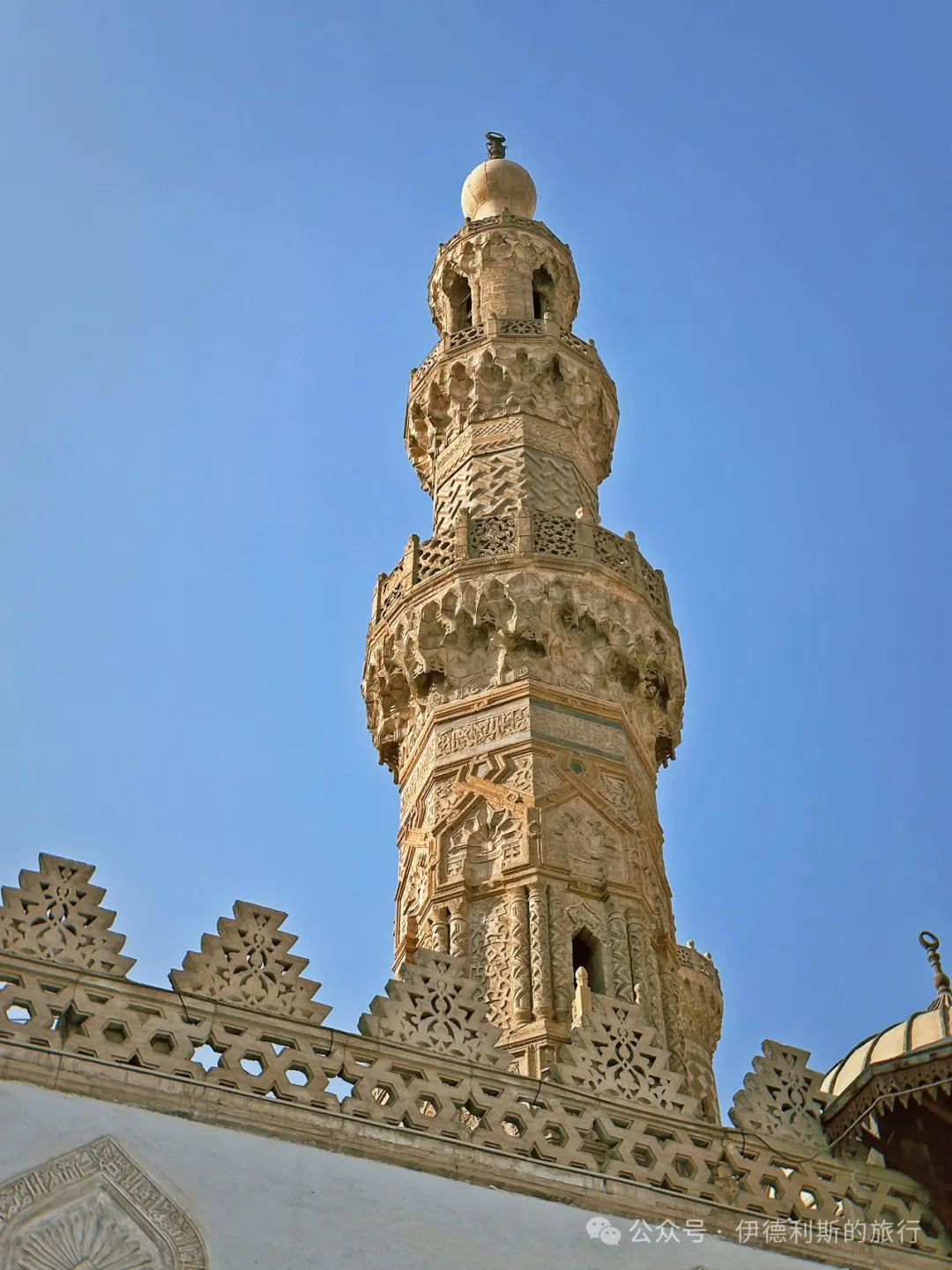
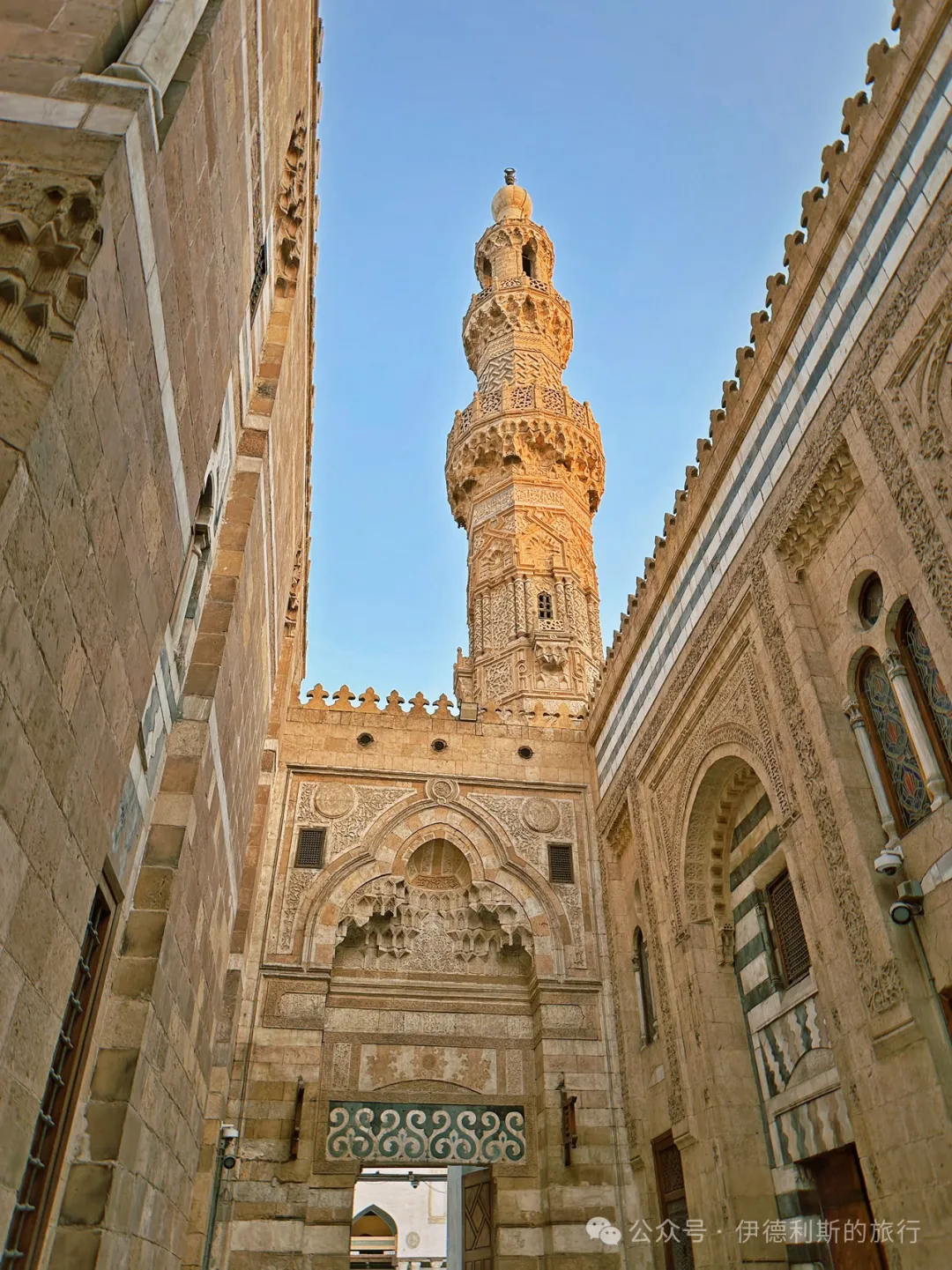
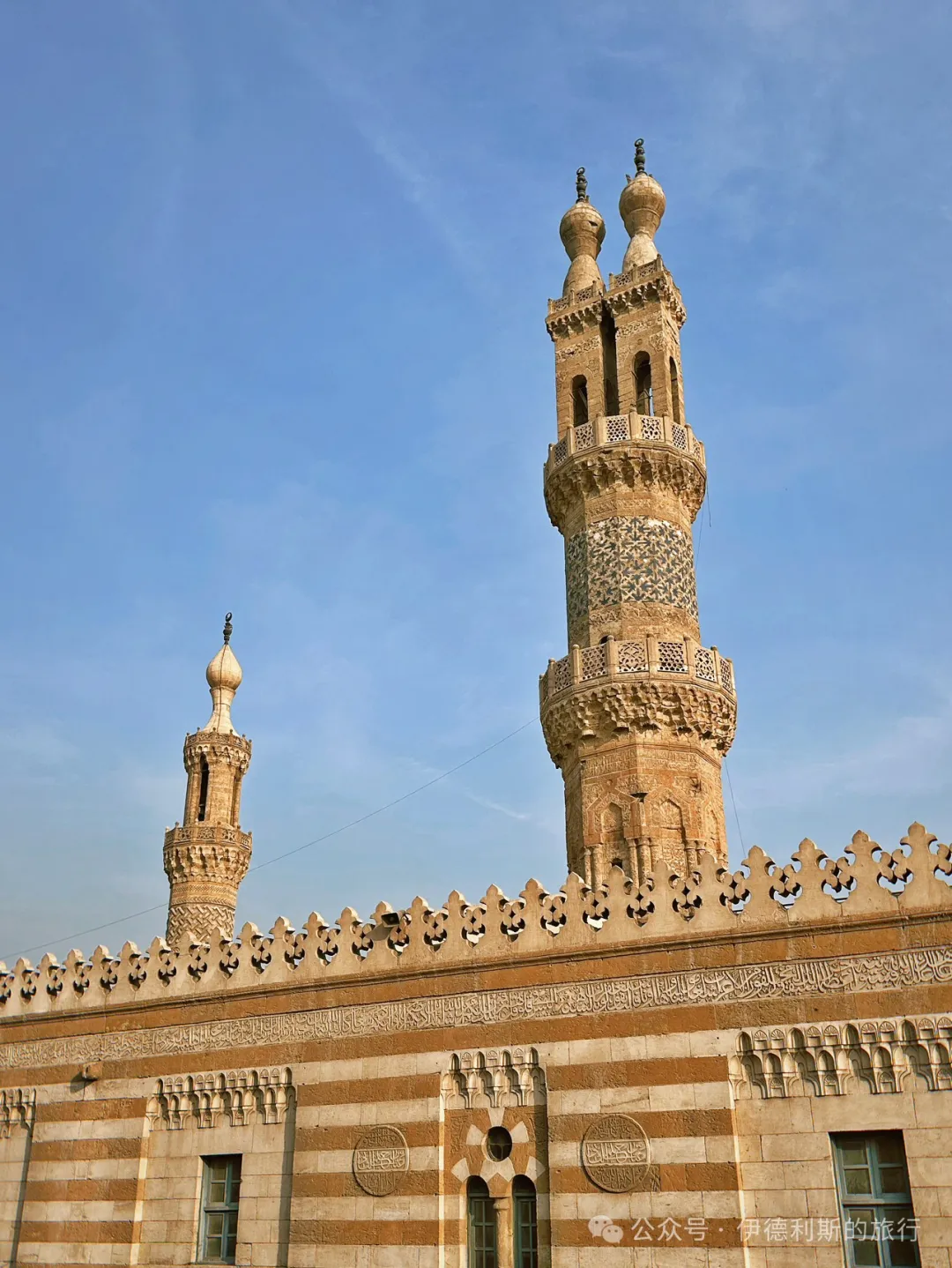
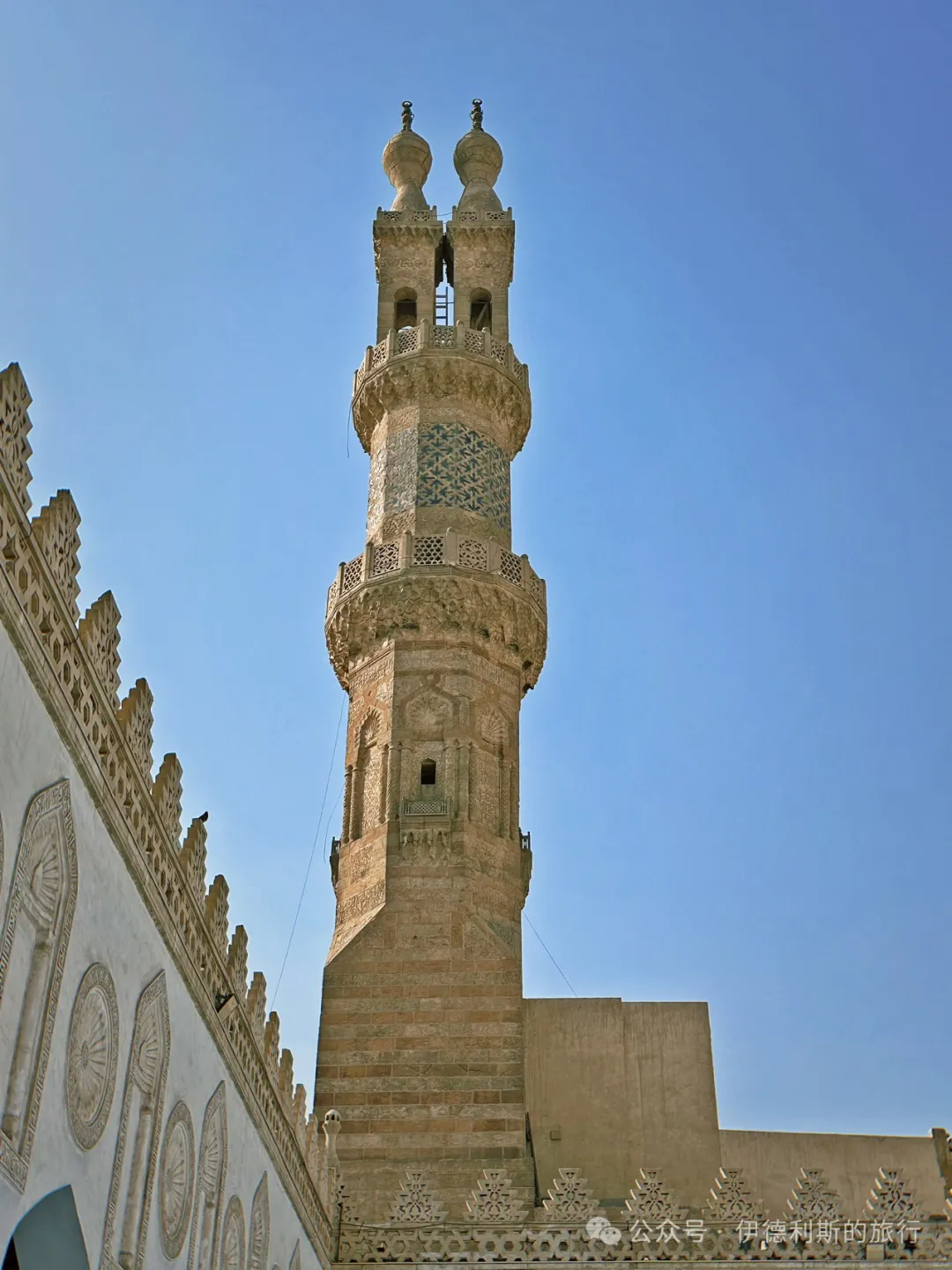
The Mamluk dynasty left two grand minarets at Al-Azhar Mosque: the Qaytbay minaret and the twin minarets of Al-Ghuri, along with the Qaytbay Gate. The Qaytbay minaret was built in 1483 or 1495 and features three balconies decorated with ornate carvings. The Qaytbay Gate was built in 1495 and leads directly into the courtyard. Both are exquisite examples of late Mamluk architecture. During the reign of Sultan Qaytbay (1468-96), the Mamluk dynasty was politically and economically stable and won several military victories against the Ottoman Empire. The Sultan was very interested in art and architecture and sponsored as many as 230 buildings.
In 1509, the Mamluk Sultan Al-Ashraf Qansuh al-Ghuri (reigned 1501-16) built the twin minarets of Al-Ghuri. Al-Ghuri was the last powerful ruler of the Mamluk dynasty. He was eventually defeated by the Ottoman Empire and fell on the battlefield in Syria.
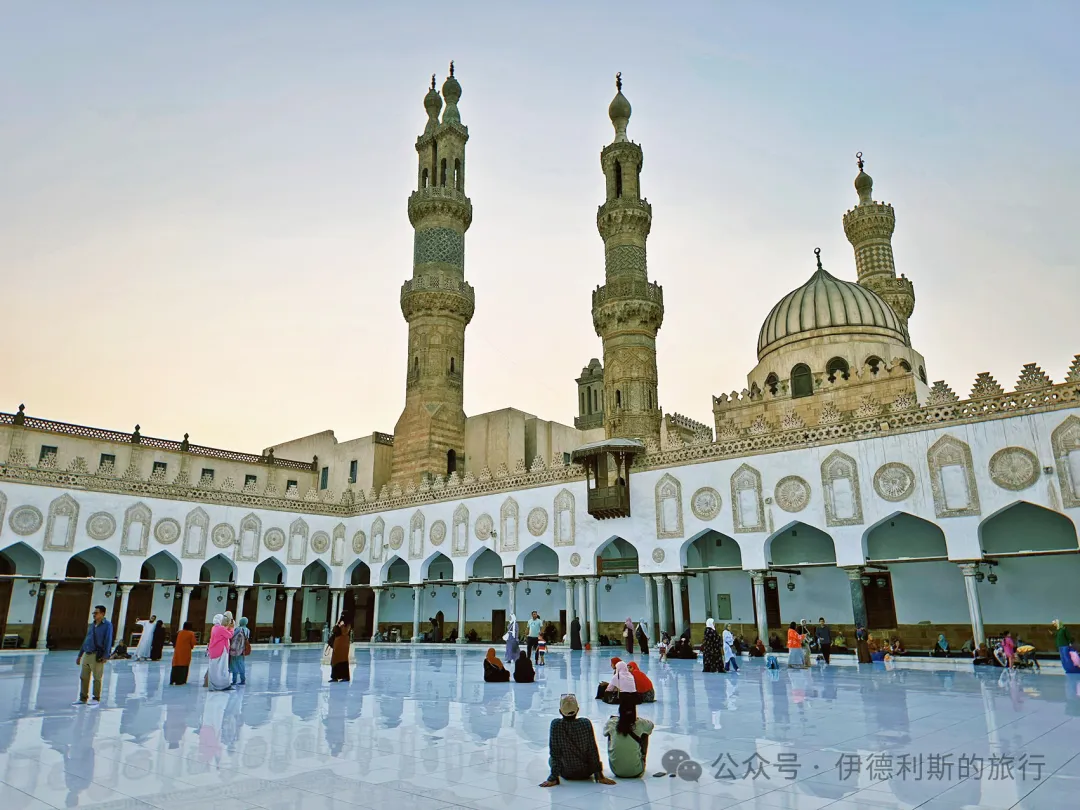
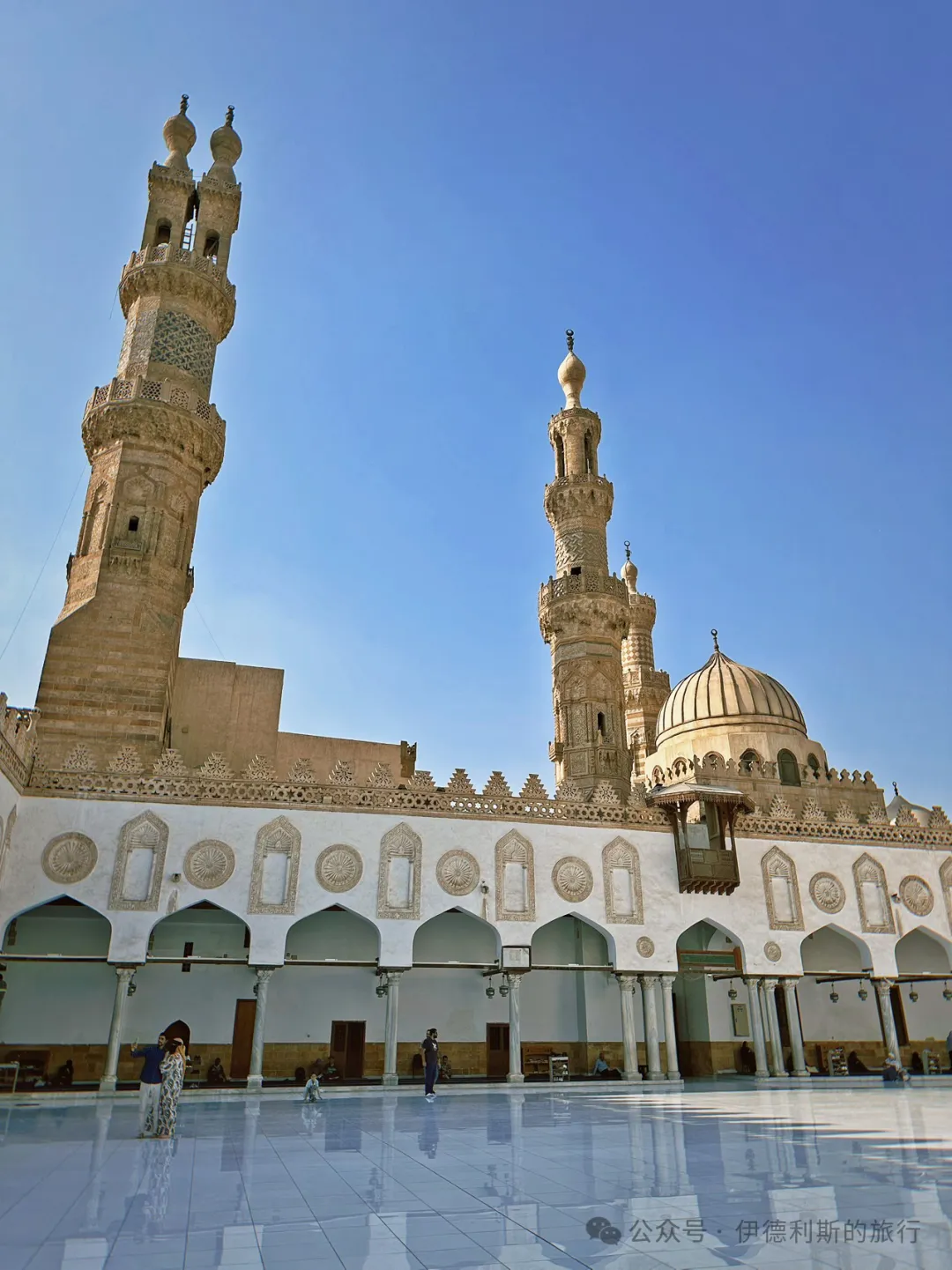
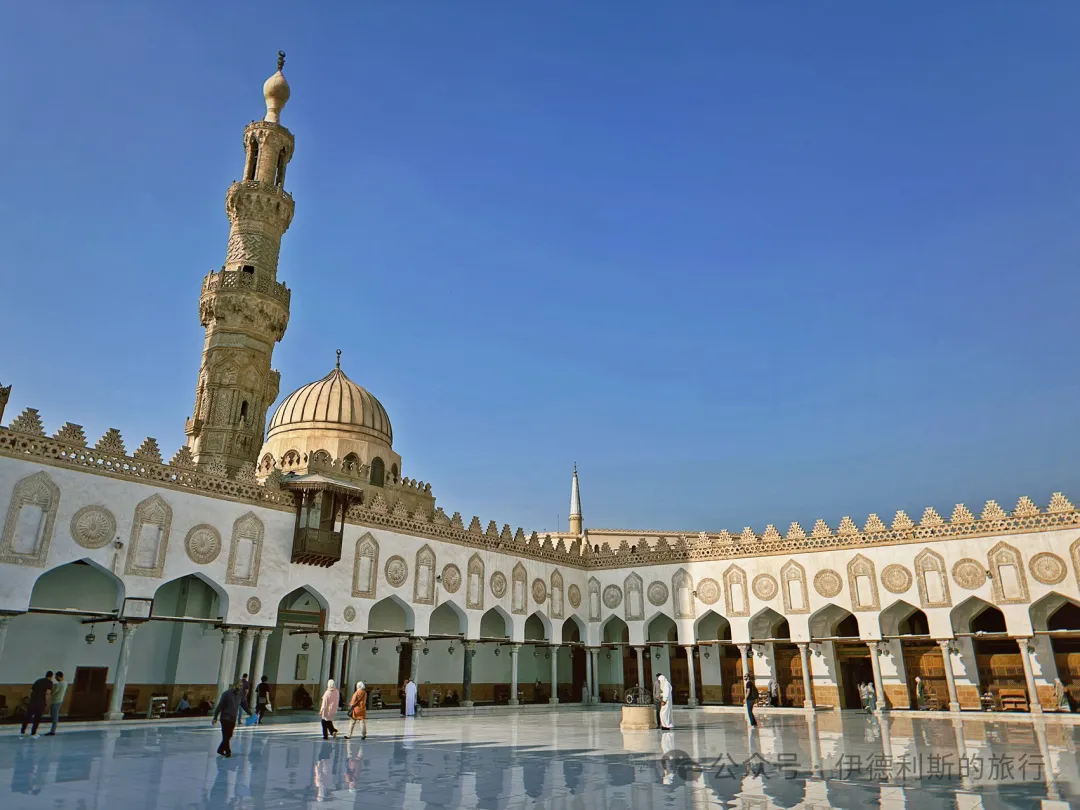
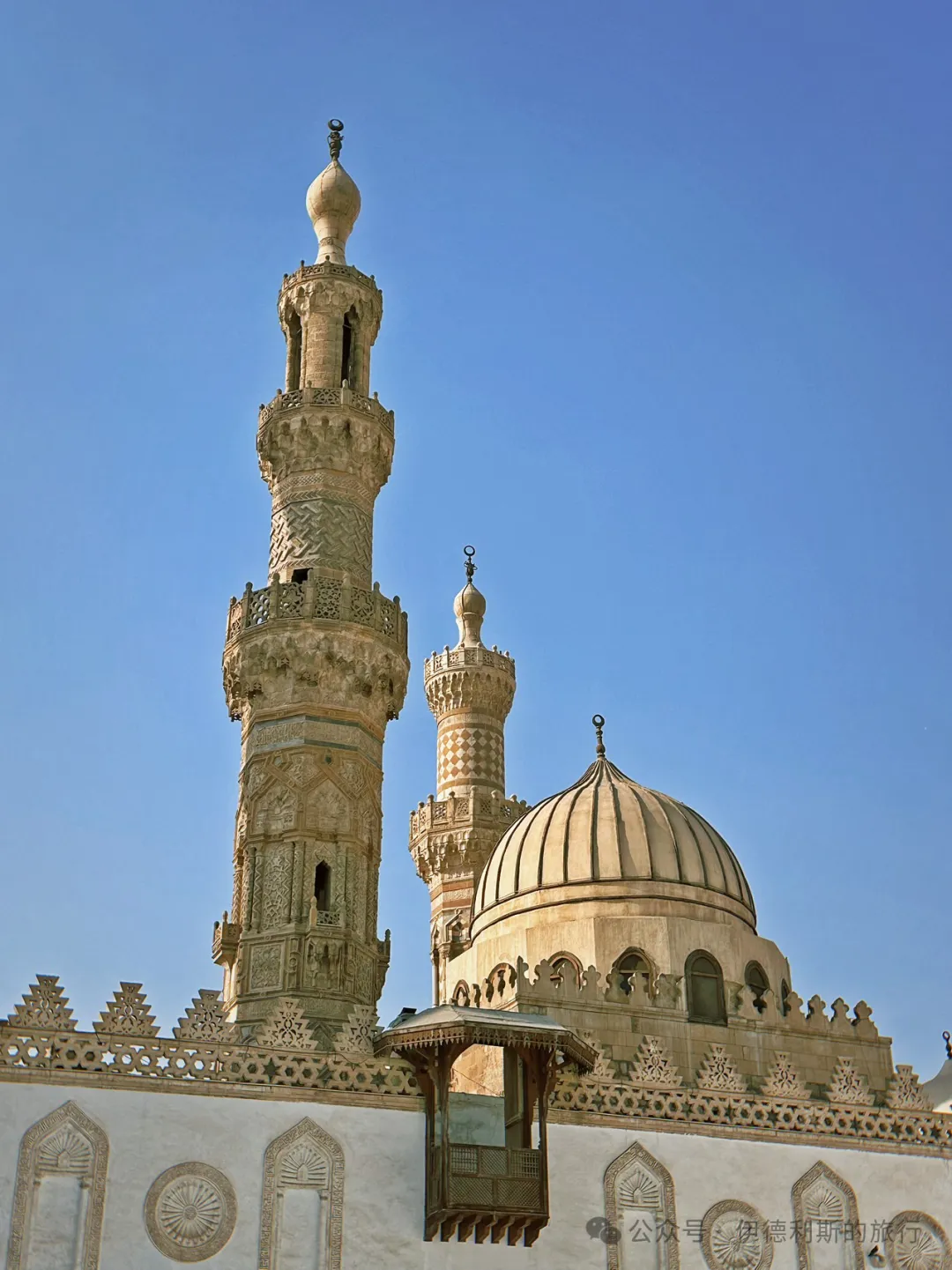
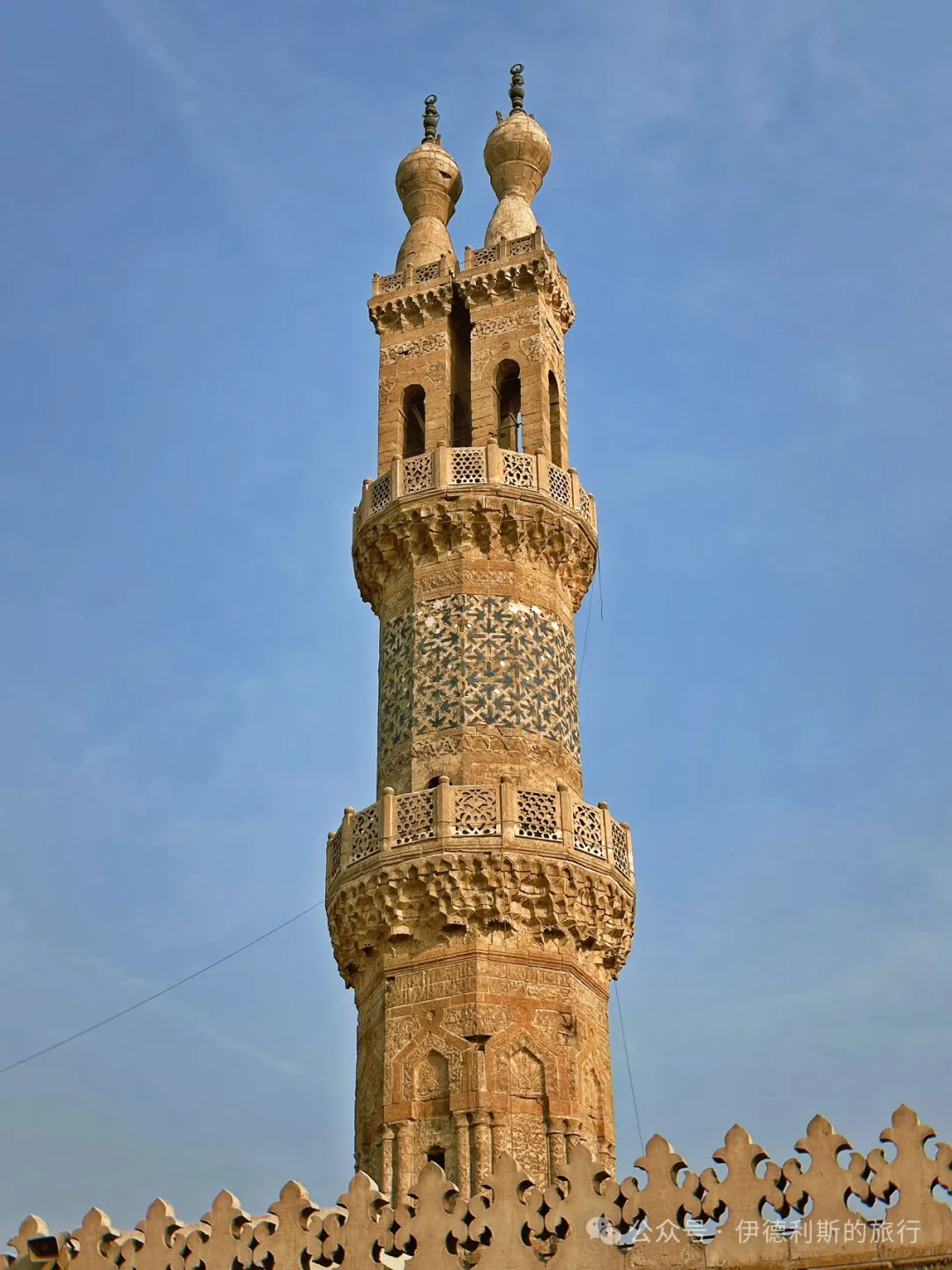
In 1517, the Ottoman Empire conquered the Mamluk dynasty and occupied Egypt, causing the status of Al-Azhar Mosque to decline once again. It was not until after the 18th century, when the Mamluk elite regained influence in Egypt, that renovations and expansions of Al-Azhar Mosque continued.
In 1749, Abd al-Rahman was appointed as the head of the guards (Katkhuda). In 1753, he oversaw the construction of three Ottoman-style gates for Al-Azhar Mosque: the Barbers' Gate (Bab al-Muzayinīn), the Gate of the Upper Egyptians (Bab al-Sa'ayida), and the Soup Gate (Bab al-Shurba). Outside the Barbers' Gate was where students got their hair cut, 'Sa'ayida' means people from Upper Egypt, and the Soup Gate was where students went to get soup. From then on, the Barbers' Gate became the main entrance to Al-Azhar Mosque.
Abd al-Rahman also doubled the size of the main prayer hall of Al-Azhar Mosque to the south and added a new mihrab, giving the hall its current shape. After Abd al-Rahman died in 1776, he was buried inside Al-Azhar Mosque, becoming the last person in history to be buried there.
After the 18th century, Al-Azhar Mosque became the most influential educational institution in Egypt, and the ulama (scholars) could report to the Pasha (governor) as official advisors.
Napoleon occupied Cairo on July 22, 1798. On October 21, an uprising against the French broke out at Al-Azhar Mosque. Napoleon shelled the mosque directly from the Cairo Citadel, resulting in over 3,000 Egyptian casualties and the death of six Al-Azhar ulama. Napoleon's troops tied their horses to the mihrab of Al-Azhar Mosque and ransacked the student dormitories and the library. In 1800, the commander-in-chief of the French expeditionary force was assassinated by an Al-Azhar student, after which Napoleon ordered the closure of Al-Azhar Mosque. In June 1801, Cairo was recaptured by the British and the Ottoman Empire, and Al-Azhar Mosque reopened.
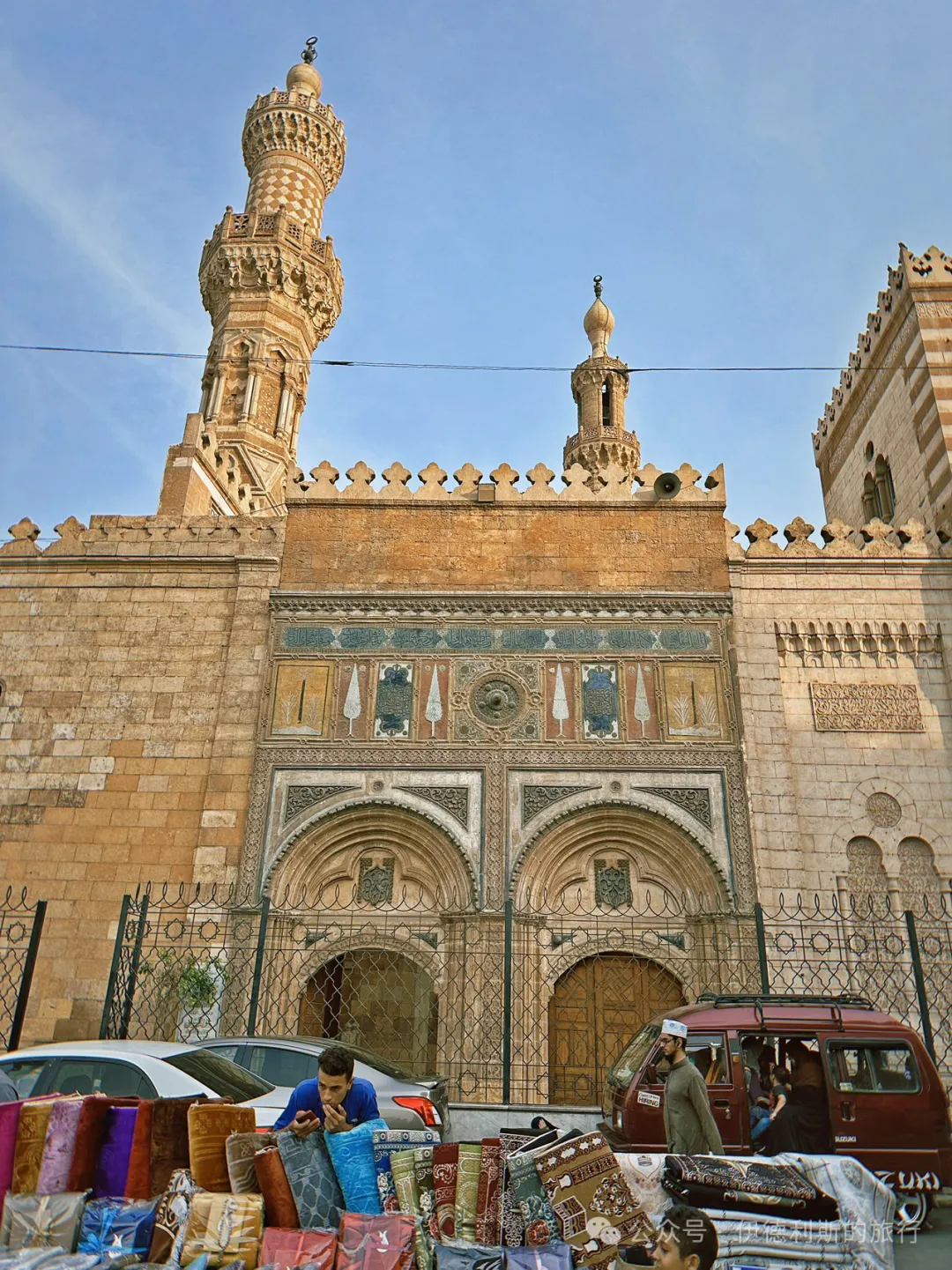
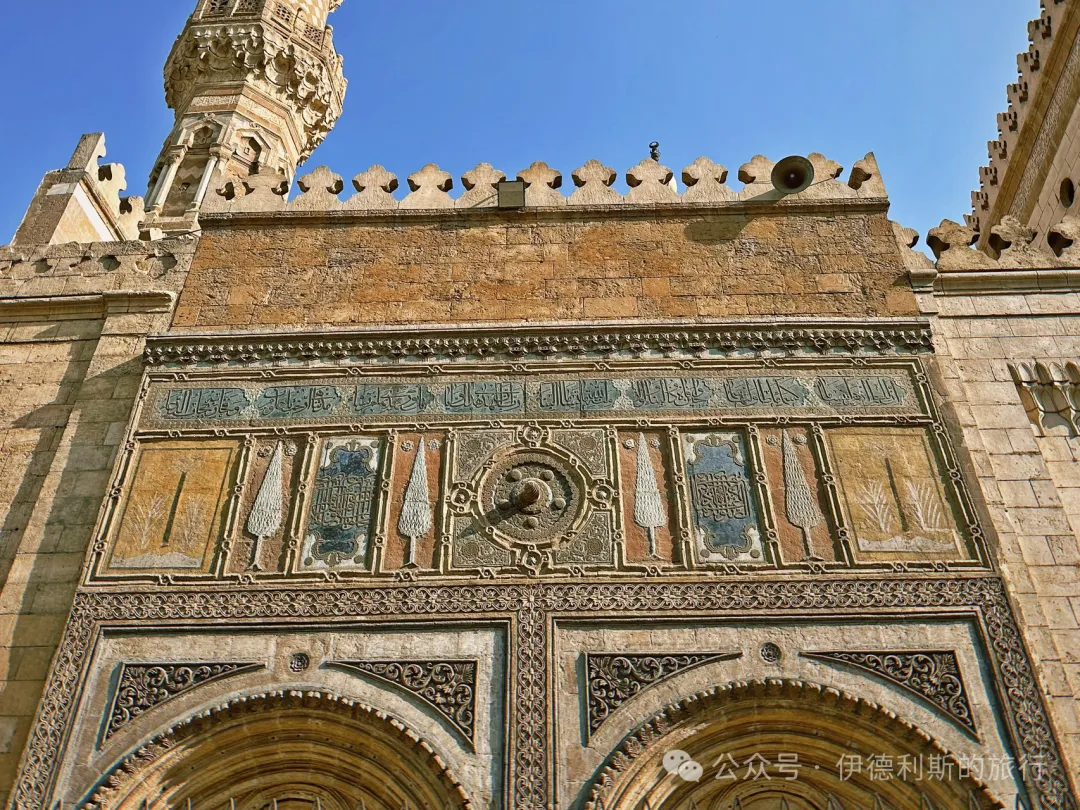
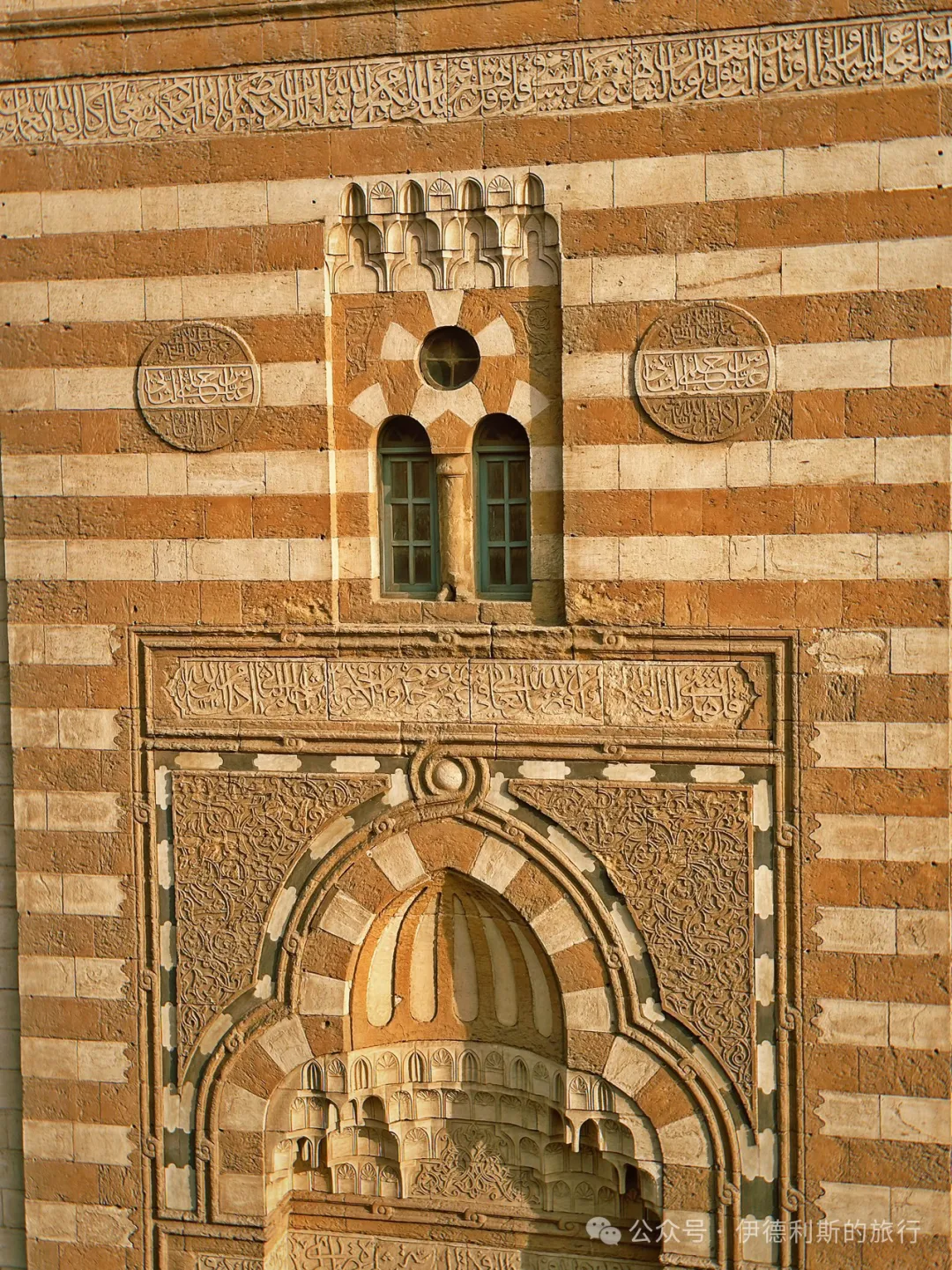
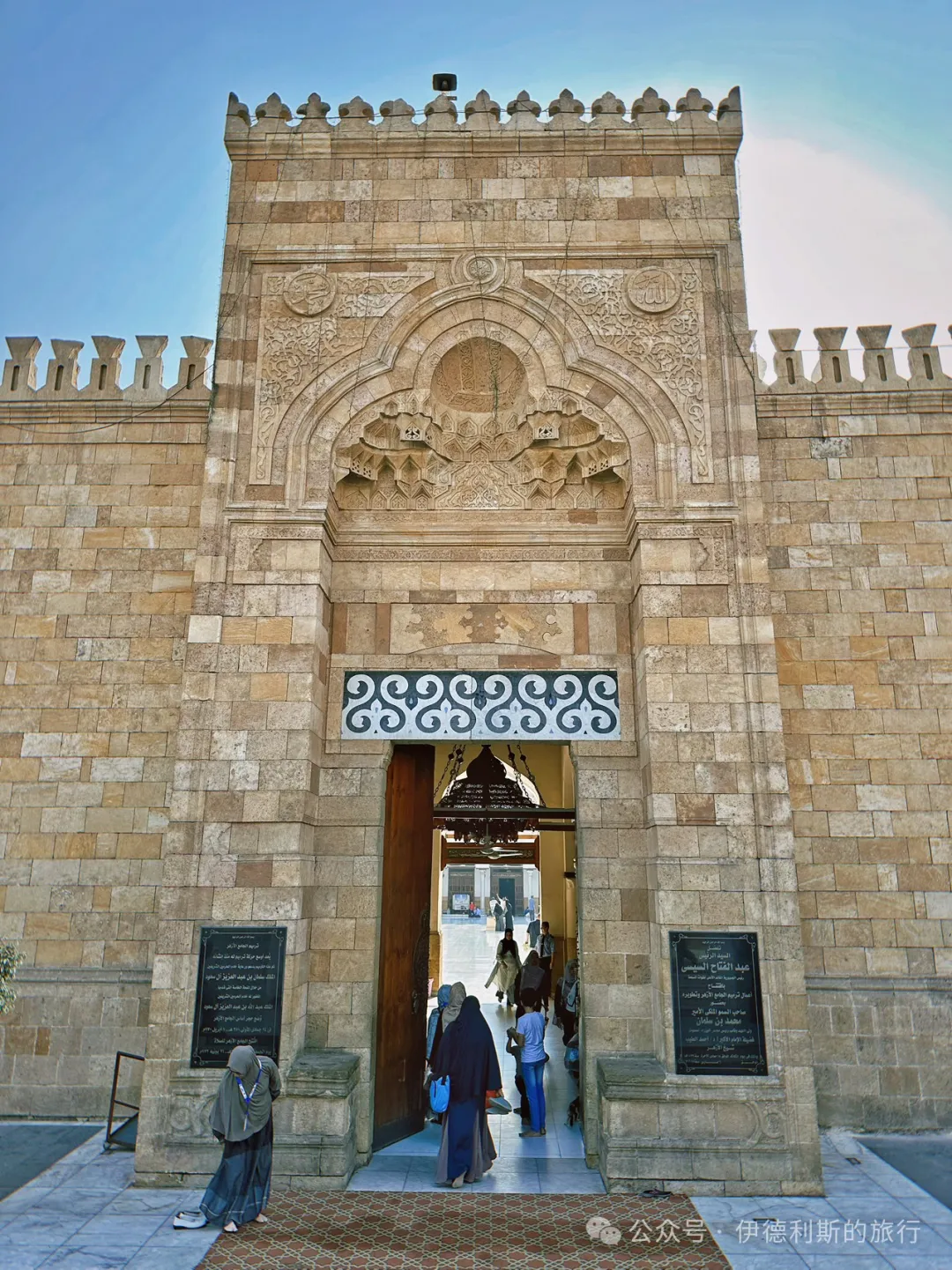
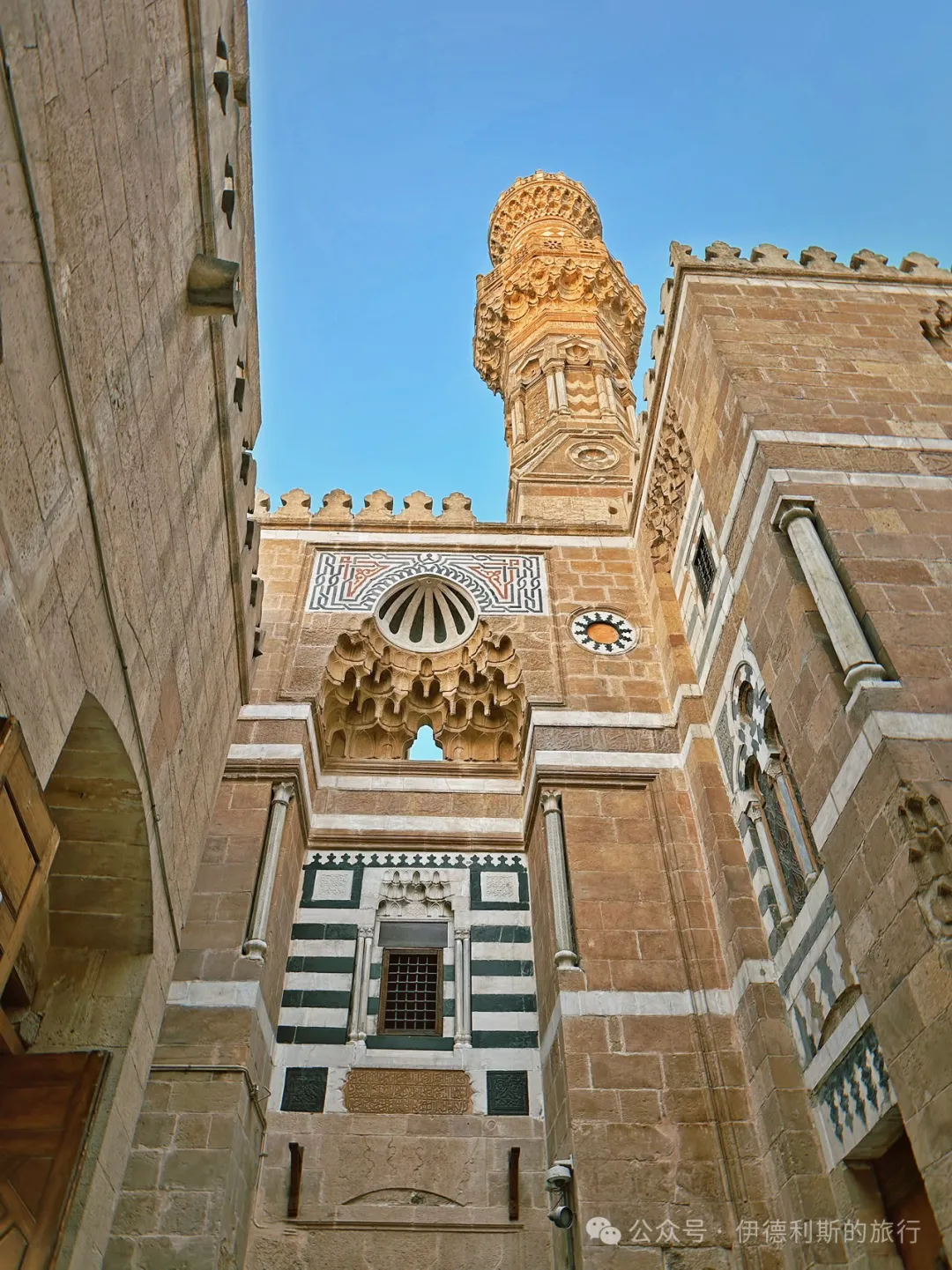
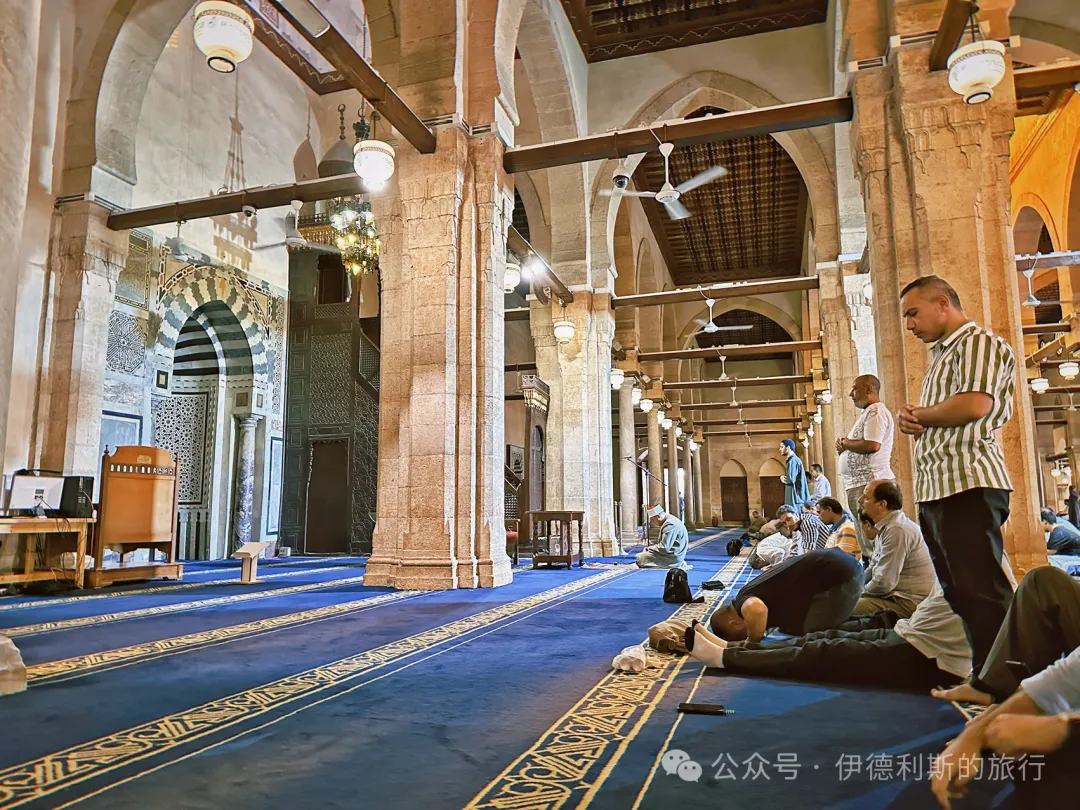
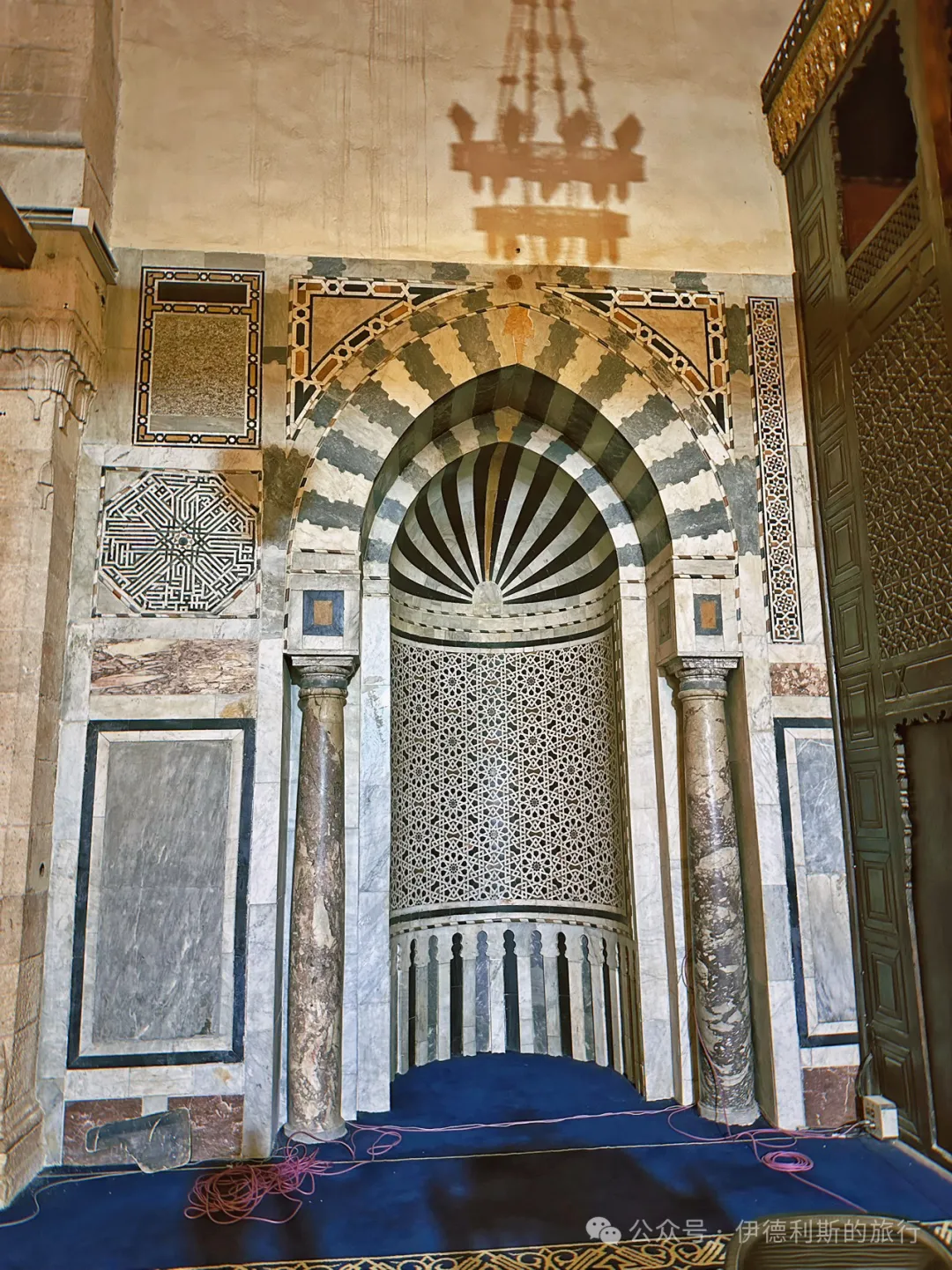
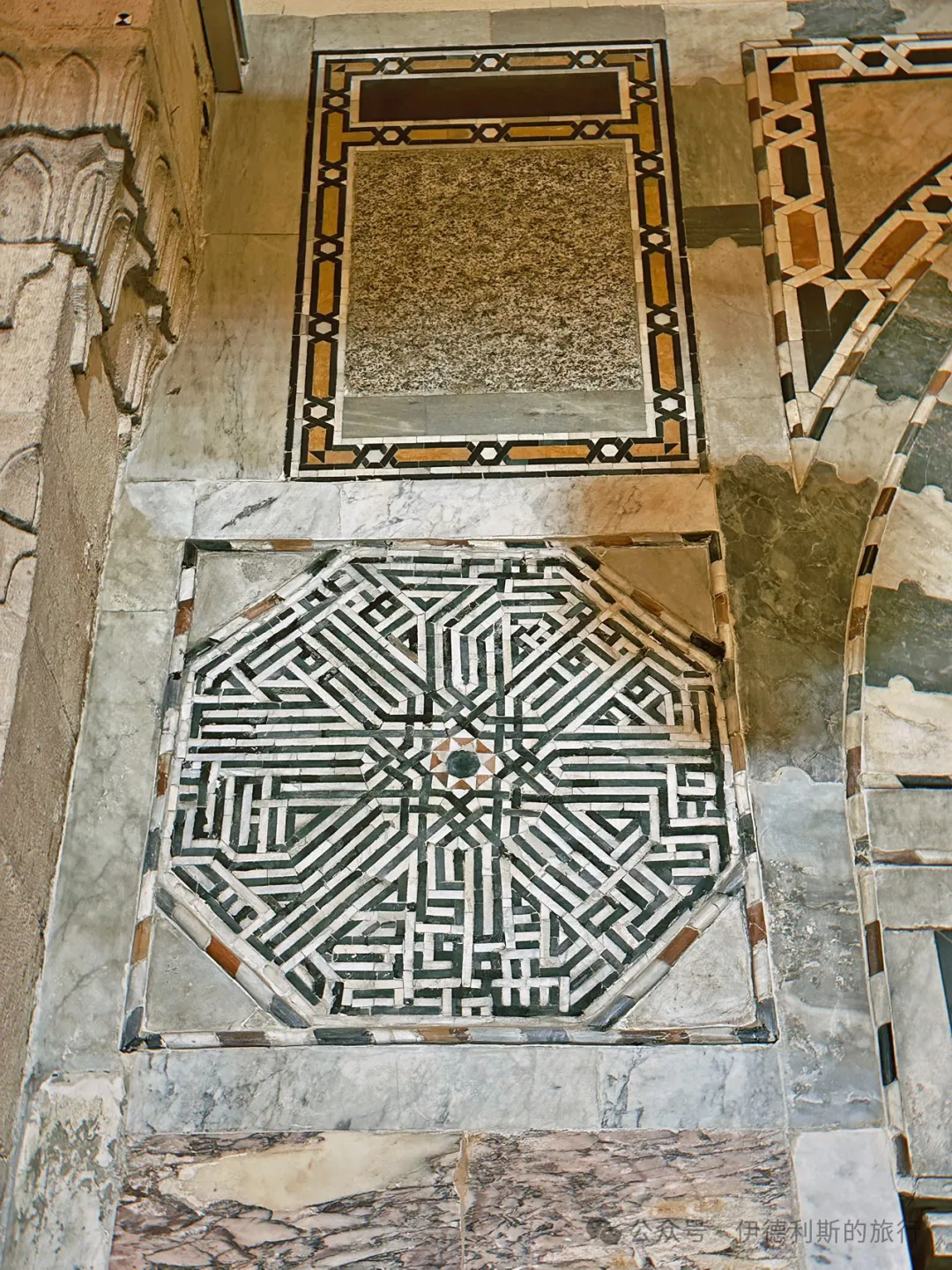
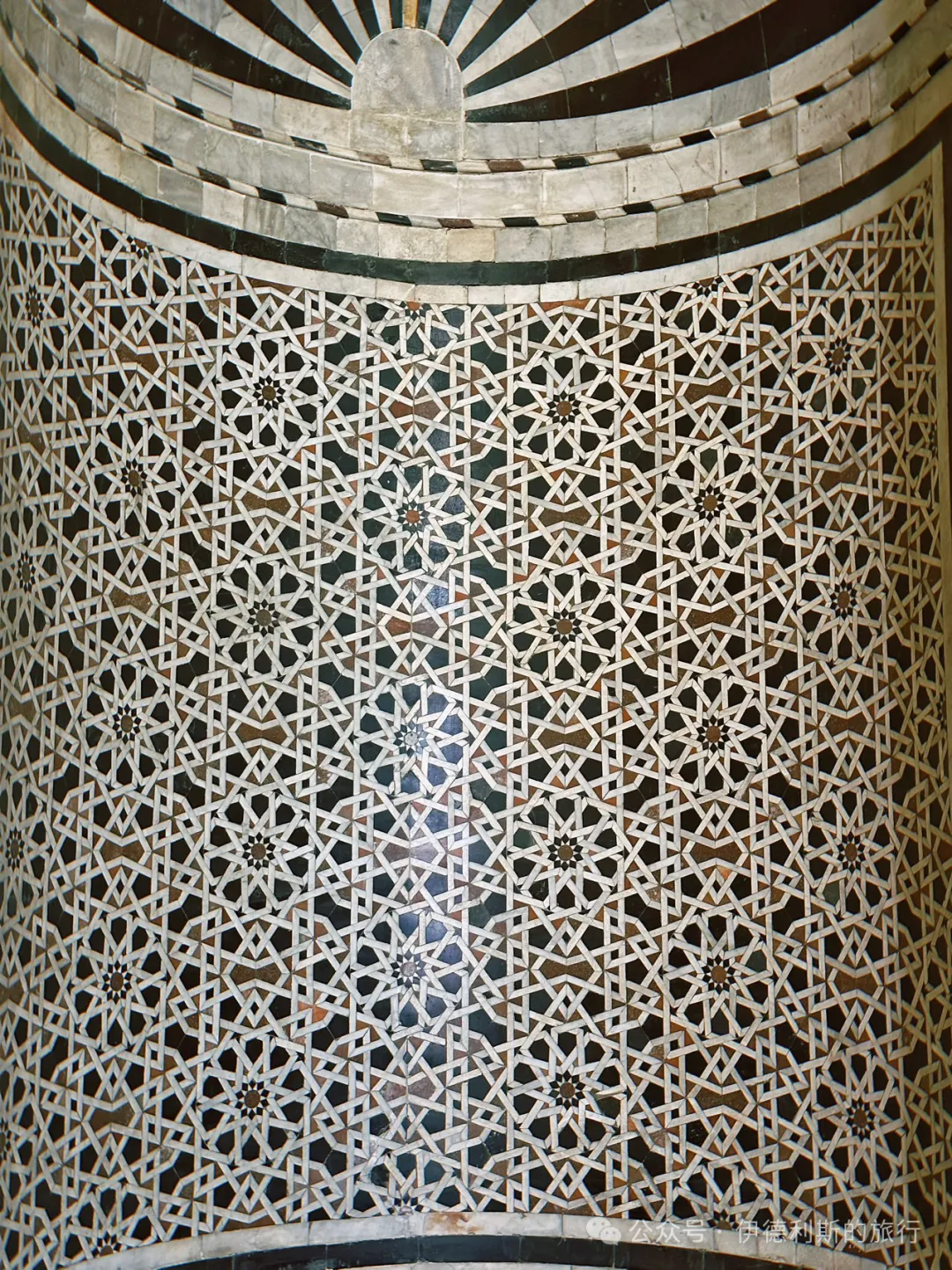
Between 1892 and 1901, the last Khedive (viceroy) of Ottoman Egypt, Abbas II Hilmi Pasha, rebuilt the facade of Al-Azhar Mosque as part of a wave of modernization in British-occupied Egypt. At the same time, Al-Azhar University also carried out educational reforms to oppose fundamentalism. To mitigate the impact of the Saudi Wahhabi movement, many students from Indonesia and other parts of Southeast Asia came to study at Al-Azhar University during this period.
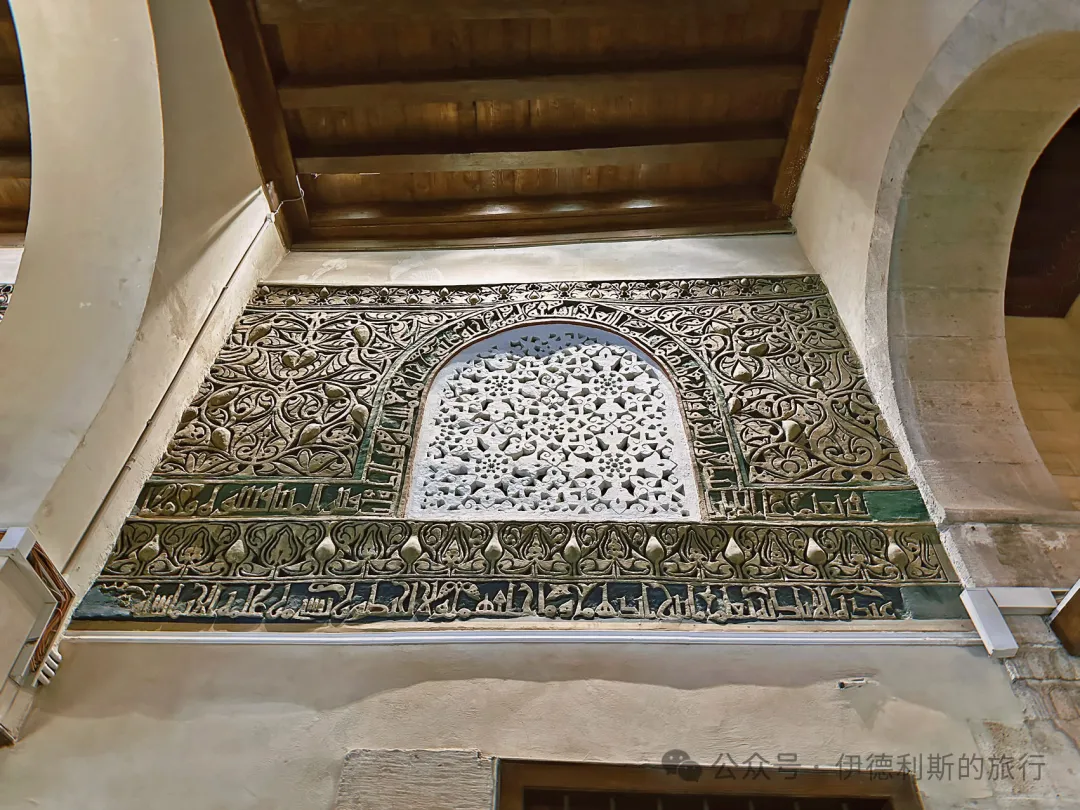
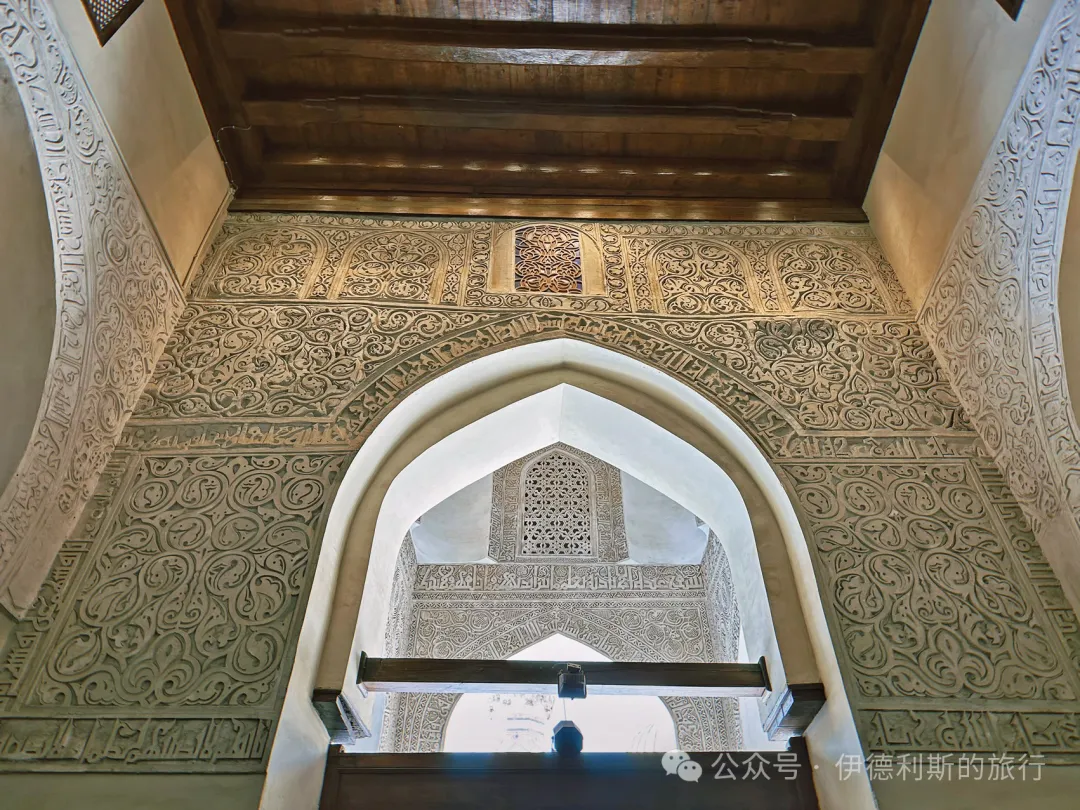
The last two pictures show the Fatimid dynasty stucco carvings restored by the Committee for the Preservation of Arab Art Monuments during the reign of Abbas II Hilmi Pasha.
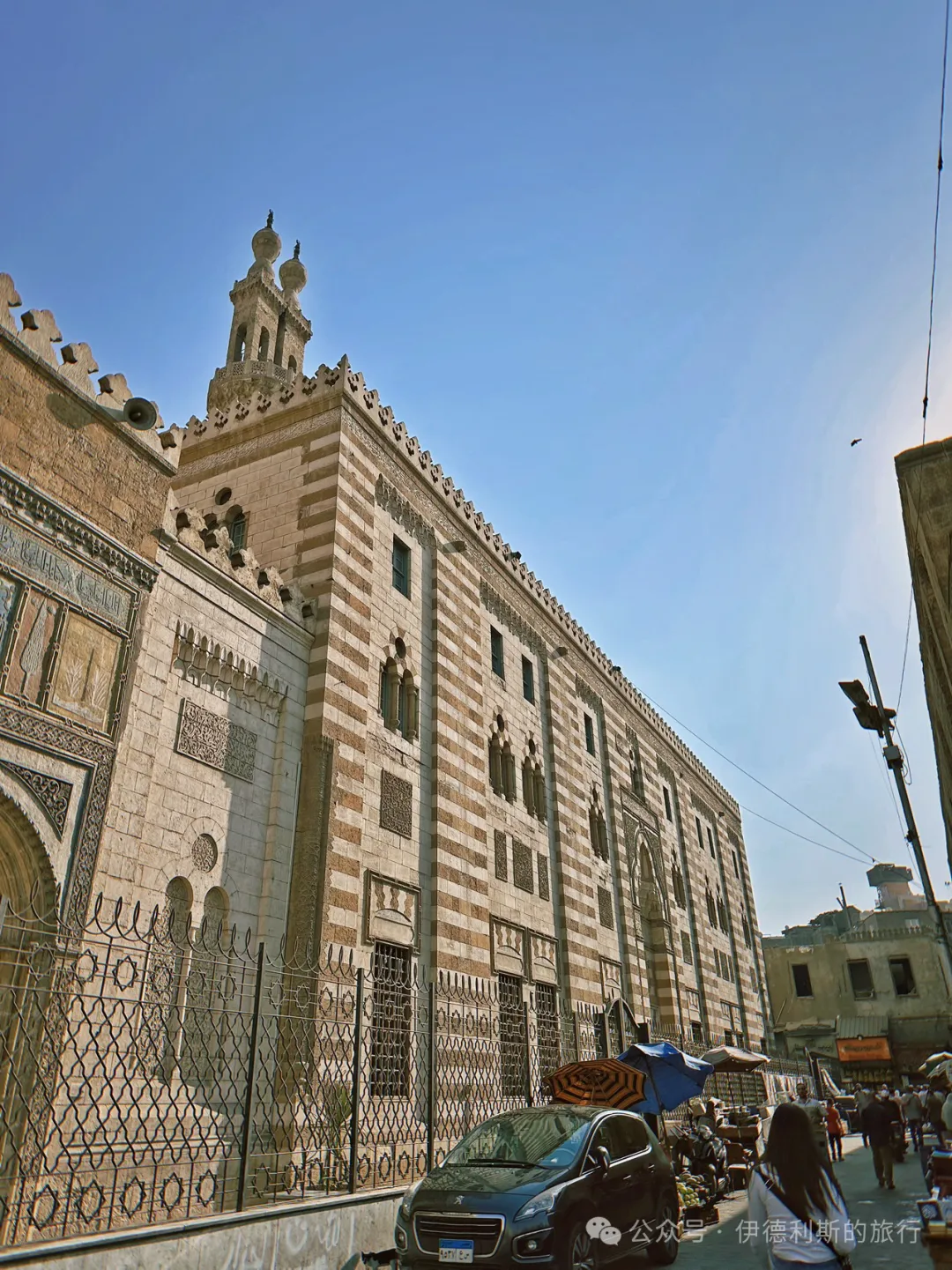
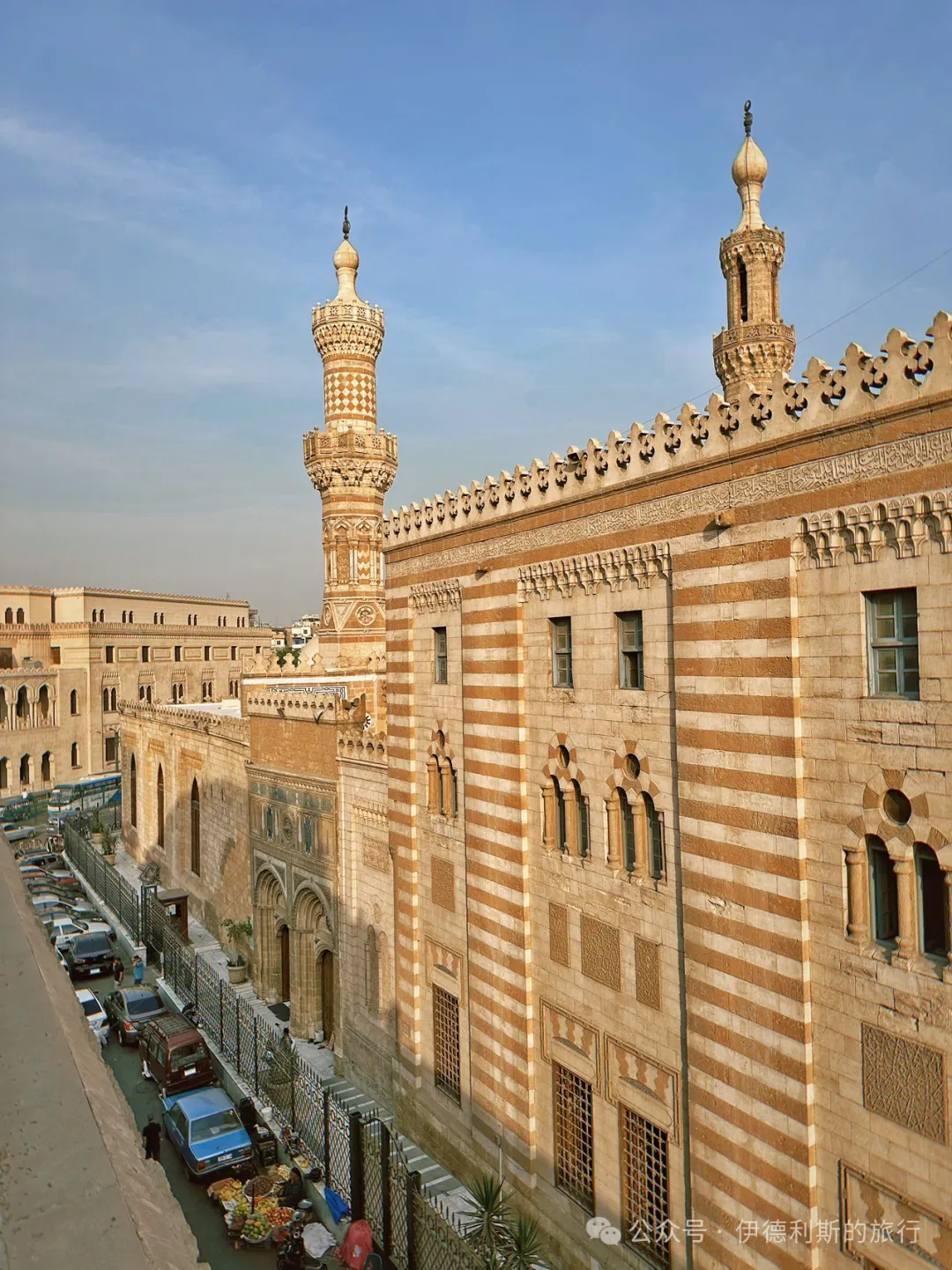
Al-Hussein Mosque: built in 1154, rebuilt in 1874
Across from Al-Azhar Mosque is Al-Hussein Mosque, where Shia Muslims believe the head of Imam Hussein is buried. The mosque was first built in 1154, but its current appearance dates to a reconstruction in 1874.
The Fatimid dynasty believed the Abbasid dynasty secretly moved Imam Hussein's head from the Umayyad Mosque cemetery in Damascus. The Fatimids rediscovered it in 1091 and built a shrine for it in Ashkelon, Palestine.
In 1153, the Fatimid dynasty ordered the head of Hussein moved to Cairo to be buried with past Fatimid caliphs, and they built Al-Hussein Mosque in 1154. The lower part of the south gate of Al-Hussein Mosque still keeps its original Fatimid structure.
Al-Hussein Mosque was rebuilt by the Ayyubid dynasty in 1237, but it later burned down, leaving only one Ayyubid minaret today.
In 1874, Isma'il Pasha (reigned 1863-79), the ruler of the Muhammad Ali dynasty, rebuilt Al-Hussein Mosque in a Gothic Revival style and added a minaret blending Gothic and Ottoman styles. During his rule, Isma'il Pasha modernized Egypt on a large scale, trying to align Egypt with Europe, and the renovation of Al-Hussein Mosque was part of this effort.
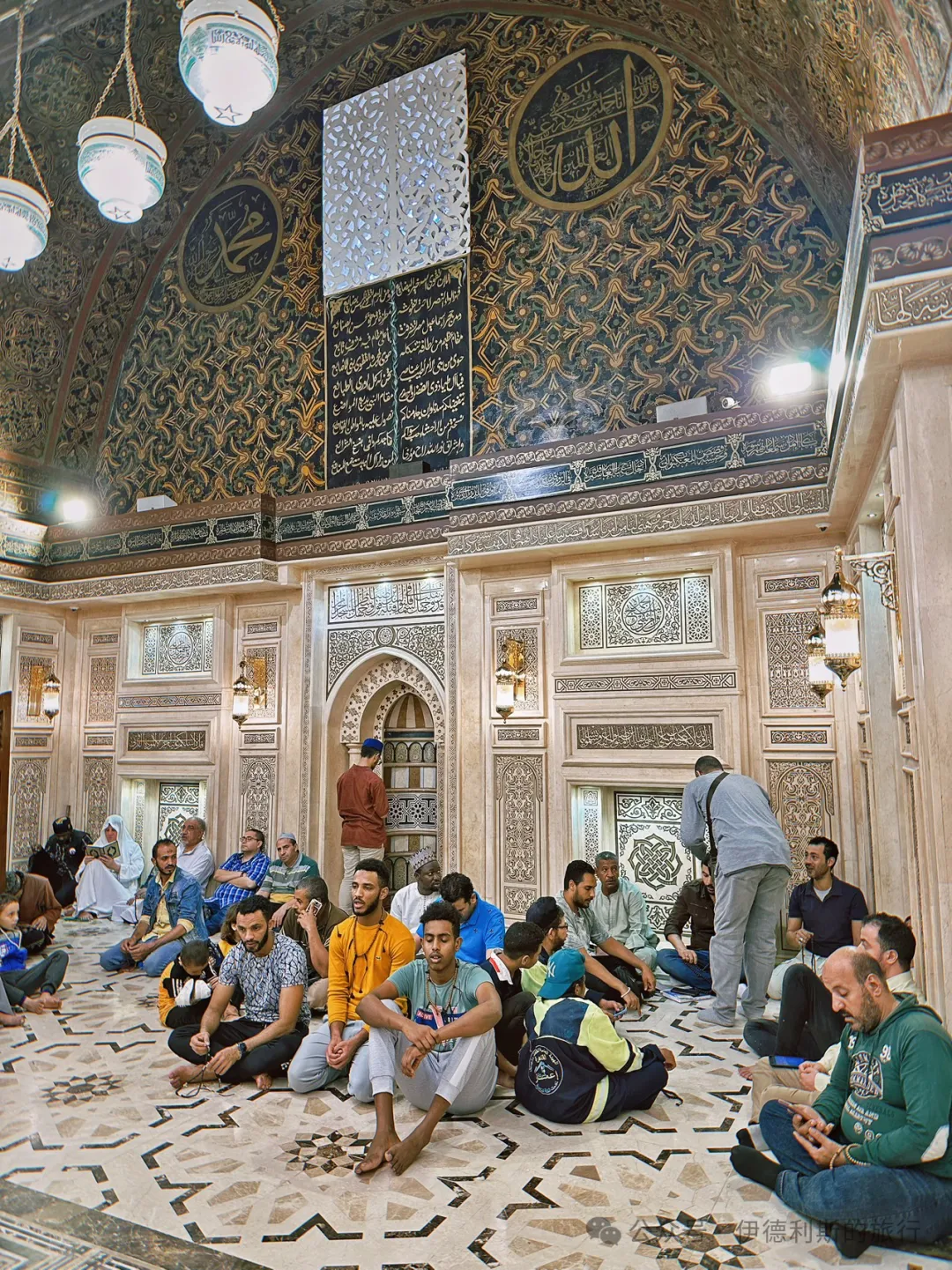
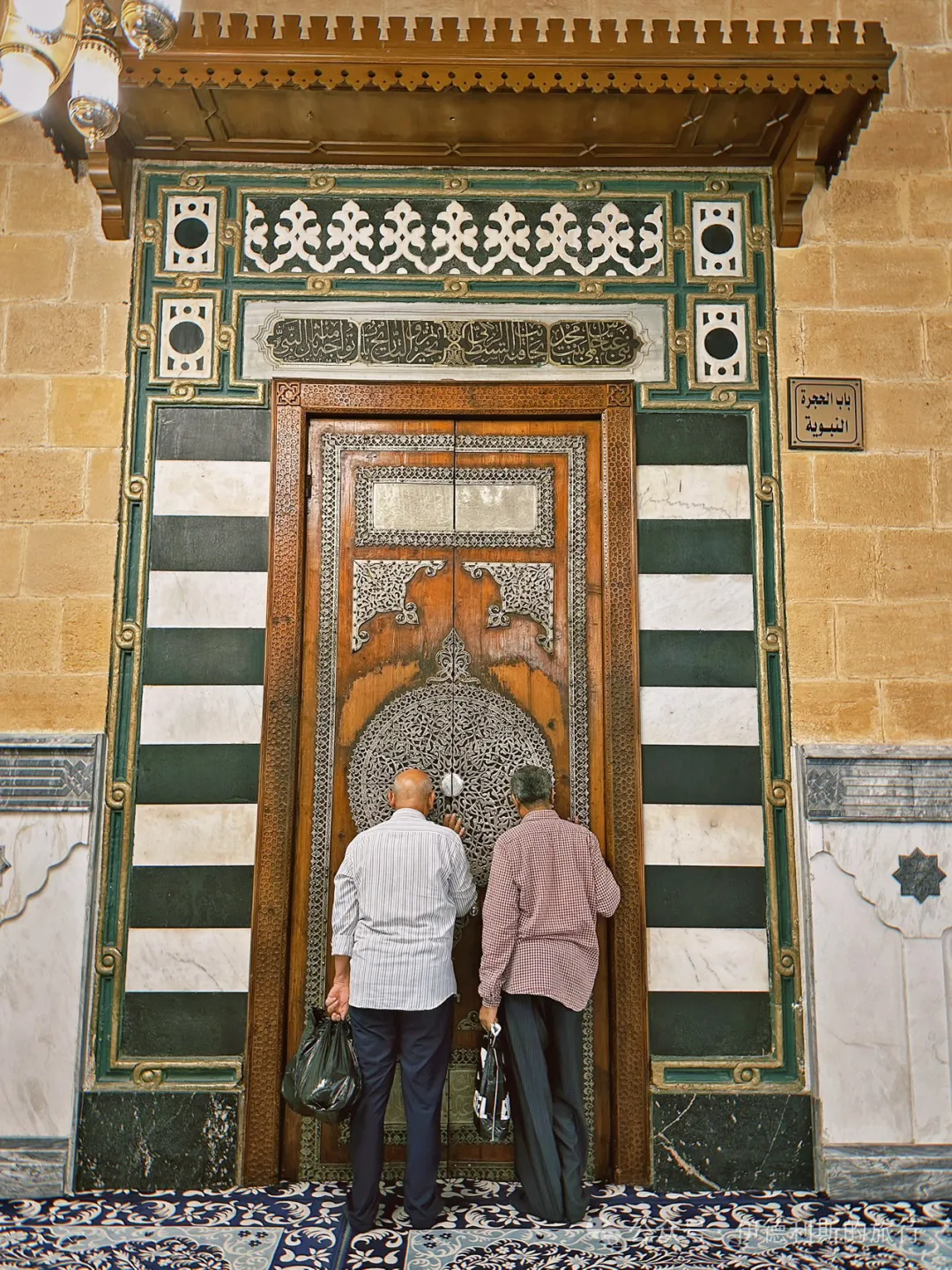
In 1893, a room for Prophet Muhammad's relics (Bab al-Mukhallafat al-Nabawiyya) was added next to the shrine. It holds four strands of the Prophet's hair, a linen cloak he wore, a lantern, a copper kohl applicator, a staff, and a sword given to him by a companion.
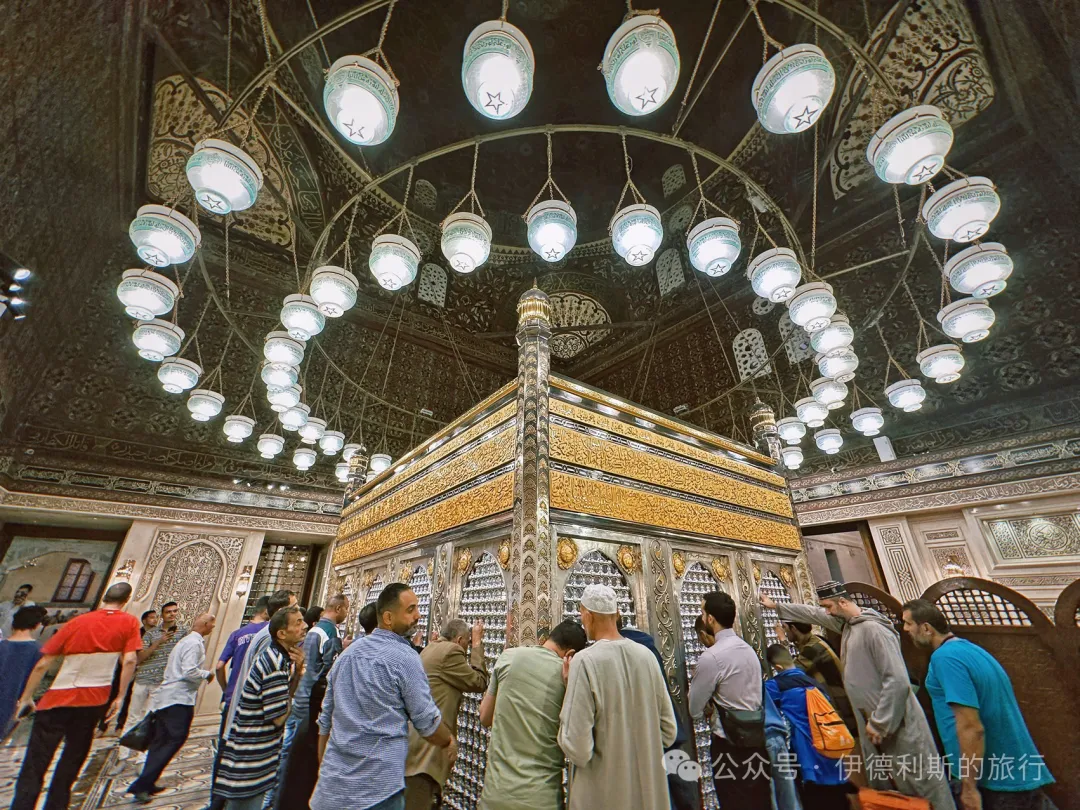
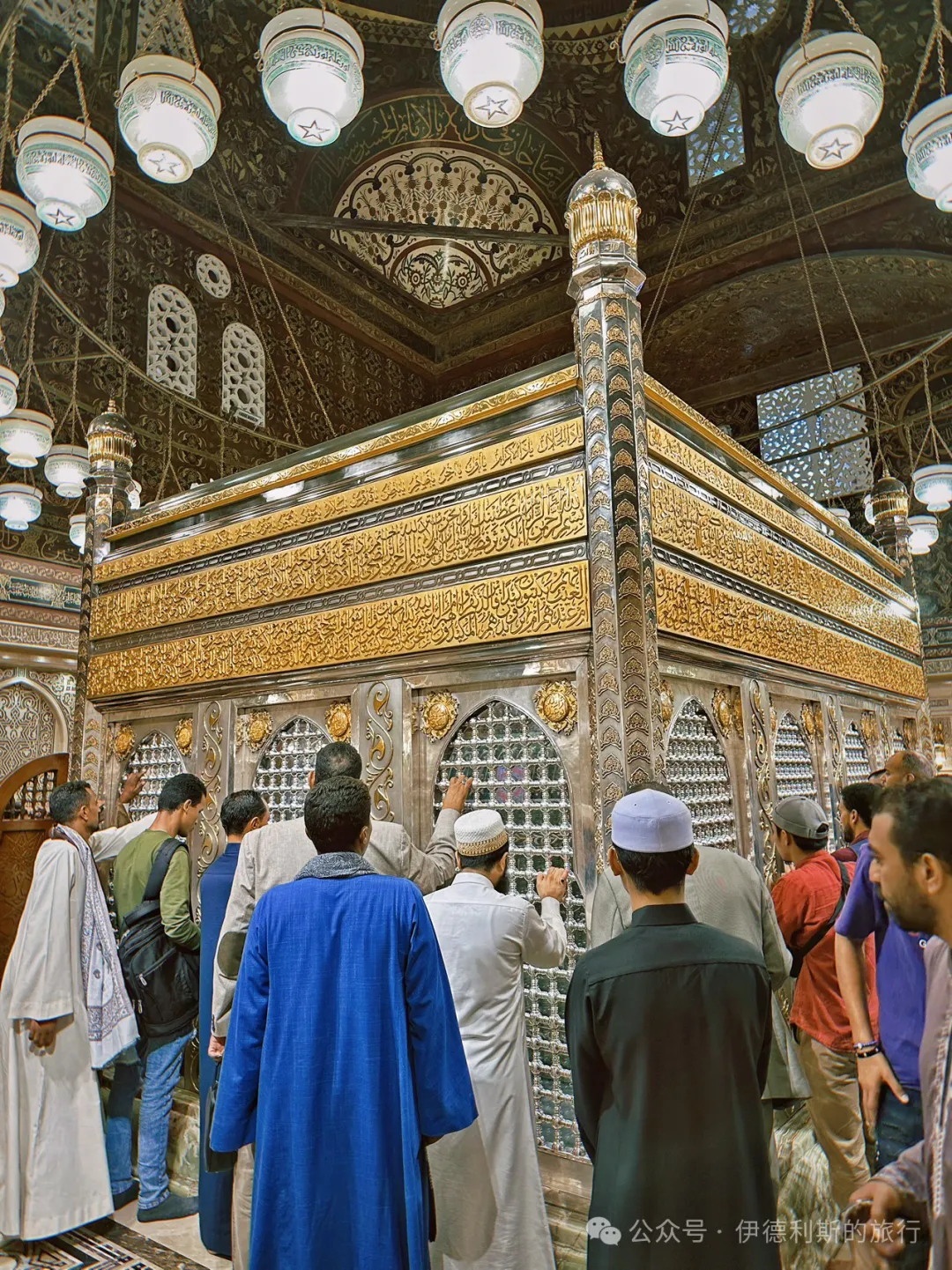
The center of the shrine today is a metal grille (Zarih) made in Mumbai in 1965 by Taher Saifuddin, the leader of the Dawoodi Bohras. It is said this Zarih was originally designed for the shrine of Abbas ibn Ali in Karbala, but it could not be installed there. Taher Saifuddin believed this was guided by Allah, so he had the Zarih flown to Cairo and installed in Al-Hussein Mosque.
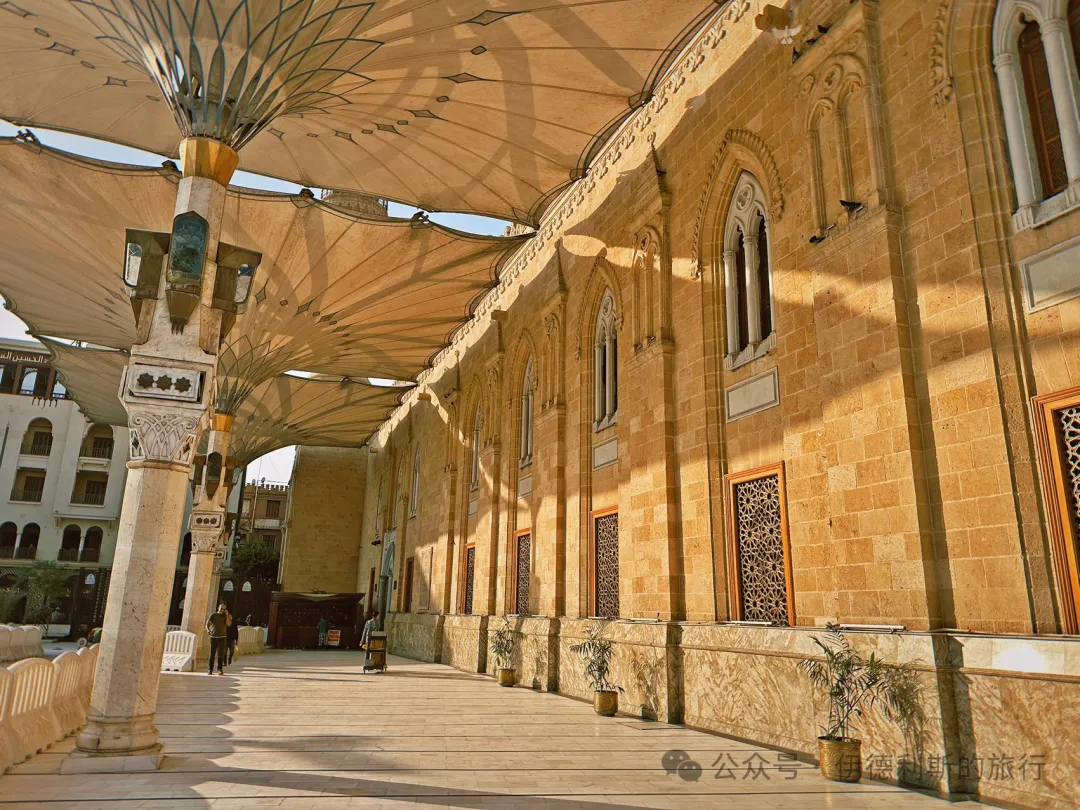
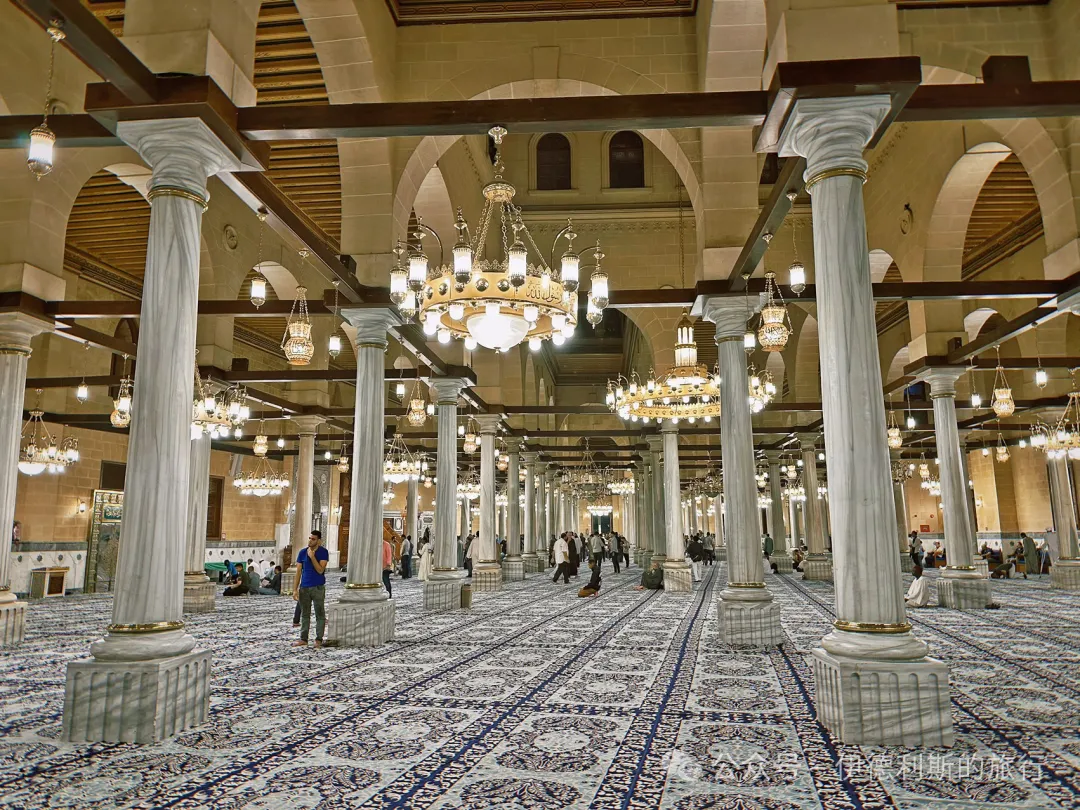
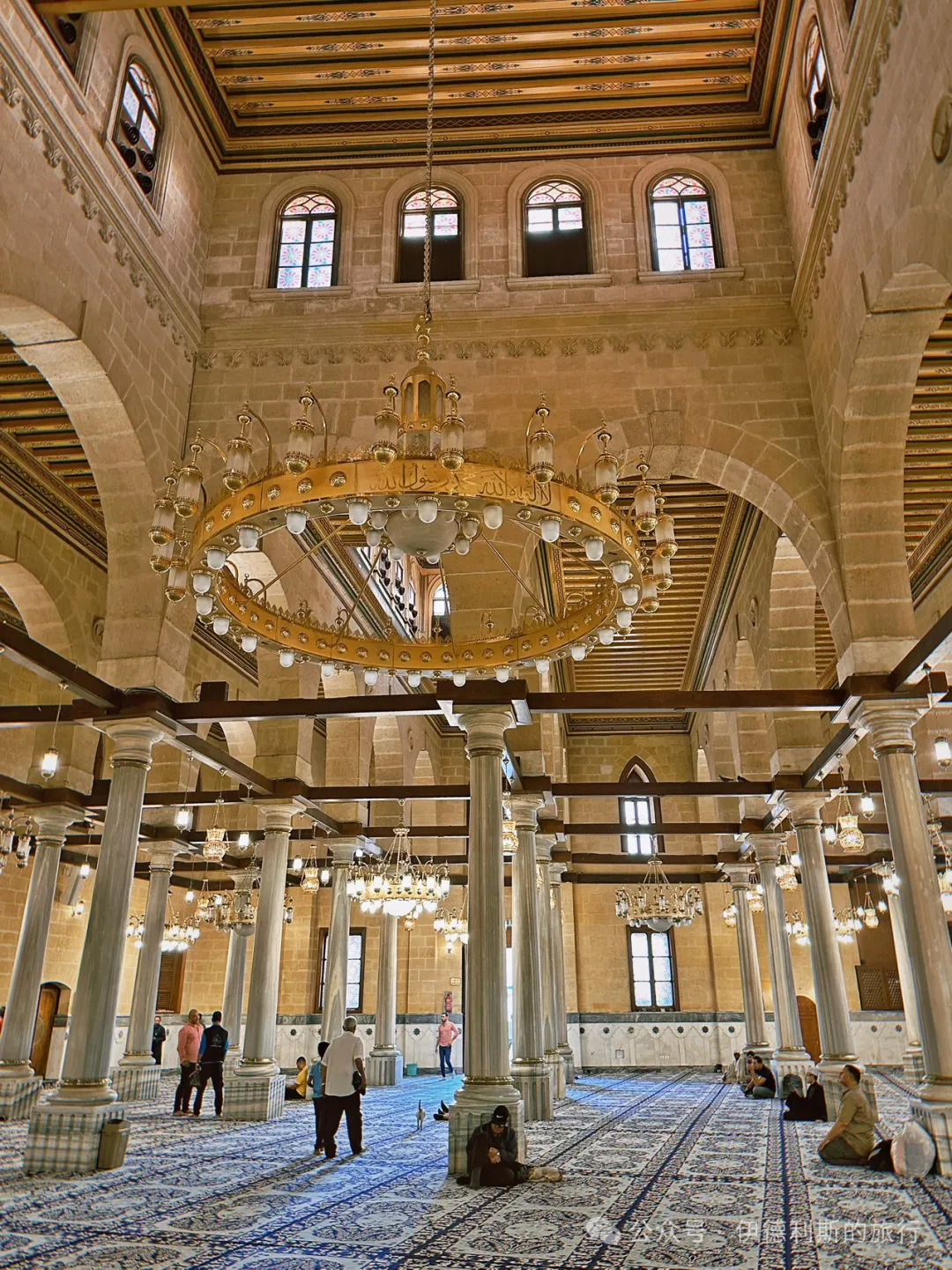
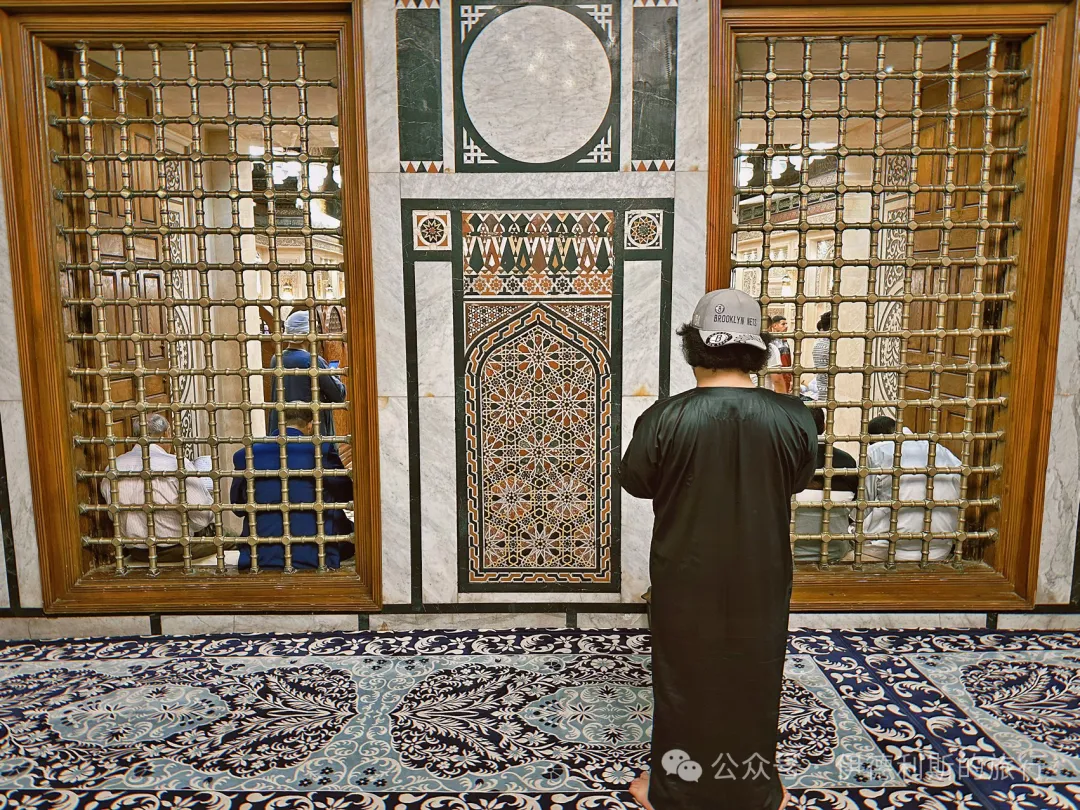
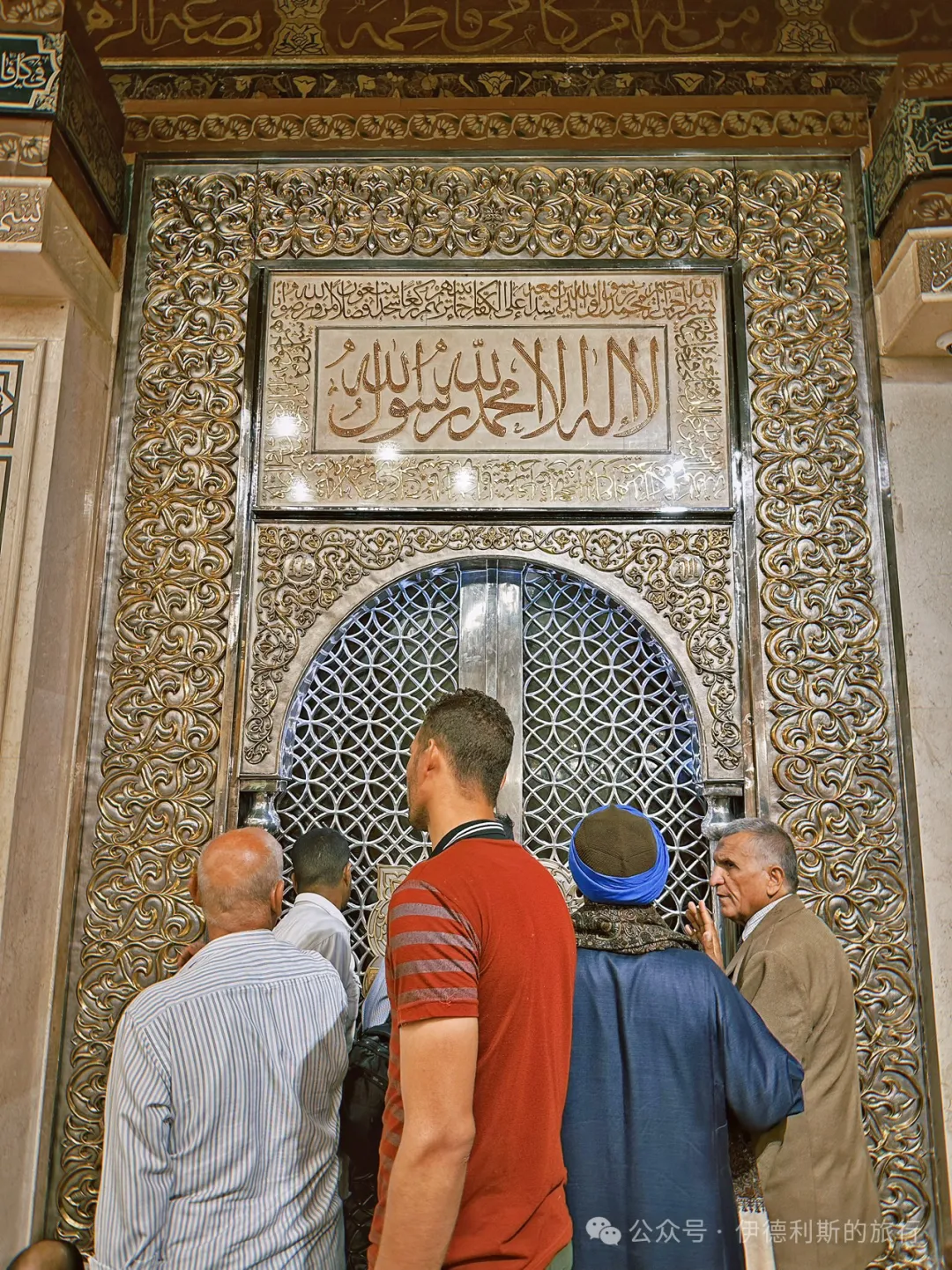
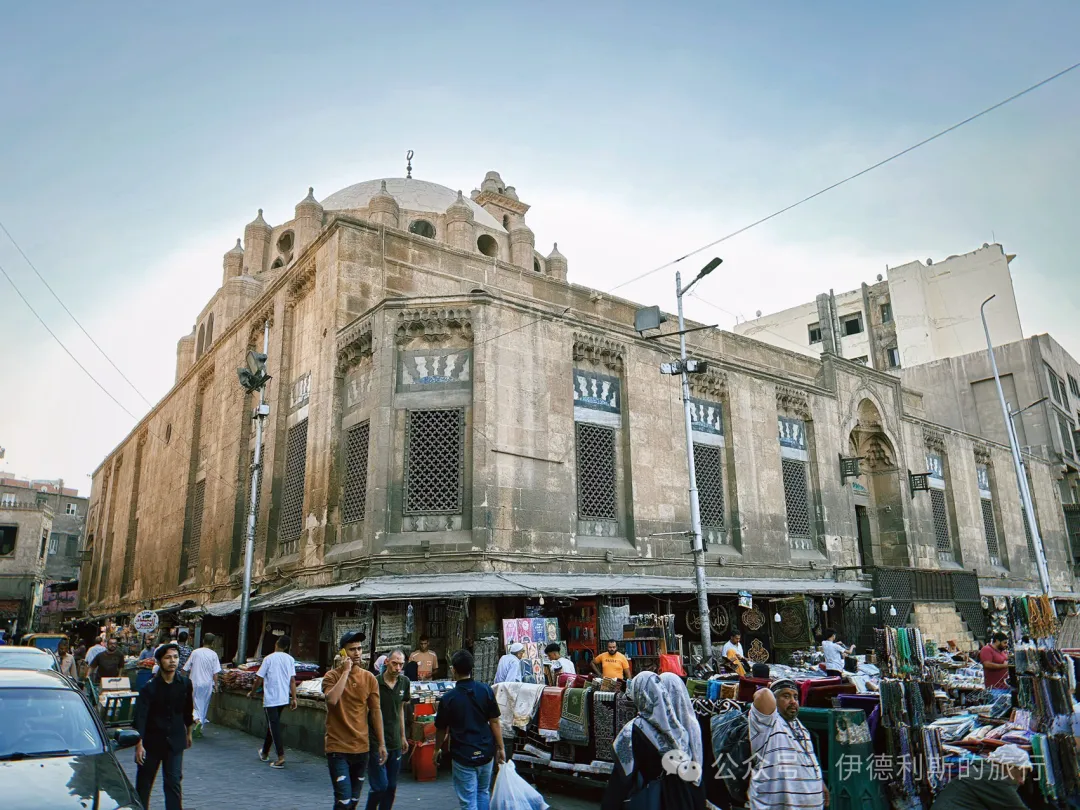
Abu al-Dhahab Mosque: 1774
Right next to the west wall of Al-Azhar Mosque is the Abu al-Dhahab Mosque, built in 1774 by the Egyptian Mamluk ruler Abu al-Dhahab. This was the last large building complex the Mamluks built in Egypt, but only the mosque remains today.
Abu al-Dhahab means 'Father of Gold,' and he was a wealthy and generous Mamluk emir. During the Russo-Turkish War, the Egyptian Mamluk emir Ali Bey declared independence from the Ottoman Empire, and Abu al-Dhahab led troops to conquer most of the Hejaz and Syria. After taking Damascus in 1772, Abu al-Dhahab turned his army to occupy Cairo, becoming the actual ruler of Egypt until he died suddenly of the plague in 1775 while conquering Palestine.
The architecture of Abu al-Dhahab Mosque mixes different elements, including Mamluk-style outer walls, Ottoman-style domes, and a minaret inspired by the early 16th-century minaret of the nearby Sultan Qaytbay complex.
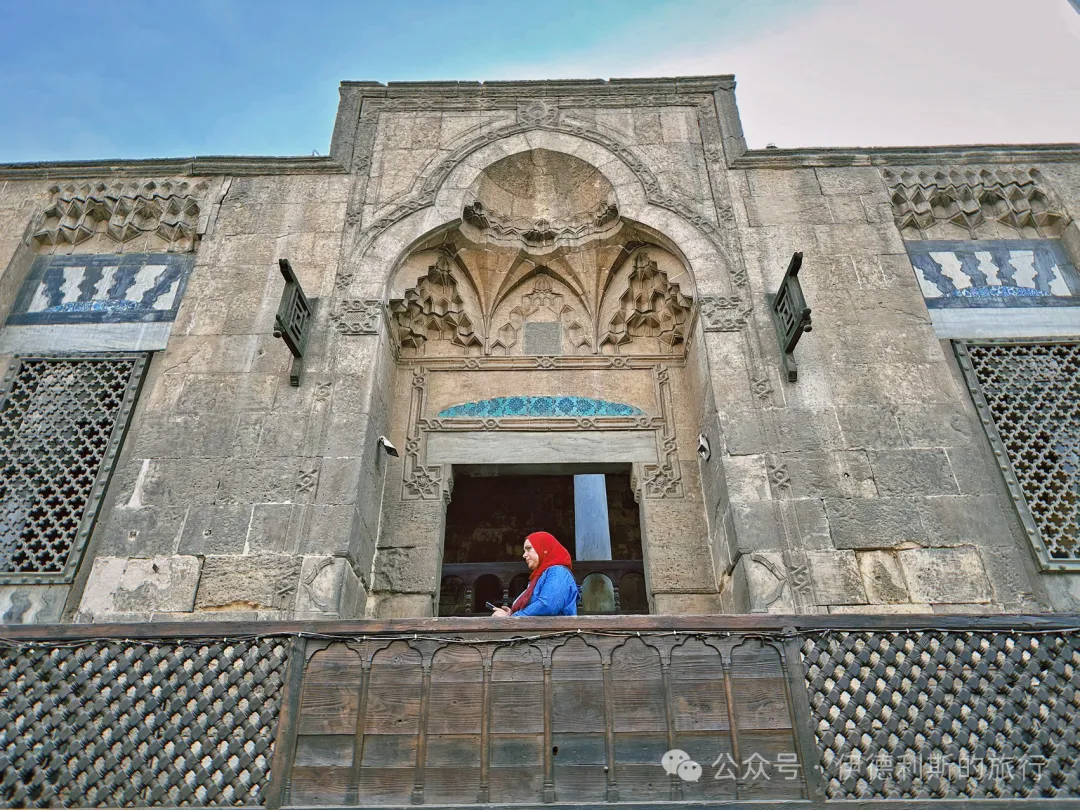
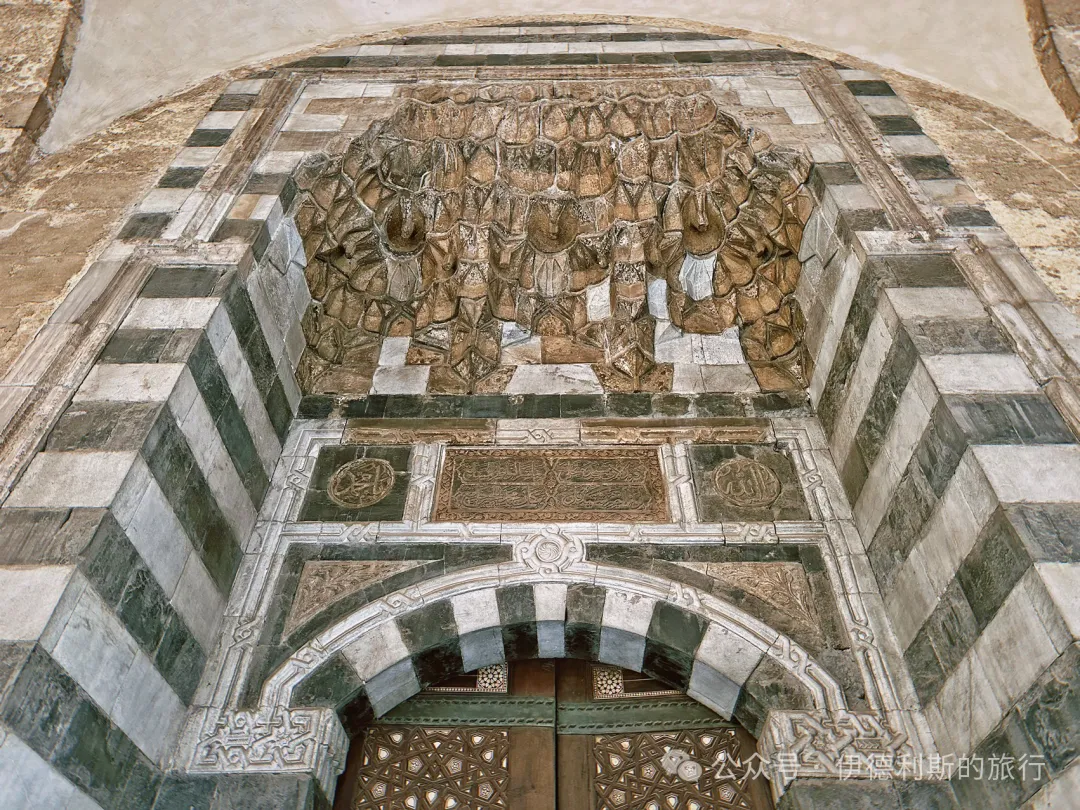
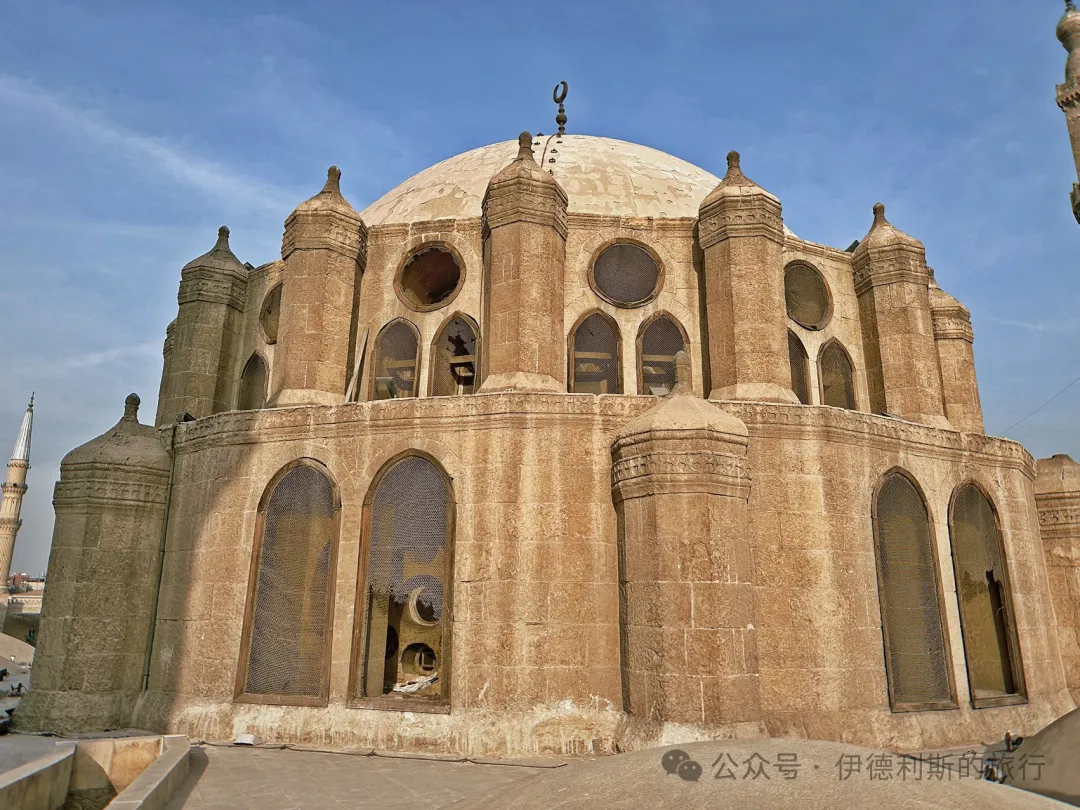
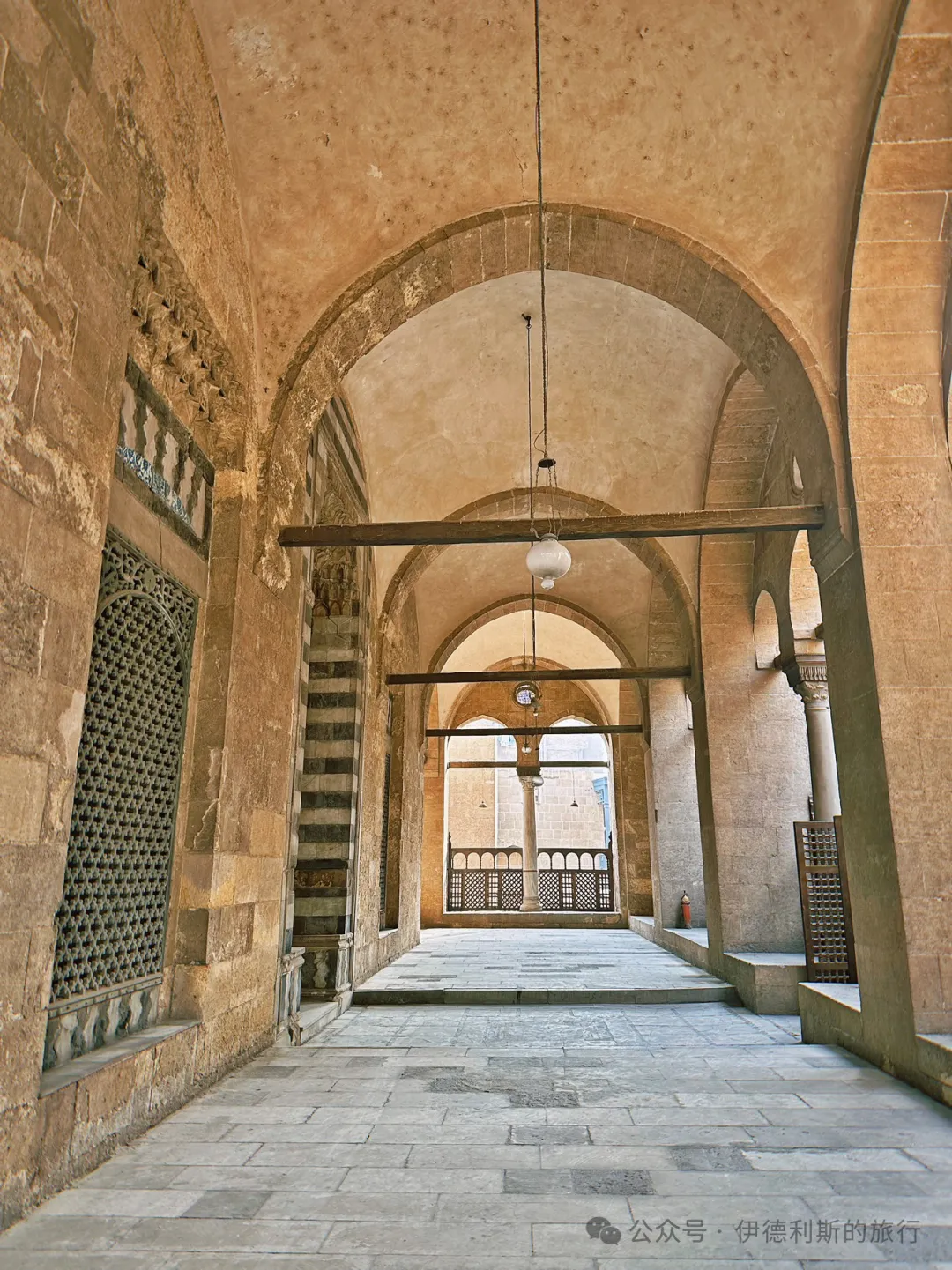
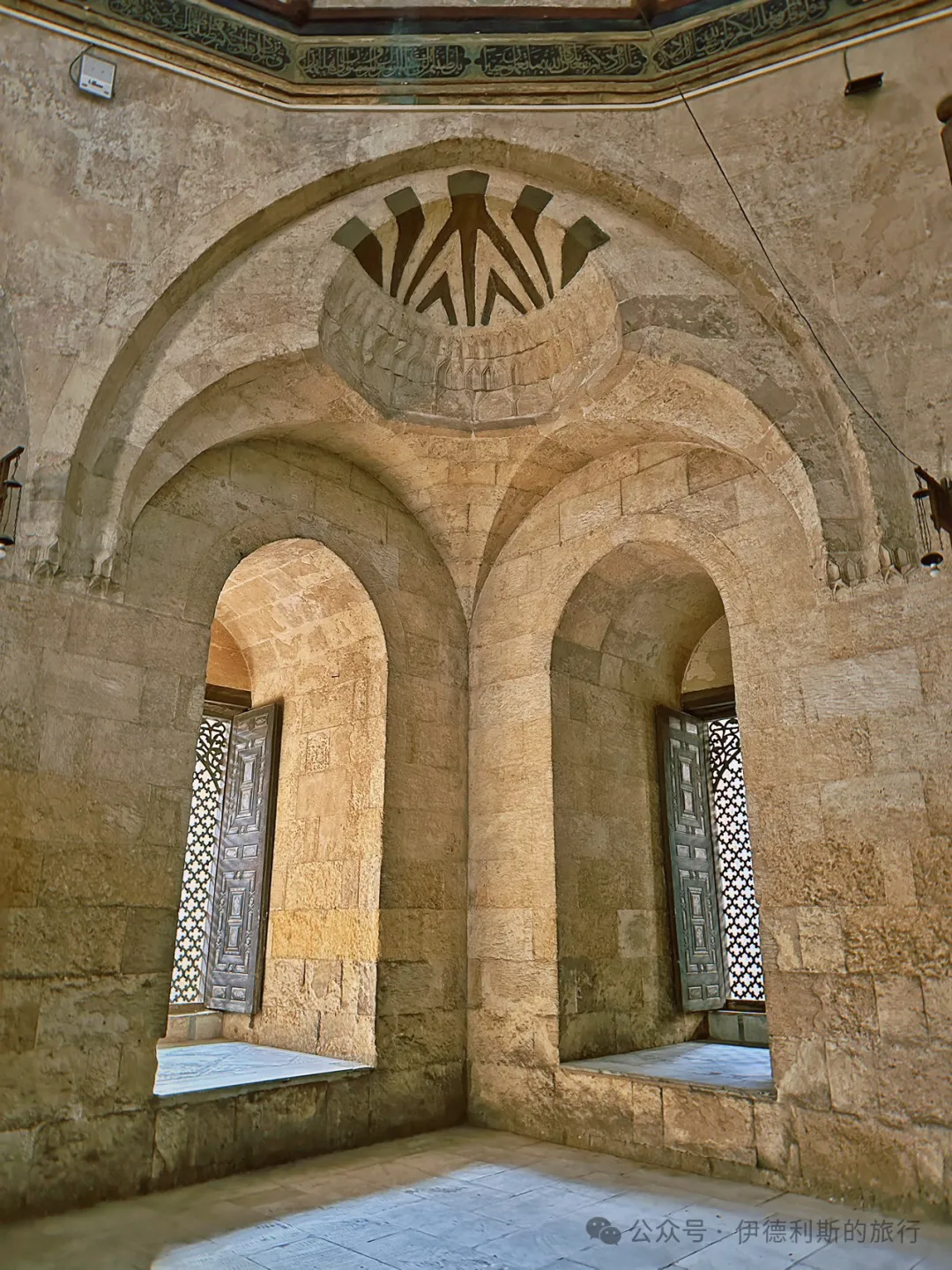
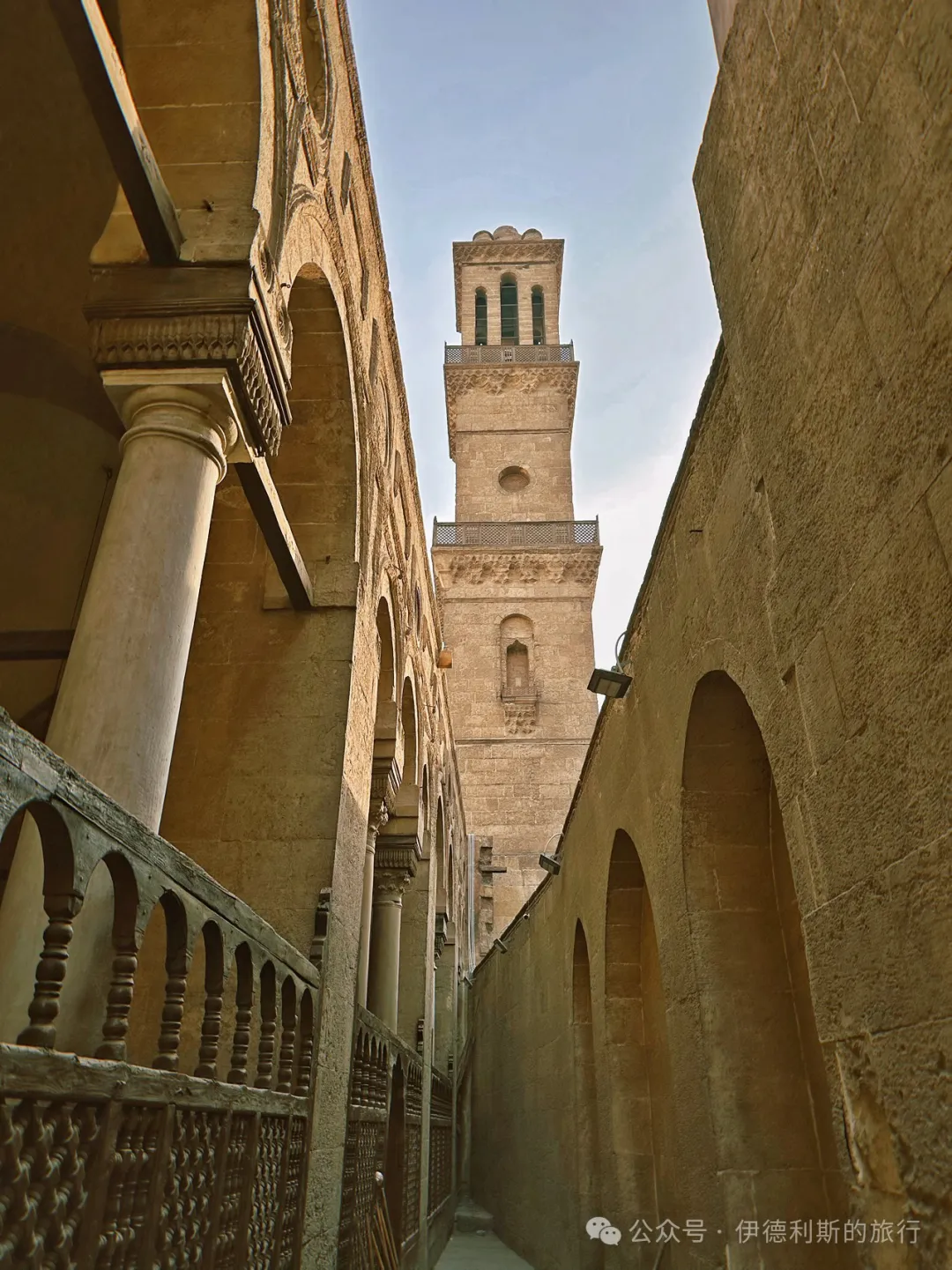
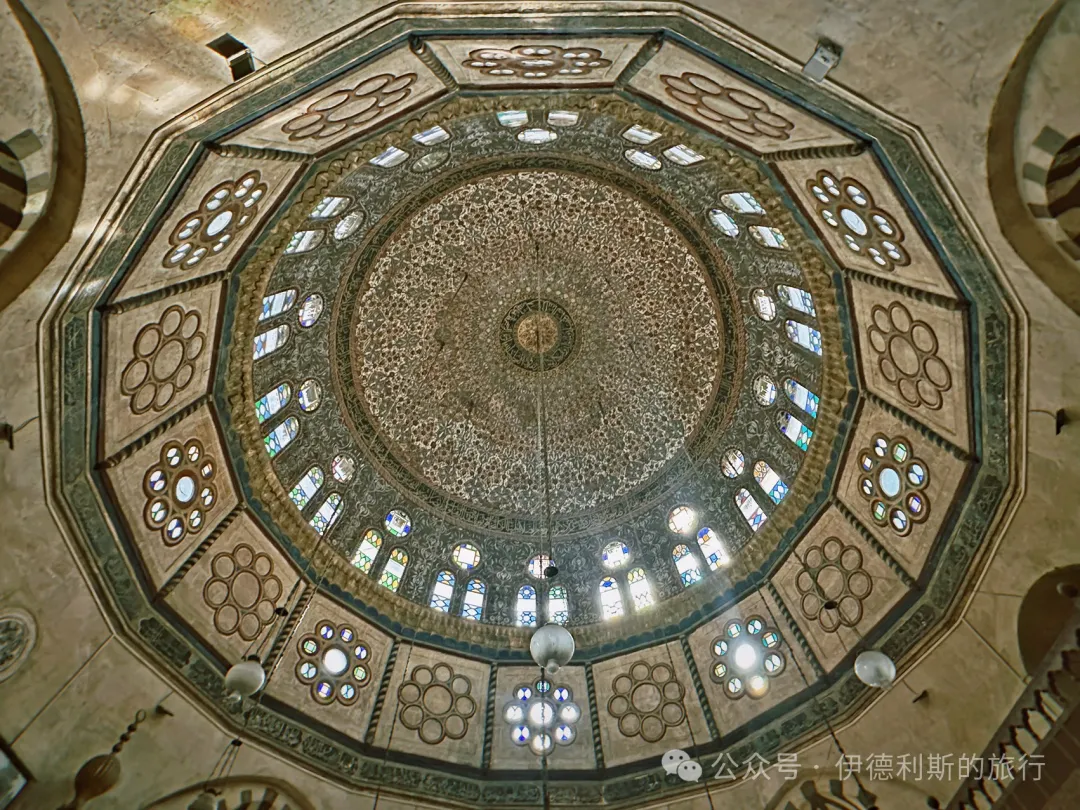
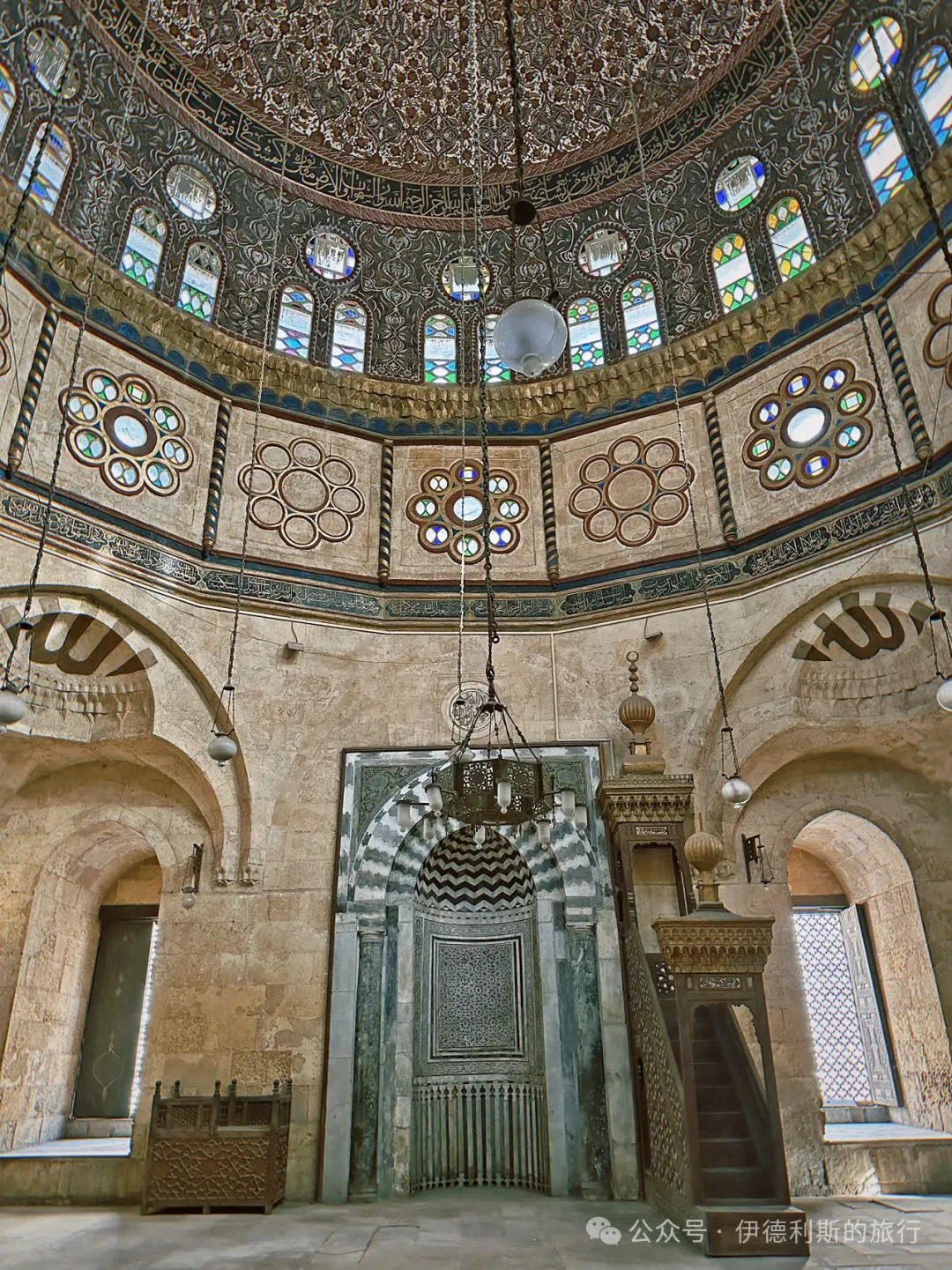
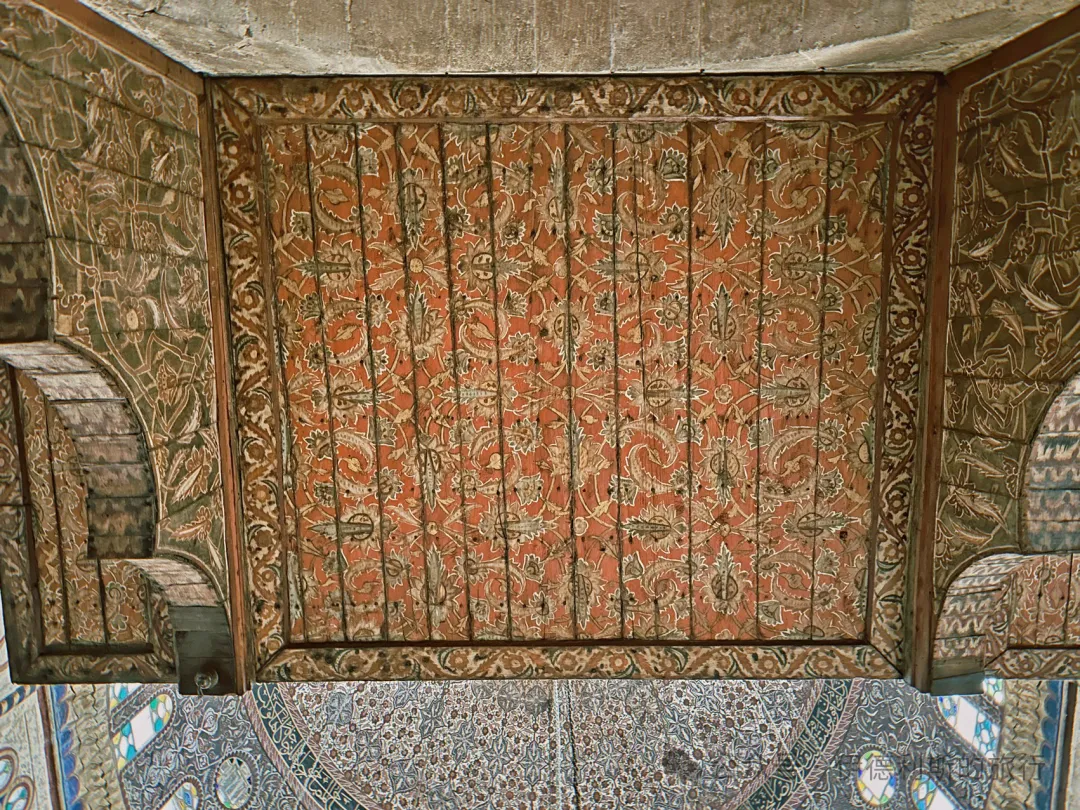
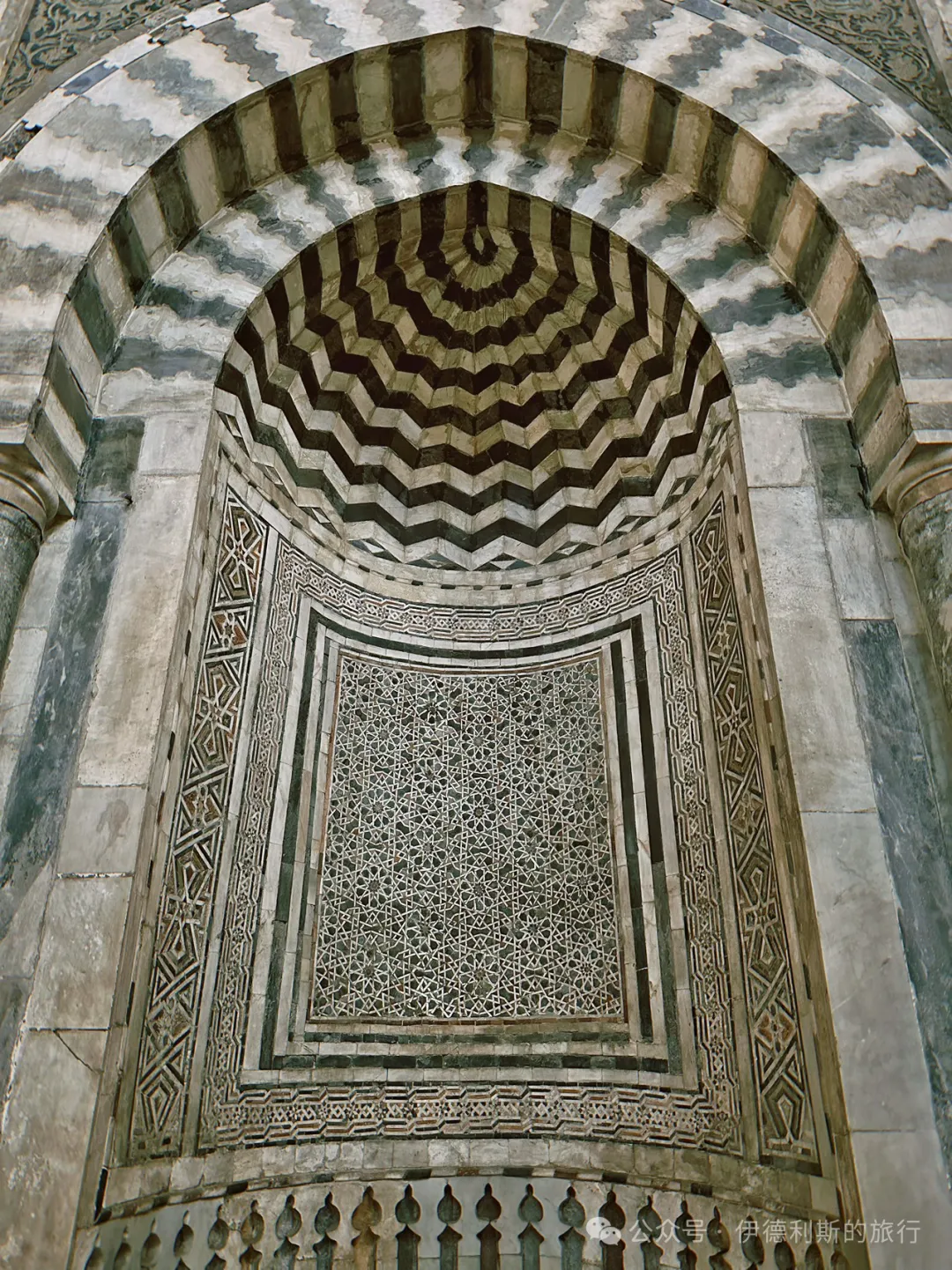
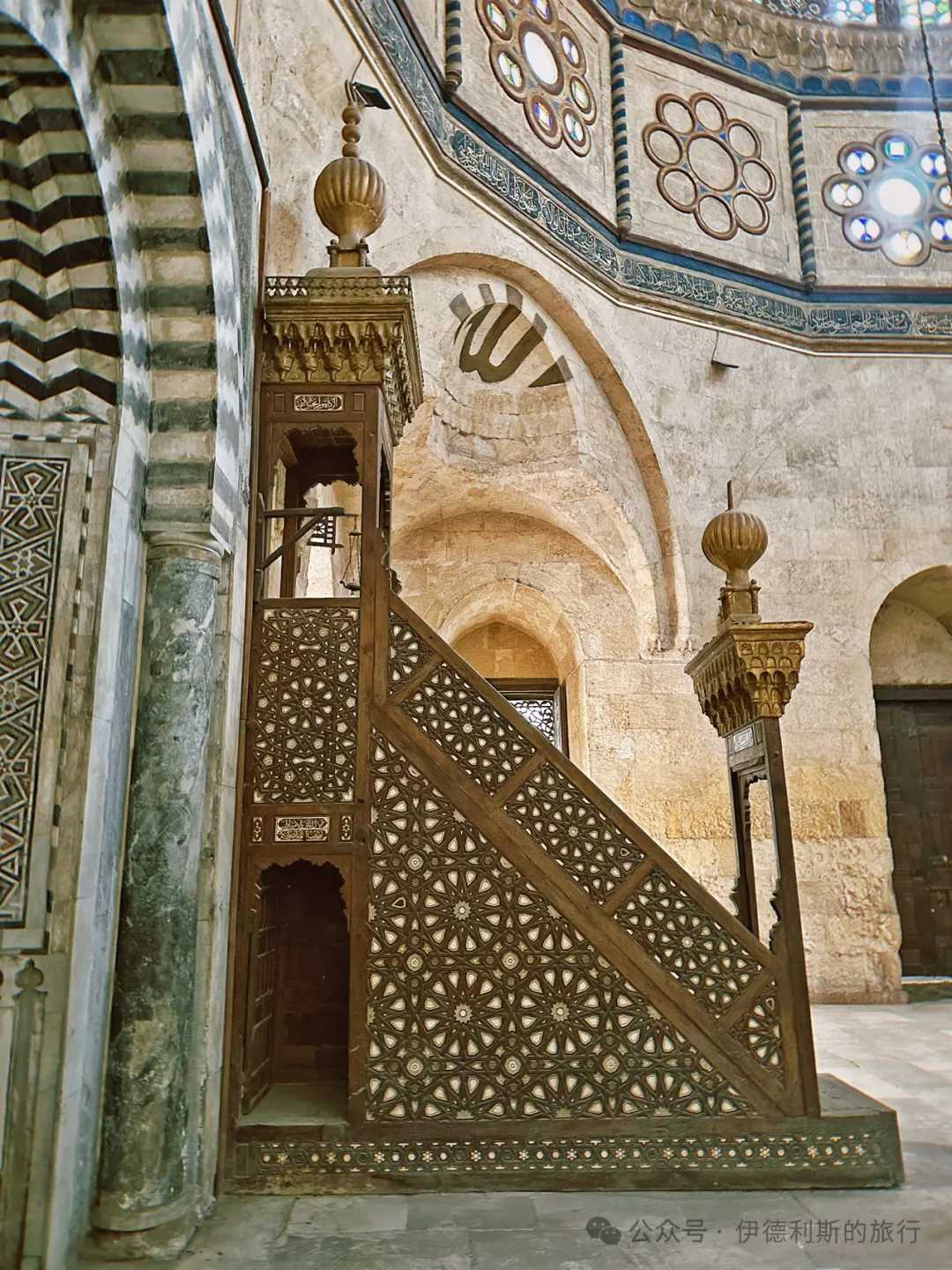
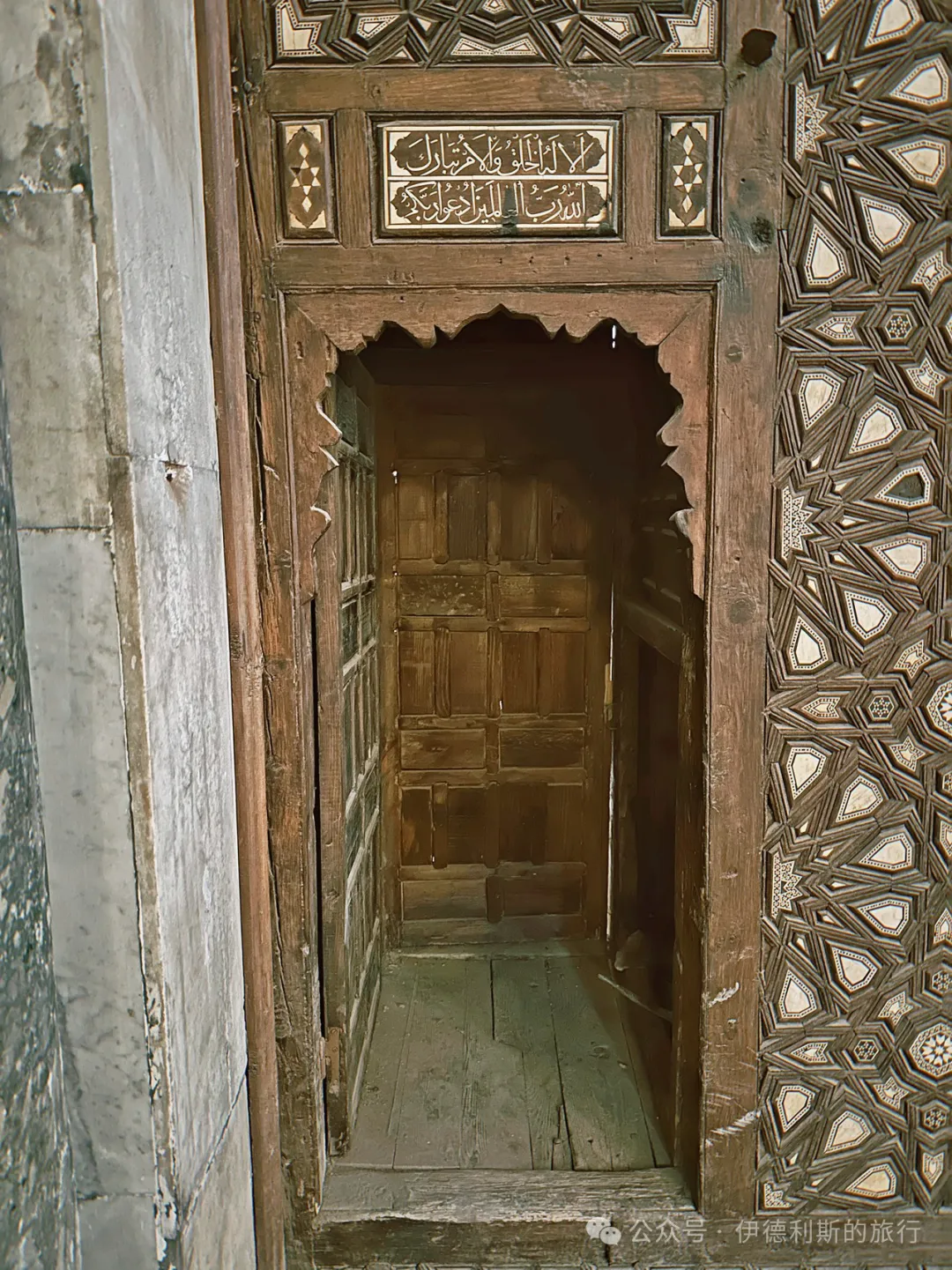
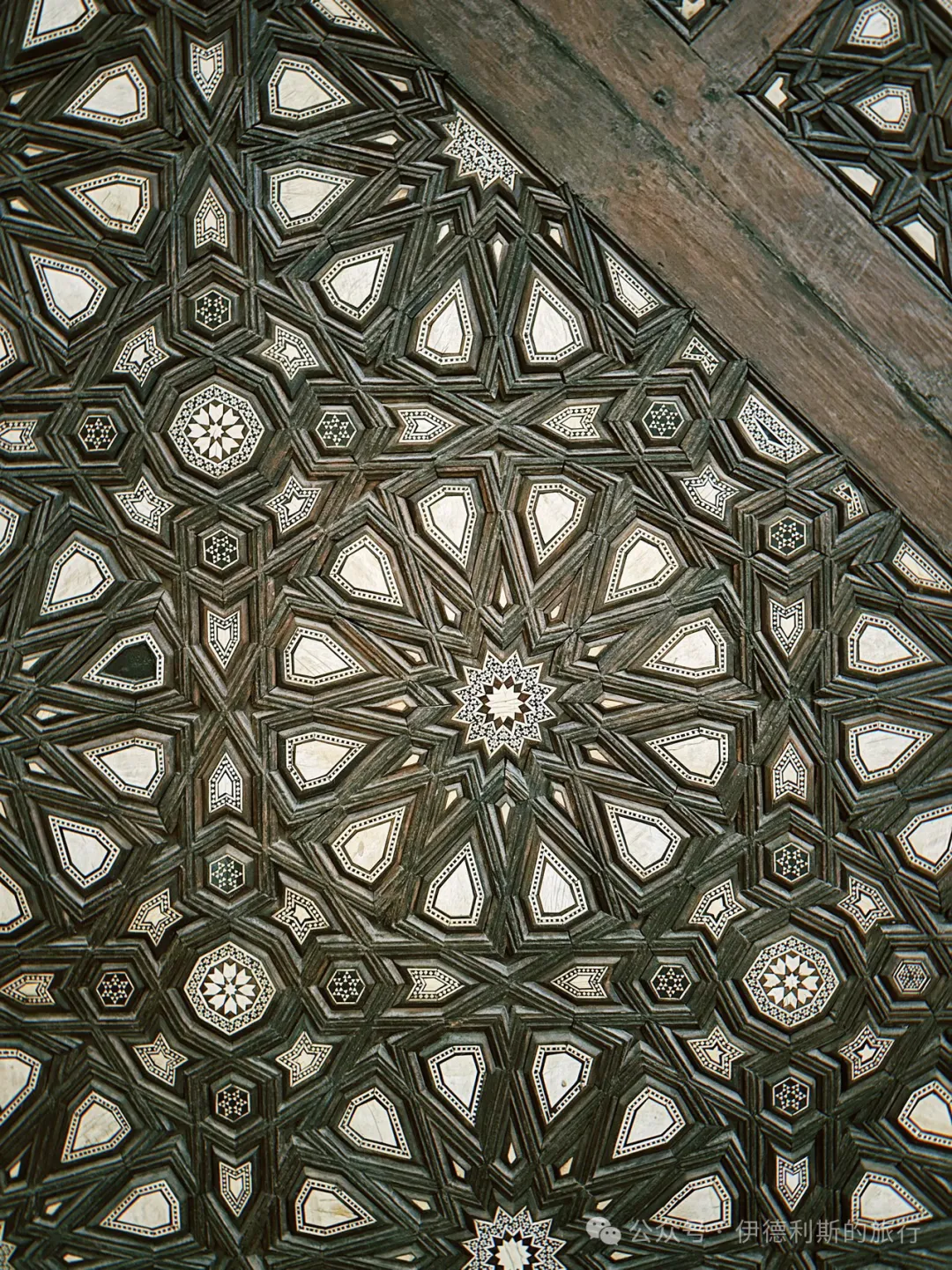
The prayer niche (mihrab) and the pulpit (minbar) of Abu al-Dhahab Mosque feature Mamluk-style decorations inlaid with mother-of-pearl and marble.
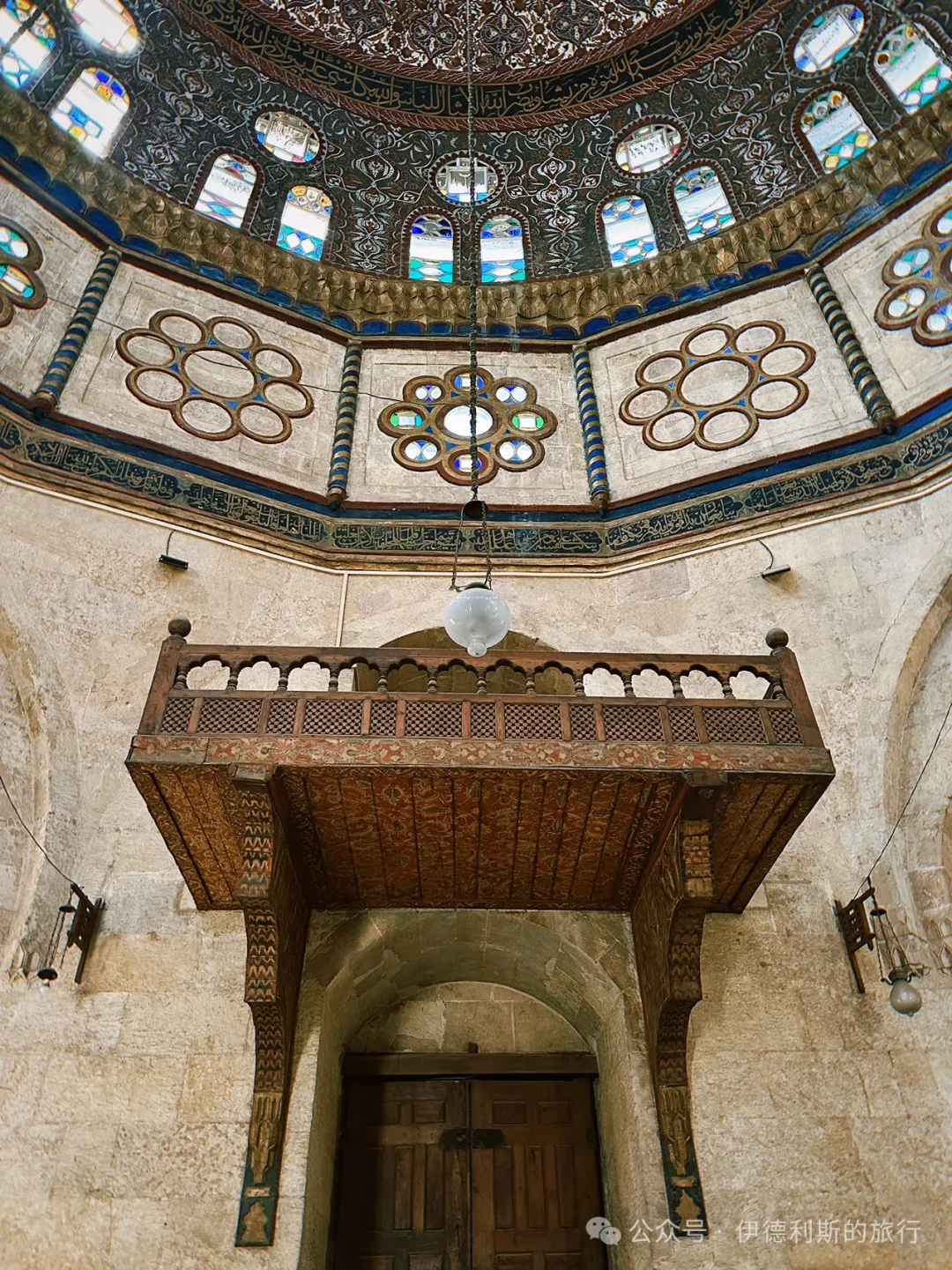
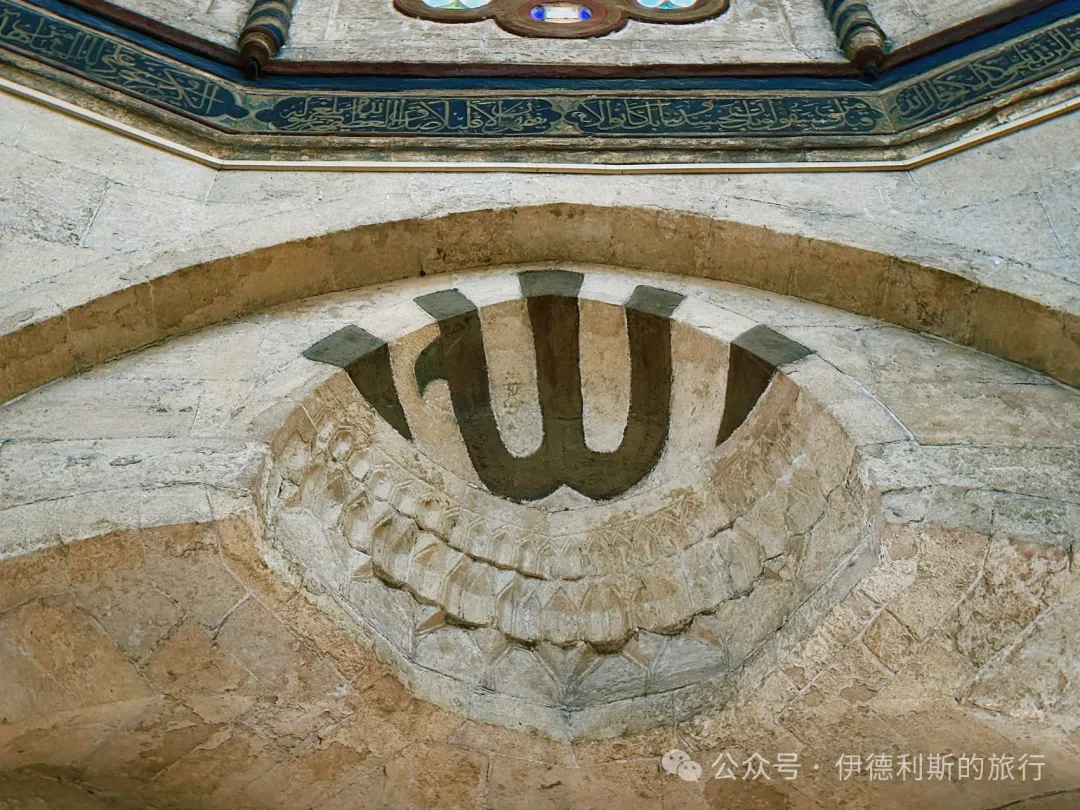
Al-Muayyad Mosque: 1415
Right next to the south gate of the old city of Cairo is the Sultan Al-Mu'ayyad Mosque, built between 1415 and 1421 by the Mamluk Sultan Al-Mu'ayyad Shaykh (reigned 1412-1421). This site was originally a prison, and legend says Sultan Al-Mu'ayyad was held here when he was young. At the time, he suffered greatly from fleas and lice, so he made a dua that if he ever became Sultan, he would turn the site into a place for teaching and learning. This wish later came true.
With the Sultan's funding, the madrasa inside the Sultan al-Mu'ayyad Mosque became one of Cairo's most famous academic institutions in the 15th century. The large endowment left after the Sultan passed away allowed the school to hire the most brilliant scholars of the time. Ibn Hajar 'Asqalani, the most famous authority on Islamic jurisprudence in Egypt, taught Shafi'i law here.
The madrasa at the Sultan al-Mu'ayyad Mosque taught the four schools of Islamic law: Hanafi, Shafi'i, Maliki, and Hanbali. According to mosque records, the school could accommodate 50 Hanafi students, 40 Shafi'i students, 15 Maliki students, and 10 Hanbali students, along with their teachers and imams. There were also two classes with 20 students each dedicated to studying Quranic exegesis and Hadith.
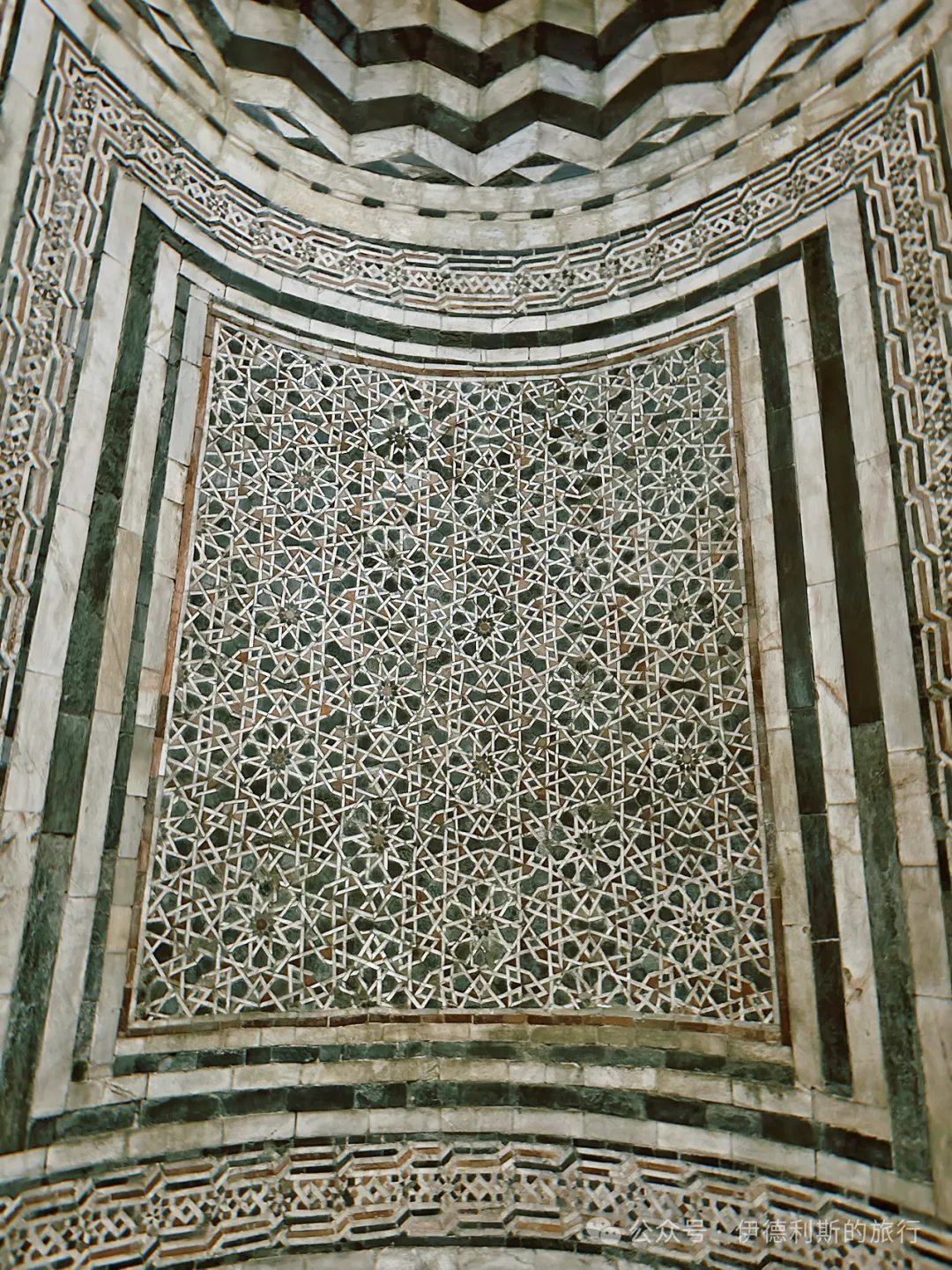
The Sultan al-Mu'ayyad Mosque is the last large hypostyle mosque in Cairo. It originally had four facades, but today only the east side and the main prayer hall remain from the original structure. The mosque's main gate is known as the last grand gate of the Mamluk dynasty. It is decorated with beautiful geometric marble patterns, Kufic calligraphy, and complex stucco carvings.
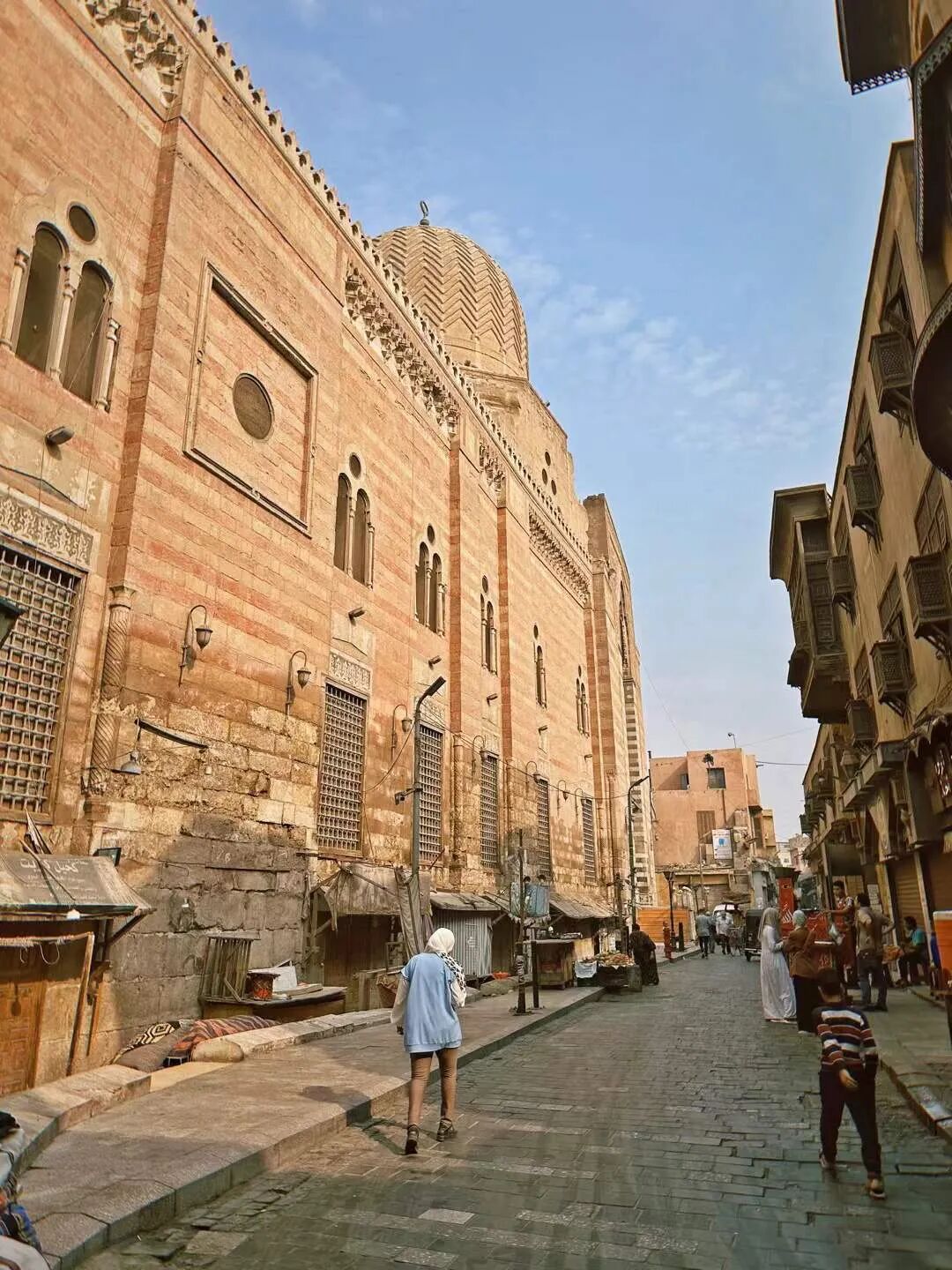
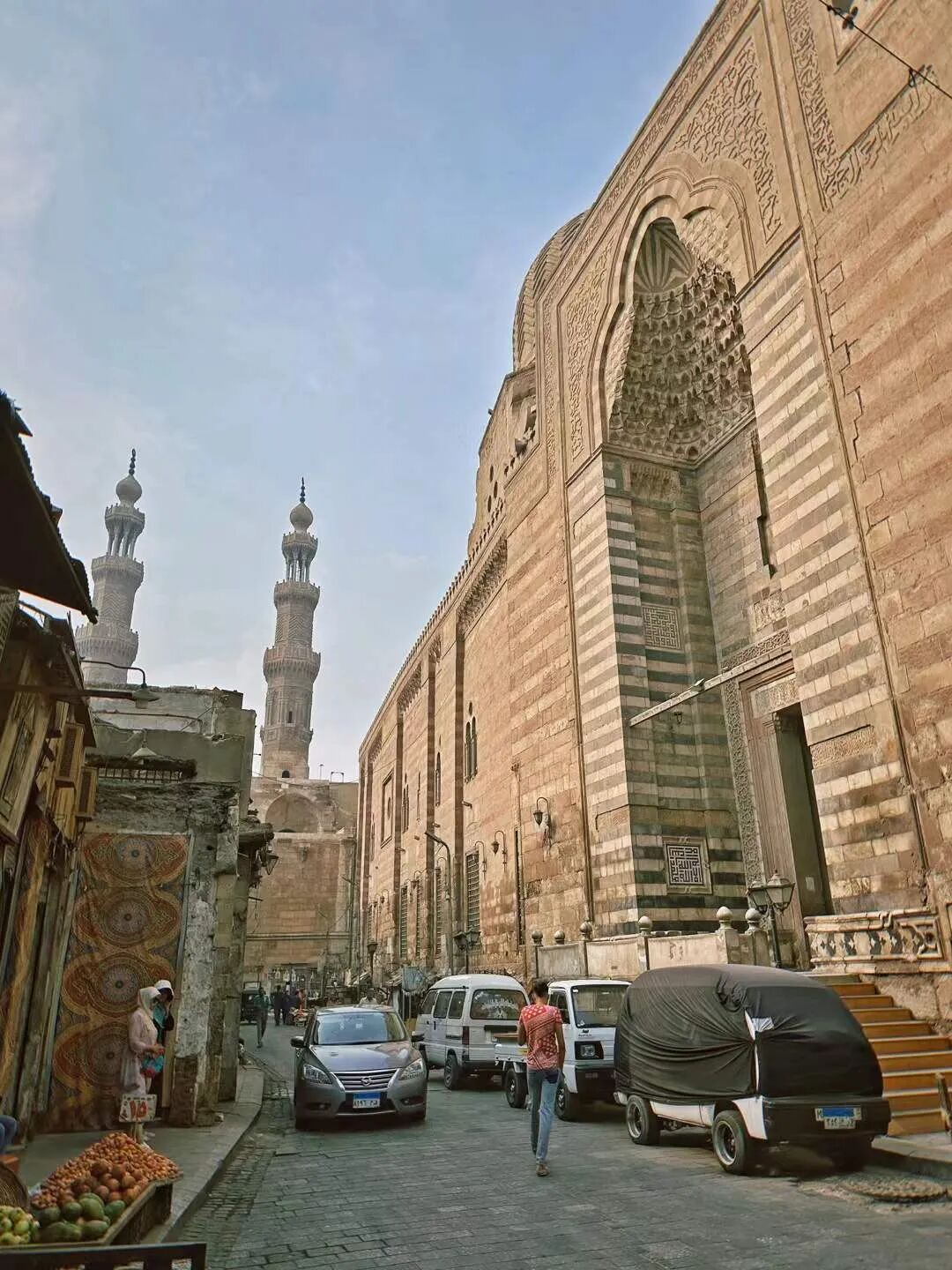
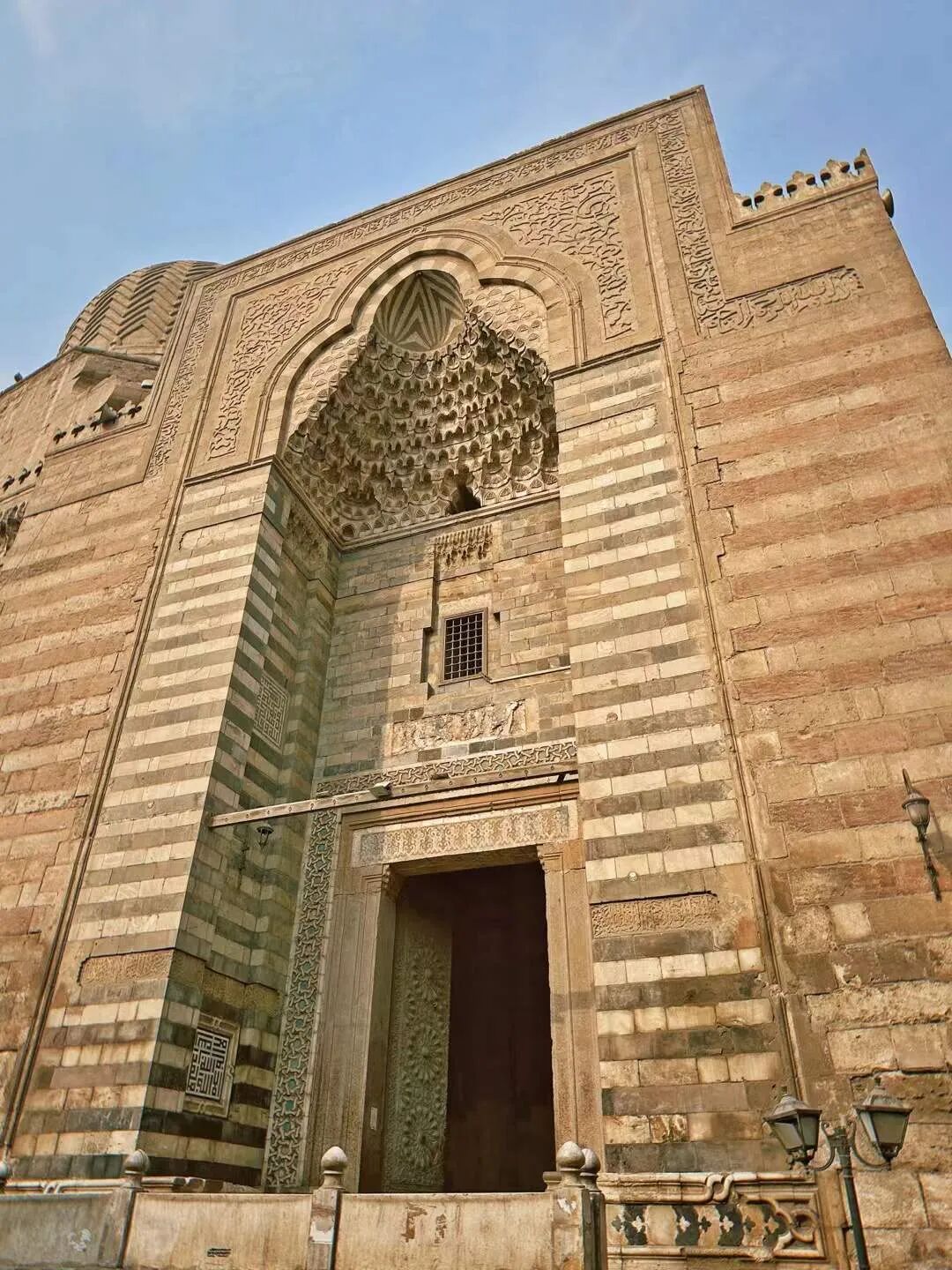
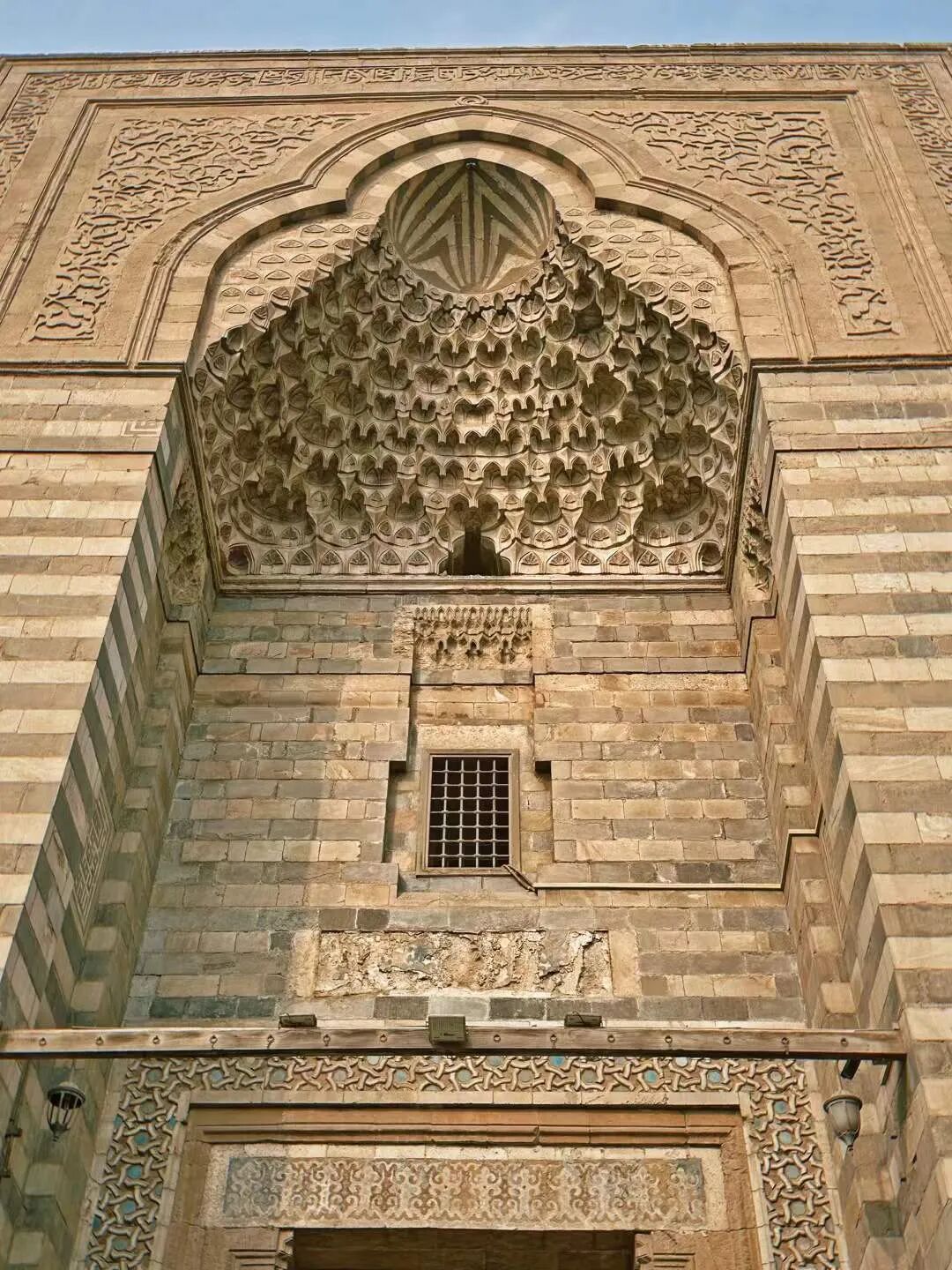
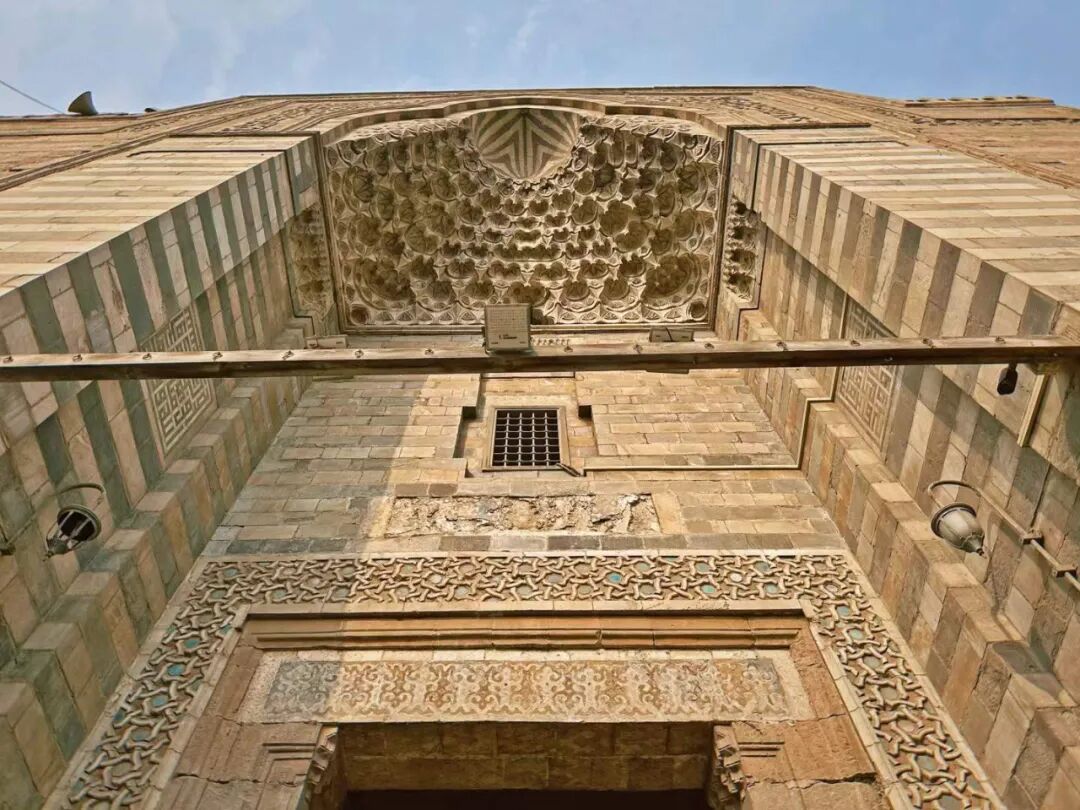
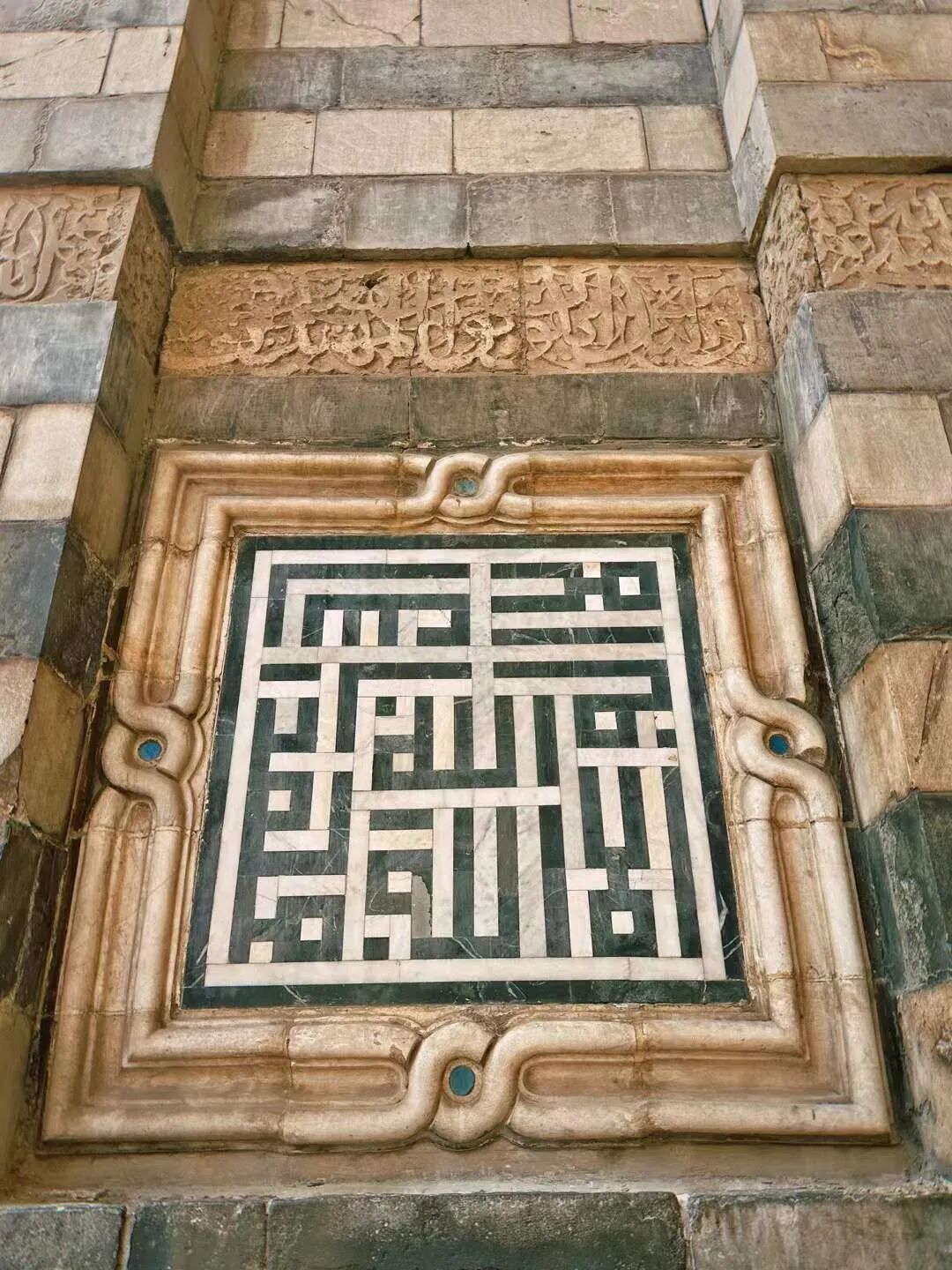
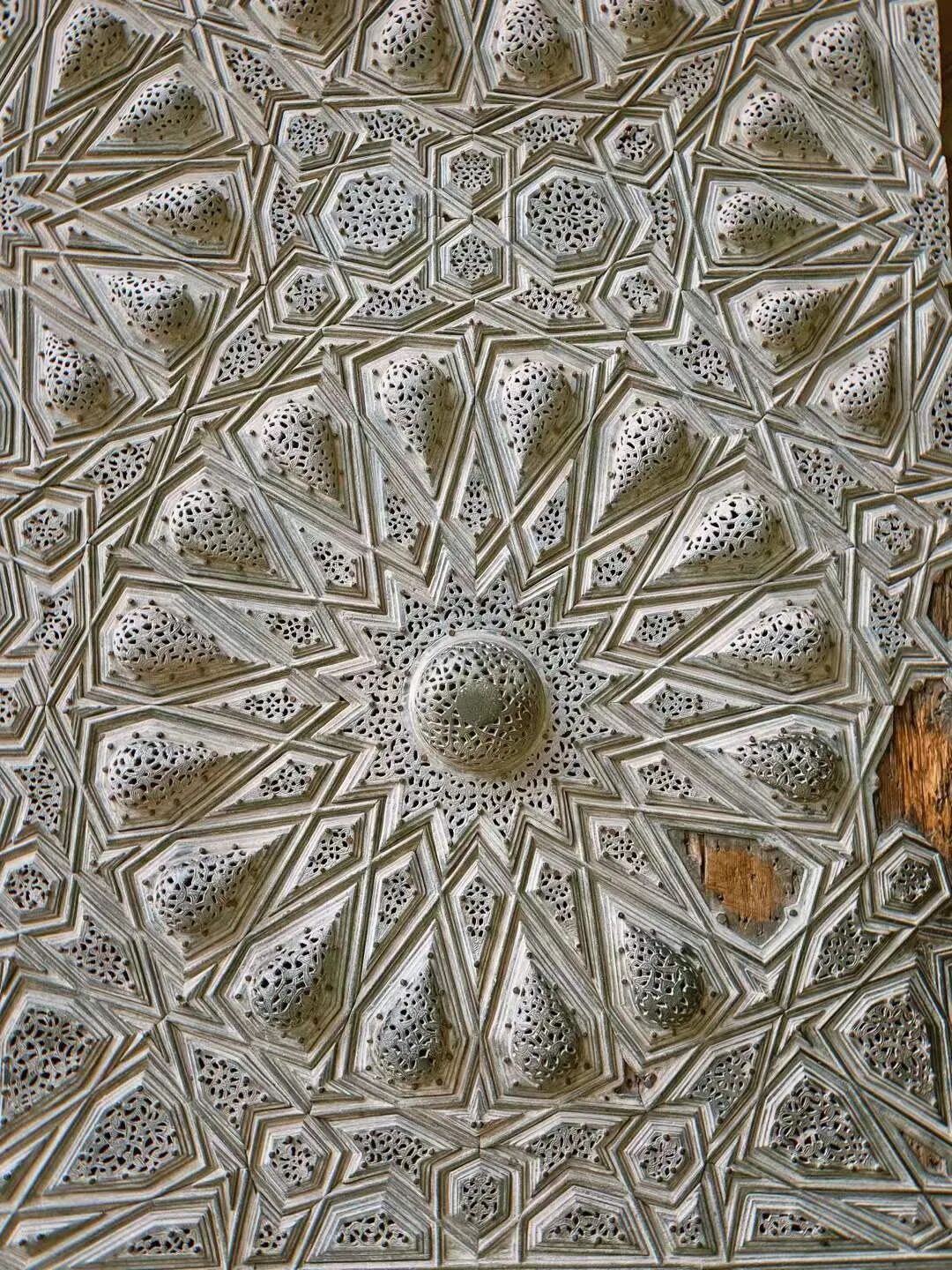
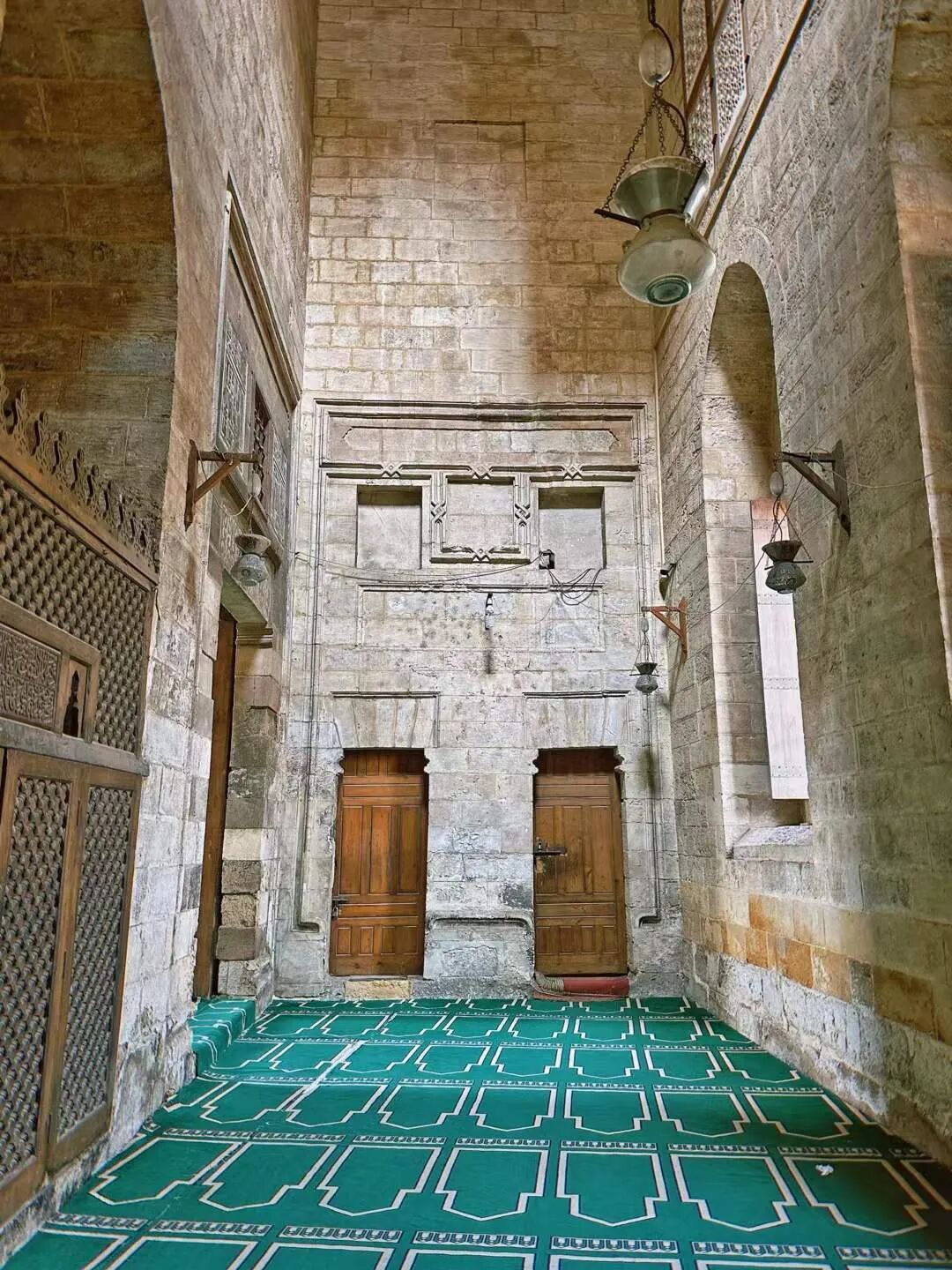
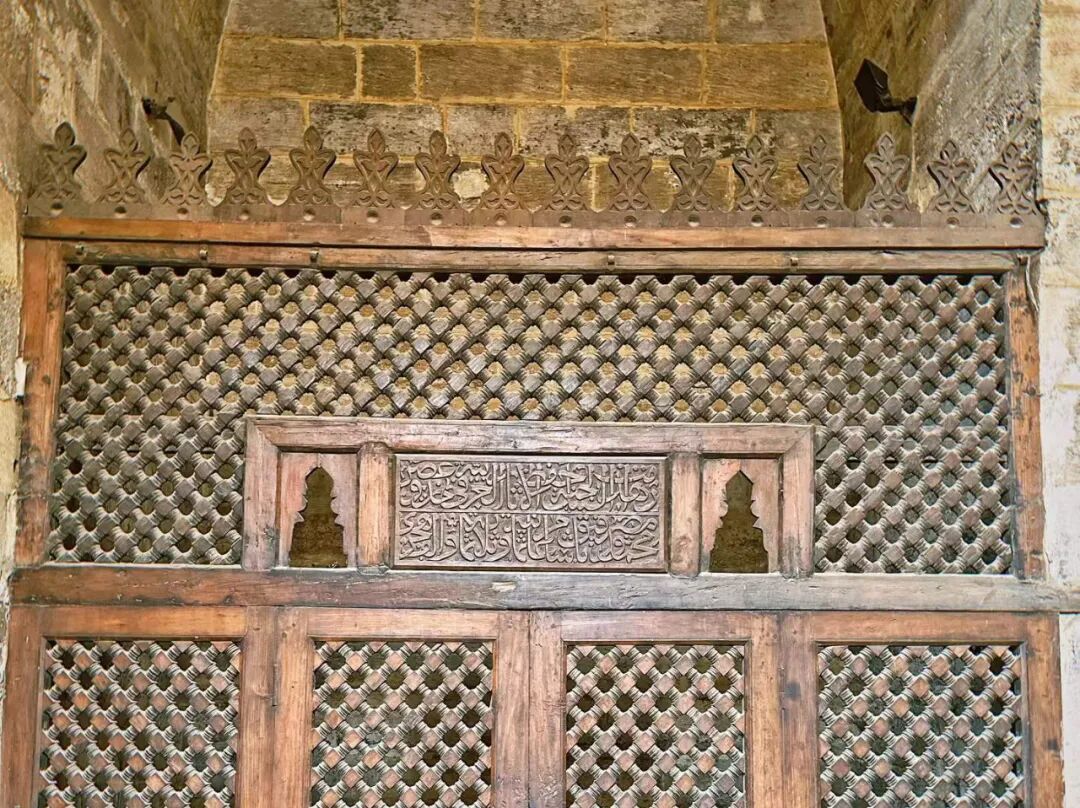
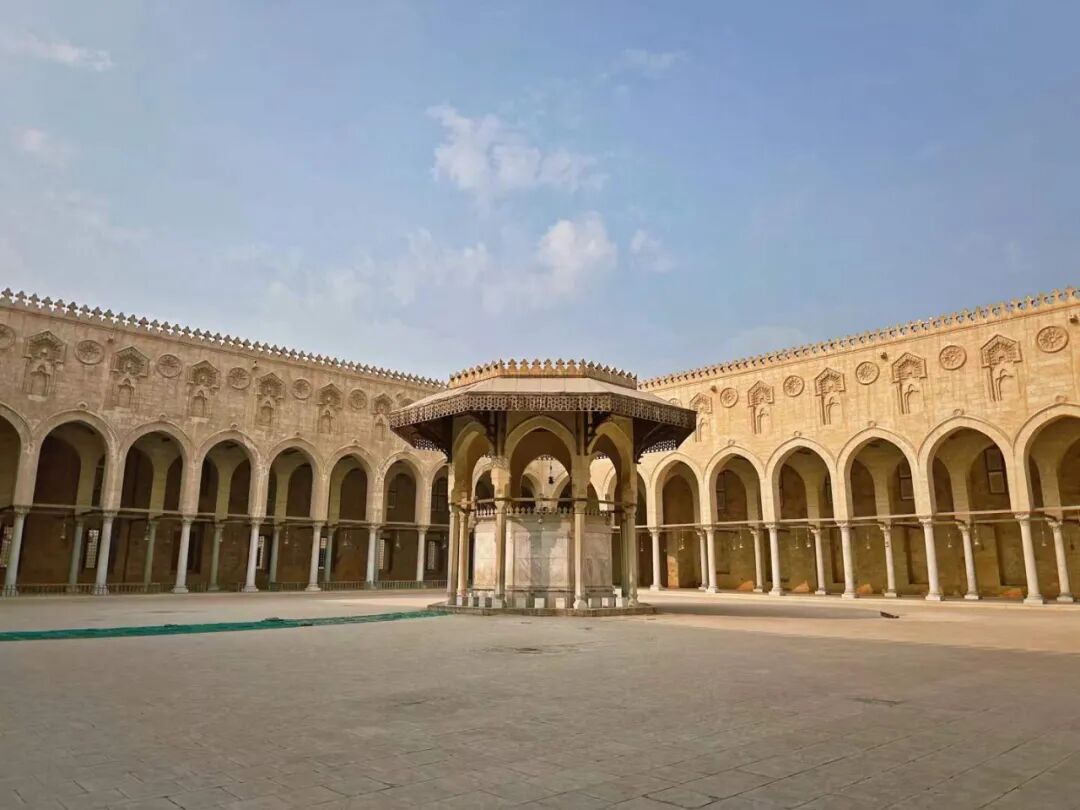
The main prayer hall of the Sultan al-Mu'ayyad Mosque was one of the most ornate in Egypt at the time, and the qibla wall is decorated with colorful marble. The supporting stone columns were collected from Cairo and the surrounding areas, and they likely date back to the pre-Islamic era. The circular colorful marble decoration above the mihrab is also very unique, as this style was almost always used for floors rather than walls. Turkish tiles were added to the qibla wall in the 1840s, but they were removed to restore the original design during a 2001 renovation.
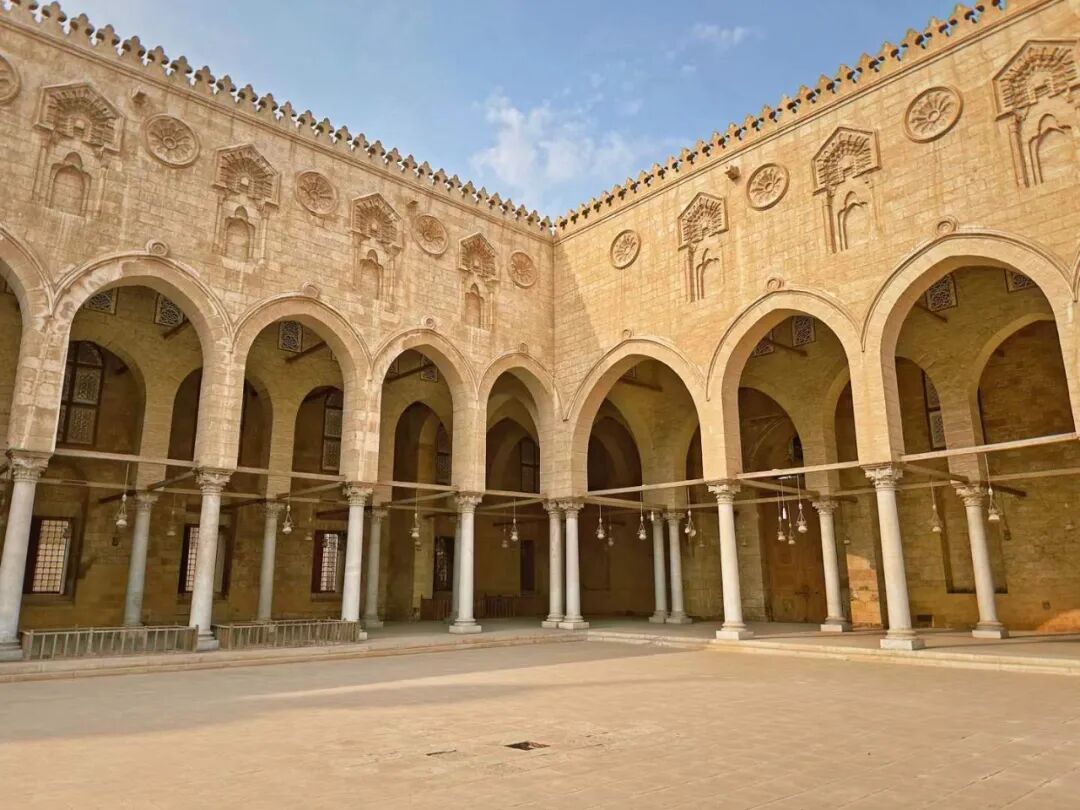
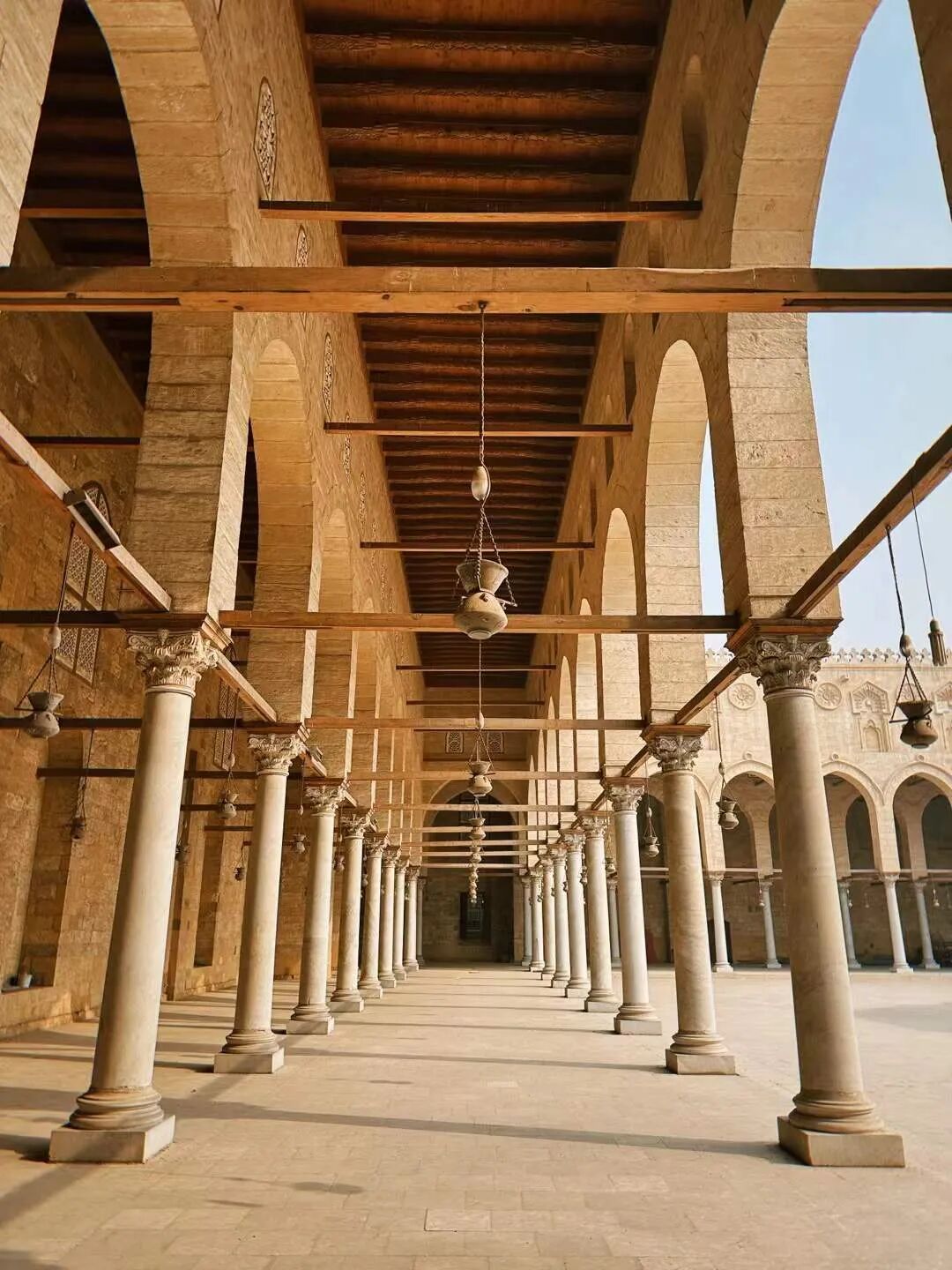
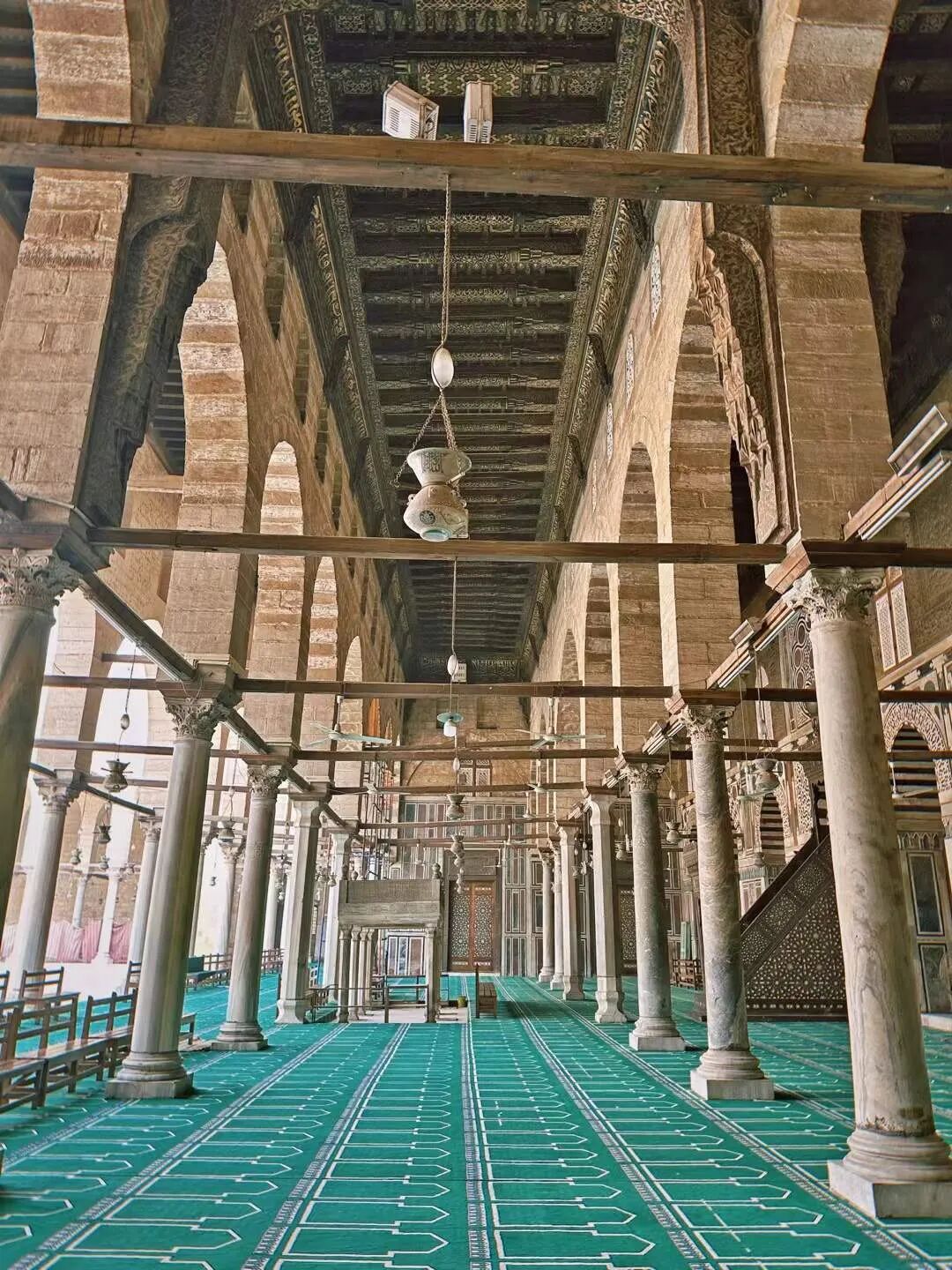
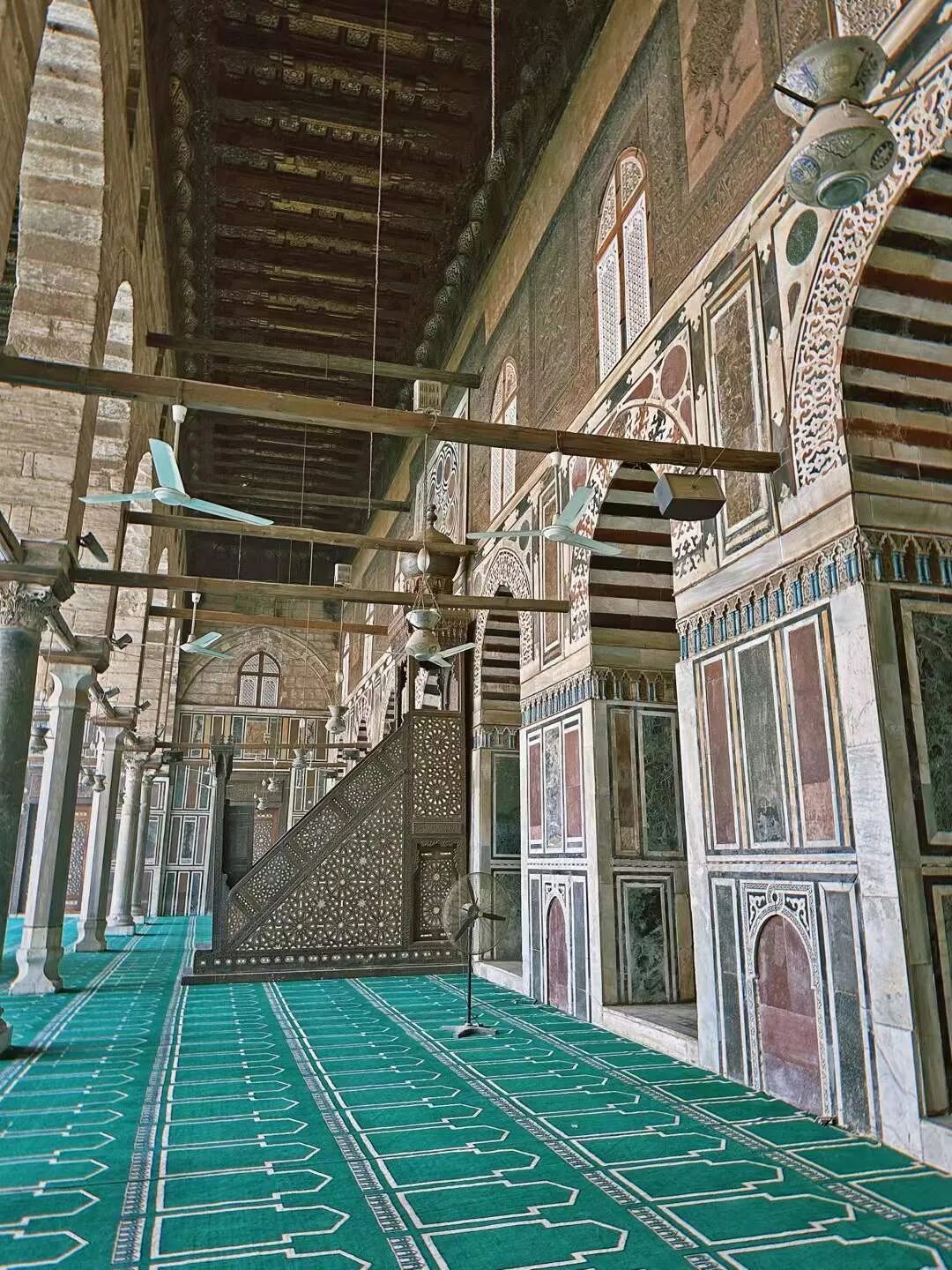
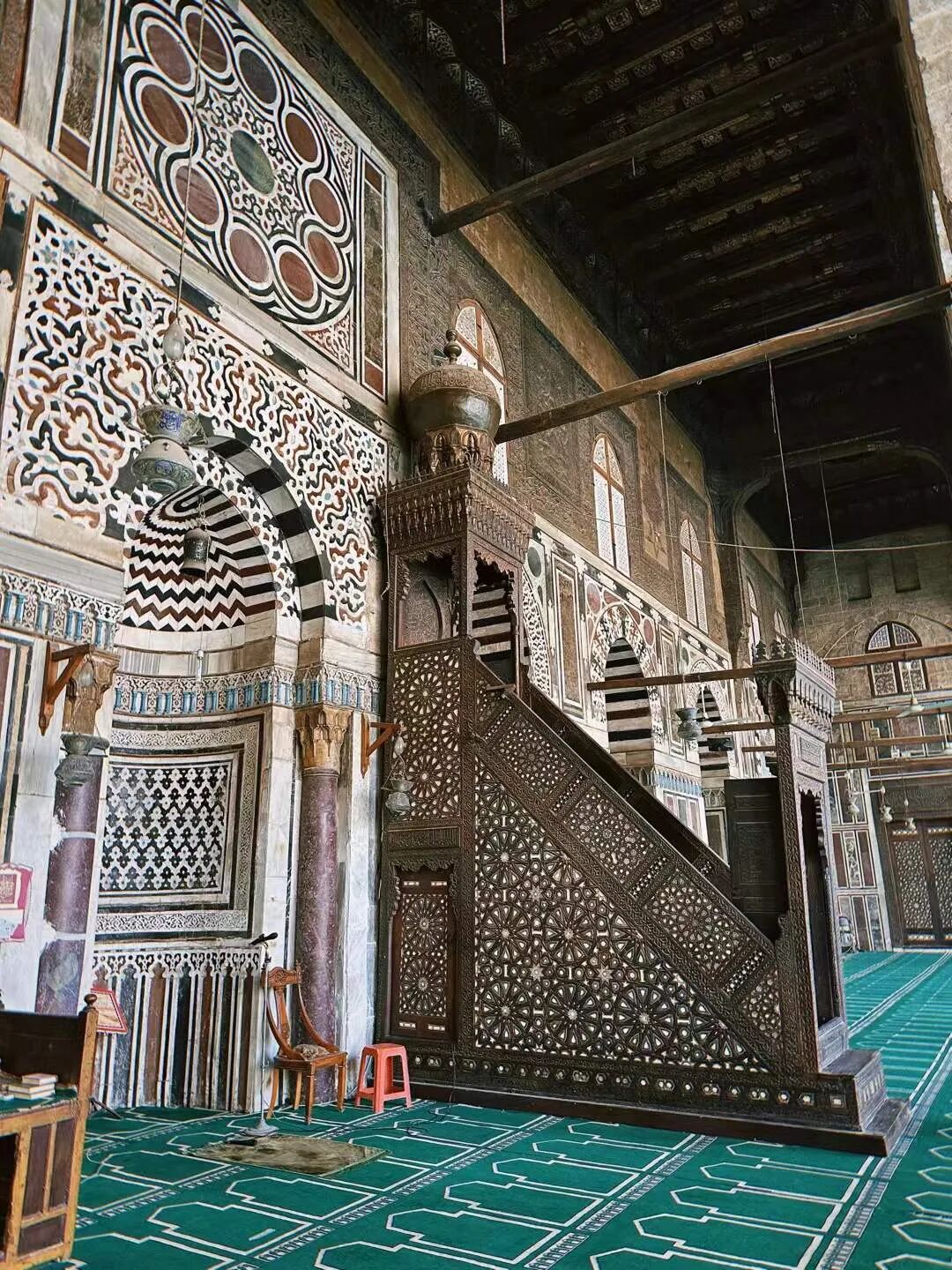
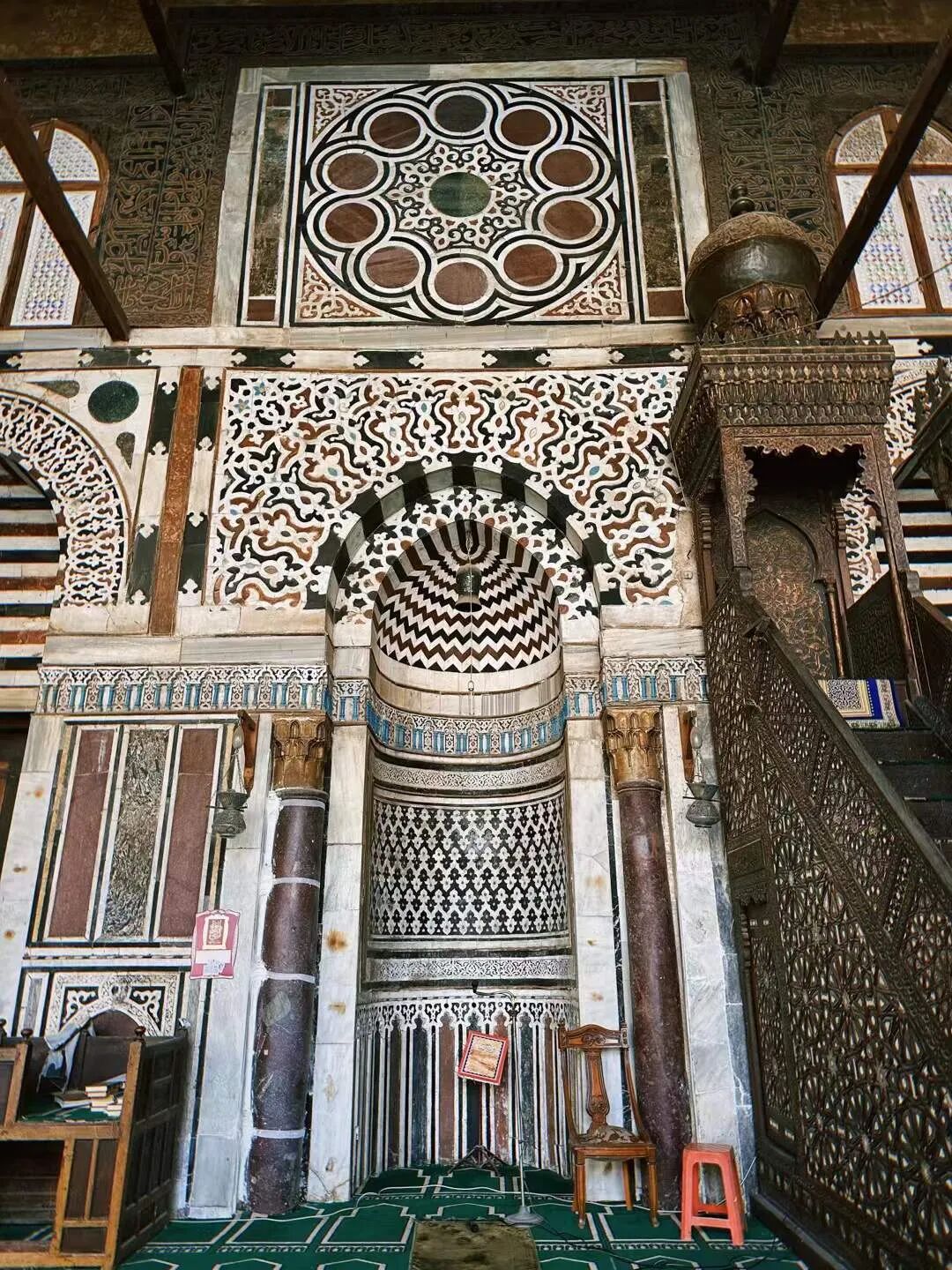
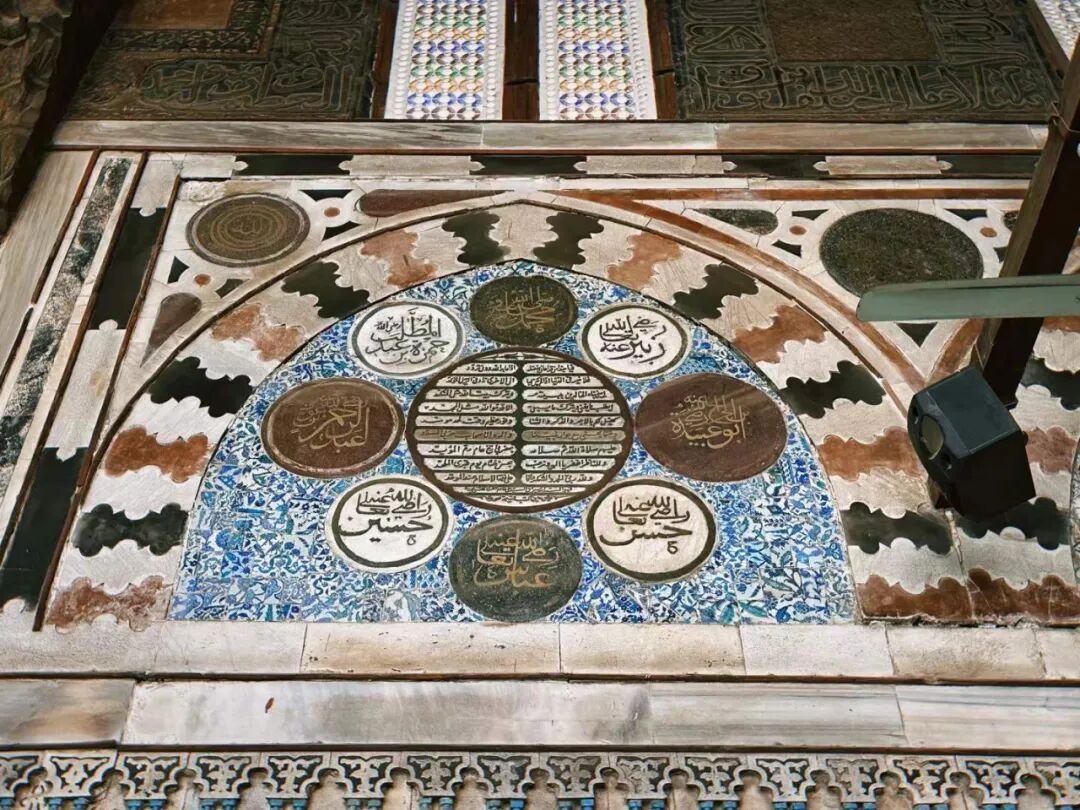
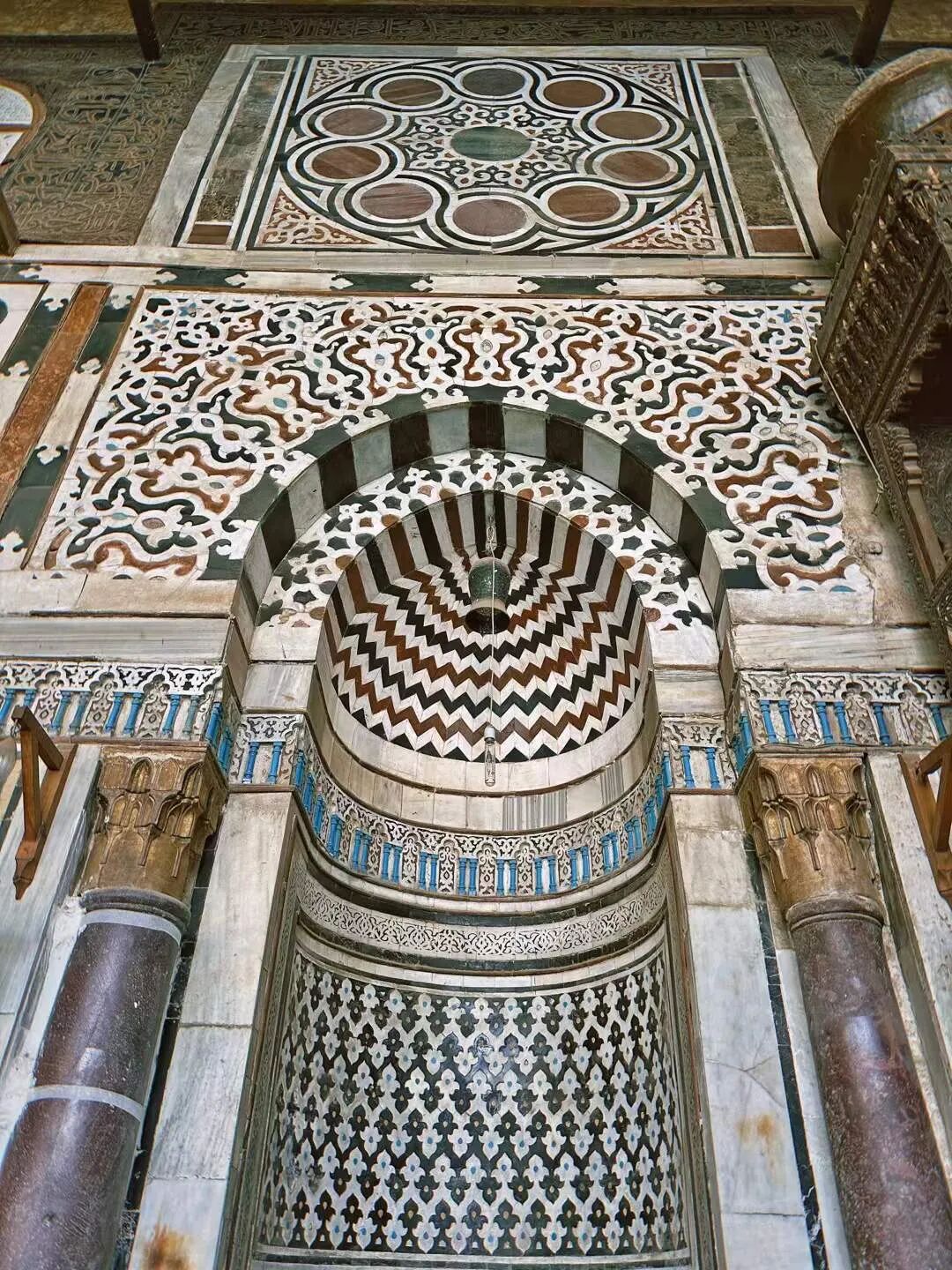
The Sultan al-Mu'ayyad Mosque features exquisite wood carvings from the Mamluk period, including the minbar, wooden doors, and ceilings.
Summary: This first part of the Cairo mosque journey begins with early landmarks such as Al-Hakim Mosque and Al-Aqmar Mosque. It preserves the source's mosque names, founding years, dynastic context, street route, architectural details, and photographs.
Al-Hakim Mosque: 1013
Al-Aqmar Mosque: 1125
Al-Ashraf Mosque: 1424
Al-Azhar Mosque: 972
Al-Hussein Mosque: built in 1154, rebuilt in 1874
Abu al-Dhahab Mosque: 1774
Al-Muayyad Mosque: 1415
Al-Salih Tala'i Mosque: 1160
Mahmud al-Kurdi Mosque: 1395
Qijmas al-Ishaqi Mosque: 1480
Mosque of Ahmad al-Mihmandar: 1324
Mosque of Amir Altinbugha al-Mardani: 1338
Mosque of Umm al-Sultan Sha'ban: 1368
Blue Mosque: 1347
Sayyida Fatima Mosque: 18th-century expansion
Khayrbak Mosque: 1519
Sultan Hasan Mosque: 1356
Rifa'i Mosque: 1869.
Ibn Tulun Mosque: 876.
Taghribirdi Mosque: 1440
Shaykhu Mosque: 1349
Qanibay al-Muhammadi Mosque: 1413
Al-Hakim Mosque: 1013
Right next to the north wall of Old Cairo is the Al-Hakim Mosque. It is named after the sixth caliph of the Fatimid dynasty, who was also the 16th imam of the Ismaili branch of Shia Islam, Al-Hakim bi-Amr Allah (reigned 996-1021). The Al-Hakim Mosque was started in 990 by the fifth Fatimid Caliph, al-Aziz Billah (reigned 975-996), and finished in 1013 by Caliph al-Hakim. It is now 1,012 years old.
The mosque originally sat outside the Cairo city walls, but it was brought inside after the walls were rebuilt in 1087. Its architectural style is similar to the Al-Azhar Mosque, but it is twice as large. The most striking features are the two minarets built on square brick bases. When the minarets were first built in 1003, they were separate structures. They were not encased in brick until 1010. Some scholars suggest this change relates to 1010, when the ruler of Mecca rejected Fatimid authority, weakening the dynasty's power. The outer wall of the southern brick base has Fatimid-era marble carvings in Kufic script. Because the northern base was incorporated into the northern wall of Old Cairo in 1087, its Kufic carvings were moved to the outside of the city wall.
During the Crusades, the Franks used the mosque as a prison. Later, Saladin used it as a stable. It was repaired during the Mamluk period in the 14th century, but it eventually fell into ruin for a long time. The mosque was repaired in 1808, and a small, colorful marble mihrab added during that time still exists today.
In the 20th century, the mosque served as a school until 1980, when the Dawoodi Bohra branch of Shia Islam carried out a massive reconstruction and renovation using white marble. Inside the main hall after the reconstruction, only the original plaster carvings, wooden beams, and scripture remained. This restoration was criticized by scholars for being 'inauthentic' and sparked widespread debate. In 2017, the Dawoodi Bohra community and the Egyptian Ministry of Tourism and Antiquities launched a new round of repairs, and the mosque did not reopen until February 2023.
Al-Aqmar Mosque: 1125
Walking south from the Al-Hakim Mosque along Al-Mu'izz Street, the main road of Old Cairo, you can see the famous Fatimid-era Aqmar Mosque. The Aqmar Mosque was built in 1125-1126 by order of the Fatimid vizier Al-Ma'mun al-Bata'ihi. It sat at the northeast corner of the Fatimid Eastern Palace, right next to the palace grounds.
The Aqmar Mosque is a landmark in Egyptian architectural history. It was the first mosque with a main entrance aligned with the street rather than the qibla wall, meaning it was the first planned according to Cairo's street layout. It was also the first to feature complex stone carvings. The facade of the Aqmar Mosque is very luxurious. Above the entrance is a medallion surrounded by a grille, with the names of the Prophet and Ali in the center and scripture around it—a unique decoration in Cairo.
At the top of the left facade are carvings of doors and windows. The window on the left symbolizes the ceremonial grille the Fatimids took back from the palace of their rivals, the Abbasids in Baghdad, representing victory. Inside the window are a lamp and a six-pointed star, based on the Shia hadith: 'The star is a promise to the world, and it will not be submerged.' Below the window are carvings of plants growing from a flower pot, referencing the Prophet's words about Hasan and Husayn: 'My two fragrant herbs in the world.' The door in the upper right corner comes from the famous Shia hadith: 'I am the city of knowledge, and Ali is its gate.'
Because it was near the Fatimid palace, the Aqmar Mosque originally had no minaret. One was added by the Mamluk dynasty at the end of the 14th century, and the cylindrical top was rebuilt during the Ottoman period.
In 1993, the Dawoodi Bohras branch of Shia Islam carried out a large-scale renovation of the Aqmar Mosque. Most of the historical elements inside the main hall were not preserved, which led to criticism.
Al-Ashraf Mosque: 1424
The Ashraf Mosque (Al-Ashraf Mosque) was built in 1424 by the Mamluk Sultan Al-Ashraf Barsbay, who reigned from 1422 to 1438. The complex includes a main prayer hall, a school, a tomb, and a Sufi lodge (khanqah). It features a dome with geometric carvings, which is an early example of decorative dome carving.
Barsbay was once a Mamluk slave of Sultan Barquq and later served as a tutor to the young Sultan Muhammad. With support from the governor of Damascus and other emirs, Barsbay deposed the young sultan in 1422 and took the throne himself.
Barsbay’s 16-year reign was a time of relative safety and stability for the Mamluk Sultanate, with almost no wars. He was very generous to the poor and to Sufis, and he carried out a series of administrative reforms.
People called Barsbay the Merchant Sultan because he placed great importance on trade. He took steps to strengthen control over the Mediterranean and Red Seas, diverted Indian Ocean trade routes through Jeddah, and created state monopolies on sugar and pepper. He lowered tariffs to attract merchants and monopolized most of the trade from the East, which angered many European powers.
Al-Azhar Mosque: 972
In 969 AD, the Shia Ismaili Fatimid dynasty conquered Egypt and began building their new capital, Cairo. At that time, the densely populated Sunni city of Fustat already existed south of Cairo, so the new city became the center for the Shia Ismaili faith.
After two years of construction, the first Friday mosque (Jami) in Cairo opened in 972 and was named the Cairo Mosque (Jami al-Qahira) after the city. The Cairo Mosque was later renamed the Al-Azhar Mosque (al-Jami al-Azhar), with Al-Azhar meaning the Radiant.
After the Al-Azhar Mosque opened, the Ismailis moved from secret to public preaching. The mosque's first chief judge, Qadi al-Numan, became the founder of Ismaili law and the author of the authoritative Ismaili text, The Pillars of Islam (Kitab da'a'im al-Islam).
The main hall of the Al-Azhar Mosque is a columned hall. The marble columns in the four rows of arcades came from ruins of the Pharaohs, ancient Rome, and the Copts, and they were leveled using bases of different heights.
The roof of the main hall originally had three domes, but none survived later renovations. The original mihrab was rediscovered in 1933, and the niche still preserves ornate stucco carvings from the Fatimid period.
Several Fatimid caliphs expanded and renovated the Al-Azhar Mosque. Caliph al-Hafiz, who reigned from 1132 to 1149, carried out a major renovation in 1138. The four-centered arches in the courtyard and the dome at the entrance to the main hall date from this time. The stucco carvings in the courtyard also come from this period, though they were renovated again in 1891.
In 1171, Saladin overthrew the Fatimid dynasty and established the Sunni Ayyubid dynasty. The Friday prayers for Cairo moved to the Hakim Mosque in the north of the city, and the Al-Azhar Mosque was neglected because it had been the center of the Ismaili faith. Saladin removed the silver bands from the mihrab niche of the Al-Azhar Mosque that bore the names of the Fatimid caliphs and destroyed all the Ismaili manuscripts kept in the mosque.
It was not until 1266 that the Mamluk Sultan Baybars, who reigned from 1260 to 1277, restored Friday prayers at the Al-Azhar Mosque and repaired the building. The Ayyubid dynasty followed the Shafi'i school of law, which held that a community should have only one main Friday mosque. The Mamluk dynasty followed the Hanafi school, which did not have this rule.
The Mamluk dynasty left two grand minarets at Al-Azhar Mosque: the Qaytbay minaret and the twin minarets of Al-Ghuri, along with the Qaytbay Gate. The Qaytbay minaret was built in 1483 or 1495 and features three balconies decorated with ornate carvings. The Qaytbay Gate was built in 1495 and leads directly into the courtyard. Both are exquisite examples of late Mamluk architecture. During the reign of Sultan Qaytbay (1468-96), the Mamluk dynasty was politically and economically stable and won several military victories against the Ottoman Empire. The Sultan was very interested in art and architecture and sponsored as many as 230 buildings.
In 1509, the Mamluk Sultan Al-Ashraf Qansuh al-Ghuri (reigned 1501-16) built the twin minarets of Al-Ghuri. Al-Ghuri was the last powerful ruler of the Mamluk dynasty. He was eventually defeated by the Ottoman Empire and fell on the battlefield in Syria.
In 1517, the Ottoman Empire conquered the Mamluk dynasty and occupied Egypt, causing the status of Al-Azhar Mosque to decline once again. It was not until after the 18th century, when the Mamluk elite regained influence in Egypt, that renovations and expansions of Al-Azhar Mosque continued.
In 1749, Abd al-Rahman was appointed as the head of the guards (Katkhuda). In 1753, he oversaw the construction of three Ottoman-style gates for Al-Azhar Mosque: the Barbers' Gate (Bab al-Muzayinīn), the Gate of the Upper Egyptians (Bab al-Sa'ayida), and the Soup Gate (Bab al-Shurba). Outside the Barbers' Gate was where students got their hair cut, 'Sa'ayida' means people from Upper Egypt, and the Soup Gate was where students went to get soup. From then on, the Barbers' Gate became the main entrance to Al-Azhar Mosque.
Abd al-Rahman also doubled the size of the main prayer hall of Al-Azhar Mosque to the south and added a new mihrab, giving the hall its current shape. After Abd al-Rahman died in 1776, he was buried inside Al-Azhar Mosque, becoming the last person in history to be buried there.
After the 18th century, Al-Azhar Mosque became the most influential educational institution in Egypt, and the ulama (scholars) could report to the Pasha (governor) as official advisors.
Napoleon occupied Cairo on July 22, 1798. On October 21, an uprising against the French broke out at Al-Azhar Mosque. Napoleon shelled the mosque directly from the Cairo Citadel, resulting in over 3,000 Egyptian casualties and the death of six Al-Azhar ulama. Napoleon's troops tied their horses to the mihrab of Al-Azhar Mosque and ransacked the student dormitories and the library. In 1800, the commander-in-chief of the French expeditionary force was assassinated by an Al-Azhar student, after which Napoleon ordered the closure of Al-Azhar Mosque. In June 1801, Cairo was recaptured by the British and the Ottoman Empire, and Al-Azhar Mosque reopened.
Between 1892 and 1901, the last Khedive (viceroy) of Ottoman Egypt, Abbas II Hilmi Pasha, rebuilt the facade of Al-Azhar Mosque as part of a wave of modernization in British-occupied Egypt. At the same time, Al-Azhar University also carried out educational reforms to oppose fundamentalism. To mitigate the impact of the Saudi Wahhabi movement, many students from Indonesia and other parts of Southeast Asia came to study at Al-Azhar University during this period.
The last two pictures show the Fatimid dynasty stucco carvings restored by the Committee for the Preservation of Arab Art Monuments during the reign of Abbas II Hilmi Pasha.
Al-Hussein Mosque: built in 1154, rebuilt in 1874
Across from Al-Azhar Mosque is Al-Hussein Mosque, where Shia Muslims believe the head of Imam Hussein is buried. The mosque was first built in 1154, but its current appearance dates to a reconstruction in 1874.
The Fatimid dynasty believed the Abbasid dynasty secretly moved Imam Hussein's head from the Umayyad Mosque cemetery in Damascus. The Fatimids rediscovered it in 1091 and built a shrine for it in Ashkelon, Palestine.
In 1153, the Fatimid dynasty ordered the head of Hussein moved to Cairo to be buried with past Fatimid caliphs, and they built Al-Hussein Mosque in 1154. The lower part of the south gate of Al-Hussein Mosque still keeps its original Fatimid structure.
Al-Hussein Mosque was rebuilt by the Ayyubid dynasty in 1237, but it later burned down, leaving only one Ayyubid minaret today.
In 1874, Isma'il Pasha (reigned 1863-79), the ruler of the Muhammad Ali dynasty, rebuilt Al-Hussein Mosque in a Gothic Revival style and added a minaret blending Gothic and Ottoman styles. During his rule, Isma'il Pasha modernized Egypt on a large scale, trying to align Egypt with Europe, and the renovation of Al-Hussein Mosque was part of this effort.
In 1893, a room for Prophet Muhammad's relics (Bab al-Mukhallafat al-Nabawiyya) was added next to the shrine. It holds four strands of the Prophet's hair, a linen cloak he wore, a lantern, a copper kohl applicator, a staff, and a sword given to him by a companion.
The center of the shrine today is a metal grille (Zarih) made in Mumbai in 1965 by Taher Saifuddin, the leader of the Dawoodi Bohras. It is said this Zarih was originally designed for the shrine of Abbas ibn Ali in Karbala, but it could not be installed there. Taher Saifuddin believed this was guided by Allah, so he had the Zarih flown to Cairo and installed in Al-Hussein Mosque.
Abu al-Dhahab Mosque: 1774
Right next to the west wall of Al-Azhar Mosque is the Abu al-Dhahab Mosque, built in 1774 by the Egyptian Mamluk ruler Abu al-Dhahab. This was the last large building complex the Mamluks built in Egypt, but only the mosque remains today.
Abu al-Dhahab means 'Father of Gold,' and he was a wealthy and generous Mamluk emir. During the Russo-Turkish War, the Egyptian Mamluk emir Ali Bey declared independence from the Ottoman Empire, and Abu al-Dhahab led troops to conquer most of the Hejaz and Syria. After taking Damascus in 1772, Abu al-Dhahab turned his army to occupy Cairo, becoming the actual ruler of Egypt until he died suddenly of the plague in 1775 while conquering Palestine.
The architecture of Abu al-Dhahab Mosque mixes different elements, including Mamluk-style outer walls, Ottoman-style domes, and a minaret inspired by the early 16th-century minaret of the nearby Sultan Qaytbay complex.
The prayer niche (mihrab) and the pulpit (minbar) of Abu al-Dhahab Mosque feature Mamluk-style decorations inlaid with mother-of-pearl and marble.
Al-Muayyad Mosque: 1415
Right next to the south gate of the old city of Cairo is the Sultan Al-Mu'ayyad Mosque, built between 1415 and 1421 by the Mamluk Sultan Al-Mu'ayyad Shaykh (reigned 1412-1421). This site was originally a prison, and legend says Sultan Al-Mu'ayyad was held here when he was young. At the time, he suffered greatly from fleas and lice, so he made a dua that if he ever became Sultan, he would turn the site into a place for teaching and learning. This wish later came true.
With the Sultan's funding, the madrasa inside the Sultan al-Mu'ayyad Mosque became one of Cairo's most famous academic institutions in the 15th century. The large endowment left after the Sultan passed away allowed the school to hire the most brilliant scholars of the time. Ibn Hajar 'Asqalani, the most famous authority on Islamic jurisprudence in Egypt, taught Shafi'i law here.
The madrasa at the Sultan al-Mu'ayyad Mosque taught the four schools of Islamic law: Hanafi, Shafi'i, Maliki, and Hanbali. According to mosque records, the school could accommodate 50 Hanafi students, 40 Shafi'i students, 15 Maliki students, and 10 Hanbali students, along with their teachers and imams. There were also two classes with 20 students each dedicated to studying Quranic exegesis and Hadith.
The Sultan al-Mu'ayyad Mosque is the last large hypostyle mosque in Cairo. It originally had four facades, but today only the east side and the main prayer hall remain from the original structure. The mosque's main gate is known as the last grand gate of the Mamluk dynasty. It is decorated with beautiful geometric marble patterns, Kufic calligraphy, and complex stucco carvings.
The main prayer hall of the Sultan al-Mu'ayyad Mosque was one of the most ornate in Egypt at the time, and the qibla wall is decorated with colorful marble. The supporting stone columns were collected from Cairo and the surrounding areas, and they likely date back to the pre-Islamic era. The circular colorful marble decoration above the mihrab is also very unique, as this style was almost always used for floors rather than walls. Turkish tiles were added to the qibla wall in the 1840s, but they were removed to restore the original design during a 2001 renovation.
The Sultan al-Mu'ayyad Mosque features exquisite wood carvings from the Mamluk period, including the minbar, wooden doors, and ceilings.
Muslim History Guide Cairo: Old City Gates, Mosques and Thousand-Year Heritage
Articles • yusuf908 posted the article • 0 comments • 158 views • 2026-05-23 23:22
Reposted from the web
Summary: This Old Cairo travel account walks inside the northern gate of the historic city and follows its mosques, streets, gates, and layered Islamic history. It keeps the original place names, dates, buildings, and travel route without adding outside claims.
The history of Cairo as a city goes back over a thousand years. Back in the ancient Roman era, the Romans built the Babylon Fortress in the south of Cairo. After the Arabs took Cairo in 641 AD, they built the city of Fustat to the northeast of the Babylon Fortress. Over the next 300 years, Muslim rulers from different dynasties built several cities near Cairo, but none of them survived. In 969 AD, the Shia Fatimid dynasty conquered Egypt and spent four years building what is now the old city of Cairo. By this count, the old city of Cairo is now 1,055 years old.
The walls of old Cairo were started in 969 AD. They were first made of brick, then expanded with stone during the reign of the Fatimid Caliph al-Mustansir Billah (reigned 1036-1094), and finally finished in 1087. The north gates of the old city, the Gate of Conquest (Bab al-Futuh) and the Gate of Victory (Bab al-Nasr), were both built during this time. In this article, I will take you through the north gate into old Cairo to experience its thousand-year history.
Gate of Conquest and Gate of Conquest: 1087
The Gate of Conquest is 22 meters high and has two round towers. The stone carving details may have been influenced by Syrian or Byzantine craftsmen. Above the arch, the surface is covered in diamond patterns containing rosettes and crosses. The parts of the towers that hang outward are carved with ram heads, which are symbols of Mars in the zodiac. Inside the gate, the dome and the rectangular space connect through a pendentive, which is a typical feature of Byzantine architecture.
The Gate of Victory is on the east side of the Gate of Conquest. Unlike the round towers of the Gate of Conquest, the towers of the Gate of Victory are square and contain guard rooms and living areas. There are shield carvings above the gate, which symbolize protecting the city from invasion. The shield features an Arabic inscription from its 1087 reconstruction, along with a Shia version of the Shahada that mentions Ali as the friend (wali) of Allah.
Al-Hakim Mosque: 1013.
Right next to the northern wall of Old Cairo stands the Al-Hakim Mosque, named after the sixth Fatimid caliph and the 16th imam of the Ismaili branch of Shia Islam, al-Hakim bi-Amr Allah (reigned 996-1021). The mosque was started in 990 by the fifth Fatimid caliph, al-Aziz Billah (reigned 975-996), and finished in 1013 by Caliph al-Hakim, making it 1,010 years old today.
The Al-Hakim Mosque was originally outside the walls of Cairo, but it was brought inside the city after the walls were rebuilt in 1087. The mosque's architectural style is similar to the Al-Azhar Mosque, but it is twice as large. The most striking features inside are the two minarets built on square brick bases. When the minarets were first built in 1003, they were separate structures, and they were only encased in brick in 1010. Some scholars suggest this might be linked to the ruler of Mecca rejecting Fatimid authority in 1010, which weakened the dynasty's power. The outer wall of the southern brick base has marble Kufic Arabic inscriptions from the Fatimid period, while the Kufic inscriptions on the northern base were moved to the outside of the city wall when it was incorporated into the northern wall of Old Cairo in 1087.
During the Crusades, the mosque was used as a prison by the Franks and later as a stable by Saladin. It was renovated during the Mamluk period in the 14th century but later fell into ruins for a long time. The mosque was renovated in 1808, and a small, colorful marble mihrab added during that time still survives today.
In the 20th century, the mosque served as a school until 1980, when the Dawoodi Bohra branch of Shia Islam carried out a massive reconstruction and renovation using white marble. Inside the main hall after the reconstruction, only the original stucco carvings, wooden beams, and scriptures were preserved. This restoration caused a lack of authenticity that sparked criticism and widespread discussion among scholars. In 2017, the Dawoodi Bohra community and the Egyptian Ministry of Tourism and Antiquities launched a new round of restoration, and it did not reopen until February 2023.
Caravanserai of Qaitbay: 1481
Enter the old city of Cairo through the Gate of Victory (Bab al-Futuh) onto El-Gamaleya Street. The first thing you see is the caravanserai (wikala) of Sultan Qaitbay, which is currently under renovation. It was built in 1481 by Sultan Qaitbay (reigned 1468-1496) of the Mamluk dynasty. Qaitbay was one of the Mamluk sultans who sponsored the most architecture. Although the Mamluk dynasty was in decline, the situation remained relatively stable under his rule, and trade flourished.
Like other Mamluk caravanserais (wikala), this place not only provided short-term housing for passing caravans but also offered long-term rental apartment units (rab). It was used as apartments for hundreds of years until the Egyptian Ministry of Antiquities began renovations in 2015. Work is still ongoing, and you can still see the wooden lattice windows (mashrabiya) facing the street.
Gate of the Caravanserai of Qawsun: 1341
Continuing south, you can see the remains of the gate of the caravanserai (wikala) of Emir Qawsun. This inn was built in 1341 by the famous Mamluk Emir Qawsun (1302-1342). It was used by soap and coffee merchants from Palestine in the 17th and 18th centuries, so it is also called the Soap Inn. The inn was demolished in 1960 to be rebuilt as a school, and only the gate remains. Above the gate is a stone carving of a pair of cups, because Emir Qawsun once served as the Sultan's cupbearer (saqi).
Qawsun was born on the Kipchak steppe under the rule of the Golden Horde and started out as a merchant. In 1320, Princess Tulunbay of the Golden Horde married the Mamluk Sultan of Egypt. Qawsun came to Cairo as part of her entourage and stayed in Cairo to sell leather goods. Qawsun was highly valued by the Sultan in Cairo and became his personal attendant. He then rose quickly through the ranks and married the Sultan's daughter. After the old Sultan died in 1341, Qawsun became the regent and held actual power over the Mamluk dynasty. However, he was defeated by political rivals a few months later and was killed in prison.
Continuing south along El-Gamaleya Street, you can see several more historical buildings.
Khanqah of Baybars II: 1310
On the east side of the middle section of El-Gamaleya Street stands the Khanqah of Baybars II, built in 1310. Baybars II was the 12th Sultan of the Mamluk dynasty and reigned for only one year, from 1309 to 1310. Baybars II served as vice-sultan from 1299 to 1309 and led the Mamluk Sultanate against the Ilkhanate in the Battle of Marj al-Saffar in Syria in 1303. This battle resulted in the total defeat of the Mongol army that had marched west into Syria. People say the Sultan led his captives from the Gate of Victory along El-Gamaleya Street into the old city of Cairo. Singers and dancers from all over came to celebrate, and the city was decorated with lights for days of festivities.
The exquisite Islamic geometric patterns (Girih) on the gate of the Khanqah of Baybars II form complex designs through overlapping and interlacing.
It is very interesting that the threshold of the gate is made of stone blocks carved with ancient Egyptian hieroglyphs, which is the first time I have ever seen this.
Bayt al-Suhaymi: 1648
Walking west from the Khanqah of Baybars II, you can see the Bayt al-Suhaymi on Darb al-Asfar Street. Built in 1648, it is the best-preserved private residence from the Ottoman period in old Cairo and is now open as a tourist site.
This residence is built around a courtyard (Sahn) with a small garden planted with palm trees in the center. You can see beautiful wooden lattice windows (Mashrabiya) in the courtyard. The south side of the mansion is the original 1648 structure, while the north side was expanded in 1797. It is now named after its last owner, Sheikh Muhammad Amin al-Suhaymi, who was a sheikh at Al-Azhar Mosque. In 1930, King Fuad I of Egypt provided funds to purchase the mansion and placed it under the management of the Committee for the Preservation of Arab Art Monuments.
The ornate ceiling decorations of Bayt al-Suhaymi.
The wood-carved furniture and colorful marble floors inside Bayt al-Suhaymi.
Mosque-Sabil of Sulayman Agha al-Silahdar: 1839
Continuing west back to the main road of old Cairo, Al-Mu'izz Street, the first thing you see is the Mosque-Sabil of Sulayman Agha al-Silahdar, built in 1839. This fountain has a fancy Ottoman Baroque facade with floral patterns from the European Renaissance. The fountain is made of marble and was used to keep the water cool during the summer. Next to the fountain is a primary school (kuttab) that was once used to teach children how to read, write, and recite scripture. Here, we can also enter the huge underground water reservoir of the fountain, which is rarely seen in typical fountains.
Aqmar Mosque: 1125-6
Walking south along Al-Muizz Street, we stop at the famous Fatimid-era Aqmar Mosque. The Aqmar Mosque was built in 1125-6 by order of the Fatimid vizier Al-Ma'mun al-Bata'ihi. It sits at the northeast corner of the former Eastern Fatimid Palace, right next to the palace grounds.
The Aqmar Mosque holds a groundbreaking place in Egyptian architectural history. It is the first mosque where the entrance is flush with the street rather than aligned with the qibla wall, making it the first mosque planned according to Cairo's street layout. It is also the first mosque to feature complex stone carvings. The facade of the Aqmar Mosque is very luxurious. Above the entrance is a large medallion surrounded by a grille, with the names of the Prophet and Ali in the center and verses written around them. This type of decoration is unique in Cairo.
At the top of the left facade, there are carvings of a door and a window. The window on the left symbolizes the ceremonial grille that the Fatimids took back from the palace of their rivals, the Abbasids in Baghdad, serving as a symbol of victory. Inside the window is a lamp and a six-pointed star, based on the Shia hadith: 'The stars are a promise to the world, and it will not be submerged.' Below the window, there is a carving of a plant growing out of a flower pot, which comes from the Prophet's reference to Hasan and Husayn as 'my two aromatic herbs in the world.' The door in the upper right corner comes from the famous Shia hadith: 'I am the city of knowledge, and Ali is its gate.'
Because it was near the Fatimid palace, the Aqmar Mosque did not originally have a minaret. One was not added until the end of the 14th century by the Mamluk dynasty, and the cylindrical top was rebuilt during the Ottoman era.
In 1993, the Dawoodi Bohra branch of the Shia community carried out a large-scale renovation of the Aqmar Mosque. Most of the historical elements inside the main hall were not preserved, which drew criticism.
Madrasa of Emir Jamal al-Din al-Ustadar: 1407
Turn back into al-Gamaleya Street along the alley south of the Aqmar Mosque to see the Madrasa of Amir Jamal al-Din al-Ustadar, built in 1407 by the Mamluk general Amir Jamal al-Din al-Ustadar. Jamal al-Din built many structures in Cairo, and al-Gamaleya Street is named after him.
This is a classic cruciform madrasa structure with an open courtyard in the center and an iwan (arched hall) on each of the four sides, each used to teach one of the four schools of Islamic jurisprudence. The decoration inside the main hall is very ornate, as People say Jamal al-Din modeled it after Mamluk palace designs and invested a large amount of money and materials. Jamal al-Din was executed just four years after the mosque was completed. The Sultan wanted to demolish the site, but a judge (Qadi) stopped him, and in the end, only Jamal al-Din's name was removed.
After the Ottoman Empire conquered Istanbul in 1517, many marble slabs from the inner walls of the madrasa were taken to Istanbul. The building was damaged again in the 1992 earthquake and was not fully restored until 2002.
Dhu al-Fiqar Fountain-Primary School (Sabil-Kuttab): 1673
Opposite the Madrasa of Amir Jamal al-Din al-Ustadar is the Ottoman-era Dhu al-Fiqar Sabil-Kuttab, built in 1673 by Dhu al-Fiqar Katkhuda Mustahfizan and his brother Muhammad. This Sabil-Kuttab consists of two prominent wooden awnings, and the caravanserai (wikala) behind it was once a center for the coffee trade in 18th-century Cairo.
Maq’ad Mamay al-Sayfi Palace: 1496
Continue south to the Maq’ad Mamay al-Sayfi Palace on Beet Al Qadi Street, built in 1496 by the Mamluk general Sayf al-Din Mamay ibn Khadad, who served as a Mamluk diplomat to the Ottoman Empire in the early 1490s.
During the Ottoman period, this place served as a high court and the residence of judges, so it is also called Bayt al-Qadi. In the late 19th century, Egypt's ruler Isma'il Pasha (reigned 1863-79) carried out urban renewal in Cairo, and most of the palace was demolished, leaving only a large house used for summer retreats. The house consists of an upper pavilion and a lower storage room. The lotus capitals of the pavilion are the only example in Islamic architecture in Cairo that directly uses architectural forms from the ancient Egyptian pharaonic era. The interior of the pavilion has complex decorations and calligraphy, but unfortunately, it was not open when we visited.
Abd al-Rahman Katkhuda Sabil-Kuttab: 1744
Walk south from the Aqmar Mosque to see the Sabil-Kuttab of Abd al-Rahman Katkhuda, a fountain-school built in 1744 during the Ottoman era. It is a landmark building on Al-Muizz Street, the main road in Old Cairo. During the Mamluk and Ottoman dynasties, these fountain-schools were very common in Cairo. The ground floor fountain (sabil) provided free drinking water to passersby, while the second floor school (kuttab) taught children how to read and write.
Although this fountain-school was built in the Mamluk style, it incorporates many Ottoman architectural elements. The builder, Abd al-Rahman Katkhuda, was a high-ranking Mamluk emir officer known for his noble lifestyle and patronage of the arts. He renovated or built 33 structures in Cairo.
Across from the Khanqah of Baybars II stands the Qitas Bey fountain-school (sabil-kuttab), built in 1630 during the Ottoman period. In the Mamluk and Ottoman eras, most fountain-schools in the old city of Egypt were built on street corners.
Bashtak Palace: 1334-1339.
Southeast of the Sabil-Kuttab of Abd al-Rahman Katkhuda is the Mamluk-era Bashtak Palace (Qasr Bashtak), built between 1334 and 1339 by the Mamluk emir and general Sayf al-Din Bashtak al-Nasiri. Bashtak was a powerful Mamluk emir who married the daughter of a Mamluk sultan and held important positions in the royal court. He chose a section of the former Fatimid eastern palace to build his own palace and stables, which became a model of Mamluk architecture.
Only a portion of the Bashtak Palace remains today, the most important part being the reception hall (qa'a). The hall features a wooden paneled ceiling, stained glass, and an inlaid marble fountain. The upper level has wooden lattice windows (mashrabiyya), all of which are typical architectural styles of the Mamluk period. view all
Summary: This Old Cairo travel account walks inside the northern gate of the historic city and follows its mosques, streets, gates, and layered Islamic history. It keeps the original place names, dates, buildings, and travel route without adding outside claims.
The history of Cairo as a city goes back over a thousand years. Back in the ancient Roman era, the Romans built the Babylon Fortress in the south of Cairo. After the Arabs took Cairo in 641 AD, they built the city of Fustat to the northeast of the Babylon Fortress. Over the next 300 years, Muslim rulers from different dynasties built several cities near Cairo, but none of them survived. In 969 AD, the Shia Fatimid dynasty conquered Egypt and spent four years building what is now the old city of Cairo. By this count, the old city of Cairo is now 1,055 years old.
The walls of old Cairo were started in 969 AD. They were first made of brick, then expanded with stone during the reign of the Fatimid Caliph al-Mustansir Billah (reigned 1036-1094), and finally finished in 1087. The north gates of the old city, the Gate of Conquest (Bab al-Futuh) and the Gate of Victory (Bab al-Nasr), were both built during this time. In this article, I will take you through the north gate into old Cairo to experience its thousand-year history.
Gate of Conquest and Gate of Conquest: 1087
The Gate of Conquest is 22 meters high and has two round towers. The stone carving details may have been influenced by Syrian or Byzantine craftsmen. Above the arch, the surface is covered in diamond patterns containing rosettes and crosses. The parts of the towers that hang outward are carved with ram heads, which are symbols of Mars in the zodiac. Inside the gate, the dome and the rectangular space connect through a pendentive, which is a typical feature of Byzantine architecture.
The Gate of Victory is on the east side of the Gate of Conquest. Unlike the round towers of the Gate of Conquest, the towers of the Gate of Victory are square and contain guard rooms and living areas. There are shield carvings above the gate, which symbolize protecting the city from invasion. The shield features an Arabic inscription from its 1087 reconstruction, along with a Shia version of the Shahada that mentions Ali as the friend (wali) of Allah.
Al-Hakim Mosque: 1013.
Right next to the northern wall of Old Cairo stands the Al-Hakim Mosque, named after the sixth Fatimid caliph and the 16th imam of the Ismaili branch of Shia Islam, al-Hakim bi-Amr Allah (reigned 996-1021). The mosque was started in 990 by the fifth Fatimid caliph, al-Aziz Billah (reigned 975-996), and finished in 1013 by Caliph al-Hakim, making it 1,010 years old today.
The Al-Hakim Mosque was originally outside the walls of Cairo, but it was brought inside the city after the walls were rebuilt in 1087. The mosque's architectural style is similar to the Al-Azhar Mosque, but it is twice as large. The most striking features inside are the two minarets built on square brick bases. When the minarets were first built in 1003, they were separate structures, and they were only encased in brick in 1010. Some scholars suggest this might be linked to the ruler of Mecca rejecting Fatimid authority in 1010, which weakened the dynasty's power. The outer wall of the southern brick base has marble Kufic Arabic inscriptions from the Fatimid period, while the Kufic inscriptions on the northern base were moved to the outside of the city wall when it was incorporated into the northern wall of Old Cairo in 1087.
During the Crusades, the mosque was used as a prison by the Franks and later as a stable by Saladin. It was renovated during the Mamluk period in the 14th century but later fell into ruins for a long time. The mosque was renovated in 1808, and a small, colorful marble mihrab added during that time still survives today.
In the 20th century, the mosque served as a school until 1980, when the Dawoodi Bohra branch of Shia Islam carried out a massive reconstruction and renovation using white marble. Inside the main hall after the reconstruction, only the original stucco carvings, wooden beams, and scriptures were preserved. This restoration caused a lack of authenticity that sparked criticism and widespread discussion among scholars. In 2017, the Dawoodi Bohra community and the Egyptian Ministry of Tourism and Antiquities launched a new round of restoration, and it did not reopen until February 2023.
Caravanserai of Qaitbay: 1481
Enter the old city of Cairo through the Gate of Victory (Bab al-Futuh) onto El-Gamaleya Street. The first thing you see is the caravanserai (wikala) of Sultan Qaitbay, which is currently under renovation. It was built in 1481 by Sultan Qaitbay (reigned 1468-1496) of the Mamluk dynasty. Qaitbay was one of the Mamluk sultans who sponsored the most architecture. Although the Mamluk dynasty was in decline, the situation remained relatively stable under his rule, and trade flourished.
Like other Mamluk caravanserais (wikala), this place not only provided short-term housing for passing caravans but also offered long-term rental apartment units (rab). It was used as apartments for hundreds of years until the Egyptian Ministry of Antiquities began renovations in 2015. Work is still ongoing, and you can still see the wooden lattice windows (mashrabiya) facing the street.
Gate of the Caravanserai of Qawsun: 1341
Continuing south, you can see the remains of the gate of the caravanserai (wikala) of Emir Qawsun. This inn was built in 1341 by the famous Mamluk Emir Qawsun (1302-1342). It was used by soap and coffee merchants from Palestine in the 17th and 18th centuries, so it is also called the Soap Inn. The inn was demolished in 1960 to be rebuilt as a school, and only the gate remains. Above the gate is a stone carving of a pair of cups, because Emir Qawsun once served as the Sultan's cupbearer (saqi).
Qawsun was born on the Kipchak steppe under the rule of the Golden Horde and started out as a merchant. In 1320, Princess Tulunbay of the Golden Horde married the Mamluk Sultan of Egypt. Qawsun came to Cairo as part of her entourage and stayed in Cairo to sell leather goods. Qawsun was highly valued by the Sultan in Cairo and became his personal attendant. He then rose quickly through the ranks and married the Sultan's daughter. After the old Sultan died in 1341, Qawsun became the regent and held actual power over the Mamluk dynasty. However, he was defeated by political rivals a few months later and was killed in prison.
Continuing south along El-Gamaleya Street, you can see several more historical buildings.
Khanqah of Baybars II: 1310
On the east side of the middle section of El-Gamaleya Street stands the Khanqah of Baybars II, built in 1310. Baybars II was the 12th Sultan of the Mamluk dynasty and reigned for only one year, from 1309 to 1310. Baybars II served as vice-sultan from 1299 to 1309 and led the Mamluk Sultanate against the Ilkhanate in the Battle of Marj al-Saffar in Syria in 1303. This battle resulted in the total defeat of the Mongol army that had marched west into Syria. People say the Sultan led his captives from the Gate of Victory along El-Gamaleya Street into the old city of Cairo. Singers and dancers from all over came to celebrate, and the city was decorated with lights for days of festivities.
The exquisite Islamic geometric patterns (Girih) on the gate of the Khanqah of Baybars II form complex designs through overlapping and interlacing.
It is very interesting that the threshold of the gate is made of stone blocks carved with ancient Egyptian hieroglyphs, which is the first time I have ever seen this.
Bayt al-Suhaymi: 1648
Walking west from the Khanqah of Baybars II, you can see the Bayt al-Suhaymi on Darb al-Asfar Street. Built in 1648, it is the best-preserved private residence from the Ottoman period in old Cairo and is now open as a tourist site.
This residence is built around a courtyard (Sahn) with a small garden planted with palm trees in the center. You can see beautiful wooden lattice windows (Mashrabiya) in the courtyard. The south side of the mansion is the original 1648 structure, while the north side was expanded in 1797. It is now named after its last owner, Sheikh Muhammad Amin al-Suhaymi, who was a sheikh at Al-Azhar Mosque. In 1930, King Fuad I of Egypt provided funds to purchase the mansion and placed it under the management of the Committee for the Preservation of Arab Art Monuments.
The ornate ceiling decorations of Bayt al-Suhaymi.
The wood-carved furniture and colorful marble floors inside Bayt al-Suhaymi.
Mosque-Sabil of Sulayman Agha al-Silahdar: 1839
Continuing west back to the main road of old Cairo, Al-Mu'izz Street, the first thing you see is the Mosque-Sabil of Sulayman Agha al-Silahdar, built in 1839. This fountain has a fancy Ottoman Baroque facade with floral patterns from the European Renaissance. The fountain is made of marble and was used to keep the water cool during the summer. Next to the fountain is a primary school (kuttab) that was once used to teach children how to read, write, and recite scripture. Here, we can also enter the huge underground water reservoir of the fountain, which is rarely seen in typical fountains.
Aqmar Mosque: 1125-6
Walking south along Al-Muizz Street, we stop at the famous Fatimid-era Aqmar Mosque. The Aqmar Mosque was built in 1125-6 by order of the Fatimid vizier Al-Ma'mun al-Bata'ihi. It sits at the northeast corner of the former Eastern Fatimid Palace, right next to the palace grounds.
The Aqmar Mosque holds a groundbreaking place in Egyptian architectural history. It is the first mosque where the entrance is flush with the street rather than aligned with the qibla wall, making it the first mosque planned according to Cairo's street layout. It is also the first mosque to feature complex stone carvings. The facade of the Aqmar Mosque is very luxurious. Above the entrance is a large medallion surrounded by a grille, with the names of the Prophet and Ali in the center and verses written around them. This type of decoration is unique in Cairo.
At the top of the left facade, there are carvings of a door and a window. The window on the left symbolizes the ceremonial grille that the Fatimids took back from the palace of their rivals, the Abbasids in Baghdad, serving as a symbol of victory. Inside the window is a lamp and a six-pointed star, based on the Shia hadith: 'The stars are a promise to the world, and it will not be submerged.' Below the window, there is a carving of a plant growing out of a flower pot, which comes from the Prophet's reference to Hasan and Husayn as 'my two aromatic herbs in the world.' The door in the upper right corner comes from the famous Shia hadith: 'I am the city of knowledge, and Ali is its gate.'
Because it was near the Fatimid palace, the Aqmar Mosque did not originally have a minaret. One was not added until the end of the 14th century by the Mamluk dynasty, and the cylindrical top was rebuilt during the Ottoman era.
In 1993, the Dawoodi Bohra branch of the Shia community carried out a large-scale renovation of the Aqmar Mosque. Most of the historical elements inside the main hall were not preserved, which drew criticism.
Madrasa of Emir Jamal al-Din al-Ustadar: 1407
Turn back into al-Gamaleya Street along the alley south of the Aqmar Mosque to see the Madrasa of Amir Jamal al-Din al-Ustadar, built in 1407 by the Mamluk general Amir Jamal al-Din al-Ustadar. Jamal al-Din built many structures in Cairo, and al-Gamaleya Street is named after him.
This is a classic cruciform madrasa structure with an open courtyard in the center and an iwan (arched hall) on each of the four sides, each used to teach one of the four schools of Islamic jurisprudence. The decoration inside the main hall is very ornate, as People say Jamal al-Din modeled it after Mamluk palace designs and invested a large amount of money and materials. Jamal al-Din was executed just four years after the mosque was completed. The Sultan wanted to demolish the site, but a judge (Qadi) stopped him, and in the end, only Jamal al-Din's name was removed.
After the Ottoman Empire conquered Istanbul in 1517, many marble slabs from the inner walls of the madrasa were taken to Istanbul. The building was damaged again in the 1992 earthquake and was not fully restored until 2002.
Dhu al-Fiqar Fountain-Primary School (Sabil-Kuttab): 1673
Opposite the Madrasa of Amir Jamal al-Din al-Ustadar is the Ottoman-era Dhu al-Fiqar Sabil-Kuttab, built in 1673 by Dhu al-Fiqar Katkhuda Mustahfizan and his brother Muhammad. This Sabil-Kuttab consists of two prominent wooden awnings, and the caravanserai (wikala) behind it was once a center for the coffee trade in 18th-century Cairo.
Maq’ad Mamay al-Sayfi Palace: 1496
Continue south to the Maq’ad Mamay al-Sayfi Palace on Beet Al Qadi Street, built in 1496 by the Mamluk general Sayf al-Din Mamay ibn Khadad, who served as a Mamluk diplomat to the Ottoman Empire in the early 1490s.
During the Ottoman period, this place served as a high court and the residence of judges, so it is also called Bayt al-Qadi. In the late 19th century, Egypt's ruler Isma'il Pasha (reigned 1863-79) carried out urban renewal in Cairo, and most of the palace was demolished, leaving only a large house used for summer retreats. The house consists of an upper pavilion and a lower storage room. The lotus capitals of the pavilion are the only example in Islamic architecture in Cairo that directly uses architectural forms from the ancient Egyptian pharaonic era. The interior of the pavilion has complex decorations and calligraphy, but unfortunately, it was not open when we visited.
Abd al-Rahman Katkhuda Sabil-Kuttab: 1744
Walk south from the Aqmar Mosque to see the Sabil-Kuttab of Abd al-Rahman Katkhuda, a fountain-school built in 1744 during the Ottoman era. It is a landmark building on Al-Muizz Street, the main road in Old Cairo. During the Mamluk and Ottoman dynasties, these fountain-schools were very common in Cairo. The ground floor fountain (sabil) provided free drinking water to passersby, while the second floor school (kuttab) taught children how to read and write.
Although this fountain-school was built in the Mamluk style, it incorporates many Ottoman architectural elements. The builder, Abd al-Rahman Katkhuda, was a high-ranking Mamluk emir officer known for his noble lifestyle and patronage of the arts. He renovated or built 33 structures in Cairo.
Across from the Khanqah of Baybars II stands the Qitas Bey fountain-school (sabil-kuttab), built in 1630 during the Ottoman period. In the Mamluk and Ottoman eras, most fountain-schools in the old city of Egypt were built on street corners.
Bashtak Palace: 1334-1339.
Southeast of the Sabil-Kuttab of Abd al-Rahman Katkhuda is the Mamluk-era Bashtak Palace (Qasr Bashtak), built between 1334 and 1339 by the Mamluk emir and general Sayf al-Din Bashtak al-Nasiri. Bashtak was a powerful Mamluk emir who married the daughter of a Mamluk sultan and held important positions in the royal court. He chose a section of the former Fatimid eastern palace to build his own palace and stables, which became a model of Mamluk architecture.
Only a portion of the Bashtak Palace remains today, the most important part being the reception hall (qa'a). The hall features a wooden paneled ceiling, stained glass, and an inlaid marble fountain. The upper level has wooden lattice windows (mashrabiyya), all of which are typical architectural styles of the Mamluk period. view all
Reposted from the web
Summary: This Old Cairo travel account walks inside the northern gate of the historic city and follows its mosques, streets, gates, and layered Islamic history. It keeps the original place names, dates, buildings, and travel route without adding outside claims.
The history of Cairo as a city goes back over a thousand years. Back in the ancient Roman era, the Romans built the Babylon Fortress in the south of Cairo. After the Arabs took Cairo in 641 AD, they built the city of Fustat to the northeast of the Babylon Fortress. Over the next 300 years, Muslim rulers from different dynasties built several cities near Cairo, but none of them survived. In 969 AD, the Shia Fatimid dynasty conquered Egypt and spent four years building what is now the old city of Cairo. By this count, the old city of Cairo is now 1,055 years old.
The walls of old Cairo were started in 969 AD. They were first made of brick, then expanded with stone during the reign of the Fatimid Caliph al-Mustansir Billah (reigned 1036-1094), and finally finished in 1087. The north gates of the old city, the Gate of Conquest (Bab al-Futuh) and the Gate of Victory (Bab al-Nasr), were both built during this time. In this article, I will take you through the north gate into old Cairo to experience its thousand-year history.
Gate of Conquest and Gate of Conquest: 1087
The Gate of Conquest is 22 meters high and has two round towers. The stone carving details may have been influenced by Syrian or Byzantine craftsmen. Above the arch, the surface is covered in diamond patterns containing rosettes and crosses. The parts of the towers that hang outward are carved with ram heads, which are symbols of Mars in the zodiac. Inside the gate, the dome and the rectangular space connect through a pendentive, which is a typical feature of Byzantine architecture.
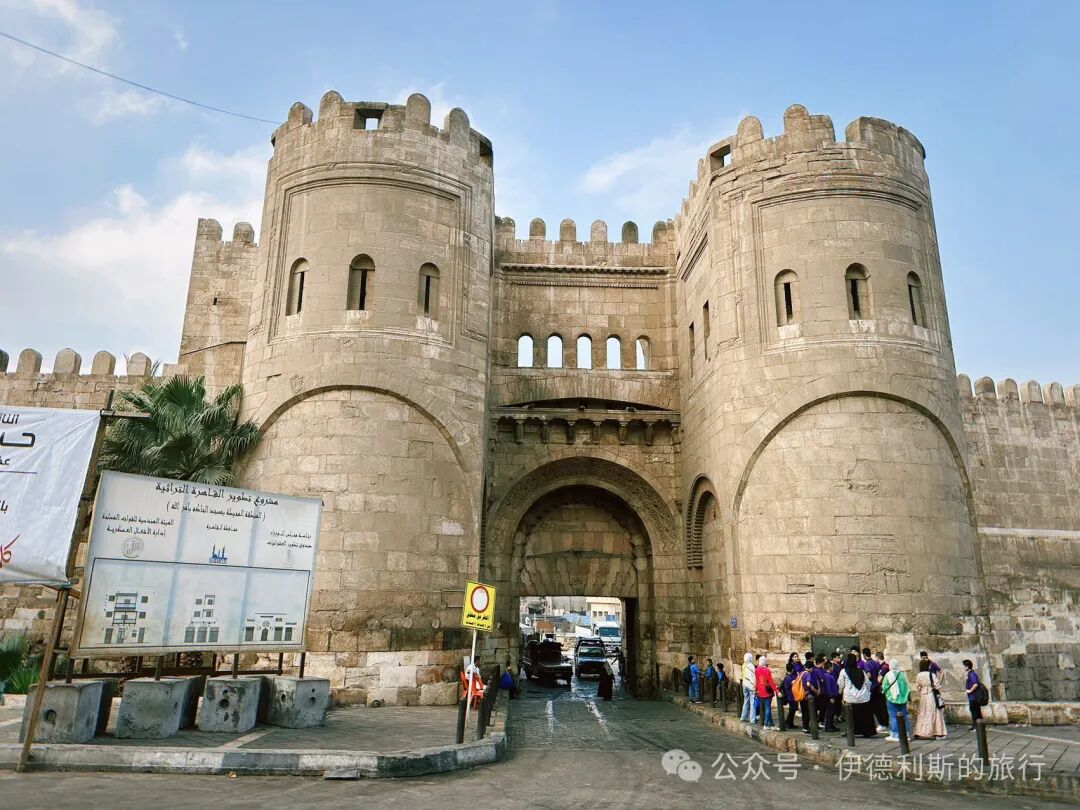
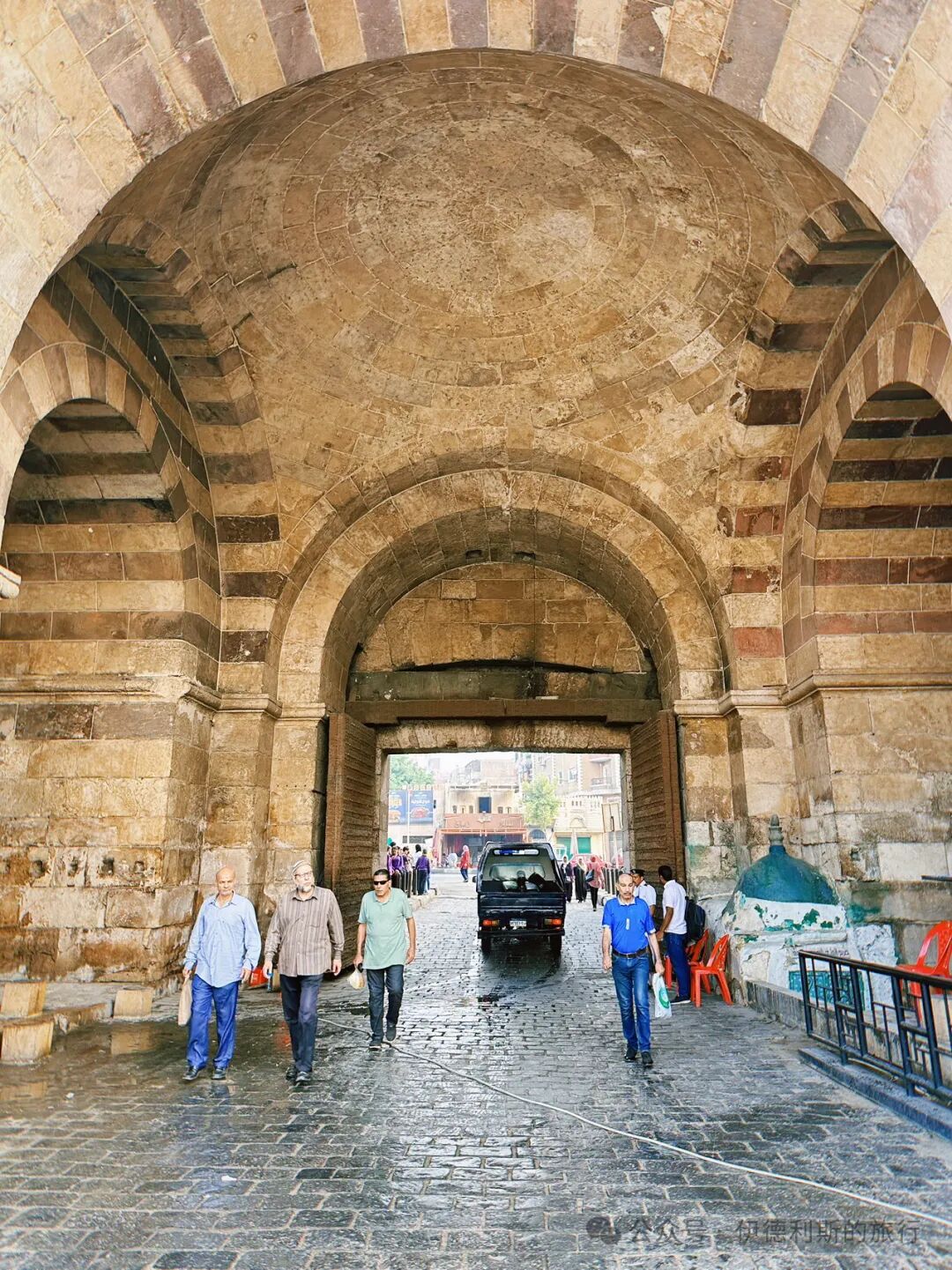
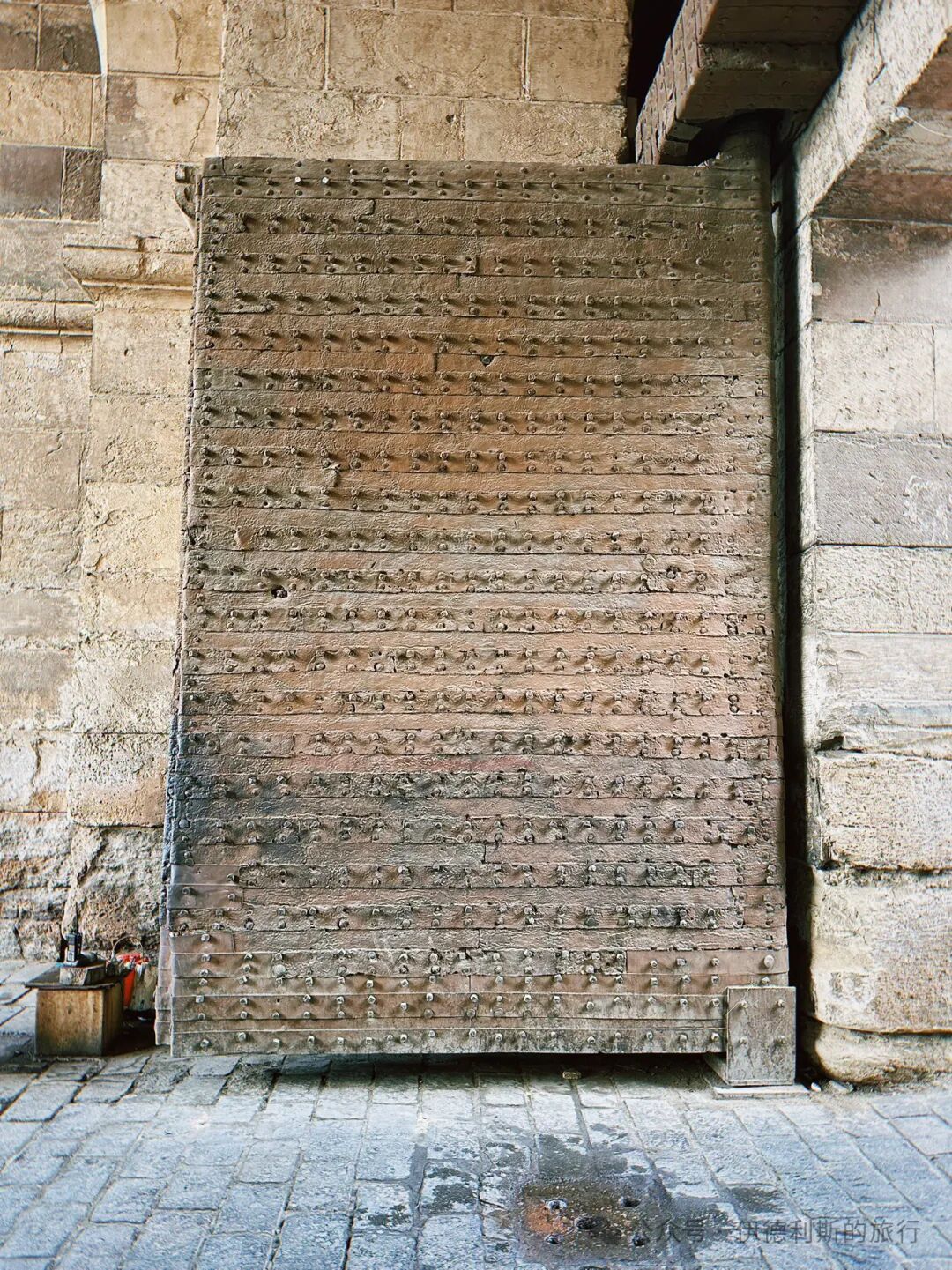
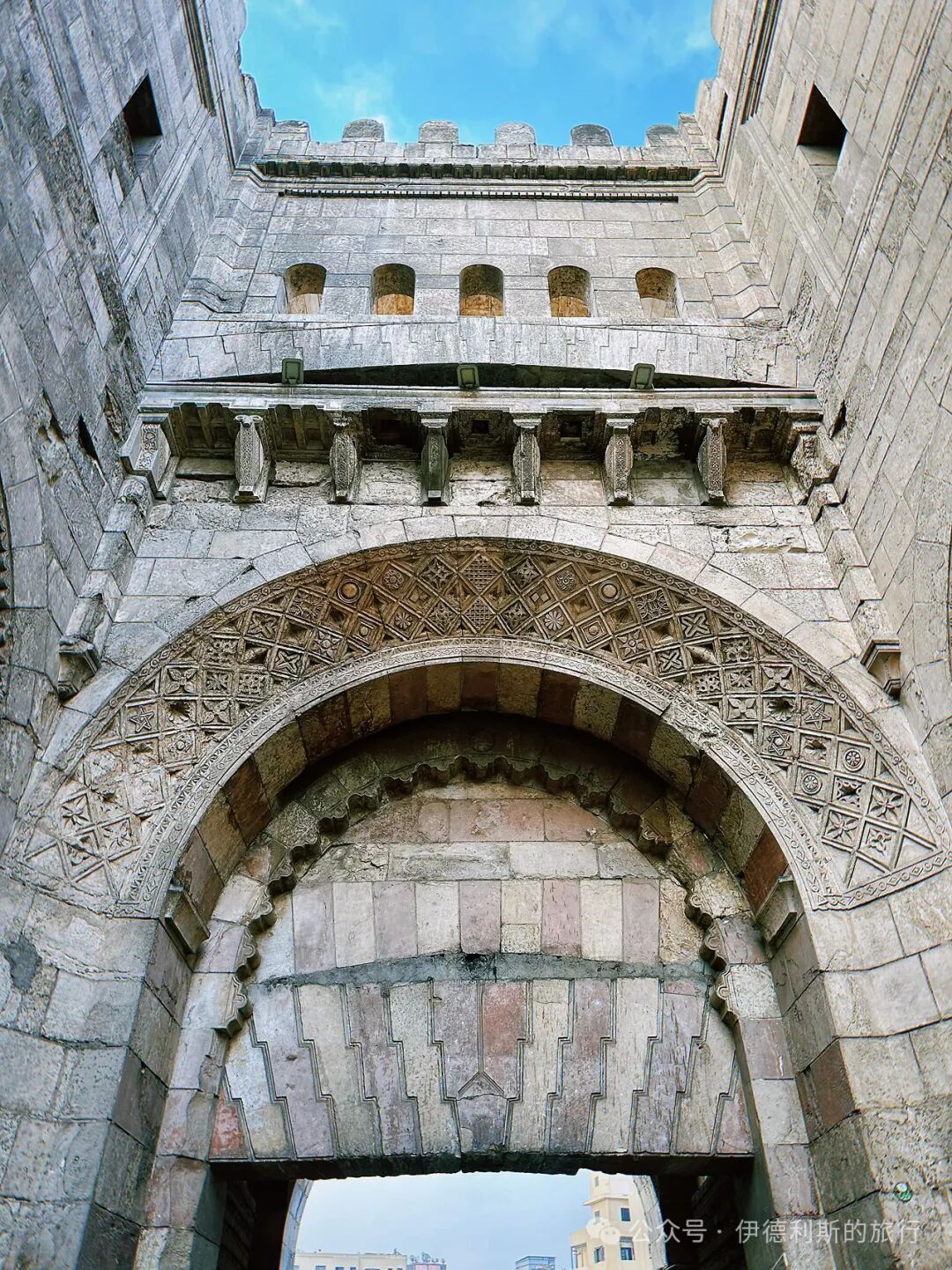
The Gate of Victory is on the east side of the Gate of Conquest. Unlike the round towers of the Gate of Conquest, the towers of the Gate of Victory are square and contain guard rooms and living areas. There are shield carvings above the gate, which symbolize protecting the city from invasion. The shield features an Arabic inscription from its 1087 reconstruction, along with a Shia version of the Shahada that mentions Ali as the friend (wali) of Allah.
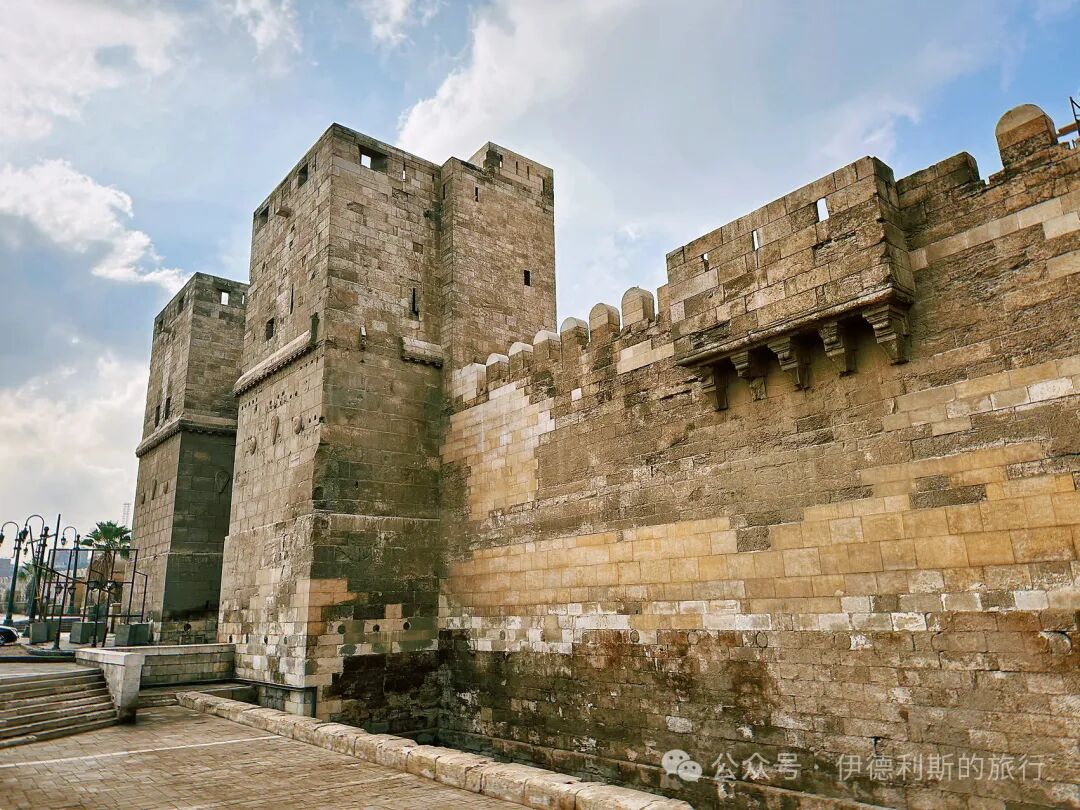
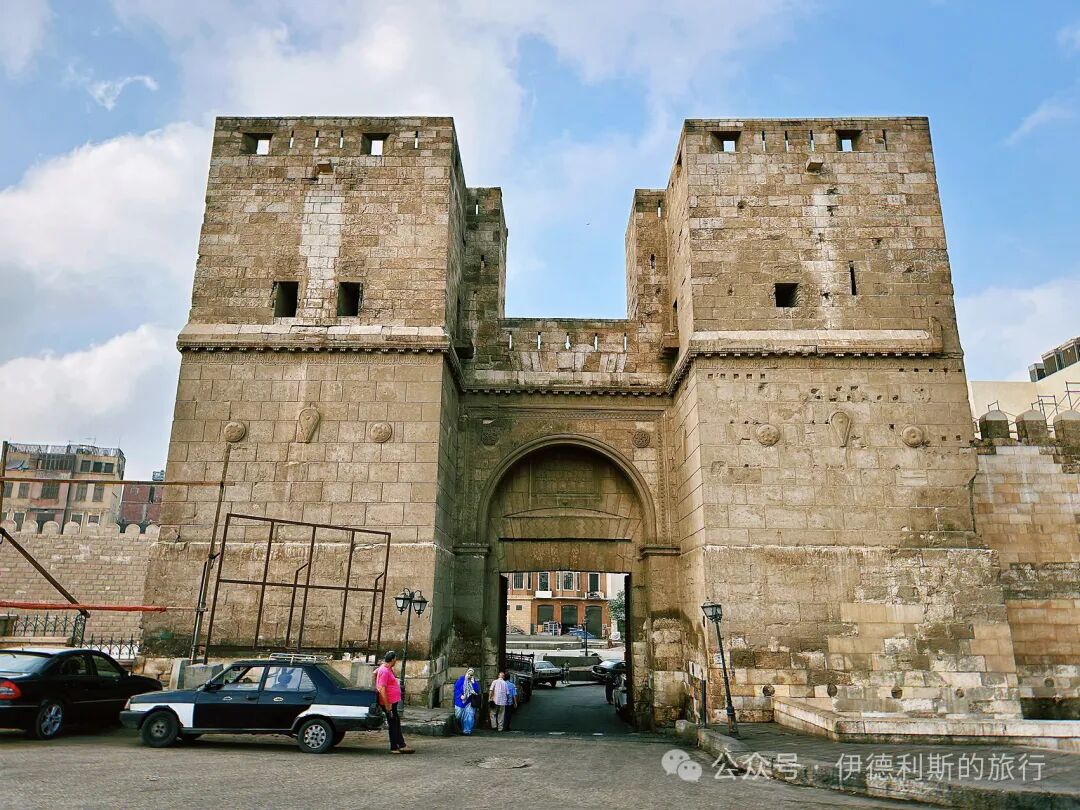
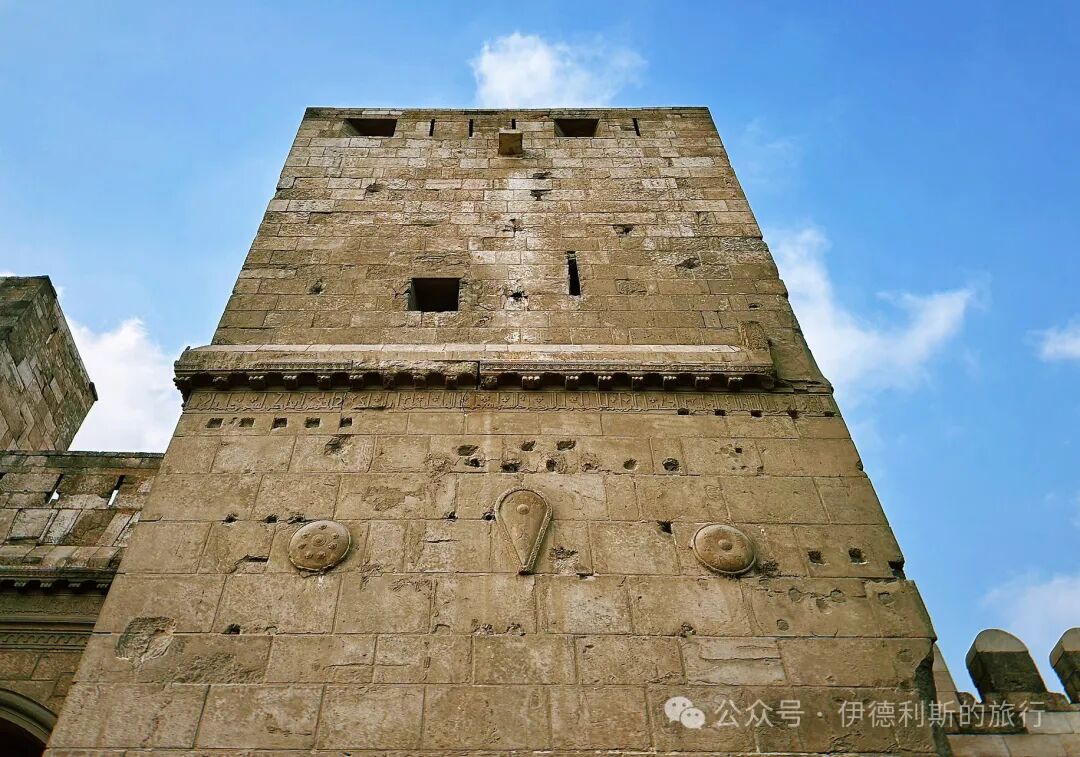
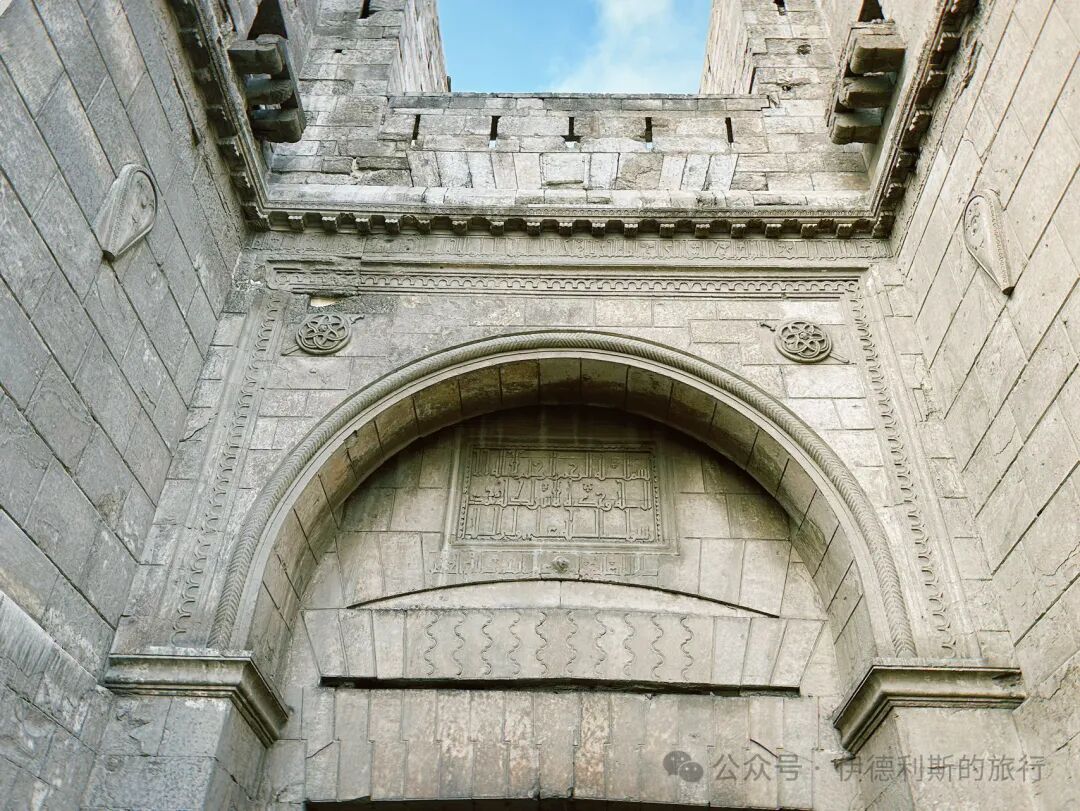
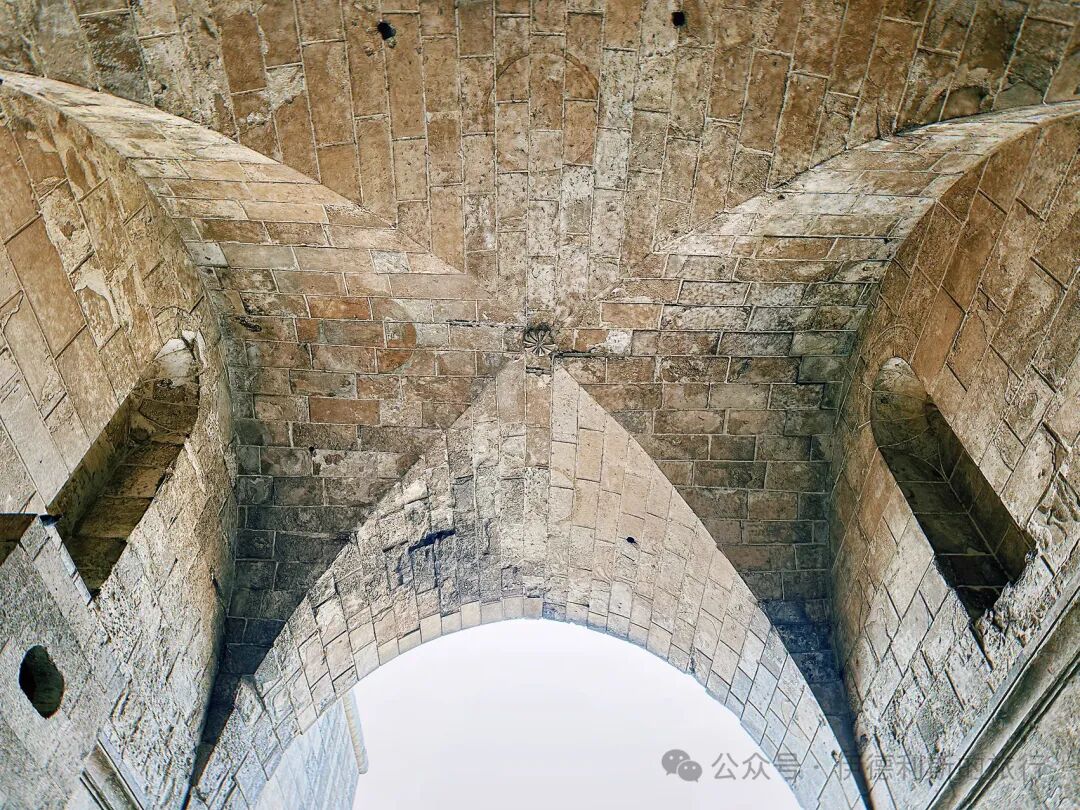
Al-Hakim Mosque: 1013.
Right next to the northern wall of Old Cairo stands the Al-Hakim Mosque, named after the sixth Fatimid caliph and the 16th imam of the Ismaili branch of Shia Islam, al-Hakim bi-Amr Allah (reigned 996-1021). The mosque was started in 990 by the fifth Fatimid caliph, al-Aziz Billah (reigned 975-996), and finished in 1013 by Caliph al-Hakim, making it 1,010 years old today.
The Al-Hakim Mosque was originally outside the walls of Cairo, but it was brought inside the city after the walls were rebuilt in 1087. The mosque's architectural style is similar to the Al-Azhar Mosque, but it is twice as large. The most striking features inside are the two minarets built on square brick bases. When the minarets were first built in 1003, they were separate structures, and they were only encased in brick in 1010. Some scholars suggest this might be linked to the ruler of Mecca rejecting Fatimid authority in 1010, which weakened the dynasty's power. The outer wall of the southern brick base has marble Kufic Arabic inscriptions from the Fatimid period, while the Kufic inscriptions on the northern base were moved to the outside of the city wall when it was incorporated into the northern wall of Old Cairo in 1087.
During the Crusades, the mosque was used as a prison by the Franks and later as a stable by Saladin. It was renovated during the Mamluk period in the 14th century but later fell into ruins for a long time. The mosque was renovated in 1808, and a small, colorful marble mihrab added during that time still survives today.
In the 20th century, the mosque served as a school until 1980, when the Dawoodi Bohra branch of Shia Islam carried out a massive reconstruction and renovation using white marble. Inside the main hall after the reconstruction, only the original stucco carvings, wooden beams, and scriptures were preserved. This restoration caused a lack of authenticity that sparked criticism and widespread discussion among scholars. In 2017, the Dawoodi Bohra community and the Egyptian Ministry of Tourism and Antiquities launched a new round of restoration, and it did not reopen until February 2023.
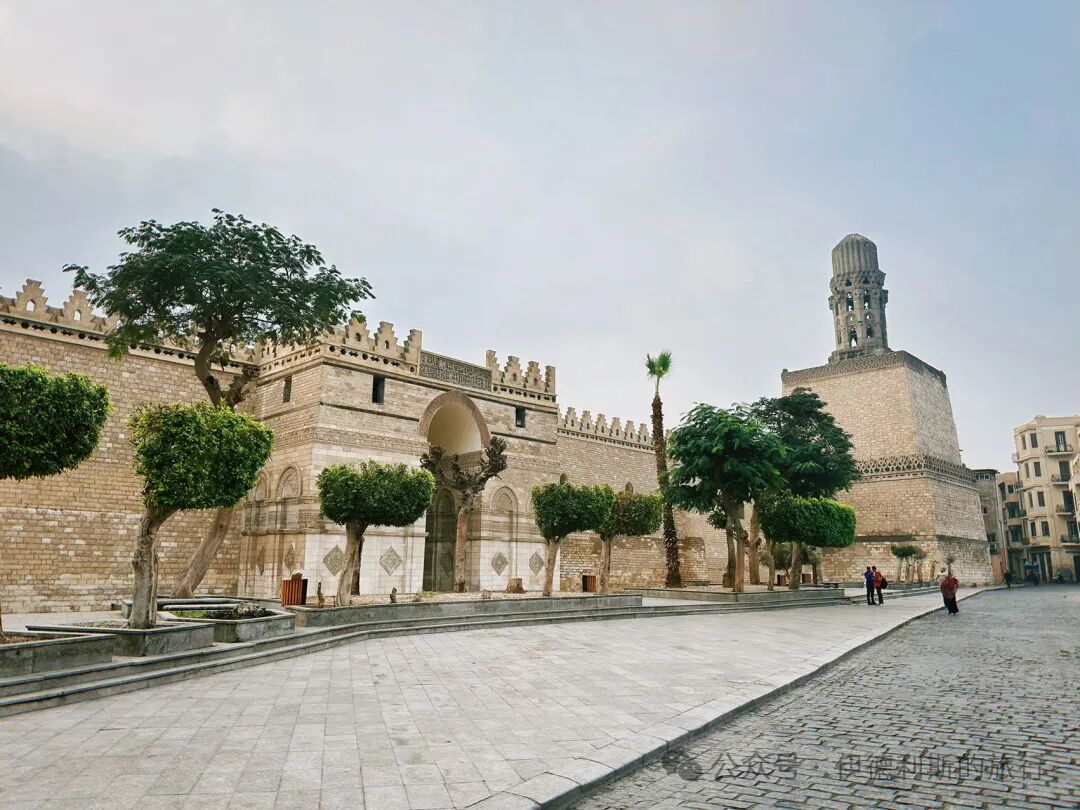
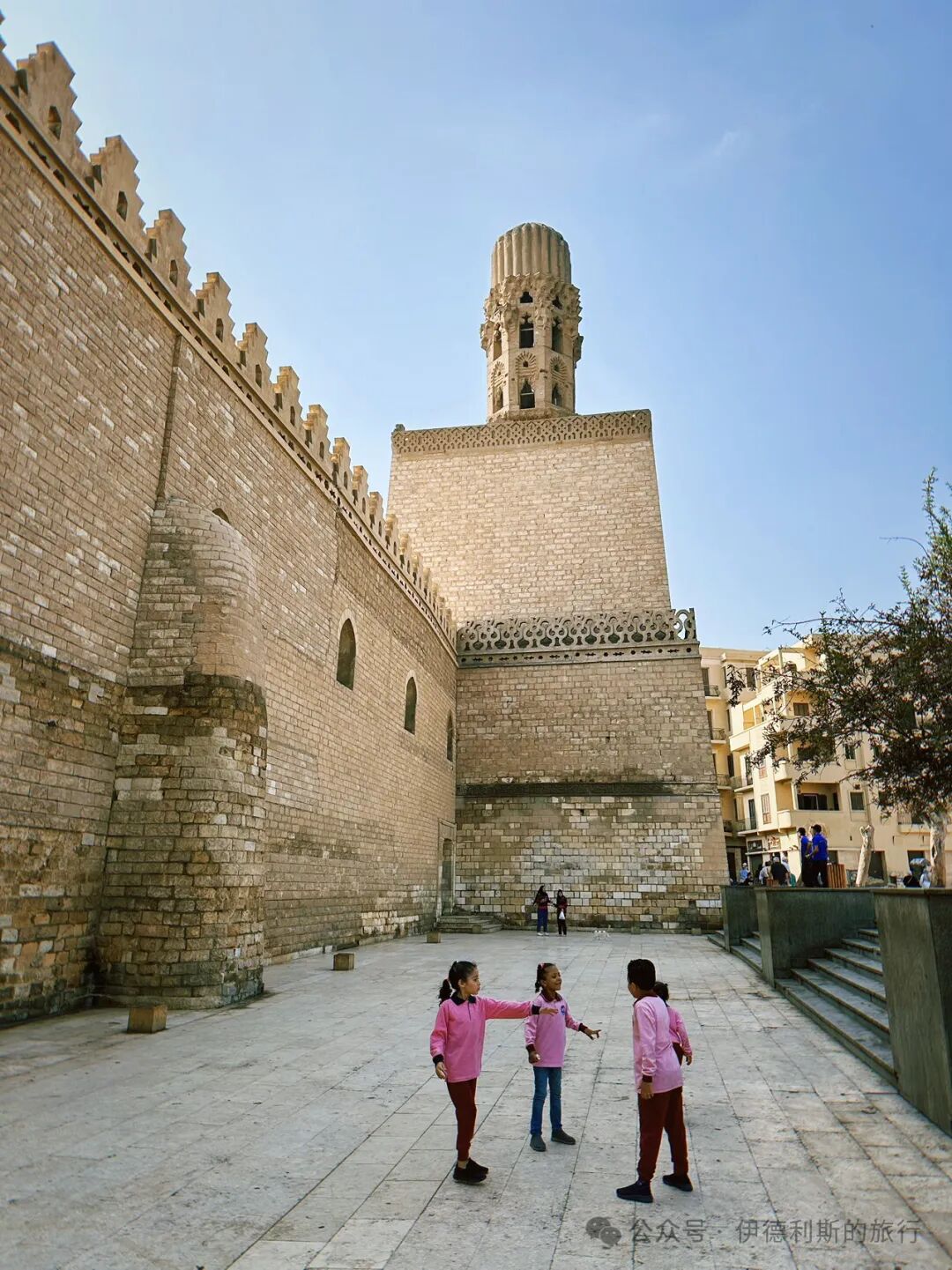
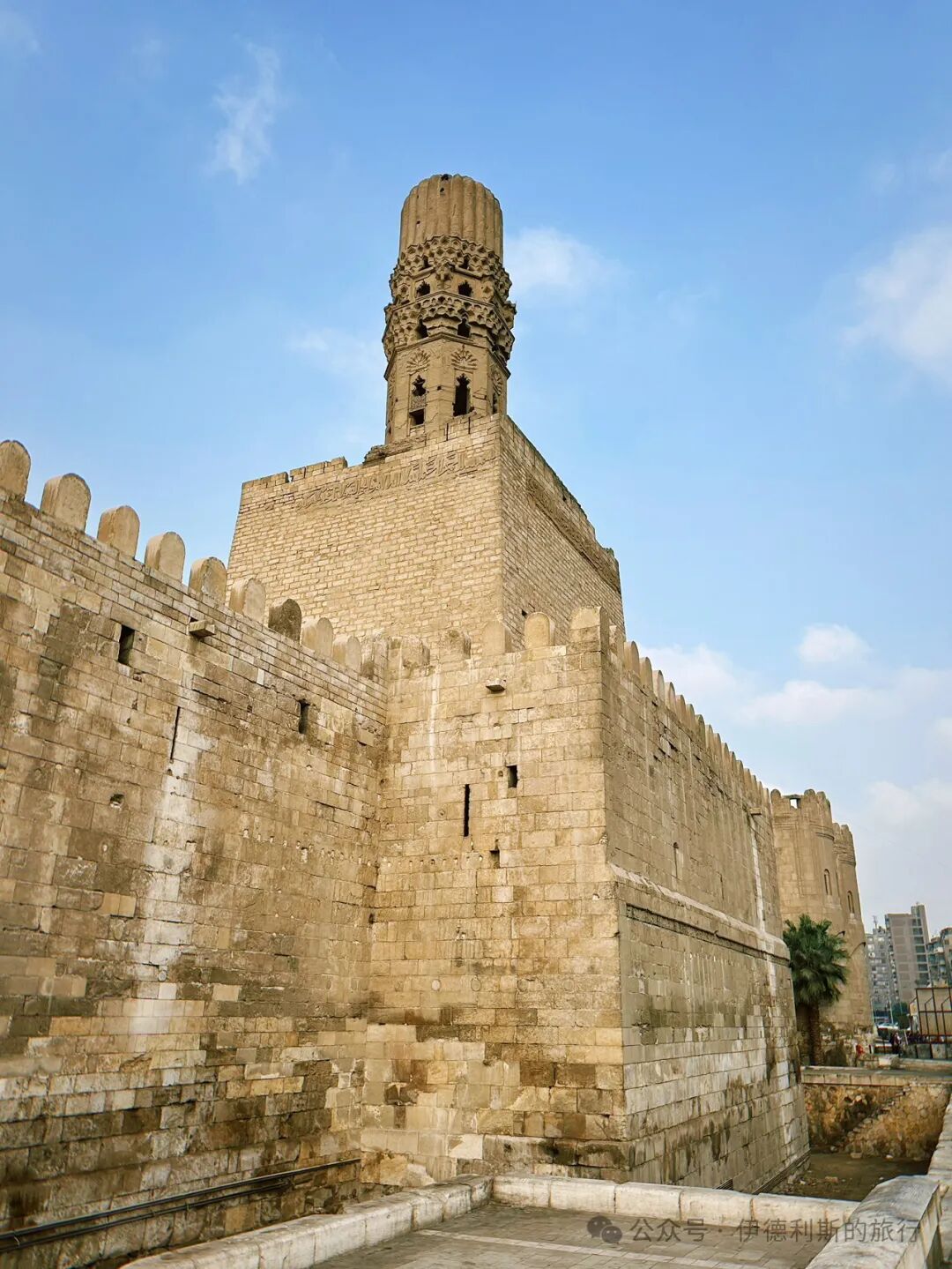
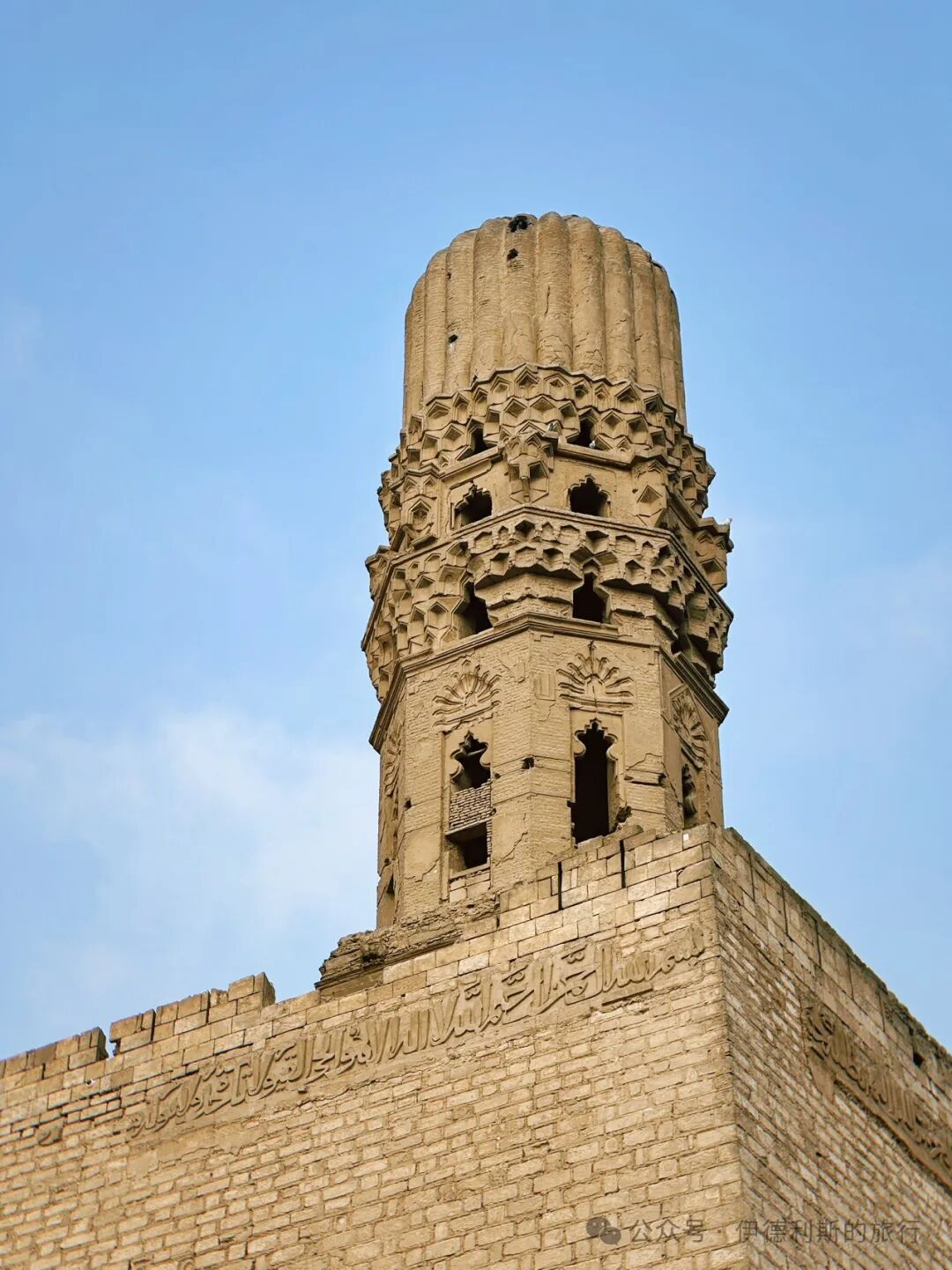
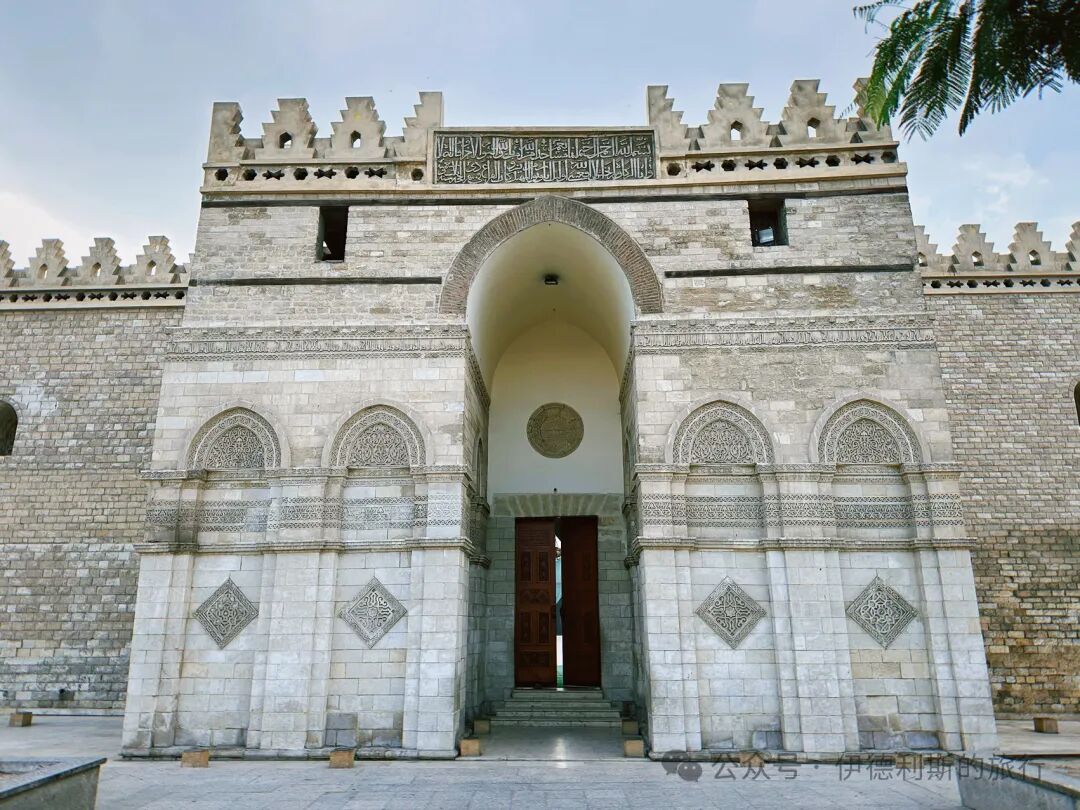
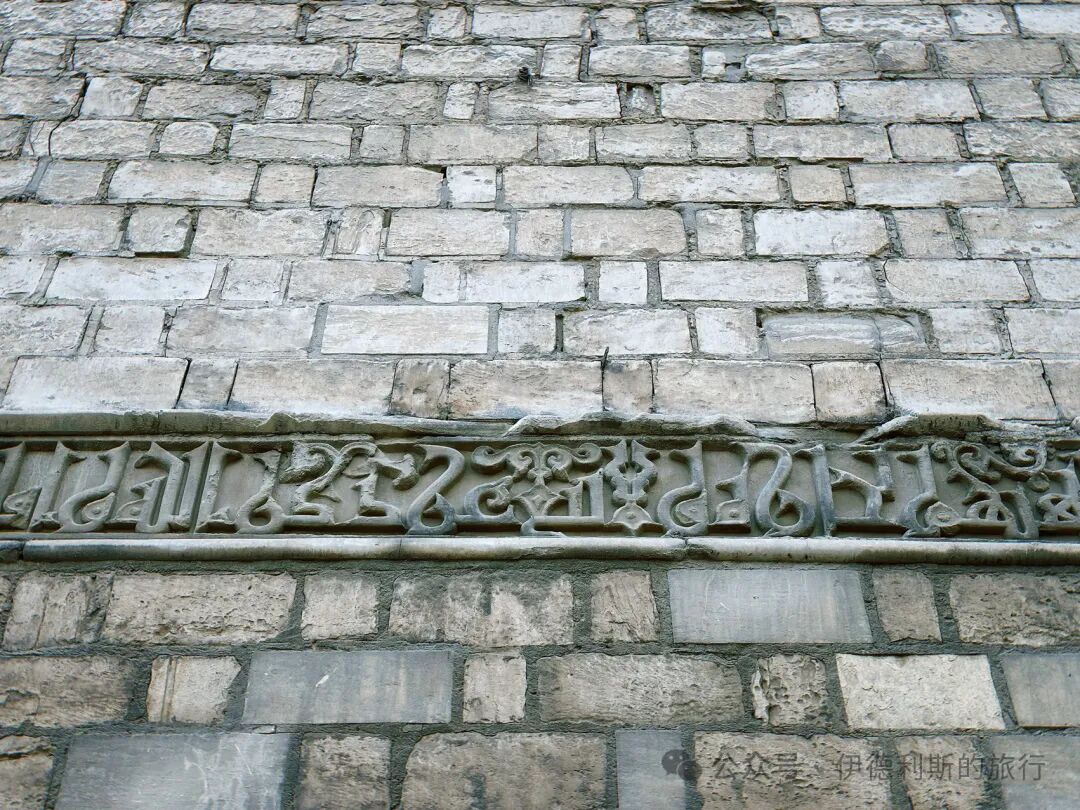
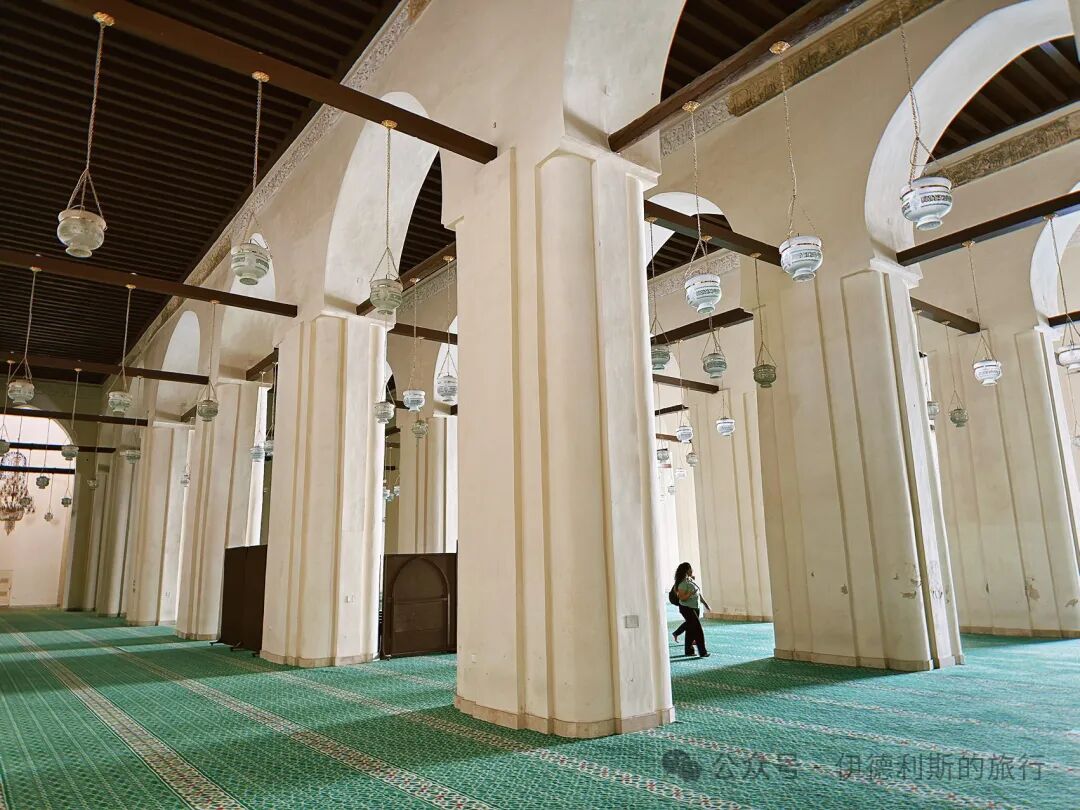
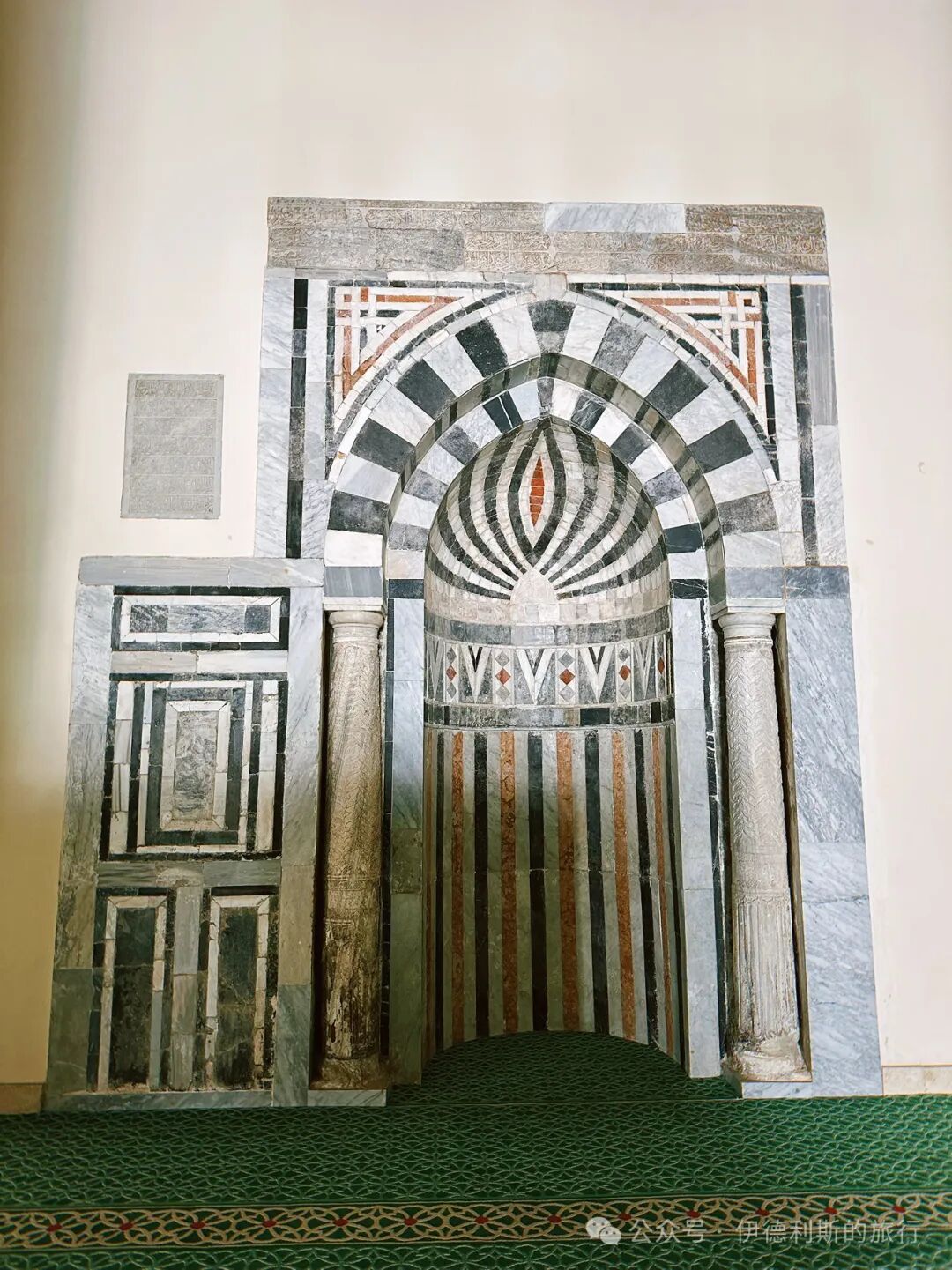
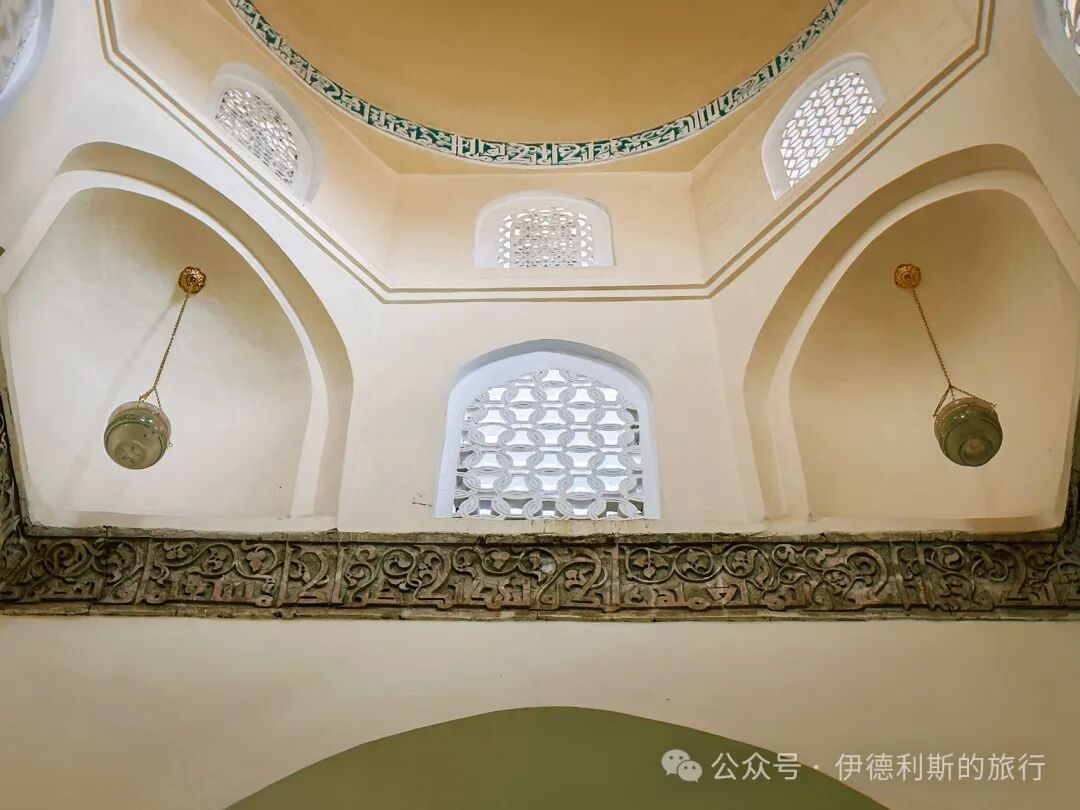
Caravanserai of Qaitbay: 1481
Enter the old city of Cairo through the Gate of Victory (Bab al-Futuh) onto El-Gamaleya Street. The first thing you see is the caravanserai (wikala) of Sultan Qaitbay, which is currently under renovation. It was built in 1481 by Sultan Qaitbay (reigned 1468-1496) of the Mamluk dynasty. Qaitbay was one of the Mamluk sultans who sponsored the most architecture. Although the Mamluk dynasty was in decline, the situation remained relatively stable under his rule, and trade flourished.
Like other Mamluk caravanserais (wikala), this place not only provided short-term housing for passing caravans but also offered long-term rental apartment units (rab). It was used as apartments for hundreds of years until the Egyptian Ministry of Antiquities began renovations in 2015. Work is still ongoing, and you can still see the wooden lattice windows (mashrabiya) facing the street.
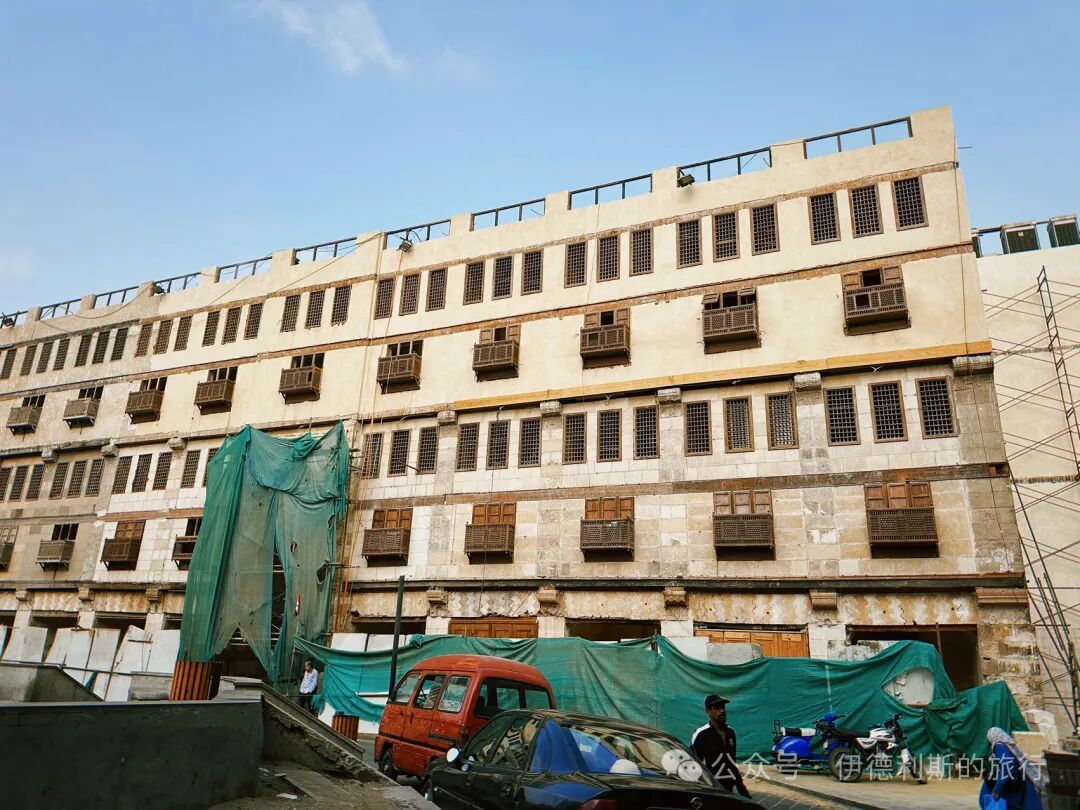
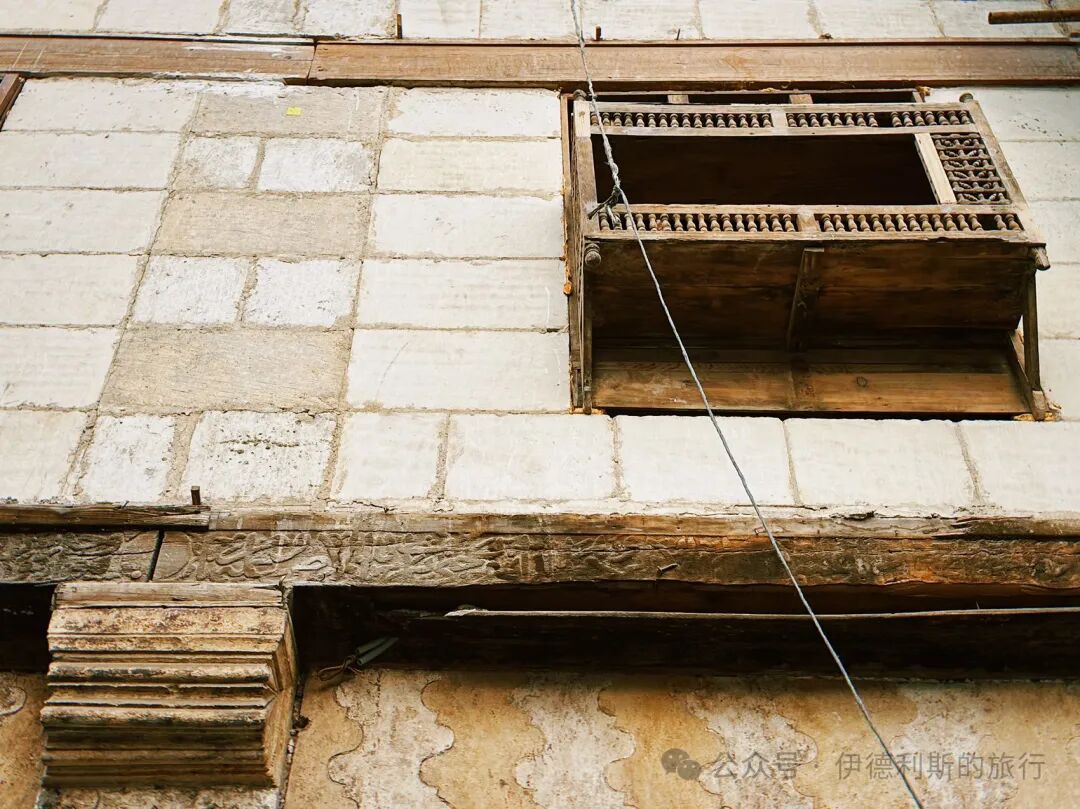
Gate of the Caravanserai of Qawsun: 1341
Continuing south, you can see the remains of the gate of the caravanserai (wikala) of Emir Qawsun. This inn was built in 1341 by the famous Mamluk Emir Qawsun (1302-1342). It was used by soap and coffee merchants from Palestine in the 17th and 18th centuries, so it is also called the Soap Inn. The inn was demolished in 1960 to be rebuilt as a school, and only the gate remains. Above the gate is a stone carving of a pair of cups, because Emir Qawsun once served as the Sultan's cupbearer (saqi).
Qawsun was born on the Kipchak steppe under the rule of the Golden Horde and started out as a merchant. In 1320, Princess Tulunbay of the Golden Horde married the Mamluk Sultan of Egypt. Qawsun came to Cairo as part of her entourage and stayed in Cairo to sell leather goods. Qawsun was highly valued by the Sultan in Cairo and became his personal attendant. He then rose quickly through the ranks and married the Sultan's daughter. After the old Sultan died in 1341, Qawsun became the regent and held actual power over the Mamluk dynasty. However, he was defeated by political rivals a few months later and was killed in prison.
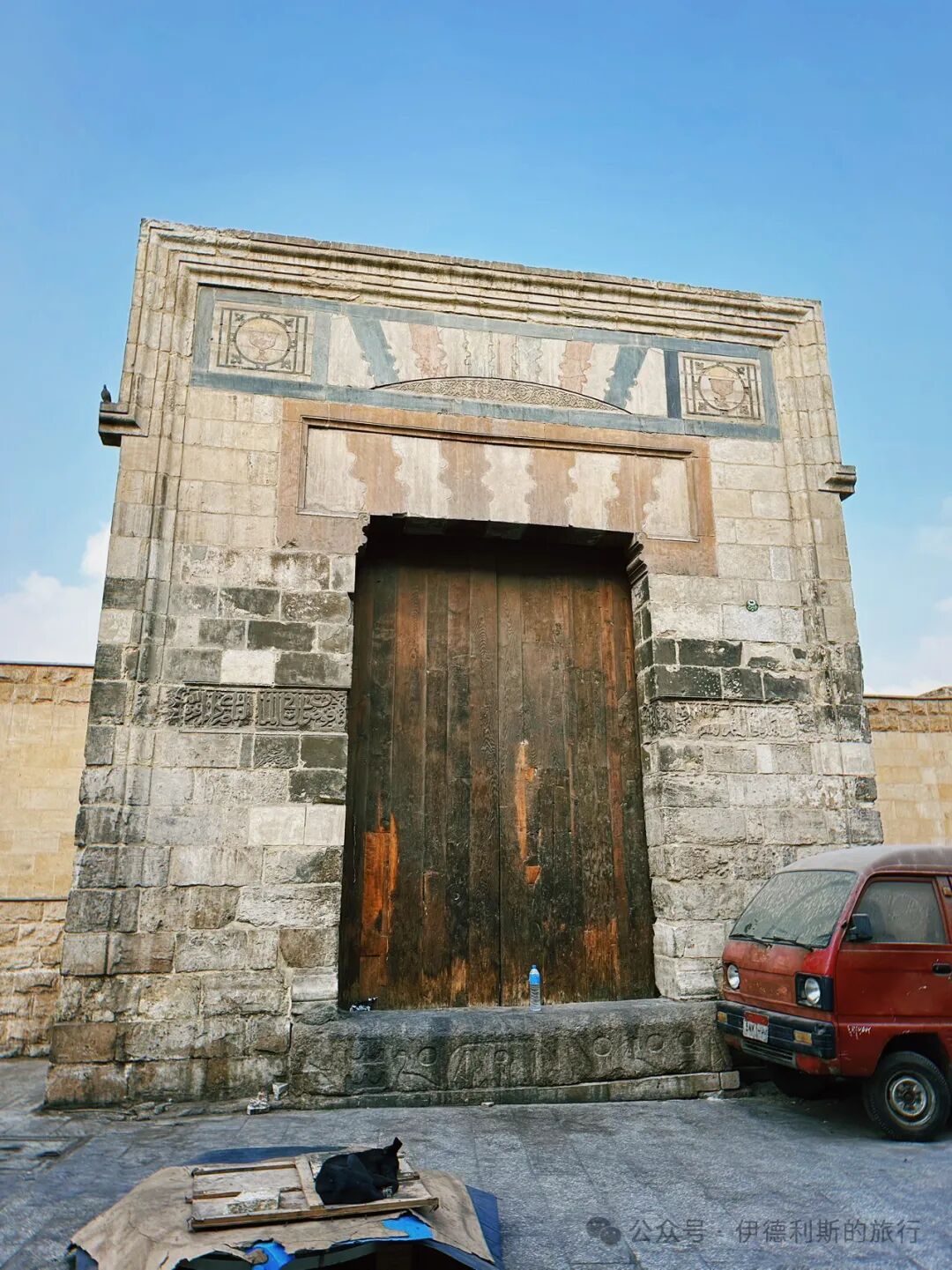
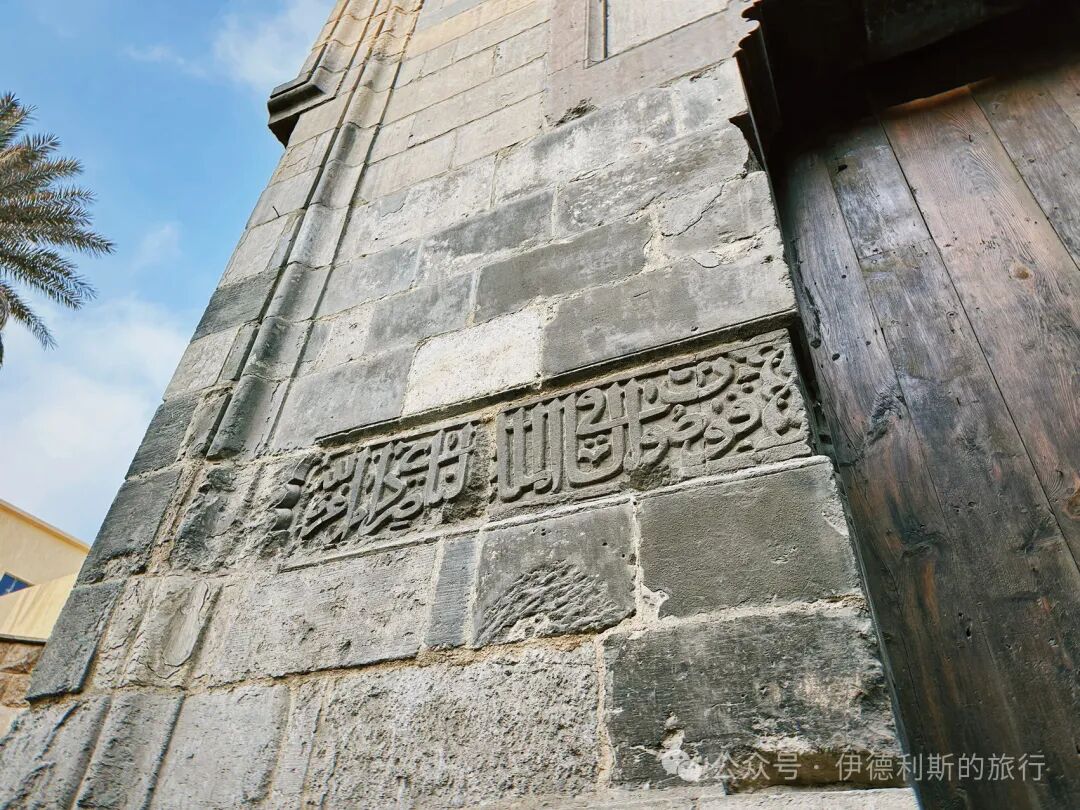
Continuing south along El-Gamaleya Street, you can see several more historical buildings.
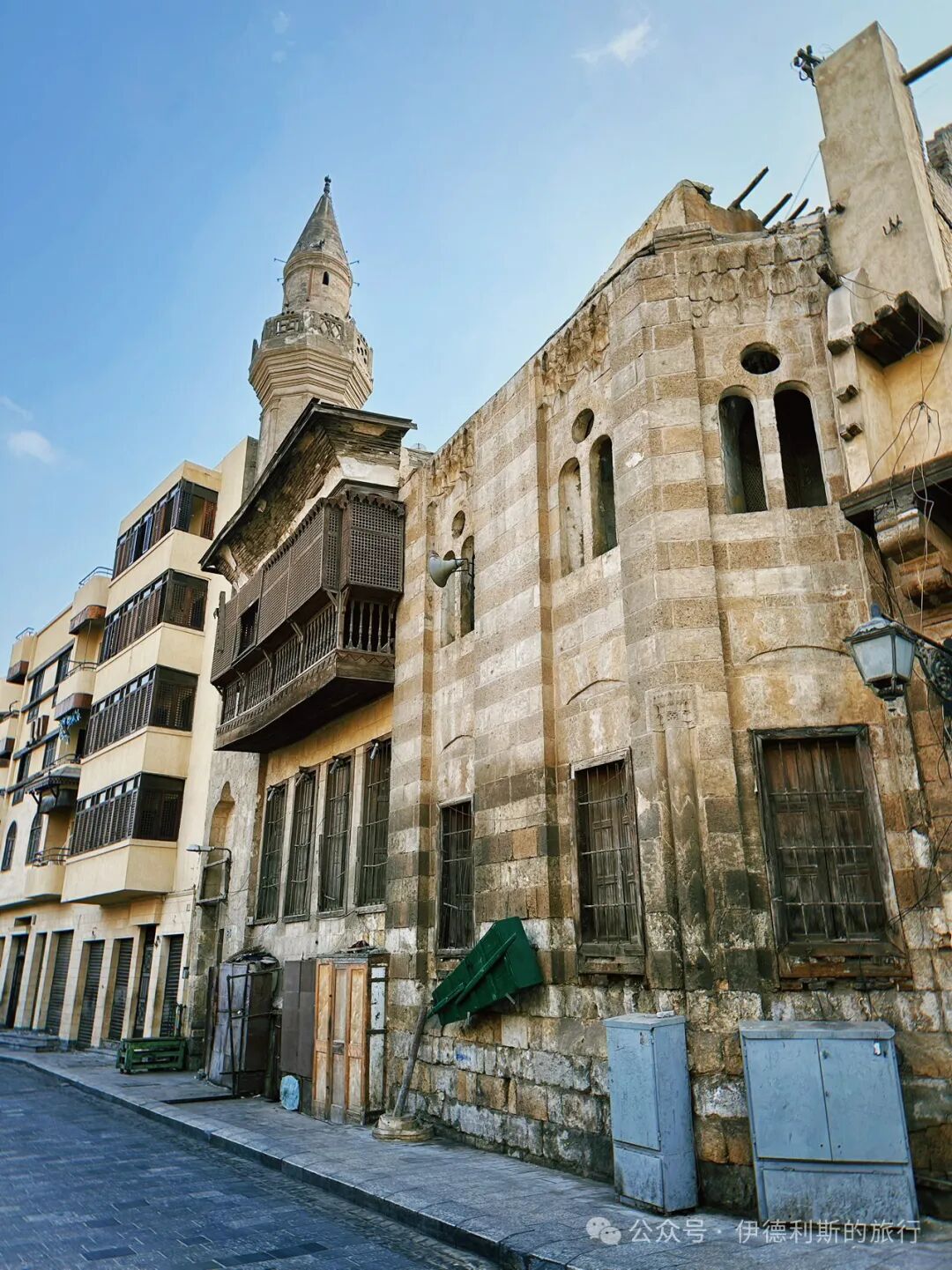
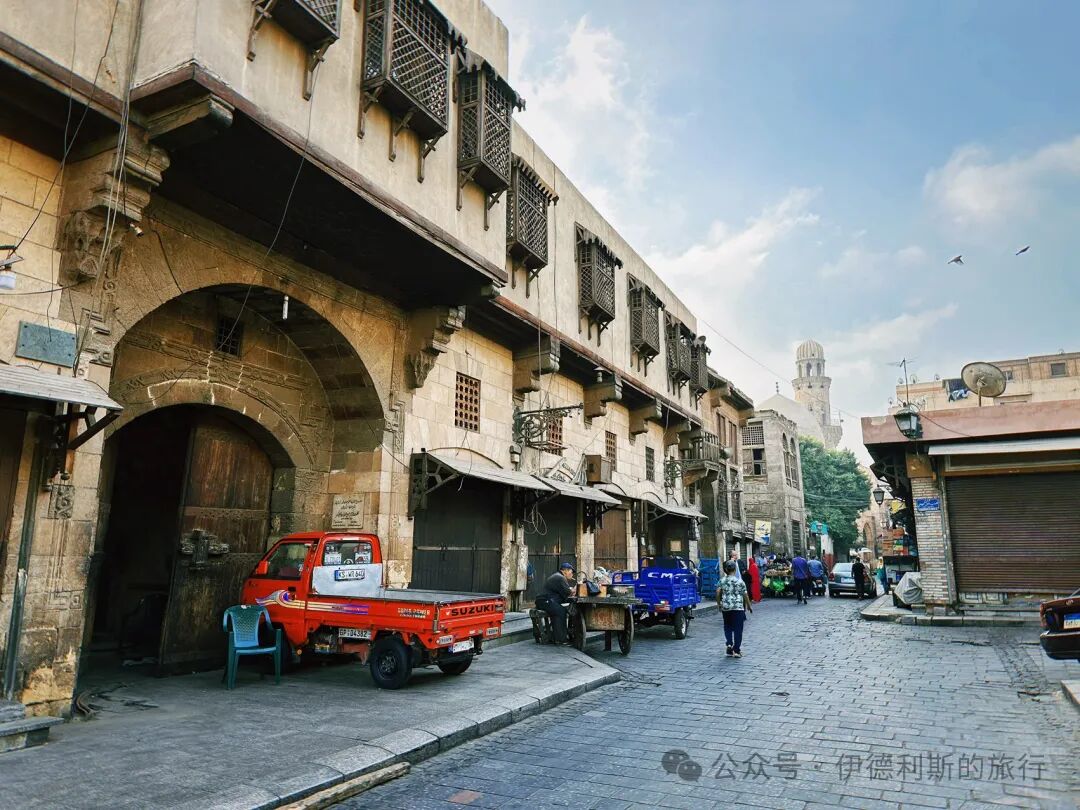
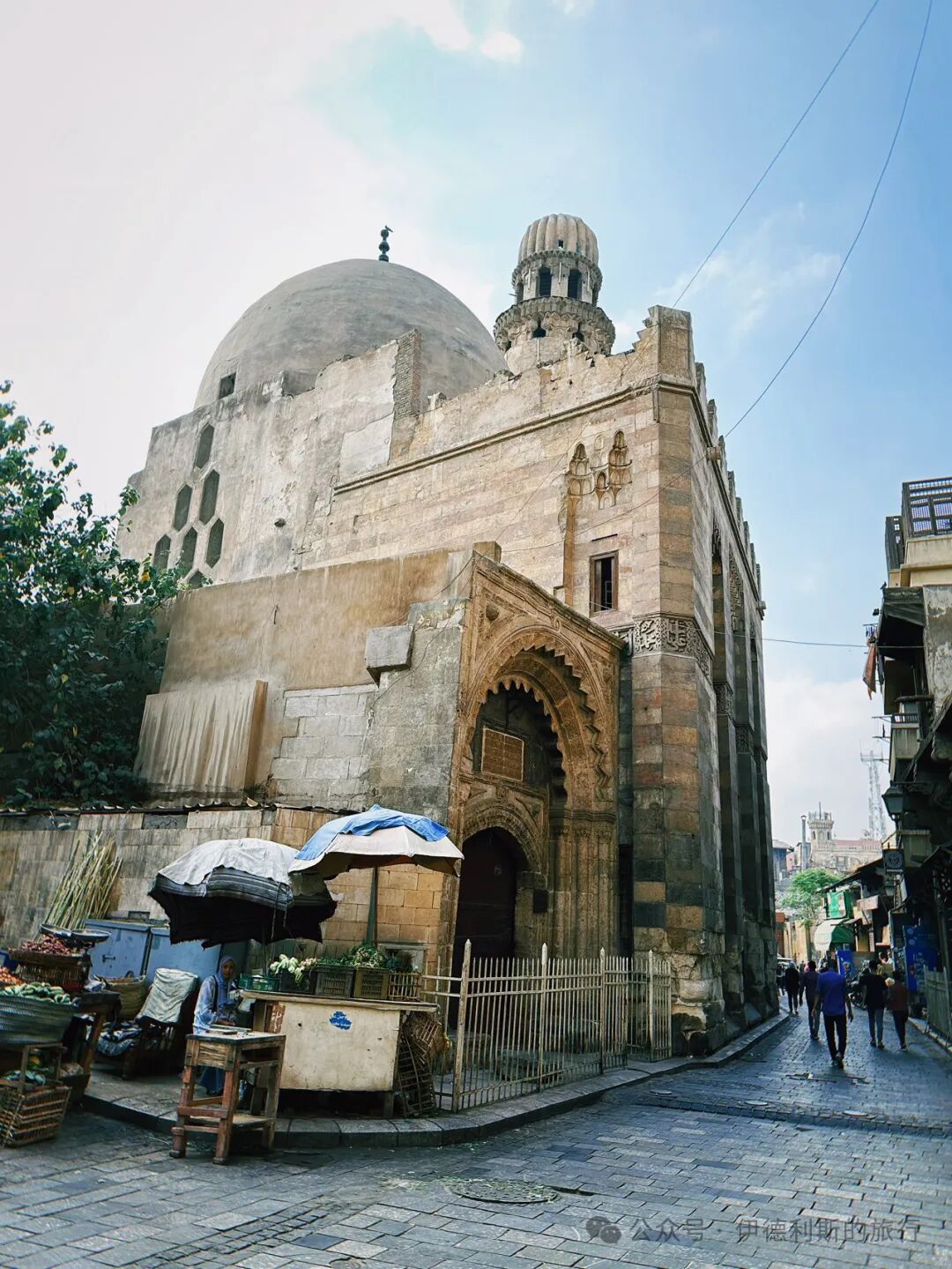
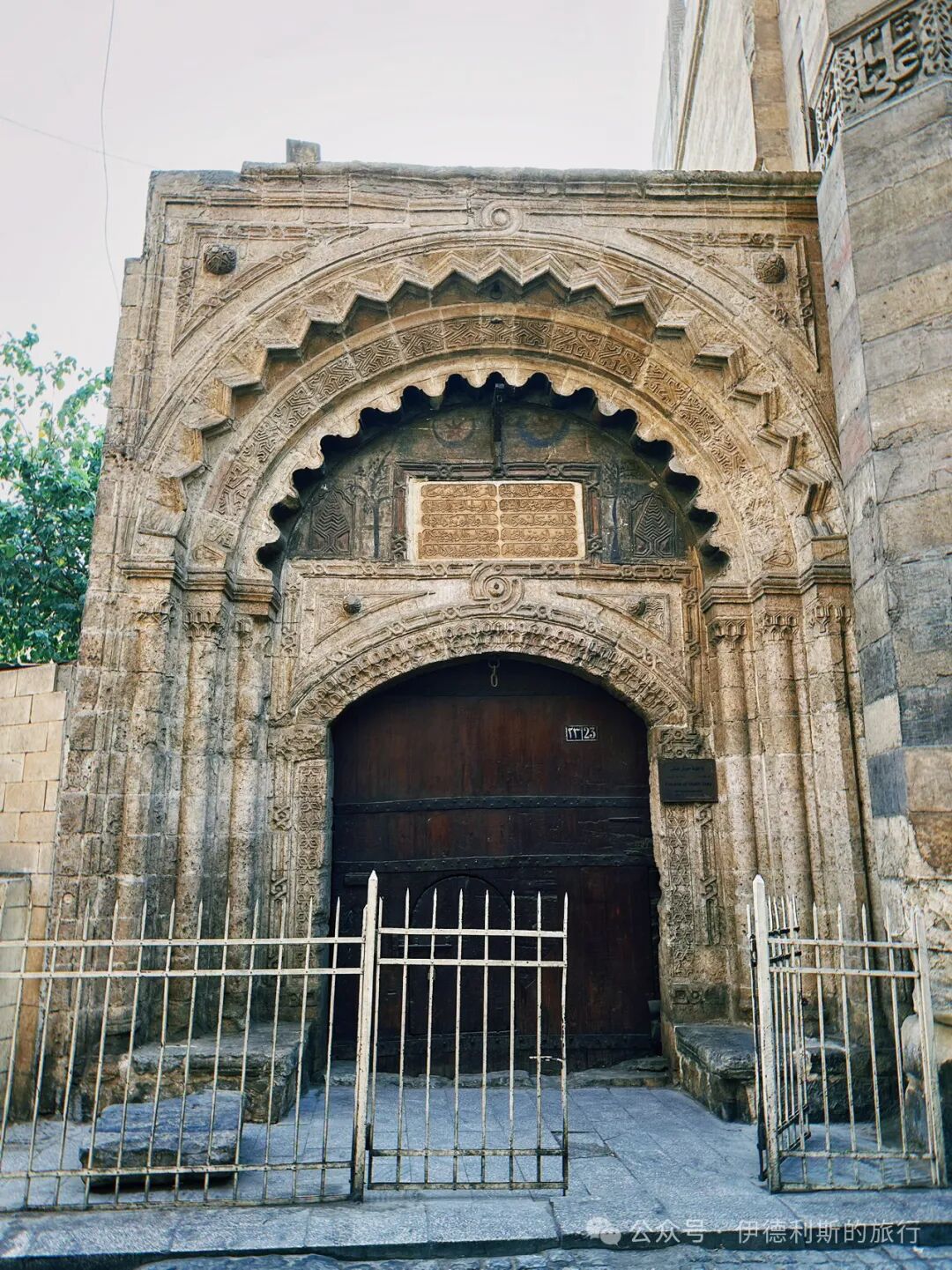
Khanqah of Baybars II: 1310
On the east side of the middle section of El-Gamaleya Street stands the Khanqah of Baybars II, built in 1310. Baybars II was the 12th Sultan of the Mamluk dynasty and reigned for only one year, from 1309 to 1310. Baybars II served as vice-sultan from 1299 to 1309 and led the Mamluk Sultanate against the Ilkhanate in the Battle of Marj al-Saffar in Syria in 1303. This battle resulted in the total defeat of the Mongol army that had marched west into Syria. People say the Sultan led his captives from the Gate of Victory along El-Gamaleya Street into the old city of Cairo. Singers and dancers from all over came to celebrate, and the city was decorated with lights for days of festivities.
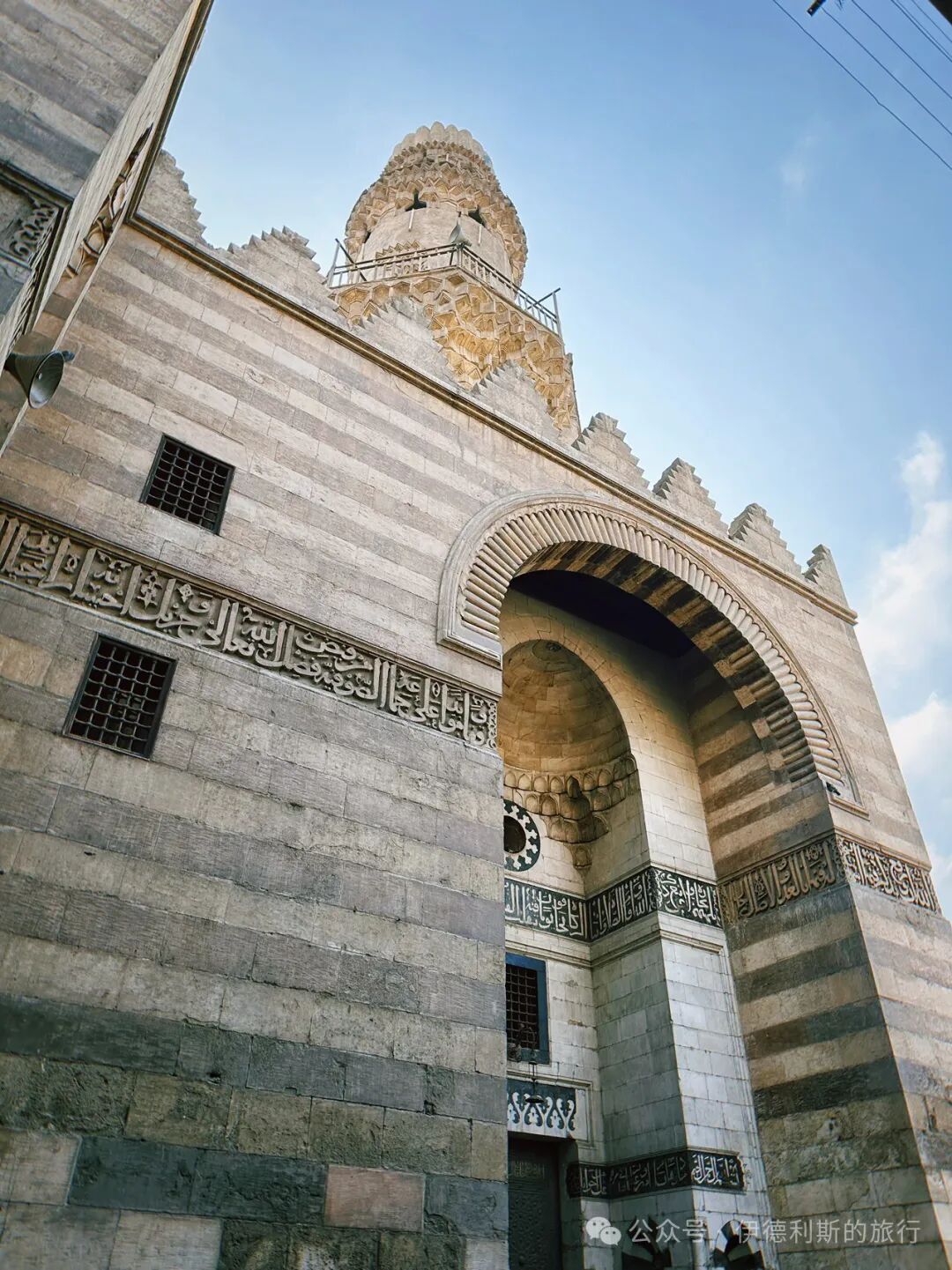
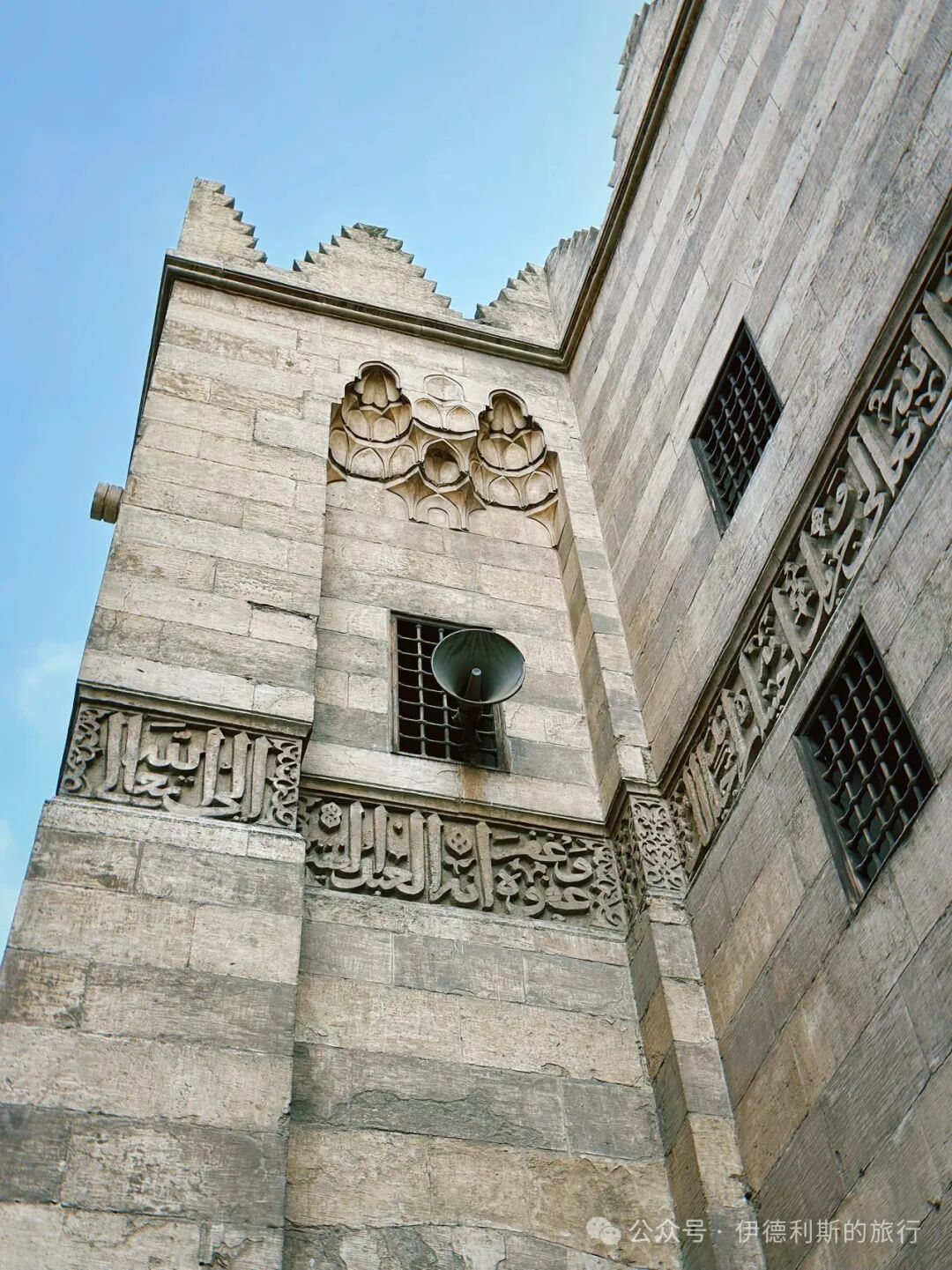
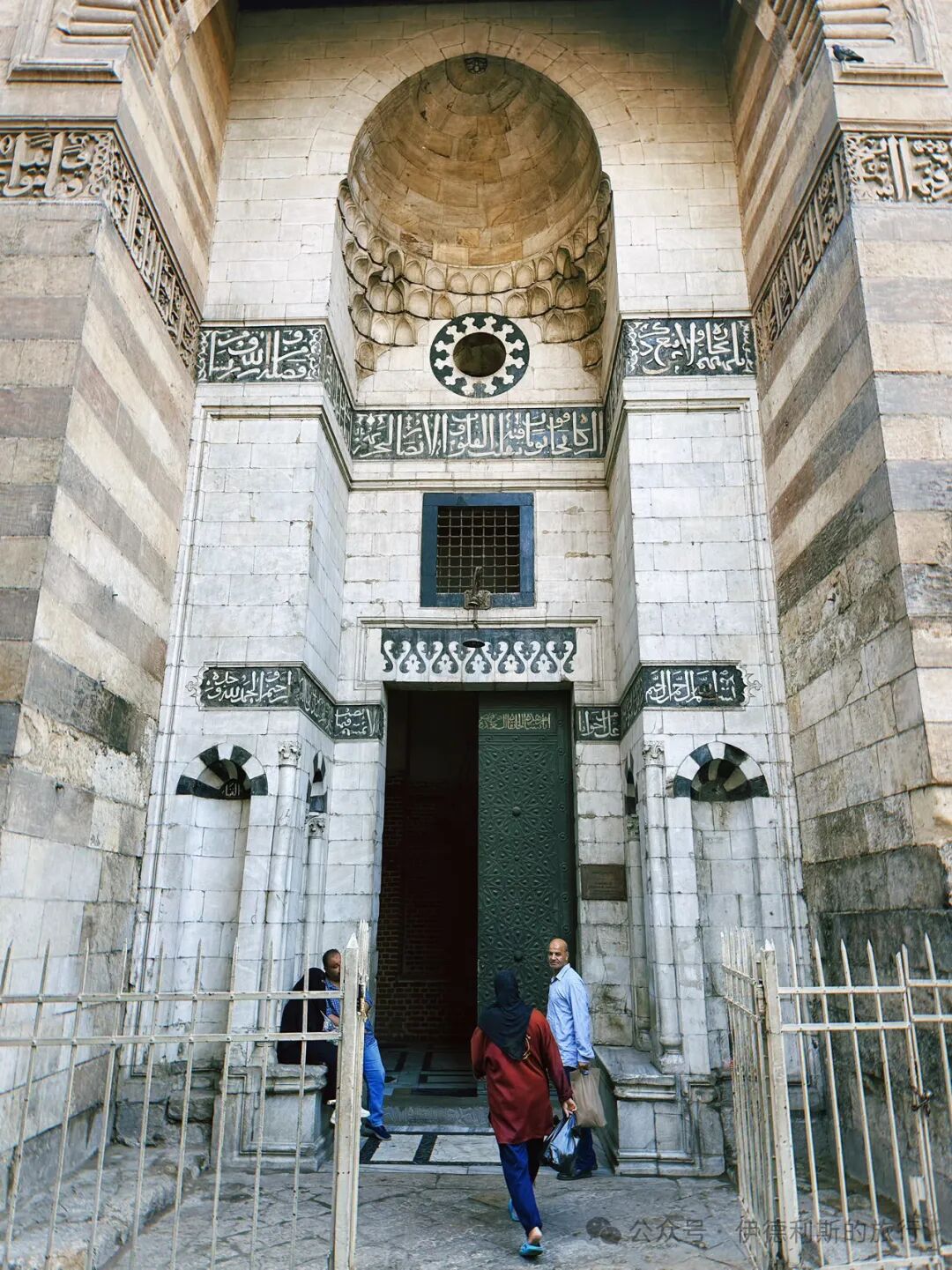
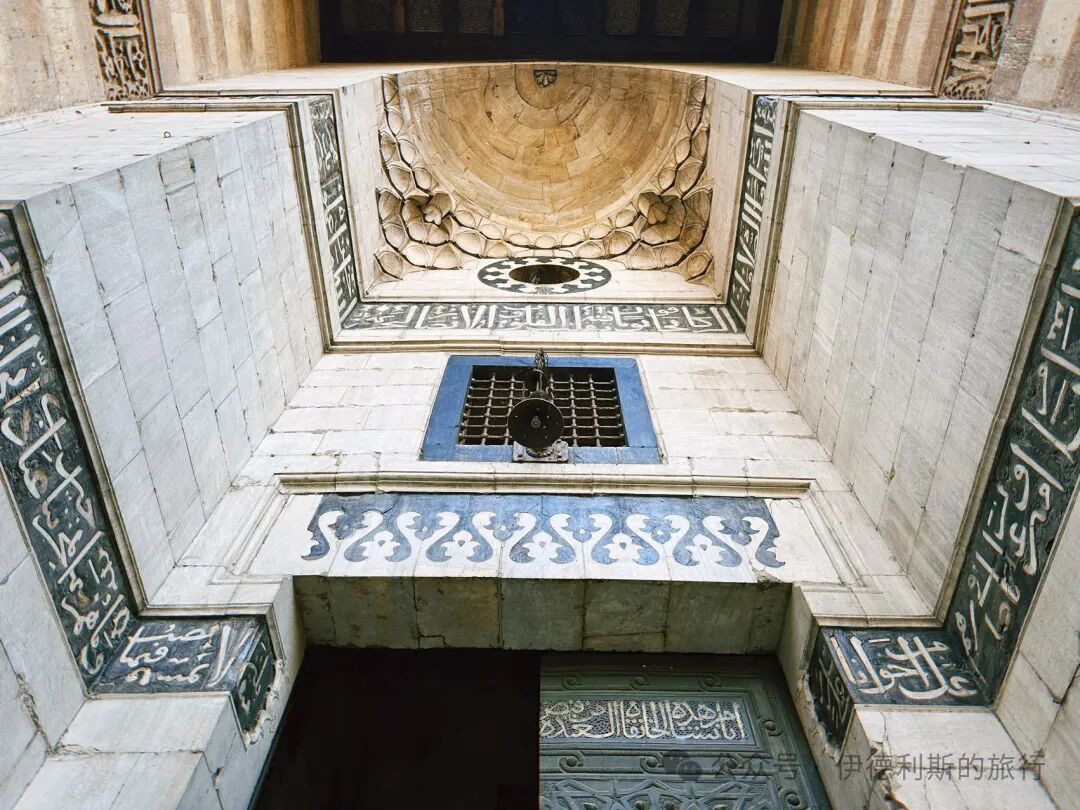
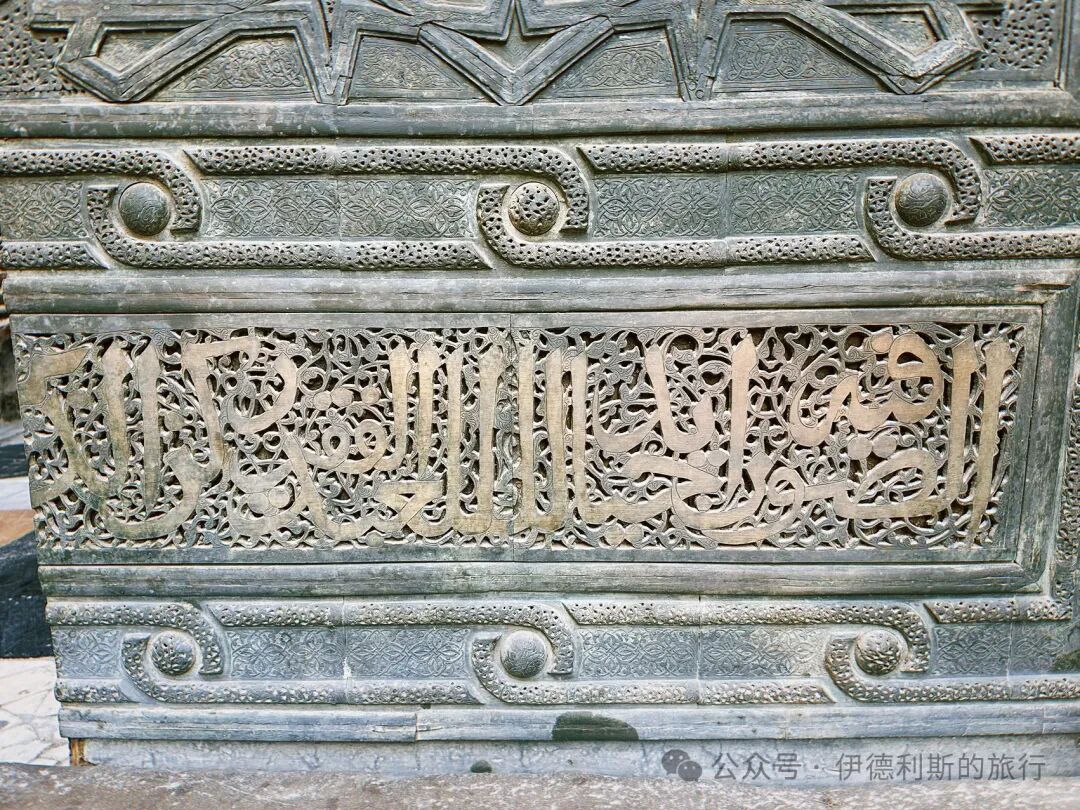
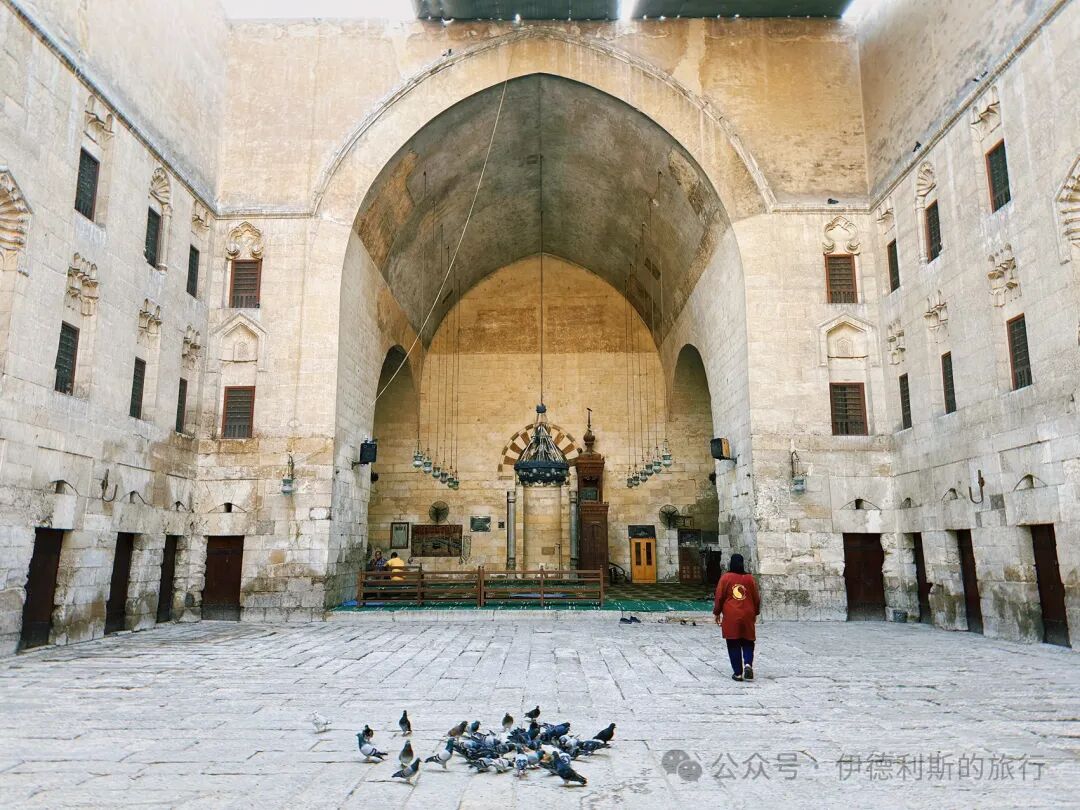
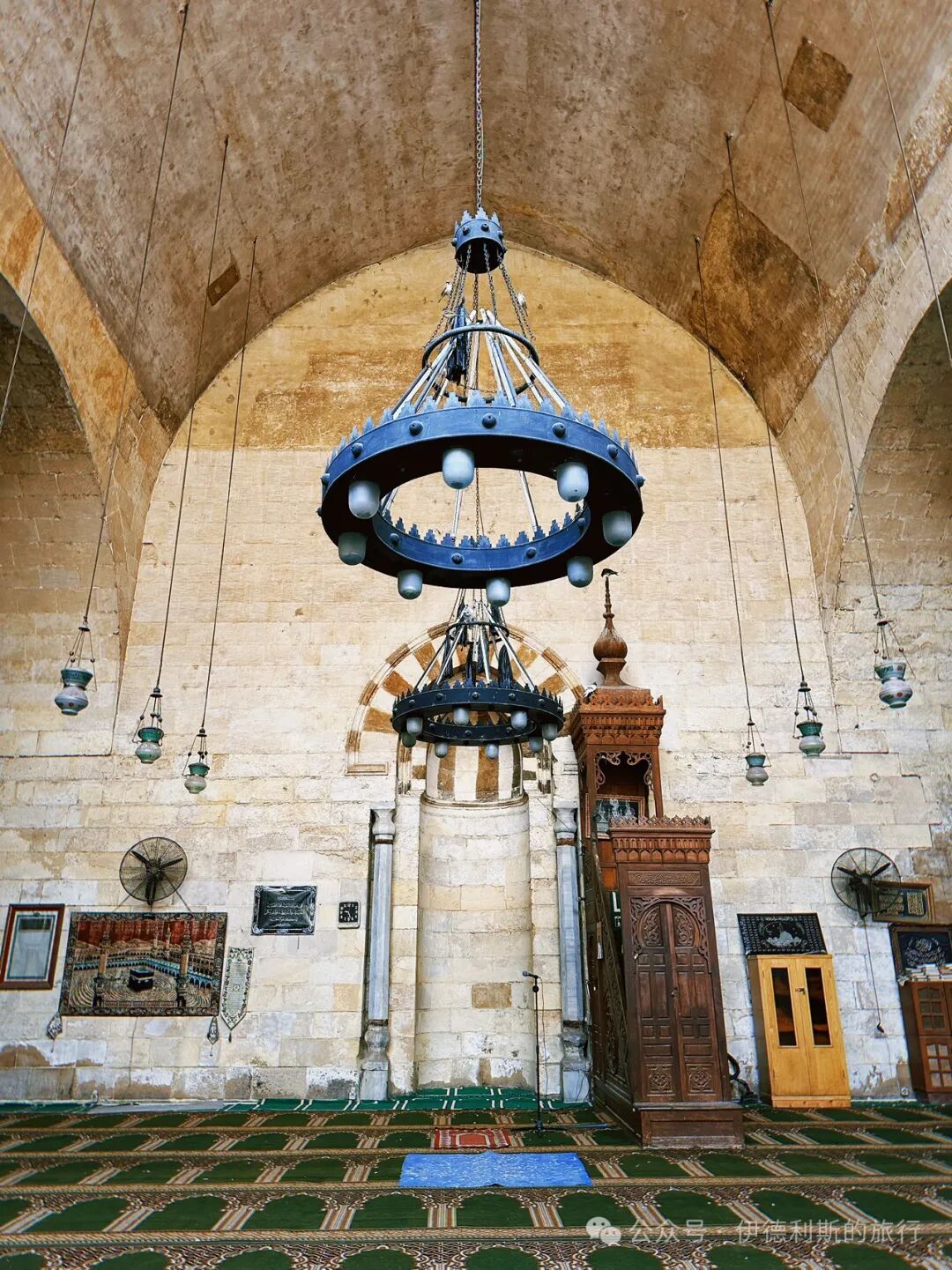
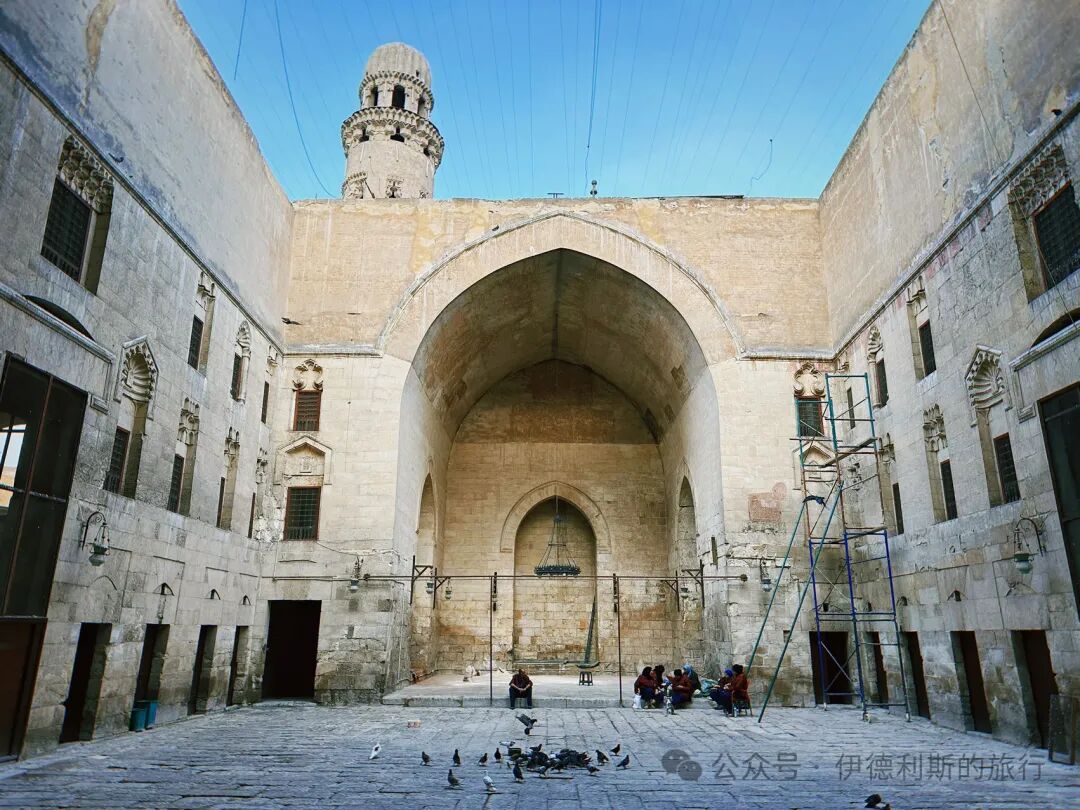
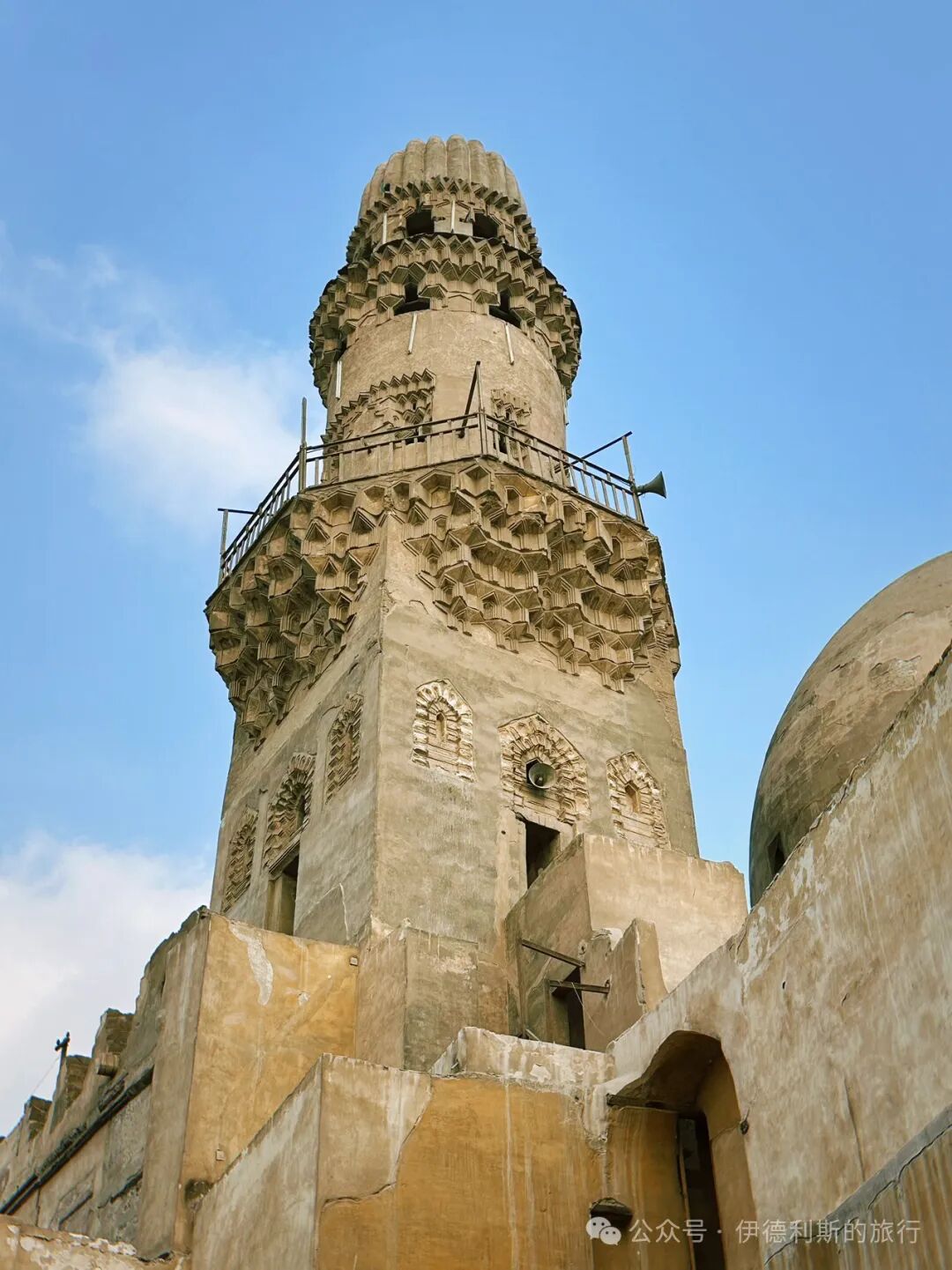
The exquisite Islamic geometric patterns (Girih) on the gate of the Khanqah of Baybars II form complex designs through overlapping and interlacing.
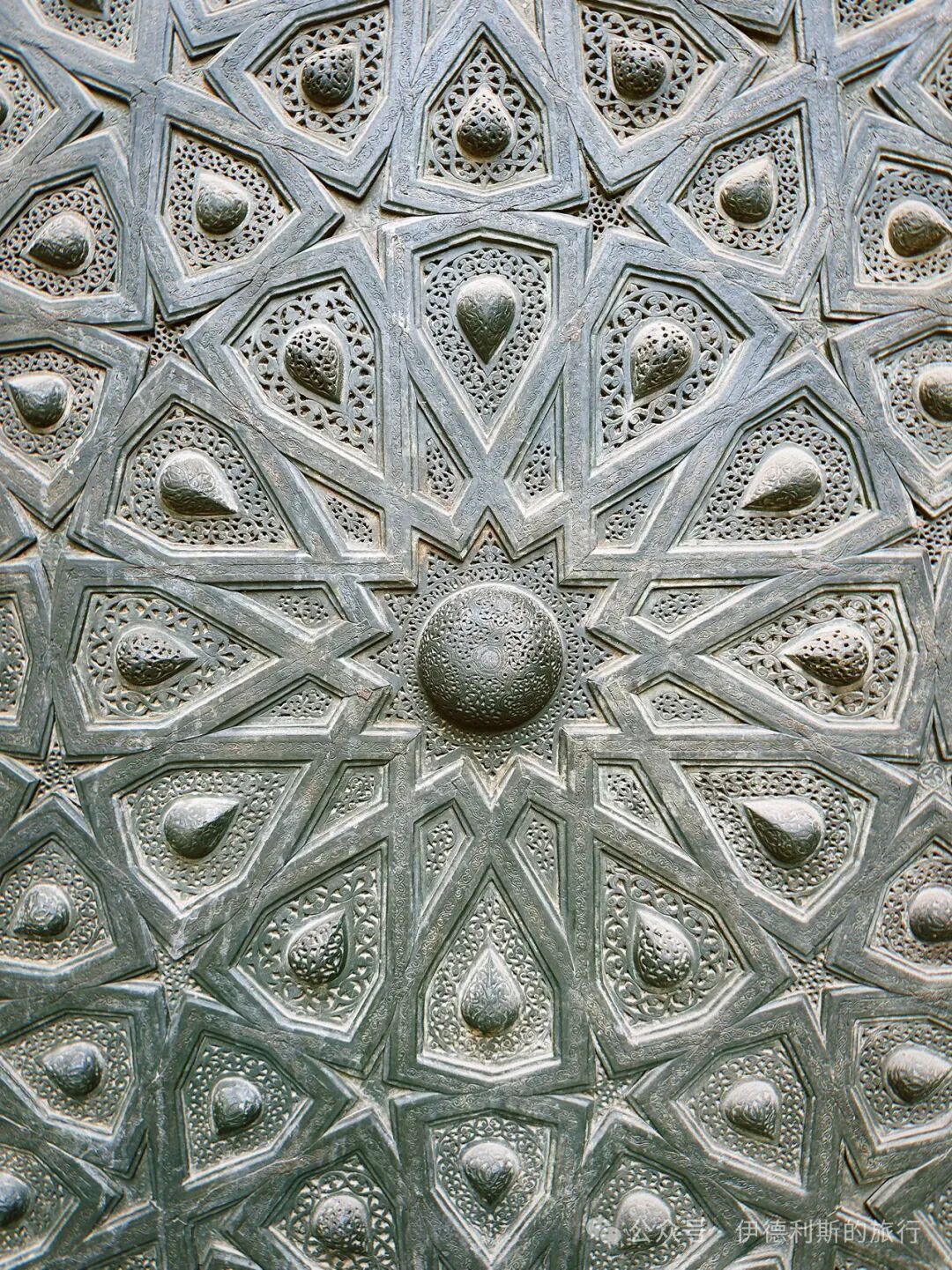
It is very interesting that the threshold of the gate is made of stone blocks carved with ancient Egyptian hieroglyphs, which is the first time I have ever seen this.
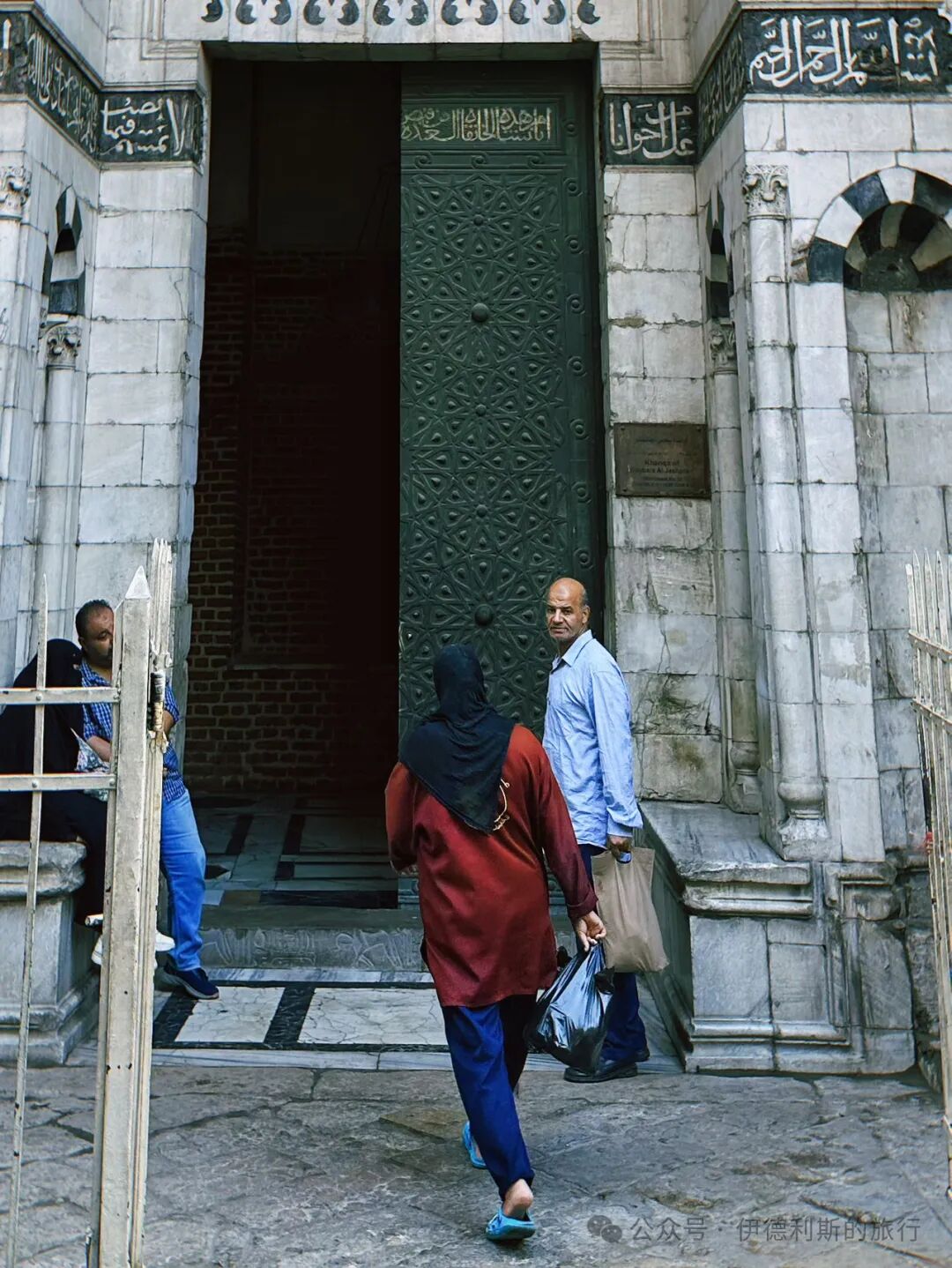
Bayt al-Suhaymi: 1648
Walking west from the Khanqah of Baybars II, you can see the Bayt al-Suhaymi on Darb al-Asfar Street. Built in 1648, it is the best-preserved private residence from the Ottoman period in old Cairo and is now open as a tourist site.
This residence is built around a courtyard (Sahn) with a small garden planted with palm trees in the center. You can see beautiful wooden lattice windows (Mashrabiya) in the courtyard. The south side of the mansion is the original 1648 structure, while the north side was expanded in 1797. It is now named after its last owner, Sheikh Muhammad Amin al-Suhaymi, who was a sheikh at Al-Azhar Mosque. In 1930, King Fuad I of Egypt provided funds to purchase the mansion and placed it under the management of the Committee for the Preservation of Arab Art Monuments.
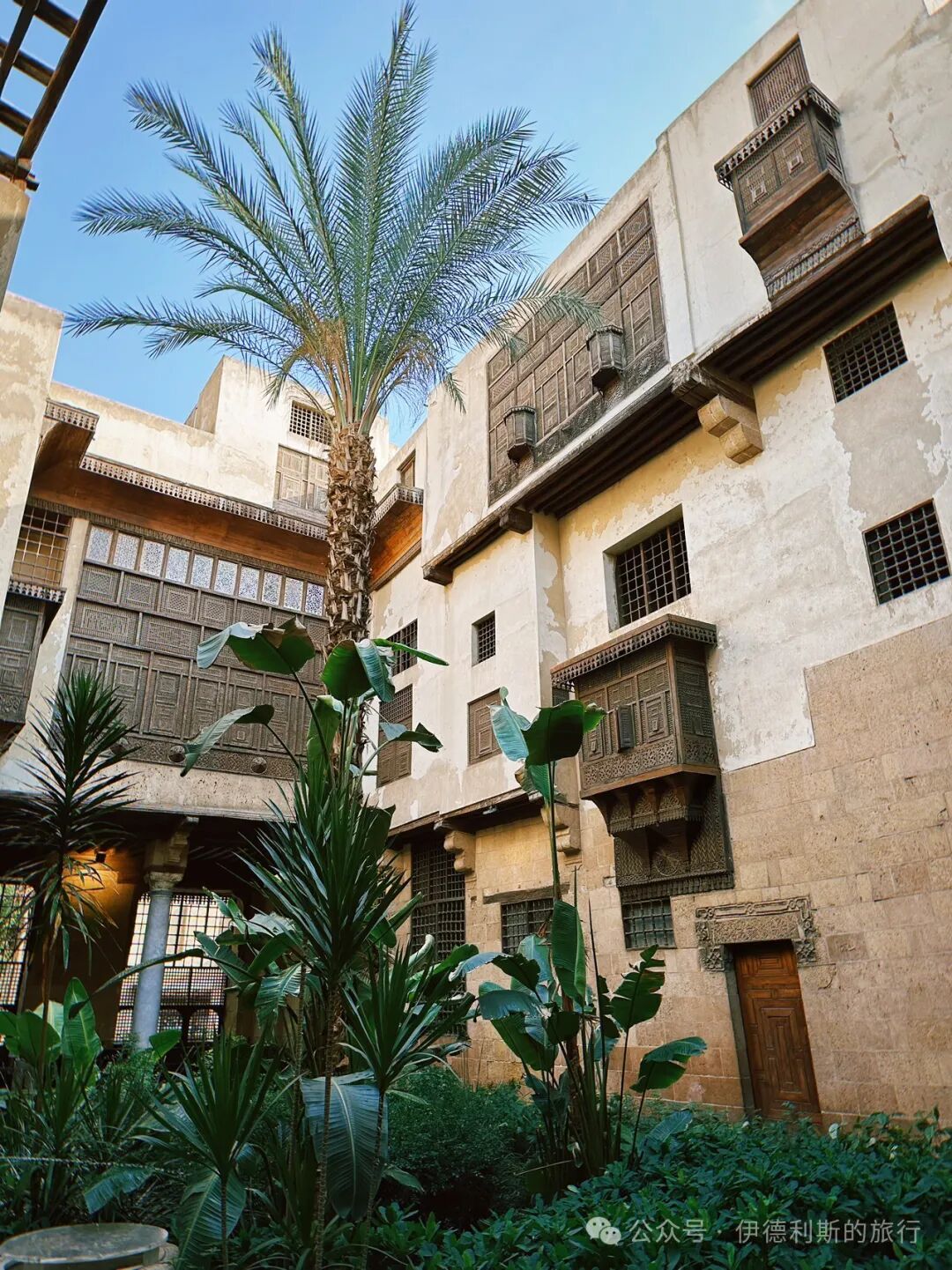
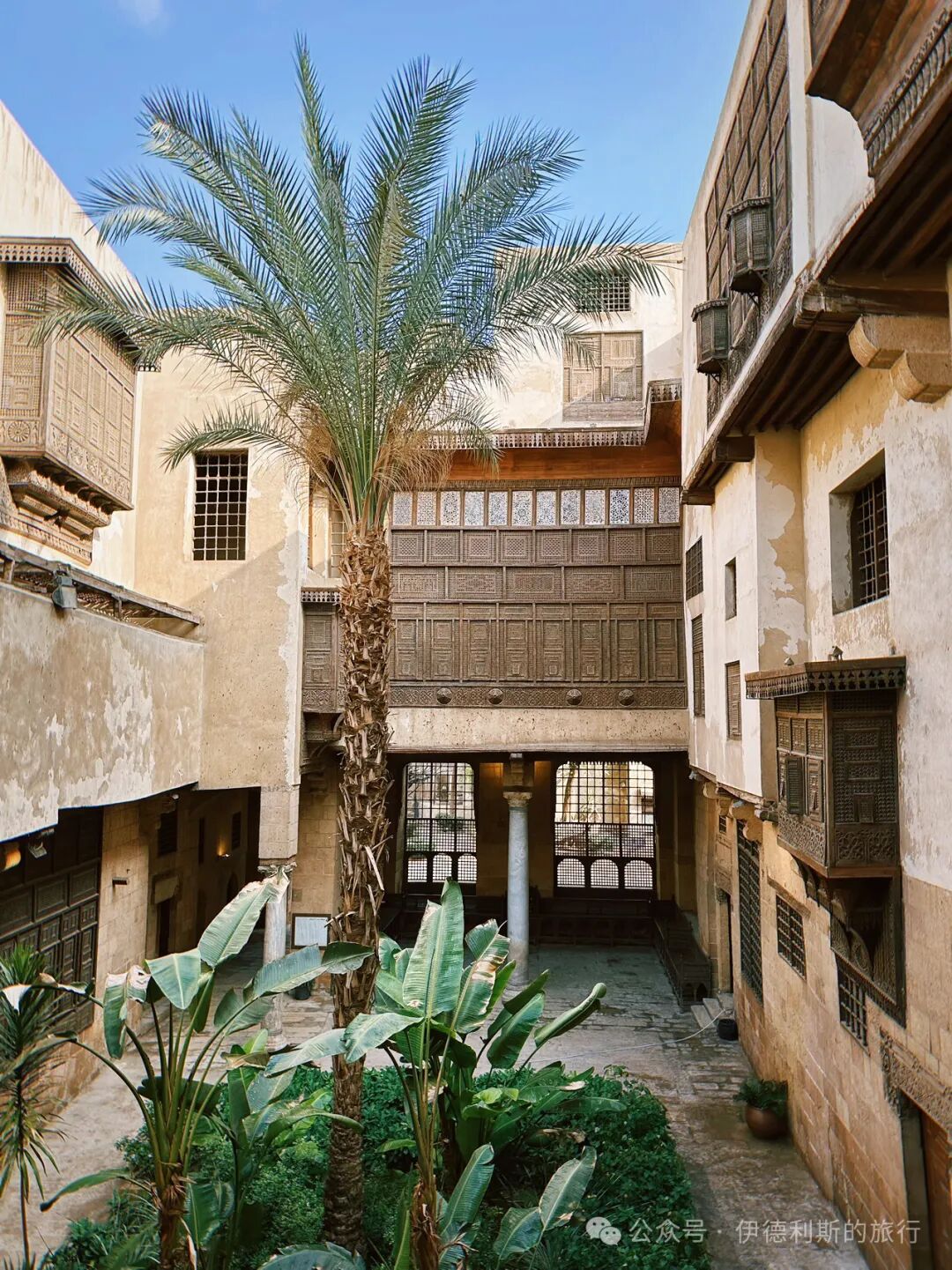
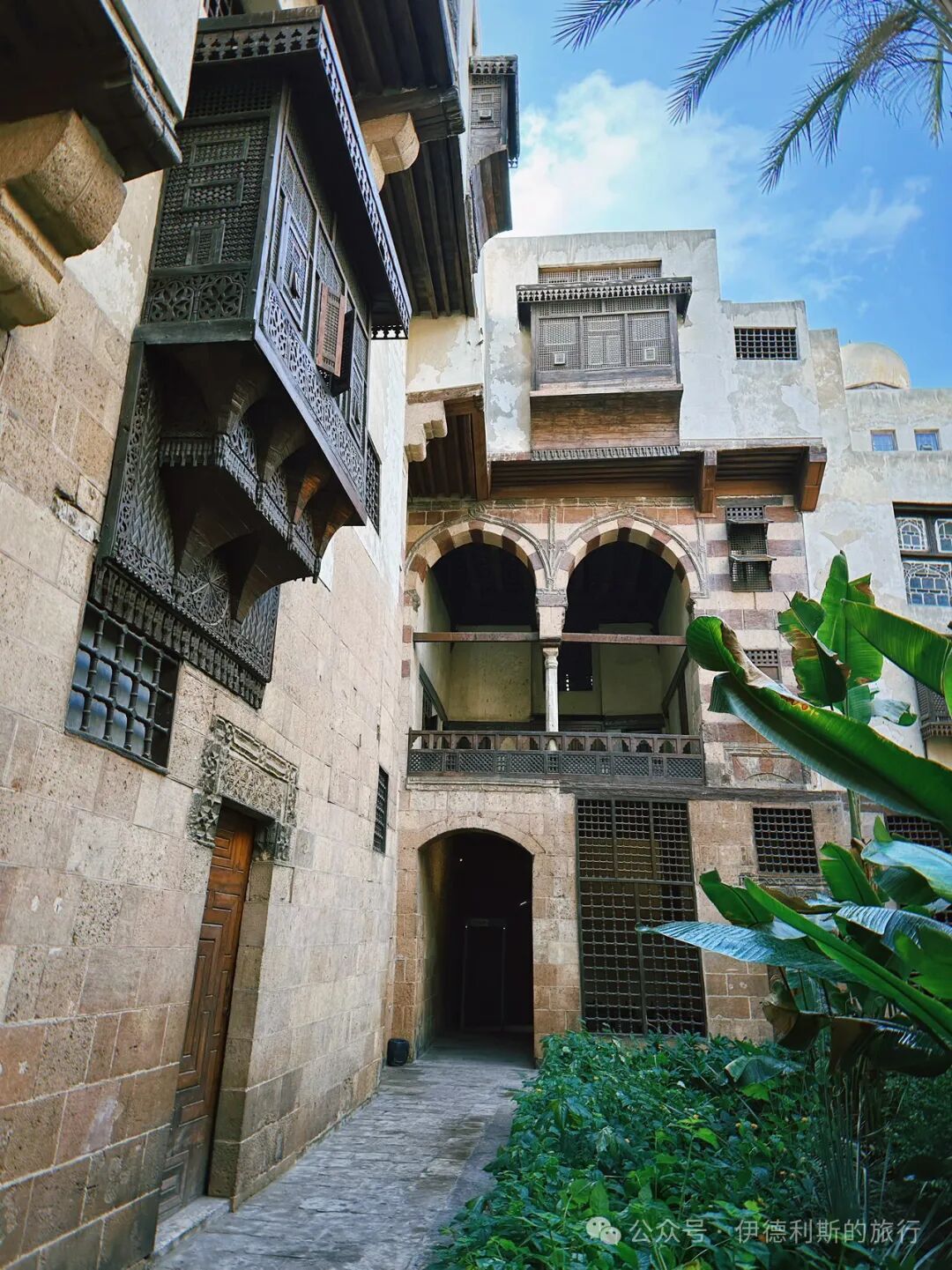
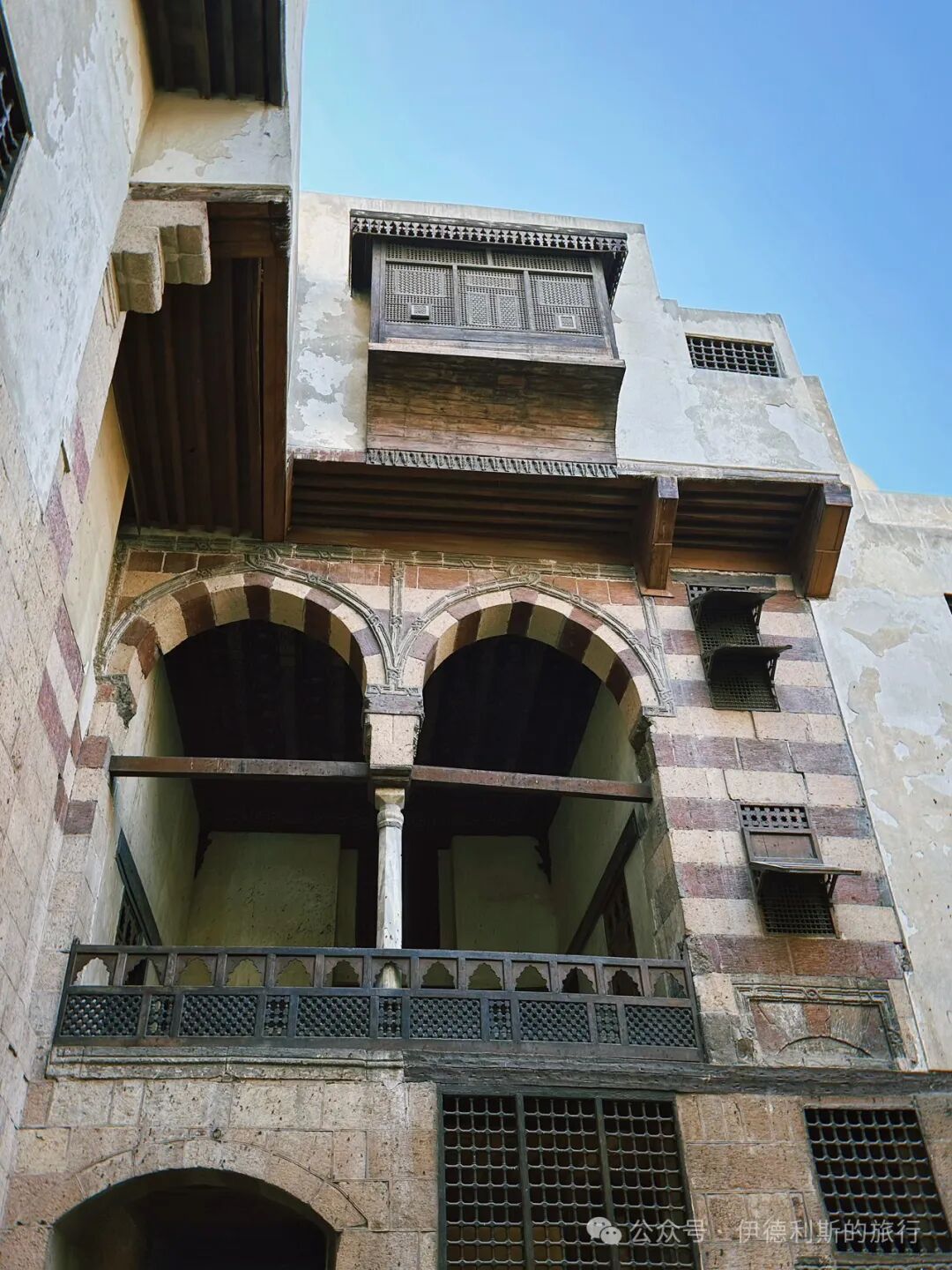
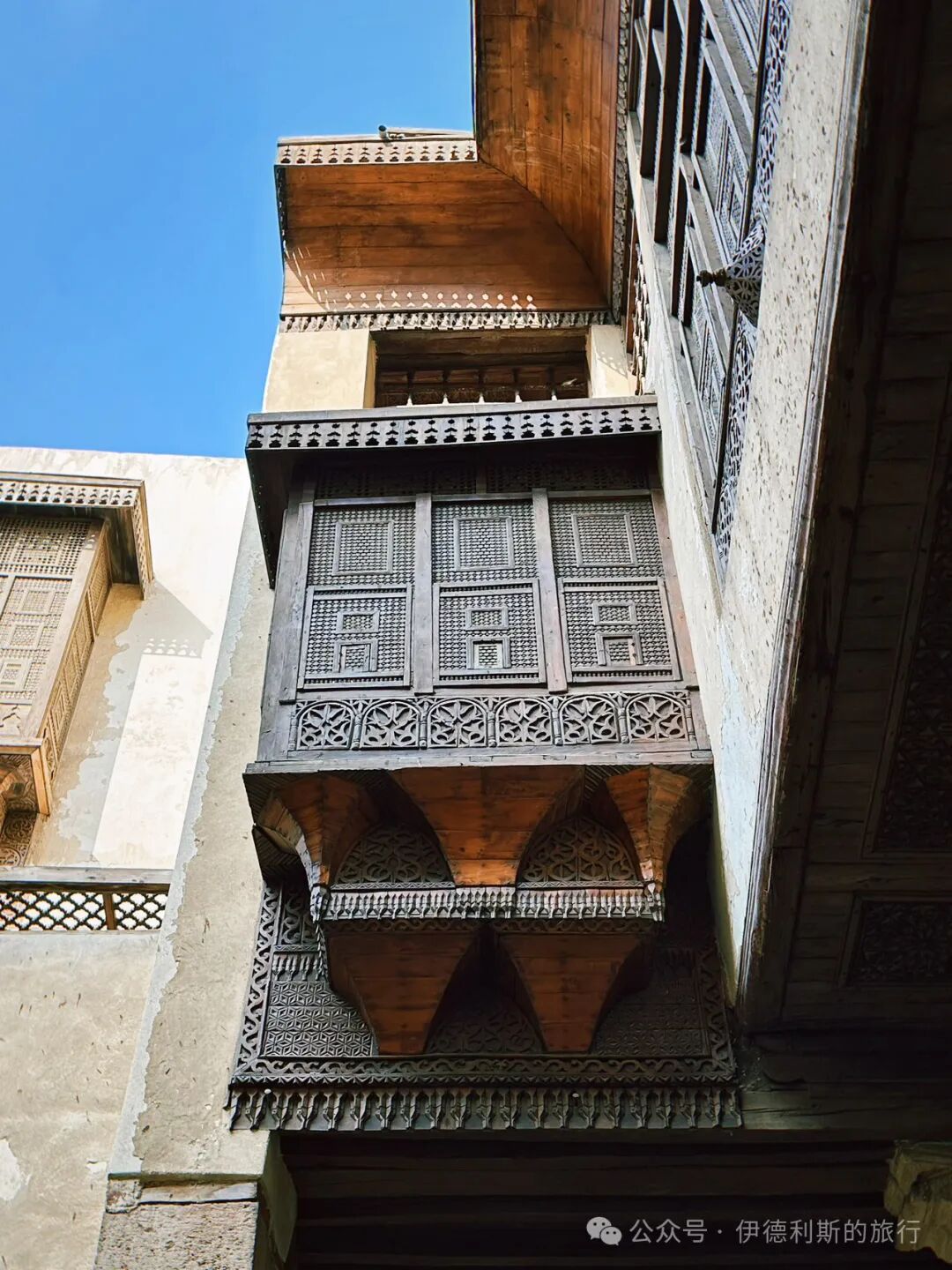
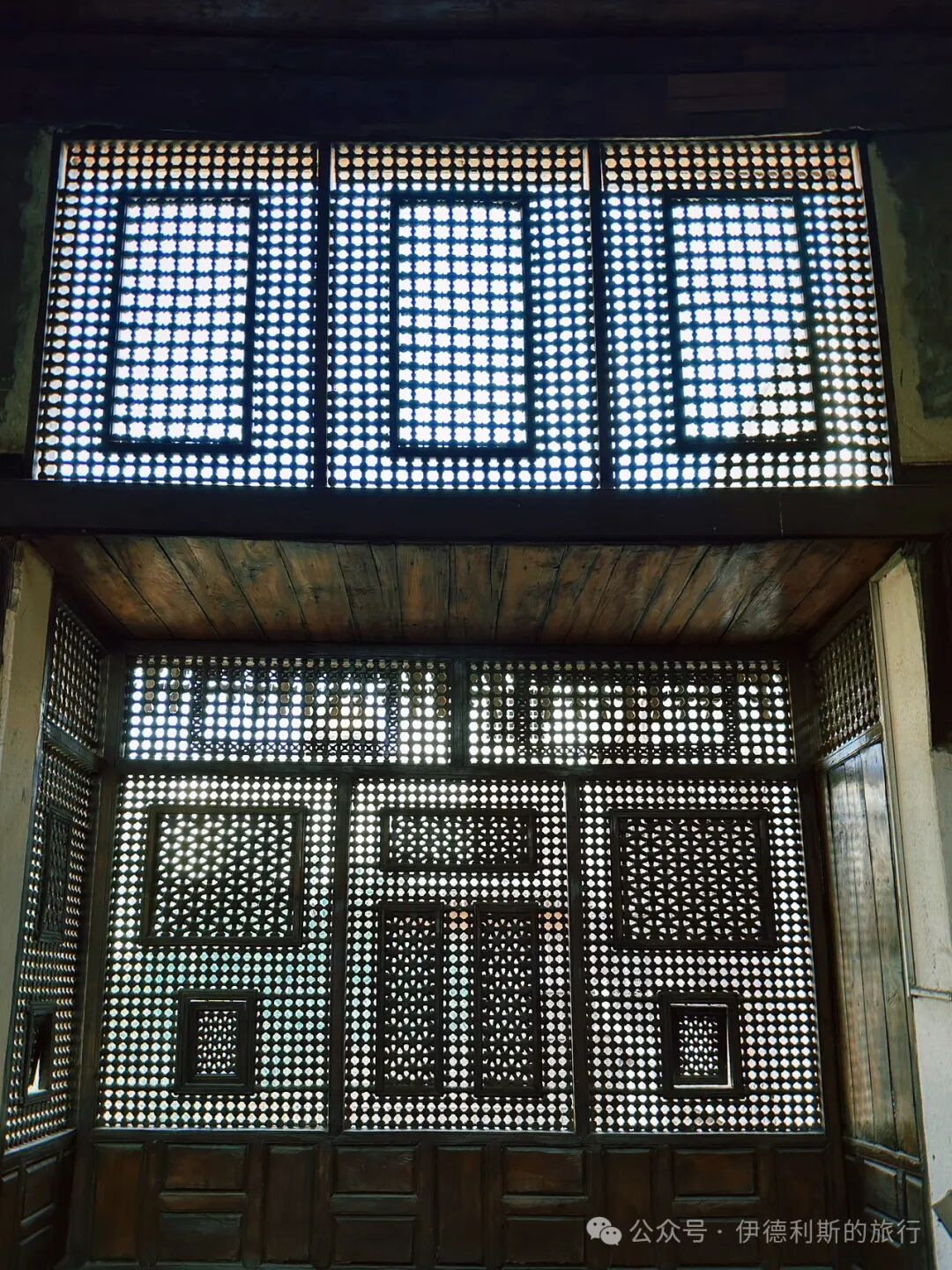
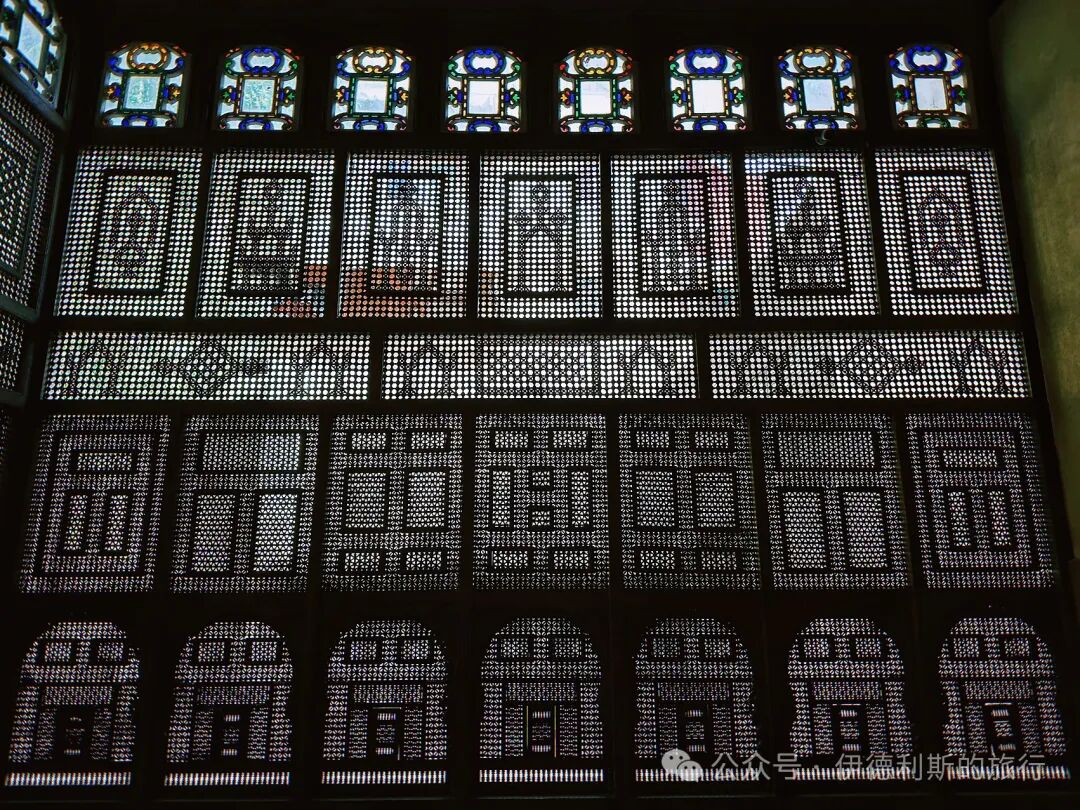
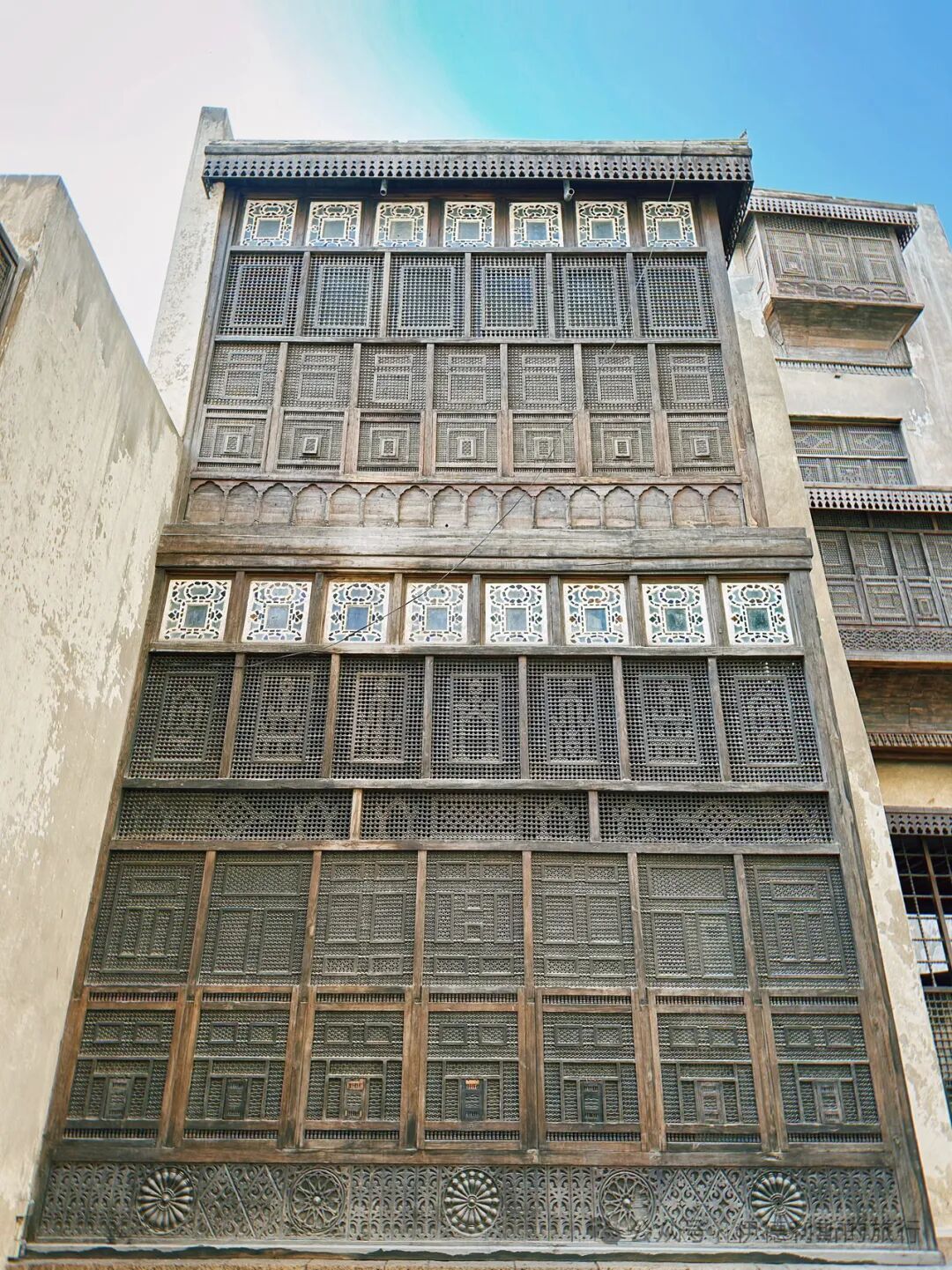
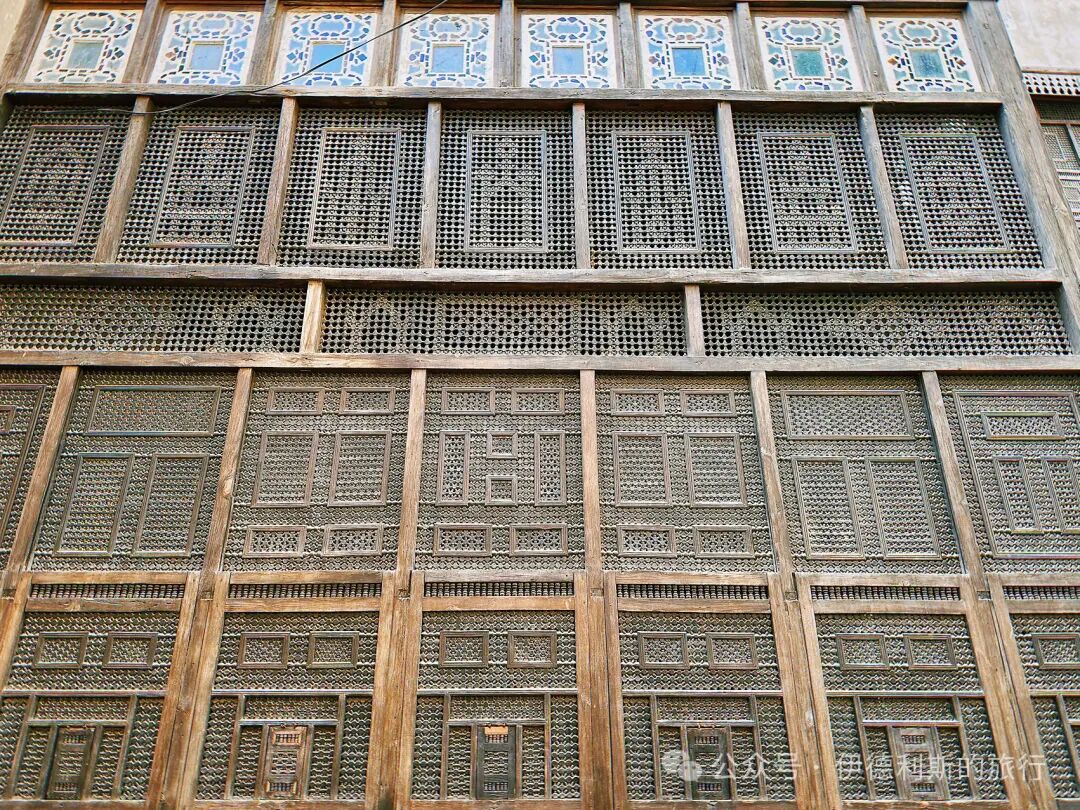
The ornate ceiling decorations of Bayt al-Suhaymi.
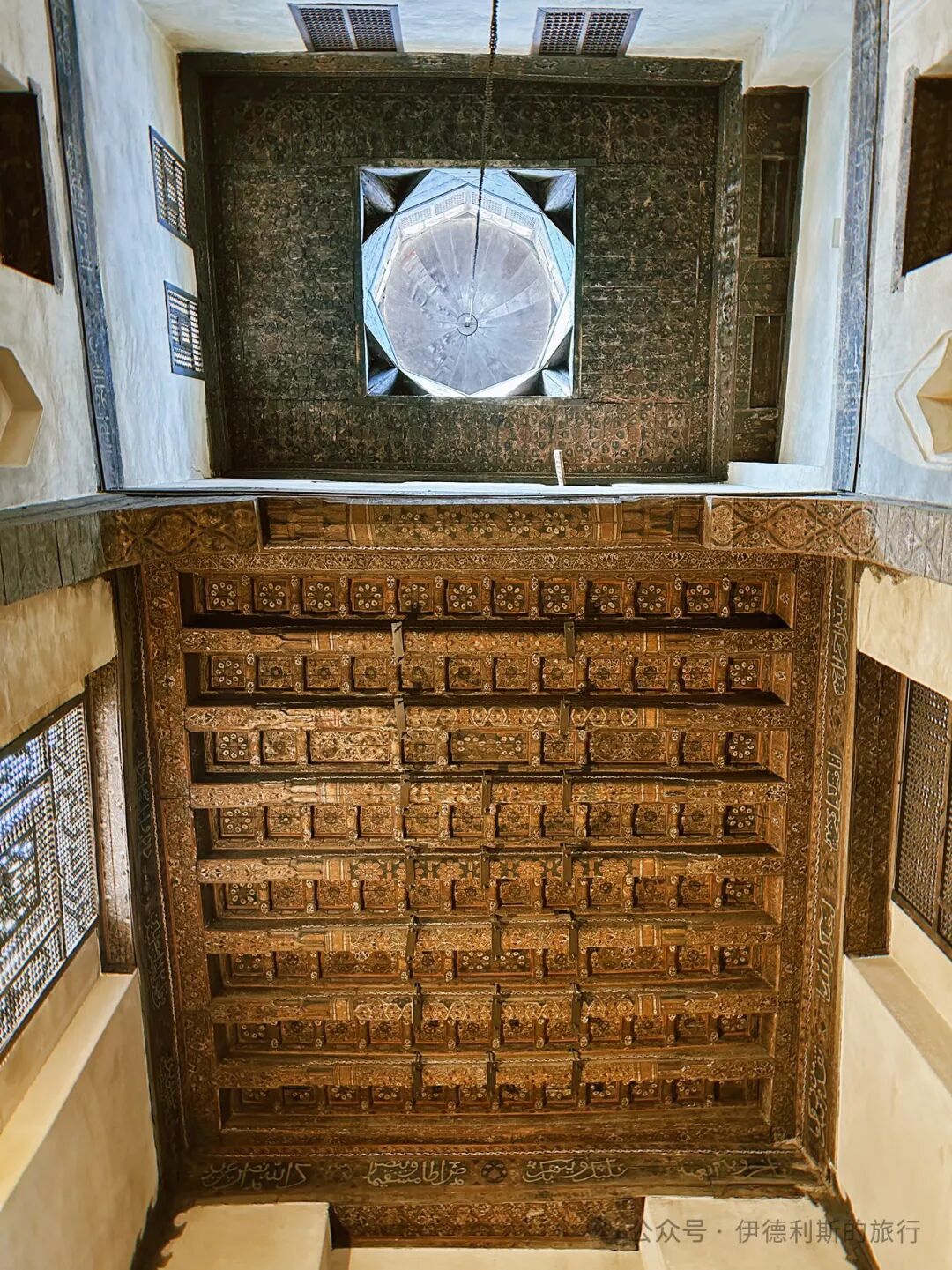
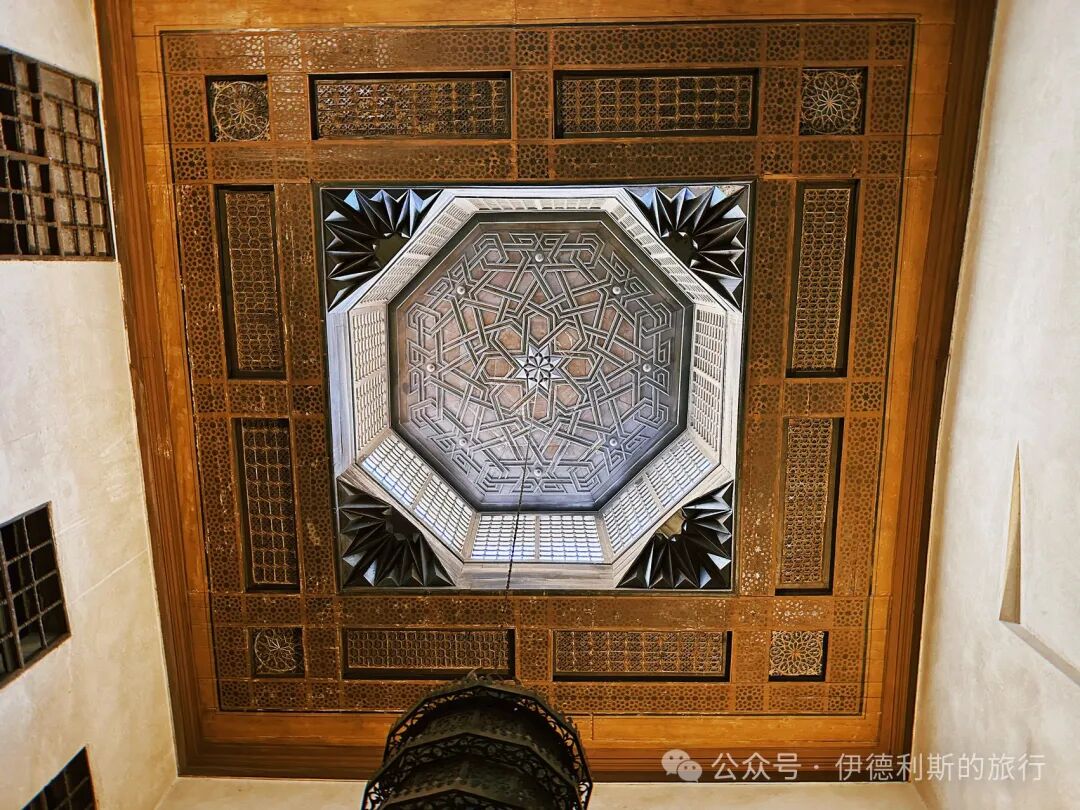
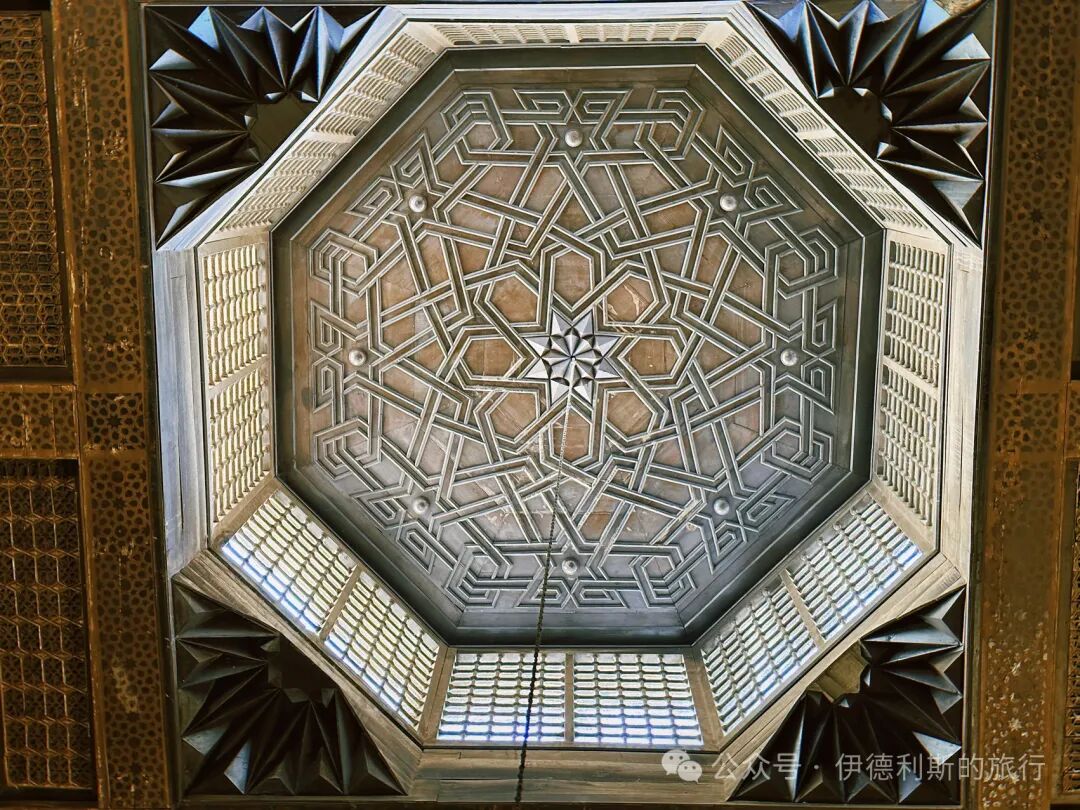
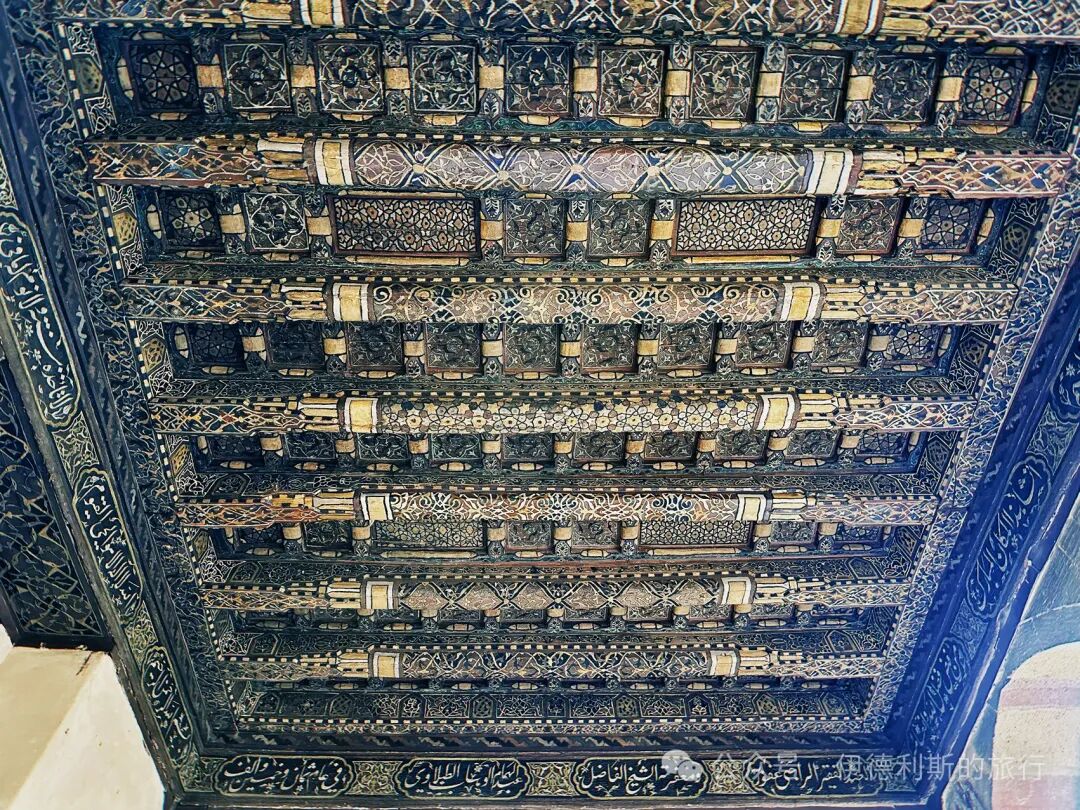
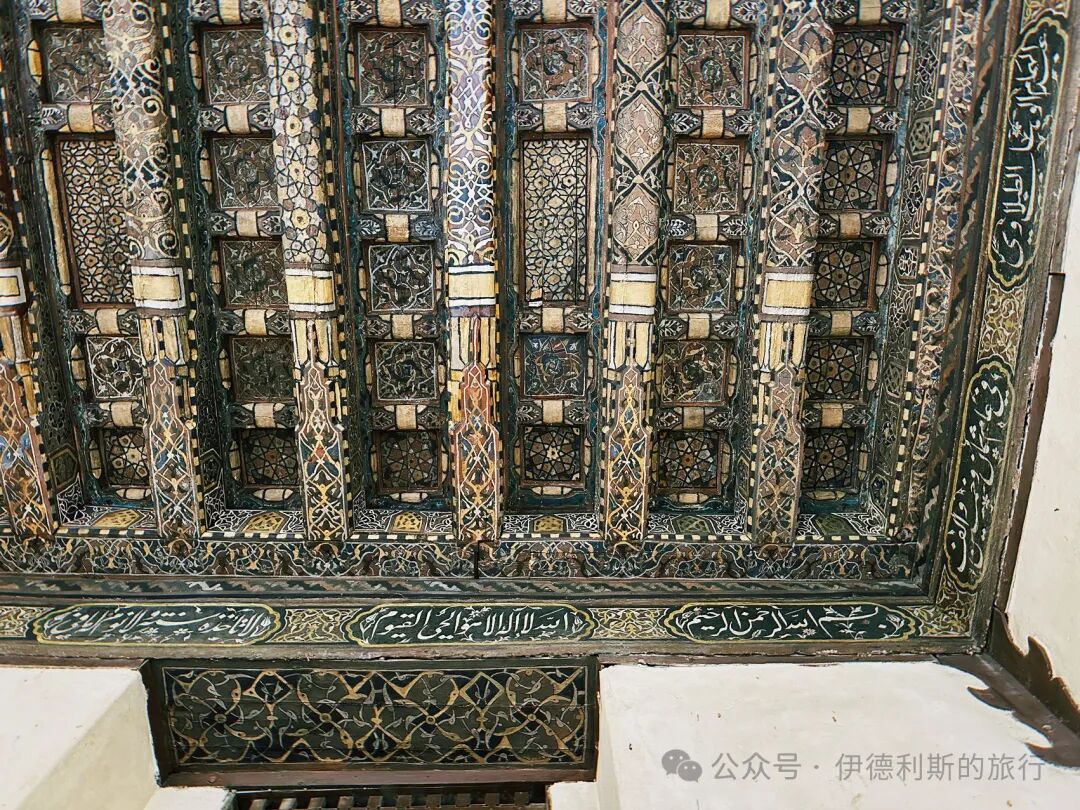
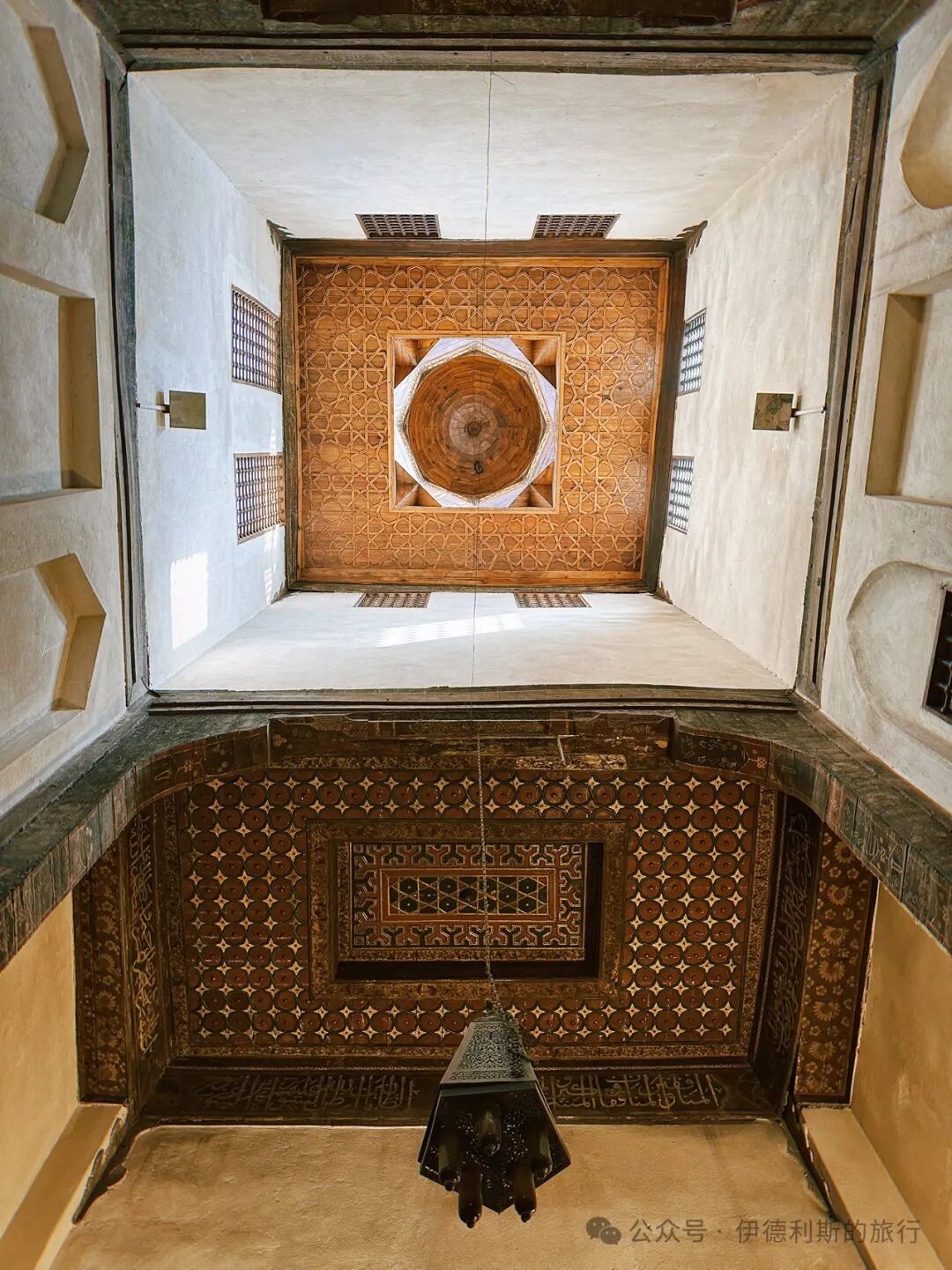
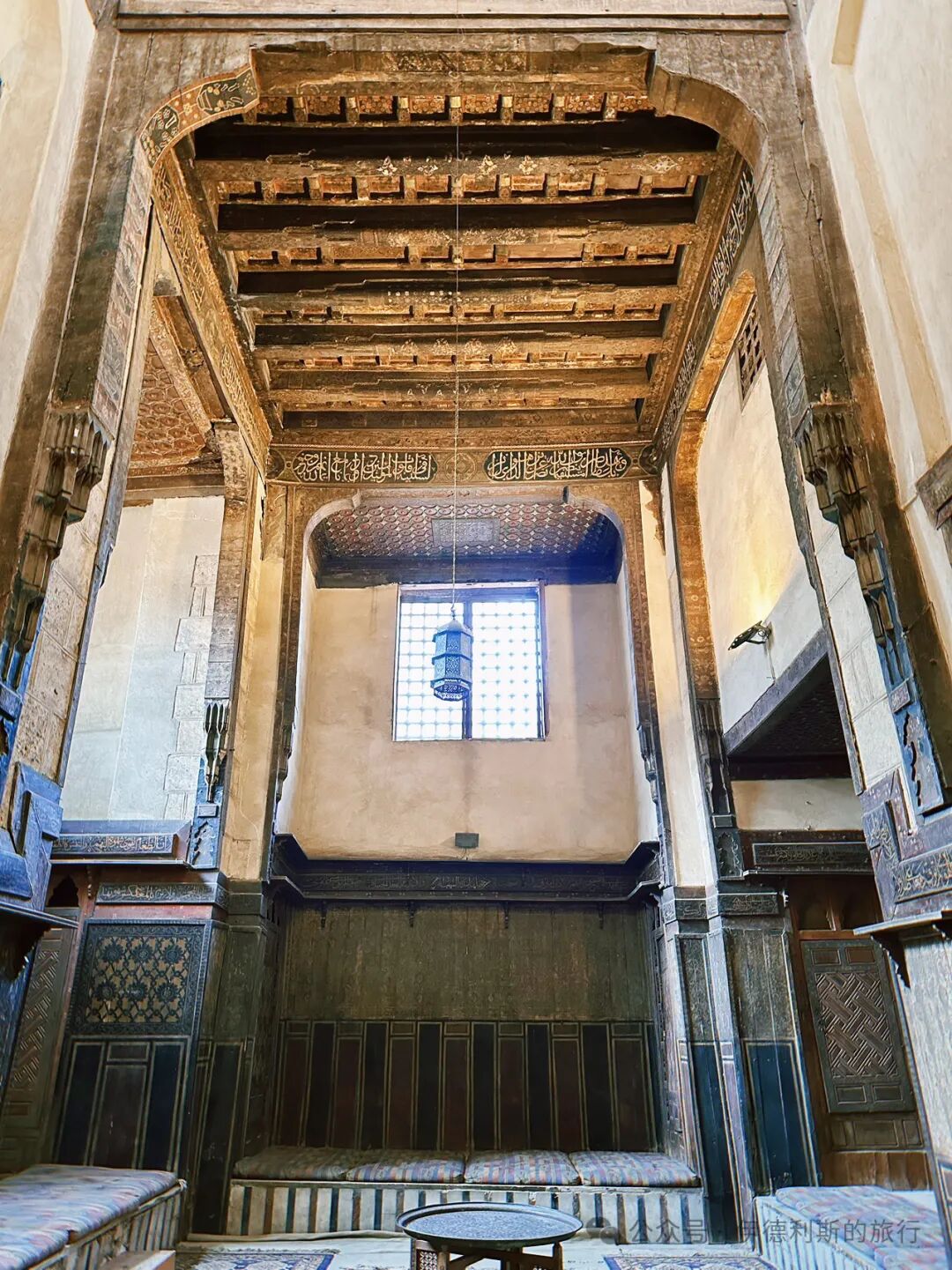
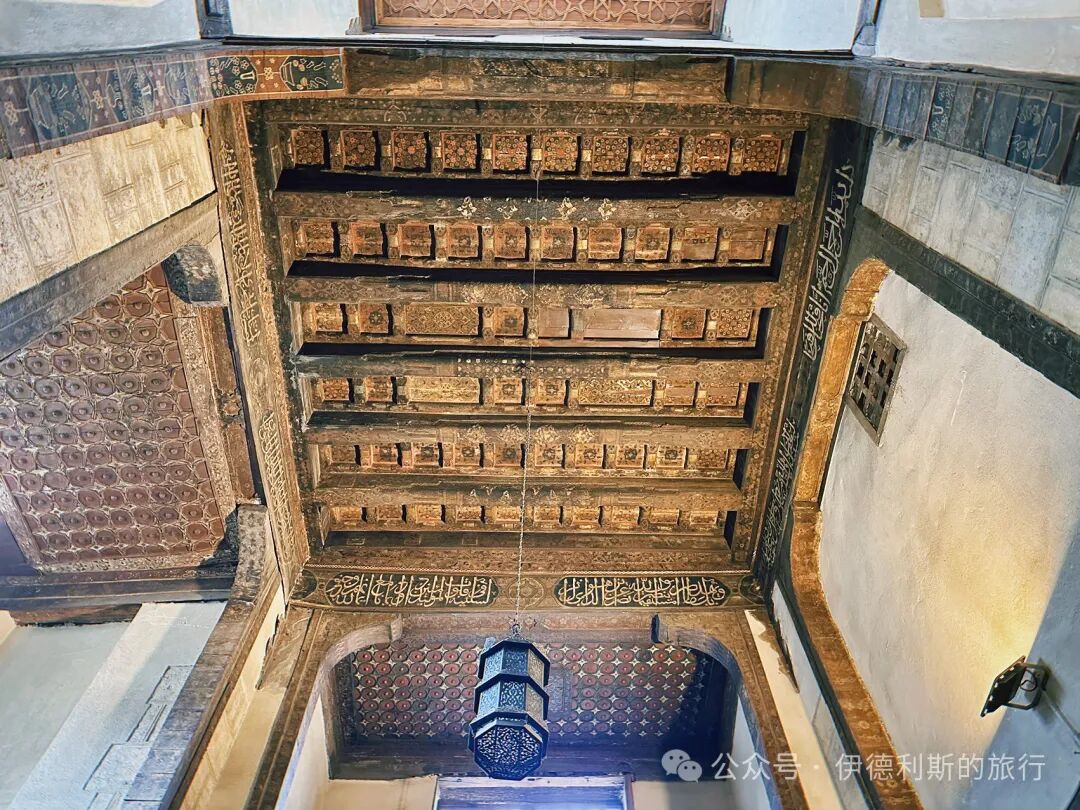
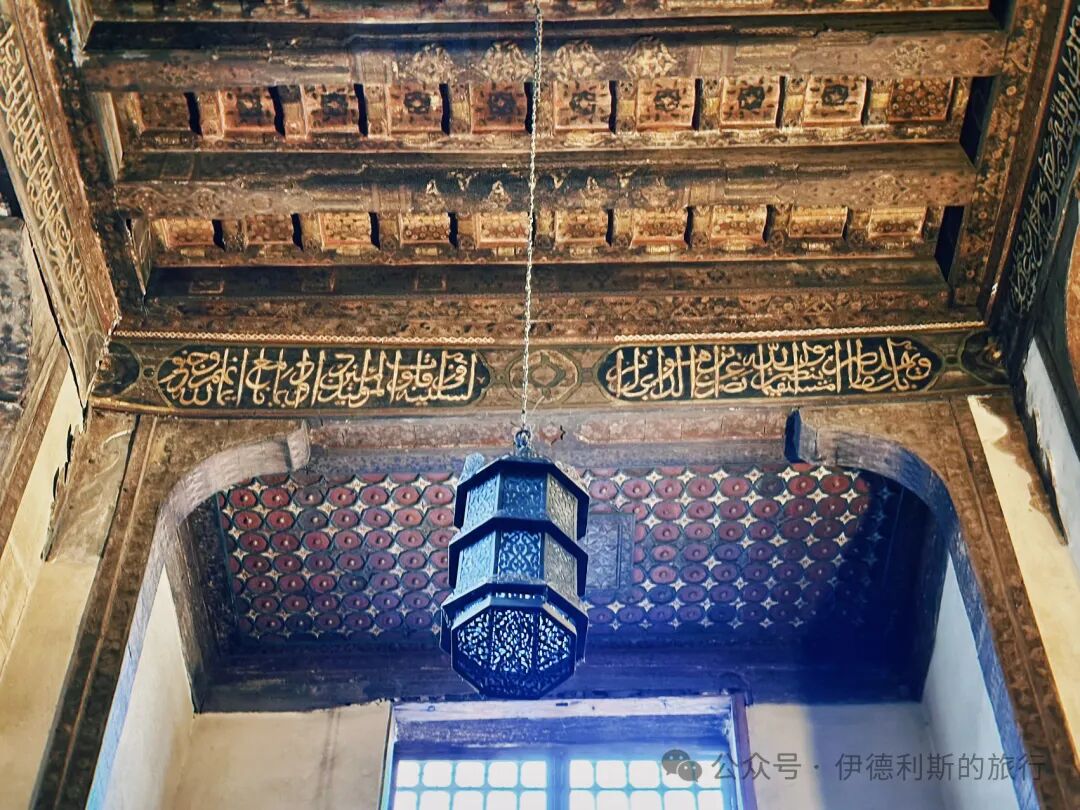
The wood-carved furniture and colorful marble floors inside Bayt al-Suhaymi.
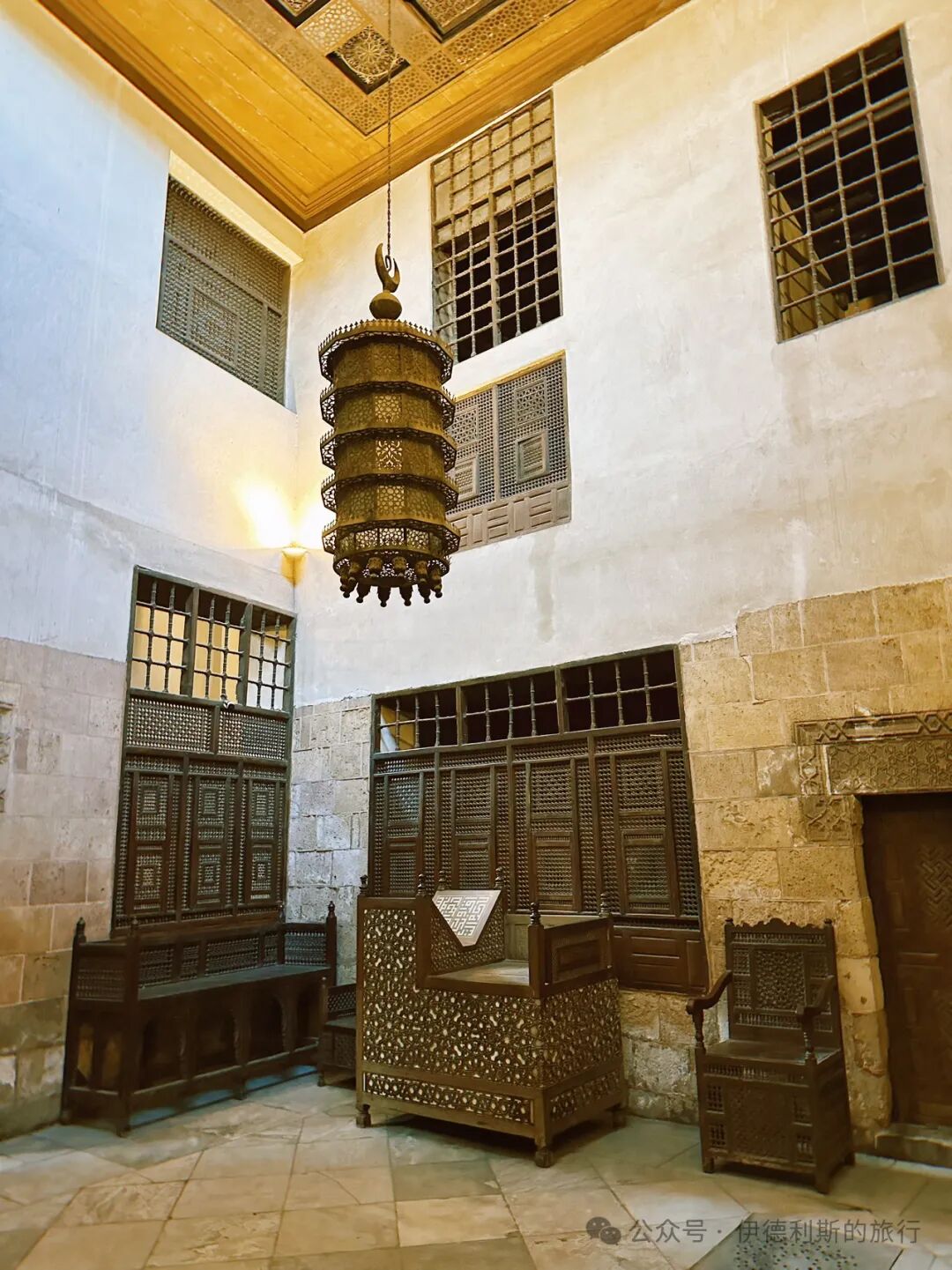
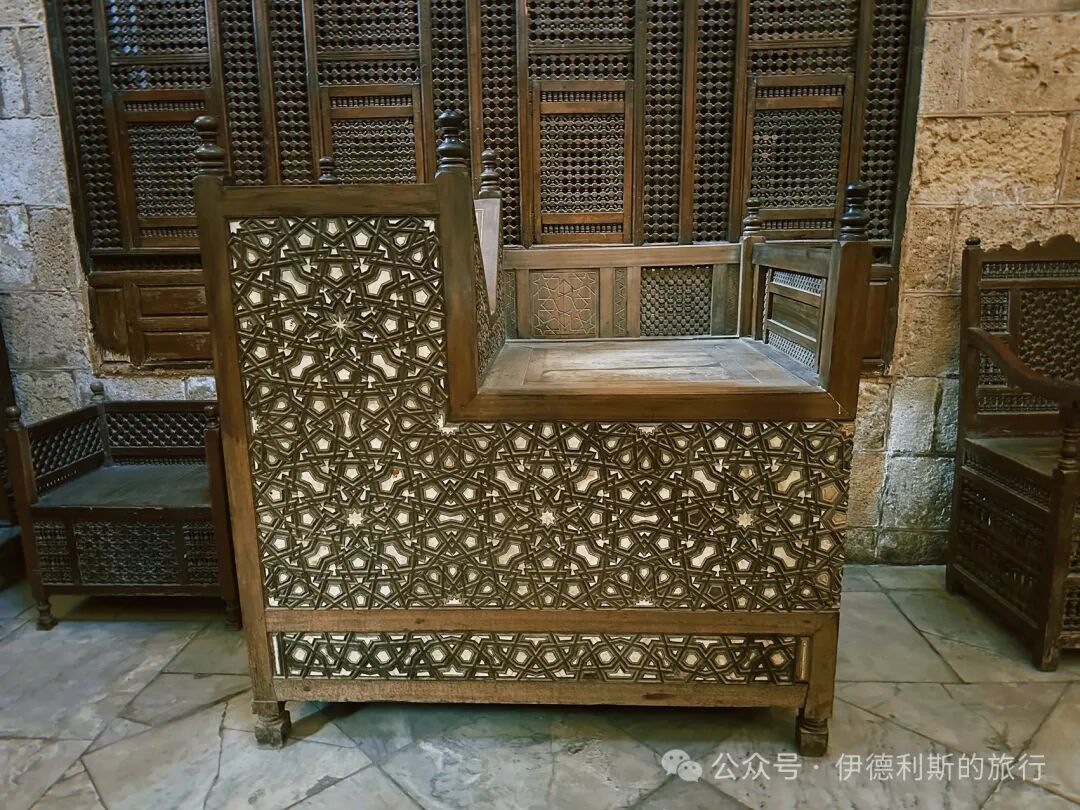
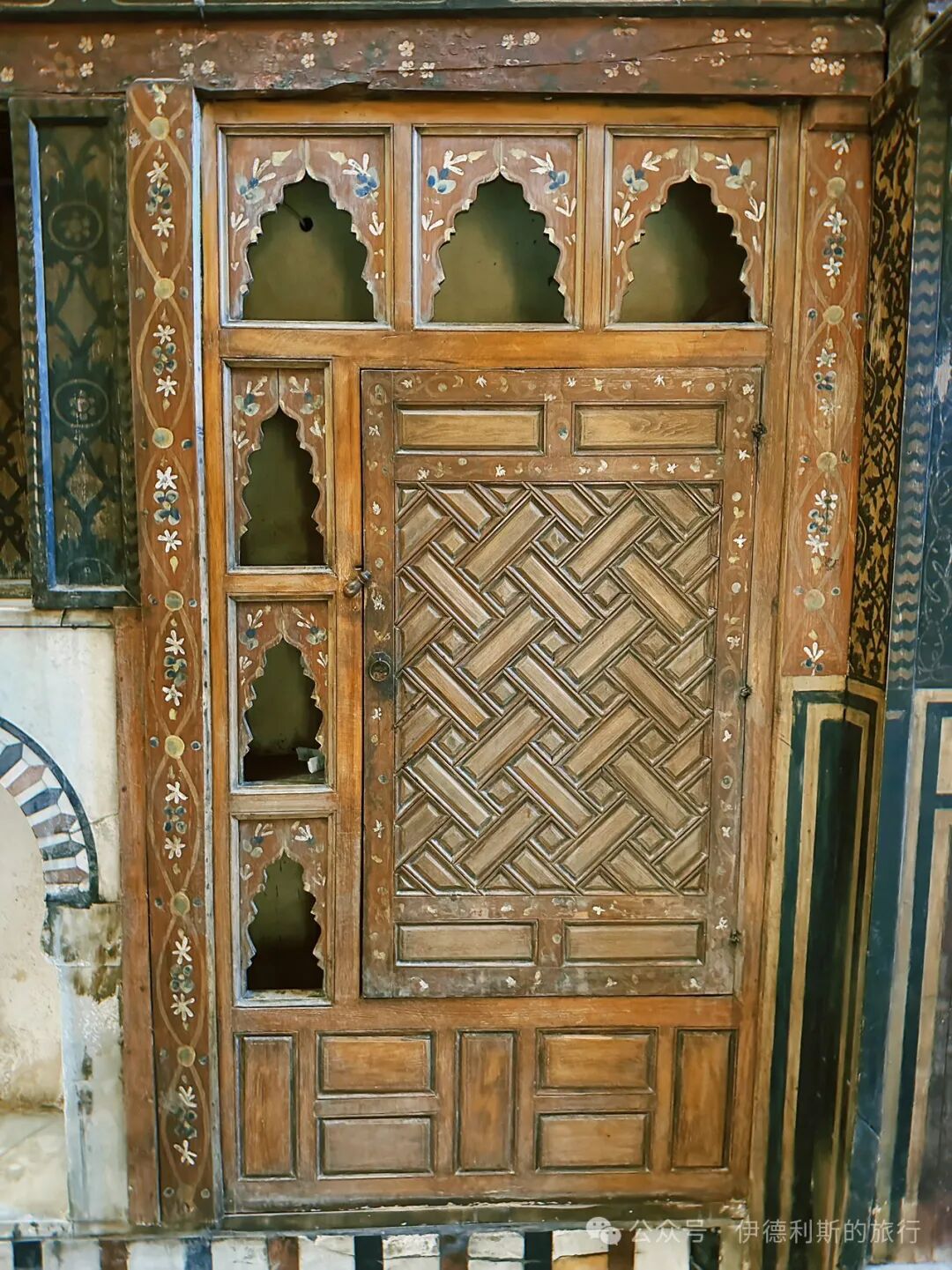
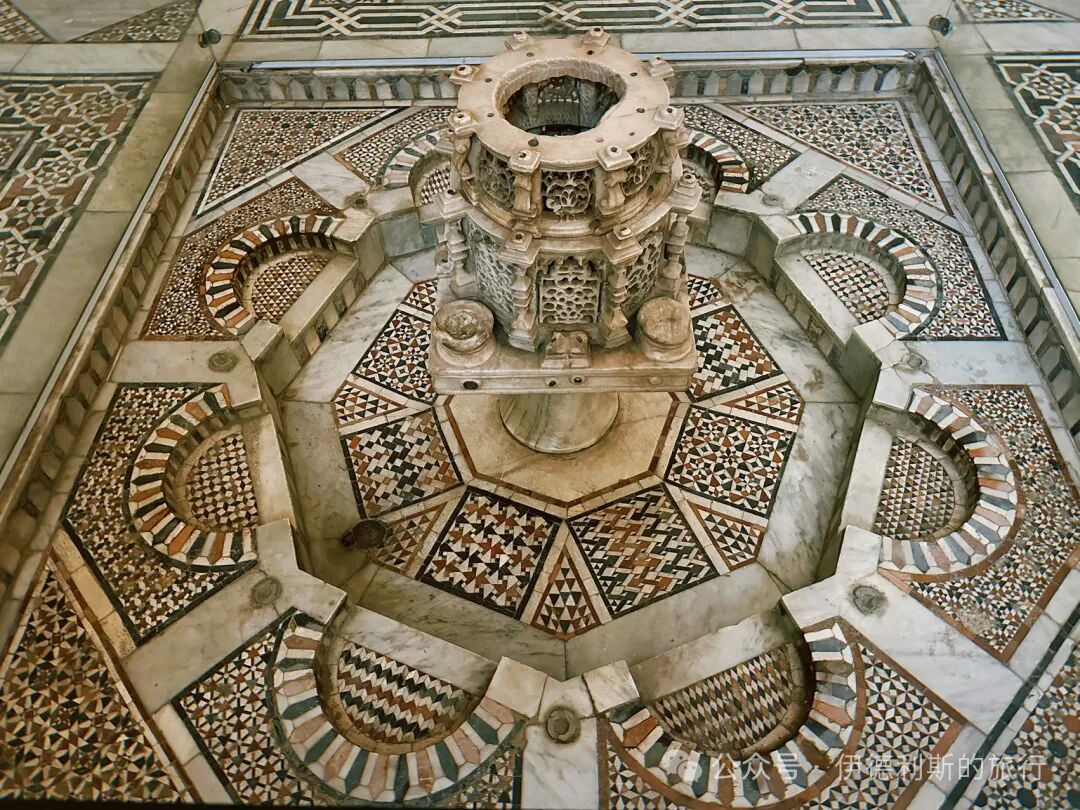
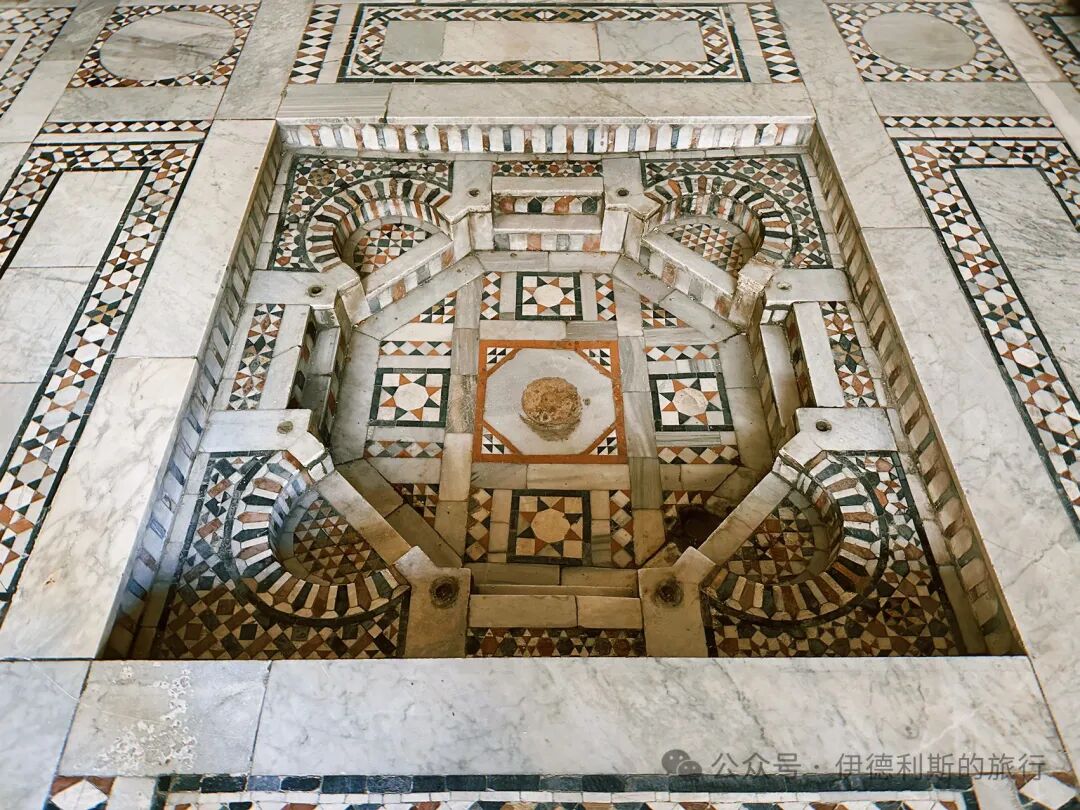
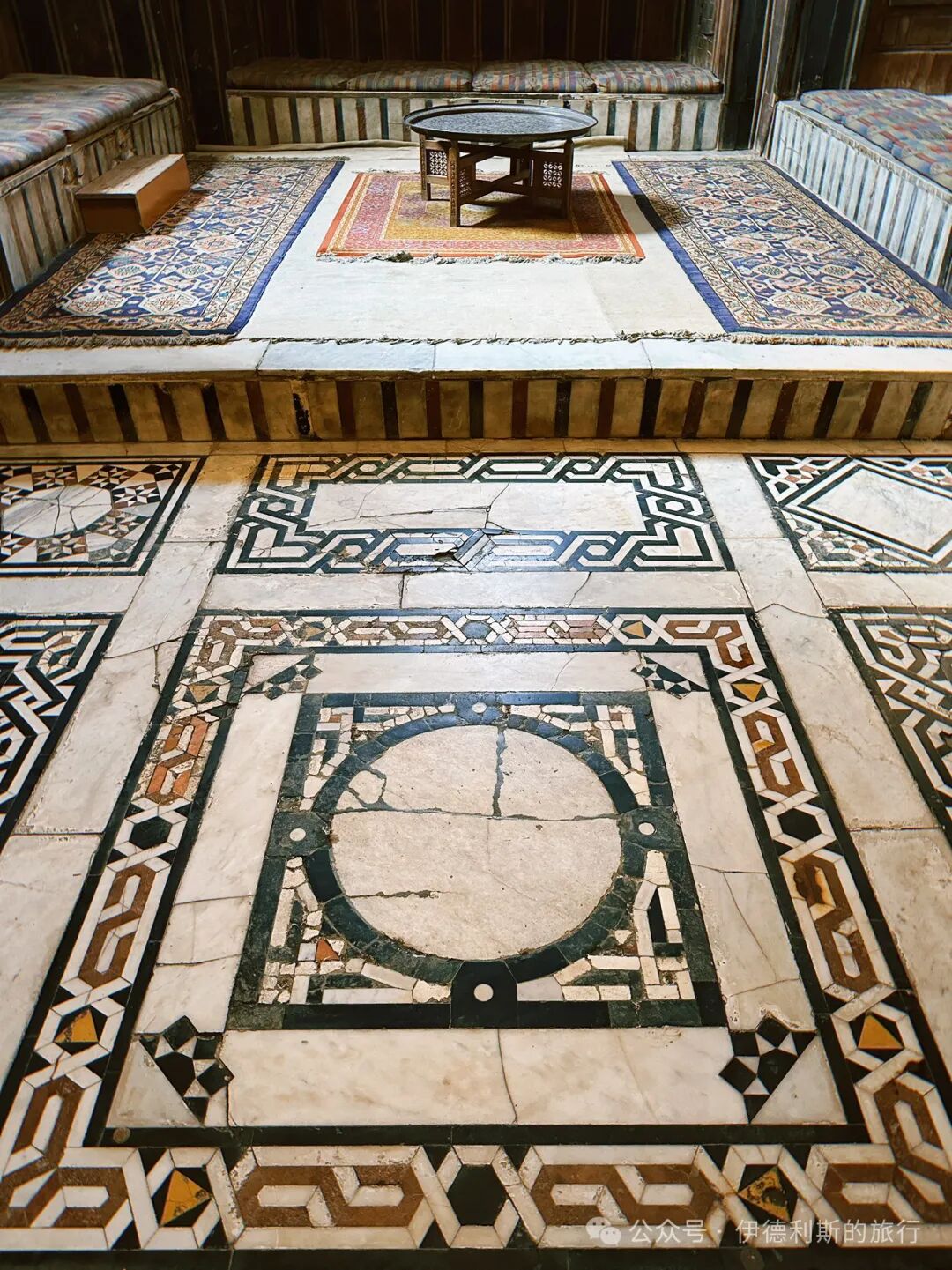
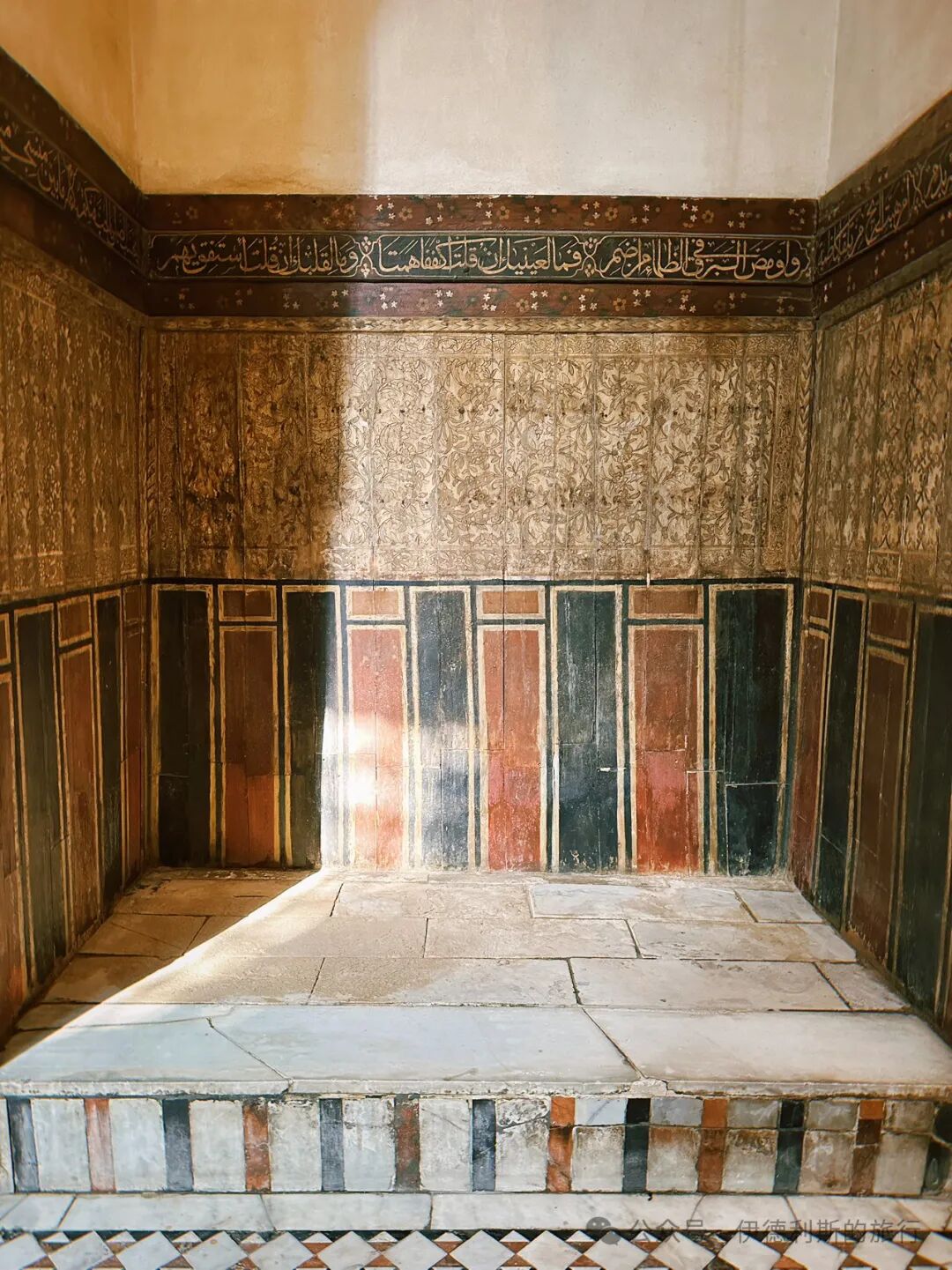
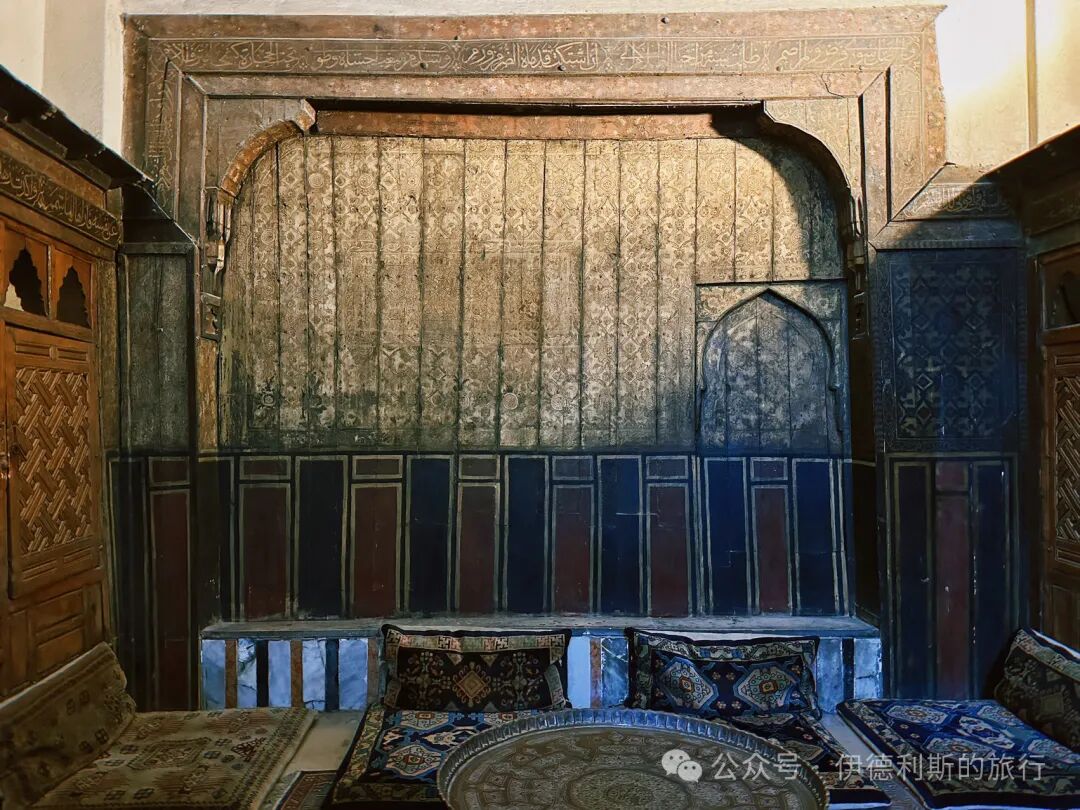
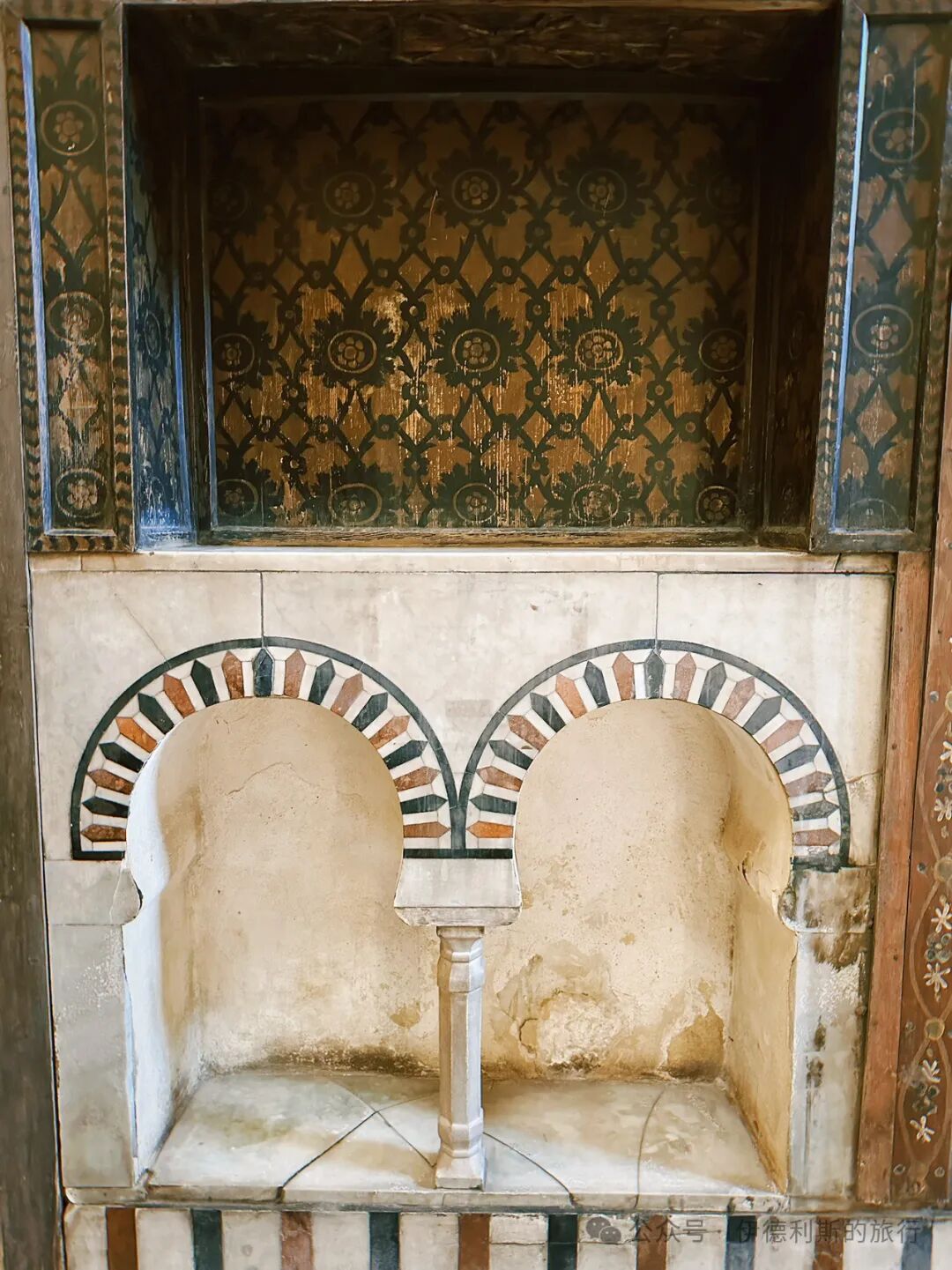
Mosque-Sabil of Sulayman Agha al-Silahdar: 1839
Continuing west back to the main road of old Cairo, Al-Mu'izz Street, the first thing you see is the Mosque-Sabil of Sulayman Agha al-Silahdar, built in 1839. This fountain has a fancy Ottoman Baroque facade with floral patterns from the European Renaissance. The fountain is made of marble and was used to keep the water cool during the summer. Next to the fountain is a primary school (kuttab) that was once used to teach children how to read, write, and recite scripture. Here, we can also enter the huge underground water reservoir of the fountain, which is rarely seen in typical fountains.
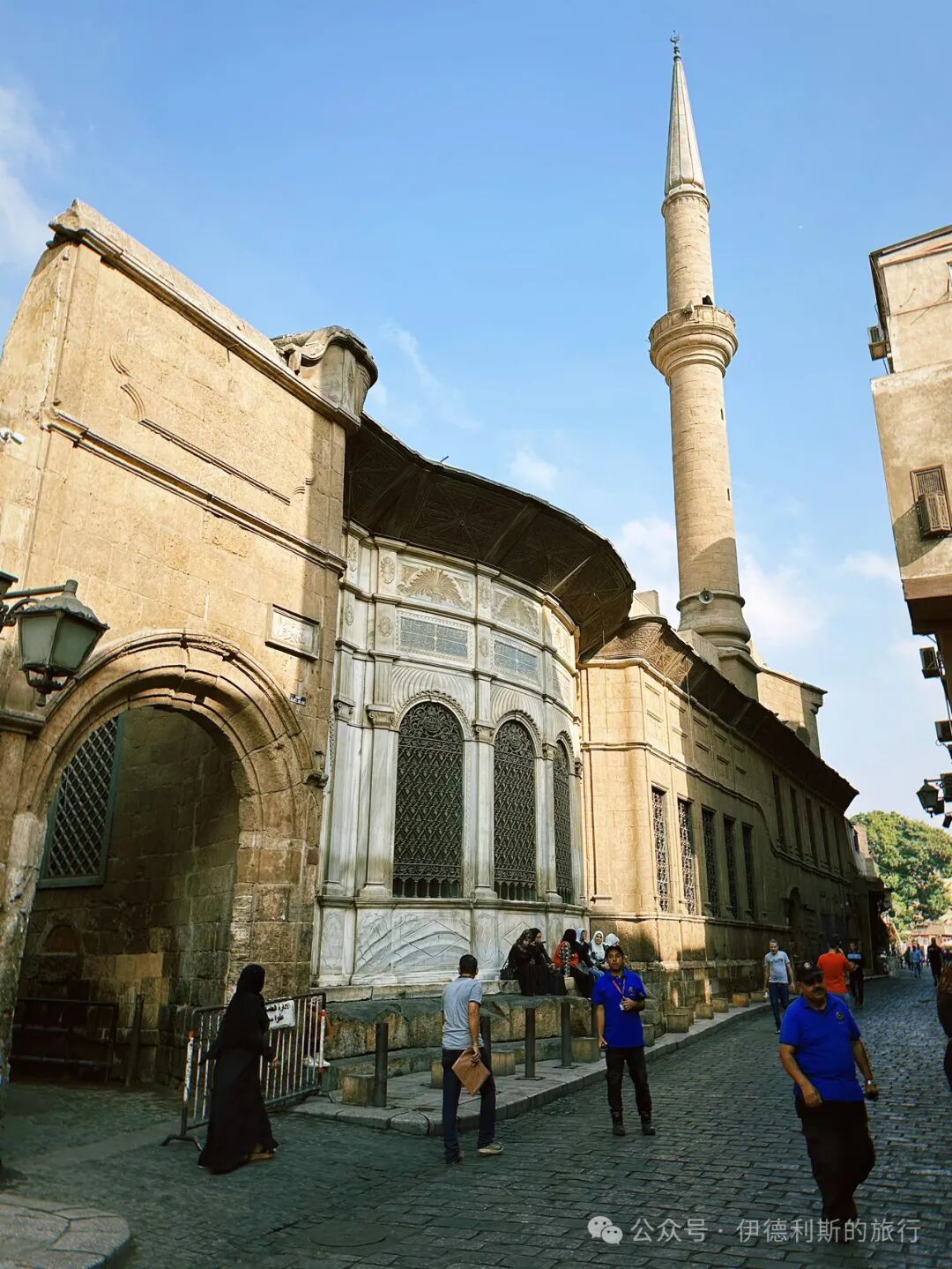
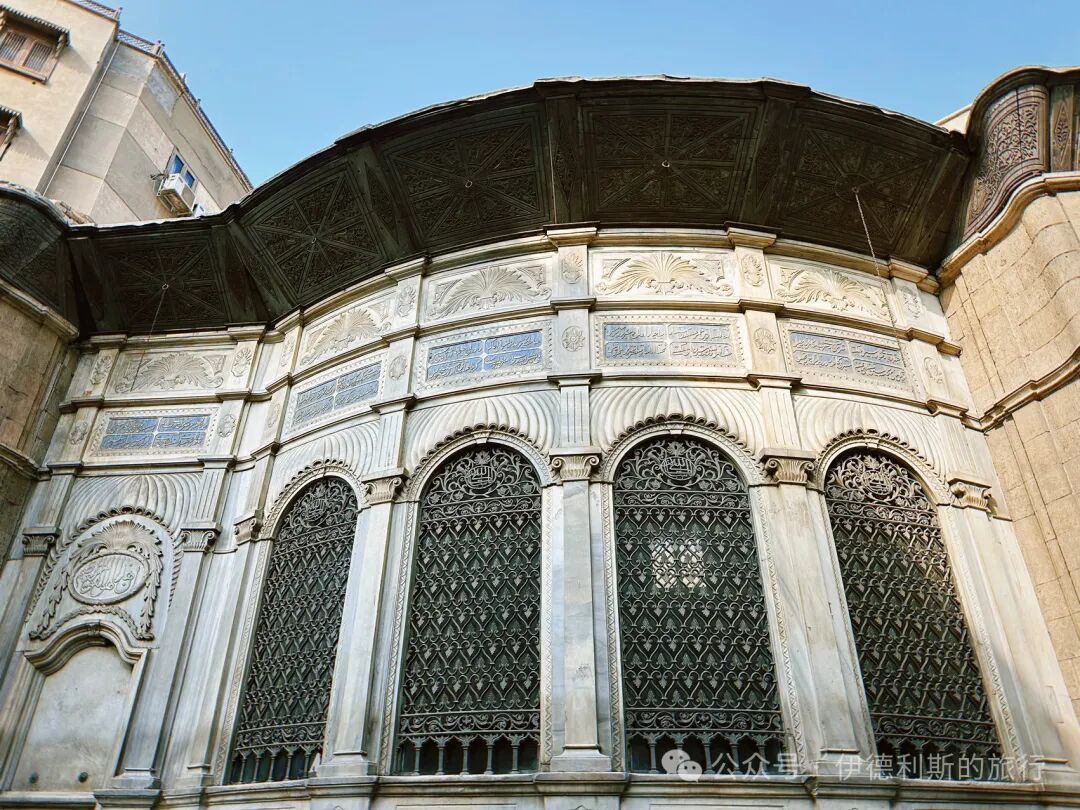
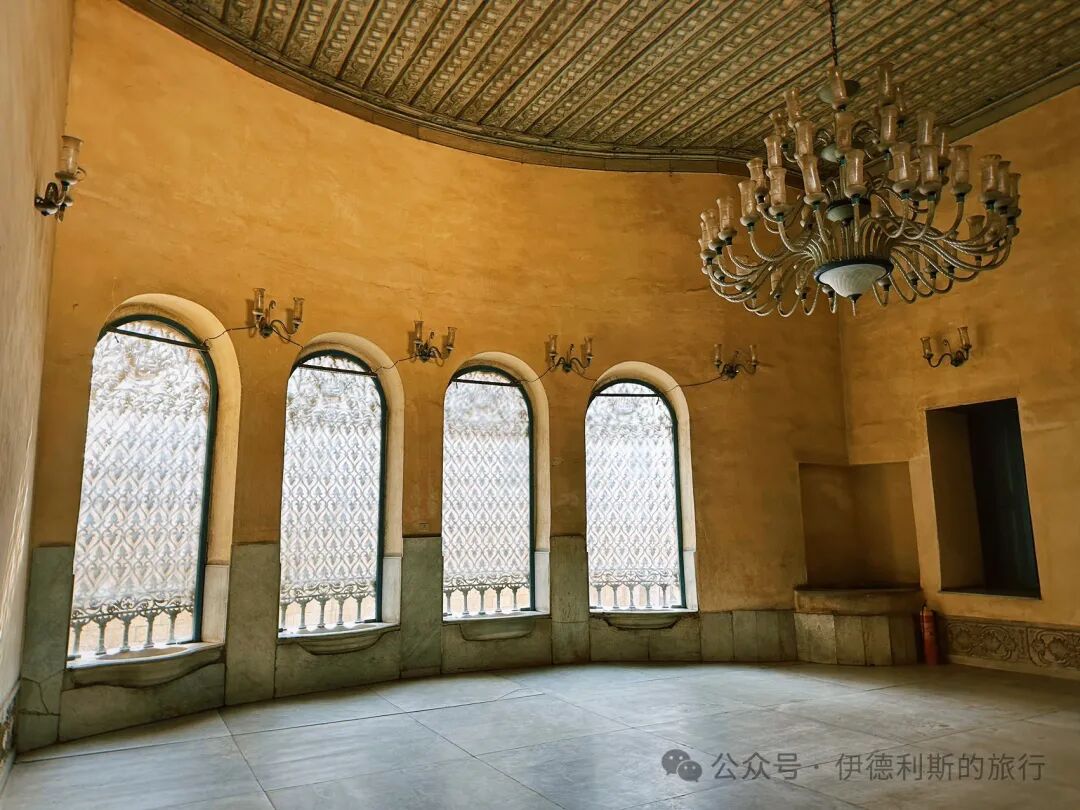
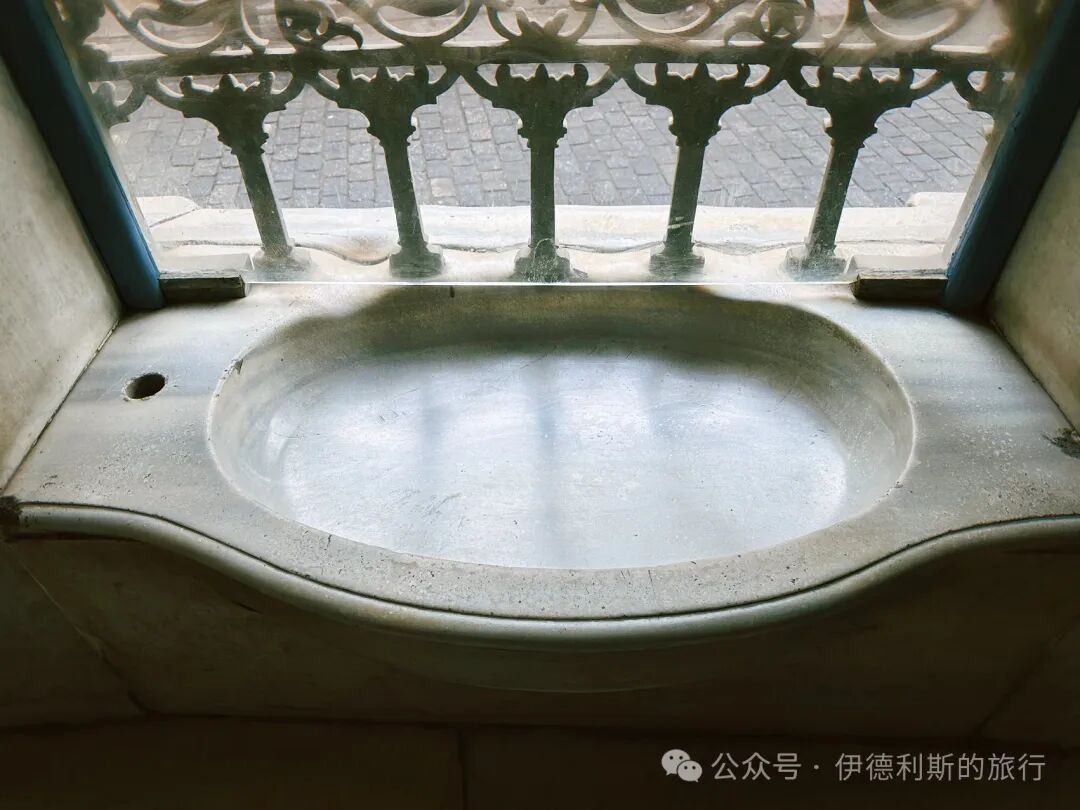
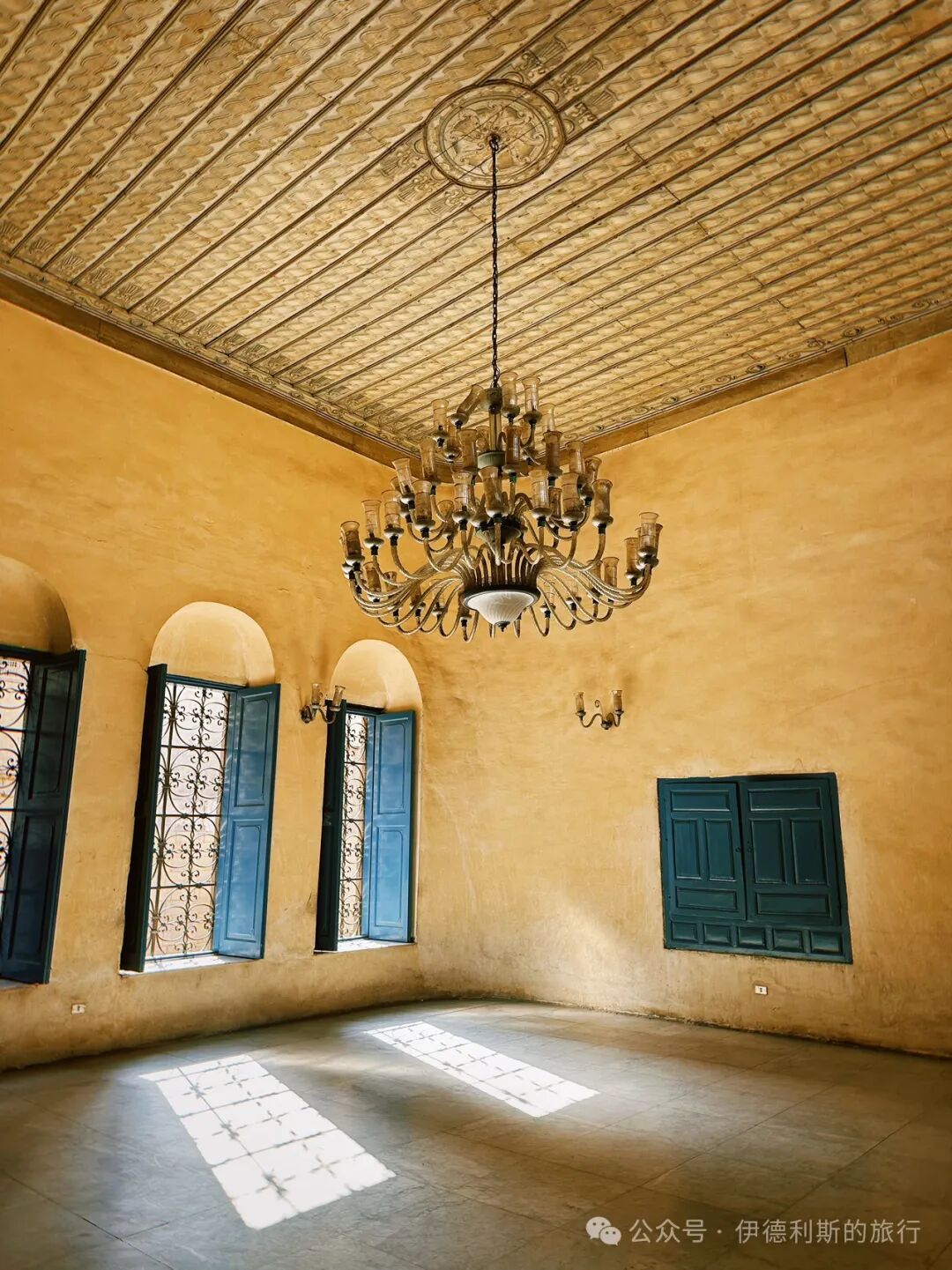
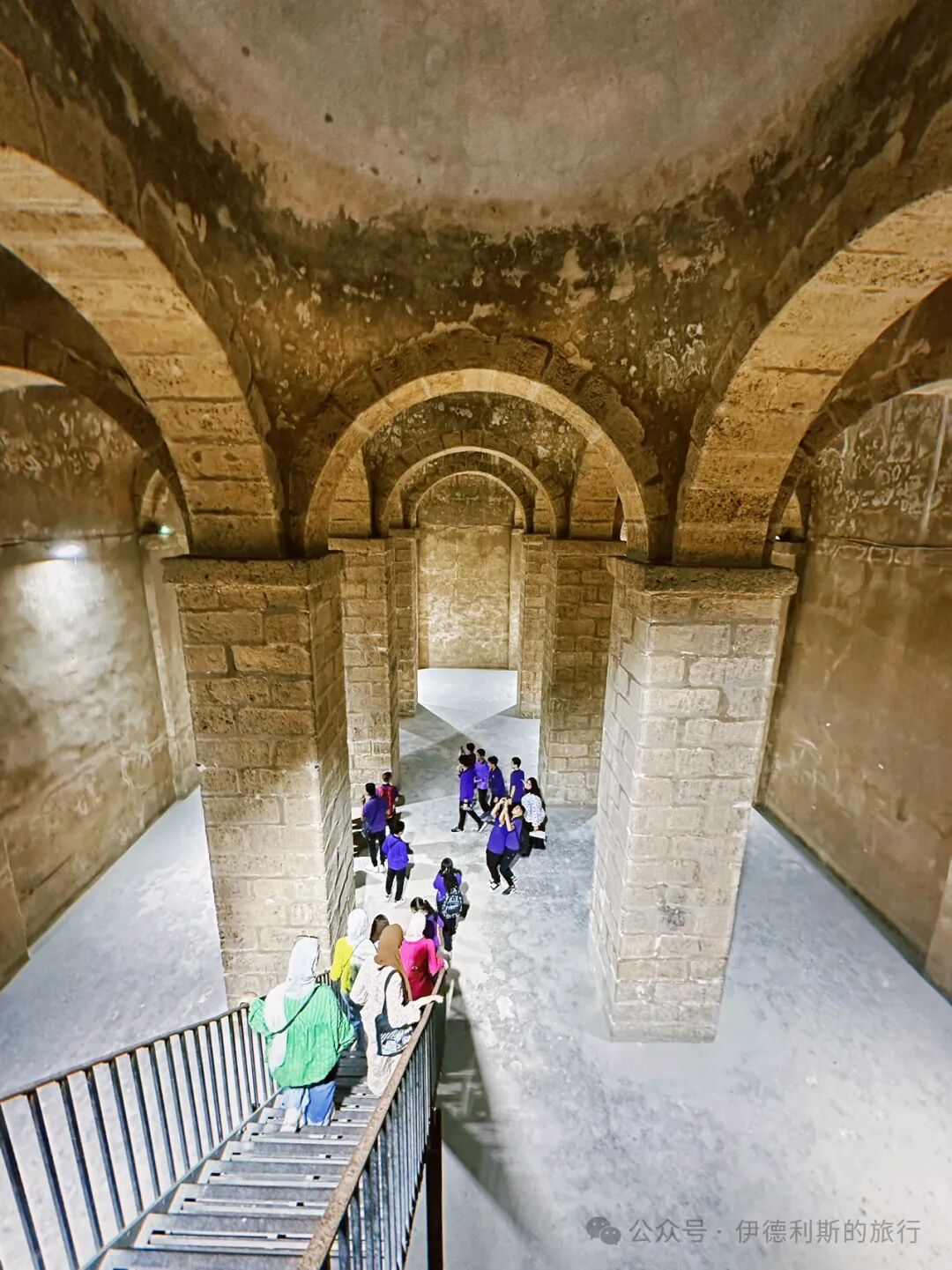
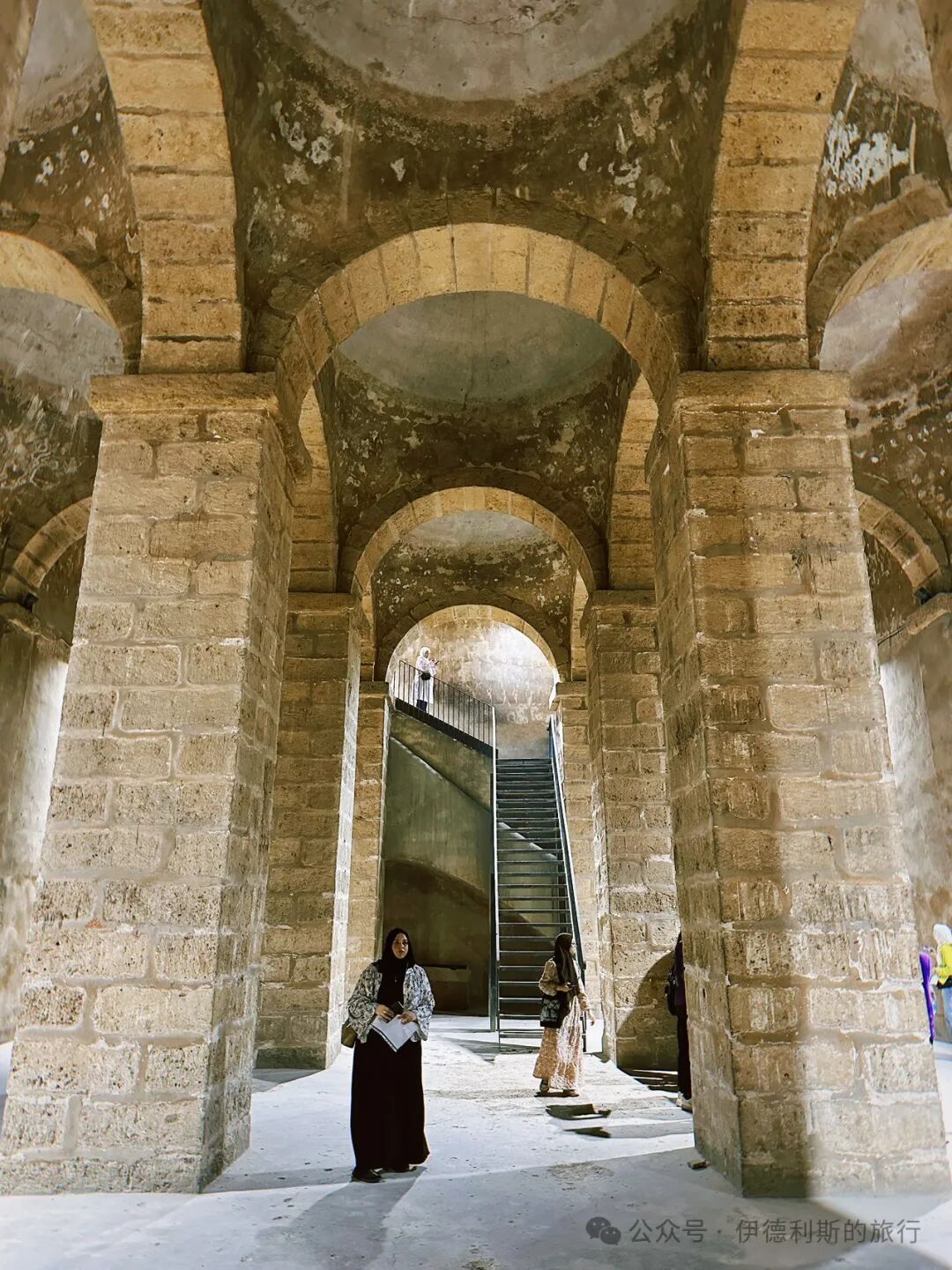
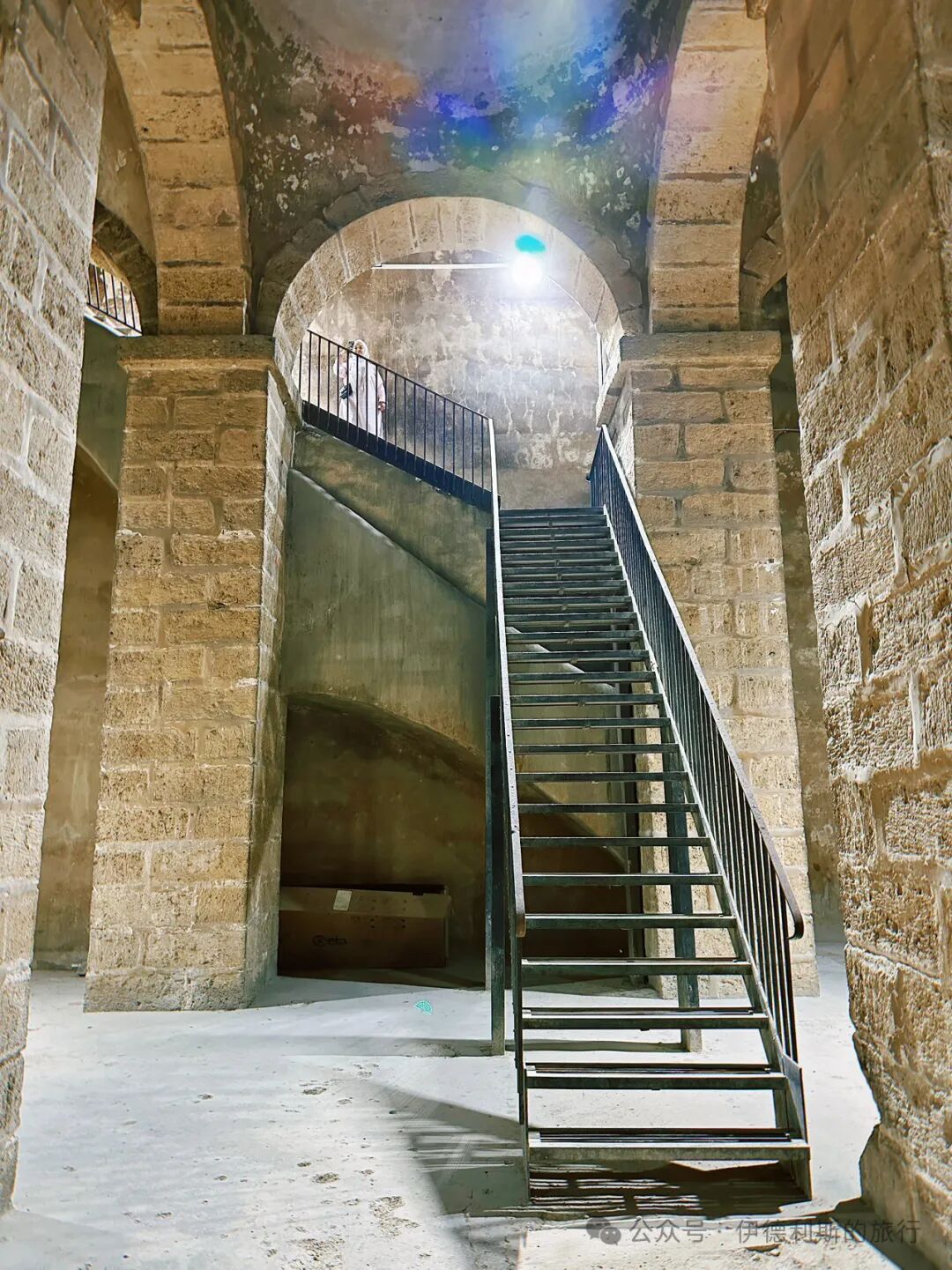
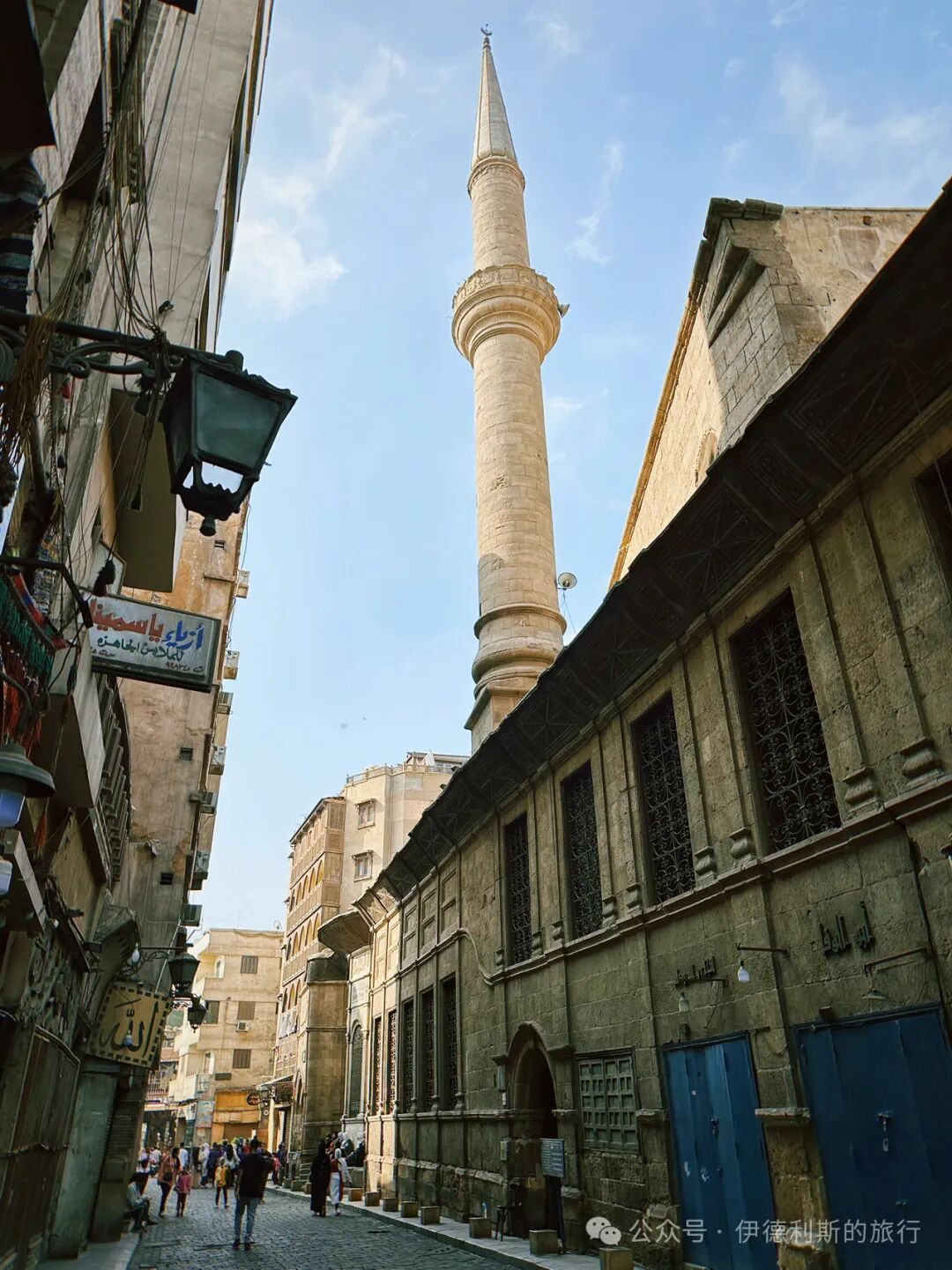
Aqmar Mosque: 1125-6
Walking south along Al-Muizz Street, we stop at the famous Fatimid-era Aqmar Mosque. The Aqmar Mosque was built in 1125-6 by order of the Fatimid vizier Al-Ma'mun al-Bata'ihi. It sits at the northeast corner of the former Eastern Fatimid Palace, right next to the palace grounds.
The Aqmar Mosque holds a groundbreaking place in Egyptian architectural history. It is the first mosque where the entrance is flush with the street rather than aligned with the qibla wall, making it the first mosque planned according to Cairo's street layout. It is also the first mosque to feature complex stone carvings. The facade of the Aqmar Mosque is very luxurious. Above the entrance is a large medallion surrounded by a grille, with the names of the Prophet and Ali in the center and verses written around them. This type of decoration is unique in Cairo.
At the top of the left facade, there are carvings of a door and a window. The window on the left symbolizes the ceremonial grille that the Fatimids took back from the palace of their rivals, the Abbasids in Baghdad, serving as a symbol of victory. Inside the window is a lamp and a six-pointed star, based on the Shia hadith: 'The stars are a promise to the world, and it will not be submerged.' Below the window, there is a carving of a plant growing out of a flower pot, which comes from the Prophet's reference to Hasan and Husayn as 'my two aromatic herbs in the world.' The door in the upper right corner comes from the famous Shia hadith: 'I am the city of knowledge, and Ali is its gate.'
Because it was near the Fatimid palace, the Aqmar Mosque did not originally have a minaret. One was not added until the end of the 14th century by the Mamluk dynasty, and the cylindrical top was rebuilt during the Ottoman era.
In 1993, the Dawoodi Bohra branch of the Shia community carried out a large-scale renovation of the Aqmar Mosque. Most of the historical elements inside the main hall were not preserved, which drew criticism.
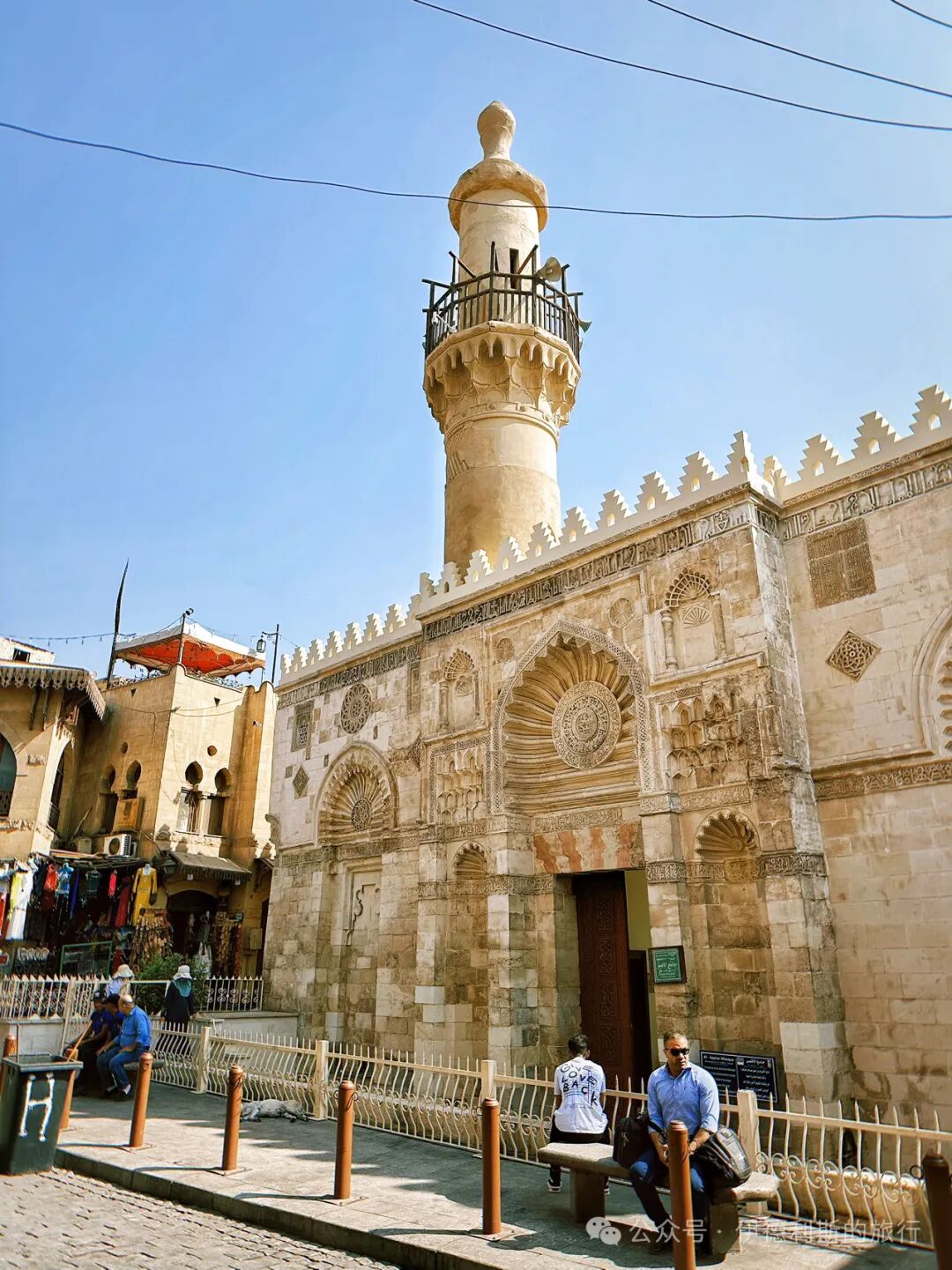
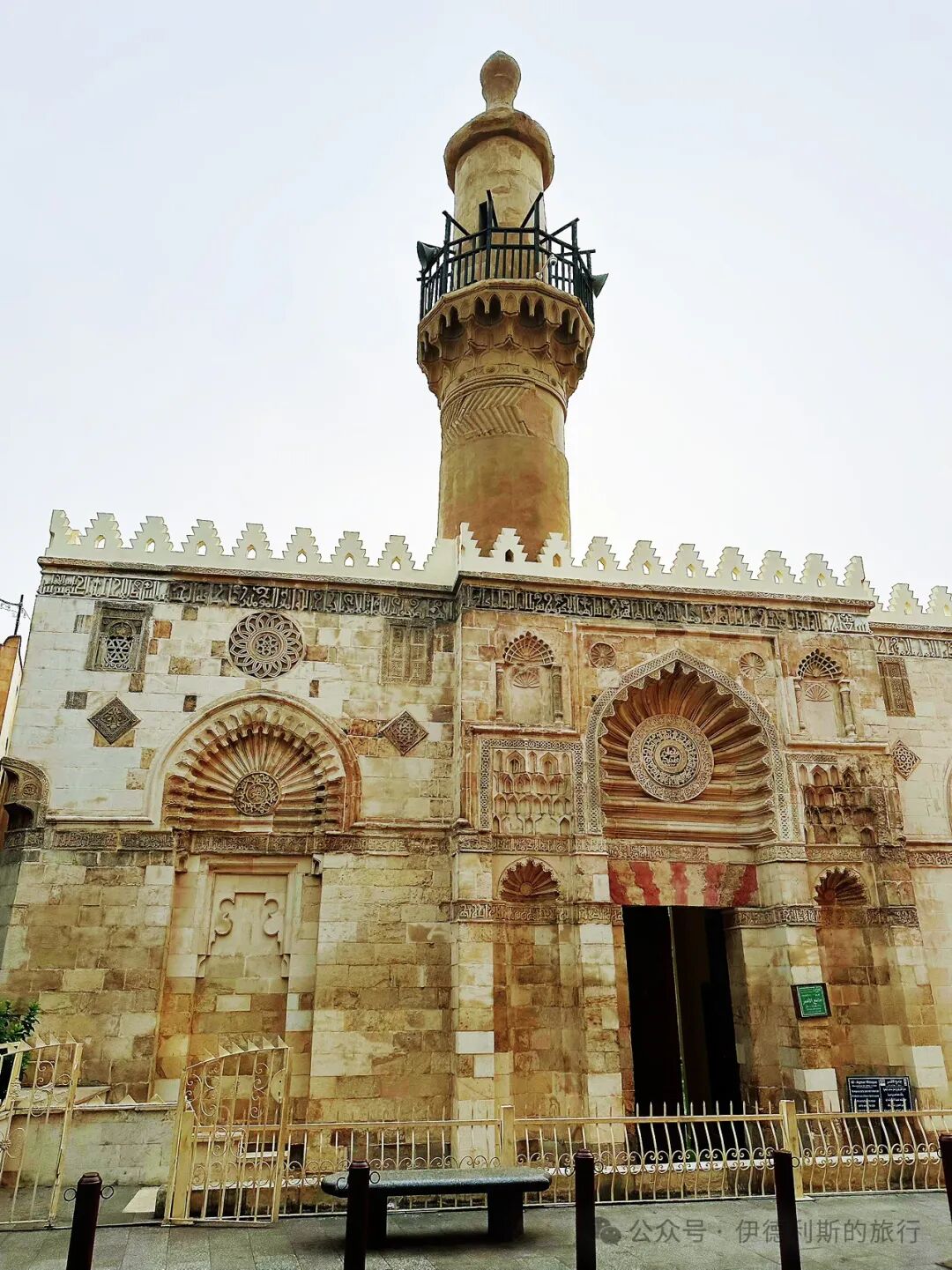
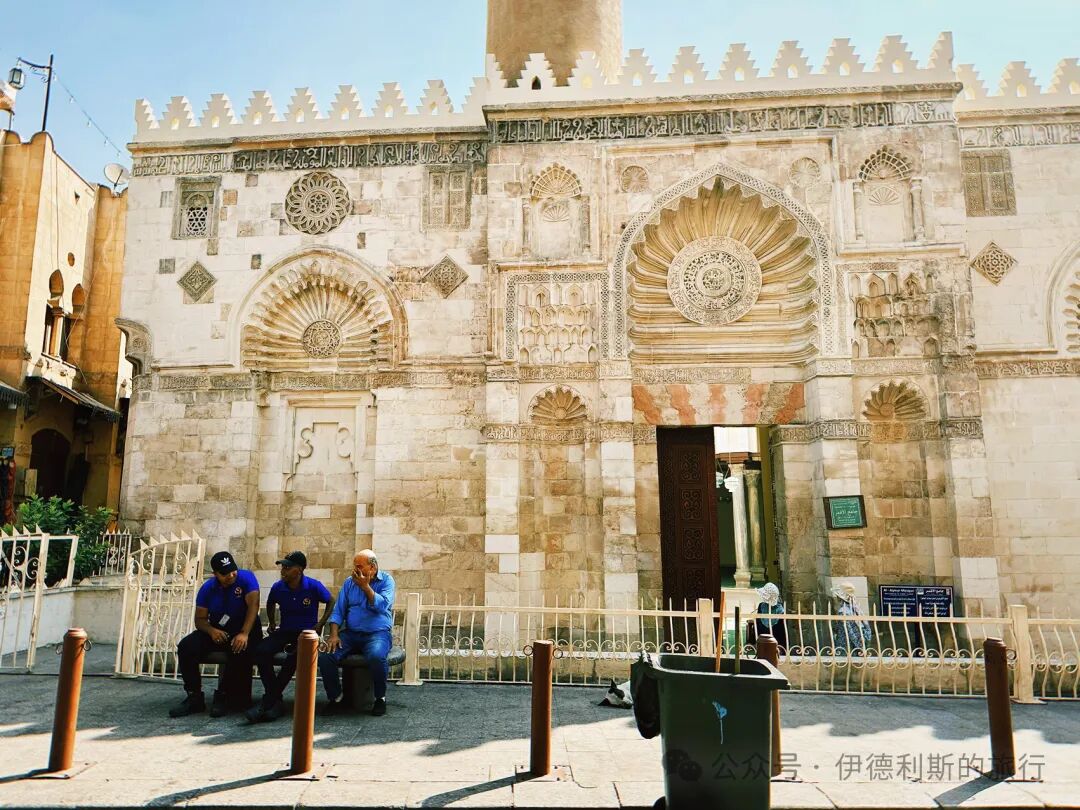
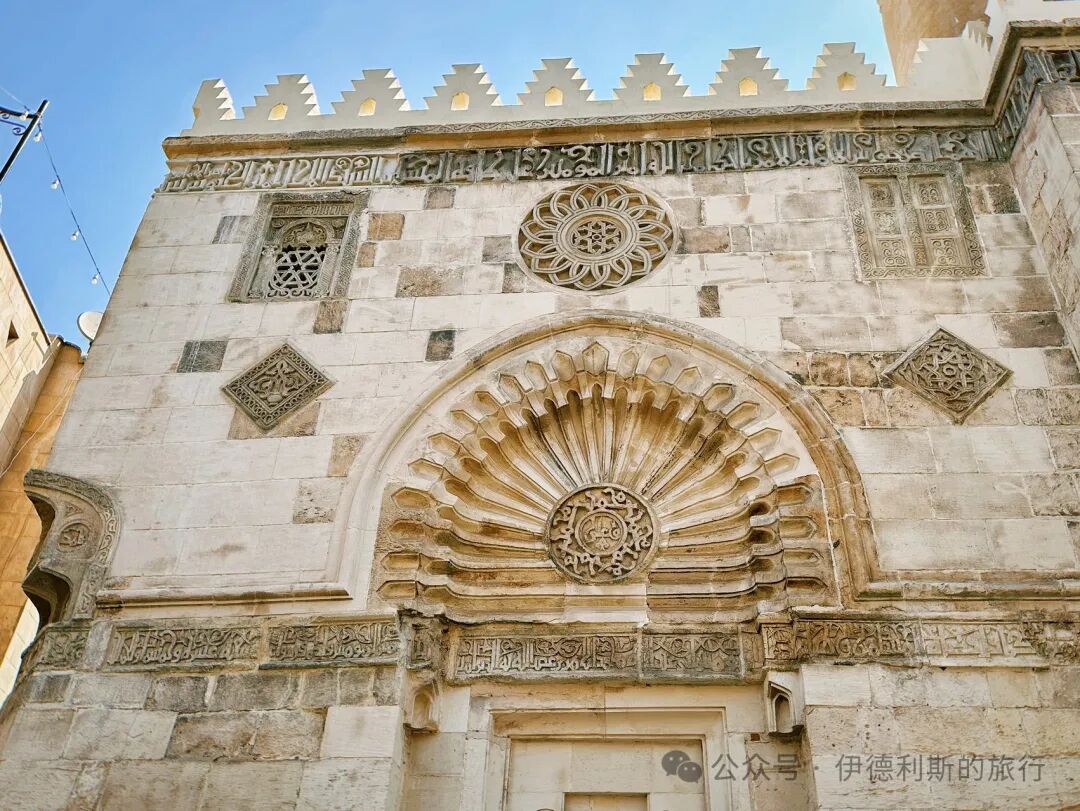
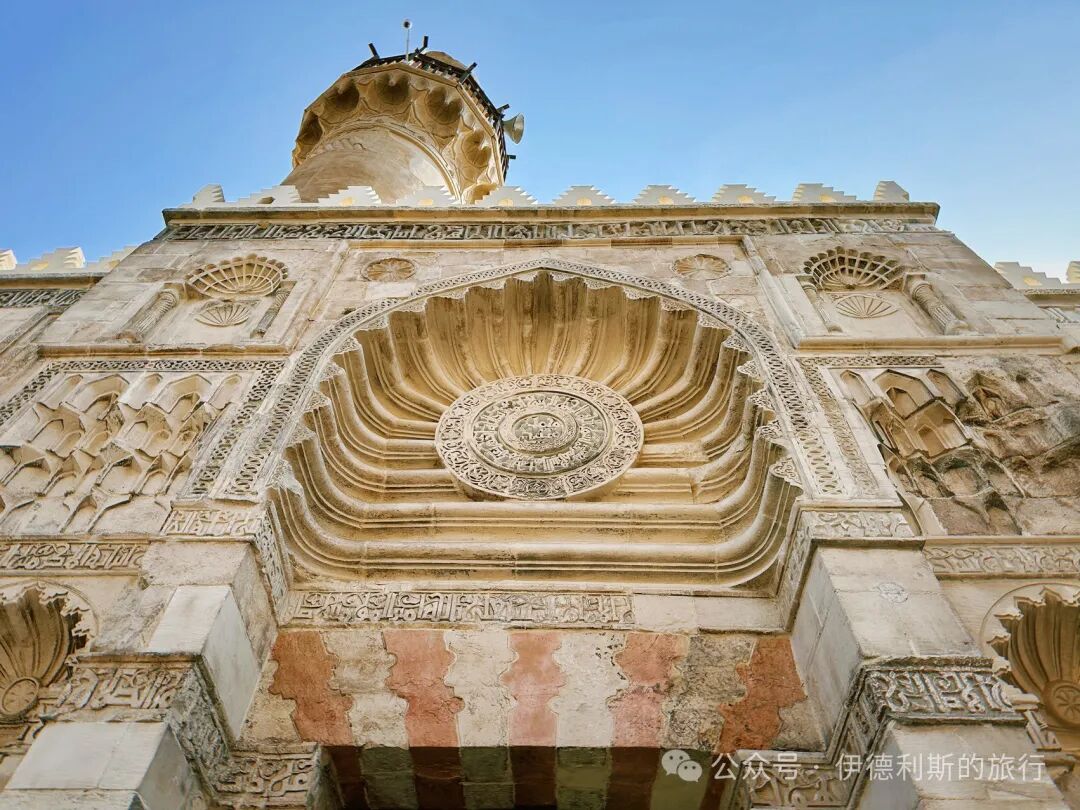
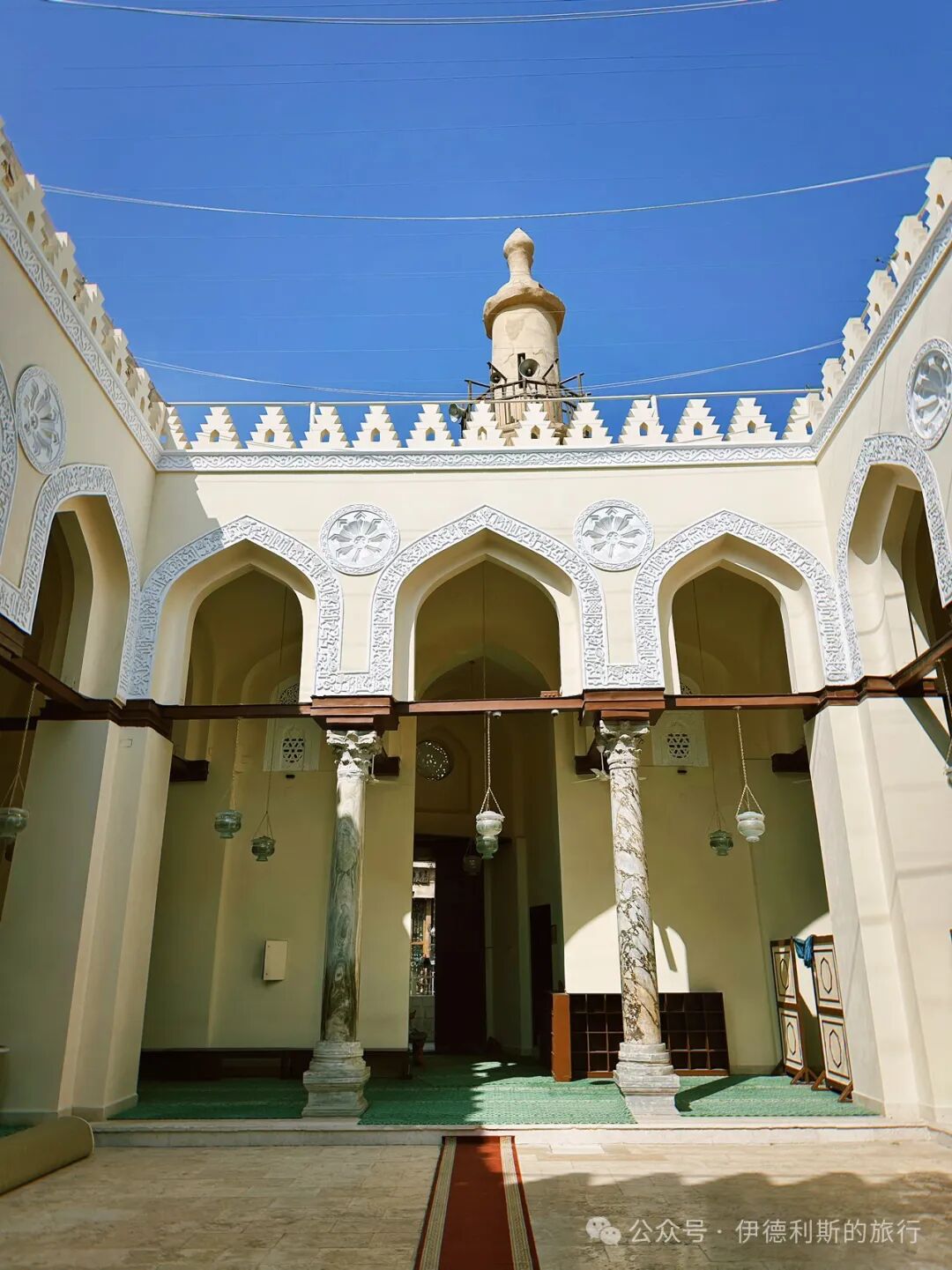
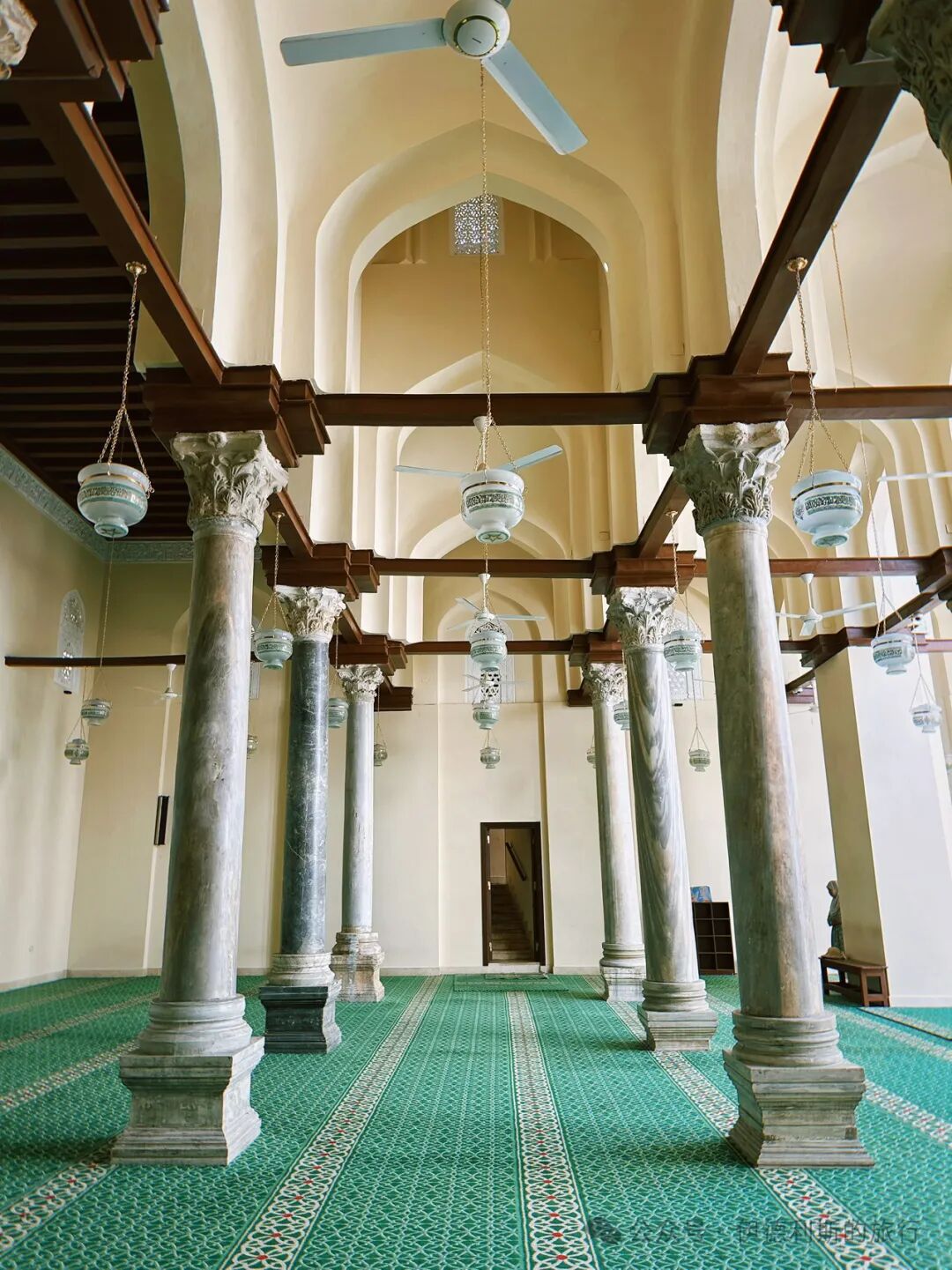
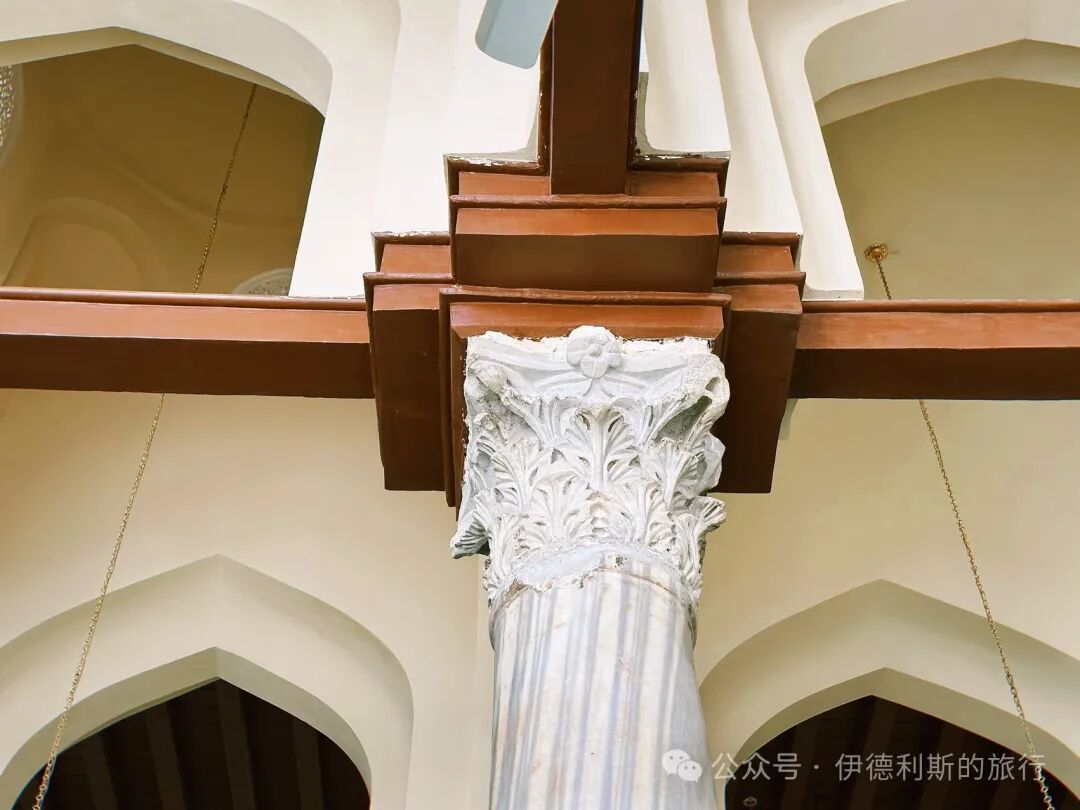
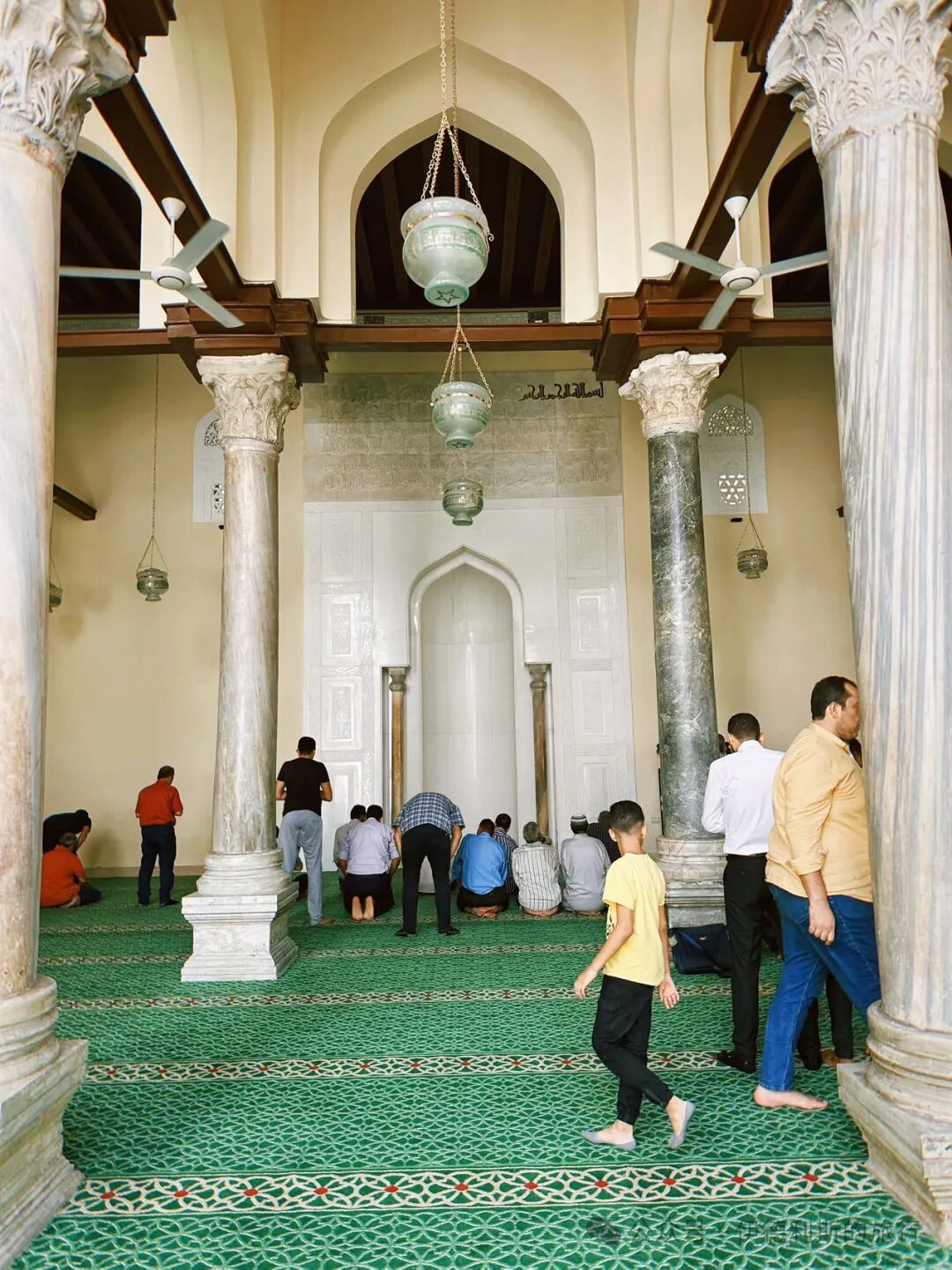
Madrasa of Emir Jamal al-Din al-Ustadar: 1407
Turn back into al-Gamaleya Street along the alley south of the Aqmar Mosque to see the Madrasa of Amir Jamal al-Din al-Ustadar, built in 1407 by the Mamluk general Amir Jamal al-Din al-Ustadar. Jamal al-Din built many structures in Cairo, and al-Gamaleya Street is named after him.
This is a classic cruciform madrasa structure with an open courtyard in the center and an iwan (arched hall) on each of the four sides, each used to teach one of the four schools of Islamic jurisprudence. The decoration inside the main hall is very ornate, as People say Jamal al-Din modeled it after Mamluk palace designs and invested a large amount of money and materials. Jamal al-Din was executed just four years after the mosque was completed. The Sultan wanted to demolish the site, but a judge (Qadi) stopped him, and in the end, only Jamal al-Din's name was removed.
After the Ottoman Empire conquered Istanbul in 1517, many marble slabs from the inner walls of the madrasa were taken to Istanbul. The building was damaged again in the 1992 earthquake and was not fully restored until 2002.
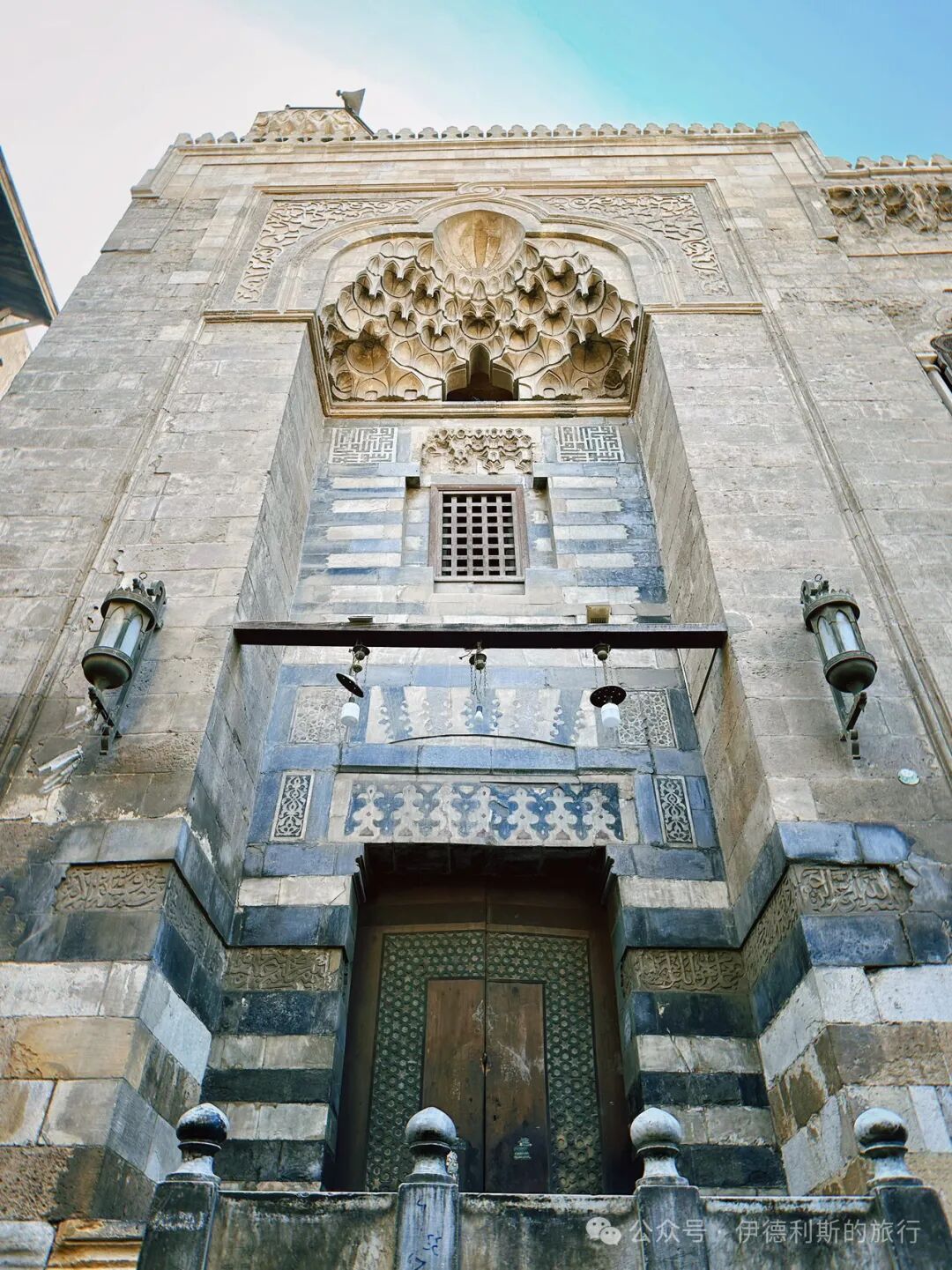
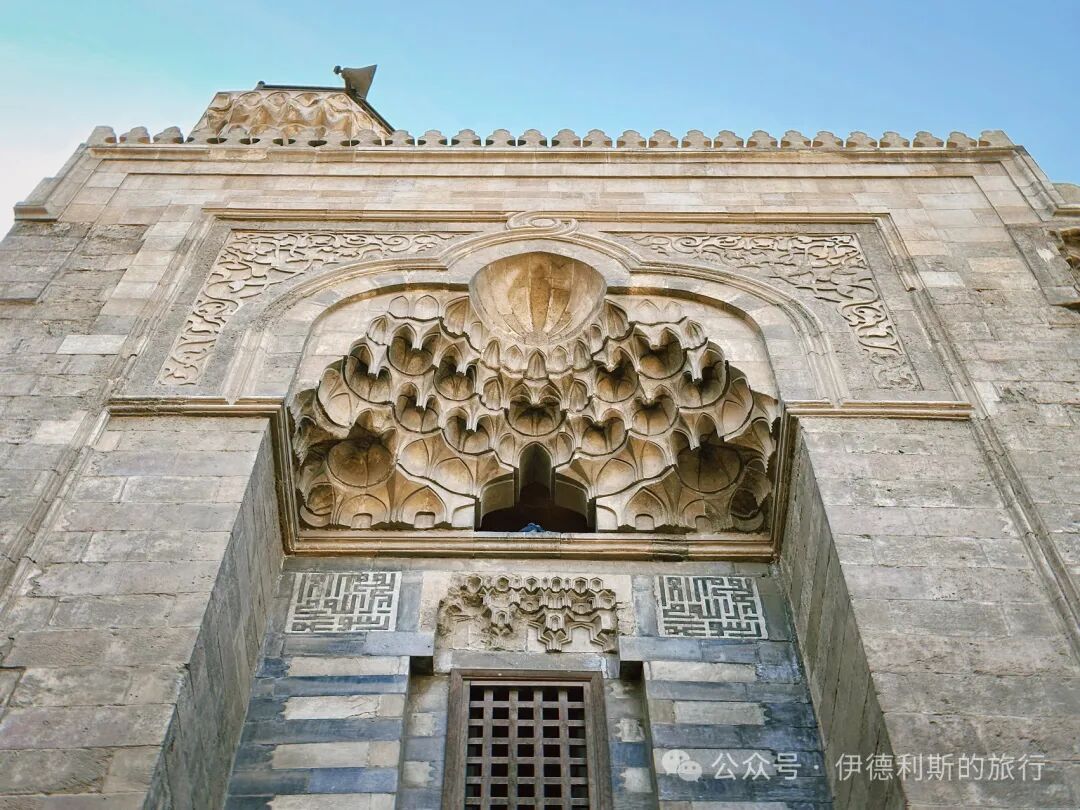
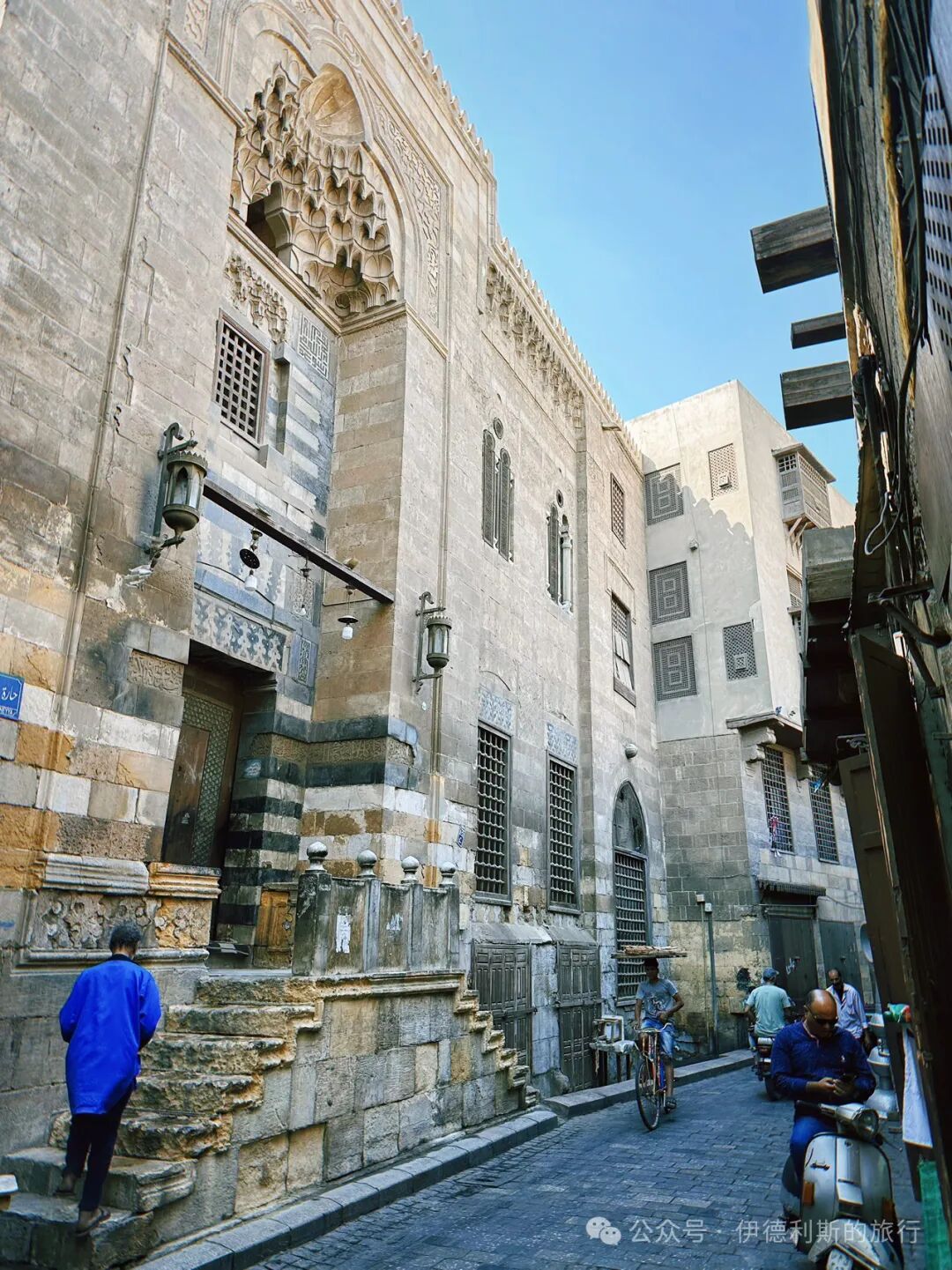
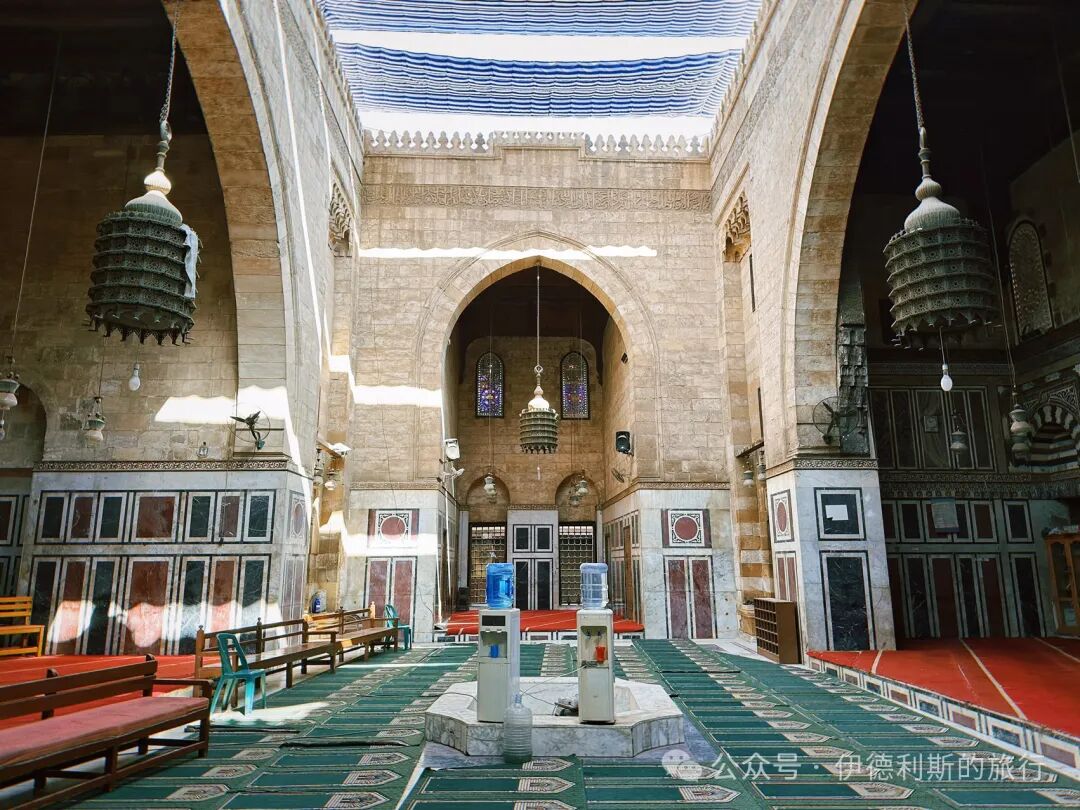
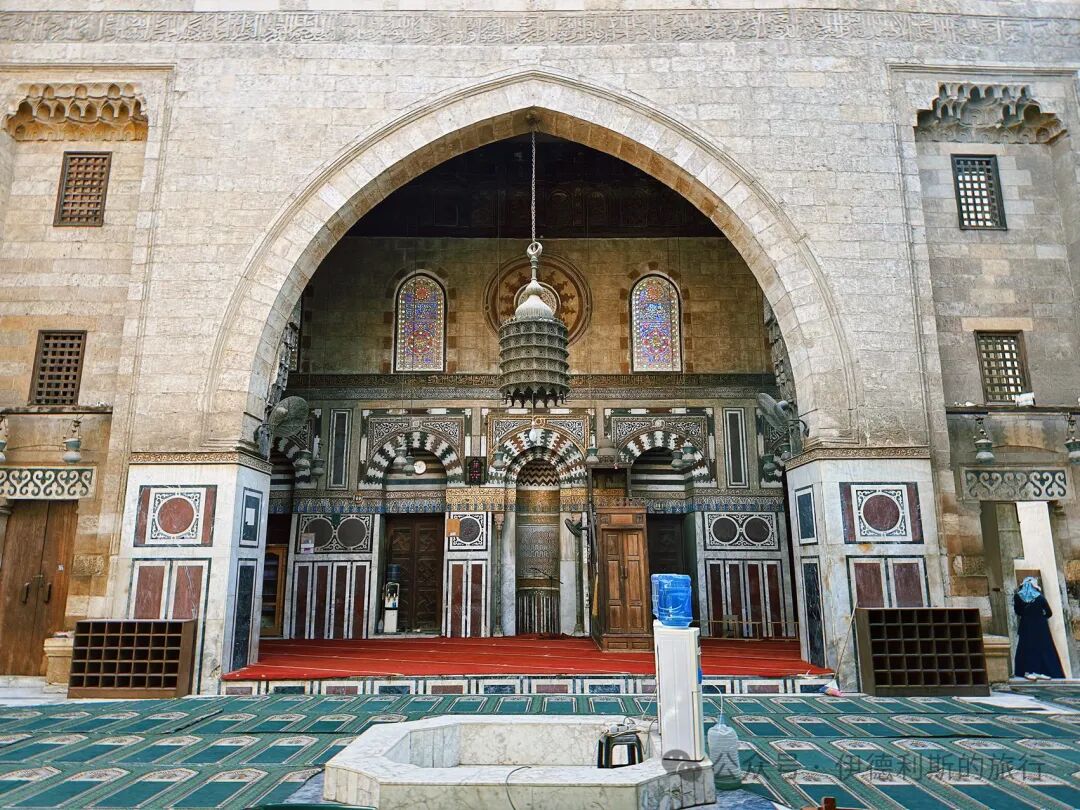
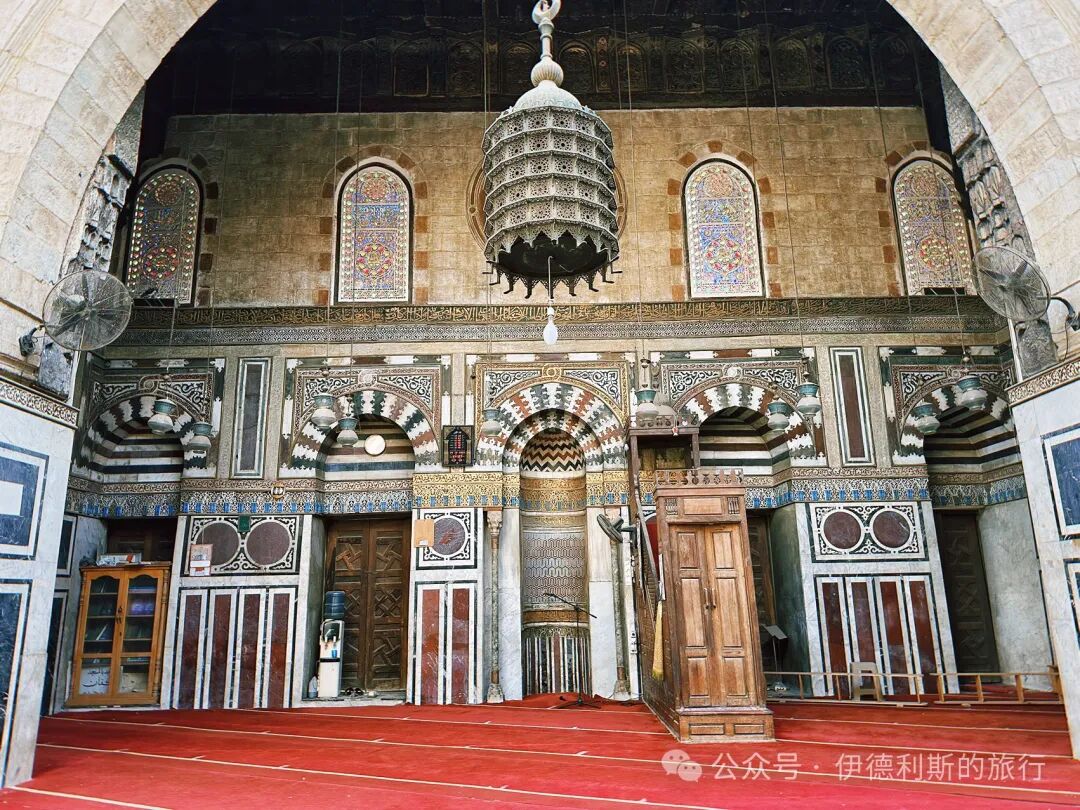
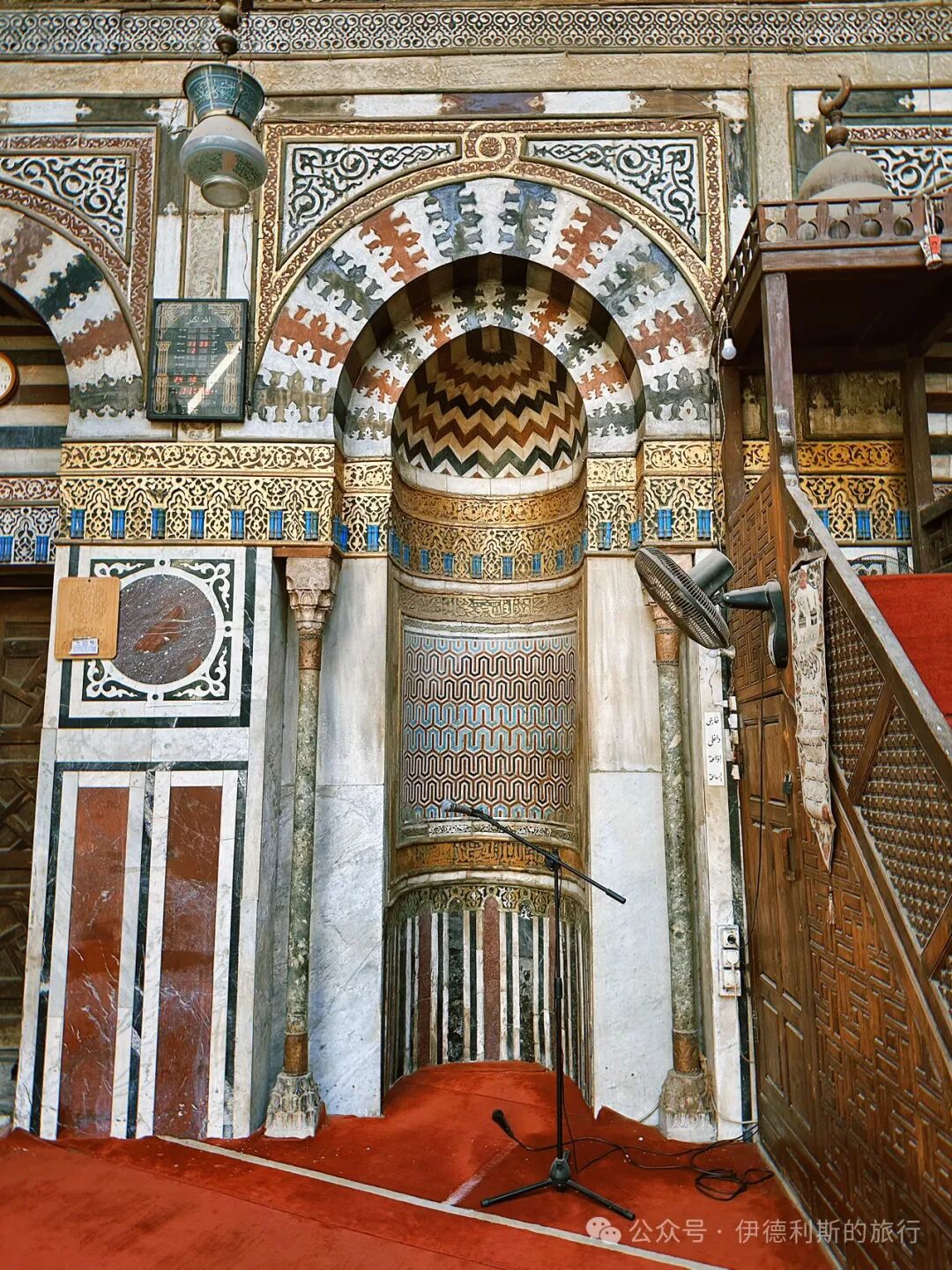
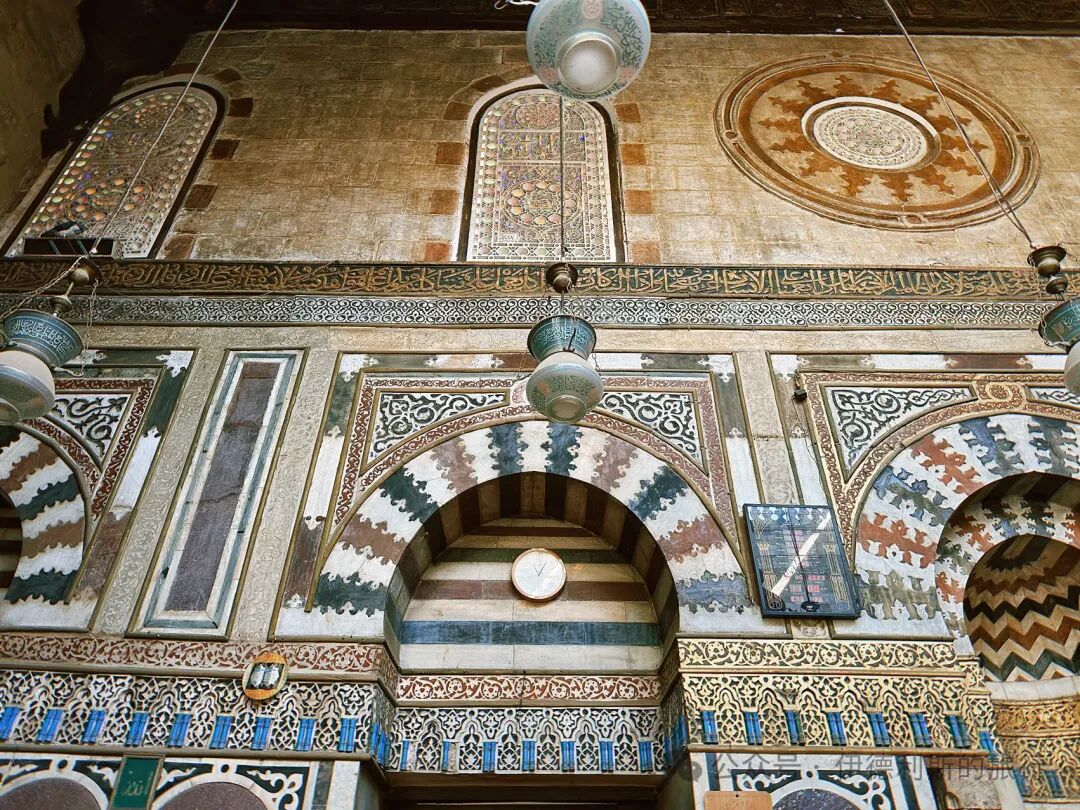
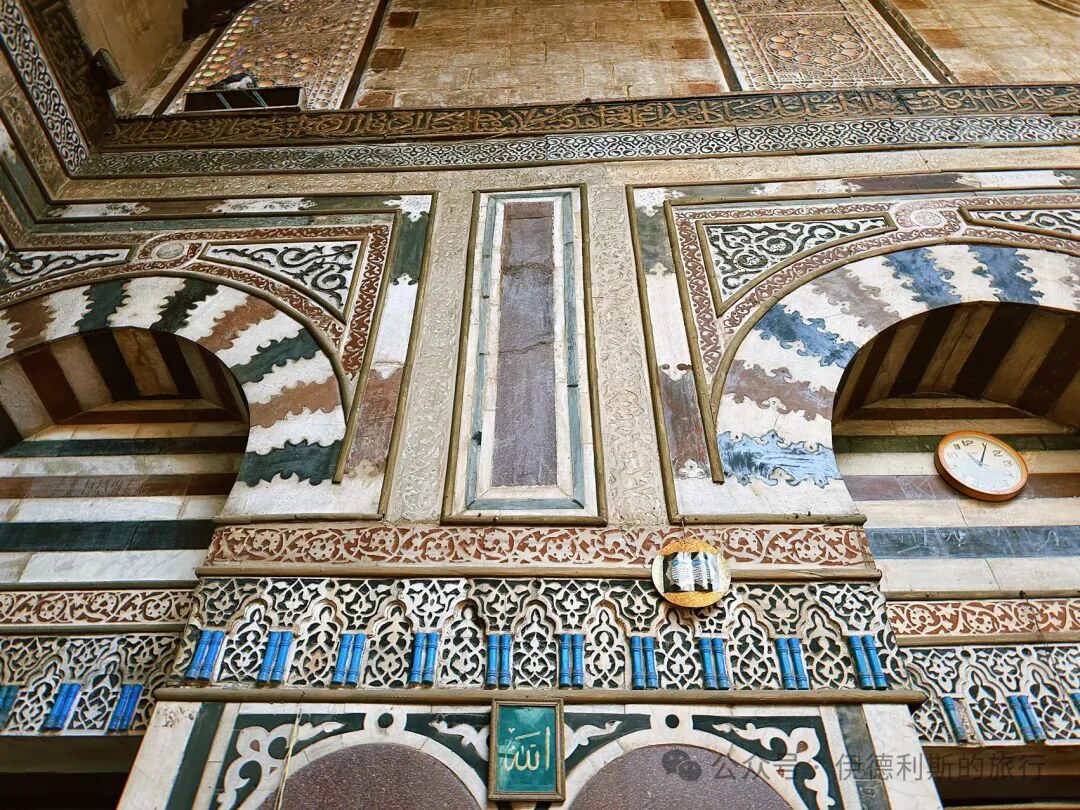
Dhu al-Fiqar Fountain-Primary School (Sabil-Kuttab): 1673
Opposite the Madrasa of Amir Jamal al-Din al-Ustadar is the Ottoman-era Dhu al-Fiqar Sabil-Kuttab, built in 1673 by Dhu al-Fiqar Katkhuda Mustahfizan and his brother Muhammad. This Sabil-Kuttab consists of two prominent wooden awnings, and the caravanserai (wikala) behind it was once a center for the coffee trade in 18th-century Cairo.
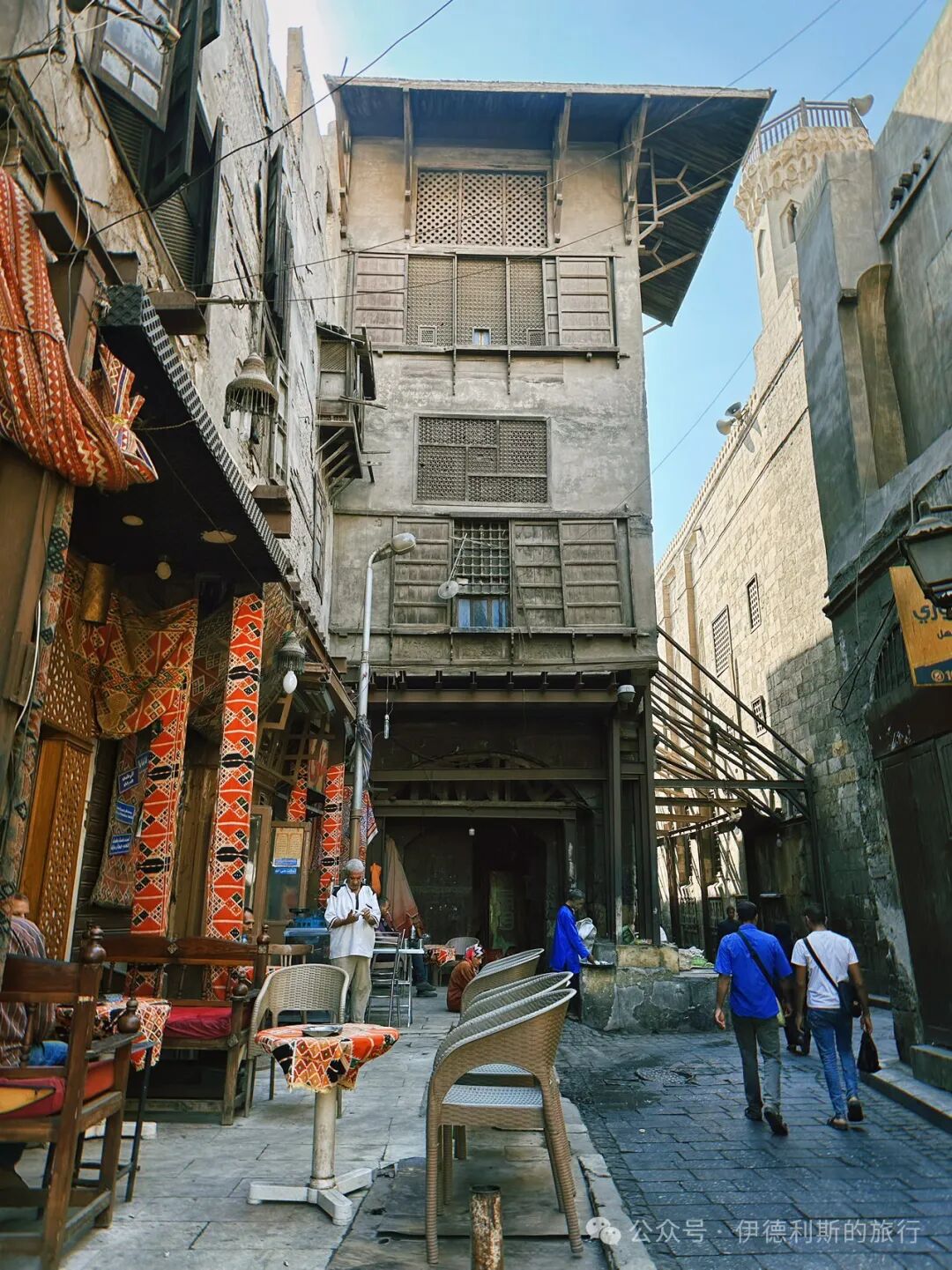
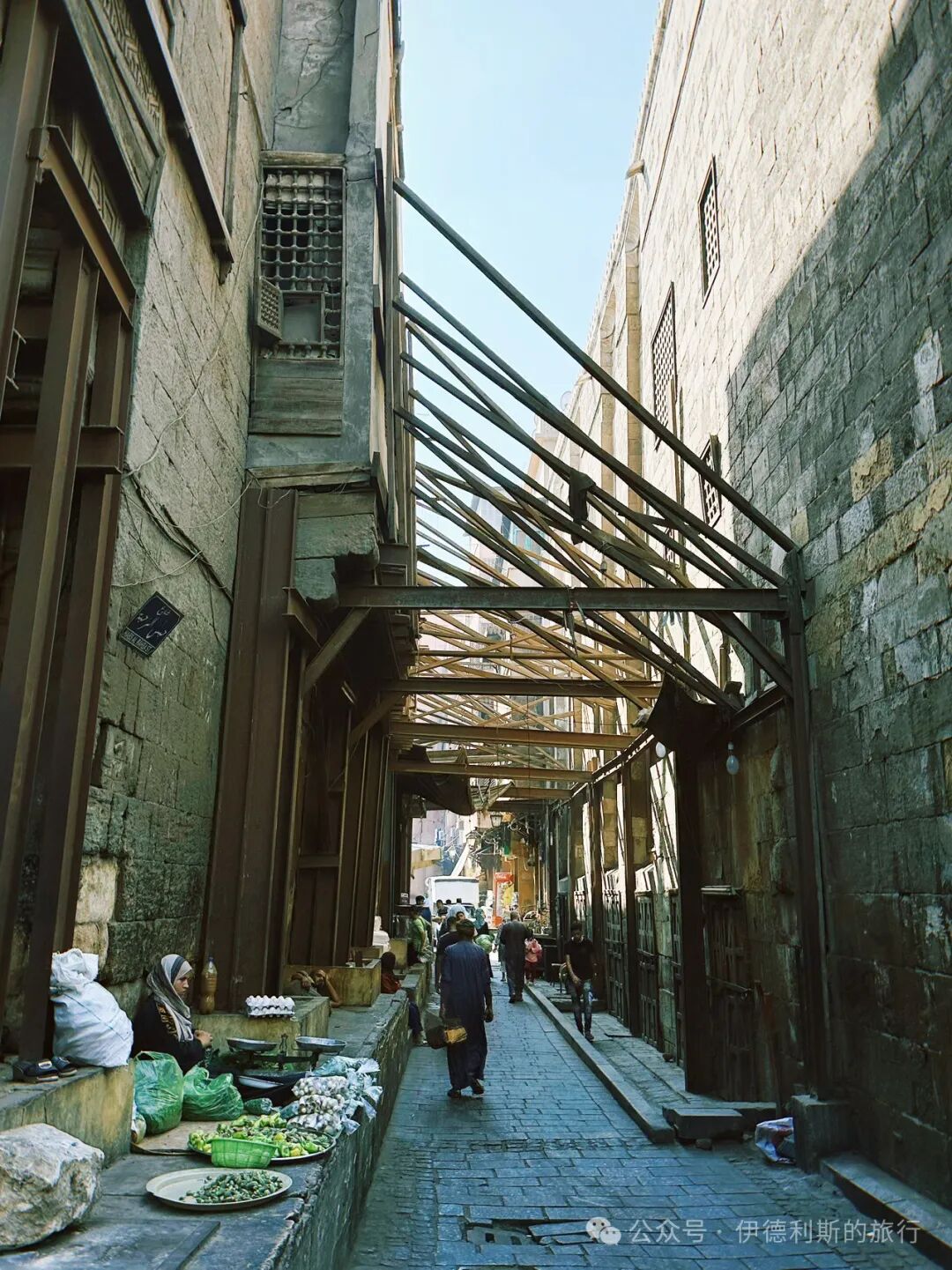
Maq’ad Mamay al-Sayfi Palace: 1496
Continue south to the Maq’ad Mamay al-Sayfi Palace on Beet Al Qadi Street, built in 1496 by the Mamluk general Sayf al-Din Mamay ibn Khadad, who served as a Mamluk diplomat to the Ottoman Empire in the early 1490s.
During the Ottoman period, this place served as a high court and the residence of judges, so it is also called Bayt al-Qadi. In the late 19th century, Egypt's ruler Isma'il Pasha (reigned 1863-79) carried out urban renewal in Cairo, and most of the palace was demolished, leaving only a large house used for summer retreats. The house consists of an upper pavilion and a lower storage room. The lotus capitals of the pavilion are the only example in Islamic architecture in Cairo that directly uses architectural forms from the ancient Egyptian pharaonic era. The interior of the pavilion has complex decorations and calligraphy, but unfortunately, it was not open when we visited.
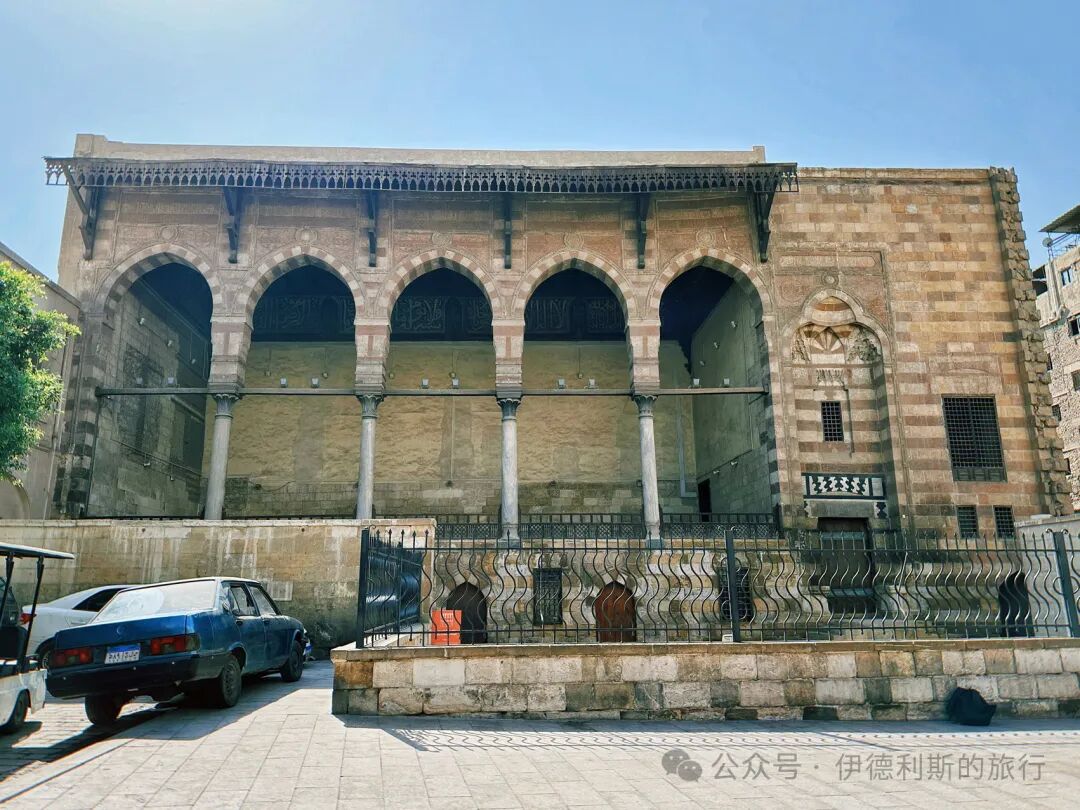
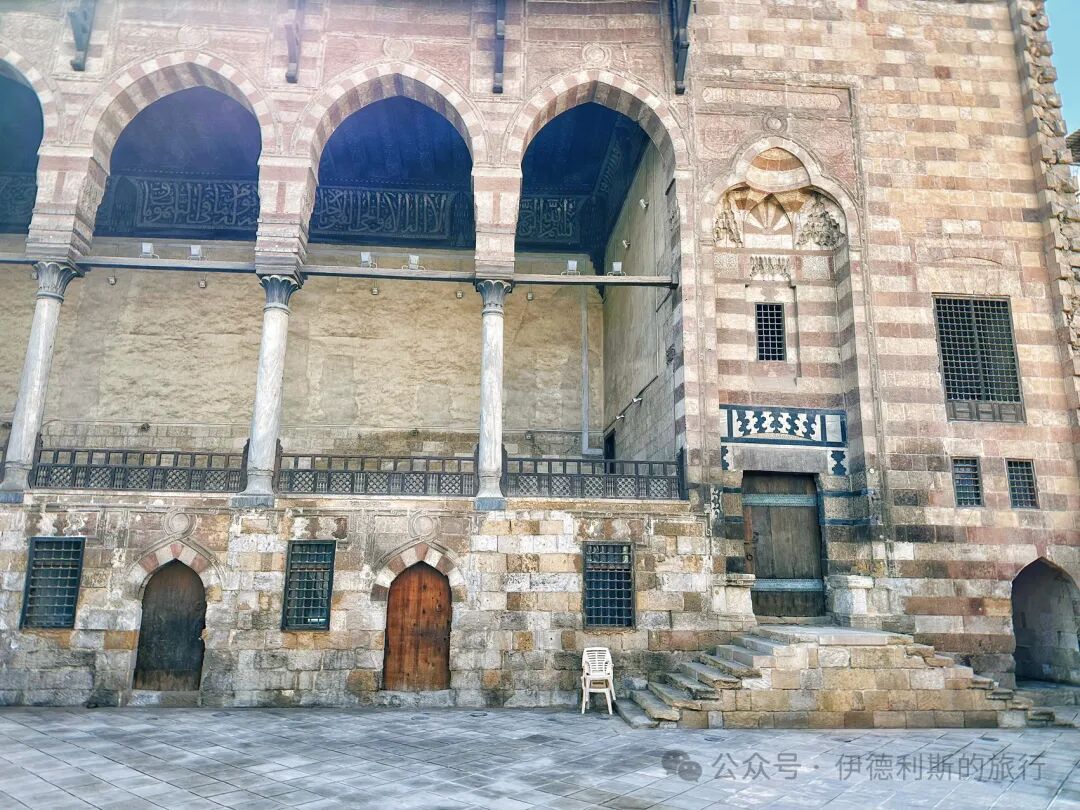
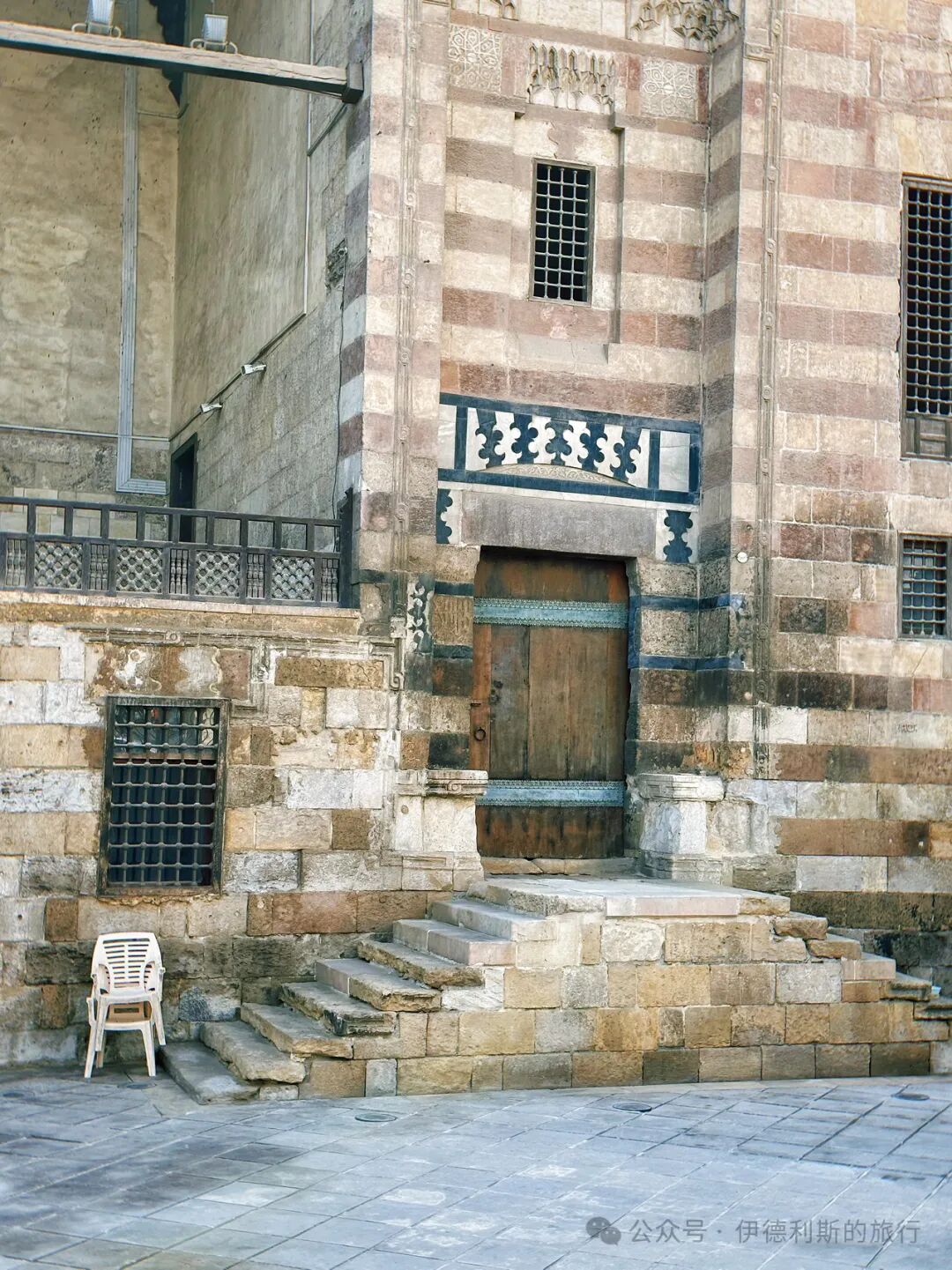
Abd al-Rahman Katkhuda Sabil-Kuttab: 1744
Walk south from the Aqmar Mosque to see the Sabil-Kuttab of Abd al-Rahman Katkhuda, a fountain-school built in 1744 during the Ottoman era. It is a landmark building on Al-Muizz Street, the main road in Old Cairo. During the Mamluk and Ottoman dynasties, these fountain-schools were very common in Cairo. The ground floor fountain (sabil) provided free drinking water to passersby, while the second floor school (kuttab) taught children how to read and write.
Although this fountain-school was built in the Mamluk style, it incorporates many Ottoman architectural elements. The builder, Abd al-Rahman Katkhuda, was a high-ranking Mamluk emir officer known for his noble lifestyle and patronage of the arts. He renovated or built 33 structures in Cairo.
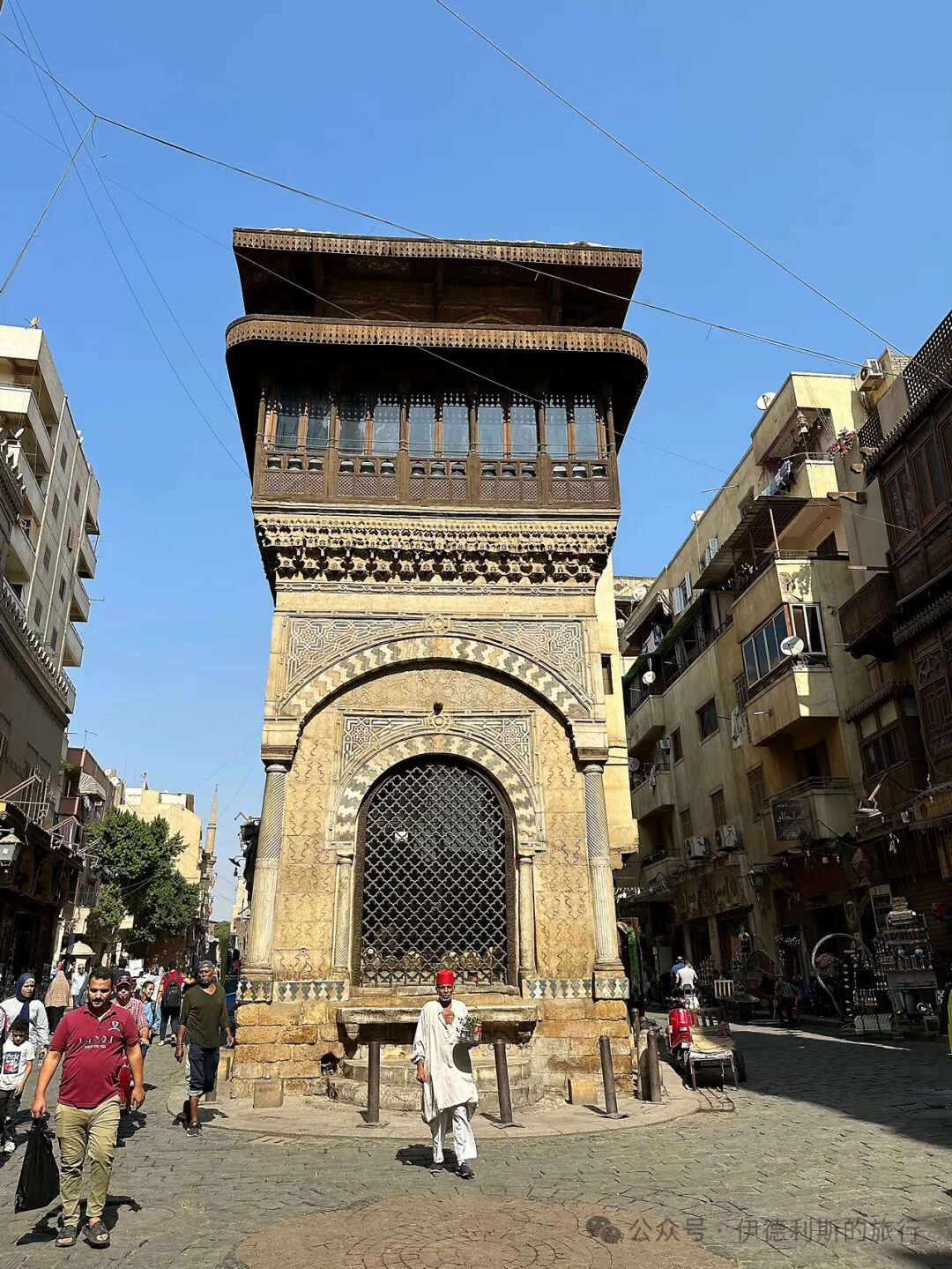
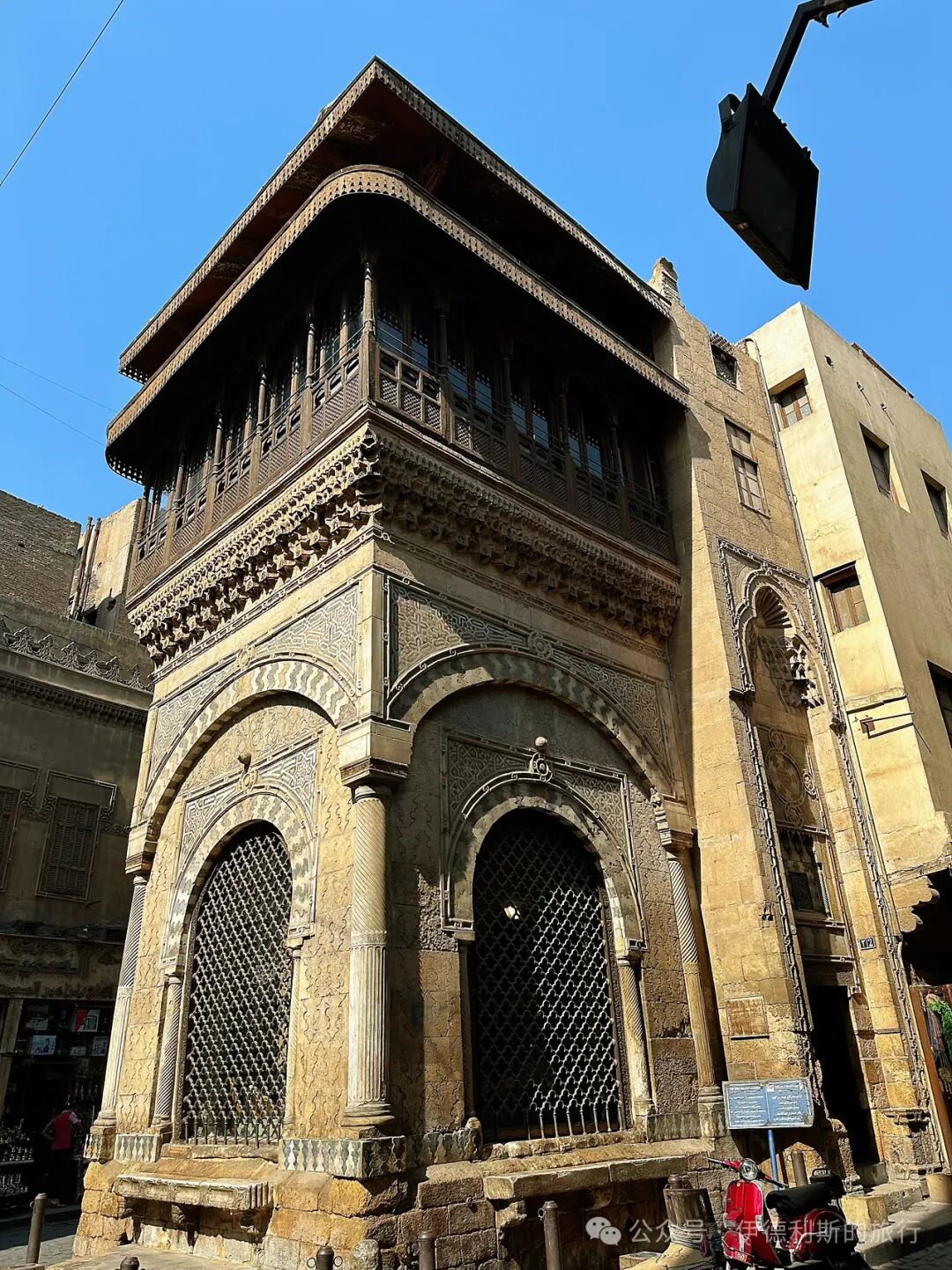
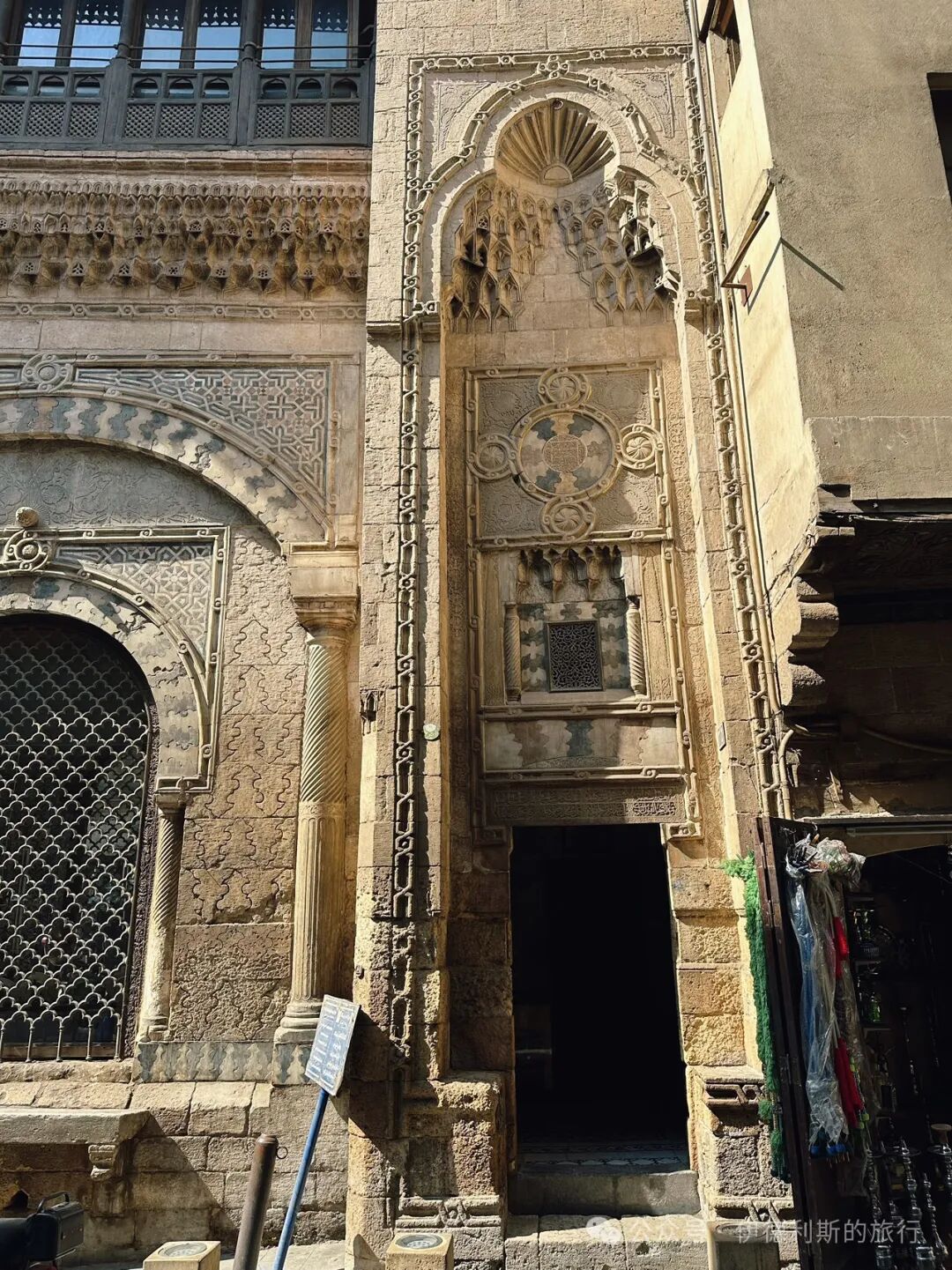
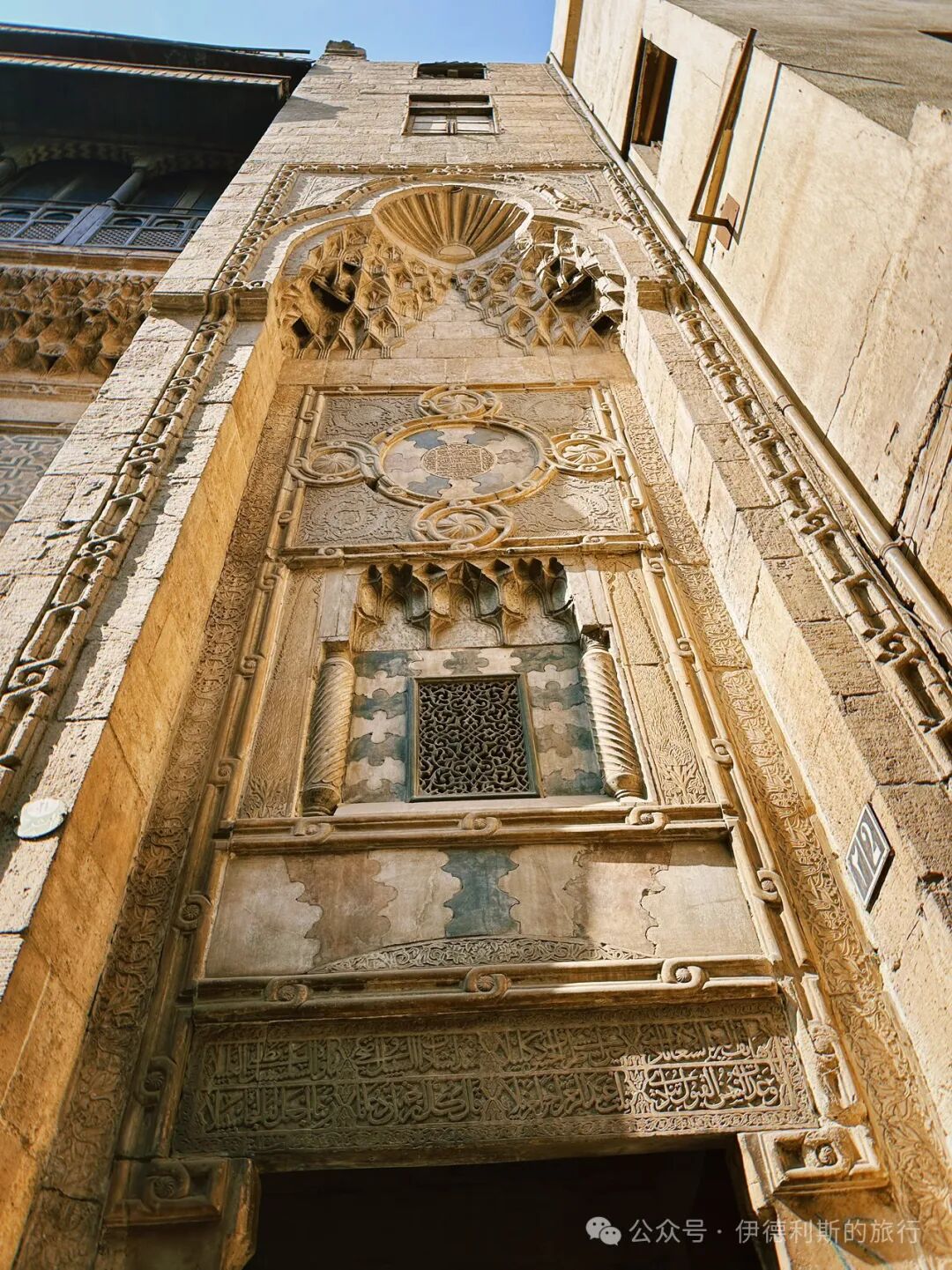
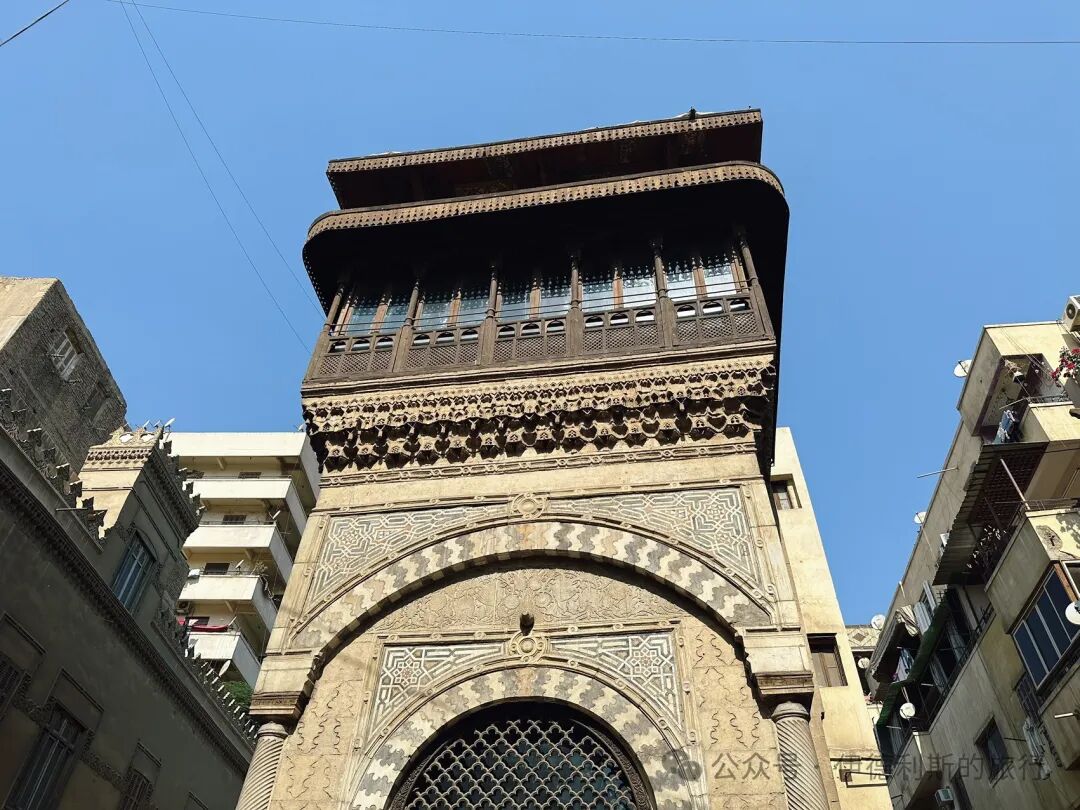
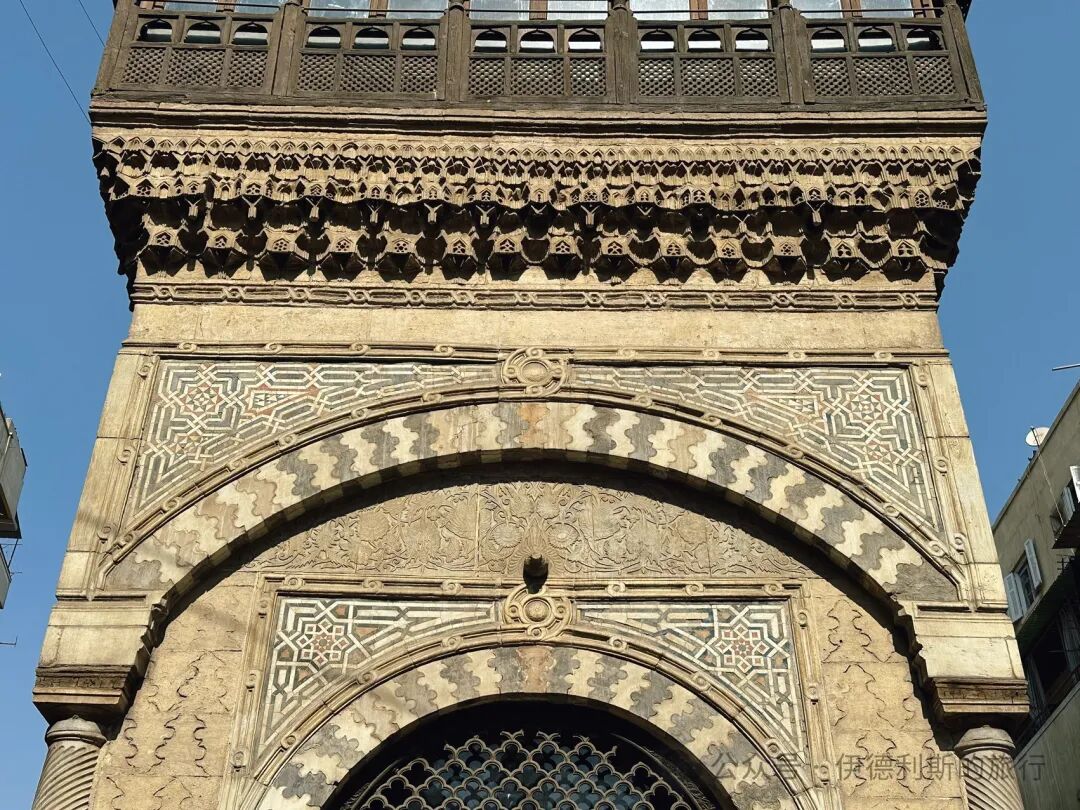
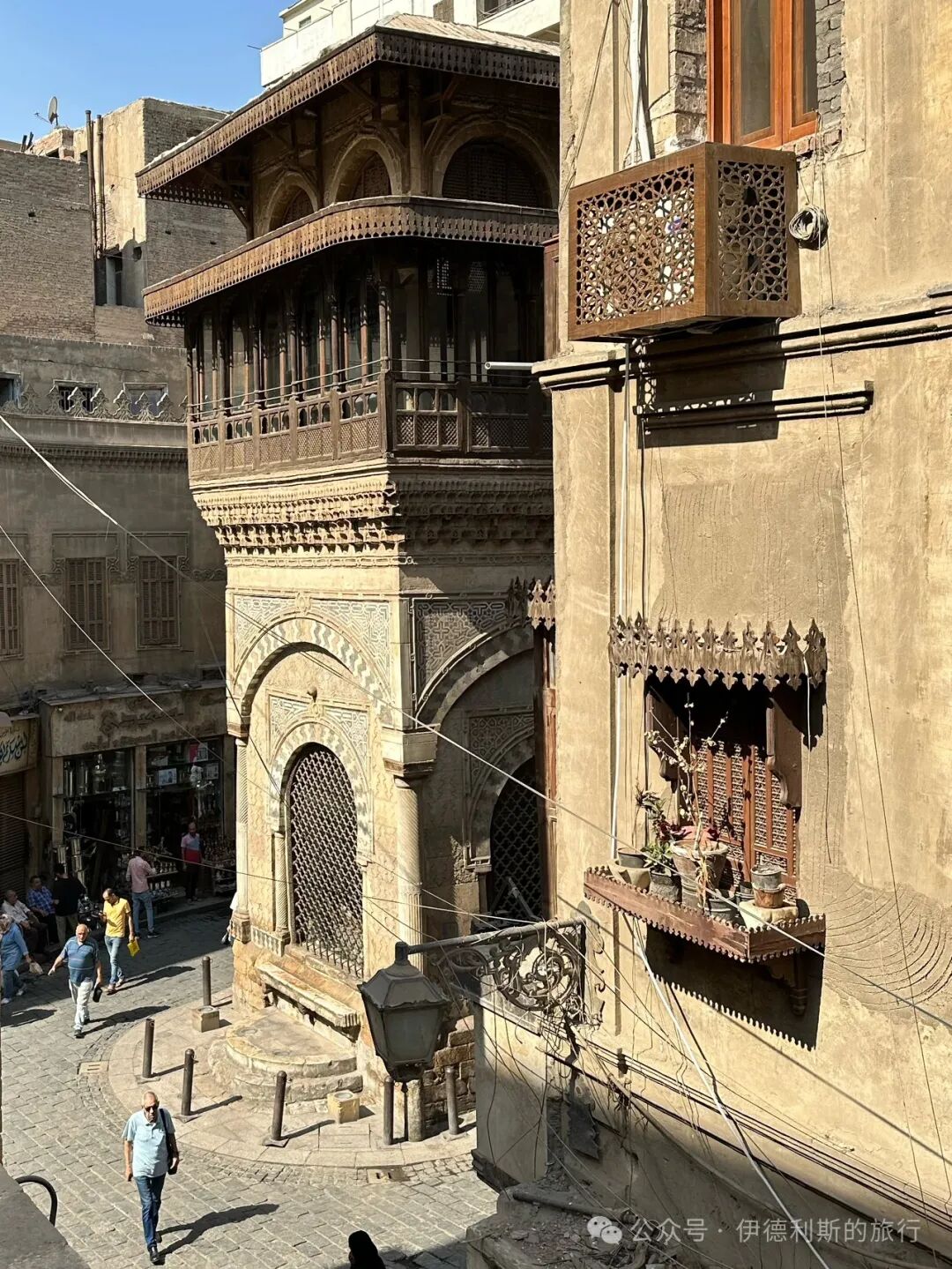
Across from the Khanqah of Baybars II stands the Qitas Bey fountain-school (sabil-kuttab), built in 1630 during the Ottoman period. In the Mamluk and Ottoman eras, most fountain-schools in the old city of Egypt were built on street corners.
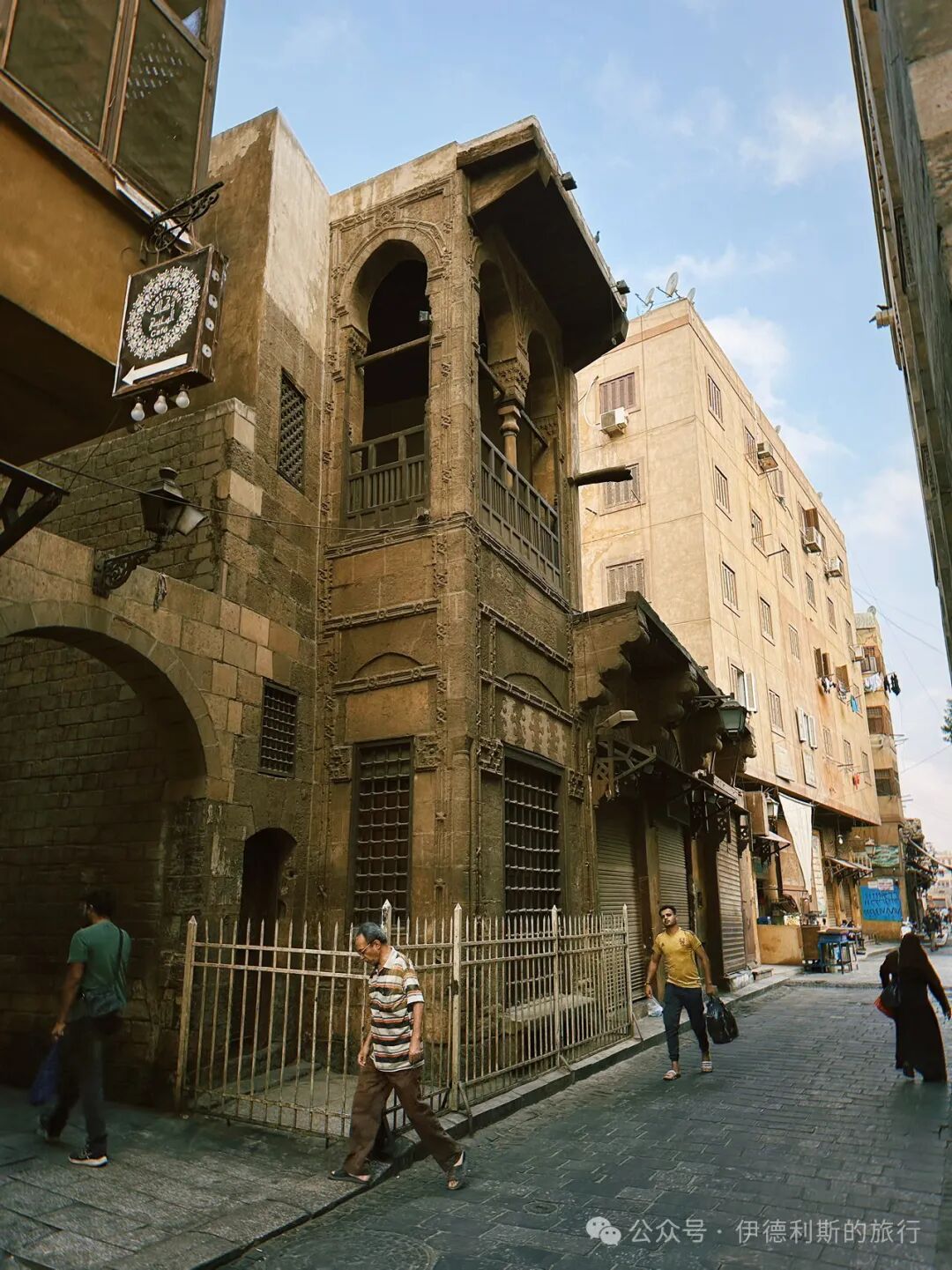
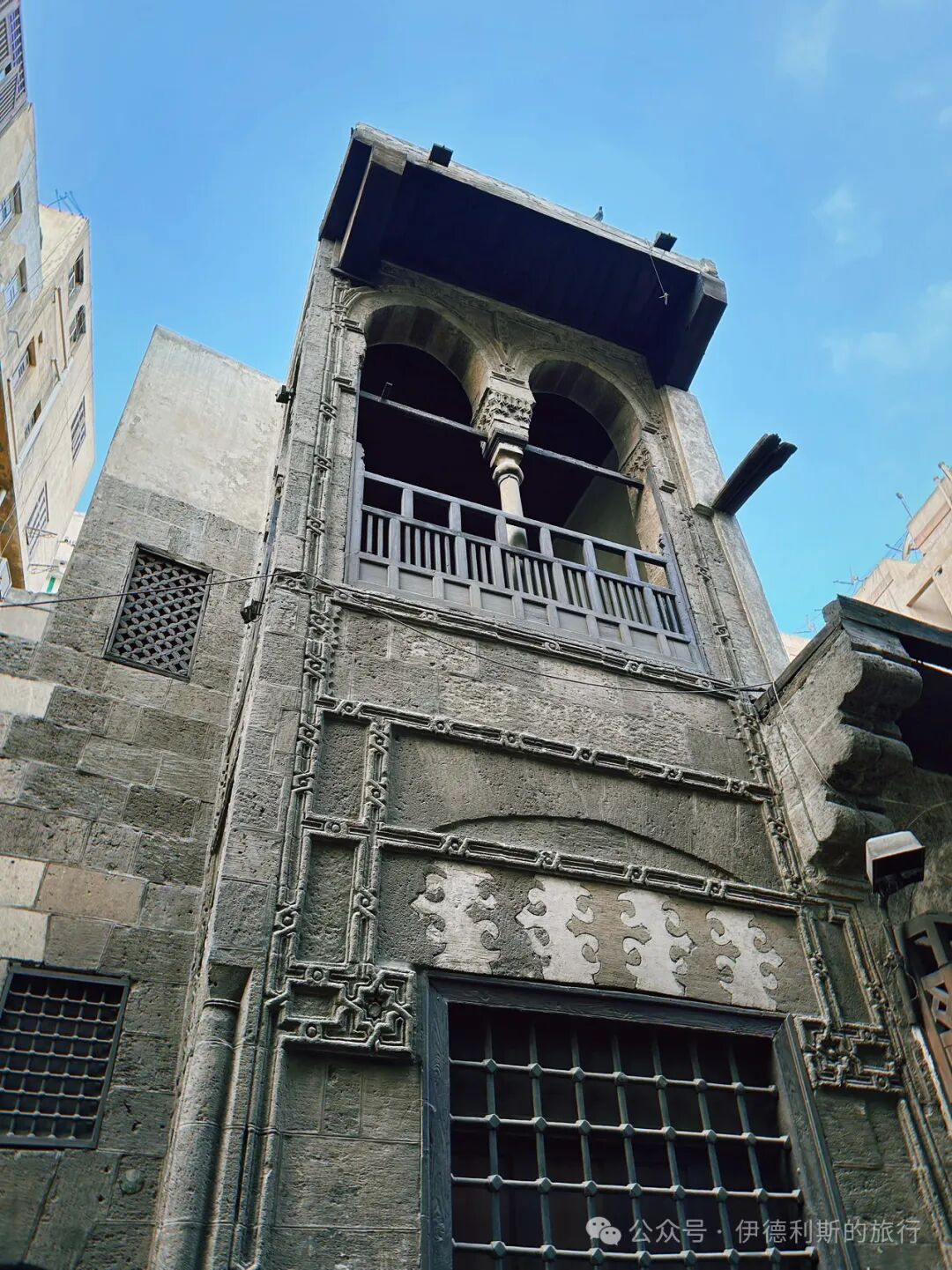
Bashtak Palace: 1334-1339.
Southeast of the Sabil-Kuttab of Abd al-Rahman Katkhuda is the Mamluk-era Bashtak Palace (Qasr Bashtak), built between 1334 and 1339 by the Mamluk emir and general Sayf al-Din Bashtak al-Nasiri. Bashtak was a powerful Mamluk emir who married the daughter of a Mamluk sultan and held important positions in the royal court. He chose a section of the former Fatimid eastern palace to build his own palace and stables, which became a model of Mamluk architecture.
Only a portion of the Bashtak Palace remains today, the most important part being the reception hall (qa'a). The hall features a wooden paneled ceiling, stained glass, and an inlaid marble fountain. The upper level has wooden lattice windows (mashrabiyya), all of which are typical architectural styles of the Mamluk period.
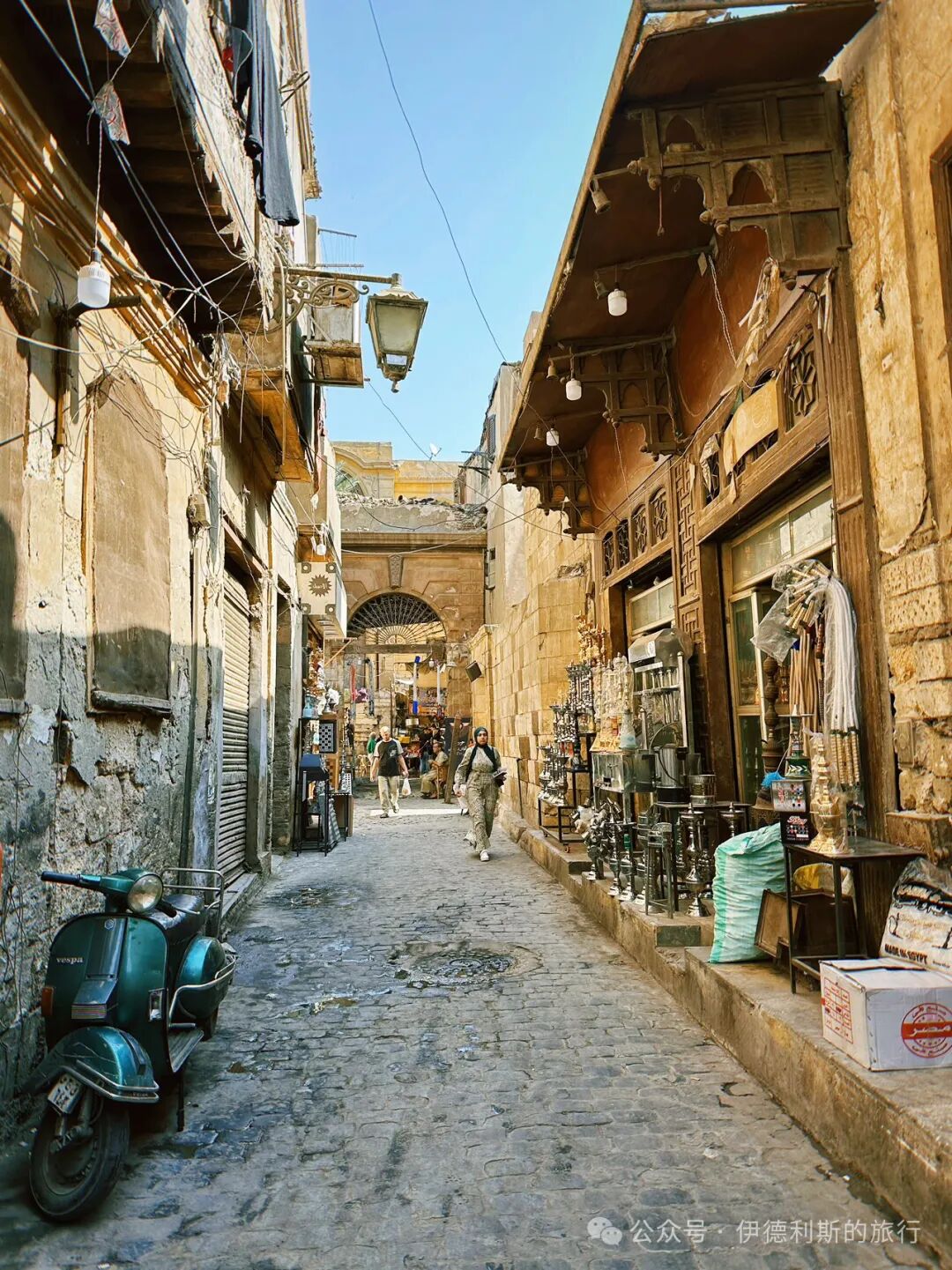
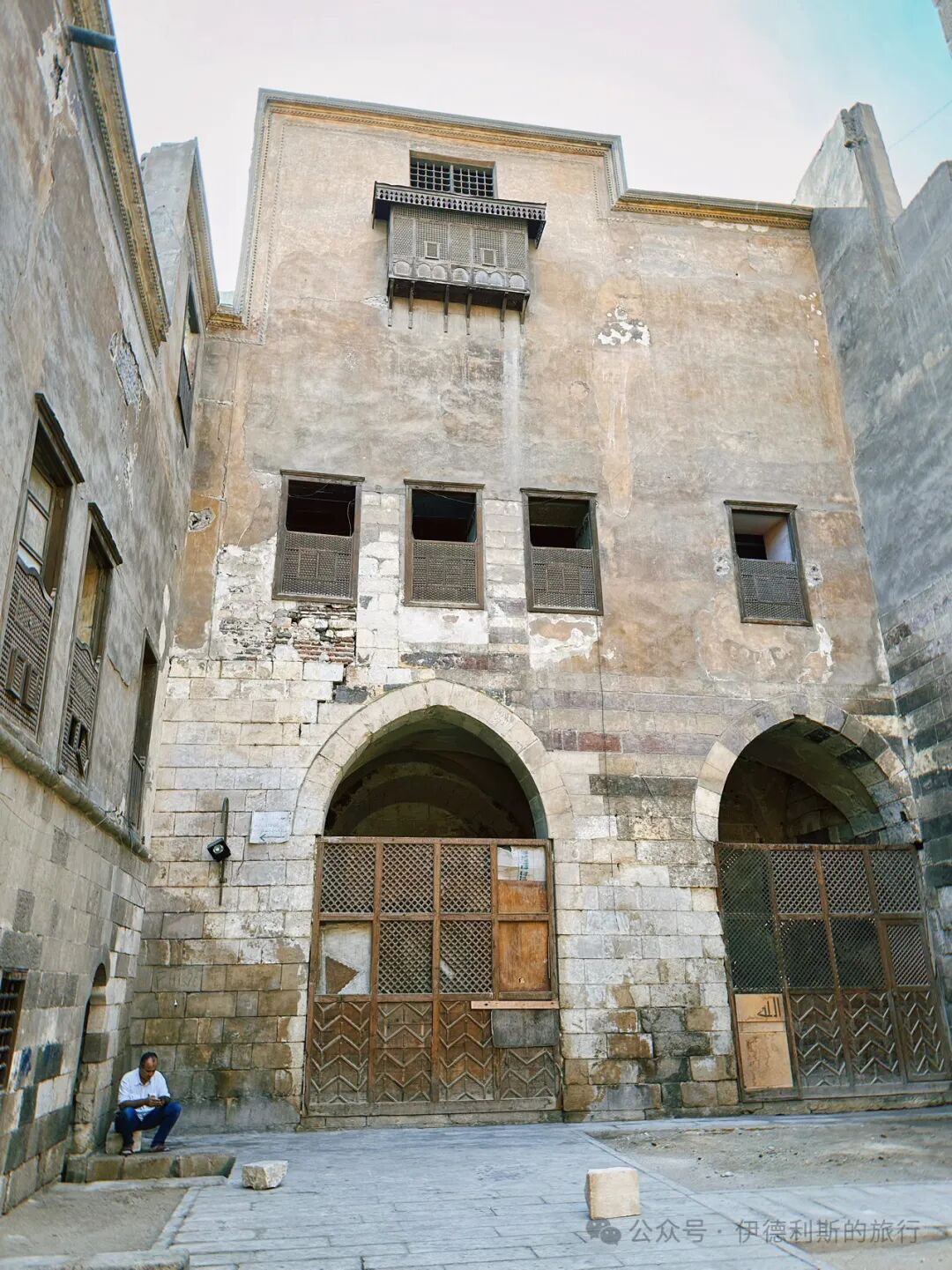
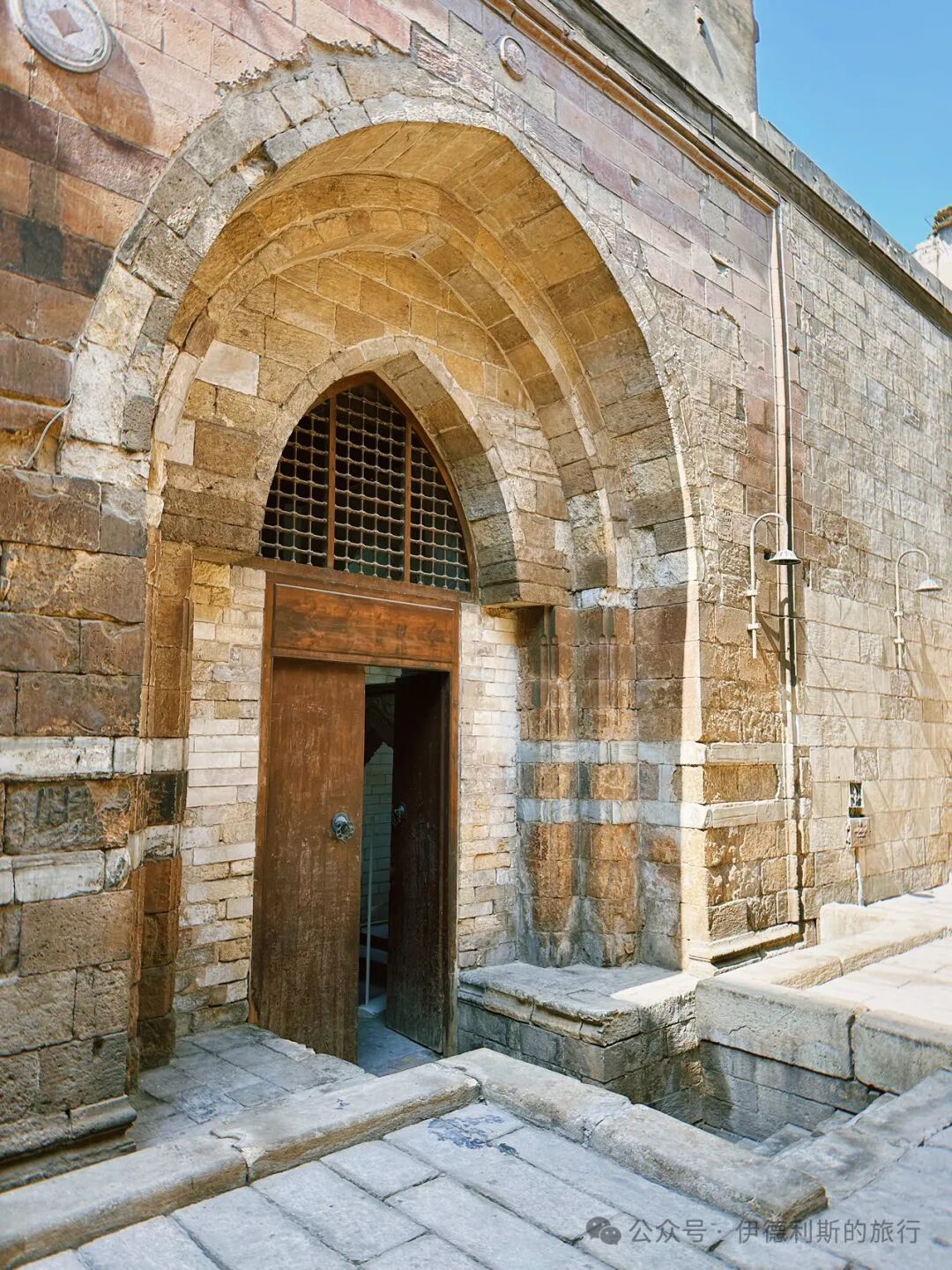
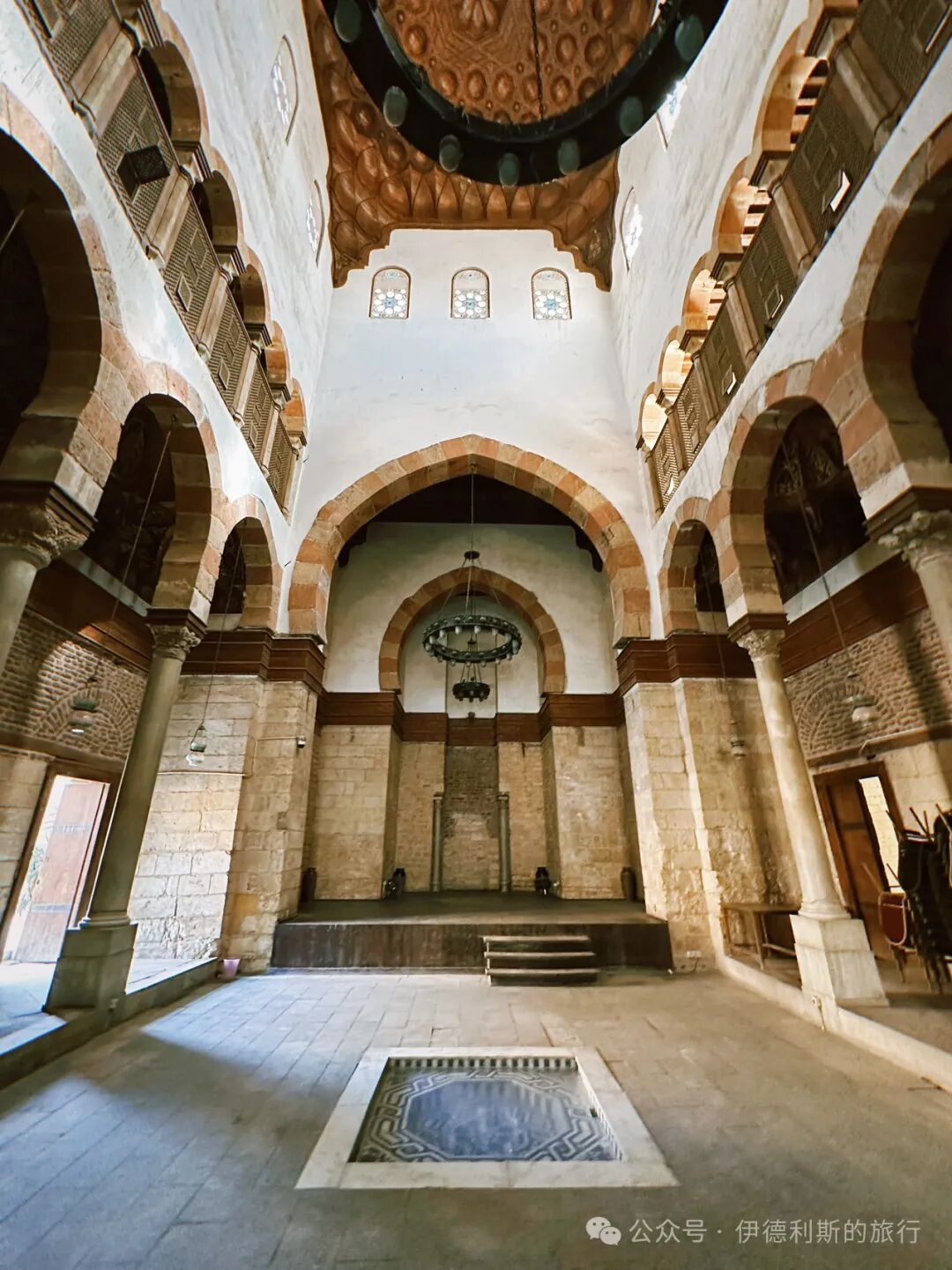
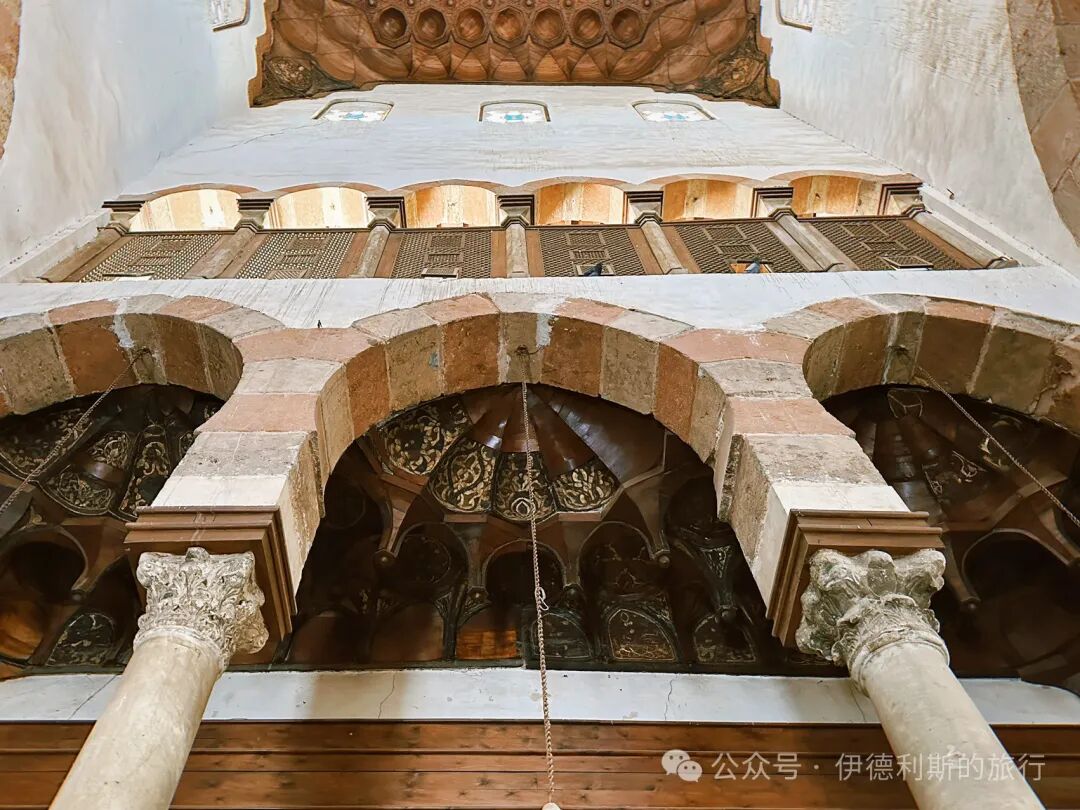
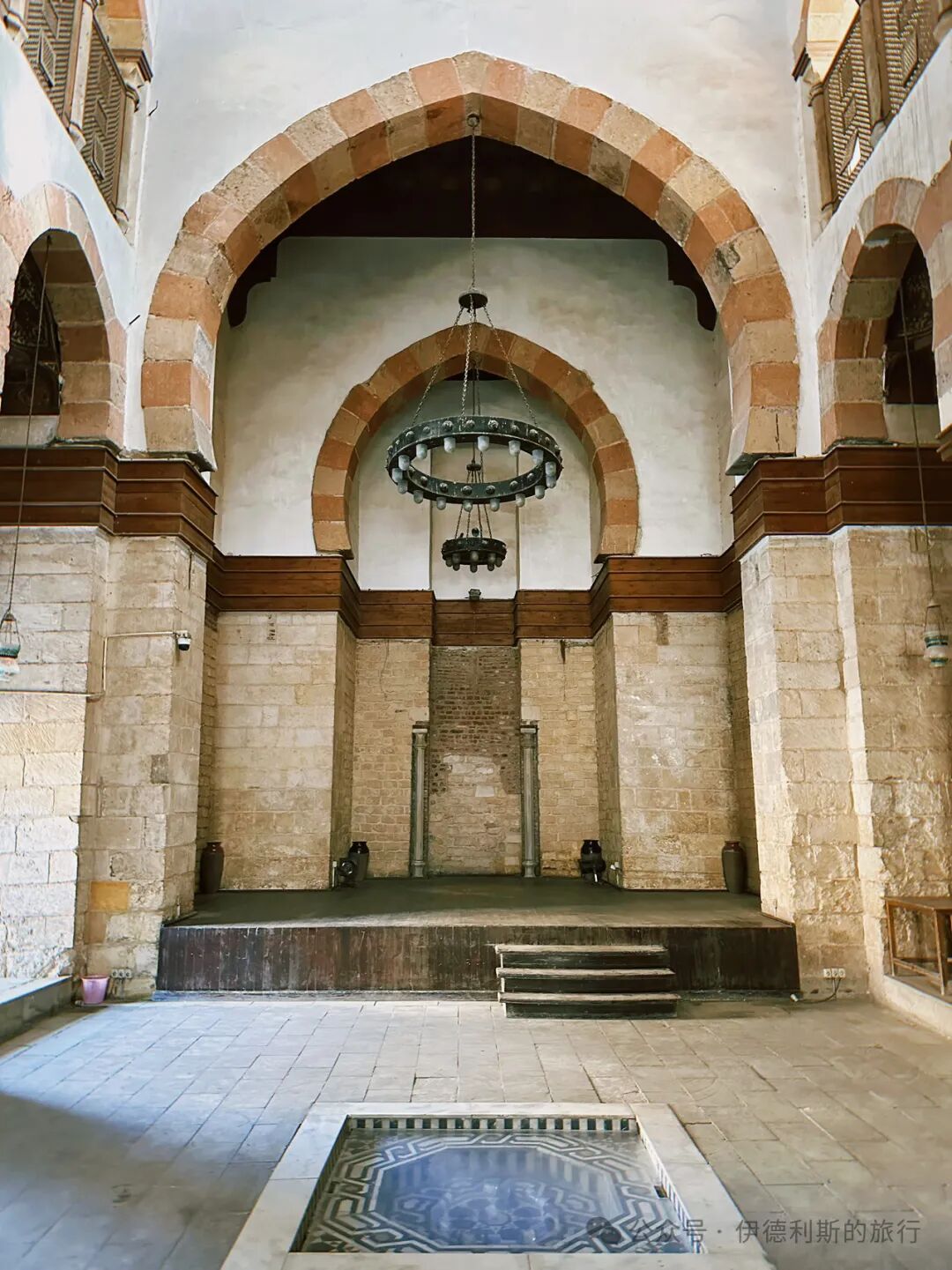
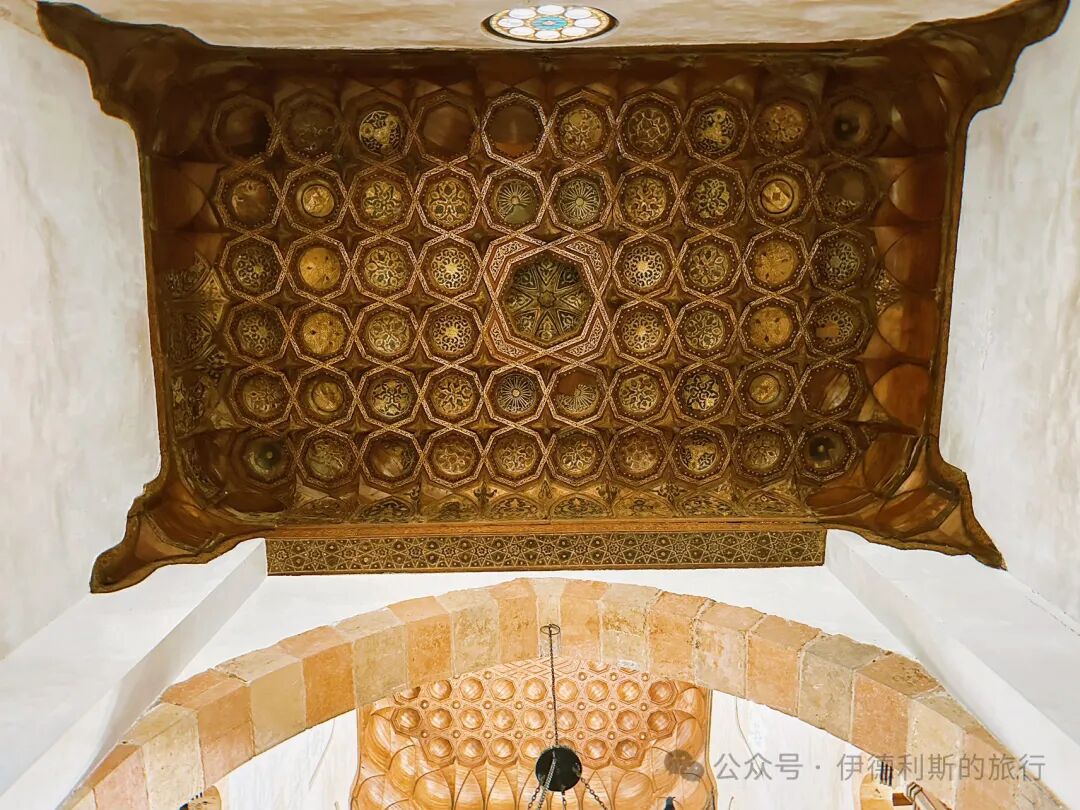
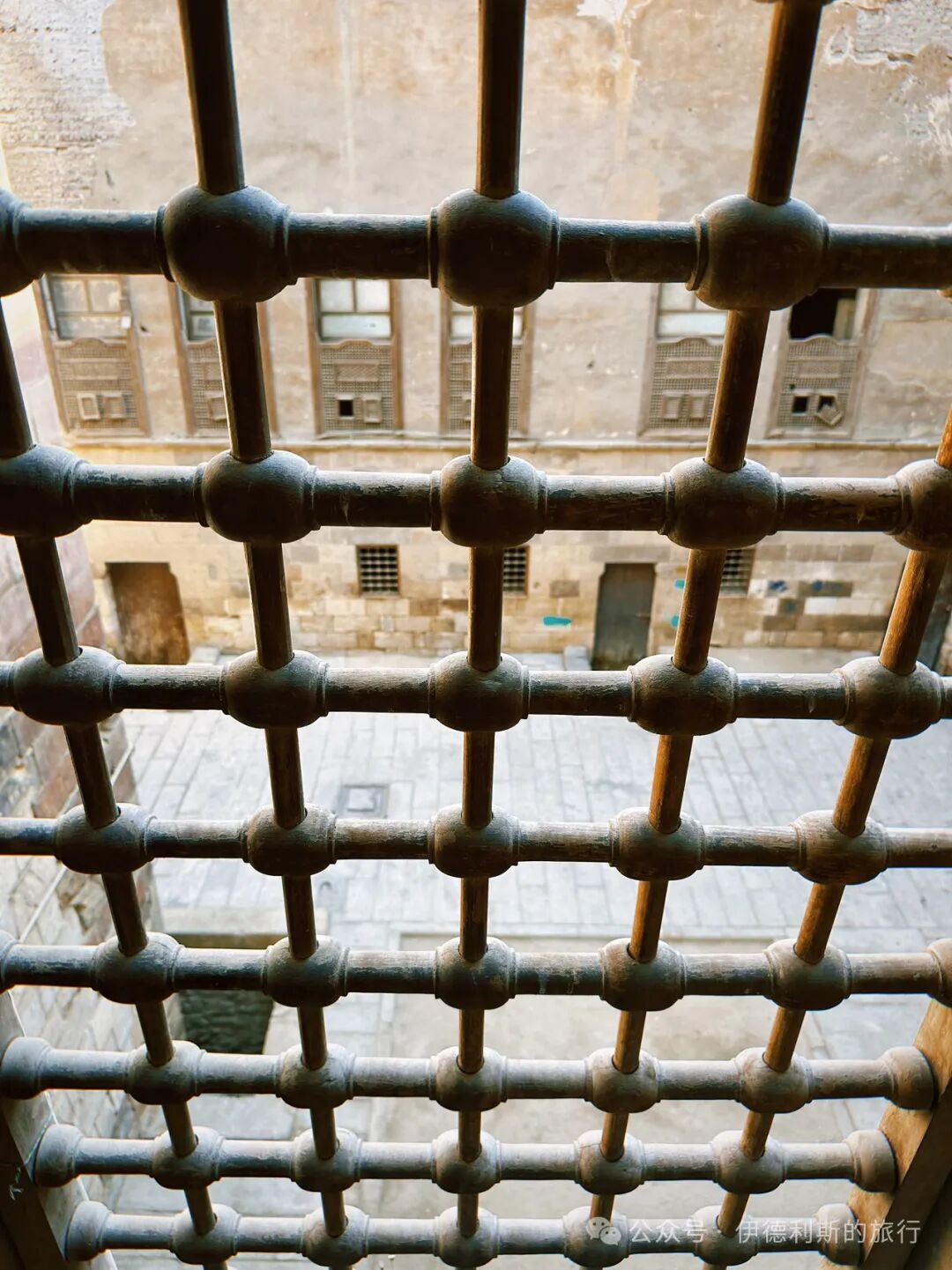
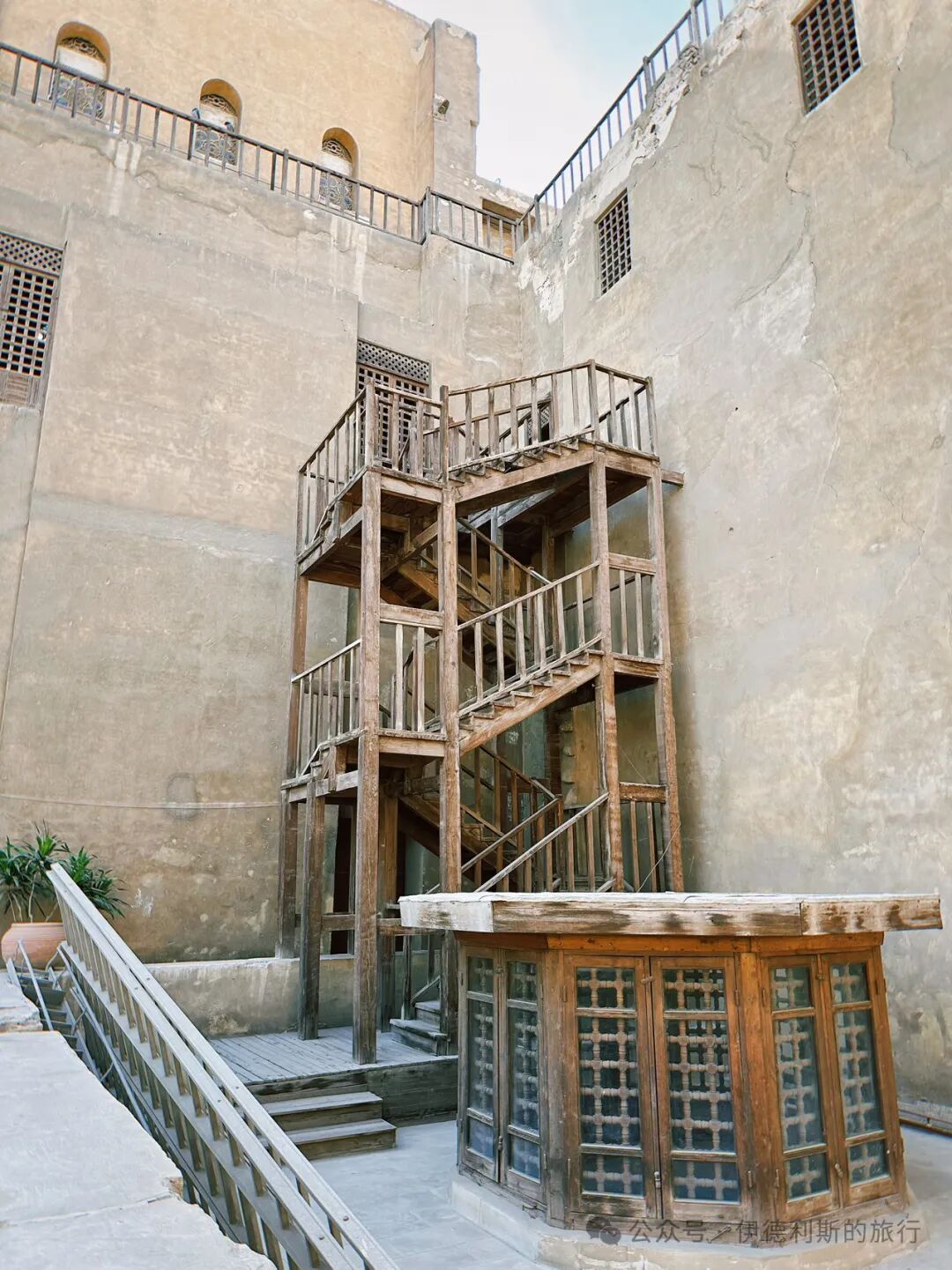
Summary: This Old Cairo travel account walks inside the northern gate of the historic city and follows its mosques, streets, gates, and layered Islamic history. It keeps the original place names, dates, buildings, and travel route without adding outside claims.
The history of Cairo as a city goes back over a thousand years. Back in the ancient Roman era, the Romans built the Babylon Fortress in the south of Cairo. After the Arabs took Cairo in 641 AD, they built the city of Fustat to the northeast of the Babylon Fortress. Over the next 300 years, Muslim rulers from different dynasties built several cities near Cairo, but none of them survived. In 969 AD, the Shia Fatimid dynasty conquered Egypt and spent four years building what is now the old city of Cairo. By this count, the old city of Cairo is now 1,055 years old.
The walls of old Cairo were started in 969 AD. They were first made of brick, then expanded with stone during the reign of the Fatimid Caliph al-Mustansir Billah (reigned 1036-1094), and finally finished in 1087. The north gates of the old city, the Gate of Conquest (Bab al-Futuh) and the Gate of Victory (Bab al-Nasr), were both built during this time. In this article, I will take you through the north gate into old Cairo to experience its thousand-year history.
Gate of Conquest and Gate of Conquest: 1087
The Gate of Conquest is 22 meters high and has two round towers. The stone carving details may have been influenced by Syrian or Byzantine craftsmen. Above the arch, the surface is covered in diamond patterns containing rosettes and crosses. The parts of the towers that hang outward are carved with ram heads, which are symbols of Mars in the zodiac. Inside the gate, the dome and the rectangular space connect through a pendentive, which is a typical feature of Byzantine architecture.
The Gate of Victory is on the east side of the Gate of Conquest. Unlike the round towers of the Gate of Conquest, the towers of the Gate of Victory are square and contain guard rooms and living areas. There are shield carvings above the gate, which symbolize protecting the city from invasion. The shield features an Arabic inscription from its 1087 reconstruction, along with a Shia version of the Shahada that mentions Ali as the friend (wali) of Allah.
Al-Hakim Mosque: 1013.
Right next to the northern wall of Old Cairo stands the Al-Hakim Mosque, named after the sixth Fatimid caliph and the 16th imam of the Ismaili branch of Shia Islam, al-Hakim bi-Amr Allah (reigned 996-1021). The mosque was started in 990 by the fifth Fatimid caliph, al-Aziz Billah (reigned 975-996), and finished in 1013 by Caliph al-Hakim, making it 1,010 years old today.
The Al-Hakim Mosque was originally outside the walls of Cairo, but it was brought inside the city after the walls were rebuilt in 1087. The mosque's architectural style is similar to the Al-Azhar Mosque, but it is twice as large. The most striking features inside are the two minarets built on square brick bases. When the minarets were first built in 1003, they were separate structures, and they were only encased in brick in 1010. Some scholars suggest this might be linked to the ruler of Mecca rejecting Fatimid authority in 1010, which weakened the dynasty's power. The outer wall of the southern brick base has marble Kufic Arabic inscriptions from the Fatimid period, while the Kufic inscriptions on the northern base were moved to the outside of the city wall when it was incorporated into the northern wall of Old Cairo in 1087.
During the Crusades, the mosque was used as a prison by the Franks and later as a stable by Saladin. It was renovated during the Mamluk period in the 14th century but later fell into ruins for a long time. The mosque was renovated in 1808, and a small, colorful marble mihrab added during that time still survives today.
In the 20th century, the mosque served as a school until 1980, when the Dawoodi Bohra branch of Shia Islam carried out a massive reconstruction and renovation using white marble. Inside the main hall after the reconstruction, only the original stucco carvings, wooden beams, and scriptures were preserved. This restoration caused a lack of authenticity that sparked criticism and widespread discussion among scholars. In 2017, the Dawoodi Bohra community and the Egyptian Ministry of Tourism and Antiquities launched a new round of restoration, and it did not reopen until February 2023.
Caravanserai of Qaitbay: 1481
Enter the old city of Cairo through the Gate of Victory (Bab al-Futuh) onto El-Gamaleya Street. The first thing you see is the caravanserai (wikala) of Sultan Qaitbay, which is currently under renovation. It was built in 1481 by Sultan Qaitbay (reigned 1468-1496) of the Mamluk dynasty. Qaitbay was one of the Mamluk sultans who sponsored the most architecture. Although the Mamluk dynasty was in decline, the situation remained relatively stable under his rule, and trade flourished.
Like other Mamluk caravanserais (wikala), this place not only provided short-term housing for passing caravans but also offered long-term rental apartment units (rab). It was used as apartments for hundreds of years until the Egyptian Ministry of Antiquities began renovations in 2015. Work is still ongoing, and you can still see the wooden lattice windows (mashrabiya) facing the street.
Gate of the Caravanserai of Qawsun: 1341
Continuing south, you can see the remains of the gate of the caravanserai (wikala) of Emir Qawsun. This inn was built in 1341 by the famous Mamluk Emir Qawsun (1302-1342). It was used by soap and coffee merchants from Palestine in the 17th and 18th centuries, so it is also called the Soap Inn. The inn was demolished in 1960 to be rebuilt as a school, and only the gate remains. Above the gate is a stone carving of a pair of cups, because Emir Qawsun once served as the Sultan's cupbearer (saqi).
Qawsun was born on the Kipchak steppe under the rule of the Golden Horde and started out as a merchant. In 1320, Princess Tulunbay of the Golden Horde married the Mamluk Sultan of Egypt. Qawsun came to Cairo as part of her entourage and stayed in Cairo to sell leather goods. Qawsun was highly valued by the Sultan in Cairo and became his personal attendant. He then rose quickly through the ranks and married the Sultan's daughter. After the old Sultan died in 1341, Qawsun became the regent and held actual power over the Mamluk dynasty. However, he was defeated by political rivals a few months later and was killed in prison.
Continuing south along El-Gamaleya Street, you can see several more historical buildings.
Khanqah of Baybars II: 1310
On the east side of the middle section of El-Gamaleya Street stands the Khanqah of Baybars II, built in 1310. Baybars II was the 12th Sultan of the Mamluk dynasty and reigned for only one year, from 1309 to 1310. Baybars II served as vice-sultan from 1299 to 1309 and led the Mamluk Sultanate against the Ilkhanate in the Battle of Marj al-Saffar in Syria in 1303. This battle resulted in the total defeat of the Mongol army that had marched west into Syria. People say the Sultan led his captives from the Gate of Victory along El-Gamaleya Street into the old city of Cairo. Singers and dancers from all over came to celebrate, and the city was decorated with lights for days of festivities.
The exquisite Islamic geometric patterns (Girih) on the gate of the Khanqah of Baybars II form complex designs through overlapping and interlacing.
It is very interesting that the threshold of the gate is made of stone blocks carved with ancient Egyptian hieroglyphs, which is the first time I have ever seen this.
Bayt al-Suhaymi: 1648
Walking west from the Khanqah of Baybars II, you can see the Bayt al-Suhaymi on Darb al-Asfar Street. Built in 1648, it is the best-preserved private residence from the Ottoman period in old Cairo and is now open as a tourist site.
This residence is built around a courtyard (Sahn) with a small garden planted with palm trees in the center. You can see beautiful wooden lattice windows (Mashrabiya) in the courtyard. The south side of the mansion is the original 1648 structure, while the north side was expanded in 1797. It is now named after its last owner, Sheikh Muhammad Amin al-Suhaymi, who was a sheikh at Al-Azhar Mosque. In 1930, King Fuad I of Egypt provided funds to purchase the mansion and placed it under the management of the Committee for the Preservation of Arab Art Monuments.
The ornate ceiling decorations of Bayt al-Suhaymi.
The wood-carved furniture and colorful marble floors inside Bayt al-Suhaymi.
Mosque-Sabil of Sulayman Agha al-Silahdar: 1839
Continuing west back to the main road of old Cairo, Al-Mu'izz Street, the first thing you see is the Mosque-Sabil of Sulayman Agha al-Silahdar, built in 1839. This fountain has a fancy Ottoman Baroque facade with floral patterns from the European Renaissance. The fountain is made of marble and was used to keep the water cool during the summer. Next to the fountain is a primary school (kuttab) that was once used to teach children how to read, write, and recite scripture. Here, we can also enter the huge underground water reservoir of the fountain, which is rarely seen in typical fountains.
Aqmar Mosque: 1125-6
Walking south along Al-Muizz Street, we stop at the famous Fatimid-era Aqmar Mosque. The Aqmar Mosque was built in 1125-6 by order of the Fatimid vizier Al-Ma'mun al-Bata'ihi. It sits at the northeast corner of the former Eastern Fatimid Palace, right next to the palace grounds.
The Aqmar Mosque holds a groundbreaking place in Egyptian architectural history. It is the first mosque where the entrance is flush with the street rather than aligned with the qibla wall, making it the first mosque planned according to Cairo's street layout. It is also the first mosque to feature complex stone carvings. The facade of the Aqmar Mosque is very luxurious. Above the entrance is a large medallion surrounded by a grille, with the names of the Prophet and Ali in the center and verses written around them. This type of decoration is unique in Cairo.
At the top of the left facade, there are carvings of a door and a window. The window on the left symbolizes the ceremonial grille that the Fatimids took back from the palace of their rivals, the Abbasids in Baghdad, serving as a symbol of victory. Inside the window is a lamp and a six-pointed star, based on the Shia hadith: 'The stars are a promise to the world, and it will not be submerged.' Below the window, there is a carving of a plant growing out of a flower pot, which comes from the Prophet's reference to Hasan and Husayn as 'my two aromatic herbs in the world.' The door in the upper right corner comes from the famous Shia hadith: 'I am the city of knowledge, and Ali is its gate.'
Because it was near the Fatimid palace, the Aqmar Mosque did not originally have a minaret. One was not added until the end of the 14th century by the Mamluk dynasty, and the cylindrical top was rebuilt during the Ottoman era.
In 1993, the Dawoodi Bohra branch of the Shia community carried out a large-scale renovation of the Aqmar Mosque. Most of the historical elements inside the main hall were not preserved, which drew criticism.
Madrasa of Emir Jamal al-Din al-Ustadar: 1407
Turn back into al-Gamaleya Street along the alley south of the Aqmar Mosque to see the Madrasa of Amir Jamal al-Din al-Ustadar, built in 1407 by the Mamluk general Amir Jamal al-Din al-Ustadar. Jamal al-Din built many structures in Cairo, and al-Gamaleya Street is named after him.
This is a classic cruciform madrasa structure with an open courtyard in the center and an iwan (arched hall) on each of the four sides, each used to teach one of the four schools of Islamic jurisprudence. The decoration inside the main hall is very ornate, as People say Jamal al-Din modeled it after Mamluk palace designs and invested a large amount of money and materials. Jamal al-Din was executed just four years after the mosque was completed. The Sultan wanted to demolish the site, but a judge (Qadi) stopped him, and in the end, only Jamal al-Din's name was removed.
After the Ottoman Empire conquered Istanbul in 1517, many marble slabs from the inner walls of the madrasa were taken to Istanbul. The building was damaged again in the 1992 earthquake and was not fully restored until 2002.
Dhu al-Fiqar Fountain-Primary School (Sabil-Kuttab): 1673
Opposite the Madrasa of Amir Jamal al-Din al-Ustadar is the Ottoman-era Dhu al-Fiqar Sabil-Kuttab, built in 1673 by Dhu al-Fiqar Katkhuda Mustahfizan and his brother Muhammad. This Sabil-Kuttab consists of two prominent wooden awnings, and the caravanserai (wikala) behind it was once a center for the coffee trade in 18th-century Cairo.
Maq’ad Mamay al-Sayfi Palace: 1496
Continue south to the Maq’ad Mamay al-Sayfi Palace on Beet Al Qadi Street, built in 1496 by the Mamluk general Sayf al-Din Mamay ibn Khadad, who served as a Mamluk diplomat to the Ottoman Empire in the early 1490s.
During the Ottoman period, this place served as a high court and the residence of judges, so it is also called Bayt al-Qadi. In the late 19th century, Egypt's ruler Isma'il Pasha (reigned 1863-79) carried out urban renewal in Cairo, and most of the palace was demolished, leaving only a large house used for summer retreats. The house consists of an upper pavilion and a lower storage room. The lotus capitals of the pavilion are the only example in Islamic architecture in Cairo that directly uses architectural forms from the ancient Egyptian pharaonic era. The interior of the pavilion has complex decorations and calligraphy, but unfortunately, it was not open when we visited.
Abd al-Rahman Katkhuda Sabil-Kuttab: 1744
Walk south from the Aqmar Mosque to see the Sabil-Kuttab of Abd al-Rahman Katkhuda, a fountain-school built in 1744 during the Ottoman era. It is a landmark building on Al-Muizz Street, the main road in Old Cairo. During the Mamluk and Ottoman dynasties, these fountain-schools were very common in Cairo. The ground floor fountain (sabil) provided free drinking water to passersby, while the second floor school (kuttab) taught children how to read and write.
Although this fountain-school was built in the Mamluk style, it incorporates many Ottoman architectural elements. The builder, Abd al-Rahman Katkhuda, was a high-ranking Mamluk emir officer known for his noble lifestyle and patronage of the arts. He renovated or built 33 structures in Cairo.
Across from the Khanqah of Baybars II stands the Qitas Bey fountain-school (sabil-kuttab), built in 1630 during the Ottoman period. In the Mamluk and Ottoman eras, most fountain-schools in the old city of Egypt were built on street corners.
Bashtak Palace: 1334-1339.
Southeast of the Sabil-Kuttab of Abd al-Rahman Katkhuda is the Mamluk-era Bashtak Palace (Qasr Bashtak), built between 1334 and 1339 by the Mamluk emir and general Sayf al-Din Bashtak al-Nasiri. Bashtak was a powerful Mamluk emir who married the daughter of a Mamluk sultan and held important positions in the royal court. He chose a section of the former Fatimid eastern palace to build his own palace and stables, which became a model of Mamluk architecture.
Only a portion of the Bashtak Palace remains today, the most important part being the reception hall (qa'a). The hall features a wooden paneled ceiling, stained glass, and an inlaid marble fountain. The upper level has wooden lattice windows (mashrabiyya), all of which are typical architectural styles of the Mamluk period.
Egypt Muslim Travel Guide: Cairo Mosques, Pyramids and Honest Travel Trap Tips
Articles • yusuf908 posted the article • 0 comments • 158 views • 2026-05-22 21:33
Reposted from the web
Summary: This Egypt Muslim travel guide starts in Cairo after Umrah, covering airport arrival, ride-hailing, hotels, Al-Azhar Mosque, Imam Hussein Mosque, Saladin Citadel, Ibn Tulun Mosque, the pyramids, and real trap-avoidance tips.
A Guide to Avoiding Travel Traps in Egypt is presented here as a firsthand travel account in clear English, beginning with this scene: I was disappointed by Mecca and Medina because they felt just like any other popular tourist spot. The account keeps its focus on Quanzhou Muslims, Hui Muslims, Islamic History while preserving the names, places, food, and historical details from the Chinese source.
I was disappointed by Mecca and Medina because they felt just like any other popular tourist spot. Don't have high expectations for the people you meet in the two holy cities either. We originally planned to stay there for a few more days, but we changed our plans last minute and decided to head to Egypt for a week. I never expected the trip to Egypt to be the worst experience I've ever had in any country. Compared to Egypt, Saudi Arabia seems much more civilized. I hope this guide helps you avoid some pitfalls, but people never seem to learn. If you insist on going, I'm sure you will run into traps that I didn't even encounter.
The flight from Jeddah to Cairo is only two hours on Nile Air. A little Arab girl on the plane kept staring at Fahim. By the time we were about to land, they couldn't help themselves, so they sat together, kissing and hugging.
The girl sitting next to me was Saudi, as I saw her holding a Saudi passport. She wasn't wearing a headscarf in the waiting area. Once on the plane, she asked me how to fasten her seatbelt, and when we landed, she asked me to help her unbuckle it. It was clear this was her first time flying, and she kept taking photos from the moment she got on the plane.
Chinese passport holders can get a visa on arrival in Egypt. When you enter, just go to the bank at the entrance and pay 25 USD per person by card for the visa. Customs will stick it in your passport, and you can enter. No other documents are needed.
When you leave the airport, many drivers will try to solicit you; just ignore them. There are also people who will offer to help with your luggage. Don't let them help, even if they show you something that looks like a work ID. Still ignore them, because these services all require tips. If you don't know how to say no, you will end up spending money.
Sisi campaign poster.
I used Uber to call a car to the hotel. In Egypt, try to use Uber or the local ride-hailing app called Careem. Most Uber drivers speak English, making it easier to communicate. If you don't use a ride-hailing app, you will most likely be overcharged and the driver won't give you change.
We chose to stay at the Ramses Hilton by the Nile. The hotel is across from the old Egyptian Museum and near the Nile. This area is where many high-end hotels in Egypt are clustered, so the environment is a bit better.
December is the Christmas holiday season, so the whole city is full of Christmas vibes. This is normal in Cairo, as there are many Coptic Christians here.
I didn't want to go out at night, so I ordered a meal to the room. Every dish was extremely salty. Since I was feeding it to Fahim, and that much salt isn't good for a child, I called to complain to the restaurant. A while later, they sent someone to remake the meal, and the second time it tasted a bit better.
I was surprised that the bathroom at the Cairo Hilton didn't have a bidet sprayer, even though you could still find a Qibla direction indicator in the room.
Breakfast starts at 6:30 a.m., while it is still dark outside.
After a traditional Arabic breakfast, I planned to go to Al-Azhar for Jumu'ah prayer. I asked the hotel staff about the time for today's Jumu'ah, and they said around 11:40.
You can see this kind of bread sold everywhere on the streets of Old Cairo. It is like the steamed bun (mantou) in northern China and costs two mao (0.20 RMB) each. Fahim really likes eating it.
Al-Azhar Mosque
Al-Azhar Mosque was built in 972 AD. It is also the second oldest university in the world. The oldest is the University of al-Qarawiyyin in Fez, Morocco, which was built in 859 AD.
Al-Azhar was once considered the highest institution of Sunni learning. After it was nationalized in 1952, negative opinions about the university have grown.
Al-Azhar is located in Old Cairo. When I reached the entrance, I saw several rows of security guards. Everyone entering the mosque had to go through a security check, which felt familiar to me.
I took a photo in the square, but a guard told me not to take pictures. After walking into the main hall, I saw several staff members walking back and forth, constantly reminding people not to take photos. This made the atmosphere feel strange.
The imam started by reciting the Quran. The tone was strange, like the old style I have heard back home: read a sentence, take a breath, wait a moment, then read another sentence, all very choppy. Very few people came for Jumu'ah prayer. Less than a quarter of the main hall was filled, making me wonder if I had gone to the wrong place.
After the prayer, I asked someone and learned that today was the first day Al-Azhar had reopened. The mosque had been closed because of the presidential election, so Al-Azhar has changed.
Imam Hussein Gongbei
Across from Al-Azhar is the Imam Hussein gongbei (Al-Hussein Mosque), built in 1154 AD. People say the head of the Prophet's grandson, Hussein, is buried here, though some Shia Muslims believe his head and body are both at the Imam Hussein Shrine in Karbala, Iraq.
In 985 AD, the 15th Fatimid Caliph, Mansur, learned in Baghdad that Hussein's head had been buried at the Shrine of the Head of Hussein in Palestine for 250 years. It was not until 1154 AD that the 21st Fatimid Caliph, Qasim, had it transported to Cairo and built the mosque. The current building was rebuilt in 1874. Influenced by the Westernization of Cairo at the time, it was constructed in a mix of Gothic and Ottoman styles and fitted with sunshades like those at the Prophet's Mosque in Medina.
Imam Hussein passed away in 680 AD, dying in battle in Karbala, Iraq, during the war against Muawiyah. The Fatimid dynasty and Sunni Muslims believe Hussein's head was moved to Cairo in 1153. Starting from the time of Saladin, the mosque became Sunni, and to this day, its call to prayer and namaz rituals follow the Sunni tradition.
The tomb chamber is built behind the mihrab of the main hall, where you can see many people commemorating Hussein in various ways.
Inside the gongbei building is a room built in 1893. It is said to house relics of the Prophet, including a linen cloak he once wore, four strands of his hair, the staff he used when entering Mecca, a sword gifted to him by a companion, and a 501-page Quran written on deerskin in Kufic script by Ali ibn Abi Talib.
At the ticket office of the Saladin Citadel, I waited with Fahim to buy tickets. An Egyptian girl came over and asked if she could take a photo of Fahim. I said yes, and suddenly a group of schoolgirls surrounded us, taking turns snapping photos of him.
The girl asked for Fahim's name. I said, "Fahim," and they were surprised, "Fahim?" Are you Muslims? I said, "Praise be to Allah," and the girl screamed, cupped Fahim's cheeks, and kissed him.
We saw the same scene again at other spots later. Fahim is even more popular in the Middle East than in China.
Saladin Citadel
You need a ticket to enter the citadel. Most tourist spots in Egypt only take cards, not cash.
The Cairo Saladin Citadel was originally a fortress built by Saladin between 1176 and 1183 to defend against the Crusades. It served as the seat of the Egyptian government until 1874, when Ismail Pasha, the successor of Muhammad Ali, moved to a palace in the new city center of Cairo.
Records show there are four mosques inside the citadel: the Mosque of Muhammad Ali, the Mosque of Al-Nasir Muhammad, the Mosque of Suleiman Pasha, and the Azab Mosque.
Mosque of Al-Nasir Muhammad
Built in 1318, it stands on the site of an early Saladin dynasty main mosque. The mosque's columns came from buildings of the Pharaoh era, and this gate is a classic sign of the Mamluk period. Although the mosque structure is intact, most of its gorgeous marble decorations were removed and shipped to Istanbul after the Ottoman Sultan Selim I conquered Egypt.
Mosque of Muhammad Ali
Inside the Saladin Citadel stands the Mosque of Muhammad Ali. Built in 1848 in an Ottoman style, it commemorates Tusun Pasha, the eldest son of Muhammad Ali, who died in 1816.
Some say the building materials for the mosque were taken from the pyramids at Giza. Inside, there is a clock tower gifted to Muhammad Ali by the French King Louis Philippe around 1840, which corresponds to the Luxor Obelisk in the Place de la Concorde in Paris.
The tomb of Muhammad Ali is inside the mosque. He was the de facto ruler of Egypt from 1805 to 1848. Once a commander for the Ottoman Empire in Albania, he is considered the founder of modern Egypt. Although he may have been Albanian or Turkish, his dynasty lasted until 1952.
People sell shoe covers at the entrance of the Ali Mosque. It is a trap, so just ignore them. Carry your shoes in your hands and walk right in. You do not need to spend money on shoe covers.
There is a carpeted area in the main hall where you can perform namaz, but very few people actually show up for prayer times in Egypt.
Ibn Tulun Mosque
Built in 876, the Ibn Tulun Mosque is the oldest mosque in Egypt and all of Africa. It is also the largest mosque in the old city of Cairo.
The designer of this mosque was an Orthodox Christian named Saiid Ibn Kateb Al-Farghany.
This mosque is an open tourist site with no entry fee. However, they charge a tip for storing your shoes. I gave them 50 Egyptian pounds, but they said it was not enough and asked for another 50 pounds. The total was about 20 Chinese yuan.
This spiral minaret is believed to have been built in 1296.
The arched windows let in plenty of light.
Neither the left nor the right mihrab mentions Ali, which shows they were built during the early Fatimid Caliphate, a Shia dynasty.
The mihrab designed by Al-Afdal to commemorate Mustansir.
Mustansir was a caliph of the Fatimid dynasty. The original mihrab is kept at the Museum of Islamic Art in Cairo, and this one is a replica. It is inscribed with the Shia Shahada: There is no god but Allah, Muhammad is the messenger of Allah, and Ali is the wali of Allah.
A mihrab from the pre-Fatimid period, with a star hanging on the emblem.
Parts of the James Bond movie The Spy Who Loved Me were filmed here. It also appears in the game Serious Sam 3 and in Tomb Raider: The Last Revelation, where Lara fights a minotaur in the mosque.
Al Fattah Al Aleem Mosque
Because Old Cairo became hopelessly dirty and messy, the Egyptian government had to plan a new Cairo in the desert. This mosque was built in the new city. It covers 8,600 square meters and became the largest mosque in Africa after it was finished in 2019.
New Cairo is an hour's drive from the old city. The roads in the new city are wide, the streets are clean, and the tallest building in Africa is currently being built here.
The main hall of the mosque was originally closed, but our driver, who is Egyptian, talked to the mosque staff and got them to open it for us. We prayed namaz together in the mosque, and he led the prayer. After the prayer, I offered the staff a tip, but he actually refused it. He is the only person I have met in Egypt who did not take a tip.
Sulayman Agha al-Silahdar Mosque
This mosque was built in 1839 in the Ottoman style. The carvings inside copy architecture from the European Renaissance.
The mosque is located on a busy street in the old city. It stands in sharp contrast to the bustling crowds outside, as the inside is very quiet and only a few people come for prayer.
Walk through this passage and enter the main hall on the second floor. It feels like a dark medieval castle inside.
Al-Hakim Mosque
This mosque was completed in 1013 and named after the sixth Fatimid caliph. The main gate features Kufic script left from that time.
Over the centuries, this mosque was renovated and closed several times until it finally reopened in 1980.
The architectural style is similar to Al-Azhar, but it is more than twice the size.
Sultan Barquq Mosque
You need to buy a ticket to enter this mosque, and you can buy a combined ticket with the Al-Refaei Mosque. Also, you have to tip when you store your shoes inside.
Located in the old city of Cairo, this large religious complex includes a mosque, a school, and a gongbei. It was first built in 1384. Barquq was born a slave and gained significant influence during the Mamluk period. In 1382, he deposed Sultan Hajji and declared himself king.
The film adaptation of Palace Walk, a work by the Egyptian Nobel laureate Mahfouz, was filmed here.
Al-Refaei Mosque
This mosque is across from the Sultan Hassan Mosque. It was first built in 1361 and contains the tombs of the Muhammad Ali family.
The tomb of Ali Abu Shubbak al-Refaei
Al-Refaei was the founder of the Sufi Refaei order.
This is the tomb of the last Shah of Iran, Pahlavi, who died in Cairo in 1980. Pahlavi's father, Reza Shah, also stayed here briefly after he died. Reza Shah died in exile in South Africa in 1944 and was sent back to Iran after World War II.
This place is also the burial site of the Sufi mystic Yahya al-Ansari, known as the patron saint of Cairo, along with several members of the Egyptian royal family.
There is a traditional Arabic music restaurant in Old Cairo with a stunning atmosphere and three floors.
We chose to sit on the rooftop to look down over the streets of the old city.
I noticed a detail: when it was time for namaz, the call to prayer echoed throughout the old city. The restaurant turned off its music and waited until the prayer time passed to play it again, though I did not see anyone praying during that time.
We ate grilled lamb chops and tagine (tajin), which are dishes you can hardly go wrong with when eating locally.
King Faisal bin Abdulaziz Mosque (Masged al Malik Faysal Bin Abd al’Aziz).
This is the closest mosque to Cairo Airport. It has an octagonal roof and is the cleanest mosque I visited in Cairo.
The non-traditional dome caught my eye, and there were not many people praying in the mosque during the sunset prayer (maghrib).
The Pyramids and the Sphinx.
After moving to a hotel near the airport, I planned to book a one-day tour of the Cairo pyramids online. I was told the airport was far away and it would cost an extra 270 yuan per person, bringing the total to over 1,000 RMB per person. I took an Uber from the airport to the pyramids for only 80 RMB, and it turned out that taking a taxi directly to the site was the most cost-effective way.
The Great Pyramid of Khufu and the Sphinx are located together. Seeing these images from my childhood textbooks in person was truly shocking. You cannot help but wonder how ancient Egypt built such huge and precise structures over 4,000 years ago; it seems beyond human capability.
There are many people around the pyramids trying to sell camel rides. Remember not to engage with anyone who approaches you. Camel rides are a trap with unpredictable prices, and if someone tells you it is free, that is a sign they are about to rip you off.
Don't listen to anyone outside the ticket office who says they can take you through a shortcut without a ticket; it's all a scam. You can avoid most traps by not interacting with locals. If you want to go inside the pyramids, you have to buy a separate ticket at the entrance, or you can tip the guard to get in. There is nothing to see inside, as it was looted by various people centuries ago.
Egyptian Museum
This is the old Egyptian Museum by the Nile. Cairo also has a new museum, but it doesn't have as many items as the old one. Although the old museum is run-down, the treasures inside are priceless and so numerous that they are just piled up like in a warehouse. You need to pay for museum tickets by card, as they don't accept cash. It opens at 9:00 AM and starts clearing out at 5:00 PM.
You can even touch these artifacts, and no one stops you. It feels just like a wet market inside. view all
Summary: This Egypt Muslim travel guide starts in Cairo after Umrah, covering airport arrival, ride-hailing, hotels, Al-Azhar Mosque, Imam Hussein Mosque, Saladin Citadel, Ibn Tulun Mosque, the pyramids, and real trap-avoidance tips.
A Guide to Avoiding Travel Traps in Egypt is presented here as a firsthand travel account in clear English, beginning with this scene: I was disappointed by Mecca and Medina because they felt just like any other popular tourist spot. The account keeps its focus on Quanzhou Muslims, Hui Muslims, Islamic History while preserving the names, places, food, and historical details from the Chinese source.
I was disappointed by Mecca and Medina because they felt just like any other popular tourist spot. Don't have high expectations for the people you meet in the two holy cities either. We originally planned to stay there for a few more days, but we changed our plans last minute and decided to head to Egypt for a week. I never expected the trip to Egypt to be the worst experience I've ever had in any country. Compared to Egypt, Saudi Arabia seems much more civilized. I hope this guide helps you avoid some pitfalls, but people never seem to learn. If you insist on going, I'm sure you will run into traps that I didn't even encounter.
The flight from Jeddah to Cairo is only two hours on Nile Air. A little Arab girl on the plane kept staring at Fahim. By the time we were about to land, they couldn't help themselves, so they sat together, kissing and hugging.
The girl sitting next to me was Saudi, as I saw her holding a Saudi passport. She wasn't wearing a headscarf in the waiting area. Once on the plane, she asked me how to fasten her seatbelt, and when we landed, she asked me to help her unbuckle it. It was clear this was her first time flying, and she kept taking photos from the moment she got on the plane.
Chinese passport holders can get a visa on arrival in Egypt. When you enter, just go to the bank at the entrance and pay 25 USD per person by card for the visa. Customs will stick it in your passport, and you can enter. No other documents are needed.
When you leave the airport, many drivers will try to solicit you; just ignore them. There are also people who will offer to help with your luggage. Don't let them help, even if they show you something that looks like a work ID. Still ignore them, because these services all require tips. If you don't know how to say no, you will end up spending money.
Sisi campaign poster.
I used Uber to call a car to the hotel. In Egypt, try to use Uber or the local ride-hailing app called Careem. Most Uber drivers speak English, making it easier to communicate. If you don't use a ride-hailing app, you will most likely be overcharged and the driver won't give you change.
We chose to stay at the Ramses Hilton by the Nile. The hotel is across from the old Egyptian Museum and near the Nile. This area is where many high-end hotels in Egypt are clustered, so the environment is a bit better.
December is the Christmas holiday season, so the whole city is full of Christmas vibes. This is normal in Cairo, as there are many Coptic Christians here.
I didn't want to go out at night, so I ordered a meal to the room. Every dish was extremely salty. Since I was feeding it to Fahim, and that much salt isn't good for a child, I called to complain to the restaurant. A while later, they sent someone to remake the meal, and the second time it tasted a bit better.
I was surprised that the bathroom at the Cairo Hilton didn't have a bidet sprayer, even though you could still find a Qibla direction indicator in the room.
Breakfast starts at 6:30 a.m., while it is still dark outside.
After a traditional Arabic breakfast, I planned to go to Al-Azhar for Jumu'ah prayer. I asked the hotel staff about the time for today's Jumu'ah, and they said around 11:40.
You can see this kind of bread sold everywhere on the streets of Old Cairo. It is like the steamed bun (mantou) in northern China and costs two mao (0.20 RMB) each. Fahim really likes eating it.
Al-Azhar Mosque
Al-Azhar Mosque was built in 972 AD. It is also the second oldest university in the world. The oldest is the University of al-Qarawiyyin in Fez, Morocco, which was built in 859 AD.
Al-Azhar was once considered the highest institution of Sunni learning. After it was nationalized in 1952, negative opinions about the university have grown.
Al-Azhar is located in Old Cairo. When I reached the entrance, I saw several rows of security guards. Everyone entering the mosque had to go through a security check, which felt familiar to me.
I took a photo in the square, but a guard told me not to take pictures. After walking into the main hall, I saw several staff members walking back and forth, constantly reminding people not to take photos. This made the atmosphere feel strange.
The imam started by reciting the Quran. The tone was strange, like the old style I have heard back home: read a sentence, take a breath, wait a moment, then read another sentence, all very choppy. Very few people came for Jumu'ah prayer. Less than a quarter of the main hall was filled, making me wonder if I had gone to the wrong place.
After the prayer, I asked someone and learned that today was the first day Al-Azhar had reopened. The mosque had been closed because of the presidential election, so Al-Azhar has changed.
Imam Hussein Gongbei
Across from Al-Azhar is the Imam Hussein gongbei (Al-Hussein Mosque), built in 1154 AD. People say the head of the Prophet's grandson, Hussein, is buried here, though some Shia Muslims believe his head and body are both at the Imam Hussein Shrine in Karbala, Iraq.
In 985 AD, the 15th Fatimid Caliph, Mansur, learned in Baghdad that Hussein's head had been buried at the Shrine of the Head of Hussein in Palestine for 250 years. It was not until 1154 AD that the 21st Fatimid Caliph, Qasim, had it transported to Cairo and built the mosque. The current building was rebuilt in 1874. Influenced by the Westernization of Cairo at the time, it was constructed in a mix of Gothic and Ottoman styles and fitted with sunshades like those at the Prophet's Mosque in Medina.
Imam Hussein passed away in 680 AD, dying in battle in Karbala, Iraq, during the war against Muawiyah. The Fatimid dynasty and Sunni Muslims believe Hussein's head was moved to Cairo in 1153. Starting from the time of Saladin, the mosque became Sunni, and to this day, its call to prayer and namaz rituals follow the Sunni tradition.
The tomb chamber is built behind the mihrab of the main hall, where you can see many people commemorating Hussein in various ways.
Inside the gongbei building is a room built in 1893. It is said to house relics of the Prophet, including a linen cloak he once wore, four strands of his hair, the staff he used when entering Mecca, a sword gifted to him by a companion, and a 501-page Quran written on deerskin in Kufic script by Ali ibn Abi Talib.
At the ticket office of the Saladin Citadel, I waited with Fahim to buy tickets. An Egyptian girl came over and asked if she could take a photo of Fahim. I said yes, and suddenly a group of schoolgirls surrounded us, taking turns snapping photos of him.
The girl asked for Fahim's name. I said, "Fahim," and they were surprised, "Fahim?" Are you Muslims? I said, "Praise be to Allah," and the girl screamed, cupped Fahim's cheeks, and kissed him.
We saw the same scene again at other spots later. Fahim is even more popular in the Middle East than in China.
Saladin Citadel
You need a ticket to enter the citadel. Most tourist spots in Egypt only take cards, not cash.
The Cairo Saladin Citadel was originally a fortress built by Saladin between 1176 and 1183 to defend against the Crusades. It served as the seat of the Egyptian government until 1874, when Ismail Pasha, the successor of Muhammad Ali, moved to a palace in the new city center of Cairo.
Records show there are four mosques inside the citadel: the Mosque of Muhammad Ali, the Mosque of Al-Nasir Muhammad, the Mosque of Suleiman Pasha, and the Azab Mosque.
Mosque of Al-Nasir Muhammad
Built in 1318, it stands on the site of an early Saladin dynasty main mosque. The mosque's columns came from buildings of the Pharaoh era, and this gate is a classic sign of the Mamluk period. Although the mosque structure is intact, most of its gorgeous marble decorations were removed and shipped to Istanbul after the Ottoman Sultan Selim I conquered Egypt.
Mosque of Muhammad Ali
Inside the Saladin Citadel stands the Mosque of Muhammad Ali. Built in 1848 in an Ottoman style, it commemorates Tusun Pasha, the eldest son of Muhammad Ali, who died in 1816.
Some say the building materials for the mosque were taken from the pyramids at Giza. Inside, there is a clock tower gifted to Muhammad Ali by the French King Louis Philippe around 1840, which corresponds to the Luxor Obelisk in the Place de la Concorde in Paris.
The tomb of Muhammad Ali is inside the mosque. He was the de facto ruler of Egypt from 1805 to 1848. Once a commander for the Ottoman Empire in Albania, he is considered the founder of modern Egypt. Although he may have been Albanian or Turkish, his dynasty lasted until 1952.
People sell shoe covers at the entrance of the Ali Mosque. It is a trap, so just ignore them. Carry your shoes in your hands and walk right in. You do not need to spend money on shoe covers.
There is a carpeted area in the main hall where you can perform namaz, but very few people actually show up for prayer times in Egypt.
Ibn Tulun Mosque
Built in 876, the Ibn Tulun Mosque is the oldest mosque in Egypt and all of Africa. It is also the largest mosque in the old city of Cairo.
The designer of this mosque was an Orthodox Christian named Saiid Ibn Kateb Al-Farghany.
This mosque is an open tourist site with no entry fee. However, they charge a tip for storing your shoes. I gave them 50 Egyptian pounds, but they said it was not enough and asked for another 50 pounds. The total was about 20 Chinese yuan.
This spiral minaret is believed to have been built in 1296.
The arched windows let in plenty of light.
Neither the left nor the right mihrab mentions Ali, which shows they were built during the early Fatimid Caliphate, a Shia dynasty.
The mihrab designed by Al-Afdal to commemorate Mustansir.
Mustansir was a caliph of the Fatimid dynasty. The original mihrab is kept at the Museum of Islamic Art in Cairo, and this one is a replica. It is inscribed with the Shia Shahada: There is no god but Allah, Muhammad is the messenger of Allah, and Ali is the wali of Allah.
A mihrab from the pre-Fatimid period, with a star hanging on the emblem.
Parts of the James Bond movie The Spy Who Loved Me were filmed here. It also appears in the game Serious Sam 3 and in Tomb Raider: The Last Revelation, where Lara fights a minotaur in the mosque.
Al Fattah Al Aleem Mosque
Because Old Cairo became hopelessly dirty and messy, the Egyptian government had to plan a new Cairo in the desert. This mosque was built in the new city. It covers 8,600 square meters and became the largest mosque in Africa after it was finished in 2019.
New Cairo is an hour's drive from the old city. The roads in the new city are wide, the streets are clean, and the tallest building in Africa is currently being built here.
The main hall of the mosque was originally closed, but our driver, who is Egyptian, talked to the mosque staff and got them to open it for us. We prayed namaz together in the mosque, and he led the prayer. After the prayer, I offered the staff a tip, but he actually refused it. He is the only person I have met in Egypt who did not take a tip.
Sulayman Agha al-Silahdar Mosque
This mosque was built in 1839 in the Ottoman style. The carvings inside copy architecture from the European Renaissance.
The mosque is located on a busy street in the old city. It stands in sharp contrast to the bustling crowds outside, as the inside is very quiet and only a few people come for prayer.
Walk through this passage and enter the main hall on the second floor. It feels like a dark medieval castle inside.
Al-Hakim Mosque
This mosque was completed in 1013 and named after the sixth Fatimid caliph. The main gate features Kufic script left from that time.
Over the centuries, this mosque was renovated and closed several times until it finally reopened in 1980.
The architectural style is similar to Al-Azhar, but it is more than twice the size.
Sultan Barquq Mosque
You need to buy a ticket to enter this mosque, and you can buy a combined ticket with the Al-Refaei Mosque. Also, you have to tip when you store your shoes inside.
Located in the old city of Cairo, this large religious complex includes a mosque, a school, and a gongbei. It was first built in 1384. Barquq was born a slave and gained significant influence during the Mamluk period. In 1382, he deposed Sultan Hajji and declared himself king.
The film adaptation of Palace Walk, a work by the Egyptian Nobel laureate Mahfouz, was filmed here.
Al-Refaei Mosque
This mosque is across from the Sultan Hassan Mosque. It was first built in 1361 and contains the tombs of the Muhammad Ali family.
The tomb of Ali Abu Shubbak al-Refaei
Al-Refaei was the founder of the Sufi Refaei order.
This is the tomb of the last Shah of Iran, Pahlavi, who died in Cairo in 1980. Pahlavi's father, Reza Shah, also stayed here briefly after he died. Reza Shah died in exile in South Africa in 1944 and was sent back to Iran after World War II.
This place is also the burial site of the Sufi mystic Yahya al-Ansari, known as the patron saint of Cairo, along with several members of the Egyptian royal family.
There is a traditional Arabic music restaurant in Old Cairo with a stunning atmosphere and three floors.
We chose to sit on the rooftop to look down over the streets of the old city.
I noticed a detail: when it was time for namaz, the call to prayer echoed throughout the old city. The restaurant turned off its music and waited until the prayer time passed to play it again, though I did not see anyone praying during that time.
We ate grilled lamb chops and tagine (tajin), which are dishes you can hardly go wrong with when eating locally.
King Faisal bin Abdulaziz Mosque (Masged al Malik Faysal Bin Abd al’Aziz).
This is the closest mosque to Cairo Airport. It has an octagonal roof and is the cleanest mosque I visited in Cairo.
The non-traditional dome caught my eye, and there were not many people praying in the mosque during the sunset prayer (maghrib).
The Pyramids and the Sphinx.
After moving to a hotel near the airport, I planned to book a one-day tour of the Cairo pyramids online. I was told the airport was far away and it would cost an extra 270 yuan per person, bringing the total to over 1,000 RMB per person. I took an Uber from the airport to the pyramids for only 80 RMB, and it turned out that taking a taxi directly to the site was the most cost-effective way.
The Great Pyramid of Khufu and the Sphinx are located together. Seeing these images from my childhood textbooks in person was truly shocking. You cannot help but wonder how ancient Egypt built such huge and precise structures over 4,000 years ago; it seems beyond human capability.
There are many people around the pyramids trying to sell camel rides. Remember not to engage with anyone who approaches you. Camel rides are a trap with unpredictable prices, and if someone tells you it is free, that is a sign they are about to rip you off.
Don't listen to anyone outside the ticket office who says they can take you through a shortcut without a ticket; it's all a scam. You can avoid most traps by not interacting with locals. If you want to go inside the pyramids, you have to buy a separate ticket at the entrance, or you can tip the guard to get in. There is nothing to see inside, as it was looted by various people centuries ago.
Egyptian Museum
This is the old Egyptian Museum by the Nile. Cairo also has a new museum, but it doesn't have as many items as the old one. Although the old museum is run-down, the treasures inside are priceless and so numerous that they are just piled up like in a warehouse. You need to pay for museum tickets by card, as they don't accept cash. It opens at 9:00 AM and starts clearing out at 5:00 PM.
You can even touch these artifacts, and no one stops you. It feels just like a wet market inside. view all
Reposted from the web
Summary: This Egypt Muslim travel guide starts in Cairo after Umrah, covering airport arrival, ride-hailing, hotels, Al-Azhar Mosque, Imam Hussein Mosque, Saladin Citadel, Ibn Tulun Mosque, the pyramids, and real trap-avoidance tips.
A Guide to Avoiding Travel Traps in Egypt is presented here as a firsthand travel account in clear English, beginning with this scene: I was disappointed by Mecca and Medina because they felt just like any other popular tourist spot. The account keeps its focus on Quanzhou Muslims, Hui Muslims, Islamic History while preserving the names, places, food, and historical details from the Chinese source.
I was disappointed by Mecca and Medina because they felt just like any other popular tourist spot. Don't have high expectations for the people you meet in the two holy cities either. We originally planned to stay there for a few more days, but we changed our plans last minute and decided to head to Egypt for a week. I never expected the trip to Egypt to be the worst experience I've ever had in any country. Compared to Egypt, Saudi Arabia seems much more civilized. I hope this guide helps you avoid some pitfalls, but people never seem to learn. If you insist on going, I'm sure you will run into traps that I didn't even encounter.

The flight from Jeddah to Cairo is only two hours on Nile Air. A little Arab girl on the plane kept staring at Fahim. By the time we were about to land, they couldn't help themselves, so they sat together, kissing and hugging.
The girl sitting next to me was Saudi, as I saw her holding a Saudi passport. She wasn't wearing a headscarf in the waiting area. Once on the plane, she asked me how to fasten her seatbelt, and when we landed, she asked me to help her unbuckle it. It was clear this was her first time flying, and she kept taking photos from the moment she got on the plane.
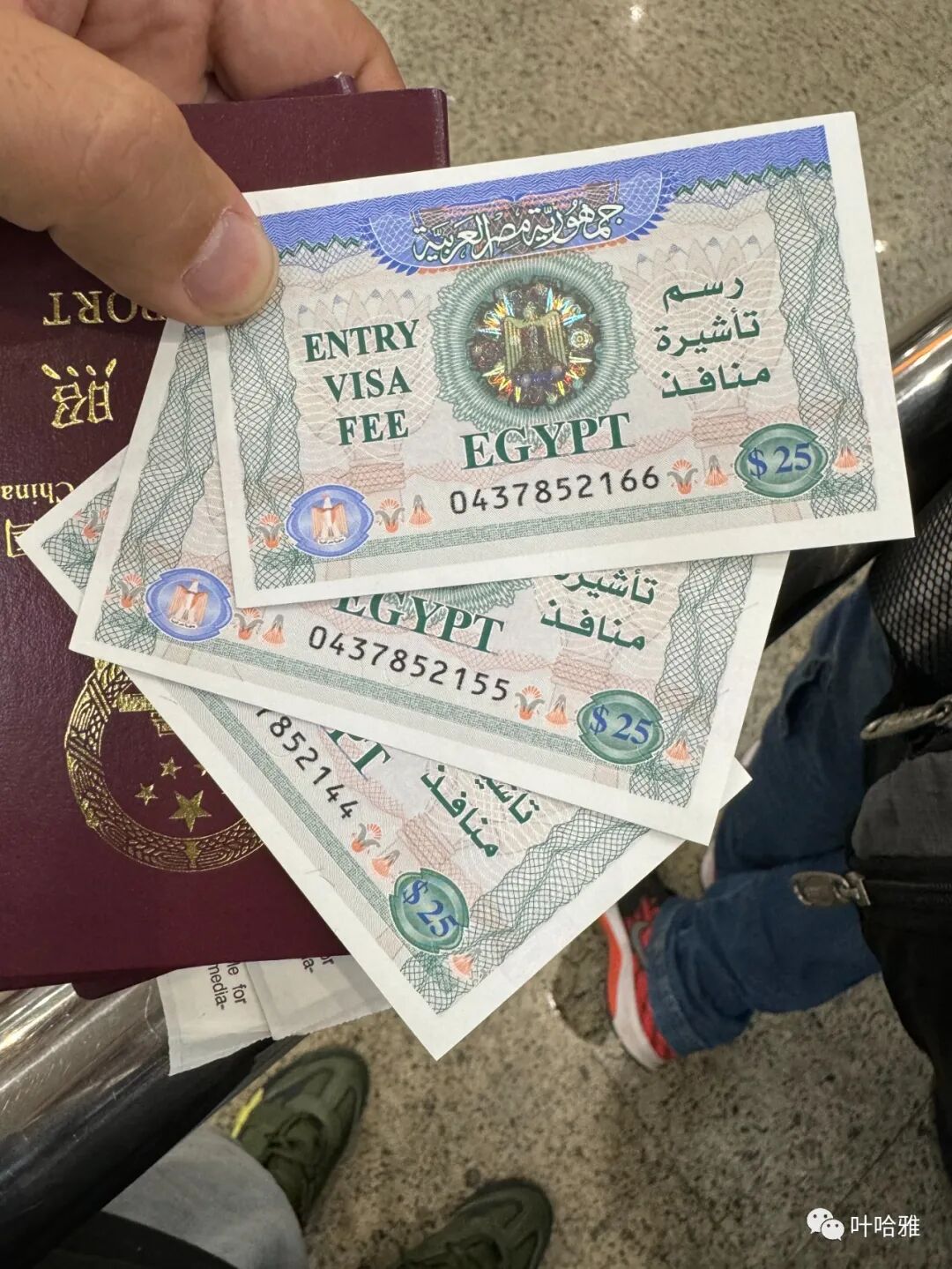
Chinese passport holders can get a visa on arrival in Egypt. When you enter, just go to the bank at the entrance and pay 25 USD per person by card for the visa. Customs will stick it in your passport, and you can enter. No other documents are needed.
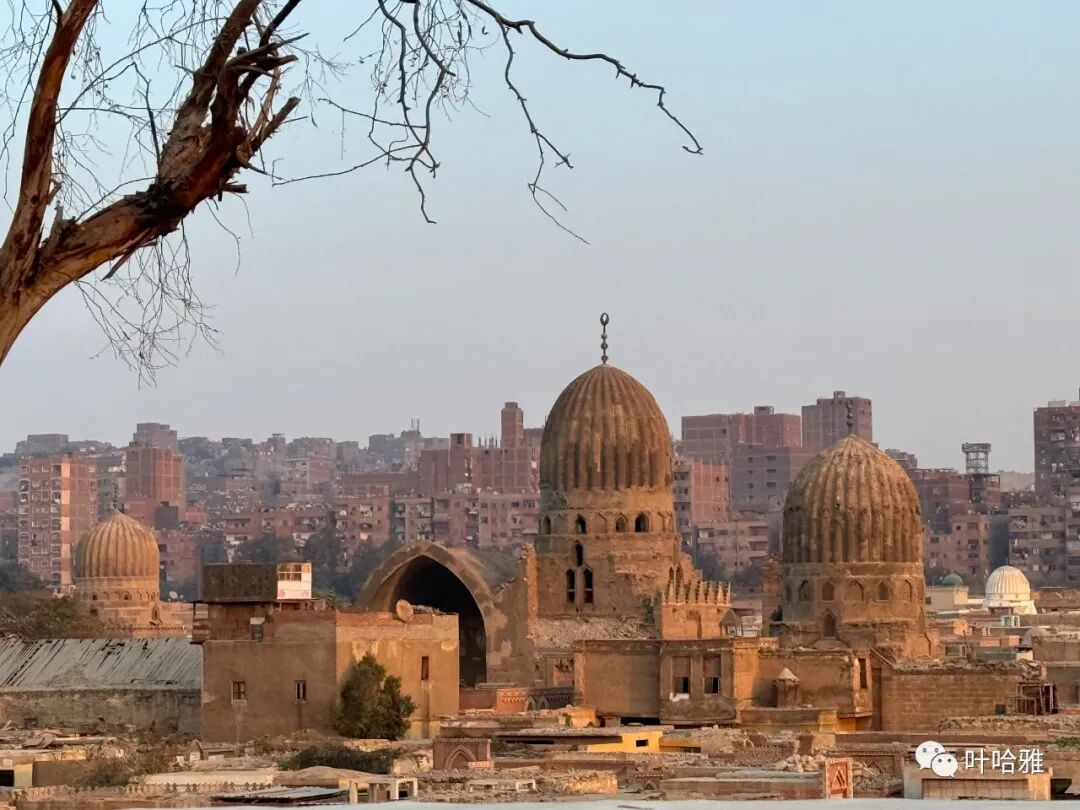
When you leave the airport, many drivers will try to solicit you; just ignore them. There are also people who will offer to help with your luggage. Don't let them help, even if they show you something that looks like a work ID. Still ignore them, because these services all require tips. If you don't know how to say no, you will end up spending money.
Sisi campaign poster.
I used Uber to call a car to the hotel. In Egypt, try to use Uber or the local ride-hailing app called Careem. Most Uber drivers speak English, making it easier to communicate. If you don't use a ride-hailing app, you will most likely be overcharged and the driver won't give you change.
We chose to stay at the Ramses Hilton by the Nile. The hotel is across from the old Egyptian Museum and near the Nile. This area is where many high-end hotels in Egypt are clustered, so the environment is a bit better.
December is the Christmas holiday season, so the whole city is full of Christmas vibes. This is normal in Cairo, as there are many Coptic Christians here.

I didn't want to go out at night, so I ordered a meal to the room. Every dish was extremely salty. Since I was feeding it to Fahim, and that much salt isn't good for a child, I called to complain to the restaurant. A while later, they sent someone to remake the meal, and the second time it tasted a bit better.

I was surprised that the bathroom at the Cairo Hilton didn't have a bidet sprayer, even though you could still find a Qibla direction indicator in the room.
Breakfast starts at 6:30 a.m., while it is still dark outside.
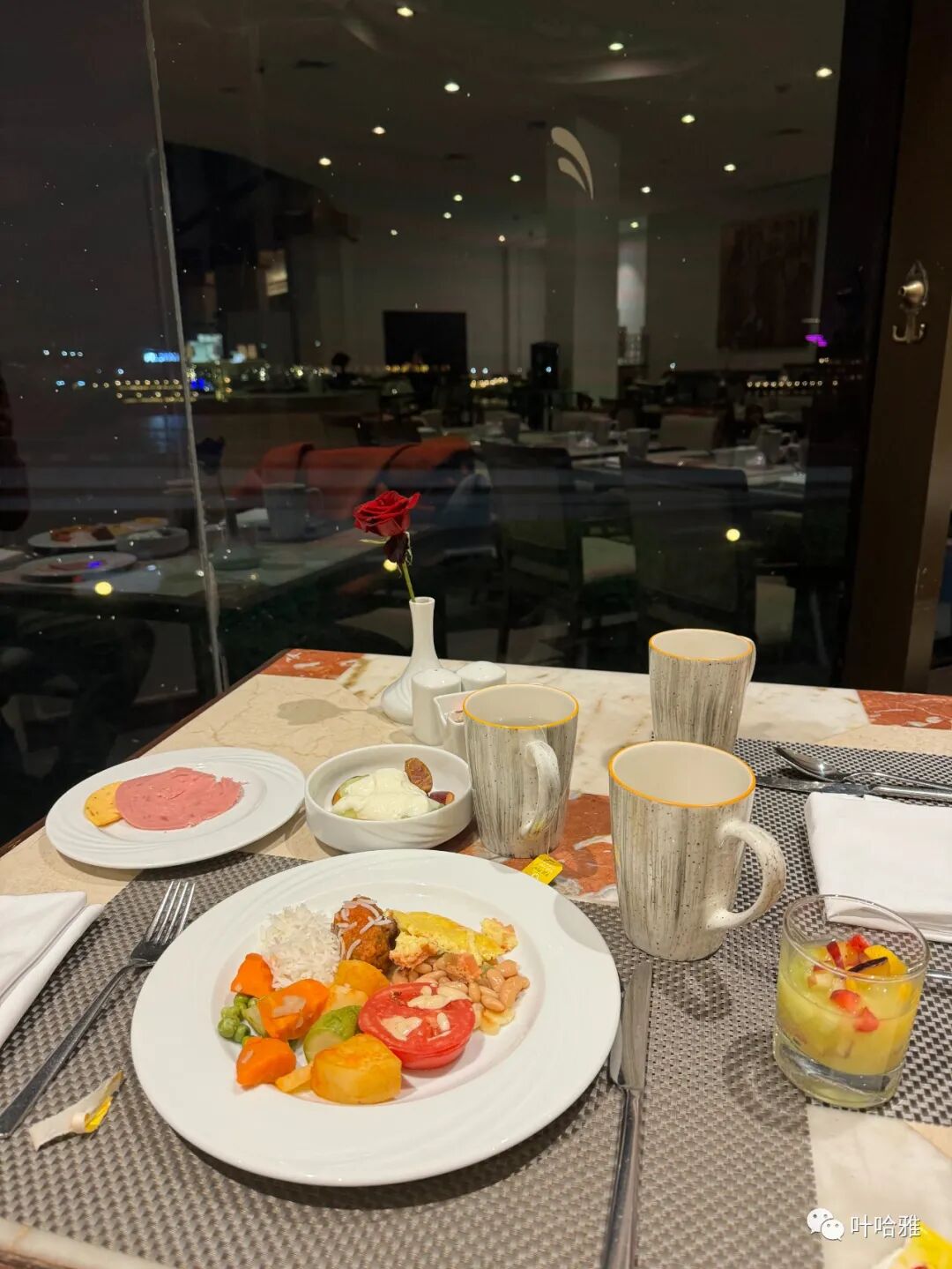
After a traditional Arabic breakfast, I planned to go to Al-Azhar for Jumu'ah prayer. I asked the hotel staff about the time for today's Jumu'ah, and they said around 11:40.
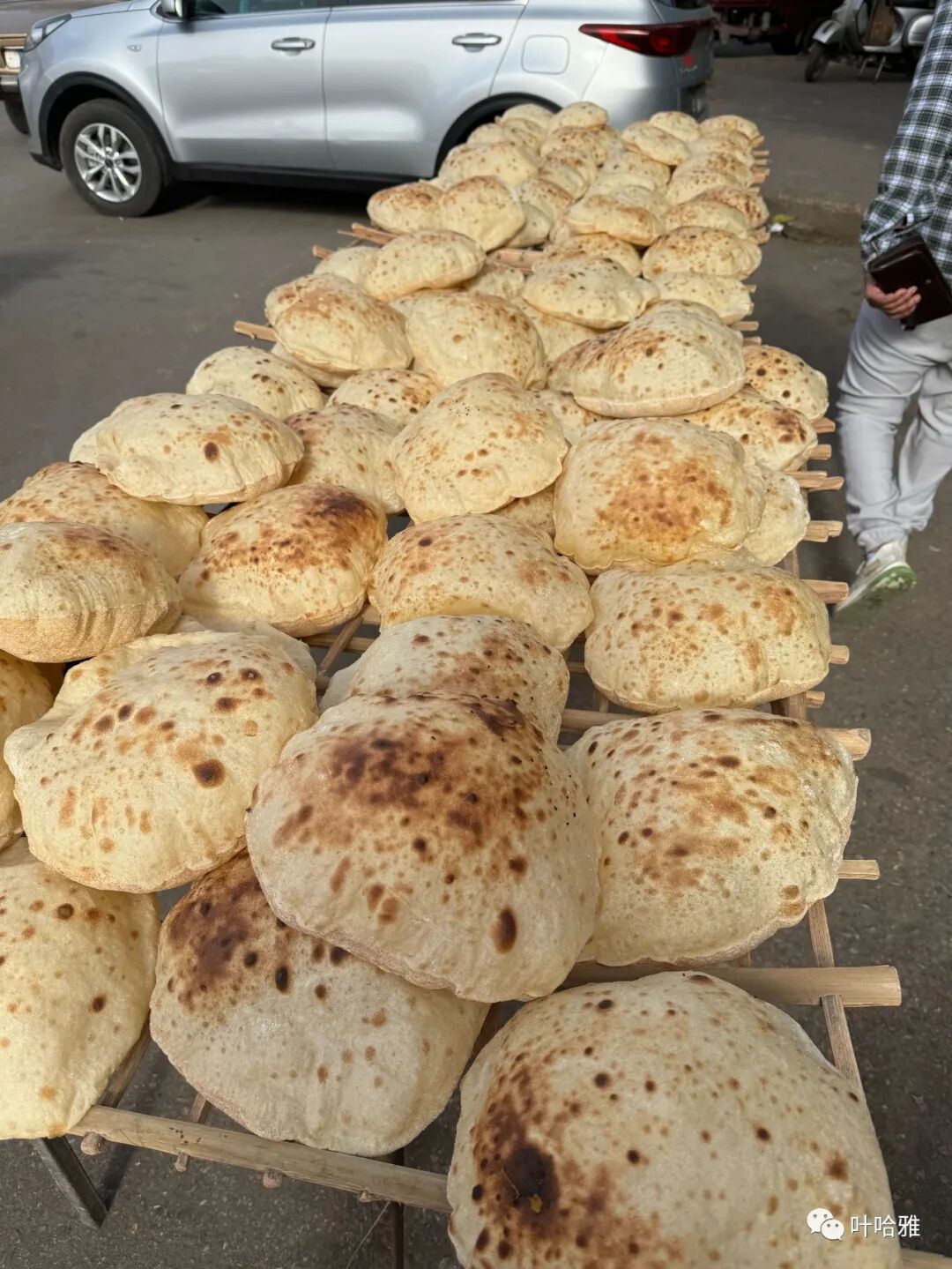
You can see this kind of bread sold everywhere on the streets of Old Cairo. It is like the steamed bun (mantou) in northern China and costs two mao (0.20 RMB) each. Fahim really likes eating it.

Al-Azhar Mosque
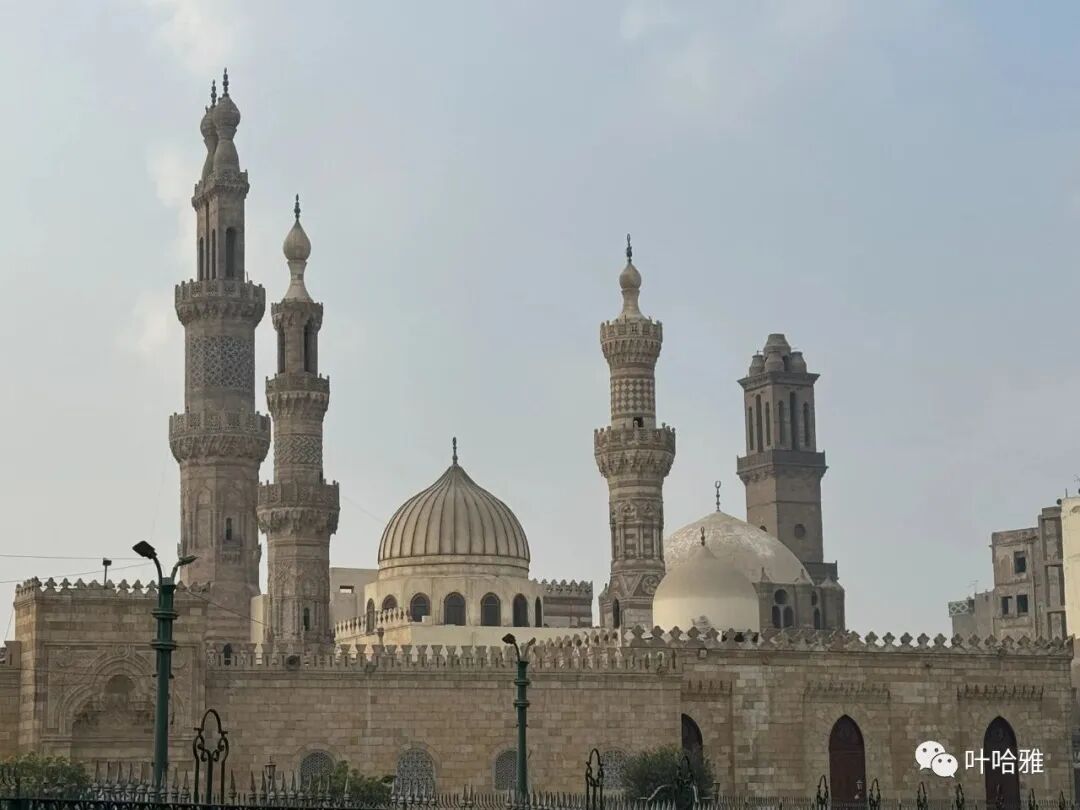
Al-Azhar Mosque was built in 972 AD. It is also the second oldest university in the world. The oldest is the University of al-Qarawiyyin in Fez, Morocco, which was built in 859 AD.
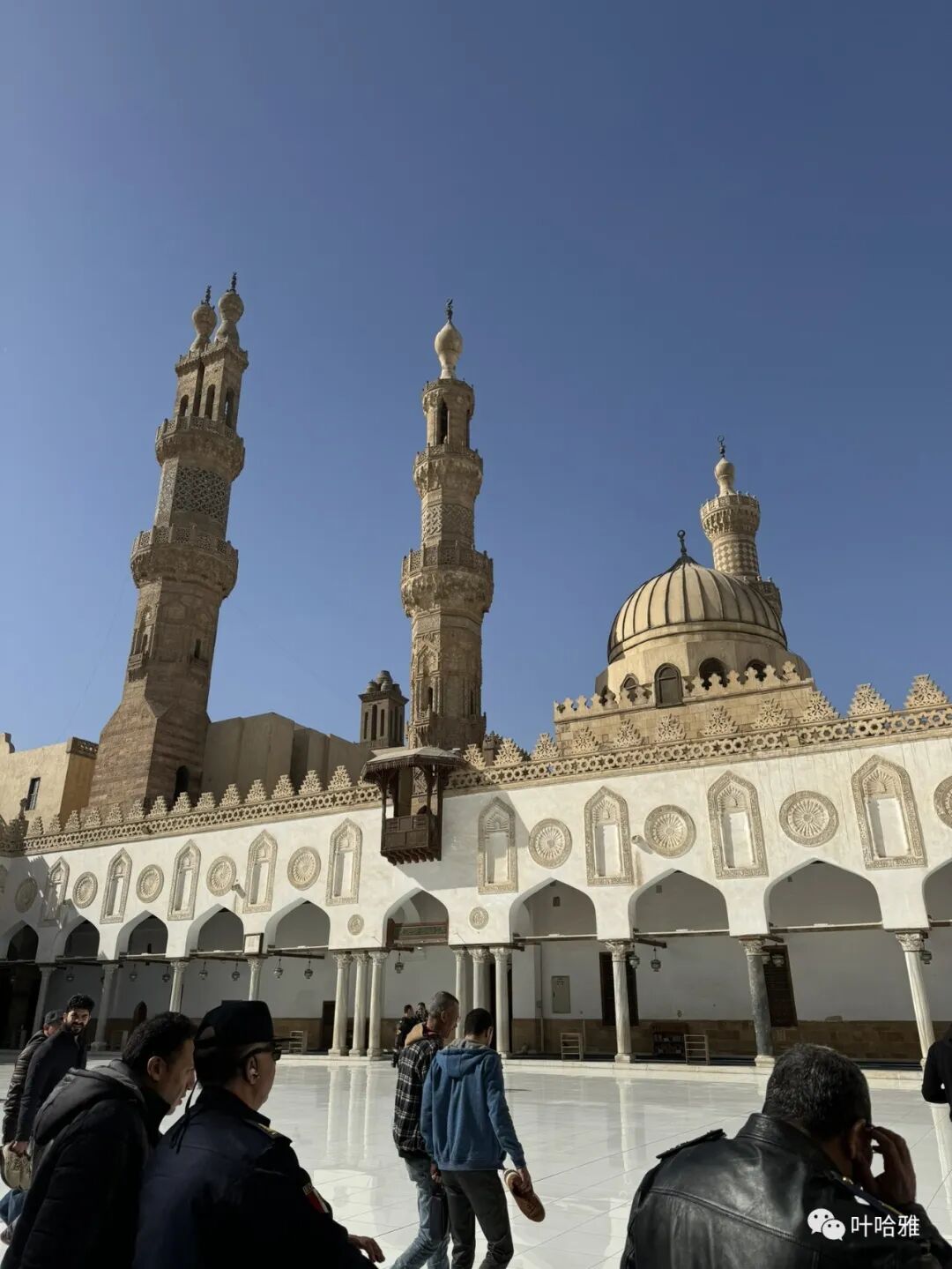
Al-Azhar was once considered the highest institution of Sunni learning. After it was nationalized in 1952, negative opinions about the university have grown.
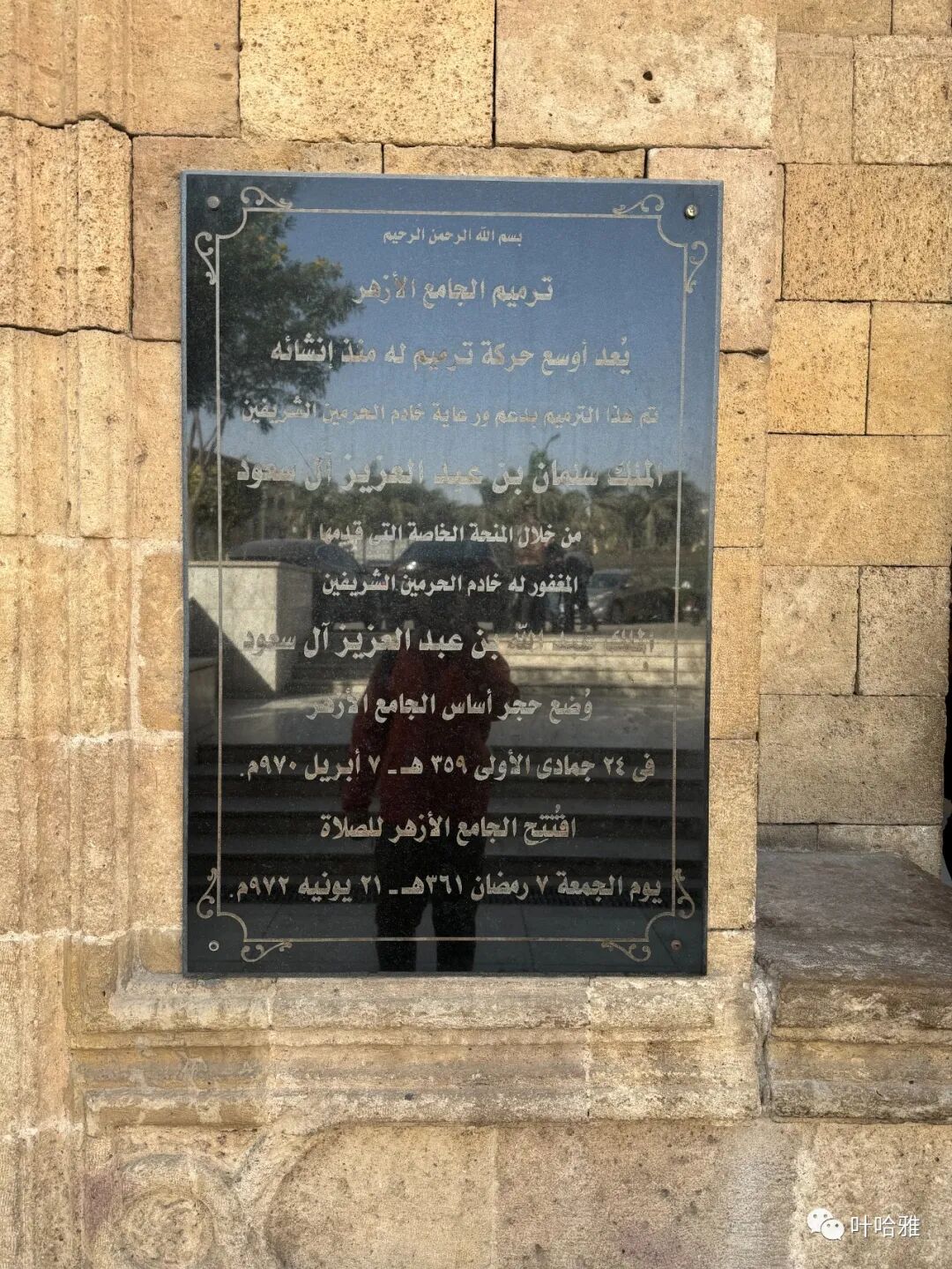
Al-Azhar is located in Old Cairo. When I reached the entrance, I saw several rows of security guards. Everyone entering the mosque had to go through a security check, which felt familiar to me.
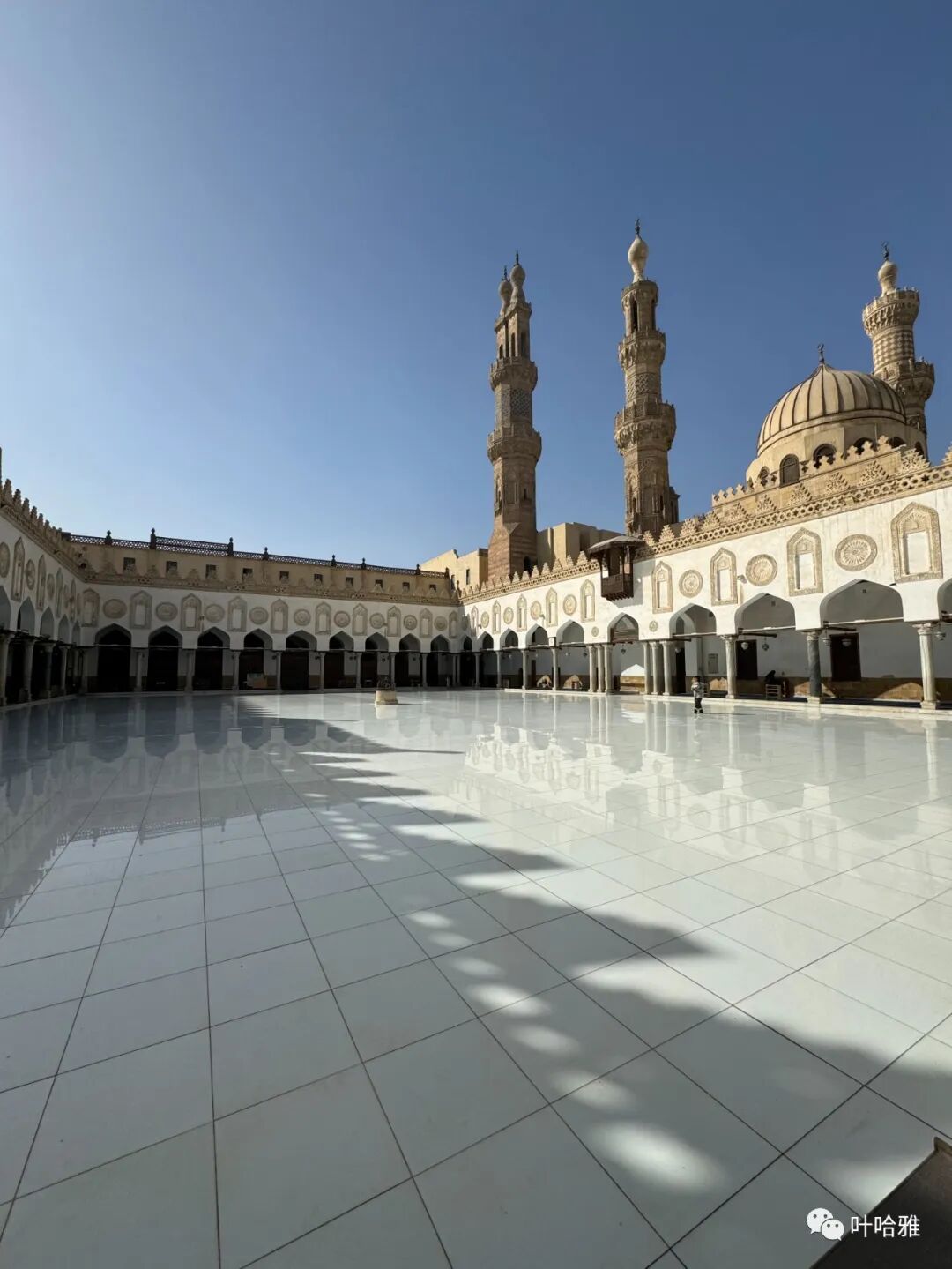
I took a photo in the square, but a guard told me not to take pictures. After walking into the main hall, I saw several staff members walking back and forth, constantly reminding people not to take photos. This made the atmosphere feel strange.
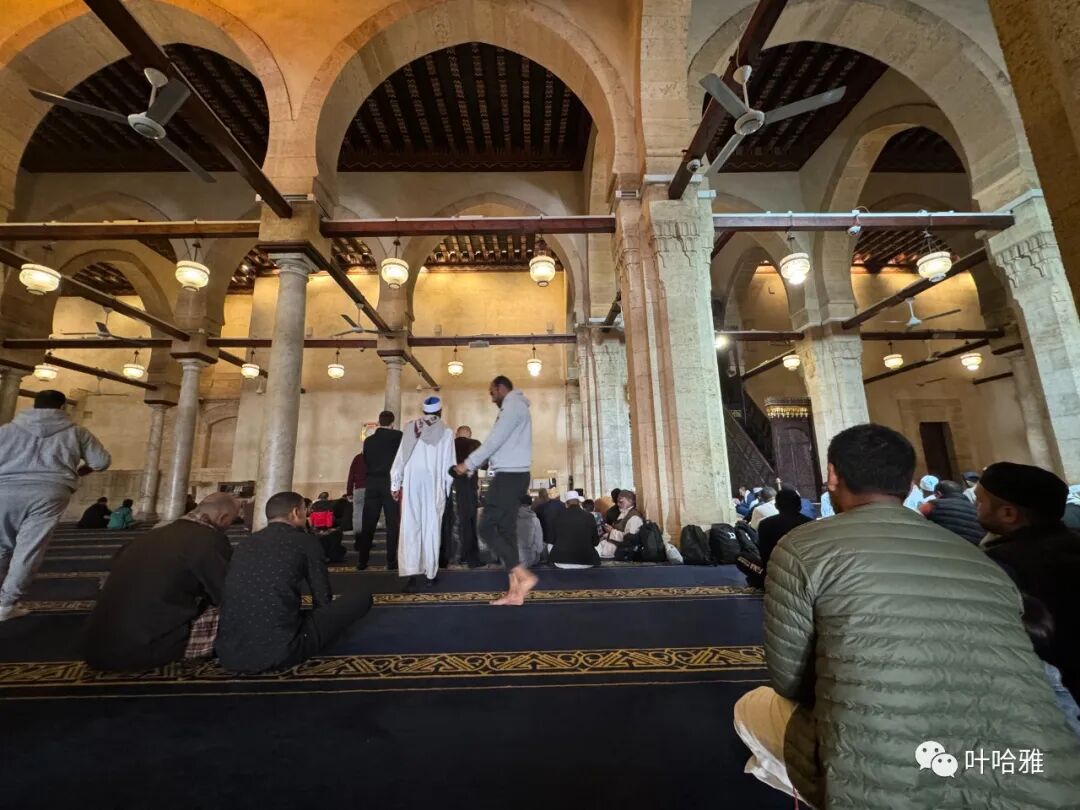
The imam started by reciting the Quran. The tone was strange, like the old style I have heard back home: read a sentence, take a breath, wait a moment, then read another sentence, all very choppy. Very few people came for Jumu'ah prayer. Less than a quarter of the main hall was filled, making me wonder if I had gone to the wrong place.
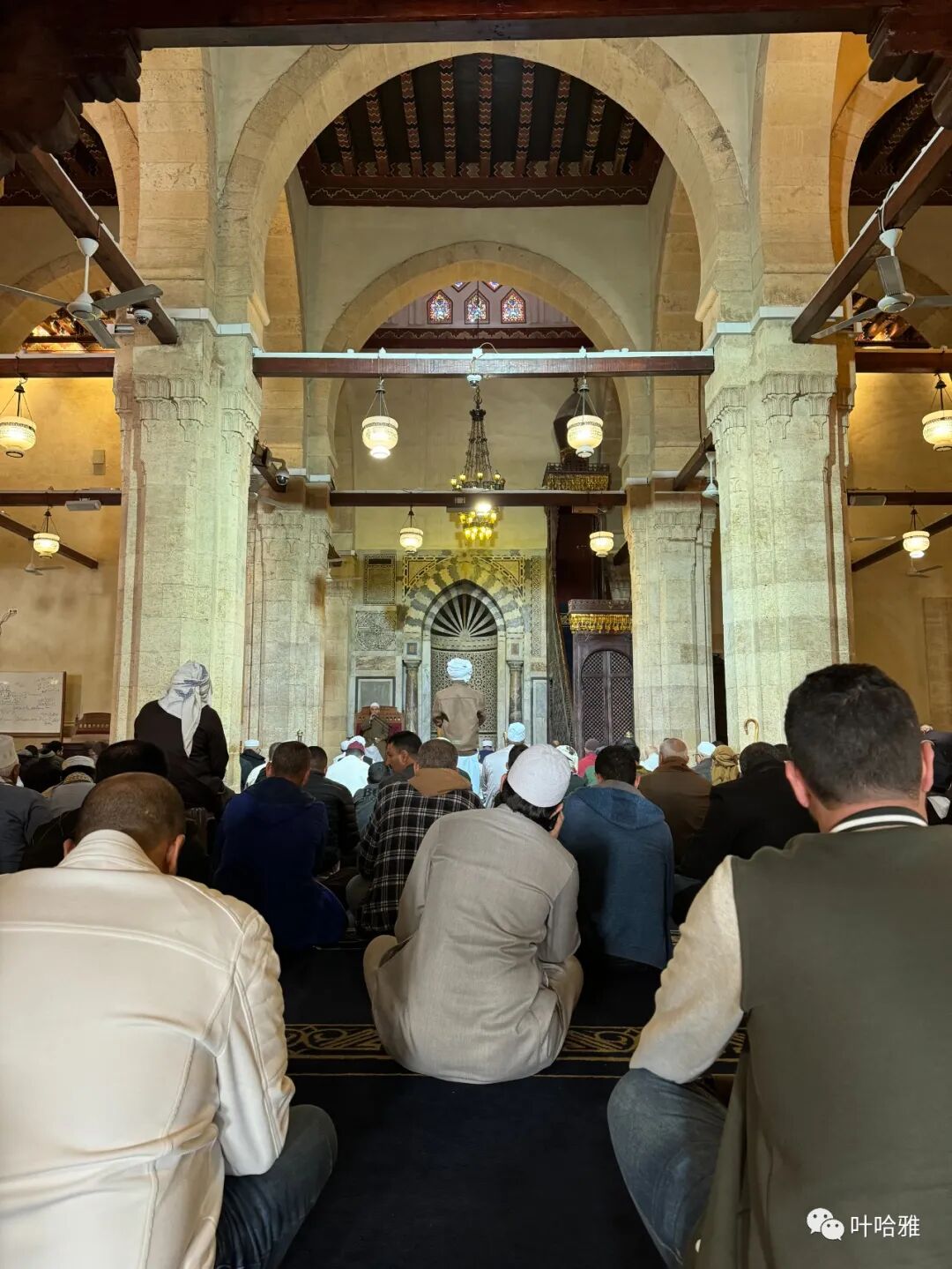
After the prayer, I asked someone and learned that today was the first day Al-Azhar had reopened. The mosque had been closed because of the presidential election, so Al-Azhar has changed.
Imam Hussein Gongbei
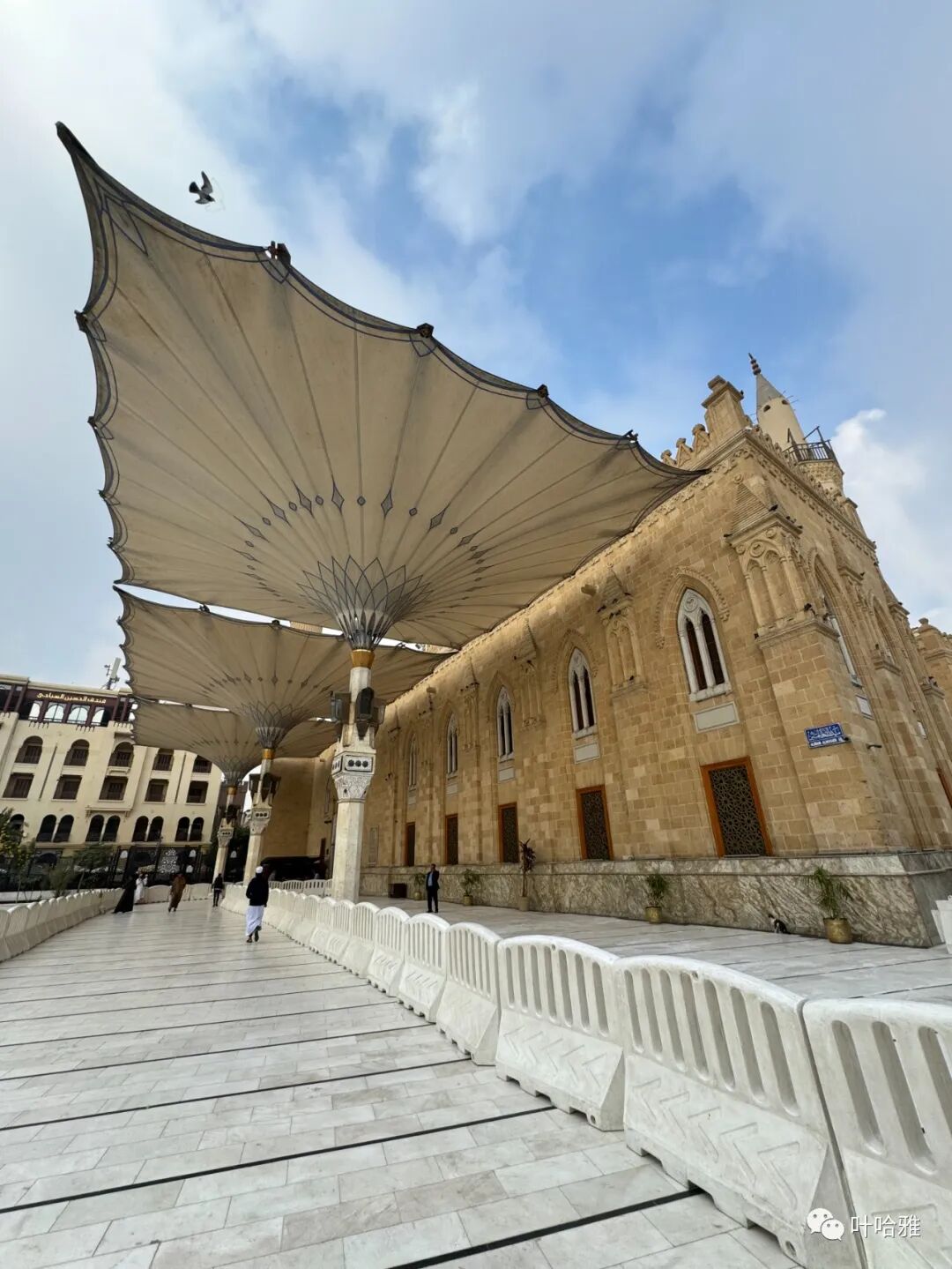
Across from Al-Azhar is the Imam Hussein gongbei (Al-Hussein Mosque), built in 1154 AD. People say the head of the Prophet's grandson, Hussein, is buried here, though some Shia Muslims believe his head and body are both at the Imam Hussein Shrine in Karbala, Iraq.
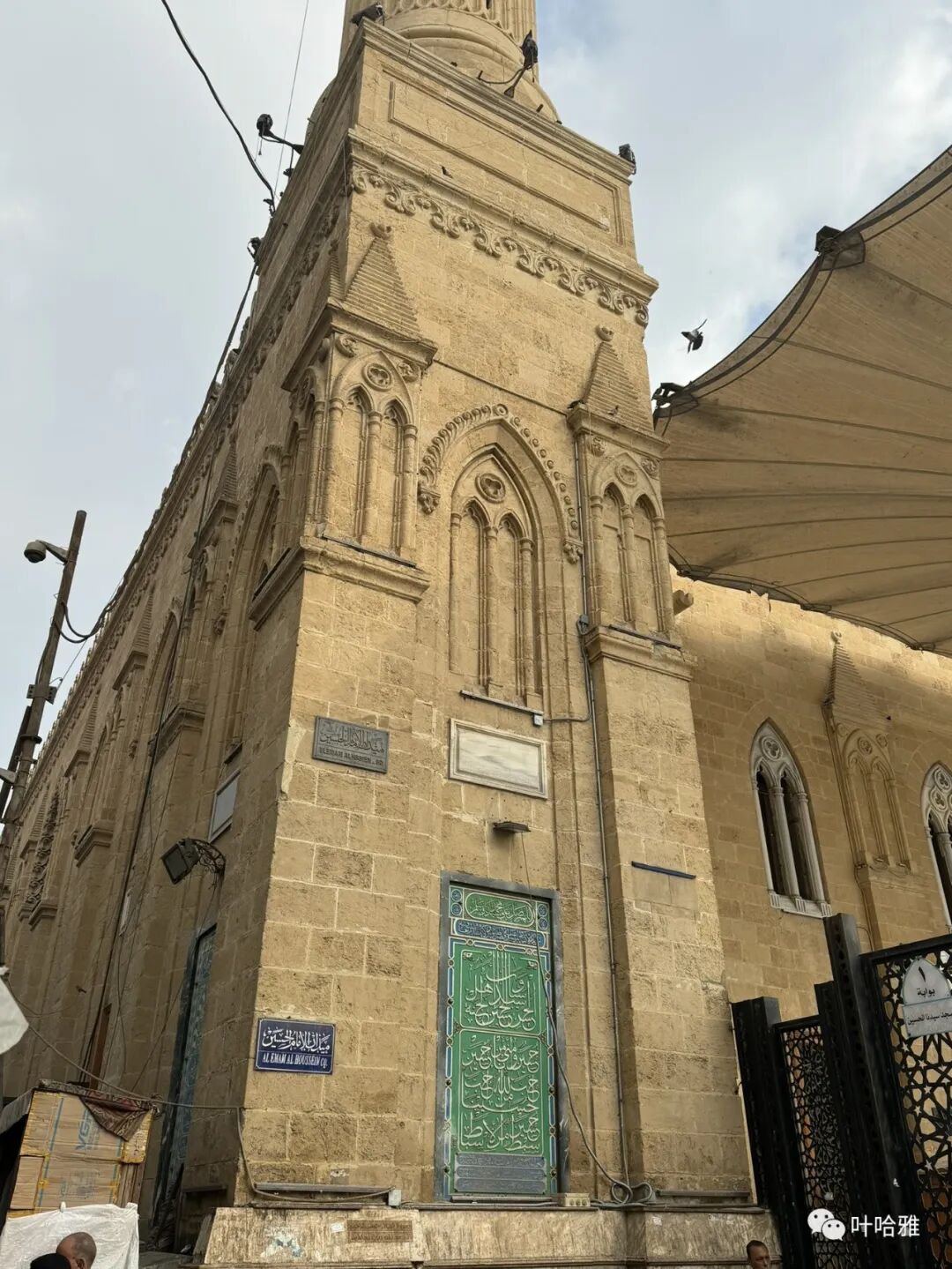
In 985 AD, the 15th Fatimid Caliph, Mansur, learned in Baghdad that Hussein's head had been buried at the Shrine of the Head of Hussein in Palestine for 250 years. It was not until 1154 AD that the 21st Fatimid Caliph, Qasim, had it transported to Cairo and built the mosque. The current building was rebuilt in 1874. Influenced by the Westernization of Cairo at the time, it was constructed in a mix of Gothic and Ottoman styles and fitted with sunshades like those at the Prophet's Mosque in Medina.
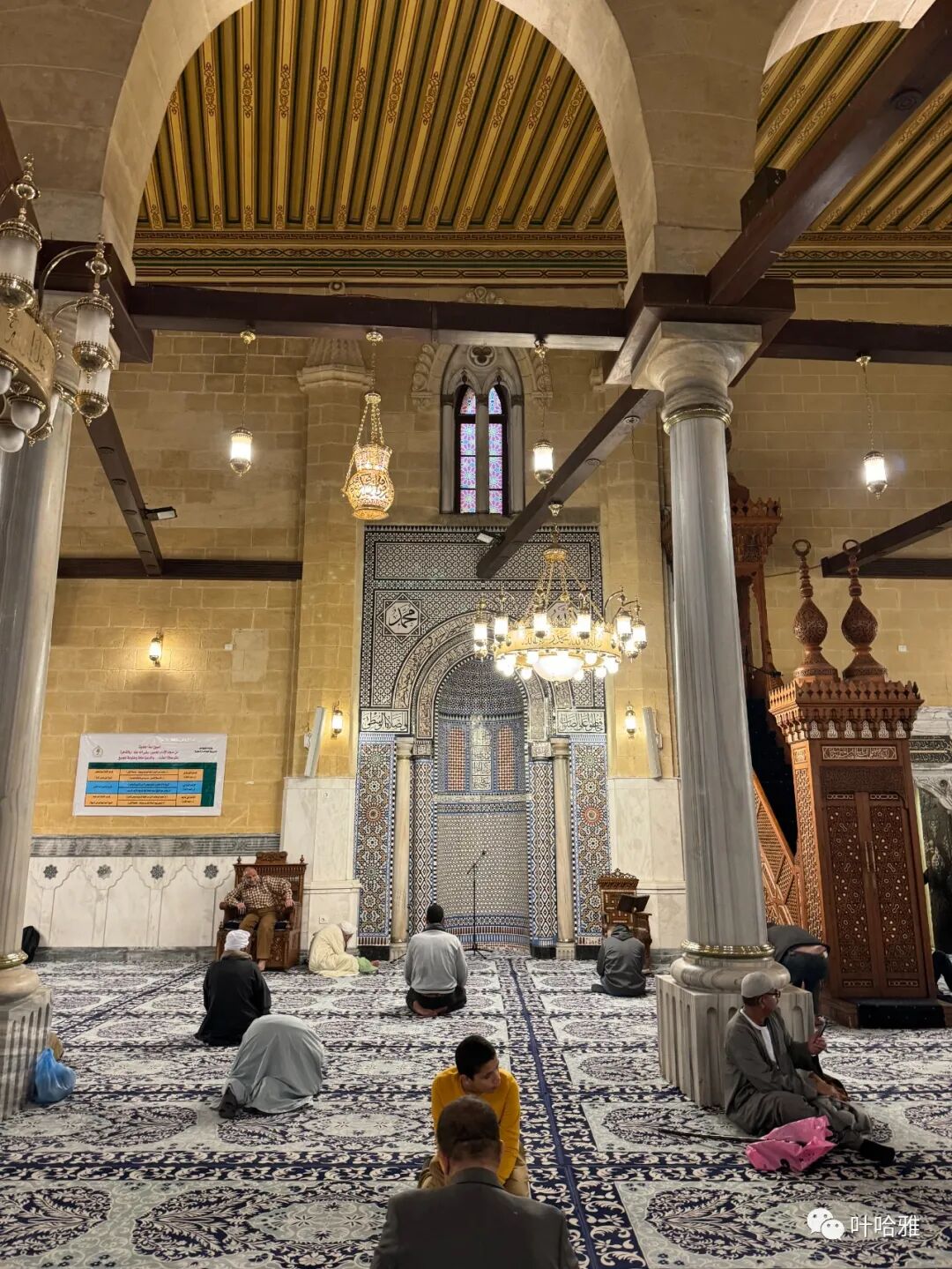
Imam Hussein passed away in 680 AD, dying in battle in Karbala, Iraq, during the war against Muawiyah. The Fatimid dynasty and Sunni Muslims believe Hussein's head was moved to Cairo in 1153. Starting from the time of Saladin, the mosque became Sunni, and to this day, its call to prayer and namaz rituals follow the Sunni tradition.
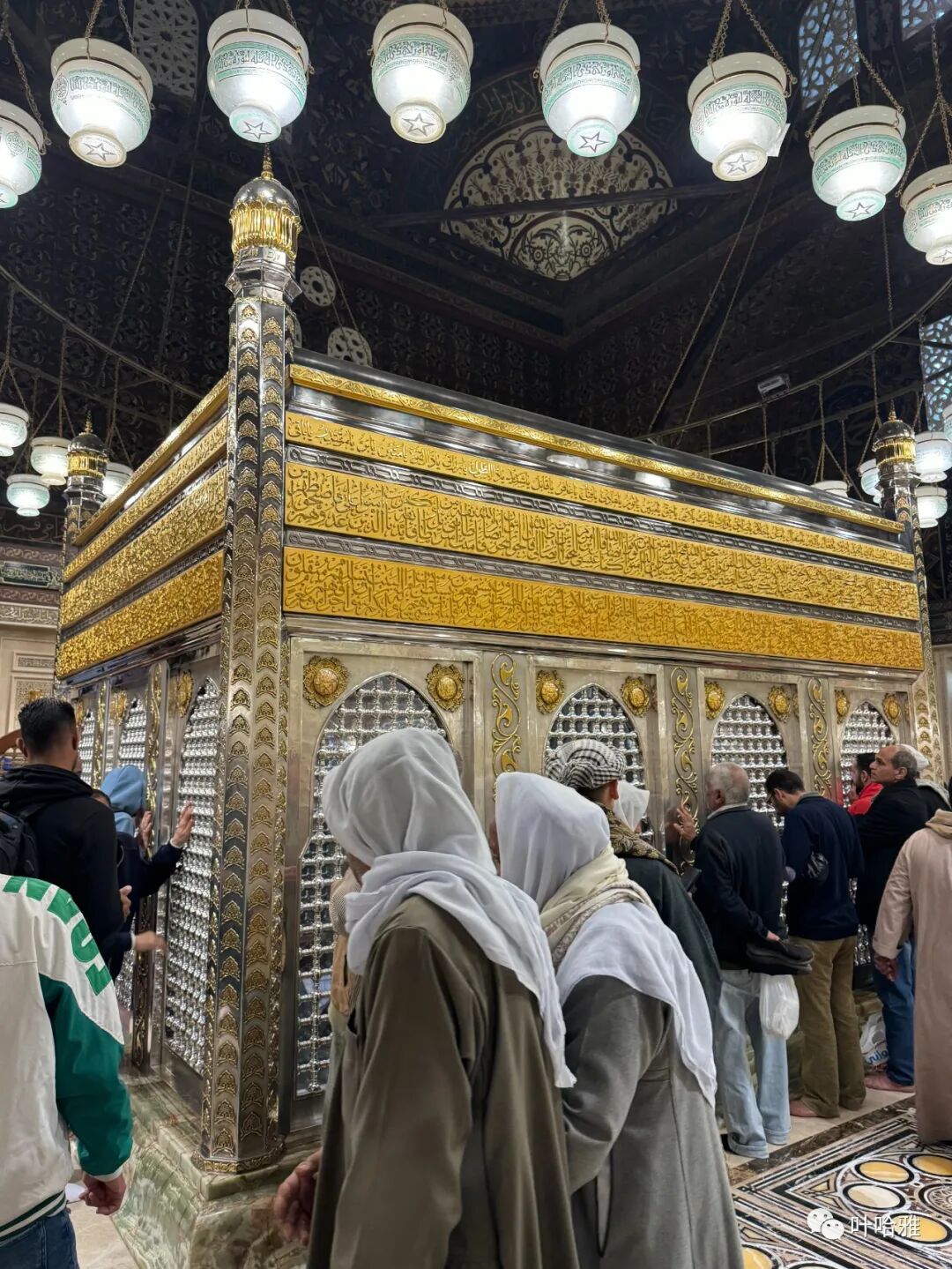
The tomb chamber is built behind the mihrab of the main hall, where you can see many people commemorating Hussein in various ways.
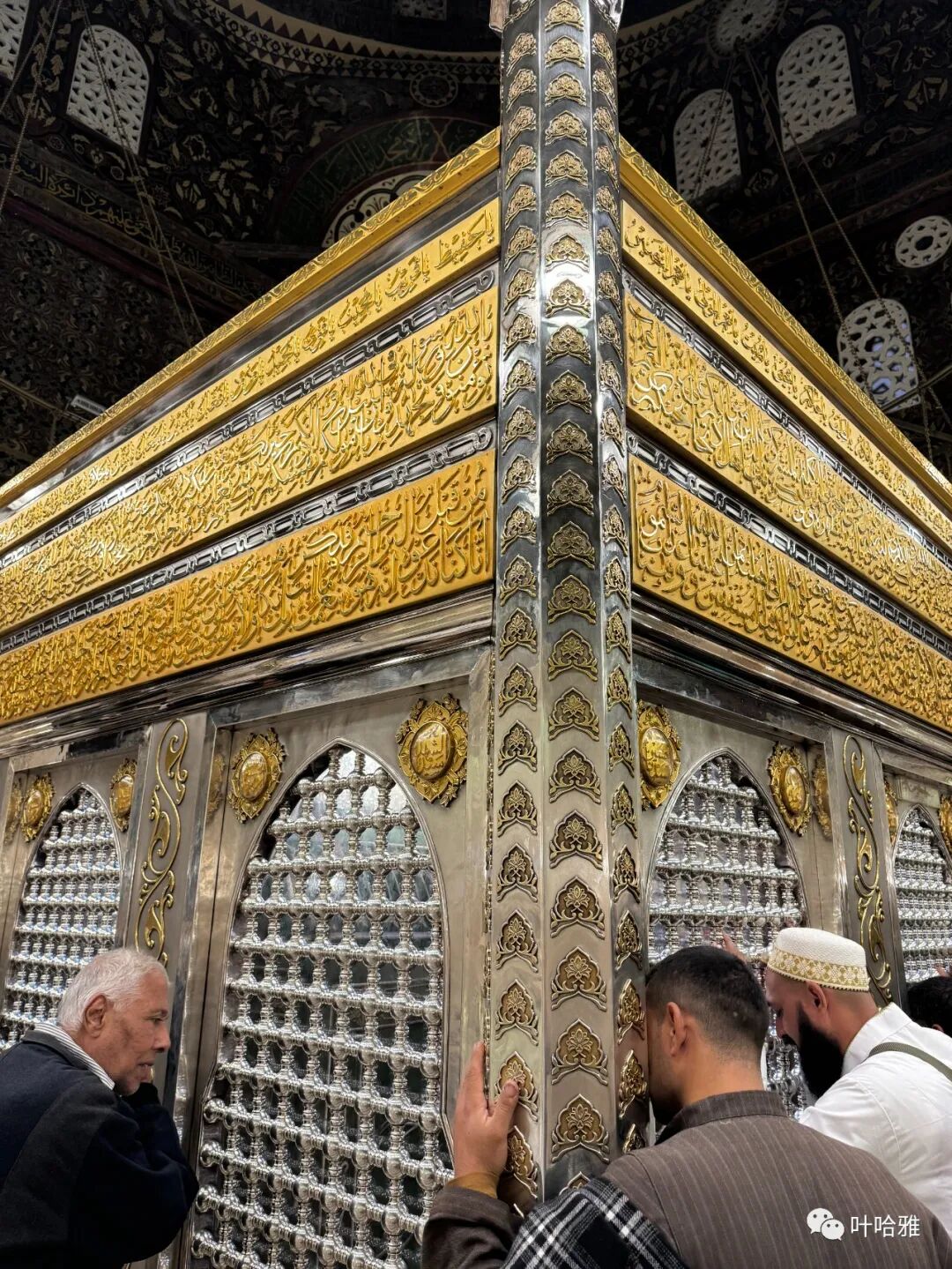
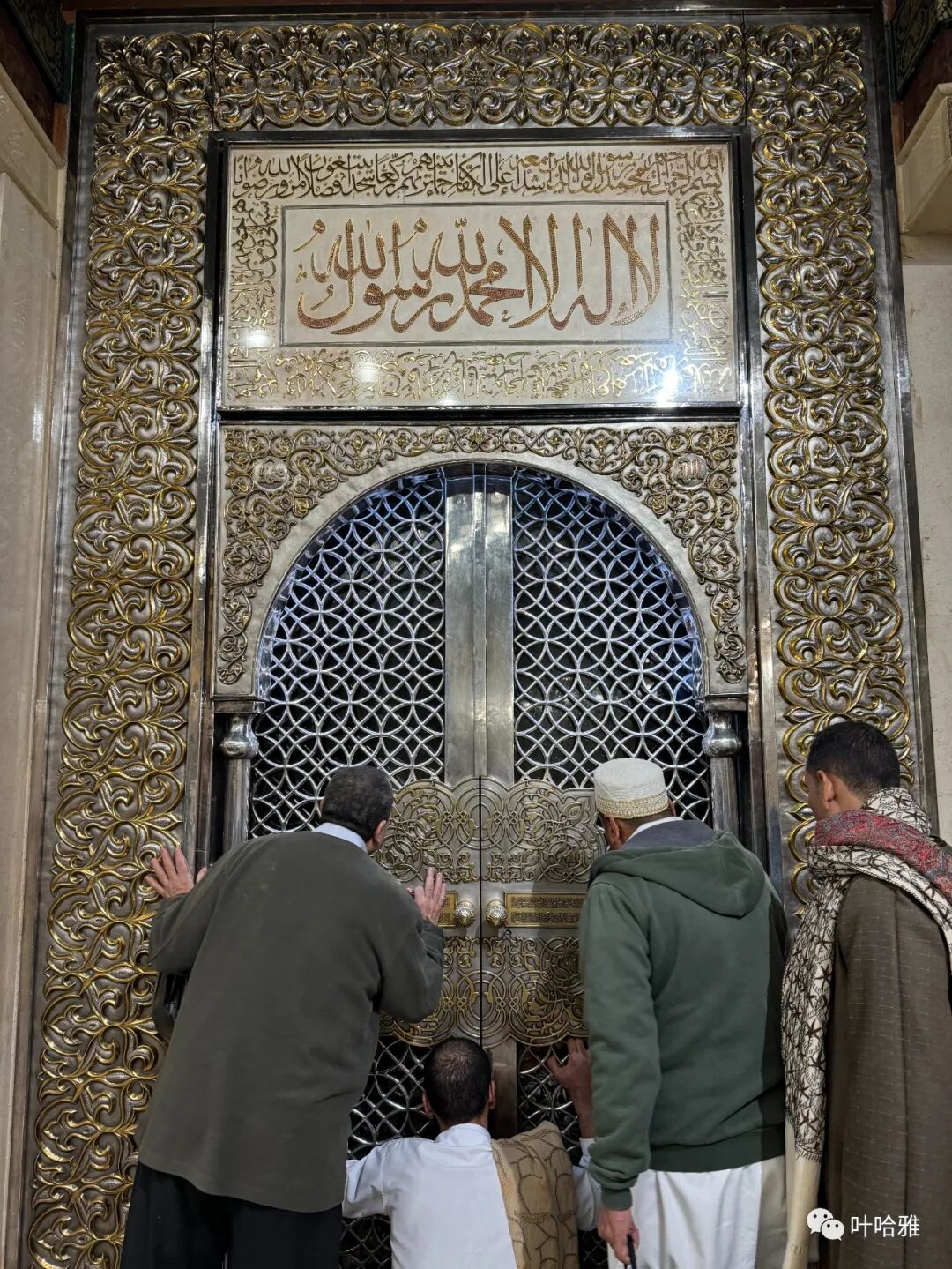
Inside the gongbei building is a room built in 1893. It is said to house relics of the Prophet, including a linen cloak he once wore, four strands of his hair, the staff he used when entering Mecca, a sword gifted to him by a companion, and a 501-page Quran written on deerskin in Kufic script by Ali ibn Abi Talib.
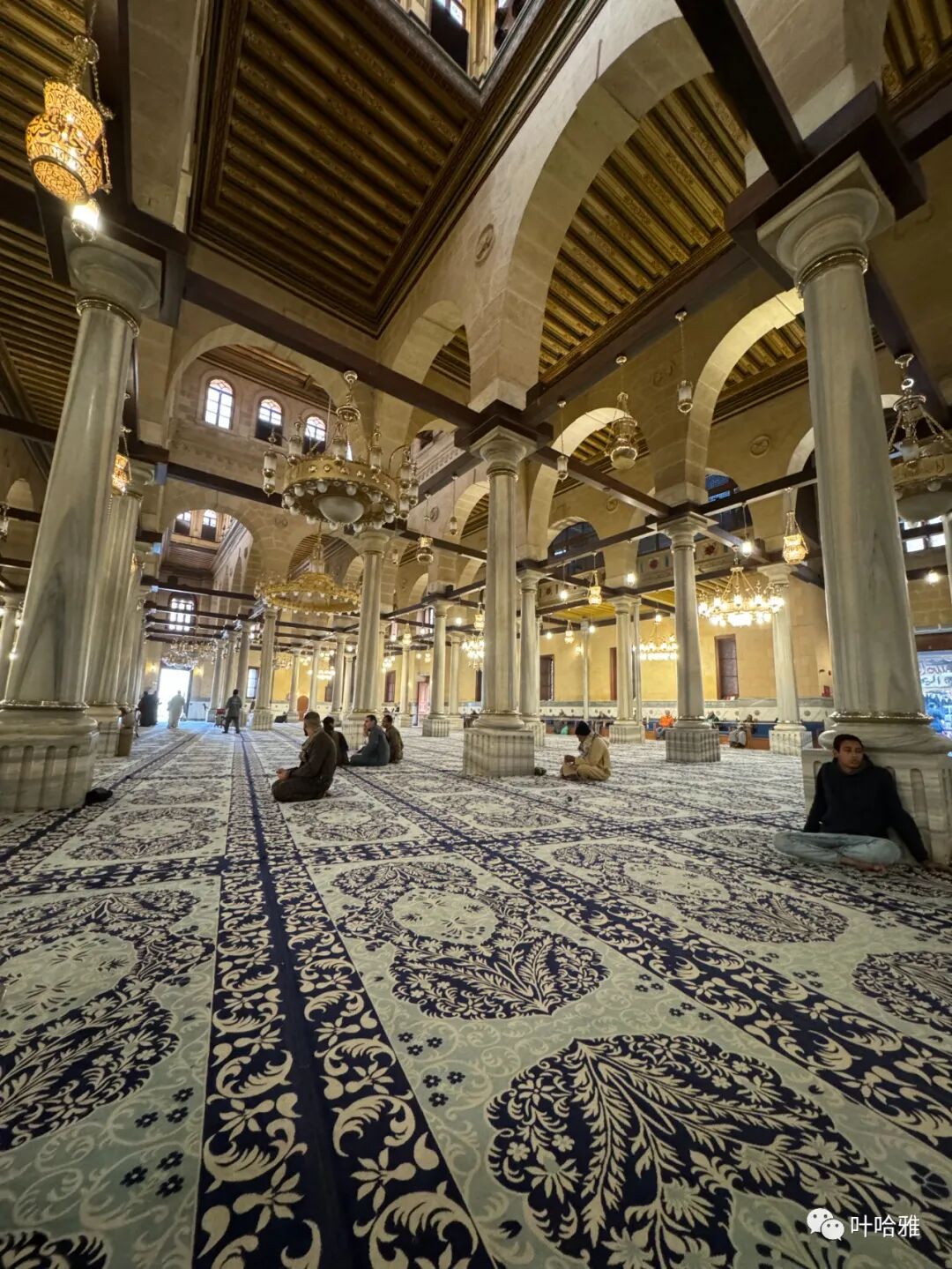
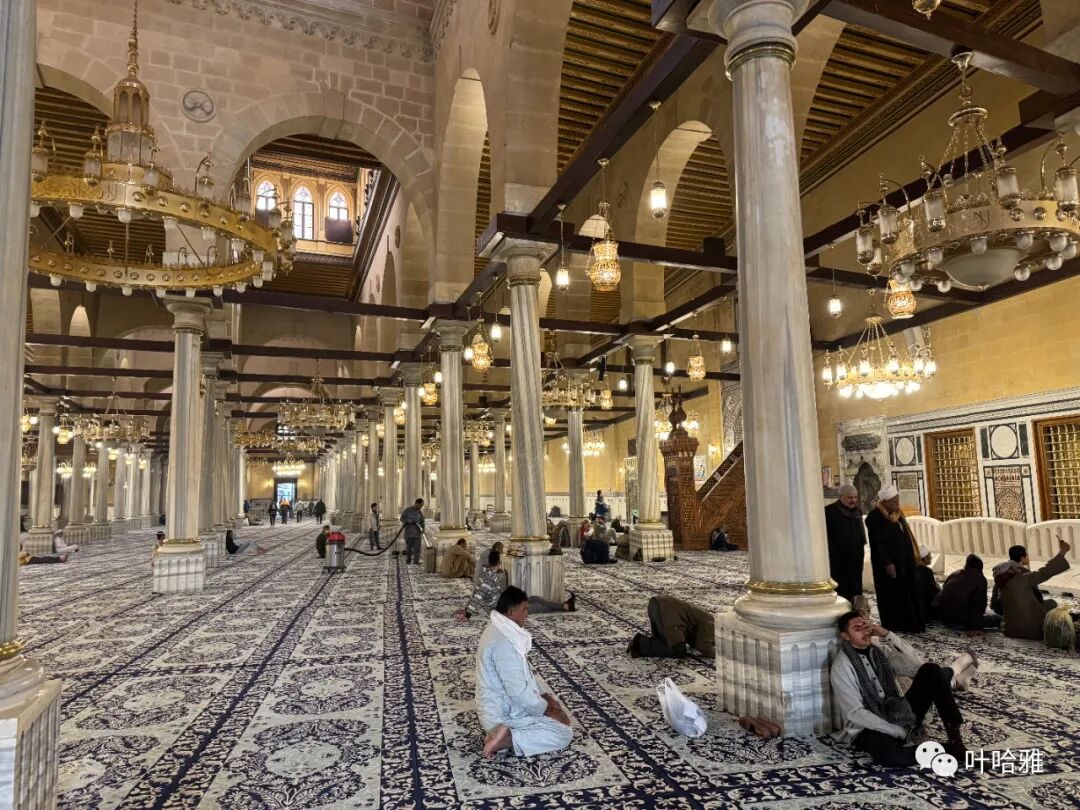
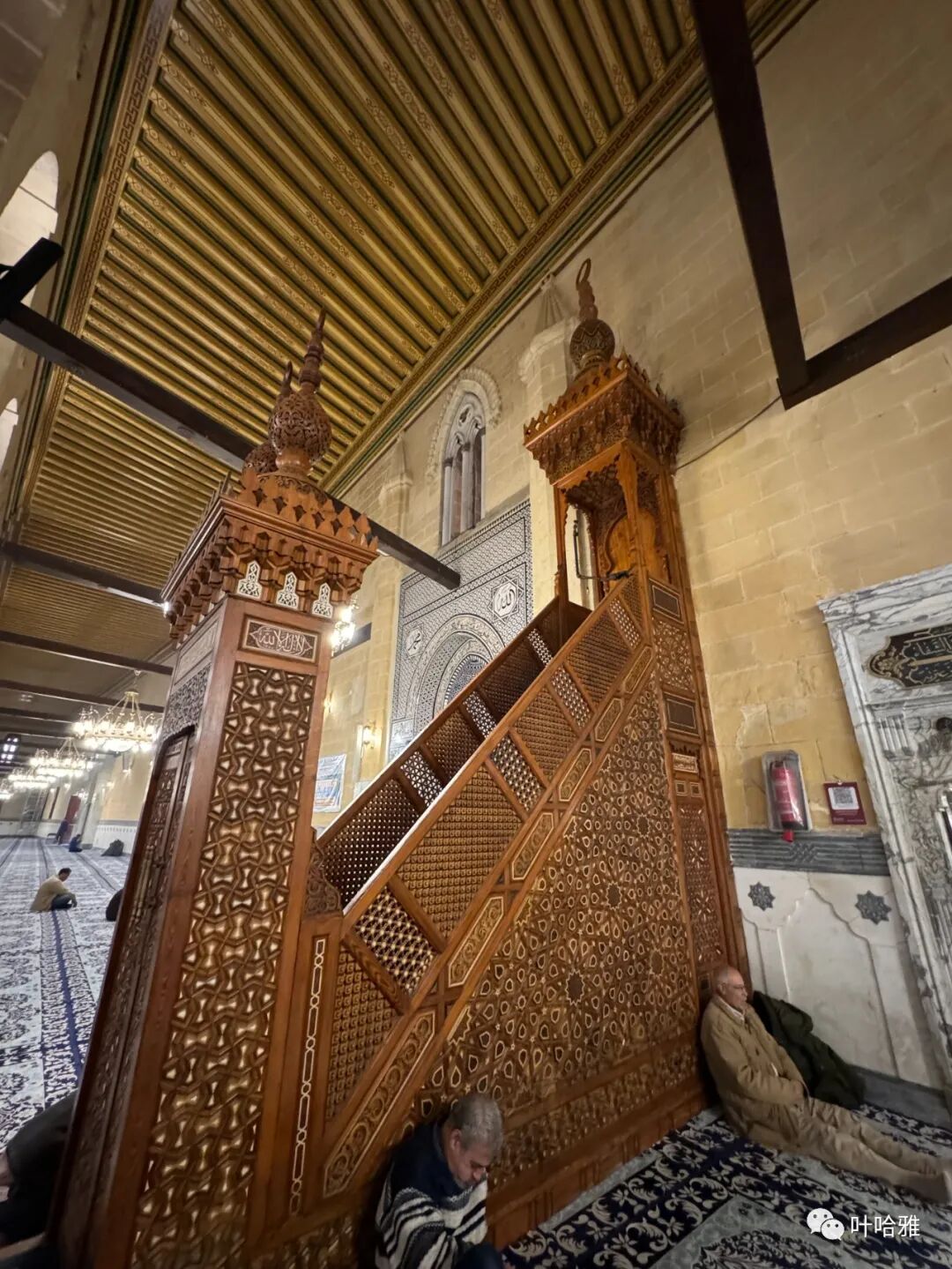
At the ticket office of the Saladin Citadel, I waited with Fahim to buy tickets. An Egyptian girl came over and asked if she could take a photo of Fahim. I said yes, and suddenly a group of schoolgirls surrounded us, taking turns snapping photos of him.
The girl asked for Fahim's name. I said, "Fahim," and they were surprised, "Fahim?" Are you Muslims? I said, "Praise be to Allah," and the girl screamed, cupped Fahim's cheeks, and kissed him.
We saw the same scene again at other spots later. Fahim is even more popular in the Middle East than in China.
Saladin Citadel
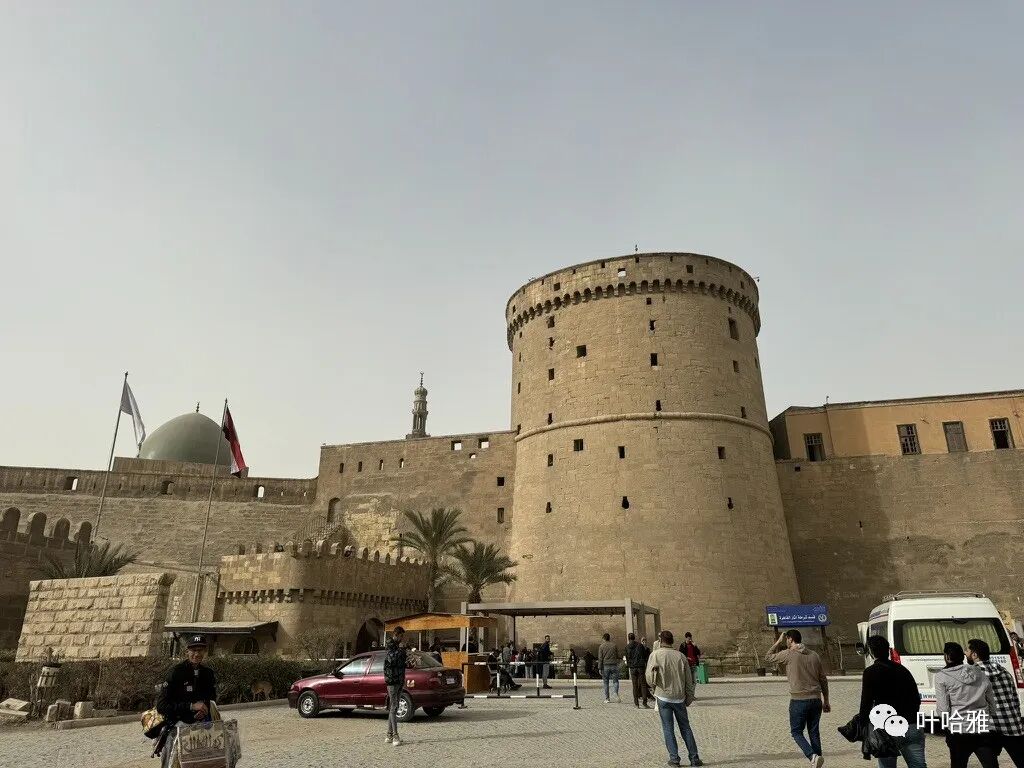
You need a ticket to enter the citadel. Most tourist spots in Egypt only take cards, not cash.
The Cairo Saladin Citadel was originally a fortress built by Saladin between 1176 and 1183 to defend against the Crusades. It served as the seat of the Egyptian government until 1874, when Ismail Pasha, the successor of Muhammad Ali, moved to a palace in the new city center of Cairo.
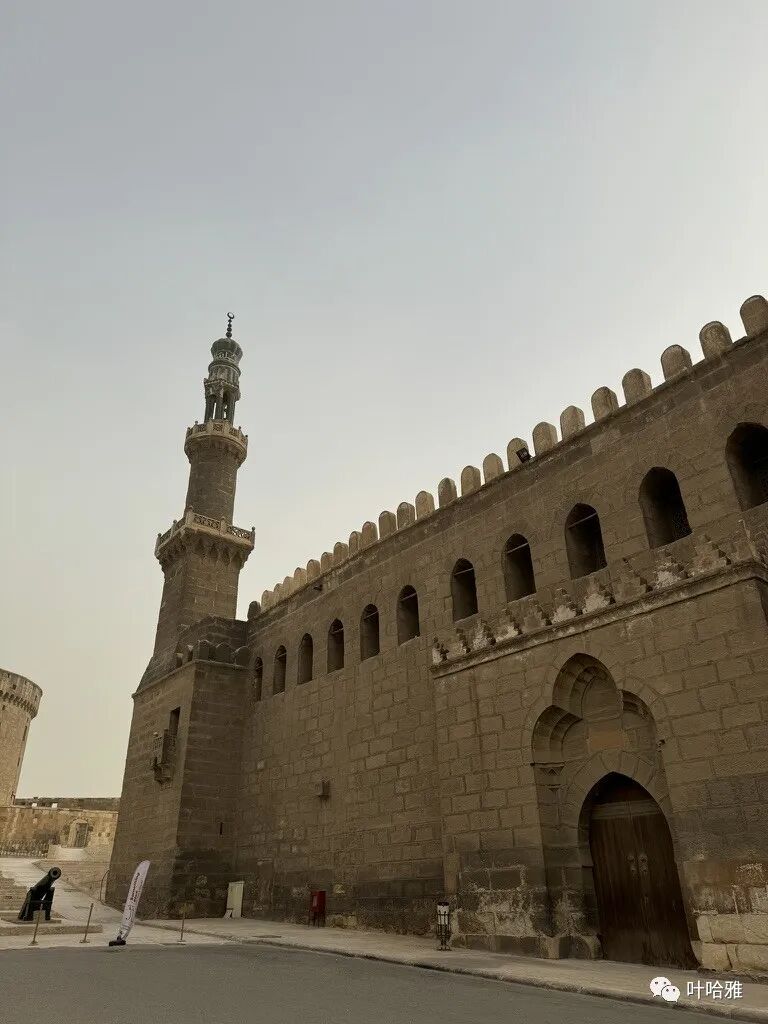
Records show there are four mosques inside the citadel: the Mosque of Muhammad Ali, the Mosque of Al-Nasir Muhammad, the Mosque of Suleiman Pasha, and the Azab Mosque.
Mosque of Al-Nasir Muhammad
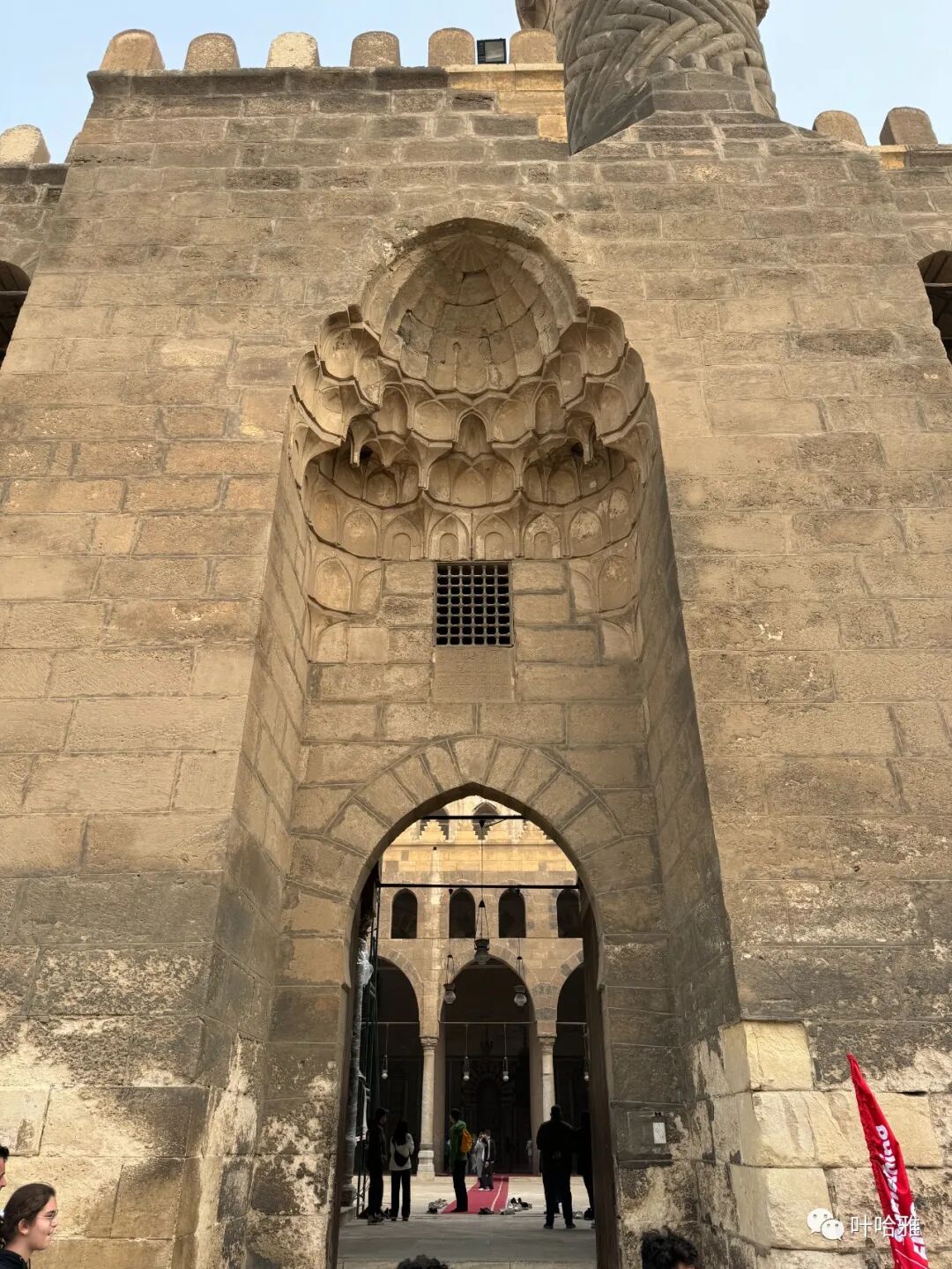
Built in 1318, it stands on the site of an early Saladin dynasty main mosque. The mosque's columns came from buildings of the Pharaoh era, and this gate is a classic sign of the Mamluk period. Although the mosque structure is intact, most of its gorgeous marble decorations were removed and shipped to Istanbul after the Ottoman Sultan Selim I conquered Egypt.
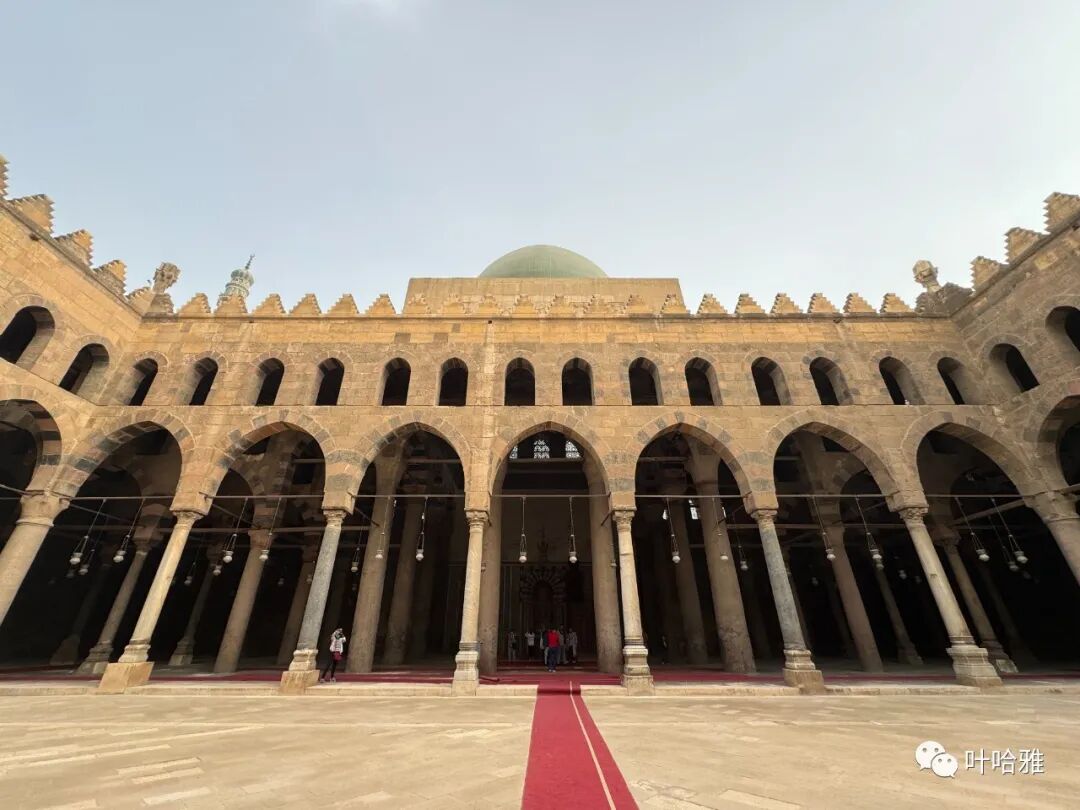
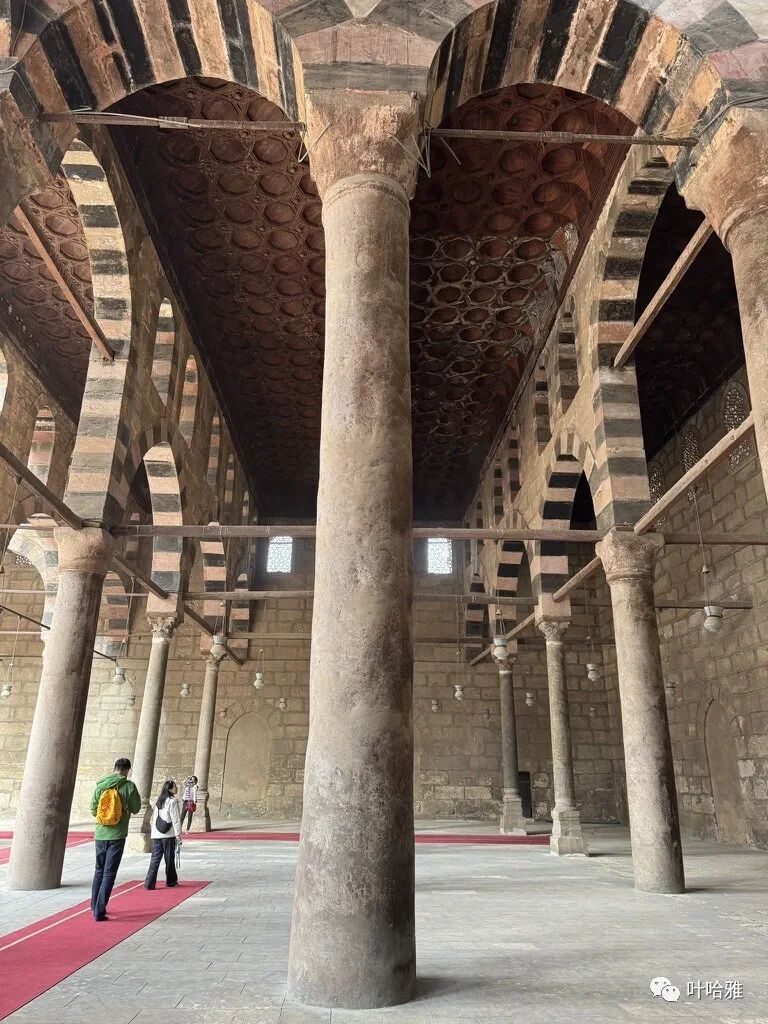
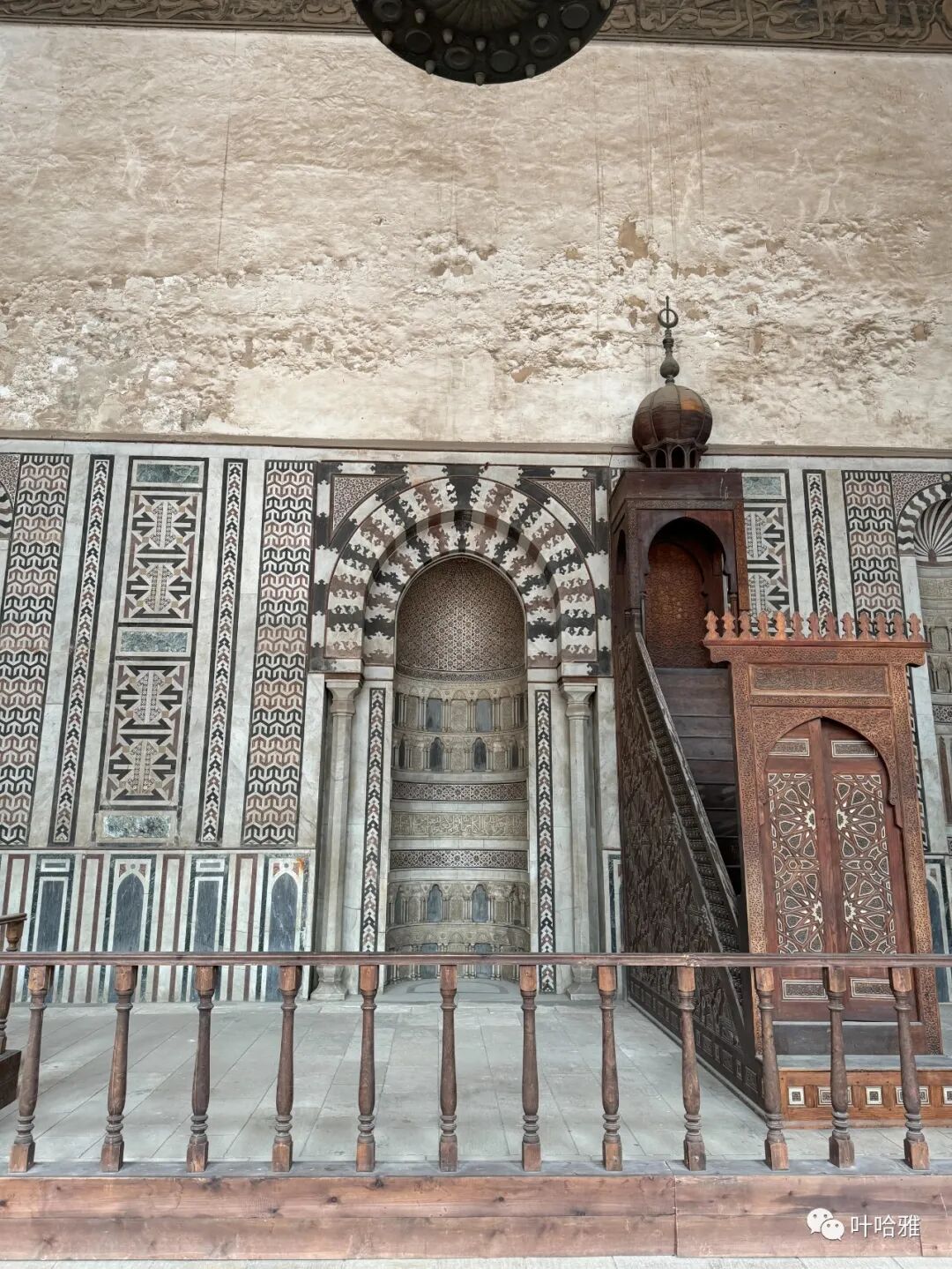
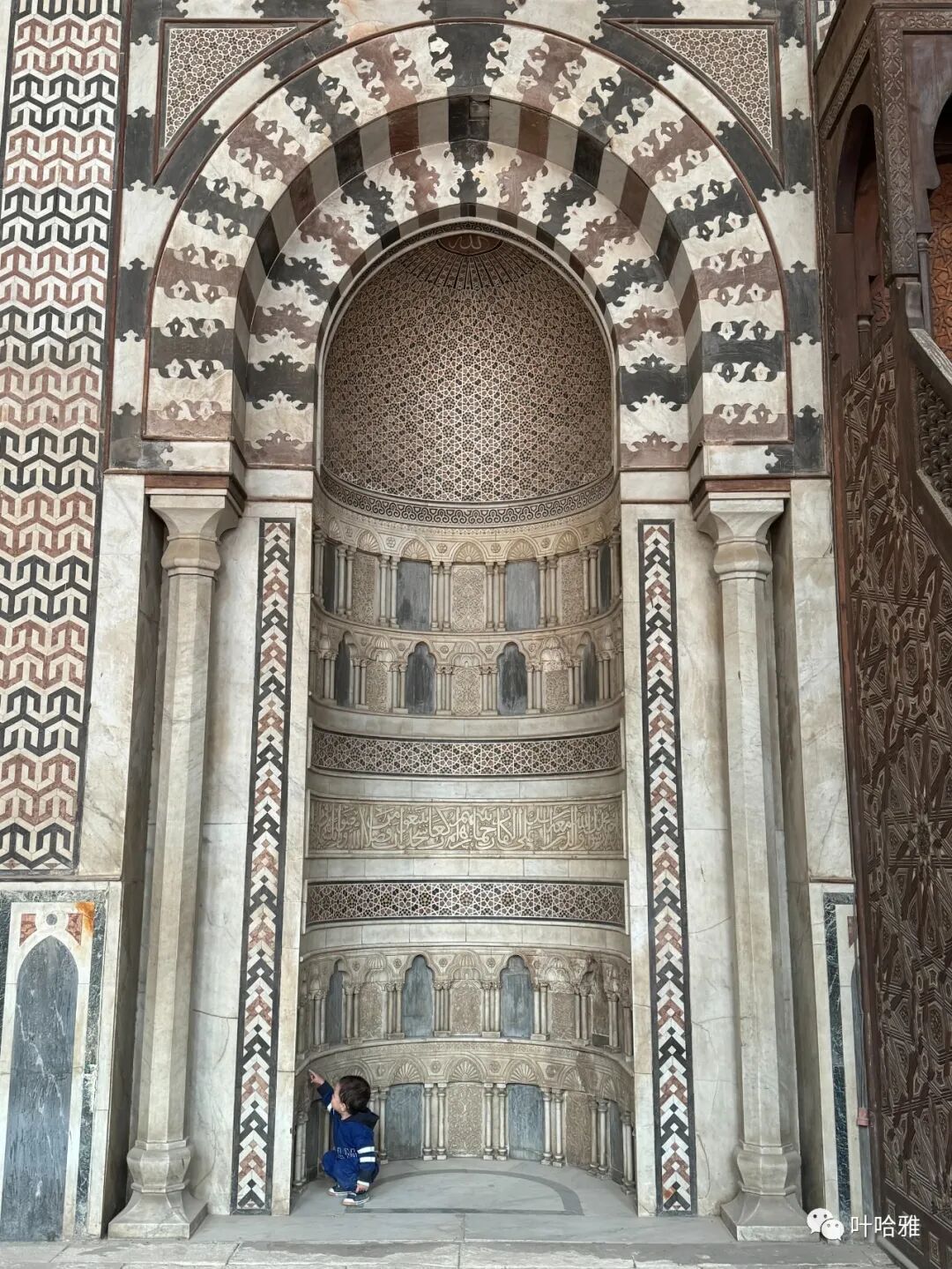
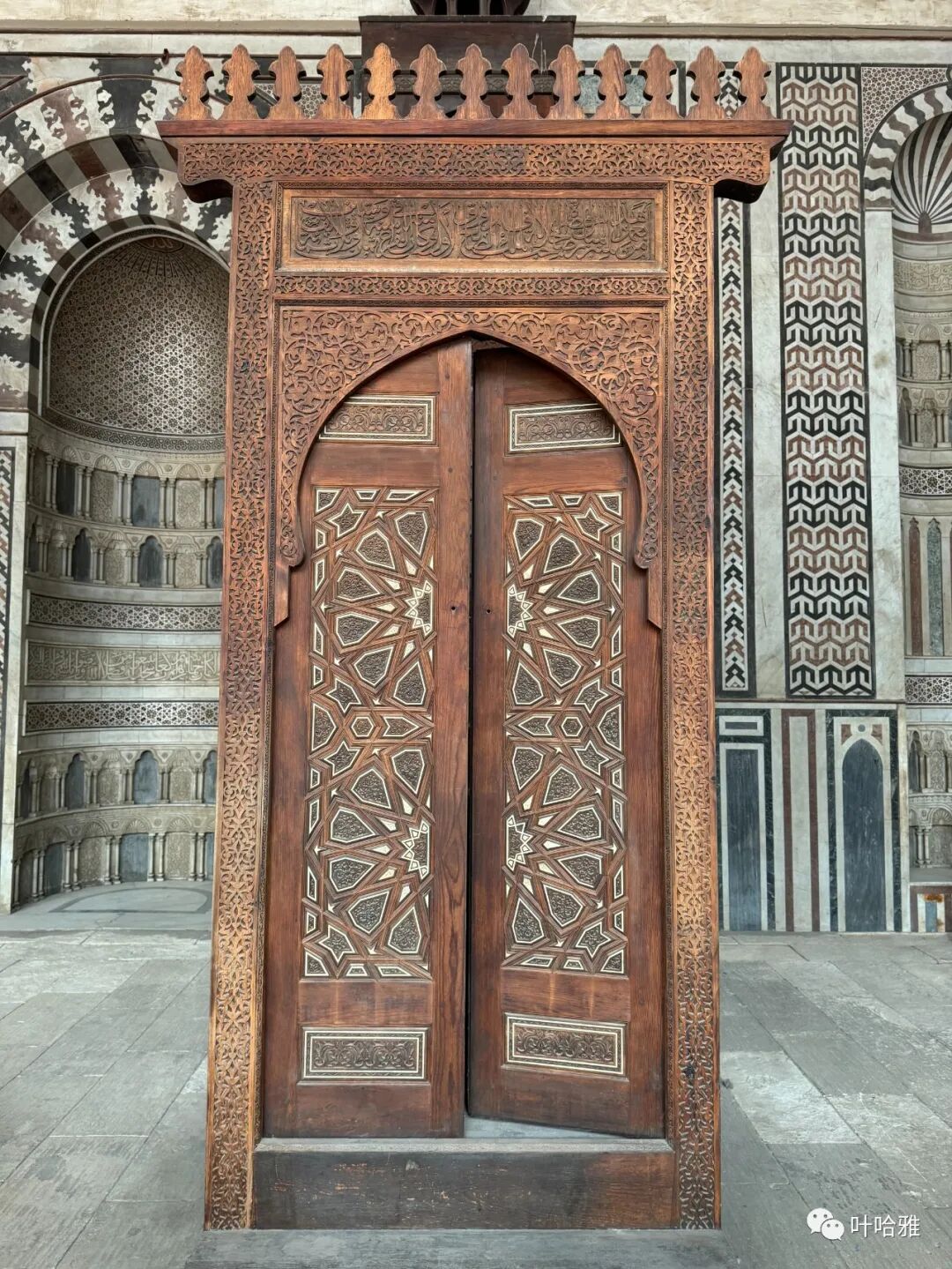
Mosque of Muhammad Ali
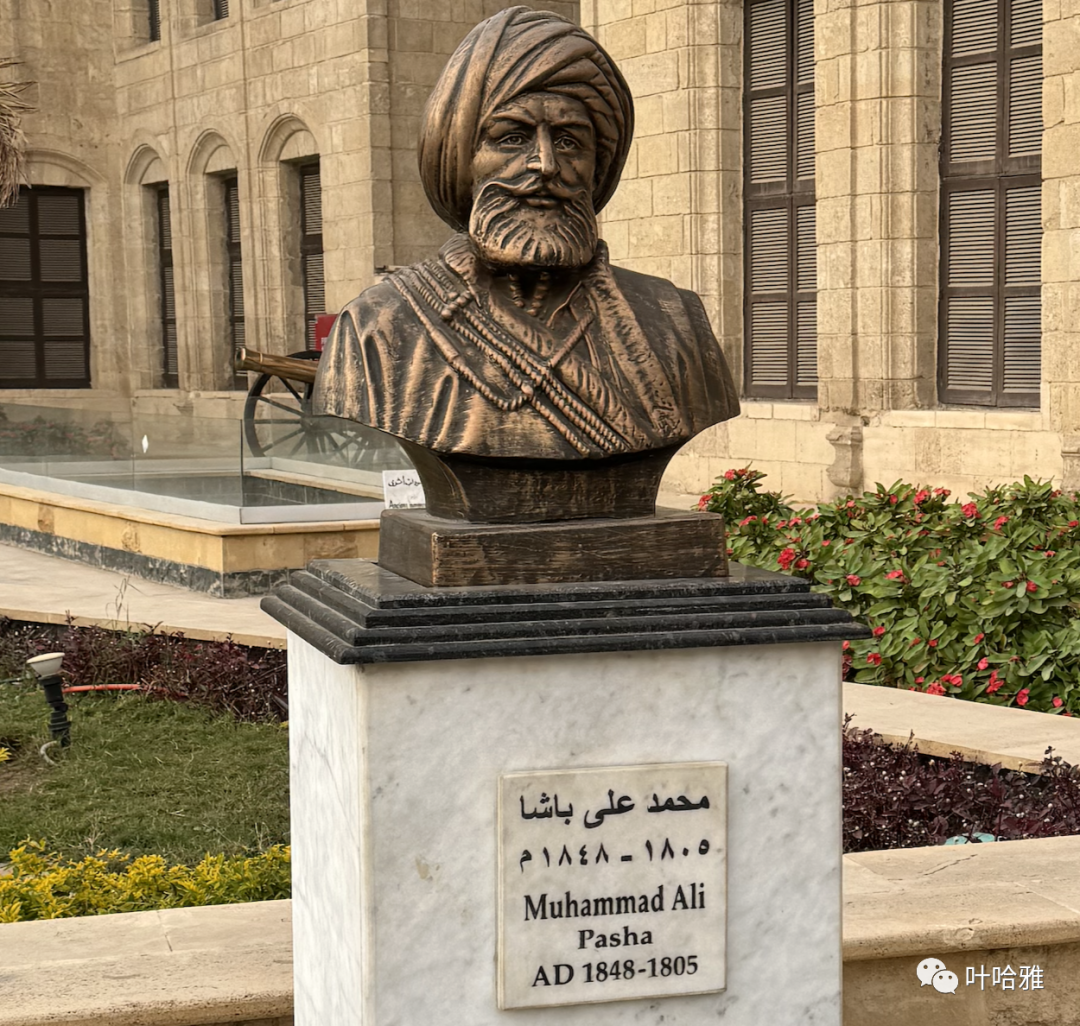
Inside the Saladin Citadel stands the Mosque of Muhammad Ali. Built in 1848 in an Ottoman style, it commemorates Tusun Pasha, the eldest son of Muhammad Ali, who died in 1816.
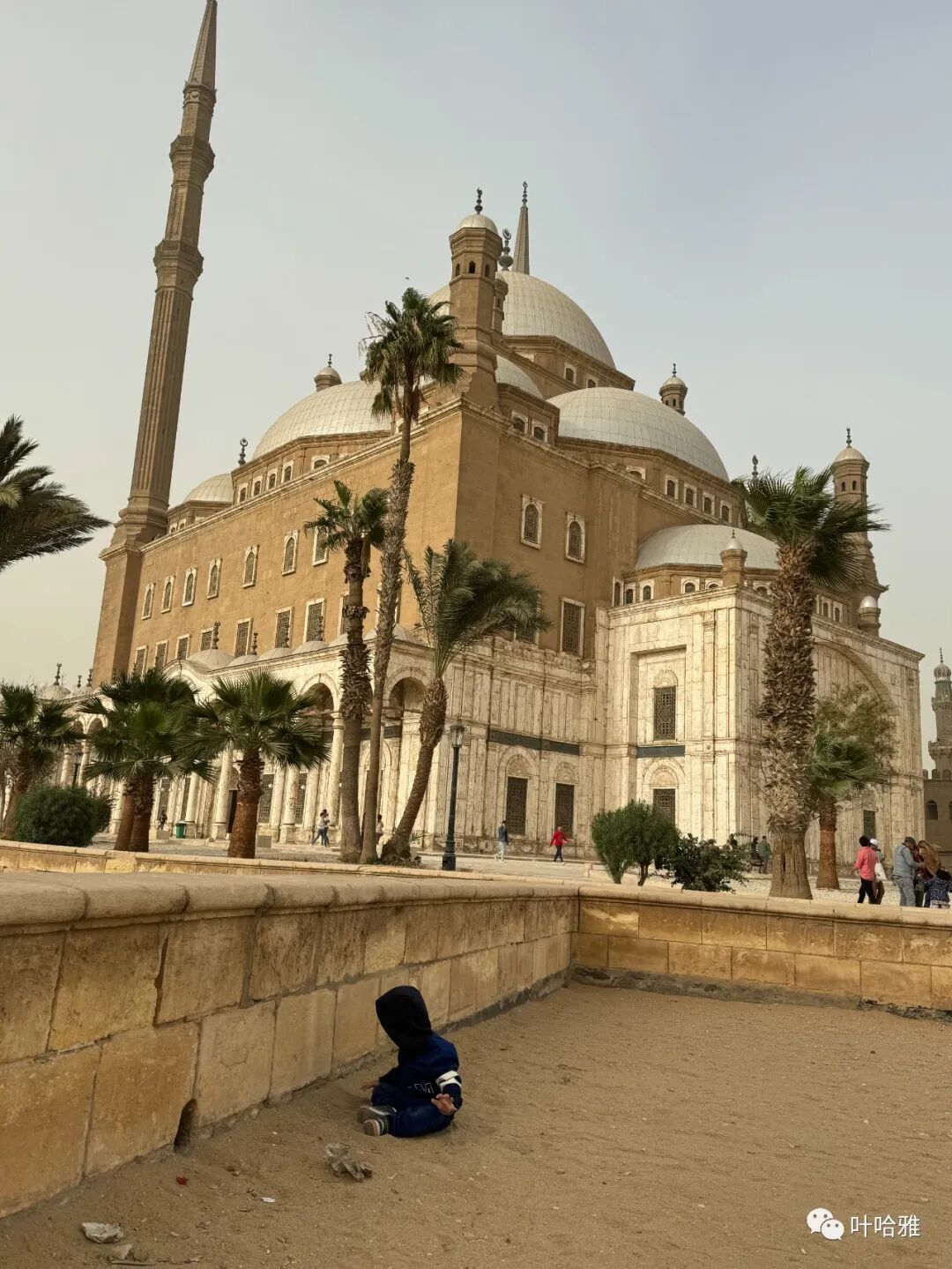
Some say the building materials for the mosque were taken from the pyramids at Giza. Inside, there is a clock tower gifted to Muhammad Ali by the French King Louis Philippe around 1840, which corresponds to the Luxor Obelisk in the Place de la Concorde in Paris.
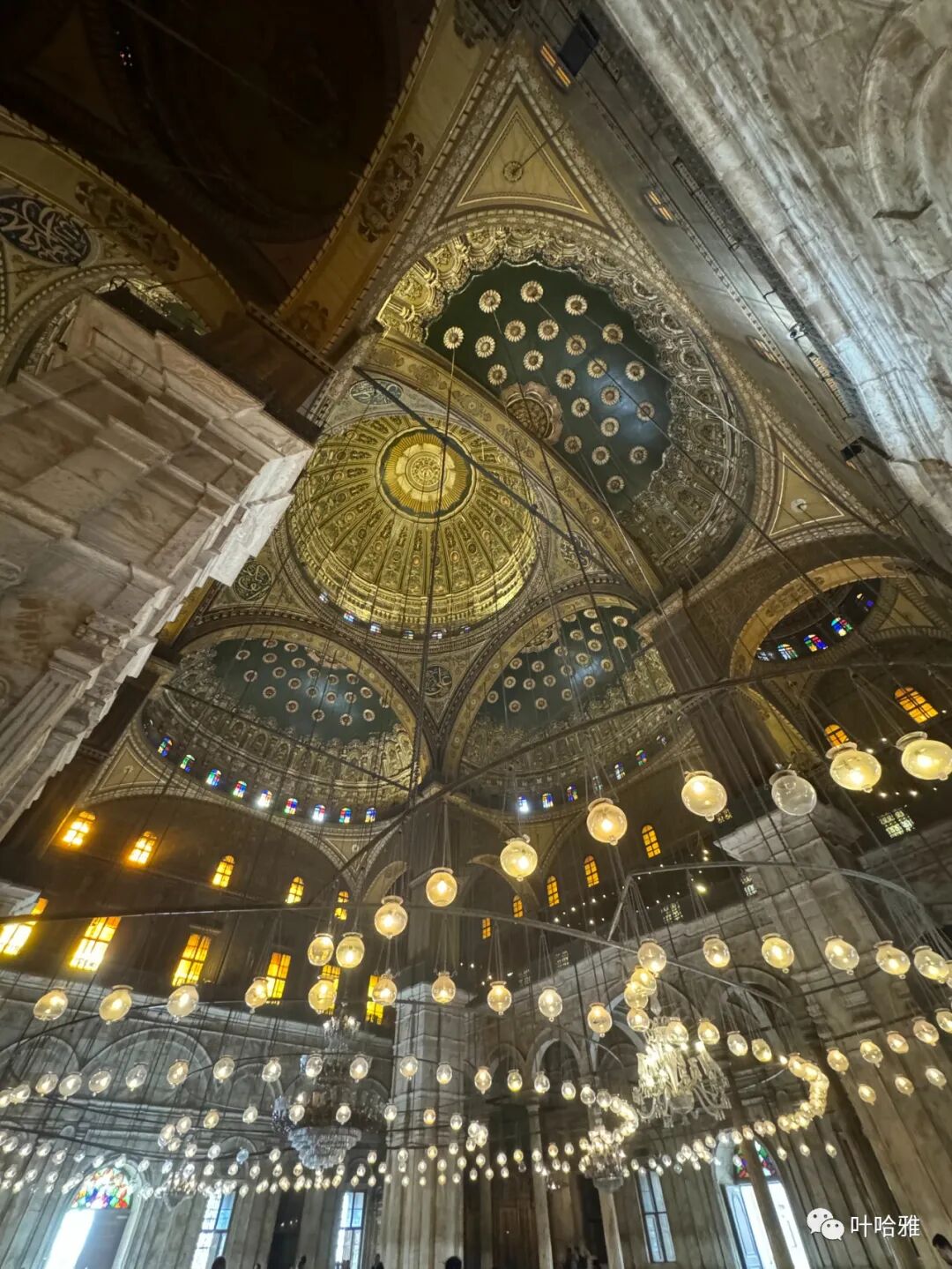
The tomb of Muhammad Ali is inside the mosque. He was the de facto ruler of Egypt from 1805 to 1848. Once a commander for the Ottoman Empire in Albania, he is considered the founder of modern Egypt. Although he may have been Albanian or Turkish, his dynasty lasted until 1952.
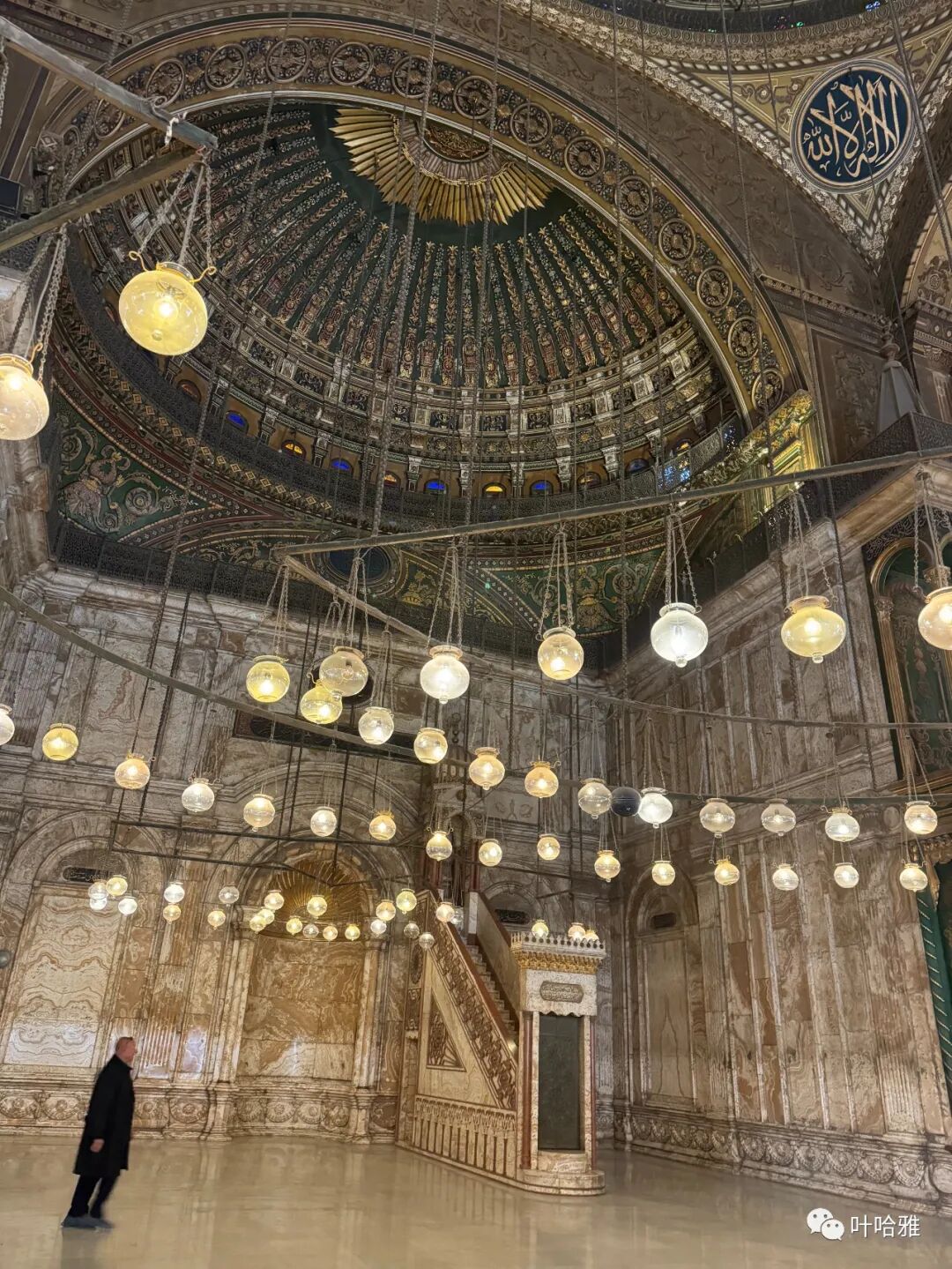
People sell shoe covers at the entrance of the Ali Mosque. It is a trap, so just ignore them. Carry your shoes in your hands and walk right in. You do not need to spend money on shoe covers.
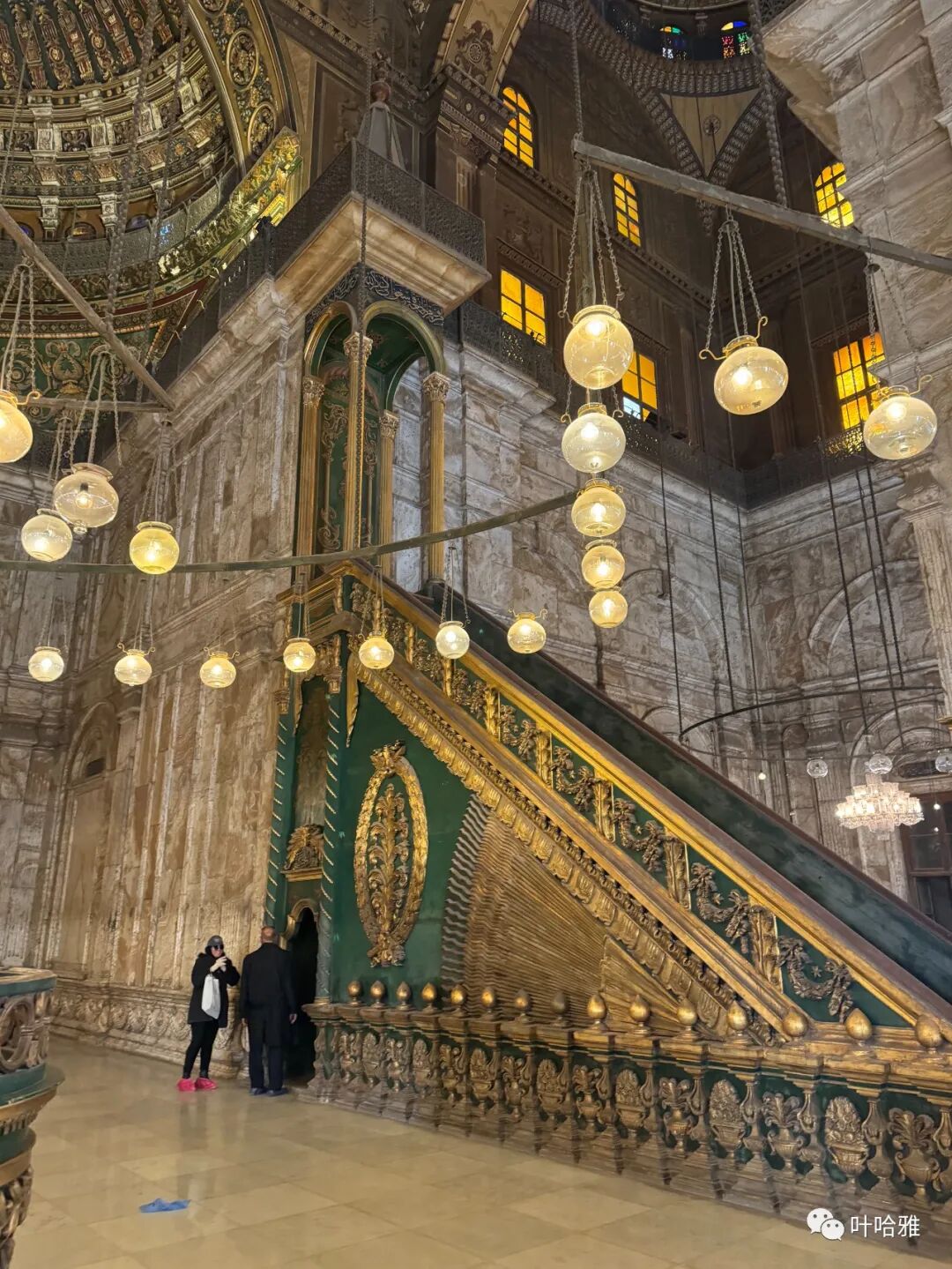
There is a carpeted area in the main hall where you can perform namaz, but very few people actually show up for prayer times in Egypt.
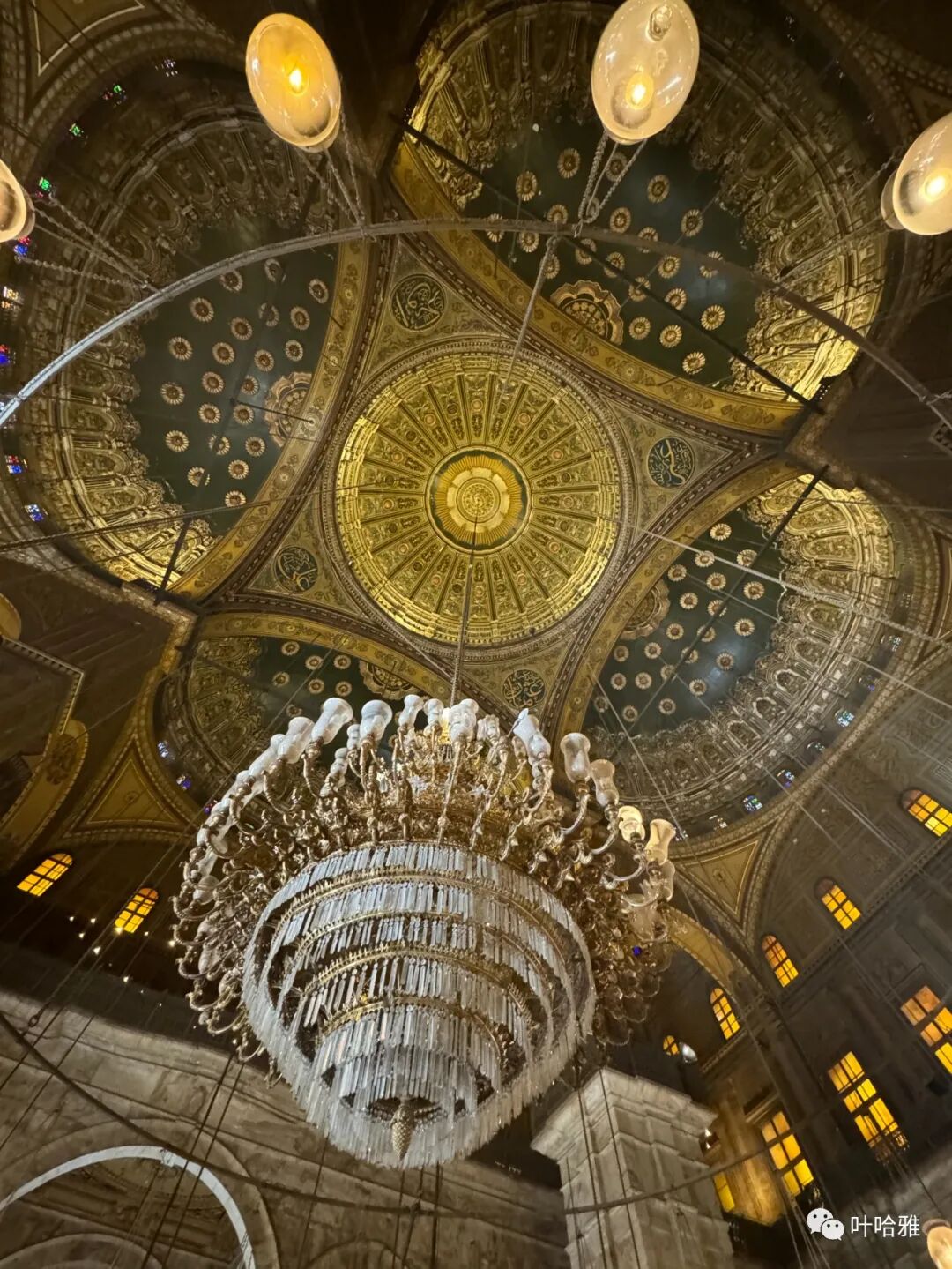
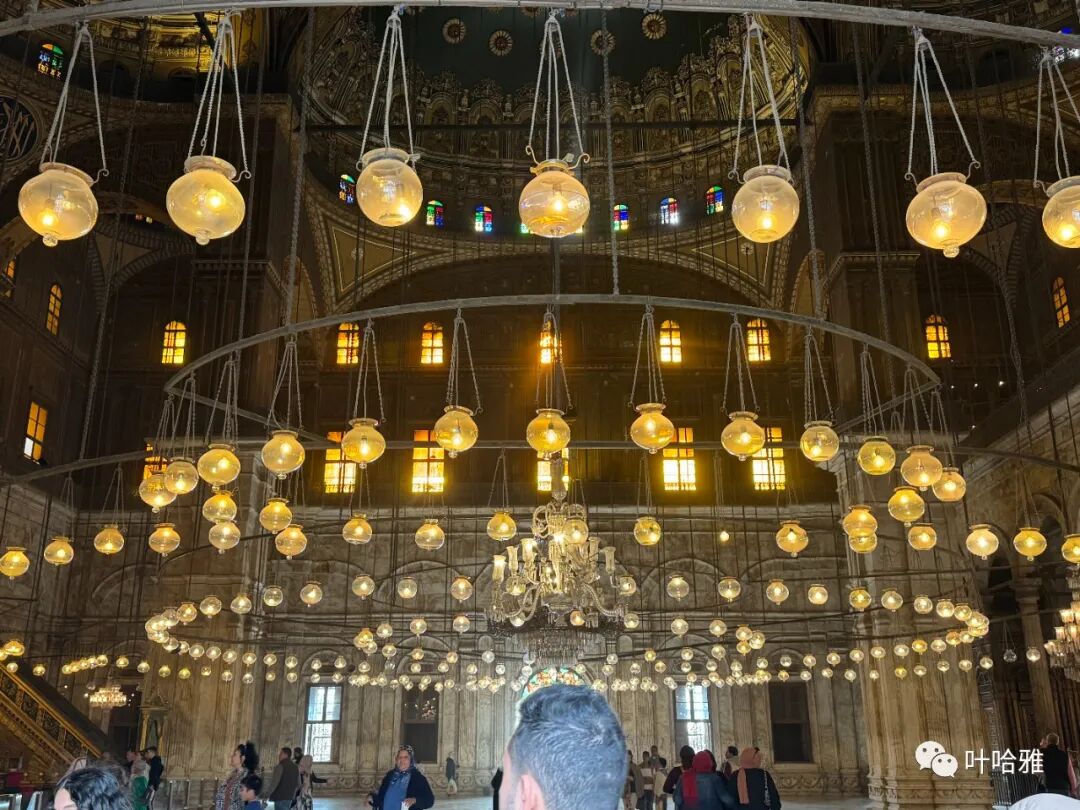
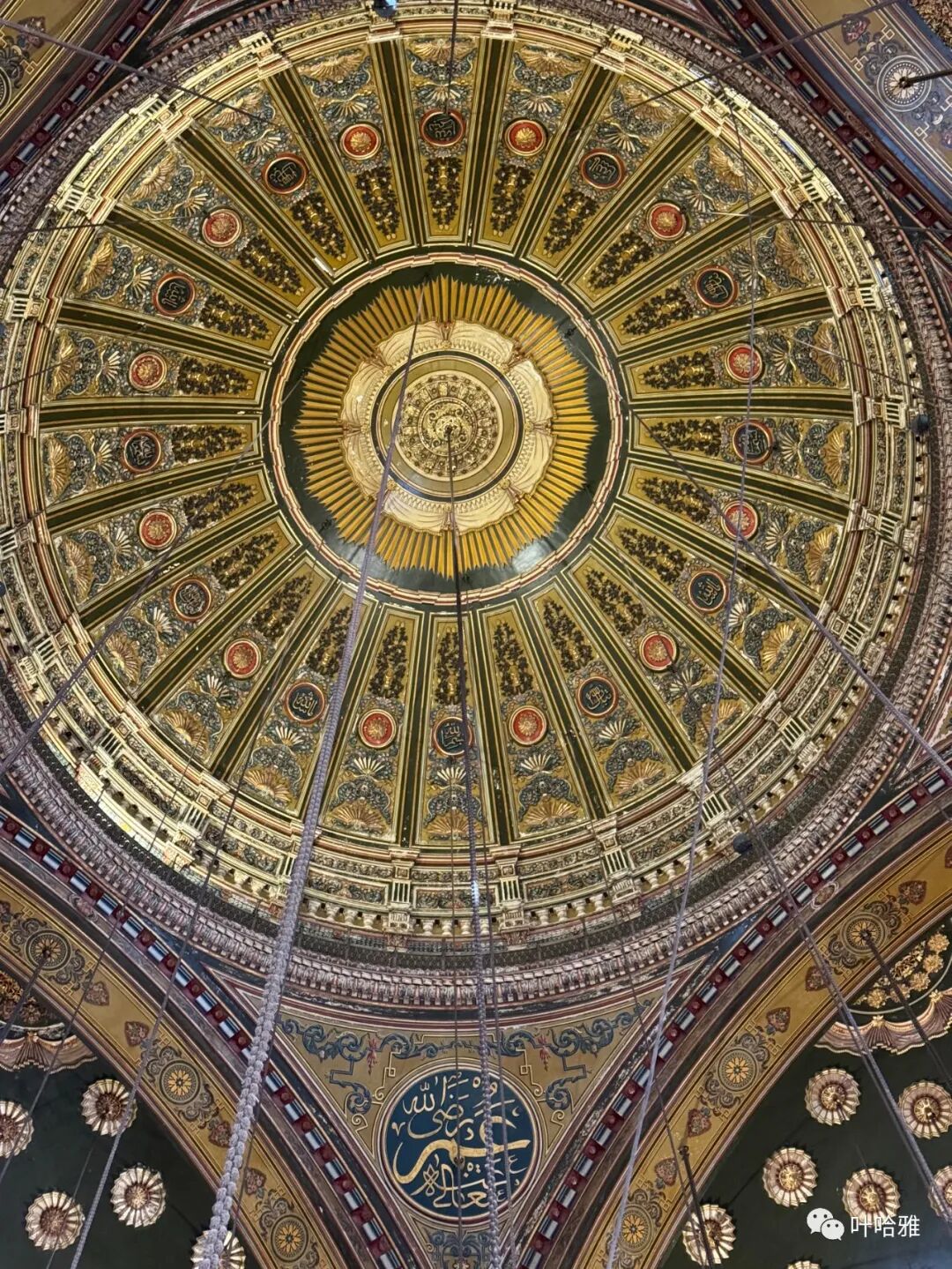
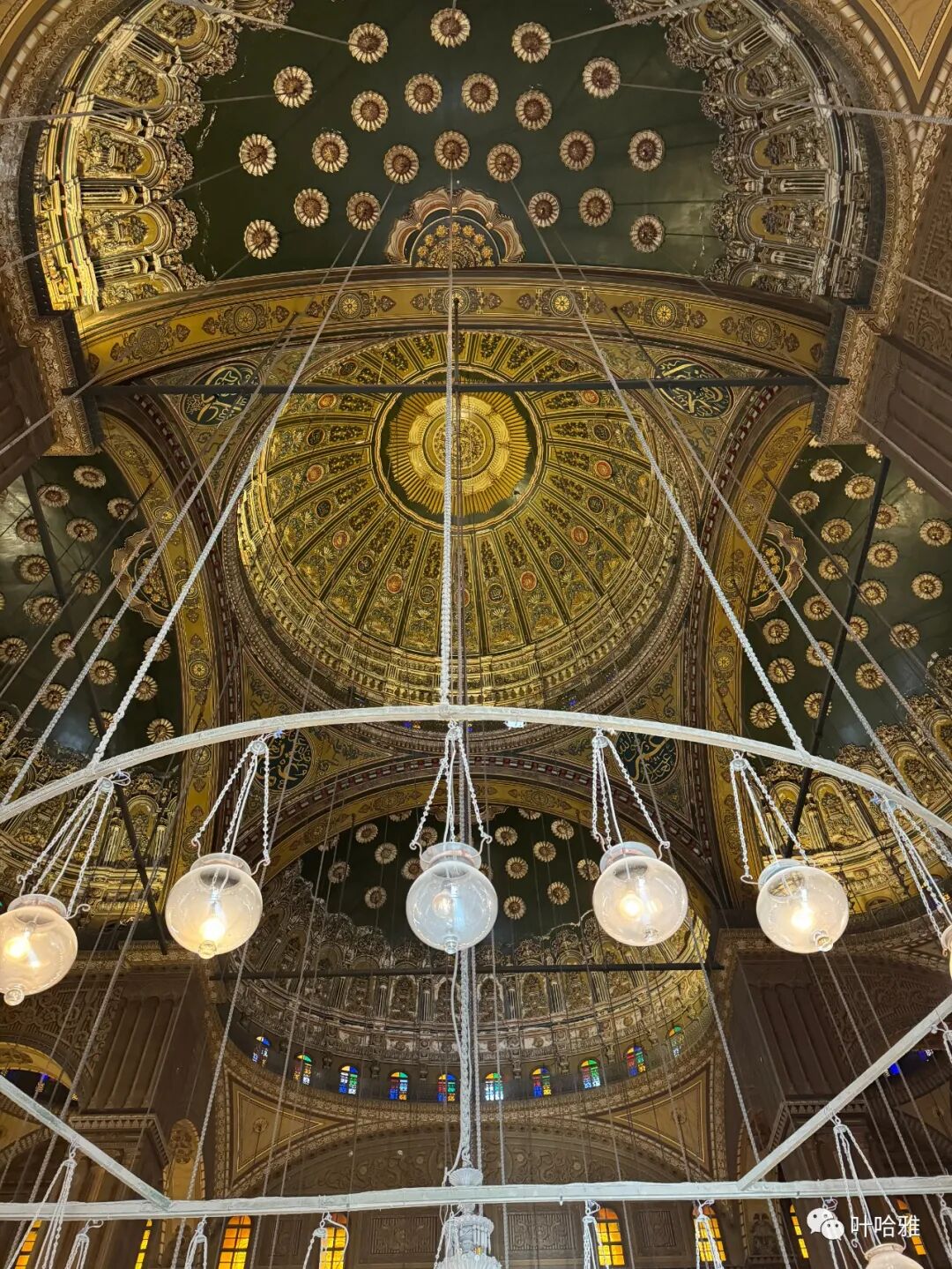
Ibn Tulun Mosque
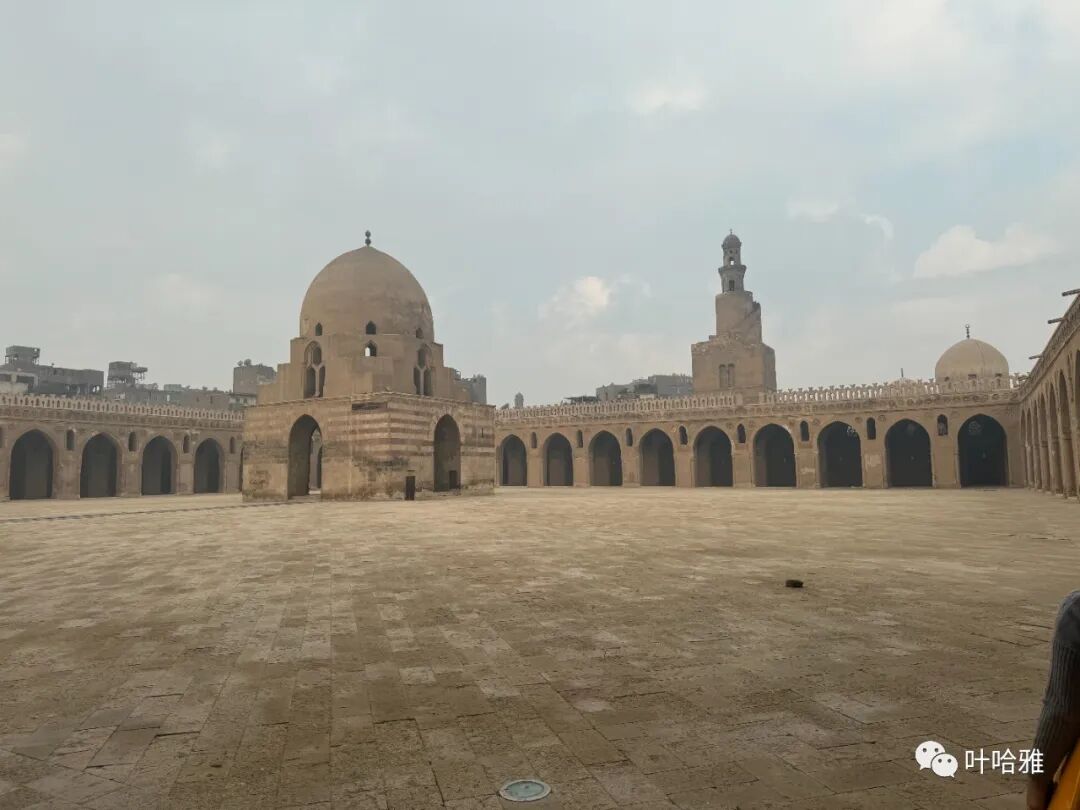
Built in 876, the Ibn Tulun Mosque is the oldest mosque in Egypt and all of Africa. It is also the largest mosque in the old city of Cairo.
The designer of this mosque was an Orthodox Christian named Saiid Ibn Kateb Al-Farghany.
This mosque is an open tourist site with no entry fee. However, they charge a tip for storing your shoes. I gave them 50 Egyptian pounds, but they said it was not enough and asked for another 50 pounds. The total was about 20 Chinese yuan.
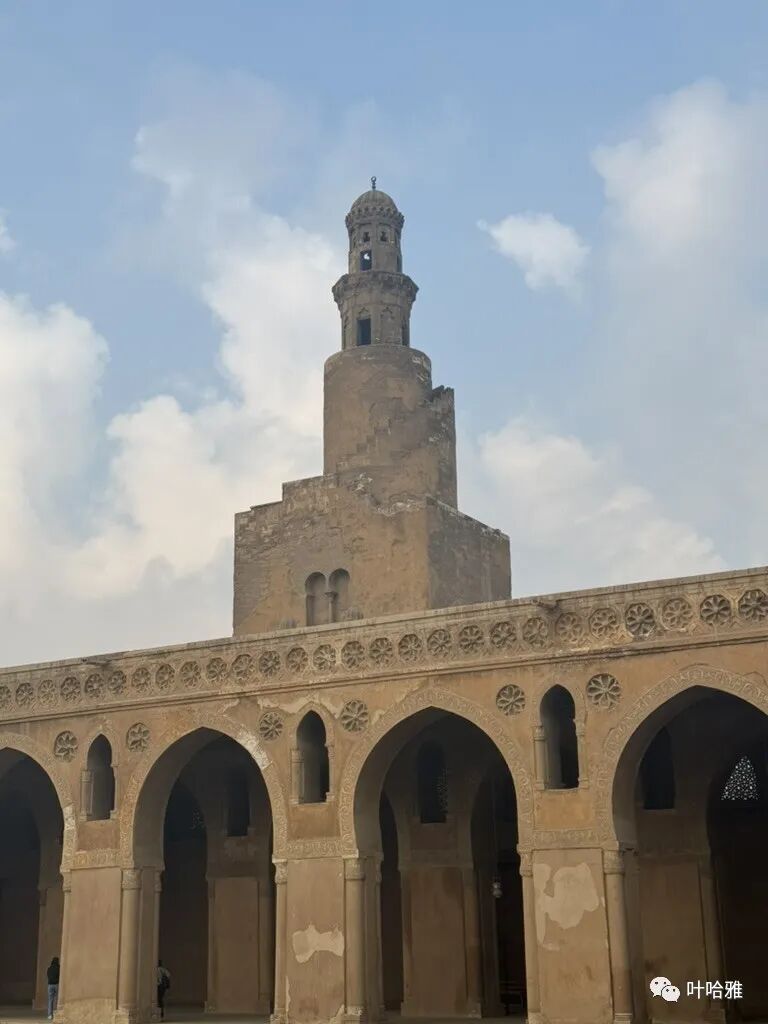
This spiral minaret is believed to have been built in 1296.
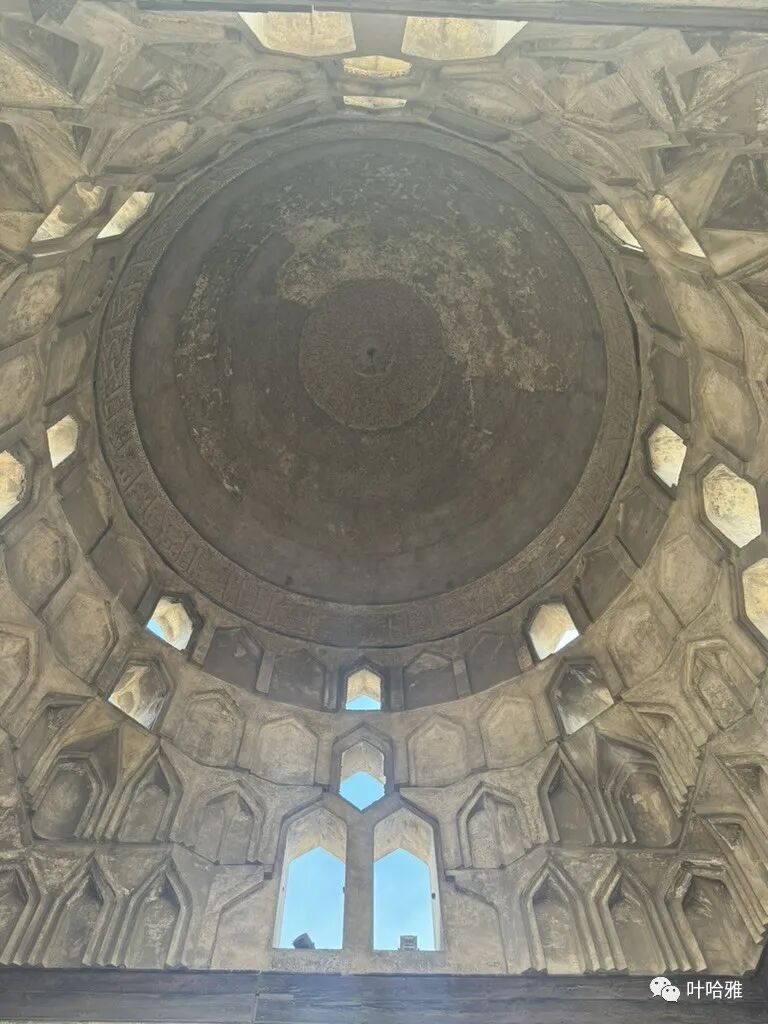
The arched windows let in plenty of light.
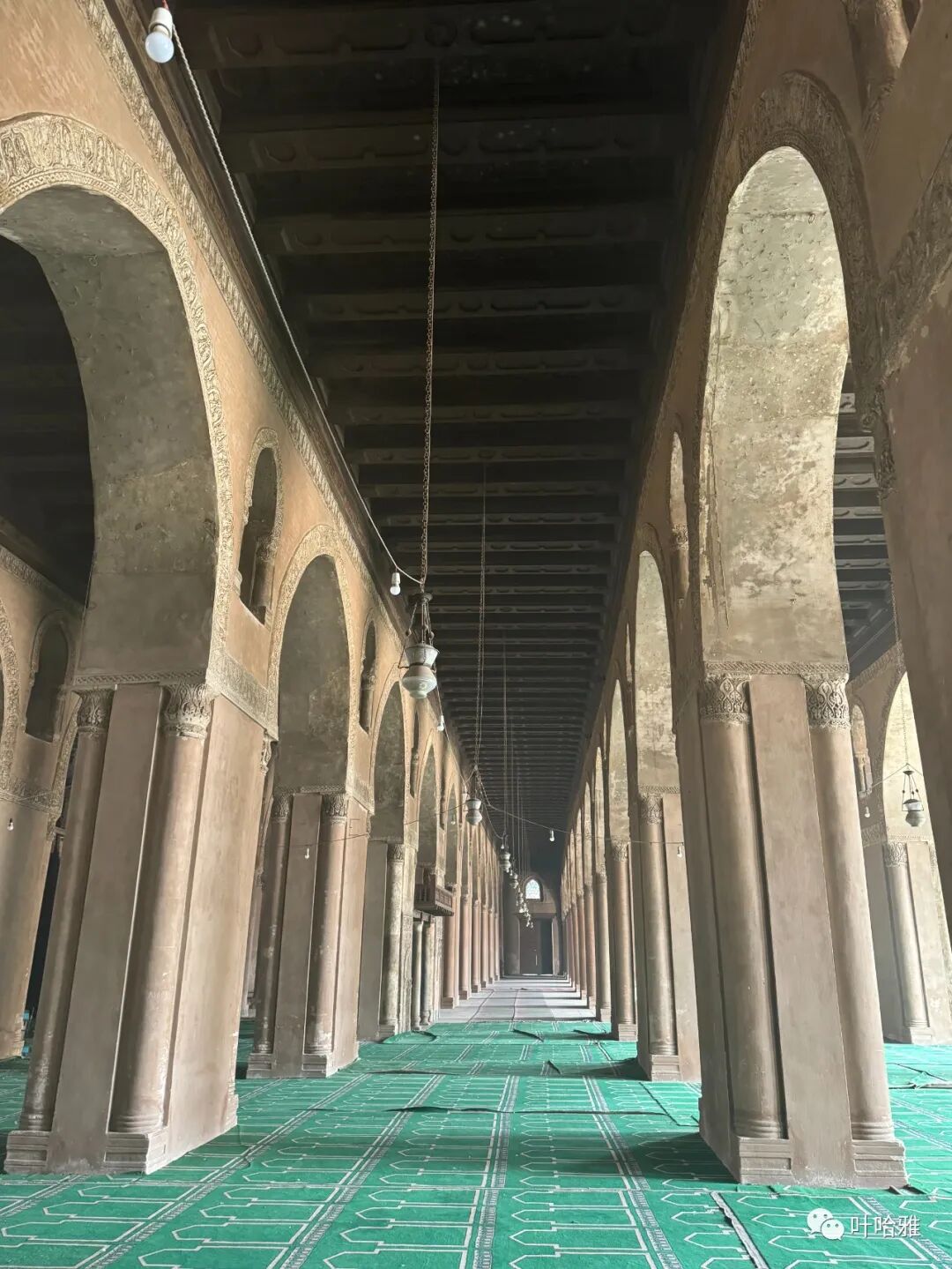
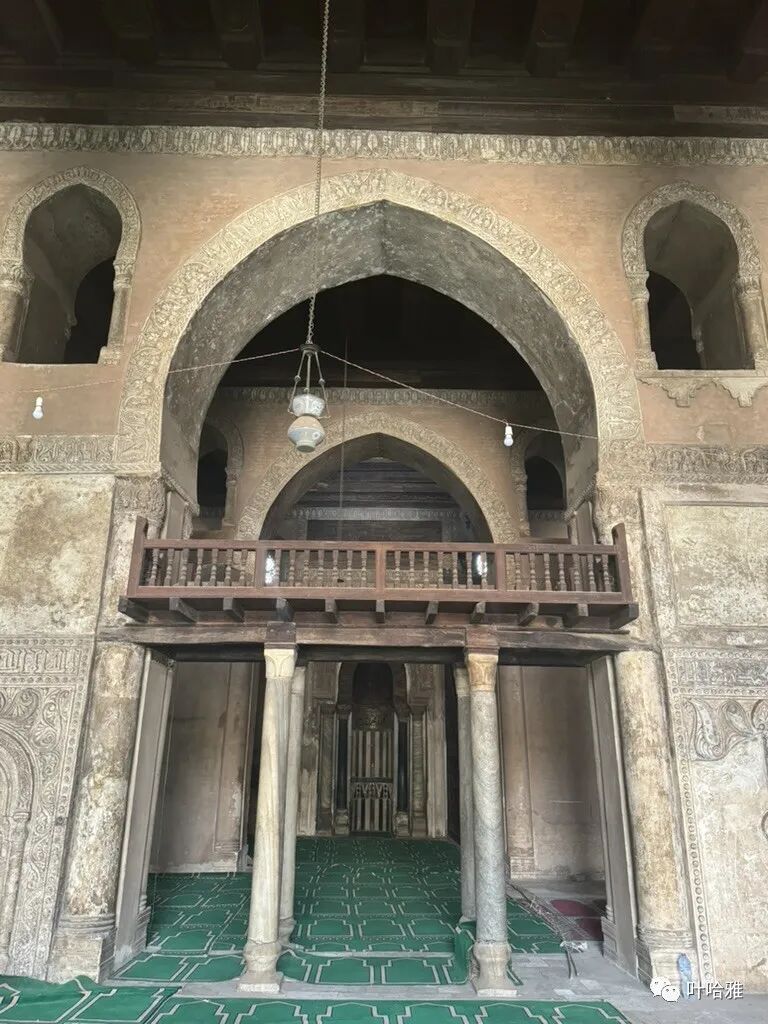
Neither the left nor the right mihrab mentions Ali, which shows they were built during the early Fatimid Caliphate, a Shia dynasty.
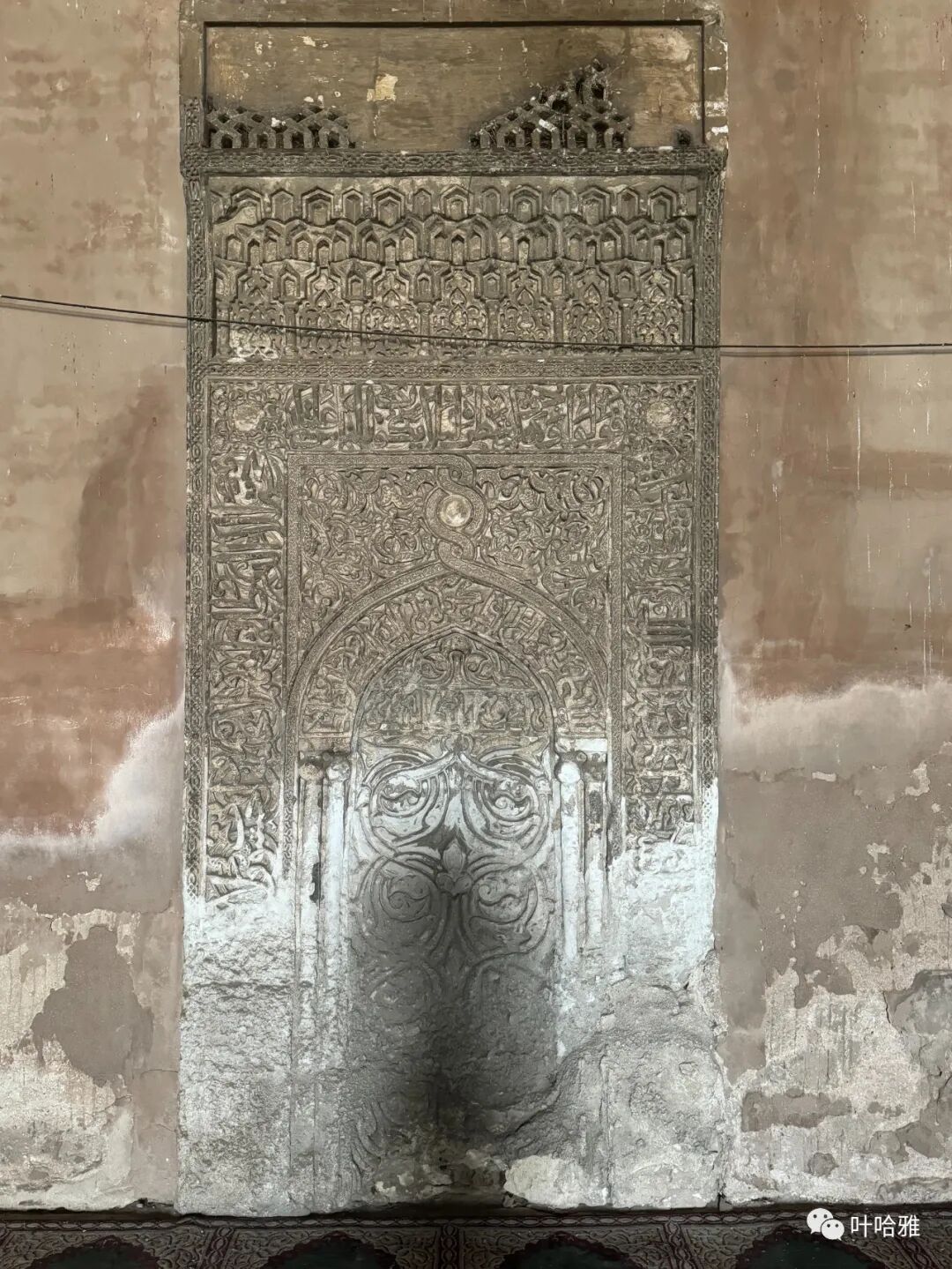
The mihrab designed by Al-Afdal to commemorate Mustansir.
Mustansir was a caliph of the Fatimid dynasty. The original mihrab is kept at the Museum of Islamic Art in Cairo, and this one is a replica. It is inscribed with the Shia Shahada: There is no god but Allah, Muhammad is the messenger of Allah, and Ali is the wali of Allah.
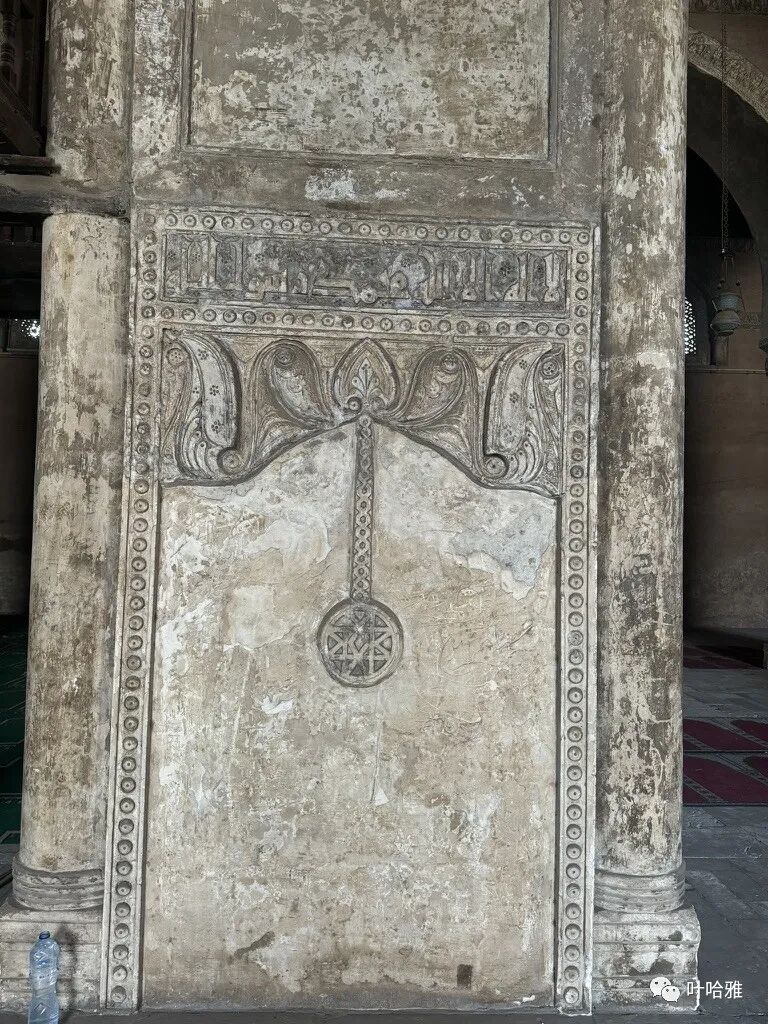
A mihrab from the pre-Fatimid period, with a star hanging on the emblem.
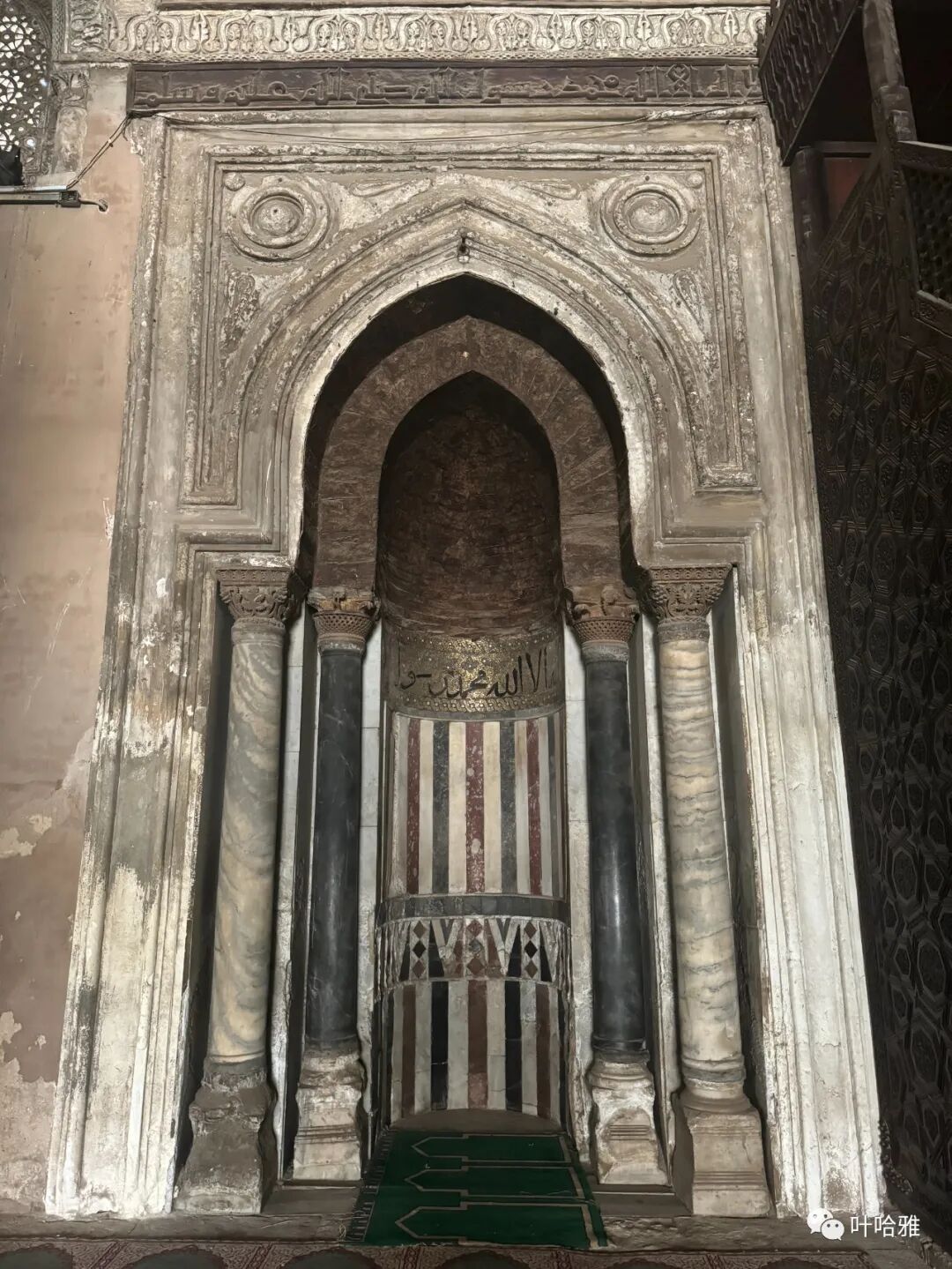
Parts of the James Bond movie The Spy Who Loved Me were filmed here. It also appears in the game Serious Sam 3 and in Tomb Raider: The Last Revelation, where Lara fights a minotaur in the mosque.
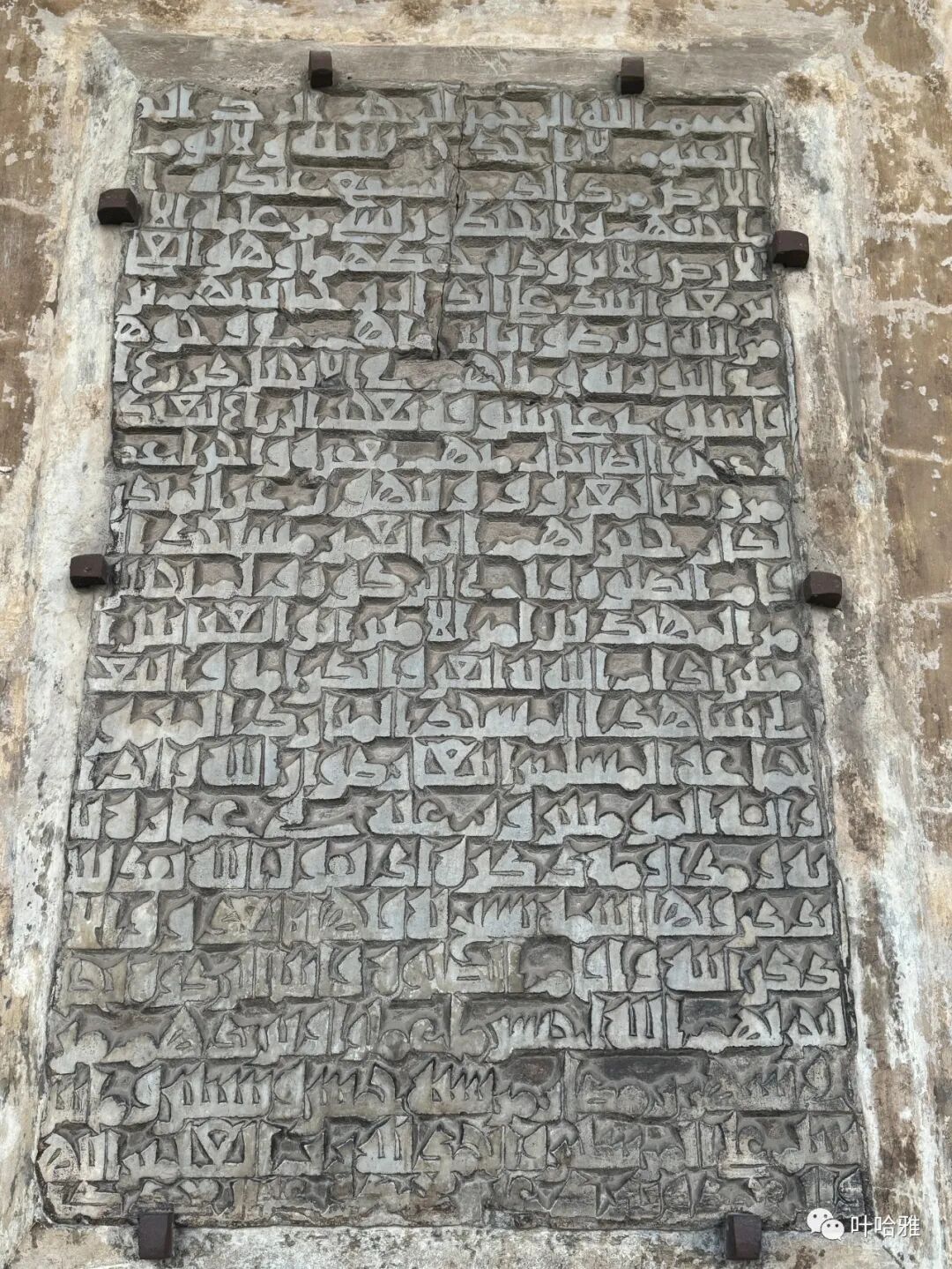
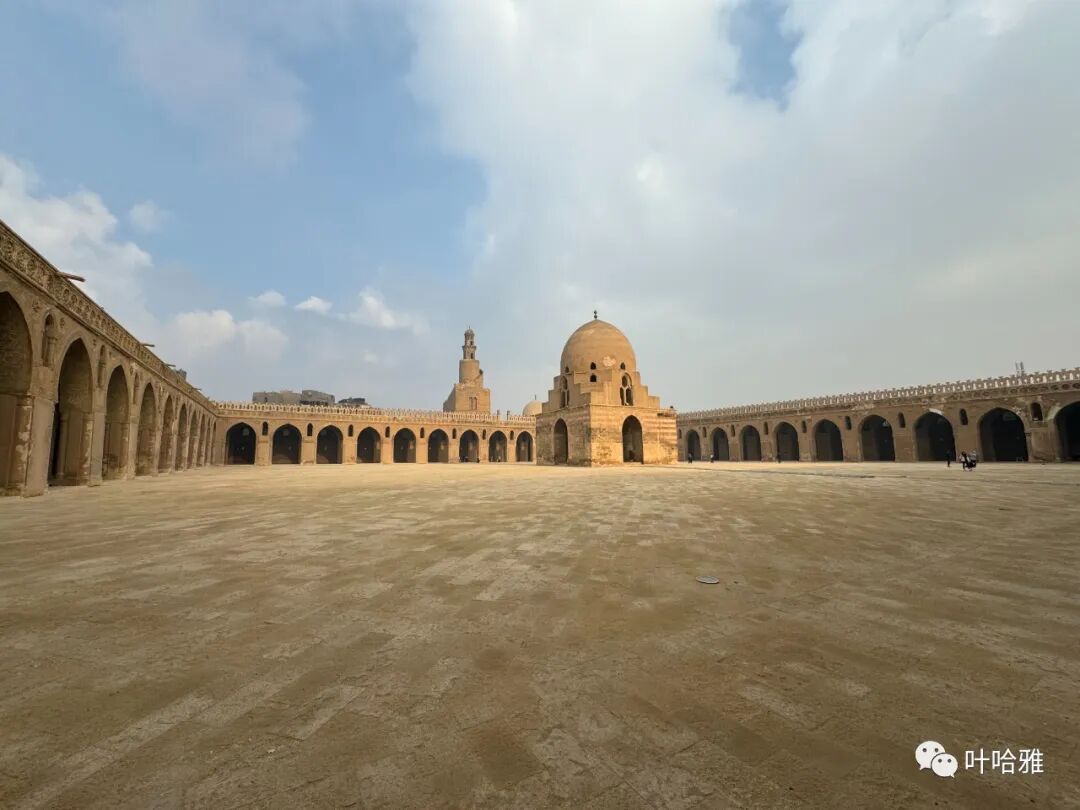
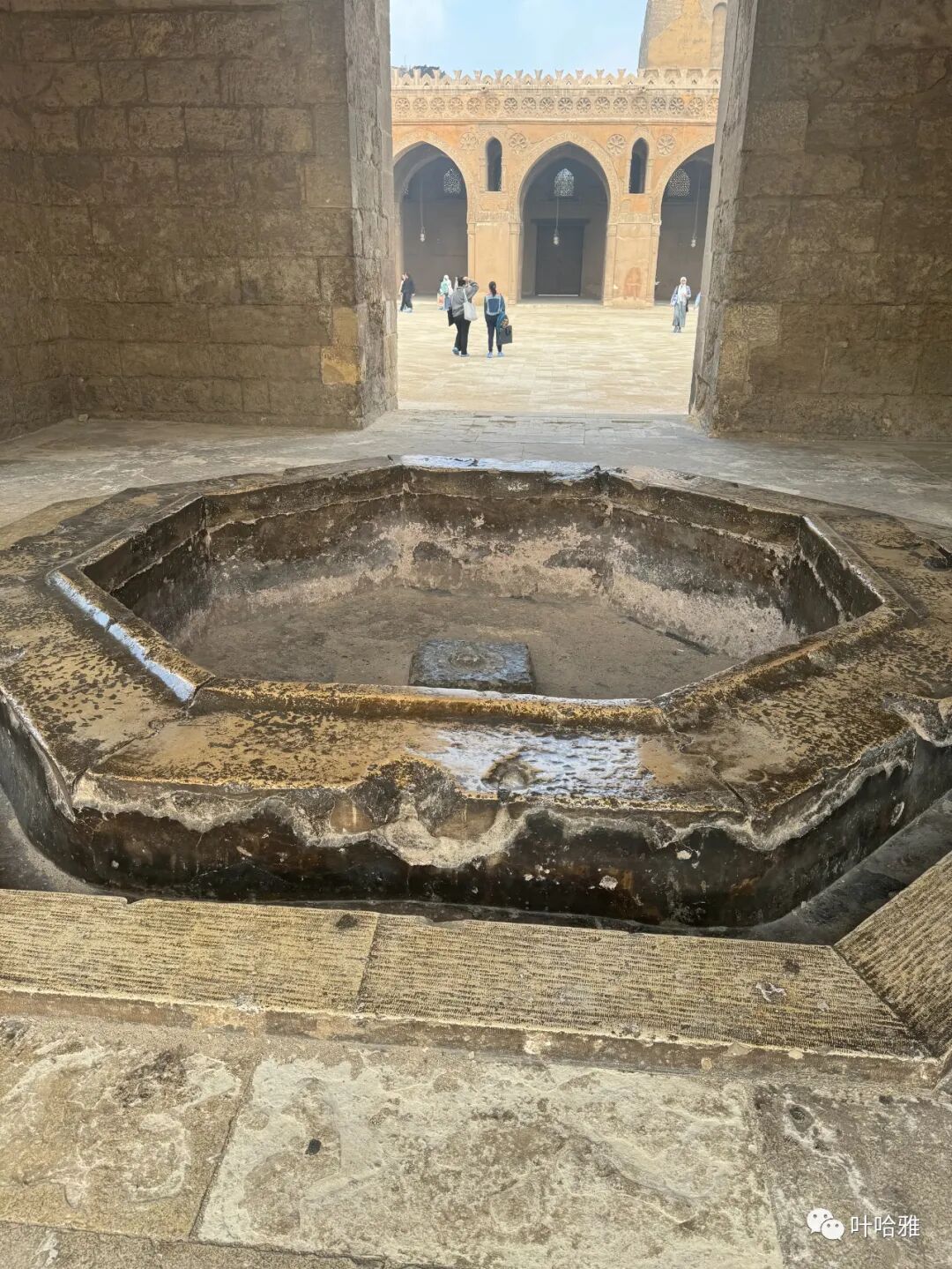
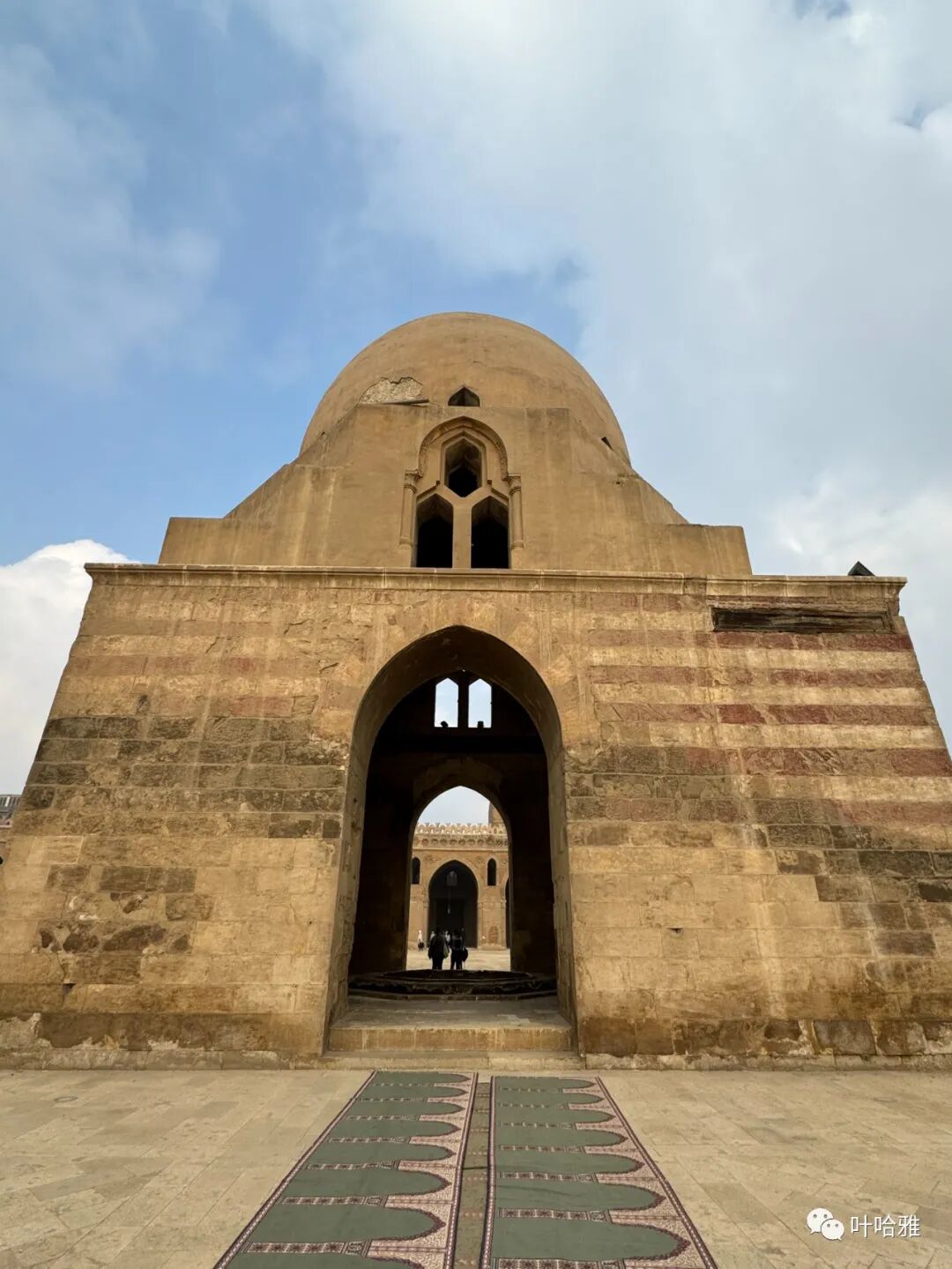
Al Fattah Al Aleem Mosque
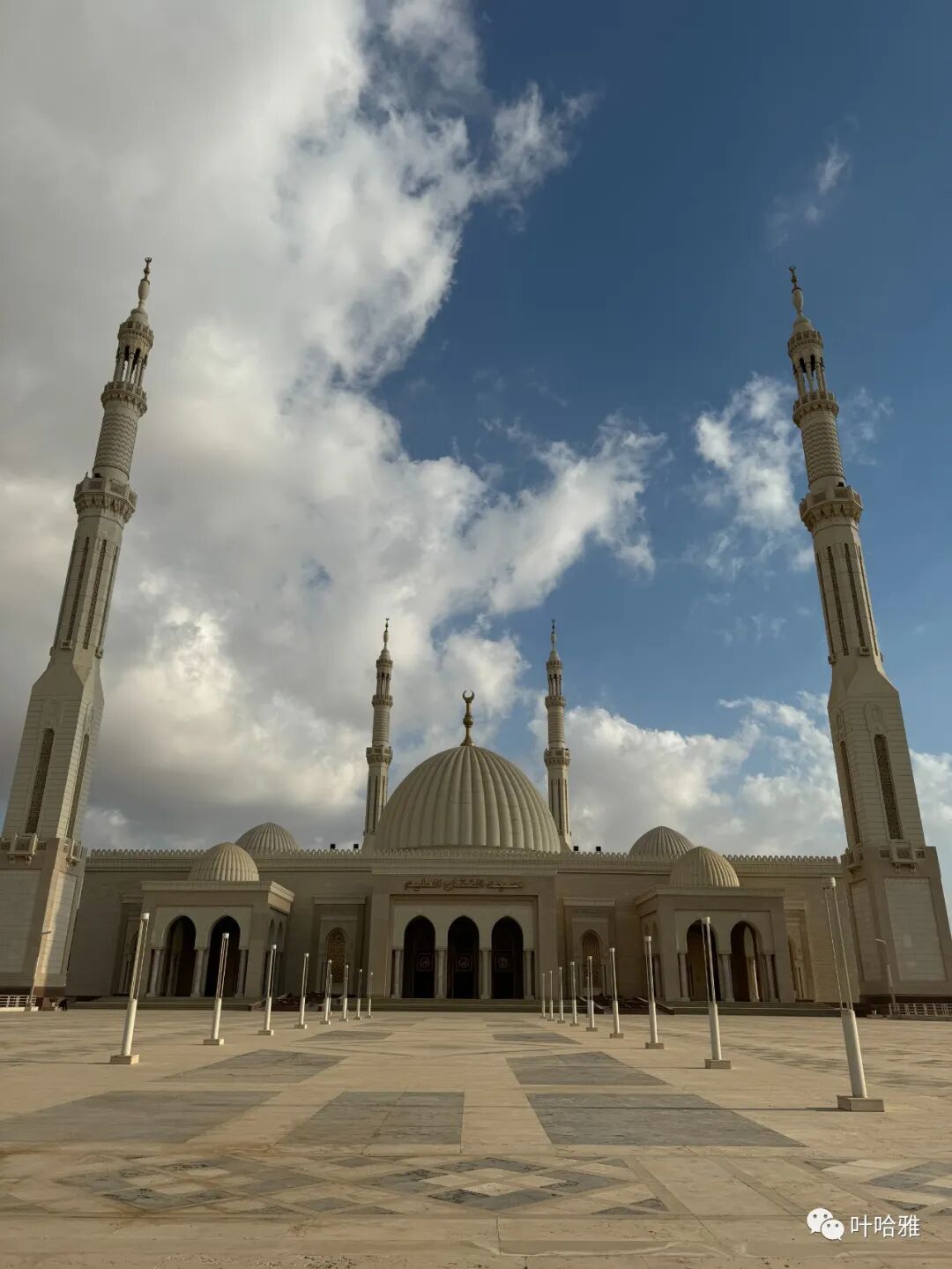
Because Old Cairo became hopelessly dirty and messy, the Egyptian government had to plan a new Cairo in the desert. This mosque was built in the new city. It covers 8,600 square meters and became the largest mosque in Africa after it was finished in 2019.
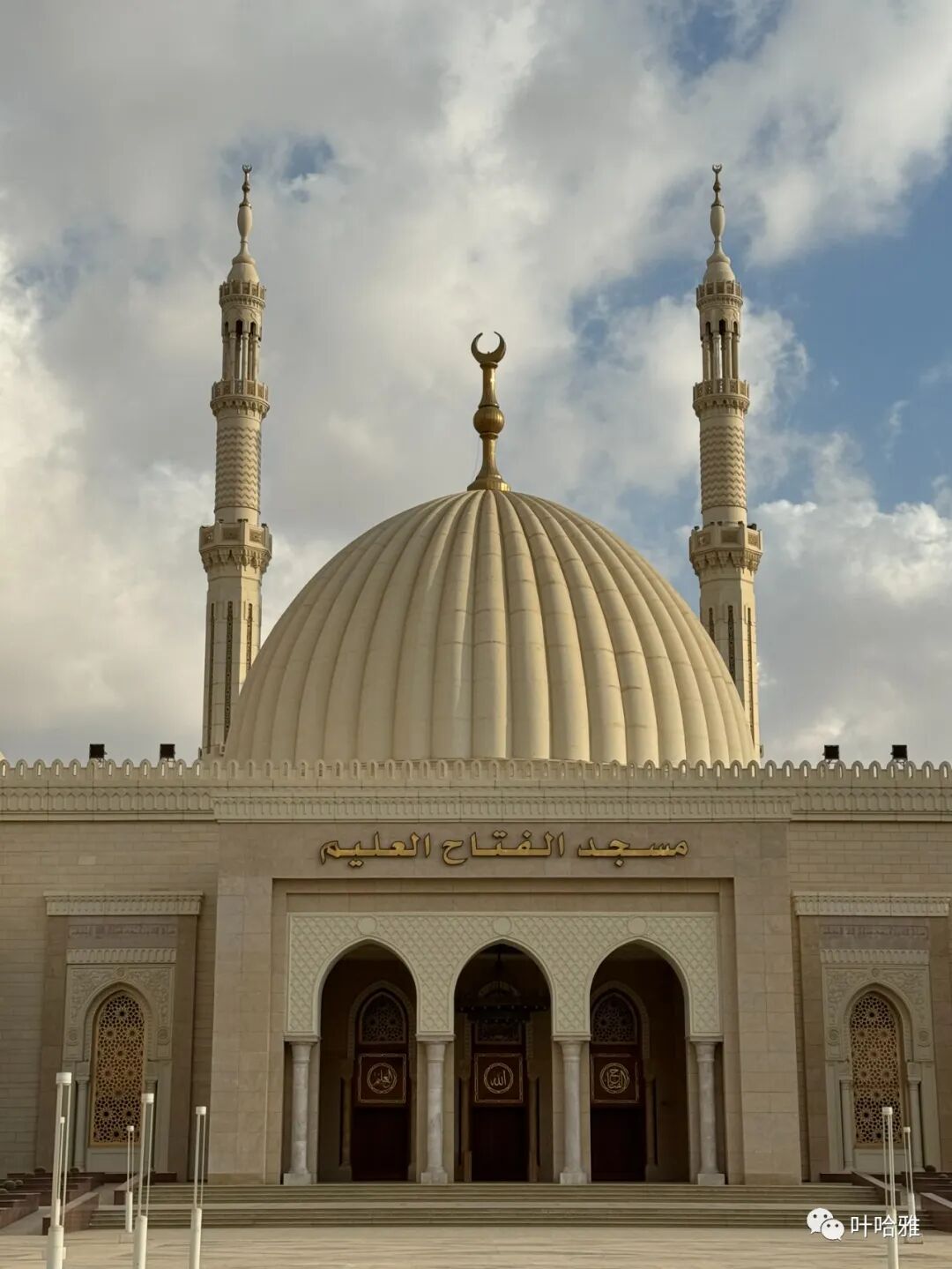
New Cairo is an hour's drive from the old city. The roads in the new city are wide, the streets are clean, and the tallest building in Africa is currently being built here.
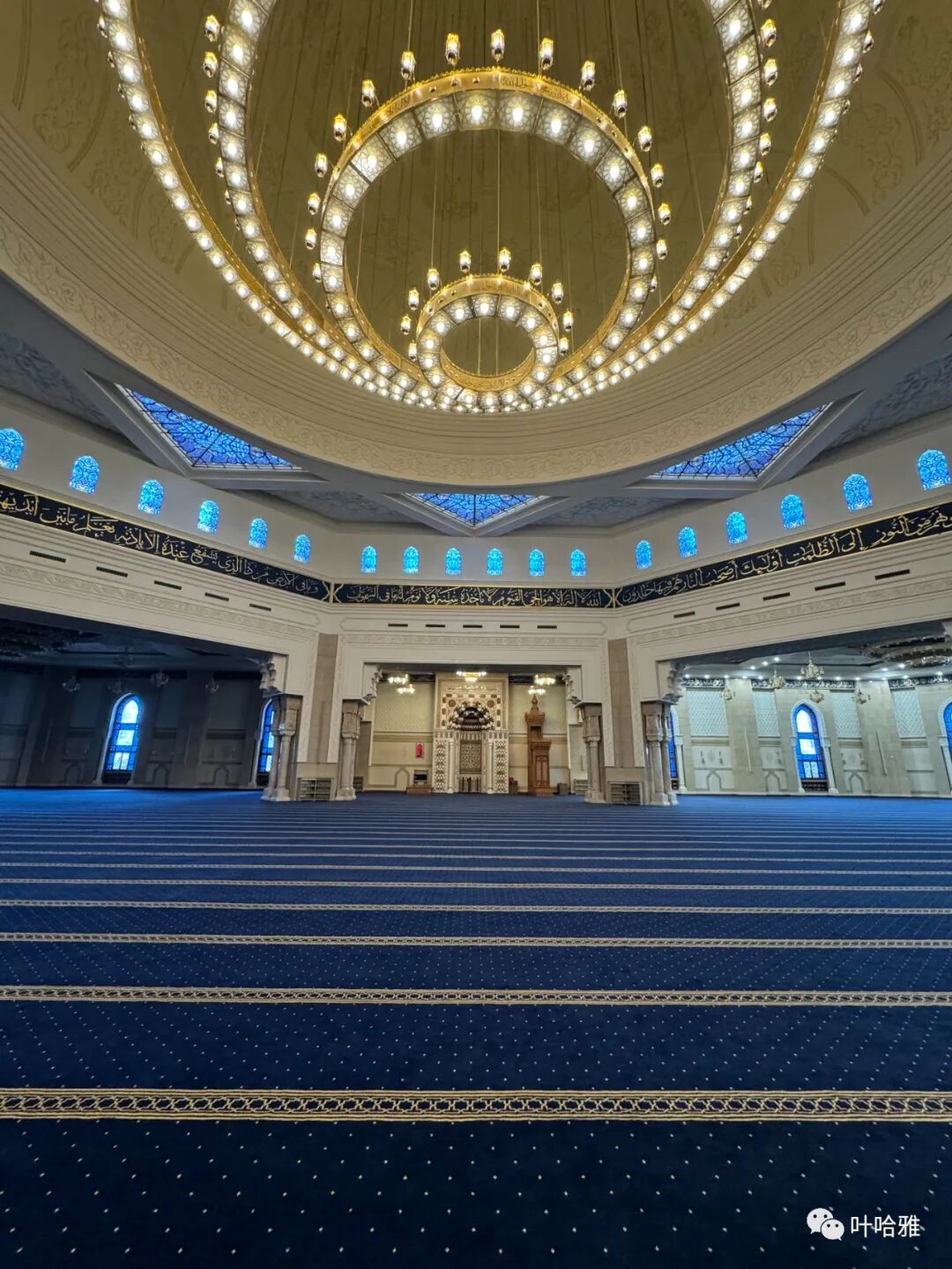
The main hall of the mosque was originally closed, but our driver, who is Egyptian, talked to the mosque staff and got them to open it for us. We prayed namaz together in the mosque, and he led the prayer. After the prayer, I offered the staff a tip, but he actually refused it. He is the only person I have met in Egypt who did not take a tip.
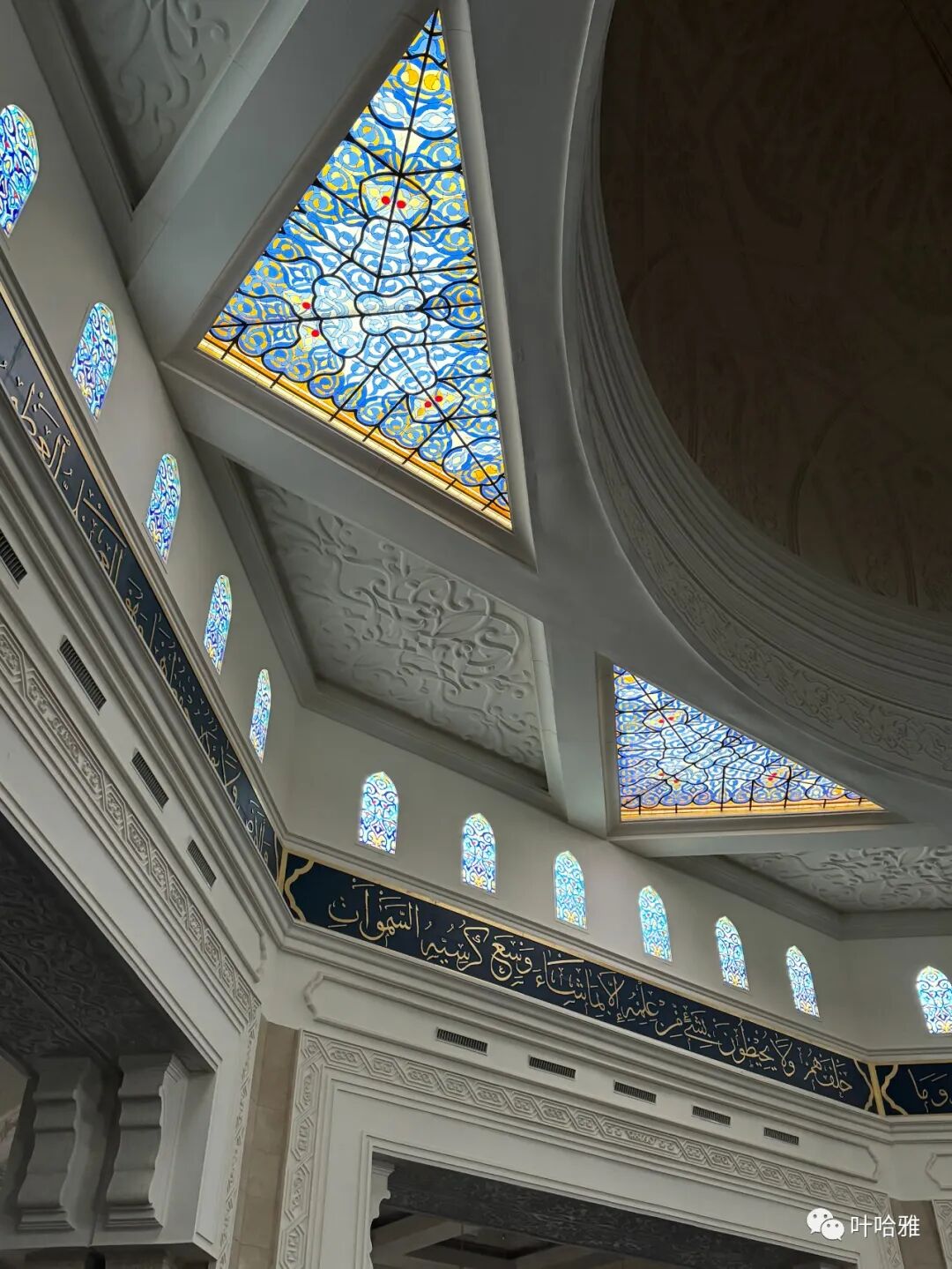
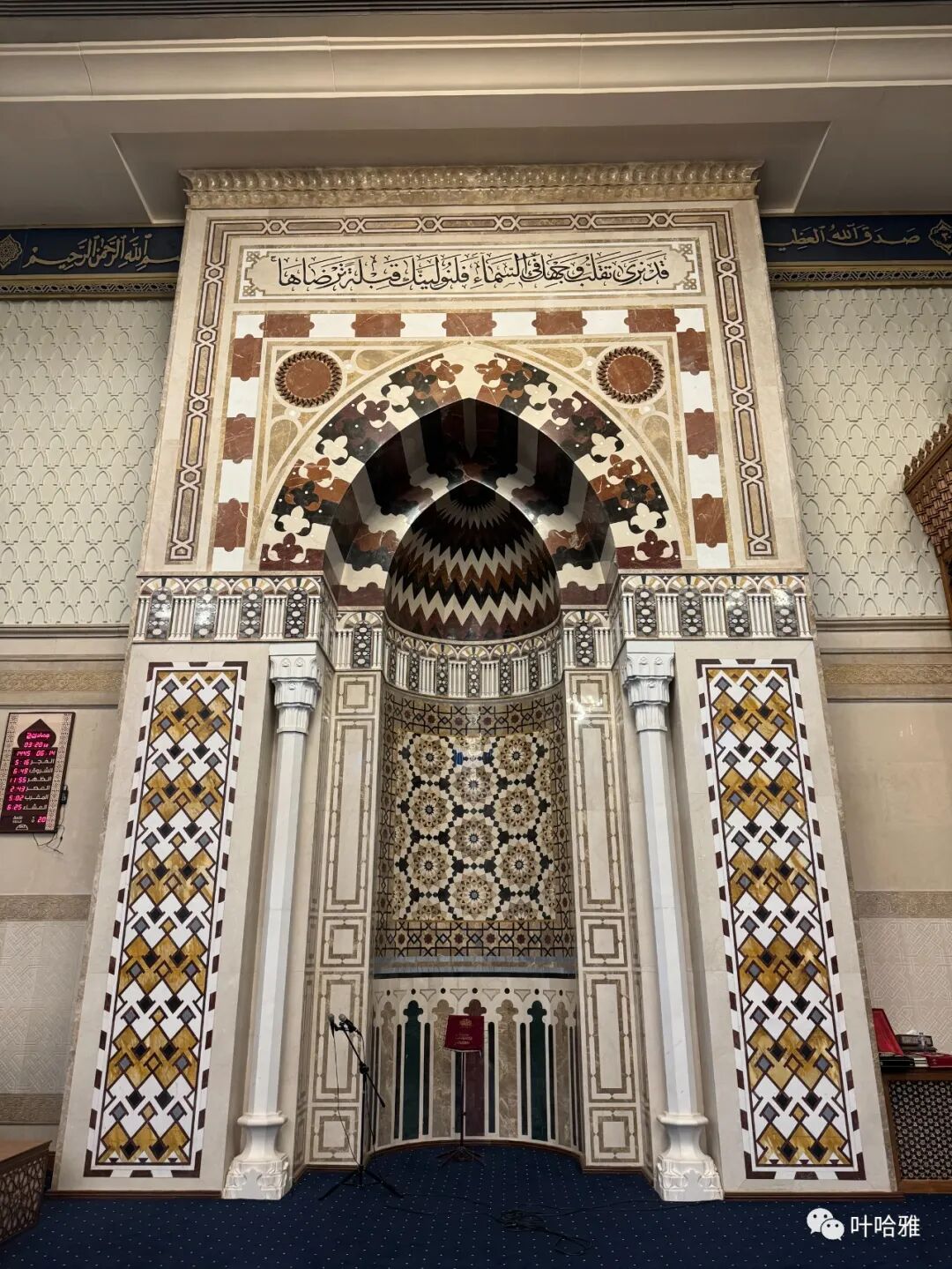
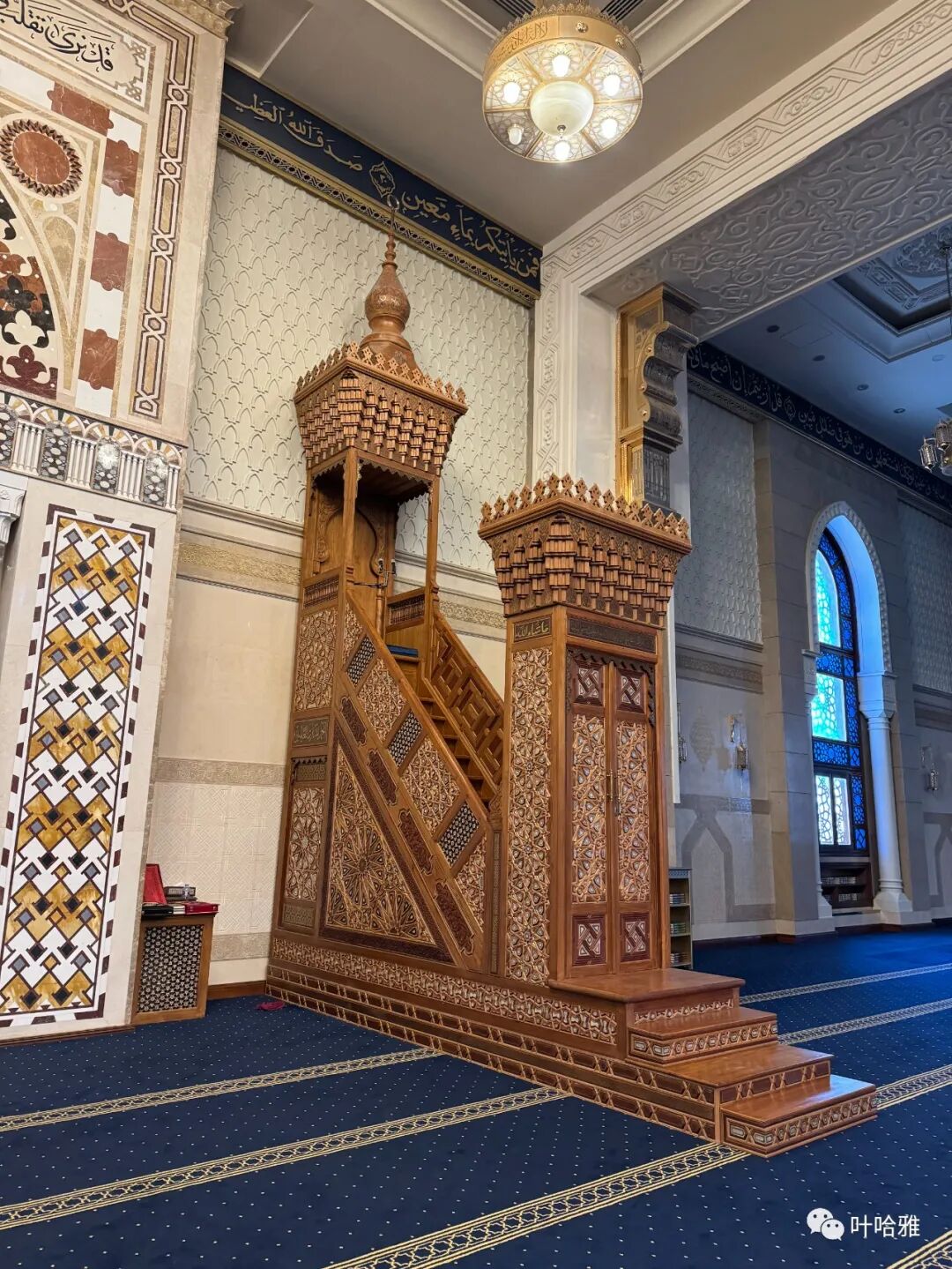
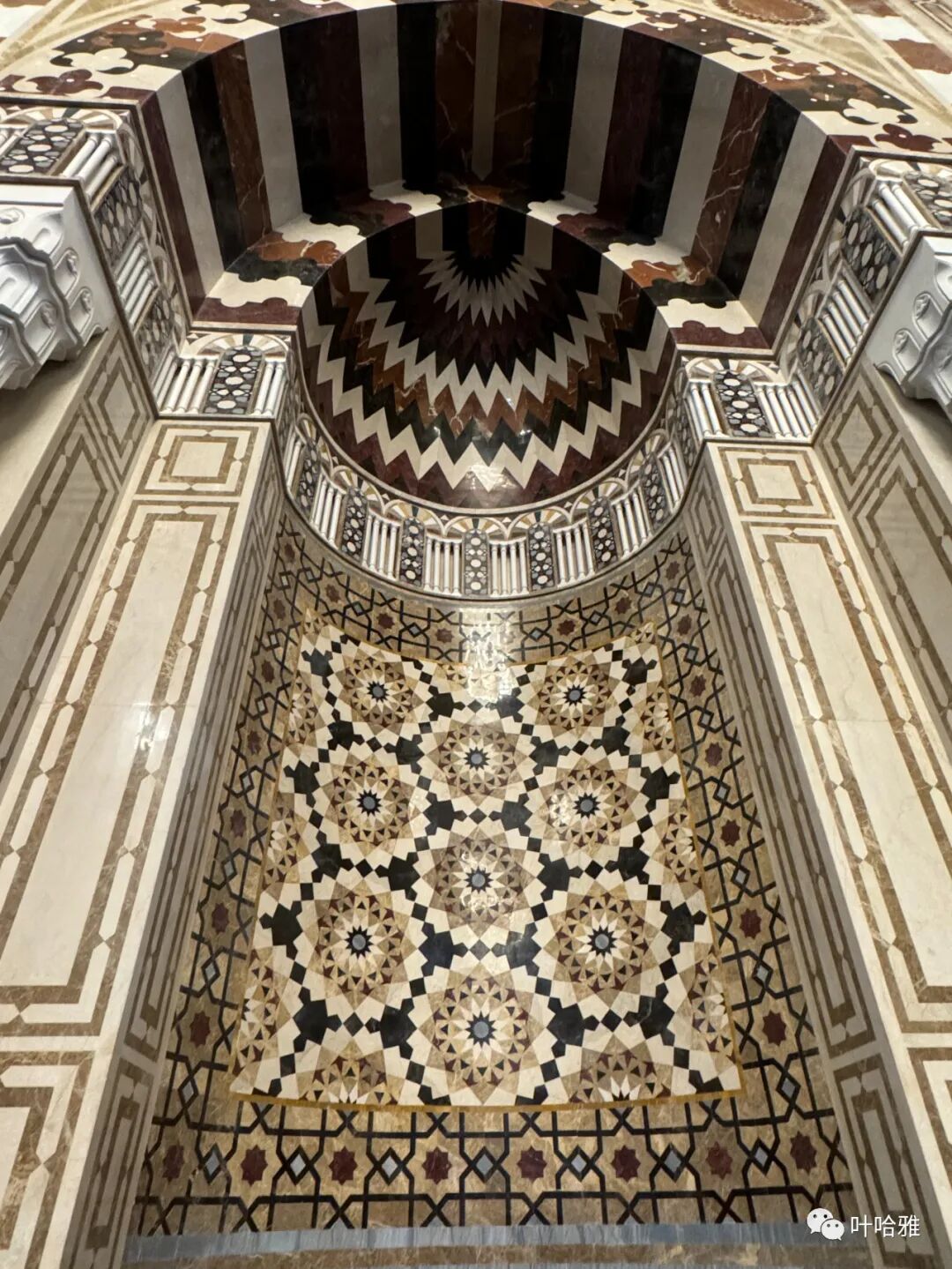
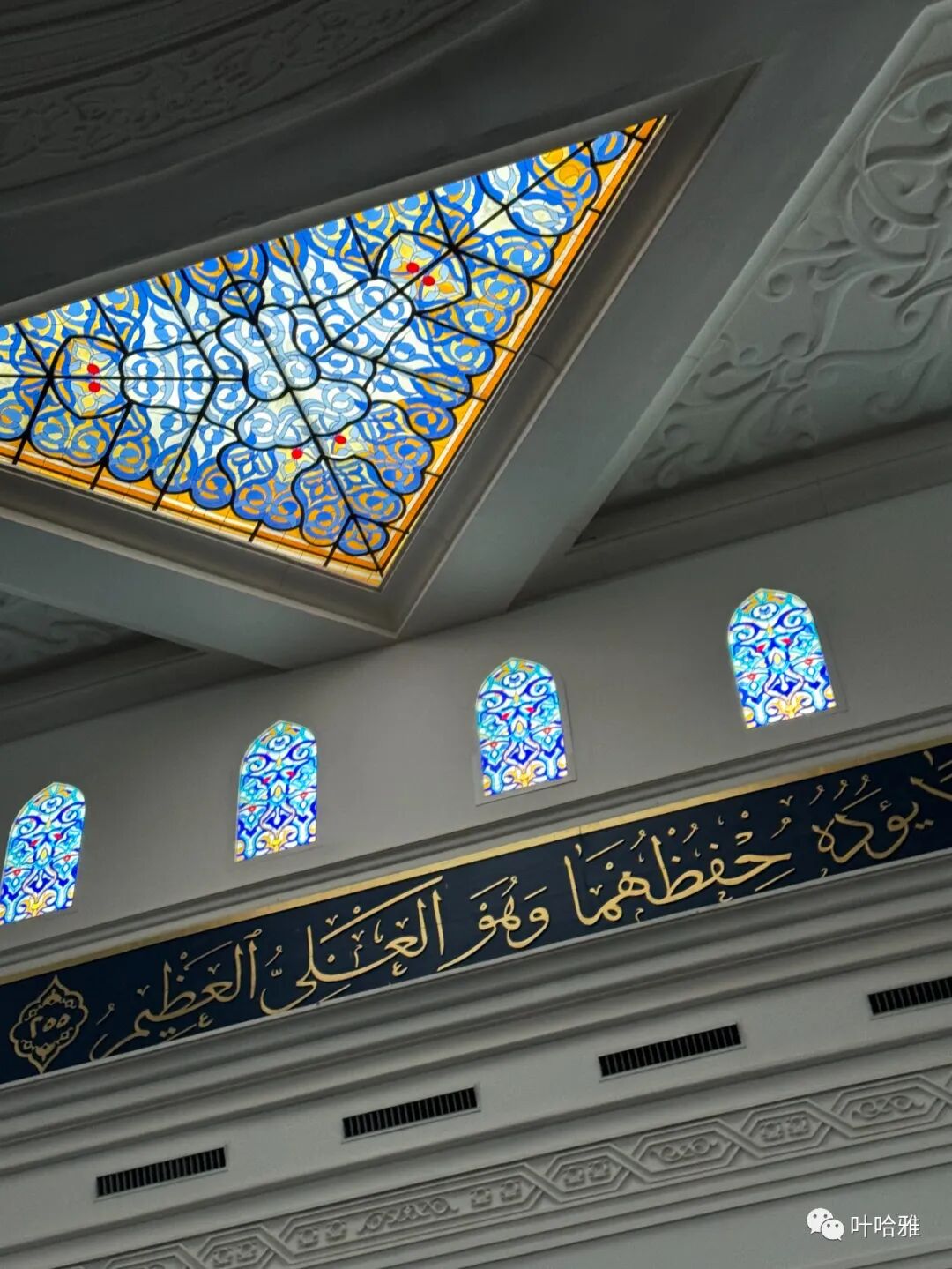
Sulayman Agha al-Silahdar Mosque
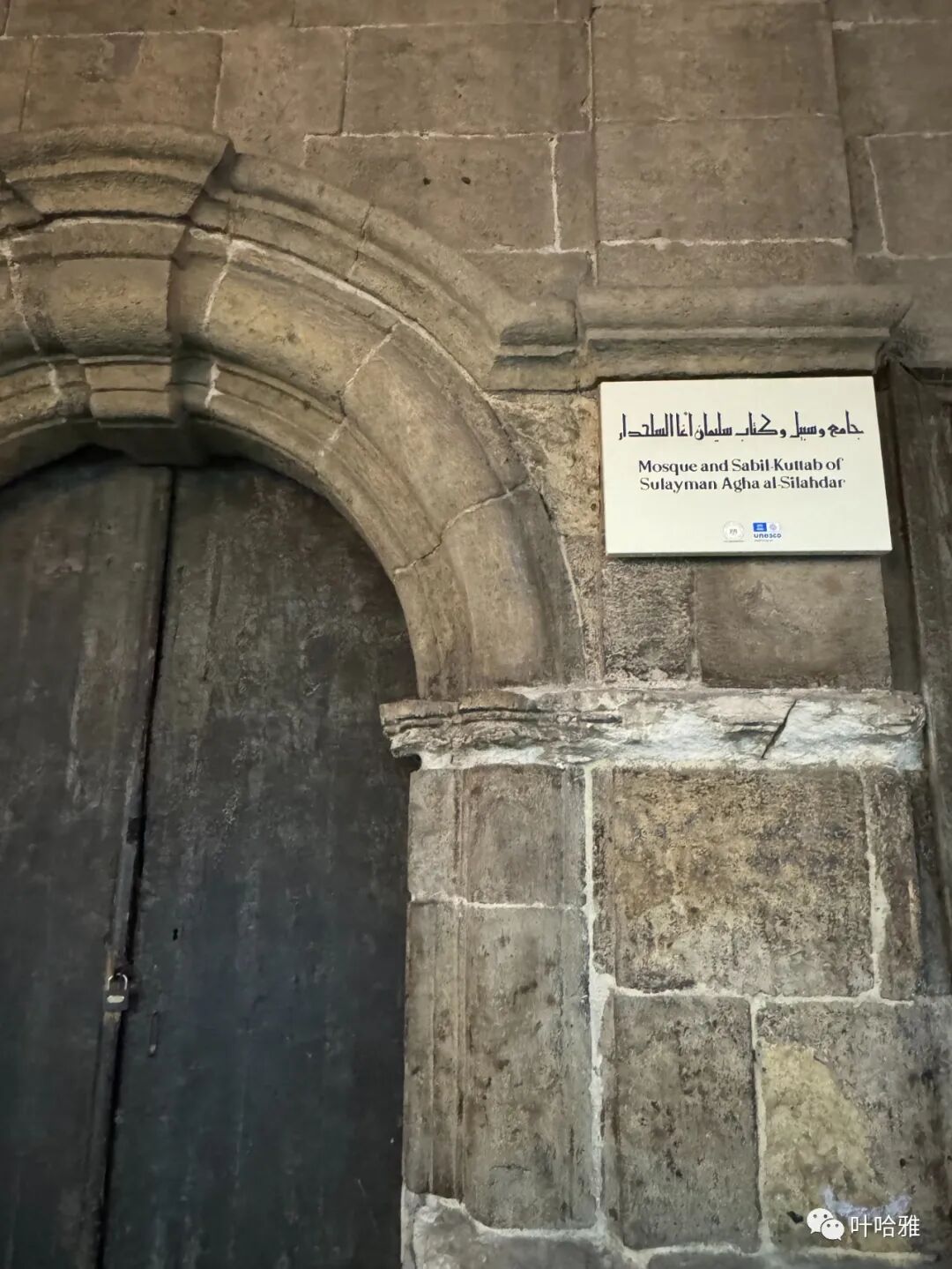
This mosque was built in 1839 in the Ottoman style. The carvings inside copy architecture from the European Renaissance.
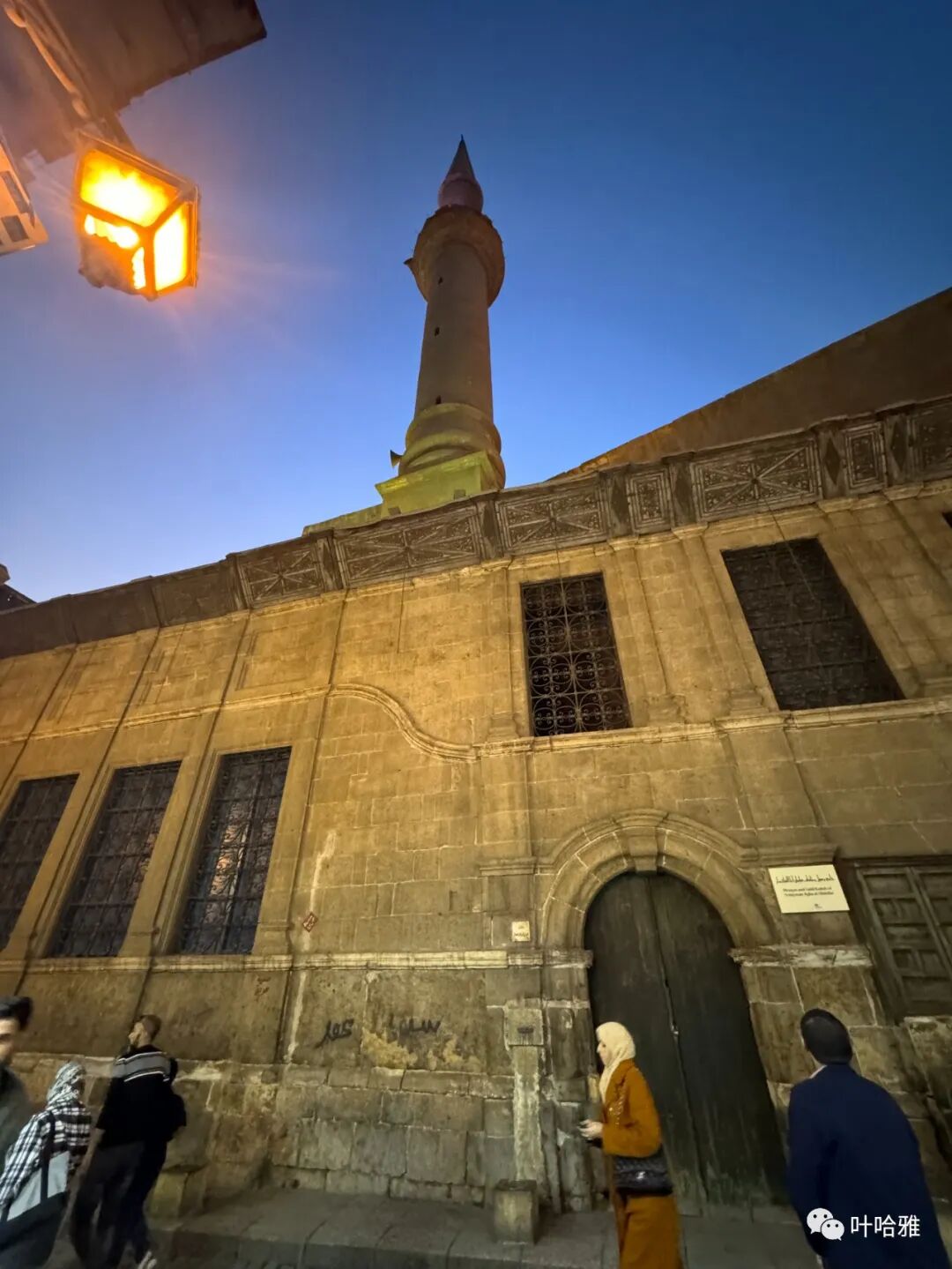
The mosque is located on a busy street in the old city. It stands in sharp contrast to the bustling crowds outside, as the inside is very quiet and only a few people come for prayer.
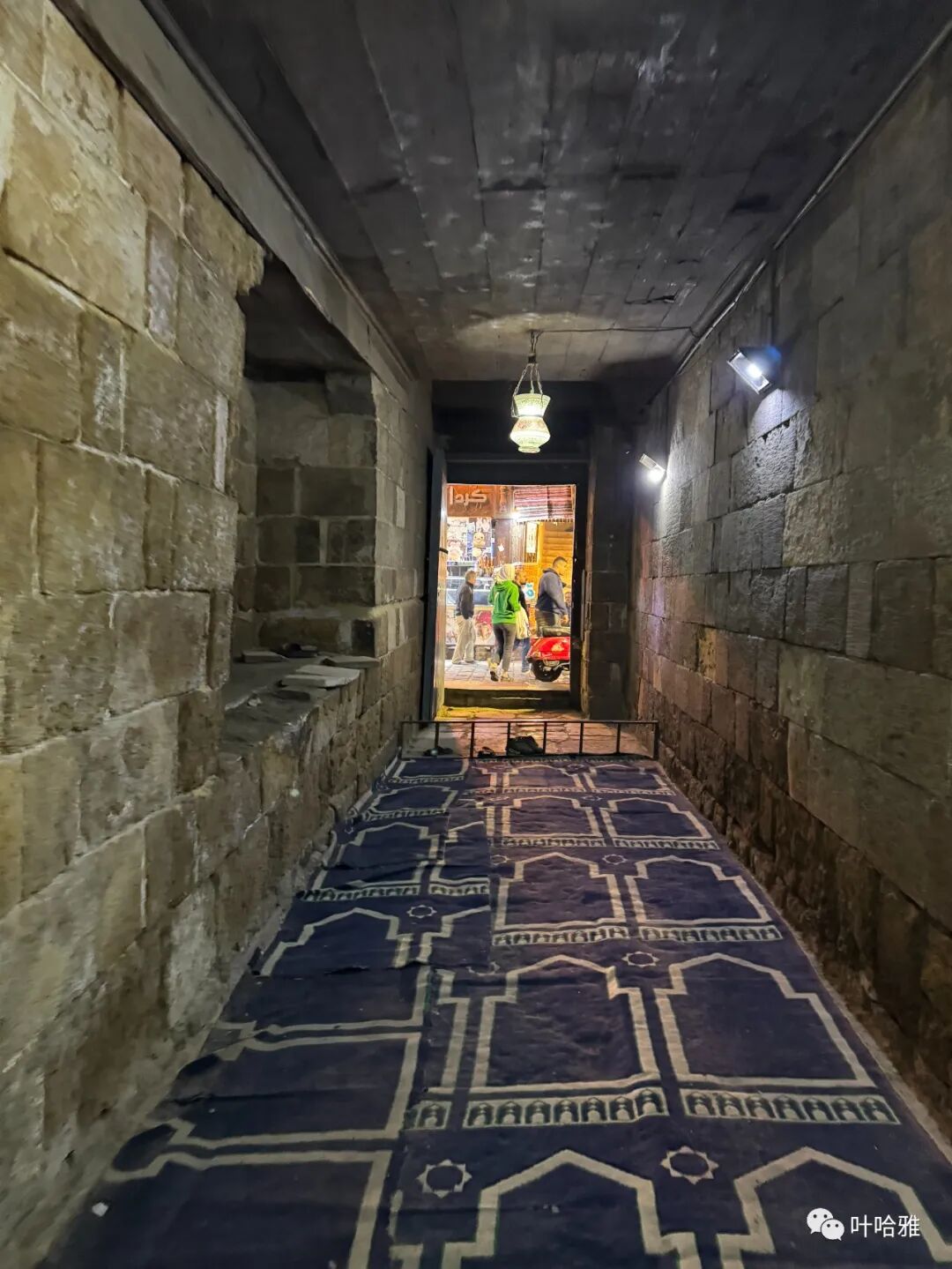
Walk through this passage and enter the main hall on the second floor. It feels like a dark medieval castle inside.
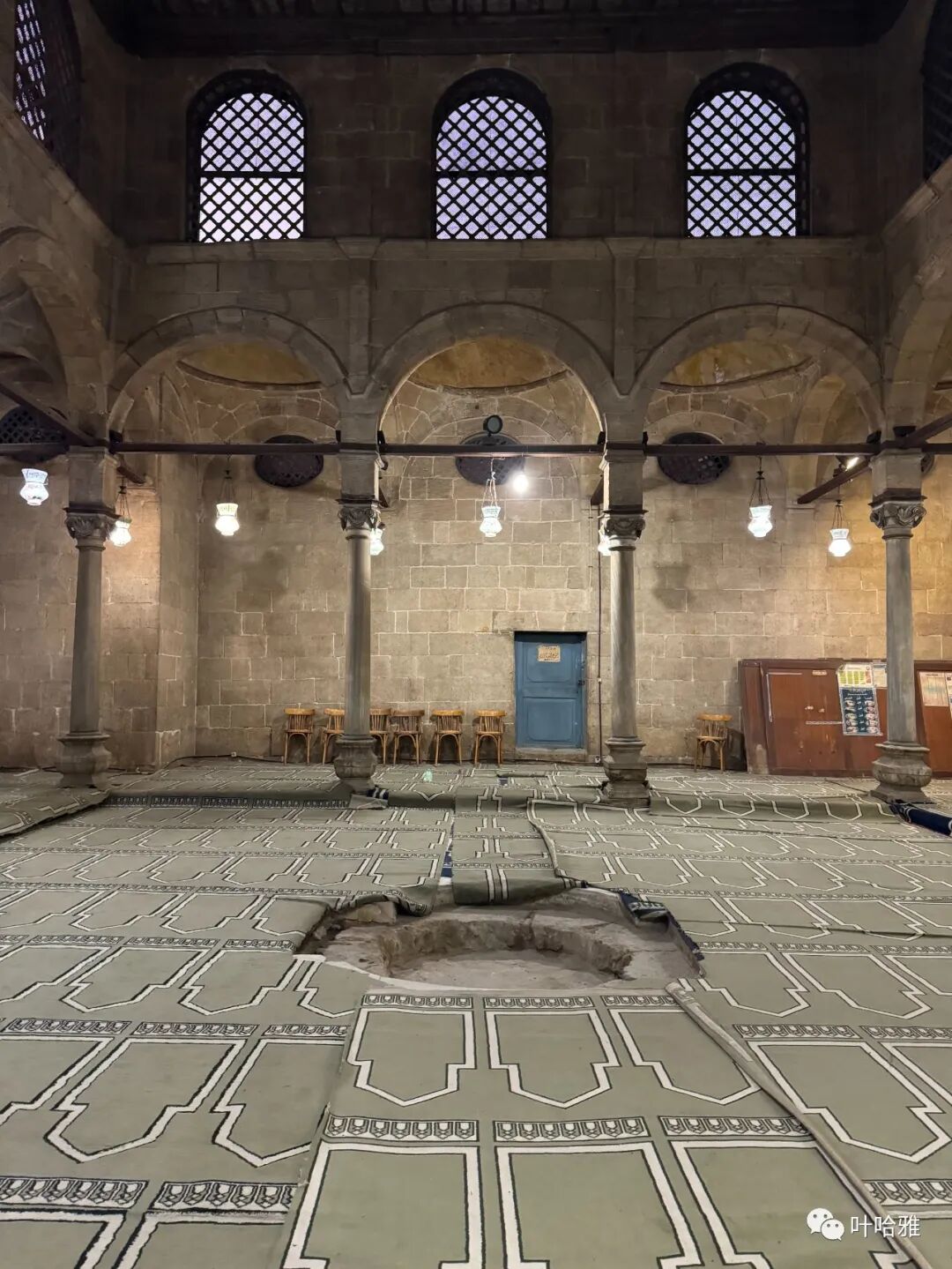
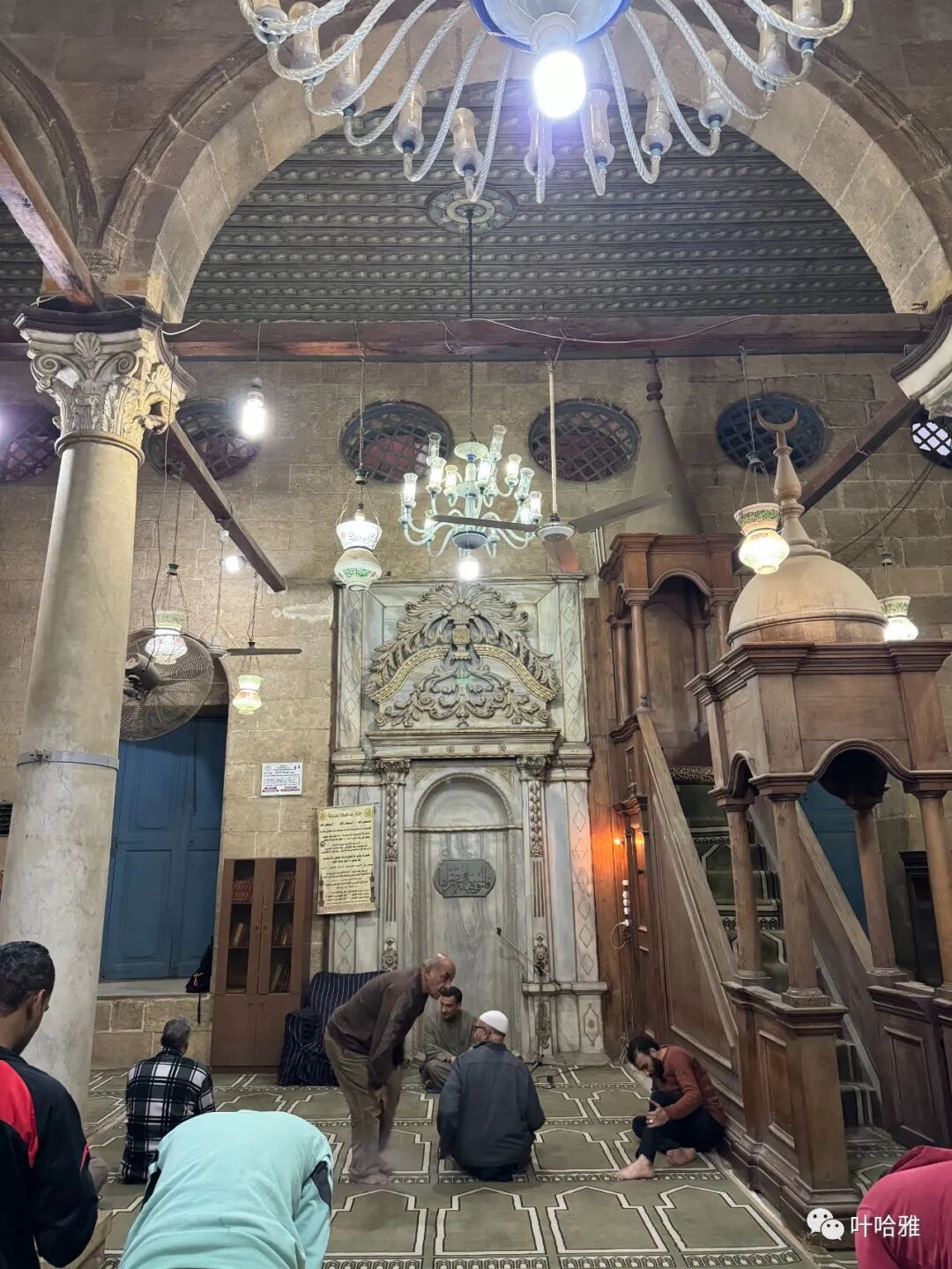
Al-Hakim Mosque
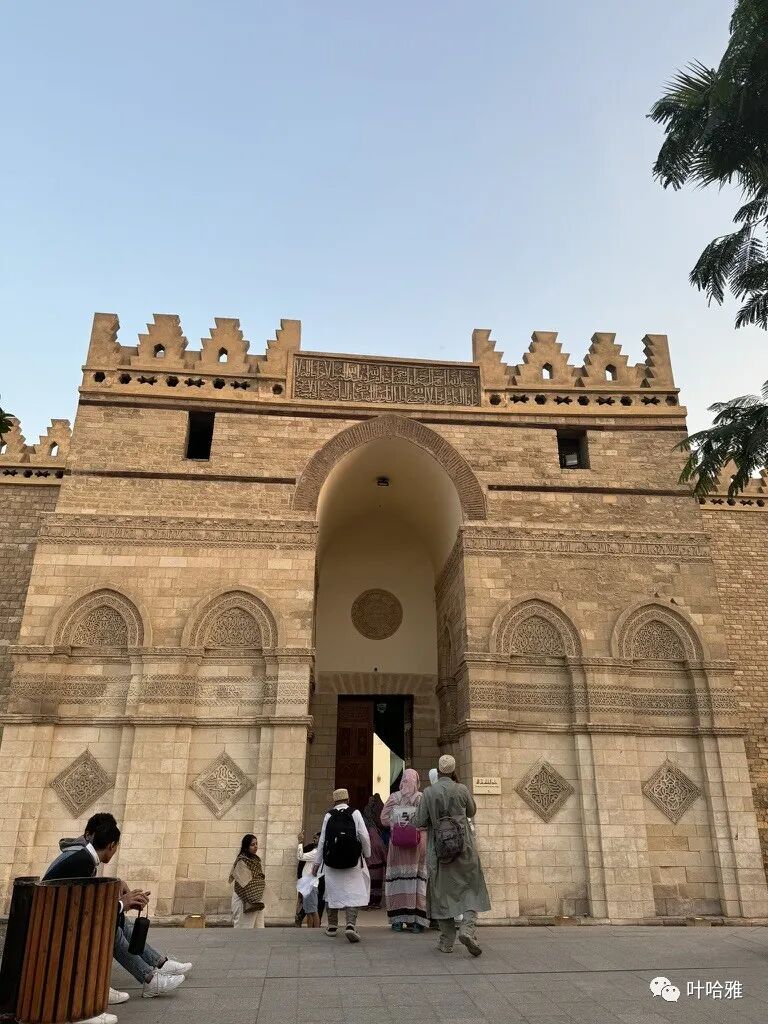
This mosque was completed in 1013 and named after the sixth Fatimid caliph. The main gate features Kufic script left from that time.
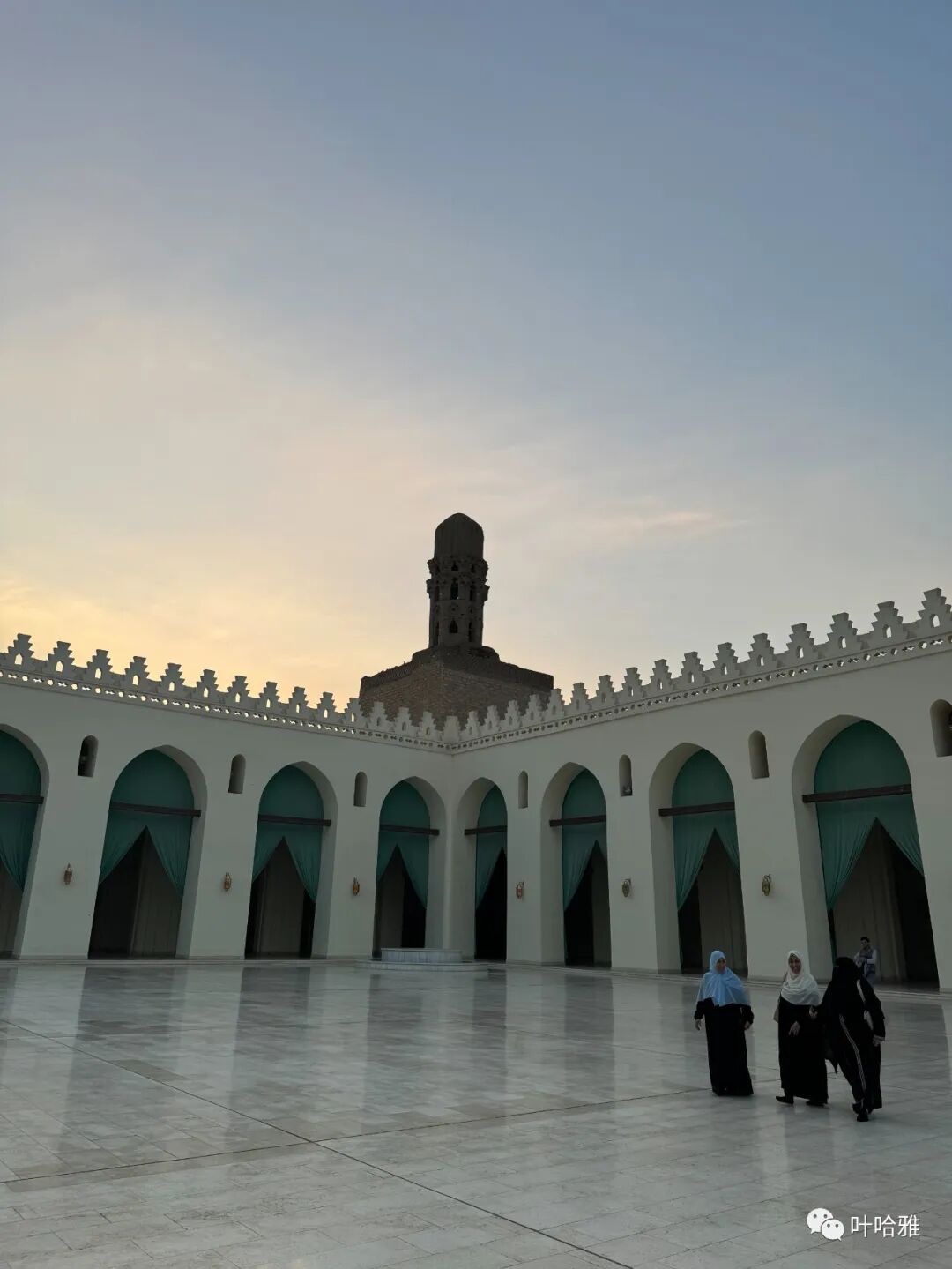
Over the centuries, this mosque was renovated and closed several times until it finally reopened in 1980.
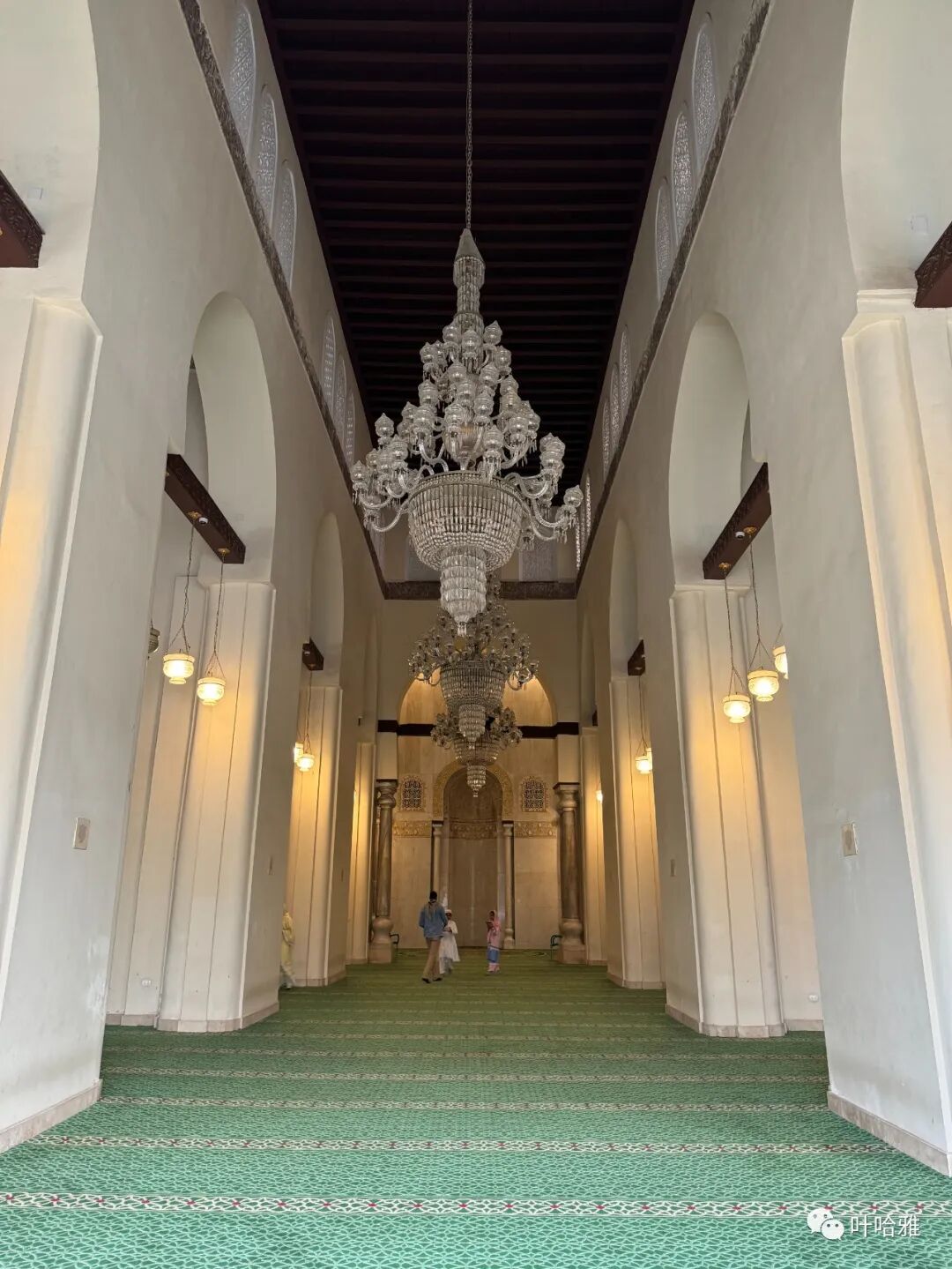
The architectural style is similar to Al-Azhar, but it is more than twice the size.
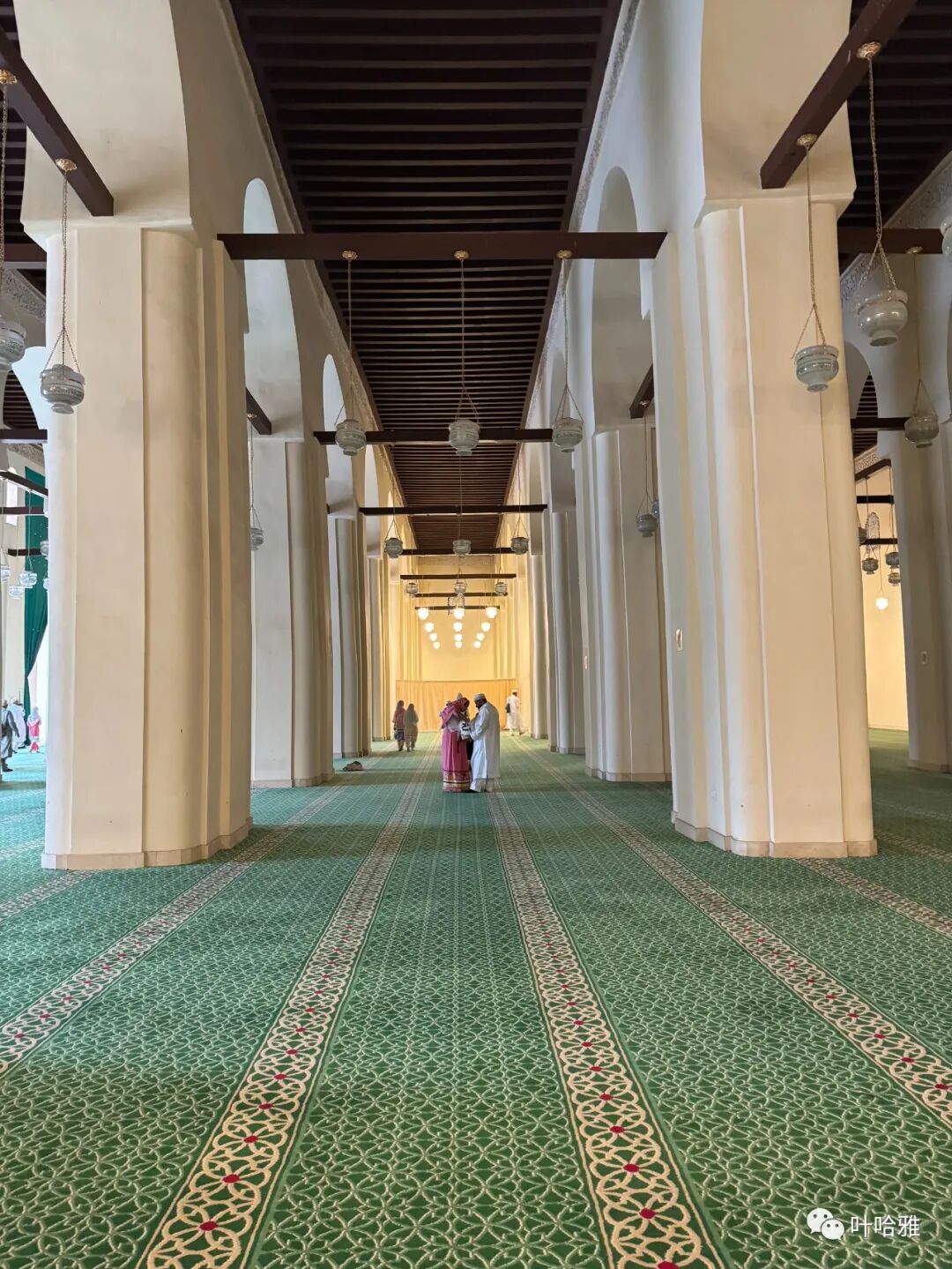
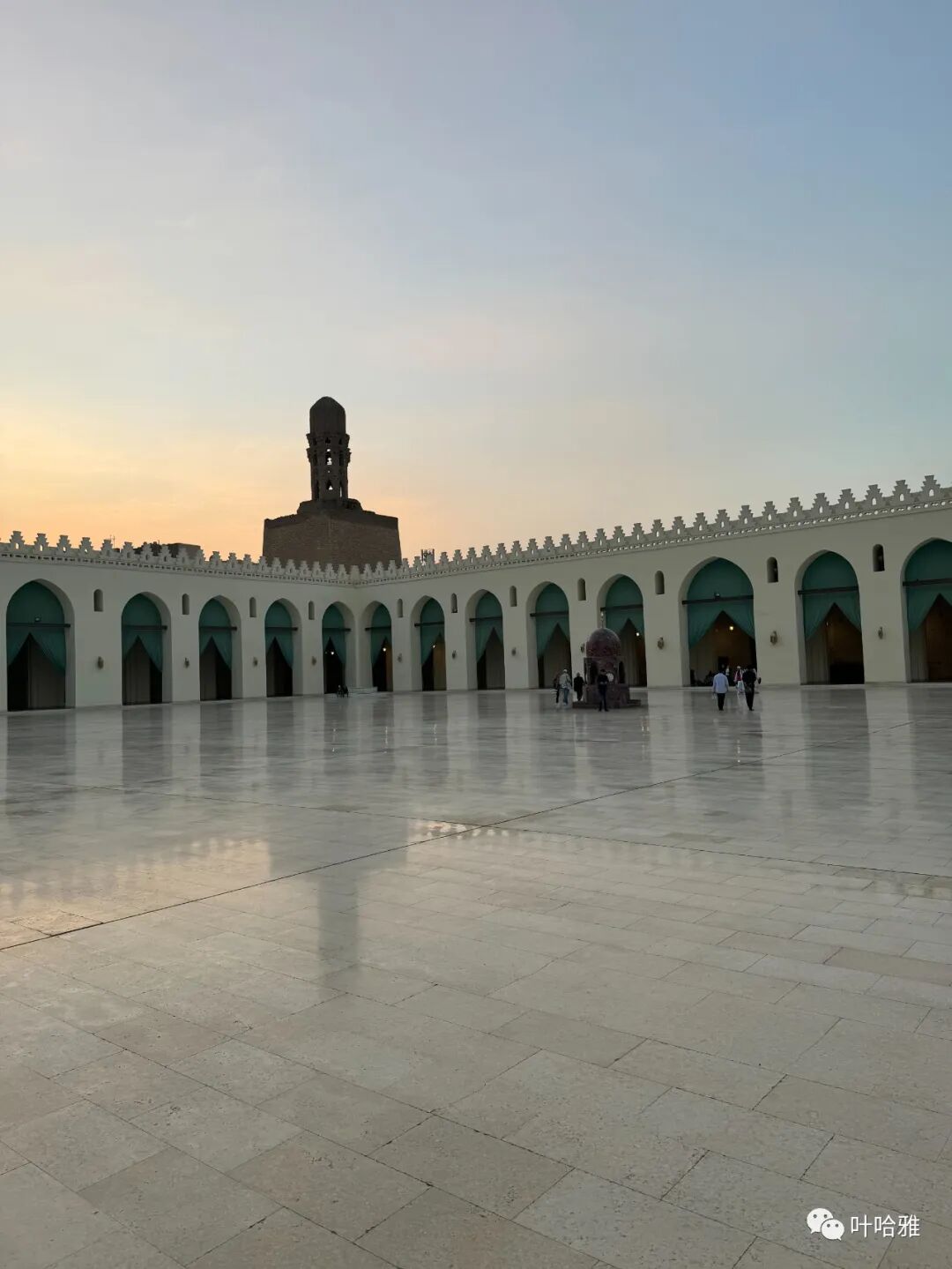
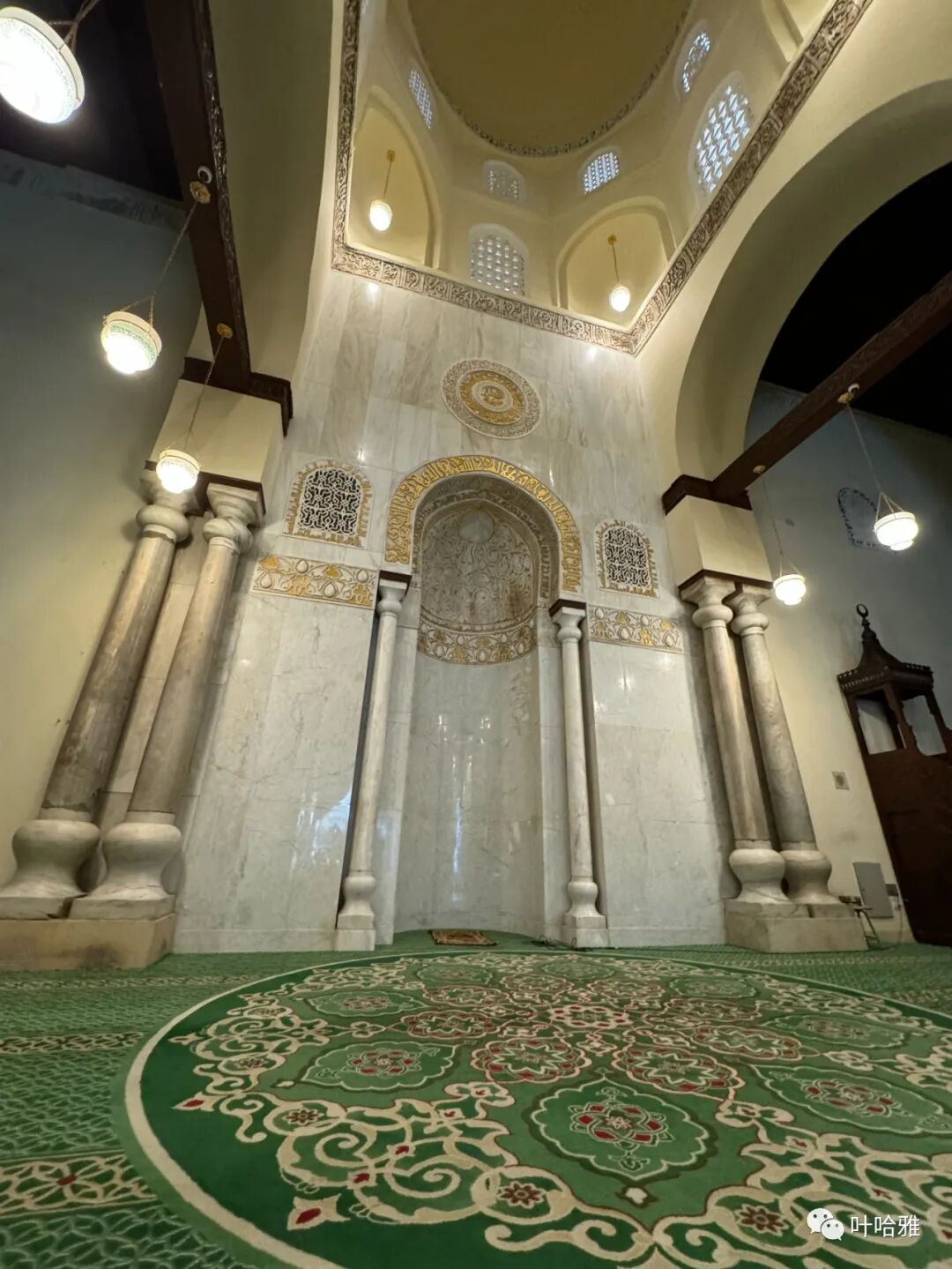
Sultan Barquq Mosque
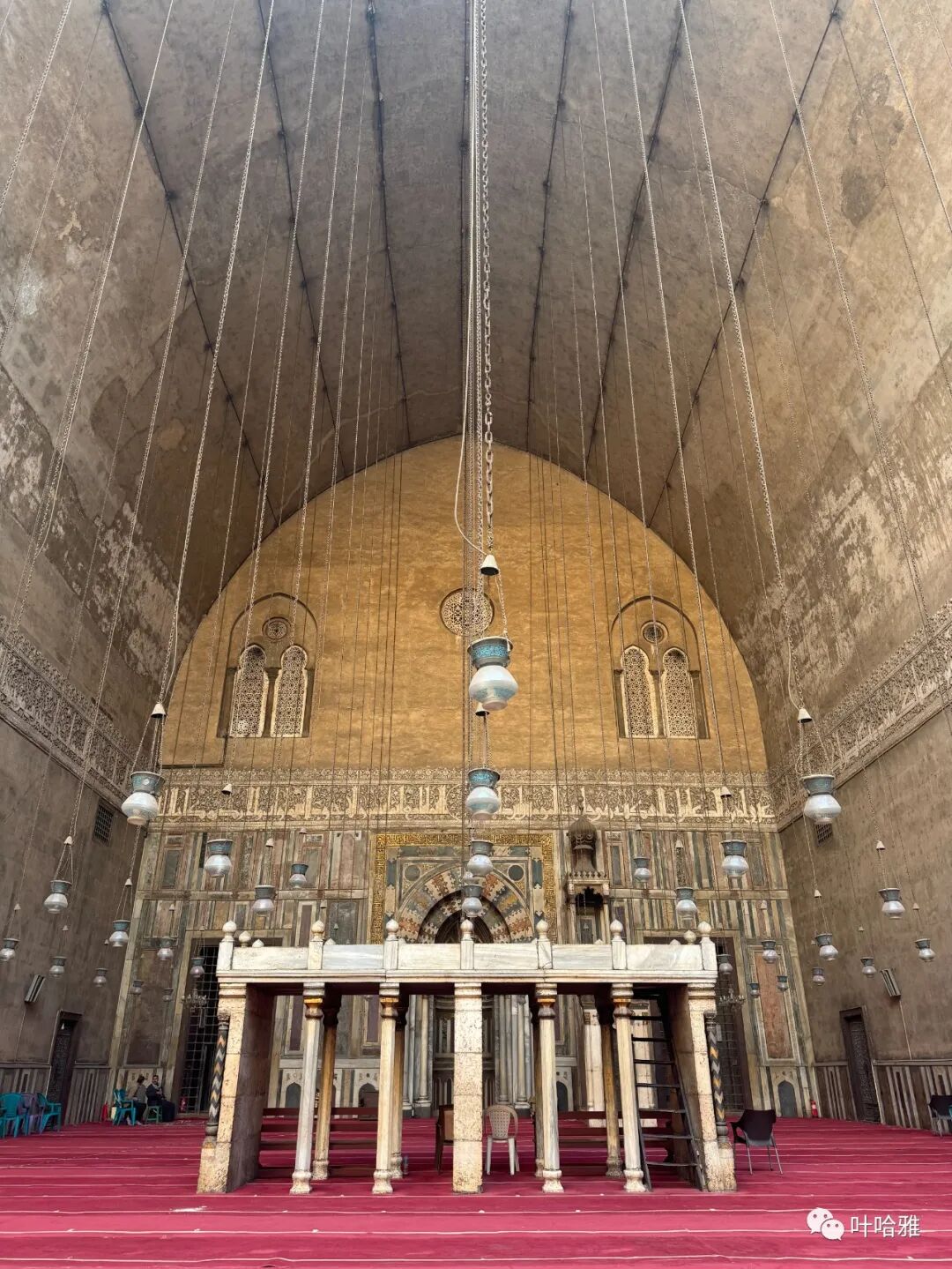
You need to buy a ticket to enter this mosque, and you can buy a combined ticket with the Al-Refaei Mosque. Also, you have to tip when you store your shoes inside.
Located in the old city of Cairo, this large religious complex includes a mosque, a school, and a gongbei. It was first built in 1384. Barquq was born a slave and gained significant influence during the Mamluk period. In 1382, he deposed Sultan Hajji and declared himself king.
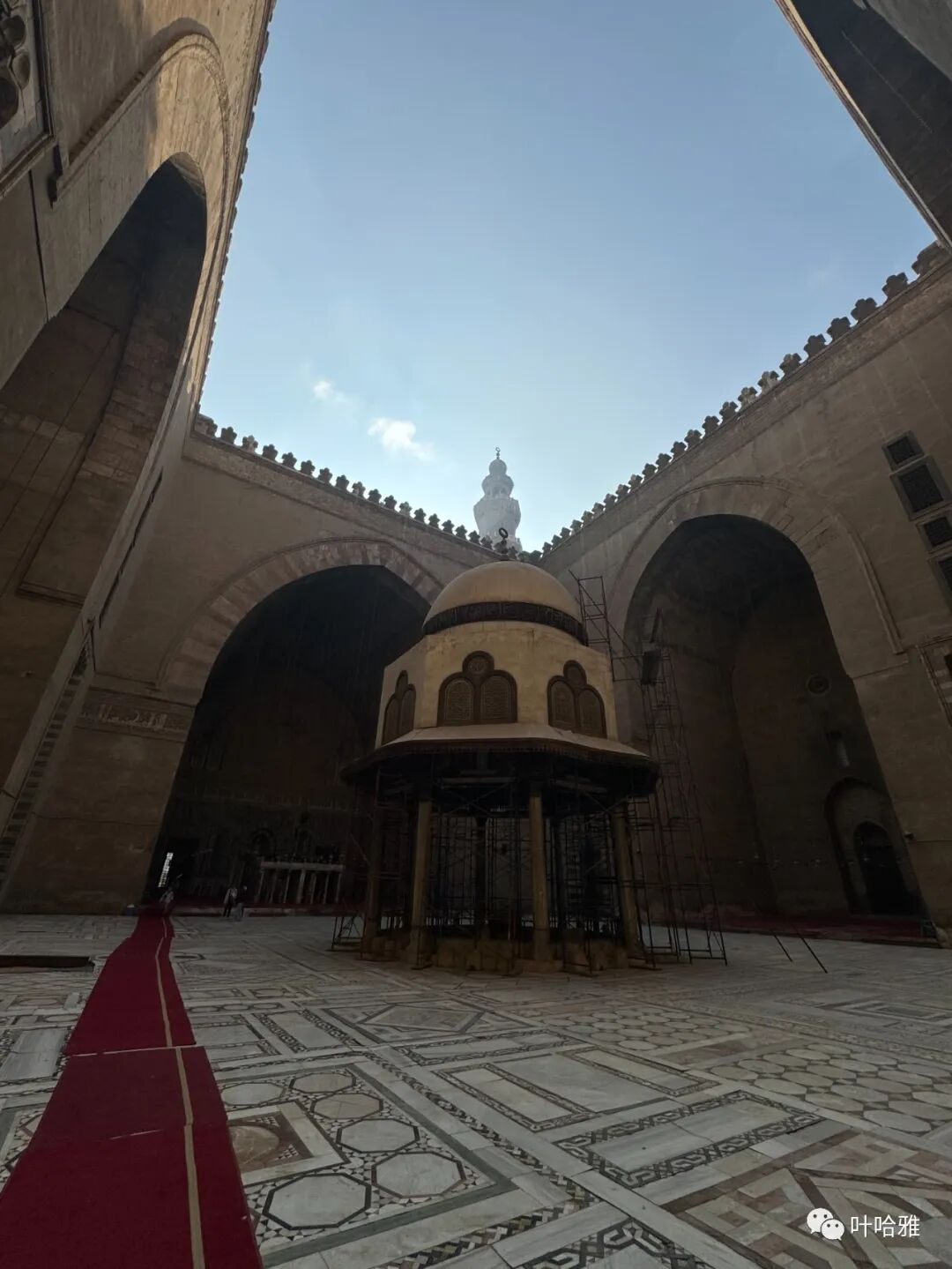
The film adaptation of Palace Walk, a work by the Egyptian Nobel laureate Mahfouz, was filmed here.
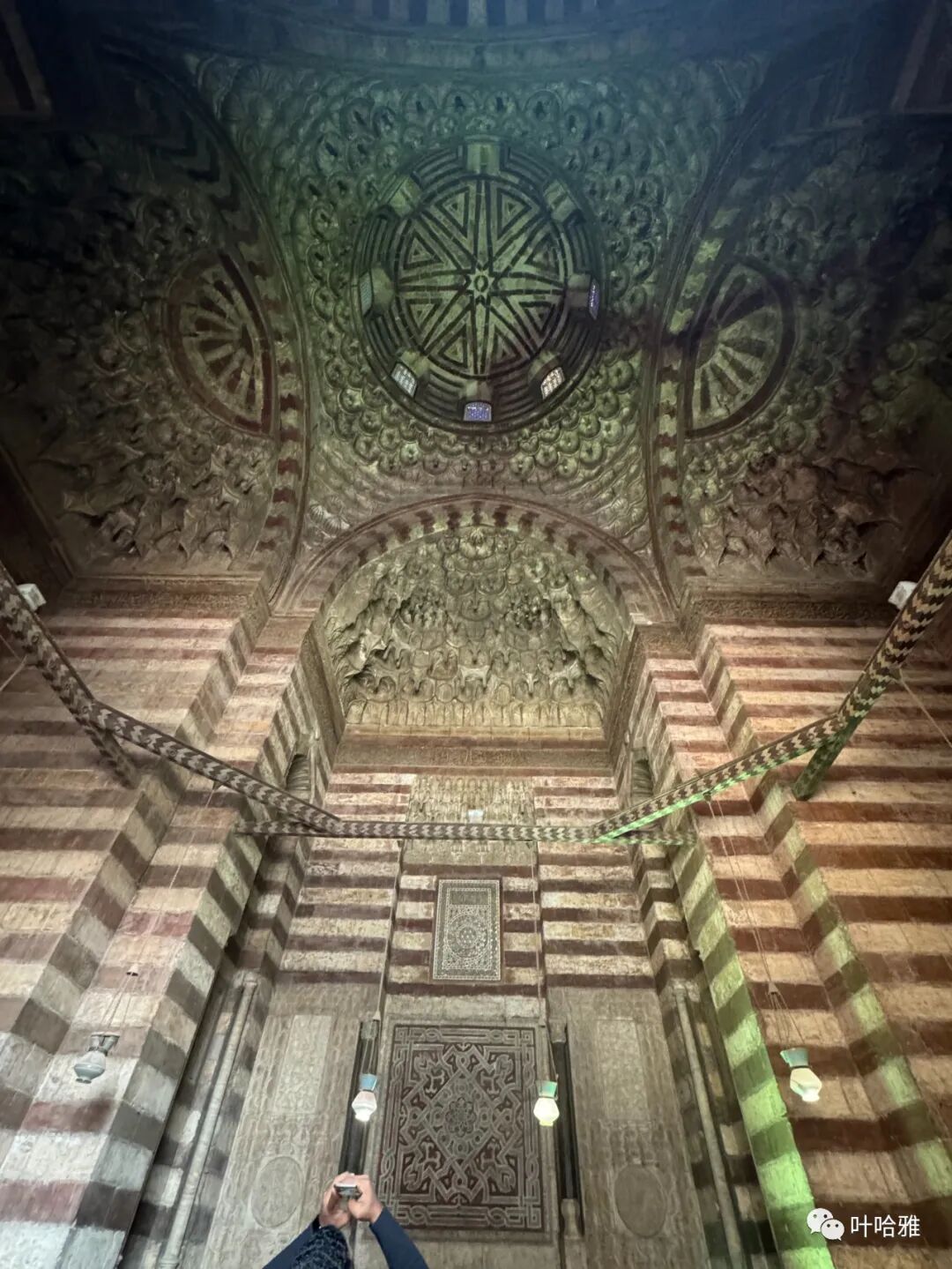
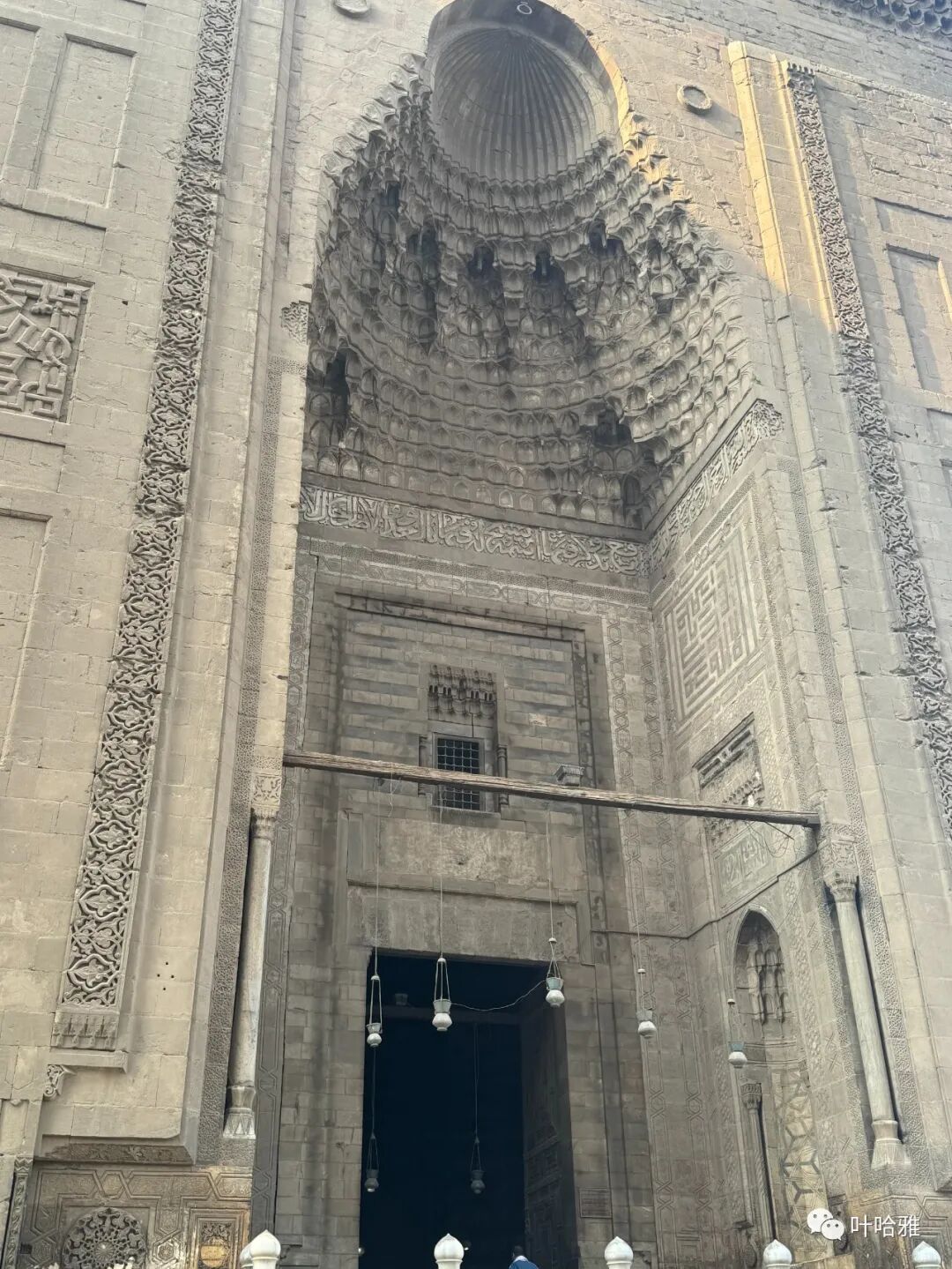
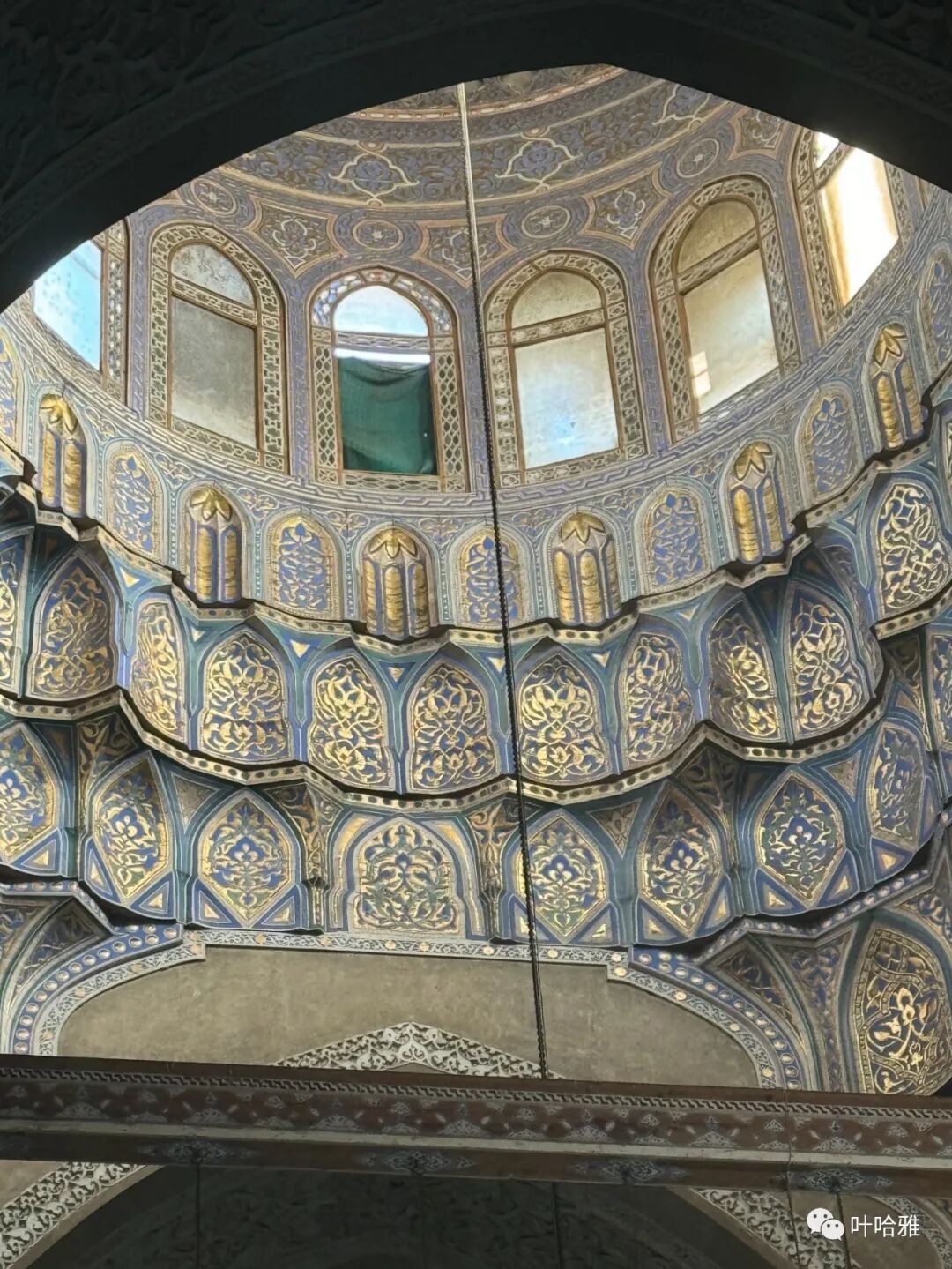
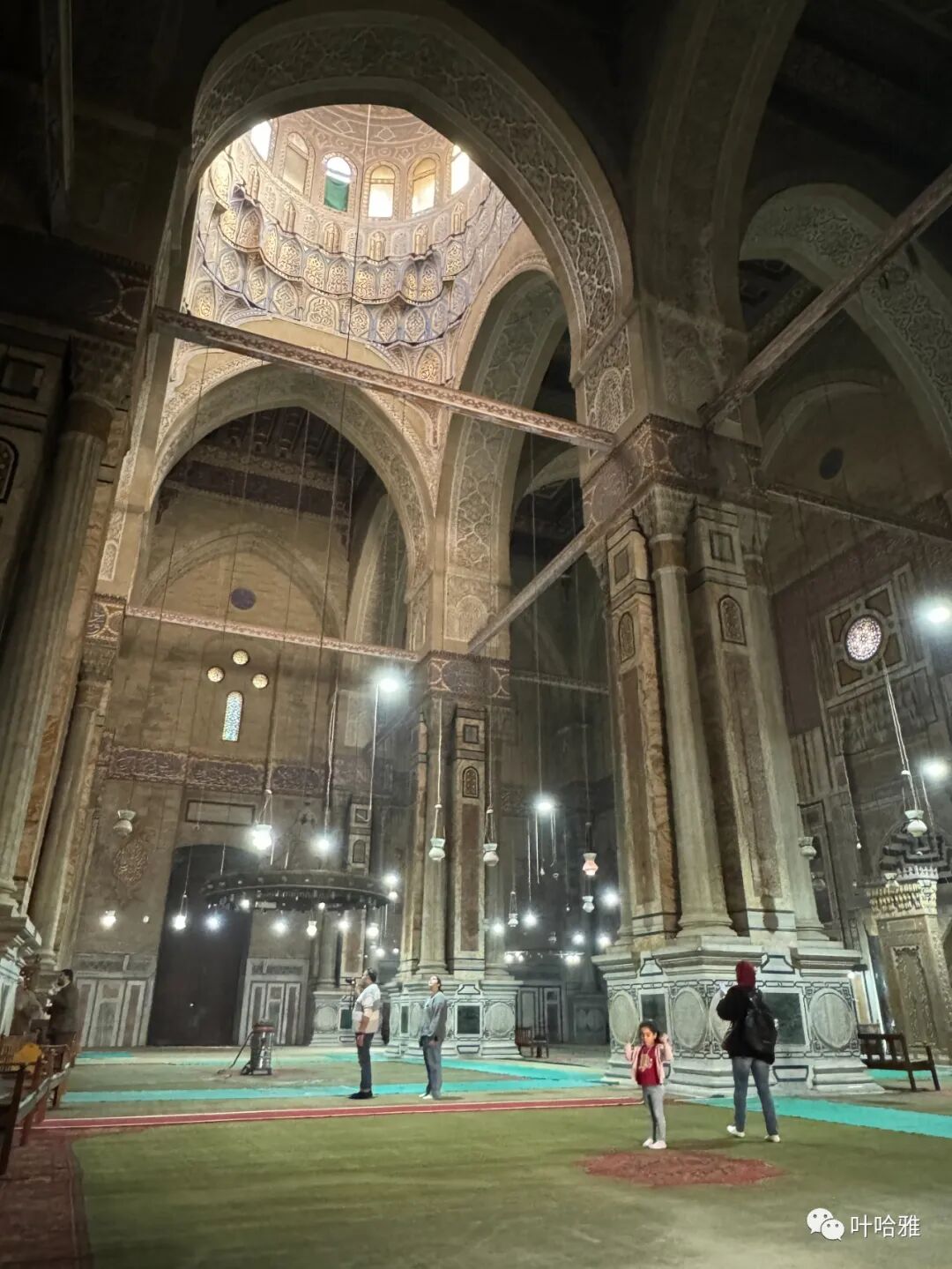
Al-Refaei Mosque
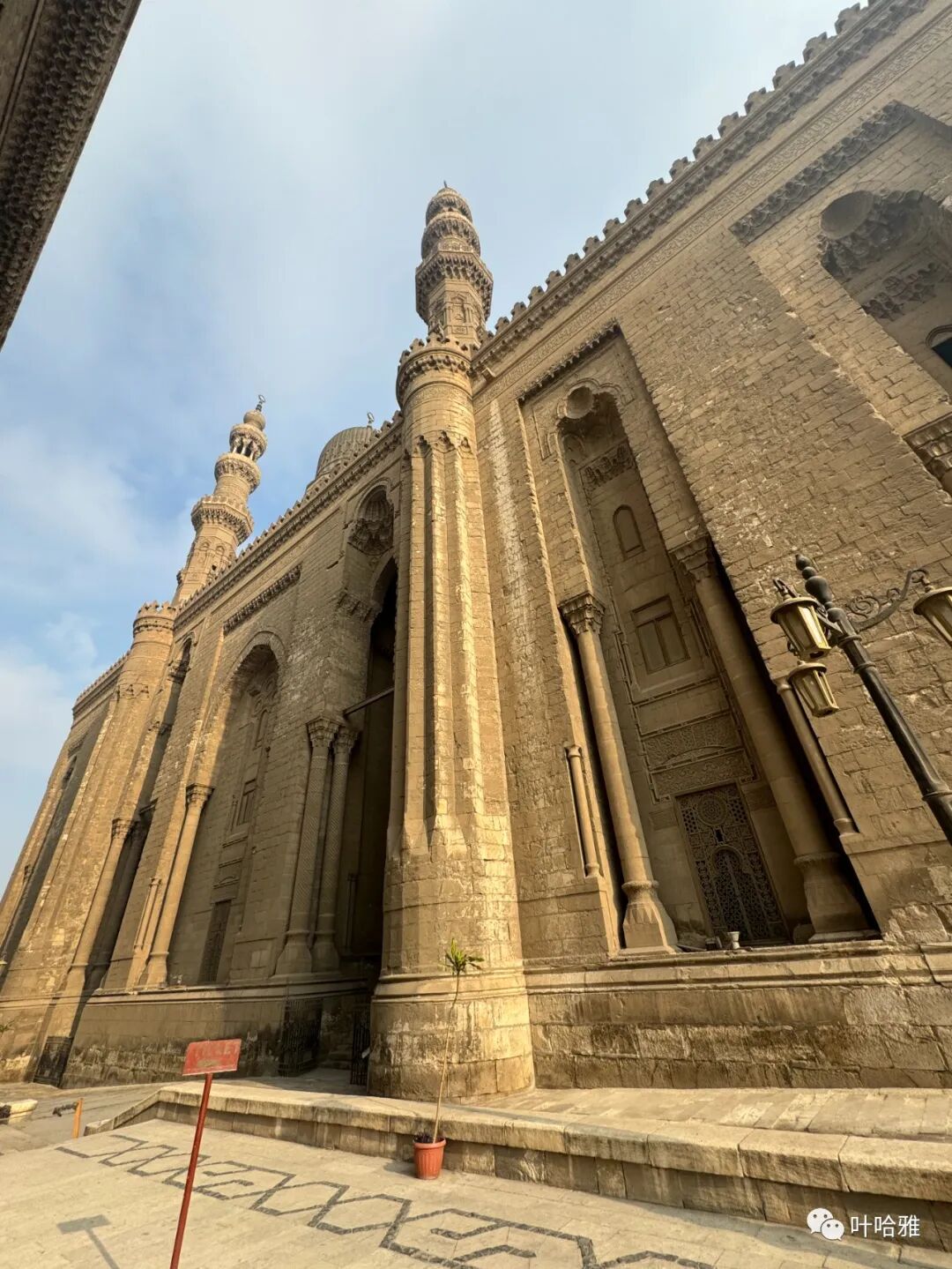
This mosque is across from the Sultan Hassan Mosque. It was first built in 1361 and contains the tombs of the Muhammad Ali family.
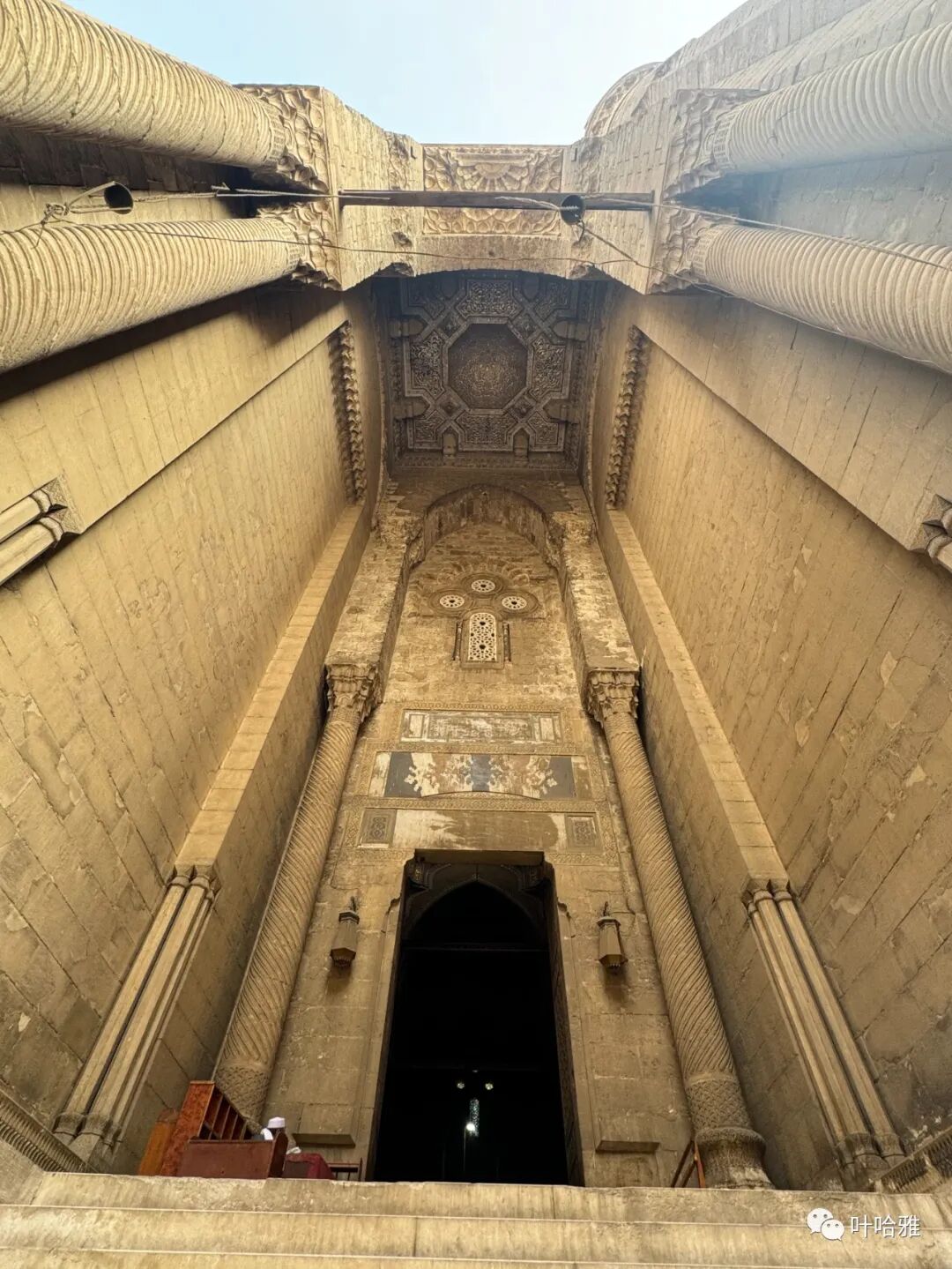
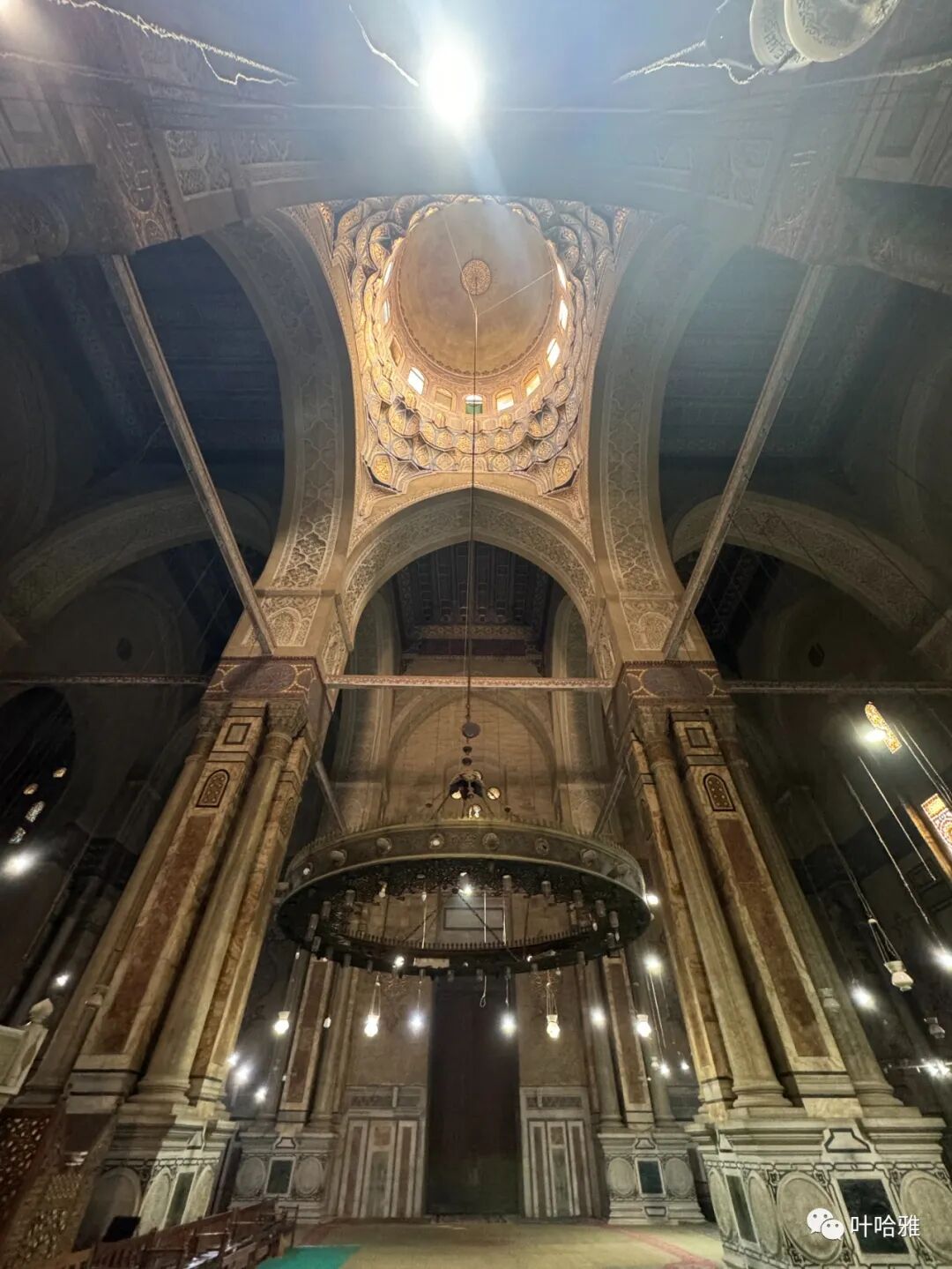
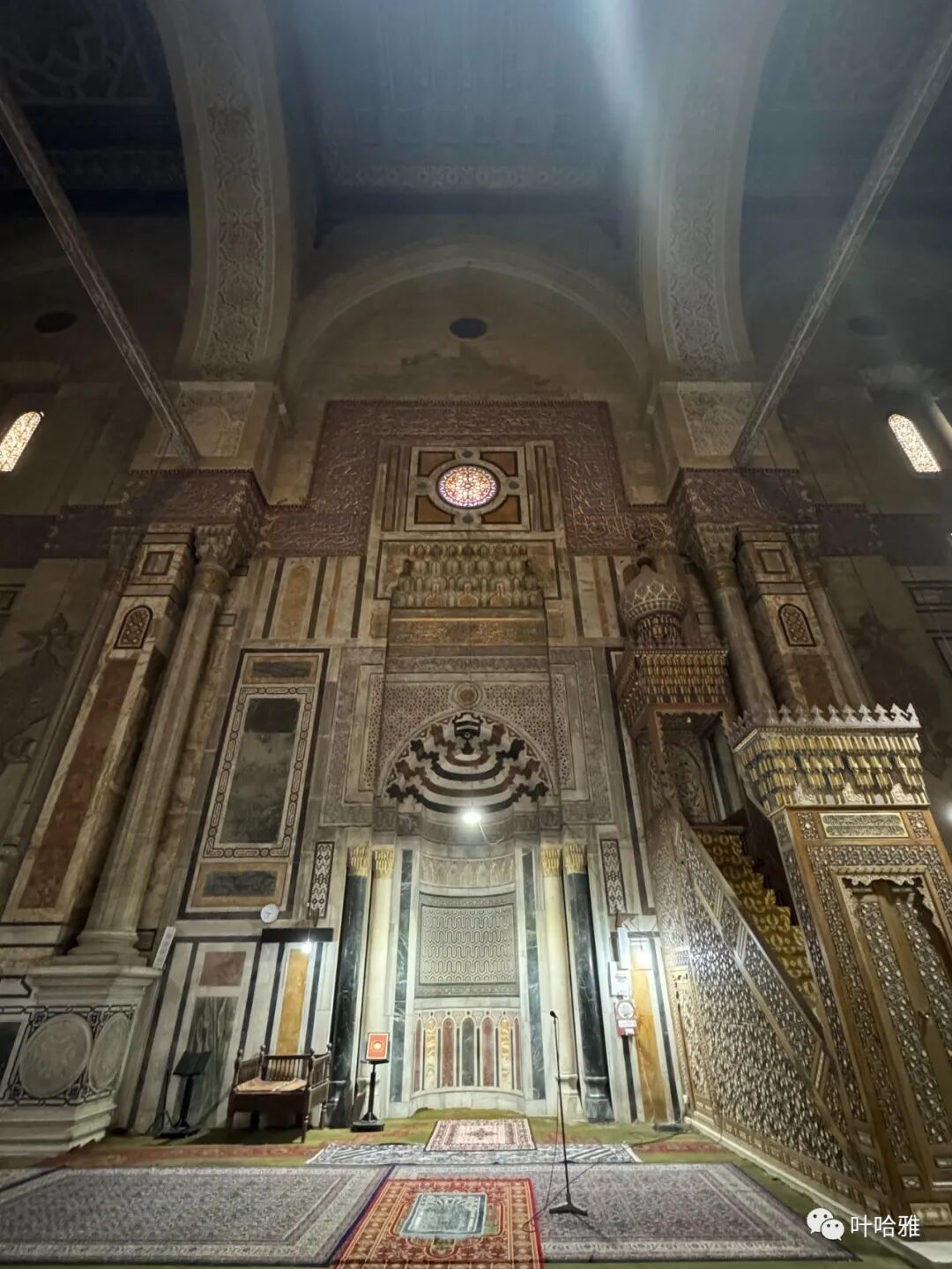
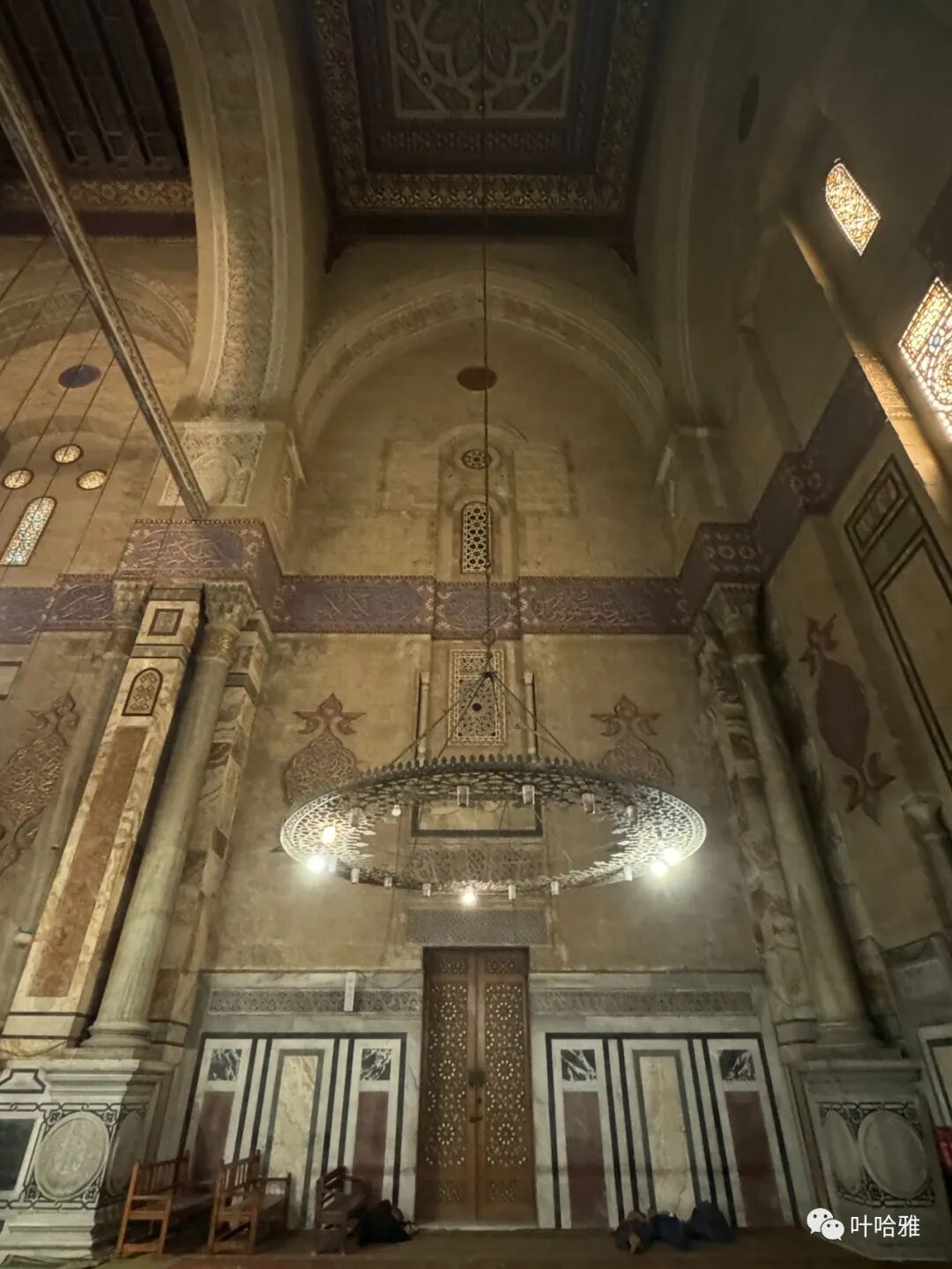
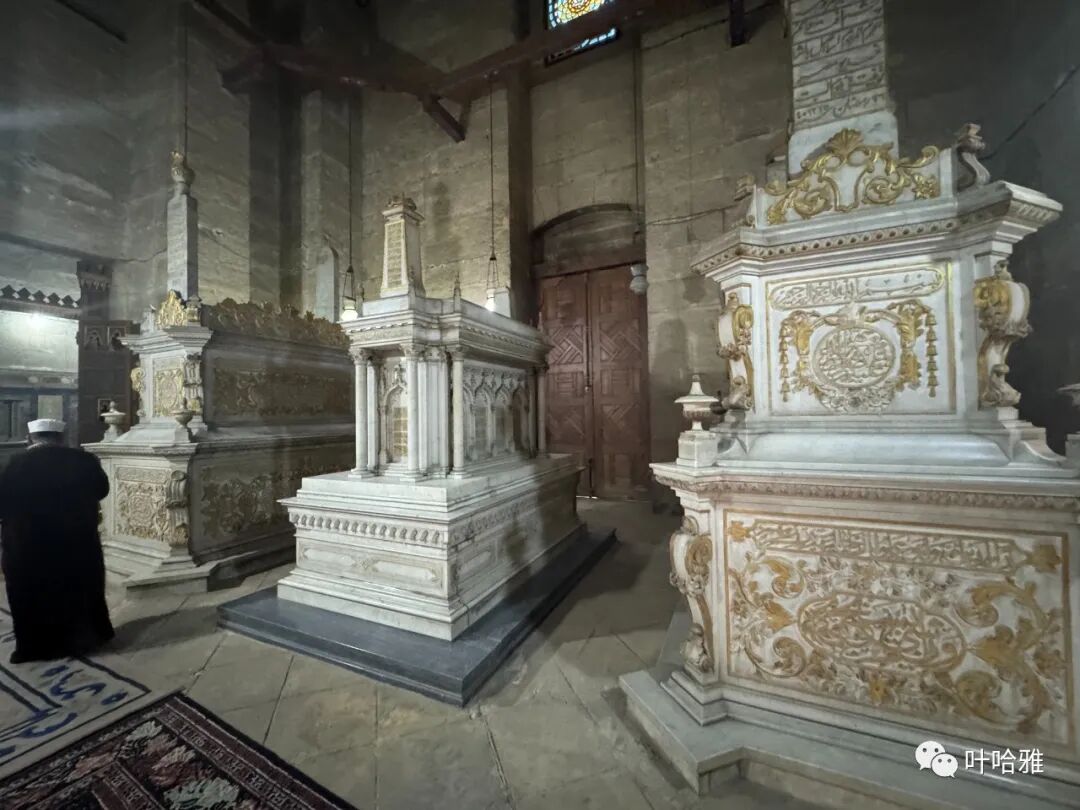
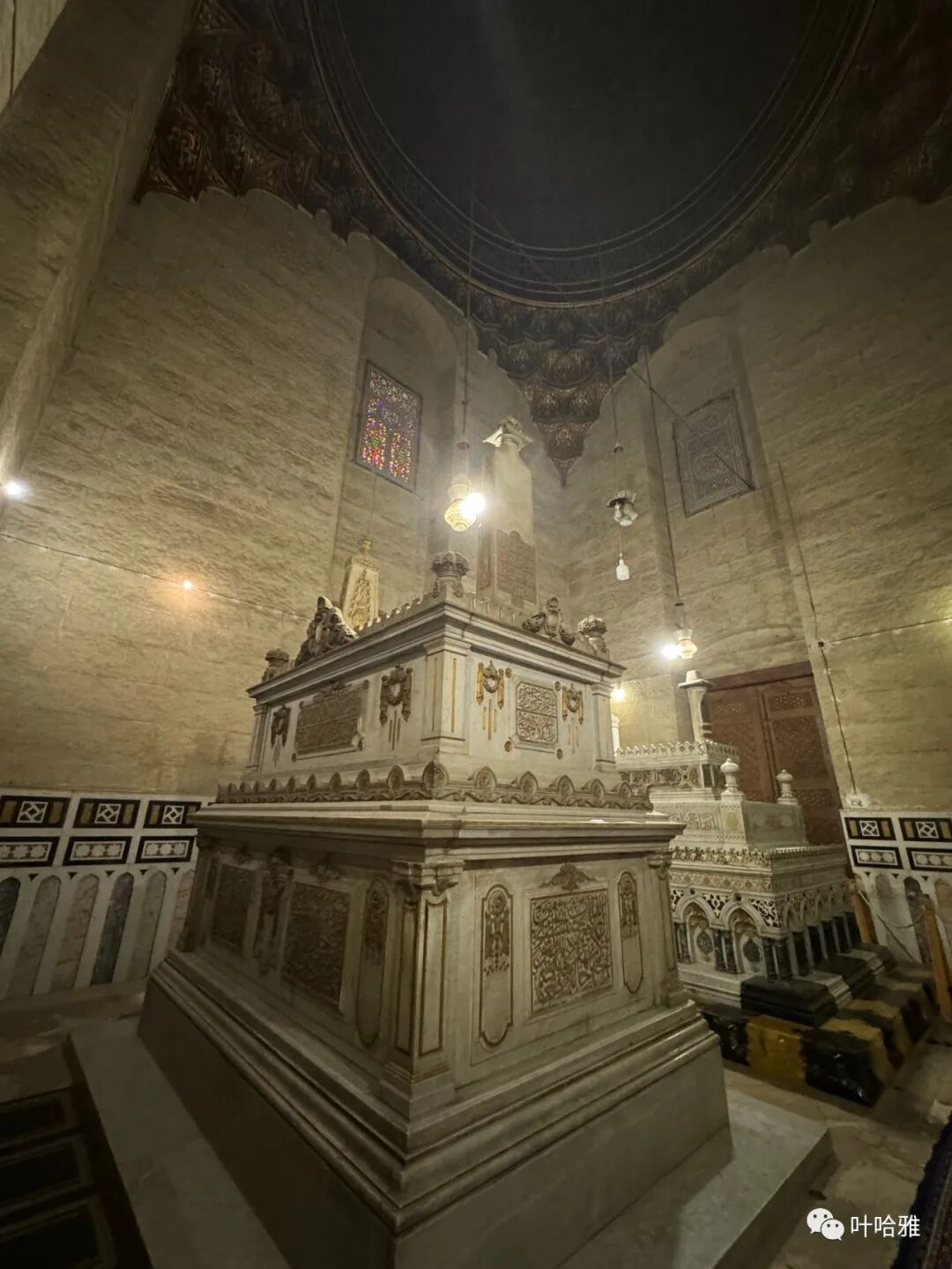
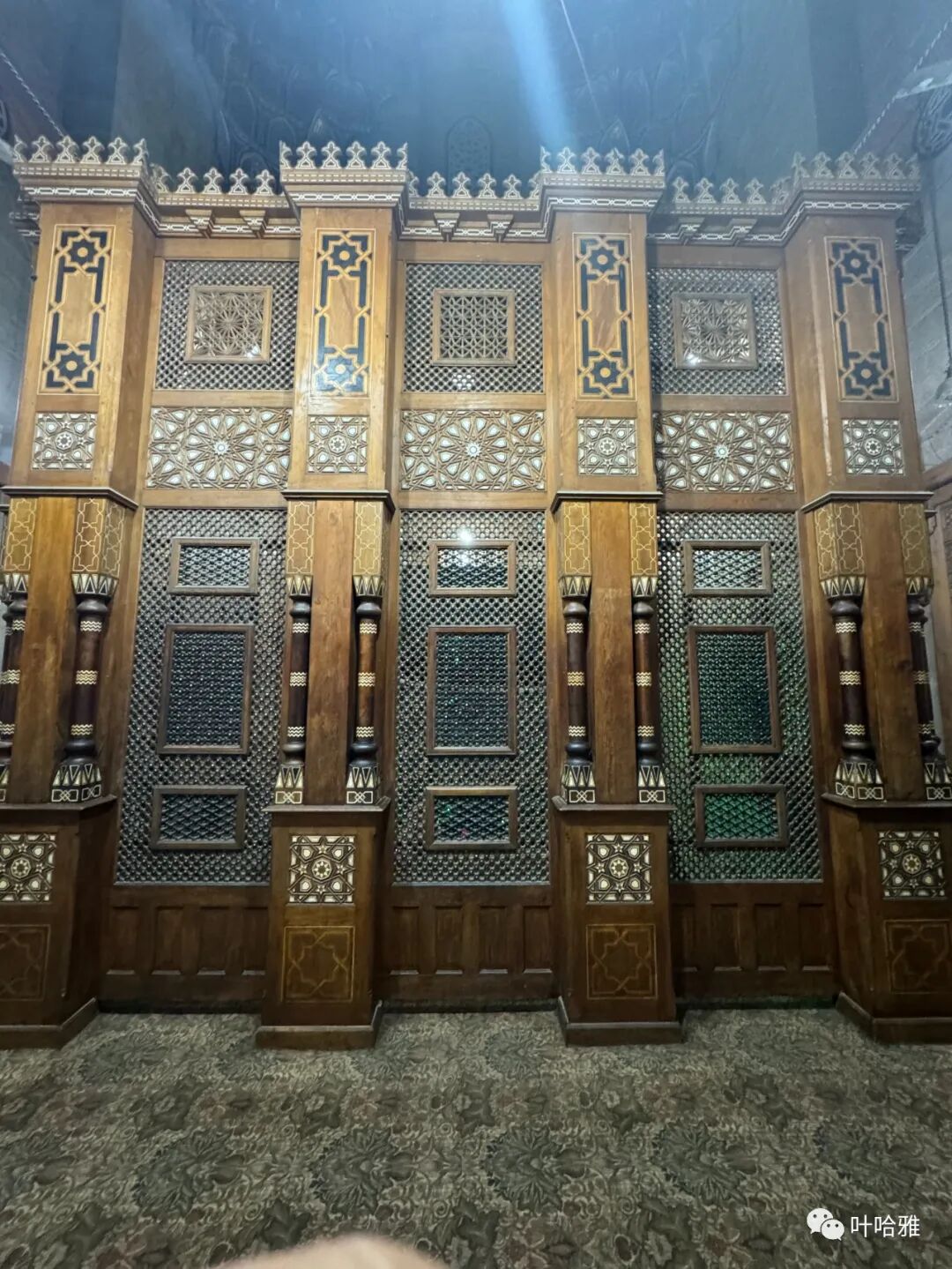
The tomb of Ali Abu Shubbak al-Refaei
Al-Refaei was the founder of the Sufi Refaei order.
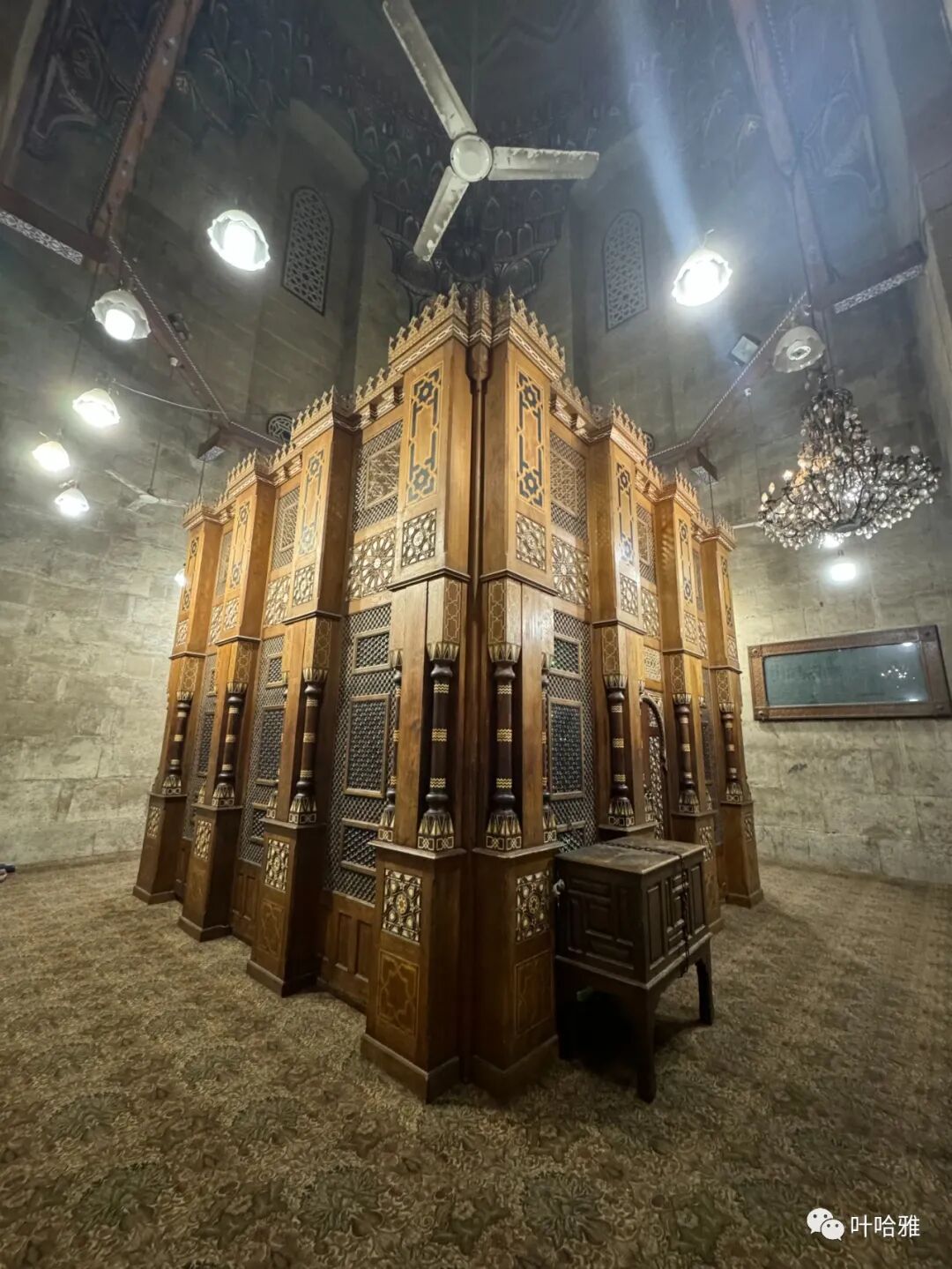
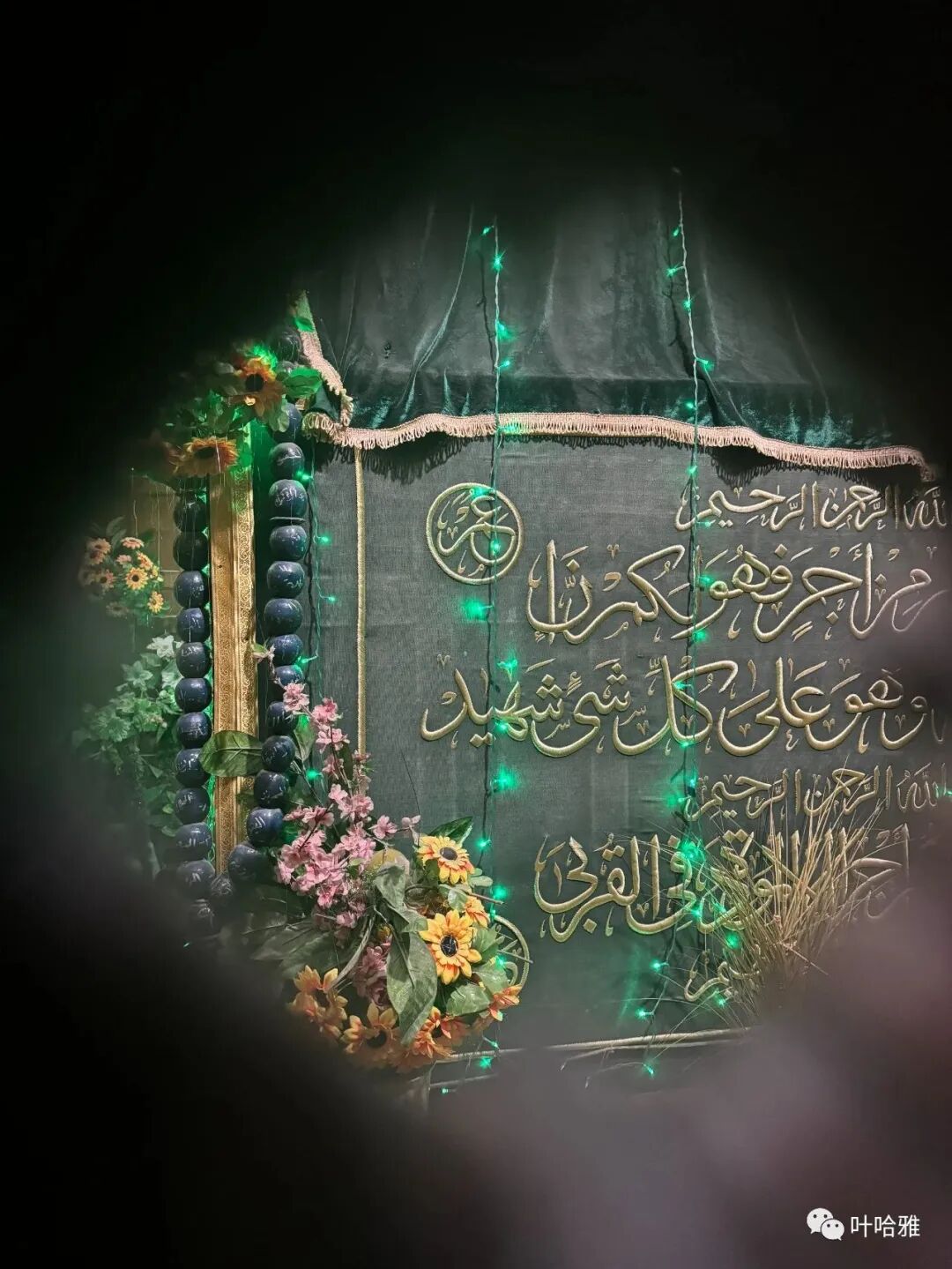
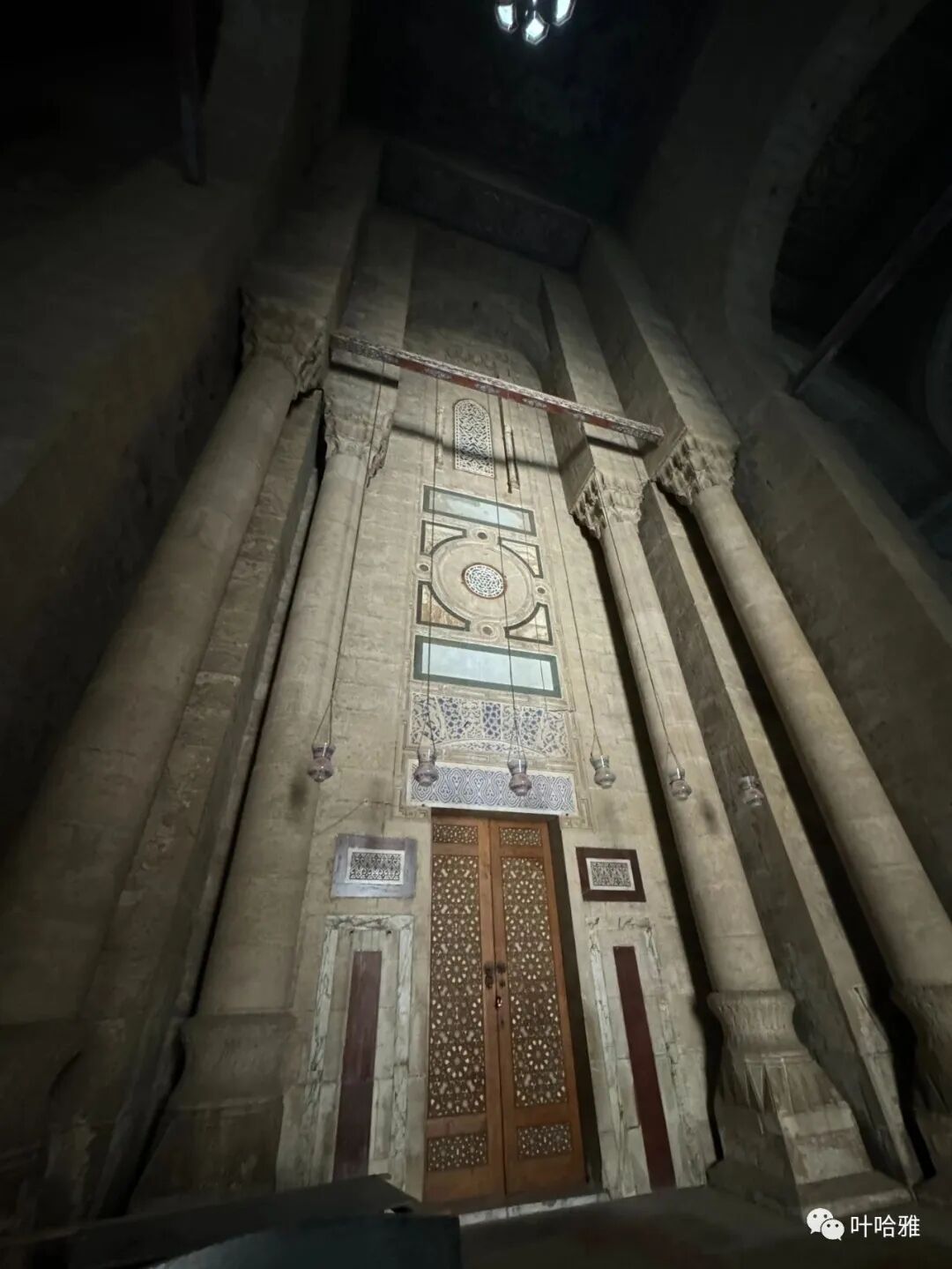
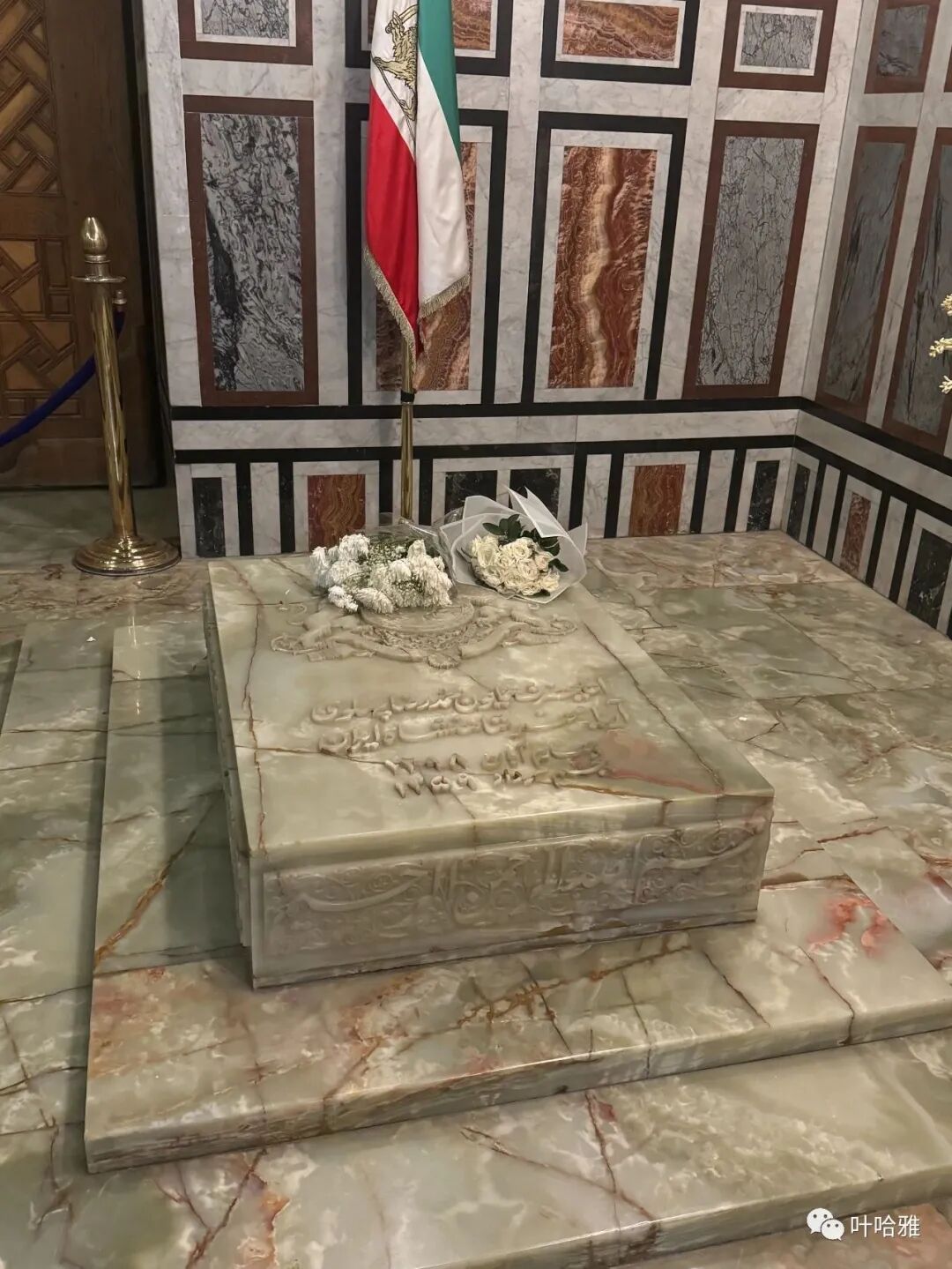
This is the tomb of the last Shah of Iran, Pahlavi, who died in Cairo in 1980. Pahlavi's father, Reza Shah, also stayed here briefly after he died. Reza Shah died in exile in South Africa in 1944 and was sent back to Iran after World War II.
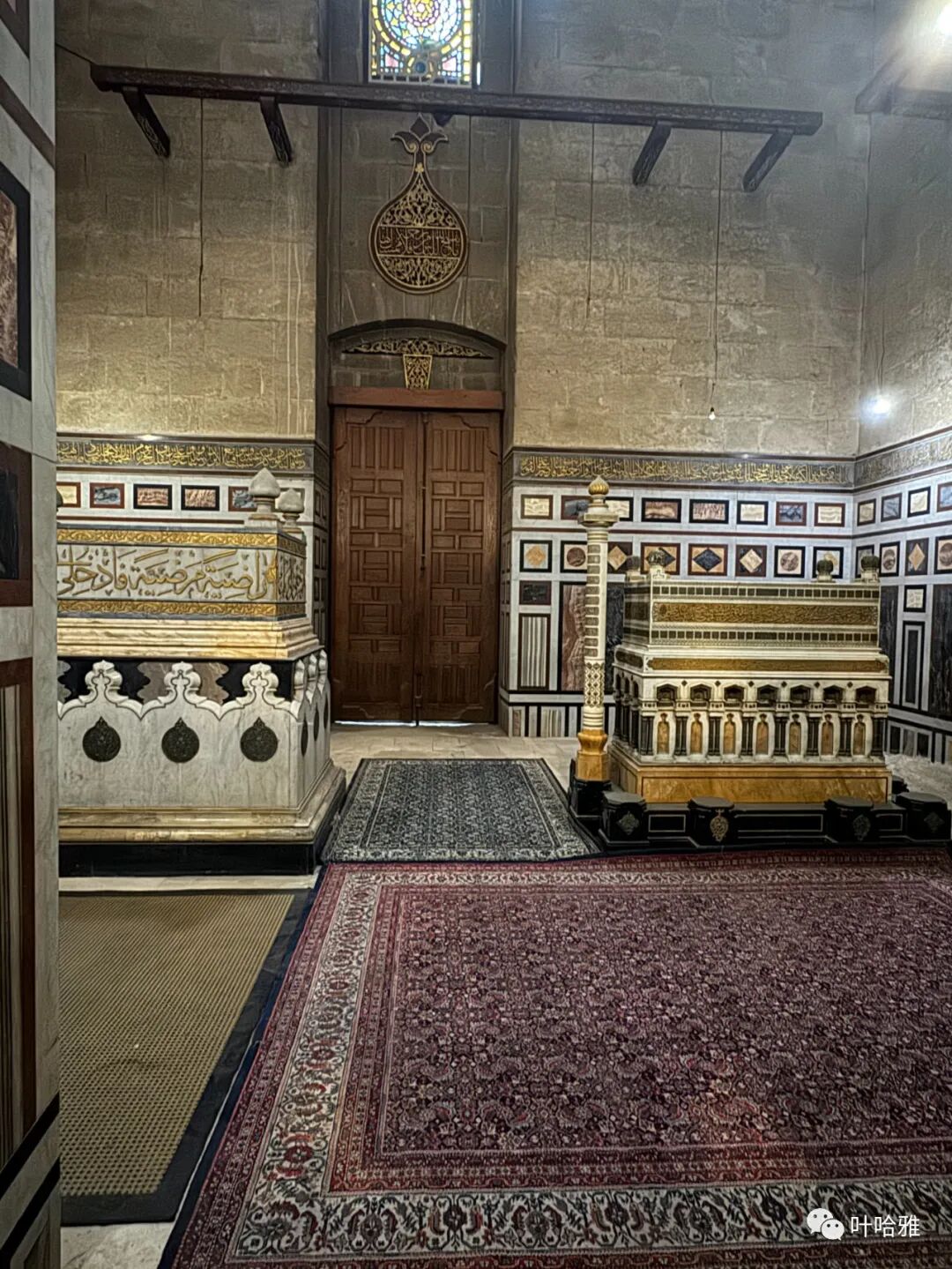
This place is also the burial site of the Sufi mystic Yahya al-Ansari, known as the patron saint of Cairo, along with several members of the Egyptian royal family.
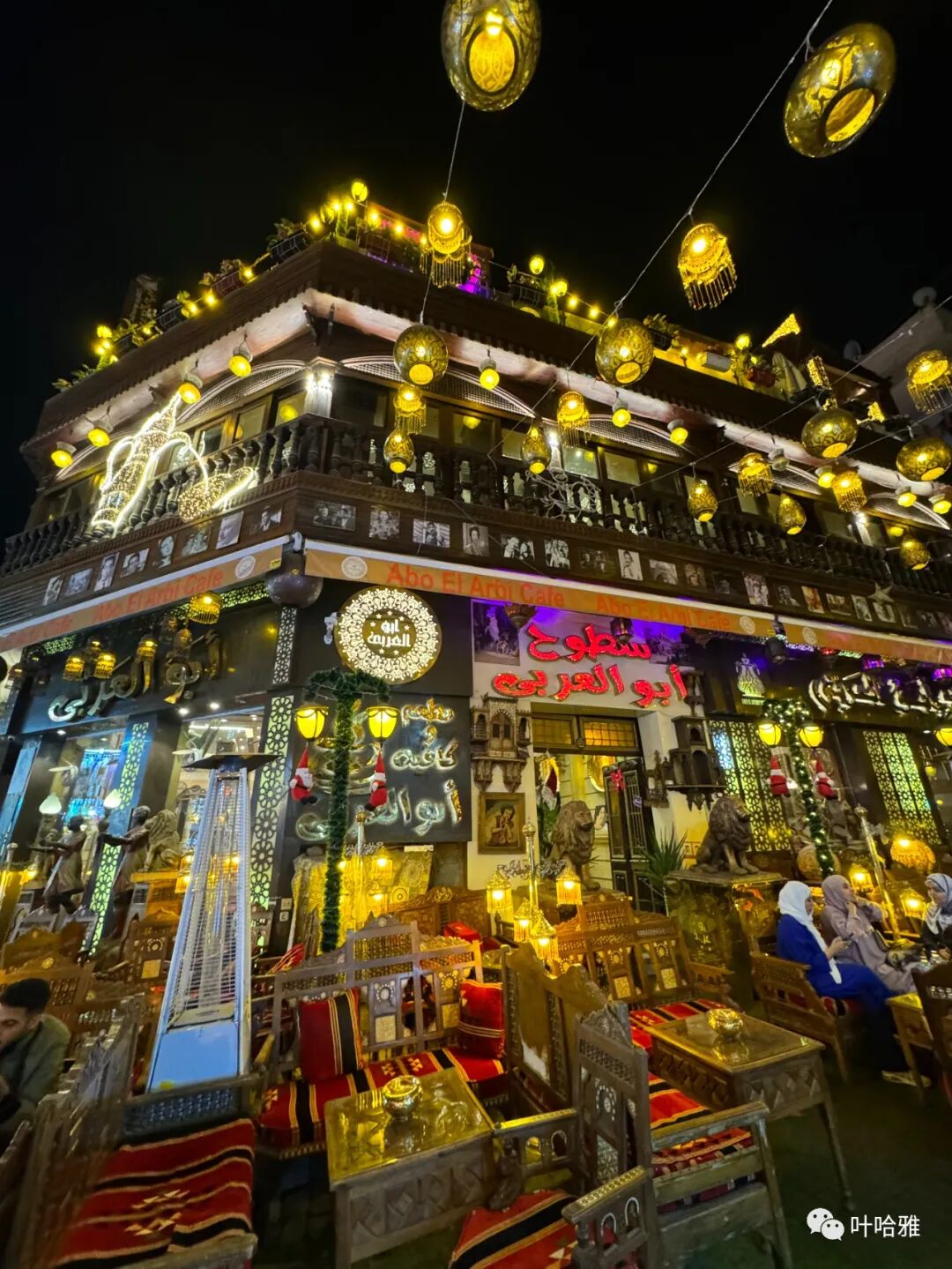
There is a traditional Arabic music restaurant in Old Cairo with a stunning atmosphere and three floors.
We chose to sit on the rooftop to look down over the streets of the old city.
I noticed a detail: when it was time for namaz, the call to prayer echoed throughout the old city. The restaurant turned off its music and waited until the prayer time passed to play it again, though I did not see anyone praying during that time.
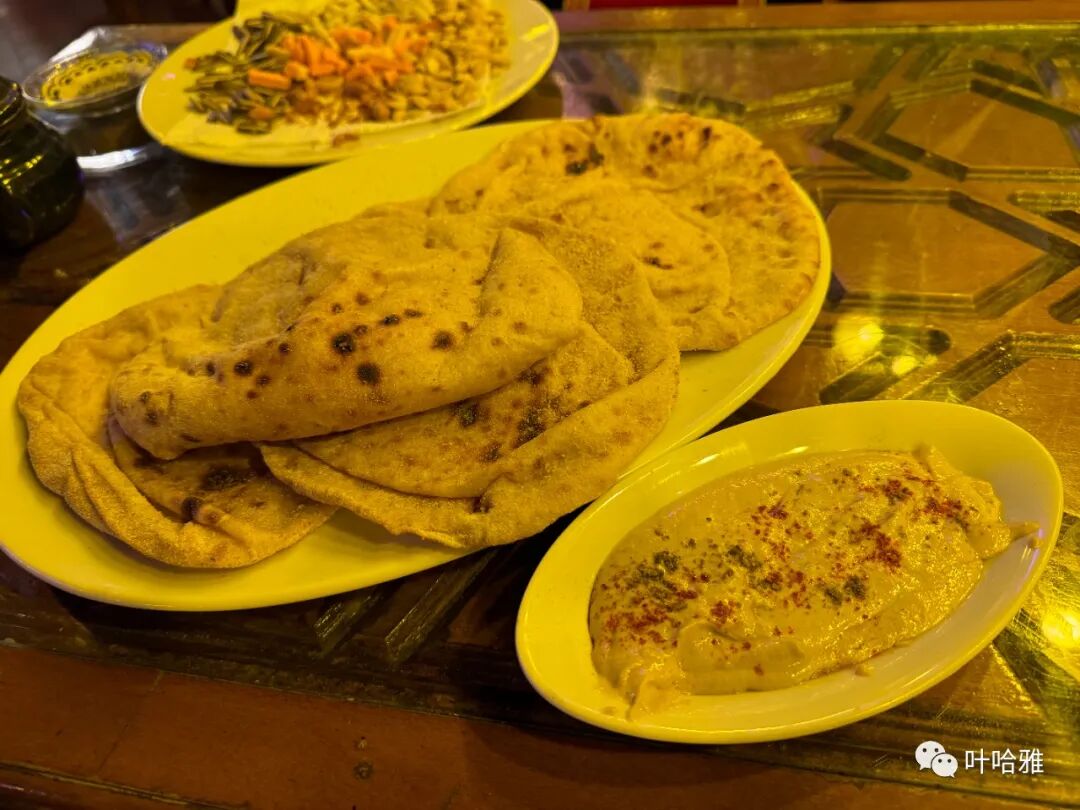
We ate grilled lamb chops and tagine (tajin), which are dishes you can hardly go wrong with when eating locally.
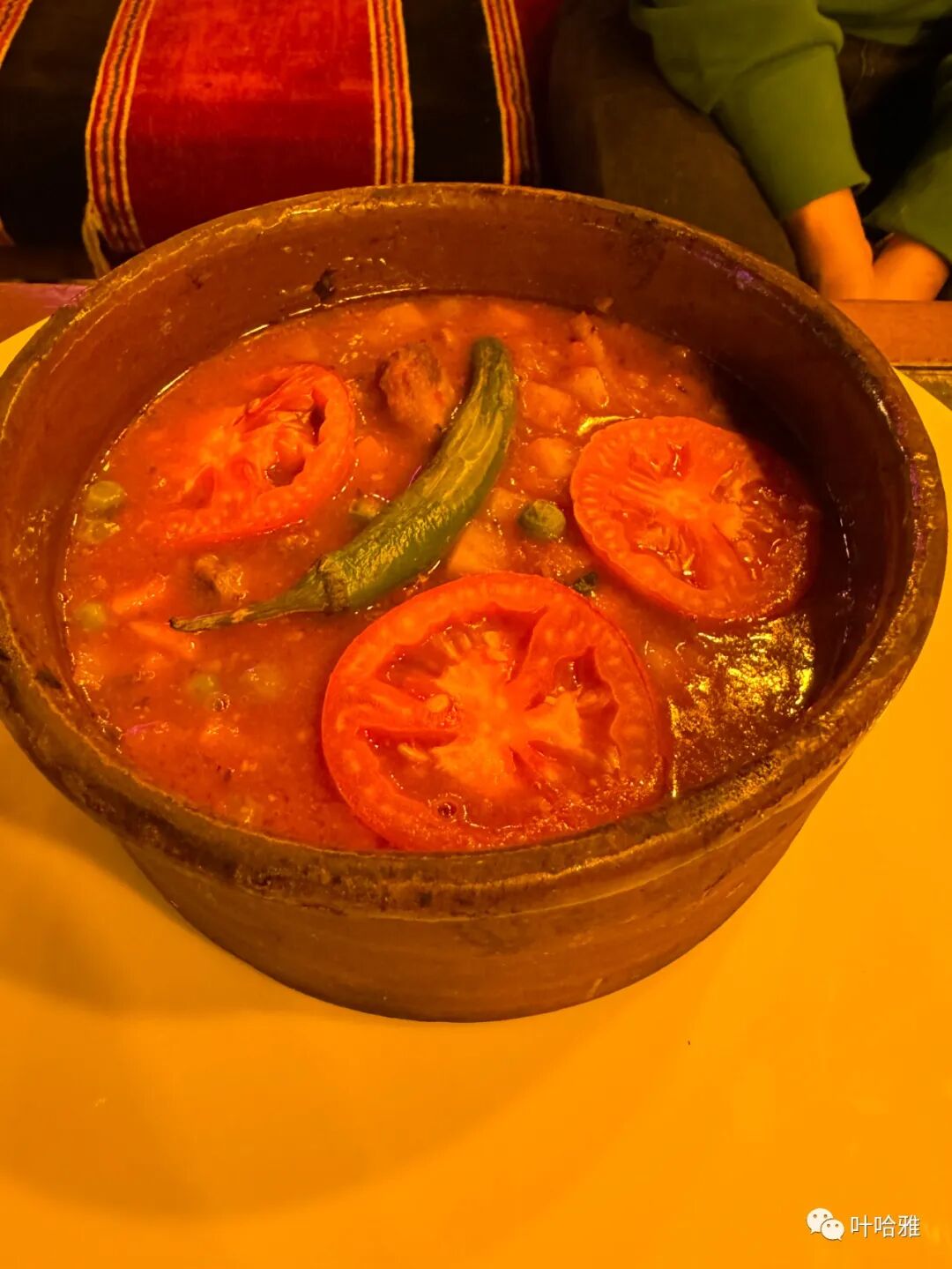
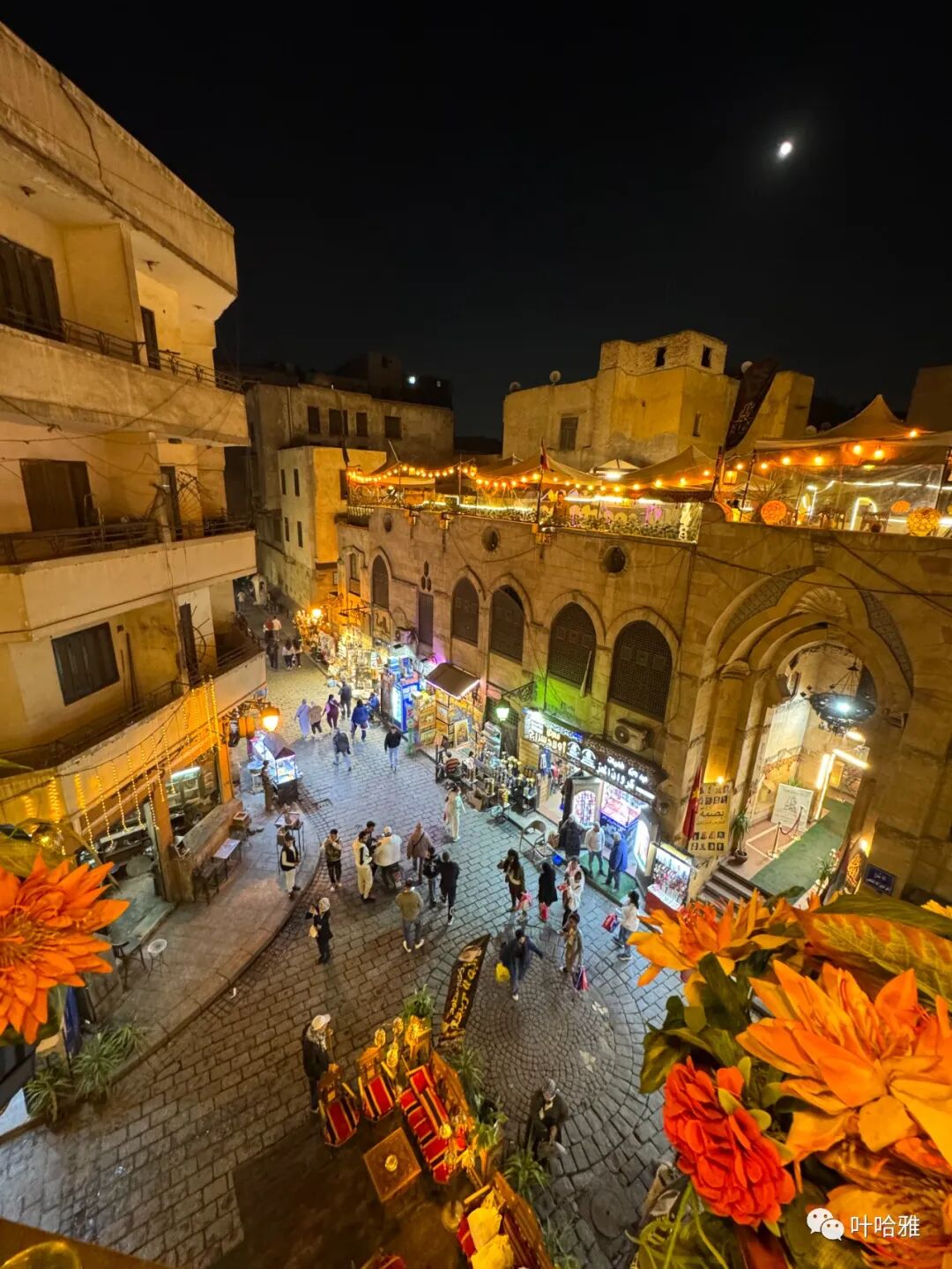
King Faisal bin Abdulaziz Mosque (Masged al Malik Faysal Bin Abd al’Aziz).
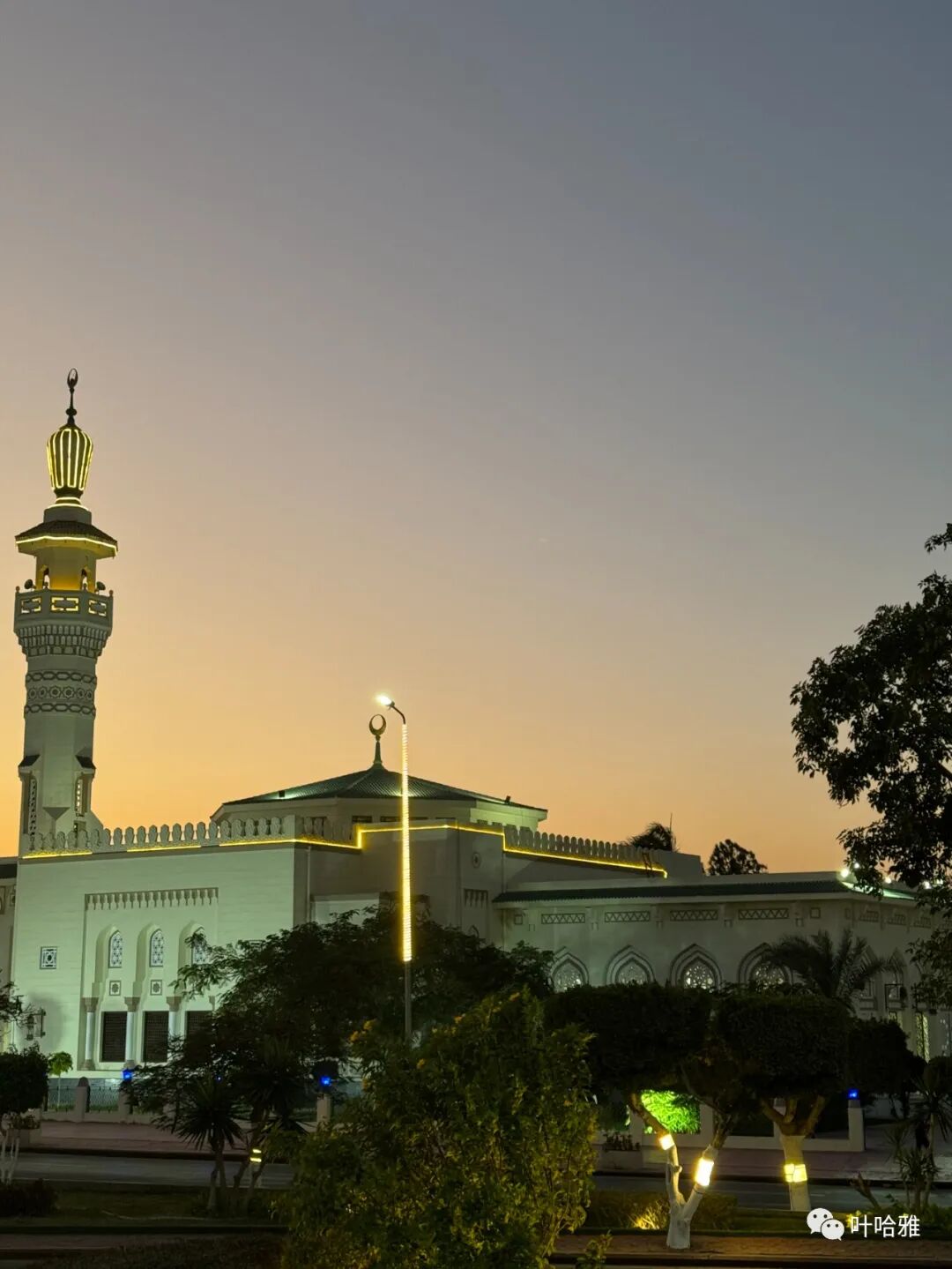
This is the closest mosque to Cairo Airport. It has an octagonal roof and is the cleanest mosque I visited in Cairo.
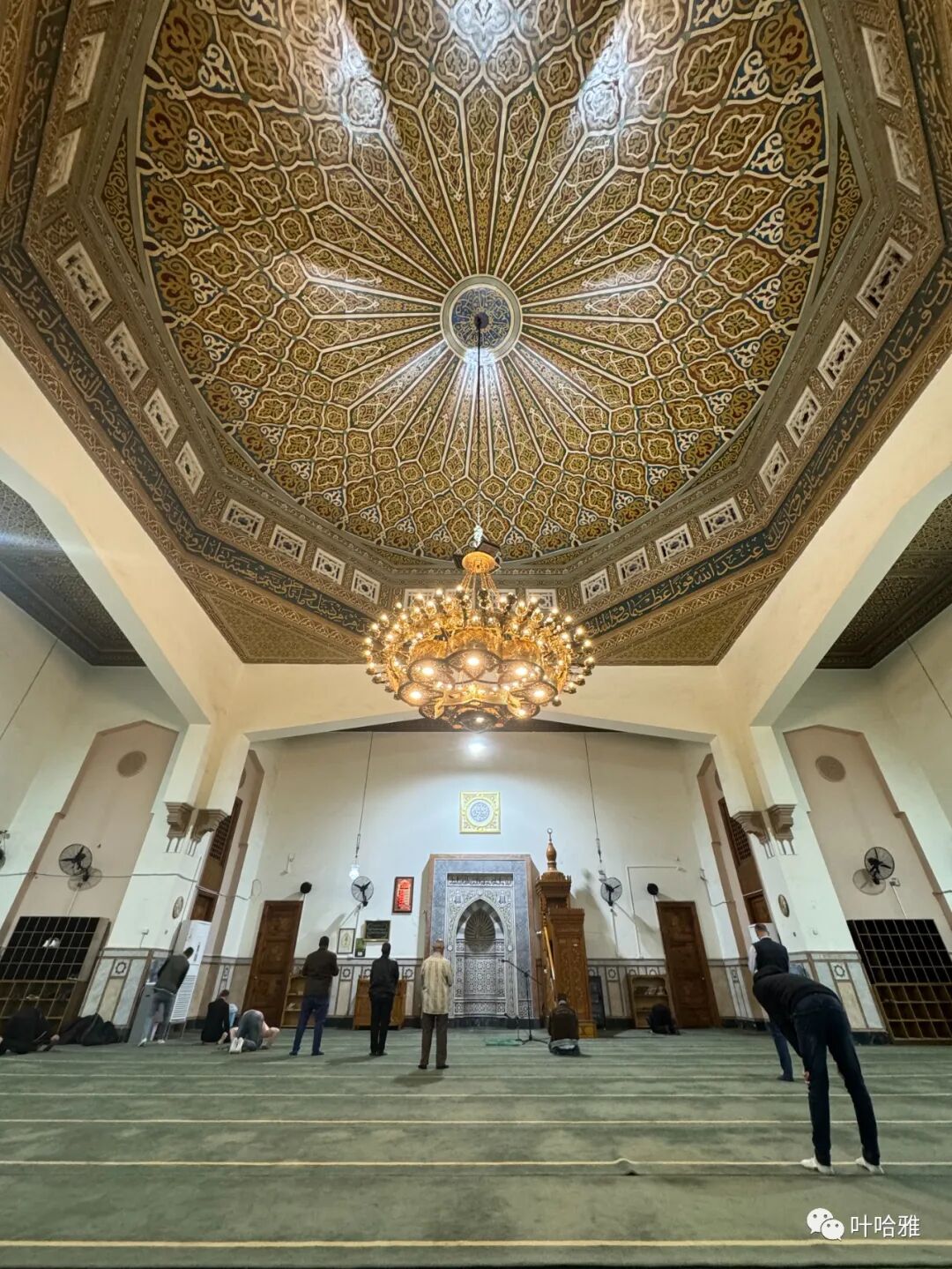
The non-traditional dome caught my eye, and there were not many people praying in the mosque during the sunset prayer (maghrib).
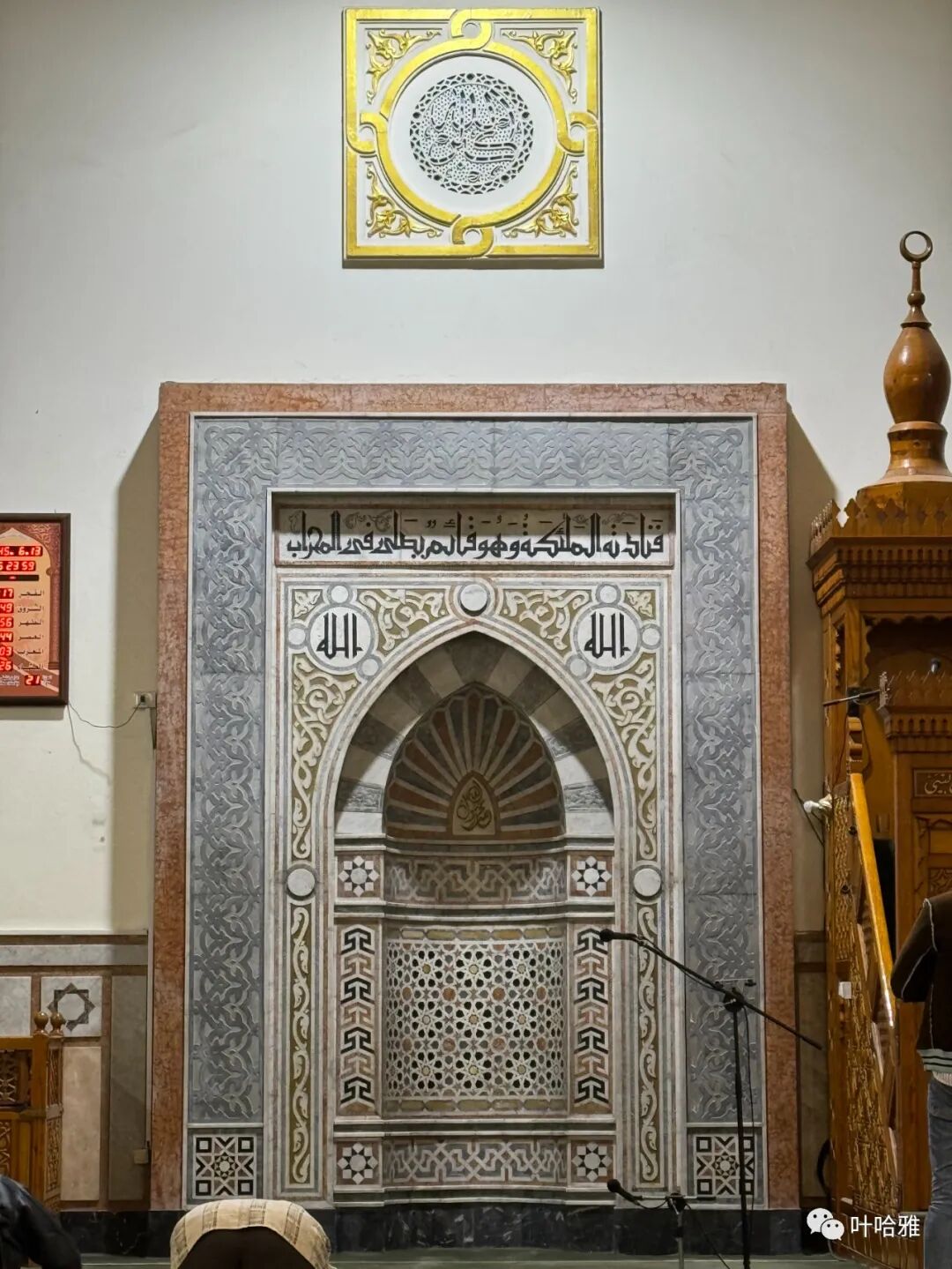
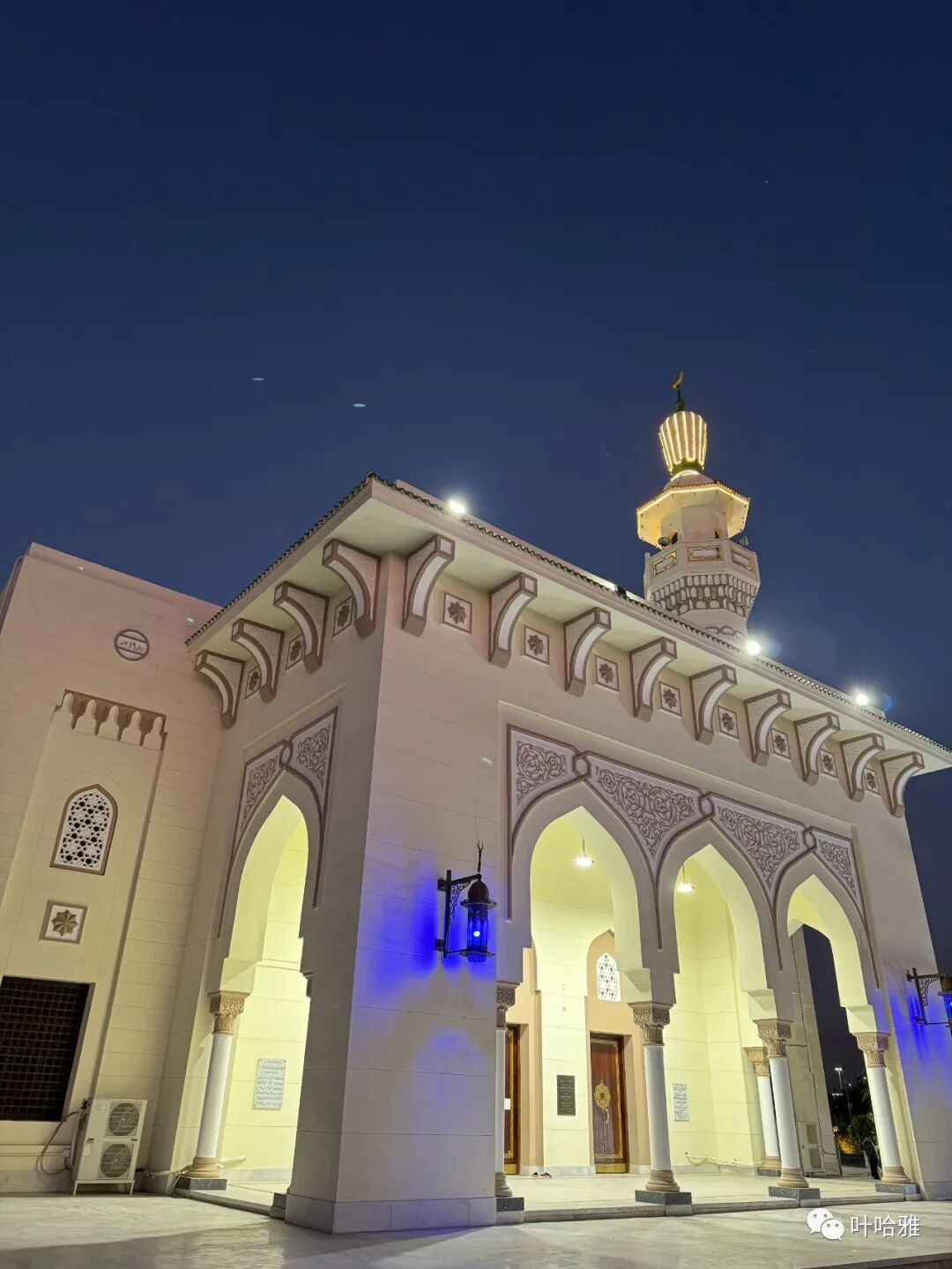
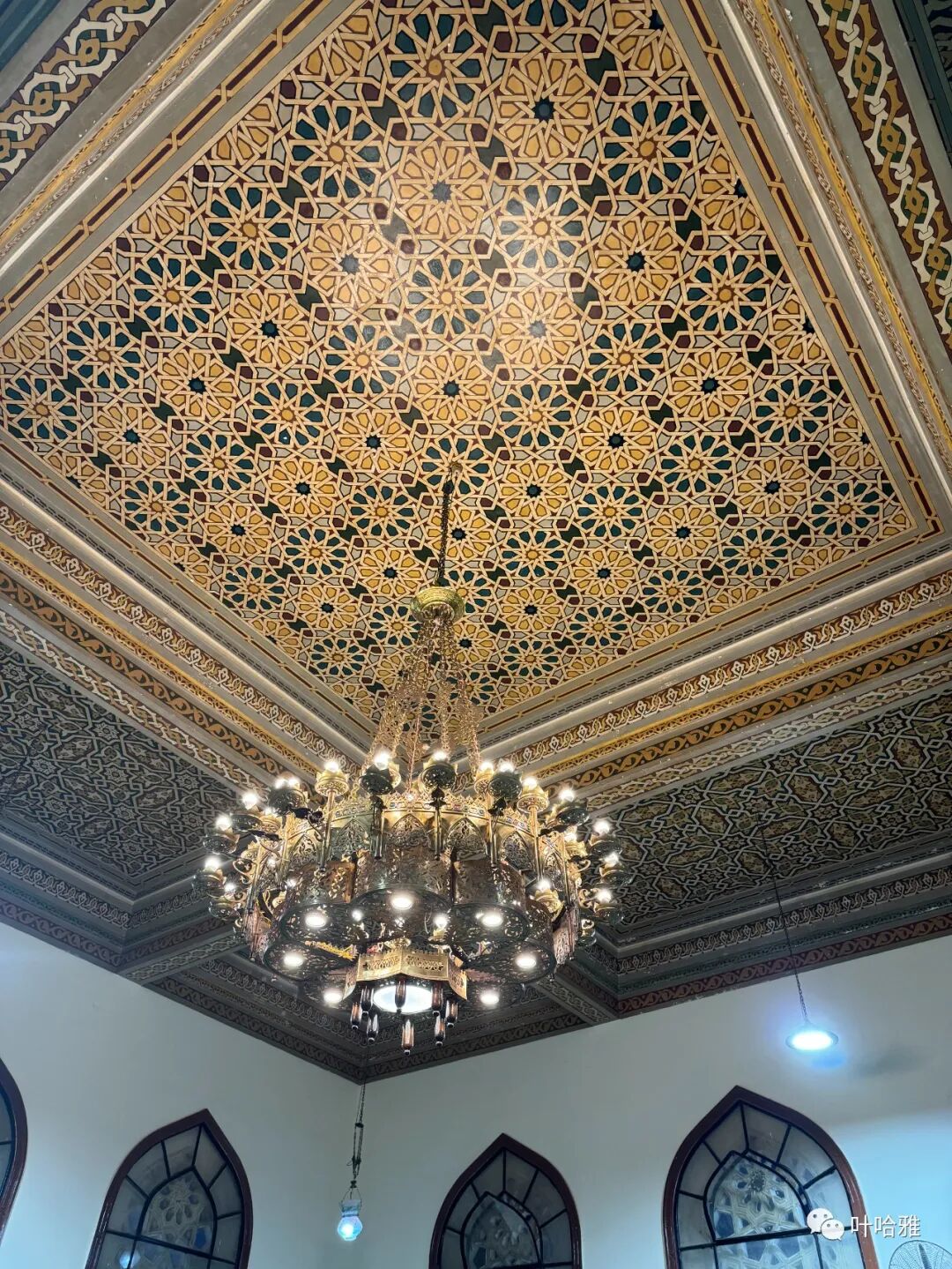
The Pyramids and the Sphinx.
After moving to a hotel near the airport, I planned to book a one-day tour of the Cairo pyramids online. I was told the airport was far away and it would cost an extra 270 yuan per person, bringing the total to over 1,000 RMB per person. I took an Uber from the airport to the pyramids for only 80 RMB, and it turned out that taking a taxi directly to the site was the most cost-effective way.
The Great Pyramid of Khufu and the Sphinx are located together. Seeing these images from my childhood textbooks in person was truly shocking. You cannot help but wonder how ancient Egypt built such huge and precise structures over 4,000 years ago; it seems beyond human capability.
There are many people around the pyramids trying to sell camel rides. Remember not to engage with anyone who approaches you. Camel rides are a trap with unpredictable prices, and if someone tells you it is free, that is a sign they are about to rip you off.
Don't listen to anyone outside the ticket office who says they can take you through a shortcut without a ticket; it's all a scam. You can avoid most traps by not interacting with locals. If you want to go inside the pyramids, you have to buy a separate ticket at the entrance, or you can tip the guard to get in. There is nothing to see inside, as it was looted by various people centuries ago.
Egyptian Museum
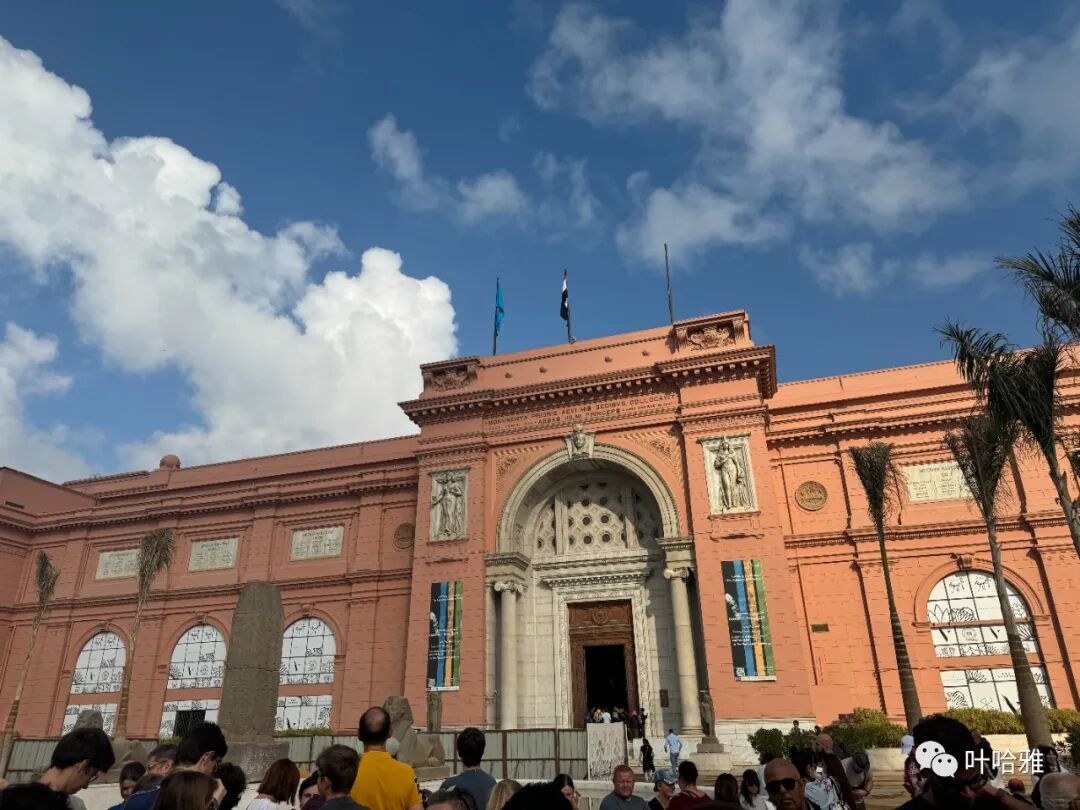
This is the old Egyptian Museum by the Nile. Cairo also has a new museum, but it doesn't have as many items as the old one. Although the old museum is run-down, the treasures inside are priceless and so numerous that they are just piled up like in a warehouse. You need to pay for museum tickets by card, as they don't accept cash. It opens at 9:00 AM and starts clearing out at 5:00 PM.
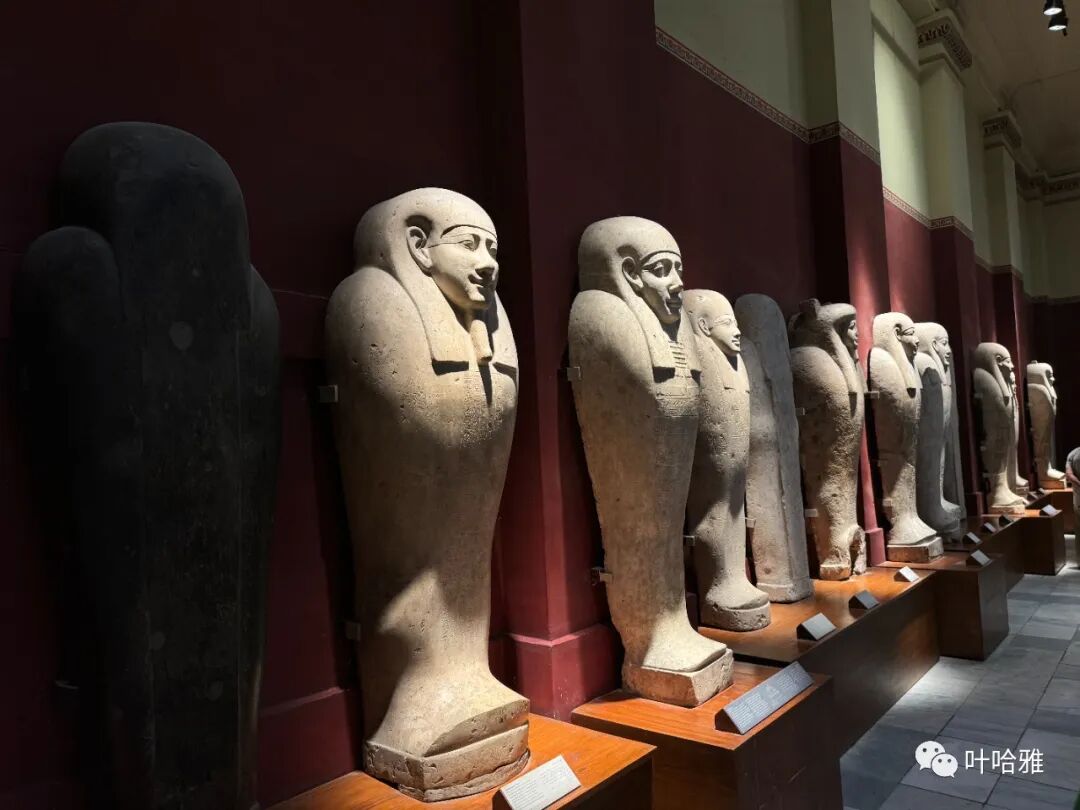
You can even touch these artifacts, and no one stops you. It feels just like a wet market inside.
Summary: This Egypt Muslim travel guide starts in Cairo after Umrah, covering airport arrival, ride-hailing, hotels, Al-Azhar Mosque, Imam Hussein Mosque, Saladin Citadel, Ibn Tulun Mosque, the pyramids, and real trap-avoidance tips.
A Guide to Avoiding Travel Traps in Egypt is presented here as a firsthand travel account in clear English, beginning with this scene: I was disappointed by Mecca and Medina because they felt just like any other popular tourist spot. The account keeps its focus on Quanzhou Muslims, Hui Muslims, Islamic History while preserving the names, places, food, and historical details from the Chinese source.
I was disappointed by Mecca and Medina because they felt just like any other popular tourist spot. Don't have high expectations for the people you meet in the two holy cities either. We originally planned to stay there for a few more days, but we changed our plans last minute and decided to head to Egypt for a week. I never expected the trip to Egypt to be the worst experience I've ever had in any country. Compared to Egypt, Saudi Arabia seems much more civilized. I hope this guide helps you avoid some pitfalls, but people never seem to learn. If you insist on going, I'm sure you will run into traps that I didn't even encounter.
The flight from Jeddah to Cairo is only two hours on Nile Air. A little Arab girl on the plane kept staring at Fahim. By the time we were about to land, they couldn't help themselves, so they sat together, kissing and hugging.
The girl sitting next to me was Saudi, as I saw her holding a Saudi passport. She wasn't wearing a headscarf in the waiting area. Once on the plane, she asked me how to fasten her seatbelt, and when we landed, she asked me to help her unbuckle it. It was clear this was her first time flying, and she kept taking photos from the moment she got on the plane.
Chinese passport holders can get a visa on arrival in Egypt. When you enter, just go to the bank at the entrance and pay 25 USD per person by card for the visa. Customs will stick it in your passport, and you can enter. No other documents are needed.
When you leave the airport, many drivers will try to solicit you; just ignore them. There are also people who will offer to help with your luggage. Don't let them help, even if they show you something that looks like a work ID. Still ignore them, because these services all require tips. If you don't know how to say no, you will end up spending money.
Sisi campaign poster.
I used Uber to call a car to the hotel. In Egypt, try to use Uber or the local ride-hailing app called Careem. Most Uber drivers speak English, making it easier to communicate. If you don't use a ride-hailing app, you will most likely be overcharged and the driver won't give you change.
We chose to stay at the Ramses Hilton by the Nile. The hotel is across from the old Egyptian Museum and near the Nile. This area is where many high-end hotels in Egypt are clustered, so the environment is a bit better.
December is the Christmas holiday season, so the whole city is full of Christmas vibes. This is normal in Cairo, as there are many Coptic Christians here.
I didn't want to go out at night, so I ordered a meal to the room. Every dish was extremely salty. Since I was feeding it to Fahim, and that much salt isn't good for a child, I called to complain to the restaurant. A while later, they sent someone to remake the meal, and the second time it tasted a bit better.
I was surprised that the bathroom at the Cairo Hilton didn't have a bidet sprayer, even though you could still find a Qibla direction indicator in the room.
Breakfast starts at 6:30 a.m., while it is still dark outside.
After a traditional Arabic breakfast, I planned to go to Al-Azhar for Jumu'ah prayer. I asked the hotel staff about the time for today's Jumu'ah, and they said around 11:40.
You can see this kind of bread sold everywhere on the streets of Old Cairo. It is like the steamed bun (mantou) in northern China and costs two mao (0.20 RMB) each. Fahim really likes eating it.
Al-Azhar Mosque
Al-Azhar Mosque was built in 972 AD. It is also the second oldest university in the world. The oldest is the University of al-Qarawiyyin in Fez, Morocco, which was built in 859 AD.
Al-Azhar was once considered the highest institution of Sunni learning. After it was nationalized in 1952, negative opinions about the university have grown.
Al-Azhar is located in Old Cairo. When I reached the entrance, I saw several rows of security guards. Everyone entering the mosque had to go through a security check, which felt familiar to me.
I took a photo in the square, but a guard told me not to take pictures. After walking into the main hall, I saw several staff members walking back and forth, constantly reminding people not to take photos. This made the atmosphere feel strange.
The imam started by reciting the Quran. The tone was strange, like the old style I have heard back home: read a sentence, take a breath, wait a moment, then read another sentence, all very choppy. Very few people came for Jumu'ah prayer. Less than a quarter of the main hall was filled, making me wonder if I had gone to the wrong place.
After the prayer, I asked someone and learned that today was the first day Al-Azhar had reopened. The mosque had been closed because of the presidential election, so Al-Azhar has changed.
Imam Hussein Gongbei
Across from Al-Azhar is the Imam Hussein gongbei (Al-Hussein Mosque), built in 1154 AD. People say the head of the Prophet's grandson, Hussein, is buried here, though some Shia Muslims believe his head and body are both at the Imam Hussein Shrine in Karbala, Iraq.
In 985 AD, the 15th Fatimid Caliph, Mansur, learned in Baghdad that Hussein's head had been buried at the Shrine of the Head of Hussein in Palestine for 250 years. It was not until 1154 AD that the 21st Fatimid Caliph, Qasim, had it transported to Cairo and built the mosque. The current building was rebuilt in 1874. Influenced by the Westernization of Cairo at the time, it was constructed in a mix of Gothic and Ottoman styles and fitted with sunshades like those at the Prophet's Mosque in Medina.
Imam Hussein passed away in 680 AD, dying in battle in Karbala, Iraq, during the war against Muawiyah. The Fatimid dynasty and Sunni Muslims believe Hussein's head was moved to Cairo in 1153. Starting from the time of Saladin, the mosque became Sunni, and to this day, its call to prayer and namaz rituals follow the Sunni tradition.
The tomb chamber is built behind the mihrab of the main hall, where you can see many people commemorating Hussein in various ways.
Inside the gongbei building is a room built in 1893. It is said to house relics of the Prophet, including a linen cloak he once wore, four strands of his hair, the staff he used when entering Mecca, a sword gifted to him by a companion, and a 501-page Quran written on deerskin in Kufic script by Ali ibn Abi Talib.
At the ticket office of the Saladin Citadel, I waited with Fahim to buy tickets. An Egyptian girl came over and asked if she could take a photo of Fahim. I said yes, and suddenly a group of schoolgirls surrounded us, taking turns snapping photos of him.
The girl asked for Fahim's name. I said, "Fahim," and they were surprised, "Fahim?" Are you Muslims? I said, "Praise be to Allah," and the girl screamed, cupped Fahim's cheeks, and kissed him.
We saw the same scene again at other spots later. Fahim is even more popular in the Middle East than in China.
Saladin Citadel
You need a ticket to enter the citadel. Most tourist spots in Egypt only take cards, not cash.
The Cairo Saladin Citadel was originally a fortress built by Saladin between 1176 and 1183 to defend against the Crusades. It served as the seat of the Egyptian government until 1874, when Ismail Pasha, the successor of Muhammad Ali, moved to a palace in the new city center of Cairo.
Records show there are four mosques inside the citadel: the Mosque of Muhammad Ali, the Mosque of Al-Nasir Muhammad, the Mosque of Suleiman Pasha, and the Azab Mosque.
Mosque of Al-Nasir Muhammad
Built in 1318, it stands on the site of an early Saladin dynasty main mosque. The mosque's columns came from buildings of the Pharaoh era, and this gate is a classic sign of the Mamluk period. Although the mosque structure is intact, most of its gorgeous marble decorations were removed and shipped to Istanbul after the Ottoman Sultan Selim I conquered Egypt.
Mosque of Muhammad Ali
Inside the Saladin Citadel stands the Mosque of Muhammad Ali. Built in 1848 in an Ottoman style, it commemorates Tusun Pasha, the eldest son of Muhammad Ali, who died in 1816.
Some say the building materials for the mosque were taken from the pyramids at Giza. Inside, there is a clock tower gifted to Muhammad Ali by the French King Louis Philippe around 1840, which corresponds to the Luxor Obelisk in the Place de la Concorde in Paris.
The tomb of Muhammad Ali is inside the mosque. He was the de facto ruler of Egypt from 1805 to 1848. Once a commander for the Ottoman Empire in Albania, he is considered the founder of modern Egypt. Although he may have been Albanian or Turkish, his dynasty lasted until 1952.
People sell shoe covers at the entrance of the Ali Mosque. It is a trap, so just ignore them. Carry your shoes in your hands and walk right in. You do not need to spend money on shoe covers.
There is a carpeted area in the main hall where you can perform namaz, but very few people actually show up for prayer times in Egypt.
Ibn Tulun Mosque
Built in 876, the Ibn Tulun Mosque is the oldest mosque in Egypt and all of Africa. It is also the largest mosque in the old city of Cairo.
The designer of this mosque was an Orthodox Christian named Saiid Ibn Kateb Al-Farghany.
This mosque is an open tourist site with no entry fee. However, they charge a tip for storing your shoes. I gave them 50 Egyptian pounds, but they said it was not enough and asked for another 50 pounds. The total was about 20 Chinese yuan.
This spiral minaret is believed to have been built in 1296.
The arched windows let in plenty of light.
Neither the left nor the right mihrab mentions Ali, which shows they were built during the early Fatimid Caliphate, a Shia dynasty.
The mihrab designed by Al-Afdal to commemorate Mustansir.
Mustansir was a caliph of the Fatimid dynasty. The original mihrab is kept at the Museum of Islamic Art in Cairo, and this one is a replica. It is inscribed with the Shia Shahada: There is no god but Allah, Muhammad is the messenger of Allah, and Ali is the wali of Allah.
A mihrab from the pre-Fatimid period, with a star hanging on the emblem.
Parts of the James Bond movie The Spy Who Loved Me were filmed here. It also appears in the game Serious Sam 3 and in Tomb Raider: The Last Revelation, where Lara fights a minotaur in the mosque.
Al Fattah Al Aleem Mosque
Because Old Cairo became hopelessly dirty and messy, the Egyptian government had to plan a new Cairo in the desert. This mosque was built in the new city. It covers 8,600 square meters and became the largest mosque in Africa after it was finished in 2019.
New Cairo is an hour's drive from the old city. The roads in the new city are wide, the streets are clean, and the tallest building in Africa is currently being built here.
The main hall of the mosque was originally closed, but our driver, who is Egyptian, talked to the mosque staff and got them to open it for us. We prayed namaz together in the mosque, and he led the prayer. After the prayer, I offered the staff a tip, but he actually refused it. He is the only person I have met in Egypt who did not take a tip.
Sulayman Agha al-Silahdar Mosque
This mosque was built in 1839 in the Ottoman style. The carvings inside copy architecture from the European Renaissance.
The mosque is located on a busy street in the old city. It stands in sharp contrast to the bustling crowds outside, as the inside is very quiet and only a few people come for prayer.
Walk through this passage and enter the main hall on the second floor. It feels like a dark medieval castle inside.
Al-Hakim Mosque
This mosque was completed in 1013 and named after the sixth Fatimid caliph. The main gate features Kufic script left from that time.
Over the centuries, this mosque was renovated and closed several times until it finally reopened in 1980.
The architectural style is similar to Al-Azhar, but it is more than twice the size.
Sultan Barquq Mosque
You need to buy a ticket to enter this mosque, and you can buy a combined ticket with the Al-Refaei Mosque. Also, you have to tip when you store your shoes inside.
Located in the old city of Cairo, this large religious complex includes a mosque, a school, and a gongbei. It was first built in 1384. Barquq was born a slave and gained significant influence during the Mamluk period. In 1382, he deposed Sultan Hajji and declared himself king.
The film adaptation of Palace Walk, a work by the Egyptian Nobel laureate Mahfouz, was filmed here.
Al-Refaei Mosque
This mosque is across from the Sultan Hassan Mosque. It was first built in 1361 and contains the tombs of the Muhammad Ali family.
The tomb of Ali Abu Shubbak al-Refaei
Al-Refaei was the founder of the Sufi Refaei order.
This is the tomb of the last Shah of Iran, Pahlavi, who died in Cairo in 1980. Pahlavi's father, Reza Shah, also stayed here briefly after he died. Reza Shah died in exile in South Africa in 1944 and was sent back to Iran after World War II.
This place is also the burial site of the Sufi mystic Yahya al-Ansari, known as the patron saint of Cairo, along with several members of the Egyptian royal family.
There is a traditional Arabic music restaurant in Old Cairo with a stunning atmosphere and three floors.
We chose to sit on the rooftop to look down over the streets of the old city.
I noticed a detail: when it was time for namaz, the call to prayer echoed throughout the old city. The restaurant turned off its music and waited until the prayer time passed to play it again, though I did not see anyone praying during that time.
We ate grilled lamb chops and tagine (tajin), which are dishes you can hardly go wrong with when eating locally.
King Faisal bin Abdulaziz Mosque (Masged al Malik Faysal Bin Abd al’Aziz).
This is the closest mosque to Cairo Airport. It has an octagonal roof and is the cleanest mosque I visited in Cairo.
The non-traditional dome caught my eye, and there were not many people praying in the mosque during the sunset prayer (maghrib).
The Pyramids and the Sphinx.
After moving to a hotel near the airport, I planned to book a one-day tour of the Cairo pyramids online. I was told the airport was far away and it would cost an extra 270 yuan per person, bringing the total to over 1,000 RMB per person. I took an Uber from the airport to the pyramids for only 80 RMB, and it turned out that taking a taxi directly to the site was the most cost-effective way.
The Great Pyramid of Khufu and the Sphinx are located together. Seeing these images from my childhood textbooks in person was truly shocking. You cannot help but wonder how ancient Egypt built such huge and precise structures over 4,000 years ago; it seems beyond human capability.
There are many people around the pyramids trying to sell camel rides. Remember not to engage with anyone who approaches you. Camel rides are a trap with unpredictable prices, and if someone tells you it is free, that is a sign they are about to rip you off.
Don't listen to anyone outside the ticket office who says they can take you through a shortcut without a ticket; it's all a scam. You can avoid most traps by not interacting with locals. If you want to go inside the pyramids, you have to buy a separate ticket at the entrance, or you can tip the guard to get in. There is nothing to see inside, as it was looted by various people centuries ago.
Egyptian Museum
This is the old Egyptian Museum by the Nile. Cairo also has a new museum, but it doesn't have as many items as the old one. Although the old museum is run-down, the treasures inside are priceless and so numerous that they are just piled up like in a warehouse. You need to pay for museum tickets by card, as they don't accept cash. It opens at 9:00 AM and starts clearing out at 5:00 PM.
You can even touch these artifacts, and no one stops you. It feels just like a wet market inside.
Muslim History Guide Cairo: 22 Ancient Mosques and Islamic Heritage (Part 1)
Articles • yusuf908 posted the article • 0 comments • 259 views • 2026-05-23 23:30
Reposted from the web
Summary: This first part of the Cairo mosque journey begins with early landmarks such as Al-Hakim Mosque and Al-Aqmar Mosque. It preserves the source's mosque names, founding years, dynastic context, street route, architectural details, and photographs.
Al-Hakim Mosque: 1013
Al-Aqmar Mosque: 1125
Al-Ashraf Mosque: 1424
Al-Azhar Mosque: 972
Al-Hussein Mosque: built in 1154, rebuilt in 1874
Abu al-Dhahab Mosque: 1774
Al-Muayyad Mosque: 1415
Al-Salih Tala'i Mosque: 1160
Mahmud al-Kurdi Mosque: 1395
Qijmas al-Ishaqi Mosque: 1480
Mosque of Ahmad al-Mihmandar: 1324
Mosque of Amir Altinbugha al-Mardani: 1338
Mosque of Umm al-Sultan Sha'ban: 1368
Blue Mosque: 1347
Sayyida Fatima Mosque: 18th-century expansion
Khayrbak Mosque: 1519
Sultan Hasan Mosque: 1356
Rifa'i Mosque: 1869.
Ibn Tulun Mosque: 876.
Taghribirdi Mosque: 1440
Shaykhu Mosque: 1349
Qanibay al-Muhammadi Mosque: 1413
Al-Hakim Mosque: 1013
Right next to the north wall of Old Cairo is the Al-Hakim Mosque. It is named after the sixth caliph of the Fatimid dynasty, who was also the 16th imam of the Ismaili branch of Shia Islam, Al-Hakim bi-Amr Allah (reigned 996-1021). The Al-Hakim Mosque was started in 990 by the fifth Fatimid Caliph, al-Aziz Billah (reigned 975-996), and finished in 1013 by Caliph al-Hakim. It is now 1,012 years old.
The mosque originally sat outside the Cairo city walls, but it was brought inside after the walls were rebuilt in 1087. Its architectural style is similar to the Al-Azhar Mosque, but it is twice as large. The most striking features are the two minarets built on square brick bases. When the minarets were first built in 1003, they were separate structures. They were not encased in brick until 1010. Some scholars suggest this change relates to 1010, when the ruler of Mecca rejected Fatimid authority, weakening the dynasty's power. The outer wall of the southern brick base has Fatimid-era marble carvings in Kufic script. Because the northern base was incorporated into the northern wall of Old Cairo in 1087, its Kufic carvings were moved to the outside of the city wall.
During the Crusades, the Franks used the mosque as a prison. Later, Saladin used it as a stable. It was repaired during the Mamluk period in the 14th century, but it eventually fell into ruin for a long time. The mosque was repaired in 1808, and a small, colorful marble mihrab added during that time still exists today.
In the 20th century, the mosque served as a school until 1980, when the Dawoodi Bohra branch of Shia Islam carried out a massive reconstruction and renovation using white marble. Inside the main hall after the reconstruction, only the original plaster carvings, wooden beams, and scripture remained. This restoration was criticized by scholars for being 'inauthentic' and sparked widespread debate. In 2017, the Dawoodi Bohra community and the Egyptian Ministry of Tourism and Antiquities launched a new round of repairs, and the mosque did not reopen until February 2023.
Al-Aqmar Mosque: 1125
Walking south from the Al-Hakim Mosque along Al-Mu'izz Street, the main road of Old Cairo, you can see the famous Fatimid-era Aqmar Mosque. The Aqmar Mosque was built in 1125-1126 by order of the Fatimid vizier Al-Ma'mun al-Bata'ihi. It sat at the northeast corner of the Fatimid Eastern Palace, right next to the palace grounds.
The Aqmar Mosque is a landmark in Egyptian architectural history. It was the first mosque with a main entrance aligned with the street rather than the qibla wall, meaning it was the first planned according to Cairo's street layout. It was also the first to feature complex stone carvings. The facade of the Aqmar Mosque is very luxurious. Above the entrance is a medallion surrounded by a grille, with the names of the Prophet and Ali in the center and scripture around it—a unique decoration in Cairo.
At the top of the left facade are carvings of doors and windows. The window on the left symbolizes the ceremonial grille the Fatimids took back from the palace of their rivals, the Abbasids in Baghdad, representing victory. Inside the window are a lamp and a six-pointed star, based on the Shia hadith: 'The star is a promise to the world, and it will not be submerged.' Below the window are carvings of plants growing from a flower pot, referencing the Prophet's words about Hasan and Husayn: 'My two fragrant herbs in the world.' The door in the upper right corner comes from the famous Shia hadith: 'I am the city of knowledge, and Ali is its gate.'
Because it was near the Fatimid palace, the Aqmar Mosque originally had no minaret. One was added by the Mamluk dynasty at the end of the 14th century, and the cylindrical top was rebuilt during the Ottoman period.
In 1993, the Dawoodi Bohras branch of Shia Islam carried out a large-scale renovation of the Aqmar Mosque. Most of the historical elements inside the main hall were not preserved, which led to criticism.
Al-Ashraf Mosque: 1424
The Ashraf Mosque (Al-Ashraf Mosque) was built in 1424 by the Mamluk Sultan Al-Ashraf Barsbay, who reigned from 1422 to 1438. The complex includes a main prayer hall, a school, a tomb, and a Sufi lodge (khanqah). It features a dome with geometric carvings, which is an early example of decorative dome carving.
Barsbay was once a Mamluk slave of Sultan Barquq and later served as a tutor to the young Sultan Muhammad. With support from the governor of Damascus and other emirs, Barsbay deposed the young sultan in 1422 and took the throne himself.
Barsbay’s 16-year reign was a time of relative safety and stability for the Mamluk Sultanate, with almost no wars. He was very generous to the poor and to Sufis, and he carried out a series of administrative reforms.
People called Barsbay the Merchant Sultan because he placed great importance on trade. He took steps to strengthen control over the Mediterranean and Red Seas, diverted Indian Ocean trade routes through Jeddah, and created state monopolies on sugar and pepper. He lowered tariffs to attract merchants and monopolized most of the trade from the East, which angered many European powers.
Al-Azhar Mosque: 972
In 969 AD, the Shia Ismaili Fatimid dynasty conquered Egypt and began building their new capital, Cairo. At that time, the densely populated Sunni city of Fustat already existed south of Cairo, so the new city became the center for the Shia Ismaili faith.
After two years of construction, the first Friday mosque (Jami) in Cairo opened in 972 and was named the Cairo Mosque (Jami al-Qahira) after the city. The Cairo Mosque was later renamed the Al-Azhar Mosque (al-Jami al-Azhar), with Al-Azhar meaning the Radiant.
After the Al-Azhar Mosque opened, the Ismailis moved from secret to public preaching. The mosque's first chief judge, Qadi al-Numan, became the founder of Ismaili law and the author of the authoritative Ismaili text, The Pillars of Islam (Kitab da'a'im al-Islam).
The main hall of the Al-Azhar Mosque is a columned hall. The marble columns in the four rows of arcades came from ruins of the Pharaohs, ancient Rome, and the Copts, and they were leveled using bases of different heights.
The roof of the main hall originally had three domes, but none survived later renovations. The original mihrab was rediscovered in 1933, and the niche still preserves ornate stucco carvings from the Fatimid period.
Several Fatimid caliphs expanded and renovated the Al-Azhar Mosque. Caliph al-Hafiz, who reigned from 1132 to 1149, carried out a major renovation in 1138. The four-centered arches in the courtyard and the dome at the entrance to the main hall date from this time. The stucco carvings in the courtyard also come from this period, though they were renovated again in 1891.
In 1171, Saladin overthrew the Fatimid dynasty and established the Sunni Ayyubid dynasty. The Friday prayers for Cairo moved to the Hakim Mosque in the north of the city, and the Al-Azhar Mosque was neglected because it had been the center of the Ismaili faith. Saladin removed the silver bands from the mihrab niche of the Al-Azhar Mosque that bore the names of the Fatimid caliphs and destroyed all the Ismaili manuscripts kept in the mosque.
It was not until 1266 that the Mamluk Sultan Baybars, who reigned from 1260 to 1277, restored Friday prayers at the Al-Azhar Mosque and repaired the building. The Ayyubid dynasty followed the Shafi'i school of law, which held that a community should have only one main Friday mosque. The Mamluk dynasty followed the Hanafi school, which did not have this rule.
The Mamluk dynasty left two grand minarets at Al-Azhar Mosque: the Qaytbay minaret and the twin minarets of Al-Ghuri, along with the Qaytbay Gate. The Qaytbay minaret was built in 1483 or 1495 and features three balconies decorated with ornate carvings. The Qaytbay Gate was built in 1495 and leads directly into the courtyard. Both are exquisite examples of late Mamluk architecture. During the reign of Sultan Qaytbay (1468-96), the Mamluk dynasty was politically and economically stable and won several military victories against the Ottoman Empire. The Sultan was very interested in art and architecture and sponsored as many as 230 buildings.
In 1509, the Mamluk Sultan Al-Ashraf Qansuh al-Ghuri (reigned 1501-16) built the twin minarets of Al-Ghuri. Al-Ghuri was the last powerful ruler of the Mamluk dynasty. He was eventually defeated by the Ottoman Empire and fell on the battlefield in Syria.
In 1517, the Ottoman Empire conquered the Mamluk dynasty and occupied Egypt, causing the status of Al-Azhar Mosque to decline once again. It was not until after the 18th century, when the Mamluk elite regained influence in Egypt, that renovations and expansions of Al-Azhar Mosque continued.
In 1749, Abd al-Rahman was appointed as the head of the guards (Katkhuda). In 1753, he oversaw the construction of three Ottoman-style gates for Al-Azhar Mosque: the Barbers' Gate (Bab al-Muzayinīn), the Gate of the Upper Egyptians (Bab al-Sa'ayida), and the Soup Gate (Bab al-Shurba). Outside the Barbers' Gate was where students got their hair cut, 'Sa'ayida' means people from Upper Egypt, and the Soup Gate was where students went to get soup. From then on, the Barbers' Gate became the main entrance to Al-Azhar Mosque.
Abd al-Rahman also doubled the size of the main prayer hall of Al-Azhar Mosque to the south and added a new mihrab, giving the hall its current shape. After Abd al-Rahman died in 1776, he was buried inside Al-Azhar Mosque, becoming the last person in history to be buried there.
After the 18th century, Al-Azhar Mosque became the most influential educational institution in Egypt, and the ulama (scholars) could report to the Pasha (governor) as official advisors.
Napoleon occupied Cairo on July 22, 1798. On October 21, an uprising against the French broke out at Al-Azhar Mosque. Napoleon shelled the mosque directly from the Cairo Citadel, resulting in over 3,000 Egyptian casualties and the death of six Al-Azhar ulama. Napoleon's troops tied their horses to the mihrab of Al-Azhar Mosque and ransacked the student dormitories and the library. In 1800, the commander-in-chief of the French expeditionary force was assassinated by an Al-Azhar student, after which Napoleon ordered the closure of Al-Azhar Mosque. In June 1801, Cairo was recaptured by the British and the Ottoman Empire, and Al-Azhar Mosque reopened.
Between 1892 and 1901, the last Khedive (viceroy) of Ottoman Egypt, Abbas II Hilmi Pasha, rebuilt the facade of Al-Azhar Mosque as part of a wave of modernization in British-occupied Egypt. At the same time, Al-Azhar University also carried out educational reforms to oppose fundamentalism. To mitigate the impact of the Saudi Wahhabi movement, many students from Indonesia and other parts of Southeast Asia came to study at Al-Azhar University during this period.
The last two pictures show the Fatimid dynasty stucco carvings restored by the Committee for the Preservation of Arab Art Monuments during the reign of Abbas II Hilmi Pasha.
Al-Hussein Mosque: built in 1154, rebuilt in 1874
Across from Al-Azhar Mosque is Al-Hussein Mosque, where Shia Muslims believe the head of Imam Hussein is buried. The mosque was first built in 1154, but its current appearance dates to a reconstruction in 1874.
The Fatimid dynasty believed the Abbasid dynasty secretly moved Imam Hussein's head from the Umayyad Mosque cemetery in Damascus. The Fatimids rediscovered it in 1091 and built a shrine for it in Ashkelon, Palestine.
In 1153, the Fatimid dynasty ordered the head of Hussein moved to Cairo to be buried with past Fatimid caliphs, and they built Al-Hussein Mosque in 1154. The lower part of the south gate of Al-Hussein Mosque still keeps its original Fatimid structure.
Al-Hussein Mosque was rebuilt by the Ayyubid dynasty in 1237, but it later burned down, leaving only one Ayyubid minaret today.
In 1874, Isma'il Pasha (reigned 1863-79), the ruler of the Muhammad Ali dynasty, rebuilt Al-Hussein Mosque in a Gothic Revival style and added a minaret blending Gothic and Ottoman styles. During his rule, Isma'il Pasha modernized Egypt on a large scale, trying to align Egypt with Europe, and the renovation of Al-Hussein Mosque was part of this effort.
In 1893, a room for Prophet Muhammad's relics (Bab al-Mukhallafat al-Nabawiyya) was added next to the shrine. It holds four strands of the Prophet's hair, a linen cloak he wore, a lantern, a copper kohl applicator, a staff, and a sword given to him by a companion.
The center of the shrine today is a metal grille (Zarih) made in Mumbai in 1965 by Taher Saifuddin, the leader of the Dawoodi Bohras. It is said this Zarih was originally designed for the shrine of Abbas ibn Ali in Karbala, but it could not be installed there. Taher Saifuddin believed this was guided by Allah, so he had the Zarih flown to Cairo and installed in Al-Hussein Mosque.
Abu al-Dhahab Mosque: 1774
Right next to the west wall of Al-Azhar Mosque is the Abu al-Dhahab Mosque, built in 1774 by the Egyptian Mamluk ruler Abu al-Dhahab. This was the last large building complex the Mamluks built in Egypt, but only the mosque remains today.
Abu al-Dhahab means 'Father of Gold,' and he was a wealthy and generous Mamluk emir. During the Russo-Turkish War, the Egyptian Mamluk emir Ali Bey declared independence from the Ottoman Empire, and Abu al-Dhahab led troops to conquer most of the Hejaz and Syria. After taking Damascus in 1772, Abu al-Dhahab turned his army to occupy Cairo, becoming the actual ruler of Egypt until he died suddenly of the plague in 1775 while conquering Palestine.
The architecture of Abu al-Dhahab Mosque mixes different elements, including Mamluk-style outer walls, Ottoman-style domes, and a minaret inspired by the early 16th-century minaret of the nearby Sultan Qaytbay complex.
The prayer niche (mihrab) and the pulpit (minbar) of Abu al-Dhahab Mosque feature Mamluk-style decorations inlaid with mother-of-pearl and marble.
Al-Muayyad Mosque: 1415
Right next to the south gate of the old city of Cairo is the Sultan Al-Mu'ayyad Mosque, built between 1415 and 1421 by the Mamluk Sultan Al-Mu'ayyad Shaykh (reigned 1412-1421). This site was originally a prison, and legend says Sultan Al-Mu'ayyad was held here when he was young. At the time, he suffered greatly from fleas and lice, so he made a dua that if he ever became Sultan, he would turn the site into a place for teaching and learning. This wish later came true.
With the Sultan's funding, the madrasa inside the Sultan al-Mu'ayyad Mosque became one of Cairo's most famous academic institutions in the 15th century. The large endowment left after the Sultan passed away allowed the school to hire the most brilliant scholars of the time. Ibn Hajar 'Asqalani, the most famous authority on Islamic jurisprudence in Egypt, taught Shafi'i law here.
The madrasa at the Sultan al-Mu'ayyad Mosque taught the four schools of Islamic law: Hanafi, Shafi'i, Maliki, and Hanbali. According to mosque records, the school could accommodate 50 Hanafi students, 40 Shafi'i students, 15 Maliki students, and 10 Hanbali students, along with their teachers and imams. There were also two classes with 20 students each dedicated to studying Quranic exegesis and Hadith.
The Sultan al-Mu'ayyad Mosque is the last large hypostyle mosque in Cairo. It originally had four facades, but today only the east side and the main prayer hall remain from the original structure. The mosque's main gate is known as the last grand gate of the Mamluk dynasty. It is decorated with beautiful geometric marble patterns, Kufic calligraphy, and complex stucco carvings.
The main prayer hall of the Sultan al-Mu'ayyad Mosque was one of the most ornate in Egypt at the time, and the qibla wall is decorated with colorful marble. The supporting stone columns were collected from Cairo and the surrounding areas, and they likely date back to the pre-Islamic era. The circular colorful marble decoration above the mihrab is also very unique, as this style was almost always used for floors rather than walls. Turkish tiles were added to the qibla wall in the 1840s, but they were removed to restore the original design during a 2001 renovation.
The Sultan al-Mu'ayyad Mosque features exquisite wood carvings from the Mamluk period, including the minbar, wooden doors, and ceilings. view all
Summary: This first part of the Cairo mosque journey begins with early landmarks such as Al-Hakim Mosque and Al-Aqmar Mosque. It preserves the source's mosque names, founding years, dynastic context, street route, architectural details, and photographs.
Al-Hakim Mosque: 1013
Al-Aqmar Mosque: 1125
Al-Ashraf Mosque: 1424
Al-Azhar Mosque: 972
Al-Hussein Mosque: built in 1154, rebuilt in 1874
Abu al-Dhahab Mosque: 1774
Al-Muayyad Mosque: 1415
Al-Salih Tala'i Mosque: 1160
Mahmud al-Kurdi Mosque: 1395
Qijmas al-Ishaqi Mosque: 1480
Mosque of Ahmad al-Mihmandar: 1324
Mosque of Amir Altinbugha al-Mardani: 1338
Mosque of Umm al-Sultan Sha'ban: 1368
Blue Mosque: 1347
Sayyida Fatima Mosque: 18th-century expansion
Khayrbak Mosque: 1519
Sultan Hasan Mosque: 1356
Rifa'i Mosque: 1869.
Ibn Tulun Mosque: 876.
Taghribirdi Mosque: 1440
Shaykhu Mosque: 1349
Qanibay al-Muhammadi Mosque: 1413
Al-Hakim Mosque: 1013
Right next to the north wall of Old Cairo is the Al-Hakim Mosque. It is named after the sixth caliph of the Fatimid dynasty, who was also the 16th imam of the Ismaili branch of Shia Islam, Al-Hakim bi-Amr Allah (reigned 996-1021). The Al-Hakim Mosque was started in 990 by the fifth Fatimid Caliph, al-Aziz Billah (reigned 975-996), and finished in 1013 by Caliph al-Hakim. It is now 1,012 years old.
The mosque originally sat outside the Cairo city walls, but it was brought inside after the walls were rebuilt in 1087. Its architectural style is similar to the Al-Azhar Mosque, but it is twice as large. The most striking features are the two minarets built on square brick bases. When the minarets were first built in 1003, they were separate structures. They were not encased in brick until 1010. Some scholars suggest this change relates to 1010, when the ruler of Mecca rejected Fatimid authority, weakening the dynasty's power. The outer wall of the southern brick base has Fatimid-era marble carvings in Kufic script. Because the northern base was incorporated into the northern wall of Old Cairo in 1087, its Kufic carvings were moved to the outside of the city wall.
During the Crusades, the Franks used the mosque as a prison. Later, Saladin used it as a stable. It was repaired during the Mamluk period in the 14th century, but it eventually fell into ruin for a long time. The mosque was repaired in 1808, and a small, colorful marble mihrab added during that time still exists today.
In the 20th century, the mosque served as a school until 1980, when the Dawoodi Bohra branch of Shia Islam carried out a massive reconstruction and renovation using white marble. Inside the main hall after the reconstruction, only the original plaster carvings, wooden beams, and scripture remained. This restoration was criticized by scholars for being 'inauthentic' and sparked widespread debate. In 2017, the Dawoodi Bohra community and the Egyptian Ministry of Tourism and Antiquities launched a new round of repairs, and the mosque did not reopen until February 2023.
Al-Aqmar Mosque: 1125
Walking south from the Al-Hakim Mosque along Al-Mu'izz Street, the main road of Old Cairo, you can see the famous Fatimid-era Aqmar Mosque. The Aqmar Mosque was built in 1125-1126 by order of the Fatimid vizier Al-Ma'mun al-Bata'ihi. It sat at the northeast corner of the Fatimid Eastern Palace, right next to the palace grounds.
The Aqmar Mosque is a landmark in Egyptian architectural history. It was the first mosque with a main entrance aligned with the street rather than the qibla wall, meaning it was the first planned according to Cairo's street layout. It was also the first to feature complex stone carvings. The facade of the Aqmar Mosque is very luxurious. Above the entrance is a medallion surrounded by a grille, with the names of the Prophet and Ali in the center and scripture around it—a unique decoration in Cairo.
At the top of the left facade are carvings of doors and windows. The window on the left symbolizes the ceremonial grille the Fatimids took back from the palace of their rivals, the Abbasids in Baghdad, representing victory. Inside the window are a lamp and a six-pointed star, based on the Shia hadith: 'The star is a promise to the world, and it will not be submerged.' Below the window are carvings of plants growing from a flower pot, referencing the Prophet's words about Hasan and Husayn: 'My two fragrant herbs in the world.' The door in the upper right corner comes from the famous Shia hadith: 'I am the city of knowledge, and Ali is its gate.'
Because it was near the Fatimid palace, the Aqmar Mosque originally had no minaret. One was added by the Mamluk dynasty at the end of the 14th century, and the cylindrical top was rebuilt during the Ottoman period.
In 1993, the Dawoodi Bohras branch of Shia Islam carried out a large-scale renovation of the Aqmar Mosque. Most of the historical elements inside the main hall were not preserved, which led to criticism.
Al-Ashraf Mosque: 1424
The Ashraf Mosque (Al-Ashraf Mosque) was built in 1424 by the Mamluk Sultan Al-Ashraf Barsbay, who reigned from 1422 to 1438. The complex includes a main prayer hall, a school, a tomb, and a Sufi lodge (khanqah). It features a dome with geometric carvings, which is an early example of decorative dome carving.
Barsbay was once a Mamluk slave of Sultan Barquq and later served as a tutor to the young Sultan Muhammad. With support from the governor of Damascus and other emirs, Barsbay deposed the young sultan in 1422 and took the throne himself.
Barsbay’s 16-year reign was a time of relative safety and stability for the Mamluk Sultanate, with almost no wars. He was very generous to the poor and to Sufis, and he carried out a series of administrative reforms.
People called Barsbay the Merchant Sultan because he placed great importance on trade. He took steps to strengthen control over the Mediterranean and Red Seas, diverted Indian Ocean trade routes through Jeddah, and created state monopolies on sugar and pepper. He lowered tariffs to attract merchants and monopolized most of the trade from the East, which angered many European powers.
Al-Azhar Mosque: 972
In 969 AD, the Shia Ismaili Fatimid dynasty conquered Egypt and began building their new capital, Cairo. At that time, the densely populated Sunni city of Fustat already existed south of Cairo, so the new city became the center for the Shia Ismaili faith.
After two years of construction, the first Friday mosque (Jami) in Cairo opened in 972 and was named the Cairo Mosque (Jami al-Qahira) after the city. The Cairo Mosque was later renamed the Al-Azhar Mosque (al-Jami al-Azhar), with Al-Azhar meaning the Radiant.
After the Al-Azhar Mosque opened, the Ismailis moved from secret to public preaching. The mosque's first chief judge, Qadi al-Numan, became the founder of Ismaili law and the author of the authoritative Ismaili text, The Pillars of Islam (Kitab da'a'im al-Islam).
The main hall of the Al-Azhar Mosque is a columned hall. The marble columns in the four rows of arcades came from ruins of the Pharaohs, ancient Rome, and the Copts, and they were leveled using bases of different heights.
The roof of the main hall originally had three domes, but none survived later renovations. The original mihrab was rediscovered in 1933, and the niche still preserves ornate stucco carvings from the Fatimid period.
Several Fatimid caliphs expanded and renovated the Al-Azhar Mosque. Caliph al-Hafiz, who reigned from 1132 to 1149, carried out a major renovation in 1138. The four-centered arches in the courtyard and the dome at the entrance to the main hall date from this time. The stucco carvings in the courtyard also come from this period, though they were renovated again in 1891.
In 1171, Saladin overthrew the Fatimid dynasty and established the Sunni Ayyubid dynasty. The Friday prayers for Cairo moved to the Hakim Mosque in the north of the city, and the Al-Azhar Mosque was neglected because it had been the center of the Ismaili faith. Saladin removed the silver bands from the mihrab niche of the Al-Azhar Mosque that bore the names of the Fatimid caliphs and destroyed all the Ismaili manuscripts kept in the mosque.
It was not until 1266 that the Mamluk Sultan Baybars, who reigned from 1260 to 1277, restored Friday prayers at the Al-Azhar Mosque and repaired the building. The Ayyubid dynasty followed the Shafi'i school of law, which held that a community should have only one main Friday mosque. The Mamluk dynasty followed the Hanafi school, which did not have this rule.
The Mamluk dynasty left two grand minarets at Al-Azhar Mosque: the Qaytbay minaret and the twin minarets of Al-Ghuri, along with the Qaytbay Gate. The Qaytbay minaret was built in 1483 or 1495 and features three balconies decorated with ornate carvings. The Qaytbay Gate was built in 1495 and leads directly into the courtyard. Both are exquisite examples of late Mamluk architecture. During the reign of Sultan Qaytbay (1468-96), the Mamluk dynasty was politically and economically stable and won several military victories against the Ottoman Empire. The Sultan was very interested in art and architecture and sponsored as many as 230 buildings.
In 1509, the Mamluk Sultan Al-Ashraf Qansuh al-Ghuri (reigned 1501-16) built the twin minarets of Al-Ghuri. Al-Ghuri was the last powerful ruler of the Mamluk dynasty. He was eventually defeated by the Ottoman Empire and fell on the battlefield in Syria.
In 1517, the Ottoman Empire conquered the Mamluk dynasty and occupied Egypt, causing the status of Al-Azhar Mosque to decline once again. It was not until after the 18th century, when the Mamluk elite regained influence in Egypt, that renovations and expansions of Al-Azhar Mosque continued.
In 1749, Abd al-Rahman was appointed as the head of the guards (Katkhuda). In 1753, he oversaw the construction of three Ottoman-style gates for Al-Azhar Mosque: the Barbers' Gate (Bab al-Muzayinīn), the Gate of the Upper Egyptians (Bab al-Sa'ayida), and the Soup Gate (Bab al-Shurba). Outside the Barbers' Gate was where students got their hair cut, 'Sa'ayida' means people from Upper Egypt, and the Soup Gate was where students went to get soup. From then on, the Barbers' Gate became the main entrance to Al-Azhar Mosque.
Abd al-Rahman also doubled the size of the main prayer hall of Al-Azhar Mosque to the south and added a new mihrab, giving the hall its current shape. After Abd al-Rahman died in 1776, he was buried inside Al-Azhar Mosque, becoming the last person in history to be buried there.
After the 18th century, Al-Azhar Mosque became the most influential educational institution in Egypt, and the ulama (scholars) could report to the Pasha (governor) as official advisors.
Napoleon occupied Cairo on July 22, 1798. On October 21, an uprising against the French broke out at Al-Azhar Mosque. Napoleon shelled the mosque directly from the Cairo Citadel, resulting in over 3,000 Egyptian casualties and the death of six Al-Azhar ulama. Napoleon's troops tied their horses to the mihrab of Al-Azhar Mosque and ransacked the student dormitories and the library. In 1800, the commander-in-chief of the French expeditionary force was assassinated by an Al-Azhar student, after which Napoleon ordered the closure of Al-Azhar Mosque. In June 1801, Cairo was recaptured by the British and the Ottoman Empire, and Al-Azhar Mosque reopened.
Between 1892 and 1901, the last Khedive (viceroy) of Ottoman Egypt, Abbas II Hilmi Pasha, rebuilt the facade of Al-Azhar Mosque as part of a wave of modernization in British-occupied Egypt. At the same time, Al-Azhar University also carried out educational reforms to oppose fundamentalism. To mitigate the impact of the Saudi Wahhabi movement, many students from Indonesia and other parts of Southeast Asia came to study at Al-Azhar University during this period.
The last two pictures show the Fatimid dynasty stucco carvings restored by the Committee for the Preservation of Arab Art Monuments during the reign of Abbas II Hilmi Pasha.
Al-Hussein Mosque: built in 1154, rebuilt in 1874
Across from Al-Azhar Mosque is Al-Hussein Mosque, where Shia Muslims believe the head of Imam Hussein is buried. The mosque was first built in 1154, but its current appearance dates to a reconstruction in 1874.
The Fatimid dynasty believed the Abbasid dynasty secretly moved Imam Hussein's head from the Umayyad Mosque cemetery in Damascus. The Fatimids rediscovered it in 1091 and built a shrine for it in Ashkelon, Palestine.
In 1153, the Fatimid dynasty ordered the head of Hussein moved to Cairo to be buried with past Fatimid caliphs, and they built Al-Hussein Mosque in 1154. The lower part of the south gate of Al-Hussein Mosque still keeps its original Fatimid structure.
Al-Hussein Mosque was rebuilt by the Ayyubid dynasty in 1237, but it later burned down, leaving only one Ayyubid minaret today.
In 1874, Isma'il Pasha (reigned 1863-79), the ruler of the Muhammad Ali dynasty, rebuilt Al-Hussein Mosque in a Gothic Revival style and added a minaret blending Gothic and Ottoman styles. During his rule, Isma'il Pasha modernized Egypt on a large scale, trying to align Egypt with Europe, and the renovation of Al-Hussein Mosque was part of this effort.
In 1893, a room for Prophet Muhammad's relics (Bab al-Mukhallafat al-Nabawiyya) was added next to the shrine. It holds four strands of the Prophet's hair, a linen cloak he wore, a lantern, a copper kohl applicator, a staff, and a sword given to him by a companion.
The center of the shrine today is a metal grille (Zarih) made in Mumbai in 1965 by Taher Saifuddin, the leader of the Dawoodi Bohras. It is said this Zarih was originally designed for the shrine of Abbas ibn Ali in Karbala, but it could not be installed there. Taher Saifuddin believed this was guided by Allah, so he had the Zarih flown to Cairo and installed in Al-Hussein Mosque.
Abu al-Dhahab Mosque: 1774
Right next to the west wall of Al-Azhar Mosque is the Abu al-Dhahab Mosque, built in 1774 by the Egyptian Mamluk ruler Abu al-Dhahab. This was the last large building complex the Mamluks built in Egypt, but only the mosque remains today.
Abu al-Dhahab means 'Father of Gold,' and he was a wealthy and generous Mamluk emir. During the Russo-Turkish War, the Egyptian Mamluk emir Ali Bey declared independence from the Ottoman Empire, and Abu al-Dhahab led troops to conquer most of the Hejaz and Syria. After taking Damascus in 1772, Abu al-Dhahab turned his army to occupy Cairo, becoming the actual ruler of Egypt until he died suddenly of the plague in 1775 while conquering Palestine.
The architecture of Abu al-Dhahab Mosque mixes different elements, including Mamluk-style outer walls, Ottoman-style domes, and a minaret inspired by the early 16th-century minaret of the nearby Sultan Qaytbay complex.
The prayer niche (mihrab) and the pulpit (minbar) of Abu al-Dhahab Mosque feature Mamluk-style decorations inlaid with mother-of-pearl and marble.
Al-Muayyad Mosque: 1415
Right next to the south gate of the old city of Cairo is the Sultan Al-Mu'ayyad Mosque, built between 1415 and 1421 by the Mamluk Sultan Al-Mu'ayyad Shaykh (reigned 1412-1421). This site was originally a prison, and legend says Sultan Al-Mu'ayyad was held here when he was young. At the time, he suffered greatly from fleas and lice, so he made a dua that if he ever became Sultan, he would turn the site into a place for teaching and learning. This wish later came true.
With the Sultan's funding, the madrasa inside the Sultan al-Mu'ayyad Mosque became one of Cairo's most famous academic institutions in the 15th century. The large endowment left after the Sultan passed away allowed the school to hire the most brilliant scholars of the time. Ibn Hajar 'Asqalani, the most famous authority on Islamic jurisprudence in Egypt, taught Shafi'i law here.
The madrasa at the Sultan al-Mu'ayyad Mosque taught the four schools of Islamic law: Hanafi, Shafi'i, Maliki, and Hanbali. According to mosque records, the school could accommodate 50 Hanafi students, 40 Shafi'i students, 15 Maliki students, and 10 Hanbali students, along with their teachers and imams. There were also two classes with 20 students each dedicated to studying Quranic exegesis and Hadith.
The Sultan al-Mu'ayyad Mosque is the last large hypostyle mosque in Cairo. It originally had four facades, but today only the east side and the main prayer hall remain from the original structure. The mosque's main gate is known as the last grand gate of the Mamluk dynasty. It is decorated with beautiful geometric marble patterns, Kufic calligraphy, and complex stucco carvings.
The main prayer hall of the Sultan al-Mu'ayyad Mosque was one of the most ornate in Egypt at the time, and the qibla wall is decorated with colorful marble. The supporting stone columns were collected from Cairo and the surrounding areas, and they likely date back to the pre-Islamic era. The circular colorful marble decoration above the mihrab is also very unique, as this style was almost always used for floors rather than walls. Turkish tiles were added to the qibla wall in the 1840s, but they were removed to restore the original design during a 2001 renovation.
The Sultan al-Mu'ayyad Mosque features exquisite wood carvings from the Mamluk period, including the minbar, wooden doors, and ceilings. view all
Reposted from the web
Summary: This first part of the Cairo mosque journey begins with early landmarks such as Al-Hakim Mosque and Al-Aqmar Mosque. It preserves the source's mosque names, founding years, dynastic context, street route, architectural details, and photographs.
Al-Hakim Mosque: 1013
Al-Aqmar Mosque: 1125
Al-Ashraf Mosque: 1424
Al-Azhar Mosque: 972
Al-Hussein Mosque: built in 1154, rebuilt in 1874
Abu al-Dhahab Mosque: 1774
Al-Muayyad Mosque: 1415
Al-Salih Tala'i Mosque: 1160
Mahmud al-Kurdi Mosque: 1395
Qijmas al-Ishaqi Mosque: 1480
Mosque of Ahmad al-Mihmandar: 1324
Mosque of Amir Altinbugha al-Mardani: 1338
Mosque of Umm al-Sultan Sha'ban: 1368
Blue Mosque: 1347
Sayyida Fatima Mosque: 18th-century expansion
Khayrbak Mosque: 1519
Sultan Hasan Mosque: 1356
Rifa'i Mosque: 1869.
Ibn Tulun Mosque: 876.
Taghribirdi Mosque: 1440
Shaykhu Mosque: 1349
Qanibay al-Muhammadi Mosque: 1413
Al-Hakim Mosque: 1013
Right next to the north wall of Old Cairo is the Al-Hakim Mosque. It is named after the sixth caliph of the Fatimid dynasty, who was also the 16th imam of the Ismaili branch of Shia Islam, Al-Hakim bi-Amr Allah (reigned 996-1021). The Al-Hakim Mosque was started in 990 by the fifth Fatimid Caliph, al-Aziz Billah (reigned 975-996), and finished in 1013 by Caliph al-Hakim. It is now 1,012 years old.
The mosque originally sat outside the Cairo city walls, but it was brought inside after the walls were rebuilt in 1087. Its architectural style is similar to the Al-Azhar Mosque, but it is twice as large. The most striking features are the two minarets built on square brick bases. When the minarets were first built in 1003, they were separate structures. They were not encased in brick until 1010. Some scholars suggest this change relates to 1010, when the ruler of Mecca rejected Fatimid authority, weakening the dynasty's power. The outer wall of the southern brick base has Fatimid-era marble carvings in Kufic script. Because the northern base was incorporated into the northern wall of Old Cairo in 1087, its Kufic carvings were moved to the outside of the city wall.
During the Crusades, the Franks used the mosque as a prison. Later, Saladin used it as a stable. It was repaired during the Mamluk period in the 14th century, but it eventually fell into ruin for a long time. The mosque was repaired in 1808, and a small, colorful marble mihrab added during that time still exists today.
In the 20th century, the mosque served as a school until 1980, when the Dawoodi Bohra branch of Shia Islam carried out a massive reconstruction and renovation using white marble. Inside the main hall after the reconstruction, only the original plaster carvings, wooden beams, and scripture remained. This restoration was criticized by scholars for being 'inauthentic' and sparked widespread debate. In 2017, the Dawoodi Bohra community and the Egyptian Ministry of Tourism and Antiquities launched a new round of repairs, and the mosque did not reopen until February 2023.
Al-Aqmar Mosque: 1125
Walking south from the Al-Hakim Mosque along Al-Mu'izz Street, the main road of Old Cairo, you can see the famous Fatimid-era Aqmar Mosque. The Aqmar Mosque was built in 1125-1126 by order of the Fatimid vizier Al-Ma'mun al-Bata'ihi. It sat at the northeast corner of the Fatimid Eastern Palace, right next to the palace grounds.
The Aqmar Mosque is a landmark in Egyptian architectural history. It was the first mosque with a main entrance aligned with the street rather than the qibla wall, meaning it was the first planned according to Cairo's street layout. It was also the first to feature complex stone carvings. The facade of the Aqmar Mosque is very luxurious. Above the entrance is a medallion surrounded by a grille, with the names of the Prophet and Ali in the center and scripture around it—a unique decoration in Cairo.
At the top of the left facade are carvings of doors and windows. The window on the left symbolizes the ceremonial grille the Fatimids took back from the palace of their rivals, the Abbasids in Baghdad, representing victory. Inside the window are a lamp and a six-pointed star, based on the Shia hadith: 'The star is a promise to the world, and it will not be submerged.' Below the window are carvings of plants growing from a flower pot, referencing the Prophet's words about Hasan and Husayn: 'My two fragrant herbs in the world.' The door in the upper right corner comes from the famous Shia hadith: 'I am the city of knowledge, and Ali is its gate.'
Because it was near the Fatimid palace, the Aqmar Mosque originally had no minaret. One was added by the Mamluk dynasty at the end of the 14th century, and the cylindrical top was rebuilt during the Ottoman period.
In 1993, the Dawoodi Bohras branch of Shia Islam carried out a large-scale renovation of the Aqmar Mosque. Most of the historical elements inside the main hall were not preserved, which led to criticism.
Al-Ashraf Mosque: 1424
The Ashraf Mosque (Al-Ashraf Mosque) was built in 1424 by the Mamluk Sultan Al-Ashraf Barsbay, who reigned from 1422 to 1438. The complex includes a main prayer hall, a school, a tomb, and a Sufi lodge (khanqah). It features a dome with geometric carvings, which is an early example of decorative dome carving.
Barsbay was once a Mamluk slave of Sultan Barquq and later served as a tutor to the young Sultan Muhammad. With support from the governor of Damascus and other emirs, Barsbay deposed the young sultan in 1422 and took the throne himself.
Barsbay’s 16-year reign was a time of relative safety and stability for the Mamluk Sultanate, with almost no wars. He was very generous to the poor and to Sufis, and he carried out a series of administrative reforms.
People called Barsbay the Merchant Sultan because he placed great importance on trade. He took steps to strengthen control over the Mediterranean and Red Seas, diverted Indian Ocean trade routes through Jeddah, and created state monopolies on sugar and pepper. He lowered tariffs to attract merchants and monopolized most of the trade from the East, which angered many European powers.
Al-Azhar Mosque: 972
In 969 AD, the Shia Ismaili Fatimid dynasty conquered Egypt and began building their new capital, Cairo. At that time, the densely populated Sunni city of Fustat already existed south of Cairo, so the new city became the center for the Shia Ismaili faith.
After two years of construction, the first Friday mosque (Jami) in Cairo opened in 972 and was named the Cairo Mosque (Jami al-Qahira) after the city. The Cairo Mosque was later renamed the Al-Azhar Mosque (al-Jami al-Azhar), with Al-Azhar meaning the Radiant.
After the Al-Azhar Mosque opened, the Ismailis moved from secret to public preaching. The mosque's first chief judge, Qadi al-Numan, became the founder of Ismaili law and the author of the authoritative Ismaili text, The Pillars of Islam (Kitab da'a'im al-Islam).
The main hall of the Al-Azhar Mosque is a columned hall. The marble columns in the four rows of arcades came from ruins of the Pharaohs, ancient Rome, and the Copts, and they were leveled using bases of different heights.
The roof of the main hall originally had three domes, but none survived later renovations. The original mihrab was rediscovered in 1933, and the niche still preserves ornate stucco carvings from the Fatimid period.
Several Fatimid caliphs expanded and renovated the Al-Azhar Mosque. Caliph al-Hafiz, who reigned from 1132 to 1149, carried out a major renovation in 1138. The four-centered arches in the courtyard and the dome at the entrance to the main hall date from this time. The stucco carvings in the courtyard also come from this period, though they were renovated again in 1891.
In 1171, Saladin overthrew the Fatimid dynasty and established the Sunni Ayyubid dynasty. The Friday prayers for Cairo moved to the Hakim Mosque in the north of the city, and the Al-Azhar Mosque was neglected because it had been the center of the Ismaili faith. Saladin removed the silver bands from the mihrab niche of the Al-Azhar Mosque that bore the names of the Fatimid caliphs and destroyed all the Ismaili manuscripts kept in the mosque.
It was not until 1266 that the Mamluk Sultan Baybars, who reigned from 1260 to 1277, restored Friday prayers at the Al-Azhar Mosque and repaired the building. The Ayyubid dynasty followed the Shafi'i school of law, which held that a community should have only one main Friday mosque. The Mamluk dynasty followed the Hanafi school, which did not have this rule.
The Mamluk dynasty left two grand minarets at Al-Azhar Mosque: the Qaytbay minaret and the twin minarets of Al-Ghuri, along with the Qaytbay Gate. The Qaytbay minaret was built in 1483 or 1495 and features three balconies decorated with ornate carvings. The Qaytbay Gate was built in 1495 and leads directly into the courtyard. Both are exquisite examples of late Mamluk architecture. During the reign of Sultan Qaytbay (1468-96), the Mamluk dynasty was politically and economically stable and won several military victories against the Ottoman Empire. The Sultan was very interested in art and architecture and sponsored as many as 230 buildings.
In 1509, the Mamluk Sultan Al-Ashraf Qansuh al-Ghuri (reigned 1501-16) built the twin minarets of Al-Ghuri. Al-Ghuri was the last powerful ruler of the Mamluk dynasty. He was eventually defeated by the Ottoman Empire and fell on the battlefield in Syria.
In 1517, the Ottoman Empire conquered the Mamluk dynasty and occupied Egypt, causing the status of Al-Azhar Mosque to decline once again. It was not until after the 18th century, when the Mamluk elite regained influence in Egypt, that renovations and expansions of Al-Azhar Mosque continued.
In 1749, Abd al-Rahman was appointed as the head of the guards (Katkhuda). In 1753, he oversaw the construction of three Ottoman-style gates for Al-Azhar Mosque: the Barbers' Gate (Bab al-Muzayinīn), the Gate of the Upper Egyptians (Bab al-Sa'ayida), and the Soup Gate (Bab al-Shurba). Outside the Barbers' Gate was where students got their hair cut, 'Sa'ayida' means people from Upper Egypt, and the Soup Gate was where students went to get soup. From then on, the Barbers' Gate became the main entrance to Al-Azhar Mosque.
Abd al-Rahman also doubled the size of the main prayer hall of Al-Azhar Mosque to the south and added a new mihrab, giving the hall its current shape. After Abd al-Rahman died in 1776, he was buried inside Al-Azhar Mosque, becoming the last person in history to be buried there.
After the 18th century, Al-Azhar Mosque became the most influential educational institution in Egypt, and the ulama (scholars) could report to the Pasha (governor) as official advisors.
Napoleon occupied Cairo on July 22, 1798. On October 21, an uprising against the French broke out at Al-Azhar Mosque. Napoleon shelled the mosque directly from the Cairo Citadel, resulting in over 3,000 Egyptian casualties and the death of six Al-Azhar ulama. Napoleon's troops tied their horses to the mihrab of Al-Azhar Mosque and ransacked the student dormitories and the library. In 1800, the commander-in-chief of the French expeditionary force was assassinated by an Al-Azhar student, after which Napoleon ordered the closure of Al-Azhar Mosque. In June 1801, Cairo was recaptured by the British and the Ottoman Empire, and Al-Azhar Mosque reopened.
Between 1892 and 1901, the last Khedive (viceroy) of Ottoman Egypt, Abbas II Hilmi Pasha, rebuilt the facade of Al-Azhar Mosque as part of a wave of modernization in British-occupied Egypt. At the same time, Al-Azhar University also carried out educational reforms to oppose fundamentalism. To mitigate the impact of the Saudi Wahhabi movement, many students from Indonesia and other parts of Southeast Asia came to study at Al-Azhar University during this period.
The last two pictures show the Fatimid dynasty stucco carvings restored by the Committee for the Preservation of Arab Art Monuments during the reign of Abbas II Hilmi Pasha.
Al-Hussein Mosque: built in 1154, rebuilt in 1874
Across from Al-Azhar Mosque is Al-Hussein Mosque, where Shia Muslims believe the head of Imam Hussein is buried. The mosque was first built in 1154, but its current appearance dates to a reconstruction in 1874.
The Fatimid dynasty believed the Abbasid dynasty secretly moved Imam Hussein's head from the Umayyad Mosque cemetery in Damascus. The Fatimids rediscovered it in 1091 and built a shrine for it in Ashkelon, Palestine.
In 1153, the Fatimid dynasty ordered the head of Hussein moved to Cairo to be buried with past Fatimid caliphs, and they built Al-Hussein Mosque in 1154. The lower part of the south gate of Al-Hussein Mosque still keeps its original Fatimid structure.
Al-Hussein Mosque was rebuilt by the Ayyubid dynasty in 1237, but it later burned down, leaving only one Ayyubid minaret today.
In 1874, Isma'il Pasha (reigned 1863-79), the ruler of the Muhammad Ali dynasty, rebuilt Al-Hussein Mosque in a Gothic Revival style and added a minaret blending Gothic and Ottoman styles. During his rule, Isma'il Pasha modernized Egypt on a large scale, trying to align Egypt with Europe, and the renovation of Al-Hussein Mosque was part of this effort.
In 1893, a room for Prophet Muhammad's relics (Bab al-Mukhallafat al-Nabawiyya) was added next to the shrine. It holds four strands of the Prophet's hair, a linen cloak he wore, a lantern, a copper kohl applicator, a staff, and a sword given to him by a companion.
The center of the shrine today is a metal grille (Zarih) made in Mumbai in 1965 by Taher Saifuddin, the leader of the Dawoodi Bohras. It is said this Zarih was originally designed for the shrine of Abbas ibn Ali in Karbala, but it could not be installed there. Taher Saifuddin believed this was guided by Allah, so he had the Zarih flown to Cairo and installed in Al-Hussein Mosque.
Abu al-Dhahab Mosque: 1774
Right next to the west wall of Al-Azhar Mosque is the Abu al-Dhahab Mosque, built in 1774 by the Egyptian Mamluk ruler Abu al-Dhahab. This was the last large building complex the Mamluks built in Egypt, but only the mosque remains today.
Abu al-Dhahab means 'Father of Gold,' and he was a wealthy and generous Mamluk emir. During the Russo-Turkish War, the Egyptian Mamluk emir Ali Bey declared independence from the Ottoman Empire, and Abu al-Dhahab led troops to conquer most of the Hejaz and Syria. After taking Damascus in 1772, Abu al-Dhahab turned his army to occupy Cairo, becoming the actual ruler of Egypt until he died suddenly of the plague in 1775 while conquering Palestine.
The architecture of Abu al-Dhahab Mosque mixes different elements, including Mamluk-style outer walls, Ottoman-style domes, and a minaret inspired by the early 16th-century minaret of the nearby Sultan Qaytbay complex.
The prayer niche (mihrab) and the pulpit (minbar) of Abu al-Dhahab Mosque feature Mamluk-style decorations inlaid with mother-of-pearl and marble.
Al-Muayyad Mosque: 1415
Right next to the south gate of the old city of Cairo is the Sultan Al-Mu'ayyad Mosque, built between 1415 and 1421 by the Mamluk Sultan Al-Mu'ayyad Shaykh (reigned 1412-1421). This site was originally a prison, and legend says Sultan Al-Mu'ayyad was held here when he was young. At the time, he suffered greatly from fleas and lice, so he made a dua that if he ever became Sultan, he would turn the site into a place for teaching and learning. This wish later came true.
With the Sultan's funding, the madrasa inside the Sultan al-Mu'ayyad Mosque became one of Cairo's most famous academic institutions in the 15th century. The large endowment left after the Sultan passed away allowed the school to hire the most brilliant scholars of the time. Ibn Hajar 'Asqalani, the most famous authority on Islamic jurisprudence in Egypt, taught Shafi'i law here.
The madrasa at the Sultan al-Mu'ayyad Mosque taught the four schools of Islamic law: Hanafi, Shafi'i, Maliki, and Hanbali. According to mosque records, the school could accommodate 50 Hanafi students, 40 Shafi'i students, 15 Maliki students, and 10 Hanbali students, along with their teachers and imams. There were also two classes with 20 students each dedicated to studying Quranic exegesis and Hadith.
The Sultan al-Mu'ayyad Mosque is the last large hypostyle mosque in Cairo. It originally had four facades, but today only the east side and the main prayer hall remain from the original structure. The mosque's main gate is known as the last grand gate of the Mamluk dynasty. It is decorated with beautiful geometric marble patterns, Kufic calligraphy, and complex stucco carvings.
The main prayer hall of the Sultan al-Mu'ayyad Mosque was one of the most ornate in Egypt at the time, and the qibla wall is decorated with colorful marble. The supporting stone columns were collected from Cairo and the surrounding areas, and they likely date back to the pre-Islamic era. The circular colorful marble decoration above the mihrab is also very unique, as this style was almost always used for floors rather than walls. Turkish tiles were added to the qibla wall in the 1840s, but they were removed to restore the original design during a 2001 renovation.
The Sultan al-Mu'ayyad Mosque features exquisite wood carvings from the Mamluk period, including the minbar, wooden doors, and ceilings.
Summary: This first part of the Cairo mosque journey begins with early landmarks such as Al-Hakim Mosque and Al-Aqmar Mosque. It preserves the source's mosque names, founding years, dynastic context, street route, architectural details, and photographs.
Al-Hakim Mosque: 1013
Al-Aqmar Mosque: 1125
Al-Ashraf Mosque: 1424
Al-Azhar Mosque: 972
Al-Hussein Mosque: built in 1154, rebuilt in 1874
Abu al-Dhahab Mosque: 1774
Al-Muayyad Mosque: 1415
Al-Salih Tala'i Mosque: 1160
Mahmud al-Kurdi Mosque: 1395
Qijmas al-Ishaqi Mosque: 1480
Mosque of Ahmad al-Mihmandar: 1324
Mosque of Amir Altinbugha al-Mardani: 1338
Mosque of Umm al-Sultan Sha'ban: 1368
Blue Mosque: 1347
Sayyida Fatima Mosque: 18th-century expansion
Khayrbak Mosque: 1519
Sultan Hasan Mosque: 1356
Rifa'i Mosque: 1869.
Ibn Tulun Mosque: 876.
Taghribirdi Mosque: 1440
Shaykhu Mosque: 1349
Qanibay al-Muhammadi Mosque: 1413
Al-Hakim Mosque: 1013
Right next to the north wall of Old Cairo is the Al-Hakim Mosque. It is named after the sixth caliph of the Fatimid dynasty, who was also the 16th imam of the Ismaili branch of Shia Islam, Al-Hakim bi-Amr Allah (reigned 996-1021). The Al-Hakim Mosque was started in 990 by the fifth Fatimid Caliph, al-Aziz Billah (reigned 975-996), and finished in 1013 by Caliph al-Hakim. It is now 1,012 years old.
The mosque originally sat outside the Cairo city walls, but it was brought inside after the walls were rebuilt in 1087. Its architectural style is similar to the Al-Azhar Mosque, but it is twice as large. The most striking features are the two minarets built on square brick bases. When the minarets were first built in 1003, they were separate structures. They were not encased in brick until 1010. Some scholars suggest this change relates to 1010, when the ruler of Mecca rejected Fatimid authority, weakening the dynasty's power. The outer wall of the southern brick base has Fatimid-era marble carvings in Kufic script. Because the northern base was incorporated into the northern wall of Old Cairo in 1087, its Kufic carvings were moved to the outside of the city wall.
During the Crusades, the Franks used the mosque as a prison. Later, Saladin used it as a stable. It was repaired during the Mamluk period in the 14th century, but it eventually fell into ruin for a long time. The mosque was repaired in 1808, and a small, colorful marble mihrab added during that time still exists today.
In the 20th century, the mosque served as a school until 1980, when the Dawoodi Bohra branch of Shia Islam carried out a massive reconstruction and renovation using white marble. Inside the main hall after the reconstruction, only the original plaster carvings, wooden beams, and scripture remained. This restoration was criticized by scholars for being 'inauthentic' and sparked widespread debate. In 2017, the Dawoodi Bohra community and the Egyptian Ministry of Tourism and Antiquities launched a new round of repairs, and the mosque did not reopen until February 2023.
Al-Aqmar Mosque: 1125
Walking south from the Al-Hakim Mosque along Al-Mu'izz Street, the main road of Old Cairo, you can see the famous Fatimid-era Aqmar Mosque. The Aqmar Mosque was built in 1125-1126 by order of the Fatimid vizier Al-Ma'mun al-Bata'ihi. It sat at the northeast corner of the Fatimid Eastern Palace, right next to the palace grounds.
The Aqmar Mosque is a landmark in Egyptian architectural history. It was the first mosque with a main entrance aligned with the street rather than the qibla wall, meaning it was the first planned according to Cairo's street layout. It was also the first to feature complex stone carvings. The facade of the Aqmar Mosque is very luxurious. Above the entrance is a medallion surrounded by a grille, with the names of the Prophet and Ali in the center and scripture around it—a unique decoration in Cairo.
At the top of the left facade are carvings of doors and windows. The window on the left symbolizes the ceremonial grille the Fatimids took back from the palace of their rivals, the Abbasids in Baghdad, representing victory. Inside the window are a lamp and a six-pointed star, based on the Shia hadith: 'The star is a promise to the world, and it will not be submerged.' Below the window are carvings of plants growing from a flower pot, referencing the Prophet's words about Hasan and Husayn: 'My two fragrant herbs in the world.' The door in the upper right corner comes from the famous Shia hadith: 'I am the city of knowledge, and Ali is its gate.'
Because it was near the Fatimid palace, the Aqmar Mosque originally had no minaret. One was added by the Mamluk dynasty at the end of the 14th century, and the cylindrical top was rebuilt during the Ottoman period.
In 1993, the Dawoodi Bohras branch of Shia Islam carried out a large-scale renovation of the Aqmar Mosque. Most of the historical elements inside the main hall were not preserved, which led to criticism.
Al-Ashraf Mosque: 1424
The Ashraf Mosque (Al-Ashraf Mosque) was built in 1424 by the Mamluk Sultan Al-Ashraf Barsbay, who reigned from 1422 to 1438. The complex includes a main prayer hall, a school, a tomb, and a Sufi lodge (khanqah). It features a dome with geometric carvings, which is an early example of decorative dome carving.
Barsbay was once a Mamluk slave of Sultan Barquq and later served as a tutor to the young Sultan Muhammad. With support from the governor of Damascus and other emirs, Barsbay deposed the young sultan in 1422 and took the throne himself.
Barsbay’s 16-year reign was a time of relative safety and stability for the Mamluk Sultanate, with almost no wars. He was very generous to the poor and to Sufis, and he carried out a series of administrative reforms.
People called Barsbay the Merchant Sultan because he placed great importance on trade. He took steps to strengthen control over the Mediterranean and Red Seas, diverted Indian Ocean trade routes through Jeddah, and created state monopolies on sugar and pepper. He lowered tariffs to attract merchants and monopolized most of the trade from the East, which angered many European powers.
Al-Azhar Mosque: 972
In 969 AD, the Shia Ismaili Fatimid dynasty conquered Egypt and began building their new capital, Cairo. At that time, the densely populated Sunni city of Fustat already existed south of Cairo, so the new city became the center for the Shia Ismaili faith.
After two years of construction, the first Friday mosque (Jami) in Cairo opened in 972 and was named the Cairo Mosque (Jami al-Qahira) after the city. The Cairo Mosque was later renamed the Al-Azhar Mosque (al-Jami al-Azhar), with Al-Azhar meaning the Radiant.
After the Al-Azhar Mosque opened, the Ismailis moved from secret to public preaching. The mosque's first chief judge, Qadi al-Numan, became the founder of Ismaili law and the author of the authoritative Ismaili text, The Pillars of Islam (Kitab da'a'im al-Islam).
The main hall of the Al-Azhar Mosque is a columned hall. The marble columns in the four rows of arcades came from ruins of the Pharaohs, ancient Rome, and the Copts, and they were leveled using bases of different heights.
The roof of the main hall originally had three domes, but none survived later renovations. The original mihrab was rediscovered in 1933, and the niche still preserves ornate stucco carvings from the Fatimid period.
Several Fatimid caliphs expanded and renovated the Al-Azhar Mosque. Caliph al-Hafiz, who reigned from 1132 to 1149, carried out a major renovation in 1138. The four-centered arches in the courtyard and the dome at the entrance to the main hall date from this time. The stucco carvings in the courtyard also come from this period, though they were renovated again in 1891.
In 1171, Saladin overthrew the Fatimid dynasty and established the Sunni Ayyubid dynasty. The Friday prayers for Cairo moved to the Hakim Mosque in the north of the city, and the Al-Azhar Mosque was neglected because it had been the center of the Ismaili faith. Saladin removed the silver bands from the mihrab niche of the Al-Azhar Mosque that bore the names of the Fatimid caliphs and destroyed all the Ismaili manuscripts kept in the mosque.
It was not until 1266 that the Mamluk Sultan Baybars, who reigned from 1260 to 1277, restored Friday prayers at the Al-Azhar Mosque and repaired the building. The Ayyubid dynasty followed the Shafi'i school of law, which held that a community should have only one main Friday mosque. The Mamluk dynasty followed the Hanafi school, which did not have this rule.
The Mamluk dynasty left two grand minarets at Al-Azhar Mosque: the Qaytbay minaret and the twin minarets of Al-Ghuri, along with the Qaytbay Gate. The Qaytbay minaret was built in 1483 or 1495 and features three balconies decorated with ornate carvings. The Qaytbay Gate was built in 1495 and leads directly into the courtyard. Both are exquisite examples of late Mamluk architecture. During the reign of Sultan Qaytbay (1468-96), the Mamluk dynasty was politically and economically stable and won several military victories against the Ottoman Empire. The Sultan was very interested in art and architecture and sponsored as many as 230 buildings.
In 1509, the Mamluk Sultan Al-Ashraf Qansuh al-Ghuri (reigned 1501-16) built the twin minarets of Al-Ghuri. Al-Ghuri was the last powerful ruler of the Mamluk dynasty. He was eventually defeated by the Ottoman Empire and fell on the battlefield in Syria.
In 1517, the Ottoman Empire conquered the Mamluk dynasty and occupied Egypt, causing the status of Al-Azhar Mosque to decline once again. It was not until after the 18th century, when the Mamluk elite regained influence in Egypt, that renovations and expansions of Al-Azhar Mosque continued.
In 1749, Abd al-Rahman was appointed as the head of the guards (Katkhuda). In 1753, he oversaw the construction of three Ottoman-style gates for Al-Azhar Mosque: the Barbers' Gate (Bab al-Muzayinīn), the Gate of the Upper Egyptians (Bab al-Sa'ayida), and the Soup Gate (Bab al-Shurba). Outside the Barbers' Gate was where students got their hair cut, 'Sa'ayida' means people from Upper Egypt, and the Soup Gate was where students went to get soup. From then on, the Barbers' Gate became the main entrance to Al-Azhar Mosque.
Abd al-Rahman also doubled the size of the main prayer hall of Al-Azhar Mosque to the south and added a new mihrab, giving the hall its current shape. After Abd al-Rahman died in 1776, he was buried inside Al-Azhar Mosque, becoming the last person in history to be buried there.
After the 18th century, Al-Azhar Mosque became the most influential educational institution in Egypt, and the ulama (scholars) could report to the Pasha (governor) as official advisors.
Napoleon occupied Cairo on July 22, 1798. On October 21, an uprising against the French broke out at Al-Azhar Mosque. Napoleon shelled the mosque directly from the Cairo Citadel, resulting in over 3,000 Egyptian casualties and the death of six Al-Azhar ulama. Napoleon's troops tied their horses to the mihrab of Al-Azhar Mosque and ransacked the student dormitories and the library. In 1800, the commander-in-chief of the French expeditionary force was assassinated by an Al-Azhar student, after which Napoleon ordered the closure of Al-Azhar Mosque. In June 1801, Cairo was recaptured by the British and the Ottoman Empire, and Al-Azhar Mosque reopened.
Between 1892 and 1901, the last Khedive (viceroy) of Ottoman Egypt, Abbas II Hilmi Pasha, rebuilt the facade of Al-Azhar Mosque as part of a wave of modernization in British-occupied Egypt. At the same time, Al-Azhar University also carried out educational reforms to oppose fundamentalism. To mitigate the impact of the Saudi Wahhabi movement, many students from Indonesia and other parts of Southeast Asia came to study at Al-Azhar University during this period.
The last two pictures show the Fatimid dynasty stucco carvings restored by the Committee for the Preservation of Arab Art Monuments during the reign of Abbas II Hilmi Pasha.
Al-Hussein Mosque: built in 1154, rebuilt in 1874
Across from Al-Azhar Mosque is Al-Hussein Mosque, where Shia Muslims believe the head of Imam Hussein is buried. The mosque was first built in 1154, but its current appearance dates to a reconstruction in 1874.
The Fatimid dynasty believed the Abbasid dynasty secretly moved Imam Hussein's head from the Umayyad Mosque cemetery in Damascus. The Fatimids rediscovered it in 1091 and built a shrine for it in Ashkelon, Palestine.
In 1153, the Fatimid dynasty ordered the head of Hussein moved to Cairo to be buried with past Fatimid caliphs, and they built Al-Hussein Mosque in 1154. The lower part of the south gate of Al-Hussein Mosque still keeps its original Fatimid structure.
Al-Hussein Mosque was rebuilt by the Ayyubid dynasty in 1237, but it later burned down, leaving only one Ayyubid minaret today.
In 1874, Isma'il Pasha (reigned 1863-79), the ruler of the Muhammad Ali dynasty, rebuilt Al-Hussein Mosque in a Gothic Revival style and added a minaret blending Gothic and Ottoman styles. During his rule, Isma'il Pasha modernized Egypt on a large scale, trying to align Egypt with Europe, and the renovation of Al-Hussein Mosque was part of this effort.
In 1893, a room for Prophet Muhammad's relics (Bab al-Mukhallafat al-Nabawiyya) was added next to the shrine. It holds four strands of the Prophet's hair, a linen cloak he wore, a lantern, a copper kohl applicator, a staff, and a sword given to him by a companion.
The center of the shrine today is a metal grille (Zarih) made in Mumbai in 1965 by Taher Saifuddin, the leader of the Dawoodi Bohras. It is said this Zarih was originally designed for the shrine of Abbas ibn Ali in Karbala, but it could not be installed there. Taher Saifuddin believed this was guided by Allah, so he had the Zarih flown to Cairo and installed in Al-Hussein Mosque.
Abu al-Dhahab Mosque: 1774
Right next to the west wall of Al-Azhar Mosque is the Abu al-Dhahab Mosque, built in 1774 by the Egyptian Mamluk ruler Abu al-Dhahab. This was the last large building complex the Mamluks built in Egypt, but only the mosque remains today.
Abu al-Dhahab means 'Father of Gold,' and he was a wealthy and generous Mamluk emir. During the Russo-Turkish War, the Egyptian Mamluk emir Ali Bey declared independence from the Ottoman Empire, and Abu al-Dhahab led troops to conquer most of the Hejaz and Syria. After taking Damascus in 1772, Abu al-Dhahab turned his army to occupy Cairo, becoming the actual ruler of Egypt until he died suddenly of the plague in 1775 while conquering Palestine.
The architecture of Abu al-Dhahab Mosque mixes different elements, including Mamluk-style outer walls, Ottoman-style domes, and a minaret inspired by the early 16th-century minaret of the nearby Sultan Qaytbay complex.
The prayer niche (mihrab) and the pulpit (minbar) of Abu al-Dhahab Mosque feature Mamluk-style decorations inlaid with mother-of-pearl and marble.
Al-Muayyad Mosque: 1415
Right next to the south gate of the old city of Cairo is the Sultan Al-Mu'ayyad Mosque, built between 1415 and 1421 by the Mamluk Sultan Al-Mu'ayyad Shaykh (reigned 1412-1421). This site was originally a prison, and legend says Sultan Al-Mu'ayyad was held here when he was young. At the time, he suffered greatly from fleas and lice, so he made a dua that if he ever became Sultan, he would turn the site into a place for teaching and learning. This wish later came true.
With the Sultan's funding, the madrasa inside the Sultan al-Mu'ayyad Mosque became one of Cairo's most famous academic institutions in the 15th century. The large endowment left after the Sultan passed away allowed the school to hire the most brilliant scholars of the time. Ibn Hajar 'Asqalani, the most famous authority on Islamic jurisprudence in Egypt, taught Shafi'i law here.
The madrasa at the Sultan al-Mu'ayyad Mosque taught the four schools of Islamic law: Hanafi, Shafi'i, Maliki, and Hanbali. According to mosque records, the school could accommodate 50 Hanafi students, 40 Shafi'i students, 15 Maliki students, and 10 Hanbali students, along with their teachers and imams. There were also two classes with 20 students each dedicated to studying Quranic exegesis and Hadith.
The Sultan al-Mu'ayyad Mosque is the last large hypostyle mosque in Cairo. It originally had four facades, but today only the east side and the main prayer hall remain from the original structure. The mosque's main gate is known as the last grand gate of the Mamluk dynasty. It is decorated with beautiful geometric marble patterns, Kufic calligraphy, and complex stucco carvings.
The main prayer hall of the Sultan al-Mu'ayyad Mosque was one of the most ornate in Egypt at the time, and the qibla wall is decorated with colorful marble. The supporting stone columns were collected from Cairo and the surrounding areas, and they likely date back to the pre-Islamic era. The circular colorful marble decoration above the mihrab is also very unique, as this style was almost always used for floors rather than walls. Turkish tiles were added to the qibla wall in the 1840s, but they were removed to restore the original design during a 2001 renovation.
The Sultan al-Mu'ayyad Mosque features exquisite wood carvings from the Mamluk period, including the minbar, wooden doors, and ceilings.
Muslim History Guide Cairo: Old City Gates, Mosques and Thousand-Year Heritage
Articles • yusuf908 posted the article • 0 comments • 158 views • 2026-05-23 23:22
Reposted from the web
Summary: This Old Cairo travel account walks inside the northern gate of the historic city and follows its mosques, streets, gates, and layered Islamic history. It keeps the original place names, dates, buildings, and travel route without adding outside claims.
The history of Cairo as a city goes back over a thousand years. Back in the ancient Roman era, the Romans built the Babylon Fortress in the south of Cairo. After the Arabs took Cairo in 641 AD, they built the city of Fustat to the northeast of the Babylon Fortress. Over the next 300 years, Muslim rulers from different dynasties built several cities near Cairo, but none of them survived. In 969 AD, the Shia Fatimid dynasty conquered Egypt and spent four years building what is now the old city of Cairo. By this count, the old city of Cairo is now 1,055 years old.
The walls of old Cairo were started in 969 AD. They were first made of brick, then expanded with stone during the reign of the Fatimid Caliph al-Mustansir Billah (reigned 1036-1094), and finally finished in 1087. The north gates of the old city, the Gate of Conquest (Bab al-Futuh) and the Gate of Victory (Bab al-Nasr), were both built during this time. In this article, I will take you through the north gate into old Cairo to experience its thousand-year history.
Gate of Conquest and Gate of Conquest: 1087
The Gate of Conquest is 22 meters high and has two round towers. The stone carving details may have been influenced by Syrian or Byzantine craftsmen. Above the arch, the surface is covered in diamond patterns containing rosettes and crosses. The parts of the towers that hang outward are carved with ram heads, which are symbols of Mars in the zodiac. Inside the gate, the dome and the rectangular space connect through a pendentive, which is a typical feature of Byzantine architecture.
The Gate of Victory is on the east side of the Gate of Conquest. Unlike the round towers of the Gate of Conquest, the towers of the Gate of Victory are square and contain guard rooms and living areas. There are shield carvings above the gate, which symbolize protecting the city from invasion. The shield features an Arabic inscription from its 1087 reconstruction, along with a Shia version of the Shahada that mentions Ali as the friend (wali) of Allah.
Al-Hakim Mosque: 1013.
Right next to the northern wall of Old Cairo stands the Al-Hakim Mosque, named after the sixth Fatimid caliph and the 16th imam of the Ismaili branch of Shia Islam, al-Hakim bi-Amr Allah (reigned 996-1021). The mosque was started in 990 by the fifth Fatimid caliph, al-Aziz Billah (reigned 975-996), and finished in 1013 by Caliph al-Hakim, making it 1,010 years old today.
The Al-Hakim Mosque was originally outside the walls of Cairo, but it was brought inside the city after the walls were rebuilt in 1087. The mosque's architectural style is similar to the Al-Azhar Mosque, but it is twice as large. The most striking features inside are the two minarets built on square brick bases. When the minarets were first built in 1003, they were separate structures, and they were only encased in brick in 1010. Some scholars suggest this might be linked to the ruler of Mecca rejecting Fatimid authority in 1010, which weakened the dynasty's power. The outer wall of the southern brick base has marble Kufic Arabic inscriptions from the Fatimid period, while the Kufic inscriptions on the northern base were moved to the outside of the city wall when it was incorporated into the northern wall of Old Cairo in 1087.
During the Crusades, the mosque was used as a prison by the Franks and later as a stable by Saladin. It was renovated during the Mamluk period in the 14th century but later fell into ruins for a long time. The mosque was renovated in 1808, and a small, colorful marble mihrab added during that time still survives today.
In the 20th century, the mosque served as a school until 1980, when the Dawoodi Bohra branch of Shia Islam carried out a massive reconstruction and renovation using white marble. Inside the main hall after the reconstruction, only the original stucco carvings, wooden beams, and scriptures were preserved. This restoration caused a lack of authenticity that sparked criticism and widespread discussion among scholars. In 2017, the Dawoodi Bohra community and the Egyptian Ministry of Tourism and Antiquities launched a new round of restoration, and it did not reopen until February 2023.
Caravanserai of Qaitbay: 1481
Enter the old city of Cairo through the Gate of Victory (Bab al-Futuh) onto El-Gamaleya Street. The first thing you see is the caravanserai (wikala) of Sultan Qaitbay, which is currently under renovation. It was built in 1481 by Sultan Qaitbay (reigned 1468-1496) of the Mamluk dynasty. Qaitbay was one of the Mamluk sultans who sponsored the most architecture. Although the Mamluk dynasty was in decline, the situation remained relatively stable under his rule, and trade flourished.
Like other Mamluk caravanserais (wikala), this place not only provided short-term housing for passing caravans but also offered long-term rental apartment units (rab). It was used as apartments for hundreds of years until the Egyptian Ministry of Antiquities began renovations in 2015. Work is still ongoing, and you can still see the wooden lattice windows (mashrabiya) facing the street.
Gate of the Caravanserai of Qawsun: 1341
Continuing south, you can see the remains of the gate of the caravanserai (wikala) of Emir Qawsun. This inn was built in 1341 by the famous Mamluk Emir Qawsun (1302-1342). It was used by soap and coffee merchants from Palestine in the 17th and 18th centuries, so it is also called the Soap Inn. The inn was demolished in 1960 to be rebuilt as a school, and only the gate remains. Above the gate is a stone carving of a pair of cups, because Emir Qawsun once served as the Sultan's cupbearer (saqi).
Qawsun was born on the Kipchak steppe under the rule of the Golden Horde and started out as a merchant. In 1320, Princess Tulunbay of the Golden Horde married the Mamluk Sultan of Egypt. Qawsun came to Cairo as part of her entourage and stayed in Cairo to sell leather goods. Qawsun was highly valued by the Sultan in Cairo and became his personal attendant. He then rose quickly through the ranks and married the Sultan's daughter. After the old Sultan died in 1341, Qawsun became the regent and held actual power over the Mamluk dynasty. However, he was defeated by political rivals a few months later and was killed in prison.
Continuing south along El-Gamaleya Street, you can see several more historical buildings.
Khanqah of Baybars II: 1310
On the east side of the middle section of El-Gamaleya Street stands the Khanqah of Baybars II, built in 1310. Baybars II was the 12th Sultan of the Mamluk dynasty and reigned for only one year, from 1309 to 1310. Baybars II served as vice-sultan from 1299 to 1309 and led the Mamluk Sultanate against the Ilkhanate in the Battle of Marj al-Saffar in Syria in 1303. This battle resulted in the total defeat of the Mongol army that had marched west into Syria. People say the Sultan led his captives from the Gate of Victory along El-Gamaleya Street into the old city of Cairo. Singers and dancers from all over came to celebrate, and the city was decorated with lights for days of festivities.
The exquisite Islamic geometric patterns (Girih) on the gate of the Khanqah of Baybars II form complex designs through overlapping and interlacing.
It is very interesting that the threshold of the gate is made of stone blocks carved with ancient Egyptian hieroglyphs, which is the first time I have ever seen this.
Bayt al-Suhaymi: 1648
Walking west from the Khanqah of Baybars II, you can see the Bayt al-Suhaymi on Darb al-Asfar Street. Built in 1648, it is the best-preserved private residence from the Ottoman period in old Cairo and is now open as a tourist site.
This residence is built around a courtyard (Sahn) with a small garden planted with palm trees in the center. You can see beautiful wooden lattice windows (Mashrabiya) in the courtyard. The south side of the mansion is the original 1648 structure, while the north side was expanded in 1797. It is now named after its last owner, Sheikh Muhammad Amin al-Suhaymi, who was a sheikh at Al-Azhar Mosque. In 1930, King Fuad I of Egypt provided funds to purchase the mansion and placed it under the management of the Committee for the Preservation of Arab Art Monuments.
The ornate ceiling decorations of Bayt al-Suhaymi.
The wood-carved furniture and colorful marble floors inside Bayt al-Suhaymi.
Mosque-Sabil of Sulayman Agha al-Silahdar: 1839
Continuing west back to the main road of old Cairo, Al-Mu'izz Street, the first thing you see is the Mosque-Sabil of Sulayman Agha al-Silahdar, built in 1839. This fountain has a fancy Ottoman Baroque facade with floral patterns from the European Renaissance. The fountain is made of marble and was used to keep the water cool during the summer. Next to the fountain is a primary school (kuttab) that was once used to teach children how to read, write, and recite scripture. Here, we can also enter the huge underground water reservoir of the fountain, which is rarely seen in typical fountains.
Aqmar Mosque: 1125-6
Walking south along Al-Muizz Street, we stop at the famous Fatimid-era Aqmar Mosque. The Aqmar Mosque was built in 1125-6 by order of the Fatimid vizier Al-Ma'mun al-Bata'ihi. It sits at the northeast corner of the former Eastern Fatimid Palace, right next to the palace grounds.
The Aqmar Mosque holds a groundbreaking place in Egyptian architectural history. It is the first mosque where the entrance is flush with the street rather than aligned with the qibla wall, making it the first mosque planned according to Cairo's street layout. It is also the first mosque to feature complex stone carvings. The facade of the Aqmar Mosque is very luxurious. Above the entrance is a large medallion surrounded by a grille, with the names of the Prophet and Ali in the center and verses written around them. This type of decoration is unique in Cairo.
At the top of the left facade, there are carvings of a door and a window. The window on the left symbolizes the ceremonial grille that the Fatimids took back from the palace of their rivals, the Abbasids in Baghdad, serving as a symbol of victory. Inside the window is a lamp and a six-pointed star, based on the Shia hadith: 'The stars are a promise to the world, and it will not be submerged.' Below the window, there is a carving of a plant growing out of a flower pot, which comes from the Prophet's reference to Hasan and Husayn as 'my two aromatic herbs in the world.' The door in the upper right corner comes from the famous Shia hadith: 'I am the city of knowledge, and Ali is its gate.'
Because it was near the Fatimid palace, the Aqmar Mosque did not originally have a minaret. One was not added until the end of the 14th century by the Mamluk dynasty, and the cylindrical top was rebuilt during the Ottoman era.
In 1993, the Dawoodi Bohra branch of the Shia community carried out a large-scale renovation of the Aqmar Mosque. Most of the historical elements inside the main hall were not preserved, which drew criticism.
Madrasa of Emir Jamal al-Din al-Ustadar: 1407
Turn back into al-Gamaleya Street along the alley south of the Aqmar Mosque to see the Madrasa of Amir Jamal al-Din al-Ustadar, built in 1407 by the Mamluk general Amir Jamal al-Din al-Ustadar. Jamal al-Din built many structures in Cairo, and al-Gamaleya Street is named after him.
This is a classic cruciform madrasa structure with an open courtyard in the center and an iwan (arched hall) on each of the four sides, each used to teach one of the four schools of Islamic jurisprudence. The decoration inside the main hall is very ornate, as People say Jamal al-Din modeled it after Mamluk palace designs and invested a large amount of money and materials. Jamal al-Din was executed just four years after the mosque was completed. The Sultan wanted to demolish the site, but a judge (Qadi) stopped him, and in the end, only Jamal al-Din's name was removed.
After the Ottoman Empire conquered Istanbul in 1517, many marble slabs from the inner walls of the madrasa were taken to Istanbul. The building was damaged again in the 1992 earthquake and was not fully restored until 2002.
Dhu al-Fiqar Fountain-Primary School (Sabil-Kuttab): 1673
Opposite the Madrasa of Amir Jamal al-Din al-Ustadar is the Ottoman-era Dhu al-Fiqar Sabil-Kuttab, built in 1673 by Dhu al-Fiqar Katkhuda Mustahfizan and his brother Muhammad. This Sabil-Kuttab consists of two prominent wooden awnings, and the caravanserai (wikala) behind it was once a center for the coffee trade in 18th-century Cairo.
Maq’ad Mamay al-Sayfi Palace: 1496
Continue south to the Maq’ad Mamay al-Sayfi Palace on Beet Al Qadi Street, built in 1496 by the Mamluk general Sayf al-Din Mamay ibn Khadad, who served as a Mamluk diplomat to the Ottoman Empire in the early 1490s.
During the Ottoman period, this place served as a high court and the residence of judges, so it is also called Bayt al-Qadi. In the late 19th century, Egypt's ruler Isma'il Pasha (reigned 1863-79) carried out urban renewal in Cairo, and most of the palace was demolished, leaving only a large house used for summer retreats. The house consists of an upper pavilion and a lower storage room. The lotus capitals of the pavilion are the only example in Islamic architecture in Cairo that directly uses architectural forms from the ancient Egyptian pharaonic era. The interior of the pavilion has complex decorations and calligraphy, but unfortunately, it was not open when we visited.
Abd al-Rahman Katkhuda Sabil-Kuttab: 1744
Walk south from the Aqmar Mosque to see the Sabil-Kuttab of Abd al-Rahman Katkhuda, a fountain-school built in 1744 during the Ottoman era. It is a landmark building on Al-Muizz Street, the main road in Old Cairo. During the Mamluk and Ottoman dynasties, these fountain-schools were very common in Cairo. The ground floor fountain (sabil) provided free drinking water to passersby, while the second floor school (kuttab) taught children how to read and write.
Although this fountain-school was built in the Mamluk style, it incorporates many Ottoman architectural elements. The builder, Abd al-Rahman Katkhuda, was a high-ranking Mamluk emir officer known for his noble lifestyle and patronage of the arts. He renovated or built 33 structures in Cairo.
Across from the Khanqah of Baybars II stands the Qitas Bey fountain-school (sabil-kuttab), built in 1630 during the Ottoman period. In the Mamluk and Ottoman eras, most fountain-schools in the old city of Egypt were built on street corners.
Bashtak Palace: 1334-1339.
Southeast of the Sabil-Kuttab of Abd al-Rahman Katkhuda is the Mamluk-era Bashtak Palace (Qasr Bashtak), built between 1334 and 1339 by the Mamluk emir and general Sayf al-Din Bashtak al-Nasiri. Bashtak was a powerful Mamluk emir who married the daughter of a Mamluk sultan and held important positions in the royal court. He chose a section of the former Fatimid eastern palace to build his own palace and stables, which became a model of Mamluk architecture.
Only a portion of the Bashtak Palace remains today, the most important part being the reception hall (qa'a). The hall features a wooden paneled ceiling, stained glass, and an inlaid marble fountain. The upper level has wooden lattice windows (mashrabiyya), all of which are typical architectural styles of the Mamluk period. view all
Summary: This Old Cairo travel account walks inside the northern gate of the historic city and follows its mosques, streets, gates, and layered Islamic history. It keeps the original place names, dates, buildings, and travel route without adding outside claims.
The history of Cairo as a city goes back over a thousand years. Back in the ancient Roman era, the Romans built the Babylon Fortress in the south of Cairo. After the Arabs took Cairo in 641 AD, they built the city of Fustat to the northeast of the Babylon Fortress. Over the next 300 years, Muslim rulers from different dynasties built several cities near Cairo, but none of them survived. In 969 AD, the Shia Fatimid dynasty conquered Egypt and spent four years building what is now the old city of Cairo. By this count, the old city of Cairo is now 1,055 years old.
The walls of old Cairo were started in 969 AD. They were first made of brick, then expanded with stone during the reign of the Fatimid Caliph al-Mustansir Billah (reigned 1036-1094), and finally finished in 1087. The north gates of the old city, the Gate of Conquest (Bab al-Futuh) and the Gate of Victory (Bab al-Nasr), were both built during this time. In this article, I will take you through the north gate into old Cairo to experience its thousand-year history.
Gate of Conquest and Gate of Conquest: 1087
The Gate of Conquest is 22 meters high and has two round towers. The stone carving details may have been influenced by Syrian or Byzantine craftsmen. Above the arch, the surface is covered in diamond patterns containing rosettes and crosses. The parts of the towers that hang outward are carved with ram heads, which are symbols of Mars in the zodiac. Inside the gate, the dome and the rectangular space connect through a pendentive, which is a typical feature of Byzantine architecture.
The Gate of Victory is on the east side of the Gate of Conquest. Unlike the round towers of the Gate of Conquest, the towers of the Gate of Victory are square and contain guard rooms and living areas. There are shield carvings above the gate, which symbolize protecting the city from invasion. The shield features an Arabic inscription from its 1087 reconstruction, along with a Shia version of the Shahada that mentions Ali as the friend (wali) of Allah.
Al-Hakim Mosque: 1013.
Right next to the northern wall of Old Cairo stands the Al-Hakim Mosque, named after the sixth Fatimid caliph and the 16th imam of the Ismaili branch of Shia Islam, al-Hakim bi-Amr Allah (reigned 996-1021). The mosque was started in 990 by the fifth Fatimid caliph, al-Aziz Billah (reigned 975-996), and finished in 1013 by Caliph al-Hakim, making it 1,010 years old today.
The Al-Hakim Mosque was originally outside the walls of Cairo, but it was brought inside the city after the walls were rebuilt in 1087. The mosque's architectural style is similar to the Al-Azhar Mosque, but it is twice as large. The most striking features inside are the two minarets built on square brick bases. When the minarets were first built in 1003, they were separate structures, and they were only encased in brick in 1010. Some scholars suggest this might be linked to the ruler of Mecca rejecting Fatimid authority in 1010, which weakened the dynasty's power. The outer wall of the southern brick base has marble Kufic Arabic inscriptions from the Fatimid period, while the Kufic inscriptions on the northern base were moved to the outside of the city wall when it was incorporated into the northern wall of Old Cairo in 1087.
During the Crusades, the mosque was used as a prison by the Franks and later as a stable by Saladin. It was renovated during the Mamluk period in the 14th century but later fell into ruins for a long time. The mosque was renovated in 1808, and a small, colorful marble mihrab added during that time still survives today.
In the 20th century, the mosque served as a school until 1980, when the Dawoodi Bohra branch of Shia Islam carried out a massive reconstruction and renovation using white marble. Inside the main hall after the reconstruction, only the original stucco carvings, wooden beams, and scriptures were preserved. This restoration caused a lack of authenticity that sparked criticism and widespread discussion among scholars. In 2017, the Dawoodi Bohra community and the Egyptian Ministry of Tourism and Antiquities launched a new round of restoration, and it did not reopen until February 2023.
Caravanserai of Qaitbay: 1481
Enter the old city of Cairo through the Gate of Victory (Bab al-Futuh) onto El-Gamaleya Street. The first thing you see is the caravanserai (wikala) of Sultan Qaitbay, which is currently under renovation. It was built in 1481 by Sultan Qaitbay (reigned 1468-1496) of the Mamluk dynasty. Qaitbay was one of the Mamluk sultans who sponsored the most architecture. Although the Mamluk dynasty was in decline, the situation remained relatively stable under his rule, and trade flourished.
Like other Mamluk caravanserais (wikala), this place not only provided short-term housing for passing caravans but also offered long-term rental apartment units (rab). It was used as apartments for hundreds of years until the Egyptian Ministry of Antiquities began renovations in 2015. Work is still ongoing, and you can still see the wooden lattice windows (mashrabiya) facing the street.
Gate of the Caravanserai of Qawsun: 1341
Continuing south, you can see the remains of the gate of the caravanserai (wikala) of Emir Qawsun. This inn was built in 1341 by the famous Mamluk Emir Qawsun (1302-1342). It was used by soap and coffee merchants from Palestine in the 17th and 18th centuries, so it is also called the Soap Inn. The inn was demolished in 1960 to be rebuilt as a school, and only the gate remains. Above the gate is a stone carving of a pair of cups, because Emir Qawsun once served as the Sultan's cupbearer (saqi).
Qawsun was born on the Kipchak steppe under the rule of the Golden Horde and started out as a merchant. In 1320, Princess Tulunbay of the Golden Horde married the Mamluk Sultan of Egypt. Qawsun came to Cairo as part of her entourage and stayed in Cairo to sell leather goods. Qawsun was highly valued by the Sultan in Cairo and became his personal attendant. He then rose quickly through the ranks and married the Sultan's daughter. After the old Sultan died in 1341, Qawsun became the regent and held actual power over the Mamluk dynasty. However, he was defeated by political rivals a few months later and was killed in prison.
Continuing south along El-Gamaleya Street, you can see several more historical buildings.
Khanqah of Baybars II: 1310
On the east side of the middle section of El-Gamaleya Street stands the Khanqah of Baybars II, built in 1310. Baybars II was the 12th Sultan of the Mamluk dynasty and reigned for only one year, from 1309 to 1310. Baybars II served as vice-sultan from 1299 to 1309 and led the Mamluk Sultanate against the Ilkhanate in the Battle of Marj al-Saffar in Syria in 1303. This battle resulted in the total defeat of the Mongol army that had marched west into Syria. People say the Sultan led his captives from the Gate of Victory along El-Gamaleya Street into the old city of Cairo. Singers and dancers from all over came to celebrate, and the city was decorated with lights for days of festivities.
The exquisite Islamic geometric patterns (Girih) on the gate of the Khanqah of Baybars II form complex designs through overlapping and interlacing.
It is very interesting that the threshold of the gate is made of stone blocks carved with ancient Egyptian hieroglyphs, which is the first time I have ever seen this.
Bayt al-Suhaymi: 1648
Walking west from the Khanqah of Baybars II, you can see the Bayt al-Suhaymi on Darb al-Asfar Street. Built in 1648, it is the best-preserved private residence from the Ottoman period in old Cairo and is now open as a tourist site.
This residence is built around a courtyard (Sahn) with a small garden planted with palm trees in the center. You can see beautiful wooden lattice windows (Mashrabiya) in the courtyard. The south side of the mansion is the original 1648 structure, while the north side was expanded in 1797. It is now named after its last owner, Sheikh Muhammad Amin al-Suhaymi, who was a sheikh at Al-Azhar Mosque. In 1930, King Fuad I of Egypt provided funds to purchase the mansion and placed it under the management of the Committee for the Preservation of Arab Art Monuments.
The ornate ceiling decorations of Bayt al-Suhaymi.
The wood-carved furniture and colorful marble floors inside Bayt al-Suhaymi.
Mosque-Sabil of Sulayman Agha al-Silahdar: 1839
Continuing west back to the main road of old Cairo, Al-Mu'izz Street, the first thing you see is the Mosque-Sabil of Sulayman Agha al-Silahdar, built in 1839. This fountain has a fancy Ottoman Baroque facade with floral patterns from the European Renaissance. The fountain is made of marble and was used to keep the water cool during the summer. Next to the fountain is a primary school (kuttab) that was once used to teach children how to read, write, and recite scripture. Here, we can also enter the huge underground water reservoir of the fountain, which is rarely seen in typical fountains.
Aqmar Mosque: 1125-6
Walking south along Al-Muizz Street, we stop at the famous Fatimid-era Aqmar Mosque. The Aqmar Mosque was built in 1125-6 by order of the Fatimid vizier Al-Ma'mun al-Bata'ihi. It sits at the northeast corner of the former Eastern Fatimid Palace, right next to the palace grounds.
The Aqmar Mosque holds a groundbreaking place in Egyptian architectural history. It is the first mosque where the entrance is flush with the street rather than aligned with the qibla wall, making it the first mosque planned according to Cairo's street layout. It is also the first mosque to feature complex stone carvings. The facade of the Aqmar Mosque is very luxurious. Above the entrance is a large medallion surrounded by a grille, with the names of the Prophet and Ali in the center and verses written around them. This type of decoration is unique in Cairo.
At the top of the left facade, there are carvings of a door and a window. The window on the left symbolizes the ceremonial grille that the Fatimids took back from the palace of their rivals, the Abbasids in Baghdad, serving as a symbol of victory. Inside the window is a lamp and a six-pointed star, based on the Shia hadith: 'The stars are a promise to the world, and it will not be submerged.' Below the window, there is a carving of a plant growing out of a flower pot, which comes from the Prophet's reference to Hasan and Husayn as 'my two aromatic herbs in the world.' The door in the upper right corner comes from the famous Shia hadith: 'I am the city of knowledge, and Ali is its gate.'
Because it was near the Fatimid palace, the Aqmar Mosque did not originally have a minaret. One was not added until the end of the 14th century by the Mamluk dynasty, and the cylindrical top was rebuilt during the Ottoman era.
In 1993, the Dawoodi Bohra branch of the Shia community carried out a large-scale renovation of the Aqmar Mosque. Most of the historical elements inside the main hall were not preserved, which drew criticism.
Madrasa of Emir Jamal al-Din al-Ustadar: 1407
Turn back into al-Gamaleya Street along the alley south of the Aqmar Mosque to see the Madrasa of Amir Jamal al-Din al-Ustadar, built in 1407 by the Mamluk general Amir Jamal al-Din al-Ustadar. Jamal al-Din built many structures in Cairo, and al-Gamaleya Street is named after him.
This is a classic cruciform madrasa structure with an open courtyard in the center and an iwan (arched hall) on each of the four sides, each used to teach one of the four schools of Islamic jurisprudence. The decoration inside the main hall is very ornate, as People say Jamal al-Din modeled it after Mamluk palace designs and invested a large amount of money and materials. Jamal al-Din was executed just four years after the mosque was completed. The Sultan wanted to demolish the site, but a judge (Qadi) stopped him, and in the end, only Jamal al-Din's name was removed.
After the Ottoman Empire conquered Istanbul in 1517, many marble slabs from the inner walls of the madrasa were taken to Istanbul. The building was damaged again in the 1992 earthquake and was not fully restored until 2002.
Dhu al-Fiqar Fountain-Primary School (Sabil-Kuttab): 1673
Opposite the Madrasa of Amir Jamal al-Din al-Ustadar is the Ottoman-era Dhu al-Fiqar Sabil-Kuttab, built in 1673 by Dhu al-Fiqar Katkhuda Mustahfizan and his brother Muhammad. This Sabil-Kuttab consists of two prominent wooden awnings, and the caravanserai (wikala) behind it was once a center for the coffee trade in 18th-century Cairo.
Maq’ad Mamay al-Sayfi Palace: 1496
Continue south to the Maq’ad Mamay al-Sayfi Palace on Beet Al Qadi Street, built in 1496 by the Mamluk general Sayf al-Din Mamay ibn Khadad, who served as a Mamluk diplomat to the Ottoman Empire in the early 1490s.
During the Ottoman period, this place served as a high court and the residence of judges, so it is also called Bayt al-Qadi. In the late 19th century, Egypt's ruler Isma'il Pasha (reigned 1863-79) carried out urban renewal in Cairo, and most of the palace was demolished, leaving only a large house used for summer retreats. The house consists of an upper pavilion and a lower storage room. The lotus capitals of the pavilion are the only example in Islamic architecture in Cairo that directly uses architectural forms from the ancient Egyptian pharaonic era. The interior of the pavilion has complex decorations and calligraphy, but unfortunately, it was not open when we visited.
Abd al-Rahman Katkhuda Sabil-Kuttab: 1744
Walk south from the Aqmar Mosque to see the Sabil-Kuttab of Abd al-Rahman Katkhuda, a fountain-school built in 1744 during the Ottoman era. It is a landmark building on Al-Muizz Street, the main road in Old Cairo. During the Mamluk and Ottoman dynasties, these fountain-schools were very common in Cairo. The ground floor fountain (sabil) provided free drinking water to passersby, while the second floor school (kuttab) taught children how to read and write.
Although this fountain-school was built in the Mamluk style, it incorporates many Ottoman architectural elements. The builder, Abd al-Rahman Katkhuda, was a high-ranking Mamluk emir officer known for his noble lifestyle and patronage of the arts. He renovated or built 33 structures in Cairo.
Across from the Khanqah of Baybars II stands the Qitas Bey fountain-school (sabil-kuttab), built in 1630 during the Ottoman period. In the Mamluk and Ottoman eras, most fountain-schools in the old city of Egypt were built on street corners.
Bashtak Palace: 1334-1339.
Southeast of the Sabil-Kuttab of Abd al-Rahman Katkhuda is the Mamluk-era Bashtak Palace (Qasr Bashtak), built between 1334 and 1339 by the Mamluk emir and general Sayf al-Din Bashtak al-Nasiri. Bashtak was a powerful Mamluk emir who married the daughter of a Mamluk sultan and held important positions in the royal court. He chose a section of the former Fatimid eastern palace to build his own palace and stables, which became a model of Mamluk architecture.
Only a portion of the Bashtak Palace remains today, the most important part being the reception hall (qa'a). The hall features a wooden paneled ceiling, stained glass, and an inlaid marble fountain. The upper level has wooden lattice windows (mashrabiyya), all of which are typical architectural styles of the Mamluk period. view all
Reposted from the web
Summary: This Old Cairo travel account walks inside the northern gate of the historic city and follows its mosques, streets, gates, and layered Islamic history. It keeps the original place names, dates, buildings, and travel route without adding outside claims.
The history of Cairo as a city goes back over a thousand years. Back in the ancient Roman era, the Romans built the Babylon Fortress in the south of Cairo. After the Arabs took Cairo in 641 AD, they built the city of Fustat to the northeast of the Babylon Fortress. Over the next 300 years, Muslim rulers from different dynasties built several cities near Cairo, but none of them survived. In 969 AD, the Shia Fatimid dynasty conquered Egypt and spent four years building what is now the old city of Cairo. By this count, the old city of Cairo is now 1,055 years old.
The walls of old Cairo were started in 969 AD. They were first made of brick, then expanded with stone during the reign of the Fatimid Caliph al-Mustansir Billah (reigned 1036-1094), and finally finished in 1087. The north gates of the old city, the Gate of Conquest (Bab al-Futuh) and the Gate of Victory (Bab al-Nasr), were both built during this time. In this article, I will take you through the north gate into old Cairo to experience its thousand-year history.
Gate of Conquest and Gate of Conquest: 1087
The Gate of Conquest is 22 meters high and has two round towers. The stone carving details may have been influenced by Syrian or Byzantine craftsmen. Above the arch, the surface is covered in diamond patterns containing rosettes and crosses. The parts of the towers that hang outward are carved with ram heads, which are symbols of Mars in the zodiac. Inside the gate, the dome and the rectangular space connect through a pendentive, which is a typical feature of Byzantine architecture.
The Gate of Victory is on the east side of the Gate of Conquest. Unlike the round towers of the Gate of Conquest, the towers of the Gate of Victory are square and contain guard rooms and living areas. There are shield carvings above the gate, which symbolize protecting the city from invasion. The shield features an Arabic inscription from its 1087 reconstruction, along with a Shia version of the Shahada that mentions Ali as the friend (wali) of Allah.
Al-Hakim Mosque: 1013.
Right next to the northern wall of Old Cairo stands the Al-Hakim Mosque, named after the sixth Fatimid caliph and the 16th imam of the Ismaili branch of Shia Islam, al-Hakim bi-Amr Allah (reigned 996-1021). The mosque was started in 990 by the fifth Fatimid caliph, al-Aziz Billah (reigned 975-996), and finished in 1013 by Caliph al-Hakim, making it 1,010 years old today.
The Al-Hakim Mosque was originally outside the walls of Cairo, but it was brought inside the city after the walls were rebuilt in 1087. The mosque's architectural style is similar to the Al-Azhar Mosque, but it is twice as large. The most striking features inside are the two minarets built on square brick bases. When the minarets were first built in 1003, they were separate structures, and they were only encased in brick in 1010. Some scholars suggest this might be linked to the ruler of Mecca rejecting Fatimid authority in 1010, which weakened the dynasty's power. The outer wall of the southern brick base has marble Kufic Arabic inscriptions from the Fatimid period, while the Kufic inscriptions on the northern base were moved to the outside of the city wall when it was incorporated into the northern wall of Old Cairo in 1087.
During the Crusades, the mosque was used as a prison by the Franks and later as a stable by Saladin. It was renovated during the Mamluk period in the 14th century but later fell into ruins for a long time. The mosque was renovated in 1808, and a small, colorful marble mihrab added during that time still survives today.
In the 20th century, the mosque served as a school until 1980, when the Dawoodi Bohra branch of Shia Islam carried out a massive reconstruction and renovation using white marble. Inside the main hall after the reconstruction, only the original stucco carvings, wooden beams, and scriptures were preserved. This restoration caused a lack of authenticity that sparked criticism and widespread discussion among scholars. In 2017, the Dawoodi Bohra community and the Egyptian Ministry of Tourism and Antiquities launched a new round of restoration, and it did not reopen until February 2023.
Caravanserai of Qaitbay: 1481
Enter the old city of Cairo through the Gate of Victory (Bab al-Futuh) onto El-Gamaleya Street. The first thing you see is the caravanserai (wikala) of Sultan Qaitbay, which is currently under renovation. It was built in 1481 by Sultan Qaitbay (reigned 1468-1496) of the Mamluk dynasty. Qaitbay was one of the Mamluk sultans who sponsored the most architecture. Although the Mamluk dynasty was in decline, the situation remained relatively stable under his rule, and trade flourished.
Like other Mamluk caravanserais (wikala), this place not only provided short-term housing for passing caravans but also offered long-term rental apartment units (rab). It was used as apartments for hundreds of years until the Egyptian Ministry of Antiquities began renovations in 2015. Work is still ongoing, and you can still see the wooden lattice windows (mashrabiya) facing the street.
Gate of the Caravanserai of Qawsun: 1341
Continuing south, you can see the remains of the gate of the caravanserai (wikala) of Emir Qawsun. This inn was built in 1341 by the famous Mamluk Emir Qawsun (1302-1342). It was used by soap and coffee merchants from Palestine in the 17th and 18th centuries, so it is also called the Soap Inn. The inn was demolished in 1960 to be rebuilt as a school, and only the gate remains. Above the gate is a stone carving of a pair of cups, because Emir Qawsun once served as the Sultan's cupbearer (saqi).
Qawsun was born on the Kipchak steppe under the rule of the Golden Horde and started out as a merchant. In 1320, Princess Tulunbay of the Golden Horde married the Mamluk Sultan of Egypt. Qawsun came to Cairo as part of her entourage and stayed in Cairo to sell leather goods. Qawsun was highly valued by the Sultan in Cairo and became his personal attendant. He then rose quickly through the ranks and married the Sultan's daughter. After the old Sultan died in 1341, Qawsun became the regent and held actual power over the Mamluk dynasty. However, he was defeated by political rivals a few months later and was killed in prison.
Continuing south along El-Gamaleya Street, you can see several more historical buildings.
Khanqah of Baybars II: 1310
On the east side of the middle section of El-Gamaleya Street stands the Khanqah of Baybars II, built in 1310. Baybars II was the 12th Sultan of the Mamluk dynasty and reigned for only one year, from 1309 to 1310. Baybars II served as vice-sultan from 1299 to 1309 and led the Mamluk Sultanate against the Ilkhanate in the Battle of Marj al-Saffar in Syria in 1303. This battle resulted in the total defeat of the Mongol army that had marched west into Syria. People say the Sultan led his captives from the Gate of Victory along El-Gamaleya Street into the old city of Cairo. Singers and dancers from all over came to celebrate, and the city was decorated with lights for days of festivities.
The exquisite Islamic geometric patterns (Girih) on the gate of the Khanqah of Baybars II form complex designs through overlapping and interlacing.
It is very interesting that the threshold of the gate is made of stone blocks carved with ancient Egyptian hieroglyphs, which is the first time I have ever seen this.
Bayt al-Suhaymi: 1648
Walking west from the Khanqah of Baybars II, you can see the Bayt al-Suhaymi on Darb al-Asfar Street. Built in 1648, it is the best-preserved private residence from the Ottoman period in old Cairo and is now open as a tourist site.
This residence is built around a courtyard (Sahn) with a small garden planted with palm trees in the center. You can see beautiful wooden lattice windows (Mashrabiya) in the courtyard. The south side of the mansion is the original 1648 structure, while the north side was expanded in 1797. It is now named after its last owner, Sheikh Muhammad Amin al-Suhaymi, who was a sheikh at Al-Azhar Mosque. In 1930, King Fuad I of Egypt provided funds to purchase the mansion and placed it under the management of the Committee for the Preservation of Arab Art Monuments.
The ornate ceiling decorations of Bayt al-Suhaymi.
The wood-carved furniture and colorful marble floors inside Bayt al-Suhaymi.
Mosque-Sabil of Sulayman Agha al-Silahdar: 1839
Continuing west back to the main road of old Cairo, Al-Mu'izz Street, the first thing you see is the Mosque-Sabil of Sulayman Agha al-Silahdar, built in 1839. This fountain has a fancy Ottoman Baroque facade with floral patterns from the European Renaissance. The fountain is made of marble and was used to keep the water cool during the summer. Next to the fountain is a primary school (kuttab) that was once used to teach children how to read, write, and recite scripture. Here, we can also enter the huge underground water reservoir of the fountain, which is rarely seen in typical fountains.
Aqmar Mosque: 1125-6
Walking south along Al-Muizz Street, we stop at the famous Fatimid-era Aqmar Mosque. The Aqmar Mosque was built in 1125-6 by order of the Fatimid vizier Al-Ma'mun al-Bata'ihi. It sits at the northeast corner of the former Eastern Fatimid Palace, right next to the palace grounds.
The Aqmar Mosque holds a groundbreaking place in Egyptian architectural history. It is the first mosque where the entrance is flush with the street rather than aligned with the qibla wall, making it the first mosque planned according to Cairo's street layout. It is also the first mosque to feature complex stone carvings. The facade of the Aqmar Mosque is very luxurious. Above the entrance is a large medallion surrounded by a grille, with the names of the Prophet and Ali in the center and verses written around them. This type of decoration is unique in Cairo.
At the top of the left facade, there are carvings of a door and a window. The window on the left symbolizes the ceremonial grille that the Fatimids took back from the palace of their rivals, the Abbasids in Baghdad, serving as a symbol of victory. Inside the window is a lamp and a six-pointed star, based on the Shia hadith: 'The stars are a promise to the world, and it will not be submerged.' Below the window, there is a carving of a plant growing out of a flower pot, which comes from the Prophet's reference to Hasan and Husayn as 'my two aromatic herbs in the world.' The door in the upper right corner comes from the famous Shia hadith: 'I am the city of knowledge, and Ali is its gate.'
Because it was near the Fatimid palace, the Aqmar Mosque did not originally have a minaret. One was not added until the end of the 14th century by the Mamluk dynasty, and the cylindrical top was rebuilt during the Ottoman era.
In 1993, the Dawoodi Bohra branch of the Shia community carried out a large-scale renovation of the Aqmar Mosque. Most of the historical elements inside the main hall were not preserved, which drew criticism.
Madrasa of Emir Jamal al-Din al-Ustadar: 1407
Turn back into al-Gamaleya Street along the alley south of the Aqmar Mosque to see the Madrasa of Amir Jamal al-Din al-Ustadar, built in 1407 by the Mamluk general Amir Jamal al-Din al-Ustadar. Jamal al-Din built many structures in Cairo, and al-Gamaleya Street is named after him.
This is a classic cruciform madrasa structure with an open courtyard in the center and an iwan (arched hall) on each of the four sides, each used to teach one of the four schools of Islamic jurisprudence. The decoration inside the main hall is very ornate, as People say Jamal al-Din modeled it after Mamluk palace designs and invested a large amount of money and materials. Jamal al-Din was executed just four years after the mosque was completed. The Sultan wanted to demolish the site, but a judge (Qadi) stopped him, and in the end, only Jamal al-Din's name was removed.
After the Ottoman Empire conquered Istanbul in 1517, many marble slabs from the inner walls of the madrasa were taken to Istanbul. The building was damaged again in the 1992 earthquake and was not fully restored until 2002.
Dhu al-Fiqar Fountain-Primary School (Sabil-Kuttab): 1673
Opposite the Madrasa of Amir Jamal al-Din al-Ustadar is the Ottoman-era Dhu al-Fiqar Sabil-Kuttab, built in 1673 by Dhu al-Fiqar Katkhuda Mustahfizan and his brother Muhammad. This Sabil-Kuttab consists of two prominent wooden awnings, and the caravanserai (wikala) behind it was once a center for the coffee trade in 18th-century Cairo.
Maq’ad Mamay al-Sayfi Palace: 1496
Continue south to the Maq’ad Mamay al-Sayfi Palace on Beet Al Qadi Street, built in 1496 by the Mamluk general Sayf al-Din Mamay ibn Khadad, who served as a Mamluk diplomat to the Ottoman Empire in the early 1490s.
During the Ottoman period, this place served as a high court and the residence of judges, so it is also called Bayt al-Qadi. In the late 19th century, Egypt's ruler Isma'il Pasha (reigned 1863-79) carried out urban renewal in Cairo, and most of the palace was demolished, leaving only a large house used for summer retreats. The house consists of an upper pavilion and a lower storage room. The lotus capitals of the pavilion are the only example in Islamic architecture in Cairo that directly uses architectural forms from the ancient Egyptian pharaonic era. The interior of the pavilion has complex decorations and calligraphy, but unfortunately, it was not open when we visited.
Abd al-Rahman Katkhuda Sabil-Kuttab: 1744
Walk south from the Aqmar Mosque to see the Sabil-Kuttab of Abd al-Rahman Katkhuda, a fountain-school built in 1744 during the Ottoman era. It is a landmark building on Al-Muizz Street, the main road in Old Cairo. During the Mamluk and Ottoman dynasties, these fountain-schools were very common in Cairo. The ground floor fountain (sabil) provided free drinking water to passersby, while the second floor school (kuttab) taught children how to read and write.
Although this fountain-school was built in the Mamluk style, it incorporates many Ottoman architectural elements. The builder, Abd al-Rahman Katkhuda, was a high-ranking Mamluk emir officer known for his noble lifestyle and patronage of the arts. He renovated or built 33 structures in Cairo.
Across from the Khanqah of Baybars II stands the Qitas Bey fountain-school (sabil-kuttab), built in 1630 during the Ottoman period. In the Mamluk and Ottoman eras, most fountain-schools in the old city of Egypt were built on street corners.
Bashtak Palace: 1334-1339.
Southeast of the Sabil-Kuttab of Abd al-Rahman Katkhuda is the Mamluk-era Bashtak Palace (Qasr Bashtak), built between 1334 and 1339 by the Mamluk emir and general Sayf al-Din Bashtak al-Nasiri. Bashtak was a powerful Mamluk emir who married the daughter of a Mamluk sultan and held important positions in the royal court. He chose a section of the former Fatimid eastern palace to build his own palace and stables, which became a model of Mamluk architecture.
Only a portion of the Bashtak Palace remains today, the most important part being the reception hall (qa'a). The hall features a wooden paneled ceiling, stained glass, and an inlaid marble fountain. The upper level has wooden lattice windows (mashrabiyya), all of which are typical architectural styles of the Mamluk period.
Summary: This Old Cairo travel account walks inside the northern gate of the historic city and follows its mosques, streets, gates, and layered Islamic history. It keeps the original place names, dates, buildings, and travel route without adding outside claims.
The history of Cairo as a city goes back over a thousand years. Back in the ancient Roman era, the Romans built the Babylon Fortress in the south of Cairo. After the Arabs took Cairo in 641 AD, they built the city of Fustat to the northeast of the Babylon Fortress. Over the next 300 years, Muslim rulers from different dynasties built several cities near Cairo, but none of them survived. In 969 AD, the Shia Fatimid dynasty conquered Egypt and spent four years building what is now the old city of Cairo. By this count, the old city of Cairo is now 1,055 years old.
The walls of old Cairo were started in 969 AD. They were first made of brick, then expanded with stone during the reign of the Fatimid Caliph al-Mustansir Billah (reigned 1036-1094), and finally finished in 1087. The north gates of the old city, the Gate of Conquest (Bab al-Futuh) and the Gate of Victory (Bab al-Nasr), were both built during this time. In this article, I will take you through the north gate into old Cairo to experience its thousand-year history.
Gate of Conquest and Gate of Conquest: 1087
The Gate of Conquest is 22 meters high and has two round towers. The stone carving details may have been influenced by Syrian or Byzantine craftsmen. Above the arch, the surface is covered in diamond patterns containing rosettes and crosses. The parts of the towers that hang outward are carved with ram heads, which are symbols of Mars in the zodiac. Inside the gate, the dome and the rectangular space connect through a pendentive, which is a typical feature of Byzantine architecture.
The Gate of Victory is on the east side of the Gate of Conquest. Unlike the round towers of the Gate of Conquest, the towers of the Gate of Victory are square and contain guard rooms and living areas. There are shield carvings above the gate, which symbolize protecting the city from invasion. The shield features an Arabic inscription from its 1087 reconstruction, along with a Shia version of the Shahada that mentions Ali as the friend (wali) of Allah.
Al-Hakim Mosque: 1013.
Right next to the northern wall of Old Cairo stands the Al-Hakim Mosque, named after the sixth Fatimid caliph and the 16th imam of the Ismaili branch of Shia Islam, al-Hakim bi-Amr Allah (reigned 996-1021). The mosque was started in 990 by the fifth Fatimid caliph, al-Aziz Billah (reigned 975-996), and finished in 1013 by Caliph al-Hakim, making it 1,010 years old today.
The Al-Hakim Mosque was originally outside the walls of Cairo, but it was brought inside the city after the walls were rebuilt in 1087. The mosque's architectural style is similar to the Al-Azhar Mosque, but it is twice as large. The most striking features inside are the two minarets built on square brick bases. When the minarets were first built in 1003, they were separate structures, and they were only encased in brick in 1010. Some scholars suggest this might be linked to the ruler of Mecca rejecting Fatimid authority in 1010, which weakened the dynasty's power. The outer wall of the southern brick base has marble Kufic Arabic inscriptions from the Fatimid period, while the Kufic inscriptions on the northern base were moved to the outside of the city wall when it was incorporated into the northern wall of Old Cairo in 1087.
During the Crusades, the mosque was used as a prison by the Franks and later as a stable by Saladin. It was renovated during the Mamluk period in the 14th century but later fell into ruins for a long time. The mosque was renovated in 1808, and a small, colorful marble mihrab added during that time still survives today.
In the 20th century, the mosque served as a school until 1980, when the Dawoodi Bohra branch of Shia Islam carried out a massive reconstruction and renovation using white marble. Inside the main hall after the reconstruction, only the original stucco carvings, wooden beams, and scriptures were preserved. This restoration caused a lack of authenticity that sparked criticism and widespread discussion among scholars. In 2017, the Dawoodi Bohra community and the Egyptian Ministry of Tourism and Antiquities launched a new round of restoration, and it did not reopen until February 2023.
Caravanserai of Qaitbay: 1481
Enter the old city of Cairo through the Gate of Victory (Bab al-Futuh) onto El-Gamaleya Street. The first thing you see is the caravanserai (wikala) of Sultan Qaitbay, which is currently under renovation. It was built in 1481 by Sultan Qaitbay (reigned 1468-1496) of the Mamluk dynasty. Qaitbay was one of the Mamluk sultans who sponsored the most architecture. Although the Mamluk dynasty was in decline, the situation remained relatively stable under his rule, and trade flourished.
Like other Mamluk caravanserais (wikala), this place not only provided short-term housing for passing caravans but also offered long-term rental apartment units (rab). It was used as apartments for hundreds of years until the Egyptian Ministry of Antiquities began renovations in 2015. Work is still ongoing, and you can still see the wooden lattice windows (mashrabiya) facing the street.
Gate of the Caravanserai of Qawsun: 1341
Continuing south, you can see the remains of the gate of the caravanserai (wikala) of Emir Qawsun. This inn was built in 1341 by the famous Mamluk Emir Qawsun (1302-1342). It was used by soap and coffee merchants from Palestine in the 17th and 18th centuries, so it is also called the Soap Inn. The inn was demolished in 1960 to be rebuilt as a school, and only the gate remains. Above the gate is a stone carving of a pair of cups, because Emir Qawsun once served as the Sultan's cupbearer (saqi).
Qawsun was born on the Kipchak steppe under the rule of the Golden Horde and started out as a merchant. In 1320, Princess Tulunbay of the Golden Horde married the Mamluk Sultan of Egypt. Qawsun came to Cairo as part of her entourage and stayed in Cairo to sell leather goods. Qawsun was highly valued by the Sultan in Cairo and became his personal attendant. He then rose quickly through the ranks and married the Sultan's daughter. After the old Sultan died in 1341, Qawsun became the regent and held actual power over the Mamluk dynasty. However, he was defeated by political rivals a few months later and was killed in prison.
Continuing south along El-Gamaleya Street, you can see several more historical buildings.
Khanqah of Baybars II: 1310
On the east side of the middle section of El-Gamaleya Street stands the Khanqah of Baybars II, built in 1310. Baybars II was the 12th Sultan of the Mamluk dynasty and reigned for only one year, from 1309 to 1310. Baybars II served as vice-sultan from 1299 to 1309 and led the Mamluk Sultanate against the Ilkhanate in the Battle of Marj al-Saffar in Syria in 1303. This battle resulted in the total defeat of the Mongol army that had marched west into Syria. People say the Sultan led his captives from the Gate of Victory along El-Gamaleya Street into the old city of Cairo. Singers and dancers from all over came to celebrate, and the city was decorated with lights for days of festivities.
The exquisite Islamic geometric patterns (Girih) on the gate of the Khanqah of Baybars II form complex designs through overlapping and interlacing.
It is very interesting that the threshold of the gate is made of stone blocks carved with ancient Egyptian hieroglyphs, which is the first time I have ever seen this.
Bayt al-Suhaymi: 1648
Walking west from the Khanqah of Baybars II, you can see the Bayt al-Suhaymi on Darb al-Asfar Street. Built in 1648, it is the best-preserved private residence from the Ottoman period in old Cairo and is now open as a tourist site.
This residence is built around a courtyard (Sahn) with a small garden planted with palm trees in the center. You can see beautiful wooden lattice windows (Mashrabiya) in the courtyard. The south side of the mansion is the original 1648 structure, while the north side was expanded in 1797. It is now named after its last owner, Sheikh Muhammad Amin al-Suhaymi, who was a sheikh at Al-Azhar Mosque. In 1930, King Fuad I of Egypt provided funds to purchase the mansion and placed it under the management of the Committee for the Preservation of Arab Art Monuments.
The ornate ceiling decorations of Bayt al-Suhaymi.
The wood-carved furniture and colorful marble floors inside Bayt al-Suhaymi.
Mosque-Sabil of Sulayman Agha al-Silahdar: 1839
Continuing west back to the main road of old Cairo, Al-Mu'izz Street, the first thing you see is the Mosque-Sabil of Sulayman Agha al-Silahdar, built in 1839. This fountain has a fancy Ottoman Baroque facade with floral patterns from the European Renaissance. The fountain is made of marble and was used to keep the water cool during the summer. Next to the fountain is a primary school (kuttab) that was once used to teach children how to read, write, and recite scripture. Here, we can also enter the huge underground water reservoir of the fountain, which is rarely seen in typical fountains.
Aqmar Mosque: 1125-6
Walking south along Al-Muizz Street, we stop at the famous Fatimid-era Aqmar Mosque. The Aqmar Mosque was built in 1125-6 by order of the Fatimid vizier Al-Ma'mun al-Bata'ihi. It sits at the northeast corner of the former Eastern Fatimid Palace, right next to the palace grounds.
The Aqmar Mosque holds a groundbreaking place in Egyptian architectural history. It is the first mosque where the entrance is flush with the street rather than aligned with the qibla wall, making it the first mosque planned according to Cairo's street layout. It is also the first mosque to feature complex stone carvings. The facade of the Aqmar Mosque is very luxurious. Above the entrance is a large medallion surrounded by a grille, with the names of the Prophet and Ali in the center and verses written around them. This type of decoration is unique in Cairo.
At the top of the left facade, there are carvings of a door and a window. The window on the left symbolizes the ceremonial grille that the Fatimids took back from the palace of their rivals, the Abbasids in Baghdad, serving as a symbol of victory. Inside the window is a lamp and a six-pointed star, based on the Shia hadith: 'The stars are a promise to the world, and it will not be submerged.' Below the window, there is a carving of a plant growing out of a flower pot, which comes from the Prophet's reference to Hasan and Husayn as 'my two aromatic herbs in the world.' The door in the upper right corner comes from the famous Shia hadith: 'I am the city of knowledge, and Ali is its gate.'
Because it was near the Fatimid palace, the Aqmar Mosque did not originally have a minaret. One was not added until the end of the 14th century by the Mamluk dynasty, and the cylindrical top was rebuilt during the Ottoman era.
In 1993, the Dawoodi Bohra branch of the Shia community carried out a large-scale renovation of the Aqmar Mosque. Most of the historical elements inside the main hall were not preserved, which drew criticism.
Madrasa of Emir Jamal al-Din al-Ustadar: 1407
Turn back into al-Gamaleya Street along the alley south of the Aqmar Mosque to see the Madrasa of Amir Jamal al-Din al-Ustadar, built in 1407 by the Mamluk general Amir Jamal al-Din al-Ustadar. Jamal al-Din built many structures in Cairo, and al-Gamaleya Street is named after him.
This is a classic cruciform madrasa structure with an open courtyard in the center and an iwan (arched hall) on each of the four sides, each used to teach one of the four schools of Islamic jurisprudence. The decoration inside the main hall is very ornate, as People say Jamal al-Din modeled it after Mamluk palace designs and invested a large amount of money and materials. Jamal al-Din was executed just four years after the mosque was completed. The Sultan wanted to demolish the site, but a judge (Qadi) stopped him, and in the end, only Jamal al-Din's name was removed.
After the Ottoman Empire conquered Istanbul in 1517, many marble slabs from the inner walls of the madrasa were taken to Istanbul. The building was damaged again in the 1992 earthquake and was not fully restored until 2002.
Dhu al-Fiqar Fountain-Primary School (Sabil-Kuttab): 1673
Opposite the Madrasa of Amir Jamal al-Din al-Ustadar is the Ottoman-era Dhu al-Fiqar Sabil-Kuttab, built in 1673 by Dhu al-Fiqar Katkhuda Mustahfizan and his brother Muhammad. This Sabil-Kuttab consists of two prominent wooden awnings, and the caravanserai (wikala) behind it was once a center for the coffee trade in 18th-century Cairo.
Maq’ad Mamay al-Sayfi Palace: 1496
Continue south to the Maq’ad Mamay al-Sayfi Palace on Beet Al Qadi Street, built in 1496 by the Mamluk general Sayf al-Din Mamay ibn Khadad, who served as a Mamluk diplomat to the Ottoman Empire in the early 1490s.
During the Ottoman period, this place served as a high court and the residence of judges, so it is also called Bayt al-Qadi. In the late 19th century, Egypt's ruler Isma'il Pasha (reigned 1863-79) carried out urban renewal in Cairo, and most of the palace was demolished, leaving only a large house used for summer retreats. The house consists of an upper pavilion and a lower storage room. The lotus capitals of the pavilion are the only example in Islamic architecture in Cairo that directly uses architectural forms from the ancient Egyptian pharaonic era. The interior of the pavilion has complex decorations and calligraphy, but unfortunately, it was not open when we visited.
Abd al-Rahman Katkhuda Sabil-Kuttab: 1744
Walk south from the Aqmar Mosque to see the Sabil-Kuttab of Abd al-Rahman Katkhuda, a fountain-school built in 1744 during the Ottoman era. It is a landmark building on Al-Muizz Street, the main road in Old Cairo. During the Mamluk and Ottoman dynasties, these fountain-schools were very common in Cairo. The ground floor fountain (sabil) provided free drinking water to passersby, while the second floor school (kuttab) taught children how to read and write.
Although this fountain-school was built in the Mamluk style, it incorporates many Ottoman architectural elements. The builder, Abd al-Rahman Katkhuda, was a high-ranking Mamluk emir officer known for his noble lifestyle and patronage of the arts. He renovated or built 33 structures in Cairo.
Across from the Khanqah of Baybars II stands the Qitas Bey fountain-school (sabil-kuttab), built in 1630 during the Ottoman period. In the Mamluk and Ottoman eras, most fountain-schools in the old city of Egypt were built on street corners.
Bashtak Palace: 1334-1339.
Southeast of the Sabil-Kuttab of Abd al-Rahman Katkhuda is the Mamluk-era Bashtak Palace (Qasr Bashtak), built between 1334 and 1339 by the Mamluk emir and general Sayf al-Din Bashtak al-Nasiri. Bashtak was a powerful Mamluk emir who married the daughter of a Mamluk sultan and held important positions in the royal court. He chose a section of the former Fatimid eastern palace to build his own palace and stables, which became a model of Mamluk architecture.
Only a portion of the Bashtak Palace remains today, the most important part being the reception hall (qa'a). The hall features a wooden paneled ceiling, stained glass, and an inlaid marble fountain. The upper level has wooden lattice windows (mashrabiyya), all of which are typical architectural styles of the Mamluk period.
Egypt Muslim Travel Guide: Cairo Mosques, Pyramids and Honest Travel Trap Tips
Articles • yusuf908 posted the article • 0 comments • 158 views • 2026-05-22 21:33
Reposted from the web
Summary: This Egypt Muslim travel guide starts in Cairo after Umrah, covering airport arrival, ride-hailing, hotels, Al-Azhar Mosque, Imam Hussein Mosque, Saladin Citadel, Ibn Tulun Mosque, the pyramids, and real trap-avoidance tips.
A Guide to Avoiding Travel Traps in Egypt is presented here as a firsthand travel account in clear English, beginning with this scene: I was disappointed by Mecca and Medina because they felt just like any other popular tourist spot. The account keeps its focus on Quanzhou Muslims, Hui Muslims, Islamic History while preserving the names, places, food, and historical details from the Chinese source.
I was disappointed by Mecca and Medina because they felt just like any other popular tourist spot. Don't have high expectations for the people you meet in the two holy cities either. We originally planned to stay there for a few more days, but we changed our plans last minute and decided to head to Egypt for a week. I never expected the trip to Egypt to be the worst experience I've ever had in any country. Compared to Egypt, Saudi Arabia seems much more civilized. I hope this guide helps you avoid some pitfalls, but people never seem to learn. If you insist on going, I'm sure you will run into traps that I didn't even encounter.
The flight from Jeddah to Cairo is only two hours on Nile Air. A little Arab girl on the plane kept staring at Fahim. By the time we were about to land, they couldn't help themselves, so they sat together, kissing and hugging.
The girl sitting next to me was Saudi, as I saw her holding a Saudi passport. She wasn't wearing a headscarf in the waiting area. Once on the plane, she asked me how to fasten her seatbelt, and when we landed, she asked me to help her unbuckle it. It was clear this was her first time flying, and she kept taking photos from the moment she got on the plane.
Chinese passport holders can get a visa on arrival in Egypt. When you enter, just go to the bank at the entrance and pay 25 USD per person by card for the visa. Customs will stick it in your passport, and you can enter. No other documents are needed.
When you leave the airport, many drivers will try to solicit you; just ignore them. There are also people who will offer to help with your luggage. Don't let them help, even if they show you something that looks like a work ID. Still ignore them, because these services all require tips. If you don't know how to say no, you will end up spending money.
Sisi campaign poster.
I used Uber to call a car to the hotel. In Egypt, try to use Uber or the local ride-hailing app called Careem. Most Uber drivers speak English, making it easier to communicate. If you don't use a ride-hailing app, you will most likely be overcharged and the driver won't give you change.
We chose to stay at the Ramses Hilton by the Nile. The hotel is across from the old Egyptian Museum and near the Nile. This area is where many high-end hotels in Egypt are clustered, so the environment is a bit better.
December is the Christmas holiday season, so the whole city is full of Christmas vibes. This is normal in Cairo, as there are many Coptic Christians here.
I didn't want to go out at night, so I ordered a meal to the room. Every dish was extremely salty. Since I was feeding it to Fahim, and that much salt isn't good for a child, I called to complain to the restaurant. A while later, they sent someone to remake the meal, and the second time it tasted a bit better.
I was surprised that the bathroom at the Cairo Hilton didn't have a bidet sprayer, even though you could still find a Qibla direction indicator in the room.
Breakfast starts at 6:30 a.m., while it is still dark outside.
After a traditional Arabic breakfast, I planned to go to Al-Azhar for Jumu'ah prayer. I asked the hotel staff about the time for today's Jumu'ah, and they said around 11:40.
You can see this kind of bread sold everywhere on the streets of Old Cairo. It is like the steamed bun (mantou) in northern China and costs two mao (0.20 RMB) each. Fahim really likes eating it.
Al-Azhar Mosque
Al-Azhar Mosque was built in 972 AD. It is also the second oldest university in the world. The oldest is the University of al-Qarawiyyin in Fez, Morocco, which was built in 859 AD.
Al-Azhar was once considered the highest institution of Sunni learning. After it was nationalized in 1952, negative opinions about the university have grown.
Al-Azhar is located in Old Cairo. When I reached the entrance, I saw several rows of security guards. Everyone entering the mosque had to go through a security check, which felt familiar to me.
I took a photo in the square, but a guard told me not to take pictures. After walking into the main hall, I saw several staff members walking back and forth, constantly reminding people not to take photos. This made the atmosphere feel strange.
The imam started by reciting the Quran. The tone was strange, like the old style I have heard back home: read a sentence, take a breath, wait a moment, then read another sentence, all very choppy. Very few people came for Jumu'ah prayer. Less than a quarter of the main hall was filled, making me wonder if I had gone to the wrong place.
After the prayer, I asked someone and learned that today was the first day Al-Azhar had reopened. The mosque had been closed because of the presidential election, so Al-Azhar has changed.
Imam Hussein Gongbei
Across from Al-Azhar is the Imam Hussein gongbei (Al-Hussein Mosque), built in 1154 AD. People say the head of the Prophet's grandson, Hussein, is buried here, though some Shia Muslims believe his head and body are both at the Imam Hussein Shrine in Karbala, Iraq.
In 985 AD, the 15th Fatimid Caliph, Mansur, learned in Baghdad that Hussein's head had been buried at the Shrine of the Head of Hussein in Palestine for 250 years. It was not until 1154 AD that the 21st Fatimid Caliph, Qasim, had it transported to Cairo and built the mosque. The current building was rebuilt in 1874. Influenced by the Westernization of Cairo at the time, it was constructed in a mix of Gothic and Ottoman styles and fitted with sunshades like those at the Prophet's Mosque in Medina.
Imam Hussein passed away in 680 AD, dying in battle in Karbala, Iraq, during the war against Muawiyah. The Fatimid dynasty and Sunni Muslims believe Hussein's head was moved to Cairo in 1153. Starting from the time of Saladin, the mosque became Sunni, and to this day, its call to prayer and namaz rituals follow the Sunni tradition.
The tomb chamber is built behind the mihrab of the main hall, where you can see many people commemorating Hussein in various ways.
Inside the gongbei building is a room built in 1893. It is said to house relics of the Prophet, including a linen cloak he once wore, four strands of his hair, the staff he used when entering Mecca, a sword gifted to him by a companion, and a 501-page Quran written on deerskin in Kufic script by Ali ibn Abi Talib.
At the ticket office of the Saladin Citadel, I waited with Fahim to buy tickets. An Egyptian girl came over and asked if she could take a photo of Fahim. I said yes, and suddenly a group of schoolgirls surrounded us, taking turns snapping photos of him.
The girl asked for Fahim's name. I said, "Fahim," and they were surprised, "Fahim?" Are you Muslims? I said, "Praise be to Allah," and the girl screamed, cupped Fahim's cheeks, and kissed him.
We saw the same scene again at other spots later. Fahim is even more popular in the Middle East than in China.
Saladin Citadel
You need a ticket to enter the citadel. Most tourist spots in Egypt only take cards, not cash.
The Cairo Saladin Citadel was originally a fortress built by Saladin between 1176 and 1183 to defend against the Crusades. It served as the seat of the Egyptian government until 1874, when Ismail Pasha, the successor of Muhammad Ali, moved to a palace in the new city center of Cairo.
Records show there are four mosques inside the citadel: the Mosque of Muhammad Ali, the Mosque of Al-Nasir Muhammad, the Mosque of Suleiman Pasha, and the Azab Mosque.
Mosque of Al-Nasir Muhammad
Built in 1318, it stands on the site of an early Saladin dynasty main mosque. The mosque's columns came from buildings of the Pharaoh era, and this gate is a classic sign of the Mamluk period. Although the mosque structure is intact, most of its gorgeous marble decorations were removed and shipped to Istanbul after the Ottoman Sultan Selim I conquered Egypt.
Mosque of Muhammad Ali
Inside the Saladin Citadel stands the Mosque of Muhammad Ali. Built in 1848 in an Ottoman style, it commemorates Tusun Pasha, the eldest son of Muhammad Ali, who died in 1816.
Some say the building materials for the mosque were taken from the pyramids at Giza. Inside, there is a clock tower gifted to Muhammad Ali by the French King Louis Philippe around 1840, which corresponds to the Luxor Obelisk in the Place de la Concorde in Paris.
The tomb of Muhammad Ali is inside the mosque. He was the de facto ruler of Egypt from 1805 to 1848. Once a commander for the Ottoman Empire in Albania, he is considered the founder of modern Egypt. Although he may have been Albanian or Turkish, his dynasty lasted until 1952.
People sell shoe covers at the entrance of the Ali Mosque. It is a trap, so just ignore them. Carry your shoes in your hands and walk right in. You do not need to spend money on shoe covers.
There is a carpeted area in the main hall where you can perform namaz, but very few people actually show up for prayer times in Egypt.
Ibn Tulun Mosque
Built in 876, the Ibn Tulun Mosque is the oldest mosque in Egypt and all of Africa. It is also the largest mosque in the old city of Cairo.
The designer of this mosque was an Orthodox Christian named Saiid Ibn Kateb Al-Farghany.
This mosque is an open tourist site with no entry fee. However, they charge a tip for storing your shoes. I gave them 50 Egyptian pounds, but they said it was not enough and asked for another 50 pounds. The total was about 20 Chinese yuan.
This spiral minaret is believed to have been built in 1296.
The arched windows let in plenty of light.
Neither the left nor the right mihrab mentions Ali, which shows they were built during the early Fatimid Caliphate, a Shia dynasty.
The mihrab designed by Al-Afdal to commemorate Mustansir.
Mustansir was a caliph of the Fatimid dynasty. The original mihrab is kept at the Museum of Islamic Art in Cairo, and this one is a replica. It is inscribed with the Shia Shahada: There is no god but Allah, Muhammad is the messenger of Allah, and Ali is the wali of Allah.
A mihrab from the pre-Fatimid period, with a star hanging on the emblem.
Parts of the James Bond movie The Spy Who Loved Me were filmed here. It also appears in the game Serious Sam 3 and in Tomb Raider: The Last Revelation, where Lara fights a minotaur in the mosque.
Al Fattah Al Aleem Mosque
Because Old Cairo became hopelessly dirty and messy, the Egyptian government had to plan a new Cairo in the desert. This mosque was built in the new city. It covers 8,600 square meters and became the largest mosque in Africa after it was finished in 2019.
New Cairo is an hour's drive from the old city. The roads in the new city are wide, the streets are clean, and the tallest building in Africa is currently being built here.
The main hall of the mosque was originally closed, but our driver, who is Egyptian, talked to the mosque staff and got them to open it for us. We prayed namaz together in the mosque, and he led the prayer. After the prayer, I offered the staff a tip, but he actually refused it. He is the only person I have met in Egypt who did not take a tip.
Sulayman Agha al-Silahdar Mosque
This mosque was built in 1839 in the Ottoman style. The carvings inside copy architecture from the European Renaissance.
The mosque is located on a busy street in the old city. It stands in sharp contrast to the bustling crowds outside, as the inside is very quiet and only a few people come for prayer.
Walk through this passage and enter the main hall on the second floor. It feels like a dark medieval castle inside.
Al-Hakim Mosque
This mosque was completed in 1013 and named after the sixth Fatimid caliph. The main gate features Kufic script left from that time.
Over the centuries, this mosque was renovated and closed several times until it finally reopened in 1980.
The architectural style is similar to Al-Azhar, but it is more than twice the size.
Sultan Barquq Mosque
You need to buy a ticket to enter this mosque, and you can buy a combined ticket with the Al-Refaei Mosque. Also, you have to tip when you store your shoes inside.
Located in the old city of Cairo, this large religious complex includes a mosque, a school, and a gongbei. It was first built in 1384. Barquq was born a slave and gained significant influence during the Mamluk period. In 1382, he deposed Sultan Hajji and declared himself king.
The film adaptation of Palace Walk, a work by the Egyptian Nobel laureate Mahfouz, was filmed here.
Al-Refaei Mosque
This mosque is across from the Sultan Hassan Mosque. It was first built in 1361 and contains the tombs of the Muhammad Ali family.
The tomb of Ali Abu Shubbak al-Refaei
Al-Refaei was the founder of the Sufi Refaei order.
This is the tomb of the last Shah of Iran, Pahlavi, who died in Cairo in 1980. Pahlavi's father, Reza Shah, also stayed here briefly after he died. Reza Shah died in exile in South Africa in 1944 and was sent back to Iran after World War II.
This place is also the burial site of the Sufi mystic Yahya al-Ansari, known as the patron saint of Cairo, along with several members of the Egyptian royal family.
There is a traditional Arabic music restaurant in Old Cairo with a stunning atmosphere and three floors.
We chose to sit on the rooftop to look down over the streets of the old city.
I noticed a detail: when it was time for namaz, the call to prayer echoed throughout the old city. The restaurant turned off its music and waited until the prayer time passed to play it again, though I did not see anyone praying during that time.
We ate grilled lamb chops and tagine (tajin), which are dishes you can hardly go wrong with when eating locally.
King Faisal bin Abdulaziz Mosque (Masged al Malik Faysal Bin Abd al’Aziz).
This is the closest mosque to Cairo Airport. It has an octagonal roof and is the cleanest mosque I visited in Cairo.
The non-traditional dome caught my eye, and there were not many people praying in the mosque during the sunset prayer (maghrib).
The Pyramids and the Sphinx.
After moving to a hotel near the airport, I planned to book a one-day tour of the Cairo pyramids online. I was told the airport was far away and it would cost an extra 270 yuan per person, bringing the total to over 1,000 RMB per person. I took an Uber from the airport to the pyramids for only 80 RMB, and it turned out that taking a taxi directly to the site was the most cost-effective way.
The Great Pyramid of Khufu and the Sphinx are located together. Seeing these images from my childhood textbooks in person was truly shocking. You cannot help but wonder how ancient Egypt built such huge and precise structures over 4,000 years ago; it seems beyond human capability.
There are many people around the pyramids trying to sell camel rides. Remember not to engage with anyone who approaches you. Camel rides are a trap with unpredictable prices, and if someone tells you it is free, that is a sign they are about to rip you off.
Don't listen to anyone outside the ticket office who says they can take you through a shortcut without a ticket; it's all a scam. You can avoid most traps by not interacting with locals. If you want to go inside the pyramids, you have to buy a separate ticket at the entrance, or you can tip the guard to get in. There is nothing to see inside, as it was looted by various people centuries ago.
Egyptian Museum
This is the old Egyptian Museum by the Nile. Cairo also has a new museum, but it doesn't have as many items as the old one. Although the old museum is run-down, the treasures inside are priceless and so numerous that they are just piled up like in a warehouse. You need to pay for museum tickets by card, as they don't accept cash. It opens at 9:00 AM and starts clearing out at 5:00 PM.
You can even touch these artifacts, and no one stops you. It feels just like a wet market inside. view all
Summary: This Egypt Muslim travel guide starts in Cairo after Umrah, covering airport arrival, ride-hailing, hotels, Al-Azhar Mosque, Imam Hussein Mosque, Saladin Citadel, Ibn Tulun Mosque, the pyramids, and real trap-avoidance tips.
A Guide to Avoiding Travel Traps in Egypt is presented here as a firsthand travel account in clear English, beginning with this scene: I was disappointed by Mecca and Medina because they felt just like any other popular tourist spot. The account keeps its focus on Quanzhou Muslims, Hui Muslims, Islamic History while preserving the names, places, food, and historical details from the Chinese source.
I was disappointed by Mecca and Medina because they felt just like any other popular tourist spot. Don't have high expectations for the people you meet in the two holy cities either. We originally planned to stay there for a few more days, but we changed our plans last minute and decided to head to Egypt for a week. I never expected the trip to Egypt to be the worst experience I've ever had in any country. Compared to Egypt, Saudi Arabia seems much more civilized. I hope this guide helps you avoid some pitfalls, but people never seem to learn. If you insist on going, I'm sure you will run into traps that I didn't even encounter.
The flight from Jeddah to Cairo is only two hours on Nile Air. A little Arab girl on the plane kept staring at Fahim. By the time we were about to land, they couldn't help themselves, so they sat together, kissing and hugging.
The girl sitting next to me was Saudi, as I saw her holding a Saudi passport. She wasn't wearing a headscarf in the waiting area. Once on the plane, she asked me how to fasten her seatbelt, and when we landed, she asked me to help her unbuckle it. It was clear this was her first time flying, and she kept taking photos from the moment she got on the plane.
Chinese passport holders can get a visa on arrival in Egypt. When you enter, just go to the bank at the entrance and pay 25 USD per person by card for the visa. Customs will stick it in your passport, and you can enter. No other documents are needed.
When you leave the airport, many drivers will try to solicit you; just ignore them. There are also people who will offer to help with your luggage. Don't let them help, even if they show you something that looks like a work ID. Still ignore them, because these services all require tips. If you don't know how to say no, you will end up spending money.
Sisi campaign poster.
I used Uber to call a car to the hotel. In Egypt, try to use Uber or the local ride-hailing app called Careem. Most Uber drivers speak English, making it easier to communicate. If you don't use a ride-hailing app, you will most likely be overcharged and the driver won't give you change.
We chose to stay at the Ramses Hilton by the Nile. The hotel is across from the old Egyptian Museum and near the Nile. This area is where many high-end hotels in Egypt are clustered, so the environment is a bit better.
December is the Christmas holiday season, so the whole city is full of Christmas vibes. This is normal in Cairo, as there are many Coptic Christians here.
I didn't want to go out at night, so I ordered a meal to the room. Every dish was extremely salty. Since I was feeding it to Fahim, and that much salt isn't good for a child, I called to complain to the restaurant. A while later, they sent someone to remake the meal, and the second time it tasted a bit better.
I was surprised that the bathroom at the Cairo Hilton didn't have a bidet sprayer, even though you could still find a Qibla direction indicator in the room.
Breakfast starts at 6:30 a.m., while it is still dark outside.
After a traditional Arabic breakfast, I planned to go to Al-Azhar for Jumu'ah prayer. I asked the hotel staff about the time for today's Jumu'ah, and they said around 11:40.
You can see this kind of bread sold everywhere on the streets of Old Cairo. It is like the steamed bun (mantou) in northern China and costs two mao (0.20 RMB) each. Fahim really likes eating it.
Al-Azhar Mosque
Al-Azhar Mosque was built in 972 AD. It is also the second oldest university in the world. The oldest is the University of al-Qarawiyyin in Fez, Morocco, which was built in 859 AD.
Al-Azhar was once considered the highest institution of Sunni learning. After it was nationalized in 1952, negative opinions about the university have grown.
Al-Azhar is located in Old Cairo. When I reached the entrance, I saw several rows of security guards. Everyone entering the mosque had to go through a security check, which felt familiar to me.
I took a photo in the square, but a guard told me not to take pictures. After walking into the main hall, I saw several staff members walking back and forth, constantly reminding people not to take photos. This made the atmosphere feel strange.
The imam started by reciting the Quran. The tone was strange, like the old style I have heard back home: read a sentence, take a breath, wait a moment, then read another sentence, all very choppy. Very few people came for Jumu'ah prayer. Less than a quarter of the main hall was filled, making me wonder if I had gone to the wrong place.
After the prayer, I asked someone and learned that today was the first day Al-Azhar had reopened. The mosque had been closed because of the presidential election, so Al-Azhar has changed.
Imam Hussein Gongbei
Across from Al-Azhar is the Imam Hussein gongbei (Al-Hussein Mosque), built in 1154 AD. People say the head of the Prophet's grandson, Hussein, is buried here, though some Shia Muslims believe his head and body are both at the Imam Hussein Shrine in Karbala, Iraq.
In 985 AD, the 15th Fatimid Caliph, Mansur, learned in Baghdad that Hussein's head had been buried at the Shrine of the Head of Hussein in Palestine for 250 years. It was not until 1154 AD that the 21st Fatimid Caliph, Qasim, had it transported to Cairo and built the mosque. The current building was rebuilt in 1874. Influenced by the Westernization of Cairo at the time, it was constructed in a mix of Gothic and Ottoman styles and fitted with sunshades like those at the Prophet's Mosque in Medina.
Imam Hussein passed away in 680 AD, dying in battle in Karbala, Iraq, during the war against Muawiyah. The Fatimid dynasty and Sunni Muslims believe Hussein's head was moved to Cairo in 1153. Starting from the time of Saladin, the mosque became Sunni, and to this day, its call to prayer and namaz rituals follow the Sunni tradition.
The tomb chamber is built behind the mihrab of the main hall, where you can see many people commemorating Hussein in various ways.
Inside the gongbei building is a room built in 1893. It is said to house relics of the Prophet, including a linen cloak he once wore, four strands of his hair, the staff he used when entering Mecca, a sword gifted to him by a companion, and a 501-page Quran written on deerskin in Kufic script by Ali ibn Abi Talib.
At the ticket office of the Saladin Citadel, I waited with Fahim to buy tickets. An Egyptian girl came over and asked if she could take a photo of Fahim. I said yes, and suddenly a group of schoolgirls surrounded us, taking turns snapping photos of him.
The girl asked for Fahim's name. I said, "Fahim," and they were surprised, "Fahim?" Are you Muslims? I said, "Praise be to Allah," and the girl screamed, cupped Fahim's cheeks, and kissed him.
We saw the same scene again at other spots later. Fahim is even more popular in the Middle East than in China.
Saladin Citadel
You need a ticket to enter the citadel. Most tourist spots in Egypt only take cards, not cash.
The Cairo Saladin Citadel was originally a fortress built by Saladin between 1176 and 1183 to defend against the Crusades. It served as the seat of the Egyptian government until 1874, when Ismail Pasha, the successor of Muhammad Ali, moved to a palace in the new city center of Cairo.
Records show there are four mosques inside the citadel: the Mosque of Muhammad Ali, the Mosque of Al-Nasir Muhammad, the Mosque of Suleiman Pasha, and the Azab Mosque.
Mosque of Al-Nasir Muhammad
Built in 1318, it stands on the site of an early Saladin dynasty main mosque. The mosque's columns came from buildings of the Pharaoh era, and this gate is a classic sign of the Mamluk period. Although the mosque structure is intact, most of its gorgeous marble decorations were removed and shipped to Istanbul after the Ottoman Sultan Selim I conquered Egypt.
Mosque of Muhammad Ali
Inside the Saladin Citadel stands the Mosque of Muhammad Ali. Built in 1848 in an Ottoman style, it commemorates Tusun Pasha, the eldest son of Muhammad Ali, who died in 1816.
Some say the building materials for the mosque were taken from the pyramids at Giza. Inside, there is a clock tower gifted to Muhammad Ali by the French King Louis Philippe around 1840, which corresponds to the Luxor Obelisk in the Place de la Concorde in Paris.
The tomb of Muhammad Ali is inside the mosque. He was the de facto ruler of Egypt from 1805 to 1848. Once a commander for the Ottoman Empire in Albania, he is considered the founder of modern Egypt. Although he may have been Albanian or Turkish, his dynasty lasted until 1952.
People sell shoe covers at the entrance of the Ali Mosque. It is a trap, so just ignore them. Carry your shoes in your hands and walk right in. You do not need to spend money on shoe covers.
There is a carpeted area in the main hall where you can perform namaz, but very few people actually show up for prayer times in Egypt.
Ibn Tulun Mosque
Built in 876, the Ibn Tulun Mosque is the oldest mosque in Egypt and all of Africa. It is also the largest mosque in the old city of Cairo.
The designer of this mosque was an Orthodox Christian named Saiid Ibn Kateb Al-Farghany.
This mosque is an open tourist site with no entry fee. However, they charge a tip for storing your shoes. I gave them 50 Egyptian pounds, but they said it was not enough and asked for another 50 pounds. The total was about 20 Chinese yuan.
This spiral minaret is believed to have been built in 1296.
The arched windows let in plenty of light.
Neither the left nor the right mihrab mentions Ali, which shows they were built during the early Fatimid Caliphate, a Shia dynasty.
The mihrab designed by Al-Afdal to commemorate Mustansir.
Mustansir was a caliph of the Fatimid dynasty. The original mihrab is kept at the Museum of Islamic Art in Cairo, and this one is a replica. It is inscribed with the Shia Shahada: There is no god but Allah, Muhammad is the messenger of Allah, and Ali is the wali of Allah.
A mihrab from the pre-Fatimid period, with a star hanging on the emblem.
Parts of the James Bond movie The Spy Who Loved Me were filmed here. It also appears in the game Serious Sam 3 and in Tomb Raider: The Last Revelation, where Lara fights a minotaur in the mosque.
Al Fattah Al Aleem Mosque
Because Old Cairo became hopelessly dirty and messy, the Egyptian government had to plan a new Cairo in the desert. This mosque was built in the new city. It covers 8,600 square meters and became the largest mosque in Africa after it was finished in 2019.
New Cairo is an hour's drive from the old city. The roads in the new city are wide, the streets are clean, and the tallest building in Africa is currently being built here.
The main hall of the mosque was originally closed, but our driver, who is Egyptian, talked to the mosque staff and got them to open it for us. We prayed namaz together in the mosque, and he led the prayer. After the prayer, I offered the staff a tip, but he actually refused it. He is the only person I have met in Egypt who did not take a tip.
Sulayman Agha al-Silahdar Mosque
This mosque was built in 1839 in the Ottoman style. The carvings inside copy architecture from the European Renaissance.
The mosque is located on a busy street in the old city. It stands in sharp contrast to the bustling crowds outside, as the inside is very quiet and only a few people come for prayer.
Walk through this passage and enter the main hall on the second floor. It feels like a dark medieval castle inside.
Al-Hakim Mosque
This mosque was completed in 1013 and named after the sixth Fatimid caliph. The main gate features Kufic script left from that time.
Over the centuries, this mosque was renovated and closed several times until it finally reopened in 1980.
The architectural style is similar to Al-Azhar, but it is more than twice the size.
Sultan Barquq Mosque
You need to buy a ticket to enter this mosque, and you can buy a combined ticket with the Al-Refaei Mosque. Also, you have to tip when you store your shoes inside.
Located in the old city of Cairo, this large religious complex includes a mosque, a school, and a gongbei. It was first built in 1384. Barquq was born a slave and gained significant influence during the Mamluk period. In 1382, he deposed Sultan Hajji and declared himself king.
The film adaptation of Palace Walk, a work by the Egyptian Nobel laureate Mahfouz, was filmed here.
Al-Refaei Mosque
This mosque is across from the Sultan Hassan Mosque. It was first built in 1361 and contains the tombs of the Muhammad Ali family.
The tomb of Ali Abu Shubbak al-Refaei
Al-Refaei was the founder of the Sufi Refaei order.
This is the tomb of the last Shah of Iran, Pahlavi, who died in Cairo in 1980. Pahlavi's father, Reza Shah, also stayed here briefly after he died. Reza Shah died in exile in South Africa in 1944 and was sent back to Iran after World War II.
This place is also the burial site of the Sufi mystic Yahya al-Ansari, known as the patron saint of Cairo, along with several members of the Egyptian royal family.
There is a traditional Arabic music restaurant in Old Cairo with a stunning atmosphere and three floors.
We chose to sit on the rooftop to look down over the streets of the old city.
I noticed a detail: when it was time for namaz, the call to prayer echoed throughout the old city. The restaurant turned off its music and waited until the prayer time passed to play it again, though I did not see anyone praying during that time.
We ate grilled lamb chops and tagine (tajin), which are dishes you can hardly go wrong with when eating locally.
King Faisal bin Abdulaziz Mosque (Masged al Malik Faysal Bin Abd al’Aziz).
This is the closest mosque to Cairo Airport. It has an octagonal roof and is the cleanest mosque I visited in Cairo.
The non-traditional dome caught my eye, and there were not many people praying in the mosque during the sunset prayer (maghrib).
The Pyramids and the Sphinx.
After moving to a hotel near the airport, I planned to book a one-day tour of the Cairo pyramids online. I was told the airport was far away and it would cost an extra 270 yuan per person, bringing the total to over 1,000 RMB per person. I took an Uber from the airport to the pyramids for only 80 RMB, and it turned out that taking a taxi directly to the site was the most cost-effective way.
The Great Pyramid of Khufu and the Sphinx are located together. Seeing these images from my childhood textbooks in person was truly shocking. You cannot help but wonder how ancient Egypt built such huge and precise structures over 4,000 years ago; it seems beyond human capability.
There are many people around the pyramids trying to sell camel rides. Remember not to engage with anyone who approaches you. Camel rides are a trap with unpredictable prices, and if someone tells you it is free, that is a sign they are about to rip you off.
Don't listen to anyone outside the ticket office who says they can take you through a shortcut without a ticket; it's all a scam. You can avoid most traps by not interacting with locals. If you want to go inside the pyramids, you have to buy a separate ticket at the entrance, or you can tip the guard to get in. There is nothing to see inside, as it was looted by various people centuries ago.
Egyptian Museum
This is the old Egyptian Museum by the Nile. Cairo also has a new museum, but it doesn't have as many items as the old one. Although the old museum is run-down, the treasures inside are priceless and so numerous that they are just piled up like in a warehouse. You need to pay for museum tickets by card, as they don't accept cash. It opens at 9:00 AM and starts clearing out at 5:00 PM.
You can even touch these artifacts, and no one stops you. It feels just like a wet market inside. view all
Reposted from the web
Summary: This Egypt Muslim travel guide starts in Cairo after Umrah, covering airport arrival, ride-hailing, hotels, Al-Azhar Mosque, Imam Hussein Mosque, Saladin Citadel, Ibn Tulun Mosque, the pyramids, and real trap-avoidance tips.
A Guide to Avoiding Travel Traps in Egypt is presented here as a firsthand travel account in clear English, beginning with this scene: I was disappointed by Mecca and Medina because they felt just like any other popular tourist spot. The account keeps its focus on Quanzhou Muslims, Hui Muslims, Islamic History while preserving the names, places, food, and historical details from the Chinese source.
I was disappointed by Mecca and Medina because they felt just like any other popular tourist spot. Don't have high expectations for the people you meet in the two holy cities either. We originally planned to stay there for a few more days, but we changed our plans last minute and decided to head to Egypt for a week. I never expected the trip to Egypt to be the worst experience I've ever had in any country. Compared to Egypt, Saudi Arabia seems much more civilized. I hope this guide helps you avoid some pitfalls, but people never seem to learn. If you insist on going, I'm sure you will run into traps that I didn't even encounter.
The flight from Jeddah to Cairo is only two hours on Nile Air. A little Arab girl on the plane kept staring at Fahim. By the time we were about to land, they couldn't help themselves, so they sat together, kissing and hugging.
The girl sitting next to me was Saudi, as I saw her holding a Saudi passport. She wasn't wearing a headscarf in the waiting area. Once on the plane, she asked me how to fasten her seatbelt, and when we landed, she asked me to help her unbuckle it. It was clear this was her first time flying, and she kept taking photos from the moment she got on the plane.
Chinese passport holders can get a visa on arrival in Egypt. When you enter, just go to the bank at the entrance and pay 25 USD per person by card for the visa. Customs will stick it in your passport, and you can enter. No other documents are needed.
When you leave the airport, many drivers will try to solicit you; just ignore them. There are also people who will offer to help with your luggage. Don't let them help, even if they show you something that looks like a work ID. Still ignore them, because these services all require tips. If you don't know how to say no, you will end up spending money.
Sisi campaign poster.
I used Uber to call a car to the hotel. In Egypt, try to use Uber or the local ride-hailing app called Careem. Most Uber drivers speak English, making it easier to communicate. If you don't use a ride-hailing app, you will most likely be overcharged and the driver won't give you change.
We chose to stay at the Ramses Hilton by the Nile. The hotel is across from the old Egyptian Museum and near the Nile. This area is where many high-end hotels in Egypt are clustered, so the environment is a bit better.
December is the Christmas holiday season, so the whole city is full of Christmas vibes. This is normal in Cairo, as there are many Coptic Christians here.
I didn't want to go out at night, so I ordered a meal to the room. Every dish was extremely salty. Since I was feeding it to Fahim, and that much salt isn't good for a child, I called to complain to the restaurant. A while later, they sent someone to remake the meal, and the second time it tasted a bit better.
I was surprised that the bathroom at the Cairo Hilton didn't have a bidet sprayer, even though you could still find a Qibla direction indicator in the room.
Breakfast starts at 6:30 a.m., while it is still dark outside.
After a traditional Arabic breakfast, I planned to go to Al-Azhar for Jumu'ah prayer. I asked the hotel staff about the time for today's Jumu'ah, and they said around 11:40.
You can see this kind of bread sold everywhere on the streets of Old Cairo. It is like the steamed bun (mantou) in northern China and costs two mao (0.20 RMB) each. Fahim really likes eating it.
Al-Azhar Mosque
Al-Azhar Mosque was built in 972 AD. It is also the second oldest university in the world. The oldest is the University of al-Qarawiyyin in Fez, Morocco, which was built in 859 AD.
Al-Azhar was once considered the highest institution of Sunni learning. After it was nationalized in 1952, negative opinions about the university have grown.
Al-Azhar is located in Old Cairo. When I reached the entrance, I saw several rows of security guards. Everyone entering the mosque had to go through a security check, which felt familiar to me.
I took a photo in the square, but a guard told me not to take pictures. After walking into the main hall, I saw several staff members walking back and forth, constantly reminding people not to take photos. This made the atmosphere feel strange.
The imam started by reciting the Quran. The tone was strange, like the old style I have heard back home: read a sentence, take a breath, wait a moment, then read another sentence, all very choppy. Very few people came for Jumu'ah prayer. Less than a quarter of the main hall was filled, making me wonder if I had gone to the wrong place.
After the prayer, I asked someone and learned that today was the first day Al-Azhar had reopened. The mosque had been closed because of the presidential election, so Al-Azhar has changed.
Imam Hussein Gongbei
Across from Al-Azhar is the Imam Hussein gongbei (Al-Hussein Mosque), built in 1154 AD. People say the head of the Prophet's grandson, Hussein, is buried here, though some Shia Muslims believe his head and body are both at the Imam Hussein Shrine in Karbala, Iraq.
In 985 AD, the 15th Fatimid Caliph, Mansur, learned in Baghdad that Hussein's head had been buried at the Shrine of the Head of Hussein in Palestine for 250 years. It was not until 1154 AD that the 21st Fatimid Caliph, Qasim, had it transported to Cairo and built the mosque. The current building was rebuilt in 1874. Influenced by the Westernization of Cairo at the time, it was constructed in a mix of Gothic and Ottoman styles and fitted with sunshades like those at the Prophet's Mosque in Medina.
Imam Hussein passed away in 680 AD, dying in battle in Karbala, Iraq, during the war against Muawiyah. The Fatimid dynasty and Sunni Muslims believe Hussein's head was moved to Cairo in 1153. Starting from the time of Saladin, the mosque became Sunni, and to this day, its call to prayer and namaz rituals follow the Sunni tradition.
The tomb chamber is built behind the mihrab of the main hall, where you can see many people commemorating Hussein in various ways.
Inside the gongbei building is a room built in 1893. It is said to house relics of the Prophet, including a linen cloak he once wore, four strands of his hair, the staff he used when entering Mecca, a sword gifted to him by a companion, and a 501-page Quran written on deerskin in Kufic script by Ali ibn Abi Talib.
At the ticket office of the Saladin Citadel, I waited with Fahim to buy tickets. An Egyptian girl came over and asked if she could take a photo of Fahim. I said yes, and suddenly a group of schoolgirls surrounded us, taking turns snapping photos of him.
The girl asked for Fahim's name. I said, "Fahim," and they were surprised, "Fahim?" Are you Muslims? I said, "Praise be to Allah," and the girl screamed, cupped Fahim's cheeks, and kissed him.
We saw the same scene again at other spots later. Fahim is even more popular in the Middle East than in China.
Saladin Citadel
You need a ticket to enter the citadel. Most tourist spots in Egypt only take cards, not cash.
The Cairo Saladin Citadel was originally a fortress built by Saladin between 1176 and 1183 to defend against the Crusades. It served as the seat of the Egyptian government until 1874, when Ismail Pasha, the successor of Muhammad Ali, moved to a palace in the new city center of Cairo.
Records show there are four mosques inside the citadel: the Mosque of Muhammad Ali, the Mosque of Al-Nasir Muhammad, the Mosque of Suleiman Pasha, and the Azab Mosque.
Mosque of Al-Nasir Muhammad
Built in 1318, it stands on the site of an early Saladin dynasty main mosque. The mosque's columns came from buildings of the Pharaoh era, and this gate is a classic sign of the Mamluk period. Although the mosque structure is intact, most of its gorgeous marble decorations were removed and shipped to Istanbul after the Ottoman Sultan Selim I conquered Egypt.
Mosque of Muhammad Ali
Inside the Saladin Citadel stands the Mosque of Muhammad Ali. Built in 1848 in an Ottoman style, it commemorates Tusun Pasha, the eldest son of Muhammad Ali, who died in 1816.
Some say the building materials for the mosque were taken from the pyramids at Giza. Inside, there is a clock tower gifted to Muhammad Ali by the French King Louis Philippe around 1840, which corresponds to the Luxor Obelisk in the Place de la Concorde in Paris.
The tomb of Muhammad Ali is inside the mosque. He was the de facto ruler of Egypt from 1805 to 1848. Once a commander for the Ottoman Empire in Albania, he is considered the founder of modern Egypt. Although he may have been Albanian or Turkish, his dynasty lasted until 1952.
People sell shoe covers at the entrance of the Ali Mosque. It is a trap, so just ignore them. Carry your shoes in your hands and walk right in. You do not need to spend money on shoe covers.
There is a carpeted area in the main hall where you can perform namaz, but very few people actually show up for prayer times in Egypt.
Ibn Tulun Mosque
Built in 876, the Ibn Tulun Mosque is the oldest mosque in Egypt and all of Africa. It is also the largest mosque in the old city of Cairo.
The designer of this mosque was an Orthodox Christian named Saiid Ibn Kateb Al-Farghany.
This mosque is an open tourist site with no entry fee. However, they charge a tip for storing your shoes. I gave them 50 Egyptian pounds, but they said it was not enough and asked for another 50 pounds. The total was about 20 Chinese yuan.
This spiral minaret is believed to have been built in 1296.
The arched windows let in plenty of light.
Neither the left nor the right mihrab mentions Ali, which shows they were built during the early Fatimid Caliphate, a Shia dynasty.
The mihrab designed by Al-Afdal to commemorate Mustansir.
Mustansir was a caliph of the Fatimid dynasty. The original mihrab is kept at the Museum of Islamic Art in Cairo, and this one is a replica. It is inscribed with the Shia Shahada: There is no god but Allah, Muhammad is the messenger of Allah, and Ali is the wali of Allah.
A mihrab from the pre-Fatimid period, with a star hanging on the emblem.
Parts of the James Bond movie The Spy Who Loved Me were filmed here. It also appears in the game Serious Sam 3 and in Tomb Raider: The Last Revelation, where Lara fights a minotaur in the mosque.
Al Fattah Al Aleem Mosque
Because Old Cairo became hopelessly dirty and messy, the Egyptian government had to plan a new Cairo in the desert. This mosque was built in the new city. It covers 8,600 square meters and became the largest mosque in Africa after it was finished in 2019.
New Cairo is an hour's drive from the old city. The roads in the new city are wide, the streets are clean, and the tallest building in Africa is currently being built here.
The main hall of the mosque was originally closed, but our driver, who is Egyptian, talked to the mosque staff and got them to open it for us. We prayed namaz together in the mosque, and he led the prayer. After the prayer, I offered the staff a tip, but he actually refused it. He is the only person I have met in Egypt who did not take a tip.
Sulayman Agha al-Silahdar Mosque
This mosque was built in 1839 in the Ottoman style. The carvings inside copy architecture from the European Renaissance.
The mosque is located on a busy street in the old city. It stands in sharp contrast to the bustling crowds outside, as the inside is very quiet and only a few people come for prayer.
Walk through this passage and enter the main hall on the second floor. It feels like a dark medieval castle inside.
Al-Hakim Mosque
This mosque was completed in 1013 and named after the sixth Fatimid caliph. The main gate features Kufic script left from that time.
Over the centuries, this mosque was renovated and closed several times until it finally reopened in 1980.
The architectural style is similar to Al-Azhar, but it is more than twice the size.
Sultan Barquq Mosque
You need to buy a ticket to enter this mosque, and you can buy a combined ticket with the Al-Refaei Mosque. Also, you have to tip when you store your shoes inside.
Located in the old city of Cairo, this large religious complex includes a mosque, a school, and a gongbei. It was first built in 1384. Barquq was born a slave and gained significant influence during the Mamluk period. In 1382, he deposed Sultan Hajji and declared himself king.
The film adaptation of Palace Walk, a work by the Egyptian Nobel laureate Mahfouz, was filmed here.
Al-Refaei Mosque
This mosque is across from the Sultan Hassan Mosque. It was first built in 1361 and contains the tombs of the Muhammad Ali family.
The tomb of Ali Abu Shubbak al-Refaei
Al-Refaei was the founder of the Sufi Refaei order.
This is the tomb of the last Shah of Iran, Pahlavi, who died in Cairo in 1980. Pahlavi's father, Reza Shah, also stayed here briefly after he died. Reza Shah died in exile in South Africa in 1944 and was sent back to Iran after World War II.
This place is also the burial site of the Sufi mystic Yahya al-Ansari, known as the patron saint of Cairo, along with several members of the Egyptian royal family.
There is a traditional Arabic music restaurant in Old Cairo with a stunning atmosphere and three floors.
We chose to sit on the rooftop to look down over the streets of the old city.
I noticed a detail: when it was time for namaz, the call to prayer echoed throughout the old city. The restaurant turned off its music and waited until the prayer time passed to play it again, though I did not see anyone praying during that time.
We ate grilled lamb chops and tagine (tajin), which are dishes you can hardly go wrong with when eating locally.
King Faisal bin Abdulaziz Mosque (Masged al Malik Faysal Bin Abd al’Aziz).
This is the closest mosque to Cairo Airport. It has an octagonal roof and is the cleanest mosque I visited in Cairo.
The non-traditional dome caught my eye, and there were not many people praying in the mosque during the sunset prayer (maghrib).
The Pyramids and the Sphinx.
After moving to a hotel near the airport, I planned to book a one-day tour of the Cairo pyramids online. I was told the airport was far away and it would cost an extra 270 yuan per person, bringing the total to over 1,000 RMB per person. I took an Uber from the airport to the pyramids for only 80 RMB, and it turned out that taking a taxi directly to the site was the most cost-effective way.
The Great Pyramid of Khufu and the Sphinx are located together. Seeing these images from my childhood textbooks in person was truly shocking. You cannot help but wonder how ancient Egypt built such huge and precise structures over 4,000 years ago; it seems beyond human capability.
There are many people around the pyramids trying to sell camel rides. Remember not to engage with anyone who approaches you. Camel rides are a trap with unpredictable prices, and if someone tells you it is free, that is a sign they are about to rip you off.
Don't listen to anyone outside the ticket office who says they can take you through a shortcut without a ticket; it's all a scam. You can avoid most traps by not interacting with locals. If you want to go inside the pyramids, you have to buy a separate ticket at the entrance, or you can tip the guard to get in. There is nothing to see inside, as it was looted by various people centuries ago.
Egyptian Museum
This is the old Egyptian Museum by the Nile. Cairo also has a new museum, but it doesn't have as many items as the old one. Although the old museum is run-down, the treasures inside are priceless and so numerous that they are just piled up like in a warehouse. You need to pay for museum tickets by card, as they don't accept cash. It opens at 9:00 AM and starts clearing out at 5:00 PM.
You can even touch these artifacts, and no one stops you. It feels just like a wet market inside.
Summary: This Egypt Muslim travel guide starts in Cairo after Umrah, covering airport arrival, ride-hailing, hotels, Al-Azhar Mosque, Imam Hussein Mosque, Saladin Citadel, Ibn Tulun Mosque, the pyramids, and real trap-avoidance tips.
A Guide to Avoiding Travel Traps in Egypt is presented here as a firsthand travel account in clear English, beginning with this scene: I was disappointed by Mecca and Medina because they felt just like any other popular tourist spot. The account keeps its focus on Quanzhou Muslims, Hui Muslims, Islamic History while preserving the names, places, food, and historical details from the Chinese source.
I was disappointed by Mecca and Medina because they felt just like any other popular tourist spot. Don't have high expectations for the people you meet in the two holy cities either. We originally planned to stay there for a few more days, but we changed our plans last minute and decided to head to Egypt for a week. I never expected the trip to Egypt to be the worst experience I've ever had in any country. Compared to Egypt, Saudi Arabia seems much more civilized. I hope this guide helps you avoid some pitfalls, but people never seem to learn. If you insist on going, I'm sure you will run into traps that I didn't even encounter.
The flight from Jeddah to Cairo is only two hours on Nile Air. A little Arab girl on the plane kept staring at Fahim. By the time we were about to land, they couldn't help themselves, so they sat together, kissing and hugging.
The girl sitting next to me was Saudi, as I saw her holding a Saudi passport. She wasn't wearing a headscarf in the waiting area. Once on the plane, she asked me how to fasten her seatbelt, and when we landed, she asked me to help her unbuckle it. It was clear this was her first time flying, and she kept taking photos from the moment she got on the plane.
Chinese passport holders can get a visa on arrival in Egypt. When you enter, just go to the bank at the entrance and pay 25 USD per person by card for the visa. Customs will stick it in your passport, and you can enter. No other documents are needed.
When you leave the airport, many drivers will try to solicit you; just ignore them. There are also people who will offer to help with your luggage. Don't let them help, even if they show you something that looks like a work ID. Still ignore them, because these services all require tips. If you don't know how to say no, you will end up spending money.
Sisi campaign poster.
I used Uber to call a car to the hotel. In Egypt, try to use Uber or the local ride-hailing app called Careem. Most Uber drivers speak English, making it easier to communicate. If you don't use a ride-hailing app, you will most likely be overcharged and the driver won't give you change.
We chose to stay at the Ramses Hilton by the Nile. The hotel is across from the old Egyptian Museum and near the Nile. This area is where many high-end hotels in Egypt are clustered, so the environment is a bit better.
December is the Christmas holiday season, so the whole city is full of Christmas vibes. This is normal in Cairo, as there are many Coptic Christians here.
I didn't want to go out at night, so I ordered a meal to the room. Every dish was extremely salty. Since I was feeding it to Fahim, and that much salt isn't good for a child, I called to complain to the restaurant. A while later, they sent someone to remake the meal, and the second time it tasted a bit better.
I was surprised that the bathroom at the Cairo Hilton didn't have a bidet sprayer, even though you could still find a Qibla direction indicator in the room.
Breakfast starts at 6:30 a.m., while it is still dark outside.
After a traditional Arabic breakfast, I planned to go to Al-Azhar for Jumu'ah prayer. I asked the hotel staff about the time for today's Jumu'ah, and they said around 11:40.
You can see this kind of bread sold everywhere on the streets of Old Cairo. It is like the steamed bun (mantou) in northern China and costs two mao (0.20 RMB) each. Fahim really likes eating it.
Al-Azhar Mosque
Al-Azhar Mosque was built in 972 AD. It is also the second oldest university in the world. The oldest is the University of al-Qarawiyyin in Fez, Morocco, which was built in 859 AD.
Al-Azhar was once considered the highest institution of Sunni learning. After it was nationalized in 1952, negative opinions about the university have grown.
Al-Azhar is located in Old Cairo. When I reached the entrance, I saw several rows of security guards. Everyone entering the mosque had to go through a security check, which felt familiar to me.
I took a photo in the square, but a guard told me not to take pictures. After walking into the main hall, I saw several staff members walking back and forth, constantly reminding people not to take photos. This made the atmosphere feel strange.
The imam started by reciting the Quran. The tone was strange, like the old style I have heard back home: read a sentence, take a breath, wait a moment, then read another sentence, all very choppy. Very few people came for Jumu'ah prayer. Less than a quarter of the main hall was filled, making me wonder if I had gone to the wrong place.
After the prayer, I asked someone and learned that today was the first day Al-Azhar had reopened. The mosque had been closed because of the presidential election, so Al-Azhar has changed.
Imam Hussein Gongbei
Across from Al-Azhar is the Imam Hussein gongbei (Al-Hussein Mosque), built in 1154 AD. People say the head of the Prophet's grandson, Hussein, is buried here, though some Shia Muslims believe his head and body are both at the Imam Hussein Shrine in Karbala, Iraq.
In 985 AD, the 15th Fatimid Caliph, Mansur, learned in Baghdad that Hussein's head had been buried at the Shrine of the Head of Hussein in Palestine for 250 years. It was not until 1154 AD that the 21st Fatimid Caliph, Qasim, had it transported to Cairo and built the mosque. The current building was rebuilt in 1874. Influenced by the Westernization of Cairo at the time, it was constructed in a mix of Gothic and Ottoman styles and fitted with sunshades like those at the Prophet's Mosque in Medina.
Imam Hussein passed away in 680 AD, dying in battle in Karbala, Iraq, during the war against Muawiyah. The Fatimid dynasty and Sunni Muslims believe Hussein's head was moved to Cairo in 1153. Starting from the time of Saladin, the mosque became Sunni, and to this day, its call to prayer and namaz rituals follow the Sunni tradition.
The tomb chamber is built behind the mihrab of the main hall, where you can see many people commemorating Hussein in various ways.
Inside the gongbei building is a room built in 1893. It is said to house relics of the Prophet, including a linen cloak he once wore, four strands of his hair, the staff he used when entering Mecca, a sword gifted to him by a companion, and a 501-page Quran written on deerskin in Kufic script by Ali ibn Abi Talib.
At the ticket office of the Saladin Citadel, I waited with Fahim to buy tickets. An Egyptian girl came over and asked if she could take a photo of Fahim. I said yes, and suddenly a group of schoolgirls surrounded us, taking turns snapping photos of him.
The girl asked for Fahim's name. I said, "Fahim," and they were surprised, "Fahim?" Are you Muslims? I said, "Praise be to Allah," and the girl screamed, cupped Fahim's cheeks, and kissed him.
We saw the same scene again at other spots later. Fahim is even more popular in the Middle East than in China.
Saladin Citadel
You need a ticket to enter the citadel. Most tourist spots in Egypt only take cards, not cash.
The Cairo Saladin Citadel was originally a fortress built by Saladin between 1176 and 1183 to defend against the Crusades. It served as the seat of the Egyptian government until 1874, when Ismail Pasha, the successor of Muhammad Ali, moved to a palace in the new city center of Cairo.
Records show there are four mosques inside the citadel: the Mosque of Muhammad Ali, the Mosque of Al-Nasir Muhammad, the Mosque of Suleiman Pasha, and the Azab Mosque.
Mosque of Al-Nasir Muhammad
Built in 1318, it stands on the site of an early Saladin dynasty main mosque. The mosque's columns came from buildings of the Pharaoh era, and this gate is a classic sign of the Mamluk period. Although the mosque structure is intact, most of its gorgeous marble decorations were removed and shipped to Istanbul after the Ottoman Sultan Selim I conquered Egypt.
Mosque of Muhammad Ali
Inside the Saladin Citadel stands the Mosque of Muhammad Ali. Built in 1848 in an Ottoman style, it commemorates Tusun Pasha, the eldest son of Muhammad Ali, who died in 1816.
Some say the building materials for the mosque were taken from the pyramids at Giza. Inside, there is a clock tower gifted to Muhammad Ali by the French King Louis Philippe around 1840, which corresponds to the Luxor Obelisk in the Place de la Concorde in Paris.
The tomb of Muhammad Ali is inside the mosque. He was the de facto ruler of Egypt from 1805 to 1848. Once a commander for the Ottoman Empire in Albania, he is considered the founder of modern Egypt. Although he may have been Albanian or Turkish, his dynasty lasted until 1952.
People sell shoe covers at the entrance of the Ali Mosque. It is a trap, so just ignore them. Carry your shoes in your hands and walk right in. You do not need to spend money on shoe covers.
There is a carpeted area in the main hall where you can perform namaz, but very few people actually show up for prayer times in Egypt.
Ibn Tulun Mosque
Built in 876, the Ibn Tulun Mosque is the oldest mosque in Egypt and all of Africa. It is also the largest mosque in the old city of Cairo.
The designer of this mosque was an Orthodox Christian named Saiid Ibn Kateb Al-Farghany.
This mosque is an open tourist site with no entry fee. However, they charge a tip for storing your shoes. I gave them 50 Egyptian pounds, but they said it was not enough and asked for another 50 pounds. The total was about 20 Chinese yuan.
This spiral minaret is believed to have been built in 1296.
The arched windows let in plenty of light.
Neither the left nor the right mihrab mentions Ali, which shows they were built during the early Fatimid Caliphate, a Shia dynasty.
The mihrab designed by Al-Afdal to commemorate Mustansir.
Mustansir was a caliph of the Fatimid dynasty. The original mihrab is kept at the Museum of Islamic Art in Cairo, and this one is a replica. It is inscribed with the Shia Shahada: There is no god but Allah, Muhammad is the messenger of Allah, and Ali is the wali of Allah.
A mihrab from the pre-Fatimid period, with a star hanging on the emblem.
Parts of the James Bond movie The Spy Who Loved Me were filmed here. It also appears in the game Serious Sam 3 and in Tomb Raider: The Last Revelation, where Lara fights a minotaur in the mosque.
Al Fattah Al Aleem Mosque
Because Old Cairo became hopelessly dirty and messy, the Egyptian government had to plan a new Cairo in the desert. This mosque was built in the new city. It covers 8,600 square meters and became the largest mosque in Africa after it was finished in 2019.
New Cairo is an hour's drive from the old city. The roads in the new city are wide, the streets are clean, and the tallest building in Africa is currently being built here.
The main hall of the mosque was originally closed, but our driver, who is Egyptian, talked to the mosque staff and got them to open it for us. We prayed namaz together in the mosque, and he led the prayer. After the prayer, I offered the staff a tip, but he actually refused it. He is the only person I have met in Egypt who did not take a tip.
Sulayman Agha al-Silahdar Mosque
This mosque was built in 1839 in the Ottoman style. The carvings inside copy architecture from the European Renaissance.
The mosque is located on a busy street in the old city. It stands in sharp contrast to the bustling crowds outside, as the inside is very quiet and only a few people come for prayer.
Walk through this passage and enter the main hall on the second floor. It feels like a dark medieval castle inside.
Al-Hakim Mosque
This mosque was completed in 1013 and named after the sixth Fatimid caliph. The main gate features Kufic script left from that time.
Over the centuries, this mosque was renovated and closed several times until it finally reopened in 1980.
The architectural style is similar to Al-Azhar, but it is more than twice the size.
Sultan Barquq Mosque
You need to buy a ticket to enter this mosque, and you can buy a combined ticket with the Al-Refaei Mosque. Also, you have to tip when you store your shoes inside.
Located in the old city of Cairo, this large religious complex includes a mosque, a school, and a gongbei. It was first built in 1384. Barquq was born a slave and gained significant influence during the Mamluk period. In 1382, he deposed Sultan Hajji and declared himself king.
The film adaptation of Palace Walk, a work by the Egyptian Nobel laureate Mahfouz, was filmed here.
Al-Refaei Mosque
This mosque is across from the Sultan Hassan Mosque. It was first built in 1361 and contains the tombs of the Muhammad Ali family.
The tomb of Ali Abu Shubbak al-Refaei
Al-Refaei was the founder of the Sufi Refaei order.
This is the tomb of the last Shah of Iran, Pahlavi, who died in Cairo in 1980. Pahlavi's father, Reza Shah, also stayed here briefly after he died. Reza Shah died in exile in South Africa in 1944 and was sent back to Iran after World War II.
This place is also the burial site of the Sufi mystic Yahya al-Ansari, known as the patron saint of Cairo, along with several members of the Egyptian royal family.
There is a traditional Arabic music restaurant in Old Cairo with a stunning atmosphere and three floors.
We chose to sit on the rooftop to look down over the streets of the old city.
I noticed a detail: when it was time for namaz, the call to prayer echoed throughout the old city. The restaurant turned off its music and waited until the prayer time passed to play it again, though I did not see anyone praying during that time.
We ate grilled lamb chops and tagine (tajin), which are dishes you can hardly go wrong with when eating locally.
King Faisal bin Abdulaziz Mosque (Masged al Malik Faysal Bin Abd al’Aziz).
This is the closest mosque to Cairo Airport. It has an octagonal roof and is the cleanest mosque I visited in Cairo.
The non-traditional dome caught my eye, and there were not many people praying in the mosque during the sunset prayer (maghrib).
The Pyramids and the Sphinx.
After moving to a hotel near the airport, I planned to book a one-day tour of the Cairo pyramids online. I was told the airport was far away and it would cost an extra 270 yuan per person, bringing the total to over 1,000 RMB per person. I took an Uber from the airport to the pyramids for only 80 RMB, and it turned out that taking a taxi directly to the site was the most cost-effective way.
The Great Pyramid of Khufu and the Sphinx are located together. Seeing these images from my childhood textbooks in person was truly shocking. You cannot help but wonder how ancient Egypt built such huge and precise structures over 4,000 years ago; it seems beyond human capability.
There are many people around the pyramids trying to sell camel rides. Remember not to engage with anyone who approaches you. Camel rides are a trap with unpredictable prices, and if someone tells you it is free, that is a sign they are about to rip you off.
Don't listen to anyone outside the ticket office who says they can take you through a shortcut without a ticket; it's all a scam. You can avoid most traps by not interacting with locals. If you want to go inside the pyramids, you have to buy a separate ticket at the entrance, or you can tip the guard to get in. There is nothing to see inside, as it was looted by various people centuries ago.
Egyptian Museum
This is the old Egyptian Museum by the Nile. Cairo also has a new museum, but it doesn't have as many items as the old one. Although the old museum is run-down, the treasures inside are priceless and so numerous that they are just piled up like in a warehouse. You need to pay for museum tickets by card, as they don't accept cash. It opens at 9:00 AM and starts clearing out at 5:00 PM.
You can even touch these artifacts, and no one stops you. It feels just like a wet market inside.