

Cham Muslims
Muslim Travel Guide Vietnam Ho Chi Minh City: Al-Rahim Mosque, Ben Thanh Halal Food and Cham Community
Articles • yusuf908 posted the article • 0 comments • 294 views • 2026-05-23 22:23
Summary: This Vietnam Muslim travel guide visits Al-Rahim Mosque near Ben Thanh Market in Ho Chi Minh City, with nearby halal restaurants, the mosque entrance, prayer hall, wudu area, Arabic calligraphy, Qur'an study, and the Cham Muslim community around the city.
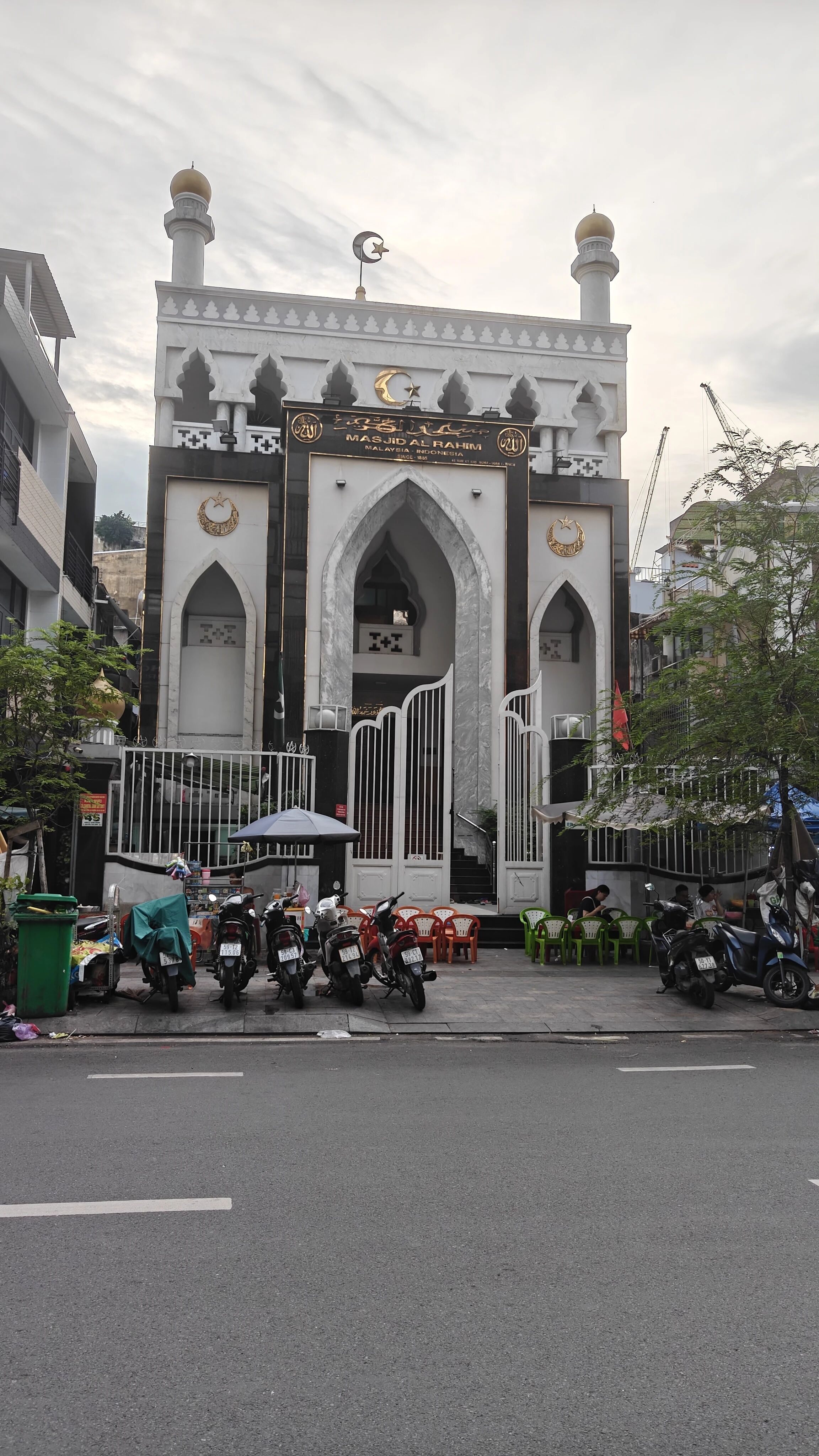
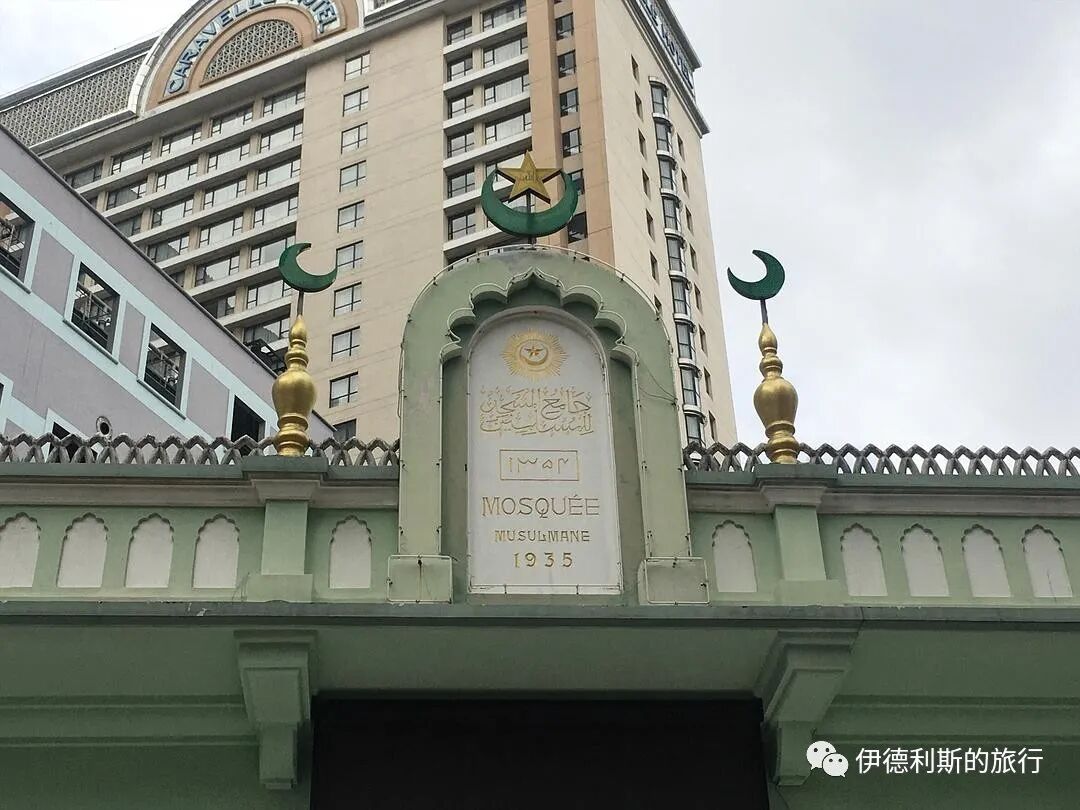
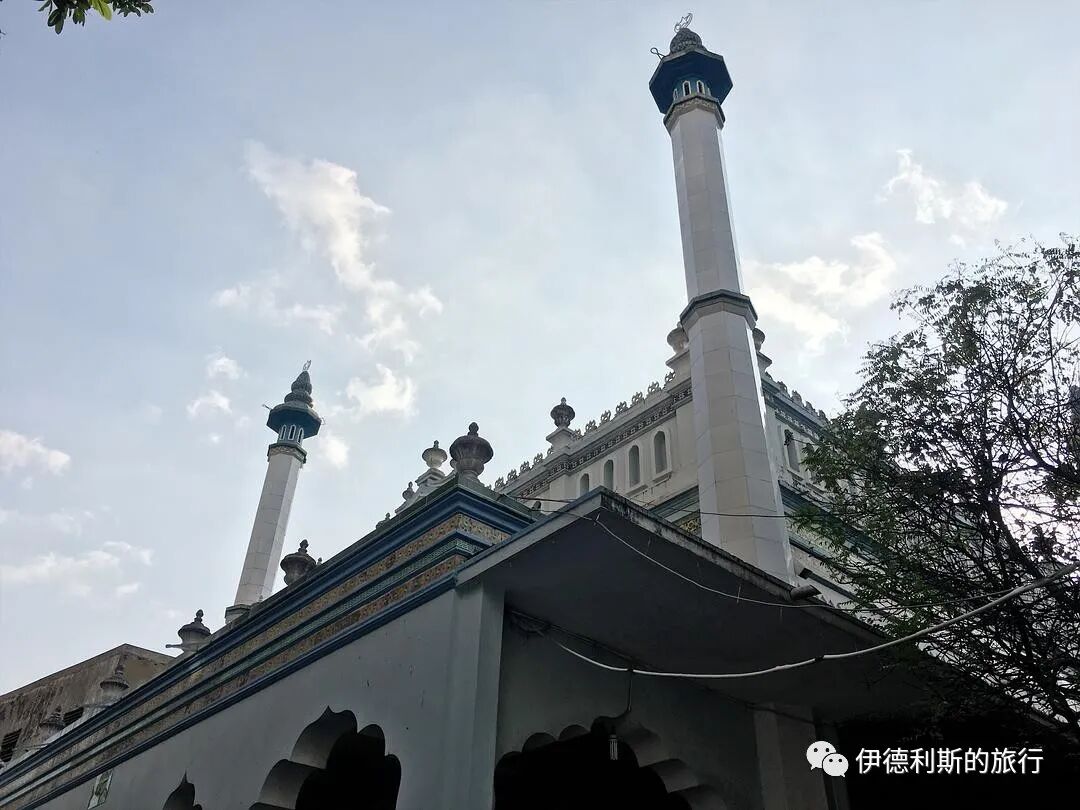
This mosque, called Al-Rahim (Mercy), is not far from Ho Chi Minh Ben Thanh Market, and it takes only five or six minutes to walk.
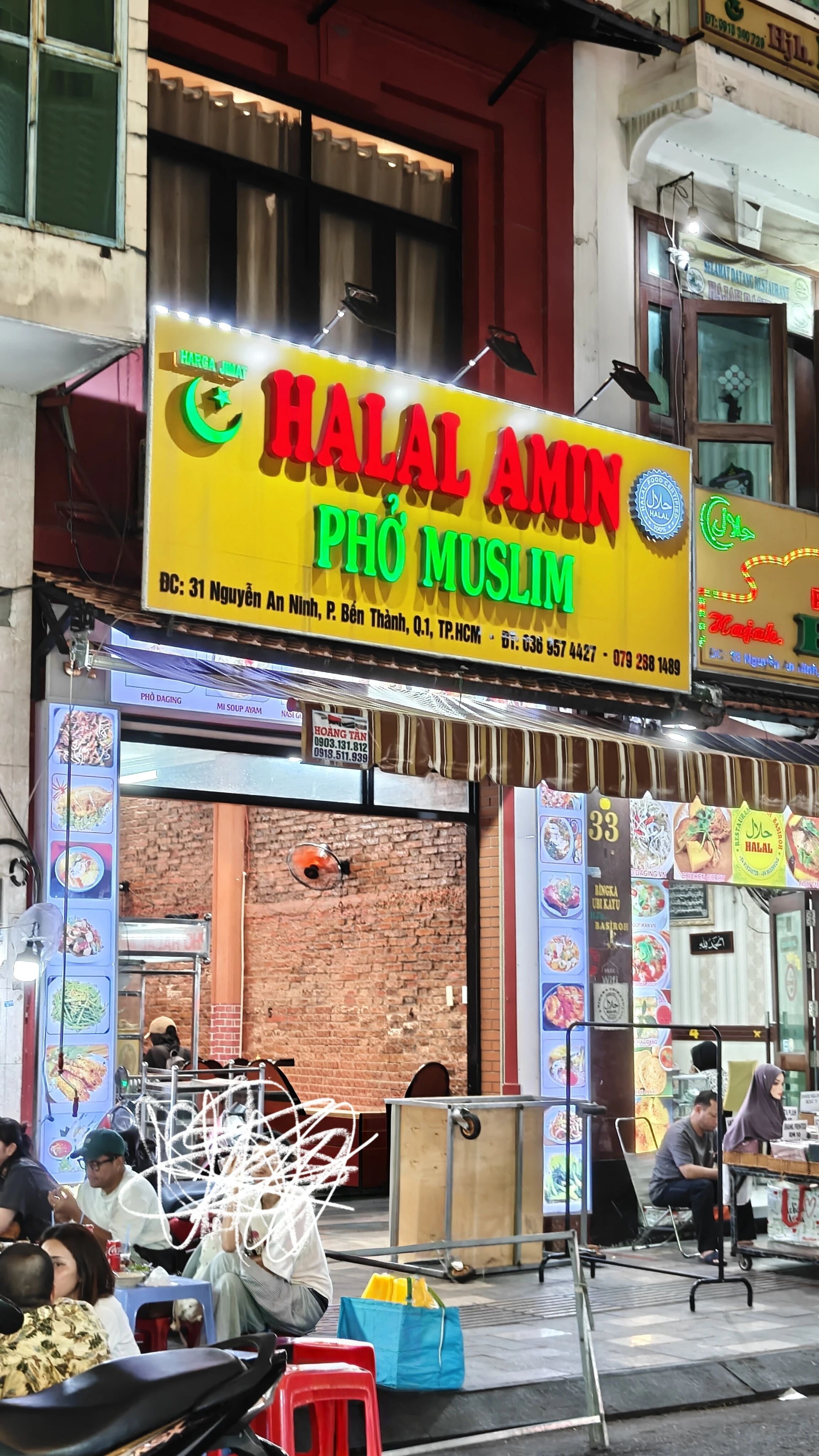
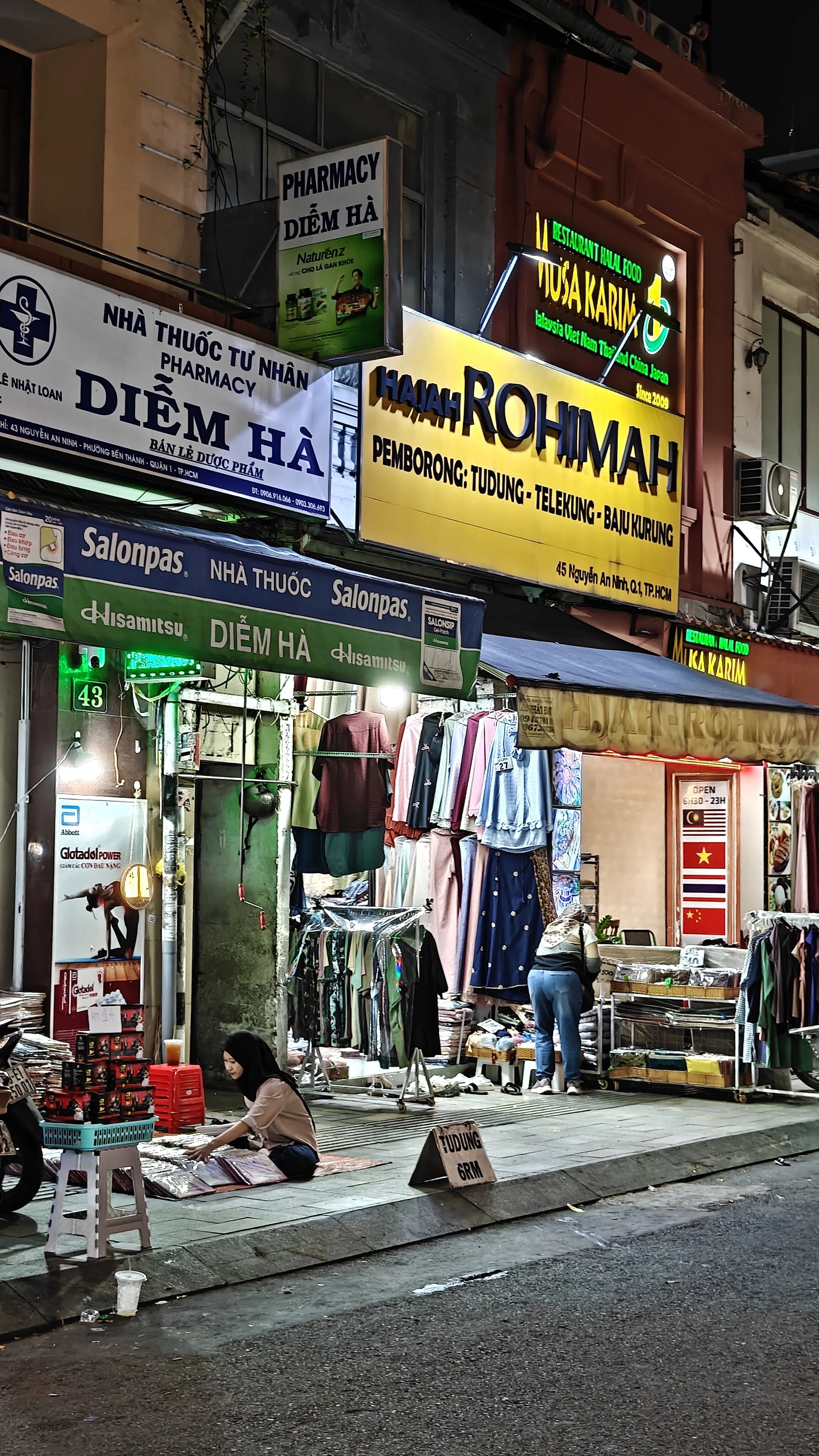
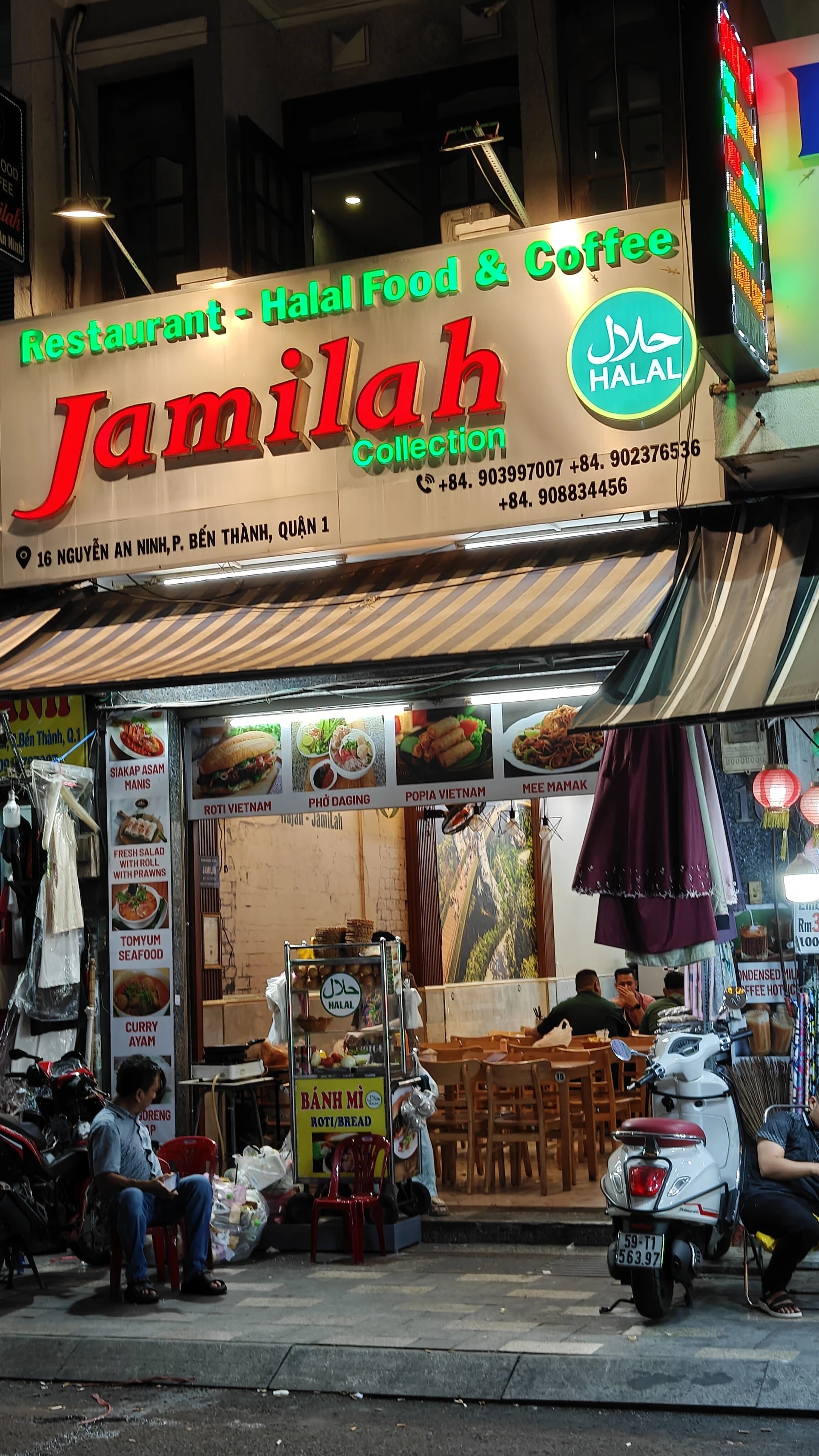
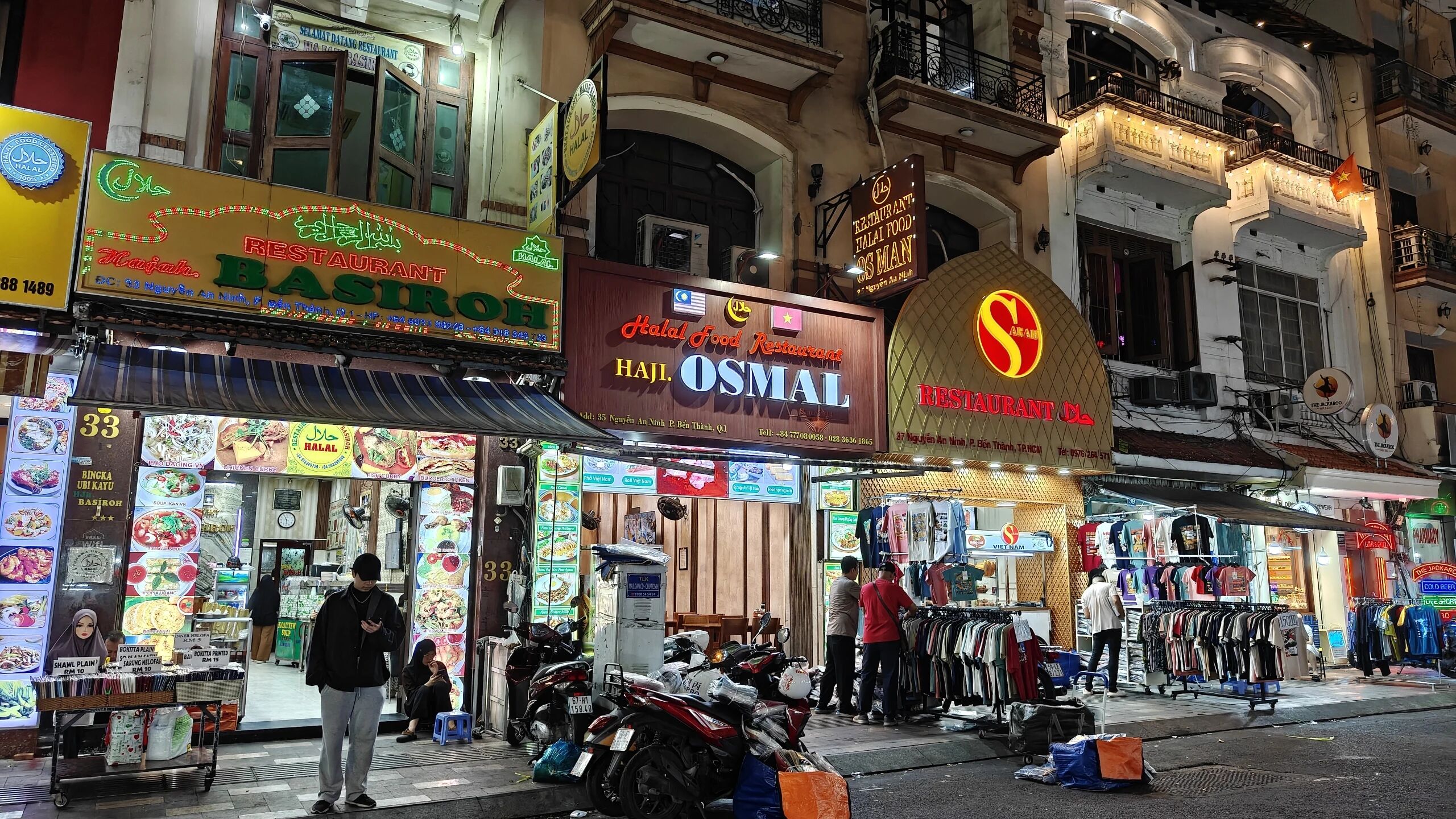
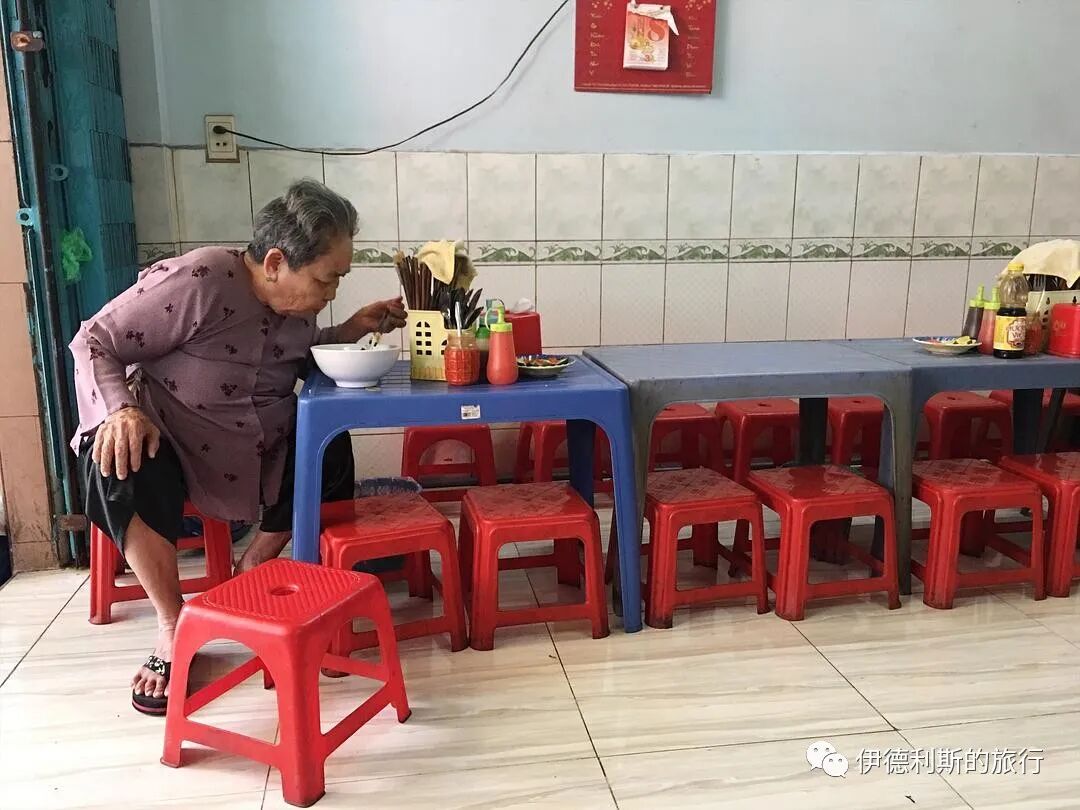
There is a street with halal restaurants at the entrance of Ben Thanh Market (see pictures 9 to 12). After eating there, I took a walk to Al-Rahim Mosque (Zhici Mosque, Mercy Mosque) and found that there are halal restaurants in front of the mosque (see picture 2). There is a restaurant on the left and right, and there are some diners sitting there.
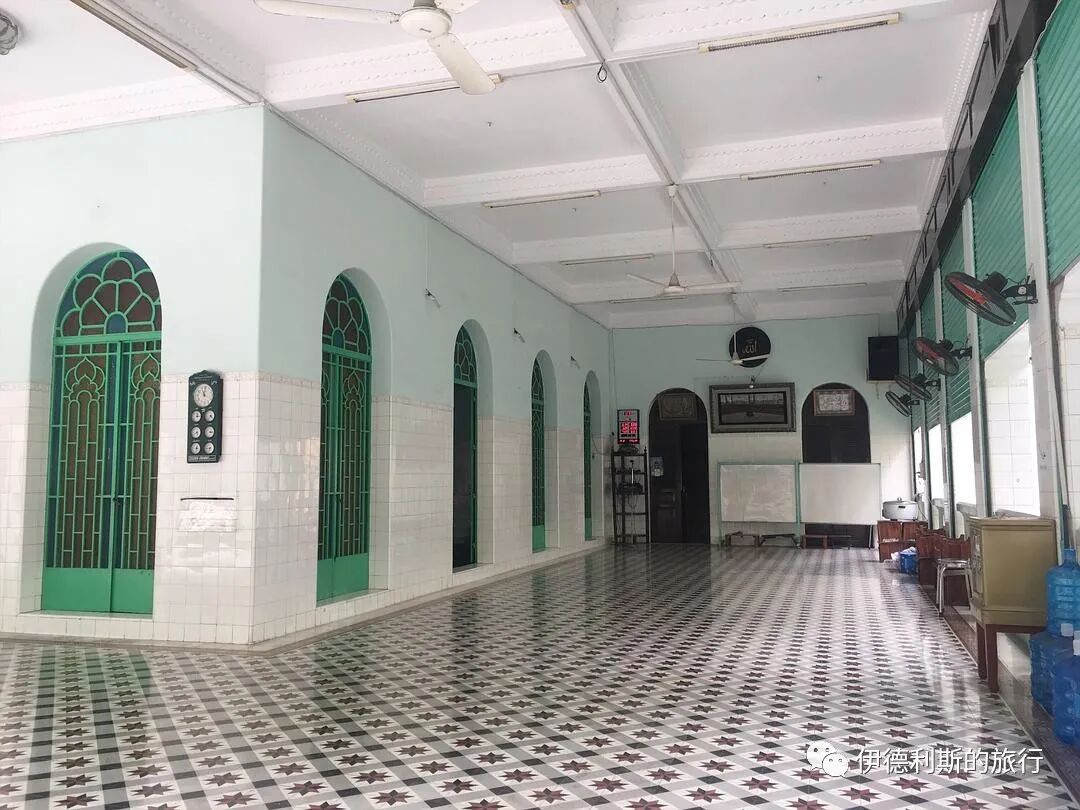
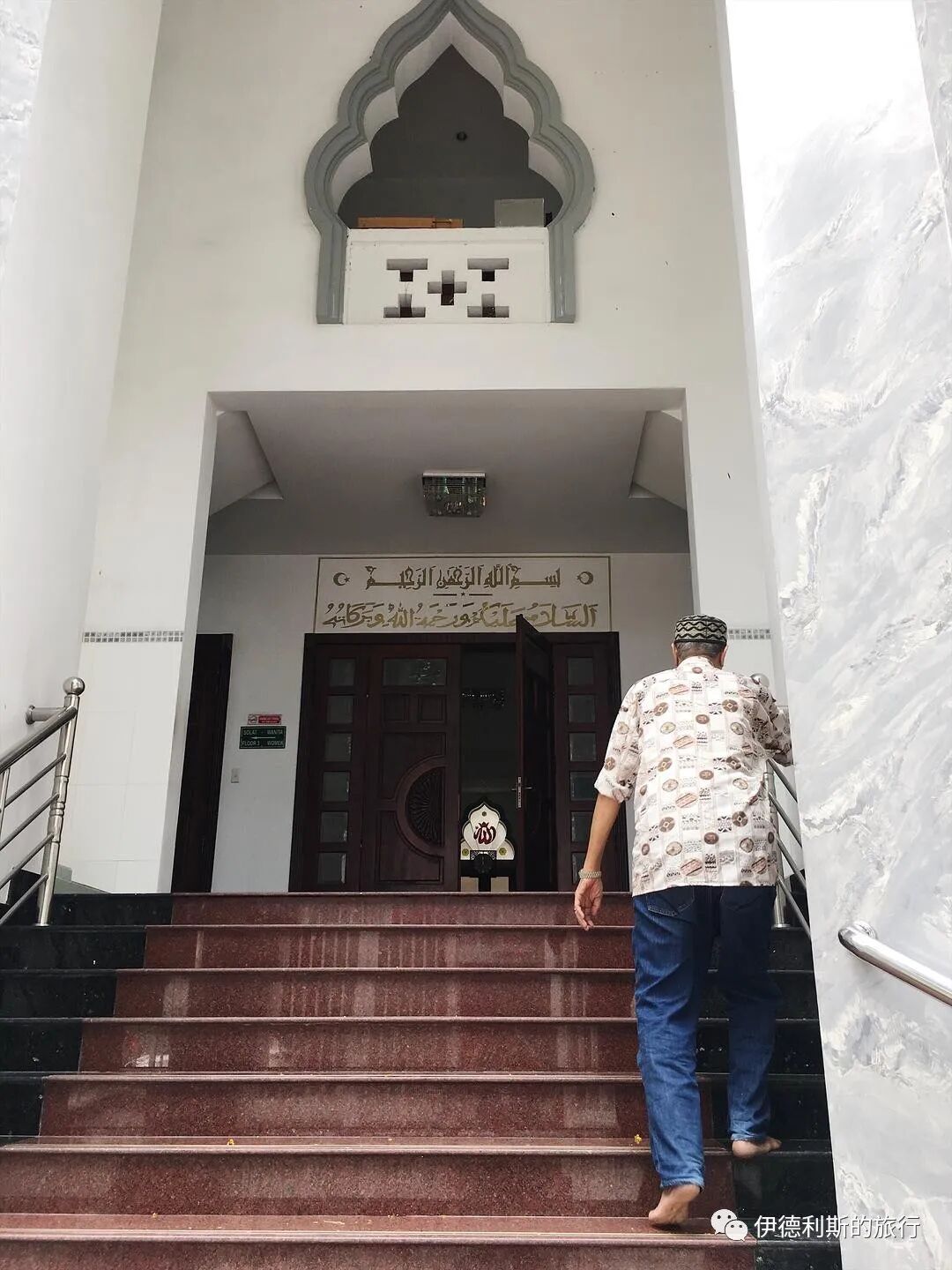
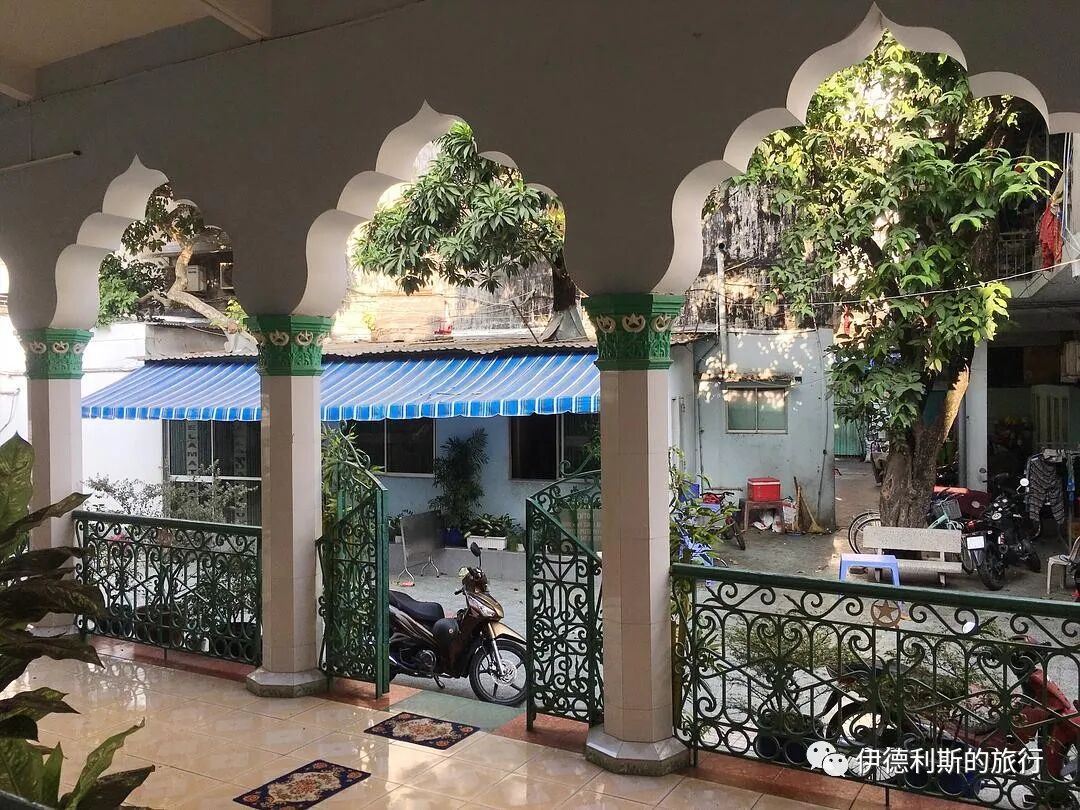
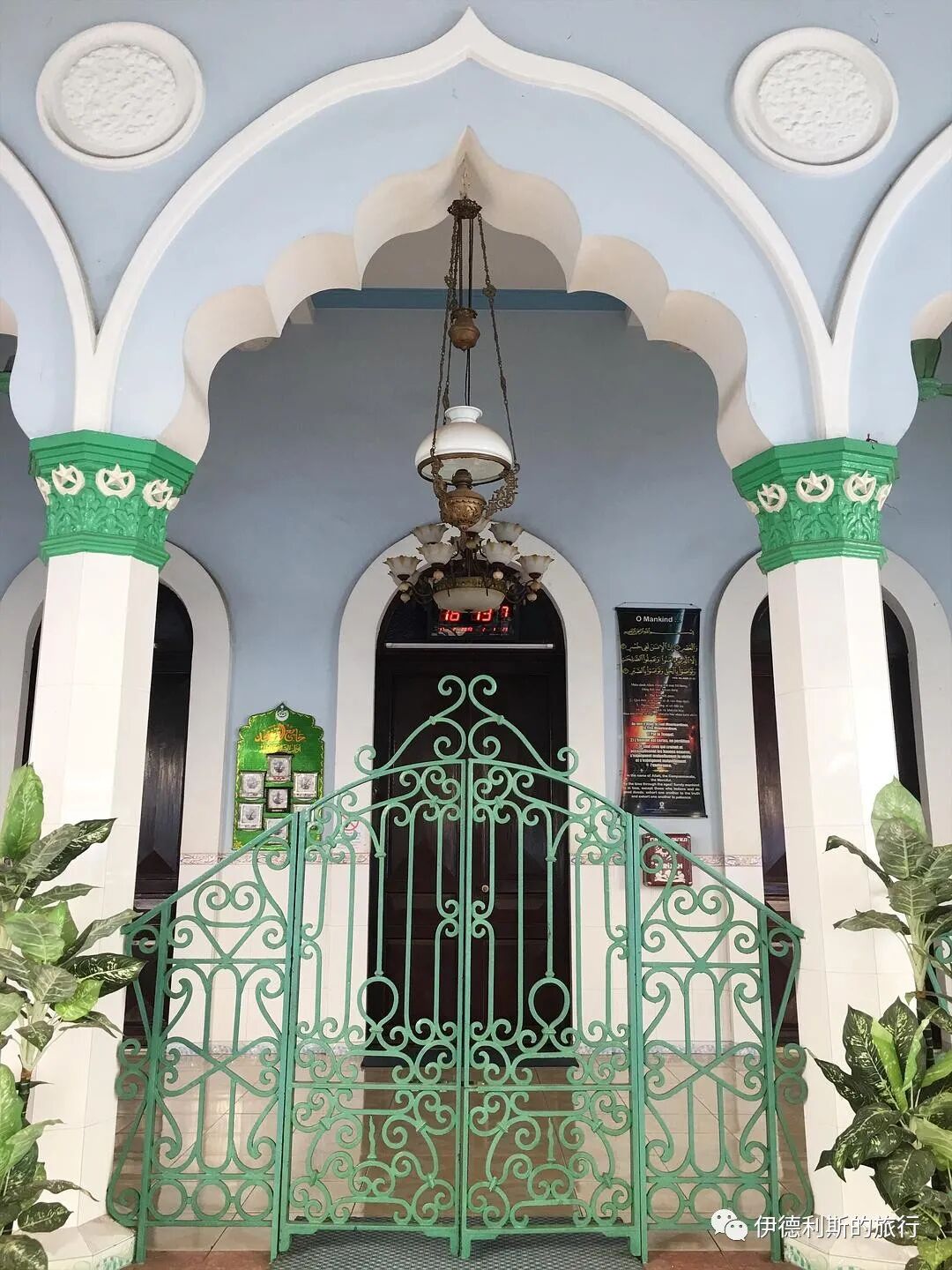
When entering the mosque gate, as usual, take off your shoes before stepping onto the steps of the prayer hall. Because the weather was extremely hot, the door on the first floor was left open and two or three fans were blowing. There were three or four people sitting in the hall, one of whom looked like an imam and was teaching the rest of the people how to study the Qur'an.
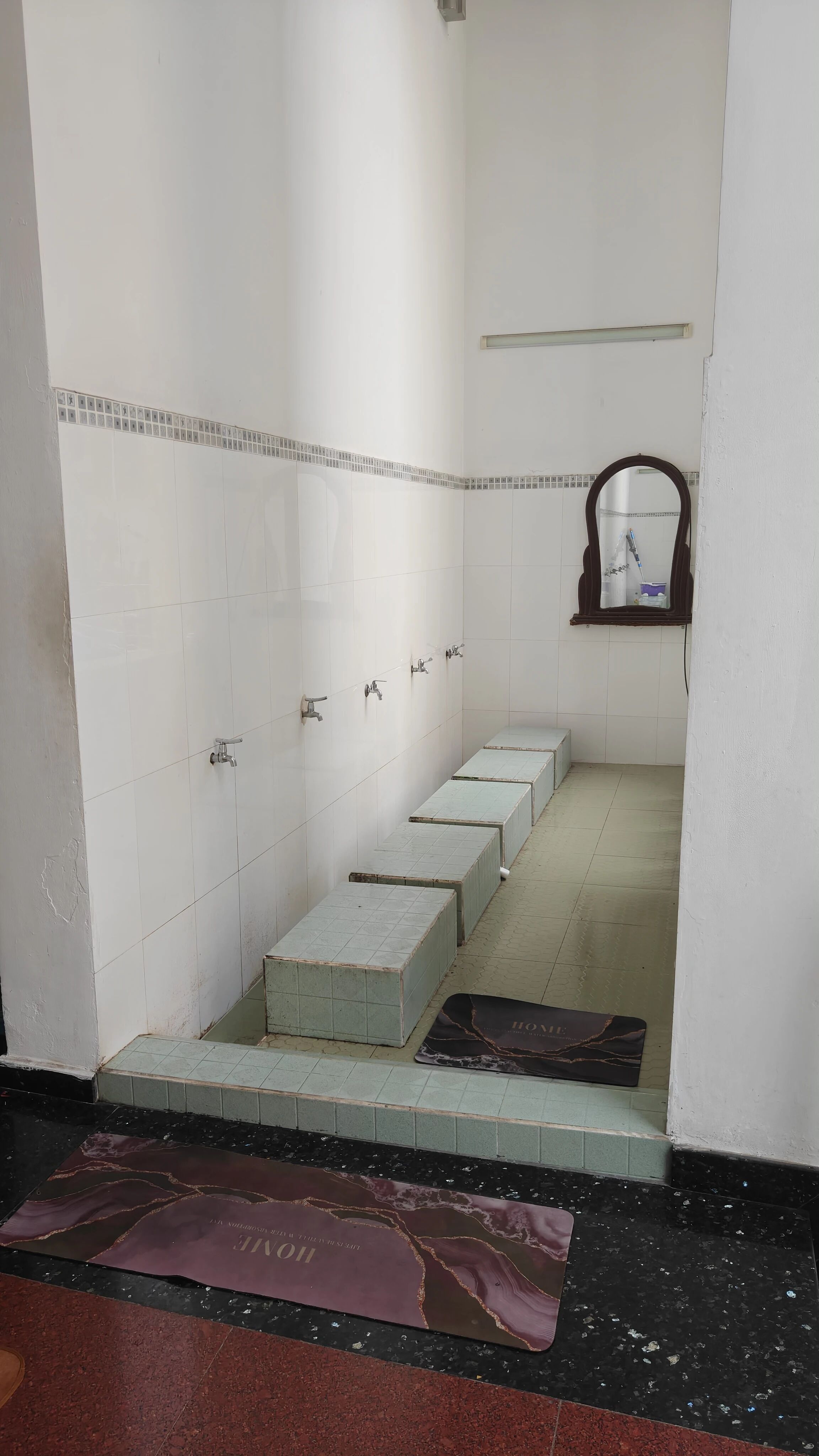
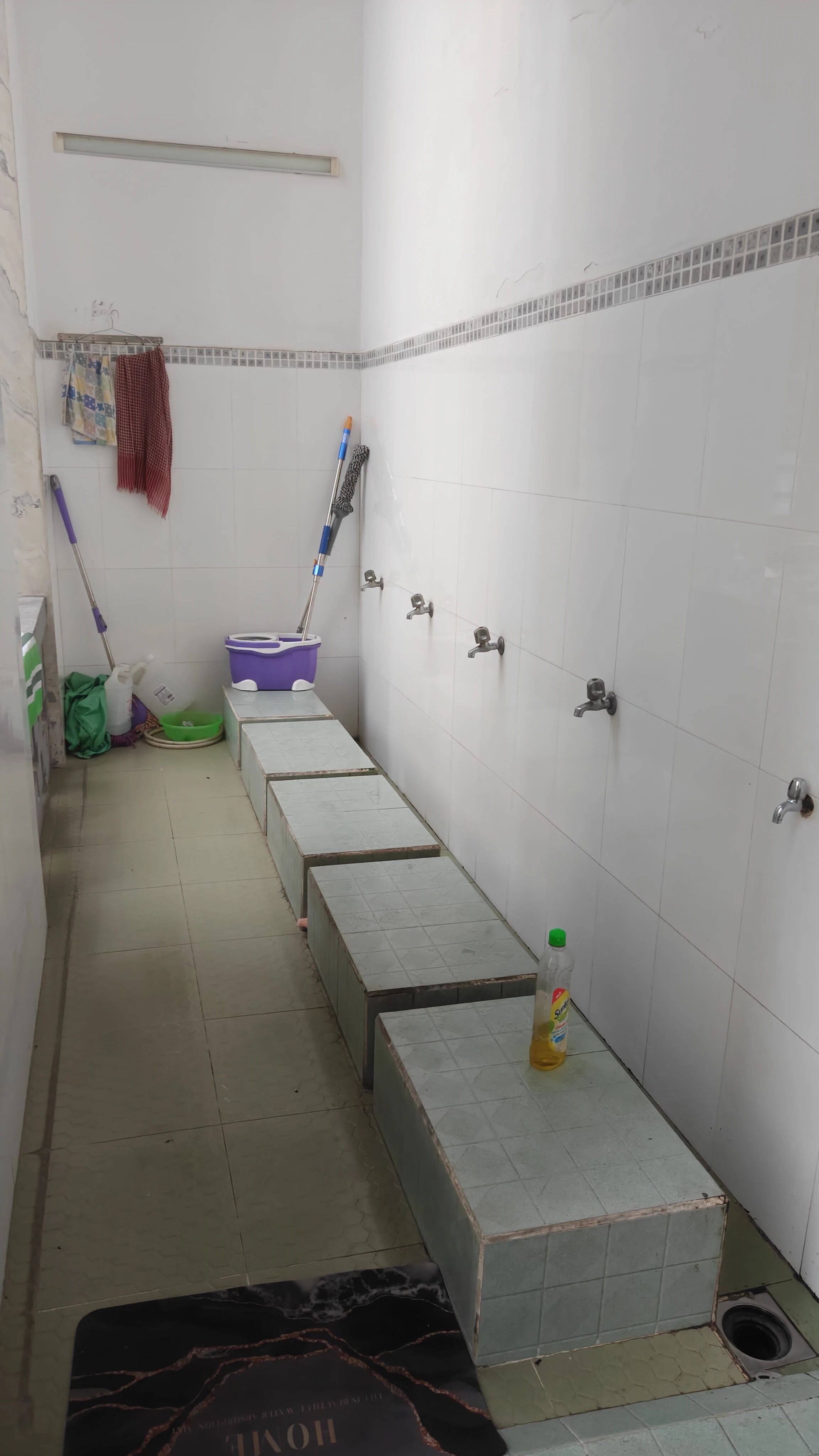
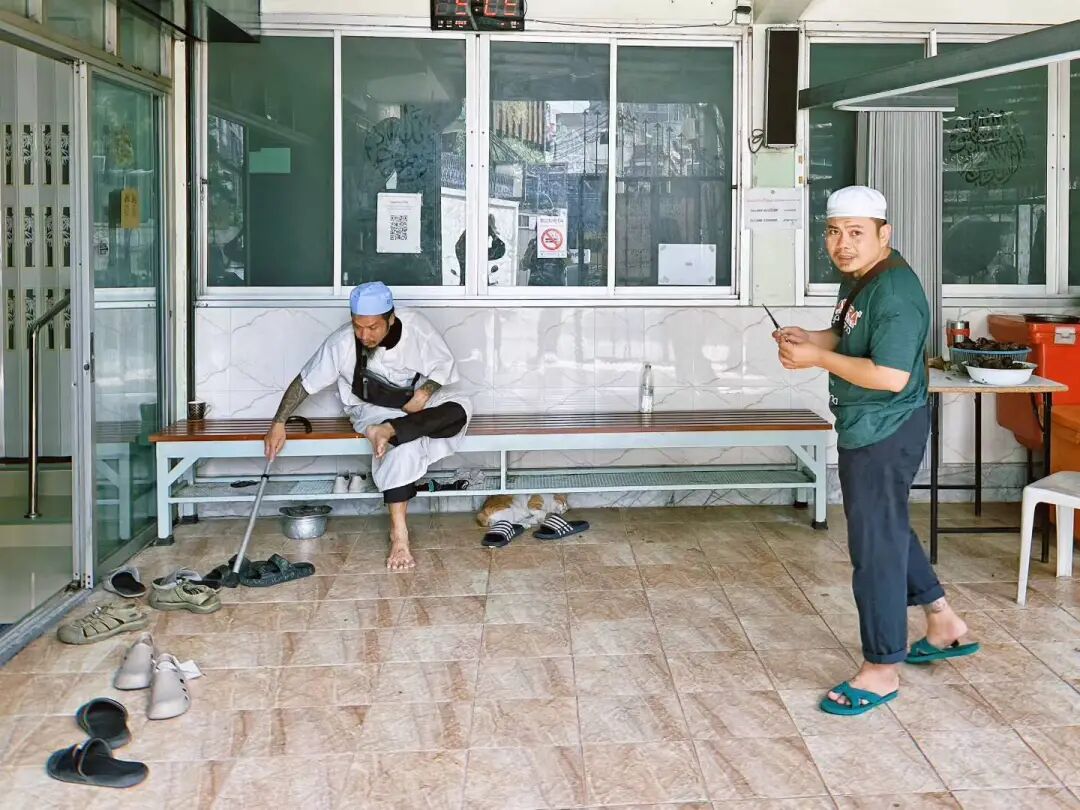
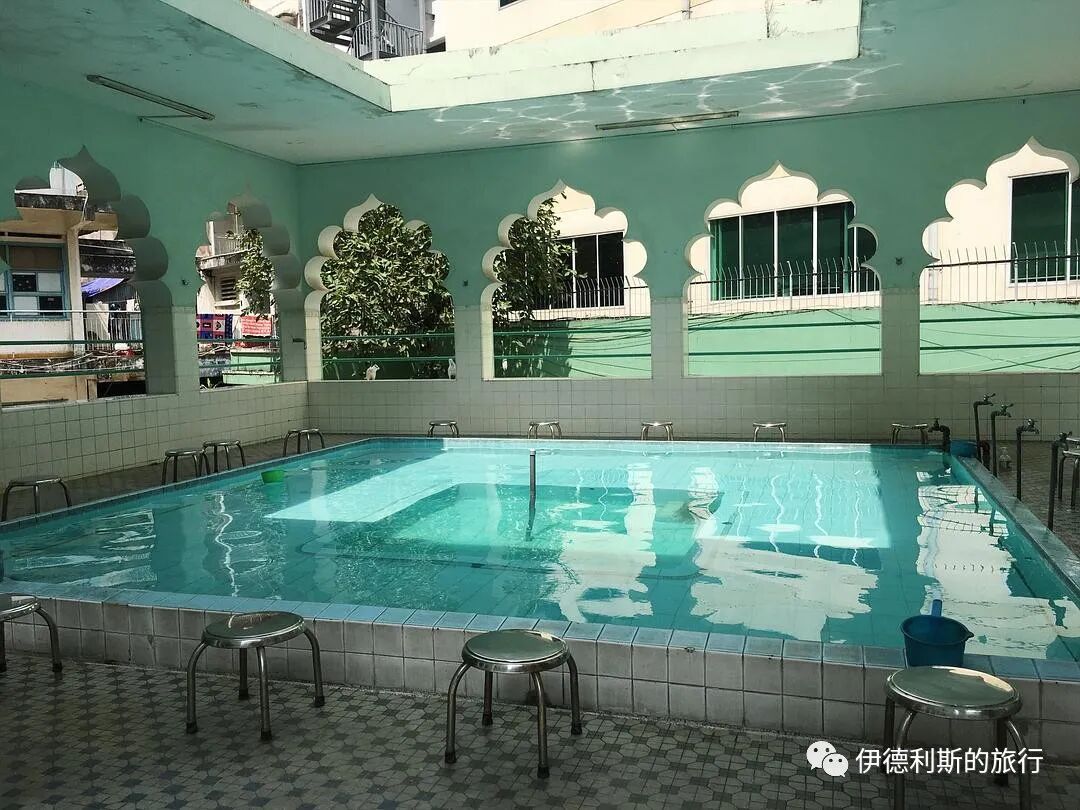
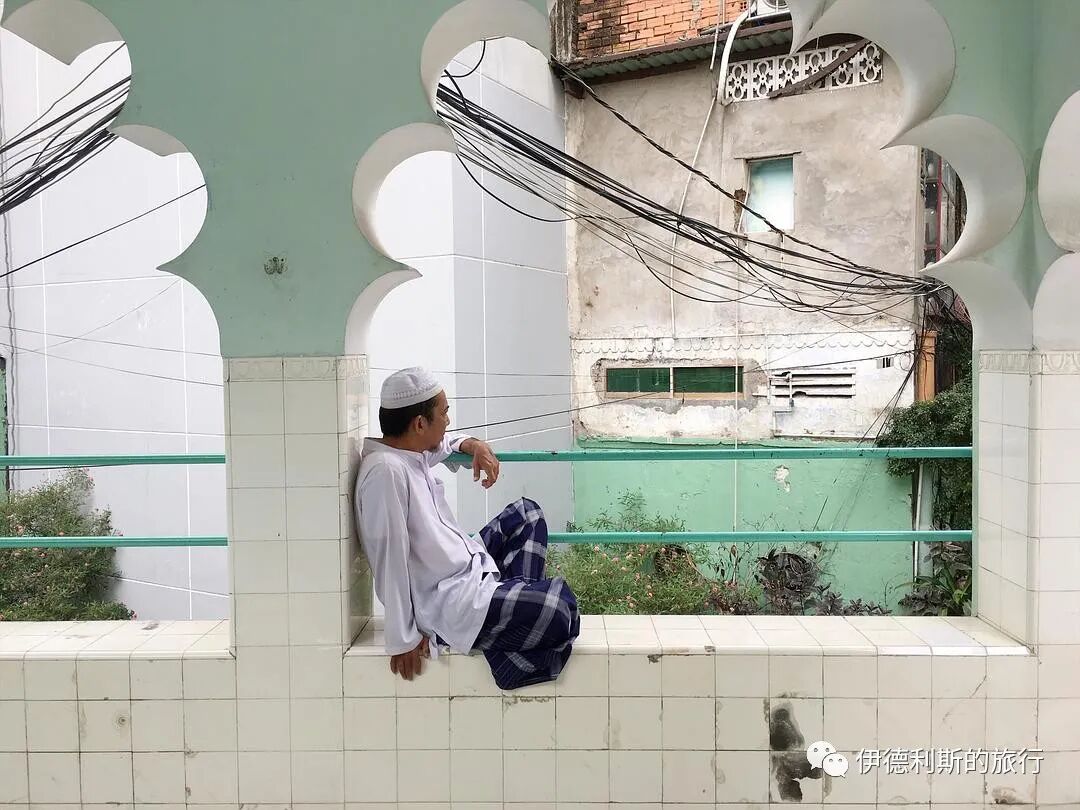
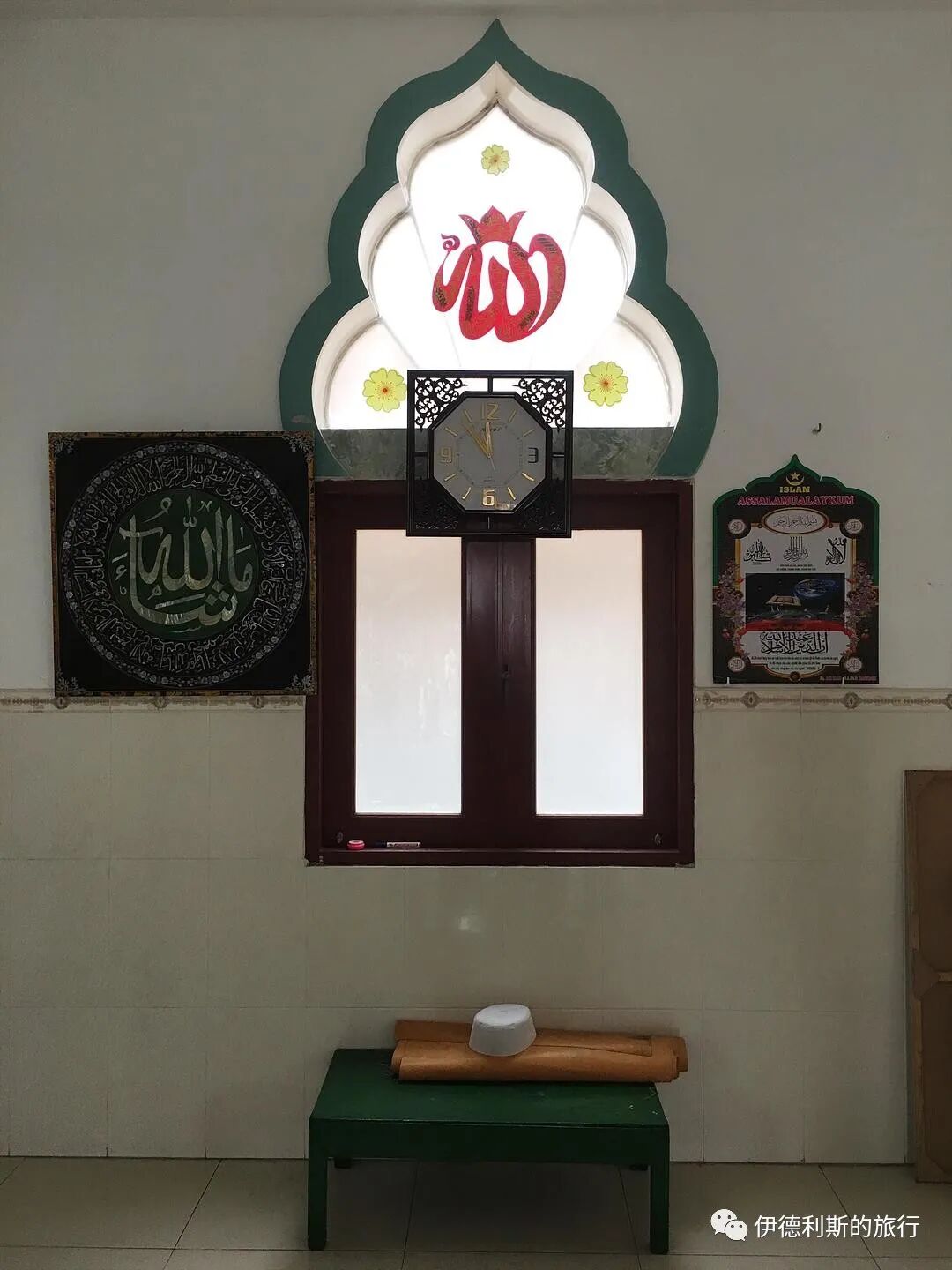
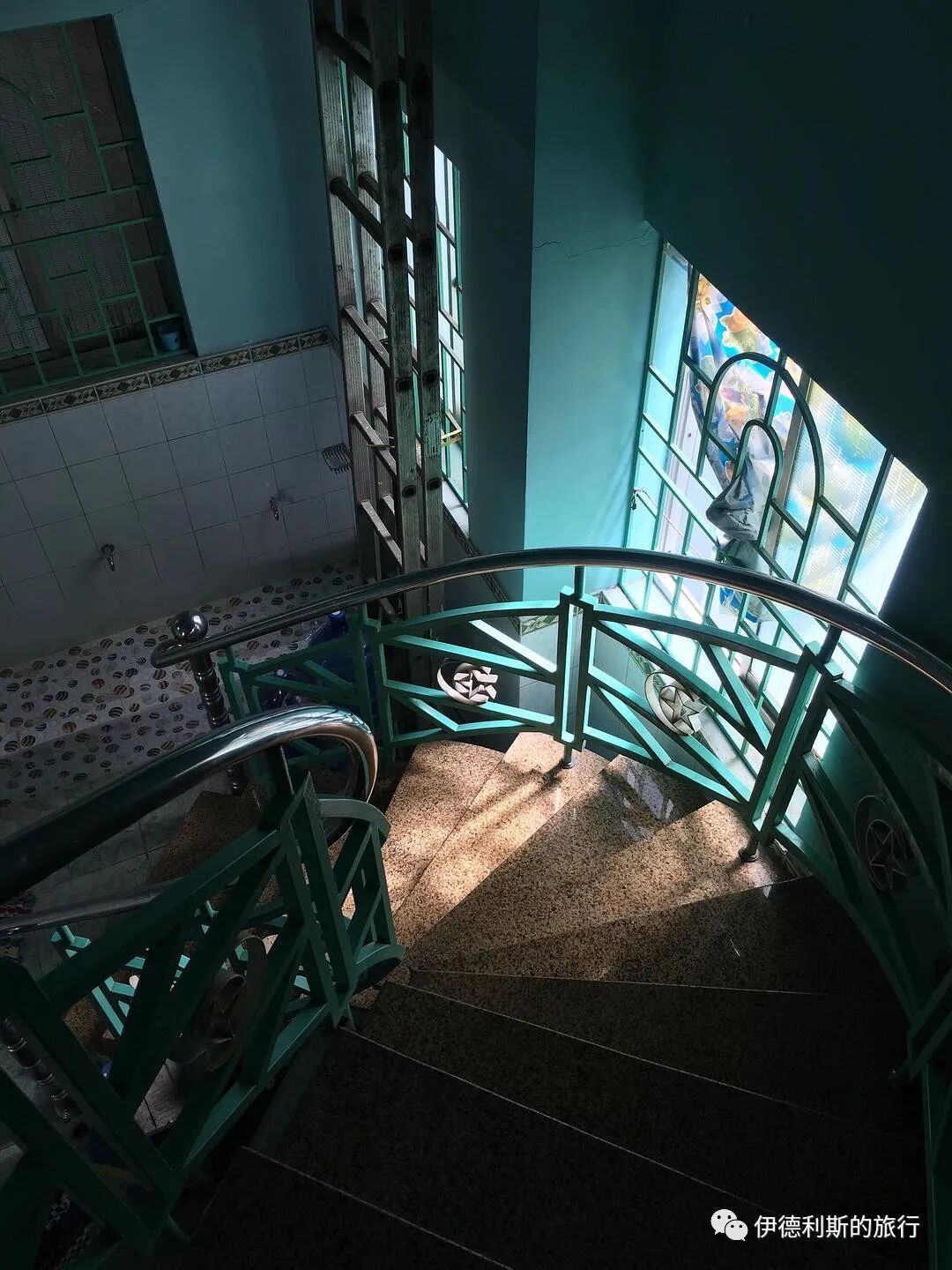
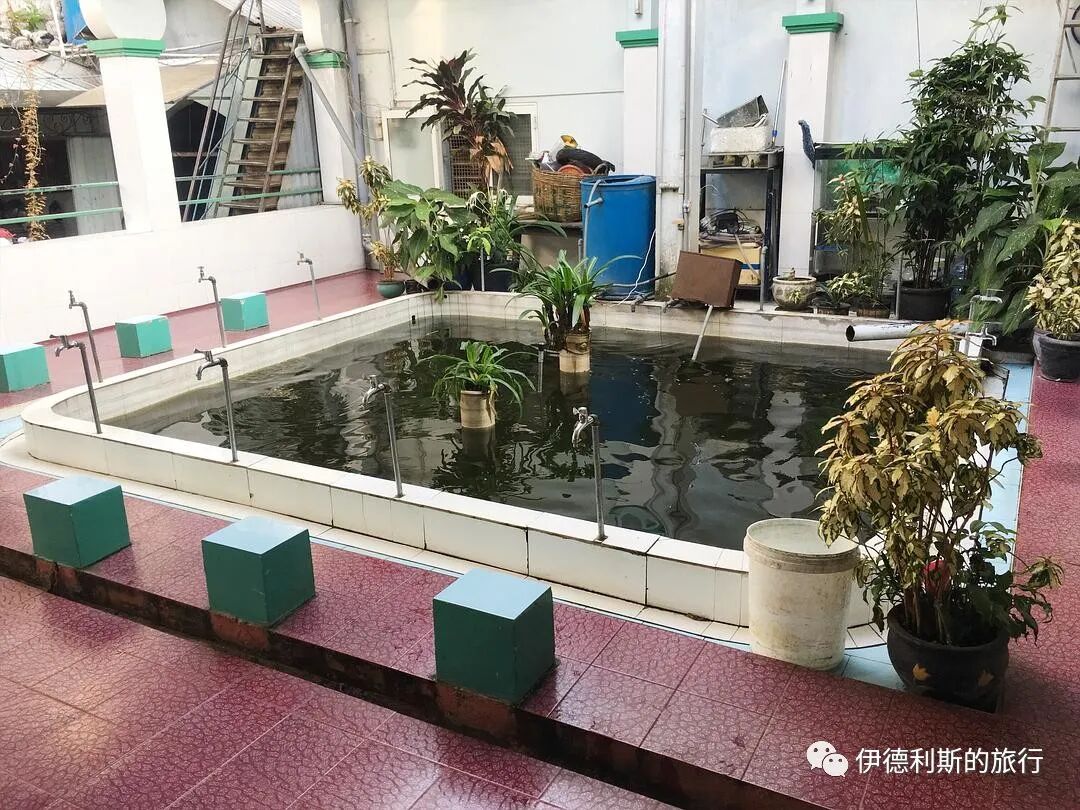
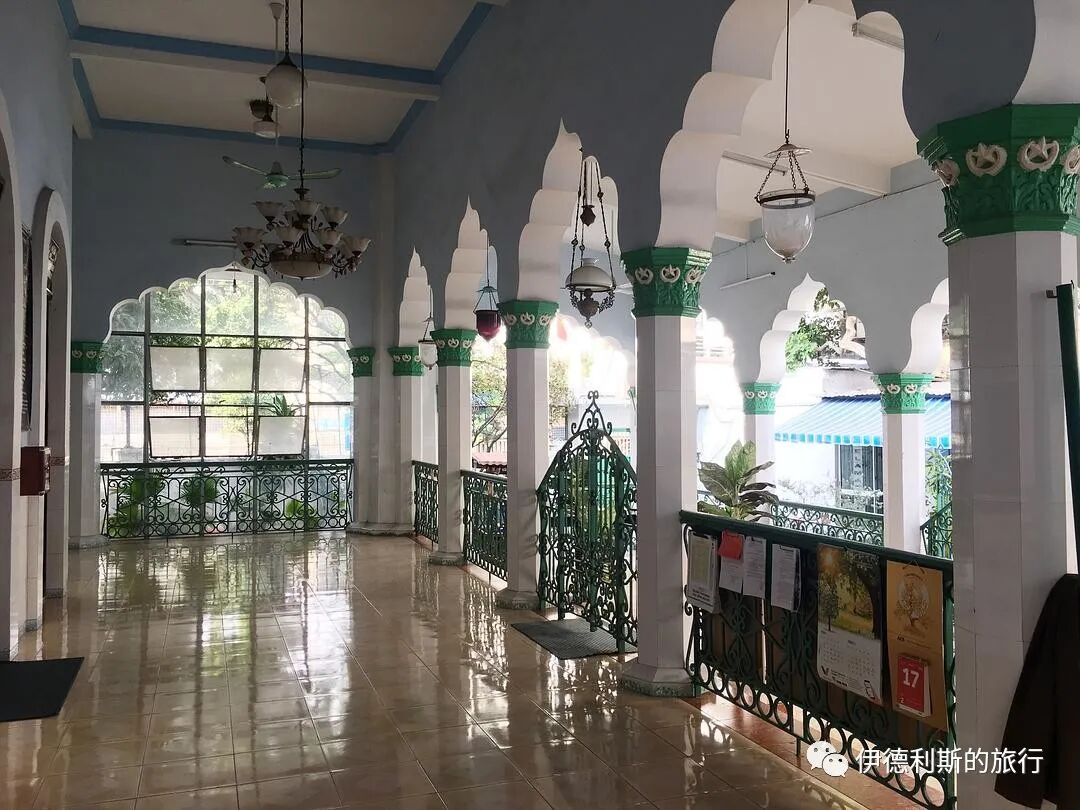
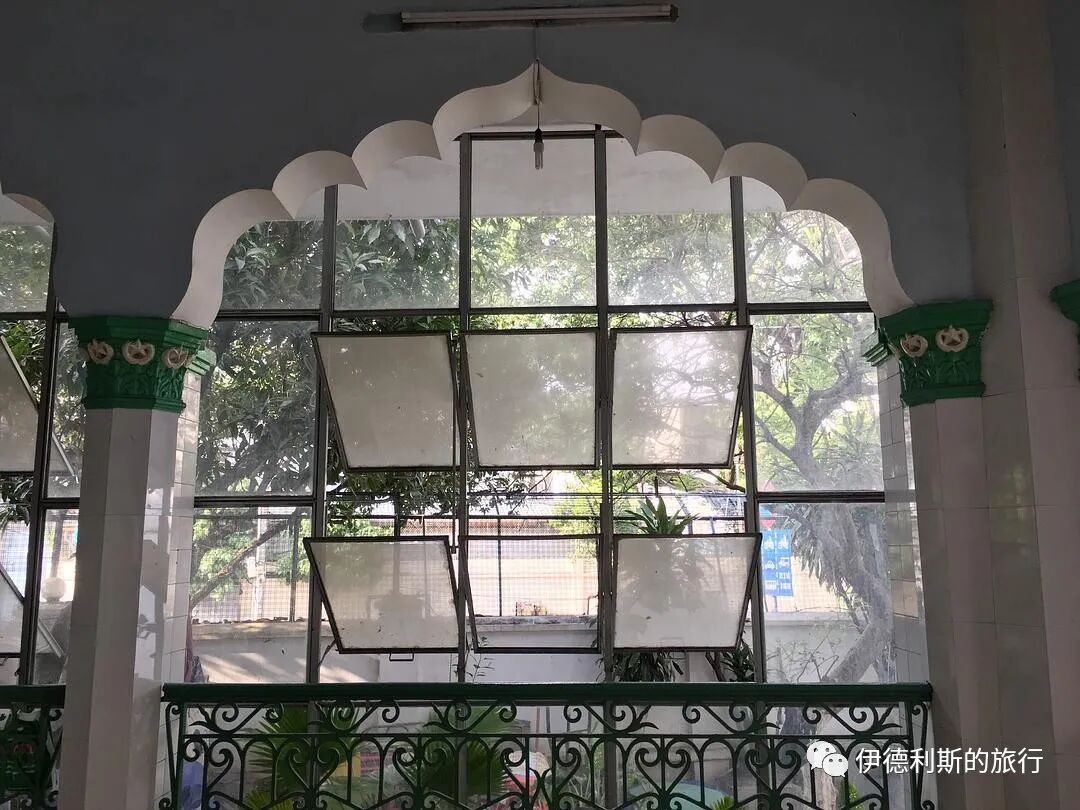
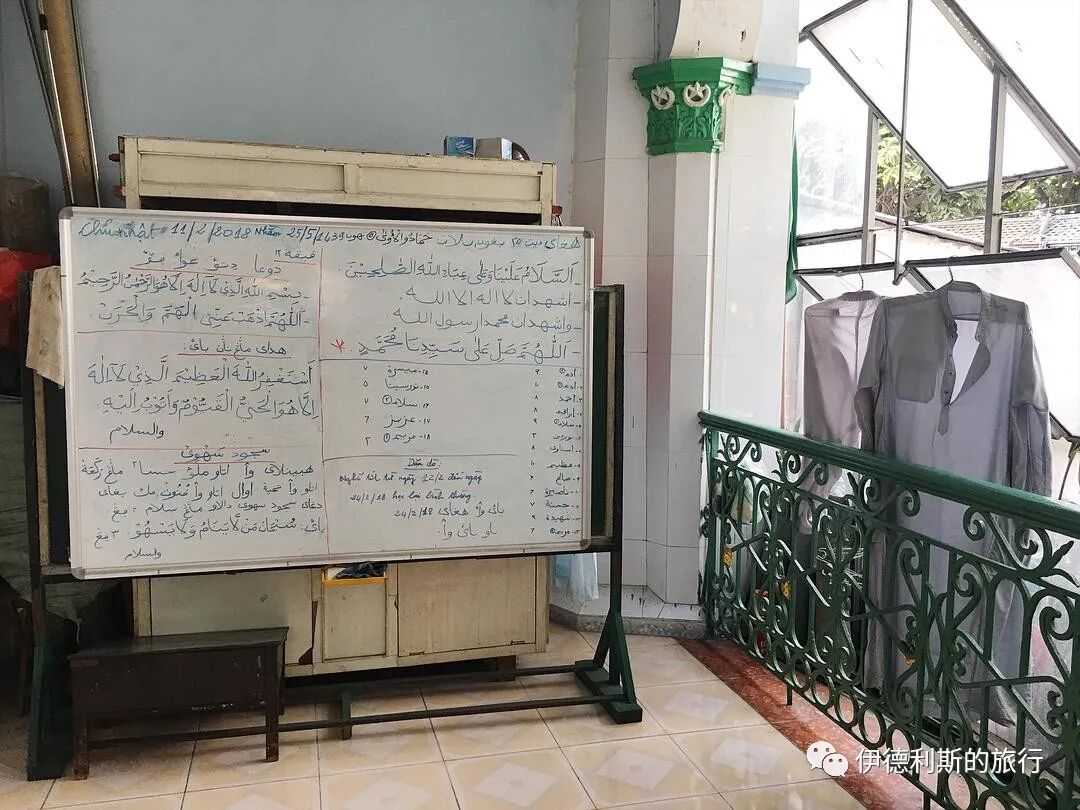
He told me in English that the prayer room is on the second floor. I exited the hall and found the wudu area on the porch outside the hall. (See Picture 3 and Picture 4)
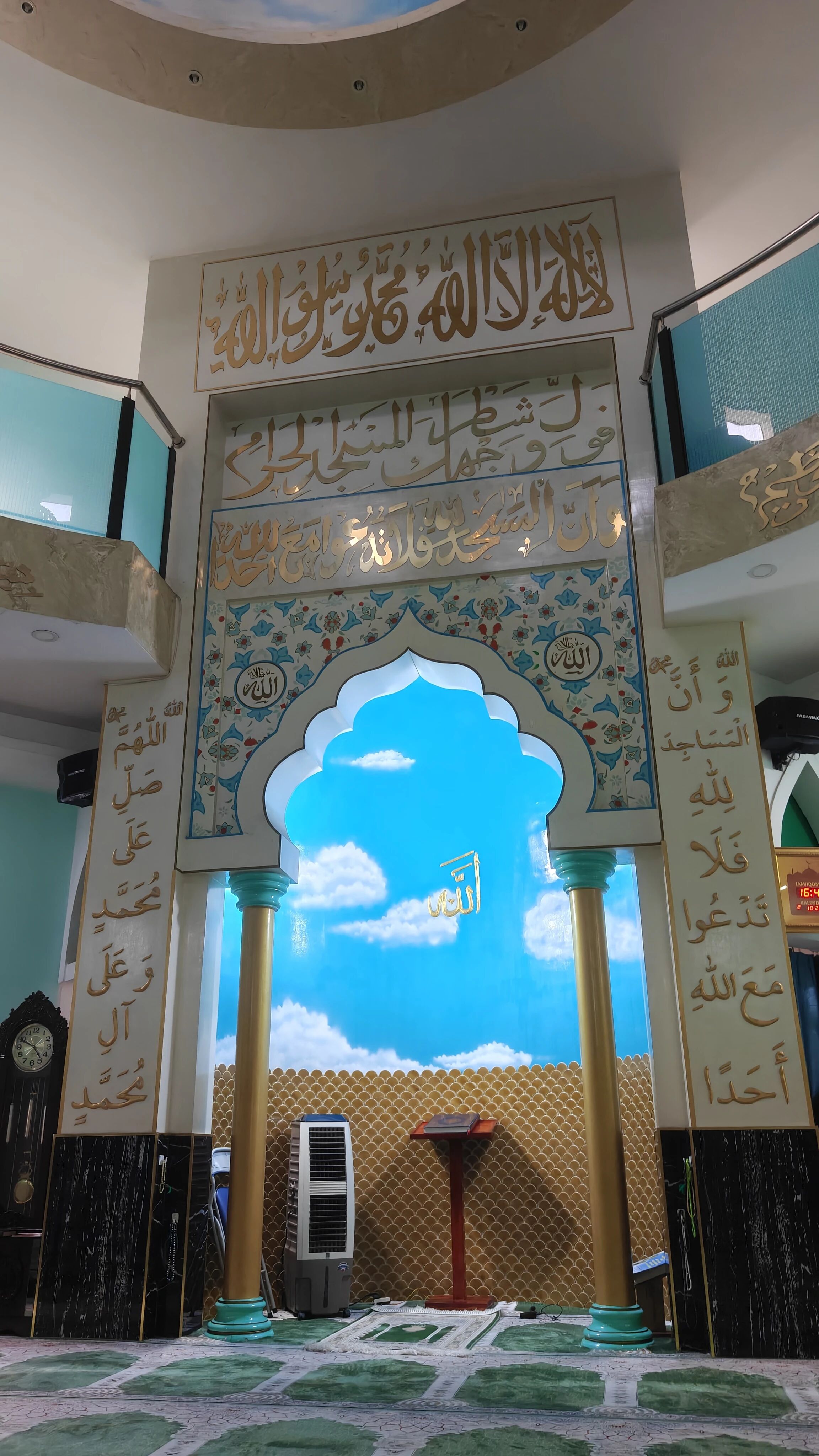
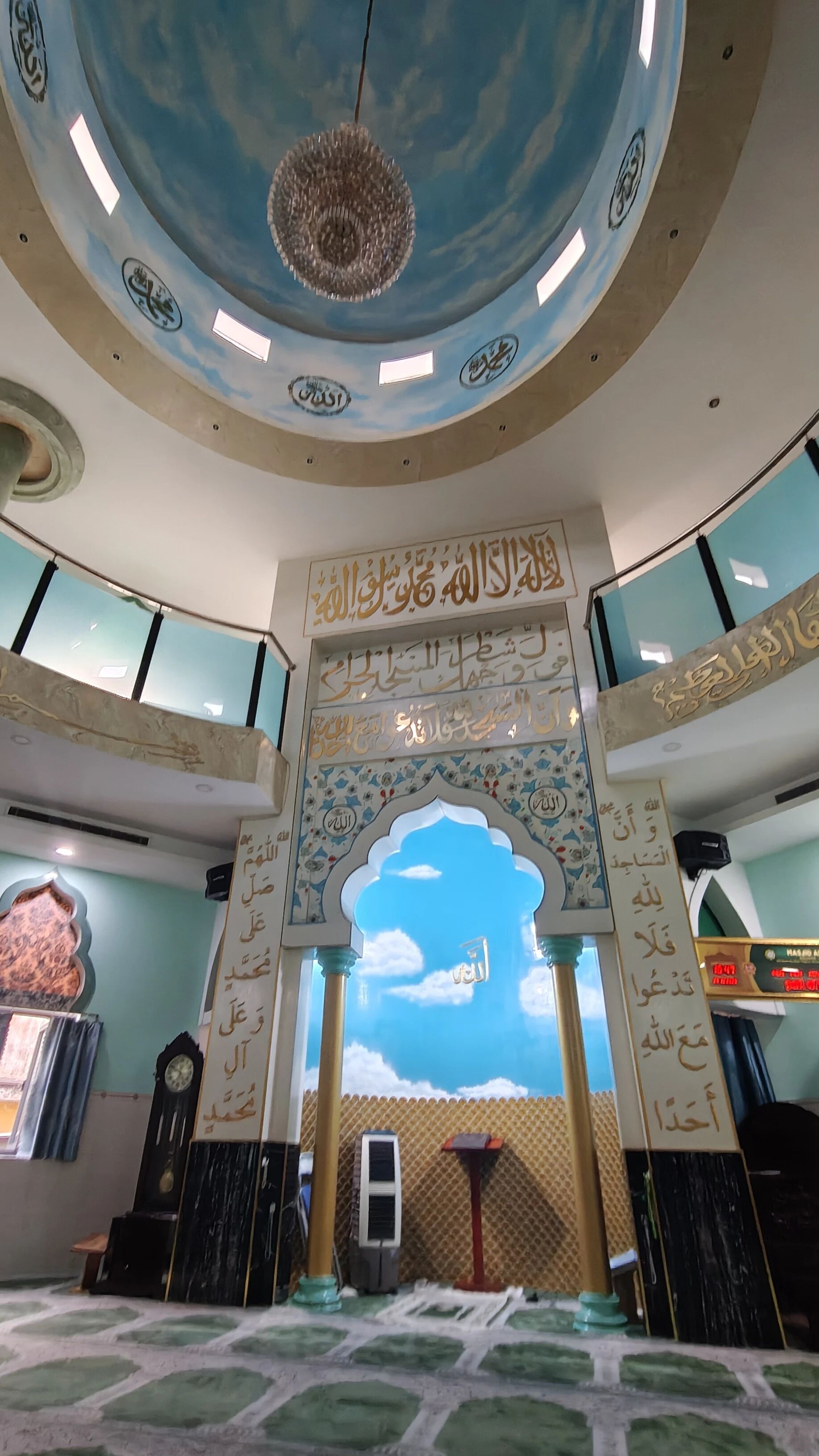
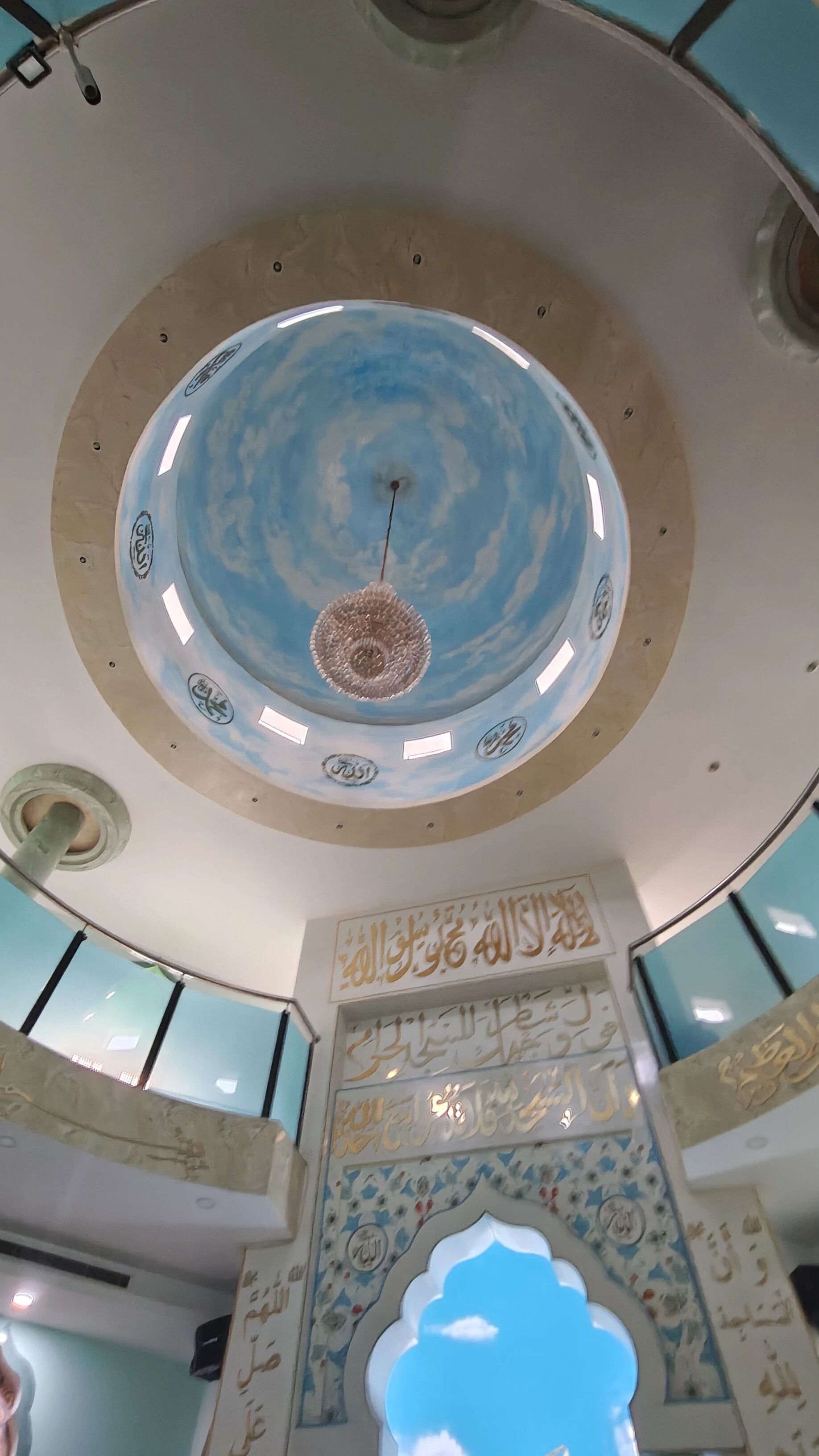
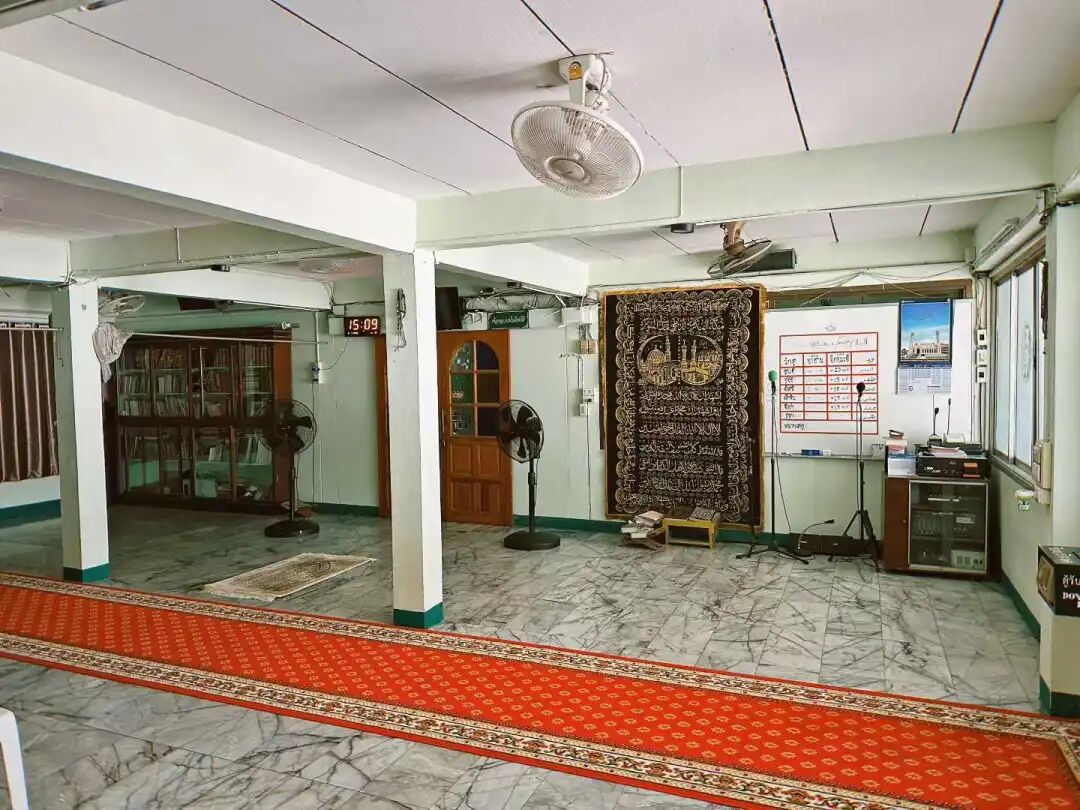
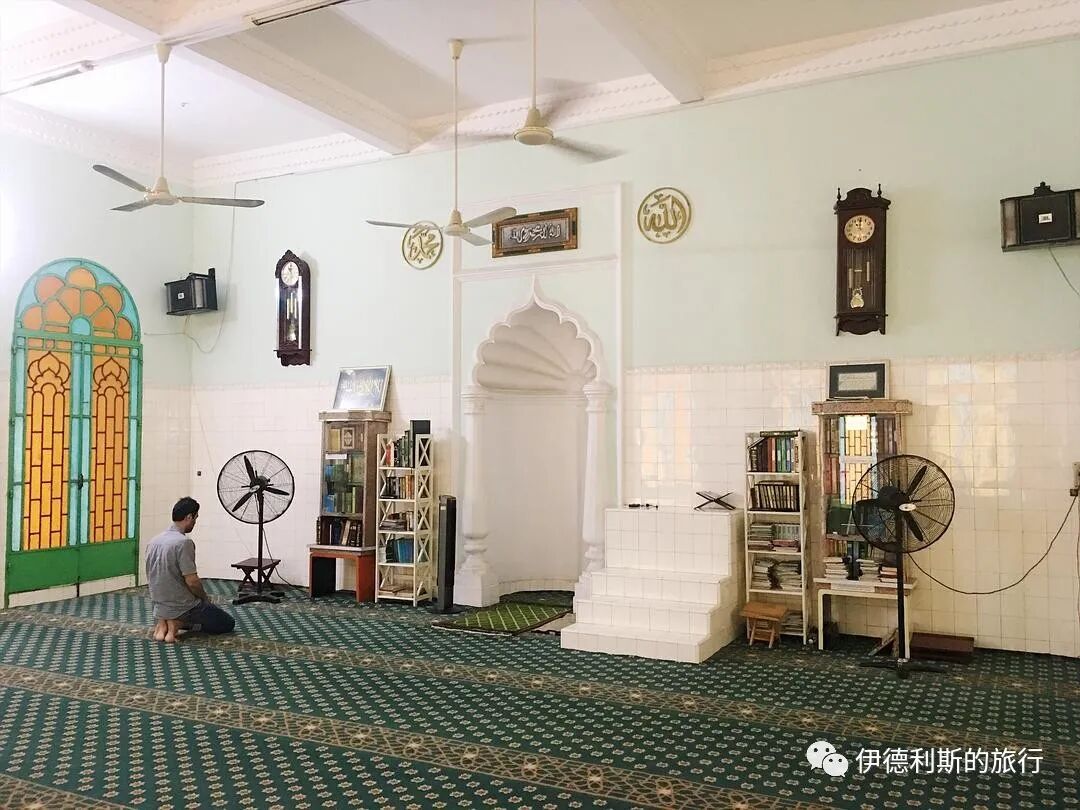
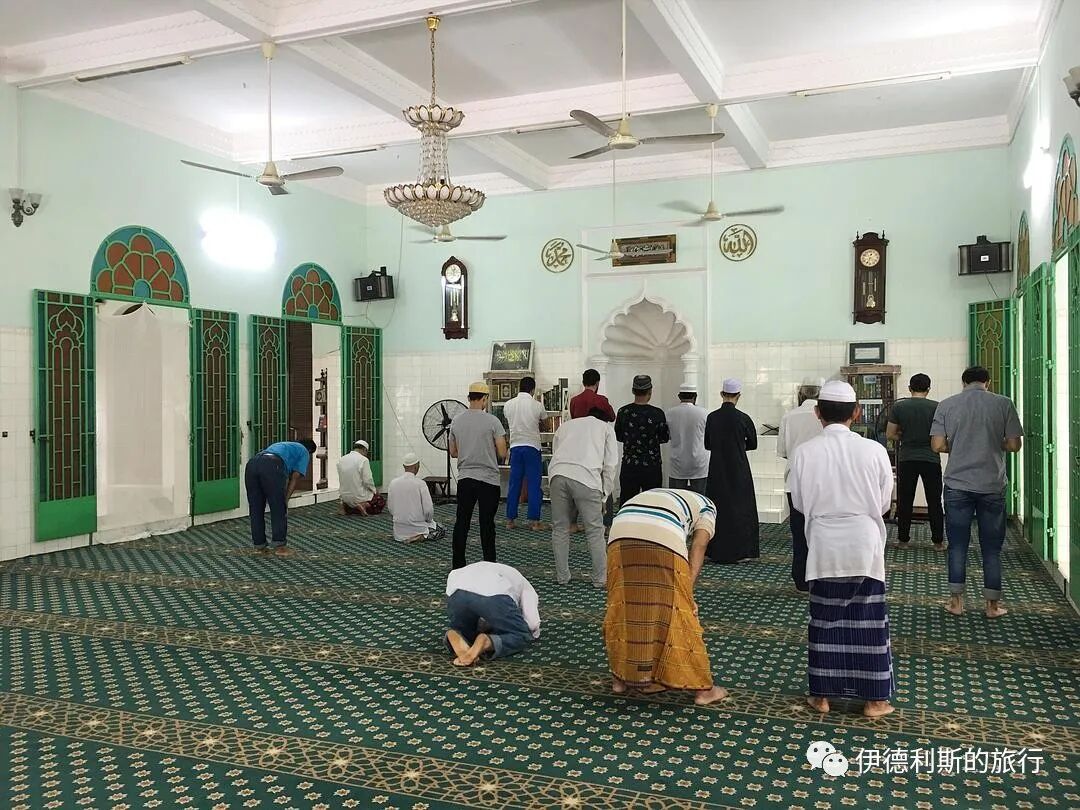
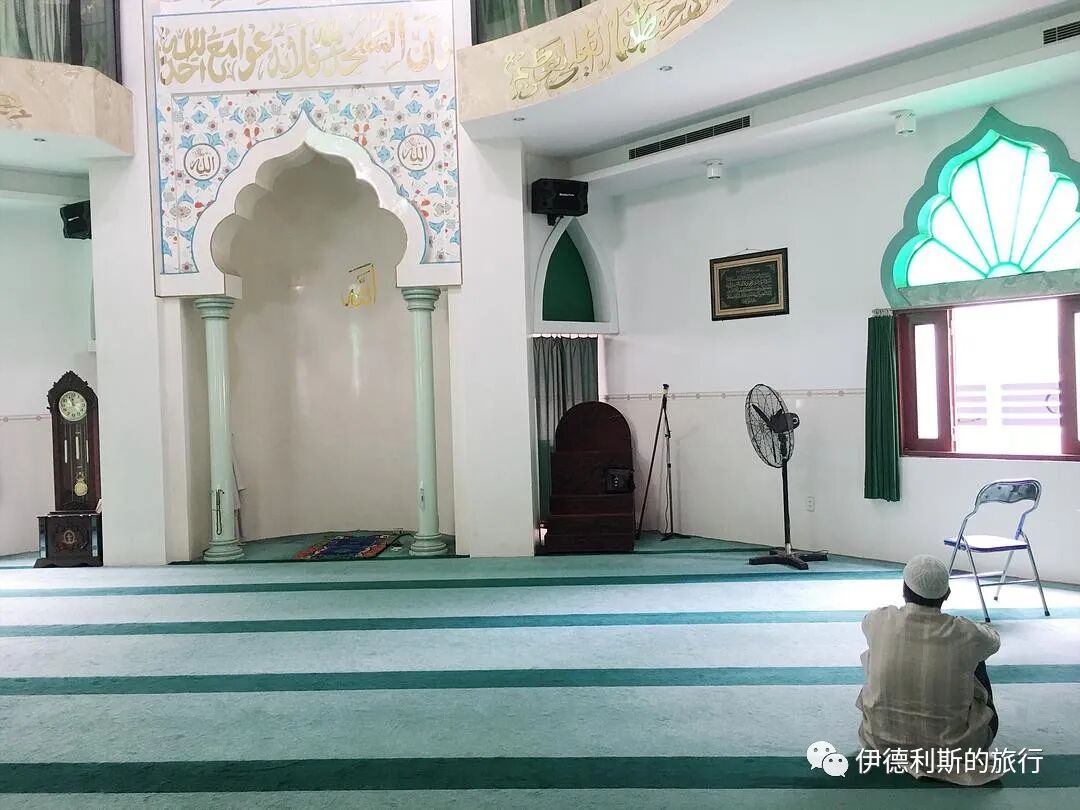
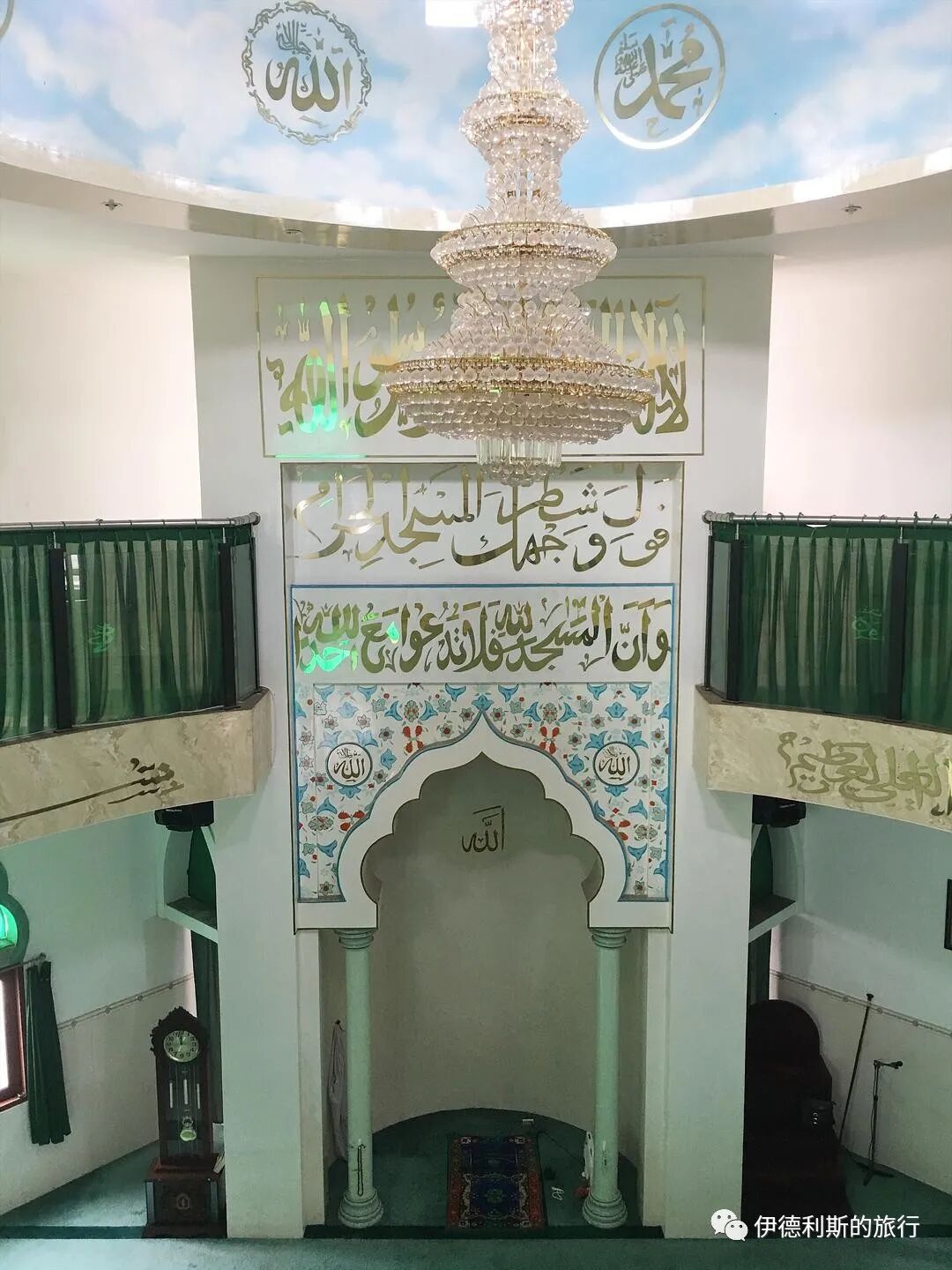
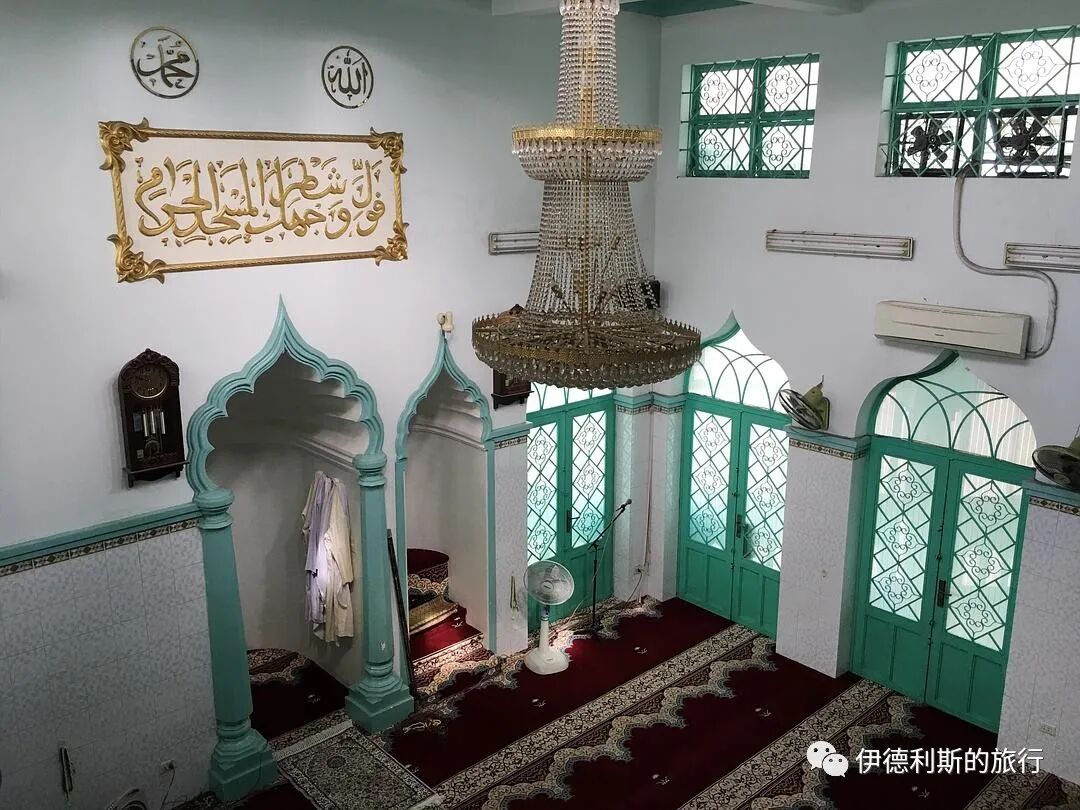
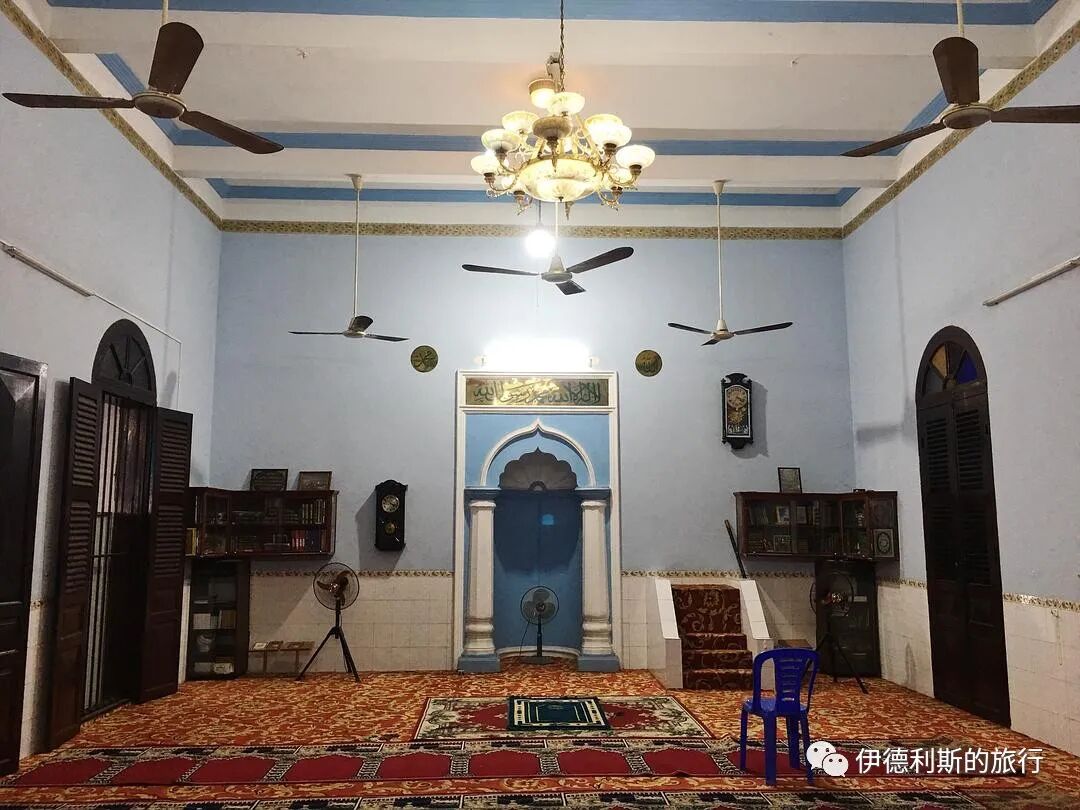
After going upstairs, we found the main prayer hall (Pictures 5, 6 and 7). There is a dome painted with white clouds and blue sky directly above the main hall. Moreover, there is a prayer space on the third floor, so that the prayer hall can accommodate more people without making it appear cramped.
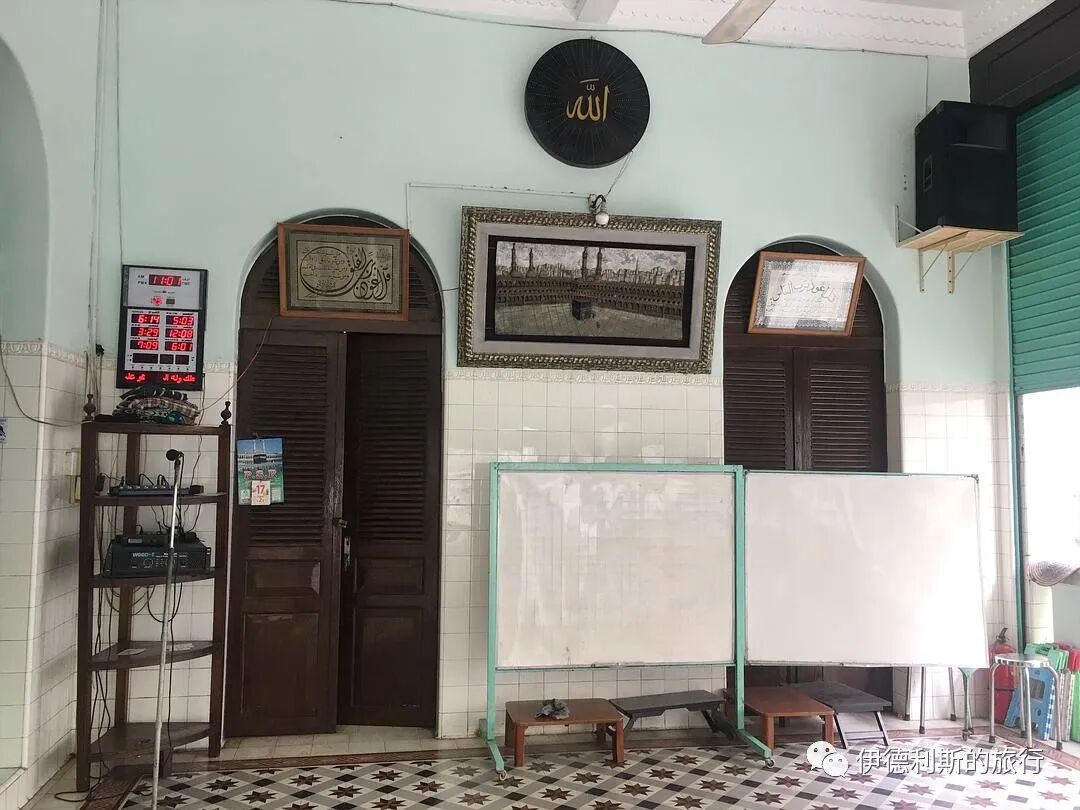
The location of the mihrab and the Arabic calligraphy layout on the left and right are very similar to the couplets of ancient buildings. I wonder if they were influenced by the couplets. It's very possible, because there are also many couplets in Vietnam.
After coming out of this mosque, I felt that this mosque was popular and alive. Why do I say that? Because I saw Muslims running businesses around the mosque, and there were people studying the Qur'an inside the mosque.
There are also gathering places for Cham Muslims around Ho Chi Minh, and there are also some mosques there. I will take photos for everyone to see if I have a chance in the future. view all
Summary: This Vietnam Muslim travel guide visits Al-Rahim Mosque near Ben Thanh Market in Ho Chi Minh City, with nearby halal restaurants, the mosque entrance, prayer hall, wudu area, Arabic calligraphy, Qur'an study, and the Cham Muslim community around the city.
This mosque, called Al-Rahim (Mercy), is not far from Ho Chi Minh Ben Thanh Market, and it takes only five or six minutes to walk.
There is a street with halal restaurants at the entrance of Ben Thanh Market (see pictures 9 to 12). After eating there, I took a walk to Al-Rahim Mosque (Zhici Mosque, Mercy Mosque) and found that there are halal restaurants in front of the mosque (see picture 2). There is a restaurant on the left and right, and there are some diners sitting there.
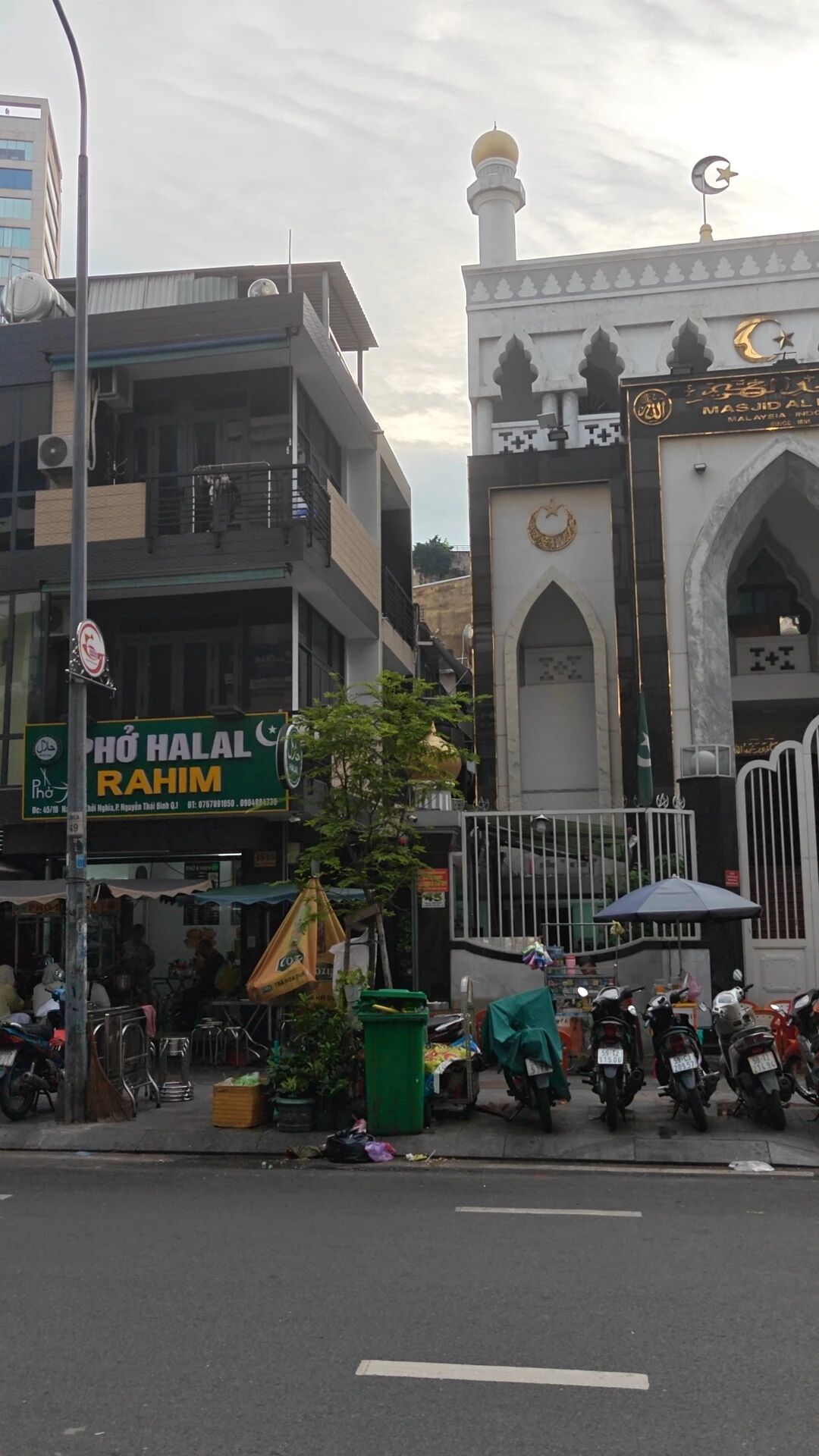
When entering the mosque gate, as usual, take off your shoes before stepping onto the steps of the prayer hall. Because the weather was extremely hot, the door on the first floor was left open and two or three fans were blowing. There were three or four people sitting in the hall, one of whom looked like an imam and was teaching the rest of the people how to study the Qur'an.
He told me in English that the prayer room is on the second floor. I exited the hall and found the wudu area on the porch outside the hall. (See Picture 3 and Picture 4)
After going upstairs, we found the main prayer hall (Pictures 5, 6 and 7). There is a dome painted with white clouds and blue sky directly above the main hall. Moreover, there is a prayer space on the third floor, so that the prayer hall can accommodate more people without making it appear cramped.
The location of the mihrab and the Arabic calligraphy layout on the left and right are very similar to the couplets of ancient buildings. I wonder if they were influenced by the couplets. It's very possible, because there are also many couplets in Vietnam.
After coming out of this mosque, I felt that this mosque was popular and alive. Why do I say that? Because I saw Muslims running businesses around the mosque, and there were people studying the Qur'an inside the mosque.
There are also gathering places for Cham Muslims around Ho Chi Minh, and there are also some mosques there. I will take photos for everyone to see if I have a chance in the future.
Best Halal Food Vietnam Ho Chi Minh City: Ben Thanh Market, Saigon Muslim Street and Cham Food Stalls
Articles • yusuf908 posted the article • 0 comments • 272 views • 2026-05-23 22:23
Summary: This Ho Chi Minh City halal food guide follows Ben Thanh Market and the nearby Muslim street in Saigon, showing halal restaurants, Malay and Cham food, lemon noodles, a Cham stall owner, market scenes, and the Muslim food life around the city center.
Ho Chi Minh City, formerly known as Saigon. This is the largest and most developed city in Vietnam. There is a clear development gap between the capital Hanoi and here.
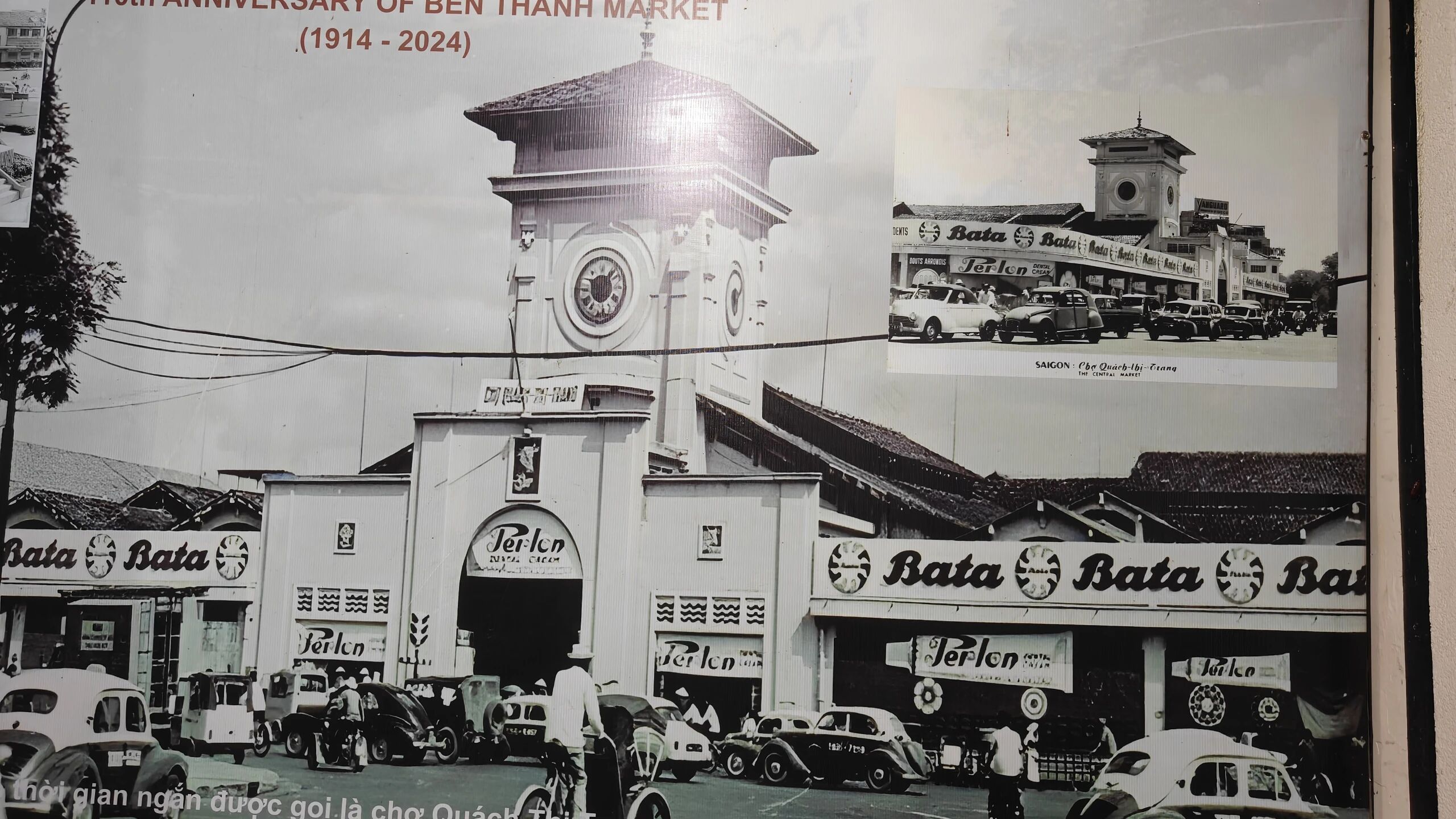
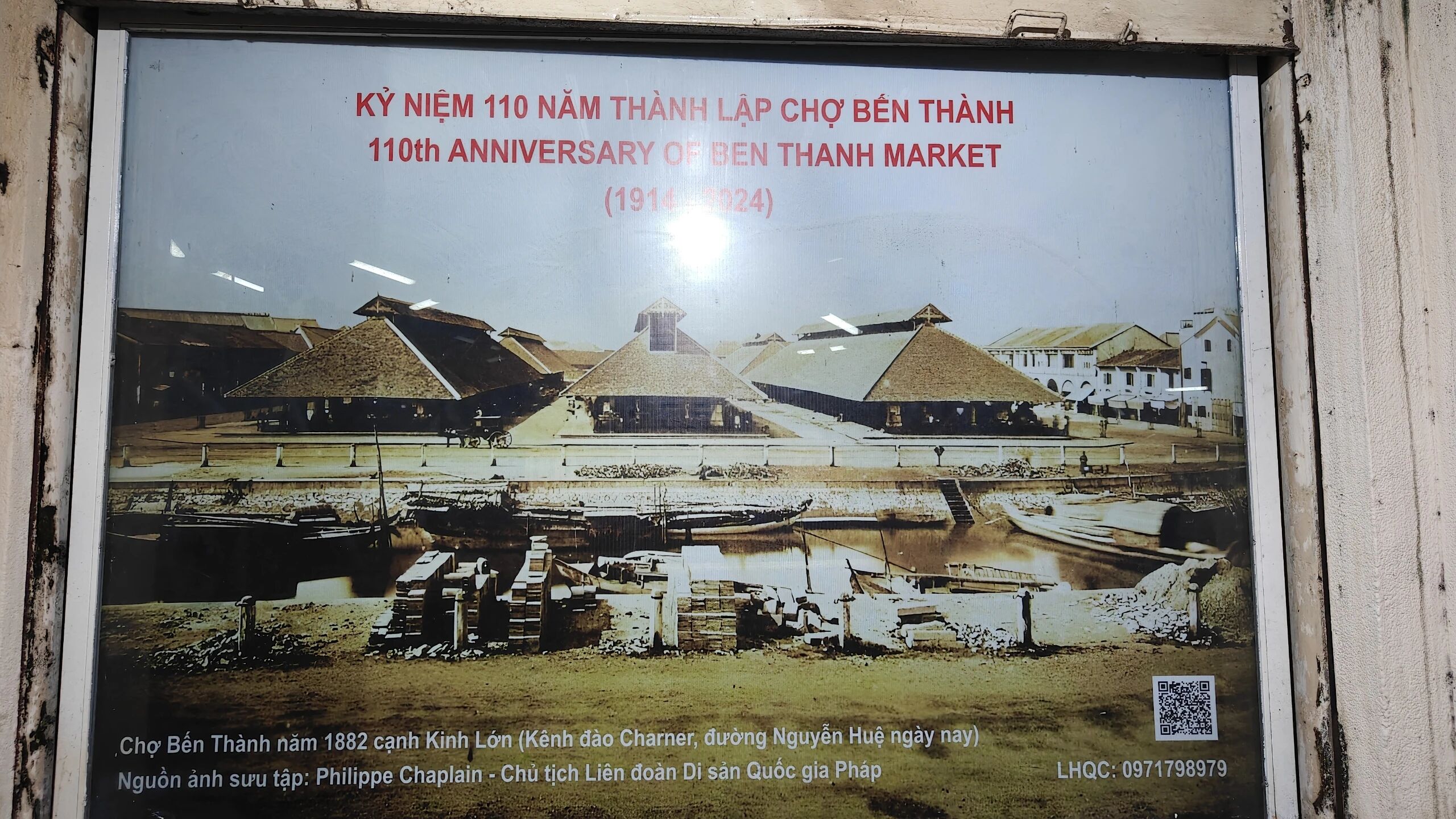
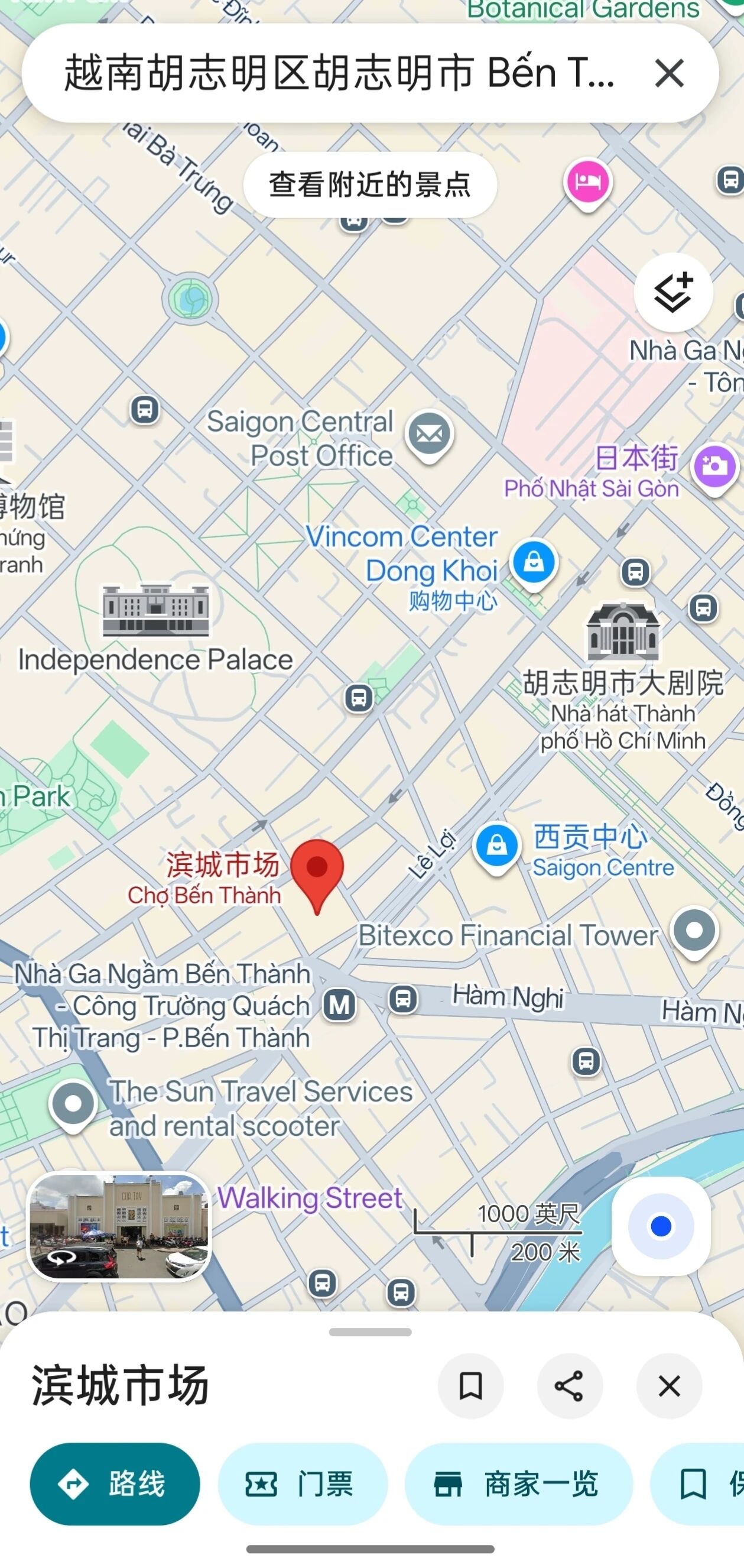
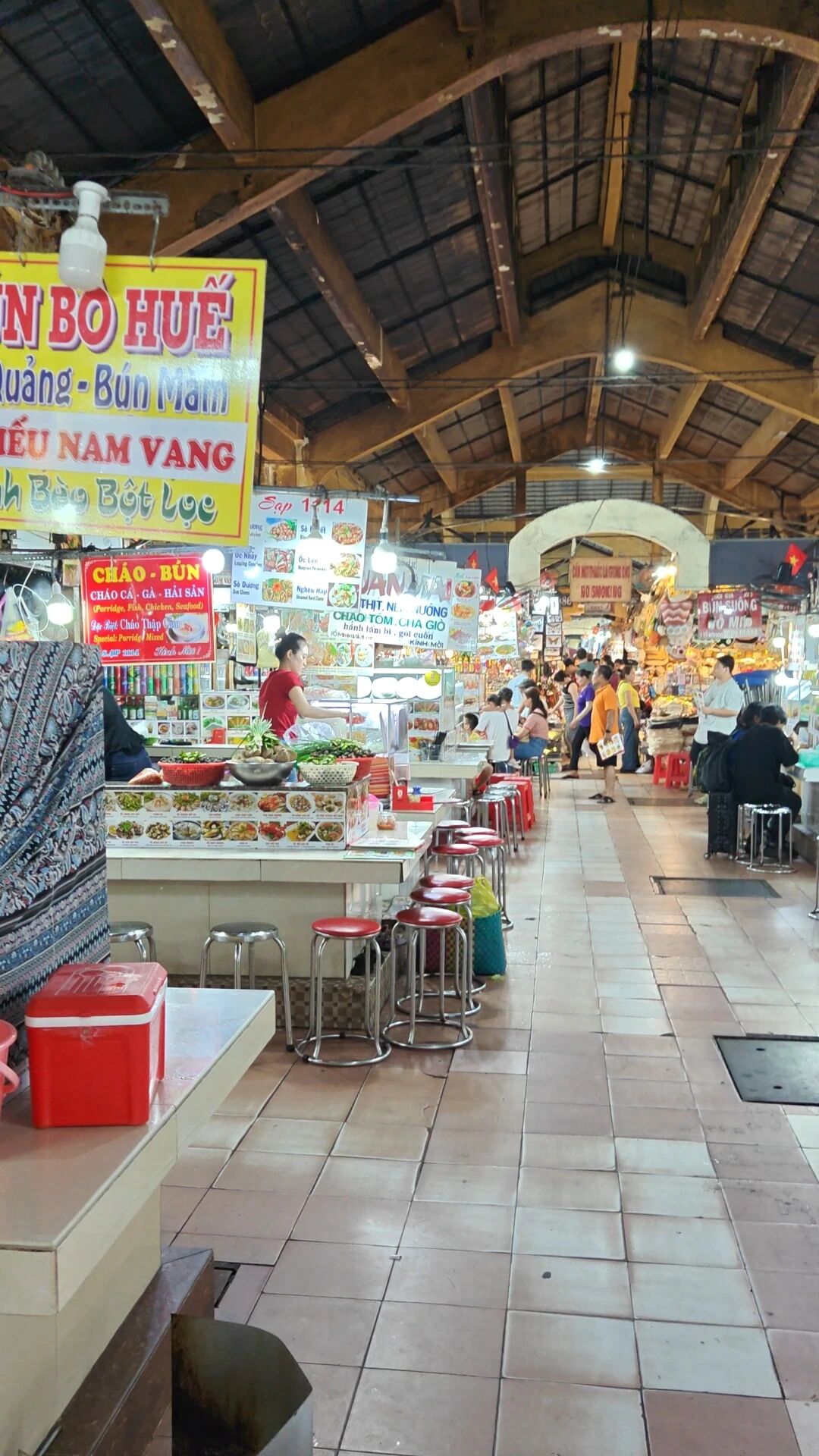
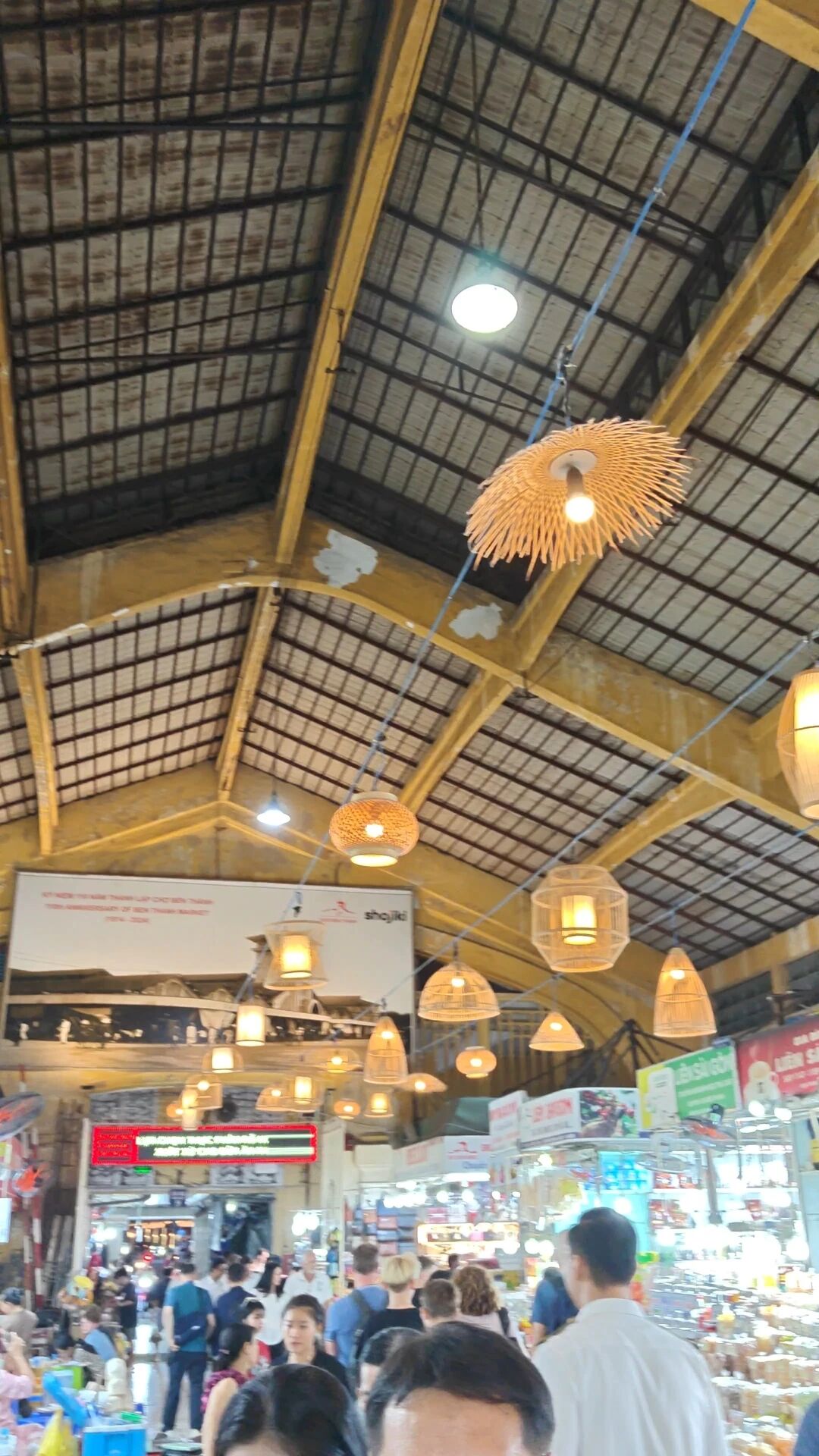
One of the landmarks of Ho Chi Minh City is the Ben Thanh Market (Picture 1). Photos of the market when it was first completed are still posted outside the market. Looking around, the location here is excellent, with popular attractions such as Ho Chi Minh City Hall, Independence Palace, and Grand Theater not far away (Picture 4).
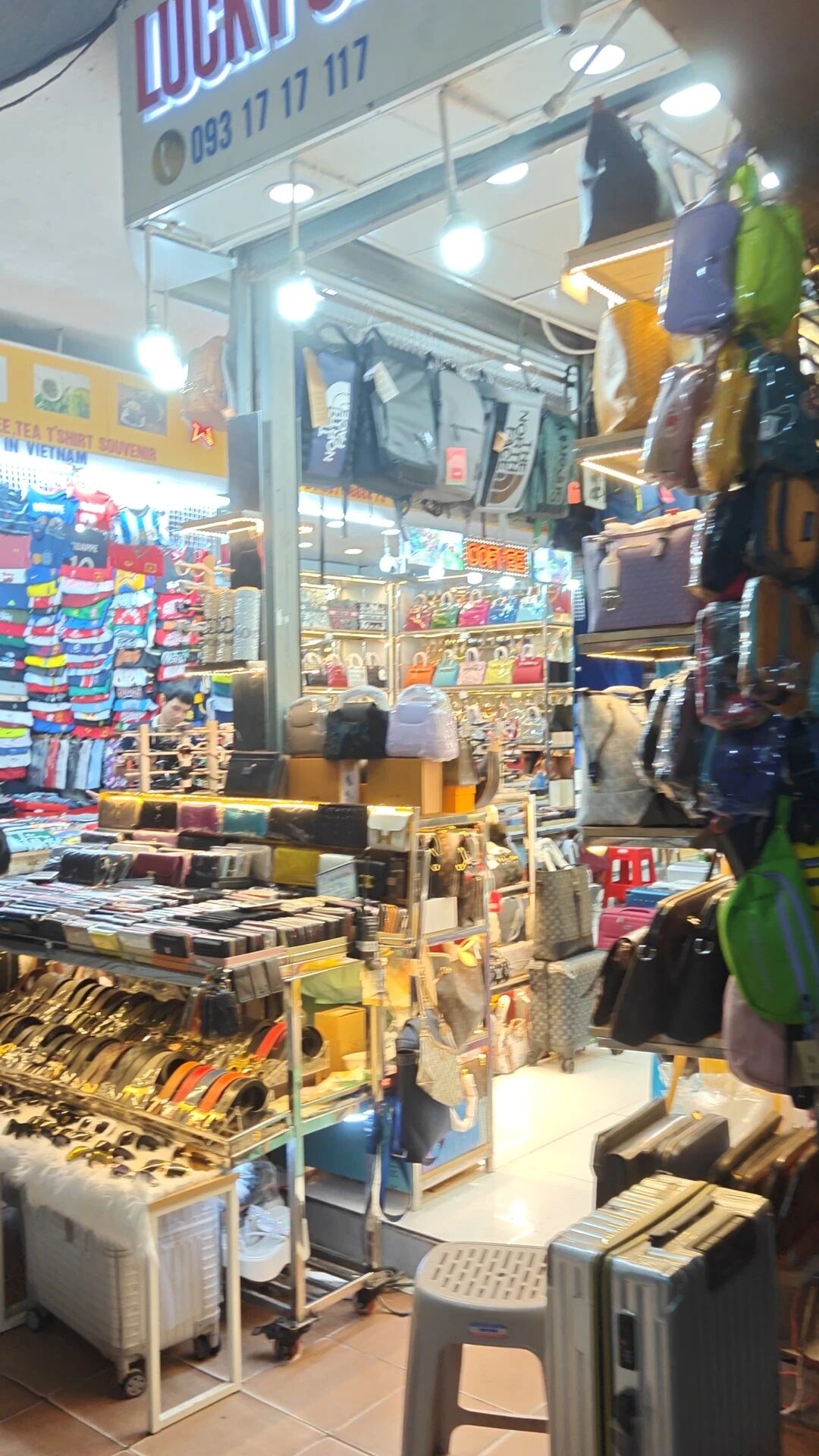
The market is bustling with tourists from all over the world. The products inside are also dazzling, ranging from souvenirs to clothes and bags, and all kinds of small commodities. Everyone who saw it was dazzled. The merchants inside are packed one after another, so densely packed that they all enthusiastically attract passing travelers.
If you don’t want to buy, you can refuse politely, and they won’t pester you for nothing. They want business, but they have boundaries and know how to exercise restraint. I like this very much. And there are also various snack stalls here, which are colorfully decorated.
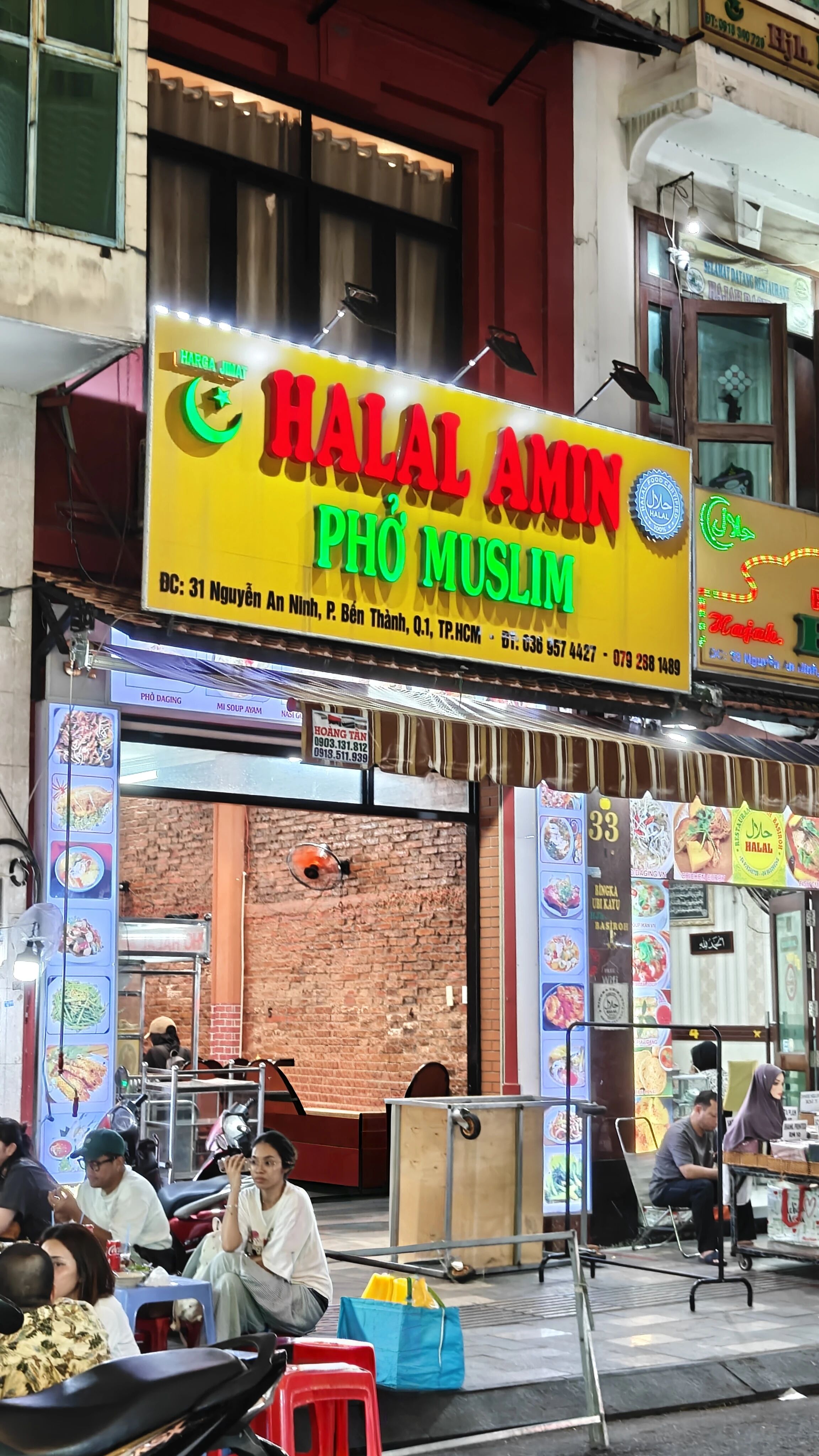
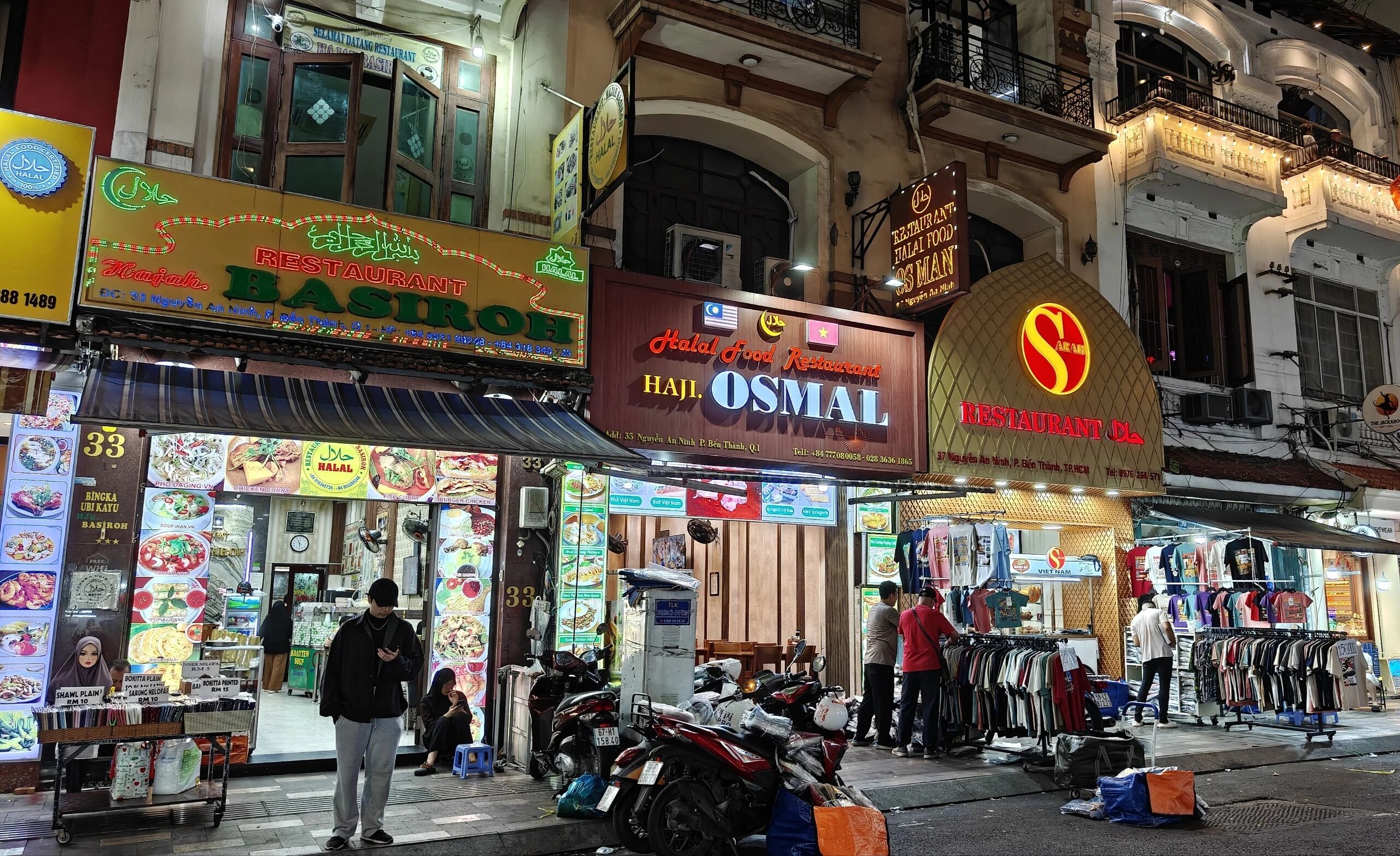
After going out, there is a street dedicated to halal restaurants. Not only that, there are also prayer clothing stores, travel agencies for Muslim tourists, etc.
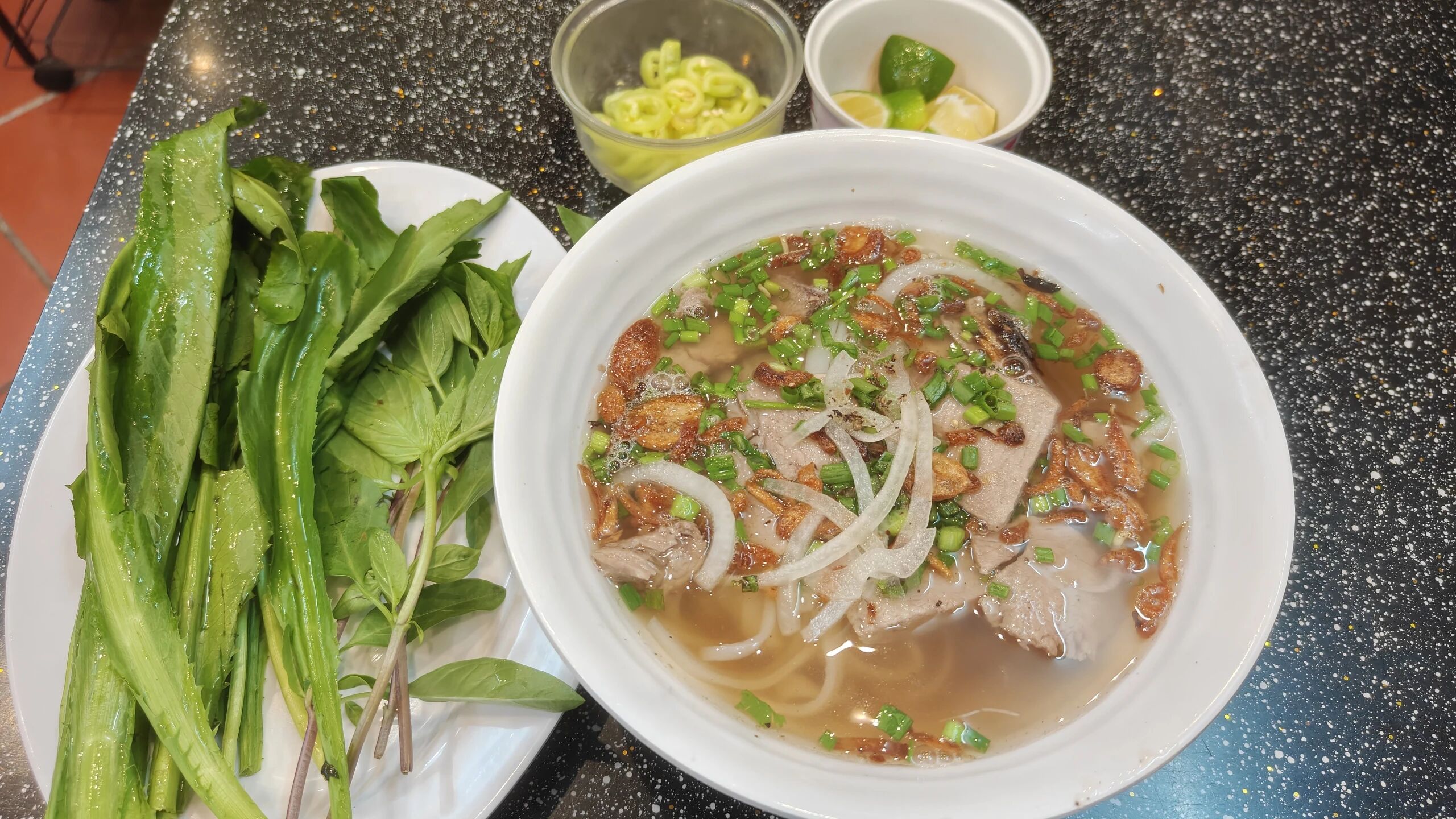
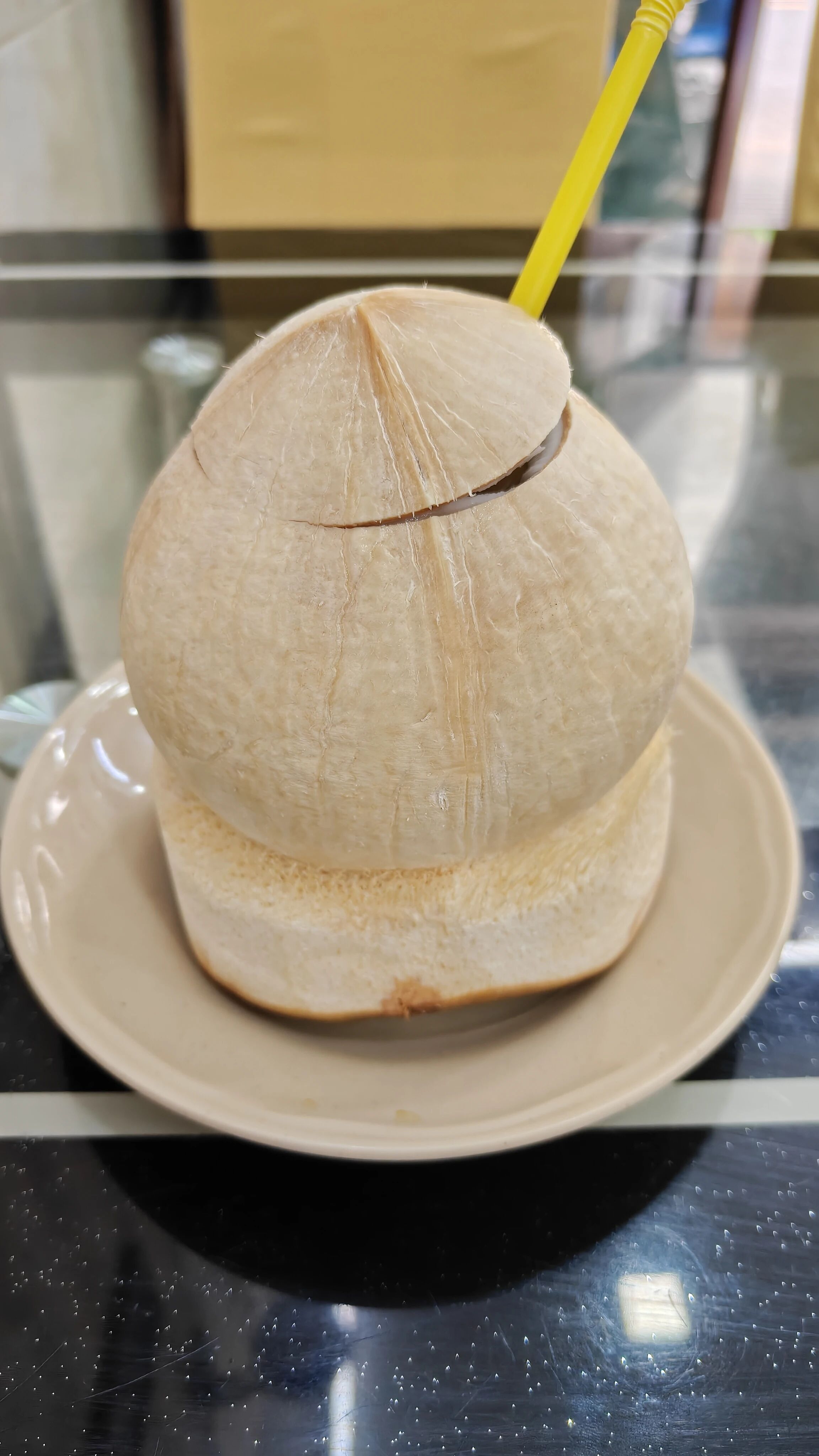
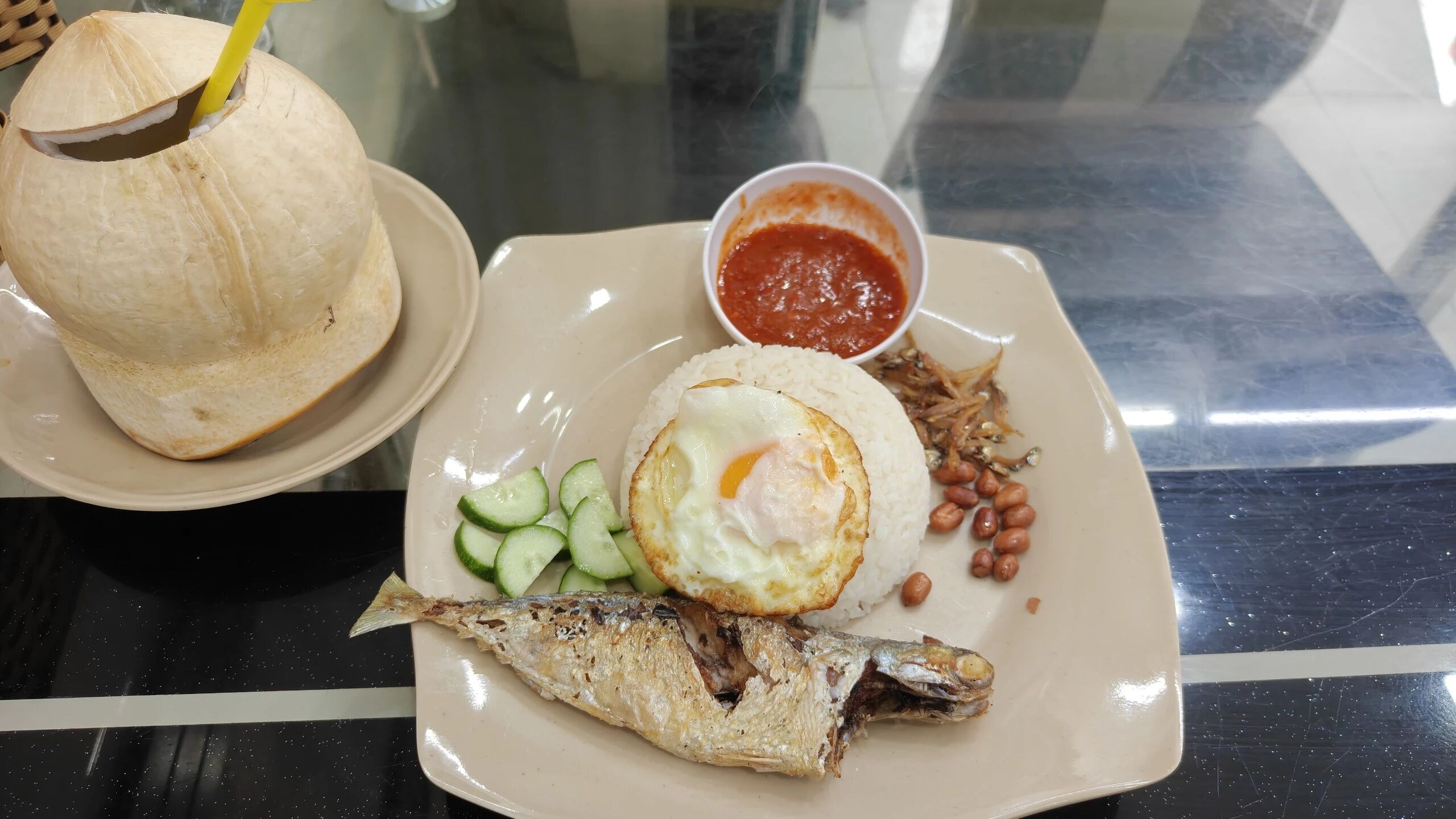
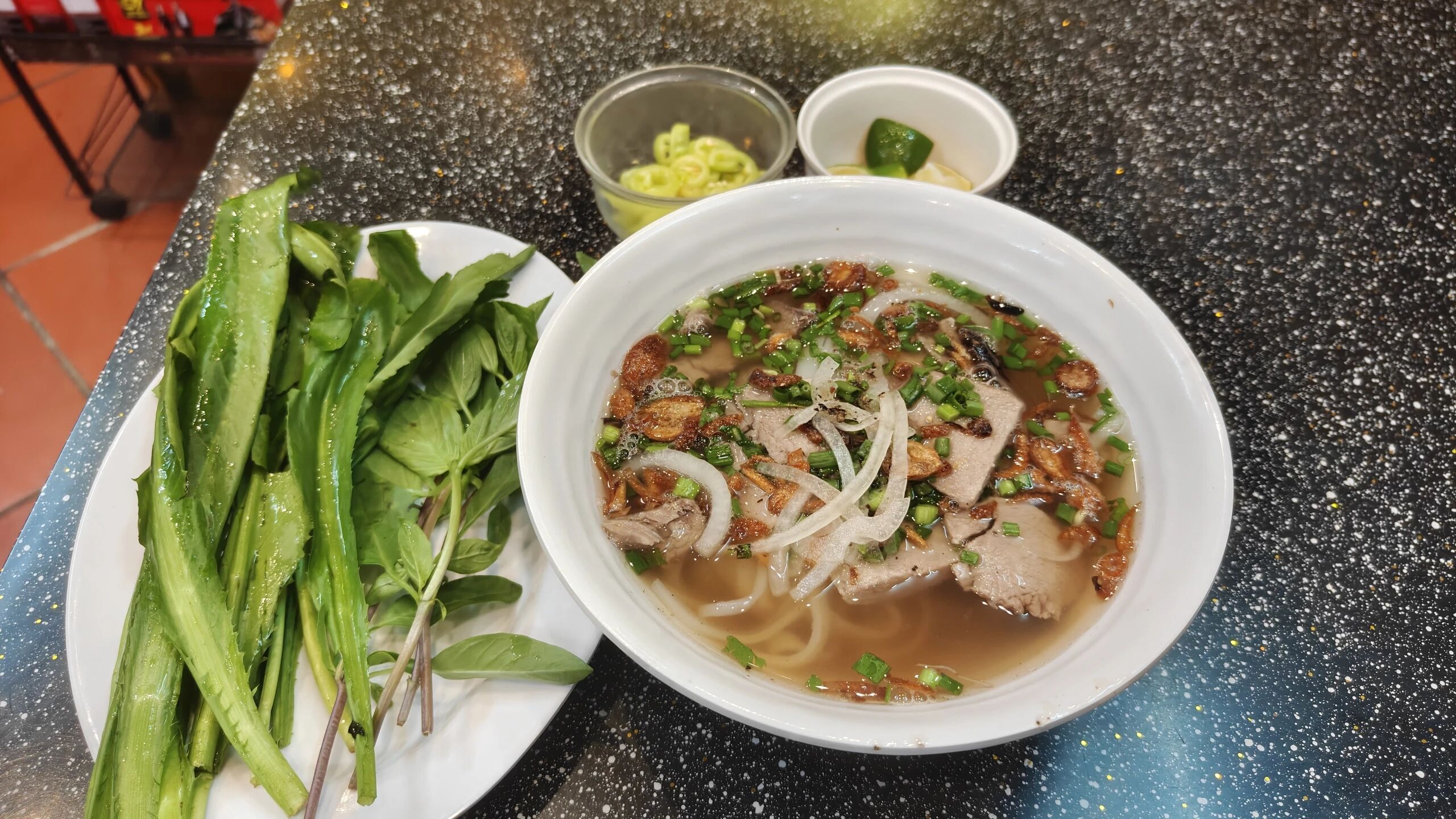
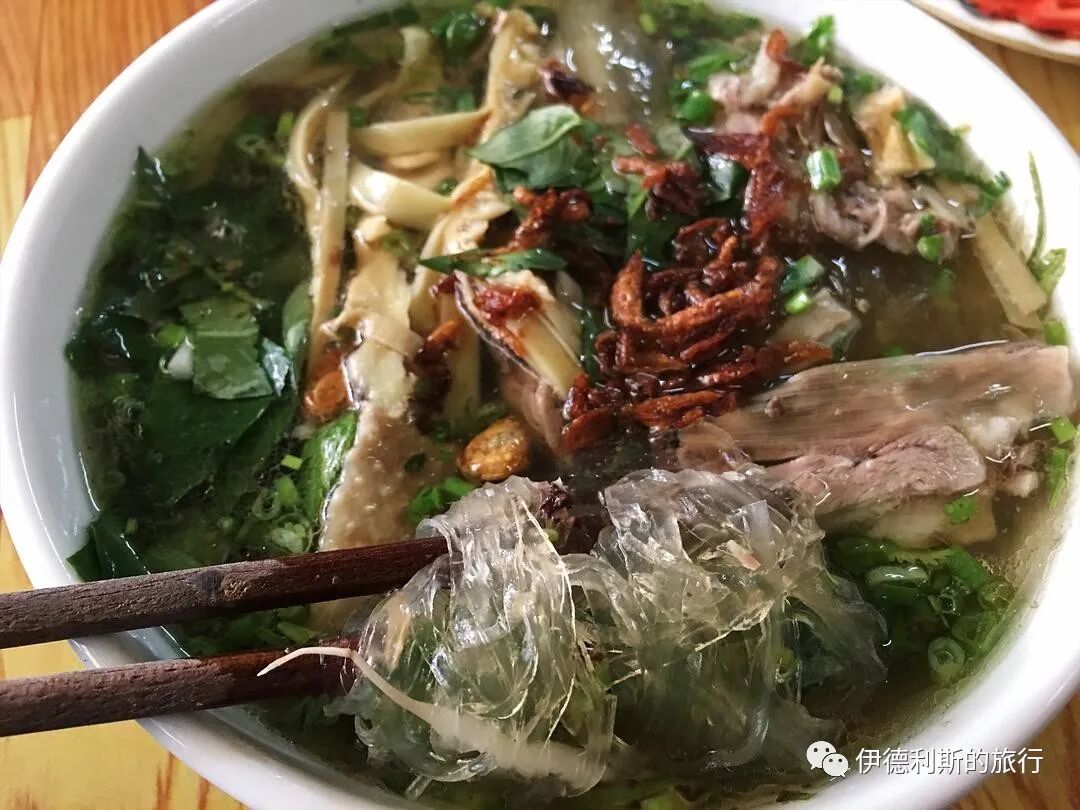
During the two or three days I was in Ho Chi Minh, I basically ate here. The food here is very characteristic of Southeast Asia, including coconut milk (Picture 12), grilled fish with rice (Picture 13). I ordered a beef pho, and the lady boss brought a side dish, which had a faint fishy smell when I chewed it.
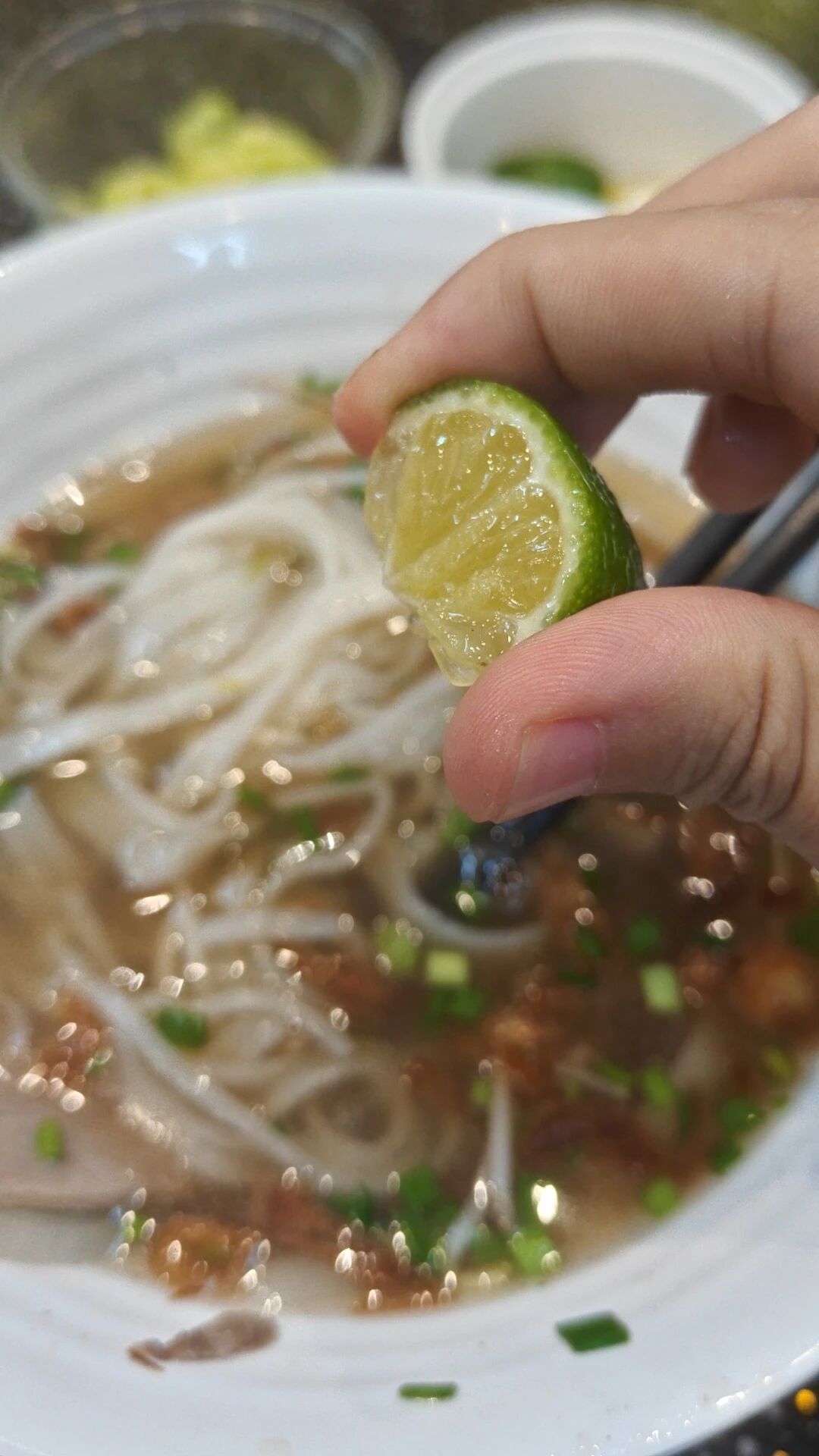
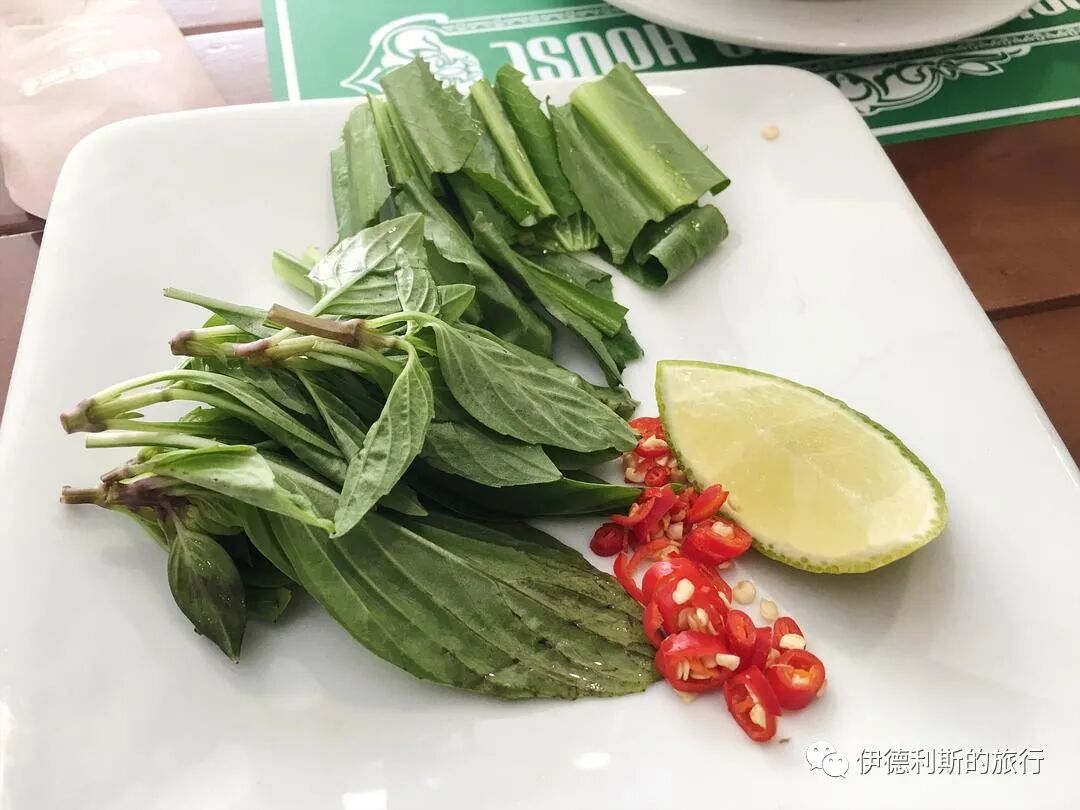
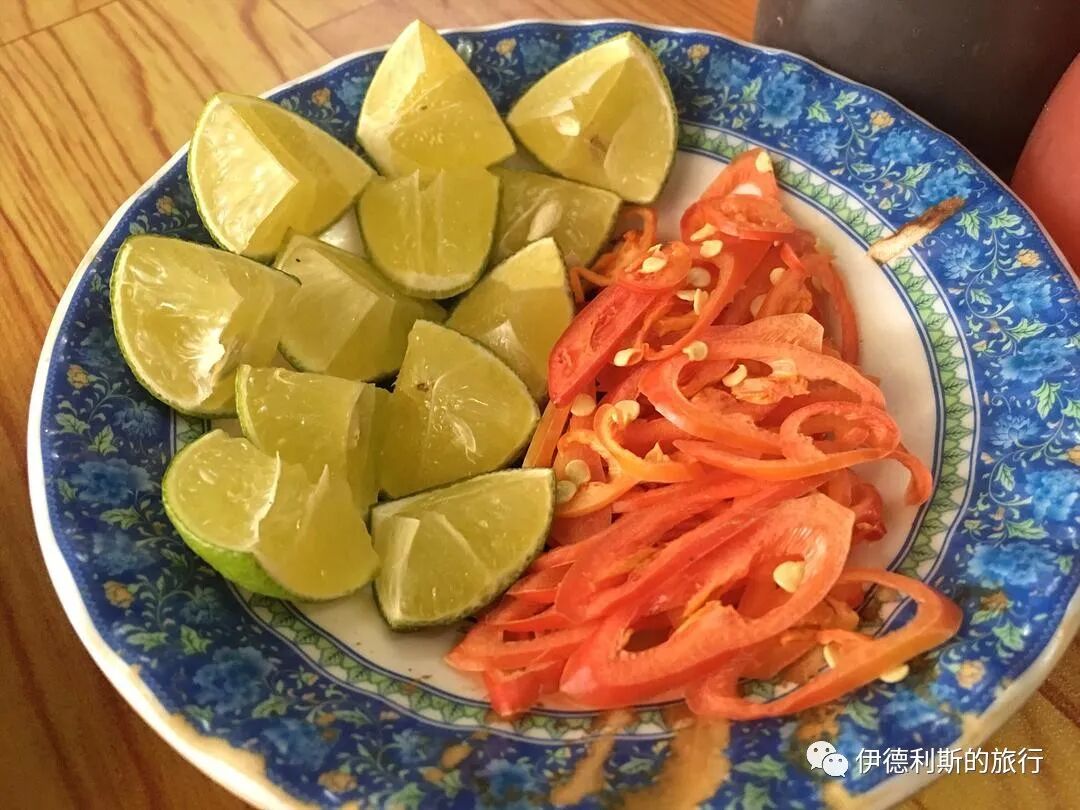
Halfway through eating the noodles, I squeezed some lemon juice into it, which not only increased the flavor, but also smelled more like lemon.
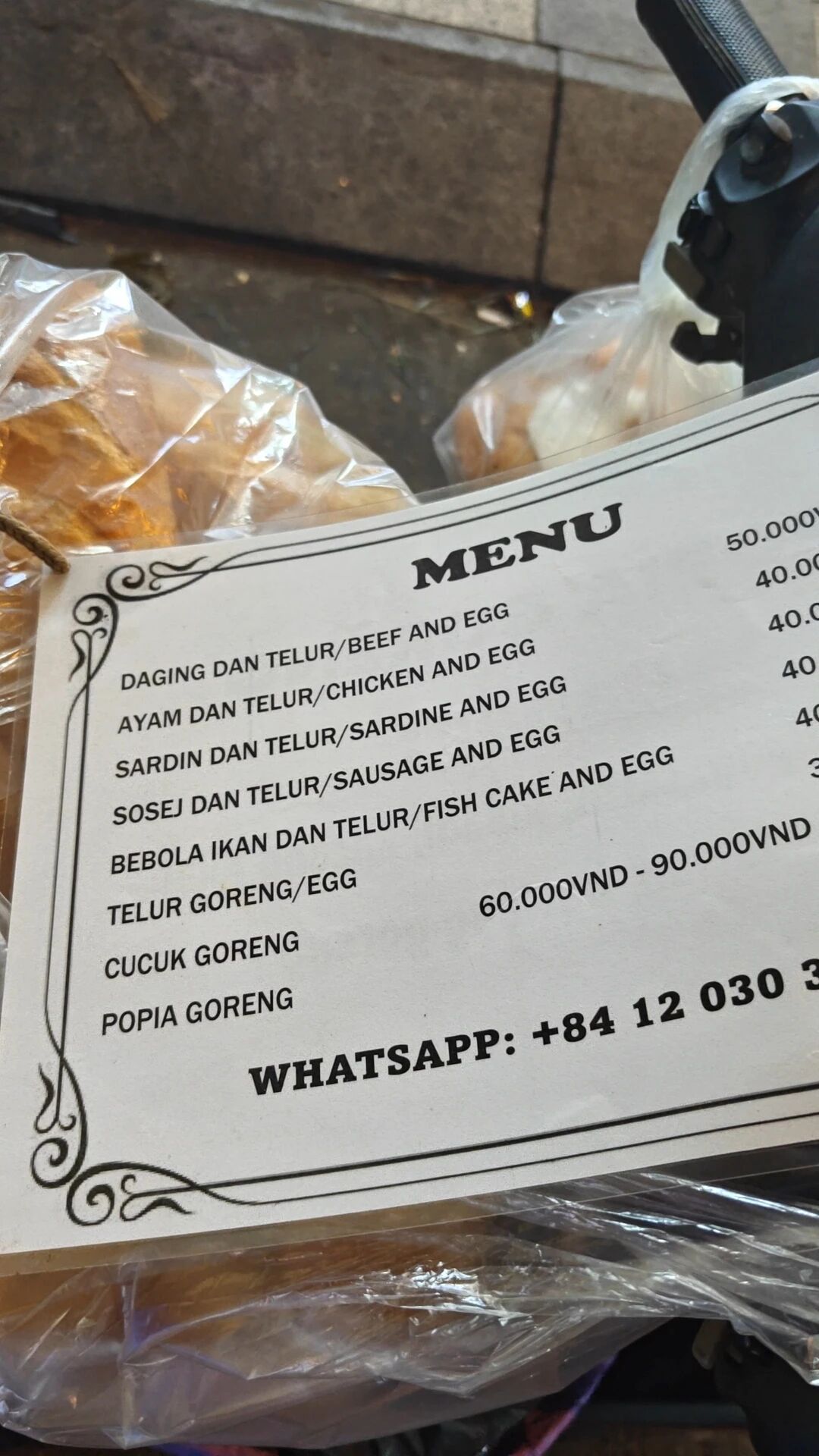
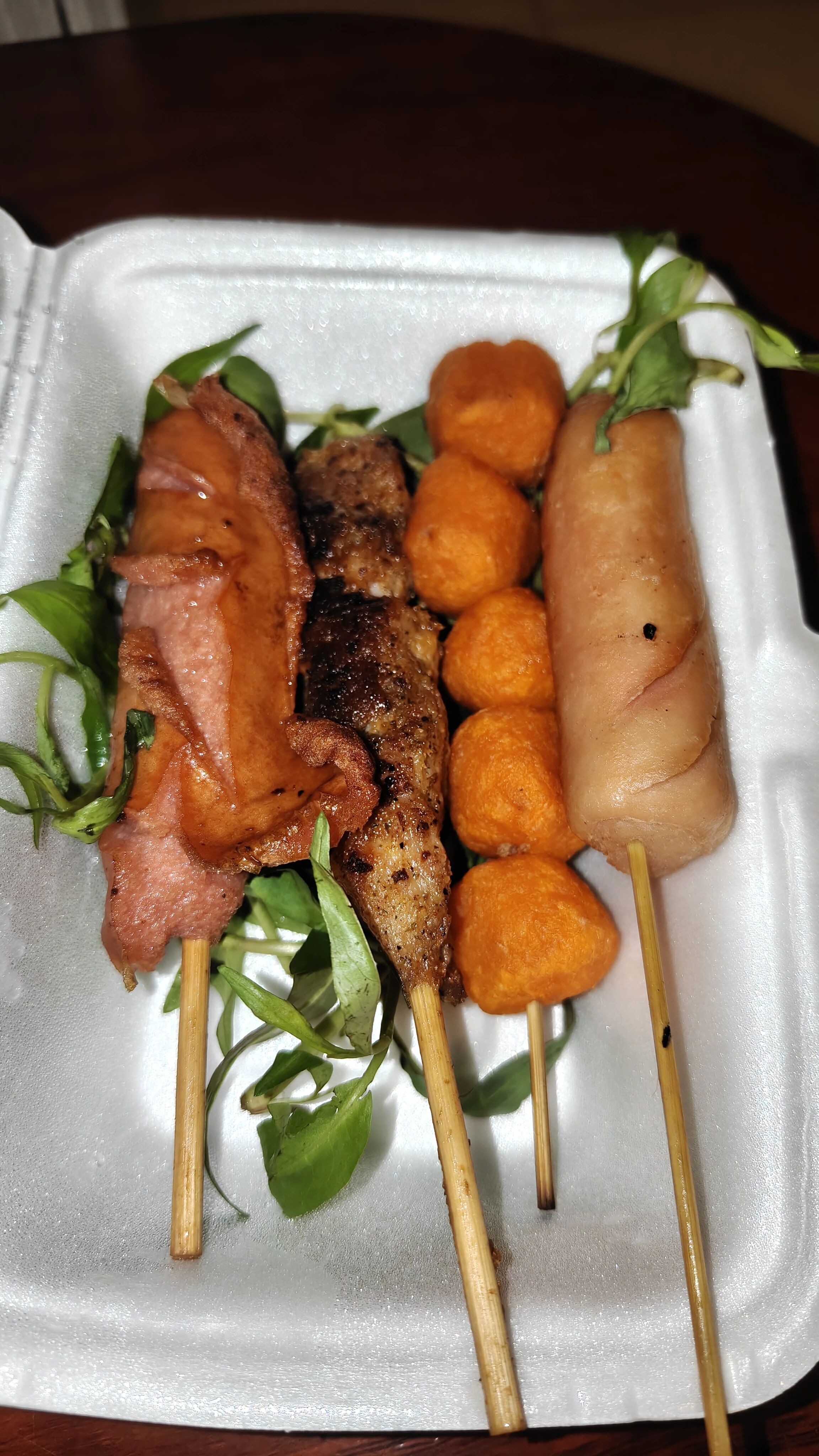
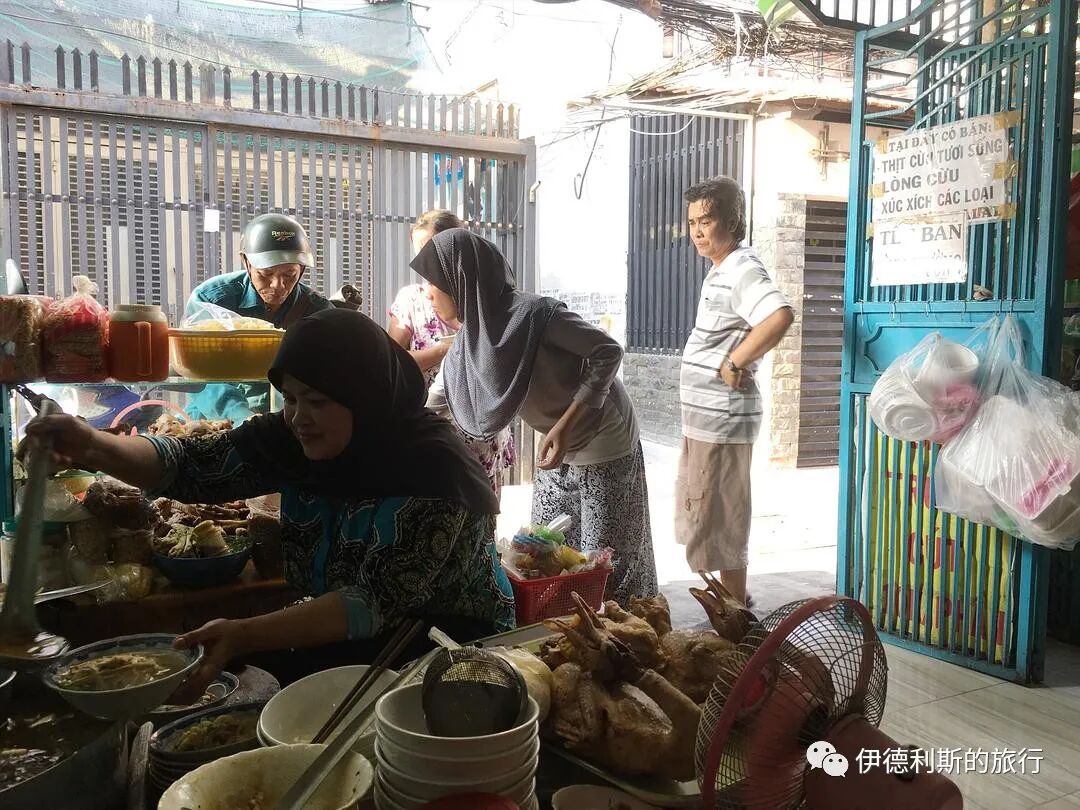
There is a Cham man named Maieryan who sets up a food stall at the door, and the stove is on the back seat of his motorcycle. After a brief chat with the stall owner, she knew that I was going to Tay Ninh Province (there is also Tay Ninh in Vietnam, but theirs is Tay Ninh Province, not far to the west of Ho Chi Minh) and told me that she also had relatives living there. view all
Summary: This Ho Chi Minh City halal food guide follows Ben Thanh Market and the nearby Muslim street in Saigon, showing halal restaurants, Malay and Cham food, lemon noodles, a Cham stall owner, market scenes, and the Muslim food life around the city center.
Ho Chi Minh City, formerly known as Saigon. This is the largest and most developed city in Vietnam. There is a clear development gap between the capital Hanoi and here.
One of the landmarks of Ho Chi Minh City is the Ben Thanh Market (Picture 1). Photos of the market when it was first completed are still posted outside the market. Looking around, the location here is excellent, with popular attractions such as Ho Chi Minh City Hall, Independence Palace, and Grand Theater not far away (Picture 4).
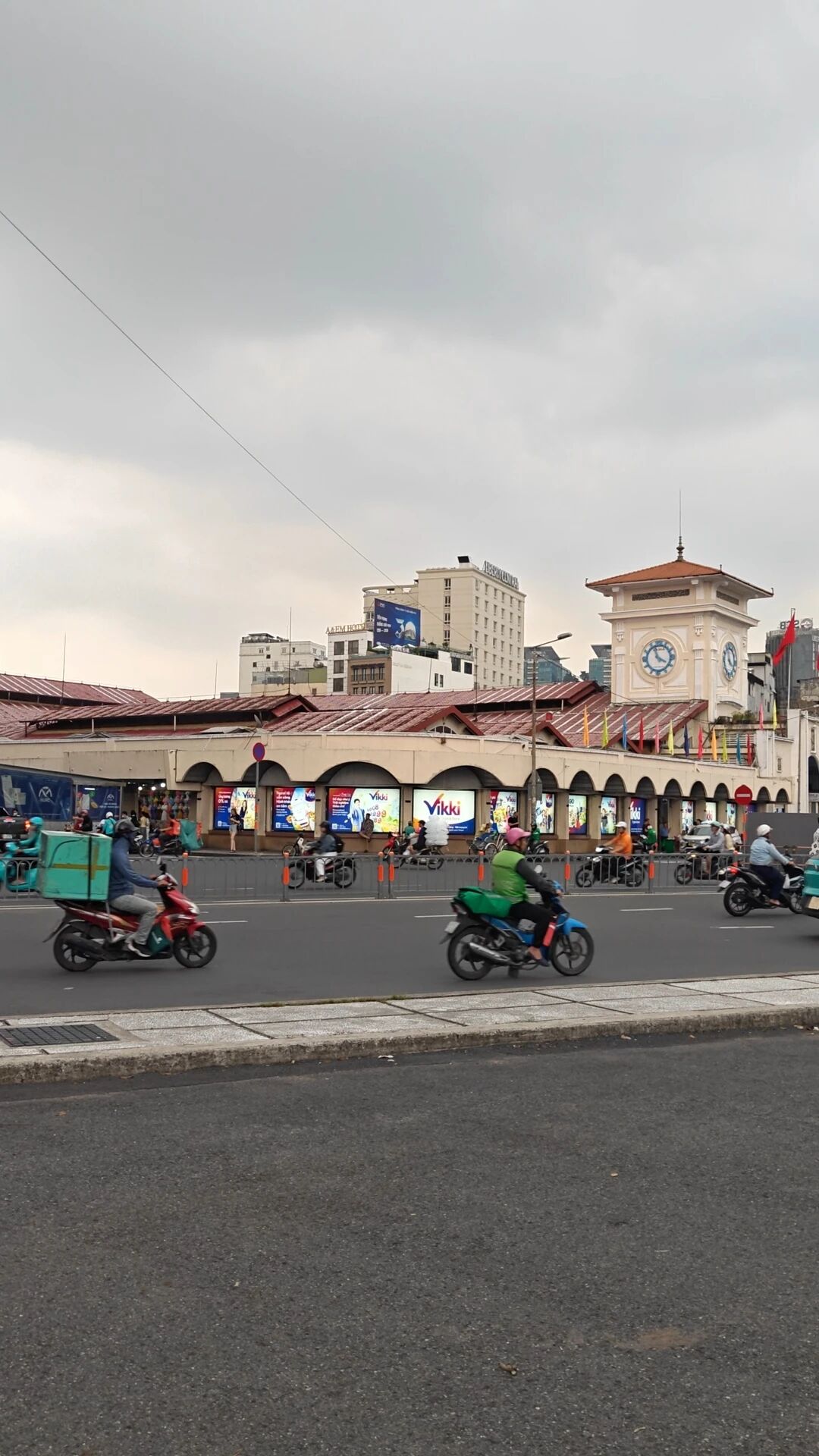
The market is bustling with tourists from all over the world. The products inside are also dazzling, ranging from souvenirs to clothes and bags, and all kinds of small commodities. Everyone who saw it was dazzled. The merchants inside are packed one after another, so densely packed that they all enthusiastically attract passing travelers.
If you don’t want to buy, you can refuse politely, and they won’t pester you for nothing. They want business, but they have boundaries and know how to exercise restraint. I like this very much. And there are also various snack stalls here, which are colorfully decorated.
After going out, there is a street dedicated to halal restaurants. Not only that, there are also prayer clothing stores, travel agencies for Muslim tourists, etc.
During the two or three days I was in Ho Chi Minh, I basically ate here. The food here is very characteristic of Southeast Asia, including coconut milk (Picture 12), grilled fish with rice (Picture 13). I ordered a beef pho, and the lady boss brought a side dish, which had a faint fishy smell when I chewed it.
Halfway through eating the noodles, I squeezed some lemon juice into it, which not only increased the flavor, but also smelled more like lemon.
There is a Cham man named Maieryan who sets up a food stall at the door, and the stove is on the back seat of his motorcycle. After a brief chat with the stall owner, she knew that I was going to Tay Ninh Province (there is also Tay Ninh in Vietnam, but theirs is Tay Ninh Province, not far to the west of Ho Chi Minh) and told me that she also had relatives living there.
Halal Travel Guide: Bangkok - Cham Mosques, Canals and Muslim History
Articles • ali2007fr posted the article • 0 comments • 268 views • 2026-05-20 09:11
Summary: Bangkok has several historic Cham Muslim mosque neighborhoods tied to river trade, military service, canals, and royal boat history. This account covers Ton Son Mosque, Bang Luang Mosque, the Royal Barges Museum area, Jami-Ul-Khoy-Riyah Mosque, Zulugul Muttaqeen Mosque, Darul Falah Mosque, and the photographs in their original order.
I traveled to Bangkok, Thailand, in 2023 and 2025, visiting 25 mosques (masjid) in the city that represent six ethnic groups: Persian, Arab, Indian, Malay, Indonesian, and Champa. Although these friends (dosti) from different ethnic backgrounds have lived in Thailand for over a hundred years and speak Thai in their daily lives, they still keep their unique history, culture, and traditions. I will now share six articles introducing the 25 mosques of these six ethnic groups in Bangkok.
First, I will introduce the five Champa mosques in Bangkok.
Champa (Champa) was a country established by the Cham people (Chams) in southern Vietnam. After the 15th century, the Malacca Sultanate became a powerful state in Southeast Asia, and Champa maintained close ties with it. Malay friends (dosti) integrated with the Cham people through trade and marriage, leading many Cham people to embrace the faith.
After Vietnam broke free from Mongol control in the 14th century, it began moving south to invade Champa. In 1471, the Champa capital of Vijaya (Vijaya) fell, and many members of the Champa royal family and civilians fled to Cambodia for refuge. These Cham people in Cambodia united with the Malays who had settled there earlier, forming a military alliance in the 16th century.
Cham mercenary troops (krom asa Cham) began working for Siam in the early 17th century. Because of their excellent shipbuilding skills and naval combat strength, they were highly praised by the Siamese royal family. These Cham warriors were granted the honor of serving as rowers for the royal barges during Siamese royal processions.
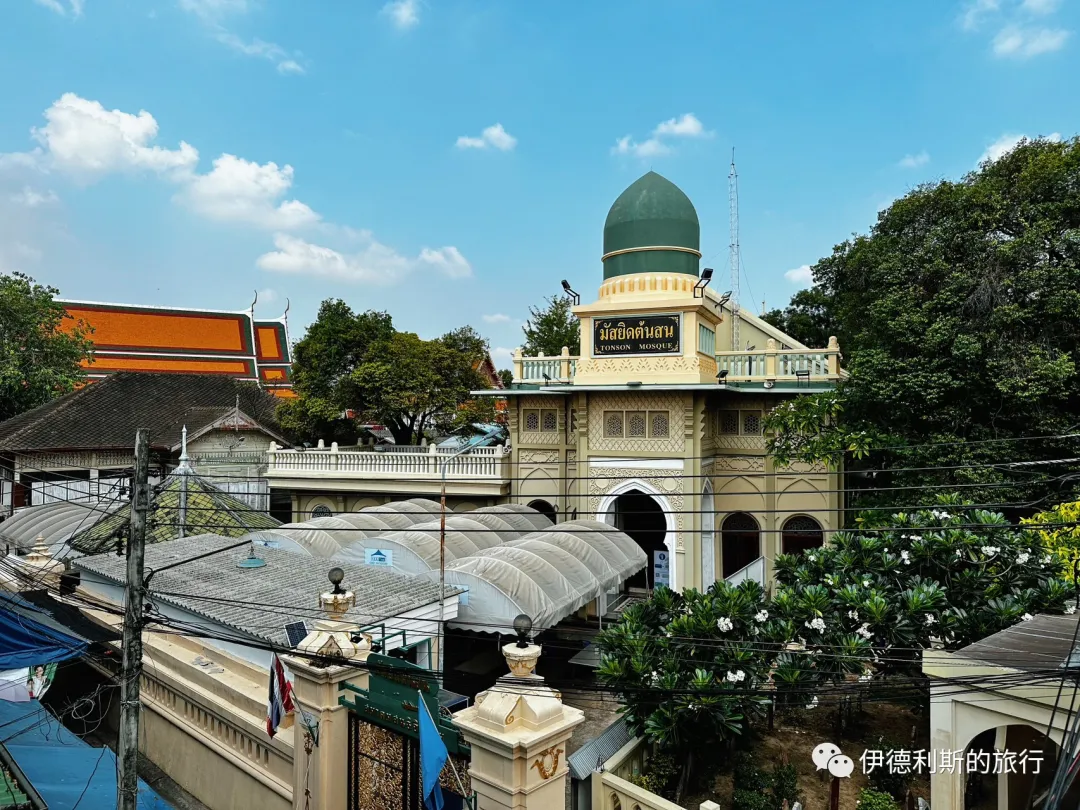
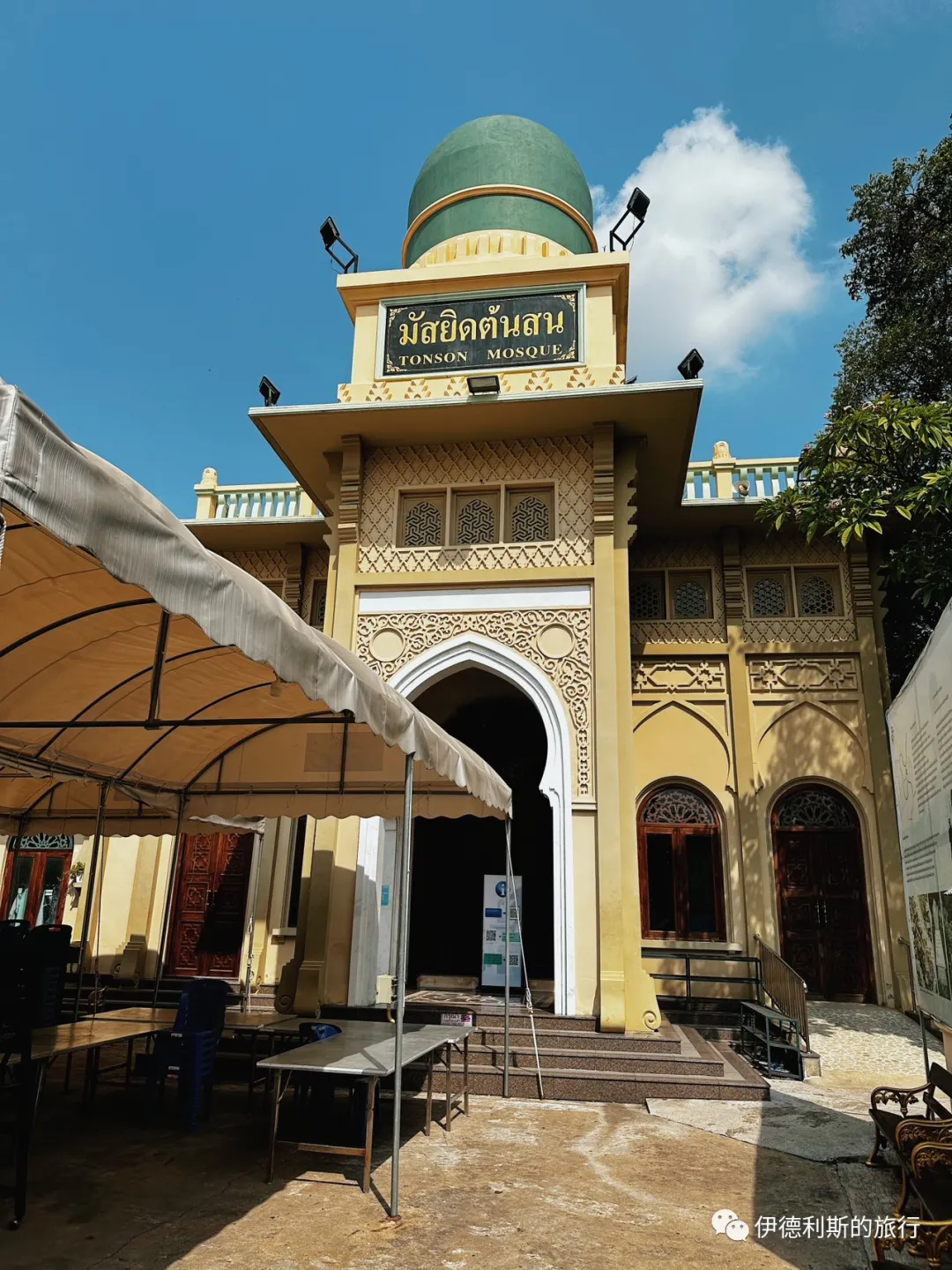
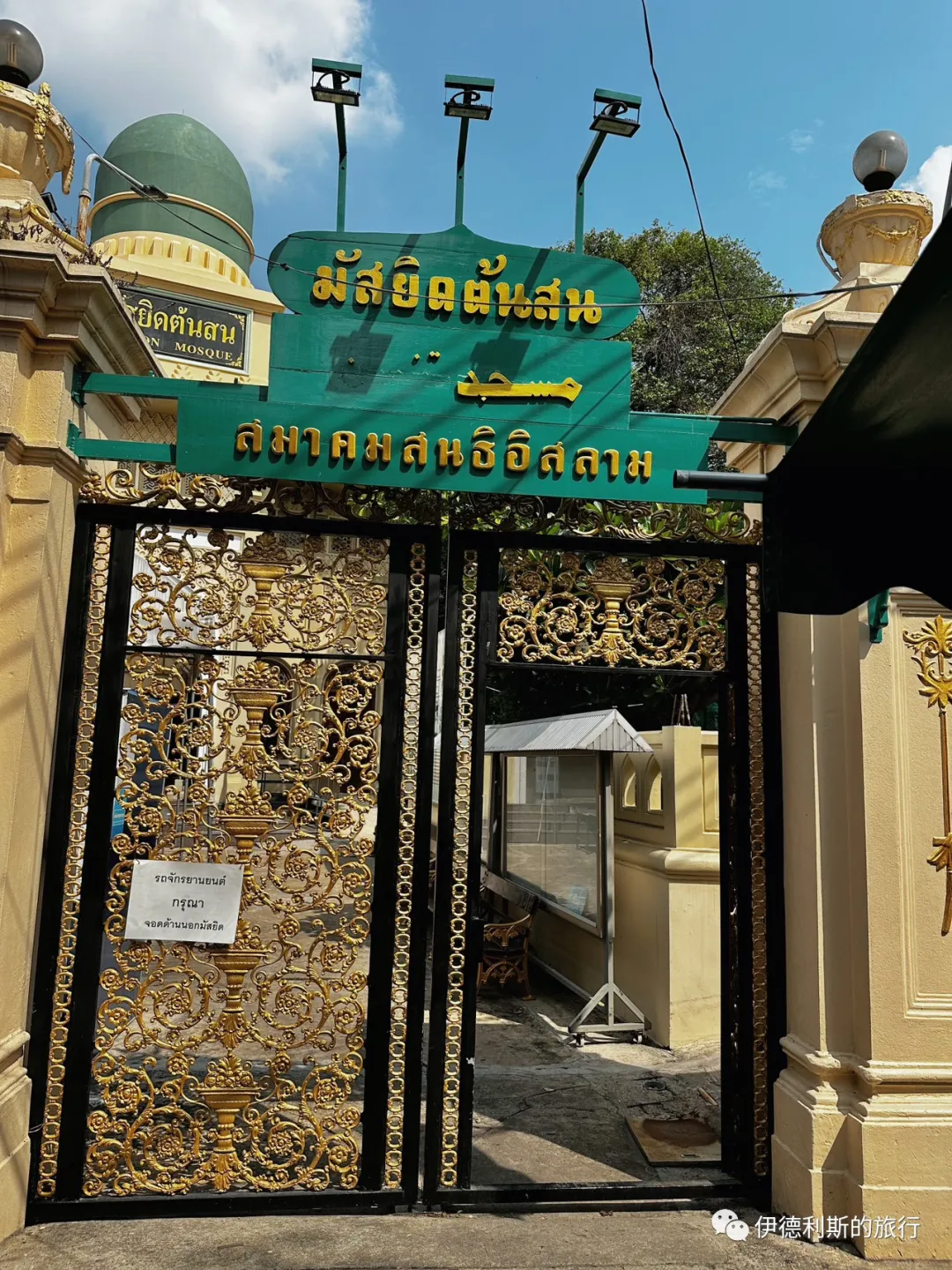
The first mosque in Bangkok: Ton Son Mosque.
In the 17th century, the Thonburi area of Bangkok was a transit port on the Chao Phraya River leading to the Siamese capital of Ayutthaya. At that time, important trade warehouses and customs stations were set up at the mouth of the Yai (Yai) canal, and Cham troops were stationed nearby. In 1688, the royal eunuch (Chao Phraya Ratchawangsanseni) Mahmud built the first mosque in Bangkok here. Because it was located by the Yai canal, it was called Kudi Yai.
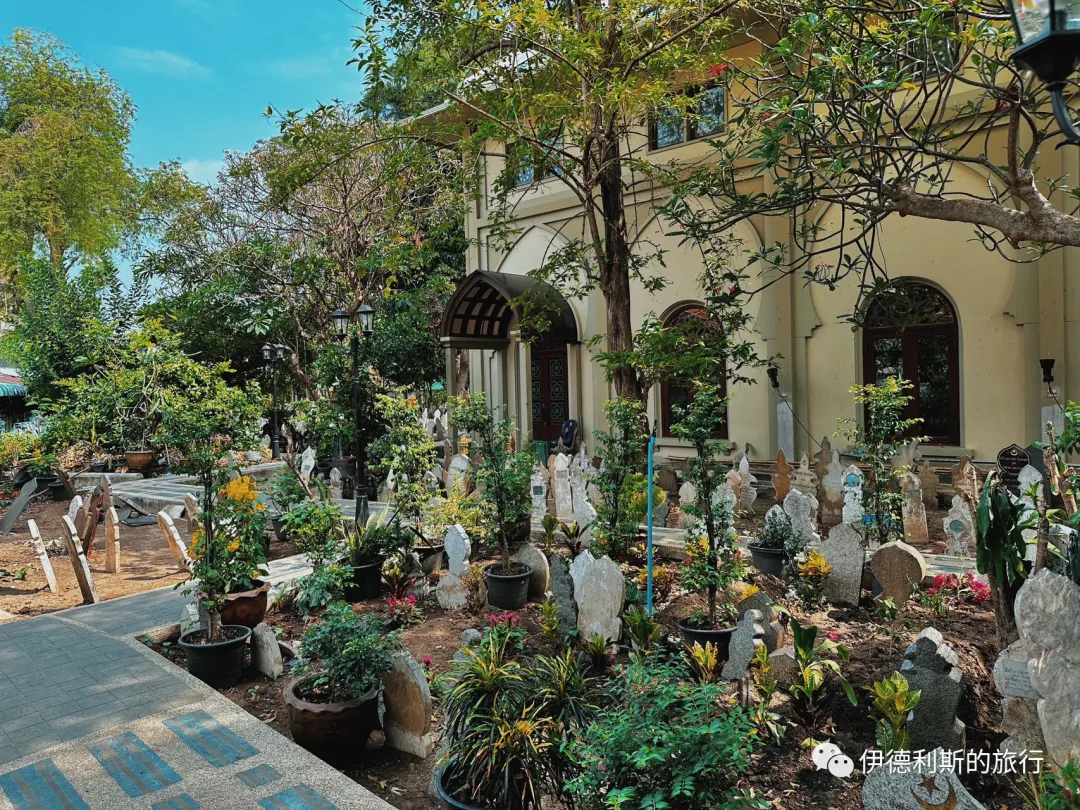
The original mosque was built entirely of teak wood, with an architectural style similar to the main halls of Buddhist temples. It was rebuilt as a brick structure in the early 19th century and rebuilt again in 1952 into the current reinforced concrete building. Because the Siamese royal family gifted tropical pine trees (ton son) to the mosque in the 19th century, the mosque was renamed Ton Son Mosque.
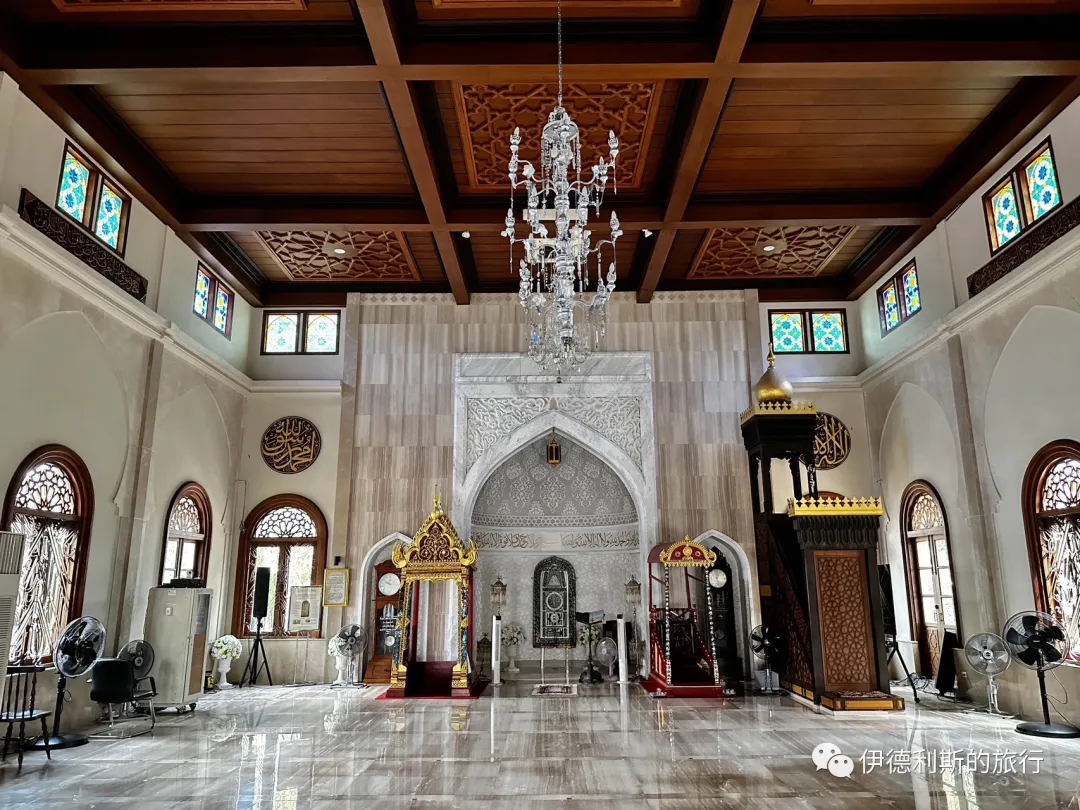
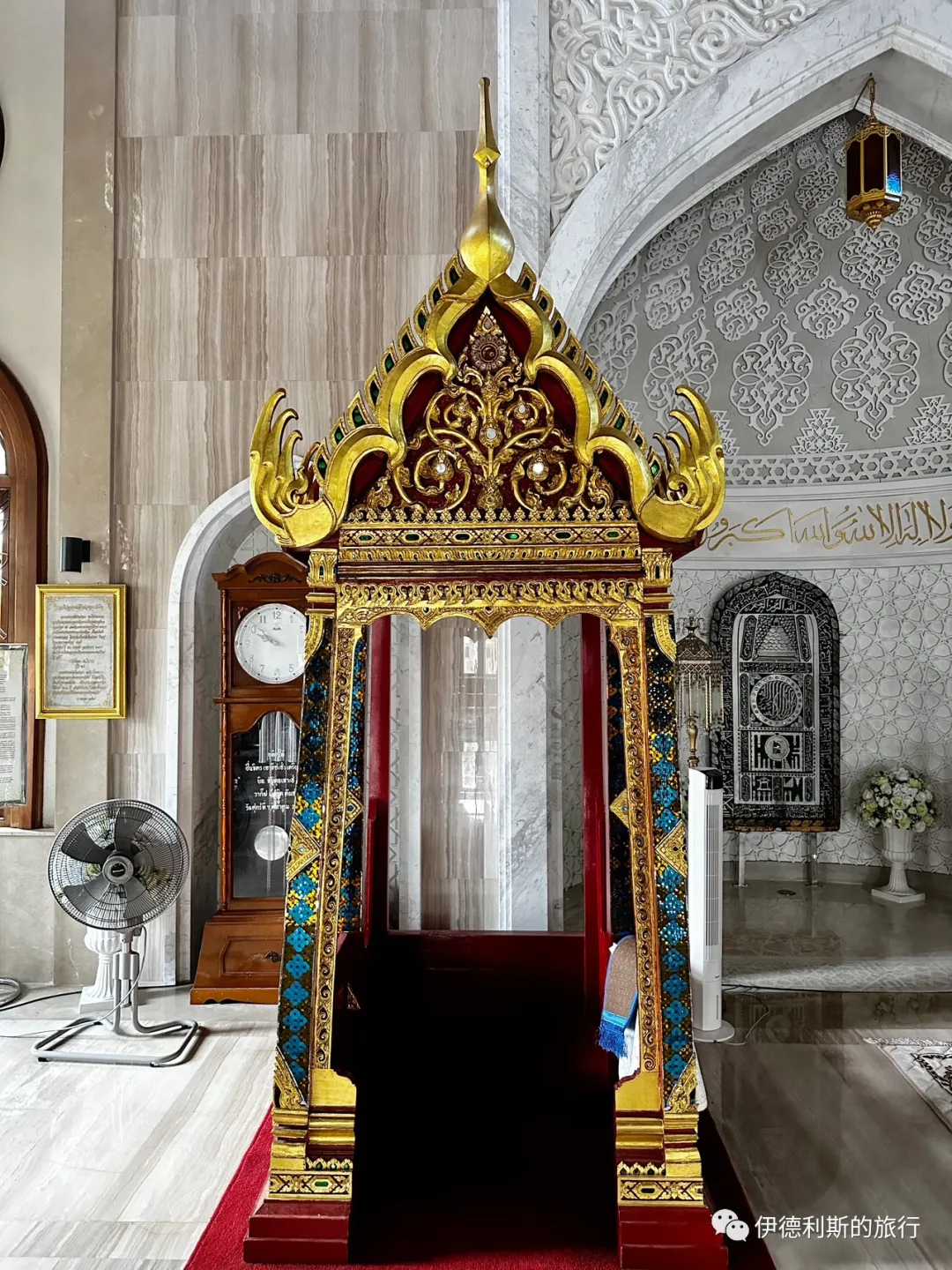
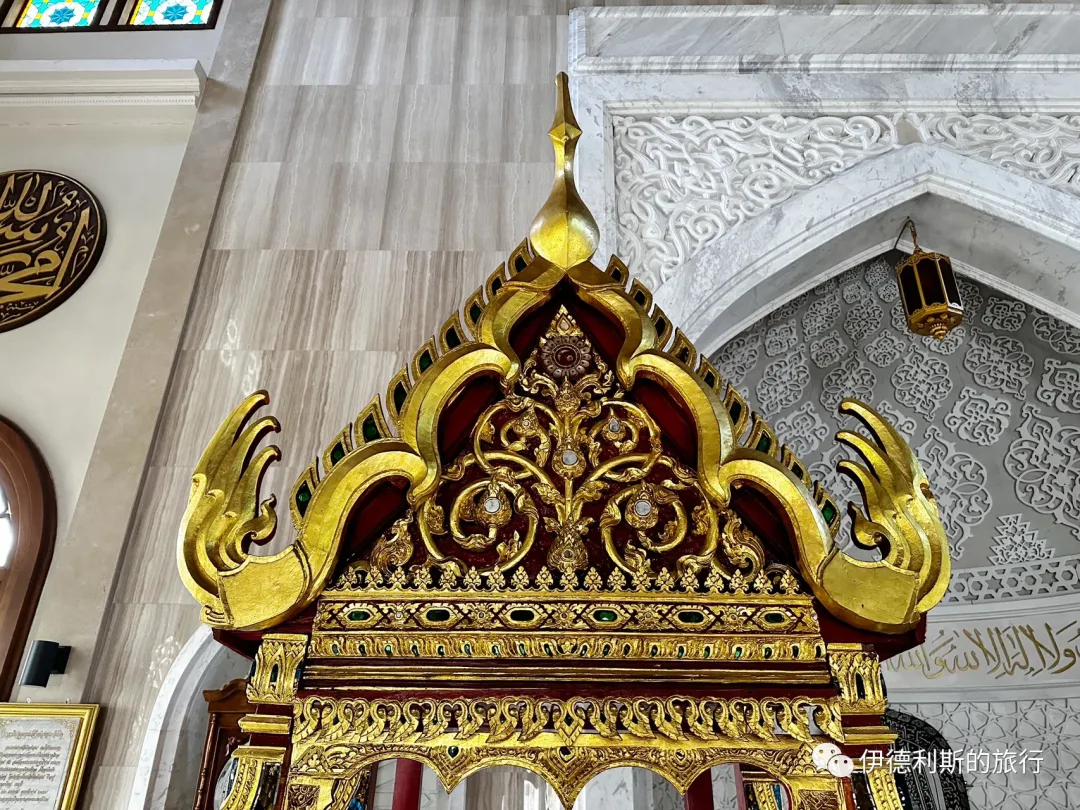
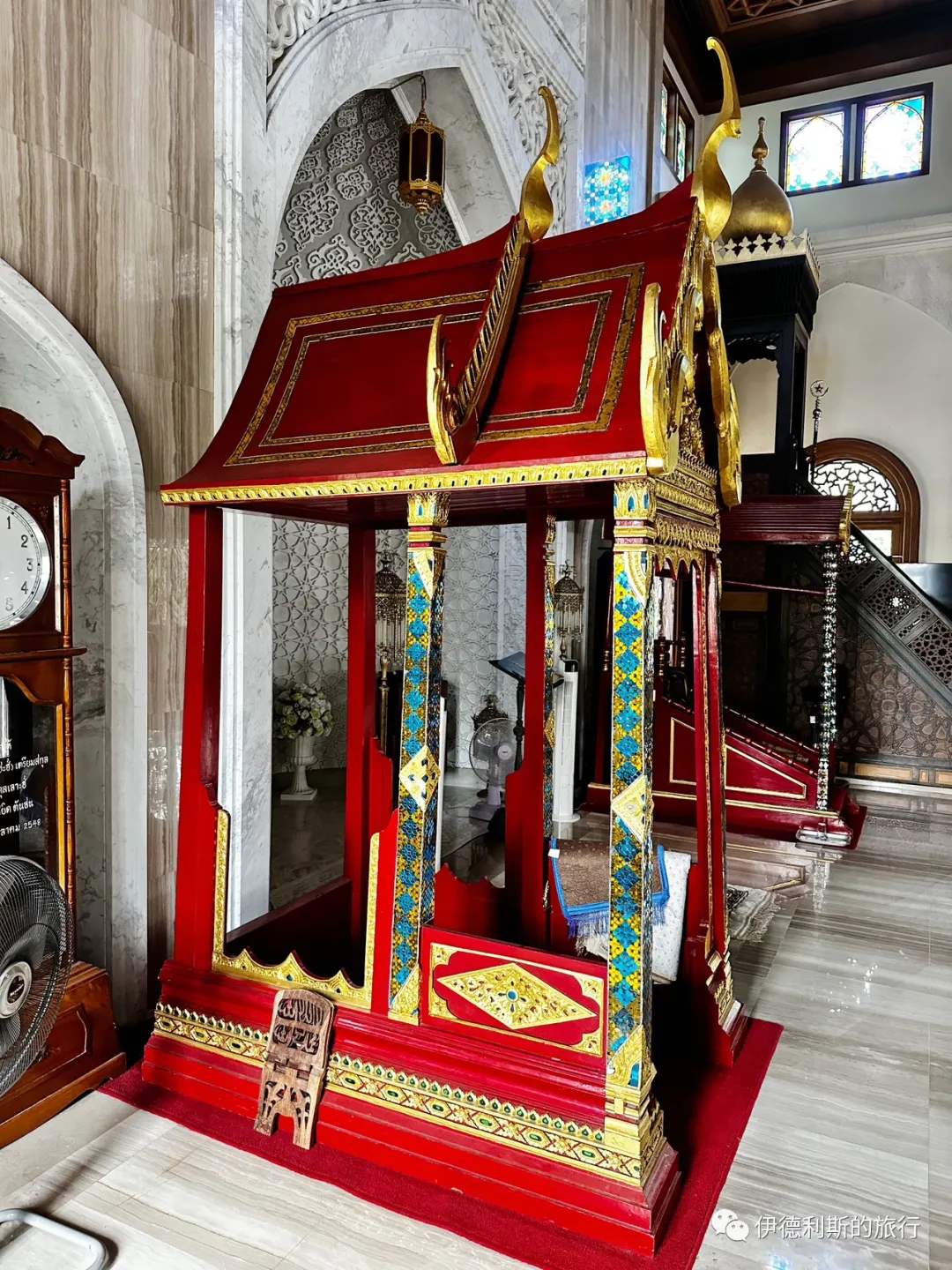
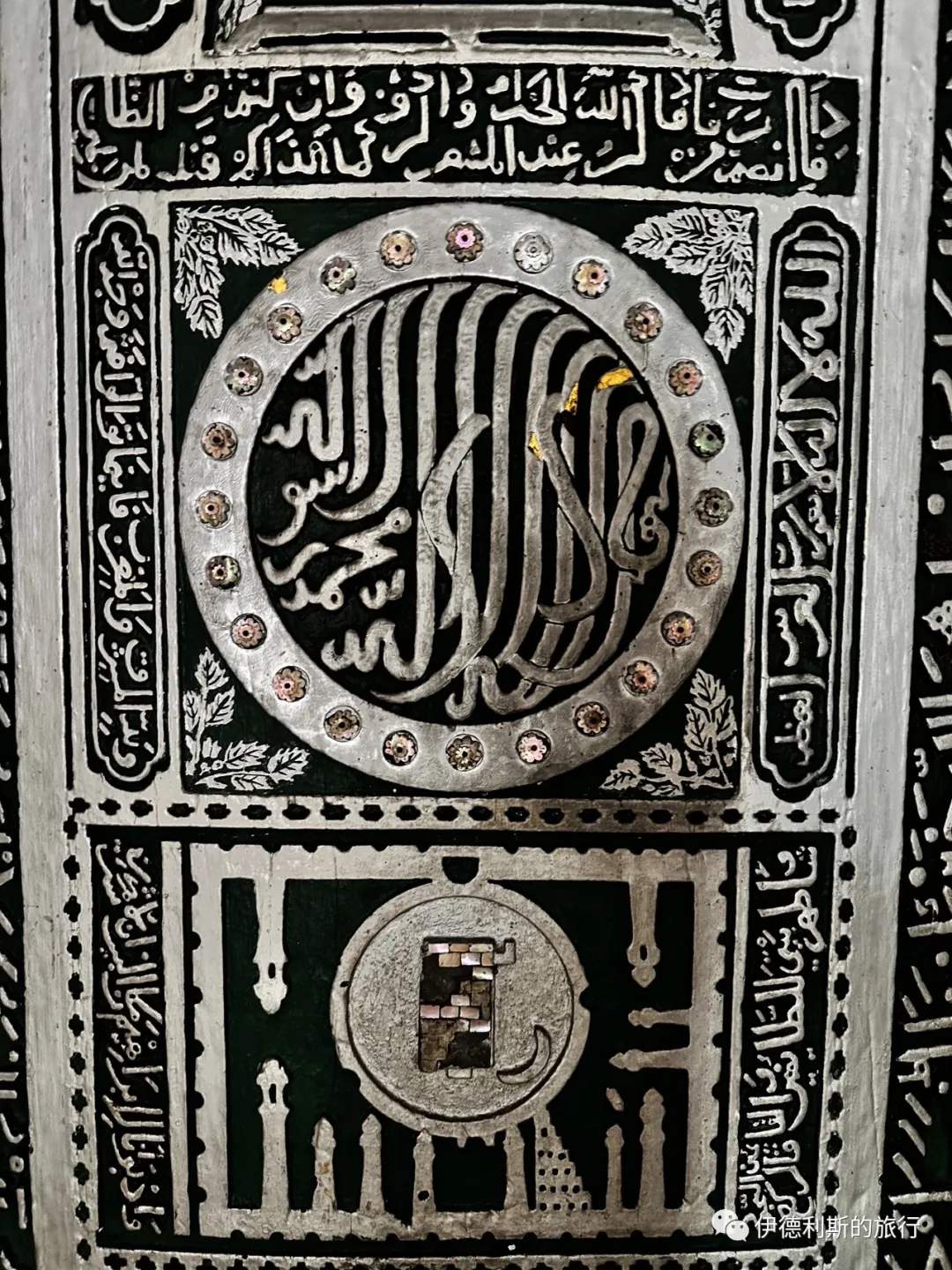
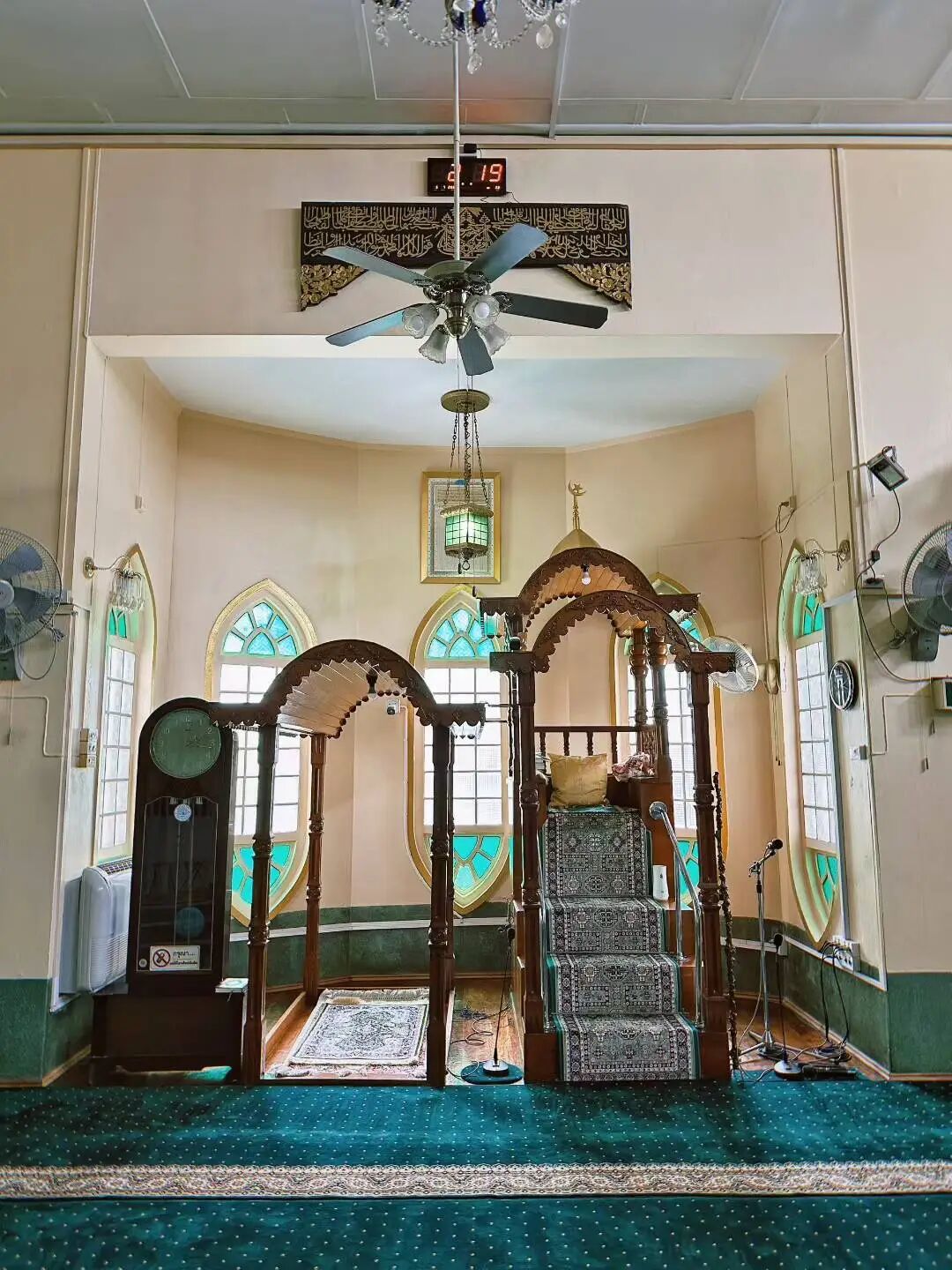
The pulpit (minbar) at Ton Son Mosque has a strong Siamese Ayutthaya style, and the prayer niche (mihrab) was preserved from the old building and is very beautifully crafted.
This is the area where the imam stands to lead the prayer (namaz), and it also has a very Thai style.
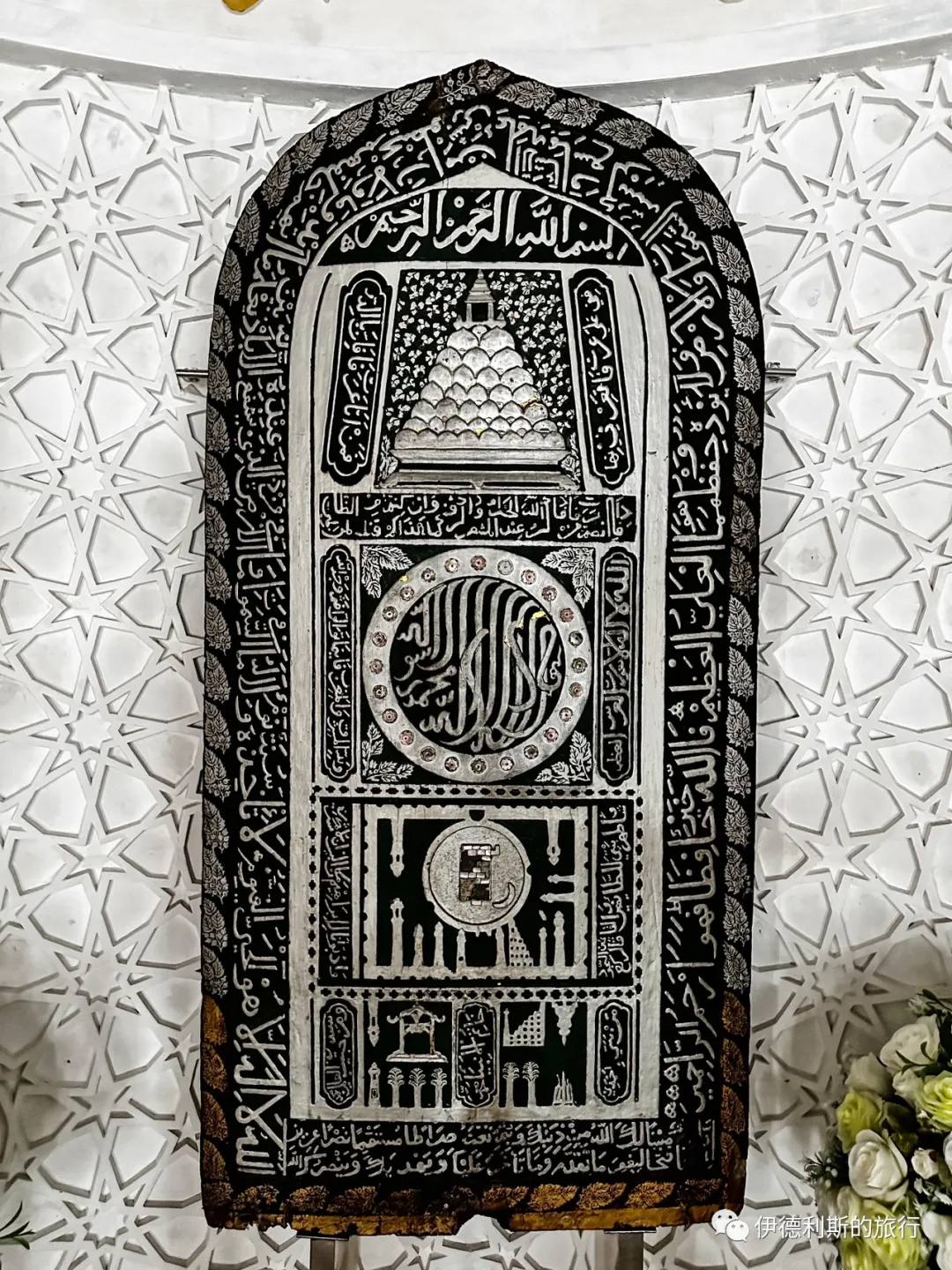
There is a depiction of Mecca (tianfang tu) in the center of the prayer niche (mihrab).
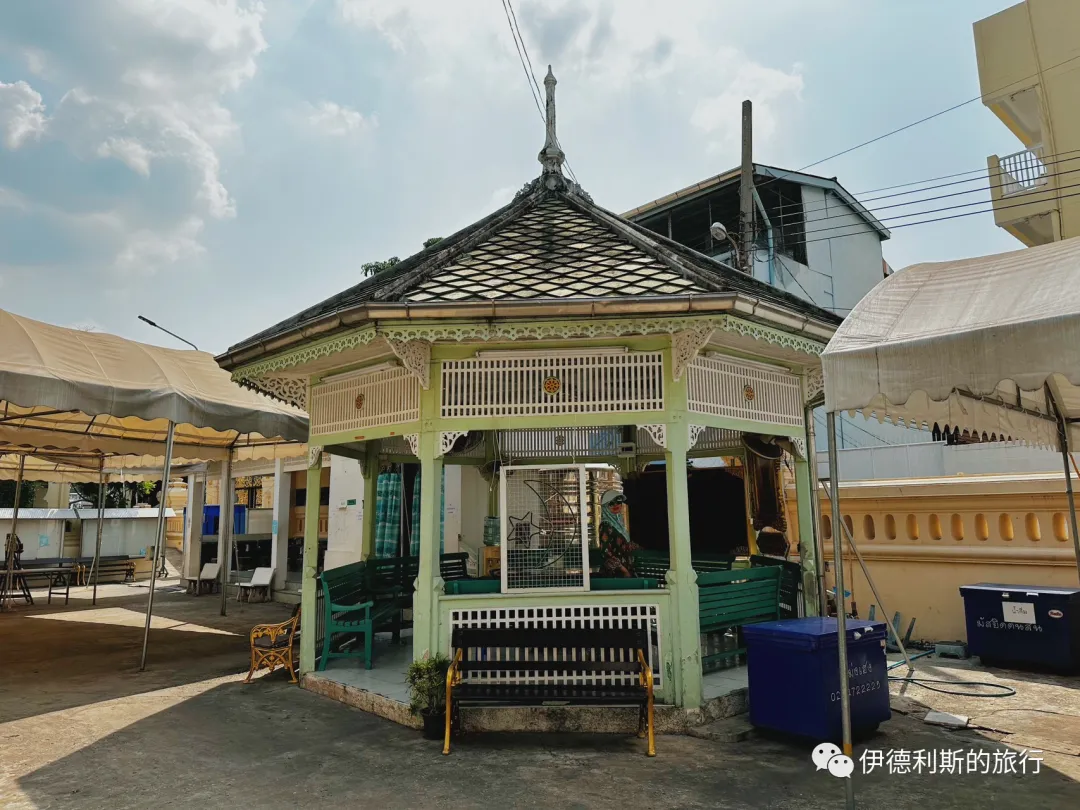
An old house in the mosque built in 1941.
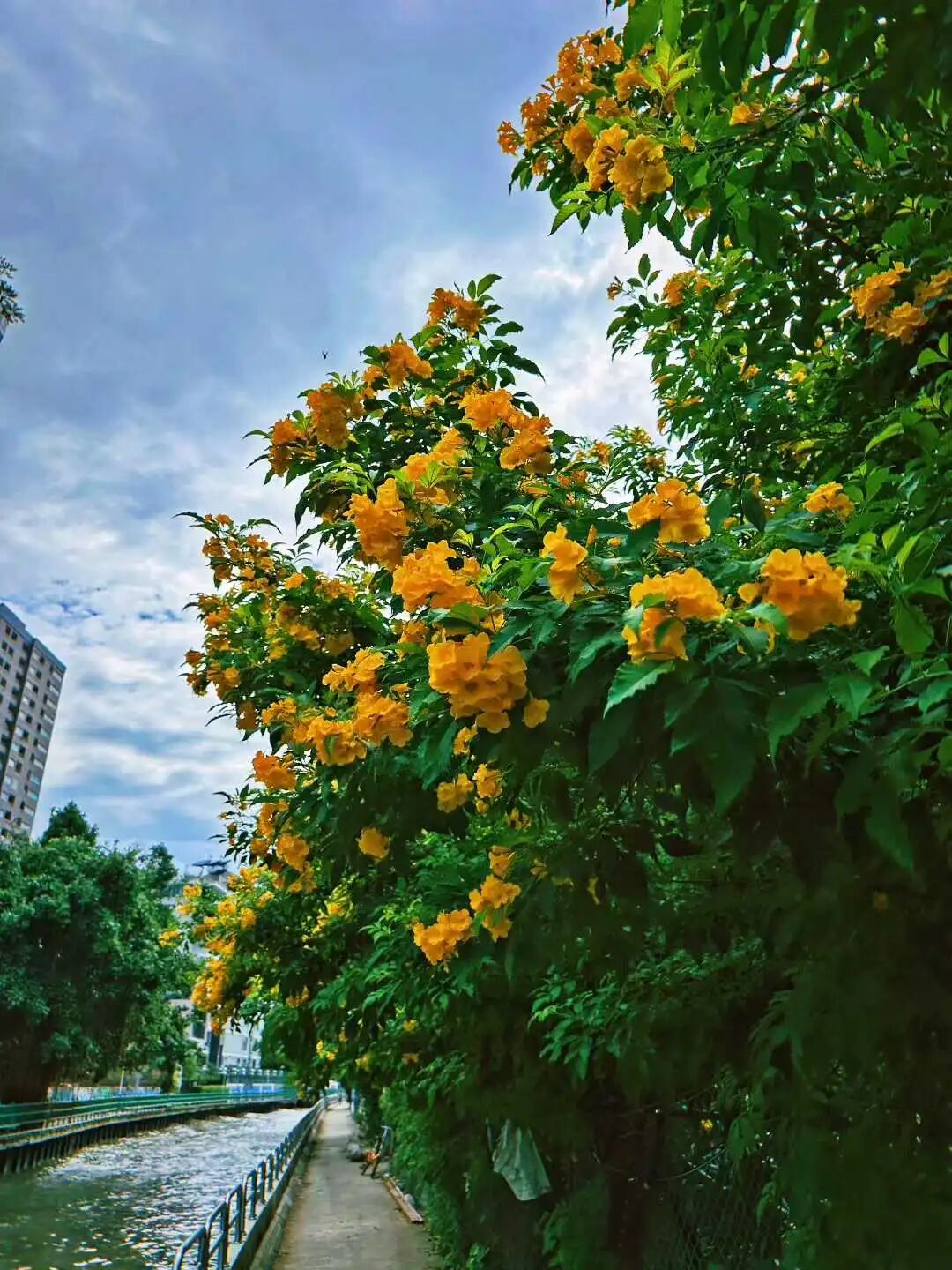
The Yai canal at the entrance of the mosque.
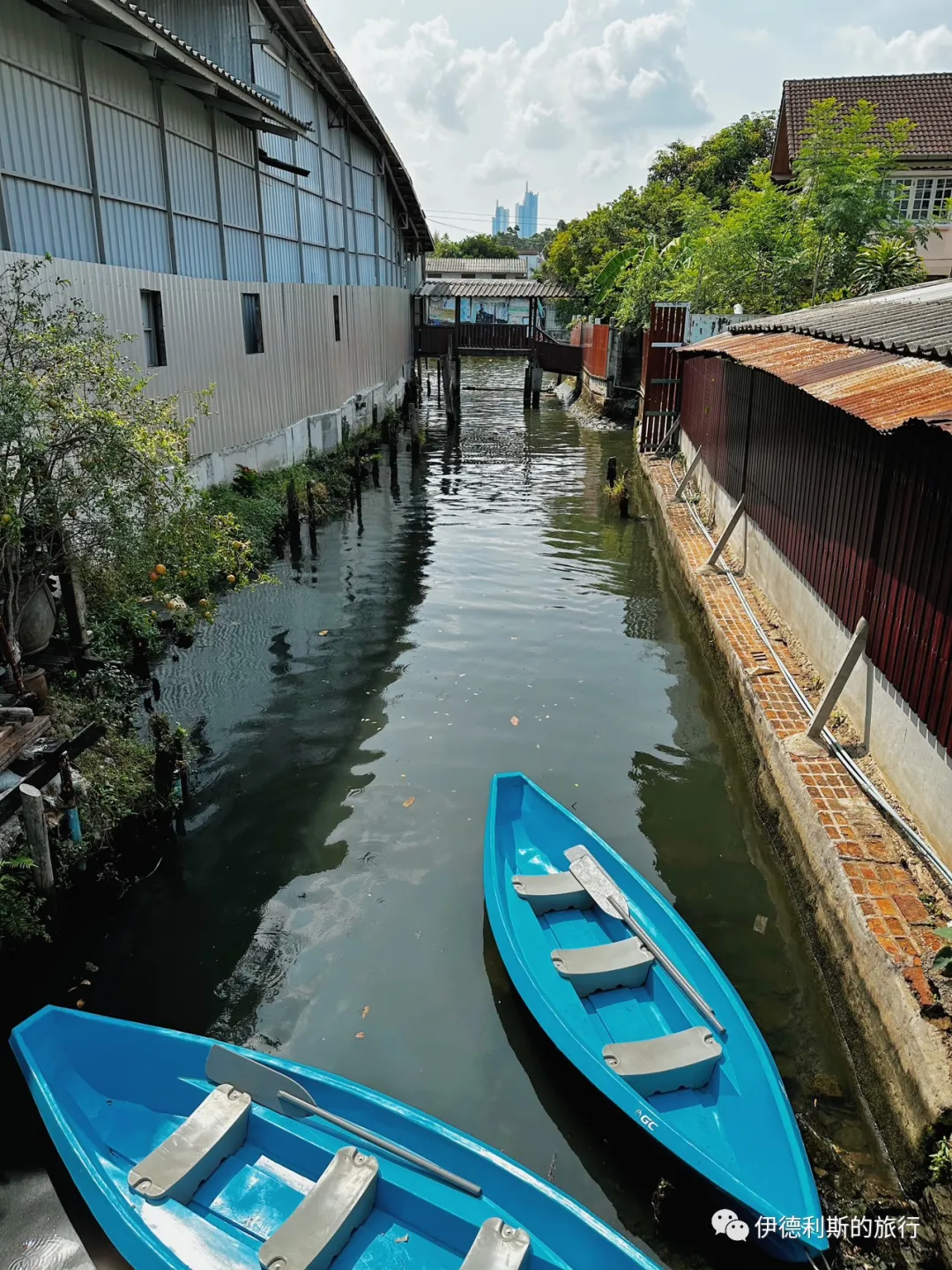
The mosque area is filled with rivers.
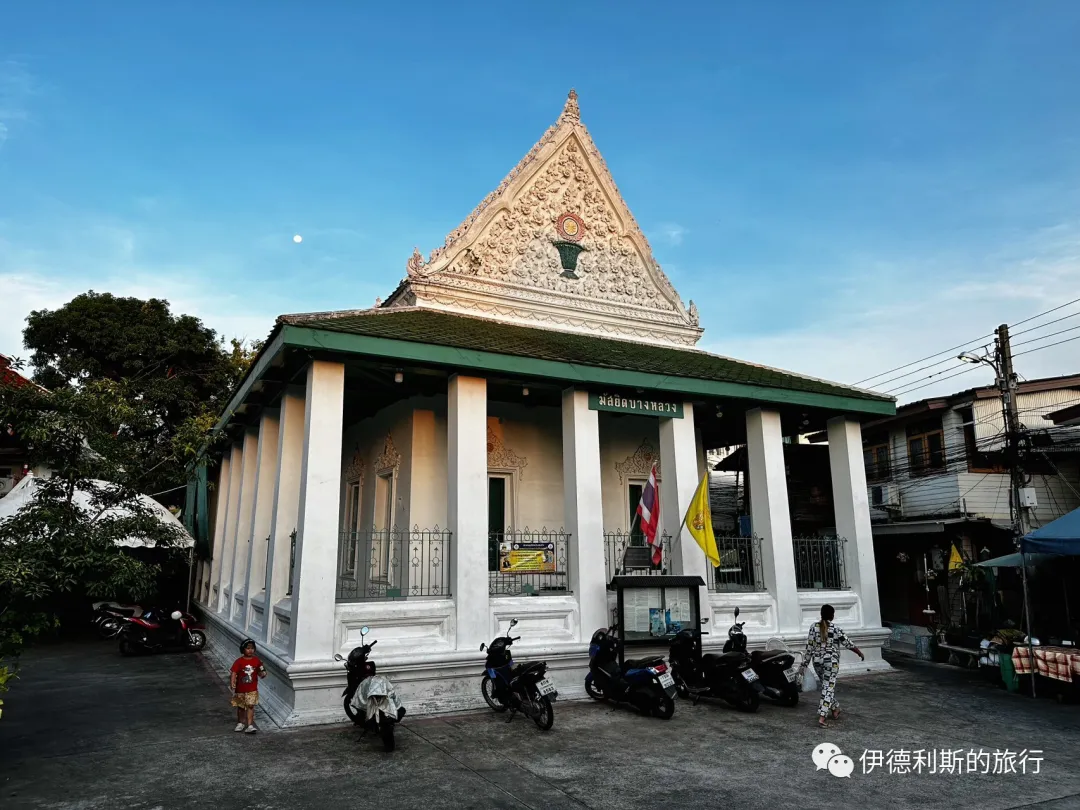
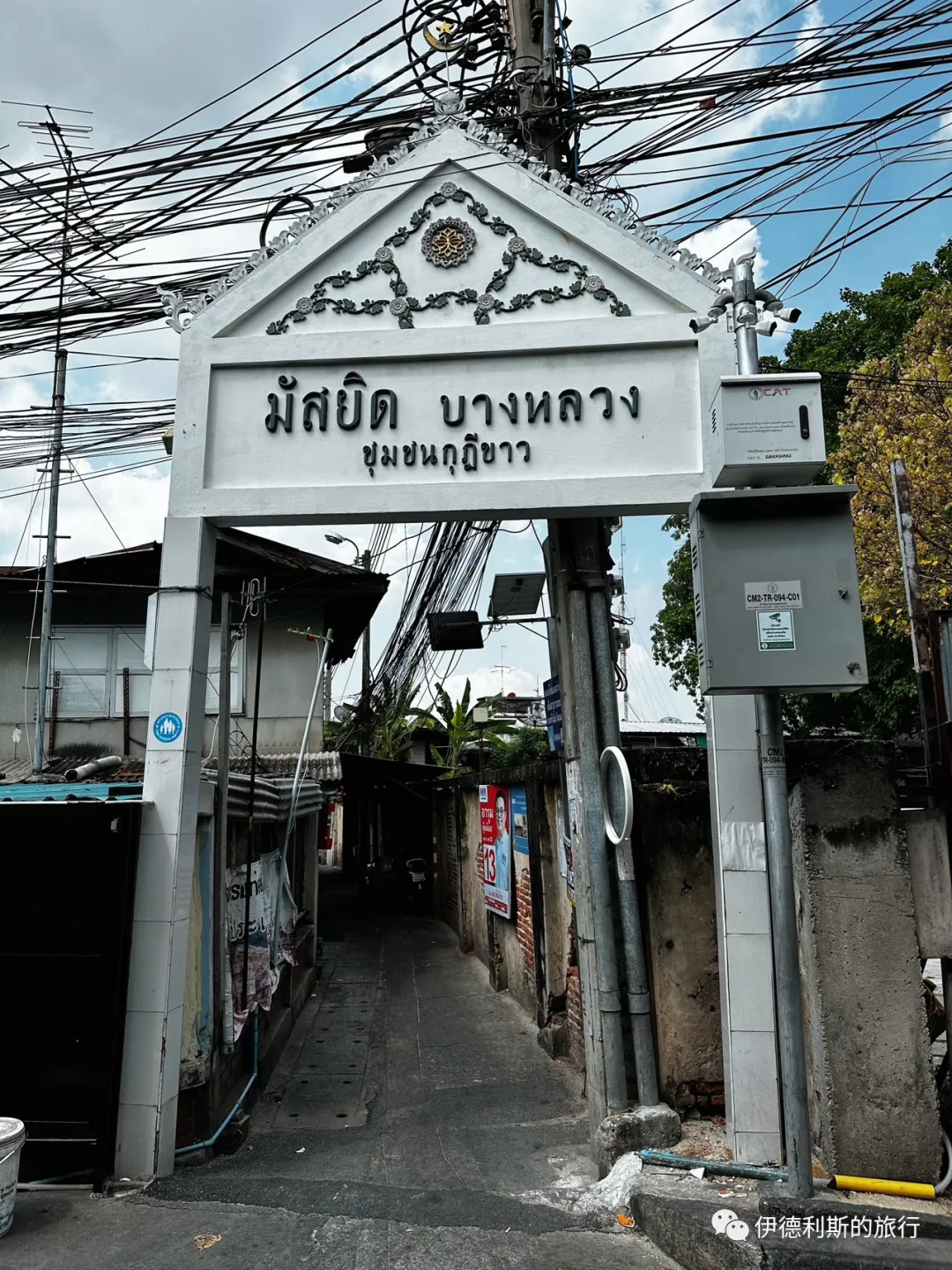
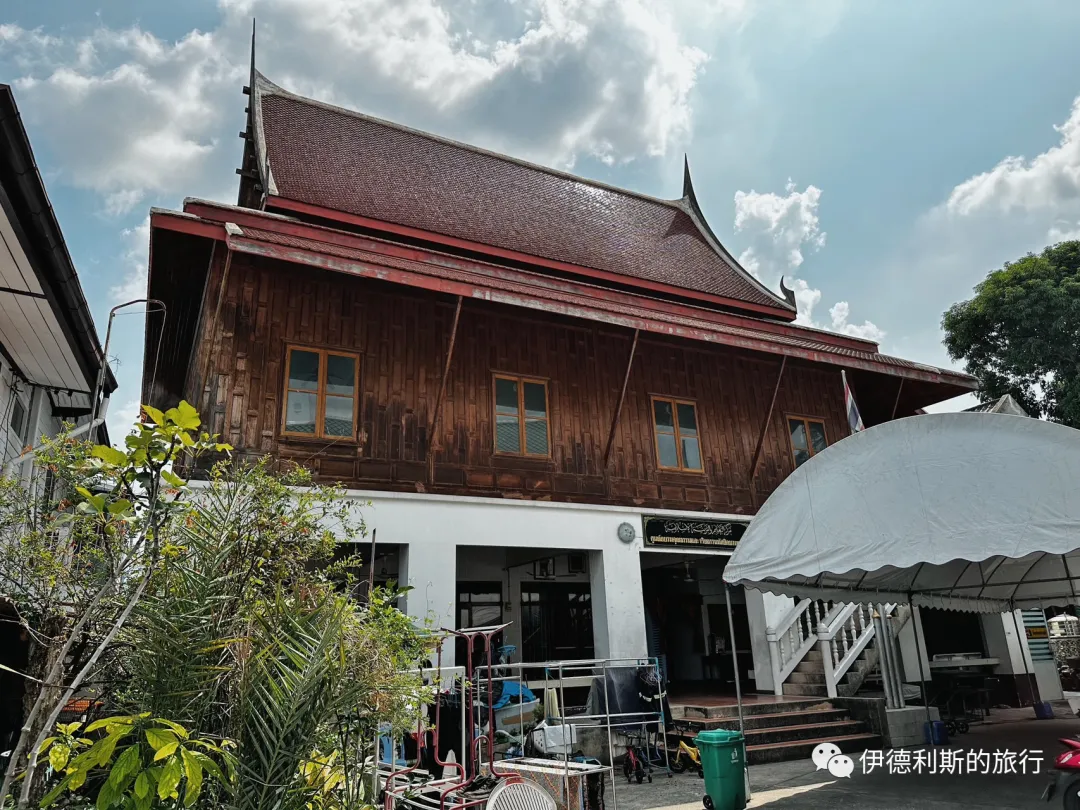
Bang Luang Mosque, the only Thai-style mosque in Bangkok.
In 1767, Burma invaded Siam, the capital Ayutthaya fell, and the Cham military camp at the mouth of the Yai River was destroyed. Soon after, Siam moved its capital to Thonburi. The Cham people who fled from Ayutthaya settled around Ton Son Mosque, formed a new Cham community, and continued to serve in the Siamese navy. In 1782, Siam officially moved its capital to Bangkok on the east bank of the Chao Phraya River. They built a royal shipyard and dock opposite the Cham community, and many Cham people became royal sailors and shipbuilders.
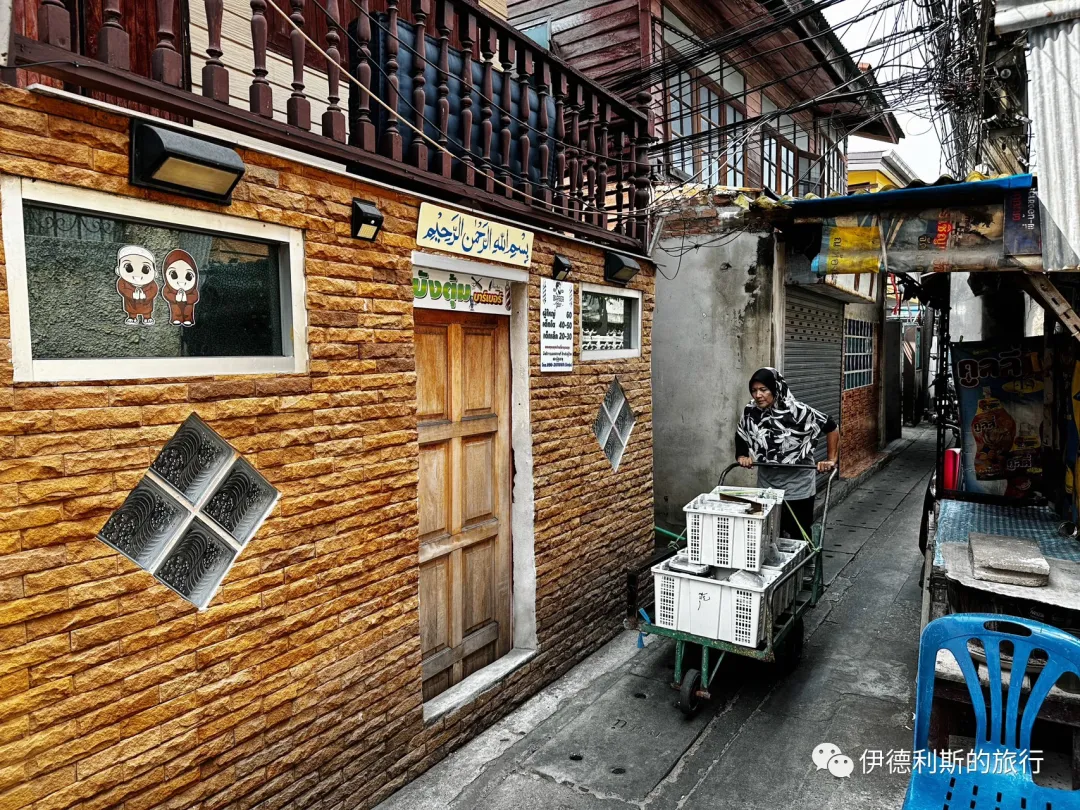
With the establishment of the royal shipyard and dock, some Cham people moved to live on the other side of the Yai Canal. People of Malay descent who moved from Ayutthaya and Trat Province in the southeast originally lived here, making a living by rowing boats on the canal to sell goods. Around 1785, a merchant named Toh Yi led the construction of a new mosque called Kudi Mai (New Mosque) or Bang Luang Mosque.
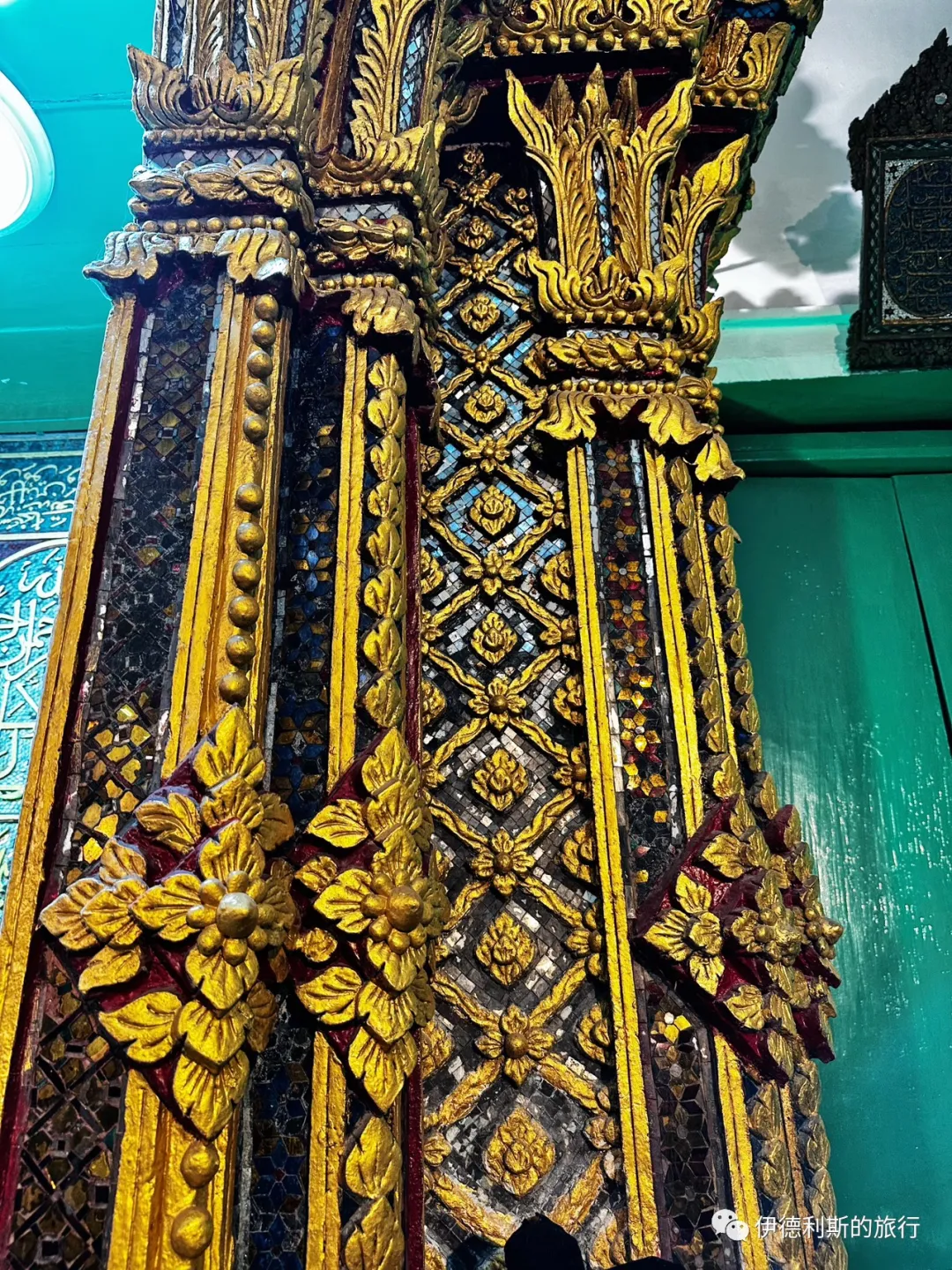
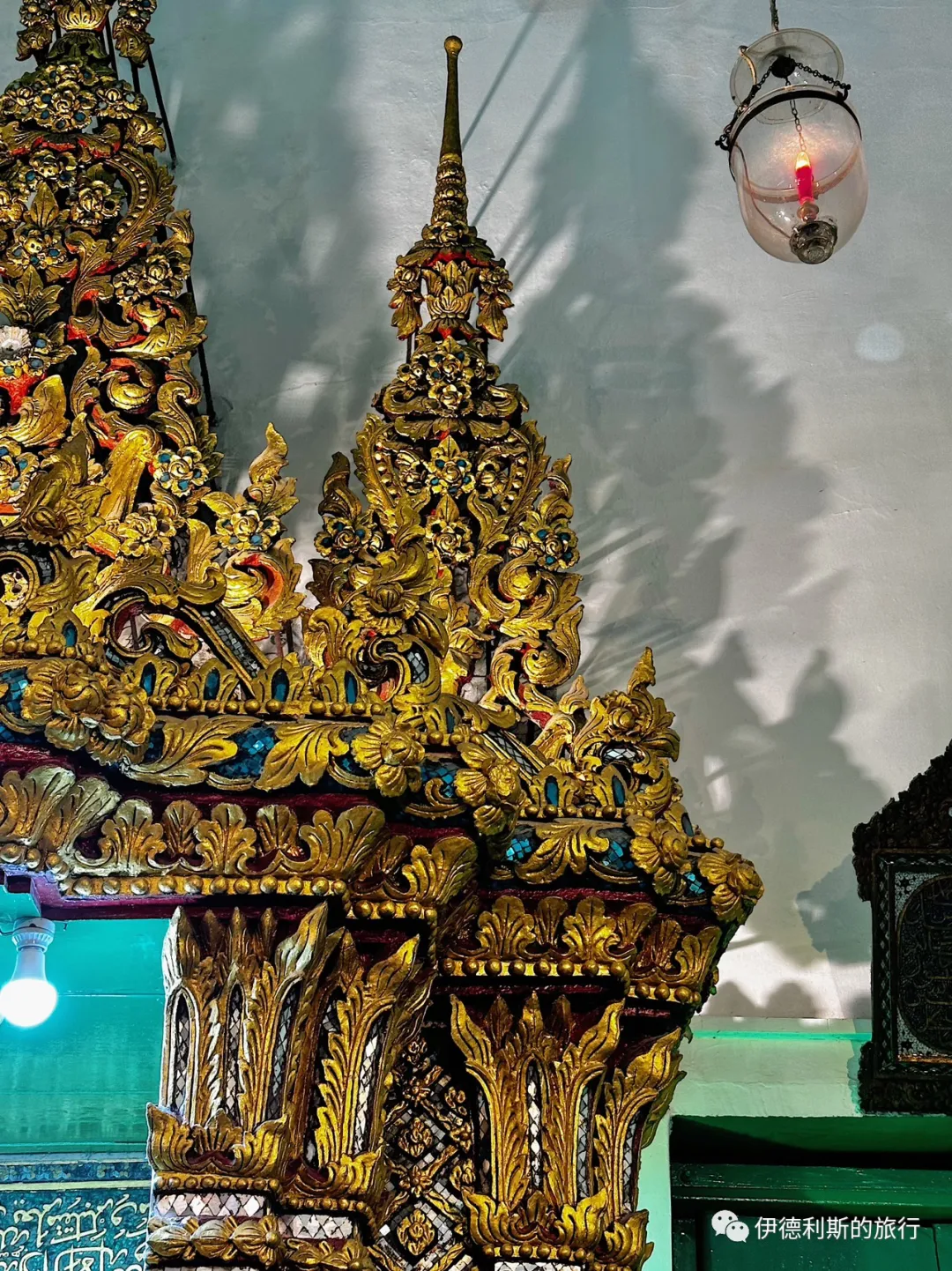
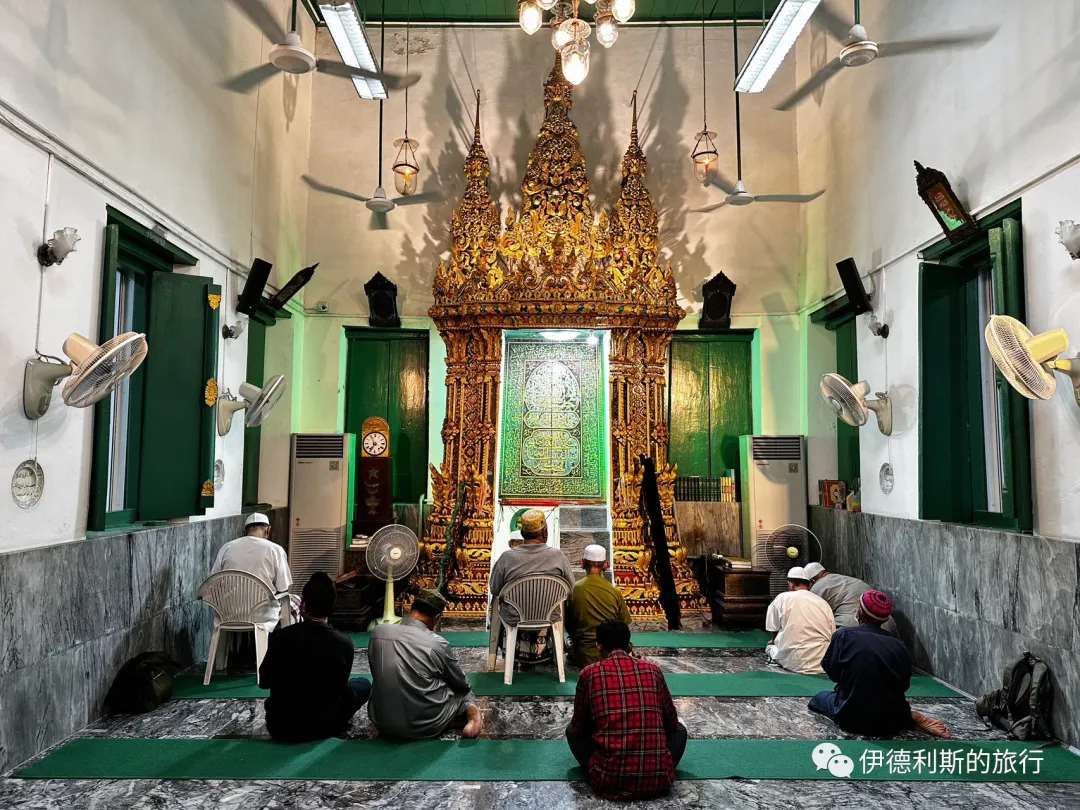
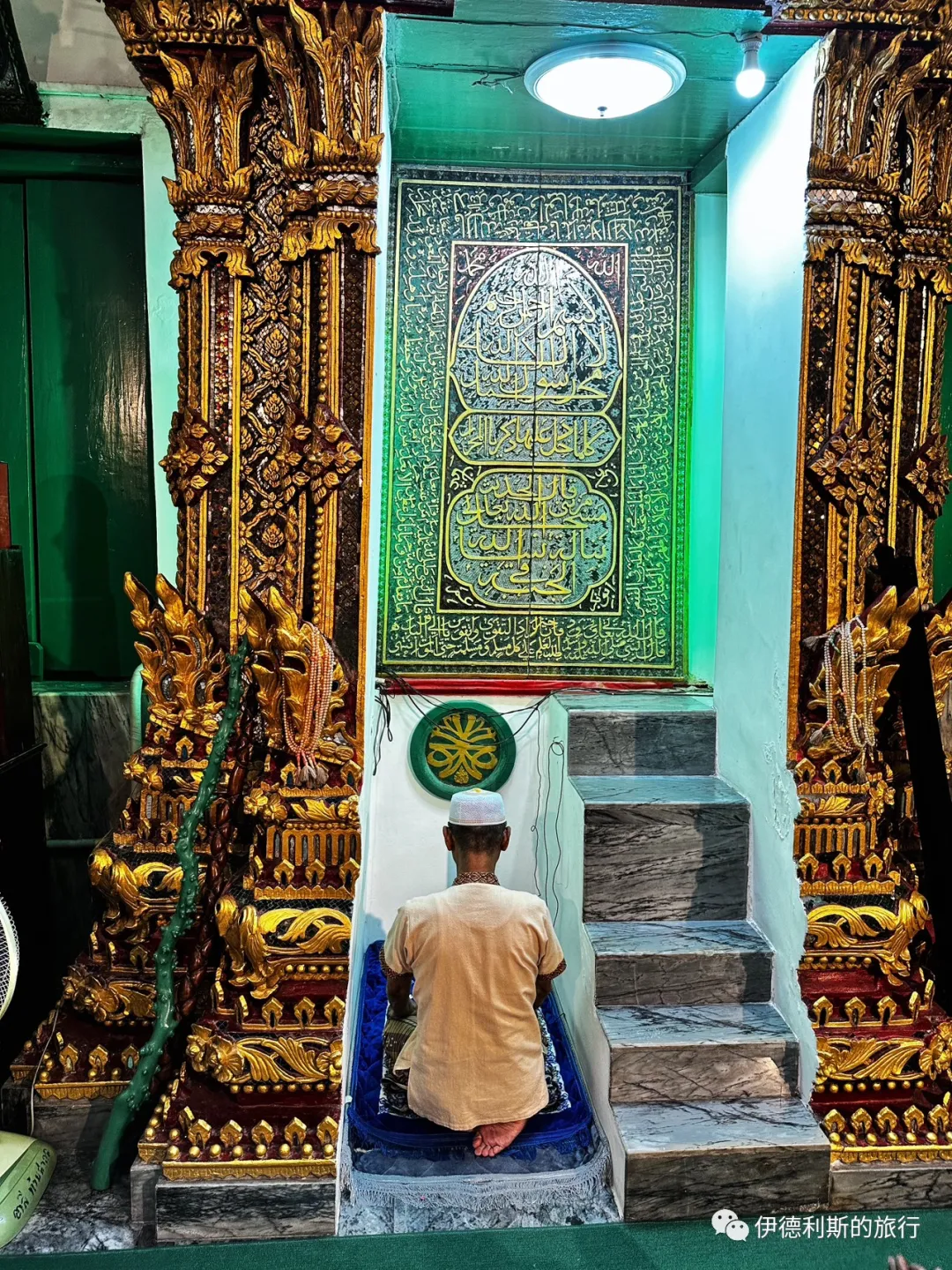
Bang Luang Mosque is the only surviving Thai-style mosque in Bangkok. It has Thai-style white stucco brick walls, and its decorative roof looks very similar to those on Thai temples. The main hall is surrounded by a corridor with 30 pillars, representing the 30 parts of the Quran. The mihrab inside the main hall is the most exquisite part, featuring a purely Thai decorative style, including the Chofa decorative element found on Thai palace architecture. This shape is adapted from the Garuda in Hinduism and Buddhism, but it was redesigned to fit Islamic traditions.
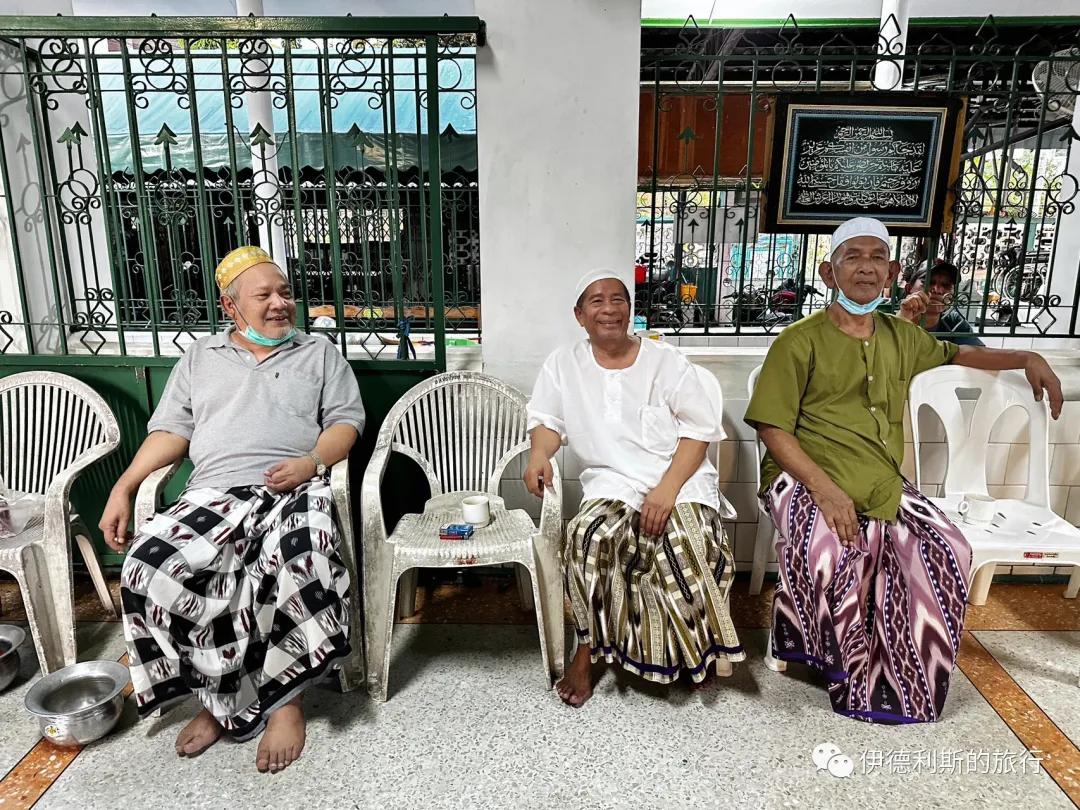
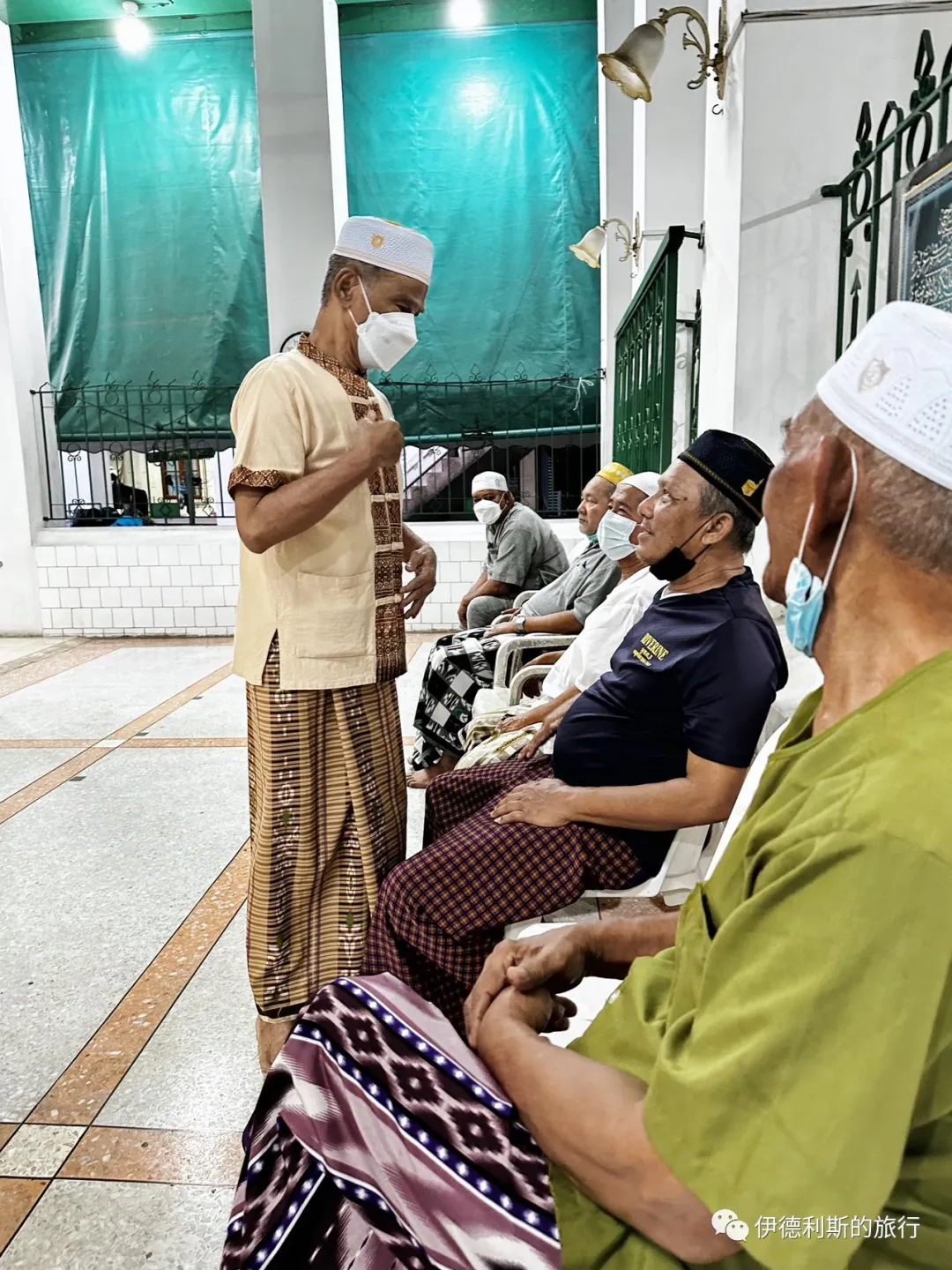
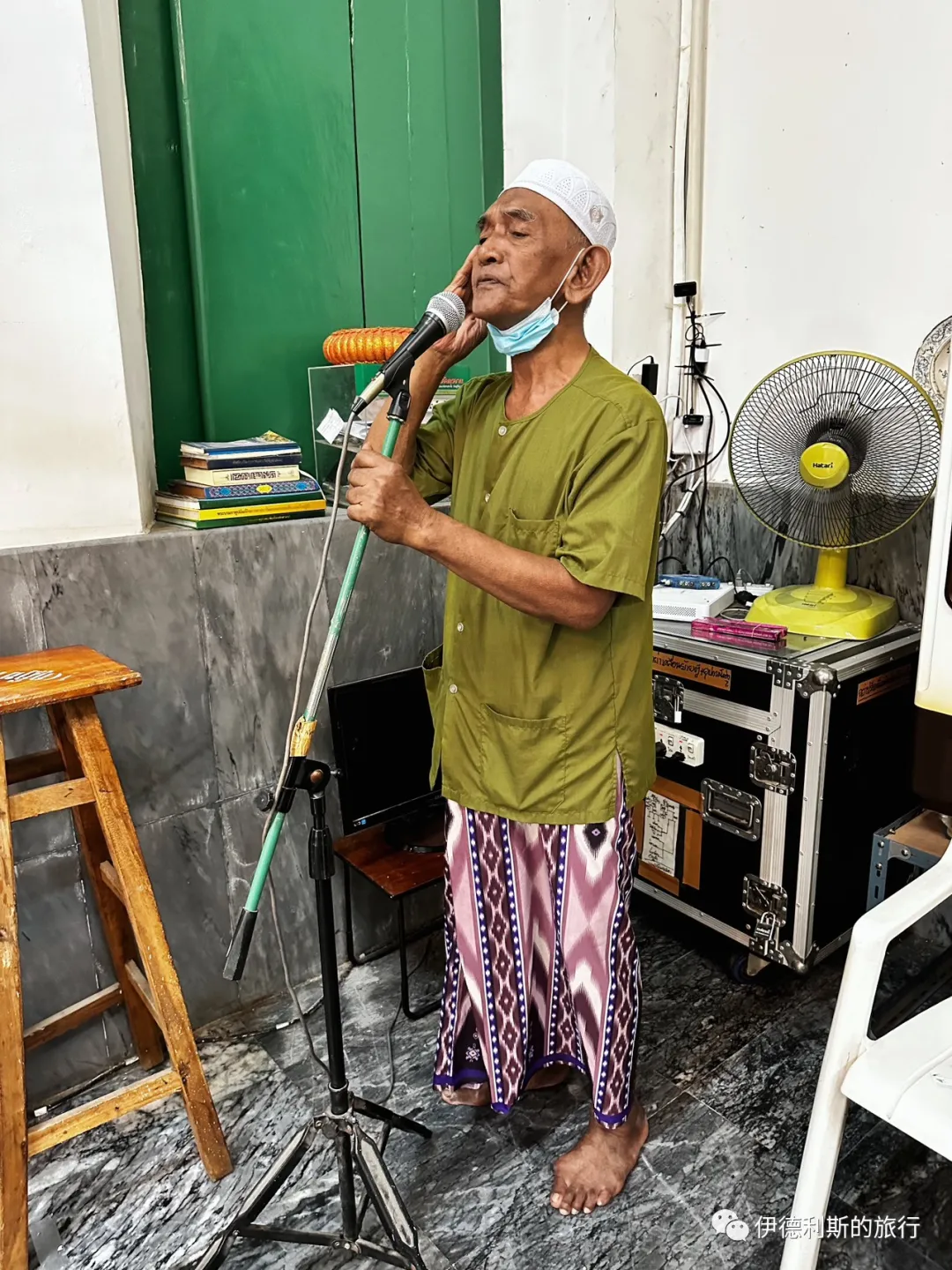
The atmosphere at Bang Luang Mosque during namaz is very special. Every elder who arrives shakes hands with everyone, and an elder even gave me a drink. You can see everyone wearing a sarong (sarong) tube skirt, which means 'to cover' in Malay. This outfit is perfect for the humid and hot climate of Southeast Asia.
The wooden-framed scriptures hanging on the walls of Bang Luang Mosque and the porcelain plates embedded in the walls are both over a hundred years old.
This old bell feels like it has a lot of history.
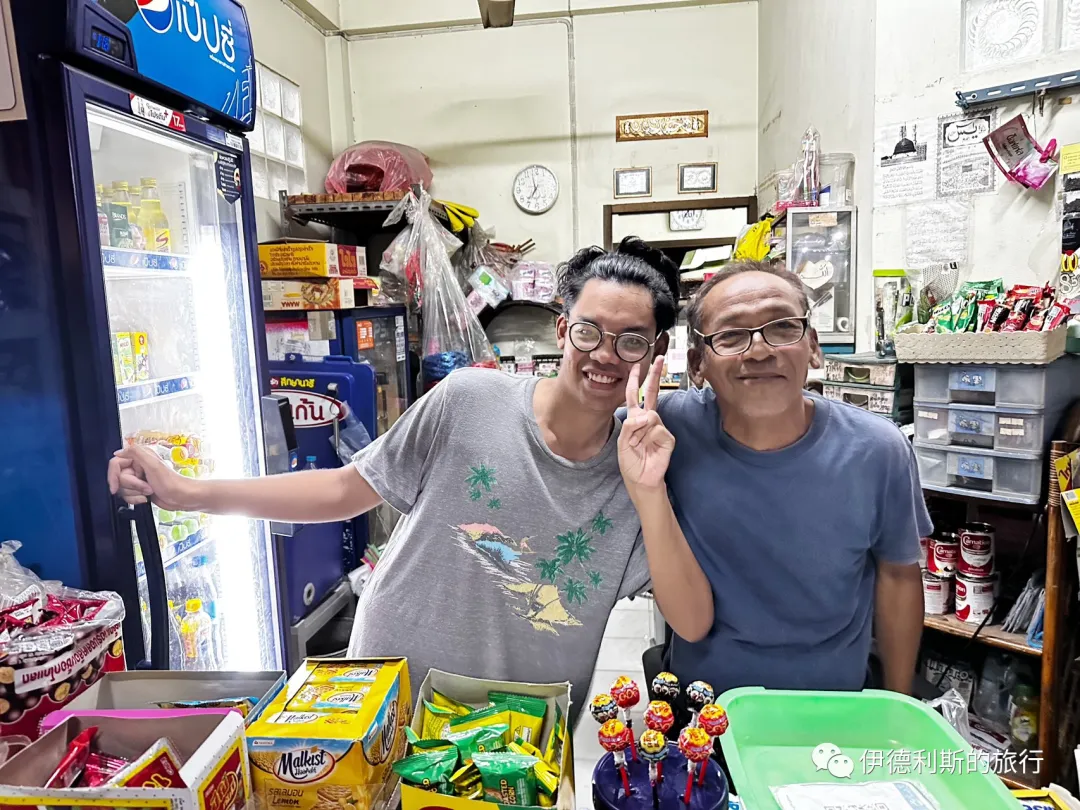
The area around Bang Luang Mosque is still mainly inhabited by Cham and Malay descendants. We chatted for a while with the owner of a small shop opposite the mosque. The owner's family is of Malay descent; the father speaks fluent Thai and Malay, and the son's English is also very good.
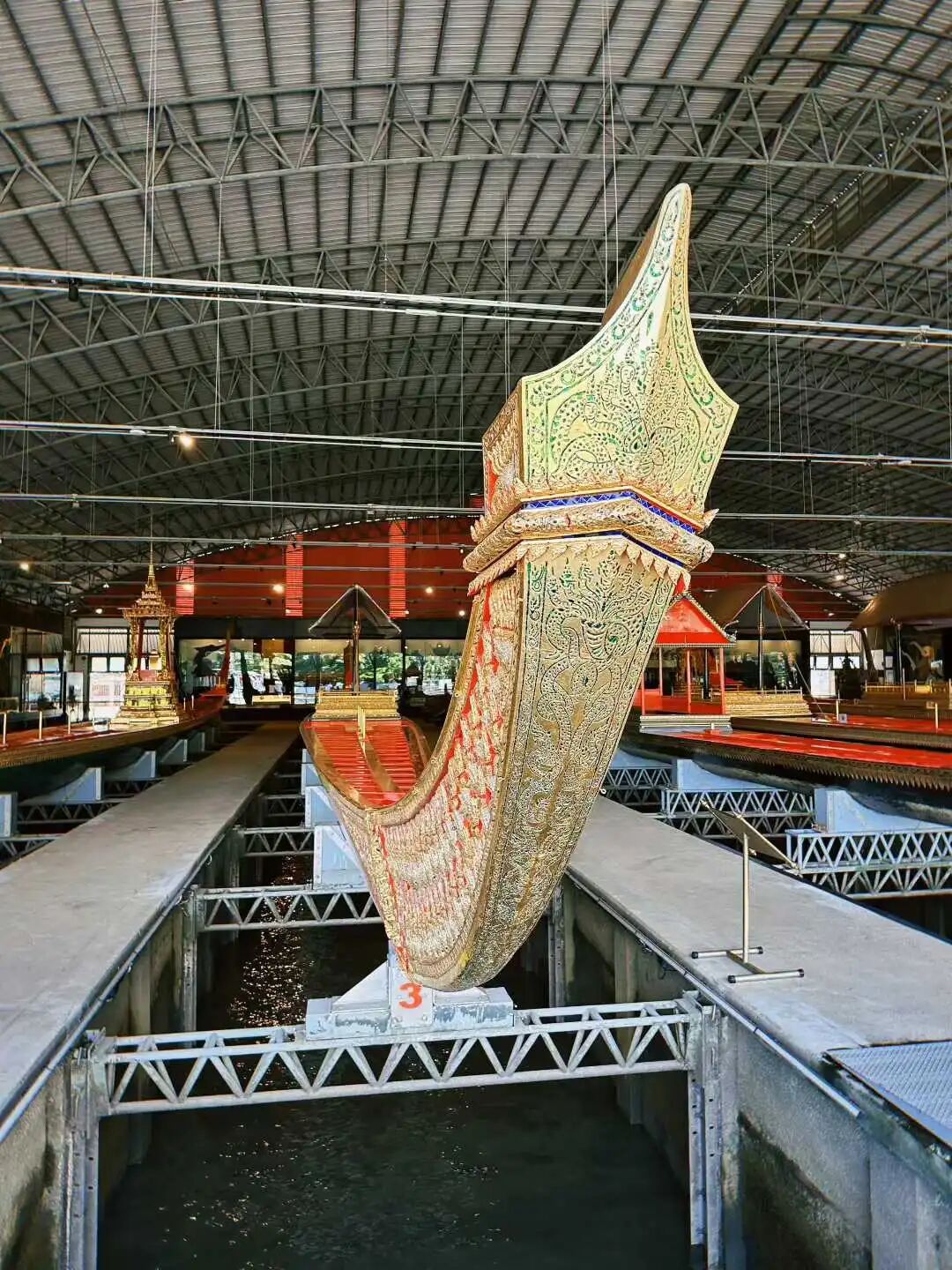
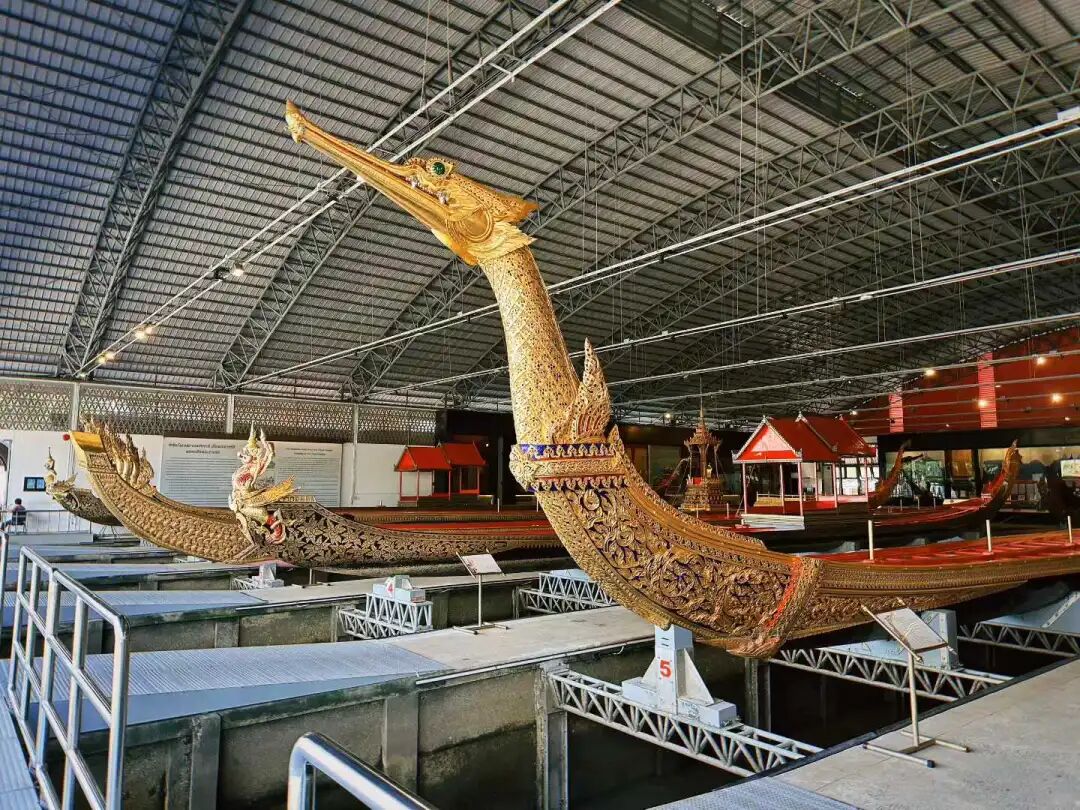
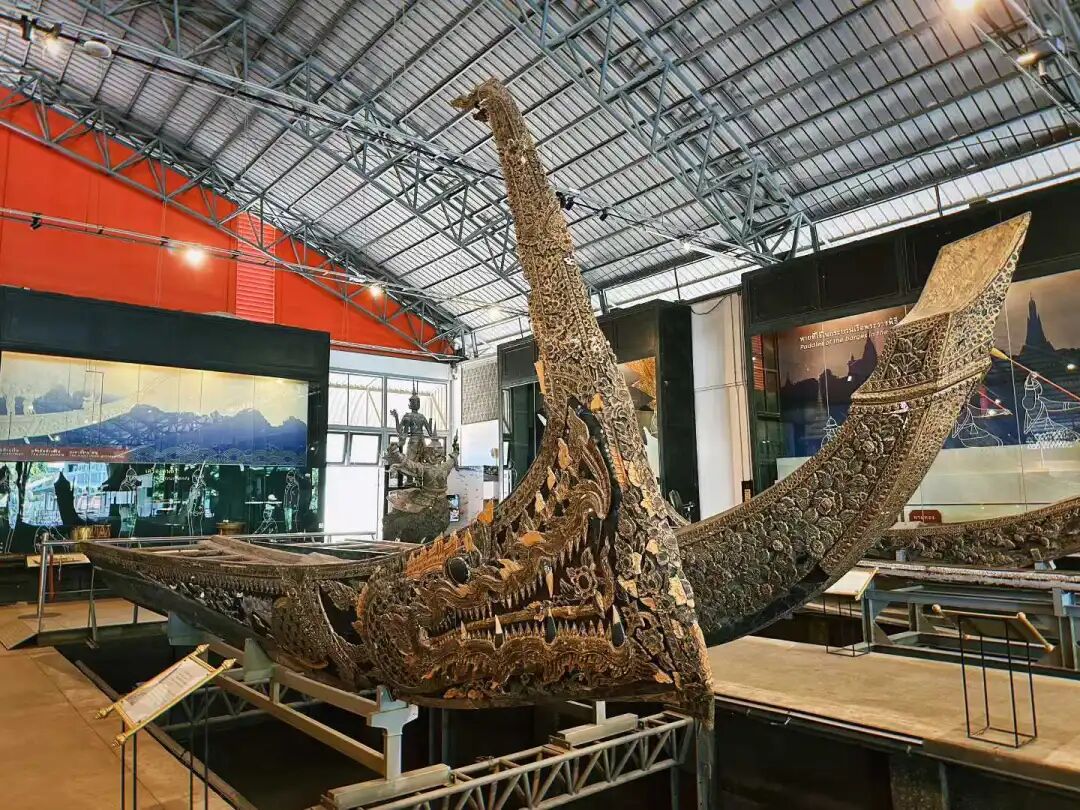
Cham Navy and the National Museum of Royal Barges.
In 1778, Thailand invaded Laos. To attack Laos from two sides, Thailand recruited an army of over 10,000 people from the pro-Thai Kingdom of Cambodia, which included several naval companies made up of Cham dosti (friends/comrades). After these Cham naval companies finished participating in the war against Laos, some of them returned with the Thai army to Thonburi, the capital of Thailand at the time. They were under the command of the Second King of Siam (Front Palace). After 1782, they were stationed along the Noi Canal and built the Second King's shipyard and dock next to their camp.
These Cham sailors served for a long time in gunboat patrols against pirates along the Thai coast. Until the Grand Palace and Front Palace navies merged into the Royal Thai Navy in 1880, these Cham sailors continued to serve in the Royal Navy, with some stationed at naval fortifications in Samut Prakan. After the 1910s, the former station of the Cham navy was gradually abandoned.
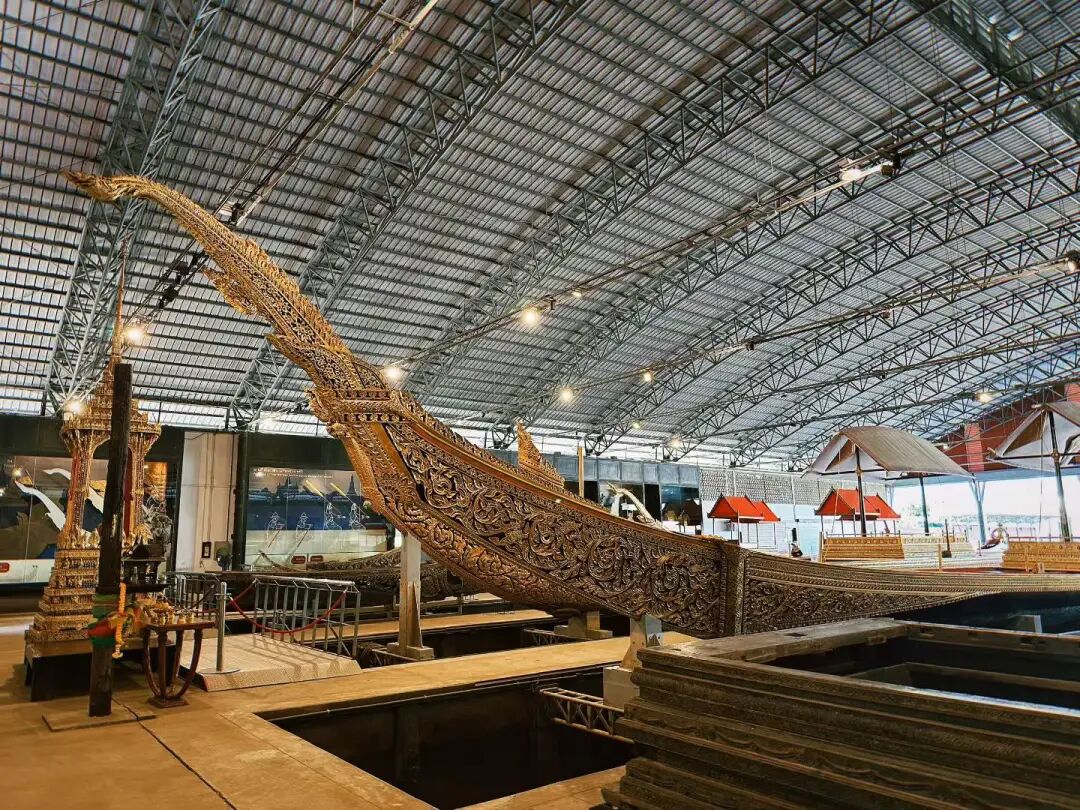
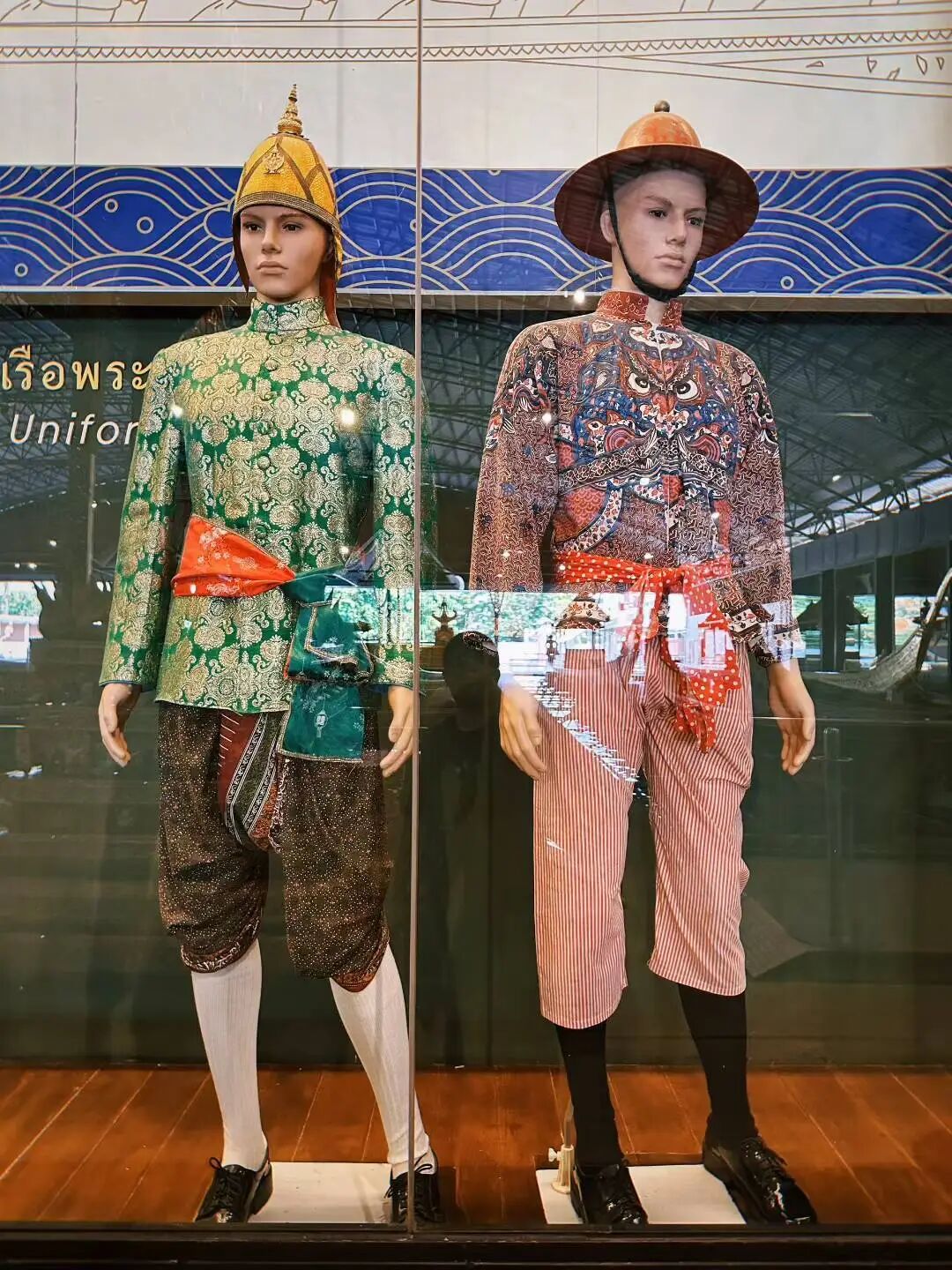
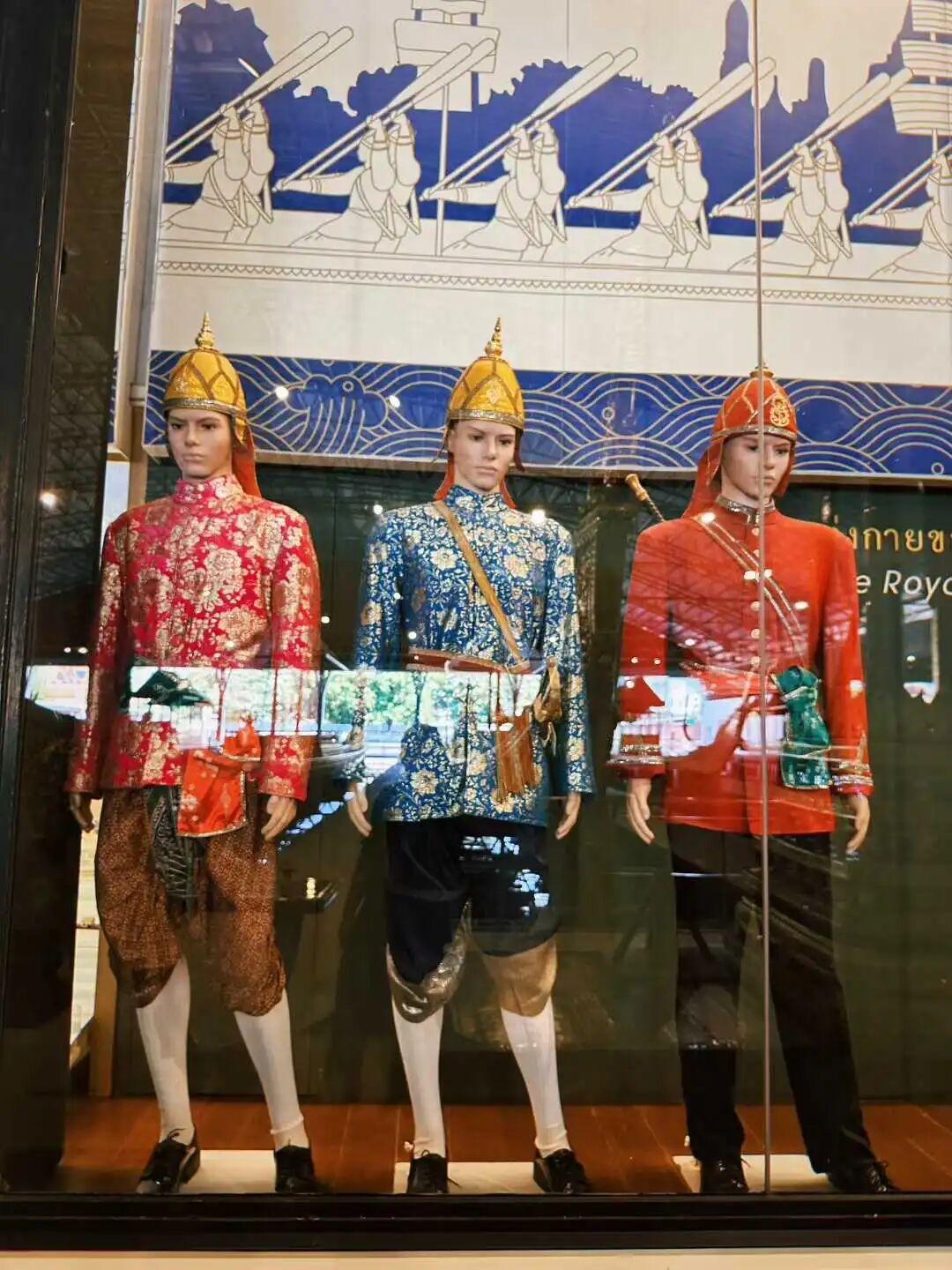
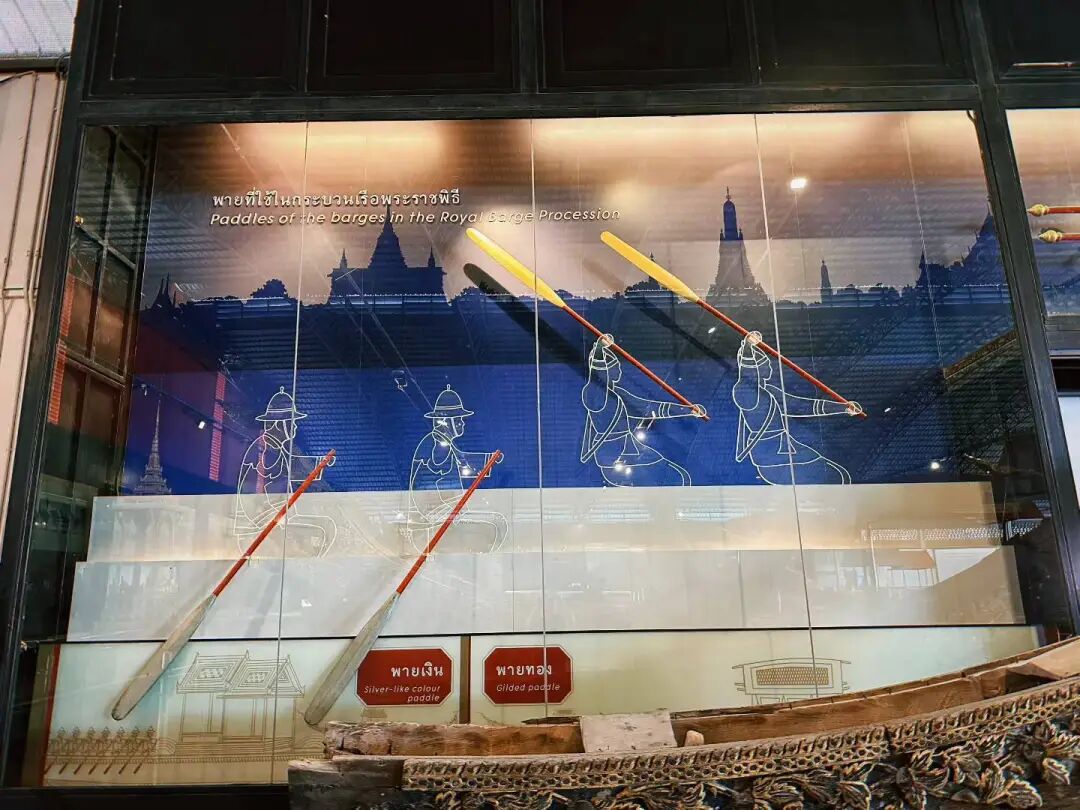
The National Museum of Royal Barges is currently built on the former site of the Cham navy station. Before the 20th century, the Cham navy served as rowers for the royal barge, a high honor granted to Cham sailors by the Thai royal family.
Noi Canal
Cham community neighborhood—Jami-Ul-Khoy-Riyah Mosque
In 1781, Thailand attacked Cambodia and captured some Cham soldiers. These Cham soldiers were brought back to Bangkok in 1782. These Cham soldiers officially joined the Thai army in 1783 and helped dig the Maha Nak Canal. In the early 19th century, Thailand and Vietnam fought a long war over Cambodia. The canal east of Bangkok became a vital military transport route, moving supplies and soldiers to the Cambodian front, earning it the name Bangkok's Eastern Corridor. The Saen Saep Canal east of Bangkok was completed in 1840, and these Cham soldiers were responsible for guarding it.
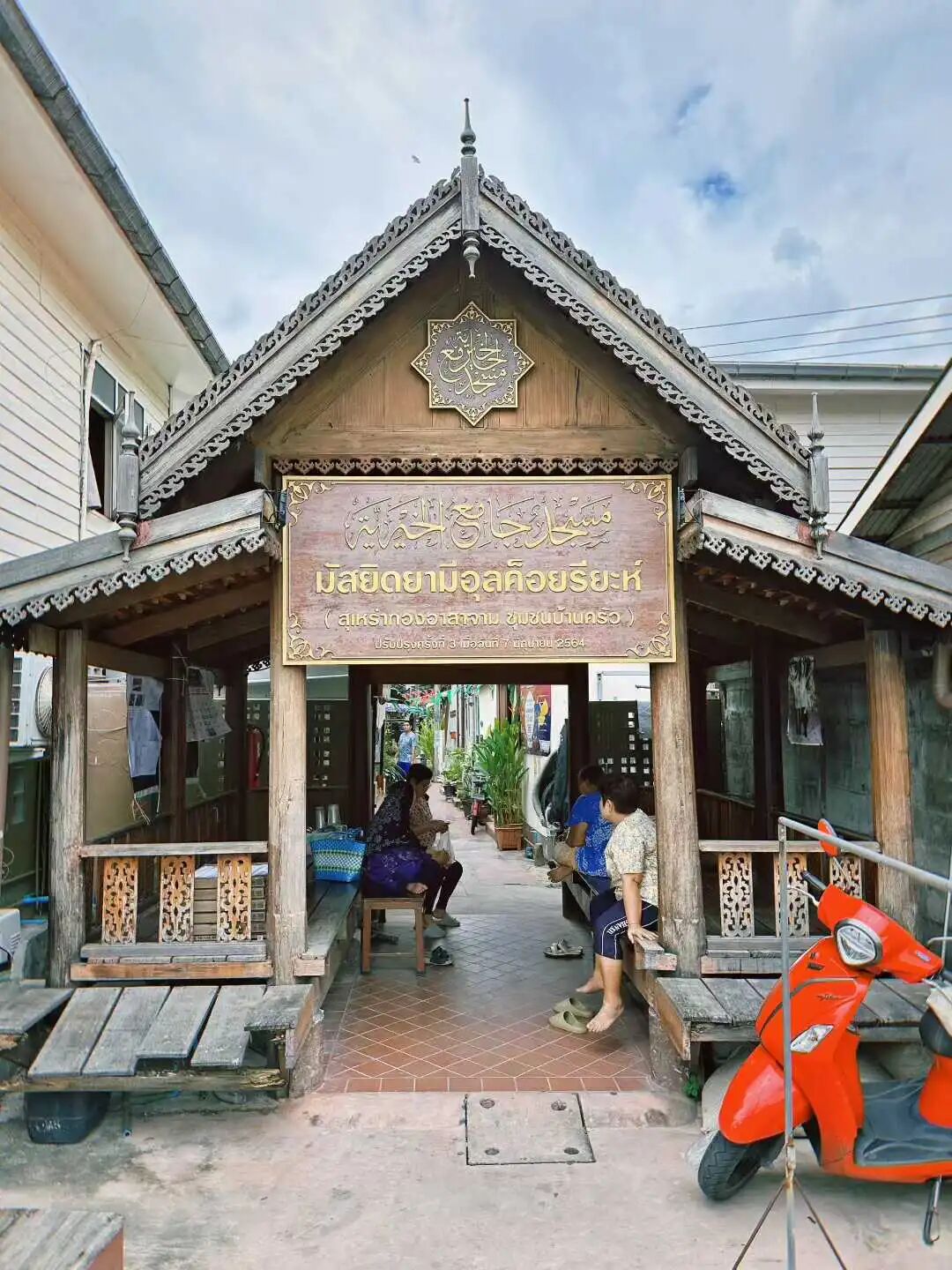
Today, you can take a canal boat on the Saen Saep Canal to Sapan Charoenpol station. After crossing the bridge, you will see the Jami-Ul-Khoy-Riyah Mosque built by the descendants of these Cham soldiers. In the late 19th century, as peace returned to eastern Thailand, the area became a silk market and later a tourist destination.
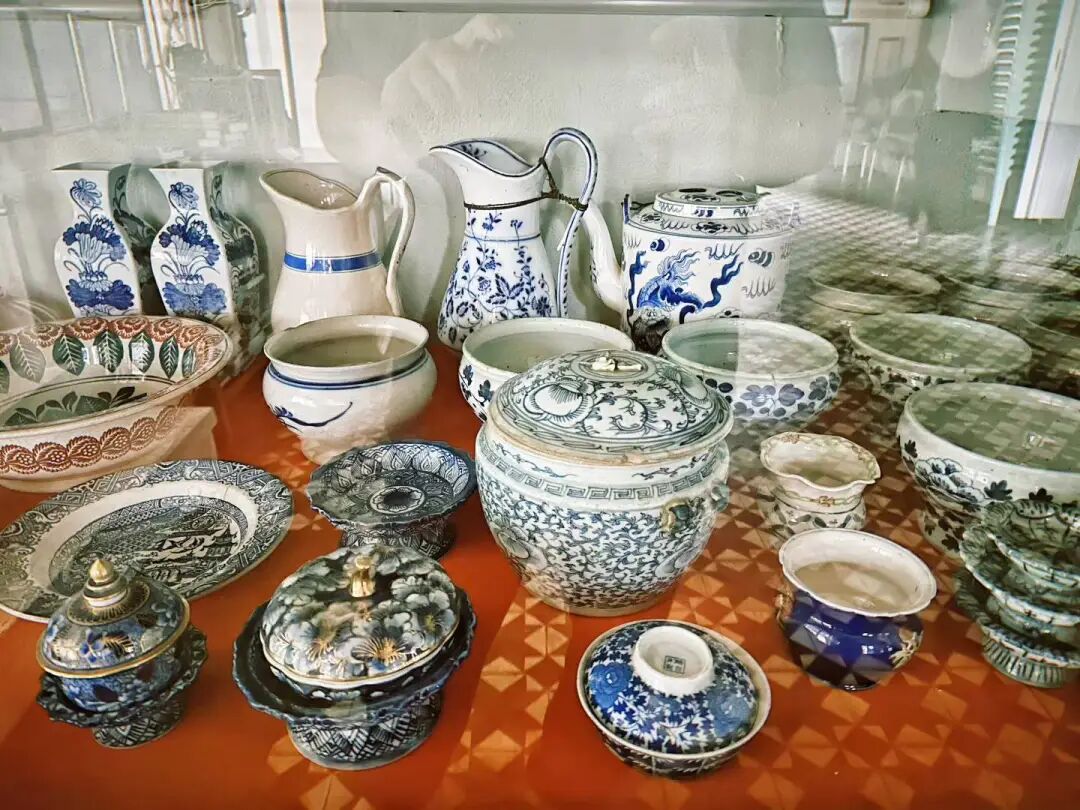
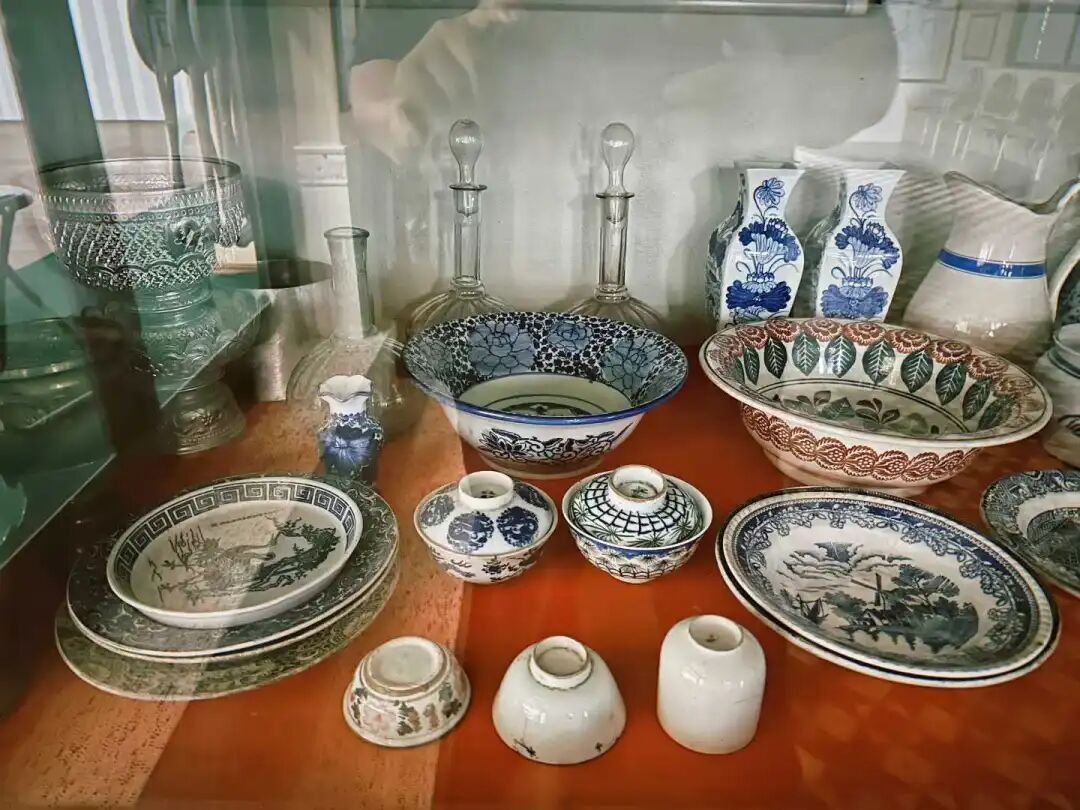
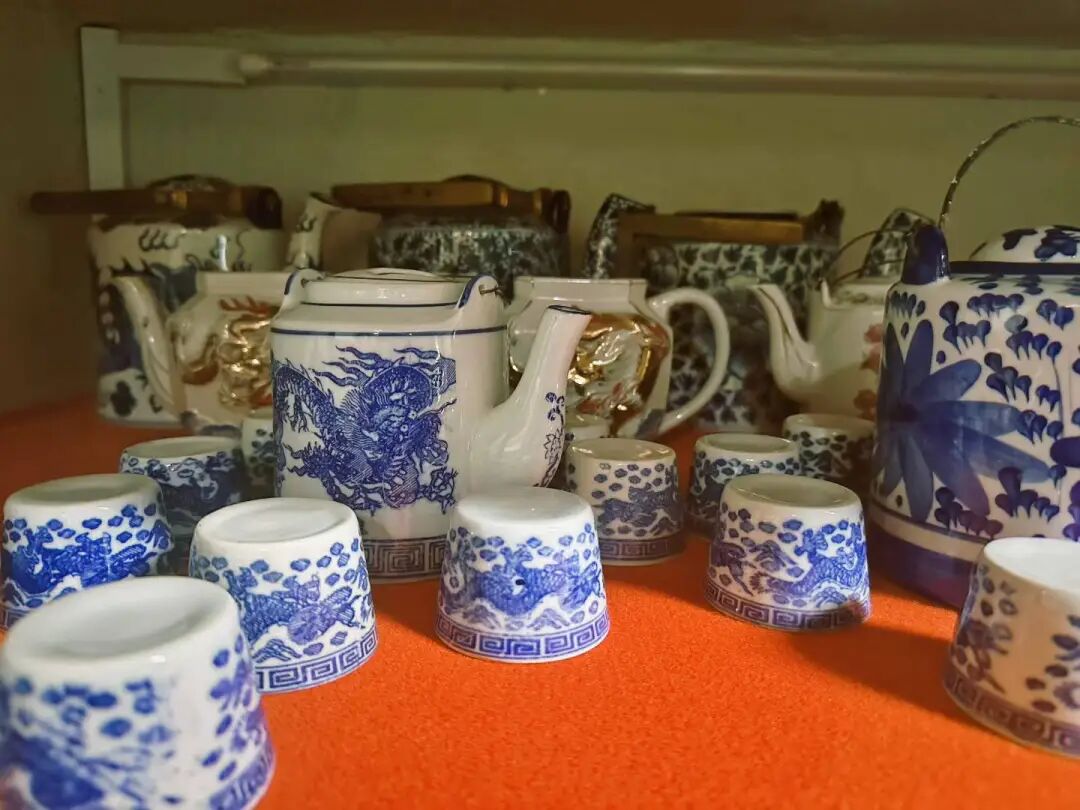
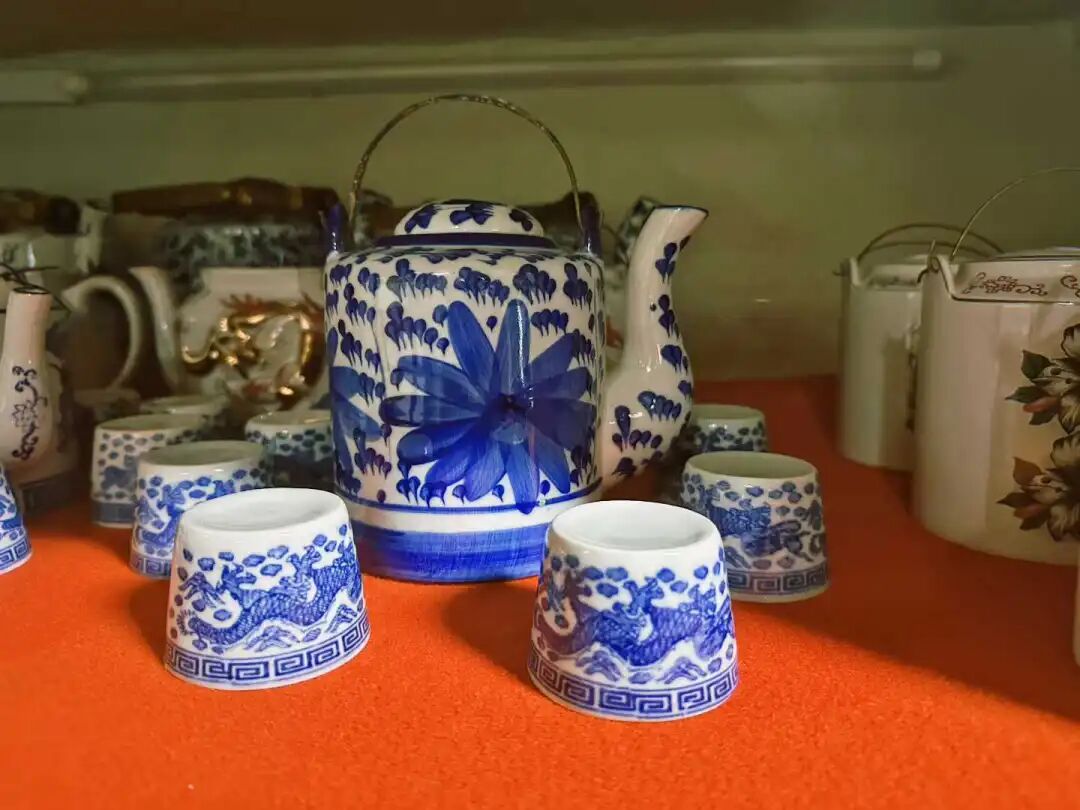
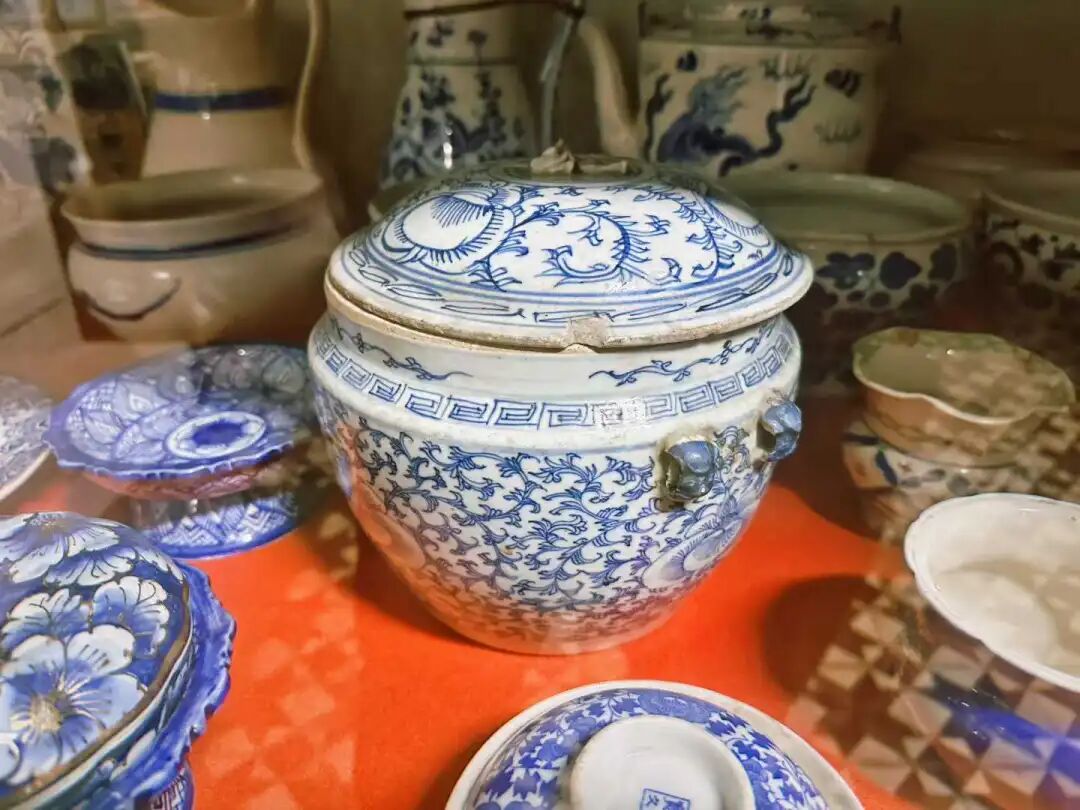
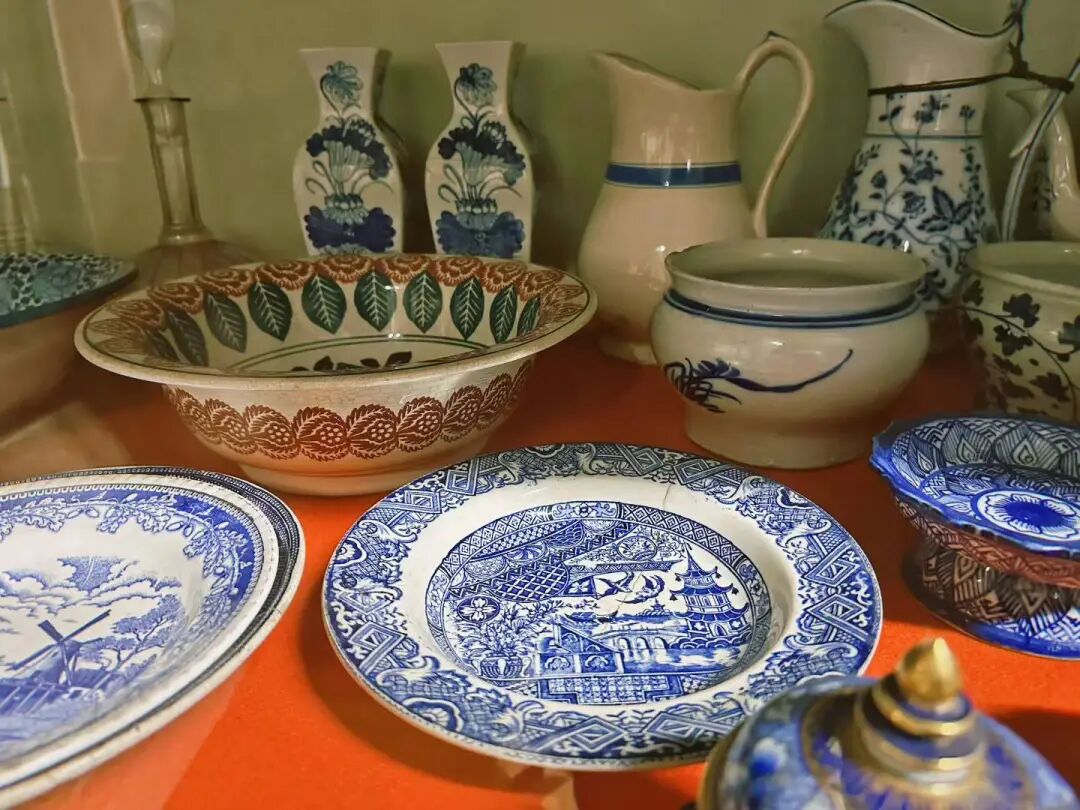
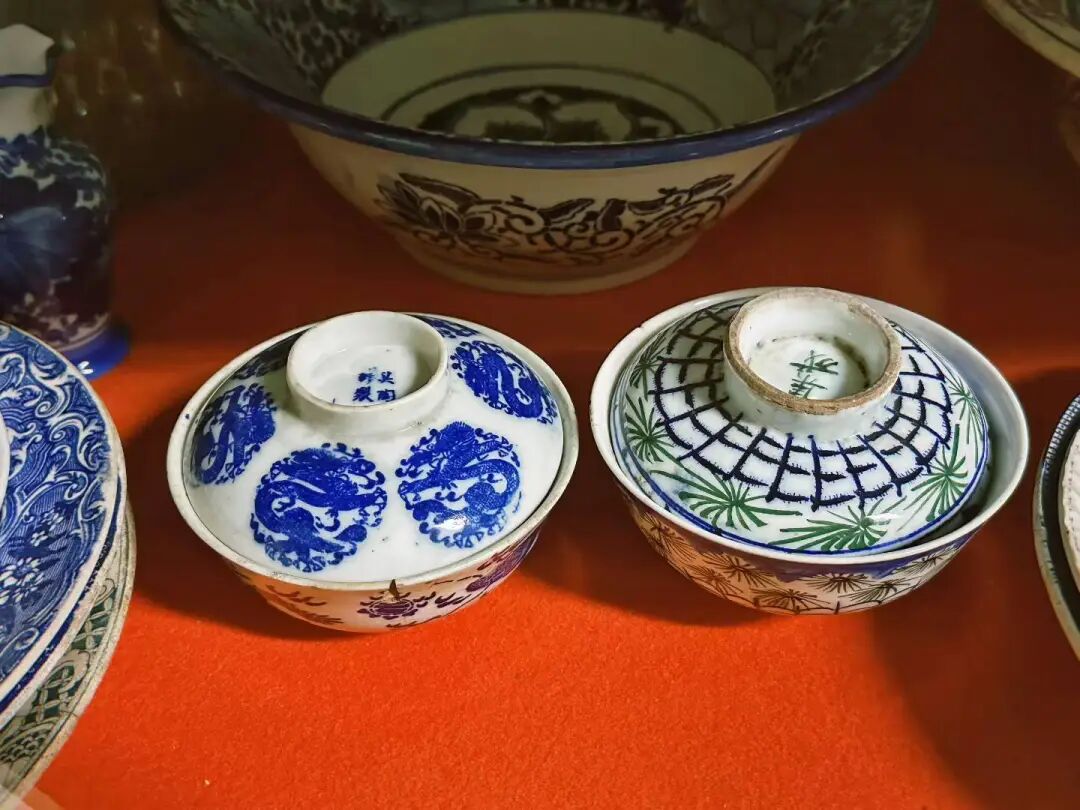
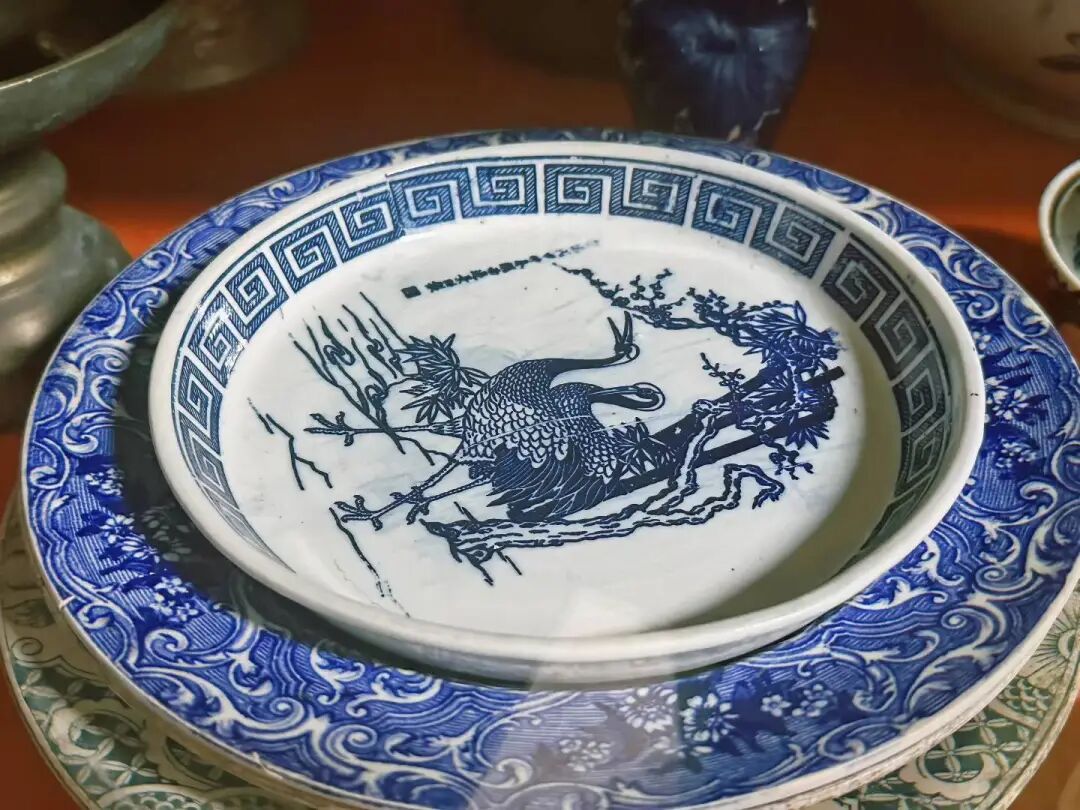
The Jami-Ul-Khoy-Riyah Mosque displays a collection of porcelain. Many mosques in Bangkok have porcelain display cabinets, which is an interesting tradition.
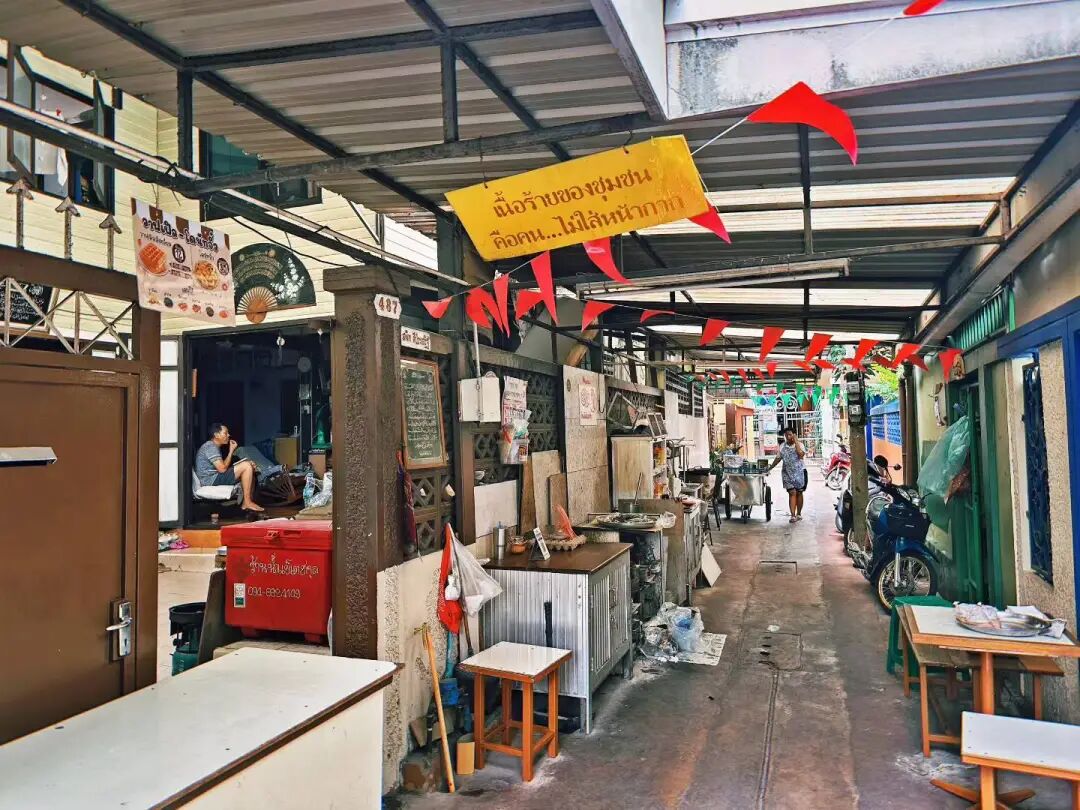
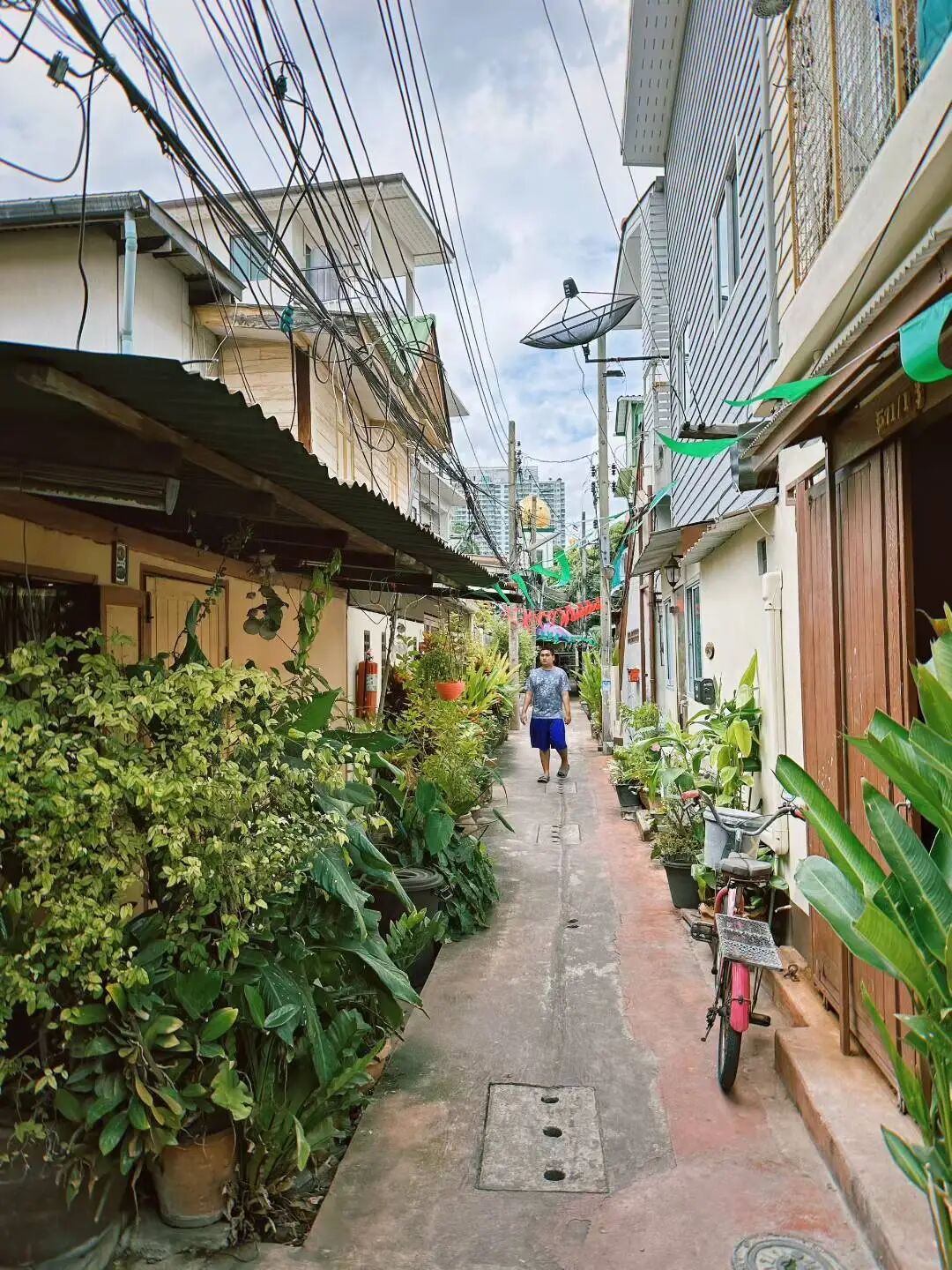
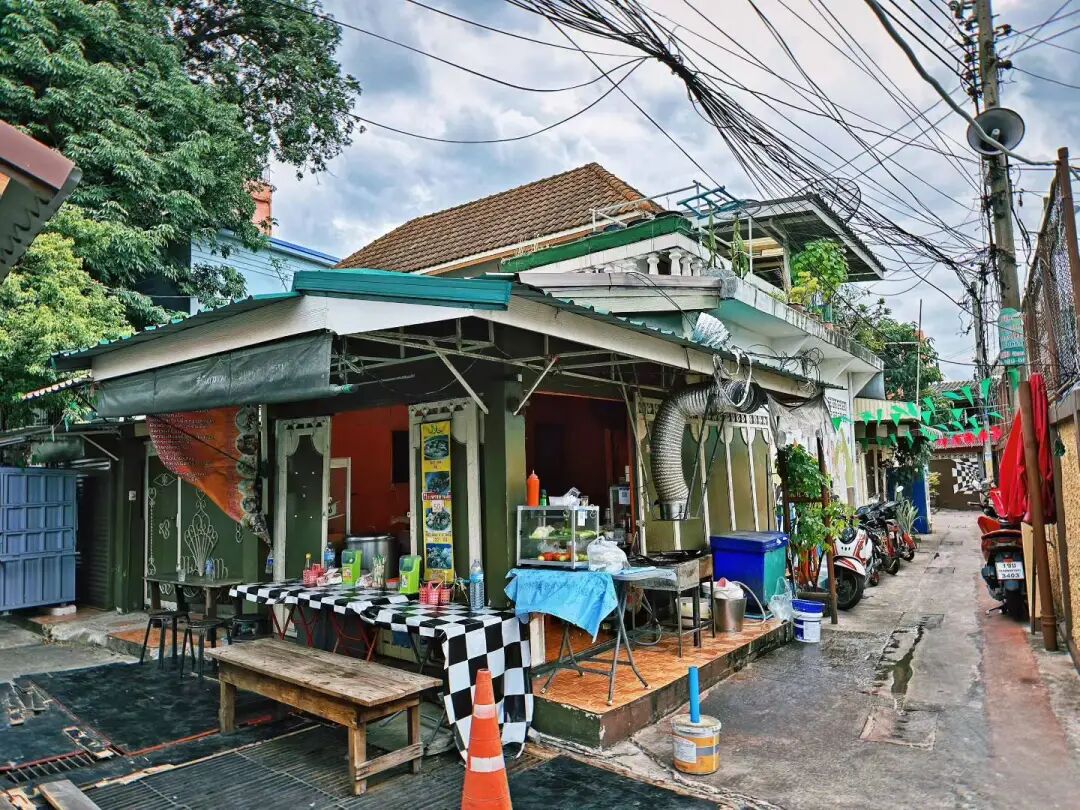
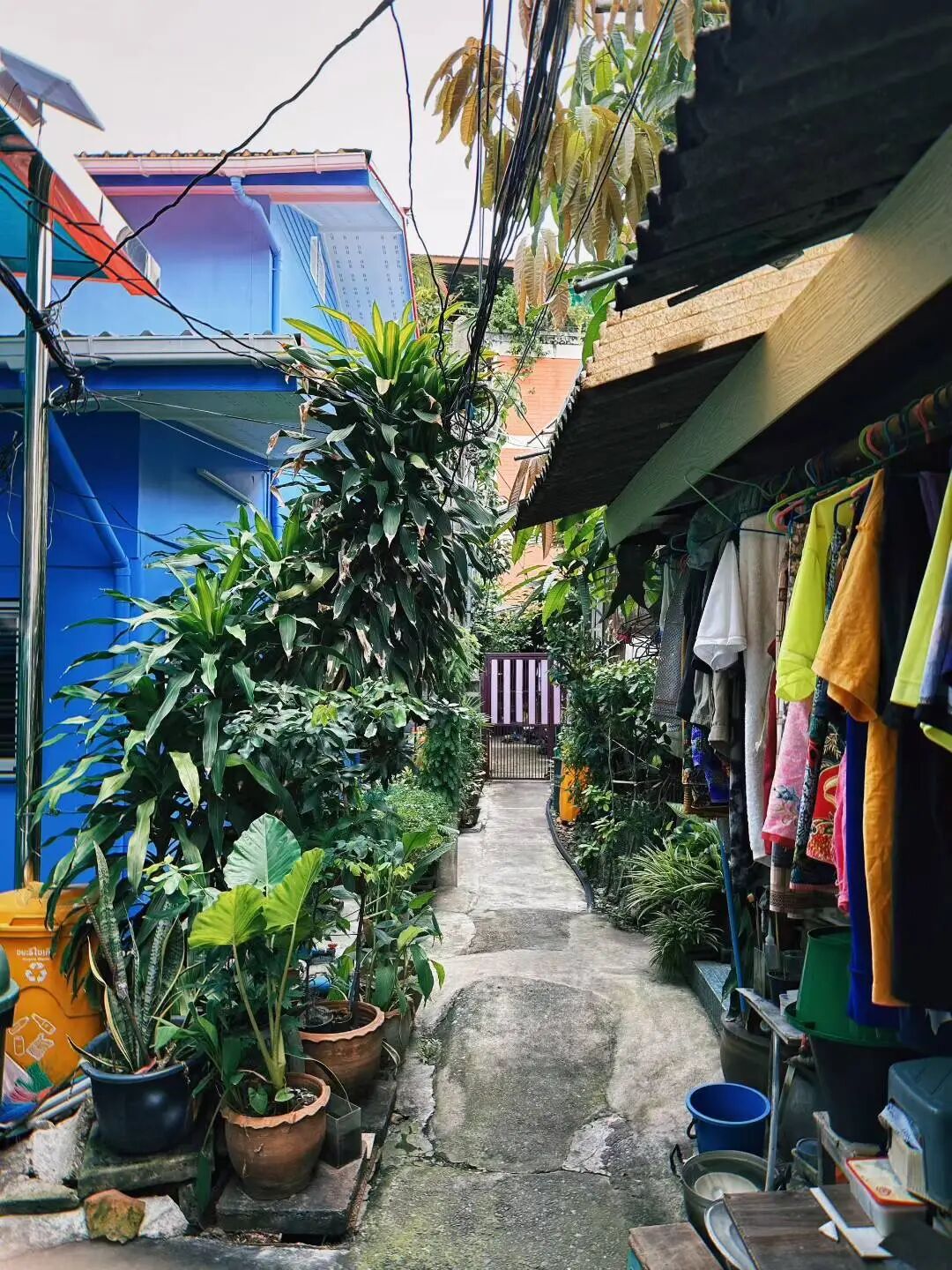
Street view of the Jami-Ul-Khoy-Riyah Mosque neighborhood. There are small family-run snack shops in the narrow alleys, though they are usually closed in the afternoon. There is a pavilion by the canal built during the reign of Rama III (1824-1851). During this period, Thailand was frequently at war with Laos, Cambodia, and Vietnam, and the Saen Saep Canal was the main artery for transporting supplies east from Bangkok. There used to be a pier in front of the pavilion where many supplies were loaded and unloaded. The wood used to build the Jami-Ul-Khoy-Riyah Mosque was also unloaded here.
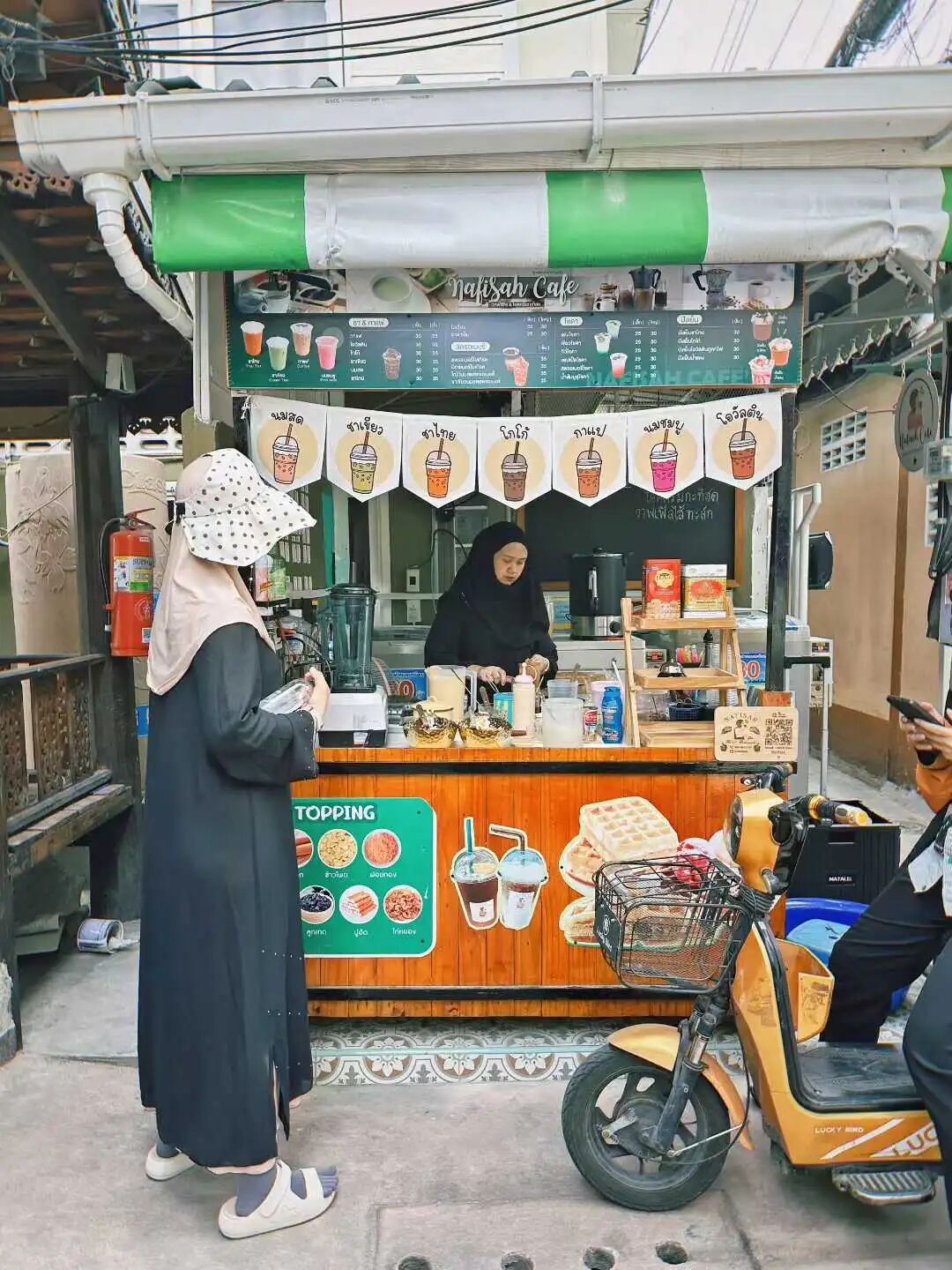
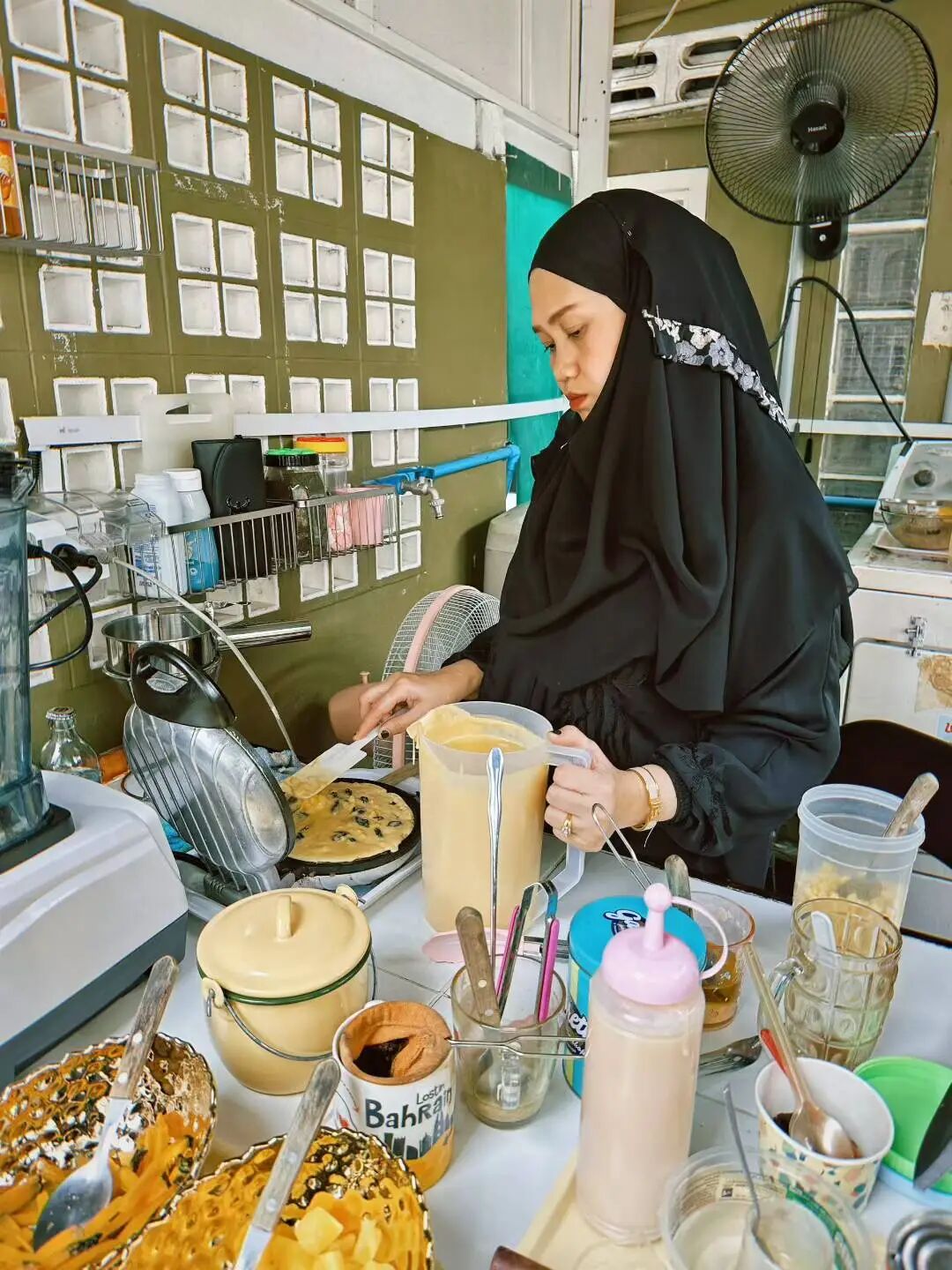
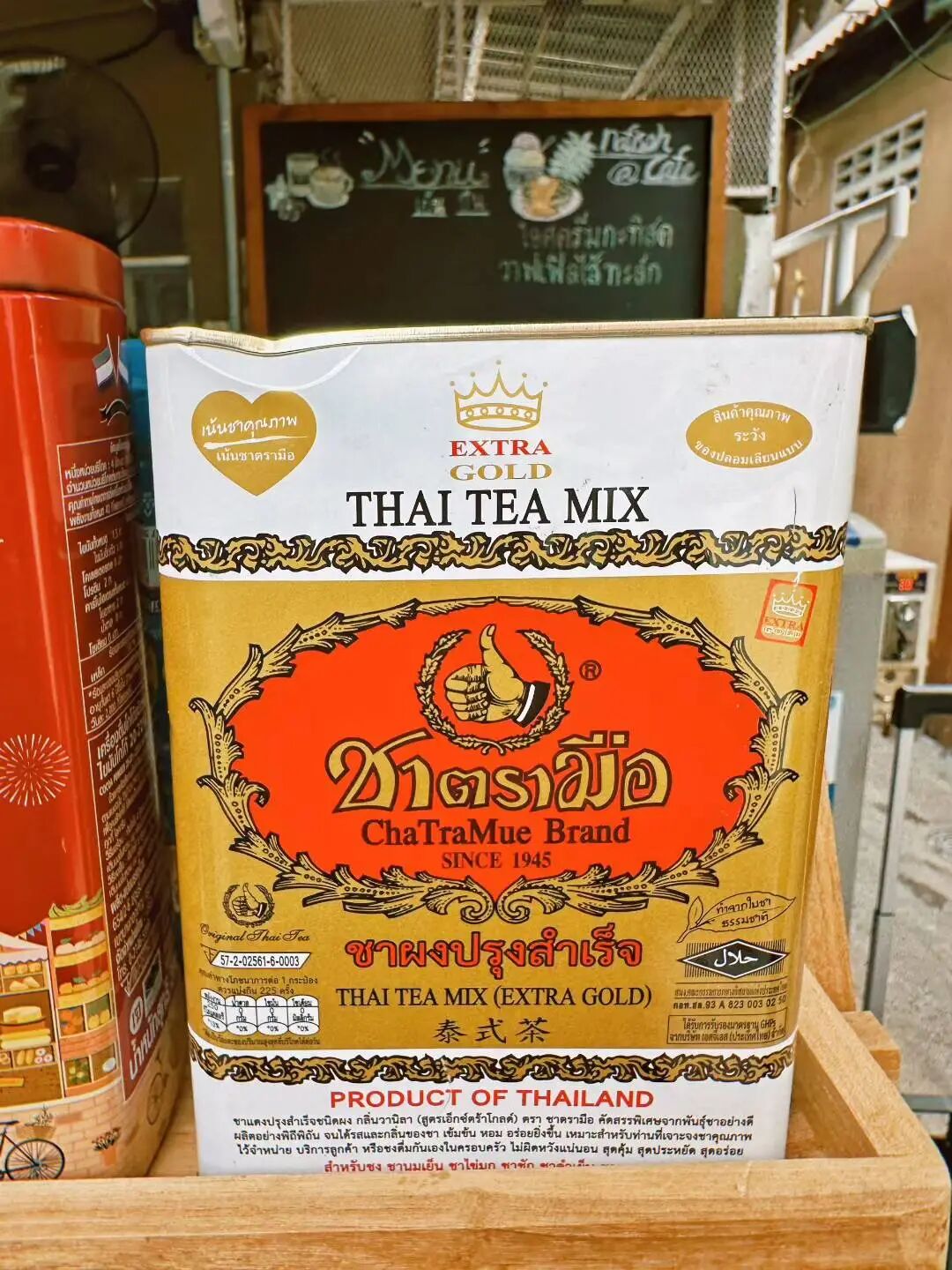
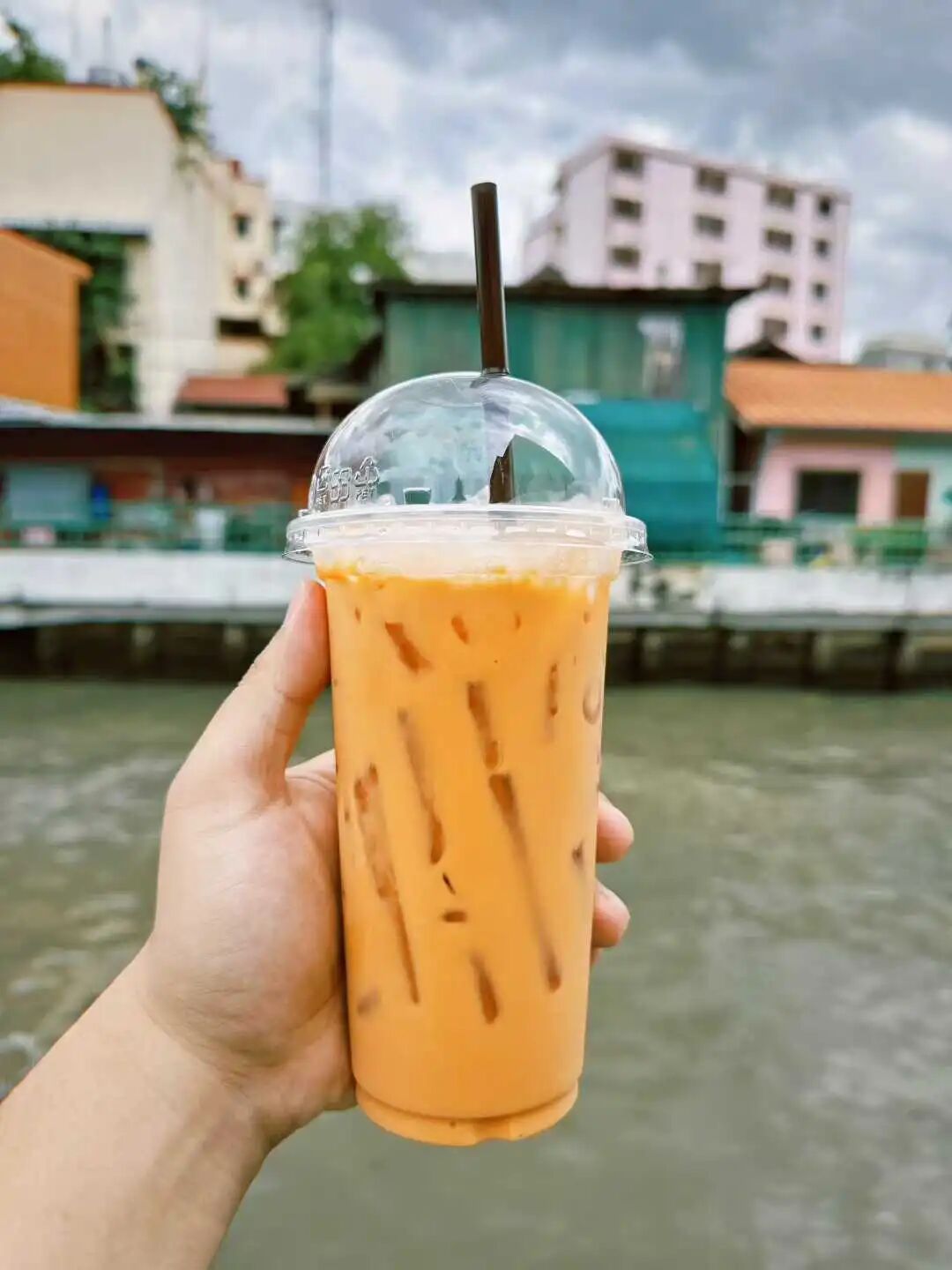
Today, it has become a place for people to cool off and chat. Next to the pavilion is a small shop selling cold drinks and waffles, where I bought a cup of authentic Thai red tea. Besides the Cham people, Malays from Pattani Province in southern Thailand also live in the Jami-Ul-Khoy-Riyah Mosque neighborhood. After 1786, Thailand invaded the southern Pattani Sultanate several times and captured a large number of Pattani Malays, some of whom were settled in the Jami-Ul-Khoy-Riyah Mosque neighborhood.
Cham community neighborhood—Zulugul Muttaqeen Mosque
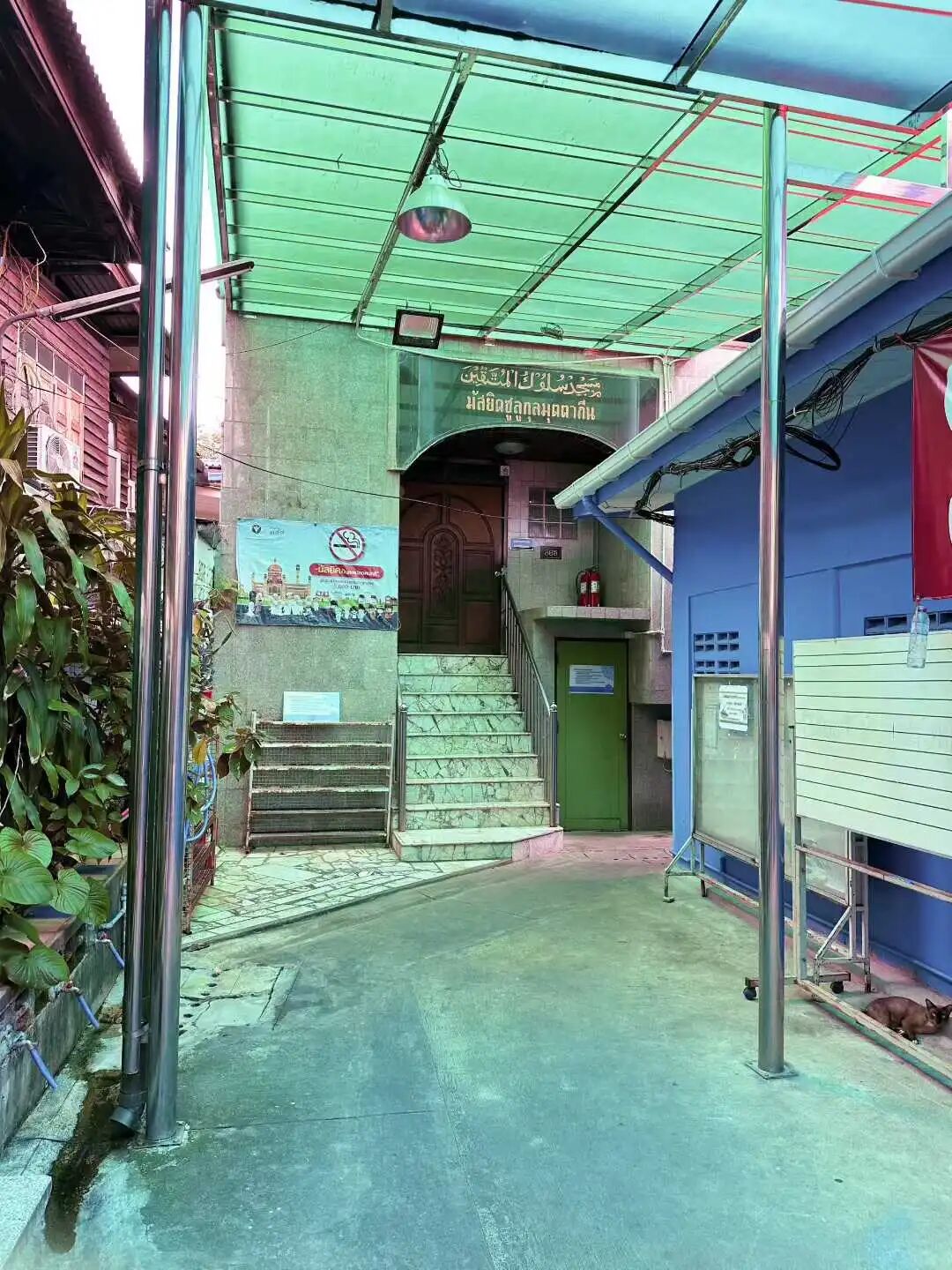
The Zulugul Muttaqeen Mosque is located just west of the Jami-Ul-Khoy-Riyah Mosque. It was built by Cham captives brought back from Cambodia by Thailand during the Siamese-Vietnamese War of 1841-1845.
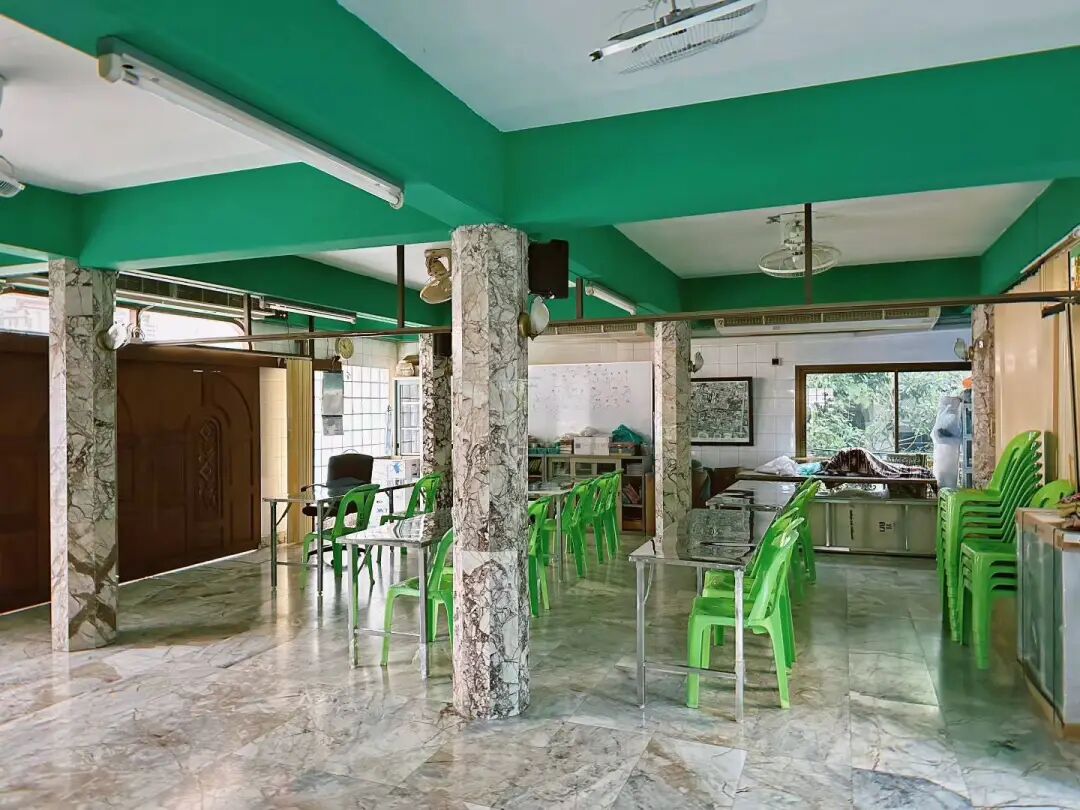
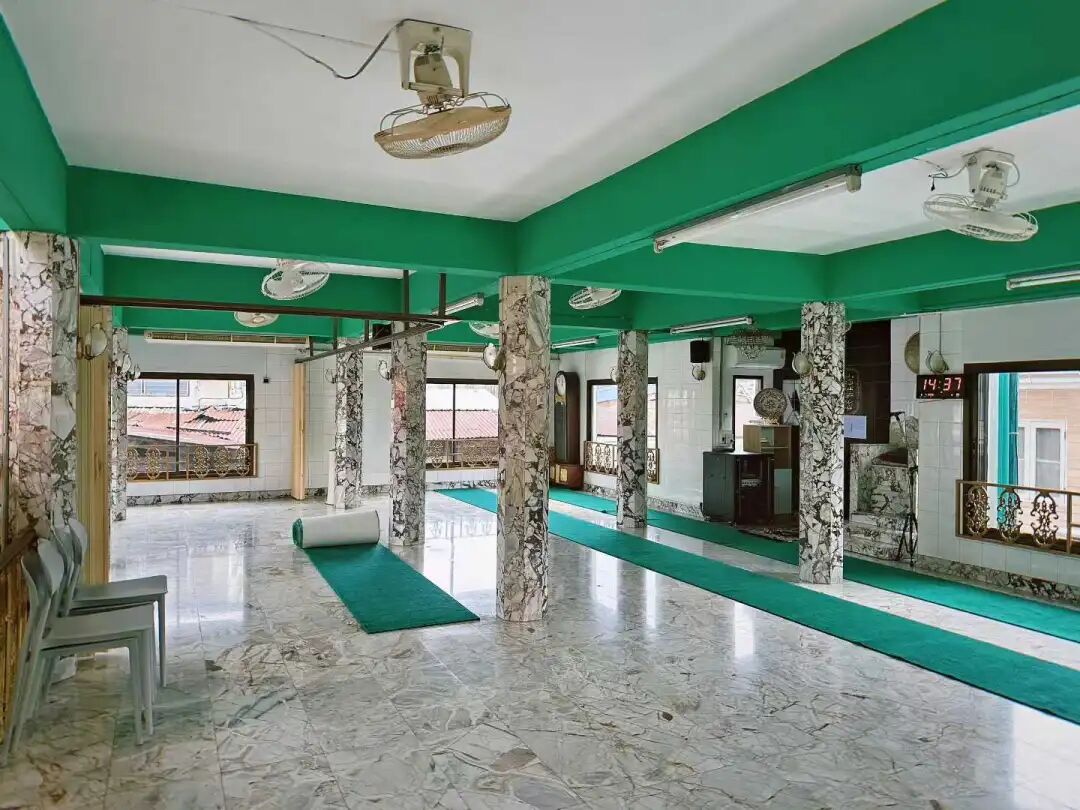
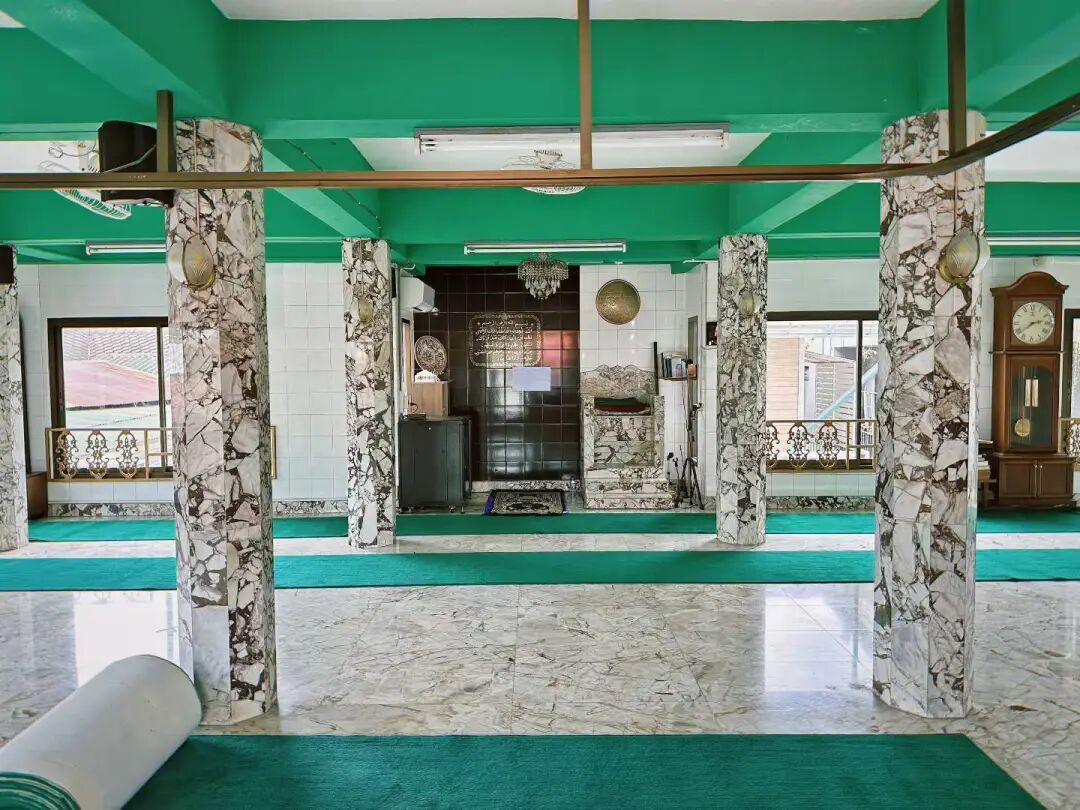
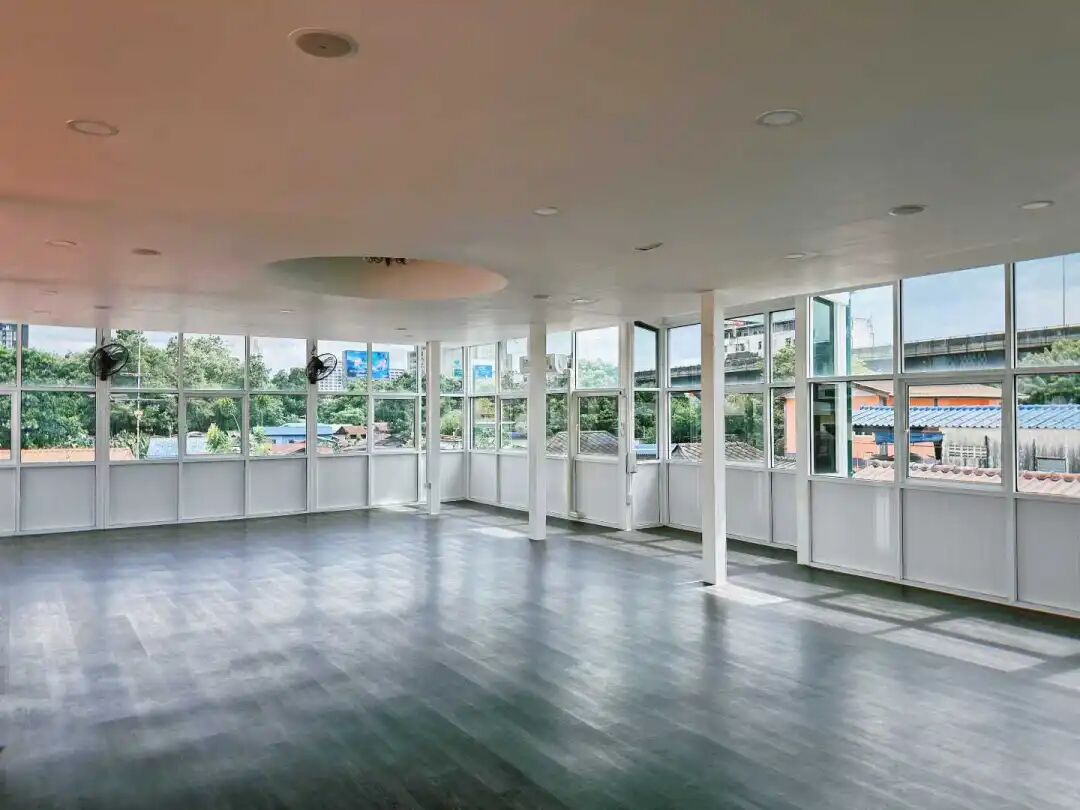
The mosque is clean and bright. The first floor is a classroom, the second floor is the main prayer hall, and the third-floor terrace offers a panoramic view of the neighborhood.
Cham community neighborhood—Darul Falah Mosque
The Darul Falah Mosque was also built by Cham captives brought back from Cambodia by Thailand during the Siamese-Vietnamese War of 1841-1845. Bangkok once had its most important Sufi shrine (gongbei), but it is hard to find any trace of it today.
In the early 20th century, Sheikh Hussein Bakri, a Sufi from the Shadhili order in the Hejaz region, lived at the Darul Falah mosque (masjid) in Bangkok. He married a local woman and they had two sons. Before Sheikh Hussein returned to his home country, he predicted that his youngest son, Ahmed Bakri, would pass away, so he told his wife to bury a piece of green cloth with him. Sure enough, his son died just a few days after he left. His wife did not follow his instructions to include the green cloth, so she later urgently asked everyone to open the grave to put it in, but when they opened the grave, Ahmed's body was already gone. The story of the Arab man and the green cloth spread quickly.
After the Saudis conquered the Hejaz region in 1925, they promoted Wahhabism there, forcing many Sufis in the Hejaz to flee. In 1929, Sheikh Hussein Bakri's other son, Sheikh Khalid Bakri, who was also in the Shadhili order, traveled by boat from the Hejaz to the Darul Falah mosque in Bangkok and built the Ahmed shrine (gongbei) inside the mosque. During World War II, when the U. S. military bombed Bangkok, people from all different groups took shelter near the shrine, believing it would keep them safe. The shrine was not moved outside the mosque until the Darul Falah mosque was renovated in the 1950s.
Starting from the Darul Falah mosque, the Shadhili order gradually grew in the eastern suburbs of Bangkok and expanded into central and southern Thailand, becoming an important Sufi order in the country. view all
Summary: Bangkok has several historic Cham Muslim mosque neighborhoods tied to river trade, military service, canals, and royal boat history. This account covers Ton Son Mosque, Bang Luang Mosque, the Royal Barges Museum area, Jami-Ul-Khoy-Riyah Mosque, Zulugul Muttaqeen Mosque, Darul Falah Mosque, and the photographs in their original order.
I traveled to Bangkok, Thailand, in 2023 and 2025, visiting 25 mosques (masjid) in the city that represent six ethnic groups: Persian, Arab, Indian, Malay, Indonesian, and Champa. Although these friends (dosti) from different ethnic backgrounds have lived in Thailand for over a hundred years and speak Thai in their daily lives, they still keep their unique history, culture, and traditions. I will now share six articles introducing the 25 mosques of these six ethnic groups in Bangkok.
First, I will introduce the five Champa mosques in Bangkok.
Champa (Champa) was a country established by the Cham people (Chams) in southern Vietnam. After the 15th century, the Malacca Sultanate became a powerful state in Southeast Asia, and Champa maintained close ties with it. Malay friends (dosti) integrated with the Cham people through trade and marriage, leading many Cham people to embrace the faith.
After Vietnam broke free from Mongol control in the 14th century, it began moving south to invade Champa. In 1471, the Champa capital of Vijaya (Vijaya) fell, and many members of the Champa royal family and civilians fled to Cambodia for refuge. These Cham people in Cambodia united with the Malays who had settled there earlier, forming a military alliance in the 16th century.
Cham mercenary troops (krom asa Cham) began working for Siam in the early 17th century. Because of their excellent shipbuilding skills and naval combat strength, they were highly praised by the Siamese royal family. These Cham warriors were granted the honor of serving as rowers for the royal barges during Siamese royal processions.
The first mosque in Bangkok: Ton Son Mosque.
In the 17th century, the Thonburi area of Bangkok was a transit port on the Chao Phraya River leading to the Siamese capital of Ayutthaya. At that time, important trade warehouses and customs stations were set up at the mouth of the Yai (Yai) canal, and Cham troops were stationed nearby. In 1688, the royal eunuch (Chao Phraya Ratchawangsanseni) Mahmud built the first mosque in Bangkok here. Because it was located by the Yai canal, it was called Kudi Yai.
The original mosque was built entirely of teak wood, with an architectural style similar to the main halls of Buddhist temples. It was rebuilt as a brick structure in the early 19th century and rebuilt again in 1952 into the current reinforced concrete building. Because the Siamese royal family gifted tropical pine trees (ton son) to the mosque in the 19th century, the mosque was renamed Ton Son Mosque.
The pulpit (minbar) at Ton Son Mosque has a strong Siamese Ayutthaya style, and the prayer niche (mihrab) was preserved from the old building and is very beautifully crafted.
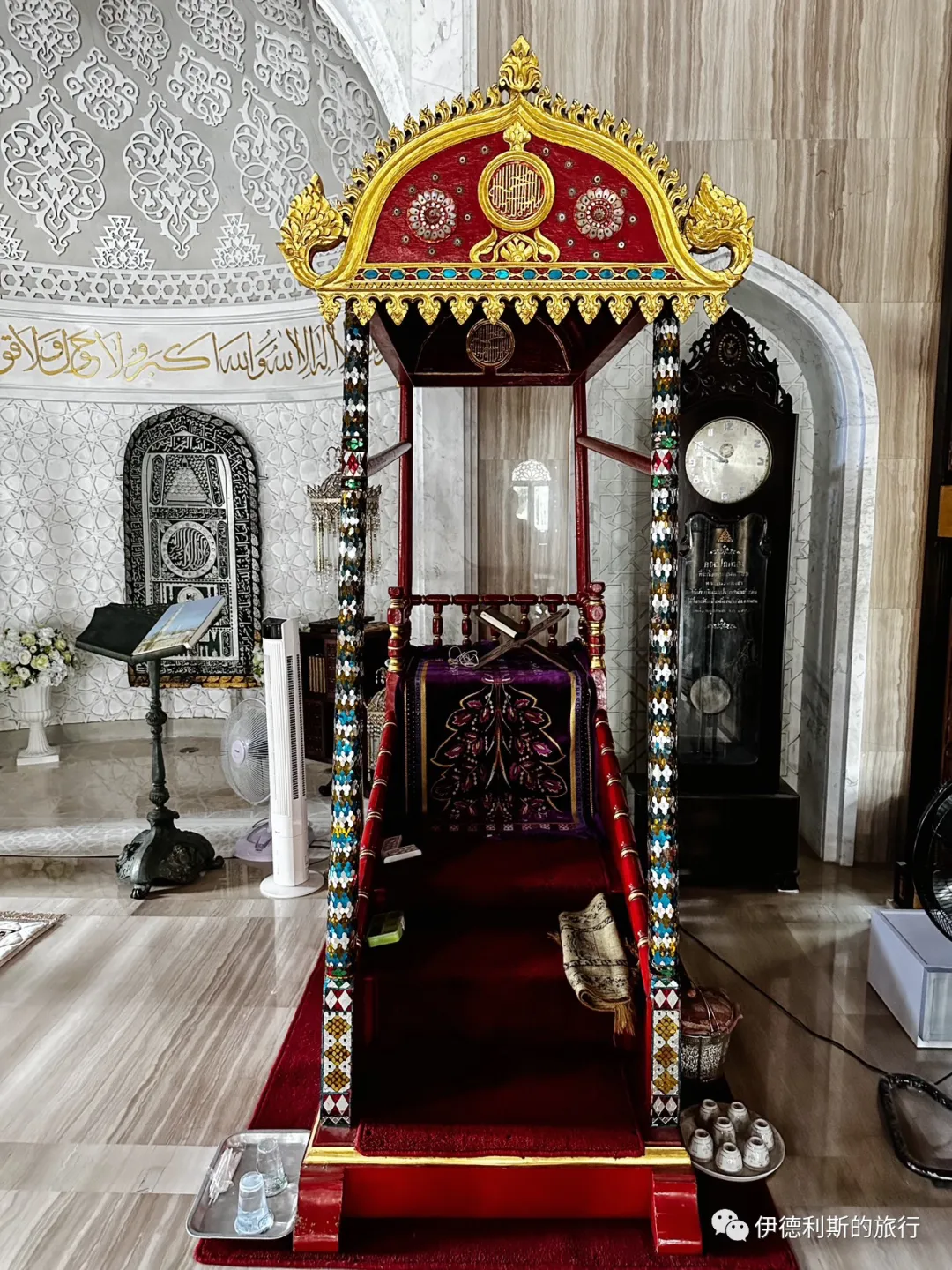
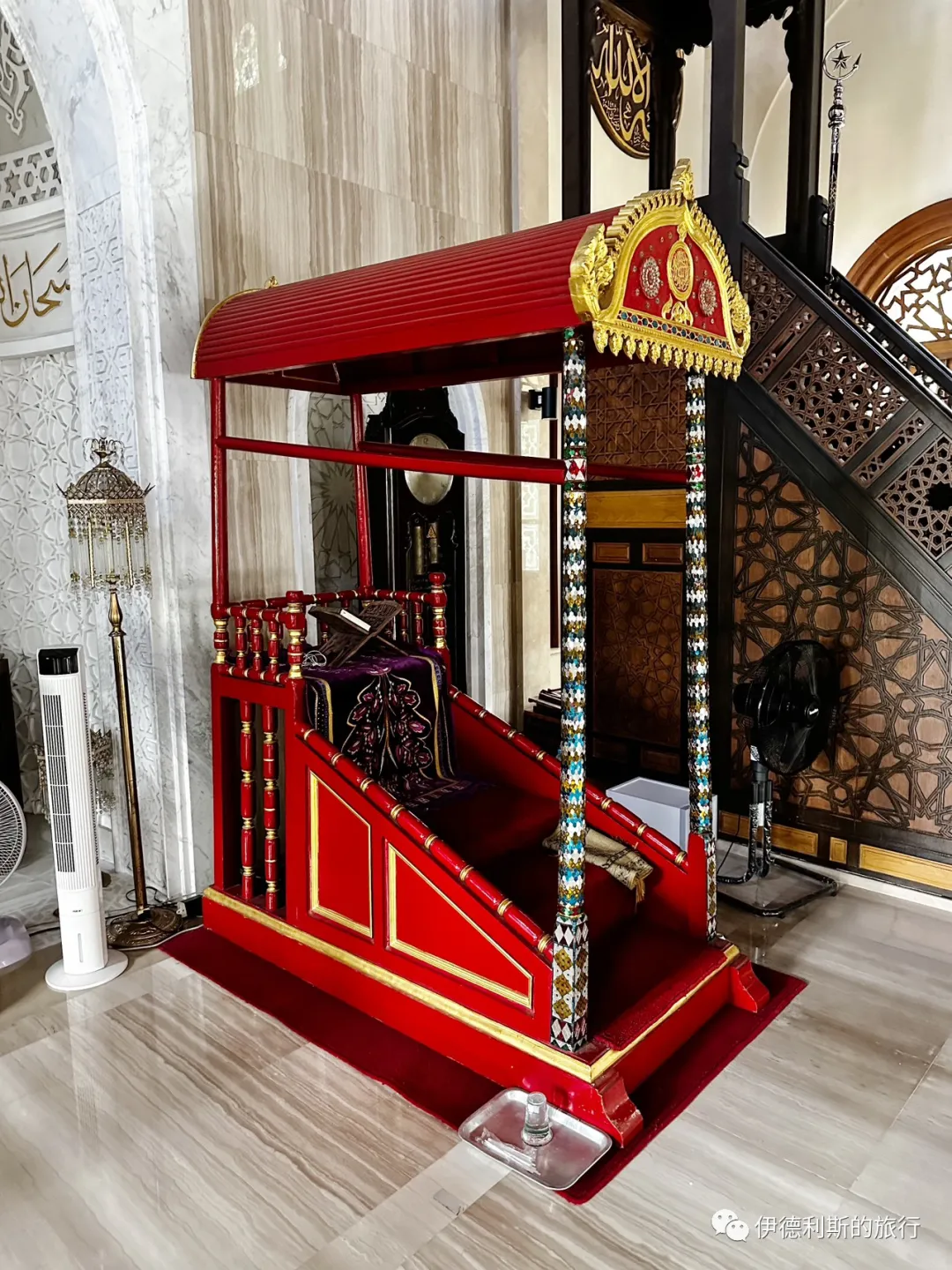
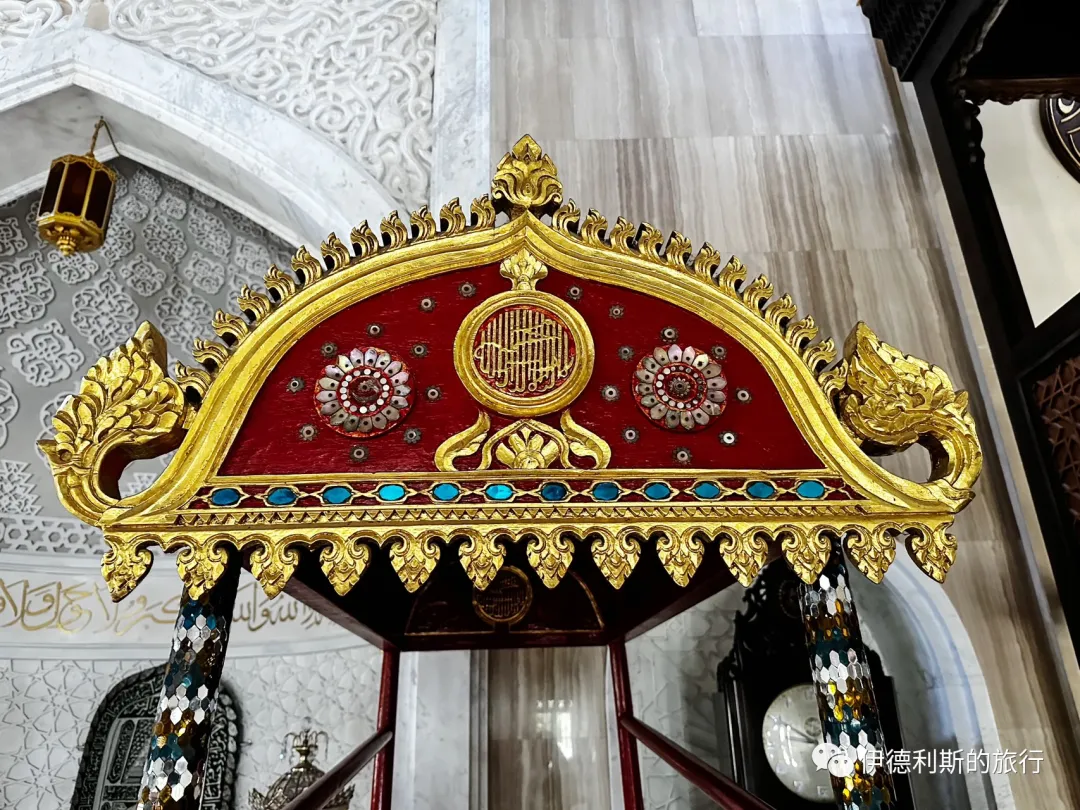
This is the area where the imam stands to lead the prayer (namaz), and it also has a very Thai style.
There is a depiction of Mecca (tianfang tu) in the center of the prayer niche (mihrab).
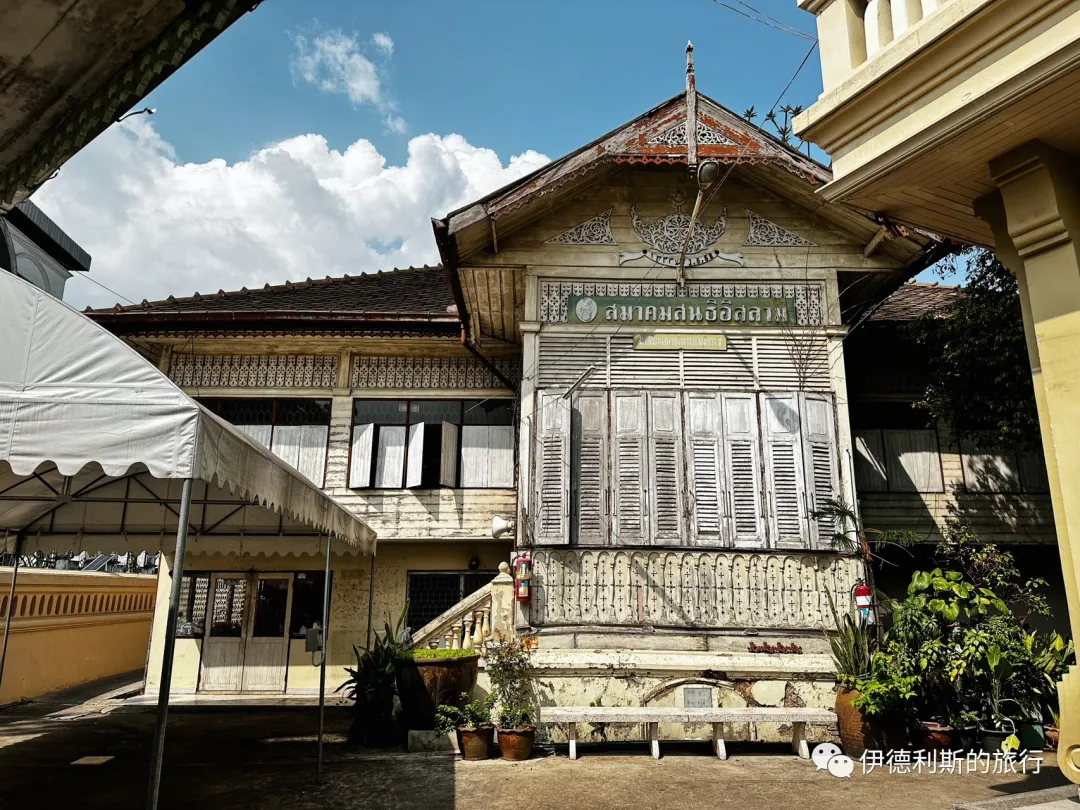
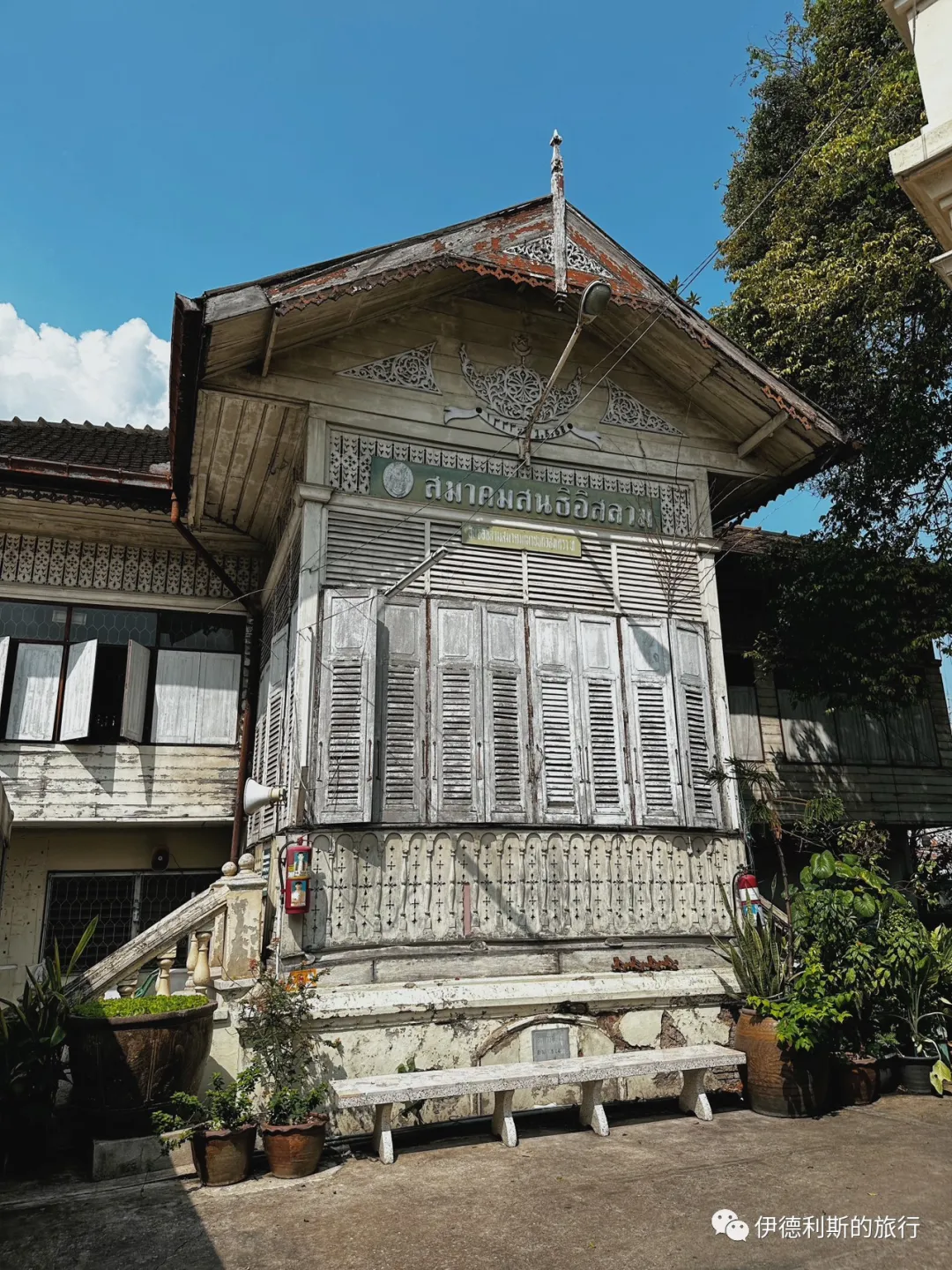
An old house in the mosque built in 1941.
The Yai canal at the entrance of the mosque.
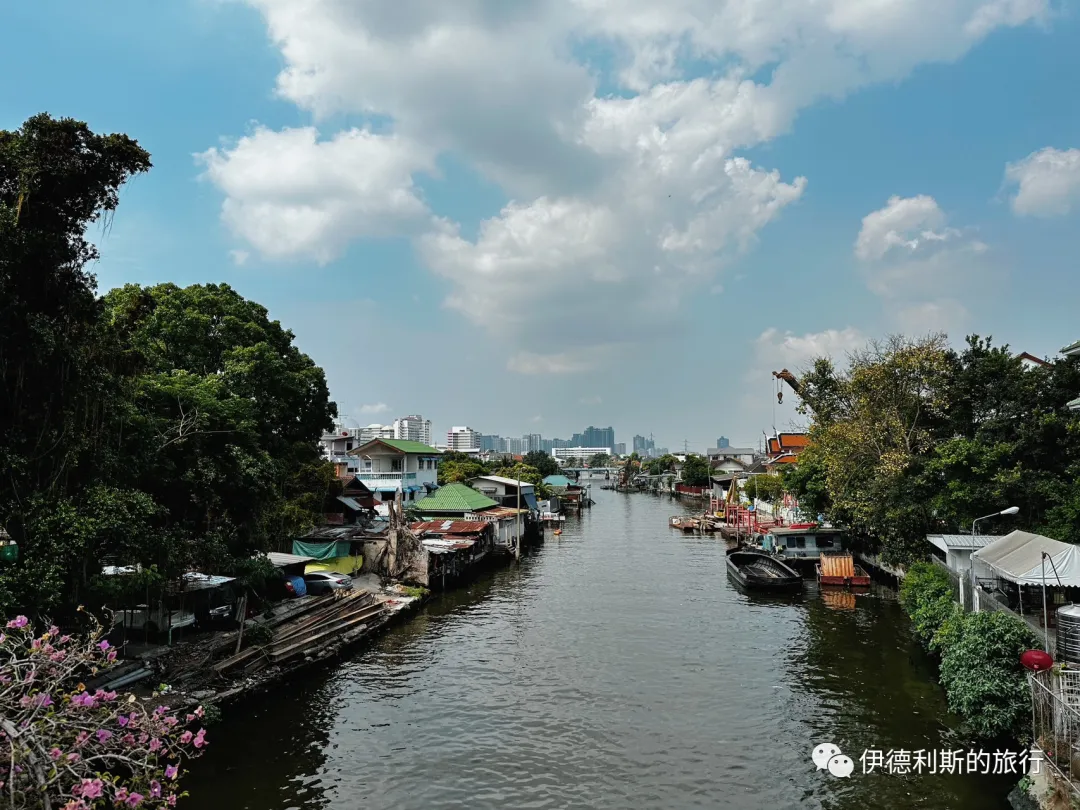
The mosque area is filled with rivers.
Bang Luang Mosque, the only Thai-style mosque in Bangkok.
In 1767, Burma invaded Siam, the capital Ayutthaya fell, and the Cham military camp at the mouth of the Yai River was destroyed. Soon after, Siam moved its capital to Thonburi. The Cham people who fled from Ayutthaya settled around Ton Son Mosque, formed a new Cham community, and continued to serve in the Siamese navy. In 1782, Siam officially moved its capital to Bangkok on the east bank of the Chao Phraya River. They built a royal shipyard and dock opposite the Cham community, and many Cham people became royal sailors and shipbuilders.
With the establishment of the royal shipyard and dock, some Cham people moved to live on the other side of the Yai Canal. People of Malay descent who moved from Ayutthaya and Trat Province in the southeast originally lived here, making a living by rowing boats on the canal to sell goods. Around 1785, a merchant named Toh Yi led the construction of a new mosque called Kudi Mai (New Mosque) or Bang Luang Mosque.
Bang Luang Mosque is the only surviving Thai-style mosque in Bangkok. It has Thai-style white stucco brick walls, and its decorative roof looks very similar to those on Thai temples. The main hall is surrounded by a corridor with 30 pillars, representing the 30 parts of the Quran. The mihrab inside the main hall is the most exquisite part, featuring a purely Thai decorative style, including the Chofa decorative element found on Thai palace architecture. This shape is adapted from the Garuda in Hinduism and Buddhism, but it was redesigned to fit Islamic traditions.
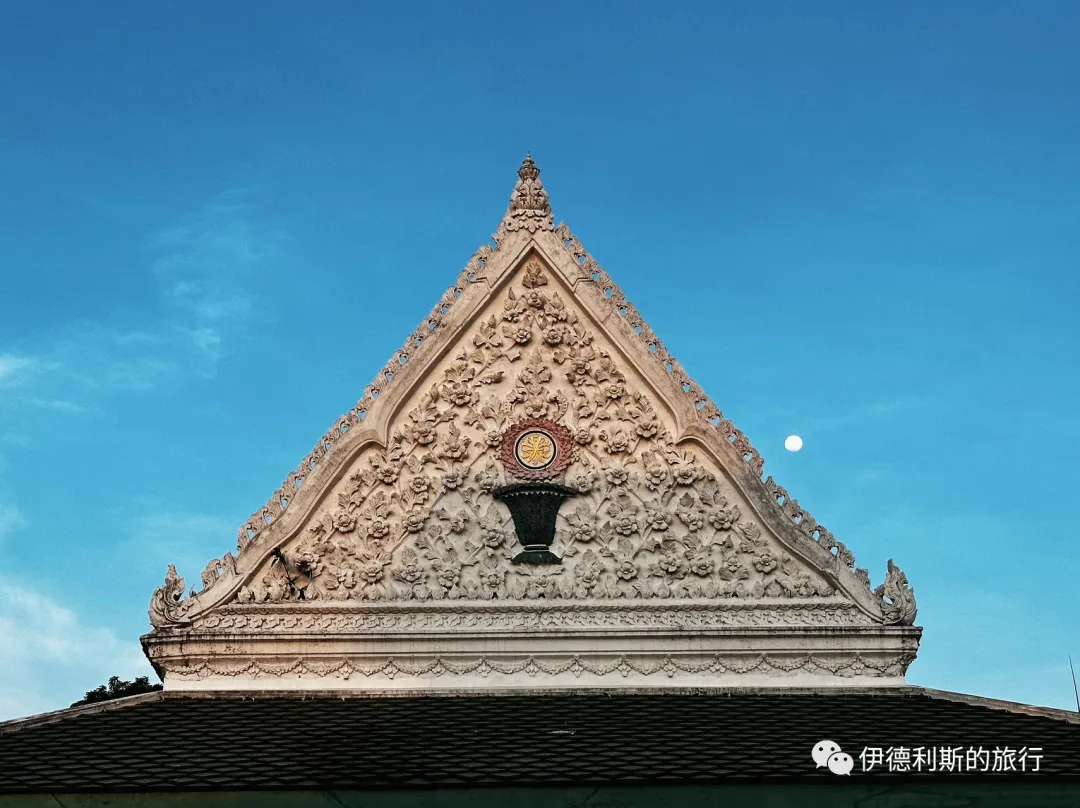
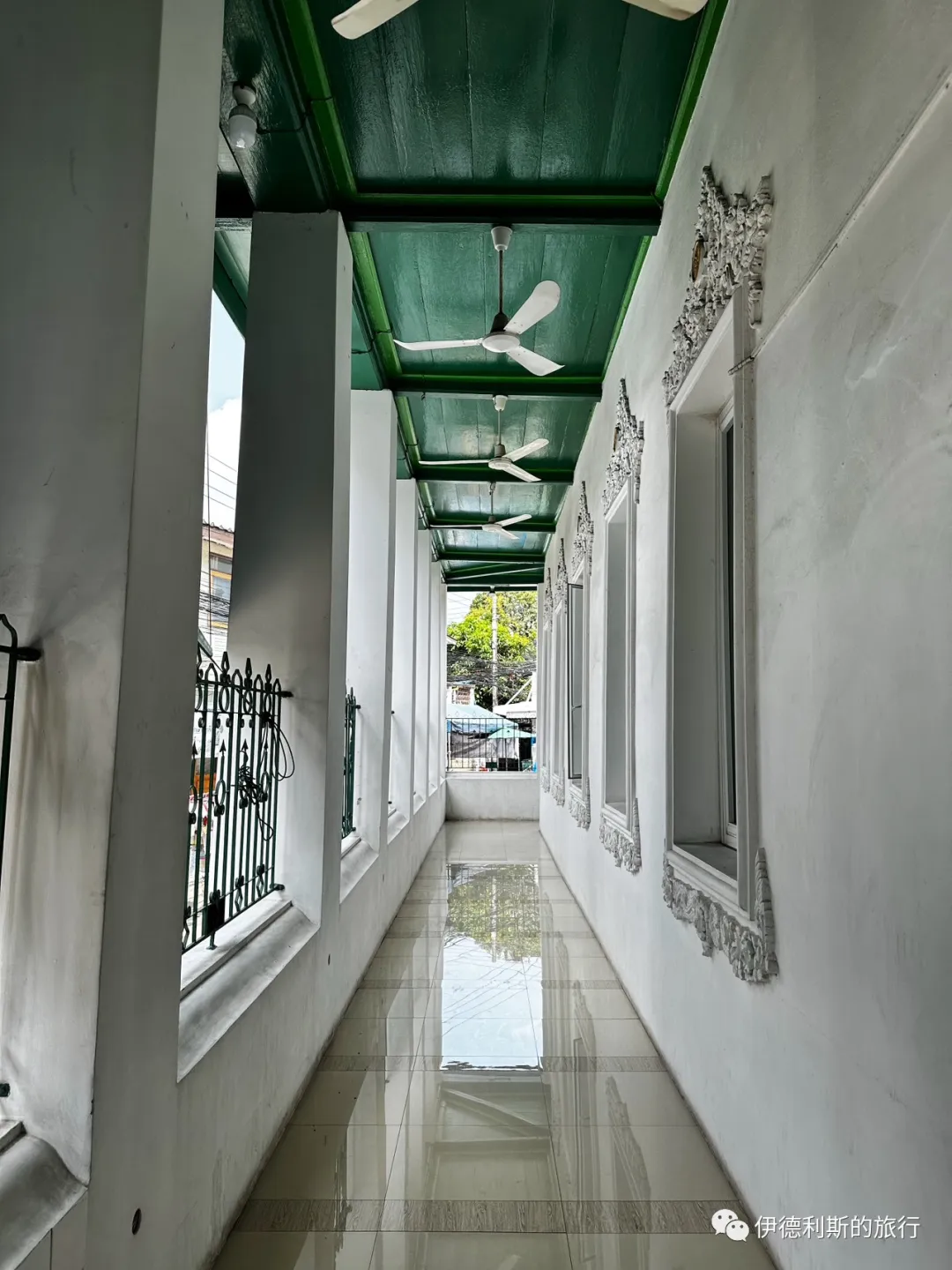
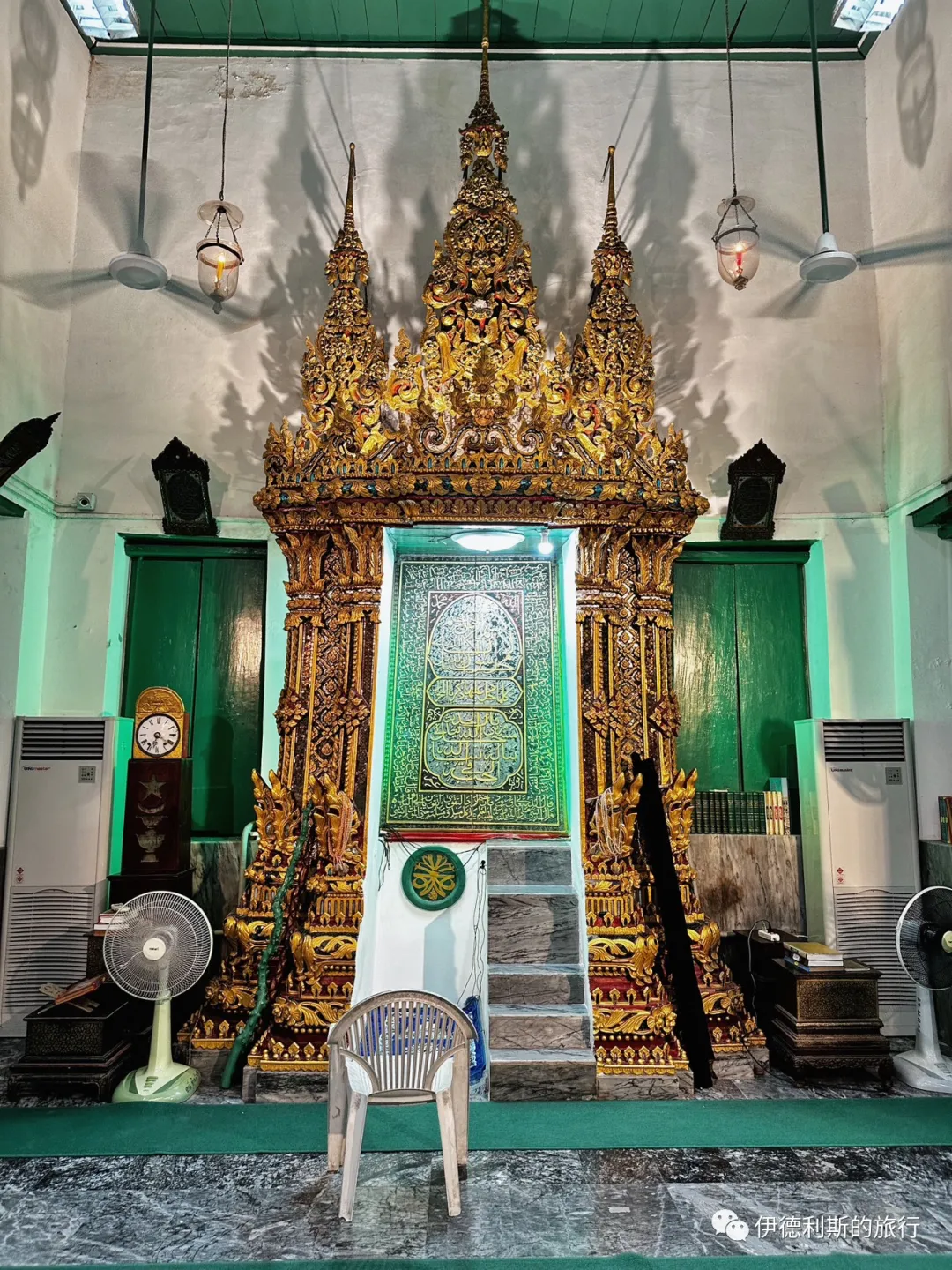
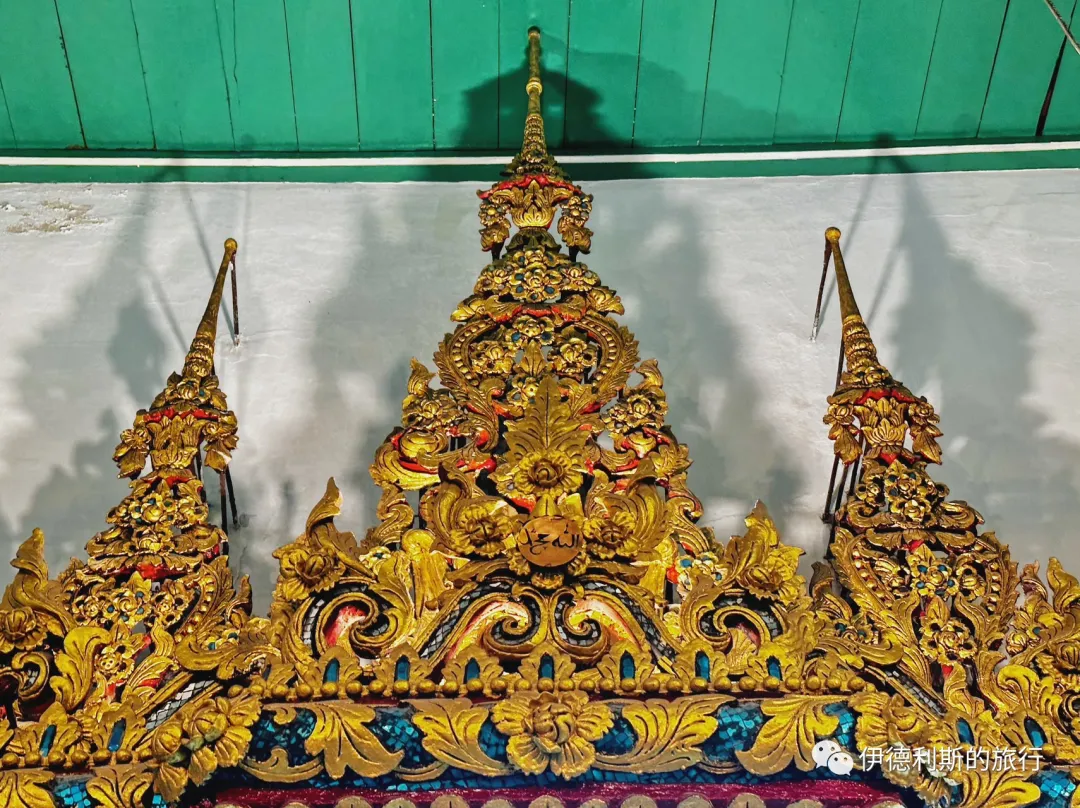
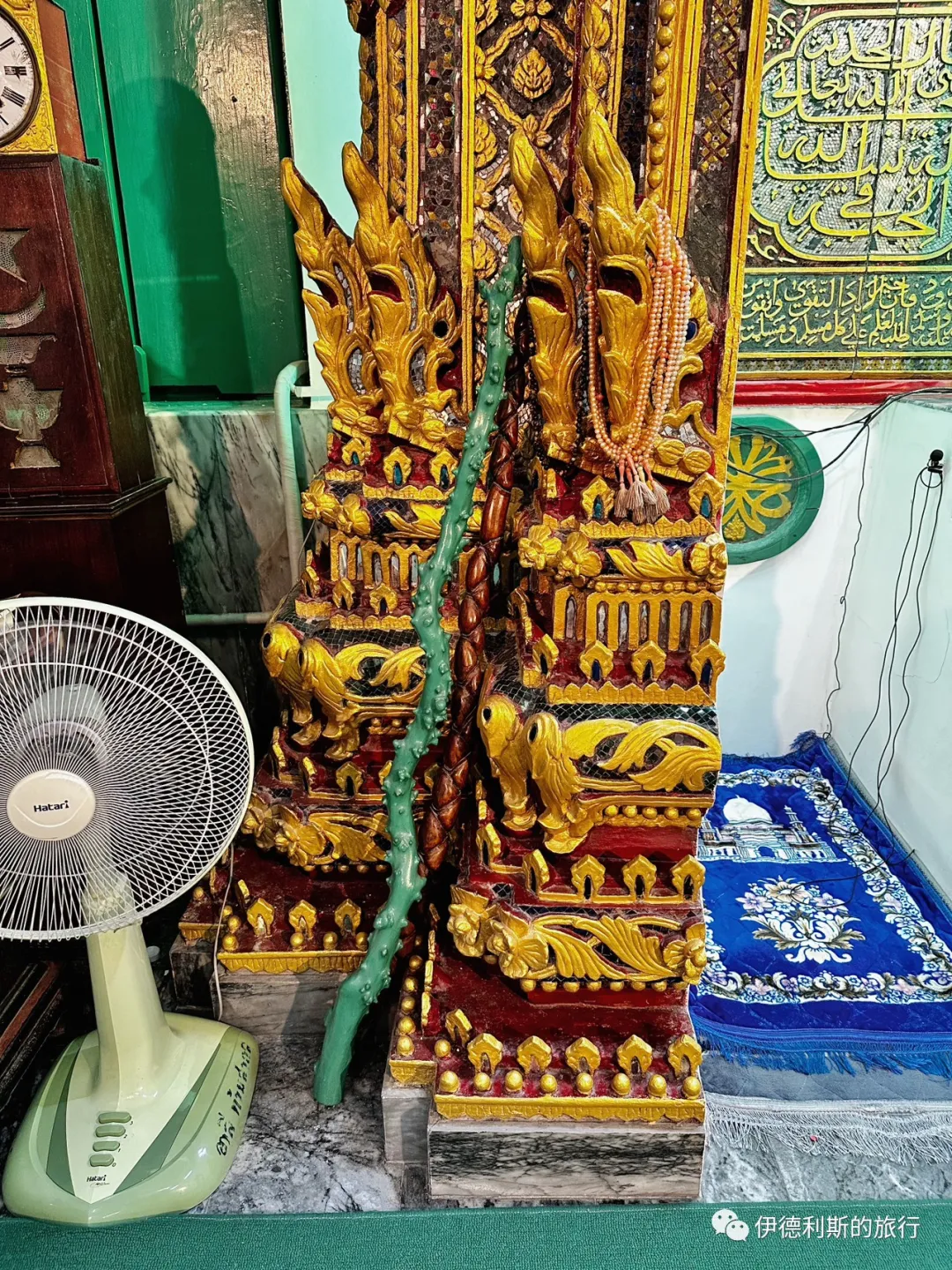
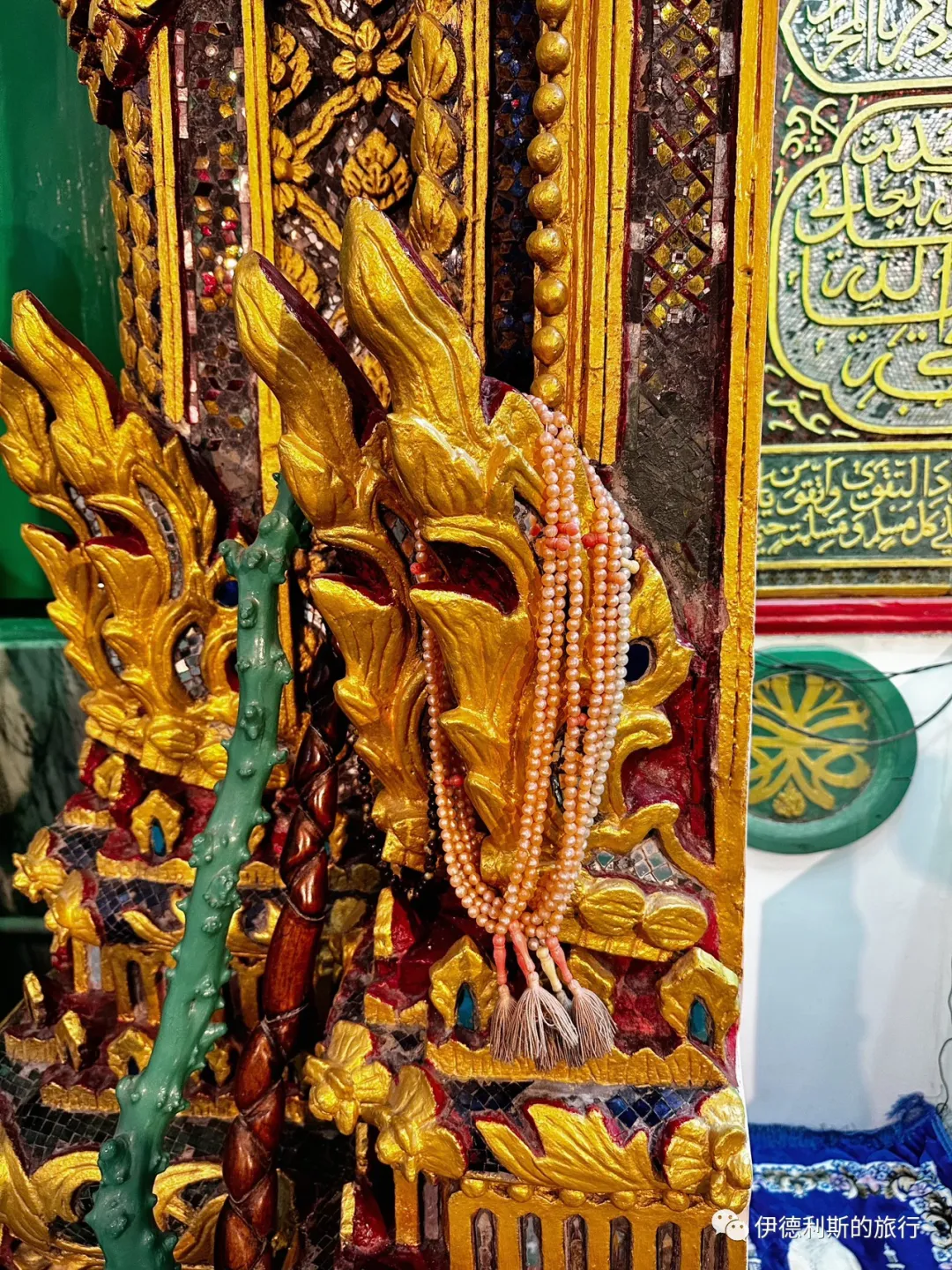
The atmosphere at Bang Luang Mosque during namaz is very special. Every elder who arrives shakes hands with everyone, and an elder even gave me a drink. You can see everyone wearing a sarong (sarong) tube skirt, which means 'to cover' in Malay. This outfit is perfect for the humid and hot climate of Southeast Asia.
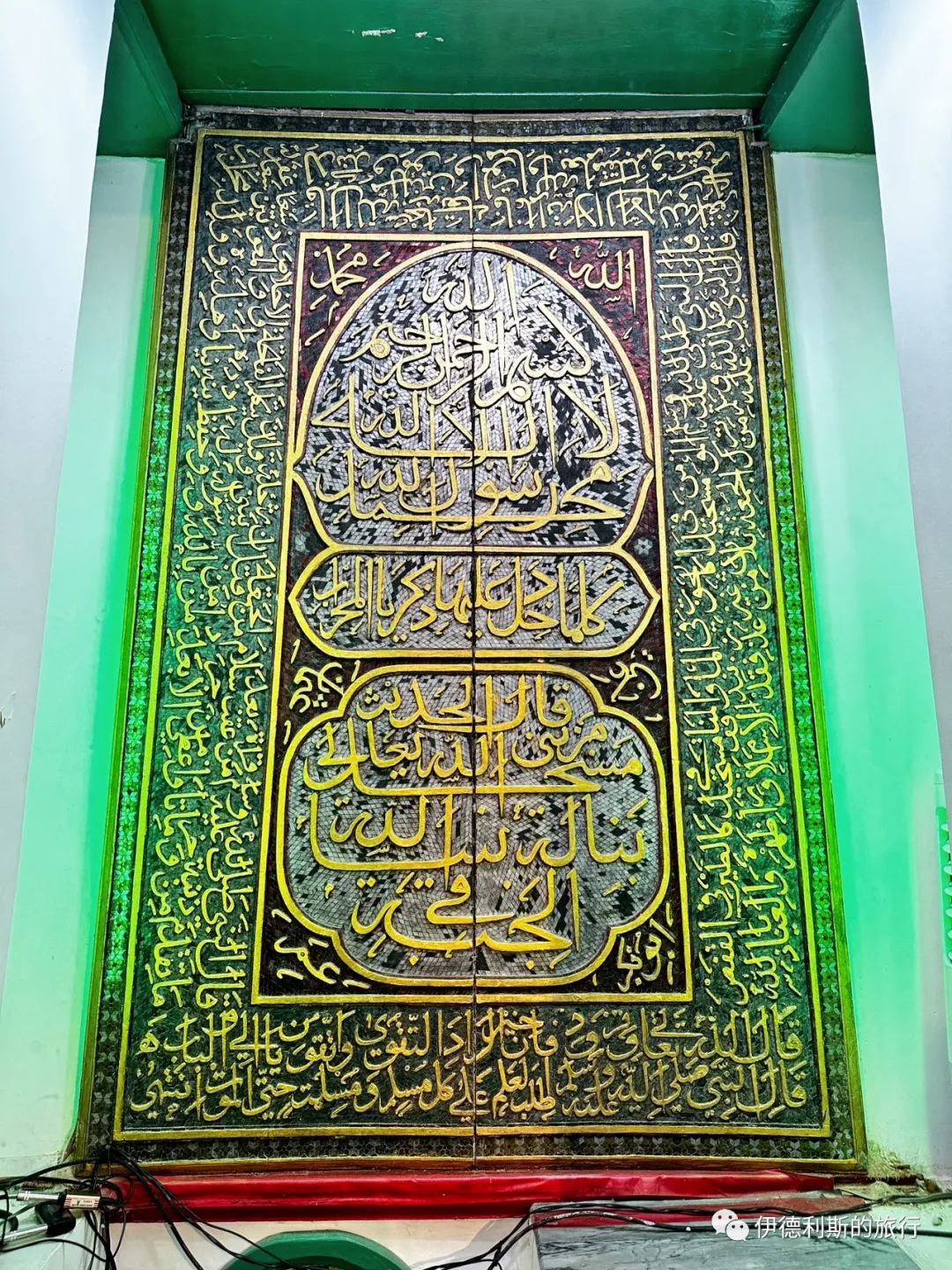
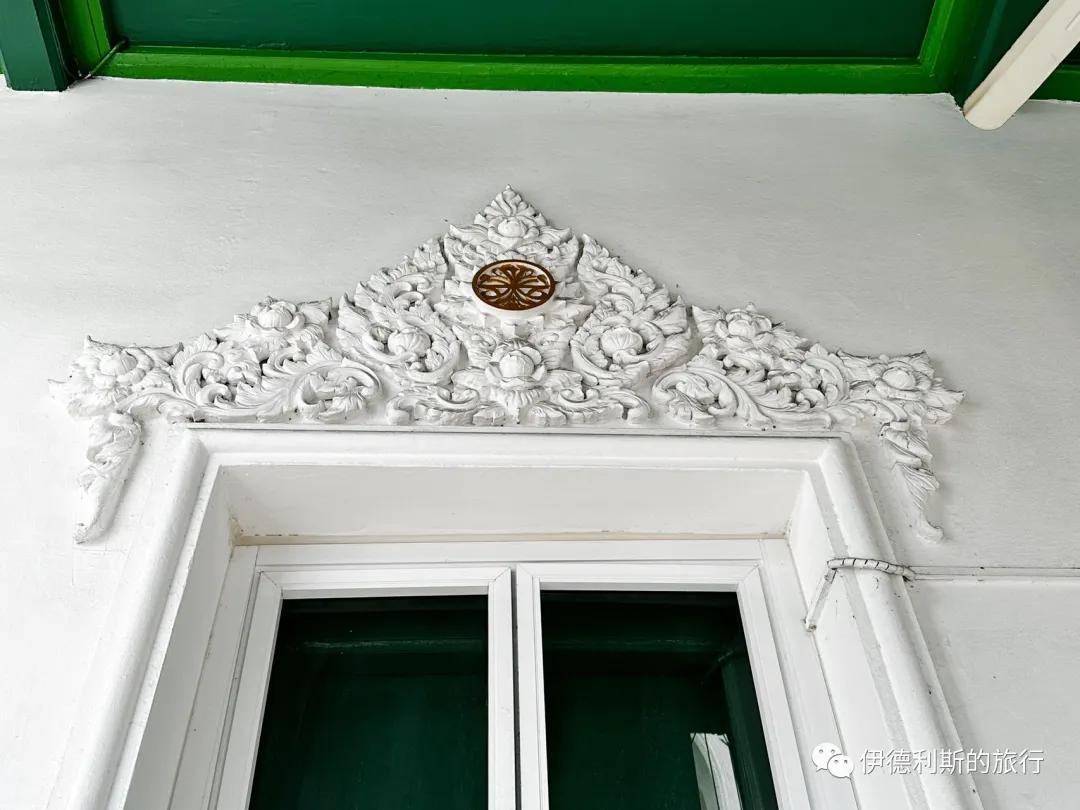
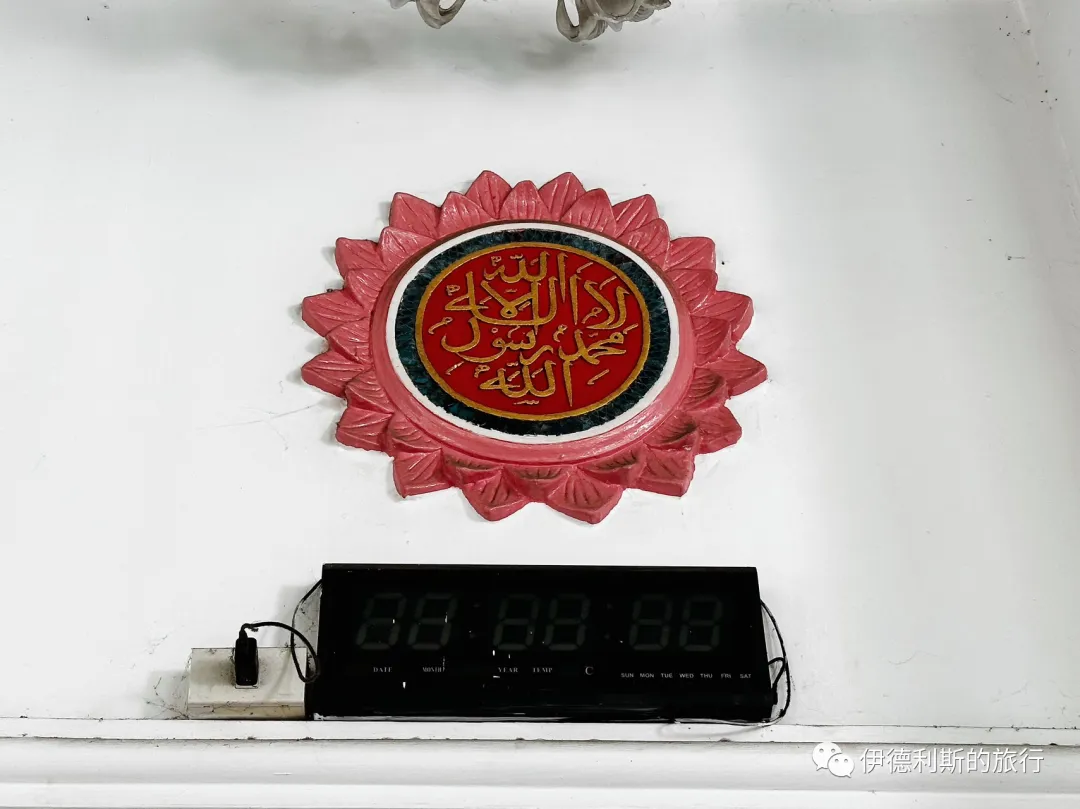
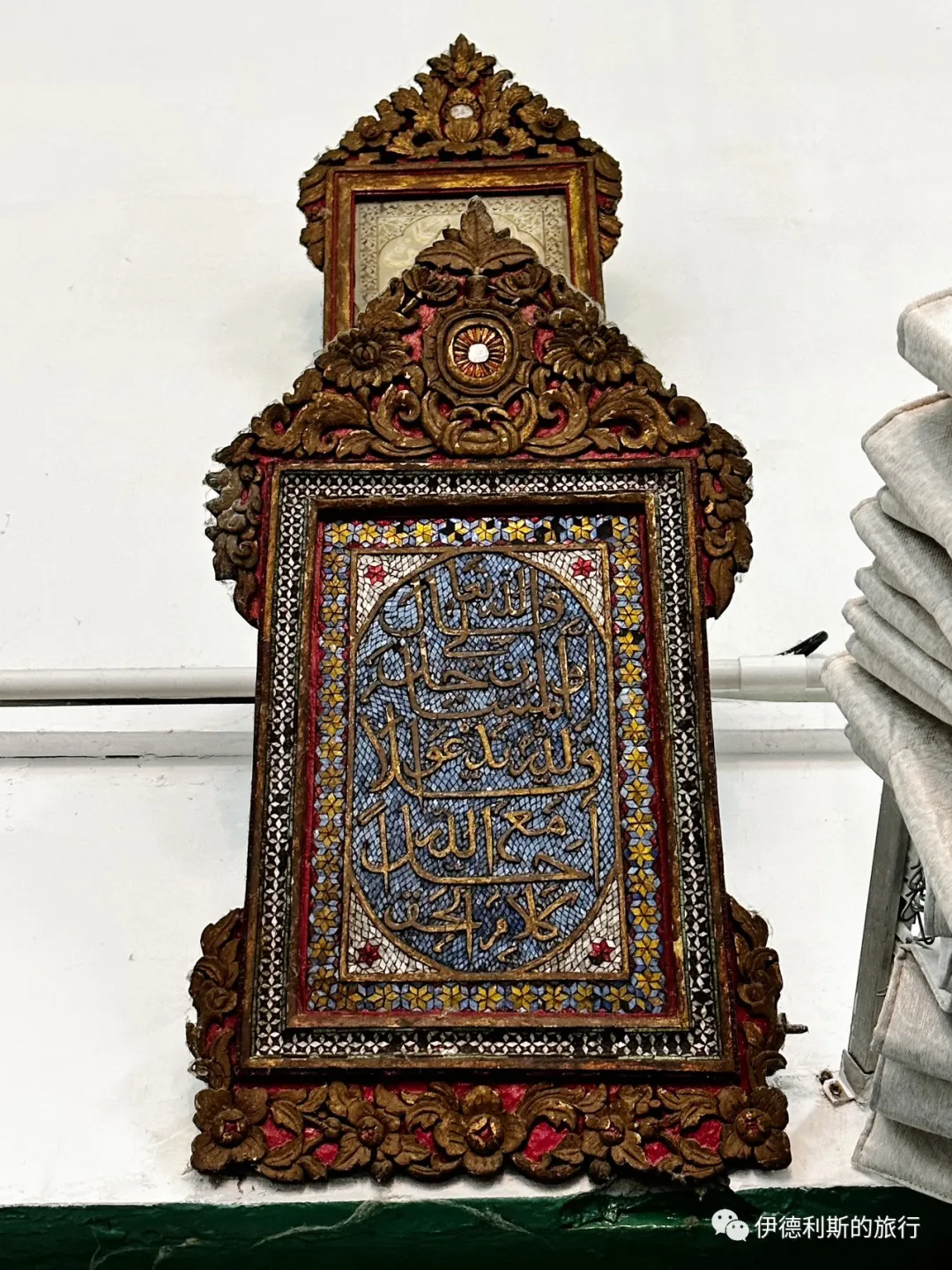
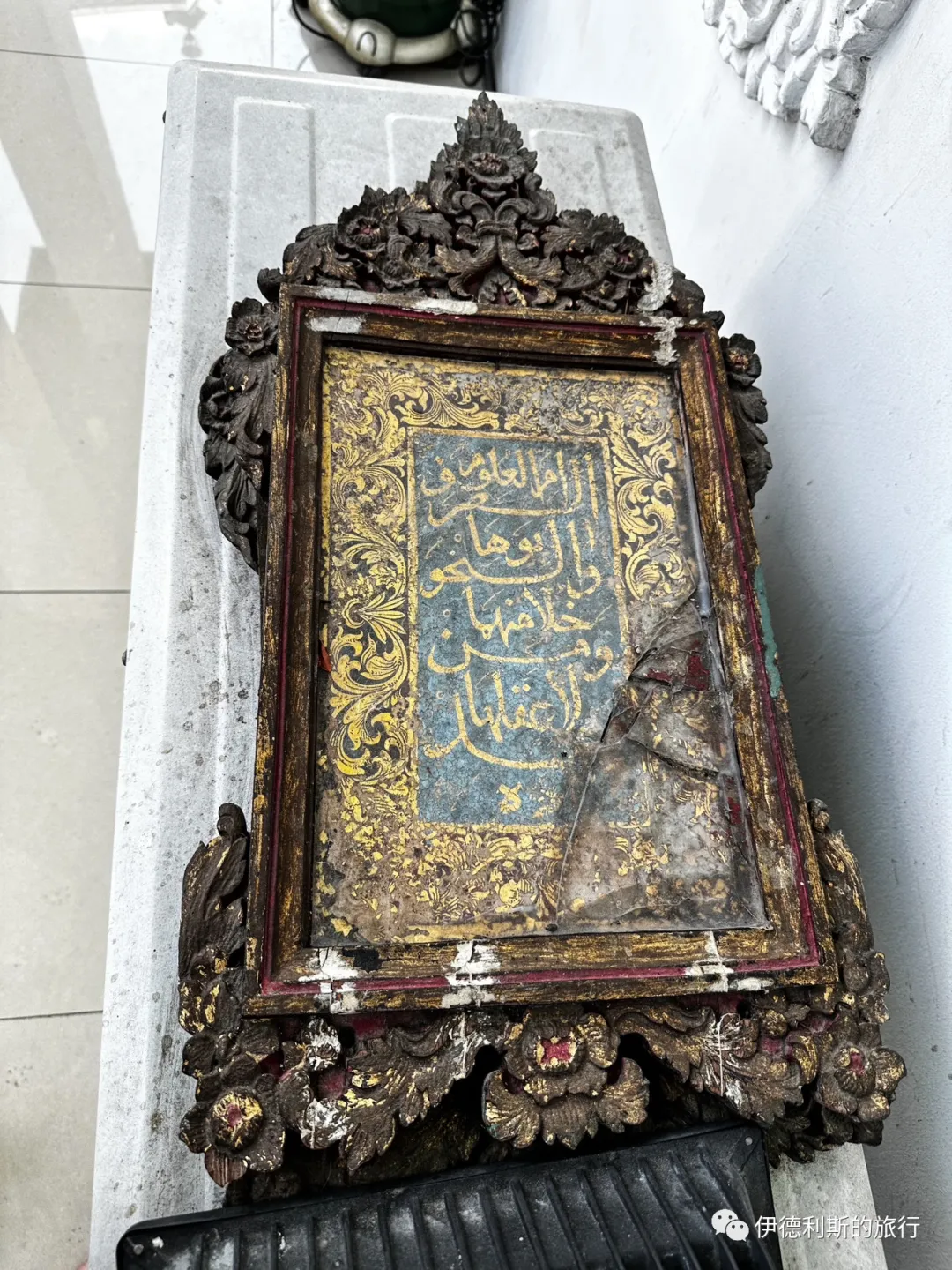
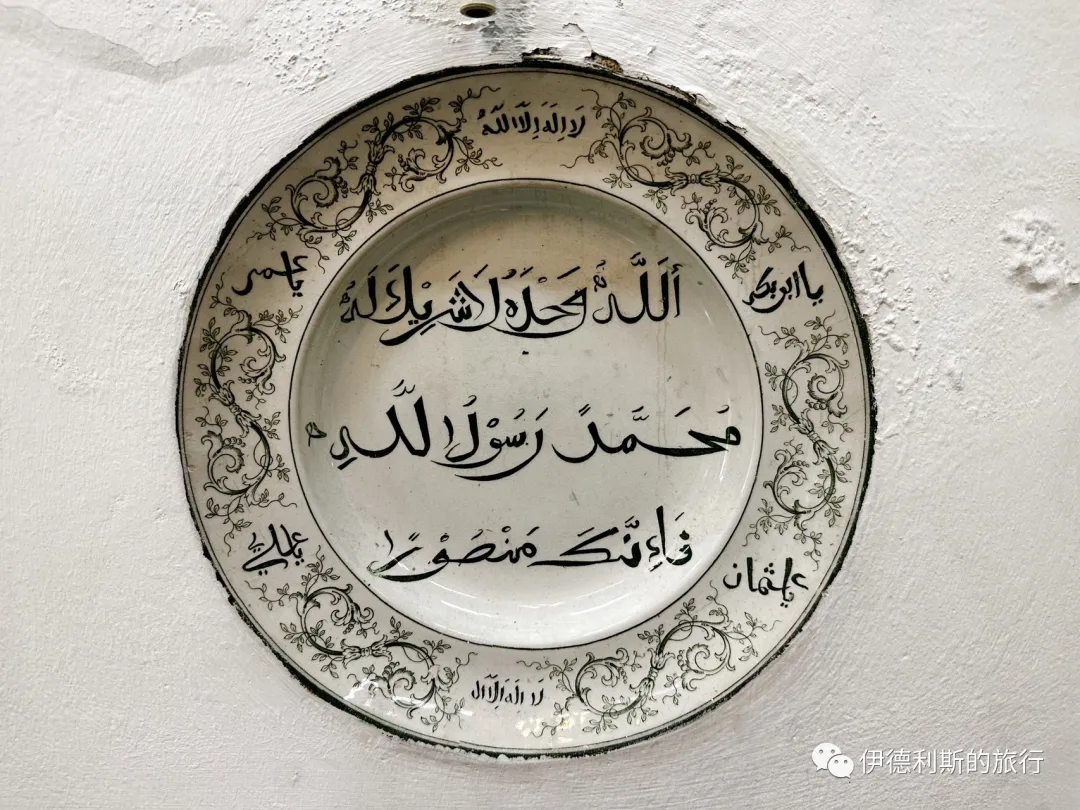
The wooden-framed scriptures hanging on the walls of Bang Luang Mosque and the porcelain plates embedded in the walls are both over a hundred years old.
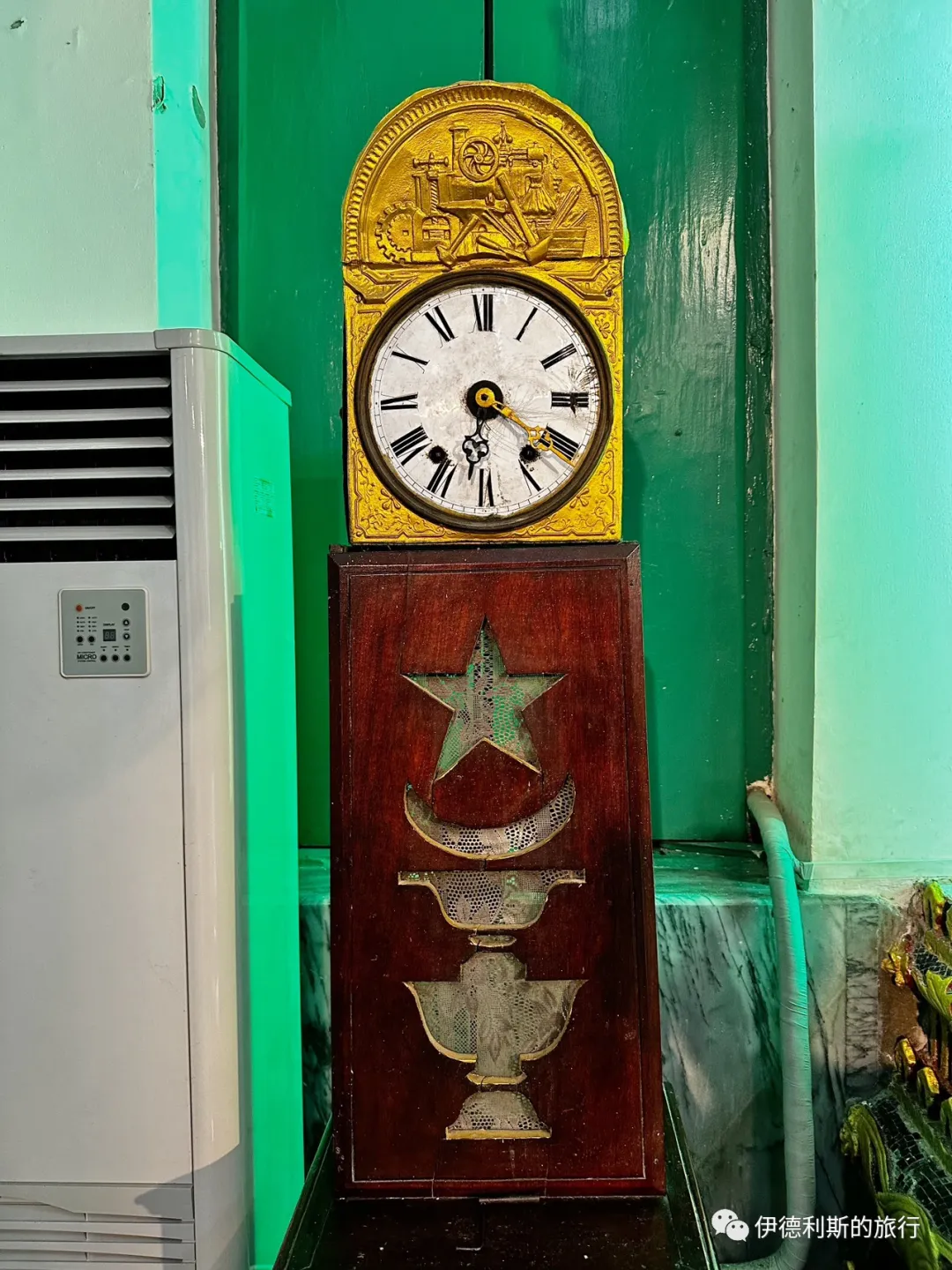
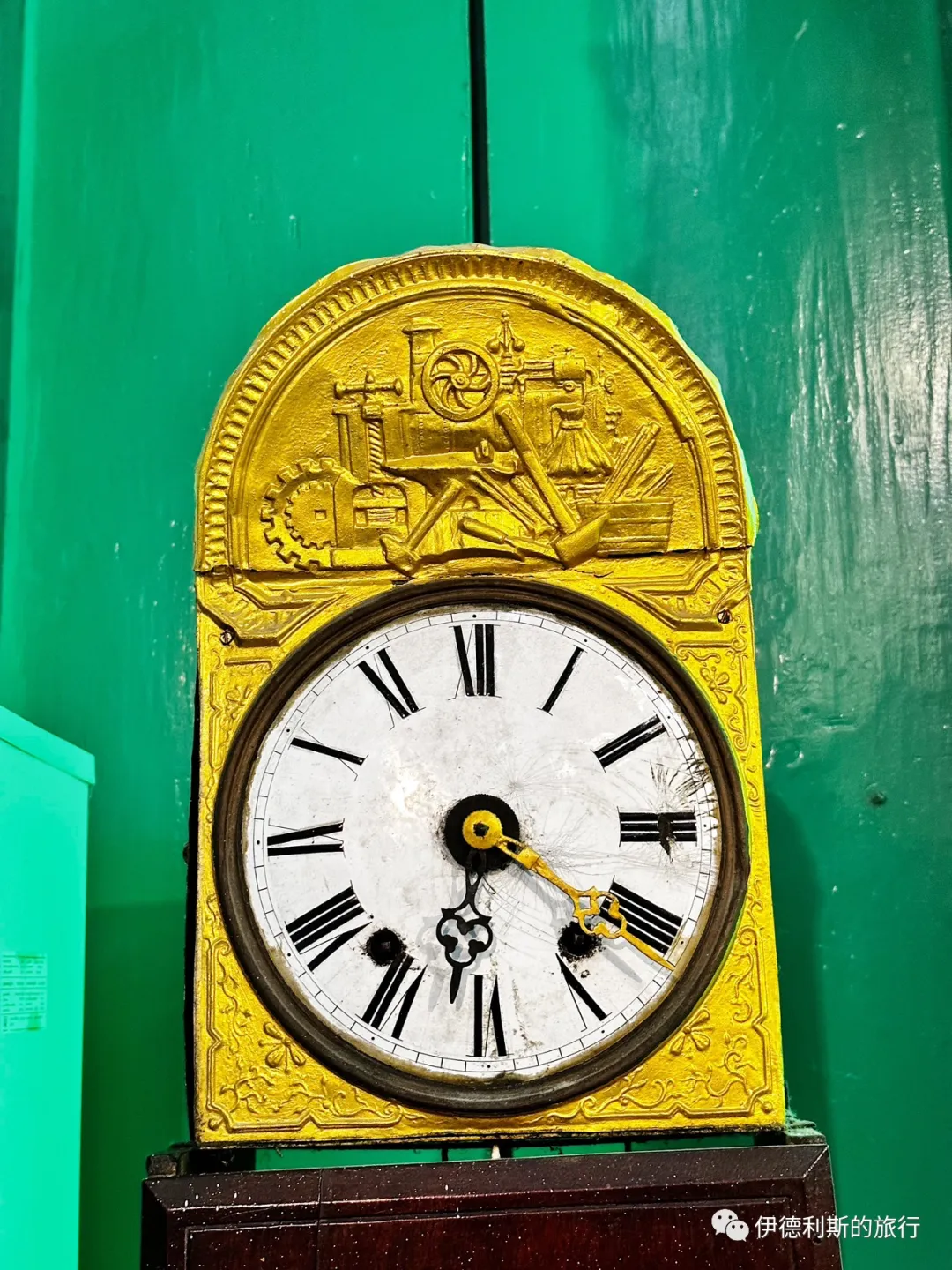
This old bell feels like it has a lot of history.
The area around Bang Luang Mosque is still mainly inhabited by Cham and Malay descendants. We chatted for a while with the owner of a small shop opposite the mosque. The owner's family is of Malay descent; the father speaks fluent Thai and Malay, and the son's English is also very good.
Cham Navy and the National Museum of Royal Barges.
In 1778, Thailand invaded Laos. To attack Laos from two sides, Thailand recruited an army of over 10,000 people from the pro-Thai Kingdom of Cambodia, which included several naval companies made up of Cham dosti (friends/comrades). After these Cham naval companies finished participating in the war against Laos, some of them returned with the Thai army to Thonburi, the capital of Thailand at the time. They were under the command of the Second King of Siam (Front Palace). After 1782, they were stationed along the Noi Canal and built the Second King's shipyard and dock next to their camp.
These Cham sailors served for a long time in gunboat patrols against pirates along the Thai coast. Until the Grand Palace and Front Palace navies merged into the Royal Thai Navy in 1880, these Cham sailors continued to serve in the Royal Navy, with some stationed at naval fortifications in Samut Prakan. After the 1910s, the former station of the Cham navy was gradually abandoned.
The National Museum of Royal Barges is currently built on the former site of the Cham navy station. Before the 20th century, the Cham navy served as rowers for the royal barge, a high honor granted to Cham sailors by the Thai royal family.
Noi Canal
Cham community neighborhood—Jami-Ul-Khoy-Riyah Mosque
In 1781, Thailand attacked Cambodia and captured some Cham soldiers. These Cham soldiers were brought back to Bangkok in 1782. These Cham soldiers officially joined the Thai army in 1783 and helped dig the Maha Nak Canal. In the early 19th century, Thailand and Vietnam fought a long war over Cambodia. The canal east of Bangkok became a vital military transport route, moving supplies and soldiers to the Cambodian front, earning it the name Bangkok's Eastern Corridor. The Saen Saep Canal east of Bangkok was completed in 1840, and these Cham soldiers were responsible for guarding it.
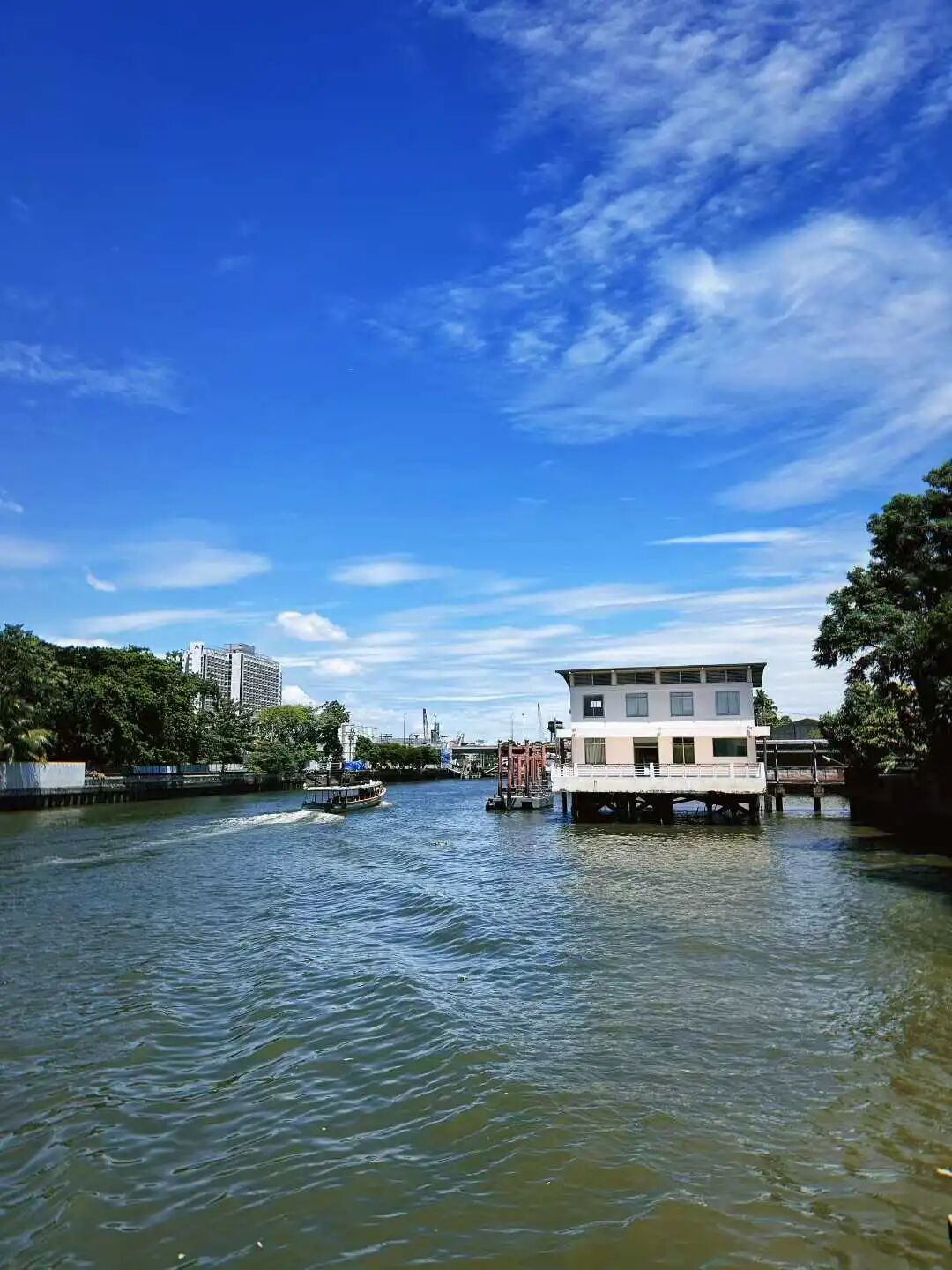
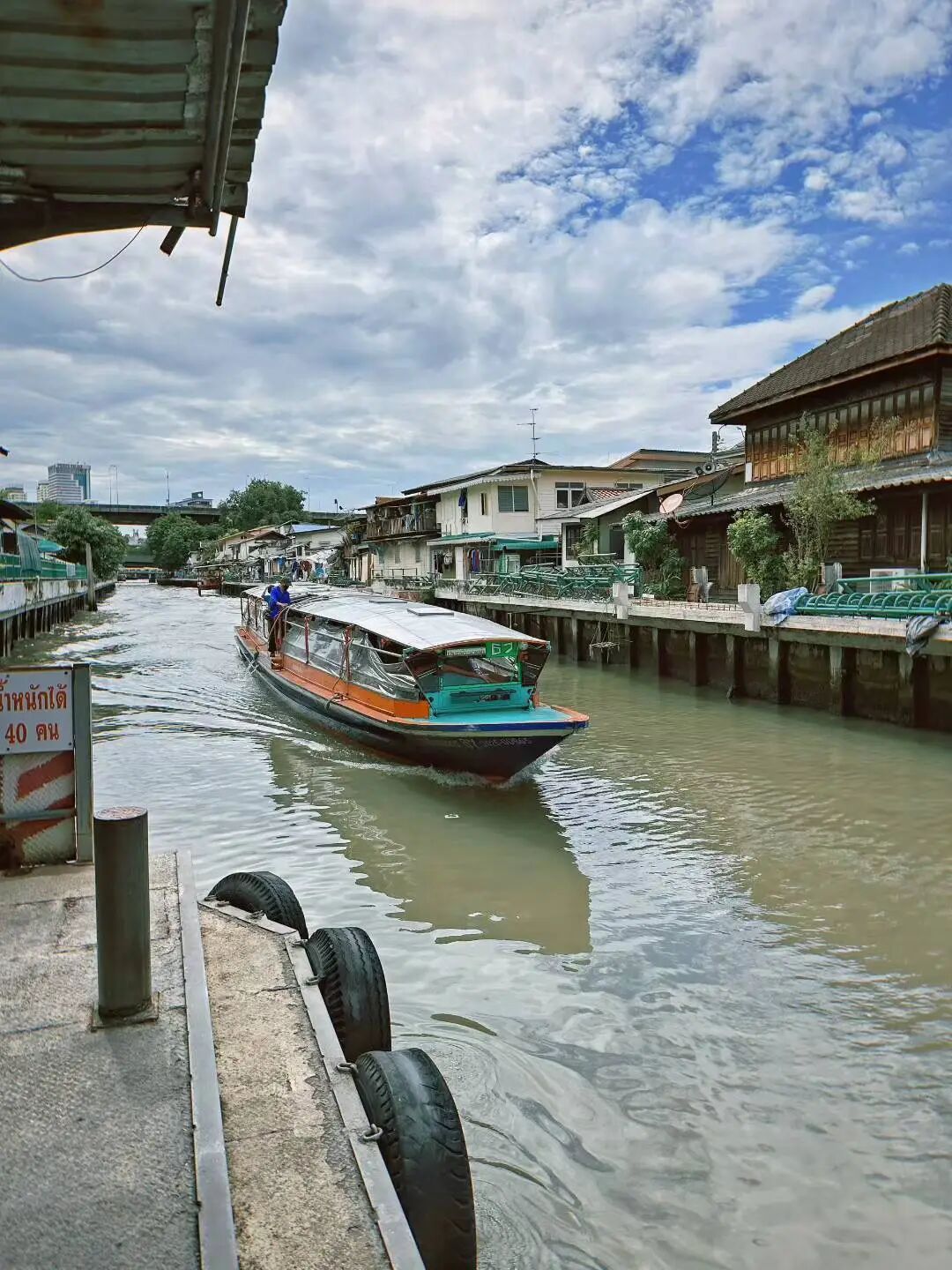
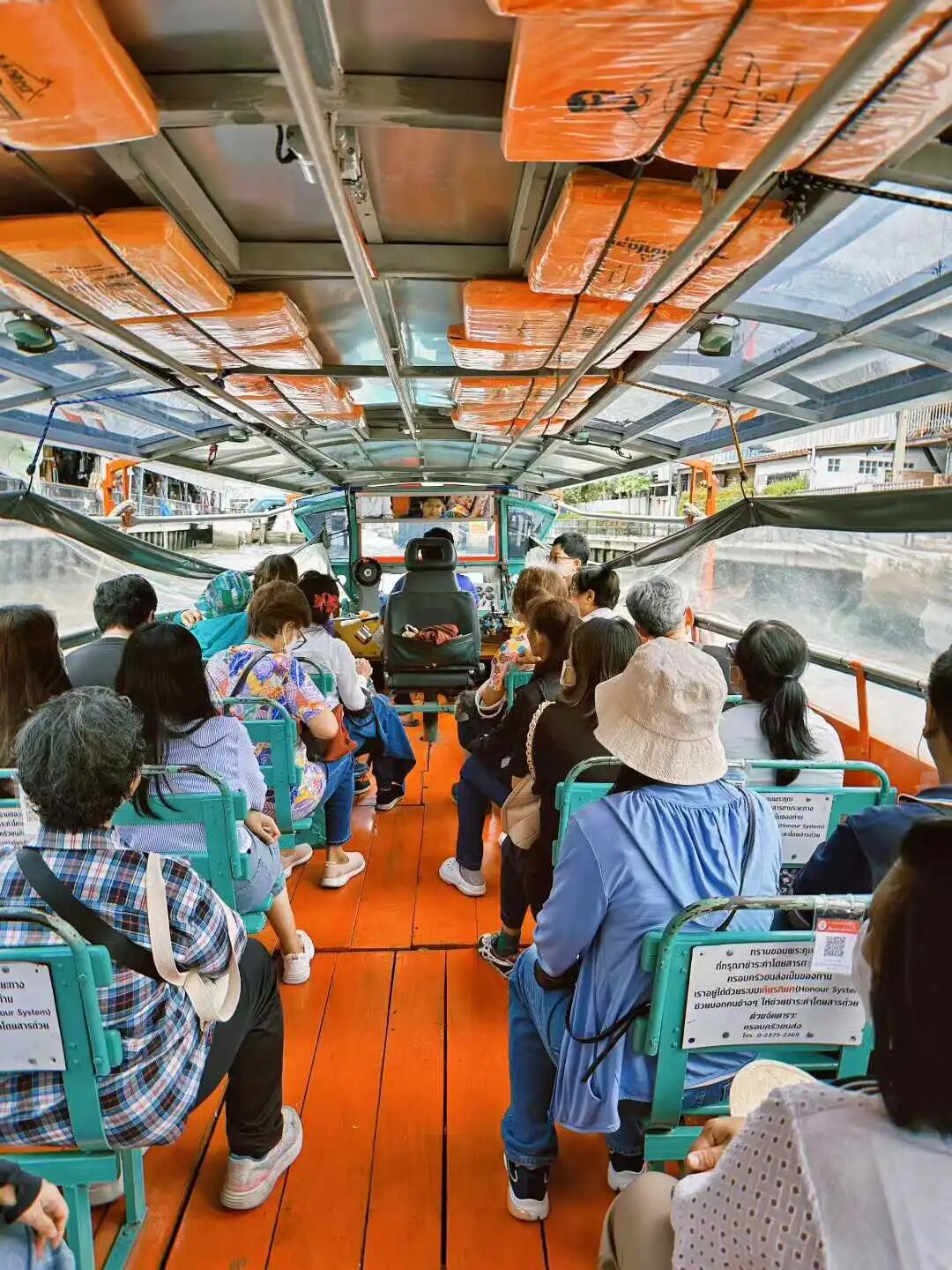
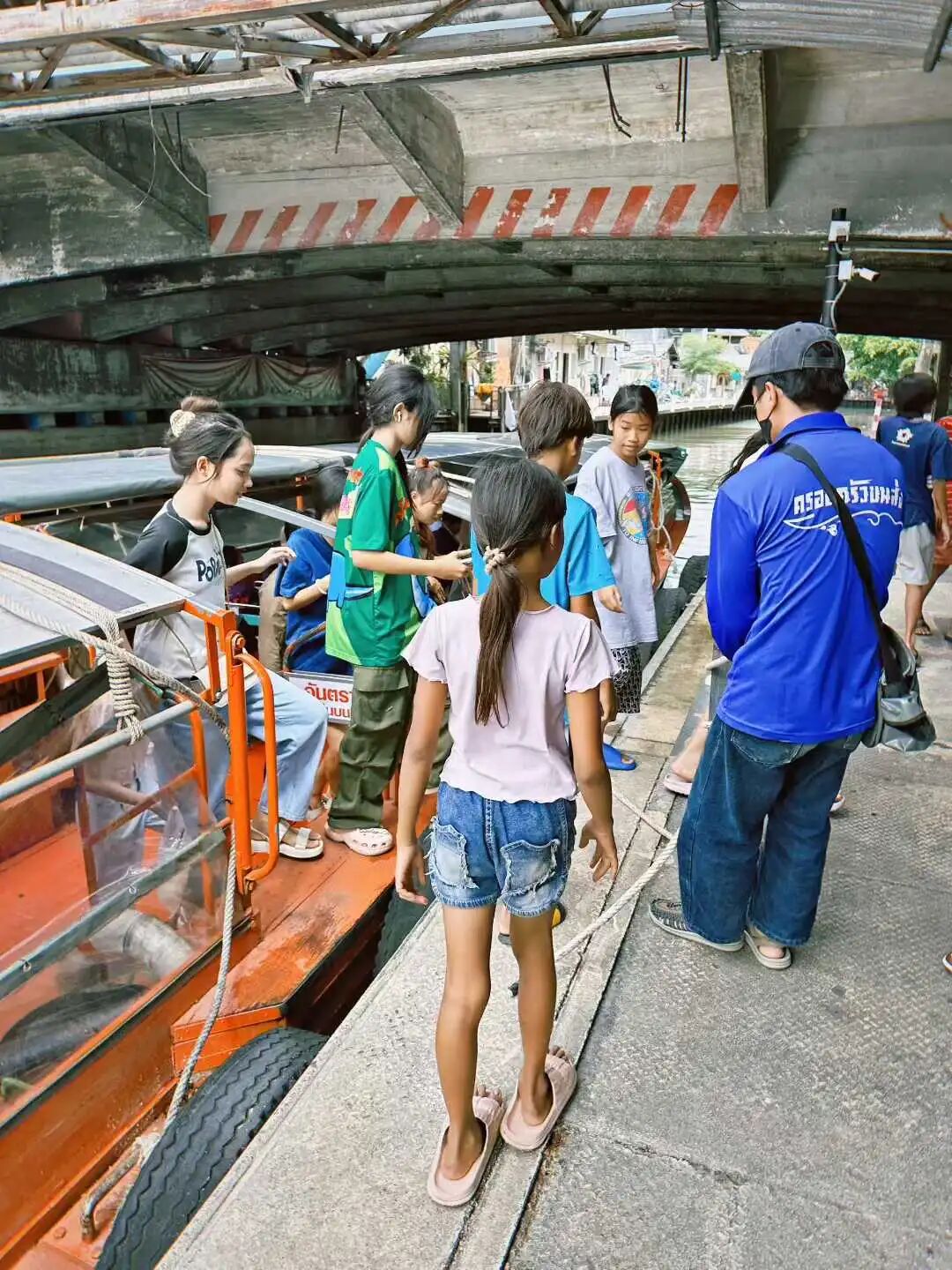
Today, you can take a canal boat on the Saen Saep Canal to Sapan Charoenpol station. After crossing the bridge, you will see the Jami-Ul-Khoy-Riyah Mosque built by the descendants of these Cham soldiers. In the late 19th century, as peace returned to eastern Thailand, the area became a silk market and later a tourist destination.
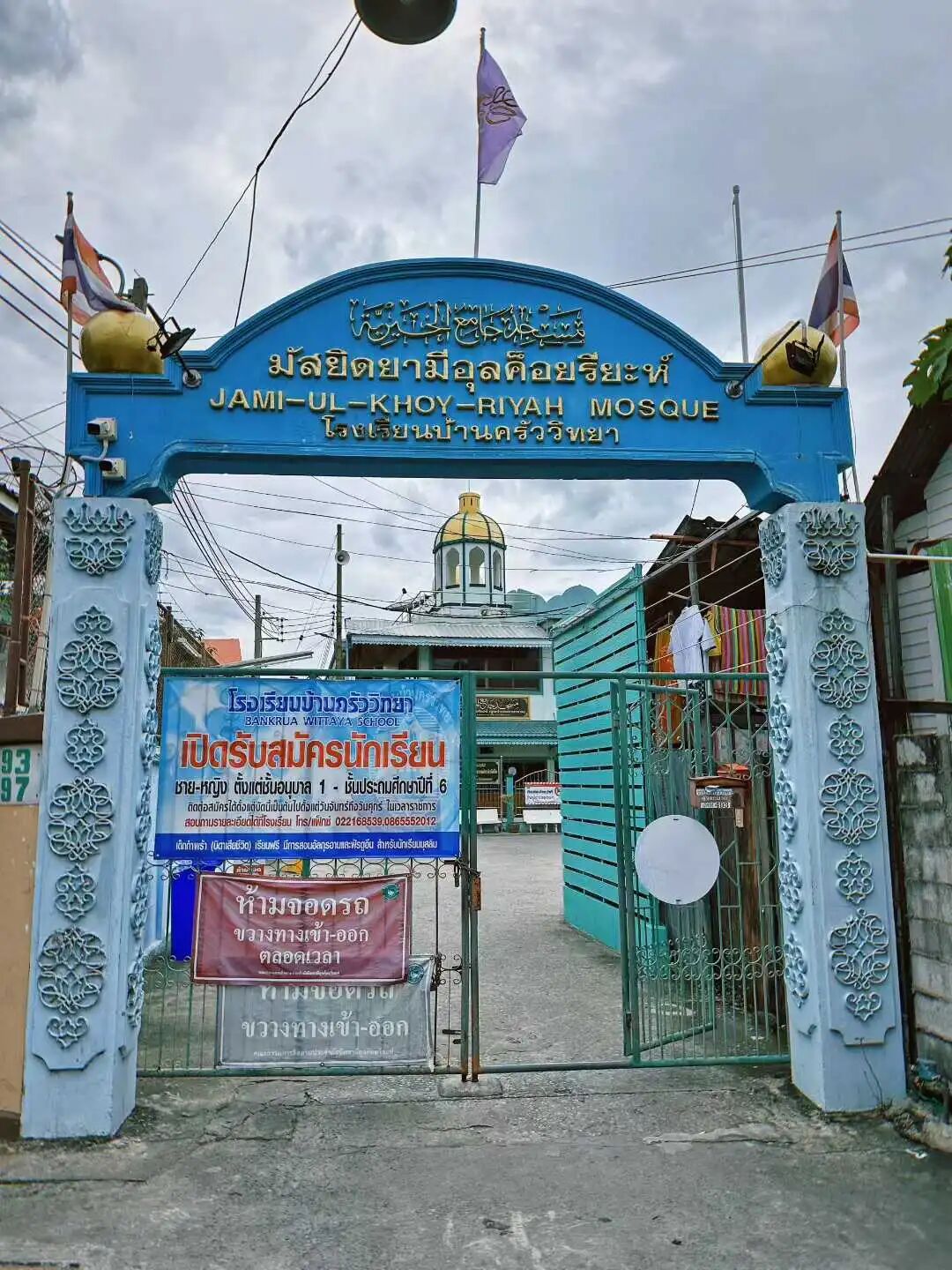
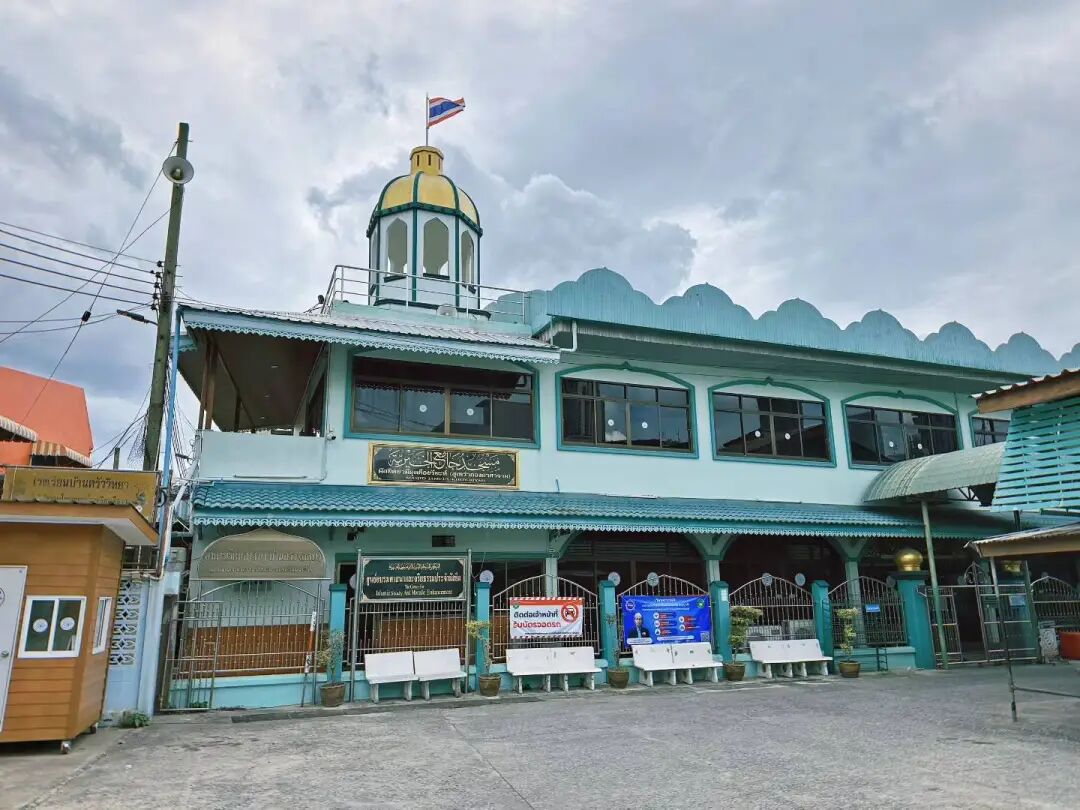
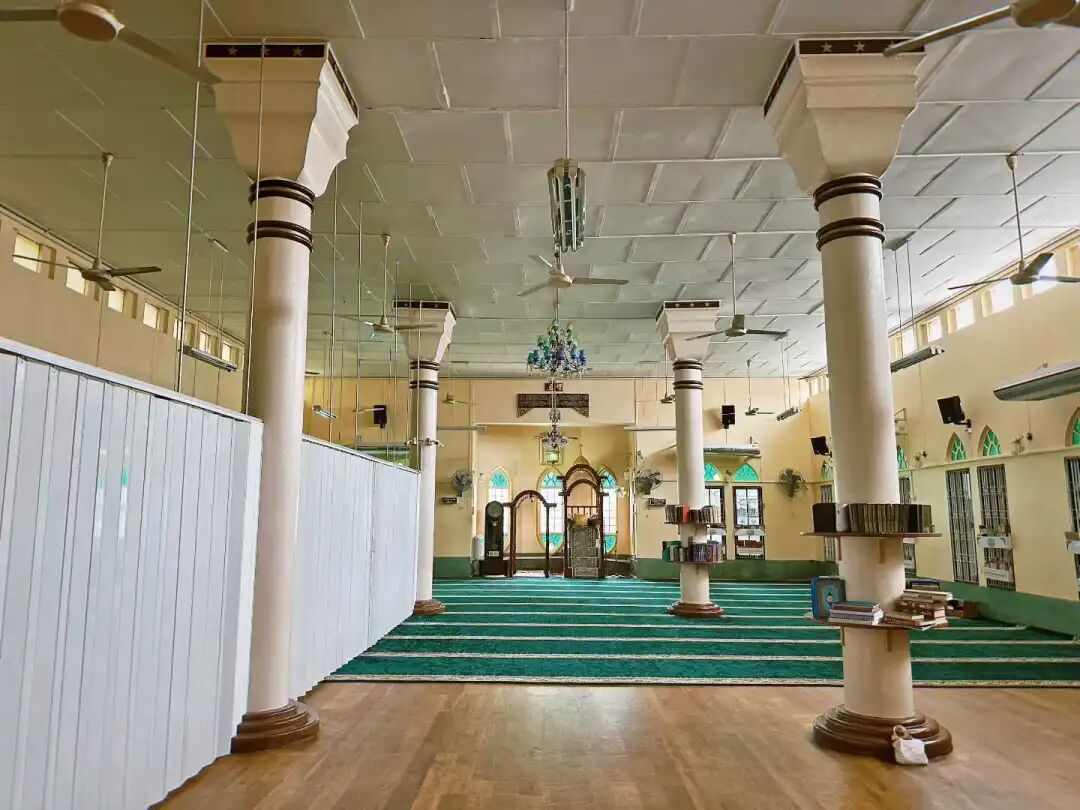
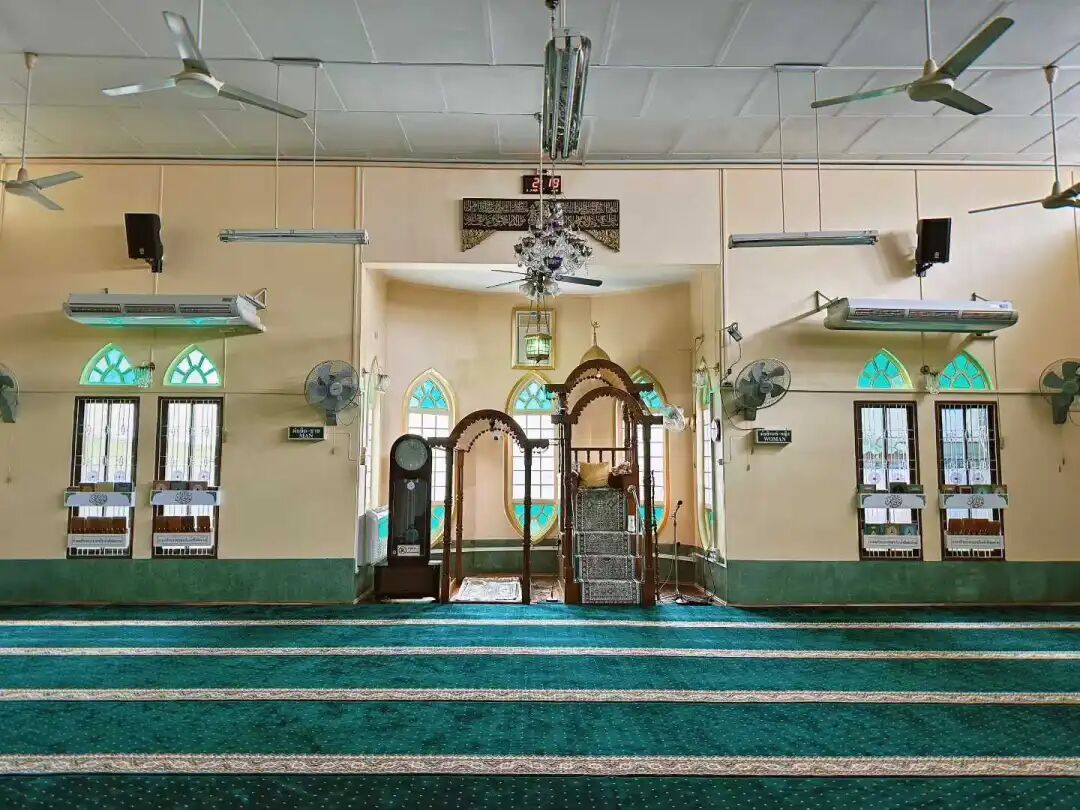
The Jami-Ul-Khoy-Riyah Mosque displays a collection of porcelain. Many mosques in Bangkok have porcelain display cabinets, which is an interesting tradition.
Street view of the Jami-Ul-Khoy-Riyah Mosque neighborhood. There are small family-run snack shops in the narrow alleys, though they are usually closed in the afternoon. There is a pavilion by the canal built during the reign of Rama III (1824-1851). During this period, Thailand was frequently at war with Laos, Cambodia, and Vietnam, and the Saen Saep Canal was the main artery for transporting supplies east from Bangkok. There used to be a pier in front of the pavilion where many supplies were loaded and unloaded. The wood used to build the Jami-Ul-Khoy-Riyah Mosque was also unloaded here.
Today, it has become a place for people to cool off and chat. Next to the pavilion is a small shop selling cold drinks and waffles, where I bought a cup of authentic Thai red tea. Besides the Cham people, Malays from Pattani Province in southern Thailand also live in the Jami-Ul-Khoy-Riyah Mosque neighborhood. After 1786, Thailand invaded the southern Pattani Sultanate several times and captured a large number of Pattani Malays, some of whom were settled in the Jami-Ul-Khoy-Riyah Mosque neighborhood.
Cham community neighborhood—Zulugul Muttaqeen Mosque
The Zulugul Muttaqeen Mosque is located just west of the Jami-Ul-Khoy-Riyah Mosque. It was built by Cham captives brought back from Cambodia by Thailand during the Siamese-Vietnamese War of 1841-1845.
The mosque is clean and bright. The first floor is a classroom, the second floor is the main prayer hall, and the third-floor terrace offers a panoramic view of the neighborhood.
Cham community neighborhood—Darul Falah Mosque
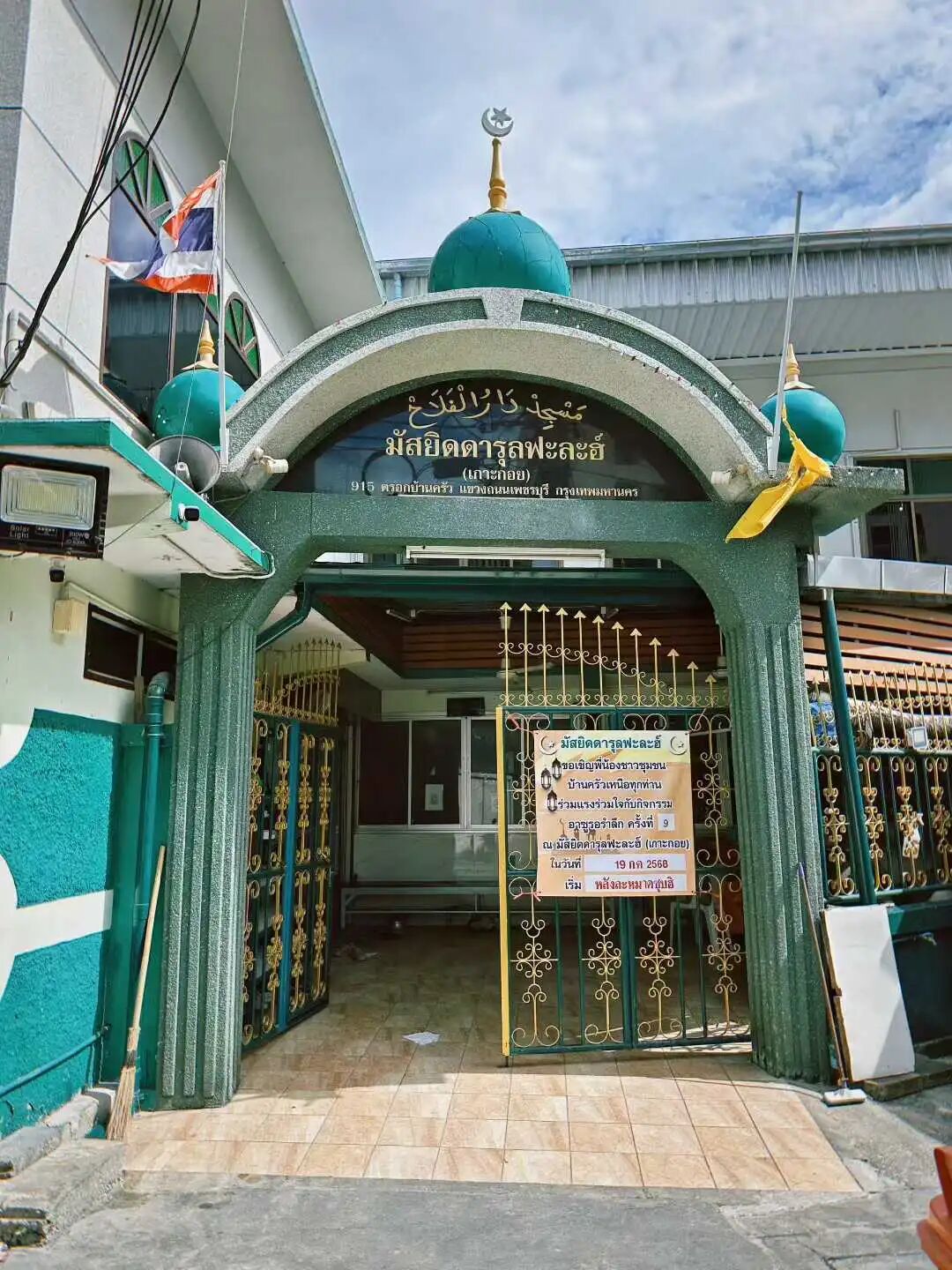
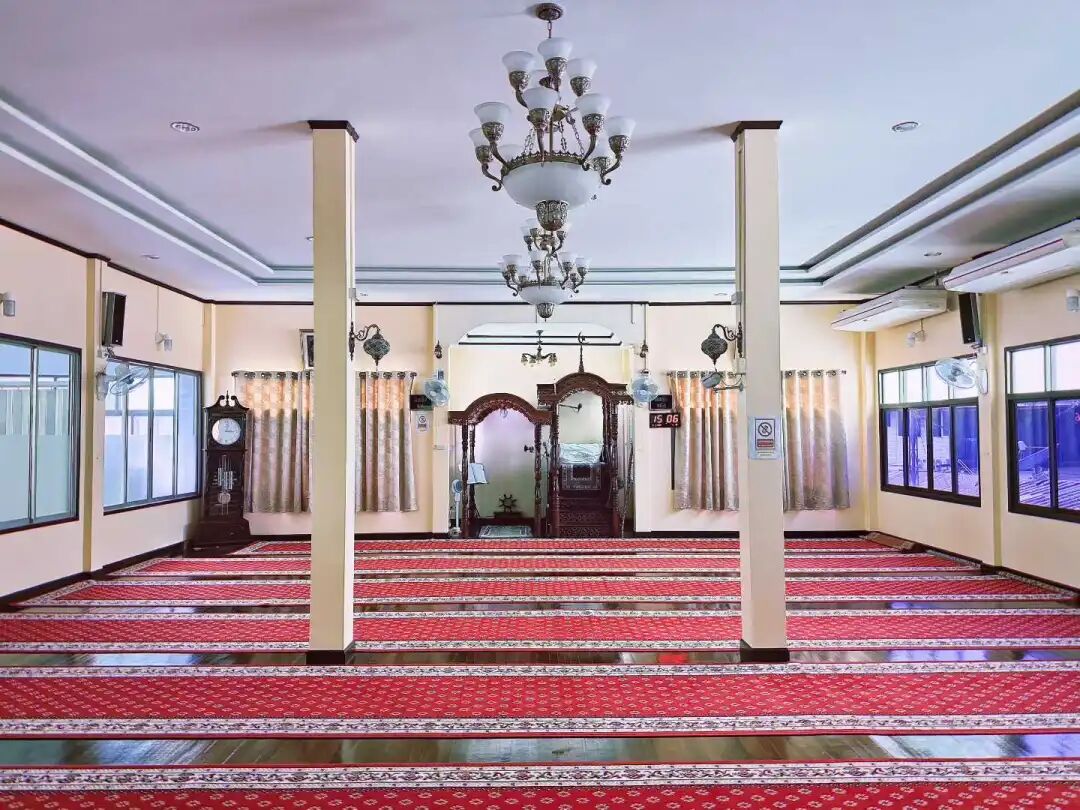
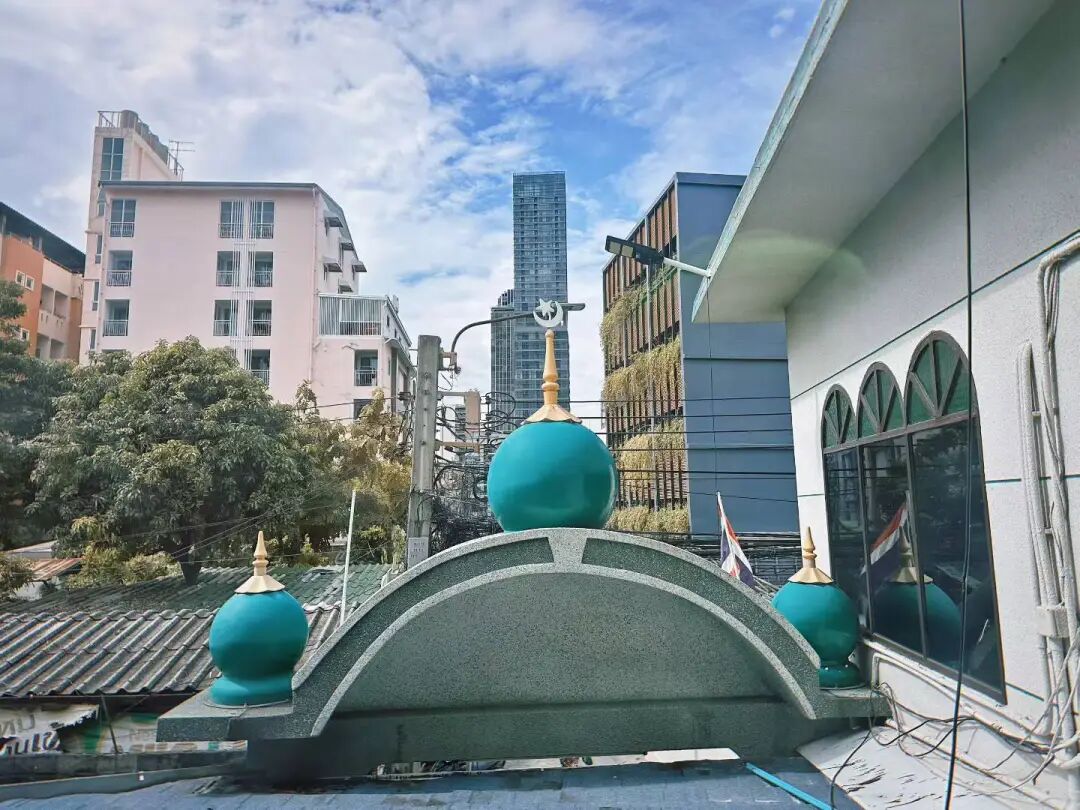
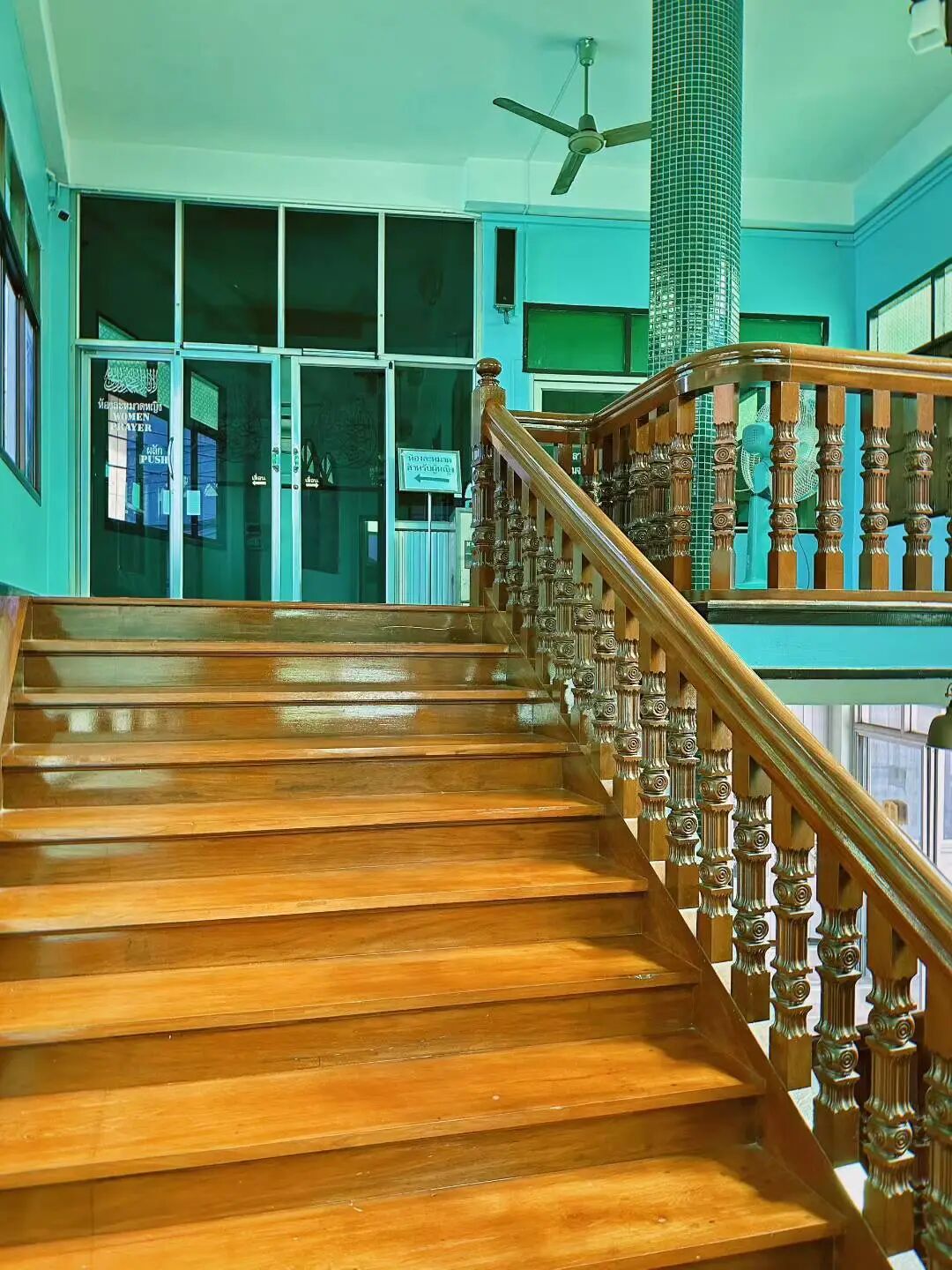
The Darul Falah Mosque was also built by Cham captives brought back from Cambodia by Thailand during the Siamese-Vietnamese War of 1841-1845. Bangkok once had its most important Sufi shrine (gongbei), but it is hard to find any trace of it today.
In the early 20th century, Sheikh Hussein Bakri, a Sufi from the Shadhili order in the Hejaz region, lived at the Darul Falah mosque (masjid) in Bangkok. He married a local woman and they had two sons. Before Sheikh Hussein returned to his home country, he predicted that his youngest son, Ahmed Bakri, would pass away, so he told his wife to bury a piece of green cloth with him. Sure enough, his son died just a few days after he left. His wife did not follow his instructions to include the green cloth, so she later urgently asked everyone to open the grave to put it in, but when they opened the grave, Ahmed's body was already gone. The story of the Arab man and the green cloth spread quickly.
After the Saudis conquered the Hejaz region in 1925, they promoted Wahhabism there, forcing many Sufis in the Hejaz to flee. In 1929, Sheikh Hussein Bakri's other son, Sheikh Khalid Bakri, who was also in the Shadhili order, traveled by boat from the Hejaz to the Darul Falah mosque in Bangkok and built the Ahmed shrine (gongbei) inside the mosque. During World War II, when the U. S. military bombed Bangkok, people from all different groups took shelter near the shrine, believing it would keep them safe. The shrine was not moved outside the mosque until the Darul Falah mosque was renovated in the 1950s.
Starting from the Darul Falah mosque, the Shadhili order gradually grew in the eastern suburbs of Bangkok and expanded into central and southern Thailand, becoming an important Sufi order in the country.
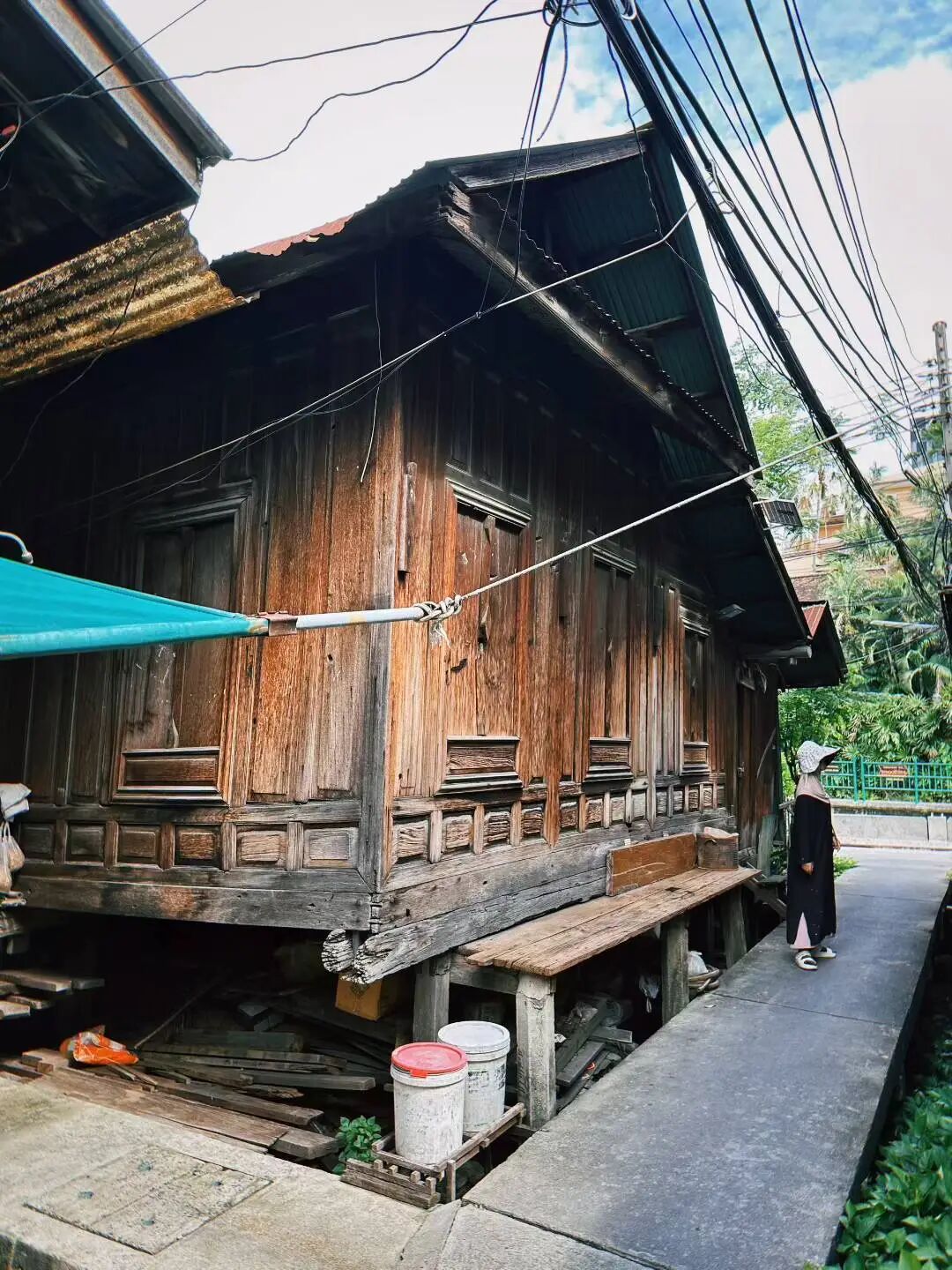
Halal Travel Guide: Ho Chi Minh City — Mosques and Cham Muslims (Part 1)
Articles • ali2007fr posted the article • 0 comments • 158 views • 2026-05-17 21:54
Summary: Ho Chi Minh City — Mosques and Cham Muslims is presented here as a firsthand travel account in clear English, beginning with this scene: During the 2018 New Year holiday, I visited the Hui Muslims who speak the Cham language in Sanya, Hainan. The account keeps its focus on Ho Chi Minh City, Cham Muslims, Vietnam Travel while preserving the names, places, food, and historical details from the Chinese source.
During the 2018 New Year holiday, I visited the Hui Muslims who speak the Cham language in Sanya, Hainan. This sparked my interest in the Cham Muslims of Vietnam and Cambodia, so I decided to visit their communities during the Spring Festival holiday. Worried about the language barrier, I decided against going deep into the traditional Cham communities along the Vietnam-Cambodia border or the Vietnamese interior. Instead, I visited the urban Cham community in Ho Chi Minh City. Luckily, I received a warm welcome from the local Cham Muslims in Ho Chi Minh City and learned a great deal.
Let me first introduce the history of the Cham people. Champa, also known as Zhanpo, was a country established by the Cham people in southern Vietnam in 192 AD. The Cham people were originally an Austronesian-speaking group that moved from Borneo to the Indochinese Peninsula. After the 4th century, they were strongly influenced by India, using Sanskrit and practicing Brahmanism and Buddhism. Because their land was narrow and fragmented, the Champa Kingdom focused on maritime trade. During the Song and Yuan dynasties, it became an important trading port on the Maritime Silk Road. Chinese merchant ships sailing from Guangzhou or Quanzhou, as well as Arab and Persian ships coming from the Indian Ocean and the Persian Gulf, all chose to stop in Champa. Because of this, many Arab and Persian merchants lived in Champa during the Song and Yuan dynasties.
Two stone tablets with Arabic Kufic script were discovered in the cities of Phan Thiet and Phan Rang in southeastern Vietnam. The first tombstone belongs to a road worker named Abu Kamil, who passed away on November 20, 1039. The other stone is a notice about how Muslims lived with the local people. It uses a mix of Kufic and Naskh scripts and is thought to date from 1025 to 1035. The inscription suggests that Arab and Turkic merchants lived here.
Rubbings of the two inscriptions, taken from Cultural Exchange Between Champa and the Malay World.
After the 12th century, Champa fell into long-term warfare, and many Cham people fled to Cambodia and Malacca. From the mid-to-late 15th century, the Malacca Sultanate (1400–1511) became the most important Islamic nation in Southeast Asia, and Champa maintained close ties with it. In 1511, the Portuguese occupied the Malacca Sultanate, causing many Malays to move away, with some settling in areas where the Cham people lived. These Malay Muslims integrated with the Cham people, who also spoke an Austronesian language, through trade and marriage, leading many Cham to convert to Islam.
Western missionary M. Mahot MEP began living in Champa in 1676, and his records are considered the earliest and most reliable Western accounts of Champa's conversion to Islam. In a letter written in July 1678, he noted: 'Regarding the Champa religion, Malay Muslims are more vigilant than we are; they have immigrated to Champa in large numbers and have brought the Champa king and his court into Islam.' In 1685, M. Feret, a missionary from the Paris Foreign Missions Society who tried to preach in Champa, recorded: 'The King of Champa is a Muslim, and he even obtained a Quran from the Paris Foreign Missions Society for his own use.' According to the 19th-century Cham document Ariya Tuen Phaow, a Malay Islamic leader named Tuen Phaow led a large group of Cham and Malay people back from Cambodia to the Panduranga Kingdom in 1793. They joined forces to resist Vietnam. During this time, many Cham people converted to Islam, and this struggle is known as the final peak of the Islamization of the Cham people.
Starting in the 18th century, some Cham Muslims from Cambodia moved to the Mekong Delta on the Vietnam-Cambodia border. The Mubarak Mosque in An Giang was built in 1750 and is one of the oldest mosques in Vietnam.
A photo of the Mubarak Mosque at the Vietnam History Museum.
In 1862, France and the Nguyen Dynasty of Vietnam signed the Treaty of Saigon, which officially gave France control of Saigon. From then on, Saigon gradually grew into a French commercial hub in Southeast Asia. During French rule in Vietnam, the government gave the Cham people a relatively loose policy of self-governance, which led many Cham Muslims from Cambodia to move to the Mekong Delta. Most of these Cham people worked as manual laborers or small vendors. At the time, the most influential Muslims in Saigon were those from Malaysia and Indonesia who came to trade. The first mosque in Saigon, the Al Rahim Mosque, was built by Malaysian and Indonesian Muslims in 1885.
Tamil Muslims from South India began arriving in Saigon to trade in the late 19th century. Between the 1930s and 1950s, they built the Saigon Central Mosque in the city center, the Niamatul Islamiyah Mosque next to the Indian Muslim cemetery in the northwest suburbs, the Jamiul Islamiyah Mosque in the southwest suburbs, and the Cholon Mosque in the Chinese district of Cholon to the west.
In 1954, Vietnam was divided into North and South, and Saigon came under the rule of the South Vietnamese government. The South Vietnamese government maintained good diplomatic relations with the Federation of Malaya at the time and later with the Malaysian government. Many Cham mosques in Vietnam were built with help from Malaysia in the 1950s and 1960s. In Ho Chi Minh City, these include the Haiyat Al Islam mosque built in 1962, the Alsa Adah mosque built in 1968, and the Jamiul Anwar mosque built in 1969, among several others.
After Vietnam unified in 1975, the government began seizing and collectivizing all private property in South Vietnam, almost always without any compensation. Indian Muslim merchants in Saigon were hit hard and lost all of their property. Fearing further persecution, most Indian Muslims left. The mosques they left behind later became places of worship for Cham Muslims.
There are currently 15 mosques in Ho Chi Minh City. I visited 8 of them on this trip, but since 2 were closed, I actually went inside 6. I will share my experiences with you below.
A 1968 map of Saigon.
1. Saigon Central Mosque.
Saigon Central Mosque was built by South Indian Tamil Muslims in 1935 and is the most important mosque in Saigon.
After Vietnam was unified in 1975, Muslims in Saigon faced a huge shock. The Vietnamese Muslim Congregation was closed, and its founding members fled to the United States. Saigon Central Mosque and its religious school were both occupied. Many Muslim leaders were detained and their whereabouts became unknown, while a large number of Muslims were imprisoned or fled the country.
It was not until 1978 that Vietnam lifted a series of bans on Muslims. After 1979, the Saigon Central Mosque reopened thanks to the efforts of Muslim diplomats. However, for Friday prayers (Jumu'ah), the mosque had to sign a written agreement with local police and administrators every week. They had to list the number of attendees, their names, and their addresses before they could pray, and they had to re-register every single week.
Besides this, Islamic books had to be translated into Vietnamese before officials decided if they could enter the country. Books in Arabic and Malay were almost impossible to bring in.
After 1986, Vietnam began allowing mosques to teach Islamic knowledge and Arabic. They also allowed the formation of mosque management committees, which helped Vietnamese Muslims slowly get back on track. Today, the Saigon Central Mosque is the most important mosque in Ho Chi Minh City. Besides the local Cham people, business people from Malaysia, Indonesia, India, and Pakistan, as well as Muslim travelers from all over, come here to pray.
A 1945 map of Saigon.
The entire building has a strong South Indian style.
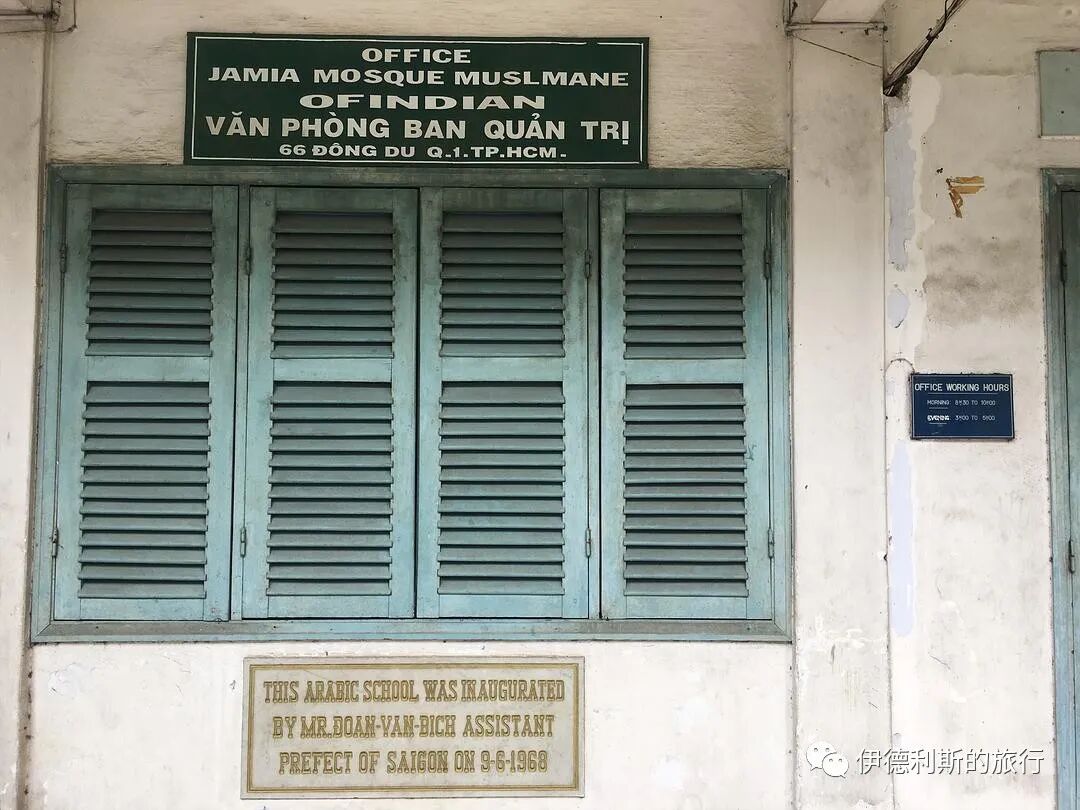
The official name of the Saigon Central Mosque is the Indian Jamia mosque.
Noorul Imaan Arabic school is an Arabic school, and Haji JMM Ismael Library is an Islamic library.
The pool used for wudu.
Typical clothing for Cham Muslim men.
A Cham Muslim uncle sells durian ice cream, and it tastes great.
The homemade bicycle bell on the uncle's bike.
2. Saigon Green House Restaurant
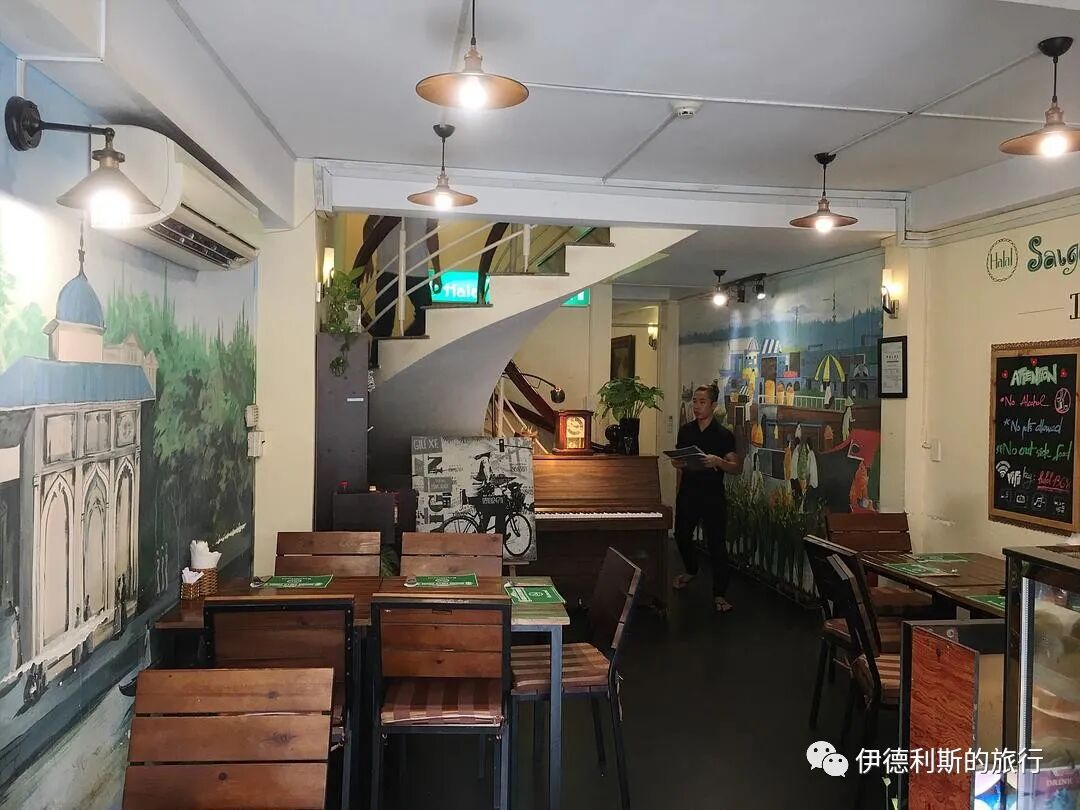
Saigon Green House is the best Cham Muslim restaurant in Ho Chi Minh City. It is a bit pricey, but the food is delicious and has a wide variety. The menu on their official website looks very tempting. Official website: https://halalsaigongreenhouse.com/menu
Eat phở first!
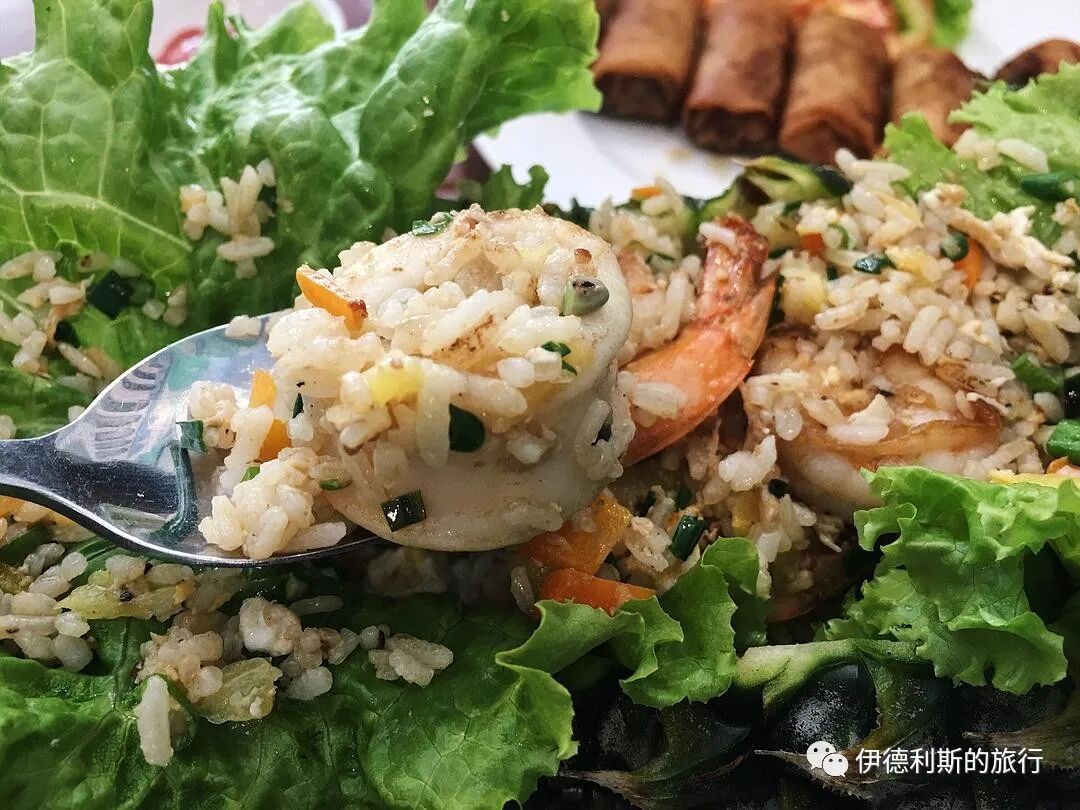
Pineapple fried rice
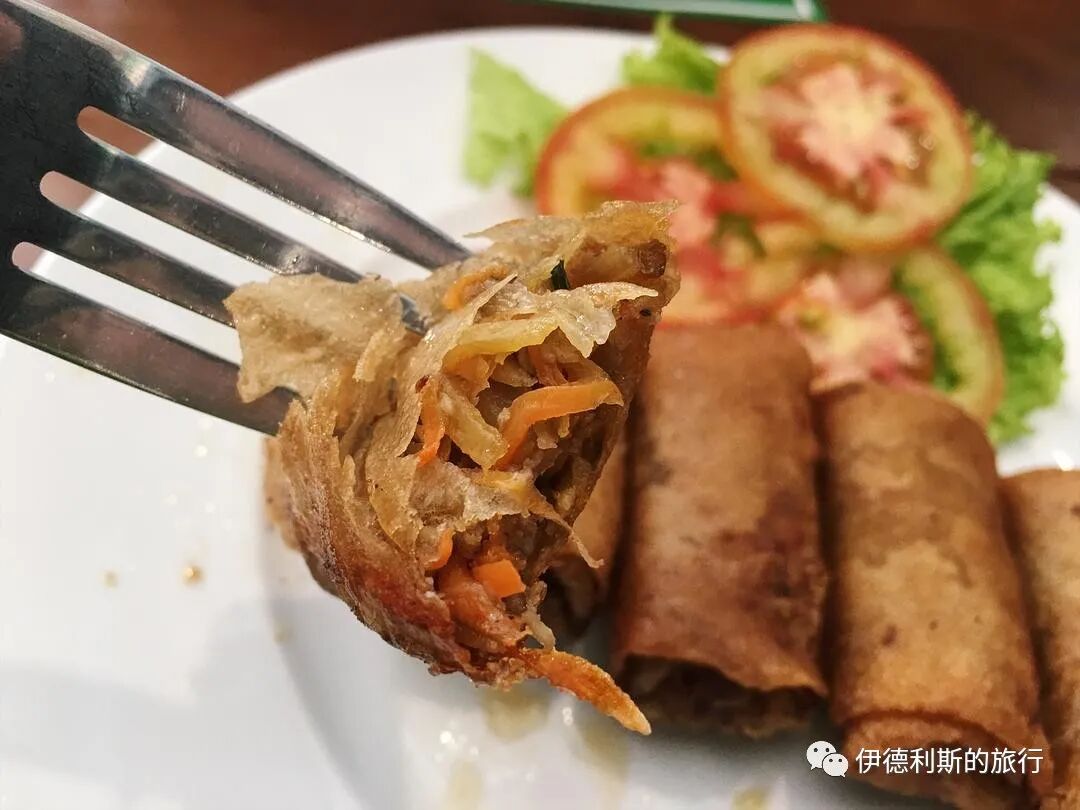
Fried spring rolls
Drink iced tea
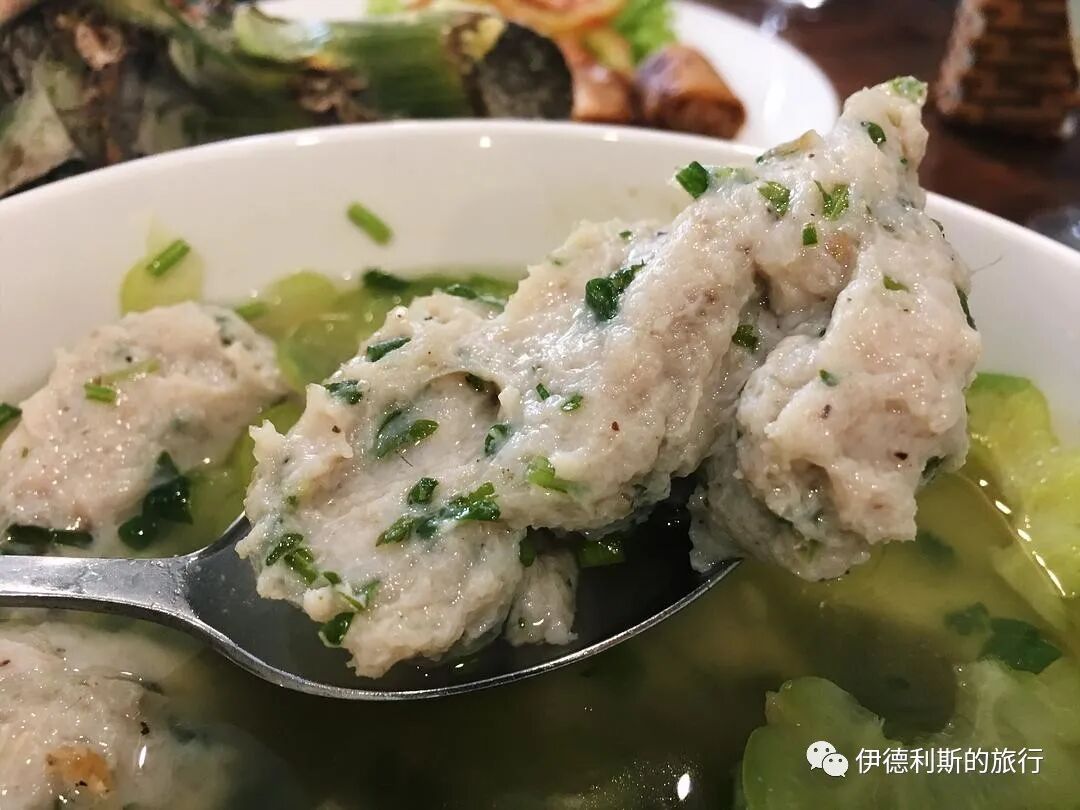
Bitter melon served with fish balls made from a fish called featherback (xilin gongbei yu).
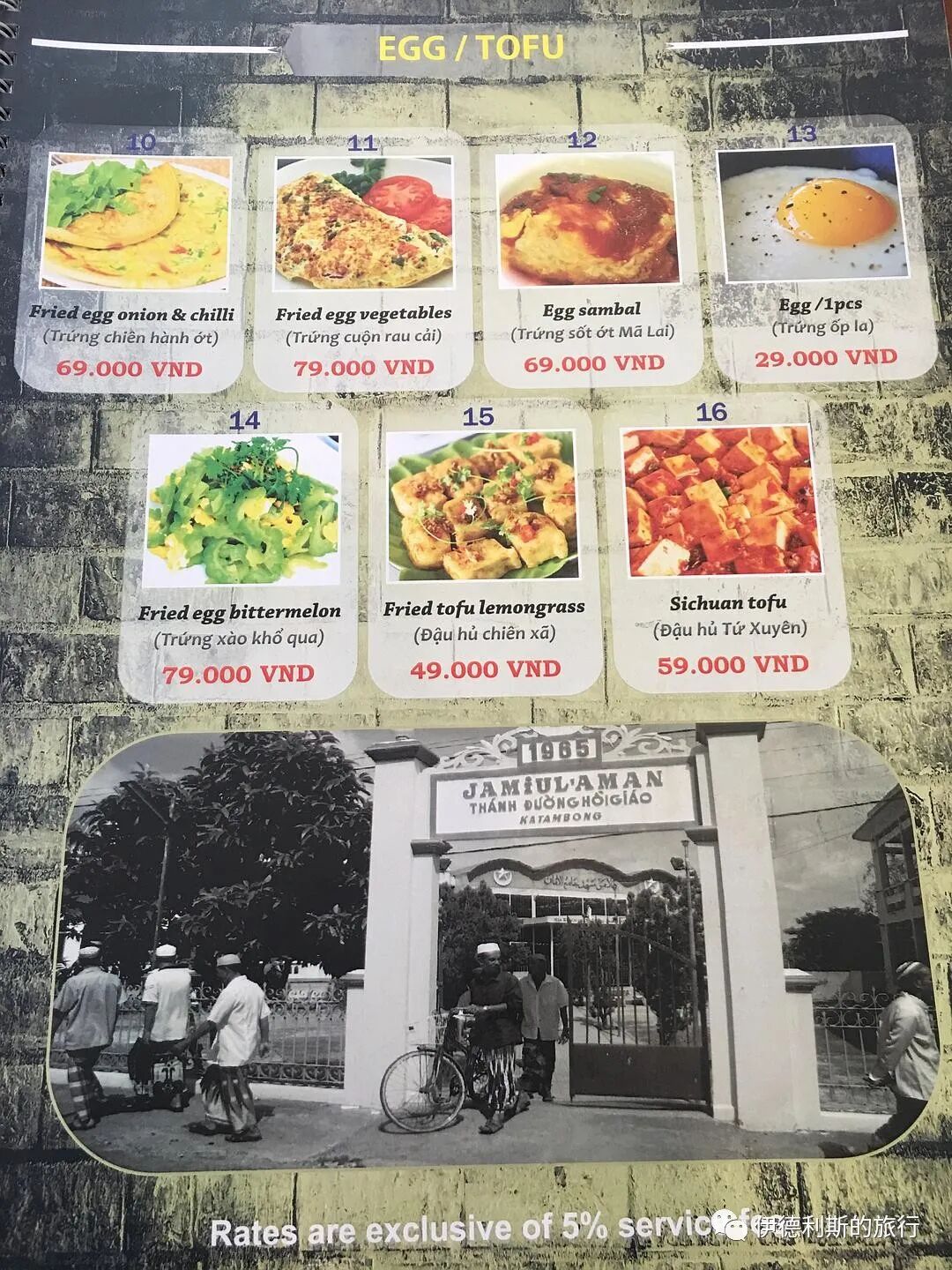
The mosque in the picture is Jamiul Aman Mosque, located in Chau Phu District, An Giang Province, Vietnam. It was built in 1965.
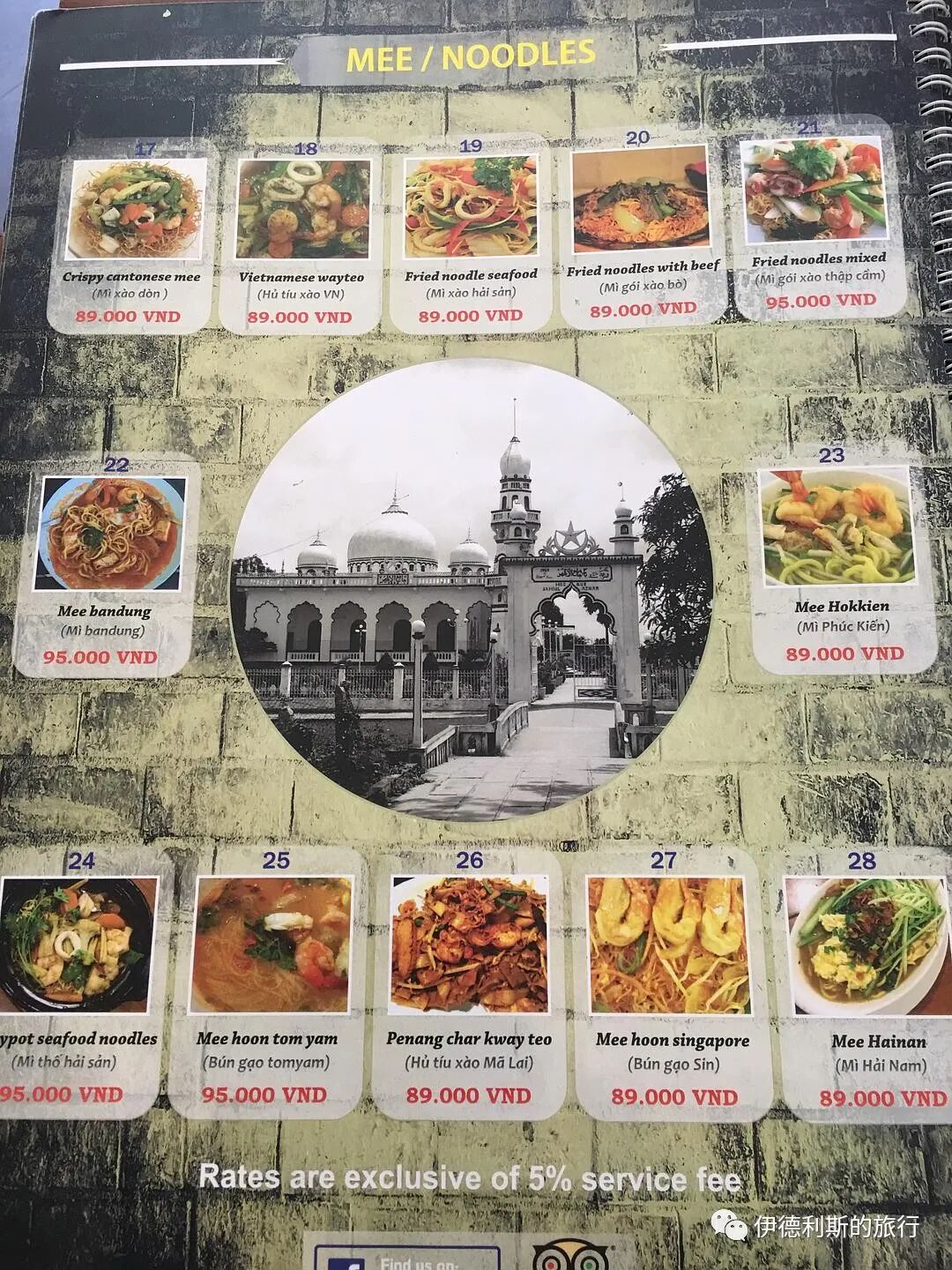
The mosque in the picture is Jamiul Azhar Mosque in Phu Tan District, An Giang Province, Vietnam. It was reportedly built in 1425 and is the most important mosque for Cham Muslims in Vietnam.
3. Al Rahim Mosque
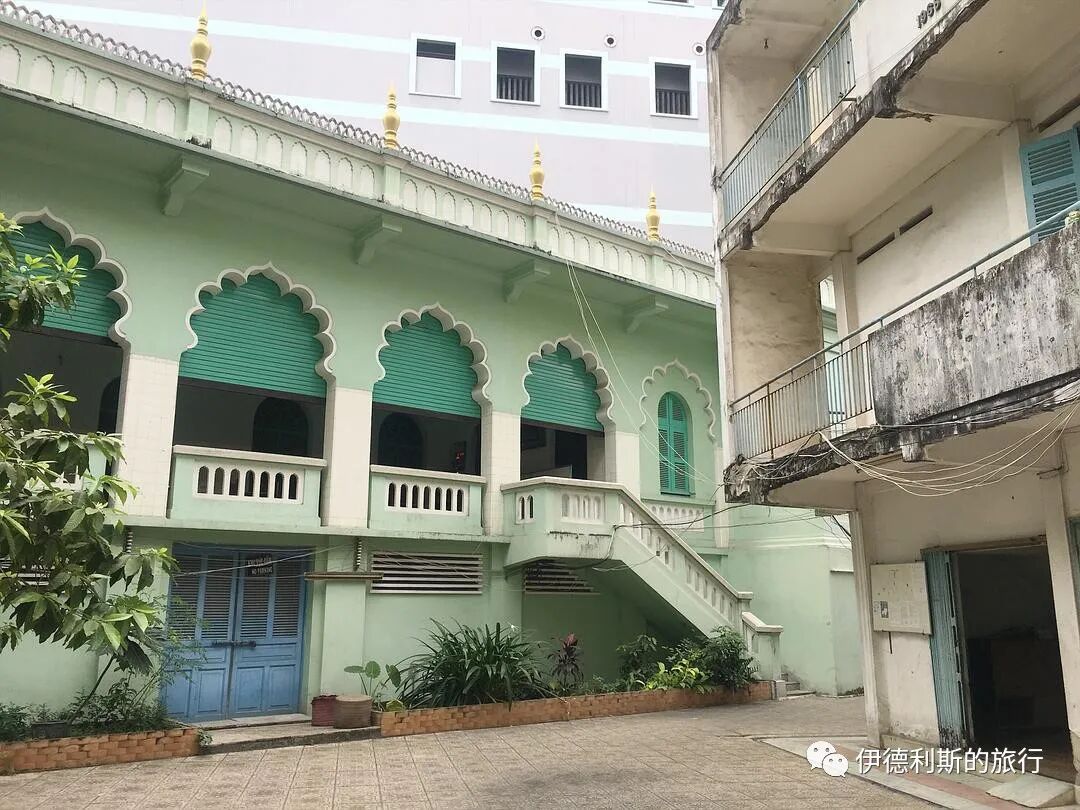
Al Rahim Mosque was the first mosque in Saigon. It was built by Malay and Indonesian Muslims in 1885.
A map of Saigon from 1895
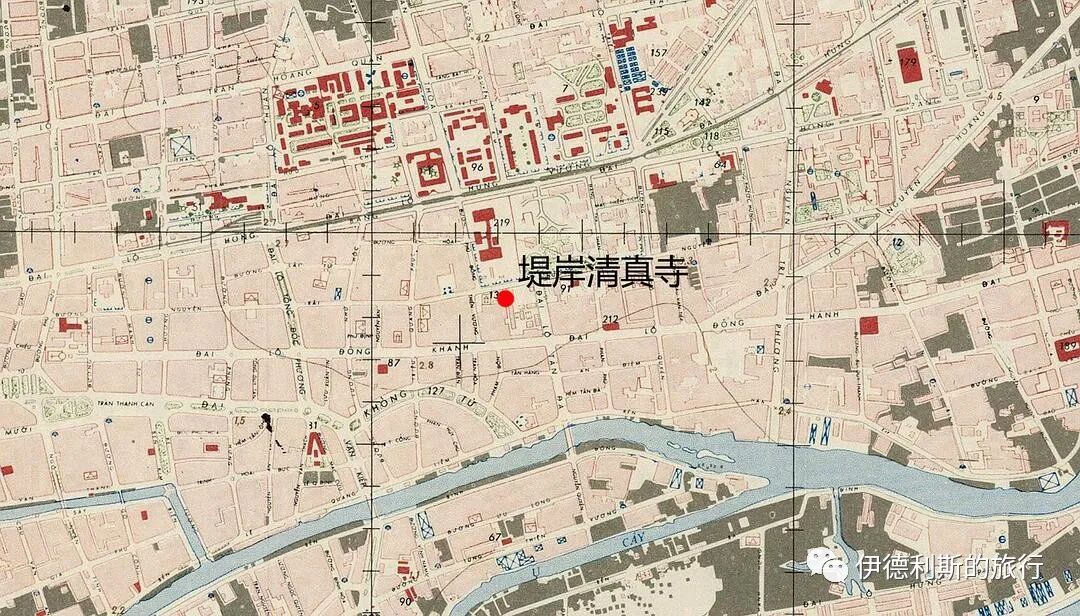
A 1945 map of Saigon.
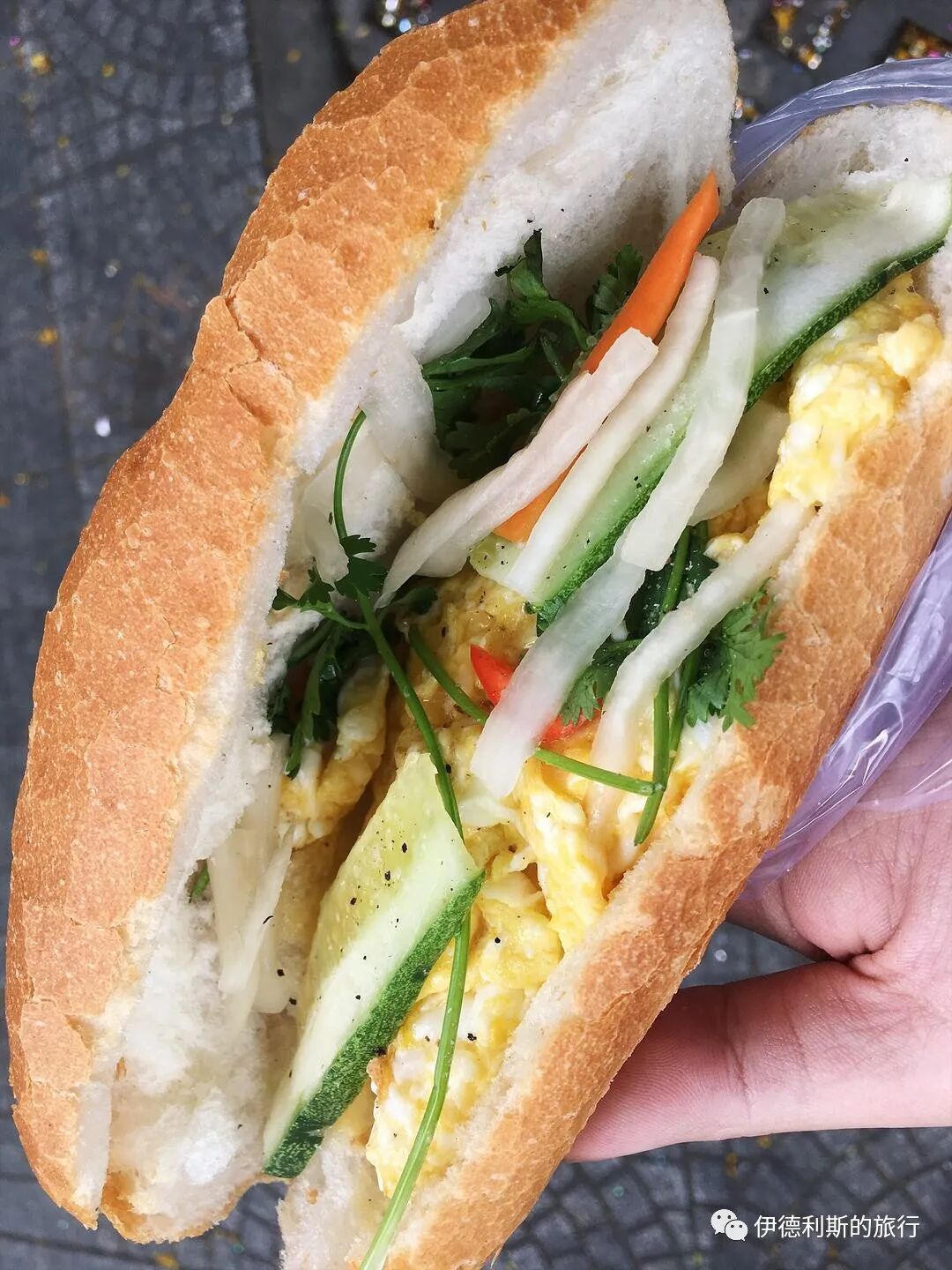
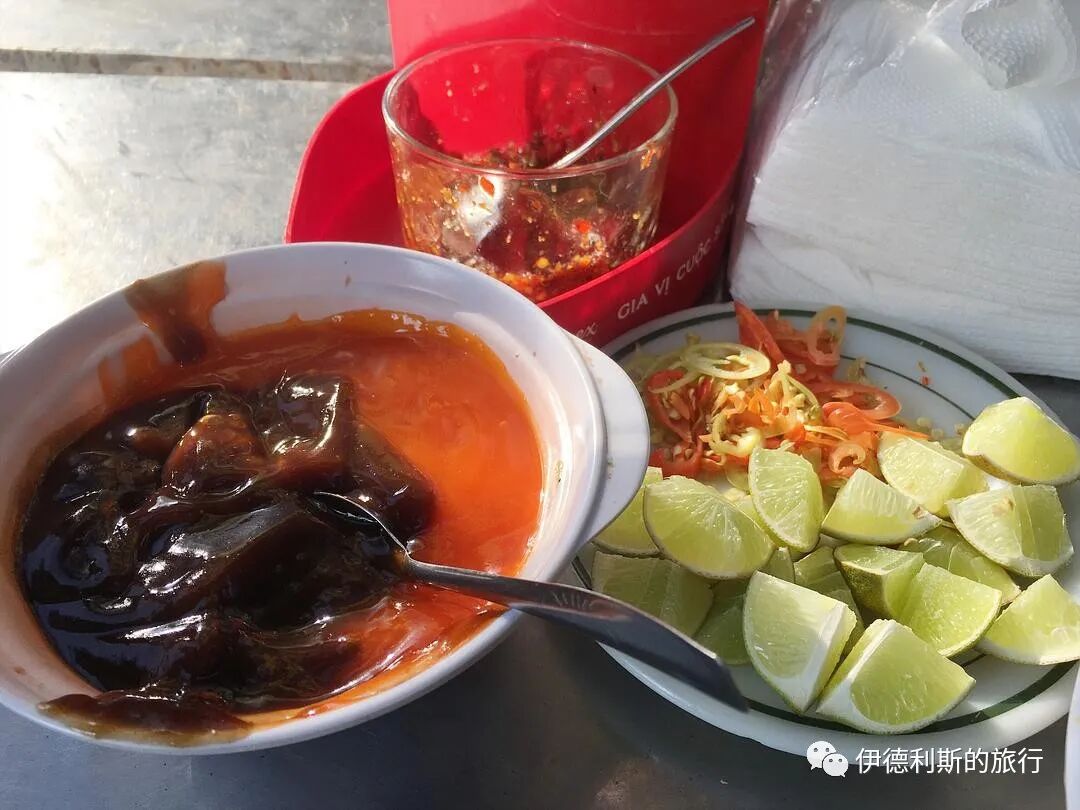
I ate a local street snack, a Vietnamese baguette (Bánh mì), right outside the mosque.
The baguette arrived in Saigon after the French occupied the city in 1861. Early on, baguettes were seen as a luxury item because the price of imported wheat was very high.
During World War I, wheat imports stopped, so more cheap rice flour was mixed into Vietnamese baguettes, which made them much fluffier. As prices dropped, the baguette (phap-ban) started to become a part of the everyday diet for Vietnamese people.
Before the 1950s, Vietnamese baguettes were still made in a classic French style, spread with mayonnaise or jam. After Vietnam was divided into North and South in 1954, over one million people moved from the north to the south, which greatly changed the food scene in Saigon. In the late 1950s, some northern immigrants began selling baguettes on the street, and the modern Vietnamese baguette started to take shape.
After the Fall of Saigon in 1975, baguettes were only sold in state-run restaurants and were often served with other dishes, which is the origin of today's practice of dipping baguettes into rice noodle soup (pho). After Vietnam started its socialist market economy reforms in 1986, the baguette (banh mi) became a common street food again.
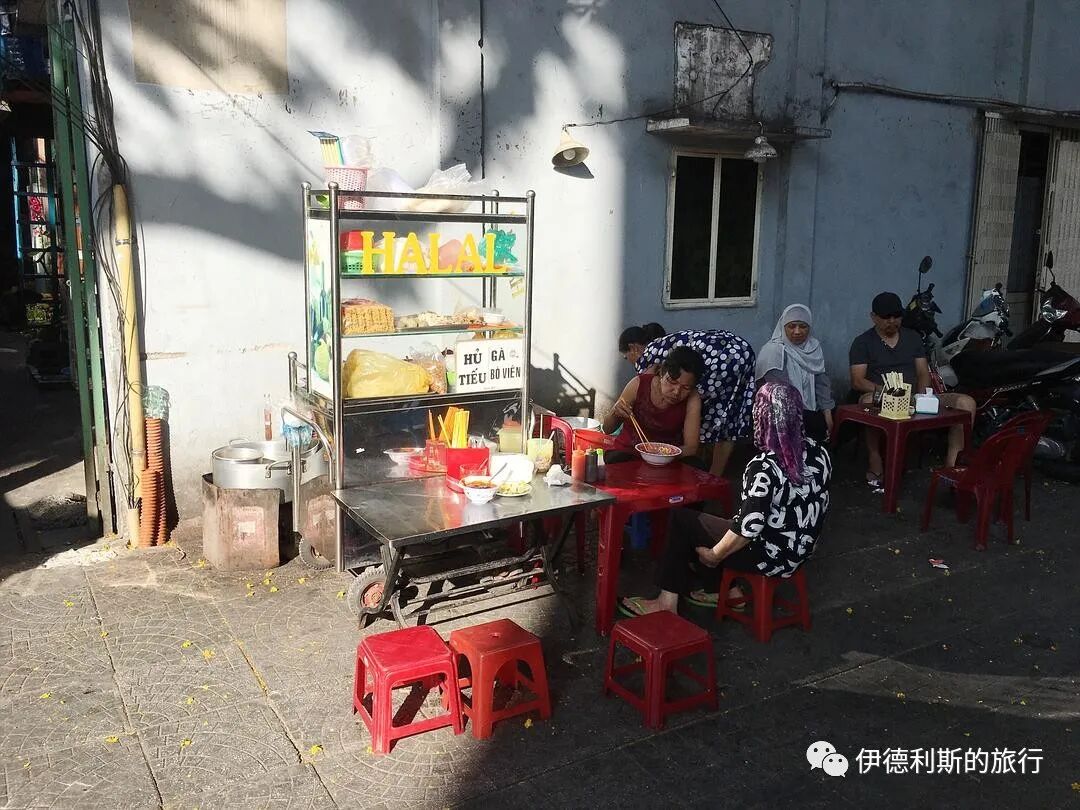
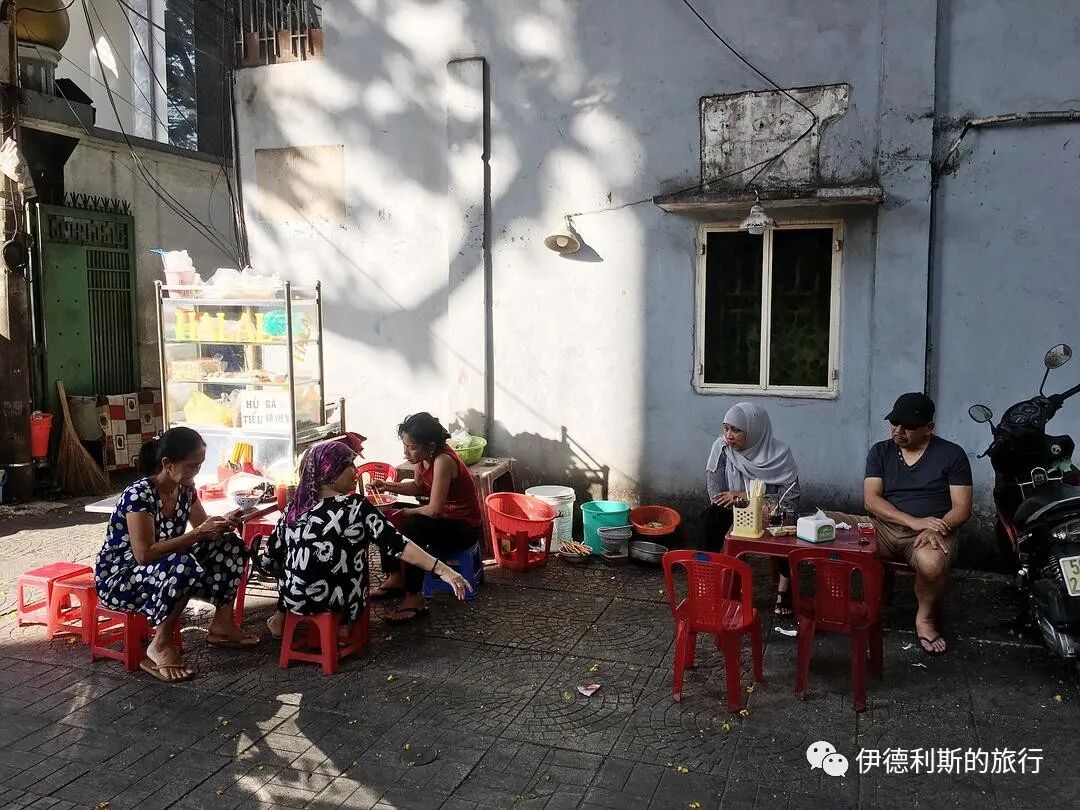
Every morning until noon, there is a small shop selling rice noodle soup (pho) right by the mosque entrance.
Chicken rice noodle soup (pho ga)
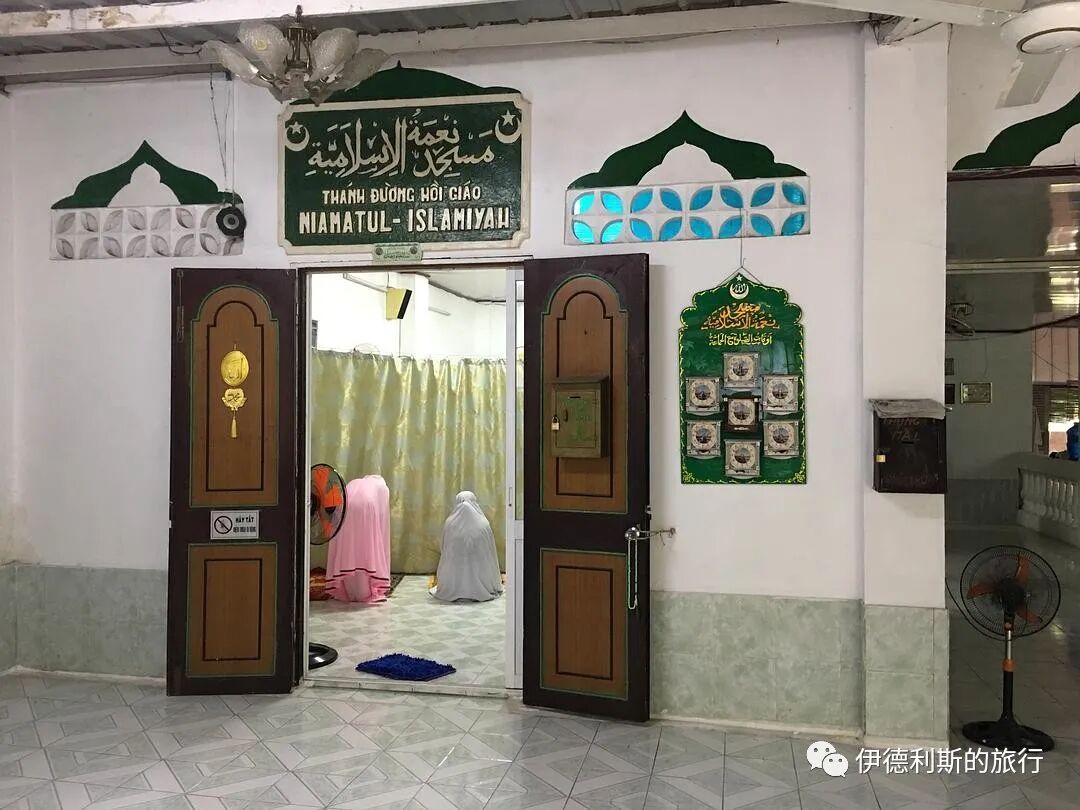
4. Niamatul Islamiyah Mosque
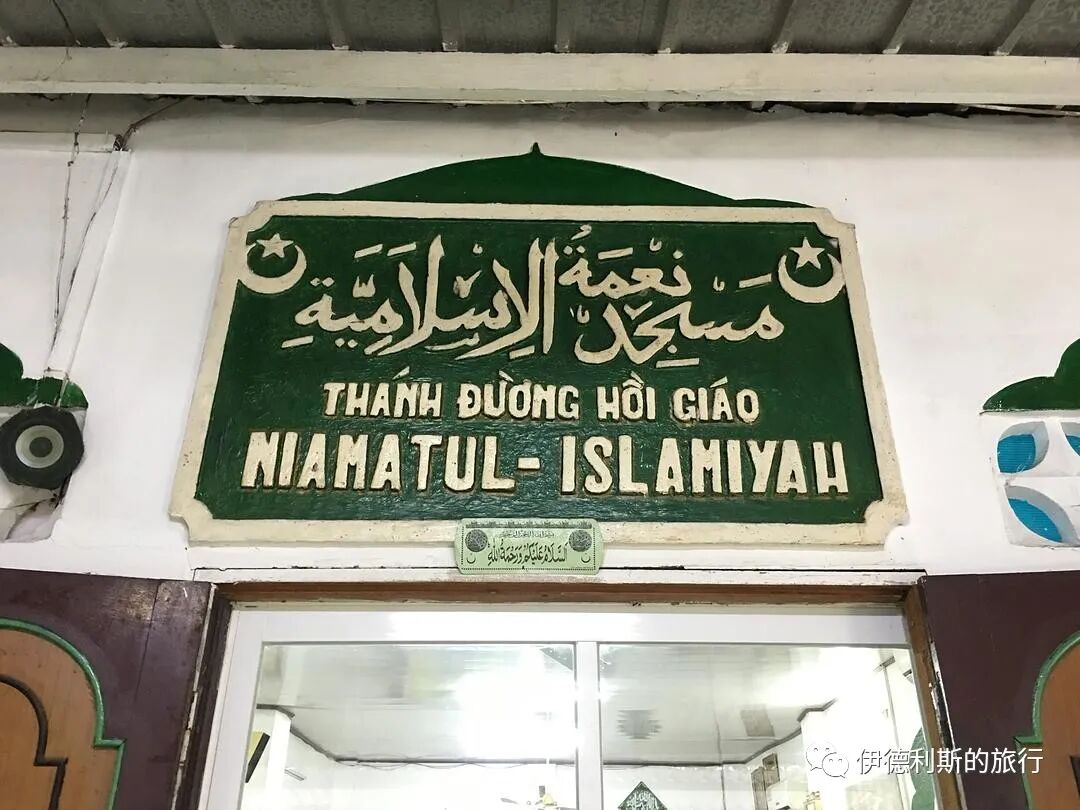
Niamatul Islamiyah Mosque is tucked away, so most tourists have a hard time finding it. I first heard about this place from an article on the Saigon website titled "Take a Tour of D10’s 64-Year-Old Mosque."
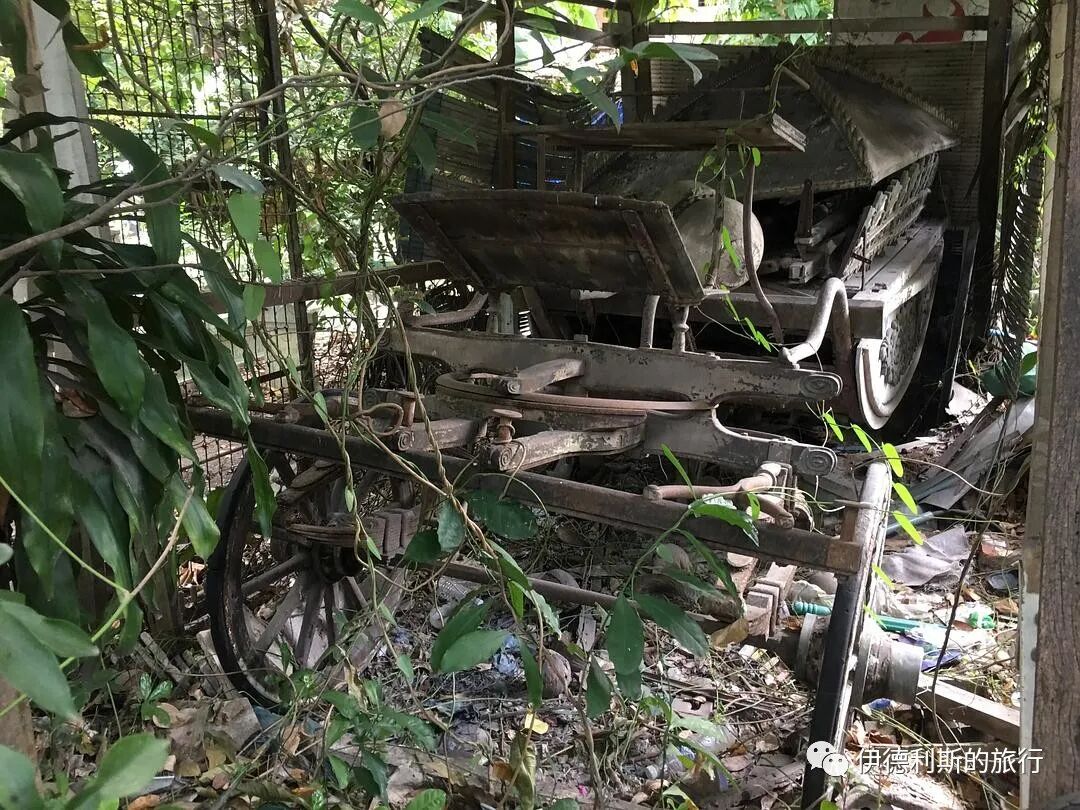
The Niamatul Islamiyah mosque dates back to a cemetery built by South Indian Tamil Muslims in the late 19th century. The site still preserves a graveyard and an old horse-drawn carriage used to transport the deceased.
In 1952, Indian Muslims built the mosque next to the cemetery to use when visiting graves to remember the dead. After 1975, most of these Indian Muslims returned to their hometowns, and the mosque continued to be used by Cham Muslims.
According to my online research, there are now over 40 Muslims of "Hoa" (Vietnamese Chinese) descent who pray here. From what I saw on the spot, the Muslims here look very different from the Austronesian-speaking Cham people and actually look a lot like the Han Chinese from the Chaoshan and Minnan regions. But when I chatted with everyone, they all just said they were Cham people who returned to Vietnam from Cambodia.
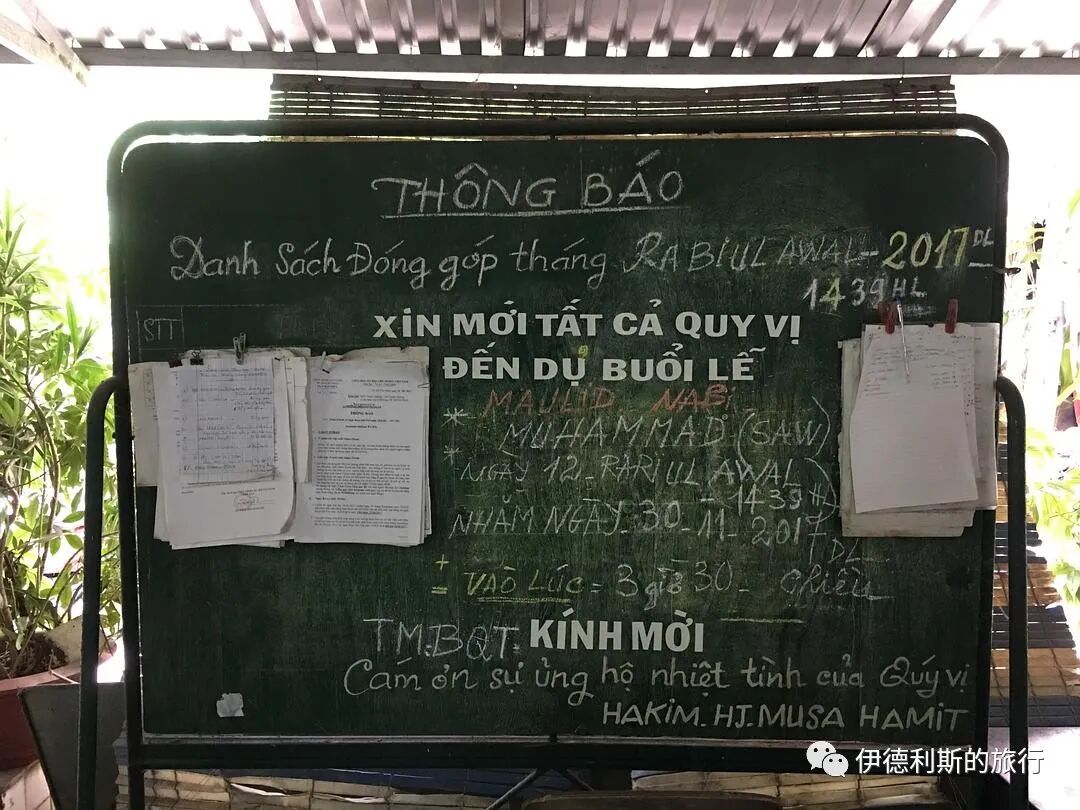
The young man on the far right is named Hakim, and he acted as our translator because his English is very fluent. When the older men heard I was from China, they talked to me a lot about the country. They knew there are many Muslims in Xinjiang and even asked me how far it is from here to Xinjiang.
The older man on the right is the imam of the mosque.
Everyone drinks coffee and hot tea, though they say young Cham people rarely drink hot tea these days.
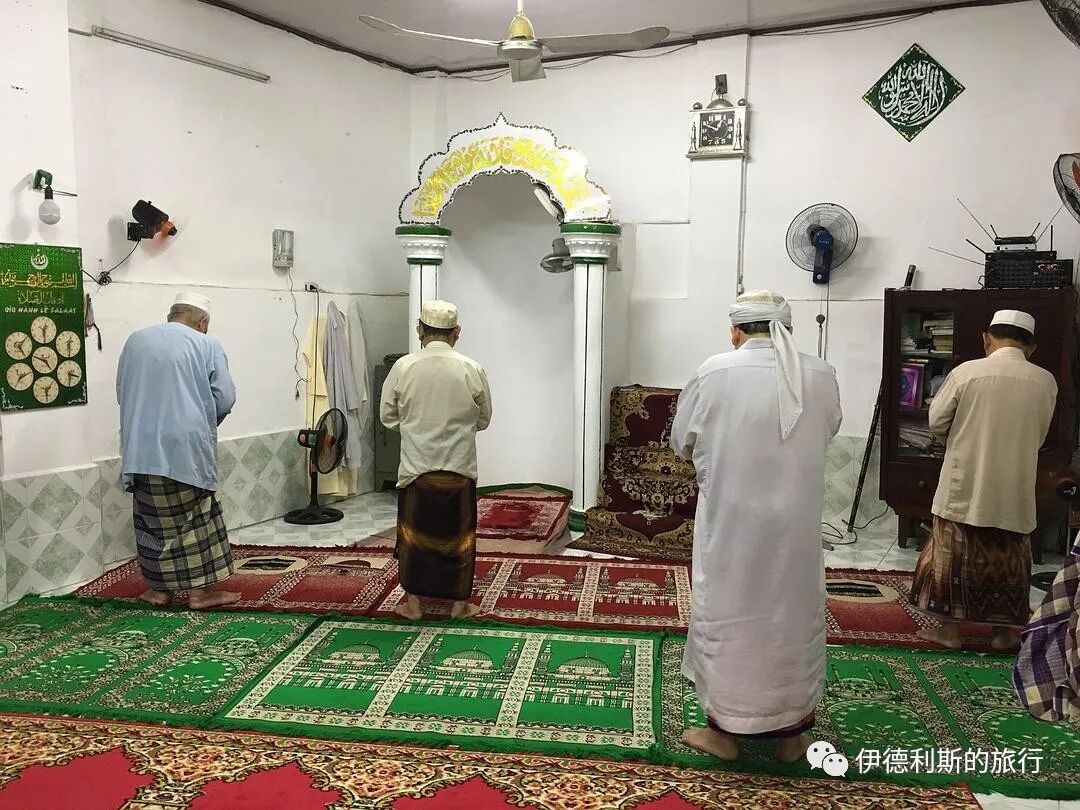
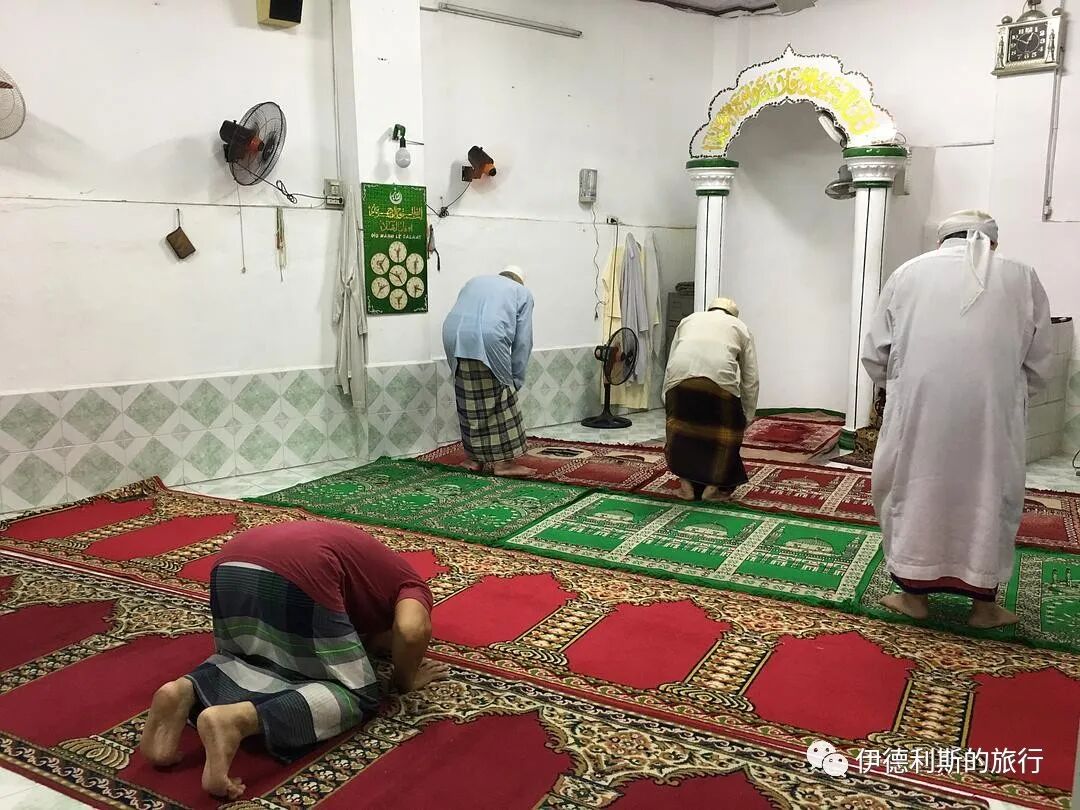
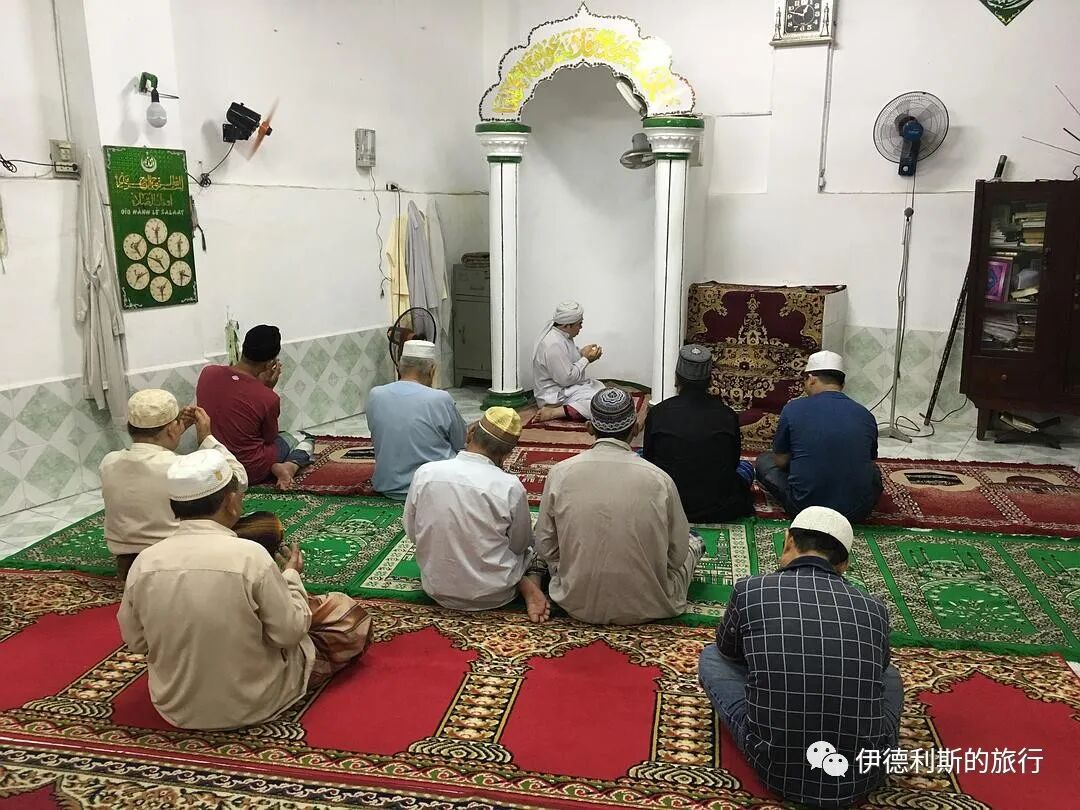
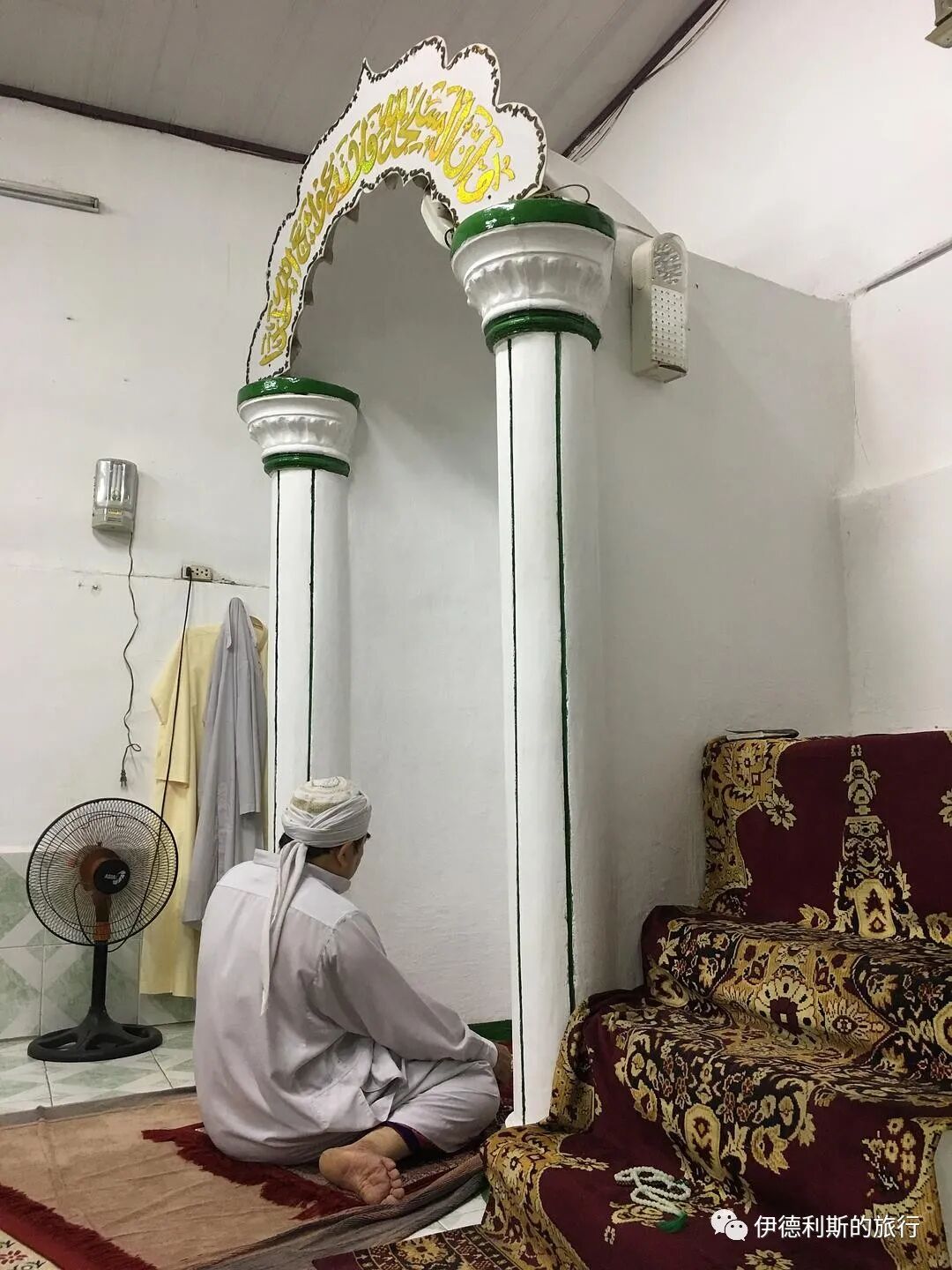
It is almost time for namaz, so the imam changes into his formal sarong (longyi), puts on his white robe and turban, and gets ready to lead the prayer.
Start the prayer.
An older man here treated me to rice noodles (fen) and pastries (gaodian).
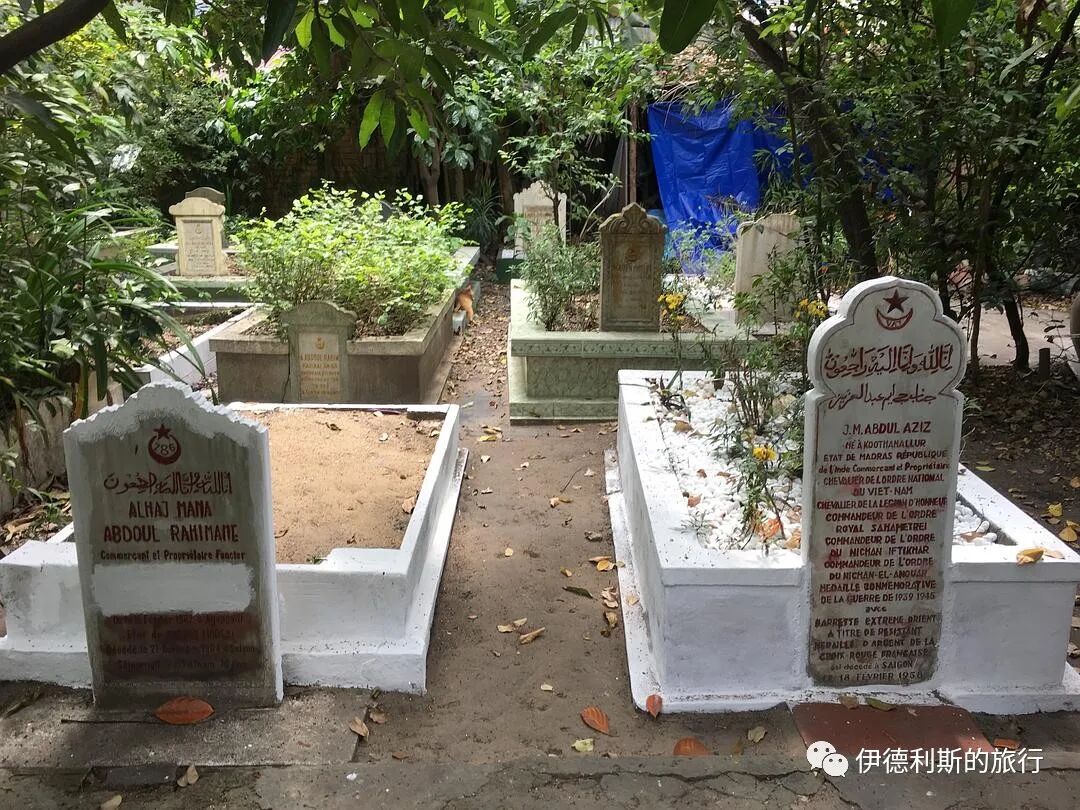
Behind the mosque is a cemetery dating back to the late 19th century. Brother Hakim gave me a detailed explanation.
The horse-drawn carriage for transporting the body (maiti).
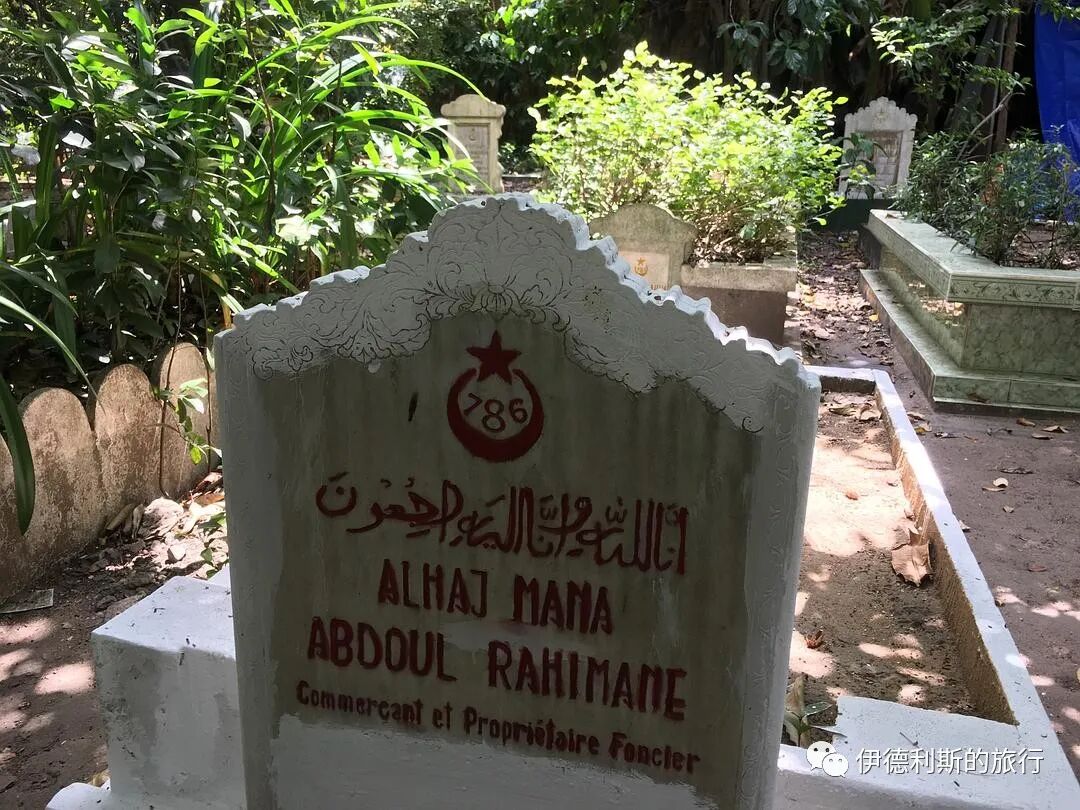
786 is a symbol for halal used in South Asia and Southeast Asia. You can also see it in southwest Yunnan and among the Hui Muslims in Lhasa. If you assign a number to each letter of the phrase Bismillāh al-Raḥmān al-Raḥīm (In the name of Allah, the Most Gracious, the Most Merciful) based on the Arabic abjad system, the sum of all the numbers is 786.
5. Jamiul Islamiyah (Nancy) Mosque
Jamiul Islamiyah Mosque, also called Nancy Mosque, was built by South Indian Tamil Muslims in 1950. After the Indian Muslims left in 1975, it became a mosque for Cham Muslims. The mosque was rebuilt twice, in 1980 and 2004. It is now an Arabic-style building designed by a Vietnamese architect.
There is a barbecue shop next to the mosque and a famous Vietnamese noodle soup shop (pho) called Pho Muslim in the alley behind it. Unfortunately, both were closed for the Tet holiday when I visited.
6. Jamiul Anwar Mosque
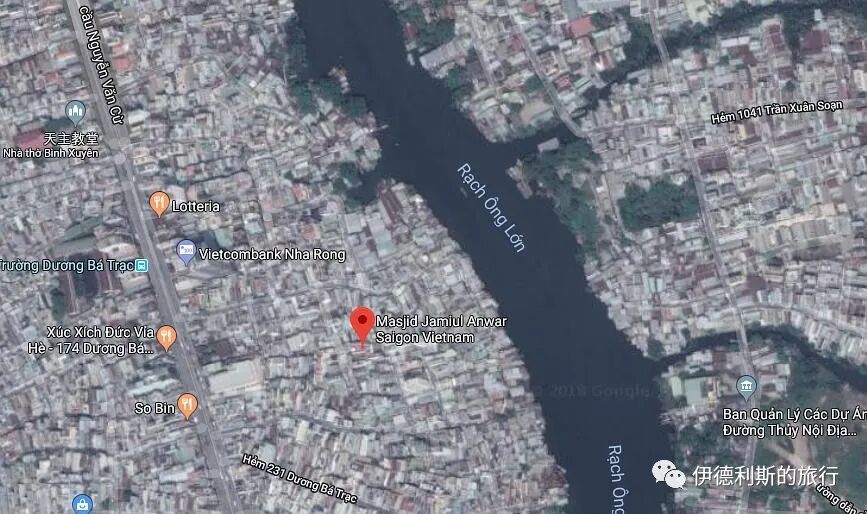
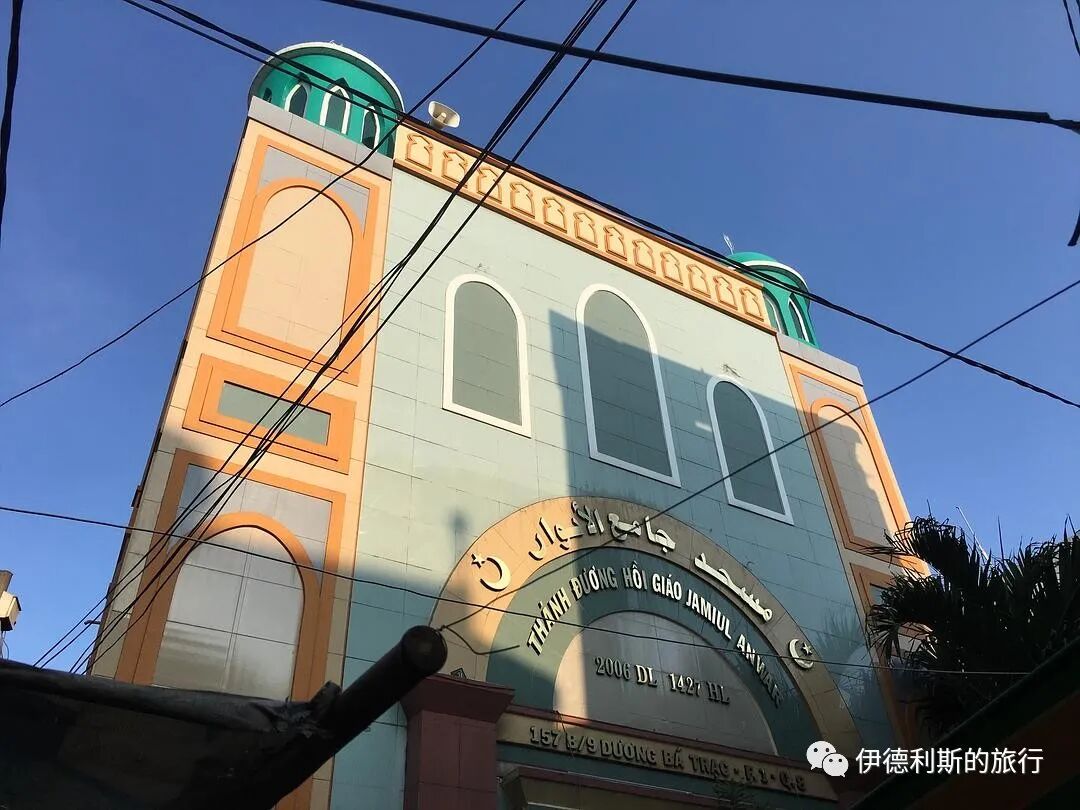
Jamiul Anwar Mosque was built with aid from Malaysia in 1968. Currently, 240 Cham Muslims pray here.
When the mosque was first built, the area around it was still a watery countryside on the edge of the city. But as the city grew, the area is now full of residential neighborhoods. The mosque is tucked away inside a maze of complicated alleyways.
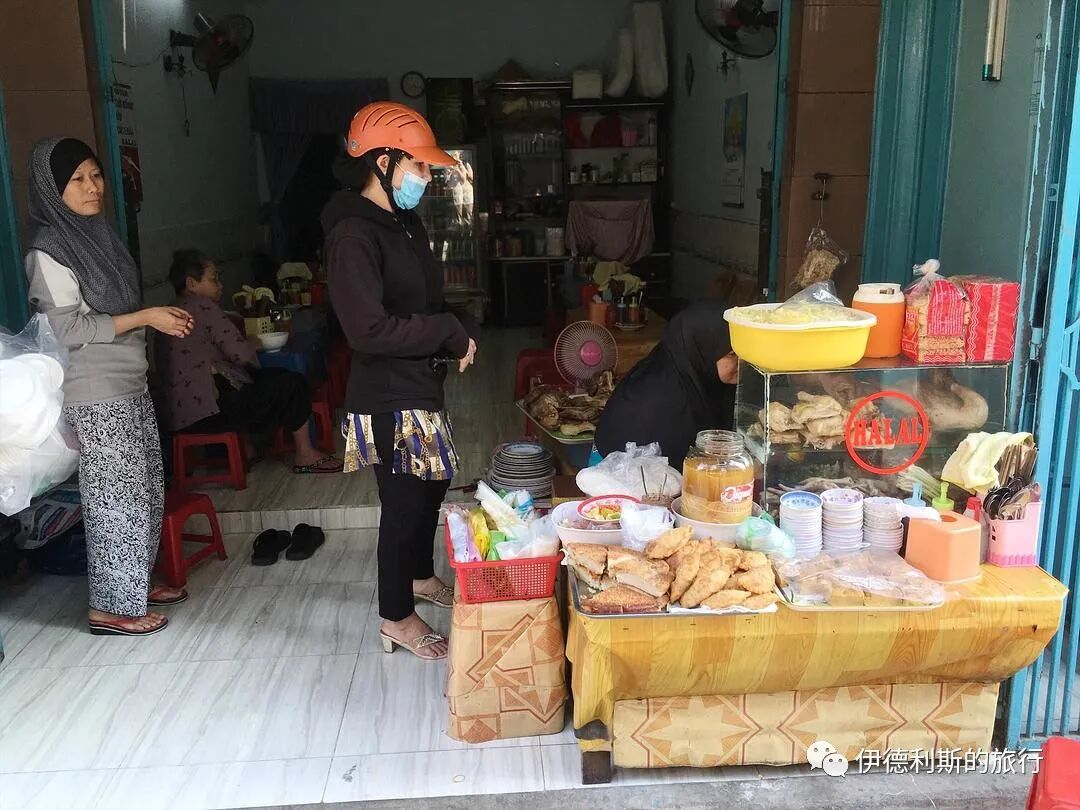
On the way to the mosque, there is a halal snack shop.
The lady there speaks English, and we had a great time chatting.
Delicious desserts.
Duck noodle soup (yaruofen).
The Cham Muslims, Kinh people, and Chinese people live together here in great harmony.
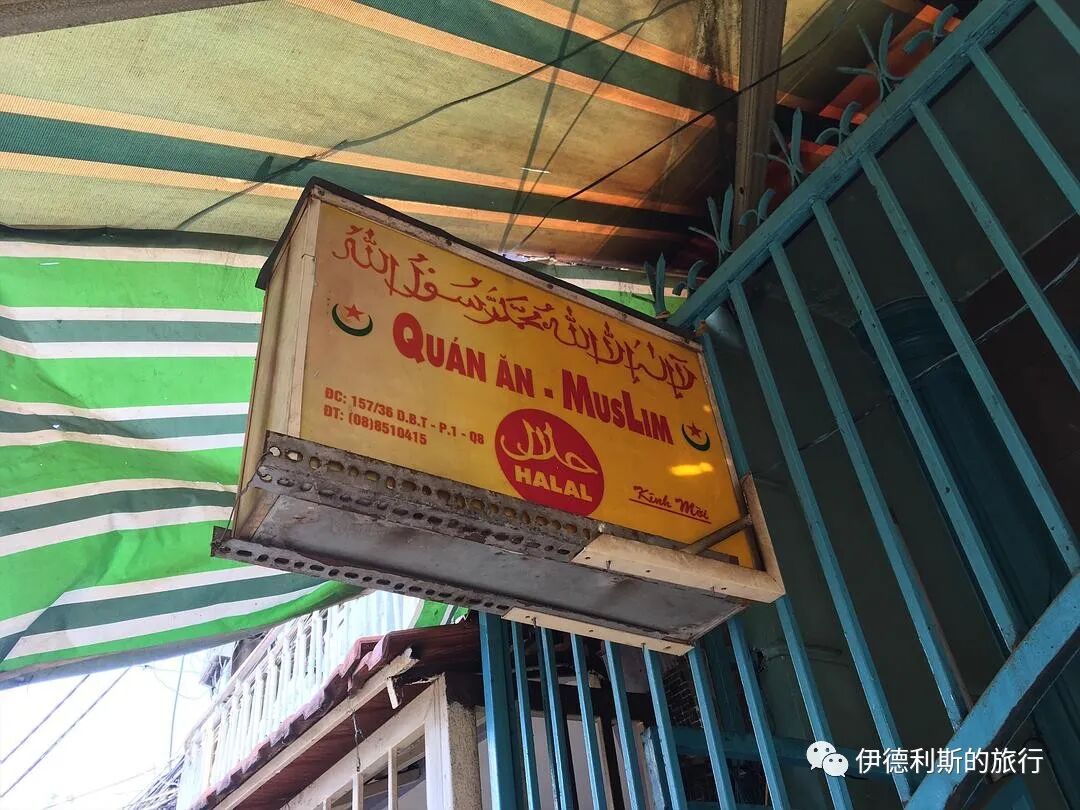
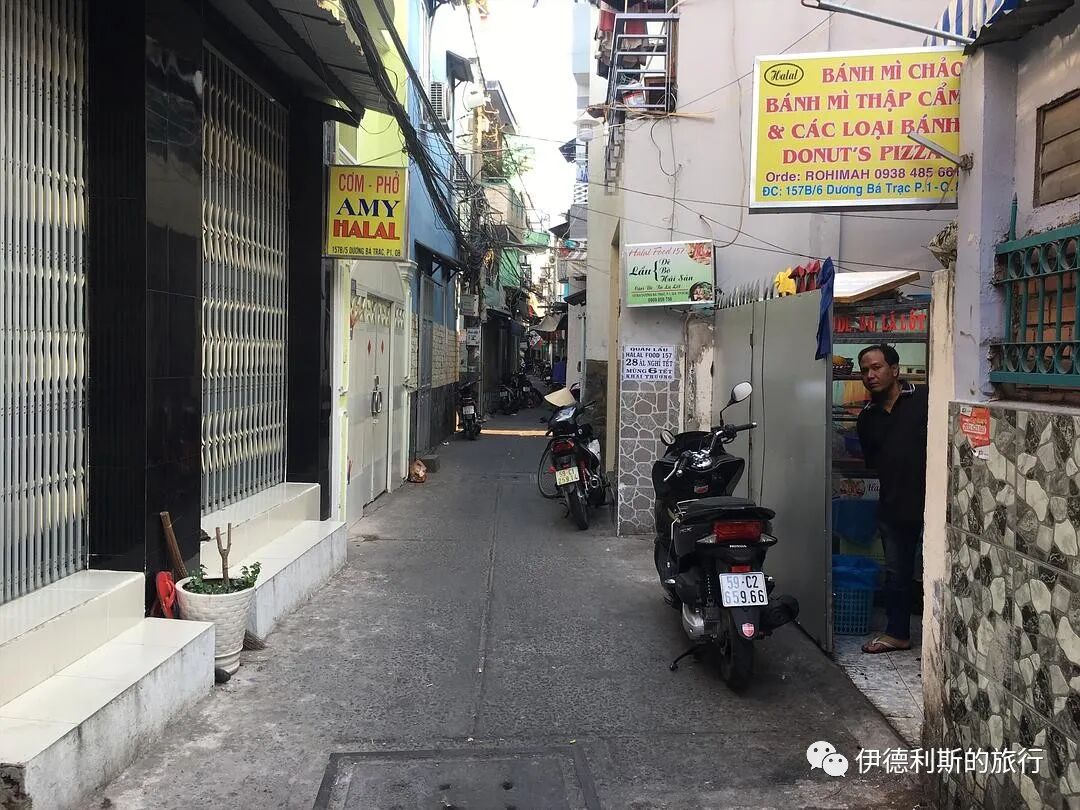
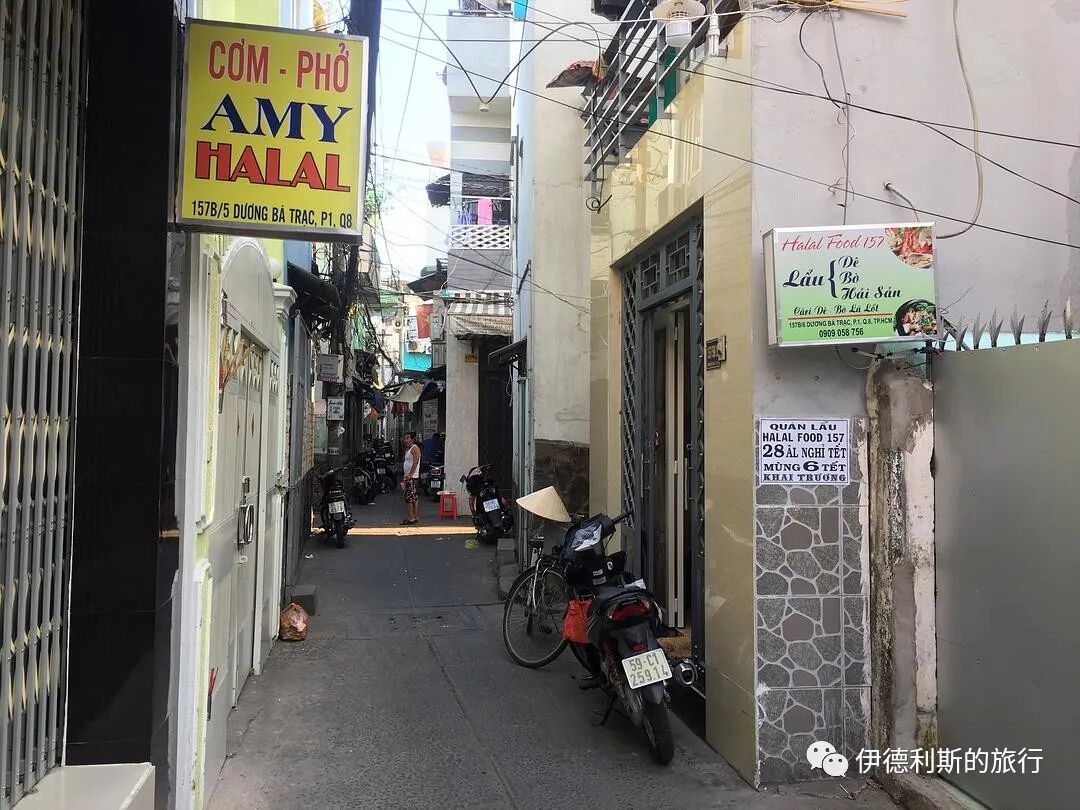
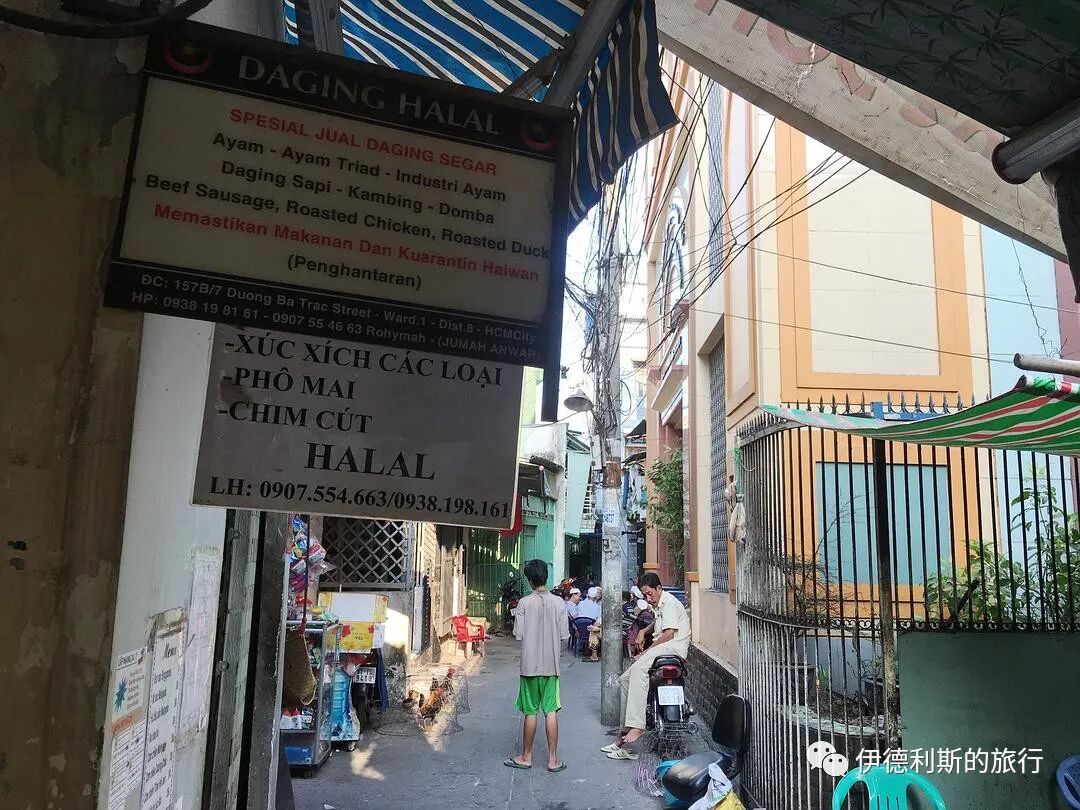
Keep walking into the alley and you will see several Halal signs. This area has the highest concentration of halal snack shops among the few mosques in Ho Chi Minh City.
Finally, I arrived at the mosque.
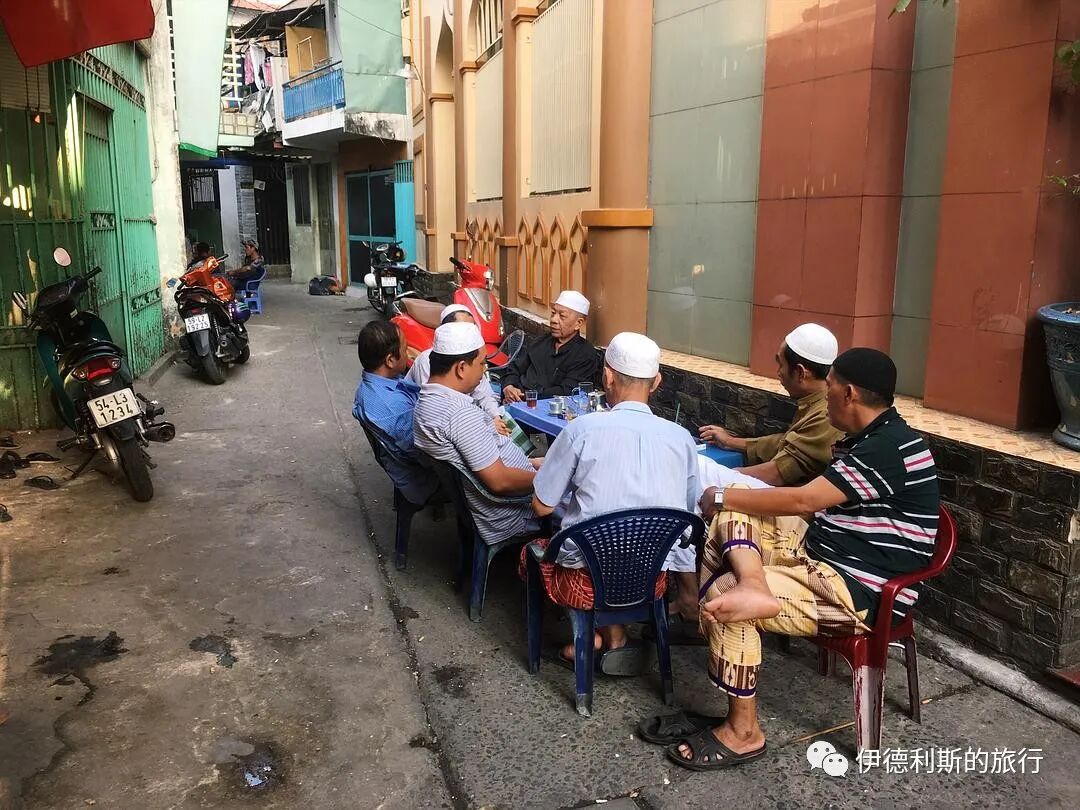
A group of Cham Muslim uncles are chatting.
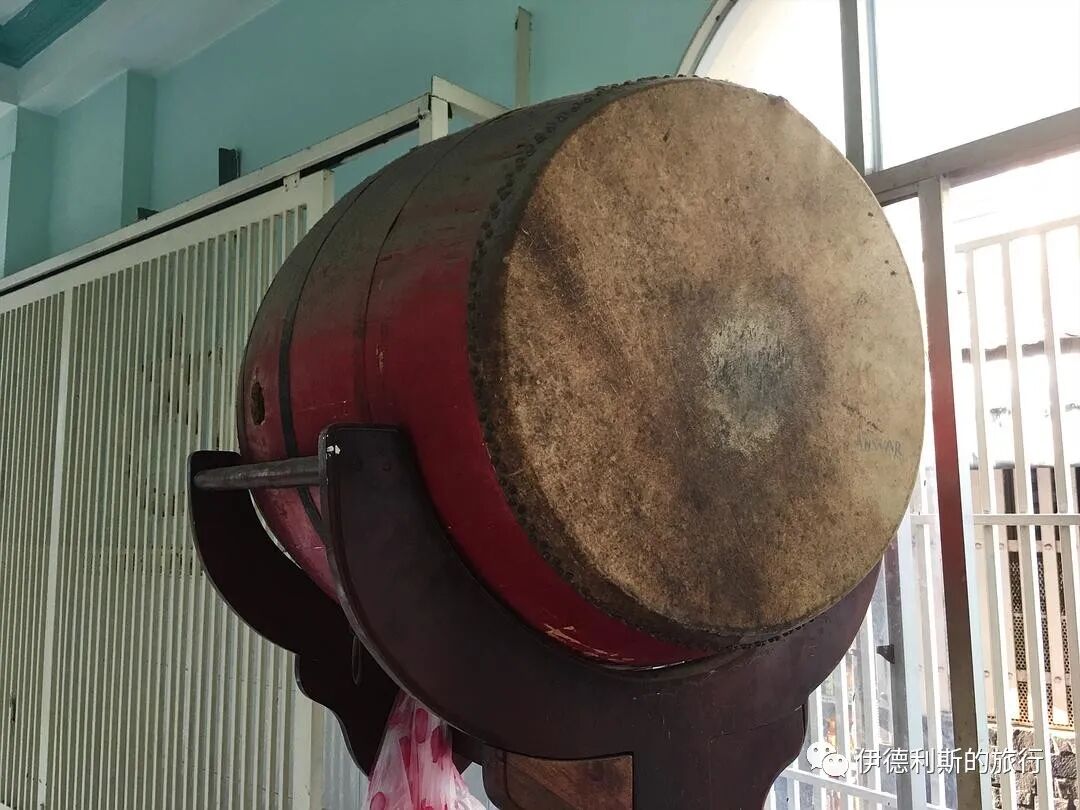
The drum inside the mosque looks like it has been used for many years.
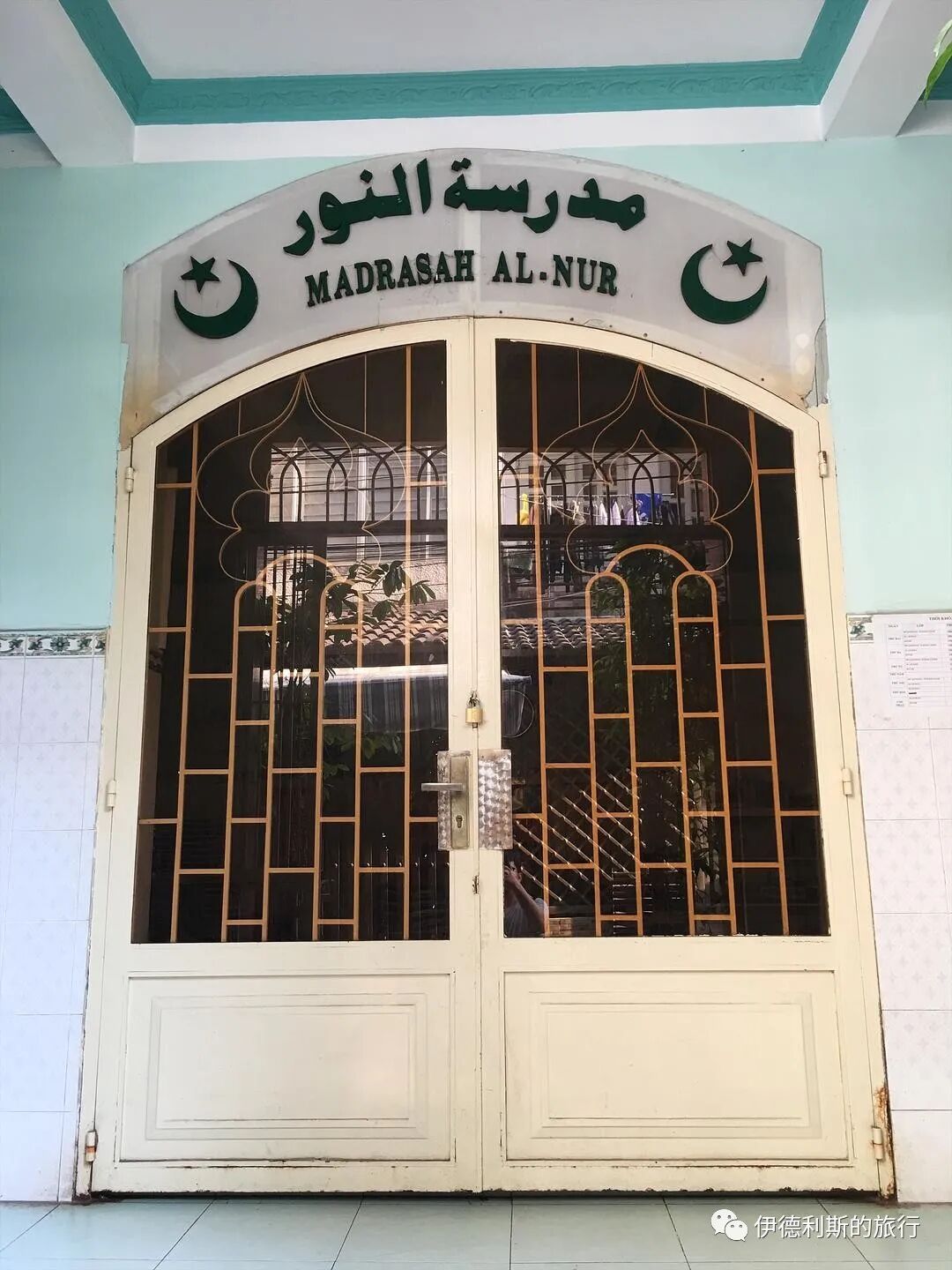
The classroom on the first floor.
The prayer hall on the second floor.
The photos on the wall show mosques in traditional Cham Muslim communities near the border of Vietnam and Cambodia.
7. Cholon Mosque
The Cholon Mosque was originally named Cholon Jamial Mosque and was built by South Indian Tamil Muslims in 1935. After 1975, all the Indian Muslims left, and today 80 Cham Muslims pray here.
Cholon is the most famous Chinese community in Vietnam, located about 5 kilometers from Saigon. Cholon was formed in 1782, and Cholon City was officially established in 1879. Everyone except the Chinese calls this place Cholon.
For more on the scenery of Cholon, see my diary entry Old Dreams of Cholon. Duras’s novel The Lover is set here.
Right next to the Cholon mosque is a local market.
Next door is a halal shop, but it is closed for the Spring Festival holiday. view all
Summary: Ho Chi Minh City — Mosques and Cham Muslims is presented here as a firsthand travel account in clear English, beginning with this scene: During the 2018 New Year holiday, I visited the Hui Muslims who speak the Cham language in Sanya, Hainan. The account keeps its focus on Ho Chi Minh City, Cham Muslims, Vietnam Travel while preserving the names, places, food, and historical details from the Chinese source.
During the 2018 New Year holiday, I visited the Hui Muslims who speak the Cham language in Sanya, Hainan. This sparked my interest in the Cham Muslims of Vietnam and Cambodia, so I decided to visit their communities during the Spring Festival holiday. Worried about the language barrier, I decided against going deep into the traditional Cham communities along the Vietnam-Cambodia border or the Vietnamese interior. Instead, I visited the urban Cham community in Ho Chi Minh City. Luckily, I received a warm welcome from the local Cham Muslims in Ho Chi Minh City and learned a great deal.
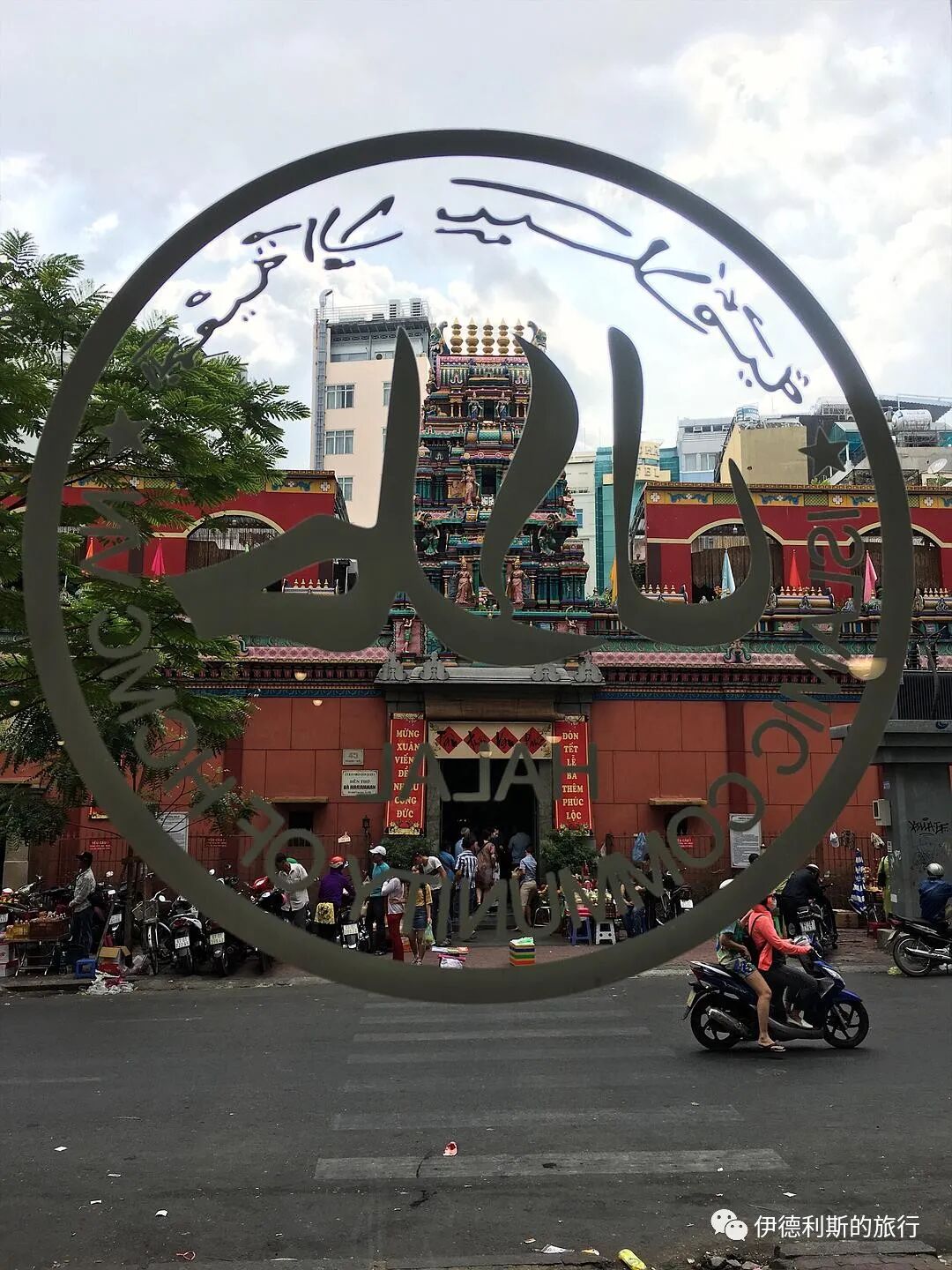
Let me first introduce the history of the Cham people. Champa, also known as Zhanpo, was a country established by the Cham people in southern Vietnam in 192 AD. The Cham people were originally an Austronesian-speaking group that moved from Borneo to the Indochinese Peninsula. After the 4th century, they were strongly influenced by India, using Sanskrit and practicing Brahmanism and Buddhism. Because their land was narrow and fragmented, the Champa Kingdom focused on maritime trade. During the Song and Yuan dynasties, it became an important trading port on the Maritime Silk Road. Chinese merchant ships sailing from Guangzhou or Quanzhou, as well as Arab and Persian ships coming from the Indian Ocean and the Persian Gulf, all chose to stop in Champa. Because of this, many Arab and Persian merchants lived in Champa during the Song and Yuan dynasties.
Two stone tablets with Arabic Kufic script were discovered in the cities of Phan Thiet and Phan Rang in southeastern Vietnam. The first tombstone belongs to a road worker named Abu Kamil, who passed away on November 20, 1039. The other stone is a notice about how Muslims lived with the local people. It uses a mix of Kufic and Naskh scripts and is thought to date from 1025 to 1035. The inscription suggests that Arab and Turkic merchants lived here.
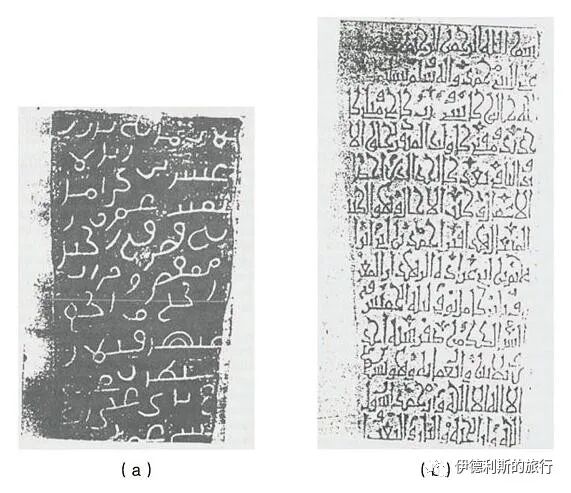
Rubbings of the two inscriptions, taken from Cultural Exchange Between Champa and the Malay World.
After the 12th century, Champa fell into long-term warfare, and many Cham people fled to Cambodia and Malacca. From the mid-to-late 15th century, the Malacca Sultanate (1400–1511) became the most important Islamic nation in Southeast Asia, and Champa maintained close ties with it. In 1511, the Portuguese occupied the Malacca Sultanate, causing many Malays to move away, with some settling in areas where the Cham people lived. These Malay Muslims integrated with the Cham people, who also spoke an Austronesian language, through trade and marriage, leading many Cham to convert to Islam.
Western missionary M. Mahot MEP began living in Champa in 1676, and his records are considered the earliest and most reliable Western accounts of Champa's conversion to Islam. In a letter written in July 1678, he noted: 'Regarding the Champa religion, Malay Muslims are more vigilant than we are; they have immigrated to Champa in large numbers and have brought the Champa king and his court into Islam.' In 1685, M. Feret, a missionary from the Paris Foreign Missions Society who tried to preach in Champa, recorded: 'The King of Champa is a Muslim, and he even obtained a Quran from the Paris Foreign Missions Society for his own use.' According to the 19th-century Cham document Ariya Tuen Phaow, a Malay Islamic leader named Tuen Phaow led a large group of Cham and Malay people back from Cambodia to the Panduranga Kingdom in 1793. They joined forces to resist Vietnam. During this time, many Cham people converted to Islam, and this struggle is known as the final peak of the Islamization of the Cham people.
Starting in the 18th century, some Cham Muslims from Cambodia moved to the Mekong Delta on the Vietnam-Cambodia border. The Mubarak Mosque in An Giang was built in 1750 and is one of the oldest mosques in Vietnam.
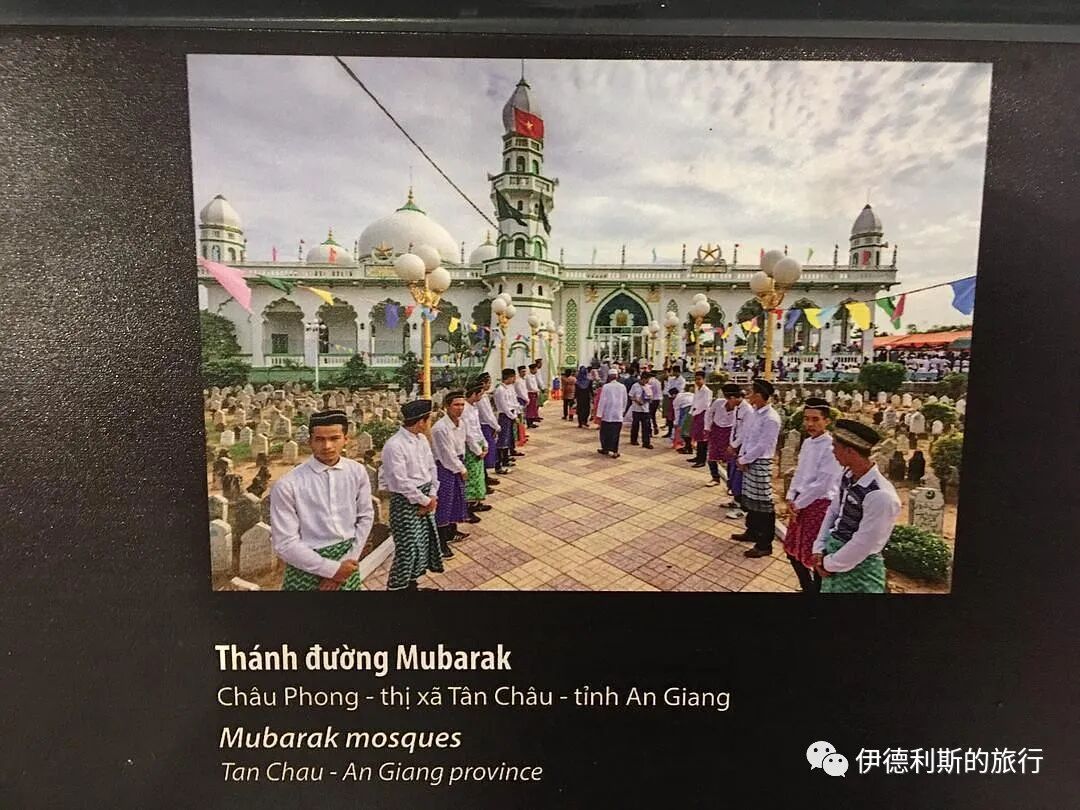
A photo of the Mubarak Mosque at the Vietnam History Museum.
In 1862, France and the Nguyen Dynasty of Vietnam signed the Treaty of Saigon, which officially gave France control of Saigon. From then on, Saigon gradually grew into a French commercial hub in Southeast Asia. During French rule in Vietnam, the government gave the Cham people a relatively loose policy of self-governance, which led many Cham Muslims from Cambodia to move to the Mekong Delta. Most of these Cham people worked as manual laborers or small vendors. At the time, the most influential Muslims in Saigon were those from Malaysia and Indonesia who came to trade. The first mosque in Saigon, the Al Rahim Mosque, was built by Malaysian and Indonesian Muslims in 1885.
Tamil Muslims from South India began arriving in Saigon to trade in the late 19th century. Between the 1930s and 1950s, they built the Saigon Central Mosque in the city center, the Niamatul Islamiyah Mosque next to the Indian Muslim cemetery in the northwest suburbs, the Jamiul Islamiyah Mosque in the southwest suburbs, and the Cholon Mosque in the Chinese district of Cholon to the west.
In 1954, Vietnam was divided into North and South, and Saigon came under the rule of the South Vietnamese government. The South Vietnamese government maintained good diplomatic relations with the Federation of Malaya at the time and later with the Malaysian government. Many Cham mosques in Vietnam were built with help from Malaysia in the 1950s and 1960s. In Ho Chi Minh City, these include the Haiyat Al Islam mosque built in 1962, the Alsa Adah mosque built in 1968, and the Jamiul Anwar mosque built in 1969, among several others.
After Vietnam unified in 1975, the government began seizing and collectivizing all private property in South Vietnam, almost always without any compensation. Indian Muslim merchants in Saigon were hit hard and lost all of their property. Fearing further persecution, most Indian Muslims left. The mosques they left behind later became places of worship for Cham Muslims.
There are currently 15 mosques in Ho Chi Minh City. I visited 8 of them on this trip, but since 2 were closed, I actually went inside 6. I will share my experiences with you below.
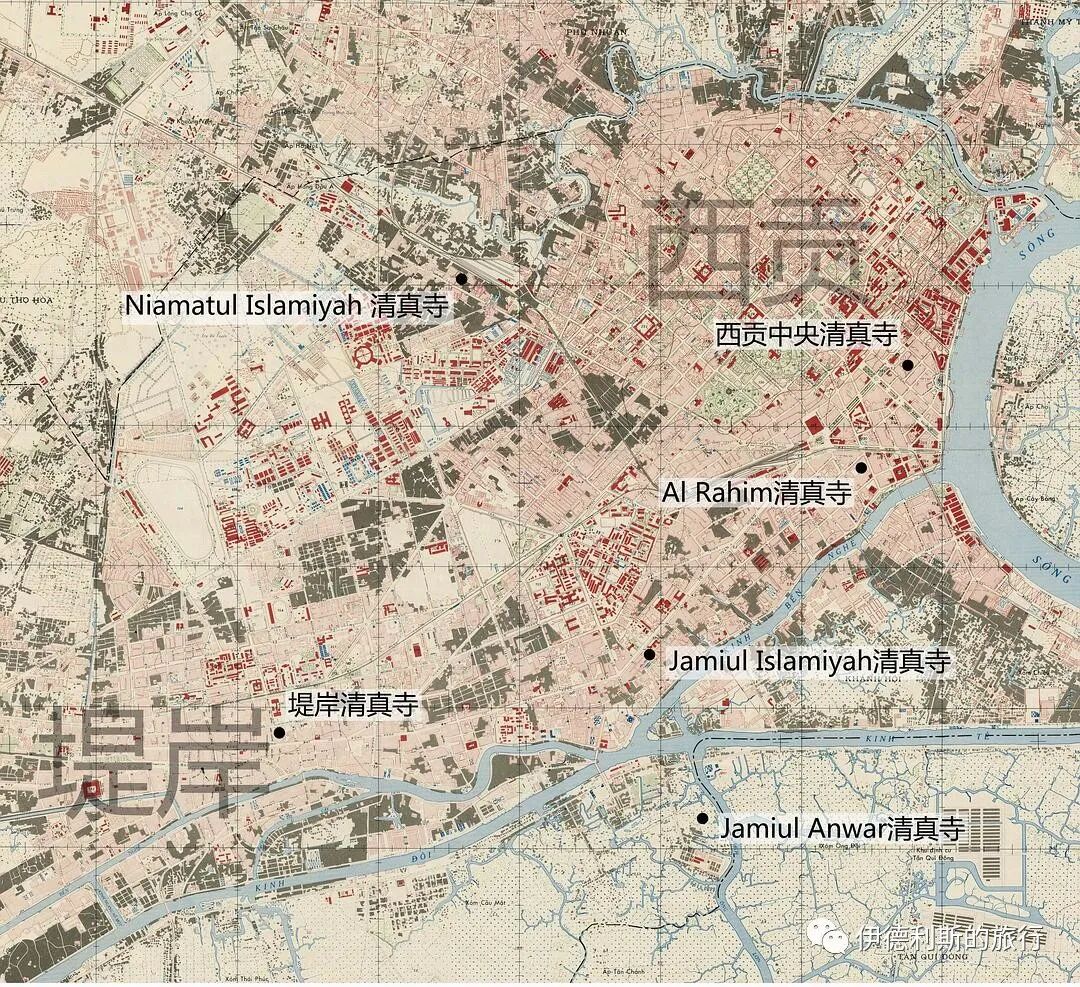
A 1968 map of Saigon.
1. Saigon Central Mosque.
Saigon Central Mosque was built by South Indian Tamil Muslims in 1935 and is the most important mosque in Saigon.
After Vietnam was unified in 1975, Muslims in Saigon faced a huge shock. The Vietnamese Muslim Congregation was closed, and its founding members fled to the United States. Saigon Central Mosque and its religious school were both occupied. Many Muslim leaders were detained and their whereabouts became unknown, while a large number of Muslims were imprisoned or fled the country.
It was not until 1978 that Vietnam lifted a series of bans on Muslims. After 1979, the Saigon Central Mosque reopened thanks to the efforts of Muslim diplomats. However, for Friday prayers (Jumu'ah), the mosque had to sign a written agreement with local police and administrators every week. They had to list the number of attendees, their names, and their addresses before they could pray, and they had to re-register every single week.
Besides this, Islamic books had to be translated into Vietnamese before officials decided if they could enter the country. Books in Arabic and Malay were almost impossible to bring in.
After 1986, Vietnam began allowing mosques to teach Islamic knowledge and Arabic. They also allowed the formation of mosque management committees, which helped Vietnamese Muslims slowly get back on track. Today, the Saigon Central Mosque is the most important mosque in Ho Chi Minh City. Besides the local Cham people, business people from Malaysia, Indonesia, India, and Pakistan, as well as Muslim travelers from all over, come here to pray.
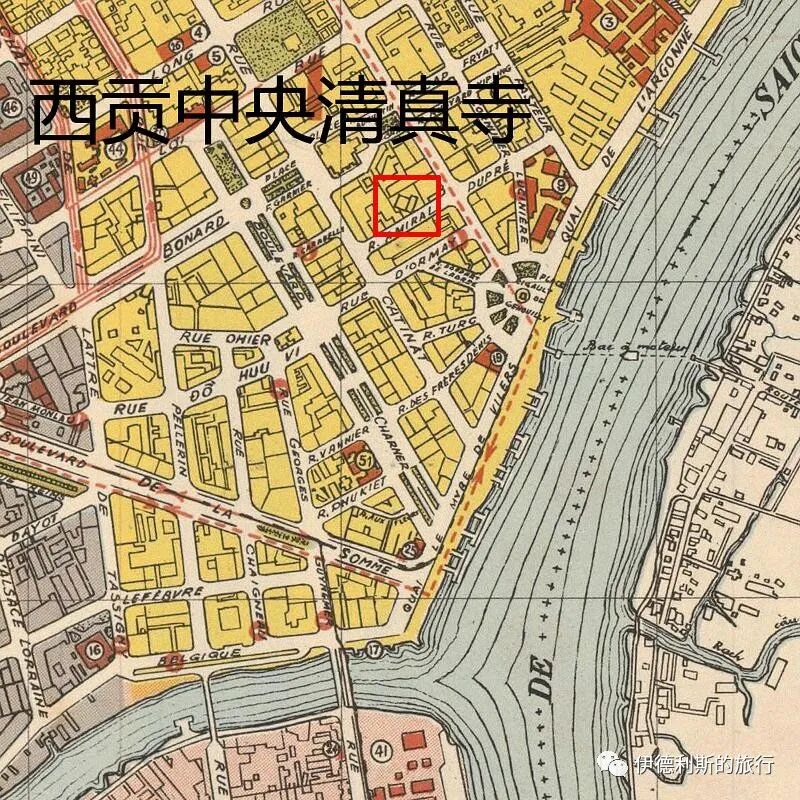
A 1945 map of Saigon.
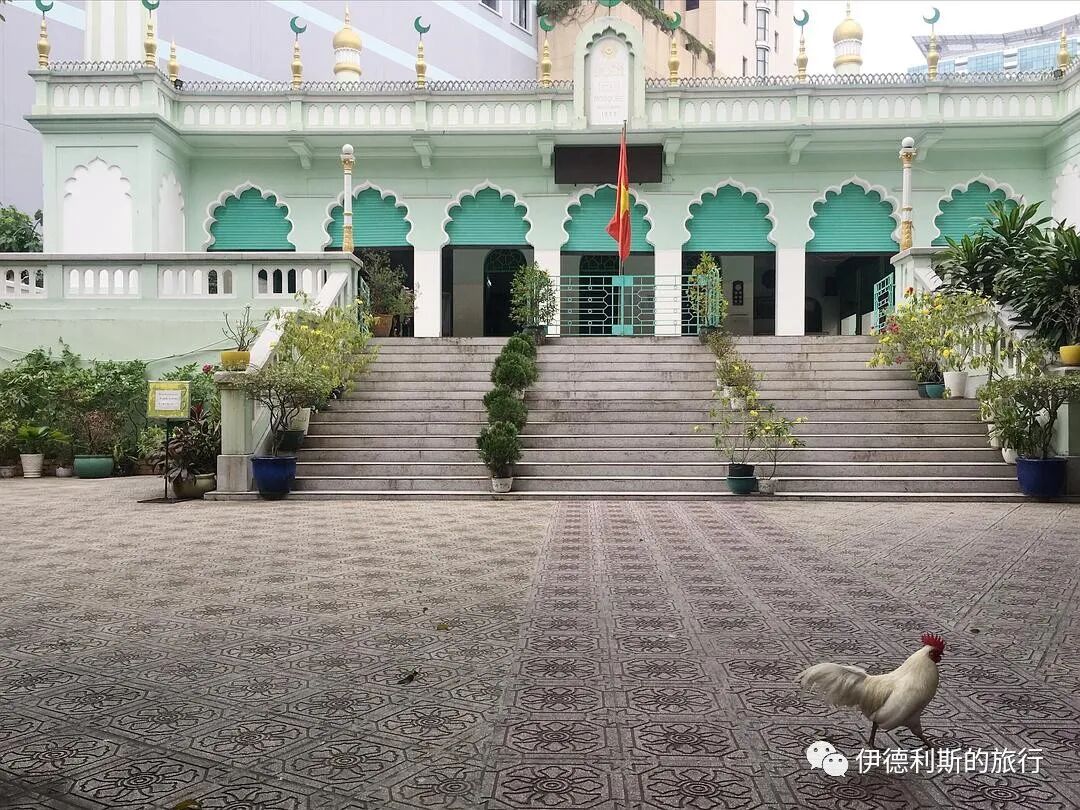
The entire building has a strong South Indian style.
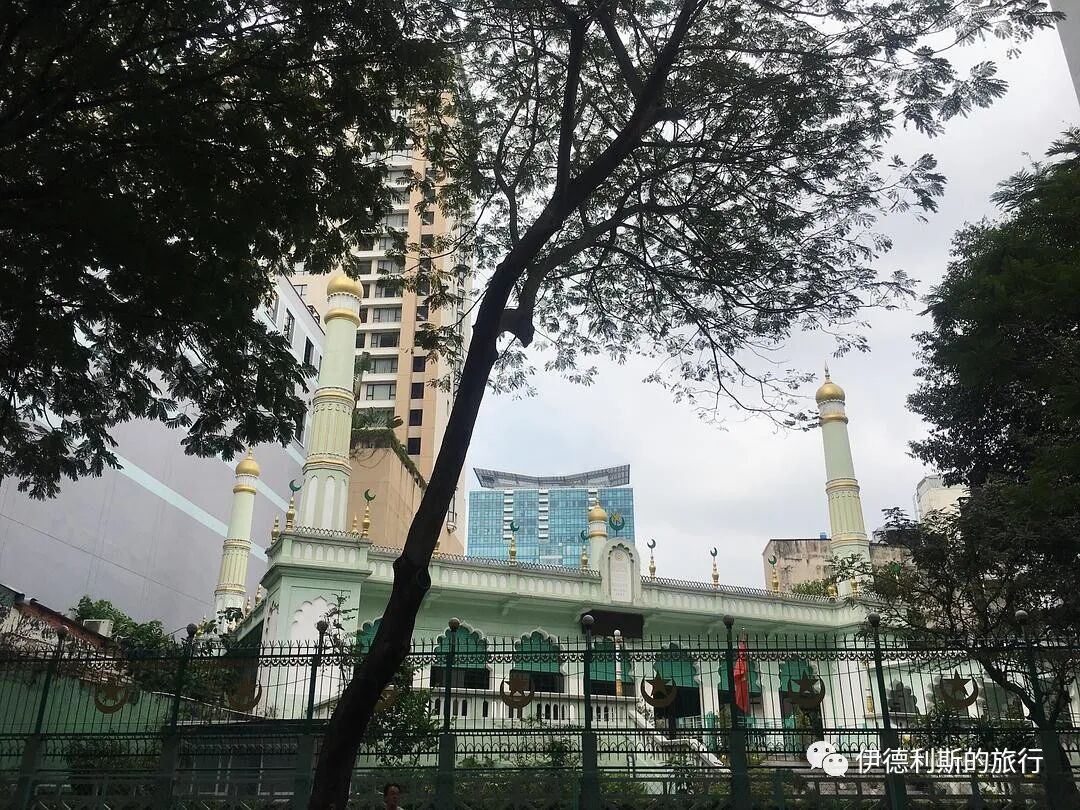
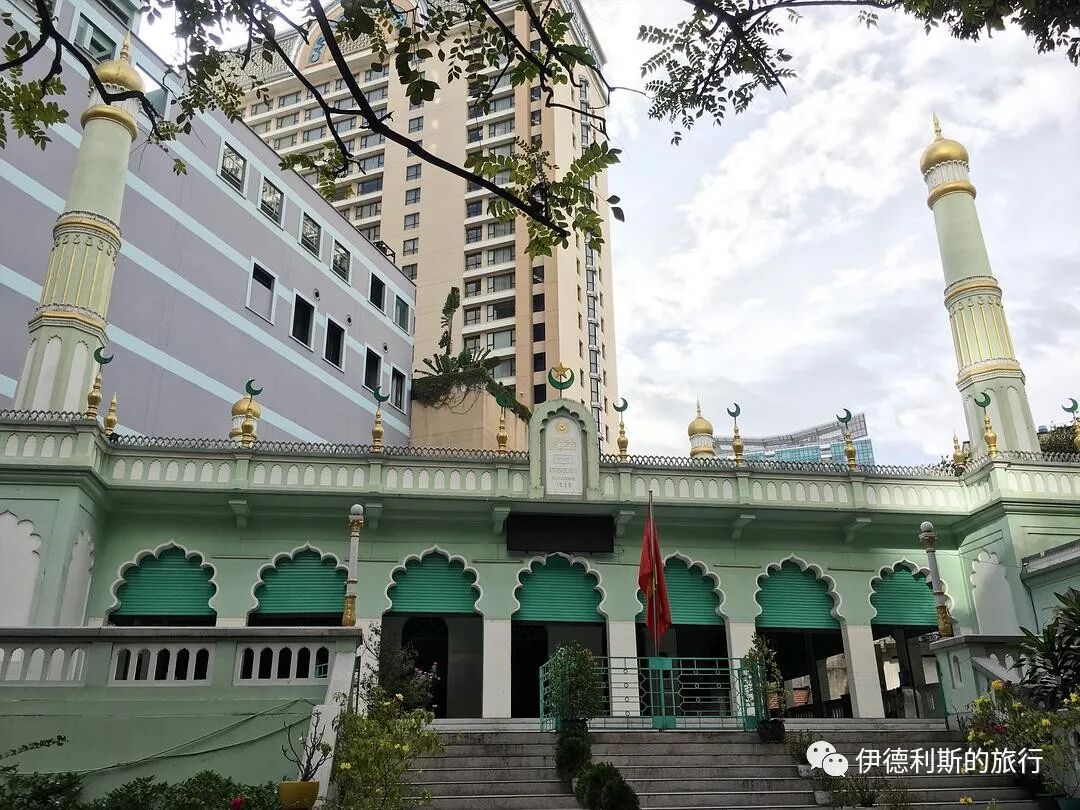
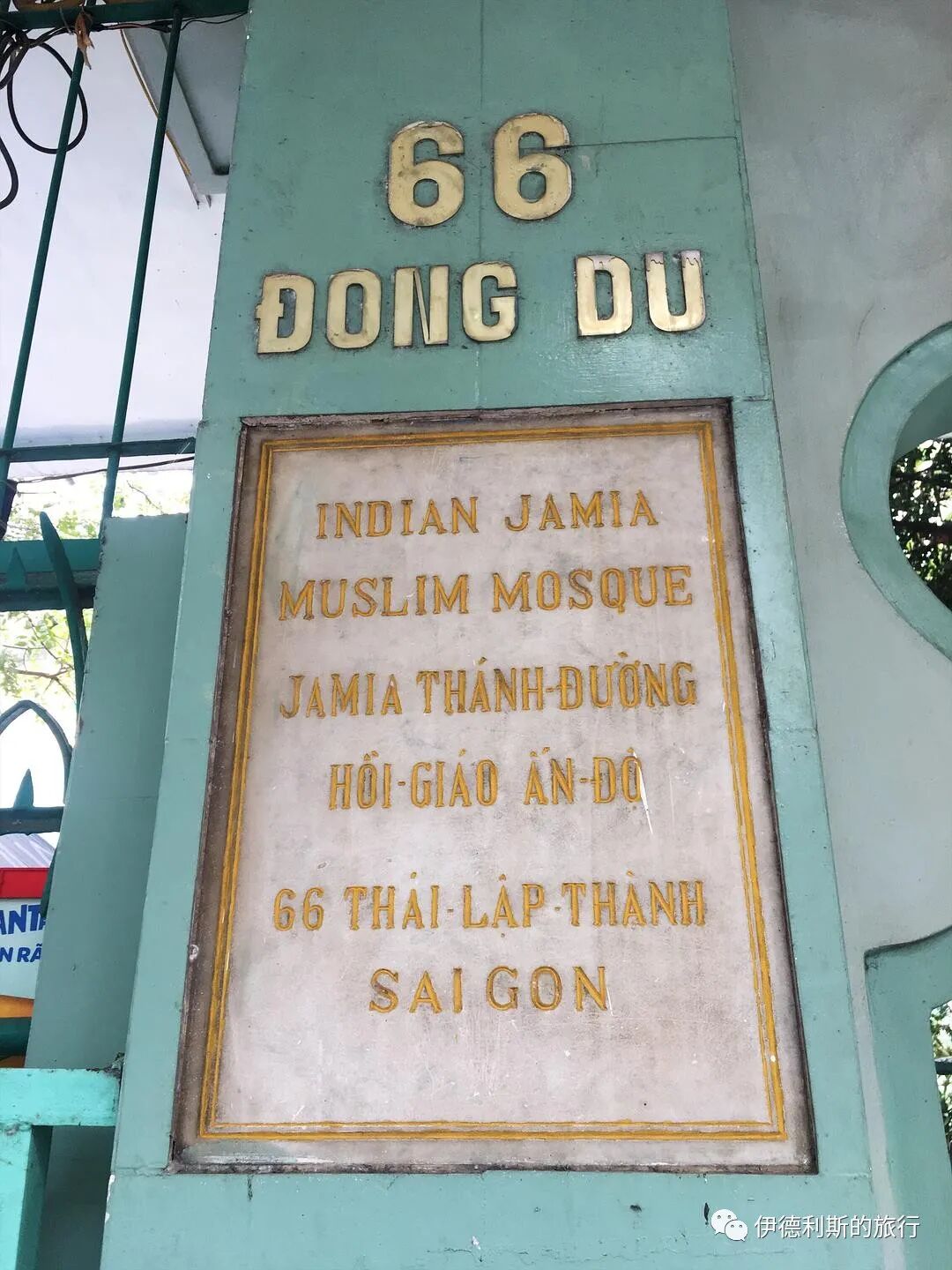
The official name of the Saigon Central Mosque is the Indian Jamia mosque.
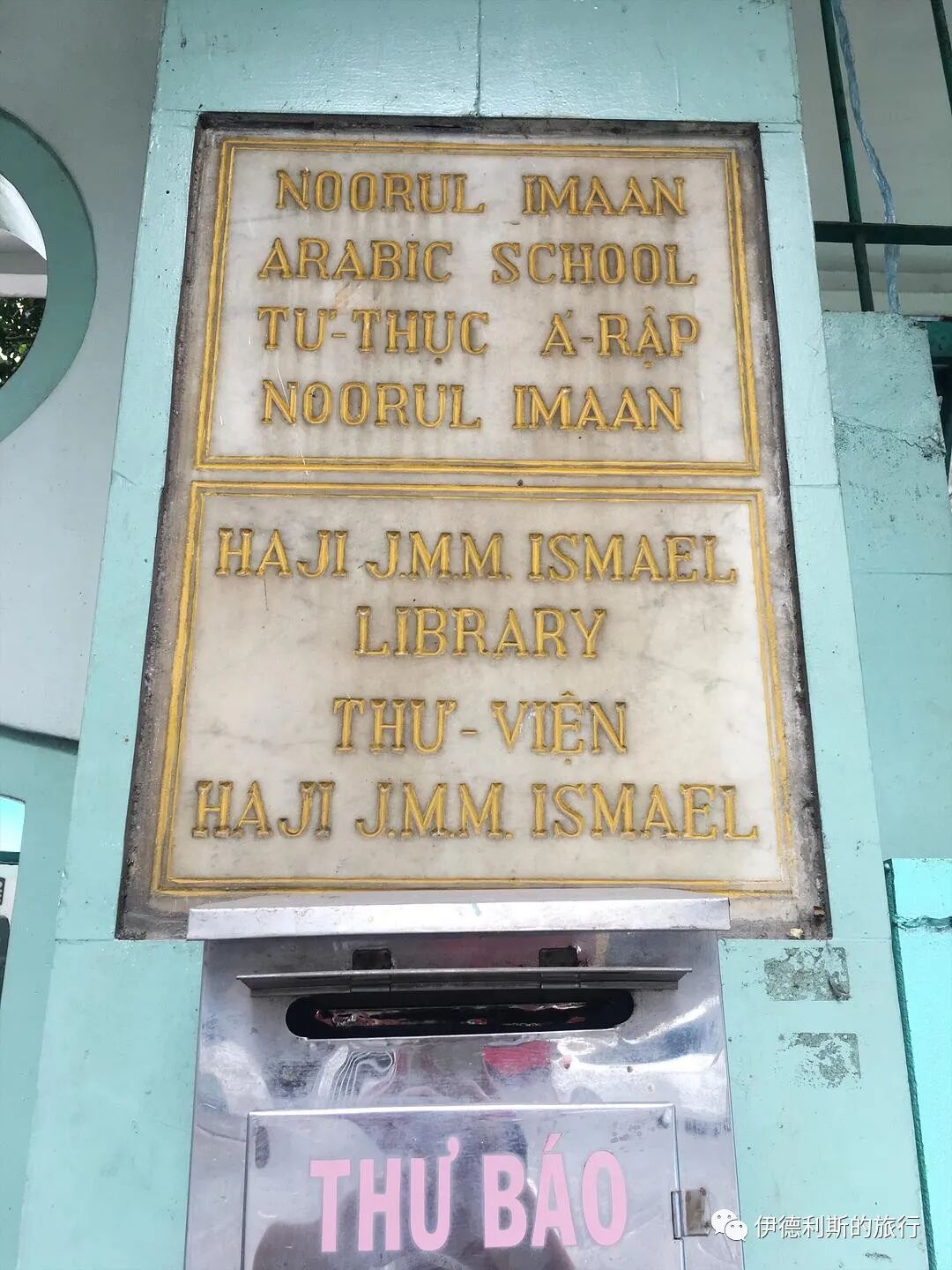
Noorul Imaan Arabic school is an Arabic school, and Haji JMM Ismael Library is an Islamic library.
The pool used for wudu.
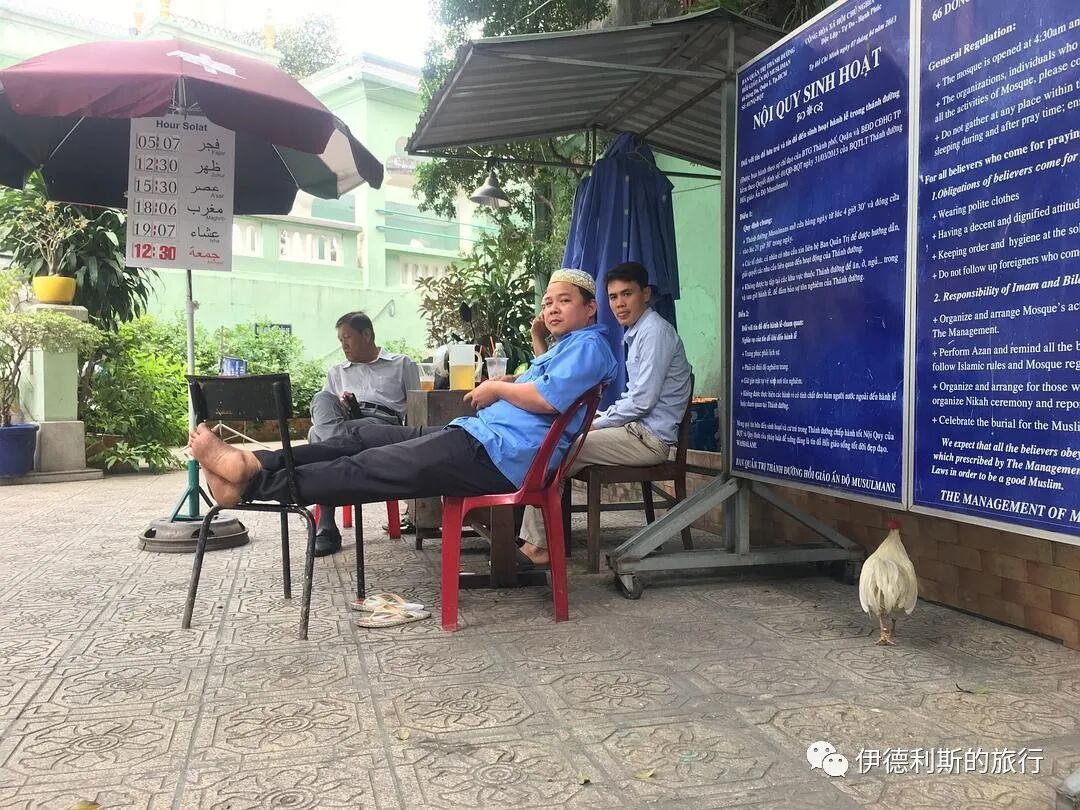
Typical clothing for Cham Muslim men.
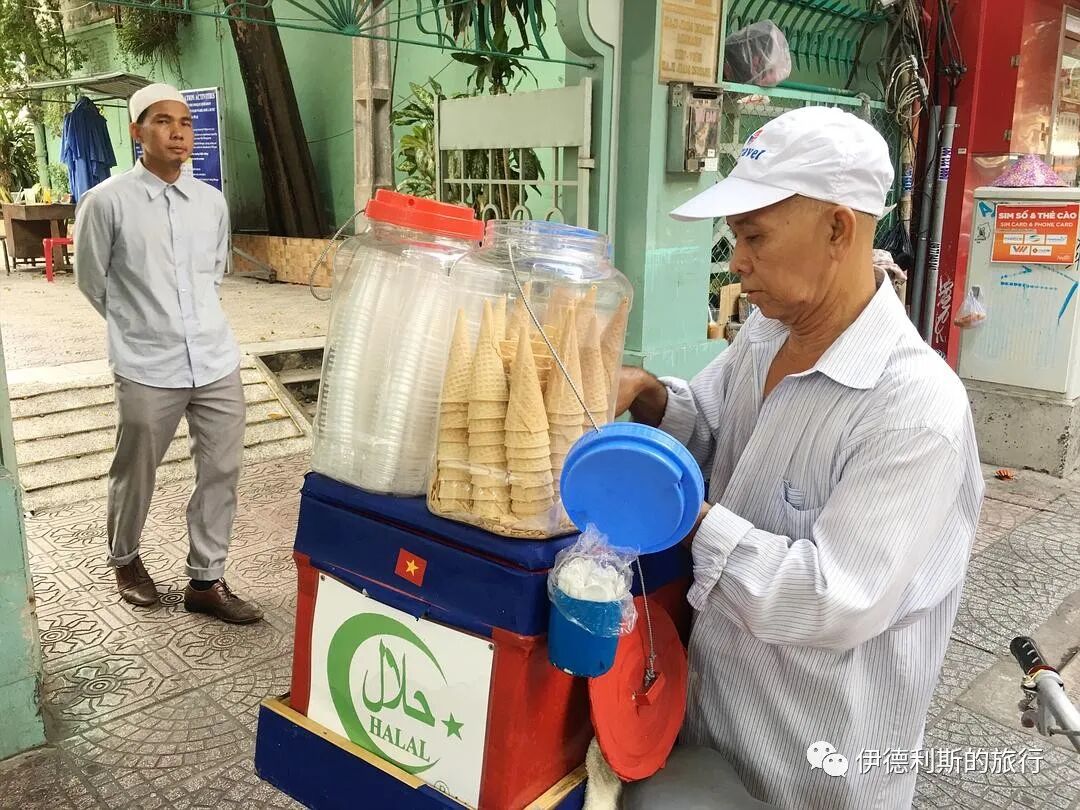
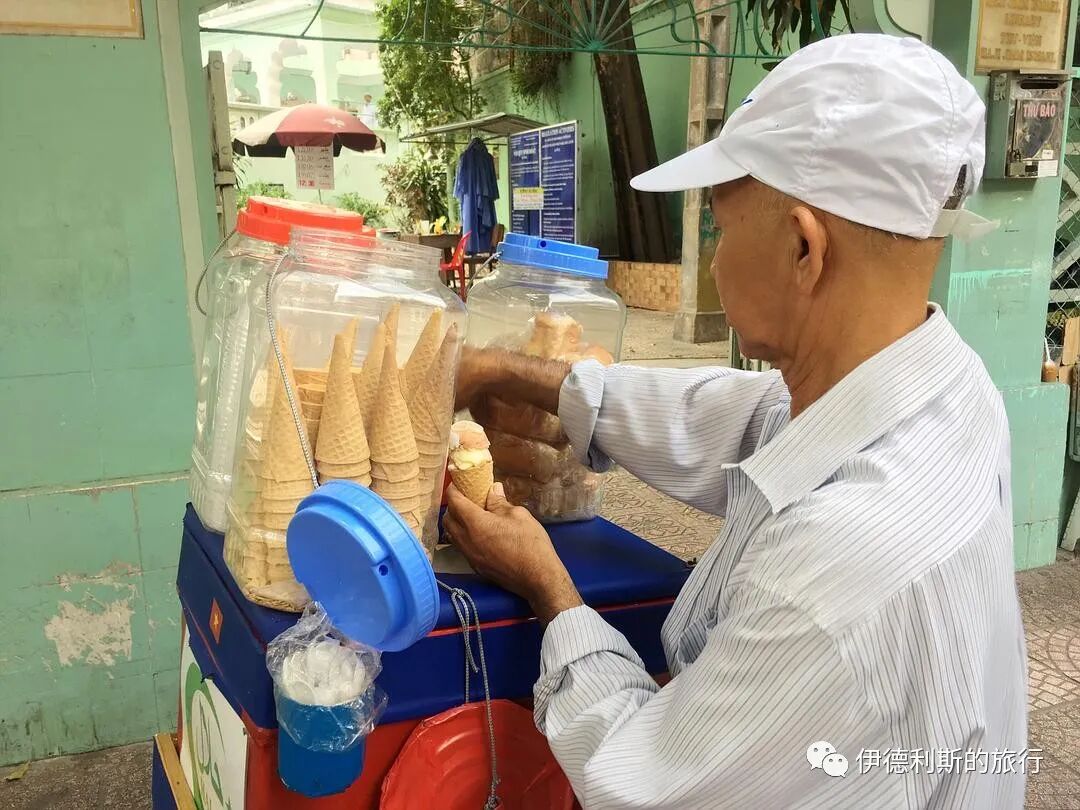
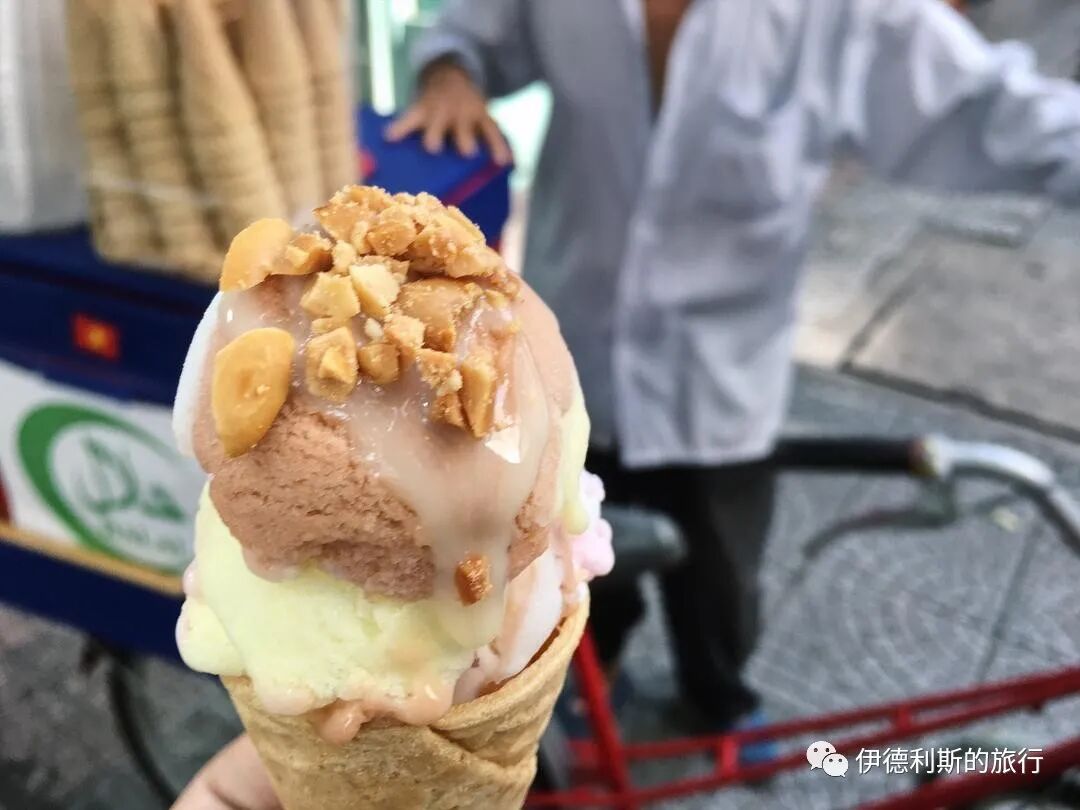
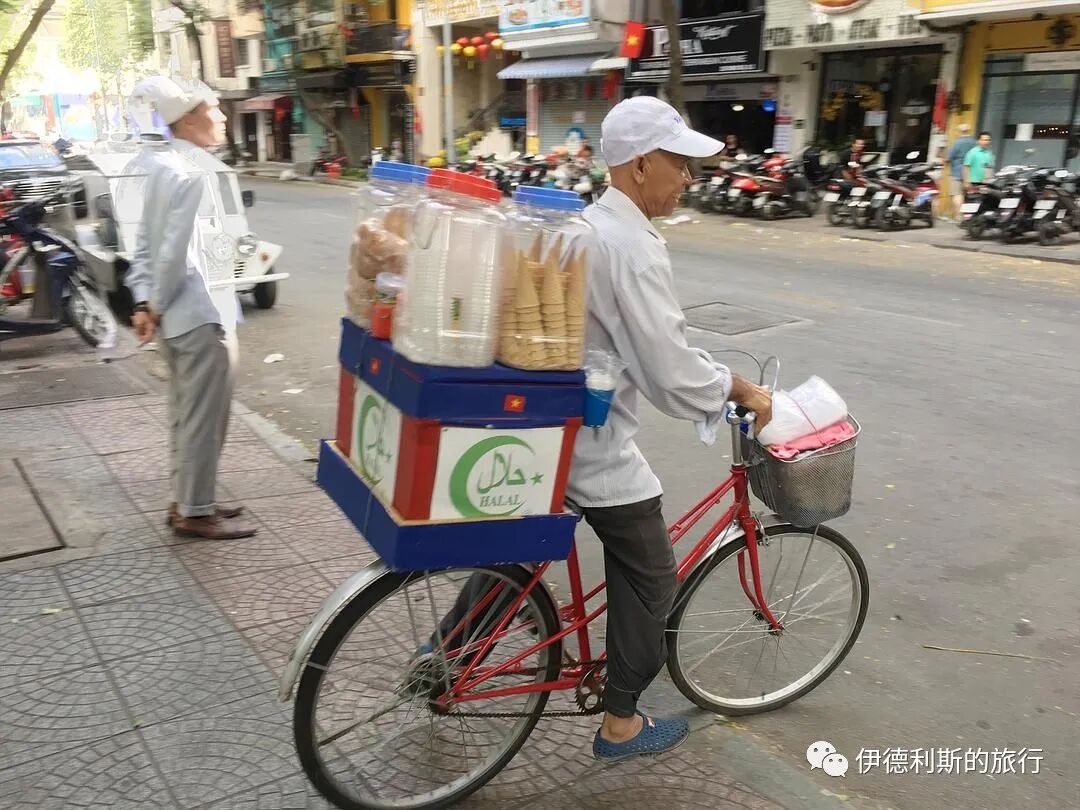
A Cham Muslim uncle sells durian ice cream, and it tastes great.
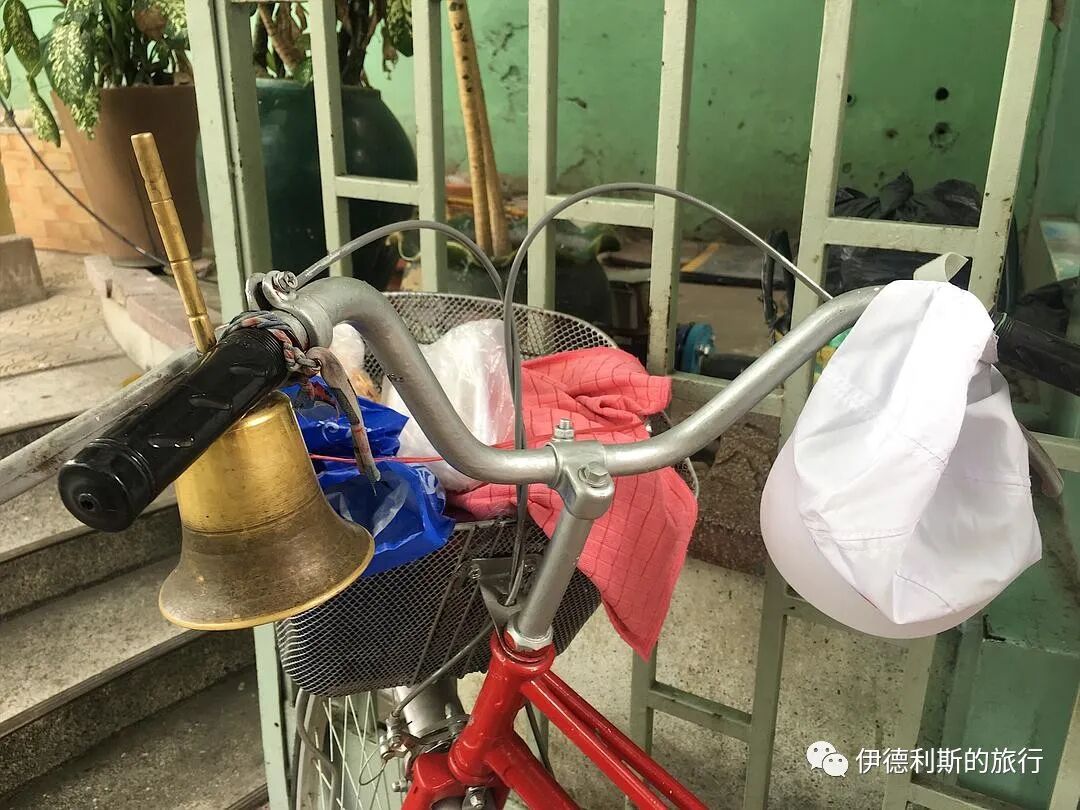
The homemade bicycle bell on the uncle's bike.
2. Saigon Green House Restaurant
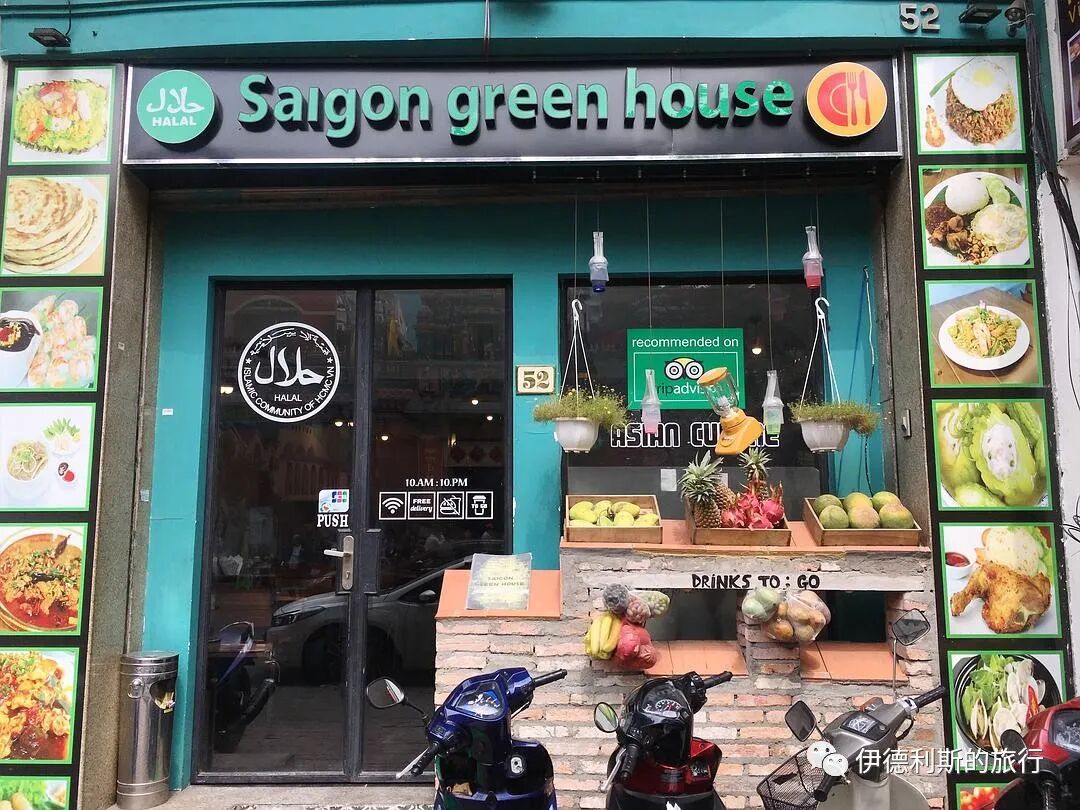
Saigon Green House is the best Cham Muslim restaurant in Ho Chi Minh City. It is a bit pricey, but the food is delicious and has a wide variety. The menu on their official website looks very tempting. Official website: https://halalsaigongreenhouse.com/menu
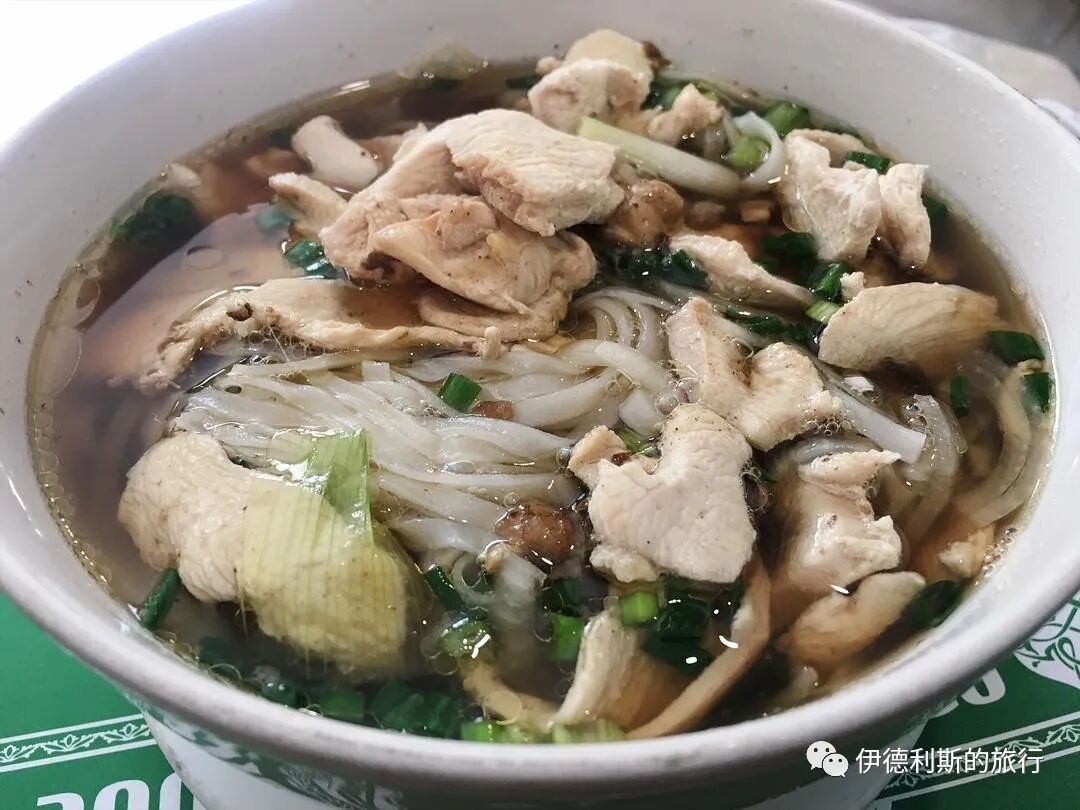
Eat phở first!
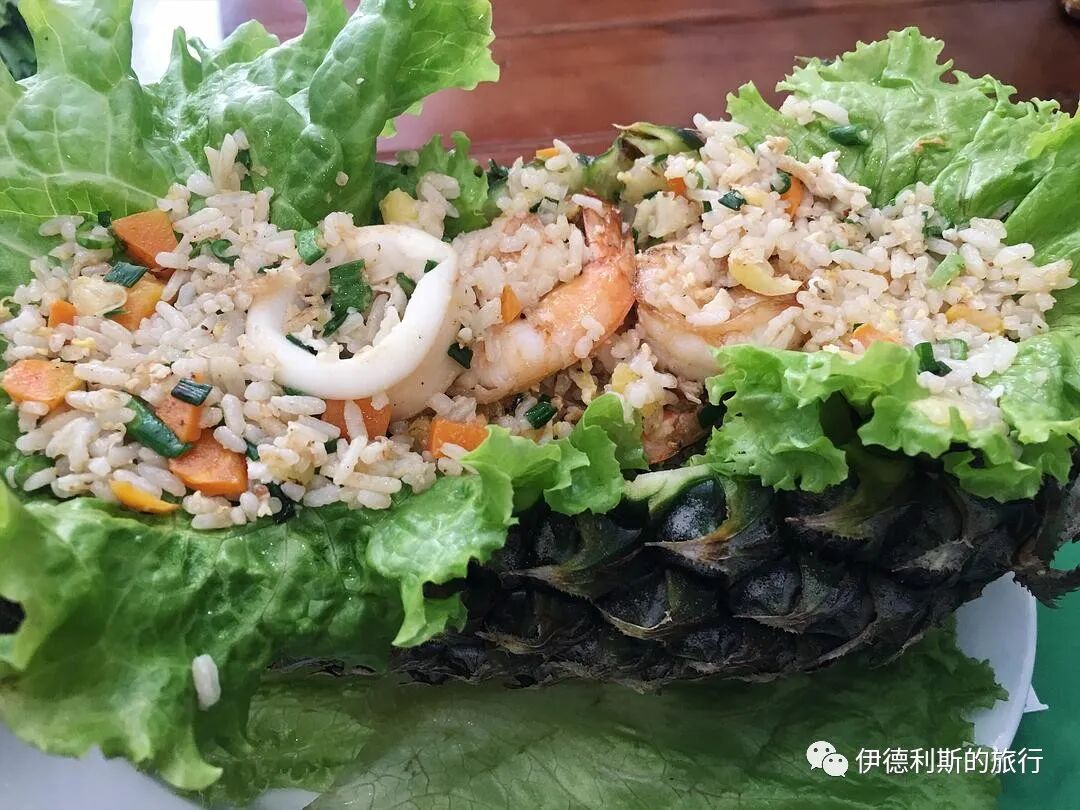
Pineapple fried rice
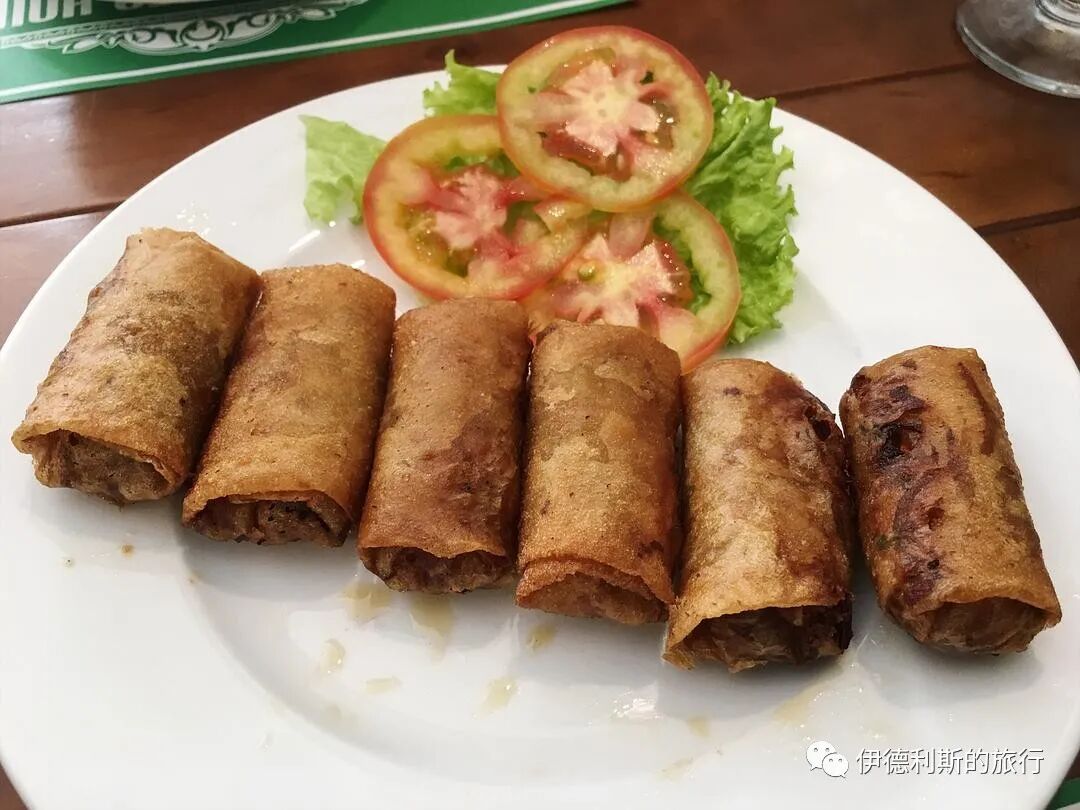
Fried spring rolls
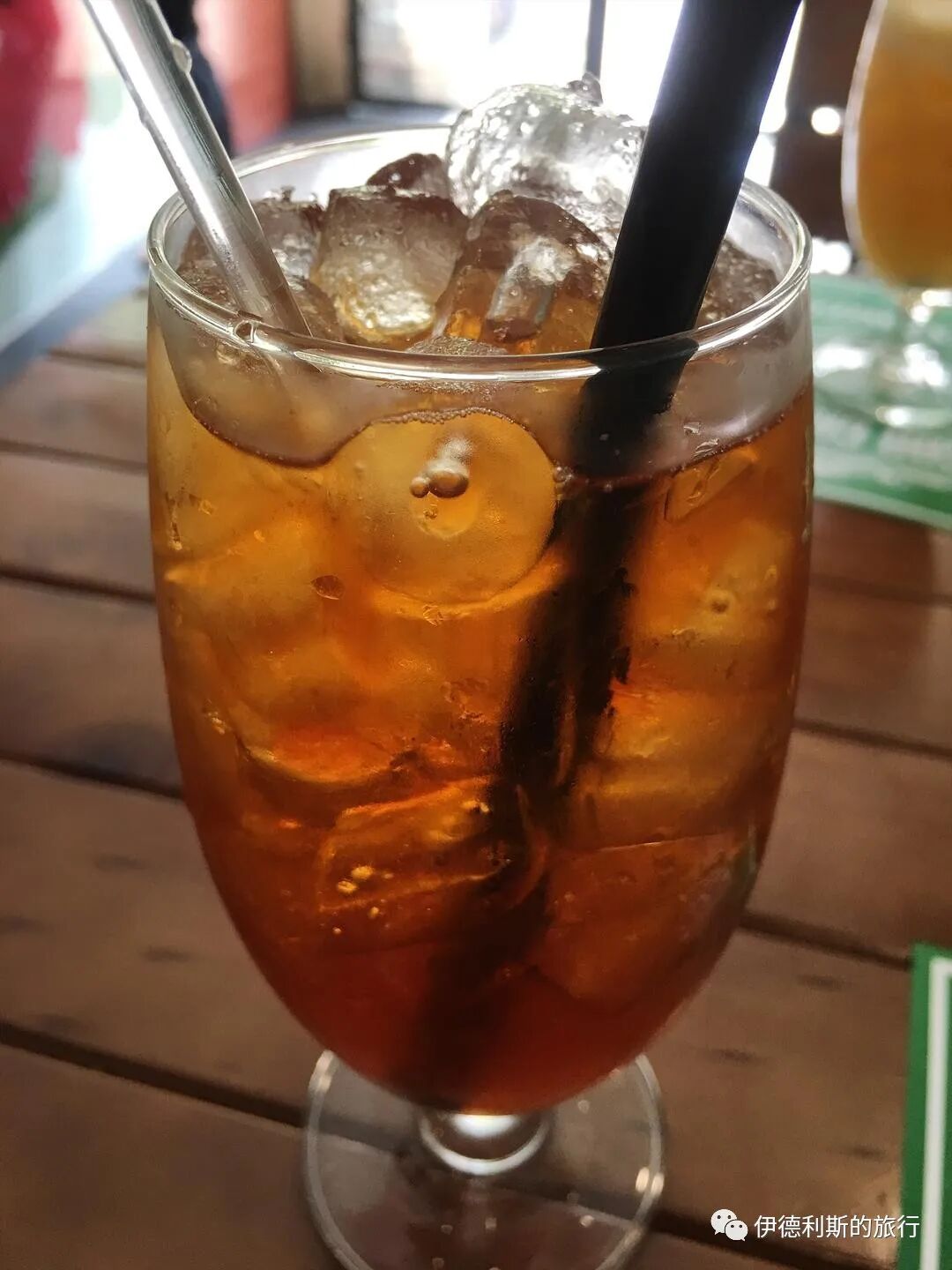
Drink iced tea
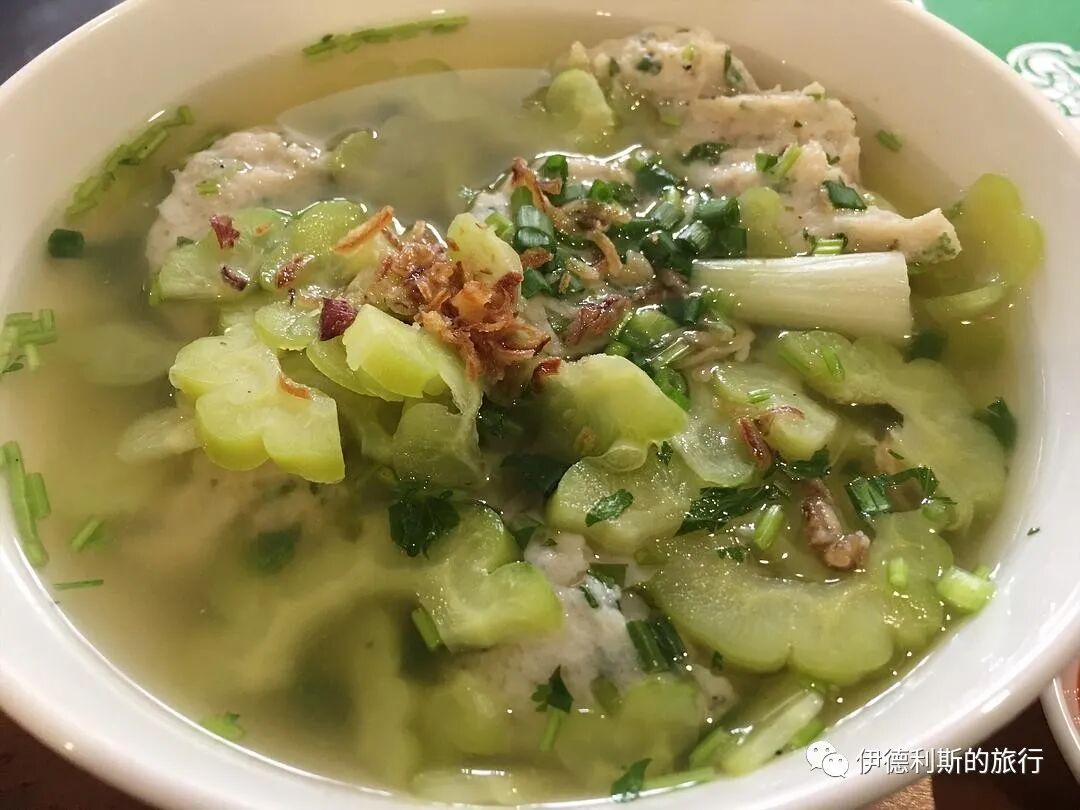
Bitter melon served with fish balls made from a fish called featherback (xilin gongbei yu).
The mosque in the picture is Jamiul Aman Mosque, located in Chau Phu District, An Giang Province, Vietnam. It was built in 1965.
The mosque in the picture is Jamiul Azhar Mosque in Phu Tan District, An Giang Province, Vietnam. It was reportedly built in 1425 and is the most important mosque for Cham Muslims in Vietnam.
3. Al Rahim Mosque
Al Rahim Mosque was the first mosque in Saigon. It was built by Malay and Indonesian Muslims in 1885.
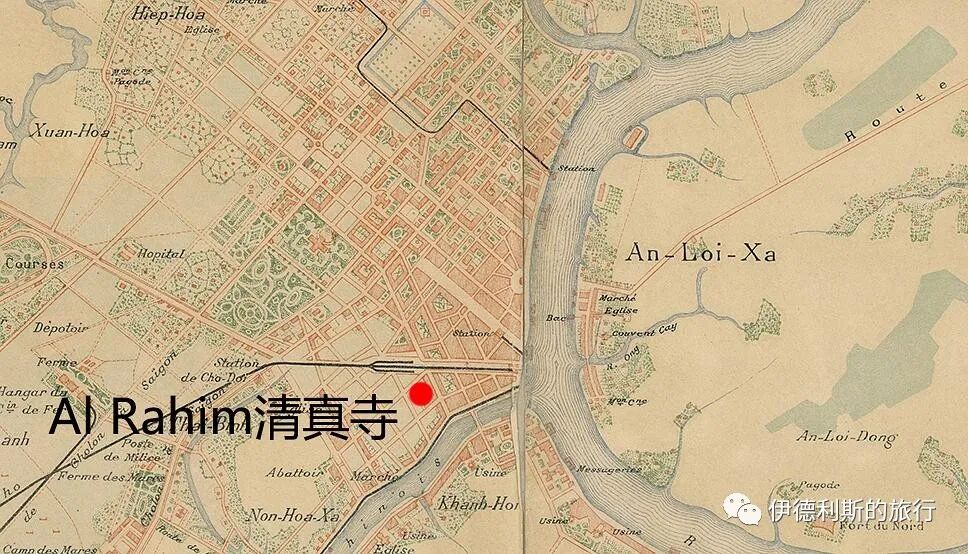
A map of Saigon from 1895
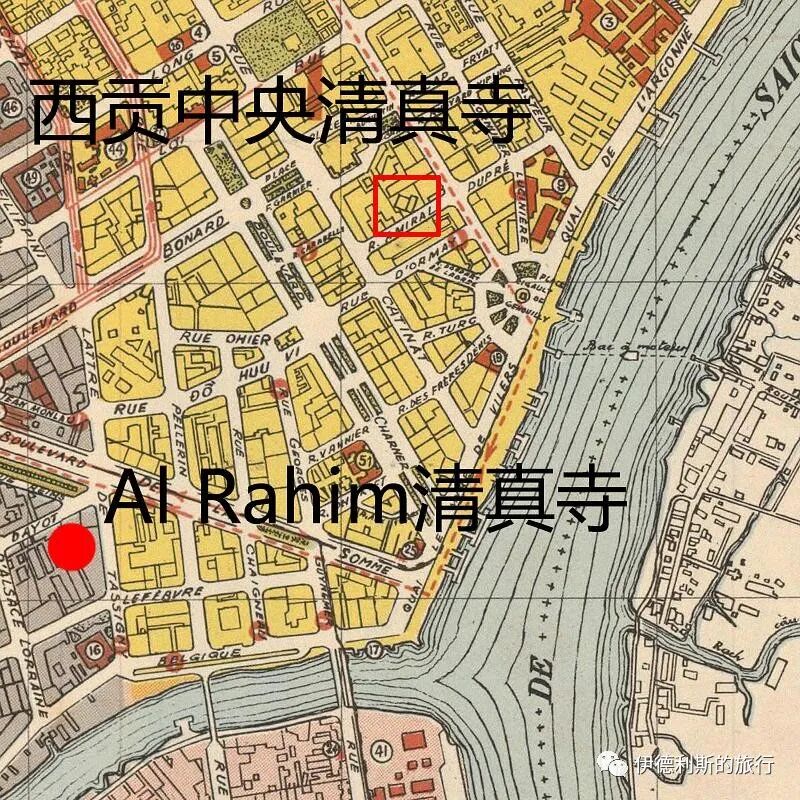
A 1945 map of Saigon.
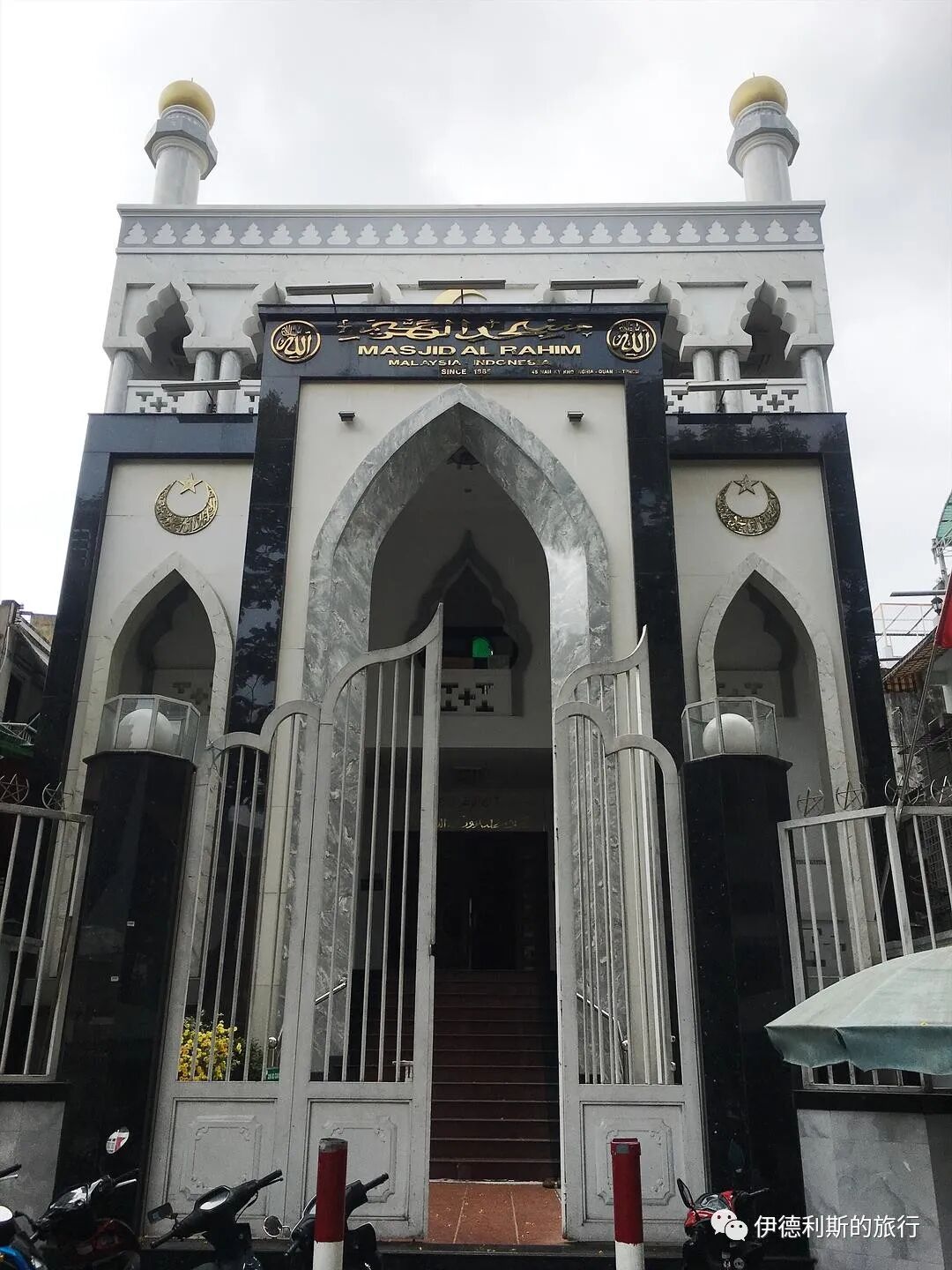
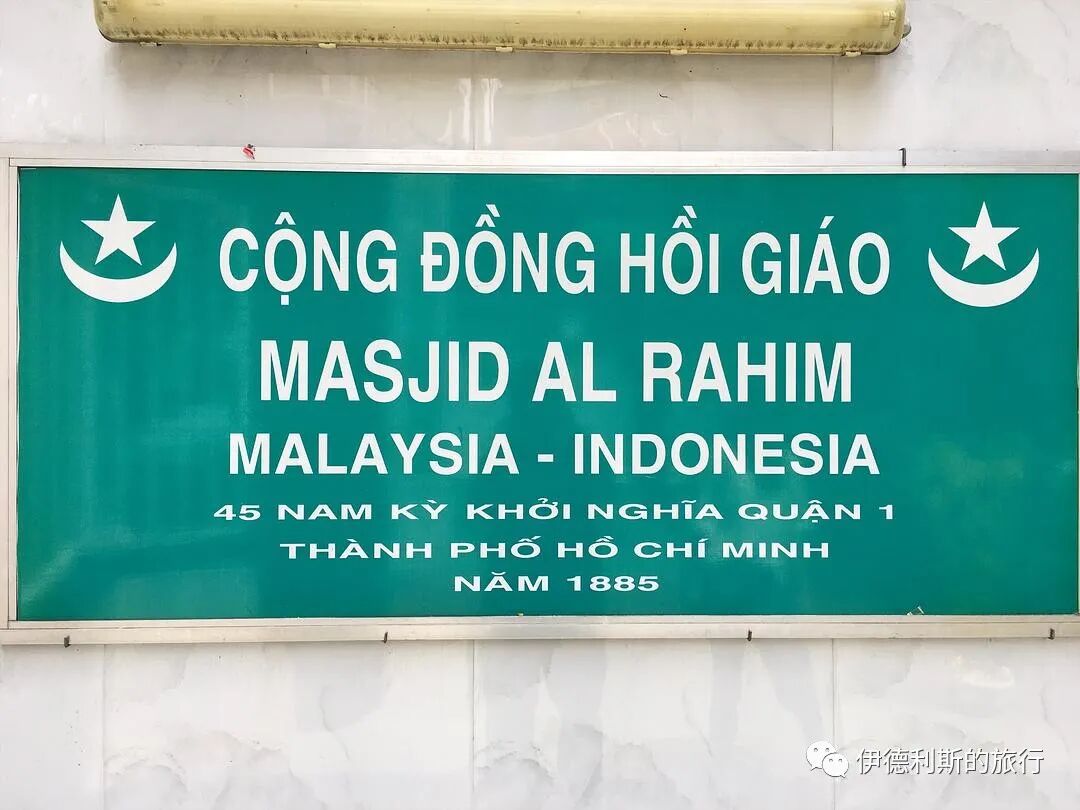
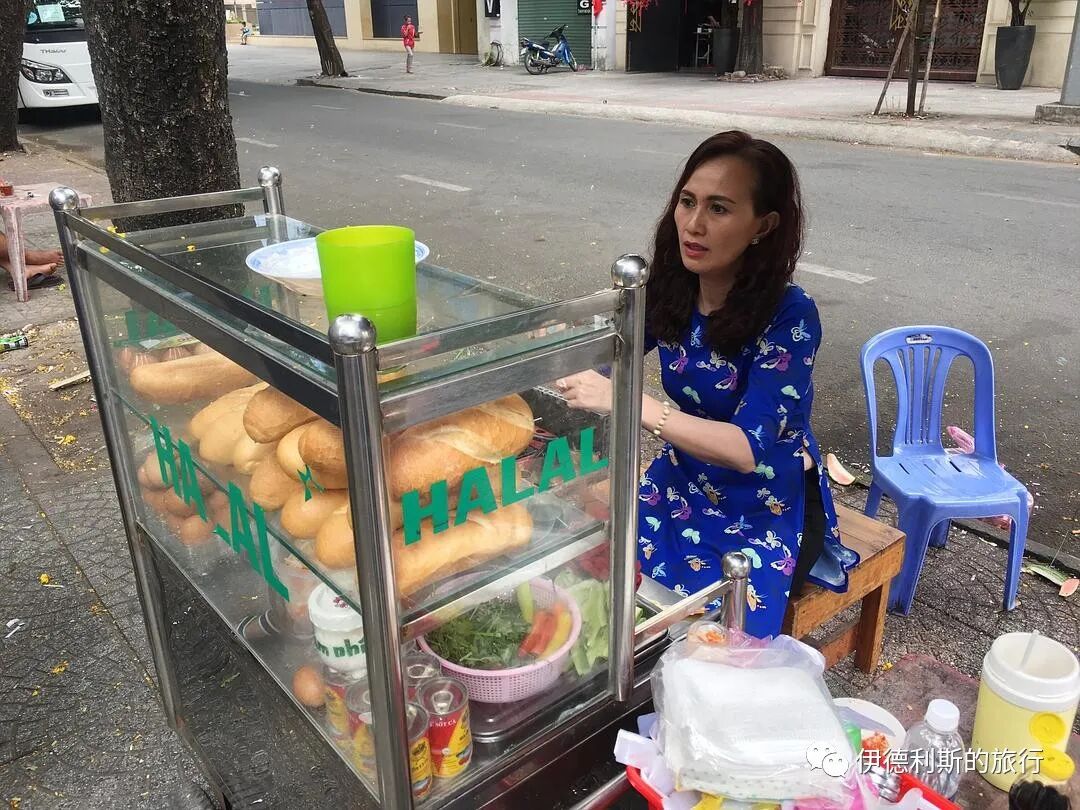
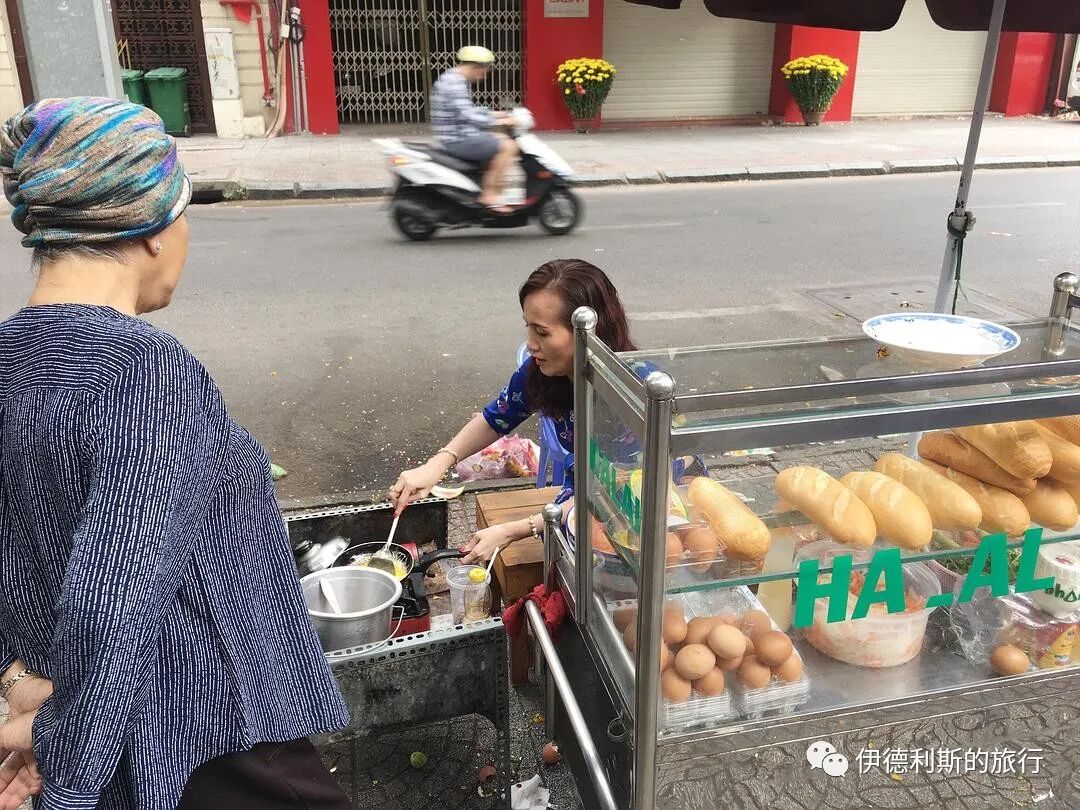
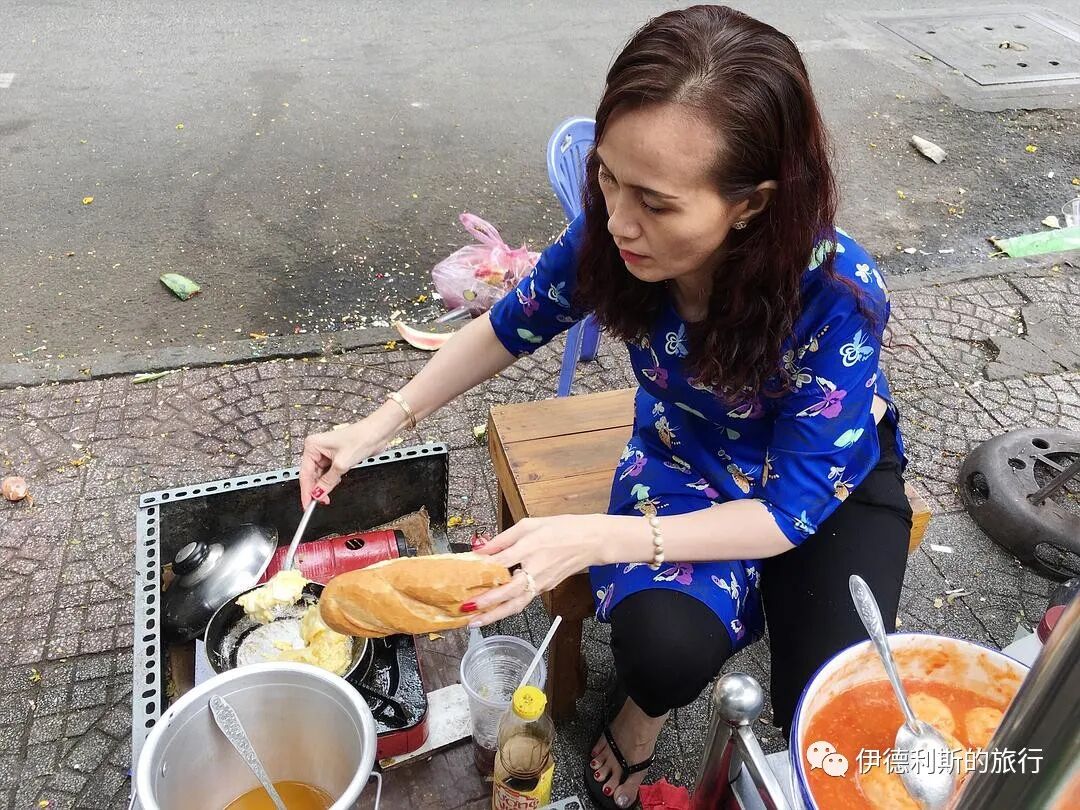
I ate a local street snack, a Vietnamese baguette (Bánh mì), right outside the mosque.
The baguette arrived in Saigon after the French occupied the city in 1861. Early on, baguettes were seen as a luxury item because the price of imported wheat was very high.
During World War I, wheat imports stopped, so more cheap rice flour was mixed into Vietnamese baguettes, which made them much fluffier. As prices dropped, the baguette (phap-ban) started to become a part of the everyday diet for Vietnamese people.
Before the 1950s, Vietnamese baguettes were still made in a classic French style, spread with mayonnaise or jam. After Vietnam was divided into North and South in 1954, over one million people moved from the north to the south, which greatly changed the food scene in Saigon. In the late 1950s, some northern immigrants began selling baguettes on the street, and the modern Vietnamese baguette started to take shape.
After the Fall of Saigon in 1975, baguettes were only sold in state-run restaurants and were often served with other dishes, which is the origin of today's practice of dipping baguettes into rice noodle soup (pho). After Vietnam started its socialist market economy reforms in 1986, the baguette (banh mi) became a common street food again.
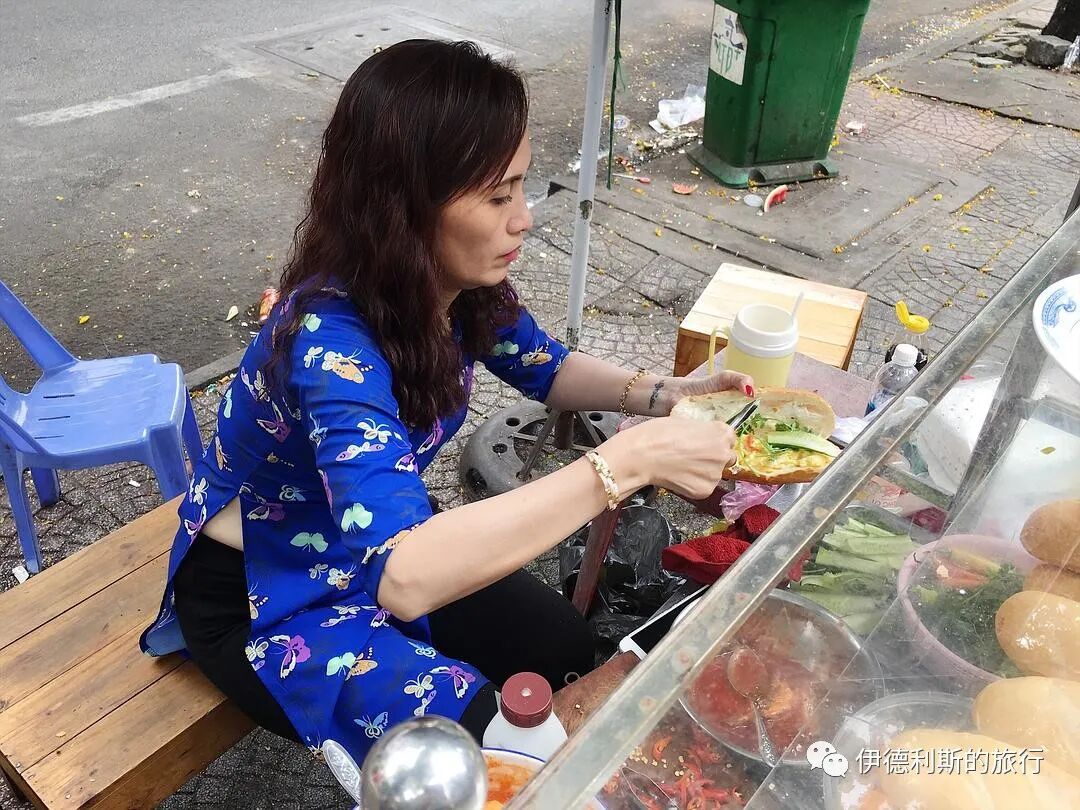
Every morning until noon, there is a small shop selling rice noodle soup (pho) right by the mosque entrance.
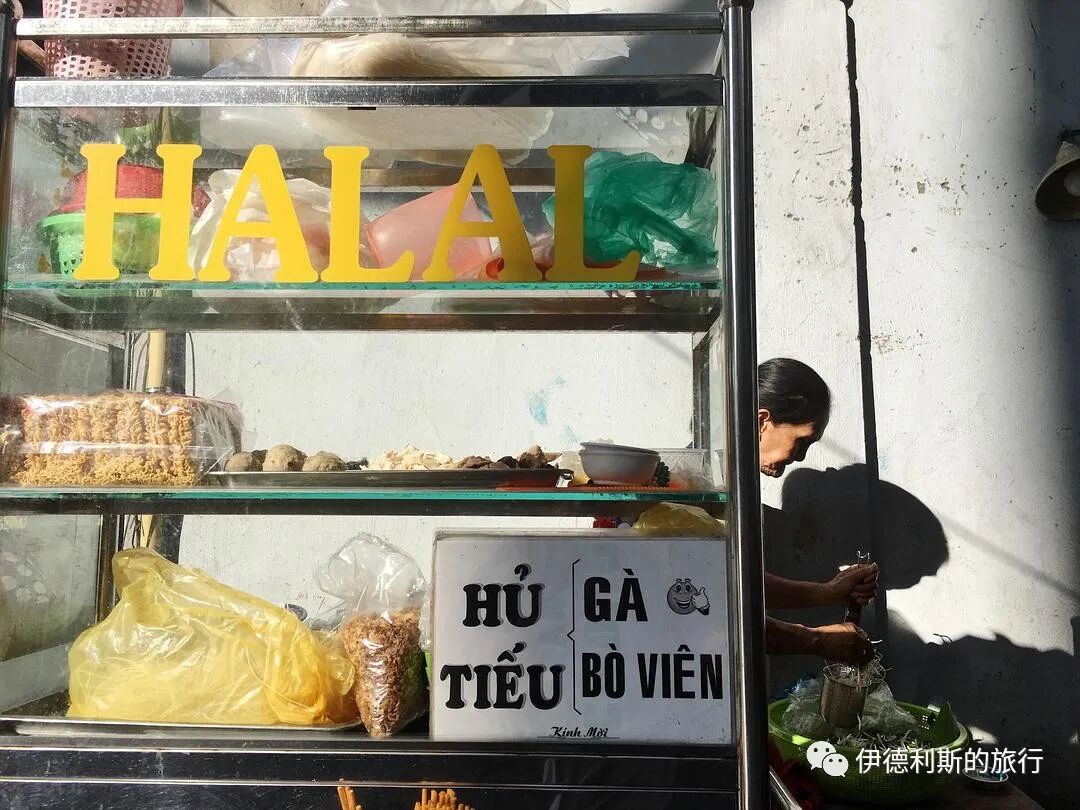
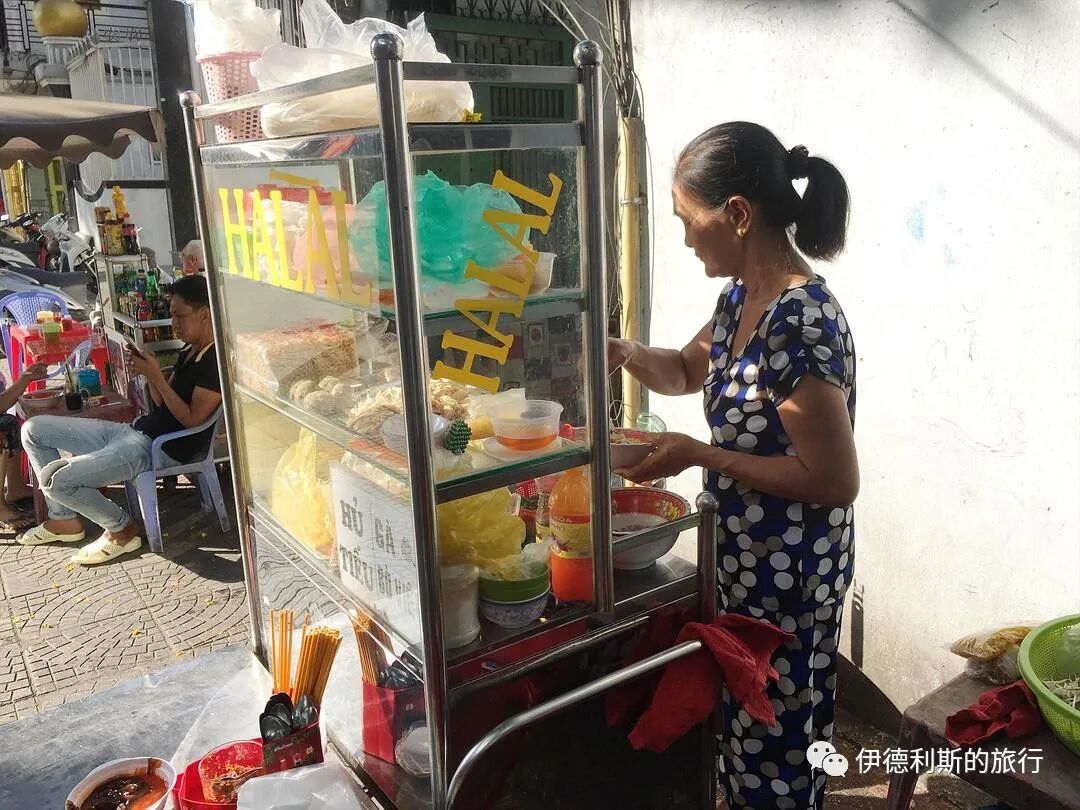
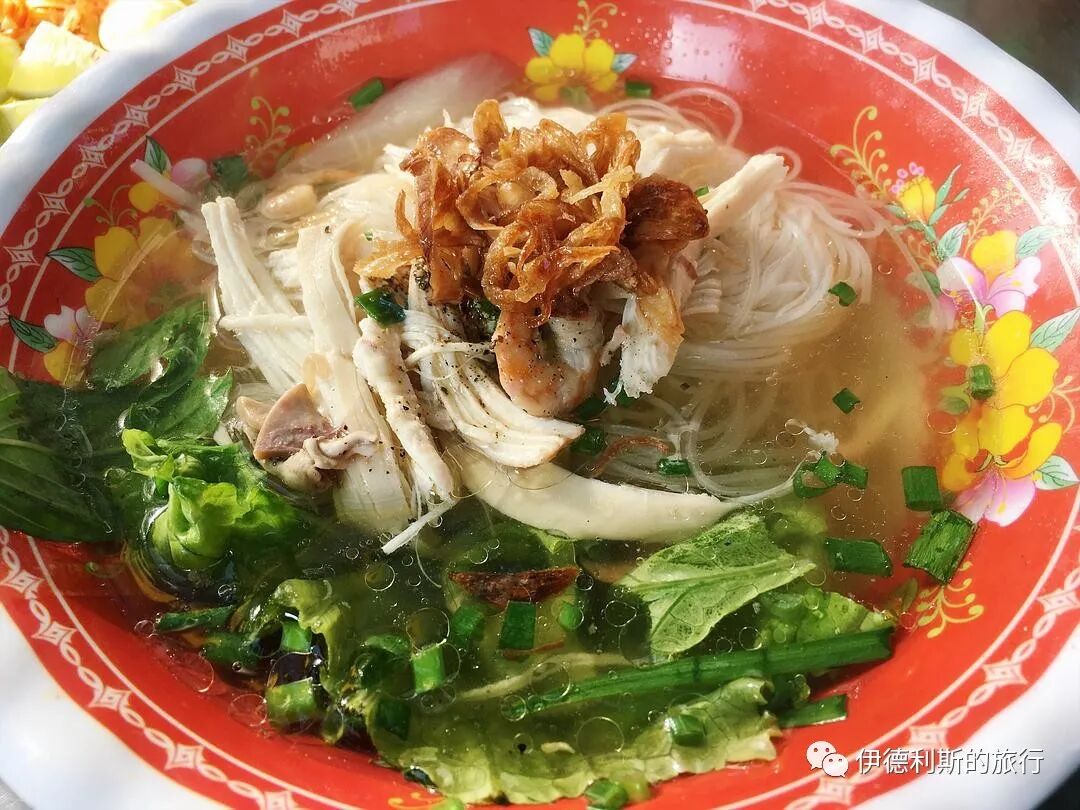
Chicken rice noodle soup (pho ga)
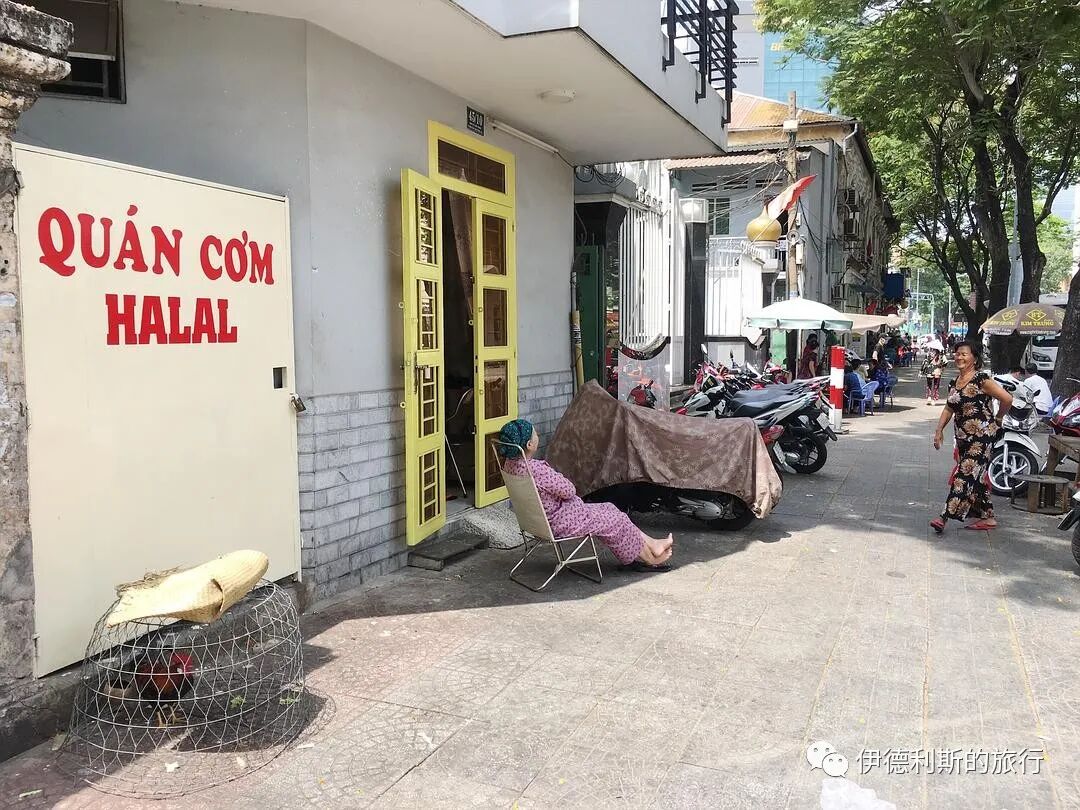
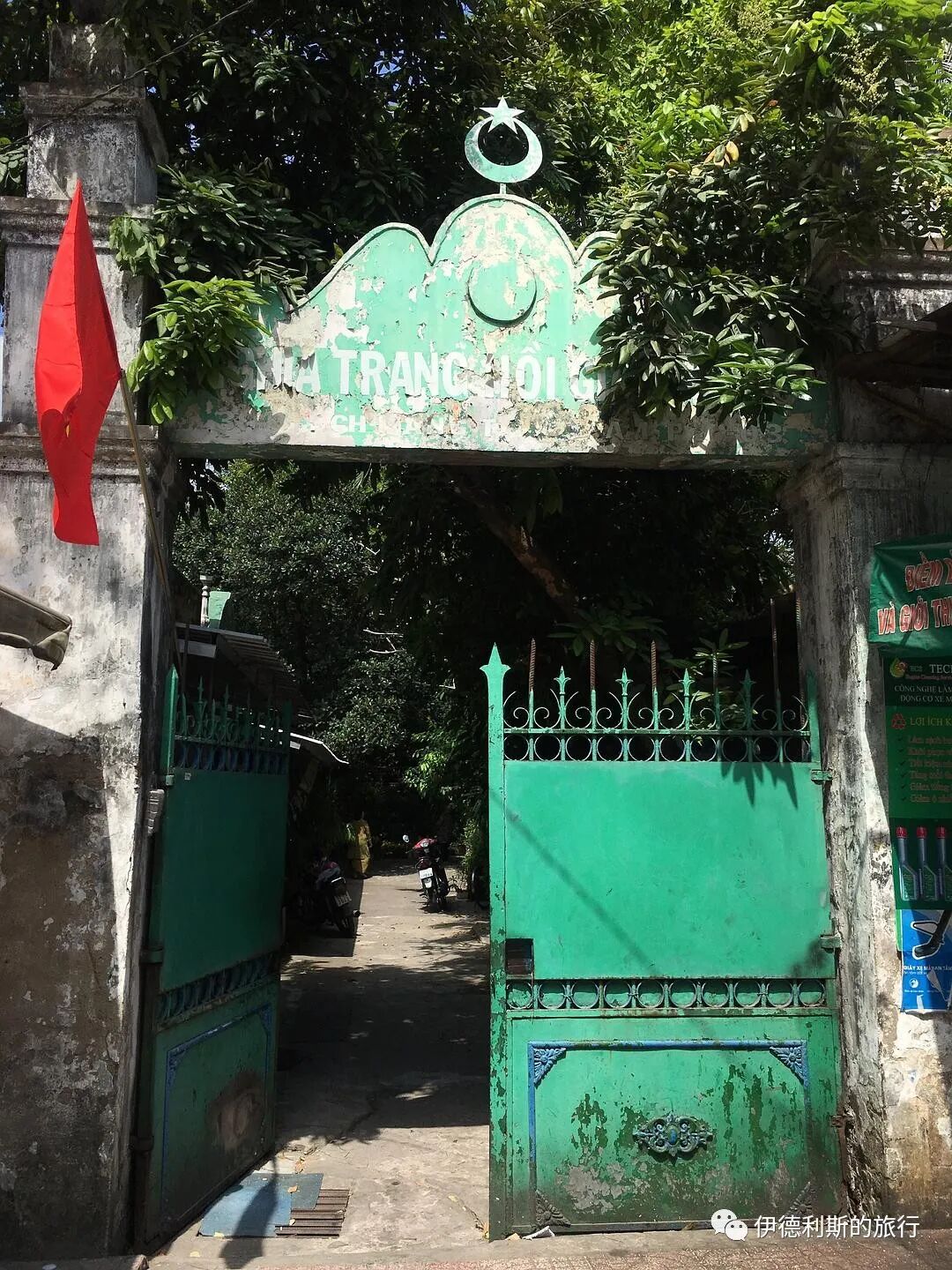
4. Niamatul Islamiyah Mosque
Niamatul Islamiyah Mosque is tucked away, so most tourists have a hard time finding it. I first heard about this place from an article on the Saigon website titled "Take a Tour of D10’s 64-Year-Old Mosque."
The Niamatul Islamiyah mosque dates back to a cemetery built by South Indian Tamil Muslims in the late 19th century. The site still preserves a graveyard and an old horse-drawn carriage used to transport the deceased.
In 1952, Indian Muslims built the mosque next to the cemetery to use when visiting graves to remember the dead. After 1975, most of these Indian Muslims returned to their hometowns, and the mosque continued to be used by Cham Muslims.
According to my online research, there are now over 40 Muslims of "Hoa" (Vietnamese Chinese) descent who pray here. From what I saw on the spot, the Muslims here look very different from the Austronesian-speaking Cham people and actually look a lot like the Han Chinese from the Chaoshan and Minnan regions. But when I chatted with everyone, they all just said they were Cham people who returned to Vietnam from Cambodia.
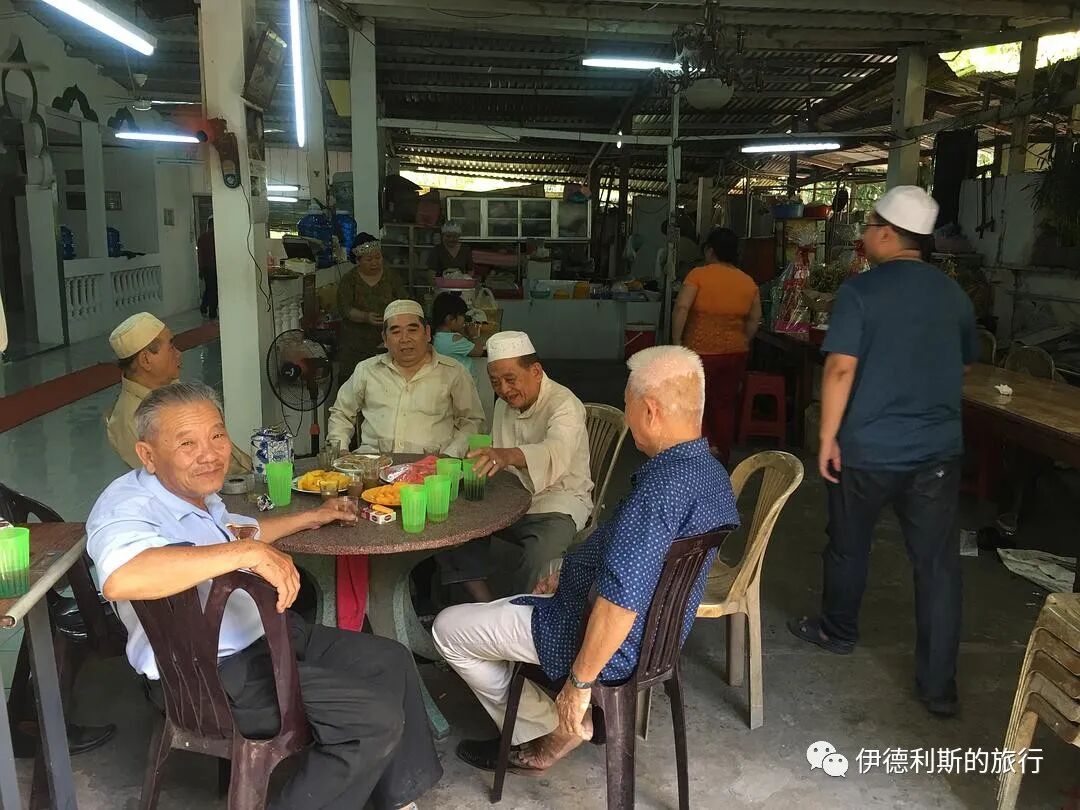
The young man on the far right is named Hakim, and he acted as our translator because his English is very fluent. When the older men heard I was from China, they talked to me a lot about the country. They knew there are many Muslims in Xinjiang and even asked me how far it is from here to Xinjiang.
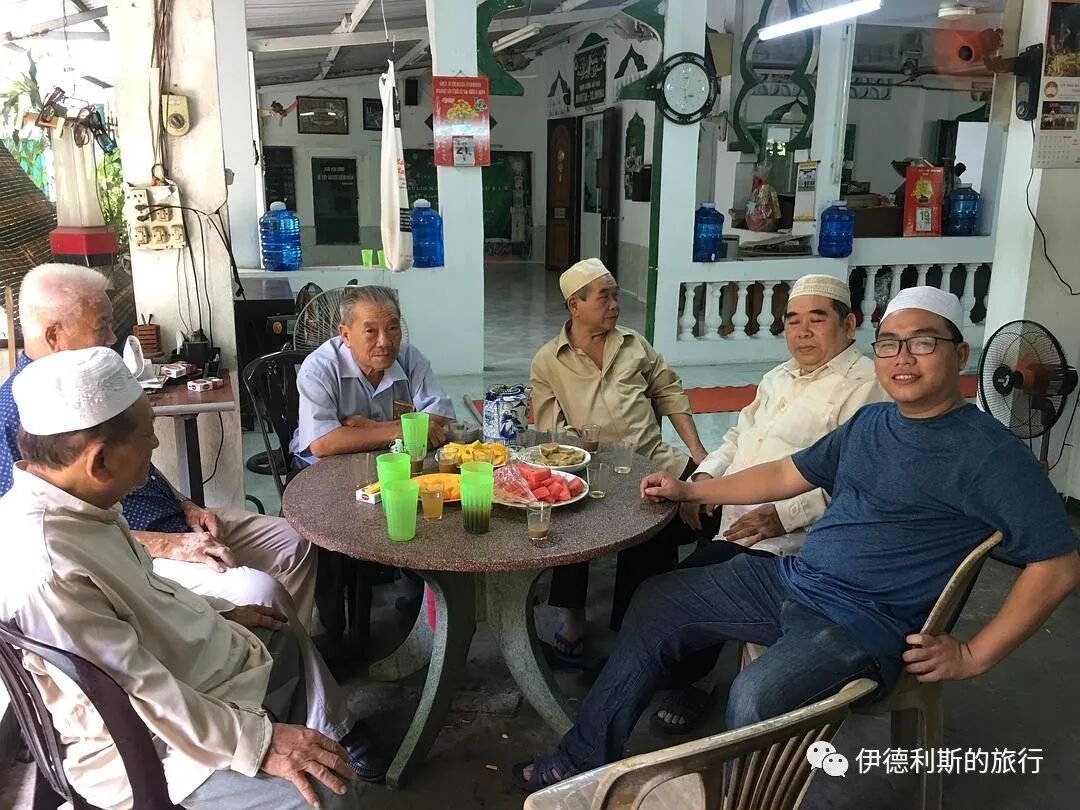
The older man on the right is the imam of the mosque.
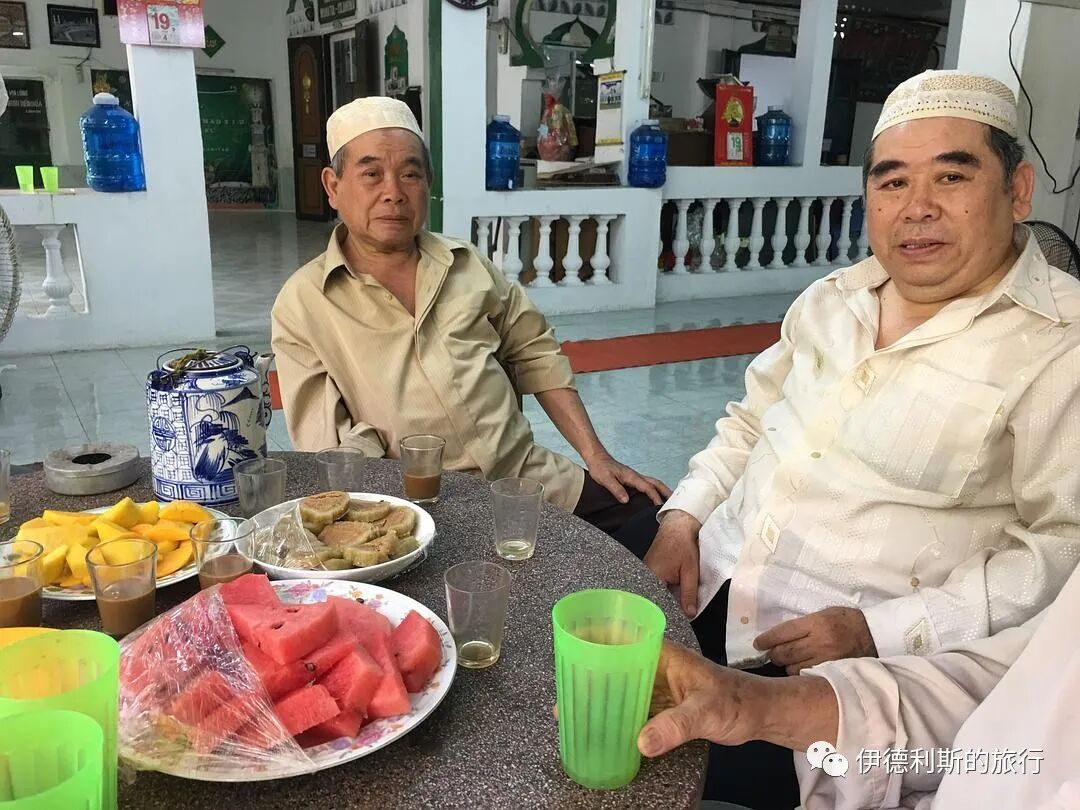
Everyone drinks coffee and hot tea, though they say young Cham people rarely drink hot tea these days.
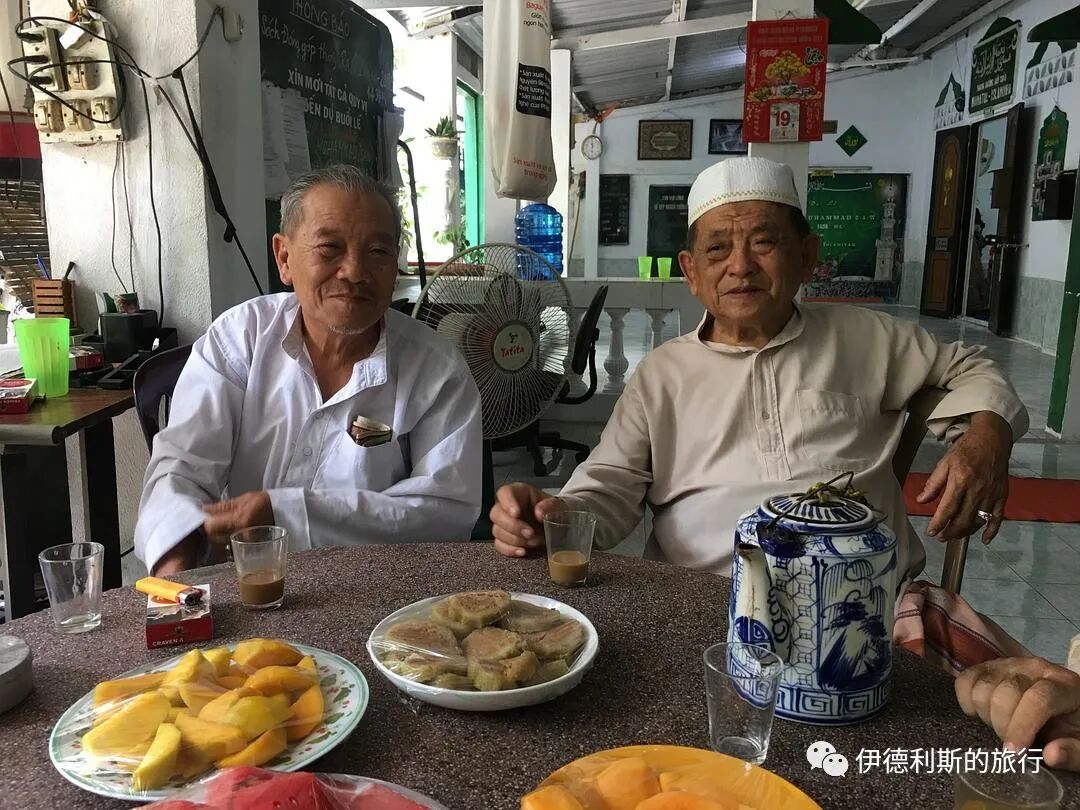
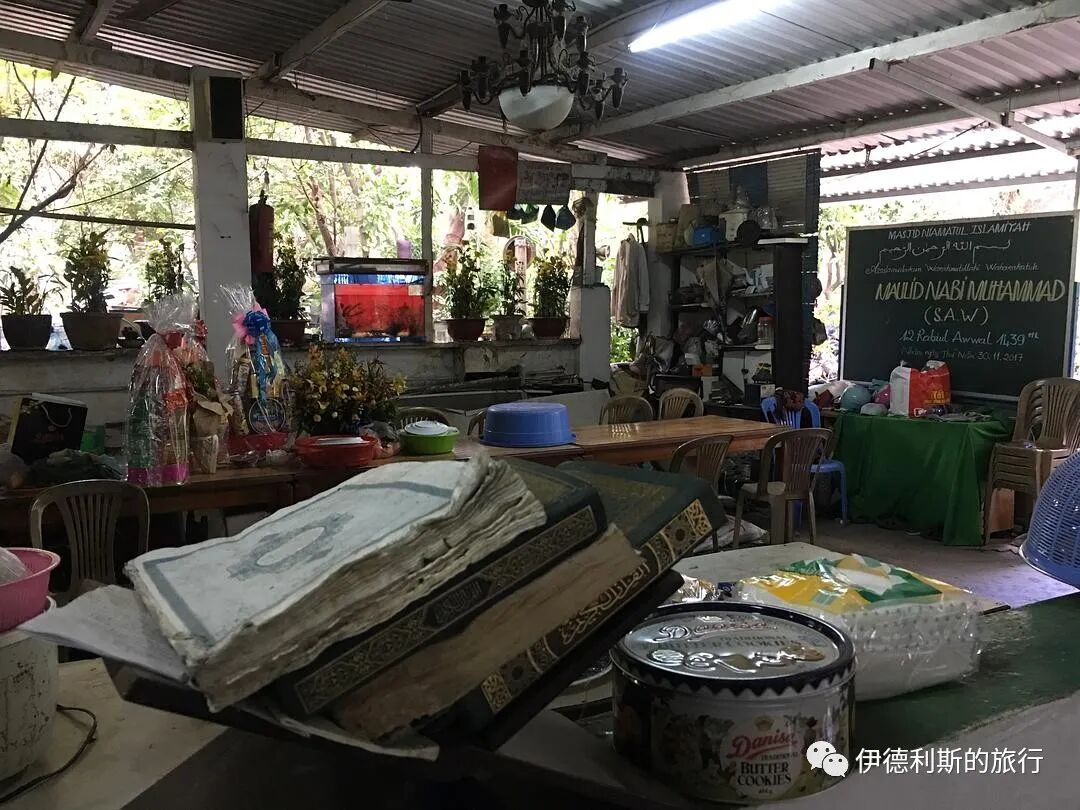
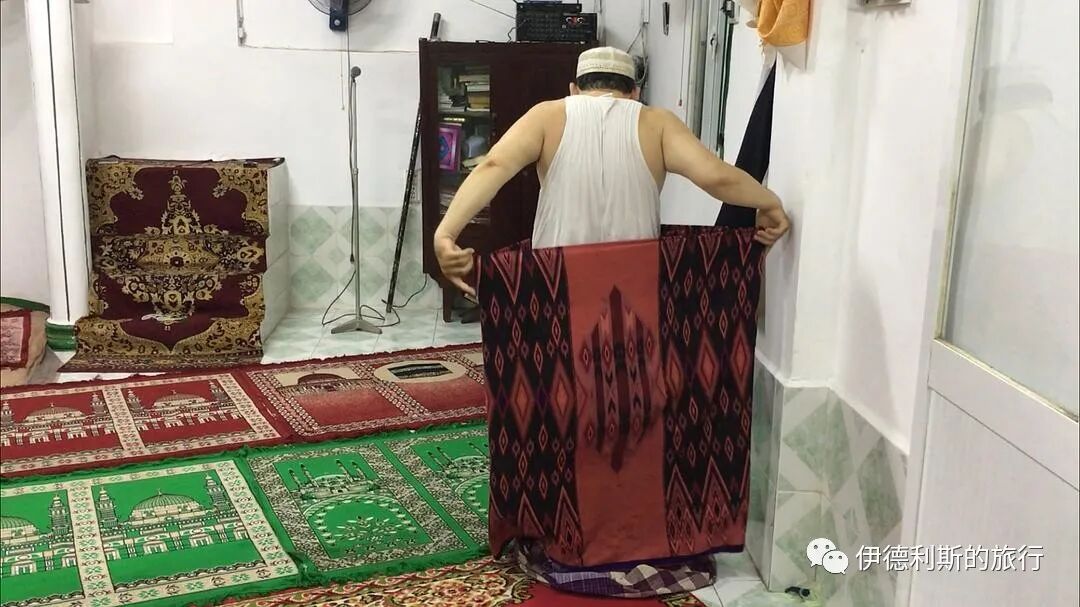
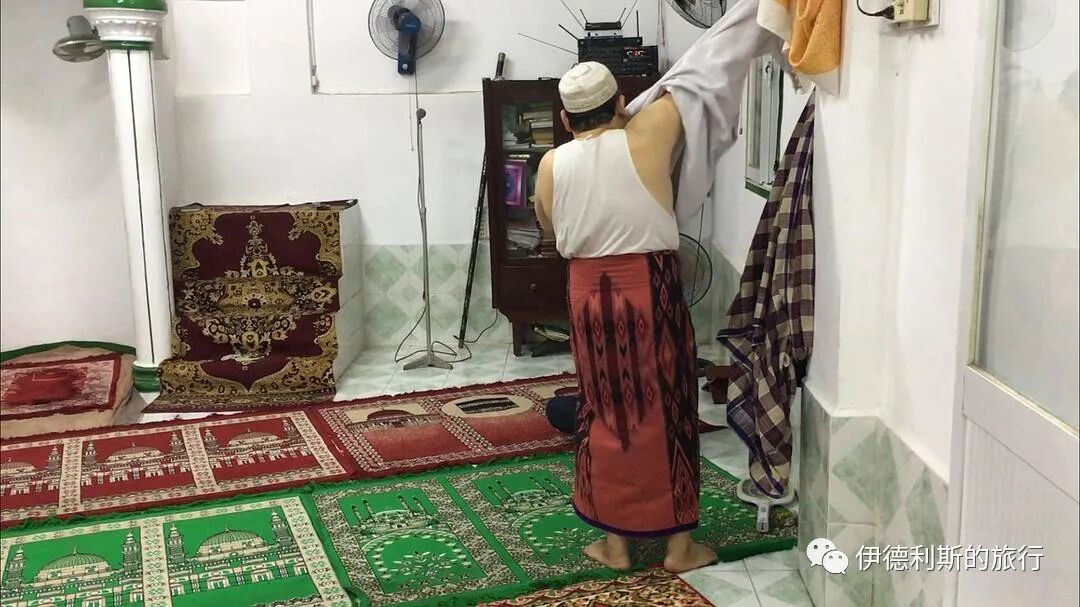
It is almost time for namaz, so the imam changes into his formal sarong (longyi), puts on his white robe and turban, and gets ready to lead the prayer.
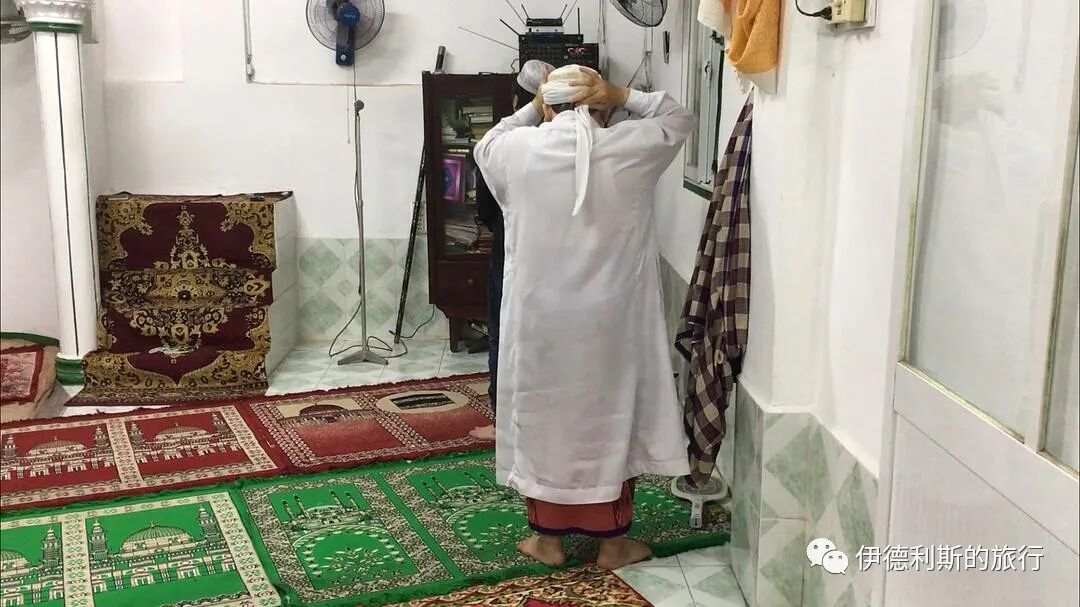
Start the prayer.
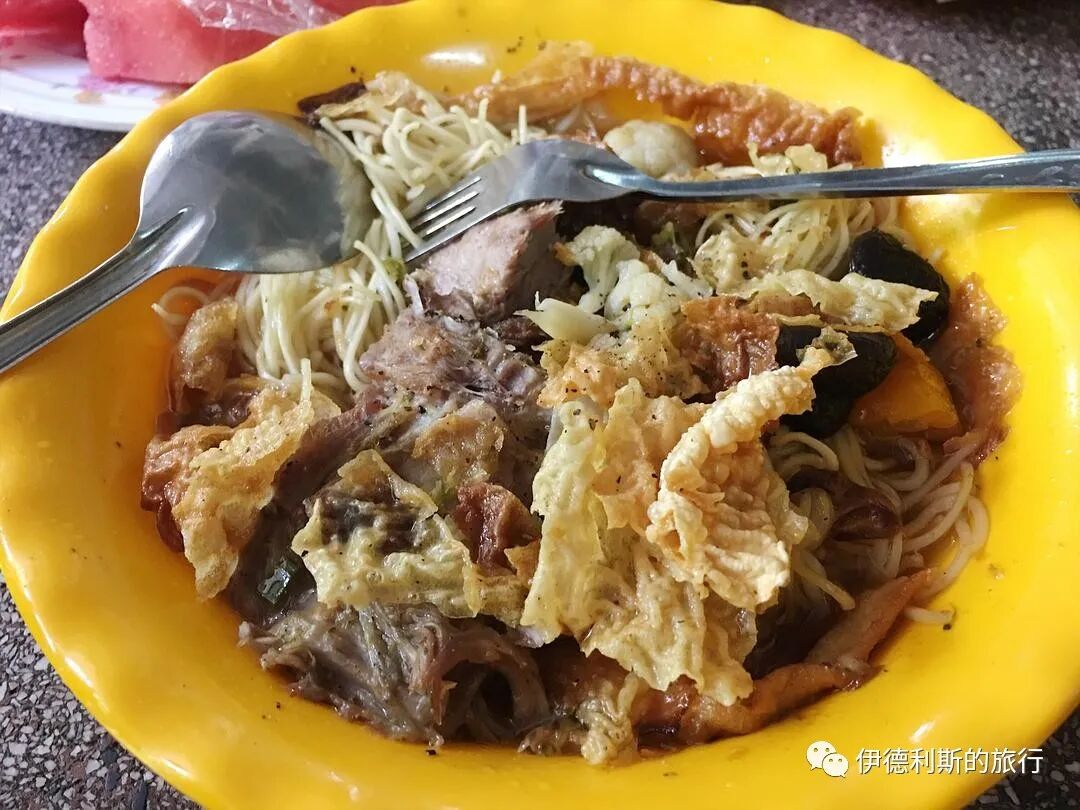
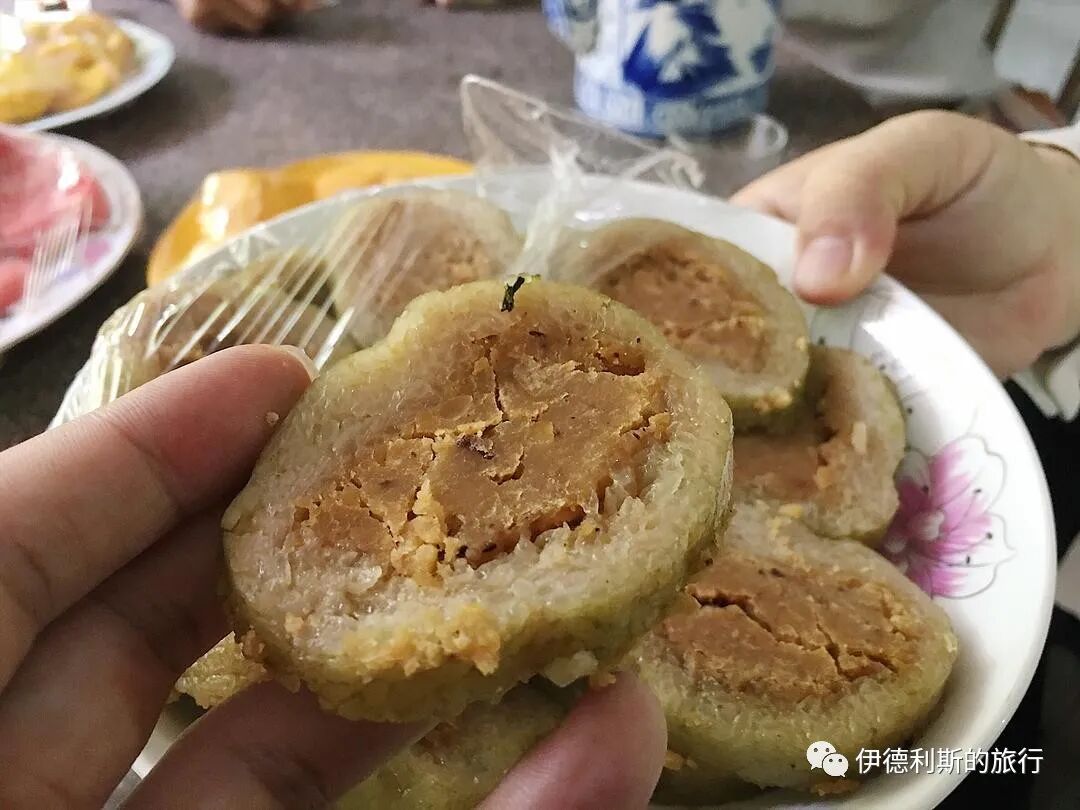
An older man here treated me to rice noodles (fen) and pastries (gaodian).
Behind the mosque is a cemetery dating back to the late 19th century. Brother Hakim gave me a detailed explanation.
The horse-drawn carriage for transporting the body (maiti).
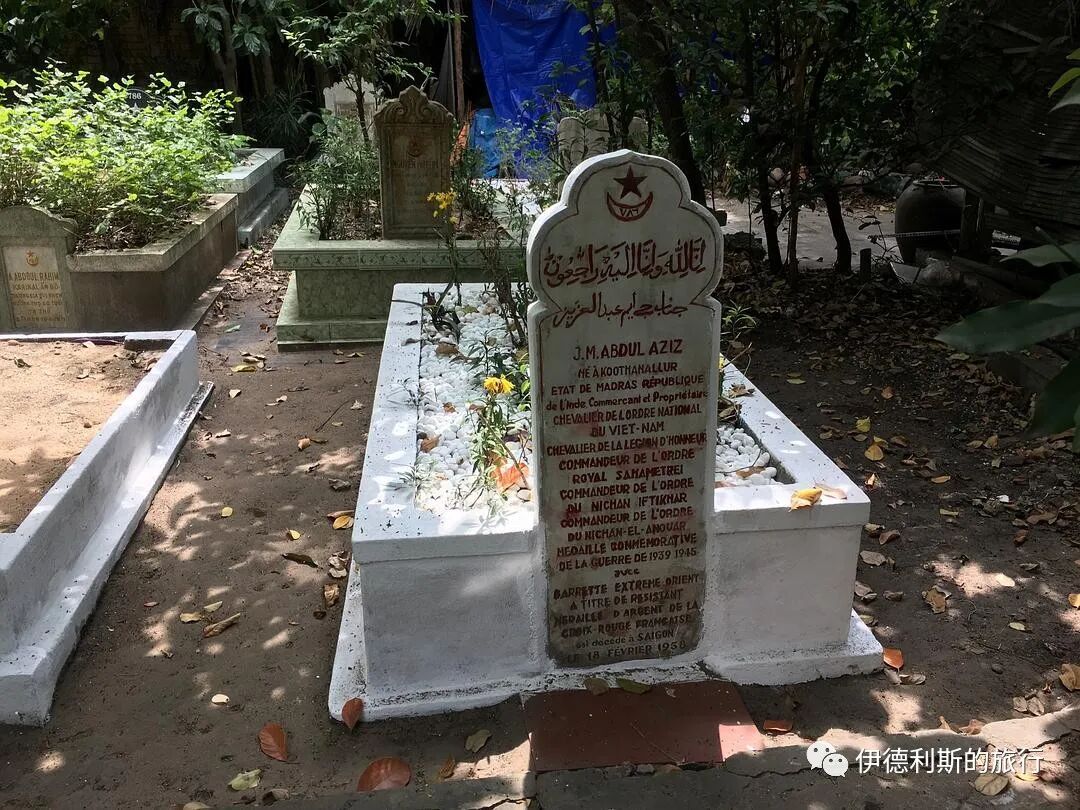
786 is a symbol for halal used in South Asia and Southeast Asia. You can also see it in southwest Yunnan and among the Hui Muslims in Lhasa. If you assign a number to each letter of the phrase Bismillāh al-Raḥmān al-Raḥīm (In the name of Allah, the Most Gracious, the Most Merciful) based on the Arabic abjad system, the sum of all the numbers is 786.
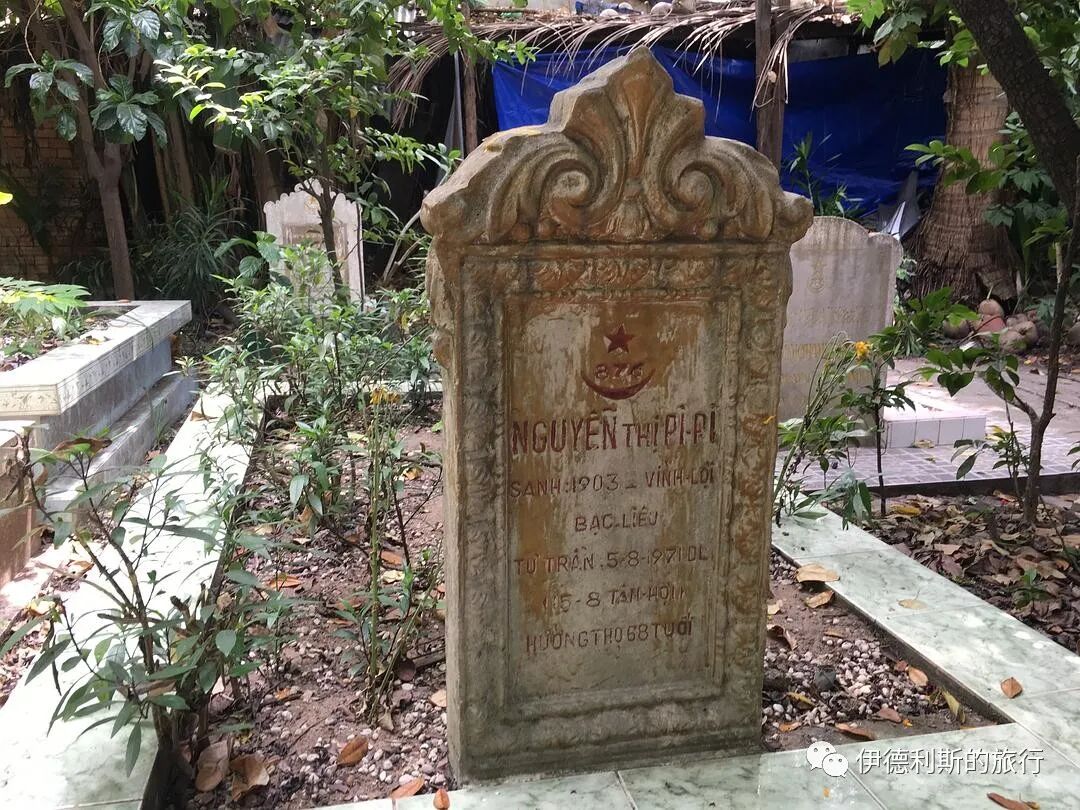
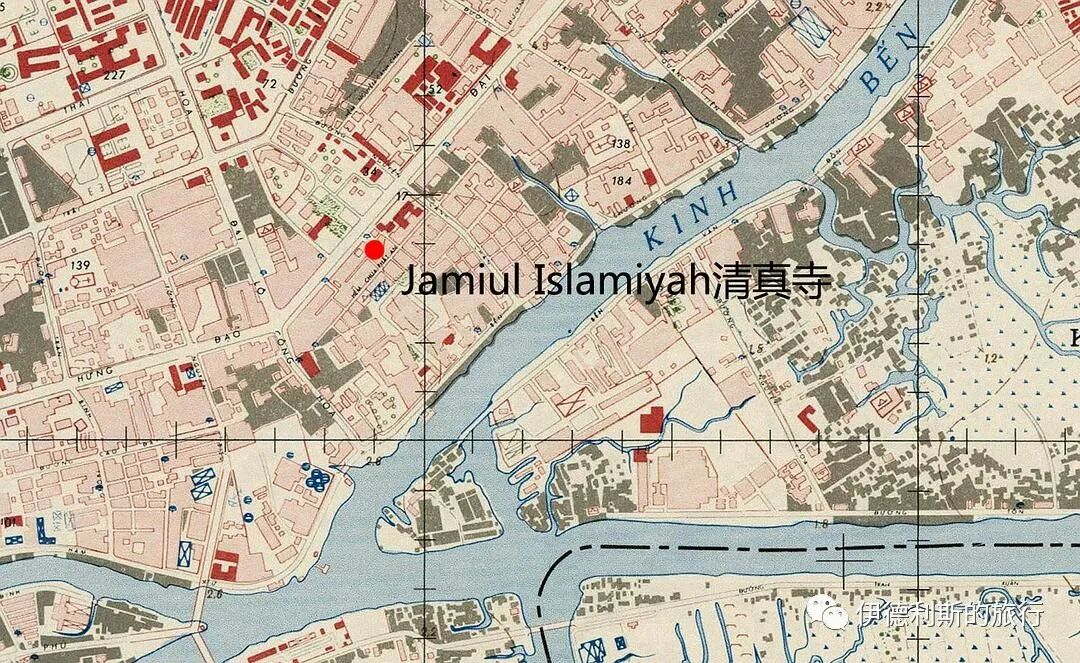
5. Jamiul Islamiyah (Nancy) Mosque
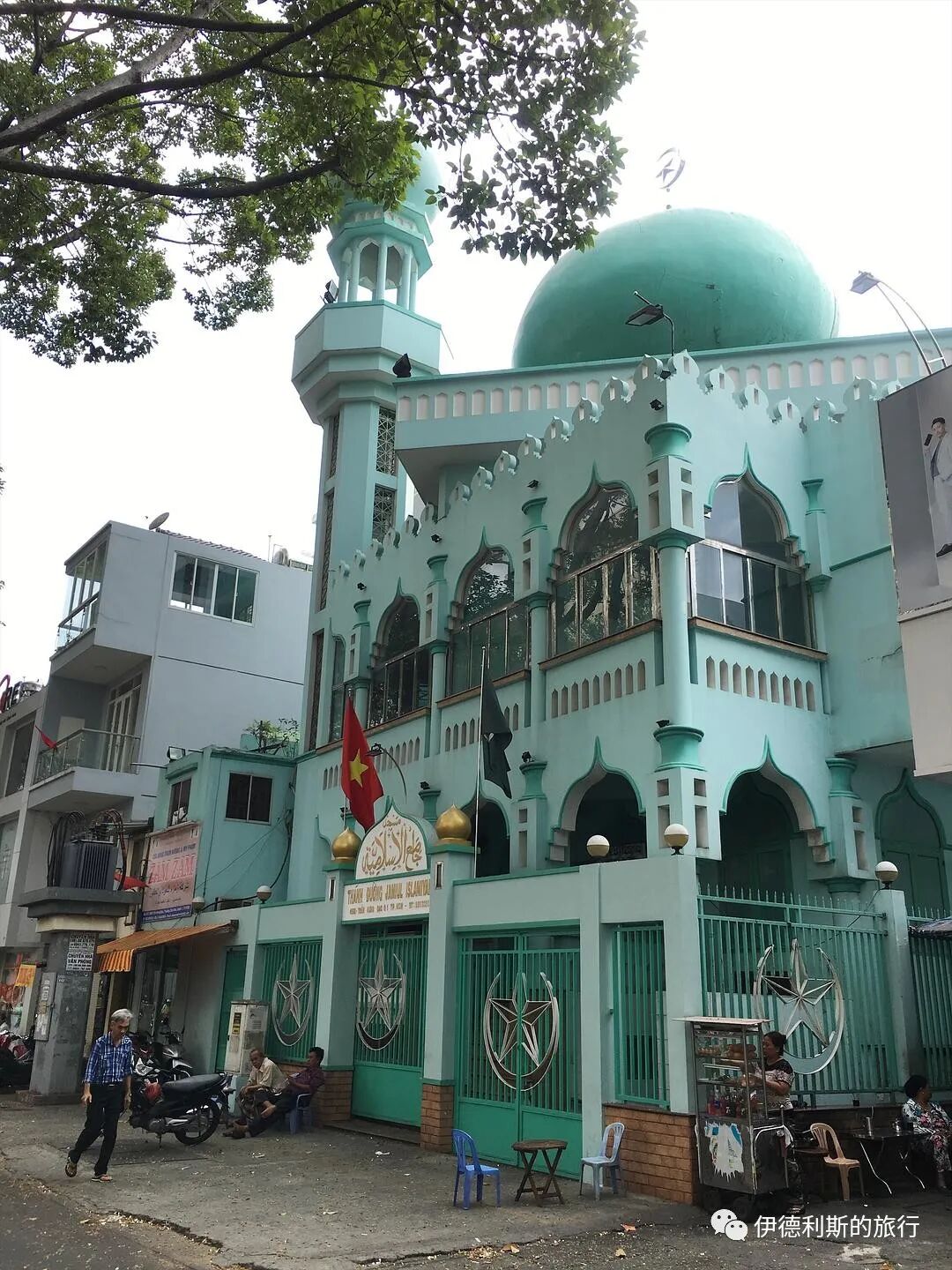
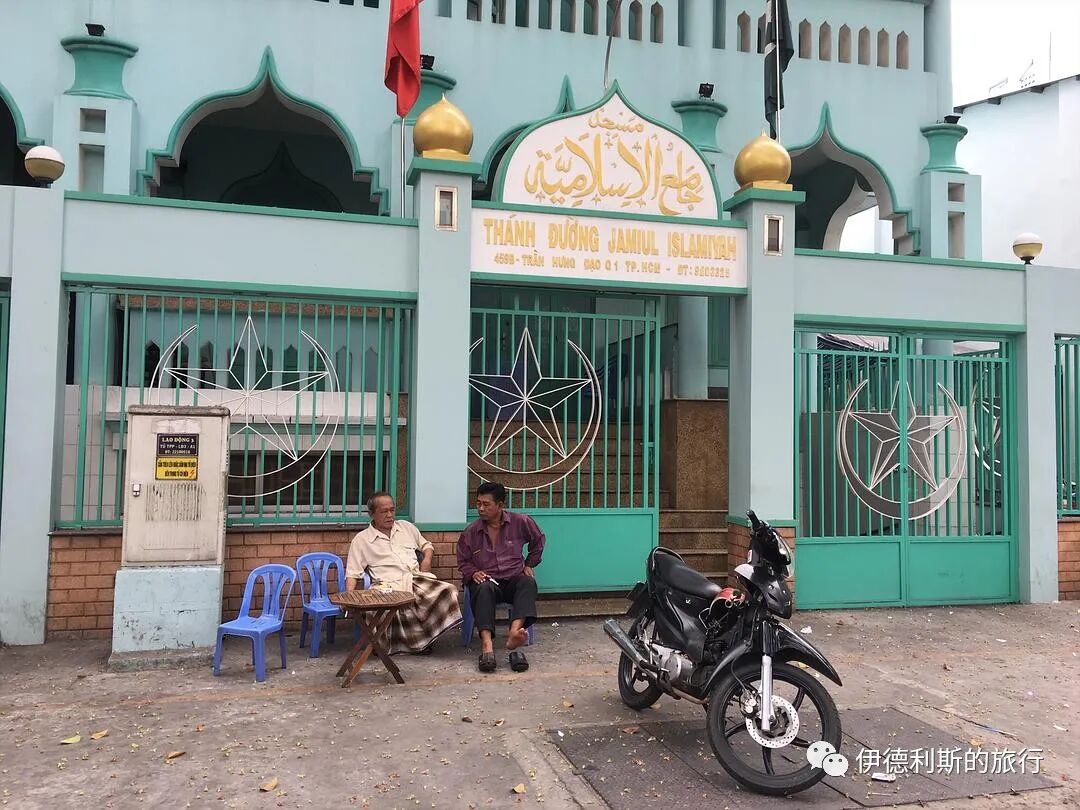
Jamiul Islamiyah Mosque, also called Nancy Mosque, was built by South Indian Tamil Muslims in 1950. After the Indian Muslims left in 1975, it became a mosque for Cham Muslims. The mosque was rebuilt twice, in 1980 and 2004. It is now an Arabic-style building designed by a Vietnamese architect.
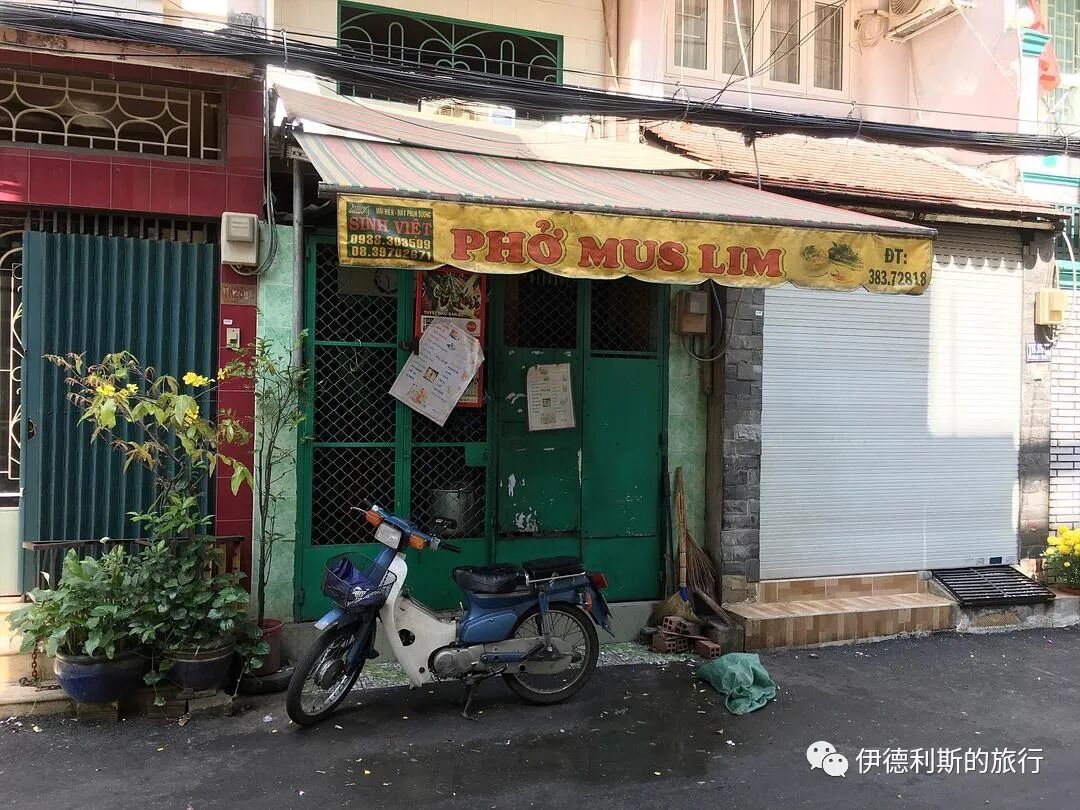
There is a barbecue shop next to the mosque and a famous Vietnamese noodle soup shop (pho) called Pho Muslim in the alley behind it. Unfortunately, both were closed for the Tet holiday when I visited.
6. Jamiul Anwar Mosque
Jamiul Anwar Mosque was built with aid from Malaysia in 1968. Currently, 240 Cham Muslims pray here.
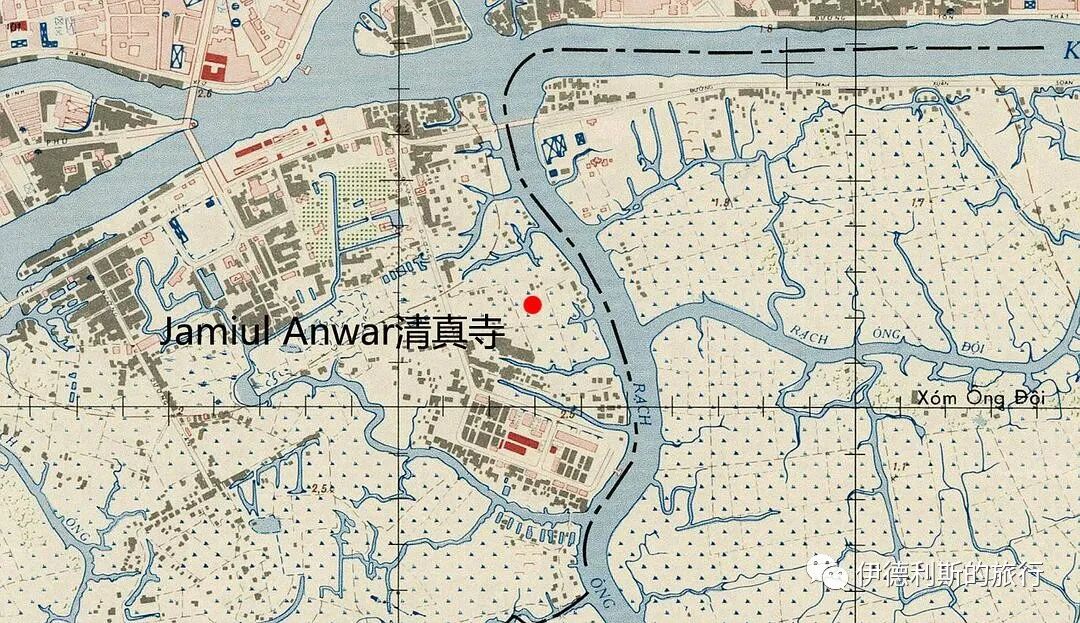
When the mosque was first built, the area around it was still a watery countryside on the edge of the city. But as the city grew, the area is now full of residential neighborhoods. The mosque is tucked away inside a maze of complicated alleyways.
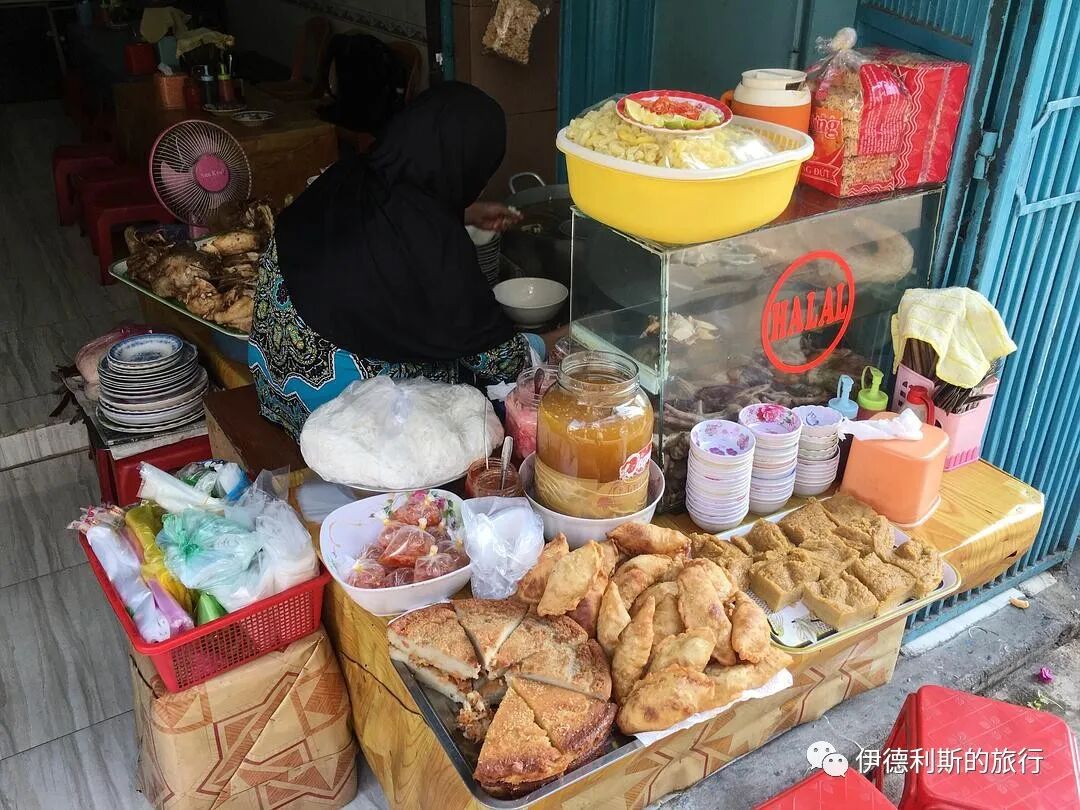
On the way to the mosque, there is a halal snack shop.
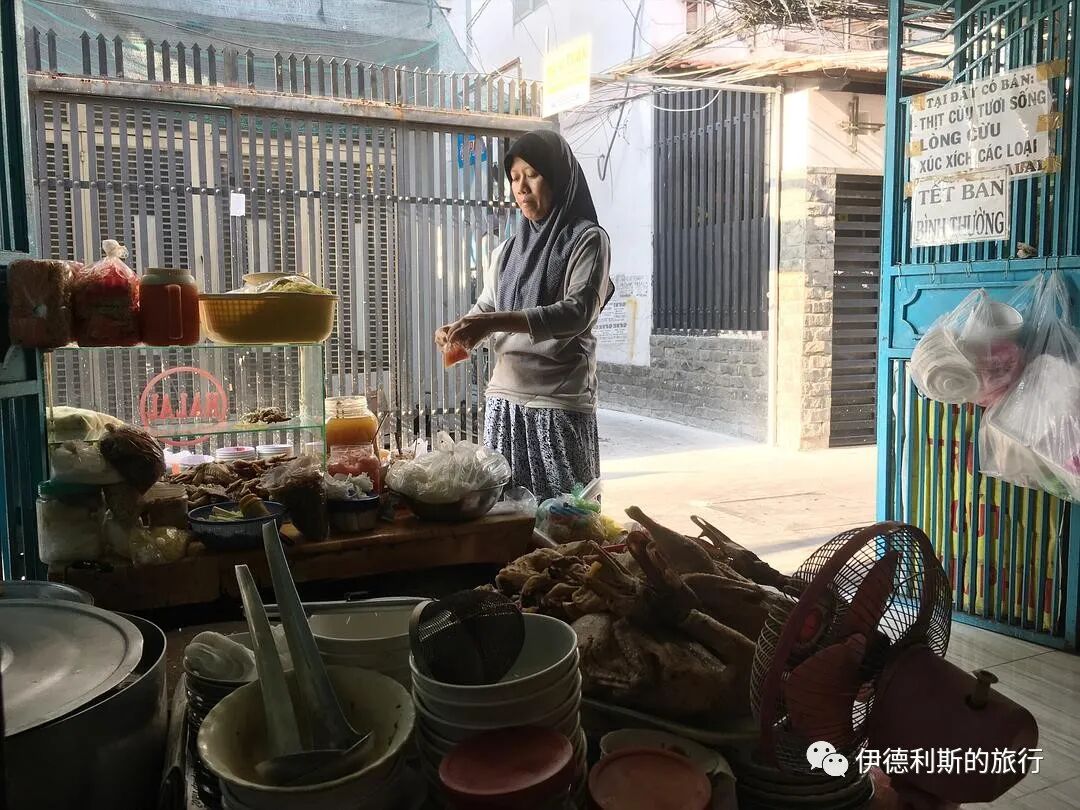
The lady there speaks English, and we had a great time chatting.
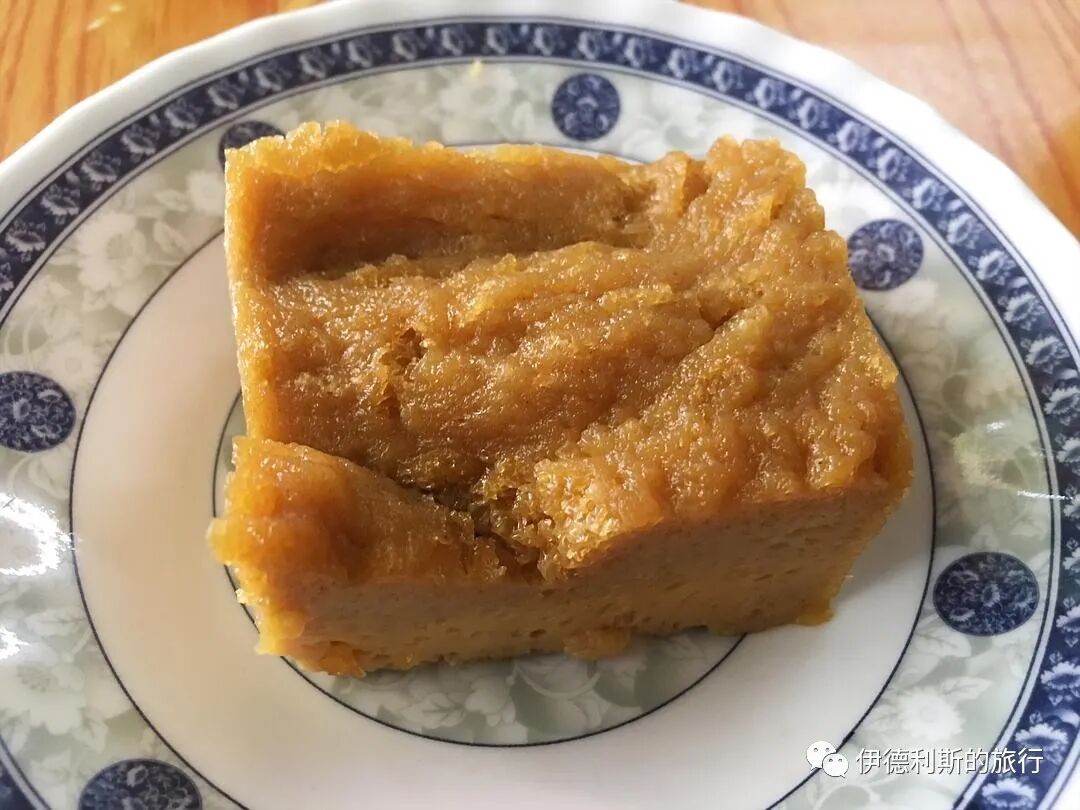
Delicious desserts.
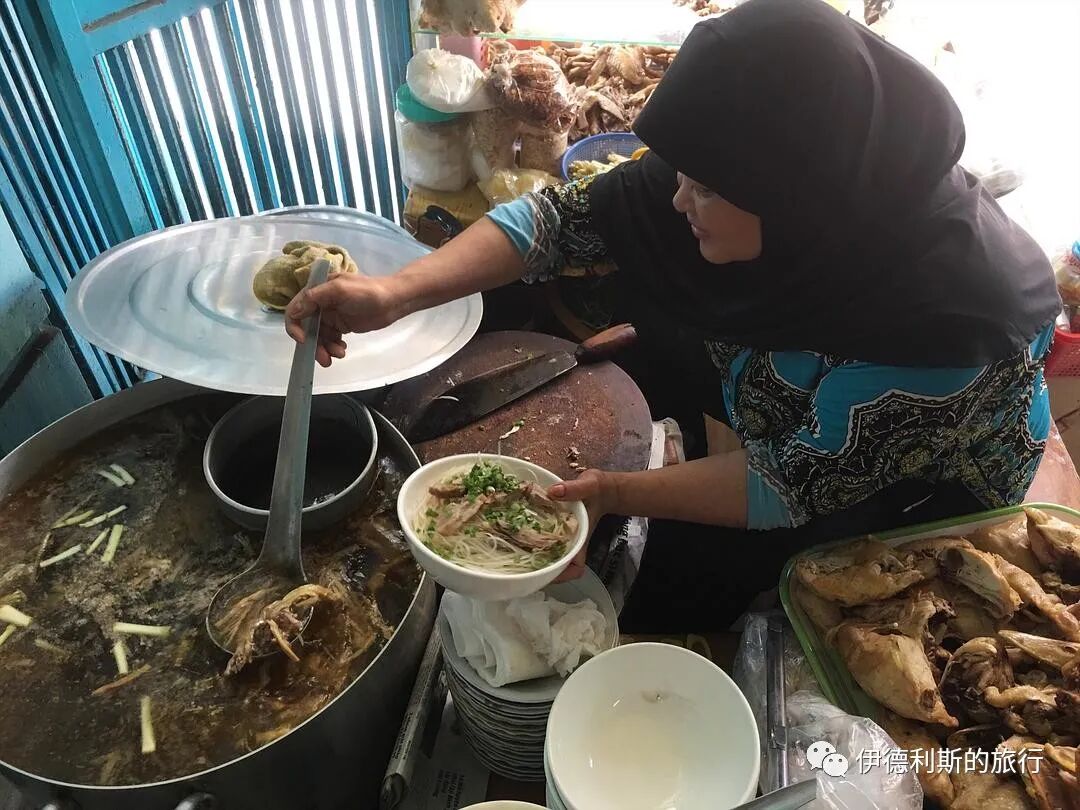
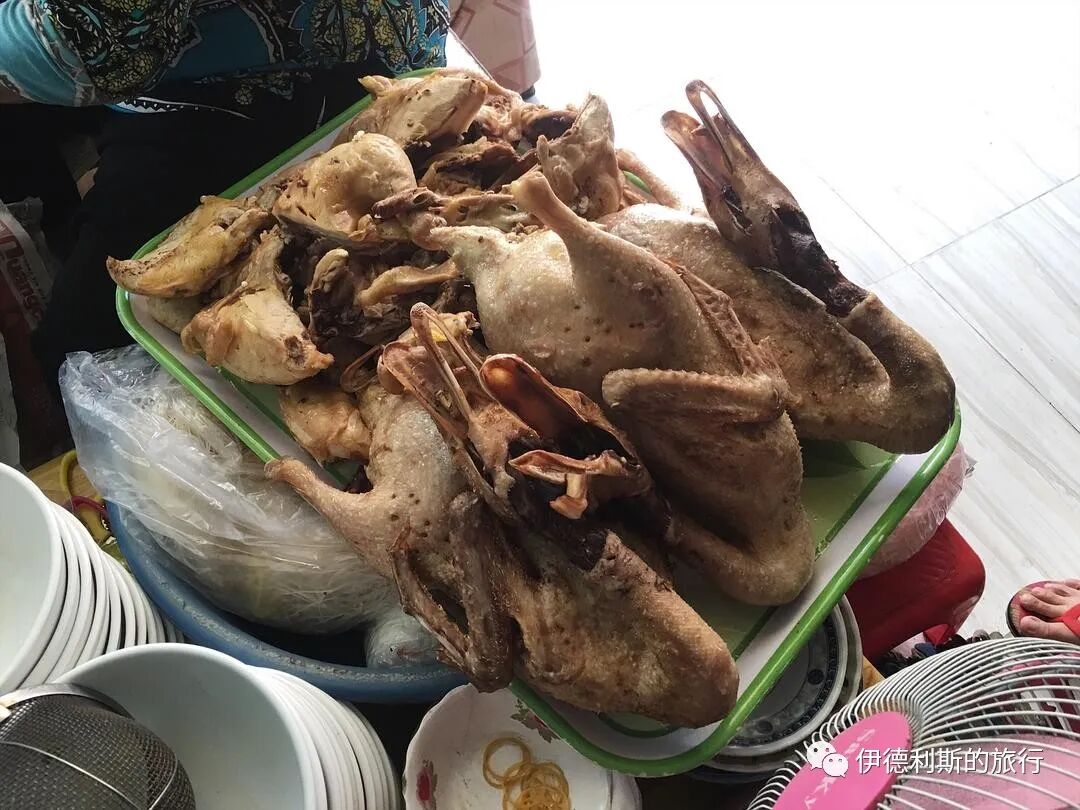
Duck noodle soup (yaruofen).
The Cham Muslims, Kinh people, and Chinese people live together here in great harmony.
Keep walking into the alley and you will see several Halal signs. This area has the highest concentration of halal snack shops among the few mosques in Ho Chi Minh City.
Finally, I arrived at the mosque.
A group of Cham Muslim uncles are chatting.
The drum inside the mosque looks like it has been used for many years.
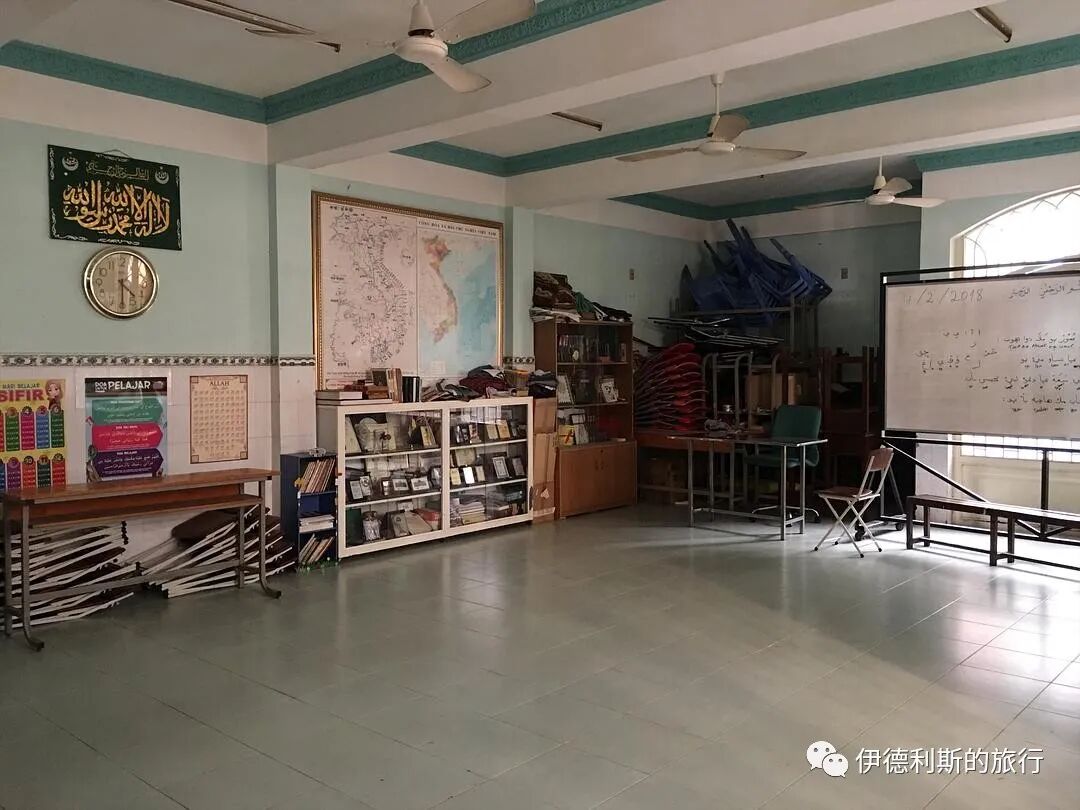
The classroom on the first floor.
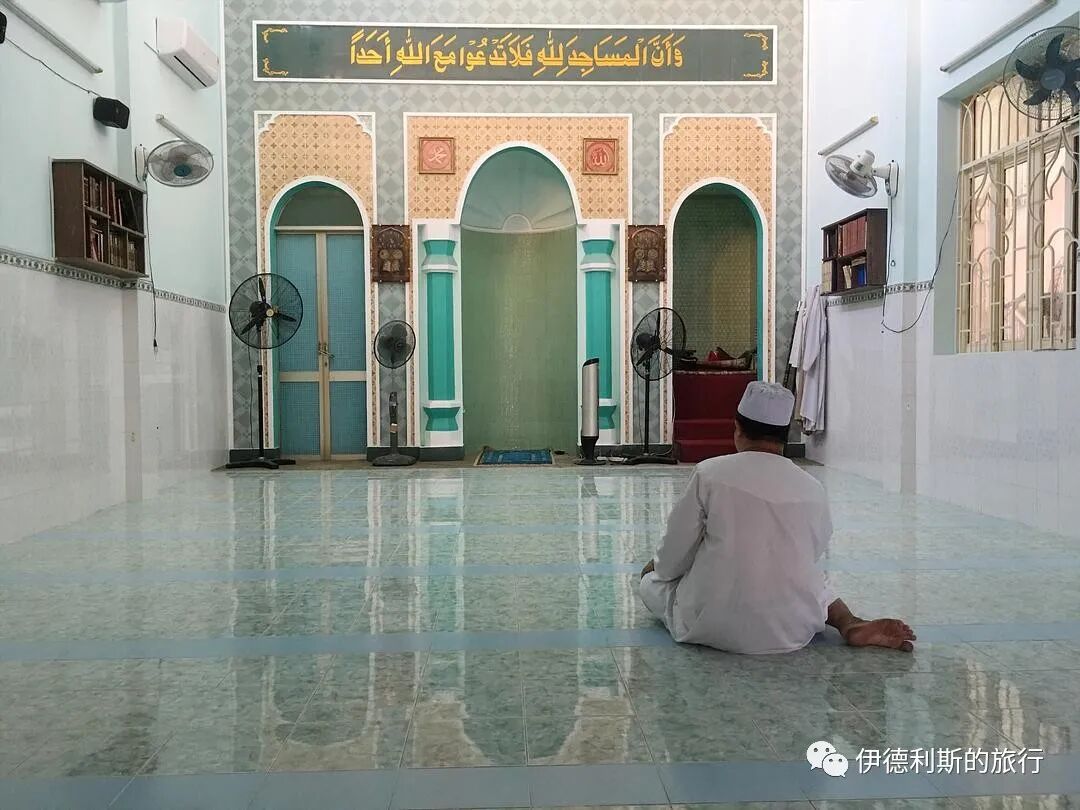
The prayer hall on the second floor.
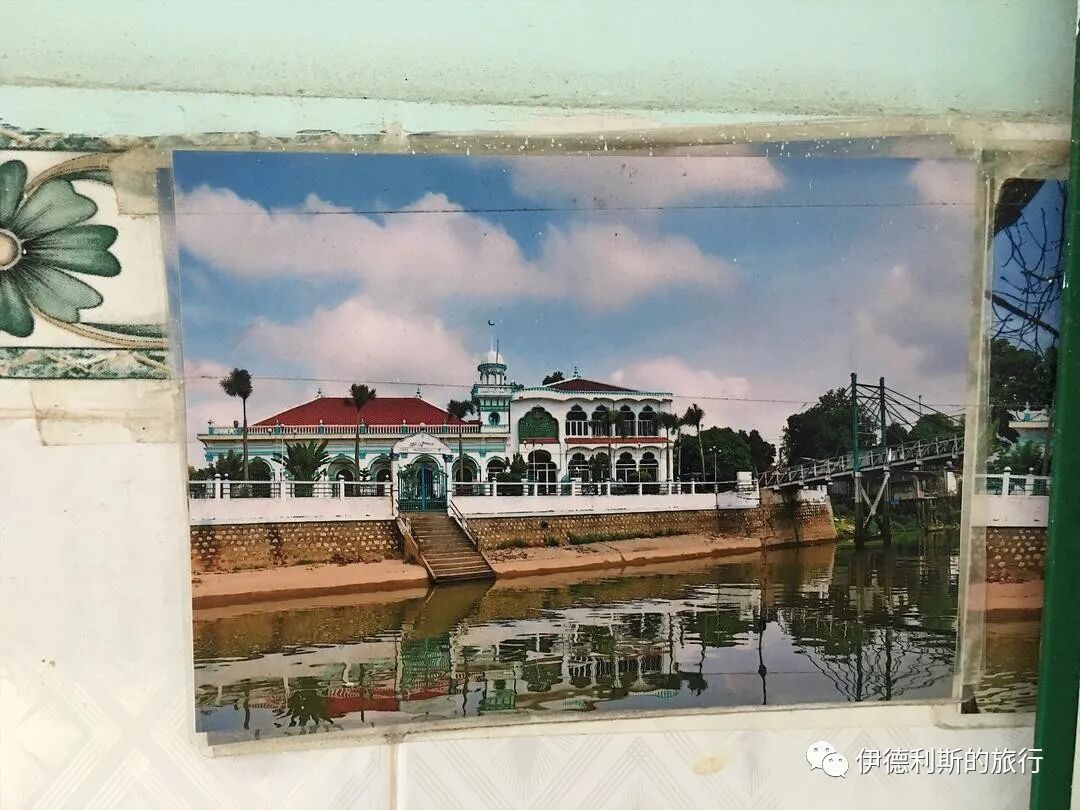
The photos on the wall show mosques in traditional Cham Muslim communities near the border of Vietnam and Cambodia.
7. Cholon Mosque
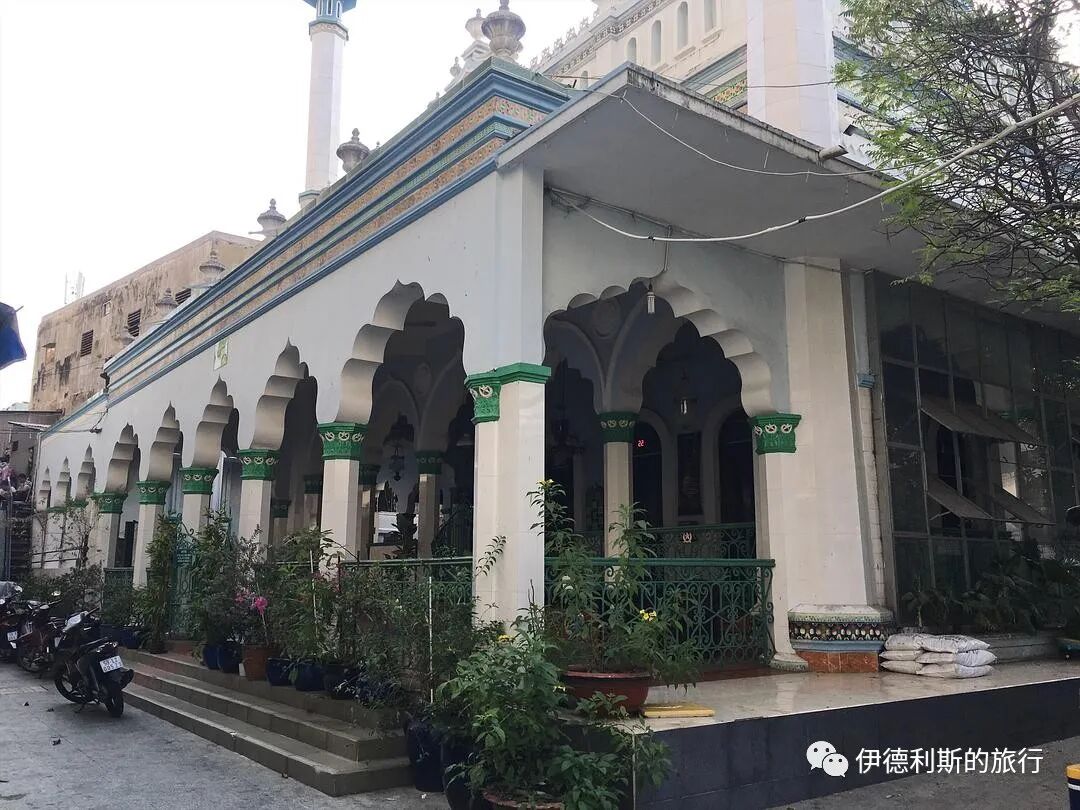
The Cholon Mosque was originally named Cholon Jamial Mosque and was built by South Indian Tamil Muslims in 1935. After 1975, all the Indian Muslims left, and today 80 Cham Muslims pray here.
Cholon is the most famous Chinese community in Vietnam, located about 5 kilometers from Saigon. Cholon was formed in 1782, and Cholon City was officially established in 1879. Everyone except the Chinese calls this place Cholon.
For more on the scenery of Cholon, see my diary entry Old Dreams of Cholon. Duras’s novel The Lover is set here.
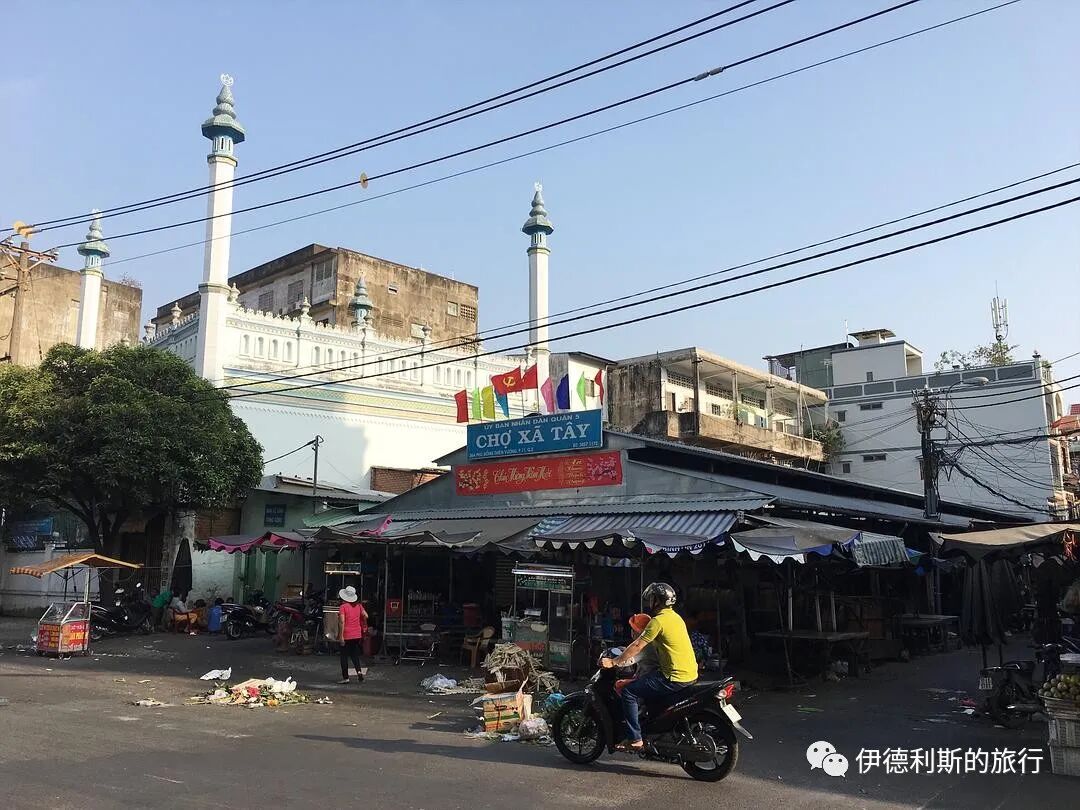
Right next to the Cholon mosque is a local market.
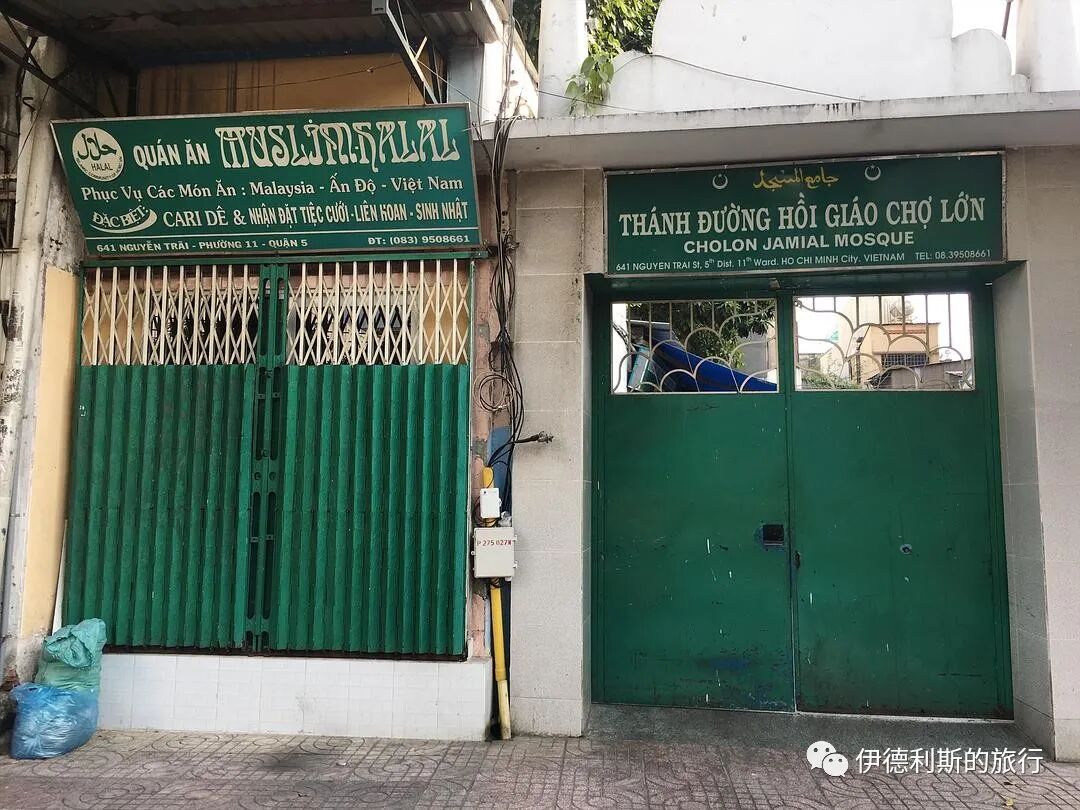
Next door is a halal shop, but it is closed for the Spring Festival holiday.
Halal Travel Guide: Ho Chi Minh City — Mosques and Cham Muslims (Part 2)
Articles • ali2007fr posted the article • 0 comments • 136 views • 2026-05-17 21:54
Summary: Ho Chi Minh City — Mosques and Cham Muslims is presented here as a firsthand travel account in clear English, beginning with this scene: There is a herbal tea stall (liangcha) parked in the mosque courtyard. The account keeps its focus on Ho Chi Minh City, Cham Muslims, Vietnam Mosques while preserving the names, places, food, and historical details from the Chinese source.
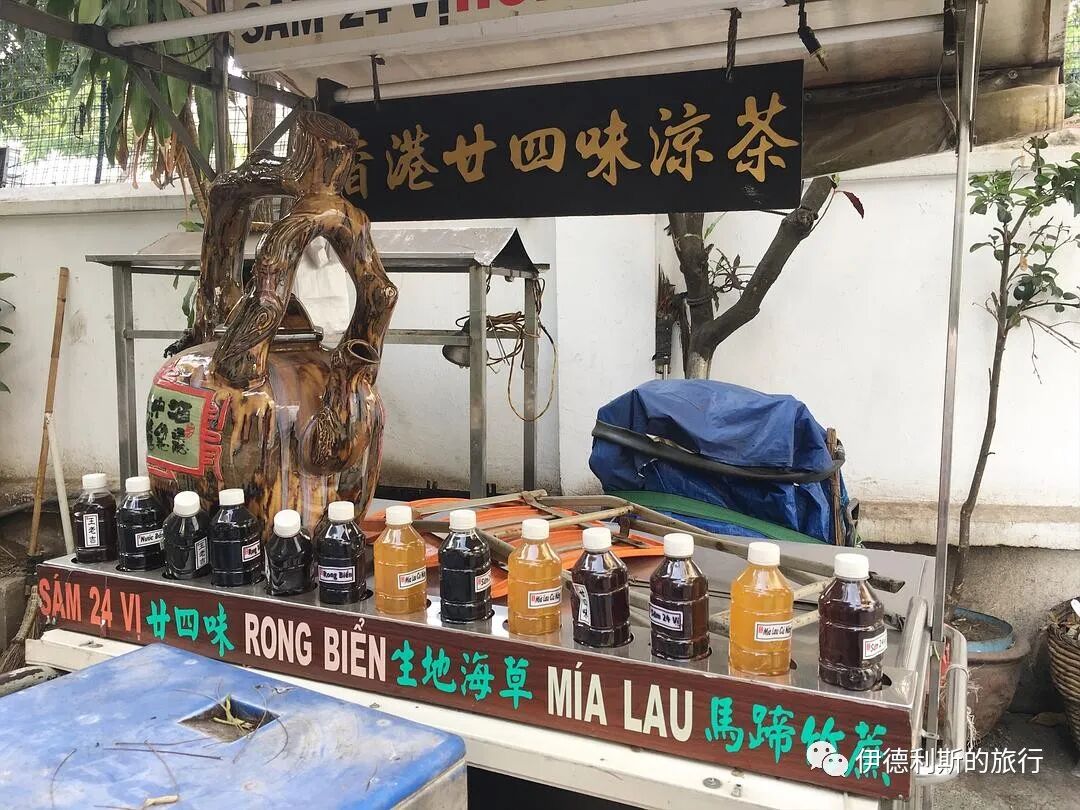
There is a herbal tea stall (liangcha) parked in the mosque courtyard.
Outside the mosque view all
Summary: Ho Chi Minh City — Mosques and Cham Muslims is presented here as a firsthand travel account in clear English, beginning with this scene: There is a herbal tea stall (liangcha) parked in the mosque courtyard. The account keeps its focus on Ho Chi Minh City, Cham Muslims, Vietnam Mosques while preserving the names, places, food, and historical details from the Chinese source.
There is a herbal tea stall (liangcha) parked in the mosque courtyard.
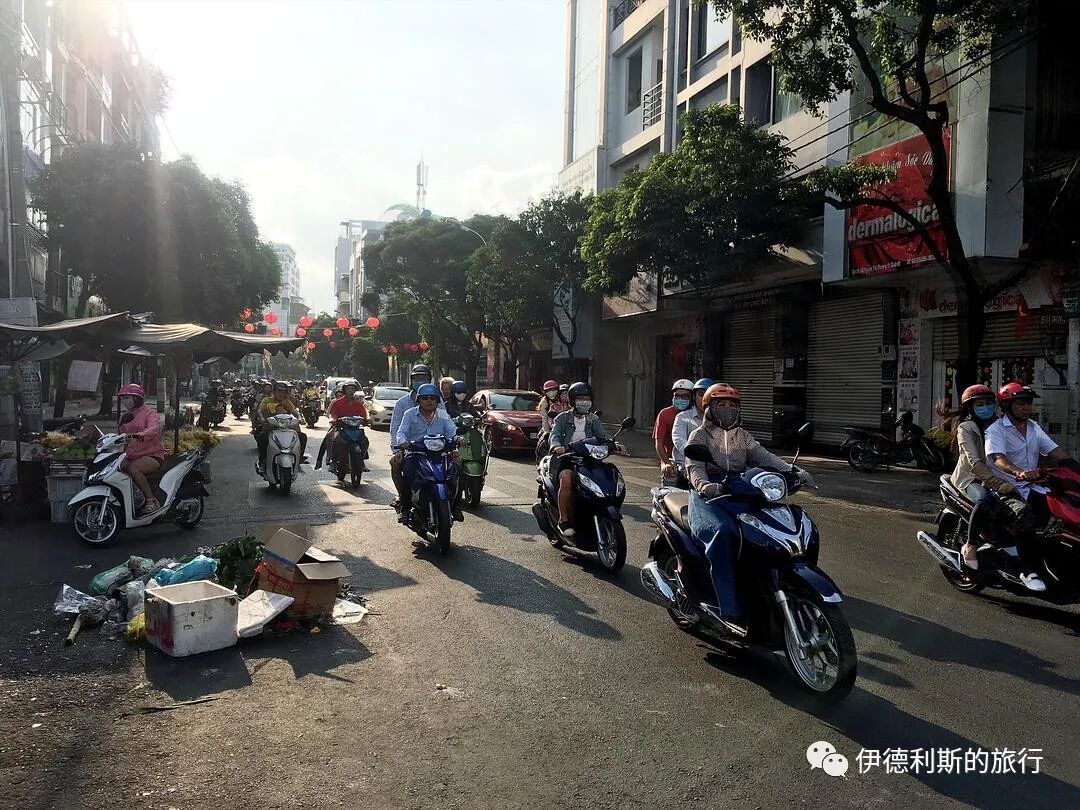
Outside the mosque
Muslim Travel Guide Vietnam Ho Chi Minh City: Al-Rahim Mosque, Ben Thanh Halal Food and Cham Community
Articles • yusuf908 posted the article • 0 comments • 294 views • 2026-05-23 22:23
Summary: This Vietnam Muslim travel guide visits Al-Rahim Mosque near Ben Thanh Market in Ho Chi Minh City, with nearby halal restaurants, the mosque entrance, prayer hall, wudu area, Arabic calligraphy, Qur'an study, and the Cham Muslim community around the city.
This mosque, called Al-Rahim (Mercy), is not far from Ho Chi Minh Ben Thanh Market, and it takes only five or six minutes to walk.
There is a street with halal restaurants at the entrance of Ben Thanh Market (see pictures 9 to 12). After eating there, I took a walk to Al-Rahim Mosque (Zhici Mosque, Mercy Mosque) and found that there are halal restaurants in front of the mosque (see picture 2). There is a restaurant on the left and right, and there are some diners sitting there.
When entering the mosque gate, as usual, take off your shoes before stepping onto the steps of the prayer hall. Because the weather was extremely hot, the door on the first floor was left open and two or three fans were blowing. There were three or four people sitting in the hall, one of whom looked like an imam and was teaching the rest of the people how to study the Qur'an.
He told me in English that the prayer room is on the second floor. I exited the hall and found the wudu area on the porch outside the hall. (See Picture 3 and Picture 4)
After going upstairs, we found the main prayer hall (Pictures 5, 6 and 7). There is a dome painted with white clouds and blue sky directly above the main hall. Moreover, there is a prayer space on the third floor, so that the prayer hall can accommodate more people without making it appear cramped.
The location of the mihrab and the Arabic calligraphy layout on the left and right are very similar to the couplets of ancient buildings. I wonder if they were influenced by the couplets. It's very possible, because there are also many couplets in Vietnam.
After coming out of this mosque, I felt that this mosque was popular and alive. Why do I say that? Because I saw Muslims running businesses around the mosque, and there were people studying the Qur'an inside the mosque.
There are also gathering places for Cham Muslims around Ho Chi Minh, and there are also some mosques there. I will take photos for everyone to see if I have a chance in the future. view all
Summary: This Vietnam Muslim travel guide visits Al-Rahim Mosque near Ben Thanh Market in Ho Chi Minh City, with nearby halal restaurants, the mosque entrance, prayer hall, wudu area, Arabic calligraphy, Qur'an study, and the Cham Muslim community around the city.
This mosque, called Al-Rahim (Mercy), is not far from Ho Chi Minh Ben Thanh Market, and it takes only five or six minutes to walk.
There is a street with halal restaurants at the entrance of Ben Thanh Market (see pictures 9 to 12). After eating there, I took a walk to Al-Rahim Mosque (Zhici Mosque, Mercy Mosque) and found that there are halal restaurants in front of the mosque (see picture 2). There is a restaurant on the left and right, and there are some diners sitting there.
When entering the mosque gate, as usual, take off your shoes before stepping onto the steps of the prayer hall. Because the weather was extremely hot, the door on the first floor was left open and two or three fans were blowing. There were three or four people sitting in the hall, one of whom looked like an imam and was teaching the rest of the people how to study the Qur'an.
He told me in English that the prayer room is on the second floor. I exited the hall and found the wudu area on the porch outside the hall. (See Picture 3 and Picture 4)
After going upstairs, we found the main prayer hall (Pictures 5, 6 and 7). There is a dome painted with white clouds and blue sky directly above the main hall. Moreover, there is a prayer space on the third floor, so that the prayer hall can accommodate more people without making it appear cramped.
The location of the mihrab and the Arabic calligraphy layout on the left and right are very similar to the couplets of ancient buildings. I wonder if they were influenced by the couplets. It's very possible, because there are also many couplets in Vietnam.
After coming out of this mosque, I felt that this mosque was popular and alive. Why do I say that? Because I saw Muslims running businesses around the mosque, and there were people studying the Qur'an inside the mosque.
There are also gathering places for Cham Muslims around Ho Chi Minh, and there are also some mosques there. I will take photos for everyone to see if I have a chance in the future.
Best Halal Food Vietnam Ho Chi Minh City: Ben Thanh Market, Saigon Muslim Street and Cham Food Stalls
Articles • yusuf908 posted the article • 0 comments • 272 views • 2026-05-23 22:23
Summary: This Ho Chi Minh City halal food guide follows Ben Thanh Market and the nearby Muslim street in Saigon, showing halal restaurants, Malay and Cham food, lemon noodles, a Cham stall owner, market scenes, and the Muslim food life around the city center.
Ho Chi Minh City, formerly known as Saigon. This is the largest and most developed city in Vietnam. There is a clear development gap between the capital Hanoi and here.
One of the landmarks of Ho Chi Minh City is the Ben Thanh Market (Picture 1). Photos of the market when it was first completed are still posted outside the market. Looking around, the location here is excellent, with popular attractions such as Ho Chi Minh City Hall, Independence Palace, and Grand Theater not far away (Picture 4).
The market is bustling with tourists from all over the world. The products inside are also dazzling, ranging from souvenirs to clothes and bags, and all kinds of small commodities. Everyone who saw it was dazzled. The merchants inside are packed one after another, so densely packed that they all enthusiastically attract passing travelers.
If you don’t want to buy, you can refuse politely, and they won’t pester you for nothing. They want business, but they have boundaries and know how to exercise restraint. I like this very much. And there are also various snack stalls here, which are colorfully decorated.
After going out, there is a street dedicated to halal restaurants. Not only that, there are also prayer clothing stores, travel agencies for Muslim tourists, etc.
During the two or three days I was in Ho Chi Minh, I basically ate here. The food here is very characteristic of Southeast Asia, including coconut milk (Picture 12), grilled fish with rice (Picture 13). I ordered a beef pho, and the lady boss brought a side dish, which had a faint fishy smell when I chewed it.
Halfway through eating the noodles, I squeezed some lemon juice into it, which not only increased the flavor, but also smelled more like lemon.
There is a Cham man named Maieryan who sets up a food stall at the door, and the stove is on the back seat of his motorcycle. After a brief chat with the stall owner, she knew that I was going to Tay Ninh Province (there is also Tay Ninh in Vietnam, but theirs is Tay Ninh Province, not far to the west of Ho Chi Minh) and told me that she also had relatives living there. view all
Summary: This Ho Chi Minh City halal food guide follows Ben Thanh Market and the nearby Muslim street in Saigon, showing halal restaurants, Malay and Cham food, lemon noodles, a Cham stall owner, market scenes, and the Muslim food life around the city center.
Ho Chi Minh City, formerly known as Saigon. This is the largest and most developed city in Vietnam. There is a clear development gap between the capital Hanoi and here.
One of the landmarks of Ho Chi Minh City is the Ben Thanh Market (Picture 1). Photos of the market when it was first completed are still posted outside the market. Looking around, the location here is excellent, with popular attractions such as Ho Chi Minh City Hall, Independence Palace, and Grand Theater not far away (Picture 4).
The market is bustling with tourists from all over the world. The products inside are also dazzling, ranging from souvenirs to clothes and bags, and all kinds of small commodities. Everyone who saw it was dazzled. The merchants inside are packed one after another, so densely packed that they all enthusiastically attract passing travelers.
If you don’t want to buy, you can refuse politely, and they won’t pester you for nothing. They want business, but they have boundaries and know how to exercise restraint. I like this very much. And there are also various snack stalls here, which are colorfully decorated.
After going out, there is a street dedicated to halal restaurants. Not only that, there are also prayer clothing stores, travel agencies for Muslim tourists, etc.
During the two or three days I was in Ho Chi Minh, I basically ate here. The food here is very characteristic of Southeast Asia, including coconut milk (Picture 12), grilled fish with rice (Picture 13). I ordered a beef pho, and the lady boss brought a side dish, which had a faint fishy smell when I chewed it.
Halfway through eating the noodles, I squeezed some lemon juice into it, which not only increased the flavor, but also smelled more like lemon.
There is a Cham man named Maieryan who sets up a food stall at the door, and the stove is on the back seat of his motorcycle. After a brief chat with the stall owner, she knew that I was going to Tay Ninh Province (there is also Tay Ninh in Vietnam, but theirs is Tay Ninh Province, not far to the west of Ho Chi Minh) and told me that she also had relatives living there.
Halal Travel Guide: Bangkok - Cham Mosques, Canals and Muslim History
Articles • ali2007fr posted the article • 0 comments • 268 views • 2026-05-20 09:11
Summary: Bangkok has several historic Cham Muslim mosque neighborhoods tied to river trade, military service, canals, and royal boat history. This account covers Ton Son Mosque, Bang Luang Mosque, the Royal Barges Museum area, Jami-Ul-Khoy-Riyah Mosque, Zulugul Muttaqeen Mosque, Darul Falah Mosque, and the photographs in their original order.
I traveled to Bangkok, Thailand, in 2023 and 2025, visiting 25 mosques (masjid) in the city that represent six ethnic groups: Persian, Arab, Indian, Malay, Indonesian, and Champa. Although these friends (dosti) from different ethnic backgrounds have lived in Thailand for over a hundred years and speak Thai in their daily lives, they still keep their unique history, culture, and traditions. I will now share six articles introducing the 25 mosques of these six ethnic groups in Bangkok.
First, I will introduce the five Champa mosques in Bangkok.
Champa (Champa) was a country established by the Cham people (Chams) in southern Vietnam. After the 15th century, the Malacca Sultanate became a powerful state in Southeast Asia, and Champa maintained close ties with it. Malay friends (dosti) integrated with the Cham people through trade and marriage, leading many Cham people to embrace the faith.
After Vietnam broke free from Mongol control in the 14th century, it began moving south to invade Champa. In 1471, the Champa capital of Vijaya (Vijaya) fell, and many members of the Champa royal family and civilians fled to Cambodia for refuge. These Cham people in Cambodia united with the Malays who had settled there earlier, forming a military alliance in the 16th century.
Cham mercenary troops (krom asa Cham) began working for Siam in the early 17th century. Because of their excellent shipbuilding skills and naval combat strength, they were highly praised by the Siamese royal family. These Cham warriors were granted the honor of serving as rowers for the royal barges during Siamese royal processions.
The first mosque in Bangkok: Ton Son Mosque.
In the 17th century, the Thonburi area of Bangkok was a transit port on the Chao Phraya River leading to the Siamese capital of Ayutthaya. At that time, important trade warehouses and customs stations were set up at the mouth of the Yai (Yai) canal, and Cham troops were stationed nearby. In 1688, the royal eunuch (Chao Phraya Ratchawangsanseni) Mahmud built the first mosque in Bangkok here. Because it was located by the Yai canal, it was called Kudi Yai.
The original mosque was built entirely of teak wood, with an architectural style similar to the main halls of Buddhist temples. It was rebuilt as a brick structure in the early 19th century and rebuilt again in 1952 into the current reinforced concrete building. Because the Siamese royal family gifted tropical pine trees (ton son) to the mosque in the 19th century, the mosque was renamed Ton Son Mosque.
The pulpit (minbar) at Ton Son Mosque has a strong Siamese Ayutthaya style, and the prayer niche (mihrab) was preserved from the old building and is very beautifully crafted.
This is the area where the imam stands to lead the prayer (namaz), and it also has a very Thai style.
There is a depiction of Mecca (tianfang tu) in the center of the prayer niche (mihrab).
An old house in the mosque built in 1941.
The Yai canal at the entrance of the mosque.
The mosque area is filled with rivers.
Bang Luang Mosque, the only Thai-style mosque in Bangkok.
In 1767, Burma invaded Siam, the capital Ayutthaya fell, and the Cham military camp at the mouth of the Yai River was destroyed. Soon after, Siam moved its capital to Thonburi. The Cham people who fled from Ayutthaya settled around Ton Son Mosque, formed a new Cham community, and continued to serve in the Siamese navy. In 1782, Siam officially moved its capital to Bangkok on the east bank of the Chao Phraya River. They built a royal shipyard and dock opposite the Cham community, and many Cham people became royal sailors and shipbuilders.
With the establishment of the royal shipyard and dock, some Cham people moved to live on the other side of the Yai Canal. People of Malay descent who moved from Ayutthaya and Trat Province in the southeast originally lived here, making a living by rowing boats on the canal to sell goods. Around 1785, a merchant named Toh Yi led the construction of a new mosque called Kudi Mai (New Mosque) or Bang Luang Mosque.
Bang Luang Mosque is the only surviving Thai-style mosque in Bangkok. It has Thai-style white stucco brick walls, and its decorative roof looks very similar to those on Thai temples. The main hall is surrounded by a corridor with 30 pillars, representing the 30 parts of the Quran. The mihrab inside the main hall is the most exquisite part, featuring a purely Thai decorative style, including the Chofa decorative element found on Thai palace architecture. This shape is adapted from the Garuda in Hinduism and Buddhism, but it was redesigned to fit Islamic traditions.
The atmosphere at Bang Luang Mosque during namaz is very special. Every elder who arrives shakes hands with everyone, and an elder even gave me a drink. You can see everyone wearing a sarong (sarong) tube skirt, which means 'to cover' in Malay. This outfit is perfect for the humid and hot climate of Southeast Asia.
The wooden-framed scriptures hanging on the walls of Bang Luang Mosque and the porcelain plates embedded in the walls are both over a hundred years old.
This old bell feels like it has a lot of history.
The area around Bang Luang Mosque is still mainly inhabited by Cham and Malay descendants. We chatted for a while with the owner of a small shop opposite the mosque. The owner's family is of Malay descent; the father speaks fluent Thai and Malay, and the son's English is also very good.
Cham Navy and the National Museum of Royal Barges.
In 1778, Thailand invaded Laos. To attack Laos from two sides, Thailand recruited an army of over 10,000 people from the pro-Thai Kingdom of Cambodia, which included several naval companies made up of Cham dosti (friends/comrades). After these Cham naval companies finished participating in the war against Laos, some of them returned with the Thai army to Thonburi, the capital of Thailand at the time. They were under the command of the Second King of Siam (Front Palace). After 1782, they were stationed along the Noi Canal and built the Second King's shipyard and dock next to their camp.
These Cham sailors served for a long time in gunboat patrols against pirates along the Thai coast. Until the Grand Palace and Front Palace navies merged into the Royal Thai Navy in 1880, these Cham sailors continued to serve in the Royal Navy, with some stationed at naval fortifications in Samut Prakan. After the 1910s, the former station of the Cham navy was gradually abandoned.
The National Museum of Royal Barges is currently built on the former site of the Cham navy station. Before the 20th century, the Cham navy served as rowers for the royal barge, a high honor granted to Cham sailors by the Thai royal family.
Noi Canal
Cham community neighborhood—Jami-Ul-Khoy-Riyah Mosque
In 1781, Thailand attacked Cambodia and captured some Cham soldiers. These Cham soldiers were brought back to Bangkok in 1782. These Cham soldiers officially joined the Thai army in 1783 and helped dig the Maha Nak Canal. In the early 19th century, Thailand and Vietnam fought a long war over Cambodia. The canal east of Bangkok became a vital military transport route, moving supplies and soldiers to the Cambodian front, earning it the name Bangkok's Eastern Corridor. The Saen Saep Canal east of Bangkok was completed in 1840, and these Cham soldiers were responsible for guarding it.
Today, you can take a canal boat on the Saen Saep Canal to Sapan Charoenpol station. After crossing the bridge, you will see the Jami-Ul-Khoy-Riyah Mosque built by the descendants of these Cham soldiers. In the late 19th century, as peace returned to eastern Thailand, the area became a silk market and later a tourist destination.
The Jami-Ul-Khoy-Riyah Mosque displays a collection of porcelain. Many mosques in Bangkok have porcelain display cabinets, which is an interesting tradition.
Street view of the Jami-Ul-Khoy-Riyah Mosque neighborhood. There are small family-run snack shops in the narrow alleys, though they are usually closed in the afternoon. There is a pavilion by the canal built during the reign of Rama III (1824-1851). During this period, Thailand was frequently at war with Laos, Cambodia, and Vietnam, and the Saen Saep Canal was the main artery for transporting supplies east from Bangkok. There used to be a pier in front of the pavilion where many supplies were loaded and unloaded. The wood used to build the Jami-Ul-Khoy-Riyah Mosque was also unloaded here.
Today, it has become a place for people to cool off and chat. Next to the pavilion is a small shop selling cold drinks and waffles, where I bought a cup of authentic Thai red tea. Besides the Cham people, Malays from Pattani Province in southern Thailand also live in the Jami-Ul-Khoy-Riyah Mosque neighborhood. After 1786, Thailand invaded the southern Pattani Sultanate several times and captured a large number of Pattani Malays, some of whom were settled in the Jami-Ul-Khoy-Riyah Mosque neighborhood.
Cham community neighborhood—Zulugul Muttaqeen Mosque
The Zulugul Muttaqeen Mosque is located just west of the Jami-Ul-Khoy-Riyah Mosque. It was built by Cham captives brought back from Cambodia by Thailand during the Siamese-Vietnamese War of 1841-1845.
The mosque is clean and bright. The first floor is a classroom, the second floor is the main prayer hall, and the third-floor terrace offers a panoramic view of the neighborhood.
Cham community neighborhood—Darul Falah Mosque
The Darul Falah Mosque was also built by Cham captives brought back from Cambodia by Thailand during the Siamese-Vietnamese War of 1841-1845. Bangkok once had its most important Sufi shrine (gongbei), but it is hard to find any trace of it today.
In the early 20th century, Sheikh Hussein Bakri, a Sufi from the Shadhili order in the Hejaz region, lived at the Darul Falah mosque (masjid) in Bangkok. He married a local woman and they had two sons. Before Sheikh Hussein returned to his home country, he predicted that his youngest son, Ahmed Bakri, would pass away, so he told his wife to bury a piece of green cloth with him. Sure enough, his son died just a few days after he left. His wife did not follow his instructions to include the green cloth, so she later urgently asked everyone to open the grave to put it in, but when they opened the grave, Ahmed's body was already gone. The story of the Arab man and the green cloth spread quickly.
After the Saudis conquered the Hejaz region in 1925, they promoted Wahhabism there, forcing many Sufis in the Hejaz to flee. In 1929, Sheikh Hussein Bakri's other son, Sheikh Khalid Bakri, who was also in the Shadhili order, traveled by boat from the Hejaz to the Darul Falah mosque in Bangkok and built the Ahmed shrine (gongbei) inside the mosque. During World War II, when the U. S. military bombed Bangkok, people from all different groups took shelter near the shrine, believing it would keep them safe. The shrine was not moved outside the mosque until the Darul Falah mosque was renovated in the 1950s.
Starting from the Darul Falah mosque, the Shadhili order gradually grew in the eastern suburbs of Bangkok and expanded into central and southern Thailand, becoming an important Sufi order in the country. view all
Summary: Bangkok has several historic Cham Muslim mosque neighborhoods tied to river trade, military service, canals, and royal boat history. This account covers Ton Son Mosque, Bang Luang Mosque, the Royal Barges Museum area, Jami-Ul-Khoy-Riyah Mosque, Zulugul Muttaqeen Mosque, Darul Falah Mosque, and the photographs in their original order.
I traveled to Bangkok, Thailand, in 2023 and 2025, visiting 25 mosques (masjid) in the city that represent six ethnic groups: Persian, Arab, Indian, Malay, Indonesian, and Champa. Although these friends (dosti) from different ethnic backgrounds have lived in Thailand for over a hundred years and speak Thai in their daily lives, they still keep their unique history, culture, and traditions. I will now share six articles introducing the 25 mosques of these six ethnic groups in Bangkok.
First, I will introduce the five Champa mosques in Bangkok.
Champa (Champa) was a country established by the Cham people (Chams) in southern Vietnam. After the 15th century, the Malacca Sultanate became a powerful state in Southeast Asia, and Champa maintained close ties with it. Malay friends (dosti) integrated with the Cham people through trade and marriage, leading many Cham people to embrace the faith.
After Vietnam broke free from Mongol control in the 14th century, it began moving south to invade Champa. In 1471, the Champa capital of Vijaya (Vijaya) fell, and many members of the Champa royal family and civilians fled to Cambodia for refuge. These Cham people in Cambodia united with the Malays who had settled there earlier, forming a military alliance in the 16th century.
Cham mercenary troops (krom asa Cham) began working for Siam in the early 17th century. Because of their excellent shipbuilding skills and naval combat strength, they were highly praised by the Siamese royal family. These Cham warriors were granted the honor of serving as rowers for the royal barges during Siamese royal processions.
The first mosque in Bangkok: Ton Son Mosque.
In the 17th century, the Thonburi area of Bangkok was a transit port on the Chao Phraya River leading to the Siamese capital of Ayutthaya. At that time, important trade warehouses and customs stations were set up at the mouth of the Yai (Yai) canal, and Cham troops were stationed nearby. In 1688, the royal eunuch (Chao Phraya Ratchawangsanseni) Mahmud built the first mosque in Bangkok here. Because it was located by the Yai canal, it was called Kudi Yai.
The original mosque was built entirely of teak wood, with an architectural style similar to the main halls of Buddhist temples. It was rebuilt as a brick structure in the early 19th century and rebuilt again in 1952 into the current reinforced concrete building. Because the Siamese royal family gifted tropical pine trees (ton son) to the mosque in the 19th century, the mosque was renamed Ton Son Mosque.
The pulpit (minbar) at Ton Son Mosque has a strong Siamese Ayutthaya style, and the prayer niche (mihrab) was preserved from the old building and is very beautifully crafted.
This is the area where the imam stands to lead the prayer (namaz), and it also has a very Thai style.
There is a depiction of Mecca (tianfang tu) in the center of the prayer niche (mihrab).
An old house in the mosque built in 1941.
The Yai canal at the entrance of the mosque.
The mosque area is filled with rivers.
Bang Luang Mosque, the only Thai-style mosque in Bangkok.
In 1767, Burma invaded Siam, the capital Ayutthaya fell, and the Cham military camp at the mouth of the Yai River was destroyed. Soon after, Siam moved its capital to Thonburi. The Cham people who fled from Ayutthaya settled around Ton Son Mosque, formed a new Cham community, and continued to serve in the Siamese navy. In 1782, Siam officially moved its capital to Bangkok on the east bank of the Chao Phraya River. They built a royal shipyard and dock opposite the Cham community, and many Cham people became royal sailors and shipbuilders.
With the establishment of the royal shipyard and dock, some Cham people moved to live on the other side of the Yai Canal. People of Malay descent who moved from Ayutthaya and Trat Province in the southeast originally lived here, making a living by rowing boats on the canal to sell goods. Around 1785, a merchant named Toh Yi led the construction of a new mosque called Kudi Mai (New Mosque) or Bang Luang Mosque.
Bang Luang Mosque is the only surviving Thai-style mosque in Bangkok. It has Thai-style white stucco brick walls, and its decorative roof looks very similar to those on Thai temples. The main hall is surrounded by a corridor with 30 pillars, representing the 30 parts of the Quran. The mihrab inside the main hall is the most exquisite part, featuring a purely Thai decorative style, including the Chofa decorative element found on Thai palace architecture. This shape is adapted from the Garuda in Hinduism and Buddhism, but it was redesigned to fit Islamic traditions.
The atmosphere at Bang Luang Mosque during namaz is very special. Every elder who arrives shakes hands with everyone, and an elder even gave me a drink. You can see everyone wearing a sarong (sarong) tube skirt, which means 'to cover' in Malay. This outfit is perfect for the humid and hot climate of Southeast Asia.
The wooden-framed scriptures hanging on the walls of Bang Luang Mosque and the porcelain plates embedded in the walls are both over a hundred years old.
This old bell feels like it has a lot of history.
The area around Bang Luang Mosque is still mainly inhabited by Cham and Malay descendants. We chatted for a while with the owner of a small shop opposite the mosque. The owner's family is of Malay descent; the father speaks fluent Thai and Malay, and the son's English is also very good.
Cham Navy and the National Museum of Royal Barges.
In 1778, Thailand invaded Laos. To attack Laos from two sides, Thailand recruited an army of over 10,000 people from the pro-Thai Kingdom of Cambodia, which included several naval companies made up of Cham dosti (friends/comrades). After these Cham naval companies finished participating in the war against Laos, some of them returned with the Thai army to Thonburi, the capital of Thailand at the time. They were under the command of the Second King of Siam (Front Palace). After 1782, they were stationed along the Noi Canal and built the Second King's shipyard and dock next to their camp.
These Cham sailors served for a long time in gunboat patrols against pirates along the Thai coast. Until the Grand Palace and Front Palace navies merged into the Royal Thai Navy in 1880, these Cham sailors continued to serve in the Royal Navy, with some stationed at naval fortifications in Samut Prakan. After the 1910s, the former station of the Cham navy was gradually abandoned.
The National Museum of Royal Barges is currently built on the former site of the Cham navy station. Before the 20th century, the Cham navy served as rowers for the royal barge, a high honor granted to Cham sailors by the Thai royal family.
Noi Canal
Cham community neighborhood—Jami-Ul-Khoy-Riyah Mosque
In 1781, Thailand attacked Cambodia and captured some Cham soldiers. These Cham soldiers were brought back to Bangkok in 1782. These Cham soldiers officially joined the Thai army in 1783 and helped dig the Maha Nak Canal. In the early 19th century, Thailand and Vietnam fought a long war over Cambodia. The canal east of Bangkok became a vital military transport route, moving supplies and soldiers to the Cambodian front, earning it the name Bangkok's Eastern Corridor. The Saen Saep Canal east of Bangkok was completed in 1840, and these Cham soldiers were responsible for guarding it.
Today, you can take a canal boat on the Saen Saep Canal to Sapan Charoenpol station. After crossing the bridge, you will see the Jami-Ul-Khoy-Riyah Mosque built by the descendants of these Cham soldiers. In the late 19th century, as peace returned to eastern Thailand, the area became a silk market and later a tourist destination.
The Jami-Ul-Khoy-Riyah Mosque displays a collection of porcelain. Many mosques in Bangkok have porcelain display cabinets, which is an interesting tradition.
Street view of the Jami-Ul-Khoy-Riyah Mosque neighborhood. There are small family-run snack shops in the narrow alleys, though they are usually closed in the afternoon. There is a pavilion by the canal built during the reign of Rama III (1824-1851). During this period, Thailand was frequently at war with Laos, Cambodia, and Vietnam, and the Saen Saep Canal was the main artery for transporting supplies east from Bangkok. There used to be a pier in front of the pavilion where many supplies were loaded and unloaded. The wood used to build the Jami-Ul-Khoy-Riyah Mosque was also unloaded here.
Today, it has become a place for people to cool off and chat. Next to the pavilion is a small shop selling cold drinks and waffles, where I bought a cup of authentic Thai red tea. Besides the Cham people, Malays from Pattani Province in southern Thailand also live in the Jami-Ul-Khoy-Riyah Mosque neighborhood. After 1786, Thailand invaded the southern Pattani Sultanate several times and captured a large number of Pattani Malays, some of whom were settled in the Jami-Ul-Khoy-Riyah Mosque neighborhood.
Cham community neighborhood—Zulugul Muttaqeen Mosque
The Zulugul Muttaqeen Mosque is located just west of the Jami-Ul-Khoy-Riyah Mosque. It was built by Cham captives brought back from Cambodia by Thailand during the Siamese-Vietnamese War of 1841-1845.
The mosque is clean and bright. The first floor is a classroom, the second floor is the main prayer hall, and the third-floor terrace offers a panoramic view of the neighborhood.
Cham community neighborhood—Darul Falah Mosque
The Darul Falah Mosque was also built by Cham captives brought back from Cambodia by Thailand during the Siamese-Vietnamese War of 1841-1845. Bangkok once had its most important Sufi shrine (gongbei), but it is hard to find any trace of it today.
In the early 20th century, Sheikh Hussein Bakri, a Sufi from the Shadhili order in the Hejaz region, lived at the Darul Falah mosque (masjid) in Bangkok. He married a local woman and they had two sons. Before Sheikh Hussein returned to his home country, he predicted that his youngest son, Ahmed Bakri, would pass away, so he told his wife to bury a piece of green cloth with him. Sure enough, his son died just a few days after he left. His wife did not follow his instructions to include the green cloth, so she later urgently asked everyone to open the grave to put it in, but when they opened the grave, Ahmed's body was already gone. The story of the Arab man and the green cloth spread quickly.
After the Saudis conquered the Hejaz region in 1925, they promoted Wahhabism there, forcing many Sufis in the Hejaz to flee. In 1929, Sheikh Hussein Bakri's other son, Sheikh Khalid Bakri, who was also in the Shadhili order, traveled by boat from the Hejaz to the Darul Falah mosque in Bangkok and built the Ahmed shrine (gongbei) inside the mosque. During World War II, when the U. S. military bombed Bangkok, people from all different groups took shelter near the shrine, believing it would keep them safe. The shrine was not moved outside the mosque until the Darul Falah mosque was renovated in the 1950s.
Starting from the Darul Falah mosque, the Shadhili order gradually grew in the eastern suburbs of Bangkok and expanded into central and southern Thailand, becoming an important Sufi order in the country.
Halal Travel Guide: Ho Chi Minh City — Mosques and Cham Muslims (Part 1)
Articles • ali2007fr posted the article • 0 comments • 158 views • 2026-05-17 21:54
Summary: Ho Chi Minh City — Mosques and Cham Muslims is presented here as a firsthand travel account in clear English, beginning with this scene: During the 2018 New Year holiday, I visited the Hui Muslims who speak the Cham language in Sanya, Hainan. The account keeps its focus on Ho Chi Minh City, Cham Muslims, Vietnam Travel while preserving the names, places, food, and historical details from the Chinese source.
During the 2018 New Year holiday, I visited the Hui Muslims who speak the Cham language in Sanya, Hainan. This sparked my interest in the Cham Muslims of Vietnam and Cambodia, so I decided to visit their communities during the Spring Festival holiday. Worried about the language barrier, I decided against going deep into the traditional Cham communities along the Vietnam-Cambodia border or the Vietnamese interior. Instead, I visited the urban Cham community in Ho Chi Minh City. Luckily, I received a warm welcome from the local Cham Muslims in Ho Chi Minh City and learned a great deal.
Let me first introduce the history of the Cham people. Champa, also known as Zhanpo, was a country established by the Cham people in southern Vietnam in 192 AD. The Cham people were originally an Austronesian-speaking group that moved from Borneo to the Indochinese Peninsula. After the 4th century, they were strongly influenced by India, using Sanskrit and practicing Brahmanism and Buddhism. Because their land was narrow and fragmented, the Champa Kingdom focused on maritime trade. During the Song and Yuan dynasties, it became an important trading port on the Maritime Silk Road. Chinese merchant ships sailing from Guangzhou or Quanzhou, as well as Arab and Persian ships coming from the Indian Ocean and the Persian Gulf, all chose to stop in Champa. Because of this, many Arab and Persian merchants lived in Champa during the Song and Yuan dynasties.
Two stone tablets with Arabic Kufic script were discovered in the cities of Phan Thiet and Phan Rang in southeastern Vietnam. The first tombstone belongs to a road worker named Abu Kamil, who passed away on November 20, 1039. The other stone is a notice about how Muslims lived with the local people. It uses a mix of Kufic and Naskh scripts and is thought to date from 1025 to 1035. The inscription suggests that Arab and Turkic merchants lived here.
Rubbings of the two inscriptions, taken from Cultural Exchange Between Champa and the Malay World.
After the 12th century, Champa fell into long-term warfare, and many Cham people fled to Cambodia and Malacca. From the mid-to-late 15th century, the Malacca Sultanate (1400–1511) became the most important Islamic nation in Southeast Asia, and Champa maintained close ties with it. In 1511, the Portuguese occupied the Malacca Sultanate, causing many Malays to move away, with some settling in areas where the Cham people lived. These Malay Muslims integrated with the Cham people, who also spoke an Austronesian language, through trade and marriage, leading many Cham to convert to Islam.
Western missionary M. Mahot MEP began living in Champa in 1676, and his records are considered the earliest and most reliable Western accounts of Champa's conversion to Islam. In a letter written in July 1678, he noted: 'Regarding the Champa religion, Malay Muslims are more vigilant than we are; they have immigrated to Champa in large numbers and have brought the Champa king and his court into Islam.' In 1685, M. Feret, a missionary from the Paris Foreign Missions Society who tried to preach in Champa, recorded: 'The King of Champa is a Muslim, and he even obtained a Quran from the Paris Foreign Missions Society for his own use.' According to the 19th-century Cham document Ariya Tuen Phaow, a Malay Islamic leader named Tuen Phaow led a large group of Cham and Malay people back from Cambodia to the Panduranga Kingdom in 1793. They joined forces to resist Vietnam. During this time, many Cham people converted to Islam, and this struggle is known as the final peak of the Islamization of the Cham people.
Starting in the 18th century, some Cham Muslims from Cambodia moved to the Mekong Delta on the Vietnam-Cambodia border. The Mubarak Mosque in An Giang was built in 1750 and is one of the oldest mosques in Vietnam.
A photo of the Mubarak Mosque at the Vietnam History Museum.
In 1862, France and the Nguyen Dynasty of Vietnam signed the Treaty of Saigon, which officially gave France control of Saigon. From then on, Saigon gradually grew into a French commercial hub in Southeast Asia. During French rule in Vietnam, the government gave the Cham people a relatively loose policy of self-governance, which led many Cham Muslims from Cambodia to move to the Mekong Delta. Most of these Cham people worked as manual laborers or small vendors. At the time, the most influential Muslims in Saigon were those from Malaysia and Indonesia who came to trade. The first mosque in Saigon, the Al Rahim Mosque, was built by Malaysian and Indonesian Muslims in 1885.
Tamil Muslims from South India began arriving in Saigon to trade in the late 19th century. Between the 1930s and 1950s, they built the Saigon Central Mosque in the city center, the Niamatul Islamiyah Mosque next to the Indian Muslim cemetery in the northwest suburbs, the Jamiul Islamiyah Mosque in the southwest suburbs, and the Cholon Mosque in the Chinese district of Cholon to the west.
In 1954, Vietnam was divided into North and South, and Saigon came under the rule of the South Vietnamese government. The South Vietnamese government maintained good diplomatic relations with the Federation of Malaya at the time and later with the Malaysian government. Many Cham mosques in Vietnam were built with help from Malaysia in the 1950s and 1960s. In Ho Chi Minh City, these include the Haiyat Al Islam mosque built in 1962, the Alsa Adah mosque built in 1968, and the Jamiul Anwar mosque built in 1969, among several others.
After Vietnam unified in 1975, the government began seizing and collectivizing all private property in South Vietnam, almost always without any compensation. Indian Muslim merchants in Saigon were hit hard and lost all of their property. Fearing further persecution, most Indian Muslims left. The mosques they left behind later became places of worship for Cham Muslims.
There are currently 15 mosques in Ho Chi Minh City. I visited 8 of them on this trip, but since 2 were closed, I actually went inside 6. I will share my experiences with you below.
A 1968 map of Saigon.
1. Saigon Central Mosque.
Saigon Central Mosque was built by South Indian Tamil Muslims in 1935 and is the most important mosque in Saigon.
After Vietnam was unified in 1975, Muslims in Saigon faced a huge shock. The Vietnamese Muslim Congregation was closed, and its founding members fled to the United States. Saigon Central Mosque and its religious school were both occupied. Many Muslim leaders were detained and their whereabouts became unknown, while a large number of Muslims were imprisoned or fled the country.
It was not until 1978 that Vietnam lifted a series of bans on Muslims. After 1979, the Saigon Central Mosque reopened thanks to the efforts of Muslim diplomats. However, for Friday prayers (Jumu'ah), the mosque had to sign a written agreement with local police and administrators every week. They had to list the number of attendees, their names, and their addresses before they could pray, and they had to re-register every single week.
Besides this, Islamic books had to be translated into Vietnamese before officials decided if they could enter the country. Books in Arabic and Malay were almost impossible to bring in.
After 1986, Vietnam began allowing mosques to teach Islamic knowledge and Arabic. They also allowed the formation of mosque management committees, which helped Vietnamese Muslims slowly get back on track. Today, the Saigon Central Mosque is the most important mosque in Ho Chi Minh City. Besides the local Cham people, business people from Malaysia, Indonesia, India, and Pakistan, as well as Muslim travelers from all over, come here to pray.
A 1945 map of Saigon.
The entire building has a strong South Indian style.
The official name of the Saigon Central Mosque is the Indian Jamia mosque.
Noorul Imaan Arabic school is an Arabic school, and Haji JMM Ismael Library is an Islamic library.
The pool used for wudu.
Typical clothing for Cham Muslim men.
A Cham Muslim uncle sells durian ice cream, and it tastes great.
The homemade bicycle bell on the uncle's bike.
2. Saigon Green House Restaurant
Saigon Green House is the best Cham Muslim restaurant in Ho Chi Minh City. It is a bit pricey, but the food is delicious and has a wide variety. The menu on their official website looks very tempting. Official website: https://halalsaigongreenhouse.com/menu
Eat phở first!
Pineapple fried rice
Fried spring rolls
Drink iced tea
Bitter melon served with fish balls made from a fish called featherback (xilin gongbei yu).
The mosque in the picture is Jamiul Aman Mosque, located in Chau Phu District, An Giang Province, Vietnam. It was built in 1965.
The mosque in the picture is Jamiul Azhar Mosque in Phu Tan District, An Giang Province, Vietnam. It was reportedly built in 1425 and is the most important mosque for Cham Muslims in Vietnam.
3. Al Rahim Mosque
Al Rahim Mosque was the first mosque in Saigon. It was built by Malay and Indonesian Muslims in 1885.
A map of Saigon from 1895
A 1945 map of Saigon.
I ate a local street snack, a Vietnamese baguette (Bánh mì), right outside the mosque.
The baguette arrived in Saigon after the French occupied the city in 1861. Early on, baguettes were seen as a luxury item because the price of imported wheat was very high.
During World War I, wheat imports stopped, so more cheap rice flour was mixed into Vietnamese baguettes, which made them much fluffier. As prices dropped, the baguette (phap-ban) started to become a part of the everyday diet for Vietnamese people.
Before the 1950s, Vietnamese baguettes were still made in a classic French style, spread with mayonnaise or jam. After Vietnam was divided into North and South in 1954, over one million people moved from the north to the south, which greatly changed the food scene in Saigon. In the late 1950s, some northern immigrants began selling baguettes on the street, and the modern Vietnamese baguette started to take shape.
After the Fall of Saigon in 1975, baguettes were only sold in state-run restaurants and were often served with other dishes, which is the origin of today's practice of dipping baguettes into rice noodle soup (pho). After Vietnam started its socialist market economy reforms in 1986, the baguette (banh mi) became a common street food again.
Every morning until noon, there is a small shop selling rice noodle soup (pho) right by the mosque entrance.
Chicken rice noodle soup (pho ga)
4. Niamatul Islamiyah Mosque
Niamatul Islamiyah Mosque is tucked away, so most tourists have a hard time finding it. I first heard about this place from an article on the Saigon website titled "Take a Tour of D10’s 64-Year-Old Mosque."
The Niamatul Islamiyah mosque dates back to a cemetery built by South Indian Tamil Muslims in the late 19th century. The site still preserves a graveyard and an old horse-drawn carriage used to transport the deceased.
In 1952, Indian Muslims built the mosque next to the cemetery to use when visiting graves to remember the dead. After 1975, most of these Indian Muslims returned to their hometowns, and the mosque continued to be used by Cham Muslims.
According to my online research, there are now over 40 Muslims of "Hoa" (Vietnamese Chinese) descent who pray here. From what I saw on the spot, the Muslims here look very different from the Austronesian-speaking Cham people and actually look a lot like the Han Chinese from the Chaoshan and Minnan regions. But when I chatted with everyone, they all just said they were Cham people who returned to Vietnam from Cambodia.
The young man on the far right is named Hakim, and he acted as our translator because his English is very fluent. When the older men heard I was from China, they talked to me a lot about the country. They knew there are many Muslims in Xinjiang and even asked me how far it is from here to Xinjiang.
The older man on the right is the imam of the mosque.
Everyone drinks coffee and hot tea, though they say young Cham people rarely drink hot tea these days.
It is almost time for namaz, so the imam changes into his formal sarong (longyi), puts on his white robe and turban, and gets ready to lead the prayer.
Start the prayer.
An older man here treated me to rice noodles (fen) and pastries (gaodian).
Behind the mosque is a cemetery dating back to the late 19th century. Brother Hakim gave me a detailed explanation.
The horse-drawn carriage for transporting the body (maiti).
786 is a symbol for halal used in South Asia and Southeast Asia. You can also see it in southwest Yunnan and among the Hui Muslims in Lhasa. If you assign a number to each letter of the phrase Bismillāh al-Raḥmān al-Raḥīm (In the name of Allah, the Most Gracious, the Most Merciful) based on the Arabic abjad system, the sum of all the numbers is 786.
5. Jamiul Islamiyah (Nancy) Mosque
Jamiul Islamiyah Mosque, also called Nancy Mosque, was built by South Indian Tamil Muslims in 1950. After the Indian Muslims left in 1975, it became a mosque for Cham Muslims. The mosque was rebuilt twice, in 1980 and 2004. It is now an Arabic-style building designed by a Vietnamese architect.
There is a barbecue shop next to the mosque and a famous Vietnamese noodle soup shop (pho) called Pho Muslim in the alley behind it. Unfortunately, both were closed for the Tet holiday when I visited.
6. Jamiul Anwar Mosque
Jamiul Anwar Mosque was built with aid from Malaysia in 1968. Currently, 240 Cham Muslims pray here.
When the mosque was first built, the area around it was still a watery countryside on the edge of the city. But as the city grew, the area is now full of residential neighborhoods. The mosque is tucked away inside a maze of complicated alleyways.
On the way to the mosque, there is a halal snack shop.
The lady there speaks English, and we had a great time chatting.
Delicious desserts.
Duck noodle soup (yaruofen).
The Cham Muslims, Kinh people, and Chinese people live together here in great harmony.
Keep walking into the alley and you will see several Halal signs. This area has the highest concentration of halal snack shops among the few mosques in Ho Chi Minh City.
Finally, I arrived at the mosque.
A group of Cham Muslim uncles are chatting.
The drum inside the mosque looks like it has been used for many years.
The classroom on the first floor.
The prayer hall on the second floor.
The photos on the wall show mosques in traditional Cham Muslim communities near the border of Vietnam and Cambodia.
7. Cholon Mosque
The Cholon Mosque was originally named Cholon Jamial Mosque and was built by South Indian Tamil Muslims in 1935. After 1975, all the Indian Muslims left, and today 80 Cham Muslims pray here.
Cholon is the most famous Chinese community in Vietnam, located about 5 kilometers from Saigon. Cholon was formed in 1782, and Cholon City was officially established in 1879. Everyone except the Chinese calls this place Cholon.
For more on the scenery of Cholon, see my diary entry Old Dreams of Cholon. Duras’s novel The Lover is set here.
Right next to the Cholon mosque is a local market.
Next door is a halal shop, but it is closed for the Spring Festival holiday. view all
Summary: Ho Chi Minh City — Mosques and Cham Muslims is presented here as a firsthand travel account in clear English, beginning with this scene: During the 2018 New Year holiday, I visited the Hui Muslims who speak the Cham language in Sanya, Hainan. The account keeps its focus on Ho Chi Minh City, Cham Muslims, Vietnam Travel while preserving the names, places, food, and historical details from the Chinese source.
During the 2018 New Year holiday, I visited the Hui Muslims who speak the Cham language in Sanya, Hainan. This sparked my interest in the Cham Muslims of Vietnam and Cambodia, so I decided to visit their communities during the Spring Festival holiday. Worried about the language barrier, I decided against going deep into the traditional Cham communities along the Vietnam-Cambodia border or the Vietnamese interior. Instead, I visited the urban Cham community in Ho Chi Minh City. Luckily, I received a warm welcome from the local Cham Muslims in Ho Chi Minh City and learned a great deal.
Let me first introduce the history of the Cham people. Champa, also known as Zhanpo, was a country established by the Cham people in southern Vietnam in 192 AD. The Cham people were originally an Austronesian-speaking group that moved from Borneo to the Indochinese Peninsula. After the 4th century, they were strongly influenced by India, using Sanskrit and practicing Brahmanism and Buddhism. Because their land was narrow and fragmented, the Champa Kingdom focused on maritime trade. During the Song and Yuan dynasties, it became an important trading port on the Maritime Silk Road. Chinese merchant ships sailing from Guangzhou or Quanzhou, as well as Arab and Persian ships coming from the Indian Ocean and the Persian Gulf, all chose to stop in Champa. Because of this, many Arab and Persian merchants lived in Champa during the Song and Yuan dynasties.
Two stone tablets with Arabic Kufic script were discovered in the cities of Phan Thiet and Phan Rang in southeastern Vietnam. The first tombstone belongs to a road worker named Abu Kamil, who passed away on November 20, 1039. The other stone is a notice about how Muslims lived with the local people. It uses a mix of Kufic and Naskh scripts and is thought to date from 1025 to 1035. The inscription suggests that Arab and Turkic merchants lived here.
Rubbings of the two inscriptions, taken from Cultural Exchange Between Champa and the Malay World.
After the 12th century, Champa fell into long-term warfare, and many Cham people fled to Cambodia and Malacca. From the mid-to-late 15th century, the Malacca Sultanate (1400–1511) became the most important Islamic nation in Southeast Asia, and Champa maintained close ties with it. In 1511, the Portuguese occupied the Malacca Sultanate, causing many Malays to move away, with some settling in areas where the Cham people lived. These Malay Muslims integrated with the Cham people, who also spoke an Austronesian language, through trade and marriage, leading many Cham to convert to Islam.
Western missionary M. Mahot MEP began living in Champa in 1676, and his records are considered the earliest and most reliable Western accounts of Champa's conversion to Islam. In a letter written in July 1678, he noted: 'Regarding the Champa religion, Malay Muslims are more vigilant than we are; they have immigrated to Champa in large numbers and have brought the Champa king and his court into Islam.' In 1685, M. Feret, a missionary from the Paris Foreign Missions Society who tried to preach in Champa, recorded: 'The King of Champa is a Muslim, and he even obtained a Quran from the Paris Foreign Missions Society for his own use.' According to the 19th-century Cham document Ariya Tuen Phaow, a Malay Islamic leader named Tuen Phaow led a large group of Cham and Malay people back from Cambodia to the Panduranga Kingdom in 1793. They joined forces to resist Vietnam. During this time, many Cham people converted to Islam, and this struggle is known as the final peak of the Islamization of the Cham people.
Starting in the 18th century, some Cham Muslims from Cambodia moved to the Mekong Delta on the Vietnam-Cambodia border. The Mubarak Mosque in An Giang was built in 1750 and is one of the oldest mosques in Vietnam.
A photo of the Mubarak Mosque at the Vietnam History Museum.
In 1862, France and the Nguyen Dynasty of Vietnam signed the Treaty of Saigon, which officially gave France control of Saigon. From then on, Saigon gradually grew into a French commercial hub in Southeast Asia. During French rule in Vietnam, the government gave the Cham people a relatively loose policy of self-governance, which led many Cham Muslims from Cambodia to move to the Mekong Delta. Most of these Cham people worked as manual laborers or small vendors. At the time, the most influential Muslims in Saigon were those from Malaysia and Indonesia who came to trade. The first mosque in Saigon, the Al Rahim Mosque, was built by Malaysian and Indonesian Muslims in 1885.
Tamil Muslims from South India began arriving in Saigon to trade in the late 19th century. Between the 1930s and 1950s, they built the Saigon Central Mosque in the city center, the Niamatul Islamiyah Mosque next to the Indian Muslim cemetery in the northwest suburbs, the Jamiul Islamiyah Mosque in the southwest suburbs, and the Cholon Mosque in the Chinese district of Cholon to the west.
In 1954, Vietnam was divided into North and South, and Saigon came under the rule of the South Vietnamese government. The South Vietnamese government maintained good diplomatic relations with the Federation of Malaya at the time and later with the Malaysian government. Many Cham mosques in Vietnam were built with help from Malaysia in the 1950s and 1960s. In Ho Chi Minh City, these include the Haiyat Al Islam mosque built in 1962, the Alsa Adah mosque built in 1968, and the Jamiul Anwar mosque built in 1969, among several others.
After Vietnam unified in 1975, the government began seizing and collectivizing all private property in South Vietnam, almost always without any compensation. Indian Muslim merchants in Saigon were hit hard and lost all of their property. Fearing further persecution, most Indian Muslims left. The mosques they left behind later became places of worship for Cham Muslims.
There are currently 15 mosques in Ho Chi Minh City. I visited 8 of them on this trip, but since 2 were closed, I actually went inside 6. I will share my experiences with you below.
A 1968 map of Saigon.
1. Saigon Central Mosque.
Saigon Central Mosque was built by South Indian Tamil Muslims in 1935 and is the most important mosque in Saigon.
After Vietnam was unified in 1975, Muslims in Saigon faced a huge shock. The Vietnamese Muslim Congregation was closed, and its founding members fled to the United States. Saigon Central Mosque and its religious school were both occupied. Many Muslim leaders were detained and their whereabouts became unknown, while a large number of Muslims were imprisoned or fled the country.
It was not until 1978 that Vietnam lifted a series of bans on Muslims. After 1979, the Saigon Central Mosque reopened thanks to the efforts of Muslim diplomats. However, for Friday prayers (Jumu'ah), the mosque had to sign a written agreement with local police and administrators every week. They had to list the number of attendees, their names, and their addresses before they could pray, and they had to re-register every single week.
Besides this, Islamic books had to be translated into Vietnamese before officials decided if they could enter the country. Books in Arabic and Malay were almost impossible to bring in.
After 1986, Vietnam began allowing mosques to teach Islamic knowledge and Arabic. They also allowed the formation of mosque management committees, which helped Vietnamese Muslims slowly get back on track. Today, the Saigon Central Mosque is the most important mosque in Ho Chi Minh City. Besides the local Cham people, business people from Malaysia, Indonesia, India, and Pakistan, as well as Muslim travelers from all over, come here to pray.
A 1945 map of Saigon.
The entire building has a strong South Indian style.
The official name of the Saigon Central Mosque is the Indian Jamia mosque.
Noorul Imaan Arabic school is an Arabic school, and Haji JMM Ismael Library is an Islamic library.
The pool used for wudu.
Typical clothing for Cham Muslim men.
A Cham Muslim uncle sells durian ice cream, and it tastes great.
The homemade bicycle bell on the uncle's bike.
2. Saigon Green House Restaurant
Saigon Green House is the best Cham Muslim restaurant in Ho Chi Minh City. It is a bit pricey, but the food is delicious and has a wide variety. The menu on their official website looks very tempting. Official website: https://halalsaigongreenhouse.com/menu
Eat phở first!
Pineapple fried rice
Fried spring rolls
Drink iced tea
Bitter melon served with fish balls made from a fish called featherback (xilin gongbei yu).
The mosque in the picture is Jamiul Aman Mosque, located in Chau Phu District, An Giang Province, Vietnam. It was built in 1965.
The mosque in the picture is Jamiul Azhar Mosque in Phu Tan District, An Giang Province, Vietnam. It was reportedly built in 1425 and is the most important mosque for Cham Muslims in Vietnam.
3. Al Rahim Mosque
Al Rahim Mosque was the first mosque in Saigon. It was built by Malay and Indonesian Muslims in 1885.
A map of Saigon from 1895
A 1945 map of Saigon.
I ate a local street snack, a Vietnamese baguette (Bánh mì), right outside the mosque.
The baguette arrived in Saigon after the French occupied the city in 1861. Early on, baguettes were seen as a luxury item because the price of imported wheat was very high.
During World War I, wheat imports stopped, so more cheap rice flour was mixed into Vietnamese baguettes, which made them much fluffier. As prices dropped, the baguette (phap-ban) started to become a part of the everyday diet for Vietnamese people.
Before the 1950s, Vietnamese baguettes were still made in a classic French style, spread with mayonnaise or jam. After Vietnam was divided into North and South in 1954, over one million people moved from the north to the south, which greatly changed the food scene in Saigon. In the late 1950s, some northern immigrants began selling baguettes on the street, and the modern Vietnamese baguette started to take shape.
After the Fall of Saigon in 1975, baguettes were only sold in state-run restaurants and were often served with other dishes, which is the origin of today's practice of dipping baguettes into rice noodle soup (pho). After Vietnam started its socialist market economy reforms in 1986, the baguette (banh mi) became a common street food again.
Every morning until noon, there is a small shop selling rice noodle soup (pho) right by the mosque entrance.
Chicken rice noodle soup (pho ga)
4. Niamatul Islamiyah Mosque
Niamatul Islamiyah Mosque is tucked away, so most tourists have a hard time finding it. I first heard about this place from an article on the Saigon website titled "Take a Tour of D10’s 64-Year-Old Mosque."
The Niamatul Islamiyah mosque dates back to a cemetery built by South Indian Tamil Muslims in the late 19th century. The site still preserves a graveyard and an old horse-drawn carriage used to transport the deceased.
In 1952, Indian Muslims built the mosque next to the cemetery to use when visiting graves to remember the dead. After 1975, most of these Indian Muslims returned to their hometowns, and the mosque continued to be used by Cham Muslims.
According to my online research, there are now over 40 Muslims of "Hoa" (Vietnamese Chinese) descent who pray here. From what I saw on the spot, the Muslims here look very different from the Austronesian-speaking Cham people and actually look a lot like the Han Chinese from the Chaoshan and Minnan regions. But when I chatted with everyone, they all just said they were Cham people who returned to Vietnam from Cambodia.
The young man on the far right is named Hakim, and he acted as our translator because his English is very fluent. When the older men heard I was from China, they talked to me a lot about the country. They knew there are many Muslims in Xinjiang and even asked me how far it is from here to Xinjiang.
The older man on the right is the imam of the mosque.
Everyone drinks coffee and hot tea, though they say young Cham people rarely drink hot tea these days.
It is almost time for namaz, so the imam changes into his formal sarong (longyi), puts on his white robe and turban, and gets ready to lead the prayer.
Start the prayer.
An older man here treated me to rice noodles (fen) and pastries (gaodian).
Behind the mosque is a cemetery dating back to the late 19th century. Brother Hakim gave me a detailed explanation.
The horse-drawn carriage for transporting the body (maiti).
786 is a symbol for halal used in South Asia and Southeast Asia. You can also see it in southwest Yunnan and among the Hui Muslims in Lhasa. If you assign a number to each letter of the phrase Bismillāh al-Raḥmān al-Raḥīm (In the name of Allah, the Most Gracious, the Most Merciful) based on the Arabic abjad system, the sum of all the numbers is 786.
5. Jamiul Islamiyah (Nancy) Mosque
Jamiul Islamiyah Mosque, also called Nancy Mosque, was built by South Indian Tamil Muslims in 1950. After the Indian Muslims left in 1975, it became a mosque for Cham Muslims. The mosque was rebuilt twice, in 1980 and 2004. It is now an Arabic-style building designed by a Vietnamese architect.
There is a barbecue shop next to the mosque and a famous Vietnamese noodle soup shop (pho) called Pho Muslim in the alley behind it. Unfortunately, both were closed for the Tet holiday when I visited.
6. Jamiul Anwar Mosque
Jamiul Anwar Mosque was built with aid from Malaysia in 1968. Currently, 240 Cham Muslims pray here.
When the mosque was first built, the area around it was still a watery countryside on the edge of the city. But as the city grew, the area is now full of residential neighborhoods. The mosque is tucked away inside a maze of complicated alleyways.
On the way to the mosque, there is a halal snack shop.
The lady there speaks English, and we had a great time chatting.
Delicious desserts.
Duck noodle soup (yaruofen).
The Cham Muslims, Kinh people, and Chinese people live together here in great harmony.
Keep walking into the alley and you will see several Halal signs. This area has the highest concentration of halal snack shops among the few mosques in Ho Chi Minh City.
Finally, I arrived at the mosque.
A group of Cham Muslim uncles are chatting.
The drum inside the mosque looks like it has been used for many years.
The classroom on the first floor.
The prayer hall on the second floor.
The photos on the wall show mosques in traditional Cham Muslim communities near the border of Vietnam and Cambodia.
7. Cholon Mosque
The Cholon Mosque was originally named Cholon Jamial Mosque and was built by South Indian Tamil Muslims in 1935. After 1975, all the Indian Muslims left, and today 80 Cham Muslims pray here.
Cholon is the most famous Chinese community in Vietnam, located about 5 kilometers from Saigon. Cholon was formed in 1782, and Cholon City was officially established in 1879. Everyone except the Chinese calls this place Cholon.
For more on the scenery of Cholon, see my diary entry Old Dreams of Cholon. Duras’s novel The Lover is set here.
Right next to the Cholon mosque is a local market.
Next door is a halal shop, but it is closed for the Spring Festival holiday.
Halal Travel Guide: Ho Chi Minh City — Mosques and Cham Muslims (Part 2)
Articles • ali2007fr posted the article • 0 comments • 136 views • 2026-05-17 21:54
Summary: Ho Chi Minh City — Mosques and Cham Muslims is presented here as a firsthand travel account in clear English, beginning with this scene: There is a herbal tea stall (liangcha) parked in the mosque courtyard. The account keeps its focus on Ho Chi Minh City, Cham Muslims, Vietnam Mosques while preserving the names, places, food, and historical details from the Chinese source.
There is a herbal tea stall (liangcha) parked in the mosque courtyard.
Outside the mosque view all
Summary: Ho Chi Minh City — Mosques and Cham Muslims is presented here as a firsthand travel account in clear English, beginning with this scene: There is a herbal tea stall (liangcha) parked in the mosque courtyard. The account keeps its focus on Ho Chi Minh City, Cham Muslims, Vietnam Mosques while preserving the names, places, food, and historical details from the Chinese source.
There is a herbal tea stall (liangcha) parked in the mosque courtyard.
Outside the mosque