

China Mosque Travel
China Mosque Travel Guide: 709 Mosques, Beijing Mosque List and Global Muslim Footprint Map
Articles • yusuf908 posted the article • 0 comments • 187 views • 2026-05-24 00:17
Summary: This China mosque travel guide records the author's mosque footprint map as of August 2024, including 709 mosques across 16 countries and regions, more than 200 cities, a long Beijing mosque list, reflections on memory, travel, friendship, and the goal of visiting 1,000 mosques.
In 2017, I counted the mosques I had visited, and the number was 200. A Muslim community website in the UK even reported on it. By 2022, that number reached 454, which you can see in my list of 454 mosques visited. As of August this year, I have visited a total of 709 mosques across 16 countries and regions, spanning over 200 cities. I am getting closer to my goal of 1,000 mosques.
Traveling over these years has given me so much insight. It has broadened my horizons so much that I am no longer surprised by strange or unusual things. When you adopt a solar system perspective, you realize that the issues back home are really not a big deal. You stop looking at any authority with a halo. Of course, the prerequisite for improving your understanding is to have a certain amount of reading, otherwise, travel just becomes a superficial glance.
I think it is very necessary to record my travel experiences. I have found that as I get older, my memory gets worse. To put it nicely, I have a broad mind and do not take things to heart, but the truth is that if I do not write down many people and events, I might forget them after a while. I look back at articles I wrote in the past from time to time. Some content actually feels strange to me, and I cannot seem to remember how I recorded those words and photos at the time.
My number of WeChat friends has also expanded 10 times, but the vast majority can only be considered as stranger-friends. Even for people I have met offline, after a while, if I did not add a note, I might not remember where I met them. After all, a person's social capacity is limited. If any friends feel that I am cold because of this, please forgive me. I just have limited brain capacity, but I prefer to make friends with people who resonate with me. I am not the Chinese currency (renminbi), so I cannot make everyone like me.
1. Dongsi Mosque, Dongcheng District, Beijing; 2. Andingmen (Daguan) Mosque; 3. Nandouya Mosque; 4. Dongzhimenwai Mosque; 5. Hua'ershi Mosque; 6. Shazikou Mosque; 7. Qingzhen Pushou Mosque, Xicheng District; 8. Dewai Fayuan Mosque; 9. Sanlihe Qingzhen Yongshou Mosque; 10. Zhengyuan (Beigouyan) Mosque; 11. Niujie Mosque; 12. Houheyan Mosque; 13. Huihuiying Mosque; 14. Qianmen Mosque; 15. Nanhxiapo Mosque, Chaoyang District; 16. Changying Mosque; 17. Kangying Mosque; 18. Yangzha Mosque; 19. Xihui Mosque; 20. Wanziying Mosque; 21. Guanzhuang Mosque; 22. Balizhuang Mosque; 23. Songyu Mosque; 24. Haidian Mosque, Haidian District; 25. Madian Mosque; 26. Qinghezhen Mosque; 27. Landianchang Mosque; 28. Anheqiao Mosque; 29. Shucun Mosque; 30. Siwangfu Mosque; 31. Nanyuan Mosque, Fengtai District; 32. Fengtaizhen Mosque; 33. Changxindian Mosque; 34. Huangcun Mosque, Daxing District; 35. Cuizhihuiying Mosque; 36. Liushizhuang Mosque; 37. Xueying Mosque; 38. Dongbaita Mosque; 39. Qingyundian Mosque; 40. Tongying Mosque; 41. Xihongmen Mosque; 42. Langgezhuang Old Mosque; 43. Langgezhuang New Mosque; 44. Tianying Mosque; 45. Lixian Old Mosque; 46. Lixian New Mosque; 47. Xin'anzhuang Mosque; 48. Caiyu Mosque; 49. Yufa Mosque; 50. Nanyanfa Mosque; 51. Majuqiao Mosque, Tongzhou District; 52. Fatoucun Mosque; 53. Tongzhou Town (Nandasi) Mosque; 54. Xiguan Mosque; 55. Yujiawu Mosque; 56. Zaolinzhuang Mosque; 57. Zhangjiawan Mosque; 58. Yongledian Mosque; 59. Beiguan Mosque; 60. Xiguanshi Mosque, Changping District; 61. Nanyicun Mosque; 62. Xiaoxinzhuang Mosque; 63. Changping Town Mosque; 64. Heying Mosque; 65. Nankou Town Mosque; 66. Nankoucun Mosque; 67. Doudian Mosque, Fangshan District; 68. Changzhuang Old Mosque; 69. Changzhuang New Mosque; 70. Xinjie Mosque; 71. Chengguan Mosque, Miyun District; 72. Mujiayu Mosque; 73. Gubeikou Mosque; 74. Chengzi Mosque, Mentougou District; 75. Huiminying Old Mosque, Shunyi District; 76. Huiminying New Mosque; 77. Niulanshan Mosque; 78. Gaoliying Old Mosque; 79. Gaoliying New Mosque; 80. Yangzhen Mosque; 81. Chadao Mosque, Yanqing District; 82. Moshi Kou Mosque, Shijingshan; 83. Hongqiao Mosque, Tianjin; 84. Jinjiayao Mosque; 85. Chenjiagou Mosque; 86. Gexindao Mosque; 87. Yuchang Mosque; 88. Wanxin Mosque; 89. Dazhigu Mosque; 90. Hexi Mosque; 91. Great Mosque; 92. Tianmu Liuhe Mosque; 93. Xiningdao Mosque; 94. Shijiazhuang Mosque, Shijiazhuang, Hebei; 95. Zhengding Mosque; 96. Chengde East Mosque, Chengde; 97. Chengde West Mosque; 98. Baoding North Mosque, Baoding; 99. Dingzhou Mosque; 100. Cangzhou North Great Mosque, Cangzhou; 101. Cangzhou East Great Mosque; 102. Botou Great Mosque; 103. Botou East Mosque; 104. Tangshan Lunan Mosque, Tangshan; 105. Xingtai Mosque, Xingtai; 106. Handan Mosque, Handan; 107. Qinhuangdao Haigang Mosque, Qinhuangdao; 108. Yanjiao Mosque, Langfang; 109. Dachang Mosque; 110. Dachang Beiwu Mosque; 111. Damazhuang Mosque; 112. Luzhuang Mosque; 113. Huogezhuang Mosque; 114. Xiaochang Mosque; 115. Liangzhuang Mosque; 116. Yangxinzhuang Mosque; 117. Nanwangzhuang Mosque; 118. Nansitou Mosque; 119. Xiadian Mosque; 120. Xiadiancun Mosque; 121. Chenxinzhuang Mosque; 122. Weizizhuang Mosque; 123. Manxingying Mosque; 124. Dongchang Mosque; 125. Xinhua Street Mosque, Zhangjiakou; 126. Xiguan Mosque; 127. Xuanhua Middle Mosque; 128. Xuanhua South Great Mosque; 129. Dongguan Mosque; 130. Tu'ergou Mosque; 131. Zhulu Mosque, Zhulu County; 132. Taiyuan Old Mosque, Taiyuan, Shanxi; 133. Datong Mosque, Datong; 134. Shuozhou Mosque, Shuozhou; 135. Yuanqu County Mosque, Yuncheng; 136. Changzhi North Mosque, Changzhi; 137. South Mosque; 138. Middle Mosque; 139. Luze Mosque; 140. Huanan Mosque; 141. Southwest City Mosque; 142. Wuyi Road Mosque; 143. Hohhot Great Mosque, Hohhot, Inner Mongolia; 144. Hohhot Small Mosque; 145. Hohhot East Mosque; 146. Hohhot Northeast Mosque; 147. Hohhot South Mosque; 148. Hohhot West Mosque; 149. Hohhot Xianghe Mosque; 150. Hohhot Tuanjie Mosque; 151. Jining Mosque, Ulanqab; 152. Baotou Qingkun Mosque, Baotou; 153. Baotou Great Mosque; 154. Baotou Middle Mosque; 155. Baotou West Mosque; 156. Chifeng Jingpeng Mosque, Chifeng; 157. Chifeng South Great Mosque; 158. Chifeng North Great Mosque; 159. Ordos Dongsheng Mosque, Ordos; 160. Haibowan Mosque, Wuhai; 161. Huajue Lane Mosque, Xi'an, Shaanxi; 162. Xiaopiyuan North Great Mosque; 163. Sajinqiao Old Mosque; 164. Daxuexi Lane Mosque; 165. Dapiyuan Mosque; 166. Beiguangji Street Mosque, Xi'an; 167. Qingzhen Yingli Mosque; 168. Middle Mosque; 169. Xicang Mosque; 170. Lvshan Mosque; 171. Hongbu Street New Mosque; 172. West Mosque; 173. Dongxin Street Mosque; 174. Jianguo Lane Mosque; 175. Yuanjiacun Mosque, Xianyang; 176.
Hanzhong Mosque, Hanzhong 177
Luling Mosque, Xixiang County 178
Xixiang County South Mosque 179
Xixiang County North Mosque 180
Dingbian Mosque, Yulin 181
Ankang North Mosque, Ankang 182
Ankang West Mosque 183
Nansi Mosque in Ankang, Ningning, 184
Xingwen Mosque in Ankang 185, Huayuan Street Mosque in Zhengzhou, Henan 186, Yuyuanli Mosque in Zhengzhou 187, Xiaolou Mosque at Erqi Square in Zhengzhou 188, Beixia Street Mosque in Zhengzhou 189, Qingpingli Mosque in Zhengzhou 190, Wuyingli Mosque in Zhengzhou 191, Fuminli Mosque in Zhengzhou 192, Beida Mosque in Zhengzhou 193, Jiaozuo Mosque in Jiaozuo 194, Beida Mosque in Qinyang 195, Shuinanguan Mosque in Qinyang 196, Qingzhen Laonan Mosque in Qinyang 197, Xiguan Mosque in Bo'ai County 198, Erjie Mosque in Bo'ai County 199, Huaiqing Mosque in Jiaozuo 200, Sangpo Qingzhen Dongsi Mosque 201, Sangpo Qingzhen Zhangsi Mosque 202, Sangpo Xida Mosque 203, Sangpo Qingzhen Shangsi Mosque 204, Xiajie Mosque in Jiyuan 205, Qingzhen Nansi Mosque in Jiyuan 206, Dongda Mosque in Kaifeng 207, Zhuxian Town Mosque in Kaifeng 208, Chaoyangmen Mosque in Yuzhou, Xuchang 209, Pingdingshan Mosque in Pingdingshan 210, Nanyang Mosque in Nanyang 211, Nanguan Mosque in Xinyang 212, Dongguan Mosque in Xinxiang 213, Dengzhou Mosque in Dengzhou 214, Nanguan Grand Mosque in Yinchuan, Ningxia 215, Najiahu Grand Mosque 216, Yuehai Mosque 217, Yongning Mosque 218, Minning Mosque 219, Mingxin Mosque 220, Pingluo Mosque in Shizuishan 221, Zhongjie Mosque 222, Shizuishan Mosque 223, Dawukou Mosque 224, Zhongwei Dongguan Grand Mosque 225, Zhongwei Grand Mosque 226, Xingren Grand Mosque 227, Hongganggangzi Gongbei 228, Tongxin Grand Mosque in Wuzhong 229, Siqiliangzi Gongbei 230, Honglefu Gongbei 231, Shagou Gongbei in Guyuan 232, Jingyuan Chengguan Grand Mosque 233, Yejiacun Mosque 234, Guyuan Xiyuan Mosque 235, Guyuan Jiulong Road Mosque 236, Xiguan Grand Mosque in Lanzhou, Gansu 237, Wulipu Mosque in Lanzhou 238, Gengjiazhuang Mosque in Lanzhou 239, Yuzhong Street Mosque in Lanzhou 240, Nanguan Grand Mosque in Lanzhou 241, Wuxingping Lingmingtang Gongbei 242, Xinguan Mosque 243, Lanzhou Qiaomen Mosque 244, Lanzhou Dongchuan Grand Gongbei 245, Lanzhou Wenzquantang 246, Lanzhou Water Mosque 247, Tiejiazhuang Mosque in Linxia 248, Linxia Laohua Mosque 249, Linxia Xinhua Mosque 250, Linxia Nanguan Grand Mosque 251, Linxia Qianheyan Mosque 252, Linxia Grand Gongbei 253, Linxia Zheqiaowan Mosque 254, Chuimatian Qianzhuang Mosque 255, Linxia Grand Gongbei 256, Beiguan Mosque in Tianshui 257, Houjie Mosque 258, Zhangjiachuan Nanchuan Daotang 259, Zhangjiachuan Xuanhuagang Grand Gongbei 260, Zhaochuan Mosque 261, Labuleng Mosque in Gannan 262, Hezuo Grand Mosque 263, Hezuo Qingzhen Xisi Mosque 264, Lintan Qingzhen Shangsi Mosque 265, Lintan Qingzhen Hua Grand Mosque 266, Galutian Big House 267, Lintan Xidaotang 268, Longnan Wudu Grand Mosque in Longnan 269, Yumen Mosque in Yumen 270, Wuaisi Gongbei 271, Jiayuguan Mosque in Jiayuguan 272, Jiuquan Qingzhen Dongsi Mosque 273, Wuwei Mosque in Wuwei 274, Dongguan Grand Mosque in Xining, Qinghai 275, Xining Nanguan Grand Mosque 276, Xining Yudaiqiao Mosque 277, Xining Jianguo Road Mosque 278, Xining Xiadu Avenue Mosque 279, Beimo'eryuan Mosque 280, Nanshan Gongbei 281, Guangdemen Gongbei Mosque 282, Xianmen Gongbei 283, Xining Beiguan Mosque 284, Hualong Kangyang Mosque in Haidong 285, Hualong Shangjiahe Mosque 286, Xunhua Jiezi Mosque 287, Xunhua Caotanba Mosque 288, Mengdashan Village Mosque 289, Quhuxiang Village Mosque 290, Hongshuiquan Mosque 291, Xunhua Zanbuhu Mosque 292, Qunke Grand Mosque 293, Hualong Yisha'er Mosque 294, Imam Mosque 295, Guoshitan Mosque 296, Qingshuihe East Qingzhen Nansi Mosque 297, Qingshuihe East Mosque 298, Mengda Mosque 299, Kewa Mosque 300, Zhangga Mosque 301, Suzhi Mosque 302, Ahetan Mosque 303, Tashapo Mosque 304, Chengguan Mosque 305, Jiezi Gongbei 306, Ladongtai Village Mosque in Haibei Tibetan Autonomous Prefecture 307, Jianzha Maketang Mosque in Huangnan Tibetan Autonomous Prefecture 308, Hexi Mosque in Delingha 309, Delingha Grand Mosque 310, Jinfeng Middle Road Mosque in Golmud 311, Shimen Mosque 312, Hedong Grand Mosque 313, Hexi Grand Mosque 314, Huatugou Mosque in Mangya 315, Guangyuan Mosque in Guangyuan, Sichuan 316, Langzhong Baba Mosque in Nanchong 317, Langzhong Qingzhen Ancient Mosque 318, Mianyang Mosque in Mianyang 319, Jiangyou Mosque 320, Xiaoquan Mosque in Deyang 321, Tangjia Mosque in Chengdu 322, Tuqiao Mosque in Chengdu 323, Gulou Mosque in Chengdu 324, Huangcheng Mosque in Chengdu 325, Dujiangyan Mao'gong Mosque 326, Dujiangyan Nanjie Mosque 327, Songzhou Qingzhen Beisi Mosque in Aba 328, Songpan Chengguan Mosque 329, Guangzhaoting Gongbei Mosque 330, Xichang Qingzhen Dongsi Mosque in Xichang 331, Xichang Qingzhen Xisi Mosque 332, Hetaocun Mosque in Panzhihua 333, Huihuicun Mosque 334, Heying Mosque 335, Miyi Guabang Mosque 336, Chongqing Qingzhen Xisi Mosque 337, Chongqing Grand Mosque 338, Chongqing Fengjie Mosque 339, Hechuan Mosque 340, Urumqi Tatar Mosque in Xinjiang 341, Urumqi Shaanxi Grand Mosque 342, Urumqi Erdaoqiao Mosque 343, Urumqi White Mosque 344, Urumqi Guyuan Grand Mosque 345, Urumqi Nanda Mosque 346, Urumqi Shanxi Lane Mosque 347, Urumqi Shaanxi Laofang Mosque 348, Turpan Sugong Pagoda Mosque 349, Yining Shaanxi Grand Mosque 350, Liuxing Street Mosque 351, Khanaka and Saitikamale Mosque 352, Kashgar Id Kah Mosque 353, Abakh Khoja Mausoleum 354, Fragrant Concubine Garden Jiaman Mosque 355, Saheya Community Youbazha Mosque 356, Yusuf Khass Hajib Tomb 357, Wuerdasike Mosque 358, Taxkorgan Xiabazha Mosque 359, Shache Jiaman Grand Mosque 360, Altun Mosque 361, Azini Micheti Mosque 362, Kuqa Grand Mosque 363, Mulan Eshidong Mausoleum 364, Yutian Id Kah Mosque 365, Ruoqiang Mosque 366, Hotan Jiaman Mosque 367, Atushi Wusitang West Road Mosque 368, Zhanqian Mosque 369, Aksu Gulebage Mosque 370, Turpan Tuyugou Mausoleum 371, Hami Gaise Tomb 372, Shaanxi Grand Mosque 373, Zhongshan South Road Mosque 374, Huicheng Town Jianguo Village Tuguluk Buzuerrega Mosque 375, Hami Lingmingtang Branch Hall 376, Shenyang Sujiatun Mosque in Liaoning 377, Shenyang South Mosque 378, Dalian Mosque 379, Changchun Songjia Mosque in Jilin 380, Changchun Shuangyang Mosque 381, Changchun Changtong Road Mosque 382, Jilin City Qingzhen Xisi Mosque 383, Jilin East Mosque 384, Jilin Shipyard Gongbei 385, Jilin Qingzhen Beisi Mosque 386, Harbin Daowai Mosque in Heilongjiang 387, Harbin Tatar Mosque 388, Harbin Acheng Mosque 389, Harbin Qingzhen Xisi Mosque 390, Qiqihar Bukui West Mosque 391, Bukui East Mosque 392, Taicheng Mosque in Tai'an, Shandong 393, Taicheng Qingzhen Dongsi Mosque 394, Xijie Mosque 395, Xijie Qingzhen Xisi Mosque 396, Beidaquan Mosque 397, Xihuangcun Mosque 398, Fajialing Mosque 399, Xiawang Mosque 400, Shangwang Mosque 401, Ershilibu Mosque 402, Changjiazhuang Mosque 403, Daxinzhuang Mosque 404, Dasuozhuang Mosque 405, Zhoujiapo Qingzhen Dongsi Mosque 406, Zhoujiapo Qingzhen Xisi Mosque 407, Jiajiagang Village Mosque 408, Majiayuan Mosque 409, Nigou Village Mosque 410, Longshan Guanzhuang Mosque 411, Fanjia Anfu Mosque 412, Dawenkou Xinghua Street Mosque 413, Dongshen East Village Mosque 414, Dongshen West Village Mosque 415, Dongjie Village Mosque 416, Houhuangcun Mosque 417, Qianhuangcun Mosque 418, Shengjiazhuang Mosque 419, Beiqiu Mosque 420, Songzhuang Mosque 421, Chahedian Mosque 422, Fenghuangcun Mosque 423, Dawangzhuang Mosque 424, Chenjiabu Mosque 425, Xiaojiabu Mosque 426, Xitaili Mosque 427, Liujiazhuang Mosque 428, Nanyicun Mosque 429, Houlvguan Mosque 430, Zhoucheng Mosque 431, Xicun Mosque 432, Lisuocun Mosque 433, Jinan Luokou Mosque 434, Jinan Xiaojinzhuang Mosque 435, Jinan Qingzhen Nanda Mosque 436, Jinan Beida Mosque 437, Jinan Nanguan Mosque 438, Qingzhou Zhenjiao Mosque in Weifang 439, Qingzhou City Mosque 440, Weifang Mosque 441, Jining Dongda Mosque 442, Jining Liuhang East Mosque 443, Heze Xiguan Mosque 444, Heze Nanguan Mosque 445, Cao County Dongguan Xida Mosque 446, Cao County Dongmenli Mosque 447, Cao County Dongguan Mosque 448, Liaocheng Linqing Mosque 449, Linqing Qingzhen Dongsi Mosque 450, Liaocheng Qingzhen Xisi Mosque 451, Dezhou Beiying Mosque 452, Dezhou Nanying Mosque 453, Nanjing Jingjue Mosque in Jiangsu 454, Nanjing Caoqiao Mosque 455, Jizhaoying Mosque 456, Hushu Mosque 457, Zhenjiang Shanxiang Mosque 458, Lianyungang Mosque 459, Huai'an Qingjiang Ancient Mosque 460, Taizhou Mosque 461, Nantong Mosque 462, Yangzhou Lingtang Mosque Ancient Mosque 463, Lingtang Grand Mosque 464, Yangzhou Xianhe Mosque 465, Xuzhou Mosque 466, Wuxi Mosque 467, Suzhou Mosque 468, Hefei Mosque in Anhui 469, Huainan Shou County Mosque 470, Anqing Nanguan Mosque 471, Chuzhou Mosque 472, Wuhan Qiyi Street Mosque in Hubei 473, Minquan Road Mosque 474, Ma Si Baba Gongbei 475, Wuhan Jiang'an Mosque 476, Xiangyang Mosque 477, Laohekou Mosque 478, Shiyan Mosque 479, Yichang Mosque 480, Shanghai Huxi Mosque 481, Xiaotaoyuan Mosque 482, Pudong Mosque 483, Songjiang Mosque 484, Jinshan Mosque 485, Jiangwan Mosque 486, Fuyou Road Mosque 487, Hangzhou Phoenix Mosque in Zhejiang 488, Hangzhou Mosque 489, Jiaxing Mosque 490, Ningbo Yuehu Mosque 491, Shaoxing Keqiao Mosque 492, Kuba Mosque 493, Lishui Mosque 494, Huzhou dua Site 495, Nanxun dua Site 496, Quzhou Mosque 497, Taizhou Huangyan dua Site 498, Wenzhou Dongyu Village dua Site 499, Yiwu Grand Mosque in Jinhua 500, Xiamen Mosque in Fujian 501, Quanzhou Qingjing Mosque 502, Nanchang Grand Mosque in Jiangxi 503, Jiujiang Mosque 504, Shaoyang Qingzhen Dongsi Mosque in Hunan 505, Shaoyang Qingzhen Nansi Mosque 506, Longhui County Taohuaping Mosque 507, Longhui County Shanjie Hui Township Ancient Mosque 508, Longhui County Shanjie Hui Township Qingzhen Dongsi Mosque 509, Shaoyang County Qingcao Mosque 510, Shaoyang County Jiugongqiao Mosque 511, Changde Mosque 512, Changde Fengshu Township Mosque 513, Changsha Han-Hui Mosque 514, Changsha Mosque 515, Guiyang Mosque in Guizhou 516, Zunyi Mosque 517, Weining Xiaba Mosque 518, Kunming Shuncheng Mosque in Yunnan 519, Kunming Chongde Mosque 520, Kunming Yixigong Mosque 521, Kunming Dabanqiao Mosque 522, Kunming Yongning Mosque 523, Dali Xiaguan Mosque 524, Dali Ximen Mosque 525, Dali Nanmen Mosque 526, Dali Nanwuliqiao Mosque 527, Dali Xiadui Mosque 528, Dali Zhihua Mosque 529, Dali Fengyi Mosque 530, Xizhou Mosque 531, Shipang Mosque 532, Yousuo Mosque 533, Jiming Mosque 534, Yangbi Xiajie Ancient Mosque 535, Weishan Xiaoweigeng Mosque 536, Huihuideng Mosque 537, Donglianhua Mosque 538, Yanqichang Mosque 539, Daweigeng Mosque 540, Mamichang Mi Surname Mosque 541, Mamichang Ma Surname Mosque 542, Weishan City Mosque 543, Xundian Yuping Mosque 544, Kedu Dangui Mosque 545, Kedu Huihui Village Mosque 546, Ludian Tuogu Mosque 547, Zhaotong Baxian Mosque 548, Zhaotong Maohuojie Ancient Mosque 549, Mojiang Talang Mosque 550, Jianshui Ancient Mosque 551, Kaiyuan Dazhuang Mosque 552, Xinzhai Mosque 553, Gejiu Shadian Grand Mosque 554, Shadian Xiying Mosque 555, Shadian Jinjizhai Mosque 556, Laojijie Mosque 557, Mengzi City Mosque 558, Dehong Ruili Mosque 559, Yuxi Daying Mosque 560, Yuxi City Mosque 561, Najiaying Mosque 562, Najiaying Ancient City Mosque 563, Xishuangbanna Jinghong Mosque 564, Xishuangbanna Mansai Hui Mosque 565, Xishuangbanna Manluan Hui Mosque 566, Xishuangbanna Menghai Mosque 567, Lhasa Grand Mosque in Tibet 568, Lhasa Small Mosque 569, Duodi Mosque 570, Lhasa Kaqilinka East Mosque 571, Lhasa Kaqilinka West Mosque 572, Shigatse Mosque 573, Guangzhou Huaisheng Mosque in Guangdong 574, Guangzhou Haopan Street Mosque 575, Guangzhou Xiaodongying Mosque 576, Guangzhou Xianxian Mosque 577, Dongguan Wanjiang dua Site 578, Zhaoqing Qingzhen Xisi Mosque 579, Zhaoqing Qingzhen Dongsi Mosque 580, Shenzhen Mosque 581, Nanning Mosque in Guangxi 582, Guilin Qianjing Mosque 583, Liutang Mosque 584, Shanweicun Mosque 585, Jiucun Mosque 586, Xixiang Mosque 587, Women's Mosque 588, Maping Mosque 589, Chongshan Road Mosque 590, Daxu Mosque 591, Beihai Mosque 592, Kowloon Mosque in Hong Kong 593, Islamic Union Mosque 594, Wan Chai Islamic Centre 595, Jamia Mosque 596, Macau Mosque 597, Haikou Mosque in Hainan 598, Sanya Huixin Nankai Mosque 599, Huixin Qingzhen Nansi Mosque 600, Huihui Qingzhen Dongsi Mosque 601, Huihui Qingzhen Beida Mosque 602, Huihui Qingzhen Xibei Mosque 603, Huihui Qingzhen Ancient Mosque 604, Tokyo Camii in Japan 605, Tokyo ASSALAAM Mosque 606, Nagoya Mosque 607, Osaka Mosque 608, Sapporo Otaru Mosque 609, Sapporo Mosque 610, Phuket ISSATUL Mosque in Thailand 611, Phuket YAMEAY Mosque 612, Sultan Mosque in Singapore 613, Omar Mosque 614, National Mosque in Kuala Lumpur, Malaysia 615, Jamek Mosque in Kuala Lumpur 616, Federal Territory Mosque 617, Tabung Haji Mosque 618, Selangor Royal Mosque 619, Sultan Salahuddin Abdul Aziz Shah Mosque 620, Putrajaya Mosque 621, Ash-Shakirin Mosque 622, Terengganu Crystal Mosque 623, Redang Island Mosque 624, Malacca Chinese Mosque 625, Malacca State Mosque 626, Tranquerah Mosque 627, Kampung Hulu Mosque 628, Kampung Kling Mosque 629, Malacca Straits Mosque 630, Sabah State Mosque 631, Sabah Floating Mosque 632, Istiqlal Mosque in Jakarta, Indonesia 633, Yogyakarta Nurul Iman Mosque 634, Nurul Falah Mosque 635, Baitussalam Mosque 636, Single Pillar Mosque 637, Jogokariyan Mosque 638, Gedhe Kauman Mosque 639, Yogyakarta Royal Grand Mosque 640, Mataram Mosque 641, Surabaya Broadway Shopping Center Mosque 642, Al-Akbar National Mosque 643, Sunan Ampel Mosque 644, Cheng Ho Mosque 645, Labuan Bajo Agung Nurul Falah Mosque 646, Saigon Mosque in Ho Chi Minh City, Vietnam 647, Rahim Mosque 648, Vladivostok Mosque in Primorsky Krai, Russia 649, Christchurch Mosque in Christchurch, Canterbury, New Zealand 650, Manhattan Mosque in New York, USA 651, Atlanta Mosque in Atlanta, Georgia 652, Idris Mosque in Seattle, Washington 653, Holiday Inn dua Room in Dubai, UAE 654, Desert Safari Camp dua Site 655, Sheikh Zayed Grand Mosque in Abu Dhabi 656, Al-Azhar Mosque in Cairo, Egypt 657, Imam Hussein Gongbei 658, Nasir Muhammad Mosque 659, Muhammad Ali Mosque 660, Ibn Tulun Mosque 661, Al-Fattah Al-Aleem Mosque 662, Sulayman Agha al-Silahdar Mosque 663, Al-Hakim Mosque 664, Sultan Barquq Mosque 665, Al-Rifa'i Mosque 666, Masjid Al-Malik Faisal bin Abdulaziz 667, Luxor Abu Haggag Mosque 668, Al-Iman Mosque 669, Jeddah Floating Mosque in Saudi Arabia 670, Airport dua Room 671, Prophet's Mosque in Medina 672, An-Nam Mosque 673, Abu Bakr Mosque 674, Umar ibn al-Khattab Mosque 675, Ali Mosque 676, Uhud Martyrs Mosque 677, Mustaraha Mosque 678, Qiblatain Mosque 679, Fatah Mosque 680, Fatah Ali Mosque 681, Salman al-Farsi Mosque 682, Umar Mosque 683, Sa'd ibn Mu'adh Mosque 684, Quba Mosque 685, Jumu'ah Mosque 686, Masjid al-Haram in Mecca 687, Namirah Mosque 688, Jinn Mosque 689, Aisha Mosque 690, Fiumicino Airport dua Room in Rome, Italy 691, Ottawa Mosque in Ottawa, Canada 692, Toronto Chinese Muslim Community 693, Masjid Qurtabah 694, Islamic Institute of Toronto 695, Islamic Foundation of Toronto 696, Jame Abu Bakr Siddique 697, Islamic Center of Quebec in Montreal 698, Alsalam Mosque 699, Masjid Al Salaam in Vancouver 700, Muslim Association Richmond Branch Sadaqa 701, Ismaili Centre 702, Vancouver Jamea Mosque 703, Az-Zahraa Islamic Centre 704, Baitur Rahman Mosque 705, London Central Mosque in London, UK 706, Heathrow Airport dua Room 707, Crawley Islamic Centre 708, NOOR MOSQUE 709, Sri Lanka Mosque view all
Summary: This China mosque travel guide records the author's mosque footprint map as of August 2024, including 709 mosques across 16 countries and regions, more than 200 cities, a long Beijing mosque list, reflections on memory, travel, friendship, and the goal of visiting 1,000 mosques.
In 2017, I counted the mosques I had visited, and the number was 200. A Muslim community website in the UK even reported on it. By 2022, that number reached 454, which you can see in my list of 454 mosques visited. As of August this year, I have visited a total of 709 mosques across 16 countries and regions, spanning over 200 cities. I am getting closer to my goal of 1,000 mosques.
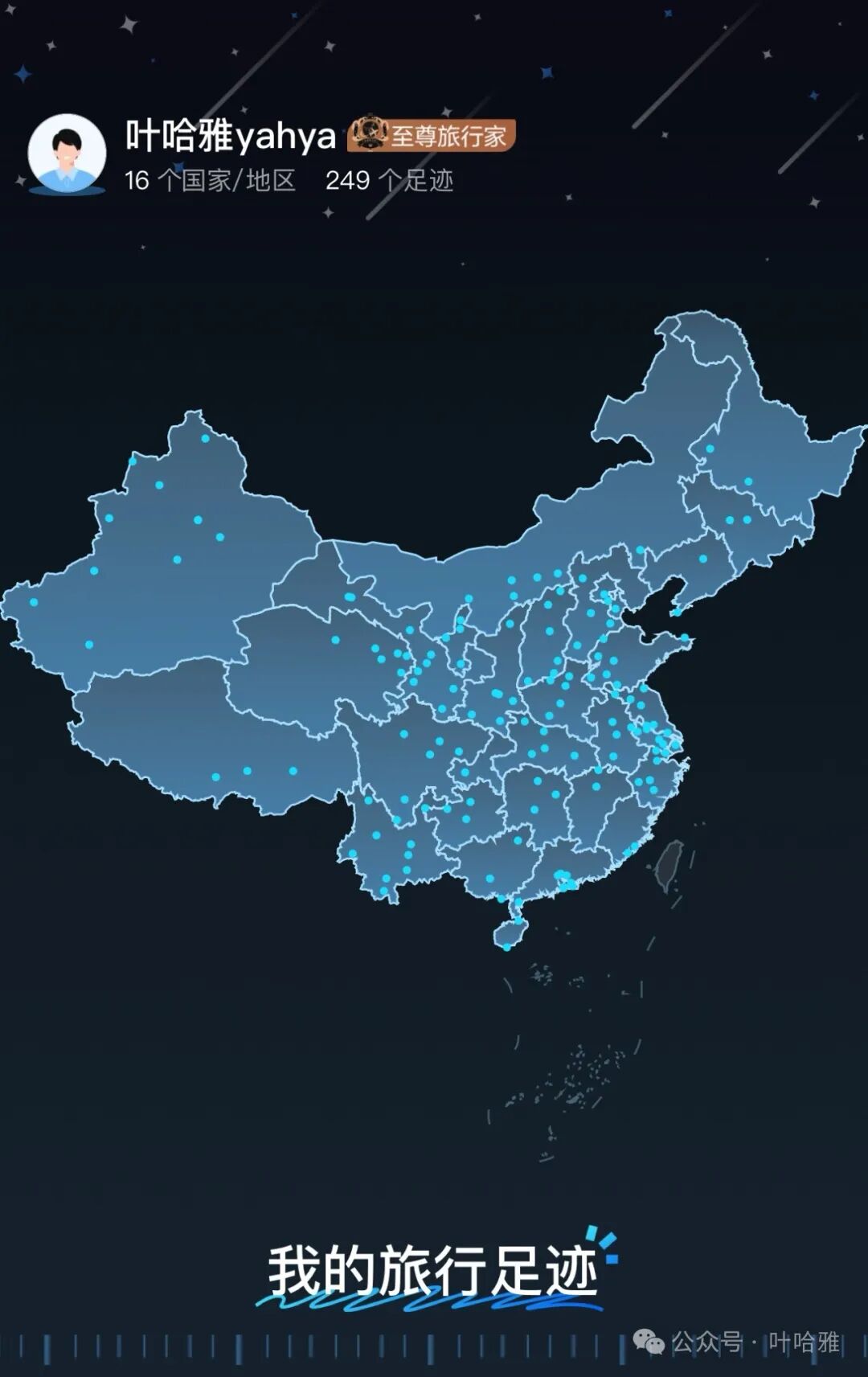
Traveling over these years has given me so much insight. It has broadened my horizons so much that I am no longer surprised by strange or unusual things. When you adopt a solar system perspective, you realize that the issues back home are really not a big deal. You stop looking at any authority with a halo. Of course, the prerequisite for improving your understanding is to have a certain amount of reading, otherwise, travel just becomes a superficial glance.
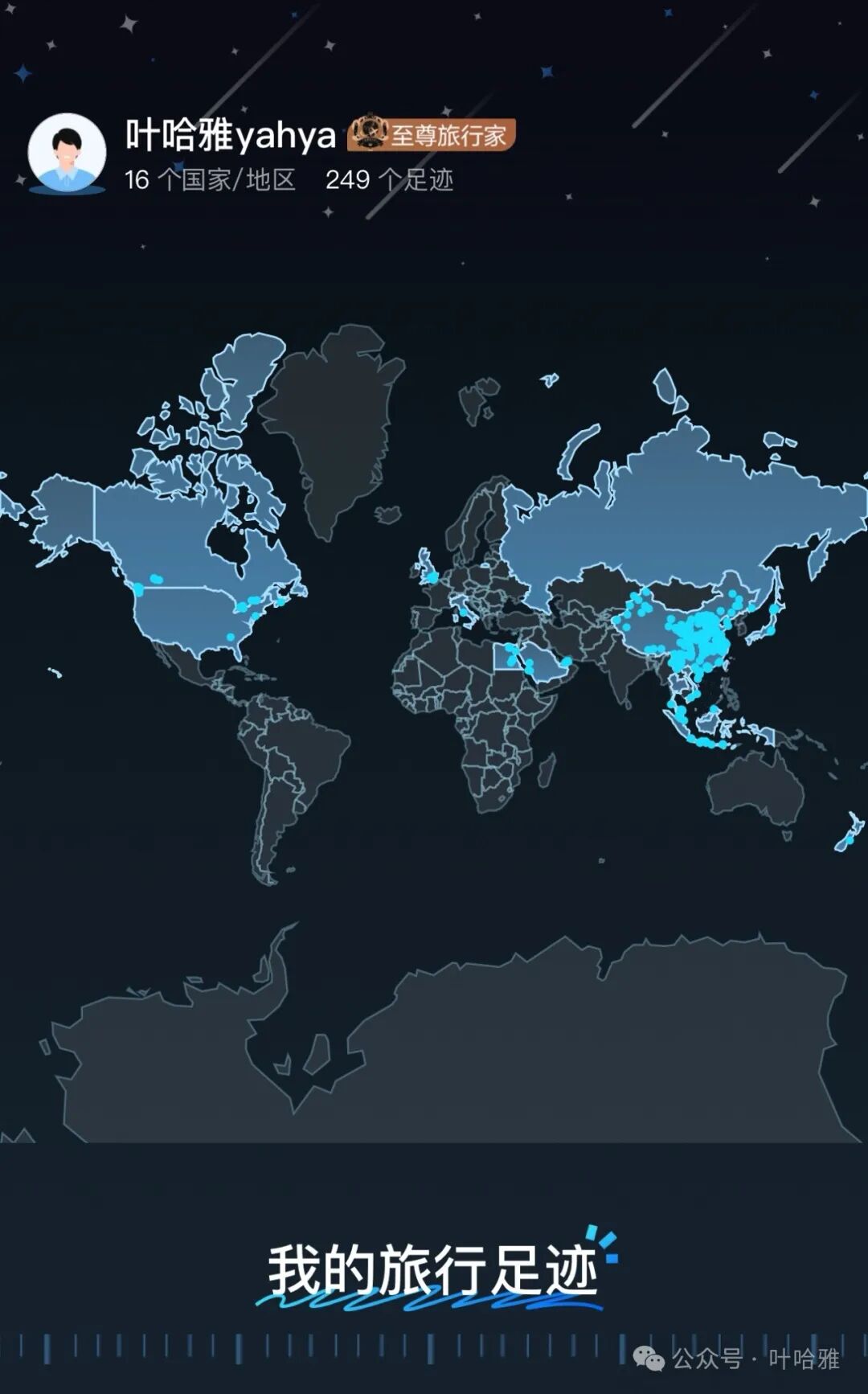
I think it is very necessary to record my travel experiences. I have found that as I get older, my memory gets worse. To put it nicely, I have a broad mind and do not take things to heart, but the truth is that if I do not write down many people and events, I might forget them after a while. I look back at articles I wrote in the past from time to time. Some content actually feels strange to me, and I cannot seem to remember how I recorded those words and photos at the time.
My number of WeChat friends has also expanded 10 times, but the vast majority can only be considered as stranger-friends. Even for people I have met offline, after a while, if I did not add a note, I might not remember where I met them. After all, a person's social capacity is limited. If any friends feel that I am cold because of this, please forgive me. I just have limited brain capacity, but I prefer to make friends with people who resonate with me. I am not the Chinese currency (renminbi), so I cannot make everyone like me.
1. Dongsi Mosque, Dongcheng District, Beijing; 2. Andingmen (Daguan) Mosque; 3. Nandouya Mosque; 4. Dongzhimenwai Mosque; 5. Hua'ershi Mosque; 6. Shazikou Mosque; 7. Qingzhen Pushou Mosque, Xicheng District; 8. Dewai Fayuan Mosque; 9. Sanlihe Qingzhen Yongshou Mosque; 10. Zhengyuan (Beigouyan) Mosque; 11. Niujie Mosque; 12. Houheyan Mosque; 13. Huihuiying Mosque; 14. Qianmen Mosque; 15. Nanhxiapo Mosque, Chaoyang District; 16. Changying Mosque; 17. Kangying Mosque; 18. Yangzha Mosque; 19. Xihui Mosque; 20. Wanziying Mosque; 21. Guanzhuang Mosque; 22. Balizhuang Mosque; 23. Songyu Mosque; 24. Haidian Mosque, Haidian District; 25. Madian Mosque; 26. Qinghezhen Mosque; 27. Landianchang Mosque; 28. Anheqiao Mosque; 29. Shucun Mosque; 30. Siwangfu Mosque; 31. Nanyuan Mosque, Fengtai District; 32. Fengtaizhen Mosque; 33. Changxindian Mosque; 34. Huangcun Mosque, Daxing District; 35. Cuizhihuiying Mosque; 36. Liushizhuang Mosque; 37. Xueying Mosque; 38. Dongbaita Mosque; 39. Qingyundian Mosque; 40. Tongying Mosque; 41. Xihongmen Mosque; 42. Langgezhuang Old Mosque; 43. Langgezhuang New Mosque; 44. Tianying Mosque; 45. Lixian Old Mosque; 46. Lixian New Mosque; 47. Xin'anzhuang Mosque; 48. Caiyu Mosque; 49. Yufa Mosque; 50. Nanyanfa Mosque; 51. Majuqiao Mosque, Tongzhou District; 52. Fatoucun Mosque; 53. Tongzhou Town (Nandasi) Mosque; 54. Xiguan Mosque; 55. Yujiawu Mosque; 56. Zaolinzhuang Mosque; 57. Zhangjiawan Mosque; 58. Yongledian Mosque; 59. Beiguan Mosque; 60. Xiguanshi Mosque, Changping District; 61. Nanyicun Mosque; 62. Xiaoxinzhuang Mosque; 63. Changping Town Mosque; 64. Heying Mosque; 65. Nankou Town Mosque; 66. Nankoucun Mosque; 67. Doudian Mosque, Fangshan District; 68. Changzhuang Old Mosque; 69. Changzhuang New Mosque; 70. Xinjie Mosque; 71. Chengguan Mosque, Miyun District; 72. Mujiayu Mosque; 73. Gubeikou Mosque; 74. Chengzi Mosque, Mentougou District; 75. Huiminying Old Mosque, Shunyi District; 76. Huiminying New Mosque; 77. Niulanshan Mosque; 78. Gaoliying Old Mosque; 79. Gaoliying New Mosque; 80. Yangzhen Mosque; 81. Chadao Mosque, Yanqing District; 82. Moshi Kou Mosque, Shijingshan; 83. Hongqiao Mosque, Tianjin; 84. Jinjiayao Mosque; 85. Chenjiagou Mosque; 86. Gexindao Mosque; 87. Yuchang Mosque; 88. Wanxin Mosque; 89. Dazhigu Mosque; 90. Hexi Mosque; 91. Great Mosque; 92. Tianmu Liuhe Mosque; 93. Xiningdao Mosque; 94. Shijiazhuang Mosque, Shijiazhuang, Hebei; 95. Zhengding Mosque; 96. Chengde East Mosque, Chengde; 97. Chengde West Mosque; 98. Baoding North Mosque, Baoding; 99. Dingzhou Mosque; 100. Cangzhou North Great Mosque, Cangzhou; 101. Cangzhou East Great Mosque; 102. Botou Great Mosque; 103. Botou East Mosque; 104. Tangshan Lunan Mosque, Tangshan; 105. Xingtai Mosque, Xingtai; 106. Handan Mosque, Handan; 107. Qinhuangdao Haigang Mosque, Qinhuangdao; 108. Yanjiao Mosque, Langfang; 109. Dachang Mosque; 110. Dachang Beiwu Mosque; 111. Damazhuang Mosque; 112. Luzhuang Mosque; 113. Huogezhuang Mosque; 114. Xiaochang Mosque; 115. Liangzhuang Mosque; 116. Yangxinzhuang Mosque; 117. Nanwangzhuang Mosque; 118. Nansitou Mosque; 119. Xiadian Mosque; 120. Xiadiancun Mosque; 121. Chenxinzhuang Mosque; 122. Weizizhuang Mosque; 123. Manxingying Mosque; 124. Dongchang Mosque; 125. Xinhua Street Mosque, Zhangjiakou; 126. Xiguan Mosque; 127. Xuanhua Middle Mosque; 128. Xuanhua South Great Mosque; 129. Dongguan Mosque; 130. Tu'ergou Mosque; 131. Zhulu Mosque, Zhulu County; 132. Taiyuan Old Mosque, Taiyuan, Shanxi; 133. Datong Mosque, Datong; 134. Shuozhou Mosque, Shuozhou; 135. Yuanqu County Mosque, Yuncheng; 136. Changzhi North Mosque, Changzhi; 137. South Mosque; 138. Middle Mosque; 139. Luze Mosque; 140. Huanan Mosque; 141. Southwest City Mosque; 142. Wuyi Road Mosque; 143. Hohhot Great Mosque, Hohhot, Inner Mongolia; 144. Hohhot Small Mosque; 145. Hohhot East Mosque; 146. Hohhot Northeast Mosque; 147. Hohhot South Mosque; 148. Hohhot West Mosque; 149. Hohhot Xianghe Mosque; 150. Hohhot Tuanjie Mosque; 151. Jining Mosque, Ulanqab; 152. Baotou Qingkun Mosque, Baotou; 153. Baotou Great Mosque; 154. Baotou Middle Mosque; 155. Baotou West Mosque; 156. Chifeng Jingpeng Mosque, Chifeng; 157. Chifeng South Great Mosque; 158. Chifeng North Great Mosque; 159. Ordos Dongsheng Mosque, Ordos; 160. Haibowan Mosque, Wuhai; 161. Huajue Lane Mosque, Xi'an, Shaanxi; 162. Xiaopiyuan North Great Mosque; 163. Sajinqiao Old Mosque; 164. Daxuexi Lane Mosque; 165. Dapiyuan Mosque; 166. Beiguangji Street Mosque, Xi'an; 167. Qingzhen Yingli Mosque; 168. Middle Mosque; 169. Xicang Mosque; 170. Lvshan Mosque; 171. Hongbu Street New Mosque; 172. West Mosque; 173. Dongxin Street Mosque; 174. Jianguo Lane Mosque; 175. Yuanjiacun Mosque, Xianyang; 176.
Hanzhong Mosque, Hanzhong 177
Luling Mosque, Xixiang County 178
Xixiang County South Mosque 179
Xixiang County North Mosque 180
Dingbian Mosque, Yulin 181
Ankang North Mosque, Ankang 182
Ankang West Mosque 183
Nansi Mosque in Ankang, Ningning, 184
Xingwen Mosque in Ankang 185, Huayuan Street Mosque in Zhengzhou, Henan 186, Yuyuanli Mosque in Zhengzhou 187, Xiaolou Mosque at Erqi Square in Zhengzhou 188, Beixia Street Mosque in Zhengzhou 189, Qingpingli Mosque in Zhengzhou 190, Wuyingli Mosque in Zhengzhou 191, Fuminli Mosque in Zhengzhou 192, Beida Mosque in Zhengzhou 193, Jiaozuo Mosque in Jiaozuo 194, Beida Mosque in Qinyang 195, Shuinanguan Mosque in Qinyang 196, Qingzhen Laonan Mosque in Qinyang 197, Xiguan Mosque in Bo'ai County 198, Erjie Mosque in Bo'ai County 199, Huaiqing Mosque in Jiaozuo 200, Sangpo Qingzhen Dongsi Mosque 201, Sangpo Qingzhen Zhangsi Mosque 202, Sangpo Xida Mosque 203, Sangpo Qingzhen Shangsi Mosque 204, Xiajie Mosque in Jiyuan 205, Qingzhen Nansi Mosque in Jiyuan 206, Dongda Mosque in Kaifeng 207, Zhuxian Town Mosque in Kaifeng 208, Chaoyangmen Mosque in Yuzhou, Xuchang 209, Pingdingshan Mosque in Pingdingshan 210, Nanyang Mosque in Nanyang 211, Nanguan Mosque in Xinyang 212, Dongguan Mosque in Xinxiang 213, Dengzhou Mosque in Dengzhou 214, Nanguan Grand Mosque in Yinchuan, Ningxia 215, Najiahu Grand Mosque 216, Yuehai Mosque 217, Yongning Mosque 218, Minning Mosque 219, Mingxin Mosque 220, Pingluo Mosque in Shizuishan 221, Zhongjie Mosque 222, Shizuishan Mosque 223, Dawukou Mosque 224, Zhongwei Dongguan Grand Mosque 225, Zhongwei Grand Mosque 226, Xingren Grand Mosque 227, Hongganggangzi Gongbei 228, Tongxin Grand Mosque in Wuzhong 229, Siqiliangzi Gongbei 230, Honglefu Gongbei 231, Shagou Gongbei in Guyuan 232, Jingyuan Chengguan Grand Mosque 233, Yejiacun Mosque 234, Guyuan Xiyuan Mosque 235, Guyuan Jiulong Road Mosque 236, Xiguan Grand Mosque in Lanzhou, Gansu 237, Wulipu Mosque in Lanzhou 238, Gengjiazhuang Mosque in Lanzhou 239, Yuzhong Street Mosque in Lanzhou 240, Nanguan Grand Mosque in Lanzhou 241, Wuxingping Lingmingtang Gongbei 242, Xinguan Mosque 243, Lanzhou Qiaomen Mosque 244, Lanzhou Dongchuan Grand Gongbei 245, Lanzhou Wenzquantang 246, Lanzhou Water Mosque 247, Tiejiazhuang Mosque in Linxia 248, Linxia Laohua Mosque 249, Linxia Xinhua Mosque 250, Linxia Nanguan Grand Mosque 251, Linxia Qianheyan Mosque 252, Linxia Grand Gongbei 253, Linxia Zheqiaowan Mosque 254, Chuimatian Qianzhuang Mosque 255, Linxia Grand Gongbei 256, Beiguan Mosque in Tianshui 257, Houjie Mosque 258, Zhangjiachuan Nanchuan Daotang 259, Zhangjiachuan Xuanhuagang Grand Gongbei 260, Zhaochuan Mosque 261, Labuleng Mosque in Gannan 262, Hezuo Grand Mosque 263, Hezuo Qingzhen Xisi Mosque 264, Lintan Qingzhen Shangsi Mosque 265, Lintan Qingzhen Hua Grand Mosque 266, Galutian Big House 267, Lintan Xidaotang 268, Longnan Wudu Grand Mosque in Longnan 269, Yumen Mosque in Yumen 270, Wuaisi Gongbei 271, Jiayuguan Mosque in Jiayuguan 272, Jiuquan Qingzhen Dongsi Mosque 273, Wuwei Mosque in Wuwei 274, Dongguan Grand Mosque in Xining, Qinghai 275, Xining Nanguan Grand Mosque 276, Xining Yudaiqiao Mosque 277, Xining Jianguo Road Mosque 278, Xining Xiadu Avenue Mosque 279, Beimo'eryuan Mosque 280, Nanshan Gongbei 281, Guangdemen Gongbei Mosque 282, Xianmen Gongbei 283, Xining Beiguan Mosque 284, Hualong Kangyang Mosque in Haidong 285, Hualong Shangjiahe Mosque 286, Xunhua Jiezi Mosque 287, Xunhua Caotanba Mosque 288, Mengdashan Village Mosque 289, Quhuxiang Village Mosque 290, Hongshuiquan Mosque 291, Xunhua Zanbuhu Mosque 292, Qunke Grand Mosque 293, Hualong Yisha'er Mosque 294, Imam Mosque 295, Guoshitan Mosque 296, Qingshuihe East Qingzhen Nansi Mosque 297, Qingshuihe East Mosque 298, Mengda Mosque 299, Kewa Mosque 300, Zhangga Mosque 301, Suzhi Mosque 302, Ahetan Mosque 303, Tashapo Mosque 304, Chengguan Mosque 305, Jiezi Gongbei 306, Ladongtai Village Mosque in Haibei Tibetan Autonomous Prefecture 307, Jianzha Maketang Mosque in Huangnan Tibetan Autonomous Prefecture 308, Hexi Mosque in Delingha 309, Delingha Grand Mosque 310, Jinfeng Middle Road Mosque in Golmud 311, Shimen Mosque 312, Hedong Grand Mosque 313, Hexi Grand Mosque 314, Huatugou Mosque in Mangya 315, Guangyuan Mosque in Guangyuan, Sichuan 316, Langzhong Baba Mosque in Nanchong 317, Langzhong Qingzhen Ancient Mosque 318, Mianyang Mosque in Mianyang 319, Jiangyou Mosque 320, Xiaoquan Mosque in Deyang 321, Tangjia Mosque in Chengdu 322, Tuqiao Mosque in Chengdu 323, Gulou Mosque in Chengdu 324, Huangcheng Mosque in Chengdu 325, Dujiangyan Mao'gong Mosque 326, Dujiangyan Nanjie Mosque 327, Songzhou Qingzhen Beisi Mosque in Aba 328, Songpan Chengguan Mosque 329, Guangzhaoting Gongbei Mosque 330, Xichang Qingzhen Dongsi Mosque in Xichang 331, Xichang Qingzhen Xisi Mosque 332, Hetaocun Mosque in Panzhihua 333, Huihuicun Mosque 334, Heying Mosque 335, Miyi Guabang Mosque 336, Chongqing Qingzhen Xisi Mosque 337, Chongqing Grand Mosque 338, Chongqing Fengjie Mosque 339, Hechuan Mosque 340, Urumqi Tatar Mosque in Xinjiang 341, Urumqi Shaanxi Grand Mosque 342, Urumqi Erdaoqiao Mosque 343, Urumqi White Mosque 344, Urumqi Guyuan Grand Mosque 345, Urumqi Nanda Mosque 346, Urumqi Shanxi Lane Mosque 347, Urumqi Shaanxi Laofang Mosque 348, Turpan Sugong Pagoda Mosque 349, Yining Shaanxi Grand Mosque 350, Liuxing Street Mosque 351, Khanaka and Saitikamale Mosque 352, Kashgar Id Kah Mosque 353, Abakh Khoja Mausoleum 354, Fragrant Concubine Garden Jiaman Mosque 355, Saheya Community Youbazha Mosque 356, Yusuf Khass Hajib Tomb 357, Wuerdasike Mosque 358, Taxkorgan Xiabazha Mosque 359, Shache Jiaman Grand Mosque 360, Altun Mosque 361, Azini Micheti Mosque 362, Kuqa Grand Mosque 363, Mulan Eshidong Mausoleum 364, Yutian Id Kah Mosque 365, Ruoqiang Mosque 366, Hotan Jiaman Mosque 367, Atushi Wusitang West Road Mosque 368, Zhanqian Mosque 369, Aksu Gulebage Mosque 370, Turpan Tuyugou Mausoleum 371, Hami Gaise Tomb 372, Shaanxi Grand Mosque 373, Zhongshan South Road Mosque 374, Huicheng Town Jianguo Village Tuguluk Buzuerrega Mosque 375, Hami Lingmingtang Branch Hall 376, Shenyang Sujiatun Mosque in Liaoning 377, Shenyang South Mosque 378, Dalian Mosque 379, Changchun Songjia Mosque in Jilin 380, Changchun Shuangyang Mosque 381, Changchun Changtong Road Mosque 382, Jilin City Qingzhen Xisi Mosque 383, Jilin East Mosque 384, Jilin Shipyard Gongbei 385, Jilin Qingzhen Beisi Mosque 386, Harbin Daowai Mosque in Heilongjiang 387, Harbin Tatar Mosque 388, Harbin Acheng Mosque 389, Harbin Qingzhen Xisi Mosque 390, Qiqihar Bukui West Mosque 391, Bukui East Mosque 392, Taicheng Mosque in Tai'an, Shandong 393, Taicheng Qingzhen Dongsi Mosque 394, Xijie Mosque 395, Xijie Qingzhen Xisi Mosque 396, Beidaquan Mosque 397, Xihuangcun Mosque 398, Fajialing Mosque 399, Xiawang Mosque 400, Shangwang Mosque 401, Ershilibu Mosque 402, Changjiazhuang Mosque 403, Daxinzhuang Mosque 404, Dasuozhuang Mosque 405, Zhoujiapo Qingzhen Dongsi Mosque 406, Zhoujiapo Qingzhen Xisi Mosque 407, Jiajiagang Village Mosque 408, Majiayuan Mosque 409, Nigou Village Mosque 410, Longshan Guanzhuang Mosque 411, Fanjia Anfu Mosque 412, Dawenkou Xinghua Street Mosque 413, Dongshen East Village Mosque 414, Dongshen West Village Mosque 415, Dongjie Village Mosque 416, Houhuangcun Mosque 417, Qianhuangcun Mosque 418, Shengjiazhuang Mosque 419, Beiqiu Mosque 420, Songzhuang Mosque 421, Chahedian Mosque 422, Fenghuangcun Mosque 423, Dawangzhuang Mosque 424, Chenjiabu Mosque 425, Xiaojiabu Mosque 426, Xitaili Mosque 427, Liujiazhuang Mosque 428, Nanyicun Mosque 429, Houlvguan Mosque 430, Zhoucheng Mosque 431, Xicun Mosque 432, Lisuocun Mosque 433, Jinan Luokou Mosque 434, Jinan Xiaojinzhuang Mosque 435, Jinan Qingzhen Nanda Mosque 436, Jinan Beida Mosque 437, Jinan Nanguan Mosque 438, Qingzhou Zhenjiao Mosque in Weifang 439, Qingzhou City Mosque 440, Weifang Mosque 441, Jining Dongda Mosque 442, Jining Liuhang East Mosque 443, Heze Xiguan Mosque 444, Heze Nanguan Mosque 445, Cao County Dongguan Xida Mosque 446, Cao County Dongmenli Mosque 447, Cao County Dongguan Mosque 448, Liaocheng Linqing Mosque 449, Linqing Qingzhen Dongsi Mosque 450, Liaocheng Qingzhen Xisi Mosque 451, Dezhou Beiying Mosque 452, Dezhou Nanying Mosque 453, Nanjing Jingjue Mosque in Jiangsu 454, Nanjing Caoqiao Mosque 455, Jizhaoying Mosque 456, Hushu Mosque 457, Zhenjiang Shanxiang Mosque 458, Lianyungang Mosque 459, Huai'an Qingjiang Ancient Mosque 460, Taizhou Mosque 461, Nantong Mosque 462, Yangzhou Lingtang Mosque Ancient Mosque 463, Lingtang Grand Mosque 464, Yangzhou Xianhe Mosque 465, Xuzhou Mosque 466, Wuxi Mosque 467, Suzhou Mosque 468, Hefei Mosque in Anhui 469, Huainan Shou County Mosque 470, Anqing Nanguan Mosque 471, Chuzhou Mosque 472, Wuhan Qiyi Street Mosque in Hubei 473, Minquan Road Mosque 474, Ma Si Baba Gongbei 475, Wuhan Jiang'an Mosque 476, Xiangyang Mosque 477, Laohekou Mosque 478, Shiyan Mosque 479, Yichang Mosque 480, Shanghai Huxi Mosque 481, Xiaotaoyuan Mosque 482, Pudong Mosque 483, Songjiang Mosque 484, Jinshan Mosque 485, Jiangwan Mosque 486, Fuyou Road Mosque 487, Hangzhou Phoenix Mosque in Zhejiang 488, Hangzhou Mosque 489, Jiaxing Mosque 490, Ningbo Yuehu Mosque 491, Shaoxing Keqiao Mosque 492, Kuba Mosque 493, Lishui Mosque 494, Huzhou dua Site 495, Nanxun dua Site 496, Quzhou Mosque 497, Taizhou Huangyan dua Site 498, Wenzhou Dongyu Village dua Site 499, Yiwu Grand Mosque in Jinhua 500, Xiamen Mosque in Fujian 501, Quanzhou Qingjing Mosque 502, Nanchang Grand Mosque in Jiangxi 503, Jiujiang Mosque 504, Shaoyang Qingzhen Dongsi Mosque in Hunan 505, Shaoyang Qingzhen Nansi Mosque 506, Longhui County Taohuaping Mosque 507, Longhui County Shanjie Hui Township Ancient Mosque 508, Longhui County Shanjie Hui Township Qingzhen Dongsi Mosque 509, Shaoyang County Qingcao Mosque 510, Shaoyang County Jiugongqiao Mosque 511, Changde Mosque 512, Changde Fengshu Township Mosque 513, Changsha Han-Hui Mosque 514, Changsha Mosque 515, Guiyang Mosque in Guizhou 516, Zunyi Mosque 517, Weining Xiaba Mosque 518, Kunming Shuncheng Mosque in Yunnan 519, Kunming Chongde Mosque 520, Kunming Yixigong Mosque 521, Kunming Dabanqiao Mosque 522, Kunming Yongning Mosque 523, Dali Xiaguan Mosque 524, Dali Ximen Mosque 525, Dali Nanmen Mosque 526, Dali Nanwuliqiao Mosque 527, Dali Xiadui Mosque 528, Dali Zhihua Mosque 529, Dali Fengyi Mosque 530, Xizhou Mosque 531, Shipang Mosque 532, Yousuo Mosque 533, Jiming Mosque 534, Yangbi Xiajie Ancient Mosque 535, Weishan Xiaoweigeng Mosque 536, Huihuideng Mosque 537, Donglianhua Mosque 538, Yanqichang Mosque 539, Daweigeng Mosque 540, Mamichang Mi Surname Mosque 541, Mamichang Ma Surname Mosque 542, Weishan City Mosque 543, Xundian Yuping Mosque 544, Kedu Dangui Mosque 545, Kedu Huihui Village Mosque 546, Ludian Tuogu Mosque 547, Zhaotong Baxian Mosque 548, Zhaotong Maohuojie Ancient Mosque 549, Mojiang Talang Mosque 550, Jianshui Ancient Mosque 551, Kaiyuan Dazhuang Mosque 552, Xinzhai Mosque 553, Gejiu Shadian Grand Mosque 554, Shadian Xiying Mosque 555, Shadian Jinjizhai Mosque 556, Laojijie Mosque 557, Mengzi City Mosque 558, Dehong Ruili Mosque 559, Yuxi Daying Mosque 560, Yuxi City Mosque 561, Najiaying Mosque 562, Najiaying Ancient City Mosque 563, Xishuangbanna Jinghong Mosque 564, Xishuangbanna Mansai Hui Mosque 565, Xishuangbanna Manluan Hui Mosque 566, Xishuangbanna Menghai Mosque 567, Lhasa Grand Mosque in Tibet 568, Lhasa Small Mosque 569, Duodi Mosque 570, Lhasa Kaqilinka East Mosque 571, Lhasa Kaqilinka West Mosque 572, Shigatse Mosque 573, Guangzhou Huaisheng Mosque in Guangdong 574, Guangzhou Haopan Street Mosque 575, Guangzhou Xiaodongying Mosque 576, Guangzhou Xianxian Mosque 577, Dongguan Wanjiang dua Site 578, Zhaoqing Qingzhen Xisi Mosque 579, Zhaoqing Qingzhen Dongsi Mosque 580, Shenzhen Mosque 581, Nanning Mosque in Guangxi 582, Guilin Qianjing Mosque 583, Liutang Mosque 584, Shanweicun Mosque 585, Jiucun Mosque 586, Xixiang Mosque 587, Women's Mosque 588, Maping Mosque 589, Chongshan Road Mosque 590, Daxu Mosque 591, Beihai Mosque 592, Kowloon Mosque in Hong Kong 593, Islamic Union Mosque 594, Wan Chai Islamic Centre 595, Jamia Mosque 596, Macau Mosque 597, Haikou Mosque in Hainan 598, Sanya Huixin Nankai Mosque 599, Huixin Qingzhen Nansi Mosque 600, Huihui Qingzhen Dongsi Mosque 601, Huihui Qingzhen Beida Mosque 602, Huihui Qingzhen Xibei Mosque 603, Huihui Qingzhen Ancient Mosque 604, Tokyo Camii in Japan 605, Tokyo ASSALAAM Mosque 606, Nagoya Mosque 607, Osaka Mosque 608, Sapporo Otaru Mosque 609, Sapporo Mosque 610, Phuket ISSATUL Mosque in Thailand 611, Phuket YAMEAY Mosque 612, Sultan Mosque in Singapore 613, Omar Mosque 614, National Mosque in Kuala Lumpur, Malaysia 615, Jamek Mosque in Kuala Lumpur 616, Federal Territory Mosque 617, Tabung Haji Mosque 618, Selangor Royal Mosque 619, Sultan Salahuddin Abdul Aziz Shah Mosque 620, Putrajaya Mosque 621, Ash-Shakirin Mosque 622, Terengganu Crystal Mosque 623, Redang Island Mosque 624, Malacca Chinese Mosque 625, Malacca State Mosque 626, Tranquerah Mosque 627, Kampung Hulu Mosque 628, Kampung Kling Mosque 629, Malacca Straits Mosque 630, Sabah State Mosque 631, Sabah Floating Mosque 632, Istiqlal Mosque in Jakarta, Indonesia 633, Yogyakarta Nurul Iman Mosque 634, Nurul Falah Mosque 635, Baitussalam Mosque 636, Single Pillar Mosque 637, Jogokariyan Mosque 638, Gedhe Kauman Mosque 639, Yogyakarta Royal Grand Mosque 640, Mataram Mosque 641, Surabaya Broadway Shopping Center Mosque 642, Al-Akbar National Mosque 643, Sunan Ampel Mosque 644, Cheng Ho Mosque 645, Labuan Bajo Agung Nurul Falah Mosque 646, Saigon Mosque in Ho Chi Minh City, Vietnam 647, Rahim Mosque 648, Vladivostok Mosque in Primorsky Krai, Russia 649, Christchurch Mosque in Christchurch, Canterbury, New Zealand 650, Manhattan Mosque in New York, USA 651, Atlanta Mosque in Atlanta, Georgia 652, Idris Mosque in Seattle, Washington 653, Holiday Inn dua Room in Dubai, UAE 654, Desert Safari Camp dua Site 655, Sheikh Zayed Grand Mosque in Abu Dhabi 656, Al-Azhar Mosque in Cairo, Egypt 657, Imam Hussein Gongbei 658, Nasir Muhammad Mosque 659, Muhammad Ali Mosque 660, Ibn Tulun Mosque 661, Al-Fattah Al-Aleem Mosque 662, Sulayman Agha al-Silahdar Mosque 663, Al-Hakim Mosque 664, Sultan Barquq Mosque 665, Al-Rifa'i Mosque 666, Masjid Al-Malik Faisal bin Abdulaziz 667, Luxor Abu Haggag Mosque 668, Al-Iman Mosque 669, Jeddah Floating Mosque in Saudi Arabia 670, Airport dua Room 671, Prophet's Mosque in Medina 672, An-Nam Mosque 673, Abu Bakr Mosque 674, Umar ibn al-Khattab Mosque 675, Ali Mosque 676, Uhud Martyrs Mosque 677, Mustaraha Mosque 678, Qiblatain Mosque 679, Fatah Mosque 680, Fatah Ali Mosque 681, Salman al-Farsi Mosque 682, Umar Mosque 683, Sa'd ibn Mu'adh Mosque 684, Quba Mosque 685, Jumu'ah Mosque 686, Masjid al-Haram in Mecca 687, Namirah Mosque 688, Jinn Mosque 689, Aisha Mosque 690, Fiumicino Airport dua Room in Rome, Italy 691, Ottawa Mosque in Ottawa, Canada 692, Toronto Chinese Muslim Community 693, Masjid Qurtabah 694, Islamic Institute of Toronto 695, Islamic Foundation of Toronto 696, Jame Abu Bakr Siddique 697, Islamic Center of Quebec in Montreal 698, Alsalam Mosque 699, Masjid Al Salaam in Vancouver 700, Muslim Association Richmond Branch Sadaqa 701, Ismaili Centre 702, Vancouver Jamea Mosque 703, Az-Zahraa Islamic Centre 704, Baitur Rahman Mosque 705, London Central Mosque in London, UK 706, Heathrow Airport dua Room 707, Crawley Islamic Centre 708, NOOR MOSQUE 709, Sri Lanka Mosque
China Mosque Travel Guide Linyi: Matou Mosque, Southern Shandong Hui Muslims and Ramadan Food
Articles • yusuf908 posted the article • 0 comments • 172 views • 2026-05-24 00:17
Summary: This China mosque travel guide visits Matou Town in Tancheng County, Linyi, the Ming-era Matou Mosque built in 1405, the Hui Muslim community around it, mosque calligraphy halls, local halal food, Linyi grilled meat, pancakes with lamb chops, and Ramadan suhoor memories.
While driving south through Linyi City, Shandong Province this year, I learned about a large Ming Dynasty mosque in Matou Town, Tancheng County. I drove for nearly an hour from downtown Linyi to reach Matou Town.
Matou Town
Matou Town is an ancient Muslim town and a community where Hui Muslims live. The town is full of halal shops, and I even saw a Muslim martial arts school.
The storefronts here still keep the traditional style of North China.
After walking through several small alleys, I found the Matou Mosque inside the village.
Matou Mosque was first built during the Yongle period of the Ming Dynasty (1405). It covers 13 mu of land and is the largest mosque in northern Jiangsu and southern Shandong. It is well-preserved and is currently a cultural relic protection unit of Shandong Province.
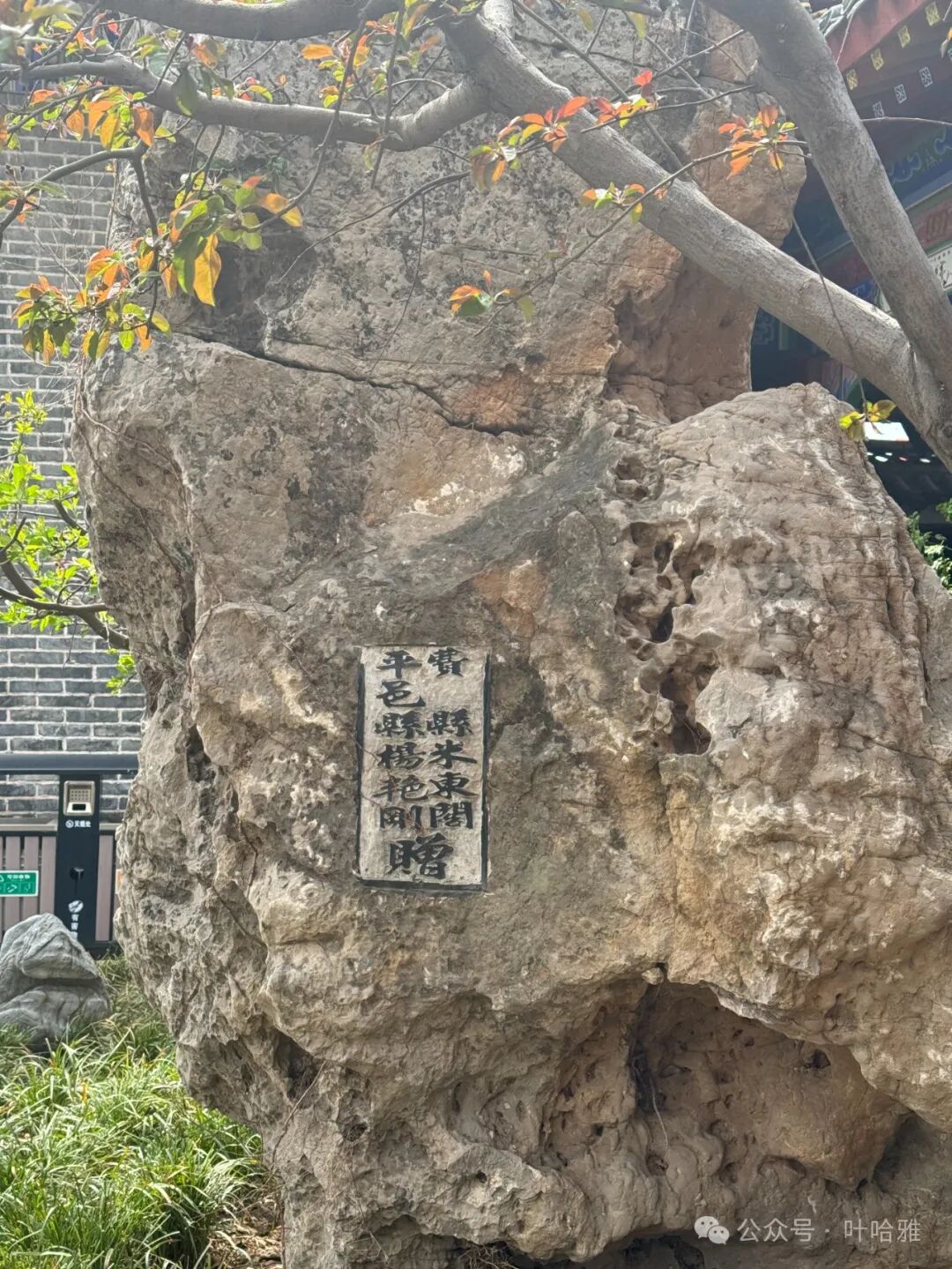
In the courtyard just inside the gate, there are several stones gifted by elders from different places.
There are several traditional calligraphy and painting exhibition halls in the courtyard. This is the first hall, and there is a second hall, both displaying non-religious artworks.
Inside the mosque, there is a monument to an anti-Japanese hero, Zhang Hongyi, who was a Hui Muslim. Zhang Hongyi served as the political commissar of the Southern Shandong Independent Detachment and was known as the political commissar of the Railway Guerrillas. He died in 1945 while fighting against Japanese and puppet troops. The martyr Zhang Hongyi is buried in the Martyrs' Cemetery in Feixian County, Linyi City.
There is also a women's prayer hall here.
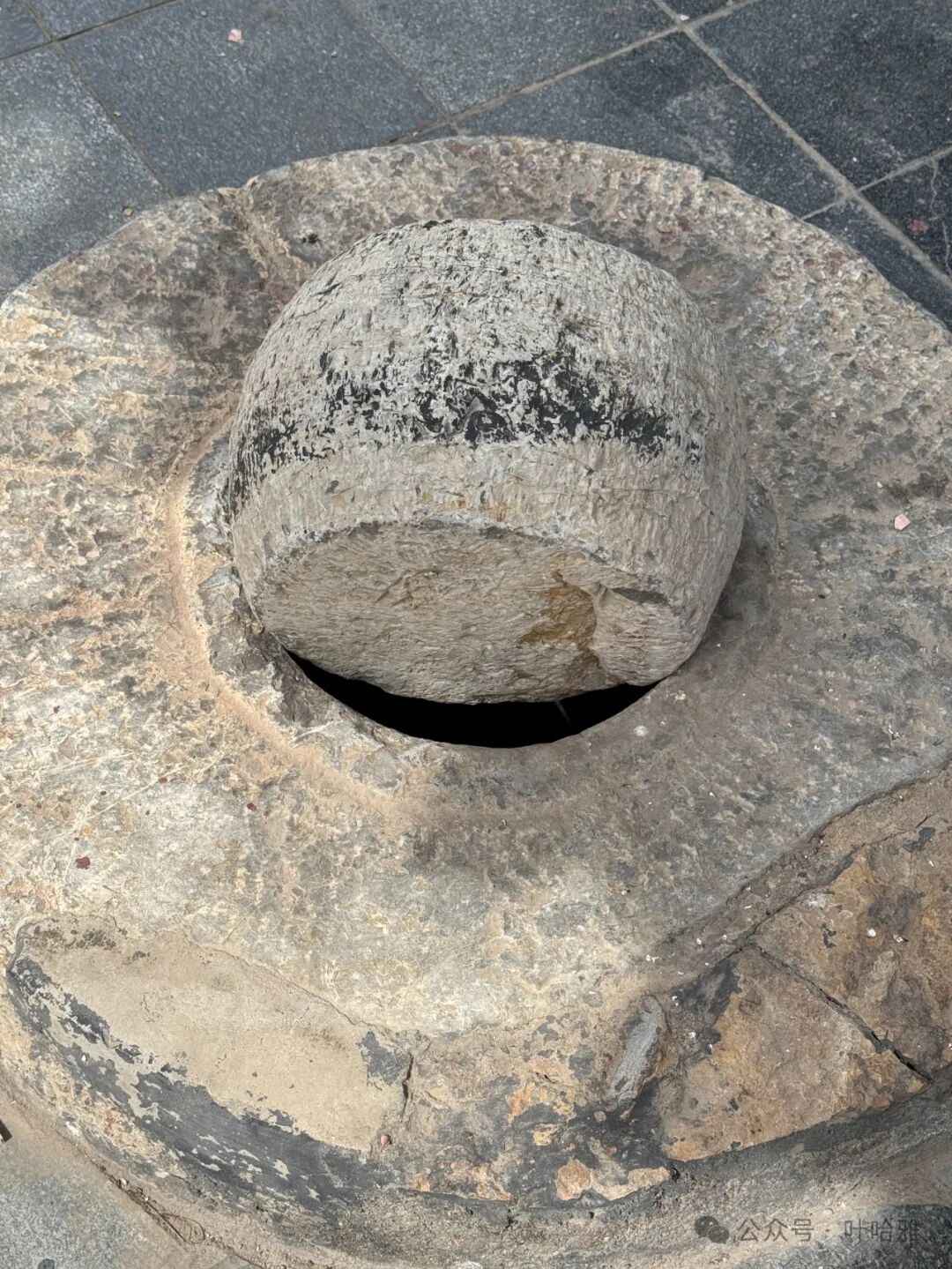
This ancient well was built in the third year of the Yongle period of the Ming Dynasty. In 1939, General Luo Ronghuan led the 115th Division of the Eighth Route Army into Tancheng. Eighth Route Army liaison officer Zhai Xinya, guided by a Hui youth named Lan Zhaofa, used the excuse of inviting an imam to slaughter a cow to enter the mosque's well pavilion. Under the cover of night, they took a shortcut to approach the enemy's blockhouse, destroyed the 'turtle shell' fortification, and successfully persuaded 360 puppet soldiers to surrender. Because of this, Lan Zhaofa honorably joined the Matou Hui Detachment.
There are several pieces of calligraphy on the walls of the corridor.
There is a Hui Muslim culture exhibition hall in the courtyard, but it does not have any exhibits inside yet.
The list of donations (niyati) specifically marks our Han Chinese brothers and sisters.
Nanbeidao Mosque
Nanbeidao Mosque in downtown Linyi was first built during the Hongwu period of the Ming Dynasty. After being rebuilt many times, it is now a modern building. It has a floor area of 1,235 square meters and a total site area of 8,995 square meters. The area around the mosque is filled with halal beef and mutton shops.
Nanbeidao was formed by merging Nandao Village and Beidao Village, and this area is also a residential community for Hui Muslims.
Linyi Minzu Restaurant Main Branch
Our friends in Linyi invited us to eat local Linyi specialties at the largest halal restaurant in the city. This is also where Hui Muslims hold weddings. I heard this is not even the largest location, as the flagship store of Minzu Restaurant is even bigger. The owner is a local Hui Muslim and a classmate of my friend.
Linyi University is also super huge. It is known as one of the largest universities in Asia, covering an area of over 6,000 mu. Linyi University once offered Arabic language courses, but they have now canceled all minor language courses, not just Arabic.
The people of Linyi seem to have an obsession with being big. The portions of food here are also huge. The four of us, plus a baby, ordered four dishes and only finished half of them.
Stir-fried chicken (chaoji) is a must-eat in Linyi. You can find stir-fried chicken shops everywhere, but most of them are not halal.
Fahim especially likes eating Linyi pancakes (jianbing). We ate every bit of this plate of pancakes rolled with lamb chops.
I originally wanted to drink some meat porridge (sa) in the morning, but during Ramadan, the shops were not open yet after we finished our pre-dawn meal (suhoor). It is best to drink the first pot of meat porridge around 5 a.m. view all
Summary: This China mosque travel guide visits Matou Town in Tancheng County, Linyi, the Ming-era Matou Mosque built in 1405, the Hui Muslim community around it, mosque calligraphy halls, local halal food, Linyi grilled meat, pancakes with lamb chops, and Ramadan suhoor memories.
While driving south through Linyi City, Shandong Province this year, I learned about a large Ming Dynasty mosque in Matou Town, Tancheng County. I drove for nearly an hour from downtown Linyi to reach Matou Town.
Matou Town
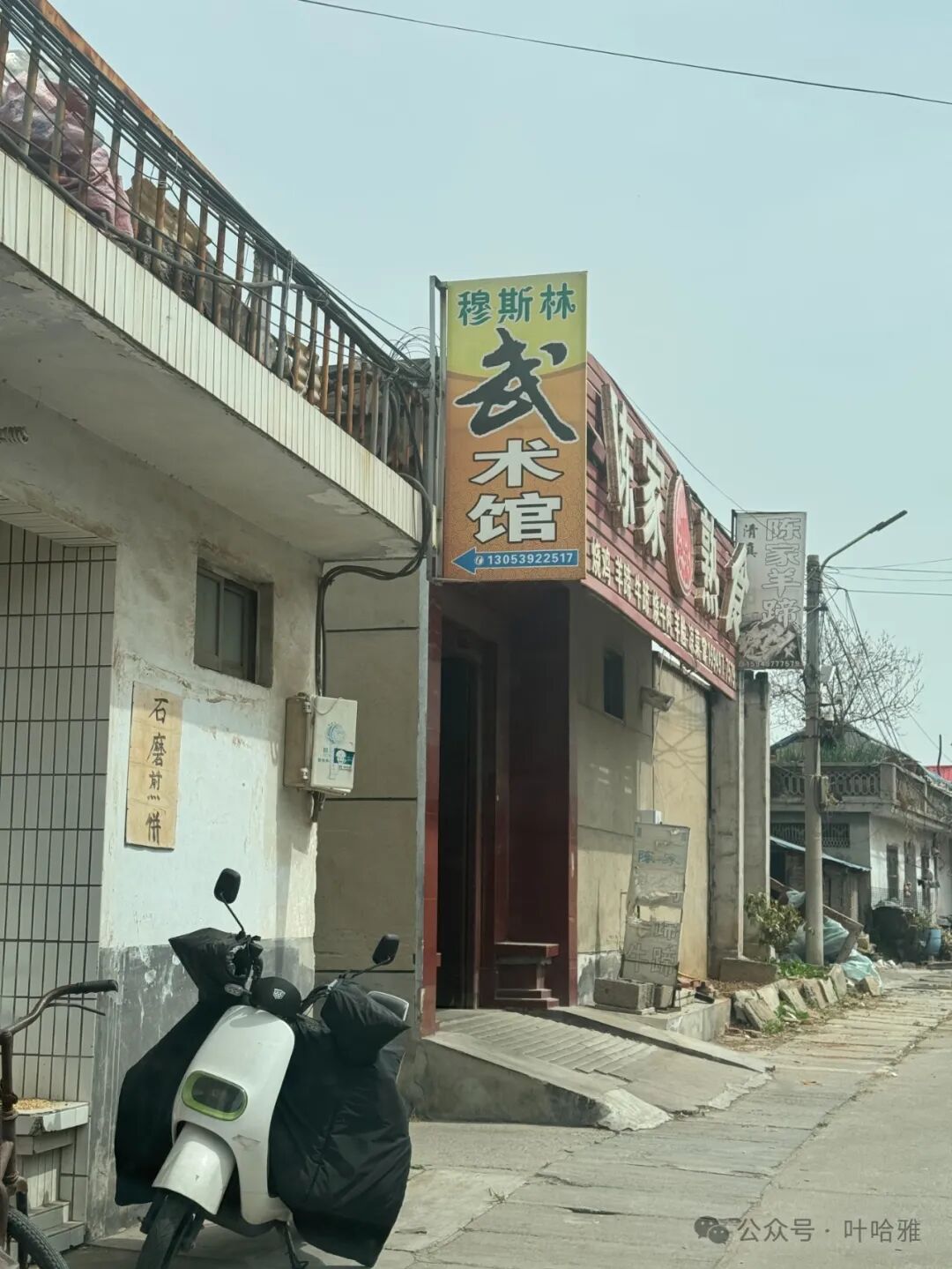
Matou Town is an ancient Muslim town and a community where Hui Muslims live. The town is full of halal shops, and I even saw a Muslim martial arts school.
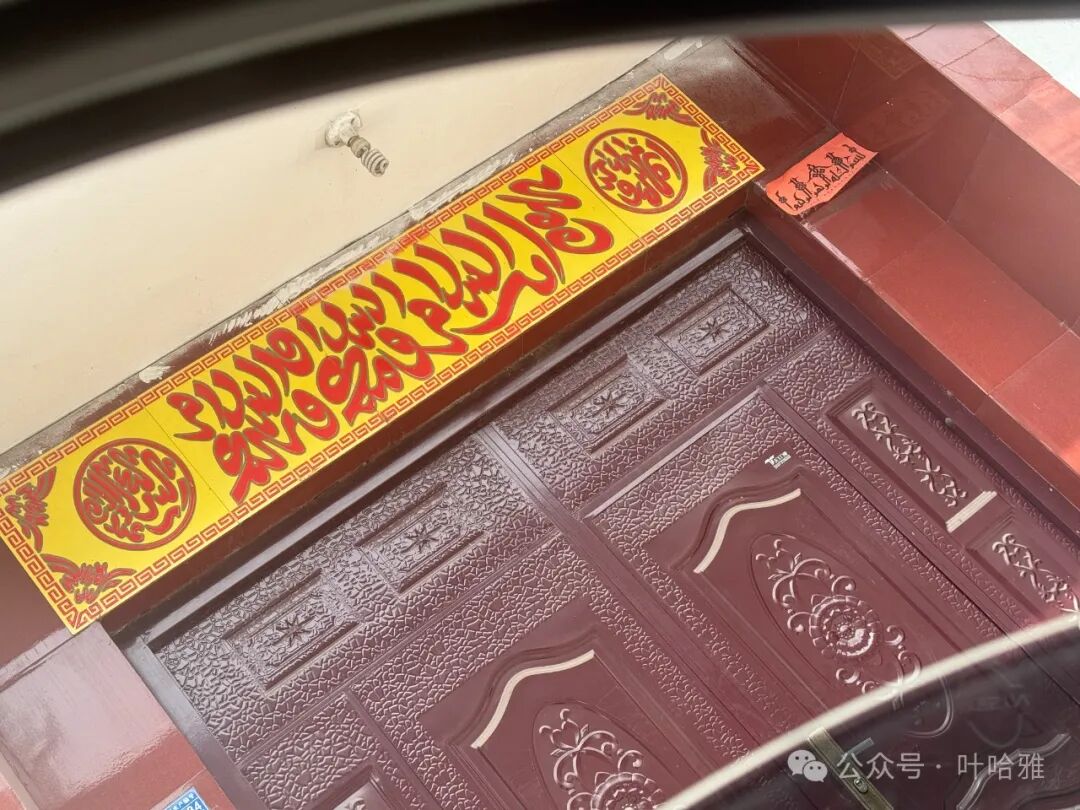
The storefronts here still keep the traditional style of North China.
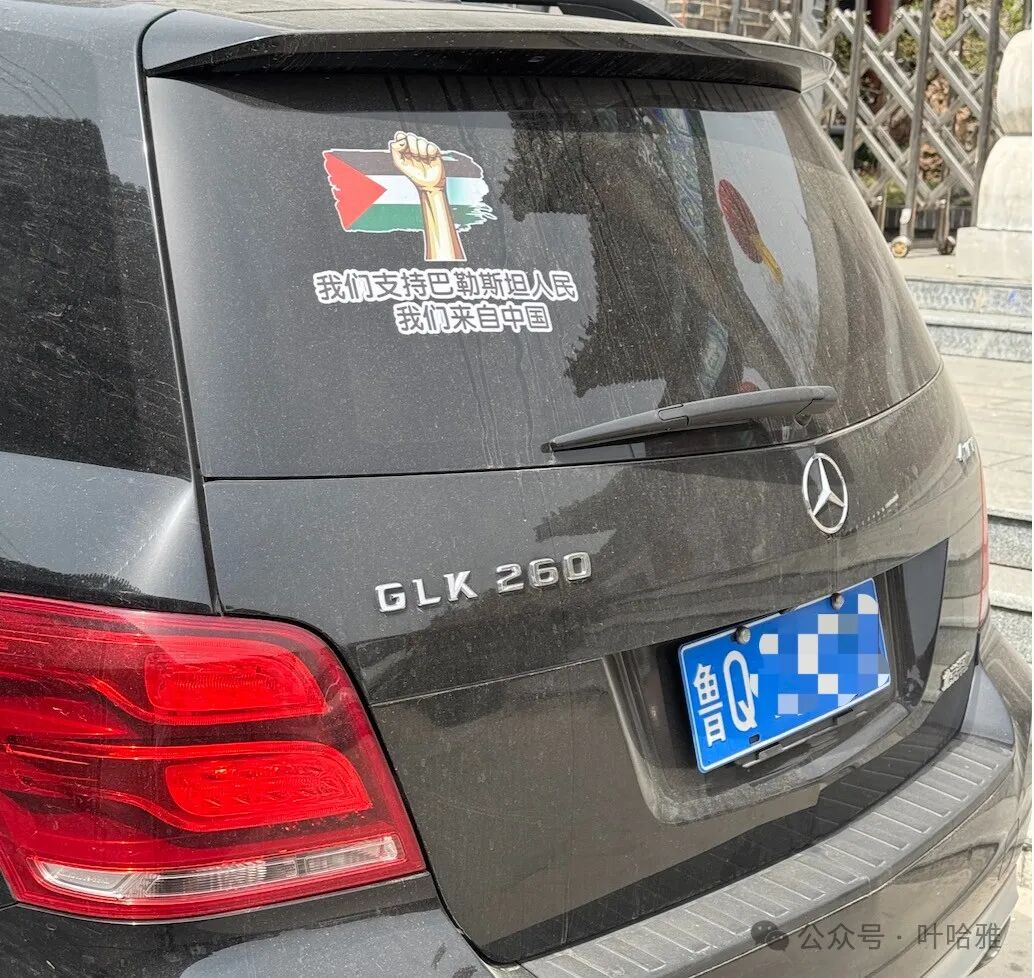
After walking through several small alleys, I found the Matou Mosque inside the village.
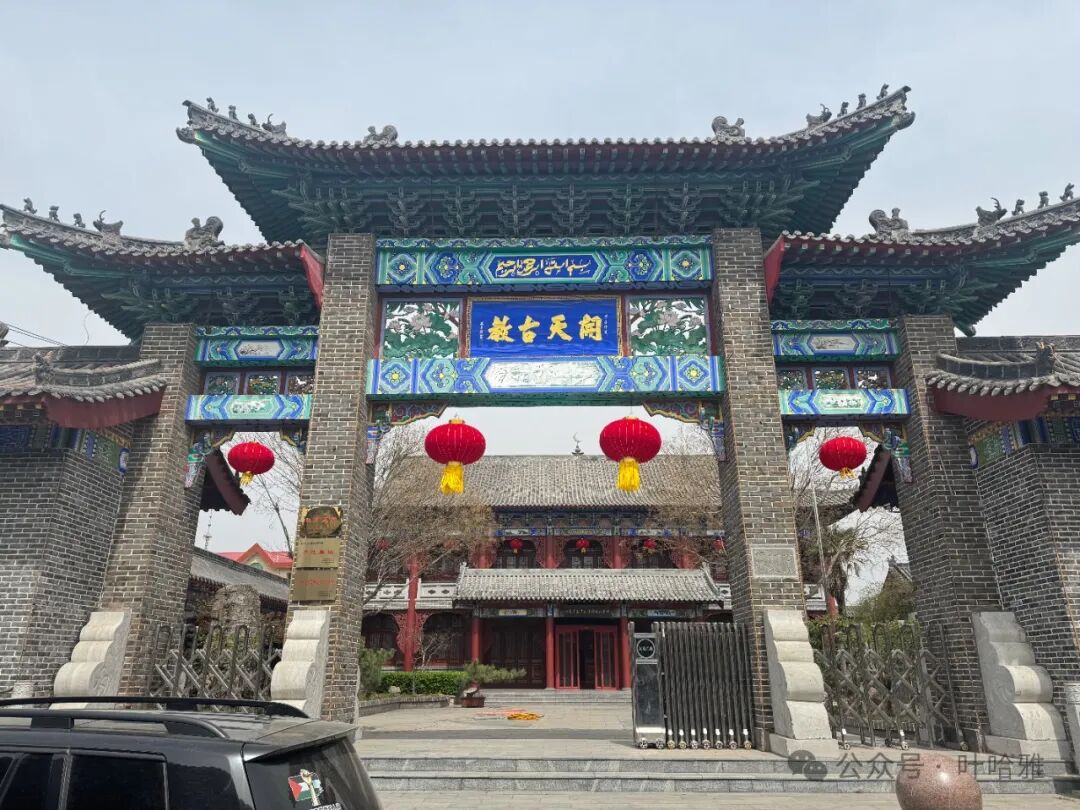
Matou Mosque was first built during the Yongle period of the Ming Dynasty (1405). It covers 13 mu of land and is the largest mosque in northern Jiangsu and southern Shandong. It is well-preserved and is currently a cultural relic protection unit of Shandong Province.
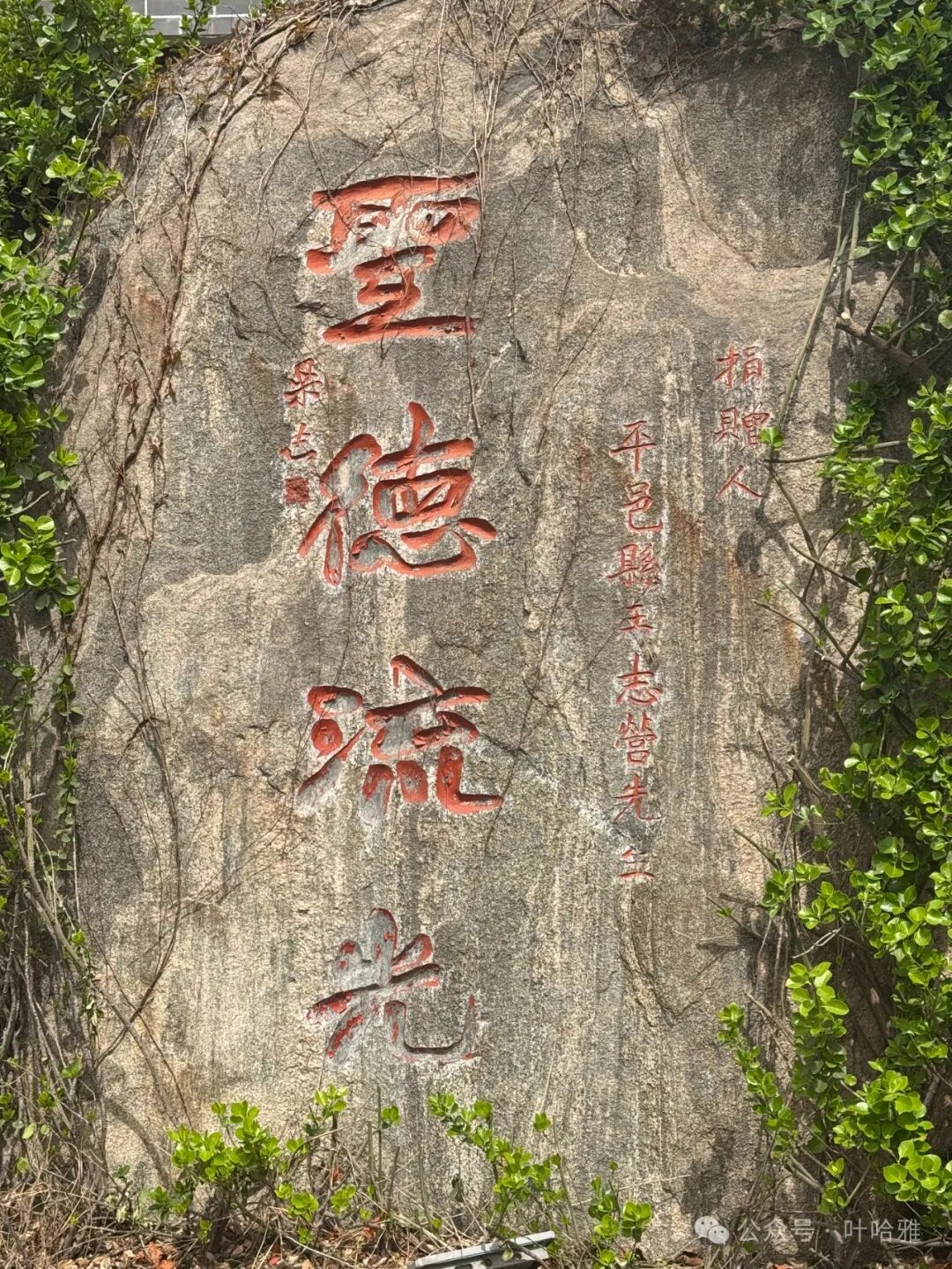
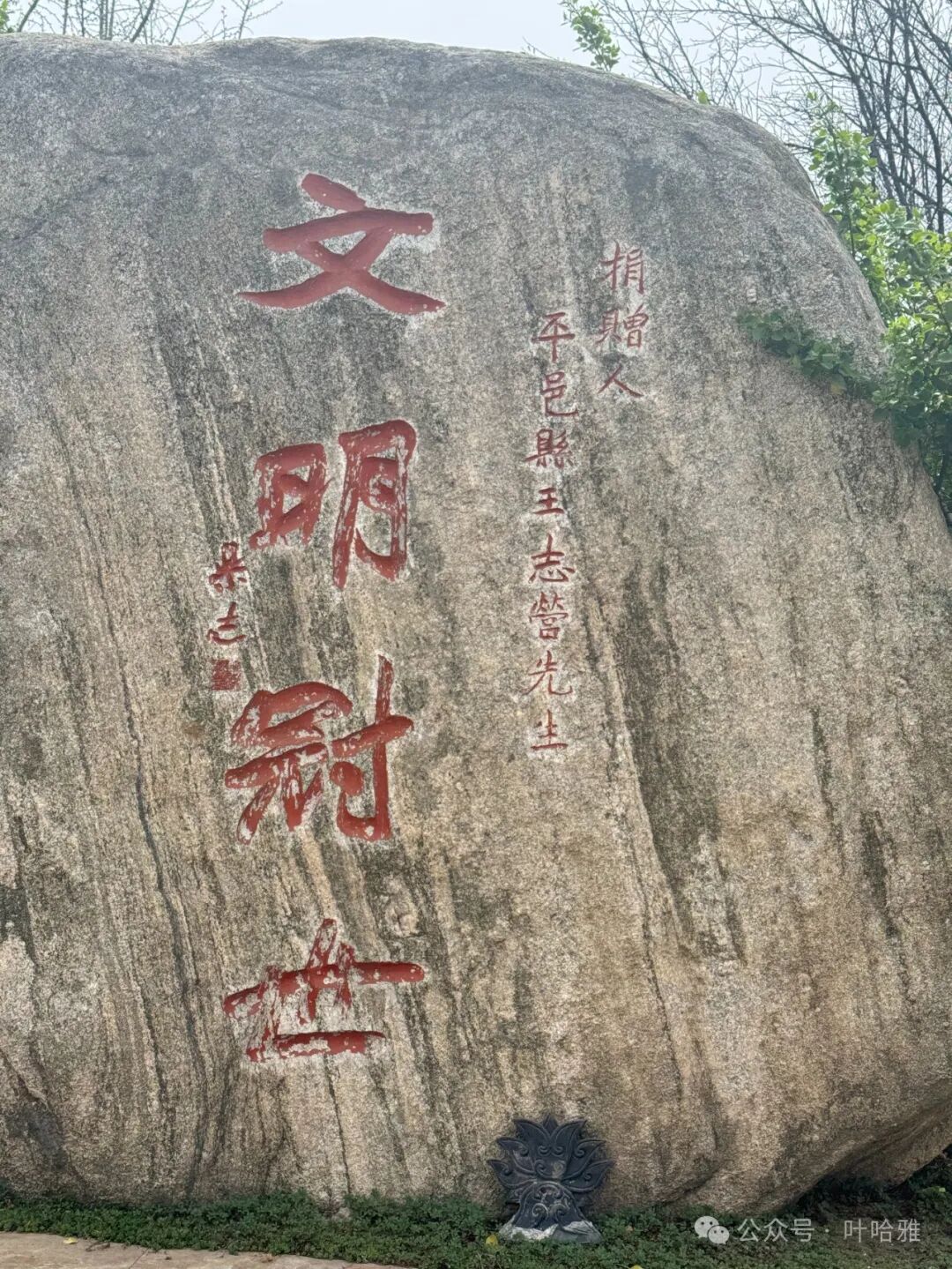
In the courtyard just inside the gate, there are several stones gifted by elders from different places.
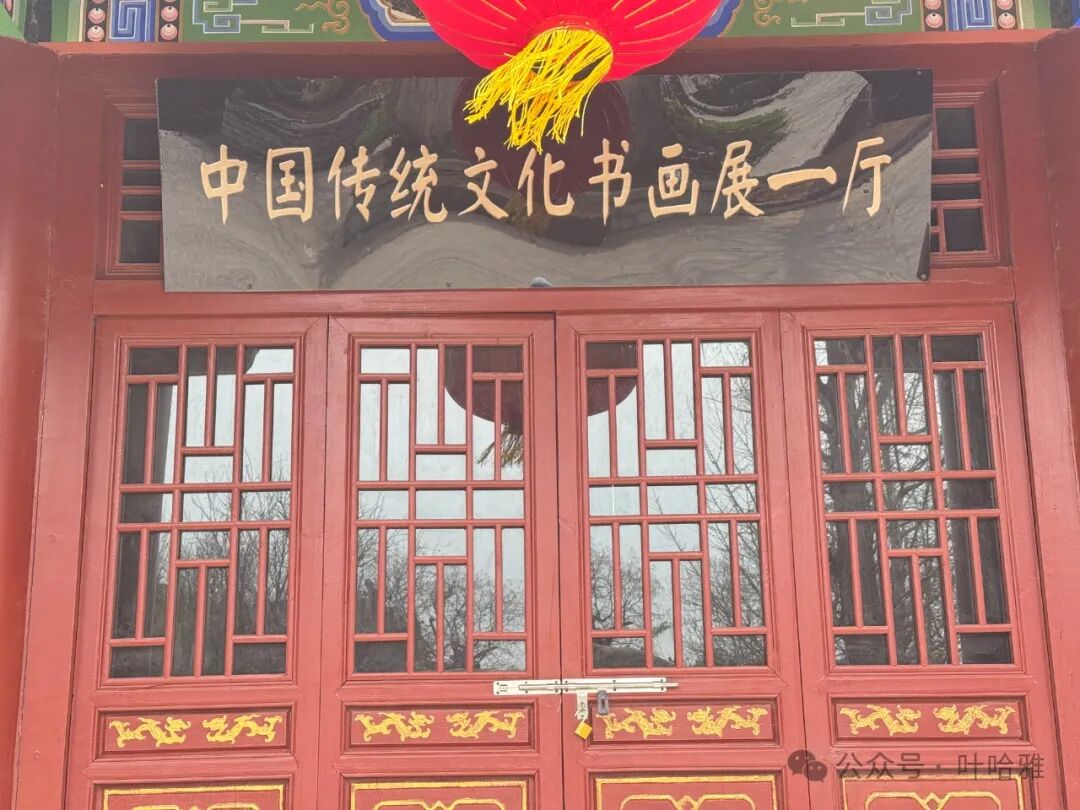
There are several traditional calligraphy and painting exhibition halls in the courtyard. This is the first hall, and there is a second hall, both displaying non-religious artworks.
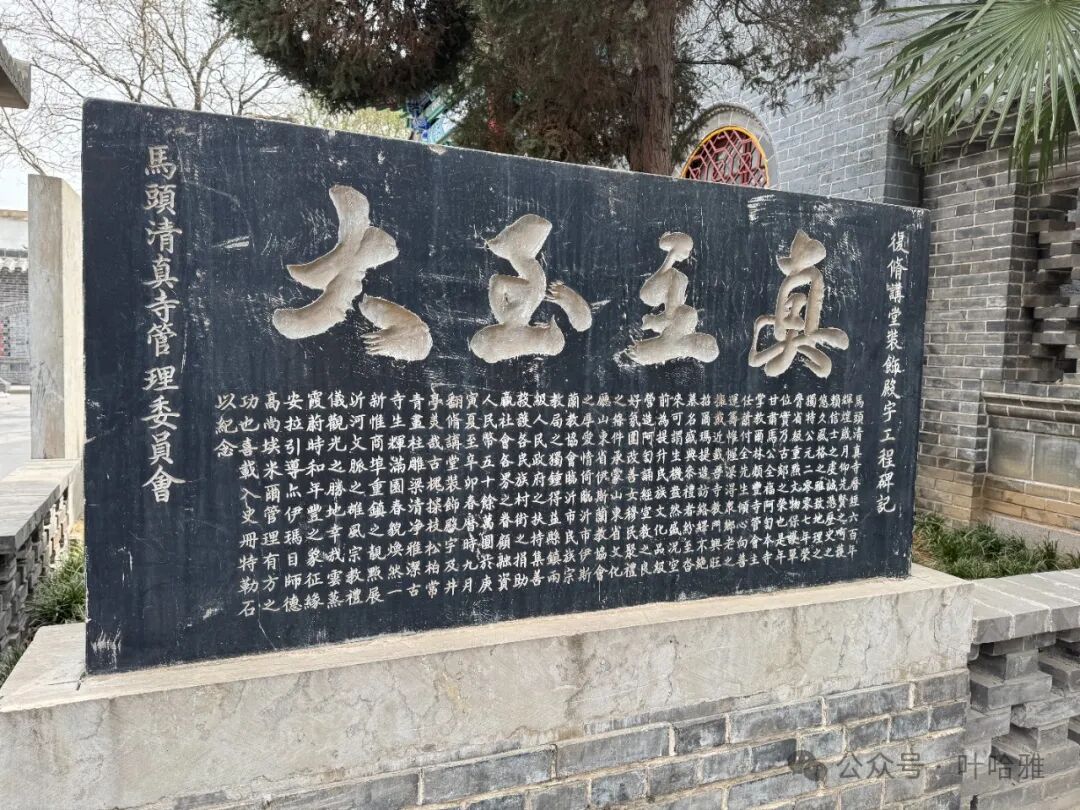
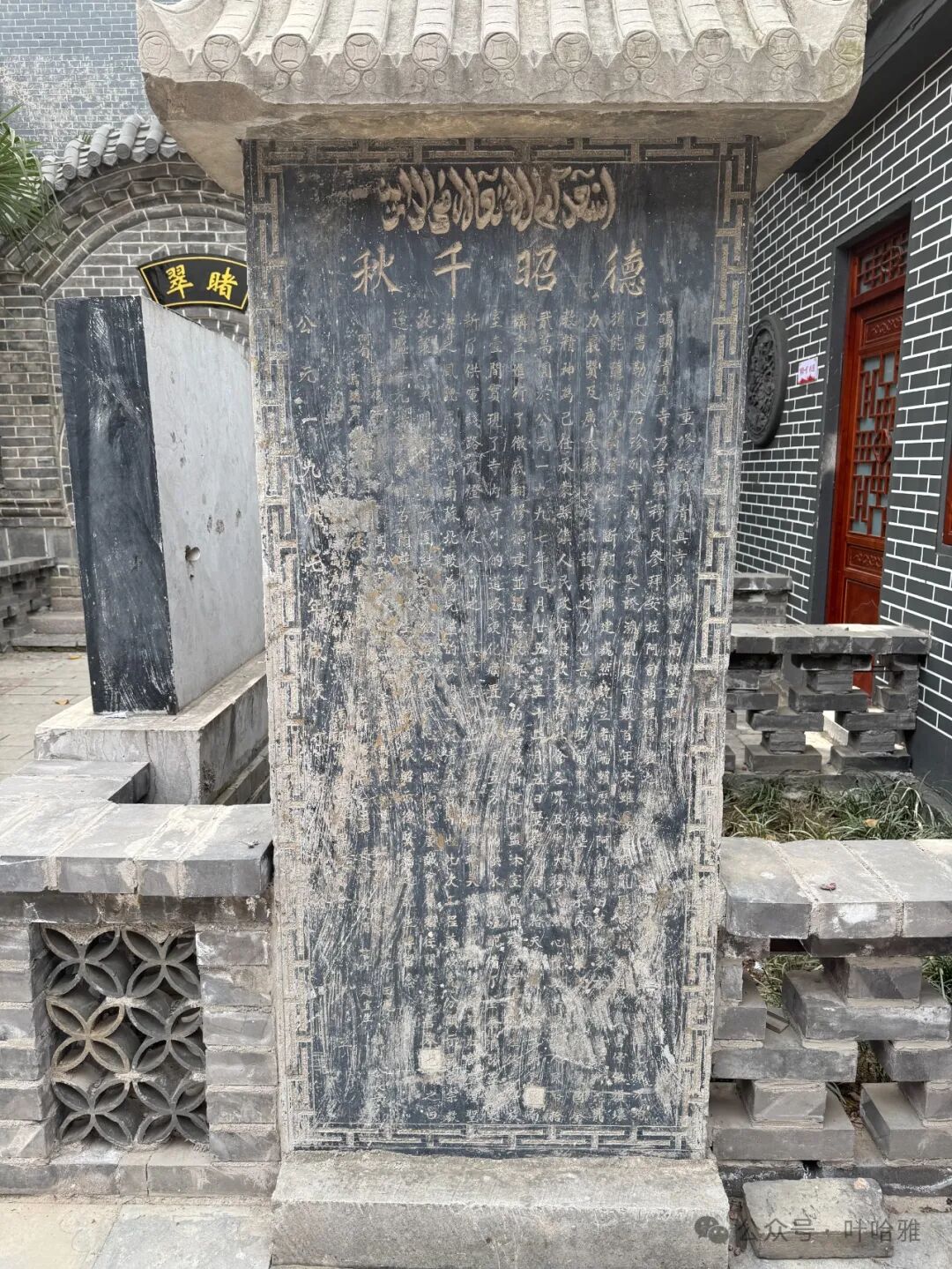
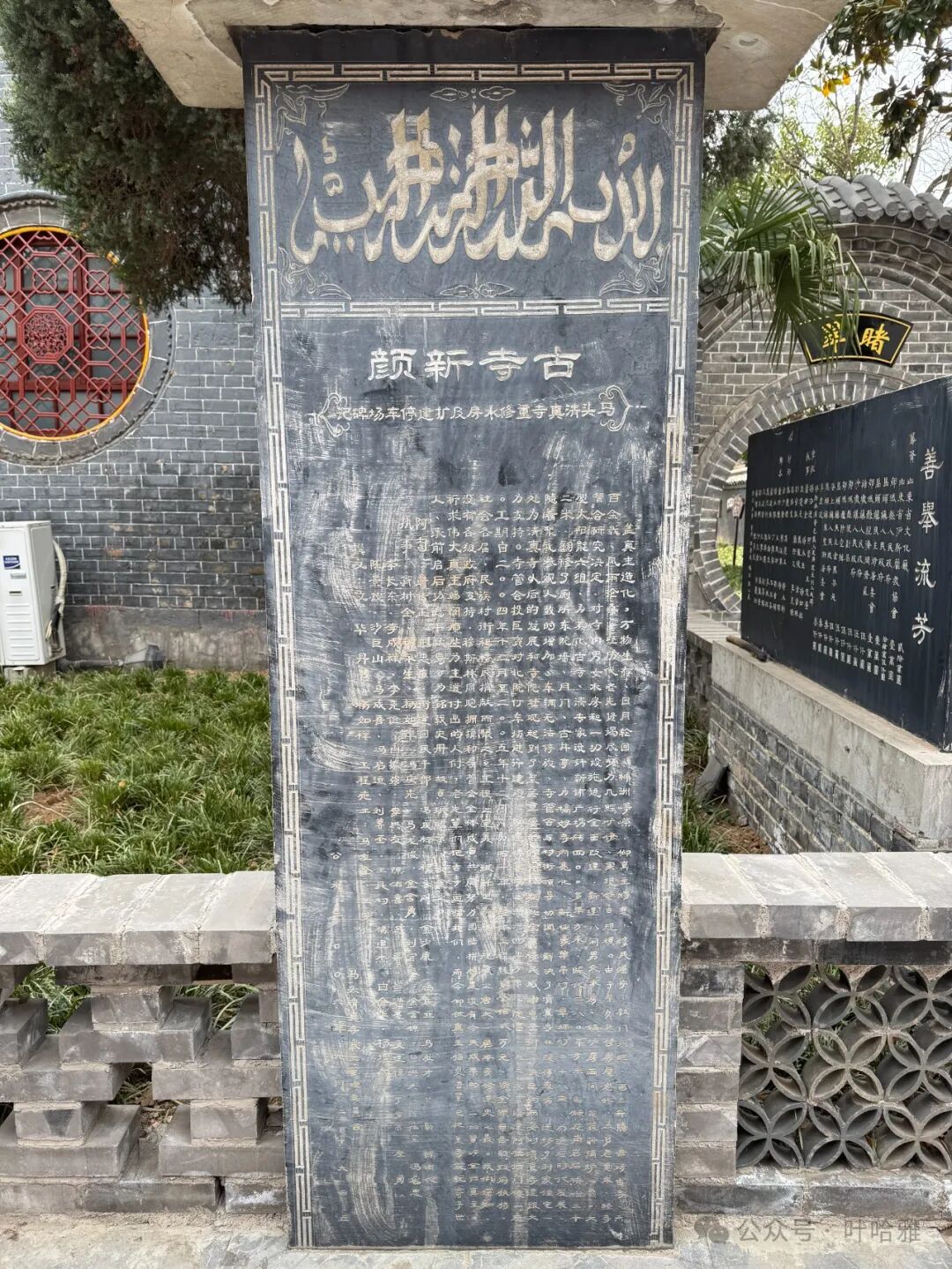
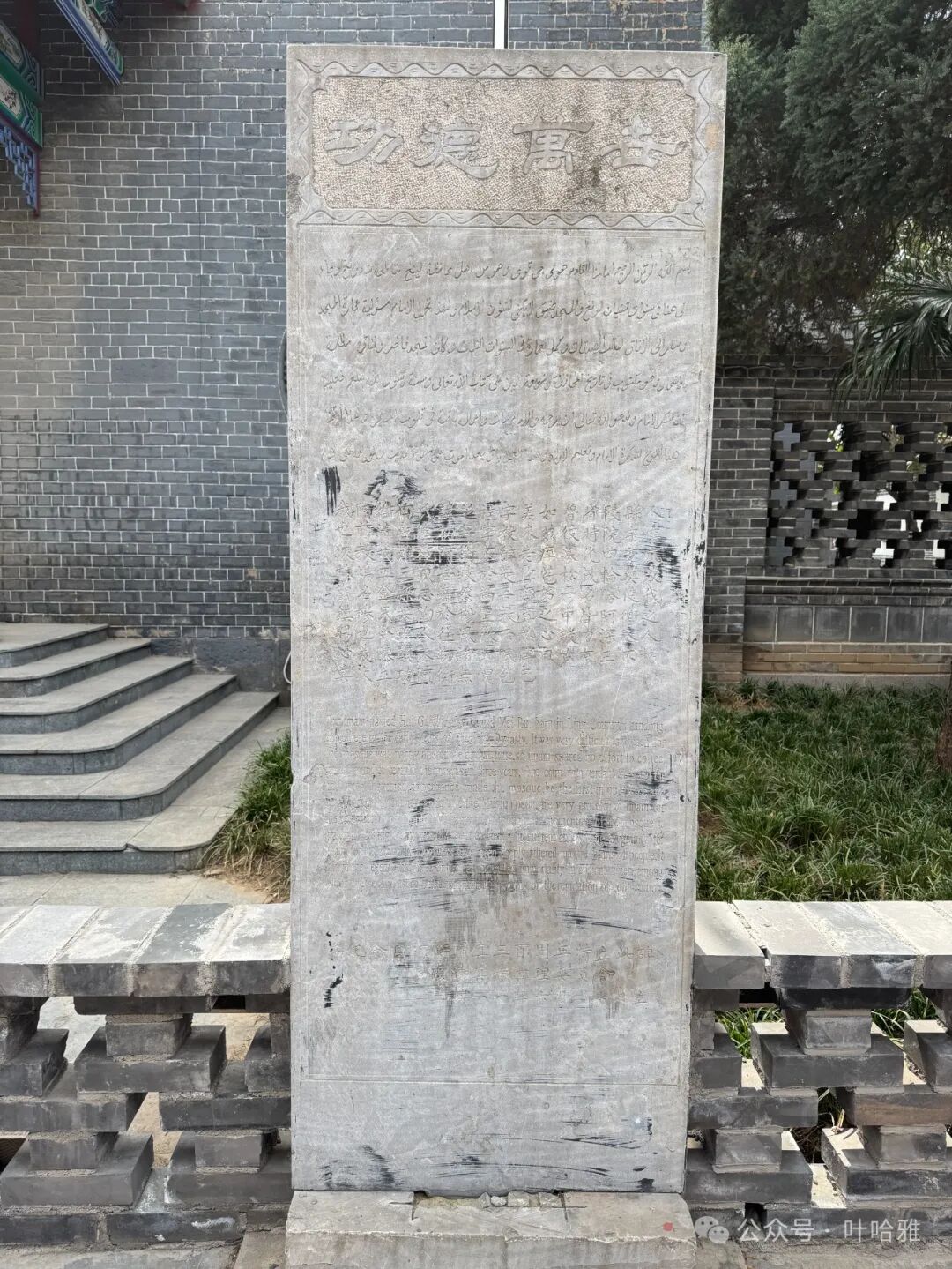
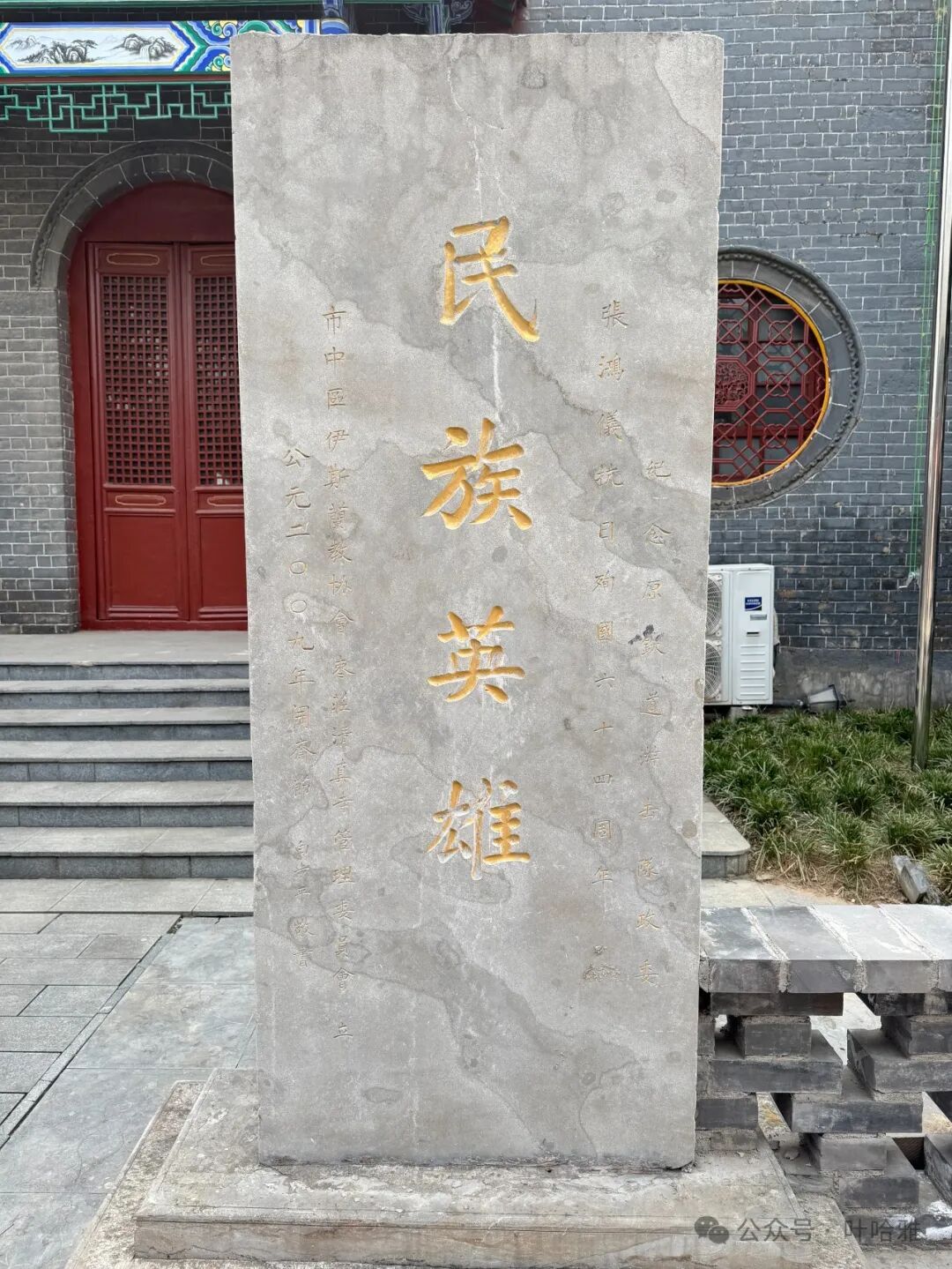
Inside the mosque, there is a monument to an anti-Japanese hero, Zhang Hongyi, who was a Hui Muslim. Zhang Hongyi served as the political commissar of the Southern Shandong Independent Detachment and was known as the political commissar of the Railway Guerrillas. He died in 1945 while fighting against Japanese and puppet troops. The martyr Zhang Hongyi is buried in the Martyrs' Cemetery in Feixian County, Linyi City.
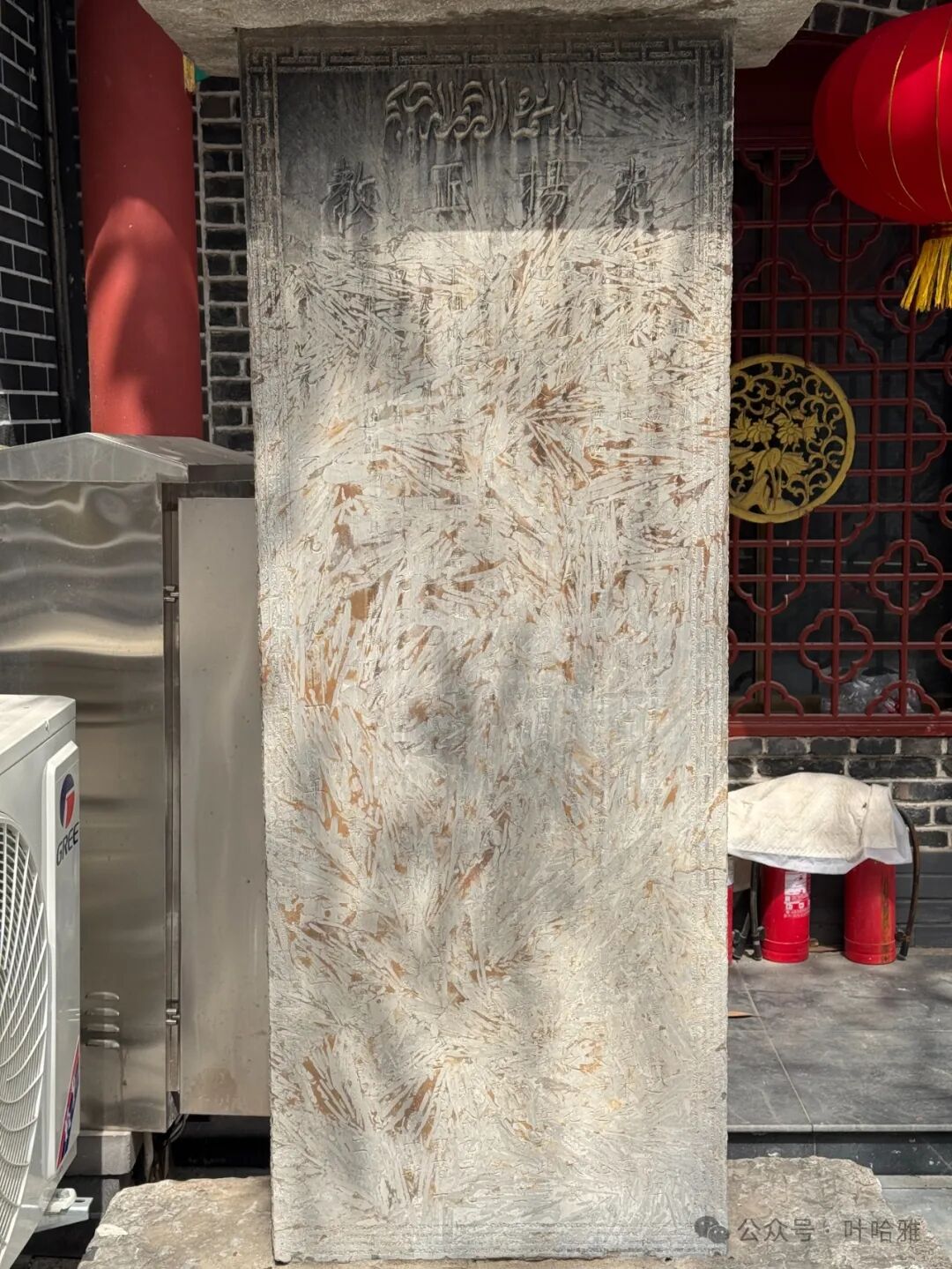
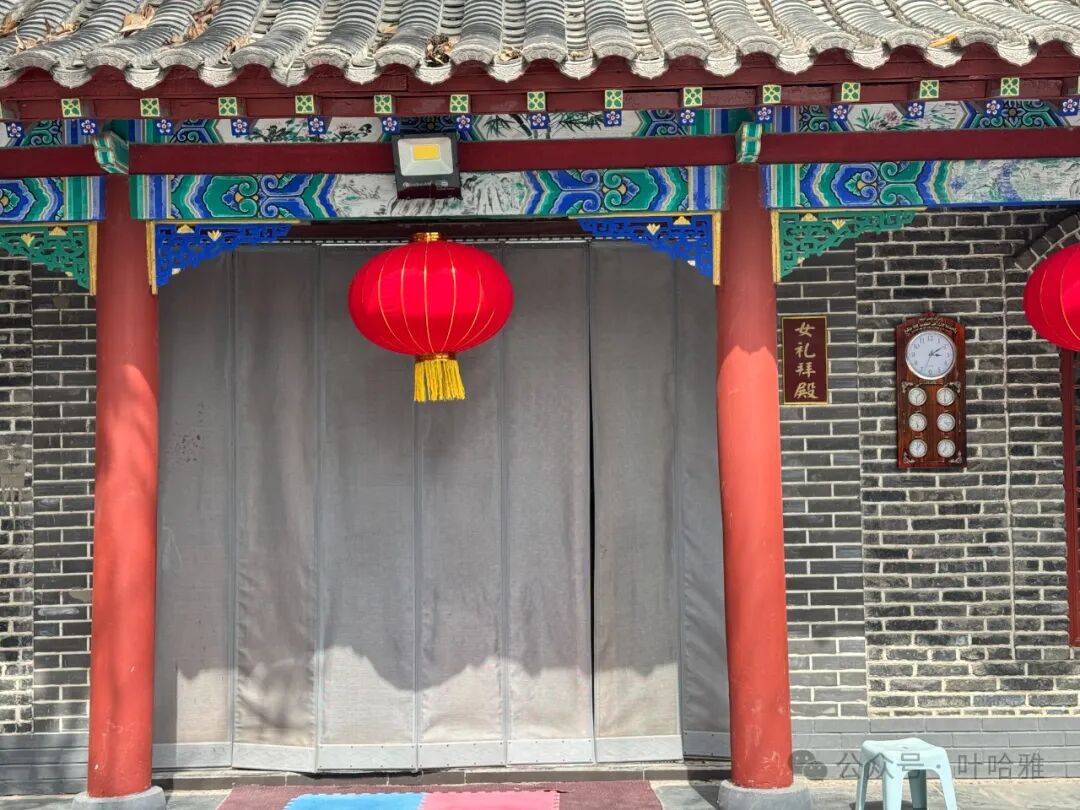
There is also a women's prayer hall here.
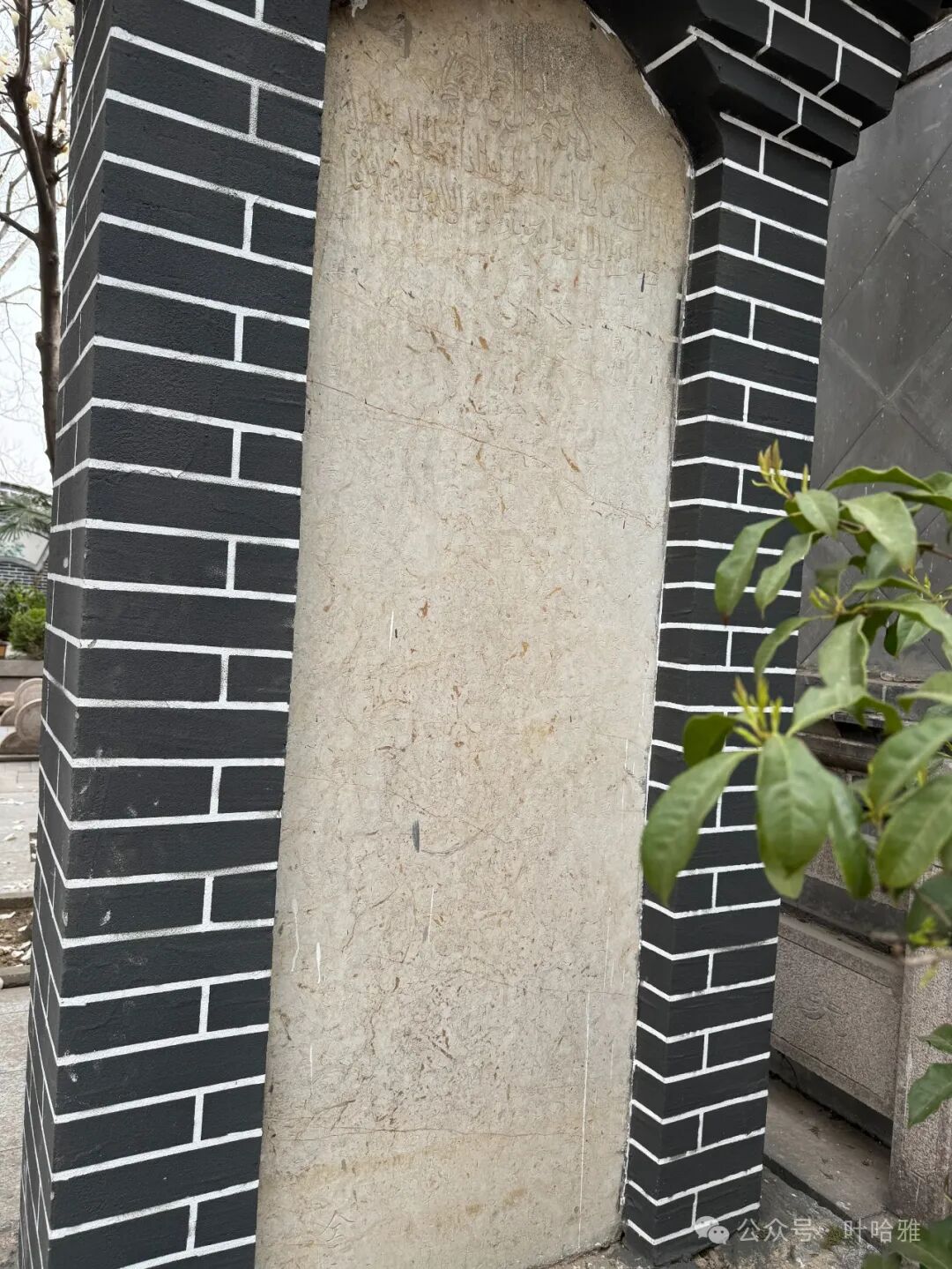
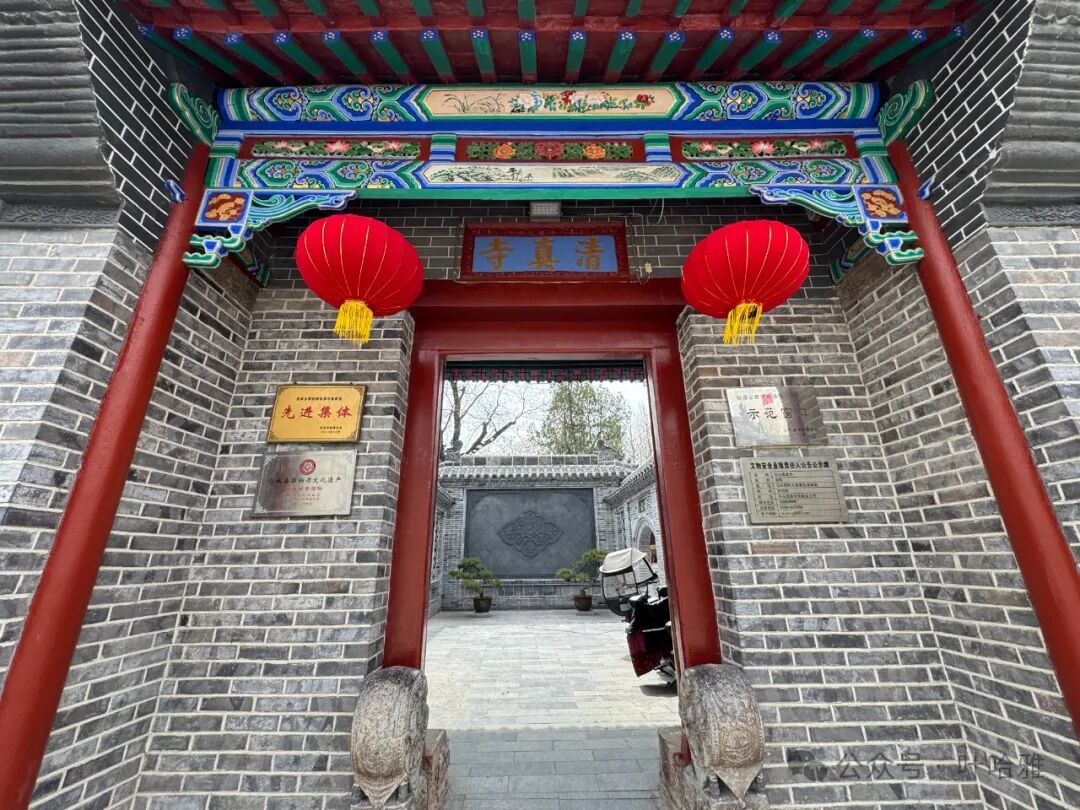
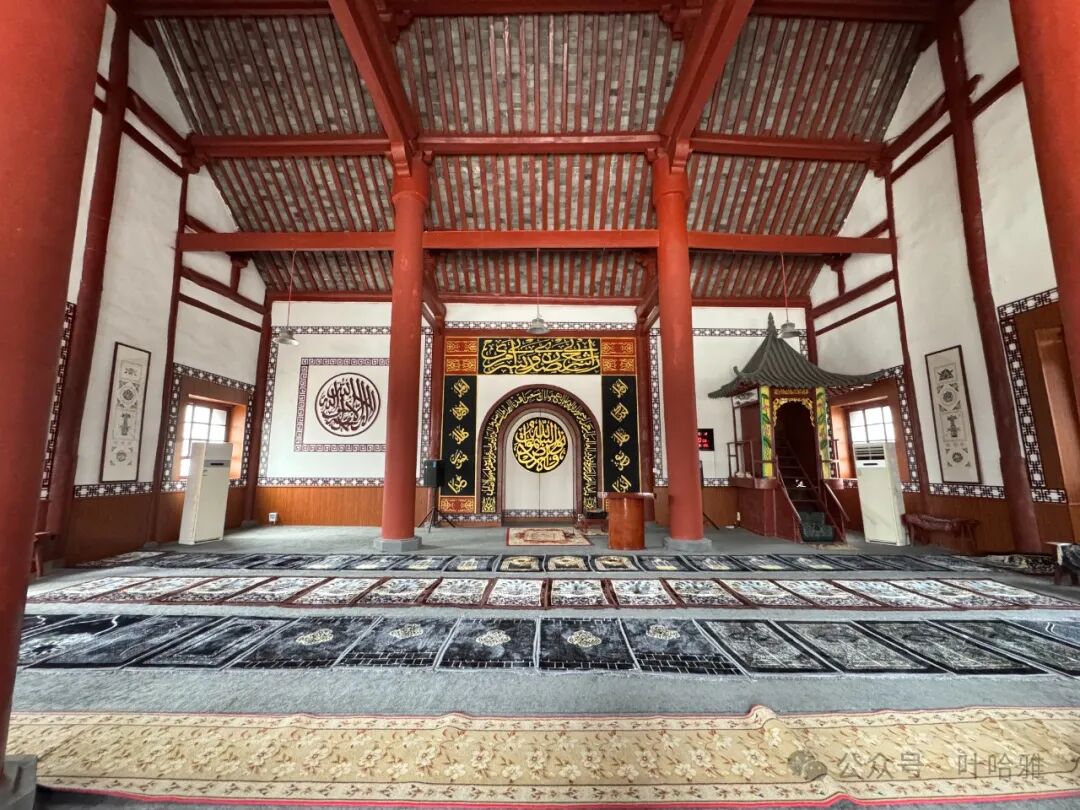
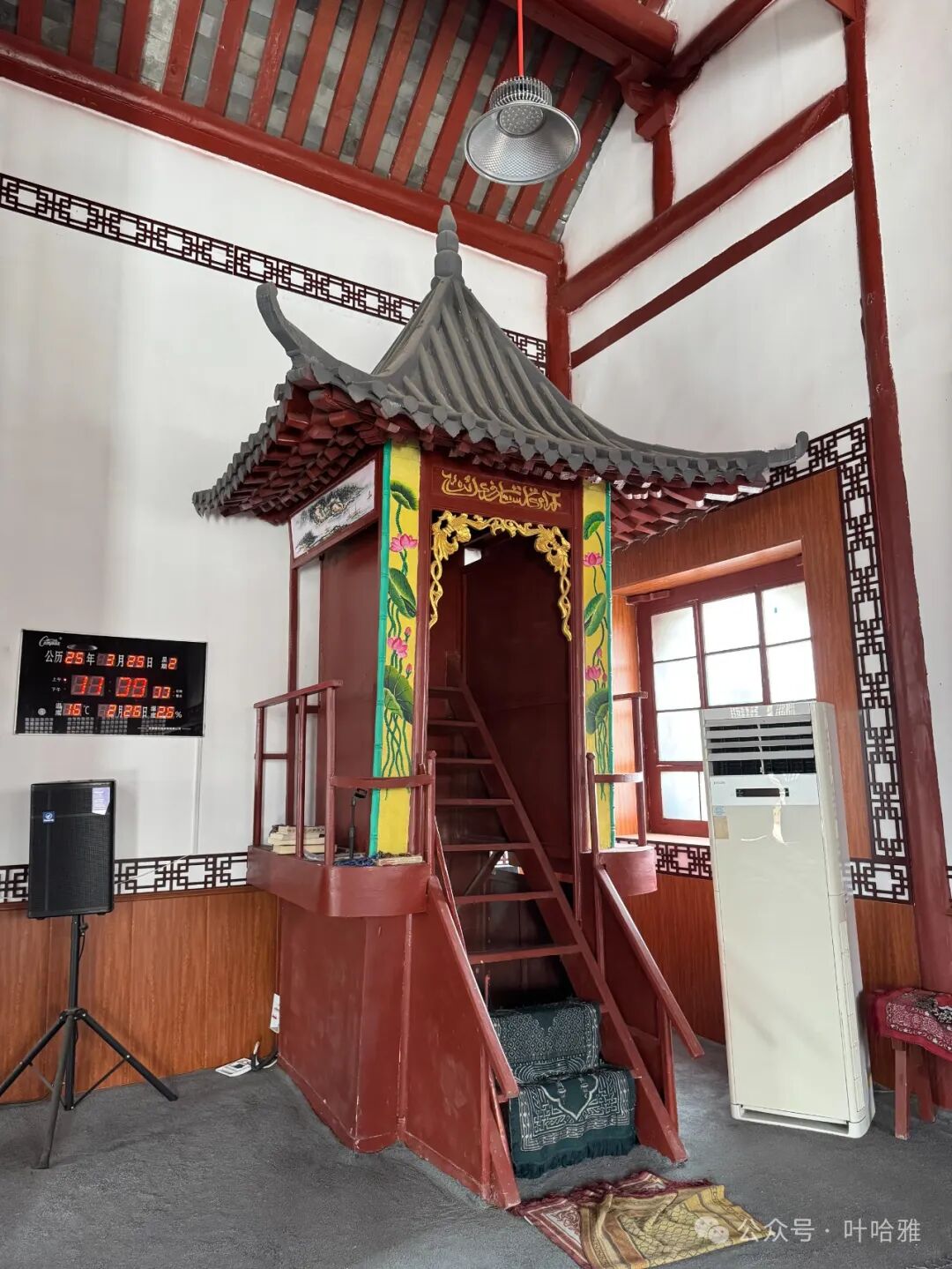
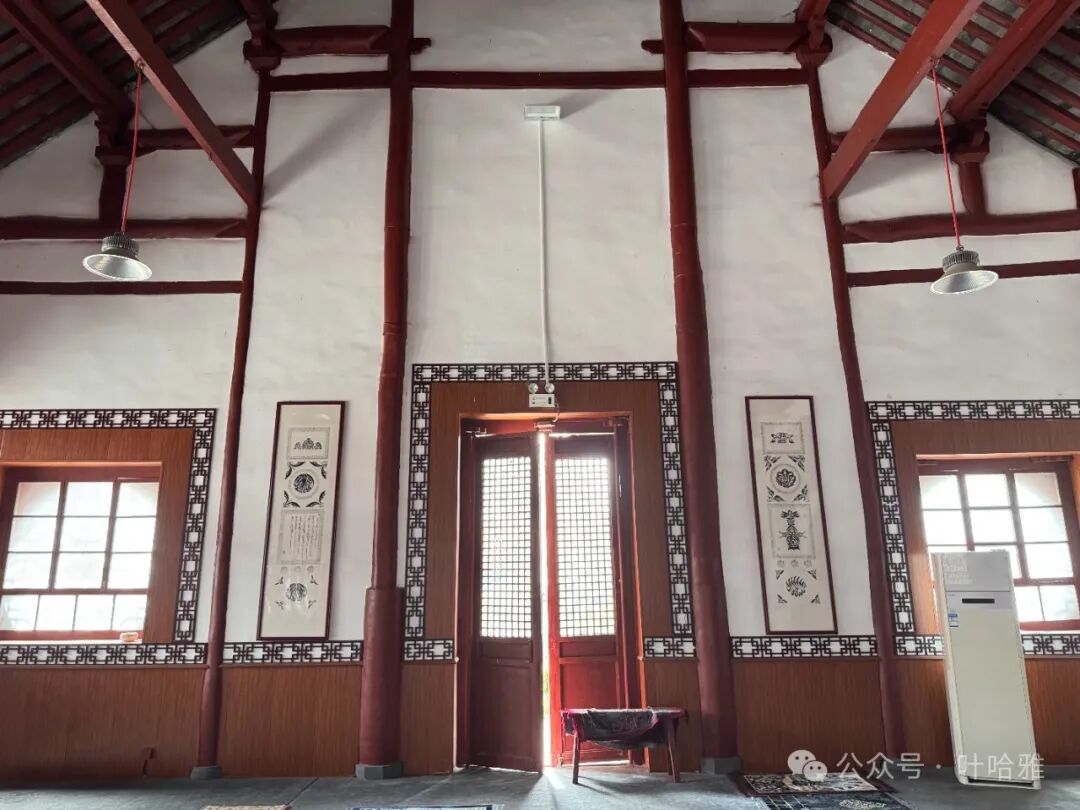
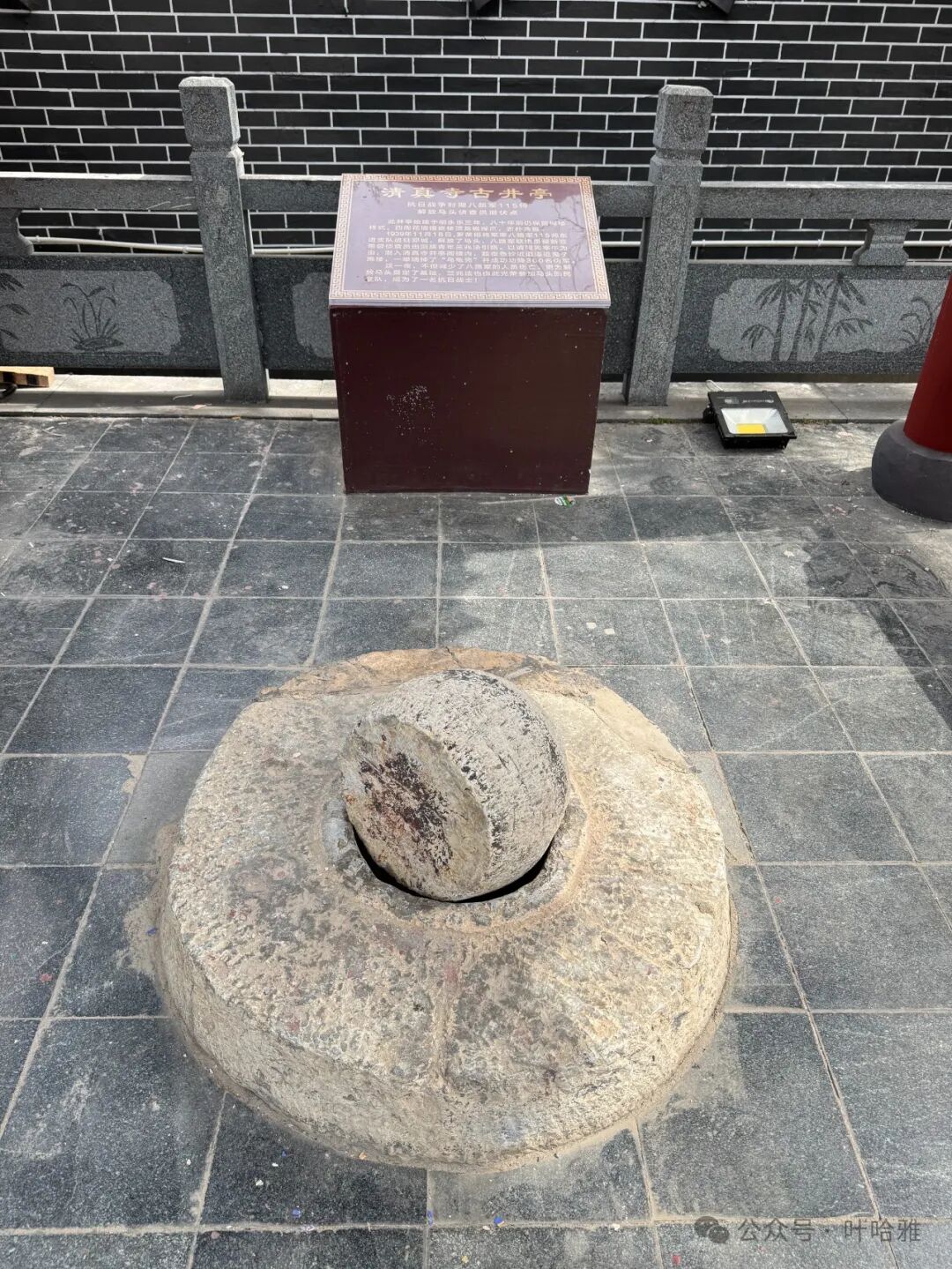
This ancient well was built in the third year of the Yongle period of the Ming Dynasty. In 1939, General Luo Ronghuan led the 115th Division of the Eighth Route Army into Tancheng. Eighth Route Army liaison officer Zhai Xinya, guided by a Hui youth named Lan Zhaofa, used the excuse of inviting an imam to slaughter a cow to enter the mosque's well pavilion. Under the cover of night, they took a shortcut to approach the enemy's blockhouse, destroyed the 'turtle shell' fortification, and successfully persuaded 360 puppet soldiers to surrender. Because of this, Lan Zhaofa honorably joined the Matou Hui Detachment.
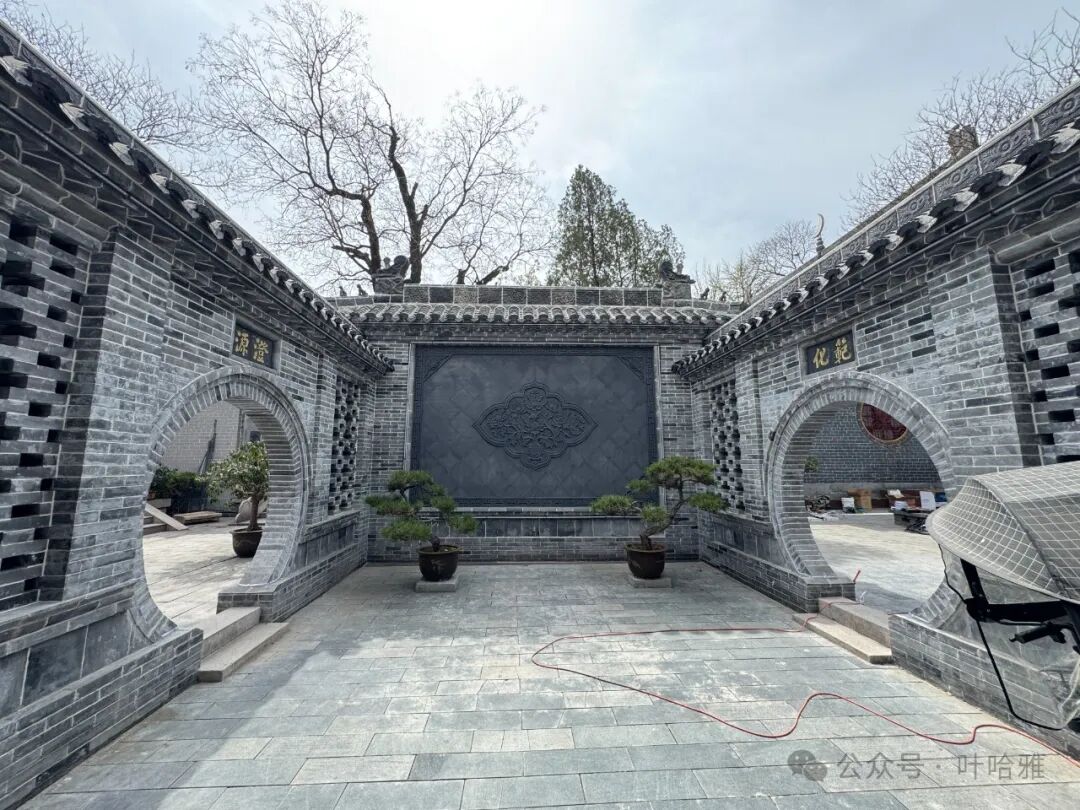
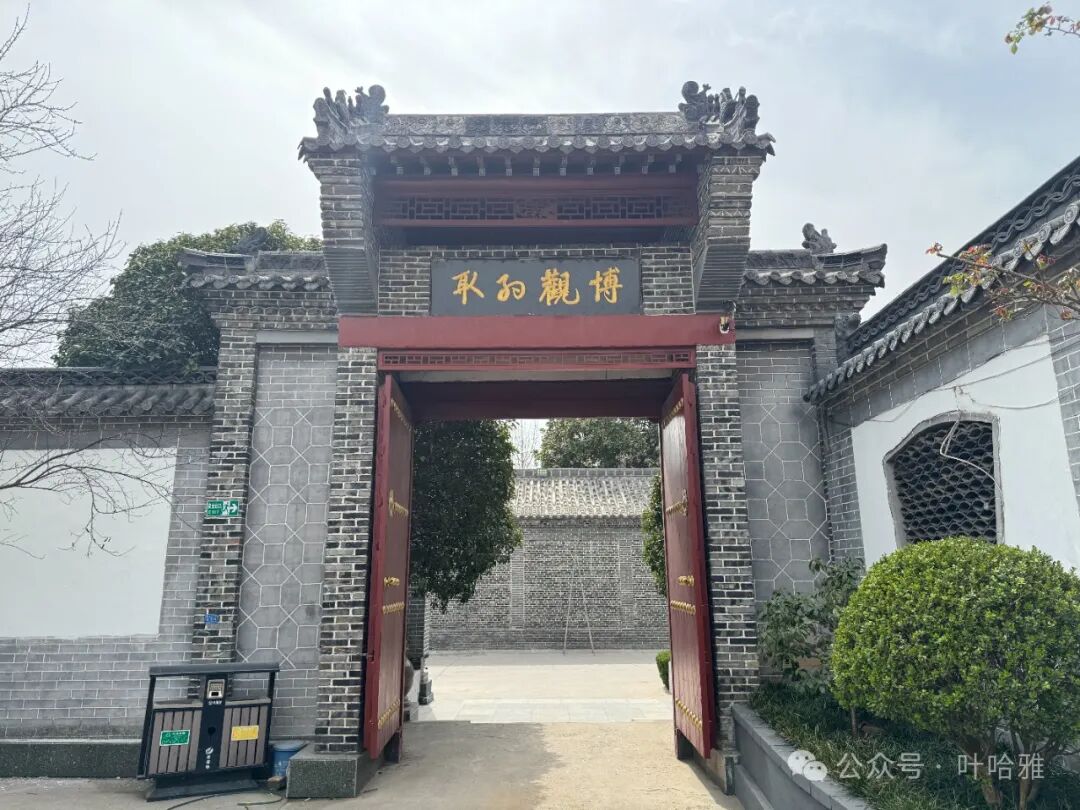
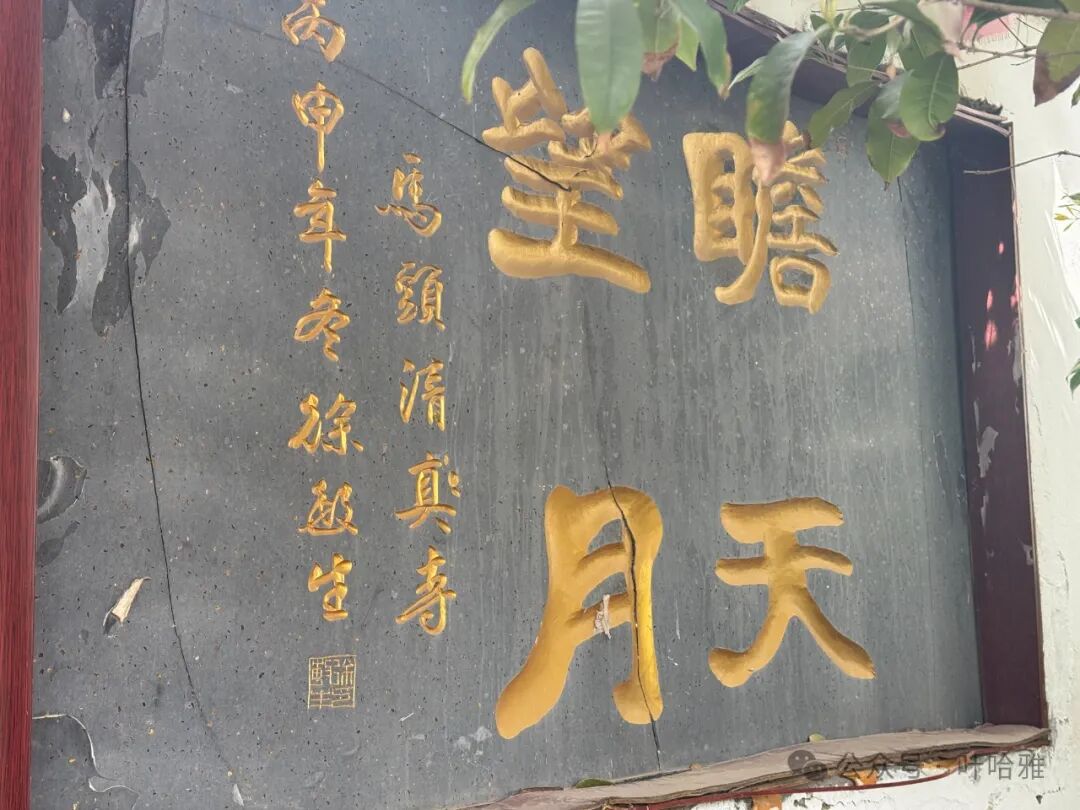
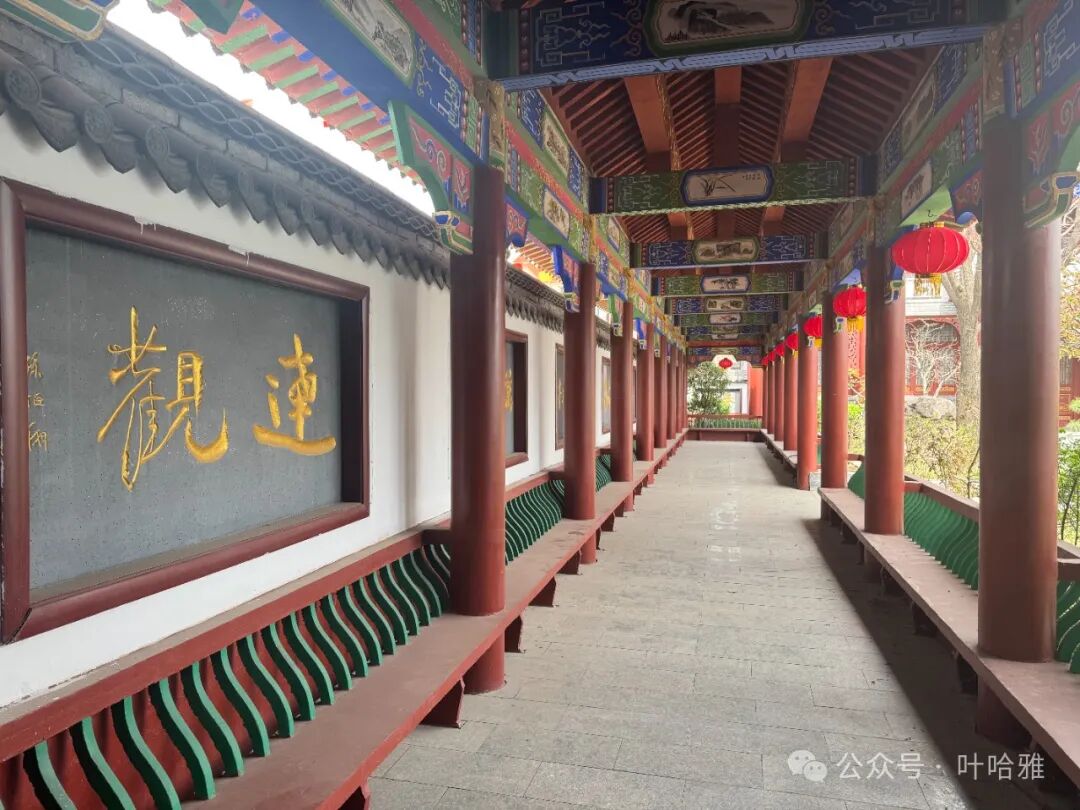
There are several pieces of calligraphy on the walls of the corridor.
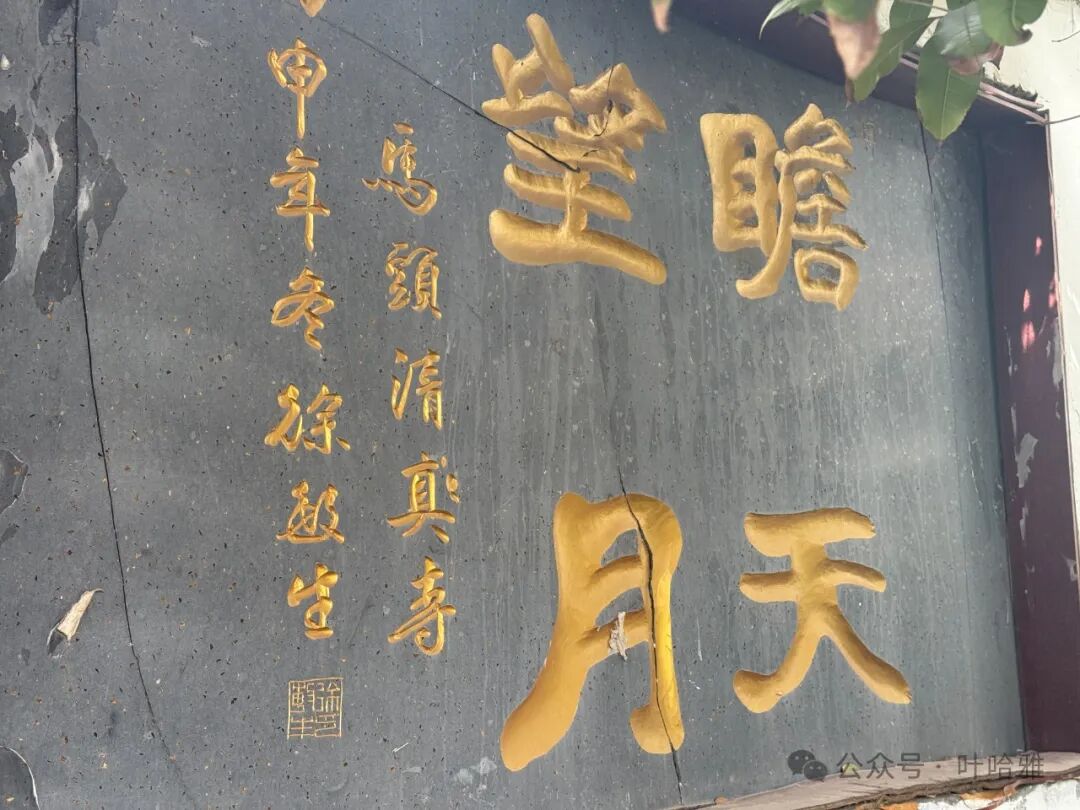
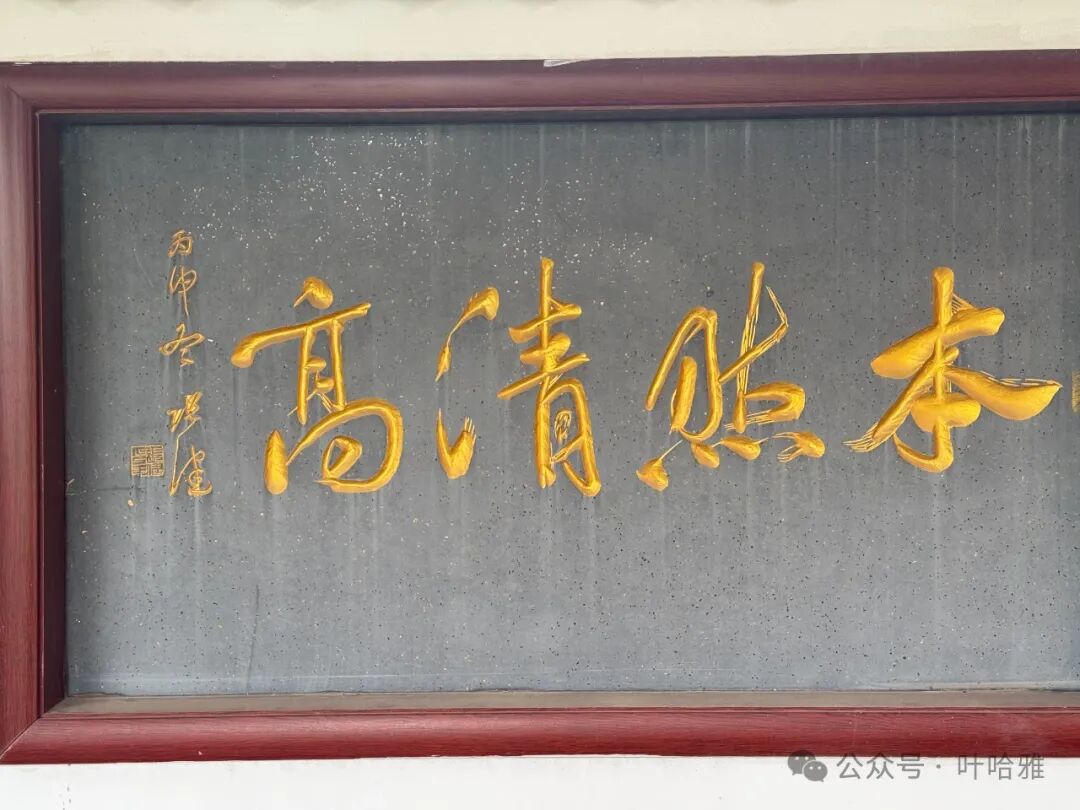
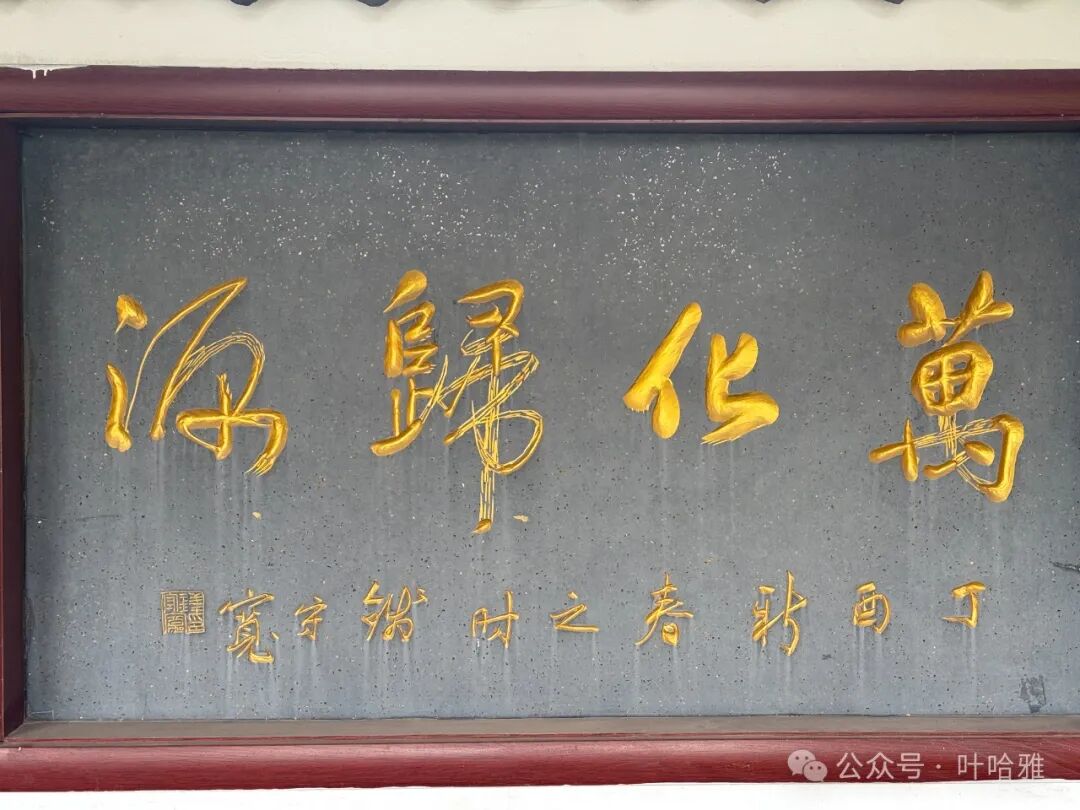
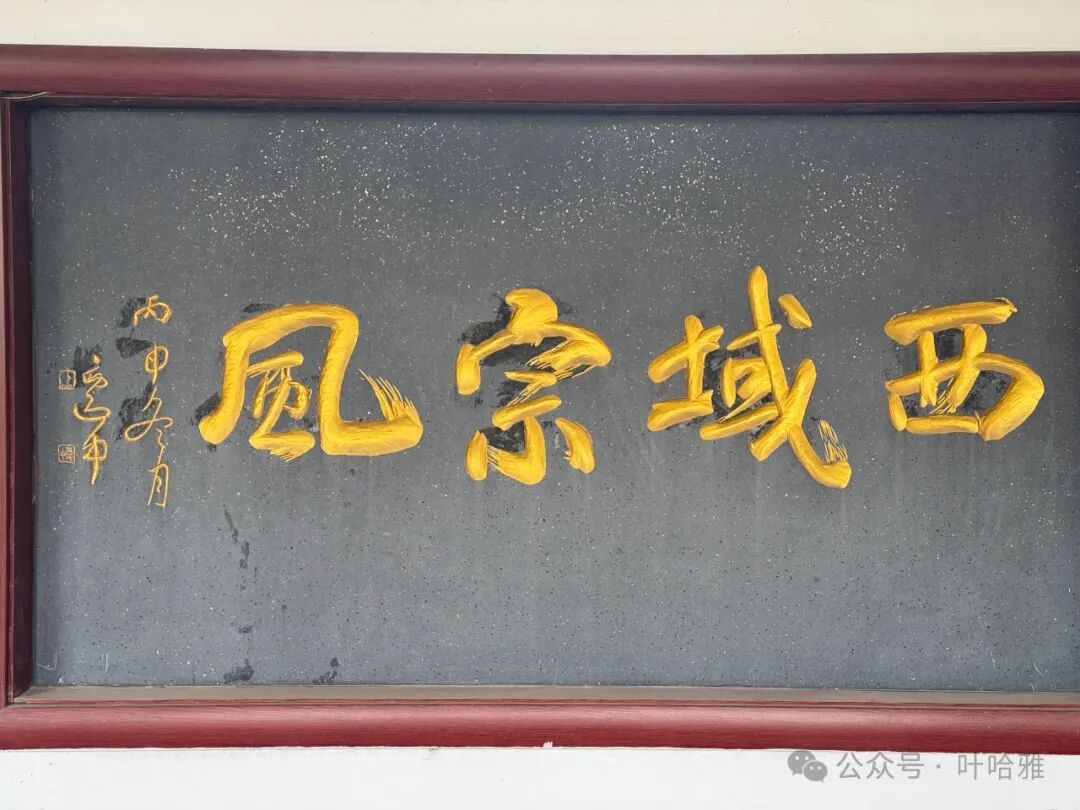
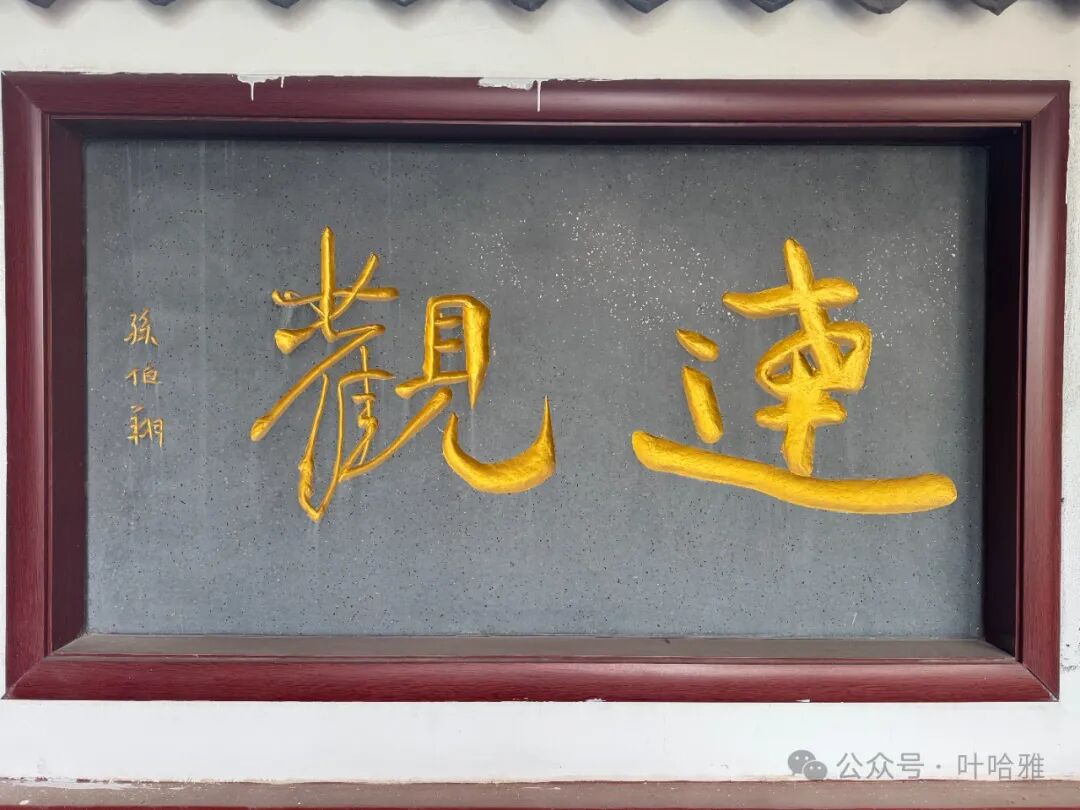
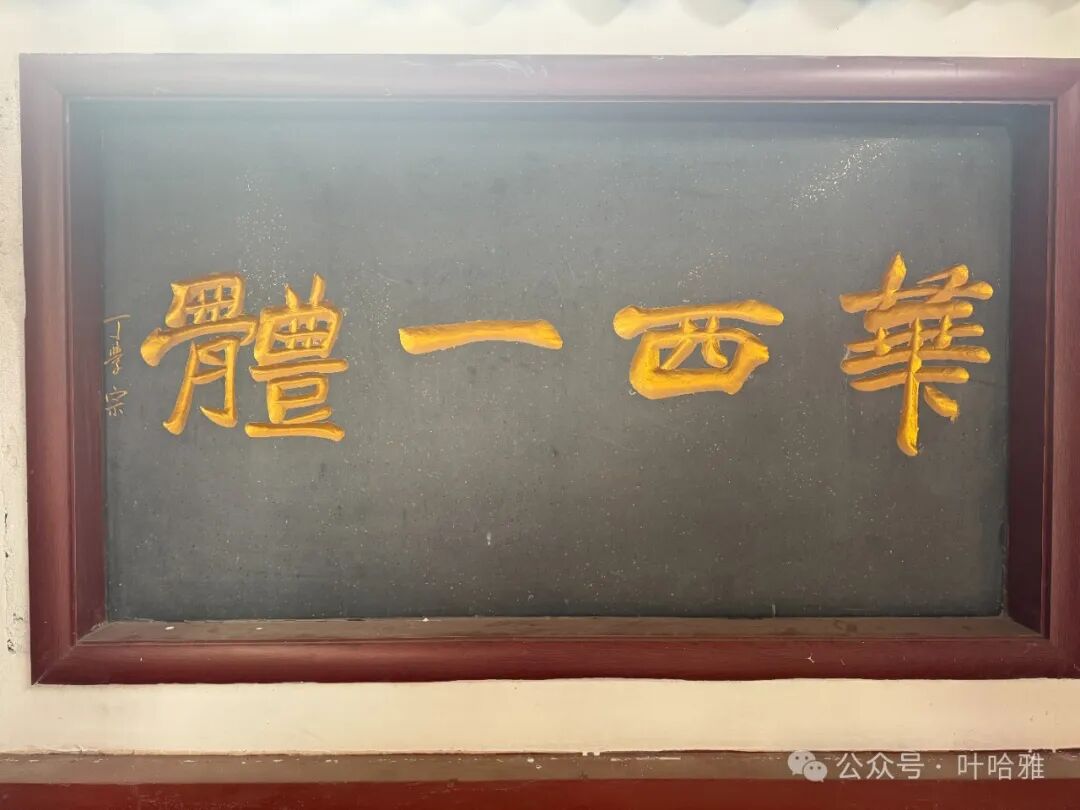
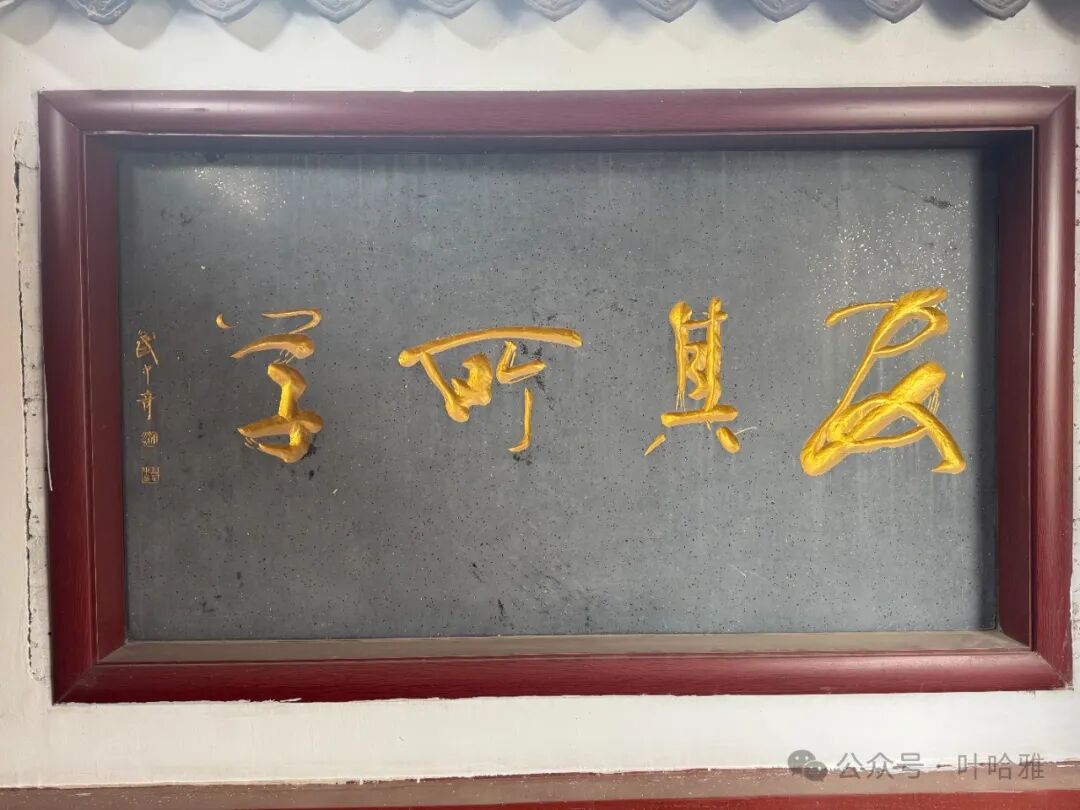
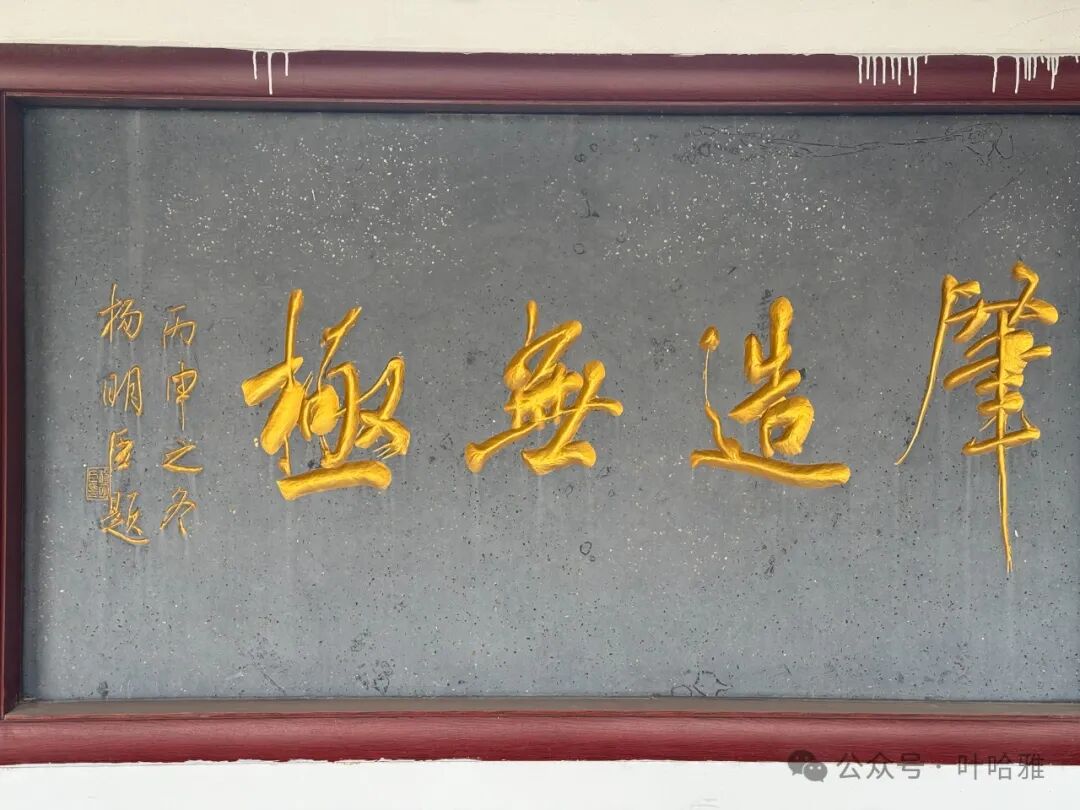
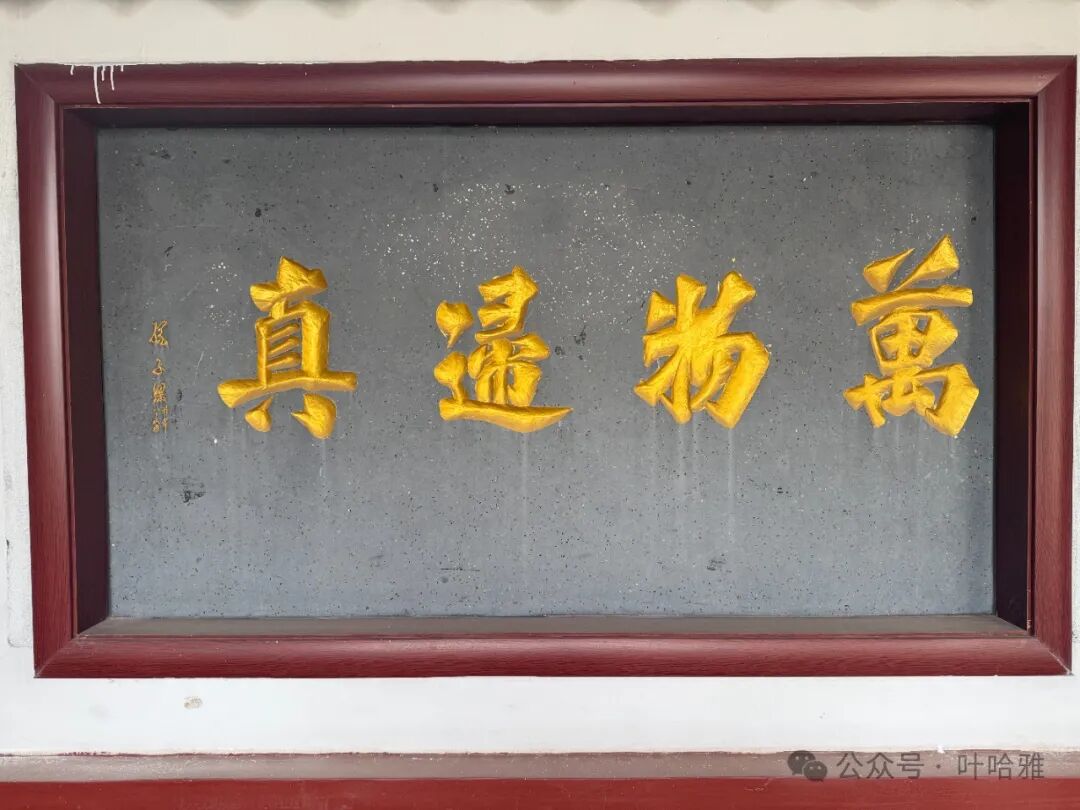
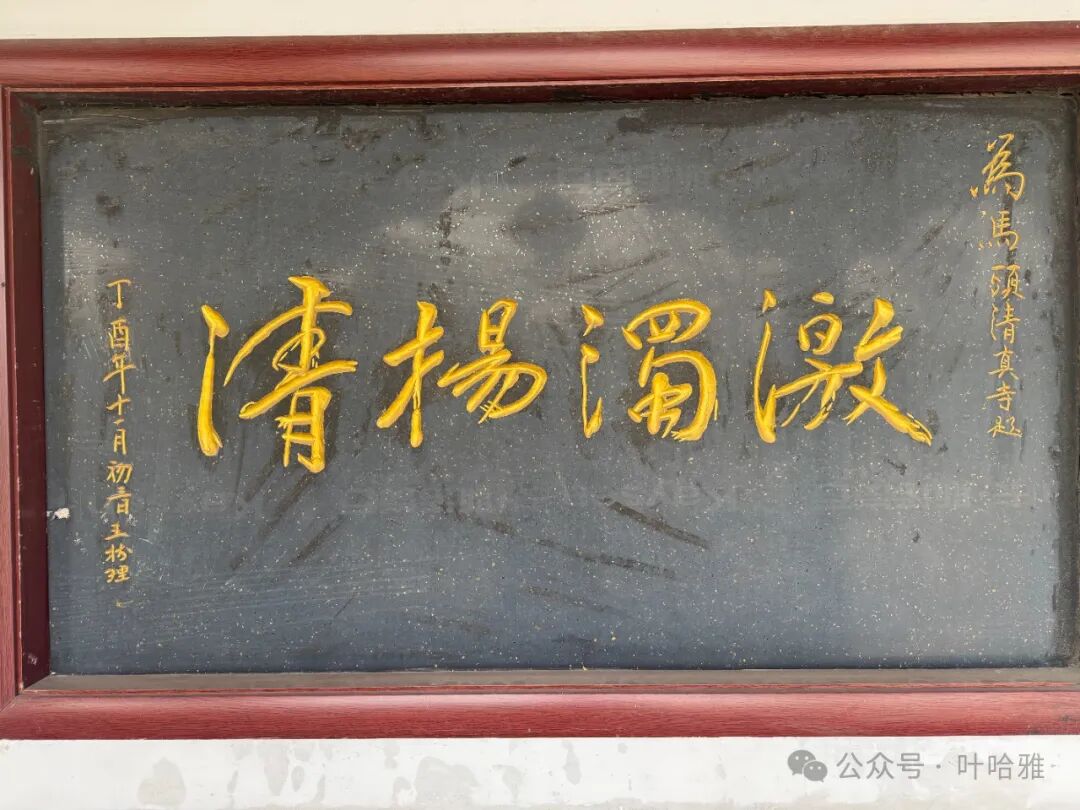
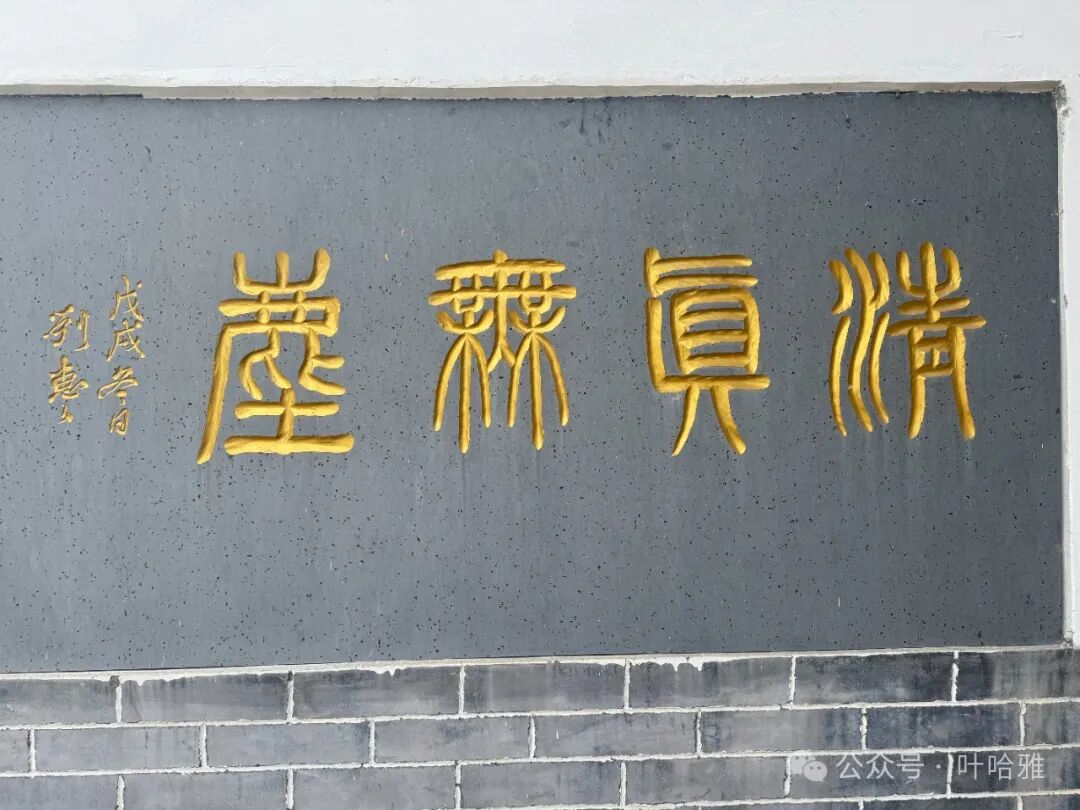
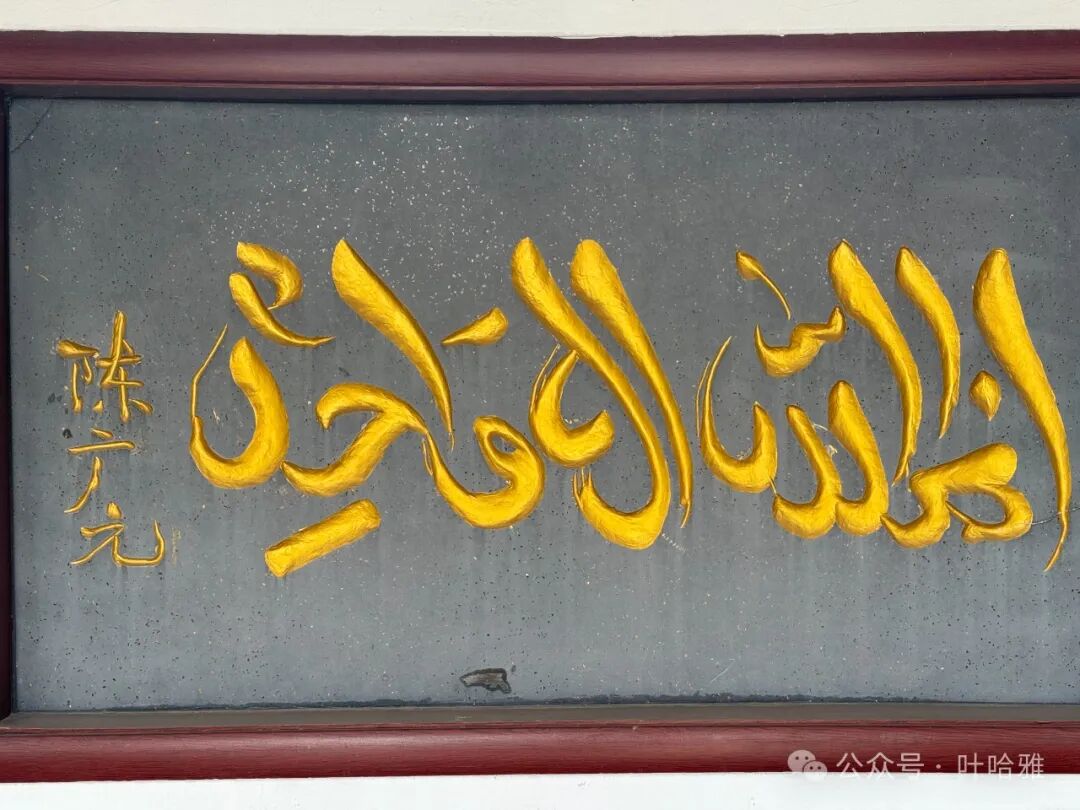
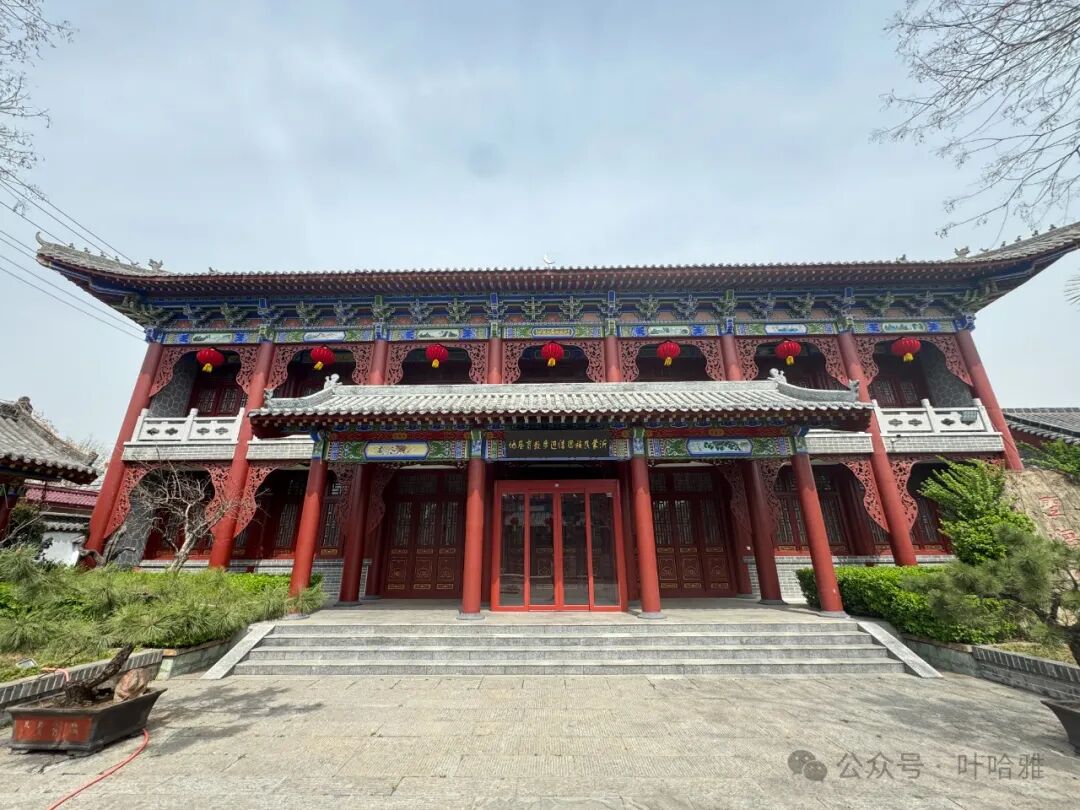
There is a Hui Muslim culture exhibition hall in the courtyard, but it does not have any exhibits inside yet.
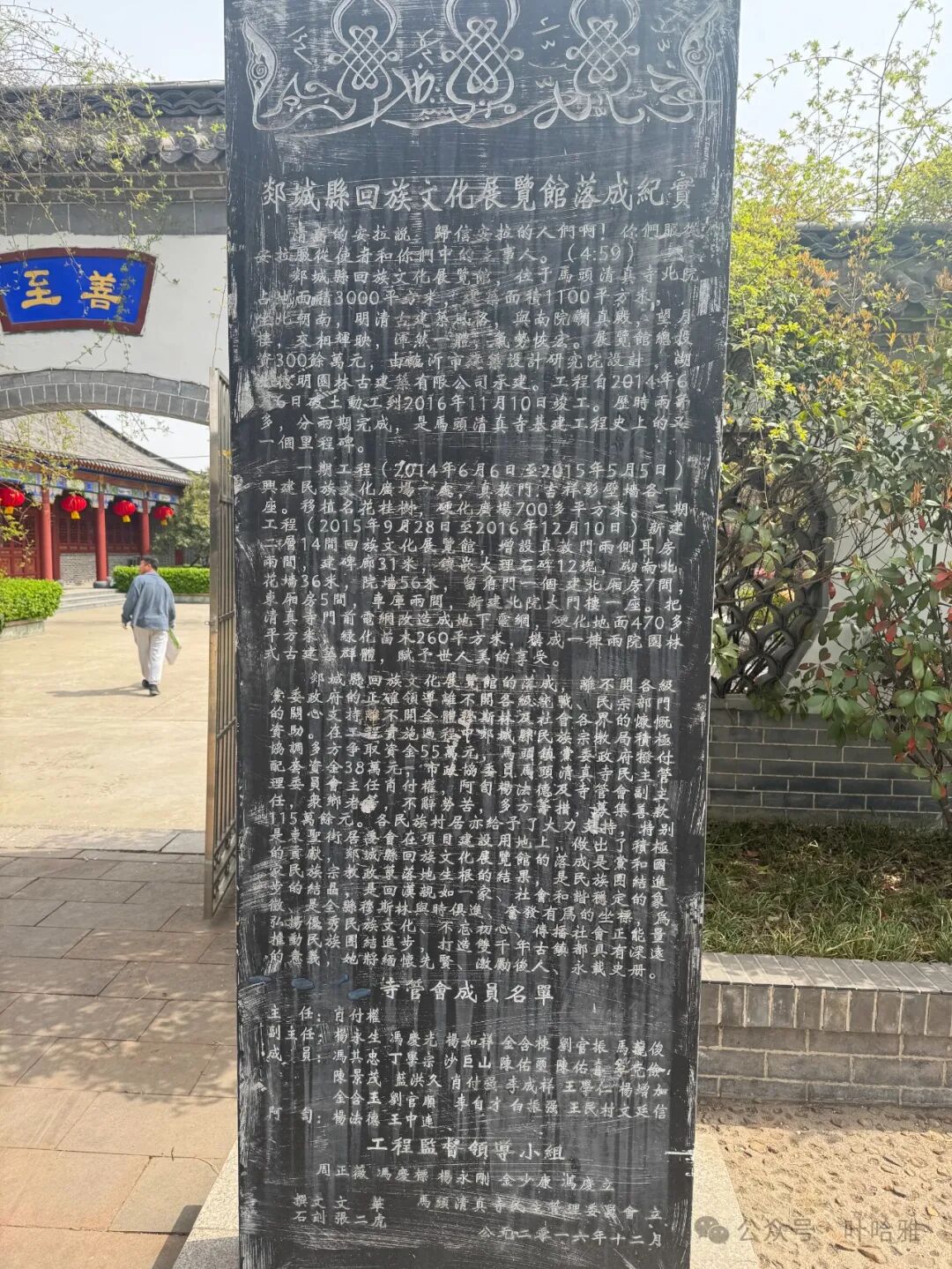
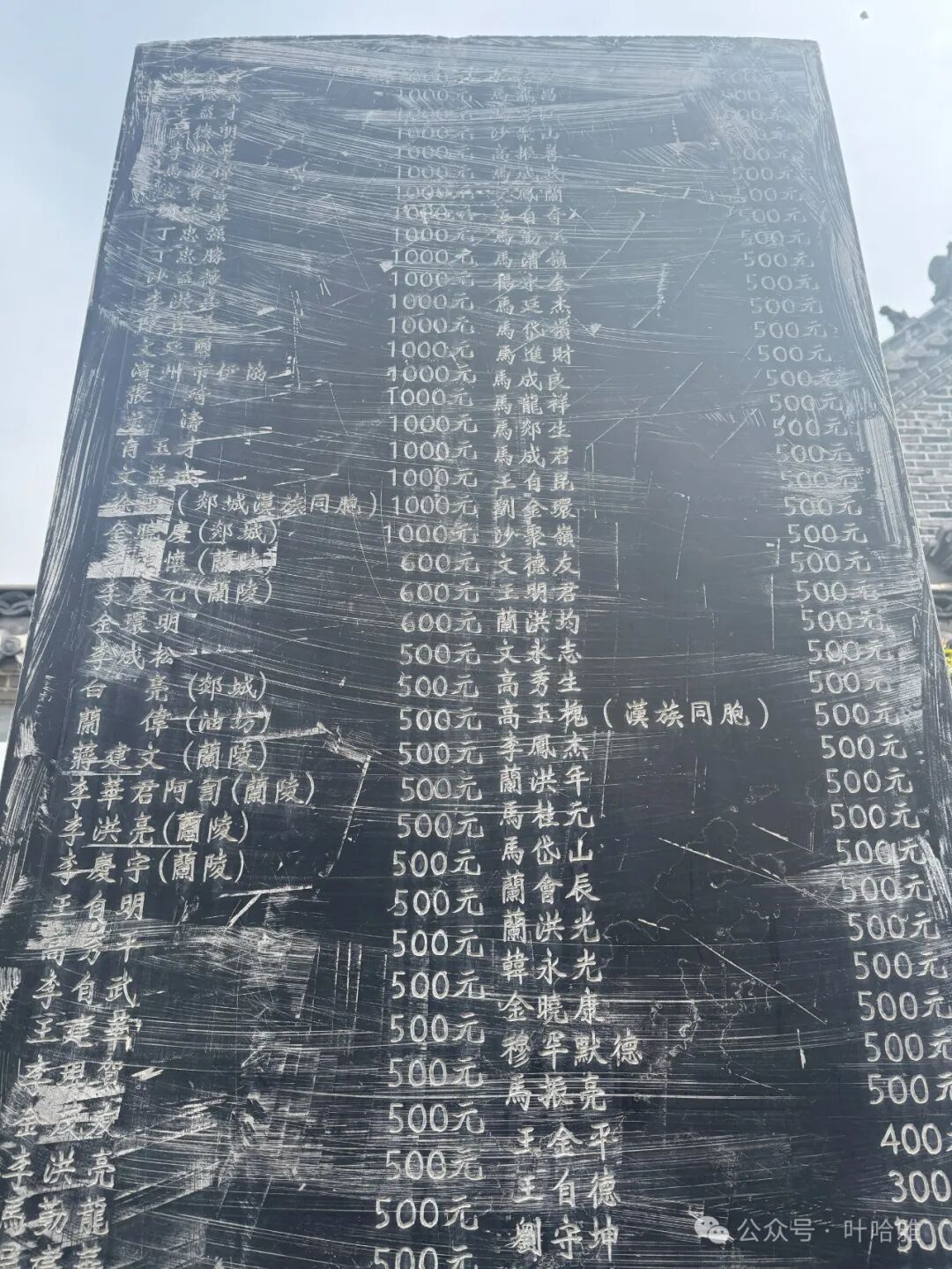
The list of donations (niyati) specifically marks our Han Chinese brothers and sisters.
Nanbeidao Mosque
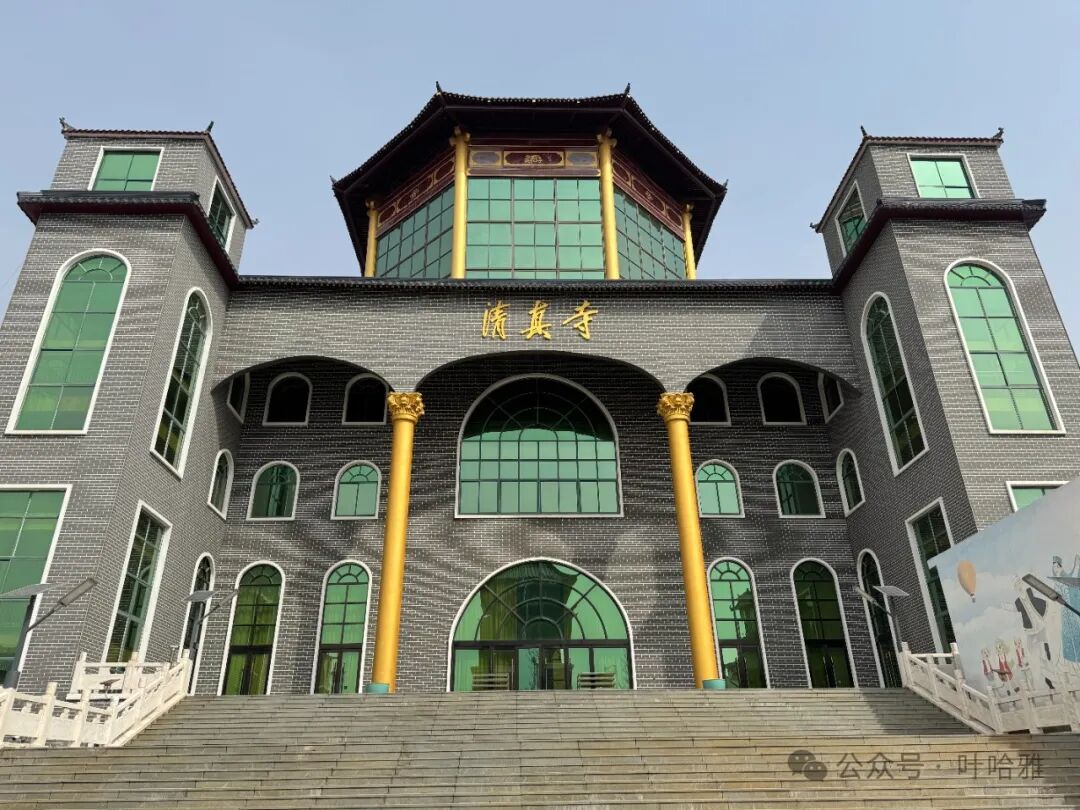
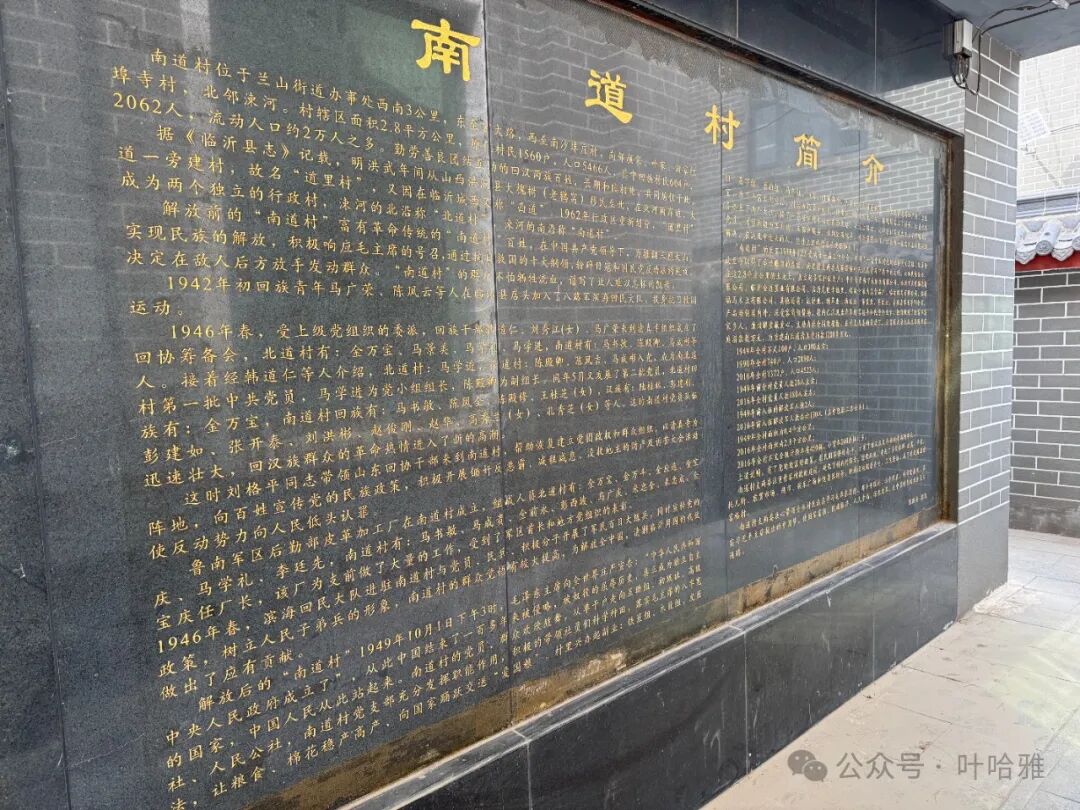
Nanbeidao Mosque in downtown Linyi was first built during the Hongwu period of the Ming Dynasty. After being rebuilt many times, it is now a modern building. It has a floor area of 1,235 square meters and a total site area of 8,995 square meters. The area around the mosque is filled with halal beef and mutton shops.
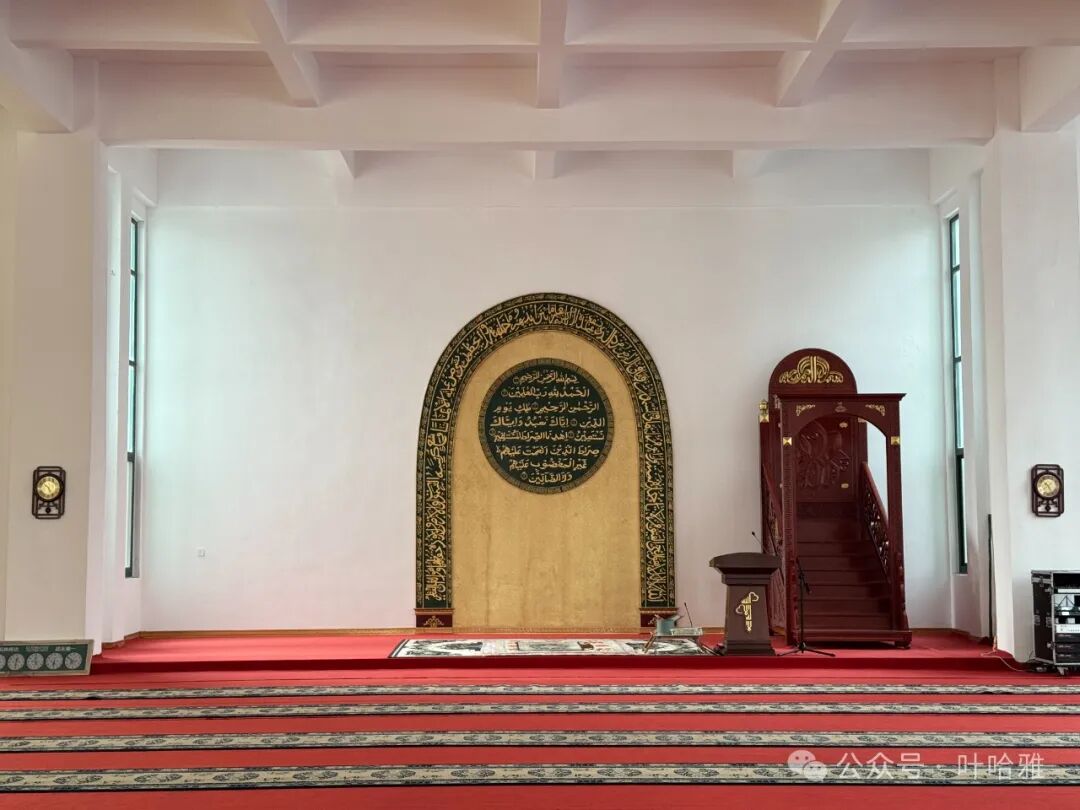
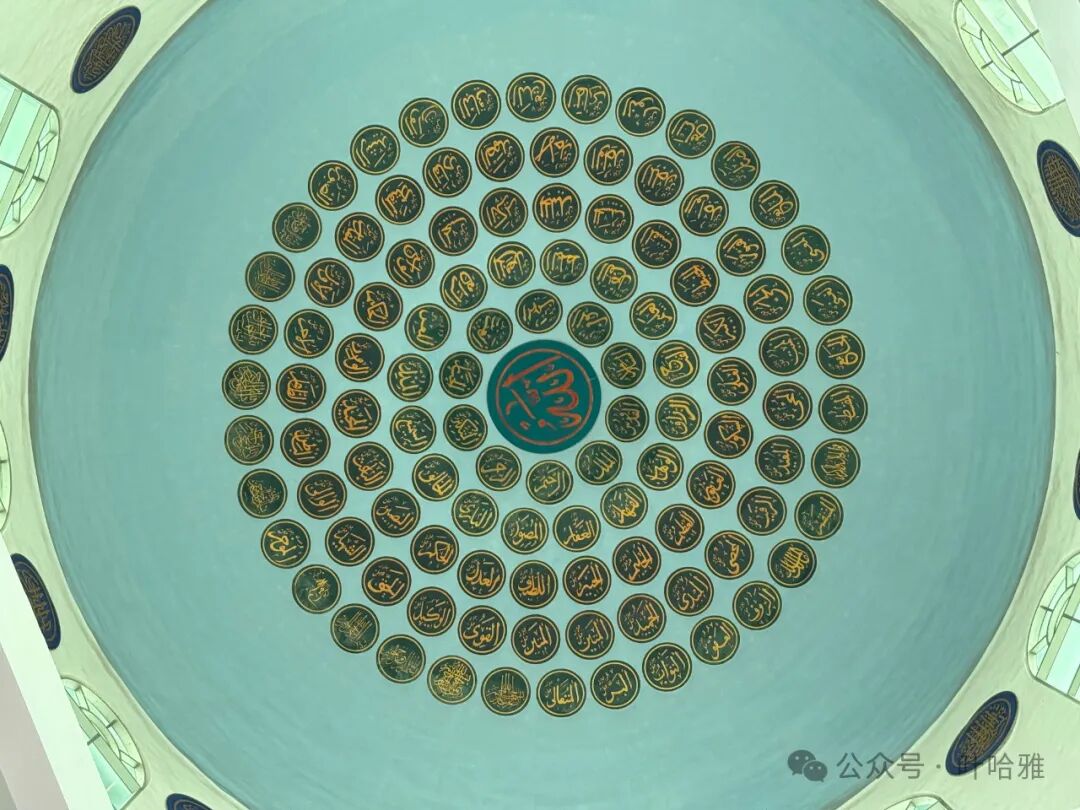
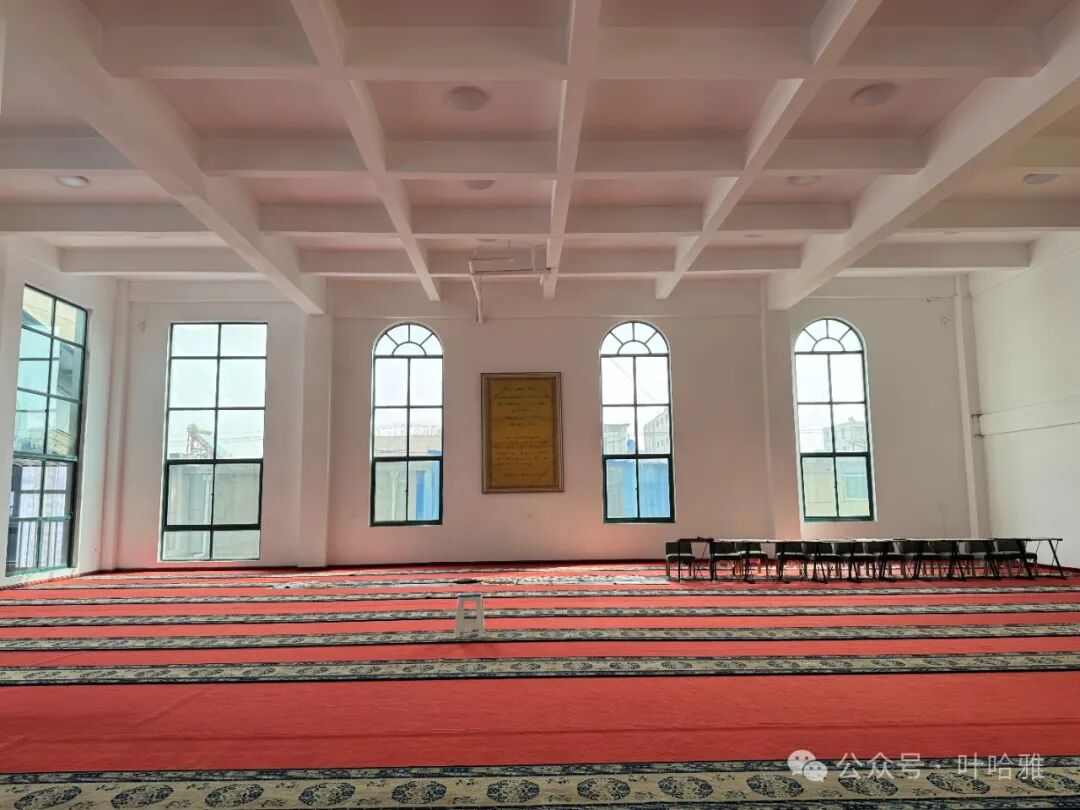
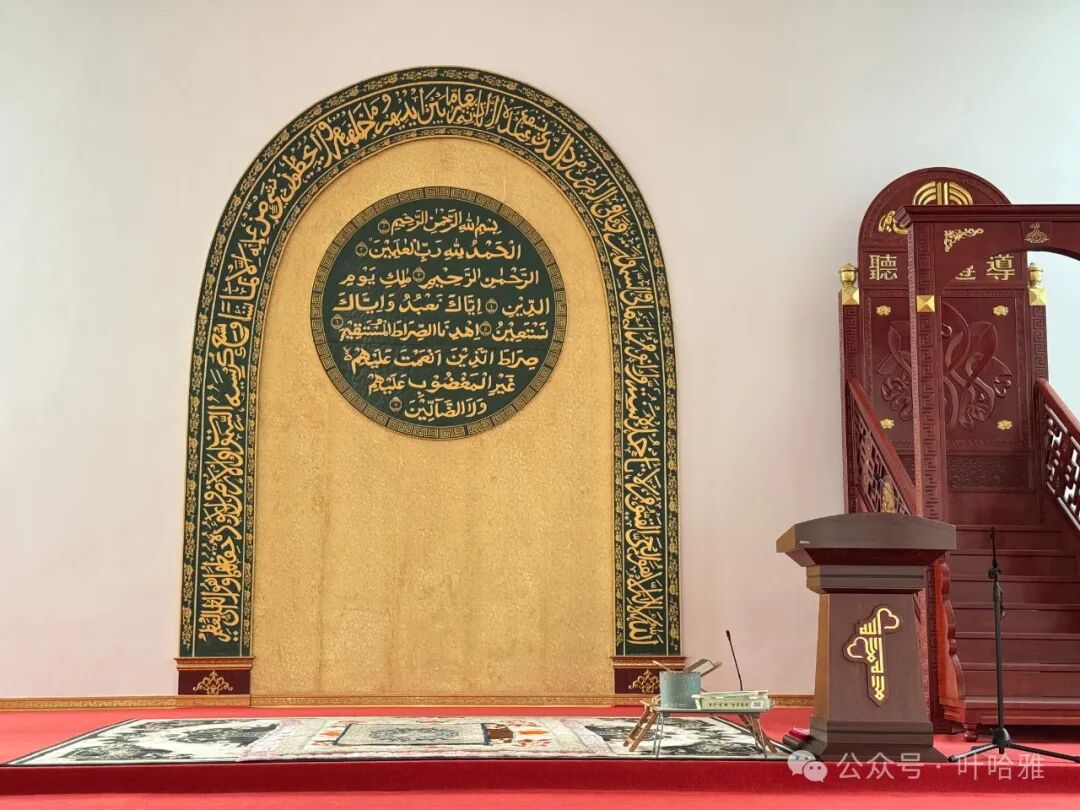
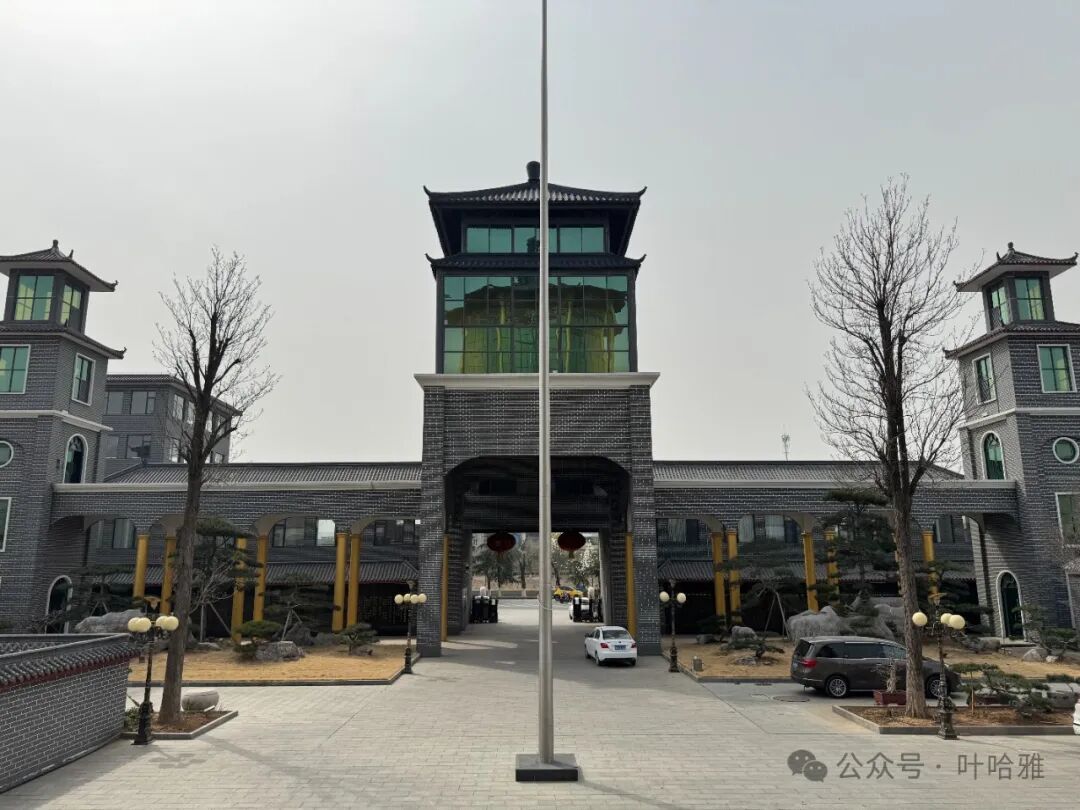
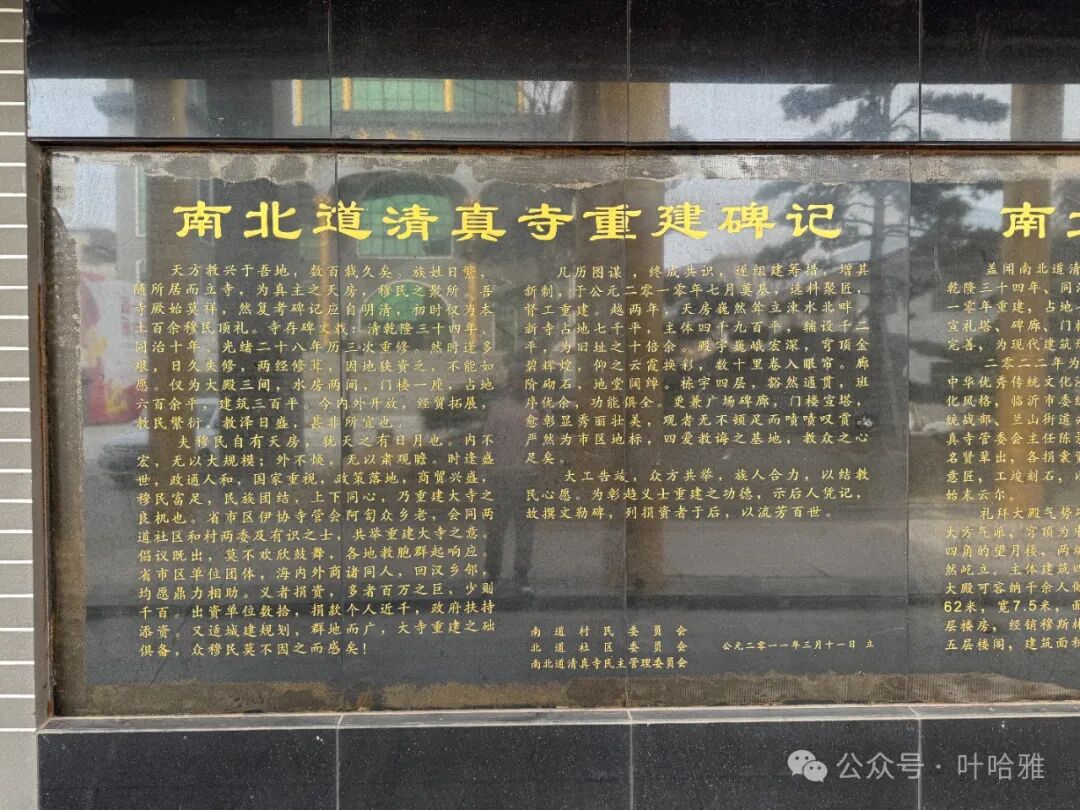
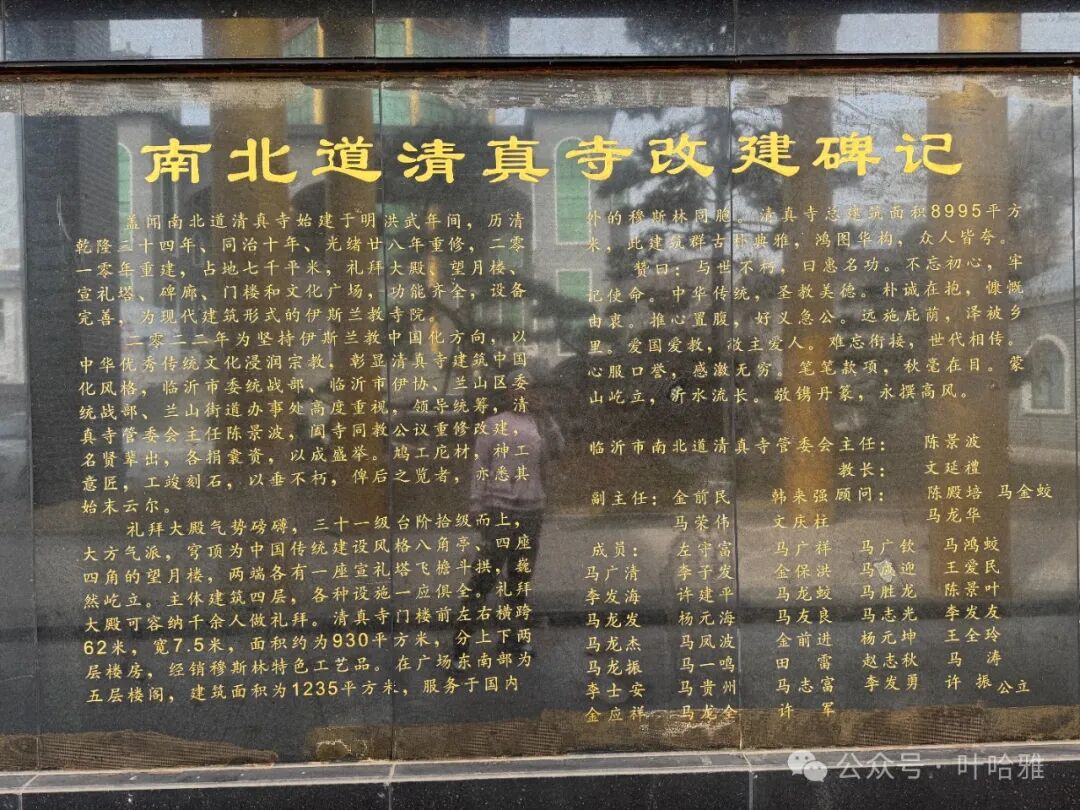
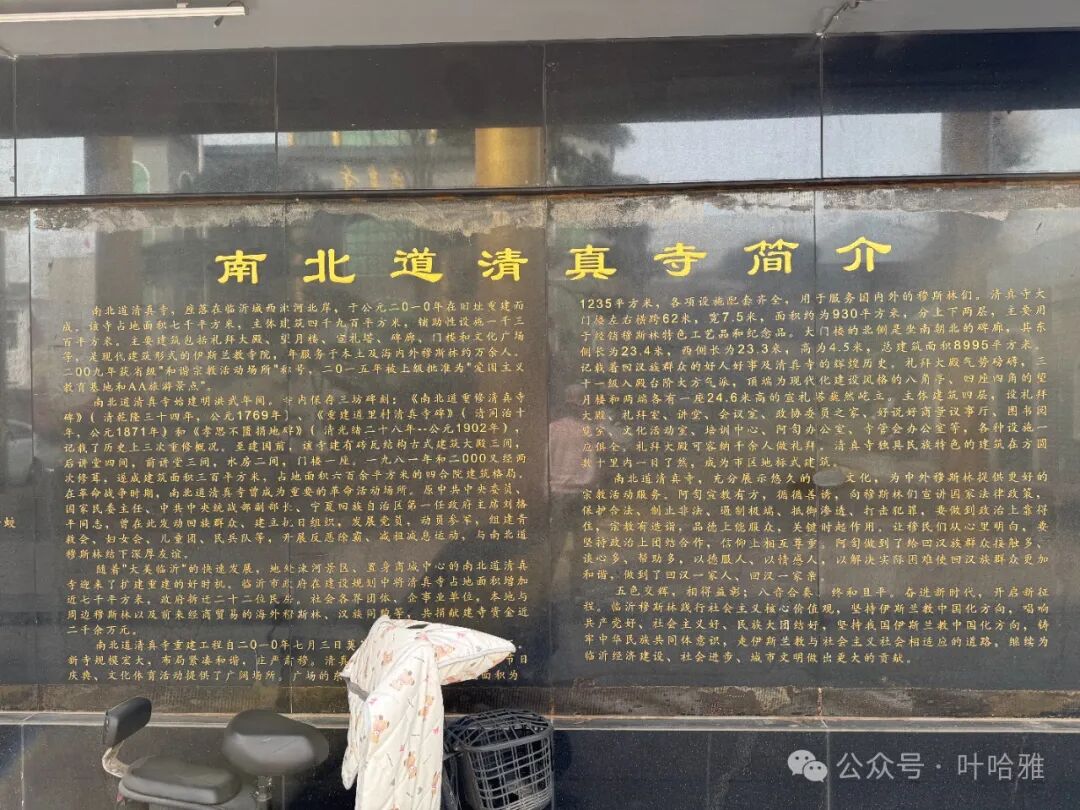
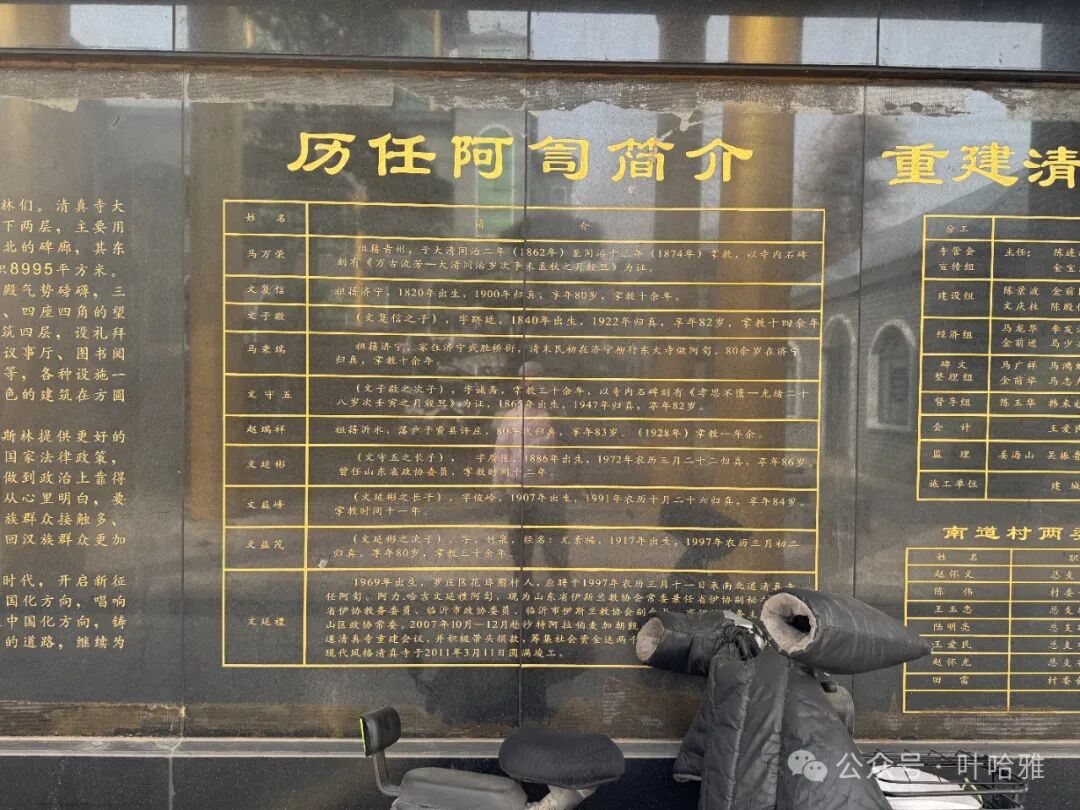
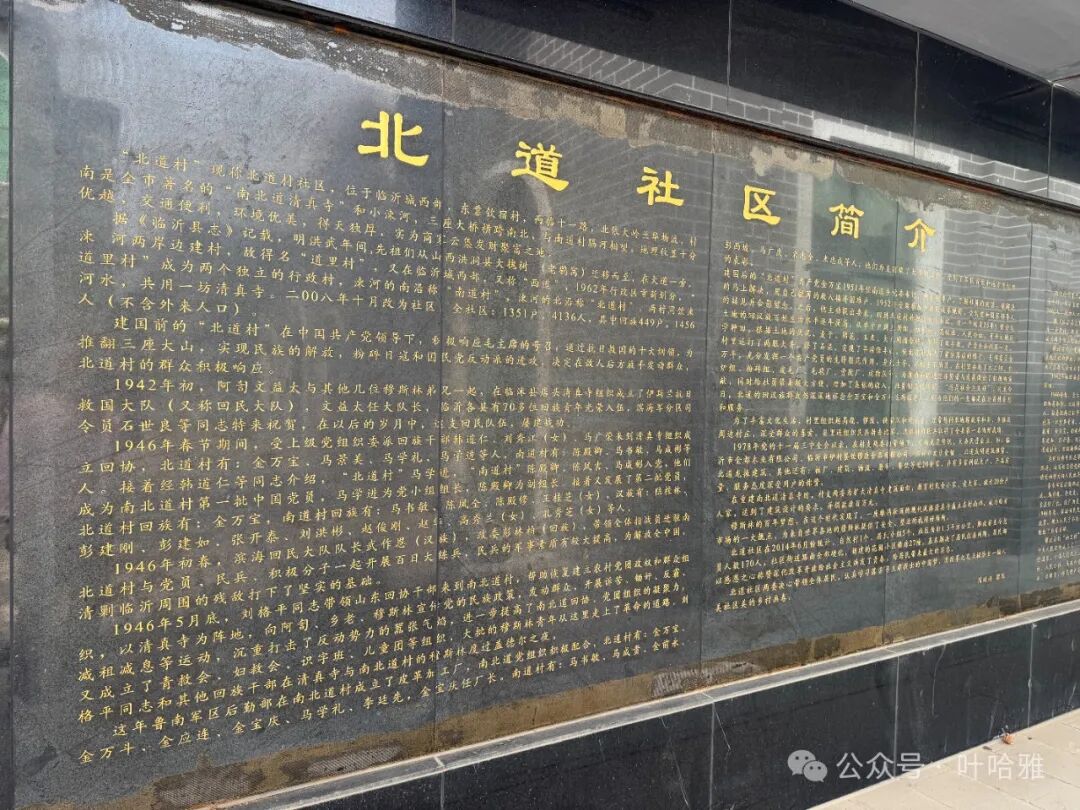
Nanbeidao was formed by merging Nandao Village and Beidao Village, and this area is also a residential community for Hui Muslims.
Linyi Minzu Restaurant Main Branch
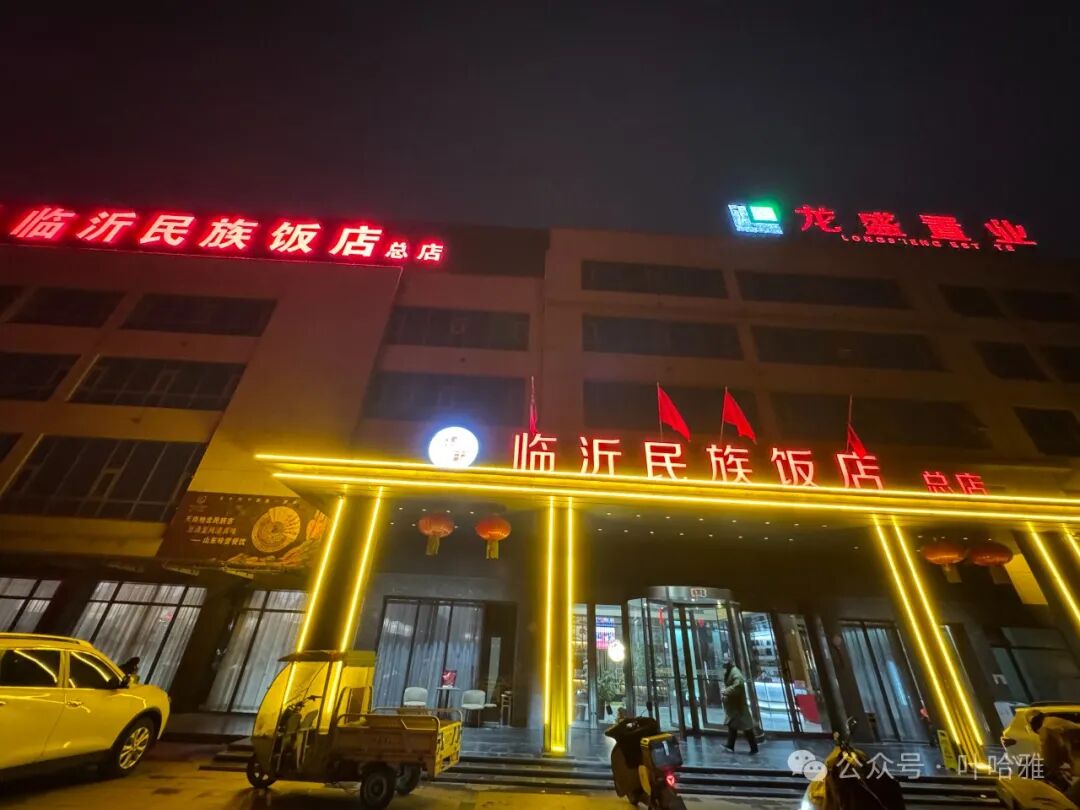
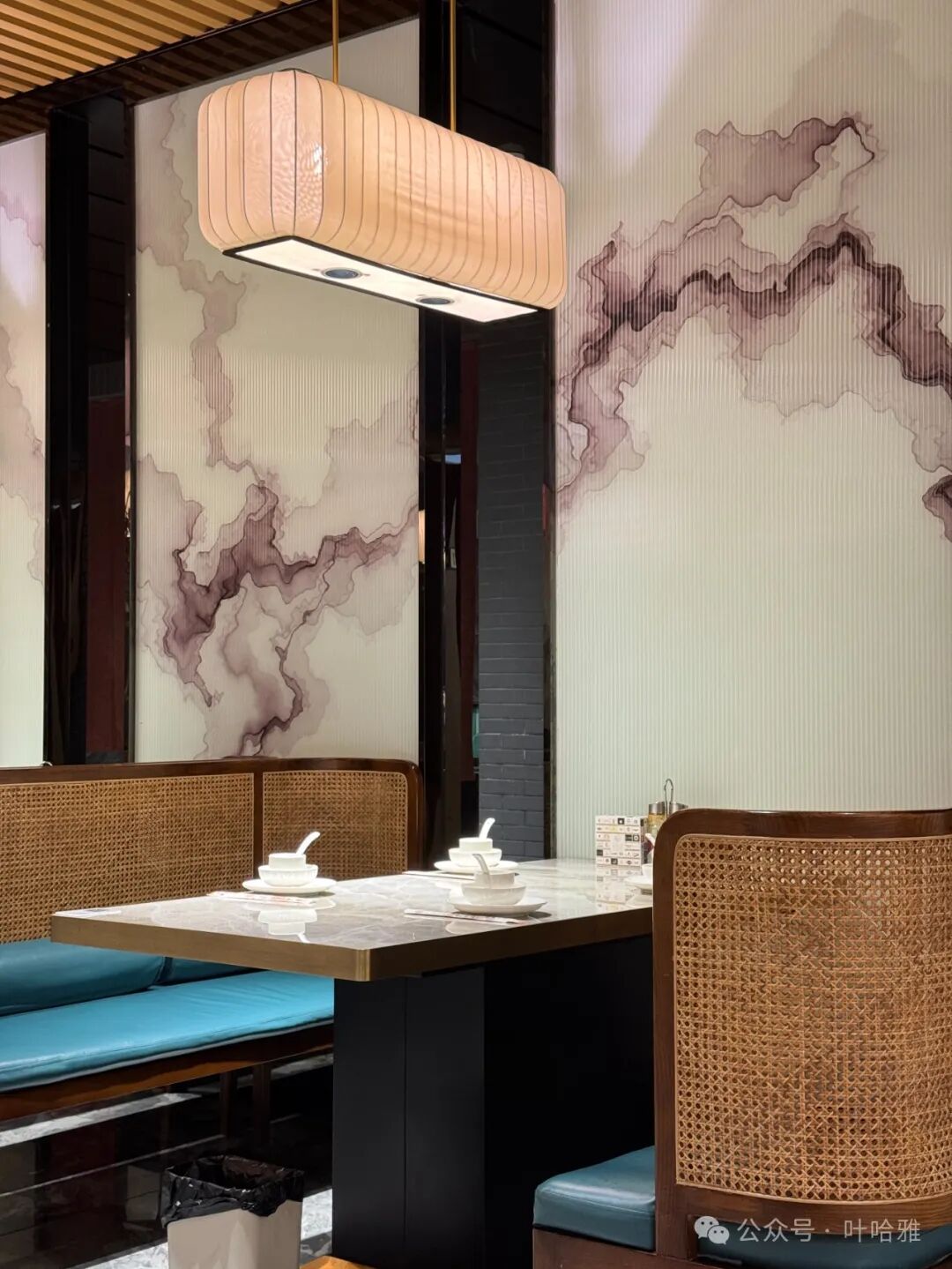
Our friends in Linyi invited us to eat local Linyi specialties at the largest halal restaurant in the city. This is also where Hui Muslims hold weddings. I heard this is not even the largest location, as the flagship store of Minzu Restaurant is even bigger. The owner is a local Hui Muslim and a classmate of my friend.
Linyi University is also super huge. It is known as one of the largest universities in Asia, covering an area of over 6,000 mu. Linyi University once offered Arabic language courses, but they have now canceled all minor language courses, not just Arabic.
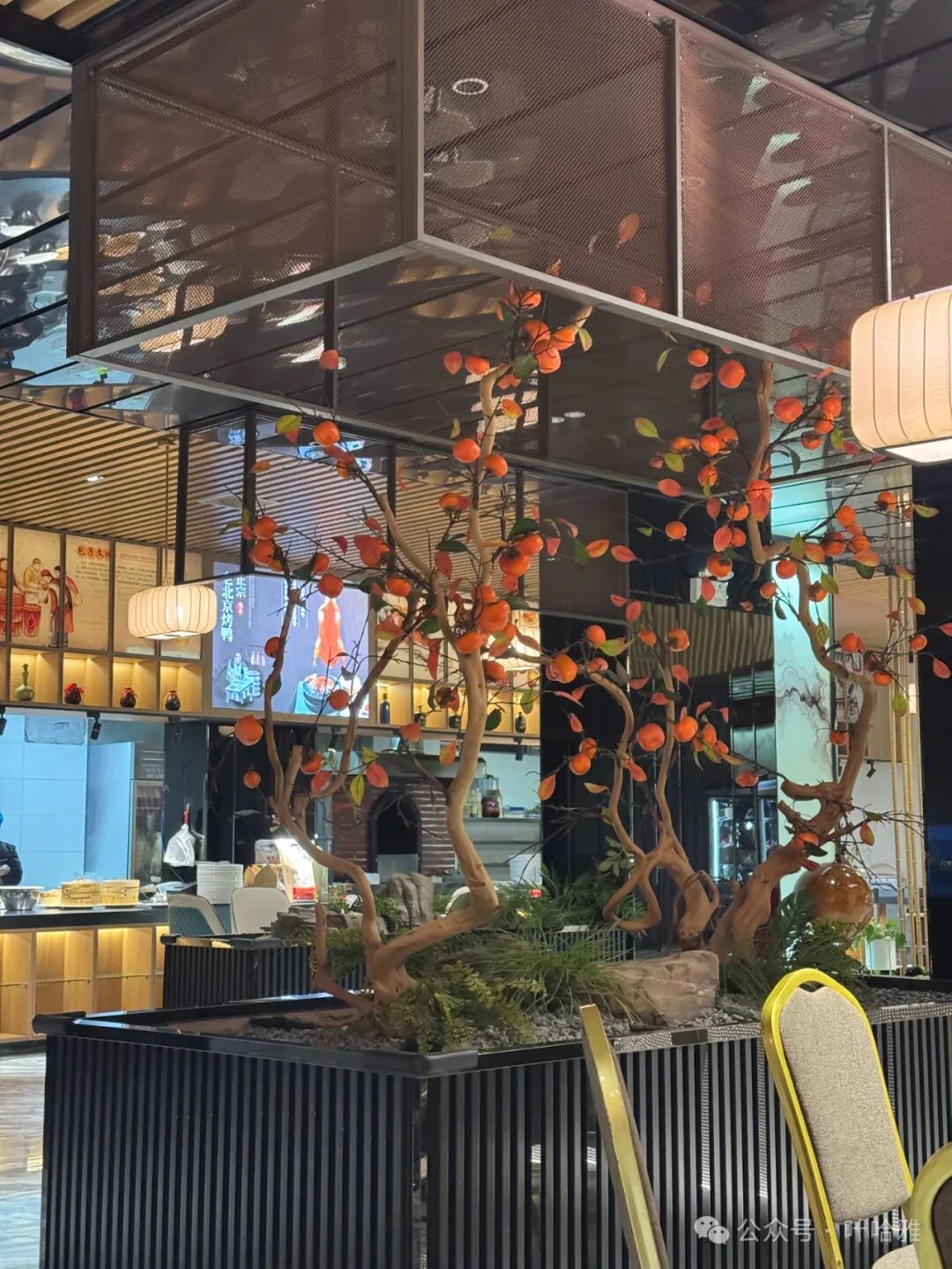
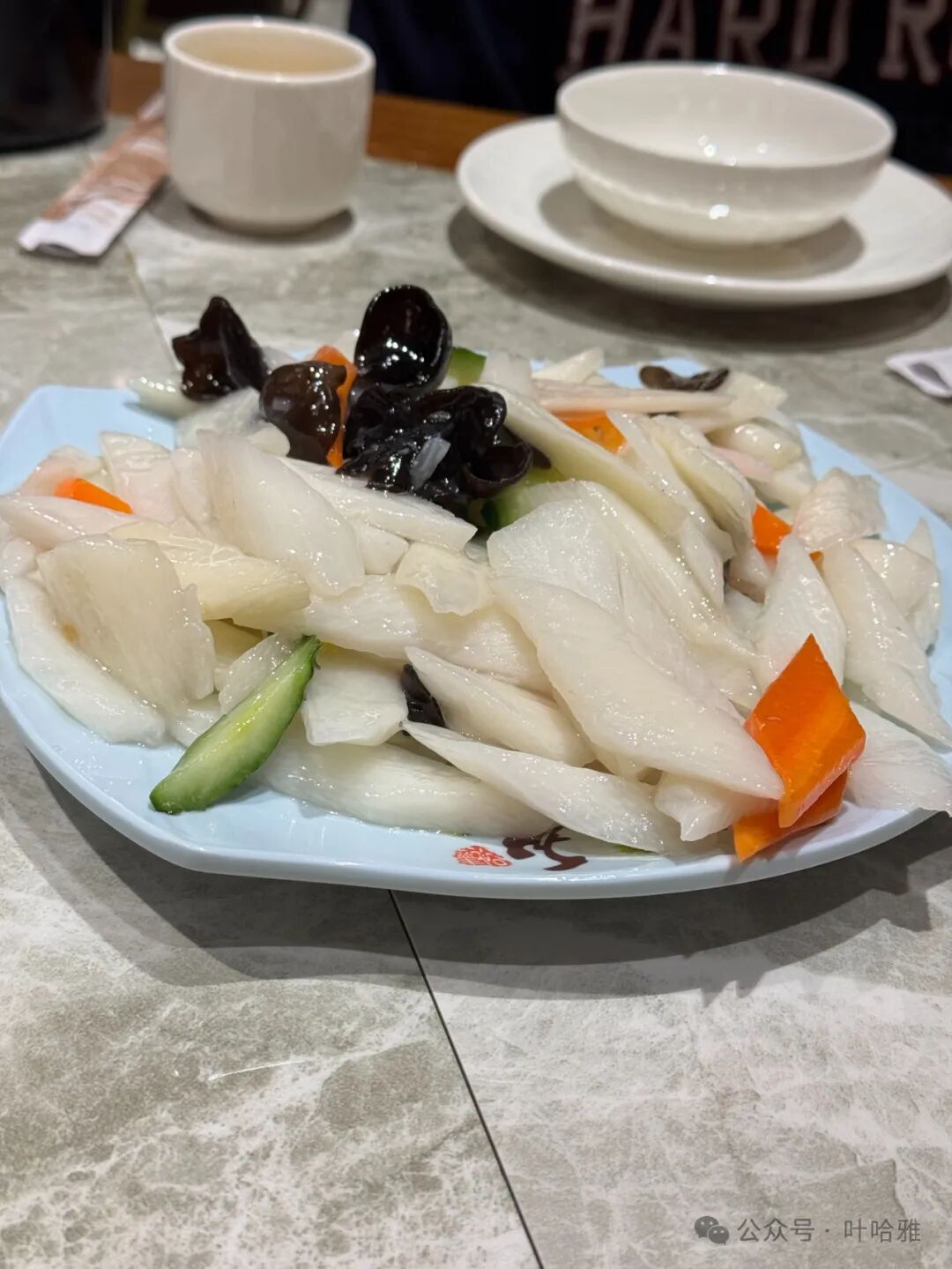
The people of Linyi seem to have an obsession with being big. The portions of food here are also huge. The four of us, plus a baby, ordered four dishes and only finished half of them.
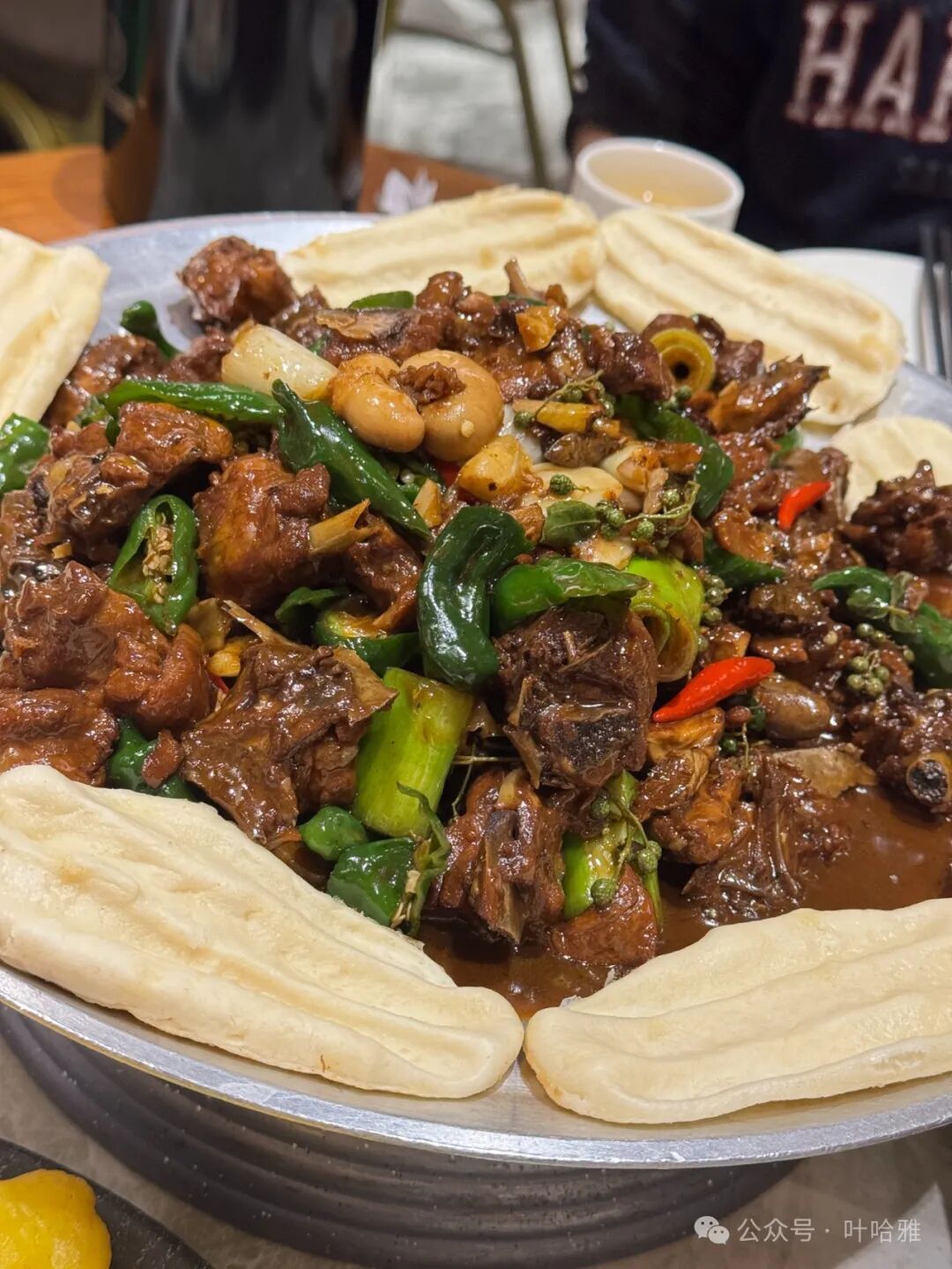
Stir-fried chicken (chaoji) is a must-eat in Linyi. You can find stir-fried chicken shops everywhere, but most of them are not halal.
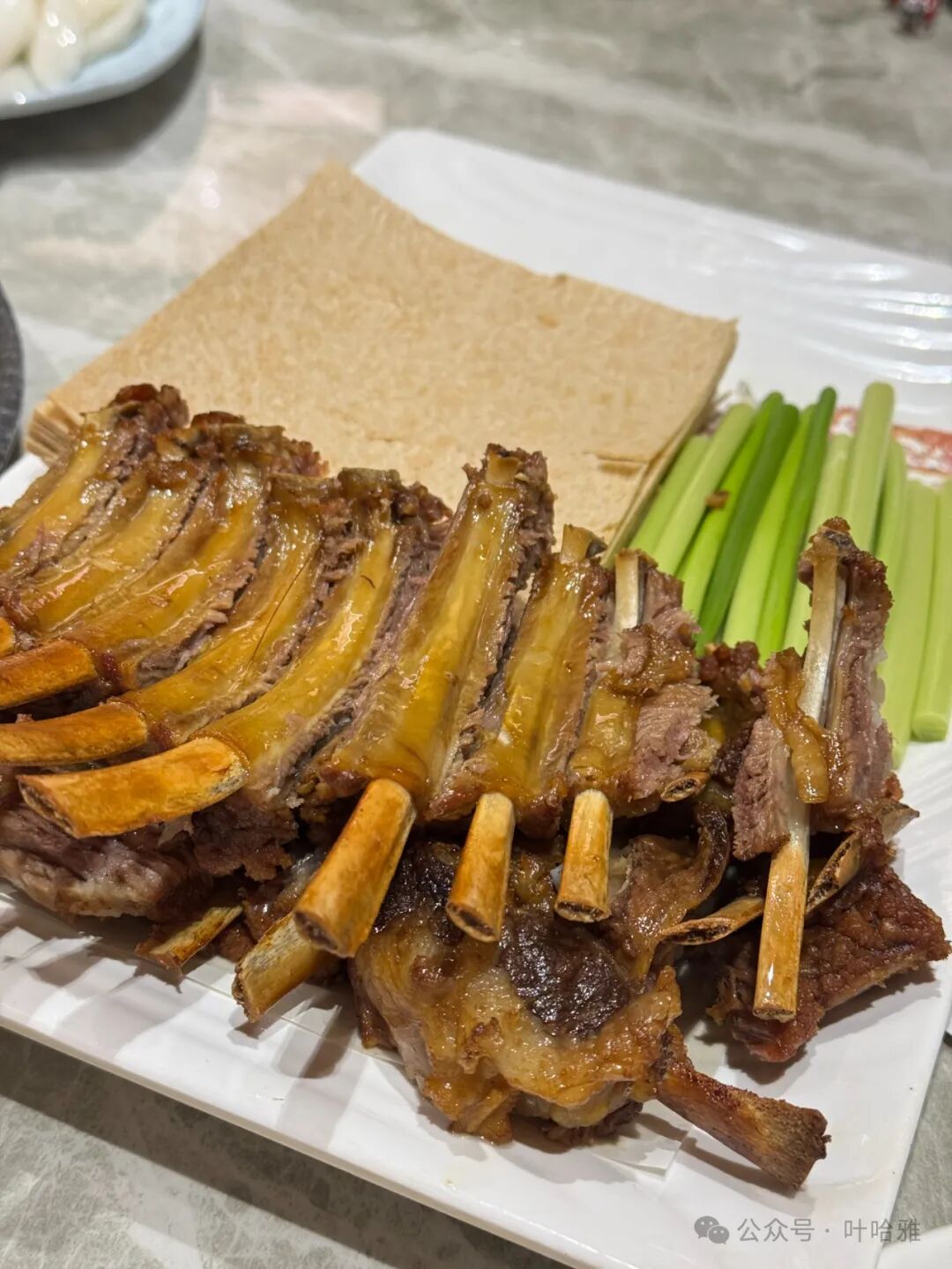
Fahim especially likes eating Linyi pancakes (jianbing). We ate every bit of this plate of pancakes rolled with lamb chops.
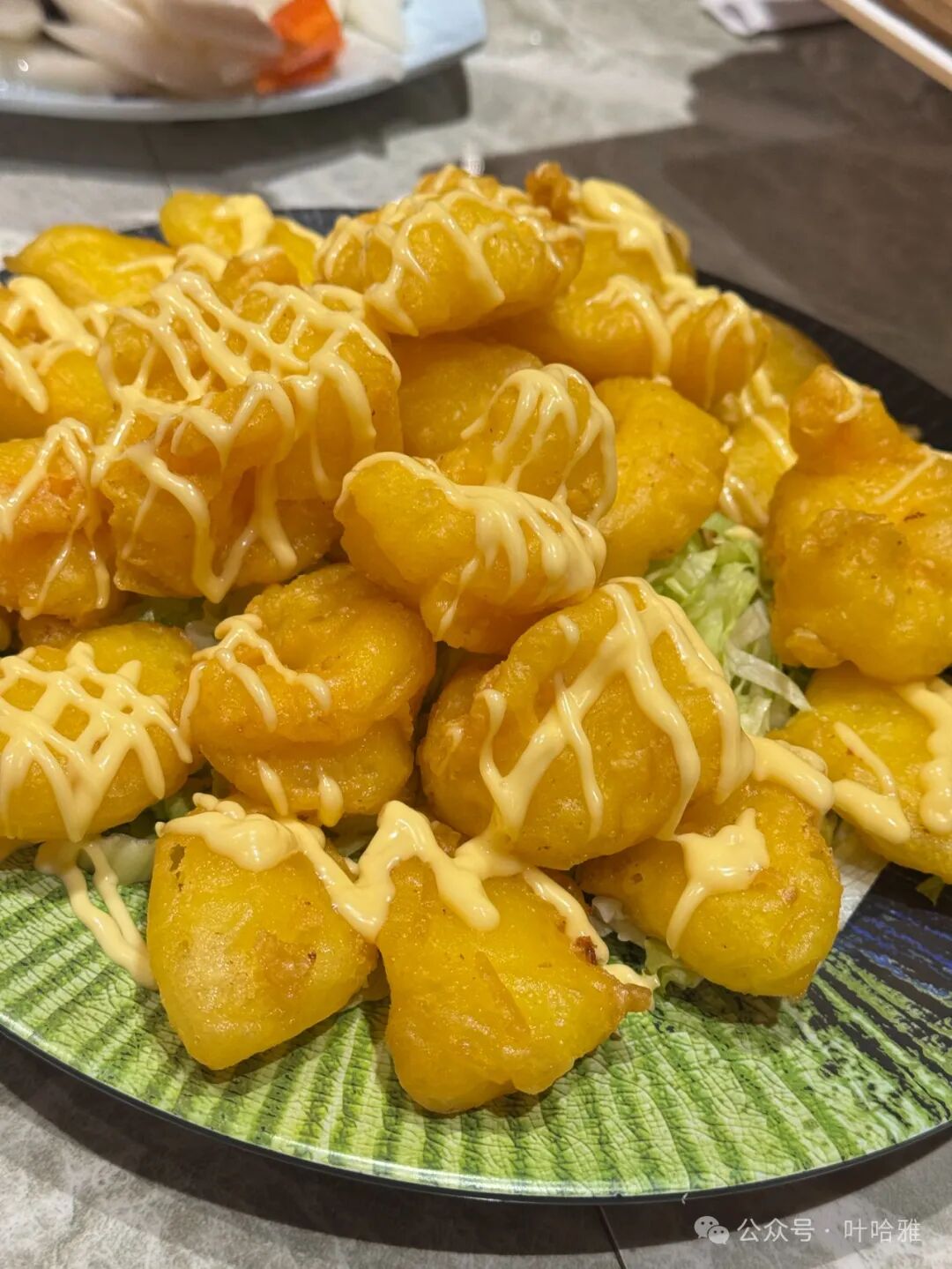
I originally wanted to drink some meat porridge (sa) in the morning, but during Ramadan, the shops were not open yet after we finished our pre-dawn meal (suhoor). It is best to drink the first pot of meat porridge around 5 a.m.
China Mosque Travel Guide Linyi: Matou Mosque, Southern Shandong Hui Muslims and Ramadan Food
Articles • yusuf908 posted the article • 0 comments • 249 views • 2026-05-23 08:23
Summary: This China mosque travel guide visits Matou Town in Tancheng County, Linyi, the Ming-era Matou Mosque built in 1405, the Hui Muslim community around it, mosque calligraphy halls, local halal food, Linyi grilled meat, pancakes with lamb chops, and Ramadan suhoor memories.
While driving south through Linyi City, Shandong Province this year, I learned about a large Ming Dynasty mosque in Matou Town, Tancheng County. I drove for nearly an hour from downtown Linyi to reach Matou Town.
Matou Town
Matou Town is an ancient Muslim town and a community where Hui Muslims live. The town is full of halal shops, and I even saw a Muslim martial arts school.
The storefronts here still keep the traditional style of North China.
After walking through several small alleys, I found the Matou Mosque inside the village.
Matou Mosque was first built during the Yongle period of the Ming Dynasty (1405). It covers 13 mu of land and is the largest mosque in northern Jiangsu and southern Shandong. It is well-preserved and is currently a cultural relic protection unit of Shandong Province.
In the courtyard just inside the gate, there are several stones gifted by elders from different places.
There are several traditional calligraphy and painting exhibition halls in the courtyard. This is the first hall, and there is a second hall, both displaying non-religious artworks.
Inside the mosque, there is a monument to an anti-Japanese hero, Zhang Hongyi, who was a Hui Muslim. Zhang Hongyi served as the political commissar of the Southern Shandong Independent Detachment and was known as the political commissar of the Railway Guerrillas. He died in 1945 while fighting against Japanese and puppet troops. The martyr Zhang Hongyi is buried in the Martyrs' Cemetery in Feixian County, Linyi City.
There is also a women's prayer hall here.
This ancient well was built in the third year of the Yongle period of the Ming Dynasty. In 1939, General Luo Ronghuan led the 115th Division of the Eighth Route Army into Tancheng. Eighth Route Army liaison officer Zhai Xinya, guided by a Hui youth named Lan Zhaofa, used the excuse of inviting an imam to slaughter a cow to enter the mosque's well pavilion. Under the cover of night, they took a shortcut to approach the enemy's blockhouse, destroyed the 'turtle shell' fortification, and successfully persuaded 360 puppet soldiers to surrender. Because of this, Lan Zhaofa honorably joined the Matou Hui Detachment.
There are several pieces of calligraphy on the walls of the corridor.
There is a Hui Muslim culture exhibition hall in the courtyard, but it does not have any exhibits inside yet.
The list of donations (niyati) specifically marks our Han Chinese brothers and sisters.
Nanbeidao Mosque
Nanbeidao Mosque in downtown Linyi was first built during the Hongwu period of the Ming Dynasty. After being rebuilt many times, it is now a modern building. It has a floor area of 1,235 square meters and a total site area of 8,995 square meters. The area around the mosque is filled with halal beef and mutton shops.
Nanbeidao was formed by merging Nandao Village and Beidao Village, and this area is also a residential community for Hui Muslims.
Linyi Minzu Restaurant Main Branch
Our friends in Linyi invited us to eat local Linyi specialties at the largest halal restaurant in the city. This is also where Hui Muslims hold weddings. I heard this is not even the largest location, as the flagship store of Minzu Restaurant is even bigger. The owner is a local Hui Muslim and a classmate of my friend.
Linyi University is also super huge. It is known as one of the largest universities in Asia, covering an area of over 6,000 mu. Linyi University once offered Arabic language courses, but they have now canceled all minor language courses, not just Arabic.
The people of Linyi seem to have an obsession with being big. The portions of food here are also huge. The four of us, plus a baby, ordered four dishes and only finished half of them.
Stir-fried chicken (chaoji) is a must-eat in Linyi. You can find stir-fried chicken shops everywhere, but most of them are not halal.
Fahim especially likes eating Linyi pancakes (jianbing). We ate every bit of this plate of pancakes rolled with lamb chops.
I originally wanted to drink some meat porridge (sa) in the morning, but during Ramadan, the shops were not open yet after we finished our pre-dawn meal (suhoor). It is best to drink the first pot of meat porridge around 5 a.m. view all
Summary: This China mosque travel guide visits Matou Town in Tancheng County, Linyi, the Ming-era Matou Mosque built in 1405, the Hui Muslim community around it, mosque calligraphy halls, local halal food, Linyi grilled meat, pancakes with lamb chops, and Ramadan suhoor memories.
While driving south through Linyi City, Shandong Province this year, I learned about a large Ming Dynasty mosque in Matou Town, Tancheng County. I drove for nearly an hour from downtown Linyi to reach Matou Town.
Matou Town
Matou Town is an ancient Muslim town and a community where Hui Muslims live. The town is full of halal shops, and I even saw a Muslim martial arts school.
The storefronts here still keep the traditional style of North China.
After walking through several small alleys, I found the Matou Mosque inside the village.
Matou Mosque was first built during the Yongle period of the Ming Dynasty (1405). It covers 13 mu of land and is the largest mosque in northern Jiangsu and southern Shandong. It is well-preserved and is currently a cultural relic protection unit of Shandong Province.
In the courtyard just inside the gate, there are several stones gifted by elders from different places.
There are several traditional calligraphy and painting exhibition halls in the courtyard. This is the first hall, and there is a second hall, both displaying non-religious artworks.
Inside the mosque, there is a monument to an anti-Japanese hero, Zhang Hongyi, who was a Hui Muslim. Zhang Hongyi served as the political commissar of the Southern Shandong Independent Detachment and was known as the political commissar of the Railway Guerrillas. He died in 1945 while fighting against Japanese and puppet troops. The martyr Zhang Hongyi is buried in the Martyrs' Cemetery in Feixian County, Linyi City.
There is also a women's prayer hall here.
This ancient well was built in the third year of the Yongle period of the Ming Dynasty. In 1939, General Luo Ronghuan led the 115th Division of the Eighth Route Army into Tancheng. Eighth Route Army liaison officer Zhai Xinya, guided by a Hui youth named Lan Zhaofa, used the excuse of inviting an imam to slaughter a cow to enter the mosque's well pavilion. Under the cover of night, they took a shortcut to approach the enemy's blockhouse, destroyed the 'turtle shell' fortification, and successfully persuaded 360 puppet soldiers to surrender. Because of this, Lan Zhaofa honorably joined the Matou Hui Detachment.
There are several pieces of calligraphy on the walls of the corridor.
There is a Hui Muslim culture exhibition hall in the courtyard, but it does not have any exhibits inside yet.
The list of donations (niyati) specifically marks our Han Chinese brothers and sisters.
Nanbeidao Mosque
Nanbeidao Mosque in downtown Linyi was first built during the Hongwu period of the Ming Dynasty. After being rebuilt many times, it is now a modern building. It has a floor area of 1,235 square meters and a total site area of 8,995 square meters. The area around the mosque is filled with halal beef and mutton shops.
Nanbeidao was formed by merging Nandao Village and Beidao Village, and this area is also a residential community for Hui Muslims.
Linyi Minzu Restaurant Main Branch
Our friends in Linyi invited us to eat local Linyi specialties at the largest halal restaurant in the city. This is also where Hui Muslims hold weddings. I heard this is not even the largest location, as the flagship store of Minzu Restaurant is even bigger. The owner is a local Hui Muslim and a classmate of my friend.
Linyi University is also super huge. It is known as one of the largest universities in Asia, covering an area of over 6,000 mu. Linyi University once offered Arabic language courses, but they have now canceled all minor language courses, not just Arabic.
The people of Linyi seem to have an obsession with being big. The portions of food here are also huge. The four of us, plus a baby, ordered four dishes and only finished half of them.
Stir-fried chicken (chaoji) is a must-eat in Linyi. You can find stir-fried chicken shops everywhere, but most of them are not halal.
Fahim especially likes eating Linyi pancakes (jianbing). We ate every bit of this plate of pancakes rolled with lamb chops.
I originally wanted to drink some meat porridge (sa) in the morning, but during Ramadan, the shops were not open yet after we finished our pre-dawn meal (suhoor). It is best to drink the first pot of meat porridge around 5 a.m.
China Mosque Travel Guide: 709 Mosques, Beijing Mosque List and Global Muslim Footprint Map
Articles • yusuf908 posted the article • 0 comments • 255 views • 2026-05-23 03:09
Summary: This China mosque travel guide records the author's mosque footprint map as of August 2024, including 709 mosques across 16 countries and regions, more than 200 cities, a long Beijing mosque list, reflections on memory, travel, friendship, and the goal of visiting 1,000 mosques.
In 2017, I counted the mosques I had visited, and the number was 200. A Muslim community website in the UK even reported on it. By 2022, that number reached 454, which you can see in my list of 454 mosques visited. As of August this year, I have visited a total of 709 mosques across 16 countries and regions, spanning over 200 cities. I am getting closer to my goal of 1,000 mosques.
Traveling over these years has given me so much insight. It has broadened my horizons so much that I am no longer surprised by strange or unusual things. When you adopt a solar system perspective, you realize that the issues back home are really not a big deal. You stop looking at any authority with a halo. Of course, the prerequisite for improving your understanding is to have a certain amount of reading, otherwise, travel just becomes a superficial glance.
I think it is very necessary to record my travel experiences. I have found that as I get older, my memory gets worse. To put it nicely, I have a broad mind and do not take things to heart, but the truth is that if I do not write down many people and events, I might forget them after a while. I look back at articles I wrote in the past from time to time. Some content actually feels strange to me, and I cannot seem to remember how I recorded those words and photos at the time.
My number of WeChat friends has also expanded 10 times, but the vast majority can only be considered as stranger-friends. Even for people I have met offline, after a while, if I did not add a note, I might not remember where I met them. After all, a person's social capacity is limited. If any friends feel that I am cold because of this, please forgive me. I just have limited brain capacity, but I prefer to make friends with people who resonate with me. I am not the Chinese currency (renminbi), so I cannot make everyone like me.
1. Dongsi Mosque, Dongcheng District, Beijing; 2. Andingmen (Daguan) Mosque; 3. Nandouya Mosque; 4. Dongzhimenwai Mosque; 5. Hua'ershi Mosque; 6. Shazikou Mosque; 7. Qingzhen Pushou Mosque, Xicheng District; 8. Dewai Fayuan Mosque; 9. Sanlihe Qingzhen Yongshou Mosque; 10. Zhengyuan (Beigouyan) Mosque; 11. Niujie Mosque; 12. Houheyan Mosque; 13. Huihuiying Mosque; 14. Qianmen Mosque; 15. Nanhxiapo Mosque, Chaoyang District; 16. Changying Mosque; 17. Kangying Mosque; 18. Yangzha Mosque; 19. Xihui Mosque; 20. Wanziying Mosque; 21. Guanzhuang Mosque; 22. Balizhuang Mosque; 23. Songyu Mosque; 24. Haidian Mosque, Haidian District; 25. Madian Mosque; 26. Qinghezhen Mosque; 27. Landianchang Mosque; 28. Anheqiao Mosque; 29. Shucun Mosque; 30. Siwangfu Mosque; 31. Nanyuan Mosque, Fengtai District; 32. Fengtaizhen Mosque; 33. Changxindian Mosque; 34. Huangcun Mosque, Daxing District; 35. Cuizhihuiying Mosque; 36. Liushizhuang Mosque; 37. Xueying Mosque; 38. Dongbaita Mosque; 39. Qingyundian Mosque; 40. Tongying Mosque; 41. Xihongmen Mosque; 42. Langgezhuang Old Mosque; 43. Langgezhuang New Mosque; 44. Tianying Mosque; 45. Lixian Old Mosque; 46. Lixian New Mosque; 47. Xin'anzhuang Mosque; 48. Caiyu Mosque; 49. Yufa Mosque; 50. Nanyanfa Mosque; 51. Majuqiao Mosque, Tongzhou District; 52. Fatoucun Mosque; 53. Tongzhou Town (Nandasi) Mosque; 54. Xiguan Mosque; 55. Yujiawu Mosque; 56. Zaolinzhuang Mosque; 57. Zhangjiawan Mosque; 58. Yongledian Mosque; 59. Beiguan Mosque; 60. Xiguanshi Mosque, Changping District; 61. Nanyicun Mosque; 62. Xiaoxinzhuang Mosque; 63. Changping Town Mosque; 64. Heying Mosque; 65. Nankou Town Mosque; 66. Nankoucun Mosque; 67. Doudian Mosque, Fangshan District; 68. Changzhuang Old Mosque; 69. Changzhuang New Mosque; 70. Xinjie Mosque; 71. Chengguan Mosque, Miyun District; 72. Mujiayu Mosque; 73. Gubeikou Mosque; 74. Chengzi Mosque, Mentougou District; 75. Huiminying Old Mosque, Shunyi District; 76. Huiminying New Mosque; 77. Niulanshan Mosque; 78. Gaoliying Old Mosque; 79. Gaoliying New Mosque; 80. Yangzhen Mosque; 81. Chadao Mosque, Yanqing District; 82. Moshi Kou Mosque, Shijingshan; 83. Hongqiao Mosque, Tianjin; 84. Jinjiayao Mosque; 85. Chenjiagou Mosque; 86. Gexindao Mosque; 87. Yuchang Mosque; 88. Wanxin Mosque; 89. Dazhigu Mosque; 90. Hexi Mosque; 91. Great Mosque; 92. Tianmu Liuhe Mosque; 93. Xiningdao Mosque; 94. Shijiazhuang Mosque, Shijiazhuang, Hebei; 95. Zhengding Mosque; 96. Chengde East Mosque, Chengde; 97. Chengde West Mosque; 98. Baoding North Mosque, Baoding; 99. Dingzhou Mosque; 100. Cangzhou North Great Mosque, Cangzhou; 101. Cangzhou East Great Mosque; 102. Botou Great Mosque; 103. Botou East Mosque; 104. Tangshan Lunan Mosque, Tangshan; 105. Xingtai Mosque, Xingtai; 106. Handan Mosque, Handan; 107. Qinhuangdao Haigang Mosque, Qinhuangdao; 108. Yanjiao Mosque, Langfang; 109. Dachang Mosque; 110. Dachang Beiwu Mosque; 111. Damazhuang Mosque; 112. Luzhuang Mosque; 113. Huogezhuang Mosque; 114. Xiaochang Mosque; 115. Liangzhuang Mosque; 116. Yangxinzhuang Mosque; 117. Nanwangzhuang Mosque; 118. Nansitou Mosque; 119. Xiadian Mosque; 120. Xiadiancun Mosque; 121. Chenxinzhuang Mosque; 122. Weizizhuang Mosque; 123. Manxingying Mosque; 124. Dongchang Mosque; 125. Xinhua Street Mosque, Zhangjiakou; 126. Xiguan Mosque; 127. Xuanhua Middle Mosque; 128. Xuanhua South Great Mosque; 129. Dongguan Mosque; 130. Tu'ergou Mosque; 131. Zhulu Mosque, Zhulu County; 132. Taiyuan Old Mosque, Taiyuan, Shanxi; 133. Datong Mosque, Datong; 134. Shuozhou Mosque, Shuozhou; 135. Yuanqu County Mosque, Yuncheng; 136. Changzhi North Mosque, Changzhi; 137. South Mosque; 138. Middle Mosque; 139. Luze Mosque; 140. Huanan Mosque; 141. Southwest City Mosque; 142. Wuyi Road Mosque; 143. Hohhot Great Mosque, Hohhot, Inner Mongolia; 144. Hohhot Small Mosque; 145. Hohhot East Mosque; 146. Hohhot Northeast Mosque; 147. Hohhot South Mosque; 148. Hohhot West Mosque; 149. Hohhot Xianghe Mosque; 150. Hohhot Tuanjie Mosque; 151. Jining Mosque, Ulanqab; 152. Baotou Qingkun Mosque, Baotou; 153. Baotou Great Mosque; 154. Baotou Middle Mosque; 155. Baotou West Mosque; 156. Chifeng Jingpeng Mosque, Chifeng; 157. Chifeng South Great Mosque; 158. Chifeng North Great Mosque; 159. Ordos Dongsheng Mosque, Ordos; 160. Haibowan Mosque, Wuhai; 161. Huajue Lane Mosque, Xi'an, Shaanxi; 162. Xiaopiyuan North Great Mosque; 163. Sajinqiao Old Mosque; 164. Daxuexi Lane Mosque; 165. Dapiyuan Mosque; 166. Beiguangji Street Mosque, Xi'an; 167. Qingzhen Yingli Mosque; 168. Middle Mosque; 169. Xicang Mosque; 170. Lvshan Mosque; 171. Hongbu Street New Mosque; 172. West Mosque; 173. Dongxin Street Mosque; 174. Jianguo Lane Mosque; 175. Yuanjiacun Mosque, Xianyang; 176.
Hanzhong Mosque, Hanzhong 177
Luling Mosque, Xixiang County 178
Xixiang County South Mosque 179
Xixiang County North Mosque 180
Dingbian Mosque, Yulin 181
Ankang North Mosque, Ankang 182
Ankang West Mosque 183
Nansi Mosque in Ankang, Ningning, 184
Xingwen Mosque in Ankang 185, Huayuan Street Mosque in Zhengzhou, Henan 186, Yuyuanli Mosque in Zhengzhou 187, Xiaolou Mosque at Erqi Square in Zhengzhou 188, Beixia Street Mosque in Zhengzhou 189, Qingpingli Mosque in Zhengzhou 190, Wuyingli Mosque in Zhengzhou 191, Fuminli Mosque in Zhengzhou 192, Beida Mosque in Zhengzhou 193, Jiaozuo Mosque in Jiaozuo 194, Beida Mosque in Qinyang 195, Shuinanguan Mosque in Qinyang 196, Qingzhen Laonan Mosque in Qinyang 197, Xiguan Mosque in Bo'ai County 198, Erjie Mosque in Bo'ai County 199, Huaiqing Mosque in Jiaozuo 200, Sangpo Qingzhen Dongsi Mosque 201, Sangpo Qingzhen Zhangsi Mosque 202, Sangpo Xida Mosque 203, Sangpo Qingzhen Shangsi Mosque 204, Xiajie Mosque in Jiyuan 205, Qingzhen Nansi Mosque in Jiyuan 206, Dongda Mosque in Kaifeng 207, Zhuxian Town Mosque in Kaifeng 208, Chaoyangmen Mosque in Yuzhou, Xuchang 209, Pingdingshan Mosque in Pingdingshan 210, Nanyang Mosque in Nanyang 211, Nanguan Mosque in Xinyang 212, Dongguan Mosque in Xinxiang 213, Dengzhou Mosque in Dengzhou 214, Nanguan Grand Mosque in Yinchuan, Ningxia 215, Najiahu Grand Mosque 216, Yuehai Mosque 217, Yongning Mosque 218, Minning Mosque 219, Mingxin Mosque 220, Pingluo Mosque in Shizuishan 221, Zhongjie Mosque 222, Shizuishan Mosque 223, Dawukou Mosque 224, Zhongwei Dongguan Grand Mosque 225, Zhongwei Grand Mosque 226, Xingren Grand Mosque 227, Hongganggangzi Gongbei 228, Tongxin Grand Mosque in Wuzhong 229, Siqiliangzi Gongbei 230, Honglefu Gongbei 231, Shagou Gongbei in Guyuan 232, Jingyuan Chengguan Grand Mosque 233, Yejiacun Mosque 234, Guyuan Xiyuan Mosque 235, Guyuan Jiulong Road Mosque 236, Xiguan Grand Mosque in Lanzhou, Gansu 237, Wulipu Mosque in Lanzhou 238, Gengjiazhuang Mosque in Lanzhou 239, Yuzhong Street Mosque in Lanzhou 240, Nanguan Grand Mosque in Lanzhou 241, Wuxingping Lingmingtang Gongbei 242, Xinguan Mosque 243, Lanzhou Qiaomen Mosque 244, Lanzhou Dongchuan Grand Gongbei 245, Lanzhou Wenzquantang 246, Lanzhou Water Mosque 247, Tiejiazhuang Mosque in Linxia 248, Linxia Laohua Mosque 249, Linxia Xinhua Mosque 250, Linxia Nanguan Grand Mosque 251, Linxia Qianheyan Mosque 252, Linxia Grand Gongbei 253, Linxia Zheqiaowan Mosque 254, Chuimatian Qianzhuang Mosque 255, Linxia Grand Gongbei 256, Beiguan Mosque in Tianshui 257, Houjie Mosque 258, Zhangjiachuan Nanchuan Daotang 259, Zhangjiachuan Xuanhuagang Grand Gongbei 260, Zhaochuan Mosque 261, Labuleng Mosque in Gannan 262, Hezuo Grand Mosque 263, Hezuo Qingzhen Xisi Mosque 264, Lintan Qingzhen Shangsi Mosque 265, Lintan Qingzhen Hua Grand Mosque 266, Galutian Big House 267, Lintan Xidaotang 268, Longnan Wudu Grand Mosque in Longnan 269, Yumen Mosque in Yumen 270, Wuaisi Gongbei 271, Jiayuguan Mosque in Jiayuguan 272, Jiuquan Qingzhen Dongsi Mosque 273, Wuwei Mosque in Wuwei 274, Dongguan Grand Mosque in Xining, Qinghai 275, Xining Nanguan Grand Mosque 276, Xining Yudaiqiao Mosque 277, Xining Jianguo Road Mosque 278, Xining Xiadu Avenue Mosque 279, Beimo'eryuan Mosque 280, Nanshan Gongbei 281, Guangdemen Gongbei Mosque 282, Xianmen Gongbei 283, Xining Beiguan Mosque 284, Hualong Kangyang Mosque in Haidong 285, Hualong Shangjiahe Mosque 286, Xunhua Jiezi Mosque 287, Xunhua Caotanba Mosque 288, Mengdashan Village Mosque 289, Quhuxiang Village Mosque 290, Hongshuiquan Mosque 291, Xunhua Zanbuhu Mosque 292, Qunke Grand Mosque 293, Hualong Yisha'er Mosque 294, Imam Mosque 295, Guoshitan Mosque 296, Qingshuihe East Qingzhen Nansi Mosque 297, Qingshuihe East Mosque 298, Mengda Mosque 299, Kewa Mosque 300, Zhangga Mosque 301, Suzhi Mosque 302, Ahetan Mosque 303, Tashapo Mosque 304, Chengguan Mosque 305, Jiezi Gongbei 306, Ladongtai Village Mosque in Haibei Tibetan Autonomous Prefecture 307, Jianzha Maketang Mosque in Huangnan Tibetan Autonomous Prefecture 308, Hexi Mosque in Delingha 309, Delingha Grand Mosque 310, Jinfeng Middle Road Mosque in Golmud 311, Shimen Mosque 312, Hedong Grand Mosque 313, Hexi Grand Mosque 314, Huatugou Mosque in Mangya 315, Guangyuan Mosque in Guangyuan, Sichuan 316, Langzhong Baba Mosque in Nanchong 317, Langzhong Qingzhen Ancient Mosque 318, Mianyang Mosque in Mianyang 319, Jiangyou Mosque 320, Xiaoquan Mosque in Deyang 321, Tangjia Mosque in Chengdu 322, Tuqiao Mosque in Chengdu 323, Gulou Mosque in Chengdu 324, Huangcheng Mosque in Chengdu 325, Dujiangyan Mao'gong Mosque 326, Dujiangyan Nanjie Mosque 327, Songzhou Qingzhen Beisi Mosque in Aba 328, Songpan Chengguan Mosque 329, Guangzhaoting Gongbei Mosque 330, Xichang Qingzhen Dongsi Mosque in Xichang 331, Xichang Qingzhen Xisi Mosque 332, Hetaocun Mosque in Panzhihua 333, Huihuicun Mosque 334, Heying Mosque 335, Miyi Guabang Mosque 336, Chongqing Qingzhen Xisi Mosque 337, Chongqing Grand Mosque 338, Chongqing Fengjie Mosque 339, Hechuan Mosque 340, Urumqi Tatar Mosque in Xinjiang 341, Urumqi Shaanxi Grand Mosque 342, Urumqi Erdaoqiao Mosque 343, Urumqi White Mosque 344, Urumqi Guyuan Grand Mosque 345, Urumqi Nanda Mosque 346, Urumqi Shanxi Lane Mosque 347, Urumqi Shaanxi Laofang Mosque 348, Turpan Sugong Pagoda Mosque 349, Yining Shaanxi Grand Mosque 350, Liuxing Street Mosque 351, Khanaka and Saitikamale Mosque 352, Kashgar Id Kah Mosque 353, Abakh Khoja Mausoleum 354, Fragrant Concubine Garden Jiaman Mosque 355, Saheya Community Youbazha Mosque 356, Yusuf Khass Hajib Tomb 357, Wuerdasike Mosque 358, Taxkorgan Xiabazha Mosque 359, Shache Jiaman Grand Mosque 360, Altun Mosque 361, Azini Micheti Mosque 362, Kuqa Grand Mosque 363, Mulan Eshidong Mausoleum 364, Yutian Id Kah Mosque 365, Ruoqiang Mosque 366, Hotan Jiaman Mosque 367, Atushi Wusitang West Road Mosque 368, Zhanqian Mosque 369, Aksu Gulebage Mosque 370, Turpan Tuyugou Mausoleum 371, Hami Gaise Tomb 372, Shaanxi Grand Mosque 373, Zhongshan South Road Mosque 374, Huicheng Town Jianguo Village Tuguluk Buzuerrega Mosque 375, Hami Lingmingtang Branch Hall 376, Shenyang Sujiatun Mosque in Liaoning 377, Shenyang South Mosque 378, Dalian Mosque 379, Changchun Songjia Mosque in Jilin 380, Changchun Shuangyang Mosque 381, Changchun Changtong Road Mosque 382, Jilin City Qingzhen Xisi Mosque 383, Jilin East Mosque 384, Jilin Shipyard Gongbei 385, Jilin Qingzhen Beisi Mosque 386, Harbin Daowai Mosque in Heilongjiang 387, Harbin Tatar Mosque 388, Harbin Acheng Mosque 389, Harbin Qingzhen Xisi Mosque 390, Qiqihar Bukui West Mosque 391, Bukui East Mosque 392, Taicheng Mosque in Tai'an, Shandong 393, Taicheng Qingzhen Dongsi Mosque 394, Xijie Mosque 395, Xijie Qingzhen Xisi Mosque 396, Beidaquan Mosque 397, Xihuangcun Mosque 398, Fajialing Mosque 399, Xiawang Mosque 400, Shangwang Mosque 401, Ershilibu Mosque 402, Changjiazhuang Mosque 403, Daxinzhuang Mosque 404, Dasuozhuang Mosque 405, Zhoujiapo Qingzhen Dongsi Mosque 406, Zhoujiapo Qingzhen Xisi Mosque 407, Jiajiagang Village Mosque 408, Majiayuan Mosque 409, Nigou Village Mosque 410, Longshan Guanzhuang Mosque 411, Fanjia Anfu Mosque 412, Dawenkou Xinghua Street Mosque 413, Dongshen East Village Mosque 414, Dongshen West Village Mosque 415, Dongjie Village Mosque 416, Houhuangcun Mosque 417, Qianhuangcun Mosque 418, Shengjiazhuang Mosque 419, Beiqiu Mosque 420, Songzhuang Mosque 421, Chahedian Mosque 422, Fenghuangcun Mosque 423, Dawangzhuang Mosque 424, Chenjiabu Mosque 425, Xiaojiabu Mosque 426, Xitaili Mosque 427, Liujiazhuang Mosque 428, Nanyicun Mosque 429, Houlvguan Mosque 430, Zhoucheng Mosque 431, Xicun Mosque 432, Lisuocun Mosque 433, Jinan Luokou Mosque 434, Jinan Xiaojinzhuang Mosque 435, Jinan Qingzhen Nanda Mosque 436, Jinan Beida Mosque 437, Jinan Nanguan Mosque 438, Qingzhou Zhenjiao Mosque in Weifang 439, Qingzhou City Mosque 440, Weifang Mosque 441, Jining Dongda Mosque 442, Jining Liuhang East Mosque 443, Heze Xiguan Mosque 444, Heze Nanguan Mosque 445, Cao County Dongguan Xida Mosque 446, Cao County Dongmenli Mosque 447, Cao County Dongguan Mosque 448, Liaocheng Linqing Mosque 449, Linqing Qingzhen Dongsi Mosque 450, Liaocheng Qingzhen Xisi Mosque 451, Dezhou Beiying Mosque 452, Dezhou Nanying Mosque 453, Nanjing Jingjue Mosque in Jiangsu 454, Nanjing Caoqiao Mosque 455, Jizhaoying Mosque 456, Hushu Mosque 457, Zhenjiang Shanxiang Mosque 458, Lianyungang Mosque 459, Huai'an Qingjiang Ancient Mosque 460, Taizhou Mosque 461, Nantong Mosque 462, Yangzhou Lingtang Mosque Ancient Mosque 463, Lingtang Grand Mosque 464, Yangzhou Xianhe Mosque 465, Xuzhou Mosque 466, Wuxi Mosque 467, Suzhou Mosque 468, Hefei Mosque in Anhui 469, Huainan Shou County Mosque 470, Anqing Nanguan Mosque 471, Chuzhou Mosque 472, Wuhan Qiyi Street Mosque in Hubei 473, Minquan Road Mosque 474, Ma Si Baba Gongbei 475, Wuhan Jiang'an Mosque 476, Xiangyang Mosque 477, Laohekou Mosque 478, Shiyan Mosque 479, Yichang Mosque 480, Shanghai Huxi Mosque 481, Xiaotaoyuan Mosque 482, Pudong Mosque 483, Songjiang Mosque 484, Jinshan Mosque 485, Jiangwan Mosque 486, Fuyou Road Mosque 487, Hangzhou Phoenix Mosque in Zhejiang 488, Hangzhou Mosque 489, Jiaxing Mosque 490, Ningbo Yuehu Mosque 491, Shaoxing Keqiao Mosque 492, Kuba Mosque 493, Lishui Mosque 494, Huzhou dua Site 495, Nanxun dua Site 496, Quzhou Mosque 497, Taizhou Huangyan dua Site 498, Wenzhou Dongyu Village dua Site 499, Yiwu Grand Mosque in Jinhua 500, Xiamen Mosque in Fujian 501, Quanzhou Qingjing Mosque 502, Nanchang Grand Mosque in Jiangxi 503, Jiujiang Mosque 504, Shaoyang Qingzhen Dongsi Mosque in Hunan 505, Shaoyang Qingzhen Nansi Mosque 506, Longhui County Taohuaping Mosque 507, Longhui County Shanjie Hui Township Ancient Mosque 508, Longhui County Shanjie Hui Township Qingzhen Dongsi Mosque 509, Shaoyang County Qingcao Mosque 510, Shaoyang County Jiugongqiao Mosque 511, Changde Mosque 512, Changde Fengshu Township Mosque 513, Changsha Han-Hui Mosque 514, Changsha Mosque 515, Guiyang Mosque in Guizhou 516, Zunyi Mosque 517, Weining Xiaba Mosque 518, Kunming Shuncheng Mosque in Yunnan 519, Kunming Chongde Mosque 520, Kunming Yixigong Mosque 521, Kunming Dabanqiao Mosque 522, Kunming Yongning Mosque 523, Dali Xiaguan Mosque 524, Dali Ximen Mosque 525, Dali Nanmen Mosque 526, Dali Nanwuliqiao Mosque 527, Dali Xiadui Mosque 528, Dali Zhihua Mosque 529, Dali Fengyi Mosque 530, Xizhou Mosque 531, Shipang Mosque 532, Yousuo Mosque 533, Jiming Mosque 534, Yangbi Xiajie Ancient Mosque 535, Weishan Xiaoweigeng Mosque 536, Huihuideng Mosque 537, Donglianhua Mosque 538, Yanqichang Mosque 539, Daweigeng Mosque 540, Mamichang Mi Surname Mosque 541, Mamichang Ma Surname Mosque 542, Weishan City Mosque 543, Xundian Yuping Mosque 544, Kedu Dangui Mosque 545, Kedu Huihui Village Mosque 546, Ludian Tuogu Mosque 547, Zhaotong Baxian Mosque 548, Zhaotong Maohuojie Ancient Mosque 549, Mojiang Talang Mosque 550, Jianshui Ancient Mosque 551, Kaiyuan Dazhuang Mosque 552, Xinzhai Mosque 553, Gejiu Shadian Grand Mosque 554, Shadian Xiying Mosque 555, Shadian Jinjizhai Mosque 556, Laojijie Mosque 557, Mengzi City Mosque 558, Dehong Ruili Mosque 559, Yuxi Daying Mosque 560, Yuxi City Mosque 561, Najiaying Mosque 562, Najiaying Ancient City Mosque 563, Xishuangbanna Jinghong Mosque 564, Xishuangbanna Mansai Hui Mosque 565, Xishuangbanna Manluan Hui Mosque 566, Xishuangbanna Menghai Mosque 567, Lhasa Grand Mosque in Tibet 568, Lhasa Small Mosque 569, Duodi Mosque 570, Lhasa Kaqilinka East Mosque 571, Lhasa Kaqilinka West Mosque 572, Shigatse Mosque 573, Guangzhou Huaisheng Mosque in Guangdong 574, Guangzhou Haopan Street Mosque 575, Guangzhou Xiaodongying Mosque 576, Guangzhou Xianxian Mosque 577, Dongguan Wanjiang dua Site 578, Zhaoqing Qingzhen Xisi Mosque 579, Zhaoqing Qingzhen Dongsi Mosque 580, Shenzhen Mosque 581, Nanning Mosque in Guangxi 582, Guilin Qianjing Mosque 583, Liutang Mosque 584, Shanweicun Mosque 585, Jiucun Mosque 586, Xixiang Mosque 587, Women's Mosque 588, Maping Mosque 589, Chongshan Road Mosque 590, Daxu Mosque 591, Beihai Mosque 592, Kowloon Mosque in Hong Kong 593, Islamic Union Mosque 594, Wan Chai Islamic Centre 595, Jamia Mosque 596, Macau Mosque 597, Haikou Mosque in Hainan 598, Sanya Huixin Nankai Mosque 599, Huixin Qingzhen Nansi Mosque 600, Huihui Qingzhen Dongsi Mosque 601, Huihui Qingzhen Beida Mosque 602, Huihui Qingzhen Xibei Mosque 603, Huihui Qingzhen Ancient Mosque 604, Tokyo Camii in Japan 605, Tokyo ASSALAAM Mosque 606, Nagoya Mosque 607, Osaka Mosque 608, Sapporo Otaru Mosque 609, Sapporo Mosque 610, Phuket ISSATUL Mosque in Thailand 611, Phuket YAMEAY Mosque 612, Sultan Mosque in Singapore 613, Omar Mosque 614, National Mosque in Kuala Lumpur, Malaysia 615, Jamek Mosque in Kuala Lumpur 616, Federal Territory Mosque 617, Tabung Haji Mosque 618, Selangor Royal Mosque 619, Sultan Salahuddin Abdul Aziz Shah Mosque 620, Putrajaya Mosque 621, Ash-Shakirin Mosque 622, Terengganu Crystal Mosque 623, Redang Island Mosque 624, Malacca Chinese Mosque 625, Malacca State Mosque 626, Tranquerah Mosque 627, Kampung Hulu Mosque 628, Kampung Kling Mosque 629, Malacca Straits Mosque 630, Sabah State Mosque 631, Sabah Floating Mosque 632, Istiqlal Mosque in Jakarta, Indonesia 633, Yogyakarta Nurul Iman Mosque 634, Nurul Falah Mosque 635, Baitussalam Mosque 636, Single Pillar Mosque 637, Jogokariyan Mosque 638, Gedhe Kauman Mosque 639, Yogyakarta Royal Grand Mosque 640, Mataram Mosque 641, Surabaya Broadway Shopping Center Mosque 642, Al-Akbar National Mosque 643, Sunan Ampel Mosque 644, Cheng Ho Mosque 645, Labuan Bajo Agung Nurul Falah Mosque 646, Saigon Mosque in Ho Chi Minh City, Vietnam 647, Rahim Mosque 648, Vladivostok Mosque in Primorsky Krai, Russia 649, Christchurch Mosque in Christchurch, Canterbury, New Zealand 650, Manhattan Mosque in New York, USA 651, Atlanta Mosque in Atlanta, Georgia 652, Idris Mosque in Seattle, Washington 653, Holiday Inn dua Room in Dubai, UAE 654, Desert Safari Camp dua Site 655, Sheikh Zayed Grand Mosque in Abu Dhabi 656, Al-Azhar Mosque in Cairo, Egypt 657, Imam Hussein Gongbei 658, Nasir Muhammad Mosque 659, Muhammad Ali Mosque 660, Ibn Tulun Mosque 661, Al-Fattah Al-Aleem Mosque 662, Sulayman Agha al-Silahdar Mosque 663, Al-Hakim Mosque 664, Sultan Barquq Mosque 665, Al-Rifa'i Mosque 666, Masjid Al-Malik Faisal bin Abdulaziz 667, Luxor Abu Haggag Mosque 668, Al-Iman Mosque 669, Jeddah Floating Mosque in Saudi Arabia 670, Airport dua Room 671, Prophet's Mosque in Medina 672, An-Nam Mosque 673, Abu Bakr Mosque 674, Umar ibn al-Khattab Mosque 675, Ali Mosque 676, Uhud Martyrs Mosque 677, Mustaraha Mosque 678, Qiblatain Mosque 679, Fatah Mosque 680, Fatah Ali Mosque 681, Salman al-Farsi Mosque 682, Umar Mosque 683, Sa'd ibn Mu'adh Mosque 684, Quba Mosque 685, Jumu'ah Mosque 686, Masjid al-Haram in Mecca 687, Namirah Mosque 688, Jinn Mosque 689, Aisha Mosque 690, Fiumicino Airport dua Room in Rome, Italy 691, Ottawa Mosque in Ottawa, Canada 692, Toronto Chinese Muslim Community 693, Masjid Qurtabah 694, Islamic Institute of Toronto 695, Islamic Foundation of Toronto 696, Jame Abu Bakr Siddique 697, Islamic Center of Quebec in Montreal 698, Alsalam Mosque 699, Masjid Al Salaam in Vancouver 700, Muslim Association Richmond Branch Sadaqa 701, Ismaili Centre 702, Vancouver Jamea Mosque 703, Az-Zahraa Islamic Centre 704, Baitur Rahman Mosque 705, London Central Mosque in London, UK 706, Heathrow Airport dua Room 707, Crawley Islamic Centre 708, NOOR MOSQUE 709, Sri Lanka Mosque view all
Summary: This China mosque travel guide records the author's mosque footprint map as of August 2024, including 709 mosques across 16 countries and regions, more than 200 cities, a long Beijing mosque list, reflections on memory, travel, friendship, and the goal of visiting 1,000 mosques.
In 2017, I counted the mosques I had visited, and the number was 200. A Muslim community website in the UK even reported on it. By 2022, that number reached 454, which you can see in my list of 454 mosques visited. As of August this year, I have visited a total of 709 mosques across 16 countries and regions, spanning over 200 cities. I am getting closer to my goal of 1,000 mosques.
Traveling over these years has given me so much insight. It has broadened my horizons so much that I am no longer surprised by strange or unusual things. When you adopt a solar system perspective, you realize that the issues back home are really not a big deal. You stop looking at any authority with a halo. Of course, the prerequisite for improving your understanding is to have a certain amount of reading, otherwise, travel just becomes a superficial glance.
I think it is very necessary to record my travel experiences. I have found that as I get older, my memory gets worse. To put it nicely, I have a broad mind and do not take things to heart, but the truth is that if I do not write down many people and events, I might forget them after a while. I look back at articles I wrote in the past from time to time. Some content actually feels strange to me, and I cannot seem to remember how I recorded those words and photos at the time.
My number of WeChat friends has also expanded 10 times, but the vast majority can only be considered as stranger-friends. Even for people I have met offline, after a while, if I did not add a note, I might not remember where I met them. After all, a person's social capacity is limited. If any friends feel that I am cold because of this, please forgive me. I just have limited brain capacity, but I prefer to make friends with people who resonate with me. I am not the Chinese currency (renminbi), so I cannot make everyone like me.
1. Dongsi Mosque, Dongcheng District, Beijing; 2. Andingmen (Daguan) Mosque; 3. Nandouya Mosque; 4. Dongzhimenwai Mosque; 5. Hua'ershi Mosque; 6. Shazikou Mosque; 7. Qingzhen Pushou Mosque, Xicheng District; 8. Dewai Fayuan Mosque; 9. Sanlihe Qingzhen Yongshou Mosque; 10. Zhengyuan (Beigouyan) Mosque; 11. Niujie Mosque; 12. Houheyan Mosque; 13. Huihuiying Mosque; 14. Qianmen Mosque; 15. Nanhxiapo Mosque, Chaoyang District; 16. Changying Mosque; 17. Kangying Mosque; 18. Yangzha Mosque; 19. Xihui Mosque; 20. Wanziying Mosque; 21. Guanzhuang Mosque; 22. Balizhuang Mosque; 23. Songyu Mosque; 24. Haidian Mosque, Haidian District; 25. Madian Mosque; 26. Qinghezhen Mosque; 27. Landianchang Mosque; 28. Anheqiao Mosque; 29. Shucun Mosque; 30. Siwangfu Mosque; 31. Nanyuan Mosque, Fengtai District; 32. Fengtaizhen Mosque; 33. Changxindian Mosque; 34. Huangcun Mosque, Daxing District; 35. Cuizhihuiying Mosque; 36. Liushizhuang Mosque; 37. Xueying Mosque; 38. Dongbaita Mosque; 39. Qingyundian Mosque; 40. Tongying Mosque; 41. Xihongmen Mosque; 42. Langgezhuang Old Mosque; 43. Langgezhuang New Mosque; 44. Tianying Mosque; 45. Lixian Old Mosque; 46. Lixian New Mosque; 47. Xin'anzhuang Mosque; 48. Caiyu Mosque; 49. Yufa Mosque; 50. Nanyanfa Mosque; 51. Majuqiao Mosque, Tongzhou District; 52. Fatoucun Mosque; 53. Tongzhou Town (Nandasi) Mosque; 54. Xiguan Mosque; 55. Yujiawu Mosque; 56. Zaolinzhuang Mosque; 57. Zhangjiawan Mosque; 58. Yongledian Mosque; 59. Beiguan Mosque; 60. Xiguanshi Mosque, Changping District; 61. Nanyicun Mosque; 62. Xiaoxinzhuang Mosque; 63. Changping Town Mosque; 64. Heying Mosque; 65. Nankou Town Mosque; 66. Nankoucun Mosque; 67. Doudian Mosque, Fangshan District; 68. Changzhuang Old Mosque; 69. Changzhuang New Mosque; 70. Xinjie Mosque; 71. Chengguan Mosque, Miyun District; 72. Mujiayu Mosque; 73. Gubeikou Mosque; 74. Chengzi Mosque, Mentougou District; 75. Huiminying Old Mosque, Shunyi District; 76. Huiminying New Mosque; 77. Niulanshan Mosque; 78. Gaoliying Old Mosque; 79. Gaoliying New Mosque; 80. Yangzhen Mosque; 81. Chadao Mosque, Yanqing District; 82. Moshi Kou Mosque, Shijingshan; 83. Hongqiao Mosque, Tianjin; 84. Jinjiayao Mosque; 85. Chenjiagou Mosque; 86. Gexindao Mosque; 87. Yuchang Mosque; 88. Wanxin Mosque; 89. Dazhigu Mosque; 90. Hexi Mosque; 91. Great Mosque; 92. Tianmu Liuhe Mosque; 93. Xiningdao Mosque; 94. Shijiazhuang Mosque, Shijiazhuang, Hebei; 95. Zhengding Mosque; 96. Chengde East Mosque, Chengde; 97. Chengde West Mosque; 98. Baoding North Mosque, Baoding; 99. Dingzhou Mosque; 100. Cangzhou North Great Mosque, Cangzhou; 101. Cangzhou East Great Mosque; 102. Botou Great Mosque; 103. Botou East Mosque; 104. Tangshan Lunan Mosque, Tangshan; 105. Xingtai Mosque, Xingtai; 106. Handan Mosque, Handan; 107. Qinhuangdao Haigang Mosque, Qinhuangdao; 108. Yanjiao Mosque, Langfang; 109. Dachang Mosque; 110. Dachang Beiwu Mosque; 111. Damazhuang Mosque; 112. Luzhuang Mosque; 113. Huogezhuang Mosque; 114. Xiaochang Mosque; 115. Liangzhuang Mosque; 116. Yangxinzhuang Mosque; 117. Nanwangzhuang Mosque; 118. Nansitou Mosque; 119. Xiadian Mosque; 120. Xiadiancun Mosque; 121. Chenxinzhuang Mosque; 122. Weizizhuang Mosque; 123. Manxingying Mosque; 124. Dongchang Mosque; 125. Xinhua Street Mosque, Zhangjiakou; 126. Xiguan Mosque; 127. Xuanhua Middle Mosque; 128. Xuanhua South Great Mosque; 129. Dongguan Mosque; 130. Tu'ergou Mosque; 131. Zhulu Mosque, Zhulu County; 132. Taiyuan Old Mosque, Taiyuan, Shanxi; 133. Datong Mosque, Datong; 134. Shuozhou Mosque, Shuozhou; 135. Yuanqu County Mosque, Yuncheng; 136. Changzhi North Mosque, Changzhi; 137. South Mosque; 138. Middle Mosque; 139. Luze Mosque; 140. Huanan Mosque; 141. Southwest City Mosque; 142. Wuyi Road Mosque; 143. Hohhot Great Mosque, Hohhot, Inner Mongolia; 144. Hohhot Small Mosque; 145. Hohhot East Mosque; 146. Hohhot Northeast Mosque; 147. Hohhot South Mosque; 148. Hohhot West Mosque; 149. Hohhot Xianghe Mosque; 150. Hohhot Tuanjie Mosque; 151. Jining Mosque, Ulanqab; 152. Baotou Qingkun Mosque, Baotou; 153. Baotou Great Mosque; 154. Baotou Middle Mosque; 155. Baotou West Mosque; 156. Chifeng Jingpeng Mosque, Chifeng; 157. Chifeng South Great Mosque; 158. Chifeng North Great Mosque; 159. Ordos Dongsheng Mosque, Ordos; 160. Haibowan Mosque, Wuhai; 161. Huajue Lane Mosque, Xi'an, Shaanxi; 162. Xiaopiyuan North Great Mosque; 163. Sajinqiao Old Mosque; 164. Daxuexi Lane Mosque; 165. Dapiyuan Mosque; 166. Beiguangji Street Mosque, Xi'an; 167. Qingzhen Yingli Mosque; 168. Middle Mosque; 169. Xicang Mosque; 170. Lvshan Mosque; 171. Hongbu Street New Mosque; 172. West Mosque; 173. Dongxin Street Mosque; 174. Jianguo Lane Mosque; 175. Yuanjiacun Mosque, Xianyang; 176.
Hanzhong Mosque, Hanzhong 177
Luling Mosque, Xixiang County 178
Xixiang County South Mosque 179
Xixiang County North Mosque 180
Dingbian Mosque, Yulin 181
Ankang North Mosque, Ankang 182
Ankang West Mosque 183
Nansi Mosque in Ankang, Ningning, 184
Xingwen Mosque in Ankang 185, Huayuan Street Mosque in Zhengzhou, Henan 186, Yuyuanli Mosque in Zhengzhou 187, Xiaolou Mosque at Erqi Square in Zhengzhou 188, Beixia Street Mosque in Zhengzhou 189, Qingpingli Mosque in Zhengzhou 190, Wuyingli Mosque in Zhengzhou 191, Fuminli Mosque in Zhengzhou 192, Beida Mosque in Zhengzhou 193, Jiaozuo Mosque in Jiaozuo 194, Beida Mosque in Qinyang 195, Shuinanguan Mosque in Qinyang 196, Qingzhen Laonan Mosque in Qinyang 197, Xiguan Mosque in Bo'ai County 198, Erjie Mosque in Bo'ai County 199, Huaiqing Mosque in Jiaozuo 200, Sangpo Qingzhen Dongsi Mosque 201, Sangpo Qingzhen Zhangsi Mosque 202, Sangpo Xida Mosque 203, Sangpo Qingzhen Shangsi Mosque 204, Xiajie Mosque in Jiyuan 205, Qingzhen Nansi Mosque in Jiyuan 206, Dongda Mosque in Kaifeng 207, Zhuxian Town Mosque in Kaifeng 208, Chaoyangmen Mosque in Yuzhou, Xuchang 209, Pingdingshan Mosque in Pingdingshan 210, Nanyang Mosque in Nanyang 211, Nanguan Mosque in Xinyang 212, Dongguan Mosque in Xinxiang 213, Dengzhou Mosque in Dengzhou 214, Nanguan Grand Mosque in Yinchuan, Ningxia 215, Najiahu Grand Mosque 216, Yuehai Mosque 217, Yongning Mosque 218, Minning Mosque 219, Mingxin Mosque 220, Pingluo Mosque in Shizuishan 221, Zhongjie Mosque 222, Shizuishan Mosque 223, Dawukou Mosque 224, Zhongwei Dongguan Grand Mosque 225, Zhongwei Grand Mosque 226, Xingren Grand Mosque 227, Hongganggangzi Gongbei 228, Tongxin Grand Mosque in Wuzhong 229, Siqiliangzi Gongbei 230, Honglefu Gongbei 231, Shagou Gongbei in Guyuan 232, Jingyuan Chengguan Grand Mosque 233, Yejiacun Mosque 234, Guyuan Xiyuan Mosque 235, Guyuan Jiulong Road Mosque 236, Xiguan Grand Mosque in Lanzhou, Gansu 237, Wulipu Mosque in Lanzhou 238, Gengjiazhuang Mosque in Lanzhou 239, Yuzhong Street Mosque in Lanzhou 240, Nanguan Grand Mosque in Lanzhou 241, Wuxingping Lingmingtang Gongbei 242, Xinguan Mosque 243, Lanzhou Qiaomen Mosque 244, Lanzhou Dongchuan Grand Gongbei 245, Lanzhou Wenzquantang 246, Lanzhou Water Mosque 247, Tiejiazhuang Mosque in Linxia 248, Linxia Laohua Mosque 249, Linxia Xinhua Mosque 250, Linxia Nanguan Grand Mosque 251, Linxia Qianheyan Mosque 252, Linxia Grand Gongbei 253, Linxia Zheqiaowan Mosque 254, Chuimatian Qianzhuang Mosque 255, Linxia Grand Gongbei 256, Beiguan Mosque in Tianshui 257, Houjie Mosque 258, Zhangjiachuan Nanchuan Daotang 259, Zhangjiachuan Xuanhuagang Grand Gongbei 260, Zhaochuan Mosque 261, Labuleng Mosque in Gannan 262, Hezuo Grand Mosque 263, Hezuo Qingzhen Xisi Mosque 264, Lintan Qingzhen Shangsi Mosque 265, Lintan Qingzhen Hua Grand Mosque 266, Galutian Big House 267, Lintan Xidaotang 268, Longnan Wudu Grand Mosque in Longnan 269, Yumen Mosque in Yumen 270, Wuaisi Gongbei 271, Jiayuguan Mosque in Jiayuguan 272, Jiuquan Qingzhen Dongsi Mosque 273, Wuwei Mosque in Wuwei 274, Dongguan Grand Mosque in Xining, Qinghai 275, Xining Nanguan Grand Mosque 276, Xining Yudaiqiao Mosque 277, Xining Jianguo Road Mosque 278, Xining Xiadu Avenue Mosque 279, Beimo'eryuan Mosque 280, Nanshan Gongbei 281, Guangdemen Gongbei Mosque 282, Xianmen Gongbei 283, Xining Beiguan Mosque 284, Hualong Kangyang Mosque in Haidong 285, Hualong Shangjiahe Mosque 286, Xunhua Jiezi Mosque 287, Xunhua Caotanba Mosque 288, Mengdashan Village Mosque 289, Quhuxiang Village Mosque 290, Hongshuiquan Mosque 291, Xunhua Zanbuhu Mosque 292, Qunke Grand Mosque 293, Hualong Yisha'er Mosque 294, Imam Mosque 295, Guoshitan Mosque 296, Qingshuihe East Qingzhen Nansi Mosque 297, Qingshuihe East Mosque 298, Mengda Mosque 299, Kewa Mosque 300, Zhangga Mosque 301, Suzhi Mosque 302, Ahetan Mosque 303, Tashapo Mosque 304, Chengguan Mosque 305, Jiezi Gongbei 306, Ladongtai Village Mosque in Haibei Tibetan Autonomous Prefecture 307, Jianzha Maketang Mosque in Huangnan Tibetan Autonomous Prefecture 308, Hexi Mosque in Delingha 309, Delingha Grand Mosque 310, Jinfeng Middle Road Mosque in Golmud 311, Shimen Mosque 312, Hedong Grand Mosque 313, Hexi Grand Mosque 314, Huatugou Mosque in Mangya 315, Guangyuan Mosque in Guangyuan, Sichuan 316, Langzhong Baba Mosque in Nanchong 317, Langzhong Qingzhen Ancient Mosque 318, Mianyang Mosque in Mianyang 319, Jiangyou Mosque 320, Xiaoquan Mosque in Deyang 321, Tangjia Mosque in Chengdu 322, Tuqiao Mosque in Chengdu 323, Gulou Mosque in Chengdu 324, Huangcheng Mosque in Chengdu 325, Dujiangyan Mao'gong Mosque 326, Dujiangyan Nanjie Mosque 327, Songzhou Qingzhen Beisi Mosque in Aba 328, Songpan Chengguan Mosque 329, Guangzhaoting Gongbei Mosque 330, Xichang Qingzhen Dongsi Mosque in Xichang 331, Xichang Qingzhen Xisi Mosque 332, Hetaocun Mosque in Panzhihua 333, Huihuicun Mosque 334, Heying Mosque 335, Miyi Guabang Mosque 336, Chongqing Qingzhen Xisi Mosque 337, Chongqing Grand Mosque 338, Chongqing Fengjie Mosque 339, Hechuan Mosque 340, Urumqi Tatar Mosque in Xinjiang 341, Urumqi Shaanxi Grand Mosque 342, Urumqi Erdaoqiao Mosque 343, Urumqi White Mosque 344, Urumqi Guyuan Grand Mosque 345, Urumqi Nanda Mosque 346, Urumqi Shanxi Lane Mosque 347, Urumqi Shaanxi Laofang Mosque 348, Turpan Sugong Pagoda Mosque 349, Yining Shaanxi Grand Mosque 350, Liuxing Street Mosque 351, Khanaka and Saitikamale Mosque 352, Kashgar Id Kah Mosque 353, Abakh Khoja Mausoleum 354, Fragrant Concubine Garden Jiaman Mosque 355, Saheya Community Youbazha Mosque 356, Yusuf Khass Hajib Tomb 357, Wuerdasike Mosque 358, Taxkorgan Xiabazha Mosque 359, Shache Jiaman Grand Mosque 360, Altun Mosque 361, Azini Micheti Mosque 362, Kuqa Grand Mosque 363, Mulan Eshidong Mausoleum 364, Yutian Id Kah Mosque 365, Ruoqiang Mosque 366, Hotan Jiaman Mosque 367, Atushi Wusitang West Road Mosque 368, Zhanqian Mosque 369, Aksu Gulebage Mosque 370, Turpan Tuyugou Mausoleum 371, Hami Gaise Tomb 372, Shaanxi Grand Mosque 373, Zhongshan South Road Mosque 374, Huicheng Town Jianguo Village Tuguluk Buzuerrega Mosque 375, Hami Lingmingtang Branch Hall 376, Shenyang Sujiatun Mosque in Liaoning 377, Shenyang South Mosque 378, Dalian Mosque 379, Changchun Songjia Mosque in Jilin 380, Changchun Shuangyang Mosque 381, Changchun Changtong Road Mosque 382, Jilin City Qingzhen Xisi Mosque 383, Jilin East Mosque 384, Jilin Shipyard Gongbei 385, Jilin Qingzhen Beisi Mosque 386, Harbin Daowai Mosque in Heilongjiang 387, Harbin Tatar Mosque 388, Harbin Acheng Mosque 389, Harbin Qingzhen Xisi Mosque 390, Qiqihar Bukui West Mosque 391, Bukui East Mosque 392, Taicheng Mosque in Tai'an, Shandong 393, Taicheng Qingzhen Dongsi Mosque 394, Xijie Mosque 395, Xijie Qingzhen Xisi Mosque 396, Beidaquan Mosque 397, Xihuangcun Mosque 398, Fajialing Mosque 399, Xiawang Mosque 400, Shangwang Mosque 401, Ershilibu Mosque 402, Changjiazhuang Mosque 403, Daxinzhuang Mosque 404, Dasuozhuang Mosque 405, Zhoujiapo Qingzhen Dongsi Mosque 406, Zhoujiapo Qingzhen Xisi Mosque 407, Jiajiagang Village Mosque 408, Majiayuan Mosque 409, Nigou Village Mosque 410, Longshan Guanzhuang Mosque 411, Fanjia Anfu Mosque 412, Dawenkou Xinghua Street Mosque 413, Dongshen East Village Mosque 414, Dongshen West Village Mosque 415, Dongjie Village Mosque 416, Houhuangcun Mosque 417, Qianhuangcun Mosque 418, Shengjiazhuang Mosque 419, Beiqiu Mosque 420, Songzhuang Mosque 421, Chahedian Mosque 422, Fenghuangcun Mosque 423, Dawangzhuang Mosque 424, Chenjiabu Mosque 425, Xiaojiabu Mosque 426, Xitaili Mosque 427, Liujiazhuang Mosque 428, Nanyicun Mosque 429, Houlvguan Mosque 430, Zhoucheng Mosque 431, Xicun Mosque 432, Lisuocun Mosque 433, Jinan Luokou Mosque 434, Jinan Xiaojinzhuang Mosque 435, Jinan Qingzhen Nanda Mosque 436, Jinan Beida Mosque 437, Jinan Nanguan Mosque 438, Qingzhou Zhenjiao Mosque in Weifang 439, Qingzhou City Mosque 440, Weifang Mosque 441, Jining Dongda Mosque 442, Jining Liuhang East Mosque 443, Heze Xiguan Mosque 444, Heze Nanguan Mosque 445, Cao County Dongguan Xida Mosque 446, Cao County Dongmenli Mosque 447, Cao County Dongguan Mosque 448, Liaocheng Linqing Mosque 449, Linqing Qingzhen Dongsi Mosque 450, Liaocheng Qingzhen Xisi Mosque 451, Dezhou Beiying Mosque 452, Dezhou Nanying Mosque 453, Nanjing Jingjue Mosque in Jiangsu 454, Nanjing Caoqiao Mosque 455, Jizhaoying Mosque 456, Hushu Mosque 457, Zhenjiang Shanxiang Mosque 458, Lianyungang Mosque 459, Huai'an Qingjiang Ancient Mosque 460, Taizhou Mosque 461, Nantong Mosque 462, Yangzhou Lingtang Mosque Ancient Mosque 463, Lingtang Grand Mosque 464, Yangzhou Xianhe Mosque 465, Xuzhou Mosque 466, Wuxi Mosque 467, Suzhou Mosque 468, Hefei Mosque in Anhui 469, Huainan Shou County Mosque 470, Anqing Nanguan Mosque 471, Chuzhou Mosque 472, Wuhan Qiyi Street Mosque in Hubei 473, Minquan Road Mosque 474, Ma Si Baba Gongbei 475, Wuhan Jiang'an Mosque 476, Xiangyang Mosque 477, Laohekou Mosque 478, Shiyan Mosque 479, Yichang Mosque 480, Shanghai Huxi Mosque 481, Xiaotaoyuan Mosque 482, Pudong Mosque 483, Songjiang Mosque 484, Jinshan Mosque 485, Jiangwan Mosque 486, Fuyou Road Mosque 487, Hangzhou Phoenix Mosque in Zhejiang 488, Hangzhou Mosque 489, Jiaxing Mosque 490, Ningbo Yuehu Mosque 491, Shaoxing Keqiao Mosque 492, Kuba Mosque 493, Lishui Mosque 494, Huzhou dua Site 495, Nanxun dua Site 496, Quzhou Mosque 497, Taizhou Huangyan dua Site 498, Wenzhou Dongyu Village dua Site 499, Yiwu Grand Mosque in Jinhua 500, Xiamen Mosque in Fujian 501, Quanzhou Qingjing Mosque 502, Nanchang Grand Mosque in Jiangxi 503, Jiujiang Mosque 504, Shaoyang Qingzhen Dongsi Mosque in Hunan 505, Shaoyang Qingzhen Nansi Mosque 506, Longhui County Taohuaping Mosque 507, Longhui County Shanjie Hui Township Ancient Mosque 508, Longhui County Shanjie Hui Township Qingzhen Dongsi Mosque 509, Shaoyang County Qingcao Mosque 510, Shaoyang County Jiugongqiao Mosque 511, Changde Mosque 512, Changde Fengshu Township Mosque 513, Changsha Han-Hui Mosque 514, Changsha Mosque 515, Guiyang Mosque in Guizhou 516, Zunyi Mosque 517, Weining Xiaba Mosque 518, Kunming Shuncheng Mosque in Yunnan 519, Kunming Chongde Mosque 520, Kunming Yixigong Mosque 521, Kunming Dabanqiao Mosque 522, Kunming Yongning Mosque 523, Dali Xiaguan Mosque 524, Dali Ximen Mosque 525, Dali Nanmen Mosque 526, Dali Nanwuliqiao Mosque 527, Dali Xiadui Mosque 528, Dali Zhihua Mosque 529, Dali Fengyi Mosque 530, Xizhou Mosque 531, Shipang Mosque 532, Yousuo Mosque 533, Jiming Mosque 534, Yangbi Xiajie Ancient Mosque 535, Weishan Xiaoweigeng Mosque 536, Huihuideng Mosque 537, Donglianhua Mosque 538, Yanqichang Mosque 539, Daweigeng Mosque 540, Mamichang Mi Surname Mosque 541, Mamichang Ma Surname Mosque 542, Weishan City Mosque 543, Xundian Yuping Mosque 544, Kedu Dangui Mosque 545, Kedu Huihui Village Mosque 546, Ludian Tuogu Mosque 547, Zhaotong Baxian Mosque 548, Zhaotong Maohuojie Ancient Mosque 549, Mojiang Talang Mosque 550, Jianshui Ancient Mosque 551, Kaiyuan Dazhuang Mosque 552, Xinzhai Mosque 553, Gejiu Shadian Grand Mosque 554, Shadian Xiying Mosque 555, Shadian Jinjizhai Mosque 556, Laojijie Mosque 557, Mengzi City Mosque 558, Dehong Ruili Mosque 559, Yuxi Daying Mosque 560, Yuxi City Mosque 561, Najiaying Mosque 562, Najiaying Ancient City Mosque 563, Xishuangbanna Jinghong Mosque 564, Xishuangbanna Mansai Hui Mosque 565, Xishuangbanna Manluan Hui Mosque 566, Xishuangbanna Menghai Mosque 567, Lhasa Grand Mosque in Tibet 568, Lhasa Small Mosque 569, Duodi Mosque 570, Lhasa Kaqilinka East Mosque 571, Lhasa Kaqilinka West Mosque 572, Shigatse Mosque 573, Guangzhou Huaisheng Mosque in Guangdong 574, Guangzhou Haopan Street Mosque 575, Guangzhou Xiaodongying Mosque 576, Guangzhou Xianxian Mosque 577, Dongguan Wanjiang dua Site 578, Zhaoqing Qingzhen Xisi Mosque 579, Zhaoqing Qingzhen Dongsi Mosque 580, Shenzhen Mosque 581, Nanning Mosque in Guangxi 582, Guilin Qianjing Mosque 583, Liutang Mosque 584, Shanweicun Mosque 585, Jiucun Mosque 586, Xixiang Mosque 587, Women's Mosque 588, Maping Mosque 589, Chongshan Road Mosque 590, Daxu Mosque 591, Beihai Mosque 592, Kowloon Mosque in Hong Kong 593, Islamic Union Mosque 594, Wan Chai Islamic Centre 595, Jamia Mosque 596, Macau Mosque 597, Haikou Mosque in Hainan 598, Sanya Huixin Nankai Mosque 599, Huixin Qingzhen Nansi Mosque 600, Huihui Qingzhen Dongsi Mosque 601, Huihui Qingzhen Beida Mosque 602, Huihui Qingzhen Xibei Mosque 603, Huihui Qingzhen Ancient Mosque 604, Tokyo Camii in Japan 605, Tokyo ASSALAAM Mosque 606, Nagoya Mosque 607, Osaka Mosque 608, Sapporo Otaru Mosque 609, Sapporo Mosque 610, Phuket ISSATUL Mosque in Thailand 611, Phuket YAMEAY Mosque 612, Sultan Mosque in Singapore 613, Omar Mosque 614, National Mosque in Kuala Lumpur, Malaysia 615, Jamek Mosque in Kuala Lumpur 616, Federal Territory Mosque 617, Tabung Haji Mosque 618, Selangor Royal Mosque 619, Sultan Salahuddin Abdul Aziz Shah Mosque 620, Putrajaya Mosque 621, Ash-Shakirin Mosque 622, Terengganu Crystal Mosque 623, Redang Island Mosque 624, Malacca Chinese Mosque 625, Malacca State Mosque 626, Tranquerah Mosque 627, Kampung Hulu Mosque 628, Kampung Kling Mosque 629, Malacca Straits Mosque 630, Sabah State Mosque 631, Sabah Floating Mosque 632, Istiqlal Mosque in Jakarta, Indonesia 633, Yogyakarta Nurul Iman Mosque 634, Nurul Falah Mosque 635, Baitussalam Mosque 636, Single Pillar Mosque 637, Jogokariyan Mosque 638, Gedhe Kauman Mosque 639, Yogyakarta Royal Grand Mosque 640, Mataram Mosque 641, Surabaya Broadway Shopping Center Mosque 642, Al-Akbar National Mosque 643, Sunan Ampel Mosque 644, Cheng Ho Mosque 645, Labuan Bajo Agung Nurul Falah Mosque 646, Saigon Mosque in Ho Chi Minh City, Vietnam 647, Rahim Mosque 648, Vladivostok Mosque in Primorsky Krai, Russia 649, Christchurch Mosque in Christchurch, Canterbury, New Zealand 650, Manhattan Mosque in New York, USA 651, Atlanta Mosque in Atlanta, Georgia 652, Idris Mosque in Seattle, Washington 653, Holiday Inn dua Room in Dubai, UAE 654, Desert Safari Camp dua Site 655, Sheikh Zayed Grand Mosque in Abu Dhabi 656, Al-Azhar Mosque in Cairo, Egypt 657, Imam Hussein Gongbei 658, Nasir Muhammad Mosque 659, Muhammad Ali Mosque 660, Ibn Tulun Mosque 661, Al-Fattah Al-Aleem Mosque 662, Sulayman Agha al-Silahdar Mosque 663, Al-Hakim Mosque 664, Sultan Barquq Mosque 665, Al-Rifa'i Mosque 666, Masjid Al-Malik Faisal bin Abdulaziz 667, Luxor Abu Haggag Mosque 668, Al-Iman Mosque 669, Jeddah Floating Mosque in Saudi Arabia 670, Airport dua Room 671, Prophet's Mosque in Medina 672, An-Nam Mosque 673, Abu Bakr Mosque 674, Umar ibn al-Khattab Mosque 675, Ali Mosque 676, Uhud Martyrs Mosque 677, Mustaraha Mosque 678, Qiblatain Mosque 679, Fatah Mosque 680, Fatah Ali Mosque 681, Salman al-Farsi Mosque 682, Umar Mosque 683, Sa'd ibn Mu'adh Mosque 684, Quba Mosque 685, Jumu'ah Mosque 686, Masjid al-Haram in Mecca 687, Namirah Mosque 688, Jinn Mosque 689, Aisha Mosque 690, Fiumicino Airport dua Room in Rome, Italy 691, Ottawa Mosque in Ottawa, Canada 692, Toronto Chinese Muslim Community 693, Masjid Qurtabah 694, Islamic Institute of Toronto 695, Islamic Foundation of Toronto 696, Jame Abu Bakr Siddique 697, Islamic Center of Quebec in Montreal 698, Alsalam Mosque 699, Masjid Al Salaam in Vancouver 700, Muslim Association Richmond Branch Sadaqa 701, Ismaili Centre 702, Vancouver Jamea Mosque 703, Az-Zahraa Islamic Centre 704, Baitur Rahman Mosque 705, London Central Mosque in London, UK 706, Heathrow Airport dua Room 707, Crawley Islamic Centre 708, NOOR MOSQUE 709, Sri Lanka Mosque
China Mosque Travel Guide Yunnan: Xundian Ancient Mosques, Hui Muslim Villages and Long March Route
Articles • yusuf908 posted the article • 0 comments • 228 views • 2026-05-22 22:52
Summary: This China mosque travel guide follows the Yunnan Long March route through Xundian and Kedu, covering Yuping Mosque, Dangui and Huihui villages, halal Xundian food, Tuogu, Zhaotong Baxian Mosque, and Hui Muslim history along the road.
A Road Trip Through Yunnan: Three Ancient Mosques on the Long March Route is presented here as a firsthand travel account in clear English, beginning with this scene: In Kedu Town, located in the Xundian Hui and Yi Autonomous County under Kunming, Yunnan, there are two Hui Muslim villages called Dangui Village and Huihui Village. The account keeps its focus on Halal Travel, Yiwu Food, Mosque Travel while preserving the names, places, food, and historical details from the Chinese source.
In Kedu Town, located in the Xundian Hui and Yi Autonomous County under Kunming, Yunnan, there are two Hui Muslim villages called Dangui Village and Huihui Village. These villages once served as the headquarters for the Central Red Army. Leaders including Mao Zedong, Zhou Enlai, Zhu De, Liu Bocheng, Zhang Wentian, and Wang Jiaxiang all stayed here. The Central Red Army made specific plans here to cross the Jinsha River at Jiaoping Ferry, which allowed the Red Army to cross the river successfully.
Yuping Mosque in Xundian
Kedu Town is an 80-kilometer drive from the Xundian county seat. We rested in the county seat for a day to prepare for our trip to Kedu Town the next morning. While drinking coffee in the county seat, we happened to see the Yuping Mosque across the street and went there to perform a prayer.
Yuping Mosque was first built between the late Ming and early Qing dynasties, and the current main hall was built in 2010.
Jinxingyue Restaurant
A local young lady in Xundian invited our family of three to eat authentic Xundian food at Jinxingyue. This restaurant has been open for at least 10 years and is one of the top choices for engagement banquets among Xundian locals. The food and the environment are both excellent, and most restaurants on the streets of Xundian are halal.
Fahim was playing in the courtyard when another young lady took a liking to him and chased after him to play together.
Local specialty pan-fried tea (jiancha). This stove can be used for heating, boiling tea, and grilling.
Xundian's oil-drizzled dried beef (youlin niuganba). The locals have high standards for food. They think Kunming doesn't have as much good food as Xundian. Xundian is where people from Kunming go for weekend getaways and farm-style meals.
Roasted chicken and potato pancakes (yangyu bing) are specialties. The roasted chicken is tender and flavorful, and the potato pancakes are salty, fresh, and crispy.
Thick pea porridge (xi doufen) and wheat flatbread (mai baba). Yunnan people call things like steamed buns baba. The wheat flatbread is very soft and fluffy, and it tastes great when dipped in the thick pea porridge to soak up the soup.
Jibao Beef Restaurant
This is another hidden gem that locals love. People say you even have to wait in line at night because it is so popular.
At this Yunnan-style restaurant, you pick your own vegetables. You choose from a variety of wild greens in the freezer, and the kitchen cooks them for you.
The cold sliced beef (liangpian) from Xundian is boiled in plain water and served with a spicy and sour dipping sauce.
This sweet and sour pork tenderloin (tangcu liji) is made with pineapple and is mainly served to help children eat their rice.
Yunnan bitter melon is delicious, and I enjoy the bitter taste.
Kedu Town
The road to Kedu Town is a winding mountain path. Because it is a red tourism town, the government pays close attention to it, so the road nearby is well-maintained and not too difficult to drive. Just watch your speed, and expect the drive to take at least an hour and a half.
The town is deep in the mountains with nice scenery. Most of the paths the Red Army took during the Long March were these kinds of remote mountain roads.
Dangui Red Army Village
The Red Army Long March Memorial Hall in Dangui Village is open to the public for free.
The Party could not have gained national power without the support of ethnic minorities. The relationship between Chinese Muslims and various Chinese regimes throughout history is the same. Whenever they stayed in line with the central government, they developed; otherwise, they suffered major setbacks. You can refer to the book 'Chinese Regimes and Islam Throughout History' for details.
Because the Party's founding members were treated well by ethnic minorities during difficult times, they had a positive view of them, which led to the ethnic minority policies established after the founding of the country.
The red halal restaurant in the village is called Huadamen Restaurant.
The village walls are decorated with folk songs from Hui Muslims and other ethnic minorities, all praising the Red Army.
Dangui Mosque.
The founding date of Dangui Mosque is unknown, but it was renovated in the 22nd year of the Guangxu reign of the Qing Dynasty and is now a provincial-level cultural heritage site.
On the mosque's crossbeams, there is a slogan left by the Red Army that says, "The Red Army absolutely does not press-gang." This means they did not force men into military service.
On the third floor of the minaret, there is a poster showing a story from the past. After the Red Army defeated local tyrants, they took ham to cook at Huihui Mosque. When Commander-in-Chief Zhu De found out, he walked to the mosque to apologize to Imam Jin.
Looking down at Dangui Village from the top of the minaret.
The Huihui Village mentioned above shares the same name as the Huihui Village in Sanya and is two kilometers away from Dangui Village.
Huihui Village Mosque.
Huihui Mosque is built in the center of the village, and it also has a slogan left by the Red Army.
The slogan is on the side of the minaret and reads, "The Red Army absolutely protects the interests of the Hui worker and peasant masses." "Hui home" refers to the homes of Hui Muslims, as the term Hui Muslims was not yet used as an official name before liberation.
The founding record of the Chinese-Arabic school inside the Huihui Village mosque.
Patterns on the gate of a house across from the Huihui mosque.
Tuogu Village in Ludian.
On the way back to Beijing from Xundian, I passed a small halal shop at the entrance of Tuogu Village. They had Ma Laobiao rice noodles (mixian), and I bought plenty of instant food for the trip.
Tuogu grilled tofu (shaodoufu) for one yuan a piece.
Tuogu mosque.
Tuogu mosque was first built in the eighth year of the Yongzheng reign. It covers 7,000 square meters, is the largest mosque in northeastern Yunnan, and is now a provincial-level cultural heritage site.
Zhaotong Baxian grand mosque.
Zhaotong Baxian mosque is one of the eight scenic spots in Zhaoyang. It was first built during the Yongzheng period. It was once the site of the 43rd Division headquarters of the People's Liberation Army and includes a party school inside. view all
Summary: This China mosque travel guide follows the Yunnan Long March route through Xundian and Kedu, covering Yuping Mosque, Dangui and Huihui villages, halal Xundian food, Tuogu, Zhaotong Baxian Mosque, and Hui Muslim history along the road.
A Road Trip Through Yunnan: Three Ancient Mosques on the Long March Route is presented here as a firsthand travel account in clear English, beginning with this scene: In Kedu Town, located in the Xundian Hui and Yi Autonomous County under Kunming, Yunnan, there are two Hui Muslim villages called Dangui Village and Huihui Village. The account keeps its focus on Halal Travel, Yiwu Food, Mosque Travel while preserving the names, places, food, and historical details from the Chinese source.
In Kedu Town, located in the Xundian Hui and Yi Autonomous County under Kunming, Yunnan, there are two Hui Muslim villages called Dangui Village and Huihui Village. These villages once served as the headquarters for the Central Red Army. Leaders including Mao Zedong, Zhou Enlai, Zhu De, Liu Bocheng, Zhang Wentian, and Wang Jiaxiang all stayed here. The Central Red Army made specific plans here to cross the Jinsha River at Jiaoping Ferry, which allowed the Red Army to cross the river successfully.
Yuping Mosque in Xundian
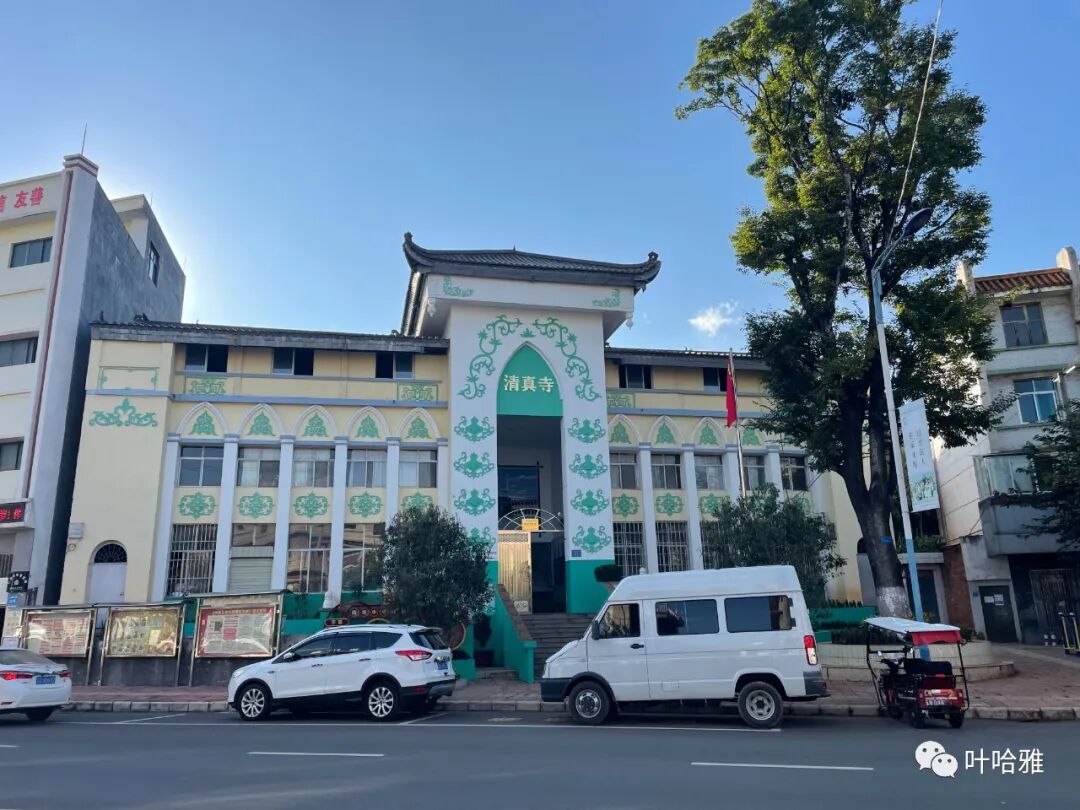
Kedu Town is an 80-kilometer drive from the Xundian county seat. We rested in the county seat for a day to prepare for our trip to Kedu Town the next morning. While drinking coffee in the county seat, we happened to see the Yuping Mosque across the street and went there to perform a prayer.
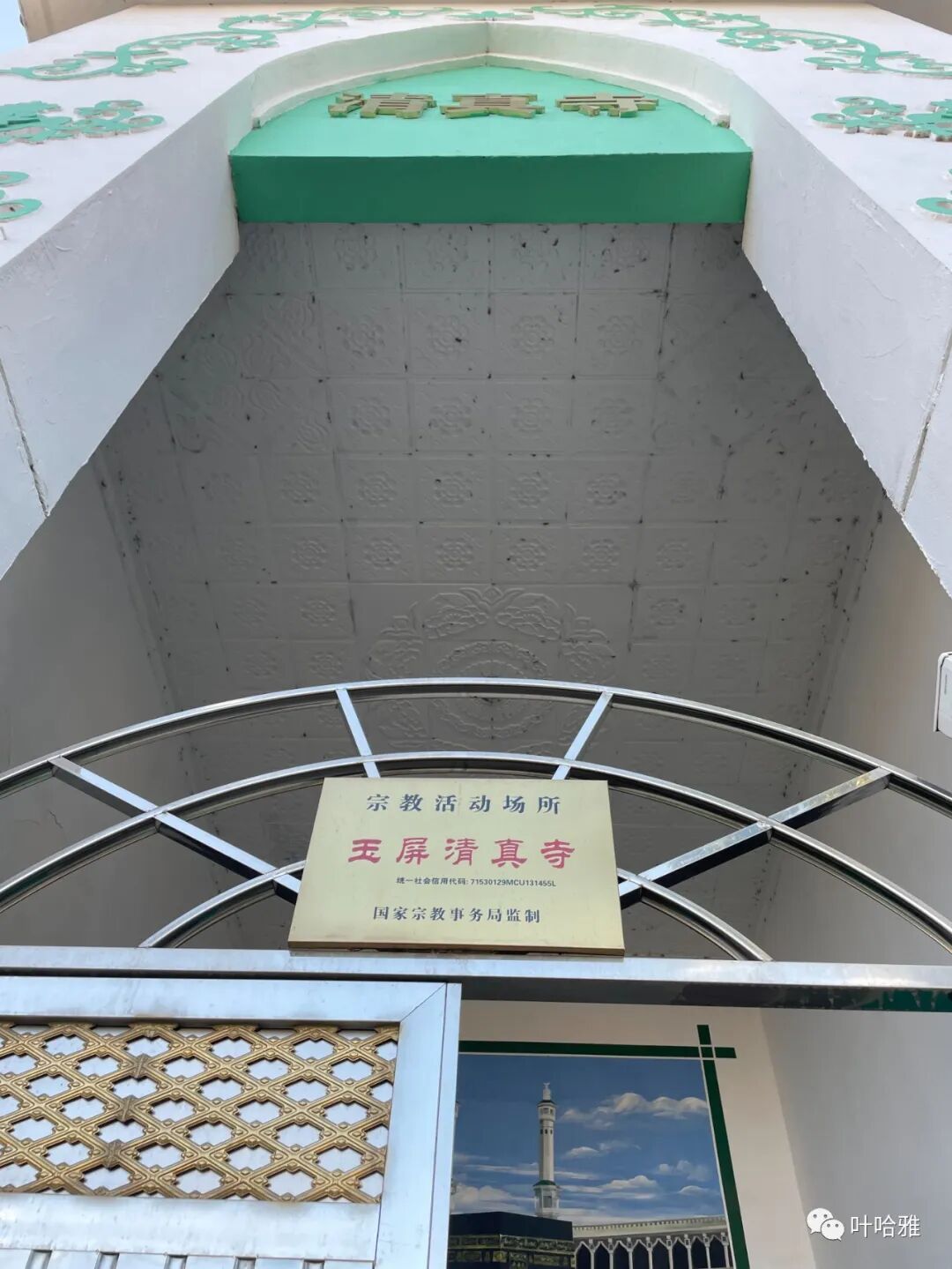
Yuping Mosque was first built between the late Ming and early Qing dynasties, and the current main hall was built in 2010.
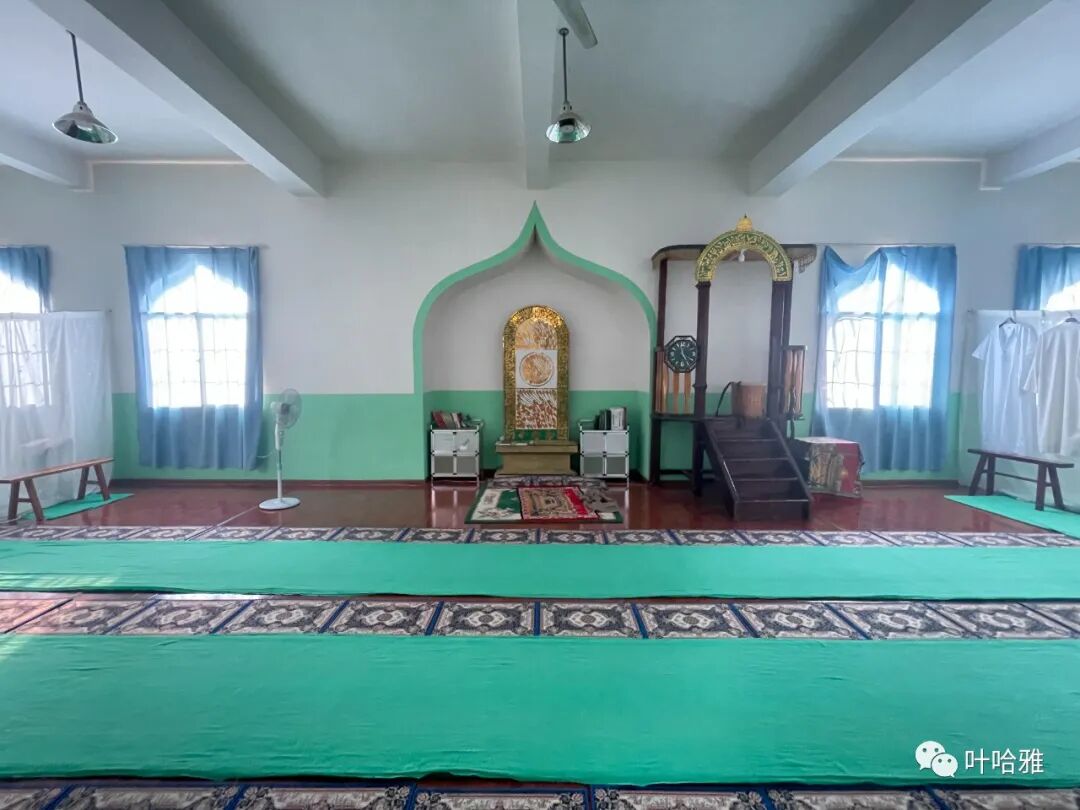
Jinxingyue Restaurant
A local young lady in Xundian invited our family of three to eat authentic Xundian food at Jinxingyue. This restaurant has been open for at least 10 years and is one of the top choices for engagement banquets among Xundian locals. The food and the environment are both excellent, and most restaurants on the streets of Xundian are halal.
Fahim was playing in the courtyard when another young lady took a liking to him and chased after him to play together.
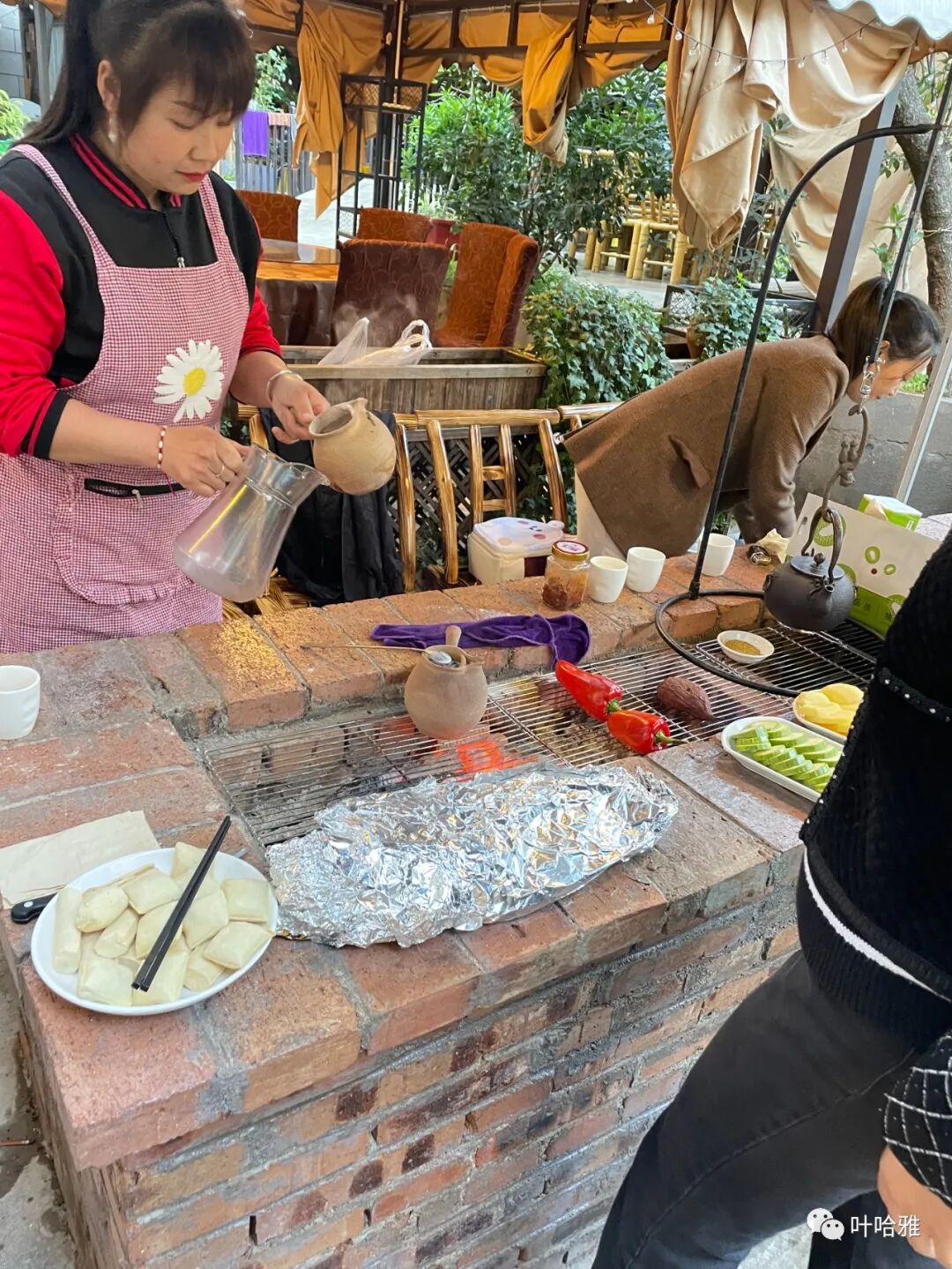
Local specialty pan-fried tea (jiancha). This stove can be used for heating, boiling tea, and grilling.
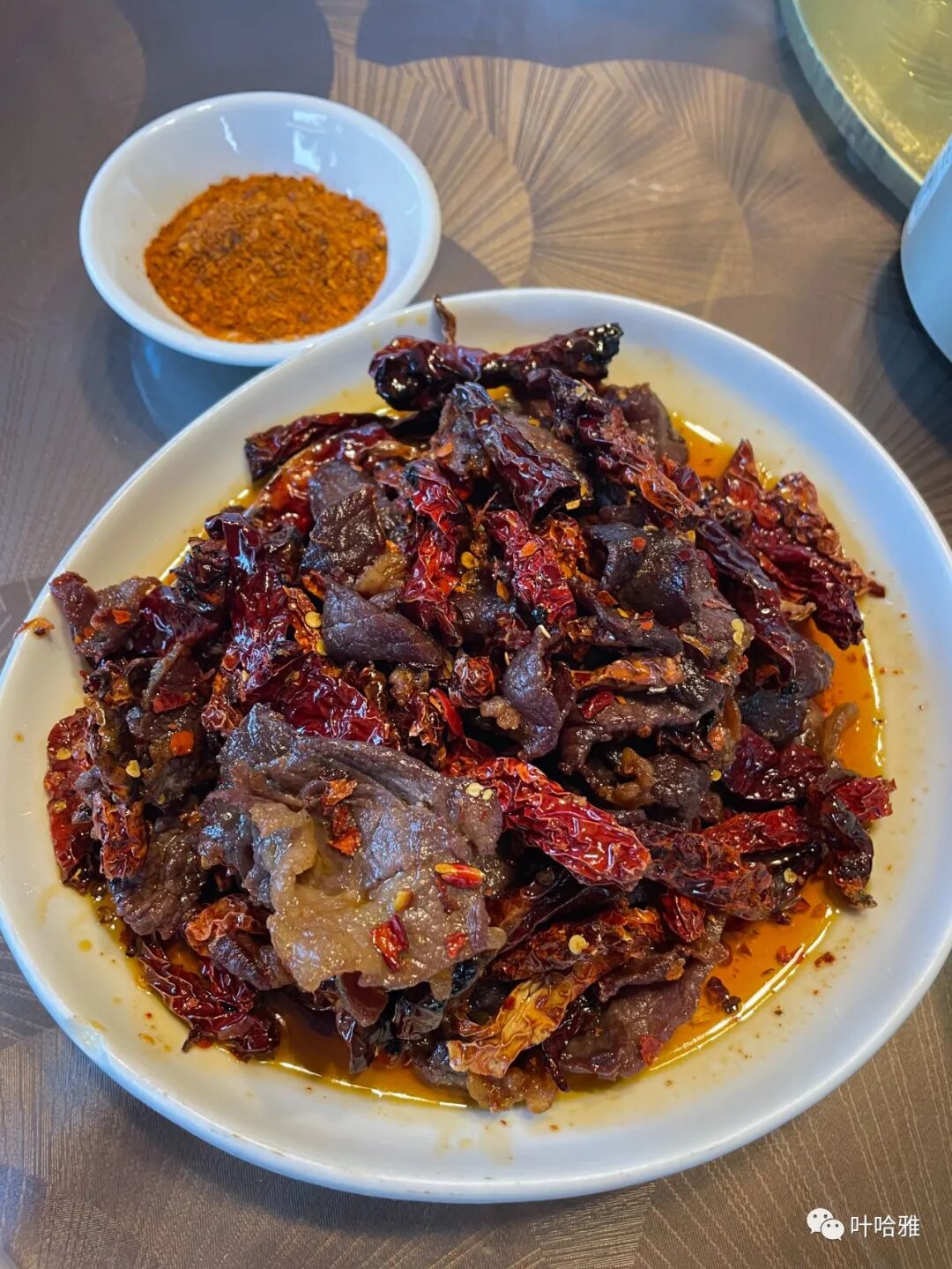
Xundian's oil-drizzled dried beef (youlin niuganba). The locals have high standards for food. They think Kunming doesn't have as much good food as Xundian. Xundian is where people from Kunming go for weekend getaways and farm-style meals.
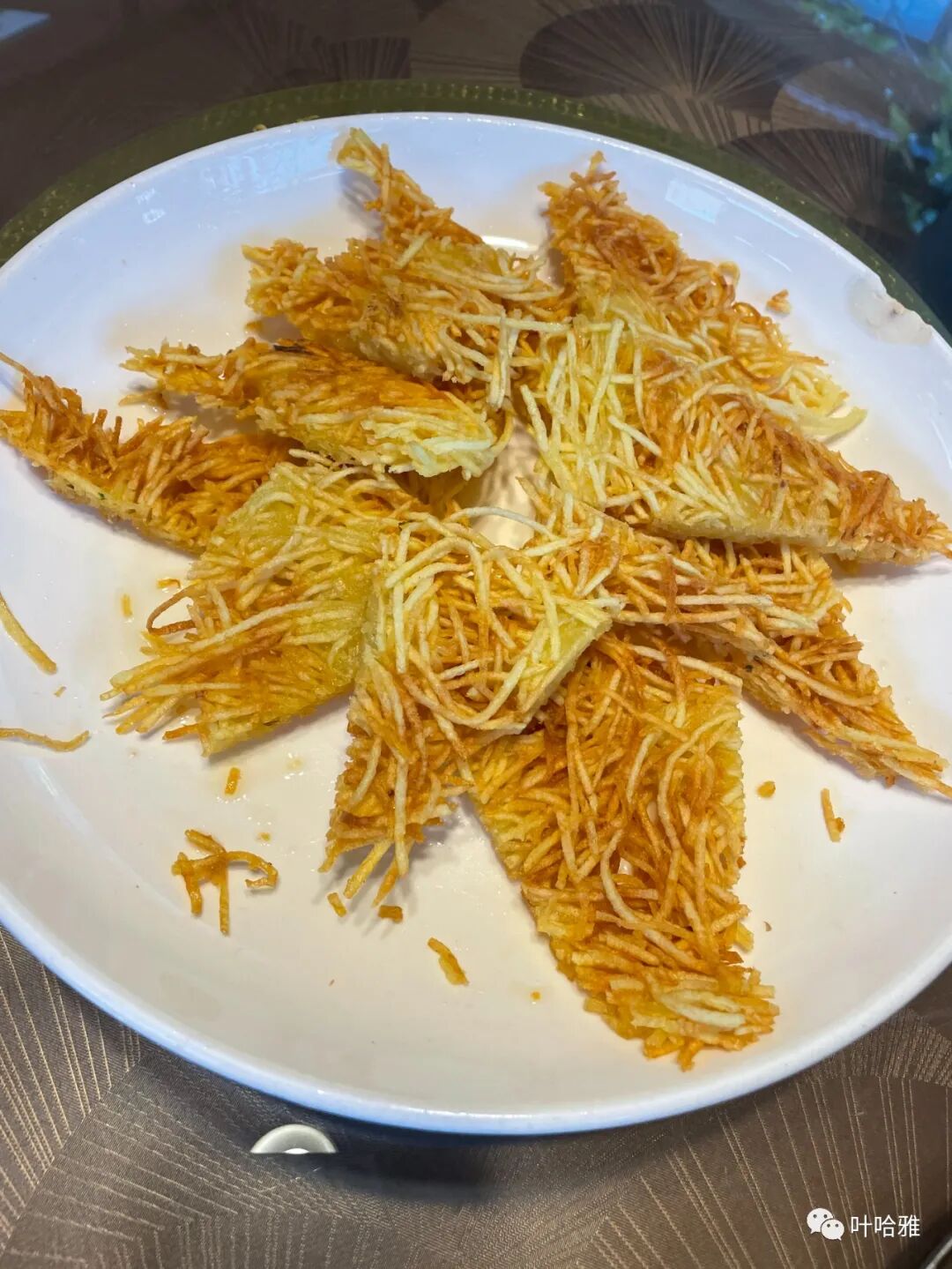
Roasted chicken and potato pancakes (yangyu bing) are specialties. The roasted chicken is tender and flavorful, and the potato pancakes are salty, fresh, and crispy.
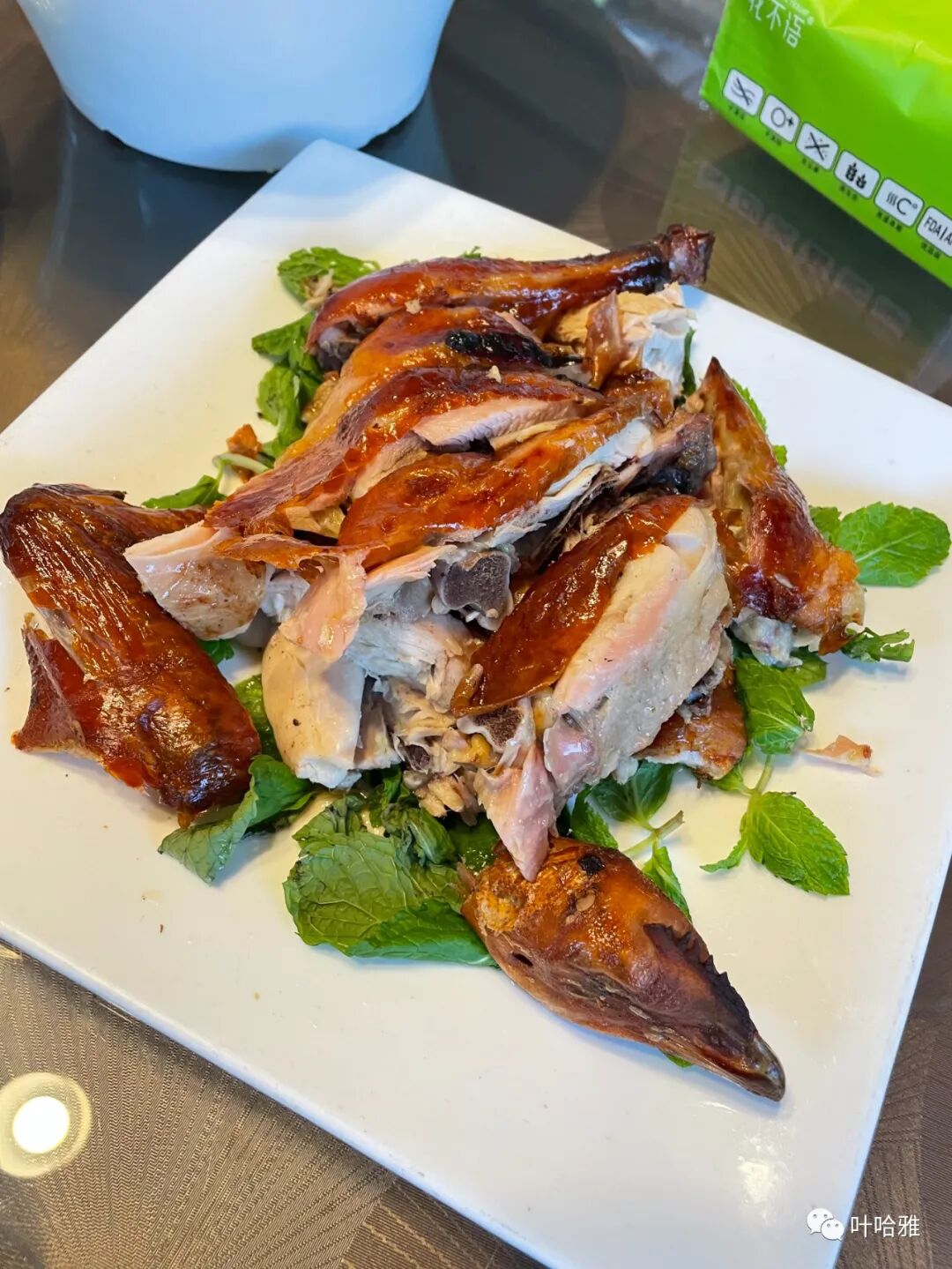
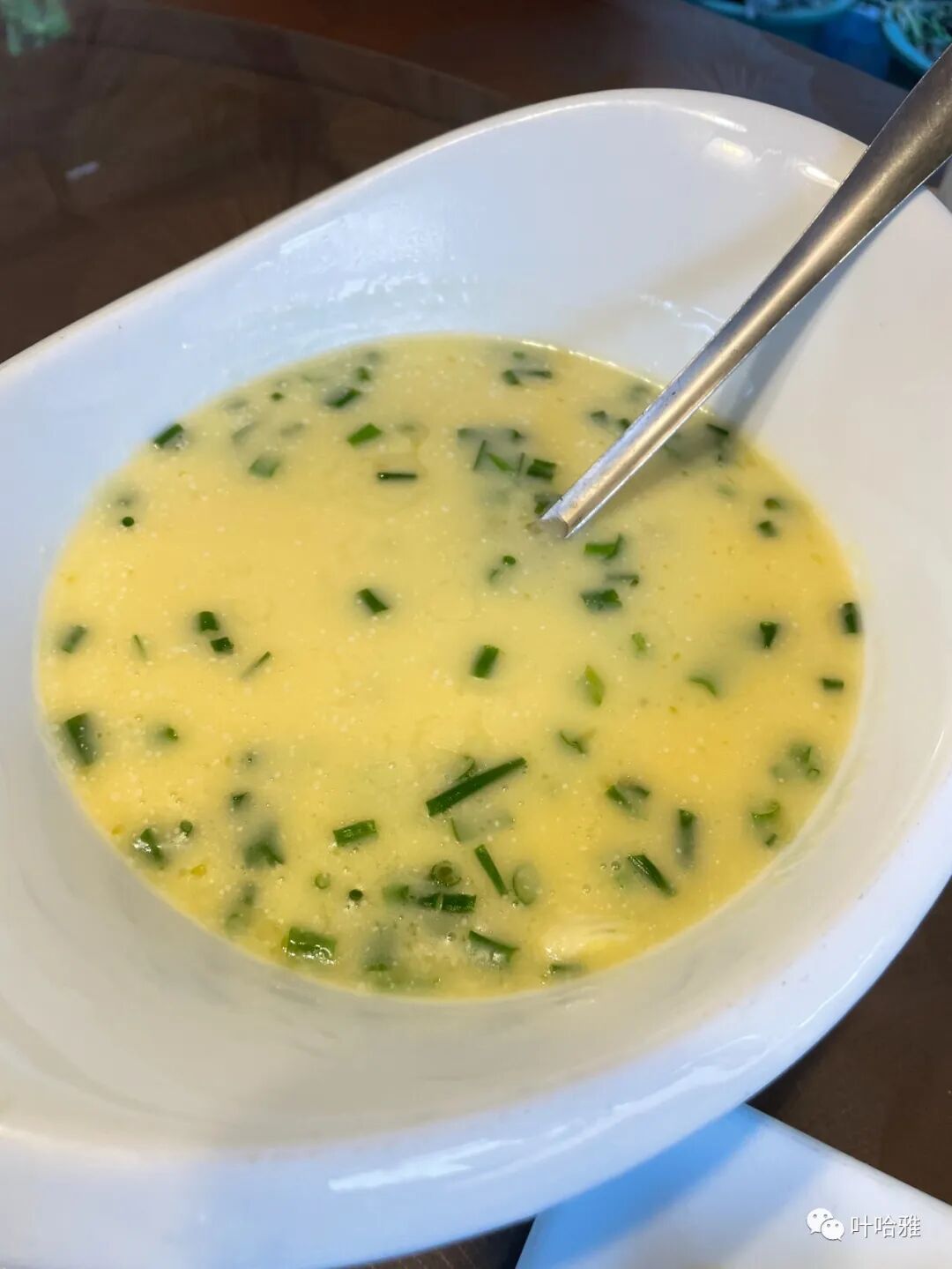
Thick pea porridge (xi doufen) and wheat flatbread (mai baba). Yunnan people call things like steamed buns baba. The wheat flatbread is very soft and fluffy, and it tastes great when dipped in the thick pea porridge to soak up the soup.
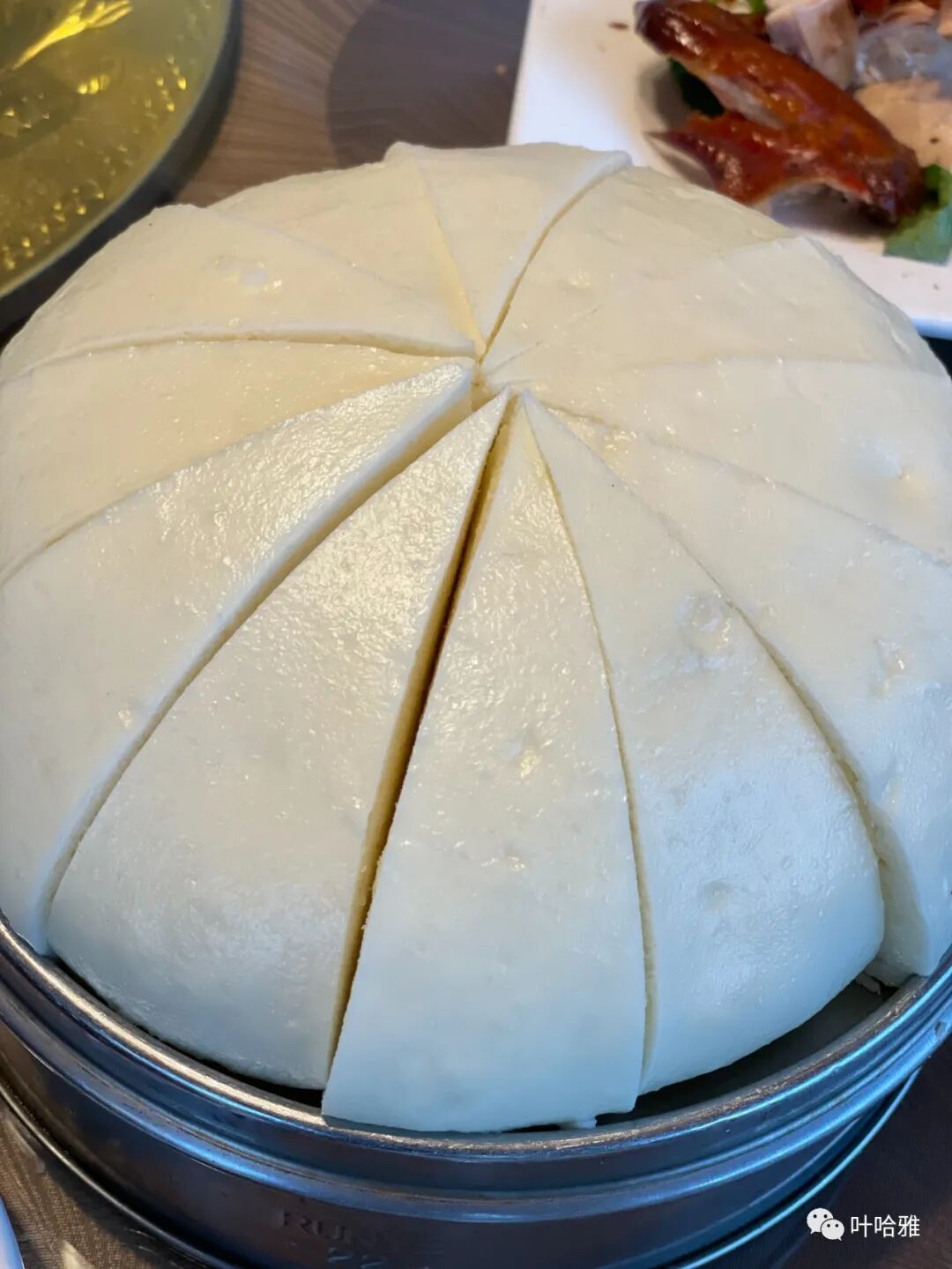
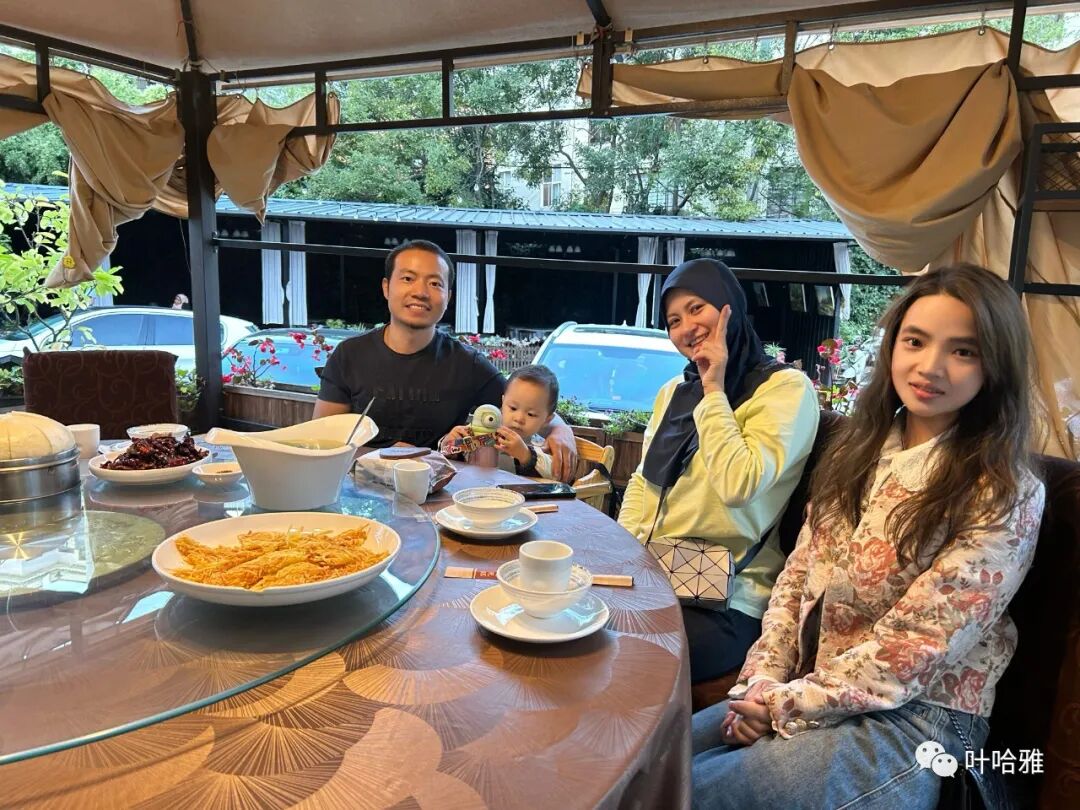
Jibao Beef Restaurant
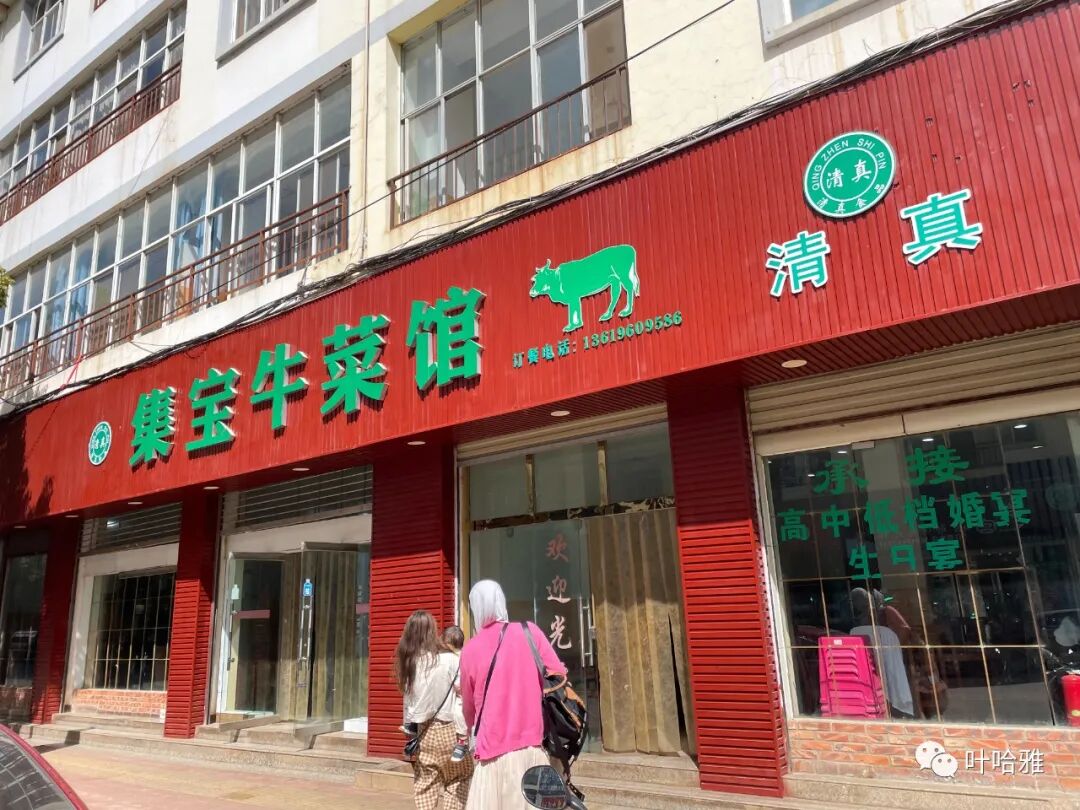
This is another hidden gem that locals love. People say you even have to wait in line at night because it is so popular.
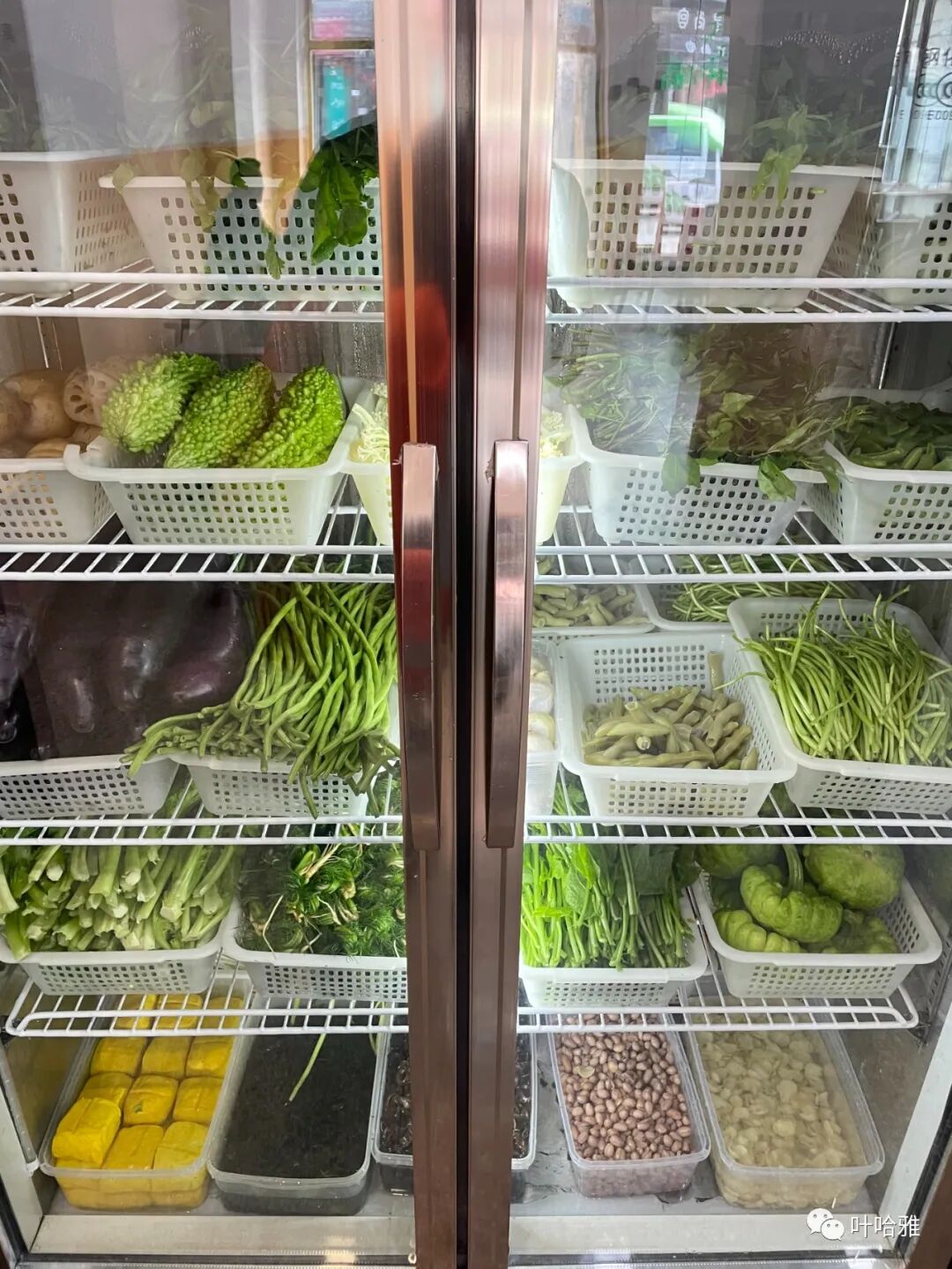
At this Yunnan-style restaurant, you pick your own vegetables. You choose from a variety of wild greens in the freezer, and the kitchen cooks them for you.
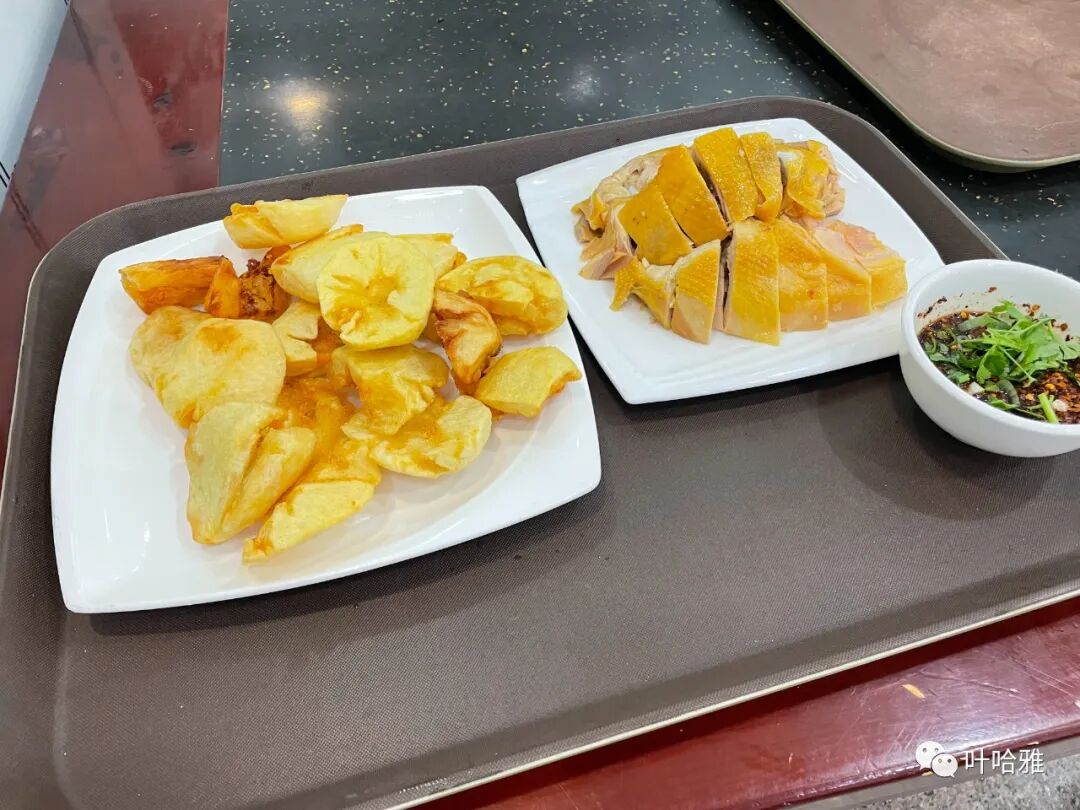
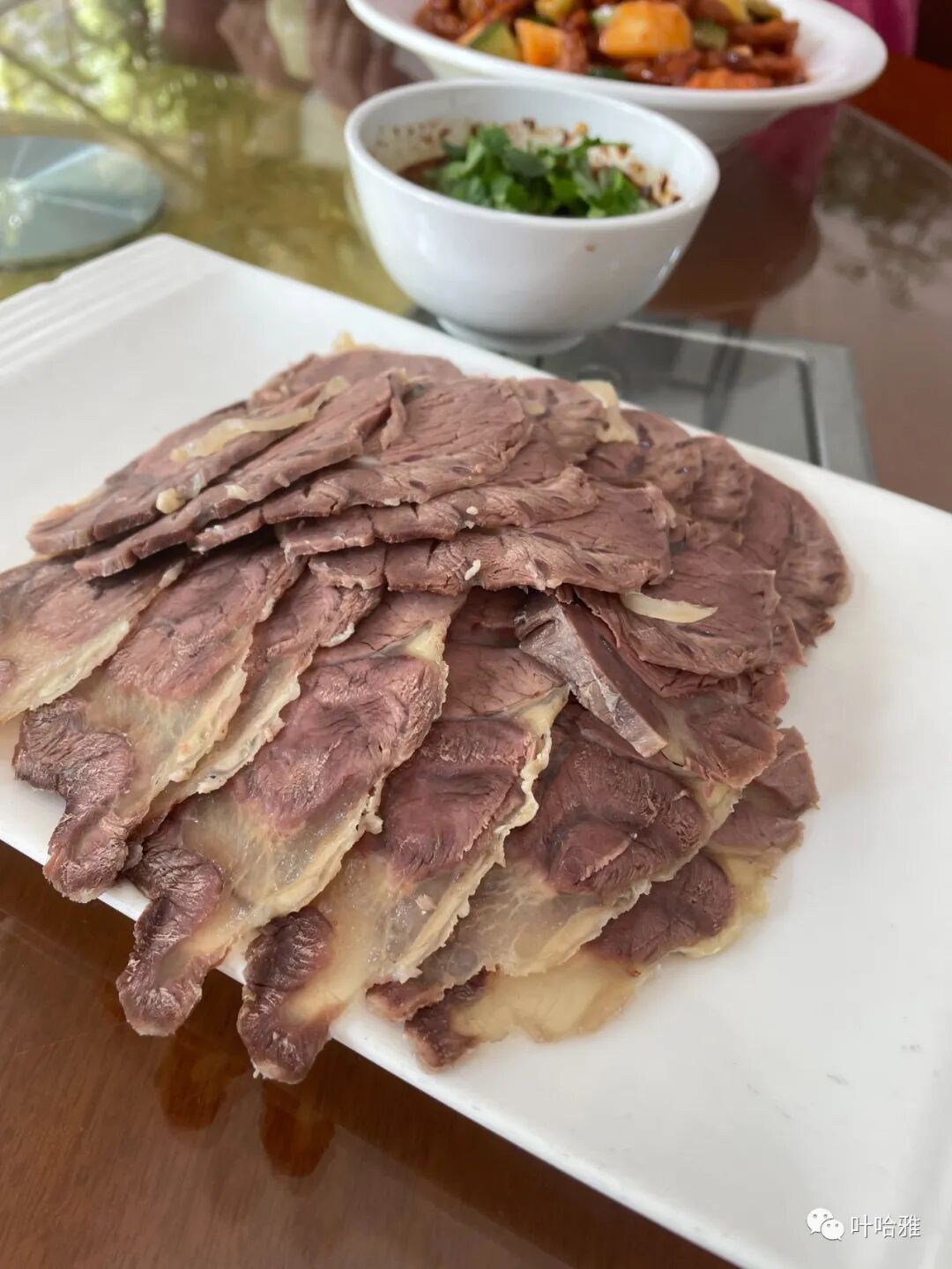
The cold sliced beef (liangpian) from Xundian is boiled in plain water and served with a spicy and sour dipping sauce.
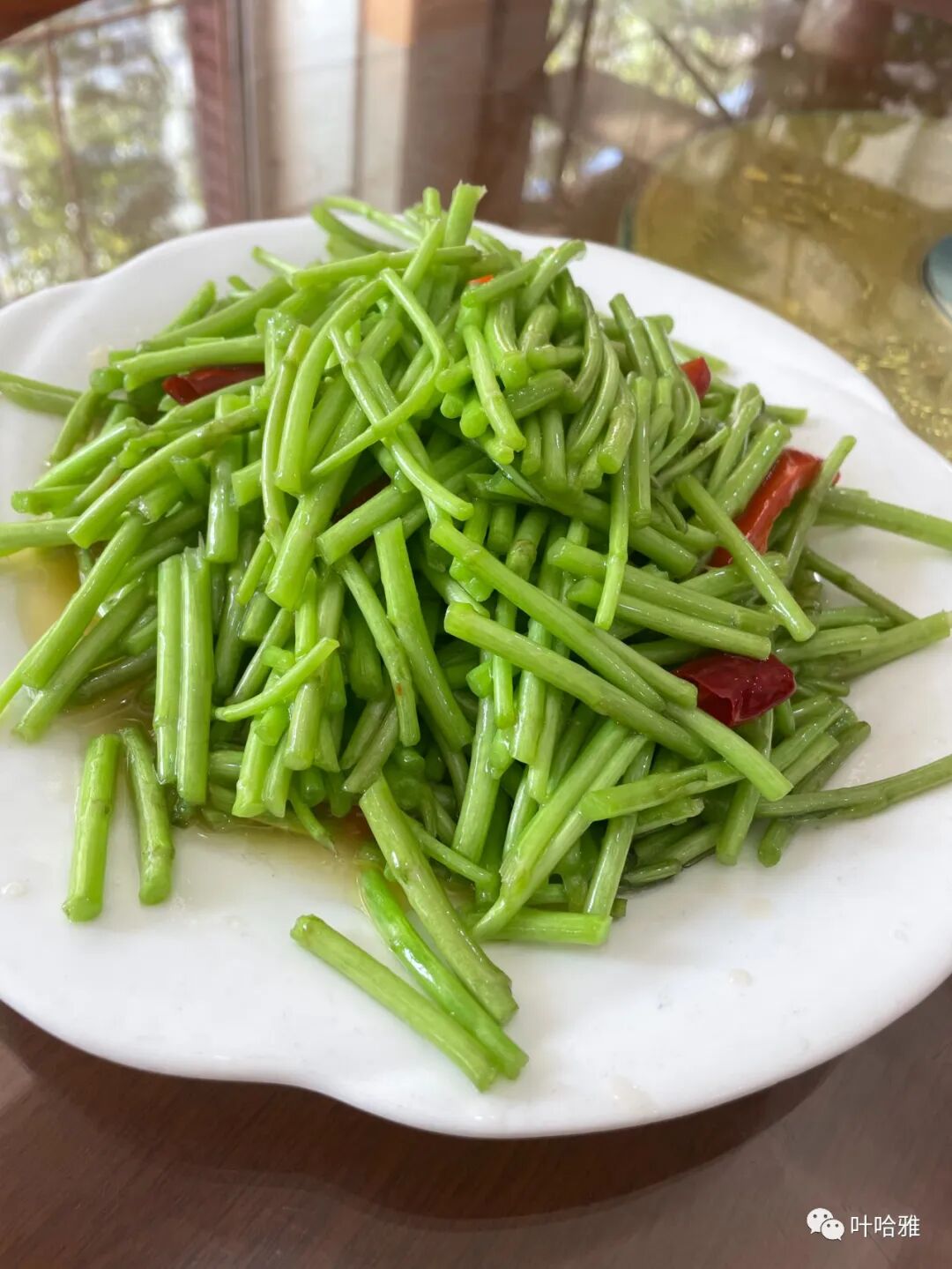
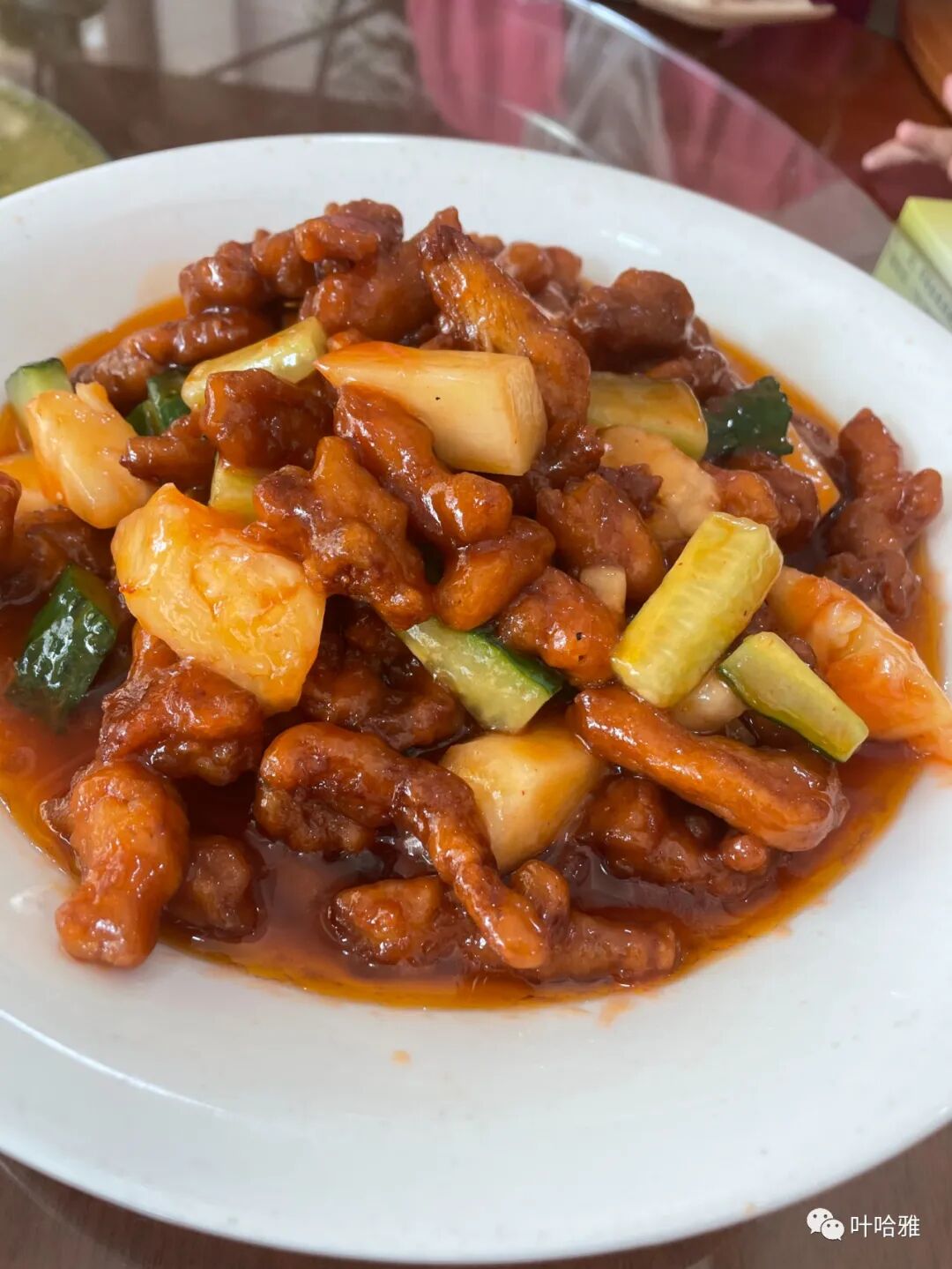
This sweet and sour pork tenderloin (tangcu liji) is made with pineapple and is mainly served to help children eat their rice.
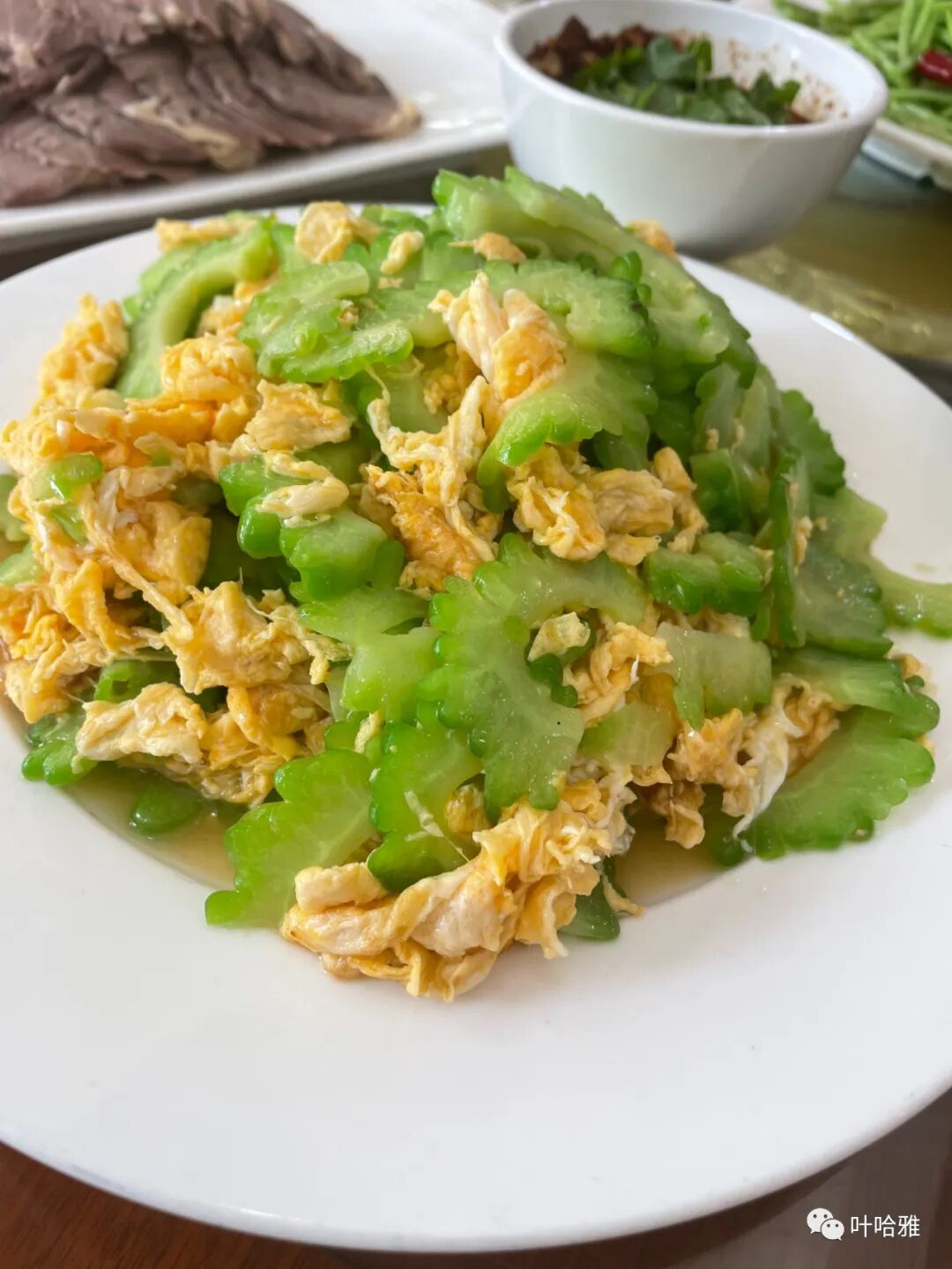
Yunnan bitter melon is delicious, and I enjoy the bitter taste.
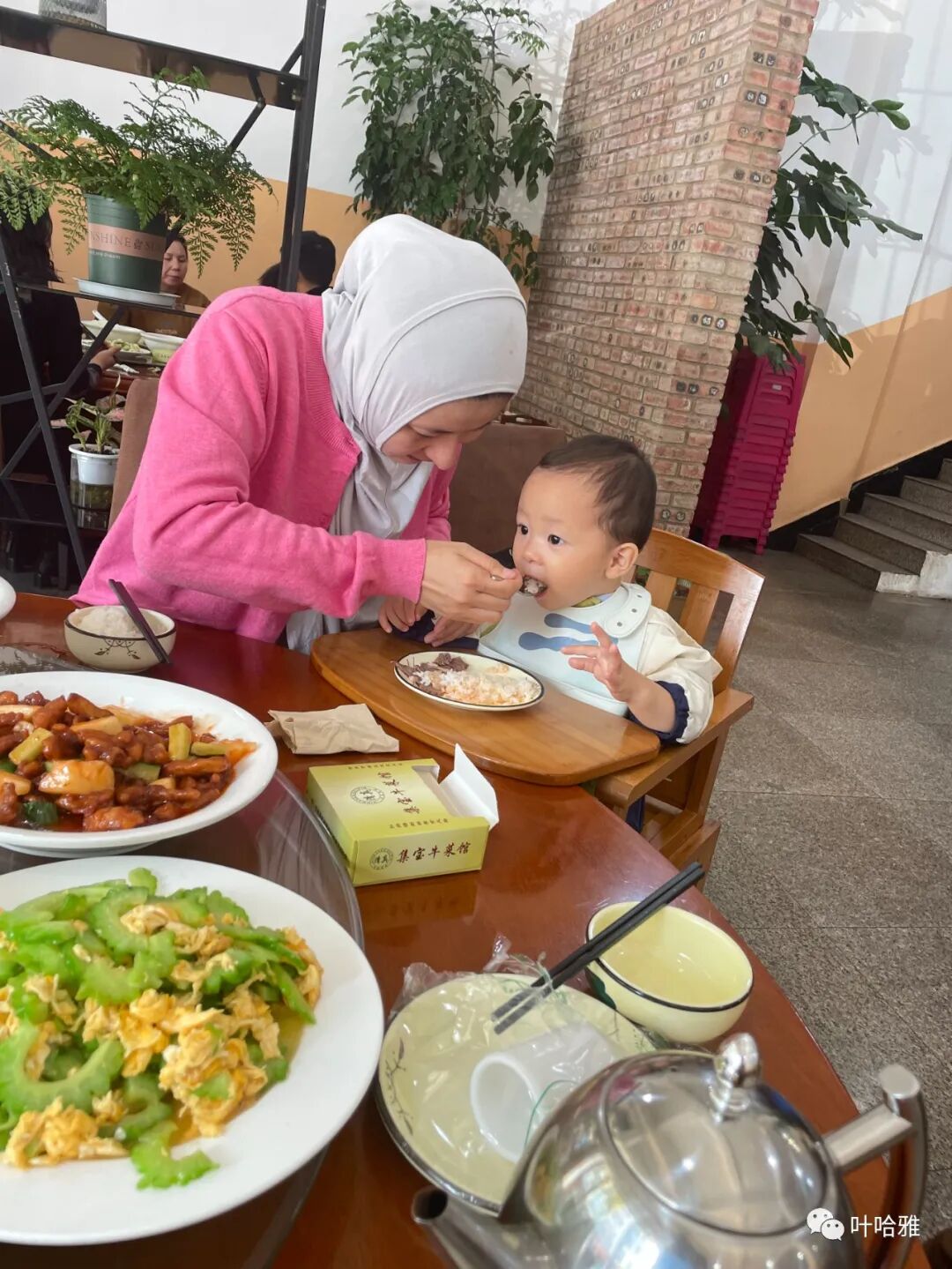
Kedu Town
The road to Kedu Town is a winding mountain path. Because it is a red tourism town, the government pays close attention to it, so the road nearby is well-maintained and not too difficult to drive. Just watch your speed, and expect the drive to take at least an hour and a half.
The town is deep in the mountains with nice scenery. Most of the paths the Red Army took during the Long March were these kinds of remote mountain roads.
Dangui Red Army Village
The Red Army Long March Memorial Hall in Dangui Village is open to the public for free.
The Party could not have gained national power without the support of ethnic minorities. The relationship between Chinese Muslims and various Chinese regimes throughout history is the same. Whenever they stayed in line with the central government, they developed; otherwise, they suffered major setbacks. You can refer to the book 'Chinese Regimes and Islam Throughout History' for details.
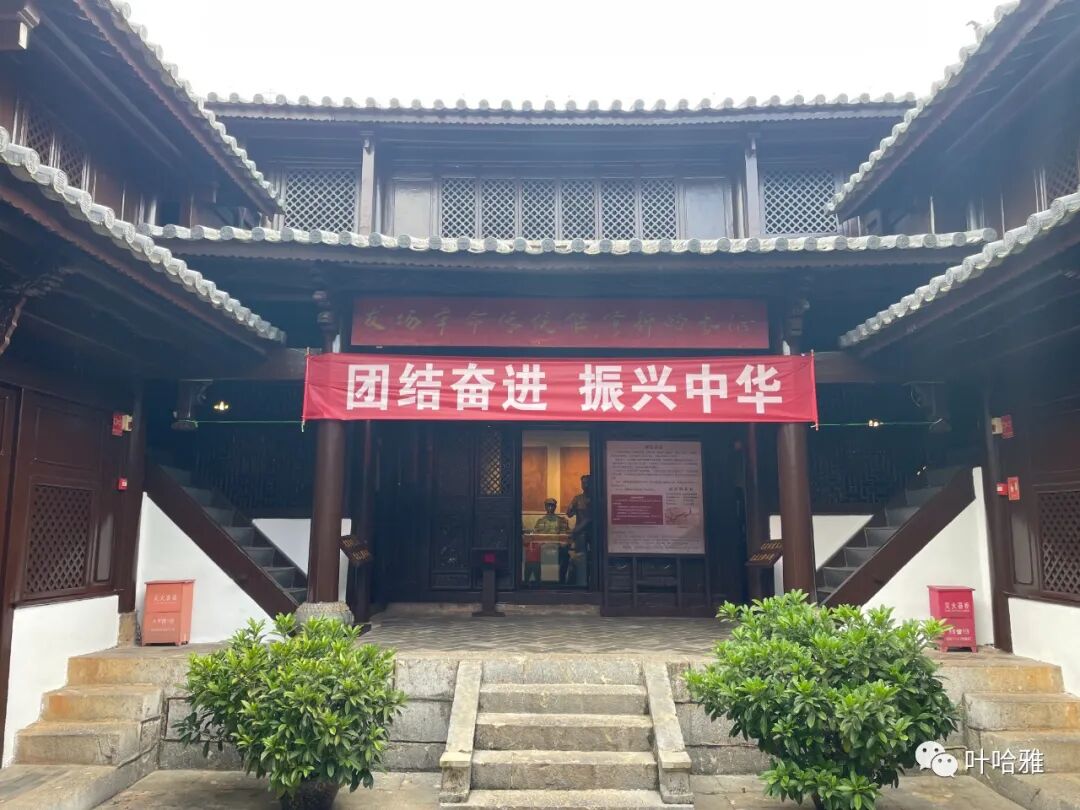
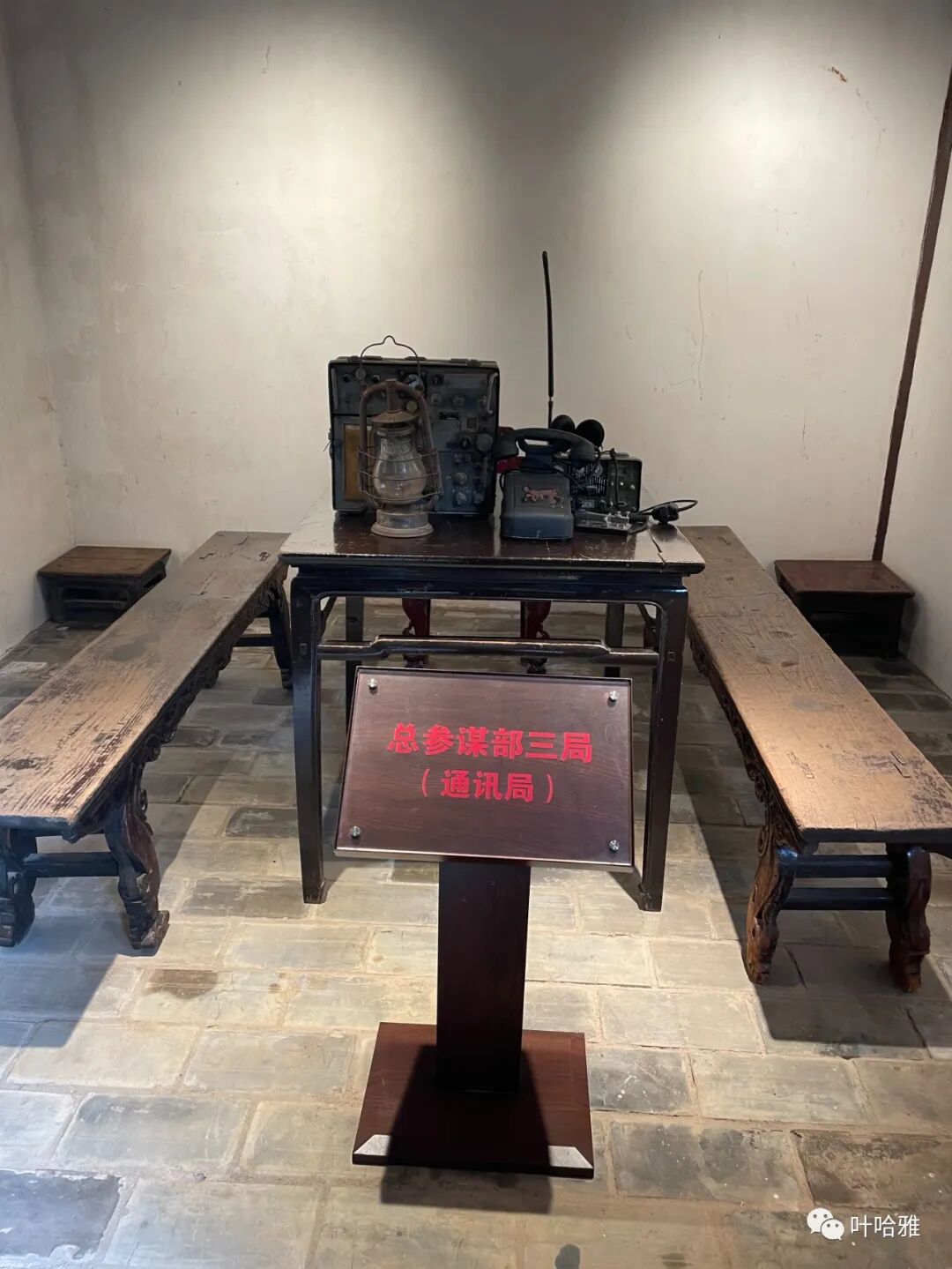
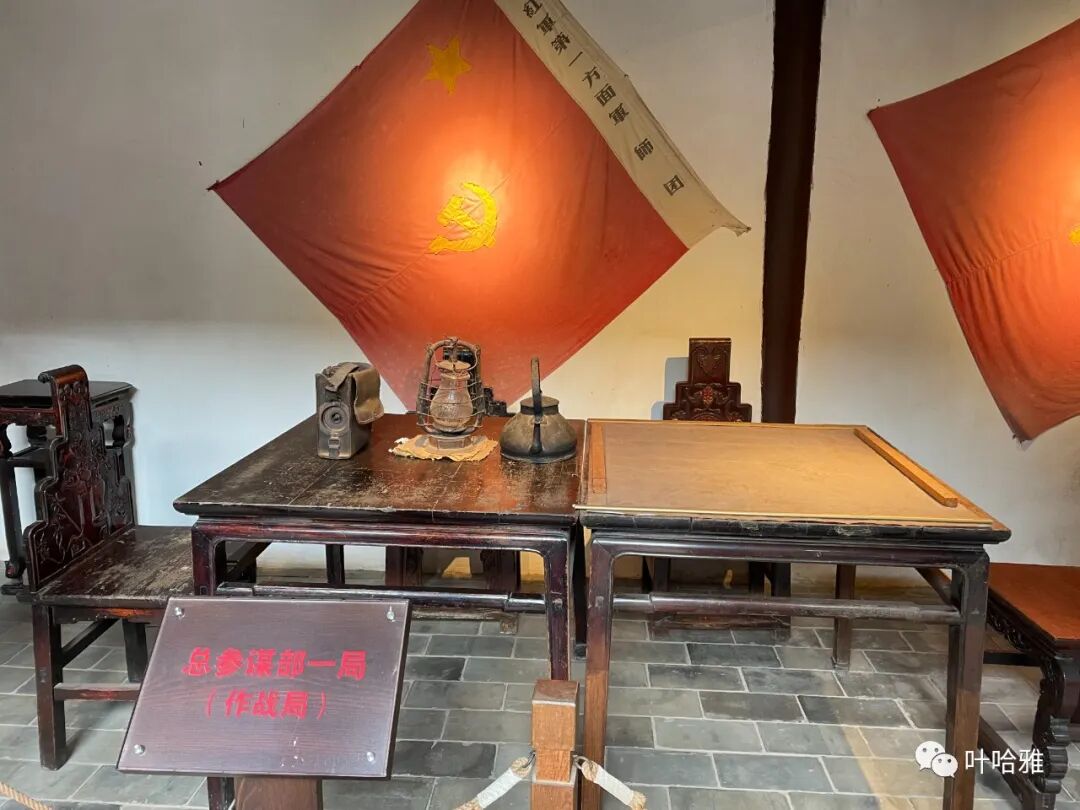
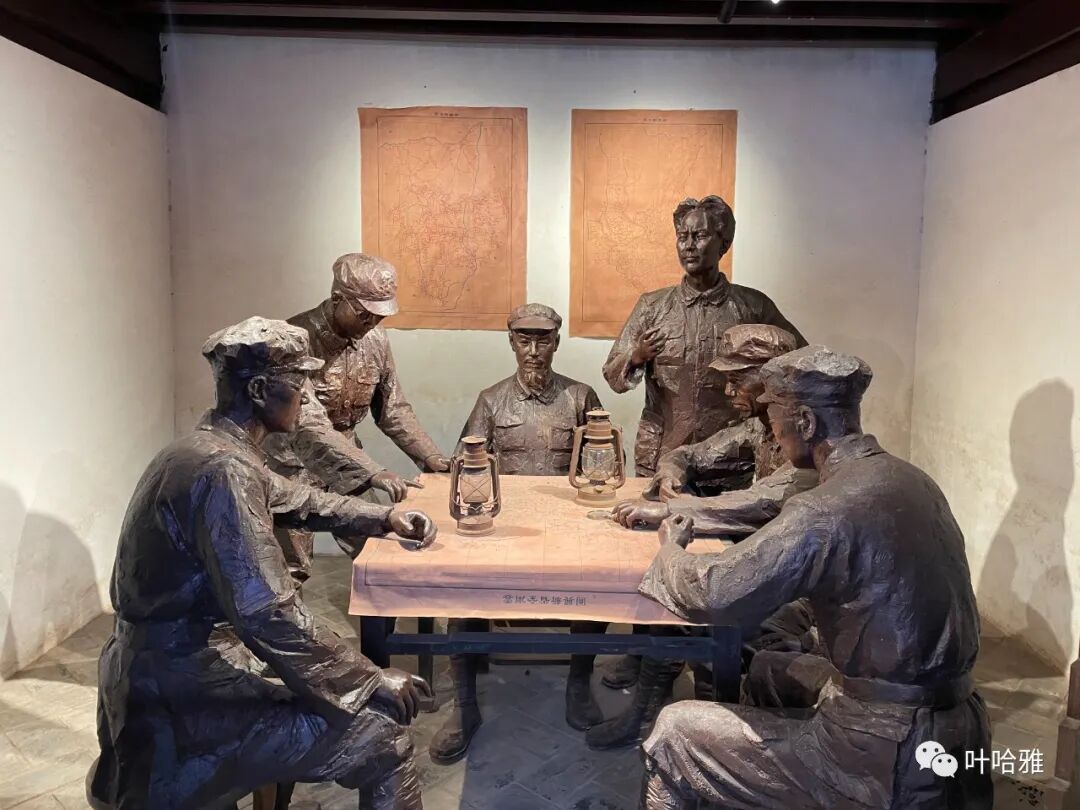
Because the Party's founding members were treated well by ethnic minorities during difficult times, they had a positive view of them, which led to the ethnic minority policies established after the founding of the country.
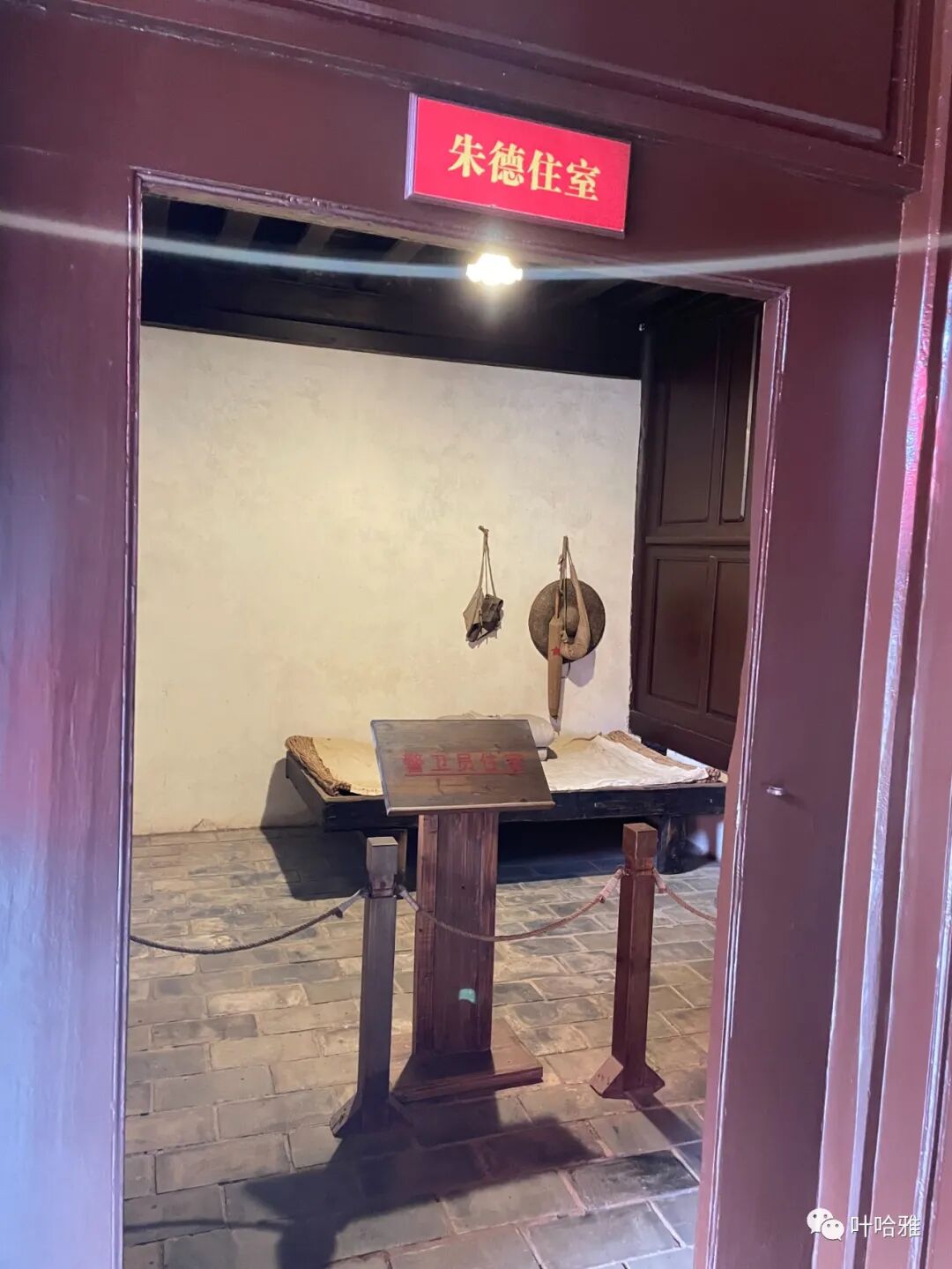
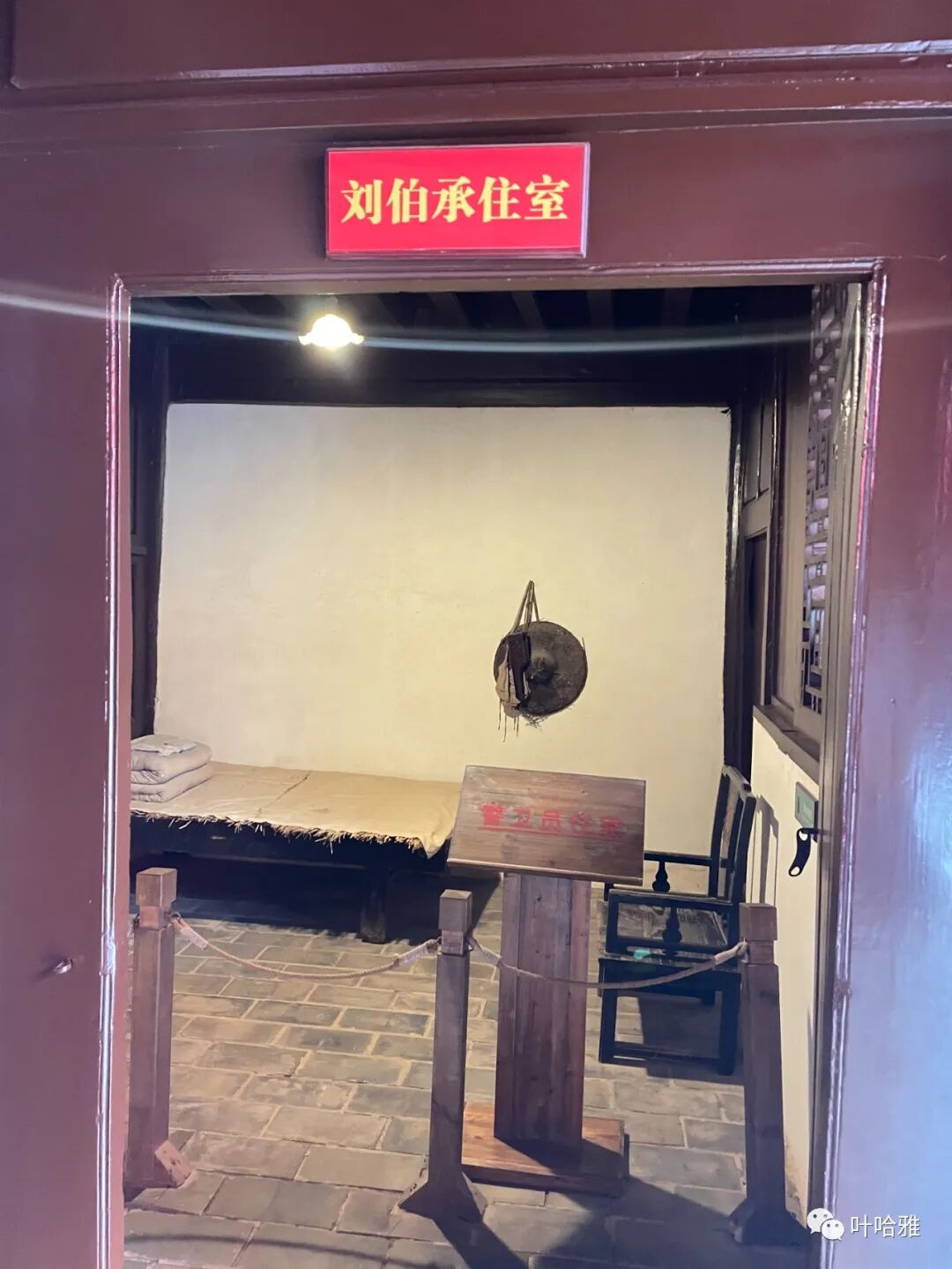
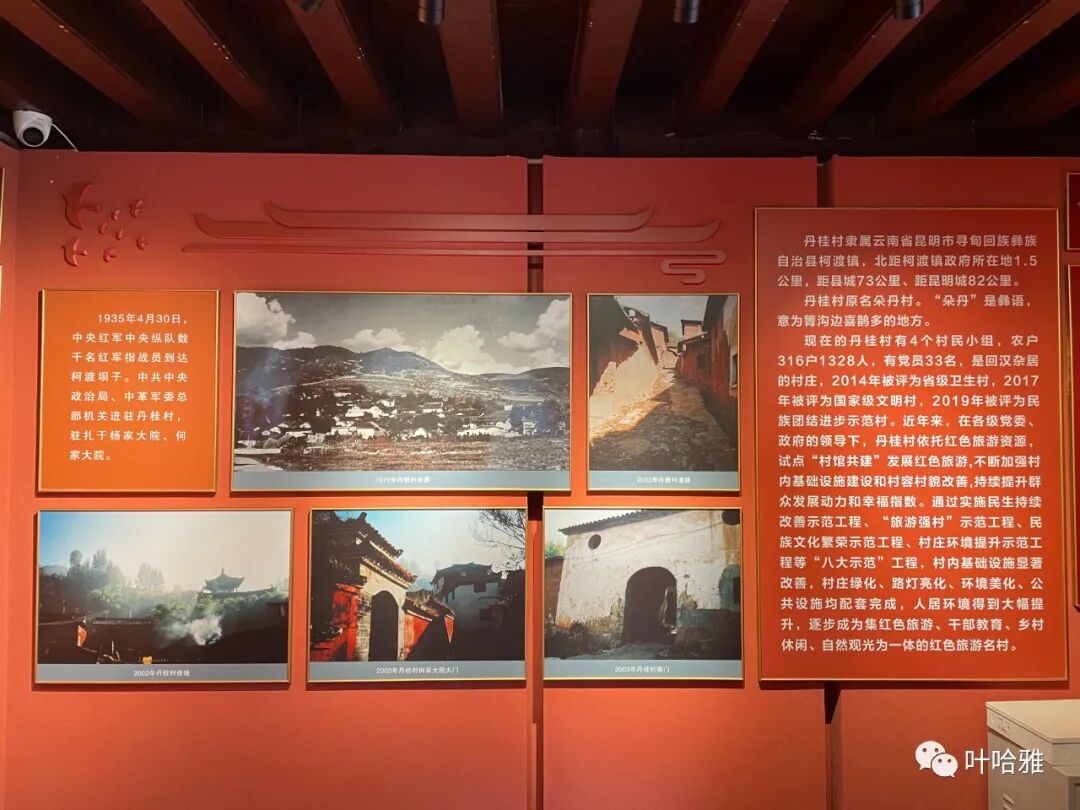
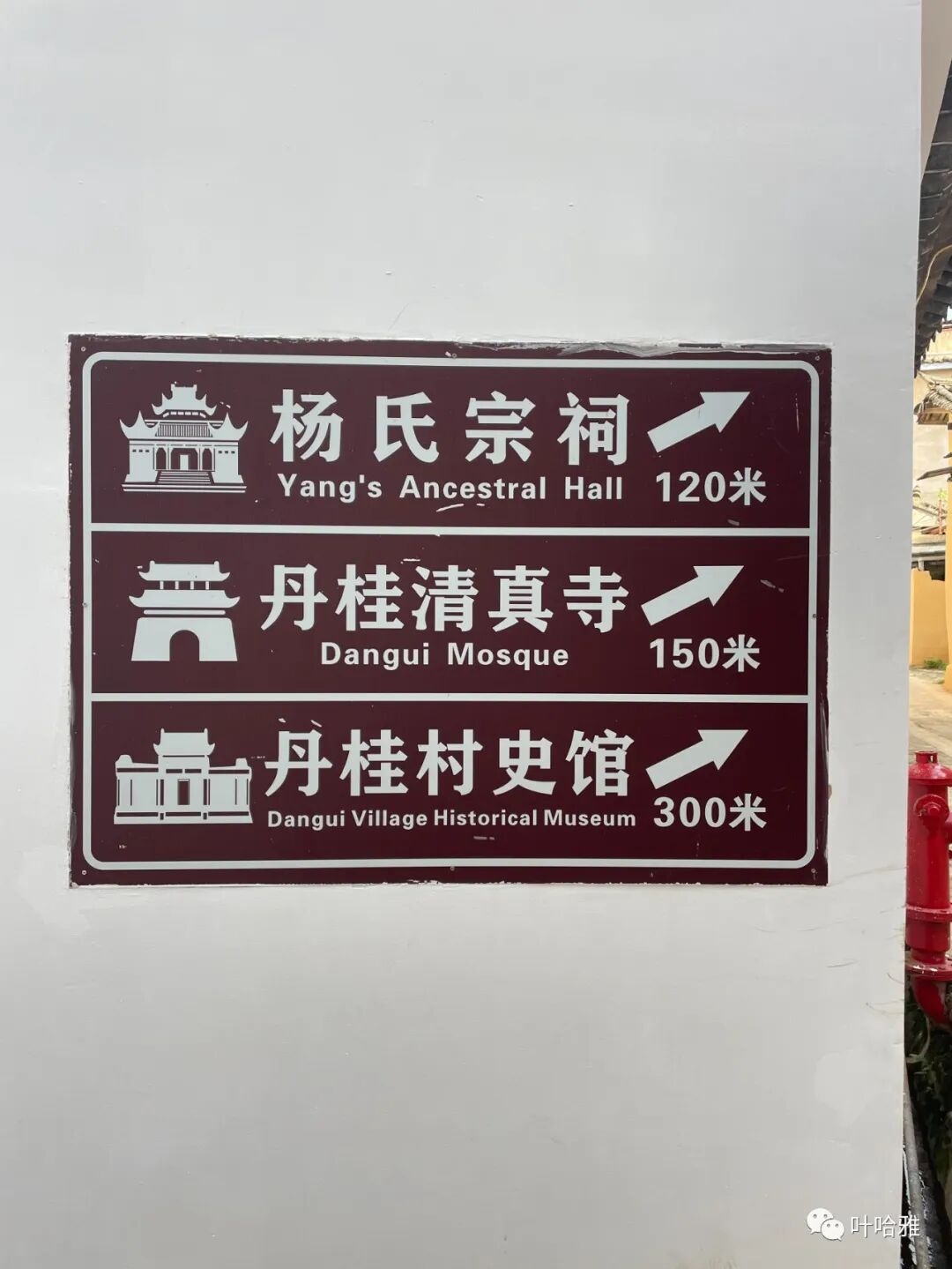
The red halal restaurant in the village is called Huadamen Restaurant.
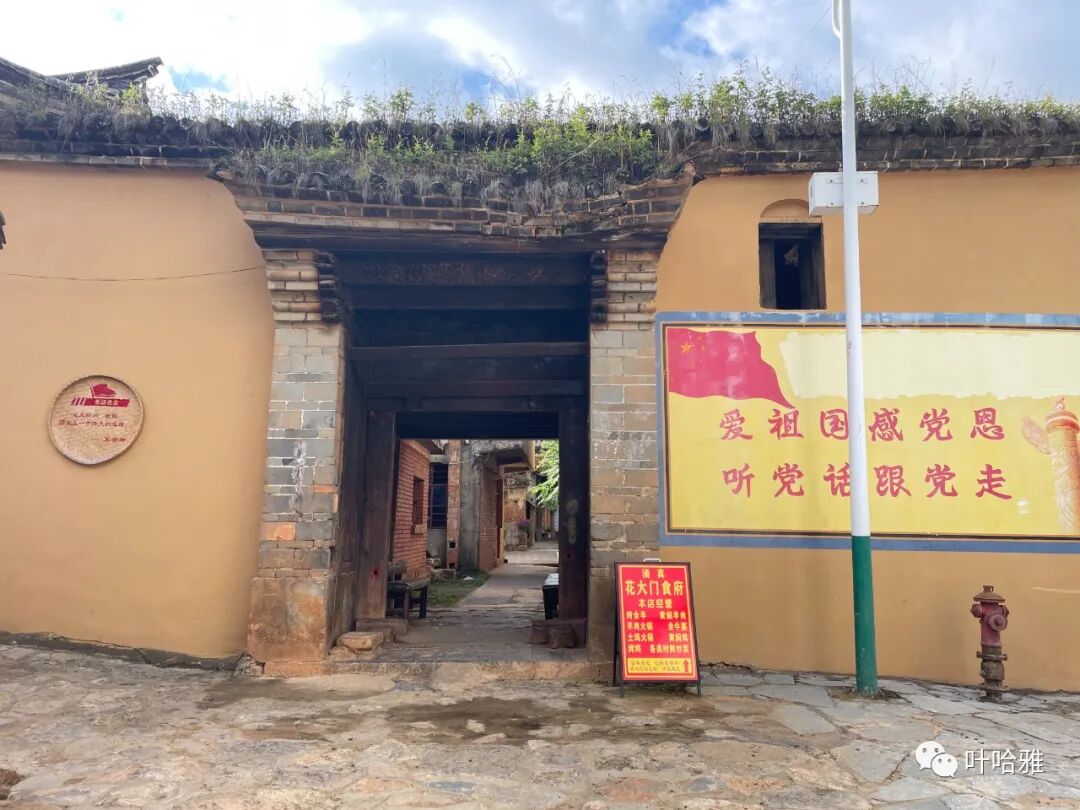
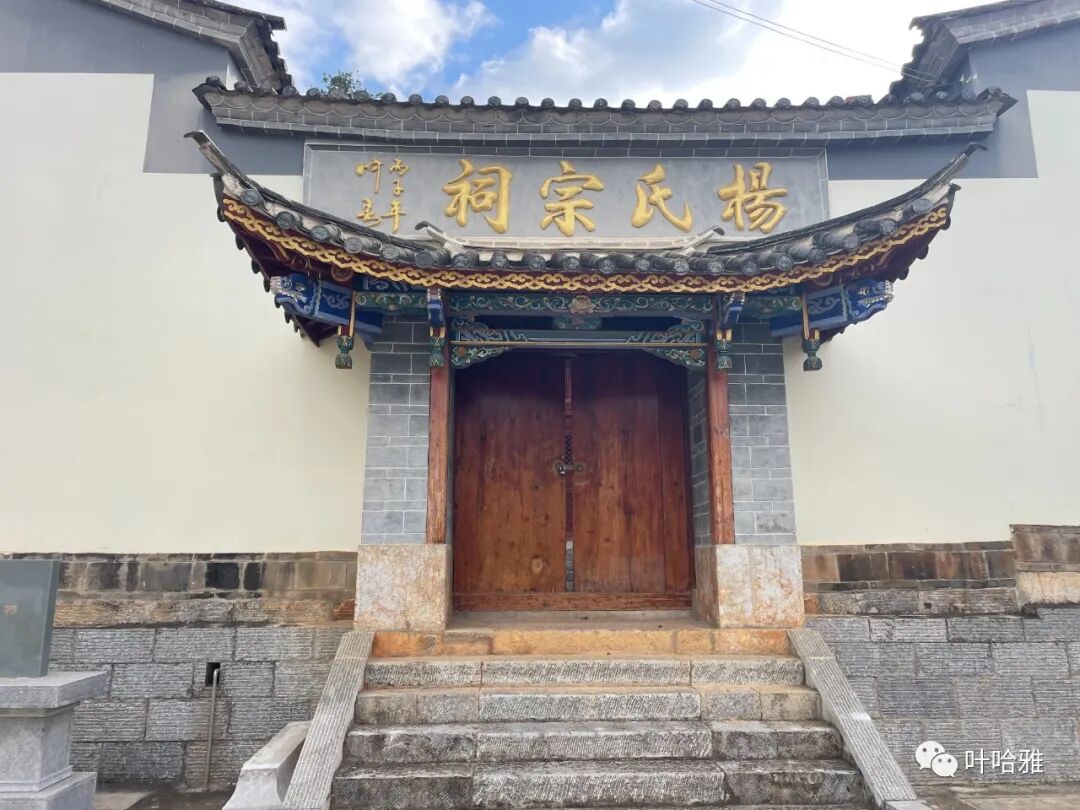
The village walls are decorated with folk songs from Hui Muslims and other ethnic minorities, all praising the Red Army.
Dangui Mosque.
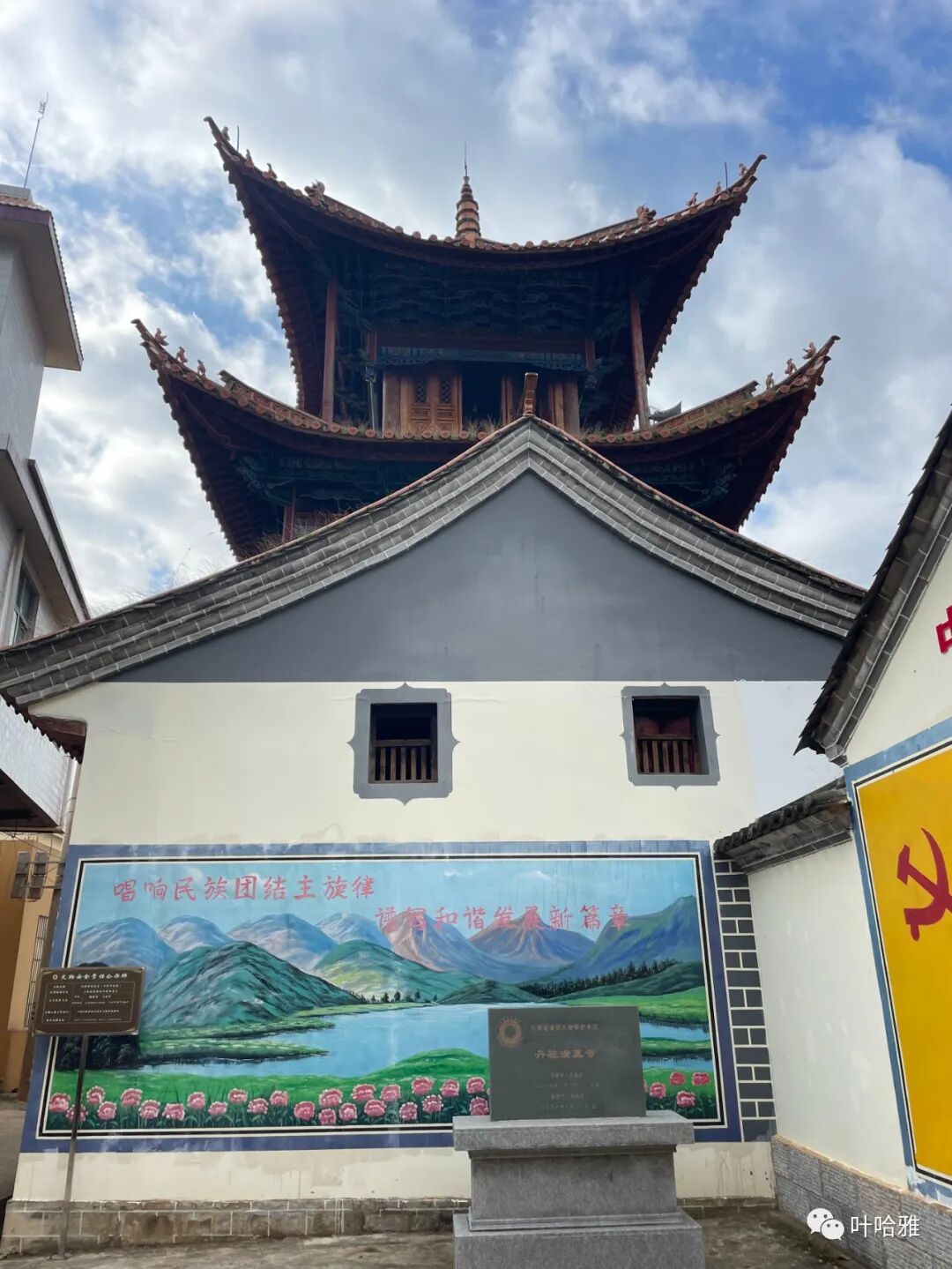
The founding date of Dangui Mosque is unknown, but it was renovated in the 22nd year of the Guangxu reign of the Qing Dynasty and is now a provincial-level cultural heritage site.
On the mosque's crossbeams, there is a slogan left by the Red Army that says, "The Red Army absolutely does not press-gang." This means they did not force men into military service.
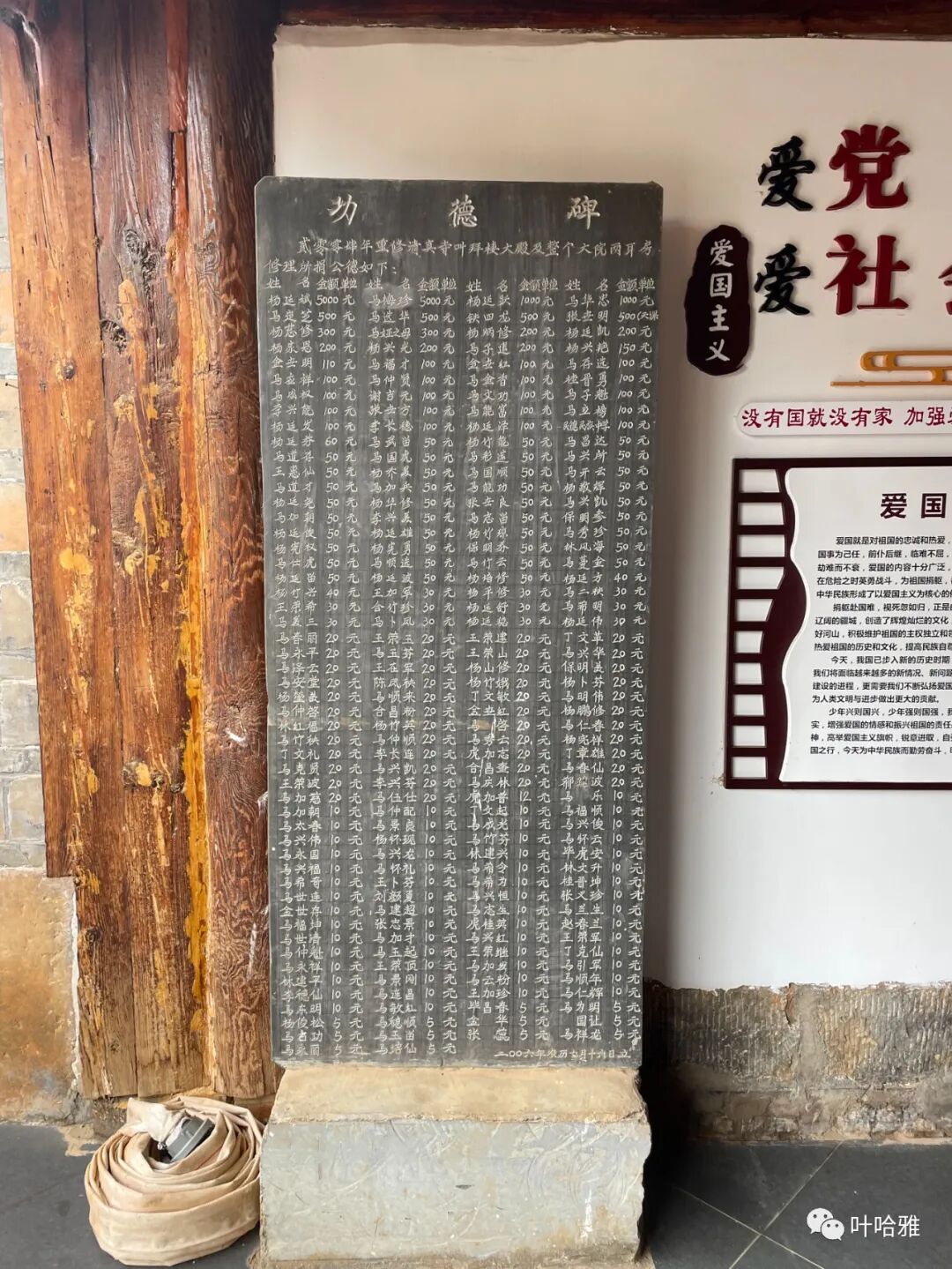
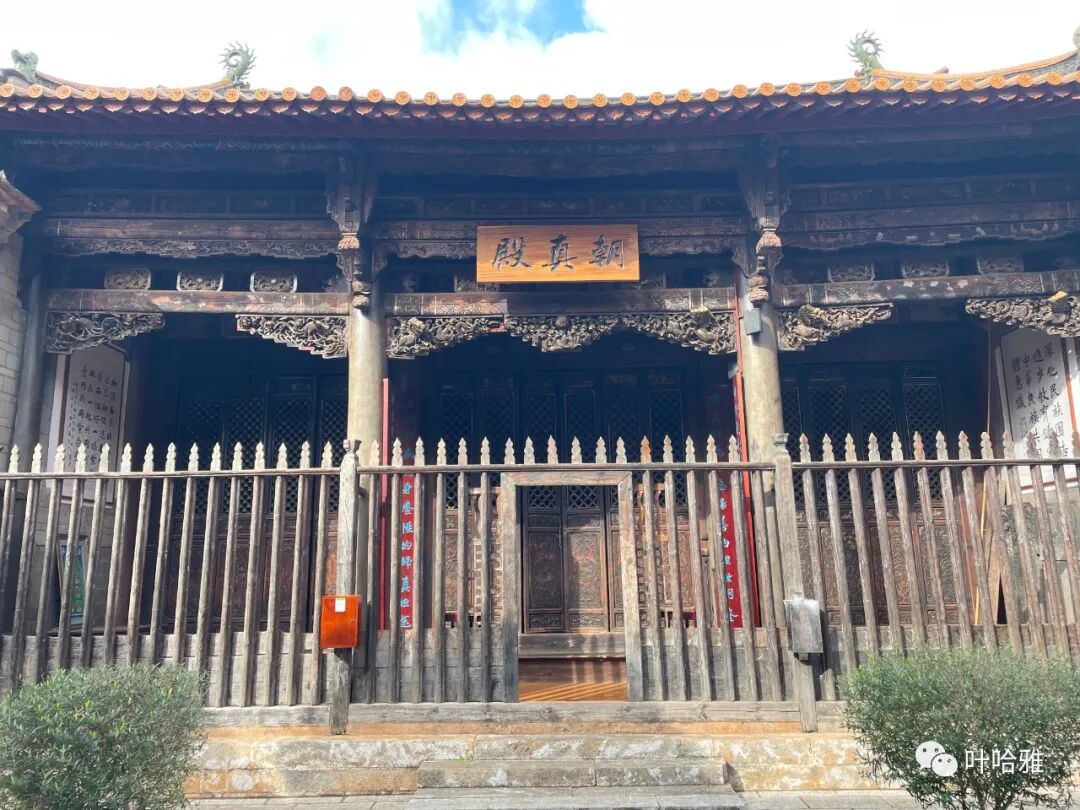
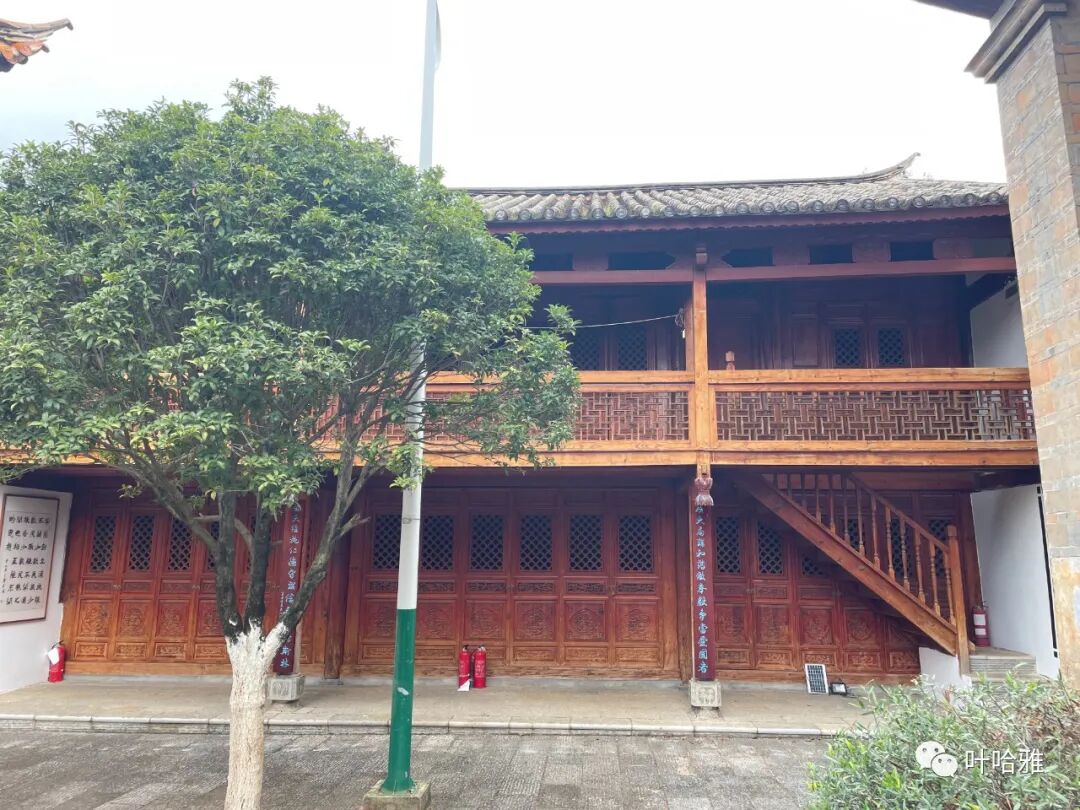
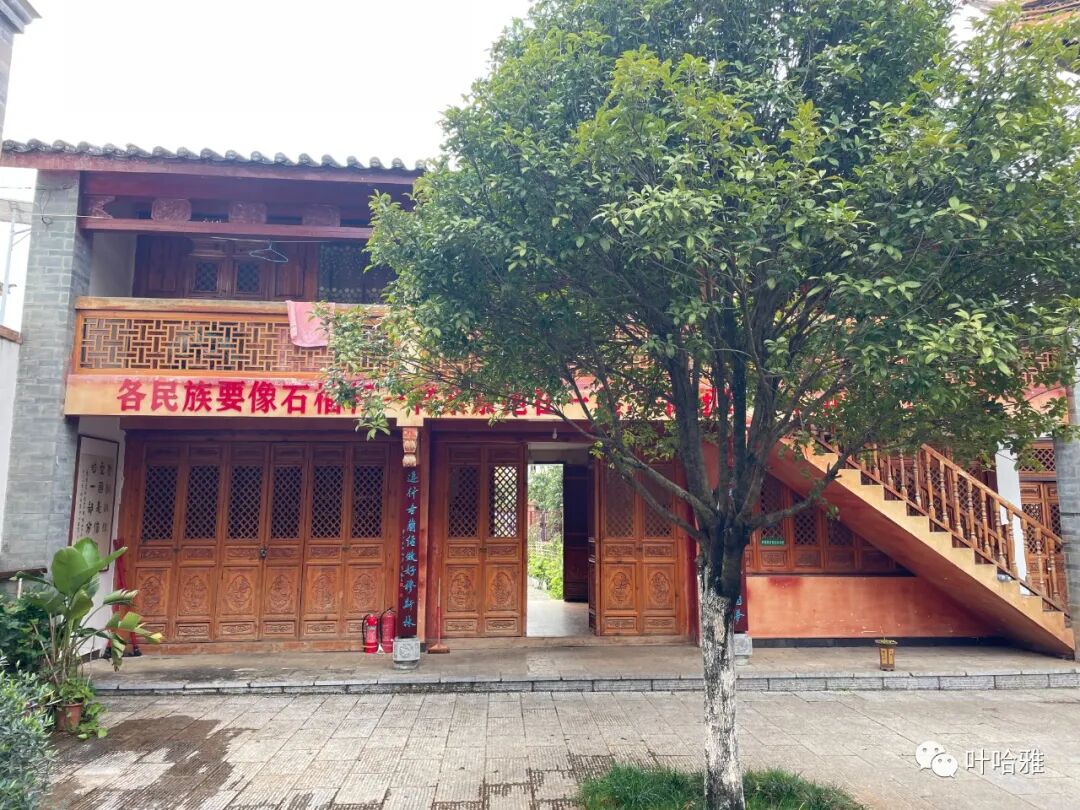
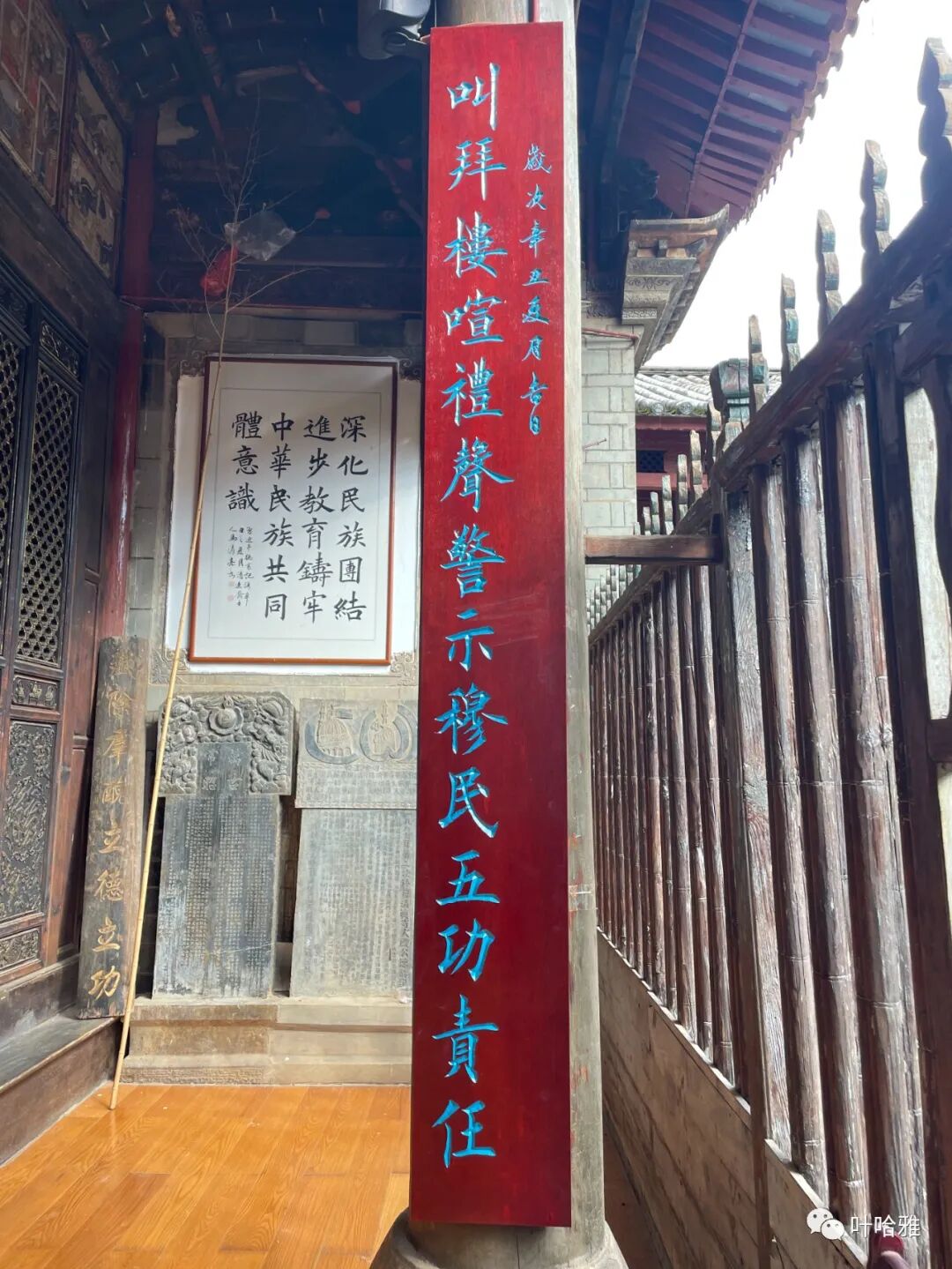
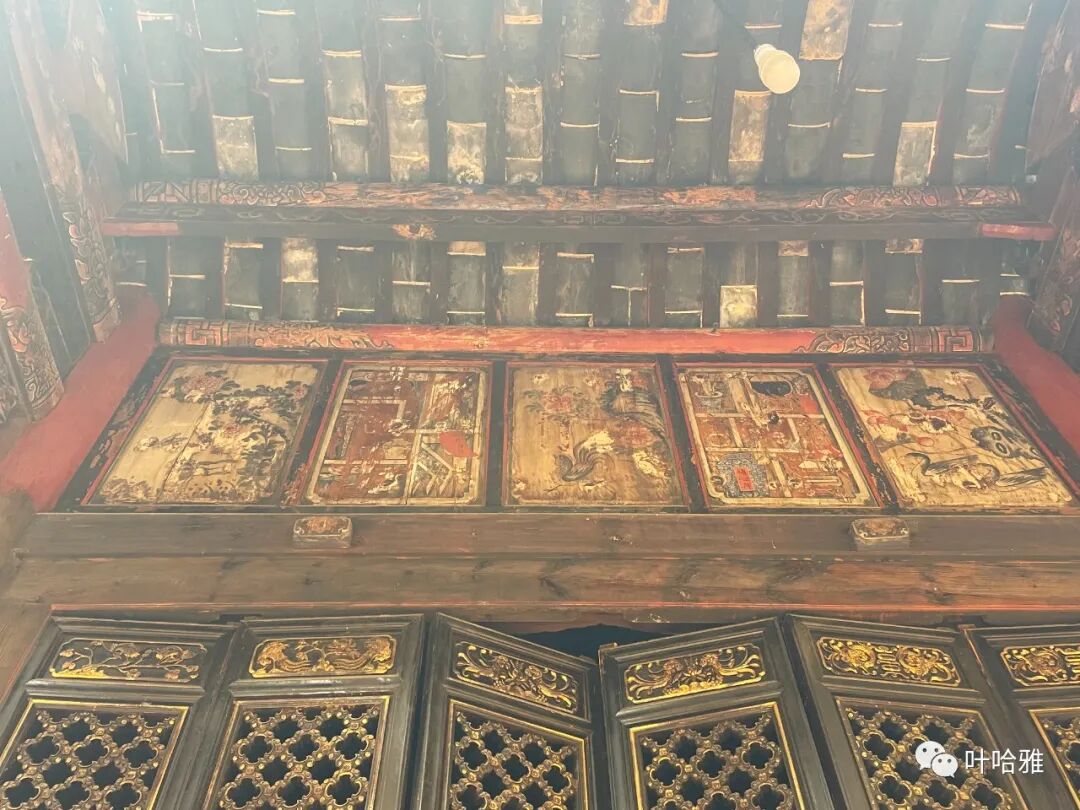
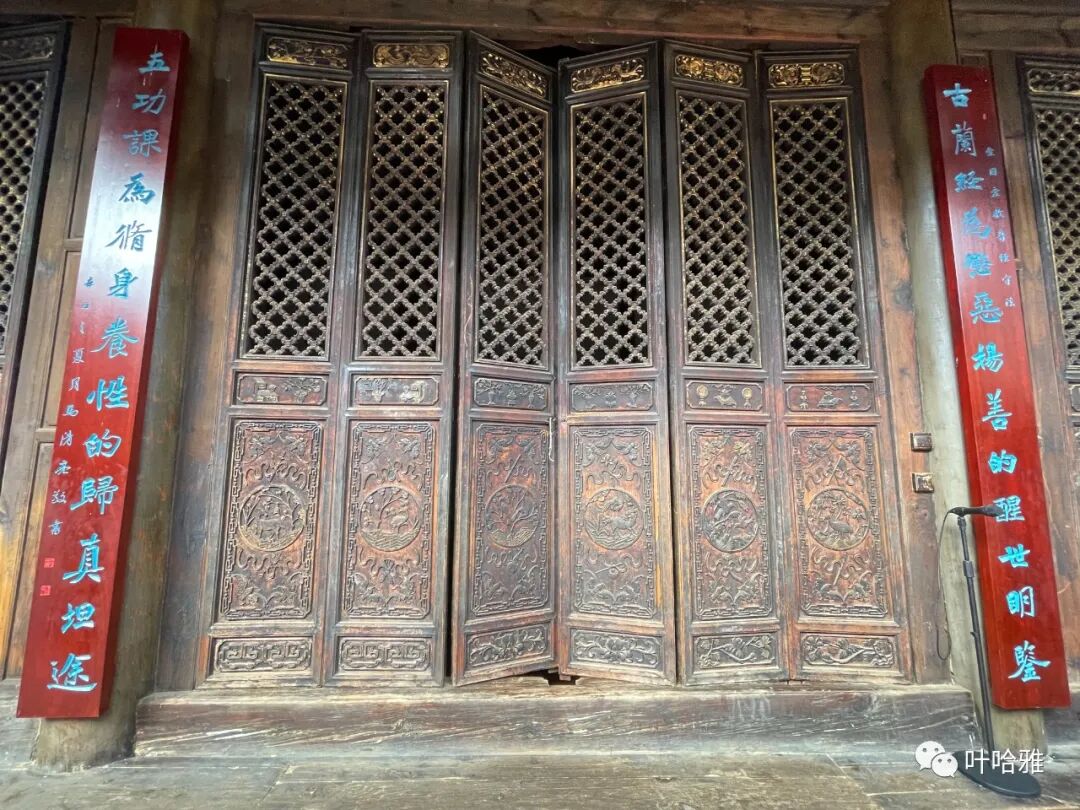
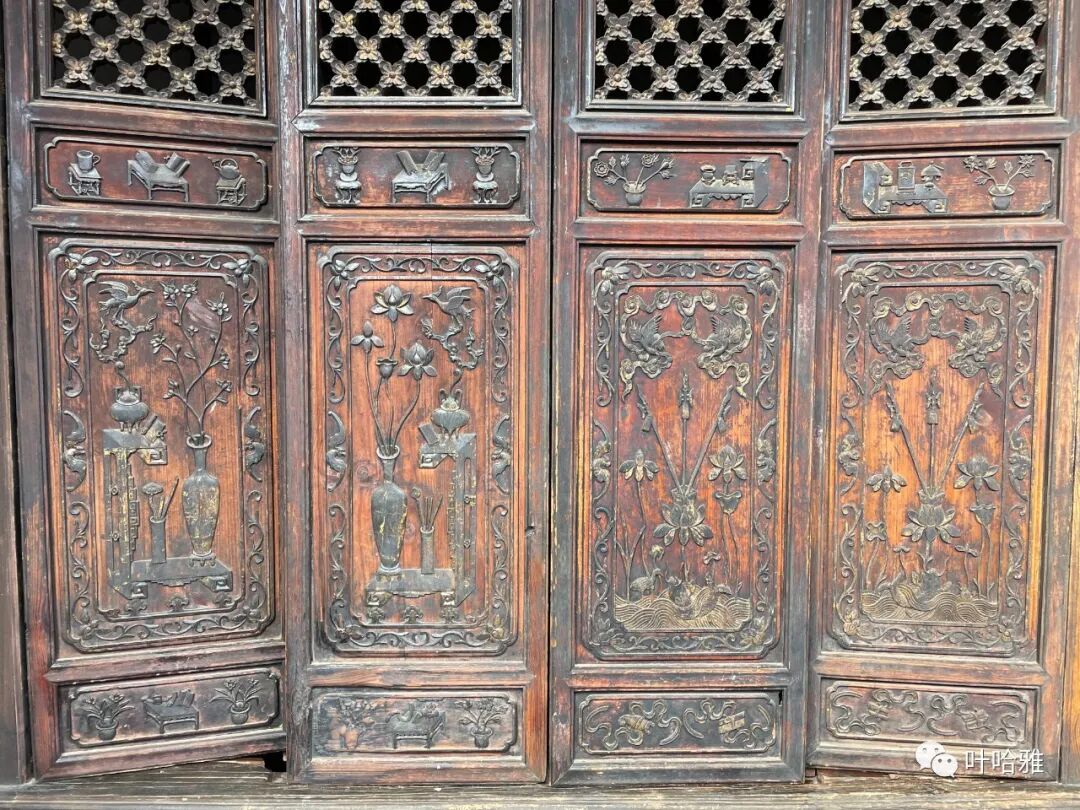
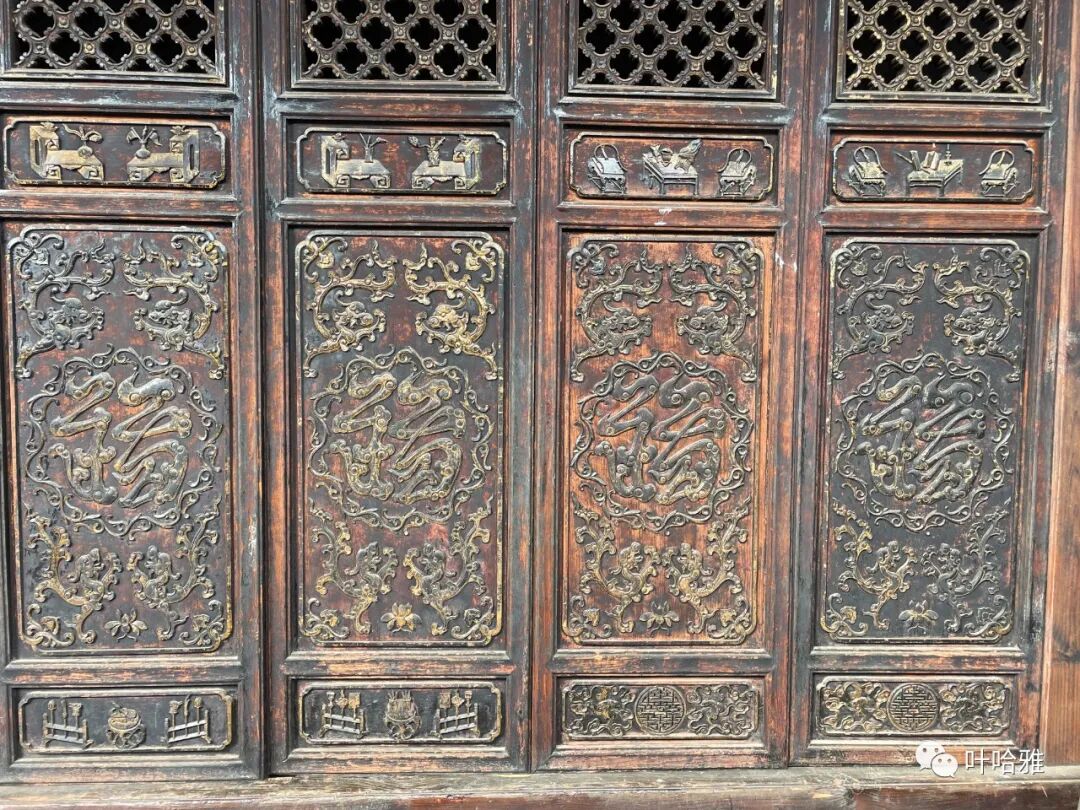
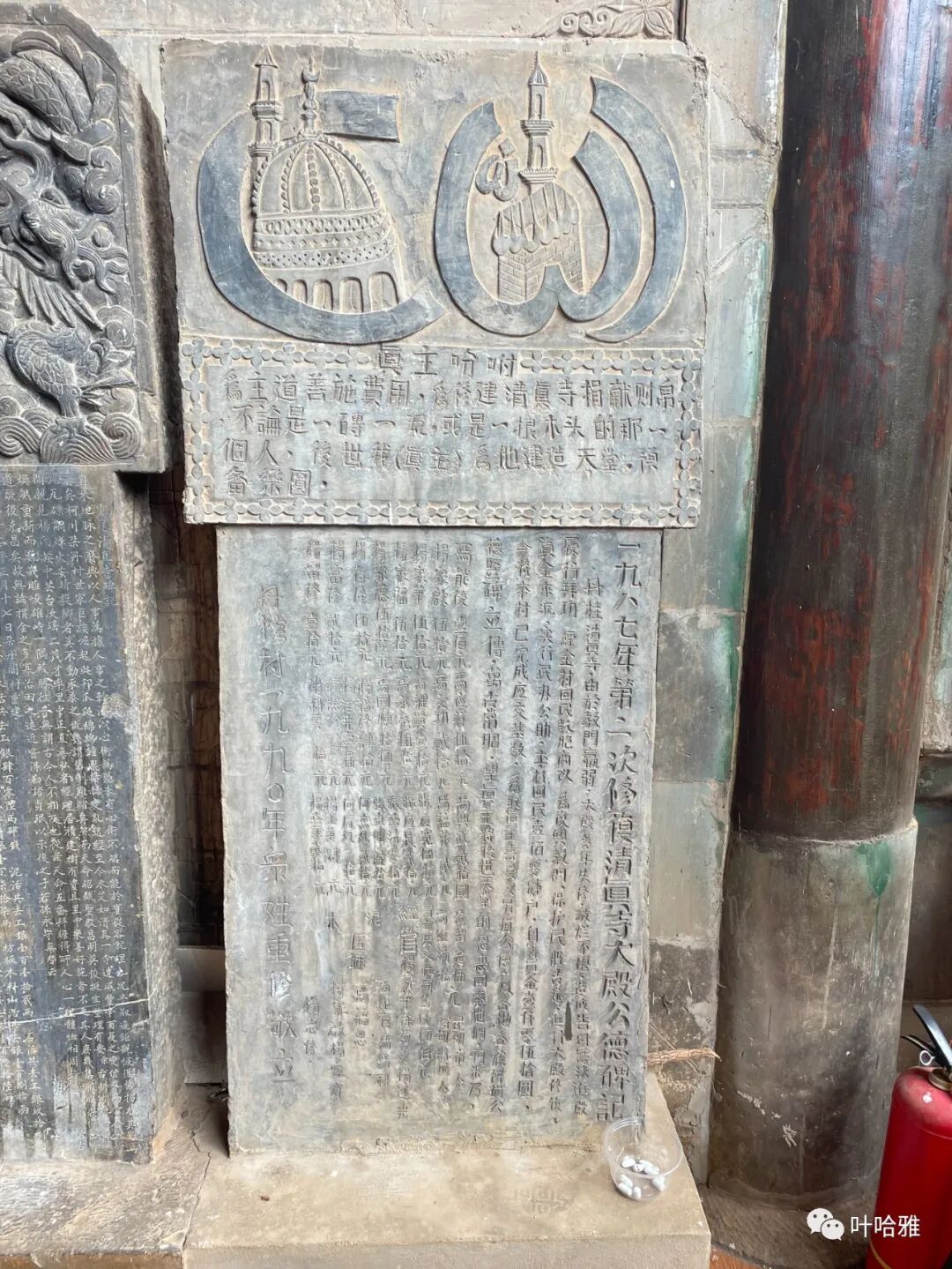
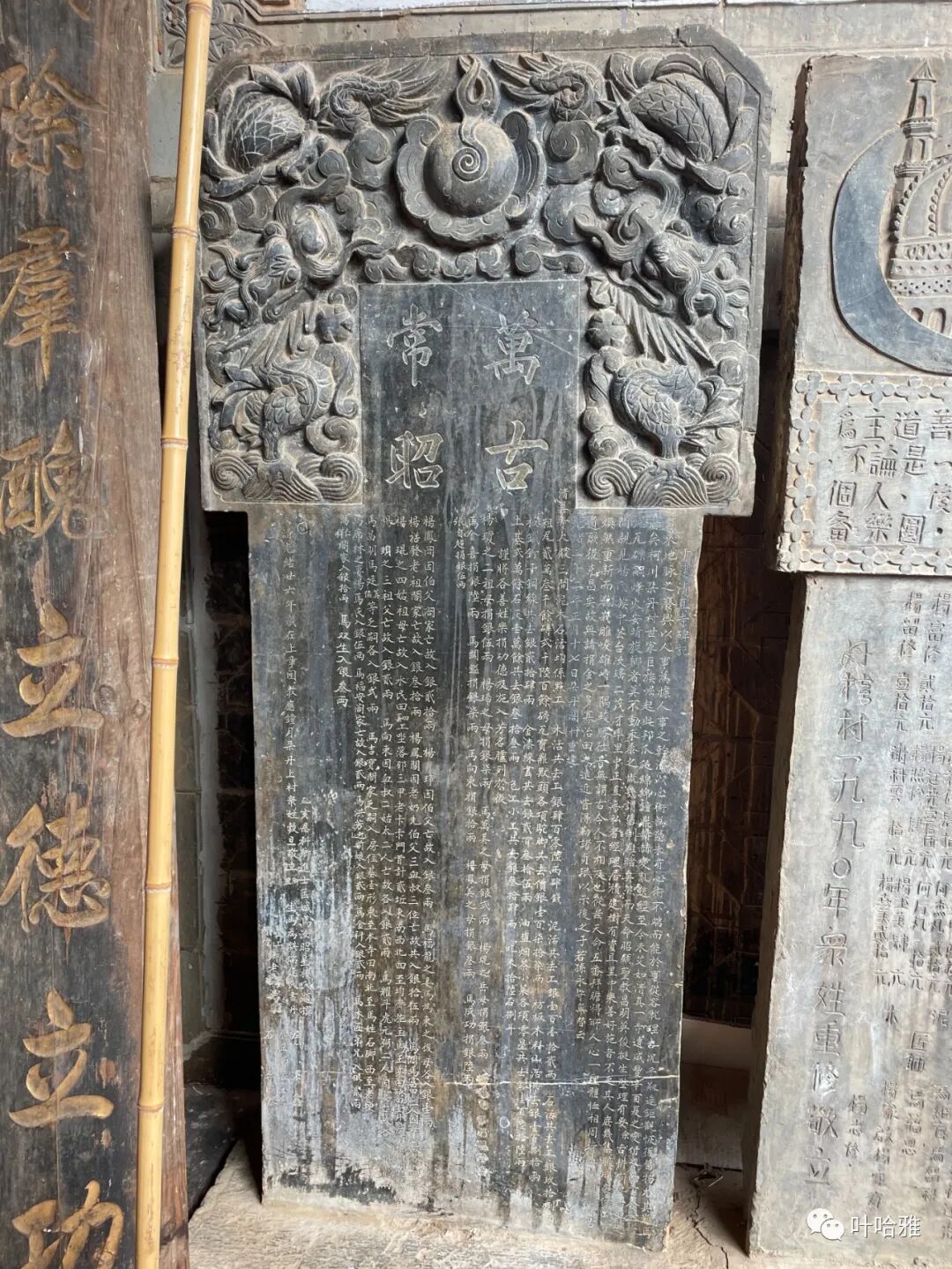
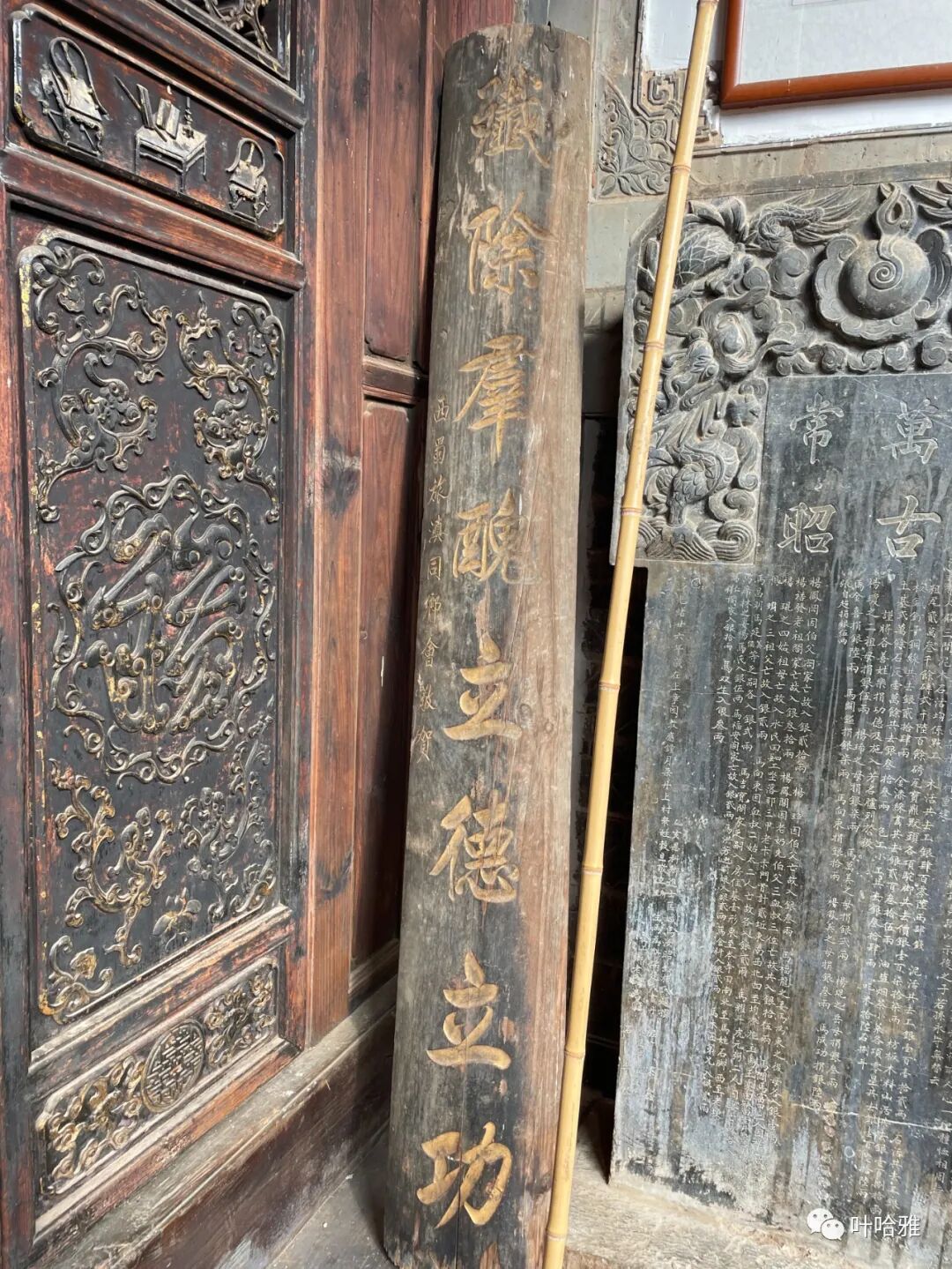
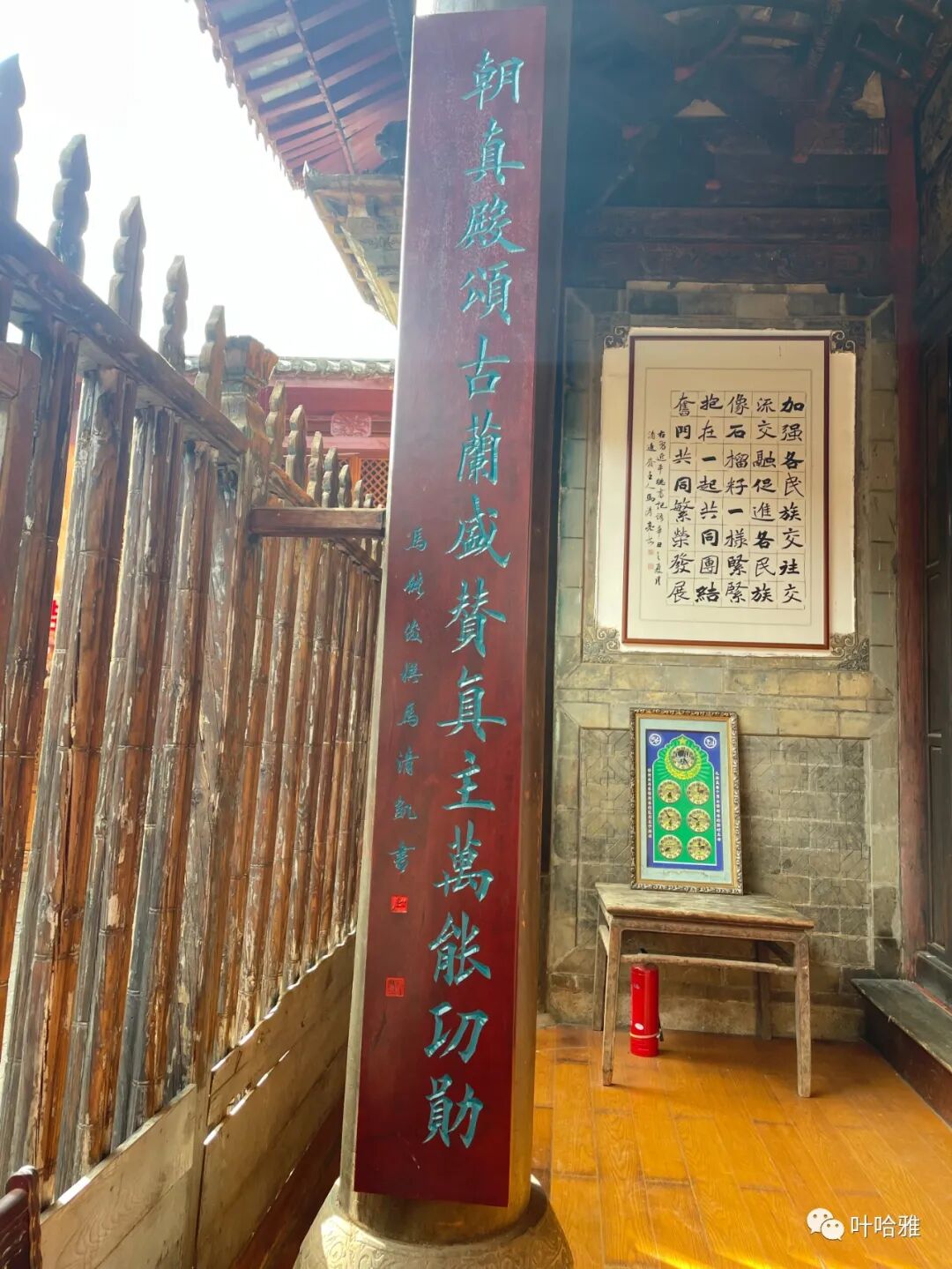
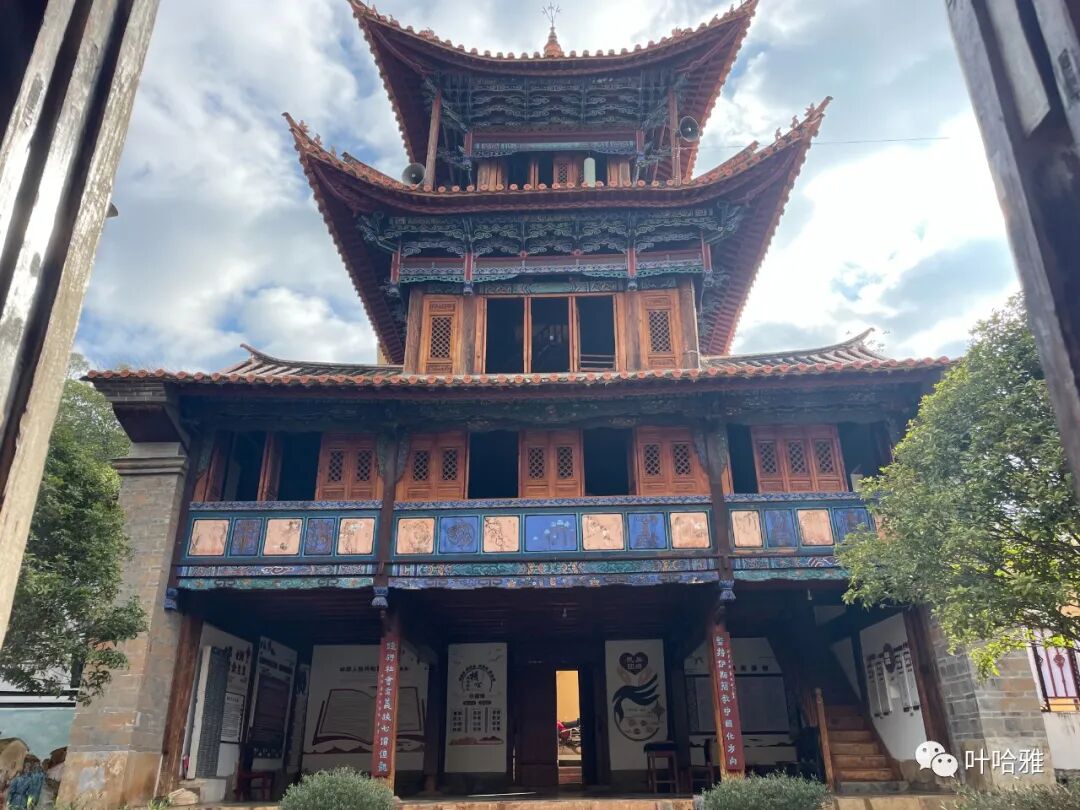
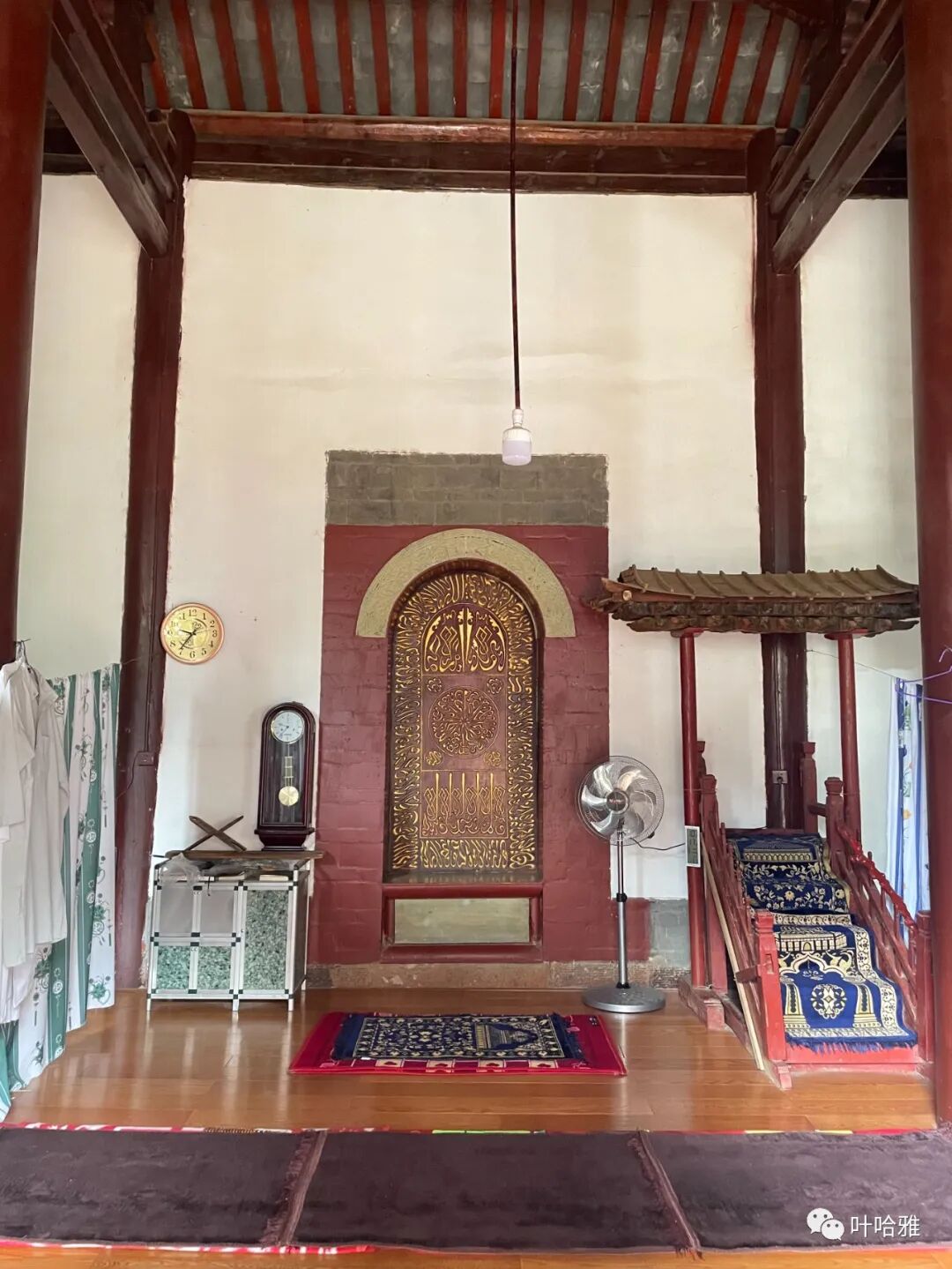
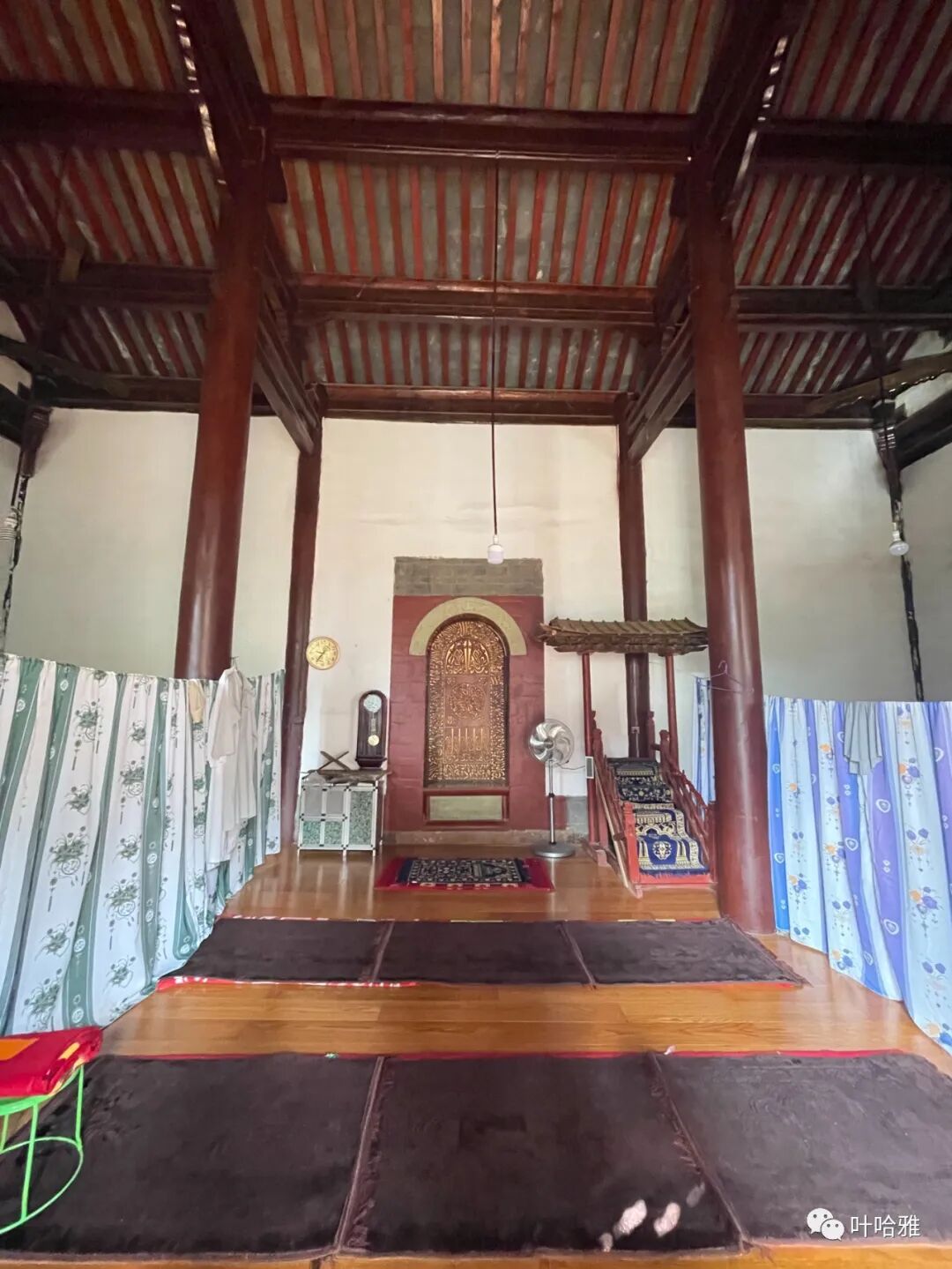
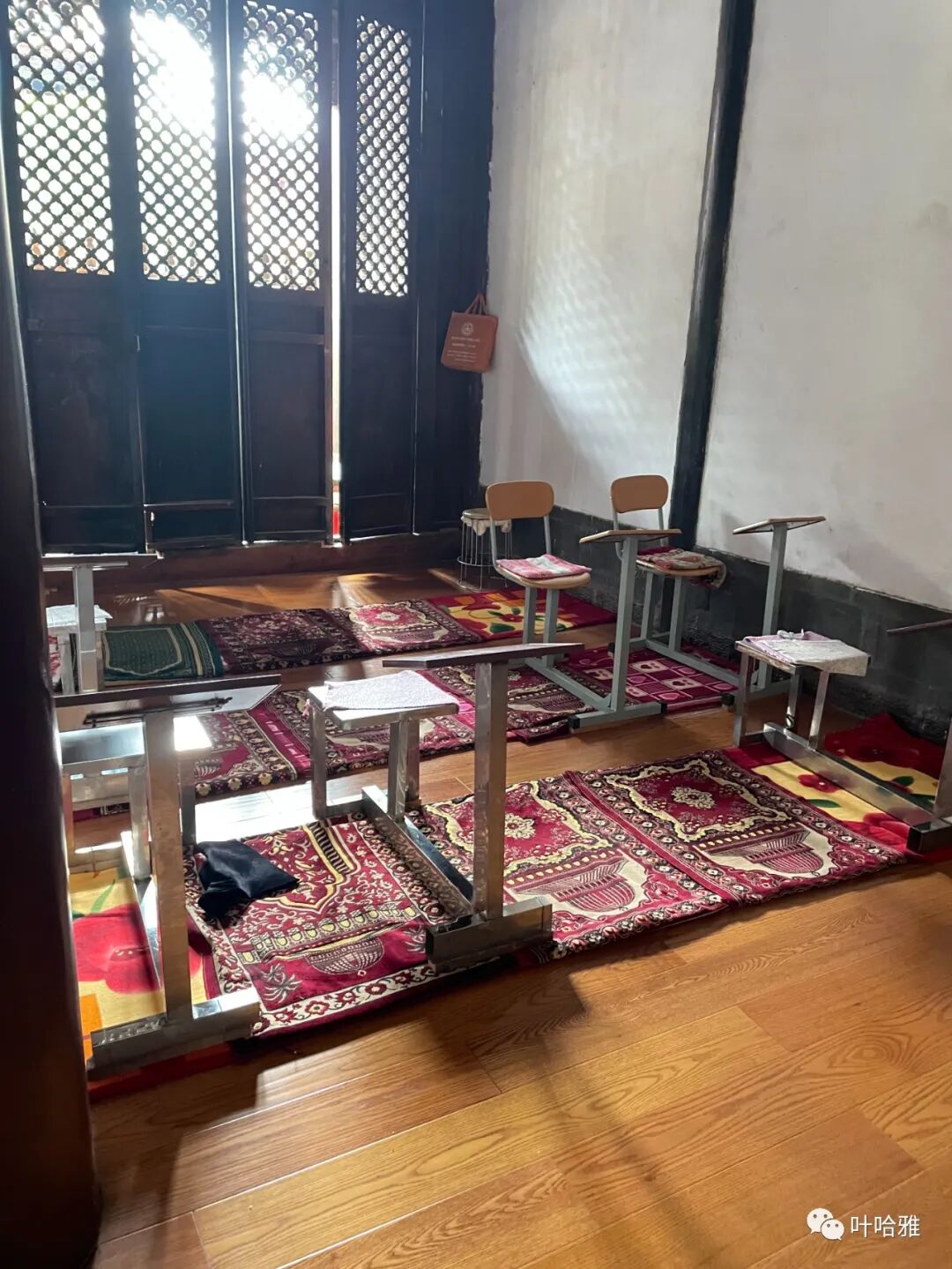
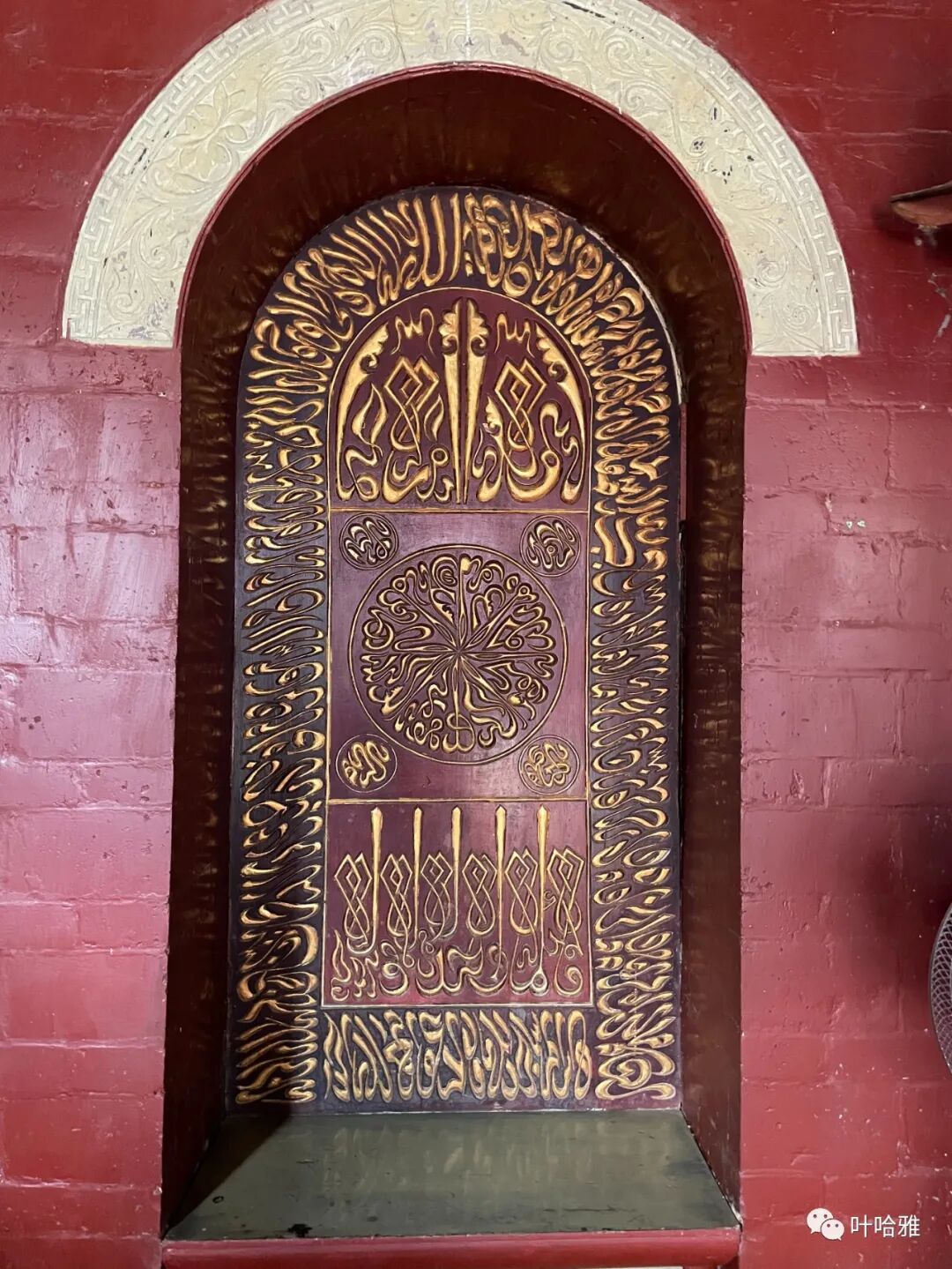
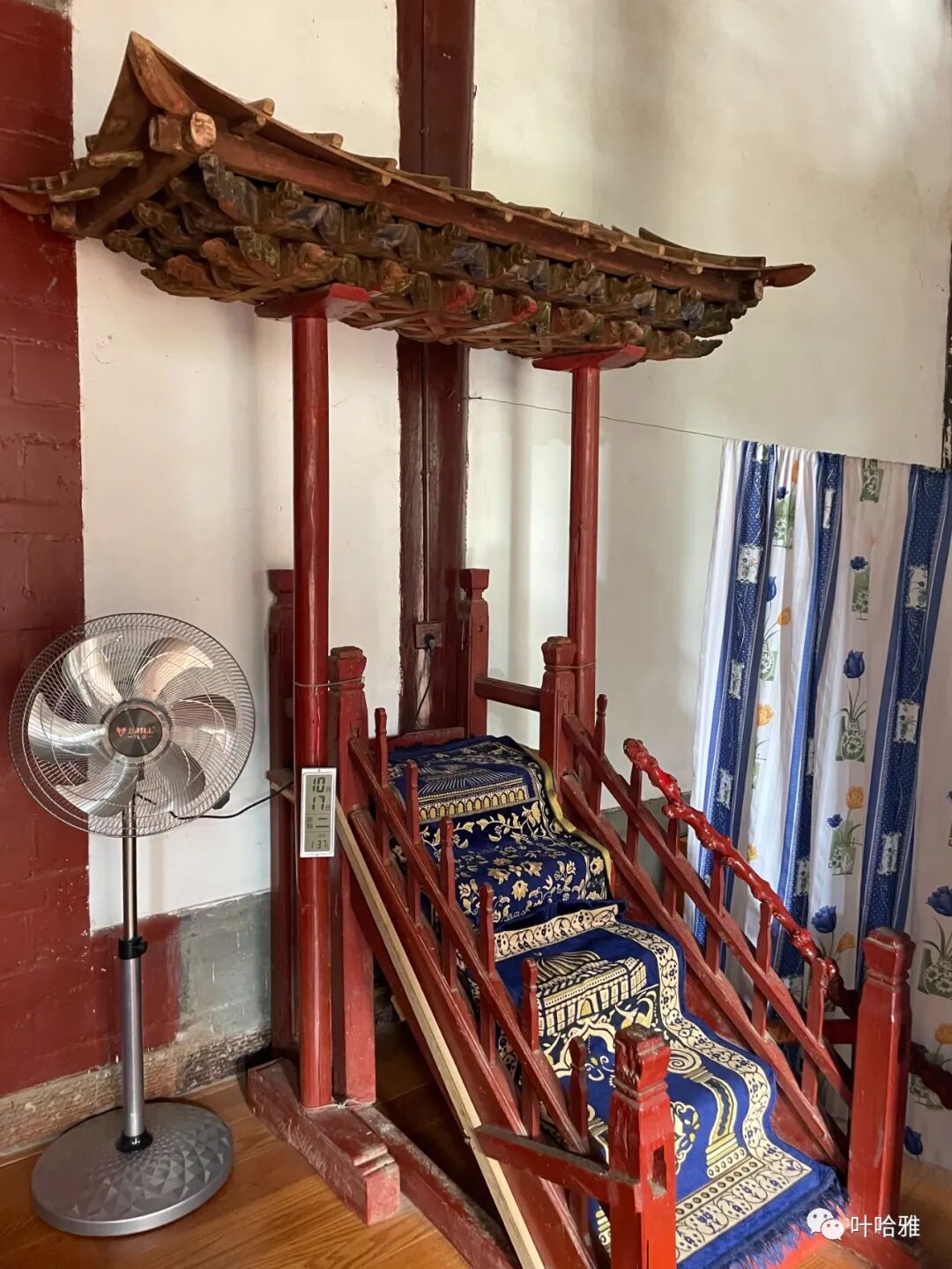
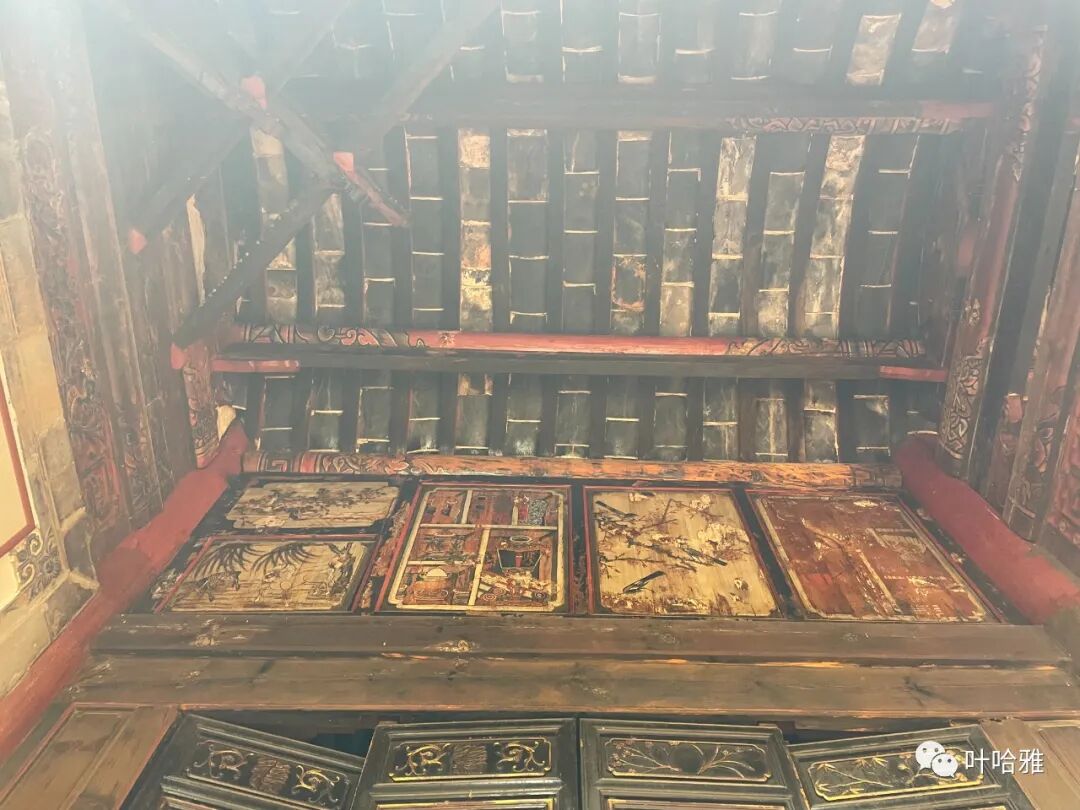
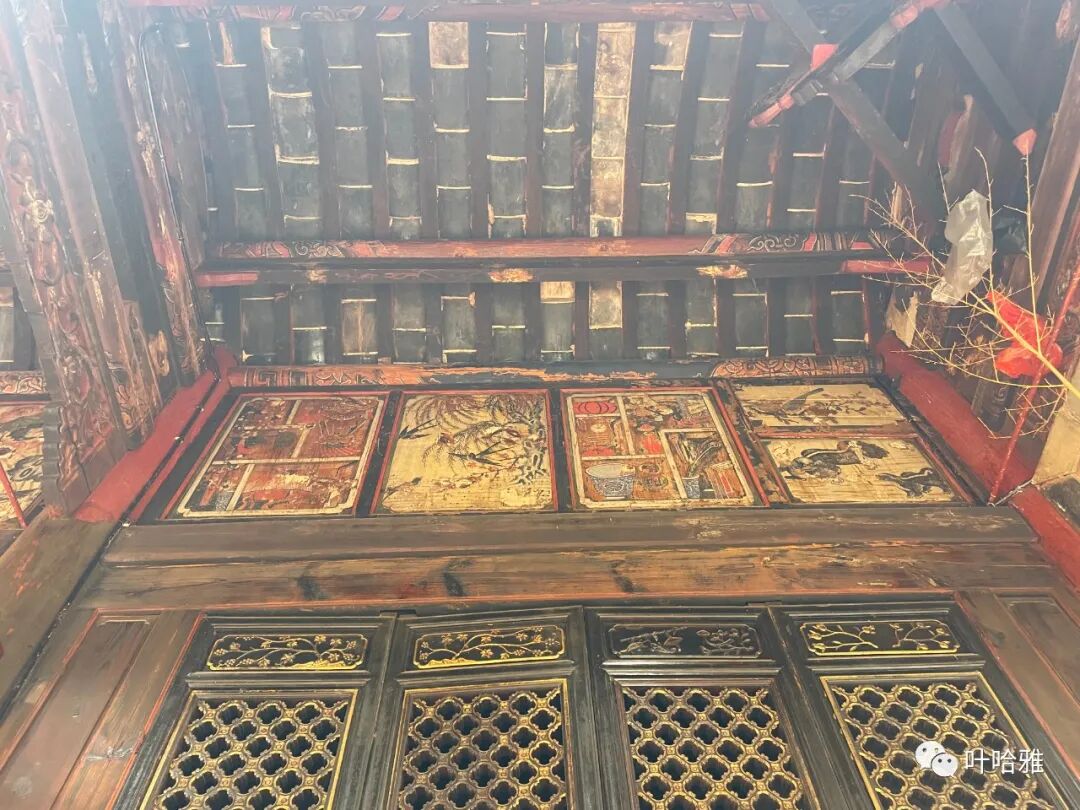
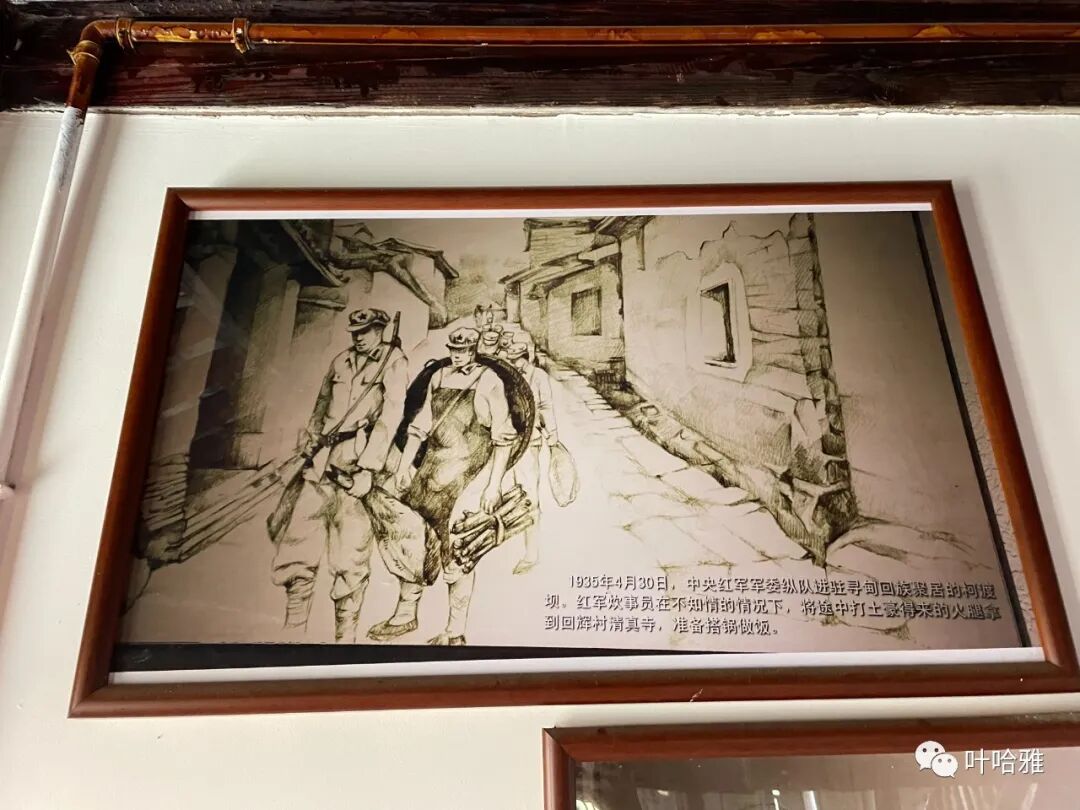
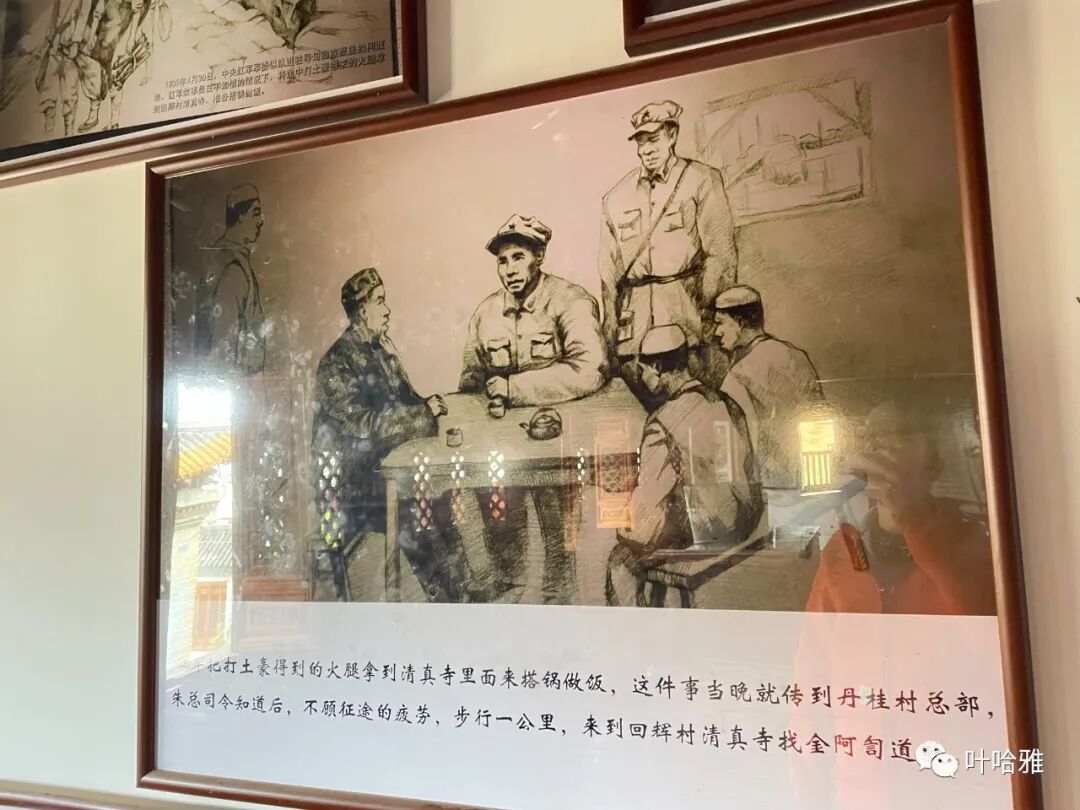
On the third floor of the minaret, there is a poster showing a story from the past. After the Red Army defeated local tyrants, they took ham to cook at Huihui Mosque. When Commander-in-Chief Zhu De found out, he walked to the mosque to apologize to Imam Jin.
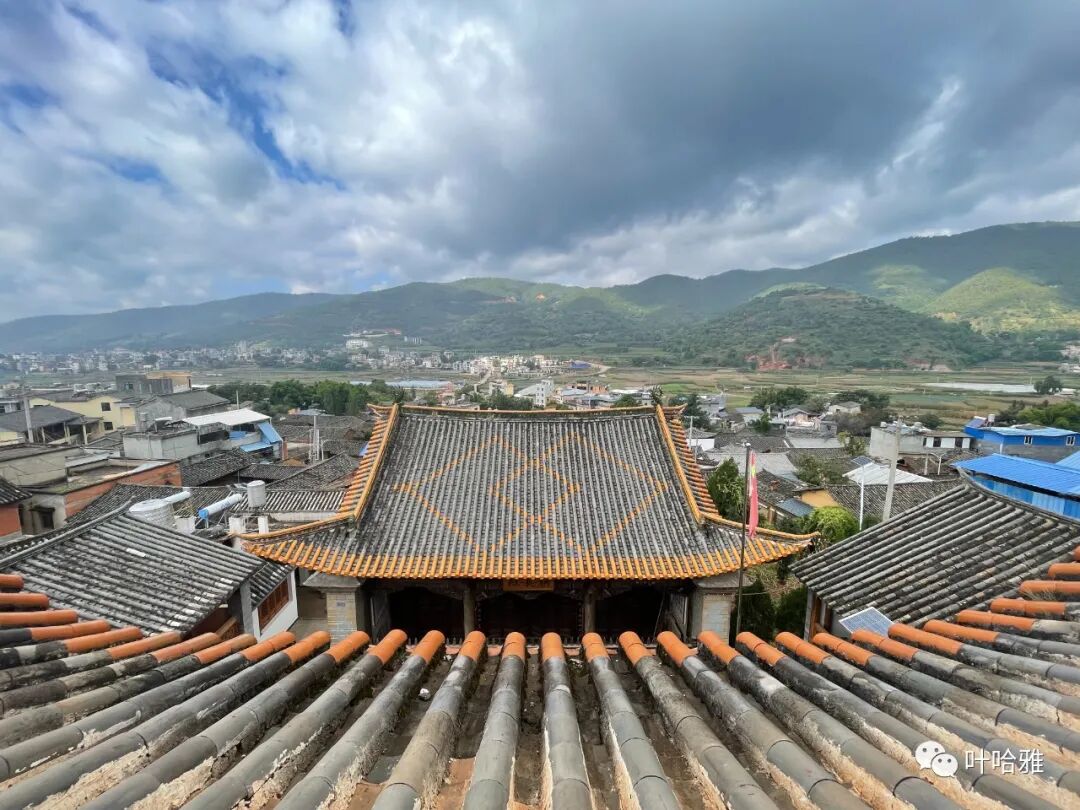
Looking down at Dangui Village from the top of the minaret.
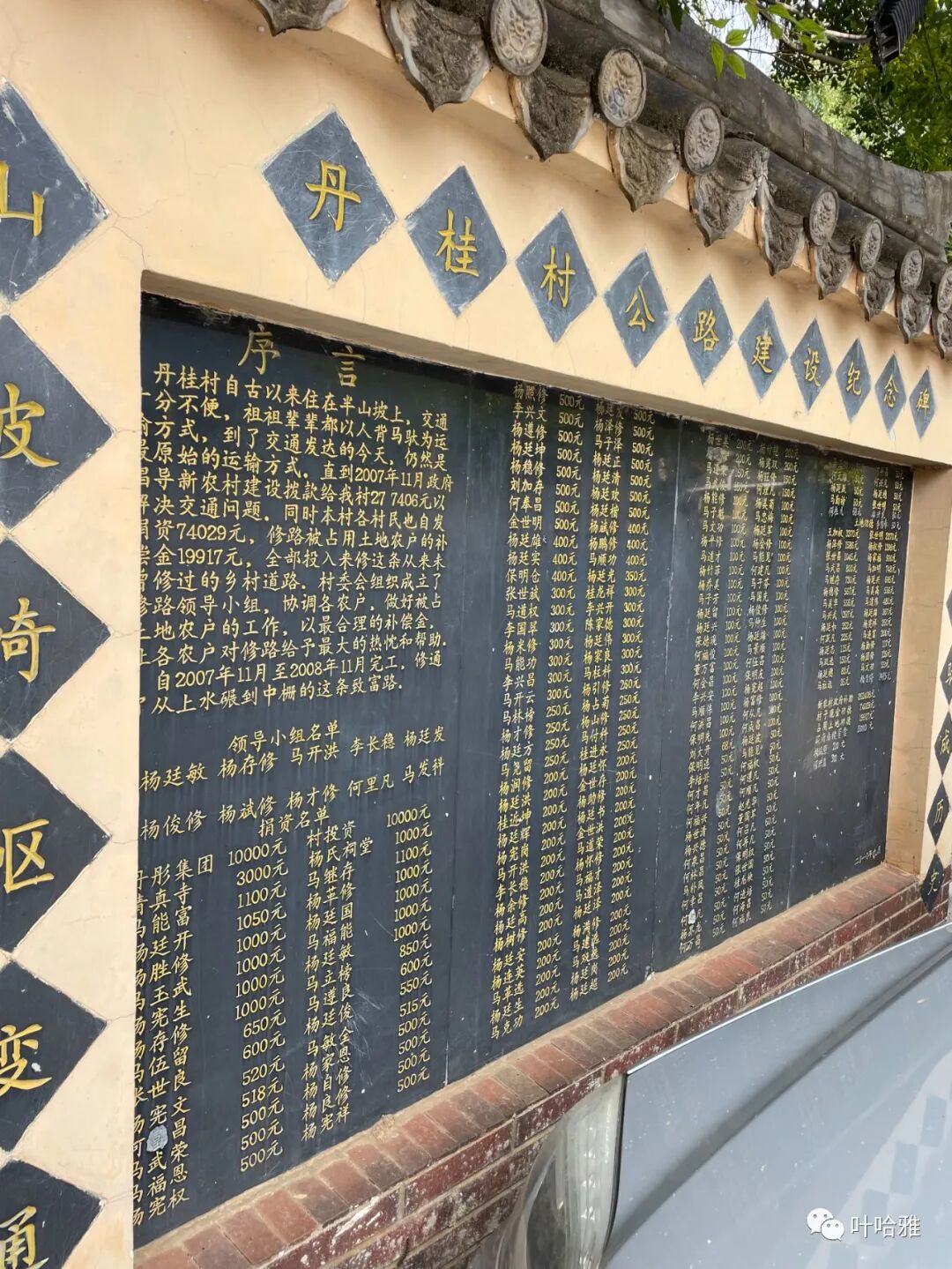
The Huihui Village mentioned above shares the same name as the Huihui Village in Sanya and is two kilometers away from Dangui Village.
Huihui Village Mosque.
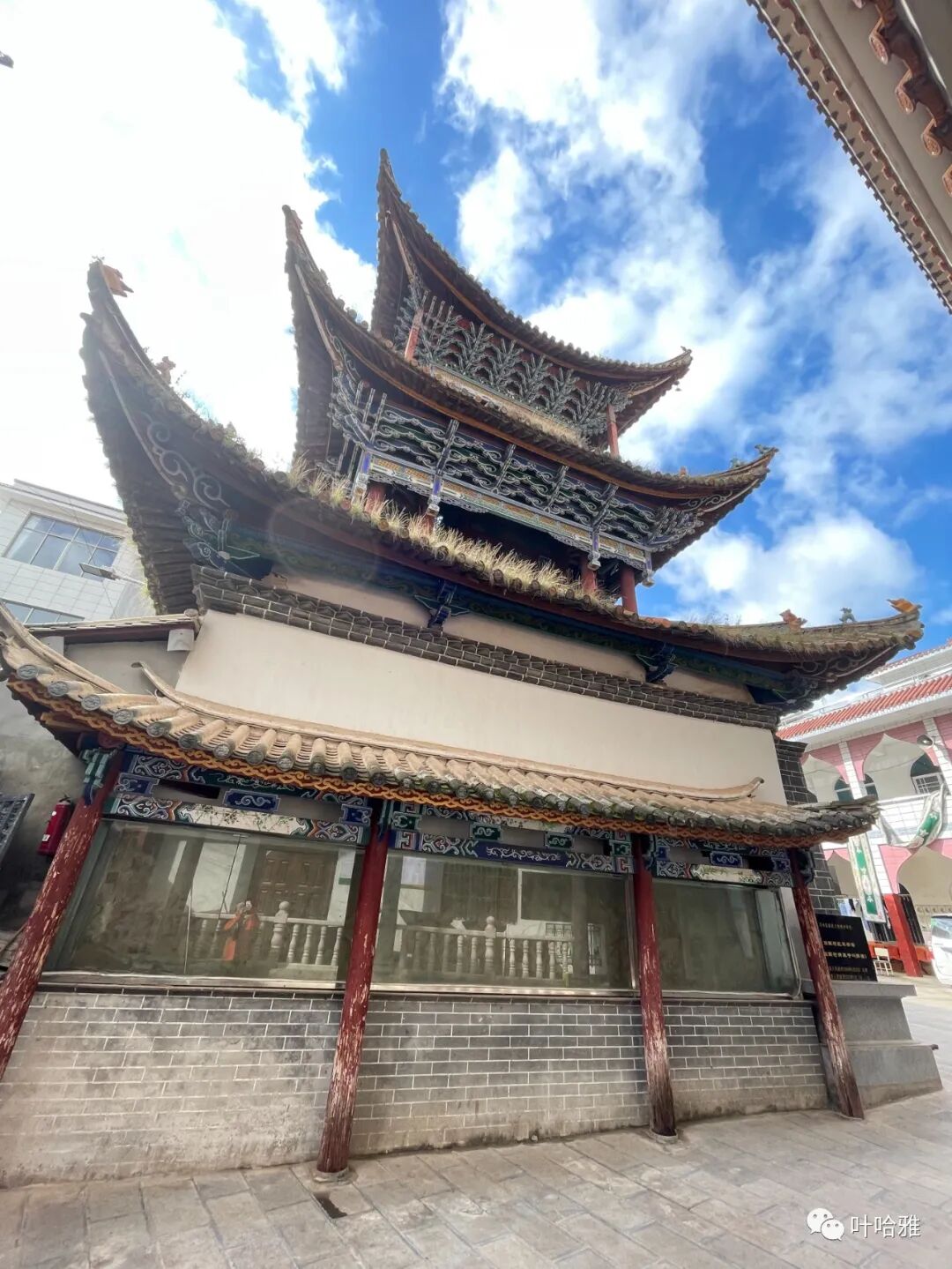
Huihui Mosque is built in the center of the village, and it also has a slogan left by the Red Army.
The slogan is on the side of the minaret and reads, "The Red Army absolutely protects the interests of the Hui worker and peasant masses." "Hui home" refers to the homes of Hui Muslims, as the term Hui Muslims was not yet used as an official name before liberation.
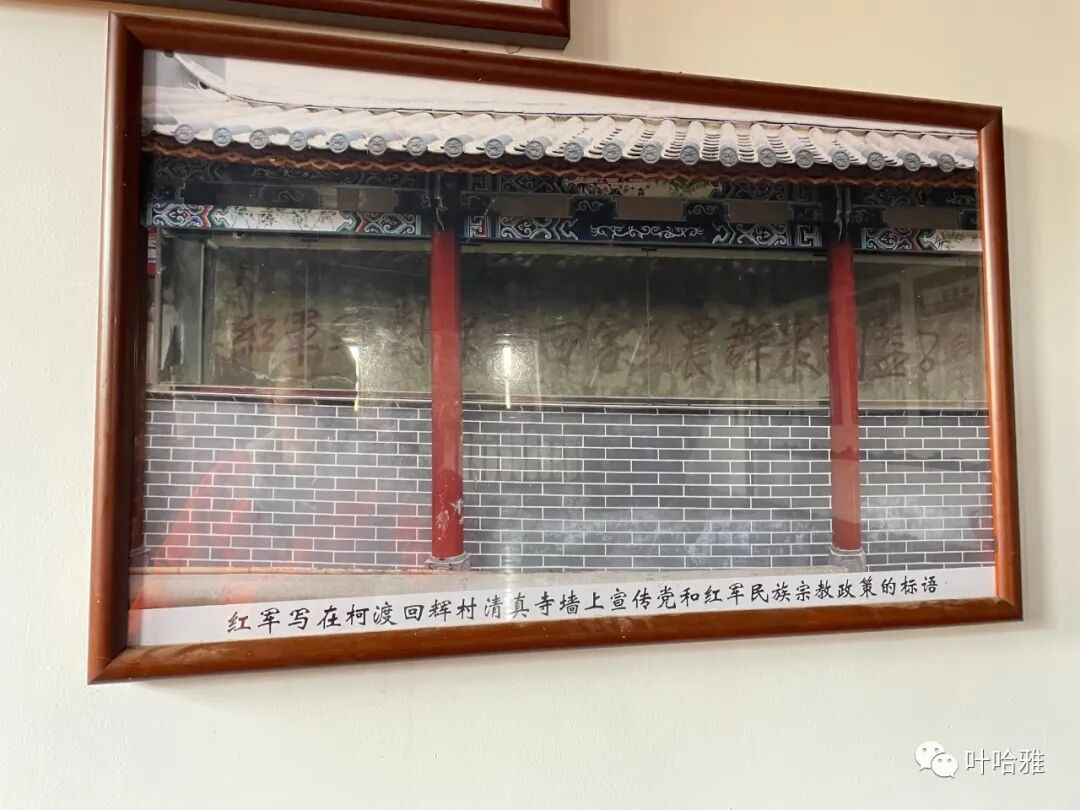
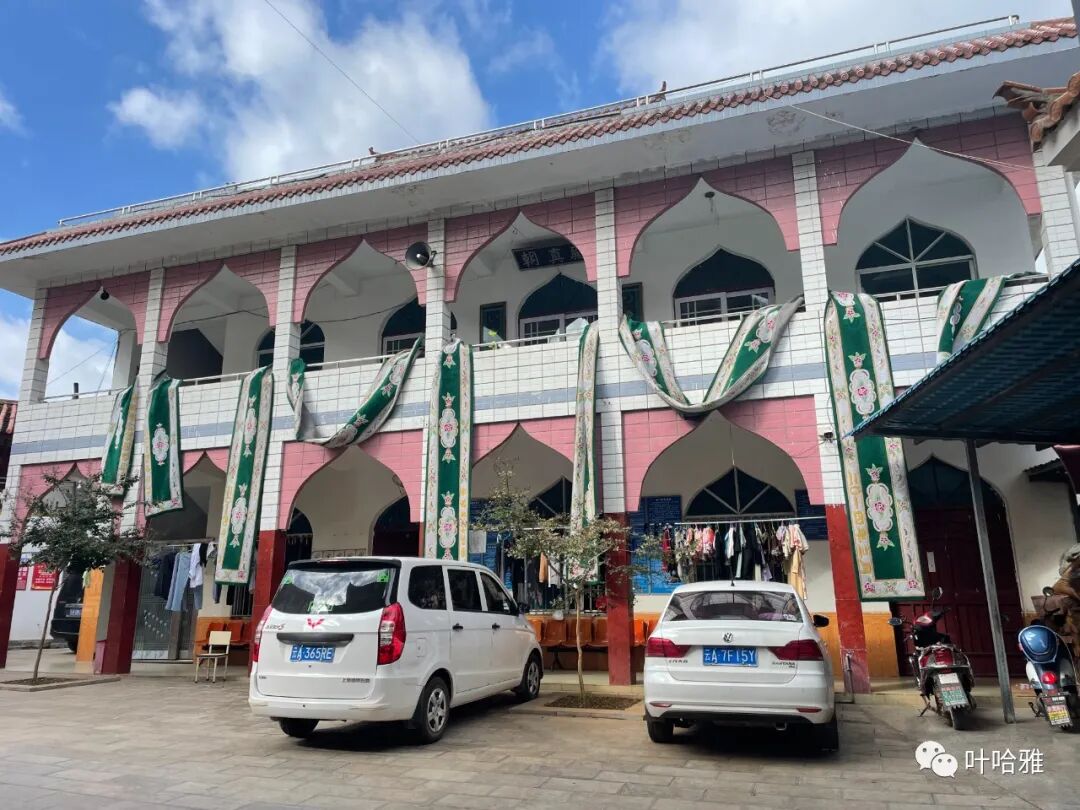
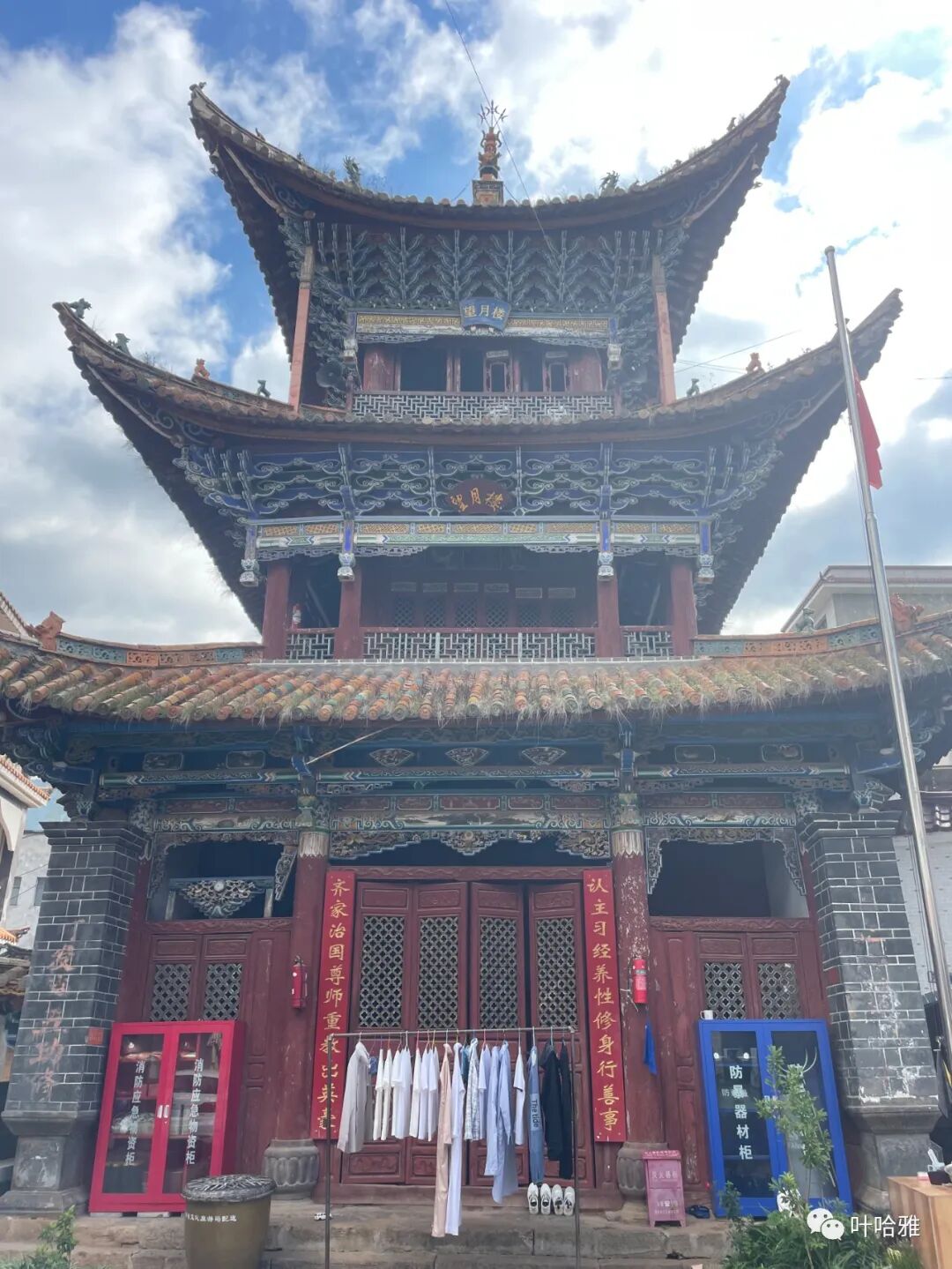
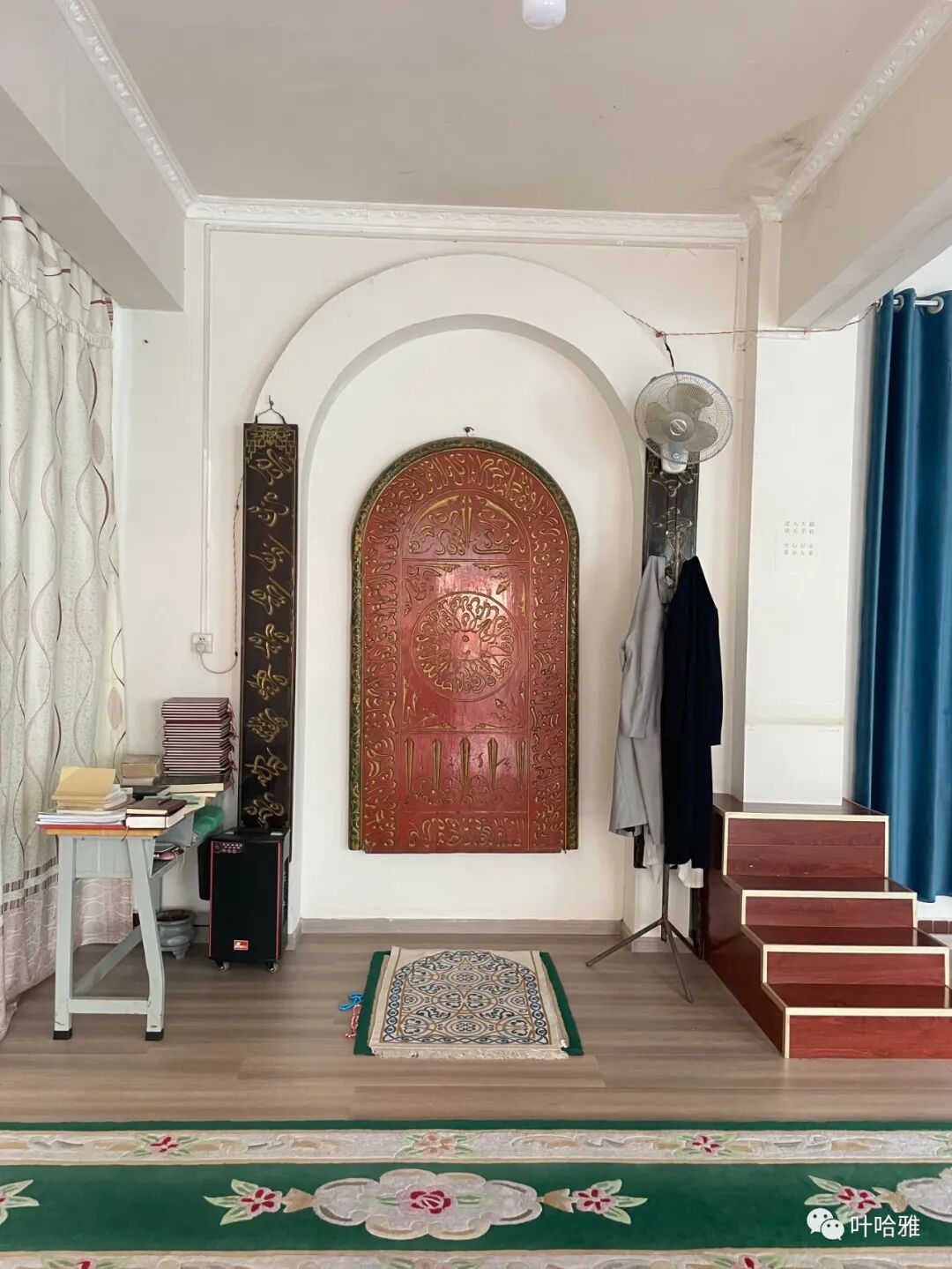
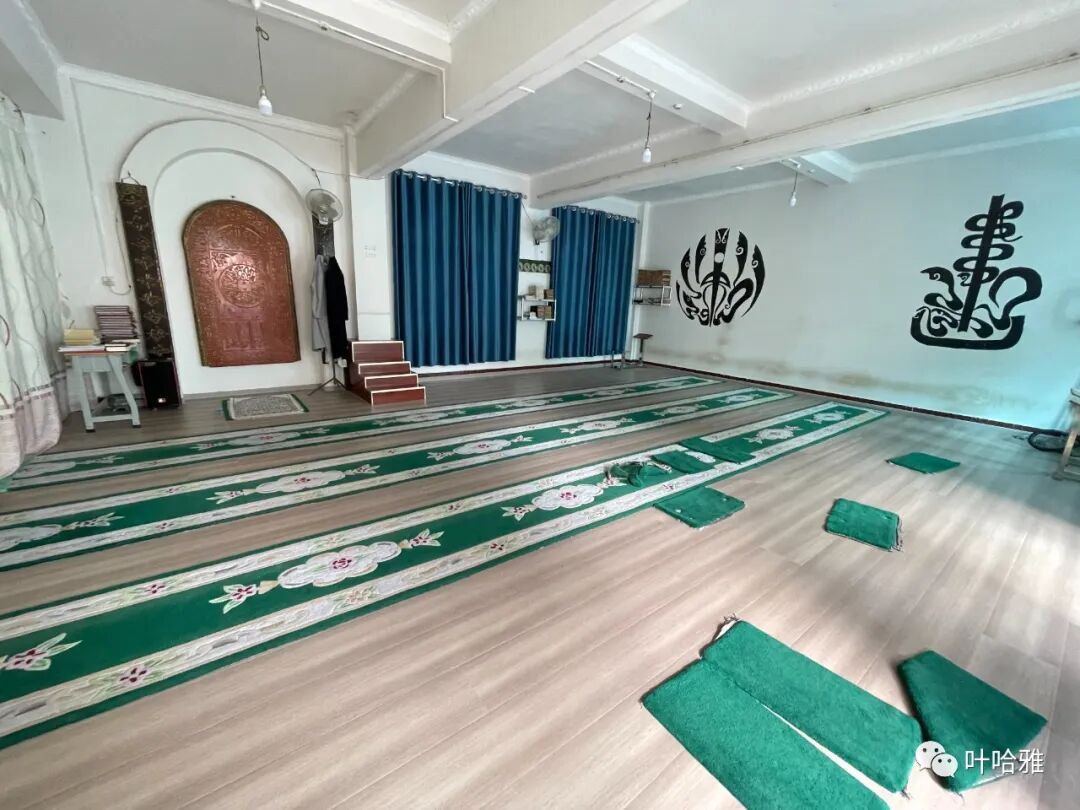
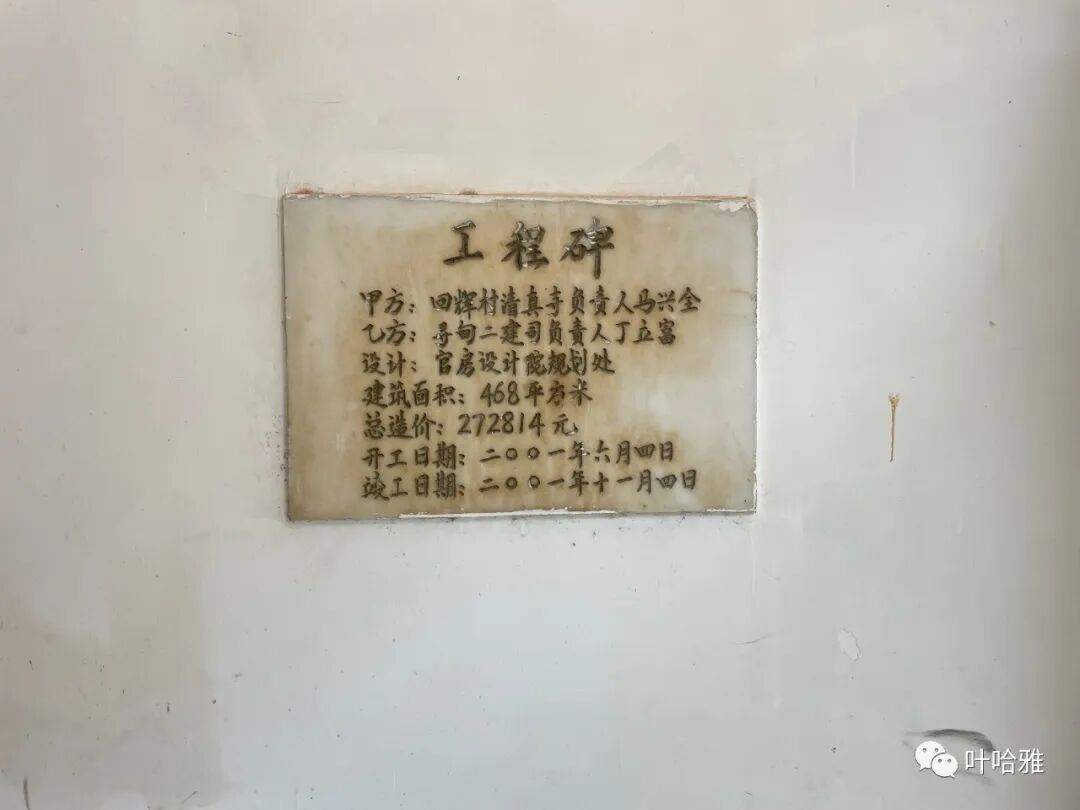
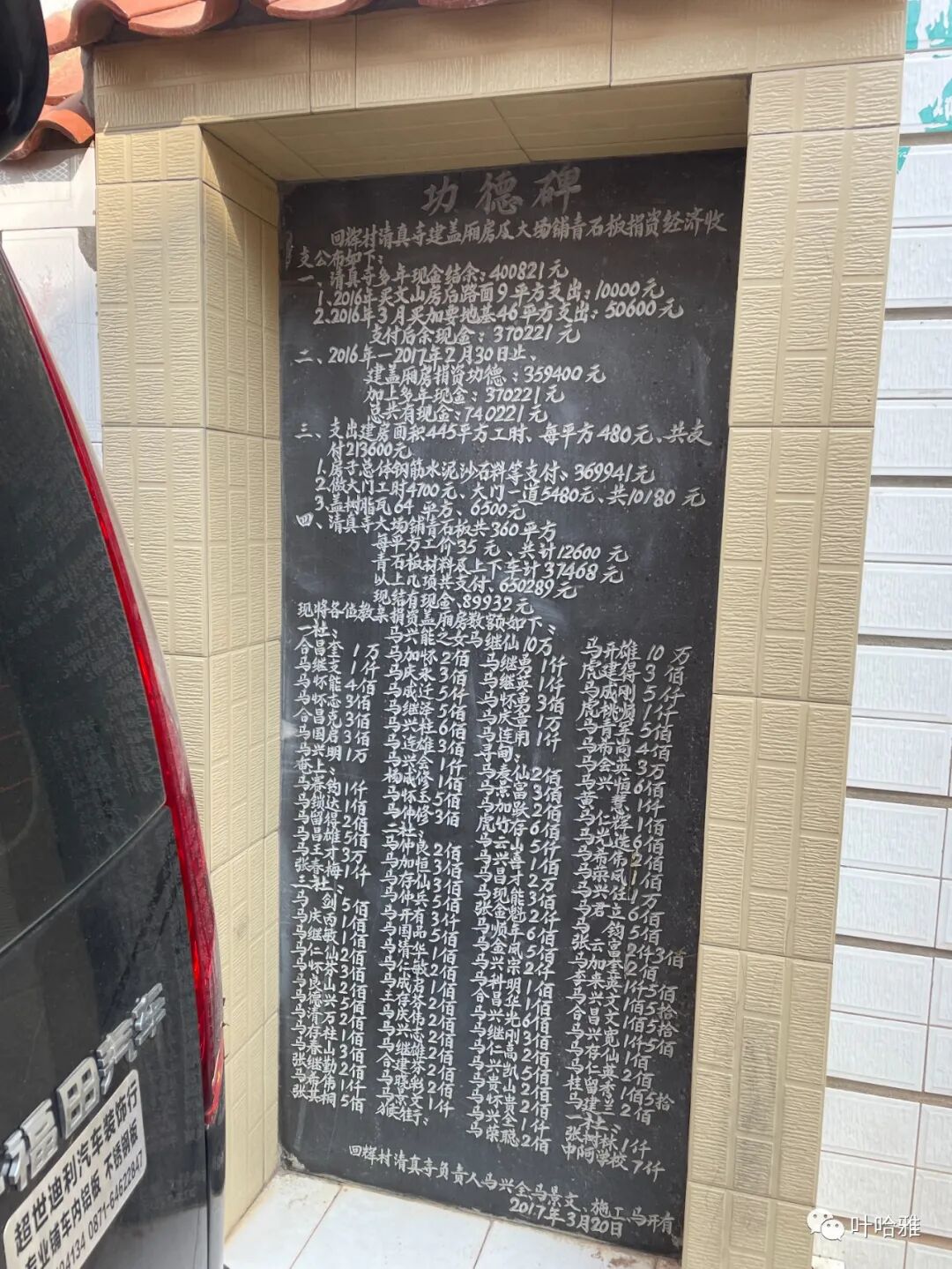
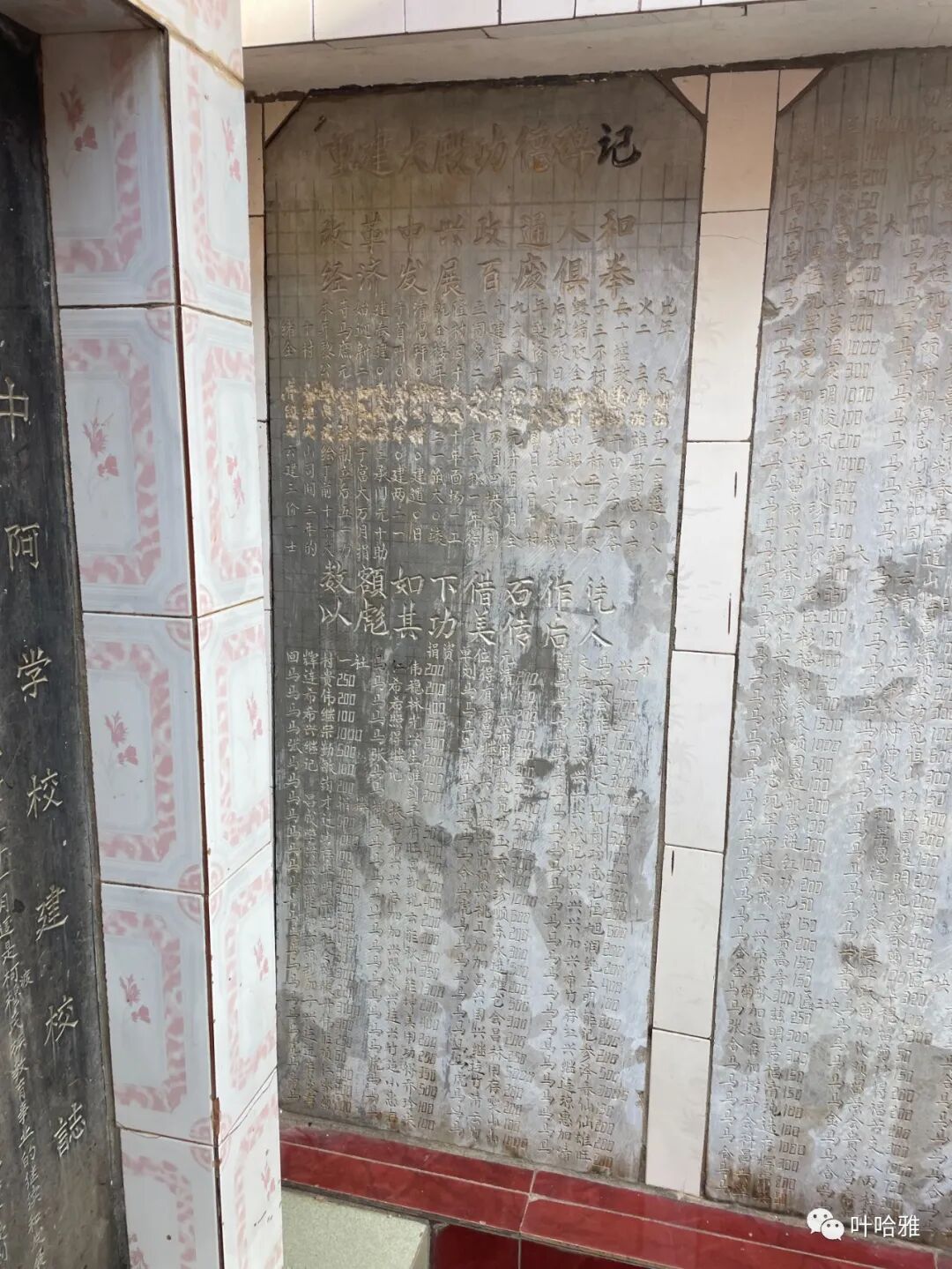
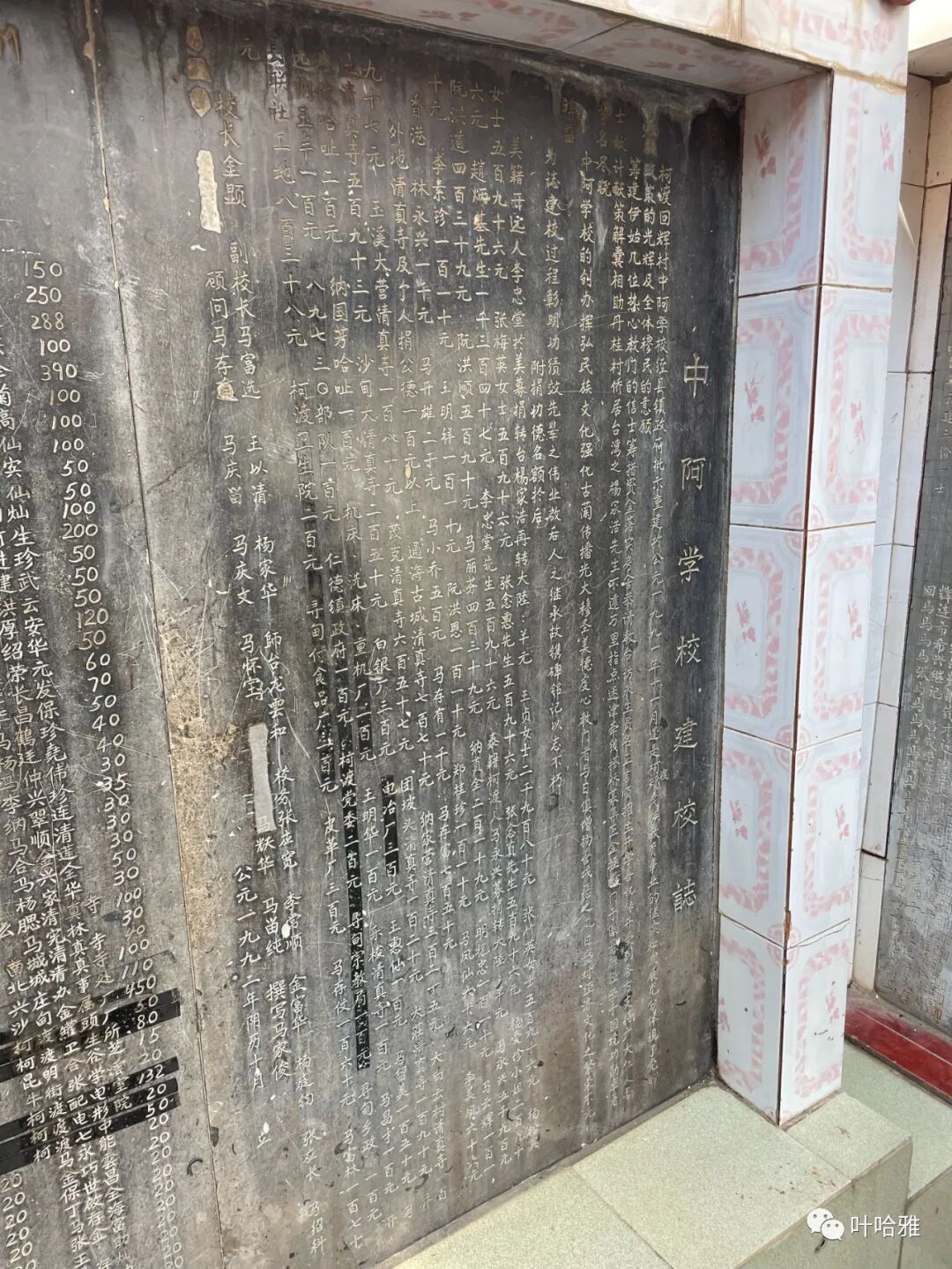
The founding record of the Chinese-Arabic school inside the Huihui Village mosque.
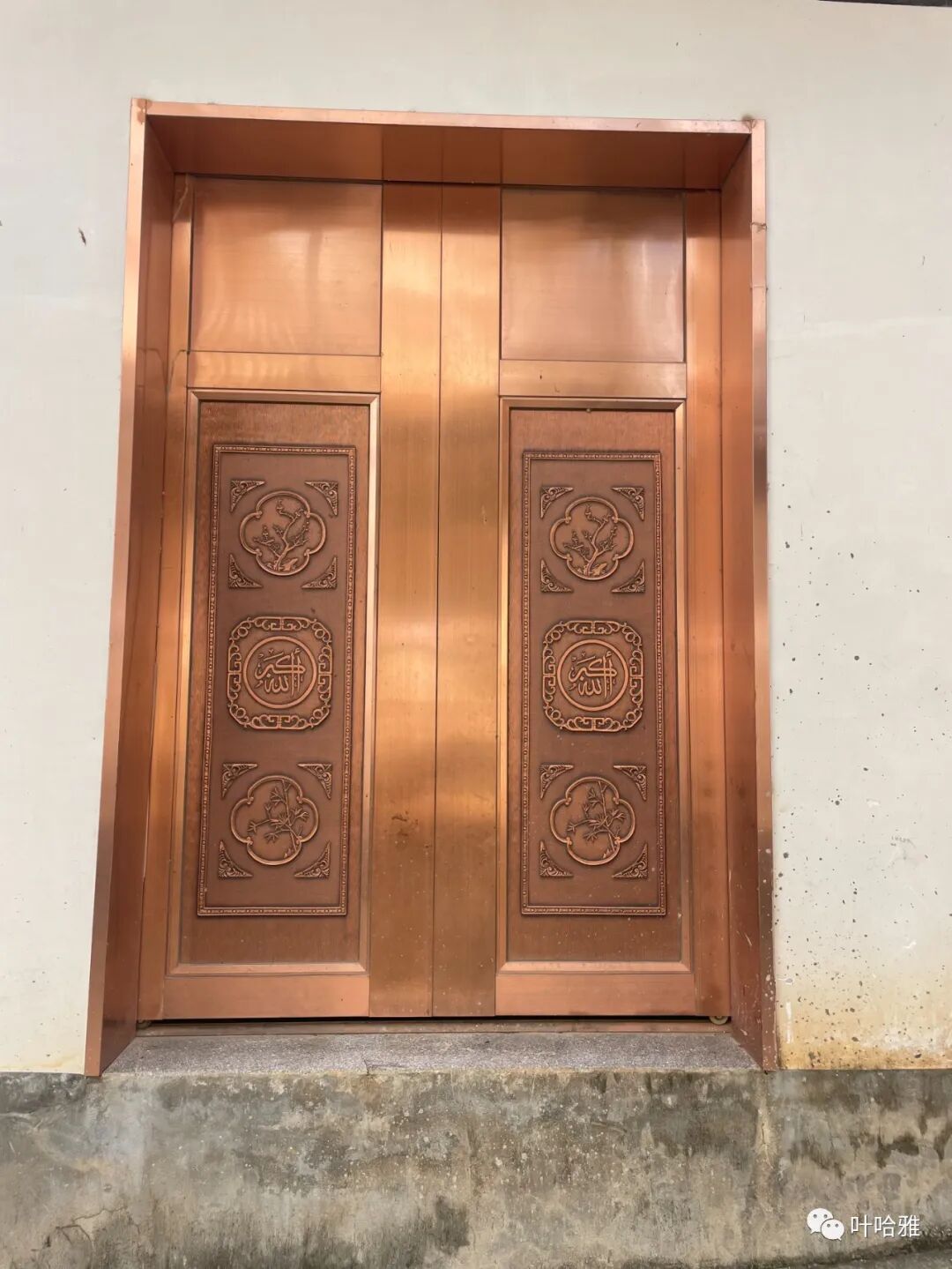
Patterns on the gate of a house across from the Huihui mosque.
Tuogu Village in Ludian.
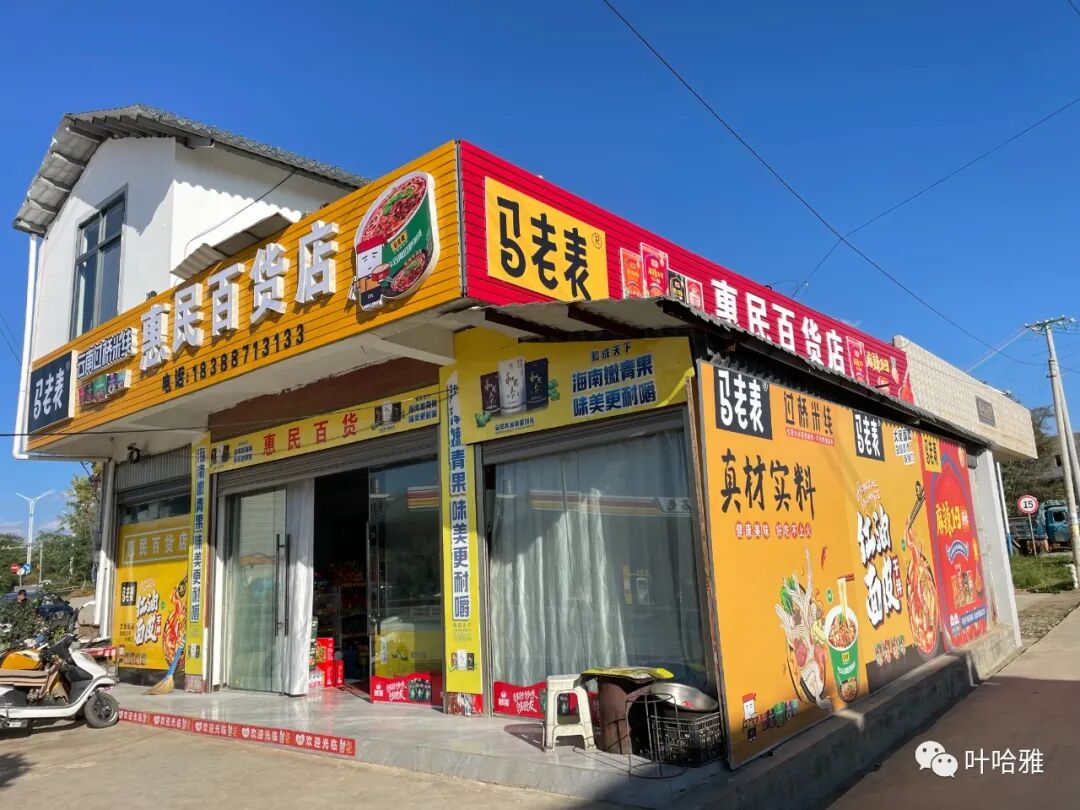
On the way back to Beijing from Xundian, I passed a small halal shop at the entrance of Tuogu Village. They had Ma Laobiao rice noodles (mixian), and I bought plenty of instant food for the trip.
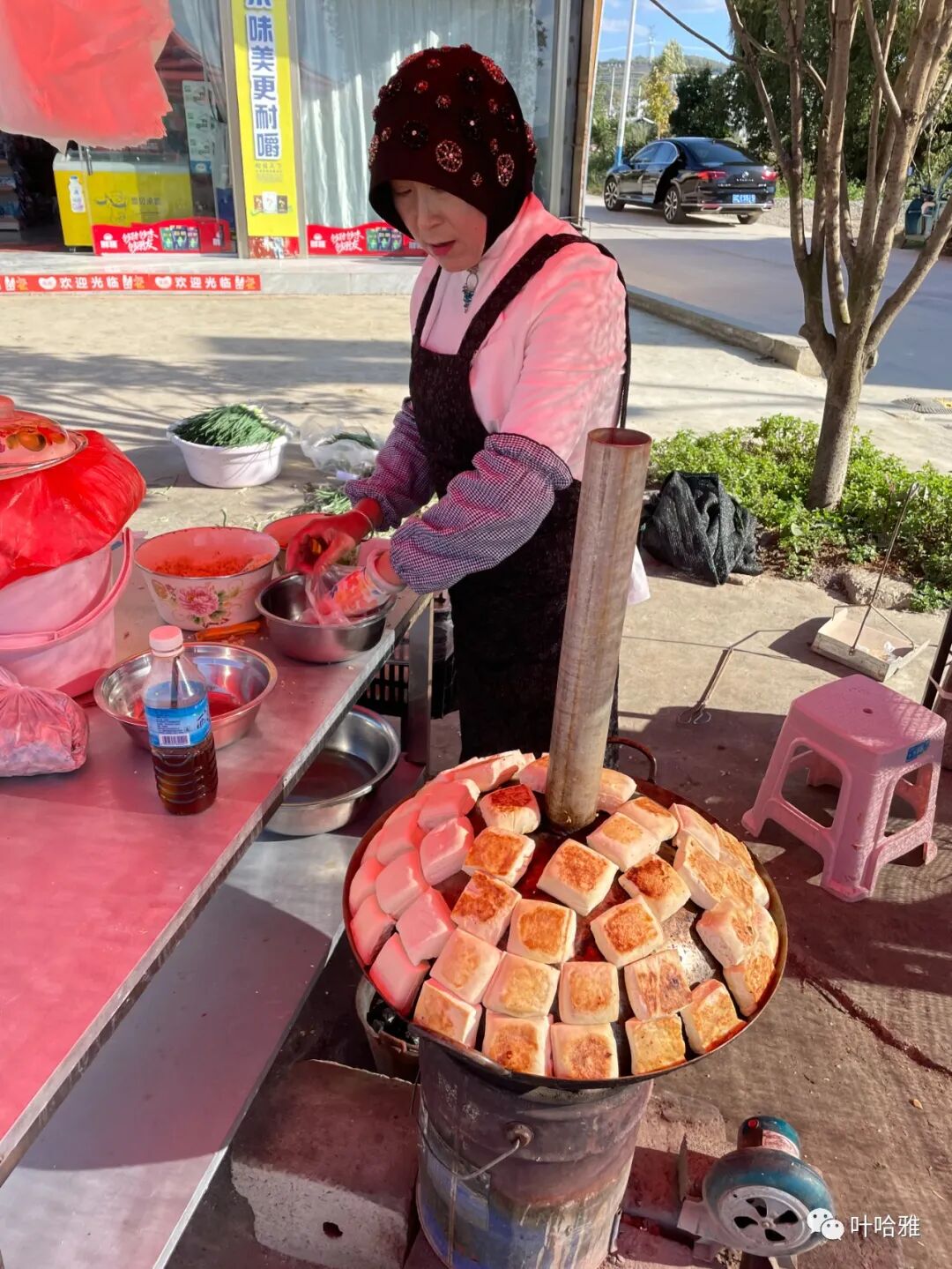
Tuogu grilled tofu (shaodoufu) for one yuan a piece.
Tuogu mosque.
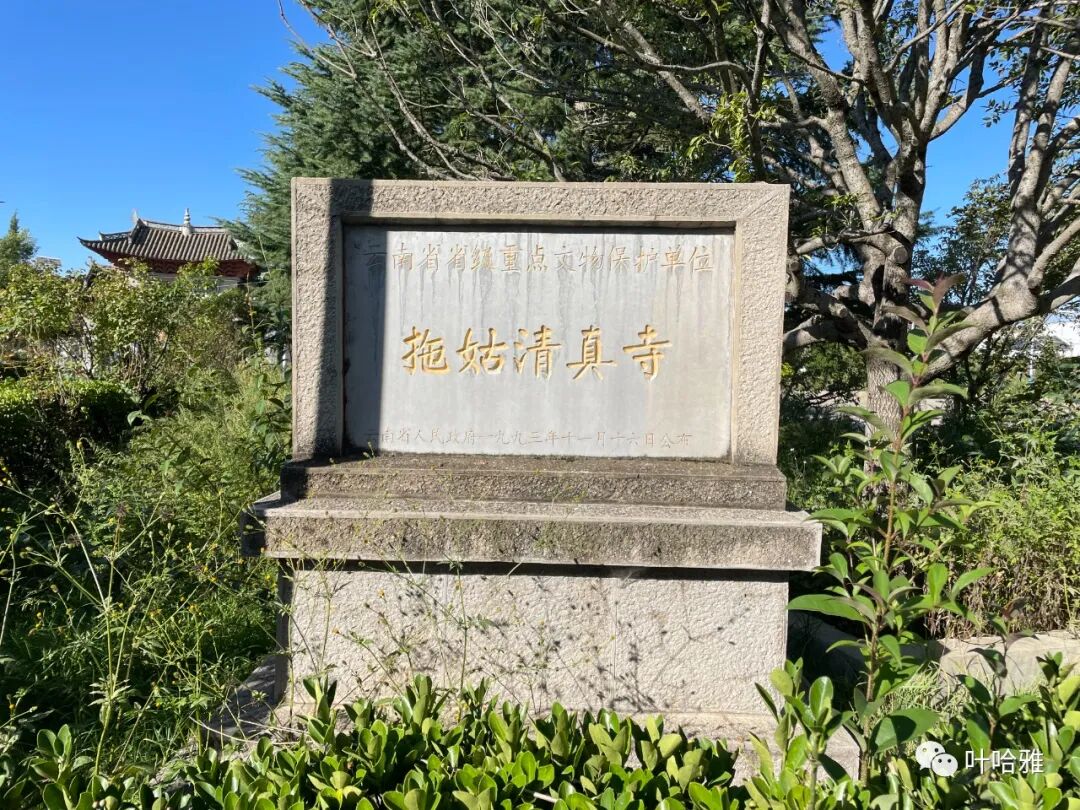
Tuogu mosque was first built in the eighth year of the Yongzheng reign. It covers 7,000 square meters, is the largest mosque in northeastern Yunnan, and is now a provincial-level cultural heritage site.
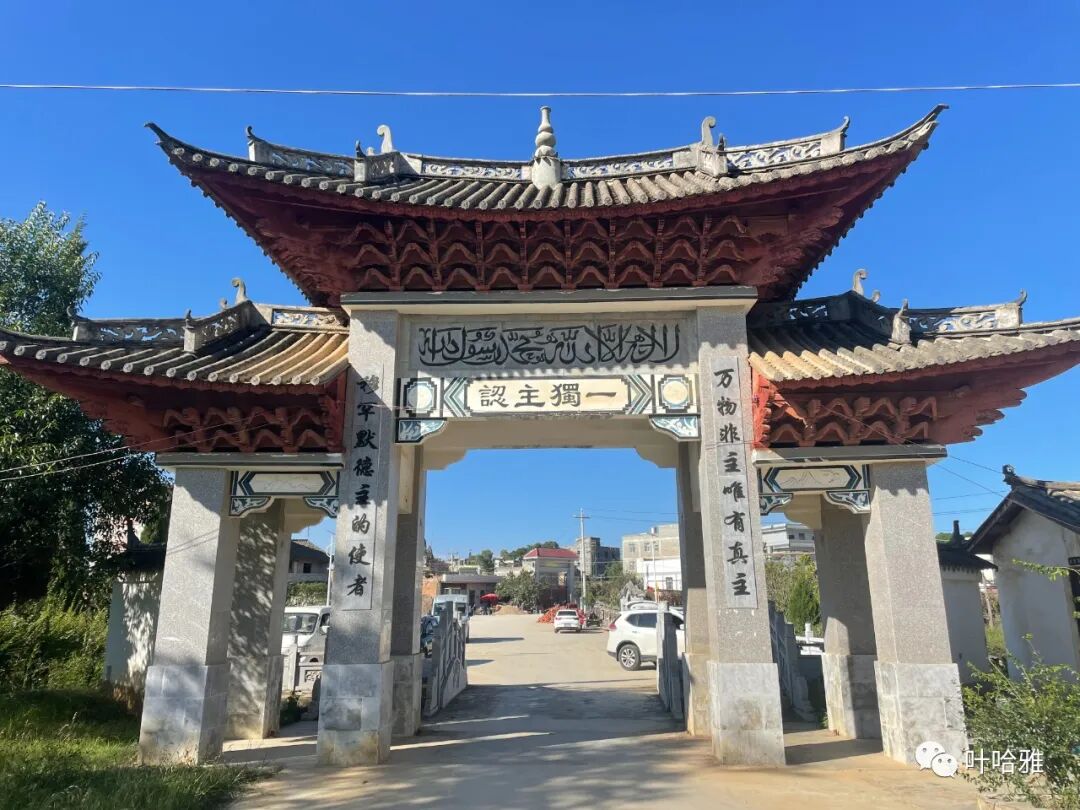
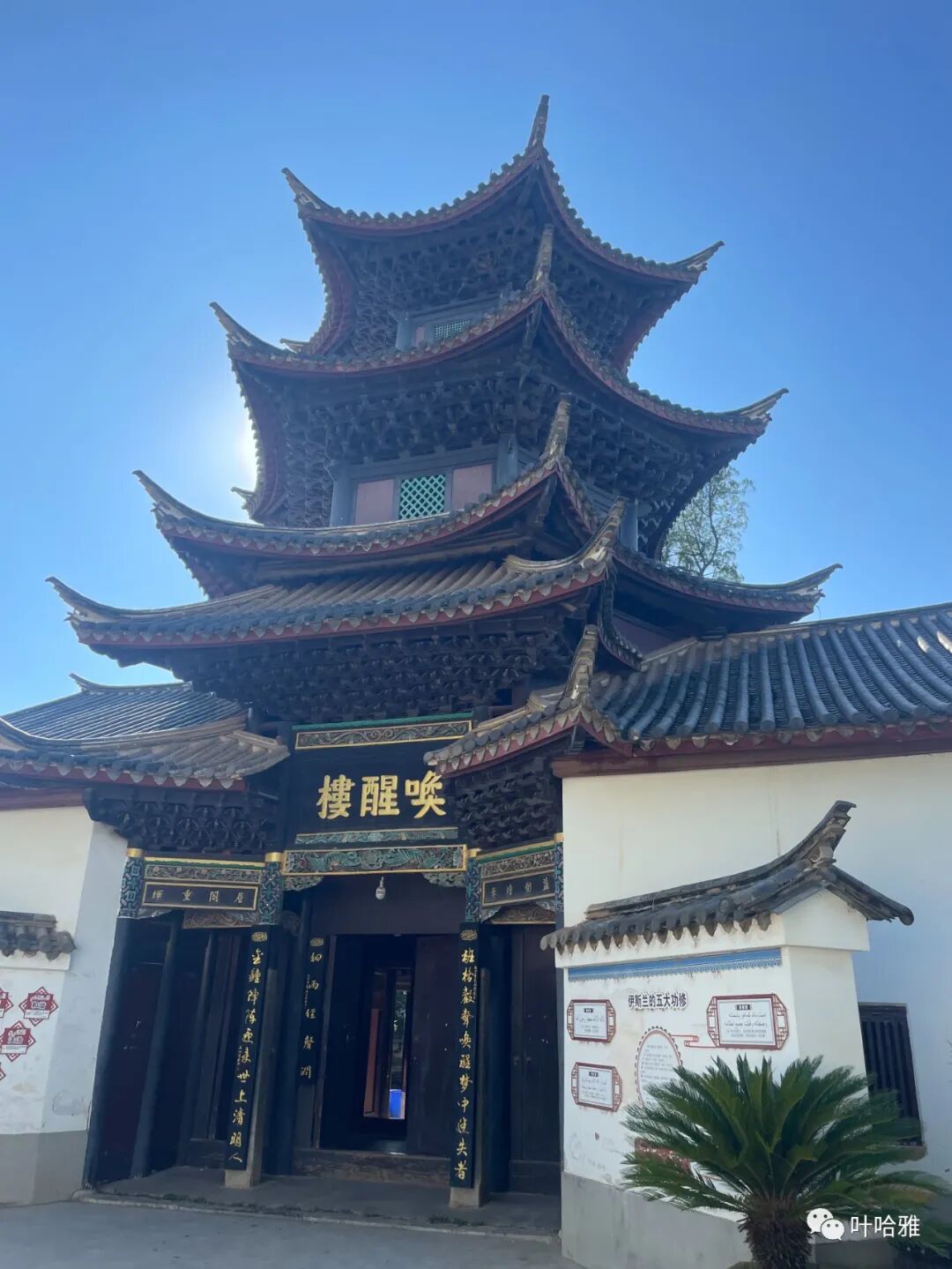
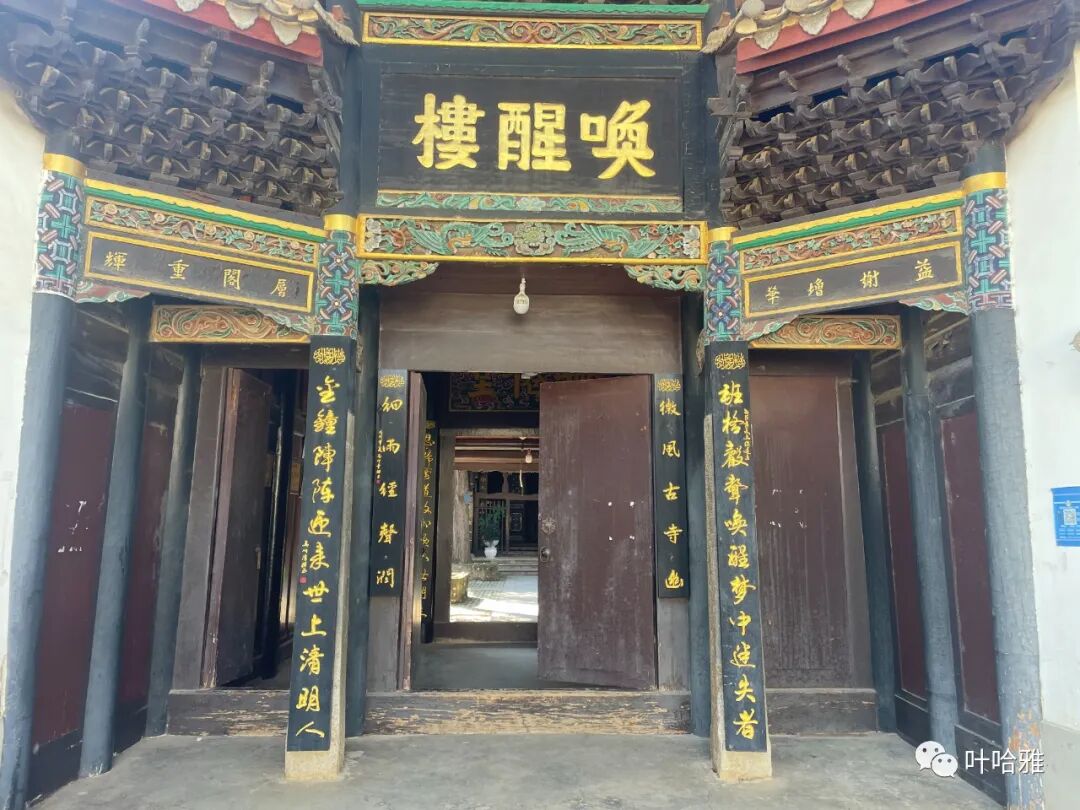
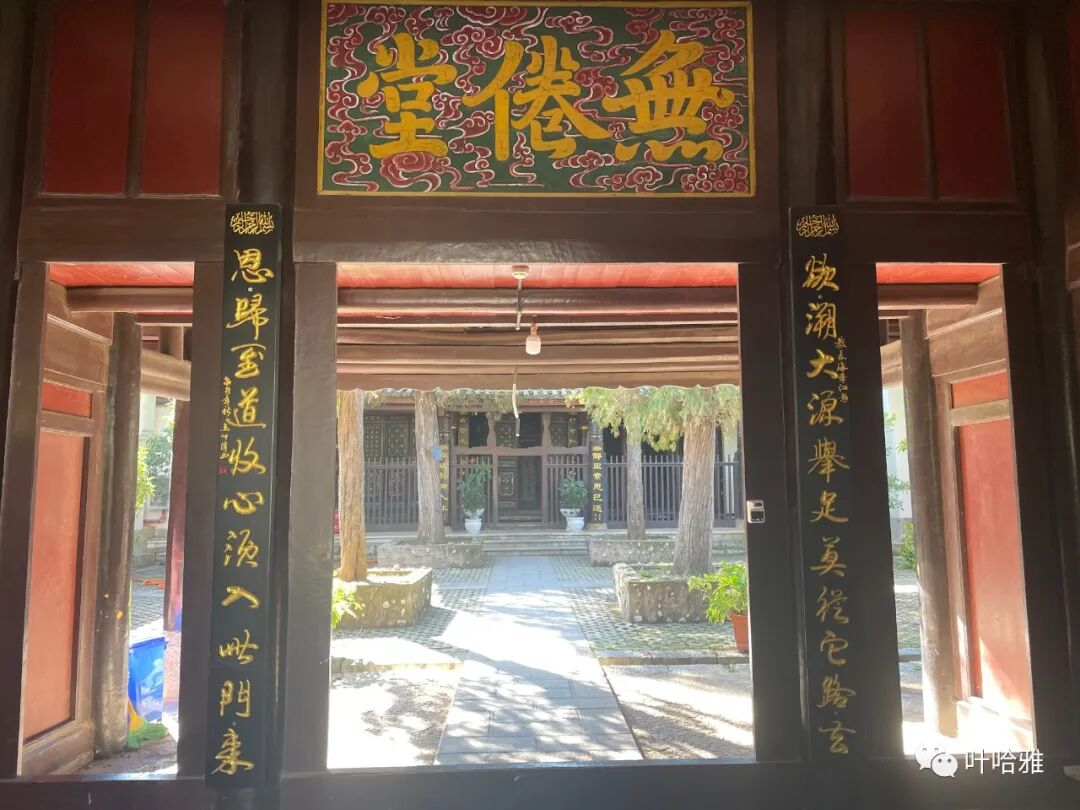
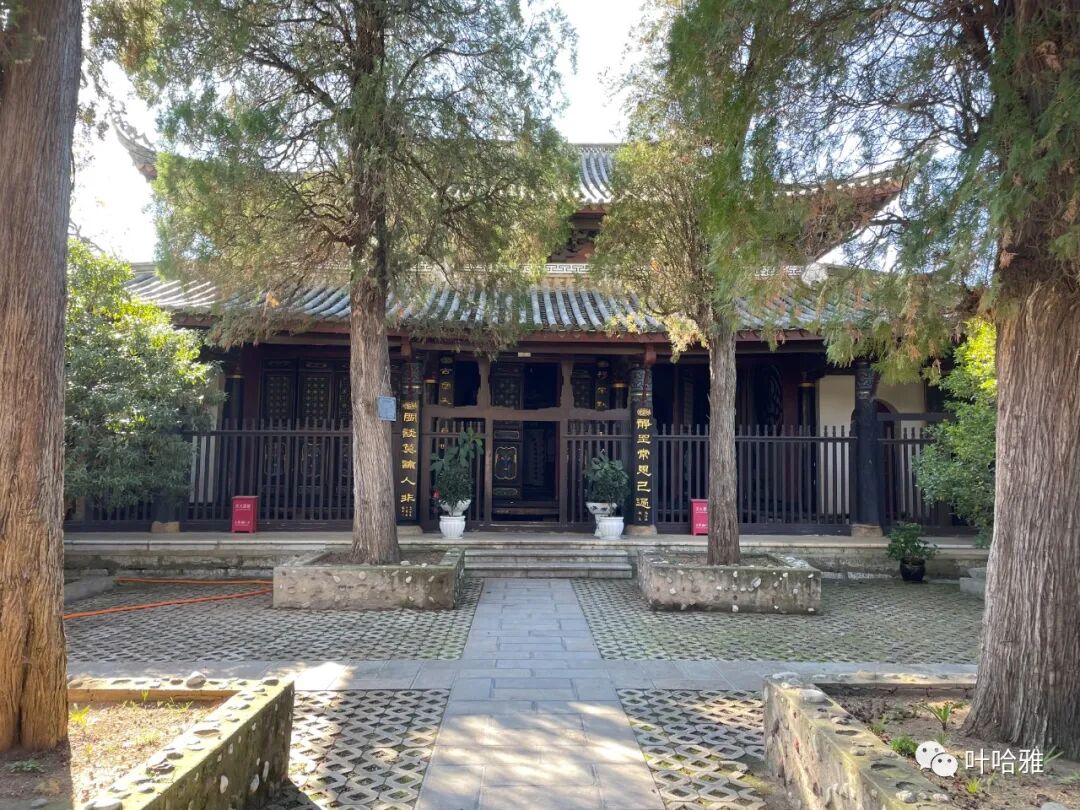
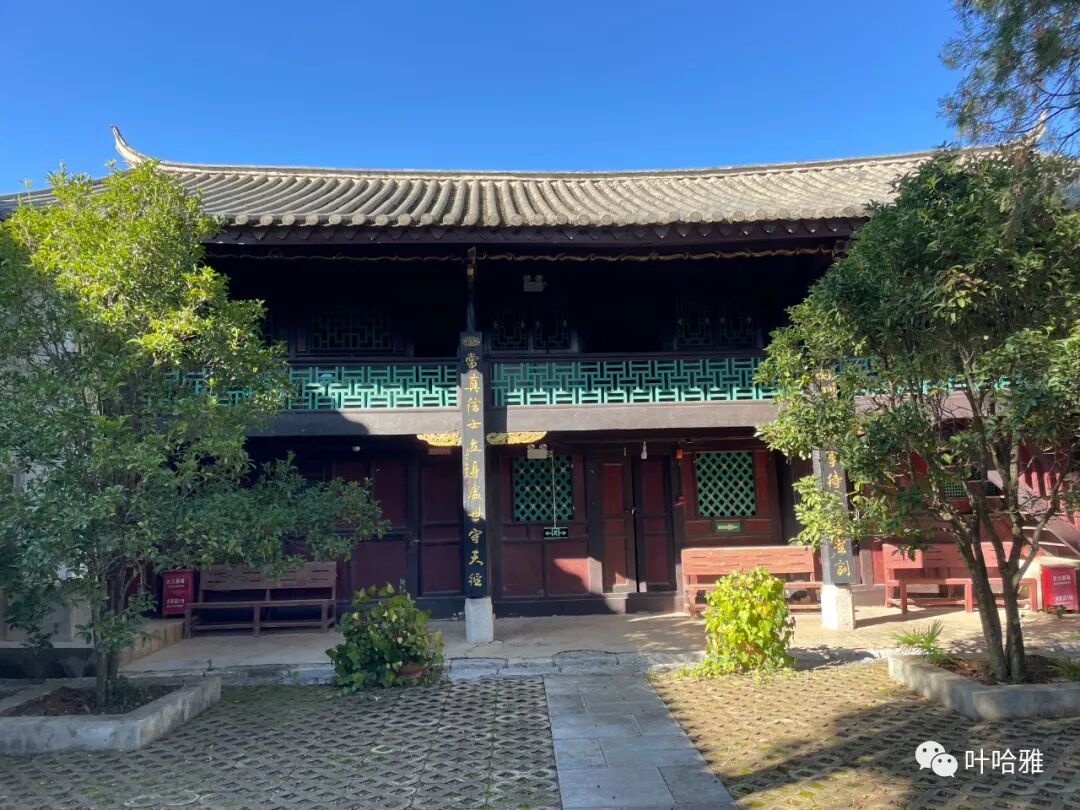
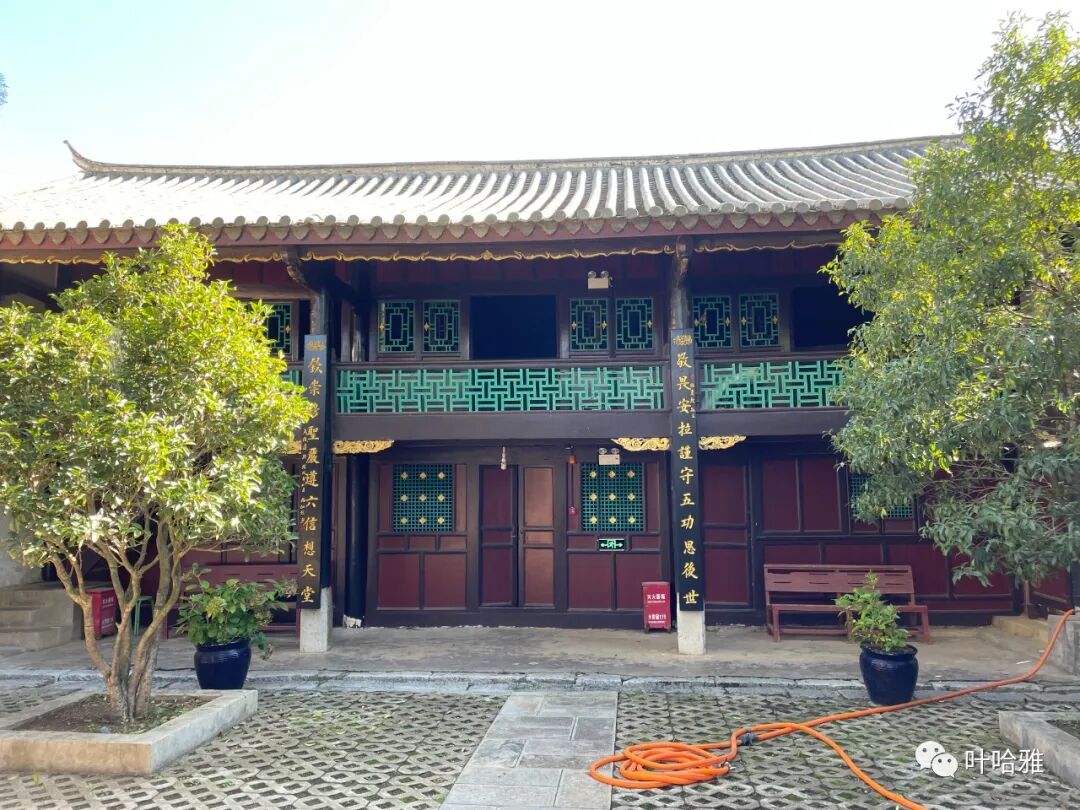
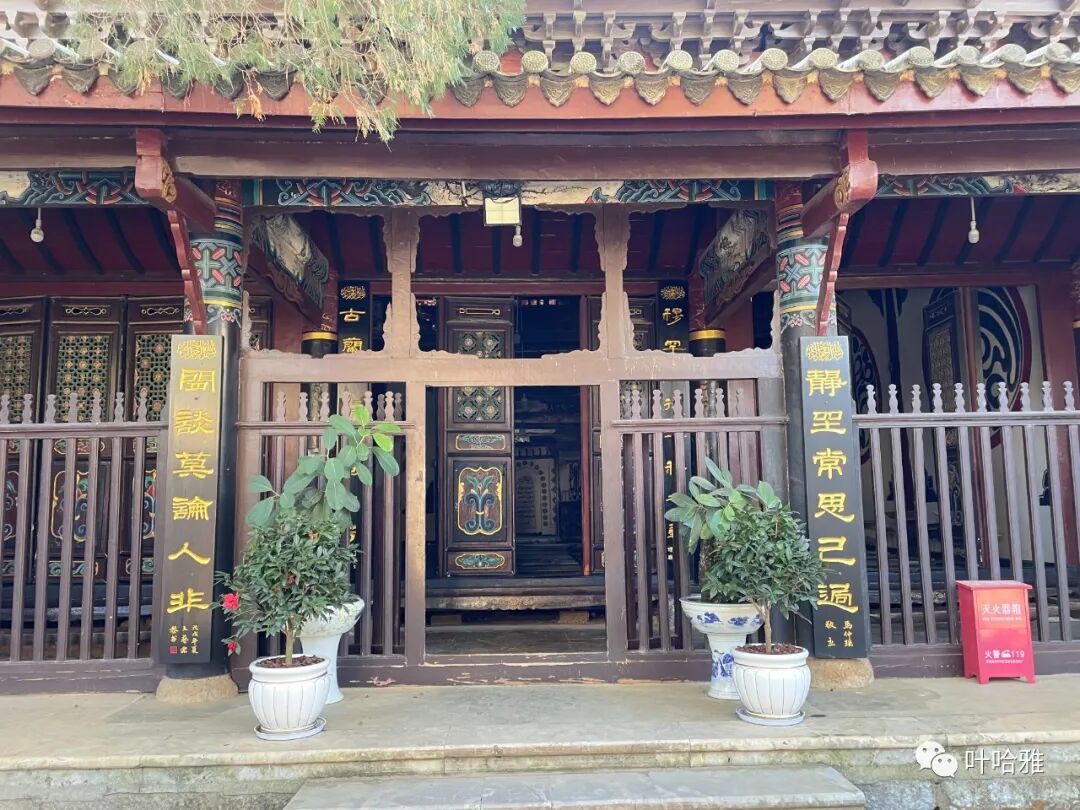
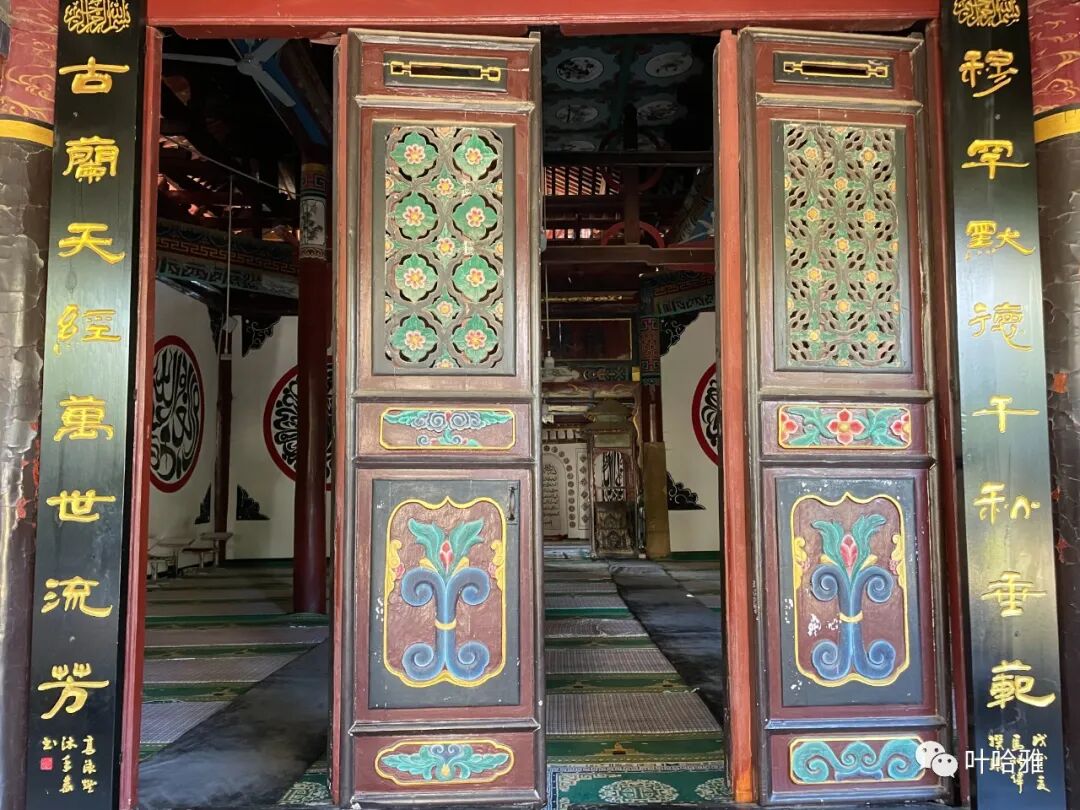
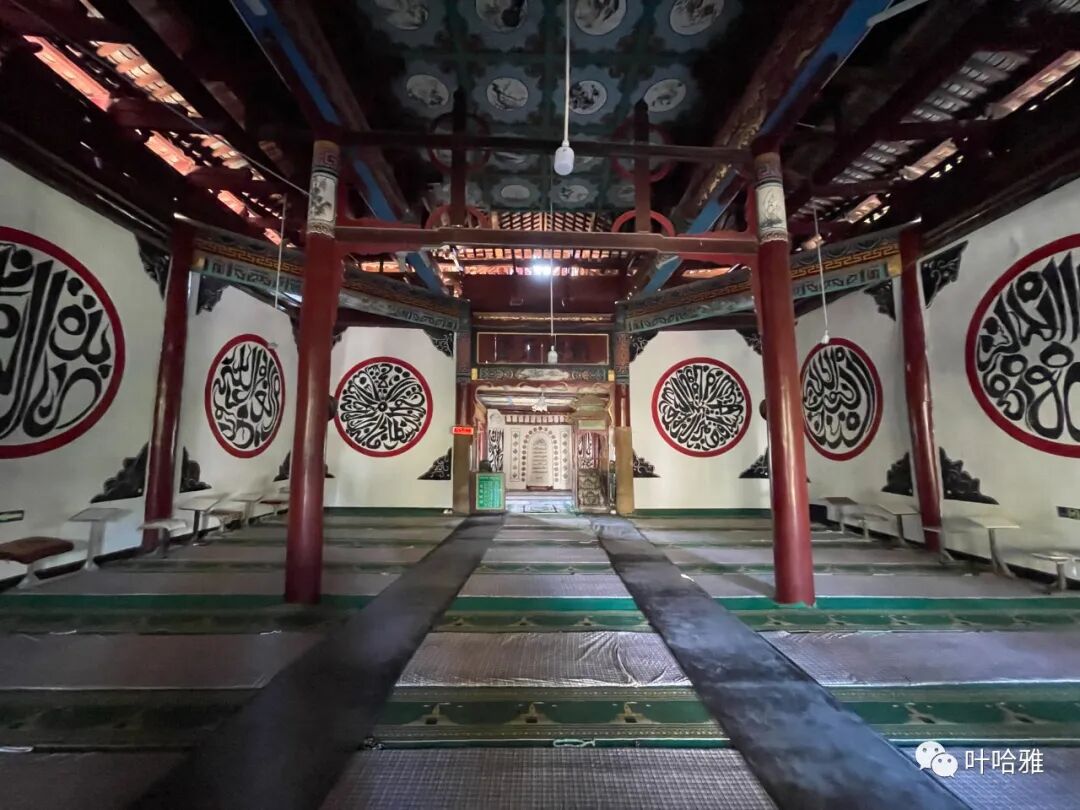
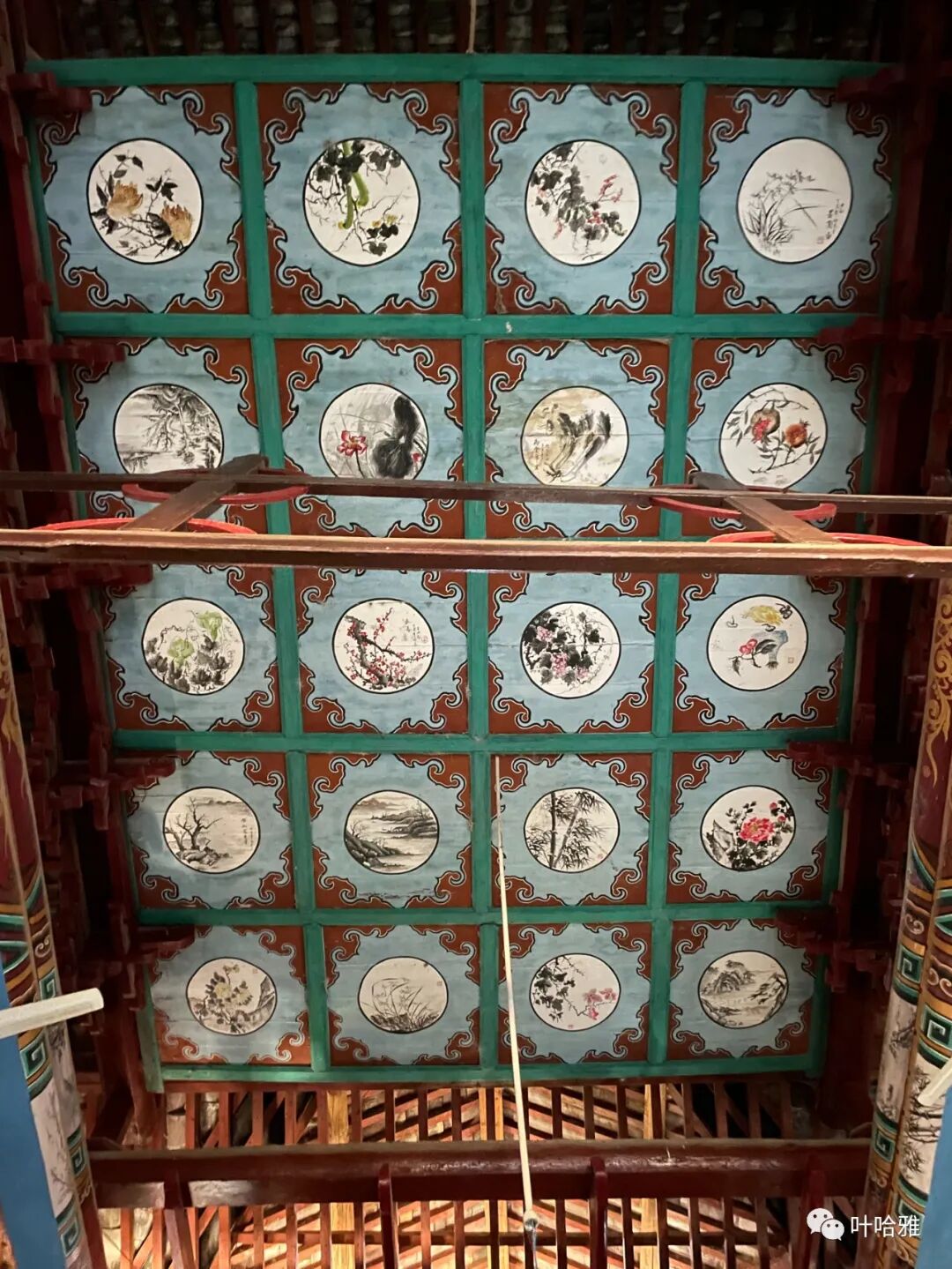
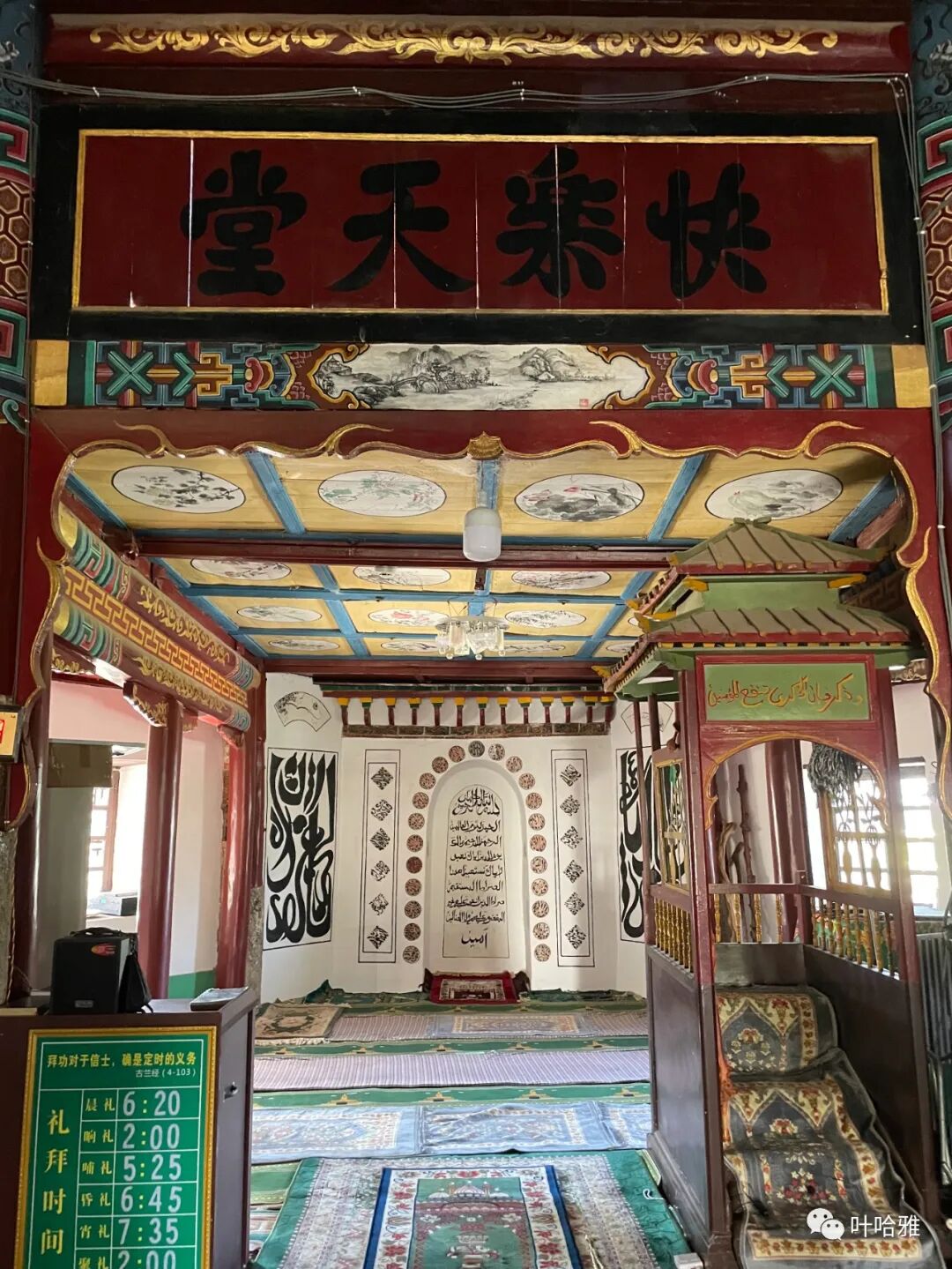
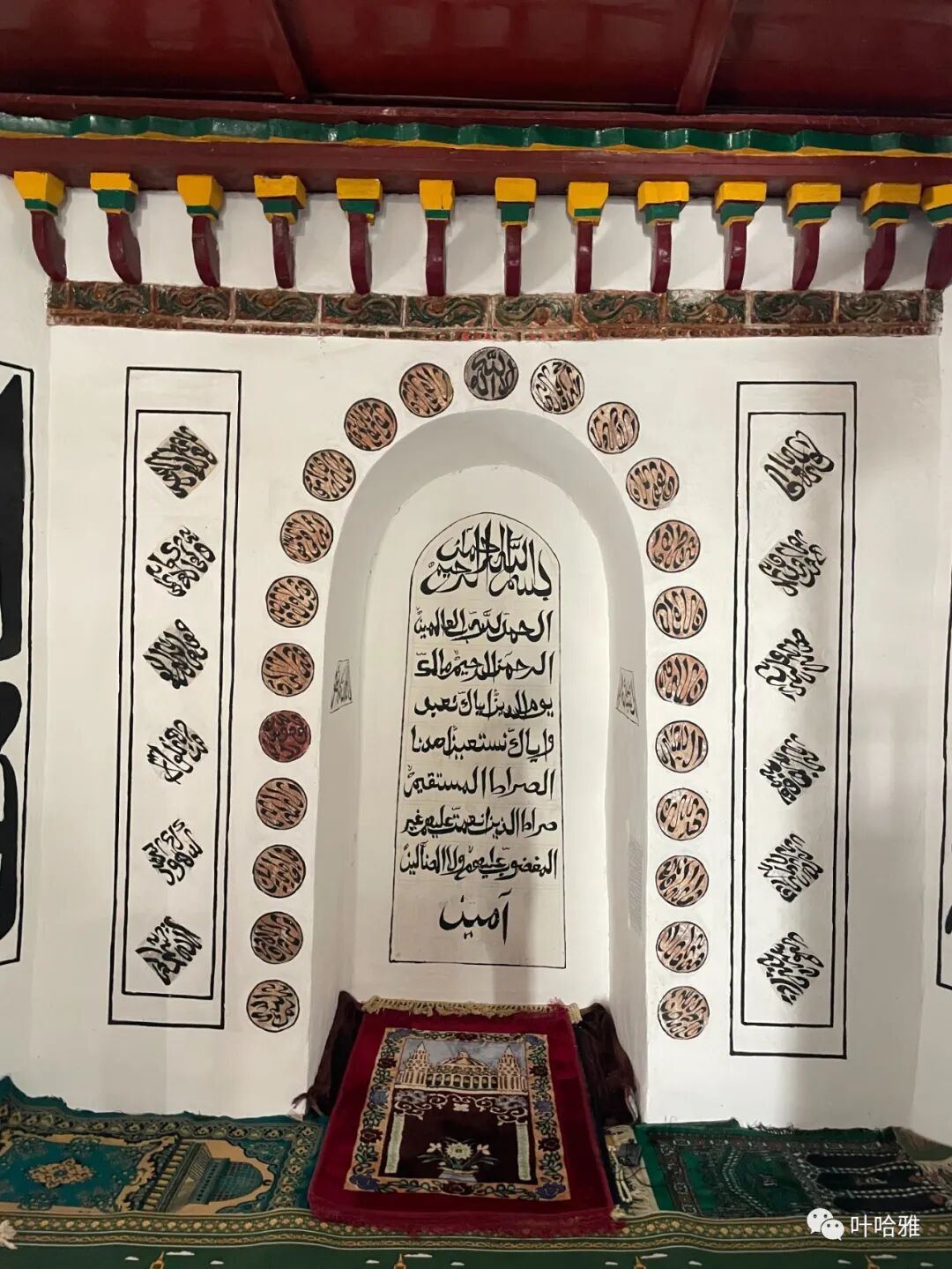
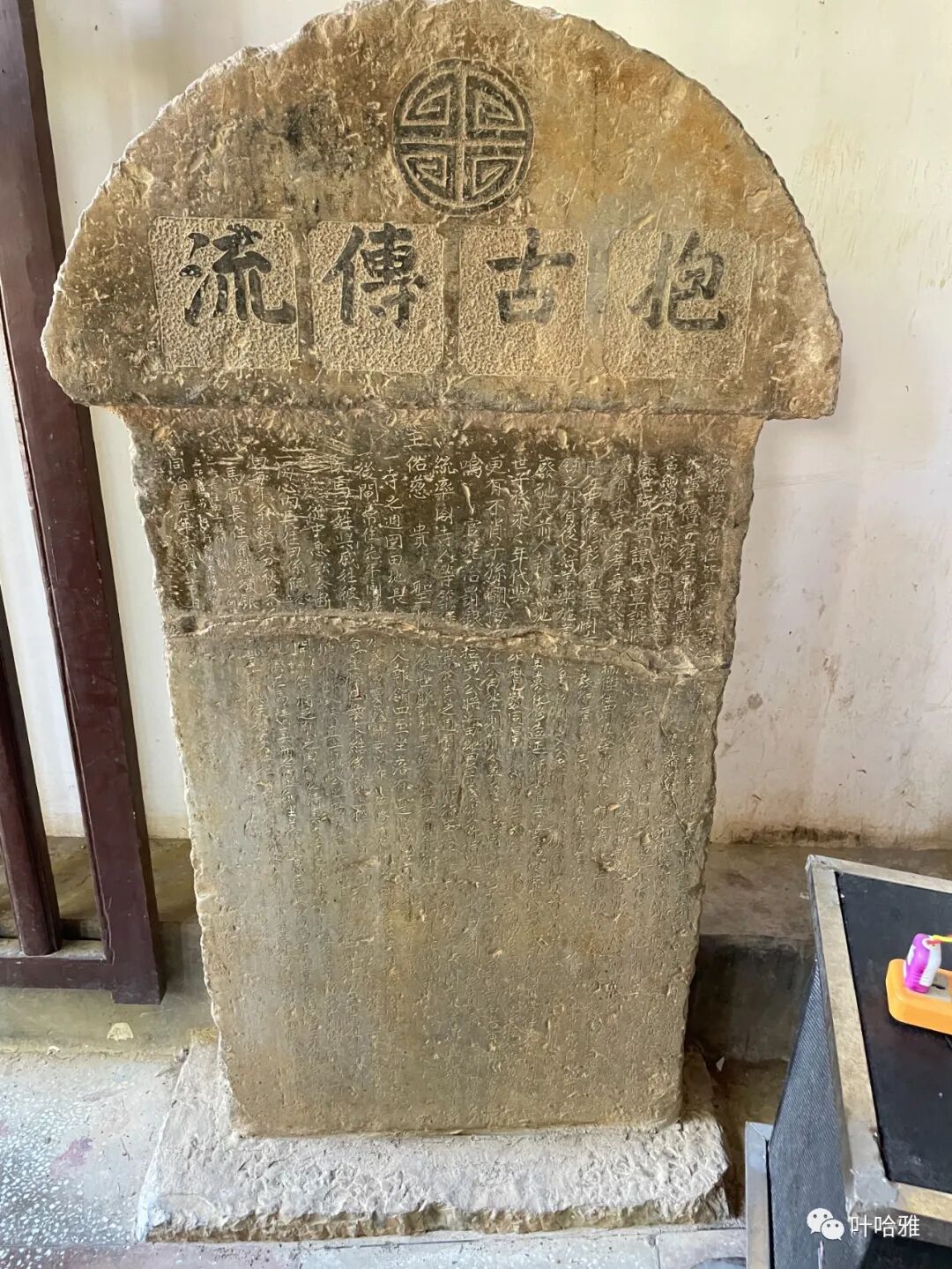
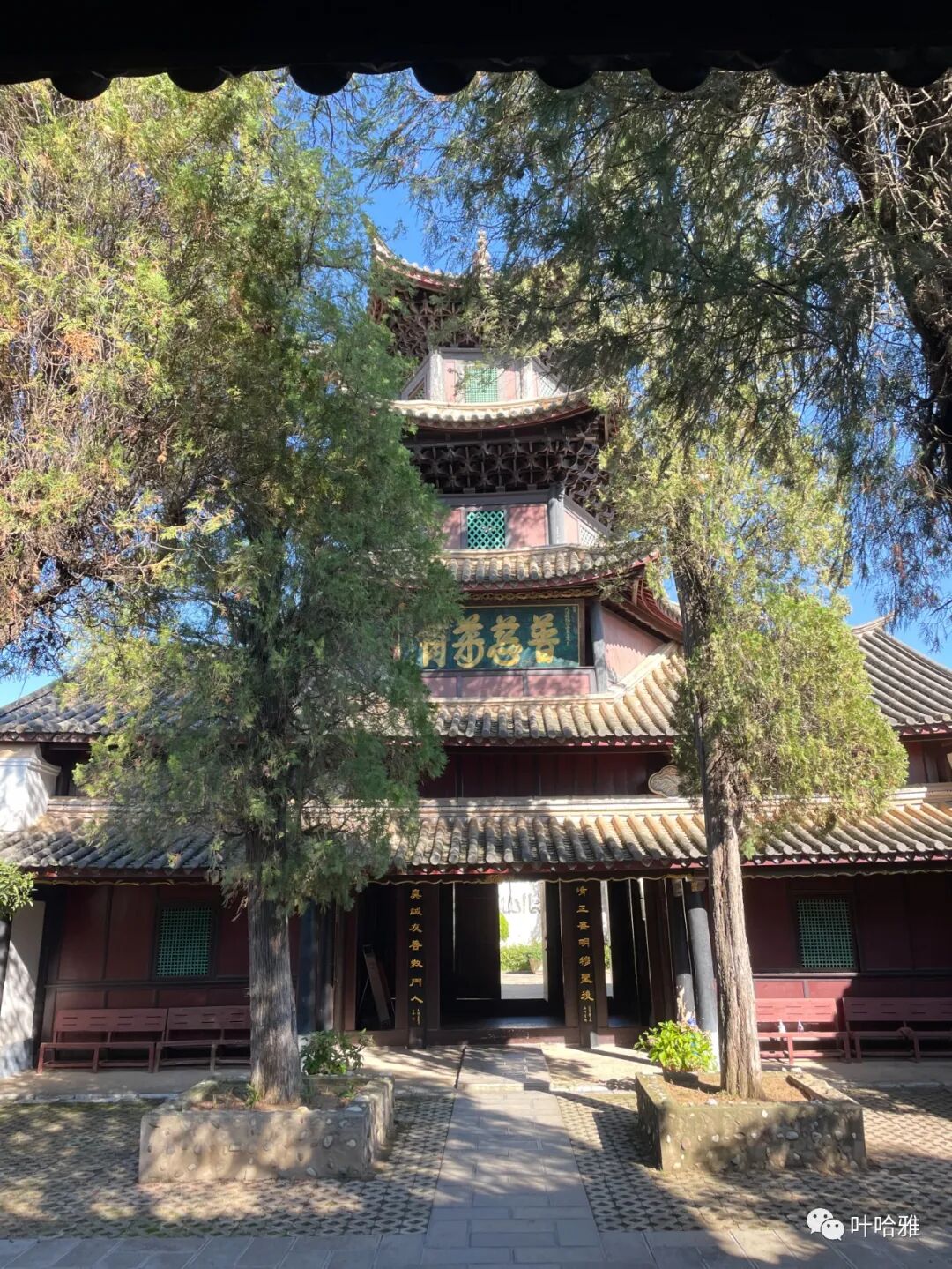
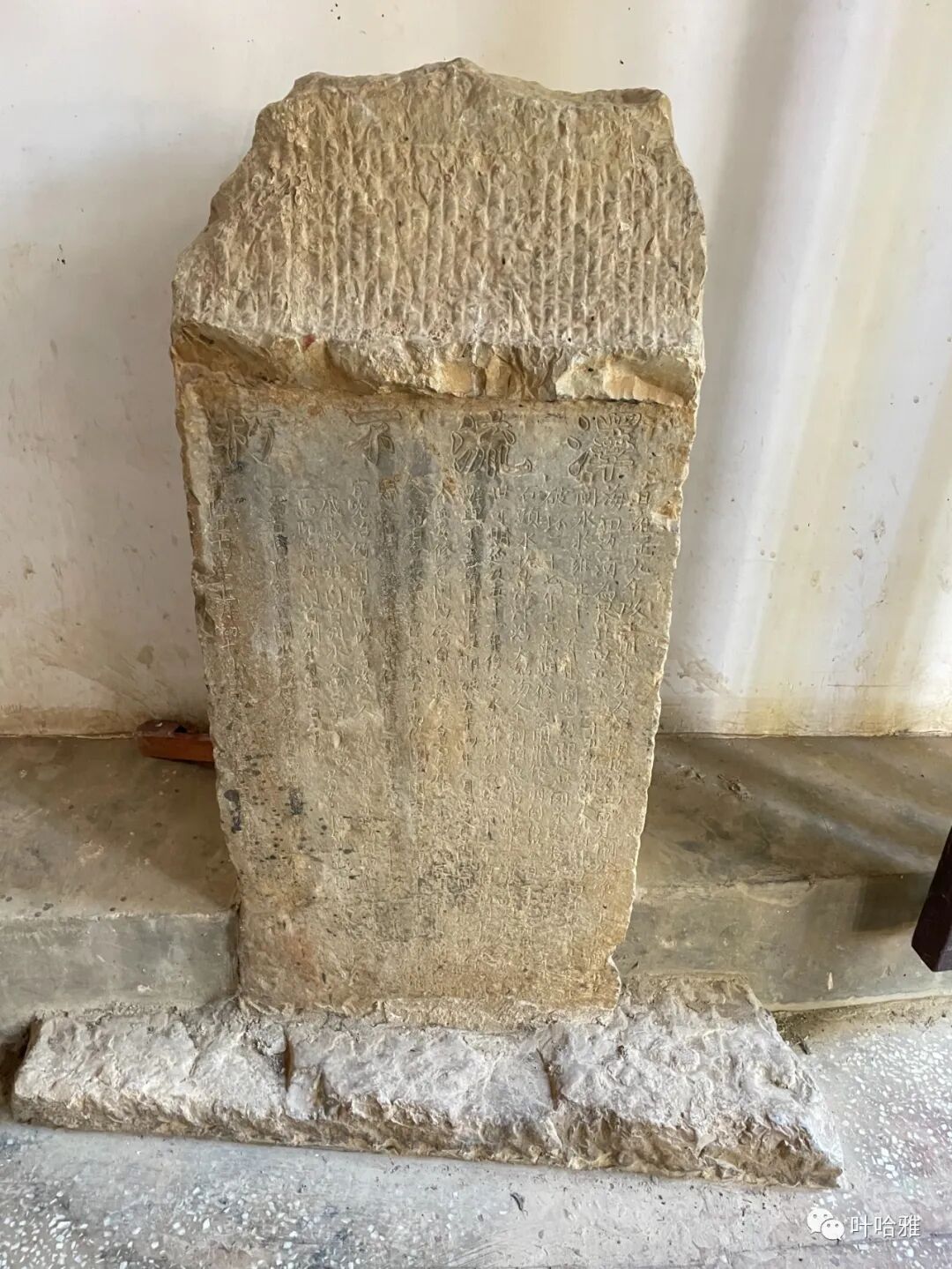
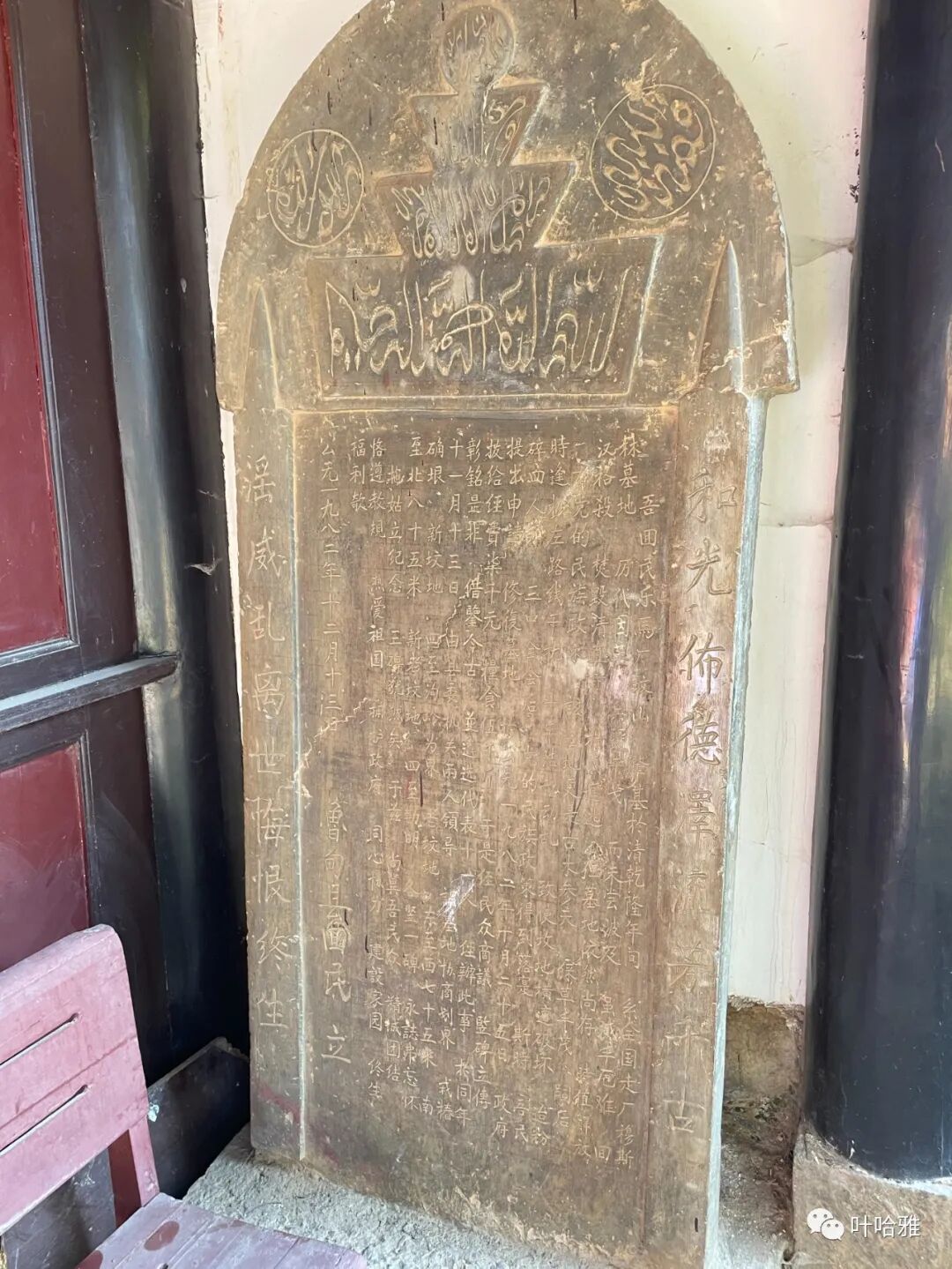
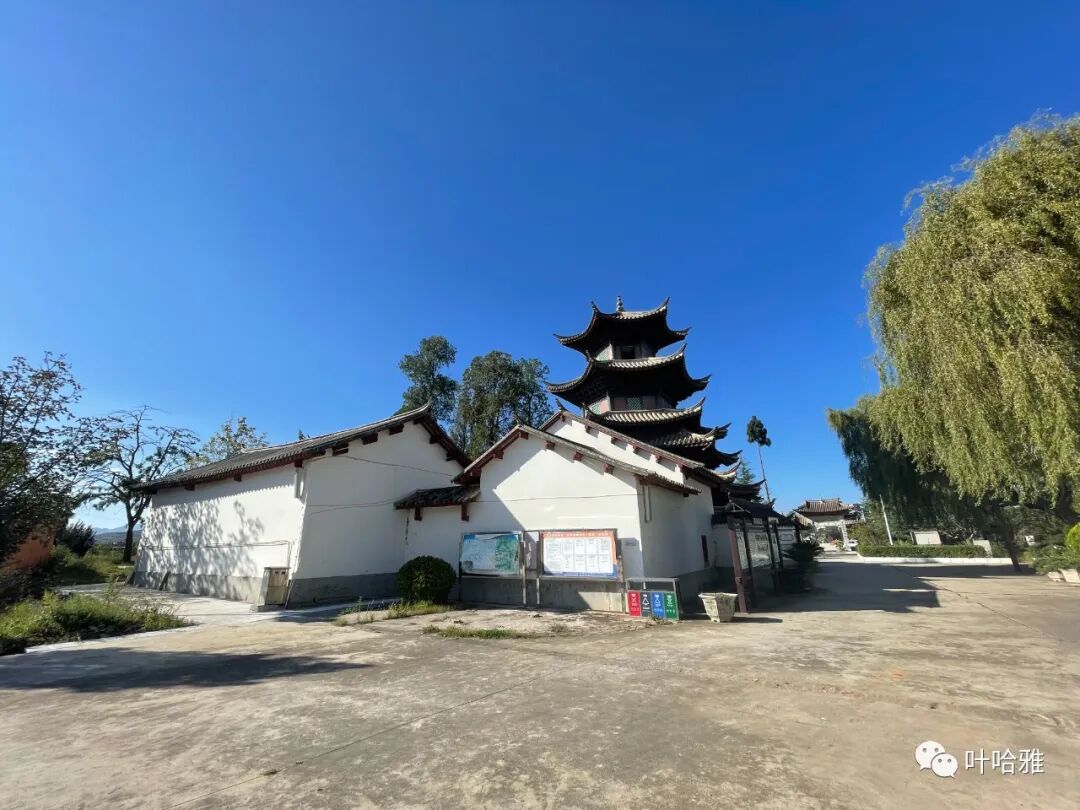
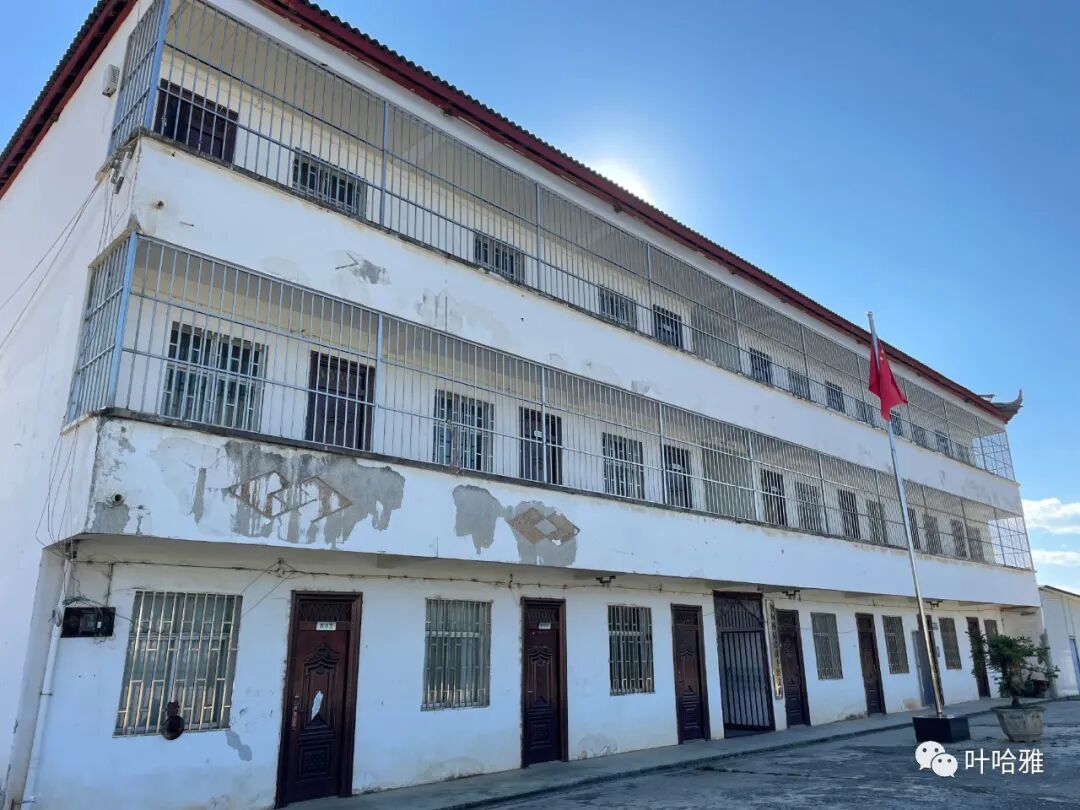
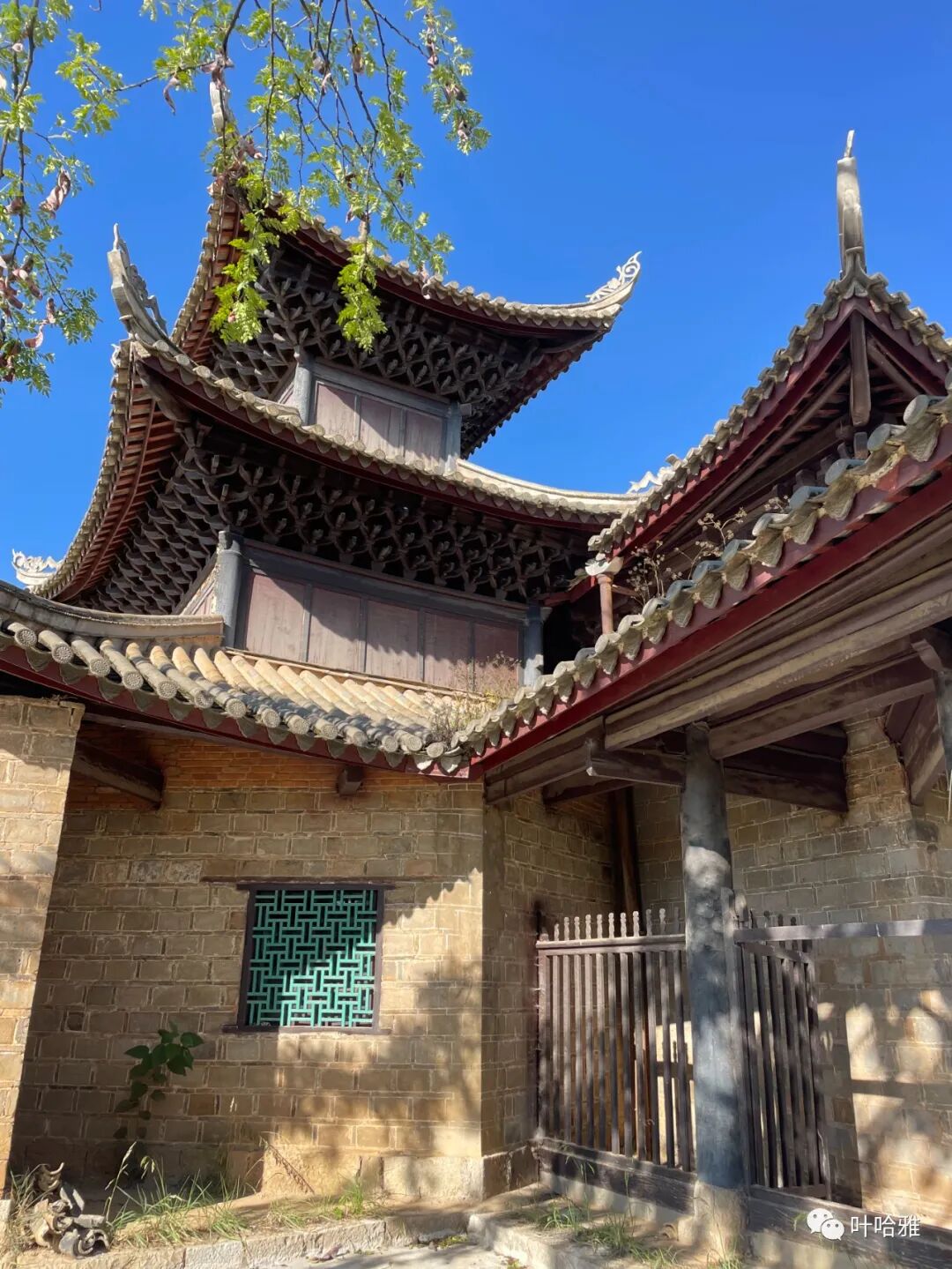
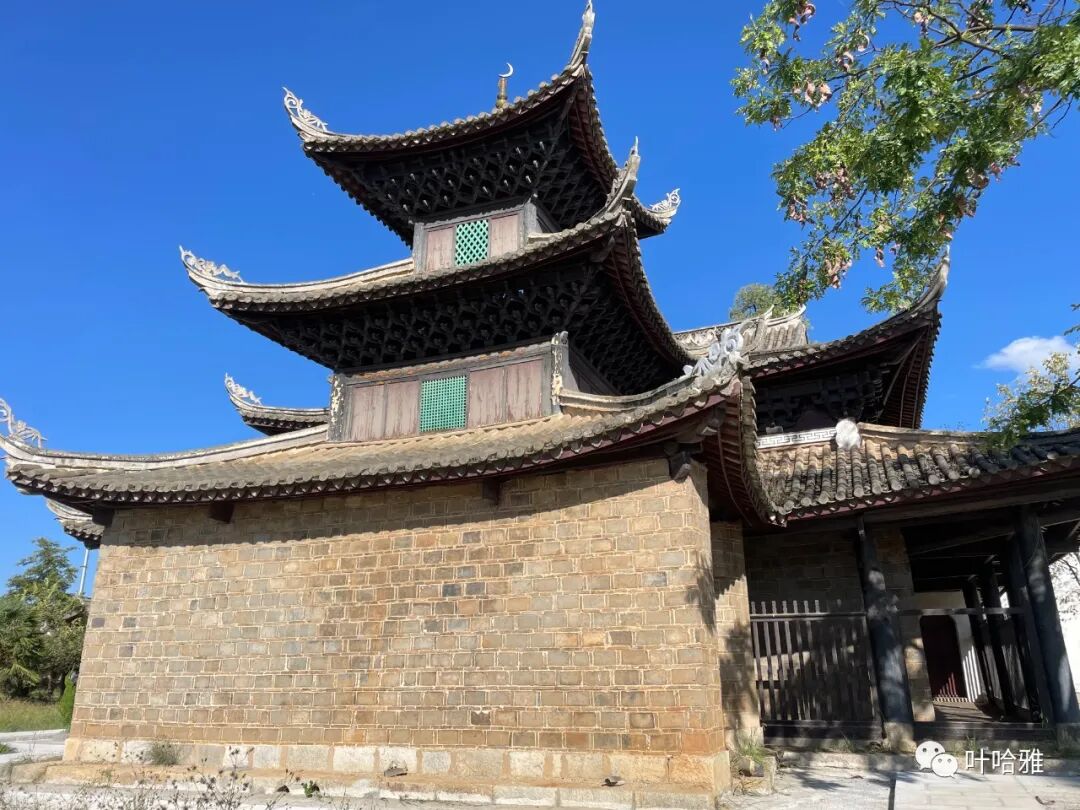
Zhaotong Baxian grand mosque.
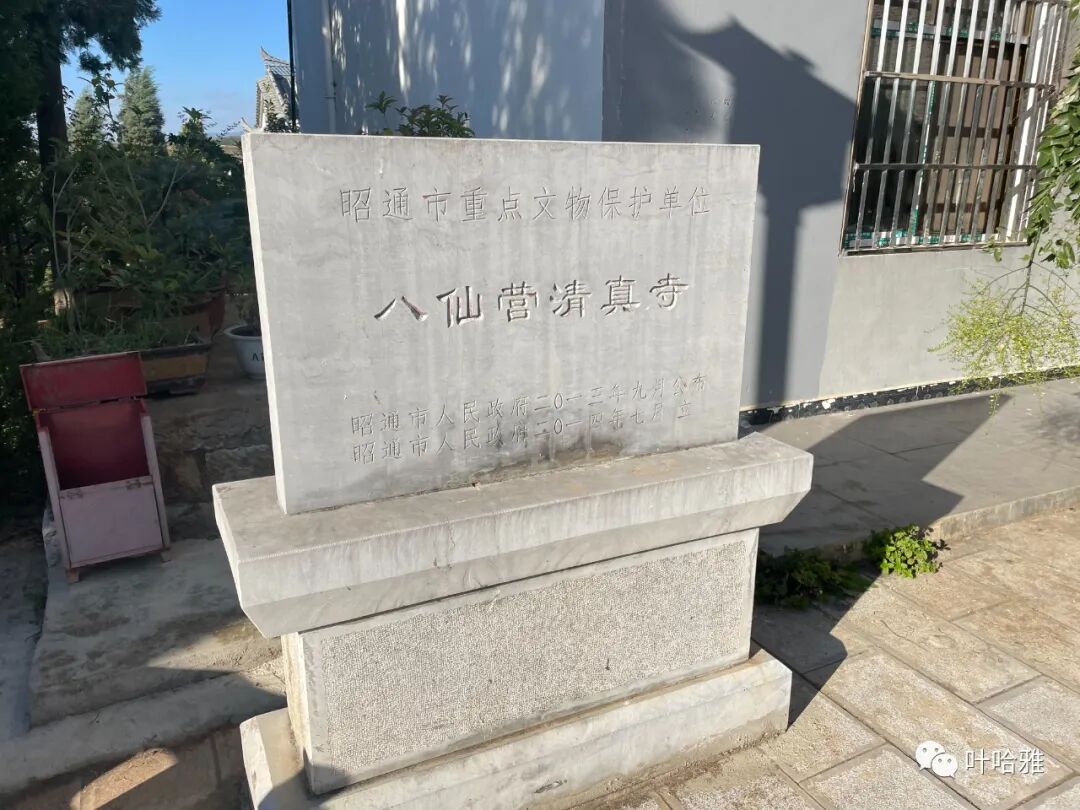
Zhaotong Baxian mosque is one of the eight scenic spots in Zhaoyang. It was first built during the Yongzheng period. It was once the site of the 43rd Division headquarters of the People's Liberation Army and includes a party school inside.
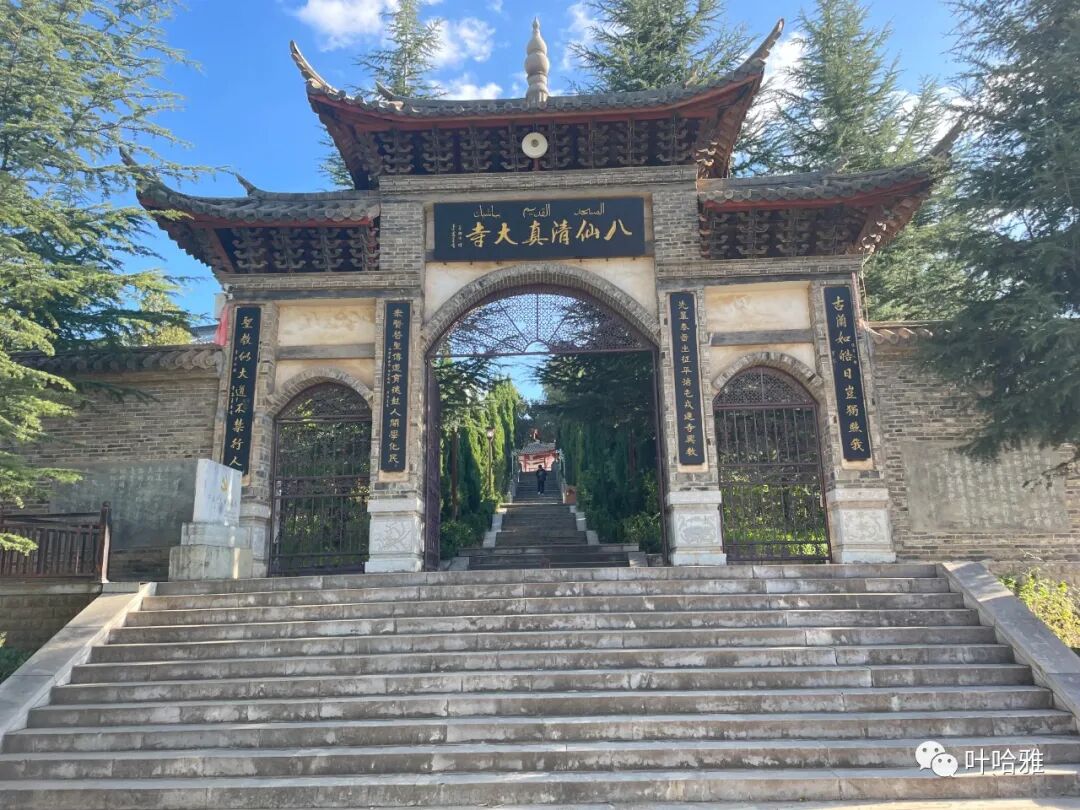
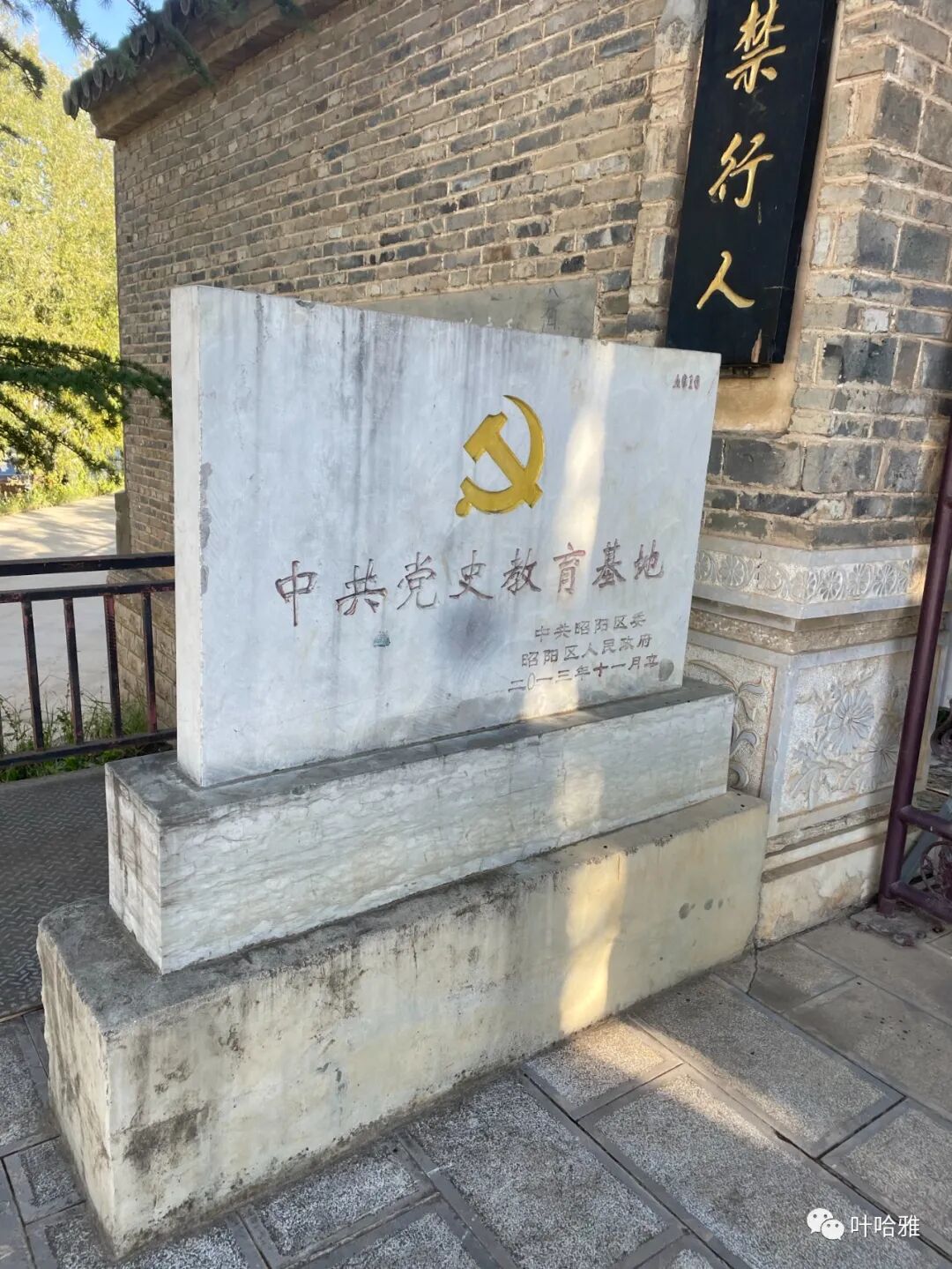
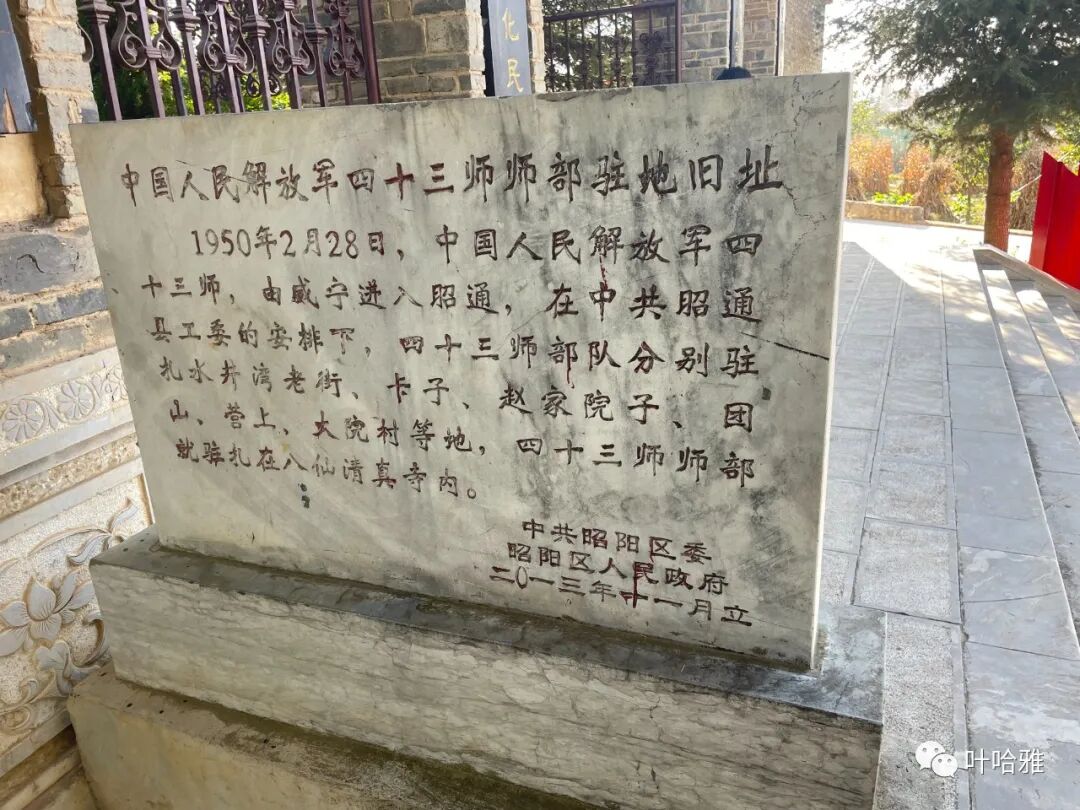
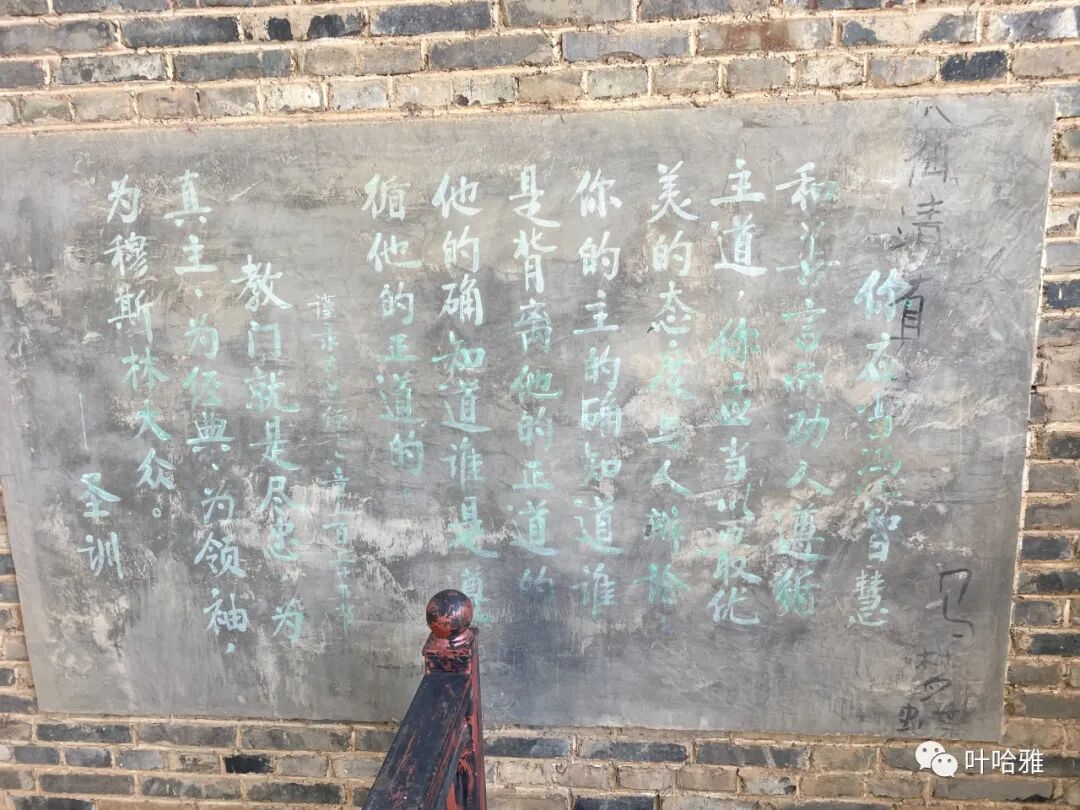
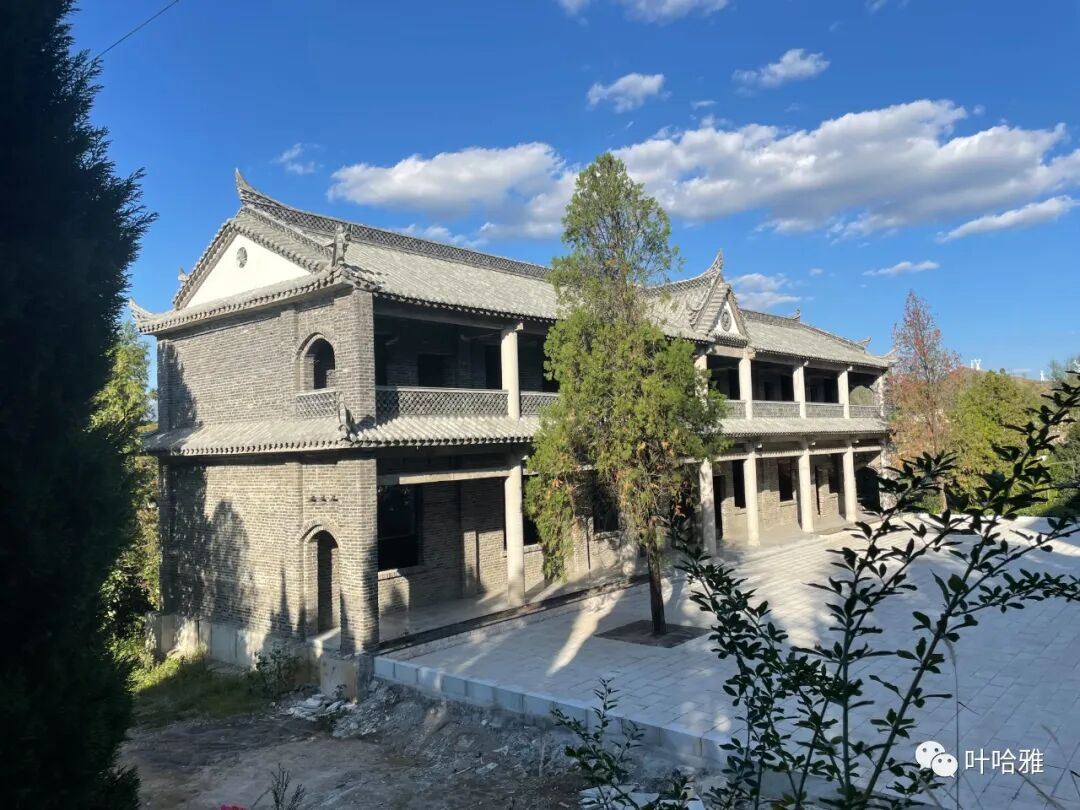
China Mosque Travel Guide Shandong: Tai'an Seventy Mosques, Taicheng Mosque and Hui Heritage
Articles • yusuf908 posted the article • 0 comments • 218 views • 2026-05-22 22:10
Summary: This China mosque travel guide begins the Tai'an seventy mosques project, introducing the citywide mosque survey, Taicheng Mosque, Xiawang Mosque, historic stone tablets, women's mosques, Hui Muslim elders, and Shandong Islamic heritage.
The Seventy Mosques of Tai'an is presented here as a firsthand travel account in clear English, beginning with this scene: and with the help of elders and fellow villagers across Tai'an, I traveled with Liang Weimin from Luoyang. The account keeps its focus on Mosque Travel, Islamic Heritage, Muslim Travel while preserving the names, places, food, and historical details from the Chinese source.
All praise is due to Allah.
With the support of Jin Lei and Han Yong from Tai'an,
and with the help of elders and fellow villagers across Tai'an, I traveled with Liang Weimin from Luoyang
and Haji Liang Weimin to Tai'an City, Shandong Province. We visited 70 mosques throughout the city and took photos, with the intention of creating a photo album to distribute to each mosque in Tai'an.
The imams who helped us complete our tour of the city's mosques were: Jin Chong, Liu Cang, Ding Jiabin, Ma Hongping, Zhang Changshi, Yang Dawei, Jin Yongfeng, Li Zhongguo, Han Jian, Zhu Xurang, Ma Chunyu, Gao Cunguo, Han Weizeng, Zhao Peng, Ma Hongru, Haji Fa Jinliang, and Bai Hairong.
The elders (xianglao) were: Jin Zongjie, Jin Yulong, Han Yongqiang, Chen Guozeng, Han Chao, Li Chunbing, Zhao Zhongbin, Jin Teng, Yang Anli, Fa Jun, Ding Hao, Wang Gang, Wang Jianzhong, and Bai Qingke.
The Arabic cover was calligraphed by the Shandong-based Arabic calligrapher, Mr. Mi Guangjiang.
May Allah reward everyone.
According to the Records of Islam in Tai'an, there are 70 mosques in Tai'an City, including 10 in Taishan District, 21 in Daiyue District, 16 in Xintai City, 10 in Feicheng City, 9 in Ningyang County, and 4 in Dongping County. Among the mosques in Tai'an, 2 were built in the Yuan Dynasty, 24 in the Ming Dynasty, 18 in the Qing Dynasty, 5 during the Republic of China era, 9 after the founding of the People's Republic of China, and the construction dates of 12 others are unknown. The oldest one is the West Mosque of Xijie in Mazhuang Town, Daiyue District, which was built during the Yuan Dynasty. There are currently 3 women's mosques: the Taicheng Women's Mosque, the Suozhuang Women's Mosque in Zhuyang Town, Daiyue District, and the Dongshendong Village Women's Mosque in Yucun Town, Xintai City.
Taishan District
Taicheng Mosque
Taicheng Mosque is located in the Mosque Community of Caiyuan Subdistrict. It was built between the end of the Yuan Dynasty and the beginning of the Ming Dynasty. Stone tablets confirm that it was rebuilt many times during the Ming and Qing dynasties. In 1944, the mosque had fallen into disrepair and was quite damaged. Local elders and mosque leaders raised 12,213 yuan for renovations. They gathered workers and materials, finishing the project in a few months and making the main hall look brand new. Ma Ziming, a local elder living in Suzhou and Shanghai, was a devout believer and passionate about charity. He donated a set of finely woven curtains from Suzhou, and other elders and the hometown association in Shanghai also donated generously.
The mosque underwent several repairs starting in the 1950s. It was restored and repaired after the Reform and Opening-up policy began. The mosque gate was rebuilt in 1997. A comprehensive renovation took place in 2008, covering an area of 2,600 square meters. In 2013, the North Lecture Hall was rebuilt, and a funeral home, a multi-functional building, and buildings along the east and west streets were constructed.
Taicheng Mosque is a classic Chinese palace-style building with two courtyards. It mainly consists of a prayer hall, north lecture hall, south lecture hall, main gate, second gate, and rear kiln hall. The main gate features three gold-painted characters for "Mosque," inscribed with the date "10th day of the first lunar month, 1619" (the year of Jiwei in the Wanli reign of the Ming Dynasty). After entering the gate, a path leads through the second gate into a courtyard where ancient cypress trees reach toward the sky. The north and south lecture halls of the mosque are spacious and bright, housing a scripture room, living quarters for the imam, and a bathing room. To the west stands the prayer hall, which connects a front porch, a middle hall, and a rear kiln hall into one structure. The front porch uses a Ming-style hip-and-gable roof, while the rear kiln hall features a Ming-style hip-and-gable roof with bracket sets, three layers of eaves, and 12 upturned corners. The center of the main hall's roof ridge and the top of the rear kiln hall are both topped with golden glazed gourds over one meter tall.
The mosque covers an area of 6,174.19 square meters, with a building area of 6,394.5 square meters. The main hall is 18 meters high, 42.3 meters long, and 16.95 meters wide. The north lecture hall is 17.5 meters long and 8.1 meters wide. The south lecture hall is 14.4 meters long and 8.7 meters wide. The water house is 17 meters long and 6.7 meters wide. The mosque has many auxiliary buildings, including the east gate, the north courtyard meeting room, the funeral home, the frame house (jiaziwu), a two-story building on the west side of the west gate, and rooms along the street. The mosque originally held dozens of stone tablets carved during the Ming and Qing dynasties and the Republic of China period, but they were all destroyed during the Cultural Revolution. Today, only four remain: the broken Mosque Tablet (Qingzhensi Bei) from the first year of the Wanli reign of the Ming Dynasty (1573), the Laifu Inscription Tablet (Laifu Mingbei) from the fourth year of the Tianqi reign (1624), the Donation Tablet (Juanxian Bei) from the thirty-fourth year of the Qianlong reign of the Qing Dynasty (1759), and the Mosque Reconstruction Tablet (Chongxiu Qingzhensi Bei) from the thirty-third year of the Republic of China (1944). The Laifu Inscription Tablet (Laifu Mingbei) is an important reflection of how Shandong Hui Muslims interpreted Islam through Confucianism, and it holds significant historical and cultural value.
Since the Republic of China era, the mosque's religious affairs have been led by imams including Tang Ahong, Yang Fuyuan, Yang Dechun, Wang Changshun, Mi Guangxun, Han Yuhai, and Wang Rongchen. Imam Mi Zhaojie has served since 1997 and currently holds positions such as Standing Committee Member of the Tai'an Municipal Committee of the CPPCC and Vice President of the Tai'an Islamic Association.
Historically, the mosque has trained more than ten imams and religious leaders, including Wang Qinglin, Fan Guiyuan, Xu Huanliang, Mi Yinghua, Mi Qinglu, Wang Hongchen, Liu Zhong'an, Wang Wu, Wang Changgui, Ding Junting, Wang Changlin, Bai Shengguang, and Bai Shenglin. The Mi family of Tai City, represented by Imam Mi Yingjie, and the Wang family of Beiqiu, represented by Imams Wang Jie, Wang Pu, Wang Qinglin, and Wang Yongxing, are both families of imams that have produced religious leaders for over three generations. The mosque is managed by a management committee consisting of nine members. Xu Shuhua, Fa Debao, Mi Shouzhi, Wang Fengge, and Mi Xiankuan have served as directors of the management committee.
The management committee conducts religious activities according to the law and actively guides Hui Muslims in their normal religious life. Responding to the call of the Party and the government, the mosque promotes the Islamic spirit of helping the needy, supports social charity and public welfare, has provided aid multiple times to areas affected by natural disasters like earthquakes and tsunamis, and actively donates to causes such as education and elderly care.
The mosque hosts international Muslim friends and has received many honors over the years. It was named a cultural heritage site of Taishan District in 1992. It was named a cultural heritage site of Tai'an City in 1994. It was named a cultural heritage site of Shandong Province in 2013. It received the title of Provincial Civilized Religious Venue in 2001 and was named a Model Mosque of Tai'an City in 2008. In 2009, it was awarded titles including Provincial Harmonious Religious Venue, Shandong Province Outstanding Historical Building, Shandong Province Model Mosque, and National Advanced Collective for Creating Harmonious Temples and Churches.
Taicheng Women's Mosque.
Taicheng Women's Mosque in Caiyuan Subdistrict. Due to urban renewal, it moved from Baijia Alley on Mosque Street to its current location. It covers 360 square meters with a building area of 240 square meters. It currently has a main prayer hall, a north lecture hall, a washroom (shuifang), a main gate, and one stone tablet.
Taicheng East Mosque.
The mosque in Beixin Community, Daimiao Subdistrict, is commonly known as the Taicheng East Mosque and is located in the middle of Beixin Community. It was built in 1920, the ninth year of the Republic of China, with funding from the famous Shandong industrialist Mr. Ma Bosheng. The three characters for "Mosque" written in his own hand are still preserved there. It has been renovated many times since the reform and opening-up. Large-scale repairs were carried out in 2006.
The mosque is built in the traditional Chinese courtyard style, measuring 51 meters long and 25 meters wide. The backyard is 16 meters long and 17.5 meters wide. The main prayer hall consists of a front porch, a middle hall, and a rear kiln-style hall, measuring 17.8 meters long and 12 meters wide. The north lecture hall is 16.3 meters long and 7 meters wide. The south lecture hall is 16.3 meters long and 5.4 meters wide. The water room is 14 meters long and 7 meters wide. There are 6 existing stone tablets. Four are in the tablet corridor, including the mosque gate plaque calligraphed by Ma Bosheng and the 2006 tablet listing the organizations and individuals who donated to the mosque repairs. The others include an Arabic calligraphy work by the calligrapher Mr. Ma Shitou and the four characters for "Praise Allah and the Prophet" written by the famous Tai'an calligrapher Mr. An Tingshan. Additionally, there are 2 tablets on the sides of the main hall's porch, which are the "Ancient Islamic Faith" tablet and the mosque reconstruction tablet.
Since the mosque was built, the religious affairs have been led by Imam Cao, Imam Wang, and Imam Liu Guoxiang. The mosque was closed during the Cultural Revolution. After it reopened, Imams such as Liu Zhong'an and Ma Qun led the religious affairs, and the current imam is Wang Linlin. The mosque is managed by a seven-member democratic management committee, with Yu Zongbin and Chen Guangwu serving as past directors.
The mosque has significant historical and cultural value. It has earned titles like Provincial Harmonious Religious Activity Site and City-Level Model Mosque, and the Tai'an municipal government recognizes it as an advanced unit for patriotism and religious devotion.
Zhitian Village Mosque
Zhitian Village Mosque in Shengzhuang Town sits at the south end of the village. It was founded at least by the mid-Ming Dynasty, specifically after the Chenghua era (1465-1487) and before the Jiajing era (1522-1566), and has undergone many repairs since. In the 56th year of the Qianlong reign (1791), a new moon terrace (yuetai) was built to make it easier for Muslims to enter the main hall for namaz, and the mosque gate was rebuilt at the same time. In the 14th year of the Guangxu reign (1888), the original main hall burned down. Village elders Yang Fugang and Yang Futai pushed for the reconstruction of the main hall, the porch (juanpeng), the south lecture hall, the storage shed (jiaziwu), the water room, and the warehouse. In the 23rd year of the Guangxu reign (1897), village elder Yang Fugang led the construction of the rear kiln hall (houyaodian). The mosque has been repaired many times since the Reform and Opening-up. The pavilion was rebuilt in 1991, the middle hall in 2003, and the rear hall in 2008.
The mosque is a traditional Chinese courtyard-style building. It includes one main hall, four north lecture rooms, two south lecture rooms, three south water rooms, one gate tower, six side rooms (erfang), one second gate, one front gate tower, one spirit wall (yingbi), and one stone pavilion. The mosque is 49 meters long and 25 meters wide, with a building area of 783.65 square meters. The prayer hall is 24.2 meters long and 11 meters wide. It has three sections and three rows, made up of a front hall, middle hall, back hall, and niche hall (yaodian). The front hall is 17.2 meters long, 8.6 meters wide, and 8 meters high. The middle hall is 17.2 meters long, 8.6 meters wide, and 8.5 meters high. The back hall is 9 meters long and 7 meters wide. The front, middle, and back halls (including the niche hall) each have two side rooms, totaling 6 side rooms with an area of 54 square meters. The front hall is a brick-and-wood structure with a hard-mountain roof, gray tiles, a front porch, and side rooms. It is three bays wide. The middle hall is a brick-and-wood structure with a hard-mountain roof, gray tiles, and side rooms. The niche hall is a three-story, six-pillar brick-and-wood structure with a pointed roof. In front of the main hall stands a stone pavilion with a pointed roof. The upper part is made of brick, wood, and black tiles. The base features Ming Dynasty-style carvings, and the stone drums at the base have archaeological value. The mosque gatehouse is a brick, wood, and stone structure built in the traditional style with a large wooden ridge.
The north lecture hall is 13.2 meters long and 6.3 meters wide. The south lecture hall is 20 meters long and 6 meters wide. The water room is 11 meters long and 5 meters wide. There are 7 stone tablets remaining here. In order, they are the 1791 Tablet for the Reconstruction of the Mosque and New Moon Terrace, the 1888 Tablet for the Reconstruction of the Main Hall, the 1891 Land Donation Tablet, the 1897 Tablet for the Construction of the Rear Kiln Hall, the 1952 Magnificent Spirit Tablet, the 2010 Eternal Fame Tablet, and the 2013 Provincial Cultural Relics Protection Unit Tablet.
The mosque has a long history and significant influence, and it has produced many ahongs and imams. Since the late Qing Dynasty, the ahongs who have led religious affairs are, in order: Ahong Xie, Fa Zhiliang, Fa Xianxue, Fa Zaixiang, Li Tinglin, Yang Liben, Zuo Jinglun, Zhou Baotian, Yang Yueqing, Li Mingtian, Yang Xinen, Yang Peiqing, Li Shengcai, Zhao Xinzheng, Li Qingen, Yang Xinen, Yang Xinde, Zhang Shuiquan, Jin Haixue, Yang Xinde, and Wang Xiangbin.
The mosque's income mainly comes from school land (xuetian) and donations. The mosque uses an appointment system for ahongs and a group consultation system for managing religious affairs. A mosque democratic management committee was established after 1982, which oversees a financial supervision group and includes several committee members. The directors over the years have been Yang Rusong, Yang Baotong, Yang Xinquan, Yang Bo, Yang Xinming, Yang Xinpeng, and Li Jianjun.
Before the founding of the People's Republic of China, the mosque's scripture hall education was quite influential in the Tai'an area. Since 1886, Ma Yinde, Wang Jiping, Yang Rusong, Bai Canying, Yang Chaoxuan, Bai Fu'en, Zhao Yansheng, and Liu Yutang studied under Ahong Fa Zhiliang. In 1932, Yang Xinen, Yang Xingguang, and Chen Dianqing studied under Ahong Yang Yueqing. In 1938, Li Qingen studied under Ahong Li Mingtian. In 1943, Zhao Xinzheng, Han Jingxin, and Wang Hongchen studied under Ahong Yang Xinen. In 1949, Jin Haitang, Mi Guangxun, Yang Xinting, Yang Xinde, and Han Jingming followed their teacher, Imam Li Shengcai. In 1954, Han Tongping and Yang Yuezhen followed their teacher, Imam Zhao Xinzheng. Gao Cuntong followed his teacher, Imam Jin Haixue.
The mosque carries out religious activities according to the law and provides religious services for the Muslims of Zhitian Village and the Muslims of Zhihuizhuang (before their own mosque was built in 1990). It houses a hand-copied version of the Quran. In 2010, it was named a Model Mosque of Tai'an City and a Harmonious Religious Activity Venue of Shandong Province. In 2013, it was approved as a provincial-level cultural relic protection unit.
Yuezhuang Village Mosque
Yuezhuang Village Mosque in Shengzhuang Town is located in the middle section of the village's north-south main street. The mosque was built around the middle to late Ming Dynasty and has been repaired many times since its founding. In the second year of the Daoguang reign of the Qing Dynasty (1822), imams and village elders proposed raising funds, and Gao Dalun and Zhao Tinggui were responsible for rebuilding all the structures. Since the reform and opening up, it has been repaired many times. It was renovated again in 1995 and 2011.
The mosque has one main prayer hall, five northern lecture halls, five southern lecture halls, three water rooms, one side room, one bathing room, one inner gate, one front gate tower, and one screen wall. Both the northern and southern lecture halls have porch extensions (baoxia). The mosque is 60 meters long and 50 meters wide. The prayer hall is a Qing Dynasty building with a three-section, three-hall layout. It is divided into front, middle, and rear halls, measuring 25 meters long and 40 meters wide. The front hall is a scroll-shed hard-mountain style (juanpeng yingshan) structure, 10 meters long and 6.1 meters wide. The middle hall is a hard-mountain style (yingshan) structure, 13 meters long and 17 meters wide, with side rooms on the north and south sides covering about 42 square meters each. The rear hall is a three-story brick-and-wood structure with a pointed roof and grey tiles. The northern and southern lecture halls and the water rooms are newly built. The northern lecture hall is 40 meters long and 10 meters wide. The southern lecture hall is 40 meters long and 10 meters wide. The water room is 30 meters long and 10 meters wide. There are four stone tablets remaining: the 1822 "Stele Record of the Mosque Renovation" from the second year of the Daoguang reign, the 1995 "Stele of Eternal Fame," and two 2011 "Steles of Lasting Fame."
Since the Republic of China era, the mosque's religious affairs have been led by imams including Zhan Qinggui, Wang Changshun, Wang Fuxiang, Yang Zhaozeng, Mi Zongkun, Jin Haixue, Ma Chunyu, Jin Haizeng, Xu Yongqiang, and Bai Jian. The mosque is managed by a management committee, with past directors including Jin Dejia, Yang Xingqi, Gao Chuandong, Yang Zhengwu, and Han Jingxin. Village elder Jin Tongchun went on the Hajj pilgrimage to Mecca in 2014. Under the guidance of the mosque management committee, the imam explains religious rules and laws to local Muslims during religious holidays and carries out religious activities according to the law. The mosque houses two incense burners and eight water ewers (tangping).
Gangshang Village Mosque
Gangshang Village Mosque in Shengzhuang Town is located in the middle section of the village's main north-south street. It was first built around the mid-to-late Ming Dynasty and has been renovated several times since. In the 14th year of the Jiaqing reign of the Qing Dynasty (1809), the rear hall was expanded and the front hall was repaired, followed by large-scale renovations in 1923. Since the founding of the People's Republic of China, and especially in recent years, the mosque has undergone multiple repairs, giving it a completely new look.
The mosque is 56.6 meters long and 32.7 meters wide. It currently has one main hall, three north lecture rooms, three south lecture rooms, one gate tower, one side room, one bathing room, two inner gates, one front gate tower, and two stone lions. The courtyard walls on both sides of the gate tower feature traditional-style eaves and a 'two dragons playing with a pearl' carving. There is a stone lion on each side of the front door.
The eaves of the main hall feature palace-style paintings, and the main entrance has a plaque inscribed with scripture and the Basmala (Tasmie). To the left in front of the hall stands the 1820 (the 25th year of the Jiaqing reign of the Qing Dynasty) Stele Record of the Mosque Renovation, and to the right is the Revolutionary Martyrs Monument. In front of the main hall is a square moon terrace with blue brick patterned walls, a bluestone slab roof, and five steps. The main hall is divided into a front hall and a rear hall, measuring 19.5 meters long and 10 meters wide in total. Ten wooden pillars inside the hall support the roof. Two stone pillars support the stone gutter (tiangou) used for draining rainwater between the two halls. On the northwest side, there is an intricately crafted minbar archway with nine steps. The back wall of the main hall has a hanging doorway leading to the rear kiln hall, decorated with scripture paintings. The hall is carpeted and equipped with electric lights and sound equipment. The front and rear halls have a total of four side rooms.
The north lecture hall is a newly built structure in an antique style, 15.1 meters long and 7.1 meters wide. The front porch has round pillars and five steps. The middle three rooms of the north lecture hall serve as a reception area. The two rooms on the east and west sides are living quarters for the imam and the religious leader. The south lecture hall is also a newly built structure in an antique style, measuring 15.1 meters long and 4.2 meters wide, sitting in harmony across from the north lecture hall.
The north courtyard contains a washroom (shuifang) that is 40 meters long and 6.1 meters wide. There are also other buildings including a storage shed, a funeral room, and a utility room, with five rooms for the women's mosque in the northwest corner. Five stone tablets remain today: the 1820 'Record of Rebuilding the Mosque' from the 25th year of the Jiaqing reign of the Qing Dynasty, the 2002 'Revolutionary Martyrs Monument,' the 2006 'Preface to Rebuilding the Gangshang Mosque Washroom' and 'Mosque Washroom Tablet,' and the 2010 'Tai'an City Key Cultural Relics Protection Unit Tablet.'
The mosque has trained dozens of imams and other religious staff, and since the Republic of China era, religious affairs have been led by imams including Jin Dechang, Ma Tongyu, Jin Maozeng, Jin Maoyuan, Yang Xinzeng, and Jin Shuai. The mosque is managed by a mosque management committee, with Mi Yong and Sha Chuanren serving as committee directors consecutively.
The mosque carries out religious activities strictly in accordance with the law. There was once a 'Long Live the Emperor' tablet and several Ming-style incense burners, but their whereabouts became unknown during the Cultural Revolution. In 2010, it was designated as a key cultural relics protection unit of Tai'an City, and in 2014, it received the titles of 'Shandong Province Model Religious Activity Venue' and 'Tai'an City Model Mosque.'
Ershilibu Village Mosque
The Ershilibu Village Mosque in Shengzhuang Town sits at the south end of the village. The exact date of its founding is unknown. Major renovations took place in 1881 during the Qing Dynasty, in 1945 during the Republic of China era, and again in 2001.
The mosque includes one main prayer hall, four rooms for the north lecture hall, three rooms for the south lecture hall, one gate tower, one spirit wall (yingbi), one raised platform (yuetai), one south side room, one side room on each side of the front gate, and two ancient trees. The mosque is 66.56 meters long and 50 meters wide. The main prayer hall has two sections, front and back, standing 12 meters high, 18 meters long, and 12 meters wide. The front hall is a hard-mountain style building with a brick and wood structure and a four-pillar front porch (baoxia). The back hall has side rooms to the north and south, stands about 11 meters high, and dates back to the Qing Dynasty. Both the north and south lecture halls are four-room brick and wood structures with black tiles, featuring four beams and five purlins. The north lecture hall is 16.2 meters long and 5.1 meters wide, and the south lecture hall is also 16.2 meters long and 5.1 meters wide. The ablution room (shuiwu) is 28.5 meters long and 5 meters wide. There are two stone tablets here: the Stele of Eternal Fame (Wangu Liufang Bei) from 2000 and the Stele of Ethnic Unity and Merit (Minzu Tuanjie Gongde Bei) from 2001.
The mosque's religious affairs were led by imams including Zhao Bingfa, Zhu Ahong, Li Shengcai, Mi Guangxun, Yang Zhaozeng, Mi Peiqi, Ding Jian, and Ma Depeng. In 2010, Imam Ma Depeng and two women, Hong Zhenxi and Hong Zhenying, went to Mecca for the Hajj. The mosque is managed by a committee, and past directors include Hong Jiren, Zuo Xingwang, Hong Zhenyi, and Ding Yanzhi.
During the War of Resistance Against Japan, Imam Yang Dechun hid Muslim anti-Japanese fighters from the Japanese army by disguising them as religious students (hailifan) inside the mosque. After the founding of the People's Republic of China, Imam Li Shengcai trained students including Mi Guangxun, Han Jingming, Zhu Yuepo, and Zhao Chang'en. In May 1964, Imam Yang Dechun was elected vice president of the first committee of the Shandong Islamic Association. The mosque currently houses items such as an incense burner, a water pitcher (tangping), a floor mirror, and palace lanterns. In 2011, it was named a Shandong Province Harmonious Religious Venue.
Dongsun Village Mosque.
Located in the western part of Dongsun Village in Shengzhuang Town, the mosque was built in the late Qing Dynasty and has been repaired many times since. Large-scale renovations took place in 2001, 2006, and 2014.
The mosque courtyard has one main prayer hall, eight northern lecture rooms, eight southern lecture rooms, one front gate tower, one screen wall, and one raised platform. The mosque is 53.5 meters long and 30 meters wide. The main prayer hall is a two-part, two-section structure from the Qing Dynasty. It has a hard mountain-style roof made of brick, wood, and grey tiles, measuring 12.5 meters long and 11.7 meters wide. The front hall has two side rooms, each 3.9 meters long and 1.9 meters wide. The north and south lecture rooms are newly built, with the north lecture room measuring 23 meters long and 6.7 meters wide. The south lecture room is 8.63 meters long and 7.2 meters wide. The water room is 8.63 meters long and 7.2 meters wide. The boiler room is 5.74 meters long and 7.2 meters wide. Outside the main gate of the mosque, there is a flower bed and a square with a total area of 473.29 square meters.
The mosque currently houses five stone tablets: the 1904 Tablet for the Reconstruction of the Mosque from the Guangxu era of the Qing Dynasty, the 1930 Mi Gaoshi Land Donation Tablet from the Republic of China era, the 2001 Tablet Listing Donors for Mosque Construction, the 2007 Tablet for the Reconstruction of the Mosque, and the 2014 Memorial Tablet for Donations to the Major Renovation of the Main Hall.
Imams trained at this mosque throughout its history include Yang Zhanchun, Yang Huaizhen, Mi Hechun, Mi Xiyu, Mi Shuqian, and Mi Peiqi. After the Cultural Revolution, Imams Mi Hechun and Ma Qun served as leaders of the mosque's religious affairs. The mosque is now managed by the Mosque Management Committee, with Yang Huaiyin serving as the committee director.
Dongsun Village Mosque was named a Model Mosque of Tai'an City in 2008 and 2014, and it was named a Harmonious Religious Activity Venue of Shandong Province in 2010.
Liujiazhuang Mosque
Liujiazhuang Village Mosque in Shengzhuang Town is located in the south of the village. It was built in 1917, the sixth year of the Republic of China, with funding from Jin Fengyin, Jin Fengcai, and others from Liujiazhuang Village, and it has been repaired many times since.
The mosque has one main prayer hall, four rooms for the north annex and north lecture hall, three rooms for the south lecture hall, and one spirit wall (yingbi), covering a total area of about 150 square meters. The main hall is three bays wide with a front porch. It features a black brick, tile, wood, and stone structure with a hip-and-gable roof and a front-embracing porch. The door frame of the front porch has colorful paintings. It is 10 meters long from north to south and 6 meters deep. There is also one reception room, four bathing rooms, and one ancient cypress tree. The courtyard covers an area of 288 square meters. There are four existing stone tablets: the Tombstone of Mr. Jin from 1910 (the second year of the Xuantong reign of the Qing Dynasty), the Tablet Record of Building Liujiazhuang Mosque from 1917 (the sixth year of the Republic of China), the Mosque Tablet Record from 1928 (the seventeenth year of the Republic of China), and the 2013 Tablet of Donors for the Liujiazhuang Mosque Funeral Vehicle.
The mosque's religious affairs have been led by imams including Liu Furong and Han Jian. It is managed by the Mosque Management Committee.
Zhihuizhuang Village Mosque
Zhihuizhuang Village Mosque in Shengzhuang Town sits on the south side of the village. It was built in 1994 and has been repaired several times since. The mosque is a modern building, 18 meters long and 27 meters wide. The main prayer hall is 10 meters high, 13 meters long, and 13 meters wide. The north lecture hall is 9 meters long and 5 meters wide. The south lecture hall is 9 meters long and 5 meters wide. The water room is 5 meters long and 5 meters wide. There are two stone tablets here: the 2005 "Stele of Eternal Fame" and the "Stele Recording Donations from Han Chinese Compatriots for the Mosque's Main Hall."
Imams such as Zhang Shuiquan and Zhang Guorui have led religious affairs at the mosque. The village has produced several imams, including Zhang Changshi, Zhang Shuiquan, Zhang Feng, and Zhang Guorui. Zhang Changshi once traveled to Mecca for Hajj. It is now managed by the mosque management committee. Past directors include Zhang Changling, Zhang Changxin, Xu Yongchang, Zhang Changjin, Zhang Hengzhen, and Zhang Hengyong.
The mosque was awarded the title of Shandong Province Harmonious Religious Activity Venue.
Daiyue District
Xijie Mosque
The Xijie South Mosque in Mazhuang Town is located in the southeast corner of Qianying Village. It was founded in the early years of the Qianlong reign of the Qing Dynasty and has been expanded and renovated ever since. It was renovated multiple times in 1781, 2003, and 2015.
The main buildings of the mosque include the front gate, the second gate, the front hall, the middle hall, and the rear hall. They are arranged along a central east-west axis with symmetrical side structures. The three-courtyard layout features the architectural style of a Chinese palace. The mosque is 60 meters long and 60 meters wide. The rear hall has three levels and stands 22 meters high. The main hall is 30 meters long and 14.5 meters wide. The north lecture hall is 14.3 meters long and 6.3 meters wide. The south lecture hall is 7 meters long and 6.2 meters wide. The water room is 18.6 meters long and 6.2 meters wide. The mosque gate is 4.7 meters long and 3.9 meters wide, and there are also facilities like a storage room, kitchen, and garage.
The mosque has 6 existing stone tablets, including the 1781 Tablet Record of the Renovation of the Front Hall of the Xijie Qianyin Village Mosque from the Qianlong reign of the Qing Dynasty, the 1802 Tablet Record of the South Mosque Street Residence from the Jiaqing reign, the Tablet Record of the Bai Family Genealogy from the late Qing Dynasty, the 2003 Tablet Record of the Renovation of the Front Hall and Rear Kiln of the Xijie Qianyin South Mosque and the Tablet Record of Donations for the Renovation of the Front Hall and Rear Kiln of the South Mosque, and the 2015 Merit Tablet for Donations to the Renovation of the North Lecture Hall of the South Mosque.
Imams including Bai Anfu, Bai Maosheng, Zhang Fengyi, Bai Anmeng, Bai Guangpu, and Bai Anzhong once led religious affairs at the mosque, and it is currently led by Imams Ma Yubing and Bai Hairong. Before the founding of the People's Republic of China, the mosque's affairs were managed by village elders and imams, and during the Jiaqing reign of the Qing Dynasty (1796-1820), Ma Long, Bai Guoren, Bai Guoxin, and Bai Guoli were responsible for management. During the late Qing Dynasty and early Republic of China, Bai Zongmao was responsible for management. Starting in the 1980s, a democratic management committee for the mosque was established, and Bai Maojun, Ma Zhulian, Ma Zongwang, Bai Anqi, Bai Anying, Bai Maozhu, Bai Fuhai, and Zhao Xinwen served as directors one after another.
The mosque values religious education, and since its founding, more than 60 imams and scholars have studied the Quran and Hadith there. During the Republic of China era, Bai Zongmao founded a primary school for Hui Muslims at the mosque and invited Mr. Cao Shusheng from the south corner and Mr. Huang from Dapo to serve as teachers.
The mosque currently has a pair of Ming Dynasty grand master chairs, a Qing Dynasty three-legged incense burner, a pair of Qing Dynasty porcelain drums, a plaque for the main gate tower, and a plaque for the front hall. Imam Bai Hairong currently keeps a handwritten copy of the Quran. In 2010, it was named a Harmonious Religious Activity Venue by Shandong Province, and in 2013, it was designated as a Provincial Cultural Relics Protection Unit.
West Boundary West Mosque (Xijie Qingzhen Xisi).
The West Boundary West Mosque in Mazhuang Town is located in Qianying Village. Built during the Yuan Dynasty, the prayer site founded by Ma Zhaoyang in the early Yuan period was the predecessor of the West Boundary Qianying West Mosque, which was later expanded and renovated many times. The West Mosque was expanded during the Zhengde period of the Ming Dynasty (1506-1521), renovated in the tenth year of the Xianfeng period of the Qing Dynasty (1860), and again during the Republic of China era. After the founding of the People's Republic of China, the north lecture hall was rebuilt. It underwent large-scale repairs in 1998 and has been maintained several times since.
The mosque faces east and rises in height from front to back. Its main buildings, including the front gate, second gate, front hall, middle hall, and rear hall, are all arranged along a central east-west axis. It is symmetrical with three courtyards, combining Chinese palace-style architecture with Arabic architectural styles. The mosque is 34 meters long and 31 meters wide.
The mosque's main gate tower is 7 meters high and 4 meters wide with an outer porch. It is a single-eave brick and stone structure with hanging beaded ornaments under the eaves and wood carvings featuring floral patterns. The gate tower features brick and wood carvings of auspicious creatures like phoenixes and qilin, with the overall shape composed of floral patterns. It also contains brick carvings depicting incense burners used in Islamic rituals and patterns of scripture scrolls. The plaque on the front of the main gate bears the four large characters for Eternal Purity (Gengu Qingzhen). The second gate is a single-eave, slanted-ridge structure shaped like a Taoist crown. It features three-ring moon windows on both sides and five wind doors facing the front, covering a building area of 24 square meters.
The main prayer hall of the mosque is 24.5 meters long and 13.5 meters wide, with enough space for 100 people to perform namaz at the same time. It consists of three connected sections—the front, middle, and rear halls—using a side-by-side design to increase the total depth. The front hall is one bay deep and three bays wide. The middle hall is two bays deep and three bays wide. The rear hall is three bays deep and three bays wide. The rear hall uses a beamless timber structure supported by tall wooden pillars and dates back to the Ming Dynasty. The protruding section at the back is the mihrab, a wooden carved pavilion for the imam. To the left of the imam's pavilion is the minbar. The floor plan of the entire hall looks like the Chinese character 'zhu' (meaning 'lord' or 'main'). The mihrab is the dot, the front hall is the bottom horizontal stroke, the rear hall is the top horizontal stroke, and the main aisle for entering the hall is the vertical stroke. This matches the idea that the prayer hall is the 'House of the Lord'. The main hall sits on a one-meter-high platform. The stone pillars on both sides of the front hall are carved with a couplet: 'The holy traces started in the Kaaba, the faith traveled ten thousand miles to the eastern lands; the miraculous work supported the Tang Dynasty, its influence lasting a thousand years to this prosperous era.'
The north lecture hall has five rooms, measuring 17.5 meters long and 7.2 meters wide. It is a hard-mountain style building with a front porch. The crossbeams have patterns on the ends, and the main and vertical ridges are tall and decorated with floral carvings. In the past, the mosque's imam and religious students (hailifan) also lived here. The south lecture hall has four rooms, measuring 14 meters long and 7.2 meters wide.
The four-room washroom (shuifang) connects to the west side of the south lecture hall, sits to the right of the main prayer hall, and measures 17.5 meters long and 7.2 meters wide. The four washrooms can accommodate over thirty people performing their ritual ablutions (wudu) at the same time.
The mosque currently holds four stone tablets: the 1860 Tablet Record of the West Mosque Neighborhood from the Xianfeng era of the Qing Dynasty, the 1998 Tablet Record of the Renovation of the West Boundary Mosque, the Tablet of Eternal Virtue, and the 2013 Provincial Key Cultural Relic Protection Unit tablet.
Past imams of the mosque include Yang Chengri, Jin Shiyuan, Yang Lisheng, Wang Li, Wang Qinglin, Wang Fuxiang, Wang Guanliang, Wang Ziliang, Xu Changcun, Wang Changshun, Yang Maoxiu, Liu Yuanxin, Sha Fengge, Mi Baokun, Bai Anjin, Bai Mantun, Bai Fujian, and Wang Xiuming. Mi Enwei, Han Bing, Bai Jinhu, and Bai Manchao currently lead the religious affairs.
In 1977, the mosque established a management group led by Bai Yongying, Bai Maojun, and Bai Maoxiang. In 1983, the mosque established a democratic management committee led by Bai Anqi and Ma Zhulian. In 1994, the second democratic management committee was established, led by Ma Zongwang and Bai Manchao. In 2000, the third mosque management committee was established, with Bai Qingfang serving as director to this day. The mosque has trained over 60 imams for the faith, including Ma Long, Bai Guoxin, Bai Anfu, and Zhang Fengyi. The Bai family has been a lineage of imams in this village for over three generations, starting with Bai Maosheng and including members like Bai Anxi, Bai Guangpu, Bai Qingyu, and Bai Anzhong.
The mosque values traditional scripture education. Throughout the Yuan, Ming, and Qing dynasties, it maintained Islamic culture, religious rules, and scripture studies, producing many qualified imams and students of Islamic theology (hailifan). Notable figures include Imam (Haji) Wang Qinglin and his students, such as Mi Xuejing and Zhu Yuepo. In the early years of the Republic of China, the mosque started a charity school to teach both Chinese and Arabic cultures, with Imam Wang Qinglin and Mr. Yang Maosong as instructors. During the War of Resistance Against Japan, the mosque established the Taiyun District Islamic Anti-Japanese School under the leadership of the Taixi Hui Muslims Anti-Japanese National Salvation Association.
In 1998, the mosque received the title of Model Mosque from the Shandong Islamic Association. In 2008, it was awarded the title of Model Mosque by the Tai'an Islamic Association. In 2009, the Shandong Provincial Bureau of Religious Affairs named it a Provincial Harmonious Religious Venue. In 2010, it was awarded the title of Model Mosque by the Tai'an Islamic Association. In 2013, it was recognized as a Provincial Cultural Relics Protection Unit. In 2014, it was awarded the title of Model Mosque by the Tai'an Islamic Association.
Beidaquan Mosque
Beidaquan Mosque is located on the south side of the main street in the center of the village, under the jurisdiction of the Tianping Subdistrict Office. It was built around the beginning of the Ming Dynasty and has been repaired many times since. The mosque underwent major renovations in 1935, 2002, and 2010.
The mosque is 30 meters long and 21 meters wide. The main prayer hall is 6 meters high and consists of a front hall and a back hall; the front hall is 7 meters long and 10 meters wide. The back hall is 5 meters long and 7 meters wide. The north lecture hall is 14.2 meters long and 4.7 meters wide. The south lecture hall, which includes the washroom (shuifang), is 21 meters long and 4.2 meters wide. The main gate is 7.9 meters long and 5.3 meters wide.
The mosque currently houses three stone tablets: the 1935 Mosque Tablet Record, the 2002 Mosque Renovation Tablet Record, and the 2011 Ethnic Harmony Lasts Forever Tablet. There is an old honey locust tree (zaojiao shu) inside the mosque. In 2008, forestry experts estimated the tree to be over 300 years old.
Imams including Bai Rongxin, Jin Maoshan, Imam Yang, Zhang Zhongjun, and Ma Fusheng have served as leaders of the mosque's religious affairs. The mosque is now managed by a democratic management committee, with Zhang Yuhe serving as the director.
In 2011, the mosque received the title of "Harmonious Religious Activity Venue" from Shandong Province.
Xihuang Village Mosque
The Xihuang Mosque in the Tianping Subdistrict Office is located south of the village. It was first built during the Ming Dynasty and later expanded several times; the current mosque was rebuilt on the original site.
The mosque is 27.3 meters long and 21.6 meters wide. The main prayer hall is 9.3 meters long and 9 meters wide. The north lecture hall is 9.35 meters long and 6.68 meters wide. The south lecture hall is 8.85 meters long and 4.55 meters wide. The water room is 3.1 meters long and 4.55 meters wide.
Imams including Ma Wanqing, Xu Jiwu, Xu Changpu, Ma Daoguang, and Shi Guorong have successively led religious affairs at the mosque. Imam Liu Cang currently leads the religious affairs. The mosque was once managed by Yang Fuchang and others, but it is now run by a mosque management committee led by director Yang Shunshan.
In 2013, it was named a Harmonious Religious Activity Site by Shandong Province.
Fajialing Mosque
Fajialing Mosque in Tianping Subdistrict is located in the western part of the village. It was built in 1868 during the seventh year of the Tongzhi reign of the Qing Dynasty and has been expanded several times since. The mosque was renovated twice, in 2001 and 2008.
The mosque is a single-courtyard complex measuring 32 meters long and 24 meters wide. The main prayer hall is a single-story building that is 3.8 meters high, 24 meters long, and 8 meters wide. The north lecture hall is 28 meters long and 6 meters wide. The south lecture hall is 28 meters long and 4 meters wide. The water room is 4 meters long and 4 meters wide. There are two stone tablets remaining: the Donation List for the Renovation of Fajialing Mosque in Tianping Subdistrict and the 2002 Ethnic Unity Merit Tablet.
Imams including Wang Changming, Li Shengcai, Ma Yunming, and Yang Yuqing have led the religious affairs of this mosque. Imam Ma Yunming led the renovation of the mosque in 2001. The mosque is managed by a mosque management committee, with Fa Jinyu serving as the director.
In 2010, it was named a Harmonious Religious Activity Site in Shandong Province. In 2014, it received the Model Mosque title from the Tai'an Islamic Association.
Xiawang Mosque
Xiawang Mosque, located in the Zhoudian Subdistrict, sits on the Gaotaizi land in the west of Xiawang Village. It is a famous historic mosque in Tai'an and Shandong Province, with many stone tablets inside recording that the mosque was founded a long time ago. A stone tablet from the sixth year of the Tianqi reign of the Ming Dynasty (1626) shows that Muslims were already donating land and houses to the mosque at that time. Existing stone tablets show that there have been 10 large-scale renovations since the twelfth year of the Yongzheng reign of the Qing Dynasty (1734).
During the Cultural Revolution, the mosque was damaged, and its buildings, many precious artifacts, and historical documents were destroyed. After the Reform and Opening-up policy, ethnic and religious policies were implemented, and under the leadership of the mosque's democratic management committee, three more large-scale renovations took place in 1996, 2007, and 2013.
The mosque has two courtyards and measures 100 meters long by 100 meters wide. The main gate is built in a traditional Chinese style and faces the second gate. The main prayer hall is three bays wide and three bays deep, consisting of a main hall and a front porch (baoxia). Both have gray-tiled hard-mountain roofs (yingshan ding) and stand 30 meters high, 60 meters long, and 30 meters wide. The rear hall is built in the Ming Dynasty style with a hip-and-gable roof (xieshan), bracket sets (dougong), three layers of eaves, and twelve upturned corners. The north and south lecture halls have gray-tiled hard-mountain roofs and front porches. The north lecture hall is 10 meters long and 6 meters wide. The south lecture hall is 7 meters long and 6 meters wide. The water room is 10 meters long and 5 meters wide. Additionally, the mosque's courtyard covers an area of 225 square meters.
To protect the mosque's cultural relics, the Tai'an municipal government officially allocated ten mu of land for the mosque in the 1990s. The mosque established a cultural relic protection group, designating the area inside the walls as a key protection zone, and also marked out general protection areas and building control zones.
The mosque currently holds 26 stone tablets, including the 1626 Land and House Donation Tablet from the sixth year of the Tianqi reign of the Ming Dynasty. The imams who served during the middle and late Qing Dynasty were Li Qin, Bai Jiankui, Yang Taixiang, Wang Yongqing, Yang Yutian, Mi Tian, and Yang Yueqing. Between 1935 and 1949, the imams who served were Zhang Deng'ao, Tang Zhenlin, Bai Shengping, Bai Shengyuan, and Wang Fuxiang. After the founding of the People's Republic of China, the imams who led religious affairs included Wang Xichun, Wang Xilian, Li Jitang, Han Yuhai, and Bai Shenglin.
During the Cultural Revolution, the mosque was forced to close. After the turmoil ended, religious activities resumed, and the mosque was led by imams including Sha Zhenkui, Han Yuhai, Jin Haixue, Mi Baokun, Xu Changpu, Tang Xixing, Ma Ruisha, Wang Xiangkun, and Ma Zhaokui.
In 2006, it was named a Tai'an City Cultural Relics Protection Unit. It received the city-level Civilized Mosque title in 2008, was named a provincial-level Harmonious Religious Activity Venue in 2009, won the Daiyue District Model Mosque title in 2010, and was designated a Provincial Cultural Relics Protection Unit in 2013.
Shangwang Mosque
Shangwang Mosque in the Zhoudian Subdistrict Office is located in the southwest of the village. Built in 2008, it was once relocated to the north side of Lingshan Street due to the construction of the street. The mosque covers an area of over 1,000 square meters (50 meters long and 24 meters wide). The main prayer hall is 24 meters long and 24 meters wide. The northern lecture hall is 12 meters long and 6 meters wide. The south lecture hall is 12 meters long and 6 meters wide. The water room is 6 meters long and 6 meters wide.
The mosque was led by imams Han Yuhai and Ma Daoguang. It is managed by the mosque's democratic management committee, with Han Xiaohui serving as director. The mosque keeps a set of handwritten Quran manuscripts, which once won a city-level award.
Ershilibu Mosque
Ershilibu Mosque in the Zhoudian sub-district office is located in the west of the village, on the east bank of Tianping Lake. It was first built around the end of the Ming Dynasty and has been expanded and repaired ever since. In 1960, it was moved and rebuilt for the first time due to the construction of the Dahe Reservoir. In 2002, it was moved and rebuilt for the second time to build the Mount Tai pumped-storage power station, and it has been used ever since.
The mosque covers an area of over 1,200 square meters (36 meters long and 35 meters wide). The main hall has four pillars and nine rooms, standing 10 meters high, 12 meters long, and 12 meters wide. The north lecture hall is 10 meters long and 6 meters wide. The south lecture hall is 10 meters long and 6 meters wide. The water house is 10 meters long and 6 meters wide. view all
Summary: This China mosque travel guide begins the Tai'an seventy mosques project, introducing the citywide mosque survey, Taicheng Mosque, Xiawang Mosque, historic stone tablets, women's mosques, Hui Muslim elders, and Shandong Islamic heritage.
The Seventy Mosques of Tai'an is presented here as a firsthand travel account in clear English, beginning with this scene: and with the help of elders and fellow villagers across Tai'an, I traveled with Liang Weimin from Luoyang. The account keeps its focus on Mosque Travel, Islamic Heritage, Muslim Travel while preserving the names, places, food, and historical details from the Chinese source.
All praise is due to Allah.
With the support of Jin Lei and Han Yong from Tai'an,
and with the help of elders and fellow villagers across Tai'an, I traveled with Liang Weimin from Luoyang
and Haji Liang Weimin to Tai'an City, Shandong Province. We visited 70 mosques throughout the city and took photos, with the intention of creating a photo album to distribute to each mosque in Tai'an.
The imams who helped us complete our tour of the city's mosques were: Jin Chong, Liu Cang, Ding Jiabin, Ma Hongping, Zhang Changshi, Yang Dawei, Jin Yongfeng, Li Zhongguo, Han Jian, Zhu Xurang, Ma Chunyu, Gao Cunguo, Han Weizeng, Zhao Peng, Ma Hongru, Haji Fa Jinliang, and Bai Hairong.
The elders (xianglao) were: Jin Zongjie, Jin Yulong, Han Yongqiang, Chen Guozeng, Han Chao, Li Chunbing, Zhao Zhongbin, Jin Teng, Yang Anli, Fa Jun, Ding Hao, Wang Gang, Wang Jianzhong, and Bai Qingke.
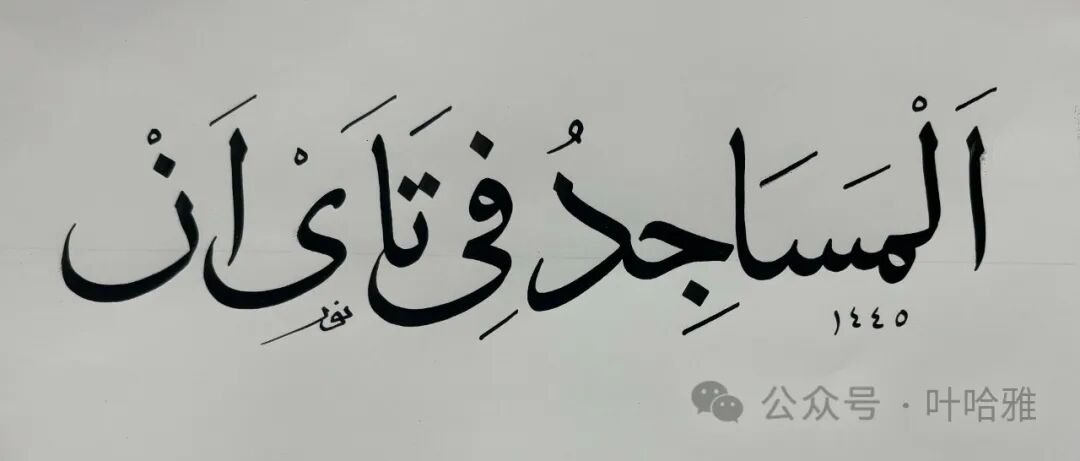
The Arabic cover was calligraphed by the Shandong-based Arabic calligrapher, Mr. Mi Guangjiang.
May Allah reward everyone.
According to the Records of Islam in Tai'an, there are 70 mosques in Tai'an City, including 10 in Taishan District, 21 in Daiyue District, 16 in Xintai City, 10 in Feicheng City, 9 in Ningyang County, and 4 in Dongping County. Among the mosques in Tai'an, 2 were built in the Yuan Dynasty, 24 in the Ming Dynasty, 18 in the Qing Dynasty, 5 during the Republic of China era, 9 after the founding of the People's Republic of China, and the construction dates of 12 others are unknown. The oldest one is the West Mosque of Xijie in Mazhuang Town, Daiyue District, which was built during the Yuan Dynasty. There are currently 3 women's mosques: the Taicheng Women's Mosque, the Suozhuang Women's Mosque in Zhuyang Town, Daiyue District, and the Dongshendong Village Women's Mosque in Yucun Town, Xintai City.
Taishan District
Taicheng Mosque
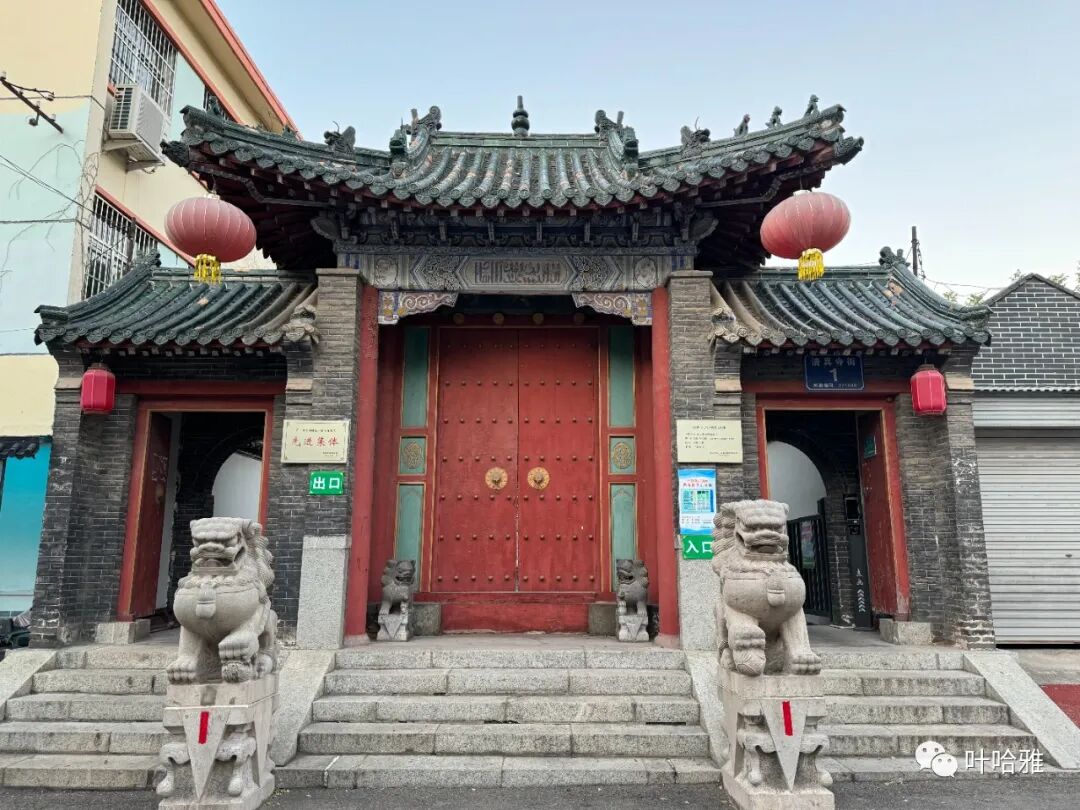
Taicheng Mosque is located in the Mosque Community of Caiyuan Subdistrict. It was built between the end of the Yuan Dynasty and the beginning of the Ming Dynasty. Stone tablets confirm that it was rebuilt many times during the Ming and Qing dynasties. In 1944, the mosque had fallen into disrepair and was quite damaged. Local elders and mosque leaders raised 12,213 yuan for renovations. They gathered workers and materials, finishing the project in a few months and making the main hall look brand new. Ma Ziming, a local elder living in Suzhou and Shanghai, was a devout believer and passionate about charity. He donated a set of finely woven curtains from Suzhou, and other elders and the hometown association in Shanghai also donated generously.
The mosque underwent several repairs starting in the 1950s. It was restored and repaired after the Reform and Opening-up policy began. The mosque gate was rebuilt in 1997. A comprehensive renovation took place in 2008, covering an area of 2,600 square meters. In 2013, the North Lecture Hall was rebuilt, and a funeral home, a multi-functional building, and buildings along the east and west streets were constructed.
Taicheng Mosque is a classic Chinese palace-style building with two courtyards. It mainly consists of a prayer hall, north lecture hall, south lecture hall, main gate, second gate, and rear kiln hall. The main gate features three gold-painted characters for "Mosque," inscribed with the date "10th day of the first lunar month, 1619" (the year of Jiwei in the Wanli reign of the Ming Dynasty). After entering the gate, a path leads through the second gate into a courtyard where ancient cypress trees reach toward the sky. The north and south lecture halls of the mosque are spacious and bright, housing a scripture room, living quarters for the imam, and a bathing room. To the west stands the prayer hall, which connects a front porch, a middle hall, and a rear kiln hall into one structure. The front porch uses a Ming-style hip-and-gable roof, while the rear kiln hall features a Ming-style hip-and-gable roof with bracket sets, three layers of eaves, and 12 upturned corners. The center of the main hall's roof ridge and the top of the rear kiln hall are both topped with golden glazed gourds over one meter tall.
The mosque covers an area of 6,174.19 square meters, with a building area of 6,394.5 square meters. The main hall is 18 meters high, 42.3 meters long, and 16.95 meters wide. The north lecture hall is 17.5 meters long and 8.1 meters wide. The south lecture hall is 14.4 meters long and 8.7 meters wide. The water house is 17 meters long and 6.7 meters wide. The mosque has many auxiliary buildings, including the east gate, the north courtyard meeting room, the funeral home, the frame house (jiaziwu), a two-story building on the west side of the west gate, and rooms along the street. The mosque originally held dozens of stone tablets carved during the Ming and Qing dynasties and the Republic of China period, but they were all destroyed during the Cultural Revolution. Today, only four remain: the broken Mosque Tablet (Qingzhensi Bei) from the first year of the Wanli reign of the Ming Dynasty (1573), the Laifu Inscription Tablet (Laifu Mingbei) from the fourth year of the Tianqi reign (1624), the Donation Tablet (Juanxian Bei) from the thirty-fourth year of the Qianlong reign of the Qing Dynasty (1759), and the Mosque Reconstruction Tablet (Chongxiu Qingzhensi Bei) from the thirty-third year of the Republic of China (1944). The Laifu Inscription Tablet (Laifu Mingbei) is an important reflection of how Shandong Hui Muslims interpreted Islam through Confucianism, and it holds significant historical and cultural value.
Since the Republic of China era, the mosque's religious affairs have been led by imams including Tang Ahong, Yang Fuyuan, Yang Dechun, Wang Changshun, Mi Guangxun, Han Yuhai, and Wang Rongchen. Imam Mi Zhaojie has served since 1997 and currently holds positions such as Standing Committee Member of the Tai'an Municipal Committee of the CPPCC and Vice President of the Tai'an Islamic Association.
Historically, the mosque has trained more than ten imams and religious leaders, including Wang Qinglin, Fan Guiyuan, Xu Huanliang, Mi Yinghua, Mi Qinglu, Wang Hongchen, Liu Zhong'an, Wang Wu, Wang Changgui, Ding Junting, Wang Changlin, Bai Shengguang, and Bai Shenglin. The Mi family of Tai City, represented by Imam Mi Yingjie, and the Wang family of Beiqiu, represented by Imams Wang Jie, Wang Pu, Wang Qinglin, and Wang Yongxing, are both families of imams that have produced religious leaders for over three generations. The mosque is managed by a management committee consisting of nine members. Xu Shuhua, Fa Debao, Mi Shouzhi, Wang Fengge, and Mi Xiankuan have served as directors of the management committee.
The management committee conducts religious activities according to the law and actively guides Hui Muslims in their normal religious life. Responding to the call of the Party and the government, the mosque promotes the Islamic spirit of helping the needy, supports social charity and public welfare, has provided aid multiple times to areas affected by natural disasters like earthquakes and tsunamis, and actively donates to causes such as education and elderly care.
The mosque hosts international Muslim friends and has received many honors over the years. It was named a cultural heritage site of Taishan District in 1992. It was named a cultural heritage site of Tai'an City in 1994. It was named a cultural heritage site of Shandong Province in 2013. It received the title of Provincial Civilized Religious Venue in 2001 and was named a Model Mosque of Tai'an City in 2008. In 2009, it was awarded titles including Provincial Harmonious Religious Venue, Shandong Province Outstanding Historical Building, Shandong Province Model Mosque, and National Advanced Collective for Creating Harmonious Temples and Churches.
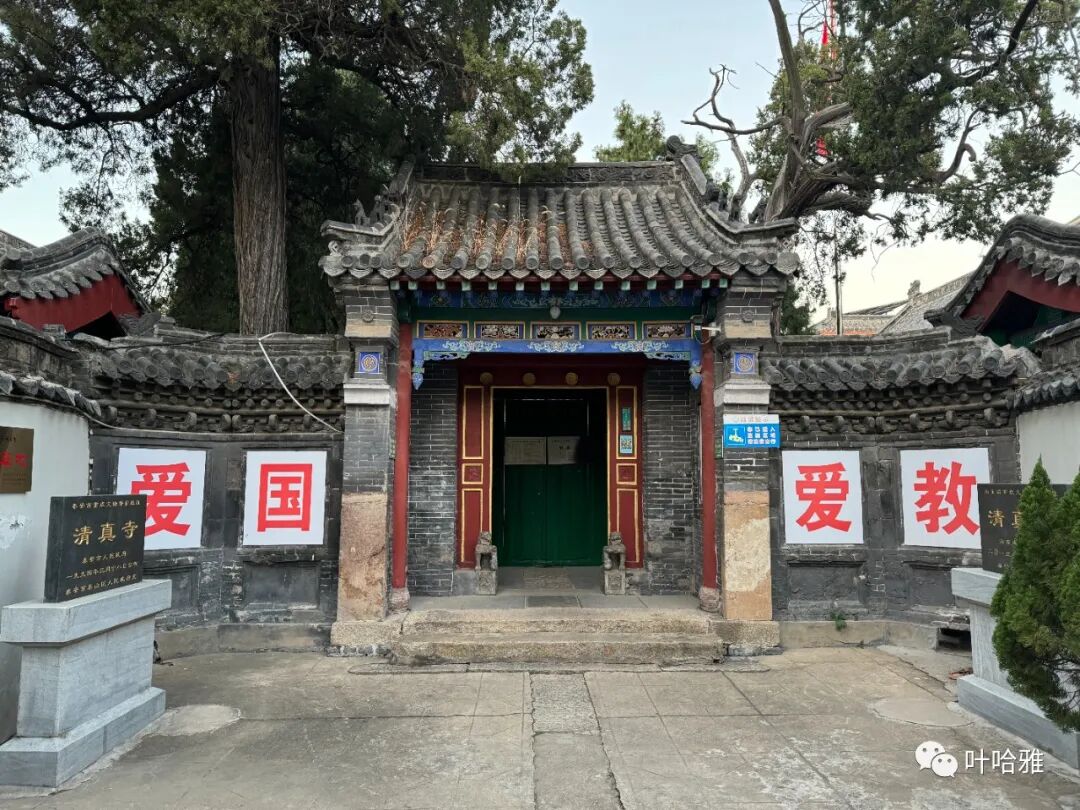
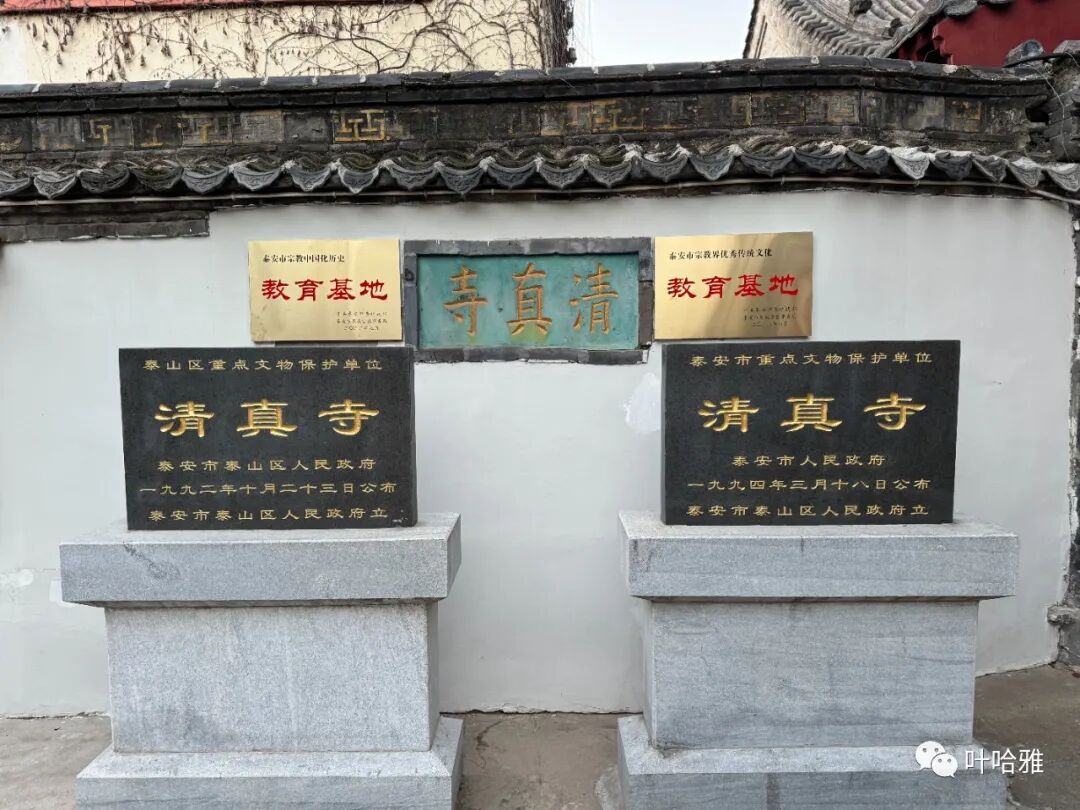
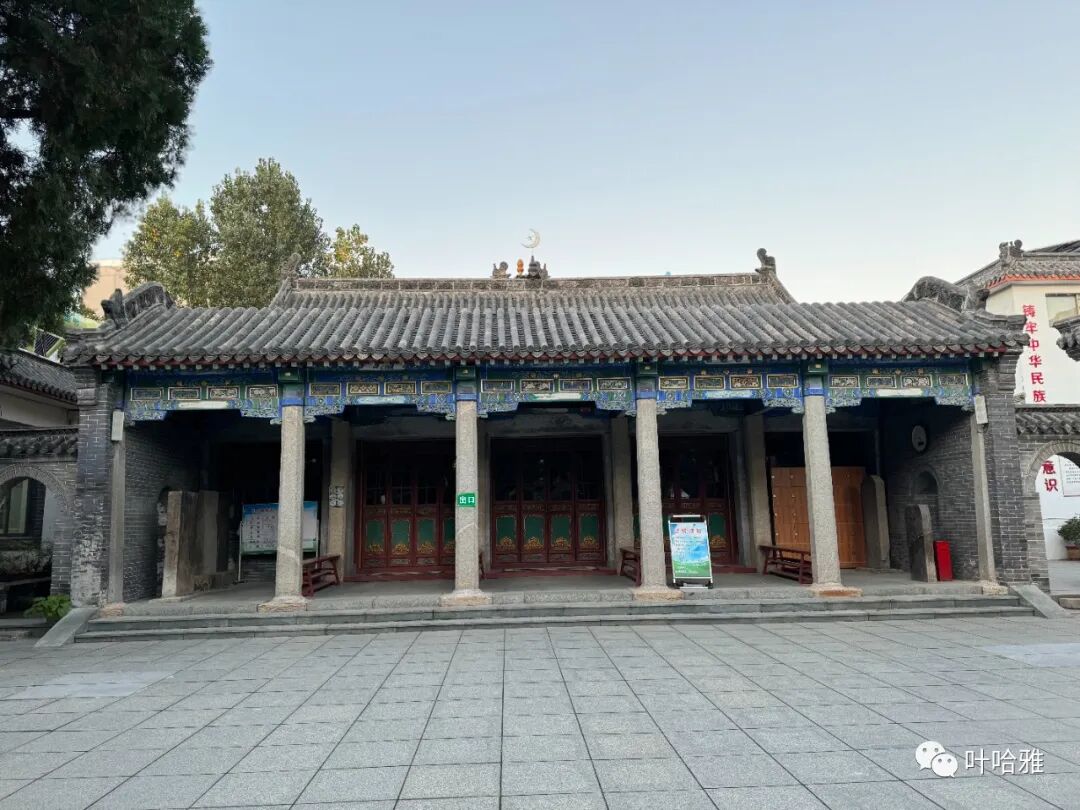
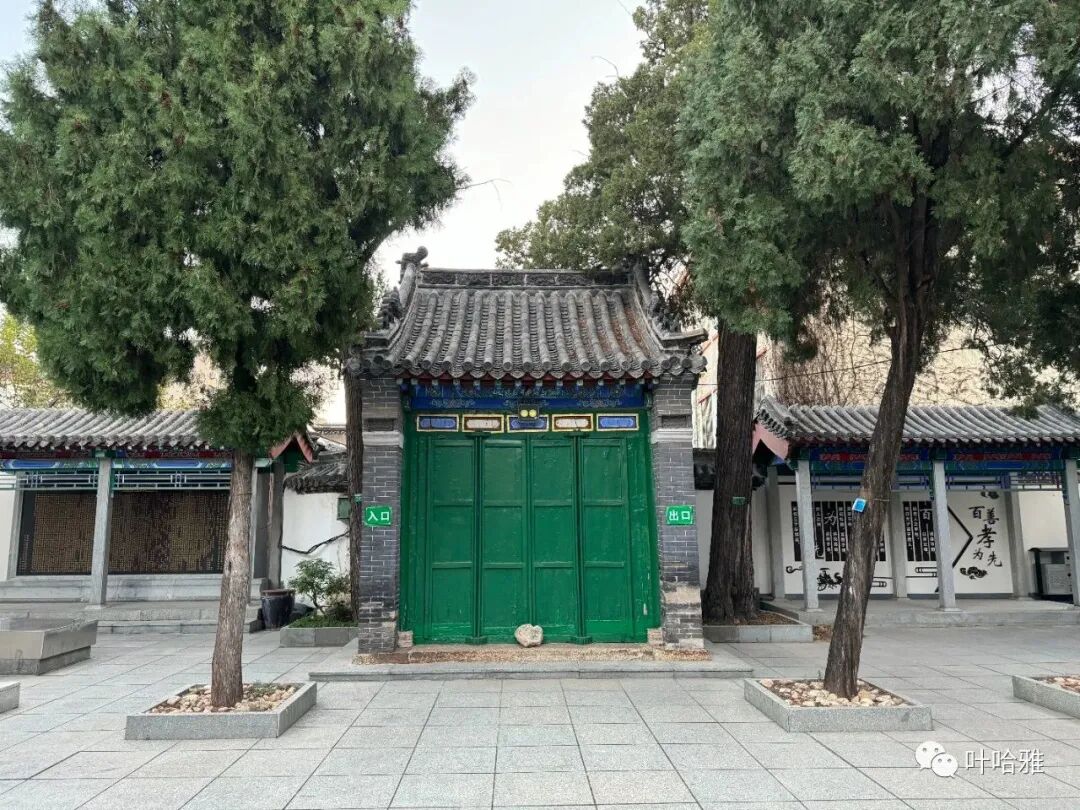
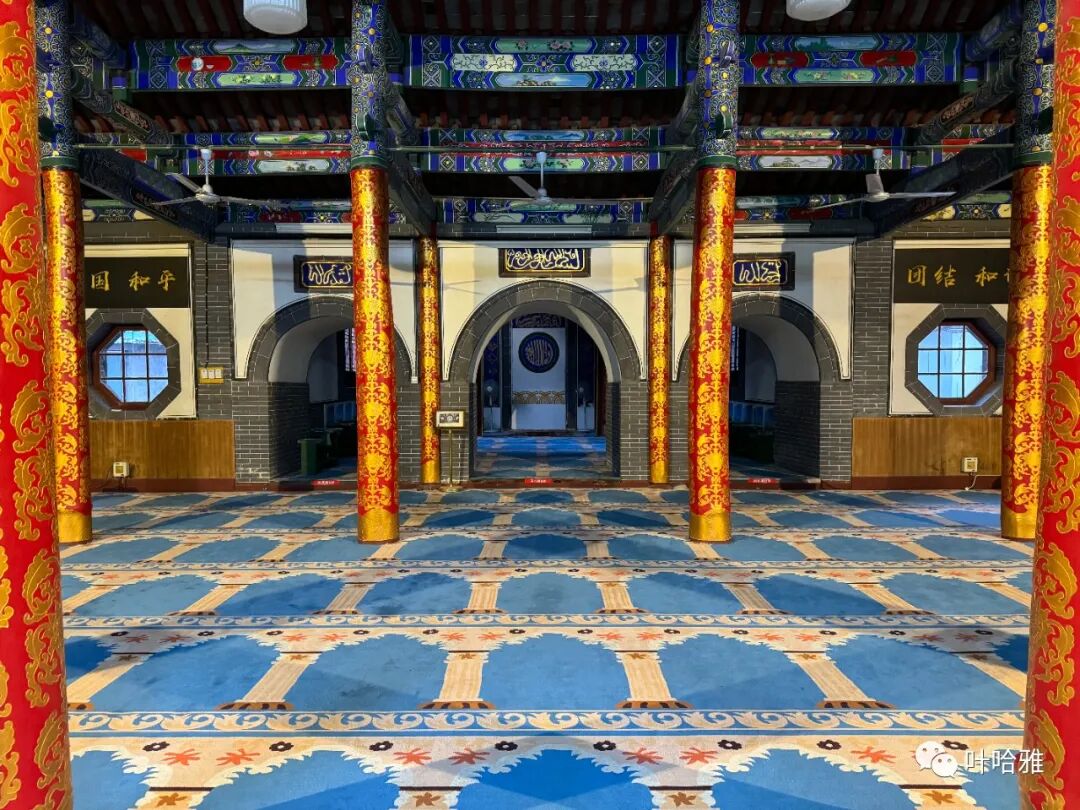
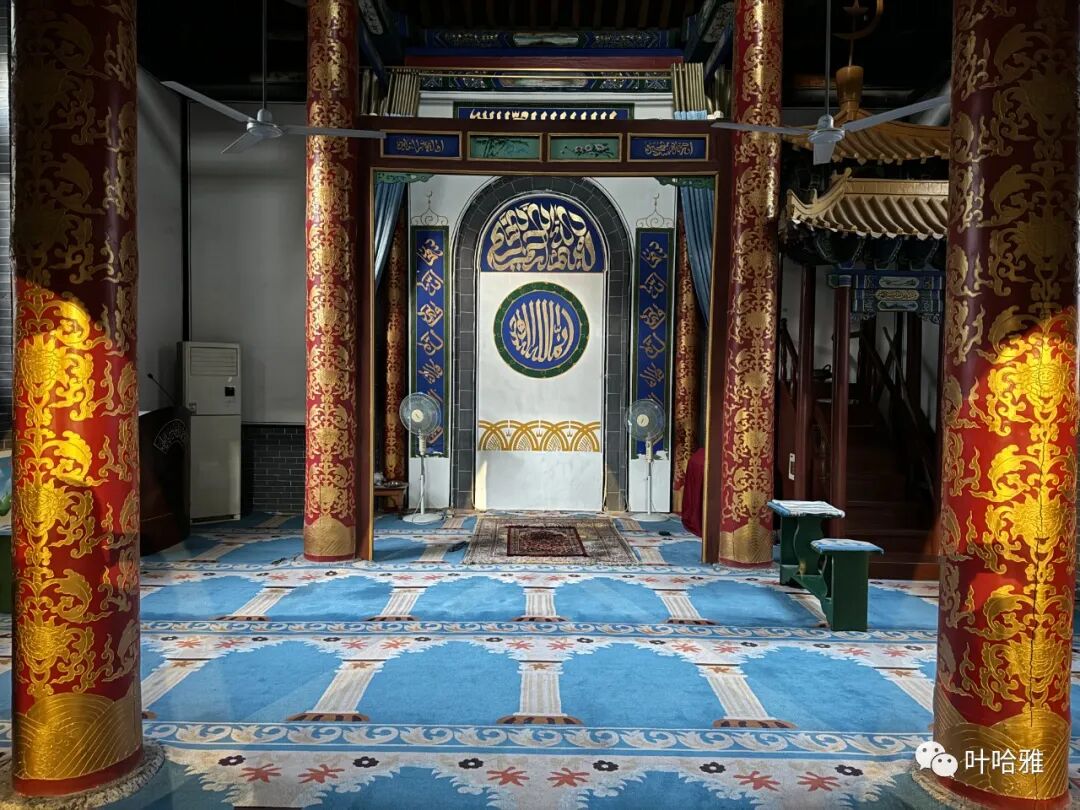
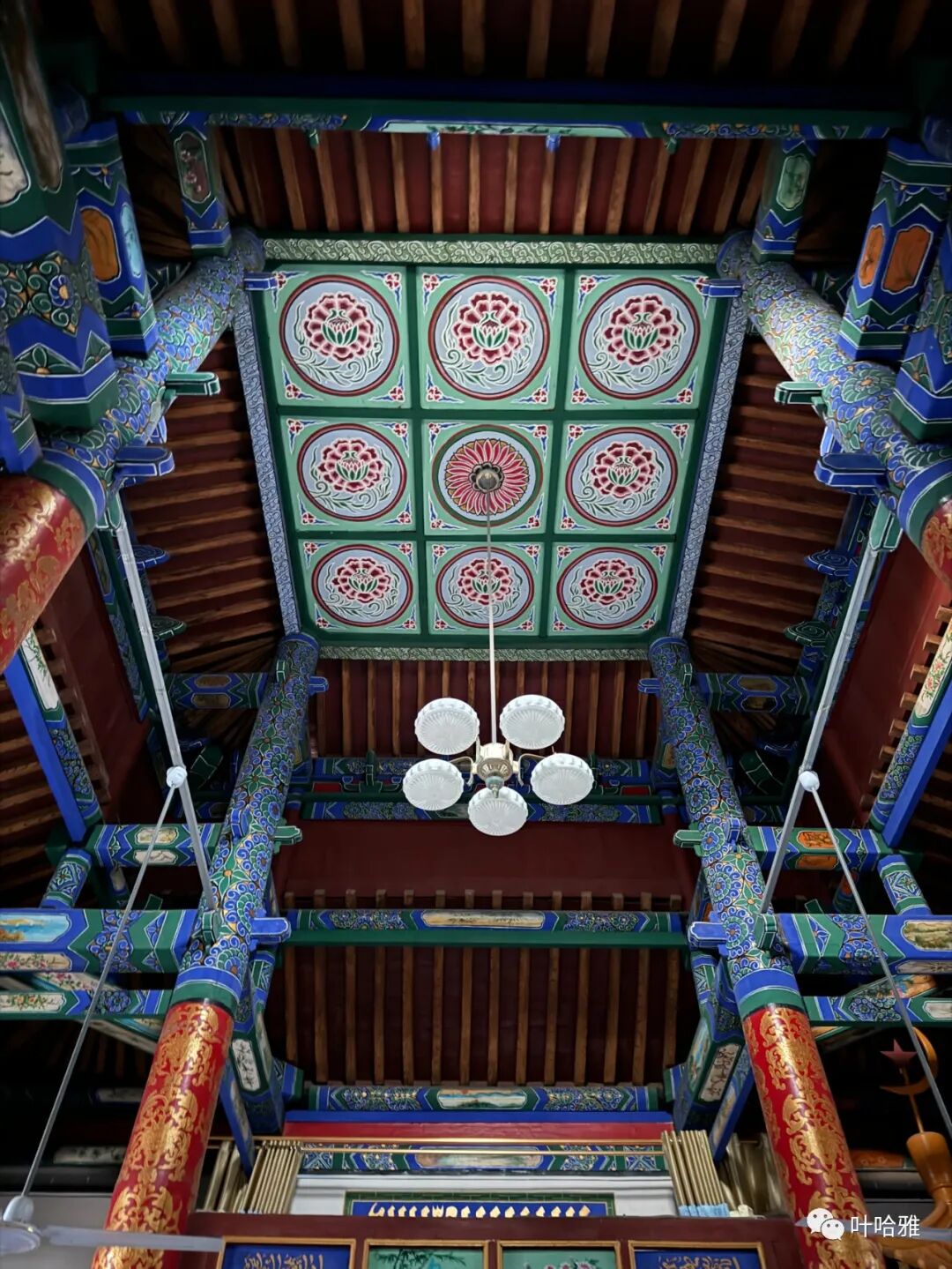
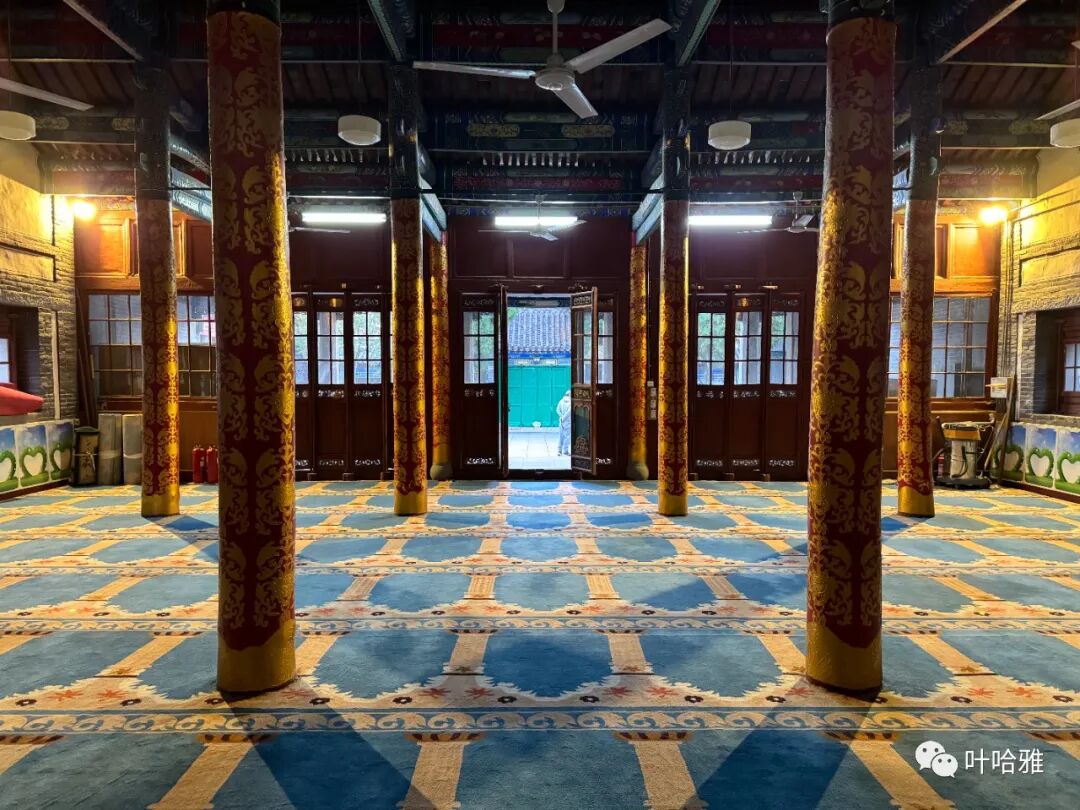
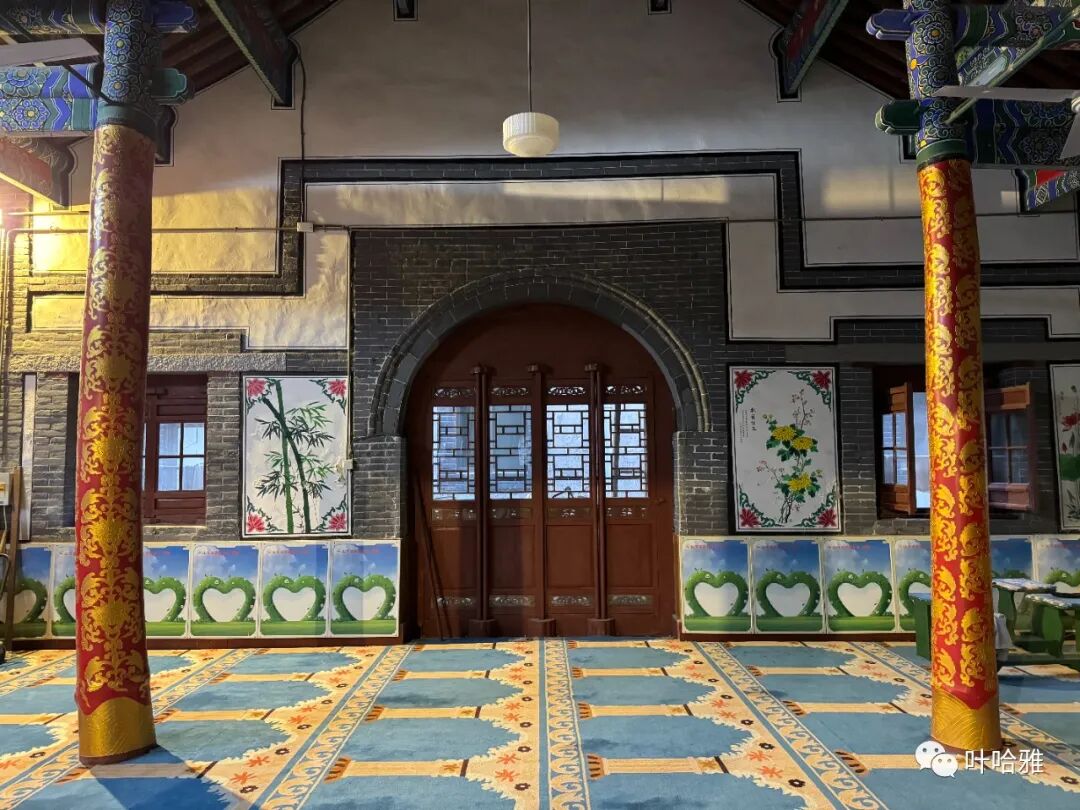
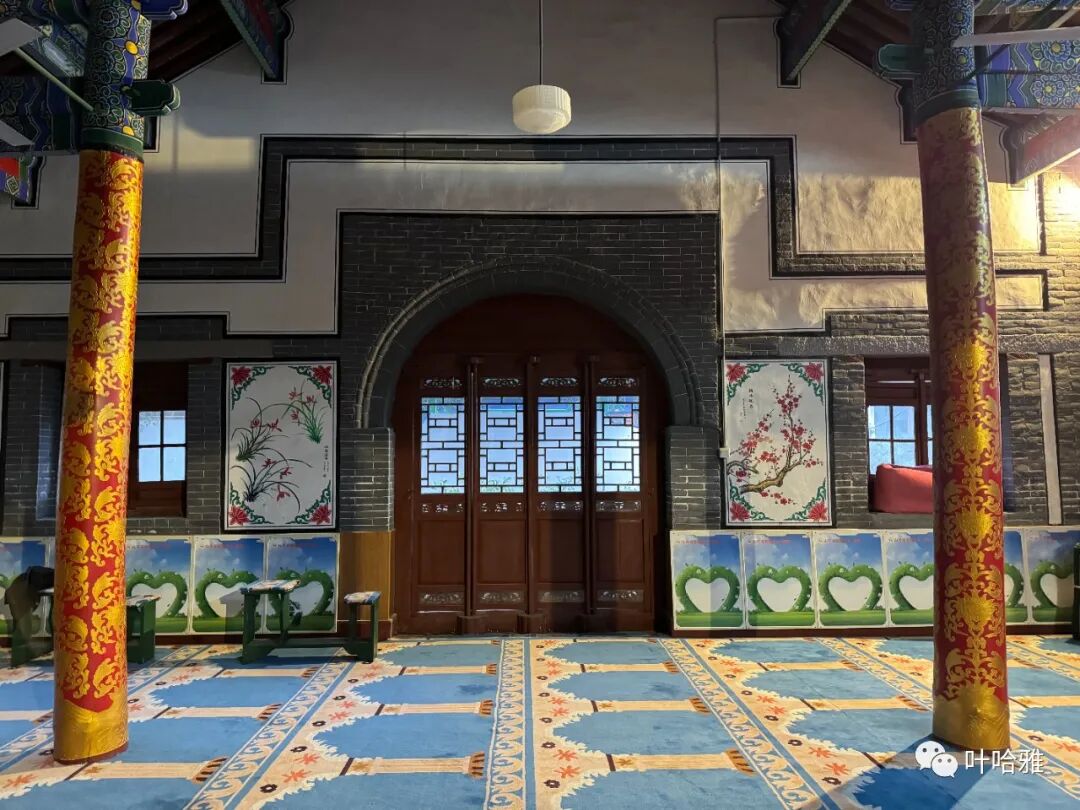
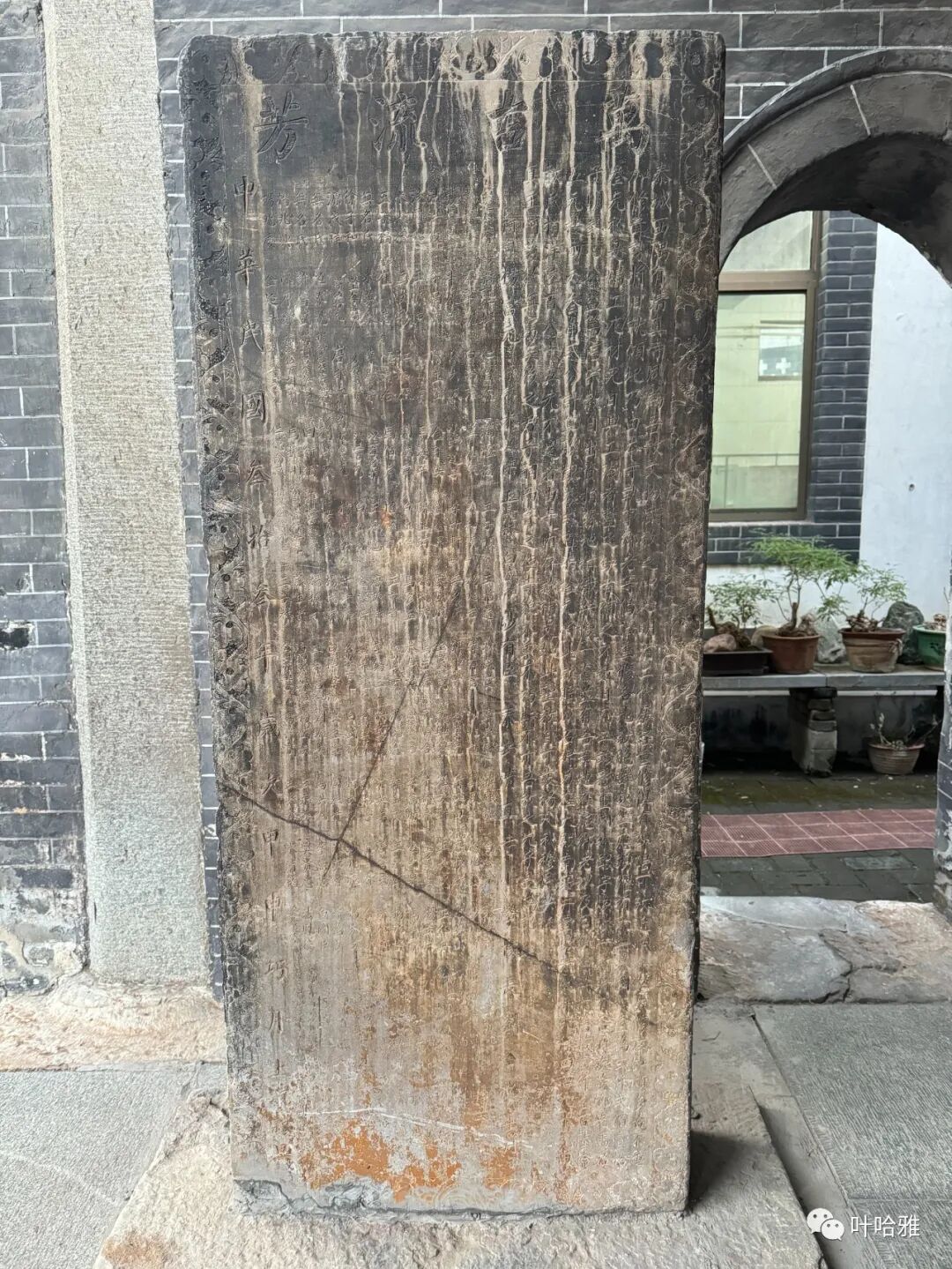
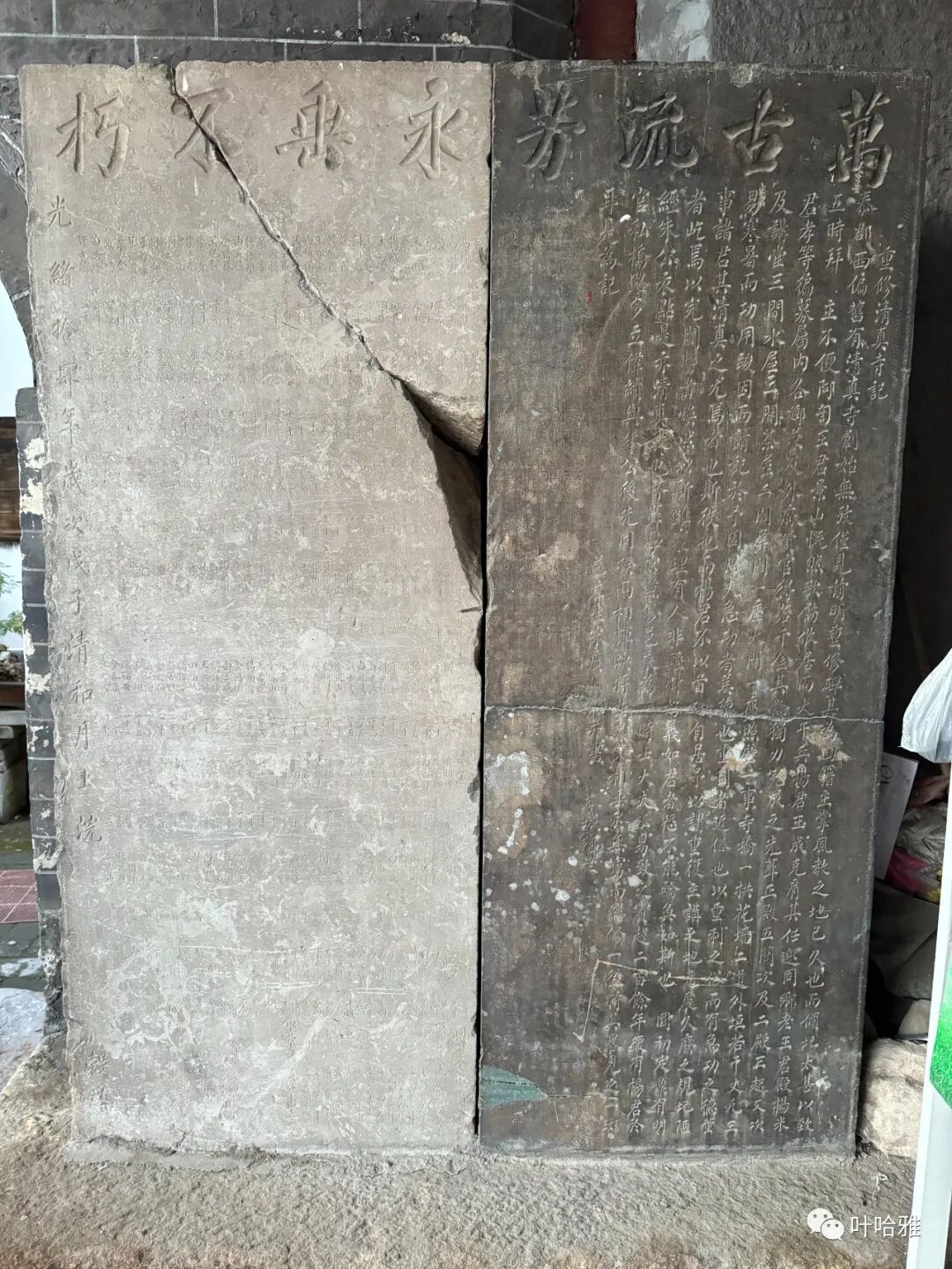
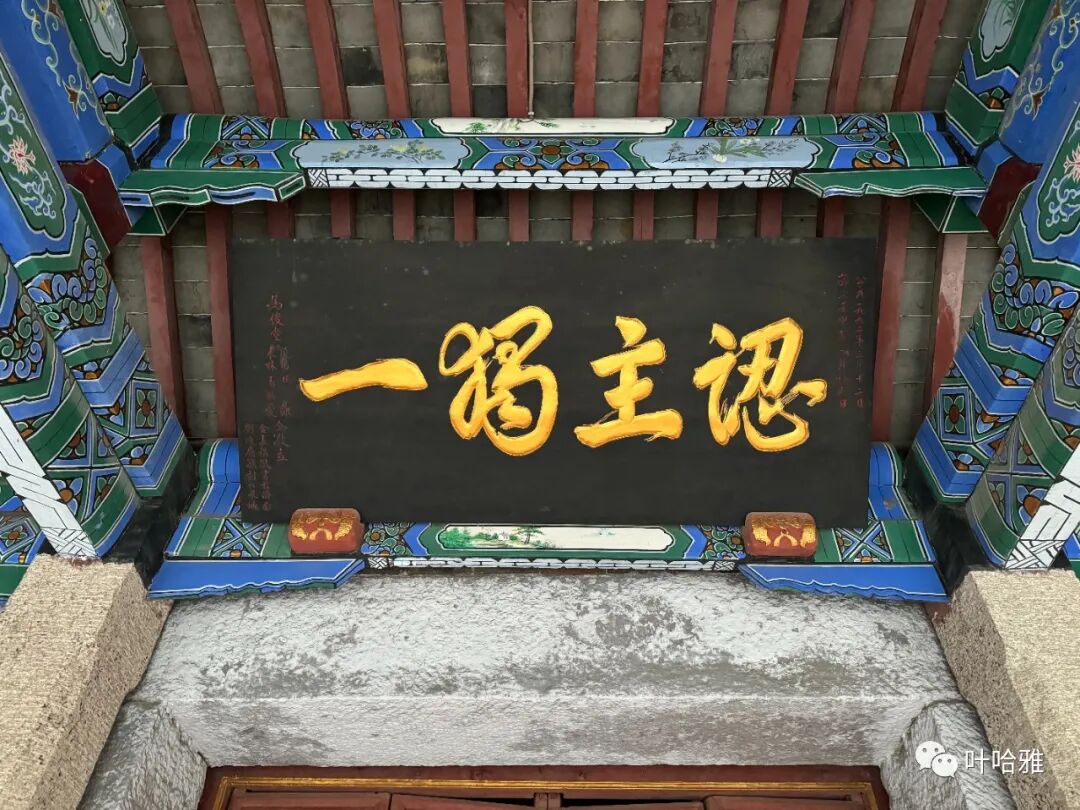
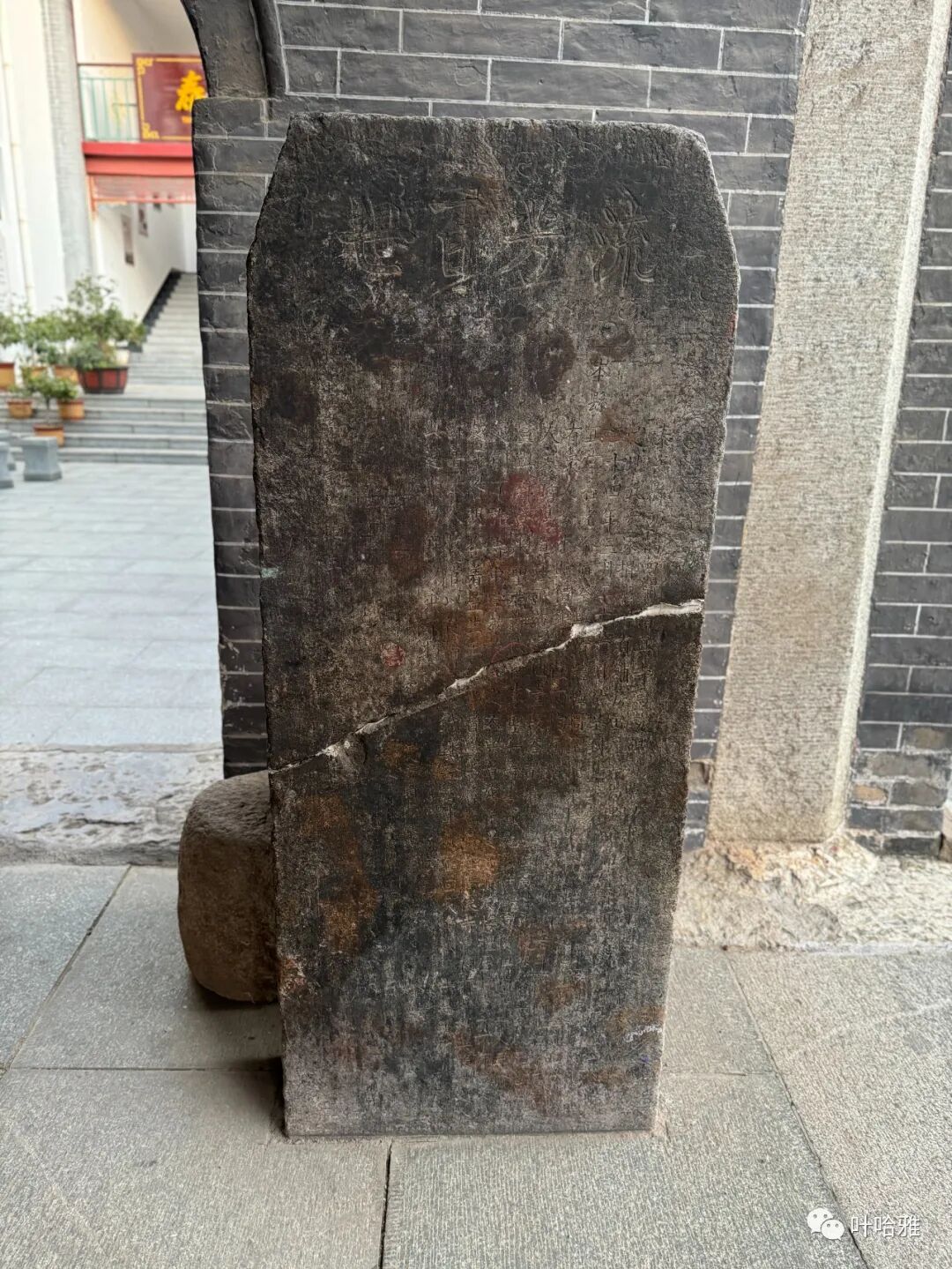
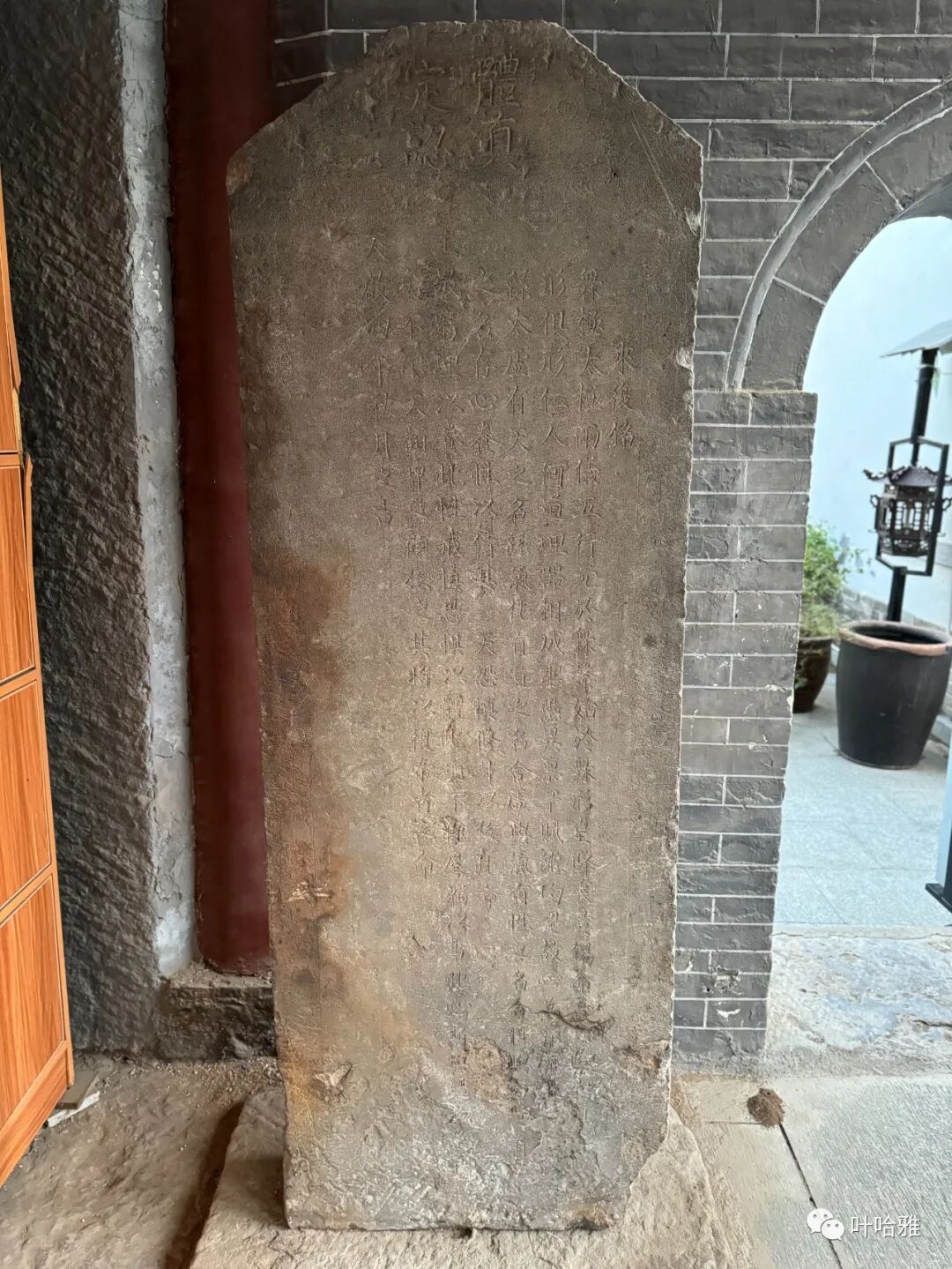
Taicheng Women's Mosque.
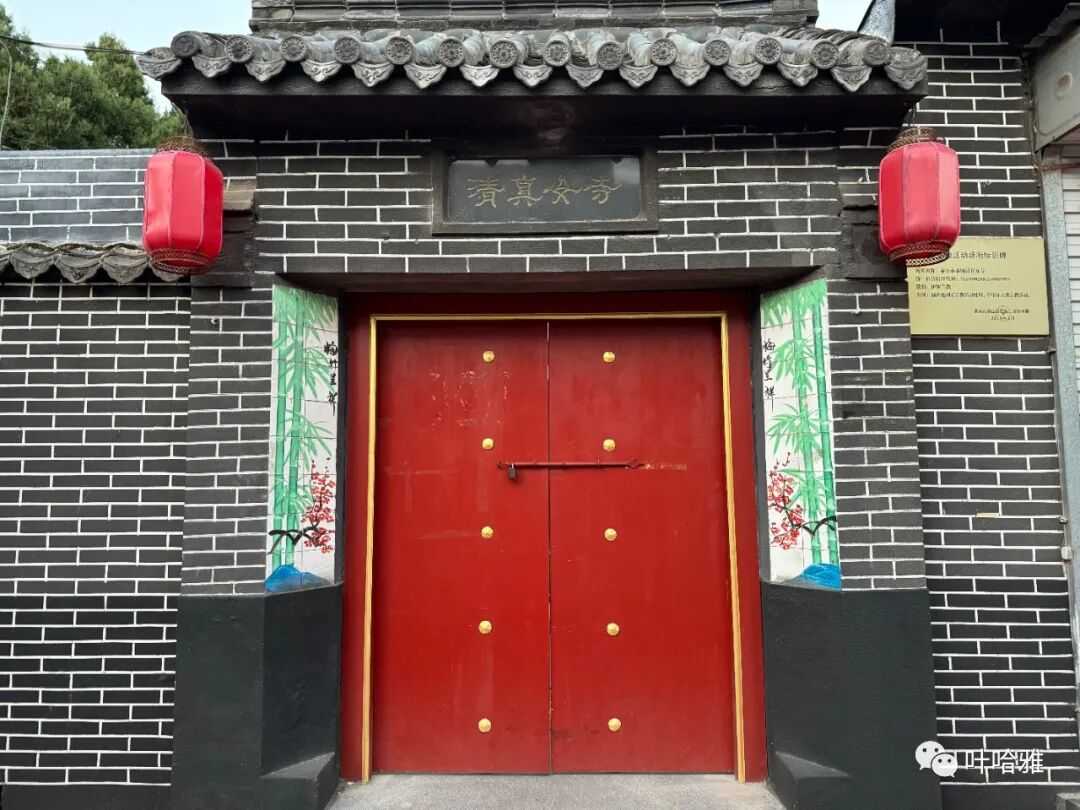
Taicheng Women's Mosque in Caiyuan Subdistrict. Due to urban renewal, it moved from Baijia Alley on Mosque Street to its current location. It covers 360 square meters with a building area of 240 square meters. It currently has a main prayer hall, a north lecture hall, a washroom (shuifang), a main gate, and one stone tablet.
Taicheng East Mosque.
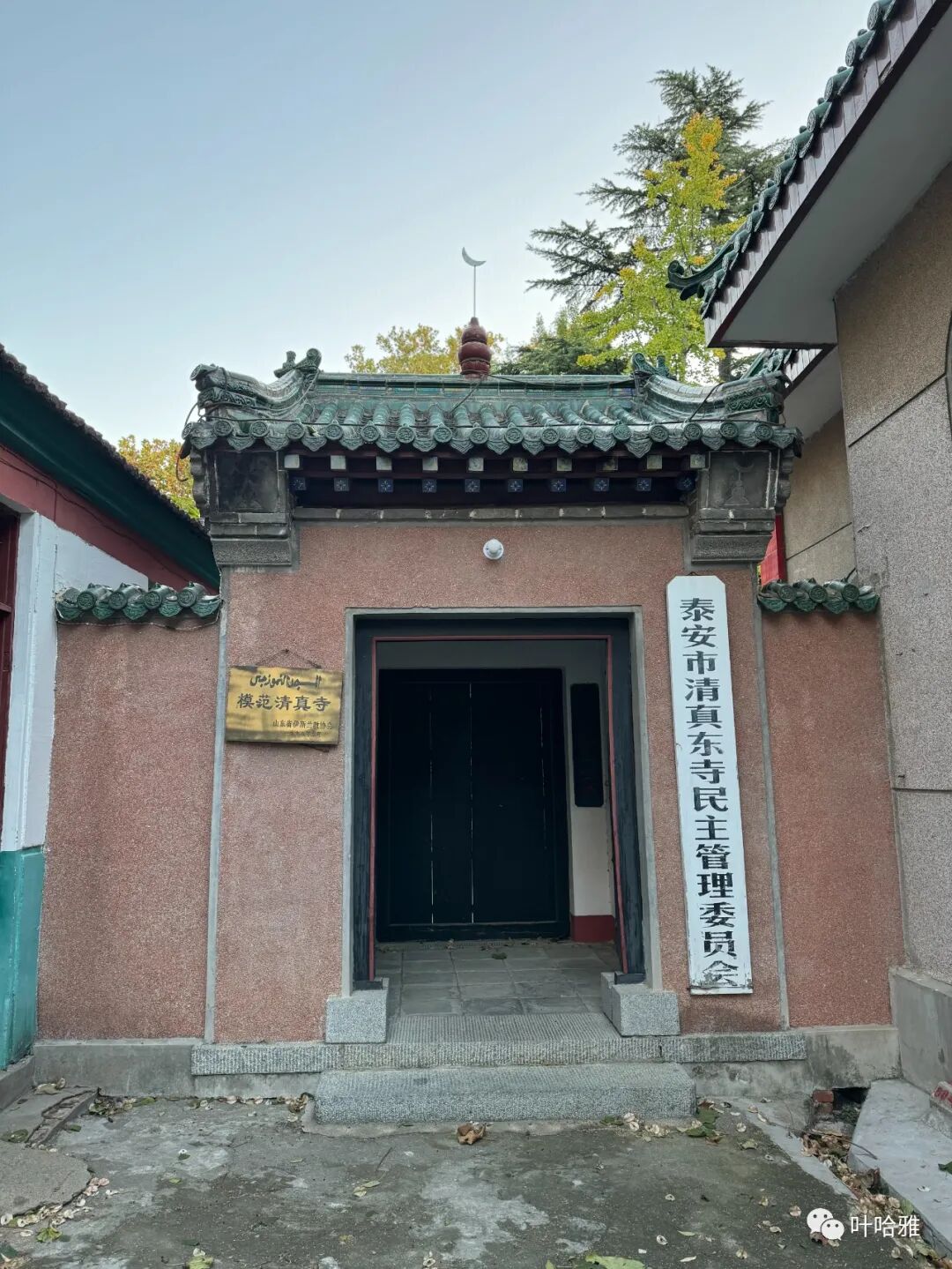
The mosque in Beixin Community, Daimiao Subdistrict, is commonly known as the Taicheng East Mosque and is located in the middle of Beixin Community. It was built in 1920, the ninth year of the Republic of China, with funding from the famous Shandong industrialist Mr. Ma Bosheng. The three characters for "Mosque" written in his own hand are still preserved there. It has been renovated many times since the reform and opening-up. Large-scale repairs were carried out in 2006.
The mosque is built in the traditional Chinese courtyard style, measuring 51 meters long and 25 meters wide. The backyard is 16 meters long and 17.5 meters wide. The main prayer hall consists of a front porch, a middle hall, and a rear kiln-style hall, measuring 17.8 meters long and 12 meters wide. The north lecture hall is 16.3 meters long and 7 meters wide. The south lecture hall is 16.3 meters long and 5.4 meters wide. The water room is 14 meters long and 7 meters wide. There are 6 existing stone tablets. Four are in the tablet corridor, including the mosque gate plaque calligraphed by Ma Bosheng and the 2006 tablet listing the organizations and individuals who donated to the mosque repairs. The others include an Arabic calligraphy work by the calligrapher Mr. Ma Shitou and the four characters for "Praise Allah and the Prophet" written by the famous Tai'an calligrapher Mr. An Tingshan. Additionally, there are 2 tablets on the sides of the main hall's porch, which are the "Ancient Islamic Faith" tablet and the mosque reconstruction tablet.
Since the mosque was built, the religious affairs have been led by Imam Cao, Imam Wang, and Imam Liu Guoxiang. The mosque was closed during the Cultural Revolution. After it reopened, Imams such as Liu Zhong'an and Ma Qun led the religious affairs, and the current imam is Wang Linlin. The mosque is managed by a seven-member democratic management committee, with Yu Zongbin and Chen Guangwu serving as past directors.
The mosque has significant historical and cultural value. It has earned titles like Provincial Harmonious Religious Activity Site and City-Level Model Mosque, and the Tai'an municipal government recognizes it as an advanced unit for patriotism and religious devotion.
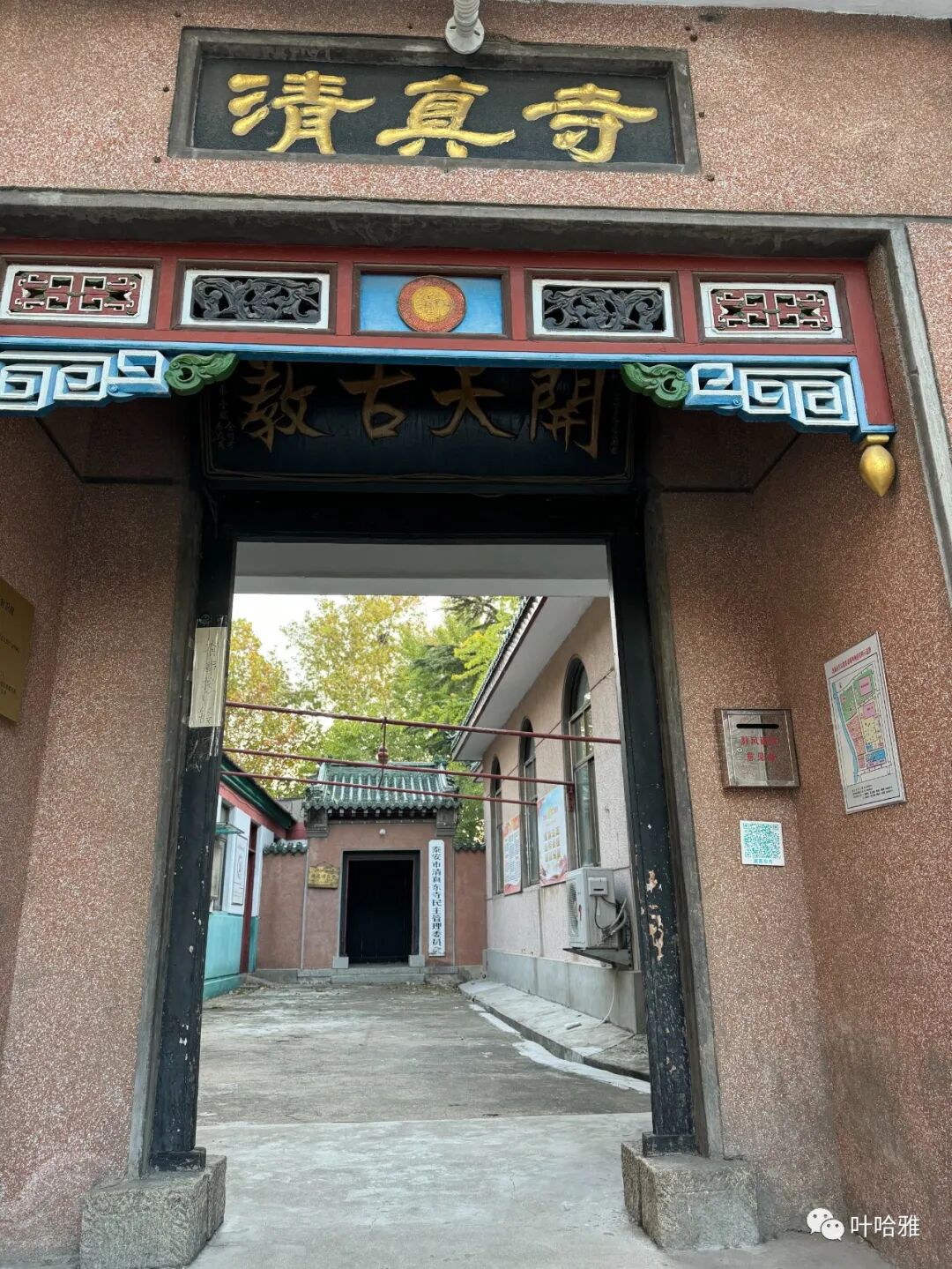
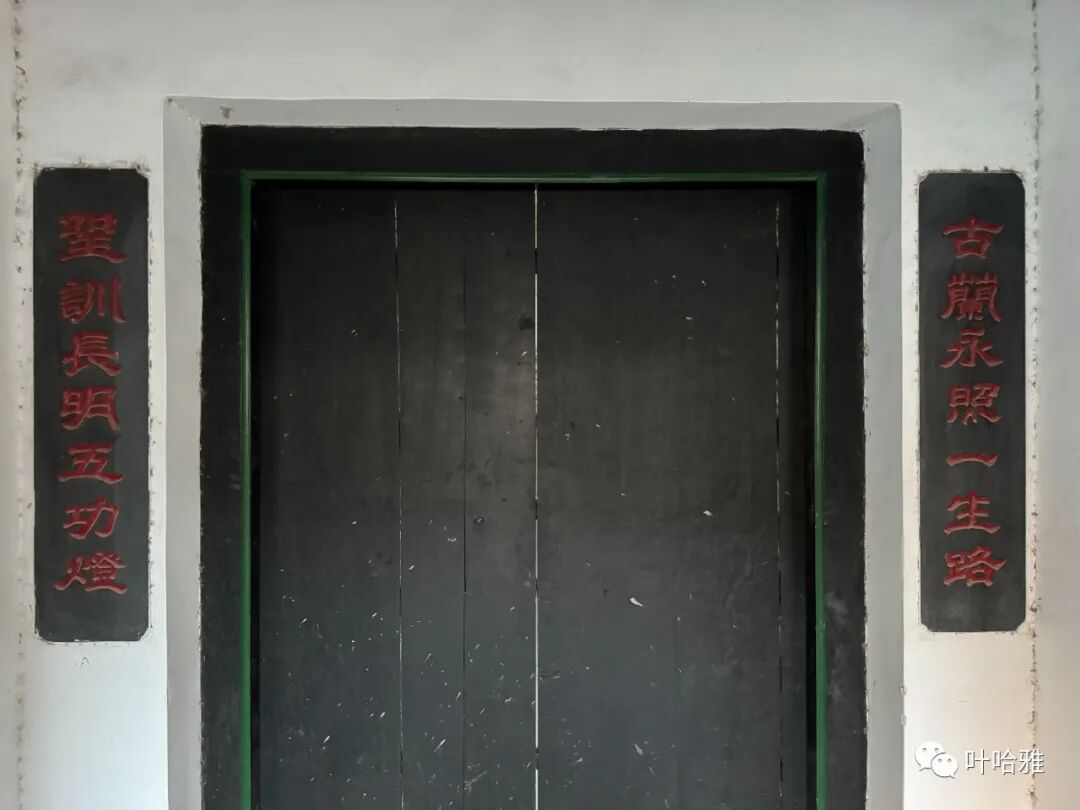
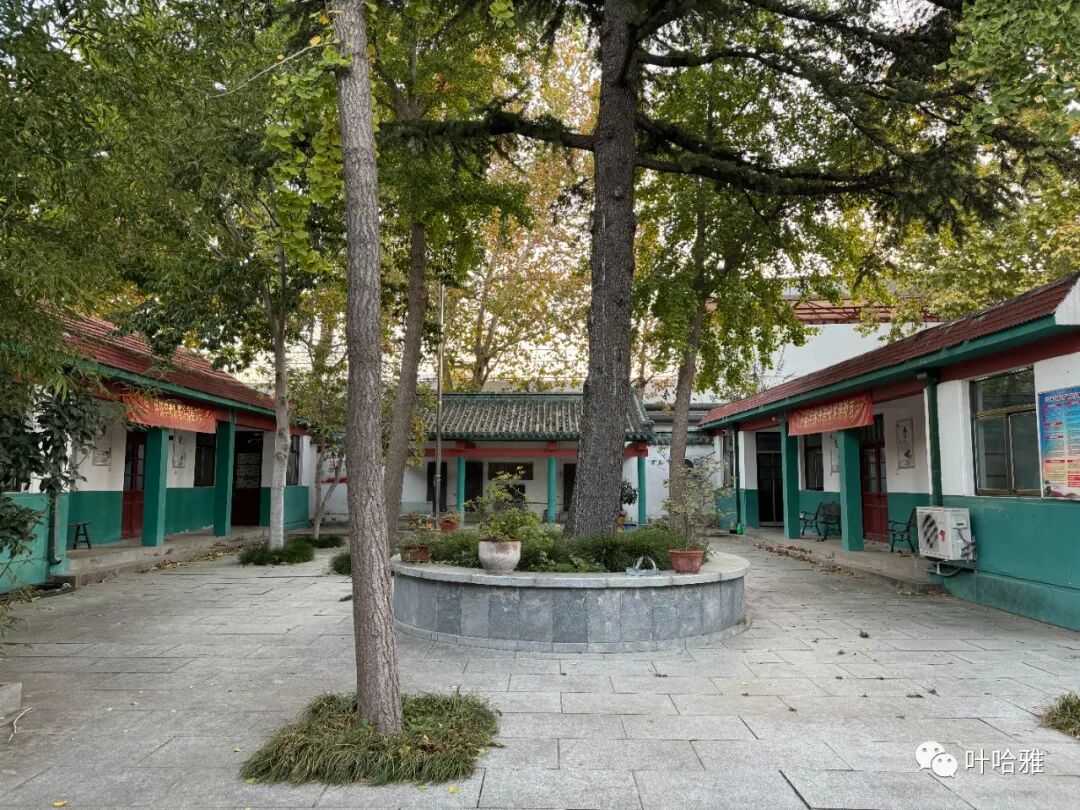
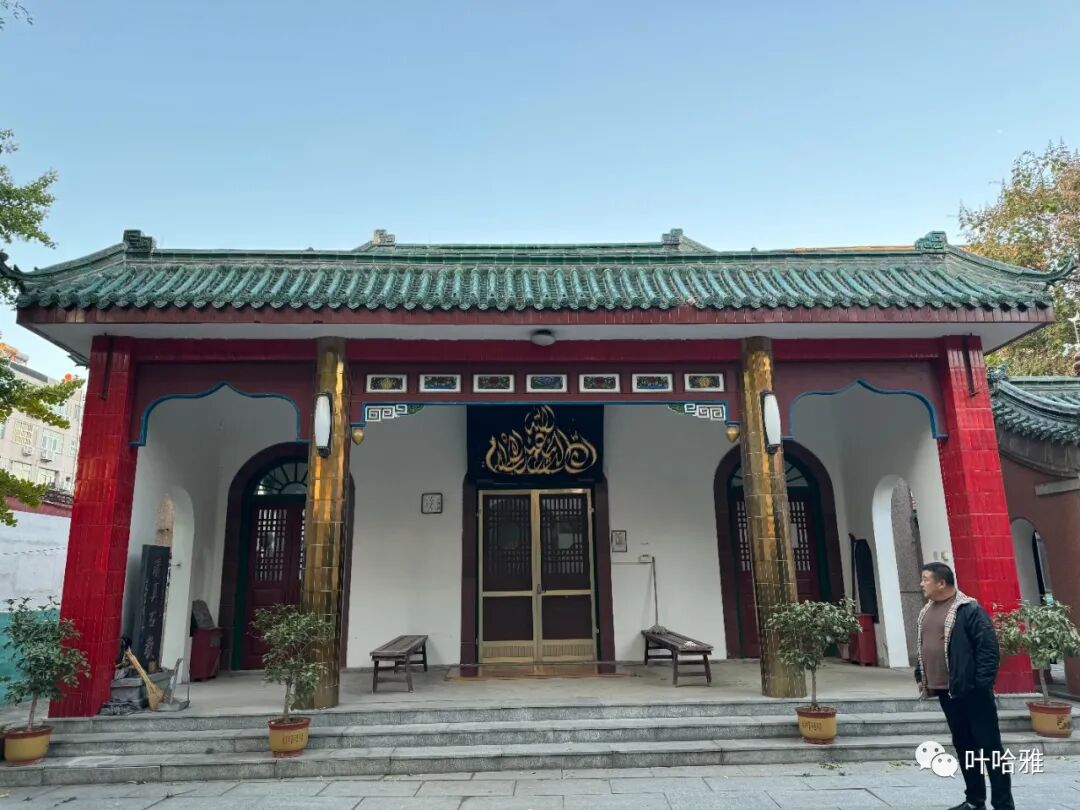
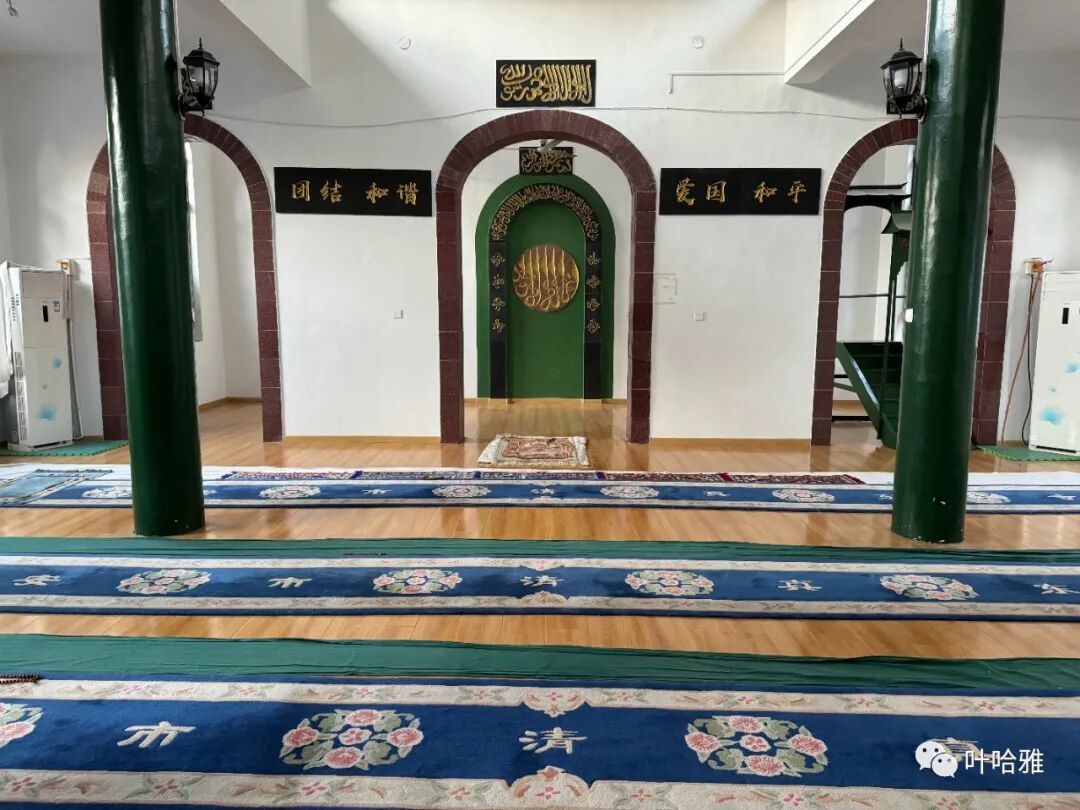
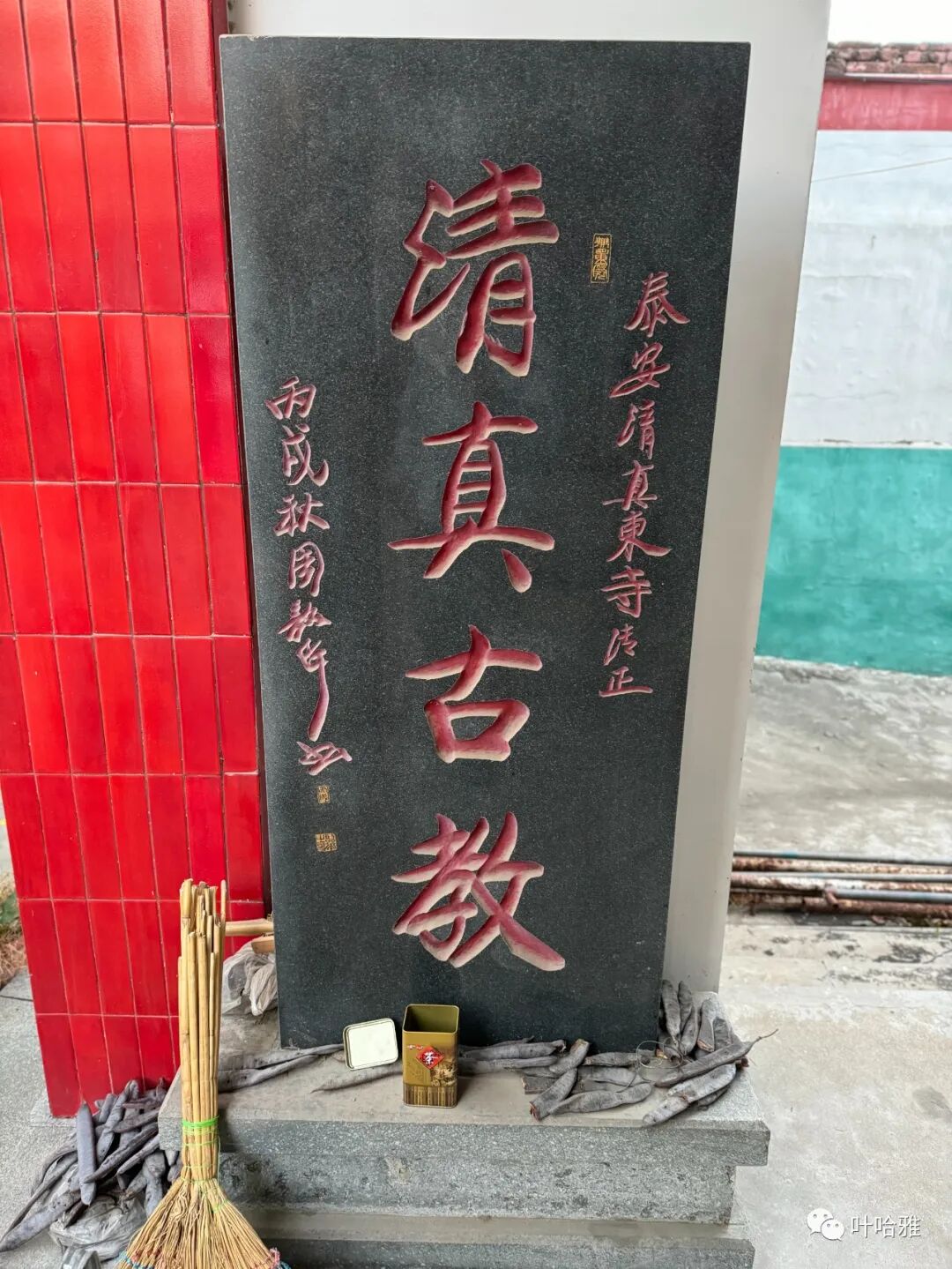
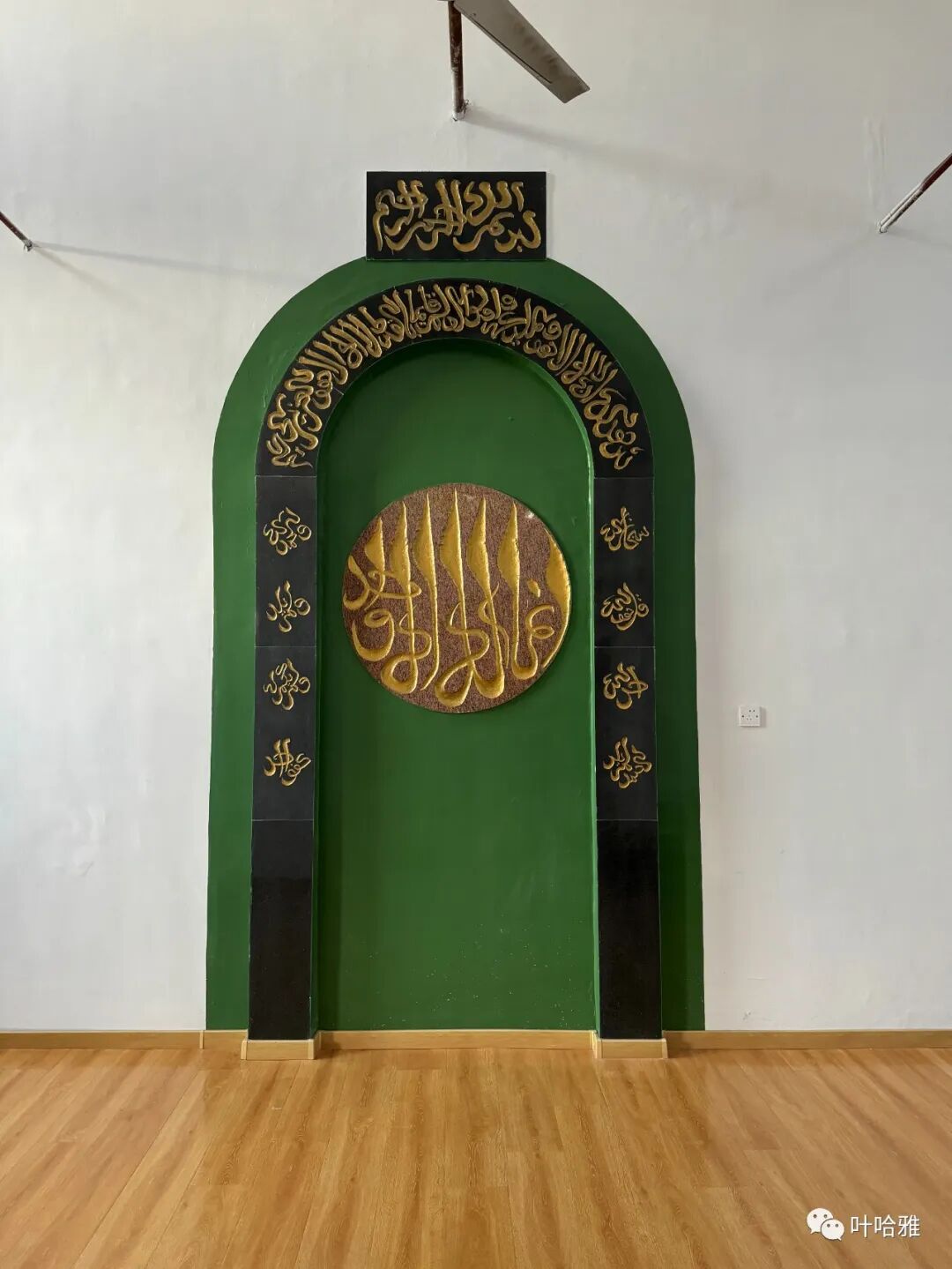
Zhitian Village Mosque
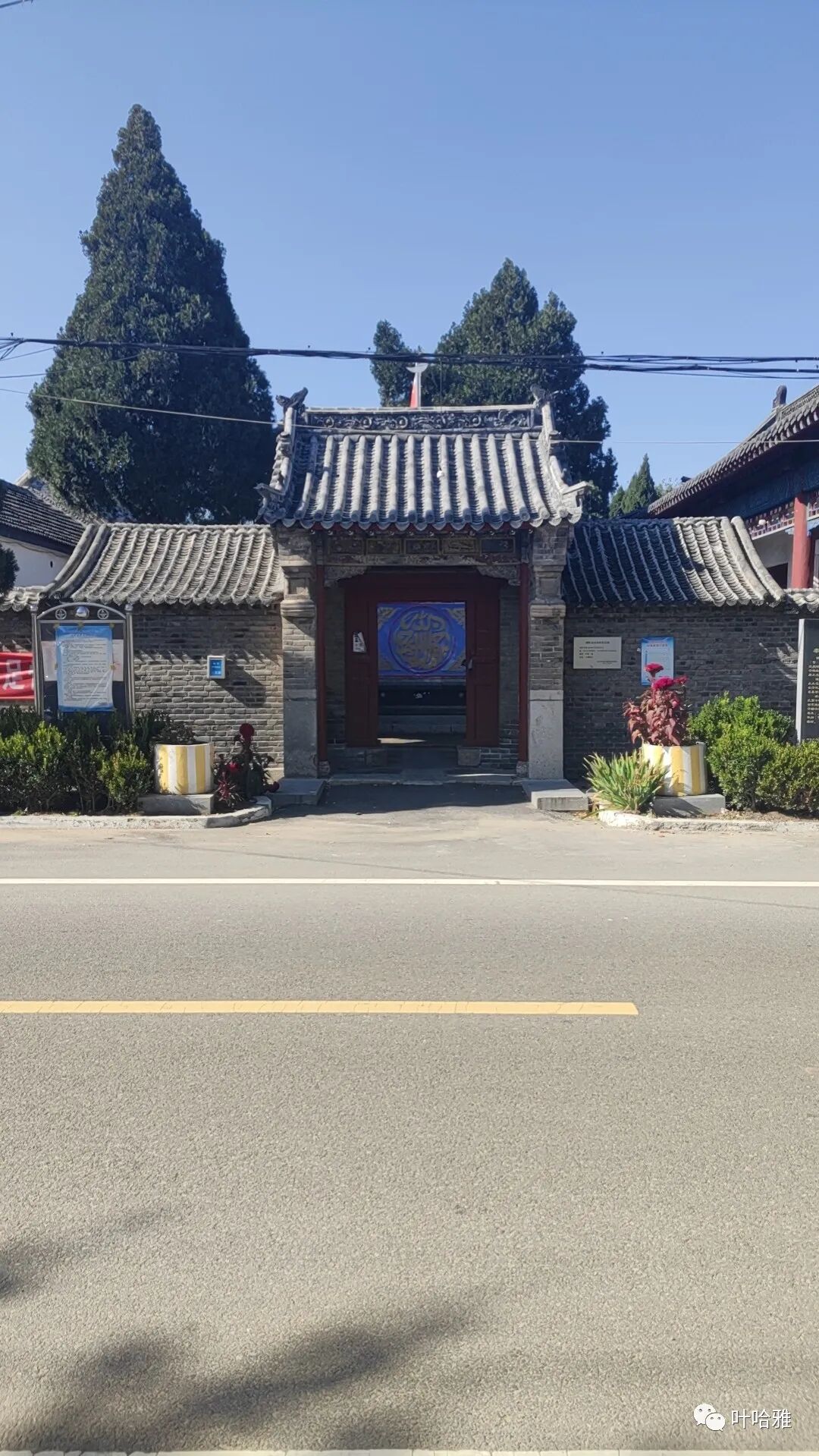
Zhitian Village Mosque in Shengzhuang Town sits at the south end of the village. It was founded at least by the mid-Ming Dynasty, specifically after the Chenghua era (1465-1487) and before the Jiajing era (1522-1566), and has undergone many repairs since. In the 56th year of the Qianlong reign (1791), a new moon terrace (yuetai) was built to make it easier for Muslims to enter the main hall for namaz, and the mosque gate was rebuilt at the same time. In the 14th year of the Guangxu reign (1888), the original main hall burned down. Village elders Yang Fugang and Yang Futai pushed for the reconstruction of the main hall, the porch (juanpeng), the south lecture hall, the storage shed (jiaziwu), the water room, and the warehouse. In the 23rd year of the Guangxu reign (1897), village elder Yang Fugang led the construction of the rear kiln hall (houyaodian). The mosque has been repaired many times since the Reform and Opening-up. The pavilion was rebuilt in 1991, the middle hall in 2003, and the rear hall in 2008.
The mosque is a traditional Chinese courtyard-style building. It includes one main hall, four north lecture rooms, two south lecture rooms, three south water rooms, one gate tower, six side rooms (erfang), one second gate, one front gate tower, one spirit wall (yingbi), and one stone pavilion. The mosque is 49 meters long and 25 meters wide, with a building area of 783.65 square meters. The prayer hall is 24.2 meters long and 11 meters wide. It has three sections and three rows, made up of a front hall, middle hall, back hall, and niche hall (yaodian). The front hall is 17.2 meters long, 8.6 meters wide, and 8 meters high. The middle hall is 17.2 meters long, 8.6 meters wide, and 8.5 meters high. The back hall is 9 meters long and 7 meters wide. The front, middle, and back halls (including the niche hall) each have two side rooms, totaling 6 side rooms with an area of 54 square meters. The front hall is a brick-and-wood structure with a hard-mountain roof, gray tiles, a front porch, and side rooms. It is three bays wide. The middle hall is a brick-and-wood structure with a hard-mountain roof, gray tiles, and side rooms. The niche hall is a three-story, six-pillar brick-and-wood structure with a pointed roof. In front of the main hall stands a stone pavilion with a pointed roof. The upper part is made of brick, wood, and black tiles. The base features Ming Dynasty-style carvings, and the stone drums at the base have archaeological value. The mosque gatehouse is a brick, wood, and stone structure built in the traditional style with a large wooden ridge.
The north lecture hall is 13.2 meters long and 6.3 meters wide. The south lecture hall is 20 meters long and 6 meters wide. The water room is 11 meters long and 5 meters wide. There are 7 stone tablets remaining here. In order, they are the 1791 Tablet for the Reconstruction of the Mosque and New Moon Terrace, the 1888 Tablet for the Reconstruction of the Main Hall, the 1891 Land Donation Tablet, the 1897 Tablet for the Construction of the Rear Kiln Hall, the 1952 Magnificent Spirit Tablet, the 2010 Eternal Fame Tablet, and the 2013 Provincial Cultural Relics Protection Unit Tablet.
The mosque has a long history and significant influence, and it has produced many ahongs and imams. Since the late Qing Dynasty, the ahongs who have led religious affairs are, in order: Ahong Xie, Fa Zhiliang, Fa Xianxue, Fa Zaixiang, Li Tinglin, Yang Liben, Zuo Jinglun, Zhou Baotian, Yang Yueqing, Li Mingtian, Yang Xinen, Yang Peiqing, Li Shengcai, Zhao Xinzheng, Li Qingen, Yang Xinen, Yang Xinde, Zhang Shuiquan, Jin Haixue, Yang Xinde, and Wang Xiangbin.
The mosque's income mainly comes from school land (xuetian) and donations. The mosque uses an appointment system for ahongs and a group consultation system for managing religious affairs. A mosque democratic management committee was established after 1982, which oversees a financial supervision group and includes several committee members. The directors over the years have been Yang Rusong, Yang Baotong, Yang Xinquan, Yang Bo, Yang Xinming, Yang Xinpeng, and Li Jianjun.
Before the founding of the People's Republic of China, the mosque's scripture hall education was quite influential in the Tai'an area. Since 1886, Ma Yinde, Wang Jiping, Yang Rusong, Bai Canying, Yang Chaoxuan, Bai Fu'en, Zhao Yansheng, and Liu Yutang studied under Ahong Fa Zhiliang. In 1932, Yang Xinen, Yang Xingguang, and Chen Dianqing studied under Ahong Yang Yueqing. In 1938, Li Qingen studied under Ahong Li Mingtian. In 1943, Zhao Xinzheng, Han Jingxin, and Wang Hongchen studied under Ahong Yang Xinen. In 1949, Jin Haitang, Mi Guangxun, Yang Xinting, Yang Xinde, and Han Jingming followed their teacher, Imam Li Shengcai. In 1954, Han Tongping and Yang Yuezhen followed their teacher, Imam Zhao Xinzheng. Gao Cuntong followed his teacher, Imam Jin Haixue.
The mosque carries out religious activities according to the law and provides religious services for the Muslims of Zhitian Village and the Muslims of Zhihuizhuang (before their own mosque was built in 1990). It houses a hand-copied version of the Quran. In 2010, it was named a Model Mosque of Tai'an City and a Harmonious Religious Activity Venue of Shandong Province. In 2013, it was approved as a provincial-level cultural relic protection unit.
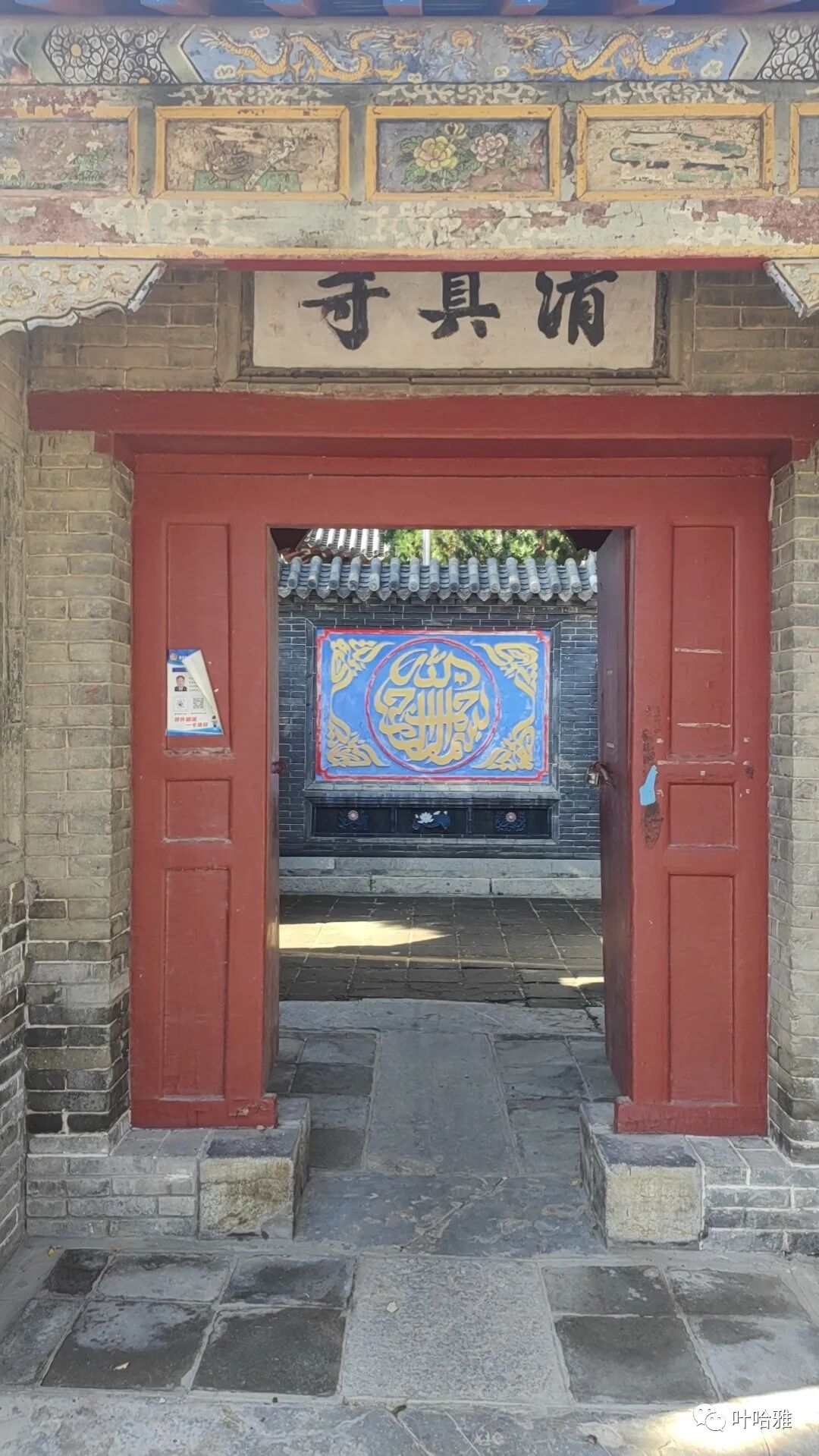
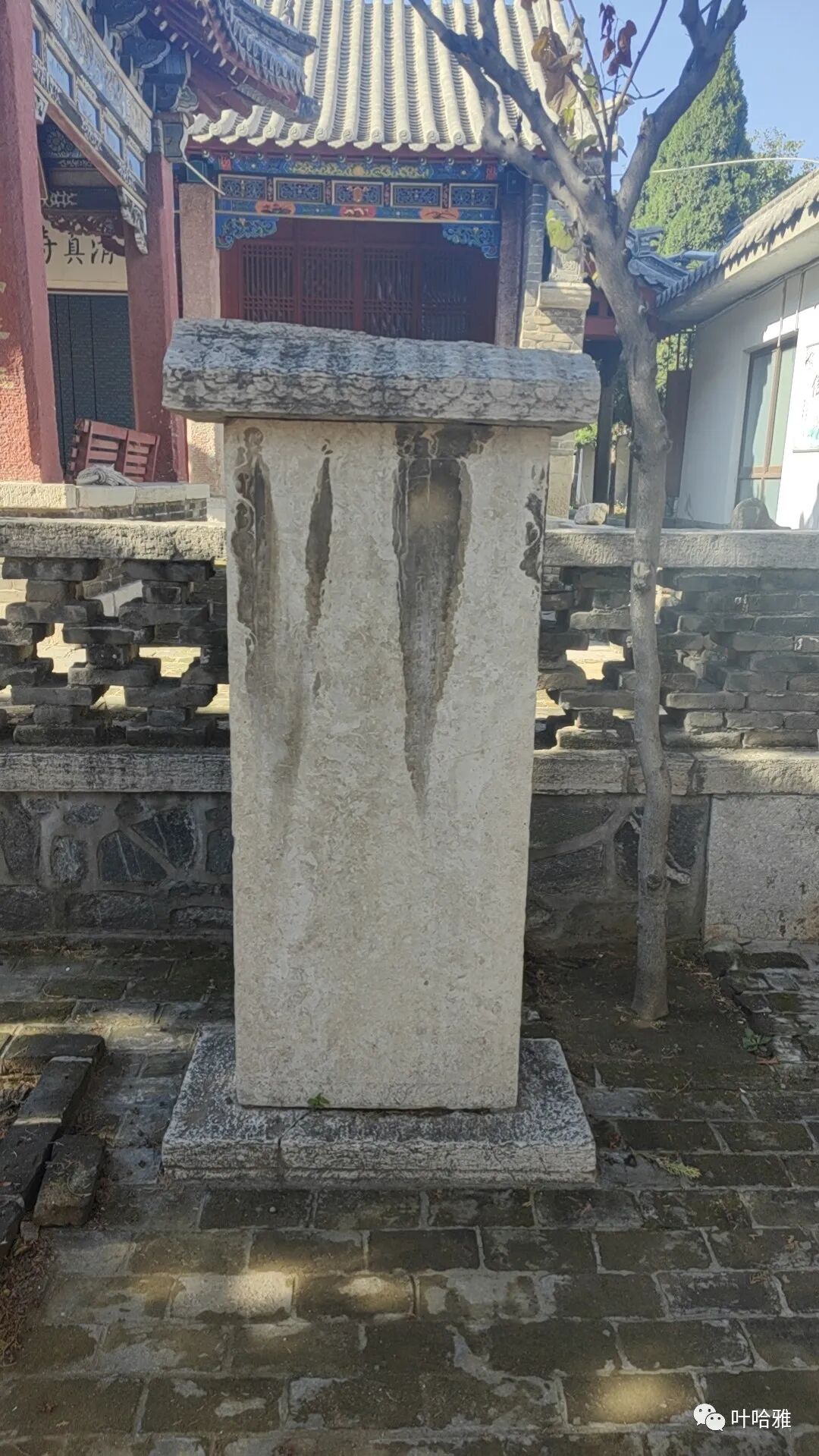
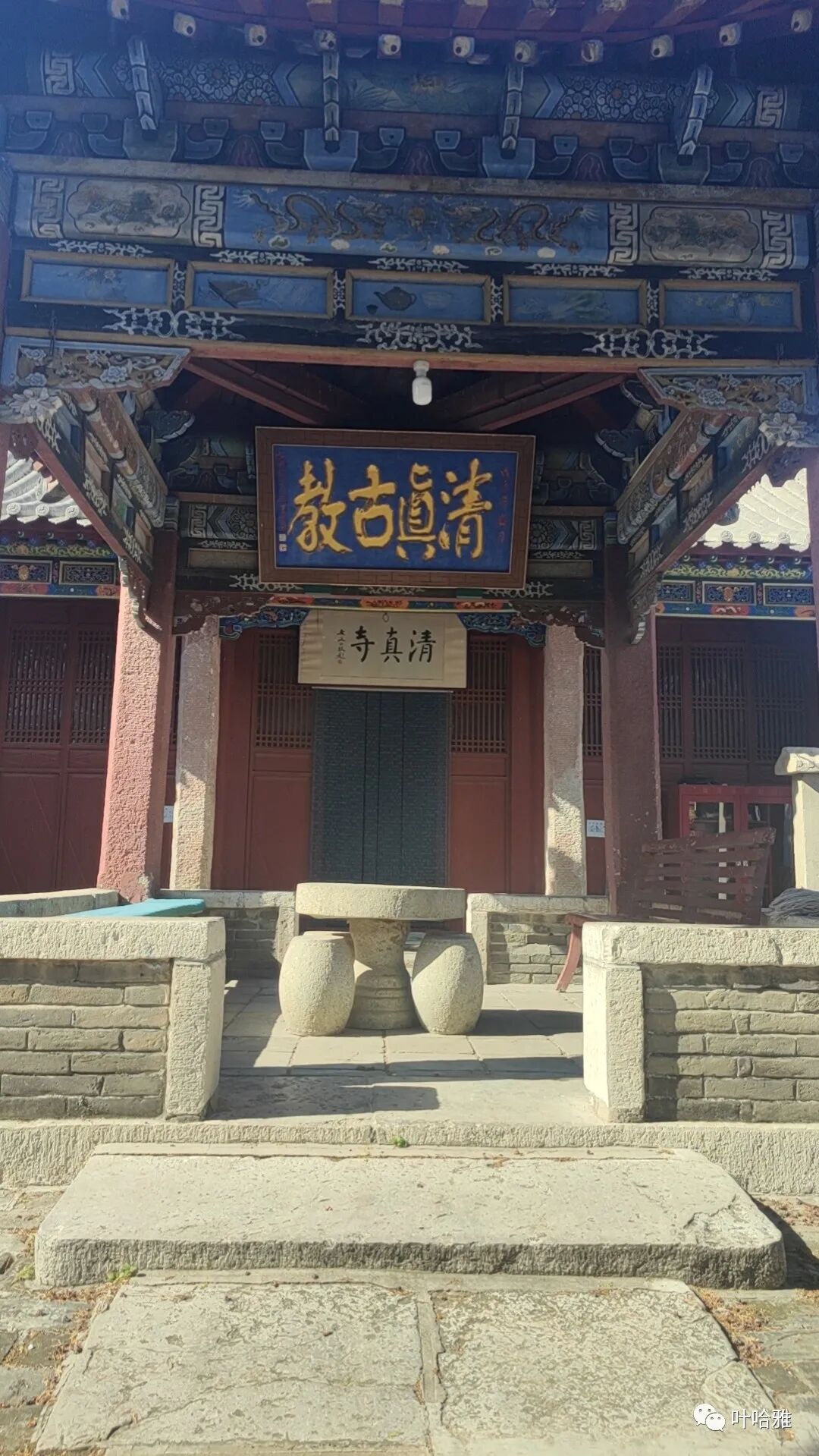
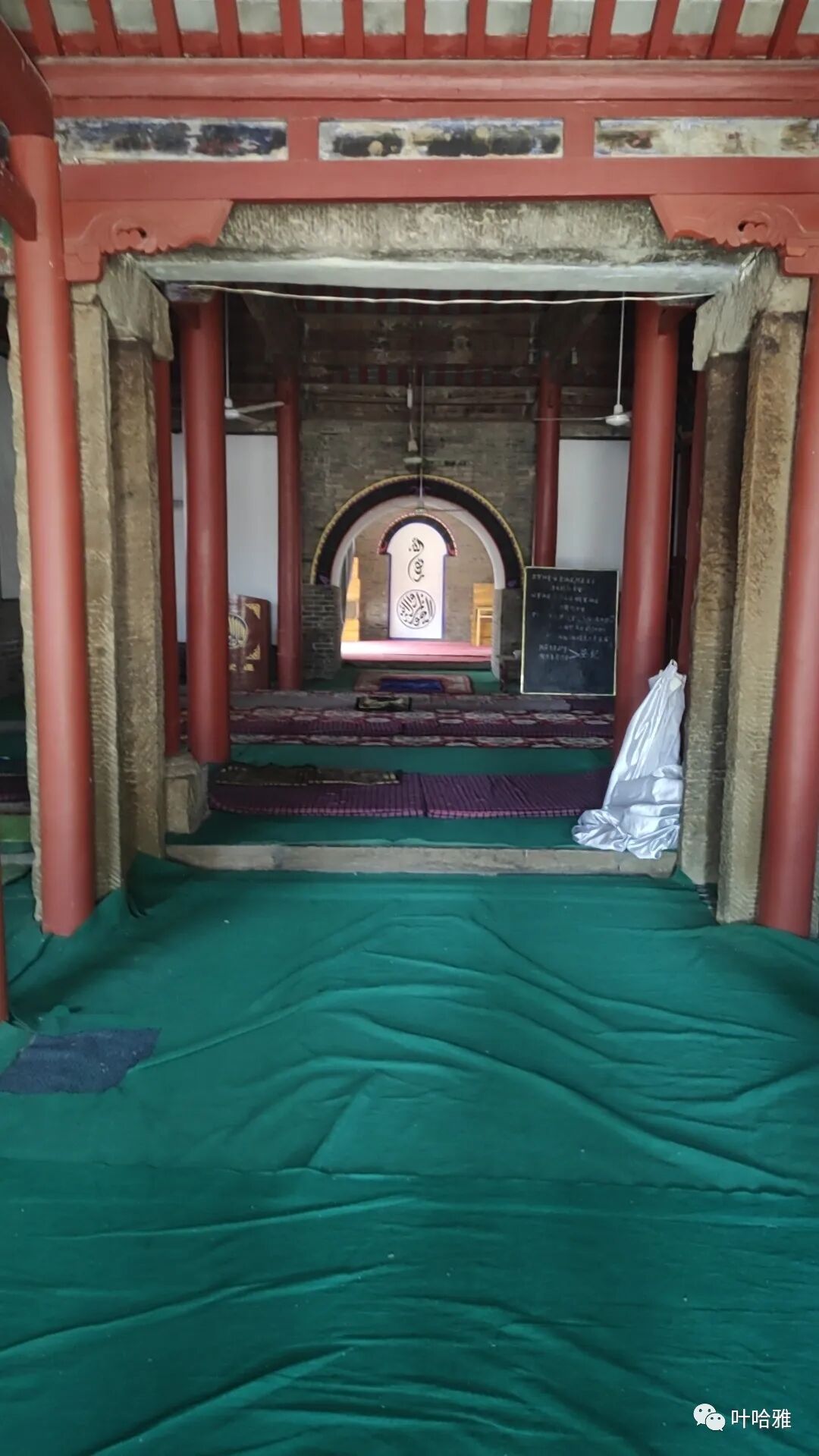
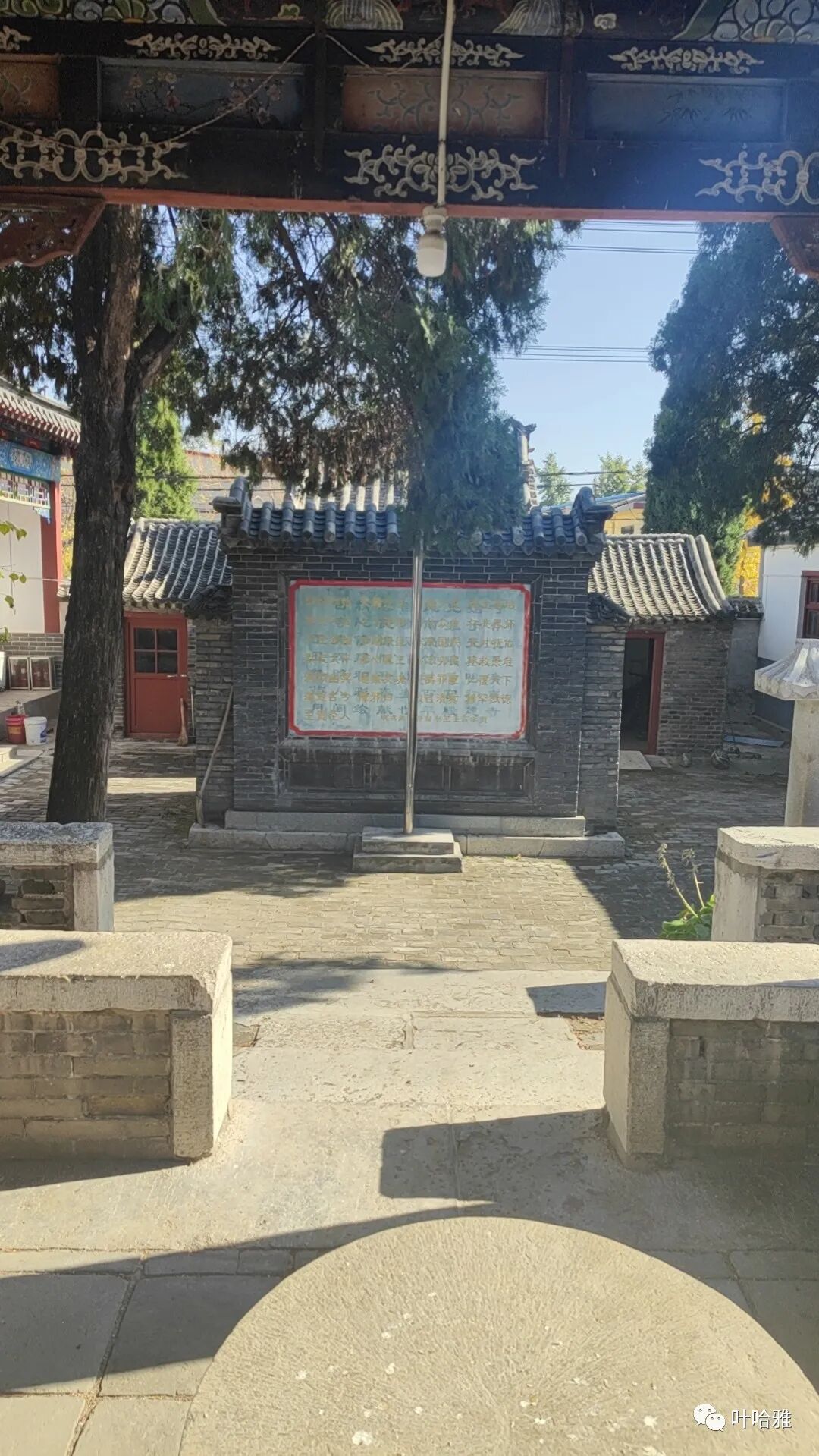
Yuezhuang Village Mosque
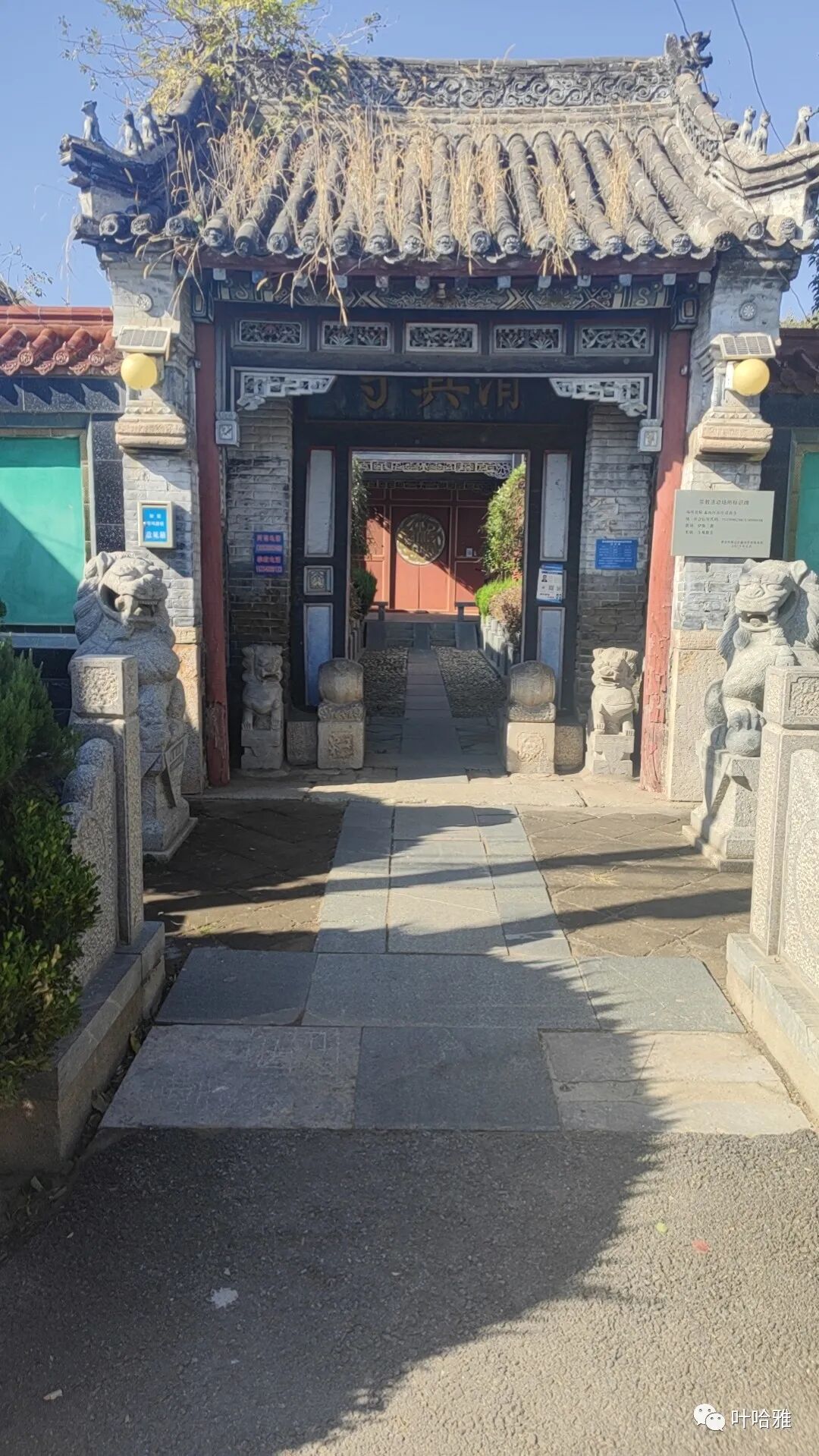
Yuezhuang Village Mosque in Shengzhuang Town is located in the middle section of the village's north-south main street. The mosque was built around the middle to late Ming Dynasty and has been repaired many times since its founding. In the second year of the Daoguang reign of the Qing Dynasty (1822), imams and village elders proposed raising funds, and Gao Dalun and Zhao Tinggui were responsible for rebuilding all the structures. Since the reform and opening up, it has been repaired many times. It was renovated again in 1995 and 2011.
The mosque has one main prayer hall, five northern lecture halls, five southern lecture halls, three water rooms, one side room, one bathing room, one inner gate, one front gate tower, and one screen wall. Both the northern and southern lecture halls have porch extensions (baoxia). The mosque is 60 meters long and 50 meters wide. The prayer hall is a Qing Dynasty building with a three-section, three-hall layout. It is divided into front, middle, and rear halls, measuring 25 meters long and 40 meters wide. The front hall is a scroll-shed hard-mountain style (juanpeng yingshan) structure, 10 meters long and 6.1 meters wide. The middle hall is a hard-mountain style (yingshan) structure, 13 meters long and 17 meters wide, with side rooms on the north and south sides covering about 42 square meters each. The rear hall is a three-story brick-and-wood structure with a pointed roof and grey tiles. The northern and southern lecture halls and the water rooms are newly built. The northern lecture hall is 40 meters long and 10 meters wide. The southern lecture hall is 40 meters long and 10 meters wide. The water room is 30 meters long and 10 meters wide. There are four stone tablets remaining: the 1822 "Stele Record of the Mosque Renovation" from the second year of the Daoguang reign, the 1995 "Stele of Eternal Fame," and two 2011 "Steles of Lasting Fame."
Since the Republic of China era, the mosque's religious affairs have been led by imams including Zhan Qinggui, Wang Changshun, Wang Fuxiang, Yang Zhaozeng, Mi Zongkun, Jin Haixue, Ma Chunyu, Jin Haizeng, Xu Yongqiang, and Bai Jian. The mosque is managed by a management committee, with past directors including Jin Dejia, Yang Xingqi, Gao Chuandong, Yang Zhengwu, and Han Jingxin. Village elder Jin Tongchun went on the Hajj pilgrimage to Mecca in 2014. Under the guidance of the mosque management committee, the imam explains religious rules and laws to local Muslims during religious holidays and carries out religious activities according to the law. The mosque houses two incense burners and eight water ewers (tangping).
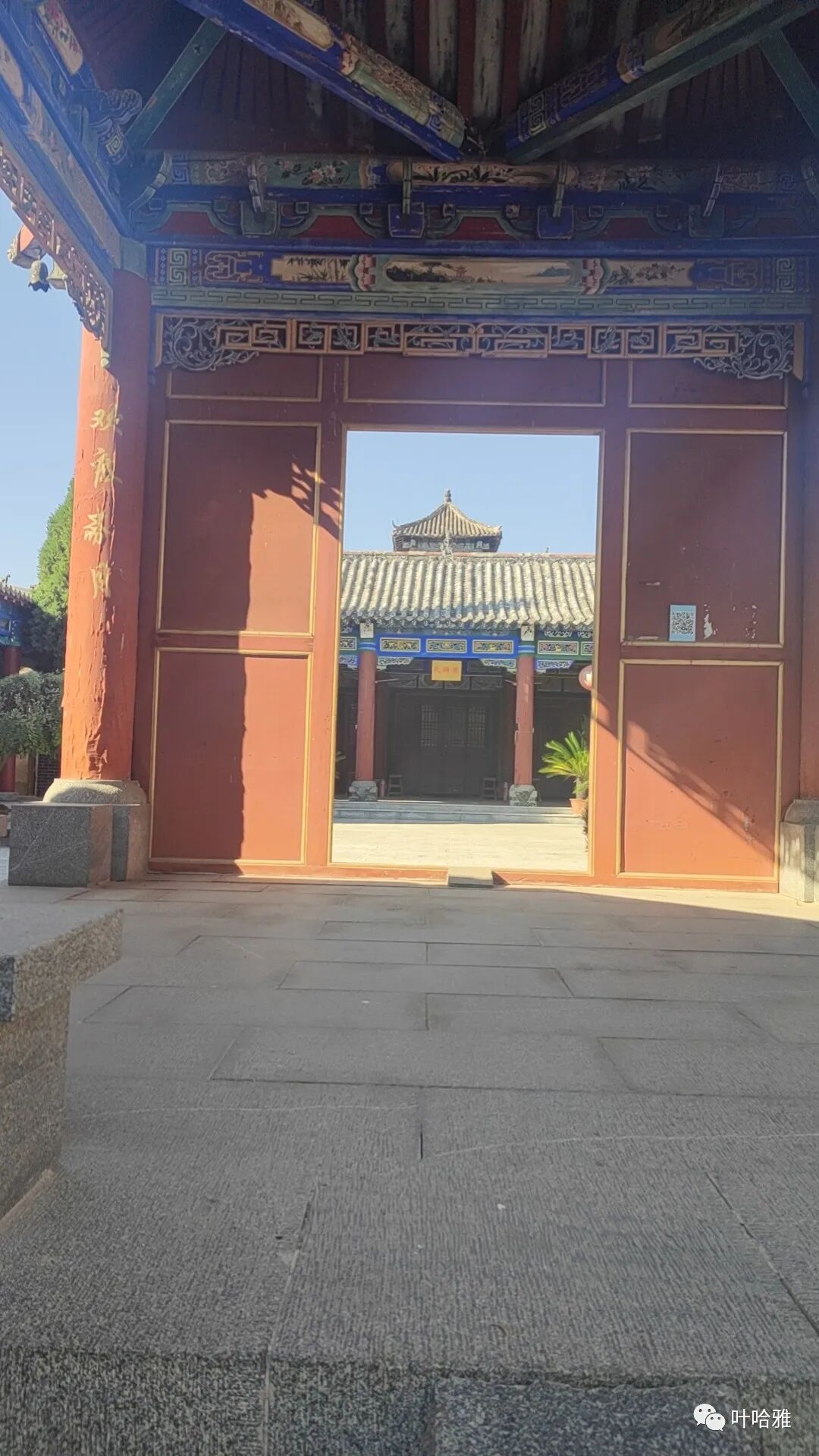
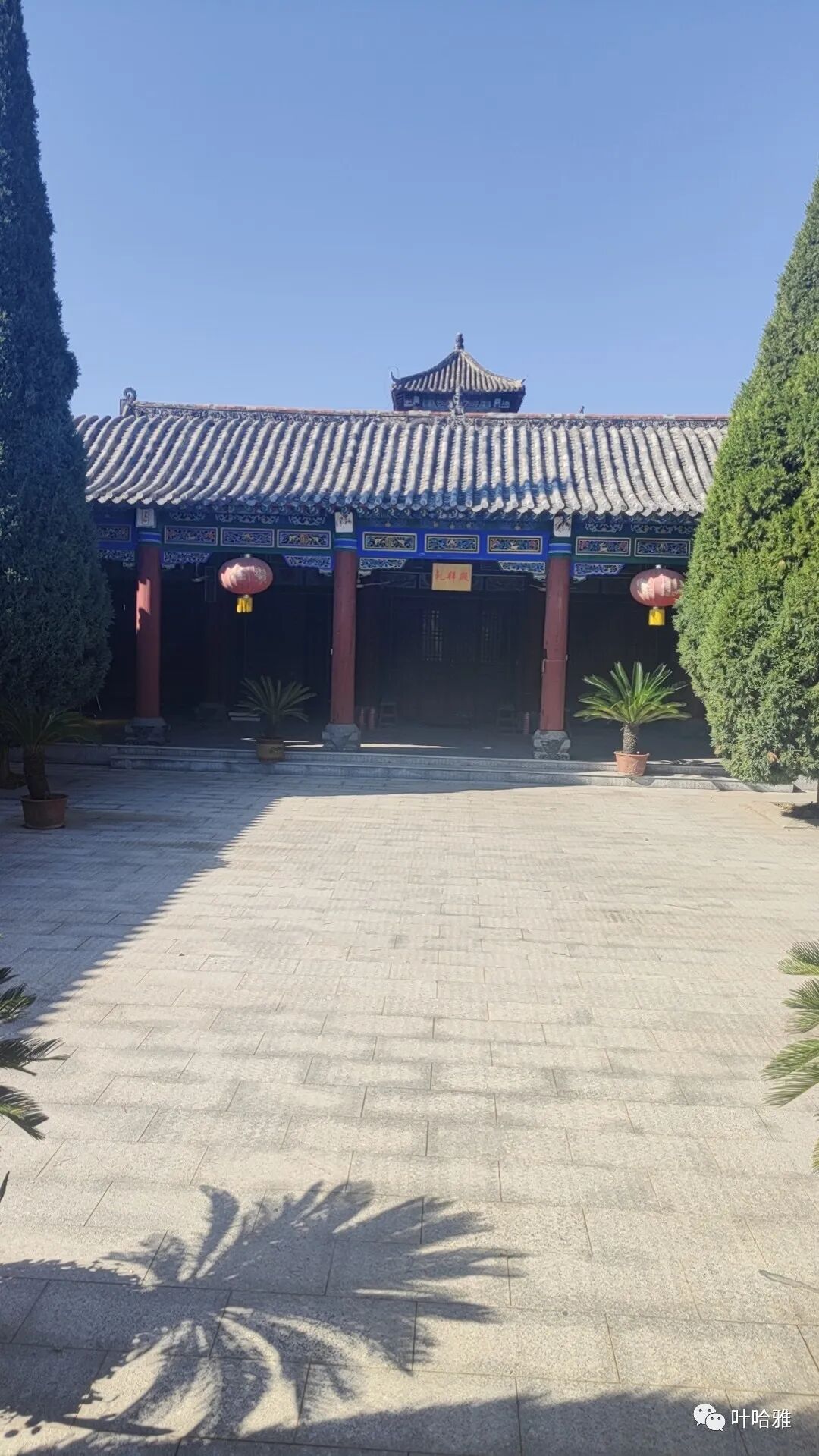
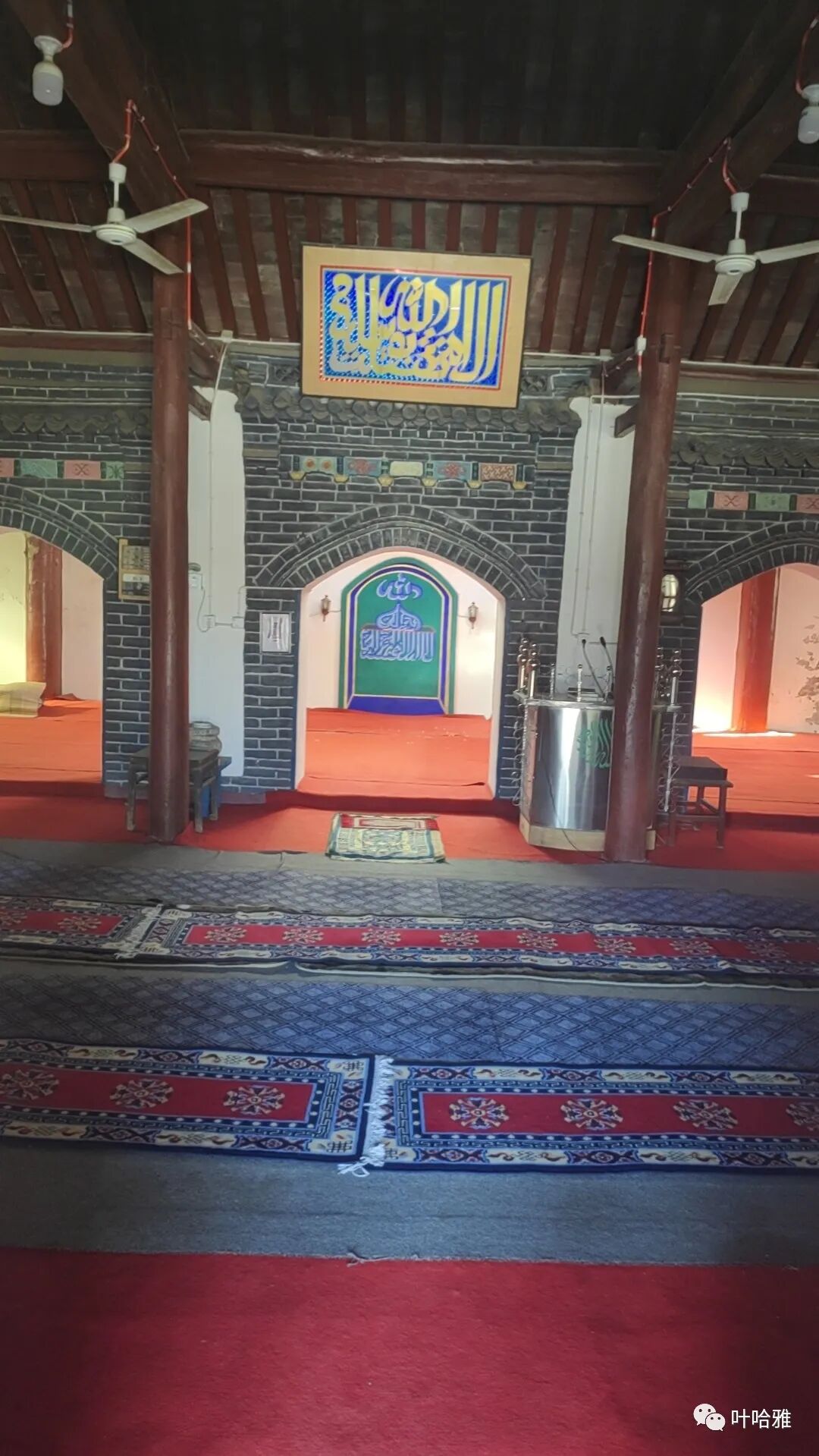
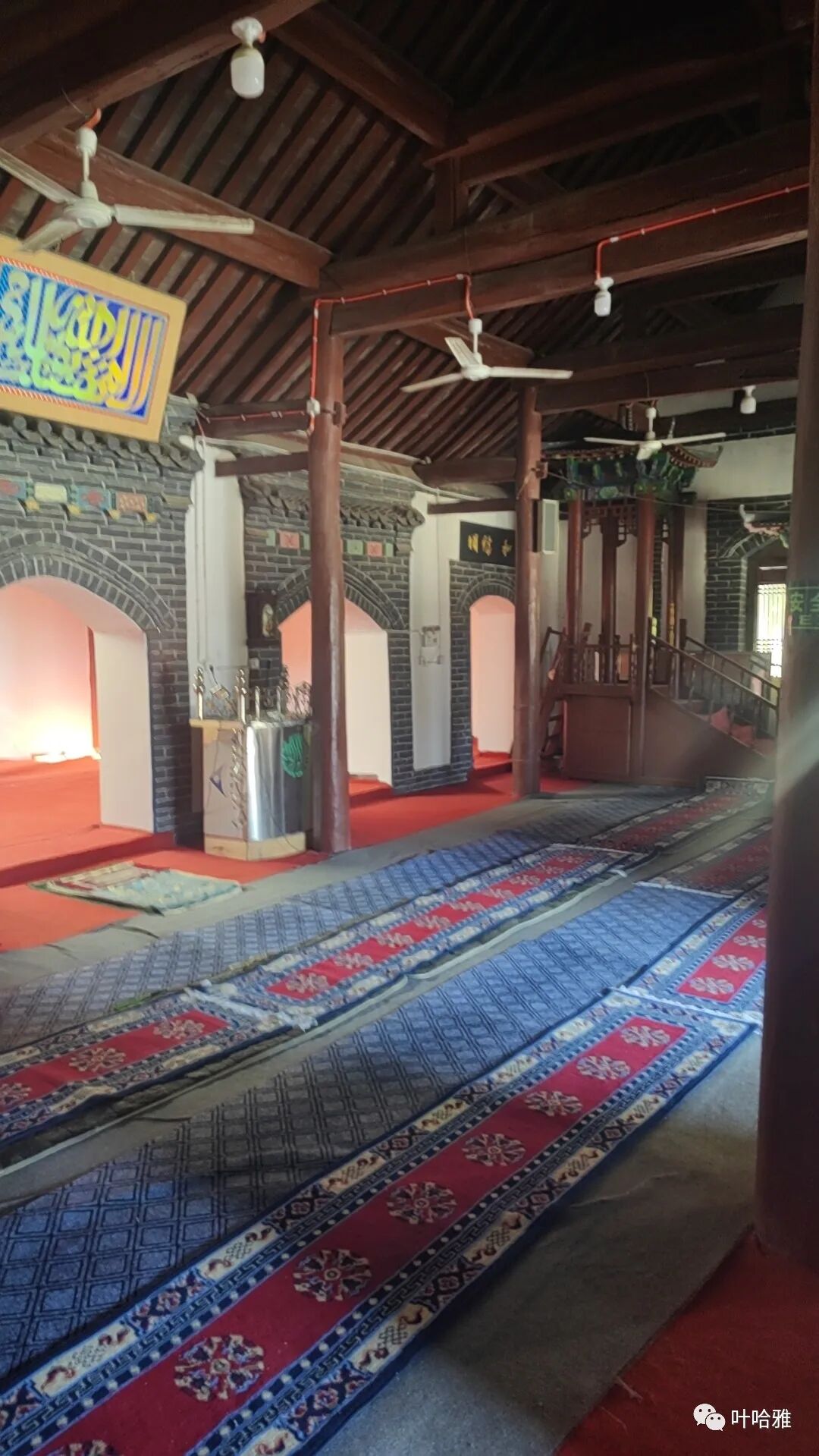
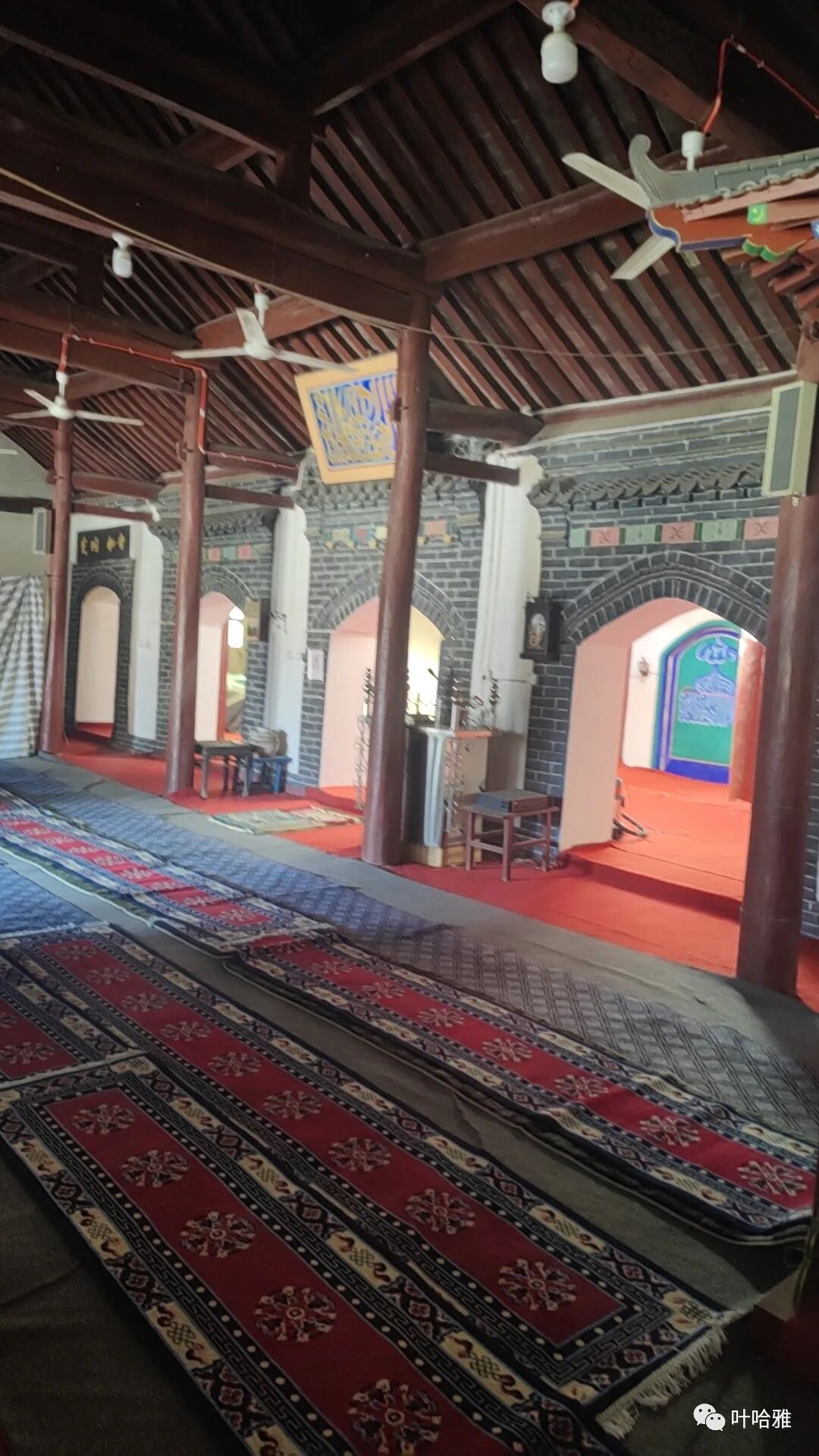
Gangshang Village Mosque
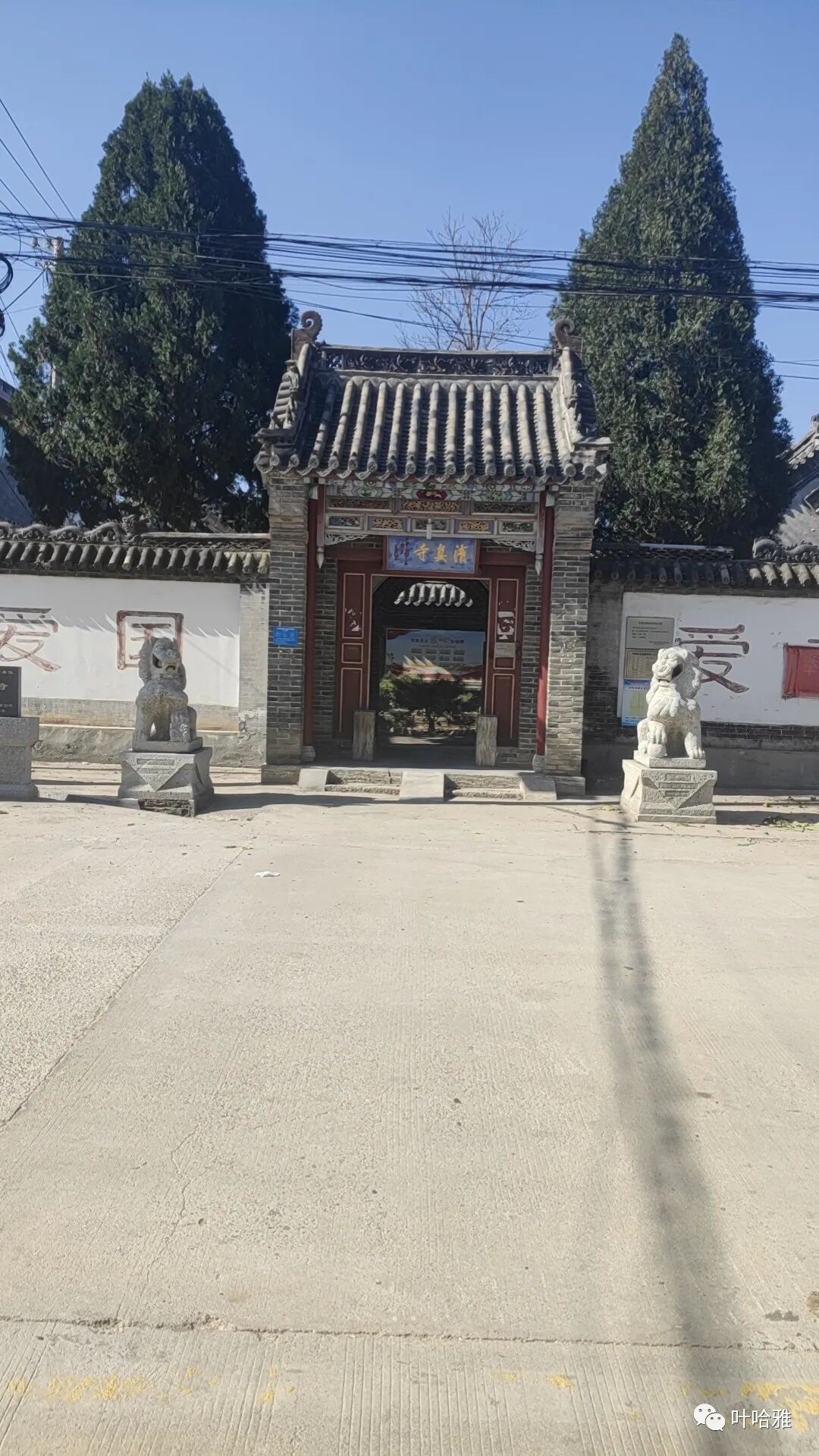
Gangshang Village Mosque in Shengzhuang Town is located in the middle section of the village's main north-south street. It was first built around the mid-to-late Ming Dynasty and has been renovated several times since. In the 14th year of the Jiaqing reign of the Qing Dynasty (1809), the rear hall was expanded and the front hall was repaired, followed by large-scale renovations in 1923. Since the founding of the People's Republic of China, and especially in recent years, the mosque has undergone multiple repairs, giving it a completely new look.
The mosque is 56.6 meters long and 32.7 meters wide. It currently has one main hall, three north lecture rooms, three south lecture rooms, one gate tower, one side room, one bathing room, two inner gates, one front gate tower, and two stone lions. The courtyard walls on both sides of the gate tower feature traditional-style eaves and a 'two dragons playing with a pearl' carving. There is a stone lion on each side of the front door.
The eaves of the main hall feature palace-style paintings, and the main entrance has a plaque inscribed with scripture and the Basmala (Tasmie). To the left in front of the hall stands the 1820 (the 25th year of the Jiaqing reign of the Qing Dynasty) Stele Record of the Mosque Renovation, and to the right is the Revolutionary Martyrs Monument. In front of the main hall is a square moon terrace with blue brick patterned walls, a bluestone slab roof, and five steps. The main hall is divided into a front hall and a rear hall, measuring 19.5 meters long and 10 meters wide in total. Ten wooden pillars inside the hall support the roof. Two stone pillars support the stone gutter (tiangou) used for draining rainwater between the two halls. On the northwest side, there is an intricately crafted minbar archway with nine steps. The back wall of the main hall has a hanging doorway leading to the rear kiln hall, decorated with scripture paintings. The hall is carpeted and equipped with electric lights and sound equipment. The front and rear halls have a total of four side rooms.
The north lecture hall is a newly built structure in an antique style, 15.1 meters long and 7.1 meters wide. The front porch has round pillars and five steps. The middle three rooms of the north lecture hall serve as a reception area. The two rooms on the east and west sides are living quarters for the imam and the religious leader. The south lecture hall is also a newly built structure in an antique style, measuring 15.1 meters long and 4.2 meters wide, sitting in harmony across from the north lecture hall.
The north courtyard contains a washroom (shuifang) that is 40 meters long and 6.1 meters wide. There are also other buildings including a storage shed, a funeral room, and a utility room, with five rooms for the women's mosque in the northwest corner. Five stone tablets remain today: the 1820 'Record of Rebuilding the Mosque' from the 25th year of the Jiaqing reign of the Qing Dynasty, the 2002 'Revolutionary Martyrs Monument,' the 2006 'Preface to Rebuilding the Gangshang Mosque Washroom' and 'Mosque Washroom Tablet,' and the 2010 'Tai'an City Key Cultural Relics Protection Unit Tablet.'
The mosque has trained dozens of imams and other religious staff, and since the Republic of China era, religious affairs have been led by imams including Jin Dechang, Ma Tongyu, Jin Maozeng, Jin Maoyuan, Yang Xinzeng, and Jin Shuai. The mosque is managed by a mosque management committee, with Mi Yong and Sha Chuanren serving as committee directors consecutively.
The mosque carries out religious activities strictly in accordance with the law. There was once a 'Long Live the Emperor' tablet and several Ming-style incense burners, but their whereabouts became unknown during the Cultural Revolution. In 2010, it was designated as a key cultural relics protection unit of Tai'an City, and in 2014, it received the titles of 'Shandong Province Model Religious Activity Venue' and 'Tai'an City Model Mosque.'
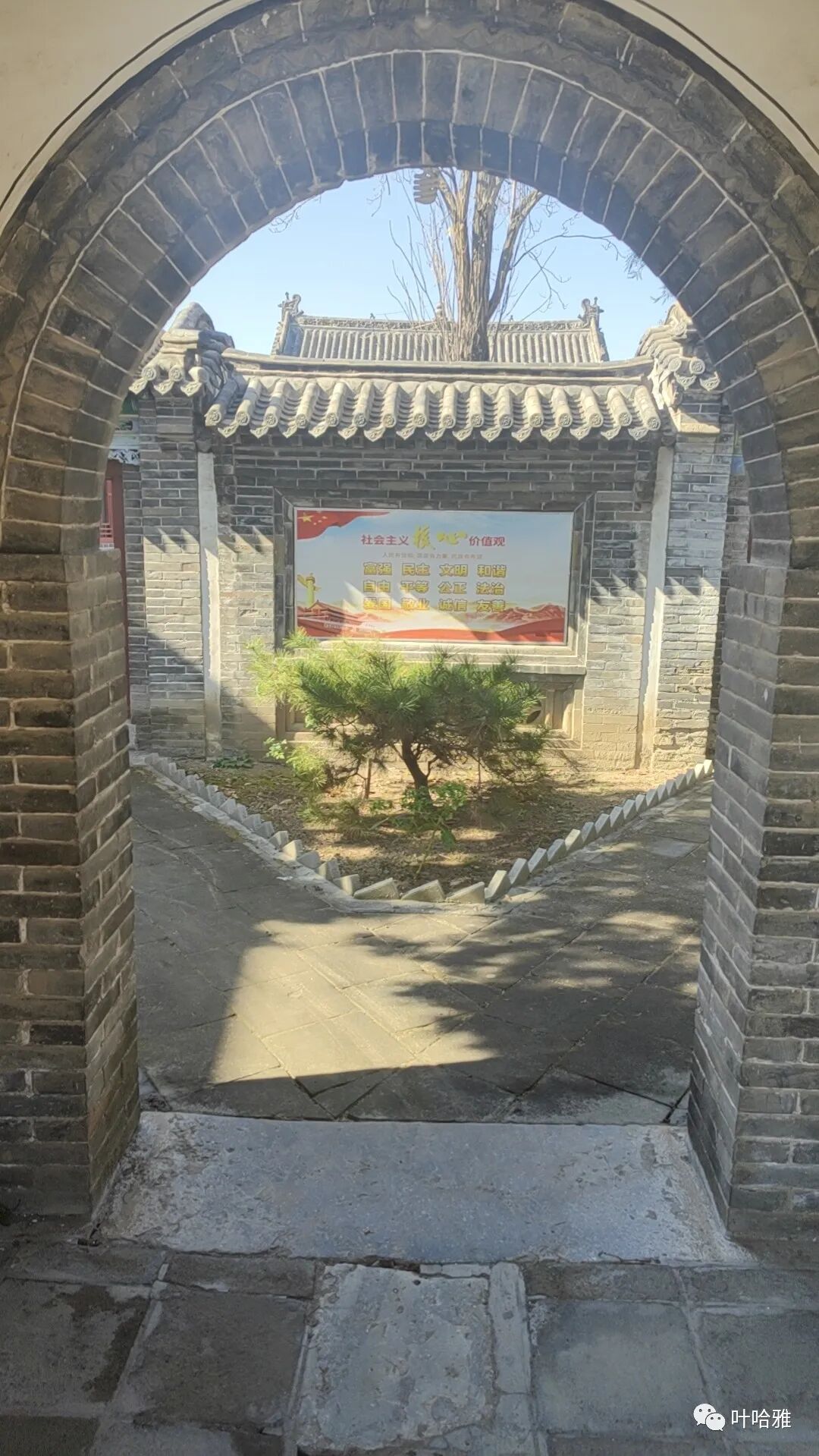
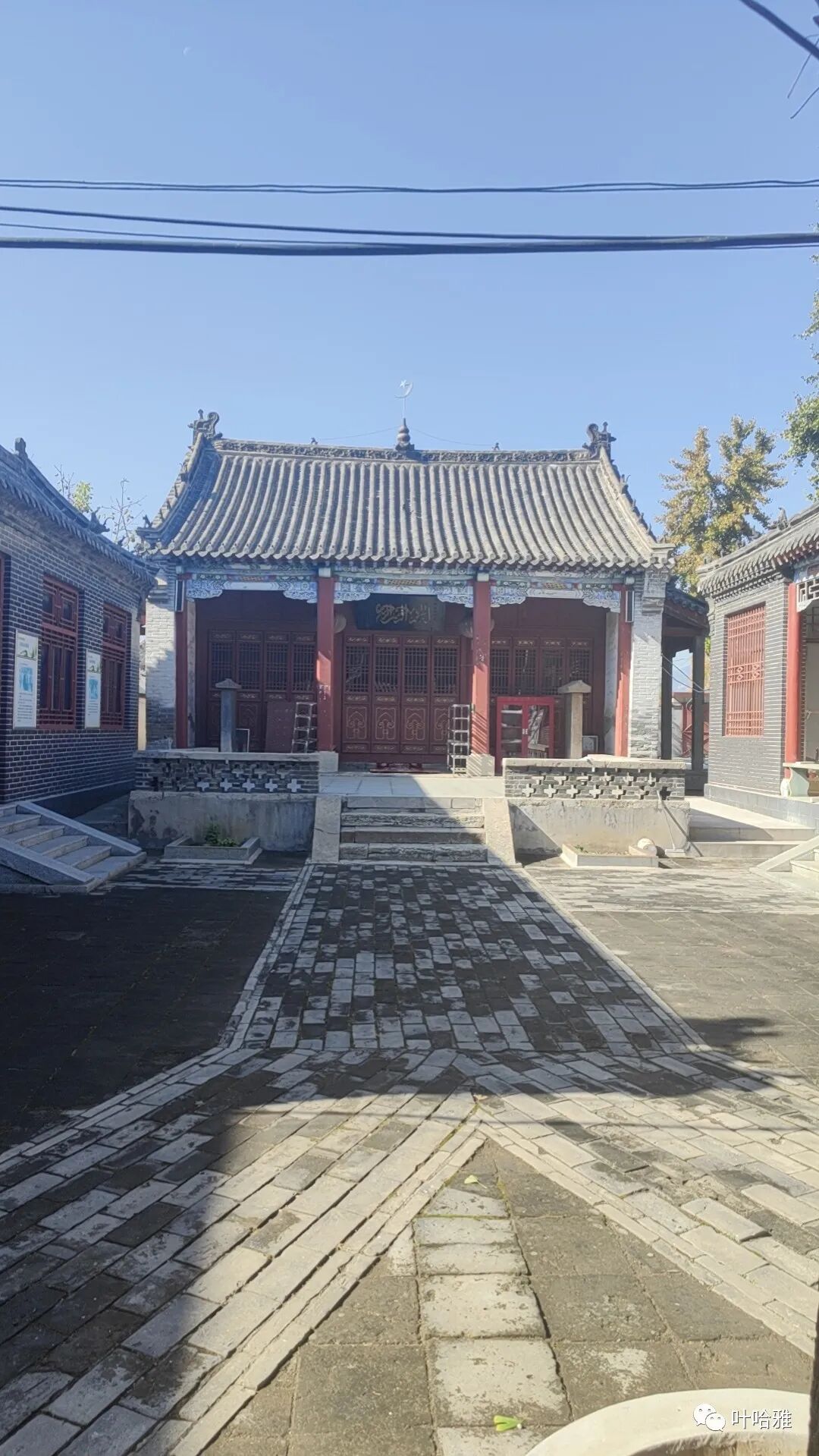
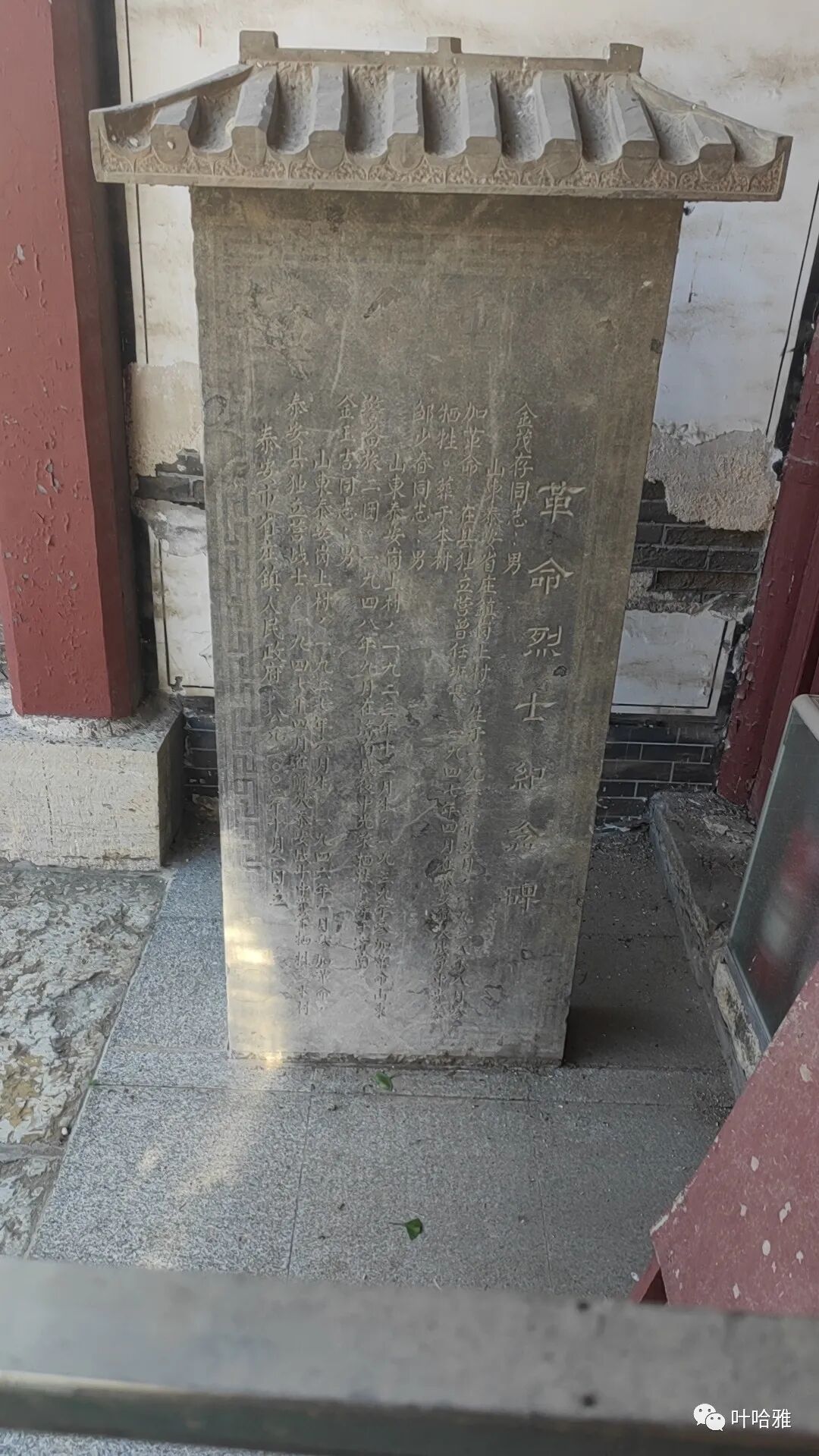
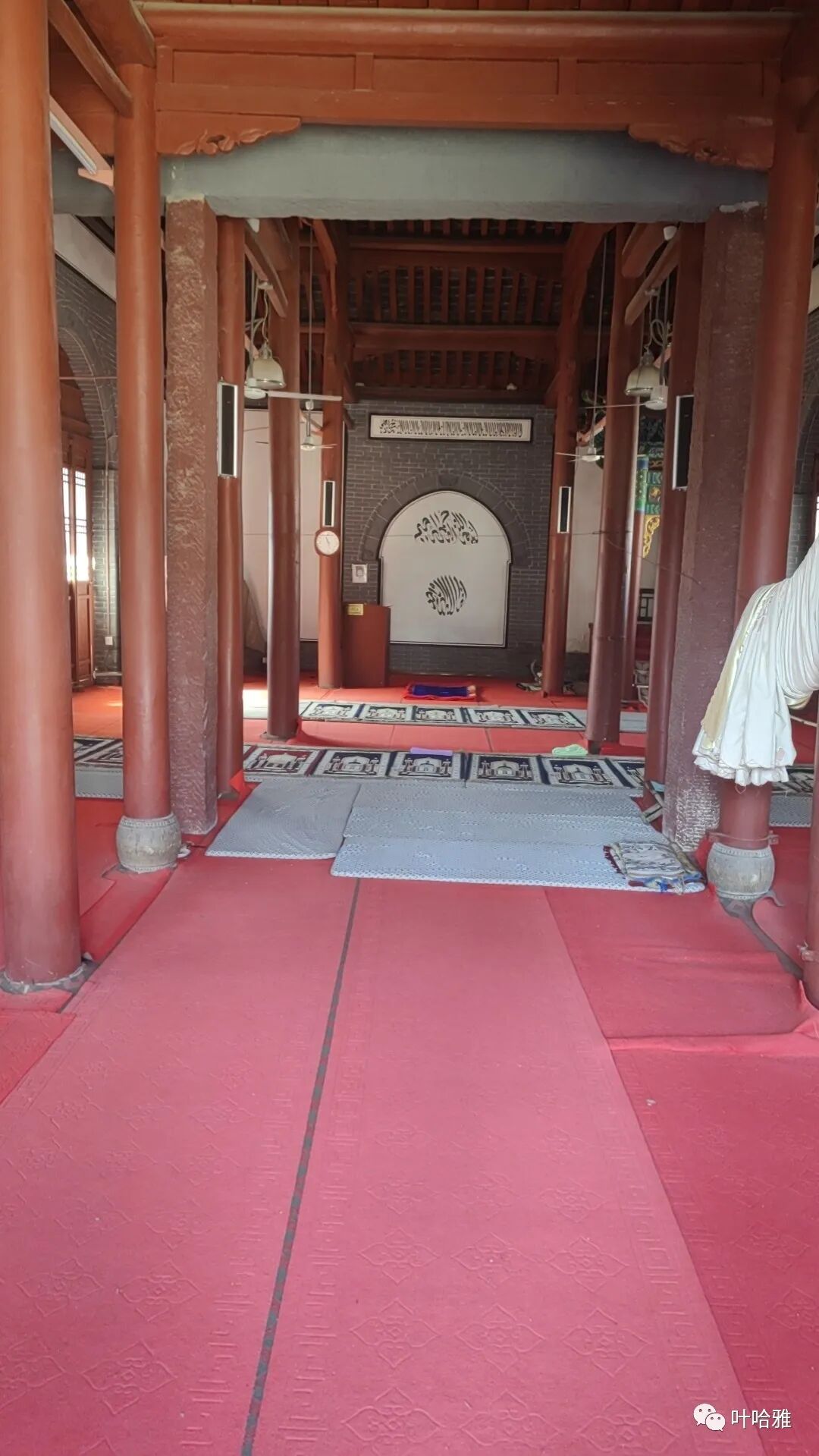
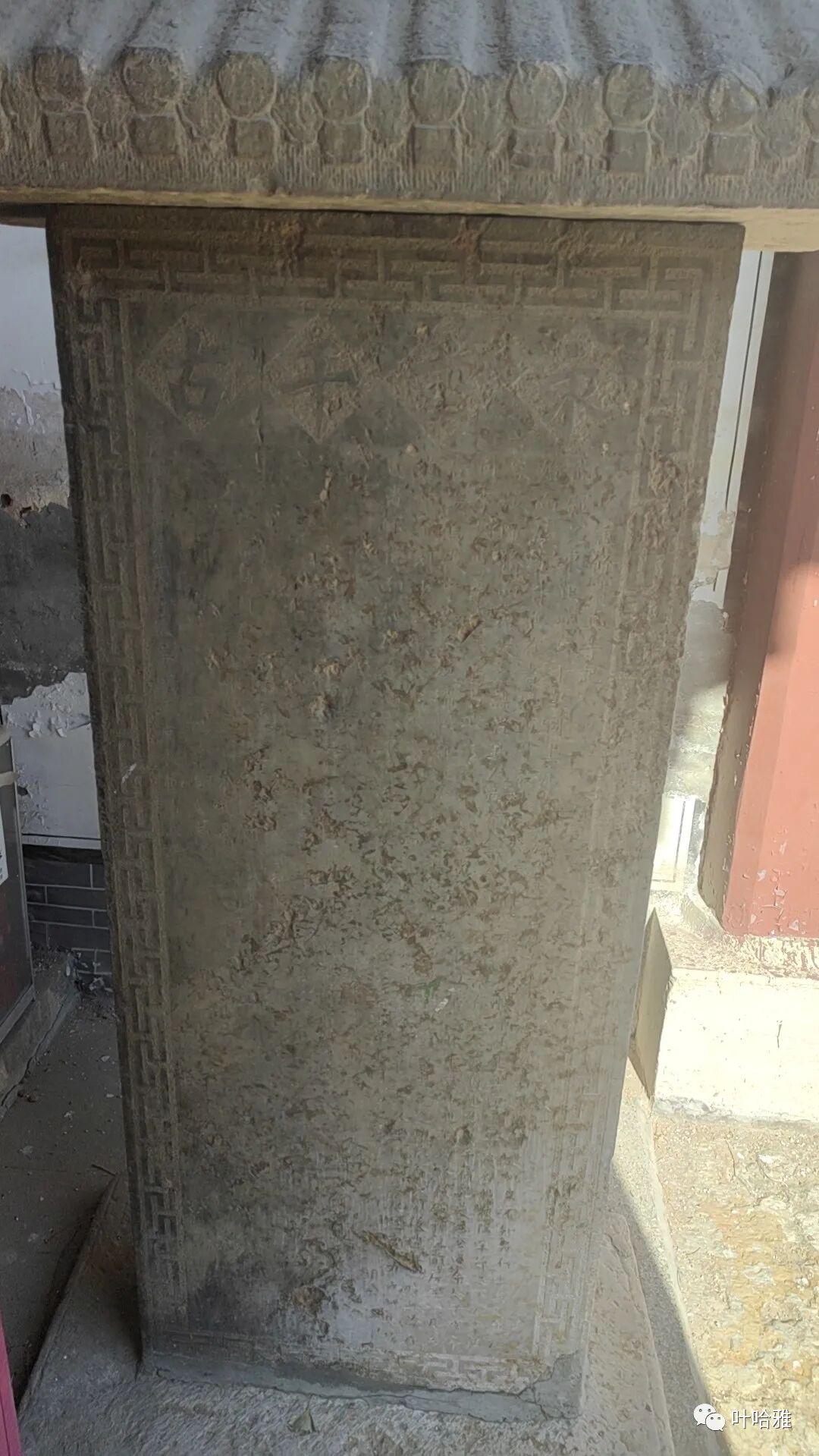
Ershilibu Village Mosque
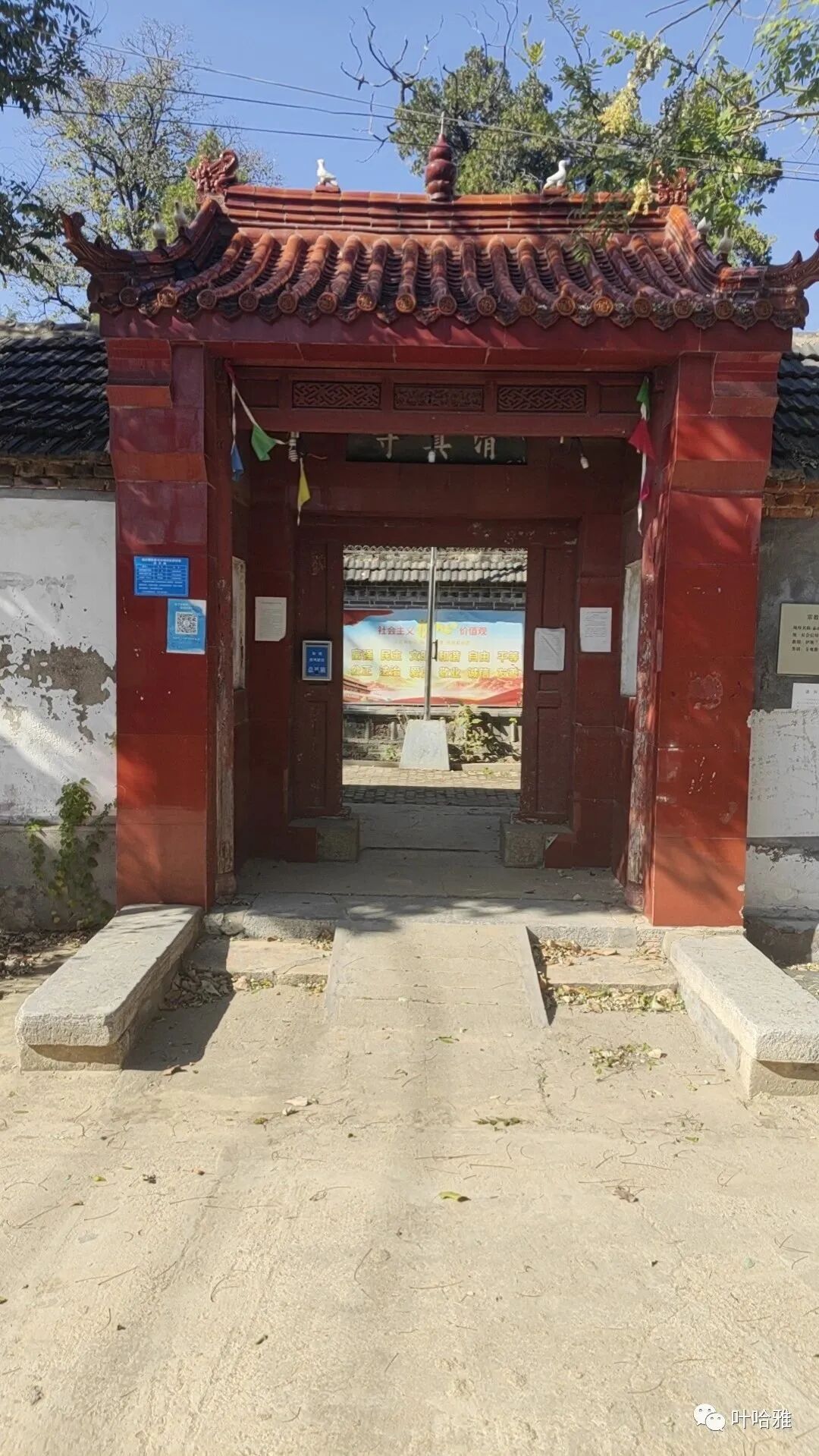
The Ershilibu Village Mosque in Shengzhuang Town sits at the south end of the village. The exact date of its founding is unknown. Major renovations took place in 1881 during the Qing Dynasty, in 1945 during the Republic of China era, and again in 2001.
The mosque includes one main prayer hall, four rooms for the north lecture hall, three rooms for the south lecture hall, one gate tower, one spirit wall (yingbi), one raised platform (yuetai), one south side room, one side room on each side of the front gate, and two ancient trees. The mosque is 66.56 meters long and 50 meters wide. The main prayer hall has two sections, front and back, standing 12 meters high, 18 meters long, and 12 meters wide. The front hall is a hard-mountain style building with a brick and wood structure and a four-pillar front porch (baoxia). The back hall has side rooms to the north and south, stands about 11 meters high, and dates back to the Qing Dynasty. Both the north and south lecture halls are four-room brick and wood structures with black tiles, featuring four beams and five purlins. The north lecture hall is 16.2 meters long and 5.1 meters wide, and the south lecture hall is also 16.2 meters long and 5.1 meters wide. The ablution room (shuiwu) is 28.5 meters long and 5 meters wide. There are two stone tablets here: the Stele of Eternal Fame (Wangu Liufang Bei) from 2000 and the Stele of Ethnic Unity and Merit (Minzu Tuanjie Gongde Bei) from 2001.
The mosque's religious affairs were led by imams including Zhao Bingfa, Zhu Ahong, Li Shengcai, Mi Guangxun, Yang Zhaozeng, Mi Peiqi, Ding Jian, and Ma Depeng. In 2010, Imam Ma Depeng and two women, Hong Zhenxi and Hong Zhenying, went to Mecca for the Hajj. The mosque is managed by a committee, and past directors include Hong Jiren, Zuo Xingwang, Hong Zhenyi, and Ding Yanzhi.
During the War of Resistance Against Japan, Imam Yang Dechun hid Muslim anti-Japanese fighters from the Japanese army by disguising them as religious students (hailifan) inside the mosque. After the founding of the People's Republic of China, Imam Li Shengcai trained students including Mi Guangxun, Han Jingming, Zhu Yuepo, and Zhao Chang'en. In May 1964, Imam Yang Dechun was elected vice president of the first committee of the Shandong Islamic Association. The mosque currently houses items such as an incense burner, a water pitcher (tangping), a floor mirror, and palace lanterns. In 2011, it was named a Shandong Province Harmonious Religious Venue.
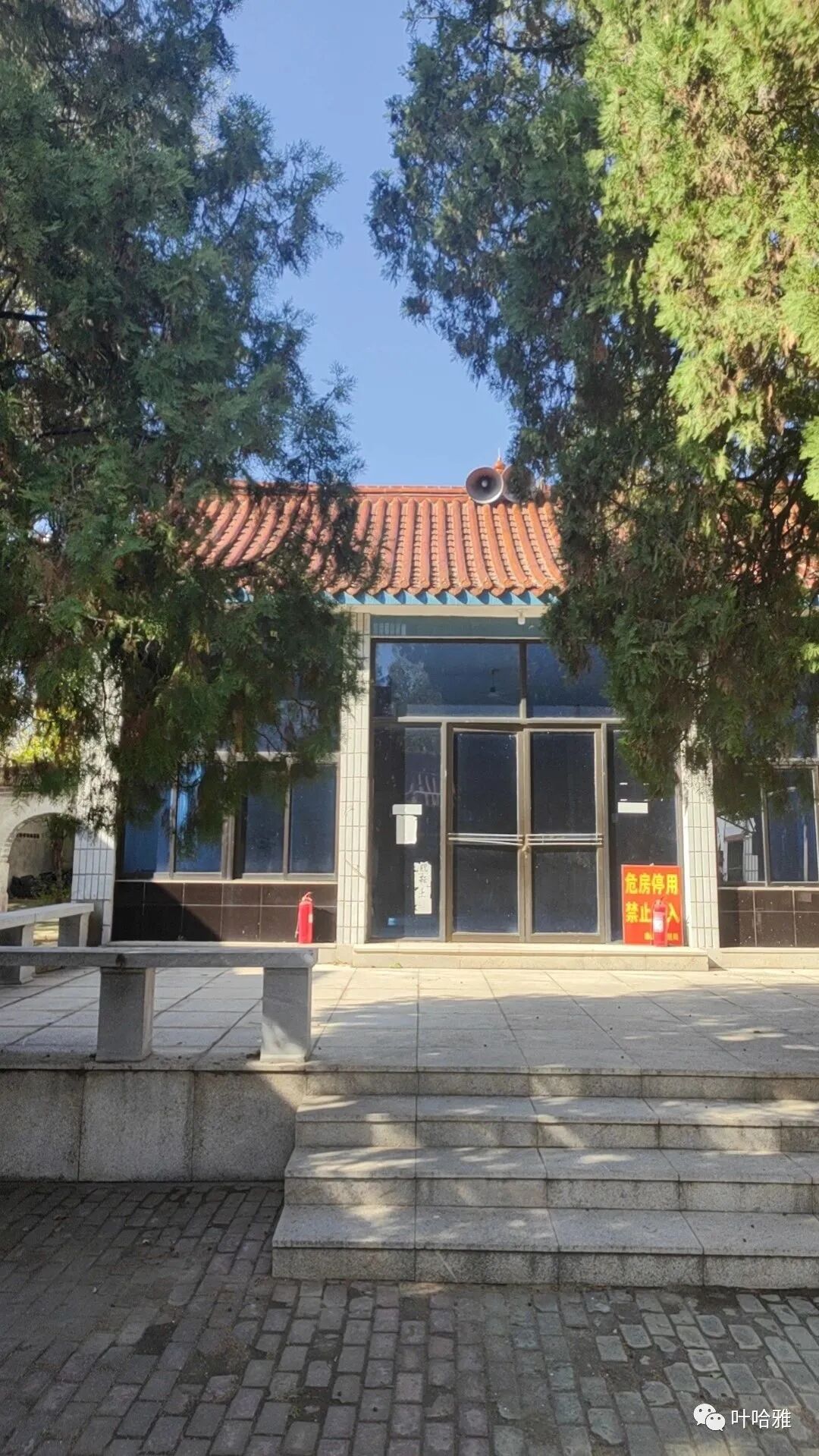
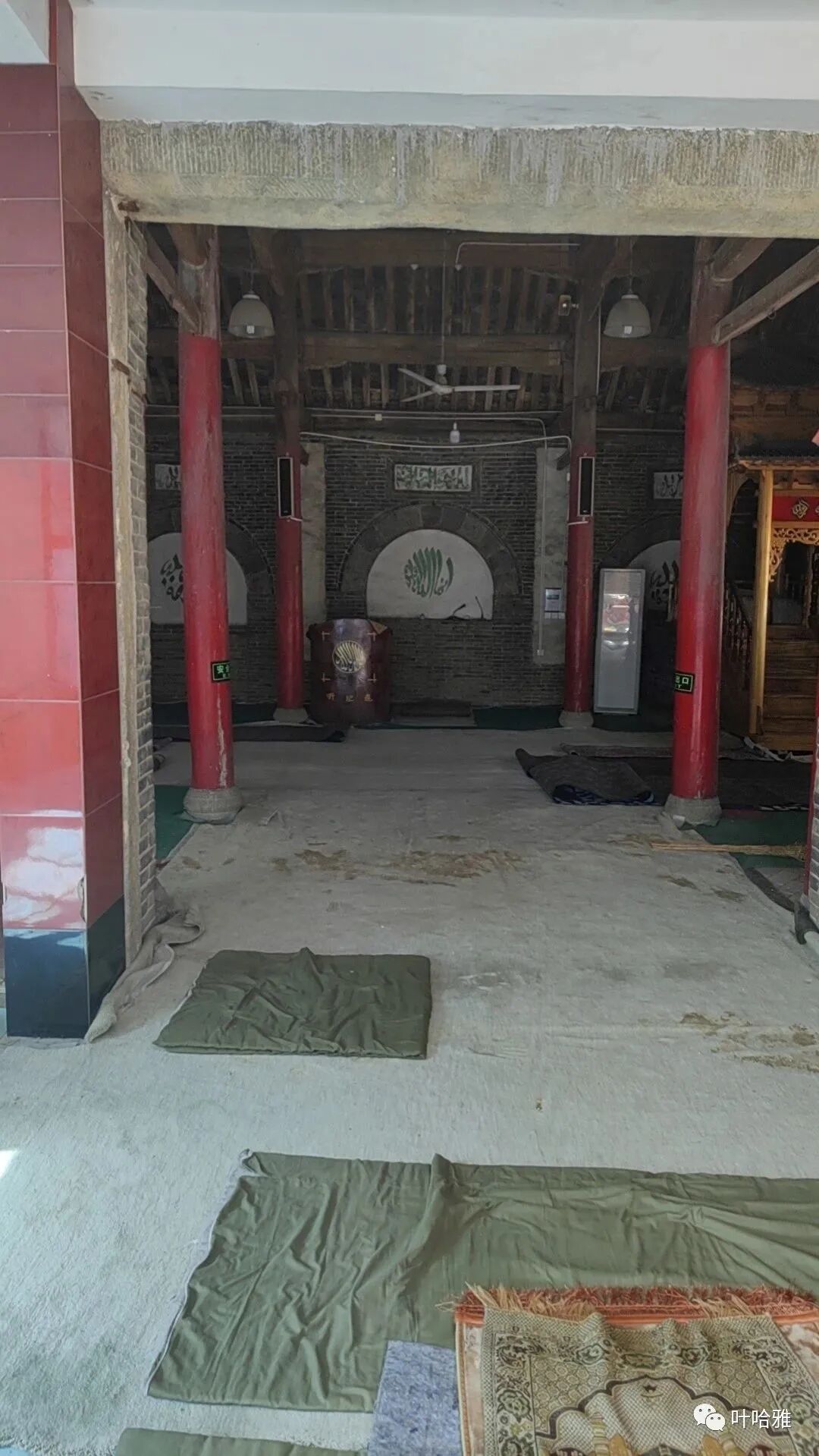
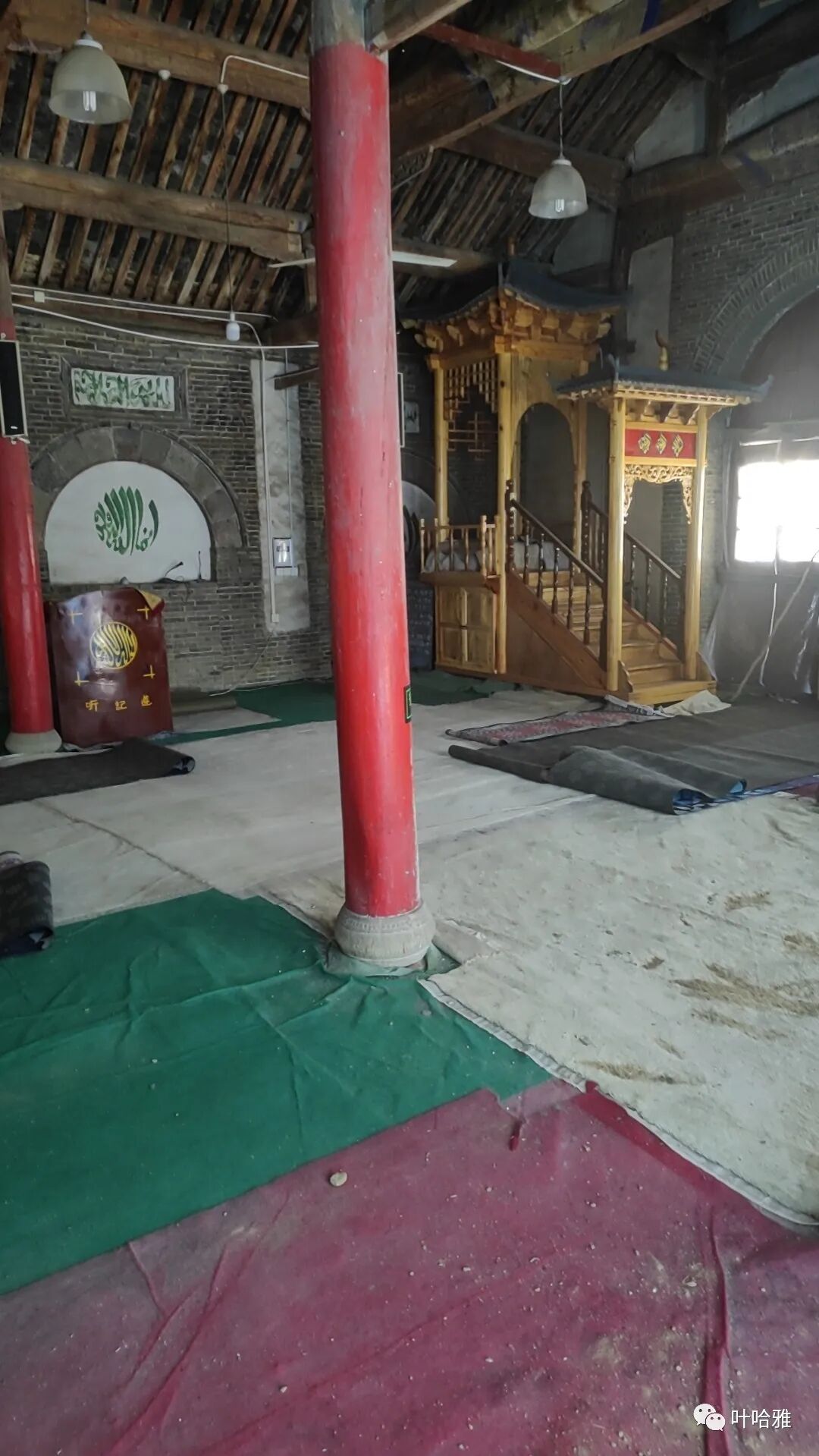
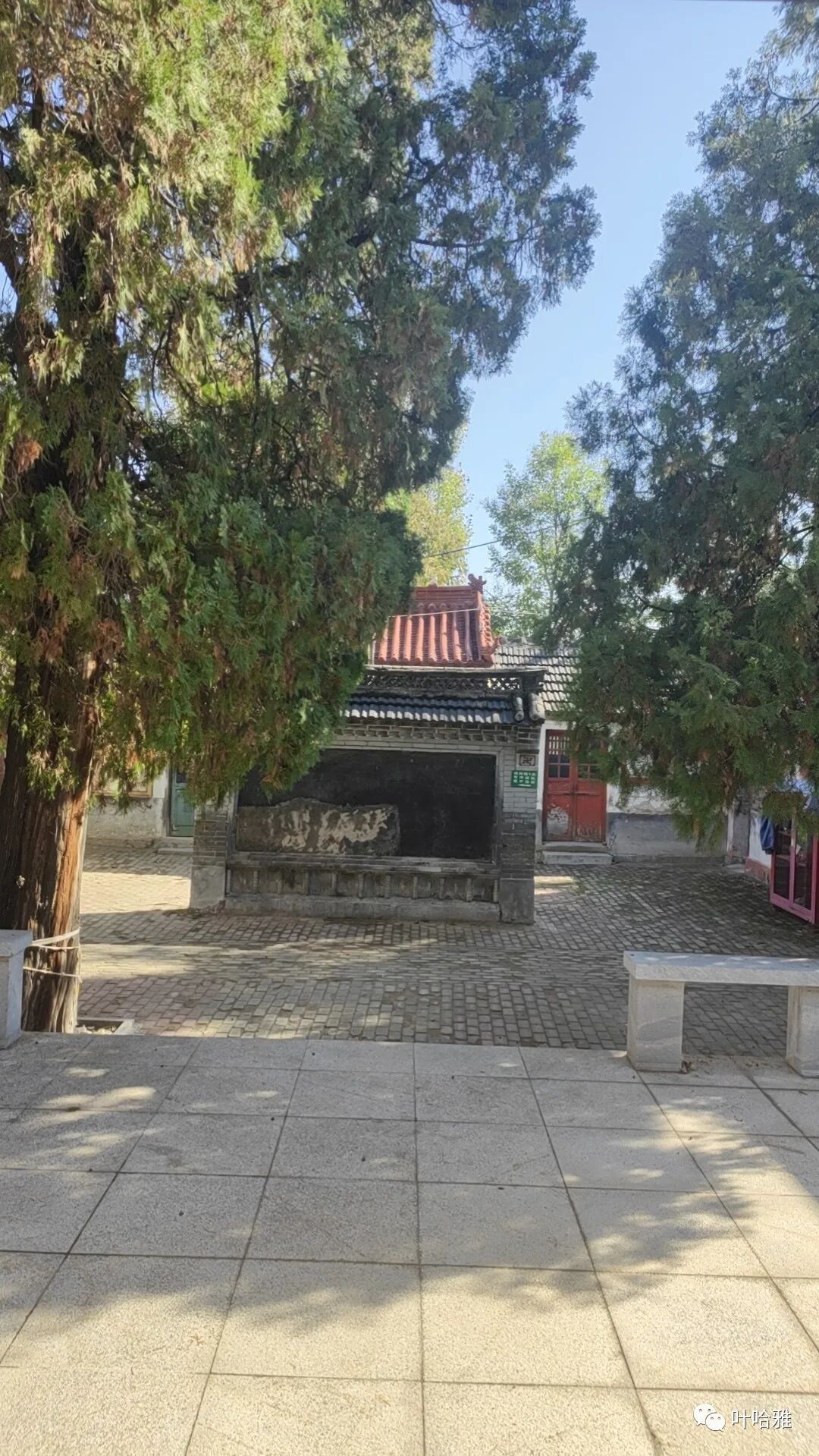
Dongsun Village Mosque.
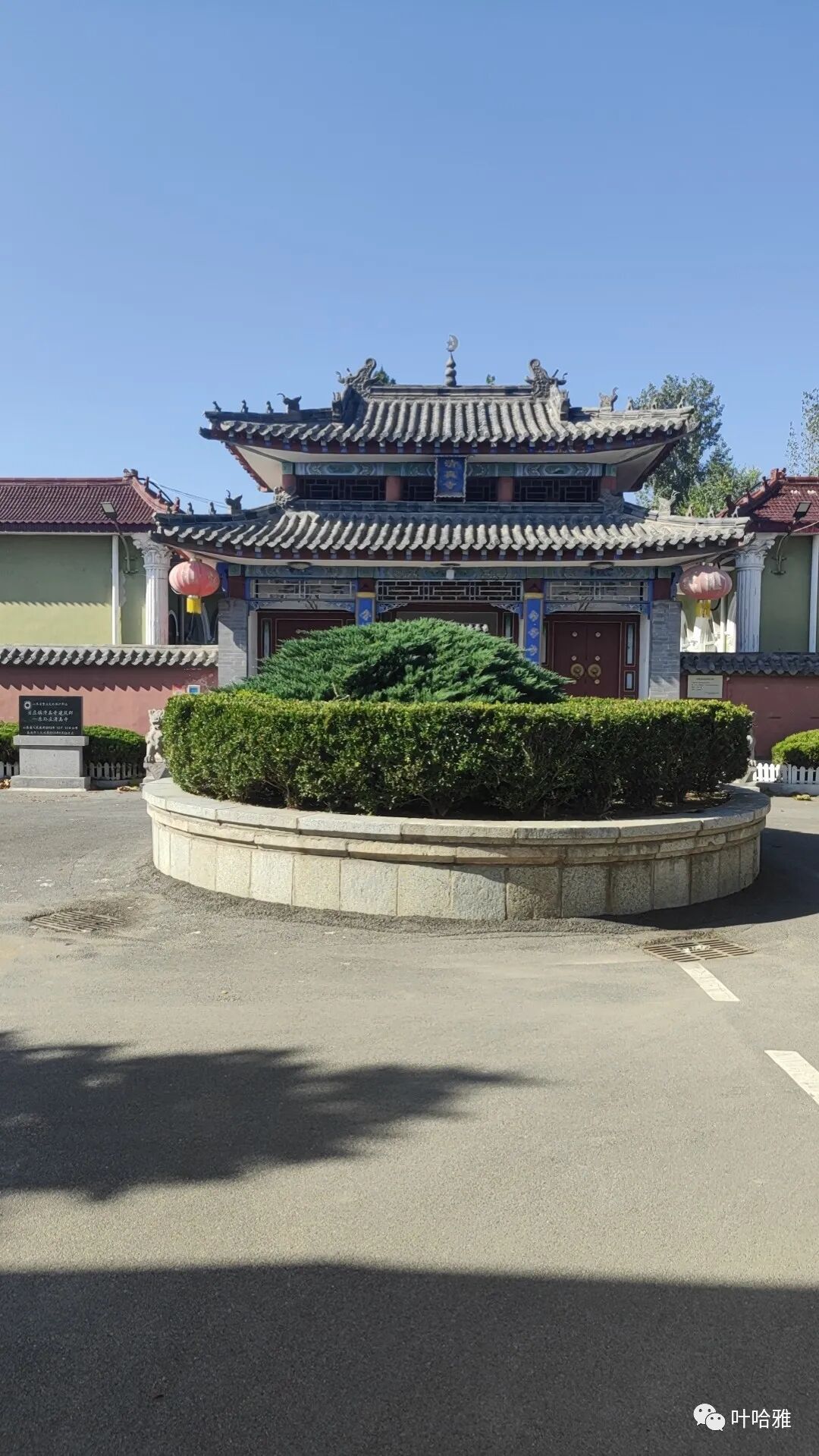
Located in the western part of Dongsun Village in Shengzhuang Town, the mosque was built in the late Qing Dynasty and has been repaired many times since. Large-scale renovations took place in 2001, 2006, and 2014.
The mosque courtyard has one main prayer hall, eight northern lecture rooms, eight southern lecture rooms, one front gate tower, one screen wall, and one raised platform. The mosque is 53.5 meters long and 30 meters wide. The main prayer hall is a two-part, two-section structure from the Qing Dynasty. It has a hard mountain-style roof made of brick, wood, and grey tiles, measuring 12.5 meters long and 11.7 meters wide. The front hall has two side rooms, each 3.9 meters long and 1.9 meters wide. The north and south lecture rooms are newly built, with the north lecture room measuring 23 meters long and 6.7 meters wide. The south lecture room is 8.63 meters long and 7.2 meters wide. The water room is 8.63 meters long and 7.2 meters wide. The boiler room is 5.74 meters long and 7.2 meters wide. Outside the main gate of the mosque, there is a flower bed and a square with a total area of 473.29 square meters.
The mosque currently houses five stone tablets: the 1904 Tablet for the Reconstruction of the Mosque from the Guangxu era of the Qing Dynasty, the 1930 Mi Gaoshi Land Donation Tablet from the Republic of China era, the 2001 Tablet Listing Donors for Mosque Construction, the 2007 Tablet for the Reconstruction of the Mosque, and the 2014 Memorial Tablet for Donations to the Major Renovation of the Main Hall.
Imams trained at this mosque throughout its history include Yang Zhanchun, Yang Huaizhen, Mi Hechun, Mi Xiyu, Mi Shuqian, and Mi Peiqi. After the Cultural Revolution, Imams Mi Hechun and Ma Qun served as leaders of the mosque's religious affairs. The mosque is now managed by the Mosque Management Committee, with Yang Huaiyin serving as the committee director.
Dongsun Village Mosque was named a Model Mosque of Tai'an City in 2008 and 2014, and it was named a Harmonious Religious Activity Venue of Shandong Province in 2010.
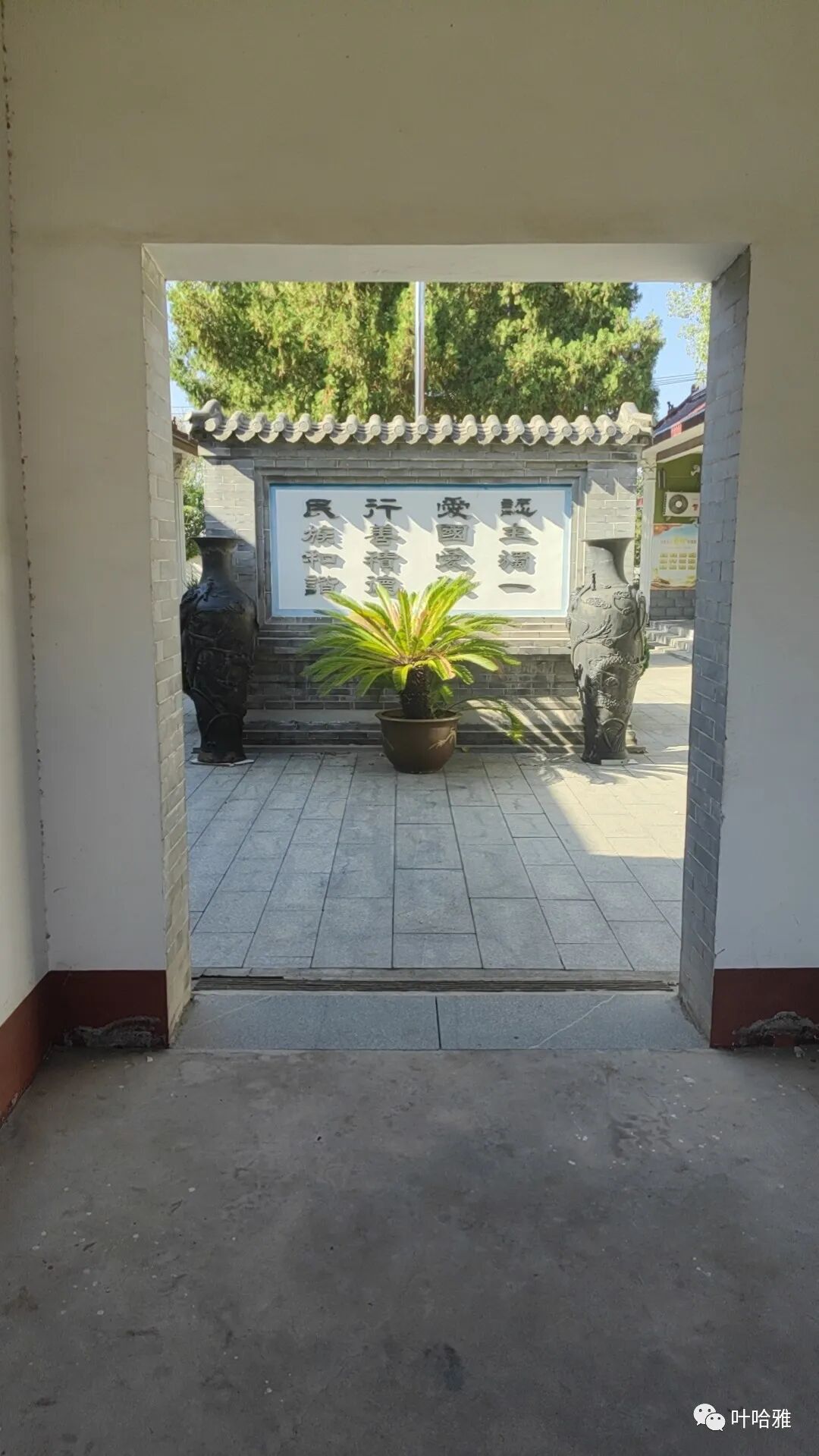
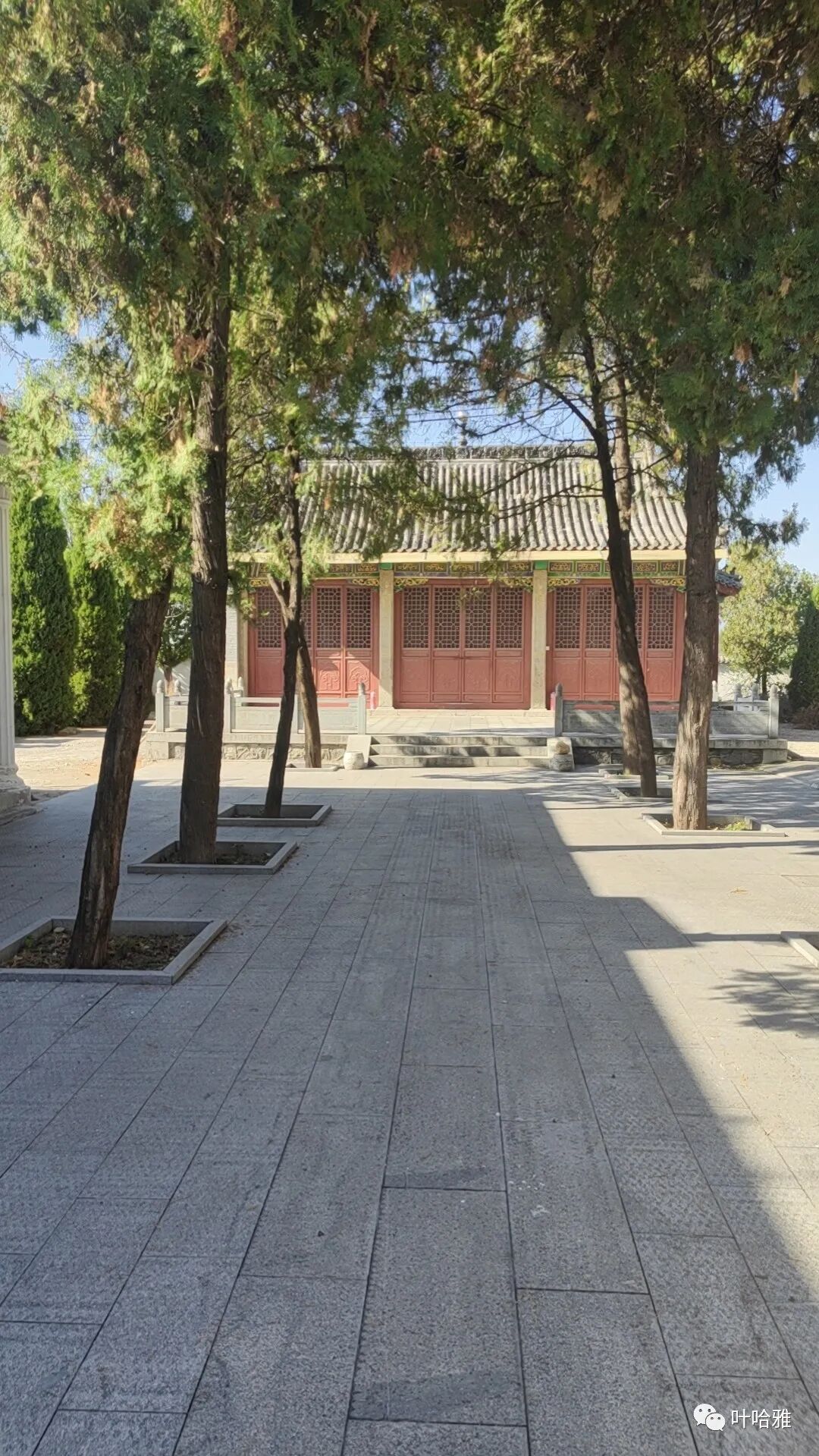
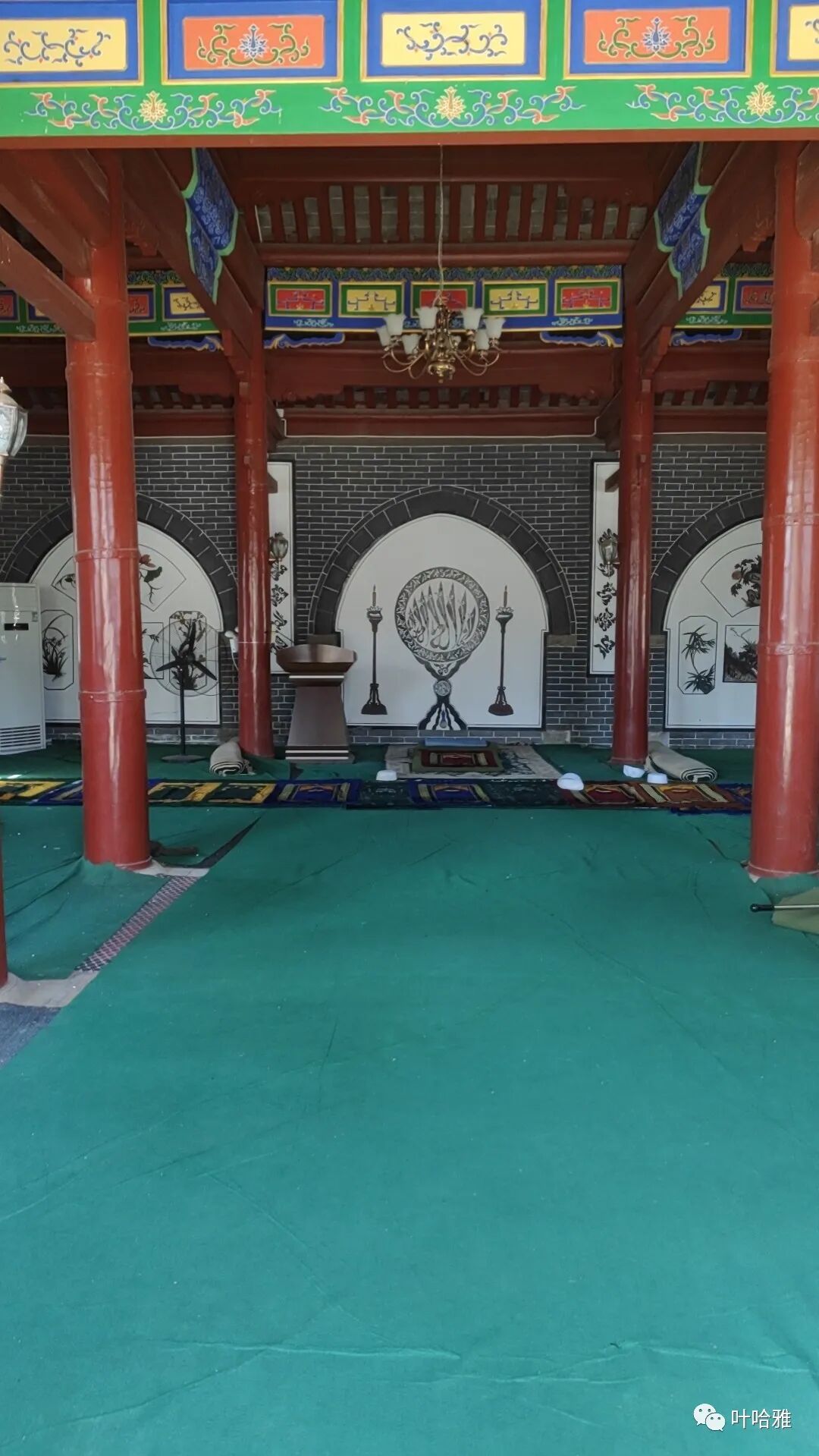
Liujiazhuang Mosque
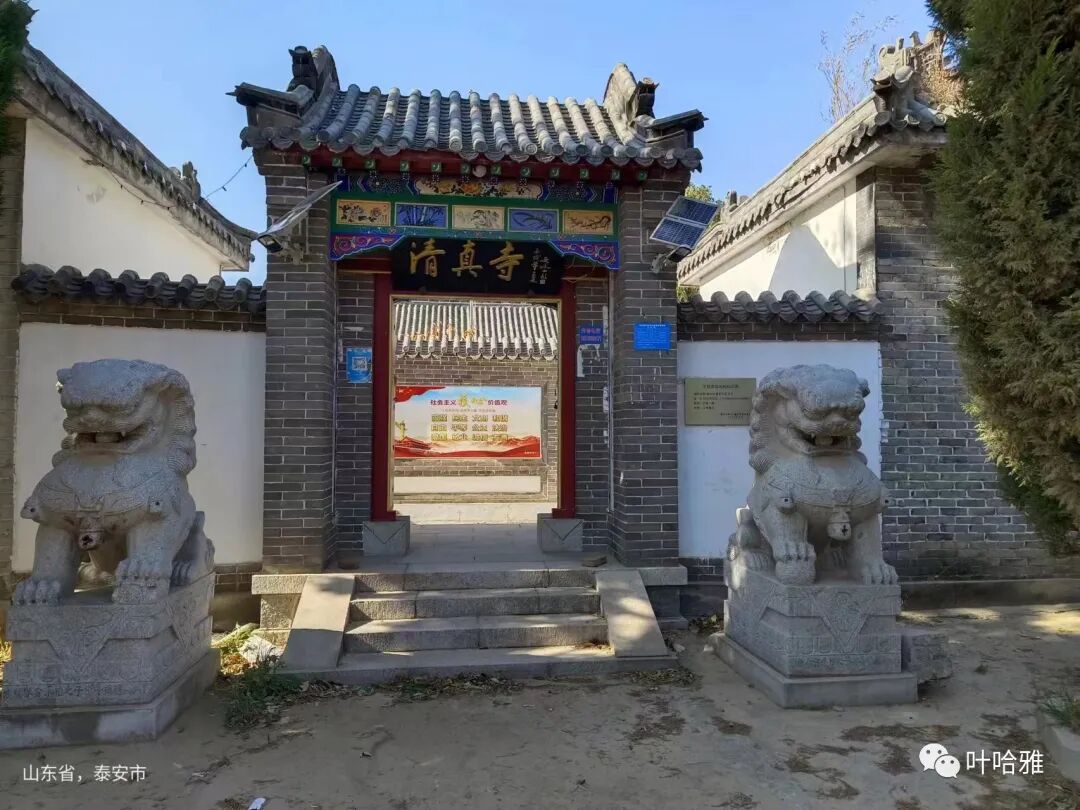
Liujiazhuang Village Mosque in Shengzhuang Town is located in the south of the village. It was built in 1917, the sixth year of the Republic of China, with funding from Jin Fengyin, Jin Fengcai, and others from Liujiazhuang Village, and it has been repaired many times since.
The mosque has one main prayer hall, four rooms for the north annex and north lecture hall, three rooms for the south lecture hall, and one spirit wall (yingbi), covering a total area of about 150 square meters. The main hall is three bays wide with a front porch. It features a black brick, tile, wood, and stone structure with a hip-and-gable roof and a front-embracing porch. The door frame of the front porch has colorful paintings. It is 10 meters long from north to south and 6 meters deep. There is also one reception room, four bathing rooms, and one ancient cypress tree. The courtyard covers an area of 288 square meters. There are four existing stone tablets: the Tombstone of Mr. Jin from 1910 (the second year of the Xuantong reign of the Qing Dynasty), the Tablet Record of Building Liujiazhuang Mosque from 1917 (the sixth year of the Republic of China), the Mosque Tablet Record from 1928 (the seventeenth year of the Republic of China), and the 2013 Tablet of Donors for the Liujiazhuang Mosque Funeral Vehicle.
The mosque's religious affairs have been led by imams including Liu Furong and Han Jian. It is managed by the Mosque Management Committee.
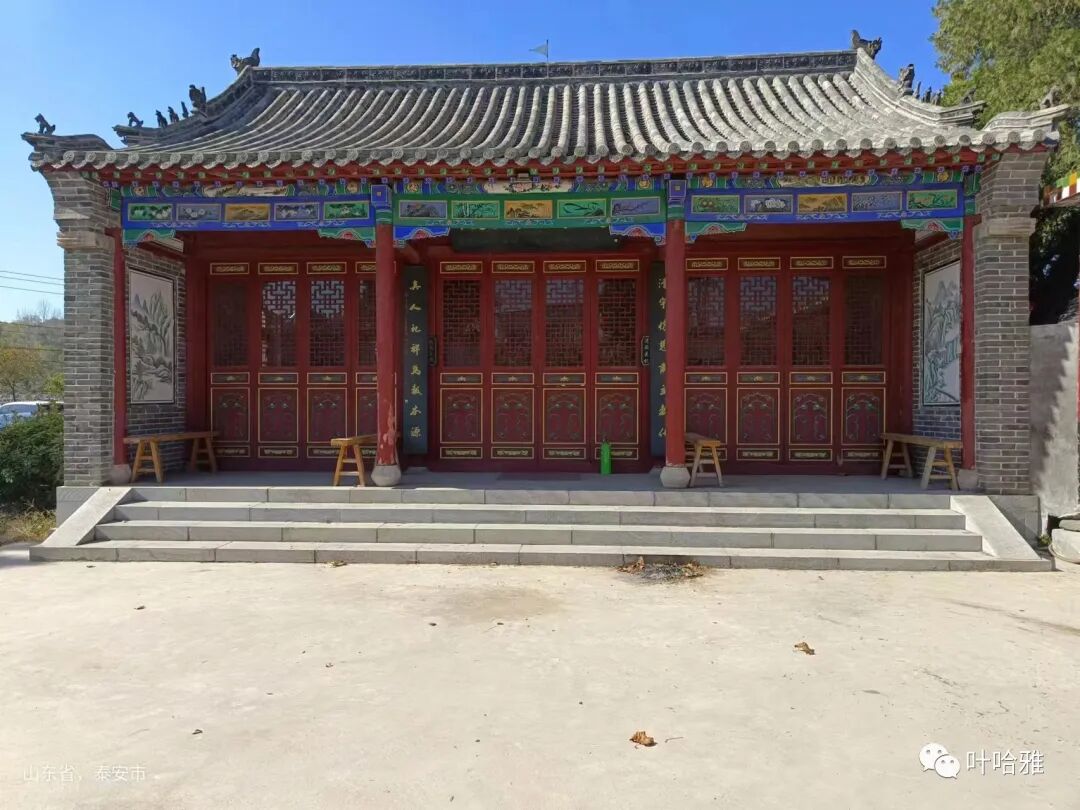
Zhihuizhuang Village Mosque
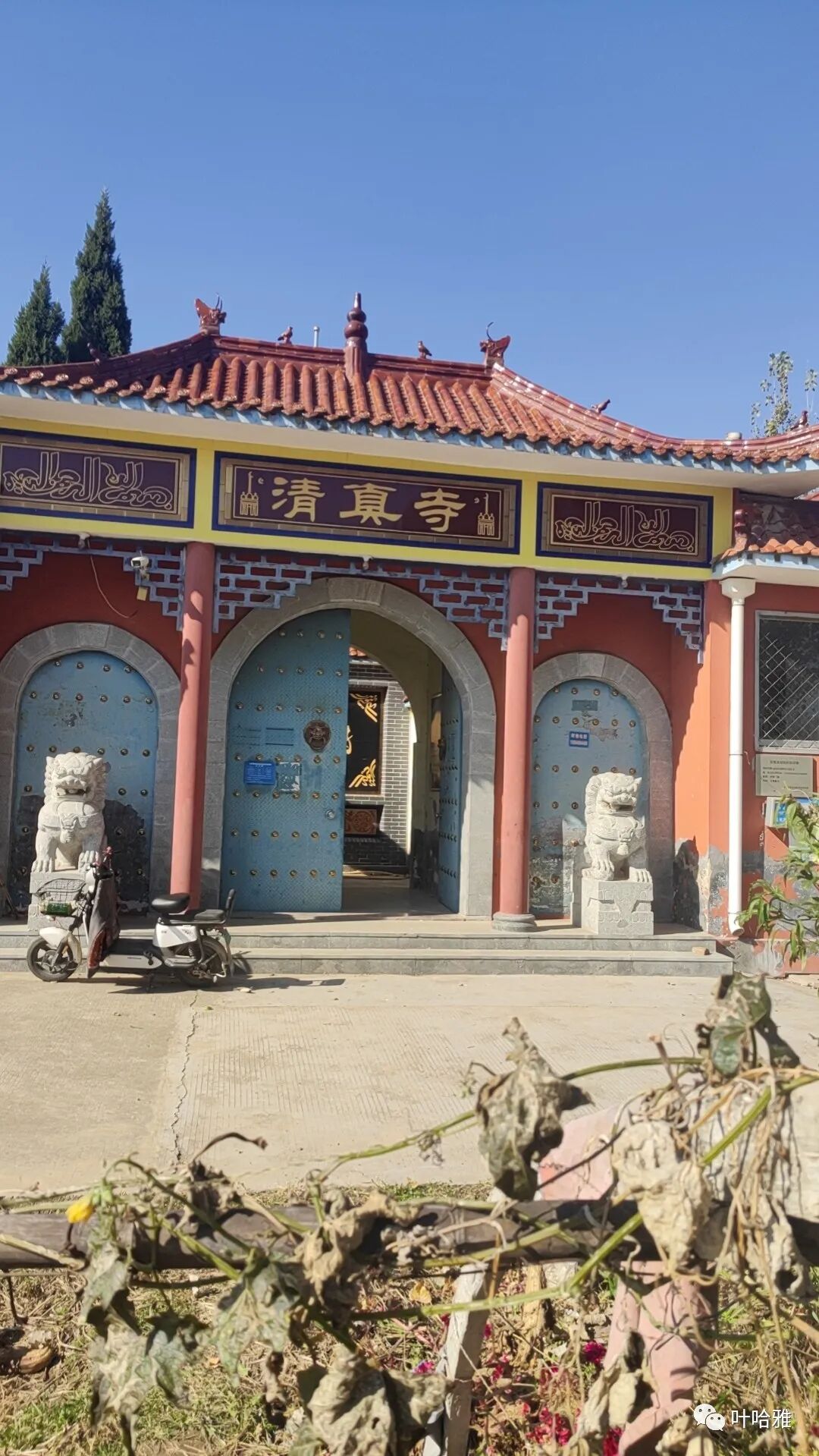
Zhihuizhuang Village Mosque in Shengzhuang Town sits on the south side of the village. It was built in 1994 and has been repaired several times since. The mosque is a modern building, 18 meters long and 27 meters wide. The main prayer hall is 10 meters high, 13 meters long, and 13 meters wide. The north lecture hall is 9 meters long and 5 meters wide. The south lecture hall is 9 meters long and 5 meters wide. The water room is 5 meters long and 5 meters wide. There are two stone tablets here: the 2005 "Stele of Eternal Fame" and the "Stele Recording Donations from Han Chinese Compatriots for the Mosque's Main Hall."
Imams such as Zhang Shuiquan and Zhang Guorui have led religious affairs at the mosque. The village has produced several imams, including Zhang Changshi, Zhang Shuiquan, Zhang Feng, and Zhang Guorui. Zhang Changshi once traveled to Mecca for Hajj. It is now managed by the mosque management committee. Past directors include Zhang Changling, Zhang Changxin, Xu Yongchang, Zhang Changjin, Zhang Hengzhen, and Zhang Hengyong.
The mosque was awarded the title of Shandong Province Harmonious Religious Activity Venue.
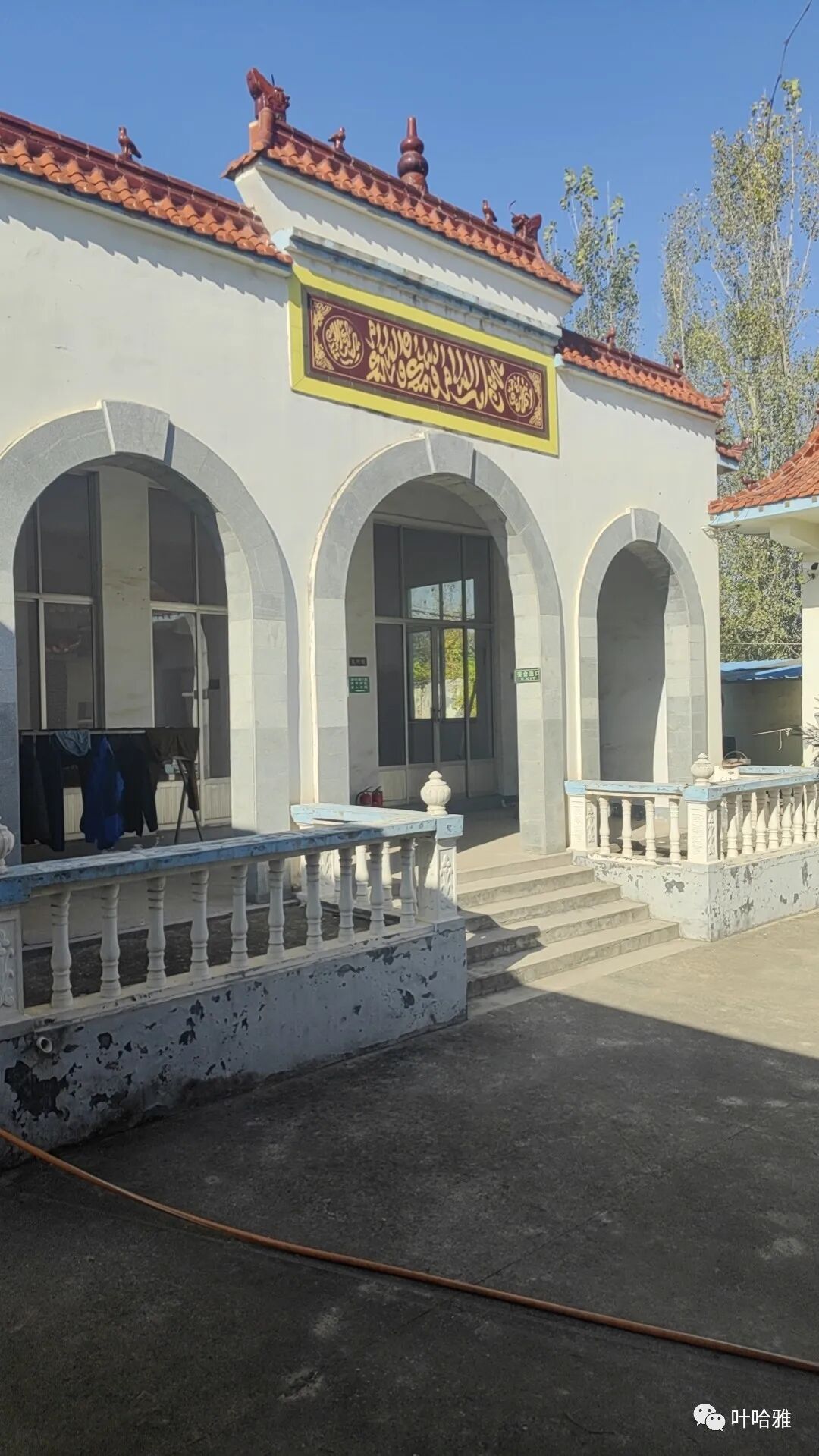
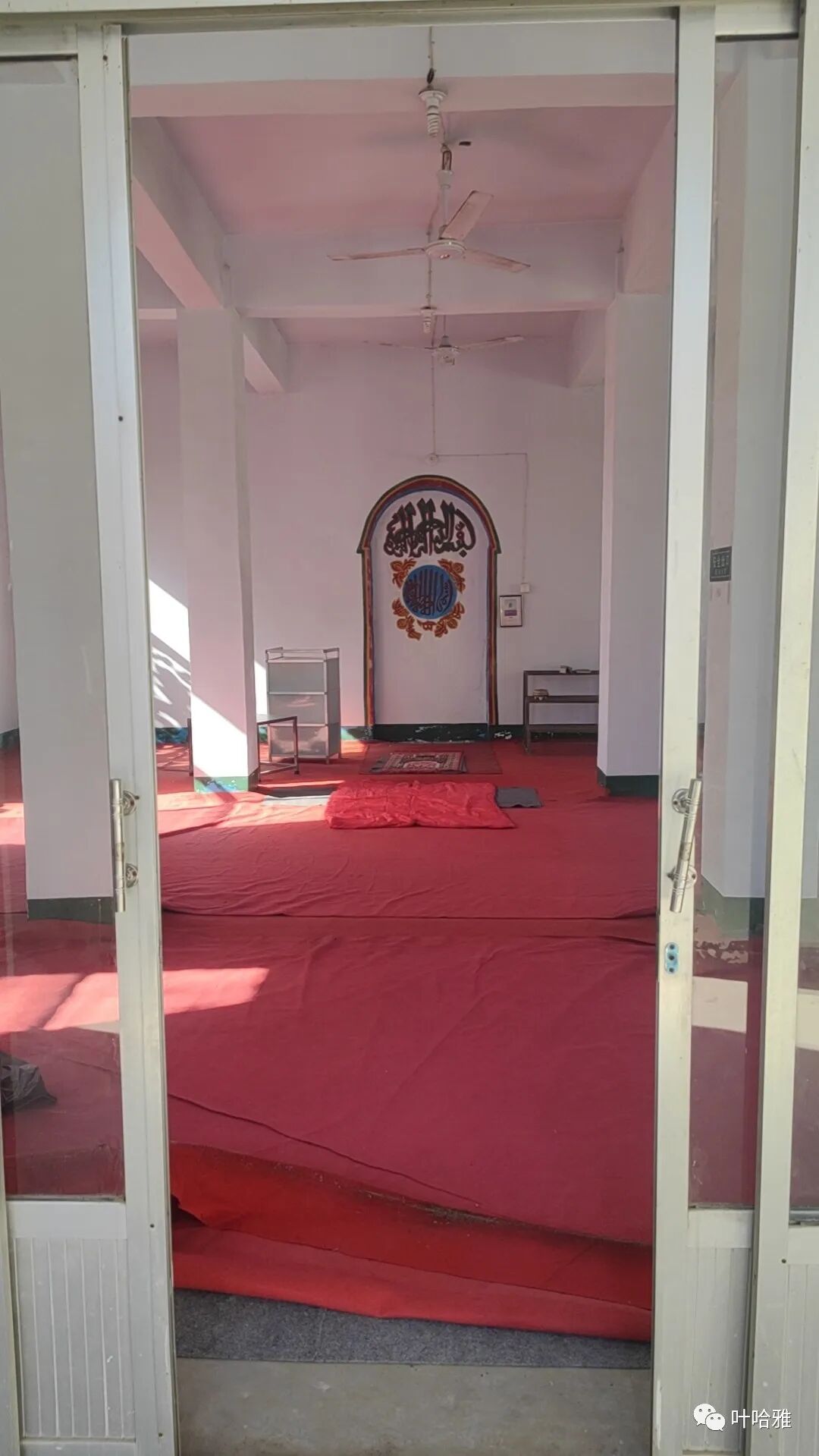
Daiyue District
Xijie Mosque
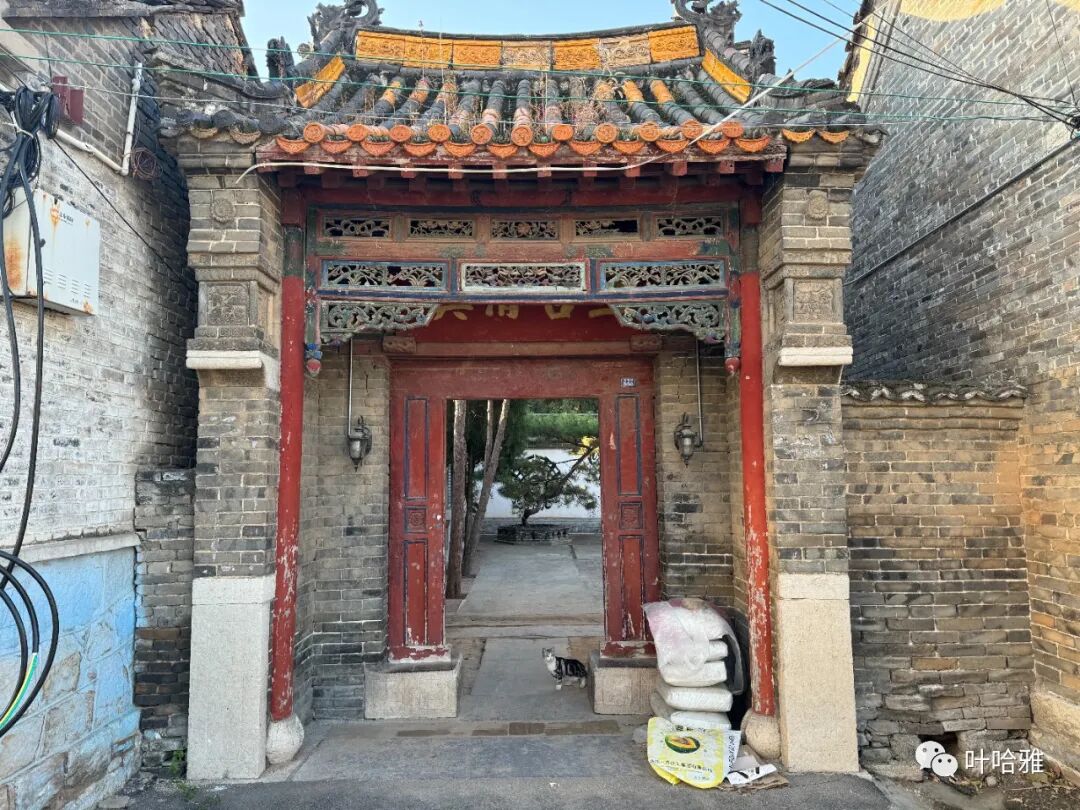
The Xijie South Mosque in Mazhuang Town is located in the southeast corner of Qianying Village. It was founded in the early years of the Qianlong reign of the Qing Dynasty and has been expanded and renovated ever since. It was renovated multiple times in 1781, 2003, and 2015.
The main buildings of the mosque include the front gate, the second gate, the front hall, the middle hall, and the rear hall. They are arranged along a central east-west axis with symmetrical side structures. The three-courtyard layout features the architectural style of a Chinese palace. The mosque is 60 meters long and 60 meters wide. The rear hall has three levels and stands 22 meters high. The main hall is 30 meters long and 14.5 meters wide. The north lecture hall is 14.3 meters long and 6.3 meters wide. The south lecture hall is 7 meters long and 6.2 meters wide. The water room is 18.6 meters long and 6.2 meters wide. The mosque gate is 4.7 meters long and 3.9 meters wide, and there are also facilities like a storage room, kitchen, and garage.
The mosque has 6 existing stone tablets, including the 1781 Tablet Record of the Renovation of the Front Hall of the Xijie Qianyin Village Mosque from the Qianlong reign of the Qing Dynasty, the 1802 Tablet Record of the South Mosque Street Residence from the Jiaqing reign, the Tablet Record of the Bai Family Genealogy from the late Qing Dynasty, the 2003 Tablet Record of the Renovation of the Front Hall and Rear Kiln of the Xijie Qianyin South Mosque and the Tablet Record of Donations for the Renovation of the Front Hall and Rear Kiln of the South Mosque, and the 2015 Merit Tablet for Donations to the Renovation of the North Lecture Hall of the South Mosque.
Imams including Bai Anfu, Bai Maosheng, Zhang Fengyi, Bai Anmeng, Bai Guangpu, and Bai Anzhong once led religious affairs at the mosque, and it is currently led by Imams Ma Yubing and Bai Hairong. Before the founding of the People's Republic of China, the mosque's affairs were managed by village elders and imams, and during the Jiaqing reign of the Qing Dynasty (1796-1820), Ma Long, Bai Guoren, Bai Guoxin, and Bai Guoli were responsible for management. During the late Qing Dynasty and early Republic of China, Bai Zongmao was responsible for management. Starting in the 1980s, a democratic management committee for the mosque was established, and Bai Maojun, Ma Zhulian, Ma Zongwang, Bai Anqi, Bai Anying, Bai Maozhu, Bai Fuhai, and Zhao Xinwen served as directors one after another.
The mosque values religious education, and since its founding, more than 60 imams and scholars have studied the Quran and Hadith there. During the Republic of China era, Bai Zongmao founded a primary school for Hui Muslims at the mosque and invited Mr. Cao Shusheng from the south corner and Mr. Huang from Dapo to serve as teachers.
The mosque currently has a pair of Ming Dynasty grand master chairs, a Qing Dynasty three-legged incense burner, a pair of Qing Dynasty porcelain drums, a plaque for the main gate tower, and a plaque for the front hall. Imam Bai Hairong currently keeps a handwritten copy of the Quran. In 2010, it was named a Harmonious Religious Activity Venue by Shandong Province, and in 2013, it was designated as a Provincial Cultural Relics Protection Unit.
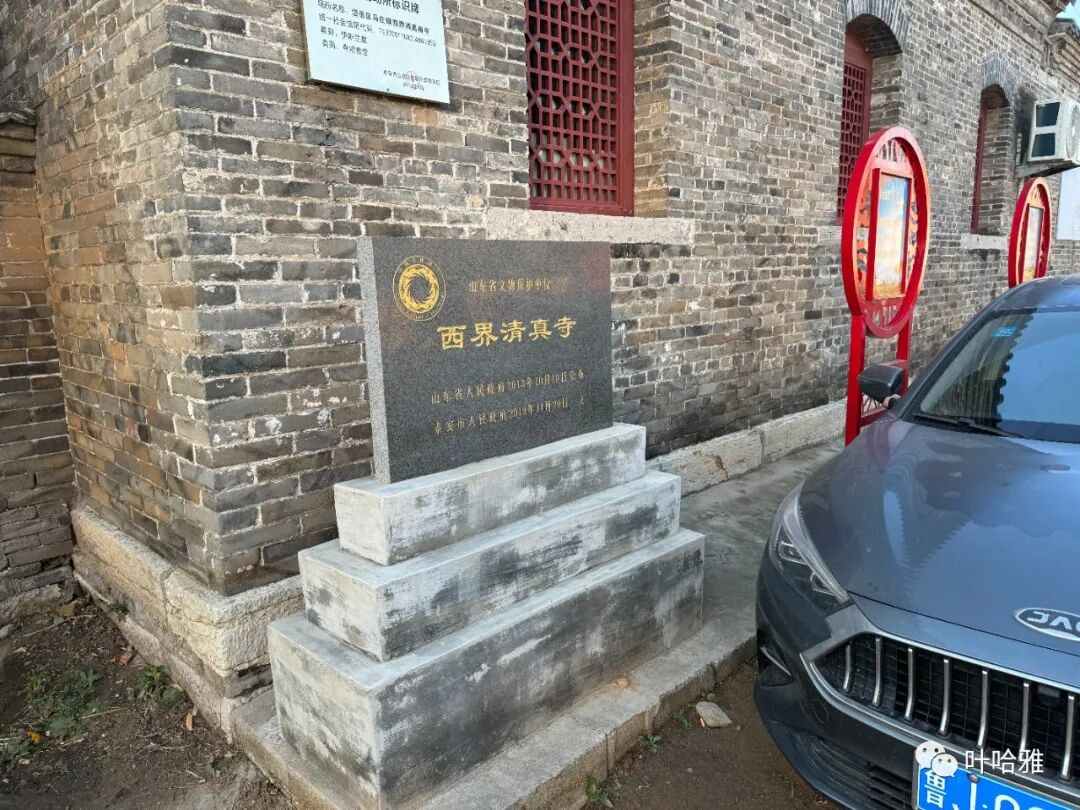
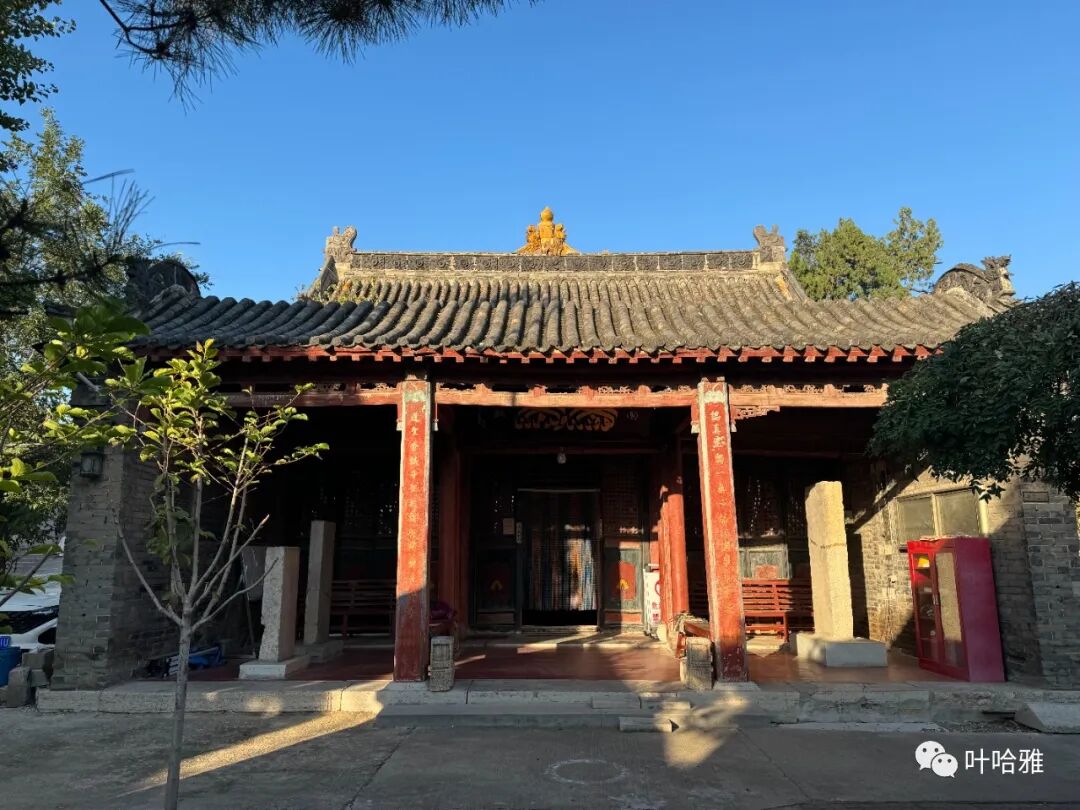
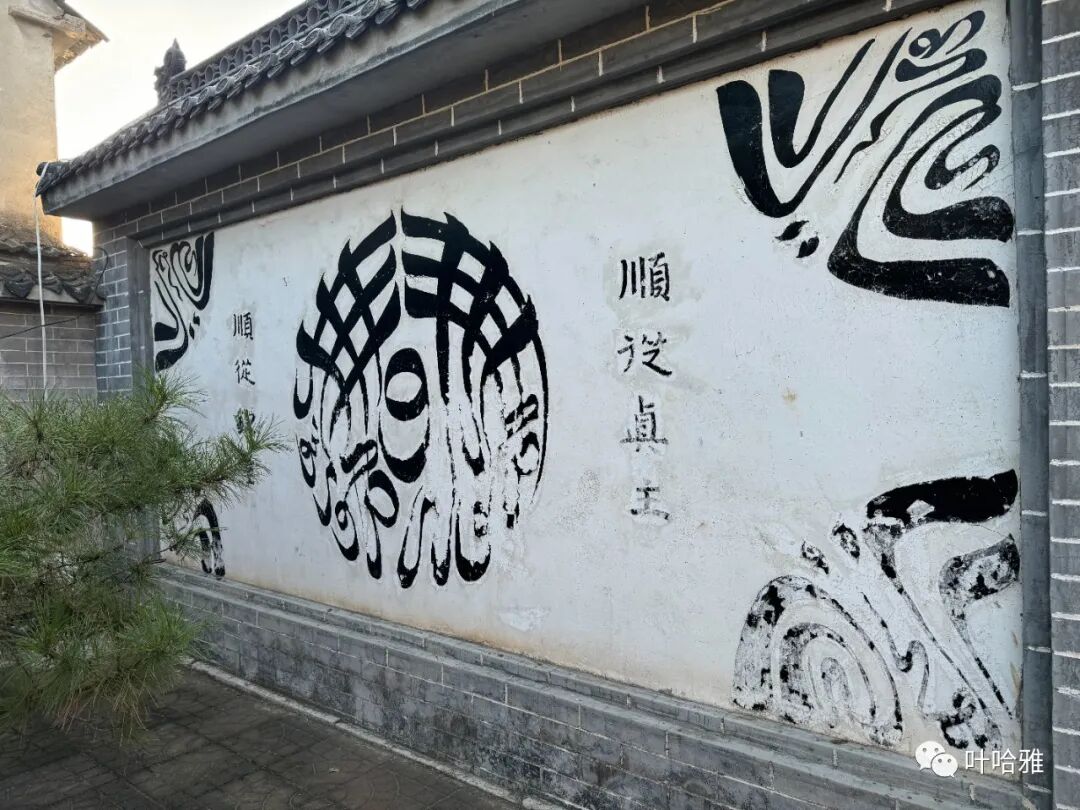
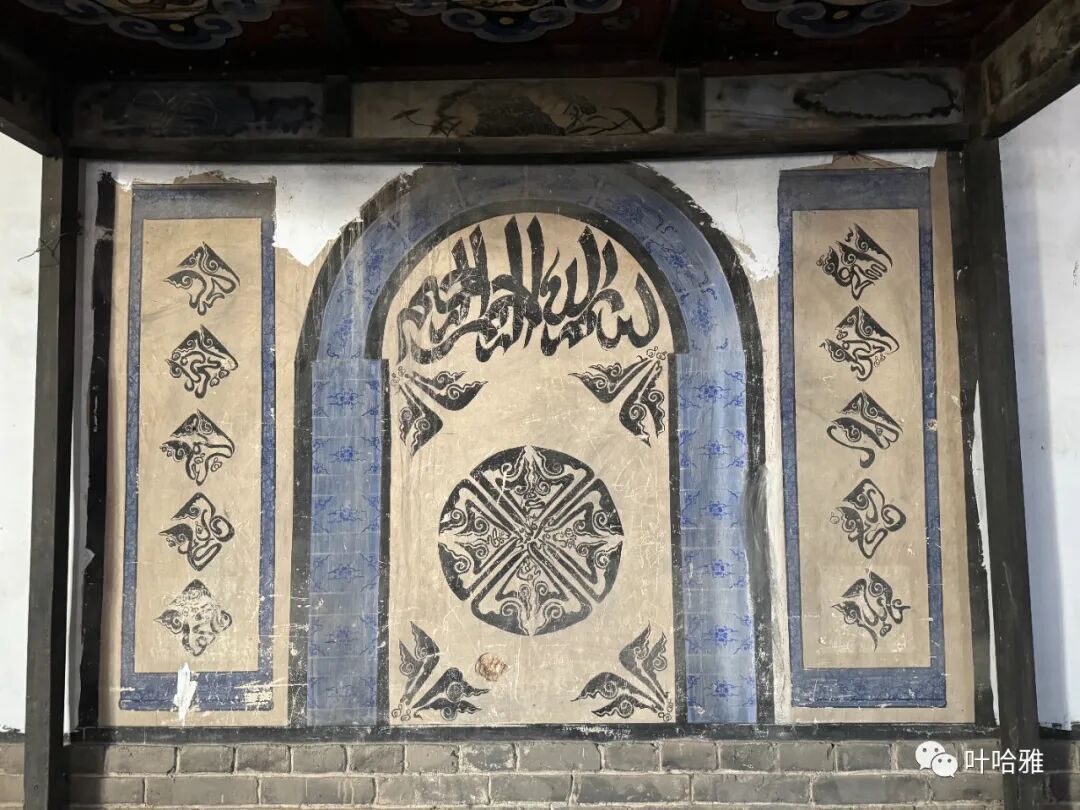
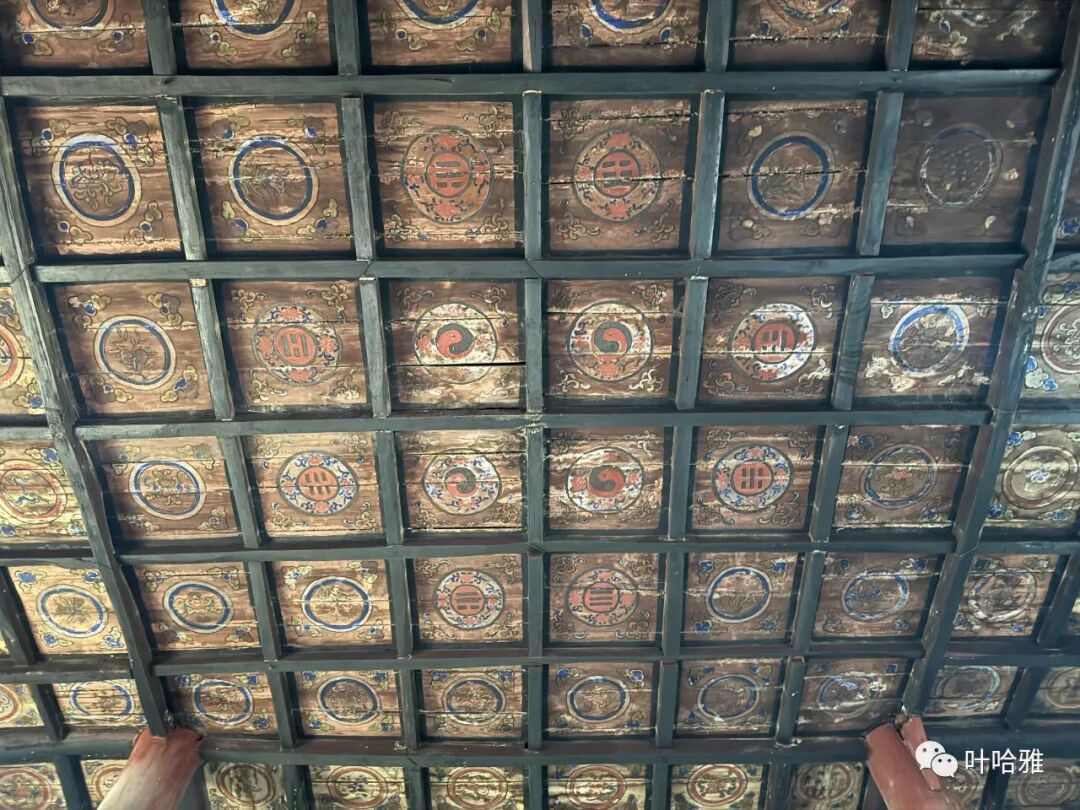
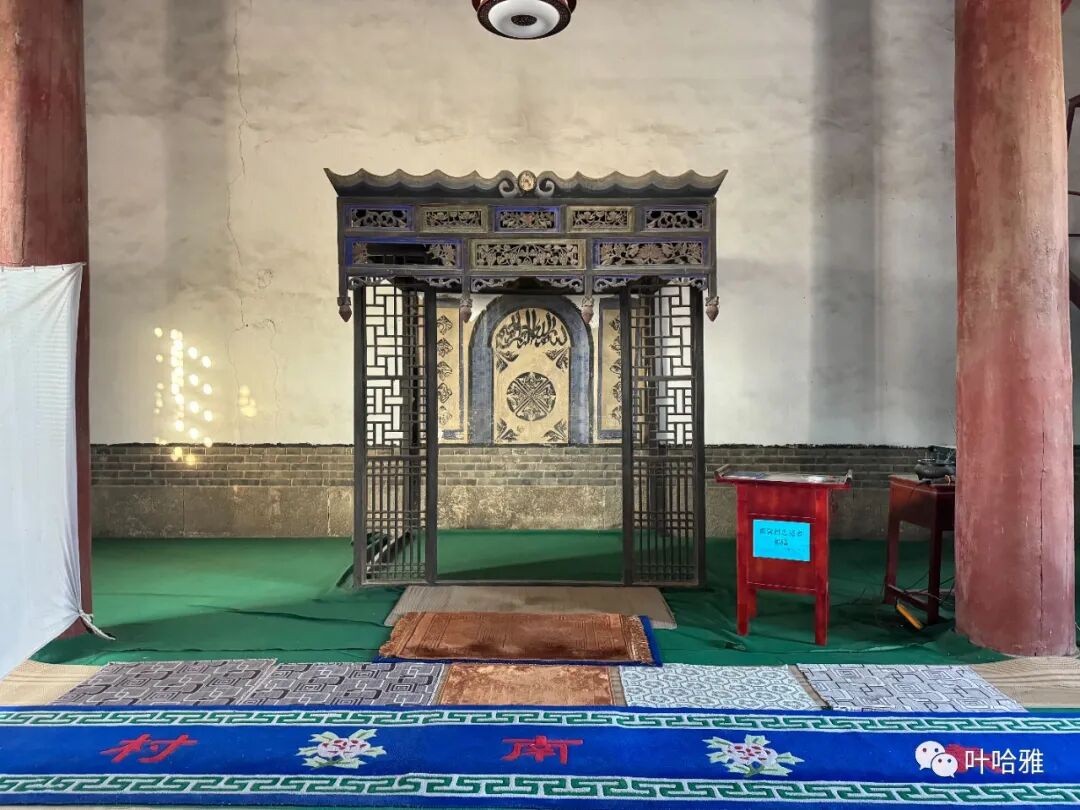
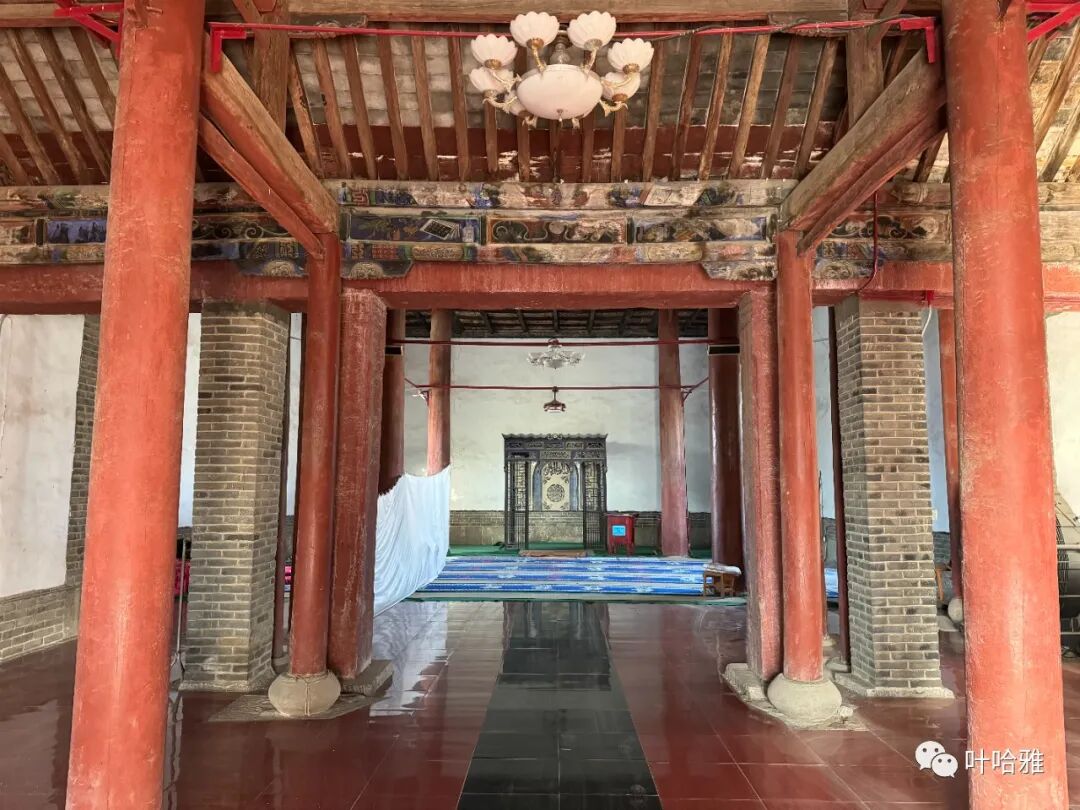
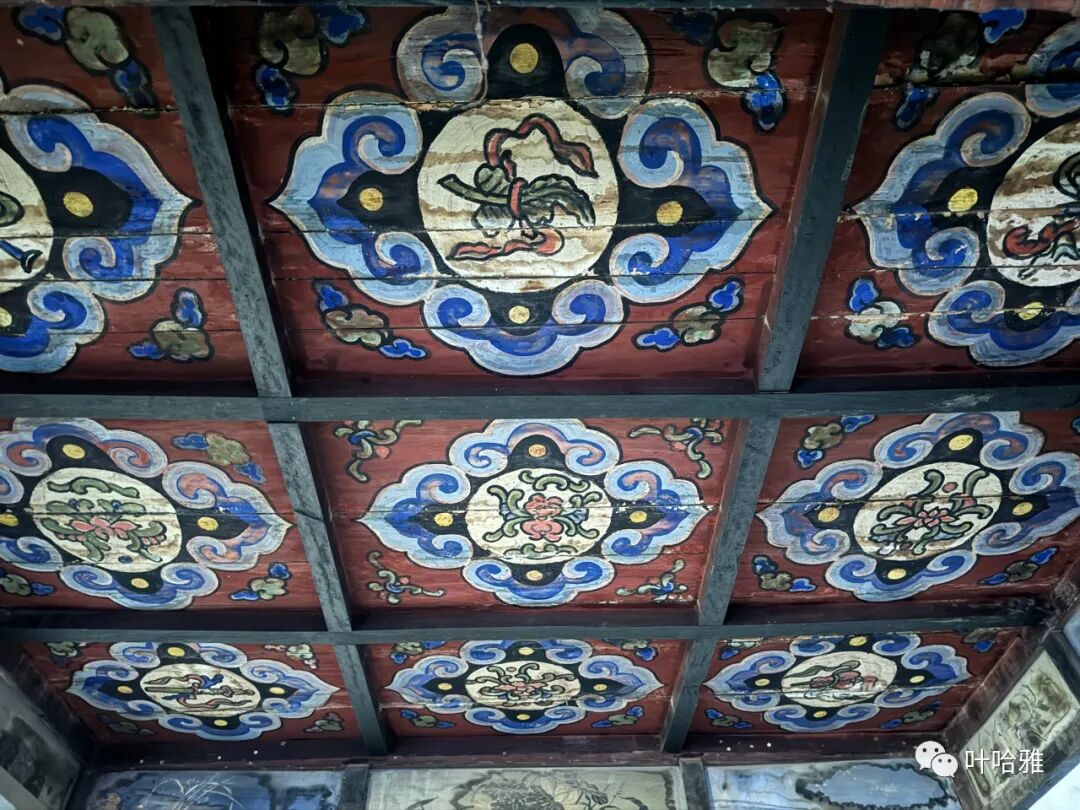
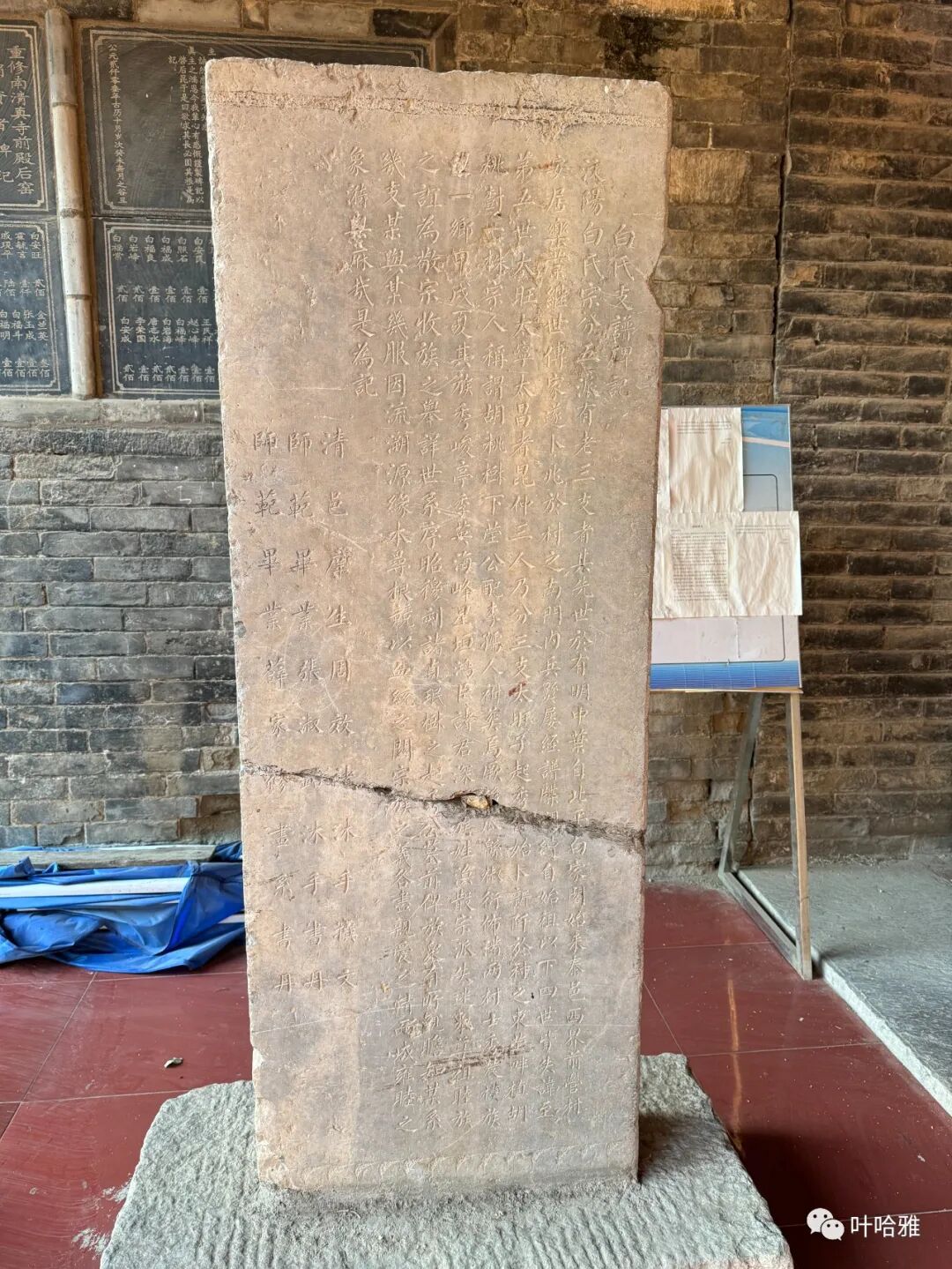
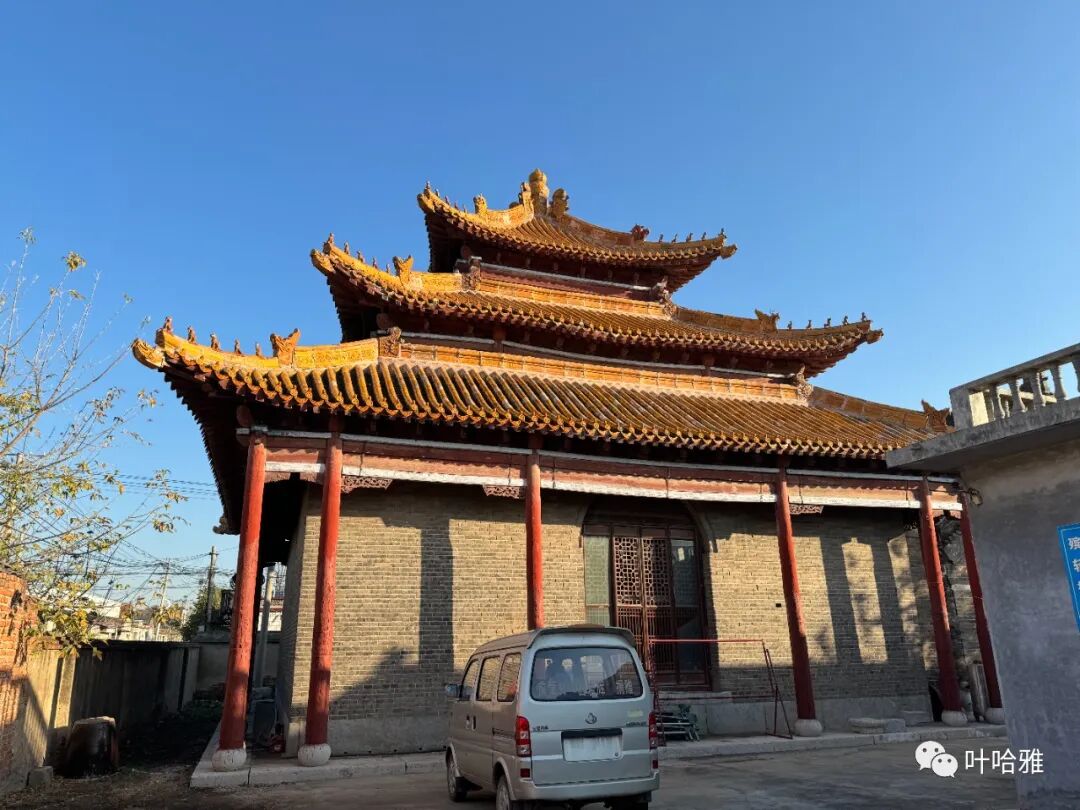
West Boundary West Mosque (Xijie Qingzhen Xisi).
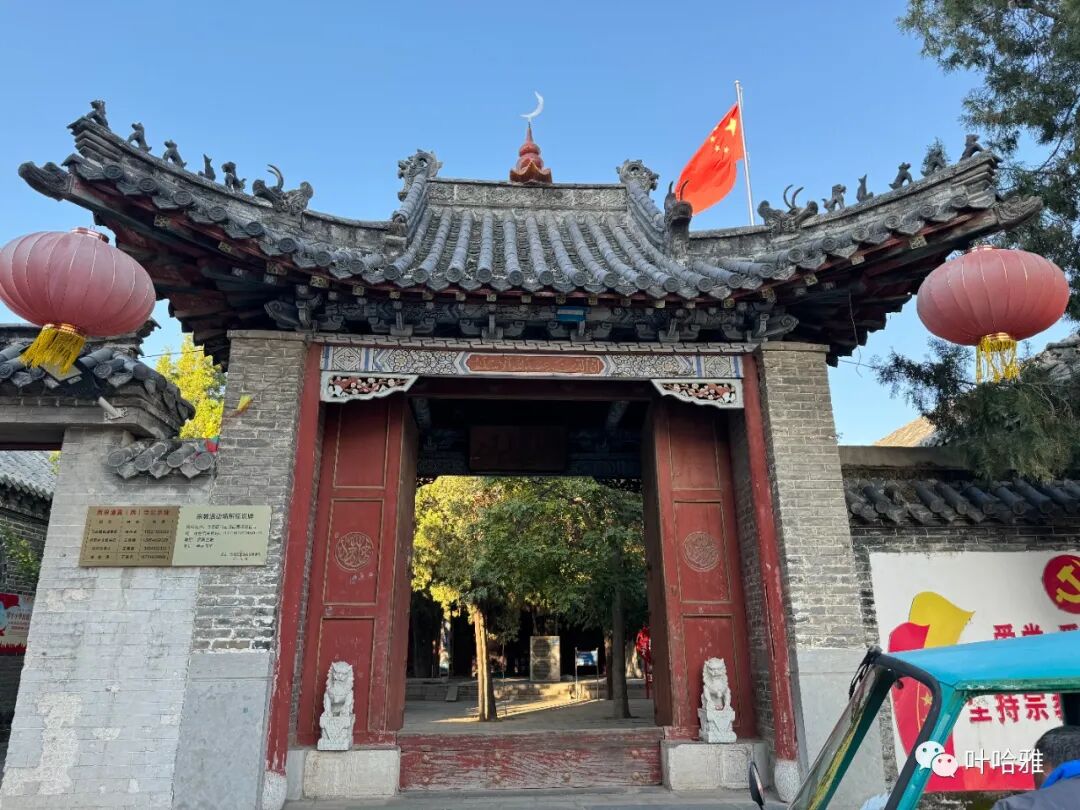
The West Boundary West Mosque in Mazhuang Town is located in Qianying Village. Built during the Yuan Dynasty, the prayer site founded by Ma Zhaoyang in the early Yuan period was the predecessor of the West Boundary Qianying West Mosque, which was later expanded and renovated many times. The West Mosque was expanded during the Zhengde period of the Ming Dynasty (1506-1521), renovated in the tenth year of the Xianfeng period of the Qing Dynasty (1860), and again during the Republic of China era. After the founding of the People's Republic of China, the north lecture hall was rebuilt. It underwent large-scale repairs in 1998 and has been maintained several times since.
The mosque faces east and rises in height from front to back. Its main buildings, including the front gate, second gate, front hall, middle hall, and rear hall, are all arranged along a central east-west axis. It is symmetrical with three courtyards, combining Chinese palace-style architecture with Arabic architectural styles. The mosque is 34 meters long and 31 meters wide.
The mosque's main gate tower is 7 meters high and 4 meters wide with an outer porch. It is a single-eave brick and stone structure with hanging beaded ornaments under the eaves and wood carvings featuring floral patterns. The gate tower features brick and wood carvings of auspicious creatures like phoenixes and qilin, with the overall shape composed of floral patterns. It also contains brick carvings depicting incense burners used in Islamic rituals and patterns of scripture scrolls. The plaque on the front of the main gate bears the four large characters for Eternal Purity (Gengu Qingzhen). The second gate is a single-eave, slanted-ridge structure shaped like a Taoist crown. It features three-ring moon windows on both sides and five wind doors facing the front, covering a building area of 24 square meters.
The main prayer hall of the mosque is 24.5 meters long and 13.5 meters wide, with enough space for 100 people to perform namaz at the same time. It consists of three connected sections—the front, middle, and rear halls—using a side-by-side design to increase the total depth. The front hall is one bay deep and three bays wide. The middle hall is two bays deep and three bays wide. The rear hall is three bays deep and three bays wide. The rear hall uses a beamless timber structure supported by tall wooden pillars and dates back to the Ming Dynasty. The protruding section at the back is the mihrab, a wooden carved pavilion for the imam. To the left of the imam's pavilion is the minbar. The floor plan of the entire hall looks like the Chinese character 'zhu' (meaning 'lord' or 'main'). The mihrab is the dot, the front hall is the bottom horizontal stroke, the rear hall is the top horizontal stroke, and the main aisle for entering the hall is the vertical stroke. This matches the idea that the prayer hall is the 'House of the Lord'. The main hall sits on a one-meter-high platform. The stone pillars on both sides of the front hall are carved with a couplet: 'The holy traces started in the Kaaba, the faith traveled ten thousand miles to the eastern lands; the miraculous work supported the Tang Dynasty, its influence lasting a thousand years to this prosperous era.'
The north lecture hall has five rooms, measuring 17.5 meters long and 7.2 meters wide. It is a hard-mountain style building with a front porch. The crossbeams have patterns on the ends, and the main and vertical ridges are tall and decorated with floral carvings. In the past, the mosque's imam and religious students (hailifan) also lived here. The south lecture hall has four rooms, measuring 14 meters long and 7.2 meters wide.
The four-room washroom (shuifang) connects to the west side of the south lecture hall, sits to the right of the main prayer hall, and measures 17.5 meters long and 7.2 meters wide. The four washrooms can accommodate over thirty people performing their ritual ablutions (wudu) at the same time.
The mosque currently holds four stone tablets: the 1860 Tablet Record of the West Mosque Neighborhood from the Xianfeng era of the Qing Dynasty, the 1998 Tablet Record of the Renovation of the West Boundary Mosque, the Tablet of Eternal Virtue, and the 2013 Provincial Key Cultural Relic Protection Unit tablet.
Past imams of the mosque include Yang Chengri, Jin Shiyuan, Yang Lisheng, Wang Li, Wang Qinglin, Wang Fuxiang, Wang Guanliang, Wang Ziliang, Xu Changcun, Wang Changshun, Yang Maoxiu, Liu Yuanxin, Sha Fengge, Mi Baokun, Bai Anjin, Bai Mantun, Bai Fujian, and Wang Xiuming. Mi Enwei, Han Bing, Bai Jinhu, and Bai Manchao currently lead the religious affairs.
In 1977, the mosque established a management group led by Bai Yongying, Bai Maojun, and Bai Maoxiang. In 1983, the mosque established a democratic management committee led by Bai Anqi and Ma Zhulian. In 1994, the second democratic management committee was established, led by Ma Zongwang and Bai Manchao. In 2000, the third mosque management committee was established, with Bai Qingfang serving as director to this day. The mosque has trained over 60 imams for the faith, including Ma Long, Bai Guoxin, Bai Anfu, and Zhang Fengyi. The Bai family has been a lineage of imams in this village for over three generations, starting with Bai Maosheng and including members like Bai Anxi, Bai Guangpu, Bai Qingyu, and Bai Anzhong.
The mosque values traditional scripture education. Throughout the Yuan, Ming, and Qing dynasties, it maintained Islamic culture, religious rules, and scripture studies, producing many qualified imams and students of Islamic theology (hailifan). Notable figures include Imam (Haji) Wang Qinglin and his students, such as Mi Xuejing and Zhu Yuepo. In the early years of the Republic of China, the mosque started a charity school to teach both Chinese and Arabic cultures, with Imam Wang Qinglin and Mr. Yang Maosong as instructors. During the War of Resistance Against Japan, the mosque established the Taiyun District Islamic Anti-Japanese School under the leadership of the Taixi Hui Muslims Anti-Japanese National Salvation Association.
In 1998, the mosque received the title of Model Mosque from the Shandong Islamic Association. In 2008, it was awarded the title of Model Mosque by the Tai'an Islamic Association. In 2009, the Shandong Provincial Bureau of Religious Affairs named it a Provincial Harmonious Religious Venue. In 2010, it was awarded the title of Model Mosque by the Tai'an Islamic Association. In 2013, it was recognized as a Provincial Cultural Relics Protection Unit. In 2014, it was awarded the title of Model Mosque by the Tai'an Islamic Association.
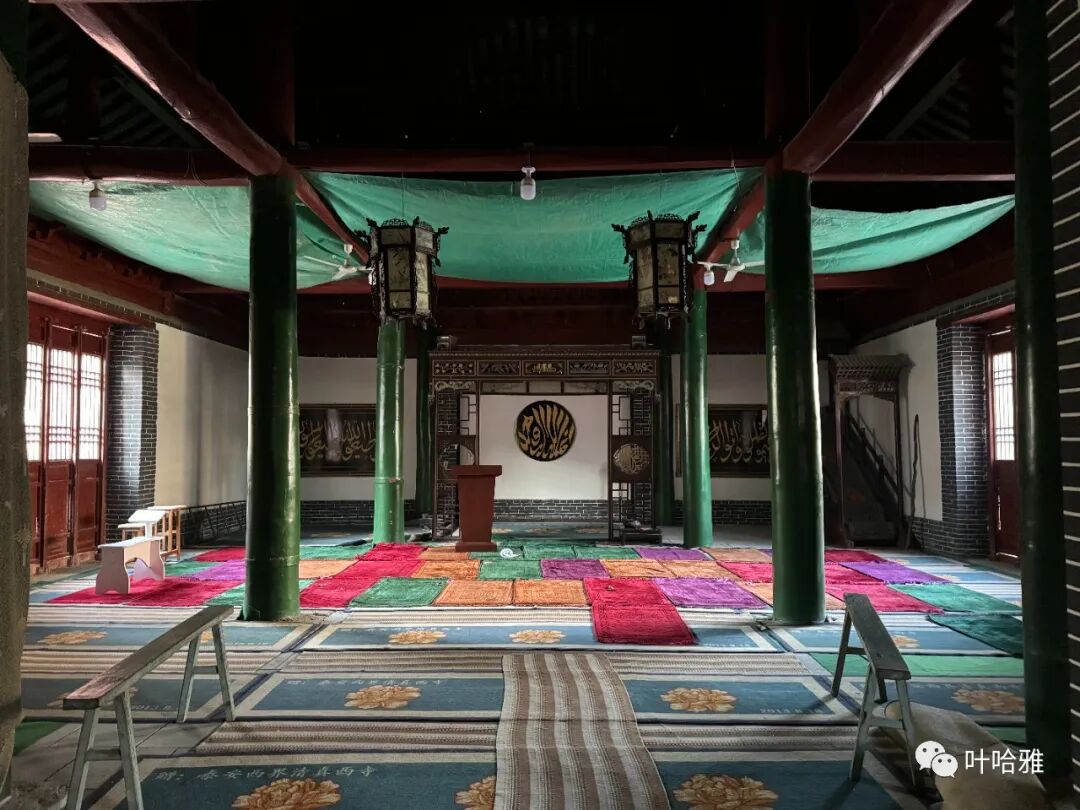
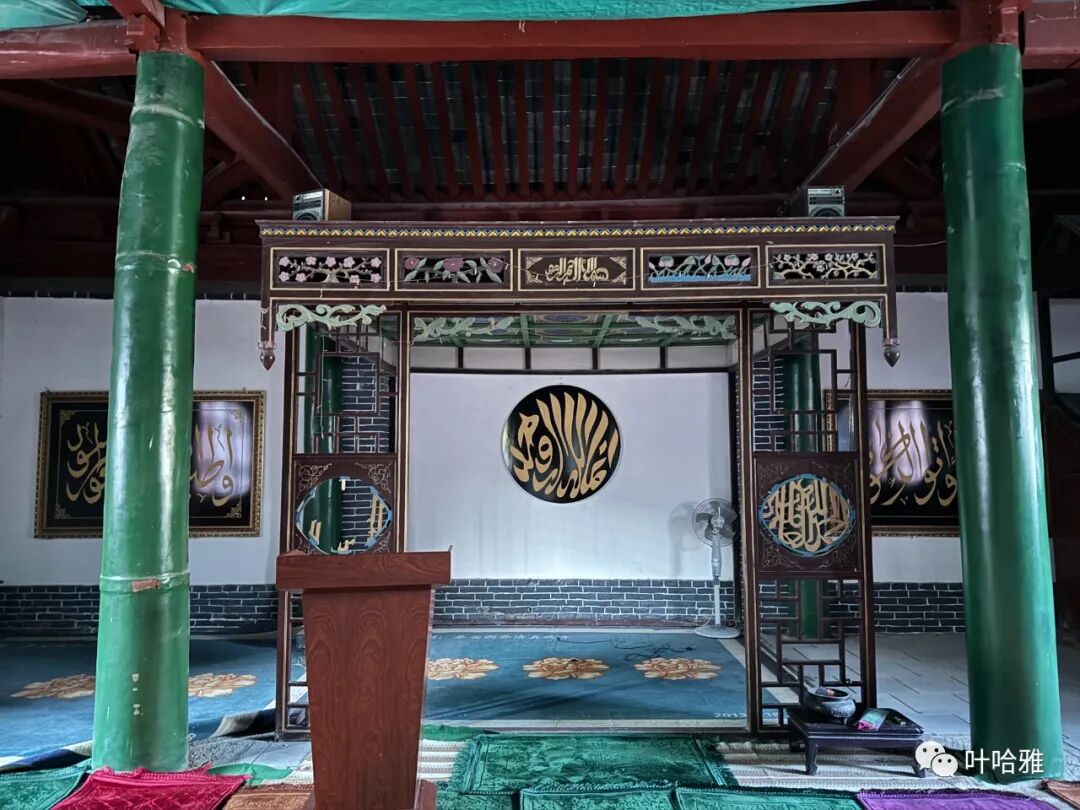
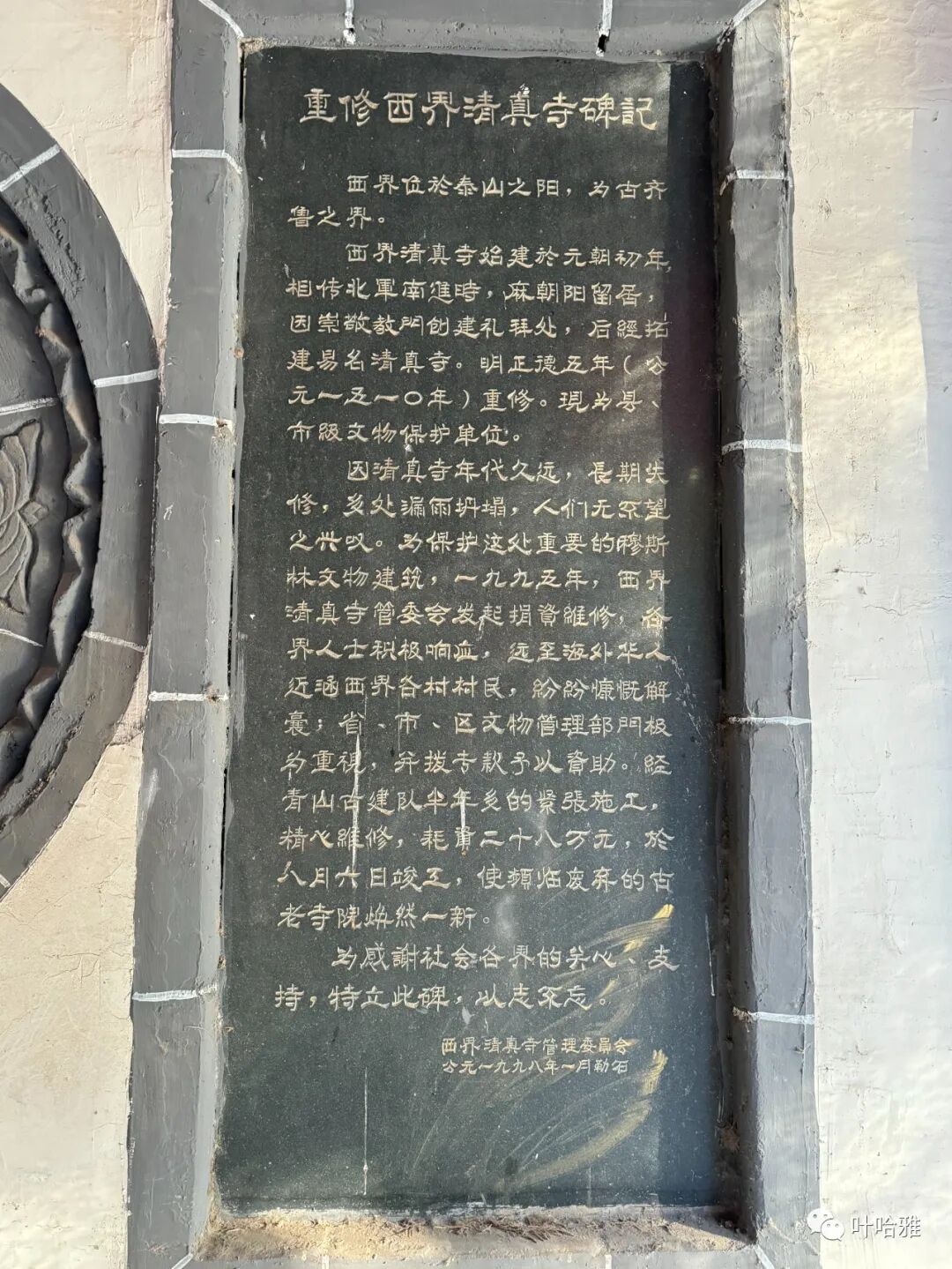
Beidaquan Mosque
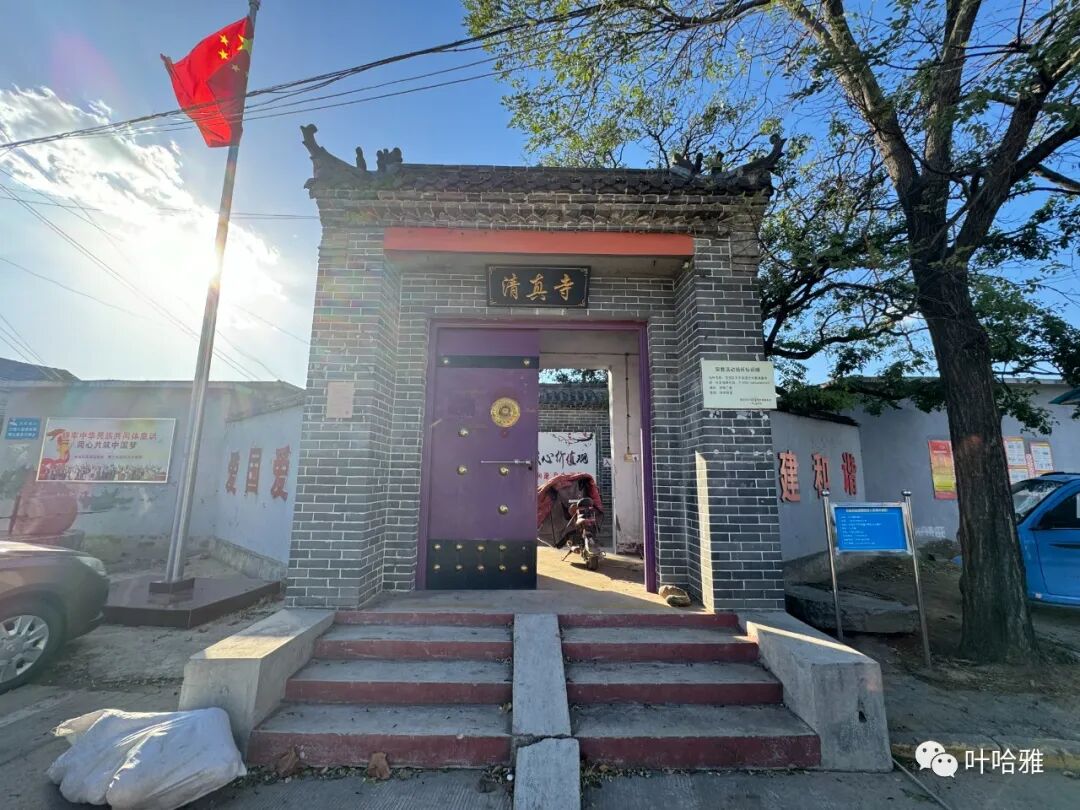
Beidaquan Mosque is located on the south side of the main street in the center of the village, under the jurisdiction of the Tianping Subdistrict Office. It was built around the beginning of the Ming Dynasty and has been repaired many times since. The mosque underwent major renovations in 1935, 2002, and 2010.
The mosque is 30 meters long and 21 meters wide. The main prayer hall is 6 meters high and consists of a front hall and a back hall; the front hall is 7 meters long and 10 meters wide. The back hall is 5 meters long and 7 meters wide. The north lecture hall is 14.2 meters long and 4.7 meters wide. The south lecture hall, which includes the washroom (shuifang), is 21 meters long and 4.2 meters wide. The main gate is 7.9 meters long and 5.3 meters wide.
The mosque currently houses three stone tablets: the 1935 Mosque Tablet Record, the 2002 Mosque Renovation Tablet Record, and the 2011 Ethnic Harmony Lasts Forever Tablet. There is an old honey locust tree (zaojiao shu) inside the mosque. In 2008, forestry experts estimated the tree to be over 300 years old.
Imams including Bai Rongxin, Jin Maoshan, Imam Yang, Zhang Zhongjun, and Ma Fusheng have served as leaders of the mosque's religious affairs. The mosque is now managed by a democratic management committee, with Zhang Yuhe serving as the director.
In 2011, the mosque received the title of "Harmonious Religious Activity Venue" from Shandong Province.
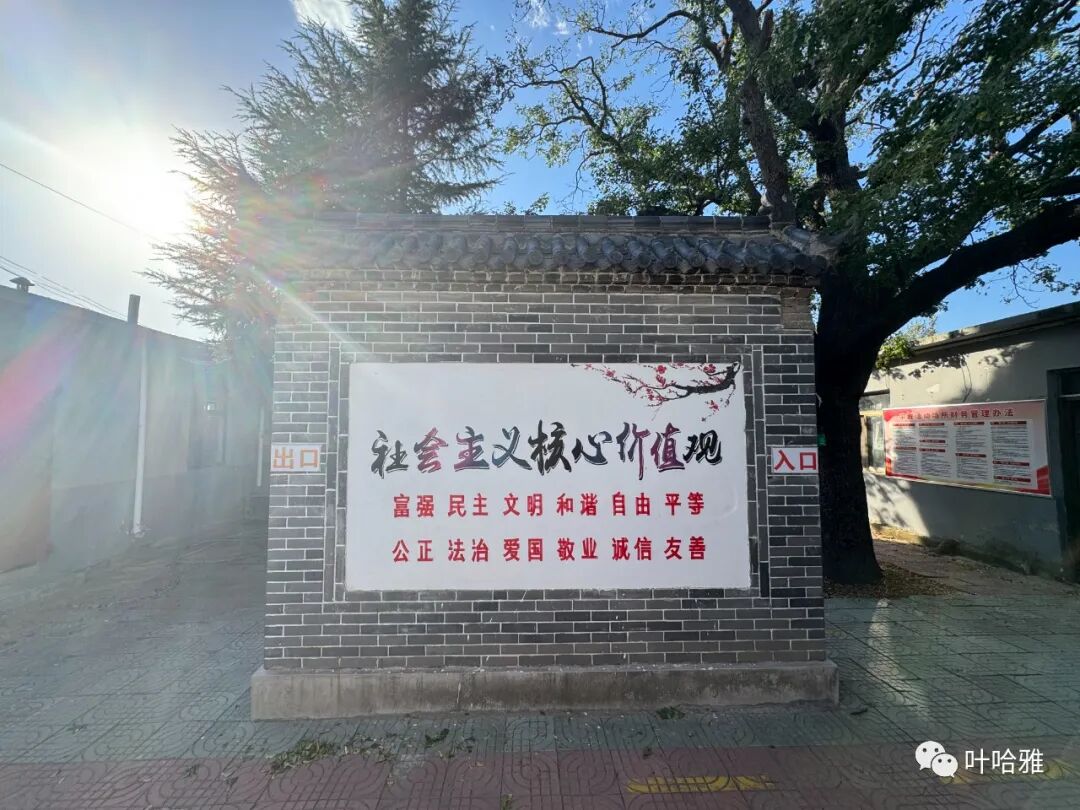
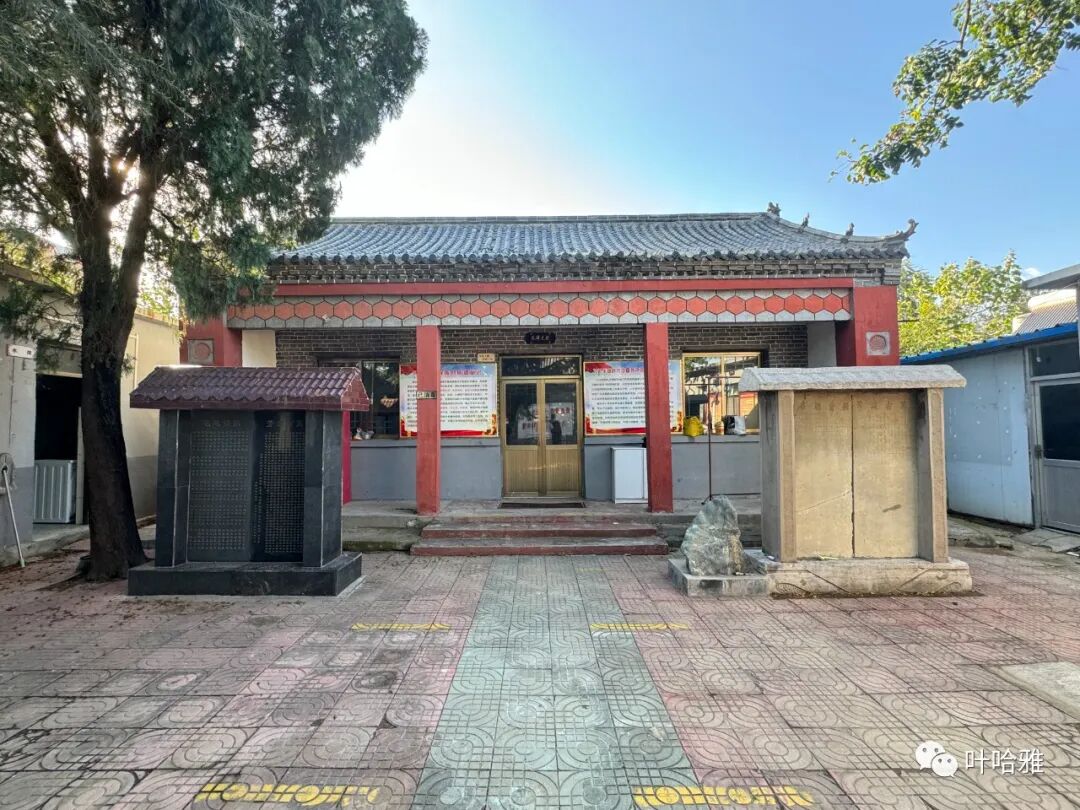
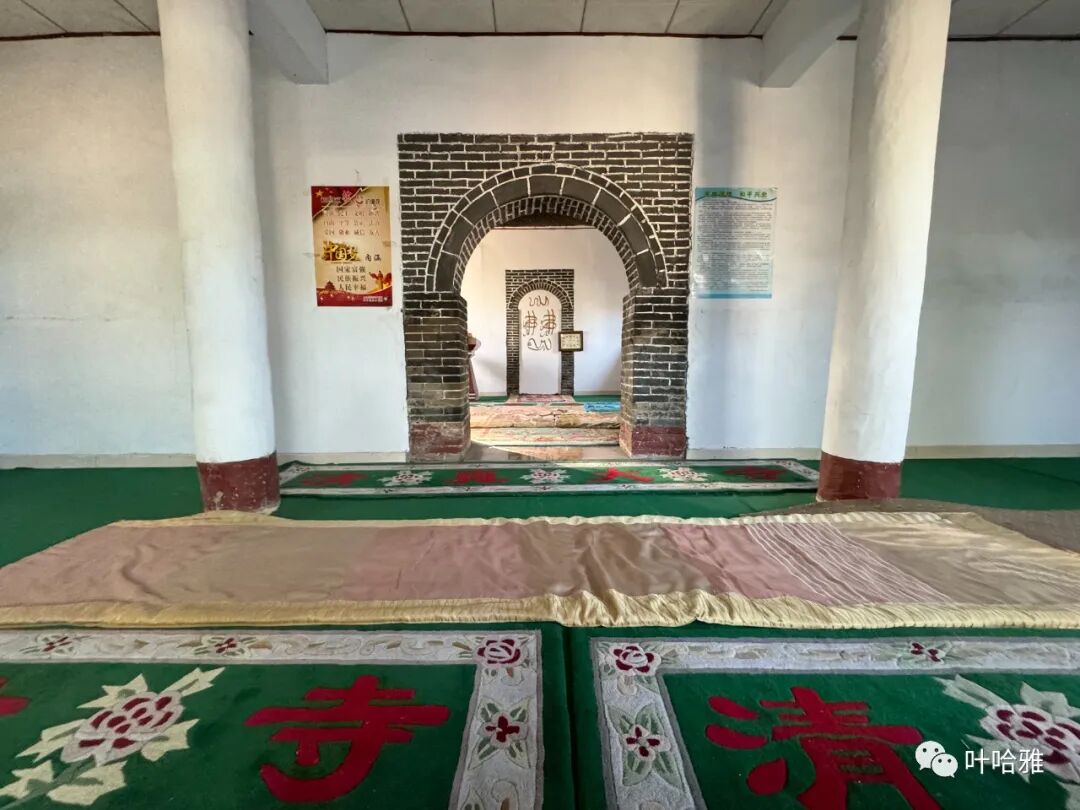
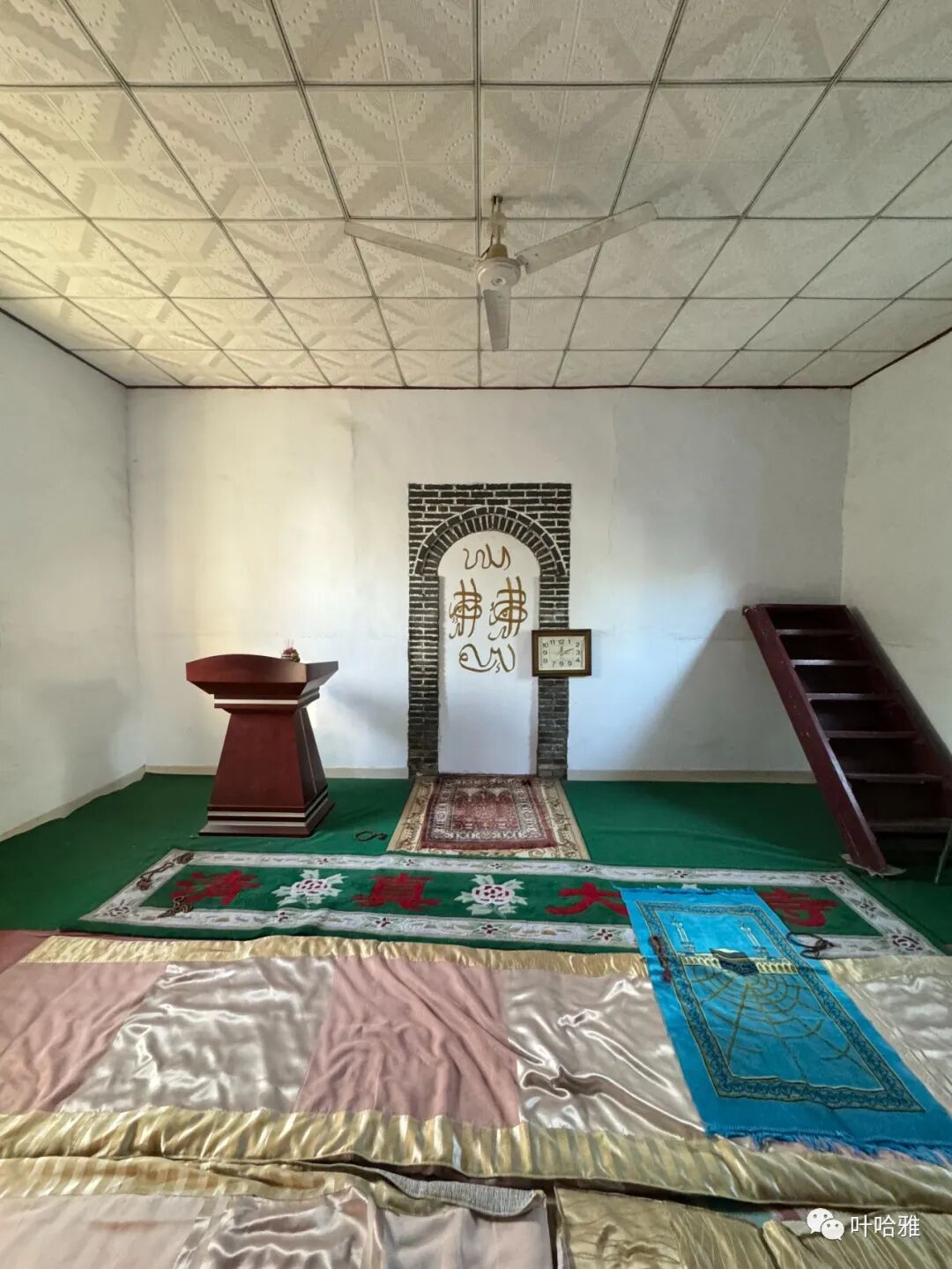
Xihuang Village Mosque
The Xihuang Mosque in the Tianping Subdistrict Office is located south of the village. It was first built during the Ming Dynasty and later expanded several times; the current mosque was rebuilt on the original site.
The mosque is 27.3 meters long and 21.6 meters wide. The main prayer hall is 9.3 meters long and 9 meters wide. The north lecture hall is 9.35 meters long and 6.68 meters wide. The south lecture hall is 8.85 meters long and 4.55 meters wide. The water room is 3.1 meters long and 4.55 meters wide.
Imams including Ma Wanqing, Xu Jiwu, Xu Changpu, Ma Daoguang, and Shi Guorong have successively led religious affairs at the mosque. Imam Liu Cang currently leads the religious affairs. The mosque was once managed by Yang Fuchang and others, but it is now run by a mosque management committee led by director Yang Shunshan.
In 2013, it was named a Harmonious Religious Activity Site by Shandong Province.
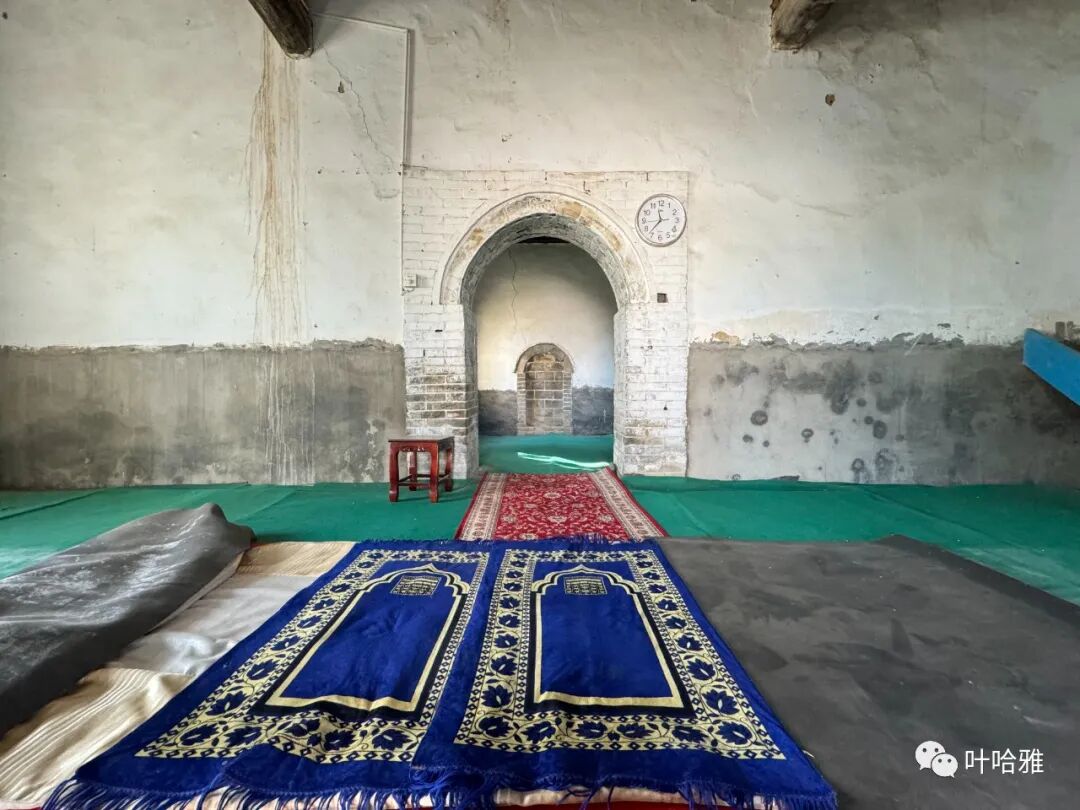
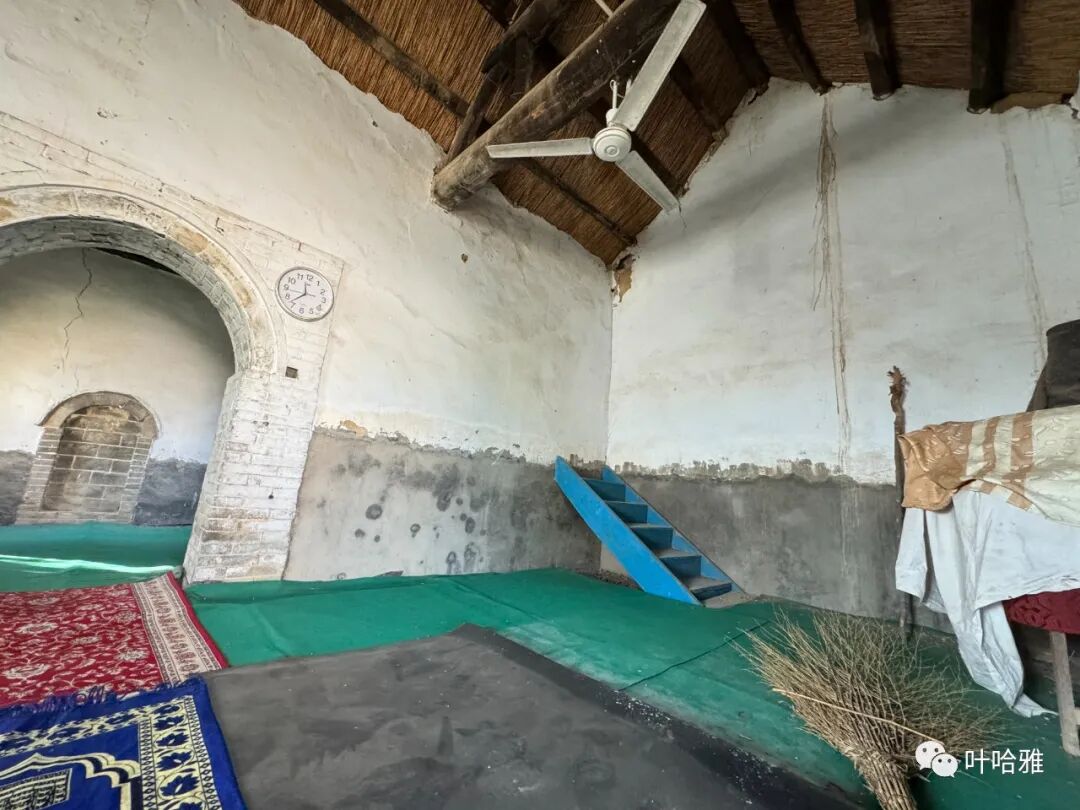
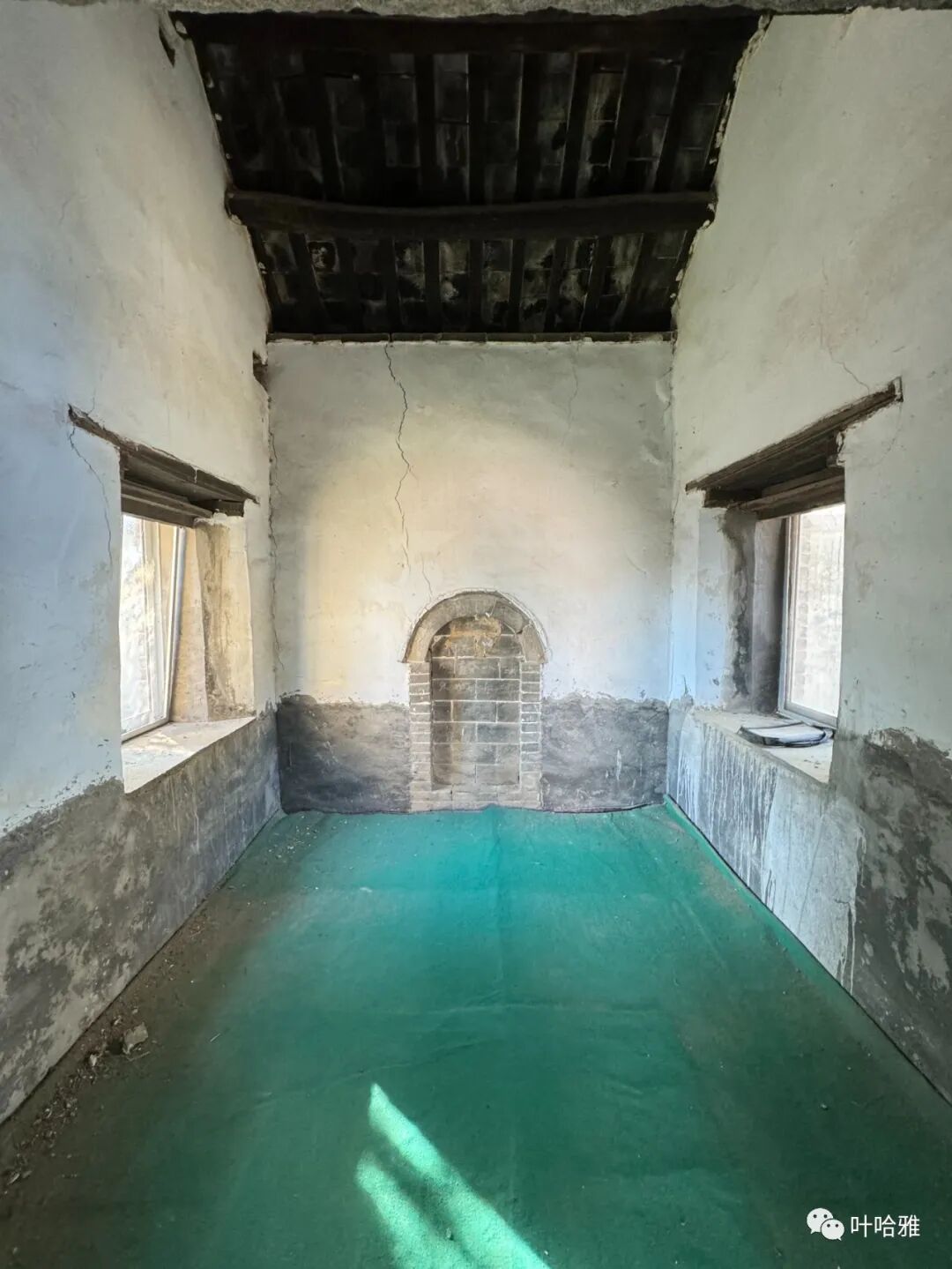
Fajialing Mosque
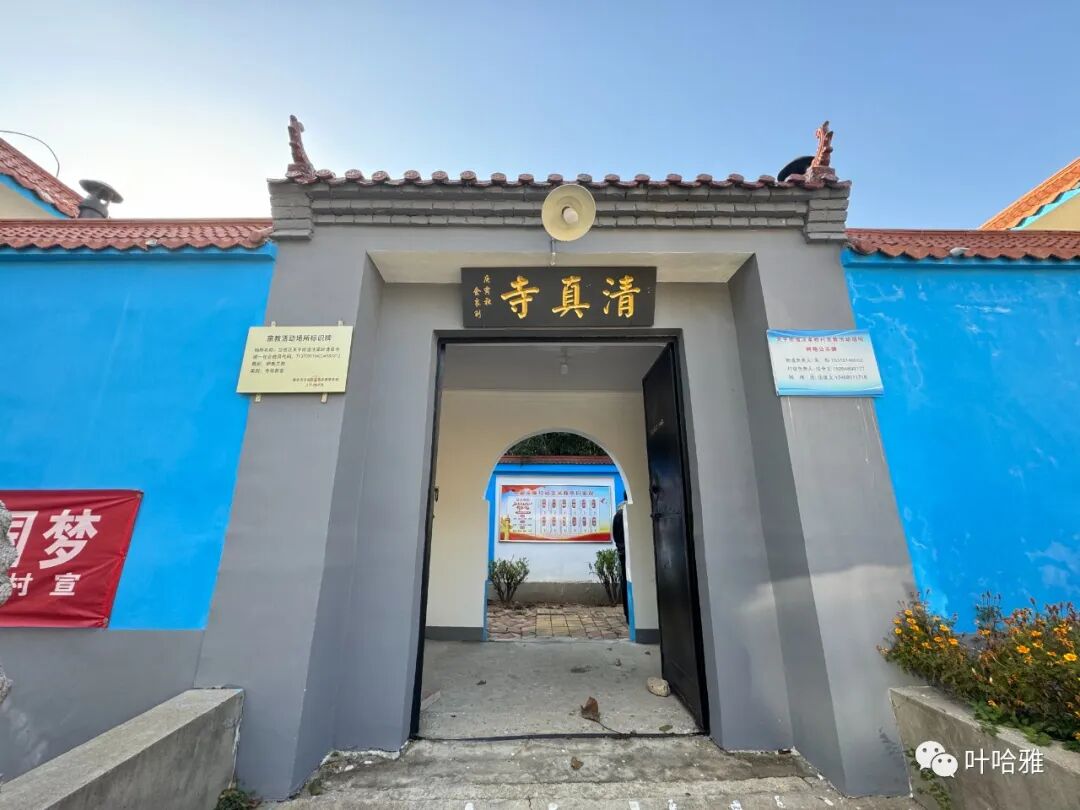
Fajialing Mosque in Tianping Subdistrict is located in the western part of the village. It was built in 1868 during the seventh year of the Tongzhi reign of the Qing Dynasty and has been expanded several times since. The mosque was renovated twice, in 2001 and 2008.
The mosque is a single-courtyard complex measuring 32 meters long and 24 meters wide. The main prayer hall is a single-story building that is 3.8 meters high, 24 meters long, and 8 meters wide. The north lecture hall is 28 meters long and 6 meters wide. The south lecture hall is 28 meters long and 4 meters wide. The water room is 4 meters long and 4 meters wide. There are two stone tablets remaining: the Donation List for the Renovation of Fajialing Mosque in Tianping Subdistrict and the 2002 Ethnic Unity Merit Tablet.
Imams including Wang Changming, Li Shengcai, Ma Yunming, and Yang Yuqing have led the religious affairs of this mosque. Imam Ma Yunming led the renovation of the mosque in 2001. The mosque is managed by a mosque management committee, with Fa Jinyu serving as the director.
In 2010, it was named a Harmonious Religious Activity Site in Shandong Province. In 2014, it received the Model Mosque title from the Tai'an Islamic Association.
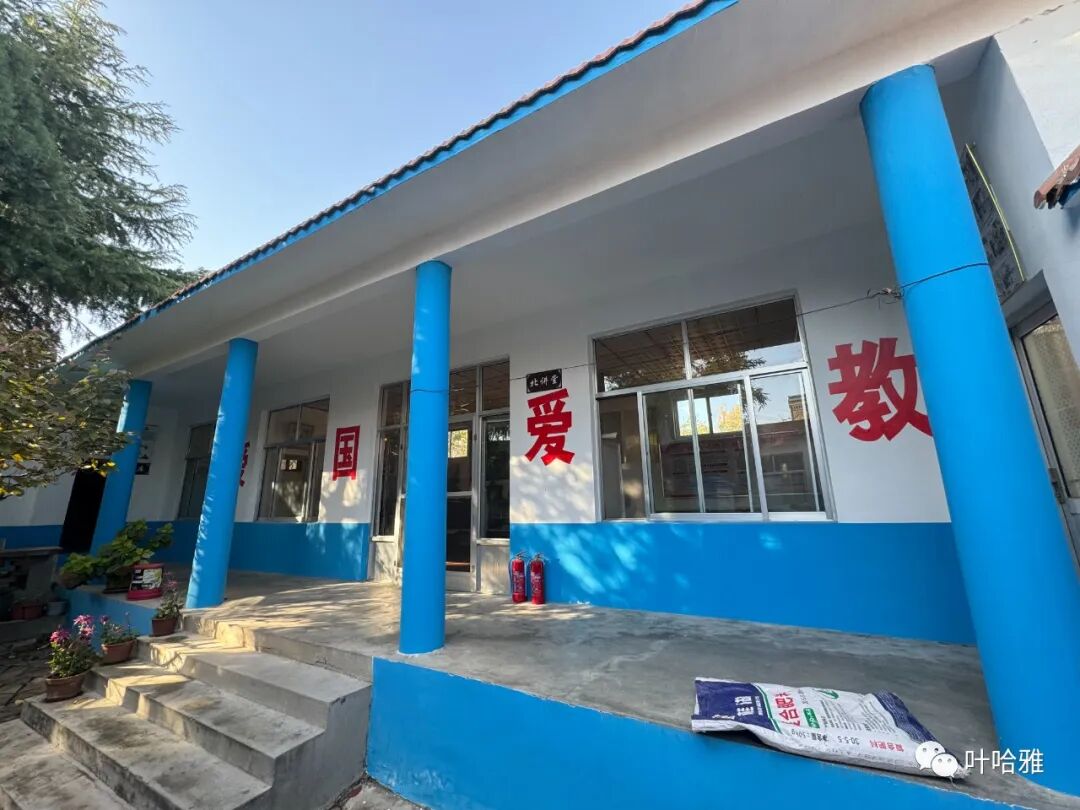
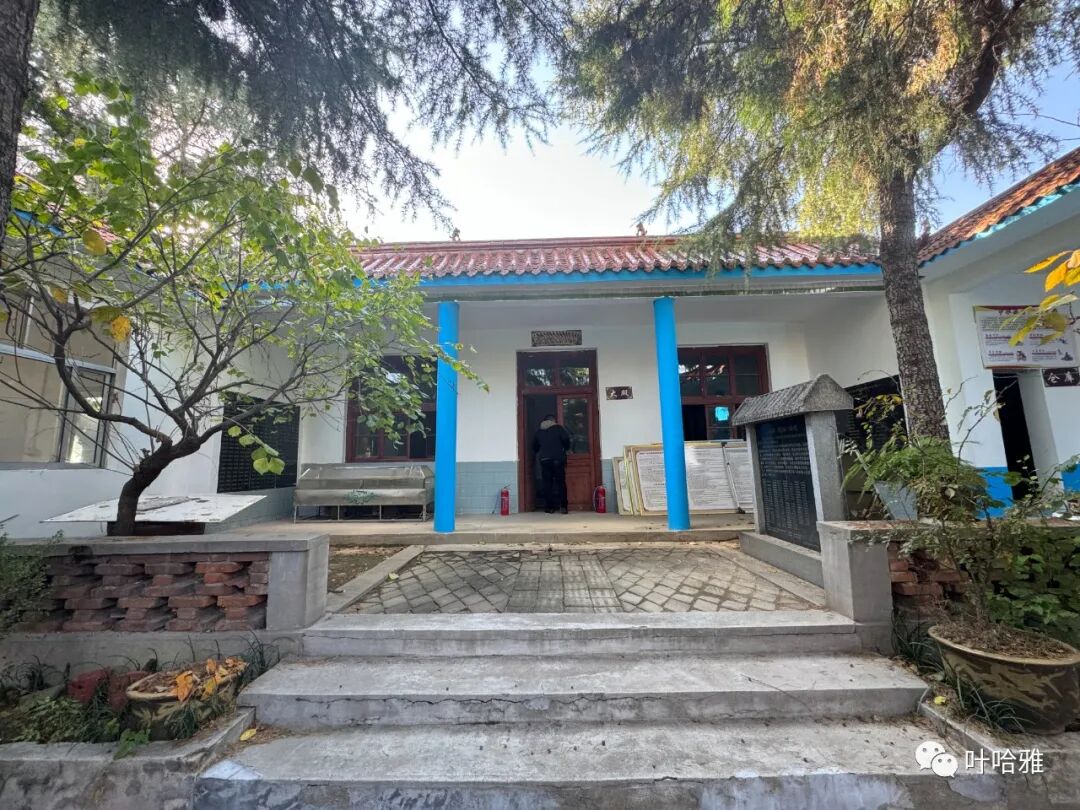
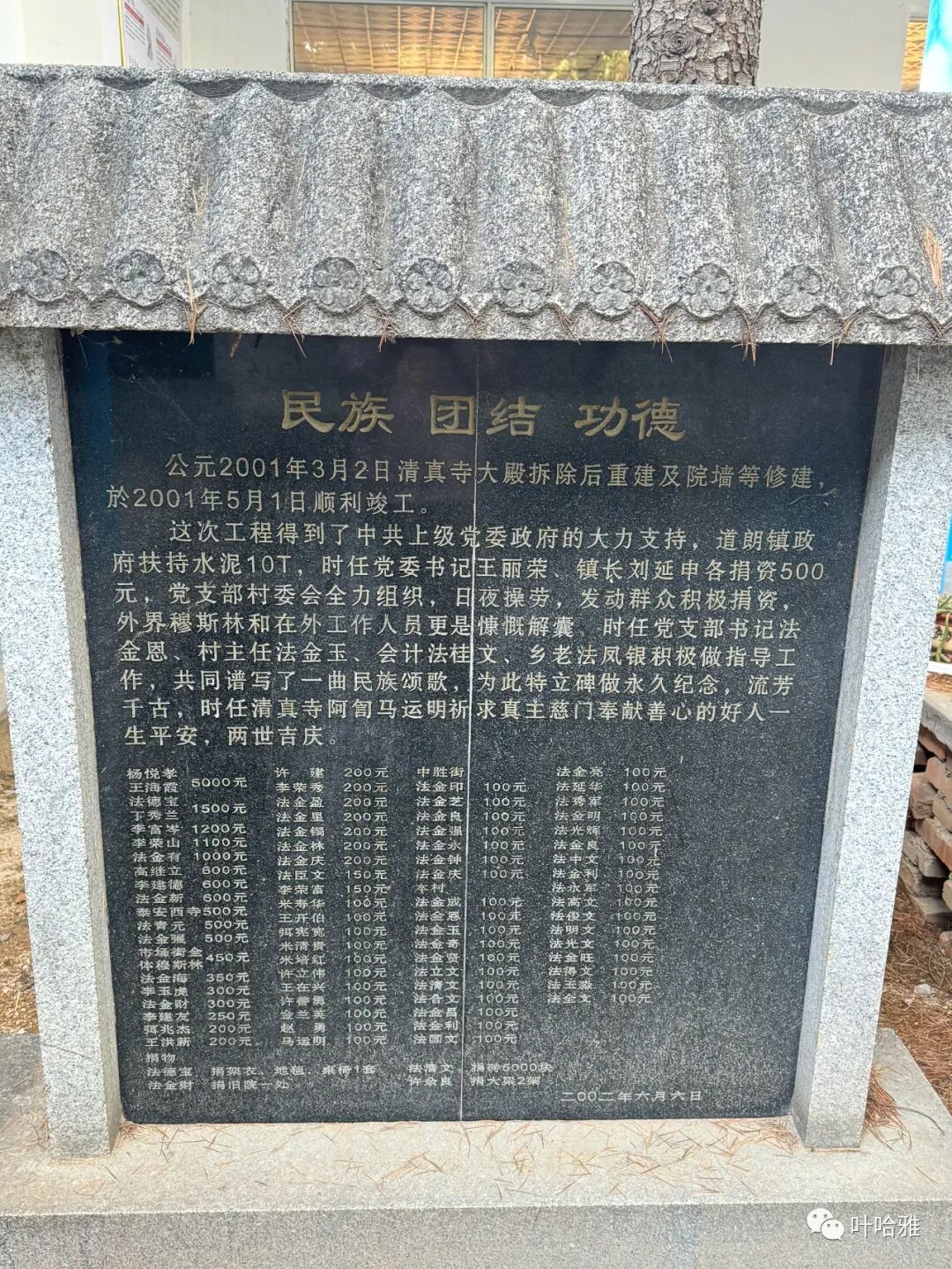
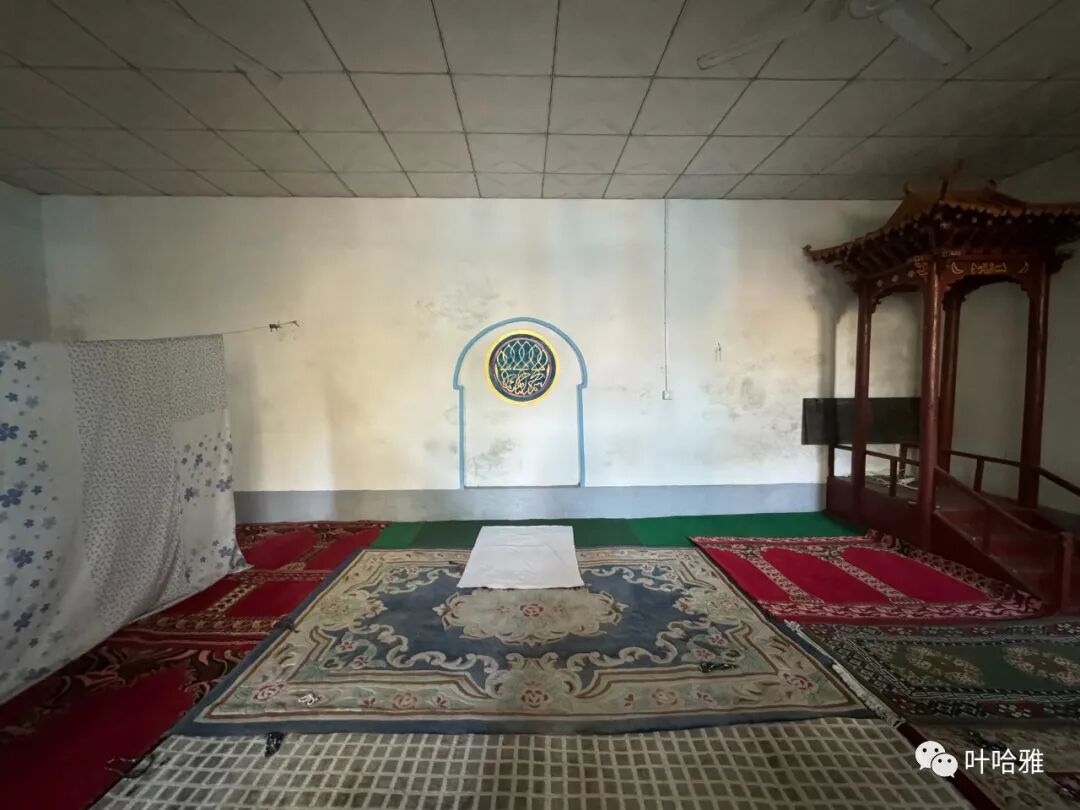
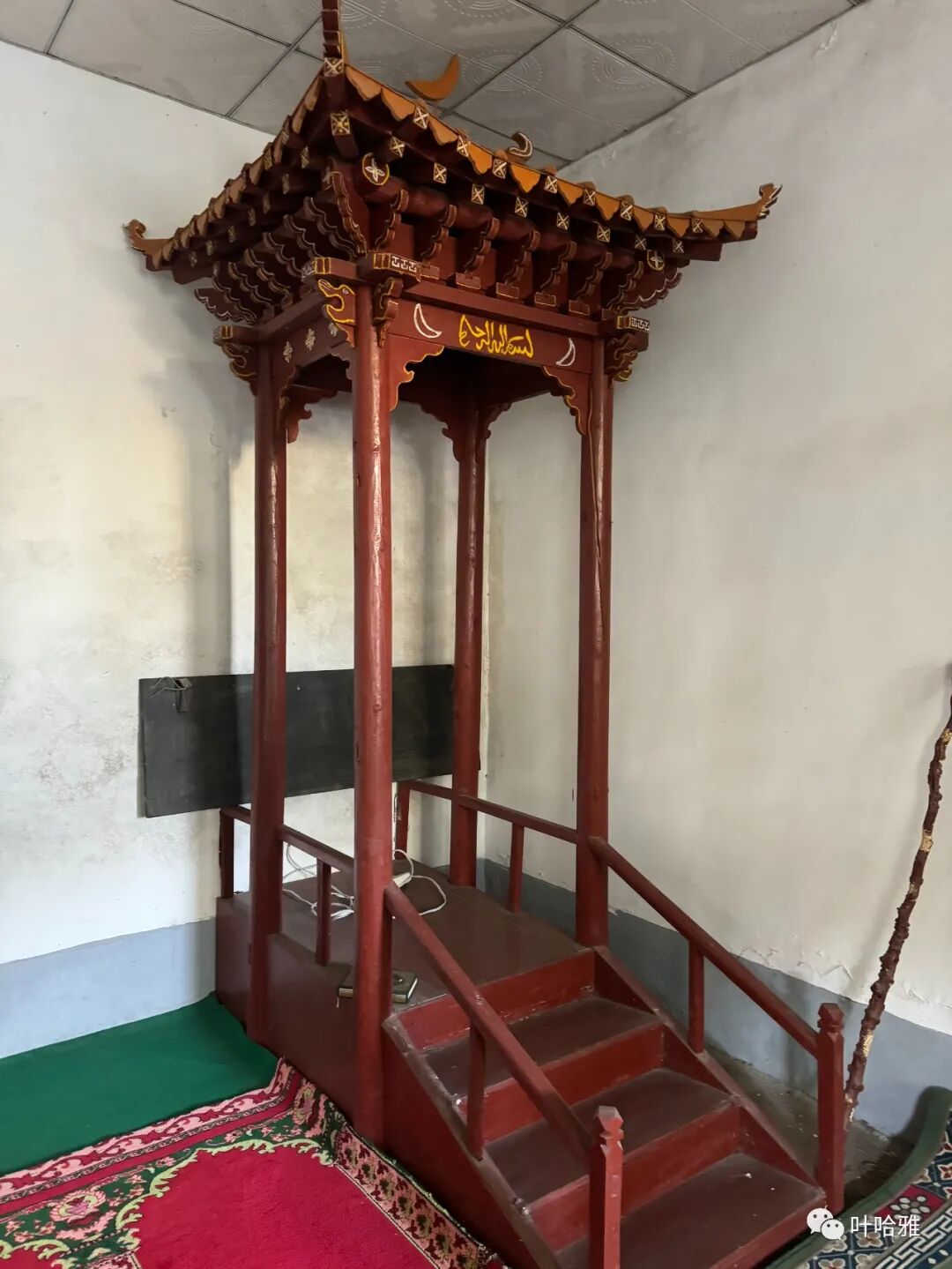
Xiawang Mosque
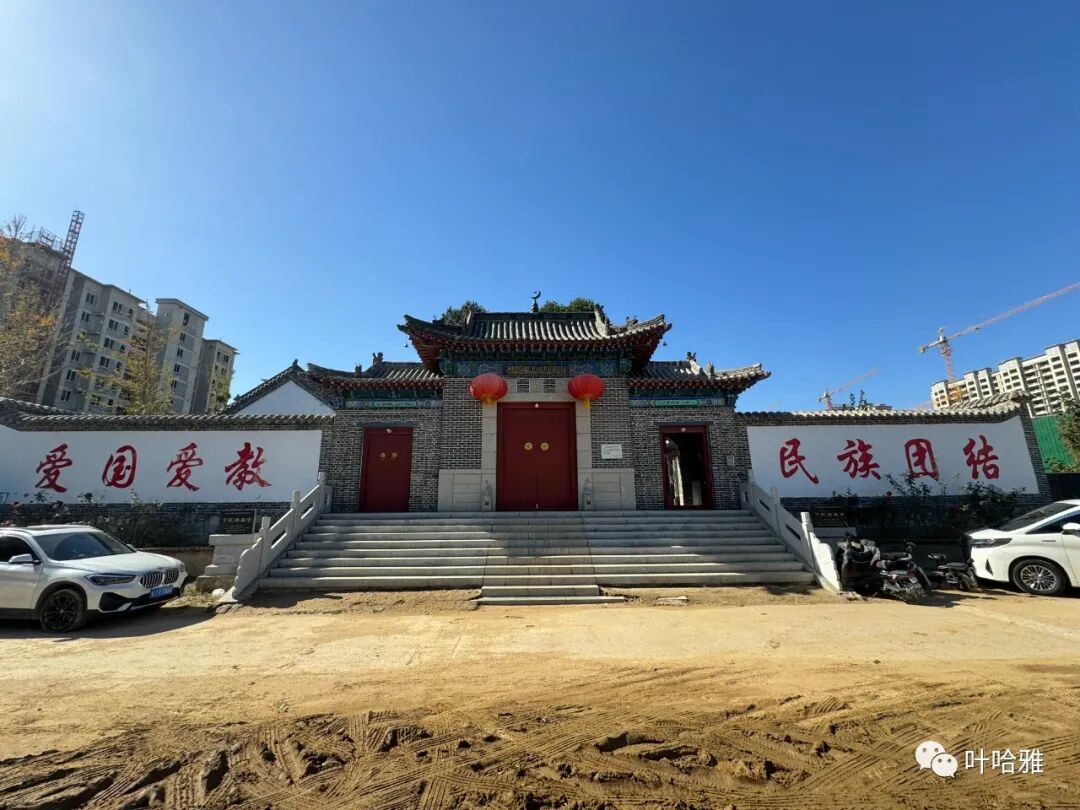
Xiawang Mosque, located in the Zhoudian Subdistrict, sits on the Gaotaizi land in the west of Xiawang Village. It is a famous historic mosque in Tai'an and Shandong Province, with many stone tablets inside recording that the mosque was founded a long time ago. A stone tablet from the sixth year of the Tianqi reign of the Ming Dynasty (1626) shows that Muslims were already donating land and houses to the mosque at that time. Existing stone tablets show that there have been 10 large-scale renovations since the twelfth year of the Yongzheng reign of the Qing Dynasty (1734).
During the Cultural Revolution, the mosque was damaged, and its buildings, many precious artifacts, and historical documents were destroyed. After the Reform and Opening-up policy, ethnic and religious policies were implemented, and under the leadership of the mosque's democratic management committee, three more large-scale renovations took place in 1996, 2007, and 2013.
The mosque has two courtyards and measures 100 meters long by 100 meters wide. The main gate is built in a traditional Chinese style and faces the second gate. The main prayer hall is three bays wide and three bays deep, consisting of a main hall and a front porch (baoxia). Both have gray-tiled hard-mountain roofs (yingshan ding) and stand 30 meters high, 60 meters long, and 30 meters wide. The rear hall is built in the Ming Dynasty style with a hip-and-gable roof (xieshan), bracket sets (dougong), three layers of eaves, and twelve upturned corners. The north and south lecture halls have gray-tiled hard-mountain roofs and front porches. The north lecture hall is 10 meters long and 6 meters wide. The south lecture hall is 7 meters long and 6 meters wide. The water room is 10 meters long and 5 meters wide. Additionally, the mosque's courtyard covers an area of 225 square meters.
To protect the mosque's cultural relics, the Tai'an municipal government officially allocated ten mu of land for the mosque in the 1990s. The mosque established a cultural relic protection group, designating the area inside the walls as a key protection zone, and also marked out general protection areas and building control zones.
The mosque currently holds 26 stone tablets, including the 1626 Land and House Donation Tablet from the sixth year of the Tianqi reign of the Ming Dynasty. The imams who served during the middle and late Qing Dynasty were Li Qin, Bai Jiankui, Yang Taixiang, Wang Yongqing, Yang Yutian, Mi Tian, and Yang Yueqing. Between 1935 and 1949, the imams who served were Zhang Deng'ao, Tang Zhenlin, Bai Shengping, Bai Shengyuan, and Wang Fuxiang. After the founding of the People's Republic of China, the imams who led religious affairs included Wang Xichun, Wang Xilian, Li Jitang, Han Yuhai, and Bai Shenglin.
During the Cultural Revolution, the mosque was forced to close. After the turmoil ended, religious activities resumed, and the mosque was led by imams including Sha Zhenkui, Han Yuhai, Jin Haixue, Mi Baokun, Xu Changpu, Tang Xixing, Ma Ruisha, Wang Xiangkun, and Ma Zhaokui.
In 2006, it was named a Tai'an City Cultural Relics Protection Unit. It received the city-level Civilized Mosque title in 2008, was named a provincial-level Harmonious Religious Activity Venue in 2009, won the Daiyue District Model Mosque title in 2010, and was designated a Provincial Cultural Relics Protection Unit in 2013.
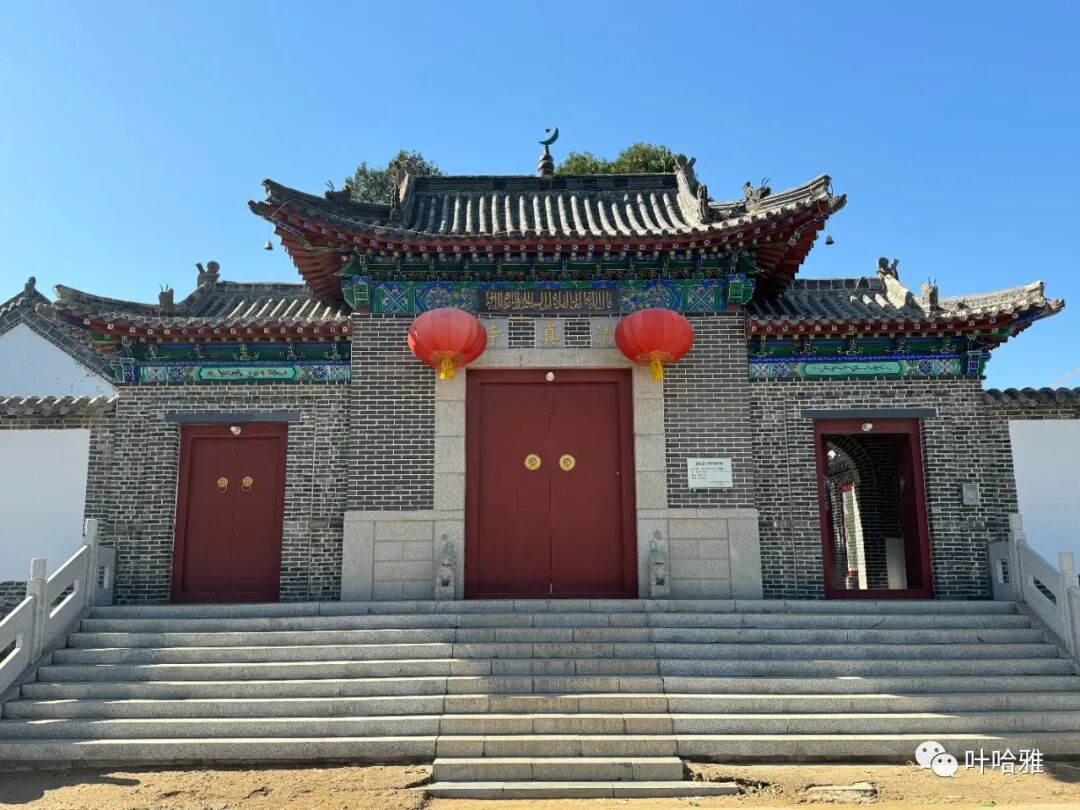
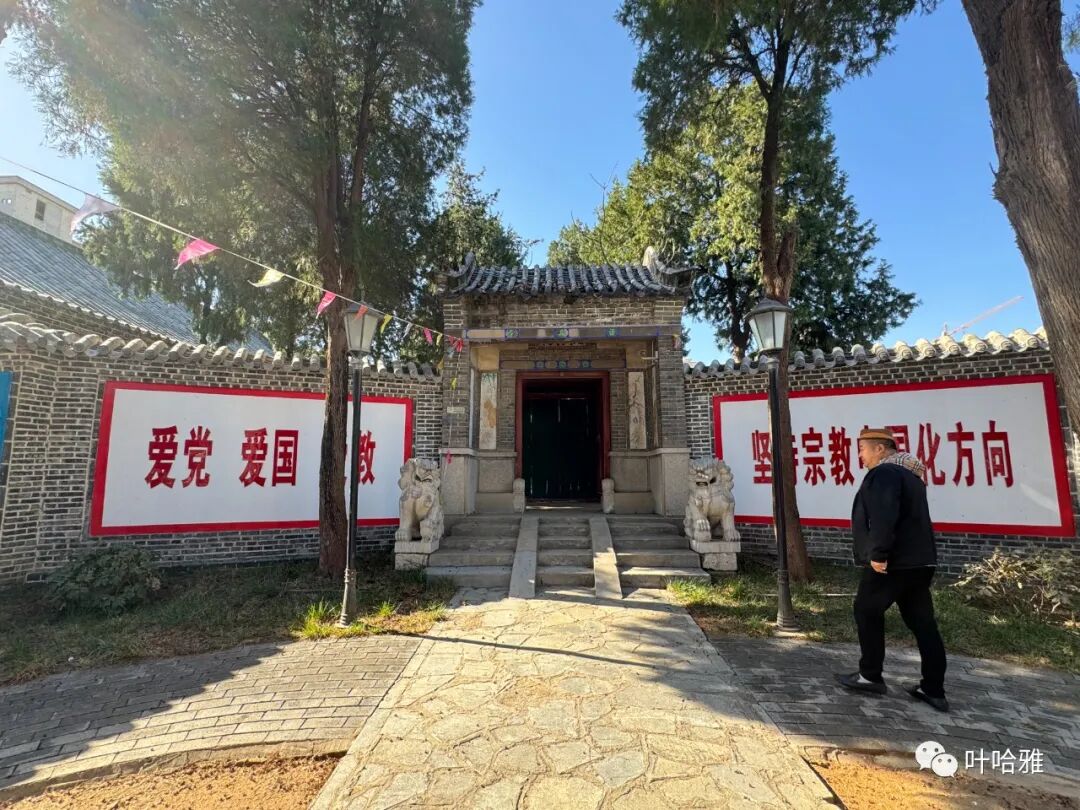
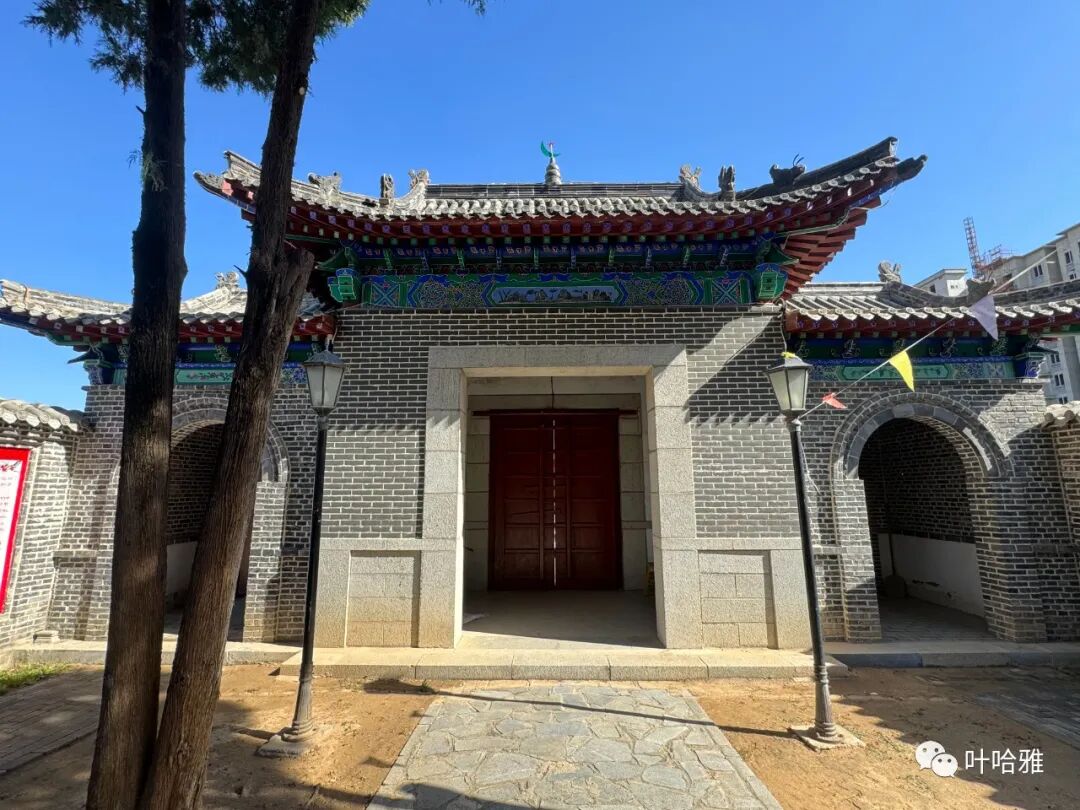
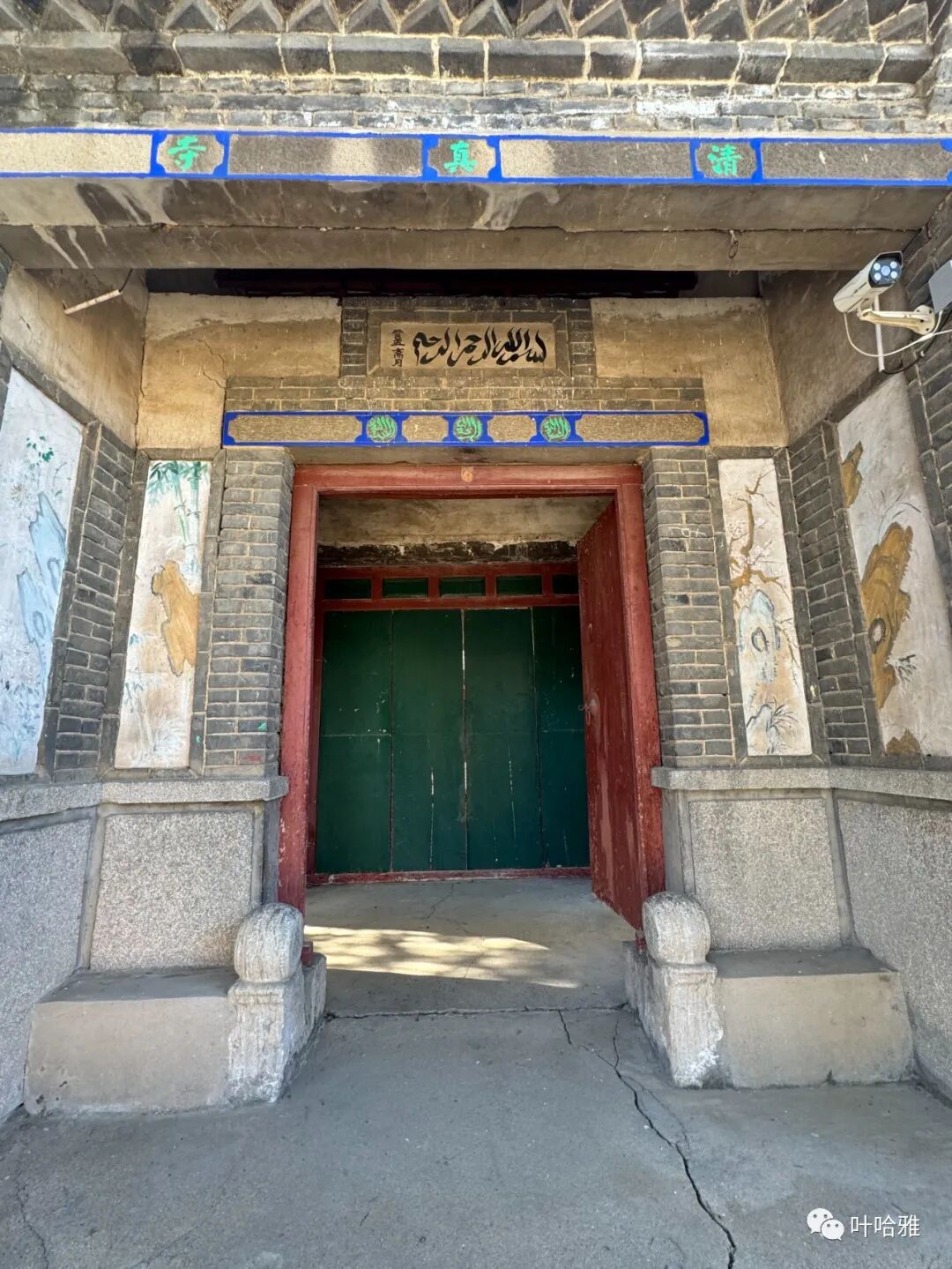
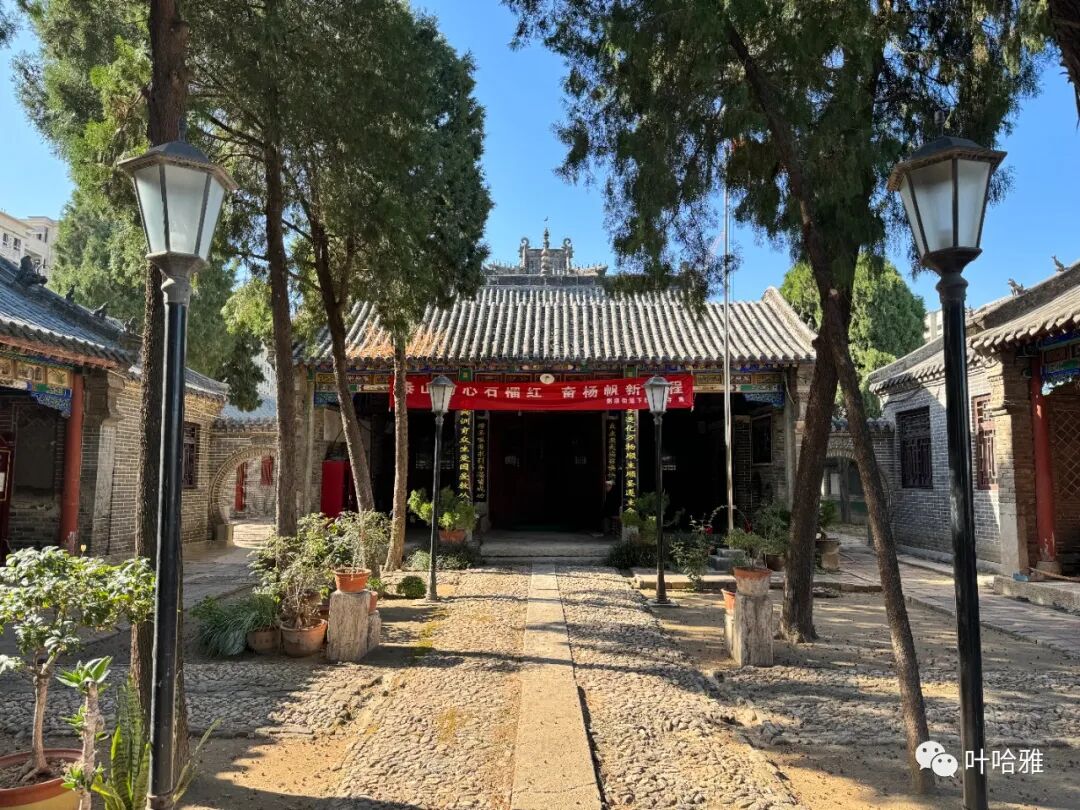
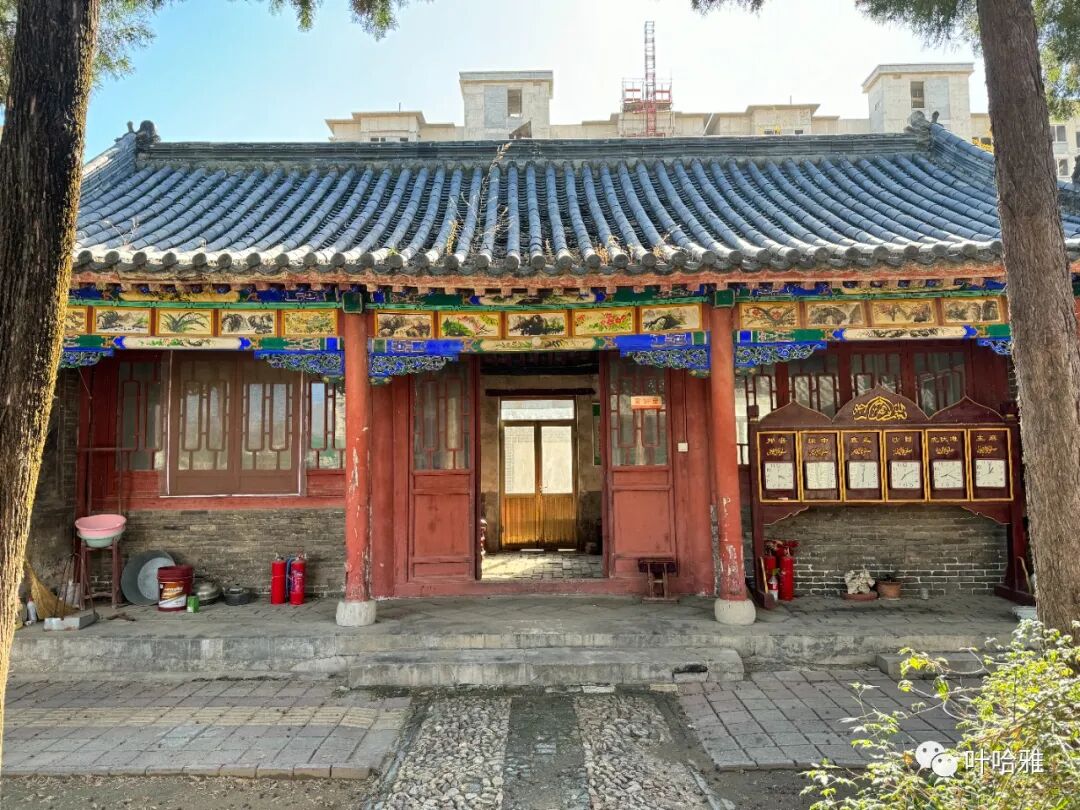
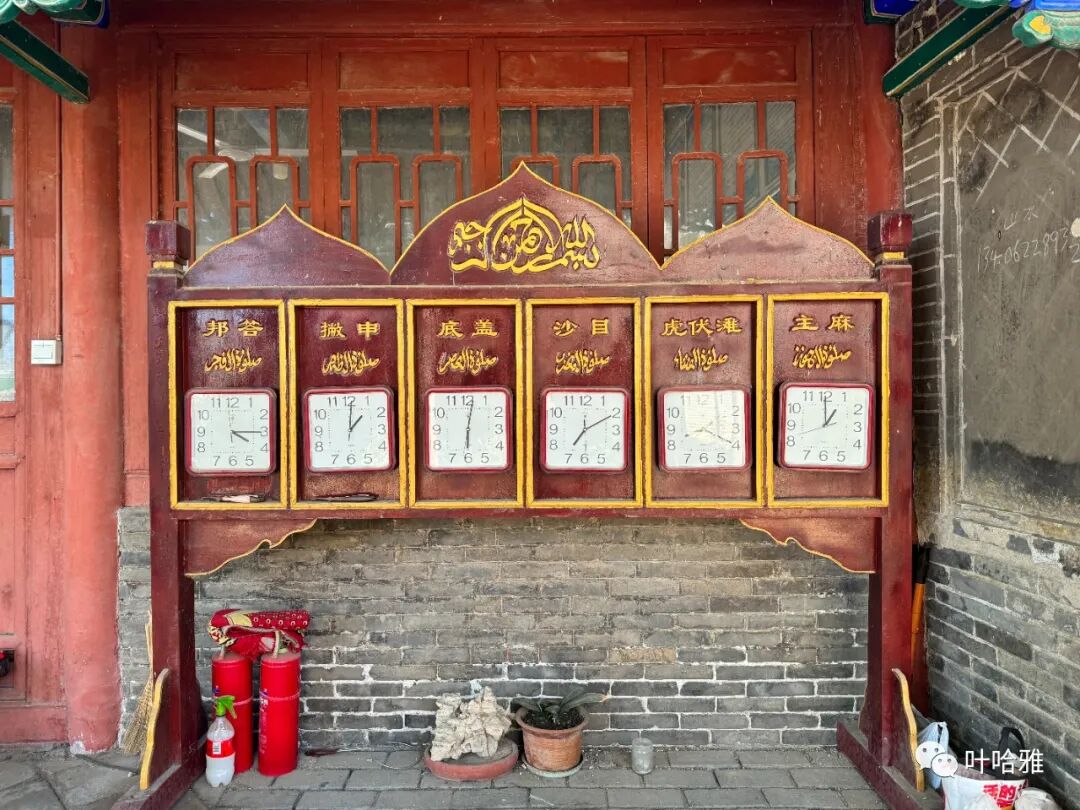
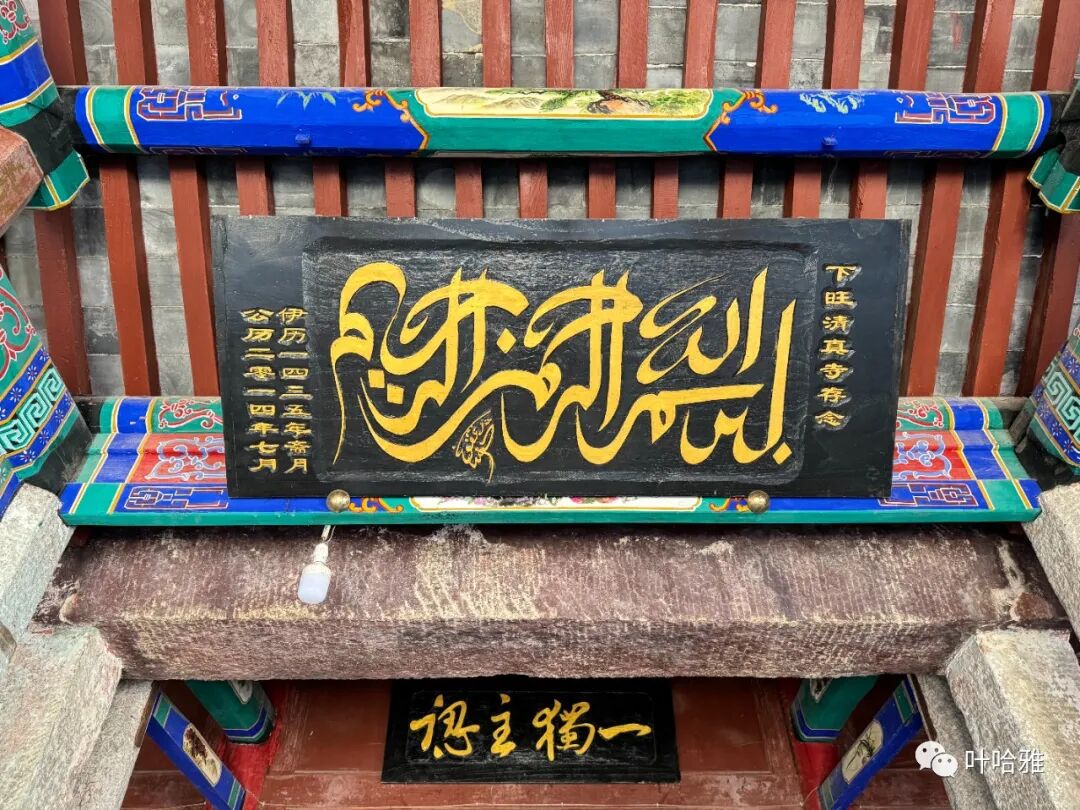
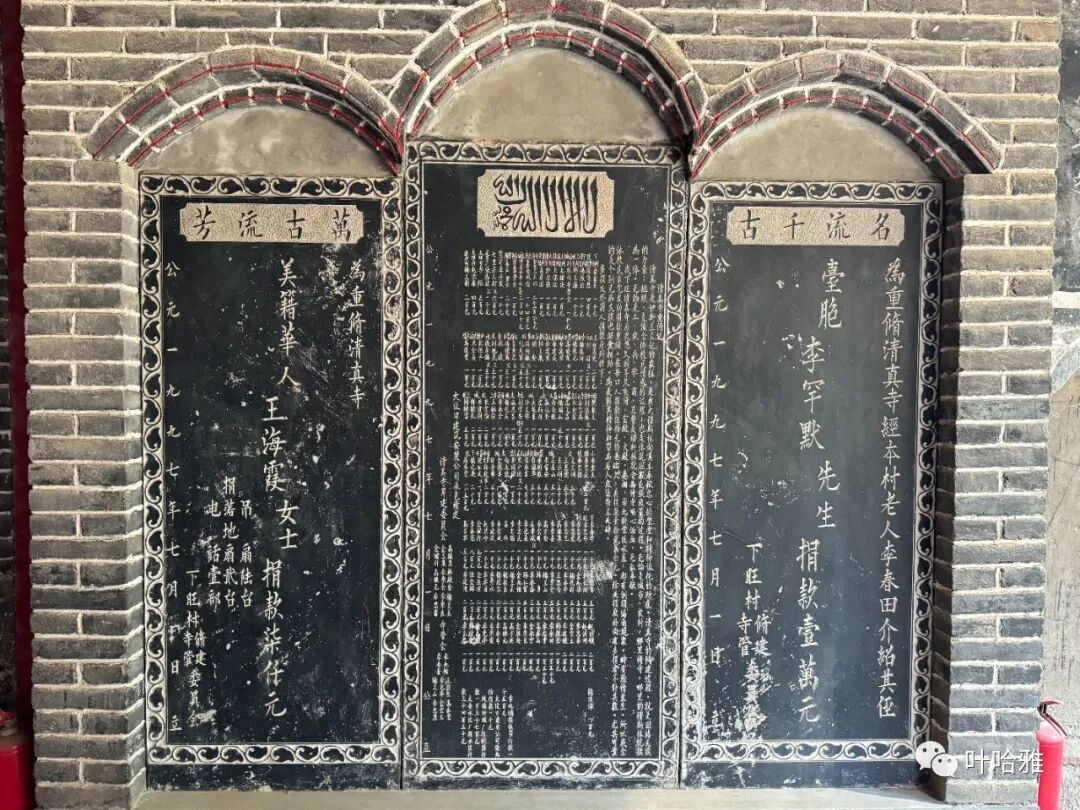
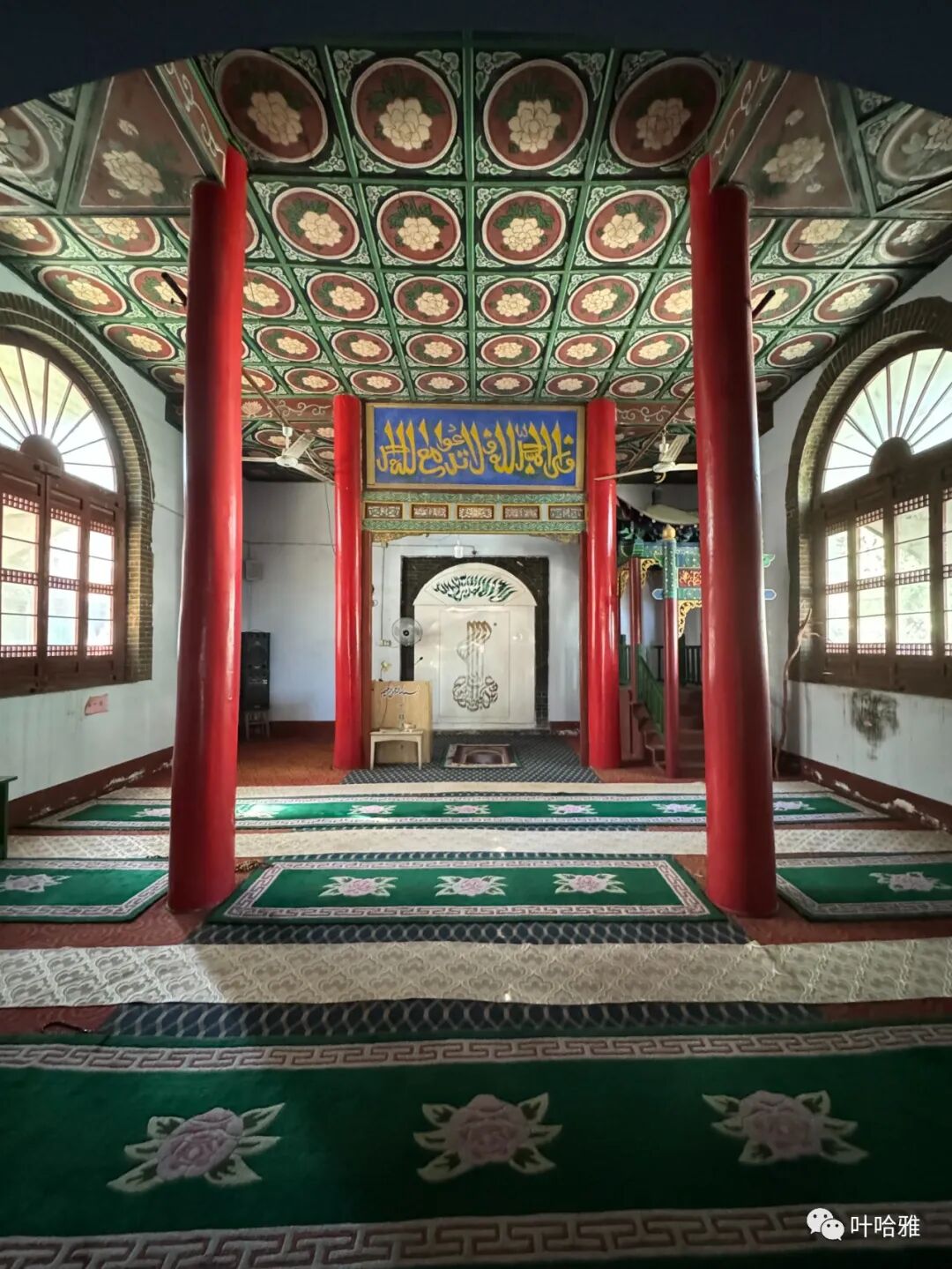
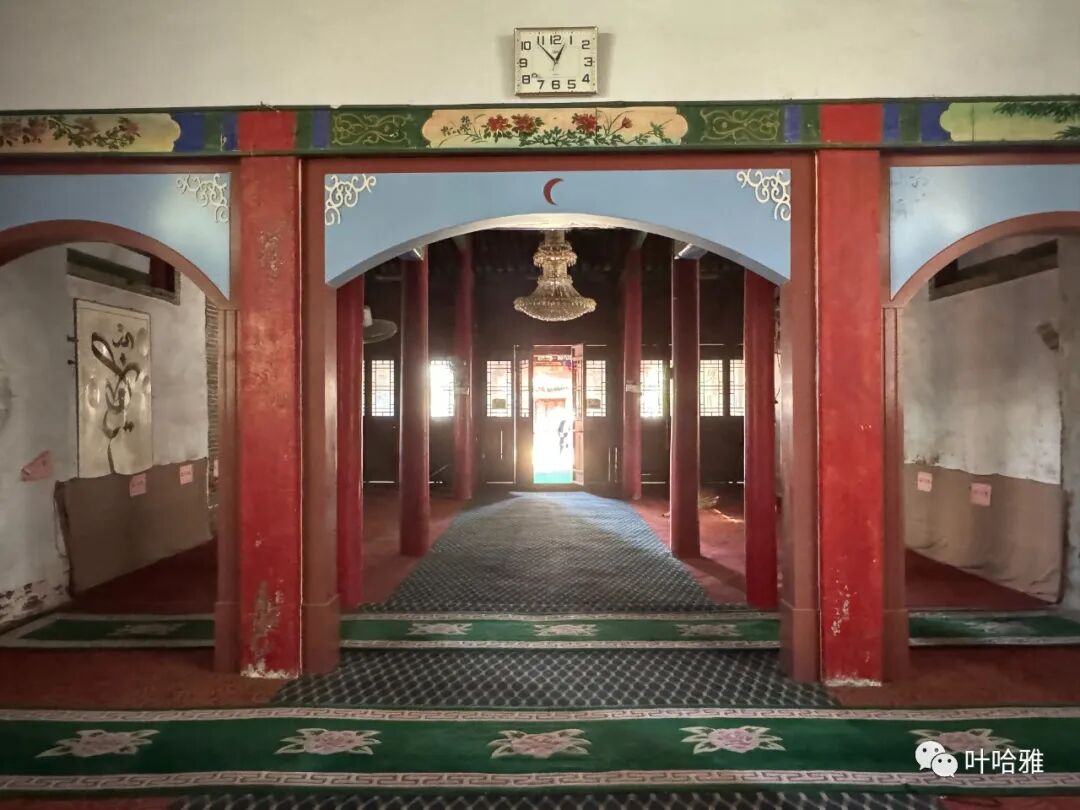
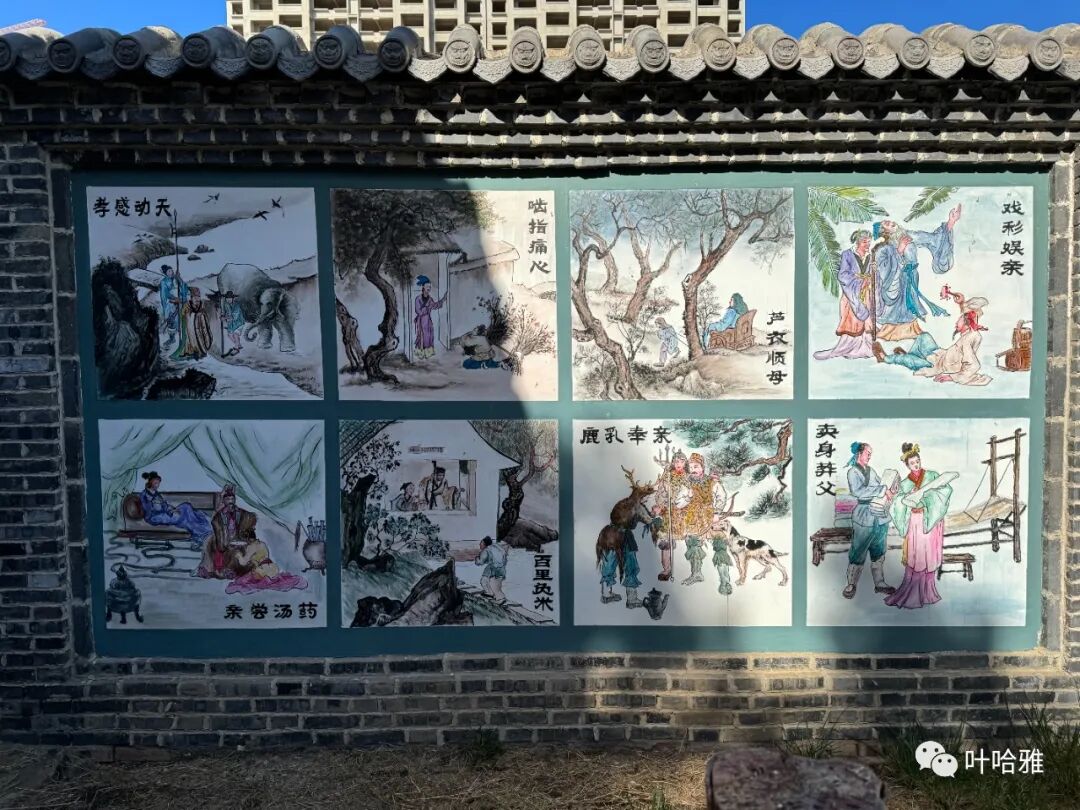
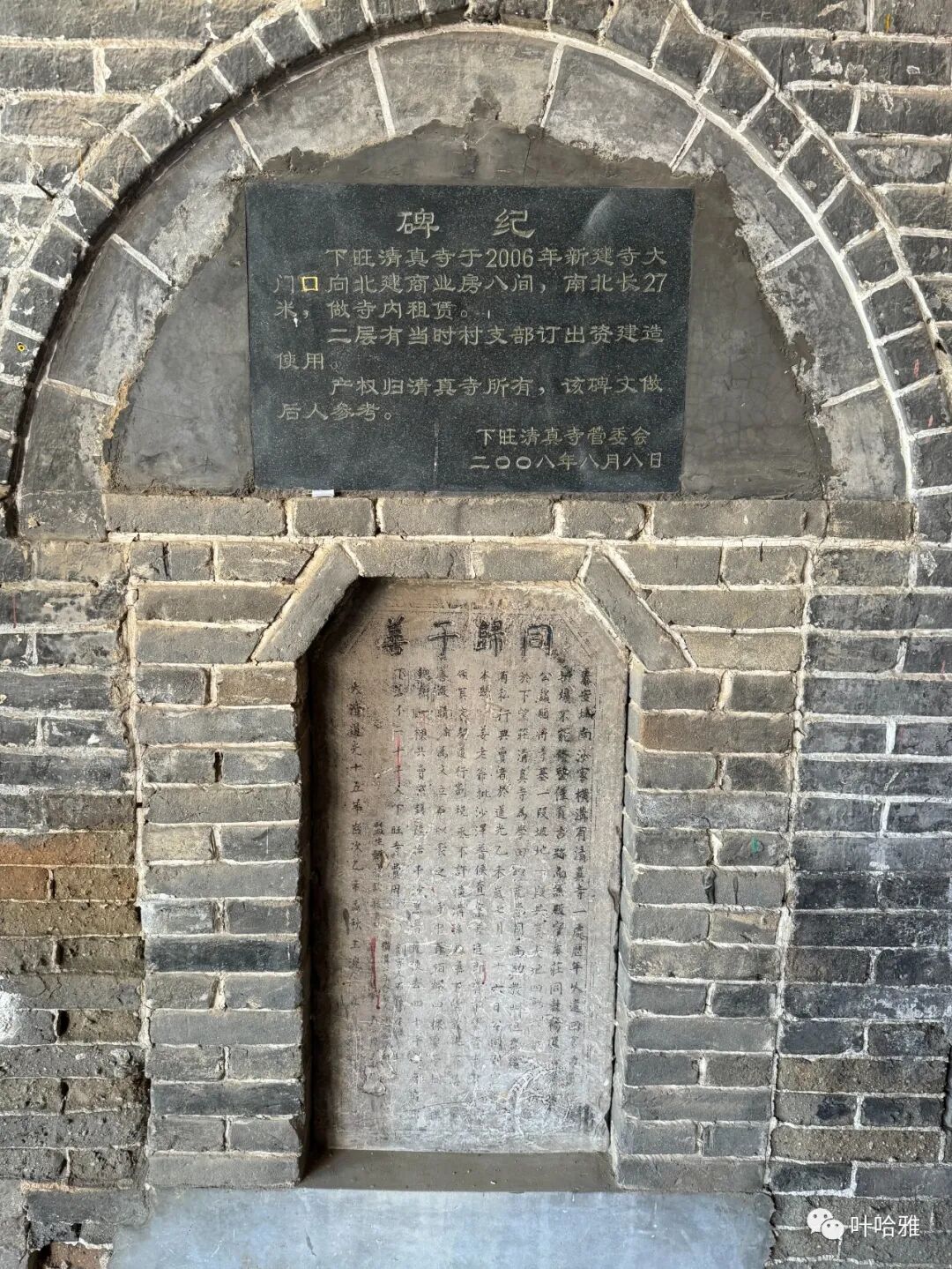
Shangwang Mosque
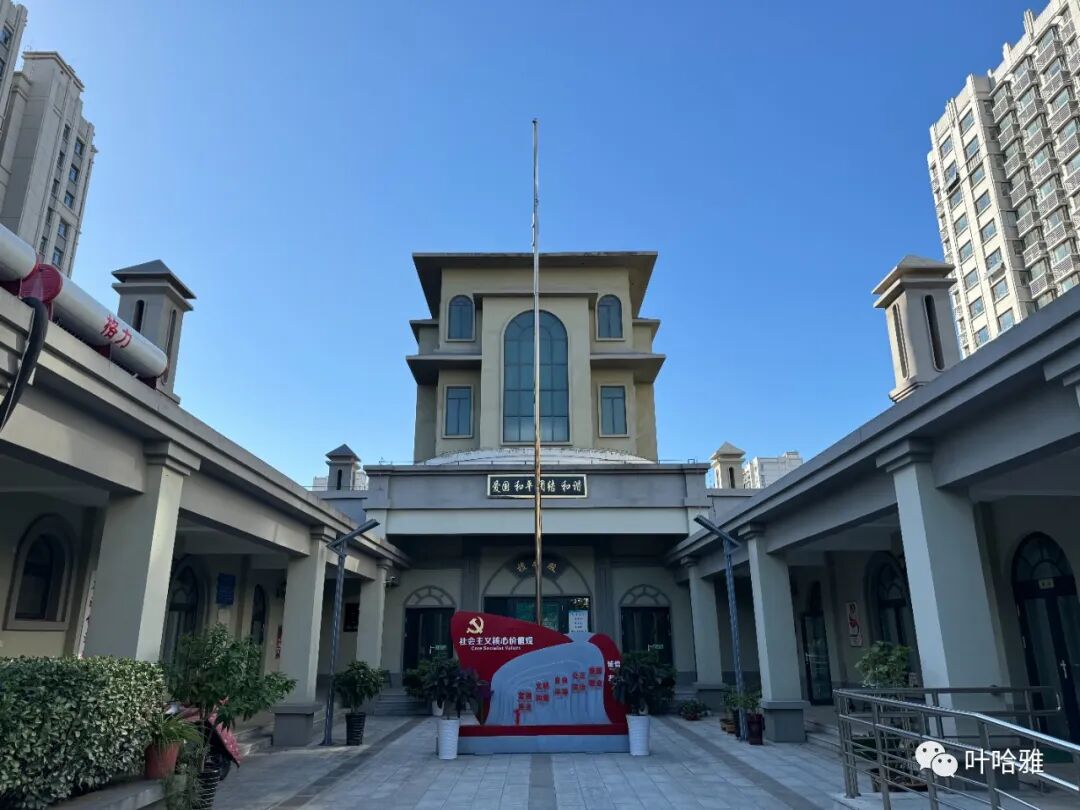
Shangwang Mosque in the Zhoudian Subdistrict Office is located in the southwest of the village. Built in 2008, it was once relocated to the north side of Lingshan Street due to the construction of the street. The mosque covers an area of over 1,000 square meters (50 meters long and 24 meters wide). The main prayer hall is 24 meters long and 24 meters wide. The northern lecture hall is 12 meters long and 6 meters wide. The south lecture hall is 12 meters long and 6 meters wide. The water room is 6 meters long and 6 meters wide.
The mosque was led by imams Han Yuhai and Ma Daoguang. It is managed by the mosque's democratic management committee, with Han Xiaohui serving as director. The mosque keeps a set of handwritten Quran manuscripts, which once won a city-level award.
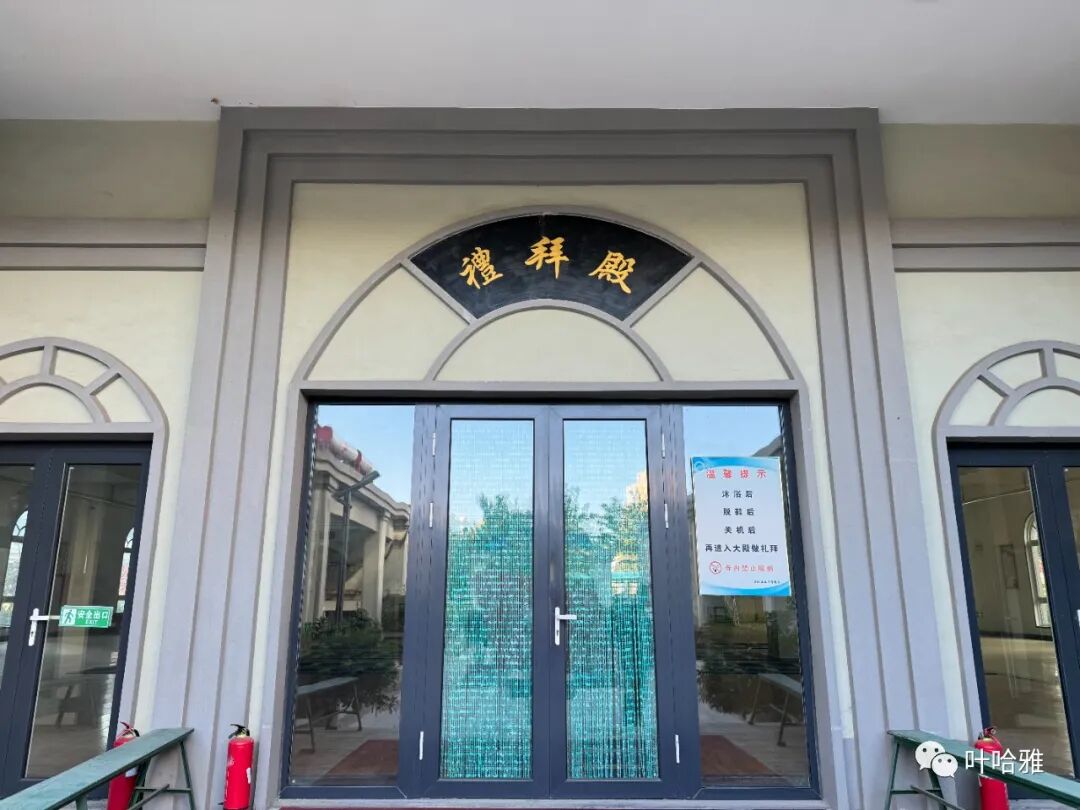
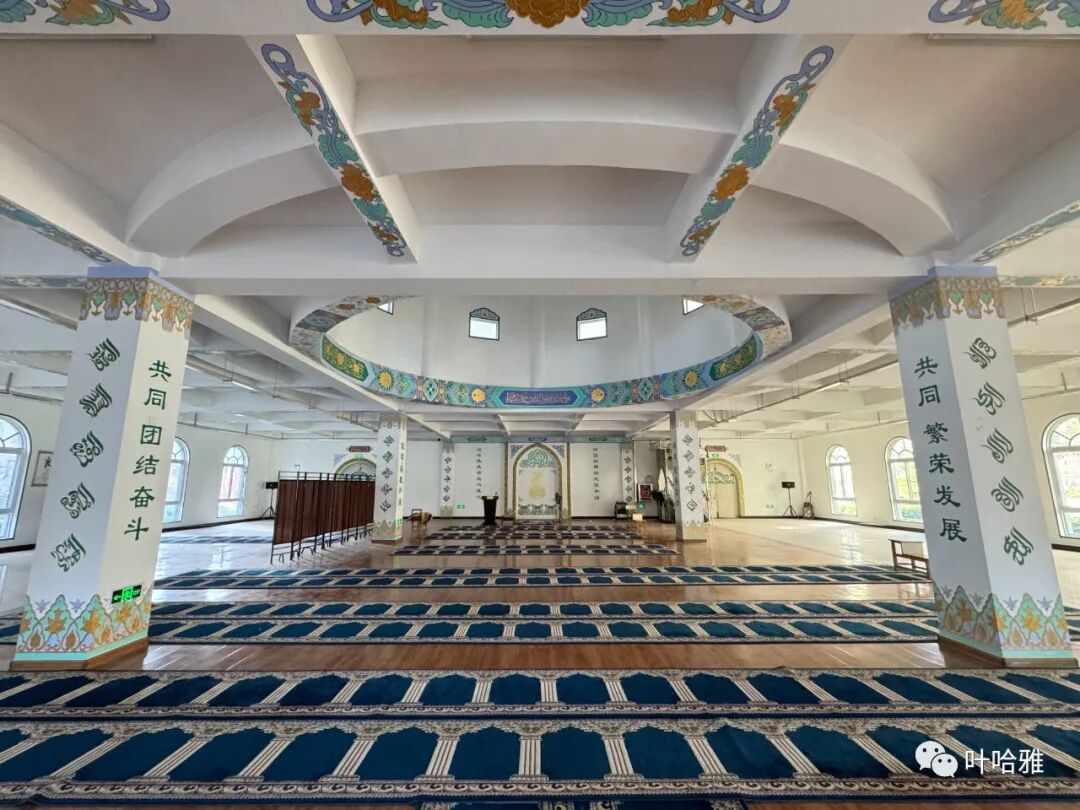
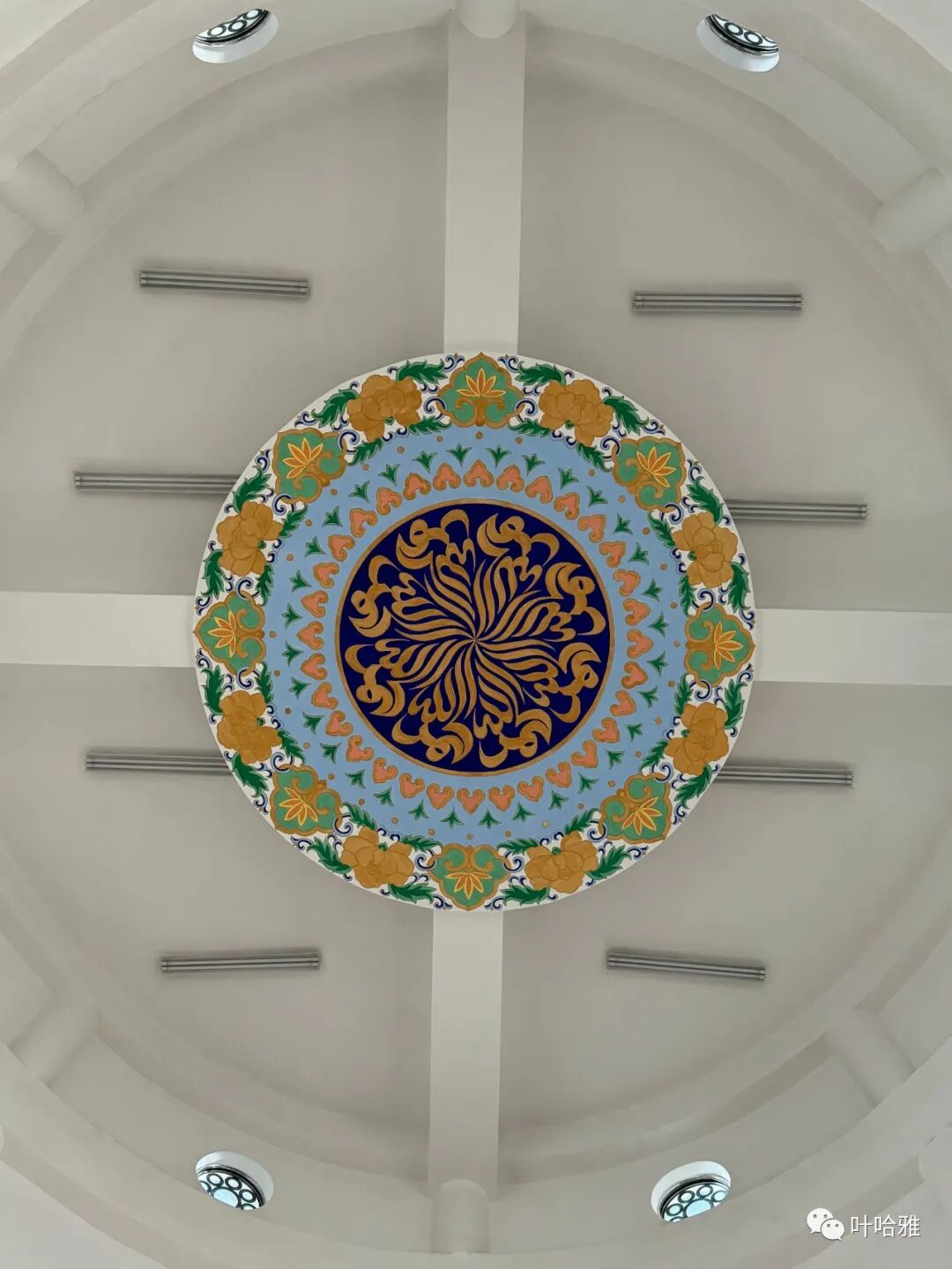
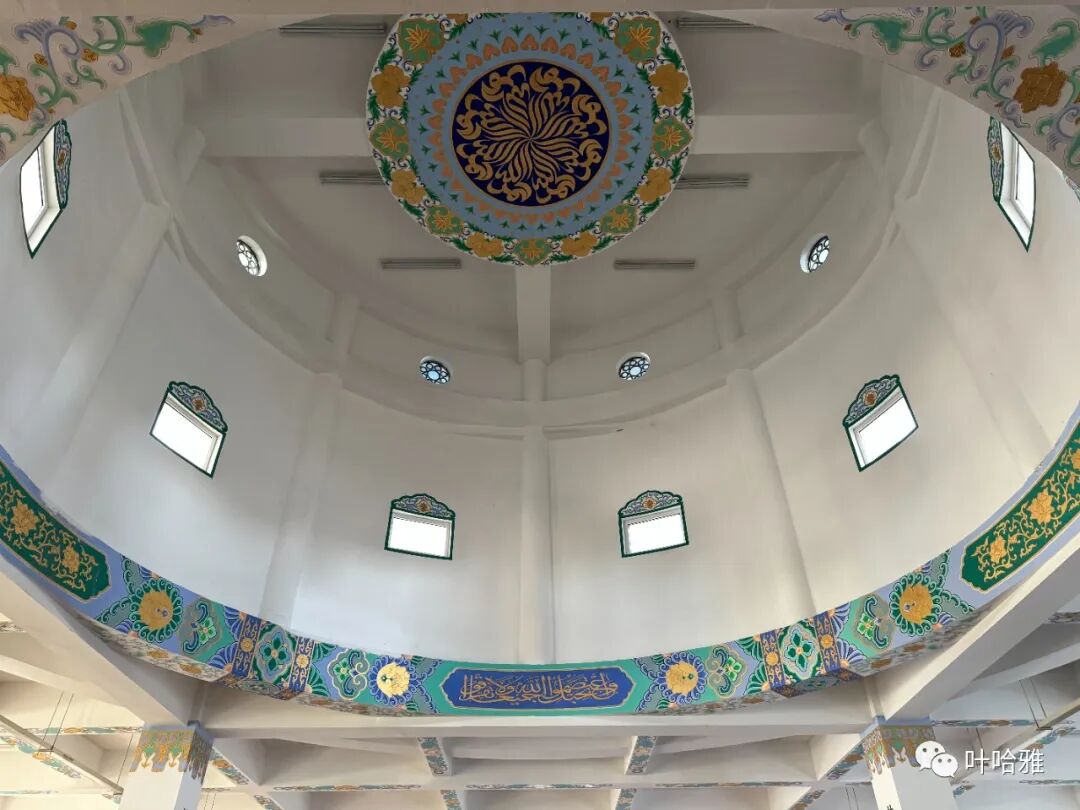
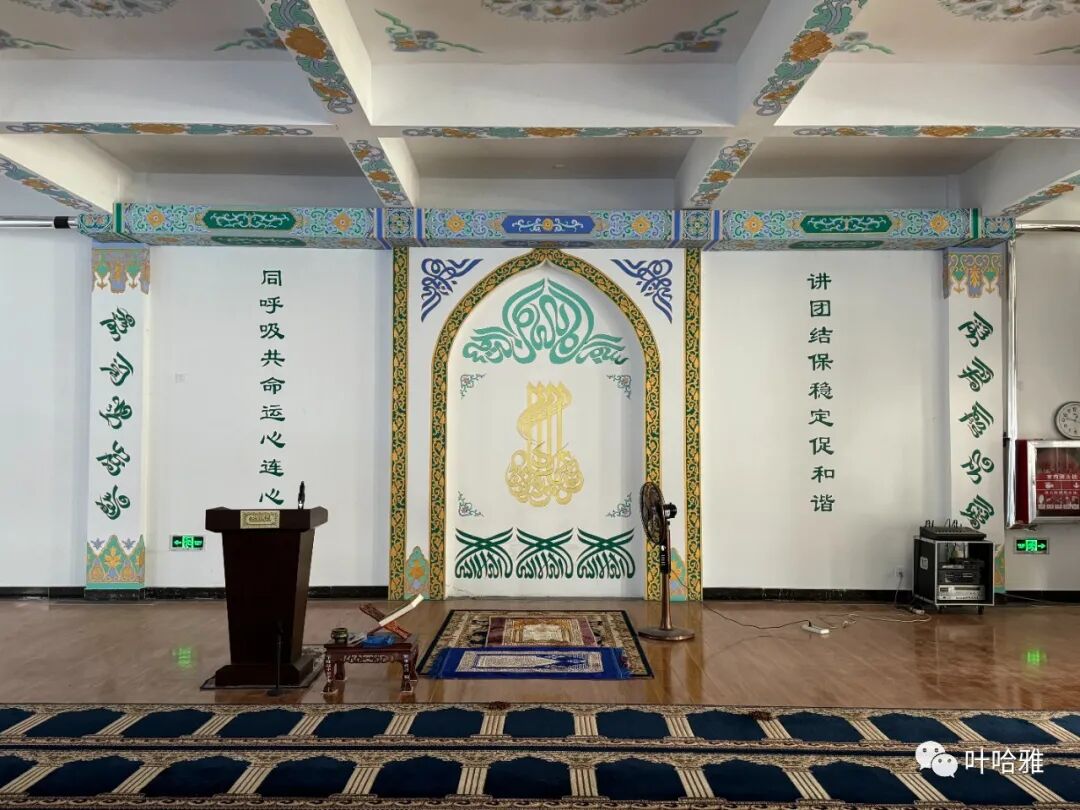
Ershilibu Mosque
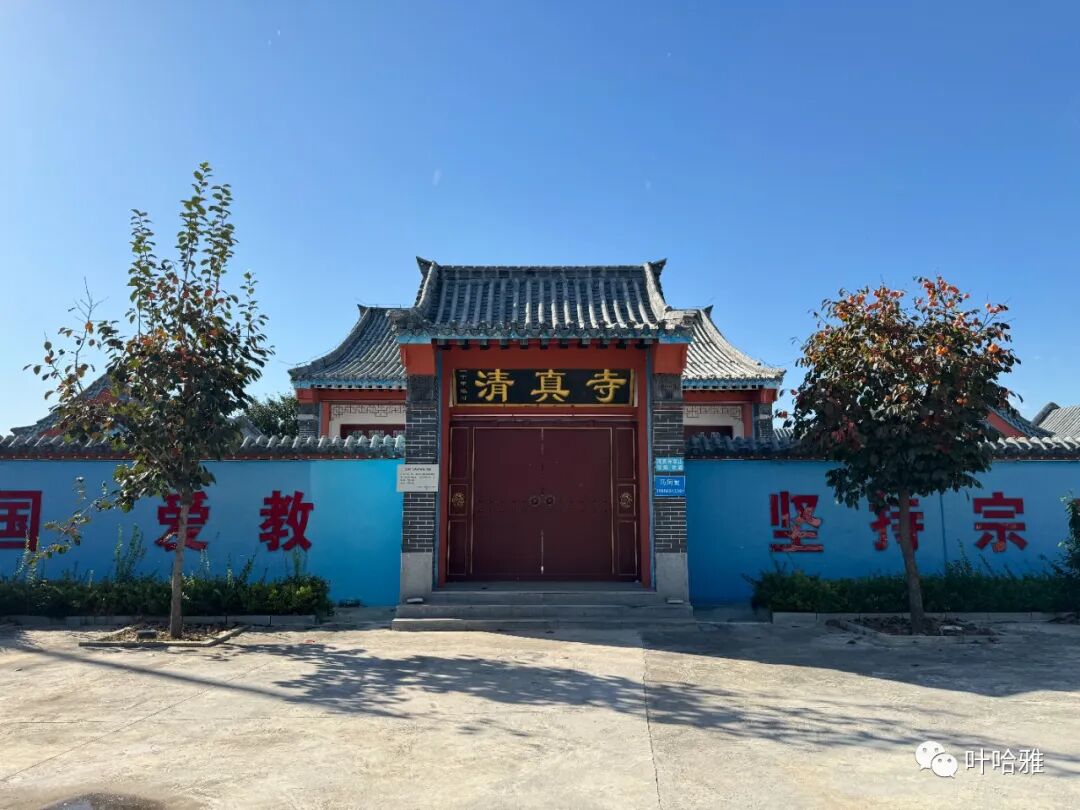
Ershilibu Mosque in the Zhoudian sub-district office is located in the west of the village, on the east bank of Tianping Lake. It was first built around the end of the Ming Dynasty and has been expanded and repaired ever since. In 1960, it was moved and rebuilt for the first time due to the construction of the Dahe Reservoir. In 2002, it was moved and rebuilt for the second time to build the Mount Tai pumped-storage power station, and it has been used ever since.
The mosque covers an area of over 1,200 square meters (36 meters long and 35 meters wide). The main hall has four pillars and nine rooms, standing 10 meters high, 12 meters long, and 12 meters wide. The north lecture hall is 10 meters long and 6 meters wide. The south lecture hall is 10 meters long and 6 meters wide. The water house is 10 meters long and 6 meters wide.
China Mosque Travel Guide: Mojiang Talang Mosque, Jahriyya Heritage and Hui Muslim Village
Articles • yusuf908 posted the article • 0 comments • 196 views • 2026-05-22 21:33
Summary: This China mosque travel guide visits Mojiang Talang Mosque in Yunnan, covering Jahriyya history, the Zhou school, Talang Hui Muslim village, Ma Shunqing gongbei, local halal food, and the mosque community.
Mojiang Talang Mosque—the Zhou Branch of the Jahriyya (Zheherenye) Order in Yunnan is presented here as a firsthand travel account in clear English, beginning with this scene: On the way south from Dali to Jianshui, I passed through Talang Village in Mojiang County. The account keeps its focus on Halal Travel, Yiwu Food, Mosque Travel while preserving the names, places, food, and historical details from the Chinese source.
On the way south from Dali to Jianshui, I passed through Talang Village in Mojiang County. I knew before coming that there was a Jahriyya mosque here. In the 46th year of the Qianlong reign of the Qing Dynasty (1781), after the Jahriyya founder Ma Mingxin was killed by the Qing court, his eldest son Ma Shunqing and some followers were exiled to Talang Village in Mojiang, Yunnan. They were rescued by Ma Mingxin's student Ma Xuecheng and settled in Talang Village.
During the Xianfeng and Tongzhi reigns, the Du Wenxiu uprising failed and the Hui Muslims of Talang Village fled. It was not until 1936 that the Hui Muslims gradually returned and rebuilt the Talang Mosque.
The Talang Mosque used to have a dome, but after renovations, a hexagonal roof was added. It looks like the hexagonal cap often worn by Jahriyya followers. However, this hexagonal cap is not exclusive to the Jahriyya; other menhuan and even the Gedimu have a tradition of wearing it. The renovation of this mosque involved quite a struggle.
A couplet written by Shagou Taoye Ma Yuanzhang:
First line: 'Clouds shine on the child who replaces the brother, completing the work of the infant.'
Second line: 'Talang assists Pingliang and stands as a place of Jahriyya victory.'
After the prayer (namaz), the imam was reciting the Quran alone in the main hall. We chatted for a bit and I learned he is from Gansu and had just returned from visiting graves in his hometown.
The mosque is built on a mountain, and there is a Hui Muslim village below. There are not many Hui Muslims in Mojiang, and they are mostly concentrated in Talang Village.
Halal Ark Restaurant
There is a halal restaurant below the mosque run by locals that does not sell alcohol. We had lunch there and chatted with the owner, which is when I learned that most people here are followers of the 'Yunnan Zhou School'.
The Zhou School is what outsiders call them. They revere an elder from Yunnan named Ma Yuzhu, whose original surname was Zhou. It is said he is the son of the eighth-generation Jahriyya leader Ma Zhenwu, who was fostered by a Han Chinese family named Zhou in Yunnan and changed his name to Ma Yuzhu after growing up.
Ma Yuzhu grew up in Yunnan and now lives in Kunming. He is over eighty and used to be a pediatrician. When he began to publicly claim he was a descendant of the Jahriyya founder, his identity was never recognized by the current leaders of the Jahriyya in the Northwest. We can learn this from a conversation between a researcher and an imam from the Jahriyya order in Gansu, as recorded in the research report Investigation of Menhuan in Linxia, Gansu by the Institute of World Religions at the Chinese Academy of Social Sciences.
The restaurant owner was surprised that I, a Beijinger, knew about the Yunnan Zhou school. I first heard of this school about ten years ago when a website called Shengchuan Zhendao was based in Yunnan and posted many of Zhou's works in the name of Sufism. I shared my doubts about the Zhou school, but the owner had a different take. They knew that people in the Northwest did not recognize the Yunnan Zhou school, but he told me stories about the old man from Yunnan.
He mentioned that several of the old man's prophecies came true. For example, a few years ago, two brothers in the village asked the old man about their jobs. The old man told them not to learn how to drive. The brothers didn't listen and went to work at an auto repair shop. One day, they got into a car accident and both passed away (returned to Allah) on the same day. They were buried in the cemetery behind the Talang Mosque.
Another story is that in the last century, some social events led to all the imams being arrested. With no imams around, there was no one to give Islamic names to newborns. But before this happened, the old man from Yunnan had handwritten dozens of names for unborn babies. This allowed children to receive their names even during the time when there were no imams. The villagers see these events as signs of the old man's spiritual power.
The owner is a follower who has followed the old man from Yunnan for over 30 years. He is now the director of the Talang Mosque management committee. He told me that the people living around the mosque are mostly followers of the old man. I asked about rumors from the outside world regarding the old man, such as claims that he would go into seclusion and stop naming a successor. The owner denied this, and the imam of Talang Mosque also denied it.
Walking further up to the top of the mountain, you can see a cemetery overgrown with weeds. A small path on the right leads to the graves of Han and Hani people. You can see crosses on some of their tombstones because many Hani people are Christians.
There is also the tomb of the martyr Xiong Chaochun.
Another wider and cleaner path leads to the Hui Muslim cemetery.
The gongbei (a domed tomb for a Sufi saint) of Ma Shunqing, the eldest son of Ma Mingxin, is here. I saw the gate was locked, and since I needed to reach Jianshui before dark, I prepared to leave. On the way back, I met the imam of Talang Mosque. He said he could contact the person with the key to open it, but I declined and drove onto the highway.
Something interesting happened. Half an hour after getting on the highway, my wife realized she had left her bag at the mosque gate. We had to turn back. I thought to myself that maybe it was meant to be and I wasn't supposed to leave just yet. After getting the bag, I asked the imam for the key to the gongbei. He told me to call the gatekeeper myself. When I called and the person learned I was from Beijing, he quickly came over to open the gate of the Talang gongbei.
This return trip brought new discoveries. The person guarding the gongbei is the only villager who follows the traditional Jahriyya order and does not associate with the Yunnan Zhou school. Because of this, the Zhou school cannot get the key to hold religious gatherings (a'ermaili) there. The Zhou school once wanted to build another gongbei next to it, but the local government rejected the proposal.
Ma Yuzhu had been here before, but he only got the doors opened because he was accompanied by the relevant authorities. I listened to the caretaker share stories about his family guarding this gongbei for generations. He told me about many unpleasant events that happened here, which made me feel quite sad. He said I was likely the second person from Beijing to visit. Zhang Chengzhi had been here, but he did not say who he was, so the caretaker did not recognize him.
To tell the truth, a DNA test would be enough to figure out what is real and what is fake. But I suspect things are not that simple. Even if the test results did not match, some people would still find a way to rationalize them with irrational reasons. It is hard to change someone's mind through logic between different sects or religions. Once you realize this, you stop trying to convince anyone. People often change their minds in a split second.
My short trip to Mojiang Talang turned out to be a very special side story of my Yunnan journey, and it is worth writing a travelogue about. I am not a member of the Jahriyya, but over the years, I have visited almost all the important Jahriyya gongbei across China. I have even been a guest in the homes of elders in Ningxia. I know the Jahriyya keep a low profile now and do not want to get involved in trouble. I have no intention of starting any disputes, so some things must stay in my heart. view all
Summary: This China mosque travel guide visits Mojiang Talang Mosque in Yunnan, covering Jahriyya history, the Zhou school, Talang Hui Muslim village, Ma Shunqing gongbei, local halal food, and the mosque community.
Mojiang Talang Mosque—the Zhou Branch of the Jahriyya (Zheherenye) Order in Yunnan is presented here as a firsthand travel account in clear English, beginning with this scene: On the way south from Dali to Jianshui, I passed through Talang Village in Mojiang County. The account keeps its focus on Halal Travel, Yiwu Food, Mosque Travel while preserving the names, places, food, and historical details from the Chinese source.
On the way south from Dali to Jianshui, I passed through Talang Village in Mojiang County. I knew before coming that there was a Jahriyya mosque here. In the 46th year of the Qianlong reign of the Qing Dynasty (1781), after the Jahriyya founder Ma Mingxin was killed by the Qing court, his eldest son Ma Shunqing and some followers were exiled to Talang Village in Mojiang, Yunnan. They were rescued by Ma Mingxin's student Ma Xuecheng and settled in Talang Village.
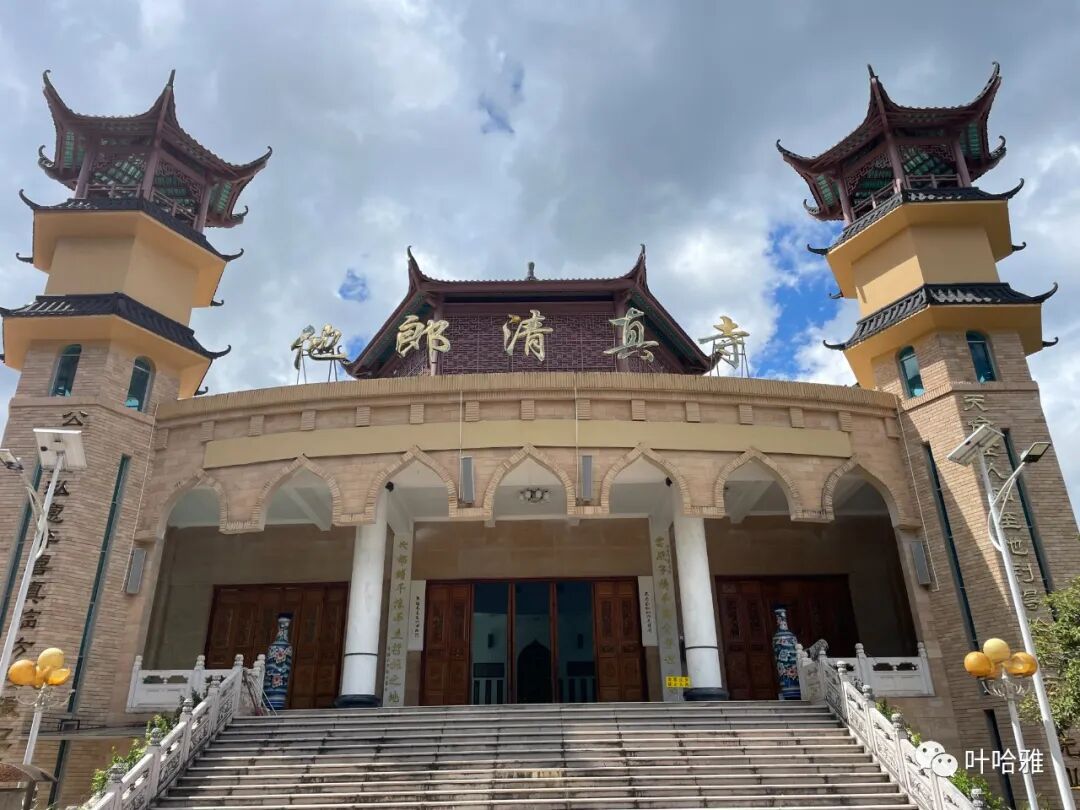
During the Xianfeng and Tongzhi reigns, the Du Wenxiu uprising failed and the Hui Muslims of Talang Village fled. It was not until 1936 that the Hui Muslims gradually returned and rebuilt the Talang Mosque.
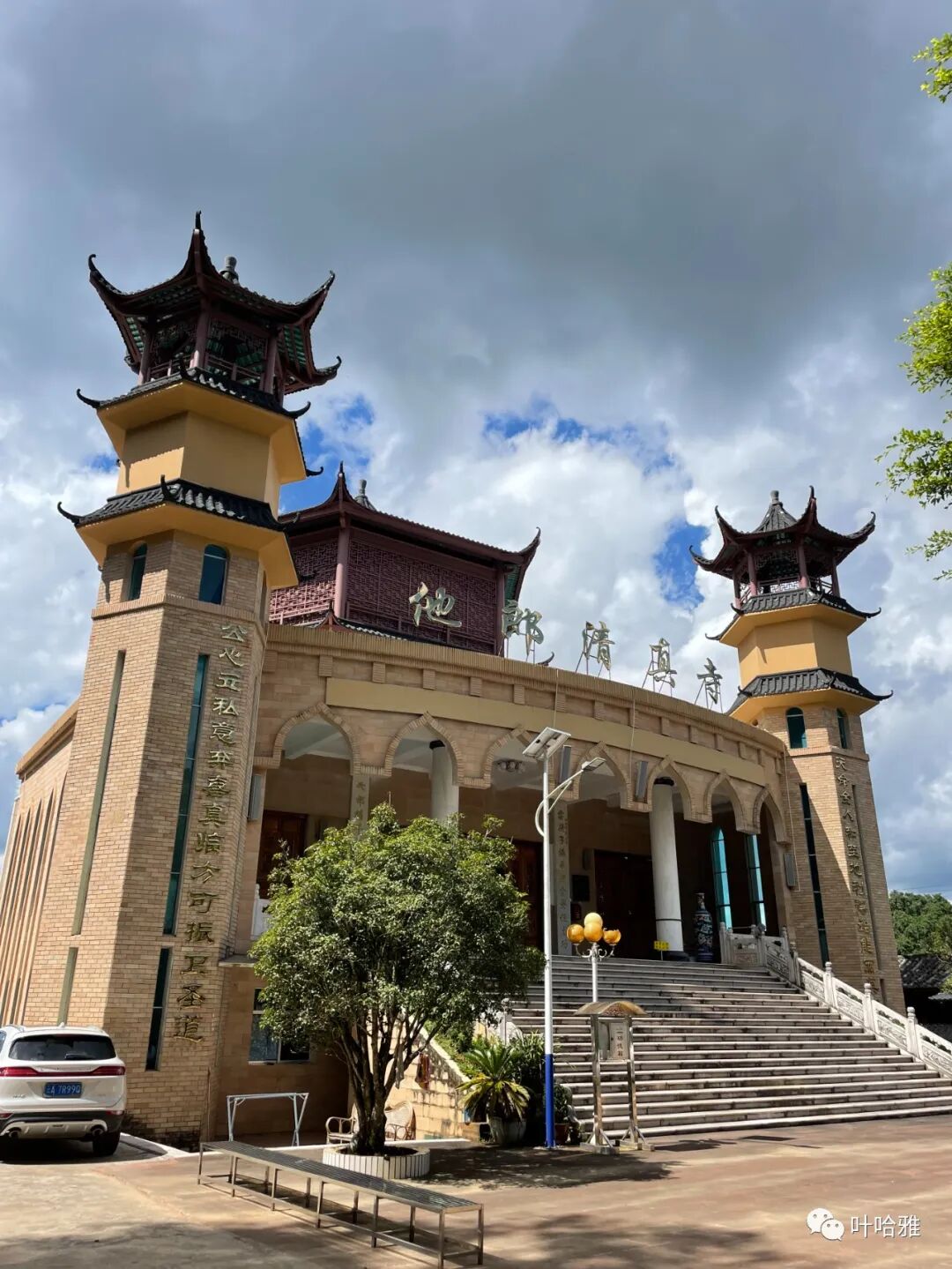
The Talang Mosque used to have a dome, but after renovations, a hexagonal roof was added. It looks like the hexagonal cap often worn by Jahriyya followers. However, this hexagonal cap is not exclusive to the Jahriyya; other menhuan and even the Gedimu have a tradition of wearing it. The renovation of this mosque involved quite a struggle.
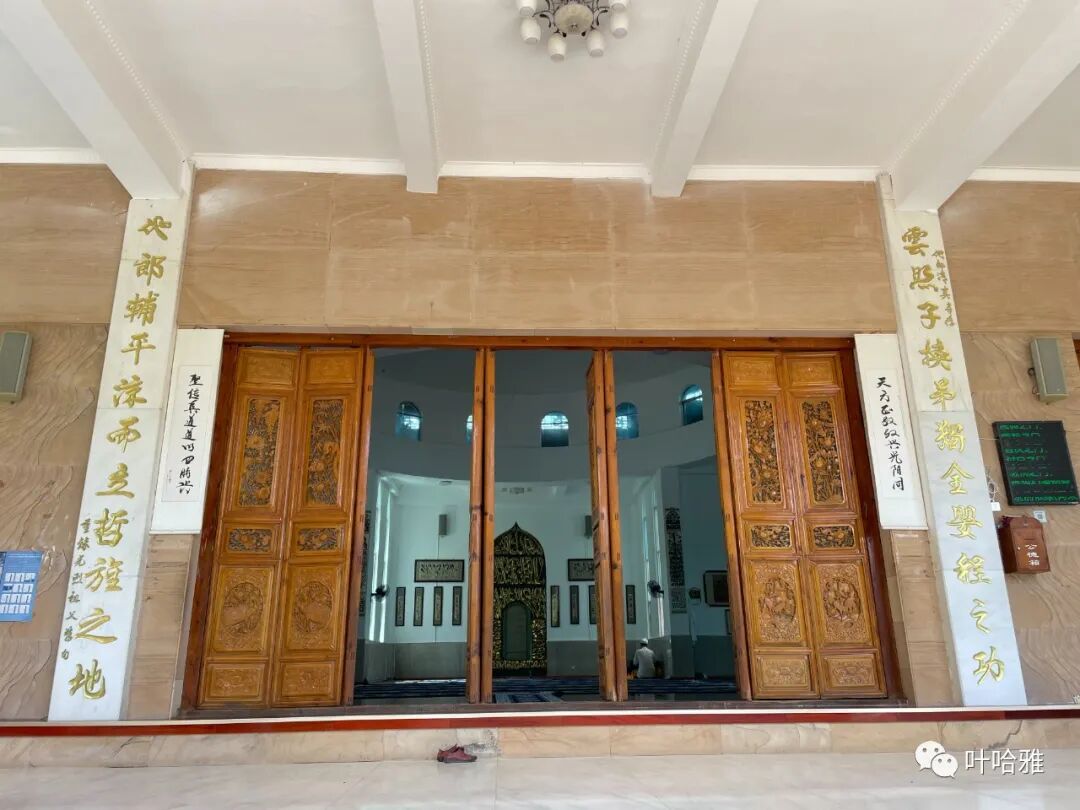
A couplet written by Shagou Taoye Ma Yuanzhang:
First line: 'Clouds shine on the child who replaces the brother, completing the work of the infant.'
Second line: 'Talang assists Pingliang and stands as a place of Jahriyya victory.'
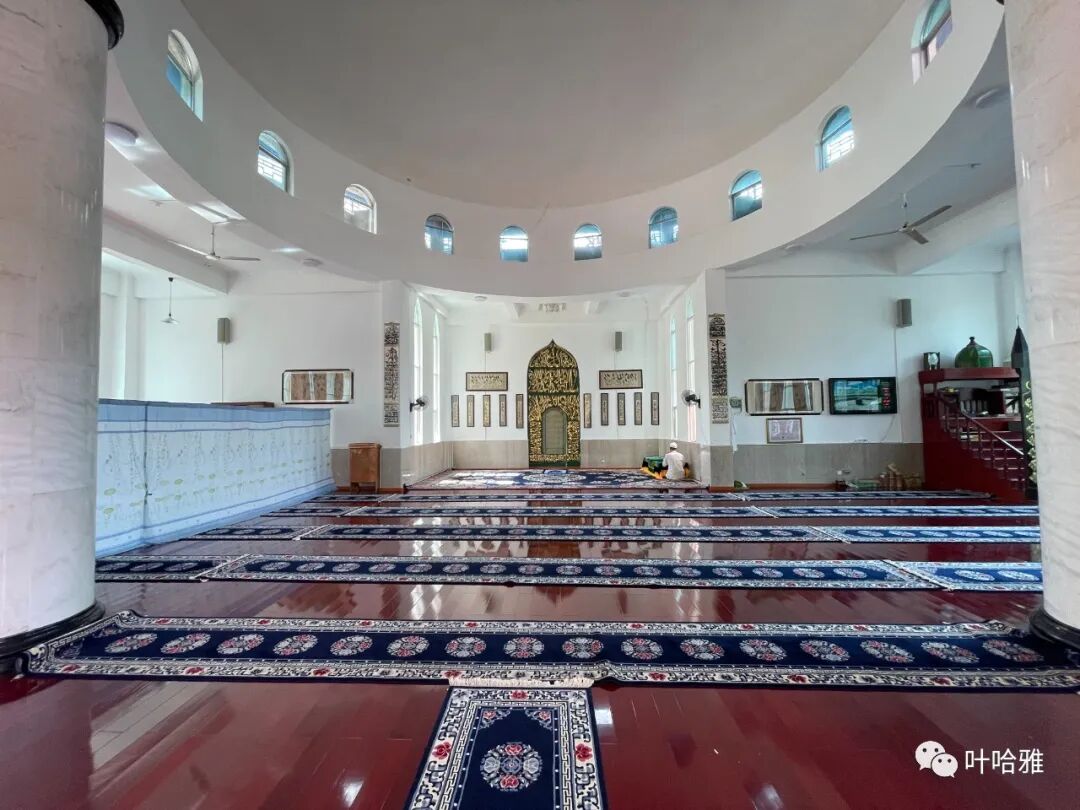
After the prayer (namaz), the imam was reciting the Quran alone in the main hall. We chatted for a bit and I learned he is from Gansu and had just returned from visiting graves in his hometown.
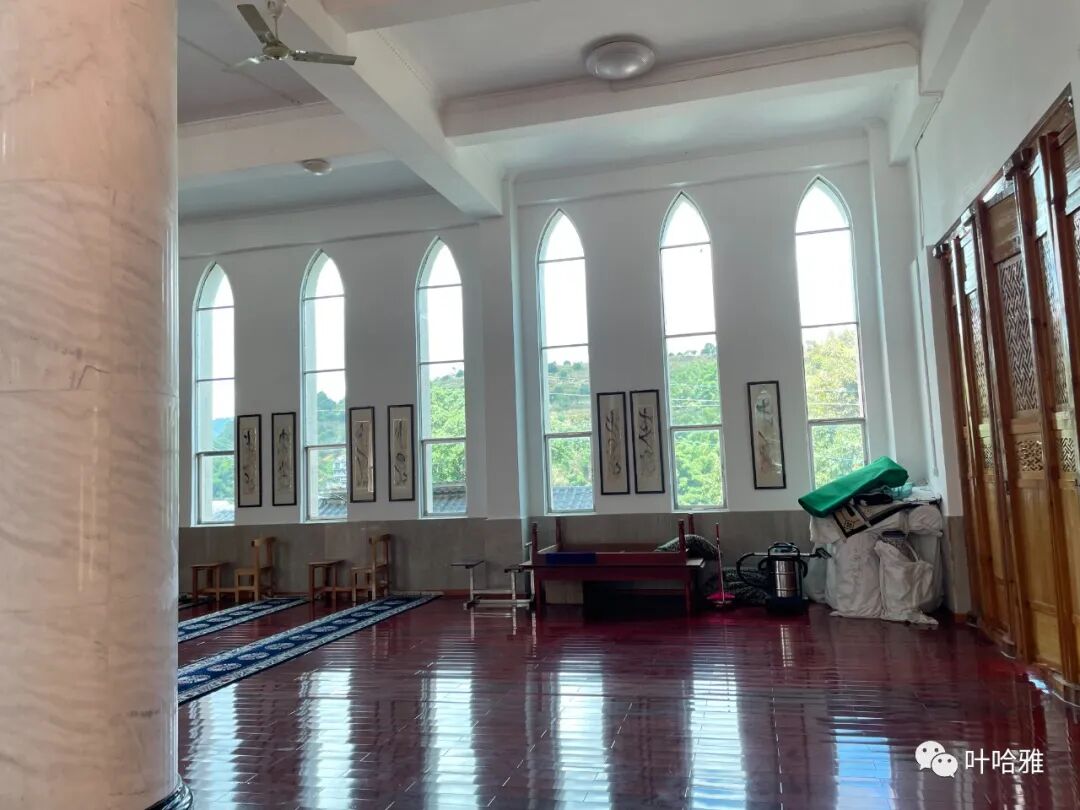
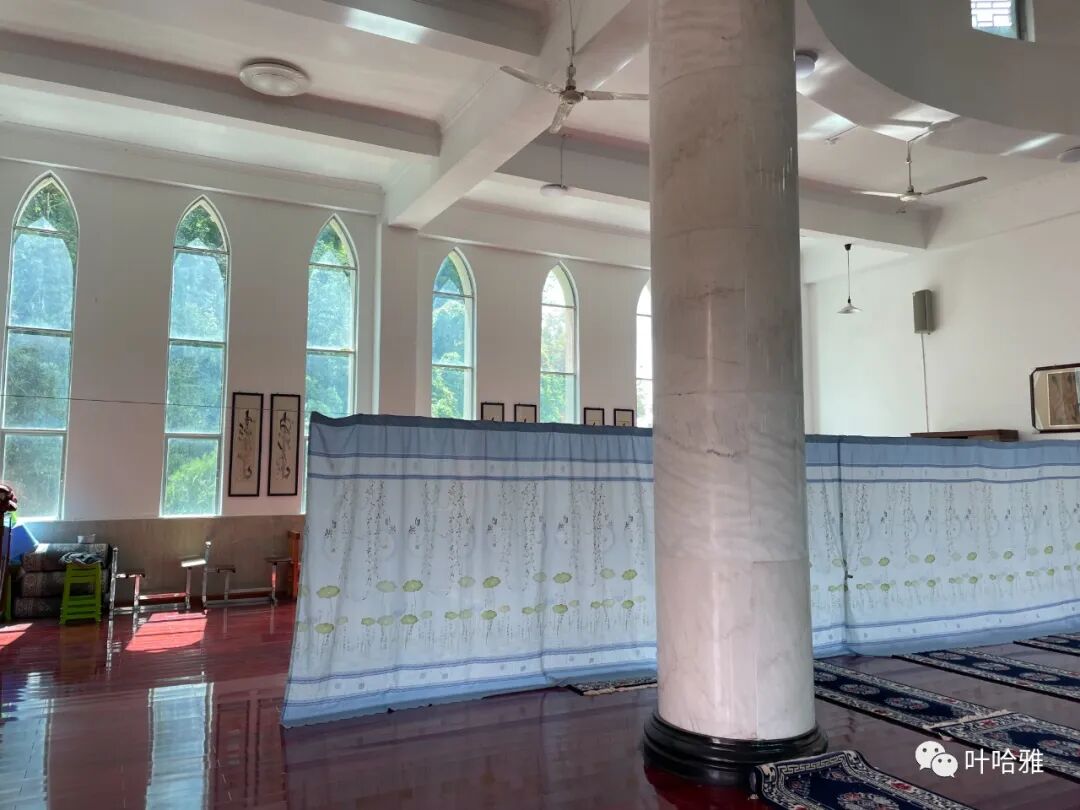
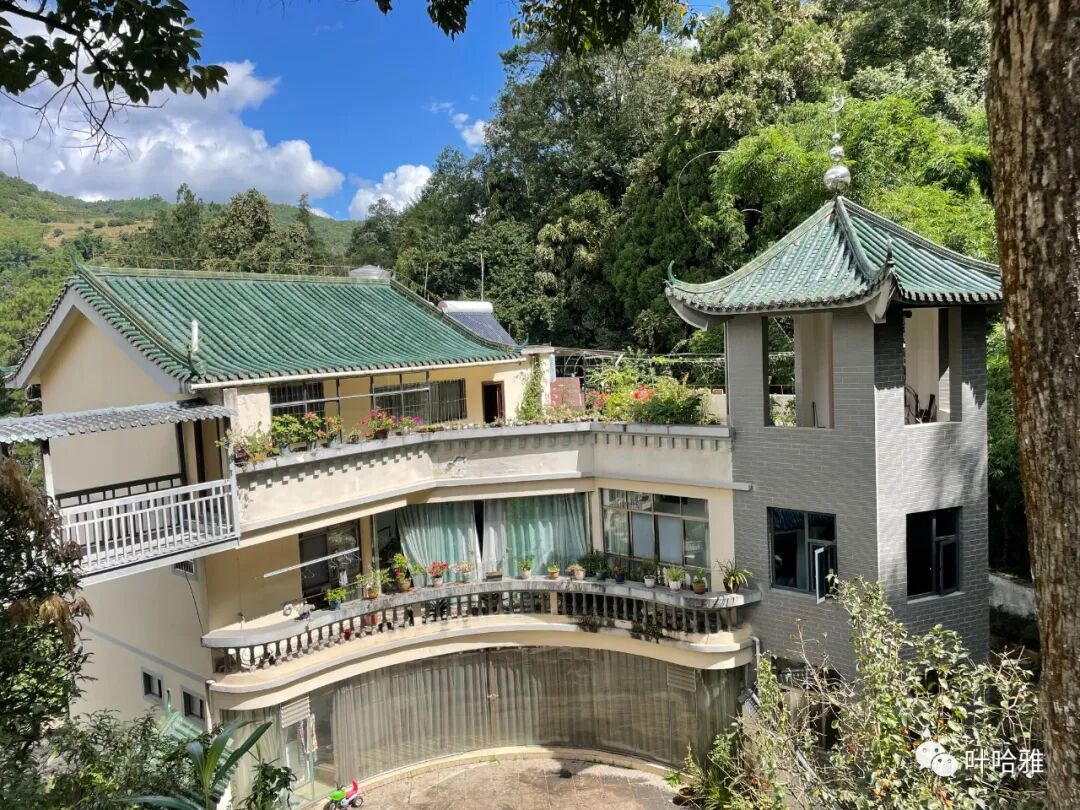
The mosque is built on a mountain, and there is a Hui Muslim village below. There are not many Hui Muslims in Mojiang, and they are mostly concentrated in Talang Village.
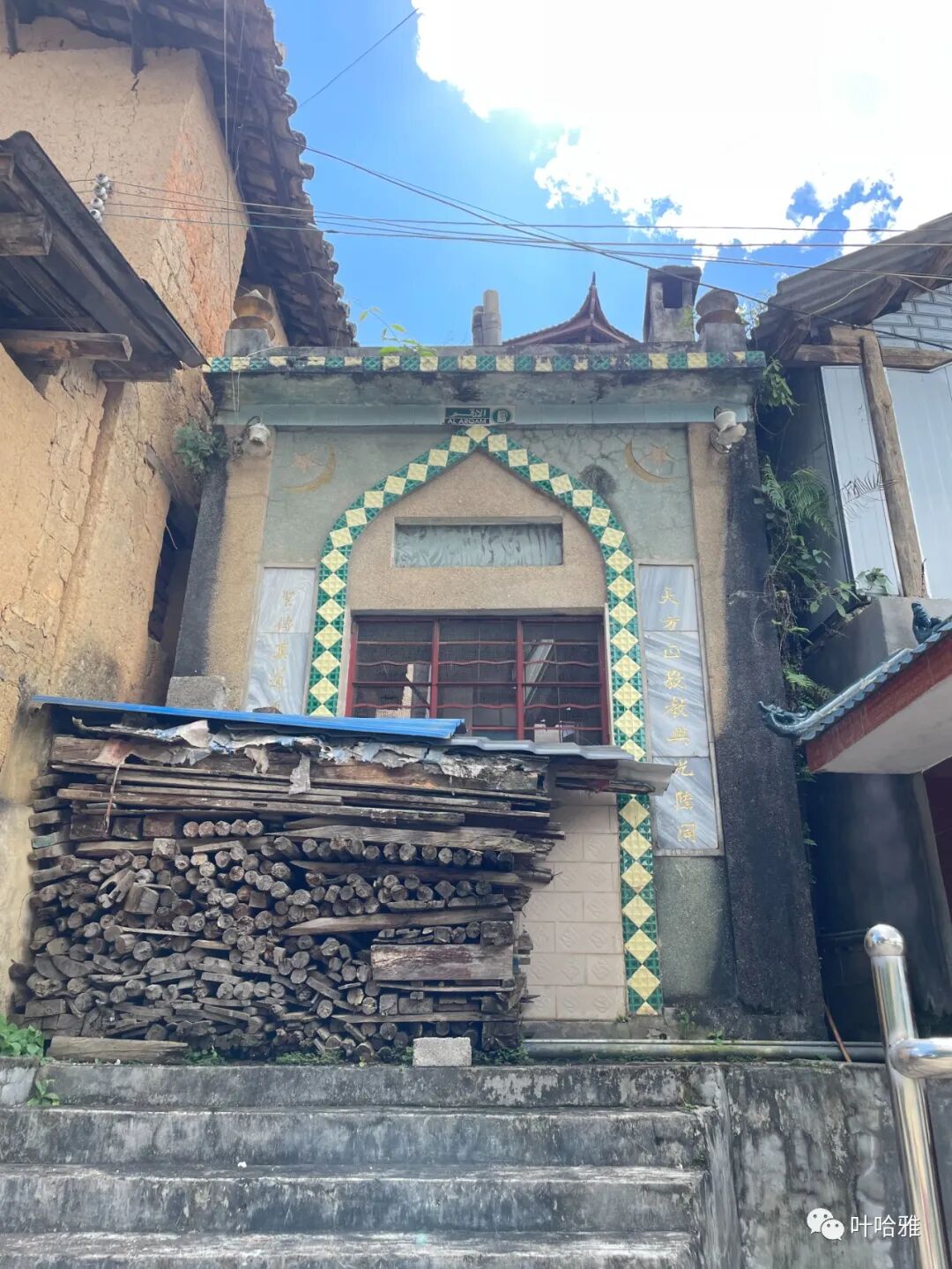
Halal Ark Restaurant
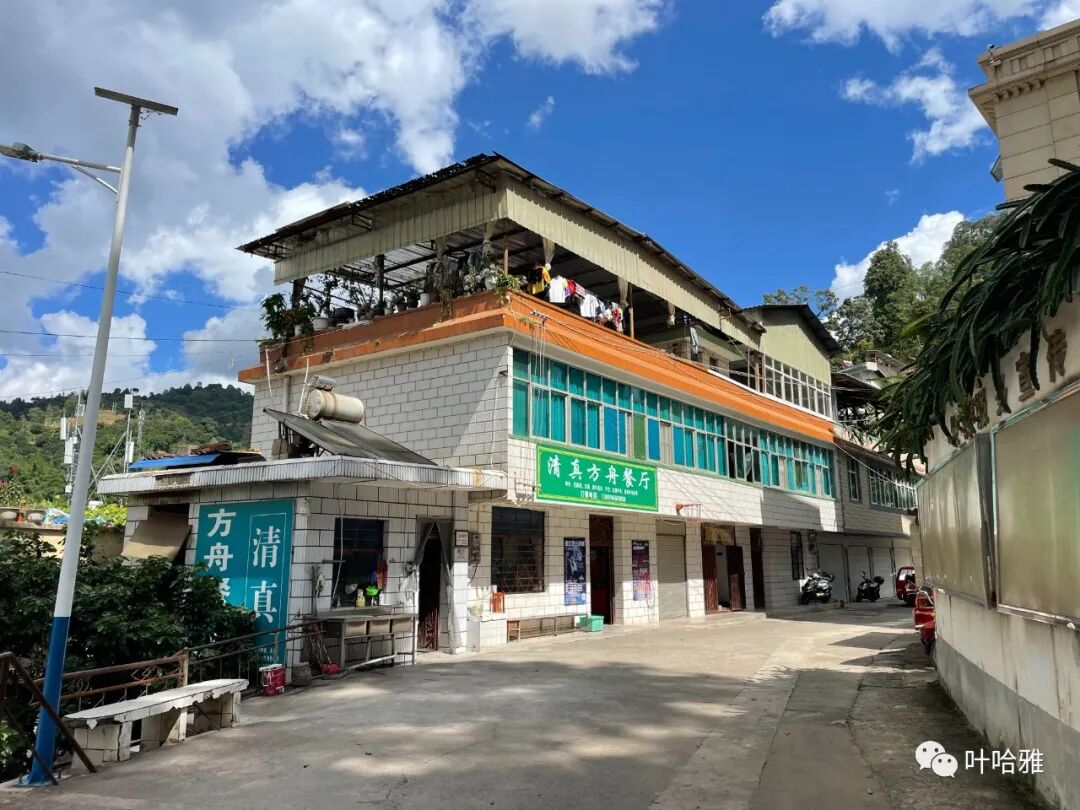
There is a halal restaurant below the mosque run by locals that does not sell alcohol. We had lunch there and chatted with the owner, which is when I learned that most people here are followers of the 'Yunnan Zhou School'.
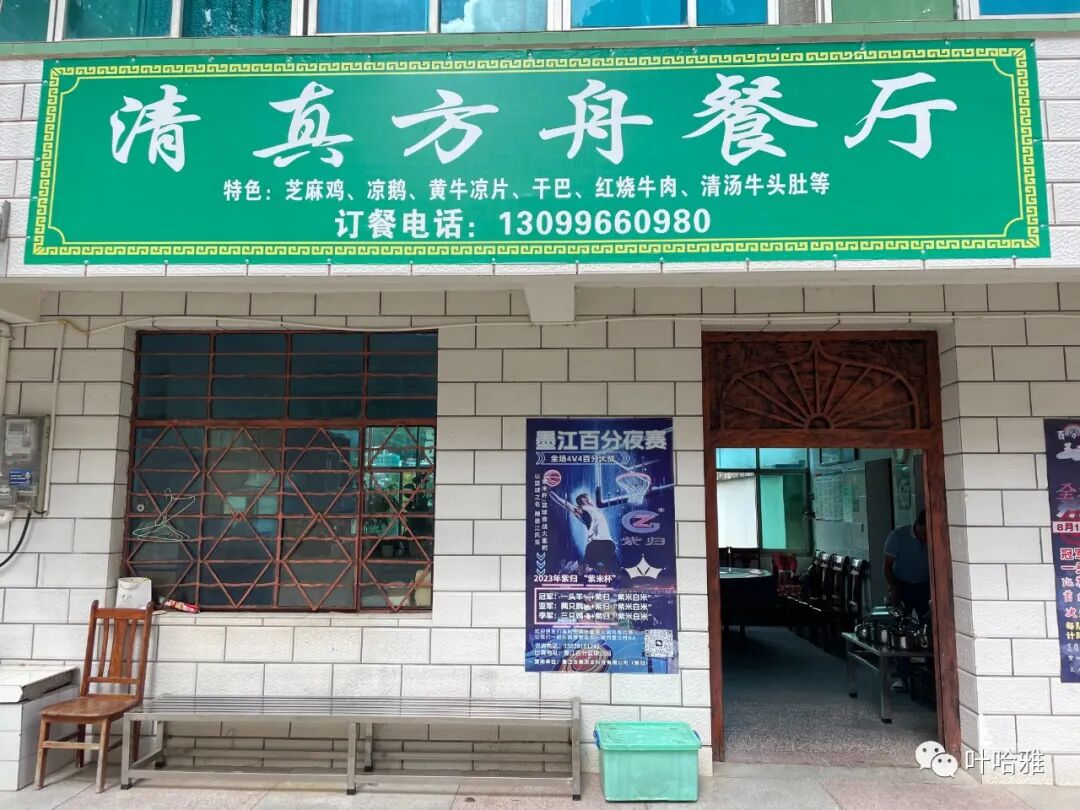
The Zhou School is what outsiders call them. They revere an elder from Yunnan named Ma Yuzhu, whose original surname was Zhou. It is said he is the son of the eighth-generation Jahriyya leader Ma Zhenwu, who was fostered by a Han Chinese family named Zhou in Yunnan and changed his name to Ma Yuzhu after growing up.
Ma Yuzhu grew up in Yunnan and now lives in Kunming. He is over eighty and used to be a pediatrician. When he began to publicly claim he was a descendant of the Jahriyya founder, his identity was never recognized by the current leaders of the Jahriyya in the Northwest. We can learn this from a conversation between a researcher and an imam from the Jahriyya order in Gansu, as recorded in the research report Investigation of Menhuan in Linxia, Gansu by the Institute of World Religions at the Chinese Academy of Social Sciences.
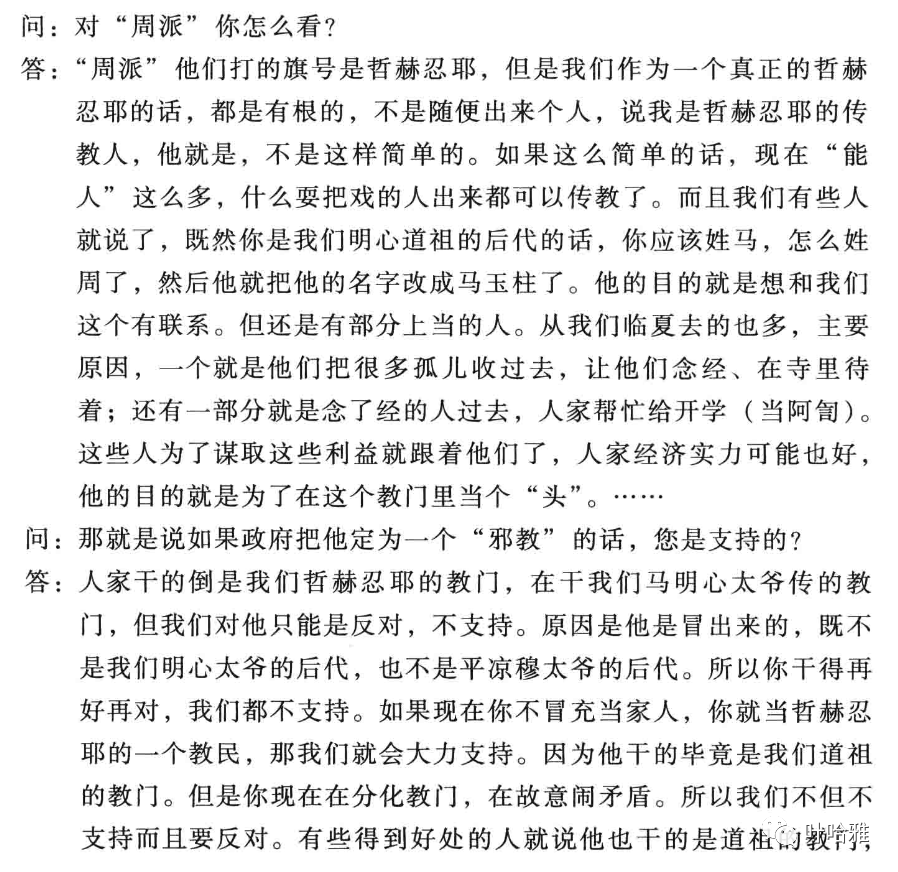
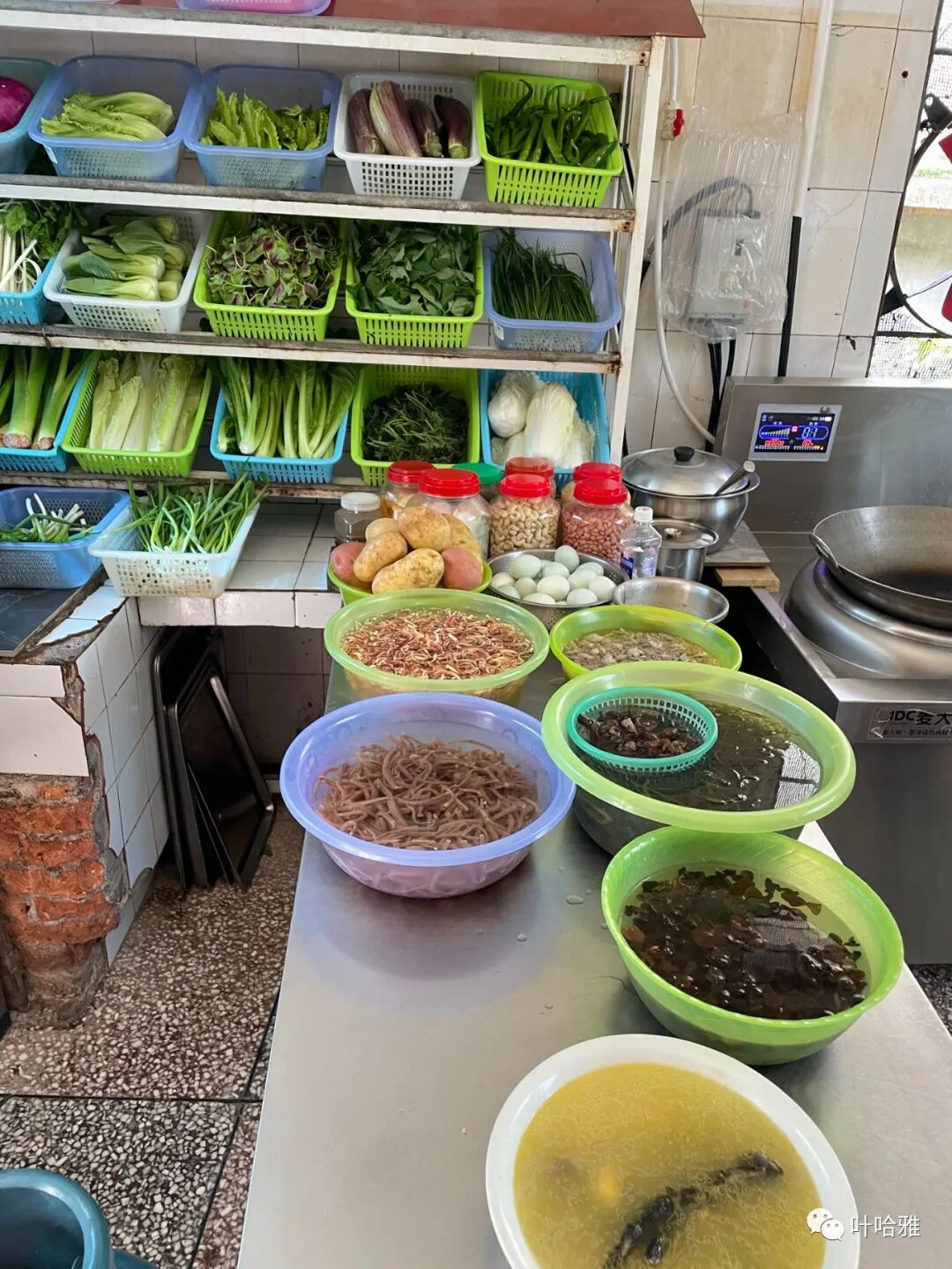
The restaurant owner was surprised that I, a Beijinger, knew about the Yunnan Zhou school. I first heard of this school about ten years ago when a website called Shengchuan Zhendao was based in Yunnan and posted many of Zhou's works in the name of Sufism. I shared my doubts about the Zhou school, but the owner had a different take. They knew that people in the Northwest did not recognize the Yunnan Zhou school, but he told me stories about the old man from Yunnan.
He mentioned that several of the old man's prophecies came true. For example, a few years ago, two brothers in the village asked the old man about their jobs. The old man told them not to learn how to drive. The brothers didn't listen and went to work at an auto repair shop. One day, they got into a car accident and both passed away (returned to Allah) on the same day. They were buried in the cemetery behind the Talang Mosque.
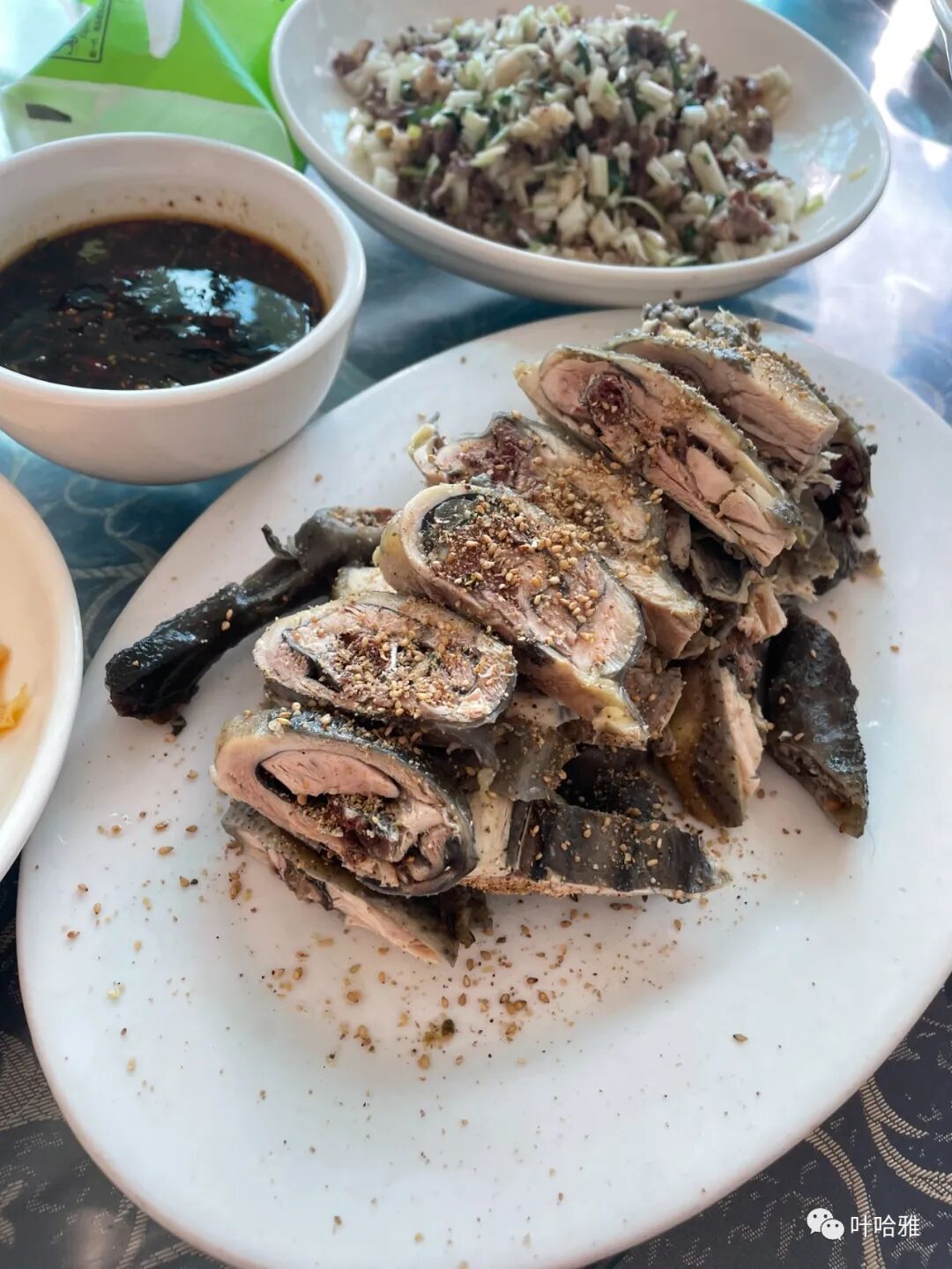
Another story is that in the last century, some social events led to all the imams being arrested. With no imams around, there was no one to give Islamic names to newborns. But before this happened, the old man from Yunnan had handwritten dozens of names for unborn babies. This allowed children to receive their names even during the time when there were no imams. The villagers see these events as signs of the old man's spiritual power.
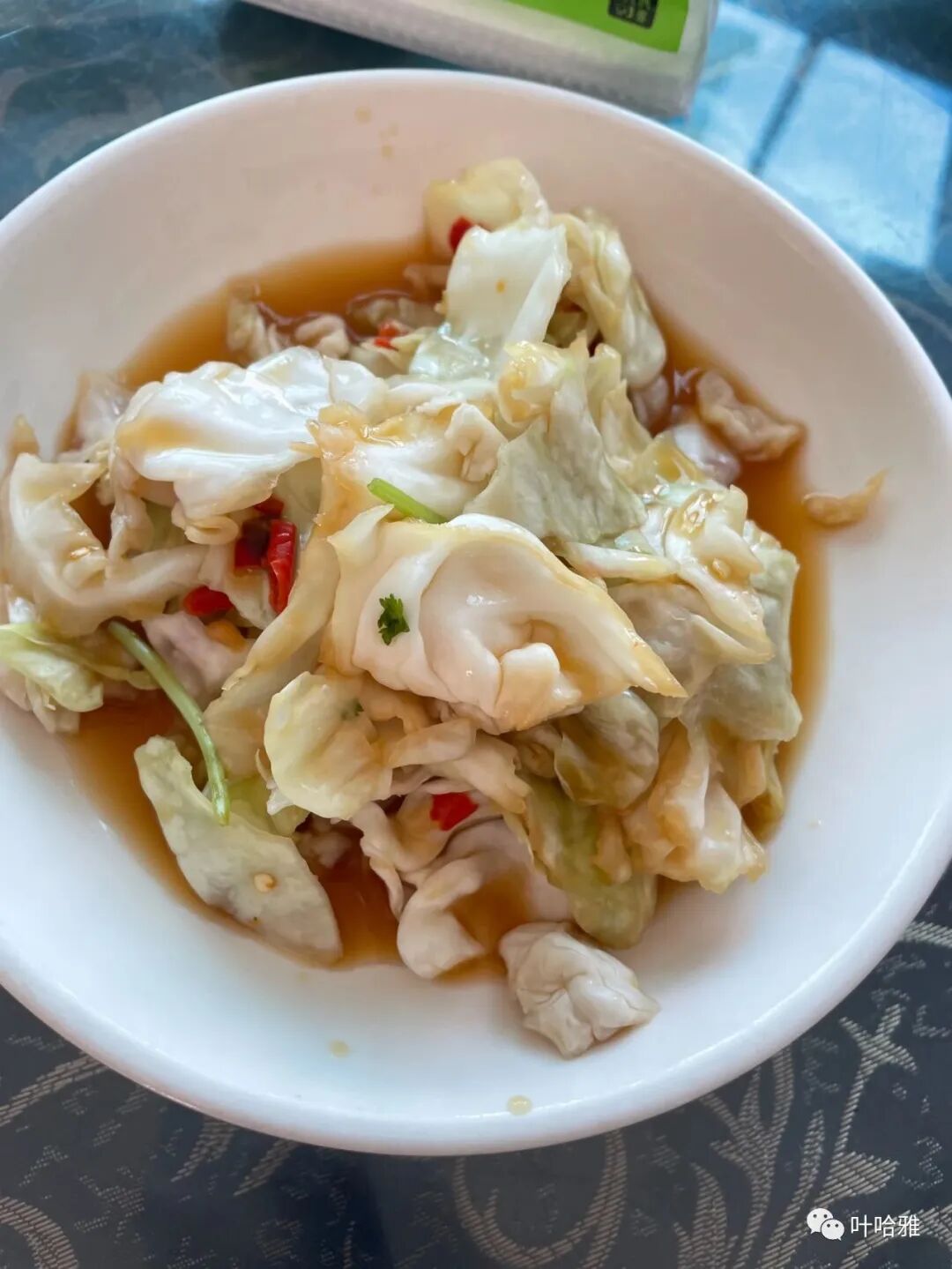
The owner is a follower who has followed the old man from Yunnan for over 30 years. He is now the director of the Talang Mosque management committee. He told me that the people living around the mosque are mostly followers of the old man. I asked about rumors from the outside world regarding the old man, such as claims that he would go into seclusion and stop naming a successor. The owner denied this, and the imam of Talang Mosque also denied it.
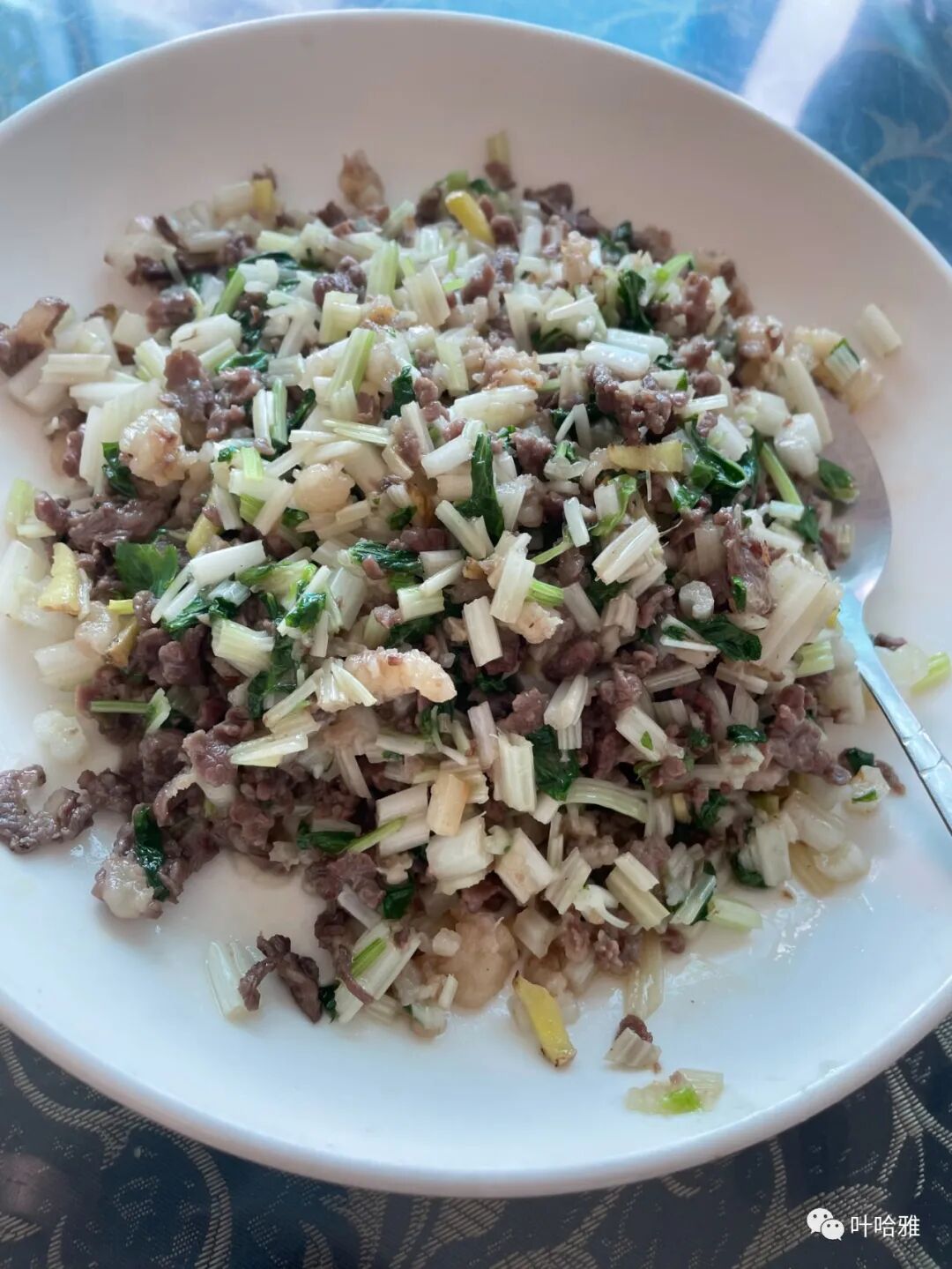
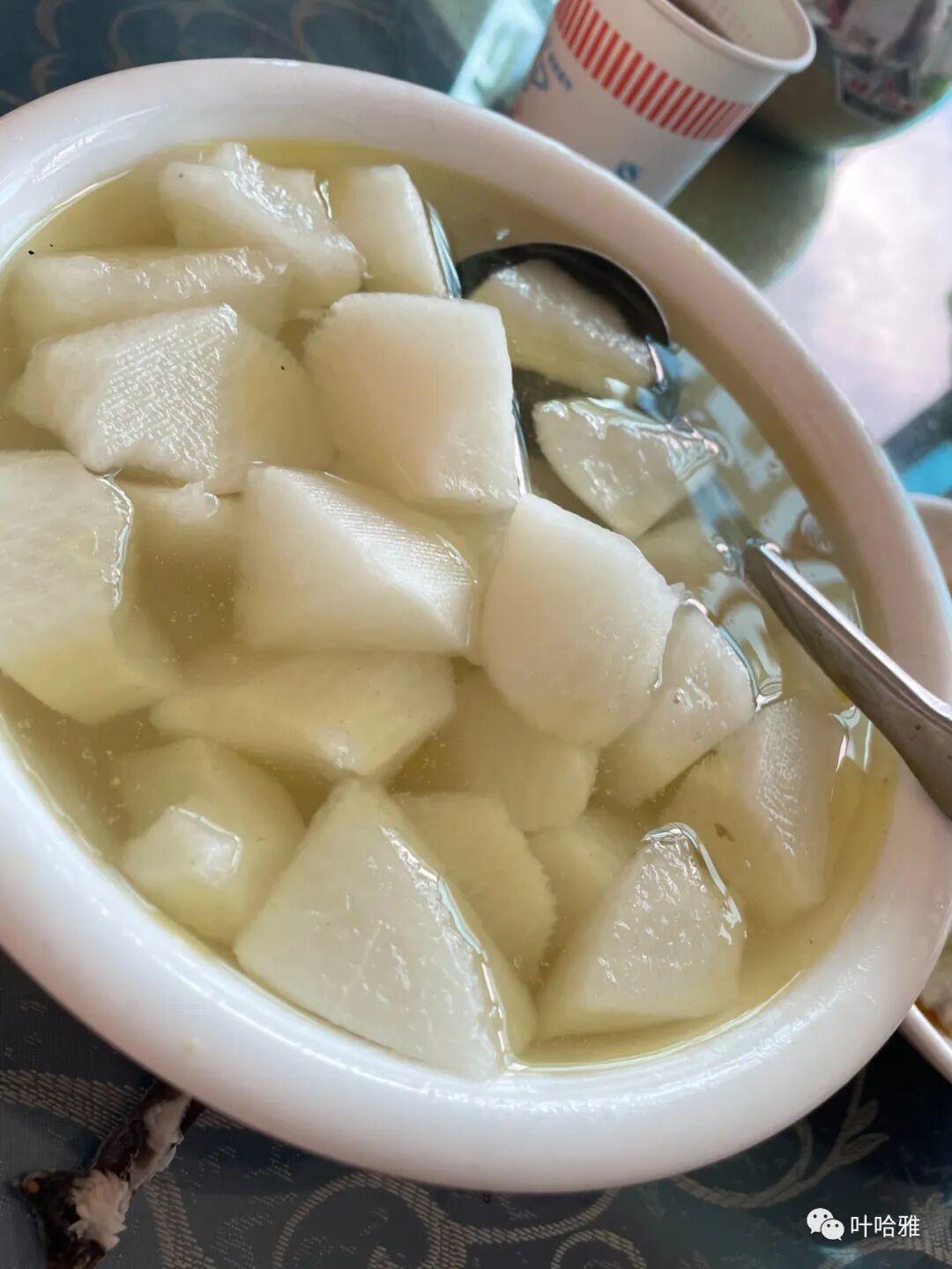
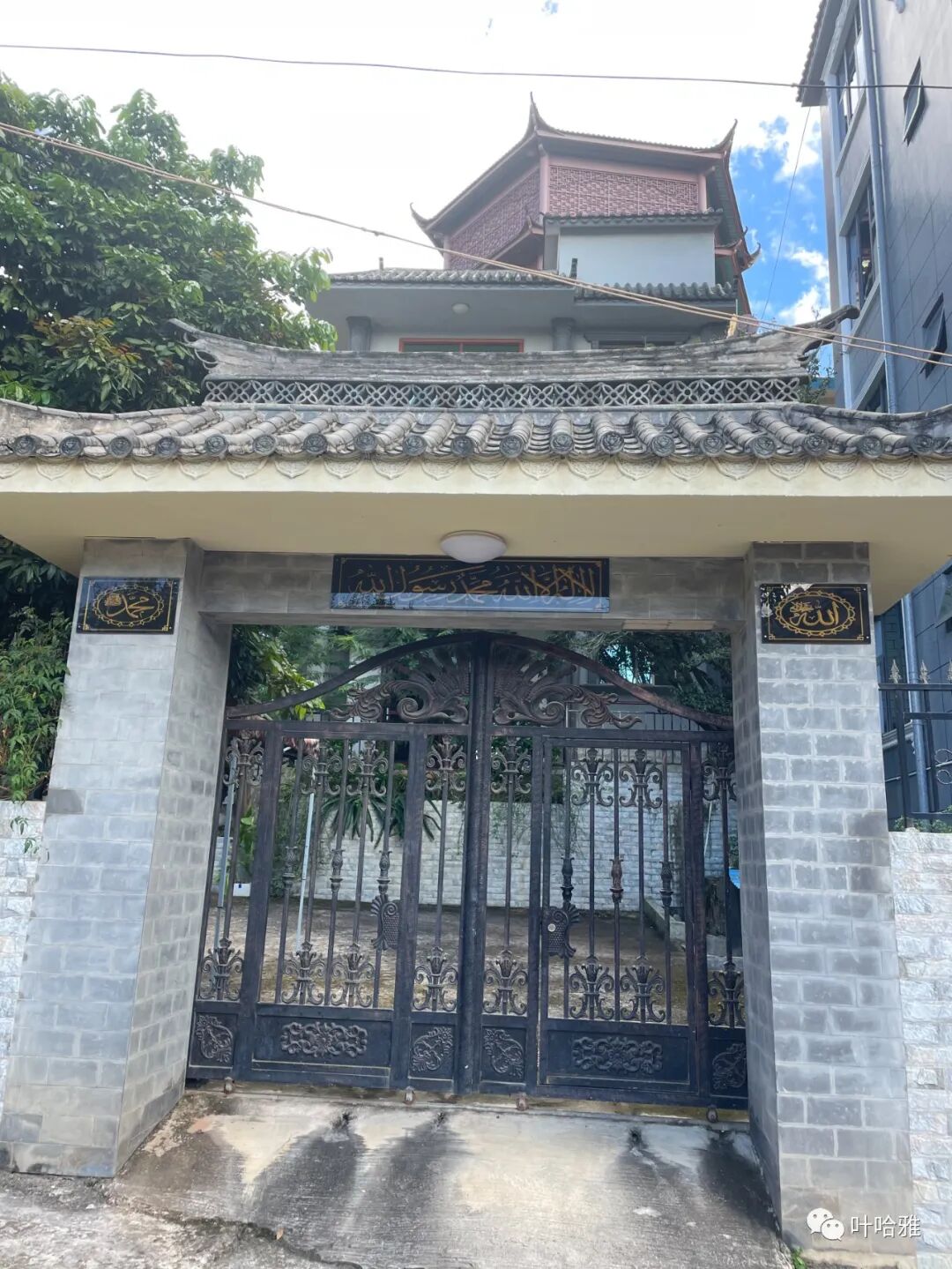
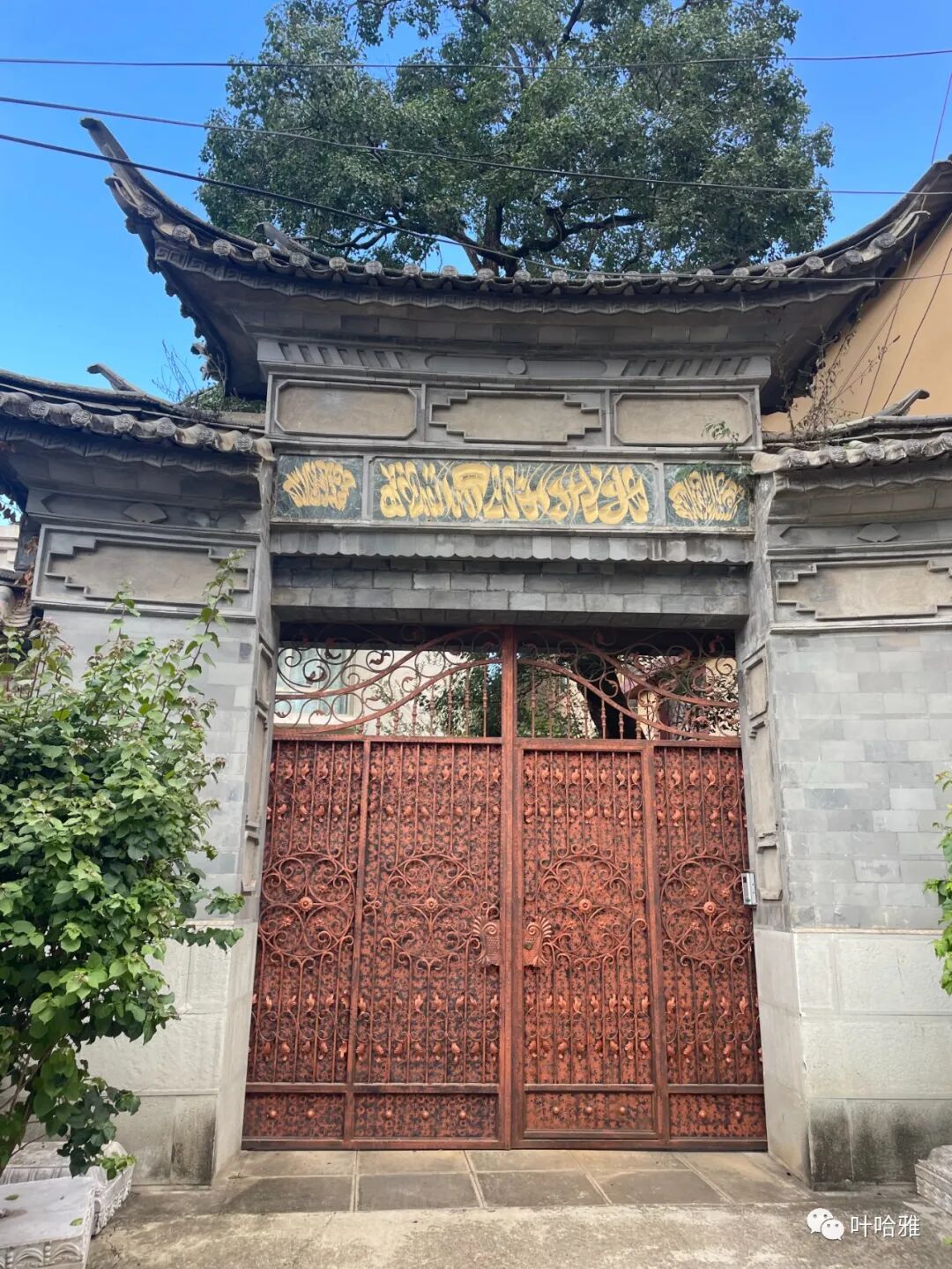
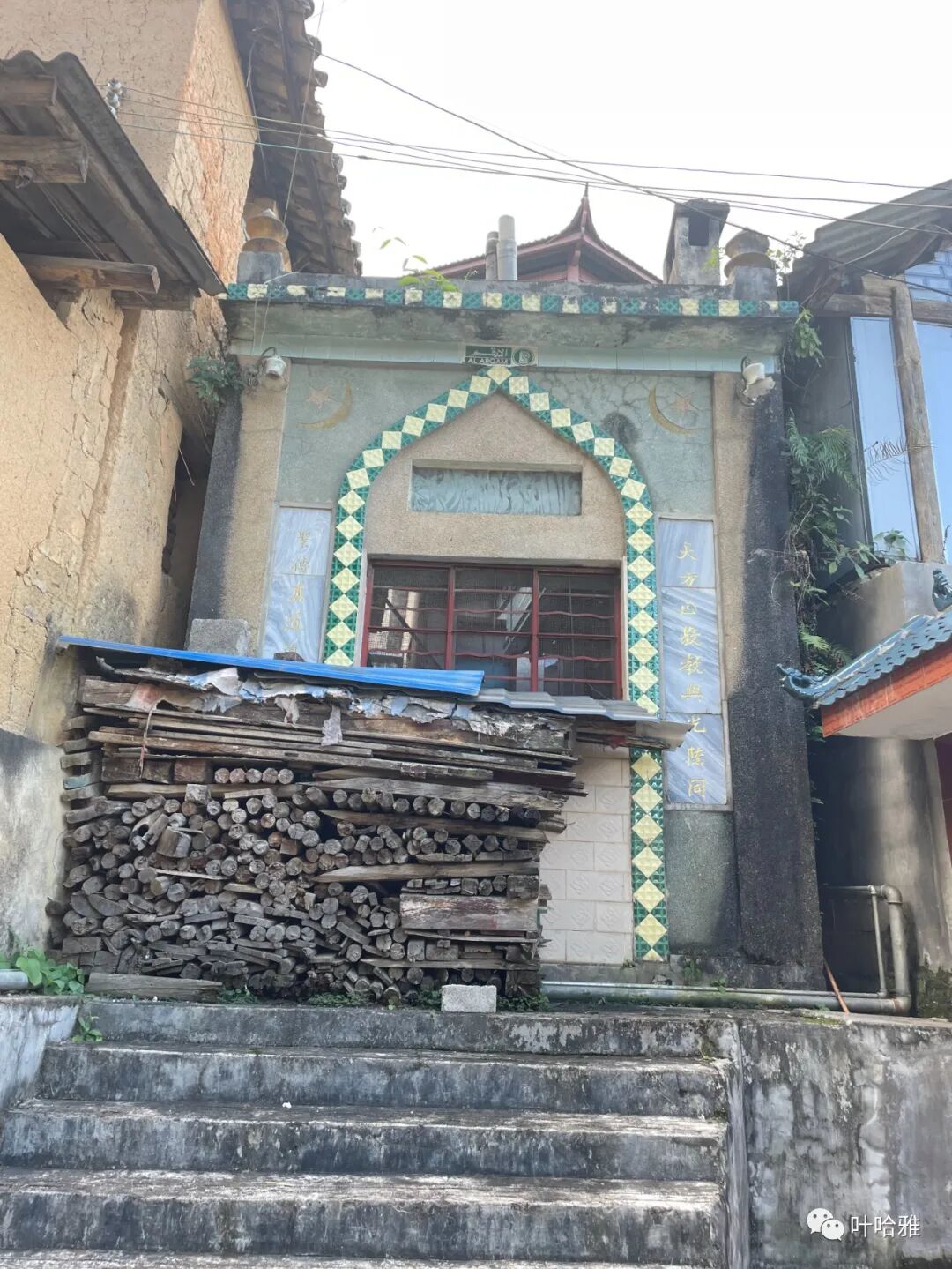
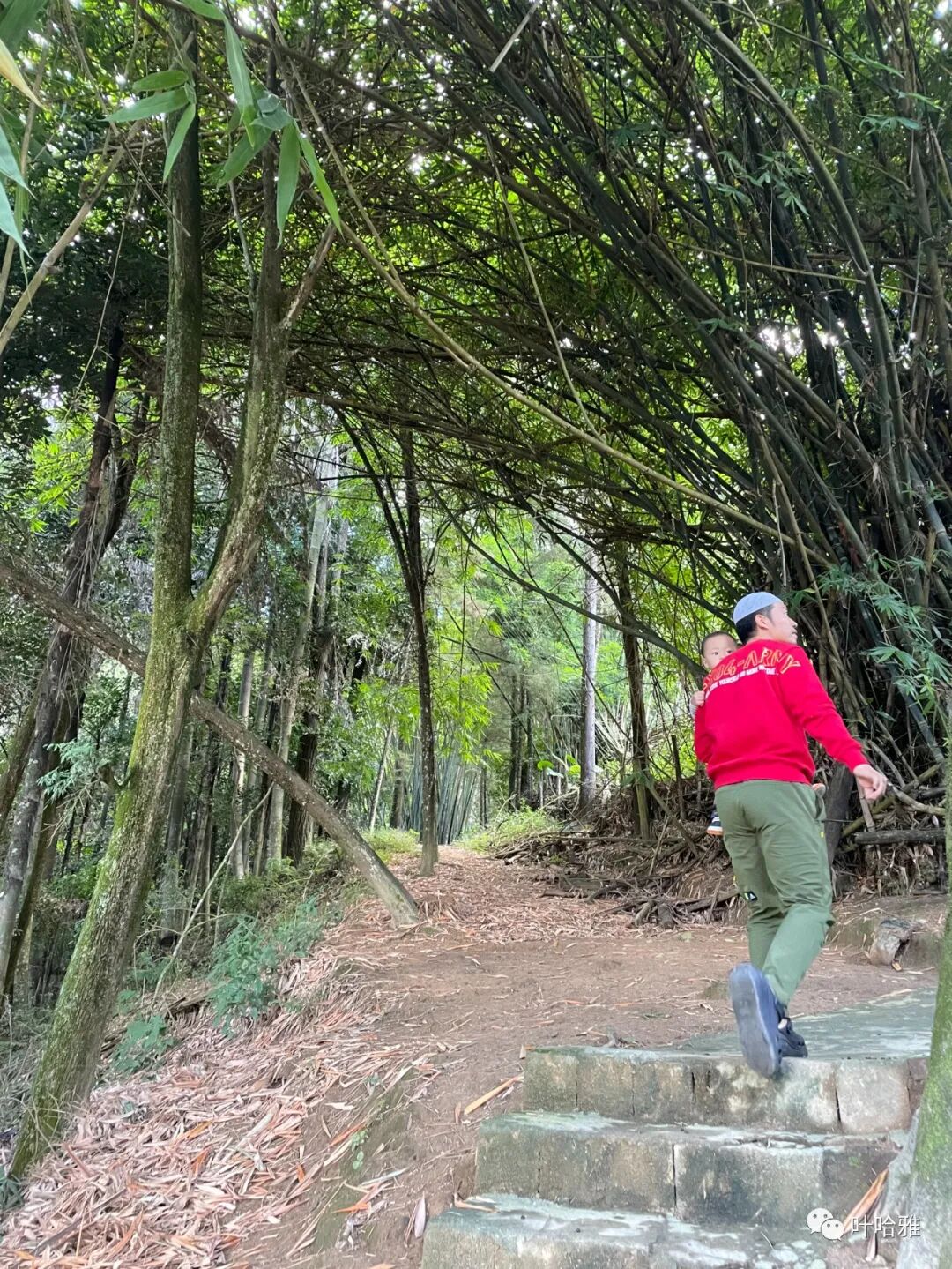
Walking further up to the top of the mountain, you can see a cemetery overgrown with weeds. A small path on the right leads to the graves of Han and Hani people. You can see crosses on some of their tombstones because many Hani people are Christians.
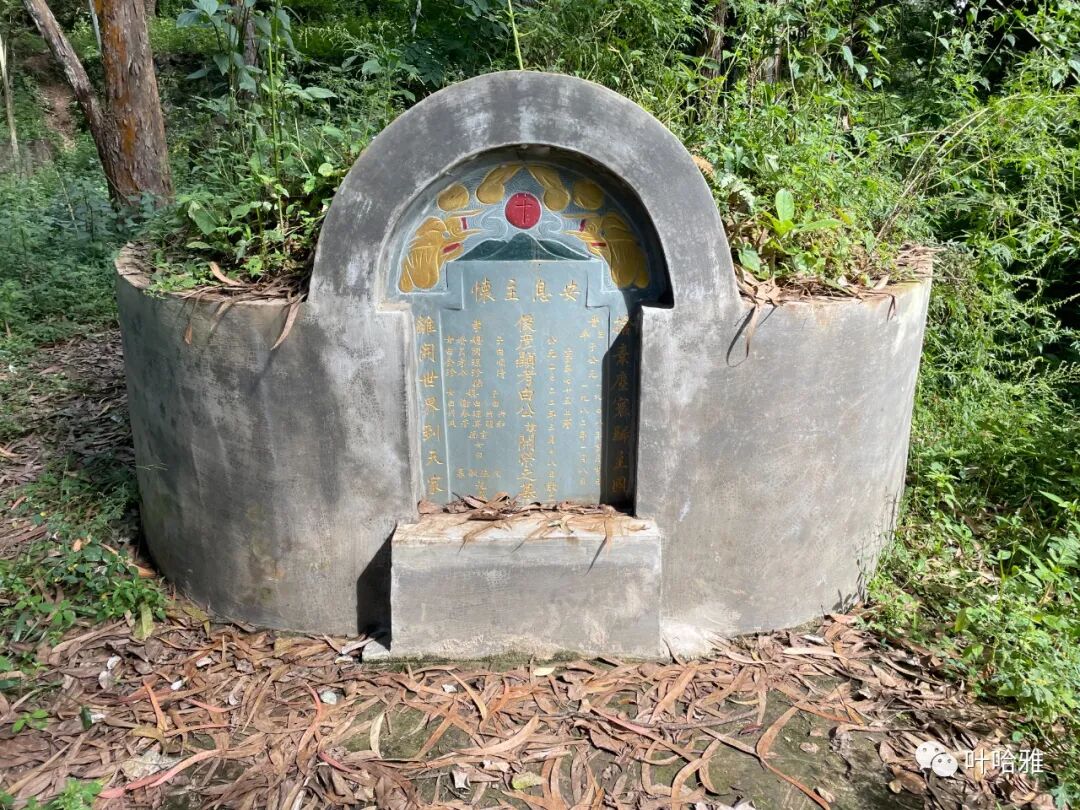
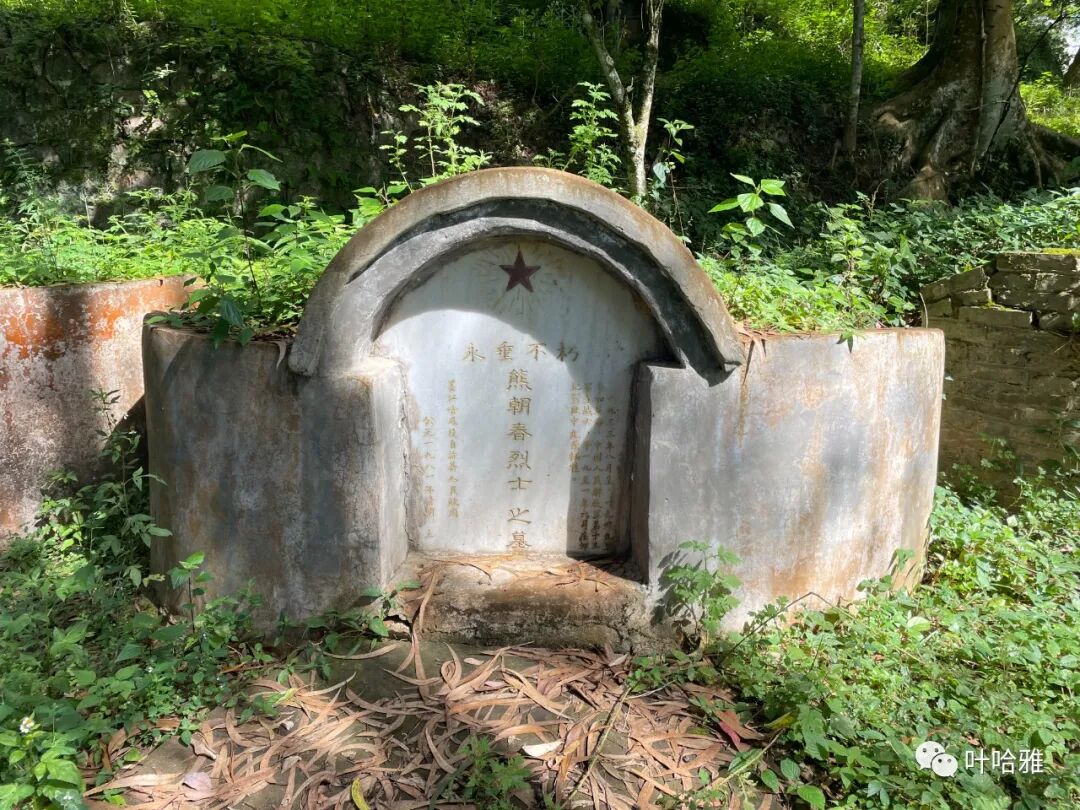
There is also the tomb of the martyr Xiong Chaochun.
Another wider and cleaner path leads to the Hui Muslim cemetery.
The gongbei (a domed tomb for a Sufi saint) of Ma Shunqing, the eldest son of Ma Mingxin, is here. I saw the gate was locked, and since I needed to reach Jianshui before dark, I prepared to leave. On the way back, I met the imam of Talang Mosque. He said he could contact the person with the key to open it, but I declined and drove onto the highway.
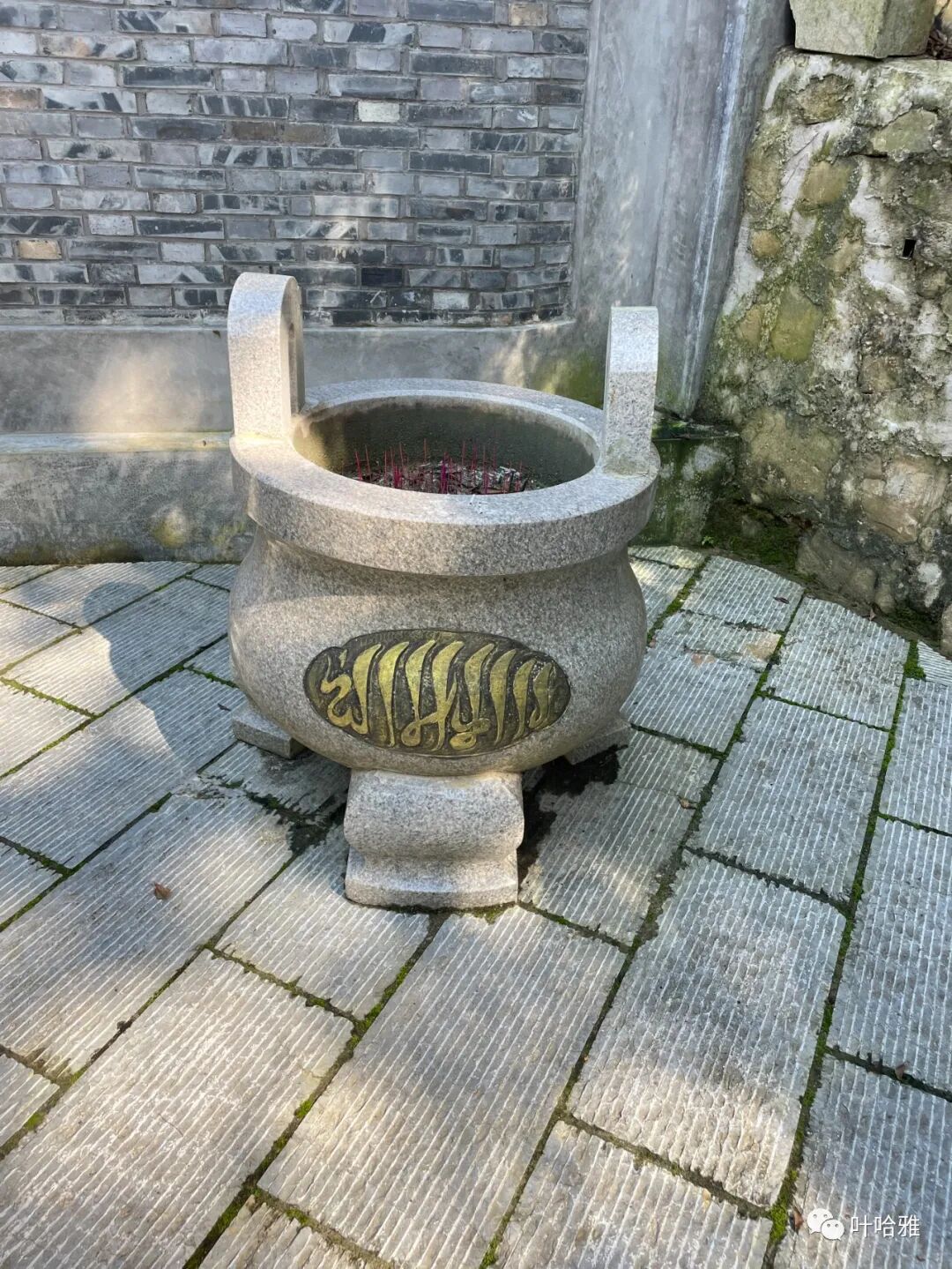
Something interesting happened. Half an hour after getting on the highway, my wife realized she had left her bag at the mosque gate. We had to turn back. I thought to myself that maybe it was meant to be and I wasn't supposed to leave just yet. After getting the bag, I asked the imam for the key to the gongbei. He told me to call the gatekeeper myself. When I called and the person learned I was from Beijing, he quickly came over to open the gate of the Talang gongbei.
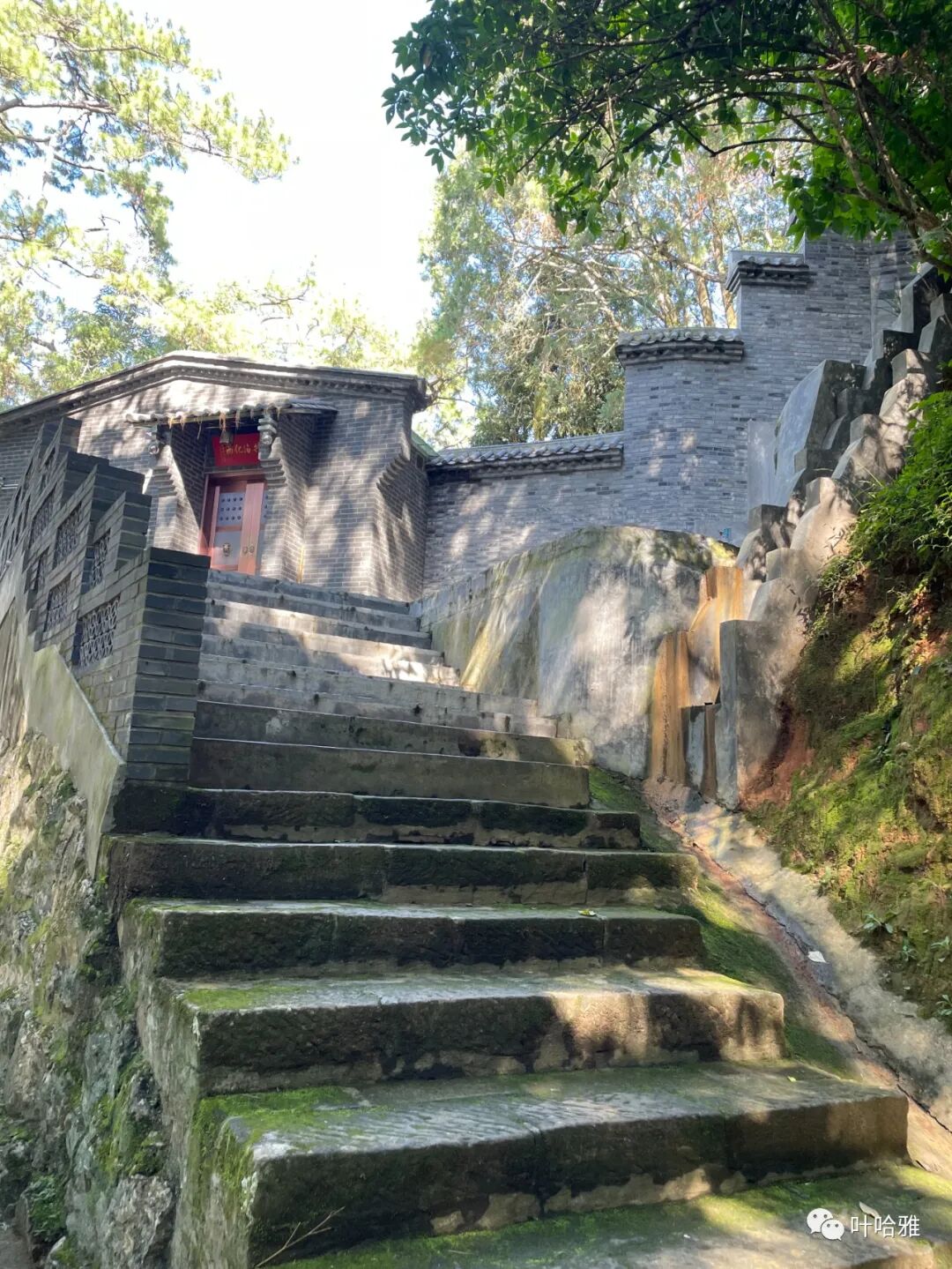
This return trip brought new discoveries. The person guarding the gongbei is the only villager who follows the traditional Jahriyya order and does not associate with the Yunnan Zhou school. Because of this, the Zhou school cannot get the key to hold religious gatherings (a'ermaili) there. The Zhou school once wanted to build another gongbei next to it, but the local government rejected the proposal.
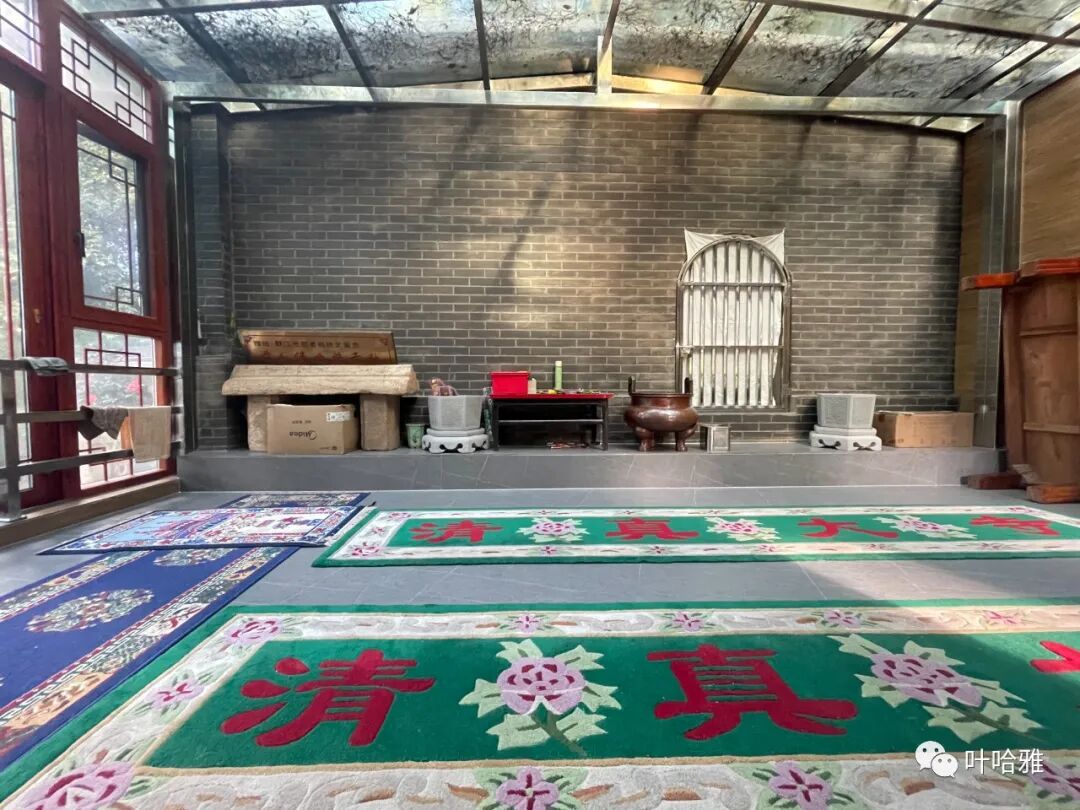
Ma Yuzhu had been here before, but he only got the doors opened because he was accompanied by the relevant authorities. I listened to the caretaker share stories about his family guarding this gongbei for generations. He told me about many unpleasant events that happened here, which made me feel quite sad. He said I was likely the second person from Beijing to visit. Zhang Chengzhi had been here, but he did not say who he was, so the caretaker did not recognize him.
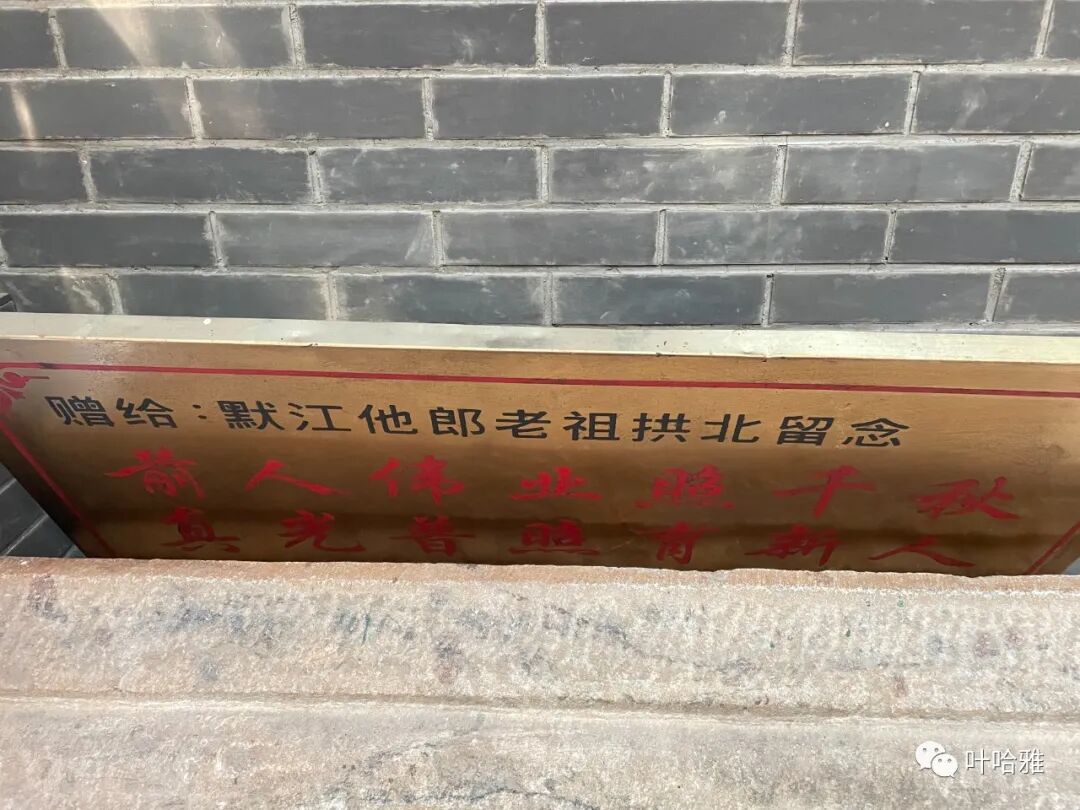
To tell the truth, a DNA test would be enough to figure out what is real and what is fake. But I suspect things are not that simple. Even if the test results did not match, some people would still find a way to rationalize them with irrational reasons. It is hard to change someone's mind through logic between different sects or religions. Once you realize this, you stop trying to convince anyone. People often change their minds in a split second.
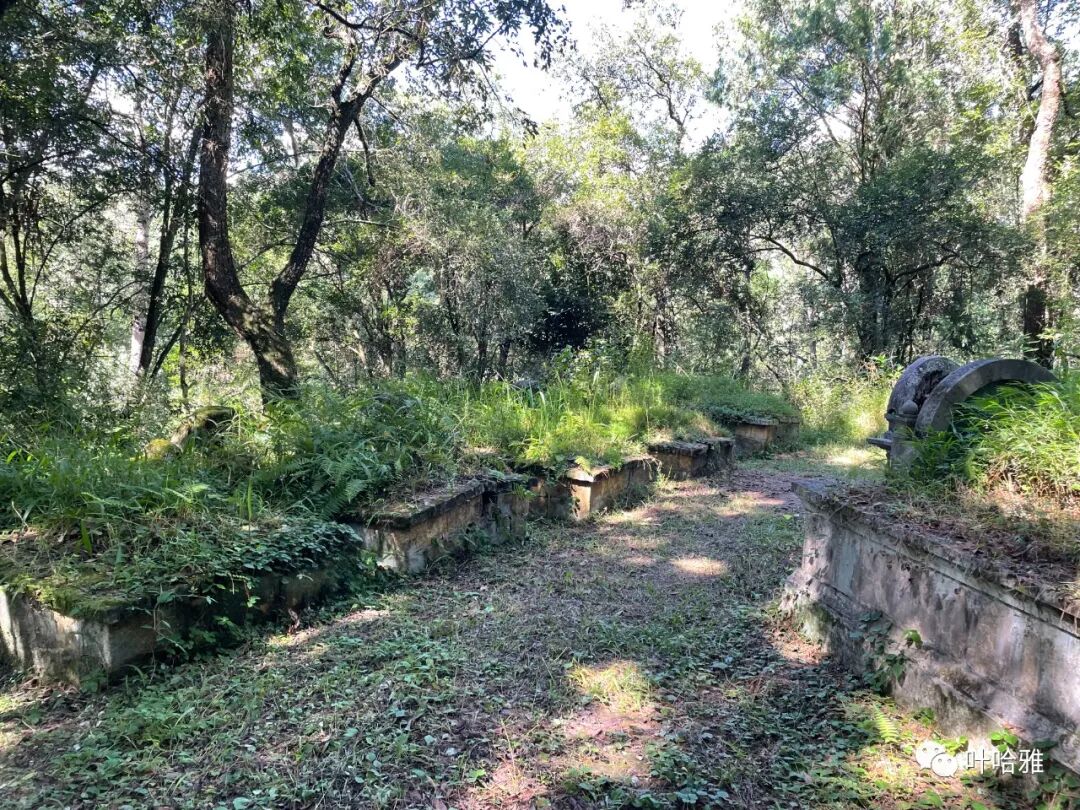
My short trip to Mojiang Talang turned out to be a very special side story of my Yunnan journey, and it is worth writing a travelogue about. I am not a member of the Jahriyya, but over the years, I have visited almost all the important Jahriyya gongbei across China. I have even been a guest in the homes of elders in Ningxia. I know the Jahriyya keep a low profile now and do not want to get involved in trouble. I have no intention of starting any disputes, so some things must stay in my heart.
China Mosque Travel Guide: 709 Mosques, Beijing Mosque List and Global Muslim Footprint Map
Articles • yusuf908 posted the article • 0 comments • 187 views • 2026-05-24 00:17
Summary: This China mosque travel guide records the author's mosque footprint map as of August 2024, including 709 mosques across 16 countries and regions, more than 200 cities, a long Beijing mosque list, reflections on memory, travel, friendship, and the goal of visiting 1,000 mosques.
In 2017, I counted the mosques I had visited, and the number was 200. A Muslim community website in the UK even reported on it. By 2022, that number reached 454, which you can see in my list of 454 mosques visited. As of August this year, I have visited a total of 709 mosques across 16 countries and regions, spanning over 200 cities. I am getting closer to my goal of 1,000 mosques.
Traveling over these years has given me so much insight. It has broadened my horizons so much that I am no longer surprised by strange or unusual things. When you adopt a solar system perspective, you realize that the issues back home are really not a big deal. You stop looking at any authority with a halo. Of course, the prerequisite for improving your understanding is to have a certain amount of reading, otherwise, travel just becomes a superficial glance.
I think it is very necessary to record my travel experiences. I have found that as I get older, my memory gets worse. To put it nicely, I have a broad mind and do not take things to heart, but the truth is that if I do not write down many people and events, I might forget them after a while. I look back at articles I wrote in the past from time to time. Some content actually feels strange to me, and I cannot seem to remember how I recorded those words and photos at the time.
My number of WeChat friends has also expanded 10 times, but the vast majority can only be considered as stranger-friends. Even for people I have met offline, after a while, if I did not add a note, I might not remember where I met them. After all, a person's social capacity is limited. If any friends feel that I am cold because of this, please forgive me. I just have limited brain capacity, but I prefer to make friends with people who resonate with me. I am not the Chinese currency (renminbi), so I cannot make everyone like me.
1. Dongsi Mosque, Dongcheng District, Beijing; 2. Andingmen (Daguan) Mosque; 3. Nandouya Mosque; 4. Dongzhimenwai Mosque; 5. Hua'ershi Mosque; 6. Shazikou Mosque; 7. Qingzhen Pushou Mosque, Xicheng District; 8. Dewai Fayuan Mosque; 9. Sanlihe Qingzhen Yongshou Mosque; 10. Zhengyuan (Beigouyan) Mosque; 11. Niujie Mosque; 12. Houheyan Mosque; 13. Huihuiying Mosque; 14. Qianmen Mosque; 15. Nanhxiapo Mosque, Chaoyang District; 16. Changying Mosque; 17. Kangying Mosque; 18. Yangzha Mosque; 19. Xihui Mosque; 20. Wanziying Mosque; 21. Guanzhuang Mosque; 22. Balizhuang Mosque; 23. Songyu Mosque; 24. Haidian Mosque, Haidian District; 25. Madian Mosque; 26. Qinghezhen Mosque; 27. Landianchang Mosque; 28. Anheqiao Mosque; 29. Shucun Mosque; 30. Siwangfu Mosque; 31. Nanyuan Mosque, Fengtai District; 32. Fengtaizhen Mosque; 33. Changxindian Mosque; 34. Huangcun Mosque, Daxing District; 35. Cuizhihuiying Mosque; 36. Liushizhuang Mosque; 37. Xueying Mosque; 38. Dongbaita Mosque; 39. Qingyundian Mosque; 40. Tongying Mosque; 41. Xihongmen Mosque; 42. Langgezhuang Old Mosque; 43. Langgezhuang New Mosque; 44. Tianying Mosque; 45. Lixian Old Mosque; 46. Lixian New Mosque; 47. Xin'anzhuang Mosque; 48. Caiyu Mosque; 49. Yufa Mosque; 50. Nanyanfa Mosque; 51. Majuqiao Mosque, Tongzhou District; 52. Fatoucun Mosque; 53. Tongzhou Town (Nandasi) Mosque; 54. Xiguan Mosque; 55. Yujiawu Mosque; 56. Zaolinzhuang Mosque; 57. Zhangjiawan Mosque; 58. Yongledian Mosque; 59. Beiguan Mosque; 60. Xiguanshi Mosque, Changping District; 61. Nanyicun Mosque; 62. Xiaoxinzhuang Mosque; 63. Changping Town Mosque; 64. Heying Mosque; 65. Nankou Town Mosque; 66. Nankoucun Mosque; 67. Doudian Mosque, Fangshan District; 68. Changzhuang Old Mosque; 69. Changzhuang New Mosque; 70. Xinjie Mosque; 71. Chengguan Mosque, Miyun District; 72. Mujiayu Mosque; 73. Gubeikou Mosque; 74. Chengzi Mosque, Mentougou District; 75. Huiminying Old Mosque, Shunyi District; 76. Huiminying New Mosque; 77. Niulanshan Mosque; 78. Gaoliying Old Mosque; 79. Gaoliying New Mosque; 80. Yangzhen Mosque; 81. Chadao Mosque, Yanqing District; 82. Moshi Kou Mosque, Shijingshan; 83. Hongqiao Mosque, Tianjin; 84. Jinjiayao Mosque; 85. Chenjiagou Mosque; 86. Gexindao Mosque; 87. Yuchang Mosque; 88. Wanxin Mosque; 89. Dazhigu Mosque; 90. Hexi Mosque; 91. Great Mosque; 92. Tianmu Liuhe Mosque; 93. Xiningdao Mosque; 94. Shijiazhuang Mosque, Shijiazhuang, Hebei; 95. Zhengding Mosque; 96. Chengde East Mosque, Chengde; 97. Chengde West Mosque; 98. Baoding North Mosque, Baoding; 99. Dingzhou Mosque; 100. Cangzhou North Great Mosque, Cangzhou; 101. Cangzhou East Great Mosque; 102. Botou Great Mosque; 103. Botou East Mosque; 104. Tangshan Lunan Mosque, Tangshan; 105. Xingtai Mosque, Xingtai; 106. Handan Mosque, Handan; 107. Qinhuangdao Haigang Mosque, Qinhuangdao; 108. Yanjiao Mosque, Langfang; 109. Dachang Mosque; 110. Dachang Beiwu Mosque; 111. Damazhuang Mosque; 112. Luzhuang Mosque; 113. Huogezhuang Mosque; 114. Xiaochang Mosque; 115. Liangzhuang Mosque; 116. Yangxinzhuang Mosque; 117. Nanwangzhuang Mosque; 118. Nansitou Mosque; 119. Xiadian Mosque; 120. Xiadiancun Mosque; 121. Chenxinzhuang Mosque; 122. Weizizhuang Mosque; 123. Manxingying Mosque; 124. Dongchang Mosque; 125. Xinhua Street Mosque, Zhangjiakou; 126. Xiguan Mosque; 127. Xuanhua Middle Mosque; 128. Xuanhua South Great Mosque; 129. Dongguan Mosque; 130. Tu'ergou Mosque; 131. Zhulu Mosque, Zhulu County; 132. Taiyuan Old Mosque, Taiyuan, Shanxi; 133. Datong Mosque, Datong; 134. Shuozhou Mosque, Shuozhou; 135. Yuanqu County Mosque, Yuncheng; 136. Changzhi North Mosque, Changzhi; 137. South Mosque; 138. Middle Mosque; 139. Luze Mosque; 140. Huanan Mosque; 141. Southwest City Mosque; 142. Wuyi Road Mosque; 143. Hohhot Great Mosque, Hohhot, Inner Mongolia; 144. Hohhot Small Mosque; 145. Hohhot East Mosque; 146. Hohhot Northeast Mosque; 147. Hohhot South Mosque; 148. Hohhot West Mosque; 149. Hohhot Xianghe Mosque; 150. Hohhot Tuanjie Mosque; 151. Jining Mosque, Ulanqab; 152. Baotou Qingkun Mosque, Baotou; 153. Baotou Great Mosque; 154. Baotou Middle Mosque; 155. Baotou West Mosque; 156. Chifeng Jingpeng Mosque, Chifeng; 157. Chifeng South Great Mosque; 158. Chifeng North Great Mosque; 159. Ordos Dongsheng Mosque, Ordos; 160. Haibowan Mosque, Wuhai; 161. Huajue Lane Mosque, Xi'an, Shaanxi; 162. Xiaopiyuan North Great Mosque; 163. Sajinqiao Old Mosque; 164. Daxuexi Lane Mosque; 165. Dapiyuan Mosque; 166. Beiguangji Street Mosque, Xi'an; 167. Qingzhen Yingli Mosque; 168. Middle Mosque; 169. Xicang Mosque; 170. Lvshan Mosque; 171. Hongbu Street New Mosque; 172. West Mosque; 173. Dongxin Street Mosque; 174. Jianguo Lane Mosque; 175. Yuanjiacun Mosque, Xianyang; 176.
Hanzhong Mosque, Hanzhong 177
Luling Mosque, Xixiang County 178
Xixiang County South Mosque 179
Xixiang County North Mosque 180
Dingbian Mosque, Yulin 181
Ankang North Mosque, Ankang 182
Ankang West Mosque 183
Nansi Mosque in Ankang, Ningning, 184
Xingwen Mosque in Ankang 185, Huayuan Street Mosque in Zhengzhou, Henan 186, Yuyuanli Mosque in Zhengzhou 187, Xiaolou Mosque at Erqi Square in Zhengzhou 188, Beixia Street Mosque in Zhengzhou 189, Qingpingli Mosque in Zhengzhou 190, Wuyingli Mosque in Zhengzhou 191, Fuminli Mosque in Zhengzhou 192, Beida Mosque in Zhengzhou 193, Jiaozuo Mosque in Jiaozuo 194, Beida Mosque in Qinyang 195, Shuinanguan Mosque in Qinyang 196, Qingzhen Laonan Mosque in Qinyang 197, Xiguan Mosque in Bo'ai County 198, Erjie Mosque in Bo'ai County 199, Huaiqing Mosque in Jiaozuo 200, Sangpo Qingzhen Dongsi Mosque 201, Sangpo Qingzhen Zhangsi Mosque 202, Sangpo Xida Mosque 203, Sangpo Qingzhen Shangsi Mosque 204, Xiajie Mosque in Jiyuan 205, Qingzhen Nansi Mosque in Jiyuan 206, Dongda Mosque in Kaifeng 207, Zhuxian Town Mosque in Kaifeng 208, Chaoyangmen Mosque in Yuzhou, Xuchang 209, Pingdingshan Mosque in Pingdingshan 210, Nanyang Mosque in Nanyang 211, Nanguan Mosque in Xinyang 212, Dongguan Mosque in Xinxiang 213, Dengzhou Mosque in Dengzhou 214, Nanguan Grand Mosque in Yinchuan, Ningxia 215, Najiahu Grand Mosque 216, Yuehai Mosque 217, Yongning Mosque 218, Minning Mosque 219, Mingxin Mosque 220, Pingluo Mosque in Shizuishan 221, Zhongjie Mosque 222, Shizuishan Mosque 223, Dawukou Mosque 224, Zhongwei Dongguan Grand Mosque 225, Zhongwei Grand Mosque 226, Xingren Grand Mosque 227, Hongganggangzi Gongbei 228, Tongxin Grand Mosque in Wuzhong 229, Siqiliangzi Gongbei 230, Honglefu Gongbei 231, Shagou Gongbei in Guyuan 232, Jingyuan Chengguan Grand Mosque 233, Yejiacun Mosque 234, Guyuan Xiyuan Mosque 235, Guyuan Jiulong Road Mosque 236, Xiguan Grand Mosque in Lanzhou, Gansu 237, Wulipu Mosque in Lanzhou 238, Gengjiazhuang Mosque in Lanzhou 239, Yuzhong Street Mosque in Lanzhou 240, Nanguan Grand Mosque in Lanzhou 241, Wuxingping Lingmingtang Gongbei 242, Xinguan Mosque 243, Lanzhou Qiaomen Mosque 244, Lanzhou Dongchuan Grand Gongbei 245, Lanzhou Wenzquantang 246, Lanzhou Water Mosque 247, Tiejiazhuang Mosque in Linxia 248, Linxia Laohua Mosque 249, Linxia Xinhua Mosque 250, Linxia Nanguan Grand Mosque 251, Linxia Qianheyan Mosque 252, Linxia Grand Gongbei 253, Linxia Zheqiaowan Mosque 254, Chuimatian Qianzhuang Mosque 255, Linxia Grand Gongbei 256, Beiguan Mosque in Tianshui 257, Houjie Mosque 258, Zhangjiachuan Nanchuan Daotang 259, Zhangjiachuan Xuanhuagang Grand Gongbei 260, Zhaochuan Mosque 261, Labuleng Mosque in Gannan 262, Hezuo Grand Mosque 263, Hezuo Qingzhen Xisi Mosque 264, Lintan Qingzhen Shangsi Mosque 265, Lintan Qingzhen Hua Grand Mosque 266, Galutian Big House 267, Lintan Xidaotang 268, Longnan Wudu Grand Mosque in Longnan 269, Yumen Mosque in Yumen 270, Wuaisi Gongbei 271, Jiayuguan Mosque in Jiayuguan 272, Jiuquan Qingzhen Dongsi Mosque 273, Wuwei Mosque in Wuwei 274, Dongguan Grand Mosque in Xining, Qinghai 275, Xining Nanguan Grand Mosque 276, Xining Yudaiqiao Mosque 277, Xining Jianguo Road Mosque 278, Xining Xiadu Avenue Mosque 279, Beimo'eryuan Mosque 280, Nanshan Gongbei 281, Guangdemen Gongbei Mosque 282, Xianmen Gongbei 283, Xining Beiguan Mosque 284, Hualong Kangyang Mosque in Haidong 285, Hualong Shangjiahe Mosque 286, Xunhua Jiezi Mosque 287, Xunhua Caotanba Mosque 288, Mengdashan Village Mosque 289, Quhuxiang Village Mosque 290, Hongshuiquan Mosque 291, Xunhua Zanbuhu Mosque 292, Qunke Grand Mosque 293, Hualong Yisha'er Mosque 294, Imam Mosque 295, Guoshitan Mosque 296, Qingshuihe East Qingzhen Nansi Mosque 297, Qingshuihe East Mosque 298, Mengda Mosque 299, Kewa Mosque 300, Zhangga Mosque 301, Suzhi Mosque 302, Ahetan Mosque 303, Tashapo Mosque 304, Chengguan Mosque 305, Jiezi Gongbei 306, Ladongtai Village Mosque in Haibei Tibetan Autonomous Prefecture 307, Jianzha Maketang Mosque in Huangnan Tibetan Autonomous Prefecture 308, Hexi Mosque in Delingha 309, Delingha Grand Mosque 310, Jinfeng Middle Road Mosque in Golmud 311, Shimen Mosque 312, Hedong Grand Mosque 313, Hexi Grand Mosque 314, Huatugou Mosque in Mangya 315, Guangyuan Mosque in Guangyuan, Sichuan 316, Langzhong Baba Mosque in Nanchong 317, Langzhong Qingzhen Ancient Mosque 318, Mianyang Mosque in Mianyang 319, Jiangyou Mosque 320, Xiaoquan Mosque in Deyang 321, Tangjia Mosque in Chengdu 322, Tuqiao Mosque in Chengdu 323, Gulou Mosque in Chengdu 324, Huangcheng Mosque in Chengdu 325, Dujiangyan Mao'gong Mosque 326, Dujiangyan Nanjie Mosque 327, Songzhou Qingzhen Beisi Mosque in Aba 328, Songpan Chengguan Mosque 329, Guangzhaoting Gongbei Mosque 330, Xichang Qingzhen Dongsi Mosque in Xichang 331, Xichang Qingzhen Xisi Mosque 332, Hetaocun Mosque in Panzhihua 333, Huihuicun Mosque 334, Heying Mosque 335, Miyi Guabang Mosque 336, Chongqing Qingzhen Xisi Mosque 337, Chongqing Grand Mosque 338, Chongqing Fengjie Mosque 339, Hechuan Mosque 340, Urumqi Tatar Mosque in Xinjiang 341, Urumqi Shaanxi Grand Mosque 342, Urumqi Erdaoqiao Mosque 343, Urumqi White Mosque 344, Urumqi Guyuan Grand Mosque 345, Urumqi Nanda Mosque 346, Urumqi Shanxi Lane Mosque 347, Urumqi Shaanxi Laofang Mosque 348, Turpan Sugong Pagoda Mosque 349, Yining Shaanxi Grand Mosque 350, Liuxing Street Mosque 351, Khanaka and Saitikamale Mosque 352, Kashgar Id Kah Mosque 353, Abakh Khoja Mausoleum 354, Fragrant Concubine Garden Jiaman Mosque 355, Saheya Community Youbazha Mosque 356, Yusuf Khass Hajib Tomb 357, Wuerdasike Mosque 358, Taxkorgan Xiabazha Mosque 359, Shache Jiaman Grand Mosque 360, Altun Mosque 361, Azini Micheti Mosque 362, Kuqa Grand Mosque 363, Mulan Eshidong Mausoleum 364, Yutian Id Kah Mosque 365, Ruoqiang Mosque 366, Hotan Jiaman Mosque 367, Atushi Wusitang West Road Mosque 368, Zhanqian Mosque 369, Aksu Gulebage Mosque 370, Turpan Tuyugou Mausoleum 371, Hami Gaise Tomb 372, Shaanxi Grand Mosque 373, Zhongshan South Road Mosque 374, Huicheng Town Jianguo Village Tuguluk Buzuerrega Mosque 375, Hami Lingmingtang Branch Hall 376, Shenyang Sujiatun Mosque in Liaoning 377, Shenyang South Mosque 378, Dalian Mosque 379, Changchun Songjia Mosque in Jilin 380, Changchun Shuangyang Mosque 381, Changchun Changtong Road Mosque 382, Jilin City Qingzhen Xisi Mosque 383, Jilin East Mosque 384, Jilin Shipyard Gongbei 385, Jilin Qingzhen Beisi Mosque 386, Harbin Daowai Mosque in Heilongjiang 387, Harbin Tatar Mosque 388, Harbin Acheng Mosque 389, Harbin Qingzhen Xisi Mosque 390, Qiqihar Bukui West Mosque 391, Bukui East Mosque 392, Taicheng Mosque in Tai'an, Shandong 393, Taicheng Qingzhen Dongsi Mosque 394, Xijie Mosque 395, Xijie Qingzhen Xisi Mosque 396, Beidaquan Mosque 397, Xihuangcun Mosque 398, Fajialing Mosque 399, Xiawang Mosque 400, Shangwang Mosque 401, Ershilibu Mosque 402, Changjiazhuang Mosque 403, Daxinzhuang Mosque 404, Dasuozhuang Mosque 405, Zhoujiapo Qingzhen Dongsi Mosque 406, Zhoujiapo Qingzhen Xisi Mosque 407, Jiajiagang Village Mosque 408, Majiayuan Mosque 409, Nigou Village Mosque 410, Longshan Guanzhuang Mosque 411, Fanjia Anfu Mosque 412, Dawenkou Xinghua Street Mosque 413, Dongshen East Village Mosque 414, Dongshen West Village Mosque 415, Dongjie Village Mosque 416, Houhuangcun Mosque 417, Qianhuangcun Mosque 418, Shengjiazhuang Mosque 419, Beiqiu Mosque 420, Songzhuang Mosque 421, Chahedian Mosque 422, Fenghuangcun Mosque 423, Dawangzhuang Mosque 424, Chenjiabu Mosque 425, Xiaojiabu Mosque 426, Xitaili Mosque 427, Liujiazhuang Mosque 428, Nanyicun Mosque 429, Houlvguan Mosque 430, Zhoucheng Mosque 431, Xicun Mosque 432, Lisuocun Mosque 433, Jinan Luokou Mosque 434, Jinan Xiaojinzhuang Mosque 435, Jinan Qingzhen Nanda Mosque 436, Jinan Beida Mosque 437, Jinan Nanguan Mosque 438, Qingzhou Zhenjiao Mosque in Weifang 439, Qingzhou City Mosque 440, Weifang Mosque 441, Jining Dongda Mosque 442, Jining Liuhang East Mosque 443, Heze Xiguan Mosque 444, Heze Nanguan Mosque 445, Cao County Dongguan Xida Mosque 446, Cao County Dongmenli Mosque 447, Cao County Dongguan Mosque 448, Liaocheng Linqing Mosque 449, Linqing Qingzhen Dongsi Mosque 450, Liaocheng Qingzhen Xisi Mosque 451, Dezhou Beiying Mosque 452, Dezhou Nanying Mosque 453, Nanjing Jingjue Mosque in Jiangsu 454, Nanjing Caoqiao Mosque 455, Jizhaoying Mosque 456, Hushu Mosque 457, Zhenjiang Shanxiang Mosque 458, Lianyungang Mosque 459, Huai'an Qingjiang Ancient Mosque 460, Taizhou Mosque 461, Nantong Mosque 462, Yangzhou Lingtang Mosque Ancient Mosque 463, Lingtang Grand Mosque 464, Yangzhou Xianhe Mosque 465, Xuzhou Mosque 466, Wuxi Mosque 467, Suzhou Mosque 468, Hefei Mosque in Anhui 469, Huainan Shou County Mosque 470, Anqing Nanguan Mosque 471, Chuzhou Mosque 472, Wuhan Qiyi Street Mosque in Hubei 473, Minquan Road Mosque 474, Ma Si Baba Gongbei 475, Wuhan Jiang'an Mosque 476, Xiangyang Mosque 477, Laohekou Mosque 478, Shiyan Mosque 479, Yichang Mosque 480, Shanghai Huxi Mosque 481, Xiaotaoyuan Mosque 482, Pudong Mosque 483, Songjiang Mosque 484, Jinshan Mosque 485, Jiangwan Mosque 486, Fuyou Road Mosque 487, Hangzhou Phoenix Mosque in Zhejiang 488, Hangzhou Mosque 489, Jiaxing Mosque 490, Ningbo Yuehu Mosque 491, Shaoxing Keqiao Mosque 492, Kuba Mosque 493, Lishui Mosque 494, Huzhou dua Site 495, Nanxun dua Site 496, Quzhou Mosque 497, Taizhou Huangyan dua Site 498, Wenzhou Dongyu Village dua Site 499, Yiwu Grand Mosque in Jinhua 500, Xiamen Mosque in Fujian 501, Quanzhou Qingjing Mosque 502, Nanchang Grand Mosque in Jiangxi 503, Jiujiang Mosque 504, Shaoyang Qingzhen Dongsi Mosque in Hunan 505, Shaoyang Qingzhen Nansi Mosque 506, Longhui County Taohuaping Mosque 507, Longhui County Shanjie Hui Township Ancient Mosque 508, Longhui County Shanjie Hui Township Qingzhen Dongsi Mosque 509, Shaoyang County Qingcao Mosque 510, Shaoyang County Jiugongqiao Mosque 511, Changde Mosque 512, Changde Fengshu Township Mosque 513, Changsha Han-Hui Mosque 514, Changsha Mosque 515, Guiyang Mosque in Guizhou 516, Zunyi Mosque 517, Weining Xiaba Mosque 518, Kunming Shuncheng Mosque in Yunnan 519, Kunming Chongde Mosque 520, Kunming Yixigong Mosque 521, Kunming Dabanqiao Mosque 522, Kunming Yongning Mosque 523, Dali Xiaguan Mosque 524, Dali Ximen Mosque 525, Dali Nanmen Mosque 526, Dali Nanwuliqiao Mosque 527, Dali Xiadui Mosque 528, Dali Zhihua Mosque 529, Dali Fengyi Mosque 530, Xizhou Mosque 531, Shipang Mosque 532, Yousuo Mosque 533, Jiming Mosque 534, Yangbi Xiajie Ancient Mosque 535, Weishan Xiaoweigeng Mosque 536, Huihuideng Mosque 537, Donglianhua Mosque 538, Yanqichang Mosque 539, Daweigeng Mosque 540, Mamichang Mi Surname Mosque 541, Mamichang Ma Surname Mosque 542, Weishan City Mosque 543, Xundian Yuping Mosque 544, Kedu Dangui Mosque 545, Kedu Huihui Village Mosque 546, Ludian Tuogu Mosque 547, Zhaotong Baxian Mosque 548, Zhaotong Maohuojie Ancient Mosque 549, Mojiang Talang Mosque 550, Jianshui Ancient Mosque 551, Kaiyuan Dazhuang Mosque 552, Xinzhai Mosque 553, Gejiu Shadian Grand Mosque 554, Shadian Xiying Mosque 555, Shadian Jinjizhai Mosque 556, Laojijie Mosque 557, Mengzi City Mosque 558, Dehong Ruili Mosque 559, Yuxi Daying Mosque 560, Yuxi City Mosque 561, Najiaying Mosque 562, Najiaying Ancient City Mosque 563, Xishuangbanna Jinghong Mosque 564, Xishuangbanna Mansai Hui Mosque 565, Xishuangbanna Manluan Hui Mosque 566, Xishuangbanna Menghai Mosque 567, Lhasa Grand Mosque in Tibet 568, Lhasa Small Mosque 569, Duodi Mosque 570, Lhasa Kaqilinka East Mosque 571, Lhasa Kaqilinka West Mosque 572, Shigatse Mosque 573, Guangzhou Huaisheng Mosque in Guangdong 574, Guangzhou Haopan Street Mosque 575, Guangzhou Xiaodongying Mosque 576, Guangzhou Xianxian Mosque 577, Dongguan Wanjiang dua Site 578, Zhaoqing Qingzhen Xisi Mosque 579, Zhaoqing Qingzhen Dongsi Mosque 580, Shenzhen Mosque 581, Nanning Mosque in Guangxi 582, Guilin Qianjing Mosque 583, Liutang Mosque 584, Shanweicun Mosque 585, Jiucun Mosque 586, Xixiang Mosque 587, Women's Mosque 588, Maping Mosque 589, Chongshan Road Mosque 590, Daxu Mosque 591, Beihai Mosque 592, Kowloon Mosque in Hong Kong 593, Islamic Union Mosque 594, Wan Chai Islamic Centre 595, Jamia Mosque 596, Macau Mosque 597, Haikou Mosque in Hainan 598, Sanya Huixin Nankai Mosque 599, Huixin Qingzhen Nansi Mosque 600, Huihui Qingzhen Dongsi Mosque 601, Huihui Qingzhen Beida Mosque 602, Huihui Qingzhen Xibei Mosque 603, Huihui Qingzhen Ancient Mosque 604, Tokyo Camii in Japan 605, Tokyo ASSALAAM Mosque 606, Nagoya Mosque 607, Osaka Mosque 608, Sapporo Otaru Mosque 609, Sapporo Mosque 610, Phuket ISSATUL Mosque in Thailand 611, Phuket YAMEAY Mosque 612, Sultan Mosque in Singapore 613, Omar Mosque 614, National Mosque in Kuala Lumpur, Malaysia 615, Jamek Mosque in Kuala Lumpur 616, Federal Territory Mosque 617, Tabung Haji Mosque 618, Selangor Royal Mosque 619, Sultan Salahuddin Abdul Aziz Shah Mosque 620, Putrajaya Mosque 621, Ash-Shakirin Mosque 622, Terengganu Crystal Mosque 623, Redang Island Mosque 624, Malacca Chinese Mosque 625, Malacca State Mosque 626, Tranquerah Mosque 627, Kampung Hulu Mosque 628, Kampung Kling Mosque 629, Malacca Straits Mosque 630, Sabah State Mosque 631, Sabah Floating Mosque 632, Istiqlal Mosque in Jakarta, Indonesia 633, Yogyakarta Nurul Iman Mosque 634, Nurul Falah Mosque 635, Baitussalam Mosque 636, Single Pillar Mosque 637, Jogokariyan Mosque 638, Gedhe Kauman Mosque 639, Yogyakarta Royal Grand Mosque 640, Mataram Mosque 641, Surabaya Broadway Shopping Center Mosque 642, Al-Akbar National Mosque 643, Sunan Ampel Mosque 644, Cheng Ho Mosque 645, Labuan Bajo Agung Nurul Falah Mosque 646, Saigon Mosque in Ho Chi Minh City, Vietnam 647, Rahim Mosque 648, Vladivostok Mosque in Primorsky Krai, Russia 649, Christchurch Mosque in Christchurch, Canterbury, New Zealand 650, Manhattan Mosque in New York, USA 651, Atlanta Mosque in Atlanta, Georgia 652, Idris Mosque in Seattle, Washington 653, Holiday Inn dua Room in Dubai, UAE 654, Desert Safari Camp dua Site 655, Sheikh Zayed Grand Mosque in Abu Dhabi 656, Al-Azhar Mosque in Cairo, Egypt 657, Imam Hussein Gongbei 658, Nasir Muhammad Mosque 659, Muhammad Ali Mosque 660, Ibn Tulun Mosque 661, Al-Fattah Al-Aleem Mosque 662, Sulayman Agha al-Silahdar Mosque 663, Al-Hakim Mosque 664, Sultan Barquq Mosque 665, Al-Rifa'i Mosque 666, Masjid Al-Malik Faisal bin Abdulaziz 667, Luxor Abu Haggag Mosque 668, Al-Iman Mosque 669, Jeddah Floating Mosque in Saudi Arabia 670, Airport dua Room 671, Prophet's Mosque in Medina 672, An-Nam Mosque 673, Abu Bakr Mosque 674, Umar ibn al-Khattab Mosque 675, Ali Mosque 676, Uhud Martyrs Mosque 677, Mustaraha Mosque 678, Qiblatain Mosque 679, Fatah Mosque 680, Fatah Ali Mosque 681, Salman al-Farsi Mosque 682, Umar Mosque 683, Sa'd ibn Mu'adh Mosque 684, Quba Mosque 685, Jumu'ah Mosque 686, Masjid al-Haram in Mecca 687, Namirah Mosque 688, Jinn Mosque 689, Aisha Mosque 690, Fiumicino Airport dua Room in Rome, Italy 691, Ottawa Mosque in Ottawa, Canada 692, Toronto Chinese Muslim Community 693, Masjid Qurtabah 694, Islamic Institute of Toronto 695, Islamic Foundation of Toronto 696, Jame Abu Bakr Siddique 697, Islamic Center of Quebec in Montreal 698, Alsalam Mosque 699, Masjid Al Salaam in Vancouver 700, Muslim Association Richmond Branch Sadaqa 701, Ismaili Centre 702, Vancouver Jamea Mosque 703, Az-Zahraa Islamic Centre 704, Baitur Rahman Mosque 705, London Central Mosque in London, UK 706, Heathrow Airport dua Room 707, Crawley Islamic Centre 708, NOOR MOSQUE 709, Sri Lanka Mosque view all
Summary: This China mosque travel guide records the author's mosque footprint map as of August 2024, including 709 mosques across 16 countries and regions, more than 200 cities, a long Beijing mosque list, reflections on memory, travel, friendship, and the goal of visiting 1,000 mosques.
In 2017, I counted the mosques I had visited, and the number was 200. A Muslim community website in the UK even reported on it. By 2022, that number reached 454, which you can see in my list of 454 mosques visited. As of August this year, I have visited a total of 709 mosques across 16 countries and regions, spanning over 200 cities. I am getting closer to my goal of 1,000 mosques.
Traveling over these years has given me so much insight. It has broadened my horizons so much that I am no longer surprised by strange or unusual things. When you adopt a solar system perspective, you realize that the issues back home are really not a big deal. You stop looking at any authority with a halo. Of course, the prerequisite for improving your understanding is to have a certain amount of reading, otherwise, travel just becomes a superficial glance.
I think it is very necessary to record my travel experiences. I have found that as I get older, my memory gets worse. To put it nicely, I have a broad mind and do not take things to heart, but the truth is that if I do not write down many people and events, I might forget them after a while. I look back at articles I wrote in the past from time to time. Some content actually feels strange to me, and I cannot seem to remember how I recorded those words and photos at the time.
My number of WeChat friends has also expanded 10 times, but the vast majority can only be considered as stranger-friends. Even for people I have met offline, after a while, if I did not add a note, I might not remember where I met them. After all, a person's social capacity is limited. If any friends feel that I am cold because of this, please forgive me. I just have limited brain capacity, but I prefer to make friends with people who resonate with me. I am not the Chinese currency (renminbi), so I cannot make everyone like me.
1. Dongsi Mosque, Dongcheng District, Beijing; 2. Andingmen (Daguan) Mosque; 3. Nandouya Mosque; 4. Dongzhimenwai Mosque; 5. Hua'ershi Mosque; 6. Shazikou Mosque; 7. Qingzhen Pushou Mosque, Xicheng District; 8. Dewai Fayuan Mosque; 9. Sanlihe Qingzhen Yongshou Mosque; 10. Zhengyuan (Beigouyan) Mosque; 11. Niujie Mosque; 12. Houheyan Mosque; 13. Huihuiying Mosque; 14. Qianmen Mosque; 15. Nanhxiapo Mosque, Chaoyang District; 16. Changying Mosque; 17. Kangying Mosque; 18. Yangzha Mosque; 19. Xihui Mosque; 20. Wanziying Mosque; 21. Guanzhuang Mosque; 22. Balizhuang Mosque; 23. Songyu Mosque; 24. Haidian Mosque, Haidian District; 25. Madian Mosque; 26. Qinghezhen Mosque; 27. Landianchang Mosque; 28. Anheqiao Mosque; 29. Shucun Mosque; 30. Siwangfu Mosque; 31. Nanyuan Mosque, Fengtai District; 32. Fengtaizhen Mosque; 33. Changxindian Mosque; 34. Huangcun Mosque, Daxing District; 35. Cuizhihuiying Mosque; 36. Liushizhuang Mosque; 37. Xueying Mosque; 38. Dongbaita Mosque; 39. Qingyundian Mosque; 40. Tongying Mosque; 41. Xihongmen Mosque; 42. Langgezhuang Old Mosque; 43. Langgezhuang New Mosque; 44. Tianying Mosque; 45. Lixian Old Mosque; 46. Lixian New Mosque; 47. Xin'anzhuang Mosque; 48. Caiyu Mosque; 49. Yufa Mosque; 50. Nanyanfa Mosque; 51. Majuqiao Mosque, Tongzhou District; 52. Fatoucun Mosque; 53. Tongzhou Town (Nandasi) Mosque; 54. Xiguan Mosque; 55. Yujiawu Mosque; 56. Zaolinzhuang Mosque; 57. Zhangjiawan Mosque; 58. Yongledian Mosque; 59. Beiguan Mosque; 60. Xiguanshi Mosque, Changping District; 61. Nanyicun Mosque; 62. Xiaoxinzhuang Mosque; 63. Changping Town Mosque; 64. Heying Mosque; 65. Nankou Town Mosque; 66. Nankoucun Mosque; 67. Doudian Mosque, Fangshan District; 68. Changzhuang Old Mosque; 69. Changzhuang New Mosque; 70. Xinjie Mosque; 71. Chengguan Mosque, Miyun District; 72. Mujiayu Mosque; 73. Gubeikou Mosque; 74. Chengzi Mosque, Mentougou District; 75. Huiminying Old Mosque, Shunyi District; 76. Huiminying New Mosque; 77. Niulanshan Mosque; 78. Gaoliying Old Mosque; 79. Gaoliying New Mosque; 80. Yangzhen Mosque; 81. Chadao Mosque, Yanqing District; 82. Moshi Kou Mosque, Shijingshan; 83. Hongqiao Mosque, Tianjin; 84. Jinjiayao Mosque; 85. Chenjiagou Mosque; 86. Gexindao Mosque; 87. Yuchang Mosque; 88. Wanxin Mosque; 89. Dazhigu Mosque; 90. Hexi Mosque; 91. Great Mosque; 92. Tianmu Liuhe Mosque; 93. Xiningdao Mosque; 94. Shijiazhuang Mosque, Shijiazhuang, Hebei; 95. Zhengding Mosque; 96. Chengde East Mosque, Chengde; 97. Chengde West Mosque; 98. Baoding North Mosque, Baoding; 99. Dingzhou Mosque; 100. Cangzhou North Great Mosque, Cangzhou; 101. Cangzhou East Great Mosque; 102. Botou Great Mosque; 103. Botou East Mosque; 104. Tangshan Lunan Mosque, Tangshan; 105. Xingtai Mosque, Xingtai; 106. Handan Mosque, Handan; 107. Qinhuangdao Haigang Mosque, Qinhuangdao; 108. Yanjiao Mosque, Langfang; 109. Dachang Mosque; 110. Dachang Beiwu Mosque; 111. Damazhuang Mosque; 112. Luzhuang Mosque; 113. Huogezhuang Mosque; 114. Xiaochang Mosque; 115. Liangzhuang Mosque; 116. Yangxinzhuang Mosque; 117. Nanwangzhuang Mosque; 118. Nansitou Mosque; 119. Xiadian Mosque; 120. Xiadiancun Mosque; 121. Chenxinzhuang Mosque; 122. Weizizhuang Mosque; 123. Manxingying Mosque; 124. Dongchang Mosque; 125. Xinhua Street Mosque, Zhangjiakou; 126. Xiguan Mosque; 127. Xuanhua Middle Mosque; 128. Xuanhua South Great Mosque; 129. Dongguan Mosque; 130. Tu'ergou Mosque; 131. Zhulu Mosque, Zhulu County; 132. Taiyuan Old Mosque, Taiyuan, Shanxi; 133. Datong Mosque, Datong; 134. Shuozhou Mosque, Shuozhou; 135. Yuanqu County Mosque, Yuncheng; 136. Changzhi North Mosque, Changzhi; 137. South Mosque; 138. Middle Mosque; 139. Luze Mosque; 140. Huanan Mosque; 141. Southwest City Mosque; 142. Wuyi Road Mosque; 143. Hohhot Great Mosque, Hohhot, Inner Mongolia; 144. Hohhot Small Mosque; 145. Hohhot East Mosque; 146. Hohhot Northeast Mosque; 147. Hohhot South Mosque; 148. Hohhot West Mosque; 149. Hohhot Xianghe Mosque; 150. Hohhot Tuanjie Mosque; 151. Jining Mosque, Ulanqab; 152. Baotou Qingkun Mosque, Baotou; 153. Baotou Great Mosque; 154. Baotou Middle Mosque; 155. Baotou West Mosque; 156. Chifeng Jingpeng Mosque, Chifeng; 157. Chifeng South Great Mosque; 158. Chifeng North Great Mosque; 159. Ordos Dongsheng Mosque, Ordos; 160. Haibowan Mosque, Wuhai; 161. Huajue Lane Mosque, Xi'an, Shaanxi; 162. Xiaopiyuan North Great Mosque; 163. Sajinqiao Old Mosque; 164. Daxuexi Lane Mosque; 165. Dapiyuan Mosque; 166. Beiguangji Street Mosque, Xi'an; 167. Qingzhen Yingli Mosque; 168. Middle Mosque; 169. Xicang Mosque; 170. Lvshan Mosque; 171. Hongbu Street New Mosque; 172. West Mosque; 173. Dongxin Street Mosque; 174. Jianguo Lane Mosque; 175. Yuanjiacun Mosque, Xianyang; 176.
Hanzhong Mosque, Hanzhong 177
Luling Mosque, Xixiang County 178
Xixiang County South Mosque 179
Xixiang County North Mosque 180
Dingbian Mosque, Yulin 181
Ankang North Mosque, Ankang 182
Ankang West Mosque 183
Nansi Mosque in Ankang, Ningning, 184
Xingwen Mosque in Ankang 185, Huayuan Street Mosque in Zhengzhou, Henan 186, Yuyuanli Mosque in Zhengzhou 187, Xiaolou Mosque at Erqi Square in Zhengzhou 188, Beixia Street Mosque in Zhengzhou 189, Qingpingli Mosque in Zhengzhou 190, Wuyingli Mosque in Zhengzhou 191, Fuminli Mosque in Zhengzhou 192, Beida Mosque in Zhengzhou 193, Jiaozuo Mosque in Jiaozuo 194, Beida Mosque in Qinyang 195, Shuinanguan Mosque in Qinyang 196, Qingzhen Laonan Mosque in Qinyang 197, Xiguan Mosque in Bo'ai County 198, Erjie Mosque in Bo'ai County 199, Huaiqing Mosque in Jiaozuo 200, Sangpo Qingzhen Dongsi Mosque 201, Sangpo Qingzhen Zhangsi Mosque 202, Sangpo Xida Mosque 203, Sangpo Qingzhen Shangsi Mosque 204, Xiajie Mosque in Jiyuan 205, Qingzhen Nansi Mosque in Jiyuan 206, Dongda Mosque in Kaifeng 207, Zhuxian Town Mosque in Kaifeng 208, Chaoyangmen Mosque in Yuzhou, Xuchang 209, Pingdingshan Mosque in Pingdingshan 210, Nanyang Mosque in Nanyang 211, Nanguan Mosque in Xinyang 212, Dongguan Mosque in Xinxiang 213, Dengzhou Mosque in Dengzhou 214, Nanguan Grand Mosque in Yinchuan, Ningxia 215, Najiahu Grand Mosque 216, Yuehai Mosque 217, Yongning Mosque 218, Minning Mosque 219, Mingxin Mosque 220, Pingluo Mosque in Shizuishan 221, Zhongjie Mosque 222, Shizuishan Mosque 223, Dawukou Mosque 224, Zhongwei Dongguan Grand Mosque 225, Zhongwei Grand Mosque 226, Xingren Grand Mosque 227, Hongganggangzi Gongbei 228, Tongxin Grand Mosque in Wuzhong 229, Siqiliangzi Gongbei 230, Honglefu Gongbei 231, Shagou Gongbei in Guyuan 232, Jingyuan Chengguan Grand Mosque 233, Yejiacun Mosque 234, Guyuan Xiyuan Mosque 235, Guyuan Jiulong Road Mosque 236, Xiguan Grand Mosque in Lanzhou, Gansu 237, Wulipu Mosque in Lanzhou 238, Gengjiazhuang Mosque in Lanzhou 239, Yuzhong Street Mosque in Lanzhou 240, Nanguan Grand Mosque in Lanzhou 241, Wuxingping Lingmingtang Gongbei 242, Xinguan Mosque 243, Lanzhou Qiaomen Mosque 244, Lanzhou Dongchuan Grand Gongbei 245, Lanzhou Wenzquantang 246, Lanzhou Water Mosque 247, Tiejiazhuang Mosque in Linxia 248, Linxia Laohua Mosque 249, Linxia Xinhua Mosque 250, Linxia Nanguan Grand Mosque 251, Linxia Qianheyan Mosque 252, Linxia Grand Gongbei 253, Linxia Zheqiaowan Mosque 254, Chuimatian Qianzhuang Mosque 255, Linxia Grand Gongbei 256, Beiguan Mosque in Tianshui 257, Houjie Mosque 258, Zhangjiachuan Nanchuan Daotang 259, Zhangjiachuan Xuanhuagang Grand Gongbei 260, Zhaochuan Mosque 261, Labuleng Mosque in Gannan 262, Hezuo Grand Mosque 263, Hezuo Qingzhen Xisi Mosque 264, Lintan Qingzhen Shangsi Mosque 265, Lintan Qingzhen Hua Grand Mosque 266, Galutian Big House 267, Lintan Xidaotang 268, Longnan Wudu Grand Mosque in Longnan 269, Yumen Mosque in Yumen 270, Wuaisi Gongbei 271, Jiayuguan Mosque in Jiayuguan 272, Jiuquan Qingzhen Dongsi Mosque 273, Wuwei Mosque in Wuwei 274, Dongguan Grand Mosque in Xining, Qinghai 275, Xining Nanguan Grand Mosque 276, Xining Yudaiqiao Mosque 277, Xining Jianguo Road Mosque 278, Xining Xiadu Avenue Mosque 279, Beimo'eryuan Mosque 280, Nanshan Gongbei 281, Guangdemen Gongbei Mosque 282, Xianmen Gongbei 283, Xining Beiguan Mosque 284, Hualong Kangyang Mosque in Haidong 285, Hualong Shangjiahe Mosque 286, Xunhua Jiezi Mosque 287, Xunhua Caotanba Mosque 288, Mengdashan Village Mosque 289, Quhuxiang Village Mosque 290, Hongshuiquan Mosque 291, Xunhua Zanbuhu Mosque 292, Qunke Grand Mosque 293, Hualong Yisha'er Mosque 294, Imam Mosque 295, Guoshitan Mosque 296, Qingshuihe East Qingzhen Nansi Mosque 297, Qingshuihe East Mosque 298, Mengda Mosque 299, Kewa Mosque 300, Zhangga Mosque 301, Suzhi Mosque 302, Ahetan Mosque 303, Tashapo Mosque 304, Chengguan Mosque 305, Jiezi Gongbei 306, Ladongtai Village Mosque in Haibei Tibetan Autonomous Prefecture 307, Jianzha Maketang Mosque in Huangnan Tibetan Autonomous Prefecture 308, Hexi Mosque in Delingha 309, Delingha Grand Mosque 310, Jinfeng Middle Road Mosque in Golmud 311, Shimen Mosque 312, Hedong Grand Mosque 313, Hexi Grand Mosque 314, Huatugou Mosque in Mangya 315, Guangyuan Mosque in Guangyuan, Sichuan 316, Langzhong Baba Mosque in Nanchong 317, Langzhong Qingzhen Ancient Mosque 318, Mianyang Mosque in Mianyang 319, Jiangyou Mosque 320, Xiaoquan Mosque in Deyang 321, Tangjia Mosque in Chengdu 322, Tuqiao Mosque in Chengdu 323, Gulou Mosque in Chengdu 324, Huangcheng Mosque in Chengdu 325, Dujiangyan Mao'gong Mosque 326, Dujiangyan Nanjie Mosque 327, Songzhou Qingzhen Beisi Mosque in Aba 328, Songpan Chengguan Mosque 329, Guangzhaoting Gongbei Mosque 330, Xichang Qingzhen Dongsi Mosque in Xichang 331, Xichang Qingzhen Xisi Mosque 332, Hetaocun Mosque in Panzhihua 333, Huihuicun Mosque 334, Heying Mosque 335, Miyi Guabang Mosque 336, Chongqing Qingzhen Xisi Mosque 337, Chongqing Grand Mosque 338, Chongqing Fengjie Mosque 339, Hechuan Mosque 340, Urumqi Tatar Mosque in Xinjiang 341, Urumqi Shaanxi Grand Mosque 342, Urumqi Erdaoqiao Mosque 343, Urumqi White Mosque 344, Urumqi Guyuan Grand Mosque 345, Urumqi Nanda Mosque 346, Urumqi Shanxi Lane Mosque 347, Urumqi Shaanxi Laofang Mosque 348, Turpan Sugong Pagoda Mosque 349, Yining Shaanxi Grand Mosque 350, Liuxing Street Mosque 351, Khanaka and Saitikamale Mosque 352, Kashgar Id Kah Mosque 353, Abakh Khoja Mausoleum 354, Fragrant Concubine Garden Jiaman Mosque 355, Saheya Community Youbazha Mosque 356, Yusuf Khass Hajib Tomb 357, Wuerdasike Mosque 358, Taxkorgan Xiabazha Mosque 359, Shache Jiaman Grand Mosque 360, Altun Mosque 361, Azini Micheti Mosque 362, Kuqa Grand Mosque 363, Mulan Eshidong Mausoleum 364, Yutian Id Kah Mosque 365, Ruoqiang Mosque 366, Hotan Jiaman Mosque 367, Atushi Wusitang West Road Mosque 368, Zhanqian Mosque 369, Aksu Gulebage Mosque 370, Turpan Tuyugou Mausoleum 371, Hami Gaise Tomb 372, Shaanxi Grand Mosque 373, Zhongshan South Road Mosque 374, Huicheng Town Jianguo Village Tuguluk Buzuerrega Mosque 375, Hami Lingmingtang Branch Hall 376, Shenyang Sujiatun Mosque in Liaoning 377, Shenyang South Mosque 378, Dalian Mosque 379, Changchun Songjia Mosque in Jilin 380, Changchun Shuangyang Mosque 381, Changchun Changtong Road Mosque 382, Jilin City Qingzhen Xisi Mosque 383, Jilin East Mosque 384, Jilin Shipyard Gongbei 385, Jilin Qingzhen Beisi Mosque 386, Harbin Daowai Mosque in Heilongjiang 387, Harbin Tatar Mosque 388, Harbin Acheng Mosque 389, Harbin Qingzhen Xisi Mosque 390, Qiqihar Bukui West Mosque 391, Bukui East Mosque 392, Taicheng Mosque in Tai'an, Shandong 393, Taicheng Qingzhen Dongsi Mosque 394, Xijie Mosque 395, Xijie Qingzhen Xisi Mosque 396, Beidaquan Mosque 397, Xihuangcun Mosque 398, Fajialing Mosque 399, Xiawang Mosque 400, Shangwang Mosque 401, Ershilibu Mosque 402, Changjiazhuang Mosque 403, Daxinzhuang Mosque 404, Dasuozhuang Mosque 405, Zhoujiapo Qingzhen Dongsi Mosque 406, Zhoujiapo Qingzhen Xisi Mosque 407, Jiajiagang Village Mosque 408, Majiayuan Mosque 409, Nigou Village Mosque 410, Longshan Guanzhuang Mosque 411, Fanjia Anfu Mosque 412, Dawenkou Xinghua Street Mosque 413, Dongshen East Village Mosque 414, Dongshen West Village Mosque 415, Dongjie Village Mosque 416, Houhuangcun Mosque 417, Qianhuangcun Mosque 418, Shengjiazhuang Mosque 419, Beiqiu Mosque 420, Songzhuang Mosque 421, Chahedian Mosque 422, Fenghuangcun Mosque 423, Dawangzhuang Mosque 424, Chenjiabu Mosque 425, Xiaojiabu Mosque 426, Xitaili Mosque 427, Liujiazhuang Mosque 428, Nanyicun Mosque 429, Houlvguan Mosque 430, Zhoucheng Mosque 431, Xicun Mosque 432, Lisuocun Mosque 433, Jinan Luokou Mosque 434, Jinan Xiaojinzhuang Mosque 435, Jinan Qingzhen Nanda Mosque 436, Jinan Beida Mosque 437, Jinan Nanguan Mosque 438, Qingzhou Zhenjiao Mosque in Weifang 439, Qingzhou City Mosque 440, Weifang Mosque 441, Jining Dongda Mosque 442, Jining Liuhang East Mosque 443, Heze Xiguan Mosque 444, Heze Nanguan Mosque 445, Cao County Dongguan Xida Mosque 446, Cao County Dongmenli Mosque 447, Cao County Dongguan Mosque 448, Liaocheng Linqing Mosque 449, Linqing Qingzhen Dongsi Mosque 450, Liaocheng Qingzhen Xisi Mosque 451, Dezhou Beiying Mosque 452, Dezhou Nanying Mosque 453, Nanjing Jingjue Mosque in Jiangsu 454, Nanjing Caoqiao Mosque 455, Jizhaoying Mosque 456, Hushu Mosque 457, Zhenjiang Shanxiang Mosque 458, Lianyungang Mosque 459, Huai'an Qingjiang Ancient Mosque 460, Taizhou Mosque 461, Nantong Mosque 462, Yangzhou Lingtang Mosque Ancient Mosque 463, Lingtang Grand Mosque 464, Yangzhou Xianhe Mosque 465, Xuzhou Mosque 466, Wuxi Mosque 467, Suzhou Mosque 468, Hefei Mosque in Anhui 469, Huainan Shou County Mosque 470, Anqing Nanguan Mosque 471, Chuzhou Mosque 472, Wuhan Qiyi Street Mosque in Hubei 473, Minquan Road Mosque 474, Ma Si Baba Gongbei 475, Wuhan Jiang'an Mosque 476, Xiangyang Mosque 477, Laohekou Mosque 478, Shiyan Mosque 479, Yichang Mosque 480, Shanghai Huxi Mosque 481, Xiaotaoyuan Mosque 482, Pudong Mosque 483, Songjiang Mosque 484, Jinshan Mosque 485, Jiangwan Mosque 486, Fuyou Road Mosque 487, Hangzhou Phoenix Mosque in Zhejiang 488, Hangzhou Mosque 489, Jiaxing Mosque 490, Ningbo Yuehu Mosque 491, Shaoxing Keqiao Mosque 492, Kuba Mosque 493, Lishui Mosque 494, Huzhou dua Site 495, Nanxun dua Site 496, Quzhou Mosque 497, Taizhou Huangyan dua Site 498, Wenzhou Dongyu Village dua Site 499, Yiwu Grand Mosque in Jinhua 500, Xiamen Mosque in Fujian 501, Quanzhou Qingjing Mosque 502, Nanchang Grand Mosque in Jiangxi 503, Jiujiang Mosque 504, Shaoyang Qingzhen Dongsi Mosque in Hunan 505, Shaoyang Qingzhen Nansi Mosque 506, Longhui County Taohuaping Mosque 507, Longhui County Shanjie Hui Township Ancient Mosque 508, Longhui County Shanjie Hui Township Qingzhen Dongsi Mosque 509, Shaoyang County Qingcao Mosque 510, Shaoyang County Jiugongqiao Mosque 511, Changde Mosque 512, Changde Fengshu Township Mosque 513, Changsha Han-Hui Mosque 514, Changsha Mosque 515, Guiyang Mosque in Guizhou 516, Zunyi Mosque 517, Weining Xiaba Mosque 518, Kunming Shuncheng Mosque in Yunnan 519, Kunming Chongde Mosque 520, Kunming Yixigong Mosque 521, Kunming Dabanqiao Mosque 522, Kunming Yongning Mosque 523, Dali Xiaguan Mosque 524, Dali Ximen Mosque 525, Dali Nanmen Mosque 526, Dali Nanwuliqiao Mosque 527, Dali Xiadui Mosque 528, Dali Zhihua Mosque 529, Dali Fengyi Mosque 530, Xizhou Mosque 531, Shipang Mosque 532, Yousuo Mosque 533, Jiming Mosque 534, Yangbi Xiajie Ancient Mosque 535, Weishan Xiaoweigeng Mosque 536, Huihuideng Mosque 537, Donglianhua Mosque 538, Yanqichang Mosque 539, Daweigeng Mosque 540, Mamichang Mi Surname Mosque 541, Mamichang Ma Surname Mosque 542, Weishan City Mosque 543, Xundian Yuping Mosque 544, Kedu Dangui Mosque 545, Kedu Huihui Village Mosque 546, Ludian Tuogu Mosque 547, Zhaotong Baxian Mosque 548, Zhaotong Maohuojie Ancient Mosque 549, Mojiang Talang Mosque 550, Jianshui Ancient Mosque 551, Kaiyuan Dazhuang Mosque 552, Xinzhai Mosque 553, Gejiu Shadian Grand Mosque 554, Shadian Xiying Mosque 555, Shadian Jinjizhai Mosque 556, Laojijie Mosque 557, Mengzi City Mosque 558, Dehong Ruili Mosque 559, Yuxi Daying Mosque 560, Yuxi City Mosque 561, Najiaying Mosque 562, Najiaying Ancient City Mosque 563, Xishuangbanna Jinghong Mosque 564, Xishuangbanna Mansai Hui Mosque 565, Xishuangbanna Manluan Hui Mosque 566, Xishuangbanna Menghai Mosque 567, Lhasa Grand Mosque in Tibet 568, Lhasa Small Mosque 569, Duodi Mosque 570, Lhasa Kaqilinka East Mosque 571, Lhasa Kaqilinka West Mosque 572, Shigatse Mosque 573, Guangzhou Huaisheng Mosque in Guangdong 574, Guangzhou Haopan Street Mosque 575, Guangzhou Xiaodongying Mosque 576, Guangzhou Xianxian Mosque 577, Dongguan Wanjiang dua Site 578, Zhaoqing Qingzhen Xisi Mosque 579, Zhaoqing Qingzhen Dongsi Mosque 580, Shenzhen Mosque 581, Nanning Mosque in Guangxi 582, Guilin Qianjing Mosque 583, Liutang Mosque 584, Shanweicun Mosque 585, Jiucun Mosque 586, Xixiang Mosque 587, Women's Mosque 588, Maping Mosque 589, Chongshan Road Mosque 590, Daxu Mosque 591, Beihai Mosque 592, Kowloon Mosque in Hong Kong 593, Islamic Union Mosque 594, Wan Chai Islamic Centre 595, Jamia Mosque 596, Macau Mosque 597, Haikou Mosque in Hainan 598, Sanya Huixin Nankai Mosque 599, Huixin Qingzhen Nansi Mosque 600, Huihui Qingzhen Dongsi Mosque 601, Huihui Qingzhen Beida Mosque 602, Huihui Qingzhen Xibei Mosque 603, Huihui Qingzhen Ancient Mosque 604, Tokyo Camii in Japan 605, Tokyo ASSALAAM Mosque 606, Nagoya Mosque 607, Osaka Mosque 608, Sapporo Otaru Mosque 609, Sapporo Mosque 610, Phuket ISSATUL Mosque in Thailand 611, Phuket YAMEAY Mosque 612, Sultan Mosque in Singapore 613, Omar Mosque 614, National Mosque in Kuala Lumpur, Malaysia 615, Jamek Mosque in Kuala Lumpur 616, Federal Territory Mosque 617, Tabung Haji Mosque 618, Selangor Royal Mosque 619, Sultan Salahuddin Abdul Aziz Shah Mosque 620, Putrajaya Mosque 621, Ash-Shakirin Mosque 622, Terengganu Crystal Mosque 623, Redang Island Mosque 624, Malacca Chinese Mosque 625, Malacca State Mosque 626, Tranquerah Mosque 627, Kampung Hulu Mosque 628, Kampung Kling Mosque 629, Malacca Straits Mosque 630, Sabah State Mosque 631, Sabah Floating Mosque 632, Istiqlal Mosque in Jakarta, Indonesia 633, Yogyakarta Nurul Iman Mosque 634, Nurul Falah Mosque 635, Baitussalam Mosque 636, Single Pillar Mosque 637, Jogokariyan Mosque 638, Gedhe Kauman Mosque 639, Yogyakarta Royal Grand Mosque 640, Mataram Mosque 641, Surabaya Broadway Shopping Center Mosque 642, Al-Akbar National Mosque 643, Sunan Ampel Mosque 644, Cheng Ho Mosque 645, Labuan Bajo Agung Nurul Falah Mosque 646, Saigon Mosque in Ho Chi Minh City, Vietnam 647, Rahim Mosque 648, Vladivostok Mosque in Primorsky Krai, Russia 649, Christchurch Mosque in Christchurch, Canterbury, New Zealand 650, Manhattan Mosque in New York, USA 651, Atlanta Mosque in Atlanta, Georgia 652, Idris Mosque in Seattle, Washington 653, Holiday Inn dua Room in Dubai, UAE 654, Desert Safari Camp dua Site 655, Sheikh Zayed Grand Mosque in Abu Dhabi 656, Al-Azhar Mosque in Cairo, Egypt 657, Imam Hussein Gongbei 658, Nasir Muhammad Mosque 659, Muhammad Ali Mosque 660, Ibn Tulun Mosque 661, Al-Fattah Al-Aleem Mosque 662, Sulayman Agha al-Silahdar Mosque 663, Al-Hakim Mosque 664, Sultan Barquq Mosque 665, Al-Rifa'i Mosque 666, Masjid Al-Malik Faisal bin Abdulaziz 667, Luxor Abu Haggag Mosque 668, Al-Iman Mosque 669, Jeddah Floating Mosque in Saudi Arabia 670, Airport dua Room 671, Prophet's Mosque in Medina 672, An-Nam Mosque 673, Abu Bakr Mosque 674, Umar ibn al-Khattab Mosque 675, Ali Mosque 676, Uhud Martyrs Mosque 677, Mustaraha Mosque 678, Qiblatain Mosque 679, Fatah Mosque 680, Fatah Ali Mosque 681, Salman al-Farsi Mosque 682, Umar Mosque 683, Sa'd ibn Mu'adh Mosque 684, Quba Mosque 685, Jumu'ah Mosque 686, Masjid al-Haram in Mecca 687, Namirah Mosque 688, Jinn Mosque 689, Aisha Mosque 690, Fiumicino Airport dua Room in Rome, Italy 691, Ottawa Mosque in Ottawa, Canada 692, Toronto Chinese Muslim Community 693, Masjid Qurtabah 694, Islamic Institute of Toronto 695, Islamic Foundation of Toronto 696, Jame Abu Bakr Siddique 697, Islamic Center of Quebec in Montreal 698, Alsalam Mosque 699, Masjid Al Salaam in Vancouver 700, Muslim Association Richmond Branch Sadaqa 701, Ismaili Centre 702, Vancouver Jamea Mosque 703, Az-Zahraa Islamic Centre 704, Baitur Rahman Mosque 705, London Central Mosque in London, UK 706, Heathrow Airport dua Room 707, Crawley Islamic Centre 708, NOOR MOSQUE 709, Sri Lanka Mosque
China Mosque Travel Guide Linyi: Matou Mosque, Southern Shandong Hui Muslims and Ramadan Food
Articles • yusuf908 posted the article • 0 comments • 172 views • 2026-05-24 00:17
Summary: This China mosque travel guide visits Matou Town in Tancheng County, Linyi, the Ming-era Matou Mosque built in 1405, the Hui Muslim community around it, mosque calligraphy halls, local halal food, Linyi grilled meat, pancakes with lamb chops, and Ramadan suhoor memories.
While driving south through Linyi City, Shandong Province this year, I learned about a large Ming Dynasty mosque in Matou Town, Tancheng County. I drove for nearly an hour from downtown Linyi to reach Matou Town.
Matou Town
Matou Town is an ancient Muslim town and a community where Hui Muslims live. The town is full of halal shops, and I even saw a Muslim martial arts school.
The storefronts here still keep the traditional style of North China.
After walking through several small alleys, I found the Matou Mosque inside the village.
Matou Mosque was first built during the Yongle period of the Ming Dynasty (1405). It covers 13 mu of land and is the largest mosque in northern Jiangsu and southern Shandong. It is well-preserved and is currently a cultural relic protection unit of Shandong Province.
In the courtyard just inside the gate, there are several stones gifted by elders from different places.
There are several traditional calligraphy and painting exhibition halls in the courtyard. This is the first hall, and there is a second hall, both displaying non-religious artworks.
Inside the mosque, there is a monument to an anti-Japanese hero, Zhang Hongyi, who was a Hui Muslim. Zhang Hongyi served as the political commissar of the Southern Shandong Independent Detachment and was known as the political commissar of the Railway Guerrillas. He died in 1945 while fighting against Japanese and puppet troops. The martyr Zhang Hongyi is buried in the Martyrs' Cemetery in Feixian County, Linyi City.
There is also a women's prayer hall here.
This ancient well was built in the third year of the Yongle period of the Ming Dynasty. In 1939, General Luo Ronghuan led the 115th Division of the Eighth Route Army into Tancheng. Eighth Route Army liaison officer Zhai Xinya, guided by a Hui youth named Lan Zhaofa, used the excuse of inviting an imam to slaughter a cow to enter the mosque's well pavilion. Under the cover of night, they took a shortcut to approach the enemy's blockhouse, destroyed the 'turtle shell' fortification, and successfully persuaded 360 puppet soldiers to surrender. Because of this, Lan Zhaofa honorably joined the Matou Hui Detachment.
There are several pieces of calligraphy on the walls of the corridor.
There is a Hui Muslim culture exhibition hall in the courtyard, but it does not have any exhibits inside yet.
The list of donations (niyati) specifically marks our Han Chinese brothers and sisters.
Nanbeidao Mosque
Nanbeidao Mosque in downtown Linyi was first built during the Hongwu period of the Ming Dynasty. After being rebuilt many times, it is now a modern building. It has a floor area of 1,235 square meters and a total site area of 8,995 square meters. The area around the mosque is filled with halal beef and mutton shops.
Nanbeidao was formed by merging Nandao Village and Beidao Village, and this area is also a residential community for Hui Muslims.
Linyi Minzu Restaurant Main Branch
Our friends in Linyi invited us to eat local Linyi specialties at the largest halal restaurant in the city. This is also where Hui Muslims hold weddings. I heard this is not even the largest location, as the flagship store of Minzu Restaurant is even bigger. The owner is a local Hui Muslim and a classmate of my friend.
Linyi University is also super huge. It is known as one of the largest universities in Asia, covering an area of over 6,000 mu. Linyi University once offered Arabic language courses, but they have now canceled all minor language courses, not just Arabic.
The people of Linyi seem to have an obsession with being big. The portions of food here are also huge. The four of us, plus a baby, ordered four dishes and only finished half of them.
Stir-fried chicken (chaoji) is a must-eat in Linyi. You can find stir-fried chicken shops everywhere, but most of them are not halal.
Fahim especially likes eating Linyi pancakes (jianbing). We ate every bit of this plate of pancakes rolled with lamb chops.
I originally wanted to drink some meat porridge (sa) in the morning, but during Ramadan, the shops were not open yet after we finished our pre-dawn meal (suhoor). It is best to drink the first pot of meat porridge around 5 a.m. view all
Summary: This China mosque travel guide visits Matou Town in Tancheng County, Linyi, the Ming-era Matou Mosque built in 1405, the Hui Muslim community around it, mosque calligraphy halls, local halal food, Linyi grilled meat, pancakes with lamb chops, and Ramadan suhoor memories.
While driving south through Linyi City, Shandong Province this year, I learned about a large Ming Dynasty mosque in Matou Town, Tancheng County. I drove for nearly an hour from downtown Linyi to reach Matou Town.
Matou Town
Matou Town is an ancient Muslim town and a community where Hui Muslims live. The town is full of halal shops, and I even saw a Muslim martial arts school.
The storefronts here still keep the traditional style of North China.
After walking through several small alleys, I found the Matou Mosque inside the village.
Matou Mosque was first built during the Yongle period of the Ming Dynasty (1405). It covers 13 mu of land and is the largest mosque in northern Jiangsu and southern Shandong. It is well-preserved and is currently a cultural relic protection unit of Shandong Province.
In the courtyard just inside the gate, there are several stones gifted by elders from different places.
There are several traditional calligraphy and painting exhibition halls in the courtyard. This is the first hall, and there is a second hall, both displaying non-religious artworks.
Inside the mosque, there is a monument to an anti-Japanese hero, Zhang Hongyi, who was a Hui Muslim. Zhang Hongyi served as the political commissar of the Southern Shandong Independent Detachment and was known as the political commissar of the Railway Guerrillas. He died in 1945 while fighting against Japanese and puppet troops. The martyr Zhang Hongyi is buried in the Martyrs' Cemetery in Feixian County, Linyi City.
There is also a women's prayer hall here.
This ancient well was built in the third year of the Yongle period of the Ming Dynasty. In 1939, General Luo Ronghuan led the 115th Division of the Eighth Route Army into Tancheng. Eighth Route Army liaison officer Zhai Xinya, guided by a Hui youth named Lan Zhaofa, used the excuse of inviting an imam to slaughter a cow to enter the mosque's well pavilion. Under the cover of night, they took a shortcut to approach the enemy's blockhouse, destroyed the 'turtle shell' fortification, and successfully persuaded 360 puppet soldiers to surrender. Because of this, Lan Zhaofa honorably joined the Matou Hui Detachment.
There are several pieces of calligraphy on the walls of the corridor.
There is a Hui Muslim culture exhibition hall in the courtyard, but it does not have any exhibits inside yet.
The list of donations (niyati) specifically marks our Han Chinese brothers and sisters.
Nanbeidao Mosque
Nanbeidao Mosque in downtown Linyi was first built during the Hongwu period of the Ming Dynasty. After being rebuilt many times, it is now a modern building. It has a floor area of 1,235 square meters and a total site area of 8,995 square meters. The area around the mosque is filled with halal beef and mutton shops.
Nanbeidao was formed by merging Nandao Village and Beidao Village, and this area is also a residential community for Hui Muslims.
Linyi Minzu Restaurant Main Branch
Our friends in Linyi invited us to eat local Linyi specialties at the largest halal restaurant in the city. This is also where Hui Muslims hold weddings. I heard this is not even the largest location, as the flagship store of Minzu Restaurant is even bigger. The owner is a local Hui Muslim and a classmate of my friend.
Linyi University is also super huge. It is known as one of the largest universities in Asia, covering an area of over 6,000 mu. Linyi University once offered Arabic language courses, but they have now canceled all minor language courses, not just Arabic.
The people of Linyi seem to have an obsession with being big. The portions of food here are also huge. The four of us, plus a baby, ordered four dishes and only finished half of them.
Stir-fried chicken (chaoji) is a must-eat in Linyi. You can find stir-fried chicken shops everywhere, but most of them are not halal.
Fahim especially likes eating Linyi pancakes (jianbing). We ate every bit of this plate of pancakes rolled with lamb chops.
I originally wanted to drink some meat porridge (sa) in the morning, but during Ramadan, the shops were not open yet after we finished our pre-dawn meal (suhoor). It is best to drink the first pot of meat porridge around 5 a.m.
China Mosque Travel Guide Linyi: Matou Mosque, Southern Shandong Hui Muslims and Ramadan Food
Articles • yusuf908 posted the article • 0 comments • 249 views • 2026-05-23 08:23
Summary: This China mosque travel guide visits Matou Town in Tancheng County, Linyi, the Ming-era Matou Mosque built in 1405, the Hui Muslim community around it, mosque calligraphy halls, local halal food, Linyi grilled meat, pancakes with lamb chops, and Ramadan suhoor memories.
While driving south through Linyi City, Shandong Province this year, I learned about a large Ming Dynasty mosque in Matou Town, Tancheng County. I drove for nearly an hour from downtown Linyi to reach Matou Town.
Matou Town
Matou Town is an ancient Muslim town and a community where Hui Muslims live. The town is full of halal shops, and I even saw a Muslim martial arts school.
The storefronts here still keep the traditional style of North China.
After walking through several small alleys, I found the Matou Mosque inside the village.
Matou Mosque was first built during the Yongle period of the Ming Dynasty (1405). It covers 13 mu of land and is the largest mosque in northern Jiangsu and southern Shandong. It is well-preserved and is currently a cultural relic protection unit of Shandong Province.
In the courtyard just inside the gate, there are several stones gifted by elders from different places.
There are several traditional calligraphy and painting exhibition halls in the courtyard. This is the first hall, and there is a second hall, both displaying non-religious artworks.
Inside the mosque, there is a monument to an anti-Japanese hero, Zhang Hongyi, who was a Hui Muslim. Zhang Hongyi served as the political commissar of the Southern Shandong Independent Detachment and was known as the political commissar of the Railway Guerrillas. He died in 1945 while fighting against Japanese and puppet troops. The martyr Zhang Hongyi is buried in the Martyrs' Cemetery in Feixian County, Linyi City.
There is also a women's prayer hall here.
This ancient well was built in the third year of the Yongle period of the Ming Dynasty. In 1939, General Luo Ronghuan led the 115th Division of the Eighth Route Army into Tancheng. Eighth Route Army liaison officer Zhai Xinya, guided by a Hui youth named Lan Zhaofa, used the excuse of inviting an imam to slaughter a cow to enter the mosque's well pavilion. Under the cover of night, they took a shortcut to approach the enemy's blockhouse, destroyed the 'turtle shell' fortification, and successfully persuaded 360 puppet soldiers to surrender. Because of this, Lan Zhaofa honorably joined the Matou Hui Detachment.
There are several pieces of calligraphy on the walls of the corridor.
There is a Hui Muslim culture exhibition hall in the courtyard, but it does not have any exhibits inside yet.
The list of donations (niyati) specifically marks our Han Chinese brothers and sisters.
Nanbeidao Mosque
Nanbeidao Mosque in downtown Linyi was first built during the Hongwu period of the Ming Dynasty. After being rebuilt many times, it is now a modern building. It has a floor area of 1,235 square meters and a total site area of 8,995 square meters. The area around the mosque is filled with halal beef and mutton shops.
Nanbeidao was formed by merging Nandao Village and Beidao Village, and this area is also a residential community for Hui Muslims.
Linyi Minzu Restaurant Main Branch
Our friends in Linyi invited us to eat local Linyi specialties at the largest halal restaurant in the city. This is also where Hui Muslims hold weddings. I heard this is not even the largest location, as the flagship store of Minzu Restaurant is even bigger. The owner is a local Hui Muslim and a classmate of my friend.
Linyi University is also super huge. It is known as one of the largest universities in Asia, covering an area of over 6,000 mu. Linyi University once offered Arabic language courses, but they have now canceled all minor language courses, not just Arabic.
The people of Linyi seem to have an obsession with being big. The portions of food here are also huge. The four of us, plus a baby, ordered four dishes and only finished half of them.
Stir-fried chicken (chaoji) is a must-eat in Linyi. You can find stir-fried chicken shops everywhere, but most of them are not halal.
Fahim especially likes eating Linyi pancakes (jianbing). We ate every bit of this plate of pancakes rolled with lamb chops.
I originally wanted to drink some meat porridge (sa) in the morning, but during Ramadan, the shops were not open yet after we finished our pre-dawn meal (suhoor). It is best to drink the first pot of meat porridge around 5 a.m. view all
Summary: This China mosque travel guide visits Matou Town in Tancheng County, Linyi, the Ming-era Matou Mosque built in 1405, the Hui Muslim community around it, mosque calligraphy halls, local halal food, Linyi grilled meat, pancakes with lamb chops, and Ramadan suhoor memories.
While driving south through Linyi City, Shandong Province this year, I learned about a large Ming Dynasty mosque in Matou Town, Tancheng County. I drove for nearly an hour from downtown Linyi to reach Matou Town.
Matou Town
Matou Town is an ancient Muslim town and a community where Hui Muslims live. The town is full of halal shops, and I even saw a Muslim martial arts school.
The storefronts here still keep the traditional style of North China.
After walking through several small alleys, I found the Matou Mosque inside the village.
Matou Mosque was first built during the Yongle period of the Ming Dynasty (1405). It covers 13 mu of land and is the largest mosque in northern Jiangsu and southern Shandong. It is well-preserved and is currently a cultural relic protection unit of Shandong Province.
In the courtyard just inside the gate, there are several stones gifted by elders from different places.
There are several traditional calligraphy and painting exhibition halls in the courtyard. This is the first hall, and there is a second hall, both displaying non-religious artworks.
Inside the mosque, there is a monument to an anti-Japanese hero, Zhang Hongyi, who was a Hui Muslim. Zhang Hongyi served as the political commissar of the Southern Shandong Independent Detachment and was known as the political commissar of the Railway Guerrillas. He died in 1945 while fighting against Japanese and puppet troops. The martyr Zhang Hongyi is buried in the Martyrs' Cemetery in Feixian County, Linyi City.
There is also a women's prayer hall here.
This ancient well was built in the third year of the Yongle period of the Ming Dynasty. In 1939, General Luo Ronghuan led the 115th Division of the Eighth Route Army into Tancheng. Eighth Route Army liaison officer Zhai Xinya, guided by a Hui youth named Lan Zhaofa, used the excuse of inviting an imam to slaughter a cow to enter the mosque's well pavilion. Under the cover of night, they took a shortcut to approach the enemy's blockhouse, destroyed the 'turtle shell' fortification, and successfully persuaded 360 puppet soldiers to surrender. Because of this, Lan Zhaofa honorably joined the Matou Hui Detachment.
There are several pieces of calligraphy on the walls of the corridor.
There is a Hui Muslim culture exhibition hall in the courtyard, but it does not have any exhibits inside yet.
The list of donations (niyati) specifically marks our Han Chinese brothers and sisters.
Nanbeidao Mosque
Nanbeidao Mosque in downtown Linyi was first built during the Hongwu period of the Ming Dynasty. After being rebuilt many times, it is now a modern building. It has a floor area of 1,235 square meters and a total site area of 8,995 square meters. The area around the mosque is filled with halal beef and mutton shops.
Nanbeidao was formed by merging Nandao Village and Beidao Village, and this area is also a residential community for Hui Muslims.
Linyi Minzu Restaurant Main Branch
Our friends in Linyi invited us to eat local Linyi specialties at the largest halal restaurant in the city. This is also where Hui Muslims hold weddings. I heard this is not even the largest location, as the flagship store of Minzu Restaurant is even bigger. The owner is a local Hui Muslim and a classmate of my friend.
Linyi University is also super huge. It is known as one of the largest universities in Asia, covering an area of over 6,000 mu. Linyi University once offered Arabic language courses, but they have now canceled all minor language courses, not just Arabic.
The people of Linyi seem to have an obsession with being big. The portions of food here are also huge. The four of us, plus a baby, ordered four dishes and only finished half of them.
Stir-fried chicken (chaoji) is a must-eat in Linyi. You can find stir-fried chicken shops everywhere, but most of them are not halal.
Fahim especially likes eating Linyi pancakes (jianbing). We ate every bit of this plate of pancakes rolled with lamb chops.
I originally wanted to drink some meat porridge (sa) in the morning, but during Ramadan, the shops were not open yet after we finished our pre-dawn meal (suhoor). It is best to drink the first pot of meat porridge around 5 a.m.
China Mosque Travel Guide: 709 Mosques, Beijing Mosque List and Global Muslim Footprint Map
Articles • yusuf908 posted the article • 0 comments • 255 views • 2026-05-23 03:09
Summary: This China mosque travel guide records the author's mosque footprint map as of August 2024, including 709 mosques across 16 countries and regions, more than 200 cities, a long Beijing mosque list, reflections on memory, travel, friendship, and the goal of visiting 1,000 mosques.
In 2017, I counted the mosques I had visited, and the number was 200. A Muslim community website in the UK even reported on it. By 2022, that number reached 454, which you can see in my list of 454 mosques visited. As of August this year, I have visited a total of 709 mosques across 16 countries and regions, spanning over 200 cities. I am getting closer to my goal of 1,000 mosques.
Traveling over these years has given me so much insight. It has broadened my horizons so much that I am no longer surprised by strange or unusual things. When you adopt a solar system perspective, you realize that the issues back home are really not a big deal. You stop looking at any authority with a halo. Of course, the prerequisite for improving your understanding is to have a certain amount of reading, otherwise, travel just becomes a superficial glance.
I think it is very necessary to record my travel experiences. I have found that as I get older, my memory gets worse. To put it nicely, I have a broad mind and do not take things to heart, but the truth is that if I do not write down many people and events, I might forget them after a while. I look back at articles I wrote in the past from time to time. Some content actually feels strange to me, and I cannot seem to remember how I recorded those words and photos at the time.
My number of WeChat friends has also expanded 10 times, but the vast majority can only be considered as stranger-friends. Even for people I have met offline, after a while, if I did not add a note, I might not remember where I met them. After all, a person's social capacity is limited. If any friends feel that I am cold because of this, please forgive me. I just have limited brain capacity, but I prefer to make friends with people who resonate with me. I am not the Chinese currency (renminbi), so I cannot make everyone like me.
1. Dongsi Mosque, Dongcheng District, Beijing; 2. Andingmen (Daguan) Mosque; 3. Nandouya Mosque; 4. Dongzhimenwai Mosque; 5. Hua'ershi Mosque; 6. Shazikou Mosque; 7. Qingzhen Pushou Mosque, Xicheng District; 8. Dewai Fayuan Mosque; 9. Sanlihe Qingzhen Yongshou Mosque; 10. Zhengyuan (Beigouyan) Mosque; 11. Niujie Mosque; 12. Houheyan Mosque; 13. Huihuiying Mosque; 14. Qianmen Mosque; 15. Nanhxiapo Mosque, Chaoyang District; 16. Changying Mosque; 17. Kangying Mosque; 18. Yangzha Mosque; 19. Xihui Mosque; 20. Wanziying Mosque; 21. Guanzhuang Mosque; 22. Balizhuang Mosque; 23. Songyu Mosque; 24. Haidian Mosque, Haidian District; 25. Madian Mosque; 26. Qinghezhen Mosque; 27. Landianchang Mosque; 28. Anheqiao Mosque; 29. Shucun Mosque; 30. Siwangfu Mosque; 31. Nanyuan Mosque, Fengtai District; 32. Fengtaizhen Mosque; 33. Changxindian Mosque; 34. Huangcun Mosque, Daxing District; 35. Cuizhihuiying Mosque; 36. Liushizhuang Mosque; 37. Xueying Mosque; 38. Dongbaita Mosque; 39. Qingyundian Mosque; 40. Tongying Mosque; 41. Xihongmen Mosque; 42. Langgezhuang Old Mosque; 43. Langgezhuang New Mosque; 44. Tianying Mosque; 45. Lixian Old Mosque; 46. Lixian New Mosque; 47. Xin'anzhuang Mosque; 48. Caiyu Mosque; 49. Yufa Mosque; 50. Nanyanfa Mosque; 51. Majuqiao Mosque, Tongzhou District; 52. Fatoucun Mosque; 53. Tongzhou Town (Nandasi) Mosque; 54. Xiguan Mosque; 55. Yujiawu Mosque; 56. Zaolinzhuang Mosque; 57. Zhangjiawan Mosque; 58. Yongledian Mosque; 59. Beiguan Mosque; 60. Xiguanshi Mosque, Changping District; 61. Nanyicun Mosque; 62. Xiaoxinzhuang Mosque; 63. Changping Town Mosque; 64. Heying Mosque; 65. Nankou Town Mosque; 66. Nankoucun Mosque; 67. Doudian Mosque, Fangshan District; 68. Changzhuang Old Mosque; 69. Changzhuang New Mosque; 70. Xinjie Mosque; 71. Chengguan Mosque, Miyun District; 72. Mujiayu Mosque; 73. Gubeikou Mosque; 74. Chengzi Mosque, Mentougou District; 75. Huiminying Old Mosque, Shunyi District; 76. Huiminying New Mosque; 77. Niulanshan Mosque; 78. Gaoliying Old Mosque; 79. Gaoliying New Mosque; 80. Yangzhen Mosque; 81. Chadao Mosque, Yanqing District; 82. Moshi Kou Mosque, Shijingshan; 83. Hongqiao Mosque, Tianjin; 84. Jinjiayao Mosque; 85. Chenjiagou Mosque; 86. Gexindao Mosque; 87. Yuchang Mosque; 88. Wanxin Mosque; 89. Dazhigu Mosque; 90. Hexi Mosque; 91. Great Mosque; 92. Tianmu Liuhe Mosque; 93. Xiningdao Mosque; 94. Shijiazhuang Mosque, Shijiazhuang, Hebei; 95. Zhengding Mosque; 96. Chengde East Mosque, Chengde; 97. Chengde West Mosque; 98. Baoding North Mosque, Baoding; 99. Dingzhou Mosque; 100. Cangzhou North Great Mosque, Cangzhou; 101. Cangzhou East Great Mosque; 102. Botou Great Mosque; 103. Botou East Mosque; 104. Tangshan Lunan Mosque, Tangshan; 105. Xingtai Mosque, Xingtai; 106. Handan Mosque, Handan; 107. Qinhuangdao Haigang Mosque, Qinhuangdao; 108. Yanjiao Mosque, Langfang; 109. Dachang Mosque; 110. Dachang Beiwu Mosque; 111. Damazhuang Mosque; 112. Luzhuang Mosque; 113. Huogezhuang Mosque; 114. Xiaochang Mosque; 115. Liangzhuang Mosque; 116. Yangxinzhuang Mosque; 117. Nanwangzhuang Mosque; 118. Nansitou Mosque; 119. Xiadian Mosque; 120. Xiadiancun Mosque; 121. Chenxinzhuang Mosque; 122. Weizizhuang Mosque; 123. Manxingying Mosque; 124. Dongchang Mosque; 125. Xinhua Street Mosque, Zhangjiakou; 126. Xiguan Mosque; 127. Xuanhua Middle Mosque; 128. Xuanhua South Great Mosque; 129. Dongguan Mosque; 130. Tu'ergou Mosque; 131. Zhulu Mosque, Zhulu County; 132. Taiyuan Old Mosque, Taiyuan, Shanxi; 133. Datong Mosque, Datong; 134. Shuozhou Mosque, Shuozhou; 135. Yuanqu County Mosque, Yuncheng; 136. Changzhi North Mosque, Changzhi; 137. South Mosque; 138. Middle Mosque; 139. Luze Mosque; 140. Huanan Mosque; 141. Southwest City Mosque; 142. Wuyi Road Mosque; 143. Hohhot Great Mosque, Hohhot, Inner Mongolia; 144. Hohhot Small Mosque; 145. Hohhot East Mosque; 146. Hohhot Northeast Mosque; 147. Hohhot South Mosque; 148. Hohhot West Mosque; 149. Hohhot Xianghe Mosque; 150. Hohhot Tuanjie Mosque; 151. Jining Mosque, Ulanqab; 152. Baotou Qingkun Mosque, Baotou; 153. Baotou Great Mosque; 154. Baotou Middle Mosque; 155. Baotou West Mosque; 156. Chifeng Jingpeng Mosque, Chifeng; 157. Chifeng South Great Mosque; 158. Chifeng North Great Mosque; 159. Ordos Dongsheng Mosque, Ordos; 160. Haibowan Mosque, Wuhai; 161. Huajue Lane Mosque, Xi'an, Shaanxi; 162. Xiaopiyuan North Great Mosque; 163. Sajinqiao Old Mosque; 164. Daxuexi Lane Mosque; 165. Dapiyuan Mosque; 166. Beiguangji Street Mosque, Xi'an; 167. Qingzhen Yingli Mosque; 168. Middle Mosque; 169. Xicang Mosque; 170. Lvshan Mosque; 171. Hongbu Street New Mosque; 172. West Mosque; 173. Dongxin Street Mosque; 174. Jianguo Lane Mosque; 175. Yuanjiacun Mosque, Xianyang; 176.
Hanzhong Mosque, Hanzhong 177
Luling Mosque, Xixiang County 178
Xixiang County South Mosque 179
Xixiang County North Mosque 180
Dingbian Mosque, Yulin 181
Ankang North Mosque, Ankang 182
Ankang West Mosque 183
Nansi Mosque in Ankang, Ningning, 184
Xingwen Mosque in Ankang 185, Huayuan Street Mosque in Zhengzhou, Henan 186, Yuyuanli Mosque in Zhengzhou 187, Xiaolou Mosque at Erqi Square in Zhengzhou 188, Beixia Street Mosque in Zhengzhou 189, Qingpingli Mosque in Zhengzhou 190, Wuyingli Mosque in Zhengzhou 191, Fuminli Mosque in Zhengzhou 192, Beida Mosque in Zhengzhou 193, Jiaozuo Mosque in Jiaozuo 194, Beida Mosque in Qinyang 195, Shuinanguan Mosque in Qinyang 196, Qingzhen Laonan Mosque in Qinyang 197, Xiguan Mosque in Bo'ai County 198, Erjie Mosque in Bo'ai County 199, Huaiqing Mosque in Jiaozuo 200, Sangpo Qingzhen Dongsi Mosque 201, Sangpo Qingzhen Zhangsi Mosque 202, Sangpo Xida Mosque 203, Sangpo Qingzhen Shangsi Mosque 204, Xiajie Mosque in Jiyuan 205, Qingzhen Nansi Mosque in Jiyuan 206, Dongda Mosque in Kaifeng 207, Zhuxian Town Mosque in Kaifeng 208, Chaoyangmen Mosque in Yuzhou, Xuchang 209, Pingdingshan Mosque in Pingdingshan 210, Nanyang Mosque in Nanyang 211, Nanguan Mosque in Xinyang 212, Dongguan Mosque in Xinxiang 213, Dengzhou Mosque in Dengzhou 214, Nanguan Grand Mosque in Yinchuan, Ningxia 215, Najiahu Grand Mosque 216, Yuehai Mosque 217, Yongning Mosque 218, Minning Mosque 219, Mingxin Mosque 220, Pingluo Mosque in Shizuishan 221, Zhongjie Mosque 222, Shizuishan Mosque 223, Dawukou Mosque 224, Zhongwei Dongguan Grand Mosque 225, Zhongwei Grand Mosque 226, Xingren Grand Mosque 227, Hongganggangzi Gongbei 228, Tongxin Grand Mosque in Wuzhong 229, Siqiliangzi Gongbei 230, Honglefu Gongbei 231, Shagou Gongbei in Guyuan 232, Jingyuan Chengguan Grand Mosque 233, Yejiacun Mosque 234, Guyuan Xiyuan Mosque 235, Guyuan Jiulong Road Mosque 236, Xiguan Grand Mosque in Lanzhou, Gansu 237, Wulipu Mosque in Lanzhou 238, Gengjiazhuang Mosque in Lanzhou 239, Yuzhong Street Mosque in Lanzhou 240, Nanguan Grand Mosque in Lanzhou 241, Wuxingping Lingmingtang Gongbei 242, Xinguan Mosque 243, Lanzhou Qiaomen Mosque 244, Lanzhou Dongchuan Grand Gongbei 245, Lanzhou Wenzquantang 246, Lanzhou Water Mosque 247, Tiejiazhuang Mosque in Linxia 248, Linxia Laohua Mosque 249, Linxia Xinhua Mosque 250, Linxia Nanguan Grand Mosque 251, Linxia Qianheyan Mosque 252, Linxia Grand Gongbei 253, Linxia Zheqiaowan Mosque 254, Chuimatian Qianzhuang Mosque 255, Linxia Grand Gongbei 256, Beiguan Mosque in Tianshui 257, Houjie Mosque 258, Zhangjiachuan Nanchuan Daotang 259, Zhangjiachuan Xuanhuagang Grand Gongbei 260, Zhaochuan Mosque 261, Labuleng Mosque in Gannan 262, Hezuo Grand Mosque 263, Hezuo Qingzhen Xisi Mosque 264, Lintan Qingzhen Shangsi Mosque 265, Lintan Qingzhen Hua Grand Mosque 266, Galutian Big House 267, Lintan Xidaotang 268, Longnan Wudu Grand Mosque in Longnan 269, Yumen Mosque in Yumen 270, Wuaisi Gongbei 271, Jiayuguan Mosque in Jiayuguan 272, Jiuquan Qingzhen Dongsi Mosque 273, Wuwei Mosque in Wuwei 274, Dongguan Grand Mosque in Xining, Qinghai 275, Xining Nanguan Grand Mosque 276, Xining Yudaiqiao Mosque 277, Xining Jianguo Road Mosque 278, Xining Xiadu Avenue Mosque 279, Beimo'eryuan Mosque 280, Nanshan Gongbei 281, Guangdemen Gongbei Mosque 282, Xianmen Gongbei 283, Xining Beiguan Mosque 284, Hualong Kangyang Mosque in Haidong 285, Hualong Shangjiahe Mosque 286, Xunhua Jiezi Mosque 287, Xunhua Caotanba Mosque 288, Mengdashan Village Mosque 289, Quhuxiang Village Mosque 290, Hongshuiquan Mosque 291, Xunhua Zanbuhu Mosque 292, Qunke Grand Mosque 293, Hualong Yisha'er Mosque 294, Imam Mosque 295, Guoshitan Mosque 296, Qingshuihe East Qingzhen Nansi Mosque 297, Qingshuihe East Mosque 298, Mengda Mosque 299, Kewa Mosque 300, Zhangga Mosque 301, Suzhi Mosque 302, Ahetan Mosque 303, Tashapo Mosque 304, Chengguan Mosque 305, Jiezi Gongbei 306, Ladongtai Village Mosque in Haibei Tibetan Autonomous Prefecture 307, Jianzha Maketang Mosque in Huangnan Tibetan Autonomous Prefecture 308, Hexi Mosque in Delingha 309, Delingha Grand Mosque 310, Jinfeng Middle Road Mosque in Golmud 311, Shimen Mosque 312, Hedong Grand Mosque 313, Hexi Grand Mosque 314, Huatugou Mosque in Mangya 315, Guangyuan Mosque in Guangyuan, Sichuan 316, Langzhong Baba Mosque in Nanchong 317, Langzhong Qingzhen Ancient Mosque 318, Mianyang Mosque in Mianyang 319, Jiangyou Mosque 320, Xiaoquan Mosque in Deyang 321, Tangjia Mosque in Chengdu 322, Tuqiao Mosque in Chengdu 323, Gulou Mosque in Chengdu 324, Huangcheng Mosque in Chengdu 325, Dujiangyan Mao'gong Mosque 326, Dujiangyan Nanjie Mosque 327, Songzhou Qingzhen Beisi Mosque in Aba 328, Songpan Chengguan Mosque 329, Guangzhaoting Gongbei Mosque 330, Xichang Qingzhen Dongsi Mosque in Xichang 331, Xichang Qingzhen Xisi Mosque 332, Hetaocun Mosque in Panzhihua 333, Huihuicun Mosque 334, Heying Mosque 335, Miyi Guabang Mosque 336, Chongqing Qingzhen Xisi Mosque 337, Chongqing Grand Mosque 338, Chongqing Fengjie Mosque 339, Hechuan Mosque 340, Urumqi Tatar Mosque in Xinjiang 341, Urumqi Shaanxi Grand Mosque 342, Urumqi Erdaoqiao Mosque 343, Urumqi White Mosque 344, Urumqi Guyuan Grand Mosque 345, Urumqi Nanda Mosque 346, Urumqi Shanxi Lane Mosque 347, Urumqi Shaanxi Laofang Mosque 348, Turpan Sugong Pagoda Mosque 349, Yining Shaanxi Grand Mosque 350, Liuxing Street Mosque 351, Khanaka and Saitikamale Mosque 352, Kashgar Id Kah Mosque 353, Abakh Khoja Mausoleum 354, Fragrant Concubine Garden Jiaman Mosque 355, Saheya Community Youbazha Mosque 356, Yusuf Khass Hajib Tomb 357, Wuerdasike Mosque 358, Taxkorgan Xiabazha Mosque 359, Shache Jiaman Grand Mosque 360, Altun Mosque 361, Azini Micheti Mosque 362, Kuqa Grand Mosque 363, Mulan Eshidong Mausoleum 364, Yutian Id Kah Mosque 365, Ruoqiang Mosque 366, Hotan Jiaman Mosque 367, Atushi Wusitang West Road Mosque 368, Zhanqian Mosque 369, Aksu Gulebage Mosque 370, Turpan Tuyugou Mausoleum 371, Hami Gaise Tomb 372, Shaanxi Grand Mosque 373, Zhongshan South Road Mosque 374, Huicheng Town Jianguo Village Tuguluk Buzuerrega Mosque 375, Hami Lingmingtang Branch Hall 376, Shenyang Sujiatun Mosque in Liaoning 377, Shenyang South Mosque 378, Dalian Mosque 379, Changchun Songjia Mosque in Jilin 380, Changchun Shuangyang Mosque 381, Changchun Changtong Road Mosque 382, Jilin City Qingzhen Xisi Mosque 383, Jilin East Mosque 384, Jilin Shipyard Gongbei 385, Jilin Qingzhen Beisi Mosque 386, Harbin Daowai Mosque in Heilongjiang 387, Harbin Tatar Mosque 388, Harbin Acheng Mosque 389, Harbin Qingzhen Xisi Mosque 390, Qiqihar Bukui West Mosque 391, Bukui East Mosque 392, Taicheng Mosque in Tai'an, Shandong 393, Taicheng Qingzhen Dongsi Mosque 394, Xijie Mosque 395, Xijie Qingzhen Xisi Mosque 396, Beidaquan Mosque 397, Xihuangcun Mosque 398, Fajialing Mosque 399, Xiawang Mosque 400, Shangwang Mosque 401, Ershilibu Mosque 402, Changjiazhuang Mosque 403, Daxinzhuang Mosque 404, Dasuozhuang Mosque 405, Zhoujiapo Qingzhen Dongsi Mosque 406, Zhoujiapo Qingzhen Xisi Mosque 407, Jiajiagang Village Mosque 408, Majiayuan Mosque 409, Nigou Village Mosque 410, Longshan Guanzhuang Mosque 411, Fanjia Anfu Mosque 412, Dawenkou Xinghua Street Mosque 413, Dongshen East Village Mosque 414, Dongshen West Village Mosque 415, Dongjie Village Mosque 416, Houhuangcun Mosque 417, Qianhuangcun Mosque 418, Shengjiazhuang Mosque 419, Beiqiu Mosque 420, Songzhuang Mosque 421, Chahedian Mosque 422, Fenghuangcun Mosque 423, Dawangzhuang Mosque 424, Chenjiabu Mosque 425, Xiaojiabu Mosque 426, Xitaili Mosque 427, Liujiazhuang Mosque 428, Nanyicun Mosque 429, Houlvguan Mosque 430, Zhoucheng Mosque 431, Xicun Mosque 432, Lisuocun Mosque 433, Jinan Luokou Mosque 434, Jinan Xiaojinzhuang Mosque 435, Jinan Qingzhen Nanda Mosque 436, Jinan Beida Mosque 437, Jinan Nanguan Mosque 438, Qingzhou Zhenjiao Mosque in Weifang 439, Qingzhou City Mosque 440, Weifang Mosque 441, Jining Dongda Mosque 442, Jining Liuhang East Mosque 443, Heze Xiguan Mosque 444, Heze Nanguan Mosque 445, Cao County Dongguan Xida Mosque 446, Cao County Dongmenli Mosque 447, Cao County Dongguan Mosque 448, Liaocheng Linqing Mosque 449, Linqing Qingzhen Dongsi Mosque 450, Liaocheng Qingzhen Xisi Mosque 451, Dezhou Beiying Mosque 452, Dezhou Nanying Mosque 453, Nanjing Jingjue Mosque in Jiangsu 454, Nanjing Caoqiao Mosque 455, Jizhaoying Mosque 456, Hushu Mosque 457, Zhenjiang Shanxiang Mosque 458, Lianyungang Mosque 459, Huai'an Qingjiang Ancient Mosque 460, Taizhou Mosque 461, Nantong Mosque 462, Yangzhou Lingtang Mosque Ancient Mosque 463, Lingtang Grand Mosque 464, Yangzhou Xianhe Mosque 465, Xuzhou Mosque 466, Wuxi Mosque 467, Suzhou Mosque 468, Hefei Mosque in Anhui 469, Huainan Shou County Mosque 470, Anqing Nanguan Mosque 471, Chuzhou Mosque 472, Wuhan Qiyi Street Mosque in Hubei 473, Minquan Road Mosque 474, Ma Si Baba Gongbei 475, Wuhan Jiang'an Mosque 476, Xiangyang Mosque 477, Laohekou Mosque 478, Shiyan Mosque 479, Yichang Mosque 480, Shanghai Huxi Mosque 481, Xiaotaoyuan Mosque 482, Pudong Mosque 483, Songjiang Mosque 484, Jinshan Mosque 485, Jiangwan Mosque 486, Fuyou Road Mosque 487, Hangzhou Phoenix Mosque in Zhejiang 488, Hangzhou Mosque 489, Jiaxing Mosque 490, Ningbo Yuehu Mosque 491, Shaoxing Keqiao Mosque 492, Kuba Mosque 493, Lishui Mosque 494, Huzhou dua Site 495, Nanxun dua Site 496, Quzhou Mosque 497, Taizhou Huangyan dua Site 498, Wenzhou Dongyu Village dua Site 499, Yiwu Grand Mosque in Jinhua 500, Xiamen Mosque in Fujian 501, Quanzhou Qingjing Mosque 502, Nanchang Grand Mosque in Jiangxi 503, Jiujiang Mosque 504, Shaoyang Qingzhen Dongsi Mosque in Hunan 505, Shaoyang Qingzhen Nansi Mosque 506, Longhui County Taohuaping Mosque 507, Longhui County Shanjie Hui Township Ancient Mosque 508, Longhui County Shanjie Hui Township Qingzhen Dongsi Mosque 509, Shaoyang County Qingcao Mosque 510, Shaoyang County Jiugongqiao Mosque 511, Changde Mosque 512, Changde Fengshu Township Mosque 513, Changsha Han-Hui Mosque 514, Changsha Mosque 515, Guiyang Mosque in Guizhou 516, Zunyi Mosque 517, Weining Xiaba Mosque 518, Kunming Shuncheng Mosque in Yunnan 519, Kunming Chongde Mosque 520, Kunming Yixigong Mosque 521, Kunming Dabanqiao Mosque 522, Kunming Yongning Mosque 523, Dali Xiaguan Mosque 524, Dali Ximen Mosque 525, Dali Nanmen Mosque 526, Dali Nanwuliqiao Mosque 527, Dali Xiadui Mosque 528, Dali Zhihua Mosque 529, Dali Fengyi Mosque 530, Xizhou Mosque 531, Shipang Mosque 532, Yousuo Mosque 533, Jiming Mosque 534, Yangbi Xiajie Ancient Mosque 535, Weishan Xiaoweigeng Mosque 536, Huihuideng Mosque 537, Donglianhua Mosque 538, Yanqichang Mosque 539, Daweigeng Mosque 540, Mamichang Mi Surname Mosque 541, Mamichang Ma Surname Mosque 542, Weishan City Mosque 543, Xundian Yuping Mosque 544, Kedu Dangui Mosque 545, Kedu Huihui Village Mosque 546, Ludian Tuogu Mosque 547, Zhaotong Baxian Mosque 548, Zhaotong Maohuojie Ancient Mosque 549, Mojiang Talang Mosque 550, Jianshui Ancient Mosque 551, Kaiyuan Dazhuang Mosque 552, Xinzhai Mosque 553, Gejiu Shadian Grand Mosque 554, Shadian Xiying Mosque 555, Shadian Jinjizhai Mosque 556, Laojijie Mosque 557, Mengzi City Mosque 558, Dehong Ruili Mosque 559, Yuxi Daying Mosque 560, Yuxi City Mosque 561, Najiaying Mosque 562, Najiaying Ancient City Mosque 563, Xishuangbanna Jinghong Mosque 564, Xishuangbanna Mansai Hui Mosque 565, Xishuangbanna Manluan Hui Mosque 566, Xishuangbanna Menghai Mosque 567, Lhasa Grand Mosque in Tibet 568, Lhasa Small Mosque 569, Duodi Mosque 570, Lhasa Kaqilinka East Mosque 571, Lhasa Kaqilinka West Mosque 572, Shigatse Mosque 573, Guangzhou Huaisheng Mosque in Guangdong 574, Guangzhou Haopan Street Mosque 575, Guangzhou Xiaodongying Mosque 576, Guangzhou Xianxian Mosque 577, Dongguan Wanjiang dua Site 578, Zhaoqing Qingzhen Xisi Mosque 579, Zhaoqing Qingzhen Dongsi Mosque 580, Shenzhen Mosque 581, Nanning Mosque in Guangxi 582, Guilin Qianjing Mosque 583, Liutang Mosque 584, Shanweicun Mosque 585, Jiucun Mosque 586, Xixiang Mosque 587, Women's Mosque 588, Maping Mosque 589, Chongshan Road Mosque 590, Daxu Mosque 591, Beihai Mosque 592, Kowloon Mosque in Hong Kong 593, Islamic Union Mosque 594, Wan Chai Islamic Centre 595, Jamia Mosque 596, Macau Mosque 597, Haikou Mosque in Hainan 598, Sanya Huixin Nankai Mosque 599, Huixin Qingzhen Nansi Mosque 600, Huihui Qingzhen Dongsi Mosque 601, Huihui Qingzhen Beida Mosque 602, Huihui Qingzhen Xibei Mosque 603, Huihui Qingzhen Ancient Mosque 604, Tokyo Camii in Japan 605, Tokyo ASSALAAM Mosque 606, Nagoya Mosque 607, Osaka Mosque 608, Sapporo Otaru Mosque 609, Sapporo Mosque 610, Phuket ISSATUL Mosque in Thailand 611, Phuket YAMEAY Mosque 612, Sultan Mosque in Singapore 613, Omar Mosque 614, National Mosque in Kuala Lumpur, Malaysia 615, Jamek Mosque in Kuala Lumpur 616, Federal Territory Mosque 617, Tabung Haji Mosque 618, Selangor Royal Mosque 619, Sultan Salahuddin Abdul Aziz Shah Mosque 620, Putrajaya Mosque 621, Ash-Shakirin Mosque 622, Terengganu Crystal Mosque 623, Redang Island Mosque 624, Malacca Chinese Mosque 625, Malacca State Mosque 626, Tranquerah Mosque 627, Kampung Hulu Mosque 628, Kampung Kling Mosque 629, Malacca Straits Mosque 630, Sabah State Mosque 631, Sabah Floating Mosque 632, Istiqlal Mosque in Jakarta, Indonesia 633, Yogyakarta Nurul Iman Mosque 634, Nurul Falah Mosque 635, Baitussalam Mosque 636, Single Pillar Mosque 637, Jogokariyan Mosque 638, Gedhe Kauman Mosque 639, Yogyakarta Royal Grand Mosque 640, Mataram Mosque 641, Surabaya Broadway Shopping Center Mosque 642, Al-Akbar National Mosque 643, Sunan Ampel Mosque 644, Cheng Ho Mosque 645, Labuan Bajo Agung Nurul Falah Mosque 646, Saigon Mosque in Ho Chi Minh City, Vietnam 647, Rahim Mosque 648, Vladivostok Mosque in Primorsky Krai, Russia 649, Christchurch Mosque in Christchurch, Canterbury, New Zealand 650, Manhattan Mosque in New York, USA 651, Atlanta Mosque in Atlanta, Georgia 652, Idris Mosque in Seattle, Washington 653, Holiday Inn dua Room in Dubai, UAE 654, Desert Safari Camp dua Site 655, Sheikh Zayed Grand Mosque in Abu Dhabi 656, Al-Azhar Mosque in Cairo, Egypt 657, Imam Hussein Gongbei 658, Nasir Muhammad Mosque 659, Muhammad Ali Mosque 660, Ibn Tulun Mosque 661, Al-Fattah Al-Aleem Mosque 662, Sulayman Agha al-Silahdar Mosque 663, Al-Hakim Mosque 664, Sultan Barquq Mosque 665, Al-Rifa'i Mosque 666, Masjid Al-Malik Faisal bin Abdulaziz 667, Luxor Abu Haggag Mosque 668, Al-Iman Mosque 669, Jeddah Floating Mosque in Saudi Arabia 670, Airport dua Room 671, Prophet's Mosque in Medina 672, An-Nam Mosque 673, Abu Bakr Mosque 674, Umar ibn al-Khattab Mosque 675, Ali Mosque 676, Uhud Martyrs Mosque 677, Mustaraha Mosque 678, Qiblatain Mosque 679, Fatah Mosque 680, Fatah Ali Mosque 681, Salman al-Farsi Mosque 682, Umar Mosque 683, Sa'd ibn Mu'adh Mosque 684, Quba Mosque 685, Jumu'ah Mosque 686, Masjid al-Haram in Mecca 687, Namirah Mosque 688, Jinn Mosque 689, Aisha Mosque 690, Fiumicino Airport dua Room in Rome, Italy 691, Ottawa Mosque in Ottawa, Canada 692, Toronto Chinese Muslim Community 693, Masjid Qurtabah 694, Islamic Institute of Toronto 695, Islamic Foundation of Toronto 696, Jame Abu Bakr Siddique 697, Islamic Center of Quebec in Montreal 698, Alsalam Mosque 699, Masjid Al Salaam in Vancouver 700, Muslim Association Richmond Branch Sadaqa 701, Ismaili Centre 702, Vancouver Jamea Mosque 703, Az-Zahraa Islamic Centre 704, Baitur Rahman Mosque 705, London Central Mosque in London, UK 706, Heathrow Airport dua Room 707, Crawley Islamic Centre 708, NOOR MOSQUE 709, Sri Lanka Mosque view all
Summary: This China mosque travel guide records the author's mosque footprint map as of August 2024, including 709 mosques across 16 countries and regions, more than 200 cities, a long Beijing mosque list, reflections on memory, travel, friendship, and the goal of visiting 1,000 mosques.
In 2017, I counted the mosques I had visited, and the number was 200. A Muslim community website in the UK even reported on it. By 2022, that number reached 454, which you can see in my list of 454 mosques visited. As of August this year, I have visited a total of 709 mosques across 16 countries and regions, spanning over 200 cities. I am getting closer to my goal of 1,000 mosques.
Traveling over these years has given me so much insight. It has broadened my horizons so much that I am no longer surprised by strange or unusual things. When you adopt a solar system perspective, you realize that the issues back home are really not a big deal. You stop looking at any authority with a halo. Of course, the prerequisite for improving your understanding is to have a certain amount of reading, otherwise, travel just becomes a superficial glance.
I think it is very necessary to record my travel experiences. I have found that as I get older, my memory gets worse. To put it nicely, I have a broad mind and do not take things to heart, but the truth is that if I do not write down many people and events, I might forget them after a while. I look back at articles I wrote in the past from time to time. Some content actually feels strange to me, and I cannot seem to remember how I recorded those words and photos at the time.
My number of WeChat friends has also expanded 10 times, but the vast majority can only be considered as stranger-friends. Even for people I have met offline, after a while, if I did not add a note, I might not remember where I met them. After all, a person's social capacity is limited. If any friends feel that I am cold because of this, please forgive me. I just have limited brain capacity, but I prefer to make friends with people who resonate with me. I am not the Chinese currency (renminbi), so I cannot make everyone like me.
1. Dongsi Mosque, Dongcheng District, Beijing; 2. Andingmen (Daguan) Mosque; 3. Nandouya Mosque; 4. Dongzhimenwai Mosque; 5. Hua'ershi Mosque; 6. Shazikou Mosque; 7. Qingzhen Pushou Mosque, Xicheng District; 8. Dewai Fayuan Mosque; 9. Sanlihe Qingzhen Yongshou Mosque; 10. Zhengyuan (Beigouyan) Mosque; 11. Niujie Mosque; 12. Houheyan Mosque; 13. Huihuiying Mosque; 14. Qianmen Mosque; 15. Nanhxiapo Mosque, Chaoyang District; 16. Changying Mosque; 17. Kangying Mosque; 18. Yangzha Mosque; 19. Xihui Mosque; 20. Wanziying Mosque; 21. Guanzhuang Mosque; 22. Balizhuang Mosque; 23. Songyu Mosque; 24. Haidian Mosque, Haidian District; 25. Madian Mosque; 26. Qinghezhen Mosque; 27. Landianchang Mosque; 28. Anheqiao Mosque; 29. Shucun Mosque; 30. Siwangfu Mosque; 31. Nanyuan Mosque, Fengtai District; 32. Fengtaizhen Mosque; 33. Changxindian Mosque; 34. Huangcun Mosque, Daxing District; 35. Cuizhihuiying Mosque; 36. Liushizhuang Mosque; 37. Xueying Mosque; 38. Dongbaita Mosque; 39. Qingyundian Mosque; 40. Tongying Mosque; 41. Xihongmen Mosque; 42. Langgezhuang Old Mosque; 43. Langgezhuang New Mosque; 44. Tianying Mosque; 45. Lixian Old Mosque; 46. Lixian New Mosque; 47. Xin'anzhuang Mosque; 48. Caiyu Mosque; 49. Yufa Mosque; 50. Nanyanfa Mosque; 51. Majuqiao Mosque, Tongzhou District; 52. Fatoucun Mosque; 53. Tongzhou Town (Nandasi) Mosque; 54. Xiguan Mosque; 55. Yujiawu Mosque; 56. Zaolinzhuang Mosque; 57. Zhangjiawan Mosque; 58. Yongledian Mosque; 59. Beiguan Mosque; 60. Xiguanshi Mosque, Changping District; 61. Nanyicun Mosque; 62. Xiaoxinzhuang Mosque; 63. Changping Town Mosque; 64. Heying Mosque; 65. Nankou Town Mosque; 66. Nankoucun Mosque; 67. Doudian Mosque, Fangshan District; 68. Changzhuang Old Mosque; 69. Changzhuang New Mosque; 70. Xinjie Mosque; 71. Chengguan Mosque, Miyun District; 72. Mujiayu Mosque; 73. Gubeikou Mosque; 74. Chengzi Mosque, Mentougou District; 75. Huiminying Old Mosque, Shunyi District; 76. Huiminying New Mosque; 77. Niulanshan Mosque; 78. Gaoliying Old Mosque; 79. Gaoliying New Mosque; 80. Yangzhen Mosque; 81. Chadao Mosque, Yanqing District; 82. Moshi Kou Mosque, Shijingshan; 83. Hongqiao Mosque, Tianjin; 84. Jinjiayao Mosque; 85. Chenjiagou Mosque; 86. Gexindao Mosque; 87. Yuchang Mosque; 88. Wanxin Mosque; 89. Dazhigu Mosque; 90. Hexi Mosque; 91. Great Mosque; 92. Tianmu Liuhe Mosque; 93. Xiningdao Mosque; 94. Shijiazhuang Mosque, Shijiazhuang, Hebei; 95. Zhengding Mosque; 96. Chengde East Mosque, Chengde; 97. Chengde West Mosque; 98. Baoding North Mosque, Baoding; 99. Dingzhou Mosque; 100. Cangzhou North Great Mosque, Cangzhou; 101. Cangzhou East Great Mosque; 102. Botou Great Mosque; 103. Botou East Mosque; 104. Tangshan Lunan Mosque, Tangshan; 105. Xingtai Mosque, Xingtai; 106. Handan Mosque, Handan; 107. Qinhuangdao Haigang Mosque, Qinhuangdao; 108. Yanjiao Mosque, Langfang; 109. Dachang Mosque; 110. Dachang Beiwu Mosque; 111. Damazhuang Mosque; 112. Luzhuang Mosque; 113. Huogezhuang Mosque; 114. Xiaochang Mosque; 115. Liangzhuang Mosque; 116. Yangxinzhuang Mosque; 117. Nanwangzhuang Mosque; 118. Nansitou Mosque; 119. Xiadian Mosque; 120. Xiadiancun Mosque; 121. Chenxinzhuang Mosque; 122. Weizizhuang Mosque; 123. Manxingying Mosque; 124. Dongchang Mosque; 125. Xinhua Street Mosque, Zhangjiakou; 126. Xiguan Mosque; 127. Xuanhua Middle Mosque; 128. Xuanhua South Great Mosque; 129. Dongguan Mosque; 130. Tu'ergou Mosque; 131. Zhulu Mosque, Zhulu County; 132. Taiyuan Old Mosque, Taiyuan, Shanxi; 133. Datong Mosque, Datong; 134. Shuozhou Mosque, Shuozhou; 135. Yuanqu County Mosque, Yuncheng; 136. Changzhi North Mosque, Changzhi; 137. South Mosque; 138. Middle Mosque; 139. Luze Mosque; 140. Huanan Mosque; 141. Southwest City Mosque; 142. Wuyi Road Mosque; 143. Hohhot Great Mosque, Hohhot, Inner Mongolia; 144. Hohhot Small Mosque; 145. Hohhot East Mosque; 146. Hohhot Northeast Mosque; 147. Hohhot South Mosque; 148. Hohhot West Mosque; 149. Hohhot Xianghe Mosque; 150. Hohhot Tuanjie Mosque; 151. Jining Mosque, Ulanqab; 152. Baotou Qingkun Mosque, Baotou; 153. Baotou Great Mosque; 154. Baotou Middle Mosque; 155. Baotou West Mosque; 156. Chifeng Jingpeng Mosque, Chifeng; 157. Chifeng South Great Mosque; 158. Chifeng North Great Mosque; 159. Ordos Dongsheng Mosque, Ordos; 160. Haibowan Mosque, Wuhai; 161. Huajue Lane Mosque, Xi'an, Shaanxi; 162. Xiaopiyuan North Great Mosque; 163. Sajinqiao Old Mosque; 164. Daxuexi Lane Mosque; 165. Dapiyuan Mosque; 166. Beiguangji Street Mosque, Xi'an; 167. Qingzhen Yingli Mosque; 168. Middle Mosque; 169. Xicang Mosque; 170. Lvshan Mosque; 171. Hongbu Street New Mosque; 172. West Mosque; 173. Dongxin Street Mosque; 174. Jianguo Lane Mosque; 175. Yuanjiacun Mosque, Xianyang; 176.
Hanzhong Mosque, Hanzhong 177
Luling Mosque, Xixiang County 178
Xixiang County South Mosque 179
Xixiang County North Mosque 180
Dingbian Mosque, Yulin 181
Ankang North Mosque, Ankang 182
Ankang West Mosque 183
Nansi Mosque in Ankang, Ningning, 184
Xingwen Mosque in Ankang 185, Huayuan Street Mosque in Zhengzhou, Henan 186, Yuyuanli Mosque in Zhengzhou 187, Xiaolou Mosque at Erqi Square in Zhengzhou 188, Beixia Street Mosque in Zhengzhou 189, Qingpingli Mosque in Zhengzhou 190, Wuyingli Mosque in Zhengzhou 191, Fuminli Mosque in Zhengzhou 192, Beida Mosque in Zhengzhou 193, Jiaozuo Mosque in Jiaozuo 194, Beida Mosque in Qinyang 195, Shuinanguan Mosque in Qinyang 196, Qingzhen Laonan Mosque in Qinyang 197, Xiguan Mosque in Bo'ai County 198, Erjie Mosque in Bo'ai County 199, Huaiqing Mosque in Jiaozuo 200, Sangpo Qingzhen Dongsi Mosque 201, Sangpo Qingzhen Zhangsi Mosque 202, Sangpo Xida Mosque 203, Sangpo Qingzhen Shangsi Mosque 204, Xiajie Mosque in Jiyuan 205, Qingzhen Nansi Mosque in Jiyuan 206, Dongda Mosque in Kaifeng 207, Zhuxian Town Mosque in Kaifeng 208, Chaoyangmen Mosque in Yuzhou, Xuchang 209, Pingdingshan Mosque in Pingdingshan 210, Nanyang Mosque in Nanyang 211, Nanguan Mosque in Xinyang 212, Dongguan Mosque in Xinxiang 213, Dengzhou Mosque in Dengzhou 214, Nanguan Grand Mosque in Yinchuan, Ningxia 215, Najiahu Grand Mosque 216, Yuehai Mosque 217, Yongning Mosque 218, Minning Mosque 219, Mingxin Mosque 220, Pingluo Mosque in Shizuishan 221, Zhongjie Mosque 222, Shizuishan Mosque 223, Dawukou Mosque 224, Zhongwei Dongguan Grand Mosque 225, Zhongwei Grand Mosque 226, Xingren Grand Mosque 227, Hongganggangzi Gongbei 228, Tongxin Grand Mosque in Wuzhong 229, Siqiliangzi Gongbei 230, Honglefu Gongbei 231, Shagou Gongbei in Guyuan 232, Jingyuan Chengguan Grand Mosque 233, Yejiacun Mosque 234, Guyuan Xiyuan Mosque 235, Guyuan Jiulong Road Mosque 236, Xiguan Grand Mosque in Lanzhou, Gansu 237, Wulipu Mosque in Lanzhou 238, Gengjiazhuang Mosque in Lanzhou 239, Yuzhong Street Mosque in Lanzhou 240, Nanguan Grand Mosque in Lanzhou 241, Wuxingping Lingmingtang Gongbei 242, Xinguan Mosque 243, Lanzhou Qiaomen Mosque 244, Lanzhou Dongchuan Grand Gongbei 245, Lanzhou Wenzquantang 246, Lanzhou Water Mosque 247, Tiejiazhuang Mosque in Linxia 248, Linxia Laohua Mosque 249, Linxia Xinhua Mosque 250, Linxia Nanguan Grand Mosque 251, Linxia Qianheyan Mosque 252, Linxia Grand Gongbei 253, Linxia Zheqiaowan Mosque 254, Chuimatian Qianzhuang Mosque 255, Linxia Grand Gongbei 256, Beiguan Mosque in Tianshui 257, Houjie Mosque 258, Zhangjiachuan Nanchuan Daotang 259, Zhangjiachuan Xuanhuagang Grand Gongbei 260, Zhaochuan Mosque 261, Labuleng Mosque in Gannan 262, Hezuo Grand Mosque 263, Hezuo Qingzhen Xisi Mosque 264, Lintan Qingzhen Shangsi Mosque 265, Lintan Qingzhen Hua Grand Mosque 266, Galutian Big House 267, Lintan Xidaotang 268, Longnan Wudu Grand Mosque in Longnan 269, Yumen Mosque in Yumen 270, Wuaisi Gongbei 271, Jiayuguan Mosque in Jiayuguan 272, Jiuquan Qingzhen Dongsi Mosque 273, Wuwei Mosque in Wuwei 274, Dongguan Grand Mosque in Xining, Qinghai 275, Xining Nanguan Grand Mosque 276, Xining Yudaiqiao Mosque 277, Xining Jianguo Road Mosque 278, Xining Xiadu Avenue Mosque 279, Beimo'eryuan Mosque 280, Nanshan Gongbei 281, Guangdemen Gongbei Mosque 282, Xianmen Gongbei 283, Xining Beiguan Mosque 284, Hualong Kangyang Mosque in Haidong 285, Hualong Shangjiahe Mosque 286, Xunhua Jiezi Mosque 287, Xunhua Caotanba Mosque 288, Mengdashan Village Mosque 289, Quhuxiang Village Mosque 290, Hongshuiquan Mosque 291, Xunhua Zanbuhu Mosque 292, Qunke Grand Mosque 293, Hualong Yisha'er Mosque 294, Imam Mosque 295, Guoshitan Mosque 296, Qingshuihe East Qingzhen Nansi Mosque 297, Qingshuihe East Mosque 298, Mengda Mosque 299, Kewa Mosque 300, Zhangga Mosque 301, Suzhi Mosque 302, Ahetan Mosque 303, Tashapo Mosque 304, Chengguan Mosque 305, Jiezi Gongbei 306, Ladongtai Village Mosque in Haibei Tibetan Autonomous Prefecture 307, Jianzha Maketang Mosque in Huangnan Tibetan Autonomous Prefecture 308, Hexi Mosque in Delingha 309, Delingha Grand Mosque 310, Jinfeng Middle Road Mosque in Golmud 311, Shimen Mosque 312, Hedong Grand Mosque 313, Hexi Grand Mosque 314, Huatugou Mosque in Mangya 315, Guangyuan Mosque in Guangyuan, Sichuan 316, Langzhong Baba Mosque in Nanchong 317, Langzhong Qingzhen Ancient Mosque 318, Mianyang Mosque in Mianyang 319, Jiangyou Mosque 320, Xiaoquan Mosque in Deyang 321, Tangjia Mosque in Chengdu 322, Tuqiao Mosque in Chengdu 323, Gulou Mosque in Chengdu 324, Huangcheng Mosque in Chengdu 325, Dujiangyan Mao'gong Mosque 326, Dujiangyan Nanjie Mosque 327, Songzhou Qingzhen Beisi Mosque in Aba 328, Songpan Chengguan Mosque 329, Guangzhaoting Gongbei Mosque 330, Xichang Qingzhen Dongsi Mosque in Xichang 331, Xichang Qingzhen Xisi Mosque 332, Hetaocun Mosque in Panzhihua 333, Huihuicun Mosque 334, Heying Mosque 335, Miyi Guabang Mosque 336, Chongqing Qingzhen Xisi Mosque 337, Chongqing Grand Mosque 338, Chongqing Fengjie Mosque 339, Hechuan Mosque 340, Urumqi Tatar Mosque in Xinjiang 341, Urumqi Shaanxi Grand Mosque 342, Urumqi Erdaoqiao Mosque 343, Urumqi White Mosque 344, Urumqi Guyuan Grand Mosque 345, Urumqi Nanda Mosque 346, Urumqi Shanxi Lane Mosque 347, Urumqi Shaanxi Laofang Mosque 348, Turpan Sugong Pagoda Mosque 349, Yining Shaanxi Grand Mosque 350, Liuxing Street Mosque 351, Khanaka and Saitikamale Mosque 352, Kashgar Id Kah Mosque 353, Abakh Khoja Mausoleum 354, Fragrant Concubine Garden Jiaman Mosque 355, Saheya Community Youbazha Mosque 356, Yusuf Khass Hajib Tomb 357, Wuerdasike Mosque 358, Taxkorgan Xiabazha Mosque 359, Shache Jiaman Grand Mosque 360, Altun Mosque 361, Azini Micheti Mosque 362, Kuqa Grand Mosque 363, Mulan Eshidong Mausoleum 364, Yutian Id Kah Mosque 365, Ruoqiang Mosque 366, Hotan Jiaman Mosque 367, Atushi Wusitang West Road Mosque 368, Zhanqian Mosque 369, Aksu Gulebage Mosque 370, Turpan Tuyugou Mausoleum 371, Hami Gaise Tomb 372, Shaanxi Grand Mosque 373, Zhongshan South Road Mosque 374, Huicheng Town Jianguo Village Tuguluk Buzuerrega Mosque 375, Hami Lingmingtang Branch Hall 376, Shenyang Sujiatun Mosque in Liaoning 377, Shenyang South Mosque 378, Dalian Mosque 379, Changchun Songjia Mosque in Jilin 380, Changchun Shuangyang Mosque 381, Changchun Changtong Road Mosque 382, Jilin City Qingzhen Xisi Mosque 383, Jilin East Mosque 384, Jilin Shipyard Gongbei 385, Jilin Qingzhen Beisi Mosque 386, Harbin Daowai Mosque in Heilongjiang 387, Harbin Tatar Mosque 388, Harbin Acheng Mosque 389, Harbin Qingzhen Xisi Mosque 390, Qiqihar Bukui West Mosque 391, Bukui East Mosque 392, Taicheng Mosque in Tai'an, Shandong 393, Taicheng Qingzhen Dongsi Mosque 394, Xijie Mosque 395, Xijie Qingzhen Xisi Mosque 396, Beidaquan Mosque 397, Xihuangcun Mosque 398, Fajialing Mosque 399, Xiawang Mosque 400, Shangwang Mosque 401, Ershilibu Mosque 402, Changjiazhuang Mosque 403, Daxinzhuang Mosque 404, Dasuozhuang Mosque 405, Zhoujiapo Qingzhen Dongsi Mosque 406, Zhoujiapo Qingzhen Xisi Mosque 407, Jiajiagang Village Mosque 408, Majiayuan Mosque 409, Nigou Village Mosque 410, Longshan Guanzhuang Mosque 411, Fanjia Anfu Mosque 412, Dawenkou Xinghua Street Mosque 413, Dongshen East Village Mosque 414, Dongshen West Village Mosque 415, Dongjie Village Mosque 416, Houhuangcun Mosque 417, Qianhuangcun Mosque 418, Shengjiazhuang Mosque 419, Beiqiu Mosque 420, Songzhuang Mosque 421, Chahedian Mosque 422, Fenghuangcun Mosque 423, Dawangzhuang Mosque 424, Chenjiabu Mosque 425, Xiaojiabu Mosque 426, Xitaili Mosque 427, Liujiazhuang Mosque 428, Nanyicun Mosque 429, Houlvguan Mosque 430, Zhoucheng Mosque 431, Xicun Mosque 432, Lisuocun Mosque 433, Jinan Luokou Mosque 434, Jinan Xiaojinzhuang Mosque 435, Jinan Qingzhen Nanda Mosque 436, Jinan Beida Mosque 437, Jinan Nanguan Mosque 438, Qingzhou Zhenjiao Mosque in Weifang 439, Qingzhou City Mosque 440, Weifang Mosque 441, Jining Dongda Mosque 442, Jining Liuhang East Mosque 443, Heze Xiguan Mosque 444, Heze Nanguan Mosque 445, Cao County Dongguan Xida Mosque 446, Cao County Dongmenli Mosque 447, Cao County Dongguan Mosque 448, Liaocheng Linqing Mosque 449, Linqing Qingzhen Dongsi Mosque 450, Liaocheng Qingzhen Xisi Mosque 451, Dezhou Beiying Mosque 452, Dezhou Nanying Mosque 453, Nanjing Jingjue Mosque in Jiangsu 454, Nanjing Caoqiao Mosque 455, Jizhaoying Mosque 456, Hushu Mosque 457, Zhenjiang Shanxiang Mosque 458, Lianyungang Mosque 459, Huai'an Qingjiang Ancient Mosque 460, Taizhou Mosque 461, Nantong Mosque 462, Yangzhou Lingtang Mosque Ancient Mosque 463, Lingtang Grand Mosque 464, Yangzhou Xianhe Mosque 465, Xuzhou Mosque 466, Wuxi Mosque 467, Suzhou Mosque 468, Hefei Mosque in Anhui 469, Huainan Shou County Mosque 470, Anqing Nanguan Mosque 471, Chuzhou Mosque 472, Wuhan Qiyi Street Mosque in Hubei 473, Minquan Road Mosque 474, Ma Si Baba Gongbei 475, Wuhan Jiang'an Mosque 476, Xiangyang Mosque 477, Laohekou Mosque 478, Shiyan Mosque 479, Yichang Mosque 480, Shanghai Huxi Mosque 481, Xiaotaoyuan Mosque 482, Pudong Mosque 483, Songjiang Mosque 484, Jinshan Mosque 485, Jiangwan Mosque 486, Fuyou Road Mosque 487, Hangzhou Phoenix Mosque in Zhejiang 488, Hangzhou Mosque 489, Jiaxing Mosque 490, Ningbo Yuehu Mosque 491, Shaoxing Keqiao Mosque 492, Kuba Mosque 493, Lishui Mosque 494, Huzhou dua Site 495, Nanxun dua Site 496, Quzhou Mosque 497, Taizhou Huangyan dua Site 498, Wenzhou Dongyu Village dua Site 499, Yiwu Grand Mosque in Jinhua 500, Xiamen Mosque in Fujian 501, Quanzhou Qingjing Mosque 502, Nanchang Grand Mosque in Jiangxi 503, Jiujiang Mosque 504, Shaoyang Qingzhen Dongsi Mosque in Hunan 505, Shaoyang Qingzhen Nansi Mosque 506, Longhui County Taohuaping Mosque 507, Longhui County Shanjie Hui Township Ancient Mosque 508, Longhui County Shanjie Hui Township Qingzhen Dongsi Mosque 509, Shaoyang County Qingcao Mosque 510, Shaoyang County Jiugongqiao Mosque 511, Changde Mosque 512, Changde Fengshu Township Mosque 513, Changsha Han-Hui Mosque 514, Changsha Mosque 515, Guiyang Mosque in Guizhou 516, Zunyi Mosque 517, Weining Xiaba Mosque 518, Kunming Shuncheng Mosque in Yunnan 519, Kunming Chongde Mosque 520, Kunming Yixigong Mosque 521, Kunming Dabanqiao Mosque 522, Kunming Yongning Mosque 523, Dali Xiaguan Mosque 524, Dali Ximen Mosque 525, Dali Nanmen Mosque 526, Dali Nanwuliqiao Mosque 527, Dali Xiadui Mosque 528, Dali Zhihua Mosque 529, Dali Fengyi Mosque 530, Xizhou Mosque 531, Shipang Mosque 532, Yousuo Mosque 533, Jiming Mosque 534, Yangbi Xiajie Ancient Mosque 535, Weishan Xiaoweigeng Mosque 536, Huihuideng Mosque 537, Donglianhua Mosque 538, Yanqichang Mosque 539, Daweigeng Mosque 540, Mamichang Mi Surname Mosque 541, Mamichang Ma Surname Mosque 542, Weishan City Mosque 543, Xundian Yuping Mosque 544, Kedu Dangui Mosque 545, Kedu Huihui Village Mosque 546, Ludian Tuogu Mosque 547, Zhaotong Baxian Mosque 548, Zhaotong Maohuojie Ancient Mosque 549, Mojiang Talang Mosque 550, Jianshui Ancient Mosque 551, Kaiyuan Dazhuang Mosque 552, Xinzhai Mosque 553, Gejiu Shadian Grand Mosque 554, Shadian Xiying Mosque 555, Shadian Jinjizhai Mosque 556, Laojijie Mosque 557, Mengzi City Mosque 558, Dehong Ruili Mosque 559, Yuxi Daying Mosque 560, Yuxi City Mosque 561, Najiaying Mosque 562, Najiaying Ancient City Mosque 563, Xishuangbanna Jinghong Mosque 564, Xishuangbanna Mansai Hui Mosque 565, Xishuangbanna Manluan Hui Mosque 566, Xishuangbanna Menghai Mosque 567, Lhasa Grand Mosque in Tibet 568, Lhasa Small Mosque 569, Duodi Mosque 570, Lhasa Kaqilinka East Mosque 571, Lhasa Kaqilinka West Mosque 572, Shigatse Mosque 573, Guangzhou Huaisheng Mosque in Guangdong 574, Guangzhou Haopan Street Mosque 575, Guangzhou Xiaodongying Mosque 576, Guangzhou Xianxian Mosque 577, Dongguan Wanjiang dua Site 578, Zhaoqing Qingzhen Xisi Mosque 579, Zhaoqing Qingzhen Dongsi Mosque 580, Shenzhen Mosque 581, Nanning Mosque in Guangxi 582, Guilin Qianjing Mosque 583, Liutang Mosque 584, Shanweicun Mosque 585, Jiucun Mosque 586, Xixiang Mosque 587, Women's Mosque 588, Maping Mosque 589, Chongshan Road Mosque 590, Daxu Mosque 591, Beihai Mosque 592, Kowloon Mosque in Hong Kong 593, Islamic Union Mosque 594, Wan Chai Islamic Centre 595, Jamia Mosque 596, Macau Mosque 597, Haikou Mosque in Hainan 598, Sanya Huixin Nankai Mosque 599, Huixin Qingzhen Nansi Mosque 600, Huihui Qingzhen Dongsi Mosque 601, Huihui Qingzhen Beida Mosque 602, Huihui Qingzhen Xibei Mosque 603, Huihui Qingzhen Ancient Mosque 604, Tokyo Camii in Japan 605, Tokyo ASSALAAM Mosque 606, Nagoya Mosque 607, Osaka Mosque 608, Sapporo Otaru Mosque 609, Sapporo Mosque 610, Phuket ISSATUL Mosque in Thailand 611, Phuket YAMEAY Mosque 612, Sultan Mosque in Singapore 613, Omar Mosque 614, National Mosque in Kuala Lumpur, Malaysia 615, Jamek Mosque in Kuala Lumpur 616, Federal Territory Mosque 617, Tabung Haji Mosque 618, Selangor Royal Mosque 619, Sultan Salahuddin Abdul Aziz Shah Mosque 620, Putrajaya Mosque 621, Ash-Shakirin Mosque 622, Terengganu Crystal Mosque 623, Redang Island Mosque 624, Malacca Chinese Mosque 625, Malacca State Mosque 626, Tranquerah Mosque 627, Kampung Hulu Mosque 628, Kampung Kling Mosque 629, Malacca Straits Mosque 630, Sabah State Mosque 631, Sabah Floating Mosque 632, Istiqlal Mosque in Jakarta, Indonesia 633, Yogyakarta Nurul Iman Mosque 634, Nurul Falah Mosque 635, Baitussalam Mosque 636, Single Pillar Mosque 637, Jogokariyan Mosque 638, Gedhe Kauman Mosque 639, Yogyakarta Royal Grand Mosque 640, Mataram Mosque 641, Surabaya Broadway Shopping Center Mosque 642, Al-Akbar National Mosque 643, Sunan Ampel Mosque 644, Cheng Ho Mosque 645, Labuan Bajo Agung Nurul Falah Mosque 646, Saigon Mosque in Ho Chi Minh City, Vietnam 647, Rahim Mosque 648, Vladivostok Mosque in Primorsky Krai, Russia 649, Christchurch Mosque in Christchurch, Canterbury, New Zealand 650, Manhattan Mosque in New York, USA 651, Atlanta Mosque in Atlanta, Georgia 652, Idris Mosque in Seattle, Washington 653, Holiday Inn dua Room in Dubai, UAE 654, Desert Safari Camp dua Site 655, Sheikh Zayed Grand Mosque in Abu Dhabi 656, Al-Azhar Mosque in Cairo, Egypt 657, Imam Hussein Gongbei 658, Nasir Muhammad Mosque 659, Muhammad Ali Mosque 660, Ibn Tulun Mosque 661, Al-Fattah Al-Aleem Mosque 662, Sulayman Agha al-Silahdar Mosque 663, Al-Hakim Mosque 664, Sultan Barquq Mosque 665, Al-Rifa'i Mosque 666, Masjid Al-Malik Faisal bin Abdulaziz 667, Luxor Abu Haggag Mosque 668, Al-Iman Mosque 669, Jeddah Floating Mosque in Saudi Arabia 670, Airport dua Room 671, Prophet's Mosque in Medina 672, An-Nam Mosque 673, Abu Bakr Mosque 674, Umar ibn al-Khattab Mosque 675, Ali Mosque 676, Uhud Martyrs Mosque 677, Mustaraha Mosque 678, Qiblatain Mosque 679, Fatah Mosque 680, Fatah Ali Mosque 681, Salman al-Farsi Mosque 682, Umar Mosque 683, Sa'd ibn Mu'adh Mosque 684, Quba Mosque 685, Jumu'ah Mosque 686, Masjid al-Haram in Mecca 687, Namirah Mosque 688, Jinn Mosque 689, Aisha Mosque 690, Fiumicino Airport dua Room in Rome, Italy 691, Ottawa Mosque in Ottawa, Canada 692, Toronto Chinese Muslim Community 693, Masjid Qurtabah 694, Islamic Institute of Toronto 695, Islamic Foundation of Toronto 696, Jame Abu Bakr Siddique 697, Islamic Center of Quebec in Montreal 698, Alsalam Mosque 699, Masjid Al Salaam in Vancouver 700, Muslim Association Richmond Branch Sadaqa 701, Ismaili Centre 702, Vancouver Jamea Mosque 703, Az-Zahraa Islamic Centre 704, Baitur Rahman Mosque 705, London Central Mosque in London, UK 706, Heathrow Airport dua Room 707, Crawley Islamic Centre 708, NOOR MOSQUE 709, Sri Lanka Mosque
China Mosque Travel Guide Yunnan: Xundian Ancient Mosques, Hui Muslim Villages and Long March Route
Articles • yusuf908 posted the article • 0 comments • 228 views • 2026-05-22 22:52
Summary: This China mosque travel guide follows the Yunnan Long March route through Xundian and Kedu, covering Yuping Mosque, Dangui and Huihui villages, halal Xundian food, Tuogu, Zhaotong Baxian Mosque, and Hui Muslim history along the road.
A Road Trip Through Yunnan: Three Ancient Mosques on the Long March Route is presented here as a firsthand travel account in clear English, beginning with this scene: In Kedu Town, located in the Xundian Hui and Yi Autonomous County under Kunming, Yunnan, there are two Hui Muslim villages called Dangui Village and Huihui Village. The account keeps its focus on Halal Travel, Yiwu Food, Mosque Travel while preserving the names, places, food, and historical details from the Chinese source.
In Kedu Town, located in the Xundian Hui and Yi Autonomous County under Kunming, Yunnan, there are two Hui Muslim villages called Dangui Village and Huihui Village. These villages once served as the headquarters for the Central Red Army. Leaders including Mao Zedong, Zhou Enlai, Zhu De, Liu Bocheng, Zhang Wentian, and Wang Jiaxiang all stayed here. The Central Red Army made specific plans here to cross the Jinsha River at Jiaoping Ferry, which allowed the Red Army to cross the river successfully.
Yuping Mosque in Xundian
Kedu Town is an 80-kilometer drive from the Xundian county seat. We rested in the county seat for a day to prepare for our trip to Kedu Town the next morning. While drinking coffee in the county seat, we happened to see the Yuping Mosque across the street and went there to perform a prayer.
Yuping Mosque was first built between the late Ming and early Qing dynasties, and the current main hall was built in 2010.
Jinxingyue Restaurant
A local young lady in Xundian invited our family of three to eat authentic Xundian food at Jinxingyue. This restaurant has been open for at least 10 years and is one of the top choices for engagement banquets among Xundian locals. The food and the environment are both excellent, and most restaurants on the streets of Xundian are halal.
Fahim was playing in the courtyard when another young lady took a liking to him and chased after him to play together.
Local specialty pan-fried tea (jiancha). This stove can be used for heating, boiling tea, and grilling.
Xundian's oil-drizzled dried beef (youlin niuganba). The locals have high standards for food. They think Kunming doesn't have as much good food as Xundian. Xundian is where people from Kunming go for weekend getaways and farm-style meals.
Roasted chicken and potato pancakes (yangyu bing) are specialties. The roasted chicken is tender and flavorful, and the potato pancakes are salty, fresh, and crispy.
Thick pea porridge (xi doufen) and wheat flatbread (mai baba). Yunnan people call things like steamed buns baba. The wheat flatbread is very soft and fluffy, and it tastes great when dipped in the thick pea porridge to soak up the soup.
Jibao Beef Restaurant
This is another hidden gem that locals love. People say you even have to wait in line at night because it is so popular.
At this Yunnan-style restaurant, you pick your own vegetables. You choose from a variety of wild greens in the freezer, and the kitchen cooks them for you.
The cold sliced beef (liangpian) from Xundian is boiled in plain water and served with a spicy and sour dipping sauce.
This sweet and sour pork tenderloin (tangcu liji) is made with pineapple and is mainly served to help children eat their rice.
Yunnan bitter melon is delicious, and I enjoy the bitter taste.
Kedu Town
The road to Kedu Town is a winding mountain path. Because it is a red tourism town, the government pays close attention to it, so the road nearby is well-maintained and not too difficult to drive. Just watch your speed, and expect the drive to take at least an hour and a half.
The town is deep in the mountains with nice scenery. Most of the paths the Red Army took during the Long March were these kinds of remote mountain roads.
Dangui Red Army Village
The Red Army Long March Memorial Hall in Dangui Village is open to the public for free.
The Party could not have gained national power without the support of ethnic minorities. The relationship between Chinese Muslims and various Chinese regimes throughout history is the same. Whenever they stayed in line with the central government, they developed; otherwise, they suffered major setbacks. You can refer to the book 'Chinese Regimes and Islam Throughout History' for details.
Because the Party's founding members were treated well by ethnic minorities during difficult times, they had a positive view of them, which led to the ethnic minority policies established after the founding of the country.
The red halal restaurant in the village is called Huadamen Restaurant.
The village walls are decorated with folk songs from Hui Muslims and other ethnic minorities, all praising the Red Army.
Dangui Mosque.
The founding date of Dangui Mosque is unknown, but it was renovated in the 22nd year of the Guangxu reign of the Qing Dynasty and is now a provincial-level cultural heritage site.
On the mosque's crossbeams, there is a slogan left by the Red Army that says, "The Red Army absolutely does not press-gang." This means they did not force men into military service.
On the third floor of the minaret, there is a poster showing a story from the past. After the Red Army defeated local tyrants, they took ham to cook at Huihui Mosque. When Commander-in-Chief Zhu De found out, he walked to the mosque to apologize to Imam Jin.
Looking down at Dangui Village from the top of the minaret.
The Huihui Village mentioned above shares the same name as the Huihui Village in Sanya and is two kilometers away from Dangui Village.
Huihui Village Mosque.
Huihui Mosque is built in the center of the village, and it also has a slogan left by the Red Army.
The slogan is on the side of the minaret and reads, "The Red Army absolutely protects the interests of the Hui worker and peasant masses." "Hui home" refers to the homes of Hui Muslims, as the term Hui Muslims was not yet used as an official name before liberation.
The founding record of the Chinese-Arabic school inside the Huihui Village mosque.
Patterns on the gate of a house across from the Huihui mosque.
Tuogu Village in Ludian.
On the way back to Beijing from Xundian, I passed a small halal shop at the entrance of Tuogu Village. They had Ma Laobiao rice noodles (mixian), and I bought plenty of instant food for the trip.
Tuogu grilled tofu (shaodoufu) for one yuan a piece.
Tuogu mosque.
Tuogu mosque was first built in the eighth year of the Yongzheng reign. It covers 7,000 square meters, is the largest mosque in northeastern Yunnan, and is now a provincial-level cultural heritage site.
Zhaotong Baxian grand mosque.
Zhaotong Baxian mosque is one of the eight scenic spots in Zhaoyang. It was first built during the Yongzheng period. It was once the site of the 43rd Division headquarters of the People's Liberation Army and includes a party school inside. view all
Summary: This China mosque travel guide follows the Yunnan Long March route through Xundian and Kedu, covering Yuping Mosque, Dangui and Huihui villages, halal Xundian food, Tuogu, Zhaotong Baxian Mosque, and Hui Muslim history along the road.
A Road Trip Through Yunnan: Three Ancient Mosques on the Long March Route is presented here as a firsthand travel account in clear English, beginning with this scene: In Kedu Town, located in the Xundian Hui and Yi Autonomous County under Kunming, Yunnan, there are two Hui Muslim villages called Dangui Village and Huihui Village. The account keeps its focus on Halal Travel, Yiwu Food, Mosque Travel while preserving the names, places, food, and historical details from the Chinese source.
In Kedu Town, located in the Xundian Hui and Yi Autonomous County under Kunming, Yunnan, there are two Hui Muslim villages called Dangui Village and Huihui Village. These villages once served as the headquarters for the Central Red Army. Leaders including Mao Zedong, Zhou Enlai, Zhu De, Liu Bocheng, Zhang Wentian, and Wang Jiaxiang all stayed here. The Central Red Army made specific plans here to cross the Jinsha River at Jiaoping Ferry, which allowed the Red Army to cross the river successfully.
Yuping Mosque in Xundian
Kedu Town is an 80-kilometer drive from the Xundian county seat. We rested in the county seat for a day to prepare for our trip to Kedu Town the next morning. While drinking coffee in the county seat, we happened to see the Yuping Mosque across the street and went there to perform a prayer.
Yuping Mosque was first built between the late Ming and early Qing dynasties, and the current main hall was built in 2010.
Jinxingyue Restaurant
A local young lady in Xundian invited our family of three to eat authentic Xundian food at Jinxingyue. This restaurant has been open for at least 10 years and is one of the top choices for engagement banquets among Xundian locals. The food and the environment are both excellent, and most restaurants on the streets of Xundian are halal.
Fahim was playing in the courtyard when another young lady took a liking to him and chased after him to play together.
Local specialty pan-fried tea (jiancha). This stove can be used for heating, boiling tea, and grilling.
Xundian's oil-drizzled dried beef (youlin niuganba). The locals have high standards for food. They think Kunming doesn't have as much good food as Xundian. Xundian is where people from Kunming go for weekend getaways and farm-style meals.
Roasted chicken and potato pancakes (yangyu bing) are specialties. The roasted chicken is tender and flavorful, and the potato pancakes are salty, fresh, and crispy.
Thick pea porridge (xi doufen) and wheat flatbread (mai baba). Yunnan people call things like steamed buns baba. The wheat flatbread is very soft and fluffy, and it tastes great when dipped in the thick pea porridge to soak up the soup.
Jibao Beef Restaurant
This is another hidden gem that locals love. People say you even have to wait in line at night because it is so popular.
At this Yunnan-style restaurant, you pick your own vegetables. You choose from a variety of wild greens in the freezer, and the kitchen cooks them for you.
The cold sliced beef (liangpian) from Xundian is boiled in plain water and served with a spicy and sour dipping sauce.
This sweet and sour pork tenderloin (tangcu liji) is made with pineapple and is mainly served to help children eat their rice.
Yunnan bitter melon is delicious, and I enjoy the bitter taste.
Kedu Town
The road to Kedu Town is a winding mountain path. Because it is a red tourism town, the government pays close attention to it, so the road nearby is well-maintained and not too difficult to drive. Just watch your speed, and expect the drive to take at least an hour and a half.
The town is deep in the mountains with nice scenery. Most of the paths the Red Army took during the Long March were these kinds of remote mountain roads.
Dangui Red Army Village
The Red Army Long March Memorial Hall in Dangui Village is open to the public for free.
The Party could not have gained national power without the support of ethnic minorities. The relationship between Chinese Muslims and various Chinese regimes throughout history is the same. Whenever they stayed in line with the central government, they developed; otherwise, they suffered major setbacks. You can refer to the book 'Chinese Regimes and Islam Throughout History' for details.
Because the Party's founding members were treated well by ethnic minorities during difficult times, they had a positive view of them, which led to the ethnic minority policies established after the founding of the country.
The red halal restaurant in the village is called Huadamen Restaurant.
The village walls are decorated with folk songs from Hui Muslims and other ethnic minorities, all praising the Red Army.
Dangui Mosque.
The founding date of Dangui Mosque is unknown, but it was renovated in the 22nd year of the Guangxu reign of the Qing Dynasty and is now a provincial-level cultural heritage site.
On the mosque's crossbeams, there is a slogan left by the Red Army that says, "The Red Army absolutely does not press-gang." This means they did not force men into military service.
On the third floor of the minaret, there is a poster showing a story from the past. After the Red Army defeated local tyrants, they took ham to cook at Huihui Mosque. When Commander-in-Chief Zhu De found out, he walked to the mosque to apologize to Imam Jin.
Looking down at Dangui Village from the top of the minaret.
The Huihui Village mentioned above shares the same name as the Huihui Village in Sanya and is two kilometers away from Dangui Village.
Huihui Village Mosque.
Huihui Mosque is built in the center of the village, and it also has a slogan left by the Red Army.
The slogan is on the side of the minaret and reads, "The Red Army absolutely protects the interests of the Hui worker and peasant masses." "Hui home" refers to the homes of Hui Muslims, as the term Hui Muslims was not yet used as an official name before liberation.
The founding record of the Chinese-Arabic school inside the Huihui Village mosque.
Patterns on the gate of a house across from the Huihui mosque.
Tuogu Village in Ludian.
On the way back to Beijing from Xundian, I passed a small halal shop at the entrance of Tuogu Village. They had Ma Laobiao rice noodles (mixian), and I bought plenty of instant food for the trip.
Tuogu grilled tofu (shaodoufu) for one yuan a piece.
Tuogu mosque.
Tuogu mosque was first built in the eighth year of the Yongzheng reign. It covers 7,000 square meters, is the largest mosque in northeastern Yunnan, and is now a provincial-level cultural heritage site.
Zhaotong Baxian grand mosque.
Zhaotong Baxian mosque is one of the eight scenic spots in Zhaoyang. It was first built during the Yongzheng period. It was once the site of the 43rd Division headquarters of the People's Liberation Army and includes a party school inside.
China Mosque Travel Guide Shandong: Tai'an Seventy Mosques, Taicheng Mosque and Hui Heritage
Articles • yusuf908 posted the article • 0 comments • 218 views • 2026-05-22 22:10
Summary: This China mosque travel guide begins the Tai'an seventy mosques project, introducing the citywide mosque survey, Taicheng Mosque, Xiawang Mosque, historic stone tablets, women's mosques, Hui Muslim elders, and Shandong Islamic heritage.
The Seventy Mosques of Tai'an is presented here as a firsthand travel account in clear English, beginning with this scene: and with the help of elders and fellow villagers across Tai'an, I traveled with Liang Weimin from Luoyang. The account keeps its focus on Mosque Travel, Islamic Heritage, Muslim Travel while preserving the names, places, food, and historical details from the Chinese source.
All praise is due to Allah.
With the support of Jin Lei and Han Yong from Tai'an,
and with the help of elders and fellow villagers across Tai'an, I traveled with Liang Weimin from Luoyang
and Haji Liang Weimin to Tai'an City, Shandong Province. We visited 70 mosques throughout the city and took photos, with the intention of creating a photo album to distribute to each mosque in Tai'an.
The imams who helped us complete our tour of the city's mosques were: Jin Chong, Liu Cang, Ding Jiabin, Ma Hongping, Zhang Changshi, Yang Dawei, Jin Yongfeng, Li Zhongguo, Han Jian, Zhu Xurang, Ma Chunyu, Gao Cunguo, Han Weizeng, Zhao Peng, Ma Hongru, Haji Fa Jinliang, and Bai Hairong.
The elders (xianglao) were: Jin Zongjie, Jin Yulong, Han Yongqiang, Chen Guozeng, Han Chao, Li Chunbing, Zhao Zhongbin, Jin Teng, Yang Anli, Fa Jun, Ding Hao, Wang Gang, Wang Jianzhong, and Bai Qingke.
The Arabic cover was calligraphed by the Shandong-based Arabic calligrapher, Mr. Mi Guangjiang.
May Allah reward everyone.
According to the Records of Islam in Tai'an, there are 70 mosques in Tai'an City, including 10 in Taishan District, 21 in Daiyue District, 16 in Xintai City, 10 in Feicheng City, 9 in Ningyang County, and 4 in Dongping County. Among the mosques in Tai'an, 2 were built in the Yuan Dynasty, 24 in the Ming Dynasty, 18 in the Qing Dynasty, 5 during the Republic of China era, 9 after the founding of the People's Republic of China, and the construction dates of 12 others are unknown. The oldest one is the West Mosque of Xijie in Mazhuang Town, Daiyue District, which was built during the Yuan Dynasty. There are currently 3 women's mosques: the Taicheng Women's Mosque, the Suozhuang Women's Mosque in Zhuyang Town, Daiyue District, and the Dongshendong Village Women's Mosque in Yucun Town, Xintai City.
Taishan District
Taicheng Mosque
Taicheng Mosque is located in the Mosque Community of Caiyuan Subdistrict. It was built between the end of the Yuan Dynasty and the beginning of the Ming Dynasty. Stone tablets confirm that it was rebuilt many times during the Ming and Qing dynasties. In 1944, the mosque had fallen into disrepair and was quite damaged. Local elders and mosque leaders raised 12,213 yuan for renovations. They gathered workers and materials, finishing the project in a few months and making the main hall look brand new. Ma Ziming, a local elder living in Suzhou and Shanghai, was a devout believer and passionate about charity. He donated a set of finely woven curtains from Suzhou, and other elders and the hometown association in Shanghai also donated generously.
The mosque underwent several repairs starting in the 1950s. It was restored and repaired after the Reform and Opening-up policy began. The mosque gate was rebuilt in 1997. A comprehensive renovation took place in 2008, covering an area of 2,600 square meters. In 2013, the North Lecture Hall was rebuilt, and a funeral home, a multi-functional building, and buildings along the east and west streets were constructed.
Taicheng Mosque is a classic Chinese palace-style building with two courtyards. It mainly consists of a prayer hall, north lecture hall, south lecture hall, main gate, second gate, and rear kiln hall. The main gate features three gold-painted characters for "Mosque," inscribed with the date "10th day of the first lunar month, 1619" (the year of Jiwei in the Wanli reign of the Ming Dynasty). After entering the gate, a path leads through the second gate into a courtyard where ancient cypress trees reach toward the sky. The north and south lecture halls of the mosque are spacious and bright, housing a scripture room, living quarters for the imam, and a bathing room. To the west stands the prayer hall, which connects a front porch, a middle hall, and a rear kiln hall into one structure. The front porch uses a Ming-style hip-and-gable roof, while the rear kiln hall features a Ming-style hip-and-gable roof with bracket sets, three layers of eaves, and 12 upturned corners. The center of the main hall's roof ridge and the top of the rear kiln hall are both topped with golden glazed gourds over one meter tall.
The mosque covers an area of 6,174.19 square meters, with a building area of 6,394.5 square meters. The main hall is 18 meters high, 42.3 meters long, and 16.95 meters wide. The north lecture hall is 17.5 meters long and 8.1 meters wide. The south lecture hall is 14.4 meters long and 8.7 meters wide. The water house is 17 meters long and 6.7 meters wide. The mosque has many auxiliary buildings, including the east gate, the north courtyard meeting room, the funeral home, the frame house (jiaziwu), a two-story building on the west side of the west gate, and rooms along the street. The mosque originally held dozens of stone tablets carved during the Ming and Qing dynasties and the Republic of China period, but they were all destroyed during the Cultural Revolution. Today, only four remain: the broken Mosque Tablet (Qingzhensi Bei) from the first year of the Wanli reign of the Ming Dynasty (1573), the Laifu Inscription Tablet (Laifu Mingbei) from the fourth year of the Tianqi reign (1624), the Donation Tablet (Juanxian Bei) from the thirty-fourth year of the Qianlong reign of the Qing Dynasty (1759), and the Mosque Reconstruction Tablet (Chongxiu Qingzhensi Bei) from the thirty-third year of the Republic of China (1944). The Laifu Inscription Tablet (Laifu Mingbei) is an important reflection of how Shandong Hui Muslims interpreted Islam through Confucianism, and it holds significant historical and cultural value.
Since the Republic of China era, the mosque's religious affairs have been led by imams including Tang Ahong, Yang Fuyuan, Yang Dechun, Wang Changshun, Mi Guangxun, Han Yuhai, and Wang Rongchen. Imam Mi Zhaojie has served since 1997 and currently holds positions such as Standing Committee Member of the Tai'an Municipal Committee of the CPPCC and Vice President of the Tai'an Islamic Association.
Historically, the mosque has trained more than ten imams and religious leaders, including Wang Qinglin, Fan Guiyuan, Xu Huanliang, Mi Yinghua, Mi Qinglu, Wang Hongchen, Liu Zhong'an, Wang Wu, Wang Changgui, Ding Junting, Wang Changlin, Bai Shengguang, and Bai Shenglin. The Mi family of Tai City, represented by Imam Mi Yingjie, and the Wang family of Beiqiu, represented by Imams Wang Jie, Wang Pu, Wang Qinglin, and Wang Yongxing, are both families of imams that have produced religious leaders for over three generations. The mosque is managed by a management committee consisting of nine members. Xu Shuhua, Fa Debao, Mi Shouzhi, Wang Fengge, and Mi Xiankuan have served as directors of the management committee.
The management committee conducts religious activities according to the law and actively guides Hui Muslims in their normal religious life. Responding to the call of the Party and the government, the mosque promotes the Islamic spirit of helping the needy, supports social charity and public welfare, has provided aid multiple times to areas affected by natural disasters like earthquakes and tsunamis, and actively donates to causes such as education and elderly care.
The mosque hosts international Muslim friends and has received many honors over the years. It was named a cultural heritage site of Taishan District in 1992. It was named a cultural heritage site of Tai'an City in 1994. It was named a cultural heritage site of Shandong Province in 2013. It received the title of Provincial Civilized Religious Venue in 2001 and was named a Model Mosque of Tai'an City in 2008. In 2009, it was awarded titles including Provincial Harmonious Religious Venue, Shandong Province Outstanding Historical Building, Shandong Province Model Mosque, and National Advanced Collective for Creating Harmonious Temples and Churches.
Taicheng Women's Mosque.
Taicheng Women's Mosque in Caiyuan Subdistrict. Due to urban renewal, it moved from Baijia Alley on Mosque Street to its current location. It covers 360 square meters with a building area of 240 square meters. It currently has a main prayer hall, a north lecture hall, a washroom (shuifang), a main gate, and one stone tablet.
Taicheng East Mosque.
The mosque in Beixin Community, Daimiao Subdistrict, is commonly known as the Taicheng East Mosque and is located in the middle of Beixin Community. It was built in 1920, the ninth year of the Republic of China, with funding from the famous Shandong industrialist Mr. Ma Bosheng. The three characters for "Mosque" written in his own hand are still preserved there. It has been renovated many times since the reform and opening-up. Large-scale repairs were carried out in 2006.
The mosque is built in the traditional Chinese courtyard style, measuring 51 meters long and 25 meters wide. The backyard is 16 meters long and 17.5 meters wide. The main prayer hall consists of a front porch, a middle hall, and a rear kiln-style hall, measuring 17.8 meters long and 12 meters wide. The north lecture hall is 16.3 meters long and 7 meters wide. The south lecture hall is 16.3 meters long and 5.4 meters wide. The water room is 14 meters long and 7 meters wide. There are 6 existing stone tablets. Four are in the tablet corridor, including the mosque gate plaque calligraphed by Ma Bosheng and the 2006 tablet listing the organizations and individuals who donated to the mosque repairs. The others include an Arabic calligraphy work by the calligrapher Mr. Ma Shitou and the four characters for "Praise Allah and the Prophet" written by the famous Tai'an calligrapher Mr. An Tingshan. Additionally, there are 2 tablets on the sides of the main hall's porch, which are the "Ancient Islamic Faith" tablet and the mosque reconstruction tablet.
Since the mosque was built, the religious affairs have been led by Imam Cao, Imam Wang, and Imam Liu Guoxiang. The mosque was closed during the Cultural Revolution. After it reopened, Imams such as Liu Zhong'an and Ma Qun led the religious affairs, and the current imam is Wang Linlin. The mosque is managed by a seven-member democratic management committee, with Yu Zongbin and Chen Guangwu serving as past directors.
The mosque has significant historical and cultural value. It has earned titles like Provincial Harmonious Religious Activity Site and City-Level Model Mosque, and the Tai'an municipal government recognizes it as an advanced unit for patriotism and religious devotion.
Zhitian Village Mosque
Zhitian Village Mosque in Shengzhuang Town sits at the south end of the village. It was founded at least by the mid-Ming Dynasty, specifically after the Chenghua era (1465-1487) and before the Jiajing era (1522-1566), and has undergone many repairs since. In the 56th year of the Qianlong reign (1791), a new moon terrace (yuetai) was built to make it easier for Muslims to enter the main hall for namaz, and the mosque gate was rebuilt at the same time. In the 14th year of the Guangxu reign (1888), the original main hall burned down. Village elders Yang Fugang and Yang Futai pushed for the reconstruction of the main hall, the porch (juanpeng), the south lecture hall, the storage shed (jiaziwu), the water room, and the warehouse. In the 23rd year of the Guangxu reign (1897), village elder Yang Fugang led the construction of the rear kiln hall (houyaodian). The mosque has been repaired many times since the Reform and Opening-up. The pavilion was rebuilt in 1991, the middle hall in 2003, and the rear hall in 2008.
The mosque is a traditional Chinese courtyard-style building. It includes one main hall, four north lecture rooms, two south lecture rooms, three south water rooms, one gate tower, six side rooms (erfang), one second gate, one front gate tower, one spirit wall (yingbi), and one stone pavilion. The mosque is 49 meters long and 25 meters wide, with a building area of 783.65 square meters. The prayer hall is 24.2 meters long and 11 meters wide. It has three sections and three rows, made up of a front hall, middle hall, back hall, and niche hall (yaodian). The front hall is 17.2 meters long, 8.6 meters wide, and 8 meters high. The middle hall is 17.2 meters long, 8.6 meters wide, and 8.5 meters high. The back hall is 9 meters long and 7 meters wide. The front, middle, and back halls (including the niche hall) each have two side rooms, totaling 6 side rooms with an area of 54 square meters. The front hall is a brick-and-wood structure with a hard-mountain roof, gray tiles, a front porch, and side rooms. It is three bays wide. The middle hall is a brick-and-wood structure with a hard-mountain roof, gray tiles, and side rooms. The niche hall is a three-story, six-pillar brick-and-wood structure with a pointed roof. In front of the main hall stands a stone pavilion with a pointed roof. The upper part is made of brick, wood, and black tiles. The base features Ming Dynasty-style carvings, and the stone drums at the base have archaeological value. The mosque gatehouse is a brick, wood, and stone structure built in the traditional style with a large wooden ridge.
The north lecture hall is 13.2 meters long and 6.3 meters wide. The south lecture hall is 20 meters long and 6 meters wide. The water room is 11 meters long and 5 meters wide. There are 7 stone tablets remaining here. In order, they are the 1791 Tablet for the Reconstruction of the Mosque and New Moon Terrace, the 1888 Tablet for the Reconstruction of the Main Hall, the 1891 Land Donation Tablet, the 1897 Tablet for the Construction of the Rear Kiln Hall, the 1952 Magnificent Spirit Tablet, the 2010 Eternal Fame Tablet, and the 2013 Provincial Cultural Relics Protection Unit Tablet.
The mosque has a long history and significant influence, and it has produced many ahongs and imams. Since the late Qing Dynasty, the ahongs who have led religious affairs are, in order: Ahong Xie, Fa Zhiliang, Fa Xianxue, Fa Zaixiang, Li Tinglin, Yang Liben, Zuo Jinglun, Zhou Baotian, Yang Yueqing, Li Mingtian, Yang Xinen, Yang Peiqing, Li Shengcai, Zhao Xinzheng, Li Qingen, Yang Xinen, Yang Xinde, Zhang Shuiquan, Jin Haixue, Yang Xinde, and Wang Xiangbin.
The mosque's income mainly comes from school land (xuetian) and donations. The mosque uses an appointment system for ahongs and a group consultation system for managing religious affairs. A mosque democratic management committee was established after 1982, which oversees a financial supervision group and includes several committee members. The directors over the years have been Yang Rusong, Yang Baotong, Yang Xinquan, Yang Bo, Yang Xinming, Yang Xinpeng, and Li Jianjun.
Before the founding of the People's Republic of China, the mosque's scripture hall education was quite influential in the Tai'an area. Since 1886, Ma Yinde, Wang Jiping, Yang Rusong, Bai Canying, Yang Chaoxuan, Bai Fu'en, Zhao Yansheng, and Liu Yutang studied under Ahong Fa Zhiliang. In 1932, Yang Xinen, Yang Xingguang, and Chen Dianqing studied under Ahong Yang Yueqing. In 1938, Li Qingen studied under Ahong Li Mingtian. In 1943, Zhao Xinzheng, Han Jingxin, and Wang Hongchen studied under Ahong Yang Xinen. In 1949, Jin Haitang, Mi Guangxun, Yang Xinting, Yang Xinde, and Han Jingming followed their teacher, Imam Li Shengcai. In 1954, Han Tongping and Yang Yuezhen followed their teacher, Imam Zhao Xinzheng. Gao Cuntong followed his teacher, Imam Jin Haixue.
The mosque carries out religious activities according to the law and provides religious services for the Muslims of Zhitian Village and the Muslims of Zhihuizhuang (before their own mosque was built in 1990). It houses a hand-copied version of the Quran. In 2010, it was named a Model Mosque of Tai'an City and a Harmonious Religious Activity Venue of Shandong Province. In 2013, it was approved as a provincial-level cultural relic protection unit.
Yuezhuang Village Mosque
Yuezhuang Village Mosque in Shengzhuang Town is located in the middle section of the village's north-south main street. The mosque was built around the middle to late Ming Dynasty and has been repaired many times since its founding. In the second year of the Daoguang reign of the Qing Dynasty (1822), imams and village elders proposed raising funds, and Gao Dalun and Zhao Tinggui were responsible for rebuilding all the structures. Since the reform and opening up, it has been repaired many times. It was renovated again in 1995 and 2011.
The mosque has one main prayer hall, five northern lecture halls, five southern lecture halls, three water rooms, one side room, one bathing room, one inner gate, one front gate tower, and one screen wall. Both the northern and southern lecture halls have porch extensions (baoxia). The mosque is 60 meters long and 50 meters wide. The prayer hall is a Qing Dynasty building with a three-section, three-hall layout. It is divided into front, middle, and rear halls, measuring 25 meters long and 40 meters wide. The front hall is a scroll-shed hard-mountain style (juanpeng yingshan) structure, 10 meters long and 6.1 meters wide. The middle hall is a hard-mountain style (yingshan) structure, 13 meters long and 17 meters wide, with side rooms on the north and south sides covering about 42 square meters each. The rear hall is a three-story brick-and-wood structure with a pointed roof and grey tiles. The northern and southern lecture halls and the water rooms are newly built. The northern lecture hall is 40 meters long and 10 meters wide. The southern lecture hall is 40 meters long and 10 meters wide. The water room is 30 meters long and 10 meters wide. There are four stone tablets remaining: the 1822 "Stele Record of the Mosque Renovation" from the second year of the Daoguang reign, the 1995 "Stele of Eternal Fame," and two 2011 "Steles of Lasting Fame."
Since the Republic of China era, the mosque's religious affairs have been led by imams including Zhan Qinggui, Wang Changshun, Wang Fuxiang, Yang Zhaozeng, Mi Zongkun, Jin Haixue, Ma Chunyu, Jin Haizeng, Xu Yongqiang, and Bai Jian. The mosque is managed by a management committee, with past directors including Jin Dejia, Yang Xingqi, Gao Chuandong, Yang Zhengwu, and Han Jingxin. Village elder Jin Tongchun went on the Hajj pilgrimage to Mecca in 2014. Under the guidance of the mosque management committee, the imam explains religious rules and laws to local Muslims during religious holidays and carries out religious activities according to the law. The mosque houses two incense burners and eight water ewers (tangping).
Gangshang Village Mosque
Gangshang Village Mosque in Shengzhuang Town is located in the middle section of the village's main north-south street. It was first built around the mid-to-late Ming Dynasty and has been renovated several times since. In the 14th year of the Jiaqing reign of the Qing Dynasty (1809), the rear hall was expanded and the front hall was repaired, followed by large-scale renovations in 1923. Since the founding of the People's Republic of China, and especially in recent years, the mosque has undergone multiple repairs, giving it a completely new look.
The mosque is 56.6 meters long and 32.7 meters wide. It currently has one main hall, three north lecture rooms, three south lecture rooms, one gate tower, one side room, one bathing room, two inner gates, one front gate tower, and two stone lions. The courtyard walls on both sides of the gate tower feature traditional-style eaves and a 'two dragons playing with a pearl' carving. There is a stone lion on each side of the front door.
The eaves of the main hall feature palace-style paintings, and the main entrance has a plaque inscribed with scripture and the Basmala (Tasmie). To the left in front of the hall stands the 1820 (the 25th year of the Jiaqing reign of the Qing Dynasty) Stele Record of the Mosque Renovation, and to the right is the Revolutionary Martyrs Monument. In front of the main hall is a square moon terrace with blue brick patterned walls, a bluestone slab roof, and five steps. The main hall is divided into a front hall and a rear hall, measuring 19.5 meters long and 10 meters wide in total. Ten wooden pillars inside the hall support the roof. Two stone pillars support the stone gutter (tiangou) used for draining rainwater between the two halls. On the northwest side, there is an intricately crafted minbar archway with nine steps. The back wall of the main hall has a hanging doorway leading to the rear kiln hall, decorated with scripture paintings. The hall is carpeted and equipped with electric lights and sound equipment. The front and rear halls have a total of four side rooms.
The north lecture hall is a newly built structure in an antique style, 15.1 meters long and 7.1 meters wide. The front porch has round pillars and five steps. The middle three rooms of the north lecture hall serve as a reception area. The two rooms on the east and west sides are living quarters for the imam and the religious leader. The south lecture hall is also a newly built structure in an antique style, measuring 15.1 meters long and 4.2 meters wide, sitting in harmony across from the north lecture hall.
The north courtyard contains a washroom (shuifang) that is 40 meters long and 6.1 meters wide. There are also other buildings including a storage shed, a funeral room, and a utility room, with five rooms for the women's mosque in the northwest corner. Five stone tablets remain today: the 1820 'Record of Rebuilding the Mosque' from the 25th year of the Jiaqing reign of the Qing Dynasty, the 2002 'Revolutionary Martyrs Monument,' the 2006 'Preface to Rebuilding the Gangshang Mosque Washroom' and 'Mosque Washroom Tablet,' and the 2010 'Tai'an City Key Cultural Relics Protection Unit Tablet.'
The mosque has trained dozens of imams and other religious staff, and since the Republic of China era, religious affairs have been led by imams including Jin Dechang, Ma Tongyu, Jin Maozeng, Jin Maoyuan, Yang Xinzeng, and Jin Shuai. The mosque is managed by a mosque management committee, with Mi Yong and Sha Chuanren serving as committee directors consecutively.
The mosque carries out religious activities strictly in accordance with the law. There was once a 'Long Live the Emperor' tablet and several Ming-style incense burners, but their whereabouts became unknown during the Cultural Revolution. In 2010, it was designated as a key cultural relics protection unit of Tai'an City, and in 2014, it received the titles of 'Shandong Province Model Religious Activity Venue' and 'Tai'an City Model Mosque.'
Ershilibu Village Mosque
The Ershilibu Village Mosque in Shengzhuang Town sits at the south end of the village. The exact date of its founding is unknown. Major renovations took place in 1881 during the Qing Dynasty, in 1945 during the Republic of China era, and again in 2001.
The mosque includes one main prayer hall, four rooms for the north lecture hall, three rooms for the south lecture hall, one gate tower, one spirit wall (yingbi), one raised platform (yuetai), one south side room, one side room on each side of the front gate, and two ancient trees. The mosque is 66.56 meters long and 50 meters wide. The main prayer hall has two sections, front and back, standing 12 meters high, 18 meters long, and 12 meters wide. The front hall is a hard-mountain style building with a brick and wood structure and a four-pillar front porch (baoxia). The back hall has side rooms to the north and south, stands about 11 meters high, and dates back to the Qing Dynasty. Both the north and south lecture halls are four-room brick and wood structures with black tiles, featuring four beams and five purlins. The north lecture hall is 16.2 meters long and 5.1 meters wide, and the south lecture hall is also 16.2 meters long and 5.1 meters wide. The ablution room (shuiwu) is 28.5 meters long and 5 meters wide. There are two stone tablets here: the Stele of Eternal Fame (Wangu Liufang Bei) from 2000 and the Stele of Ethnic Unity and Merit (Minzu Tuanjie Gongde Bei) from 2001.
The mosque's religious affairs were led by imams including Zhao Bingfa, Zhu Ahong, Li Shengcai, Mi Guangxun, Yang Zhaozeng, Mi Peiqi, Ding Jian, and Ma Depeng. In 2010, Imam Ma Depeng and two women, Hong Zhenxi and Hong Zhenying, went to Mecca for the Hajj. The mosque is managed by a committee, and past directors include Hong Jiren, Zuo Xingwang, Hong Zhenyi, and Ding Yanzhi.
During the War of Resistance Against Japan, Imam Yang Dechun hid Muslim anti-Japanese fighters from the Japanese army by disguising them as religious students (hailifan) inside the mosque. After the founding of the People's Republic of China, Imam Li Shengcai trained students including Mi Guangxun, Han Jingming, Zhu Yuepo, and Zhao Chang'en. In May 1964, Imam Yang Dechun was elected vice president of the first committee of the Shandong Islamic Association. The mosque currently houses items such as an incense burner, a water pitcher (tangping), a floor mirror, and palace lanterns. In 2011, it was named a Shandong Province Harmonious Religious Venue.
Dongsun Village Mosque.
Located in the western part of Dongsun Village in Shengzhuang Town, the mosque was built in the late Qing Dynasty and has been repaired many times since. Large-scale renovations took place in 2001, 2006, and 2014.
The mosque courtyard has one main prayer hall, eight northern lecture rooms, eight southern lecture rooms, one front gate tower, one screen wall, and one raised platform. The mosque is 53.5 meters long and 30 meters wide. The main prayer hall is a two-part, two-section structure from the Qing Dynasty. It has a hard mountain-style roof made of brick, wood, and grey tiles, measuring 12.5 meters long and 11.7 meters wide. The front hall has two side rooms, each 3.9 meters long and 1.9 meters wide. The north and south lecture rooms are newly built, with the north lecture room measuring 23 meters long and 6.7 meters wide. The south lecture room is 8.63 meters long and 7.2 meters wide. The water room is 8.63 meters long and 7.2 meters wide. The boiler room is 5.74 meters long and 7.2 meters wide. Outside the main gate of the mosque, there is a flower bed and a square with a total area of 473.29 square meters.
The mosque currently houses five stone tablets: the 1904 Tablet for the Reconstruction of the Mosque from the Guangxu era of the Qing Dynasty, the 1930 Mi Gaoshi Land Donation Tablet from the Republic of China era, the 2001 Tablet Listing Donors for Mosque Construction, the 2007 Tablet for the Reconstruction of the Mosque, and the 2014 Memorial Tablet for Donations to the Major Renovation of the Main Hall.
Imams trained at this mosque throughout its history include Yang Zhanchun, Yang Huaizhen, Mi Hechun, Mi Xiyu, Mi Shuqian, and Mi Peiqi. After the Cultural Revolution, Imams Mi Hechun and Ma Qun served as leaders of the mosque's religious affairs. The mosque is now managed by the Mosque Management Committee, with Yang Huaiyin serving as the committee director.
Dongsun Village Mosque was named a Model Mosque of Tai'an City in 2008 and 2014, and it was named a Harmonious Religious Activity Venue of Shandong Province in 2010.
Liujiazhuang Mosque
Liujiazhuang Village Mosque in Shengzhuang Town is located in the south of the village. It was built in 1917, the sixth year of the Republic of China, with funding from Jin Fengyin, Jin Fengcai, and others from Liujiazhuang Village, and it has been repaired many times since.
The mosque has one main prayer hall, four rooms for the north annex and north lecture hall, three rooms for the south lecture hall, and one spirit wall (yingbi), covering a total area of about 150 square meters. The main hall is three bays wide with a front porch. It features a black brick, tile, wood, and stone structure with a hip-and-gable roof and a front-embracing porch. The door frame of the front porch has colorful paintings. It is 10 meters long from north to south and 6 meters deep. There is also one reception room, four bathing rooms, and one ancient cypress tree. The courtyard covers an area of 288 square meters. There are four existing stone tablets: the Tombstone of Mr. Jin from 1910 (the second year of the Xuantong reign of the Qing Dynasty), the Tablet Record of Building Liujiazhuang Mosque from 1917 (the sixth year of the Republic of China), the Mosque Tablet Record from 1928 (the seventeenth year of the Republic of China), and the 2013 Tablet of Donors for the Liujiazhuang Mosque Funeral Vehicle.
The mosque's religious affairs have been led by imams including Liu Furong and Han Jian. It is managed by the Mosque Management Committee.
Zhihuizhuang Village Mosque
Zhihuizhuang Village Mosque in Shengzhuang Town sits on the south side of the village. It was built in 1994 and has been repaired several times since. The mosque is a modern building, 18 meters long and 27 meters wide. The main prayer hall is 10 meters high, 13 meters long, and 13 meters wide. The north lecture hall is 9 meters long and 5 meters wide. The south lecture hall is 9 meters long and 5 meters wide. The water room is 5 meters long and 5 meters wide. There are two stone tablets here: the 2005 "Stele of Eternal Fame" and the "Stele Recording Donations from Han Chinese Compatriots for the Mosque's Main Hall."
Imams such as Zhang Shuiquan and Zhang Guorui have led religious affairs at the mosque. The village has produced several imams, including Zhang Changshi, Zhang Shuiquan, Zhang Feng, and Zhang Guorui. Zhang Changshi once traveled to Mecca for Hajj. It is now managed by the mosque management committee. Past directors include Zhang Changling, Zhang Changxin, Xu Yongchang, Zhang Changjin, Zhang Hengzhen, and Zhang Hengyong.
The mosque was awarded the title of Shandong Province Harmonious Religious Activity Venue.
Daiyue District
Xijie Mosque
The Xijie South Mosque in Mazhuang Town is located in the southeast corner of Qianying Village. It was founded in the early years of the Qianlong reign of the Qing Dynasty and has been expanded and renovated ever since. It was renovated multiple times in 1781, 2003, and 2015.
The main buildings of the mosque include the front gate, the second gate, the front hall, the middle hall, and the rear hall. They are arranged along a central east-west axis with symmetrical side structures. The three-courtyard layout features the architectural style of a Chinese palace. The mosque is 60 meters long and 60 meters wide. The rear hall has three levels and stands 22 meters high. The main hall is 30 meters long and 14.5 meters wide. The north lecture hall is 14.3 meters long and 6.3 meters wide. The south lecture hall is 7 meters long and 6.2 meters wide. The water room is 18.6 meters long and 6.2 meters wide. The mosque gate is 4.7 meters long and 3.9 meters wide, and there are also facilities like a storage room, kitchen, and garage.
The mosque has 6 existing stone tablets, including the 1781 Tablet Record of the Renovation of the Front Hall of the Xijie Qianyin Village Mosque from the Qianlong reign of the Qing Dynasty, the 1802 Tablet Record of the South Mosque Street Residence from the Jiaqing reign, the Tablet Record of the Bai Family Genealogy from the late Qing Dynasty, the 2003 Tablet Record of the Renovation of the Front Hall and Rear Kiln of the Xijie Qianyin South Mosque and the Tablet Record of Donations for the Renovation of the Front Hall and Rear Kiln of the South Mosque, and the 2015 Merit Tablet for Donations to the Renovation of the North Lecture Hall of the South Mosque.
Imams including Bai Anfu, Bai Maosheng, Zhang Fengyi, Bai Anmeng, Bai Guangpu, and Bai Anzhong once led religious affairs at the mosque, and it is currently led by Imams Ma Yubing and Bai Hairong. Before the founding of the People's Republic of China, the mosque's affairs were managed by village elders and imams, and during the Jiaqing reign of the Qing Dynasty (1796-1820), Ma Long, Bai Guoren, Bai Guoxin, and Bai Guoli were responsible for management. During the late Qing Dynasty and early Republic of China, Bai Zongmao was responsible for management. Starting in the 1980s, a democratic management committee for the mosque was established, and Bai Maojun, Ma Zhulian, Ma Zongwang, Bai Anqi, Bai Anying, Bai Maozhu, Bai Fuhai, and Zhao Xinwen served as directors one after another.
The mosque values religious education, and since its founding, more than 60 imams and scholars have studied the Quran and Hadith there. During the Republic of China era, Bai Zongmao founded a primary school for Hui Muslims at the mosque and invited Mr. Cao Shusheng from the south corner and Mr. Huang from Dapo to serve as teachers.
The mosque currently has a pair of Ming Dynasty grand master chairs, a Qing Dynasty three-legged incense burner, a pair of Qing Dynasty porcelain drums, a plaque for the main gate tower, and a plaque for the front hall. Imam Bai Hairong currently keeps a handwritten copy of the Quran. In 2010, it was named a Harmonious Religious Activity Venue by Shandong Province, and in 2013, it was designated as a Provincial Cultural Relics Protection Unit.
West Boundary West Mosque (Xijie Qingzhen Xisi).
The West Boundary West Mosque in Mazhuang Town is located in Qianying Village. Built during the Yuan Dynasty, the prayer site founded by Ma Zhaoyang in the early Yuan period was the predecessor of the West Boundary Qianying West Mosque, which was later expanded and renovated many times. The West Mosque was expanded during the Zhengde period of the Ming Dynasty (1506-1521), renovated in the tenth year of the Xianfeng period of the Qing Dynasty (1860), and again during the Republic of China era. After the founding of the People's Republic of China, the north lecture hall was rebuilt. It underwent large-scale repairs in 1998 and has been maintained several times since.
The mosque faces east and rises in height from front to back. Its main buildings, including the front gate, second gate, front hall, middle hall, and rear hall, are all arranged along a central east-west axis. It is symmetrical with three courtyards, combining Chinese palace-style architecture with Arabic architectural styles. The mosque is 34 meters long and 31 meters wide.
The mosque's main gate tower is 7 meters high and 4 meters wide with an outer porch. It is a single-eave brick and stone structure with hanging beaded ornaments under the eaves and wood carvings featuring floral patterns. The gate tower features brick and wood carvings of auspicious creatures like phoenixes and qilin, with the overall shape composed of floral patterns. It also contains brick carvings depicting incense burners used in Islamic rituals and patterns of scripture scrolls. The plaque on the front of the main gate bears the four large characters for Eternal Purity (Gengu Qingzhen). The second gate is a single-eave, slanted-ridge structure shaped like a Taoist crown. It features three-ring moon windows on both sides and five wind doors facing the front, covering a building area of 24 square meters.
The main prayer hall of the mosque is 24.5 meters long and 13.5 meters wide, with enough space for 100 people to perform namaz at the same time. It consists of three connected sections—the front, middle, and rear halls—using a side-by-side design to increase the total depth. The front hall is one bay deep and three bays wide. The middle hall is two bays deep and three bays wide. The rear hall is three bays deep and three bays wide. The rear hall uses a beamless timber structure supported by tall wooden pillars and dates back to the Ming Dynasty. The protruding section at the back is the mihrab, a wooden carved pavilion for the imam. To the left of the imam's pavilion is the minbar. The floor plan of the entire hall looks like the Chinese character 'zhu' (meaning 'lord' or 'main'). The mihrab is the dot, the front hall is the bottom horizontal stroke, the rear hall is the top horizontal stroke, and the main aisle for entering the hall is the vertical stroke. This matches the idea that the prayer hall is the 'House of the Lord'. The main hall sits on a one-meter-high platform. The stone pillars on both sides of the front hall are carved with a couplet: 'The holy traces started in the Kaaba, the faith traveled ten thousand miles to the eastern lands; the miraculous work supported the Tang Dynasty, its influence lasting a thousand years to this prosperous era.'
The north lecture hall has five rooms, measuring 17.5 meters long and 7.2 meters wide. It is a hard-mountain style building with a front porch. The crossbeams have patterns on the ends, and the main and vertical ridges are tall and decorated with floral carvings. In the past, the mosque's imam and religious students (hailifan) also lived here. The south lecture hall has four rooms, measuring 14 meters long and 7.2 meters wide.
The four-room washroom (shuifang) connects to the west side of the south lecture hall, sits to the right of the main prayer hall, and measures 17.5 meters long and 7.2 meters wide. The four washrooms can accommodate over thirty people performing their ritual ablutions (wudu) at the same time.
The mosque currently holds four stone tablets: the 1860 Tablet Record of the West Mosque Neighborhood from the Xianfeng era of the Qing Dynasty, the 1998 Tablet Record of the Renovation of the West Boundary Mosque, the Tablet of Eternal Virtue, and the 2013 Provincial Key Cultural Relic Protection Unit tablet.
Past imams of the mosque include Yang Chengri, Jin Shiyuan, Yang Lisheng, Wang Li, Wang Qinglin, Wang Fuxiang, Wang Guanliang, Wang Ziliang, Xu Changcun, Wang Changshun, Yang Maoxiu, Liu Yuanxin, Sha Fengge, Mi Baokun, Bai Anjin, Bai Mantun, Bai Fujian, and Wang Xiuming. Mi Enwei, Han Bing, Bai Jinhu, and Bai Manchao currently lead the religious affairs.
In 1977, the mosque established a management group led by Bai Yongying, Bai Maojun, and Bai Maoxiang. In 1983, the mosque established a democratic management committee led by Bai Anqi and Ma Zhulian. In 1994, the second democratic management committee was established, led by Ma Zongwang and Bai Manchao. In 2000, the third mosque management committee was established, with Bai Qingfang serving as director to this day. The mosque has trained over 60 imams for the faith, including Ma Long, Bai Guoxin, Bai Anfu, and Zhang Fengyi. The Bai family has been a lineage of imams in this village for over three generations, starting with Bai Maosheng and including members like Bai Anxi, Bai Guangpu, Bai Qingyu, and Bai Anzhong.
The mosque values traditional scripture education. Throughout the Yuan, Ming, and Qing dynasties, it maintained Islamic culture, religious rules, and scripture studies, producing many qualified imams and students of Islamic theology (hailifan). Notable figures include Imam (Haji) Wang Qinglin and his students, such as Mi Xuejing and Zhu Yuepo. In the early years of the Republic of China, the mosque started a charity school to teach both Chinese and Arabic cultures, with Imam Wang Qinglin and Mr. Yang Maosong as instructors. During the War of Resistance Against Japan, the mosque established the Taiyun District Islamic Anti-Japanese School under the leadership of the Taixi Hui Muslims Anti-Japanese National Salvation Association.
In 1998, the mosque received the title of Model Mosque from the Shandong Islamic Association. In 2008, it was awarded the title of Model Mosque by the Tai'an Islamic Association. In 2009, the Shandong Provincial Bureau of Religious Affairs named it a Provincial Harmonious Religious Venue. In 2010, it was awarded the title of Model Mosque by the Tai'an Islamic Association. In 2013, it was recognized as a Provincial Cultural Relics Protection Unit. In 2014, it was awarded the title of Model Mosque by the Tai'an Islamic Association.
Beidaquan Mosque
Beidaquan Mosque is located on the south side of the main street in the center of the village, under the jurisdiction of the Tianping Subdistrict Office. It was built around the beginning of the Ming Dynasty and has been repaired many times since. The mosque underwent major renovations in 1935, 2002, and 2010.
The mosque is 30 meters long and 21 meters wide. The main prayer hall is 6 meters high and consists of a front hall and a back hall; the front hall is 7 meters long and 10 meters wide. The back hall is 5 meters long and 7 meters wide. The north lecture hall is 14.2 meters long and 4.7 meters wide. The south lecture hall, which includes the washroom (shuifang), is 21 meters long and 4.2 meters wide. The main gate is 7.9 meters long and 5.3 meters wide.
The mosque currently houses three stone tablets: the 1935 Mosque Tablet Record, the 2002 Mosque Renovation Tablet Record, and the 2011 Ethnic Harmony Lasts Forever Tablet. There is an old honey locust tree (zaojiao shu) inside the mosque. In 2008, forestry experts estimated the tree to be over 300 years old.
Imams including Bai Rongxin, Jin Maoshan, Imam Yang, Zhang Zhongjun, and Ma Fusheng have served as leaders of the mosque's religious affairs. The mosque is now managed by a democratic management committee, with Zhang Yuhe serving as the director.
In 2011, the mosque received the title of "Harmonious Religious Activity Venue" from Shandong Province.
Xihuang Village Mosque
The Xihuang Mosque in the Tianping Subdistrict Office is located south of the village. It was first built during the Ming Dynasty and later expanded several times; the current mosque was rebuilt on the original site.
The mosque is 27.3 meters long and 21.6 meters wide. The main prayer hall is 9.3 meters long and 9 meters wide. The north lecture hall is 9.35 meters long and 6.68 meters wide. The south lecture hall is 8.85 meters long and 4.55 meters wide. The water room is 3.1 meters long and 4.55 meters wide.
Imams including Ma Wanqing, Xu Jiwu, Xu Changpu, Ma Daoguang, and Shi Guorong have successively led religious affairs at the mosque. Imam Liu Cang currently leads the religious affairs. The mosque was once managed by Yang Fuchang and others, but it is now run by a mosque management committee led by director Yang Shunshan.
In 2013, it was named a Harmonious Religious Activity Site by Shandong Province.
Fajialing Mosque
Fajialing Mosque in Tianping Subdistrict is located in the western part of the village. It was built in 1868 during the seventh year of the Tongzhi reign of the Qing Dynasty and has been expanded several times since. The mosque was renovated twice, in 2001 and 2008.
The mosque is a single-courtyard complex measuring 32 meters long and 24 meters wide. The main prayer hall is a single-story building that is 3.8 meters high, 24 meters long, and 8 meters wide. The north lecture hall is 28 meters long and 6 meters wide. The south lecture hall is 28 meters long and 4 meters wide. The water room is 4 meters long and 4 meters wide. There are two stone tablets remaining: the Donation List for the Renovation of Fajialing Mosque in Tianping Subdistrict and the 2002 Ethnic Unity Merit Tablet.
Imams including Wang Changming, Li Shengcai, Ma Yunming, and Yang Yuqing have led the religious affairs of this mosque. Imam Ma Yunming led the renovation of the mosque in 2001. The mosque is managed by a mosque management committee, with Fa Jinyu serving as the director.
In 2010, it was named a Harmonious Religious Activity Site in Shandong Province. In 2014, it received the Model Mosque title from the Tai'an Islamic Association.
Xiawang Mosque
Xiawang Mosque, located in the Zhoudian Subdistrict, sits on the Gaotaizi land in the west of Xiawang Village. It is a famous historic mosque in Tai'an and Shandong Province, with many stone tablets inside recording that the mosque was founded a long time ago. A stone tablet from the sixth year of the Tianqi reign of the Ming Dynasty (1626) shows that Muslims were already donating land and houses to the mosque at that time. Existing stone tablets show that there have been 10 large-scale renovations since the twelfth year of the Yongzheng reign of the Qing Dynasty (1734).
During the Cultural Revolution, the mosque was damaged, and its buildings, many precious artifacts, and historical documents were destroyed. After the Reform and Opening-up policy, ethnic and religious policies were implemented, and under the leadership of the mosque's democratic management committee, three more large-scale renovations took place in 1996, 2007, and 2013.
The mosque has two courtyards and measures 100 meters long by 100 meters wide. The main gate is built in a traditional Chinese style and faces the second gate. The main prayer hall is three bays wide and three bays deep, consisting of a main hall and a front porch (baoxia). Both have gray-tiled hard-mountain roofs (yingshan ding) and stand 30 meters high, 60 meters long, and 30 meters wide. The rear hall is built in the Ming Dynasty style with a hip-and-gable roof (xieshan), bracket sets (dougong), three layers of eaves, and twelve upturned corners. The north and south lecture halls have gray-tiled hard-mountain roofs and front porches. The north lecture hall is 10 meters long and 6 meters wide. The south lecture hall is 7 meters long and 6 meters wide. The water room is 10 meters long and 5 meters wide. Additionally, the mosque's courtyard covers an area of 225 square meters.
To protect the mosque's cultural relics, the Tai'an municipal government officially allocated ten mu of land for the mosque in the 1990s. The mosque established a cultural relic protection group, designating the area inside the walls as a key protection zone, and also marked out general protection areas and building control zones.
The mosque currently holds 26 stone tablets, including the 1626 Land and House Donation Tablet from the sixth year of the Tianqi reign of the Ming Dynasty. The imams who served during the middle and late Qing Dynasty were Li Qin, Bai Jiankui, Yang Taixiang, Wang Yongqing, Yang Yutian, Mi Tian, and Yang Yueqing. Between 1935 and 1949, the imams who served were Zhang Deng'ao, Tang Zhenlin, Bai Shengping, Bai Shengyuan, and Wang Fuxiang. After the founding of the People's Republic of China, the imams who led religious affairs included Wang Xichun, Wang Xilian, Li Jitang, Han Yuhai, and Bai Shenglin.
During the Cultural Revolution, the mosque was forced to close. After the turmoil ended, religious activities resumed, and the mosque was led by imams including Sha Zhenkui, Han Yuhai, Jin Haixue, Mi Baokun, Xu Changpu, Tang Xixing, Ma Ruisha, Wang Xiangkun, and Ma Zhaokui.
In 2006, it was named a Tai'an City Cultural Relics Protection Unit. It received the city-level Civilized Mosque title in 2008, was named a provincial-level Harmonious Religious Activity Venue in 2009, won the Daiyue District Model Mosque title in 2010, and was designated a Provincial Cultural Relics Protection Unit in 2013.
Shangwang Mosque
Shangwang Mosque in the Zhoudian Subdistrict Office is located in the southwest of the village. Built in 2008, it was once relocated to the north side of Lingshan Street due to the construction of the street. The mosque covers an area of over 1,000 square meters (50 meters long and 24 meters wide). The main prayer hall is 24 meters long and 24 meters wide. The northern lecture hall is 12 meters long and 6 meters wide. The south lecture hall is 12 meters long and 6 meters wide. The water room is 6 meters long and 6 meters wide.
The mosque was led by imams Han Yuhai and Ma Daoguang. It is managed by the mosque's democratic management committee, with Han Xiaohui serving as director. The mosque keeps a set of handwritten Quran manuscripts, which once won a city-level award.
Ershilibu Mosque
Ershilibu Mosque in the Zhoudian sub-district office is located in the west of the village, on the east bank of Tianping Lake. It was first built around the end of the Ming Dynasty and has been expanded and repaired ever since. In 1960, it was moved and rebuilt for the first time due to the construction of the Dahe Reservoir. In 2002, it was moved and rebuilt for the second time to build the Mount Tai pumped-storage power station, and it has been used ever since.
The mosque covers an area of over 1,200 square meters (36 meters long and 35 meters wide). The main hall has four pillars and nine rooms, standing 10 meters high, 12 meters long, and 12 meters wide. The north lecture hall is 10 meters long and 6 meters wide. The south lecture hall is 10 meters long and 6 meters wide. The water house is 10 meters long and 6 meters wide. view all
Summary: This China mosque travel guide begins the Tai'an seventy mosques project, introducing the citywide mosque survey, Taicheng Mosque, Xiawang Mosque, historic stone tablets, women's mosques, Hui Muslim elders, and Shandong Islamic heritage.
The Seventy Mosques of Tai'an is presented here as a firsthand travel account in clear English, beginning with this scene: and with the help of elders and fellow villagers across Tai'an, I traveled with Liang Weimin from Luoyang. The account keeps its focus on Mosque Travel, Islamic Heritage, Muslim Travel while preserving the names, places, food, and historical details from the Chinese source.
All praise is due to Allah.
With the support of Jin Lei and Han Yong from Tai'an,
and with the help of elders and fellow villagers across Tai'an, I traveled with Liang Weimin from Luoyang
and Haji Liang Weimin to Tai'an City, Shandong Province. We visited 70 mosques throughout the city and took photos, with the intention of creating a photo album to distribute to each mosque in Tai'an.
The imams who helped us complete our tour of the city's mosques were: Jin Chong, Liu Cang, Ding Jiabin, Ma Hongping, Zhang Changshi, Yang Dawei, Jin Yongfeng, Li Zhongguo, Han Jian, Zhu Xurang, Ma Chunyu, Gao Cunguo, Han Weizeng, Zhao Peng, Ma Hongru, Haji Fa Jinliang, and Bai Hairong.
The elders (xianglao) were: Jin Zongjie, Jin Yulong, Han Yongqiang, Chen Guozeng, Han Chao, Li Chunbing, Zhao Zhongbin, Jin Teng, Yang Anli, Fa Jun, Ding Hao, Wang Gang, Wang Jianzhong, and Bai Qingke.
The Arabic cover was calligraphed by the Shandong-based Arabic calligrapher, Mr. Mi Guangjiang.
May Allah reward everyone.
According to the Records of Islam in Tai'an, there are 70 mosques in Tai'an City, including 10 in Taishan District, 21 in Daiyue District, 16 in Xintai City, 10 in Feicheng City, 9 in Ningyang County, and 4 in Dongping County. Among the mosques in Tai'an, 2 were built in the Yuan Dynasty, 24 in the Ming Dynasty, 18 in the Qing Dynasty, 5 during the Republic of China era, 9 after the founding of the People's Republic of China, and the construction dates of 12 others are unknown. The oldest one is the West Mosque of Xijie in Mazhuang Town, Daiyue District, which was built during the Yuan Dynasty. There are currently 3 women's mosques: the Taicheng Women's Mosque, the Suozhuang Women's Mosque in Zhuyang Town, Daiyue District, and the Dongshendong Village Women's Mosque in Yucun Town, Xintai City.
Taishan District
Taicheng Mosque
Taicheng Mosque is located in the Mosque Community of Caiyuan Subdistrict. It was built between the end of the Yuan Dynasty and the beginning of the Ming Dynasty. Stone tablets confirm that it was rebuilt many times during the Ming and Qing dynasties. In 1944, the mosque had fallen into disrepair and was quite damaged. Local elders and mosque leaders raised 12,213 yuan for renovations. They gathered workers and materials, finishing the project in a few months and making the main hall look brand new. Ma Ziming, a local elder living in Suzhou and Shanghai, was a devout believer and passionate about charity. He donated a set of finely woven curtains from Suzhou, and other elders and the hometown association in Shanghai also donated generously.
The mosque underwent several repairs starting in the 1950s. It was restored and repaired after the Reform and Opening-up policy began. The mosque gate was rebuilt in 1997. A comprehensive renovation took place in 2008, covering an area of 2,600 square meters. In 2013, the North Lecture Hall was rebuilt, and a funeral home, a multi-functional building, and buildings along the east and west streets were constructed.
Taicheng Mosque is a classic Chinese palace-style building with two courtyards. It mainly consists of a prayer hall, north lecture hall, south lecture hall, main gate, second gate, and rear kiln hall. The main gate features three gold-painted characters for "Mosque," inscribed with the date "10th day of the first lunar month, 1619" (the year of Jiwei in the Wanli reign of the Ming Dynasty). After entering the gate, a path leads through the second gate into a courtyard where ancient cypress trees reach toward the sky. The north and south lecture halls of the mosque are spacious and bright, housing a scripture room, living quarters for the imam, and a bathing room. To the west stands the prayer hall, which connects a front porch, a middle hall, and a rear kiln hall into one structure. The front porch uses a Ming-style hip-and-gable roof, while the rear kiln hall features a Ming-style hip-and-gable roof with bracket sets, three layers of eaves, and 12 upturned corners. The center of the main hall's roof ridge and the top of the rear kiln hall are both topped with golden glazed gourds over one meter tall.
The mosque covers an area of 6,174.19 square meters, with a building area of 6,394.5 square meters. The main hall is 18 meters high, 42.3 meters long, and 16.95 meters wide. The north lecture hall is 17.5 meters long and 8.1 meters wide. The south lecture hall is 14.4 meters long and 8.7 meters wide. The water house is 17 meters long and 6.7 meters wide. The mosque has many auxiliary buildings, including the east gate, the north courtyard meeting room, the funeral home, the frame house (jiaziwu), a two-story building on the west side of the west gate, and rooms along the street. The mosque originally held dozens of stone tablets carved during the Ming and Qing dynasties and the Republic of China period, but they were all destroyed during the Cultural Revolution. Today, only four remain: the broken Mosque Tablet (Qingzhensi Bei) from the first year of the Wanli reign of the Ming Dynasty (1573), the Laifu Inscription Tablet (Laifu Mingbei) from the fourth year of the Tianqi reign (1624), the Donation Tablet (Juanxian Bei) from the thirty-fourth year of the Qianlong reign of the Qing Dynasty (1759), and the Mosque Reconstruction Tablet (Chongxiu Qingzhensi Bei) from the thirty-third year of the Republic of China (1944). The Laifu Inscription Tablet (Laifu Mingbei) is an important reflection of how Shandong Hui Muslims interpreted Islam through Confucianism, and it holds significant historical and cultural value.
Since the Republic of China era, the mosque's religious affairs have been led by imams including Tang Ahong, Yang Fuyuan, Yang Dechun, Wang Changshun, Mi Guangxun, Han Yuhai, and Wang Rongchen. Imam Mi Zhaojie has served since 1997 and currently holds positions such as Standing Committee Member of the Tai'an Municipal Committee of the CPPCC and Vice President of the Tai'an Islamic Association.
Historically, the mosque has trained more than ten imams and religious leaders, including Wang Qinglin, Fan Guiyuan, Xu Huanliang, Mi Yinghua, Mi Qinglu, Wang Hongchen, Liu Zhong'an, Wang Wu, Wang Changgui, Ding Junting, Wang Changlin, Bai Shengguang, and Bai Shenglin. The Mi family of Tai City, represented by Imam Mi Yingjie, and the Wang family of Beiqiu, represented by Imams Wang Jie, Wang Pu, Wang Qinglin, and Wang Yongxing, are both families of imams that have produced religious leaders for over three generations. The mosque is managed by a management committee consisting of nine members. Xu Shuhua, Fa Debao, Mi Shouzhi, Wang Fengge, and Mi Xiankuan have served as directors of the management committee.
The management committee conducts religious activities according to the law and actively guides Hui Muslims in their normal religious life. Responding to the call of the Party and the government, the mosque promotes the Islamic spirit of helping the needy, supports social charity and public welfare, has provided aid multiple times to areas affected by natural disasters like earthquakes and tsunamis, and actively donates to causes such as education and elderly care.
The mosque hosts international Muslim friends and has received many honors over the years. It was named a cultural heritage site of Taishan District in 1992. It was named a cultural heritage site of Tai'an City in 1994. It was named a cultural heritage site of Shandong Province in 2013. It received the title of Provincial Civilized Religious Venue in 2001 and was named a Model Mosque of Tai'an City in 2008. In 2009, it was awarded titles including Provincial Harmonious Religious Venue, Shandong Province Outstanding Historical Building, Shandong Province Model Mosque, and National Advanced Collective for Creating Harmonious Temples and Churches.
Taicheng Women's Mosque.
Taicheng Women's Mosque in Caiyuan Subdistrict. Due to urban renewal, it moved from Baijia Alley on Mosque Street to its current location. It covers 360 square meters with a building area of 240 square meters. It currently has a main prayer hall, a north lecture hall, a washroom (shuifang), a main gate, and one stone tablet.
Taicheng East Mosque.
The mosque in Beixin Community, Daimiao Subdistrict, is commonly known as the Taicheng East Mosque and is located in the middle of Beixin Community. It was built in 1920, the ninth year of the Republic of China, with funding from the famous Shandong industrialist Mr. Ma Bosheng. The three characters for "Mosque" written in his own hand are still preserved there. It has been renovated many times since the reform and opening-up. Large-scale repairs were carried out in 2006.
The mosque is built in the traditional Chinese courtyard style, measuring 51 meters long and 25 meters wide. The backyard is 16 meters long and 17.5 meters wide. The main prayer hall consists of a front porch, a middle hall, and a rear kiln-style hall, measuring 17.8 meters long and 12 meters wide. The north lecture hall is 16.3 meters long and 7 meters wide. The south lecture hall is 16.3 meters long and 5.4 meters wide. The water room is 14 meters long and 7 meters wide. There are 6 existing stone tablets. Four are in the tablet corridor, including the mosque gate plaque calligraphed by Ma Bosheng and the 2006 tablet listing the organizations and individuals who donated to the mosque repairs. The others include an Arabic calligraphy work by the calligrapher Mr. Ma Shitou and the four characters for "Praise Allah and the Prophet" written by the famous Tai'an calligrapher Mr. An Tingshan. Additionally, there are 2 tablets on the sides of the main hall's porch, which are the "Ancient Islamic Faith" tablet and the mosque reconstruction tablet.
Since the mosque was built, the religious affairs have been led by Imam Cao, Imam Wang, and Imam Liu Guoxiang. The mosque was closed during the Cultural Revolution. After it reopened, Imams such as Liu Zhong'an and Ma Qun led the religious affairs, and the current imam is Wang Linlin. The mosque is managed by a seven-member democratic management committee, with Yu Zongbin and Chen Guangwu serving as past directors.
The mosque has significant historical and cultural value. It has earned titles like Provincial Harmonious Religious Activity Site and City-Level Model Mosque, and the Tai'an municipal government recognizes it as an advanced unit for patriotism and religious devotion.
Zhitian Village Mosque
Zhitian Village Mosque in Shengzhuang Town sits at the south end of the village. It was founded at least by the mid-Ming Dynasty, specifically after the Chenghua era (1465-1487) and before the Jiajing era (1522-1566), and has undergone many repairs since. In the 56th year of the Qianlong reign (1791), a new moon terrace (yuetai) was built to make it easier for Muslims to enter the main hall for namaz, and the mosque gate was rebuilt at the same time. In the 14th year of the Guangxu reign (1888), the original main hall burned down. Village elders Yang Fugang and Yang Futai pushed for the reconstruction of the main hall, the porch (juanpeng), the south lecture hall, the storage shed (jiaziwu), the water room, and the warehouse. In the 23rd year of the Guangxu reign (1897), village elder Yang Fugang led the construction of the rear kiln hall (houyaodian). The mosque has been repaired many times since the Reform and Opening-up. The pavilion was rebuilt in 1991, the middle hall in 2003, and the rear hall in 2008.
The mosque is a traditional Chinese courtyard-style building. It includes one main hall, four north lecture rooms, two south lecture rooms, three south water rooms, one gate tower, six side rooms (erfang), one second gate, one front gate tower, one spirit wall (yingbi), and one stone pavilion. The mosque is 49 meters long and 25 meters wide, with a building area of 783.65 square meters. The prayer hall is 24.2 meters long and 11 meters wide. It has three sections and three rows, made up of a front hall, middle hall, back hall, and niche hall (yaodian). The front hall is 17.2 meters long, 8.6 meters wide, and 8 meters high. The middle hall is 17.2 meters long, 8.6 meters wide, and 8.5 meters high. The back hall is 9 meters long and 7 meters wide. The front, middle, and back halls (including the niche hall) each have two side rooms, totaling 6 side rooms with an area of 54 square meters. The front hall is a brick-and-wood structure with a hard-mountain roof, gray tiles, a front porch, and side rooms. It is three bays wide. The middle hall is a brick-and-wood structure with a hard-mountain roof, gray tiles, and side rooms. The niche hall is a three-story, six-pillar brick-and-wood structure with a pointed roof. In front of the main hall stands a stone pavilion with a pointed roof. The upper part is made of brick, wood, and black tiles. The base features Ming Dynasty-style carvings, and the stone drums at the base have archaeological value. The mosque gatehouse is a brick, wood, and stone structure built in the traditional style with a large wooden ridge.
The north lecture hall is 13.2 meters long and 6.3 meters wide. The south lecture hall is 20 meters long and 6 meters wide. The water room is 11 meters long and 5 meters wide. There are 7 stone tablets remaining here. In order, they are the 1791 Tablet for the Reconstruction of the Mosque and New Moon Terrace, the 1888 Tablet for the Reconstruction of the Main Hall, the 1891 Land Donation Tablet, the 1897 Tablet for the Construction of the Rear Kiln Hall, the 1952 Magnificent Spirit Tablet, the 2010 Eternal Fame Tablet, and the 2013 Provincial Cultural Relics Protection Unit Tablet.
The mosque has a long history and significant influence, and it has produced many ahongs and imams. Since the late Qing Dynasty, the ahongs who have led religious affairs are, in order: Ahong Xie, Fa Zhiliang, Fa Xianxue, Fa Zaixiang, Li Tinglin, Yang Liben, Zuo Jinglun, Zhou Baotian, Yang Yueqing, Li Mingtian, Yang Xinen, Yang Peiqing, Li Shengcai, Zhao Xinzheng, Li Qingen, Yang Xinen, Yang Xinde, Zhang Shuiquan, Jin Haixue, Yang Xinde, and Wang Xiangbin.
The mosque's income mainly comes from school land (xuetian) and donations. The mosque uses an appointment system for ahongs and a group consultation system for managing religious affairs. A mosque democratic management committee was established after 1982, which oversees a financial supervision group and includes several committee members. The directors over the years have been Yang Rusong, Yang Baotong, Yang Xinquan, Yang Bo, Yang Xinming, Yang Xinpeng, and Li Jianjun.
Before the founding of the People's Republic of China, the mosque's scripture hall education was quite influential in the Tai'an area. Since 1886, Ma Yinde, Wang Jiping, Yang Rusong, Bai Canying, Yang Chaoxuan, Bai Fu'en, Zhao Yansheng, and Liu Yutang studied under Ahong Fa Zhiliang. In 1932, Yang Xinen, Yang Xingguang, and Chen Dianqing studied under Ahong Yang Yueqing. In 1938, Li Qingen studied under Ahong Li Mingtian. In 1943, Zhao Xinzheng, Han Jingxin, and Wang Hongchen studied under Ahong Yang Xinen. In 1949, Jin Haitang, Mi Guangxun, Yang Xinting, Yang Xinde, and Han Jingming followed their teacher, Imam Li Shengcai. In 1954, Han Tongping and Yang Yuezhen followed their teacher, Imam Zhao Xinzheng. Gao Cuntong followed his teacher, Imam Jin Haixue.
The mosque carries out religious activities according to the law and provides religious services for the Muslims of Zhitian Village and the Muslims of Zhihuizhuang (before their own mosque was built in 1990). It houses a hand-copied version of the Quran. In 2010, it was named a Model Mosque of Tai'an City and a Harmonious Religious Activity Venue of Shandong Province. In 2013, it was approved as a provincial-level cultural relic protection unit.
Yuezhuang Village Mosque
Yuezhuang Village Mosque in Shengzhuang Town is located in the middle section of the village's north-south main street. The mosque was built around the middle to late Ming Dynasty and has been repaired many times since its founding. In the second year of the Daoguang reign of the Qing Dynasty (1822), imams and village elders proposed raising funds, and Gao Dalun and Zhao Tinggui were responsible for rebuilding all the structures. Since the reform and opening up, it has been repaired many times. It was renovated again in 1995 and 2011.
The mosque has one main prayer hall, five northern lecture halls, five southern lecture halls, three water rooms, one side room, one bathing room, one inner gate, one front gate tower, and one screen wall. Both the northern and southern lecture halls have porch extensions (baoxia). The mosque is 60 meters long and 50 meters wide. The prayer hall is a Qing Dynasty building with a three-section, three-hall layout. It is divided into front, middle, and rear halls, measuring 25 meters long and 40 meters wide. The front hall is a scroll-shed hard-mountain style (juanpeng yingshan) structure, 10 meters long and 6.1 meters wide. The middle hall is a hard-mountain style (yingshan) structure, 13 meters long and 17 meters wide, with side rooms on the north and south sides covering about 42 square meters each. The rear hall is a three-story brick-and-wood structure with a pointed roof and grey tiles. The northern and southern lecture halls and the water rooms are newly built. The northern lecture hall is 40 meters long and 10 meters wide. The southern lecture hall is 40 meters long and 10 meters wide. The water room is 30 meters long and 10 meters wide. There are four stone tablets remaining: the 1822 "Stele Record of the Mosque Renovation" from the second year of the Daoguang reign, the 1995 "Stele of Eternal Fame," and two 2011 "Steles of Lasting Fame."
Since the Republic of China era, the mosque's religious affairs have been led by imams including Zhan Qinggui, Wang Changshun, Wang Fuxiang, Yang Zhaozeng, Mi Zongkun, Jin Haixue, Ma Chunyu, Jin Haizeng, Xu Yongqiang, and Bai Jian. The mosque is managed by a management committee, with past directors including Jin Dejia, Yang Xingqi, Gao Chuandong, Yang Zhengwu, and Han Jingxin. Village elder Jin Tongchun went on the Hajj pilgrimage to Mecca in 2014. Under the guidance of the mosque management committee, the imam explains religious rules and laws to local Muslims during religious holidays and carries out religious activities according to the law. The mosque houses two incense burners and eight water ewers (tangping).
Gangshang Village Mosque
Gangshang Village Mosque in Shengzhuang Town is located in the middle section of the village's main north-south street. It was first built around the mid-to-late Ming Dynasty and has been renovated several times since. In the 14th year of the Jiaqing reign of the Qing Dynasty (1809), the rear hall was expanded and the front hall was repaired, followed by large-scale renovations in 1923. Since the founding of the People's Republic of China, and especially in recent years, the mosque has undergone multiple repairs, giving it a completely new look.
The mosque is 56.6 meters long and 32.7 meters wide. It currently has one main hall, three north lecture rooms, three south lecture rooms, one gate tower, one side room, one bathing room, two inner gates, one front gate tower, and two stone lions. The courtyard walls on both sides of the gate tower feature traditional-style eaves and a 'two dragons playing with a pearl' carving. There is a stone lion on each side of the front door.
The eaves of the main hall feature palace-style paintings, and the main entrance has a plaque inscribed with scripture and the Basmala (Tasmie). To the left in front of the hall stands the 1820 (the 25th year of the Jiaqing reign of the Qing Dynasty) Stele Record of the Mosque Renovation, and to the right is the Revolutionary Martyrs Monument. In front of the main hall is a square moon terrace with blue brick patterned walls, a bluestone slab roof, and five steps. The main hall is divided into a front hall and a rear hall, measuring 19.5 meters long and 10 meters wide in total. Ten wooden pillars inside the hall support the roof. Two stone pillars support the stone gutter (tiangou) used for draining rainwater between the two halls. On the northwest side, there is an intricately crafted minbar archway with nine steps. The back wall of the main hall has a hanging doorway leading to the rear kiln hall, decorated with scripture paintings. The hall is carpeted and equipped with electric lights and sound equipment. The front and rear halls have a total of four side rooms.
The north lecture hall is a newly built structure in an antique style, 15.1 meters long and 7.1 meters wide. The front porch has round pillars and five steps. The middle three rooms of the north lecture hall serve as a reception area. The two rooms on the east and west sides are living quarters for the imam and the religious leader. The south lecture hall is also a newly built structure in an antique style, measuring 15.1 meters long and 4.2 meters wide, sitting in harmony across from the north lecture hall.
The north courtyard contains a washroom (shuifang) that is 40 meters long and 6.1 meters wide. There are also other buildings including a storage shed, a funeral room, and a utility room, with five rooms for the women's mosque in the northwest corner. Five stone tablets remain today: the 1820 'Record of Rebuilding the Mosque' from the 25th year of the Jiaqing reign of the Qing Dynasty, the 2002 'Revolutionary Martyrs Monument,' the 2006 'Preface to Rebuilding the Gangshang Mosque Washroom' and 'Mosque Washroom Tablet,' and the 2010 'Tai'an City Key Cultural Relics Protection Unit Tablet.'
The mosque has trained dozens of imams and other religious staff, and since the Republic of China era, religious affairs have been led by imams including Jin Dechang, Ma Tongyu, Jin Maozeng, Jin Maoyuan, Yang Xinzeng, and Jin Shuai. The mosque is managed by a mosque management committee, with Mi Yong and Sha Chuanren serving as committee directors consecutively.
The mosque carries out religious activities strictly in accordance with the law. There was once a 'Long Live the Emperor' tablet and several Ming-style incense burners, but their whereabouts became unknown during the Cultural Revolution. In 2010, it was designated as a key cultural relics protection unit of Tai'an City, and in 2014, it received the titles of 'Shandong Province Model Religious Activity Venue' and 'Tai'an City Model Mosque.'
Ershilibu Village Mosque
The Ershilibu Village Mosque in Shengzhuang Town sits at the south end of the village. The exact date of its founding is unknown. Major renovations took place in 1881 during the Qing Dynasty, in 1945 during the Republic of China era, and again in 2001.
The mosque includes one main prayer hall, four rooms for the north lecture hall, three rooms for the south lecture hall, one gate tower, one spirit wall (yingbi), one raised platform (yuetai), one south side room, one side room on each side of the front gate, and two ancient trees. The mosque is 66.56 meters long and 50 meters wide. The main prayer hall has two sections, front and back, standing 12 meters high, 18 meters long, and 12 meters wide. The front hall is a hard-mountain style building with a brick and wood structure and a four-pillar front porch (baoxia). The back hall has side rooms to the north and south, stands about 11 meters high, and dates back to the Qing Dynasty. Both the north and south lecture halls are four-room brick and wood structures with black tiles, featuring four beams and five purlins. The north lecture hall is 16.2 meters long and 5.1 meters wide, and the south lecture hall is also 16.2 meters long and 5.1 meters wide. The ablution room (shuiwu) is 28.5 meters long and 5 meters wide. There are two stone tablets here: the Stele of Eternal Fame (Wangu Liufang Bei) from 2000 and the Stele of Ethnic Unity and Merit (Minzu Tuanjie Gongde Bei) from 2001.
The mosque's religious affairs were led by imams including Zhao Bingfa, Zhu Ahong, Li Shengcai, Mi Guangxun, Yang Zhaozeng, Mi Peiqi, Ding Jian, and Ma Depeng. In 2010, Imam Ma Depeng and two women, Hong Zhenxi and Hong Zhenying, went to Mecca for the Hajj. The mosque is managed by a committee, and past directors include Hong Jiren, Zuo Xingwang, Hong Zhenyi, and Ding Yanzhi.
During the War of Resistance Against Japan, Imam Yang Dechun hid Muslim anti-Japanese fighters from the Japanese army by disguising them as religious students (hailifan) inside the mosque. After the founding of the People's Republic of China, Imam Li Shengcai trained students including Mi Guangxun, Han Jingming, Zhu Yuepo, and Zhao Chang'en. In May 1964, Imam Yang Dechun was elected vice president of the first committee of the Shandong Islamic Association. The mosque currently houses items such as an incense burner, a water pitcher (tangping), a floor mirror, and palace lanterns. In 2011, it was named a Shandong Province Harmonious Religious Venue.
Dongsun Village Mosque.
Located in the western part of Dongsun Village in Shengzhuang Town, the mosque was built in the late Qing Dynasty and has been repaired many times since. Large-scale renovations took place in 2001, 2006, and 2014.
The mosque courtyard has one main prayer hall, eight northern lecture rooms, eight southern lecture rooms, one front gate tower, one screen wall, and one raised platform. The mosque is 53.5 meters long and 30 meters wide. The main prayer hall is a two-part, two-section structure from the Qing Dynasty. It has a hard mountain-style roof made of brick, wood, and grey tiles, measuring 12.5 meters long and 11.7 meters wide. The front hall has two side rooms, each 3.9 meters long and 1.9 meters wide. The north and south lecture rooms are newly built, with the north lecture room measuring 23 meters long and 6.7 meters wide. The south lecture room is 8.63 meters long and 7.2 meters wide. The water room is 8.63 meters long and 7.2 meters wide. The boiler room is 5.74 meters long and 7.2 meters wide. Outside the main gate of the mosque, there is a flower bed and a square with a total area of 473.29 square meters.
The mosque currently houses five stone tablets: the 1904 Tablet for the Reconstruction of the Mosque from the Guangxu era of the Qing Dynasty, the 1930 Mi Gaoshi Land Donation Tablet from the Republic of China era, the 2001 Tablet Listing Donors for Mosque Construction, the 2007 Tablet for the Reconstruction of the Mosque, and the 2014 Memorial Tablet for Donations to the Major Renovation of the Main Hall.
Imams trained at this mosque throughout its history include Yang Zhanchun, Yang Huaizhen, Mi Hechun, Mi Xiyu, Mi Shuqian, and Mi Peiqi. After the Cultural Revolution, Imams Mi Hechun and Ma Qun served as leaders of the mosque's religious affairs. The mosque is now managed by the Mosque Management Committee, with Yang Huaiyin serving as the committee director.
Dongsun Village Mosque was named a Model Mosque of Tai'an City in 2008 and 2014, and it was named a Harmonious Religious Activity Venue of Shandong Province in 2010.
Liujiazhuang Mosque
Liujiazhuang Village Mosque in Shengzhuang Town is located in the south of the village. It was built in 1917, the sixth year of the Republic of China, with funding from Jin Fengyin, Jin Fengcai, and others from Liujiazhuang Village, and it has been repaired many times since.
The mosque has one main prayer hall, four rooms for the north annex and north lecture hall, three rooms for the south lecture hall, and one spirit wall (yingbi), covering a total area of about 150 square meters. The main hall is three bays wide with a front porch. It features a black brick, tile, wood, and stone structure with a hip-and-gable roof and a front-embracing porch. The door frame of the front porch has colorful paintings. It is 10 meters long from north to south and 6 meters deep. There is also one reception room, four bathing rooms, and one ancient cypress tree. The courtyard covers an area of 288 square meters. There are four existing stone tablets: the Tombstone of Mr. Jin from 1910 (the second year of the Xuantong reign of the Qing Dynasty), the Tablet Record of Building Liujiazhuang Mosque from 1917 (the sixth year of the Republic of China), the Mosque Tablet Record from 1928 (the seventeenth year of the Republic of China), and the 2013 Tablet of Donors for the Liujiazhuang Mosque Funeral Vehicle.
The mosque's religious affairs have been led by imams including Liu Furong and Han Jian. It is managed by the Mosque Management Committee.
Zhihuizhuang Village Mosque
Zhihuizhuang Village Mosque in Shengzhuang Town sits on the south side of the village. It was built in 1994 and has been repaired several times since. The mosque is a modern building, 18 meters long and 27 meters wide. The main prayer hall is 10 meters high, 13 meters long, and 13 meters wide. The north lecture hall is 9 meters long and 5 meters wide. The south lecture hall is 9 meters long and 5 meters wide. The water room is 5 meters long and 5 meters wide. There are two stone tablets here: the 2005 "Stele of Eternal Fame" and the "Stele Recording Donations from Han Chinese Compatriots for the Mosque's Main Hall."
Imams such as Zhang Shuiquan and Zhang Guorui have led religious affairs at the mosque. The village has produced several imams, including Zhang Changshi, Zhang Shuiquan, Zhang Feng, and Zhang Guorui. Zhang Changshi once traveled to Mecca for Hajj. It is now managed by the mosque management committee. Past directors include Zhang Changling, Zhang Changxin, Xu Yongchang, Zhang Changjin, Zhang Hengzhen, and Zhang Hengyong.
The mosque was awarded the title of Shandong Province Harmonious Religious Activity Venue.
Daiyue District
Xijie Mosque
The Xijie South Mosque in Mazhuang Town is located in the southeast corner of Qianying Village. It was founded in the early years of the Qianlong reign of the Qing Dynasty and has been expanded and renovated ever since. It was renovated multiple times in 1781, 2003, and 2015.
The main buildings of the mosque include the front gate, the second gate, the front hall, the middle hall, and the rear hall. They are arranged along a central east-west axis with symmetrical side structures. The three-courtyard layout features the architectural style of a Chinese palace. The mosque is 60 meters long and 60 meters wide. The rear hall has three levels and stands 22 meters high. The main hall is 30 meters long and 14.5 meters wide. The north lecture hall is 14.3 meters long and 6.3 meters wide. The south lecture hall is 7 meters long and 6.2 meters wide. The water room is 18.6 meters long and 6.2 meters wide. The mosque gate is 4.7 meters long and 3.9 meters wide, and there are also facilities like a storage room, kitchen, and garage.
The mosque has 6 existing stone tablets, including the 1781 Tablet Record of the Renovation of the Front Hall of the Xijie Qianyin Village Mosque from the Qianlong reign of the Qing Dynasty, the 1802 Tablet Record of the South Mosque Street Residence from the Jiaqing reign, the Tablet Record of the Bai Family Genealogy from the late Qing Dynasty, the 2003 Tablet Record of the Renovation of the Front Hall and Rear Kiln of the Xijie Qianyin South Mosque and the Tablet Record of Donations for the Renovation of the Front Hall and Rear Kiln of the South Mosque, and the 2015 Merit Tablet for Donations to the Renovation of the North Lecture Hall of the South Mosque.
Imams including Bai Anfu, Bai Maosheng, Zhang Fengyi, Bai Anmeng, Bai Guangpu, and Bai Anzhong once led religious affairs at the mosque, and it is currently led by Imams Ma Yubing and Bai Hairong. Before the founding of the People's Republic of China, the mosque's affairs were managed by village elders and imams, and during the Jiaqing reign of the Qing Dynasty (1796-1820), Ma Long, Bai Guoren, Bai Guoxin, and Bai Guoli were responsible for management. During the late Qing Dynasty and early Republic of China, Bai Zongmao was responsible for management. Starting in the 1980s, a democratic management committee for the mosque was established, and Bai Maojun, Ma Zhulian, Ma Zongwang, Bai Anqi, Bai Anying, Bai Maozhu, Bai Fuhai, and Zhao Xinwen served as directors one after another.
The mosque values religious education, and since its founding, more than 60 imams and scholars have studied the Quran and Hadith there. During the Republic of China era, Bai Zongmao founded a primary school for Hui Muslims at the mosque and invited Mr. Cao Shusheng from the south corner and Mr. Huang from Dapo to serve as teachers.
The mosque currently has a pair of Ming Dynasty grand master chairs, a Qing Dynasty three-legged incense burner, a pair of Qing Dynasty porcelain drums, a plaque for the main gate tower, and a plaque for the front hall. Imam Bai Hairong currently keeps a handwritten copy of the Quran. In 2010, it was named a Harmonious Religious Activity Venue by Shandong Province, and in 2013, it was designated as a Provincial Cultural Relics Protection Unit.
West Boundary West Mosque (Xijie Qingzhen Xisi).
The West Boundary West Mosque in Mazhuang Town is located in Qianying Village. Built during the Yuan Dynasty, the prayer site founded by Ma Zhaoyang in the early Yuan period was the predecessor of the West Boundary Qianying West Mosque, which was later expanded and renovated many times. The West Mosque was expanded during the Zhengde period of the Ming Dynasty (1506-1521), renovated in the tenth year of the Xianfeng period of the Qing Dynasty (1860), and again during the Republic of China era. After the founding of the People's Republic of China, the north lecture hall was rebuilt. It underwent large-scale repairs in 1998 and has been maintained several times since.
The mosque faces east and rises in height from front to back. Its main buildings, including the front gate, second gate, front hall, middle hall, and rear hall, are all arranged along a central east-west axis. It is symmetrical with three courtyards, combining Chinese palace-style architecture with Arabic architectural styles. The mosque is 34 meters long and 31 meters wide.
The mosque's main gate tower is 7 meters high and 4 meters wide with an outer porch. It is a single-eave brick and stone structure with hanging beaded ornaments under the eaves and wood carvings featuring floral patterns. The gate tower features brick and wood carvings of auspicious creatures like phoenixes and qilin, with the overall shape composed of floral patterns. It also contains brick carvings depicting incense burners used in Islamic rituals and patterns of scripture scrolls. The plaque on the front of the main gate bears the four large characters for Eternal Purity (Gengu Qingzhen). The second gate is a single-eave, slanted-ridge structure shaped like a Taoist crown. It features three-ring moon windows on both sides and five wind doors facing the front, covering a building area of 24 square meters.
The main prayer hall of the mosque is 24.5 meters long and 13.5 meters wide, with enough space for 100 people to perform namaz at the same time. It consists of three connected sections—the front, middle, and rear halls—using a side-by-side design to increase the total depth. The front hall is one bay deep and three bays wide. The middle hall is two bays deep and three bays wide. The rear hall is three bays deep and three bays wide. The rear hall uses a beamless timber structure supported by tall wooden pillars and dates back to the Ming Dynasty. The protruding section at the back is the mihrab, a wooden carved pavilion for the imam. To the left of the imam's pavilion is the minbar. The floor plan of the entire hall looks like the Chinese character 'zhu' (meaning 'lord' or 'main'). The mihrab is the dot, the front hall is the bottom horizontal stroke, the rear hall is the top horizontal stroke, and the main aisle for entering the hall is the vertical stroke. This matches the idea that the prayer hall is the 'House of the Lord'. The main hall sits on a one-meter-high platform. The stone pillars on both sides of the front hall are carved with a couplet: 'The holy traces started in the Kaaba, the faith traveled ten thousand miles to the eastern lands; the miraculous work supported the Tang Dynasty, its influence lasting a thousand years to this prosperous era.'
The north lecture hall has five rooms, measuring 17.5 meters long and 7.2 meters wide. It is a hard-mountain style building with a front porch. The crossbeams have patterns on the ends, and the main and vertical ridges are tall and decorated with floral carvings. In the past, the mosque's imam and religious students (hailifan) also lived here. The south lecture hall has four rooms, measuring 14 meters long and 7.2 meters wide.
The four-room washroom (shuifang) connects to the west side of the south lecture hall, sits to the right of the main prayer hall, and measures 17.5 meters long and 7.2 meters wide. The four washrooms can accommodate over thirty people performing their ritual ablutions (wudu) at the same time.
The mosque currently holds four stone tablets: the 1860 Tablet Record of the West Mosque Neighborhood from the Xianfeng era of the Qing Dynasty, the 1998 Tablet Record of the Renovation of the West Boundary Mosque, the Tablet of Eternal Virtue, and the 2013 Provincial Key Cultural Relic Protection Unit tablet.
Past imams of the mosque include Yang Chengri, Jin Shiyuan, Yang Lisheng, Wang Li, Wang Qinglin, Wang Fuxiang, Wang Guanliang, Wang Ziliang, Xu Changcun, Wang Changshun, Yang Maoxiu, Liu Yuanxin, Sha Fengge, Mi Baokun, Bai Anjin, Bai Mantun, Bai Fujian, and Wang Xiuming. Mi Enwei, Han Bing, Bai Jinhu, and Bai Manchao currently lead the religious affairs.
In 1977, the mosque established a management group led by Bai Yongying, Bai Maojun, and Bai Maoxiang. In 1983, the mosque established a democratic management committee led by Bai Anqi and Ma Zhulian. In 1994, the second democratic management committee was established, led by Ma Zongwang and Bai Manchao. In 2000, the third mosque management committee was established, with Bai Qingfang serving as director to this day. The mosque has trained over 60 imams for the faith, including Ma Long, Bai Guoxin, Bai Anfu, and Zhang Fengyi. The Bai family has been a lineage of imams in this village for over three generations, starting with Bai Maosheng and including members like Bai Anxi, Bai Guangpu, Bai Qingyu, and Bai Anzhong.
The mosque values traditional scripture education. Throughout the Yuan, Ming, and Qing dynasties, it maintained Islamic culture, religious rules, and scripture studies, producing many qualified imams and students of Islamic theology (hailifan). Notable figures include Imam (Haji) Wang Qinglin and his students, such as Mi Xuejing and Zhu Yuepo. In the early years of the Republic of China, the mosque started a charity school to teach both Chinese and Arabic cultures, with Imam Wang Qinglin and Mr. Yang Maosong as instructors. During the War of Resistance Against Japan, the mosque established the Taiyun District Islamic Anti-Japanese School under the leadership of the Taixi Hui Muslims Anti-Japanese National Salvation Association.
In 1998, the mosque received the title of Model Mosque from the Shandong Islamic Association. In 2008, it was awarded the title of Model Mosque by the Tai'an Islamic Association. In 2009, the Shandong Provincial Bureau of Religious Affairs named it a Provincial Harmonious Religious Venue. In 2010, it was awarded the title of Model Mosque by the Tai'an Islamic Association. In 2013, it was recognized as a Provincial Cultural Relics Protection Unit. In 2014, it was awarded the title of Model Mosque by the Tai'an Islamic Association.
Beidaquan Mosque
Beidaquan Mosque is located on the south side of the main street in the center of the village, under the jurisdiction of the Tianping Subdistrict Office. It was built around the beginning of the Ming Dynasty and has been repaired many times since. The mosque underwent major renovations in 1935, 2002, and 2010.
The mosque is 30 meters long and 21 meters wide. The main prayer hall is 6 meters high and consists of a front hall and a back hall; the front hall is 7 meters long and 10 meters wide. The back hall is 5 meters long and 7 meters wide. The north lecture hall is 14.2 meters long and 4.7 meters wide. The south lecture hall, which includes the washroom (shuifang), is 21 meters long and 4.2 meters wide. The main gate is 7.9 meters long and 5.3 meters wide.
The mosque currently houses three stone tablets: the 1935 Mosque Tablet Record, the 2002 Mosque Renovation Tablet Record, and the 2011 Ethnic Harmony Lasts Forever Tablet. There is an old honey locust tree (zaojiao shu) inside the mosque. In 2008, forestry experts estimated the tree to be over 300 years old.
Imams including Bai Rongxin, Jin Maoshan, Imam Yang, Zhang Zhongjun, and Ma Fusheng have served as leaders of the mosque's religious affairs. The mosque is now managed by a democratic management committee, with Zhang Yuhe serving as the director.
In 2011, the mosque received the title of "Harmonious Religious Activity Venue" from Shandong Province.
Xihuang Village Mosque
The Xihuang Mosque in the Tianping Subdistrict Office is located south of the village. It was first built during the Ming Dynasty and later expanded several times; the current mosque was rebuilt on the original site.
The mosque is 27.3 meters long and 21.6 meters wide. The main prayer hall is 9.3 meters long and 9 meters wide. The north lecture hall is 9.35 meters long and 6.68 meters wide. The south lecture hall is 8.85 meters long and 4.55 meters wide. The water room is 3.1 meters long and 4.55 meters wide.
Imams including Ma Wanqing, Xu Jiwu, Xu Changpu, Ma Daoguang, and Shi Guorong have successively led religious affairs at the mosque. Imam Liu Cang currently leads the religious affairs. The mosque was once managed by Yang Fuchang and others, but it is now run by a mosque management committee led by director Yang Shunshan.
In 2013, it was named a Harmonious Religious Activity Site by Shandong Province.
Fajialing Mosque
Fajialing Mosque in Tianping Subdistrict is located in the western part of the village. It was built in 1868 during the seventh year of the Tongzhi reign of the Qing Dynasty and has been expanded several times since. The mosque was renovated twice, in 2001 and 2008.
The mosque is a single-courtyard complex measuring 32 meters long and 24 meters wide. The main prayer hall is a single-story building that is 3.8 meters high, 24 meters long, and 8 meters wide. The north lecture hall is 28 meters long and 6 meters wide. The south lecture hall is 28 meters long and 4 meters wide. The water room is 4 meters long and 4 meters wide. There are two stone tablets remaining: the Donation List for the Renovation of Fajialing Mosque in Tianping Subdistrict and the 2002 Ethnic Unity Merit Tablet.
Imams including Wang Changming, Li Shengcai, Ma Yunming, and Yang Yuqing have led the religious affairs of this mosque. Imam Ma Yunming led the renovation of the mosque in 2001. The mosque is managed by a mosque management committee, with Fa Jinyu serving as the director.
In 2010, it was named a Harmonious Religious Activity Site in Shandong Province. In 2014, it received the Model Mosque title from the Tai'an Islamic Association.
Xiawang Mosque
Xiawang Mosque, located in the Zhoudian Subdistrict, sits on the Gaotaizi land in the west of Xiawang Village. It is a famous historic mosque in Tai'an and Shandong Province, with many stone tablets inside recording that the mosque was founded a long time ago. A stone tablet from the sixth year of the Tianqi reign of the Ming Dynasty (1626) shows that Muslims were already donating land and houses to the mosque at that time. Existing stone tablets show that there have been 10 large-scale renovations since the twelfth year of the Yongzheng reign of the Qing Dynasty (1734).
During the Cultural Revolution, the mosque was damaged, and its buildings, many precious artifacts, and historical documents were destroyed. After the Reform and Opening-up policy, ethnic and religious policies were implemented, and under the leadership of the mosque's democratic management committee, three more large-scale renovations took place in 1996, 2007, and 2013.
The mosque has two courtyards and measures 100 meters long by 100 meters wide. The main gate is built in a traditional Chinese style and faces the second gate. The main prayer hall is three bays wide and three bays deep, consisting of a main hall and a front porch (baoxia). Both have gray-tiled hard-mountain roofs (yingshan ding) and stand 30 meters high, 60 meters long, and 30 meters wide. The rear hall is built in the Ming Dynasty style with a hip-and-gable roof (xieshan), bracket sets (dougong), three layers of eaves, and twelve upturned corners. The north and south lecture halls have gray-tiled hard-mountain roofs and front porches. The north lecture hall is 10 meters long and 6 meters wide. The south lecture hall is 7 meters long and 6 meters wide. The water room is 10 meters long and 5 meters wide. Additionally, the mosque's courtyard covers an area of 225 square meters.
To protect the mosque's cultural relics, the Tai'an municipal government officially allocated ten mu of land for the mosque in the 1990s. The mosque established a cultural relic protection group, designating the area inside the walls as a key protection zone, and also marked out general protection areas and building control zones.
The mosque currently holds 26 stone tablets, including the 1626 Land and House Donation Tablet from the sixth year of the Tianqi reign of the Ming Dynasty. The imams who served during the middle and late Qing Dynasty were Li Qin, Bai Jiankui, Yang Taixiang, Wang Yongqing, Yang Yutian, Mi Tian, and Yang Yueqing. Between 1935 and 1949, the imams who served were Zhang Deng'ao, Tang Zhenlin, Bai Shengping, Bai Shengyuan, and Wang Fuxiang. After the founding of the People's Republic of China, the imams who led religious affairs included Wang Xichun, Wang Xilian, Li Jitang, Han Yuhai, and Bai Shenglin.
During the Cultural Revolution, the mosque was forced to close. After the turmoil ended, religious activities resumed, and the mosque was led by imams including Sha Zhenkui, Han Yuhai, Jin Haixue, Mi Baokun, Xu Changpu, Tang Xixing, Ma Ruisha, Wang Xiangkun, and Ma Zhaokui.
In 2006, it was named a Tai'an City Cultural Relics Protection Unit. It received the city-level Civilized Mosque title in 2008, was named a provincial-level Harmonious Religious Activity Venue in 2009, won the Daiyue District Model Mosque title in 2010, and was designated a Provincial Cultural Relics Protection Unit in 2013.
Shangwang Mosque
Shangwang Mosque in the Zhoudian Subdistrict Office is located in the southwest of the village. Built in 2008, it was once relocated to the north side of Lingshan Street due to the construction of the street. The mosque covers an area of over 1,000 square meters (50 meters long and 24 meters wide). The main prayer hall is 24 meters long and 24 meters wide. The northern lecture hall is 12 meters long and 6 meters wide. The south lecture hall is 12 meters long and 6 meters wide. The water room is 6 meters long and 6 meters wide.
The mosque was led by imams Han Yuhai and Ma Daoguang. It is managed by the mosque's democratic management committee, with Han Xiaohui serving as director. The mosque keeps a set of handwritten Quran manuscripts, which once won a city-level award.
Ershilibu Mosque
Ershilibu Mosque in the Zhoudian sub-district office is located in the west of the village, on the east bank of Tianping Lake. It was first built around the end of the Ming Dynasty and has been expanded and repaired ever since. In 1960, it was moved and rebuilt for the first time due to the construction of the Dahe Reservoir. In 2002, it was moved and rebuilt for the second time to build the Mount Tai pumped-storage power station, and it has been used ever since.
The mosque covers an area of over 1,200 square meters (36 meters long and 35 meters wide). The main hall has four pillars and nine rooms, standing 10 meters high, 12 meters long, and 12 meters wide. The north lecture hall is 10 meters long and 6 meters wide. The south lecture hall is 10 meters long and 6 meters wide. The water house is 10 meters long and 6 meters wide.
China Mosque Travel Guide: Mojiang Talang Mosque, Jahriyya Heritage and Hui Muslim Village
Articles • yusuf908 posted the article • 0 comments • 196 views • 2026-05-22 21:33
Summary: This China mosque travel guide visits Mojiang Talang Mosque in Yunnan, covering Jahriyya history, the Zhou school, Talang Hui Muslim village, Ma Shunqing gongbei, local halal food, and the mosque community.
Mojiang Talang Mosque—the Zhou Branch of the Jahriyya (Zheherenye) Order in Yunnan is presented here as a firsthand travel account in clear English, beginning with this scene: On the way south from Dali to Jianshui, I passed through Talang Village in Mojiang County. The account keeps its focus on Halal Travel, Yiwu Food, Mosque Travel while preserving the names, places, food, and historical details from the Chinese source.
On the way south from Dali to Jianshui, I passed through Talang Village in Mojiang County. I knew before coming that there was a Jahriyya mosque here. In the 46th year of the Qianlong reign of the Qing Dynasty (1781), after the Jahriyya founder Ma Mingxin was killed by the Qing court, his eldest son Ma Shunqing and some followers were exiled to Talang Village in Mojiang, Yunnan. They were rescued by Ma Mingxin's student Ma Xuecheng and settled in Talang Village.
During the Xianfeng and Tongzhi reigns, the Du Wenxiu uprising failed and the Hui Muslims of Talang Village fled. It was not until 1936 that the Hui Muslims gradually returned and rebuilt the Talang Mosque.
The Talang Mosque used to have a dome, but after renovations, a hexagonal roof was added. It looks like the hexagonal cap often worn by Jahriyya followers. However, this hexagonal cap is not exclusive to the Jahriyya; other menhuan and even the Gedimu have a tradition of wearing it. The renovation of this mosque involved quite a struggle.
A couplet written by Shagou Taoye Ma Yuanzhang:
First line: 'Clouds shine on the child who replaces the brother, completing the work of the infant.'
Second line: 'Talang assists Pingliang and stands as a place of Jahriyya victory.'
After the prayer (namaz), the imam was reciting the Quran alone in the main hall. We chatted for a bit and I learned he is from Gansu and had just returned from visiting graves in his hometown.
The mosque is built on a mountain, and there is a Hui Muslim village below. There are not many Hui Muslims in Mojiang, and they are mostly concentrated in Talang Village.
Halal Ark Restaurant
There is a halal restaurant below the mosque run by locals that does not sell alcohol. We had lunch there and chatted with the owner, which is when I learned that most people here are followers of the 'Yunnan Zhou School'.
The Zhou School is what outsiders call them. They revere an elder from Yunnan named Ma Yuzhu, whose original surname was Zhou. It is said he is the son of the eighth-generation Jahriyya leader Ma Zhenwu, who was fostered by a Han Chinese family named Zhou in Yunnan and changed his name to Ma Yuzhu after growing up.
Ma Yuzhu grew up in Yunnan and now lives in Kunming. He is over eighty and used to be a pediatrician. When he began to publicly claim he was a descendant of the Jahriyya founder, his identity was never recognized by the current leaders of the Jahriyya in the Northwest. We can learn this from a conversation between a researcher and an imam from the Jahriyya order in Gansu, as recorded in the research report Investigation of Menhuan in Linxia, Gansu by the Institute of World Religions at the Chinese Academy of Social Sciences.
The restaurant owner was surprised that I, a Beijinger, knew about the Yunnan Zhou school. I first heard of this school about ten years ago when a website called Shengchuan Zhendao was based in Yunnan and posted many of Zhou's works in the name of Sufism. I shared my doubts about the Zhou school, but the owner had a different take. They knew that people in the Northwest did not recognize the Yunnan Zhou school, but he told me stories about the old man from Yunnan.
He mentioned that several of the old man's prophecies came true. For example, a few years ago, two brothers in the village asked the old man about their jobs. The old man told them not to learn how to drive. The brothers didn't listen and went to work at an auto repair shop. One day, they got into a car accident and both passed away (returned to Allah) on the same day. They were buried in the cemetery behind the Talang Mosque.
Another story is that in the last century, some social events led to all the imams being arrested. With no imams around, there was no one to give Islamic names to newborns. But before this happened, the old man from Yunnan had handwritten dozens of names for unborn babies. This allowed children to receive their names even during the time when there were no imams. The villagers see these events as signs of the old man's spiritual power.
The owner is a follower who has followed the old man from Yunnan for over 30 years. He is now the director of the Talang Mosque management committee. He told me that the people living around the mosque are mostly followers of the old man. I asked about rumors from the outside world regarding the old man, such as claims that he would go into seclusion and stop naming a successor. The owner denied this, and the imam of Talang Mosque also denied it.
Walking further up to the top of the mountain, you can see a cemetery overgrown with weeds. A small path on the right leads to the graves of Han and Hani people. You can see crosses on some of their tombstones because many Hani people are Christians.
There is also the tomb of the martyr Xiong Chaochun.
Another wider and cleaner path leads to the Hui Muslim cemetery.
The gongbei (a domed tomb for a Sufi saint) of Ma Shunqing, the eldest son of Ma Mingxin, is here. I saw the gate was locked, and since I needed to reach Jianshui before dark, I prepared to leave. On the way back, I met the imam of Talang Mosque. He said he could contact the person with the key to open it, but I declined and drove onto the highway.
Something interesting happened. Half an hour after getting on the highway, my wife realized she had left her bag at the mosque gate. We had to turn back. I thought to myself that maybe it was meant to be and I wasn't supposed to leave just yet. After getting the bag, I asked the imam for the key to the gongbei. He told me to call the gatekeeper myself. When I called and the person learned I was from Beijing, he quickly came over to open the gate of the Talang gongbei.
This return trip brought new discoveries. The person guarding the gongbei is the only villager who follows the traditional Jahriyya order and does not associate with the Yunnan Zhou school. Because of this, the Zhou school cannot get the key to hold religious gatherings (a'ermaili) there. The Zhou school once wanted to build another gongbei next to it, but the local government rejected the proposal.
Ma Yuzhu had been here before, but he only got the doors opened because he was accompanied by the relevant authorities. I listened to the caretaker share stories about his family guarding this gongbei for generations. He told me about many unpleasant events that happened here, which made me feel quite sad. He said I was likely the second person from Beijing to visit. Zhang Chengzhi had been here, but he did not say who he was, so the caretaker did not recognize him.
To tell the truth, a DNA test would be enough to figure out what is real and what is fake. But I suspect things are not that simple. Even if the test results did not match, some people would still find a way to rationalize them with irrational reasons. It is hard to change someone's mind through logic between different sects or religions. Once you realize this, you stop trying to convince anyone. People often change their minds in a split second.
My short trip to Mojiang Talang turned out to be a very special side story of my Yunnan journey, and it is worth writing a travelogue about. I am not a member of the Jahriyya, but over the years, I have visited almost all the important Jahriyya gongbei across China. I have even been a guest in the homes of elders in Ningxia. I know the Jahriyya keep a low profile now and do not want to get involved in trouble. I have no intention of starting any disputes, so some things must stay in my heart. view all
Summary: This China mosque travel guide visits Mojiang Talang Mosque in Yunnan, covering Jahriyya history, the Zhou school, Talang Hui Muslim village, Ma Shunqing gongbei, local halal food, and the mosque community.
Mojiang Talang Mosque—the Zhou Branch of the Jahriyya (Zheherenye) Order in Yunnan is presented here as a firsthand travel account in clear English, beginning with this scene: On the way south from Dali to Jianshui, I passed through Talang Village in Mojiang County. The account keeps its focus on Halal Travel, Yiwu Food, Mosque Travel while preserving the names, places, food, and historical details from the Chinese source.
On the way south from Dali to Jianshui, I passed through Talang Village in Mojiang County. I knew before coming that there was a Jahriyya mosque here. In the 46th year of the Qianlong reign of the Qing Dynasty (1781), after the Jahriyya founder Ma Mingxin was killed by the Qing court, his eldest son Ma Shunqing and some followers were exiled to Talang Village in Mojiang, Yunnan. They were rescued by Ma Mingxin's student Ma Xuecheng and settled in Talang Village.
During the Xianfeng and Tongzhi reigns, the Du Wenxiu uprising failed and the Hui Muslims of Talang Village fled. It was not until 1936 that the Hui Muslims gradually returned and rebuilt the Talang Mosque.
The Talang Mosque used to have a dome, but after renovations, a hexagonal roof was added. It looks like the hexagonal cap often worn by Jahriyya followers. However, this hexagonal cap is not exclusive to the Jahriyya; other menhuan and even the Gedimu have a tradition of wearing it. The renovation of this mosque involved quite a struggle.
A couplet written by Shagou Taoye Ma Yuanzhang:
First line: 'Clouds shine on the child who replaces the brother, completing the work of the infant.'
Second line: 'Talang assists Pingliang and stands as a place of Jahriyya victory.'
After the prayer (namaz), the imam was reciting the Quran alone in the main hall. We chatted for a bit and I learned he is from Gansu and had just returned from visiting graves in his hometown.
The mosque is built on a mountain, and there is a Hui Muslim village below. There are not many Hui Muslims in Mojiang, and they are mostly concentrated in Talang Village.
Halal Ark Restaurant
There is a halal restaurant below the mosque run by locals that does not sell alcohol. We had lunch there and chatted with the owner, which is when I learned that most people here are followers of the 'Yunnan Zhou School'.
The Zhou School is what outsiders call them. They revere an elder from Yunnan named Ma Yuzhu, whose original surname was Zhou. It is said he is the son of the eighth-generation Jahriyya leader Ma Zhenwu, who was fostered by a Han Chinese family named Zhou in Yunnan and changed his name to Ma Yuzhu after growing up.
Ma Yuzhu grew up in Yunnan and now lives in Kunming. He is over eighty and used to be a pediatrician. When he began to publicly claim he was a descendant of the Jahriyya founder, his identity was never recognized by the current leaders of the Jahriyya in the Northwest. We can learn this from a conversation between a researcher and an imam from the Jahriyya order in Gansu, as recorded in the research report Investigation of Menhuan in Linxia, Gansu by the Institute of World Religions at the Chinese Academy of Social Sciences.
The restaurant owner was surprised that I, a Beijinger, knew about the Yunnan Zhou school. I first heard of this school about ten years ago when a website called Shengchuan Zhendao was based in Yunnan and posted many of Zhou's works in the name of Sufism. I shared my doubts about the Zhou school, but the owner had a different take. They knew that people in the Northwest did not recognize the Yunnan Zhou school, but he told me stories about the old man from Yunnan.
He mentioned that several of the old man's prophecies came true. For example, a few years ago, two brothers in the village asked the old man about their jobs. The old man told them not to learn how to drive. The brothers didn't listen and went to work at an auto repair shop. One day, they got into a car accident and both passed away (returned to Allah) on the same day. They were buried in the cemetery behind the Talang Mosque.
Another story is that in the last century, some social events led to all the imams being arrested. With no imams around, there was no one to give Islamic names to newborns. But before this happened, the old man from Yunnan had handwritten dozens of names for unborn babies. This allowed children to receive their names even during the time when there were no imams. The villagers see these events as signs of the old man's spiritual power.
The owner is a follower who has followed the old man from Yunnan for over 30 years. He is now the director of the Talang Mosque management committee. He told me that the people living around the mosque are mostly followers of the old man. I asked about rumors from the outside world regarding the old man, such as claims that he would go into seclusion and stop naming a successor. The owner denied this, and the imam of Talang Mosque also denied it.
Walking further up to the top of the mountain, you can see a cemetery overgrown with weeds. A small path on the right leads to the graves of Han and Hani people. You can see crosses on some of their tombstones because many Hani people are Christians.
There is also the tomb of the martyr Xiong Chaochun.
Another wider and cleaner path leads to the Hui Muslim cemetery.
The gongbei (a domed tomb for a Sufi saint) of Ma Shunqing, the eldest son of Ma Mingxin, is here. I saw the gate was locked, and since I needed to reach Jianshui before dark, I prepared to leave. On the way back, I met the imam of Talang Mosque. He said he could contact the person with the key to open it, but I declined and drove onto the highway.
Something interesting happened. Half an hour after getting on the highway, my wife realized she had left her bag at the mosque gate. We had to turn back. I thought to myself that maybe it was meant to be and I wasn't supposed to leave just yet. After getting the bag, I asked the imam for the key to the gongbei. He told me to call the gatekeeper myself. When I called and the person learned I was from Beijing, he quickly came over to open the gate of the Talang gongbei.
This return trip brought new discoveries. The person guarding the gongbei is the only villager who follows the traditional Jahriyya order and does not associate with the Yunnan Zhou school. Because of this, the Zhou school cannot get the key to hold religious gatherings (a'ermaili) there. The Zhou school once wanted to build another gongbei next to it, but the local government rejected the proposal.
Ma Yuzhu had been here before, but he only got the doors opened because he was accompanied by the relevant authorities. I listened to the caretaker share stories about his family guarding this gongbei for generations. He told me about many unpleasant events that happened here, which made me feel quite sad. He said I was likely the second person from Beijing to visit. Zhang Chengzhi had been here, but he did not say who he was, so the caretaker did not recognize him.
To tell the truth, a DNA test would be enough to figure out what is real and what is fake. But I suspect things are not that simple. Even if the test results did not match, some people would still find a way to rationalize them with irrational reasons. It is hard to change someone's mind through logic between different sects or religions. Once you realize this, you stop trying to convince anyone. People often change their minds in a split second.
My short trip to Mojiang Talang turned out to be a very special side story of my Yunnan journey, and it is worth writing a travelogue about. I am not a member of the Jahriyya, but over the years, I have visited almost all the important Jahriyya gongbei across China. I have even been a guest in the homes of elders in Ningxia. I know the Jahriyya keep a low profile now and do not want to get involved in trouble. I have no intention of starting any disputes, so some things must stay in my heart.