

Chinese Architecture
Qiqihar Bukui Mosque History: Discover the 300-Year-Old Islamic Heritage in Heilongjiang
Articles • Hasan09 posted the article • 0 comments • 8 views • 9 hours ago
[Internet Repost]
Explore the Bukui Mosque in Qiqihar (formerly known as Bukui), which was founded in 1684 during the 23rd year of the Kangxi Emperor's reign. Discover the history behind the merging of the East and West mosques, the aesthetic of the traditional Chinese brick-and-wood feiyan dougong (flying eaves and brackets), and the story of how the mosque was awarded the 'Ji Gong Hao Yi' (eager for public good and righteousness) plaque for its dedication to charity and education during the Qing Dynasty.
There’s a local saying: 'First came the mosque, then the city of Bukui.'
Bukui is the old name for Qiqihar. It comes from the Daur language, originally the name of a tribal leader meaning 'warrior,' but it eventually became the name of the place.
As for the mosque, it's actually divided into the East Mosque and the West Mosque.
Back in 1684, a group of Hui Muslims who had arrived in Bukui with the frontier garrison pooled their money to build five thatched cottages to use for dua (prayer)—that was the original East Mosque.
The West Mosque came a bit later. It was built by another group of Muslims who migrated to Bukui, and it was located right next to the East Mosque.
Because the two mosques were built right next to each other with similar layouts and only a wall separating them, they eventually merged into what we now know as the Bukui Mosque.
The coolest thing about this place is the architecture itself.
When people think of mosques, they usually picture exotic, foreign styles. But the Bukui Mosque is different—it’s a classic example of traditional Chinese brick-and-wood architecture.
With its feiyan dougong (traditional flying eaves and brackets) and gray-tiled roofs, it looks a lot like a northern Chinese temple, but the details hold unique Islamic characteristics, showing how two cultures slowly blended together.
During the Guangxu era, the mosque took the lead in opening a charity school to help local kids get an education. Because of their commitment to community service, the imperial court awarded them a plaque that read 'Ji Gong Hao Yi' (eager for public good and righteousness), which stands as a historical record of ethnic unity.
For over three hundred years, it hasn't just been a place for dua (prayer); it has been the heart of life, mutual aid, and community roots in the city of Bukui. view all
[Internet Repost]
Explore the Bukui Mosque in Qiqihar (formerly known as Bukui), which was founded in 1684 during the 23rd year of the Kangxi Emperor's reign. Discover the history behind the merging of the East and West mosques, the aesthetic of the traditional Chinese brick-and-wood feiyan dougong (flying eaves and brackets), and the story of how the mosque was awarded the 'Ji Gong Hao Yi' (eager for public good and righteousness) plaque for its dedication to charity and education during the Qing Dynasty.
There’s a local saying: 'First came the mosque, then the city of Bukui.'
Bukui is the old name for Qiqihar. It comes from the Daur language, originally the name of a tribal leader meaning 'warrior,' but it eventually became the name of the place.
As for the mosque, it's actually divided into the East Mosque and the West Mosque.

Back in 1684, a group of Hui Muslims who had arrived in Bukui with the frontier garrison pooled their money to build five thatched cottages to use for dua (prayer)—that was the original East Mosque.

The West Mosque came a bit later. It was built by another group of Muslims who migrated to Bukui, and it was located right next to the East Mosque.

Because the two mosques were built right next to each other with similar layouts and only a wall separating them, they eventually merged into what we now know as the Bukui Mosque.
The coolest thing about this place is the architecture itself.
When people think of mosques, they usually picture exotic, foreign styles. But the Bukui Mosque is different—it’s a classic example of traditional Chinese brick-and-wood architecture.
With its feiyan dougong (traditional flying eaves and brackets) and gray-tiled roofs, it looks a lot like a northern Chinese temple, but the details hold unique Islamic characteristics, showing how two cultures slowly blended together.
During the Guangxu era, the mosque took the lead in opening a charity school to help local kids get an education. Because of their commitment to community service, the imperial court awarded them a plaque that read 'Ji Gong Hao Yi' (eager for public good and righteousness), which stands as a historical record of ethnic unity.
For over three hundred years, it hasn't just been a place for dua (prayer); it has been the heart of life, mutual aid, and community roots in the city of Bukui.
Explore the Bukui Mosque in Qiqihar (formerly known as Bukui), which was founded in 1684 during the 23rd year of the Kangxi Emperor's reign. Discover the history behind the merging of the East and West mosques, the aesthetic of the traditional Chinese brick-and-wood feiyan dougong (flying eaves and brackets), and the story of how the mosque was awarded the 'Ji Gong Hao Yi' (eager for public good and righteousness) plaque for its dedication to charity and education during the Qing Dynasty.
There’s a local saying: 'First came the mosque, then the city of Bukui.'
Bukui is the old name for Qiqihar. It comes from the Daur language, originally the name of a tribal leader meaning 'warrior,' but it eventually became the name of the place.
As for the mosque, it's actually divided into the East Mosque and the West Mosque.
Back in 1684, a group of Hui Muslims who had arrived in Bukui with the frontier garrison pooled their money to build five thatched cottages to use for dua (prayer)—that was the original East Mosque.
The West Mosque came a bit later. It was built by another group of Muslims who migrated to Bukui, and it was located right next to the East Mosque.
Because the two mosques were built right next to each other with similar layouts and only a wall separating them, they eventually merged into what we now know as the Bukui Mosque.
The coolest thing about this place is the architecture itself.
When people think of mosques, they usually picture exotic, foreign styles. But the Bukui Mosque is different—it’s a classic example of traditional Chinese brick-and-wood architecture.
With its feiyan dougong (traditional flying eaves and brackets) and gray-tiled roofs, it looks a lot like a northern Chinese temple, but the details hold unique Islamic characteristics, showing how two cultures slowly blended together.
During the Guangxu era, the mosque took the lead in opening a charity school to help local kids get an education. Because of their commitment to community service, the imperial court awarded them a plaque that read 'Ji Gong Hao Yi' (eager for public good and righteousness), which stands as a historical record of ethnic unity.
For over three hundred years, it hasn't just been a place for dua (prayer); it has been the heart of life, mutual aid, and community roots in the city of Bukui.
Historic Mosques in China: Exploring Taiyuan's Ancient Qingzhen Temple and Islamic Architecture
Articles • Hasan09 posted the article • 0 comments • 10 views • 9 hours ago
[Internet Repost]
We’re taking an up-close look at the Taiyuan Qingzhen Ancient Mosque (Taiyuan Great Mosque), a National Key Cultural Relic site located on Jiefang Road in the Yingze District. This breakdown covers its history dating back to the Tang Dynasty, the stunning double-eaved Shengxin Tower, its unique goulianda (interlocking) architectural structure, and the priceless collection of ancient stone inscriptions and plaques.
Located at No. 48 Jiefang Road in Taiyuan, the Taiyuan Qingzhen Ancient Mosque is a high-level cultural landmark and one of the best-preserved mosques in North China. According to historical records, it was first built during the Zhenyuan era of the Tang Dynasty. It has been renovated and expanded throughout the Song, Yuan, Ming, and Qing dynasties, with most of the current structures dating back to the Ming and Qing eras.
The mosque faces east and covers 2,121 square meters, featuring a two-courtyard layout. Along the central axis, you'll find the main gate, Shengxin Tower, the lecture hall, and the main prayer hall, flanked by stone tablet pavilions, imam quarters, and bathing rooms. The Shengxin Tower is famous for its intricate double-eaved, hip-and-gable roof. The prayer hall features a complex interlocking structure that blends traditional Chinese wood framing with Arabic Islamic aesthetics, complete with ornate paintings and Arabic script carvings. It’s a vital site for the local Hui Muslim community and a living testament to the harmony between Han and Hui cultures, holding immense value in history, architecture, and art.
The main prayer hall is the highlight of the complex. It’s a brick-and-wood structure with an intricate interlocking roof. The interior is huge, easily holding 500 people for dua (prayers). It’s a masterclass in blending Islamic and Chinese craftsmanship; the walls are fully paneled, hiding the structural wood and bricks in a technique known as 'neither brick nor wood visible.' The hall is grand, with gold-painted pillars and intricate carvings. The focal point is the mihrab (niche in the wall indicating the direction of Mecca) on the western wall, which features stunning Quranic verses in Kufic and Thuluth Arabic calligraphy—truly a rare find in China. To the right, you'll also find a rare 13-step wooden pulpit used for sermons.
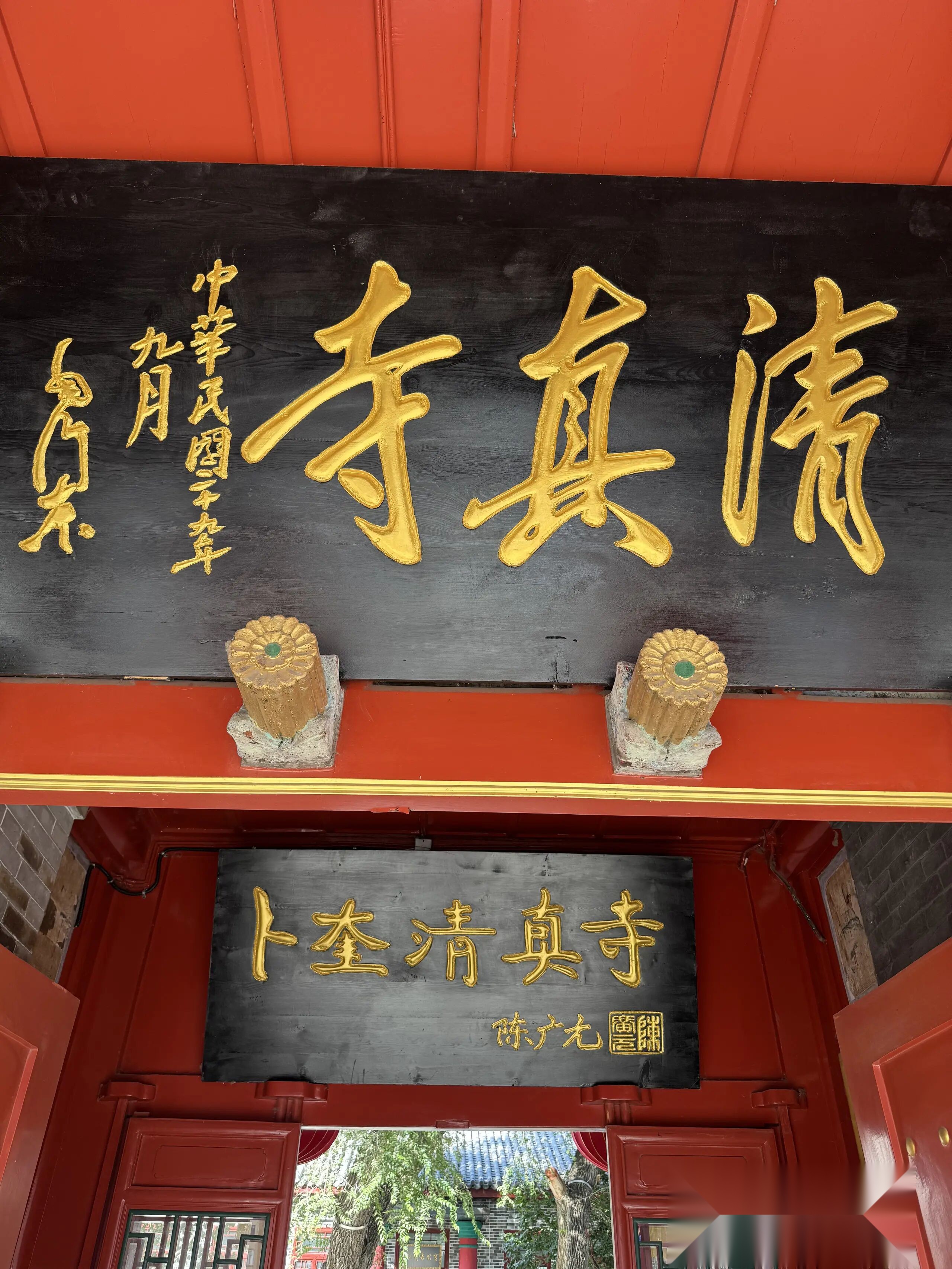
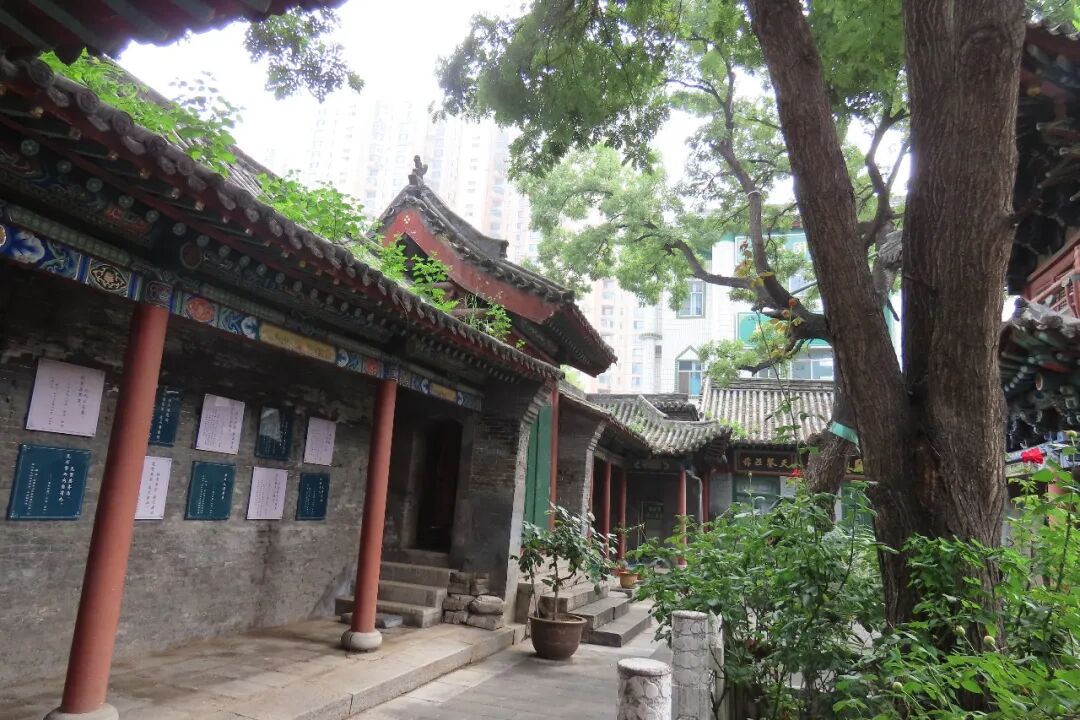
The Shengxin Tower stands right in the center of the courtyard facing the east gate. It’s a two-story structure with distinct, gracefully curved double-eaves. The ground floor is supported by inward-leaning red lacquered wooden pillars. Inside, there's a plaque written by the famous Ming scholar Fang Xiaoru; his cursive calligraphy is so dynamic, it looks like a dragon in motion.
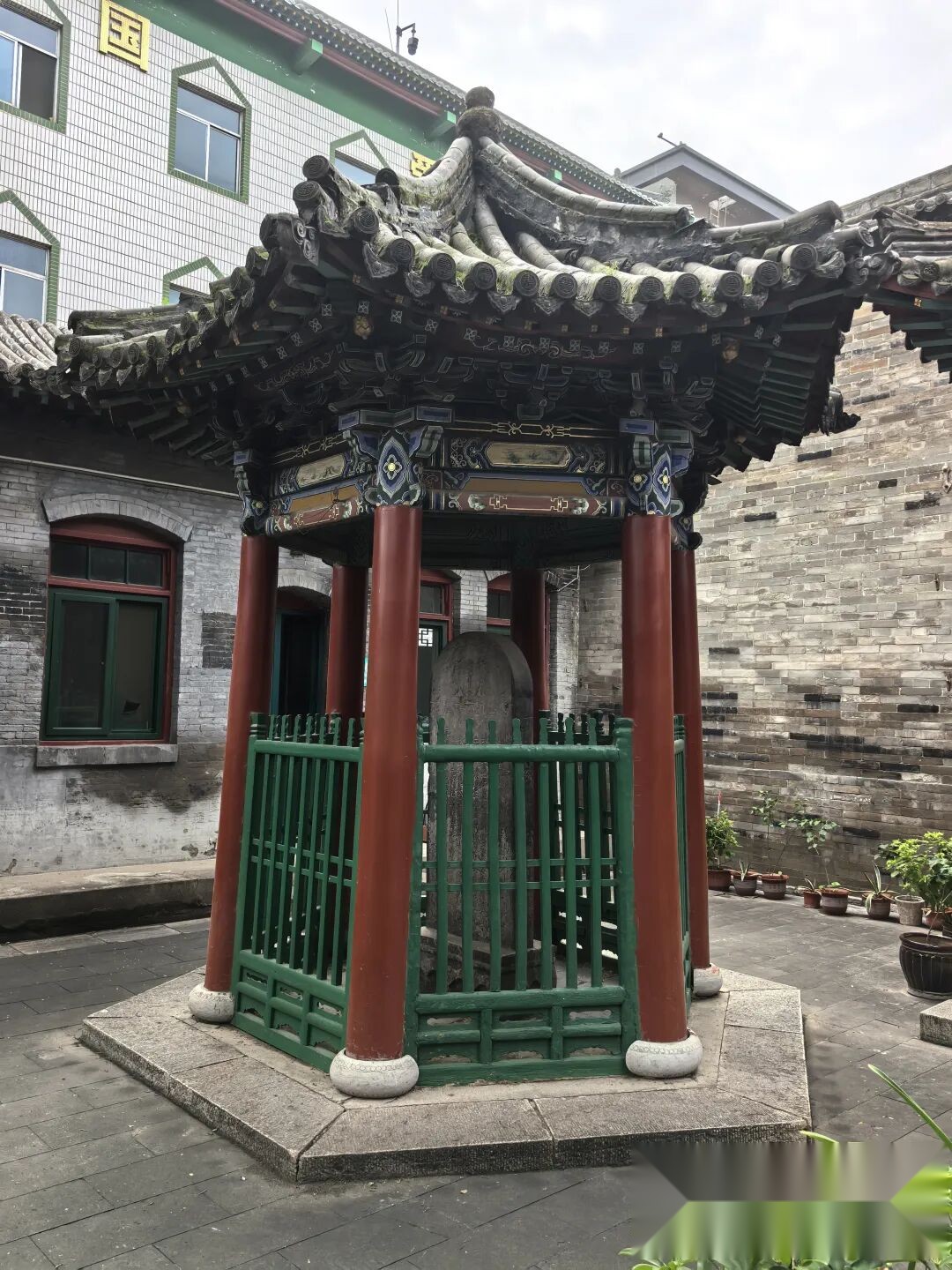
The north and south stone pavilions sit on either side of the Shengxin Tower. The south pavilion features an imperial 100-word poem dedicated to Islam by the Ming Dynasty founder, Emperor Zhu Yuanzhang. The back of the tablet holds an inscription by the Northern Song poet Huang Tingjian, praising the wisdom of Hui Muslim traditions. You’ll also find eight large, fluid, and elegant characters written by the famous Qing Dynasty calligrapher Liu Yong, emphasizing loyalty, filial piety, and benevolence.
South Tablet Pavilion.
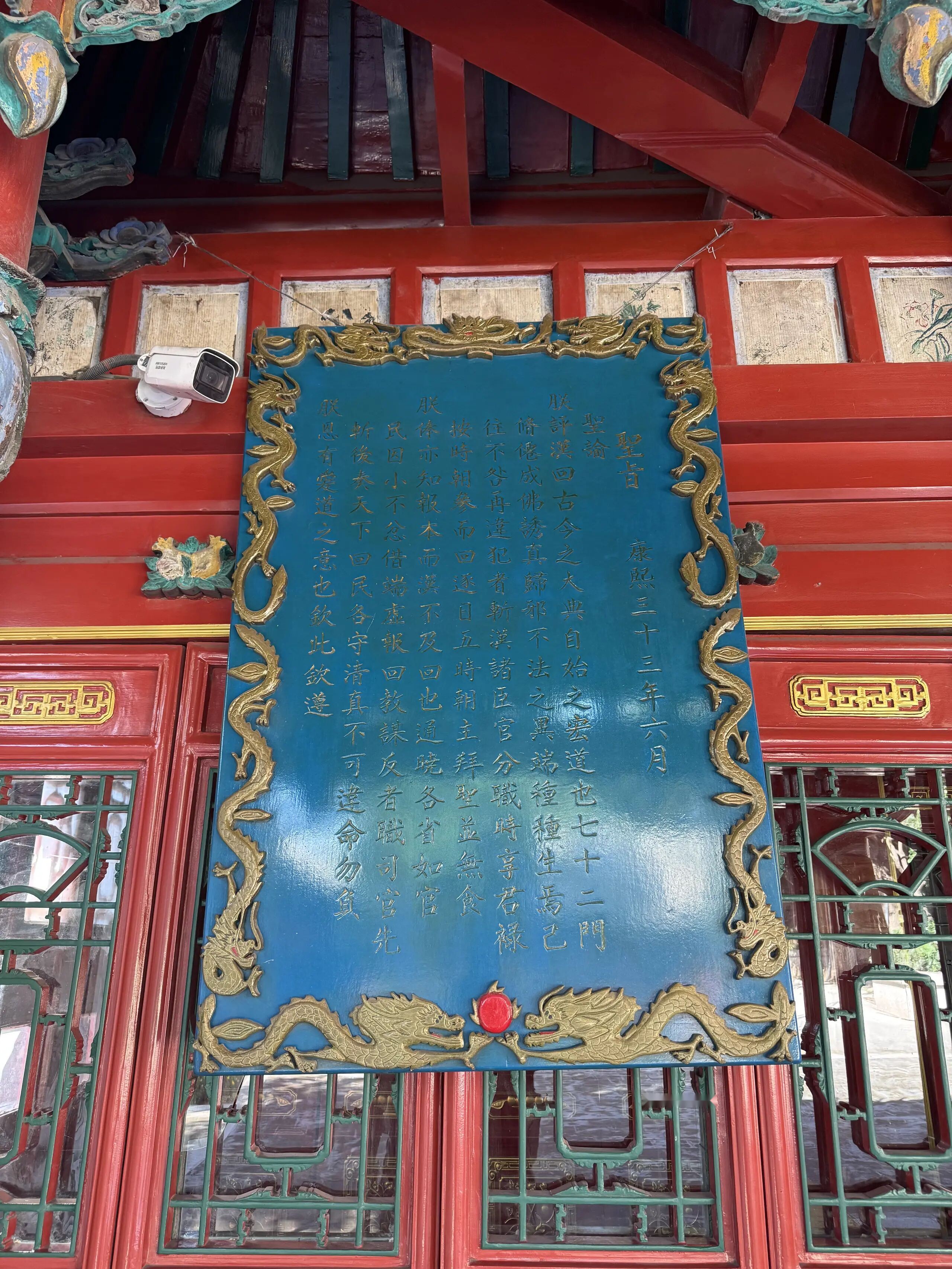
The north pavilion houses an imperial decree from 1695 during the Qing Kangxi era, specifically ordering the protection of the mosque, topped with a traditional chi-dragon head carving. The mosque is filled with antithetical couplets and plaques from Ming and Qing dignitaries and scholars. These pieces reflect the 'Yiru Huitong' (integration of Islamic and Confucian traditions) culture that thrived in Taiyuan during that time.
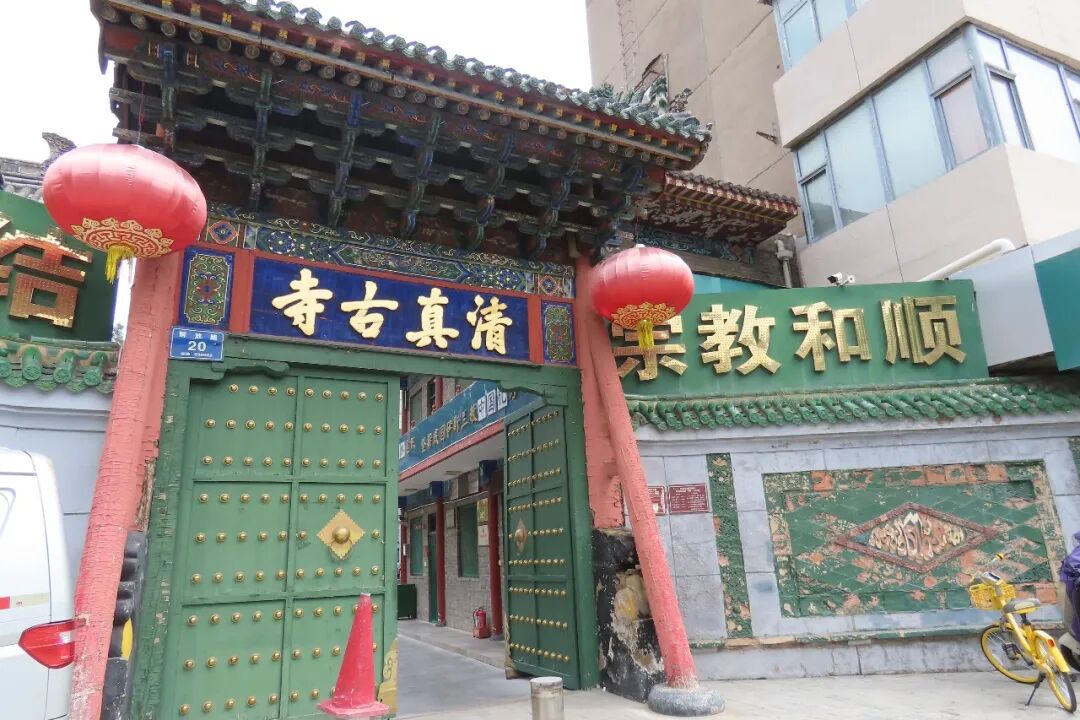
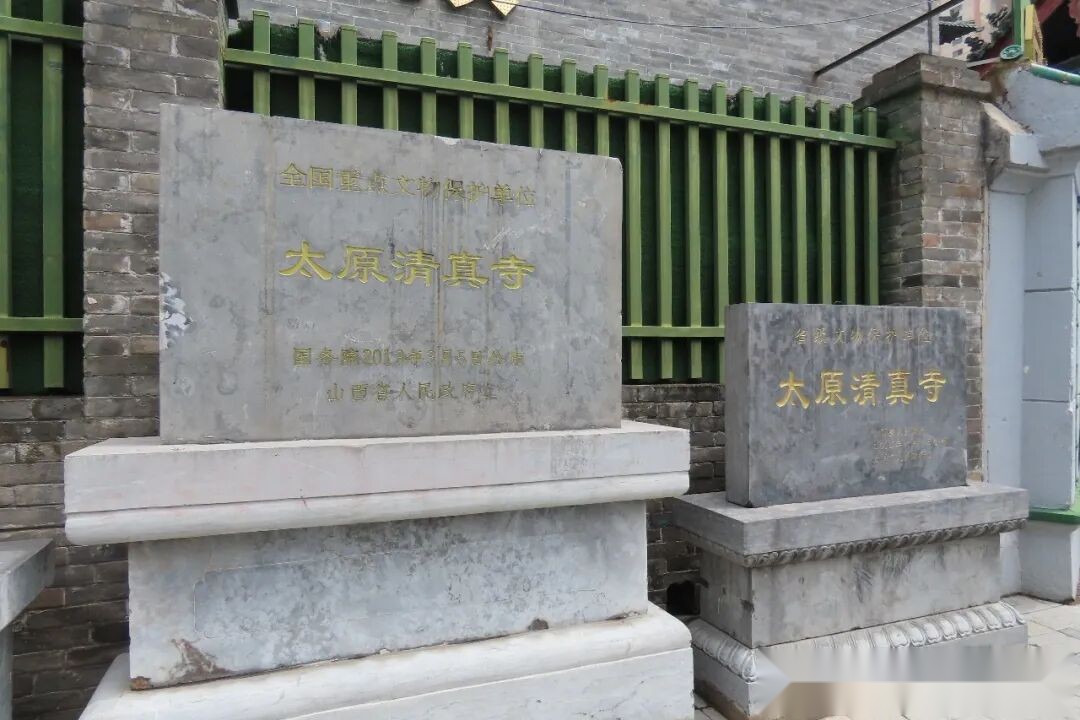
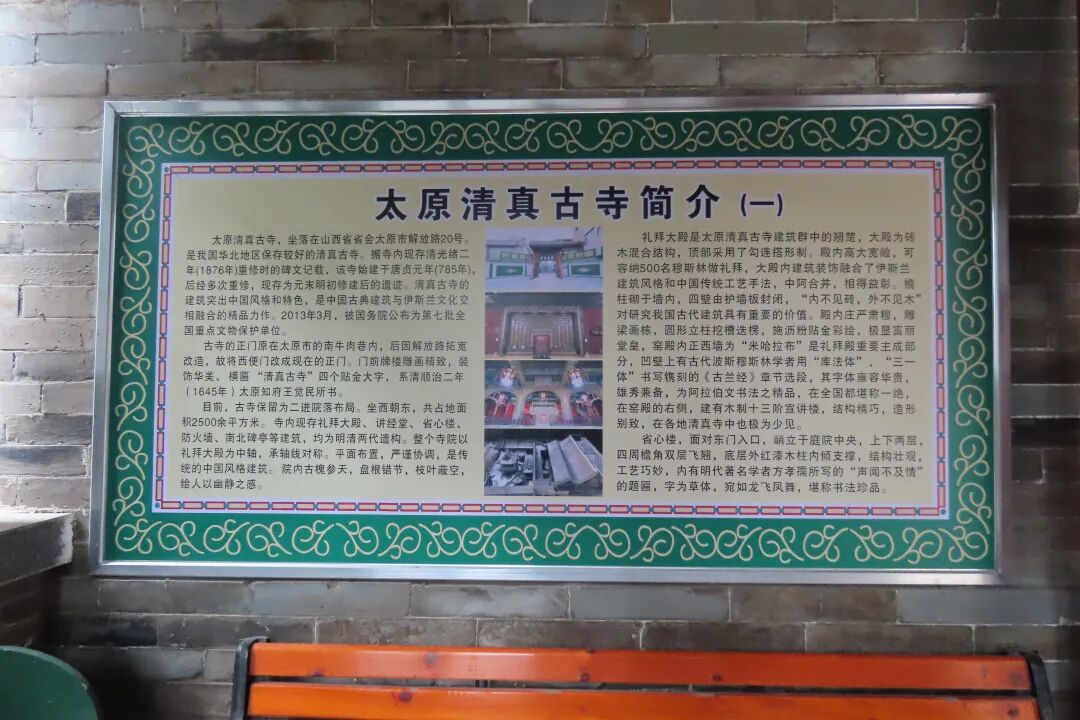
The Taiyuan Qingzhen Ancient Mosque is located at No. 20 Jiefang Road, Taiyuan, the capital of Shanxi Province. It’s one of the most well-preserved mosques in North China. An inscription from a 1876 renovation states that it was founded in 785 AD, with current remains largely dating back to the late Yuan and early Ming periods. It is a masterpiece of Chinese architectural style fused with Islamic culture and was officially designated a National Key Cultural Relic site in March 2013.
The original front gate used to be on South Niurou Alley, but it was moved to the current west-facing entrance during the expansion of Jiefang Road. The gate features a beautifully carved and ornate archway, topped with a plaque that reads 'Qingzhen Gu Si' (Ancient Mosque) in gold, written by Wang Juemin, the prefect of Taiyuan in 1645.
The mosque retains its two-courtyard layout today, covering over 2,500 square meters. The surviving structures—the prayer hall, lecture hall, Shengxin Tower, firewall, and pavilions—all date to the Ming and Qing dynasties. The layout is strictly symmetrical, following traditional Chinese architectural standards. The courtyard is peaceful, filled with old, towering pagoda trees whose branches provide cool shade.
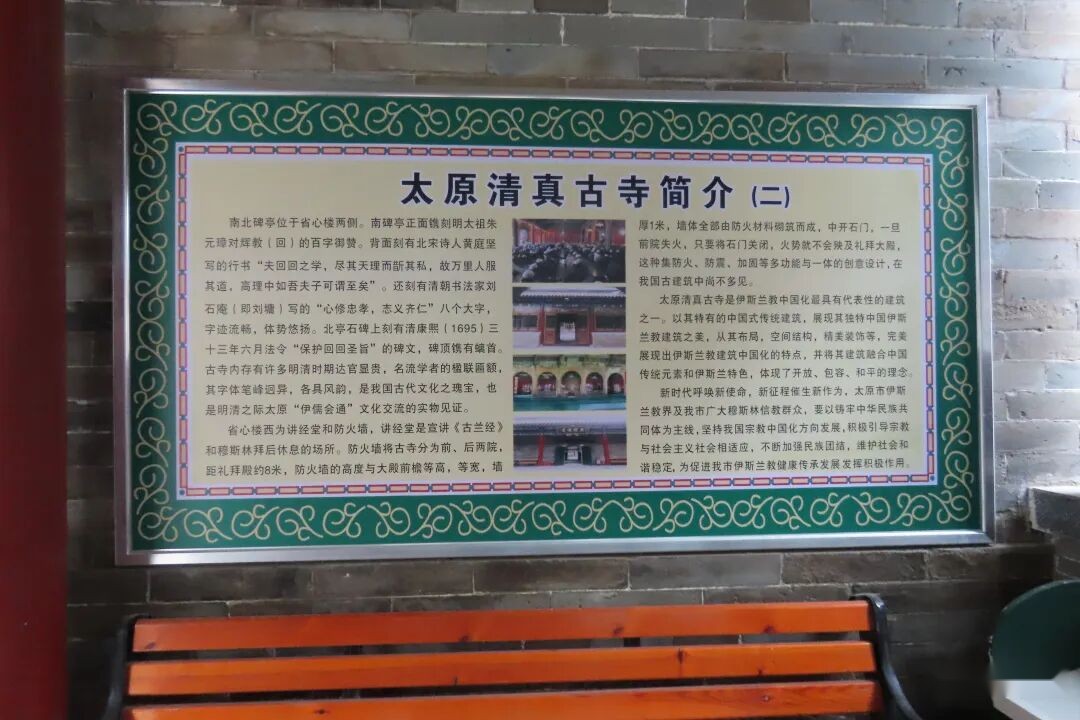
West of the Shengxin Tower are the lecture hall and the firewall. The hall is where the Quran is taught and where Muslims rest after prayer. The massive 1-meter-thick firewall separates the front and back courtyards; it stands as high and wide as the prayer hall’s eaves. It was built with fire-resistant materials and features a stone door—if a fire broke out in the front courtyard, closing this door would save the main hall. This clever design, which also helps with earthquake resistance, is incredibly rare in ancient Chinese architecture.
The Taiyuan Qingzhen Ancient Mosque is a prime example of the Sinicization of Islam. It beautifully showcases how Islamic architecture evolved in China, blending traditional Chinese spatial layout and decoration with Islamic spiritual identity. It is a powerful symbol of openness, tolerance, and peace.
In this new era, the Islamic community in Taiyuan continues to uphold the spirit of national unity and integration. By adhering to the direction of making Islam compatible with socialist society, the local Muslim community remains committed to promoting harmony and maintaining the healthy development of their faith traditions. view all
[Internet Repost]
We’re taking an up-close look at the Taiyuan Qingzhen Ancient Mosque (Taiyuan Great Mosque), a National Key Cultural Relic site located on Jiefang Road in the Yingze District. This breakdown covers its history dating back to the Tang Dynasty, the stunning double-eaved Shengxin Tower, its unique goulianda (interlocking) architectural structure, and the priceless collection of ancient stone inscriptions and plaques.
Located at No. 48 Jiefang Road in Taiyuan, the Taiyuan Qingzhen Ancient Mosque is a high-level cultural landmark and one of the best-preserved mosques in North China. According to historical records, it was first built during the Zhenyuan era of the Tang Dynasty. It has been renovated and expanded throughout the Song, Yuan, Ming, and Qing dynasties, with most of the current structures dating back to the Ming and Qing eras.
The mosque faces east and covers 2,121 square meters, featuring a two-courtyard layout. Along the central axis, you'll find the main gate, Shengxin Tower, the lecture hall, and the main prayer hall, flanked by stone tablet pavilions, imam quarters, and bathing rooms. The Shengxin Tower is famous for its intricate double-eaved, hip-and-gable roof. The prayer hall features a complex interlocking structure that blends traditional Chinese wood framing with Arabic Islamic aesthetics, complete with ornate paintings and Arabic script carvings. It’s a vital site for the local Hui Muslim community and a living testament to the harmony between Han and Hui cultures, holding immense value in history, architecture, and art.
The main prayer hall is the highlight of the complex. It’s a brick-and-wood structure with an intricate interlocking roof. The interior is huge, easily holding 500 people for dua (prayers). It’s a masterclass in blending Islamic and Chinese craftsmanship; the walls are fully paneled, hiding the structural wood and bricks in a technique known as 'neither brick nor wood visible.' The hall is grand, with gold-painted pillars and intricate carvings. The focal point is the mihrab (niche in the wall indicating the direction of Mecca) on the western wall, which features stunning Quranic verses in Kufic and Thuluth Arabic calligraphy—truly a rare find in China. To the right, you'll also find a rare 13-step wooden pulpit used for sermons.
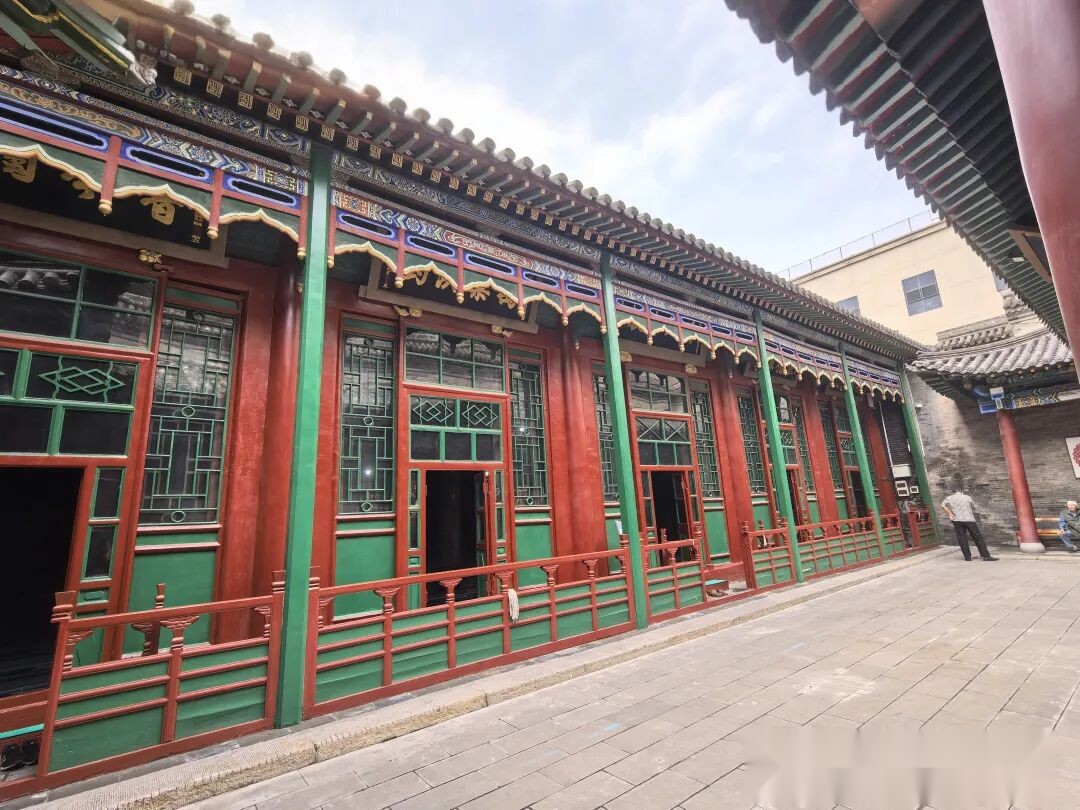
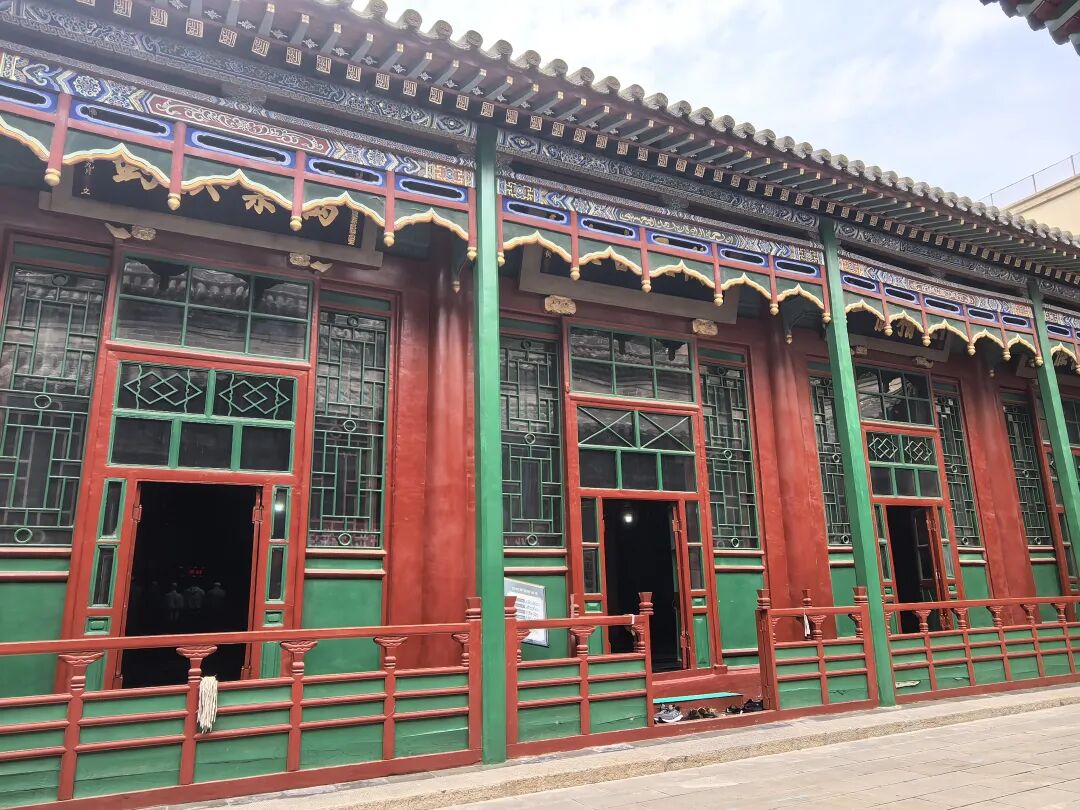
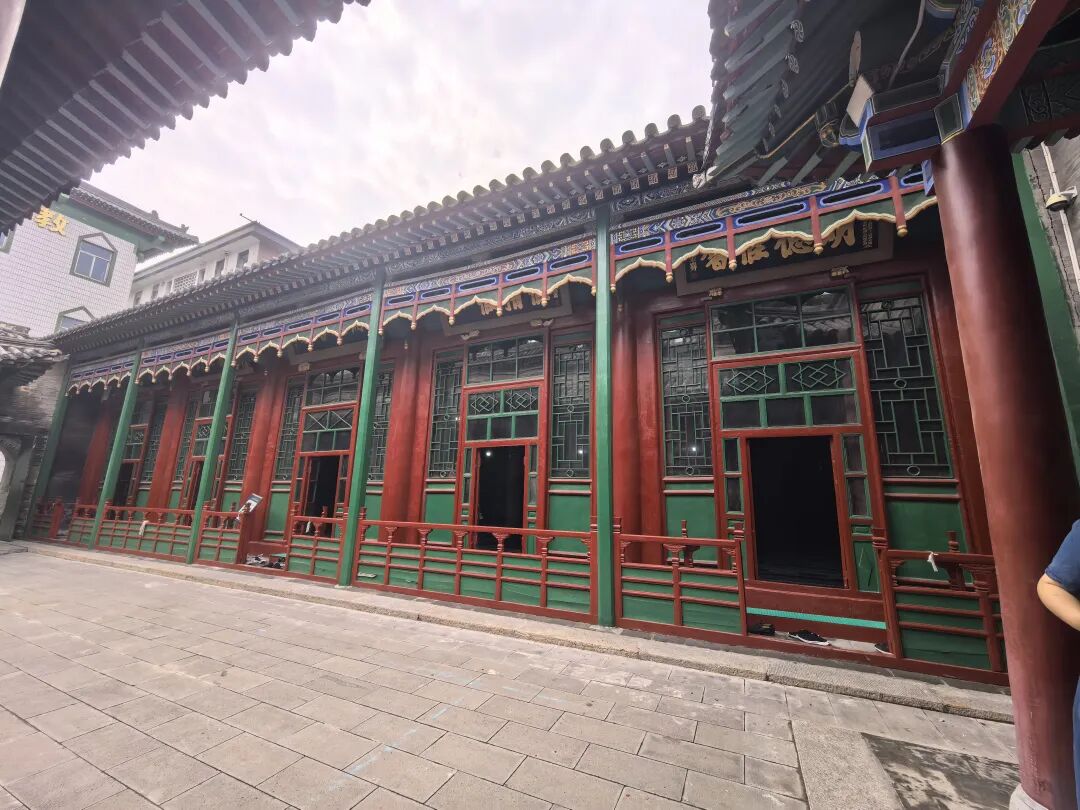
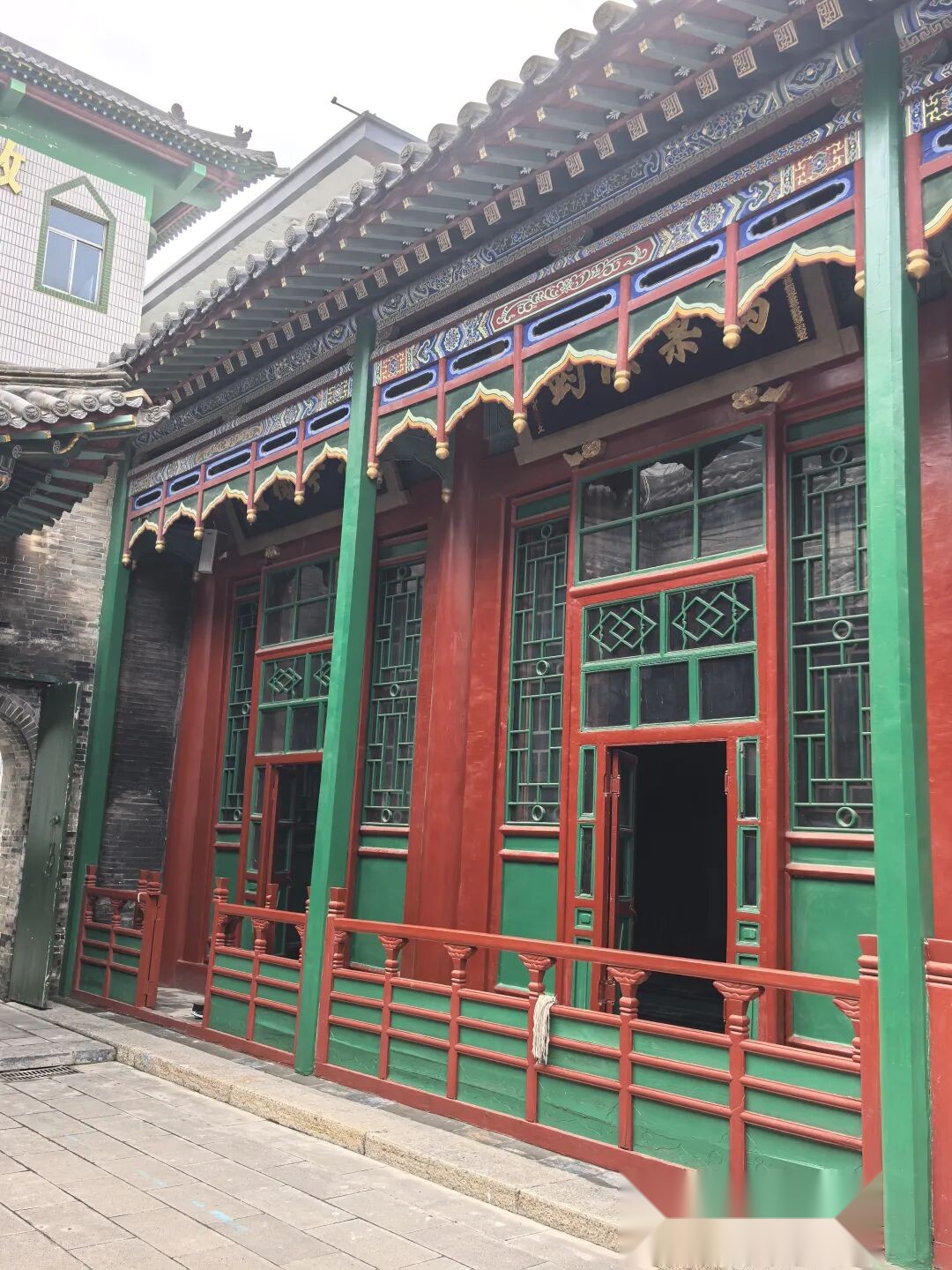
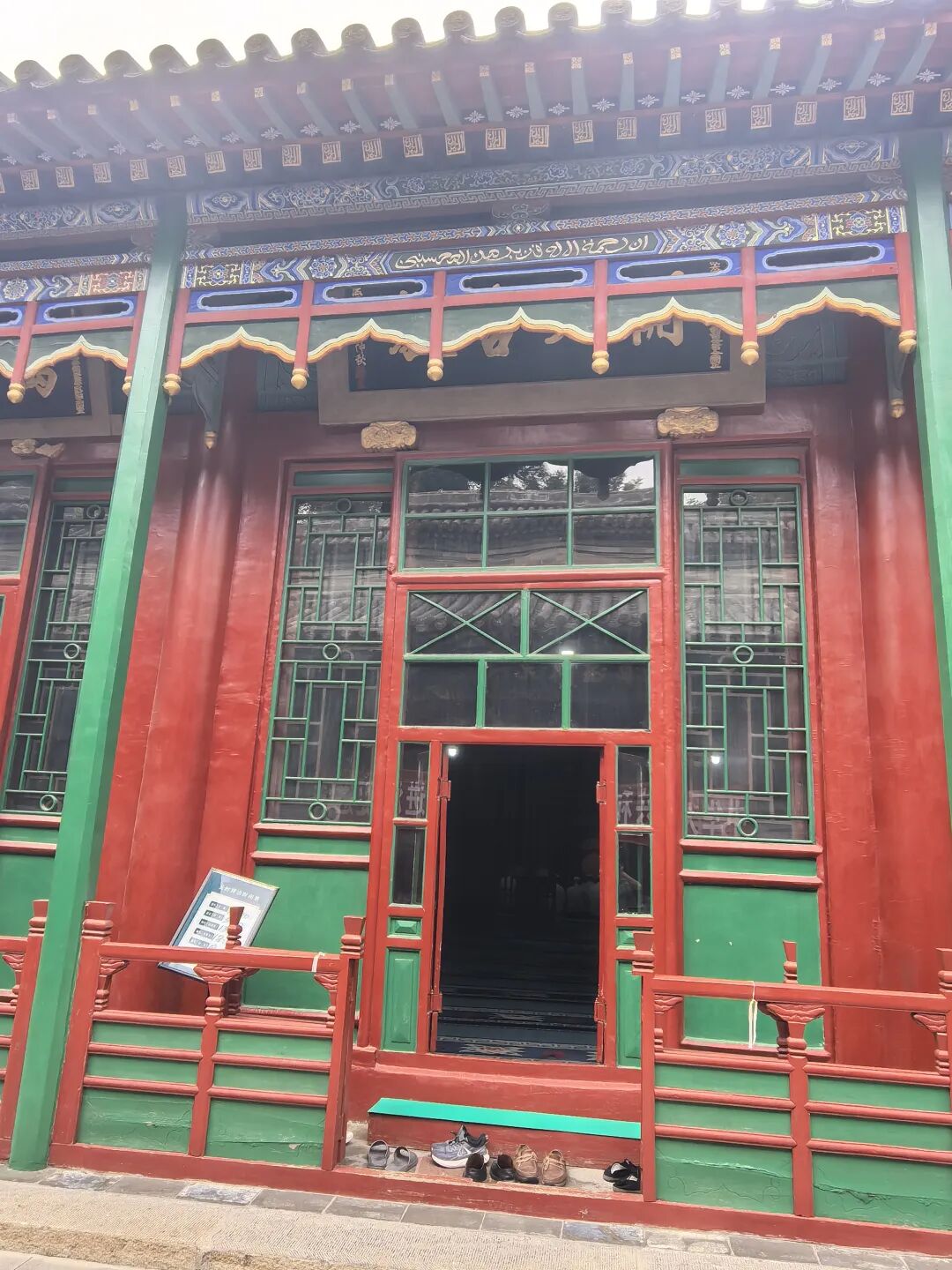
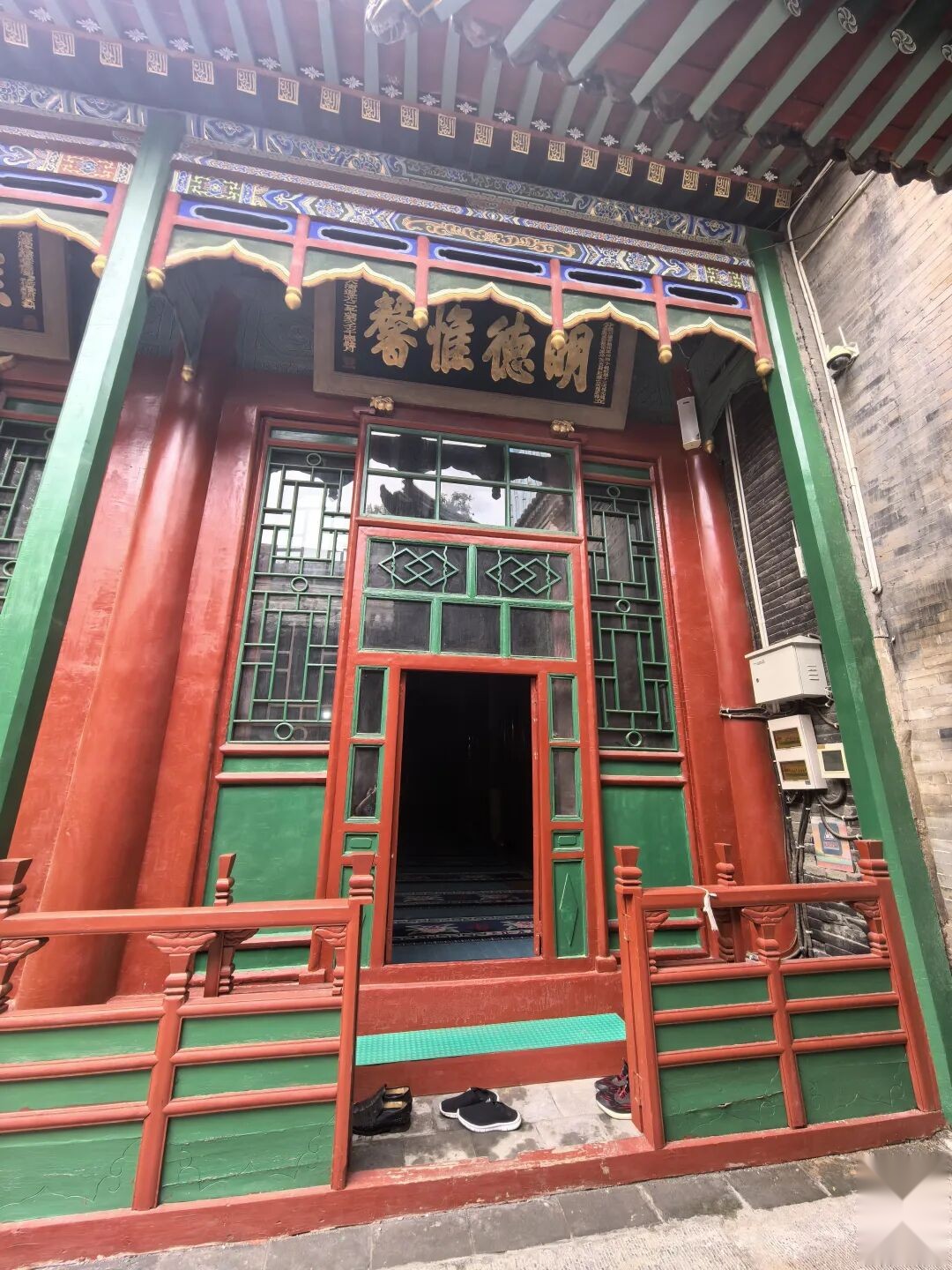
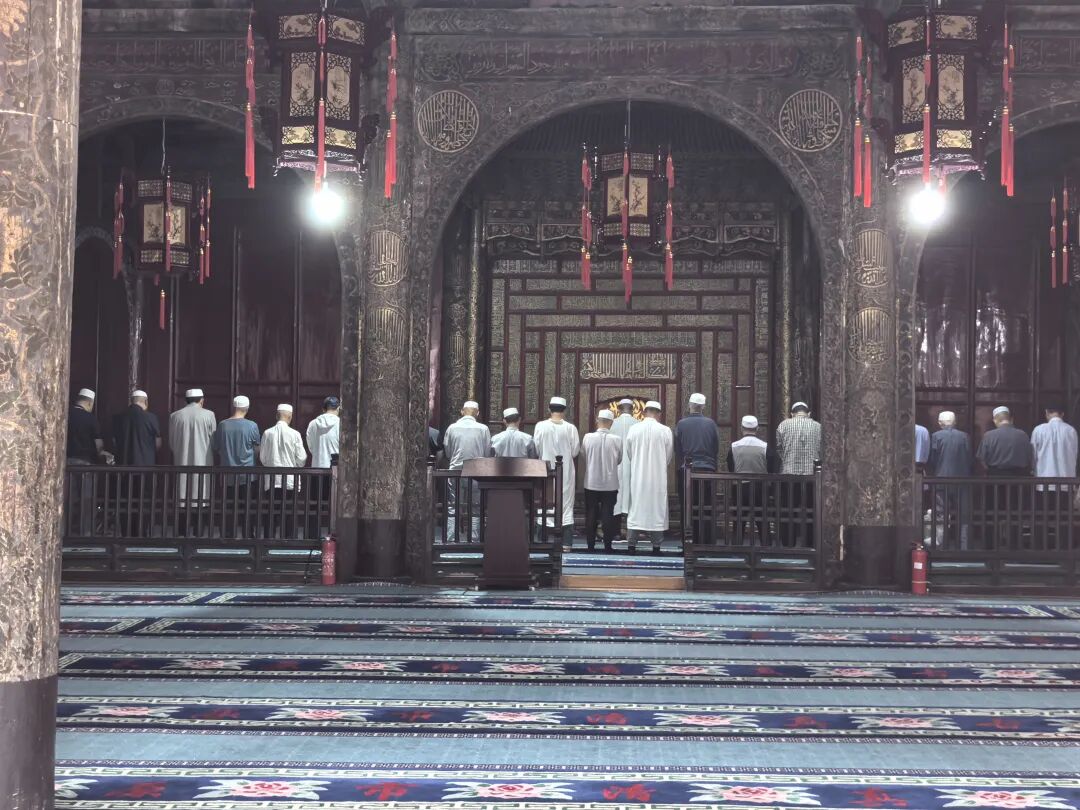
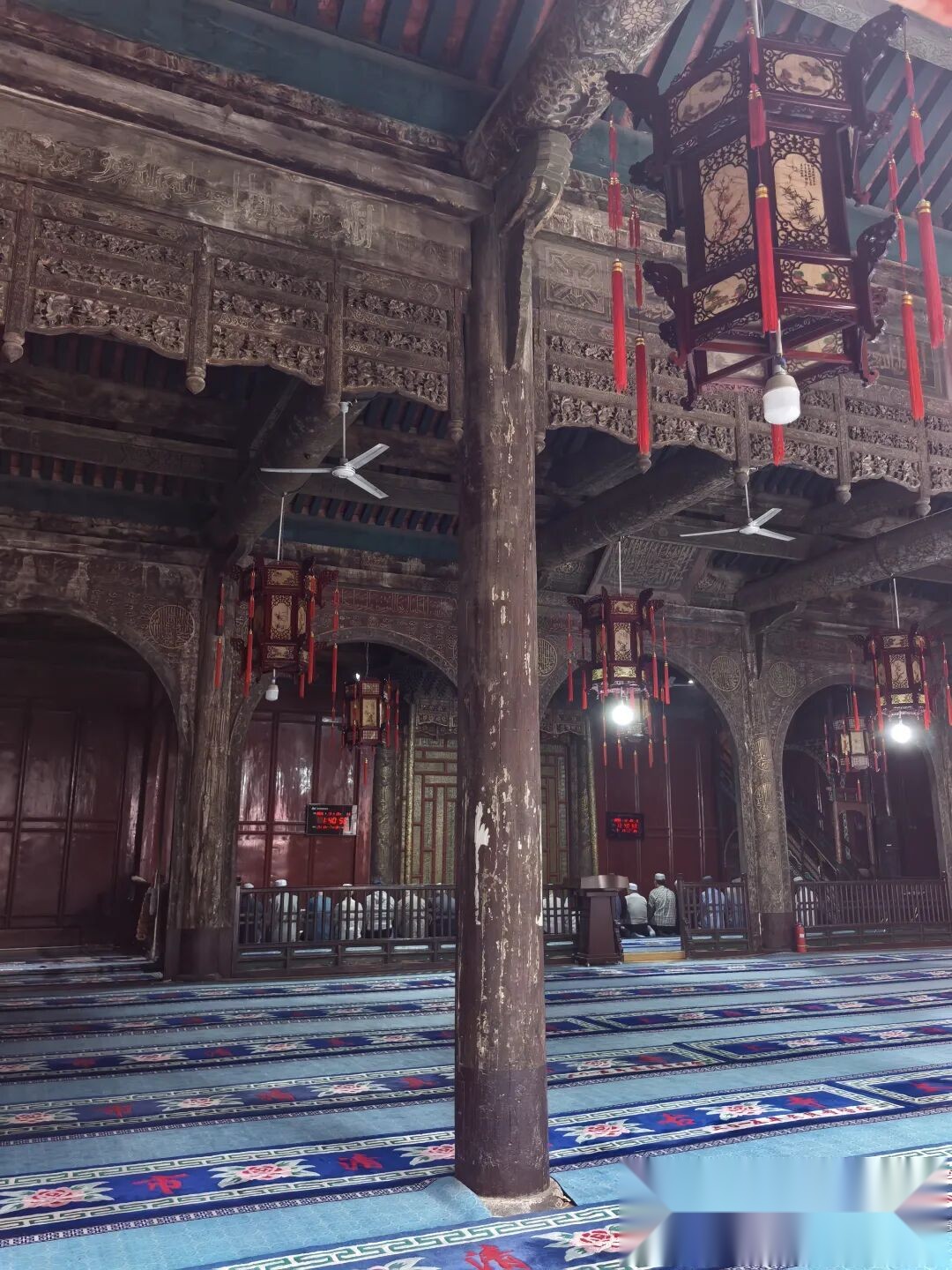
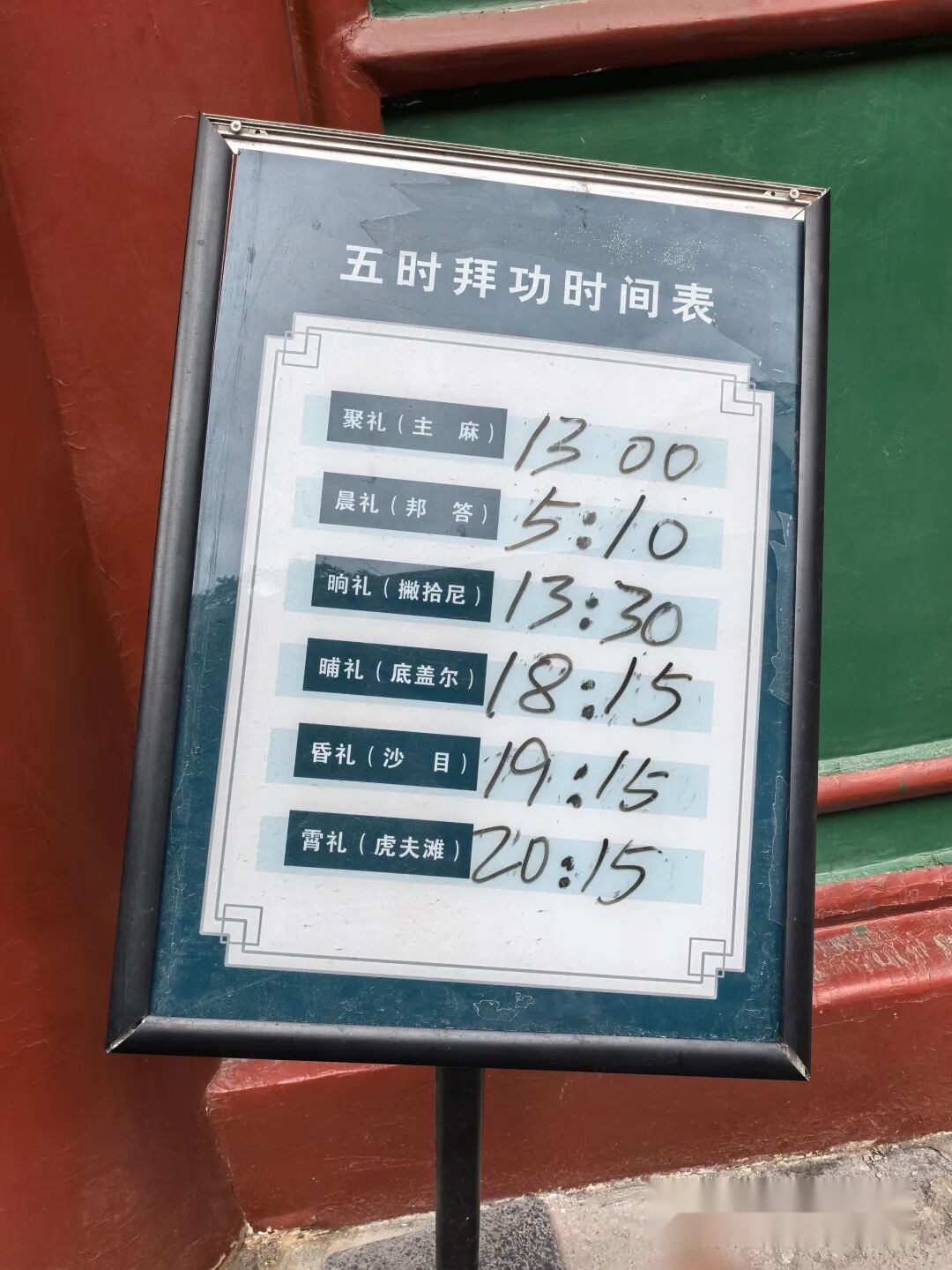
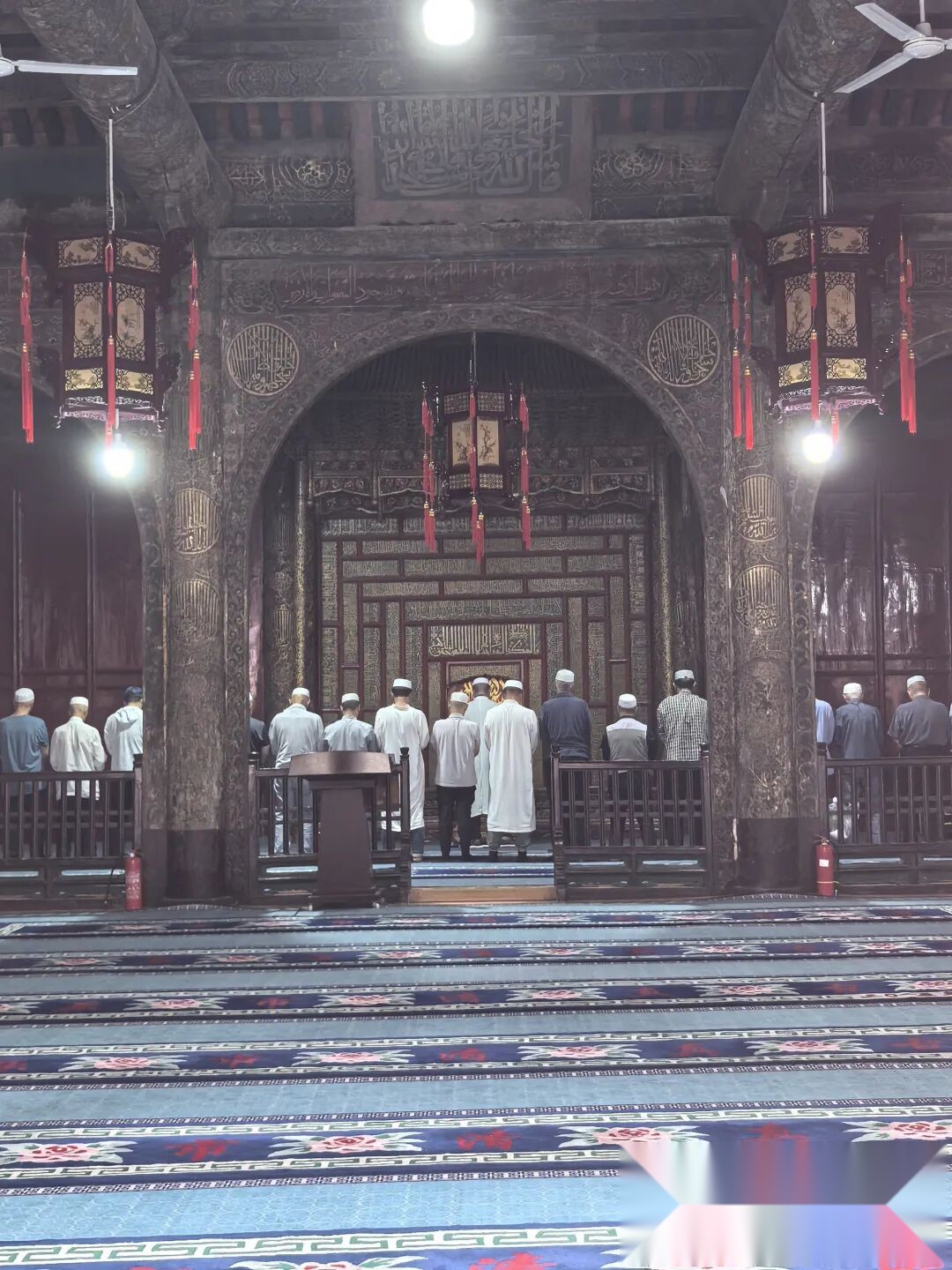
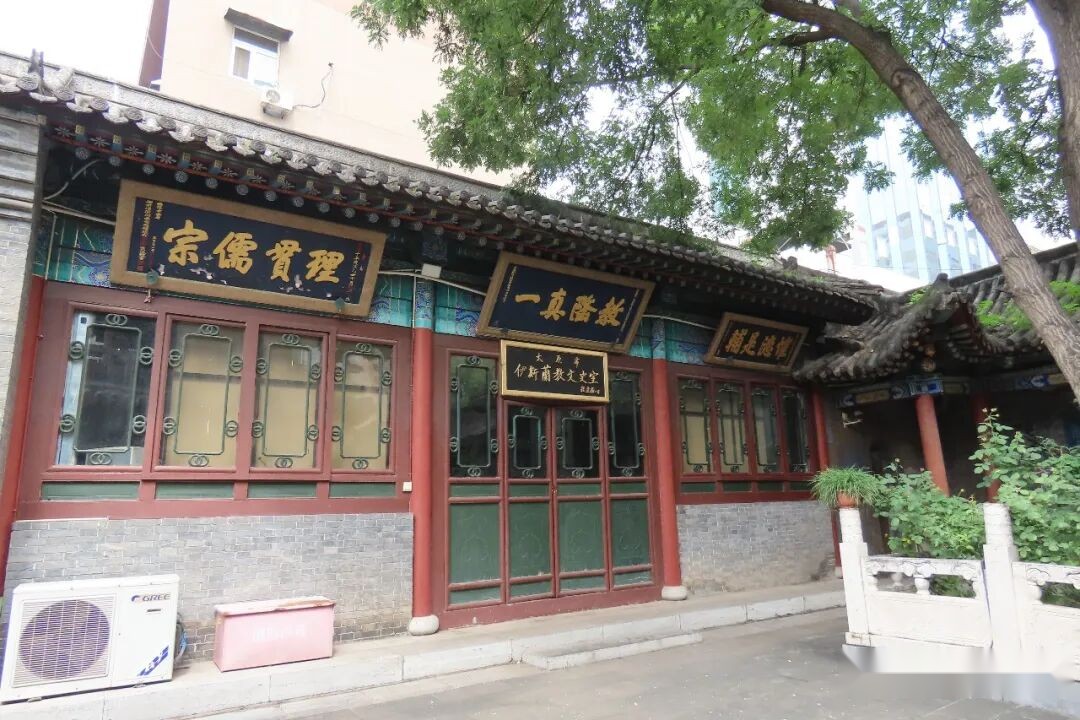
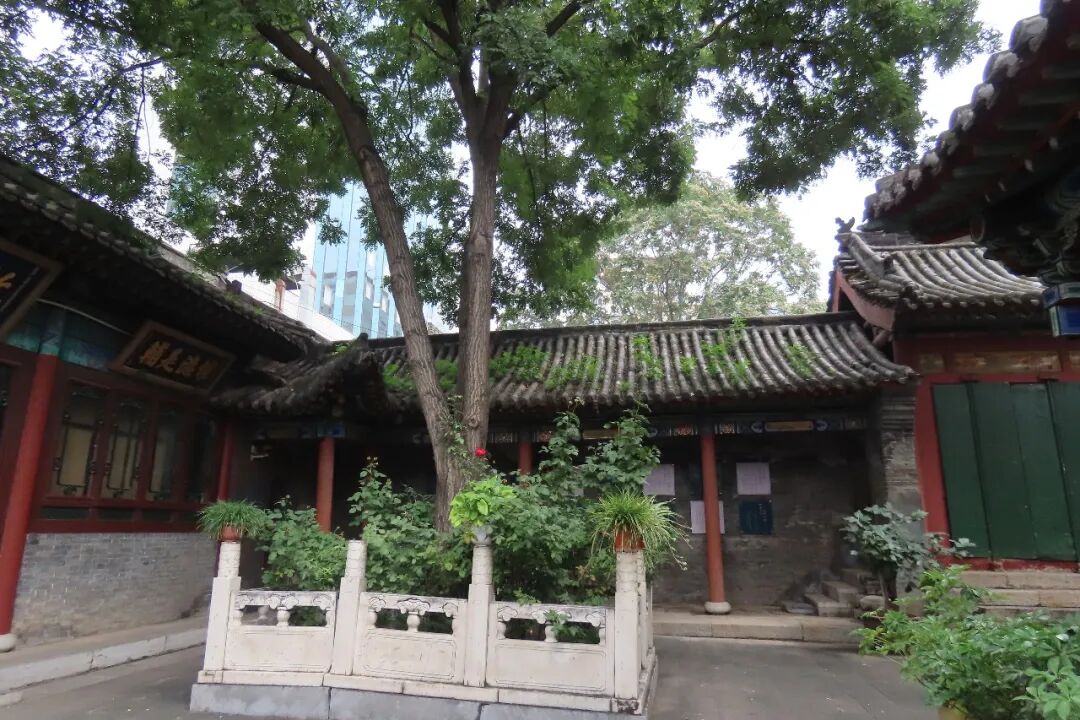
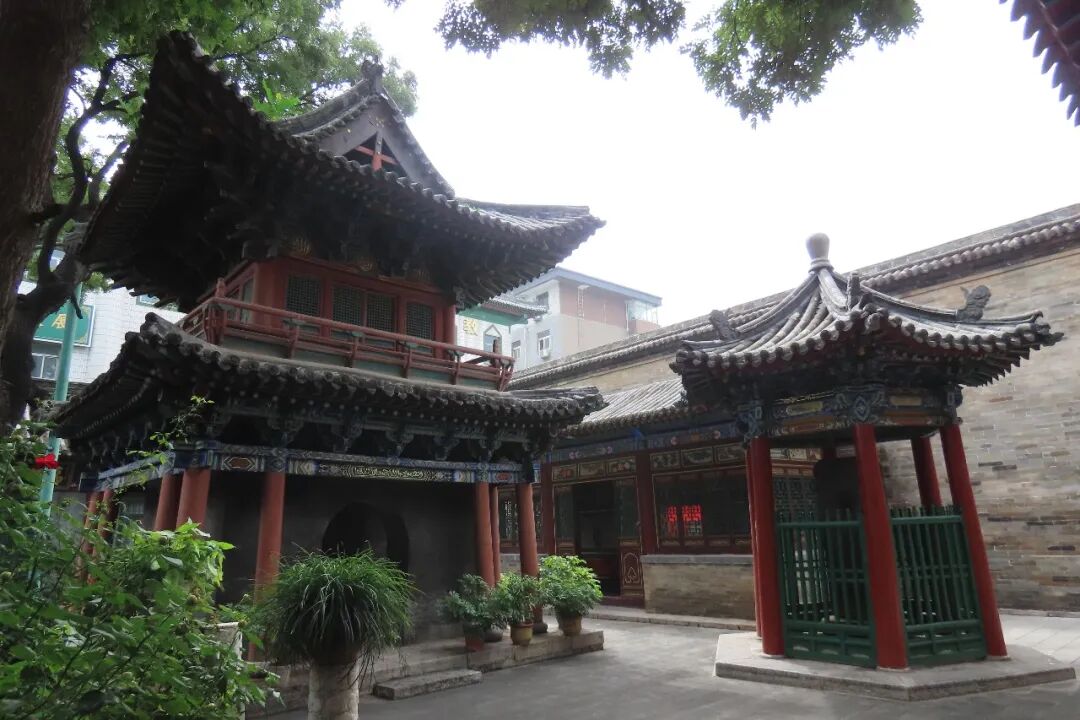
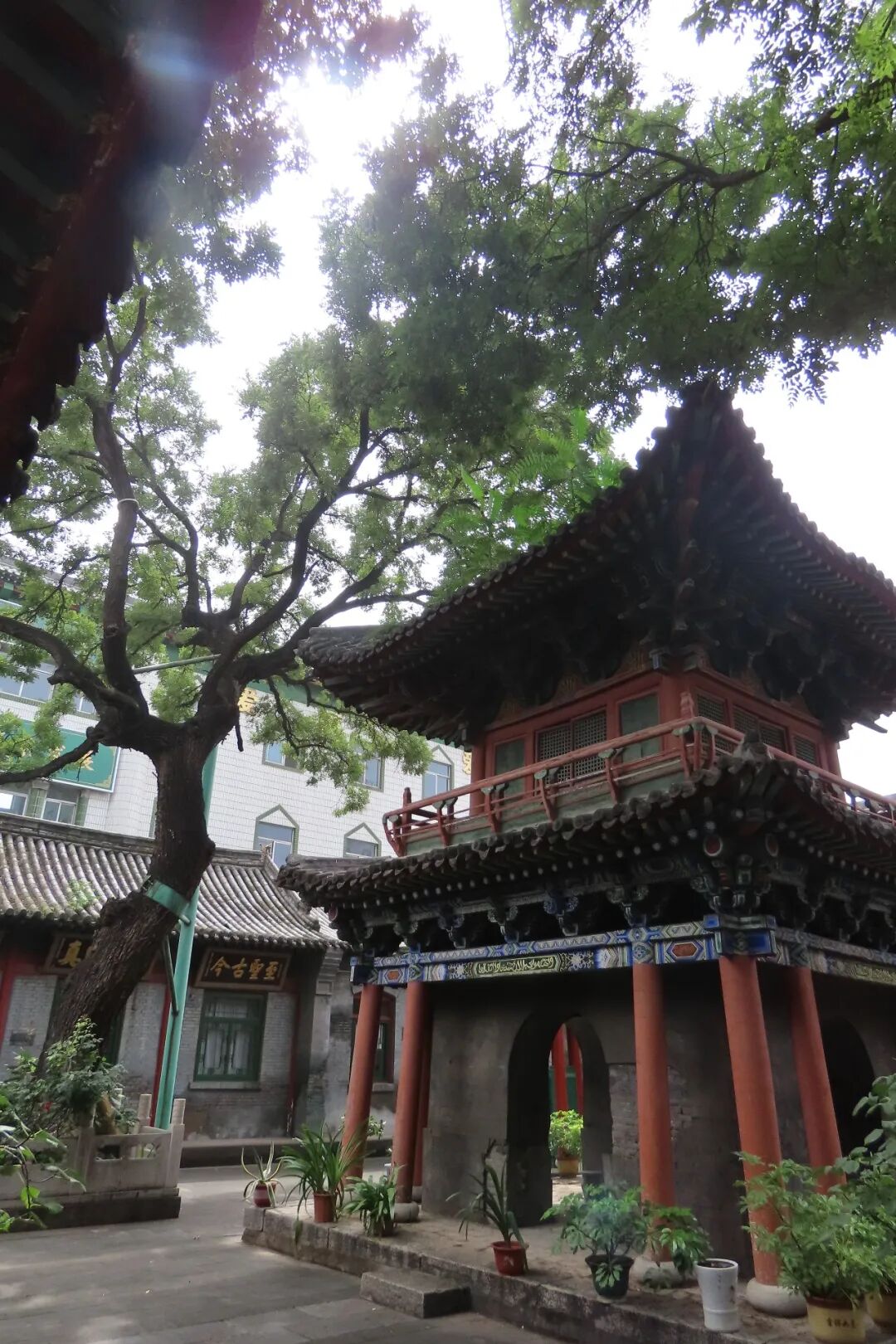
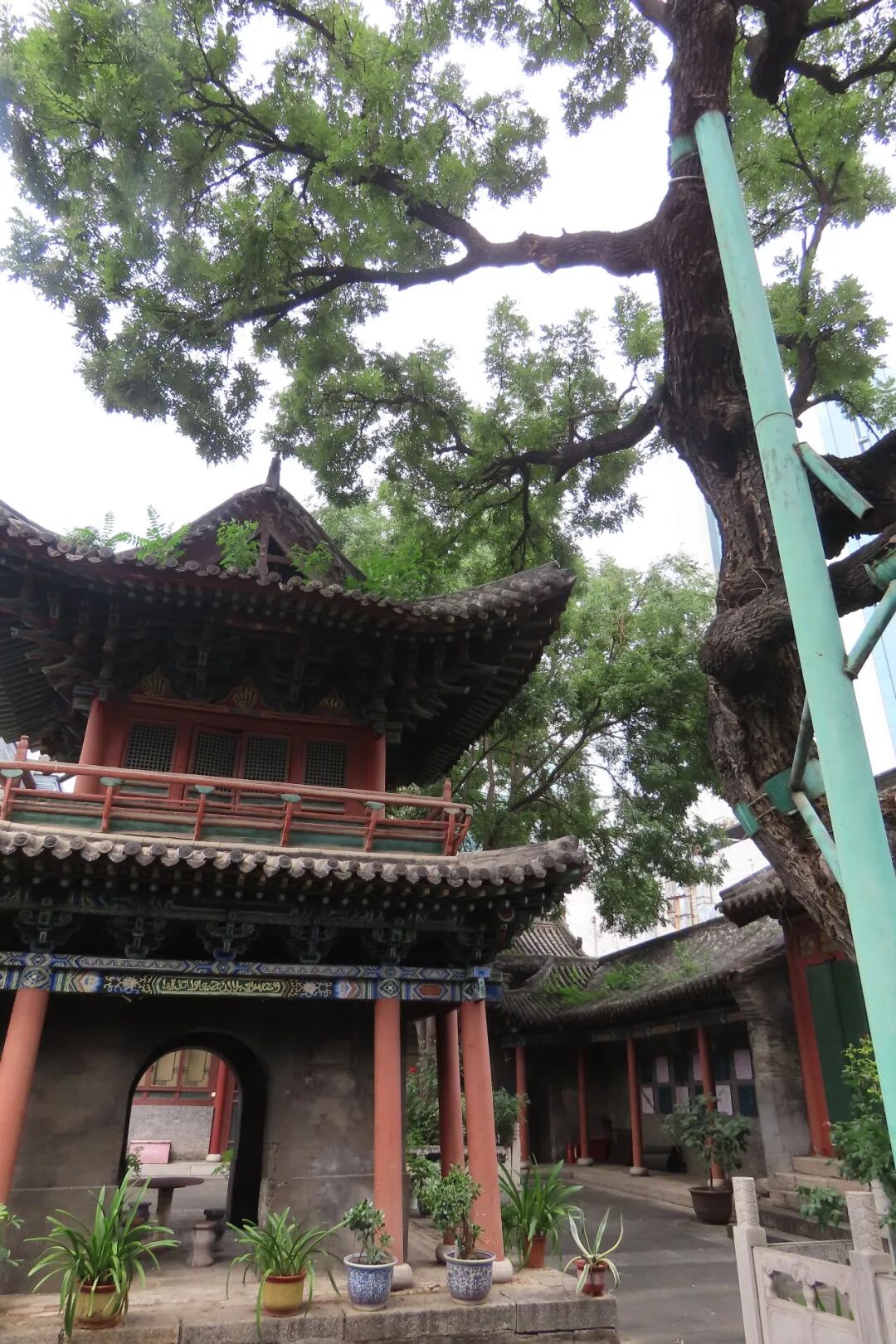
The Shengxin Tower stands right in the center of the courtyard facing the east gate. It’s a two-story structure with distinct, gracefully curved double-eaves. The ground floor is supported by inward-leaning red lacquered wooden pillars. Inside, there's a plaque written by the famous Ming scholar Fang Xiaoru; his cursive calligraphy is so dynamic, it looks like a dragon in motion.


The north and south stone pavilions sit on either side of the Shengxin Tower. The south pavilion features an imperial 100-word poem dedicated to Islam by the Ming Dynasty founder, Emperor Zhu Yuanzhang. The back of the tablet holds an inscription by the Northern Song poet Huang Tingjian, praising the wisdom of Hui Muslim traditions. You’ll also find eight large, fluid, and elegant characters written by the famous Qing Dynasty calligrapher Liu Yong, emphasizing loyalty, filial piety, and benevolence.
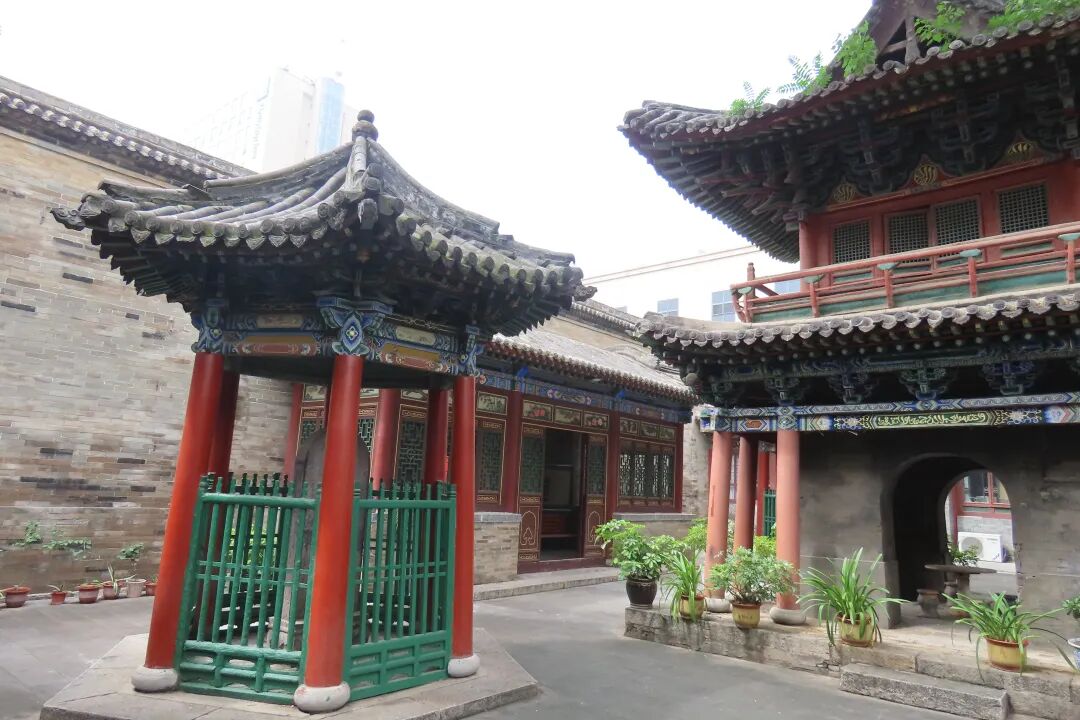
South Tablet Pavilion.
The north pavilion houses an imperial decree from 1695 during the Qing Kangxi era, specifically ordering the protection of the mosque, topped with a traditional chi-dragon head carving. The mosque is filled with antithetical couplets and plaques from Ming and Qing dignitaries and scholars. These pieces reflect the 'Yiru Huitong' (integration of Islamic and Confucian traditions) culture that thrived in Taiyuan during that time.
The Taiyuan Qingzhen Ancient Mosque is located at No. 20 Jiefang Road, Taiyuan, the capital of Shanxi Province. It’s one of the most well-preserved mosques in North China. An inscription from a 1876 renovation states that it was founded in 785 AD, with current remains largely dating back to the late Yuan and early Ming periods. It is a masterpiece of Chinese architectural style fused with Islamic culture and was officially designated a National Key Cultural Relic site in March 2013.
The original front gate used to be on South Niurou Alley, but it was moved to the current west-facing entrance during the expansion of Jiefang Road. The gate features a beautifully carved and ornate archway, topped with a plaque that reads 'Qingzhen Gu Si' (Ancient Mosque) in gold, written by Wang Juemin, the prefect of Taiyuan in 1645.
The mosque retains its two-courtyard layout today, covering over 2,500 square meters. The surviving structures—the prayer hall, lecture hall, Shengxin Tower, firewall, and pavilions—all date to the Ming and Qing dynasties. The layout is strictly symmetrical, following traditional Chinese architectural standards. The courtyard is peaceful, filled with old, towering pagoda trees whose branches provide cool shade.
West of the Shengxin Tower are the lecture hall and the firewall. The hall is where the Quran is taught and where Muslims rest after prayer. The massive 1-meter-thick firewall separates the front and back courtyards; it stands as high and wide as the prayer hall’s eaves. It was built with fire-resistant materials and features a stone door—if a fire broke out in the front courtyard, closing this door would save the main hall. This clever design, which also helps with earthquake resistance, is incredibly rare in ancient Chinese architecture.
The Taiyuan Qingzhen Ancient Mosque is a prime example of the Sinicization of Islam. It beautifully showcases how Islamic architecture evolved in China, blending traditional Chinese spatial layout and decoration with Islamic spiritual identity. It is a powerful symbol of openness, tolerance, and peace.
In this new era, the Islamic community in Taiyuan continues to uphold the spirit of national unity and integration. By adhering to the direction of making Islam compatible with socialist society, the local Muslim community remains committed to promoting harmony and maintaining the healthy development of their faith traditions.
We’re taking an up-close look at the Taiyuan Qingzhen Ancient Mosque (Taiyuan Great Mosque), a National Key Cultural Relic site located on Jiefang Road in the Yingze District. This breakdown covers its history dating back to the Tang Dynasty, the stunning double-eaved Shengxin Tower, its unique goulianda (interlocking) architectural structure, and the priceless collection of ancient stone inscriptions and plaques.
Located at No. 48 Jiefang Road in Taiyuan, the Taiyuan Qingzhen Ancient Mosque is a high-level cultural landmark and one of the best-preserved mosques in North China. According to historical records, it was first built during the Zhenyuan era of the Tang Dynasty. It has been renovated and expanded throughout the Song, Yuan, Ming, and Qing dynasties, with most of the current structures dating back to the Ming and Qing eras.
The mosque faces east and covers 2,121 square meters, featuring a two-courtyard layout. Along the central axis, you'll find the main gate, Shengxin Tower, the lecture hall, and the main prayer hall, flanked by stone tablet pavilions, imam quarters, and bathing rooms. The Shengxin Tower is famous for its intricate double-eaved, hip-and-gable roof. The prayer hall features a complex interlocking structure that blends traditional Chinese wood framing with Arabic Islamic aesthetics, complete with ornate paintings and Arabic script carvings. It’s a vital site for the local Hui Muslim community and a living testament to the harmony between Han and Hui cultures, holding immense value in history, architecture, and art.
The main prayer hall is the highlight of the complex. It’s a brick-and-wood structure with an intricate interlocking roof. The interior is huge, easily holding 500 people for dua (prayers). It’s a masterclass in blending Islamic and Chinese craftsmanship; the walls are fully paneled, hiding the structural wood and bricks in a technique known as 'neither brick nor wood visible.' The hall is grand, with gold-painted pillars and intricate carvings. The focal point is the mihrab (niche in the wall indicating the direction of Mecca) on the western wall, which features stunning Quranic verses in Kufic and Thuluth Arabic calligraphy—truly a rare find in China. To the right, you'll also find a rare 13-step wooden pulpit used for sermons.
The Shengxin Tower stands right in the center of the courtyard facing the east gate. It’s a two-story structure with distinct, gracefully curved double-eaves. The ground floor is supported by inward-leaning red lacquered wooden pillars. Inside, there's a plaque written by the famous Ming scholar Fang Xiaoru; his cursive calligraphy is so dynamic, it looks like a dragon in motion.
The north and south stone pavilions sit on either side of the Shengxin Tower. The south pavilion features an imperial 100-word poem dedicated to Islam by the Ming Dynasty founder, Emperor Zhu Yuanzhang. The back of the tablet holds an inscription by the Northern Song poet Huang Tingjian, praising the wisdom of Hui Muslim traditions. You’ll also find eight large, fluid, and elegant characters written by the famous Qing Dynasty calligrapher Liu Yong, emphasizing loyalty, filial piety, and benevolence.
South Tablet Pavilion.
The north pavilion houses an imperial decree from 1695 during the Qing Kangxi era, specifically ordering the protection of the mosque, topped with a traditional chi-dragon head carving. The mosque is filled with antithetical couplets and plaques from Ming and Qing dignitaries and scholars. These pieces reflect the 'Yiru Huitong' (integration of Islamic and Confucian traditions) culture that thrived in Taiyuan during that time.
The Taiyuan Qingzhen Ancient Mosque is located at No. 20 Jiefang Road, Taiyuan, the capital of Shanxi Province. It’s one of the most well-preserved mosques in North China. An inscription from a 1876 renovation states that it was founded in 785 AD, with current remains largely dating back to the late Yuan and early Ming periods. It is a masterpiece of Chinese architectural style fused with Islamic culture and was officially designated a National Key Cultural Relic site in March 2013.
The original front gate used to be on South Niurou Alley, but it was moved to the current west-facing entrance during the expansion of Jiefang Road. The gate features a beautifully carved and ornate archway, topped with a plaque that reads 'Qingzhen Gu Si' (Ancient Mosque) in gold, written by Wang Juemin, the prefect of Taiyuan in 1645.
The mosque retains its two-courtyard layout today, covering over 2,500 square meters. The surviving structures—the prayer hall, lecture hall, Shengxin Tower, firewall, and pavilions—all date to the Ming and Qing dynasties. The layout is strictly symmetrical, following traditional Chinese architectural standards. The courtyard is peaceful, filled with old, towering pagoda trees whose branches provide cool shade.
West of the Shengxin Tower are the lecture hall and the firewall. The hall is where the Quran is taught and where Muslims rest after prayer. The massive 1-meter-thick firewall separates the front and back courtyards; it stands as high and wide as the prayer hall’s eaves. It was built with fire-resistant materials and features a stone door—if a fire broke out in the front courtyard, closing this door would save the main hall. This clever design, which also helps with earthquake resistance, is incredibly rare in ancient Chinese architecture.
The Taiyuan Qingzhen Ancient Mosque is a prime example of the Sinicization of Islam. It beautifully showcases how Islamic architecture evolved in China, blending traditional Chinese spatial layout and decoration with Islamic spiritual identity. It is a powerful symbol of openness, tolerance, and peace.
In this new era, the Islamic community in Taiyuan continues to uphold the spirit of national unity and integration. By adhering to the direction of making Islam compatible with socialist society, the local Muslim community remains committed to promoting harmony and maintaining the healthy development of their faith traditions.
Qiqihar Bukui Mosque History: Discover the 300-Year-Old Islamic Heritage in Heilongjiang
Articles • Hasan09 posted the article • 0 comments • 8 views • 9 hours ago
[Internet Repost]
Explore the Bukui Mosque in Qiqihar (formerly known as Bukui), which was founded in 1684 during the 23rd year of the Kangxi Emperor's reign. Discover the history behind the merging of the East and West mosques, the aesthetic of the traditional Chinese brick-and-wood feiyan dougong (flying eaves and brackets), and the story of how the mosque was awarded the 'Ji Gong Hao Yi' (eager for public good and righteousness) plaque for its dedication to charity and education during the Qing Dynasty.
There’s a local saying: 'First came the mosque, then the city of Bukui.'
Bukui is the old name for Qiqihar. It comes from the Daur language, originally the name of a tribal leader meaning 'warrior,' but it eventually became the name of the place.
As for the mosque, it's actually divided into the East Mosque and the West Mosque.
Back in 1684, a group of Hui Muslims who had arrived in Bukui with the frontier garrison pooled their money to build five thatched cottages to use for dua (prayer)—that was the original East Mosque.
The West Mosque came a bit later. It was built by another group of Muslims who migrated to Bukui, and it was located right next to the East Mosque.
Because the two mosques were built right next to each other with similar layouts and only a wall separating them, they eventually merged into what we now know as the Bukui Mosque.
The coolest thing about this place is the architecture itself.
When people think of mosques, they usually picture exotic, foreign styles. But the Bukui Mosque is different—it’s a classic example of traditional Chinese brick-and-wood architecture.
With its feiyan dougong (traditional flying eaves and brackets) and gray-tiled roofs, it looks a lot like a northern Chinese temple, but the details hold unique Islamic characteristics, showing how two cultures slowly blended together.
During the Guangxu era, the mosque took the lead in opening a charity school to help local kids get an education. Because of their commitment to community service, the imperial court awarded them a plaque that read 'Ji Gong Hao Yi' (eager for public good and righteousness), which stands as a historical record of ethnic unity.
For over three hundred years, it hasn't just been a place for dua (prayer); it has been the heart of life, mutual aid, and community roots in the city of Bukui. view all
Explore the Bukui Mosque in Qiqihar (formerly known as Bukui), which was founded in 1684 during the 23rd year of the Kangxi Emperor's reign. Discover the history behind the merging of the East and West mosques, the aesthetic of the traditional Chinese brick-and-wood feiyan dougong (flying eaves and brackets), and the story of how the mosque was awarded the 'Ji Gong Hao Yi' (eager for public good and righteousness) plaque for its dedication to charity and education during the Qing Dynasty.
There’s a local saying: 'First came the mosque, then the city of Bukui.'
Bukui is the old name for Qiqihar. It comes from the Daur language, originally the name of a tribal leader meaning 'warrior,' but it eventually became the name of the place.
As for the mosque, it's actually divided into the East Mosque and the West Mosque.
Back in 1684, a group of Hui Muslims who had arrived in Bukui with the frontier garrison pooled their money to build five thatched cottages to use for dua (prayer)—that was the original East Mosque.
The West Mosque came a bit later. It was built by another group of Muslims who migrated to Bukui, and it was located right next to the East Mosque.
Because the two mosques were built right next to each other with similar layouts and only a wall separating them, they eventually merged into what we now know as the Bukui Mosque.
The coolest thing about this place is the architecture itself.
When people think of mosques, they usually picture exotic, foreign styles. But the Bukui Mosque is different—it’s a classic example of traditional Chinese brick-and-wood architecture.
With its feiyan dougong (traditional flying eaves and brackets) and gray-tiled roofs, it looks a lot like a northern Chinese temple, but the details hold unique Islamic characteristics, showing how two cultures slowly blended together.
During the Guangxu era, the mosque took the lead in opening a charity school to help local kids get an education. Because of their commitment to community service, the imperial court awarded them a plaque that read 'Ji Gong Hao Yi' (eager for public good and righteousness), which stands as a historical record of ethnic unity.
For over three hundred years, it hasn't just been a place for dua (prayer); it has been the heart of life, mutual aid, and community roots in the city of Bukui. view all
[Internet Repost]
Explore the Bukui Mosque in Qiqihar (formerly known as Bukui), which was founded in 1684 during the 23rd year of the Kangxi Emperor's reign. Discover the history behind the merging of the East and West mosques, the aesthetic of the traditional Chinese brick-and-wood feiyan dougong (flying eaves and brackets), and the story of how the mosque was awarded the 'Ji Gong Hao Yi' (eager for public good and righteousness) plaque for its dedication to charity and education during the Qing Dynasty.
There’s a local saying: 'First came the mosque, then the city of Bukui.'
Bukui is the old name for Qiqihar. It comes from the Daur language, originally the name of a tribal leader meaning 'warrior,' but it eventually became the name of the place.
As for the mosque, it's actually divided into the East Mosque and the West Mosque.
Back in 1684, a group of Hui Muslims who had arrived in Bukui with the frontier garrison pooled their money to build five thatched cottages to use for dua (prayer)—that was the original East Mosque.
The West Mosque came a bit later. It was built by another group of Muslims who migrated to Bukui, and it was located right next to the East Mosque.
Because the two mosques were built right next to each other with similar layouts and only a wall separating them, they eventually merged into what we now know as the Bukui Mosque.
The coolest thing about this place is the architecture itself.
When people think of mosques, they usually picture exotic, foreign styles. But the Bukui Mosque is different—it’s a classic example of traditional Chinese brick-and-wood architecture.
With its feiyan dougong (traditional flying eaves and brackets) and gray-tiled roofs, it looks a lot like a northern Chinese temple, but the details hold unique Islamic characteristics, showing how two cultures slowly blended together.
During the Guangxu era, the mosque took the lead in opening a charity school to help local kids get an education. Because of their commitment to community service, the imperial court awarded them a plaque that read 'Ji Gong Hao Yi' (eager for public good and righteousness), which stands as a historical record of ethnic unity.
For over three hundred years, it hasn't just been a place for dua (prayer); it has been the heart of life, mutual aid, and community roots in the city of Bukui.
Historic Mosques in China: Exploring Taiyuan's Ancient Qingzhen Temple and Islamic Architecture
Articles • Hasan09 posted the article • 0 comments • 10 views • 9 hours ago
[Internet Repost]
We’re taking an up-close look at the Taiyuan Qingzhen Ancient Mosque (Taiyuan Great Mosque), a National Key Cultural Relic site located on Jiefang Road in the Yingze District. This breakdown covers its history dating back to the Tang Dynasty, the stunning double-eaved Shengxin Tower, its unique goulianda (interlocking) architectural structure, and the priceless collection of ancient stone inscriptions and plaques.
Located at No. 48 Jiefang Road in Taiyuan, the Taiyuan Qingzhen Ancient Mosque is a high-level cultural landmark and one of the best-preserved mosques in North China. According to historical records, it was first built during the Zhenyuan era of the Tang Dynasty. It has been renovated and expanded throughout the Song, Yuan, Ming, and Qing dynasties, with most of the current structures dating back to the Ming and Qing eras.
The mosque faces east and covers 2,121 square meters, featuring a two-courtyard layout. Along the central axis, you'll find the main gate, Shengxin Tower, the lecture hall, and the main prayer hall, flanked by stone tablet pavilions, imam quarters, and bathing rooms. The Shengxin Tower is famous for its intricate double-eaved, hip-and-gable roof. The prayer hall features a complex interlocking structure that blends traditional Chinese wood framing with Arabic Islamic aesthetics, complete with ornate paintings and Arabic script carvings. It’s a vital site for the local Hui Muslim community and a living testament to the harmony between Han and Hui cultures, holding immense value in history, architecture, and art.
The main prayer hall is the highlight of the complex. It’s a brick-and-wood structure with an intricate interlocking roof. The interior is huge, easily holding 500 people for dua (prayers). It’s a masterclass in blending Islamic and Chinese craftsmanship; the walls are fully paneled, hiding the structural wood and bricks in a technique known as 'neither brick nor wood visible.' The hall is grand, with gold-painted pillars and intricate carvings. The focal point is the mihrab (niche in the wall indicating the direction of Mecca) on the western wall, which features stunning Quranic verses in Kufic and Thuluth Arabic calligraphy—truly a rare find in China. To the right, you'll also find a rare 13-step wooden pulpit used for sermons.
The Shengxin Tower stands right in the center of the courtyard facing the east gate. It’s a two-story structure with distinct, gracefully curved double-eaves. The ground floor is supported by inward-leaning red lacquered wooden pillars. Inside, there's a plaque written by the famous Ming scholar Fang Xiaoru; his cursive calligraphy is so dynamic, it looks like a dragon in motion.
The north and south stone pavilions sit on either side of the Shengxin Tower. The south pavilion features an imperial 100-word poem dedicated to Islam by the Ming Dynasty founder, Emperor Zhu Yuanzhang. The back of the tablet holds an inscription by the Northern Song poet Huang Tingjian, praising the wisdom of Hui Muslim traditions. You’ll also find eight large, fluid, and elegant characters written by the famous Qing Dynasty calligrapher Liu Yong, emphasizing loyalty, filial piety, and benevolence.
South Tablet Pavilion.
The north pavilion houses an imperial decree from 1695 during the Qing Kangxi era, specifically ordering the protection of the mosque, topped with a traditional chi-dragon head carving. The mosque is filled with antithetical couplets and plaques from Ming and Qing dignitaries and scholars. These pieces reflect the 'Yiru Huitong' (integration of Islamic and Confucian traditions) culture that thrived in Taiyuan during that time.
The Taiyuan Qingzhen Ancient Mosque is located at No. 20 Jiefang Road, Taiyuan, the capital of Shanxi Province. It’s one of the most well-preserved mosques in North China. An inscription from a 1876 renovation states that it was founded in 785 AD, with current remains largely dating back to the late Yuan and early Ming periods. It is a masterpiece of Chinese architectural style fused with Islamic culture and was officially designated a National Key Cultural Relic site in March 2013.
The original front gate used to be on South Niurou Alley, but it was moved to the current west-facing entrance during the expansion of Jiefang Road. The gate features a beautifully carved and ornate archway, topped with a plaque that reads 'Qingzhen Gu Si' (Ancient Mosque) in gold, written by Wang Juemin, the prefect of Taiyuan in 1645.
The mosque retains its two-courtyard layout today, covering over 2,500 square meters. The surviving structures—the prayer hall, lecture hall, Shengxin Tower, firewall, and pavilions—all date to the Ming and Qing dynasties. The layout is strictly symmetrical, following traditional Chinese architectural standards. The courtyard is peaceful, filled with old, towering pagoda trees whose branches provide cool shade.
West of the Shengxin Tower are the lecture hall and the firewall. The hall is where the Quran is taught and where Muslims rest after prayer. The massive 1-meter-thick firewall separates the front and back courtyards; it stands as high and wide as the prayer hall’s eaves. It was built with fire-resistant materials and features a stone door—if a fire broke out in the front courtyard, closing this door would save the main hall. This clever design, which also helps with earthquake resistance, is incredibly rare in ancient Chinese architecture.
The Taiyuan Qingzhen Ancient Mosque is a prime example of the Sinicization of Islam. It beautifully showcases how Islamic architecture evolved in China, blending traditional Chinese spatial layout and decoration with Islamic spiritual identity. It is a powerful symbol of openness, tolerance, and peace.
In this new era, the Islamic community in Taiyuan continues to uphold the spirit of national unity and integration. By adhering to the direction of making Islam compatible with socialist society, the local Muslim community remains committed to promoting harmony and maintaining the healthy development of their faith traditions. view all
We’re taking an up-close look at the Taiyuan Qingzhen Ancient Mosque (Taiyuan Great Mosque), a National Key Cultural Relic site located on Jiefang Road in the Yingze District. This breakdown covers its history dating back to the Tang Dynasty, the stunning double-eaved Shengxin Tower, its unique goulianda (interlocking) architectural structure, and the priceless collection of ancient stone inscriptions and plaques.
Located at No. 48 Jiefang Road in Taiyuan, the Taiyuan Qingzhen Ancient Mosque is a high-level cultural landmark and one of the best-preserved mosques in North China. According to historical records, it was first built during the Zhenyuan era of the Tang Dynasty. It has been renovated and expanded throughout the Song, Yuan, Ming, and Qing dynasties, with most of the current structures dating back to the Ming and Qing eras.
The mosque faces east and covers 2,121 square meters, featuring a two-courtyard layout. Along the central axis, you'll find the main gate, Shengxin Tower, the lecture hall, and the main prayer hall, flanked by stone tablet pavilions, imam quarters, and bathing rooms. The Shengxin Tower is famous for its intricate double-eaved, hip-and-gable roof. The prayer hall features a complex interlocking structure that blends traditional Chinese wood framing with Arabic Islamic aesthetics, complete with ornate paintings and Arabic script carvings. It’s a vital site for the local Hui Muslim community and a living testament to the harmony between Han and Hui cultures, holding immense value in history, architecture, and art.
The main prayer hall is the highlight of the complex. It’s a brick-and-wood structure with an intricate interlocking roof. The interior is huge, easily holding 500 people for dua (prayers). It’s a masterclass in blending Islamic and Chinese craftsmanship; the walls are fully paneled, hiding the structural wood and bricks in a technique known as 'neither brick nor wood visible.' The hall is grand, with gold-painted pillars and intricate carvings. The focal point is the mihrab (niche in the wall indicating the direction of Mecca) on the western wall, which features stunning Quranic verses in Kufic and Thuluth Arabic calligraphy—truly a rare find in China. To the right, you'll also find a rare 13-step wooden pulpit used for sermons.
The Shengxin Tower stands right in the center of the courtyard facing the east gate. It’s a two-story structure with distinct, gracefully curved double-eaves. The ground floor is supported by inward-leaning red lacquered wooden pillars. Inside, there's a plaque written by the famous Ming scholar Fang Xiaoru; his cursive calligraphy is so dynamic, it looks like a dragon in motion.
The north and south stone pavilions sit on either side of the Shengxin Tower. The south pavilion features an imperial 100-word poem dedicated to Islam by the Ming Dynasty founder, Emperor Zhu Yuanzhang. The back of the tablet holds an inscription by the Northern Song poet Huang Tingjian, praising the wisdom of Hui Muslim traditions. You’ll also find eight large, fluid, and elegant characters written by the famous Qing Dynasty calligrapher Liu Yong, emphasizing loyalty, filial piety, and benevolence.
South Tablet Pavilion.
The north pavilion houses an imperial decree from 1695 during the Qing Kangxi era, specifically ordering the protection of the mosque, topped with a traditional chi-dragon head carving. The mosque is filled with antithetical couplets and plaques from Ming and Qing dignitaries and scholars. These pieces reflect the 'Yiru Huitong' (integration of Islamic and Confucian traditions) culture that thrived in Taiyuan during that time.
The Taiyuan Qingzhen Ancient Mosque is located at No. 20 Jiefang Road, Taiyuan, the capital of Shanxi Province. It’s one of the most well-preserved mosques in North China. An inscription from a 1876 renovation states that it was founded in 785 AD, with current remains largely dating back to the late Yuan and early Ming periods. It is a masterpiece of Chinese architectural style fused with Islamic culture and was officially designated a National Key Cultural Relic site in March 2013.
The original front gate used to be on South Niurou Alley, but it was moved to the current west-facing entrance during the expansion of Jiefang Road. The gate features a beautifully carved and ornate archway, topped with a plaque that reads 'Qingzhen Gu Si' (Ancient Mosque) in gold, written by Wang Juemin, the prefect of Taiyuan in 1645.
The mosque retains its two-courtyard layout today, covering over 2,500 square meters. The surviving structures—the prayer hall, lecture hall, Shengxin Tower, firewall, and pavilions—all date to the Ming and Qing dynasties. The layout is strictly symmetrical, following traditional Chinese architectural standards. The courtyard is peaceful, filled with old, towering pagoda trees whose branches provide cool shade.
West of the Shengxin Tower are the lecture hall and the firewall. The hall is where the Quran is taught and where Muslims rest after prayer. The massive 1-meter-thick firewall separates the front and back courtyards; it stands as high and wide as the prayer hall’s eaves. It was built with fire-resistant materials and features a stone door—if a fire broke out in the front courtyard, closing this door would save the main hall. This clever design, which also helps with earthquake resistance, is incredibly rare in ancient Chinese architecture.
The Taiyuan Qingzhen Ancient Mosque is a prime example of the Sinicization of Islam. It beautifully showcases how Islamic architecture evolved in China, blending traditional Chinese spatial layout and decoration with Islamic spiritual identity. It is a powerful symbol of openness, tolerance, and peace.
In this new era, the Islamic community in Taiyuan continues to uphold the spirit of national unity and integration. By adhering to the direction of making Islam compatible with socialist society, the local Muslim community remains committed to promoting harmony and maintaining the healthy development of their faith traditions. view all
[Internet Repost]
We’re taking an up-close look at the Taiyuan Qingzhen Ancient Mosque (Taiyuan Great Mosque), a National Key Cultural Relic site located on Jiefang Road in the Yingze District. This breakdown covers its history dating back to the Tang Dynasty, the stunning double-eaved Shengxin Tower, its unique goulianda (interlocking) architectural structure, and the priceless collection of ancient stone inscriptions and plaques.
Located at No. 48 Jiefang Road in Taiyuan, the Taiyuan Qingzhen Ancient Mosque is a high-level cultural landmark and one of the best-preserved mosques in North China. According to historical records, it was first built during the Zhenyuan era of the Tang Dynasty. It has been renovated and expanded throughout the Song, Yuan, Ming, and Qing dynasties, with most of the current structures dating back to the Ming and Qing eras.
The mosque faces east and covers 2,121 square meters, featuring a two-courtyard layout. Along the central axis, you'll find the main gate, Shengxin Tower, the lecture hall, and the main prayer hall, flanked by stone tablet pavilions, imam quarters, and bathing rooms. The Shengxin Tower is famous for its intricate double-eaved, hip-and-gable roof. The prayer hall features a complex interlocking structure that blends traditional Chinese wood framing with Arabic Islamic aesthetics, complete with ornate paintings and Arabic script carvings. It’s a vital site for the local Hui Muslim community and a living testament to the harmony between Han and Hui cultures, holding immense value in history, architecture, and art.
The main prayer hall is the highlight of the complex. It’s a brick-and-wood structure with an intricate interlocking roof. The interior is huge, easily holding 500 people for dua (prayers). It’s a masterclass in blending Islamic and Chinese craftsmanship; the walls are fully paneled, hiding the structural wood and bricks in a technique known as 'neither brick nor wood visible.' The hall is grand, with gold-painted pillars and intricate carvings. The focal point is the mihrab (niche in the wall indicating the direction of Mecca) on the western wall, which features stunning Quranic verses in Kufic and Thuluth Arabic calligraphy—truly a rare find in China. To the right, you'll also find a rare 13-step wooden pulpit used for sermons.
The Shengxin Tower stands right in the center of the courtyard facing the east gate. It’s a two-story structure with distinct, gracefully curved double-eaves. The ground floor is supported by inward-leaning red lacquered wooden pillars. Inside, there's a plaque written by the famous Ming scholar Fang Xiaoru; his cursive calligraphy is so dynamic, it looks like a dragon in motion.
The north and south stone pavilions sit on either side of the Shengxin Tower. The south pavilion features an imperial 100-word poem dedicated to Islam by the Ming Dynasty founder, Emperor Zhu Yuanzhang. The back of the tablet holds an inscription by the Northern Song poet Huang Tingjian, praising the wisdom of Hui Muslim traditions. You’ll also find eight large, fluid, and elegant characters written by the famous Qing Dynasty calligrapher Liu Yong, emphasizing loyalty, filial piety, and benevolence.
South Tablet Pavilion.
The north pavilion houses an imperial decree from 1695 during the Qing Kangxi era, specifically ordering the protection of the mosque, topped with a traditional chi-dragon head carving. The mosque is filled with antithetical couplets and plaques from Ming and Qing dignitaries and scholars. These pieces reflect the 'Yiru Huitong' (integration of Islamic and Confucian traditions) culture that thrived in Taiyuan during that time.
The Taiyuan Qingzhen Ancient Mosque is located at No. 20 Jiefang Road, Taiyuan, the capital of Shanxi Province. It’s one of the most well-preserved mosques in North China. An inscription from a 1876 renovation states that it was founded in 785 AD, with current remains largely dating back to the late Yuan and early Ming periods. It is a masterpiece of Chinese architectural style fused with Islamic culture and was officially designated a National Key Cultural Relic site in March 2013.
The original front gate used to be on South Niurou Alley, but it was moved to the current west-facing entrance during the expansion of Jiefang Road. The gate features a beautifully carved and ornate archway, topped with a plaque that reads 'Qingzhen Gu Si' (Ancient Mosque) in gold, written by Wang Juemin, the prefect of Taiyuan in 1645.
The mosque retains its two-courtyard layout today, covering over 2,500 square meters. The surviving structures—the prayer hall, lecture hall, Shengxin Tower, firewall, and pavilions—all date to the Ming and Qing dynasties. The layout is strictly symmetrical, following traditional Chinese architectural standards. The courtyard is peaceful, filled with old, towering pagoda trees whose branches provide cool shade.
West of the Shengxin Tower are the lecture hall and the firewall. The hall is where the Quran is taught and where Muslims rest after prayer. The massive 1-meter-thick firewall separates the front and back courtyards; it stands as high and wide as the prayer hall’s eaves. It was built with fire-resistant materials and features a stone door—if a fire broke out in the front courtyard, closing this door would save the main hall. This clever design, which also helps with earthquake resistance, is incredibly rare in ancient Chinese architecture.
The Taiyuan Qingzhen Ancient Mosque is a prime example of the Sinicization of Islam. It beautifully showcases how Islamic architecture evolved in China, blending traditional Chinese spatial layout and decoration with Islamic spiritual identity. It is a powerful symbol of openness, tolerance, and peace.
In this new era, the Islamic community in Taiyuan continues to uphold the spirit of national unity and integration. By adhering to the direction of making Islam compatible with socialist society, the local Muslim community remains committed to promoting harmony and maintaining the healthy development of their faith traditions.