

Crimea Travel
Halal Travel Guide: Crimean Khanate Early Capital - Mosques and History
Articles • ali2007fr posted the article • 0 comments • 230 views • 2026-05-20 09:03
Summary: The early capital of the Crimean Khanate is covered through palace sites, mosques, old streets, and Crimean Tatar history. This account keeps the original historical context, place names, architectural details, food notes, and photographs.
The Crimean Peninsula is in the northern Black Sea. It was conquered by the Mongol army in 1238 and later ruled by the Golden Horde. In 1313, Khan Uzbeg officially made Islam the state religion and built mosques (masjid) on the Crimean Peninsula.
At first, the Golden Horde's capital in Crimea was the city of Old Crimea (Stary Krym) in the southeast of the peninsula. In 1441, Haji Giray, a descendant of Genghis Khan's eldest son Jochi, minted coins with his own name at the Jewish Fortress (Chufut-Kale) on a cliff in the southwest of the peninsula, officially establishing the Crimean Khanate. The Jewish Fortress was first built by the Byzantines in the 5th to 6th centuries, and was later inhabited by Alans, Tatars, and Karaites. Today, the fortress still has city walls, gates, mosque ruins, and the tomb of a Golden Horde princess.
After Haji Giray died in 1466, his sixth son, Mengli Giray, eventually won the struggle for the throne. Around 1500, Mengli Giray built a new capital called Salachik. Salachik once had a complex of buildings including a palace, court, baths, and a mosque, but now only a madrasa and the tomb of the founding Crimean Khan, Haji Giray, remain.
Also, to the west of Bakhchysarai is Eski Yurt, a large trading town that was very prosperous during the Golden Horde period. It became a religious center for Crimea because of the gongbei of the religious elder Malik Ashtar. Today, it preserves several 14th to 16th-century tombs, including that of the Crimean Khan Mehmed II Giray.
Jewish Fortress (Chufut-Kale)
Between the 13th and 17th centuries, the Jewish Fortress was called Kyrk-Or, which means forty fortresses. After the mid-16th century, the Crimean Khan Sahib Giray (reigned 1532-1551) moved the capital to Bakhchysarai in the valley west of the Jewish Fortress, and the Tatars in the fortress gradually moved to Bakhchysarai. After the wells in the fortress dried up in the mid-17th century, all the Tatars left. Only the Karaite Jews continued to live there, and the fortress was gradually called the Jewish Fortress by the Crimean Tatars. After the 19th century, the Karaite Jews also left, and the fortress eventually became a ruin.
The walls of the Jewish Fortress were first built during the Byzantine period; some say they were built in the 5th to 6th centuries, while others say the 10th to 11th centuries. In 1299, General Nogai Khan of the Golden Horde led a Tatar army to attack the Crimean Peninsula. Byzantine soldiers used the strong walls of the Jewish fortress to hold off the Golden Horde's attack. The Tatar soldiers reportedly played harsh, loud music for three days and nights to disturb the Byzantine defenders inside the city. On the fourth day, the exhausted Byzantine defenders could no longer hold off a new round of attacks, and the Jewish fortress was captured by the Tatars of the Golden Horde.
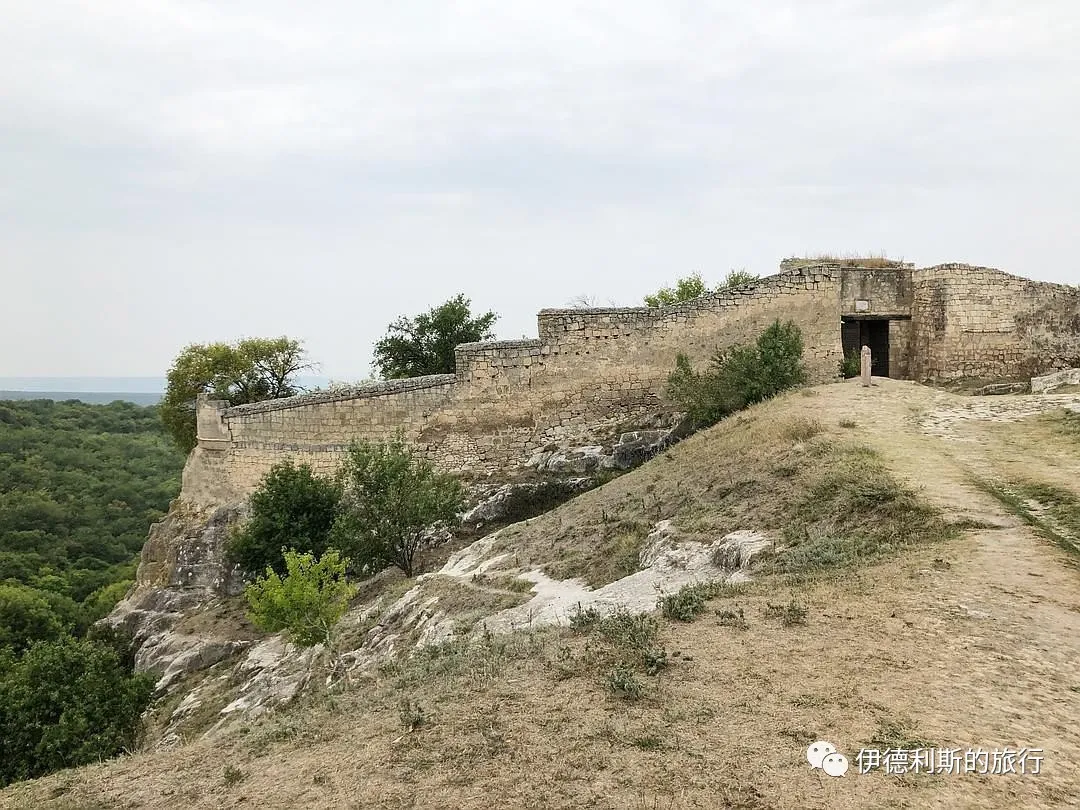
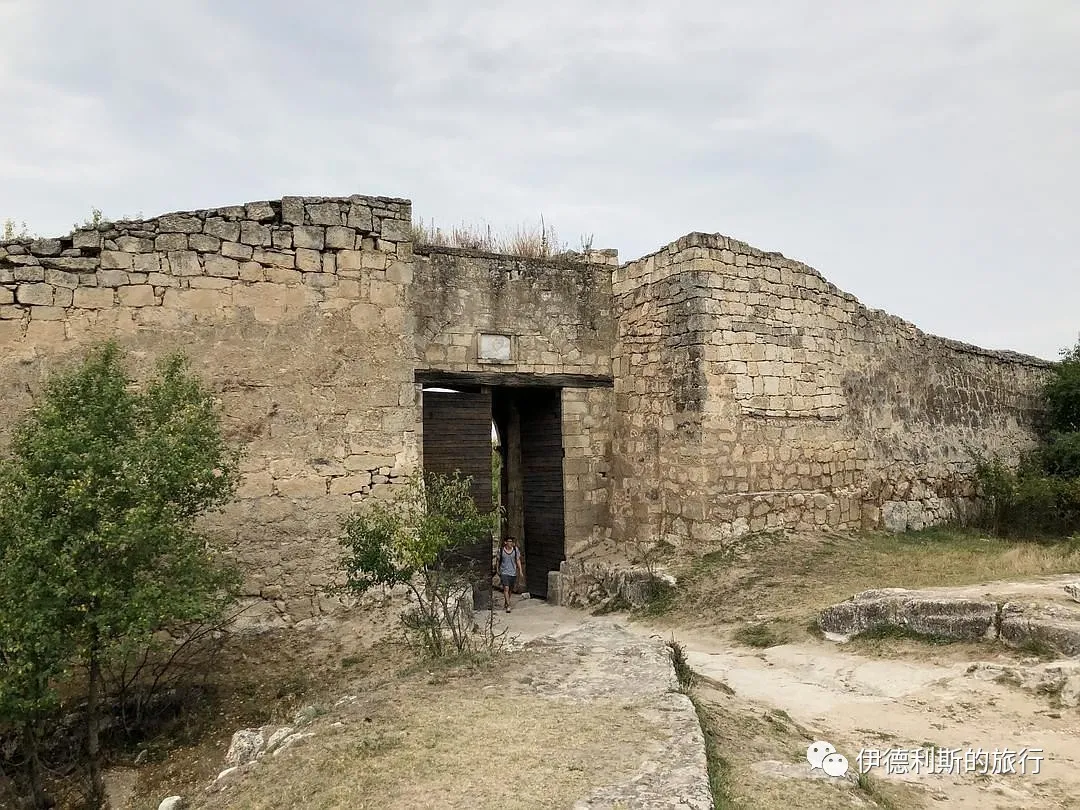
Currently, the original walls consist of two sections, the south wall and the middle wall, along with two gates, the south gate and the middle gate. The south wall is built on the cliff in the southern part of the fortress, weaving between the rocks. The south gate is built in a pocket shape, allowing defenders to surround enemies from above if they break in. The middle wall runs across the space between the north and south cliffs of the fortress and is a typical example of Byzantine wall architecture.
There is no wall on the north cliff, but the steepness of the cliff itself is as effective as a wall. It was very windy when I visited, and I felt nervous just standing by the cliff edge.
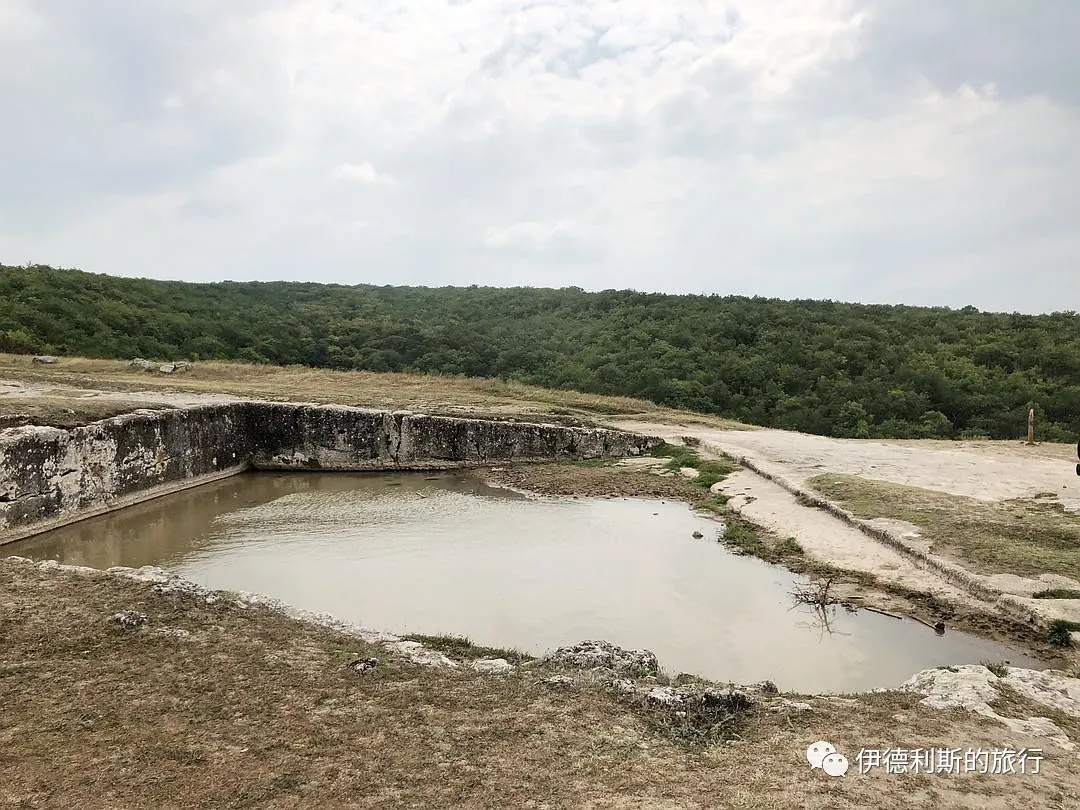
The east wall was built between 1396 and 1433, and there is a lively bazaar outside the gate. Outside the east gate, there is still a preserved water collection area that merchants used to wash and water their livestock.
The Khan Jani Beg mosque is located on the west side of the Jewish fortress. It was first built in 1346 during the reign of Khan Jani Beg (reigned 1342-1357) of the Golden Horde. Khan Jani Beg was the son of Öz Beg Khan. During his father's reign, the Golden Horde fully converted to the faith, and Khan Jani Beg continued to develop the faith within the Khanate. The Khan Jani Beg mosque in the Jewish fortress stands as a witness to this.
In 1455, Haji Giray, the founding Khan of the Crimean Khanate, rebuilt the Khan Jani Beg mosque. An inscription about the reconstruction was once carved above the mosque door and was discovered during an archaeological excavation in 1928.
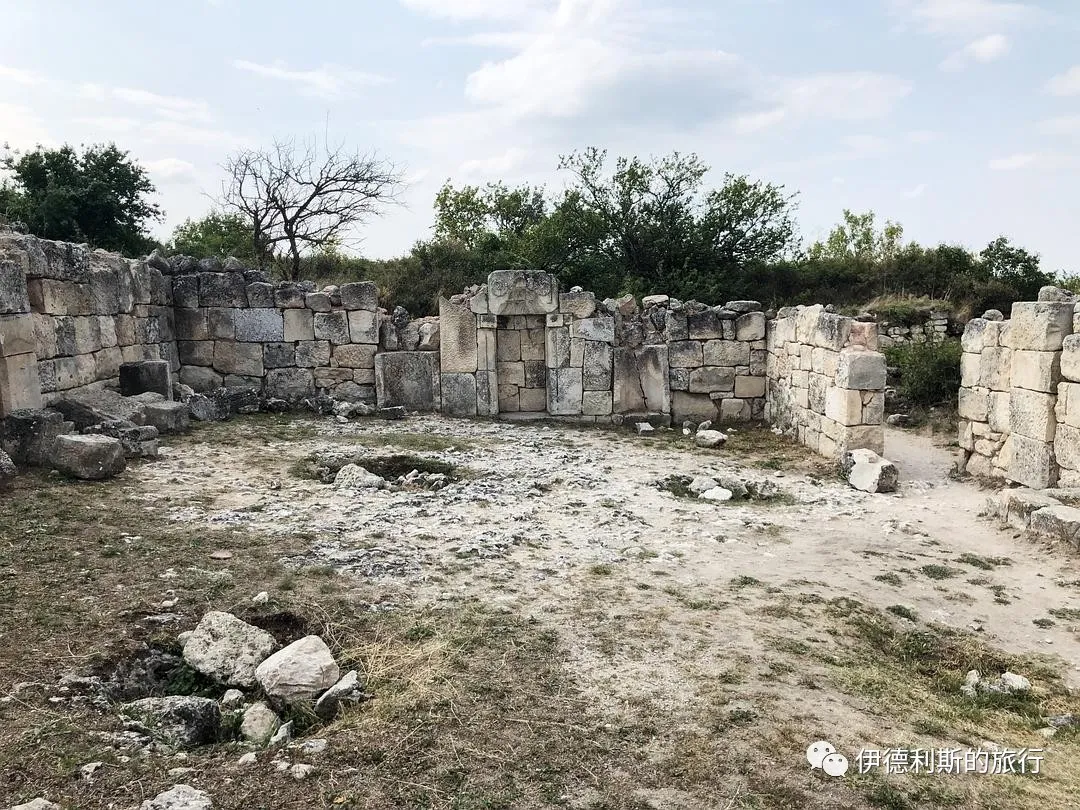
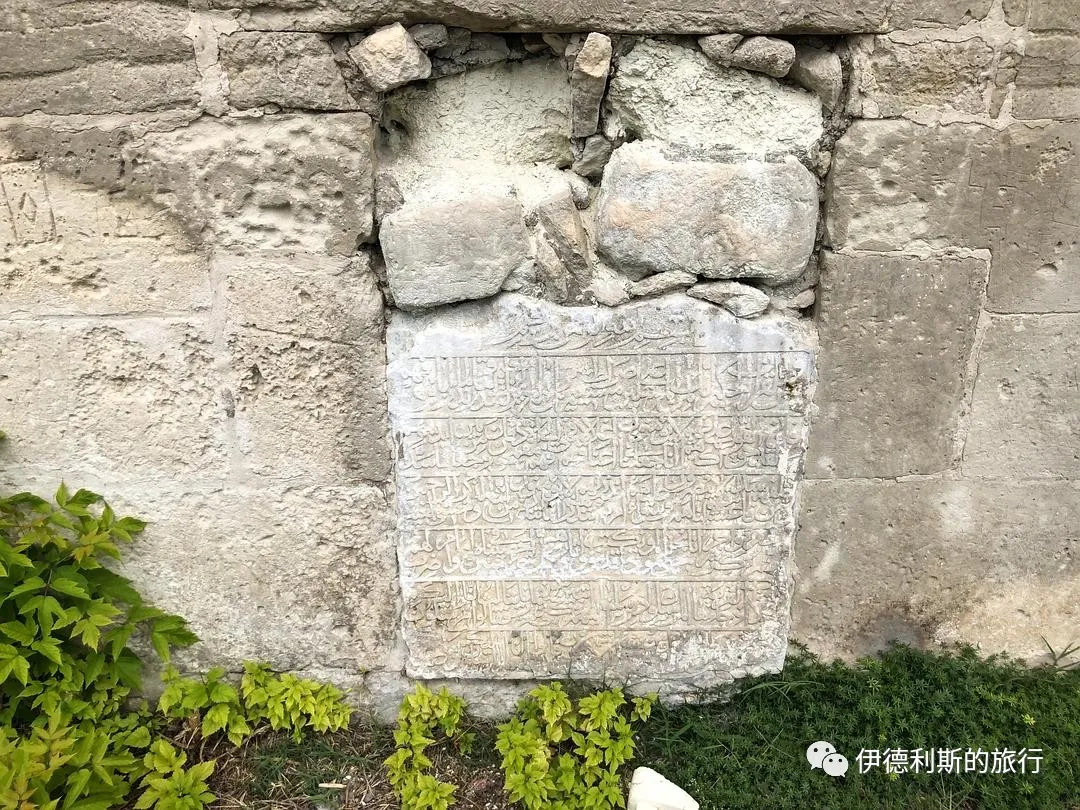
After the mid-17th century, the mosque was eventually abandoned as the Crimean Tatars moved from the Jewish fortress to Bakhchisaray. Today, only ruined walls, a mihrab niche, and some stone carvings remain at the mosque site. From these existing ruins, we can infer that it was a fairly typical traditional Crimean mosque building.
The tomb of Golden Horde Princess Dzhanike Khanym was built in 1437. It is the best-preserved Islamic building inside the Jewish fortress. The princess was the daughter of Tokhtamysh (reigned 1380-1397), the Great Khan of the Golden Horde. Tokhtamysh was the last Great Khan to unite the Golden Horde, but he was eventually defeated by Tamerlane the Great. After Tokhtamysh passed away, Dzhanike Khanym returned to her mother's homeland, Crimea.
The tomb is octagonal. The door is decorated with a classic Seljuk knot, a signature pattern from the Golden Horde period.
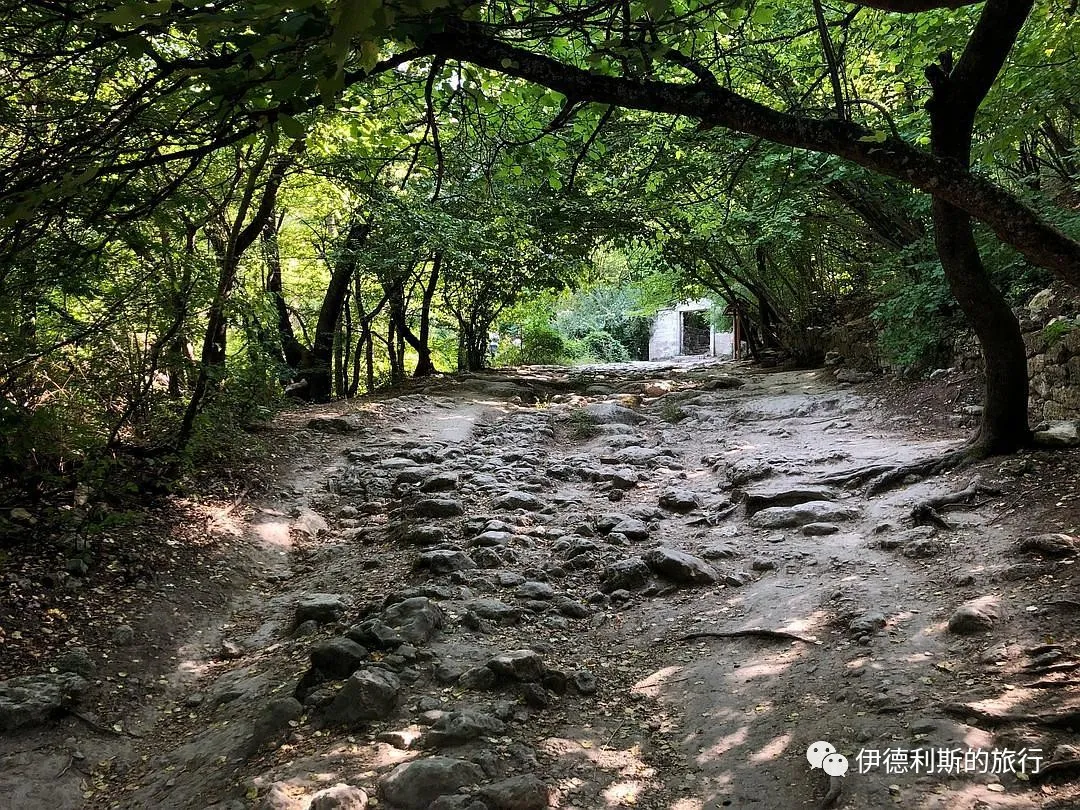
The roads inside the fortress vary in width, and you can see deep cart ruts on the main path.
The Tatar people gradually left the city after the water wells dried up in the 17th century.
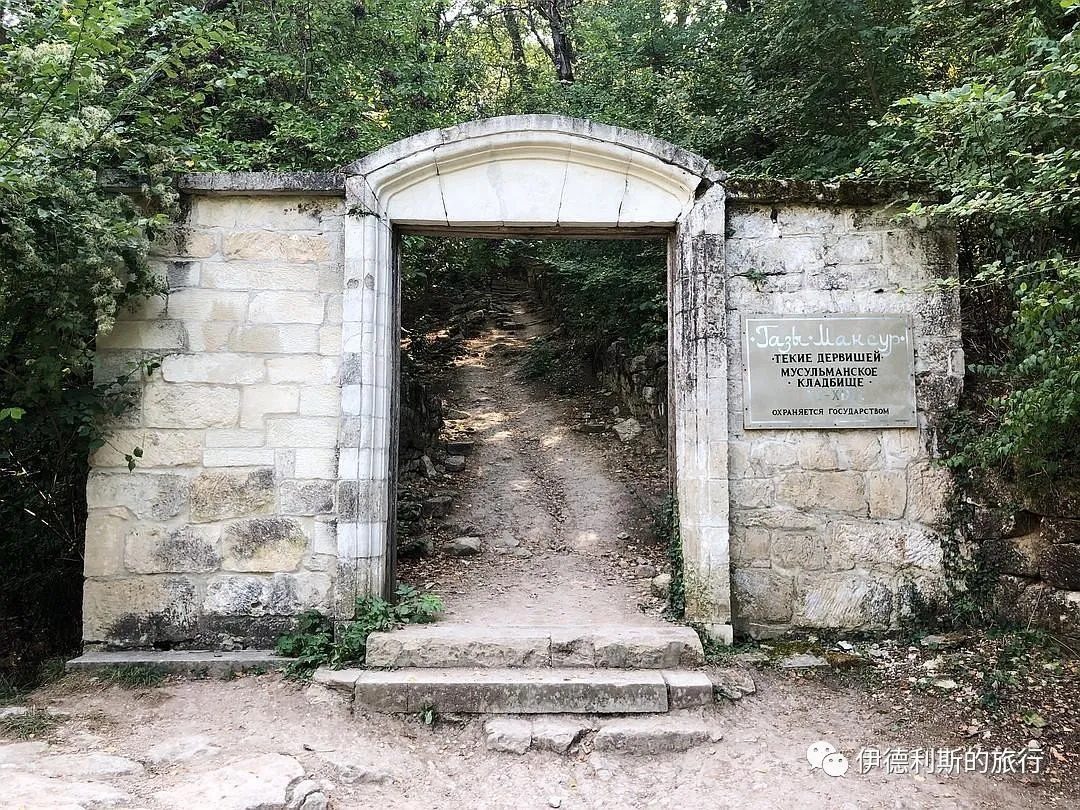
The Gazi Mansur gongbei (shrine) and daotang (religious hall) are located in the valley on the west side of the Jewish fortress.
Legend says that Malik Ashter and Gazi Mansur, two of the first disciples of the Prophet Muhammad, came to the Crimean Peninsula in the 7th century to spread the faith and lived in a valley at the foot of the Jewish fortress. Not long after, Malik Ashter was killed by a giant, and Gazi Mansur died defending the Jewish fortress. They were both buried at the foot of the mountain. They remained unknown for a long time until, centuries later, a sheikh living in the ancient Central Asian city of Bukhara repeatedly dreamed of a narrow valley filled with shrubs. To understand his dream, the sheikh followed the guidance of an elder and began a pilgrimage to the Crimean Peninsula.
The sheikh arrived in Crimea in 1434. He recognized the valley from his dream at the foot of the Jewish cave and eventually discovered the tomb of Gazi Mansur. The sheikh then built a gongbei and a daotang at the site of the tomb. Because of this legendary karamat (miracle), pilgrims flocked to the site, and it even gained the favor of the Crimean Khan.
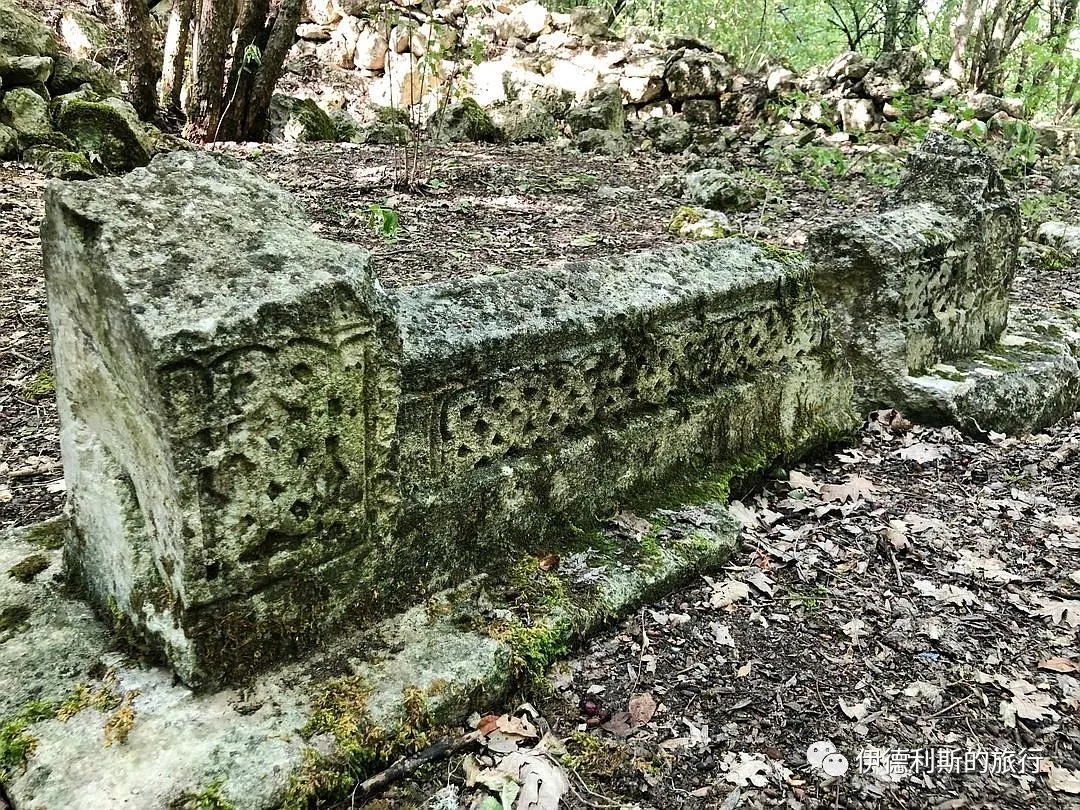
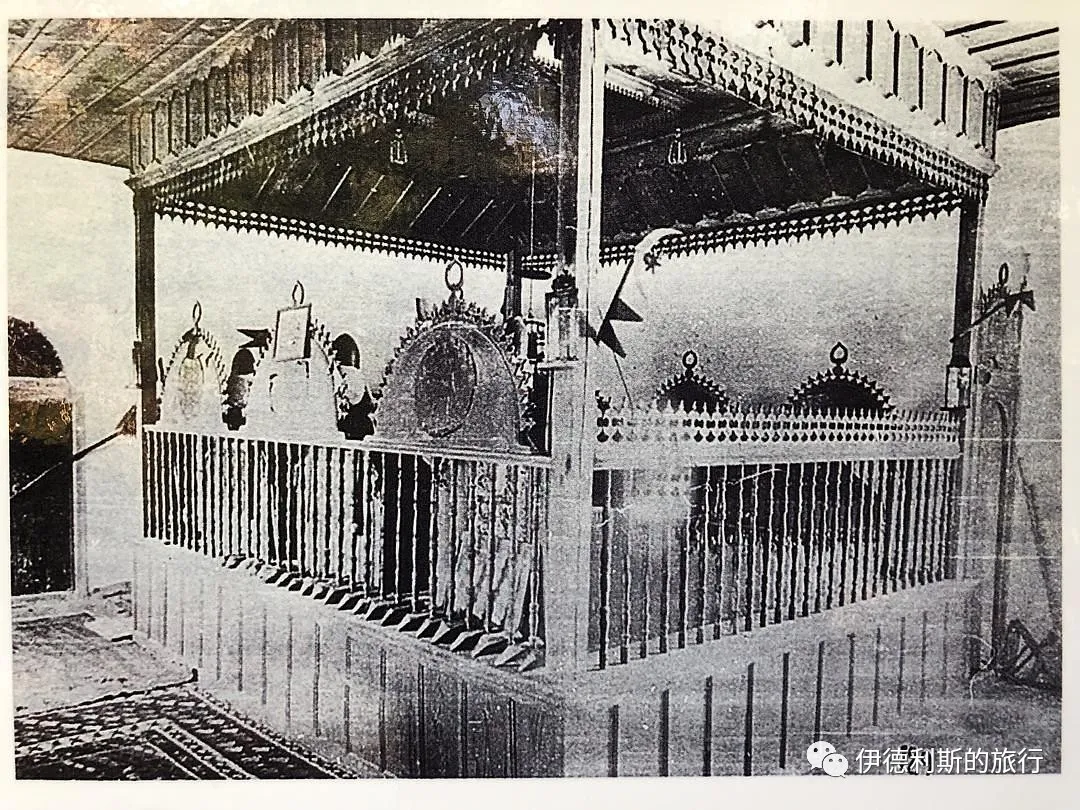
The Gazi Mansur gongbei and daotang stood until the 1930s, but were destroyed during the Soviet era. Today, only broken walls and a few surviving tombstones remain.
Salachik
The Salachik (Salaçıq) historical and archaeological complex was built between the late 15th and early 16th centuries and served as one of the capitals of the Crimean Khanate.
After Haji Giray died in 1466, his sixth son, Mengli I Giray, and his second son, Nur Devlet, fought repeatedly for the throne until Mengli I Giray finally won. Around 1500, Mengli I Giray built the new capital of Salachik in the valley west of the Jewish fortress.
In the 17th century, Salachik included a palace, a high court, baths, the Mengli Giray Mosque, and guard rooms. Genoese records mention that it also had a customs house, but most of these buildings were likely destroyed in an earthquake in 1698.
Today, only the Chain (Zıncırlı) madrasa, built in 1500, and the Haji Giray mausoleum, built in 1501, remain. The madrasa stayed open until the early 20th century. Archaeological excavations in 2008 uncovered the ruins of the baths and identified the general location of the Mengli Giray Mosque.
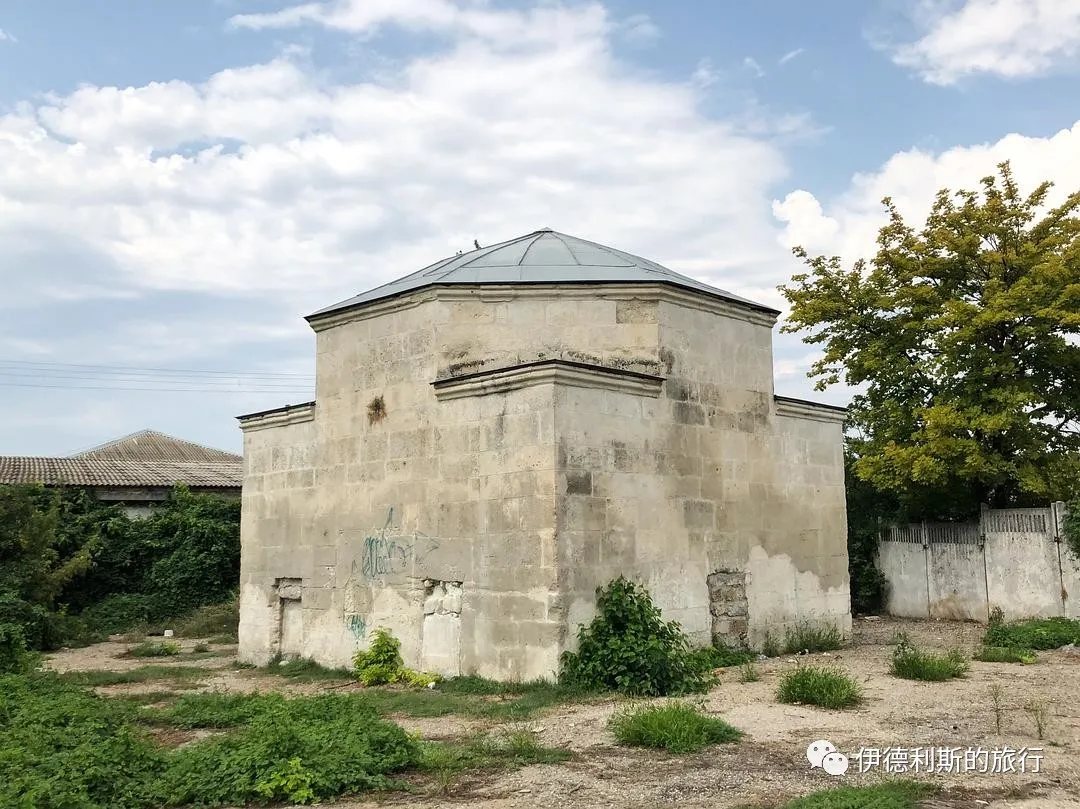
The Haji Giray mausoleum (Dürbe Hacı I Giray) is an octagonal building with a lead dome, built in 1501 by Mengli I Giray for his father, the founding Khan of Crimea, Haji Giray.
Archaeological digs between 2006 and 2007 examined 18 graves inside the mausoleum, including 13 adults and 5 children. They were wrapped in silk, and some rested on pillows stuffed with fabric scraps and fruit seeds. The mausoleum contains 8 stone sarcophagi covered in velvet, silk, and silver-threaded fabric. These likely include four Crimean Khans: Haji Giray himself, Mengli I Giray, Haji Giray's other son Nur Devlet—who fought Mengli I Giray for the throne for years before losing—and Sahib I Giray, the son of Mengli I Giray and the builder of Bakhchisaray.
These individuals were reburied after research was completed in 2009.
The Chain (Zıncırlı) madrasa was built in 1500 by order of the Crimean Khan Mengli I Giray. The name of the madrasa comes from the Turkic word "zyngyr," which means chain. A chain hangs above the main gate of the madrasa, forcing everyone who enters to bow their head.
The madrasa is rectangular with a central courtyard, an entrance on one side, and 11 rooms on the other three sides. At the time, the madrasa taught Turkish and Arabic grammar, calligraphy, arithmetic, ethics, logic, proof, Islamic law (sharia), and the study of the Quran and Hadith, with the full course of study taking ten years.
In 1909, influenced by the Crimean Tatar enlightenment movement, Gaspirali built a two-story modern Islamic school (madrasa) next to the old one. The school closed in 1917 and became the Mengli Giray Research Institute. The institute was shut down in 1923, then it served as a teacher training college, a medical school, a sanatorium for German soldiers, and a post-war psychiatric clinic. Today, the site is managed by the Bakhchisaray Historical, Cultural and Archaeological Museum.
During excavations at the Salachik historical and archaeological complex in 2008, researchers found 15th-century urban ruins including a bathhouse, a well, and a courtyard.
The bathhouse is a typical Turkish bath (hamam) with separate sections for men and women, each containing five rooms and a heating system. The heating system used clay pipes in the walls and under the floors to circulate warm air, keeping the bath at a constant temperature year-round and saving firewood. Each section also included a steam room, a washing area, a toilet, a lounge, and a changing room.
Archaeologists found many ceramics from the 15th to 18th centuries, mostly architectural tiles and pipes, along with some kitchenware, Turkish pottery, Chinese porcelain, and silver coins from the Crimean Khanate.
Ismail Gaspirali (1851-1914), the founder of the Crimean Tatar enlightenment movement, is buried in the backyard of the Zincirli Madrasa.
Gaspirali was a Crimean Tatar intellectual, educator, and publisher. He was the first to realize that Turkic Muslim society needed education and cultural reform to modernize, so he created the new Jadid education system and became known as the founder of the Crimean Tatar enlightenment.
In 1883, Gaspirali received permission to publish Tercüman, the first Turkic-language newspaper in Russia. Tercüman ran for 35 years. For a long time, it was the only Turkic-language publication in Russia and one of the earliest religious newspapers, influencing the entire Turkic-speaking world.
In the newspaper, he advocated for modernization through education and designed a new teaching method called Jadid. He taught the Arabic alphabet using a new phonetic method, which cut the time it took for students to learn to read from three years down to just a few months.
In 1909, Gaspirali built a two-story modern school next to the Zincirli Madrasa, which operated until it closed in 1917.
After Gasprinsky died in his hometown in 1914, he was buried in the cemetery behind the "Zincirli" (Chain) Madrasa. The original tombstone was lost in the second half of the 20th century, and the current one was rebuilt in the late 1990s.
Eski Yurt Old City
Eski Yurt means "old city." During the Golden Horde era, it was a large trading town and a transportation hub connecting the east and west ends of the Crimean Peninsula. After the Crimean Khanate was established in 1441, Eski Yurt remained an economic center. It was not until 1532, when the Khanate built its new capital, Bakhchisaray, in the valley right next to Eski Yurt, that the status of Eski Yurt was replaced and it began to be called the "old city." Even so, because the city once housed a gongbei (shrine) for the sage Malik Ashtar, Eski Yurt remained a religious center for Crimean Tatars until the Soviet era.
According to legend, Malik Ashtar was a cousin of the noble Prophet and a loyal companion of Imam Ali. In Crimean Tatar legends, Malik Ashtar was a brave warrior and the first person to come to Crimea to spread the faith. He eventually died in battle while fighting a giant in Eski Yurt. Many years later, some Sufi practitioners miraculously discovered his grave in Eski Yurt and built a gongbei there. In reality, Malik Ashtar passed away in Egypt, and the gongbei in Eski Yurt is a place where his karamat (miraculous signs) were manifested. Crimean Tatars believe that if you are bitten by a snake, you can recover by making dua at the Malik Ashtar gongbei.
Due to the importance of the Malik Ashtar gongbei, a complex of hundreds of tombs formed around it. This includes the tombs of three Khans of the Crimean Khanate: Mehmed II Giray (reigned 1577–1584), Saadet II Giray (reigned 1584), and Mehmed III Giray (reigned 1623–1628).
From the era of the Crimean Khanate until the early 20th century, a dhikr ceremony was held every Thursday night at the Malik Ashtar gongbei. After all Crimean Tatars were forced into exile in Central Asia in 1948, the central square of the Malik Ashtar gongbei was turned into a market. After Crimean Tatars began returning in the late 1980s, many demanded that the market be removed from the holy site, and it was finally moved in 2006.
The existing structures in the Malik Ashtar gongbei tomb complex include the 14th-15th century Bey Yude Sultan tomb and Ahmed Bey tomb, the 16th-century Mehmed Bey tomb and the tomb of Khan Mehmed II Giray, as well as the minbar (pulpit) of the Malik Ashtar shrine mosque.
The tomb of Crimean Khan Mehmed II Giray is also known as the Great Octagonal Tomb. During his reign, Mehmed II Giray attacked the Persian Safavid dynasty three times under orders from the Ottoman Empire.
The tomb of Mehmed II Giray is the largest one still standing in Eski Yurt and clearly shows Ottoman influence. Some speculate it was built by a student of the master Ottoman architect Mimar Sinan, but no records about the architect have been found.
The Malik Ashtar gongbei (a shrine for a Sufi saint) was built during the Crimean Khanate era with a minbar (pulpit) for sermons, but the mosque was destroyed in 1955. This place was once where Sufi practitioners performed dhikr (remembrance of Allah), and it served as a Sufi center on the Crimean Peninsula.
Ahmed Bey died in 1577, and his tombstone was found near the entrance of the tomb in 1924. Although Ahmed Bey died in the 16th century, the architectural style of the tomb itself does not match the Ottoman-influenced tombs of that time; instead, it follows the earlier Golden Horde tomb style. Other buildings similar to Ahmed Bey's tomb date back to the 13th and 14th centuries. Therefore, it is more likely that this tomb was built during the Golden Horde era. view all
Summary: The early capital of the Crimean Khanate is covered through palace sites, mosques, old streets, and Crimean Tatar history. This account keeps the original historical context, place names, architectural details, food notes, and photographs.
The Crimean Peninsula is in the northern Black Sea. It was conquered by the Mongol army in 1238 and later ruled by the Golden Horde. In 1313, Khan Uzbeg officially made Islam the state religion and built mosques (masjid) on the Crimean Peninsula.
At first, the Golden Horde's capital in Crimea was the city of Old Crimea (Stary Krym) in the southeast of the peninsula. In 1441, Haji Giray, a descendant of Genghis Khan's eldest son Jochi, minted coins with his own name at the Jewish Fortress (Chufut-Kale) on a cliff in the southwest of the peninsula, officially establishing the Crimean Khanate. The Jewish Fortress was first built by the Byzantines in the 5th to 6th centuries, and was later inhabited by Alans, Tatars, and Karaites. Today, the fortress still has city walls, gates, mosque ruins, and the tomb of a Golden Horde princess.
After Haji Giray died in 1466, his sixth son, Mengli Giray, eventually won the struggle for the throne. Around 1500, Mengli Giray built a new capital called Salachik. Salachik once had a complex of buildings including a palace, court, baths, and a mosque, but now only a madrasa and the tomb of the founding Crimean Khan, Haji Giray, remain.
Also, to the west of Bakhchysarai is Eski Yurt, a large trading town that was very prosperous during the Golden Horde period. It became a religious center for Crimea because of the gongbei of the religious elder Malik Ashtar. Today, it preserves several 14th to 16th-century tombs, including that of the Crimean Khan Mehmed II Giray.
Jewish Fortress (Chufut-Kale)
Between the 13th and 17th centuries, the Jewish Fortress was called Kyrk-Or, which means forty fortresses. After the mid-16th century, the Crimean Khan Sahib Giray (reigned 1532-1551) moved the capital to Bakhchysarai in the valley west of the Jewish Fortress, and the Tatars in the fortress gradually moved to Bakhchysarai. After the wells in the fortress dried up in the mid-17th century, all the Tatars left. Only the Karaite Jews continued to live there, and the fortress was gradually called the Jewish Fortress by the Crimean Tatars. After the 19th century, the Karaite Jews also left, and the fortress eventually became a ruin.
The walls of the Jewish Fortress were first built during the Byzantine period; some say they were built in the 5th to 6th centuries, while others say the 10th to 11th centuries. In 1299, General Nogai Khan of the Golden Horde led a Tatar army to attack the Crimean Peninsula. Byzantine soldiers used the strong walls of the Jewish fortress to hold off the Golden Horde's attack. The Tatar soldiers reportedly played harsh, loud music for three days and nights to disturb the Byzantine defenders inside the city. On the fourth day, the exhausted Byzantine defenders could no longer hold off a new round of attacks, and the Jewish fortress was captured by the Tatars of the Golden Horde.
Currently, the original walls consist of two sections, the south wall and the middle wall, along with two gates, the south gate and the middle gate. The south wall is built on the cliff in the southern part of the fortress, weaving between the rocks. The south gate is built in a pocket shape, allowing defenders to surround enemies from above if they break in. The middle wall runs across the space between the north and south cliffs of the fortress and is a typical example of Byzantine wall architecture.
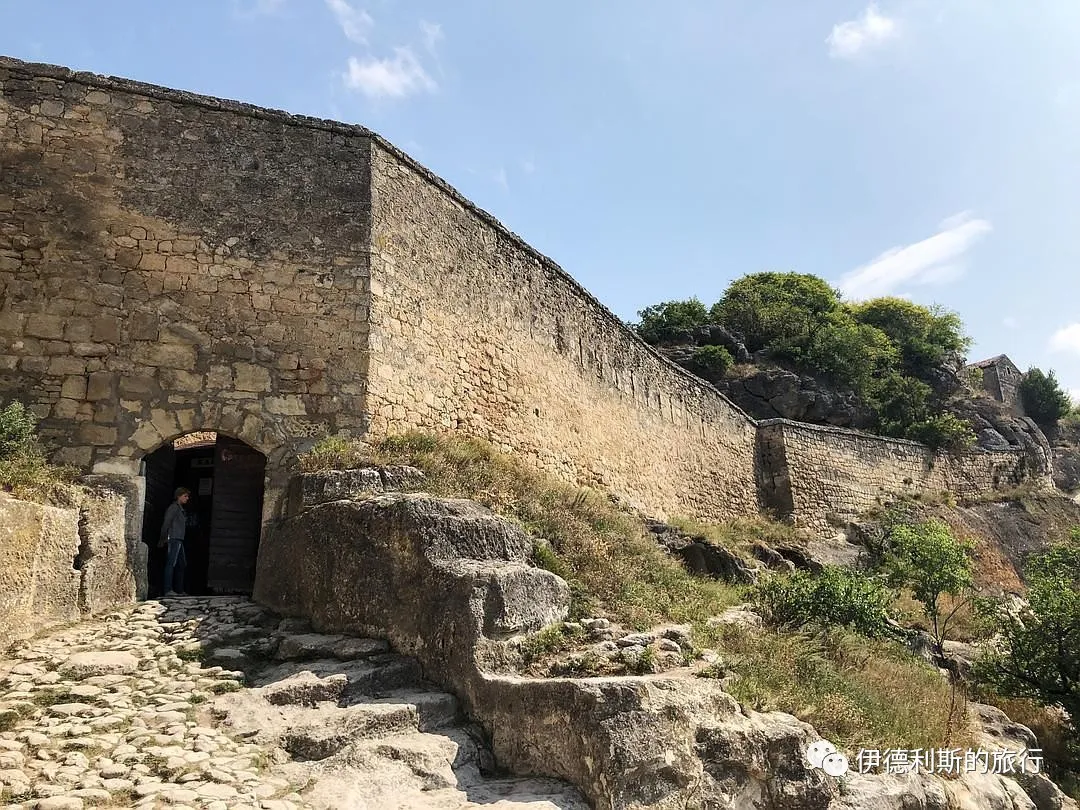
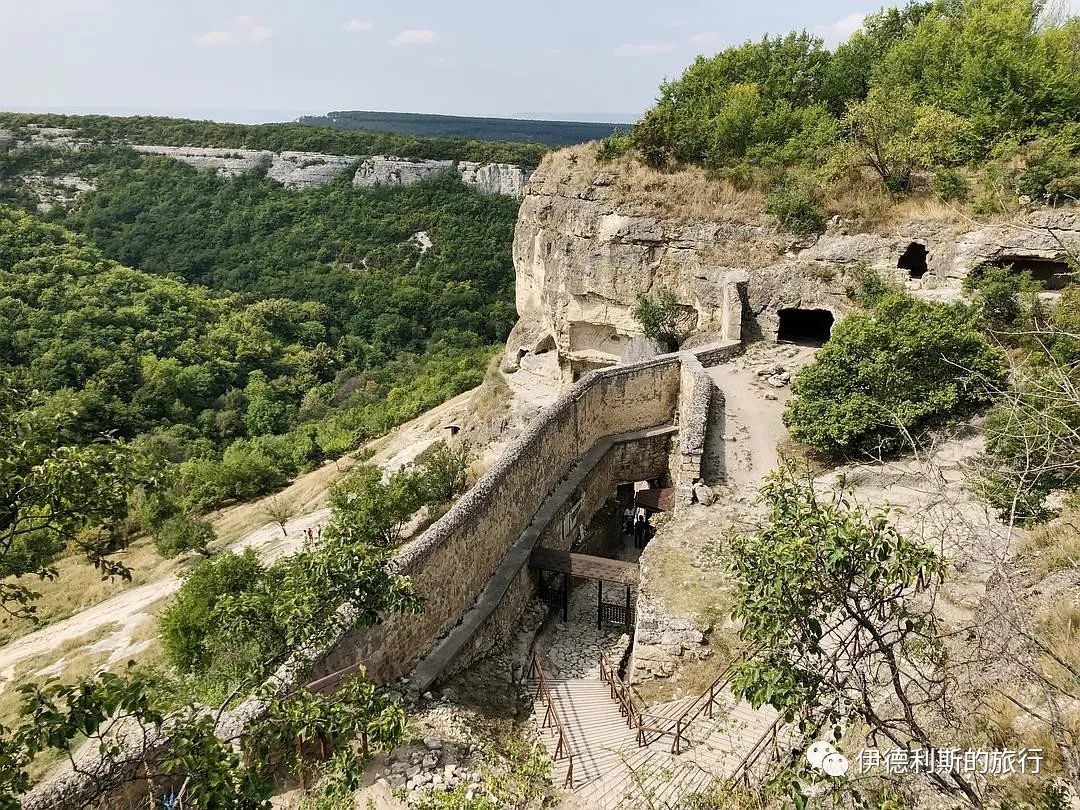
There is no wall on the north cliff, but the steepness of the cliff itself is as effective as a wall. It was very windy when I visited, and I felt nervous just standing by the cliff edge.
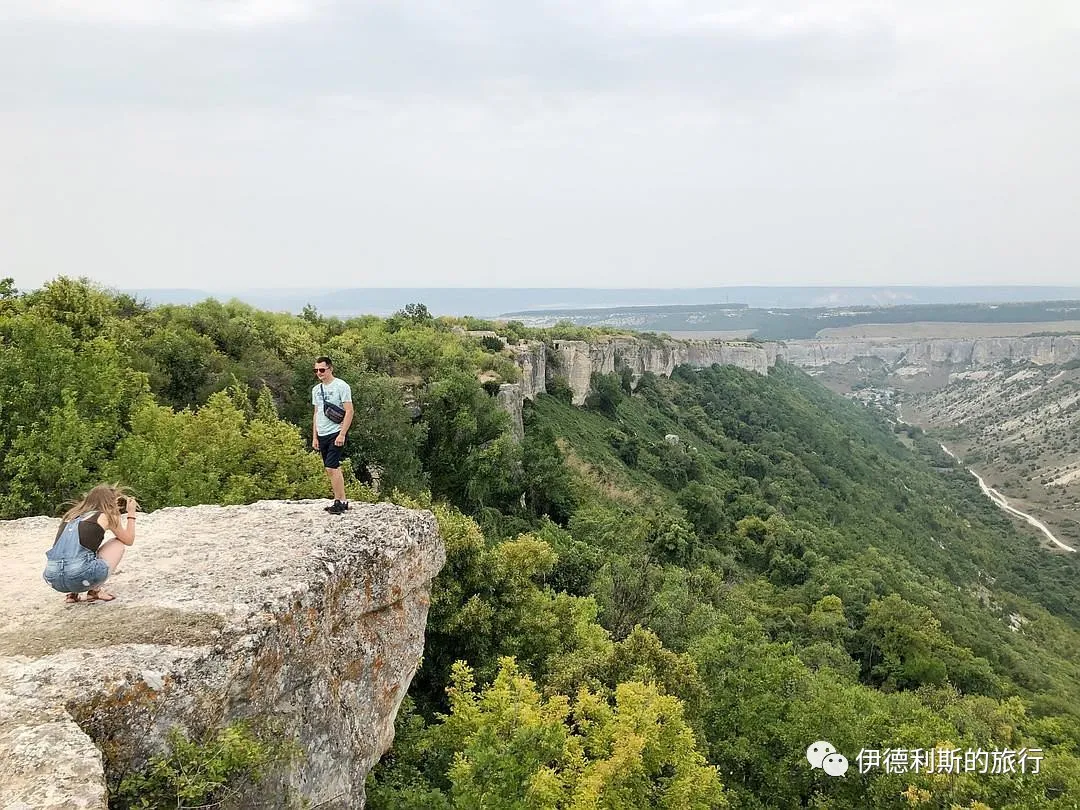
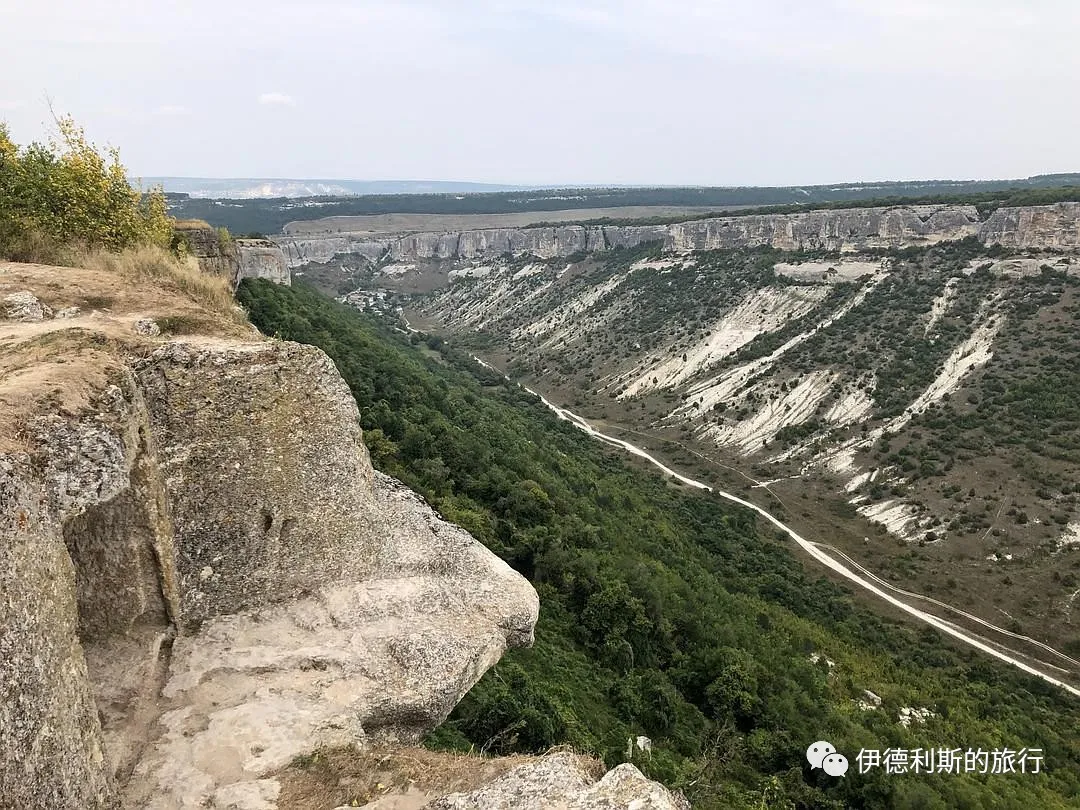
The east wall was built between 1396 and 1433, and there is a lively bazaar outside the gate. Outside the east gate, there is still a preserved water collection area that merchants used to wash and water their livestock.
The Khan Jani Beg mosque is located on the west side of the Jewish fortress. It was first built in 1346 during the reign of Khan Jani Beg (reigned 1342-1357) of the Golden Horde. Khan Jani Beg was the son of Öz Beg Khan. During his father's reign, the Golden Horde fully converted to the faith, and Khan Jani Beg continued to develop the faith within the Khanate. The Khan Jani Beg mosque in the Jewish fortress stands as a witness to this.
In 1455, Haji Giray, the founding Khan of the Crimean Khanate, rebuilt the Khan Jani Beg mosque. An inscription about the reconstruction was once carved above the mosque door and was discovered during an archaeological excavation in 1928.
After the mid-17th century, the mosque was eventually abandoned as the Crimean Tatars moved from the Jewish fortress to Bakhchisaray. Today, only ruined walls, a mihrab niche, and some stone carvings remain at the mosque site. From these existing ruins, we can infer that it was a fairly typical traditional Crimean mosque building.
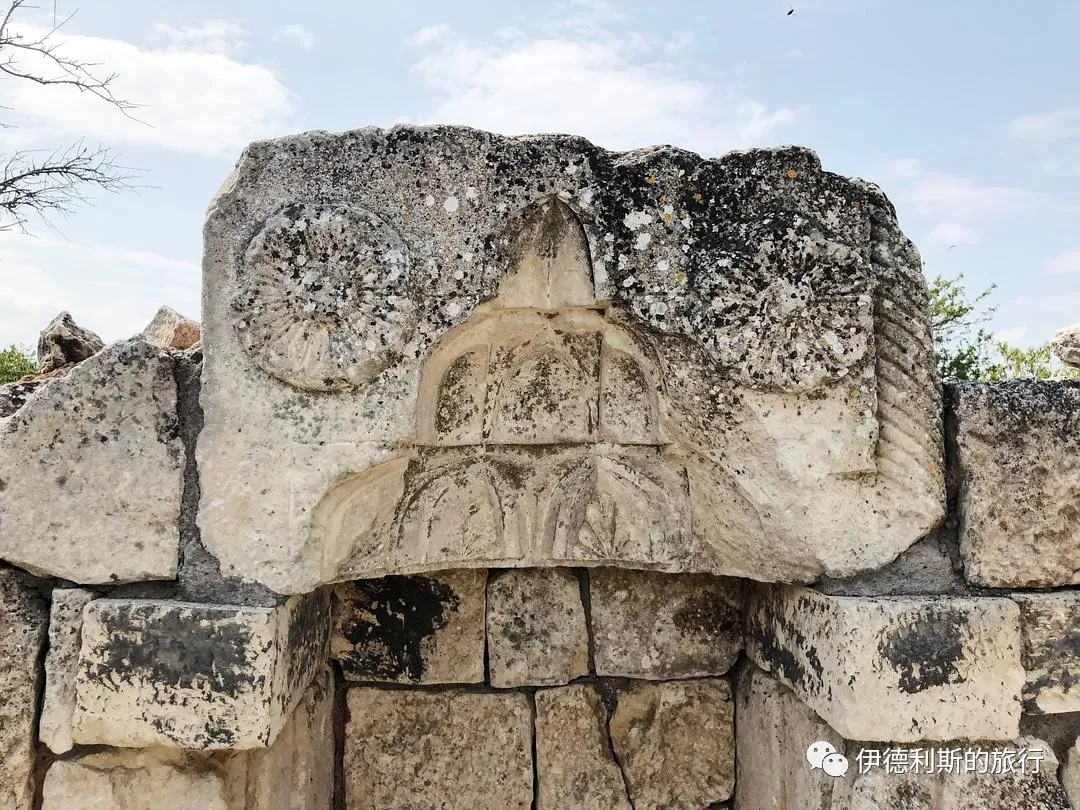
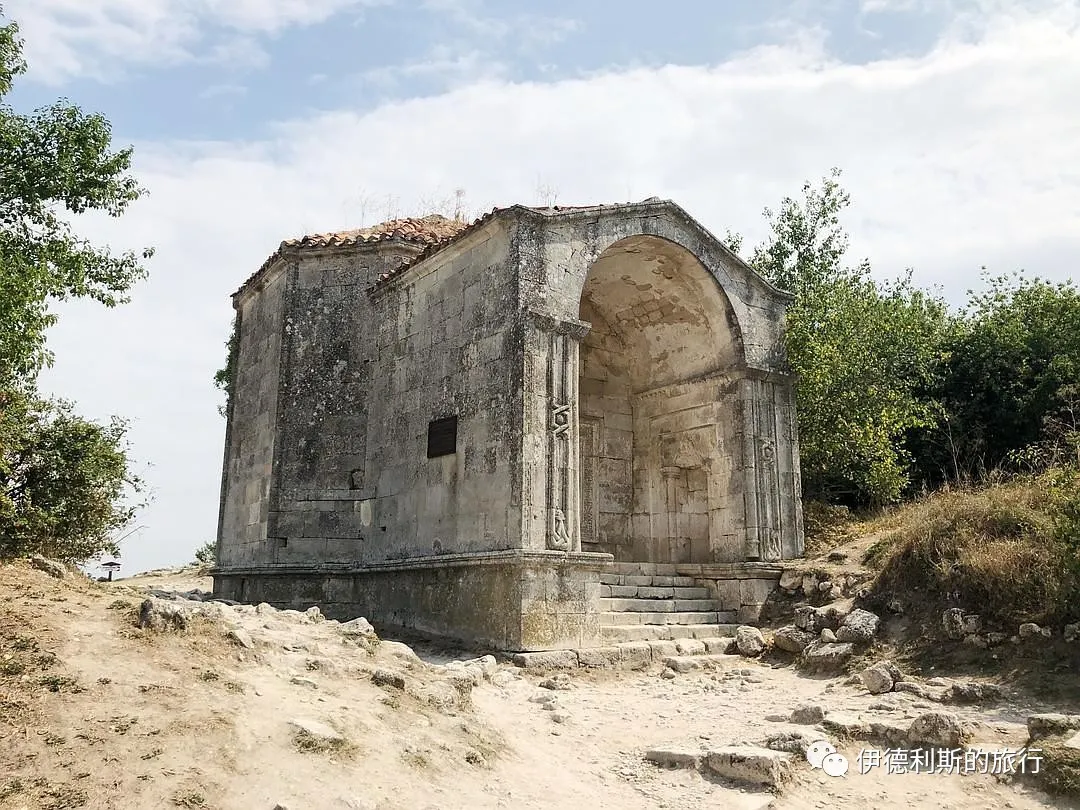
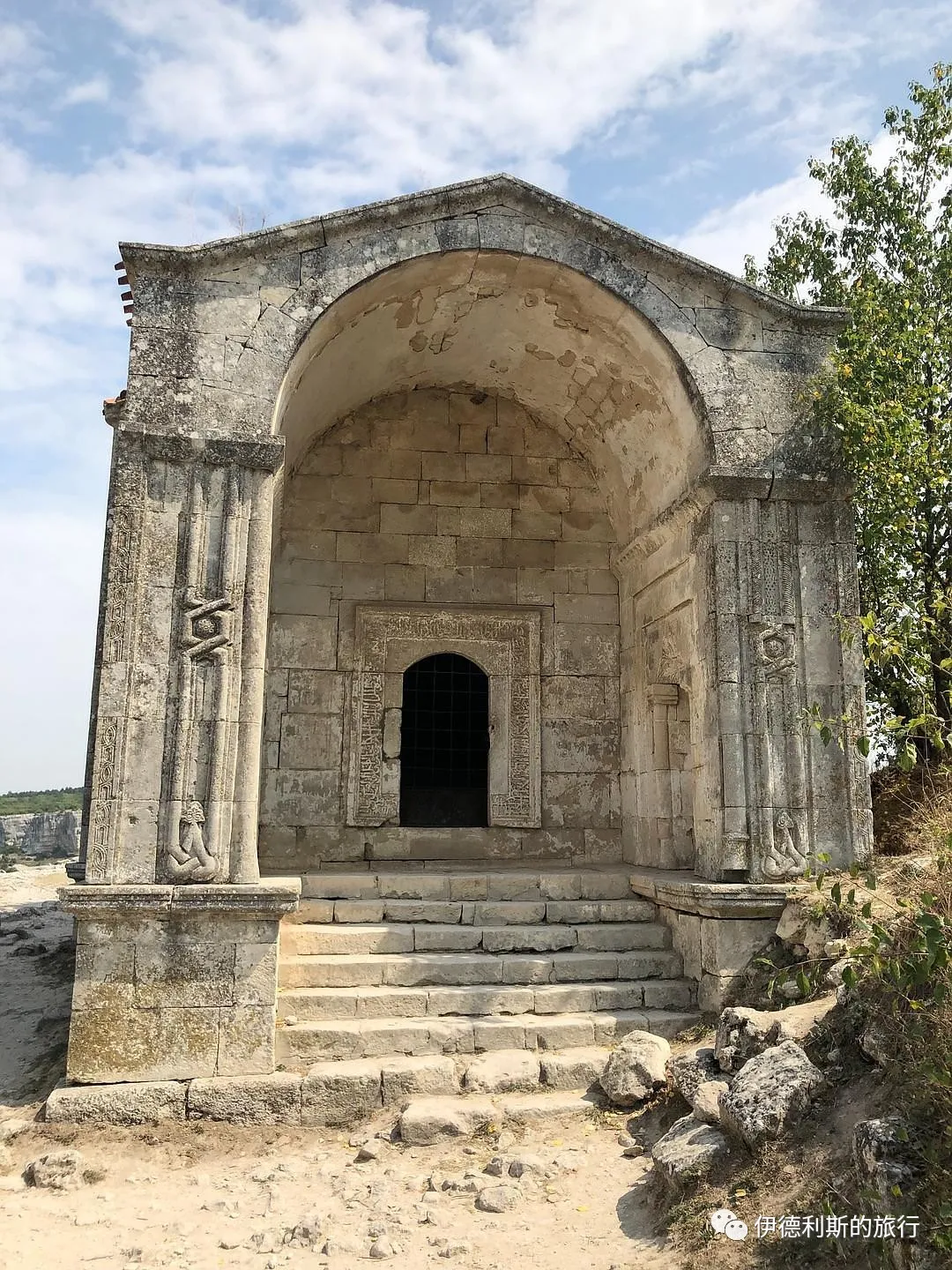
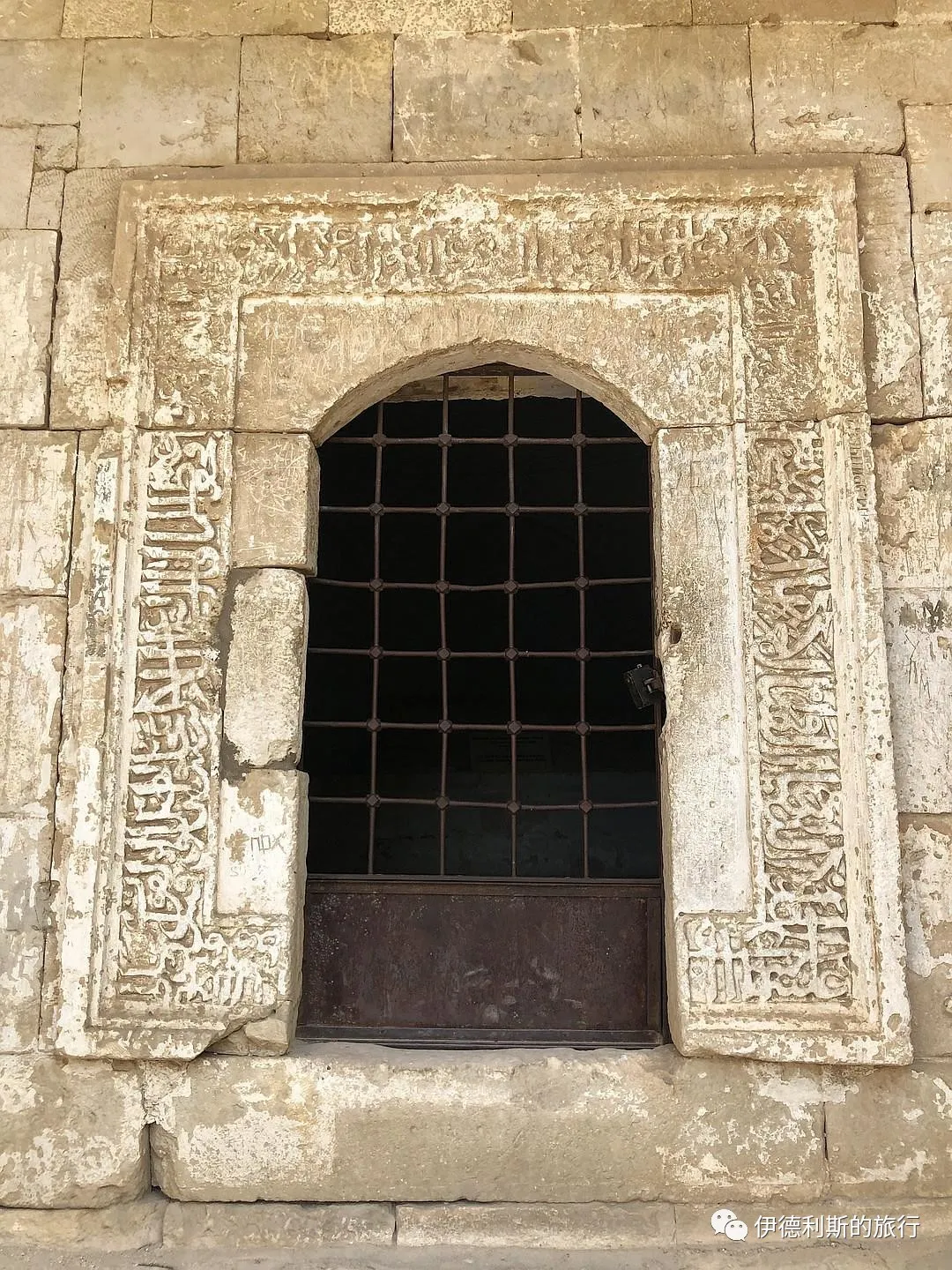
The tomb of Golden Horde Princess Dzhanike Khanym was built in 1437. It is the best-preserved Islamic building inside the Jewish fortress. The princess was the daughter of Tokhtamysh (reigned 1380-1397), the Great Khan of the Golden Horde. Tokhtamysh was the last Great Khan to unite the Golden Horde, but he was eventually defeated by Tamerlane the Great. After Tokhtamysh passed away, Dzhanike Khanym returned to her mother's homeland, Crimea.
The tomb is octagonal. The door is decorated with a classic Seljuk knot, a signature pattern from the Golden Horde period.
The roads inside the fortress vary in width, and you can see deep cart ruts on the main path.
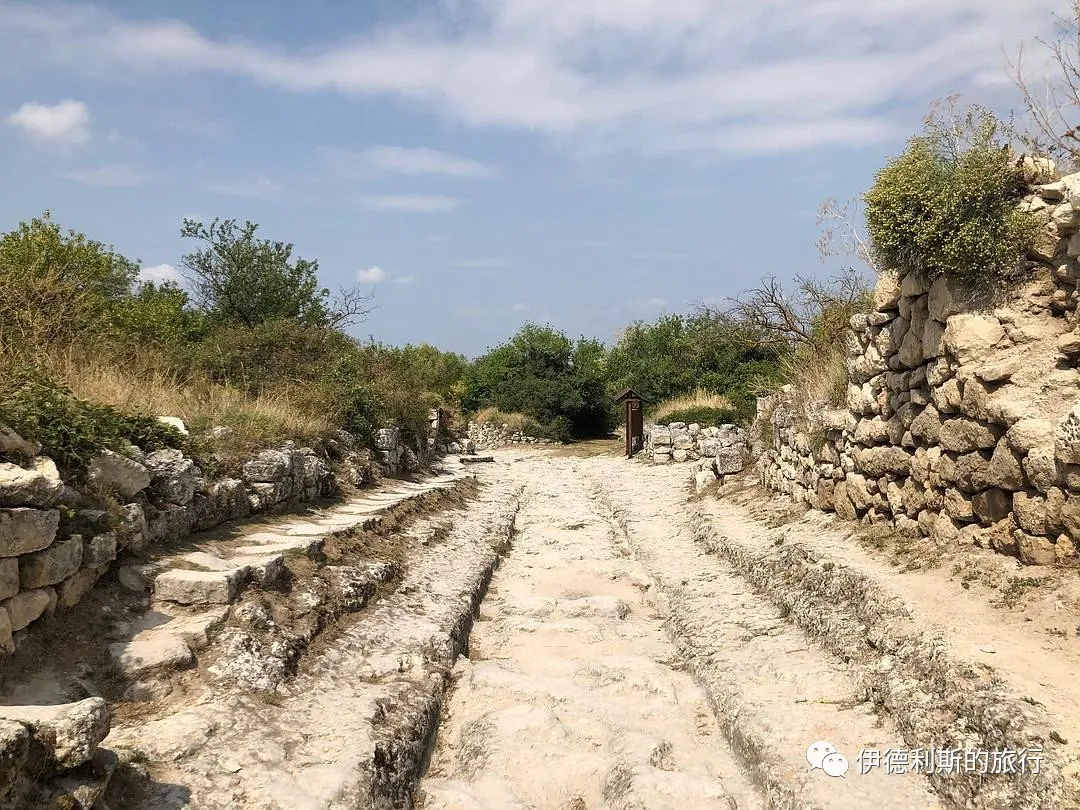
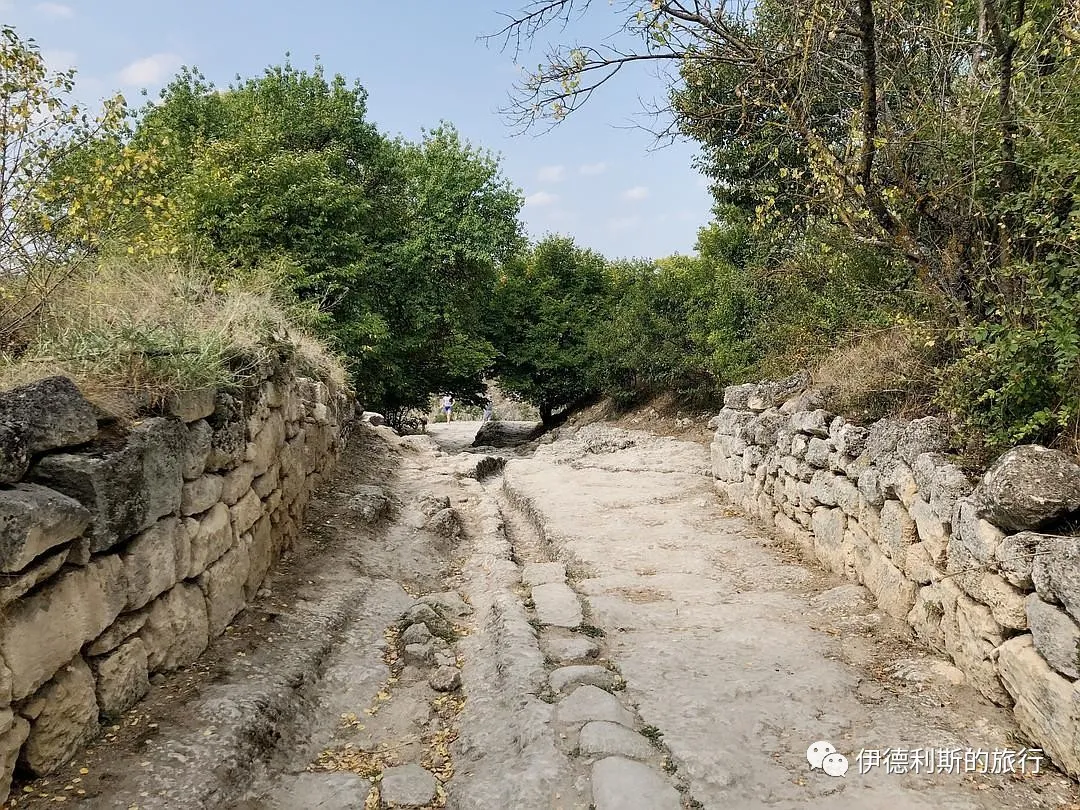
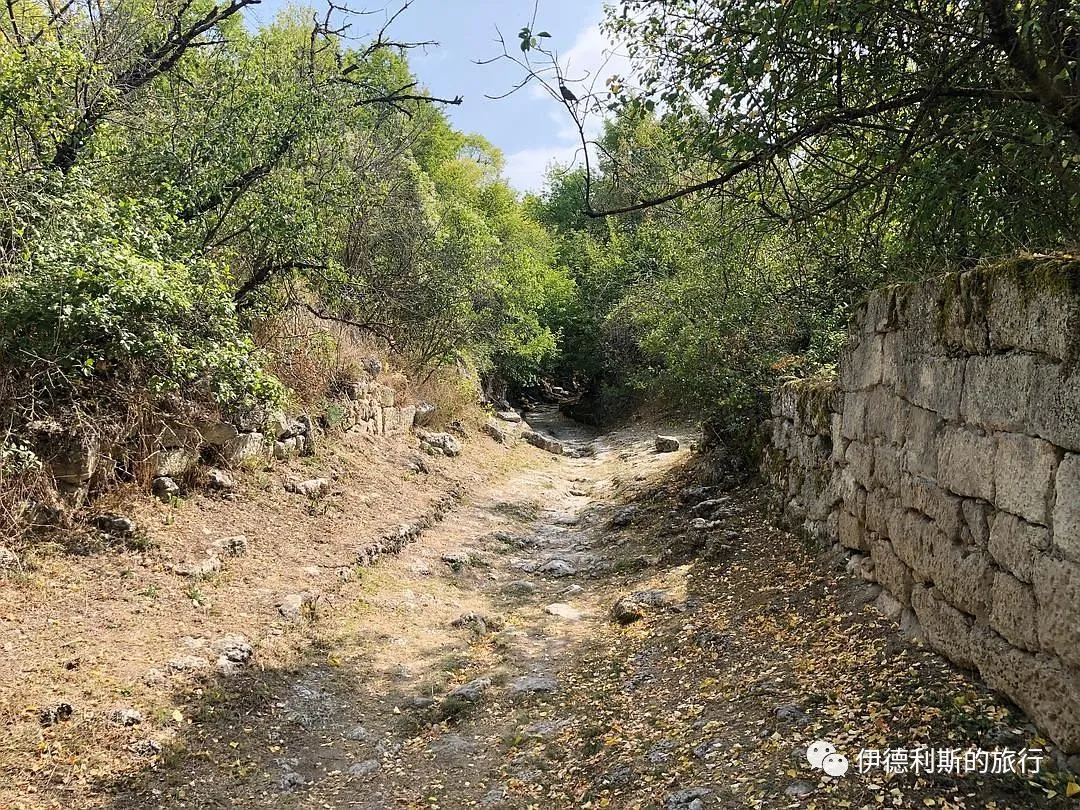
The Tatar people gradually left the city after the water wells dried up in the 17th century.
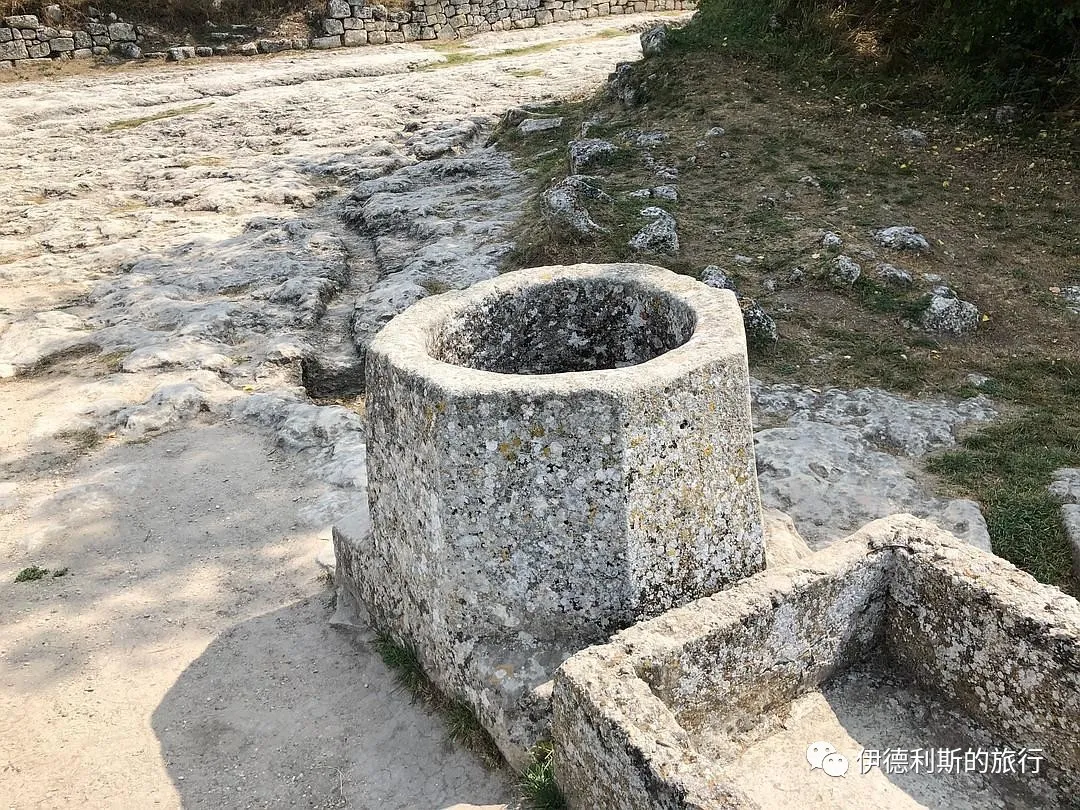
The Gazi Mansur gongbei (shrine) and daotang (religious hall) are located in the valley on the west side of the Jewish fortress.
Legend says that Malik Ashter and Gazi Mansur, two of the first disciples of the Prophet Muhammad, came to the Crimean Peninsula in the 7th century to spread the faith and lived in a valley at the foot of the Jewish fortress. Not long after, Malik Ashter was killed by a giant, and Gazi Mansur died defending the Jewish fortress. They were both buried at the foot of the mountain. They remained unknown for a long time until, centuries later, a sheikh living in the ancient Central Asian city of Bukhara repeatedly dreamed of a narrow valley filled with shrubs. To understand his dream, the sheikh followed the guidance of an elder and began a pilgrimage to the Crimean Peninsula.
The sheikh arrived in Crimea in 1434. He recognized the valley from his dream at the foot of the Jewish cave and eventually discovered the tomb of Gazi Mansur. The sheikh then built a gongbei and a daotang at the site of the tomb. Because of this legendary karamat (miracle), pilgrims flocked to the site, and it even gained the favor of the Crimean Khan.
The Gazi Mansur gongbei and daotang stood until the 1930s, but were destroyed during the Soviet era. Today, only broken walls and a few surviving tombstones remain.
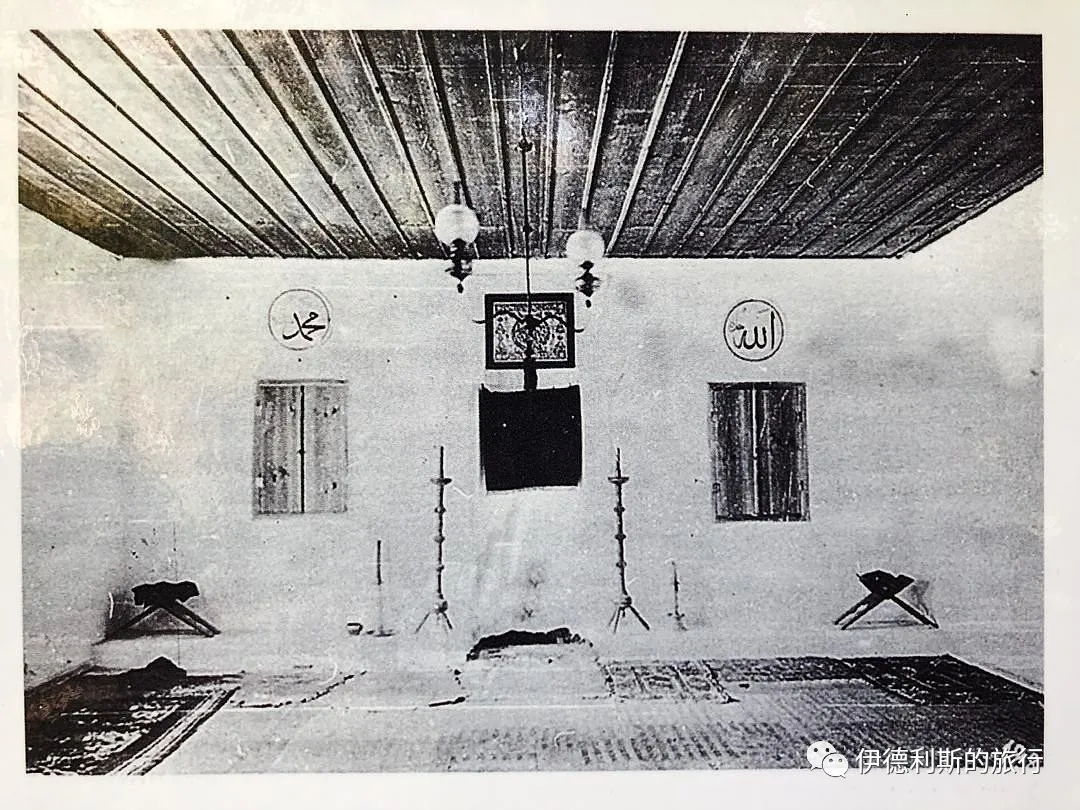
Salachik
The Salachik (Salaçıq) historical and archaeological complex was built between the late 15th and early 16th centuries and served as one of the capitals of the Crimean Khanate.
After Haji Giray died in 1466, his sixth son, Mengli I Giray, and his second son, Nur Devlet, fought repeatedly for the throne until Mengli I Giray finally won. Around 1500, Mengli I Giray built the new capital of Salachik in the valley west of the Jewish fortress.
In the 17th century, Salachik included a palace, a high court, baths, the Mengli Giray Mosque, and guard rooms. Genoese records mention that it also had a customs house, but most of these buildings were likely destroyed in an earthquake in 1698.
Today, only the Chain (Zıncırlı) madrasa, built in 1500, and the Haji Giray mausoleum, built in 1501, remain. The madrasa stayed open until the early 20th century. Archaeological excavations in 2008 uncovered the ruins of the baths and identified the general location of the Mengli Giray Mosque.
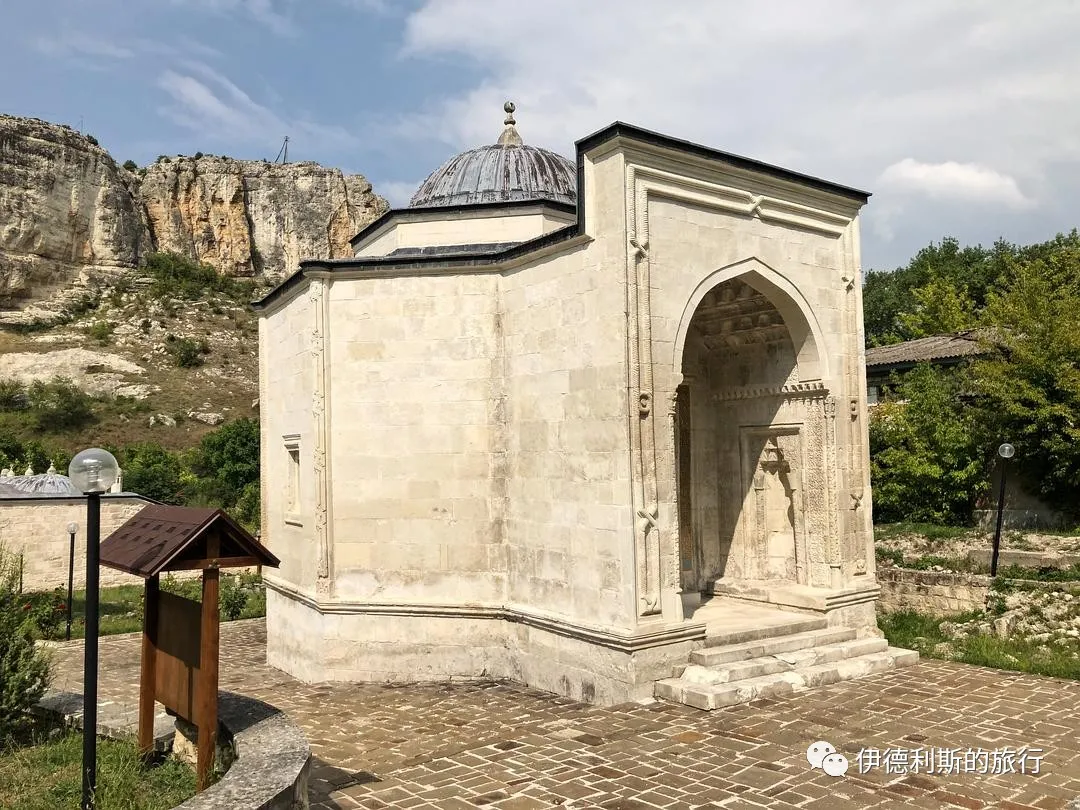
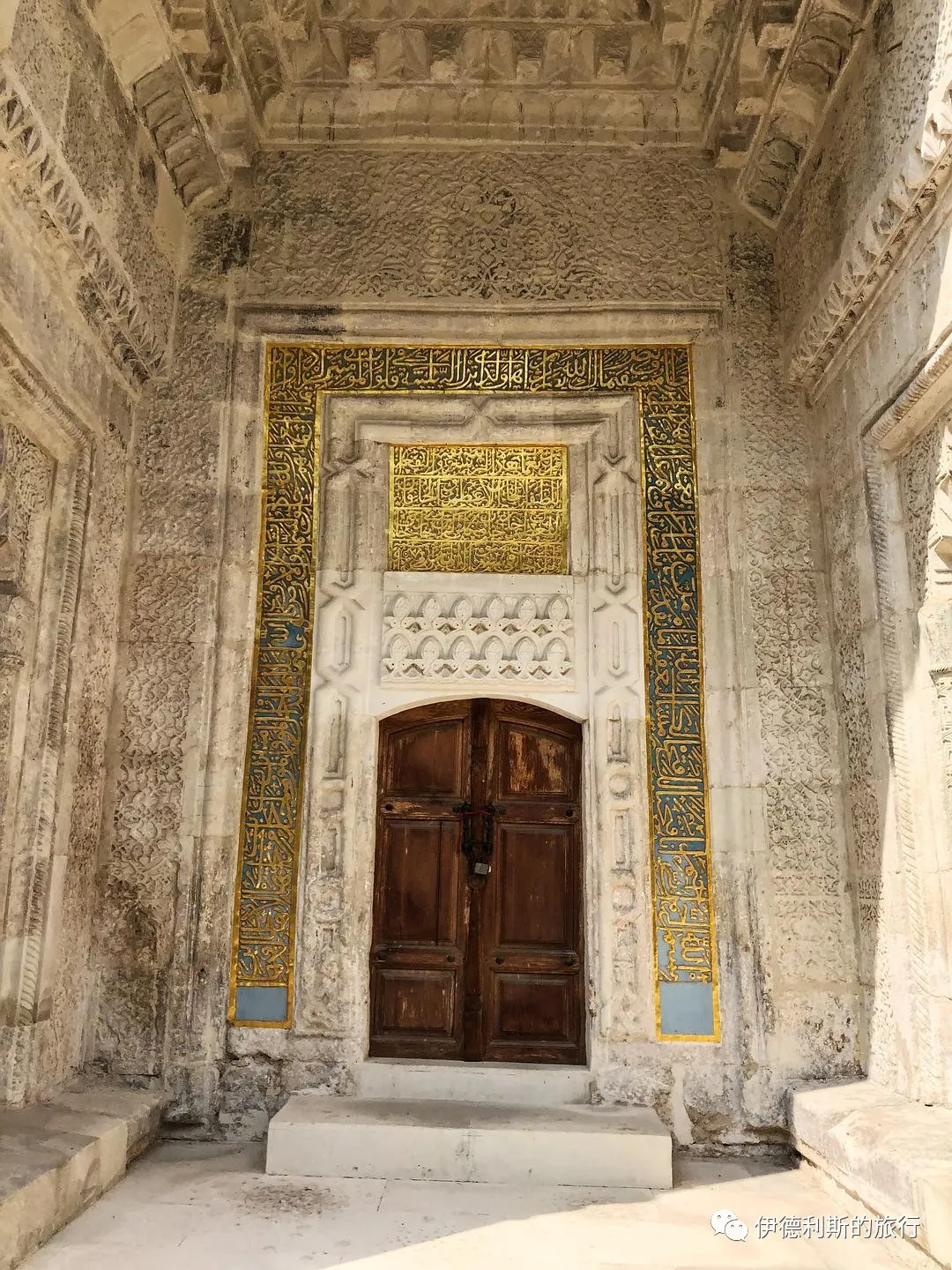
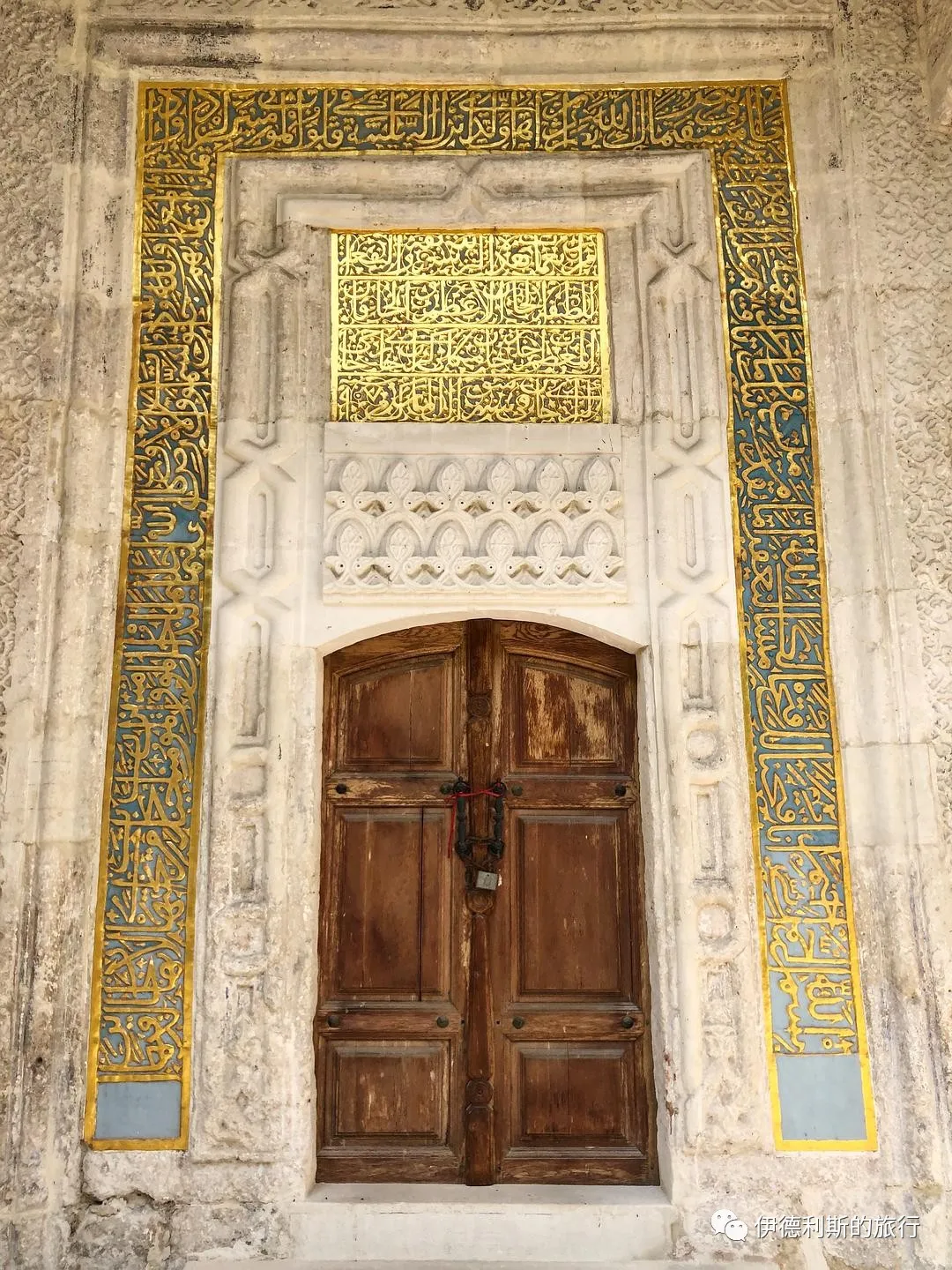
The Haji Giray mausoleum (Dürbe Hacı I Giray) is an octagonal building with a lead dome, built in 1501 by Mengli I Giray for his father, the founding Khan of Crimea, Haji Giray.
Archaeological digs between 2006 and 2007 examined 18 graves inside the mausoleum, including 13 adults and 5 children. They were wrapped in silk, and some rested on pillows stuffed with fabric scraps and fruit seeds. The mausoleum contains 8 stone sarcophagi covered in velvet, silk, and silver-threaded fabric. These likely include four Crimean Khans: Haji Giray himself, Mengli I Giray, Haji Giray's other son Nur Devlet—who fought Mengli I Giray for the throne for years before losing—and Sahib I Giray, the son of Mengli I Giray and the builder of Bakhchisaray.
These individuals were reburied after research was completed in 2009.
The Chain (Zıncırlı) madrasa was built in 1500 by order of the Crimean Khan Mengli I Giray. The name of the madrasa comes from the Turkic word "zyngyr," which means chain. A chain hangs above the main gate of the madrasa, forcing everyone who enters to bow their head.
The madrasa is rectangular with a central courtyard, an entrance on one side, and 11 rooms on the other three sides. At the time, the madrasa taught Turkish and Arabic grammar, calligraphy, arithmetic, ethics, logic, proof, Islamic law (sharia), and the study of the Quran and Hadith, with the full course of study taking ten years.
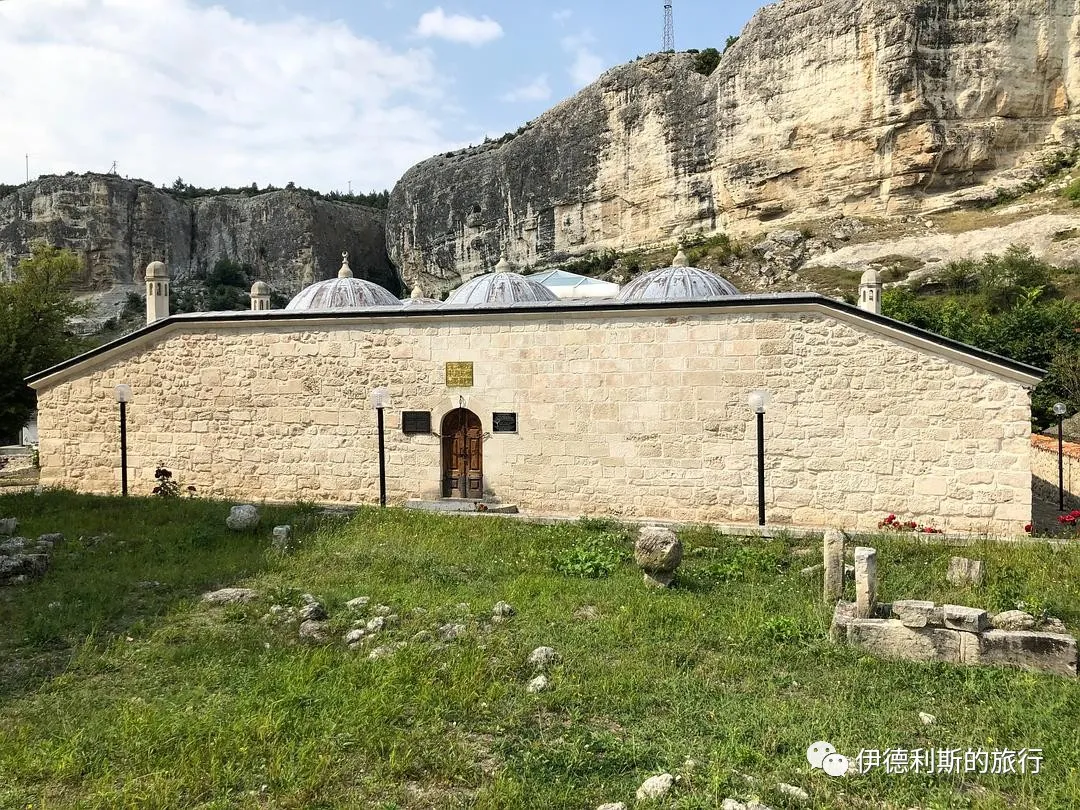
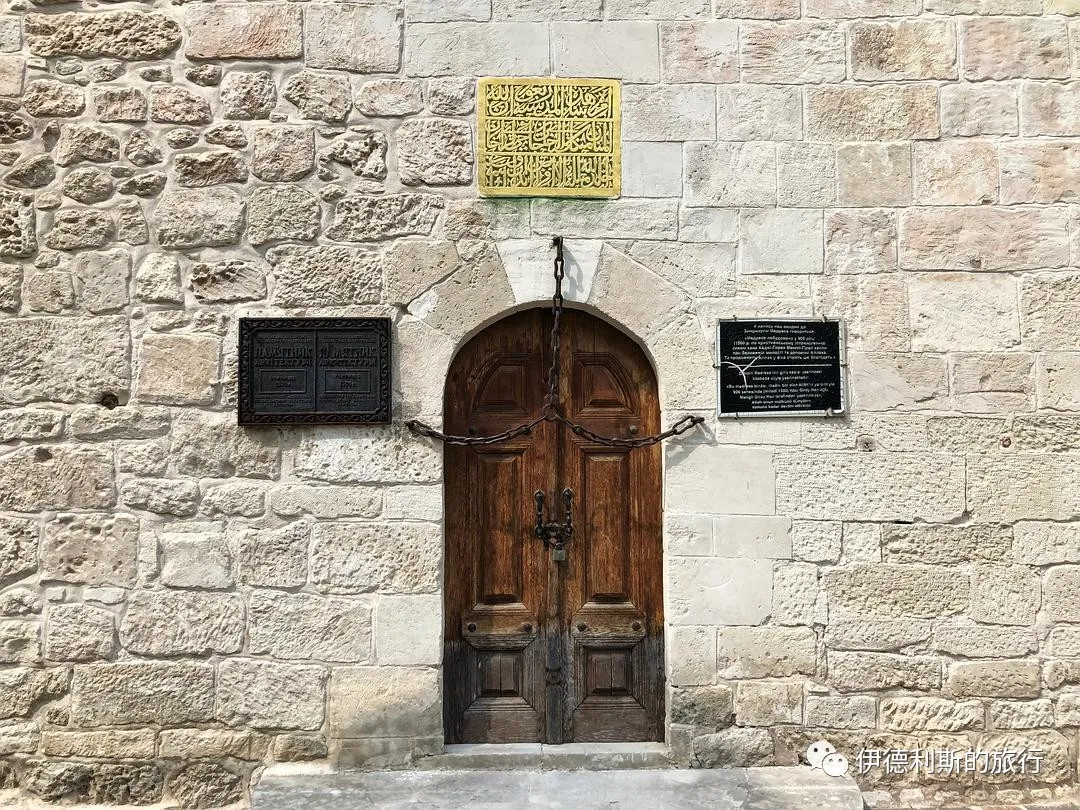
In 1909, influenced by the Crimean Tatar enlightenment movement, Gaspirali built a two-story modern Islamic school (madrasa) next to the old one. The school closed in 1917 and became the Mengli Giray Research Institute. The institute was shut down in 1923, then it served as a teacher training college, a medical school, a sanatorium for German soldiers, and a post-war psychiatric clinic. Today, the site is managed by the Bakhchisaray Historical, Cultural and Archaeological Museum.
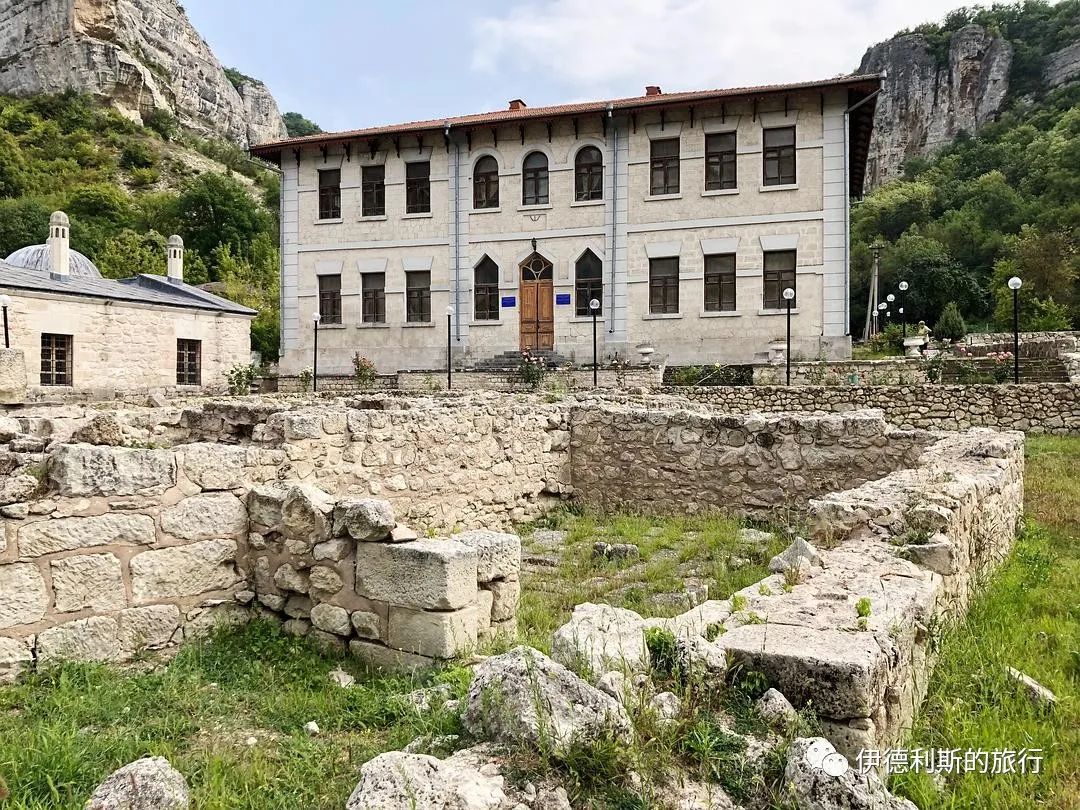
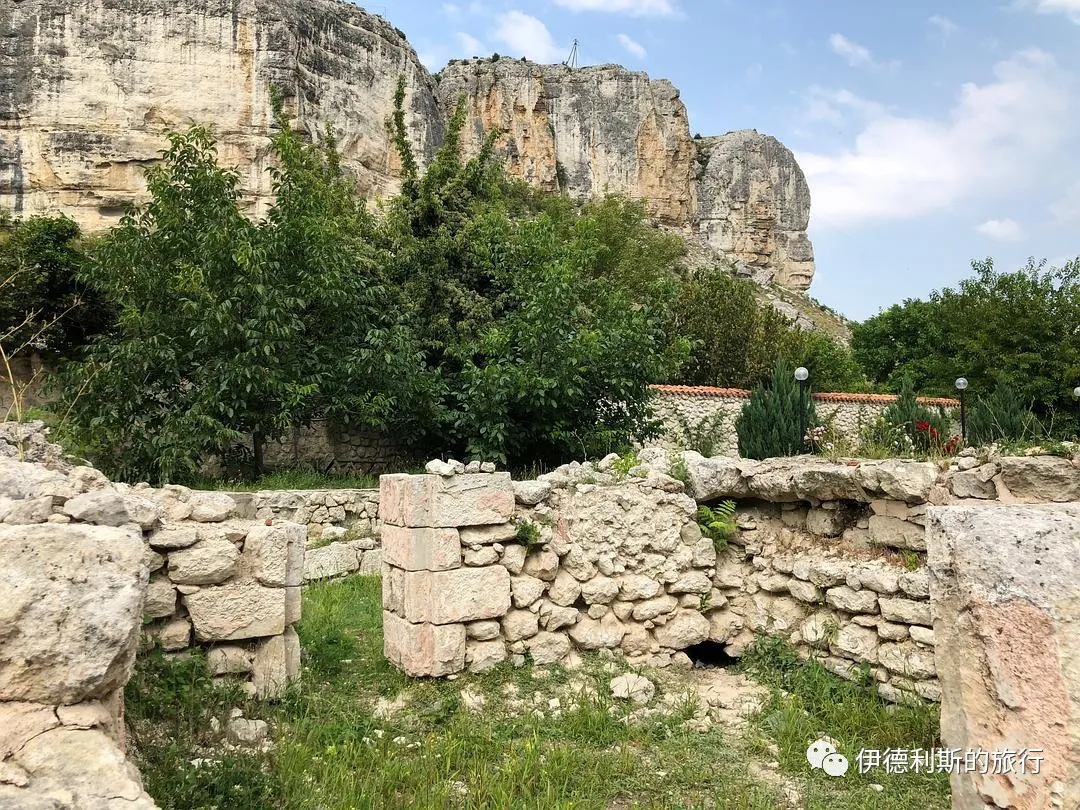
During excavations at the Salachik historical and archaeological complex in 2008, researchers found 15th-century urban ruins including a bathhouse, a well, and a courtyard.
The bathhouse is a typical Turkish bath (hamam) with separate sections for men and women, each containing five rooms and a heating system. The heating system used clay pipes in the walls and under the floors to circulate warm air, keeping the bath at a constant temperature year-round and saving firewood. Each section also included a steam room, a washing area, a toilet, a lounge, and a changing room.
Archaeologists found many ceramics from the 15th to 18th centuries, mostly architectural tiles and pipes, along with some kitchenware, Turkish pottery, Chinese porcelain, and silver coins from the Crimean Khanate.
Ismail Gaspirali (1851-1914), the founder of the Crimean Tatar enlightenment movement, is buried in the backyard of the Zincirli Madrasa.
Gaspirali was a Crimean Tatar intellectual, educator, and publisher. He was the first to realize that Turkic Muslim society needed education and cultural reform to modernize, so he created the new Jadid education system and became known as the founder of the Crimean Tatar enlightenment.
In 1883, Gaspirali received permission to publish Tercüman, the first Turkic-language newspaper in Russia. Tercüman ran for 35 years. For a long time, it was the only Turkic-language publication in Russia and one of the earliest religious newspapers, influencing the entire Turkic-speaking world.
In the newspaper, he advocated for modernization through education and designed a new teaching method called Jadid. He taught the Arabic alphabet using a new phonetic method, which cut the time it took for students to learn to read from three years down to just a few months.
In 1909, Gaspirali built a two-story modern school next to the Zincirli Madrasa, which operated until it closed in 1917.
After Gasprinsky died in his hometown in 1914, he was buried in the cemetery behind the "Zincirli" (Chain) Madrasa. The original tombstone was lost in the second half of the 20th century, and the current one was rebuilt in the late 1990s.
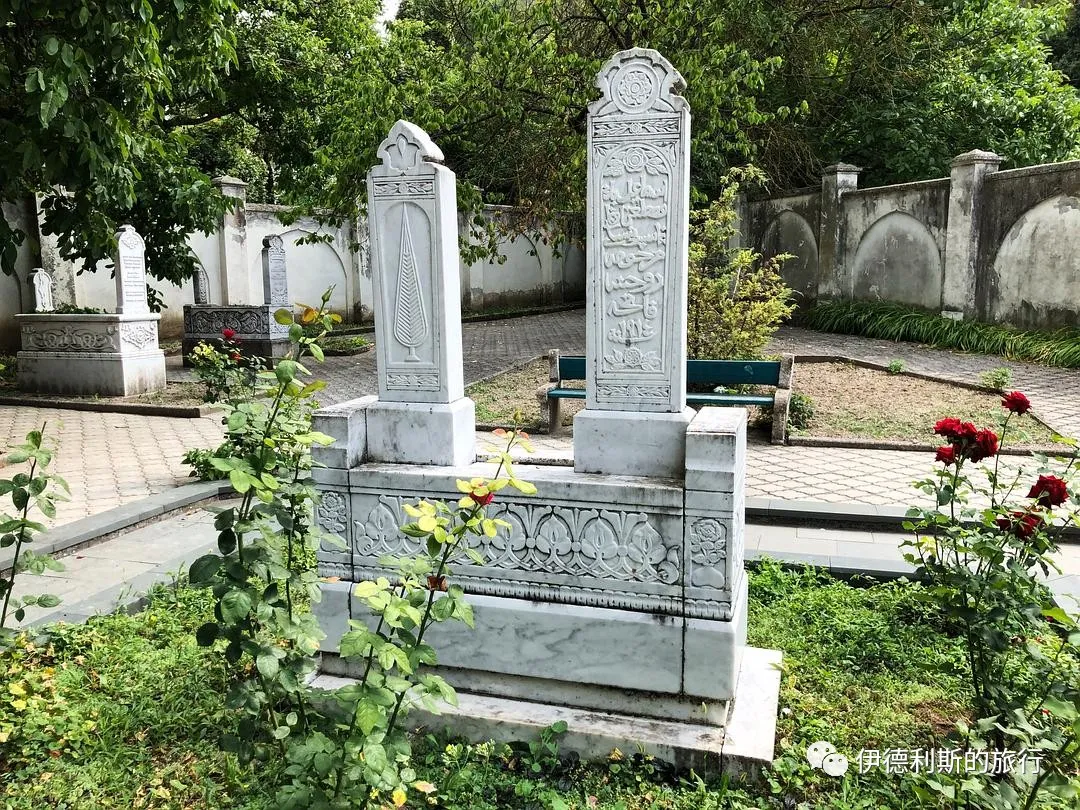
Eski Yurt Old City
Eski Yurt means "old city." During the Golden Horde era, it was a large trading town and a transportation hub connecting the east and west ends of the Crimean Peninsula. After the Crimean Khanate was established in 1441, Eski Yurt remained an economic center. It was not until 1532, when the Khanate built its new capital, Bakhchisaray, in the valley right next to Eski Yurt, that the status of Eski Yurt was replaced and it began to be called the "old city." Even so, because the city once housed a gongbei (shrine) for the sage Malik Ashtar, Eski Yurt remained a religious center for Crimean Tatars until the Soviet era.
According to legend, Malik Ashtar was a cousin of the noble Prophet and a loyal companion of Imam Ali. In Crimean Tatar legends, Malik Ashtar was a brave warrior and the first person to come to Crimea to spread the faith. He eventually died in battle while fighting a giant in Eski Yurt. Many years later, some Sufi practitioners miraculously discovered his grave in Eski Yurt and built a gongbei there. In reality, Malik Ashtar passed away in Egypt, and the gongbei in Eski Yurt is a place where his karamat (miraculous signs) were manifested. Crimean Tatars believe that if you are bitten by a snake, you can recover by making dua at the Malik Ashtar gongbei.
Due to the importance of the Malik Ashtar gongbei, a complex of hundreds of tombs formed around it. This includes the tombs of three Khans of the Crimean Khanate: Mehmed II Giray (reigned 1577–1584), Saadet II Giray (reigned 1584), and Mehmed III Giray (reigned 1623–1628).
From the era of the Crimean Khanate until the early 20th century, a dhikr ceremony was held every Thursday night at the Malik Ashtar gongbei. After all Crimean Tatars were forced into exile in Central Asia in 1948, the central square of the Malik Ashtar gongbei was turned into a market. After Crimean Tatars began returning in the late 1980s, many demanded that the market be removed from the holy site, and it was finally moved in 2006.
The existing structures in the Malik Ashtar gongbei tomb complex include the 14th-15th century Bey Yude Sultan tomb and Ahmed Bey tomb, the 16th-century Mehmed Bey tomb and the tomb of Khan Mehmed II Giray, as well as the minbar (pulpit) of the Malik Ashtar shrine mosque.
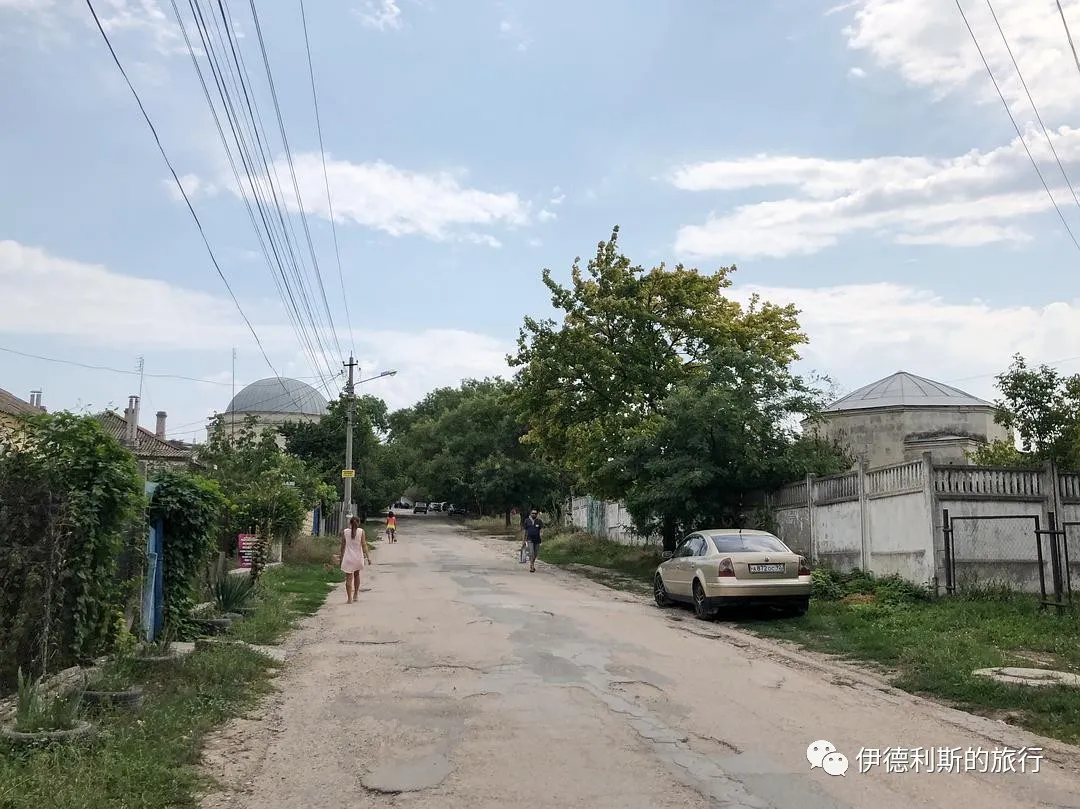
The tomb of Crimean Khan Mehmed II Giray is also known as the Great Octagonal Tomb. During his reign, Mehmed II Giray attacked the Persian Safavid dynasty three times under orders from the Ottoman Empire.
The tomb of Mehmed II Giray is the largest one still standing in Eski Yurt and clearly shows Ottoman influence. Some speculate it was built by a student of the master Ottoman architect Mimar Sinan, but no records about the architect have been found.
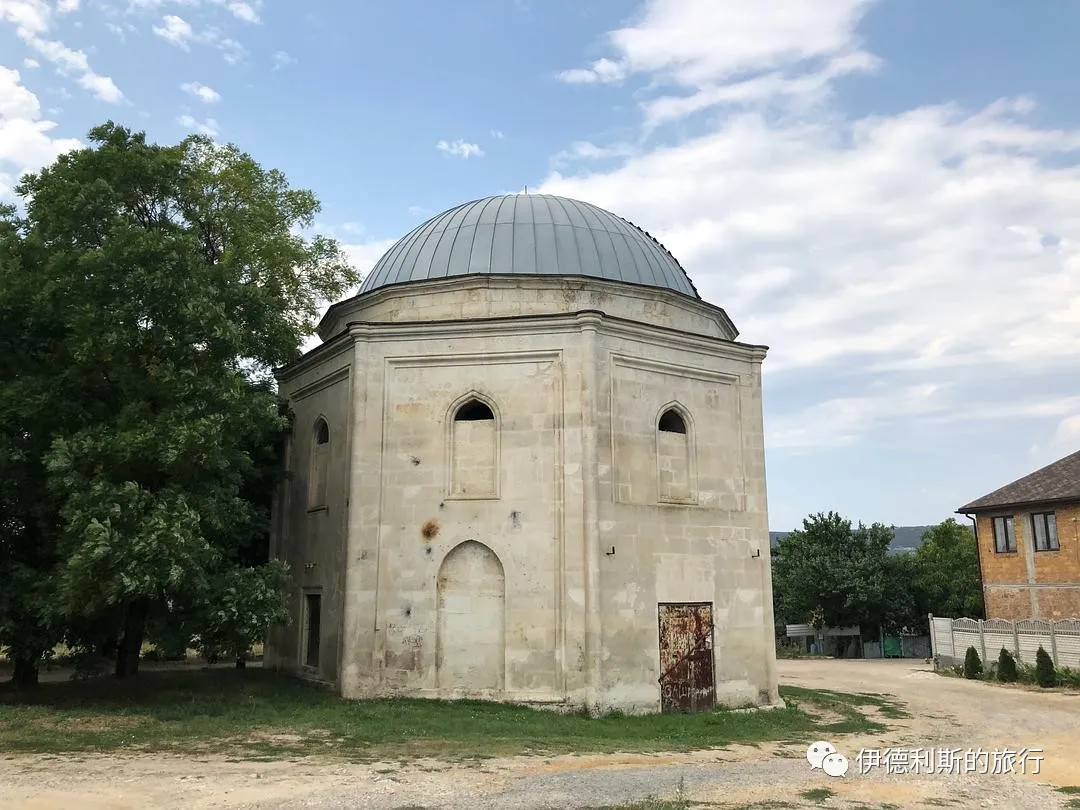
The Malik Ashtar gongbei (a shrine for a Sufi saint) was built during the Crimean Khanate era with a minbar (pulpit) for sermons, but the mosque was destroyed in 1955. This place was once where Sufi practitioners performed dhikr (remembrance of Allah), and it served as a Sufi center on the Crimean Peninsula.
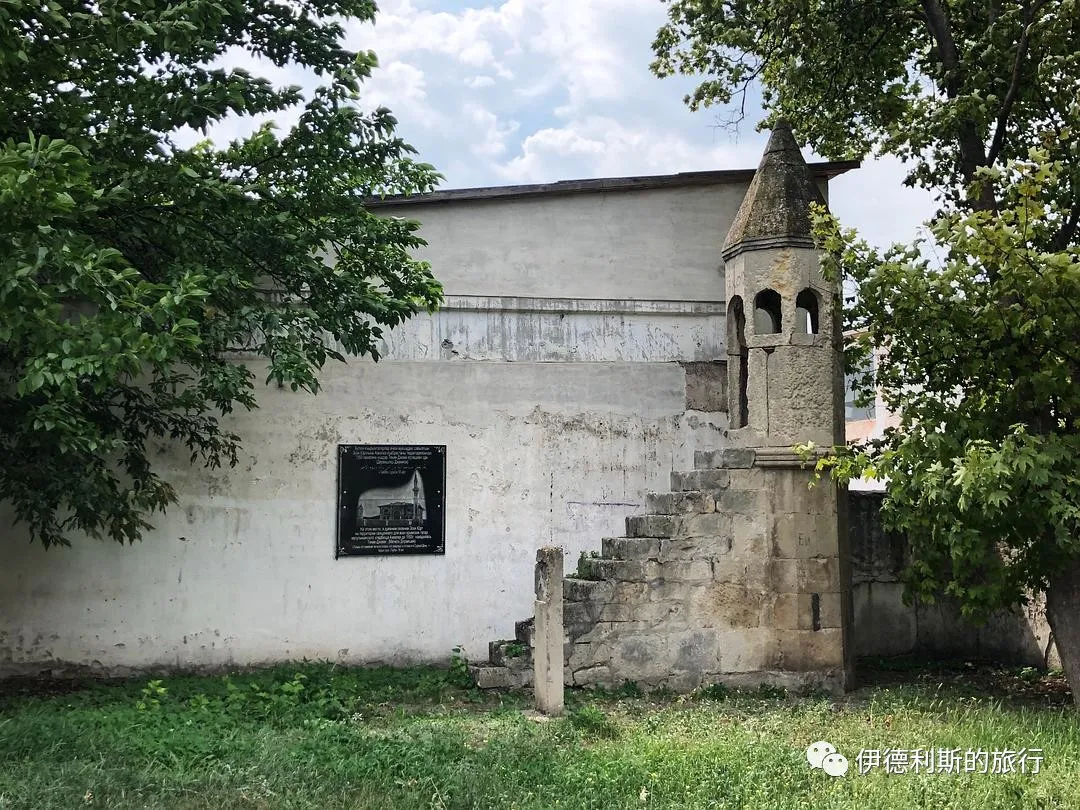
Ahmed Bey died in 1577, and his tombstone was found near the entrance of the tomb in 1924. Although Ahmed Bey died in the 16th century, the architectural style of the tomb itself does not match the Ottoman-influenced tombs of that time; instead, it follows the earlier Golden Horde tomb style. Other buildings similar to Ahmed Bey's tomb date back to the 13th and 14th centuries. Therefore, it is more likely that this tomb was built during the Golden Horde era.
Halal Travel Guide: Bakhchysarai, Crimea - Khan Palace and Mosques
Articles • ali2007fr posted the article • 0 comments • 268 views • 2026-05-20 08:47
Summary: Bakhchysarai in Crimea is shown through the Khan Palace, mosques, tombs, old neighborhoods, and Crimean Tatar heritage. This account keeps the original route, names, dates, architectural details, food notes, and photographs.
Bakhchisaray sits in a valley on the Crimean Peninsula and became the capital of the Crimean Khanate in 1532. Although it became an ordinary town after Russia occupied the Crimean Khanate in 1783, it remains the cultural center of the Crimean Tatars and preserves their unique culture and customs.
Crimean Tatars are a Turkic-speaking ethnic group that formed during the Golden Horde period. In May 1944, the Soviet Union deported all 240,000 Crimean Tatars from the Crimean Peninsula to Uzbekistan and other remote regions. Many Crimean Tatars died during the exile from cold, hunger, disease, and exhaustion. Even after reaching their destinations, many were forced to work hard in Gulag collective farms. For nearly half a century after that, there were almost no Crimean Tatars on the Crimean Peninsula.
After a long struggle by the Crimean Tatar civil rights movement, the Soviet Union finally declared the deportation of the Crimean Tatars illegal in 1989, and they finally gained the right to return to their homeland. Today, 250,000 Crimean Tatars have returned home, working to rebuild their lives, overcome social and economic obstacles, and pass on their culture.
The Palace
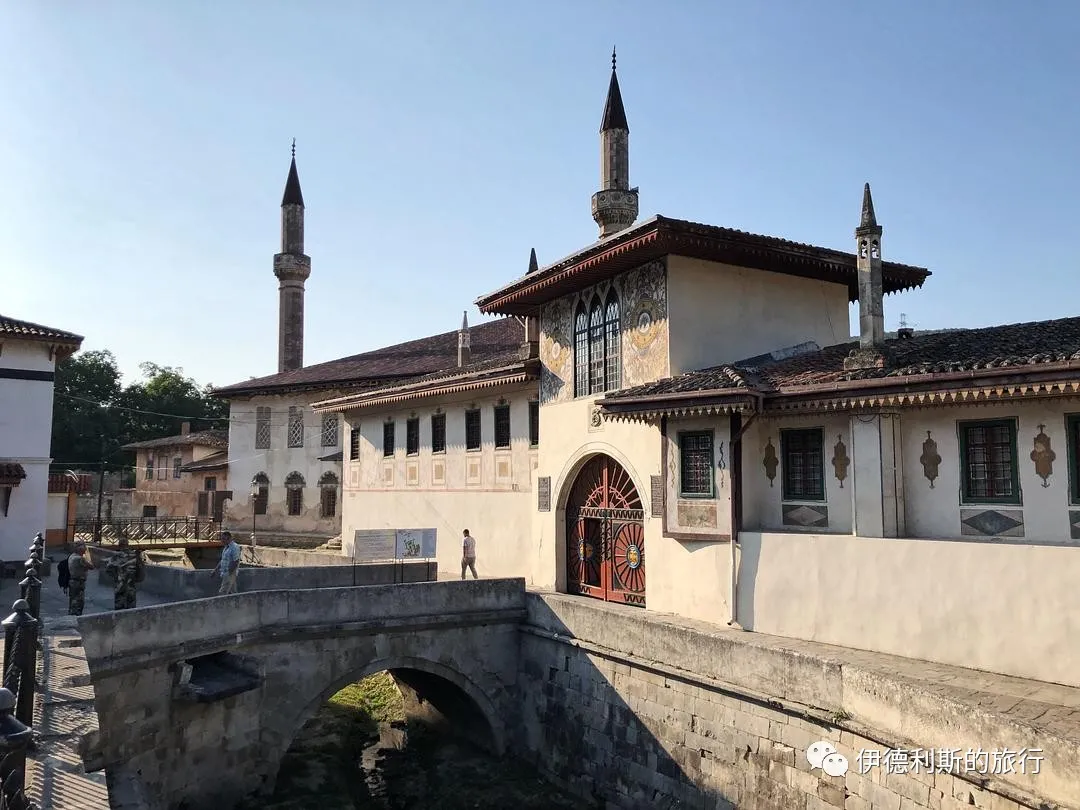
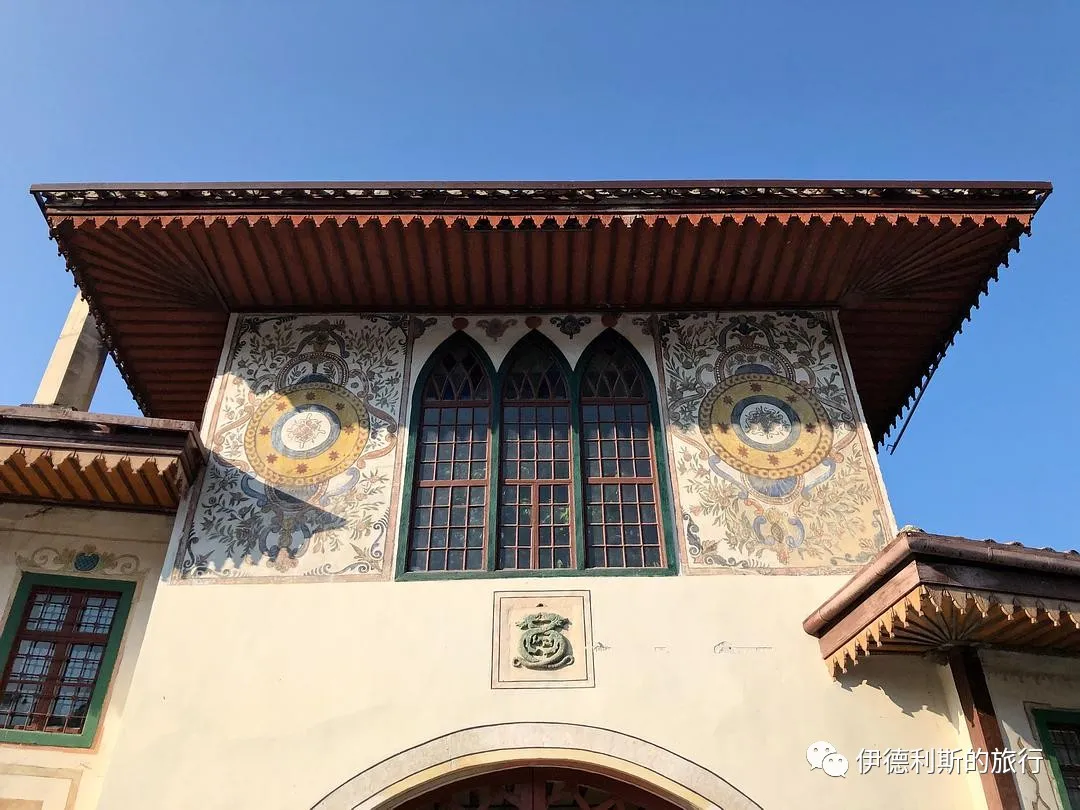
The North Gate is the entrance to the Khan Palace area. In the Crimean Tatar language, Darbehane Qapı means Mint Gate, named because mint once grew across from the gate. The Khan Palace once had four large gates, but only the North Gate and South Gate remain today. The North Gate features a carving of two snakes intertwined. Legend says the palace builder, Sahib I Giray, saw two snakes fighting by the river in front of the gate and watched one get healed by the water, so he decided to build the palace there.
The North Gate was built in 1611. Before this, the palace had no walls because the capital's defense system was at the Jewish Fortress on the cliff. As Cossack military activity increased in the 17th century, the palace was considered under threat, leading to the construction of the current walls and gates.
The Great Khan Mosque (Büyük Han Cami) was one of the first palace buildings constructed after the capital moved in 1532. The original mosque had several domes, much like the Seljuk-style mosques popular in 15th-century Ottoman Turkey. A fire destroyed the mosque in 1736, but Khan Selamet II Giray (reigned 1740-1743) later restored it and changed the roof to tiles.
During the Soviet era, the mosque closed and became an exhibition hall for an archaeological museum. After Russia occupied Crimea in 2014, they restored the mosque, though some of this work caused damage.
Maqsurah is Arabic for "enclosed space," and it served as a private area inside the mosque for rulers or nobles to perform namaz. A maqsurah is usually a wooden box or screen near the mihrab, but the Khan Mosque features a two-story loft instead. The main entrance of the Khan Mosque connects to the north wall of the Khan Palace for direct access, while you can only reach the maqsurah via stairs inside the palace.
The maqsurah in the Khan Mosque was rebuilt after the 1736 fire and features famous Turkish Iznik tiles, stained glass, and various precious 18th-century murals.
The Khan Cemetery sits south of the Khan Mosque and holds the graves of nine Crimean Khans from the 16th to 18th centuries, 45 members of the Khan family, and over 320 court nobles. The two most important tombs belong to Crimean Khans Devlet I Giray (reigned 1551-1577) and İslâm III Giray (reigned 1644-1654). These octagonal tombs are made of limestone and originally had lead domes, which were replaced with iron after 1863. There is also the open-air tomb of Crimean Khan Meñli II Giray (reigned 1724-1730, 1737-1740) and the double tombstone of Crimean Khan Qırım Giray (reigned 1758-1764, 1768-1769).
Devlet I Giray reigned for 26 years. His most important battle was burning Moscow in 1571, which forced Tsar Ivan the Terrible to flee, earning him the title "the one who took the crown." In 1640, İslâm III Giray led his army to deal a devastating blow to Ukraine.
During his reign, Meñli II Giray ended the long-standing instability of the Crimean Khanate and abolished certain taxes, which earned him much support. He skillfully organized defenses against the invading Russian army and caused them heavy losses.
Qırım Giray was a talented ruler. Under his rule, the Crimean Khanate saw an artistic revival and developed a unique style known as "Crimean Rococo."
The SaryGuzel bathhouse was ordered to be built in 1532 by Crimean Khan Sahib I Giray. Like the Khan Mosque, it is one of the oldest buildings in the Bakhchisaray Khan Palace. In the Crimean Tatar language, 'Sarı' means 'yellow or fair-skinned,' and 'Güzel' means 'beautiful.'
The SaryGuzel bathhouse is a typical Turkish bath. A furnace in the basement sends hot air up to heat the floor, and lead pipes supply hot and cold water to the bath. The bath is divided into men's and women's sections. Each section has a dome with star-shaped cutouts for light and ventilation, and there is an indoor courtyard with a fountain at the exit.
The SaryGuzel bathhouse operated until 1924, when it was closed because it was considered unsafe. It has since been restored and is now open for exhibitions.
The Falcon Tower (Toğan qullesi) is located in a corner of the Persian Garden at the Khan Palace. Legend says it was once used to train falcons for the Khan's court. The Falcon Tower was built in the 16th century. It was originally a five-story brick, mud, and wood structure. In 1760, it was rebuilt into two stories: a lower cube made of rubble and cement mortar, and an upper octagonal tower made of wooden planks.
The Falcon Tower connects to the Harem building of the Khan Palace. A spiral staircase inside leads to an observation deck at the top, where people living in the Harem could look out over the entire palace.
The Harem (Arem) of the Crimean Khan Palace once had 4 buildings and 73 rooms. In 1818, Tsar Alexander I ordered the demolition of 3 buildings and 70 rooms, leaving only an annex with 3 rooms and a pavilion. Today, the annex displays the interior decorations of Crimean Tatar homes from the 17th to the 19th centuries.
The living room retains its original fireplace and cupboards. During a 1980s restoration, a mirror with an inscription by the artist was discovered. Paintings on the vanity and Arabic poetry on the ceiling have also been cleaned and revealed.
The Persian Garden in the southern part of the Harem is surrounded by high walls. It once featured various trees, fountains, and baths, but now only ruins remain.
The Dilâra Bikeç Mausoleum is an octagonal tomb at the southernmost point of the Bakhchisaray Khan Palace. It was ordered to be built in 1764 by Crimean Khan Qırım Giray (reigned 1758-1764, 1768-1769) for his beloved wife.
The Small Khan Mosque (Kiçik Han Cami) is inside the main building of the Khan Palace and was used by members of the Khan's family and noble officials. The Small Khan Mosque was built in the 16th century. It was destroyed by fire by the Russian army in 1736 and restored in 1741 by Khan Selamet II Giray (reigned 1740-1743).
The existing interior murals were created between the 17th and 18th centuries, with some painted by the Iranian architect Omer in the late 18th century. Earlier murals from the 16th century were discovered during a 1991 restoration.
On the south wall of the Khan Mosque (Khan Jami) is a prayer niche (mihrab) carved with seven decorative bands, which symbolize the seven heavens mentioned in the Quran.
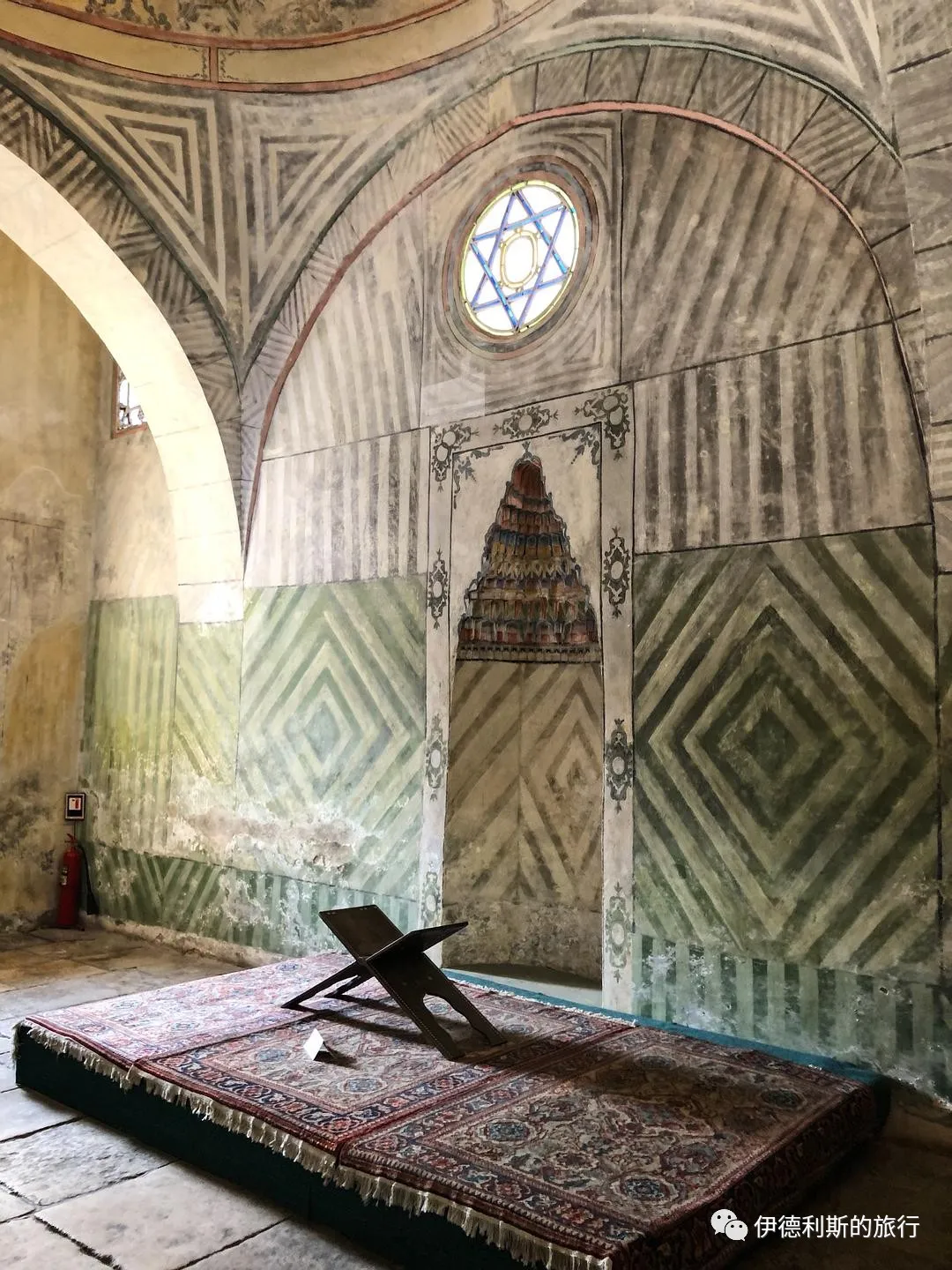
Above the prayer niche (mihrab) is a piece of stained glass featuring the Seal of Solomon (Khatam Sulayman) ✡.
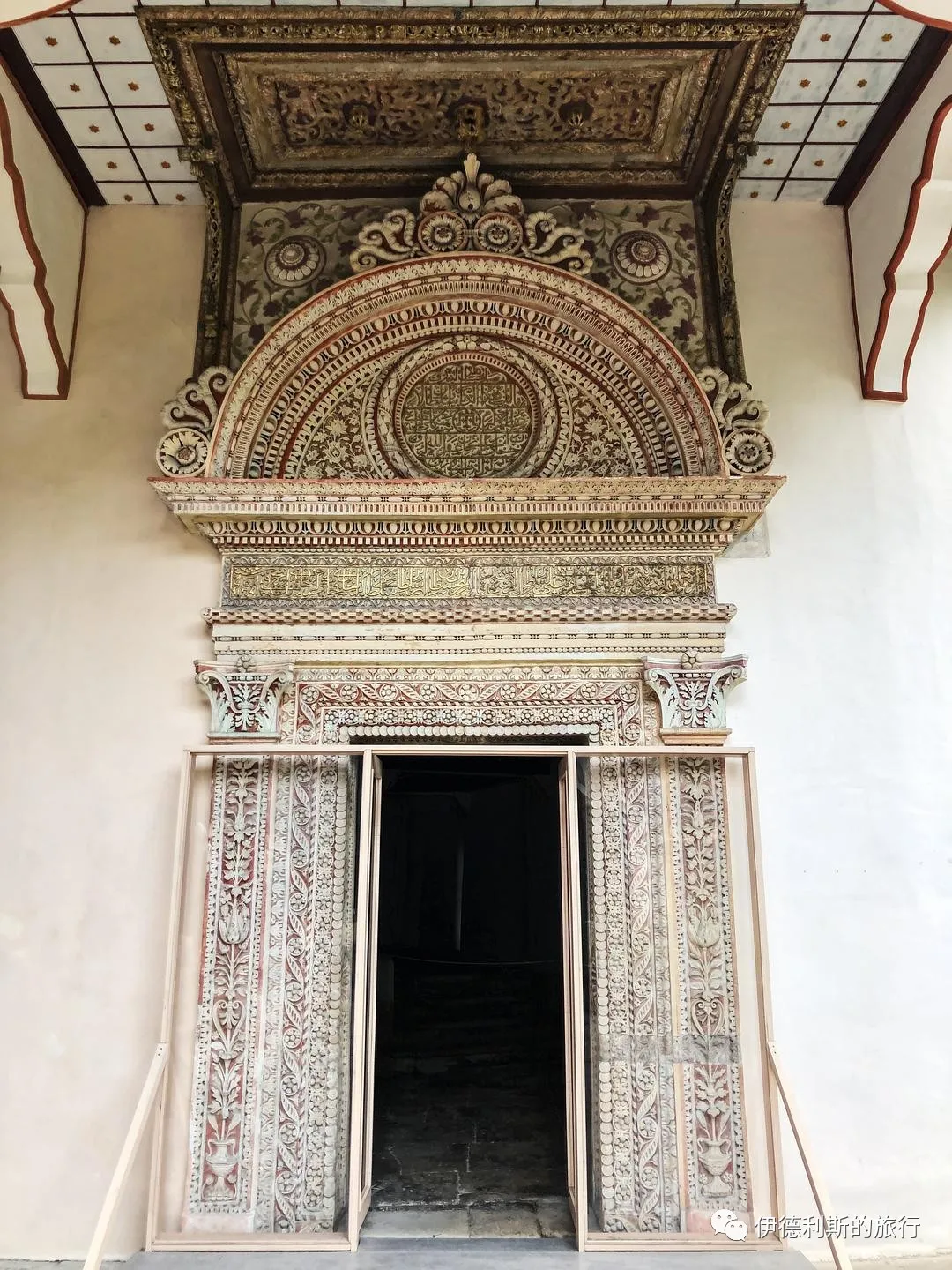
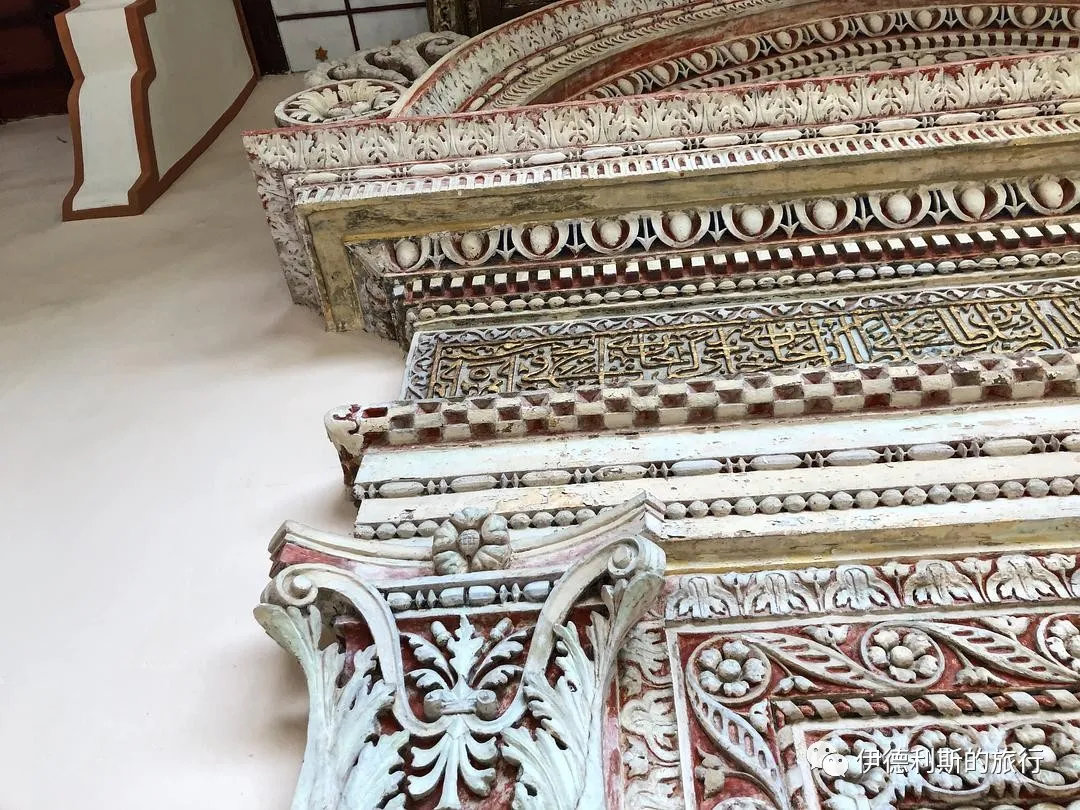
The Iron Gate (Demir Qapi) is the oldest structure in the Khan Palace, built between 1503 and 1504 by the architect Aleviz Novy for the Crimean Khan. This architect had previously been invited by Ivan the Great to Moscow to build a series of churches. The Iron Gate (Demir Qapi) was likely originally built at the Crimean Khan's previous residence, Devlet-Saray, and was moved to the main building of the Khan Palace only after the Bakhchisaray Khan Palace was completed in 1532.
Demir Qapi means iron gate in the Crimean Tatar language. The gate's portal is made of limestone and uses decorative styles from the Lombard-Venetian Renaissance.
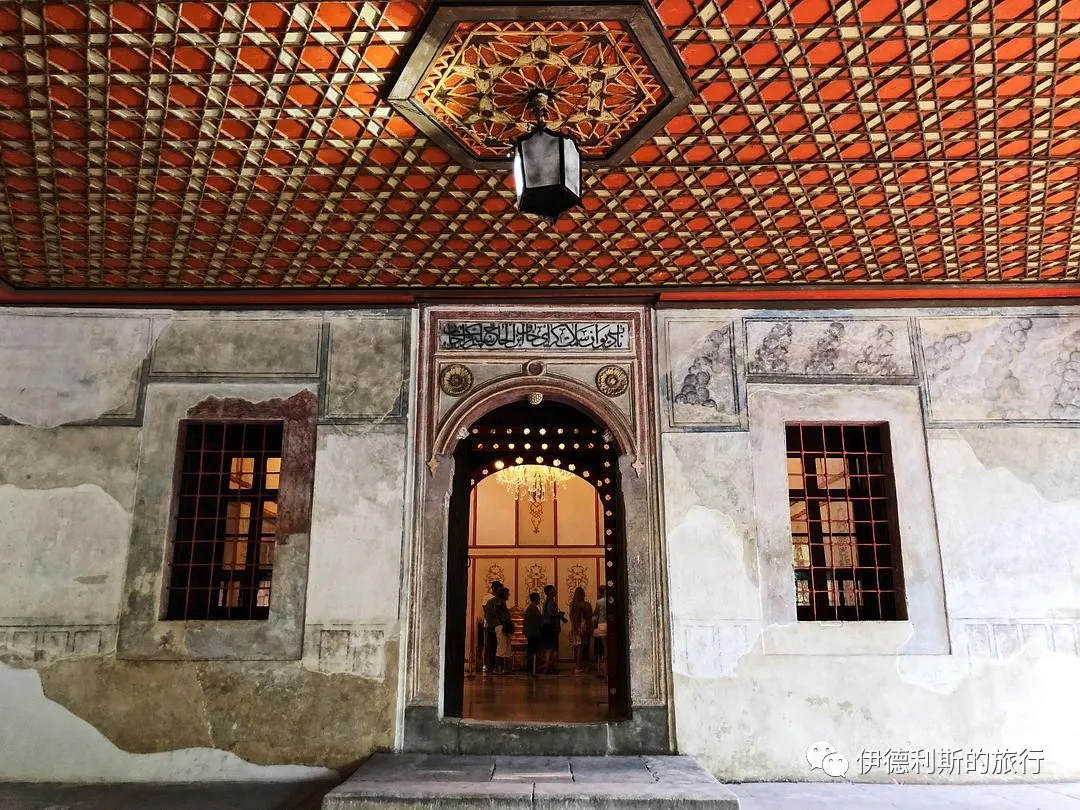
The Council Hall (Divan hanesi) is the meeting room inside the main building of the Khan Palace. In the center of the south wall is the throne where the Khan sat, with sofas on the sides for his ministers. Above the north wall at the entrance to the hall is a narrow latticed balcony, which is said to have been used by the Khan to have people eavesdrop on meetings when he was absent.
The floor of the hall was paved with marble and had a square pool with a fountain in the center. The walls were covered in tiles, but these were destroyed in a fire set by the Russian army in 1736. Restoration took place in 1742, and many of the current decorations, such as the murals and chandeliers, were added in 1822 when the architect I. F. Kolodin renovated the Khan Palace.
In 1917, the Crimean Tatars announced the establishment of an independent Crimean Tatar government here.
The Summer Pavilion is a place for cooling off inside the main building of the Khan Palace, built between the late 17th and early 18th centuries. It was burned down by the Russian army in 1736 and later restored by the architect Omer ibn al Hadj Mustafa. In the center of the pavilion is a square pool with a square marble fountain, surrounded by sofas.
The pavilion was originally open. Between 1821 and 1831, Tsar Alexander I ordered the architects Mikhail Klado and Vasiliy Dorofeyev to enclose the Summer Pavilion, adding columns, stained glass, and a carved ceiling.
Early murals were discovered during the restoration of the summer pavilion in 1962.
The Golden Pavilion is on the second floor of the main building and was built in the late 18th century by the Iranian architect Omer. The interior of the pavilion originally featured murals of fruit vases and Arabic poetry praising Khan Qırım Giray, but these were destroyed during the German occupation of Crimea from 1941 to 1944.
The Golden Fountain is located in the Fountain Courtyard of the Khan's Palace main building, near the Small Khan Mosque, and was where the Crimean Khan and members of the Khan's court performed wudu.
The Golden Fountain is made of gilded marble and features carvings of various flowers, fruits, and plants to depict the 'Garden of Eden' (jandātʿadni) from the Quran, the place where Adam and his wife lived. A circular outlet is carved in the center of the fountain, symbolizing eternal life.
The Fountain of Tears was commissioned in 1763 by the Crimean Khan Qırım Giray (reigned 1758-1764, 1768-1769), and the architect was Omer ibn al Hadj Mustafa from Iran. The fountain was originally installed in the mausoleum of the Khan's beloved wife, Dilâra Bikeç, but after Empress Catherine II visited the palace in 1787, the dried-up fountain was moved to the Fountain Courtyard in front of the main building.
A love story about the Fountain of Tears has circulated in Bakhchysarai since the 18th century. According to the legend, the Khan's beloved wife, Dilâra Bikeç, was a Greek woman from Georgia who was killed in palace intrigue. The Khan fell into deep grief and built this fountain in her mausoleum to honor her. This love story later became widely known because of Pushkin's famous poem, The Fountain of Bakhchisaray.
The suites on both sides of the North Gate were where the Khan's palace guards (Qapı Halqı) lived. After Crimea was occupied by Tsarist Russia, this area also served as guest lodging. Today, the west building of the suites is an exhibition hall, and the east building houses museum offices.
The exhibition hall in the west building displays artifacts from the Crimean Khanate era and the traditional life of the Crimean Tatars. The original fireplaces are still preserved inside the suites.
The stables are divided into two floors, with the first floor used for keeping horses and the second floor for the grooms to live in; the current building was rebuilt in the 1850s.
Mosque
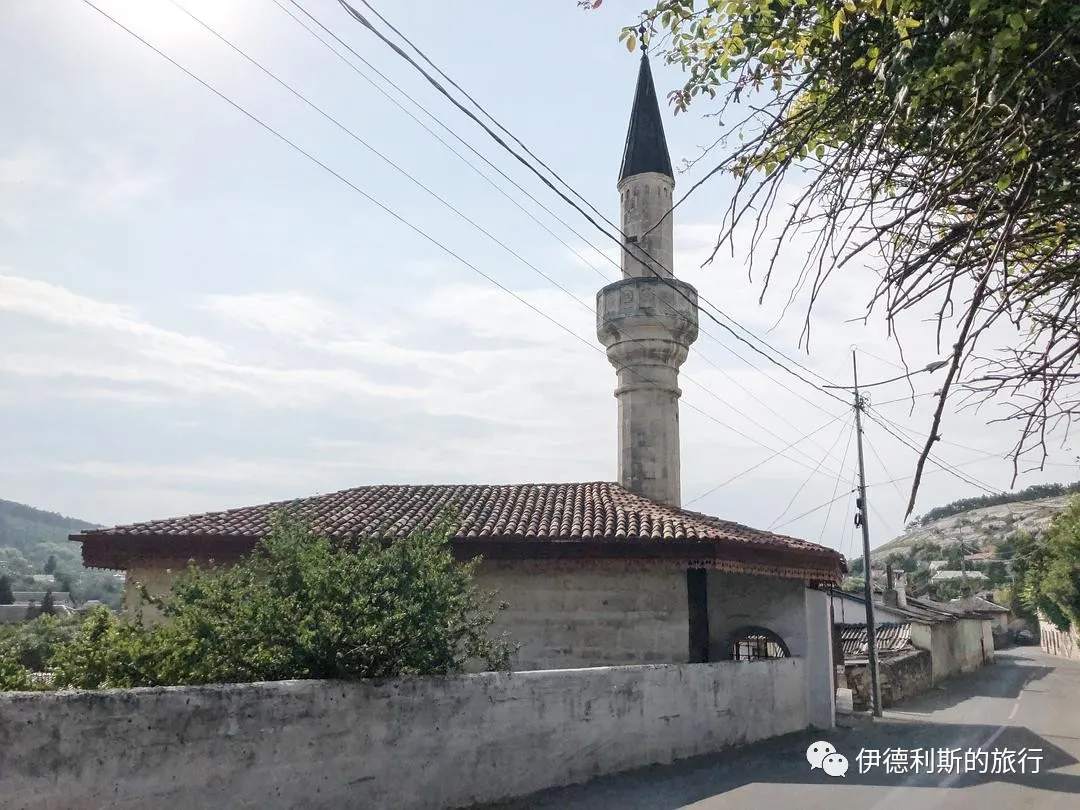
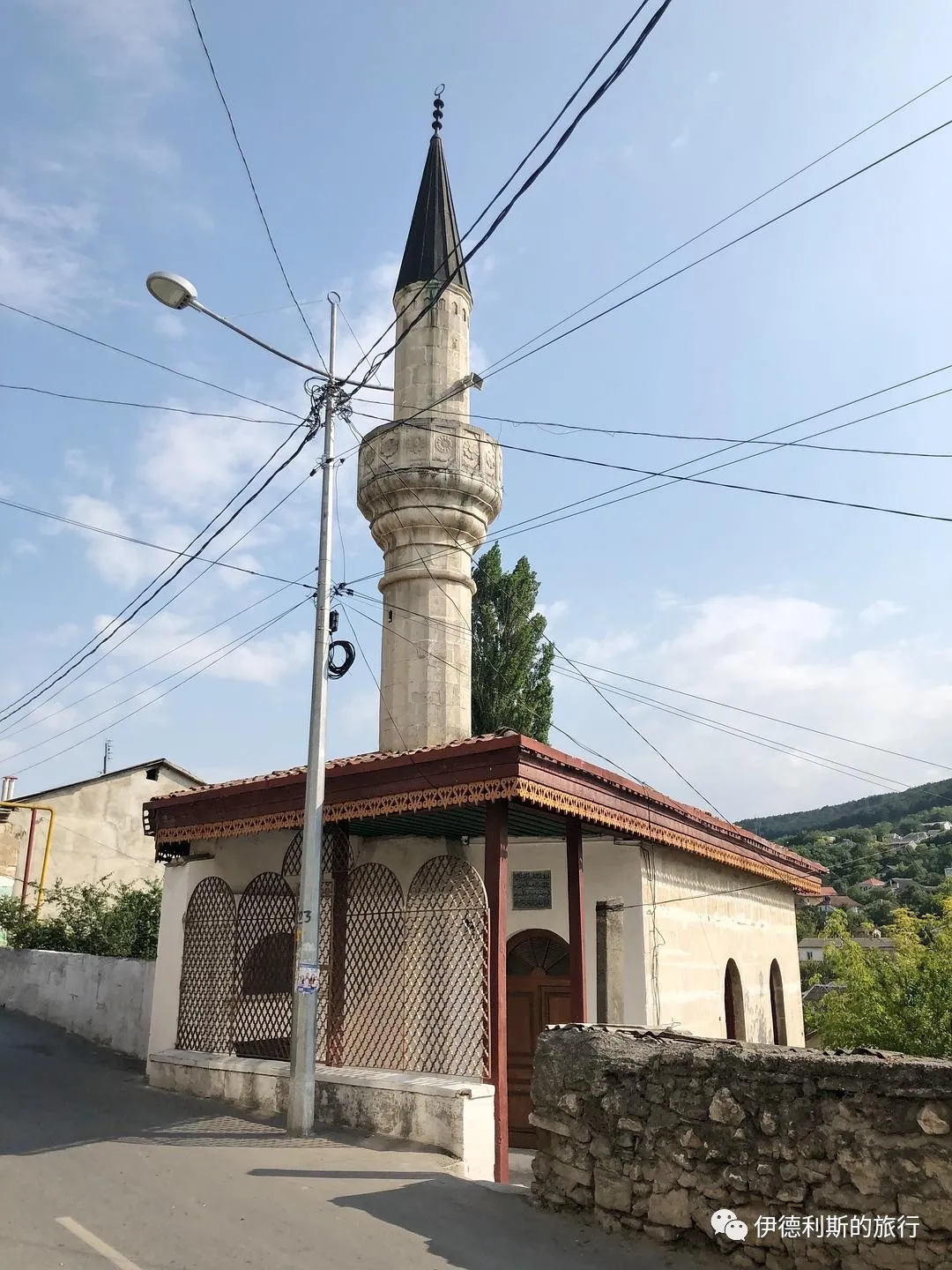
Orta Mosque was once the main Friday mosque in Bakhchysarai. It dates back to 1674. The Khans Mengli Giray II and Selamet II Giray renovated it between 1737 and 1743, and it was rebuilt again in 1861 to reach its current form.
After 1929, the mosque served as a cultural center and then a cinema. It was not returned to the Muslim community until 2001. The mosque's minaret and surrounding buildings were destroyed at that time. They were not rebuilt until 2012. The mosque reopened in 2013 after the construction work finished.
Ismi Khan Mosque was built between the 17th and 18th centuries. Its architectural decorations show a strong influence from the European Baroque style. The upper circular openings are decorated with wooden Seals of Solomon (Khātam Sulaymān) ✡.
The mosque was used as a warehouse for a long time. There were plans to restore it in the early 21st century, but the work has not been carried out yet.
Molla Mustafa Friday Mosque dates back to the 17th century. An 1890 document mentions this mosque, stating that the local residents added a roof to the building in 1888.
Tahtali Mosque was built in 1707 by Khan Sultan Beck, the son-in-law of the Crimean Khan Selim I Giray. In the Crimean Tatar language, "Tahtalı" means "wooden." The mosque was originally built with wooden planks. Later, it was enclosed with brick and stone, and the roof was covered with clay tiles.
Accommodation
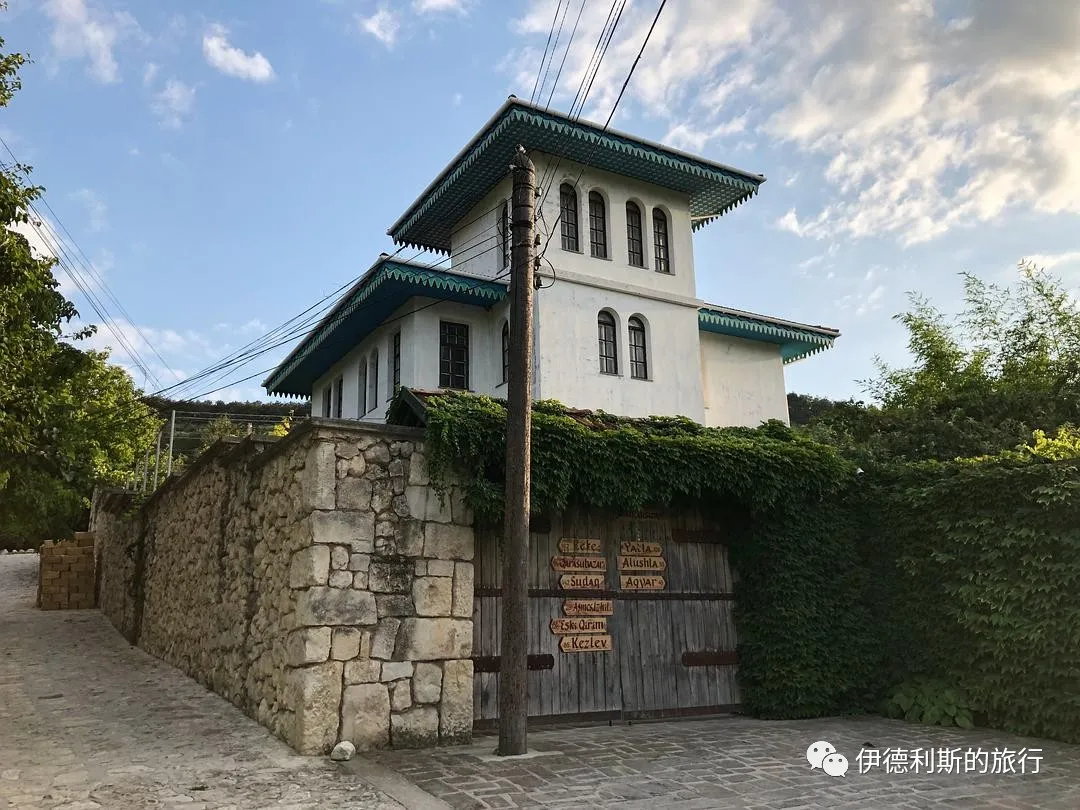
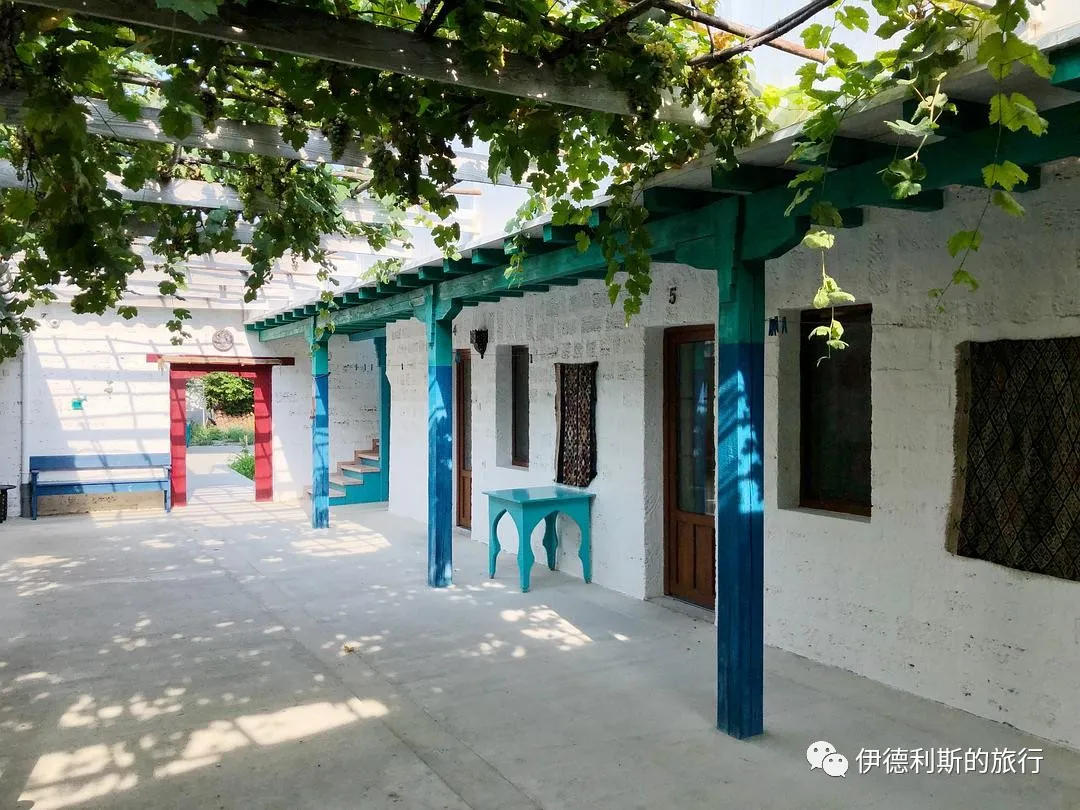
I stayed at a beautiful traditional Crimean Tatar house called Bahitgul Boutique-Hotel. They serve traditional Crimean Tatar food, so I usually ate breakfast right where I was staying. The view while eating there is excellent, as you can look out over the entire ancient capital.
The food culture of the Crimean Tatars is closely tied to their history. Because the Crimean Khanate was a long-term vassal of the Ottoman Empire, it has many Ottoman-related foods, such as Turkish coffee, baklava (a sweet pastry), and stuffed grape leaves (dolma). After being exiled to Uzbekistan in 1944, the Crimean Tatar diet added many Uzbek dishes, including rice pilaf (plov), hand-pulled noodles (lagman), baked meat buns (samsa), steamed dumplings (manti), and flatbread (nan). Crimean Tatars have some unique delicacies, such as the deep-fried meat pastry (chebureki), which is known as a signature national dish.
You can eat baked meat buns (samsa) at the bazaar.
I ate rice pilaf (plov), stuffed grape leaves (dolma), and lamb skewers (shashlik) at a Crimean Tatar restaurant; the lamb skewers were incredibly tender and fragrant.
I bought desserts at a Crimean Tatar sweet shop in the old city, which are basically the same as the baklava popular in former Ottoman regions like Turkey, the Caucasus, the Balkans, and the Levant. In the third picture, the first row on the iron tray says 'hazelnut,' and the second row says 'caramel'.
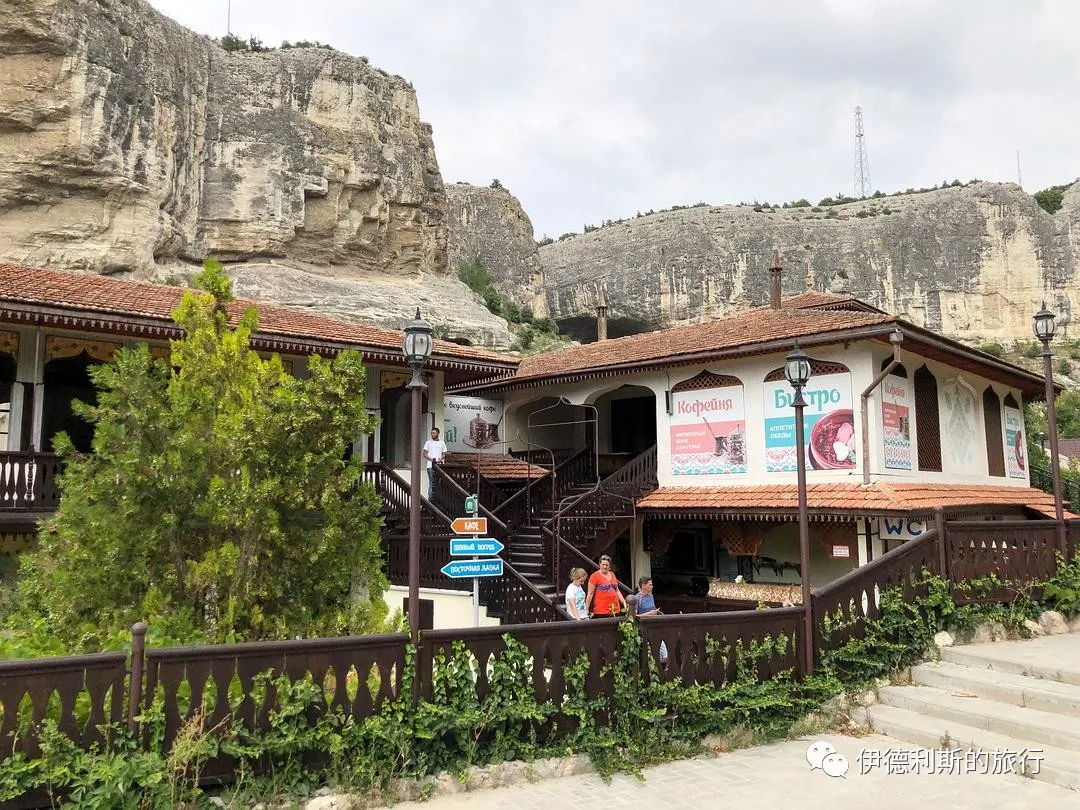
At a manor-style Crimean Tatar restaurant at the foot of the mountain, I ate sheep cheese with olives (brynza s maslinami), grilled salmon (deniz kebab), steamed dumplings (manti), and the signature Crimean Tatar deep-fried meat pastry (chebureki).
The deep-fried meat pastry (chebureki) is a unique national food of the Crimean Tatars. It can be made with lamb or beef, mixed with onions and black pepper, and the dough is very thin. Steamed dumplings (manti) were brought back by the Crimean Tatars after they were forced into exile in Uzbekistan in 1944.
Clothing
Skullcap (tubeteika)
I bought a wool hat called a kalpak at a shop, which is the most classic winter hat for Crimean Tatars. This word is the same as the name for the felt hat worn by the Kyrgyz people, but the shape is different. view all
Summary: Bakhchysarai in Crimea is shown through the Khan Palace, mosques, tombs, old neighborhoods, and Crimean Tatar heritage. This account keeps the original route, names, dates, architectural details, food notes, and photographs.
Bakhchisaray sits in a valley on the Crimean Peninsula and became the capital of the Crimean Khanate in 1532. Although it became an ordinary town after Russia occupied the Crimean Khanate in 1783, it remains the cultural center of the Crimean Tatars and preserves their unique culture and customs.
Crimean Tatars are a Turkic-speaking ethnic group that formed during the Golden Horde period. In May 1944, the Soviet Union deported all 240,000 Crimean Tatars from the Crimean Peninsula to Uzbekistan and other remote regions. Many Crimean Tatars died during the exile from cold, hunger, disease, and exhaustion. Even after reaching their destinations, many were forced to work hard in Gulag collective farms. For nearly half a century after that, there were almost no Crimean Tatars on the Crimean Peninsula.
After a long struggle by the Crimean Tatar civil rights movement, the Soviet Union finally declared the deportation of the Crimean Tatars illegal in 1989, and they finally gained the right to return to their homeland. Today, 250,000 Crimean Tatars have returned home, working to rebuild their lives, overcome social and economic obstacles, and pass on their culture.
The Palace
The North Gate is the entrance to the Khan Palace area. In the Crimean Tatar language, Darbehane Qapı means Mint Gate, named because mint once grew across from the gate. The Khan Palace once had four large gates, but only the North Gate and South Gate remain today. The North Gate features a carving of two snakes intertwined. Legend says the palace builder, Sahib I Giray, saw two snakes fighting by the river in front of the gate and watched one get healed by the water, so he decided to build the palace there.
The North Gate was built in 1611. Before this, the palace had no walls because the capital's defense system was at the Jewish Fortress on the cliff. As Cossack military activity increased in the 17th century, the palace was considered under threat, leading to the construction of the current walls and gates.
The Great Khan Mosque (Büyük Han Cami) was one of the first palace buildings constructed after the capital moved in 1532. The original mosque had several domes, much like the Seljuk-style mosques popular in 15th-century Ottoman Turkey. A fire destroyed the mosque in 1736, but Khan Selamet II Giray (reigned 1740-1743) later restored it and changed the roof to tiles.
During the Soviet era, the mosque closed and became an exhibition hall for an archaeological museum. After Russia occupied Crimea in 2014, they restored the mosque, though some of this work caused damage.
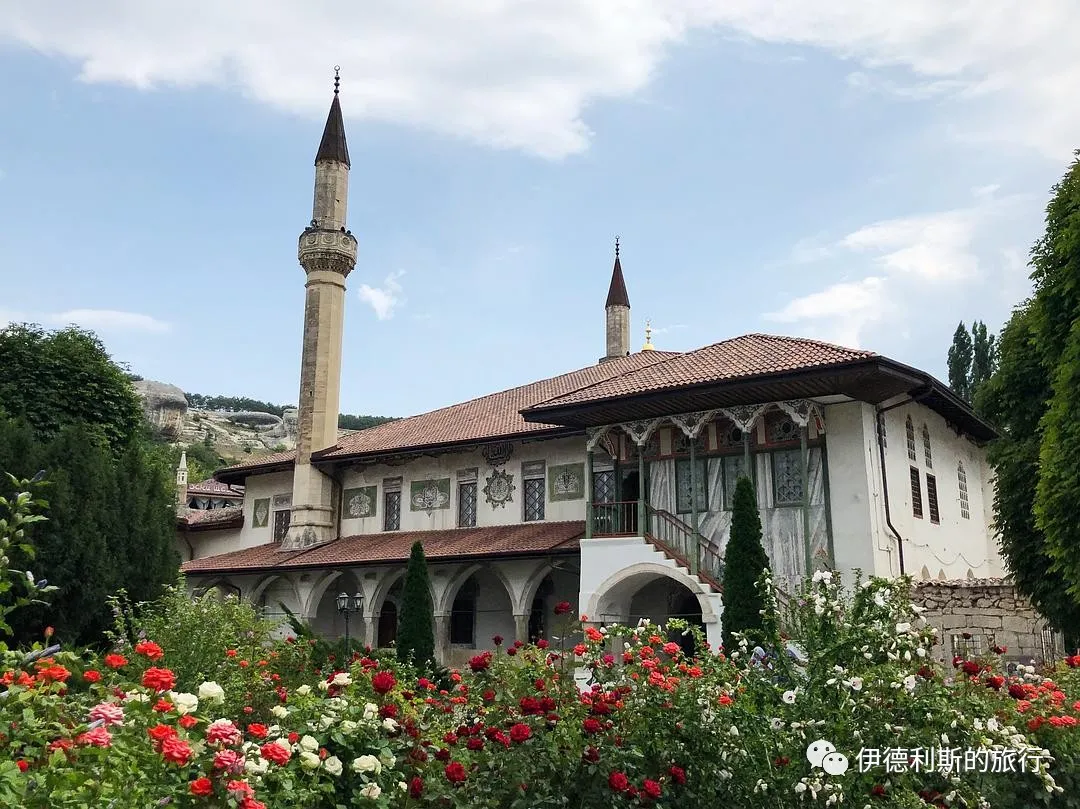
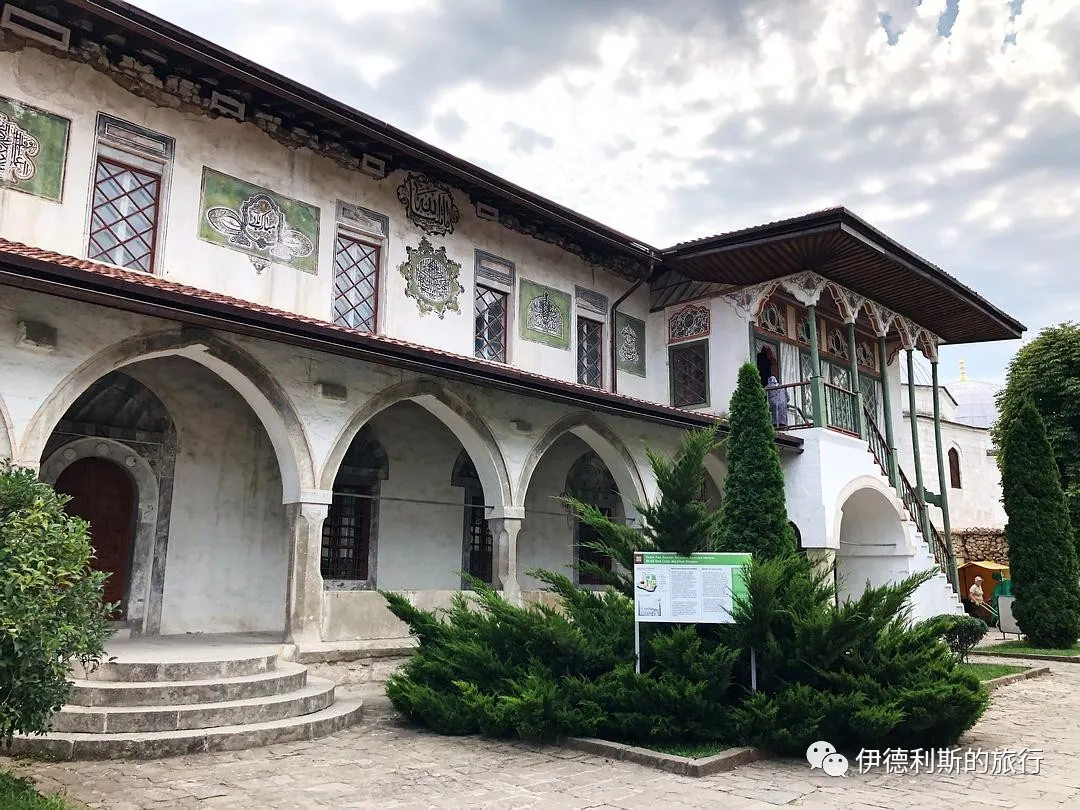
Maqsurah is Arabic for "enclosed space," and it served as a private area inside the mosque for rulers or nobles to perform namaz. A maqsurah is usually a wooden box or screen near the mihrab, but the Khan Mosque features a two-story loft instead. The main entrance of the Khan Mosque connects to the north wall of the Khan Palace for direct access, while you can only reach the maqsurah via stairs inside the palace.
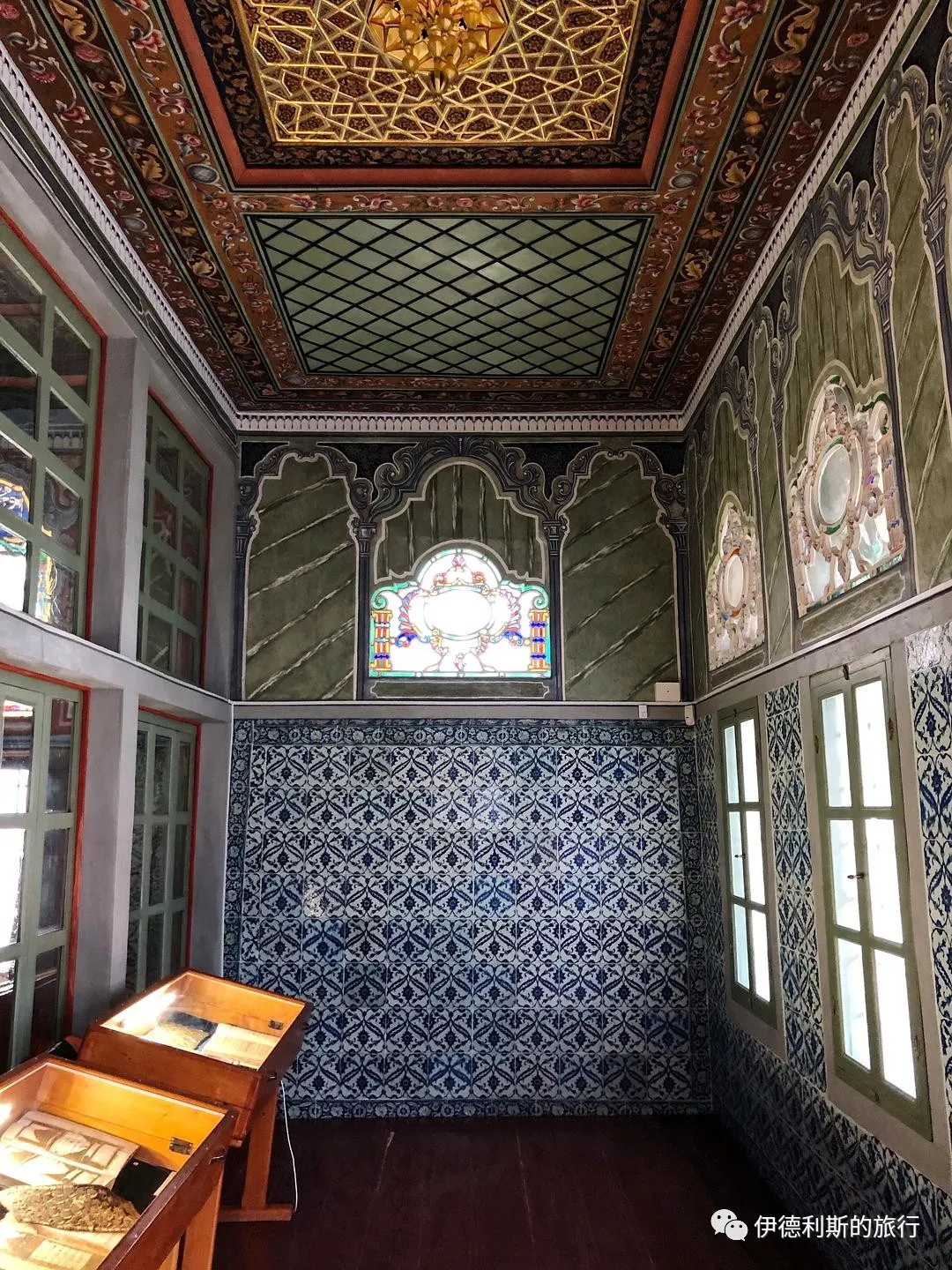
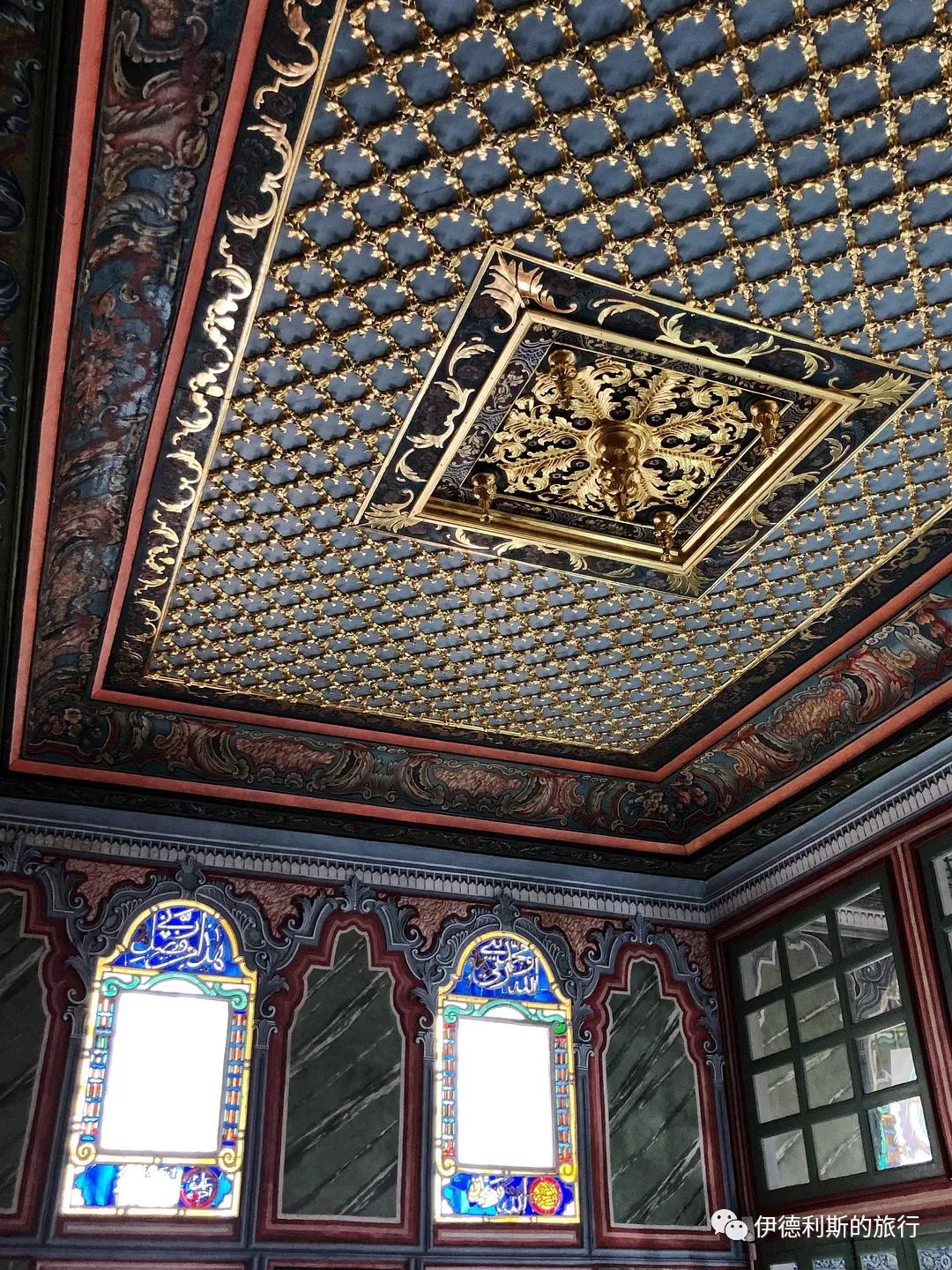
The maqsurah in the Khan Mosque was rebuilt after the 1736 fire and features famous Turkish Iznik tiles, stained glass, and various precious 18th-century murals.
The Khan Cemetery sits south of the Khan Mosque and holds the graves of nine Crimean Khans from the 16th to 18th centuries, 45 members of the Khan family, and over 320 court nobles. The two most important tombs belong to Crimean Khans Devlet I Giray (reigned 1551-1577) and İslâm III Giray (reigned 1644-1654). These octagonal tombs are made of limestone and originally had lead domes, which were replaced with iron after 1863. There is also the open-air tomb of Crimean Khan Meñli II Giray (reigned 1724-1730, 1737-1740) and the double tombstone of Crimean Khan Qırım Giray (reigned 1758-1764, 1768-1769).
Devlet I Giray reigned for 26 years. His most important battle was burning Moscow in 1571, which forced Tsar Ivan the Terrible to flee, earning him the title "the one who took the crown." In 1640, İslâm III Giray led his army to deal a devastating blow to Ukraine.
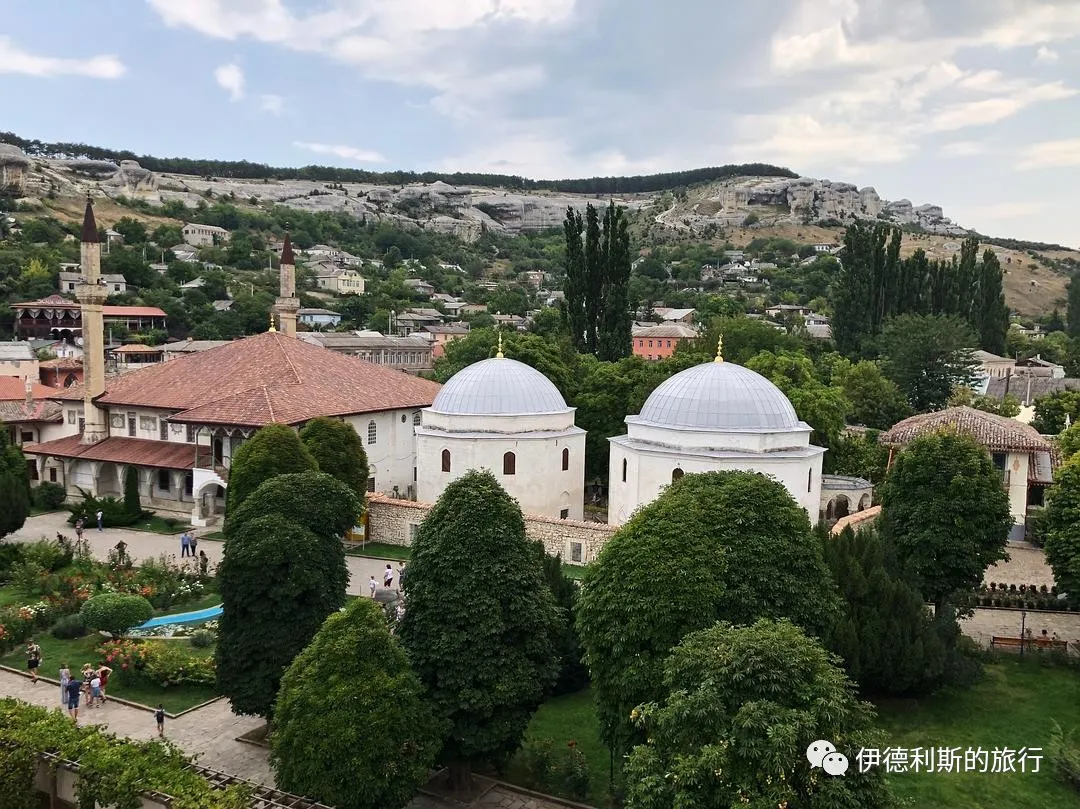
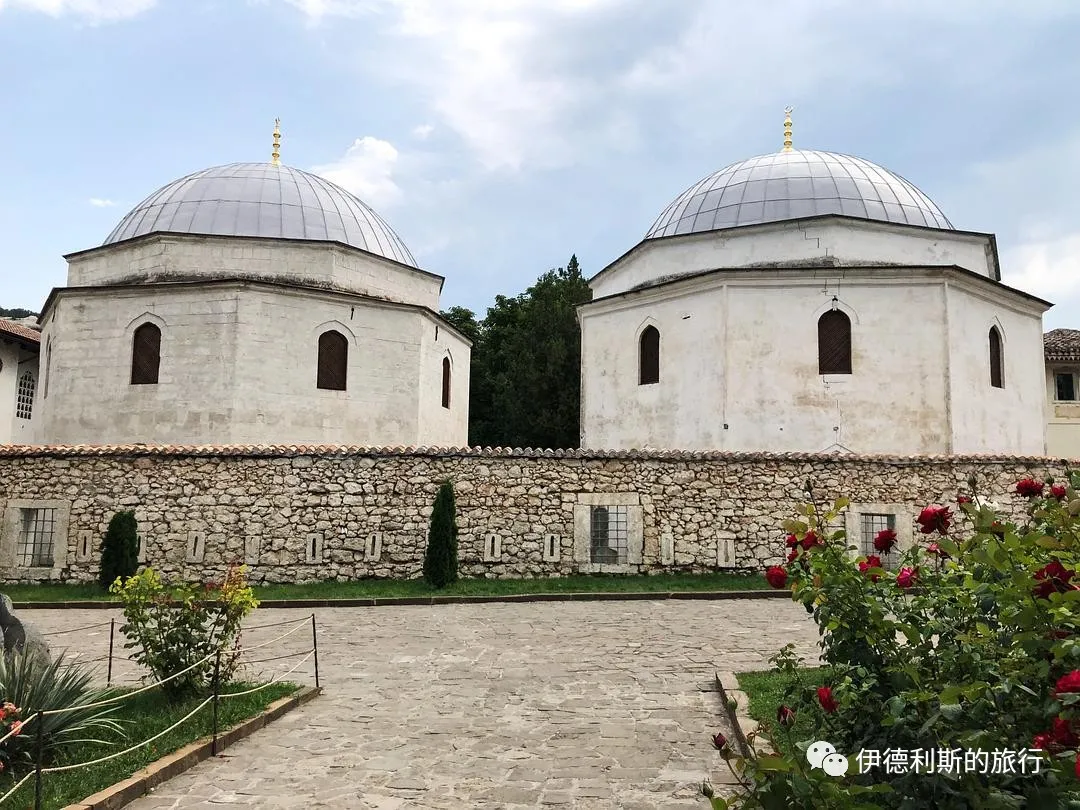
During his reign, Meñli II Giray ended the long-standing instability of the Crimean Khanate and abolished certain taxes, which earned him much support. He skillfully organized defenses against the invading Russian army and caused them heavy losses.
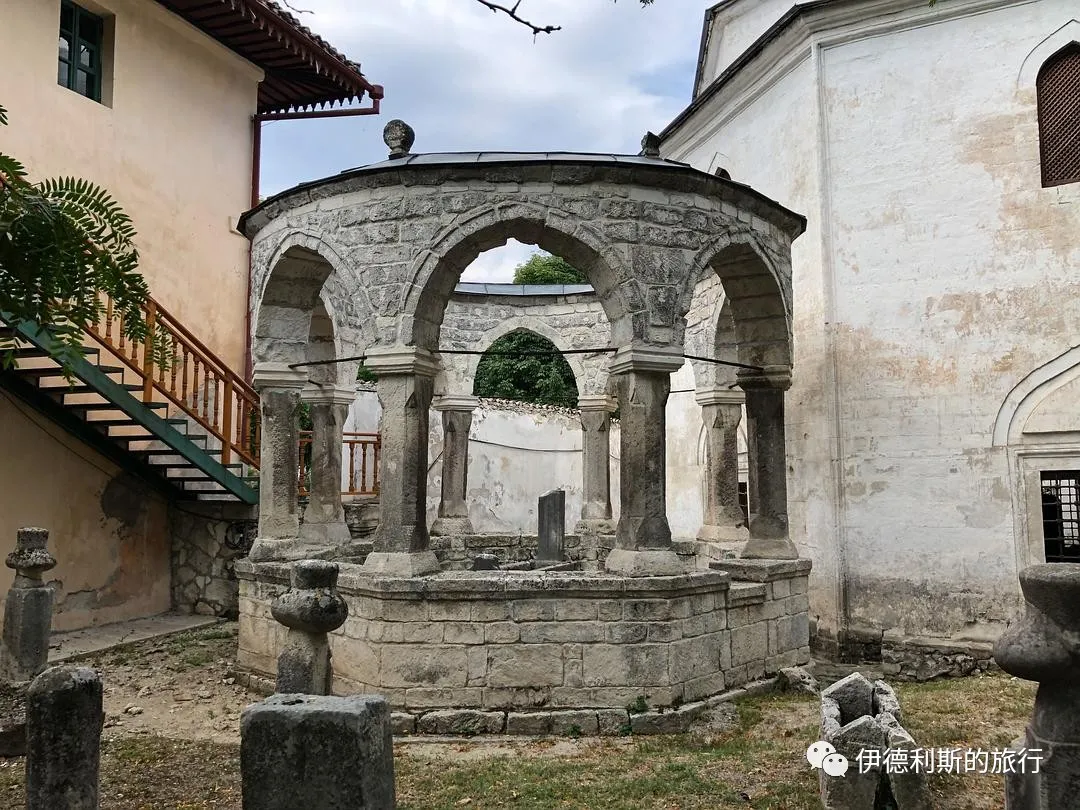
Qırım Giray was a talented ruler. Under his rule, the Crimean Khanate saw an artistic revival and developed a unique style known as "Crimean Rococo."
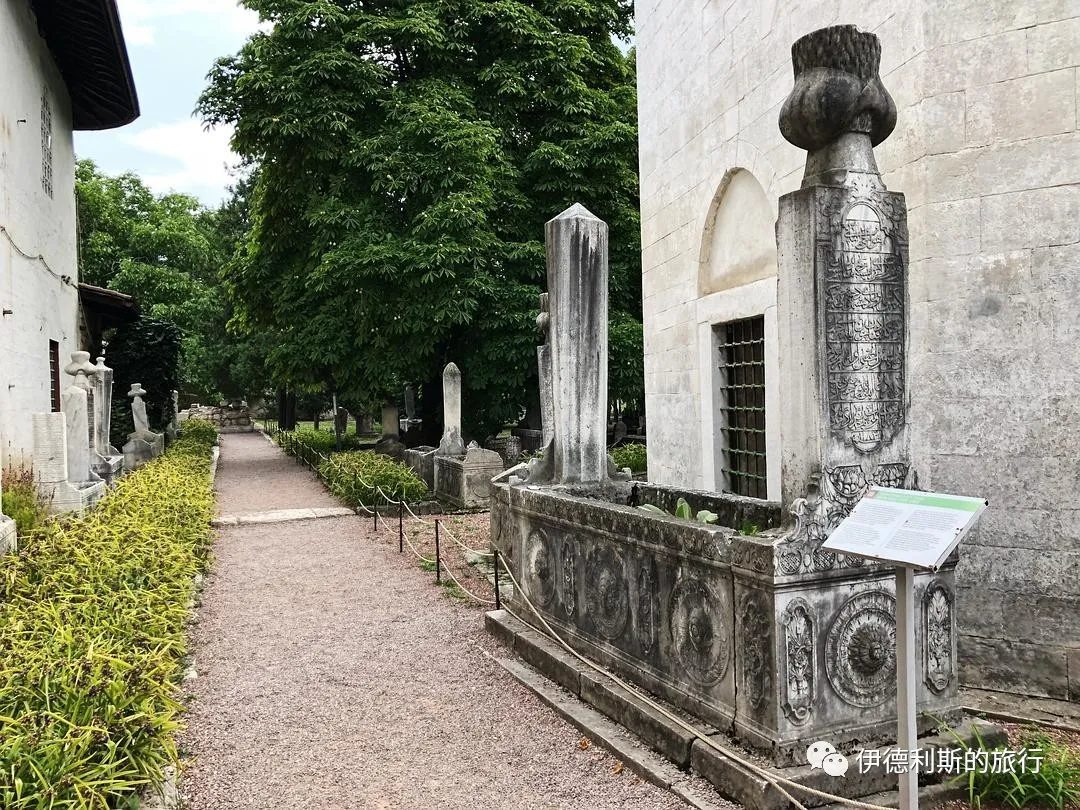
The SaryGuzel bathhouse was ordered to be built in 1532 by Crimean Khan Sahib I Giray. Like the Khan Mosque, it is one of the oldest buildings in the Bakhchisaray Khan Palace. In the Crimean Tatar language, 'Sarı' means 'yellow or fair-skinned,' and 'Güzel' means 'beautiful.'
The SaryGuzel bathhouse is a typical Turkish bath. A furnace in the basement sends hot air up to heat the floor, and lead pipes supply hot and cold water to the bath. The bath is divided into men's and women's sections. Each section has a dome with star-shaped cutouts for light and ventilation, and there is an indoor courtyard with a fountain at the exit.
The SaryGuzel bathhouse operated until 1924, when it was closed because it was considered unsafe. It has since been restored and is now open for exhibitions.
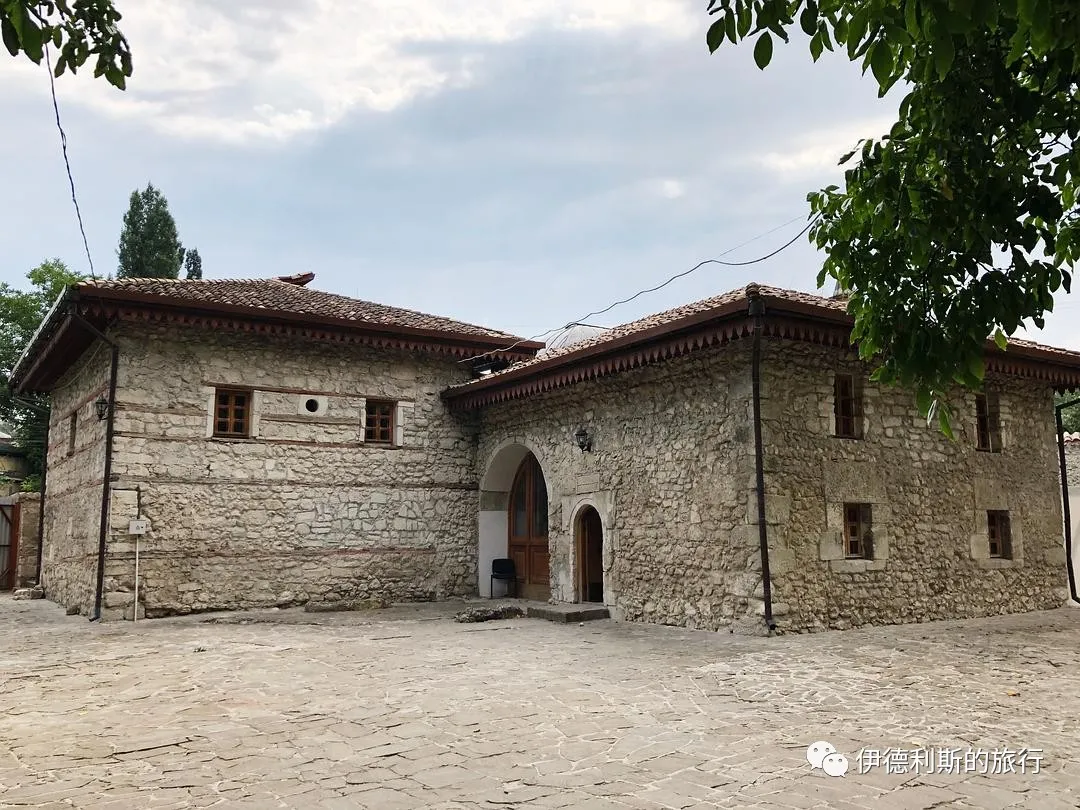
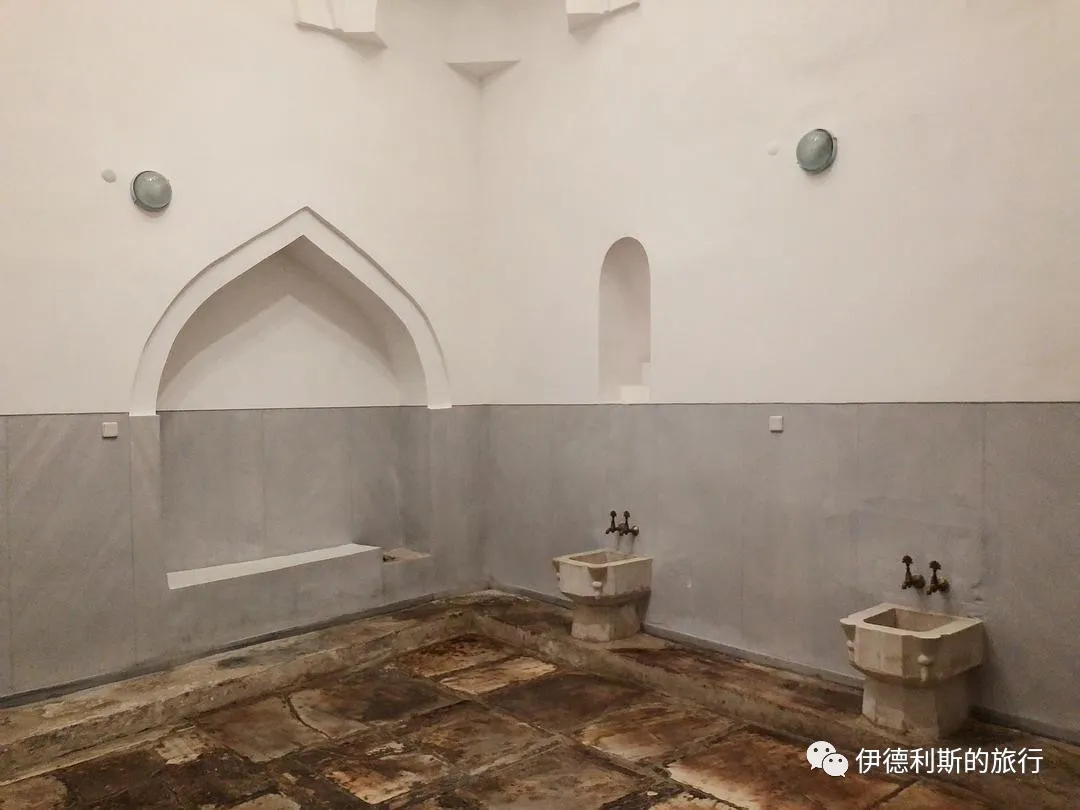
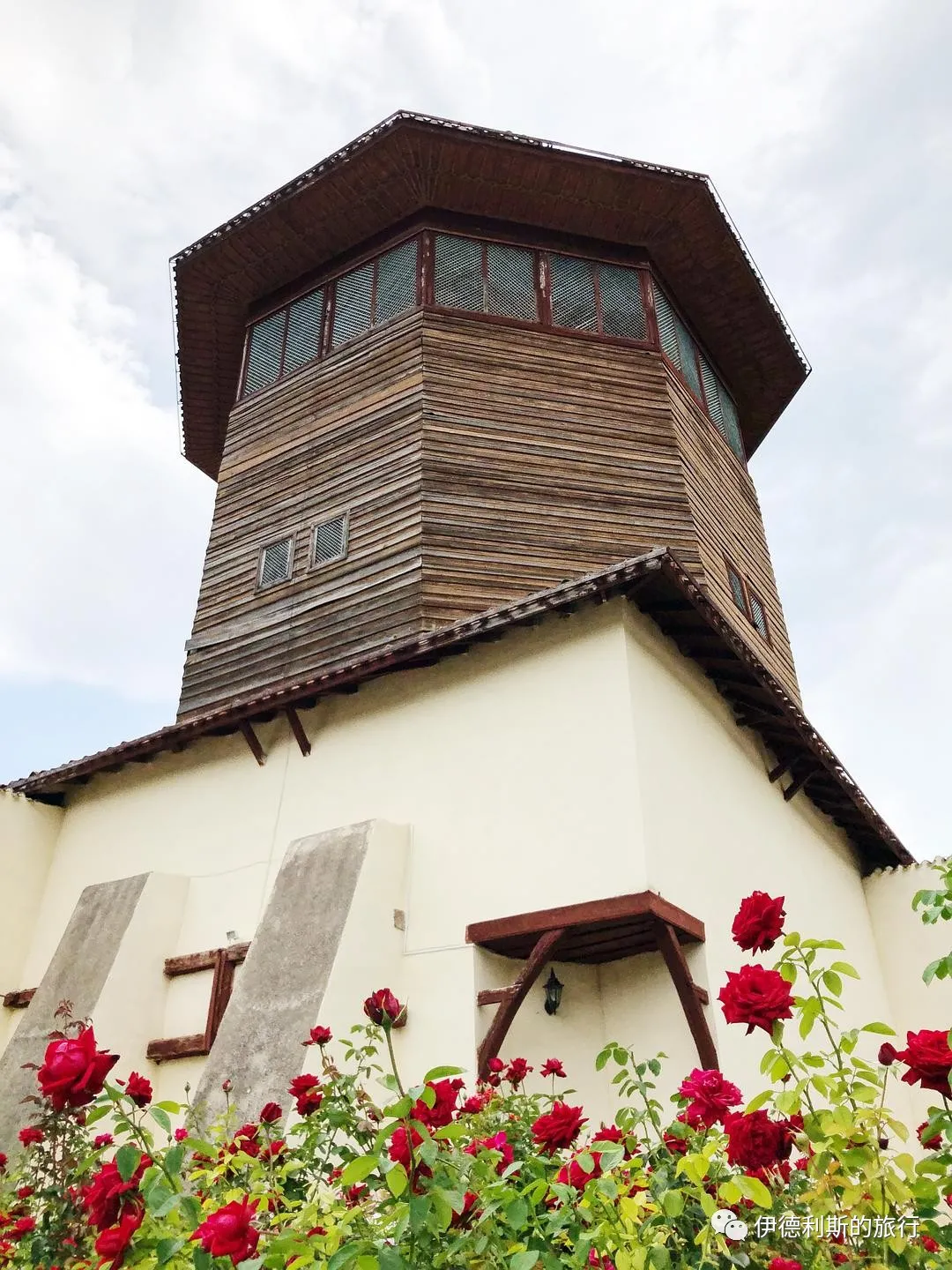
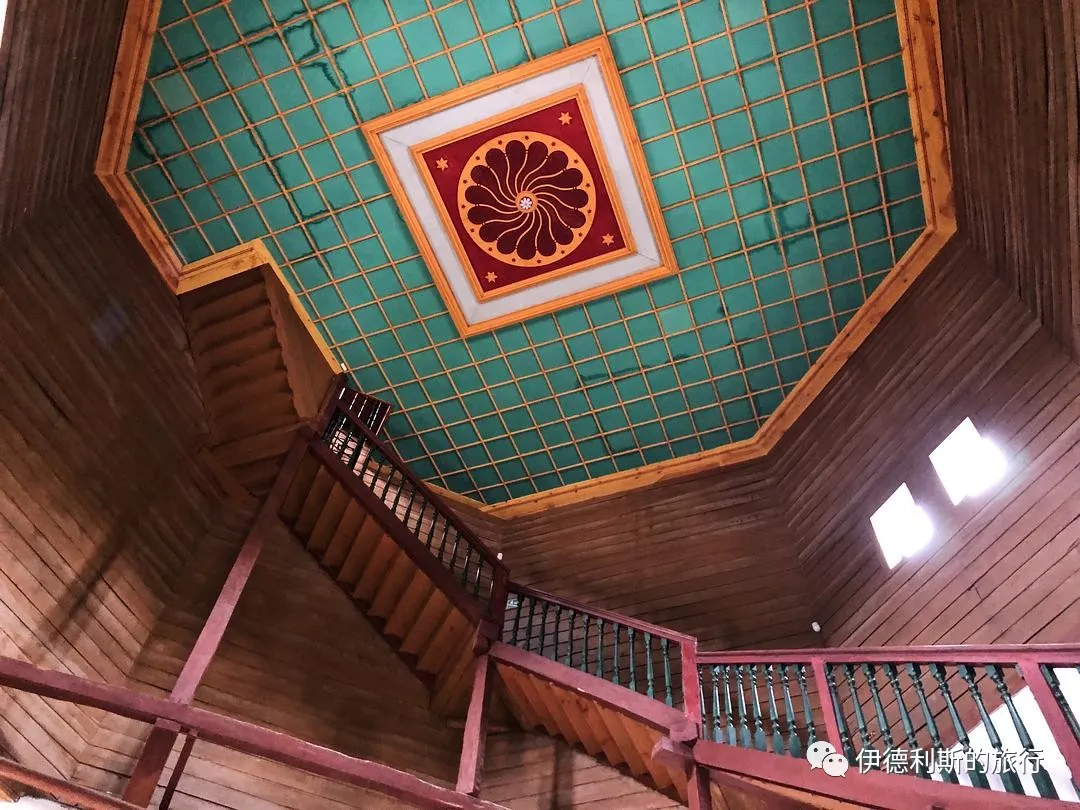
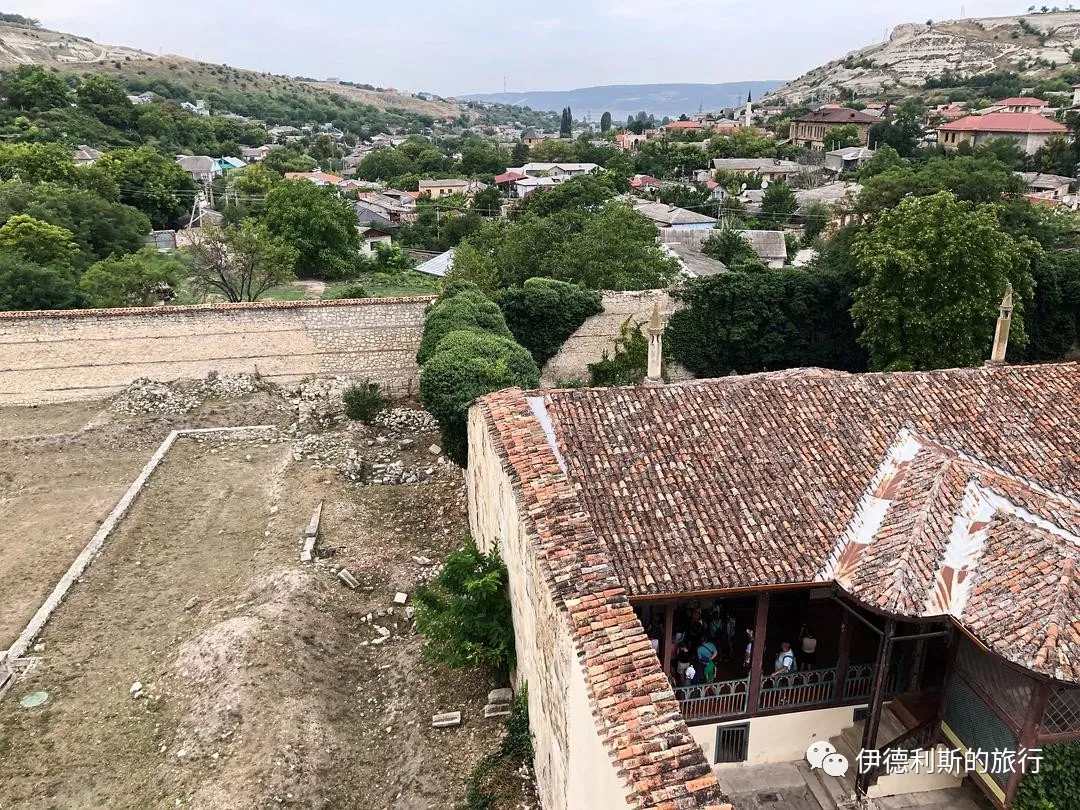
The Falcon Tower (Toğan qullesi) is located in a corner of the Persian Garden at the Khan Palace. Legend says it was once used to train falcons for the Khan's court. The Falcon Tower was built in the 16th century. It was originally a five-story brick, mud, and wood structure. In 1760, it was rebuilt into two stories: a lower cube made of rubble and cement mortar, and an upper octagonal tower made of wooden planks.
The Falcon Tower connects to the Harem building of the Khan Palace. A spiral staircase inside leads to an observation deck at the top, where people living in the Harem could look out over the entire palace.
The Harem (Arem) of the Crimean Khan Palace once had 4 buildings and 73 rooms. In 1818, Tsar Alexander I ordered the demolition of 3 buildings and 70 rooms, leaving only an annex with 3 rooms and a pavilion. Today, the annex displays the interior decorations of Crimean Tatar homes from the 17th to the 19th centuries.
The living room retains its original fireplace and cupboards. During a 1980s restoration, a mirror with an inscription by the artist was discovered. Paintings on the vanity and Arabic poetry on the ceiling have also been cleaned and revealed.
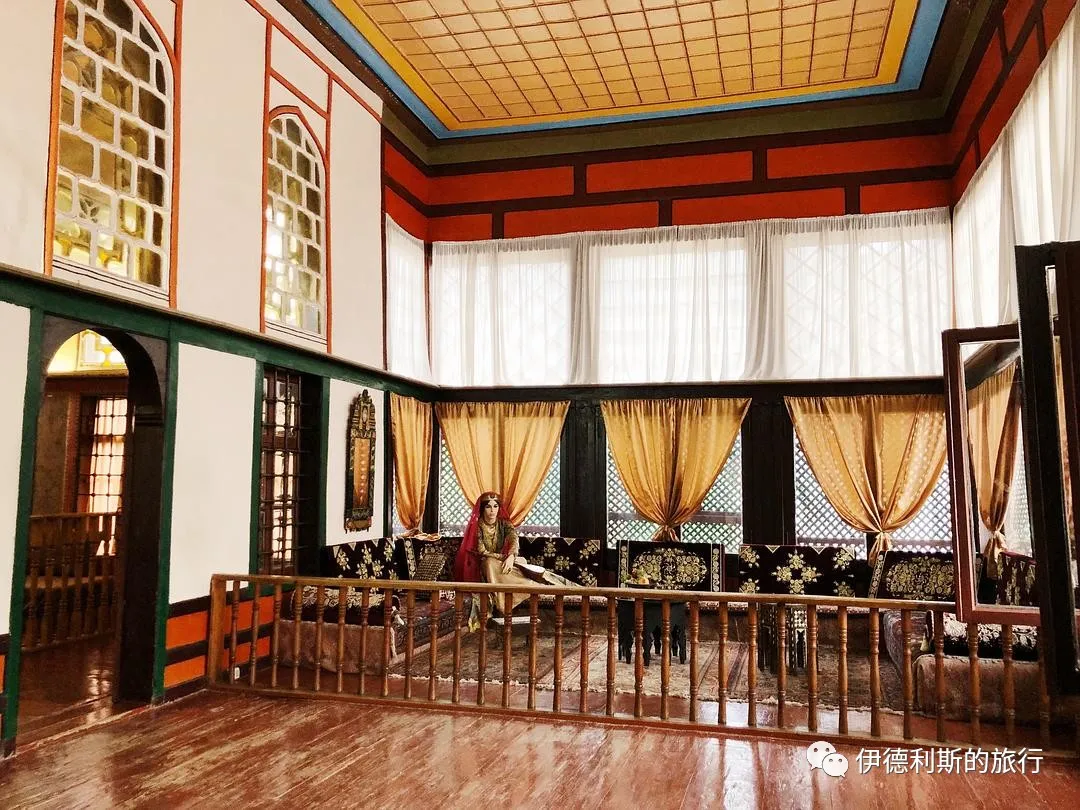
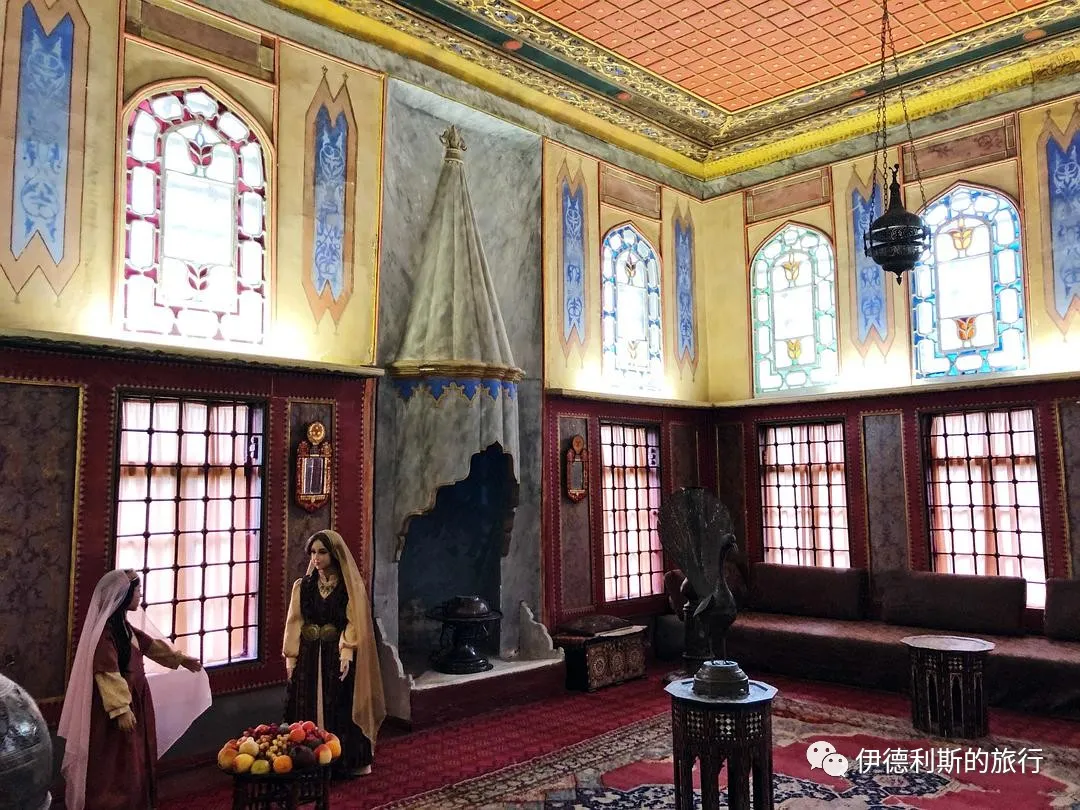
The Persian Garden in the southern part of the Harem is surrounded by high walls. It once featured various trees, fountains, and baths, but now only ruins remain.
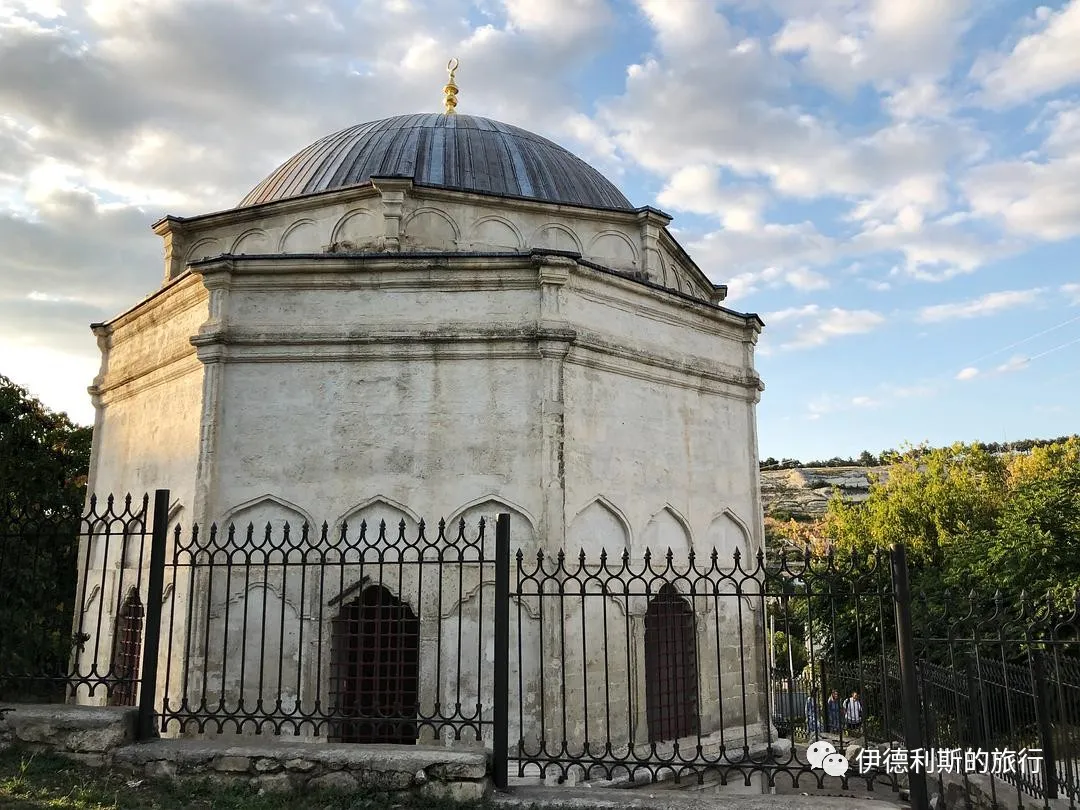
The Dilâra Bikeç Mausoleum is an octagonal tomb at the southernmost point of the Bakhchisaray Khan Palace. It was ordered to be built in 1764 by Crimean Khan Qırım Giray (reigned 1758-1764, 1768-1769) for his beloved wife.
The Small Khan Mosque (Kiçik Han Cami) is inside the main building of the Khan Palace and was used by members of the Khan's family and noble officials. The Small Khan Mosque was built in the 16th century. It was destroyed by fire by the Russian army in 1736 and restored in 1741 by Khan Selamet II Giray (reigned 1740-1743).
The existing interior murals were created between the 17th and 18th centuries, with some painted by the Iranian architect Omer in the late 18th century. Earlier murals from the 16th century were discovered during a 1991 restoration.
On the south wall of the Khan Mosque (Khan Jami) is a prayer niche (mihrab) carved with seven decorative bands, which symbolize the seven heavens mentioned in the Quran.
Above the prayer niche (mihrab) is a piece of stained glass featuring the Seal of Solomon (Khatam Sulayman) ✡.
The Iron Gate (Demir Qapi) is the oldest structure in the Khan Palace, built between 1503 and 1504 by the architect Aleviz Novy for the Crimean Khan. This architect had previously been invited by Ivan the Great to Moscow to build a series of churches. The Iron Gate (Demir Qapi) was likely originally built at the Crimean Khan's previous residence, Devlet-Saray, and was moved to the main building of the Khan Palace only after the Bakhchisaray Khan Palace was completed in 1532.
Demir Qapi means iron gate in the Crimean Tatar language. The gate's portal is made of limestone and uses decorative styles from the Lombard-Venetian Renaissance.
The Council Hall (Divan hanesi) is the meeting room inside the main building of the Khan Palace. In the center of the south wall is the throne where the Khan sat, with sofas on the sides for his ministers. Above the north wall at the entrance to the hall is a narrow latticed balcony, which is said to have been used by the Khan to have people eavesdrop on meetings when he was absent.
The floor of the hall was paved with marble and had a square pool with a fountain in the center. The walls were covered in tiles, but these were destroyed in a fire set by the Russian army in 1736. Restoration took place in 1742, and many of the current decorations, such as the murals and chandeliers, were added in 1822 when the architect I. F. Kolodin renovated the Khan Palace.
In 1917, the Crimean Tatars announced the establishment of an independent Crimean Tatar government here.
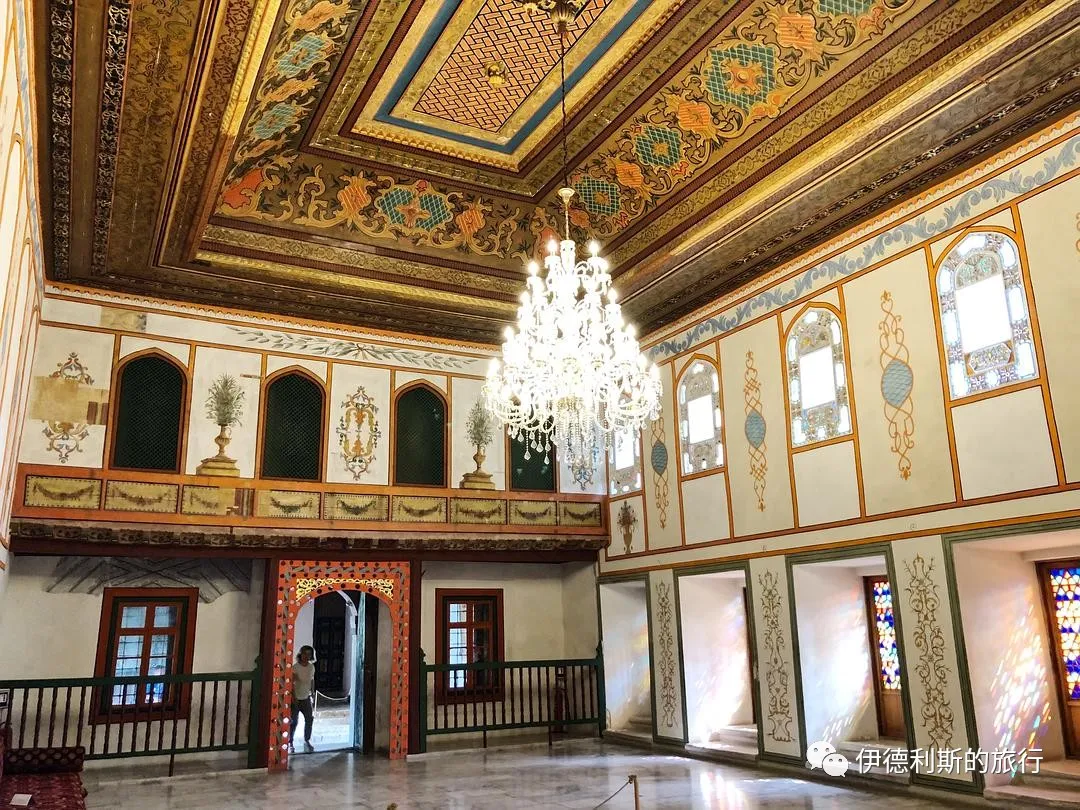
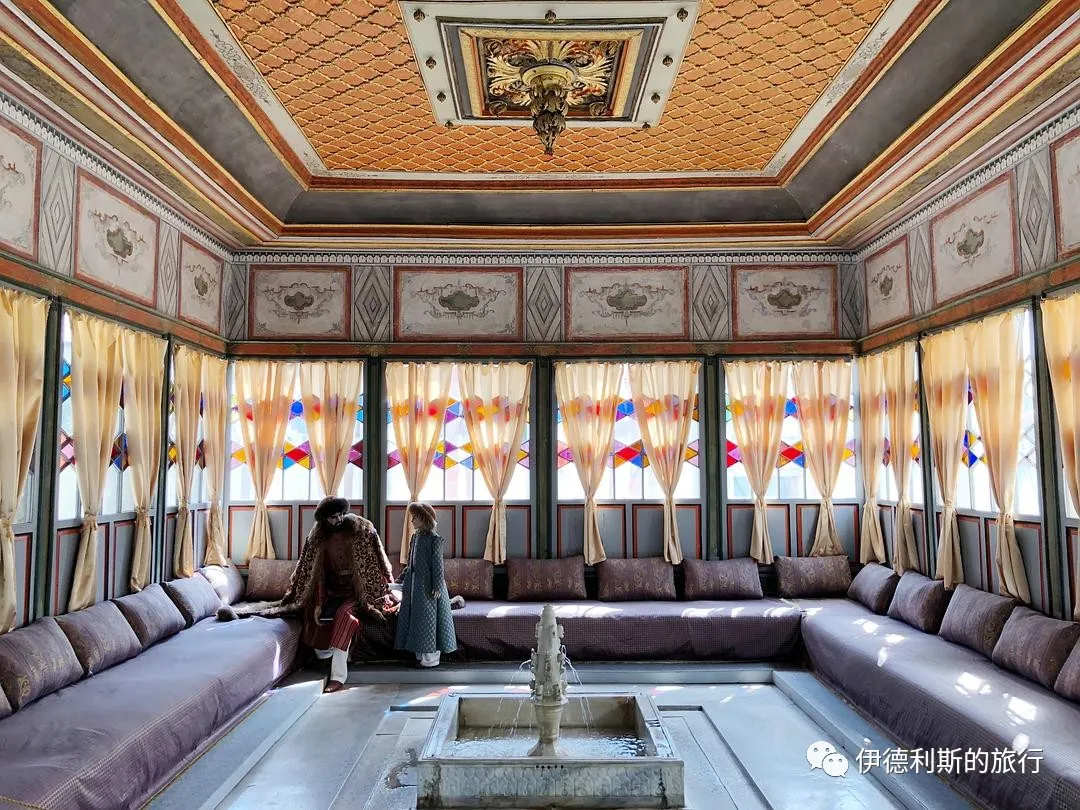
The Summer Pavilion is a place for cooling off inside the main building of the Khan Palace, built between the late 17th and early 18th centuries. It was burned down by the Russian army in 1736 and later restored by the architect Omer ibn al Hadj Mustafa. In the center of the pavilion is a square pool with a square marble fountain, surrounded by sofas.
The pavilion was originally open. Between 1821 and 1831, Tsar Alexander I ordered the architects Mikhail Klado and Vasiliy Dorofeyev to enclose the Summer Pavilion, adding columns, stained glass, and a carved ceiling.
Early murals were discovered during the restoration of the summer pavilion in 1962.
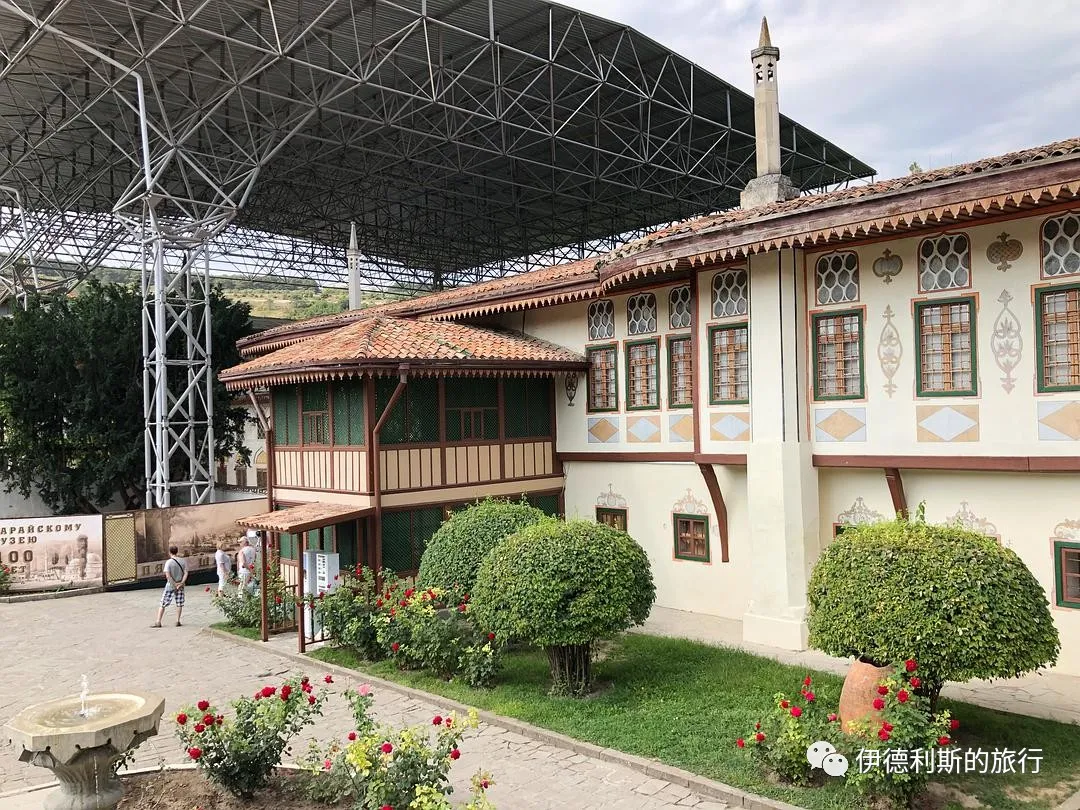
The Golden Pavilion is on the second floor of the main building and was built in the late 18th century by the Iranian architect Omer. The interior of the pavilion originally featured murals of fruit vases and Arabic poetry praising Khan Qırım Giray, but these were destroyed during the German occupation of Crimea from 1941 to 1944.
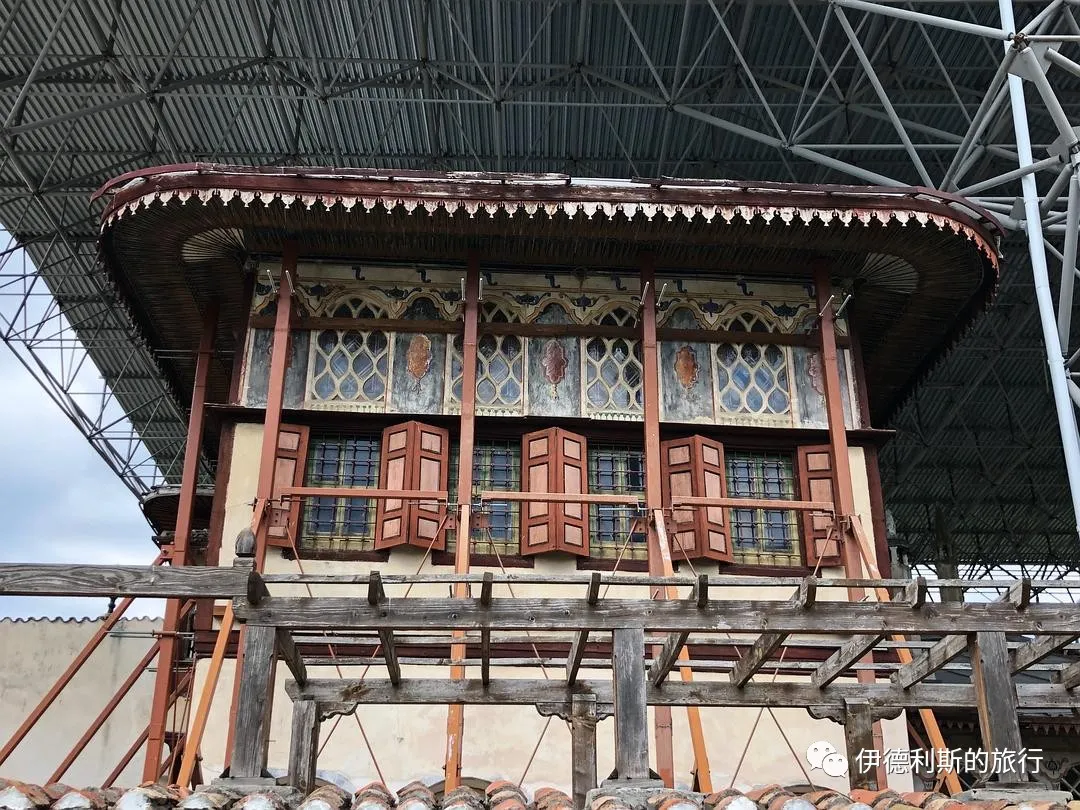
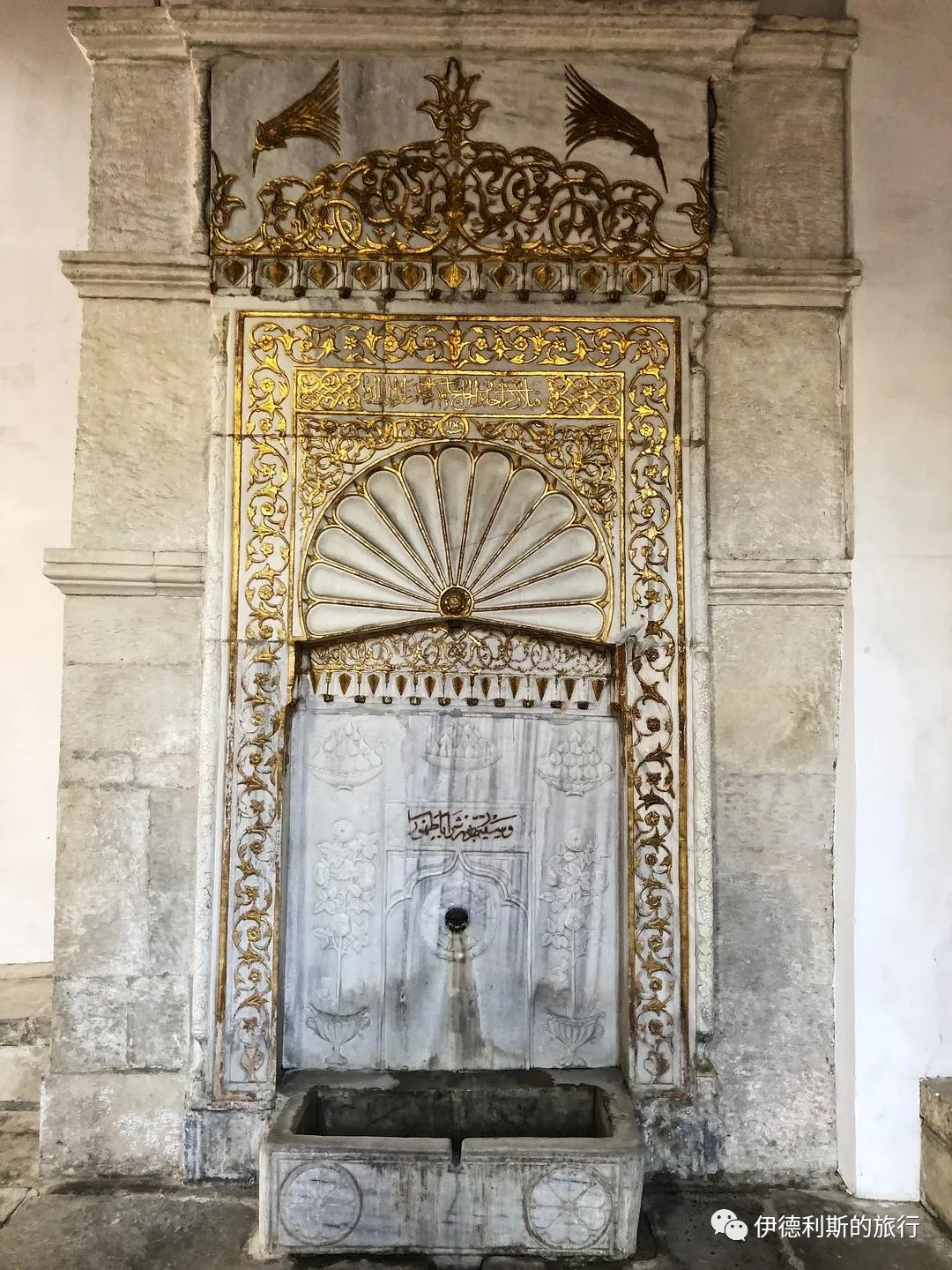
The Golden Fountain is located in the Fountain Courtyard of the Khan's Palace main building, near the Small Khan Mosque, and was where the Crimean Khan and members of the Khan's court performed wudu.
The Golden Fountain is made of gilded marble and features carvings of various flowers, fruits, and plants to depict the 'Garden of Eden' (jandātʿadni) from the Quran, the place where Adam and his wife lived. A circular outlet is carved in the center of the fountain, symbolizing eternal life.
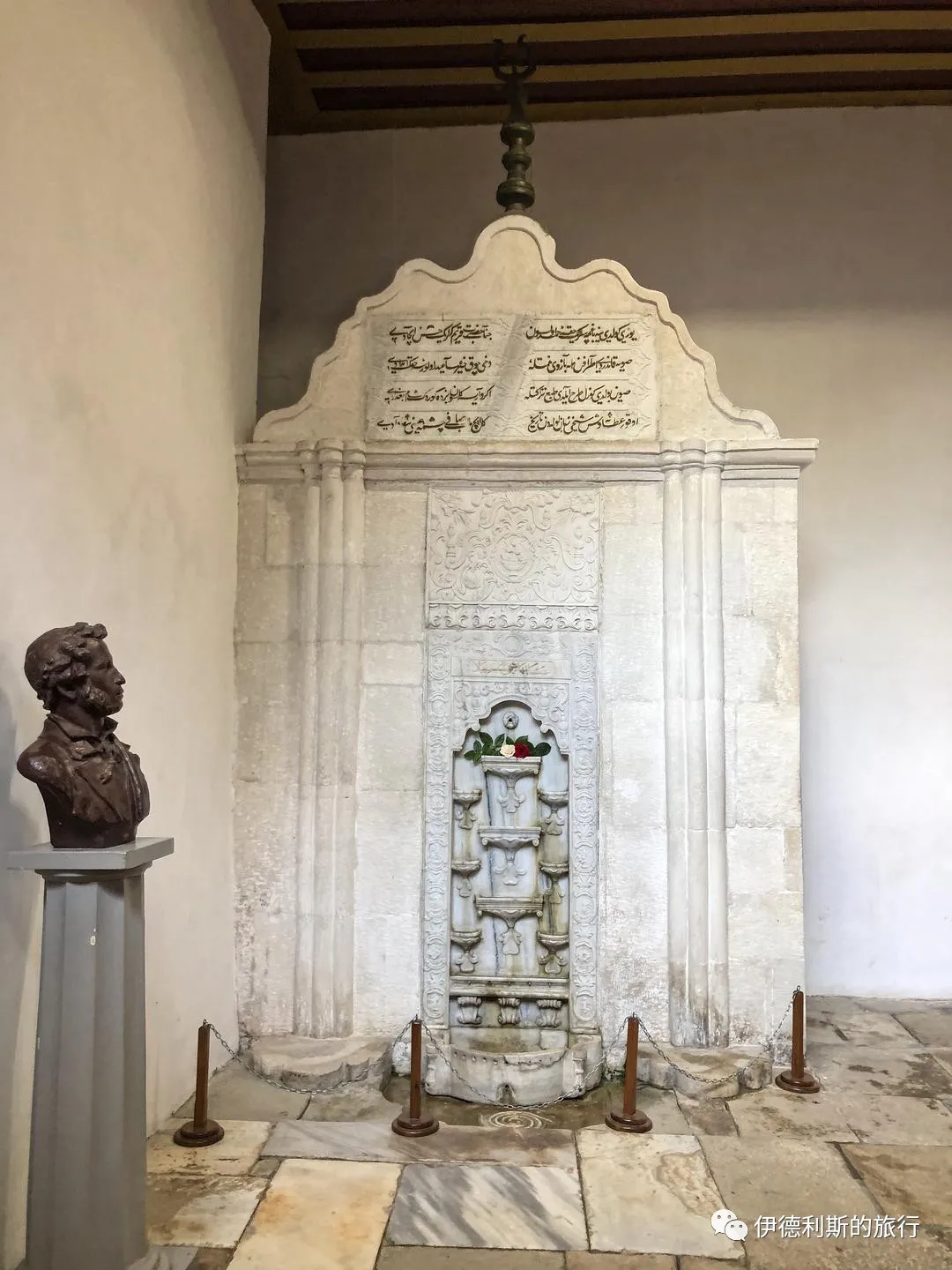
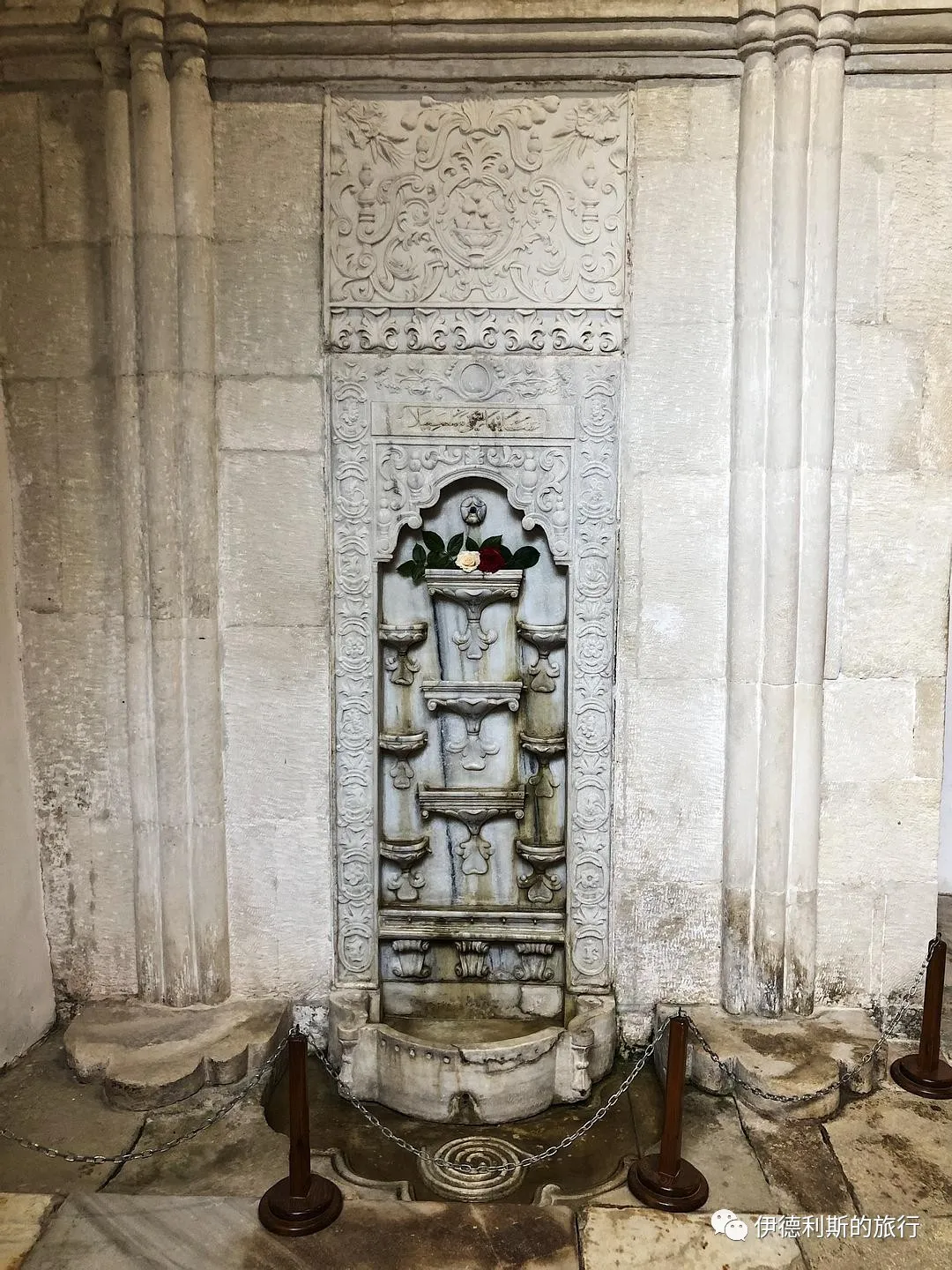
The Fountain of Tears was commissioned in 1763 by the Crimean Khan Qırım Giray (reigned 1758-1764, 1768-1769), and the architect was Omer ibn al Hadj Mustafa from Iran. The fountain was originally installed in the mausoleum of the Khan's beloved wife, Dilâra Bikeç, but after Empress Catherine II visited the palace in 1787, the dried-up fountain was moved to the Fountain Courtyard in front of the main building.
A love story about the Fountain of Tears has circulated in Bakhchysarai since the 18th century. According to the legend, the Khan's beloved wife, Dilâra Bikeç, was a Greek woman from Georgia who was killed in palace intrigue. The Khan fell into deep grief and built this fountain in her mausoleum to honor her. This love story later became widely known because of Pushkin's famous poem, The Fountain of Bakhchisaray.
The suites on both sides of the North Gate were where the Khan's palace guards (Qapı Halqı) lived. After Crimea was occupied by Tsarist Russia, this area also served as guest lodging. Today, the west building of the suites is an exhibition hall, and the east building houses museum offices.
The exhibition hall in the west building displays artifacts from the Crimean Khanate era and the traditional life of the Crimean Tatars. The original fireplaces are still preserved inside the suites.
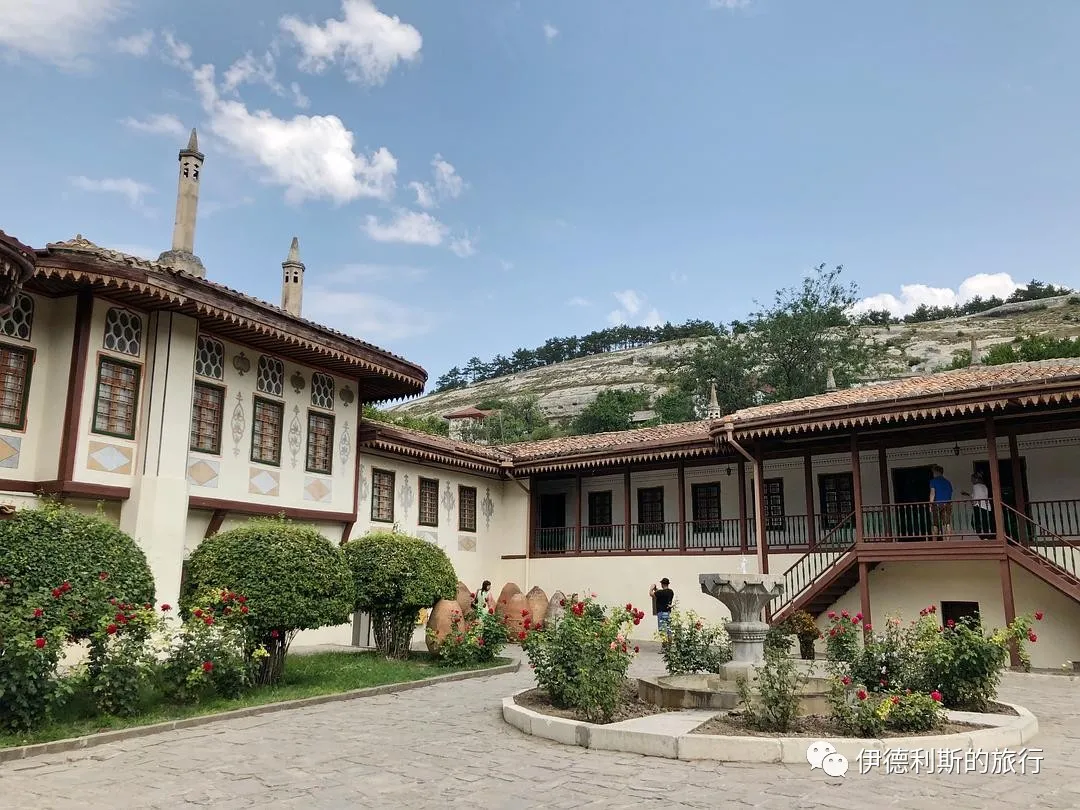
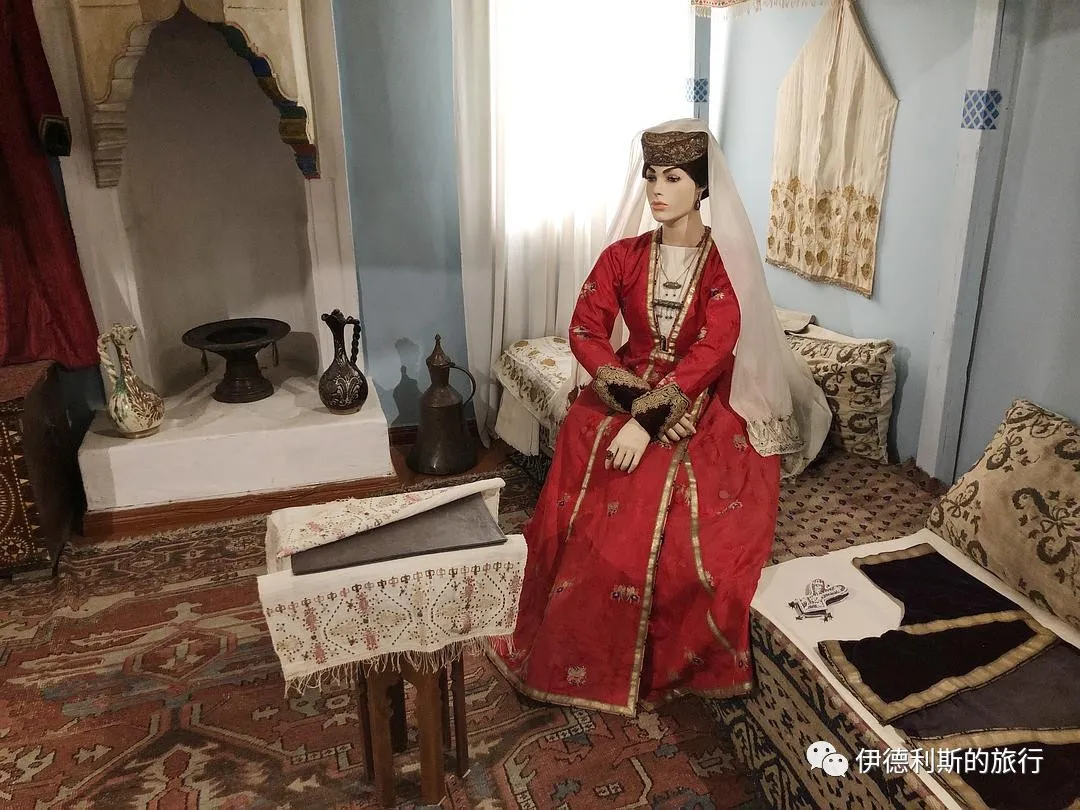
The stables are divided into two floors, with the first floor used for keeping horses and the second floor for the grooms to live in; the current building was rebuilt in the 1850s.
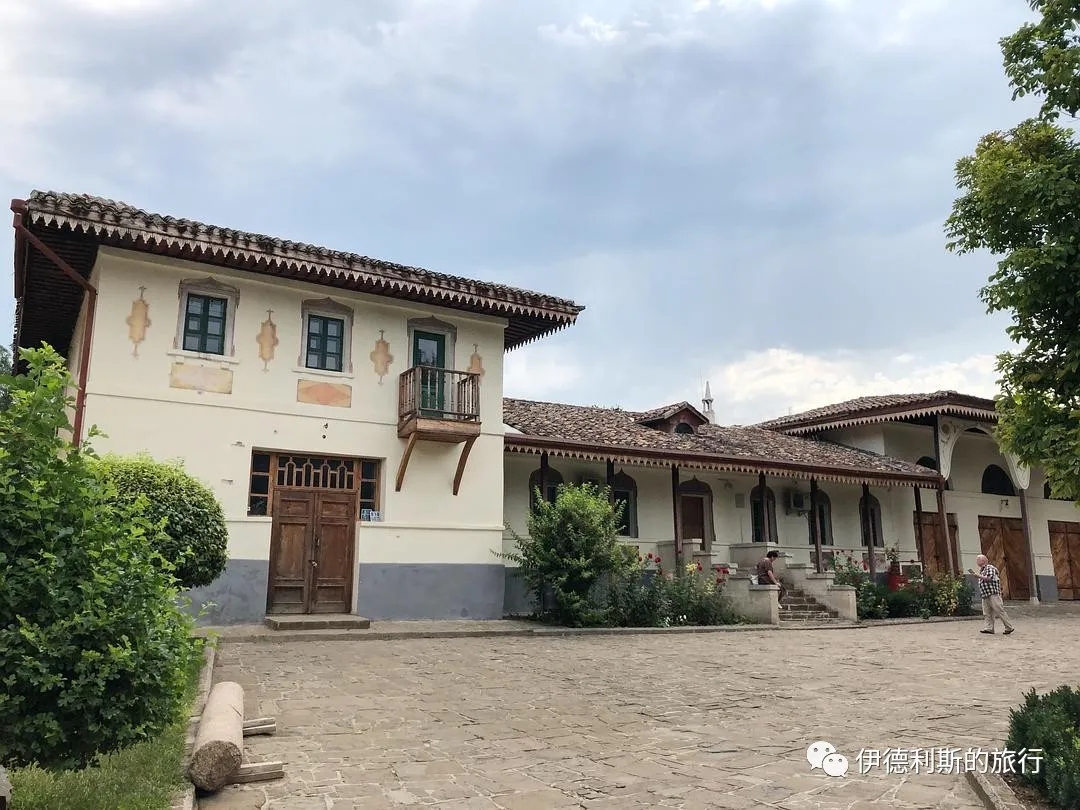
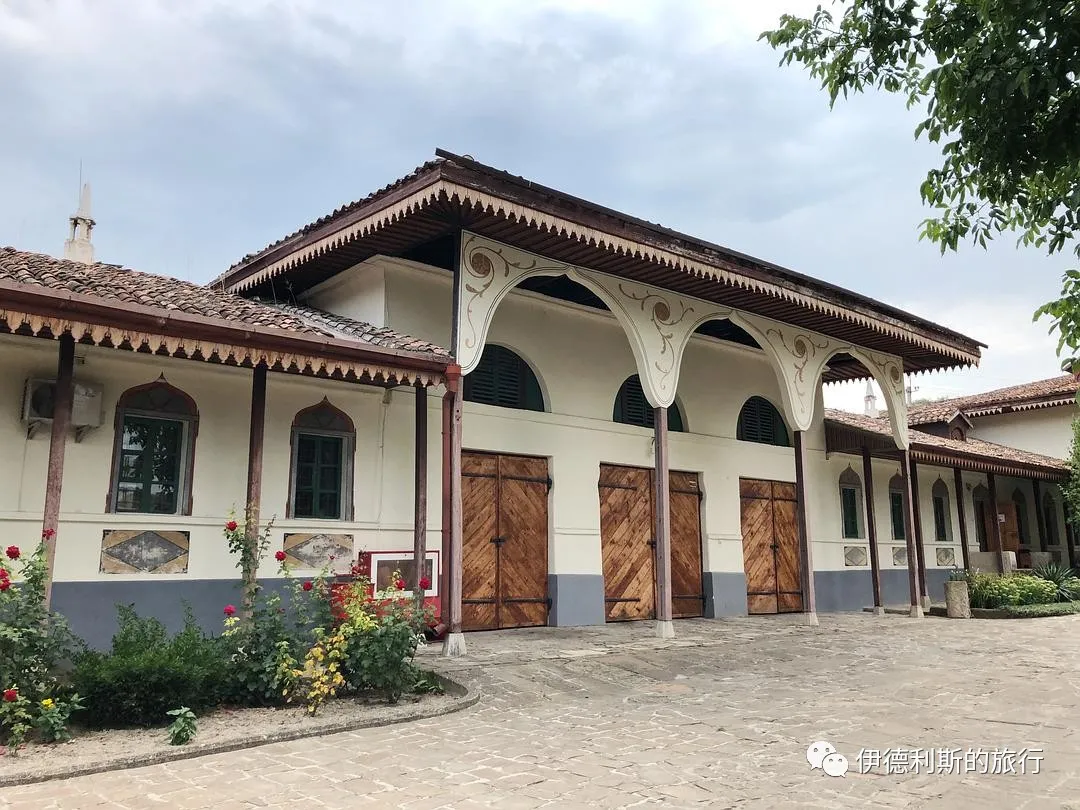
Mosque
Orta Mosque was once the main Friday mosque in Bakhchysarai. It dates back to 1674. The Khans Mengli Giray II and Selamet II Giray renovated it between 1737 and 1743, and it was rebuilt again in 1861 to reach its current form.
After 1929, the mosque served as a cultural center and then a cinema. It was not returned to the Muslim community until 2001. The mosque's minaret and surrounding buildings were destroyed at that time. They were not rebuilt until 2012. The mosque reopened in 2013 after the construction work finished.
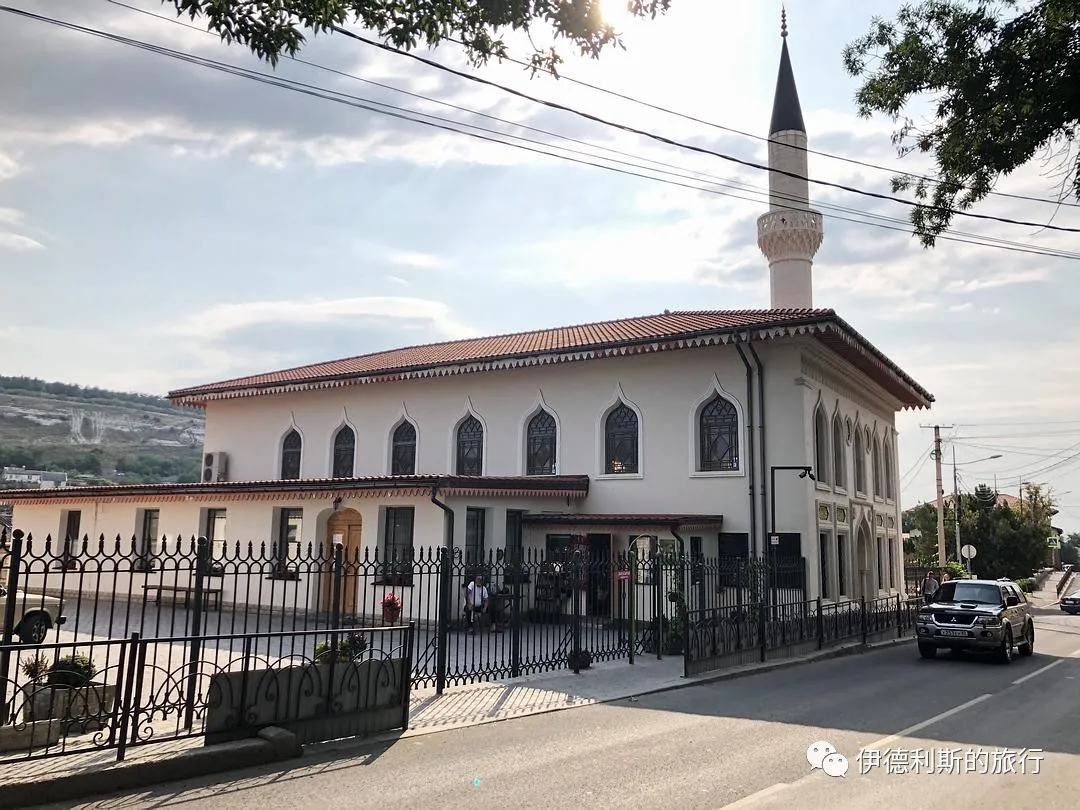
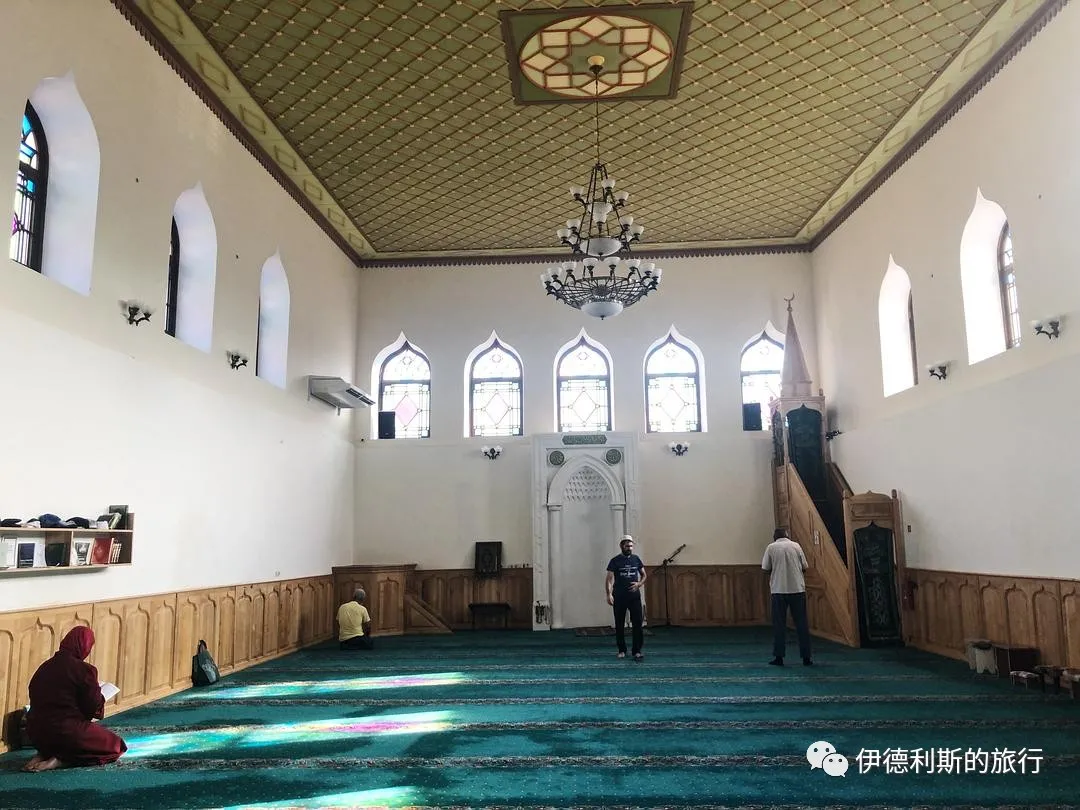
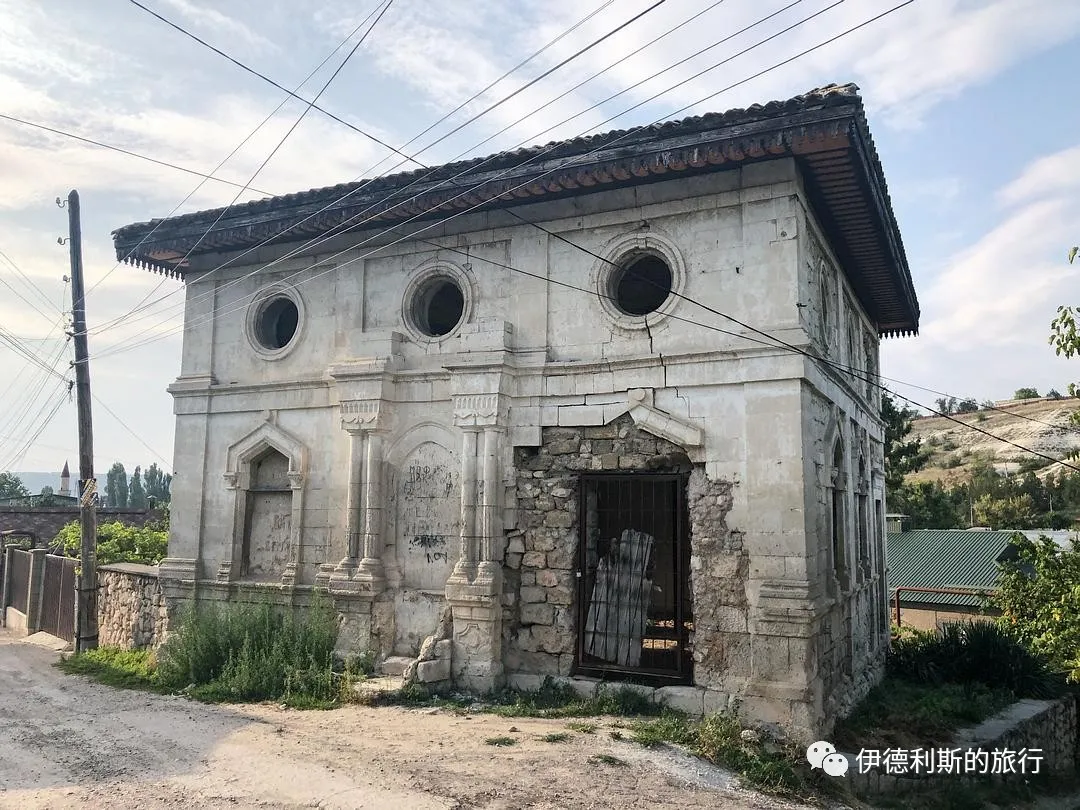
Ismi Khan Mosque was built between the 17th and 18th centuries. Its architectural decorations show a strong influence from the European Baroque style. The upper circular openings are decorated with wooden Seals of Solomon (Khātam Sulaymān) ✡.
The mosque was used as a warehouse for a long time. There were plans to restore it in the early 21st century, but the work has not been carried out yet.
Molla Mustafa Friday Mosque dates back to the 17th century. An 1890 document mentions this mosque, stating that the local residents added a roof to the building in 1888.
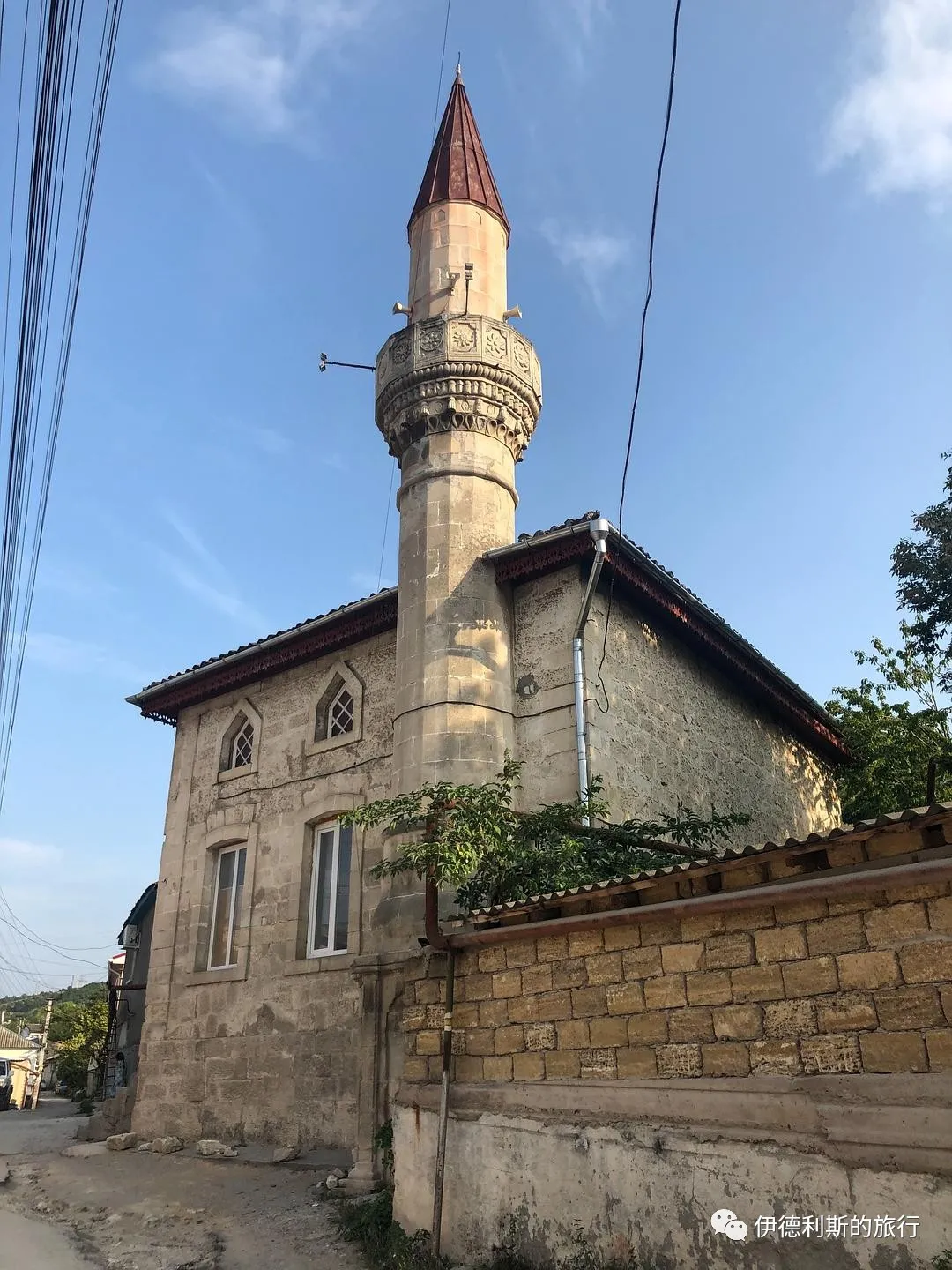
Tahtali Mosque was built in 1707 by Khan Sultan Beck, the son-in-law of the Crimean Khan Selim I Giray. In the Crimean Tatar language, "Tahtalı" means "wooden." The mosque was originally built with wooden planks. Later, it was enclosed with brick and stone, and the roof was covered with clay tiles.
Accommodation
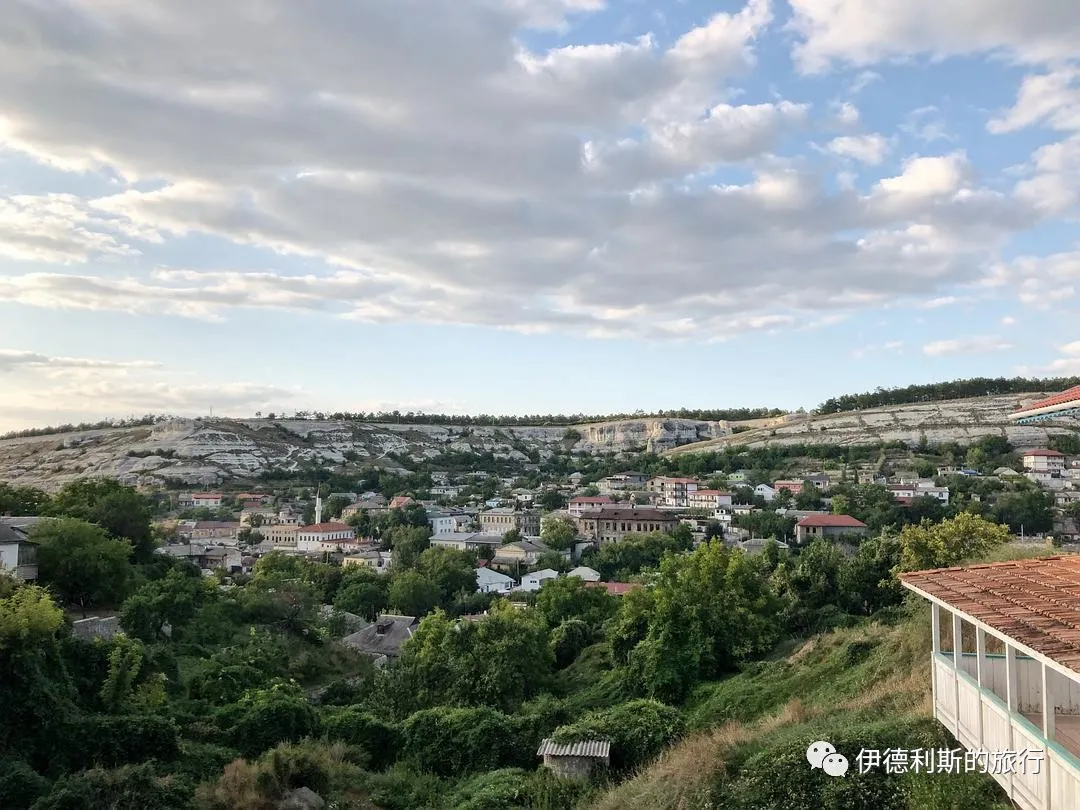
I stayed at a beautiful traditional Crimean Tatar house called Bahitgul Boutique-Hotel. They serve traditional Crimean Tatar food, so I usually ate breakfast right where I was staying. The view while eating there is excellent, as you can look out over the entire ancient capital.
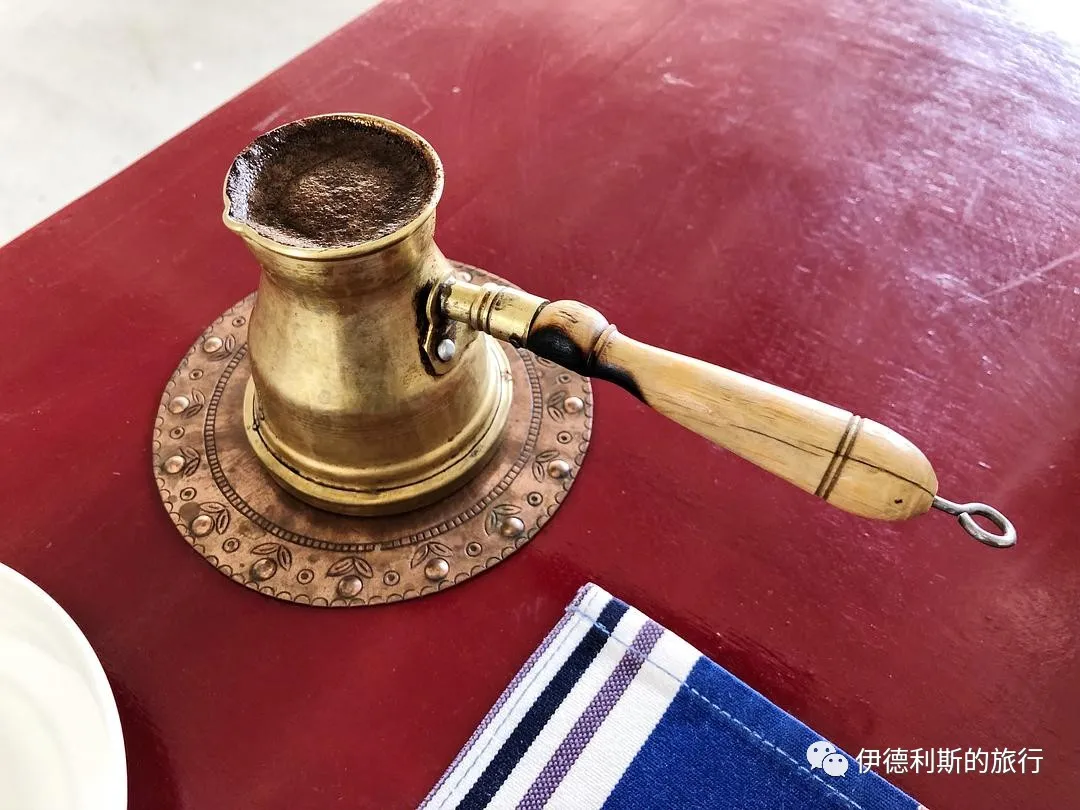
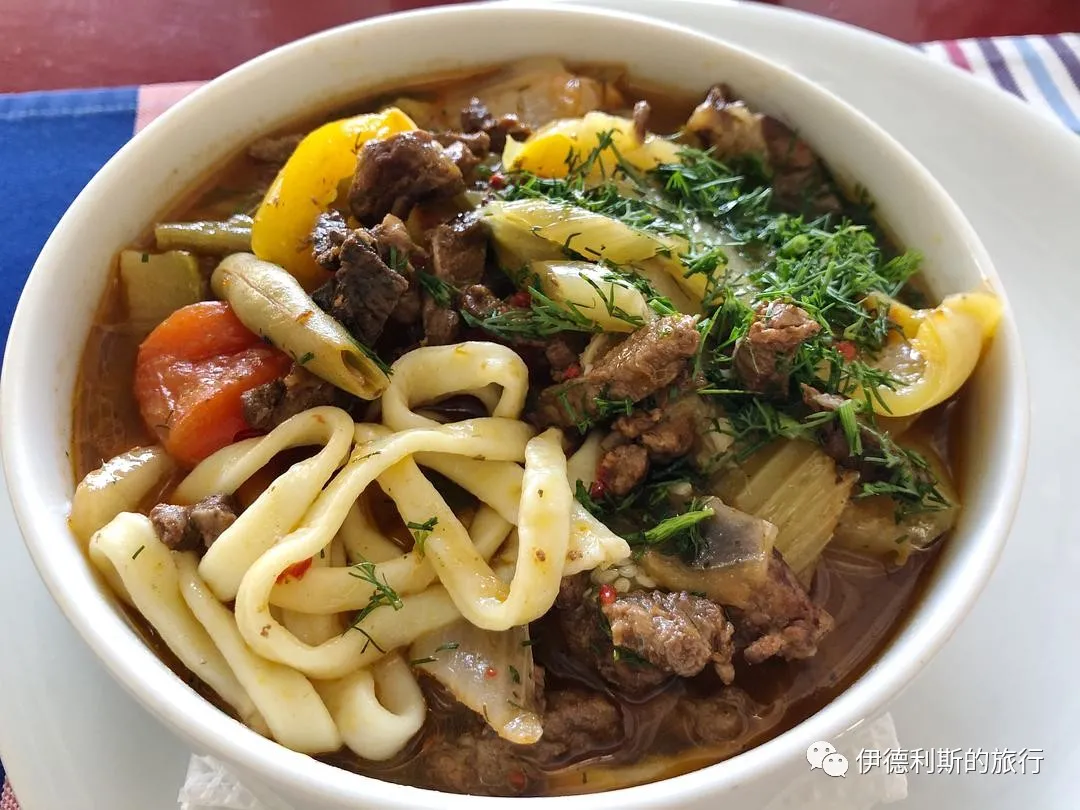
The food culture of the Crimean Tatars is closely tied to their history. Because the Crimean Khanate was a long-term vassal of the Ottoman Empire, it has many Ottoman-related foods, such as Turkish coffee, baklava (a sweet pastry), and stuffed grape leaves (dolma). After being exiled to Uzbekistan in 1944, the Crimean Tatar diet added many Uzbek dishes, including rice pilaf (plov), hand-pulled noodles (lagman), baked meat buns (samsa), steamed dumplings (manti), and flatbread (nan). Crimean Tatars have some unique delicacies, such as the deep-fried meat pastry (chebureki), which is known as a signature national dish.
You can eat baked meat buns (samsa) at the bazaar.
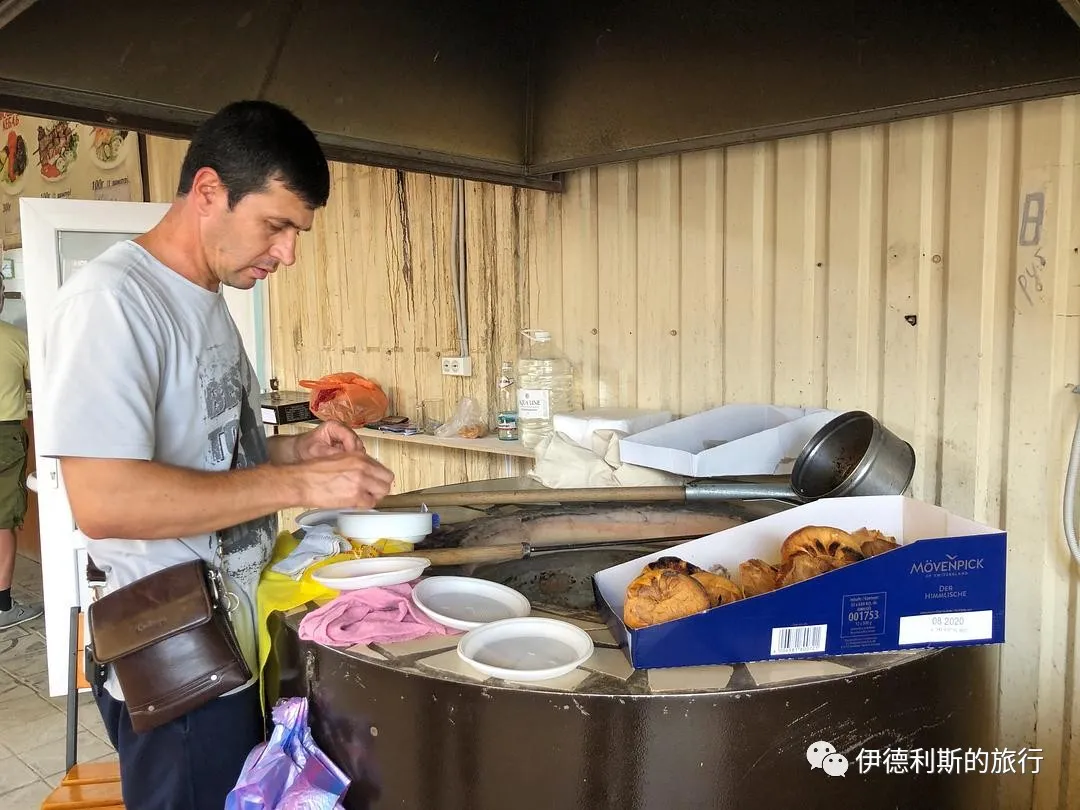
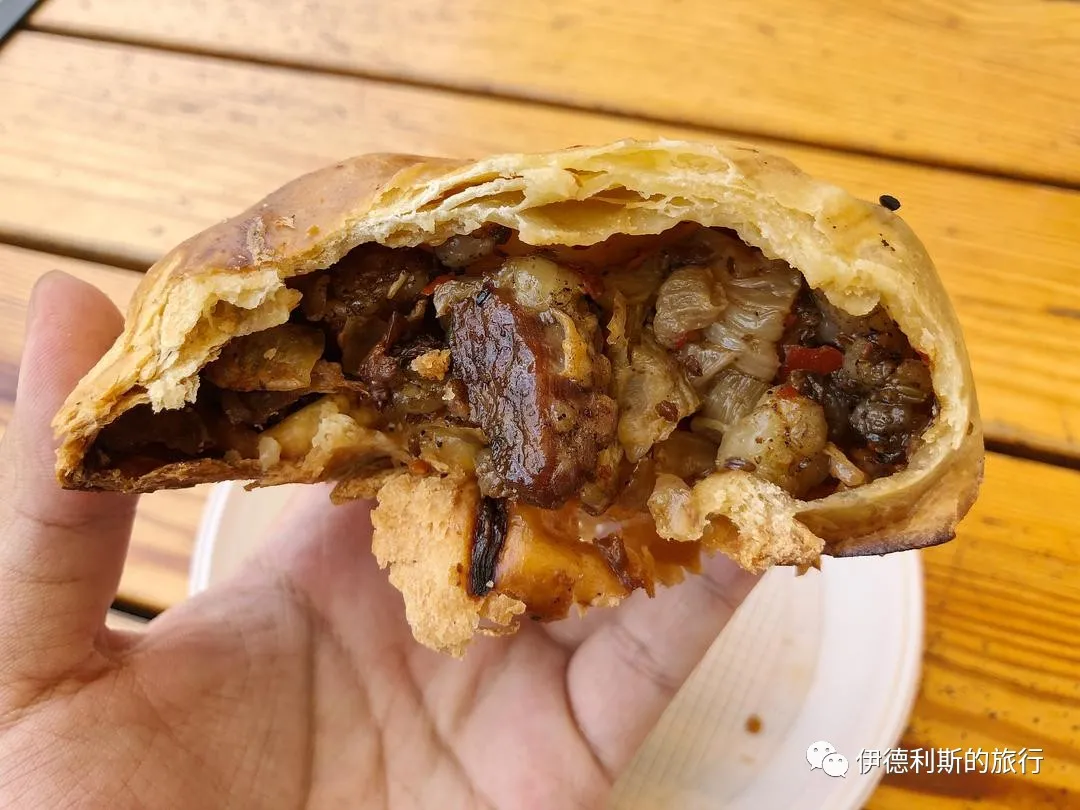
I ate rice pilaf (plov), stuffed grape leaves (dolma), and lamb skewers (shashlik) at a Crimean Tatar restaurant; the lamb skewers were incredibly tender and fragrant.
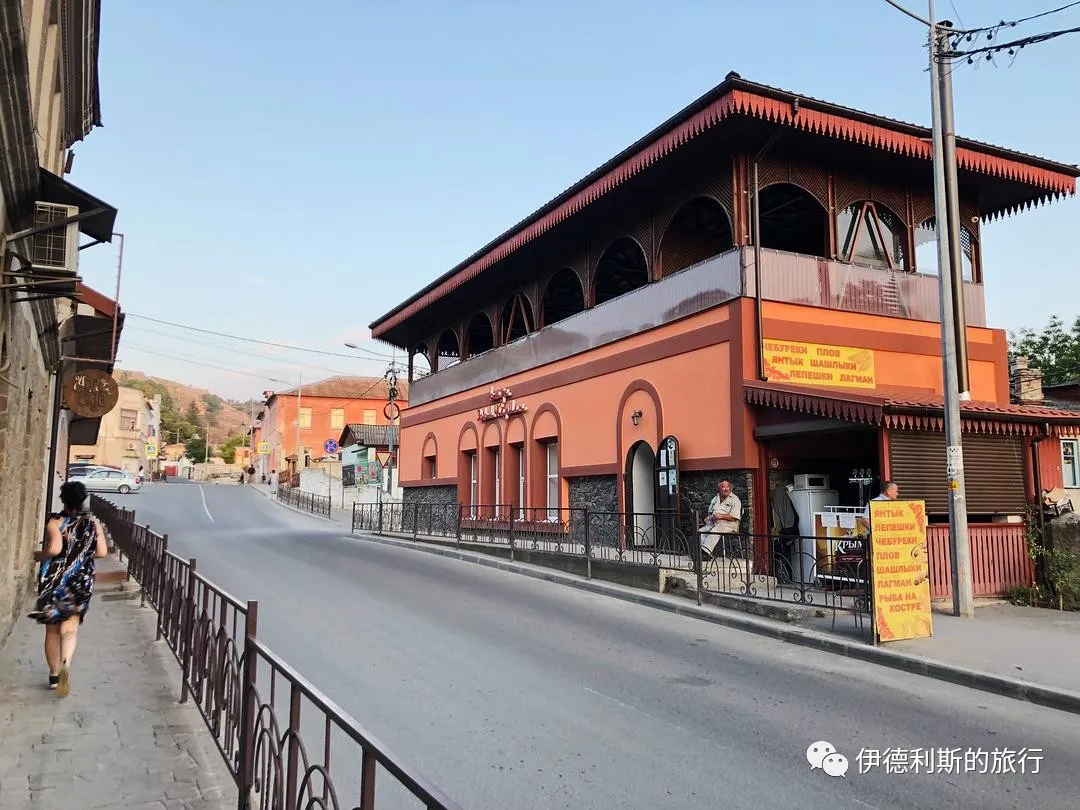
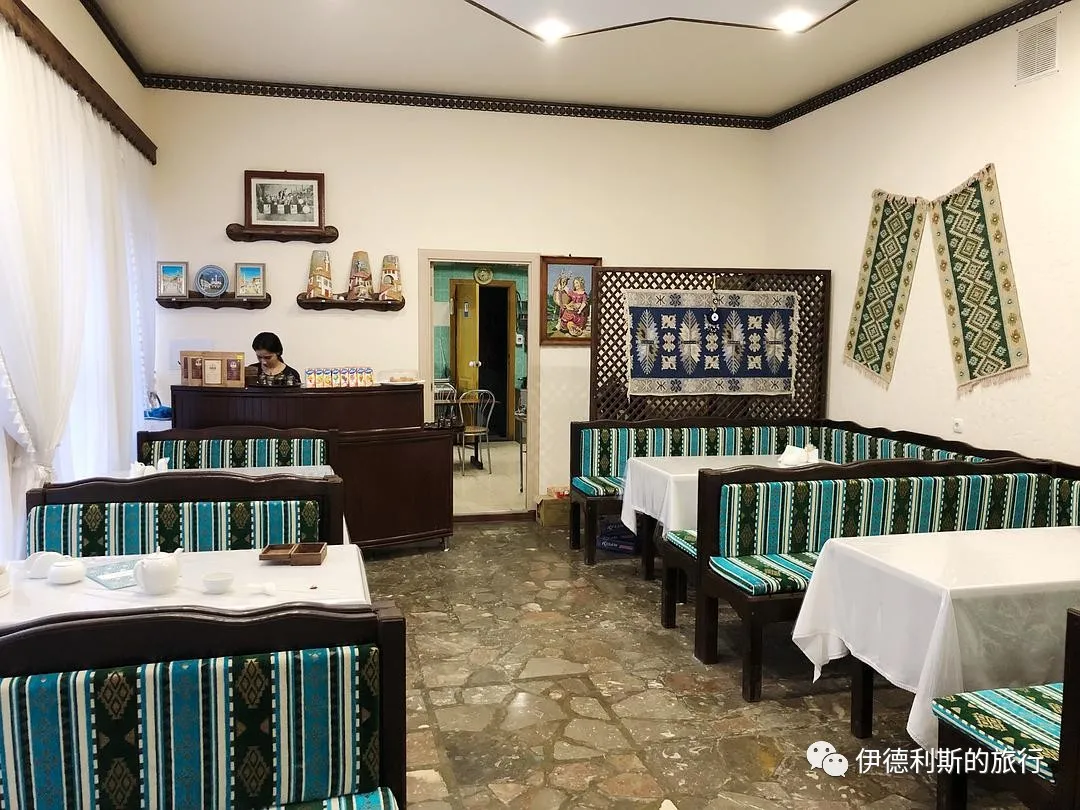
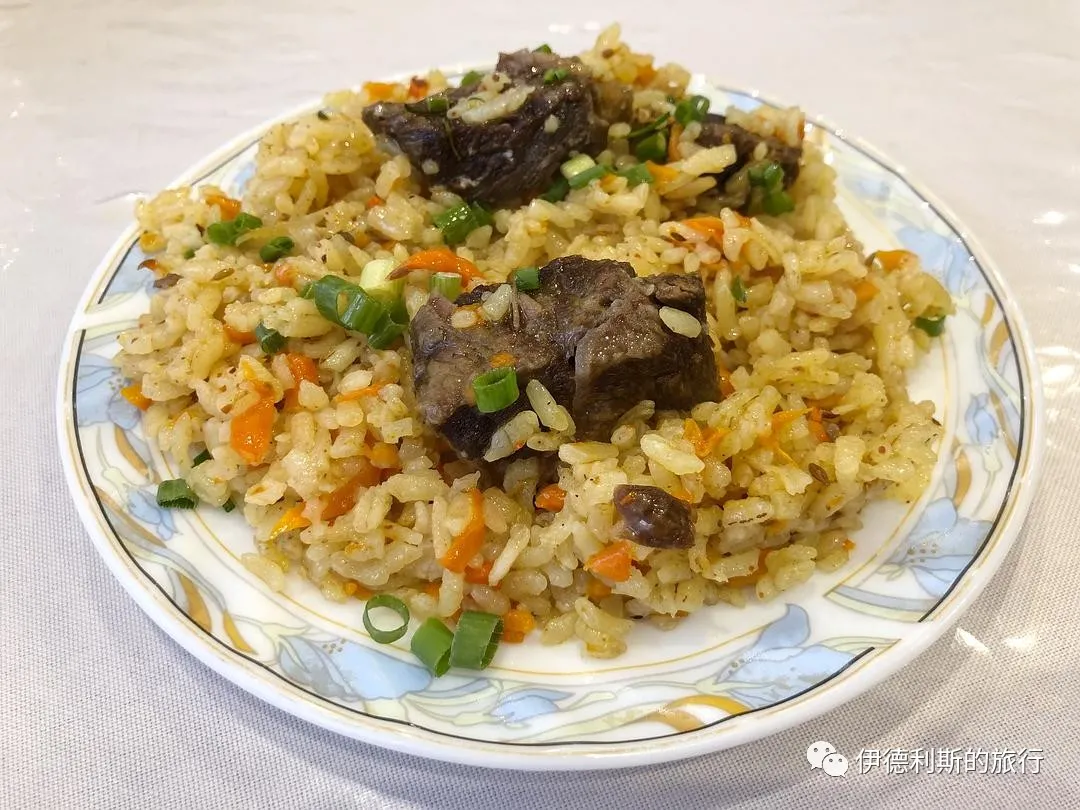
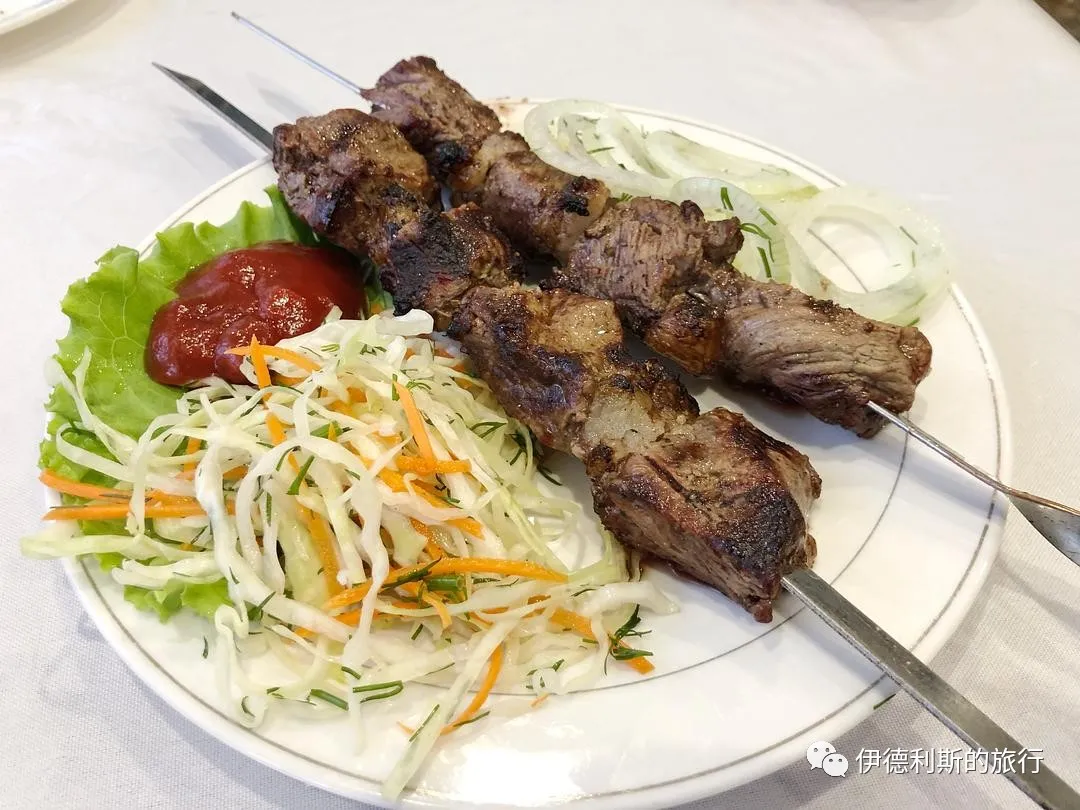
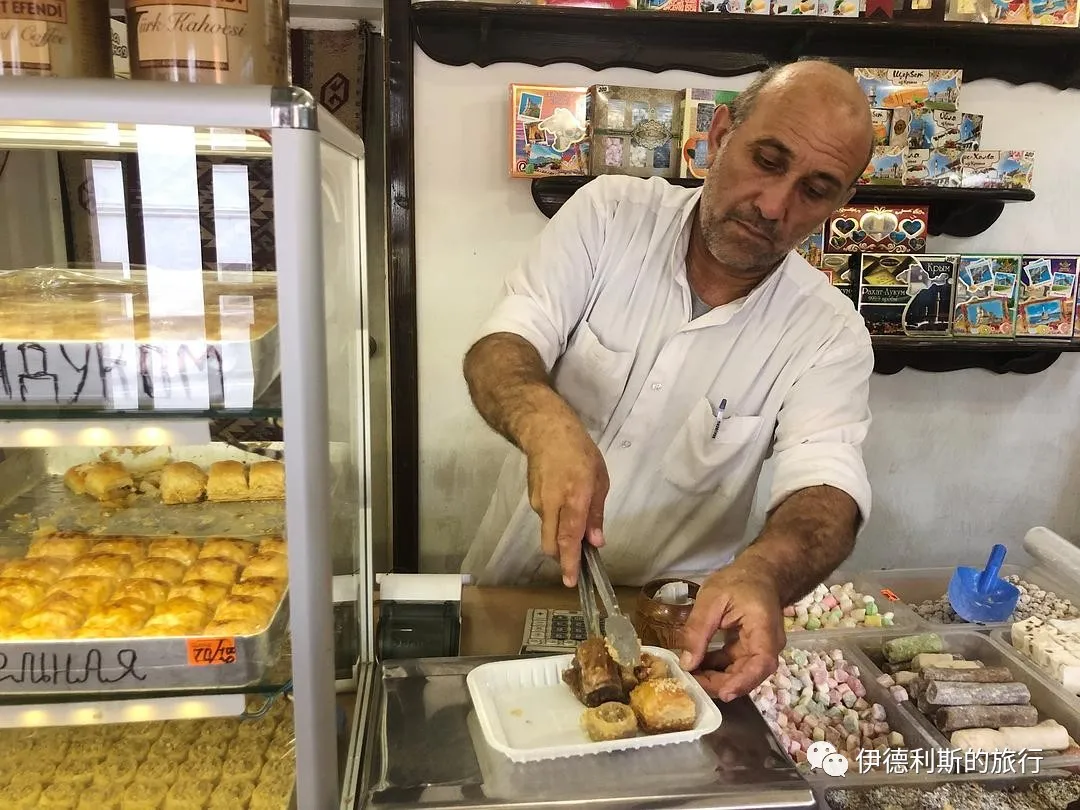
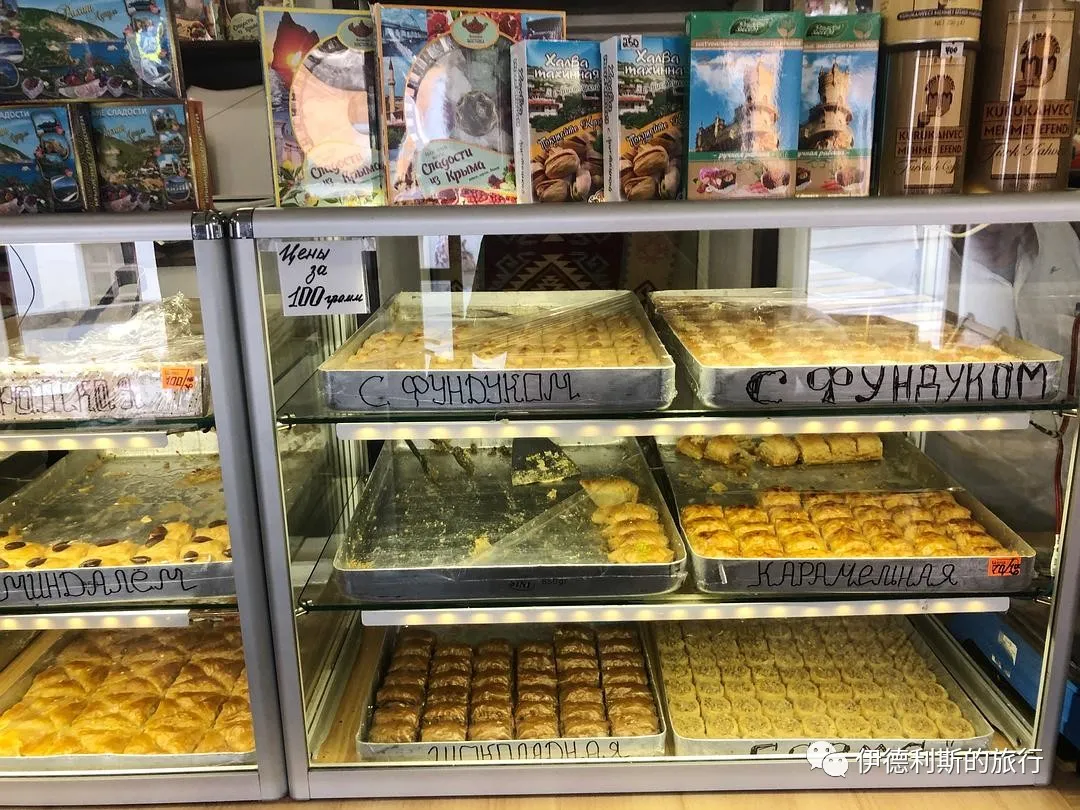
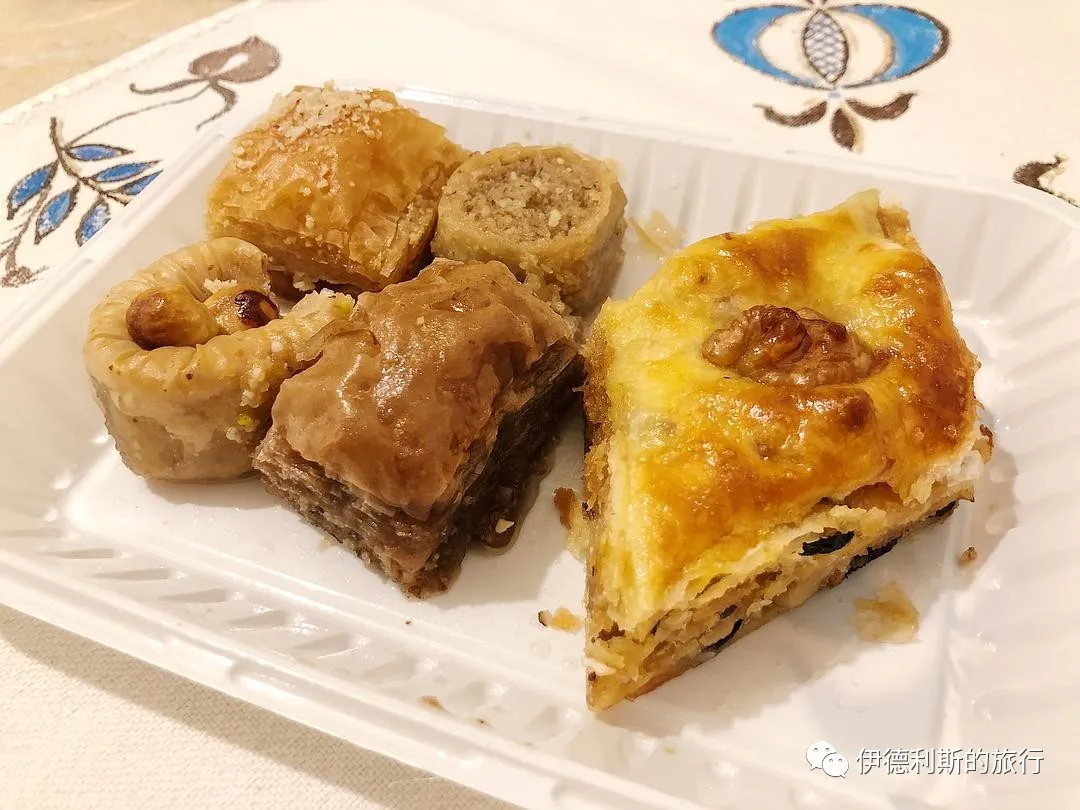
I bought desserts at a Crimean Tatar sweet shop in the old city, which are basically the same as the baklava popular in former Ottoman regions like Turkey, the Caucasus, the Balkans, and the Levant. In the third picture, the first row on the iron tray says 'hazelnut,' and the second row says 'caramel'.
At a manor-style Crimean Tatar restaurant at the foot of the mountain, I ate sheep cheese with olives (brynza s maslinami), grilled salmon (deniz kebab), steamed dumplings (manti), and the signature Crimean Tatar deep-fried meat pastry (chebureki).
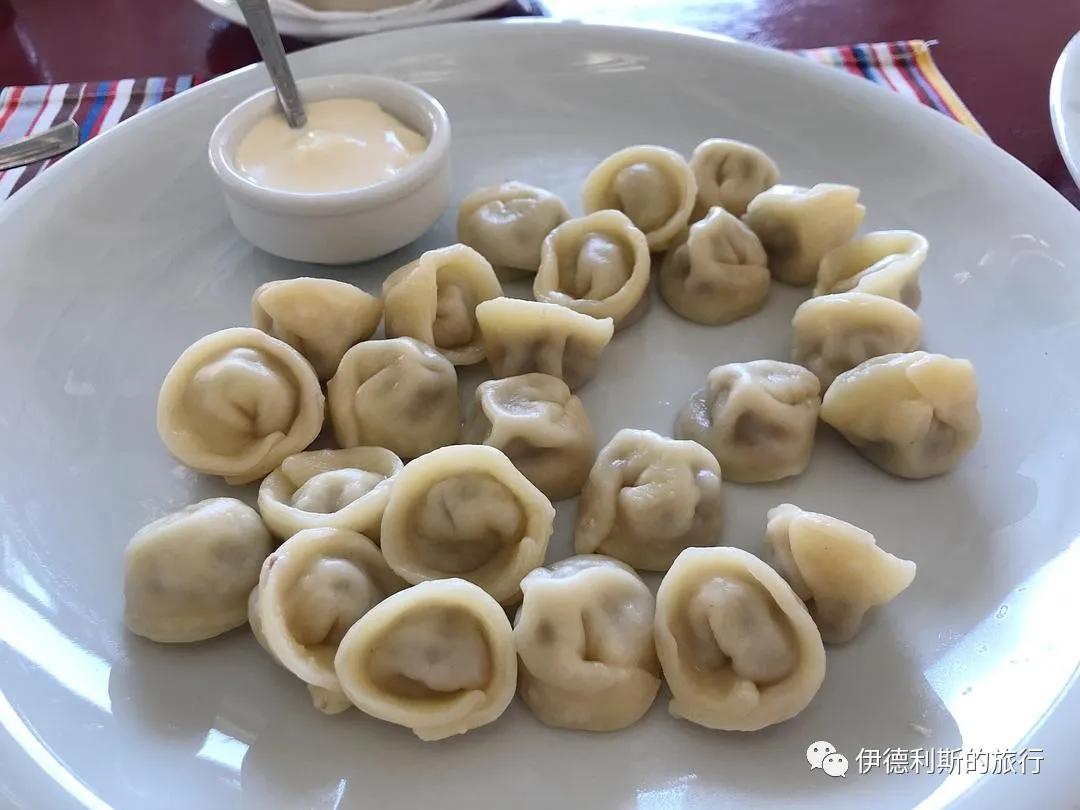
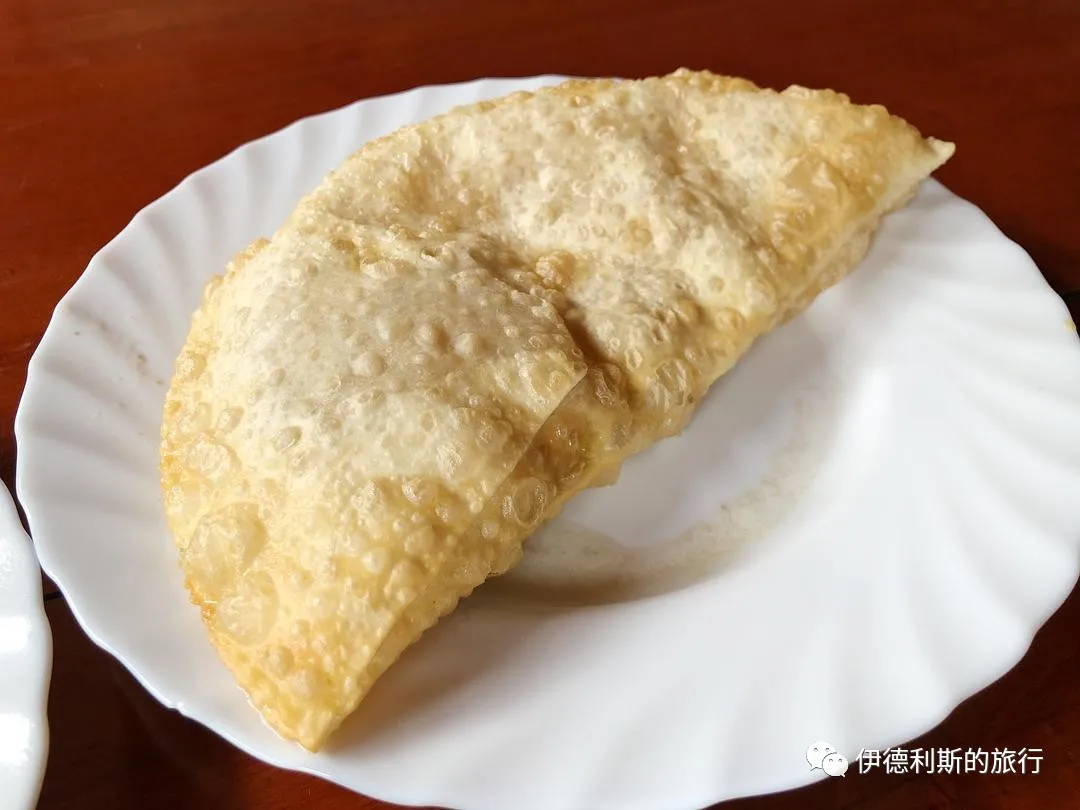
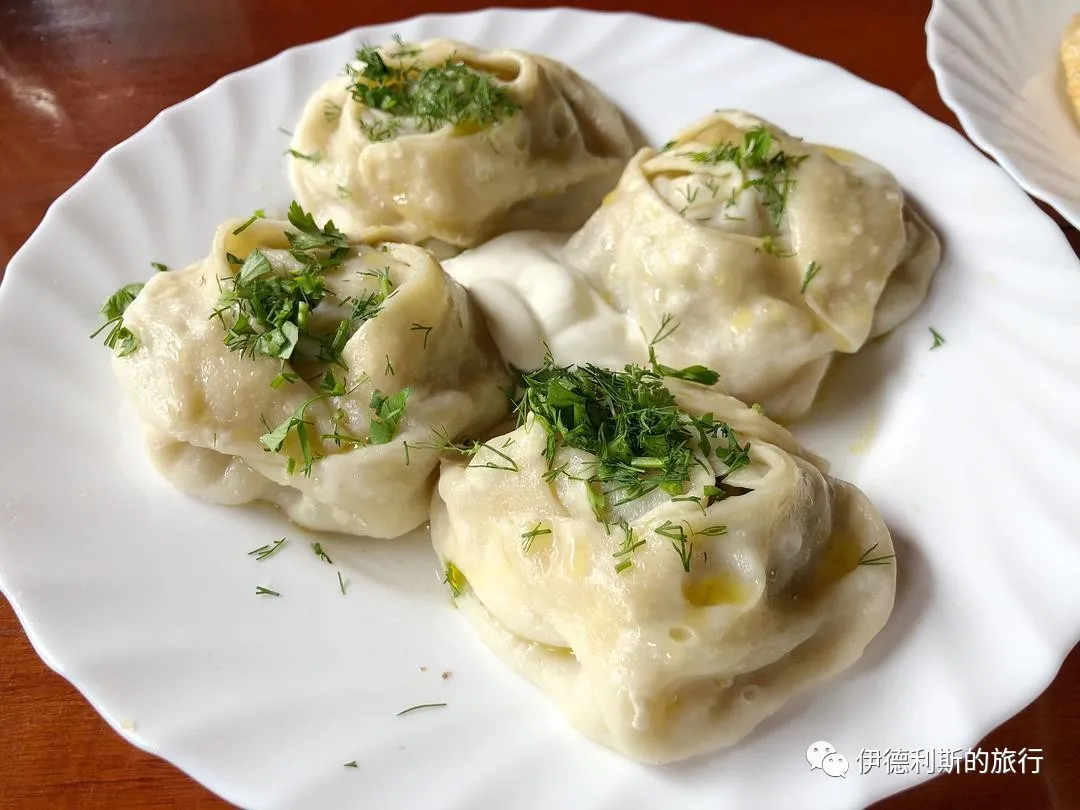
The deep-fried meat pastry (chebureki) is a unique national food of the Crimean Tatars. It can be made with lamb or beef, mixed with onions and black pepper, and the dough is very thin. Steamed dumplings (manti) were brought back by the Crimean Tatars after they were forced into exile in Uzbekistan in 1944.
Clothing
Skullcap (tubeteika)
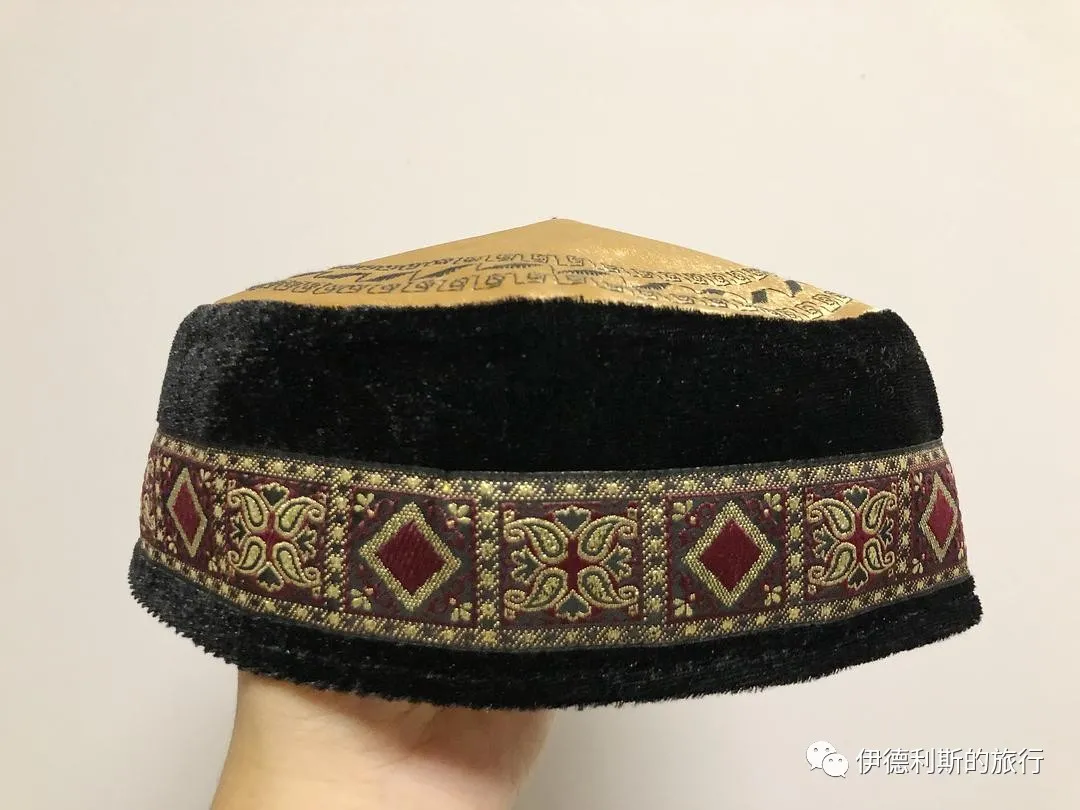
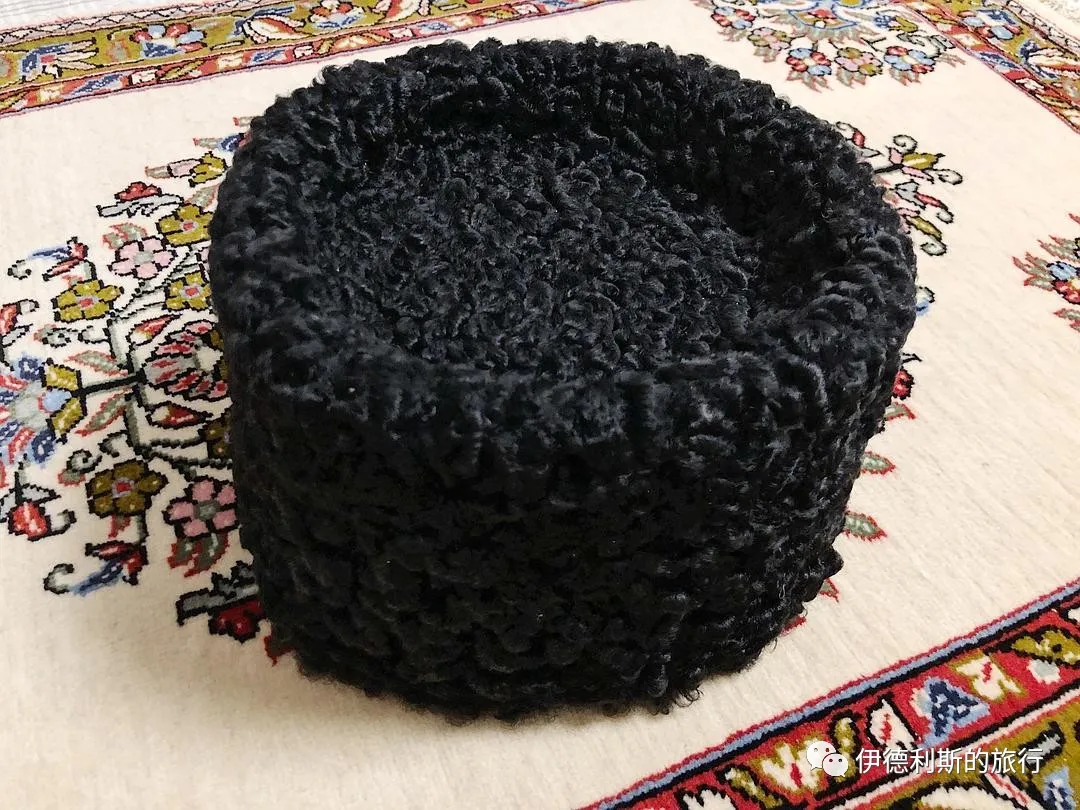
I bought a wool hat called a kalpak at a shop, which is the most classic winter hat for Crimean Tatars. This word is the same as the name for the felt hat worn by the Kyrgyz people, but the shape is different.
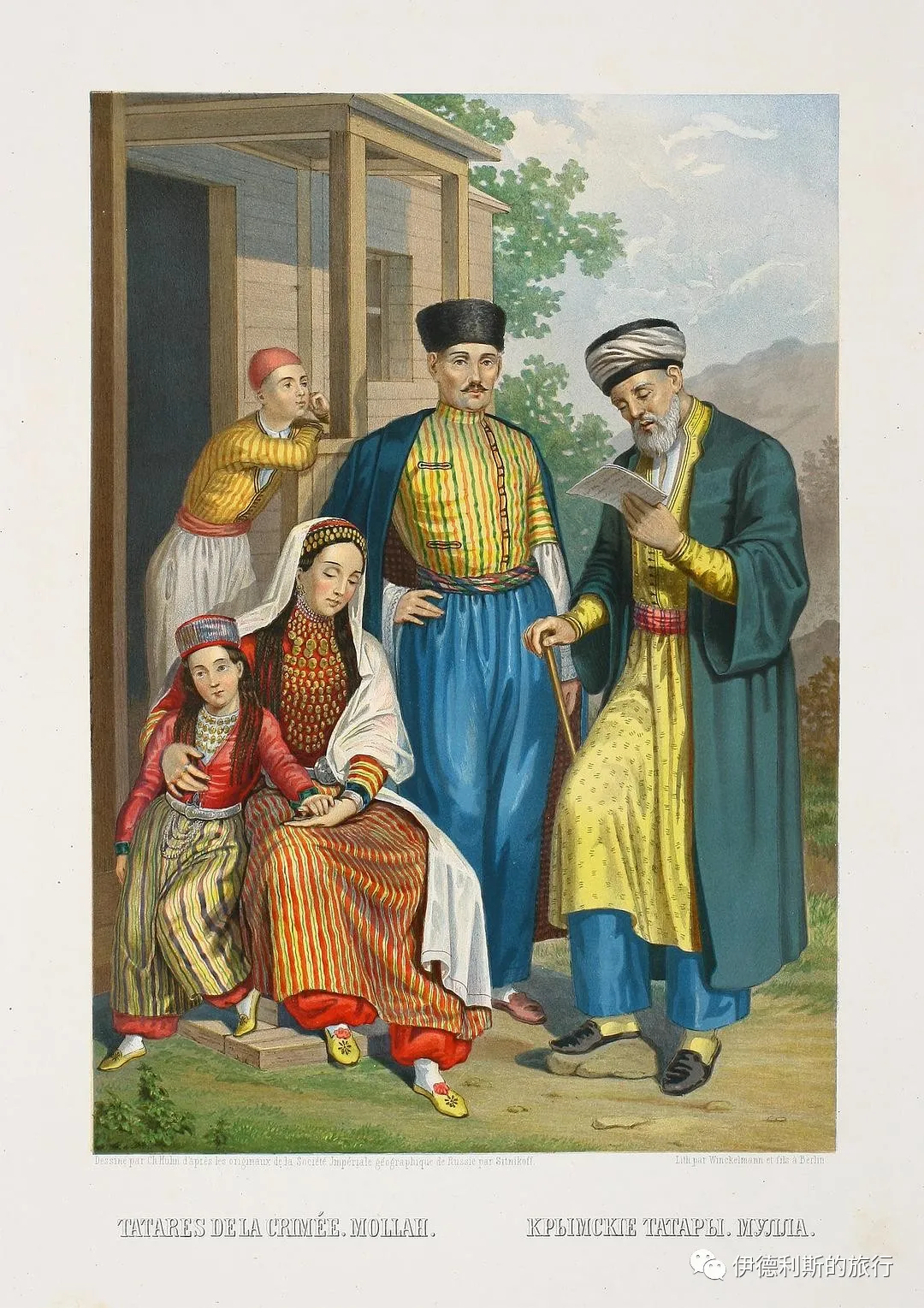
The Former Capital of the Crimean Khanate - Bakhchisarai (Part 1)
Articles • ali2007fr posted the article • 0 comments • 173 views • 2026-05-16 22:58
Summary: This travel note introduces The Former Capital of the Crimean Khanate - Bakhchisarai (Part 1). In 1441, Hacı I Giray, a descendant of Jochi, the eldest son of Genghis Khan, minted coins bearing his name on the Crimean Peninsula, formally establishing the Crimean Khanate. It is useful for readers interested in Crimea Travel, Islamic History, Muslim Heritage.
In 1441, Hacı I Giray, a descendant of Jochi, the eldest son of Genghis Khan, minted coins bearing his name on the Crimean Peninsula, formally establishing the Crimean Khanate.
After Hacı I Giray passed away in 1466, his sixth son, Mengli I Giray, eventually emerged victorious after a struggle for the throne. Around 1500, Mengli I Giray built a new capital, Salachik. Salachik once possessed a complex of buildings including a palace, a court, baths, and a mosque, but now only a madrasa and the mausoleum of the founding Khan, Hacı I Giray, remain.
In 1532, Sahib I Giray, the son of Mengli I Giray, established a new capital, Bakhchisarai, in a valley two kilometers downstream from Salachik. For the next 250 years, Bakhchisarai served as the capital of the Crimean Khanate, where successive Khans built various palaces and mosques.
Furthermore, to the west of Bakhchisarai lies Eski Yurt, a large trading town that was prosperous during the Golden Horde period. It became an Islamic center of Crimea due to the shrine of the Islamic sage Malik Ashtar, and today it preserves several mausoleums from the 14th to 16th centuries, including that of the Crimean Khan Mehmed II Giray.
Table of Contents
I. Salaçıq Architectural Complex
1. Mausoleum of Hacı I Giray: 1501
2. Zıncırlı (Chain) Madrasa: 1500
3. Baths
4. Tomb of Ismail Gaspirali, founder of the Crimean Tatar Enlightenment
II. Bakhchisarai
1. North Gate: 1611
2. Khan Mosque: 1532
3. Khan Cemetery
4. SaryGuzel Bath: 1532
5. Falcon Tower
6. Harem
7. Persian Garden
8. Dilâra Bikeç Mausoleum: 1764
9. Small Khan Mosque
10. Demir Qapı Gate: 1503
11. Divan Hall
12. Summer Pavilion
13. Golden Pavilion
14. Golden Fountain: 1733
15. Fountain of Tears: 1763
16. Suites
17. Stables
III. Mosques outside the Khan Palace
1. Orta Mosque: 1674
2. Ismi Khan Mosque
3. Molla Mustafa Jumu'ah Mosque
4. Tahtali Mosque: 1707
IV. Eski Yurt (Old City)
1. Mausoleum of Mehmed II Giray: 1579
2. Minaret of the Malik Ashtar Mausoleum Mosque
3. Ahmed Bey Mausoleum: 1577
I. Salaçıq Architectural Complex
The Salachik (Salaçıq) historical and archaeological complex was built in the late 15th and early 16th centuries and was the third capital of the Crimean Khanate.
Initially, the capital of the Golden Horde in the Crimean region was the city of Stary Krym in the southeast of the Crimean Peninsula. In 1441, Hacı I Giray moved the capital to the Jewish fortress (Chufut-Kale) on a cliff in the southwest of the peninsula, establishing the Crimean Khanate. After Hacı I Giray passed away in 1466, his sixth son, Mengli I Giray, and his second son, Nur Devlet, repeatedly fought for the throne, with Mengli I Giray eventually winning. Around 1500, Mengli I Giray built a new capital, Salachik, in the valley to the west of the Jewish fortress. In 1532, Sahib I Giray, the son of Mengli I Giray, established a new capital, Bakhchisarai, in a valley two kilometers downstream from Salachik, ending Salachik's thirty-year tenure as the capital. In the 17th century, Salachik included a palace, a high court, baths, the Mengli I Giray Mosque, and a guardhouse. According to Genoese documents, there was also a customs office here, but most of the buildings were likely destroyed in the earthquake of 1698.
Today, only the Zıncırlı (Chain) Madrasa built in 1500 and the Hacı I Giray Mausoleum built in 1501 remain, and the madrasa operated until the early 20th century. In addition, archaeological excavations in 2008 discovered the ruins of the baths and determined the approximate location of the Mengli I Giray Mosque.
1. Mausoleum of Hacı I Giray: 1501
The Hacı I Giray Mausoleum (Dürbe Hacı I Giray) was built in 1501 by Mengli I Giray for his father, the founding Khan of Crimea. It is an octagonal mausoleum with a lead dome.
Archaeological excavations between 2006 and 2007 investigated 18 burials inside the mausoleum, 13 of which belonged to adults and 5 to children. They were wrapped in silk, some resting on pillows stuffed with rags and fruit seeds. Inside the mausoleum, there were 8 sarcophagi covered with velvet, silk, and silver-threaded fabrics. These likely included four Crimean Khans: Hacı I Giray himself, Mengli I Giray, another son of Hacı I Giray named Nur Devlet (who fought Mengli I Giray for the throne for many years but ultimately failed), and Sahib I Giray, the son of Mengli I Giray and the builder of Bakhchisarai.
After research was completed in 2009, these individuals were reburied.
The silk fabrics from the mausoleum are now on display in the Small Khan Mosque at the Bakhchisarai Khan Palace.
2. Zıncırlı (Chain) Madrasa: 1500
The Zıncırlı (Chain) Madrasa (Zıncırlı Medrese) was built in 1500 by order of the Crimean Khan Mengli I Giray. The name of the madrasa comes from the Turkic word "Zyngyr," meaning "chain." The chain hanging above the entrance of the madrasa forces everyone entering to bow their head.
The madrasa is rectangular with a courtyard in the middle, an entrance on one side, and 11 rooms on the other three sides. At that time, the madrasa offered courses in Turkish and Arabic grammar, calligraphy, arithmetic, ethics, logic, proof, Islamic law, theology, and Quranic studies. The entire course of study took ten years.
In 1909, under the influence of the Crimean Tatar Enlightenment, Gaspirali built a new two-story madrasa next to the old one. The madrasa closed in 1917 and was converted into the Mengli I Giray Research Institute. The institute was abolished in 1923 and later served successively as a teacher's college, a medical school, a sanatorium for German soldiers, and a post-war psychiatric clinic. Today, it is managed by the Bakhchisarai Historical, Cultural, and Archaeological Museum.
3. Baths
During archaeological excavations of the Salachik historical and archaeological complex in 2008, 15th-century baths, wells, and courtyard remains were discovered.
The bath is a typical Turkish bath (Hamam), divided into separate sections for men and women, each consisting of 5 rooms and a heating system. The heating system supplied warm air through ceramic pipes laid in the walls and under the floors, keeping the bath at a constant temperature year-round and reducing firewood consumption. In addition, each section had a steam room, a washing room, a toilet, a lounge, and a changing room.
Many ceramics from the 15th to 18th centuries were unearthed during the excavations, primarily architectural tiles and pipes, along with a small amount of kitchenware, Turkish ceramics, Chinese porcelain, and silver coins from the Crimean Khanate.
4. Tomb of Ismail Gaspirali, founder of the Crimean Tatar Enlightenment
Ismail Gaspirali (1851–1914), the founder of the Crimean Tatar Enlightenment, is buried in the backyard of the Zıncırlı Madrasa.
Gaspirali was a Crimean Tatar intellectual, educator, publisher, and one of the earliest modern Muslim intellectuals in the Russian Empire. He was the first to realize that Turkic Muslim society needed to modernize through educational and cultural reform, thus pioneering the "Jadid" new-style education, and is recognized as the founder of the Crimean Tatar Enlightenment.
Gaspirali was born in Bakhchisarai, studied in Paris from 1871 to 1874, and after returning home, served as the mayor of Bakhchisarai from 1879 to 1884. Gaspirali taught at the Zıncırlı Madrasa, where he advocated for 45-minute classes and a schedule based on bells, which was opposed by traditional teachers at the school, eventually forcing him to resign.
Gaspirali began attempting to launch a Turkic-language newspaper in 1879, and in 1883, he was granted permission to publish Russia's first Turkic-language newspaper, Tercüman (The Translator). Tercüman was published for 35 years and was long the only Turkic-language newspaper in Russia, as well as one of the earliest Muslim newspapers, influencing the entire Turkic Muslim society.
In the newspaper, he criticized the traditional Muslim education system, advocated for modernization through educational reform, and designed a new teaching method—Jadid. Jadid fundamentally changed the nature and structure of primary education in many Muslim regions, making it more secular. He taught the Arabic alphabet using a new phonetic method, reducing the time it took for students to become literate from three years to a few months.
In 1905, after nearly twenty years of effort, Gaspirali founded the first Turkic-language women's magazine, Alem-i Nisvan (Women's World), with his daughter Shefika serving as editor. In 1906, Gaspirali founded the first Turkic-language humor magazine, Ha-ha-ha.
In 1909, Gaspirali built a new two-story school next to the Zıncırlı Madrasa, which operated until it closed in 1917.
After Gaspirali passed away in his hometown in 1914, he was buried in the Muslim cemetery in the backyard of the Zıncırlı Madrasa. The original tombstone was lost in the second half of the 20th century, and the current one was rebuilt in the late 1990s.
II. Bakhchisarai
1. North Gate: 1611
The North Gate (Darbehane Qapı) is the main entrance to the Khan Palace complex. In Crimean Tatar, "Darbehane Qapı" means "Mint Gate," because mint once grew across from the gate. The Khan Palace once had four main gates, but now only the North and South gates remain. The North Gate features a sculpture of two intertwined snakes. Legend has it that the builder of the palace, Sahib I Giray, saw two snakes fighting by the river in front of the gate, and one snake was healed by the river water, so he decided to build the palace there.
The North Gate was built in 1611. Before this, the Khan Palace had no walls because the defensive system of the Khanate's capital was at the Jewish fortress on the cliff. In the 17th century, as Cossack military activity increased, the Khan Palace was considered threatened, leading to the construction of the current walls and gates.
2. Khan Mosque: 1532
The Khan Mosque (Büyük Han Cami) is located inside the Bakhchisarai Khan Palace. In 1532, when the Crimean Khan Sahib I Giray moved the capital to Bakhchisarai, the Khan Mosque was one of the first buildings constructed in the palace. The original mosque consisted of multiple domes, similar to the Seljuk-style mosques popular in the Ottoman Empire in the 15th century. The mosque was destroyed by fire in 1736 and later restored by Khan Selamet II Giray (reigned 1740–1743), who changed it to a tiled roof.
During the Soviet era, the mosque was closed and became an exhibition hall for an archaeological museum. After Russia occupied Crimea in 2014, the mosque underwent restoration, some of which caused damage to the structure.
The Crimean Khan Qırım Giray (reigned 1758–1764) ordered the creation of Quranic calligraphy and murals for the Khan Mosque.
Maqsurah is an Arabic term meaning "enclosed space," which is a space inside a mosque for the ruler or nobility to pray. A Maqsurah is generally made as a wooden box or screen located near the mihrab of the mosque, while the Khan Mosque's Maqsurah was built as a second-floor loft. The main entrance of the Khan Mosque is connected to the north wall of the palace and can be accessed directly from the outside, while the Maqsurah can only be accessed via stairs from inside the palace.
The Maqsurah loft of the Khan Mosque was rebuilt after the 1736 fire and is decorated with famous Turkish Iznik tiles, stained glass, and various precious 18th-century murals.
Artifacts displayed in the Maqsurah loft of the Khan Mosque:
A Quran copied in Bakhchisarai by Hafiz Mas'ud in 1794
An 18th-century Quran bag
A Quran copied in Crimea in 1748, with an 18th-century bag.
A Quran copied in 1808
An 18th-century Quran
On the left is an 18th-century Sahih al-Bukhari, and on the right is an 18th-century Quran commentary.
An 18th-century Quran
An 18th-century Quran
A Quran copied by Hajj Mahmoud in 1746
The ablution fountain of the Khan Mosque.
3. Khan Cemetery
The Khan Cemetery is located south of the Khan Mosque and contains the graves of 9 Crimean Khans from the 16th to 18th centuries, 45 members of the Khan family, and over 320 court nobles. The two most important mausoleums belong to Crimean Khans Devlet I Giray (reigned 1551–1577) and İslâm III Giray (reigned 1644–1654). These octagonal mausoleums are built of limestone, and their domes were originally lead, but were changed to iron after 1863. There is also the open-air tomb of Crimean Khan Meñli II Giray (reigned 1724–1730, 1737–1740) and the double tombstone of Crimean Khan Qırım Giray (reigned 1758–1764, 1768–1769).
The Khan Mosque, the tomb of Crimean Khan Devlet I Giray, and the tomb of İslâm III Giray.
As it appeared in 1830
As it appeared between 1840 and 1842
The mausoleum in the northern part of the Khan Cemetery belongs to Crimean Khan Devlet I Giray (reigned 1551–1577) and contains 6 tombstones.
Devlet I Giray reigned for 26 years. His most important campaign was the burning of Moscow in 1571, which forced Tsar Ivan the Terrible to flee, earning him the title "The One Who Took the Crown."
In 1530, Devlet I Giray was appointed Kalga (the second-in-command after the Khan) by his uncle Saadet I Giray. In 1532, Saadet I Giray voluntarily abdicated to serve Sultan Suleiman the Magnificent at the Ottoman court, and Devlet I Giray was subsequently imprisoned. After being released, Devlet I Giray also went to Istanbul, gradually gaining the trust of Suleiman the Magnificent. In 1551, when the then-Crimean Khan Sahib I Giray refused to help the Ottomans attack Persia, Suleiman the Magnificent decided to have Devlet I Giray replace his uncle.
Devlet I Giray led an army of 1,000 men and 60 cannons to occupy Bakhchisarai, then killed Sahib I Giray and all his descendants, becoming the new Crimean Khan.
In March 1552, the second year of his reign, Russian Tsar Ivan the Terrible sent troops to conquer the Kazan Khanate. Upon learning this, Devlet I Giray decided to attack the Russian heartland to save Kazan while their defenses were weak, but he was ultimately defeated by the Russian army. In October of that year, Kazan fell, and the Kazan Khanate was extinguished. Following this, in 1556, another Tatar state, the Astrakhan Khanate, was also conquered by Ivan the Terrible, leaving the Crimean Khanate as the last remaining Tatar state.
From 1551, the Crimean Khanate engaged in over twenty years of war with Russia. After several defeats, Devlet I Giray attempted to make peace with Russia, but this was opposed by the nobles of the Crimean Khanate. Finally, in the spring of 1571, Devlet I Giray led a joint force of 120,000 Crimean and Ottoman troops and, guided by six boys fleeing the increasingly insane Ivan the Terrible, arrived directly at Moscow. Devlet I Giray set fires in the suburbs of Moscow, and suddenly, strong winds blew the flames into the city, burning the entire city to the ground.
According to records, people fled into stone churches, but the churches collapsed, killing everyone inside. People jumped into the river, and many drowned. The Kremlin's armory exploded, and those hiding in the basement suffocated to death. Ivan the Terrible ordered the dead in the streets to be thrown into the river, causing the river to overflow and flood parts of the city. Historians estimate that between 60,000 and 200,000 people died in the fire.
Ivan the Terrible subsequently fled to Novgorod, and the Crimean army went in pursuit but was intercepted by Russian forces. Devlet I Giray was defeated by the Russian army in succession, losing a son and a grandson. At this point, false news arrived that Ivan the Terrible was leading a large army to arrive soon, forcing Devlet I Giray to withdraw.
In the following years, the Crimean Khanate had several more small-scale wars with Russia. In 1577, Devlet I Giray died of the plague and was buried in the Khan Cemetery in Bakhchisarai.
The mausoleum in the southern part of the Khan Cemetery belongs to Crimean Khan İslâm III Giray (reigned 1644–1654) and contains 9 tombstones.
In his youth, İslâm III Giray was captured by the Polish-Lithuanian Commonwealth and lived in Poland for 7 years. After being released, he settled in the Ottoman Empire. In 1637, he was appointed Kalga (the second-in-command after the Khan) by the new Crimean Khan. In 1640, he led an army that caused devastating damage to Ukraine. After another Khan succeeded to the throne in 1641, he left Crimea again and returned to the Ottoman Empire. In 1644, the Ottoman Sultan deposed the previous Crimean Khan and appointed İslâm III Giray as the Crimean Khan.
During his reign, İslâm III Giray attempted to resolve conflicts among the nobles within the Khanate, while also funding the construction and renovation of many public buildings, such as fountains, water systems, and fortresses.
In 1648, İslâm III Giray allied with the Zaporozhian Cossacks of Ukraine against the Polish-Lithuanian Commonwealth. In 1654, he turned to ally with Poland against the Russian Tsar. According to legend, he was killed shortly thereafter by his Cossack concubine.
Next to the mausoleum of İslâm III Giray is the mausoleum of Crimean Khan Meñli II Giray (reigned 1724–1730, 1737–1740).
During his reign, Meñli II Giray ended the long-term turmoil in the Crimean Khanate and abolished some taxes, gaining the support of many people. During his second reign, he skillfully organized defenses to resist the invasion of the Russian army, inflicting heavy losses on the Russian forces. Meñli II Giray was also known for his love of literature and Islam. As a Sufi follower, he donated funds to many mosques.
In 1740, Meñli II Giray passed away in Bakhchisarai and was buried in the Khan Cemetery. His mausoleum has no roof and is an open-air rotunda.
The tomb of Crimean Khan Qırım Giray (reigned 1758–1764, 1768–1769) is at the entrance of the Khan Cemetery; it has no mausoleum building, only a double tombstone.
Qırım Giray was a talented ruler under whose reign the Crimean Khanate experienced an artistic revival, developing a unique art style known as "Crimean Rococo." He invited many excellent artists and architects to build numerous mosques in Crimea and restored and expanded the Bakhchisarai Khan Palace, which had been burned by the Russians. Qırım Giray had a keen interest in European, especially French, culture, and was particularly fascinated by Molière's plays; the court frequently hosted musical and theatrical performances.
Most tombstones in the cemetery consist of two stones at the head and foot; the top of the headstone is carved with different headgear for men and women, and the body of the stone is inscribed with an epitaph.
4. SaryGuzel Bath: 1532
The SaryGuzel Bath was built in 1532 by order of Crimean Khan Sahib I Giray and, like the Khan Mosque, is one of the earliest buildings constructed in the Bakhchisarai Khan Palace. "Sarı" in Crimean Tatar means "yellow or fair-skinned," and "Güzel" means "beautiful."
The SaryGuzel Bath is a typical Turkish bath; a furnace in the basement causes hot air to rise and heat the floor, and cold and hot water are supplied to the bath through lead pipes. The bath is divided into men's and women's sections, each with a dome featuring star-shaped cutouts for ventilation and light, and an indoor courtyard with a fountain at the exit.
The SaryGuzel Bath operated until 1924, after which it was closed as a dangerous structure; it has now been restored and is open for exhibition.
5. Falcon Tower
The Falcon Tower (Toğan qullesi) is located in a corner of the Persian Garden of the Khan Palace and is said to have been used to train the falcons of the Khan's court. The Falcon Tower was built in the 16th century, originally as a five-story brick, mud, and wood structure. It was rebuilt in 1760 into two stories: the lower level is a cube built of rubble and cement mortar, and the upper level is an octagonal tower built of wooden planks.
The Falcon Tower is connected to the Harem building of the Khan Palace, and a spiral staircase inside the tower leads to an observation deck at the top, allowing those living in the harem to climb the tower and overlook the entire palace.
Weapons and saddles from the 18th–19th centuries displayed on the ground floor of the Falcon Tower
6. Harem
The Harem (Arem) of the Crimean Khan Palace once had 4 buildings and 73 rooms. In 1818, Tsar Alexander I demolished 3 buildings and 70 rooms, leaving only an annex with 3 rooms and a pavilion. Today, the annex displays the interior decorations of Crimean Tatar houses from the 17th to 19th centuries.
The living room retains its original fireplace and cupboards, and a mirror with the author's inscription was discovered during the 1980s restoration. Paintings on the vanity and Arabic poetry on the ceiling have also been cleaned. view all
Summary: This travel note introduces The Former Capital of the Crimean Khanate - Bakhchisarai (Part 1). In 1441, Hacı I Giray, a descendant of Jochi, the eldest son of Genghis Khan, minted coins bearing his name on the Crimean Peninsula, formally establishing the Crimean Khanate. It is useful for readers interested in Crimea Travel, Islamic History, Muslim Heritage.
In 1441, Hacı I Giray, a descendant of Jochi, the eldest son of Genghis Khan, minted coins bearing his name on the Crimean Peninsula, formally establishing the Crimean Khanate.
After Hacı I Giray passed away in 1466, his sixth son, Mengli I Giray, eventually emerged victorious after a struggle for the throne. Around 1500, Mengli I Giray built a new capital, Salachik. Salachik once possessed a complex of buildings including a palace, a court, baths, and a mosque, but now only a madrasa and the mausoleum of the founding Khan, Hacı I Giray, remain.
In 1532, Sahib I Giray, the son of Mengli I Giray, established a new capital, Bakhchisarai, in a valley two kilometers downstream from Salachik. For the next 250 years, Bakhchisarai served as the capital of the Crimean Khanate, where successive Khans built various palaces and mosques.
Furthermore, to the west of Bakhchisarai lies Eski Yurt, a large trading town that was prosperous during the Golden Horde period. It became an Islamic center of Crimea due to the shrine of the Islamic sage Malik Ashtar, and today it preserves several mausoleums from the 14th to 16th centuries, including that of the Crimean Khan Mehmed II Giray.
Table of Contents
I. Salaçıq Architectural Complex
1. Mausoleum of Hacı I Giray: 1501
2. Zıncırlı (Chain) Madrasa: 1500
3. Baths
4. Tomb of Ismail Gaspirali, founder of the Crimean Tatar Enlightenment
II. Bakhchisarai
1. North Gate: 1611
2. Khan Mosque: 1532
3. Khan Cemetery
4. SaryGuzel Bath: 1532
5. Falcon Tower
6. Harem
7. Persian Garden
8. Dilâra Bikeç Mausoleum: 1764
9. Small Khan Mosque
10. Demir Qapı Gate: 1503
11. Divan Hall
12. Summer Pavilion
13. Golden Pavilion
14. Golden Fountain: 1733
15. Fountain of Tears: 1763
16. Suites
17. Stables
III. Mosques outside the Khan Palace
1. Orta Mosque: 1674
2. Ismi Khan Mosque
3. Molla Mustafa Jumu'ah Mosque
4. Tahtali Mosque: 1707
IV. Eski Yurt (Old City)
1. Mausoleum of Mehmed II Giray: 1579
2. Minaret of the Malik Ashtar Mausoleum Mosque
3. Ahmed Bey Mausoleum: 1577
I. Salaçıq Architectural Complex
The Salachik (Salaçıq) historical and archaeological complex was built in the late 15th and early 16th centuries and was the third capital of the Crimean Khanate.
Initially, the capital of the Golden Horde in the Crimean region was the city of Stary Krym in the southeast of the Crimean Peninsula. In 1441, Hacı I Giray moved the capital to the Jewish fortress (Chufut-Kale) on a cliff in the southwest of the peninsula, establishing the Crimean Khanate. After Hacı I Giray passed away in 1466, his sixth son, Mengli I Giray, and his second son, Nur Devlet, repeatedly fought for the throne, with Mengli I Giray eventually winning. Around 1500, Mengli I Giray built a new capital, Salachik, in the valley to the west of the Jewish fortress. In 1532, Sahib I Giray, the son of Mengli I Giray, established a new capital, Bakhchisarai, in a valley two kilometers downstream from Salachik, ending Salachik's thirty-year tenure as the capital. In the 17th century, Salachik included a palace, a high court, baths, the Mengli I Giray Mosque, and a guardhouse. According to Genoese documents, there was also a customs office here, but most of the buildings were likely destroyed in the earthquake of 1698.
Today, only the Zıncırlı (Chain) Madrasa built in 1500 and the Hacı I Giray Mausoleum built in 1501 remain, and the madrasa operated until the early 20th century. In addition, archaeological excavations in 2008 discovered the ruins of the baths and determined the approximate location of the Mengli I Giray Mosque.
1. Mausoleum of Hacı I Giray: 1501
The Hacı I Giray Mausoleum (Dürbe Hacı I Giray) was built in 1501 by Mengli I Giray for his father, the founding Khan of Crimea. It is an octagonal mausoleum with a lead dome.
Archaeological excavations between 2006 and 2007 investigated 18 burials inside the mausoleum, 13 of which belonged to adults and 5 to children. They were wrapped in silk, some resting on pillows stuffed with rags and fruit seeds. Inside the mausoleum, there were 8 sarcophagi covered with velvet, silk, and silver-threaded fabrics. These likely included four Crimean Khans: Hacı I Giray himself, Mengli I Giray, another son of Hacı I Giray named Nur Devlet (who fought Mengli I Giray for the throne for many years but ultimately failed), and Sahib I Giray, the son of Mengli I Giray and the builder of Bakhchisarai.
After research was completed in 2009, these individuals were reburied.
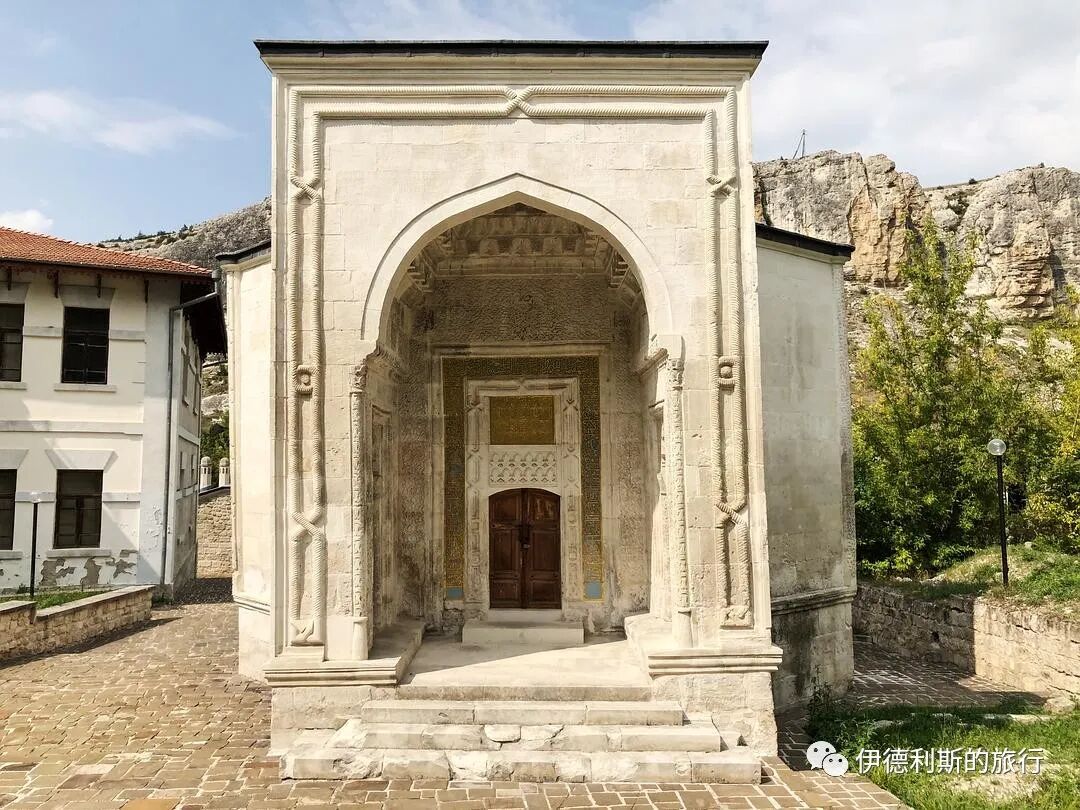
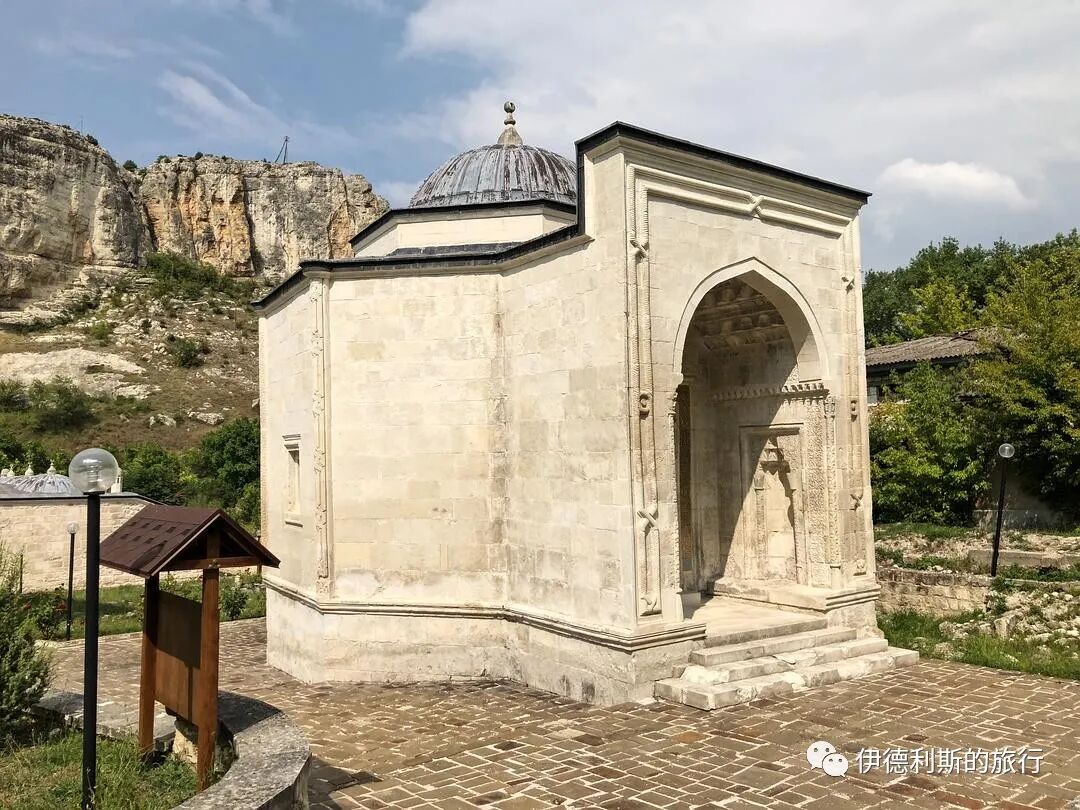
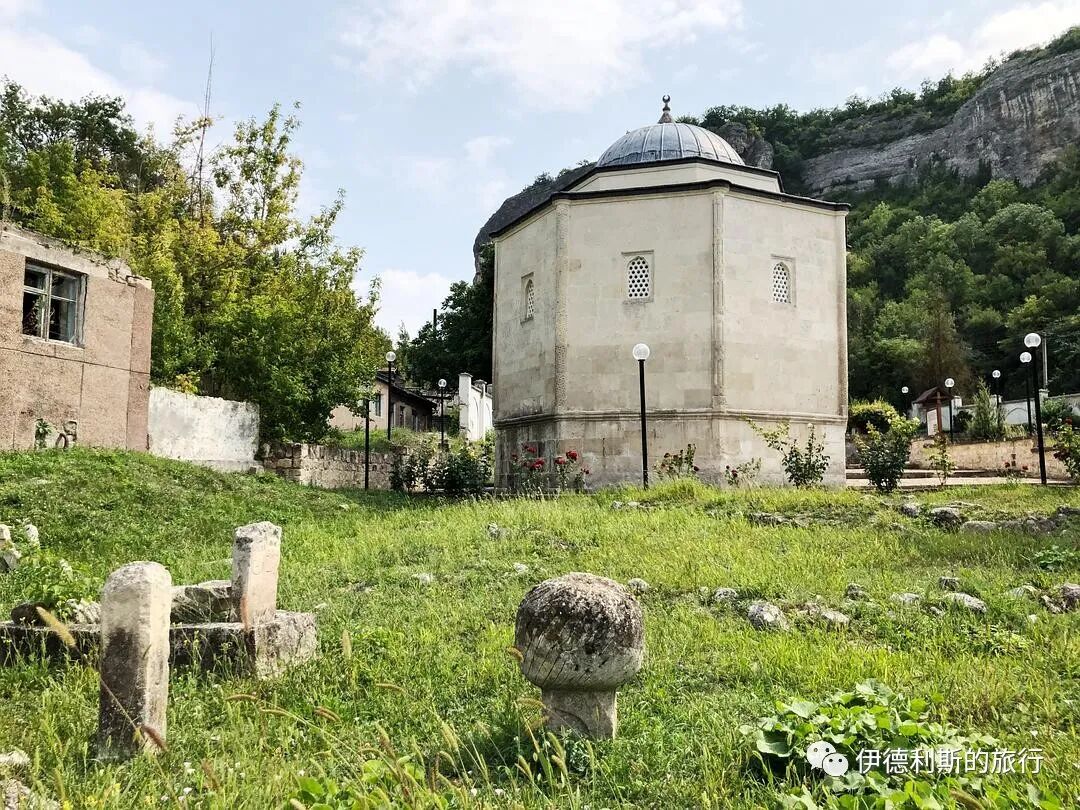
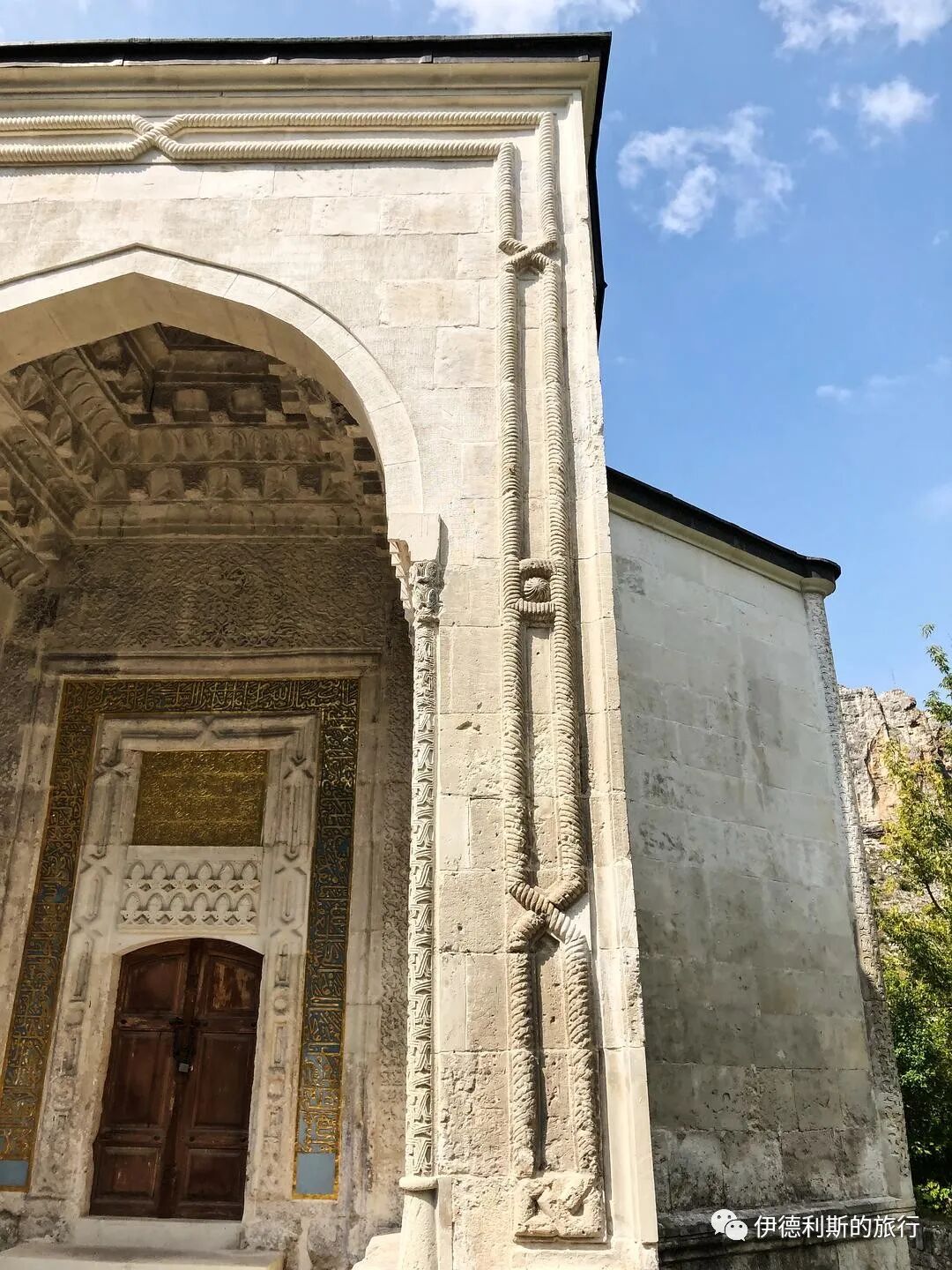
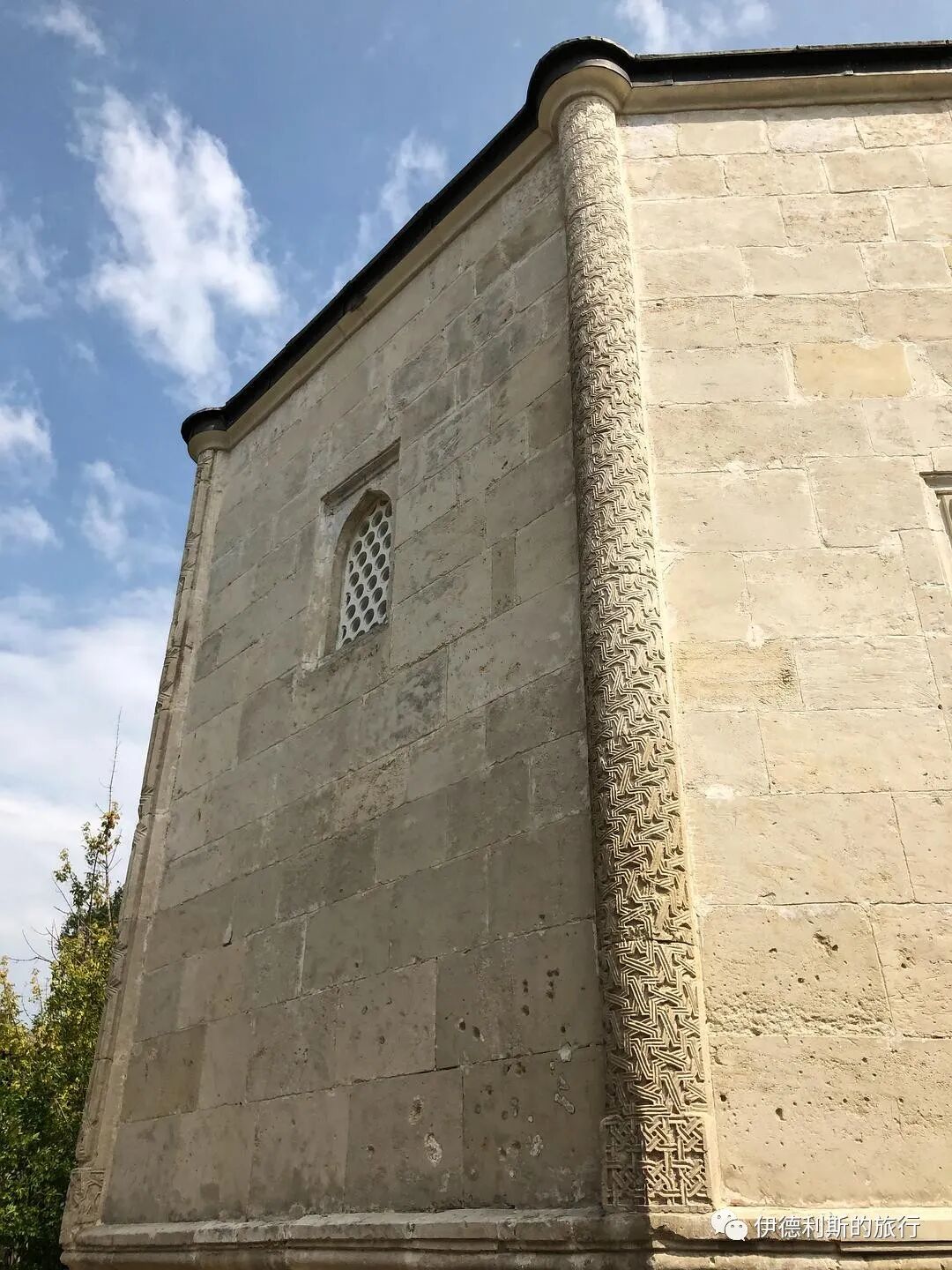
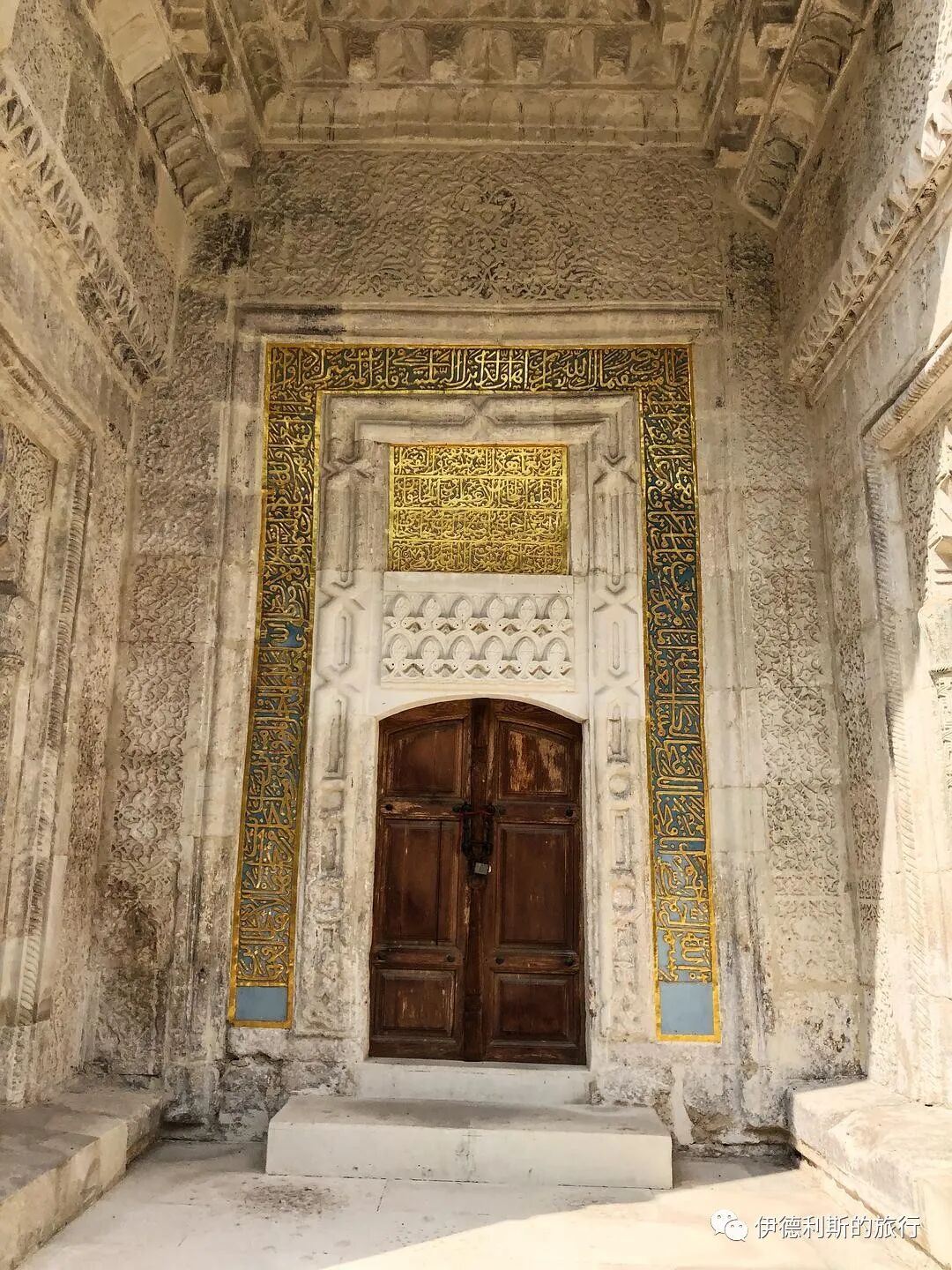
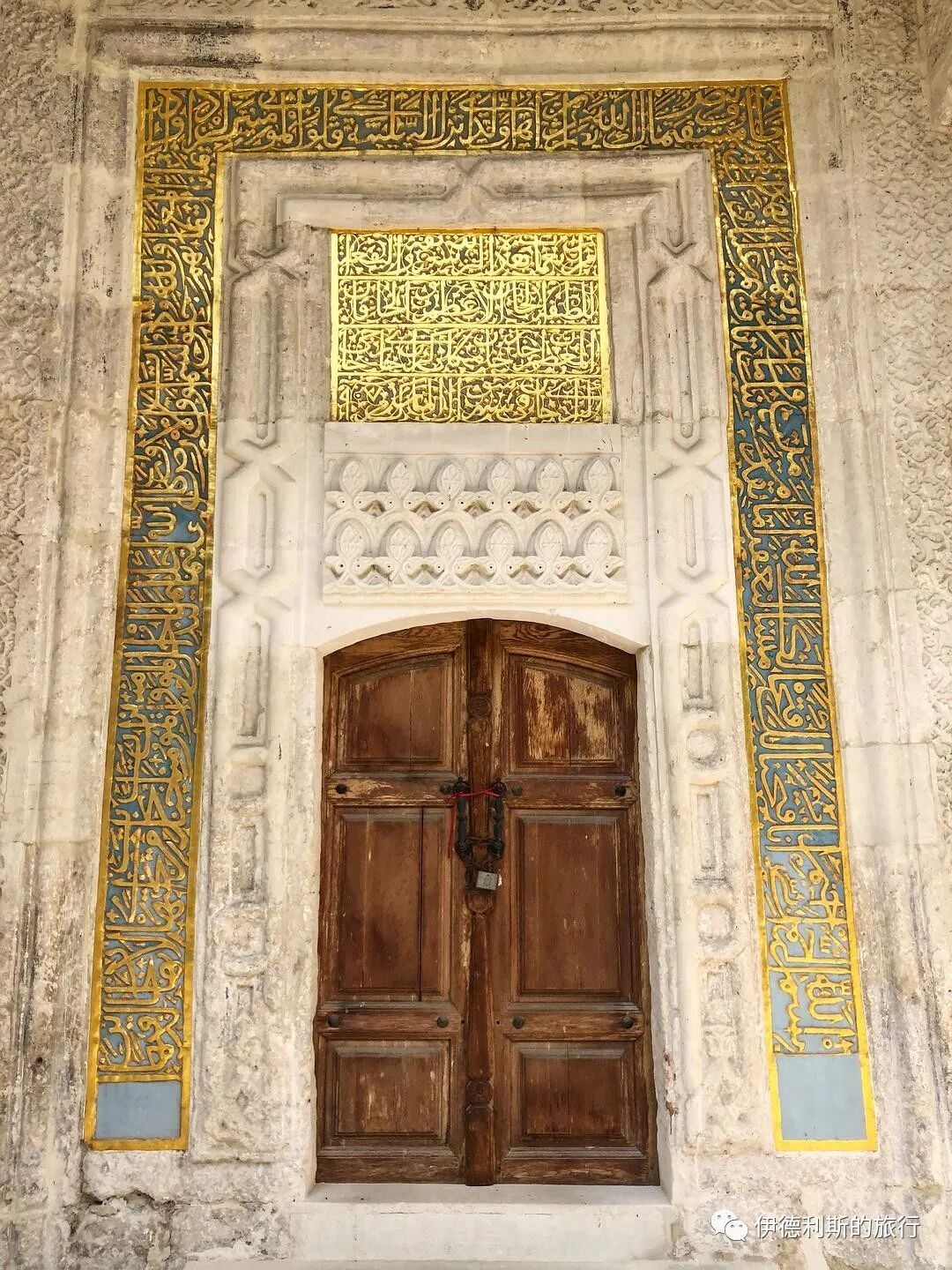
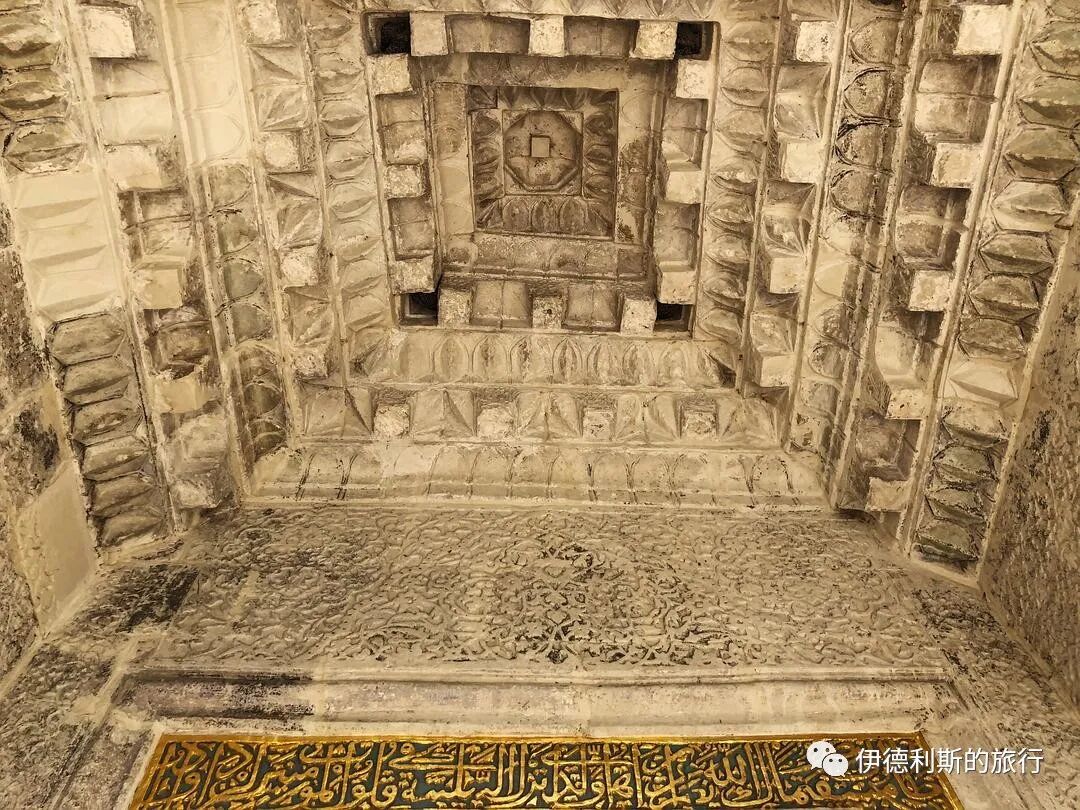
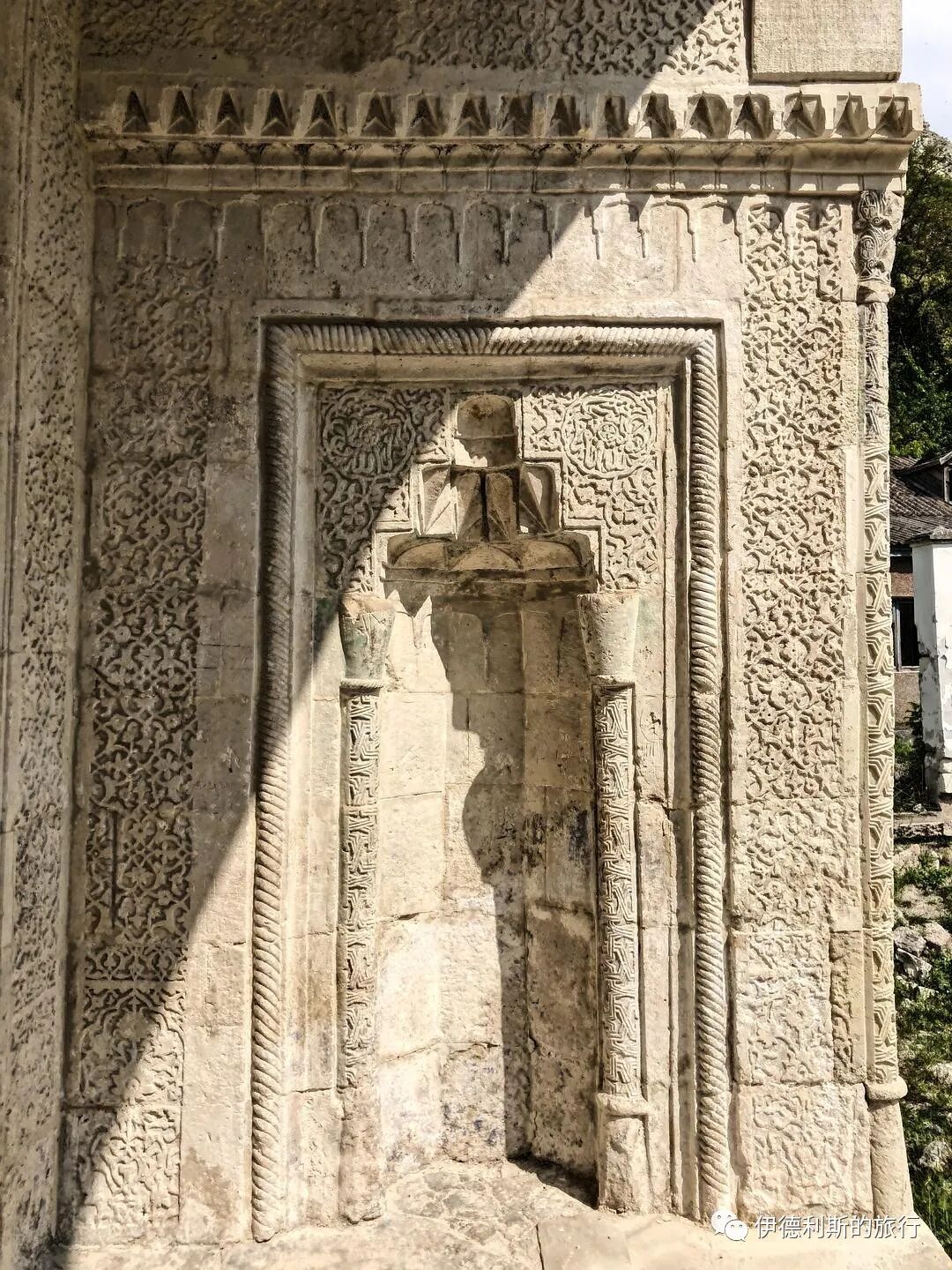
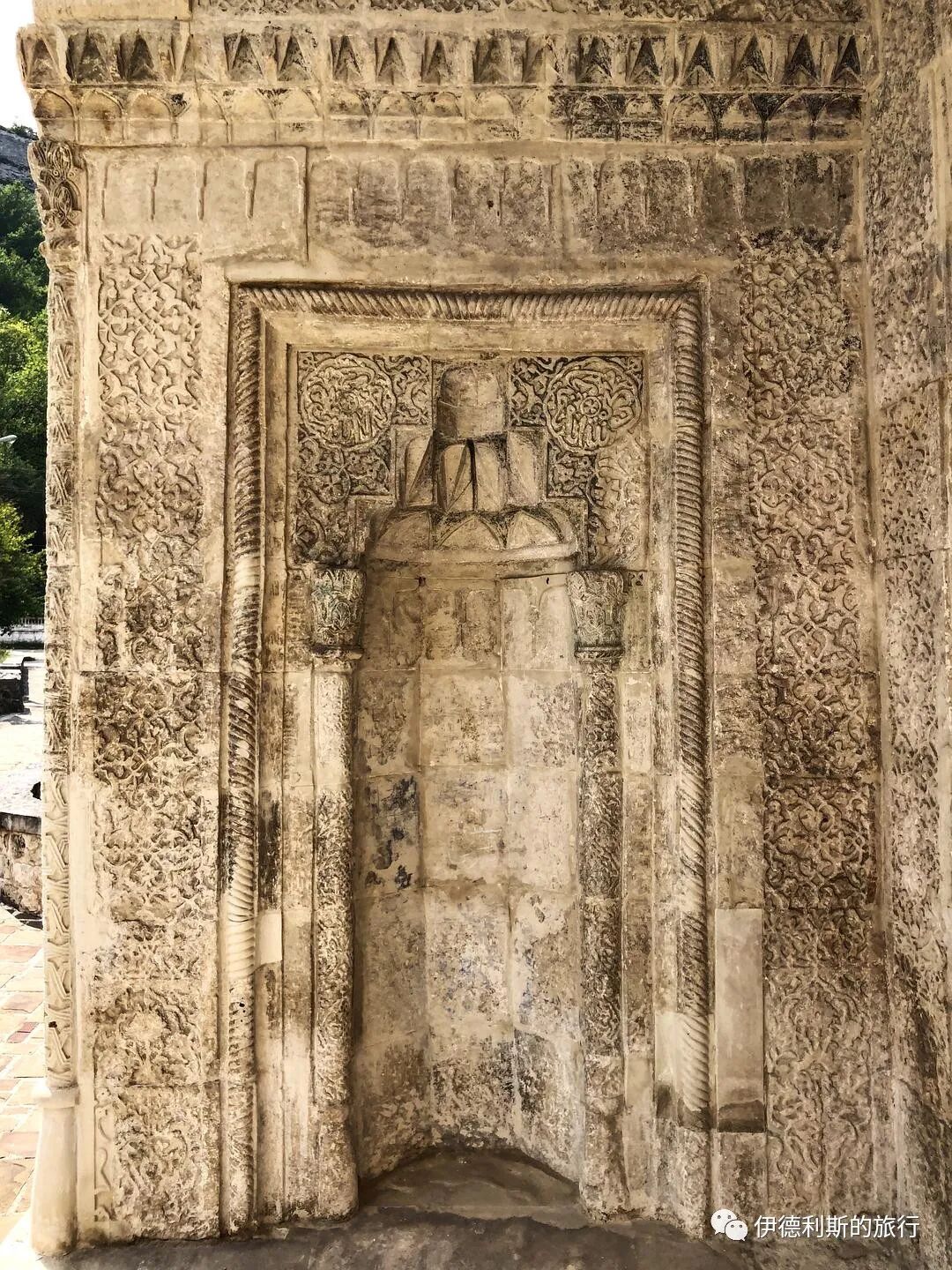
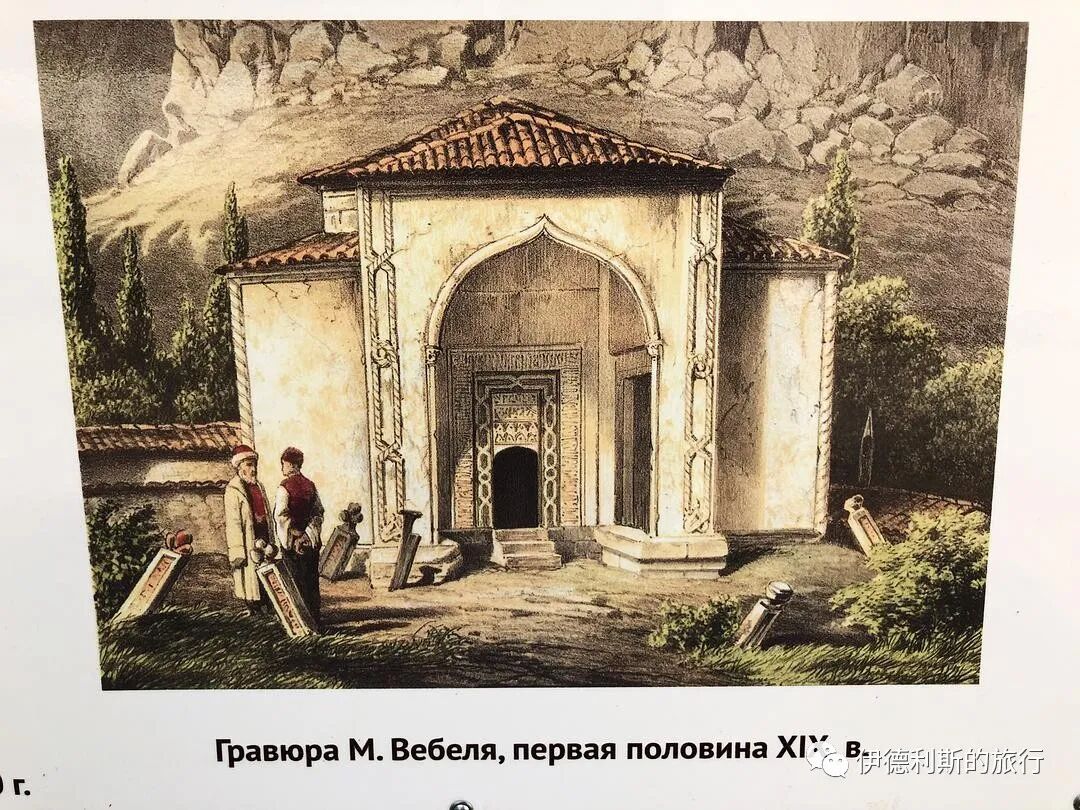
The silk fabrics from the mausoleum are now on display in the Small Khan Mosque at the Bakhchisarai Khan Palace.
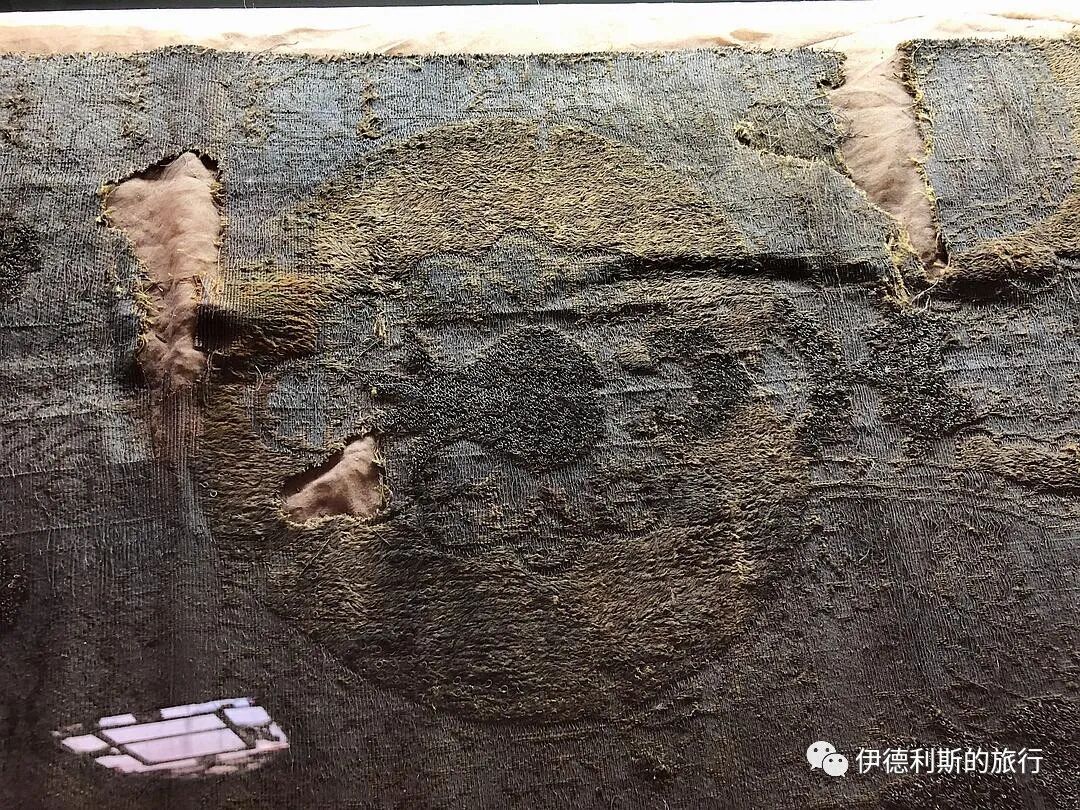
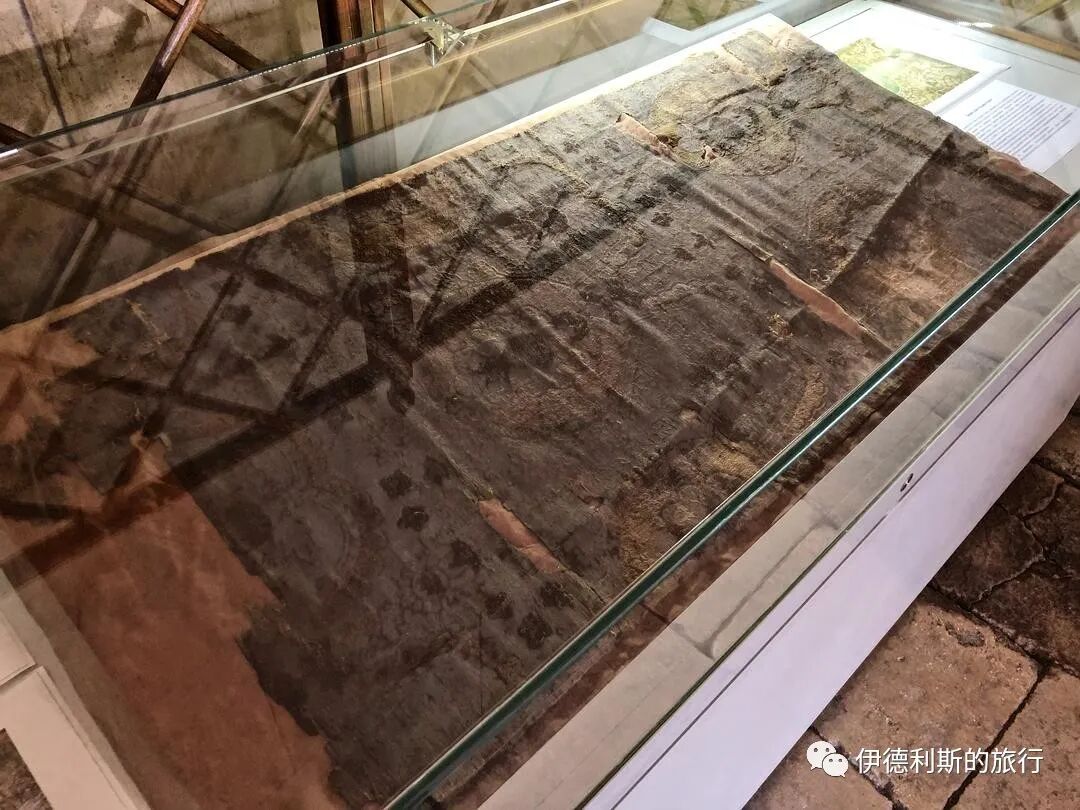
2. Zıncırlı (Chain) Madrasa: 1500
The Zıncırlı (Chain) Madrasa (Zıncırlı Medrese) was built in 1500 by order of the Crimean Khan Mengli I Giray. The name of the madrasa comes from the Turkic word "Zyngyr," meaning "chain." The chain hanging above the entrance of the madrasa forces everyone entering to bow their head.
The madrasa is rectangular with a courtyard in the middle, an entrance on one side, and 11 rooms on the other three sides. At that time, the madrasa offered courses in Turkish and Arabic grammar, calligraphy, arithmetic, ethics, logic, proof, Islamic law, theology, and Quranic studies. The entire course of study took ten years.
In 1909, under the influence of the Crimean Tatar Enlightenment, Gaspirali built a new two-story madrasa next to the old one. The madrasa closed in 1917 and was converted into the Mengli I Giray Research Institute. The institute was abolished in 1923 and later served successively as a teacher's college, a medical school, a sanatorium for German soldiers, and a post-war psychiatric clinic. Today, it is managed by the Bakhchisarai Historical, Cultural, and Archaeological Museum.
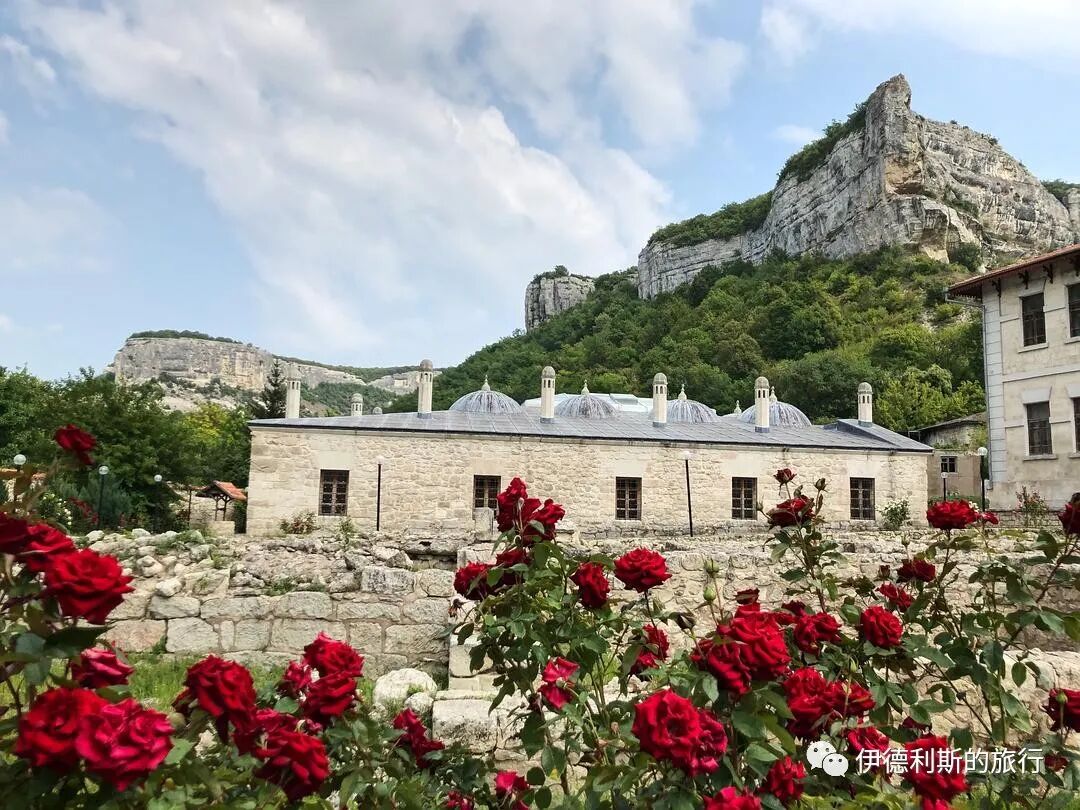
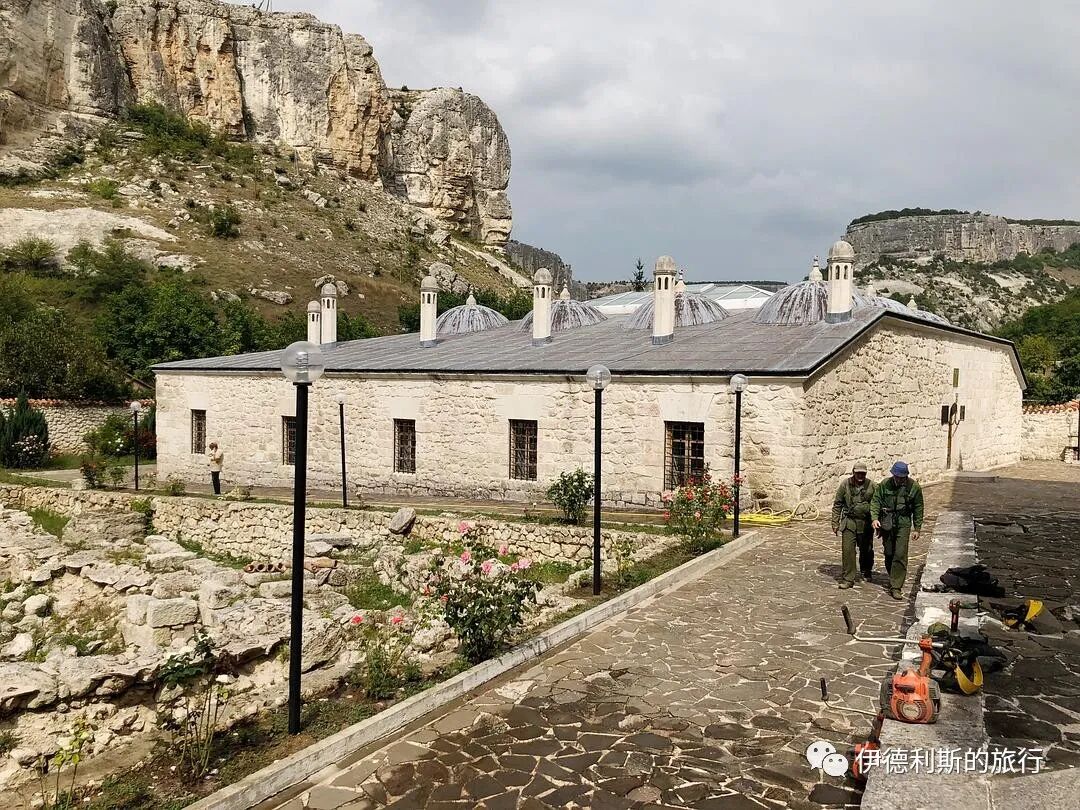
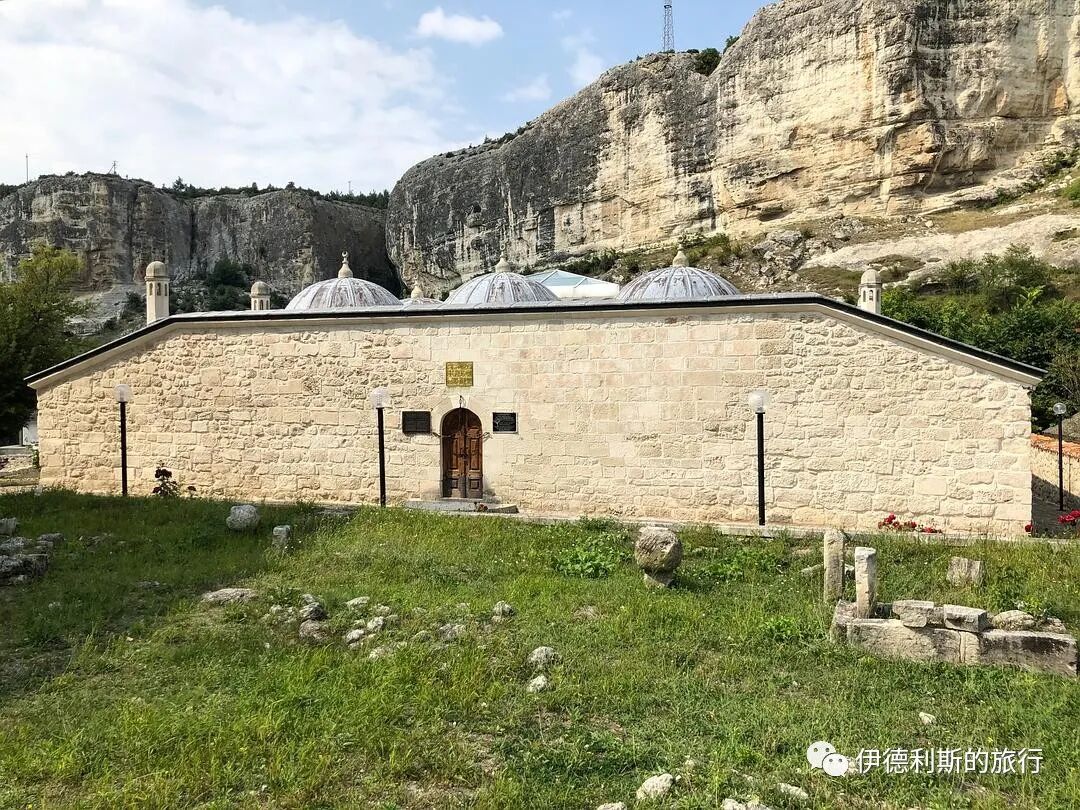
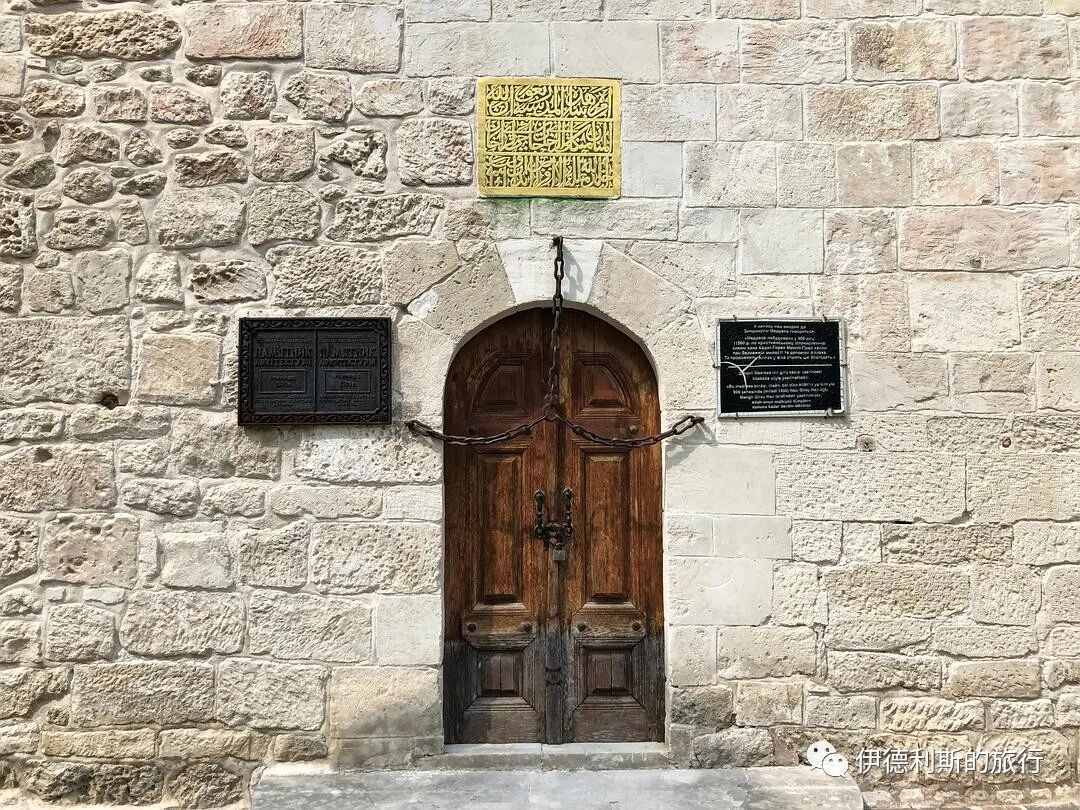
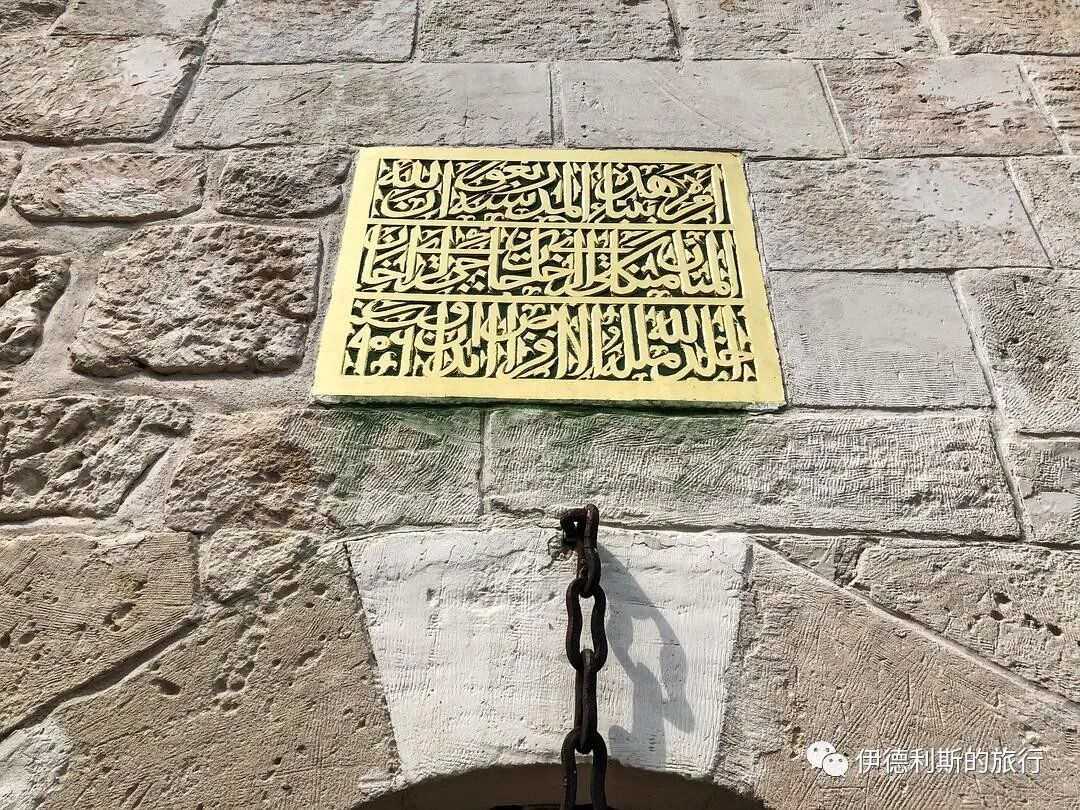
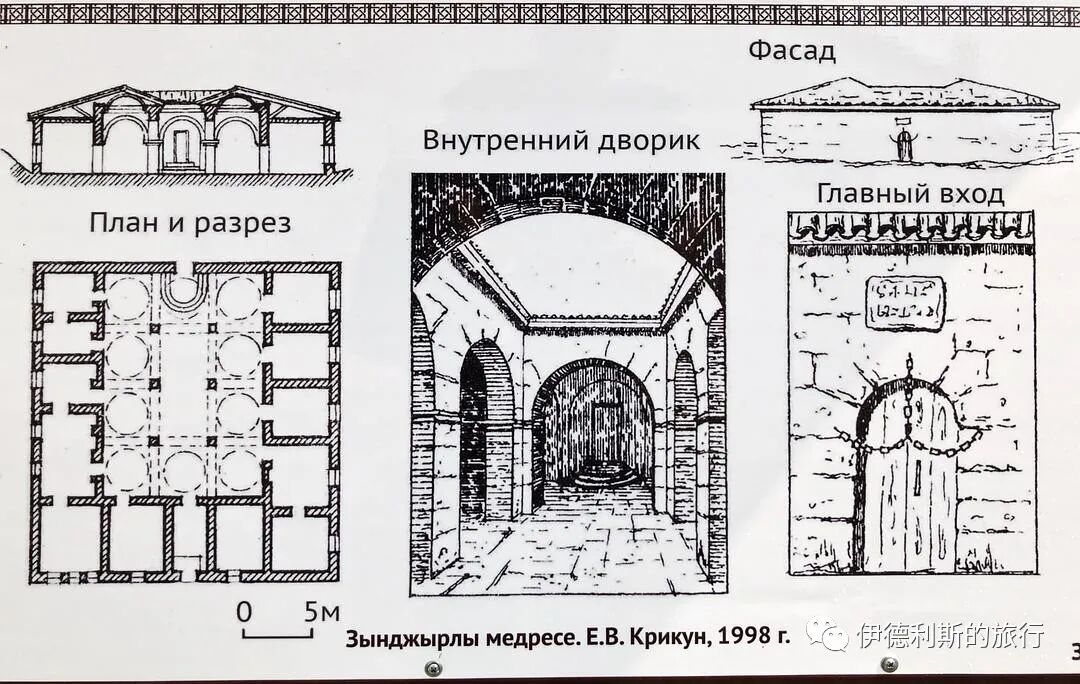
3. Baths
During archaeological excavations of the Salachik historical and archaeological complex in 2008, 15th-century baths, wells, and courtyard remains were discovered.
The bath is a typical Turkish bath (Hamam), divided into separate sections for men and women, each consisting of 5 rooms and a heating system. The heating system supplied warm air through ceramic pipes laid in the walls and under the floors, keeping the bath at a constant temperature year-round and reducing firewood consumption. In addition, each section had a steam room, a washing room, a toilet, a lounge, and a changing room.
Many ceramics from the 15th to 18th centuries were unearthed during the excavations, primarily architectural tiles and pipes, along with a small amount of kitchenware, Turkish ceramics, Chinese porcelain, and silver coins from the Crimean Khanate.
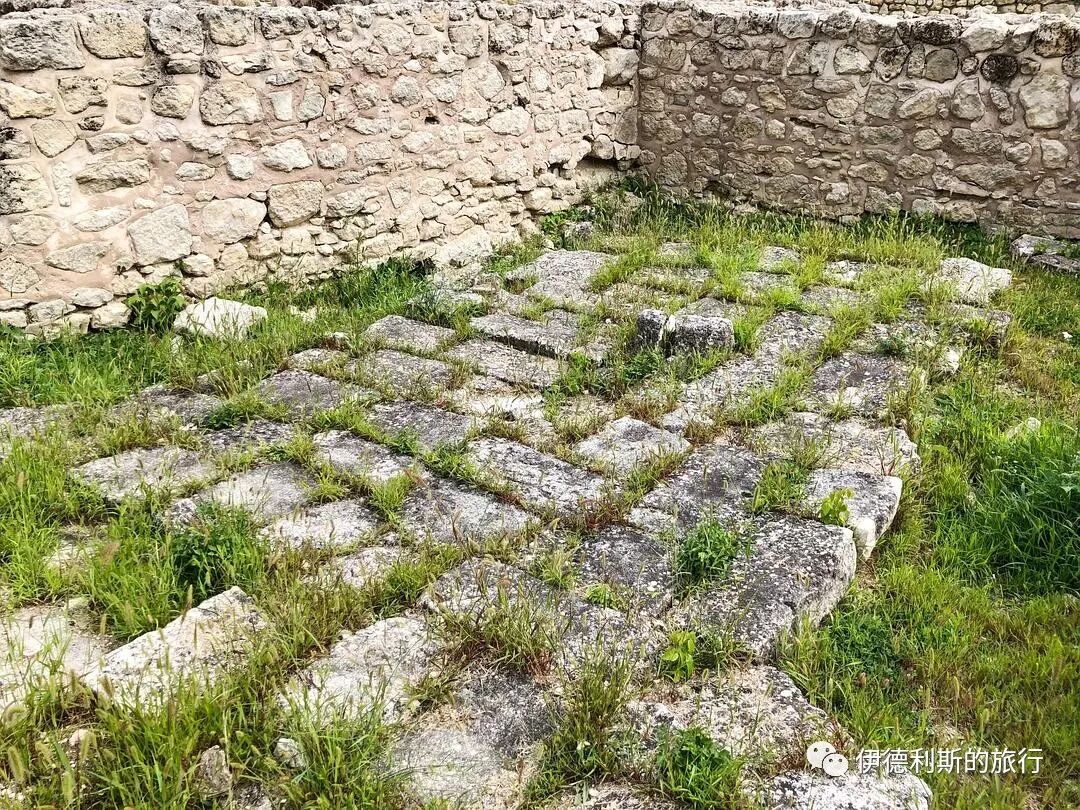
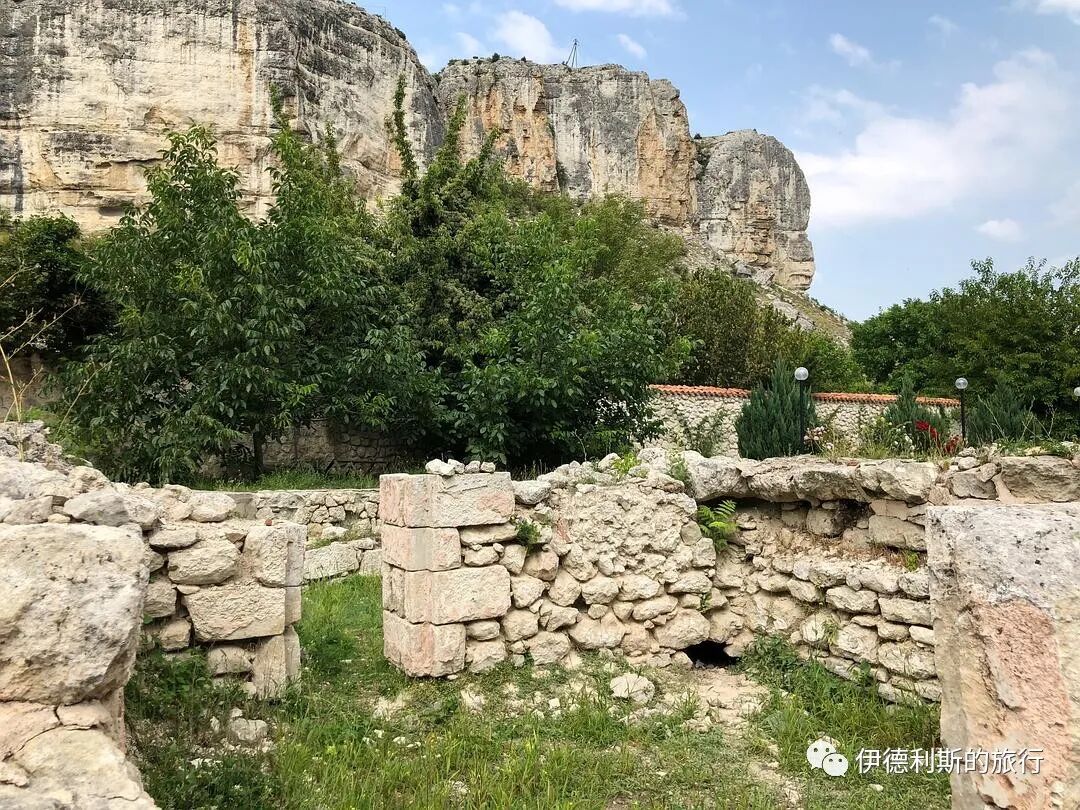
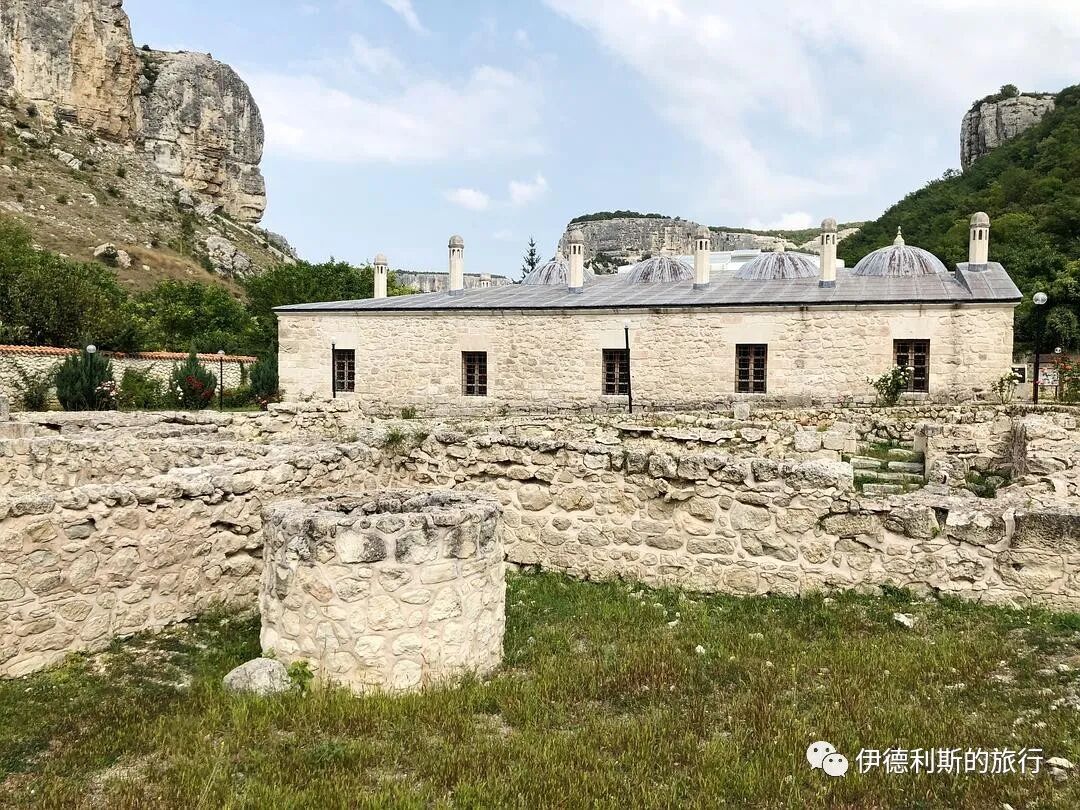
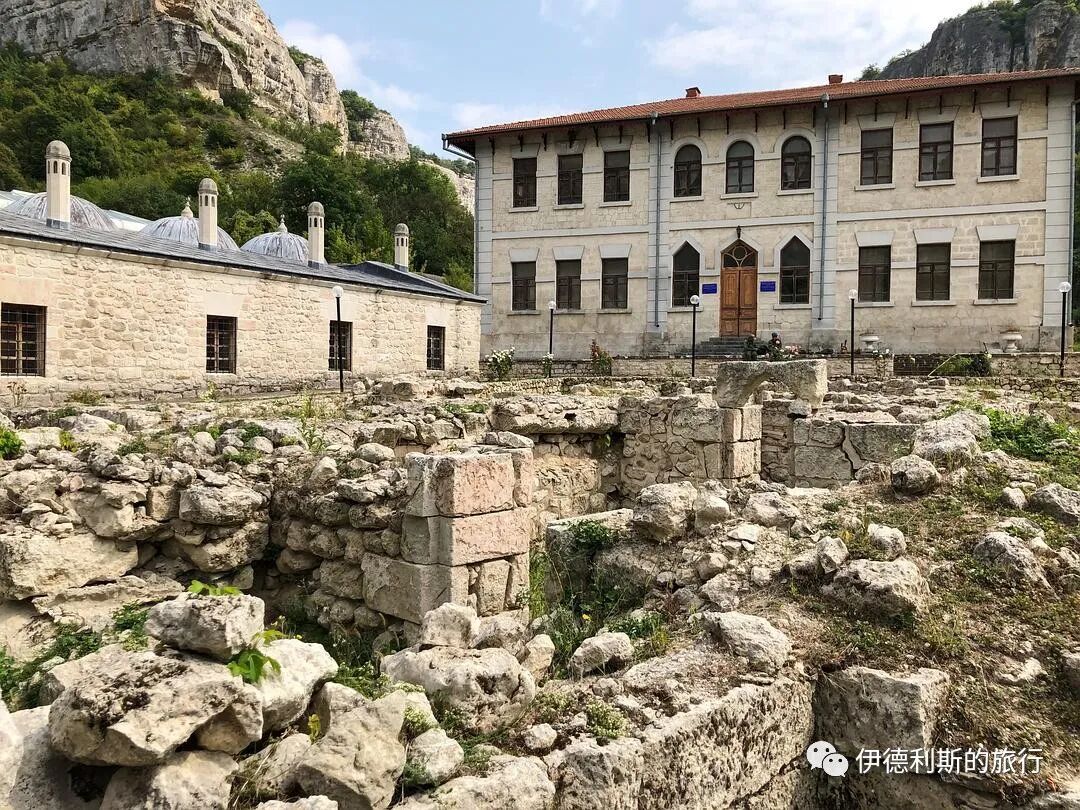
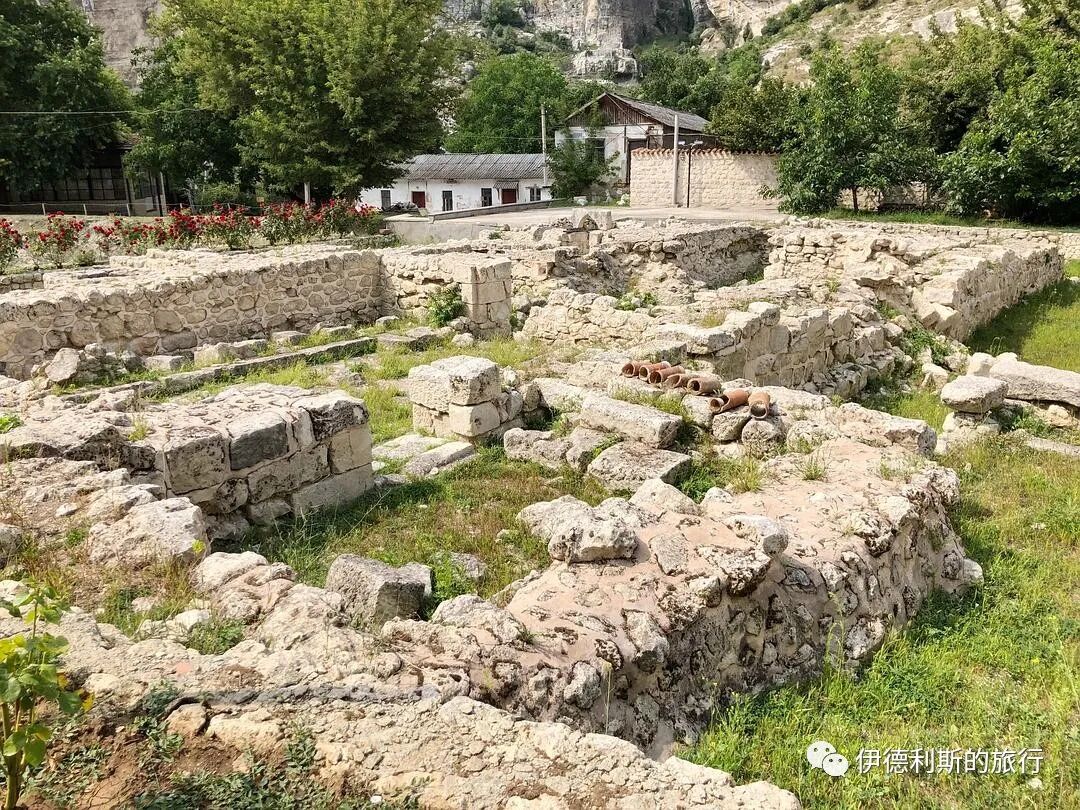
4. Tomb of Ismail Gaspirali, founder of the Crimean Tatar Enlightenment
Ismail Gaspirali (1851–1914), the founder of the Crimean Tatar Enlightenment, is buried in the backyard of the Zıncırlı Madrasa.
Gaspirali was a Crimean Tatar intellectual, educator, publisher, and one of the earliest modern Muslim intellectuals in the Russian Empire. He was the first to realize that Turkic Muslim society needed to modernize through educational and cultural reform, thus pioneering the "Jadid" new-style education, and is recognized as the founder of the Crimean Tatar Enlightenment.
Gaspirali was born in Bakhchisarai, studied in Paris from 1871 to 1874, and after returning home, served as the mayor of Bakhchisarai from 1879 to 1884. Gaspirali taught at the Zıncırlı Madrasa, where he advocated for 45-minute classes and a schedule based on bells, which was opposed by traditional teachers at the school, eventually forcing him to resign.
Gaspirali began attempting to launch a Turkic-language newspaper in 1879, and in 1883, he was granted permission to publish Russia's first Turkic-language newspaper, Tercüman (The Translator). Tercüman was published for 35 years and was long the only Turkic-language newspaper in Russia, as well as one of the earliest Muslim newspapers, influencing the entire Turkic Muslim society.
In the newspaper, he criticized the traditional Muslim education system, advocated for modernization through educational reform, and designed a new teaching method—Jadid. Jadid fundamentally changed the nature and structure of primary education in many Muslim regions, making it more secular. He taught the Arabic alphabet using a new phonetic method, reducing the time it took for students to become literate from three years to a few months.
In 1905, after nearly twenty years of effort, Gaspirali founded the first Turkic-language women's magazine, Alem-i Nisvan (Women's World), with his daughter Shefika serving as editor. In 1906, Gaspirali founded the first Turkic-language humor magazine, Ha-ha-ha.
In 1909, Gaspirali built a new two-story school next to the Zıncırlı Madrasa, which operated until it closed in 1917.
After Gaspirali passed away in his hometown in 1914, he was buried in the Muslim cemetery in the backyard of the Zıncırlı Madrasa. The original tombstone was lost in the second half of the 20th century, and the current one was rebuilt in the late 1990s.
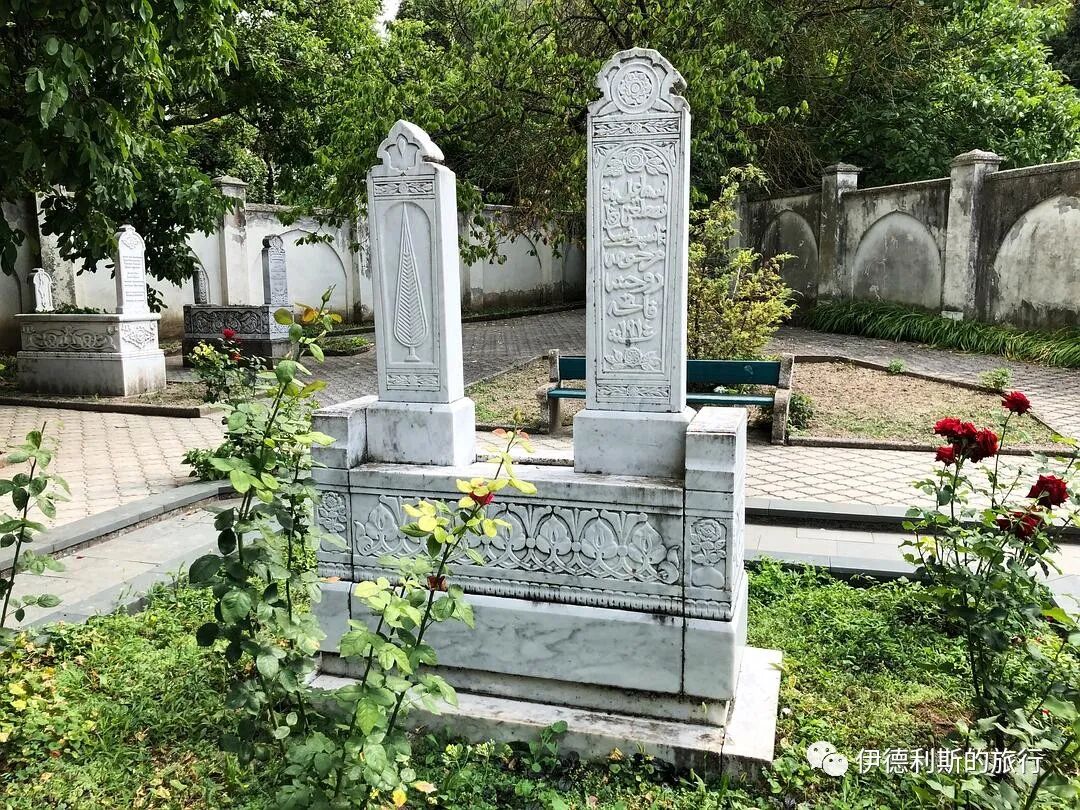
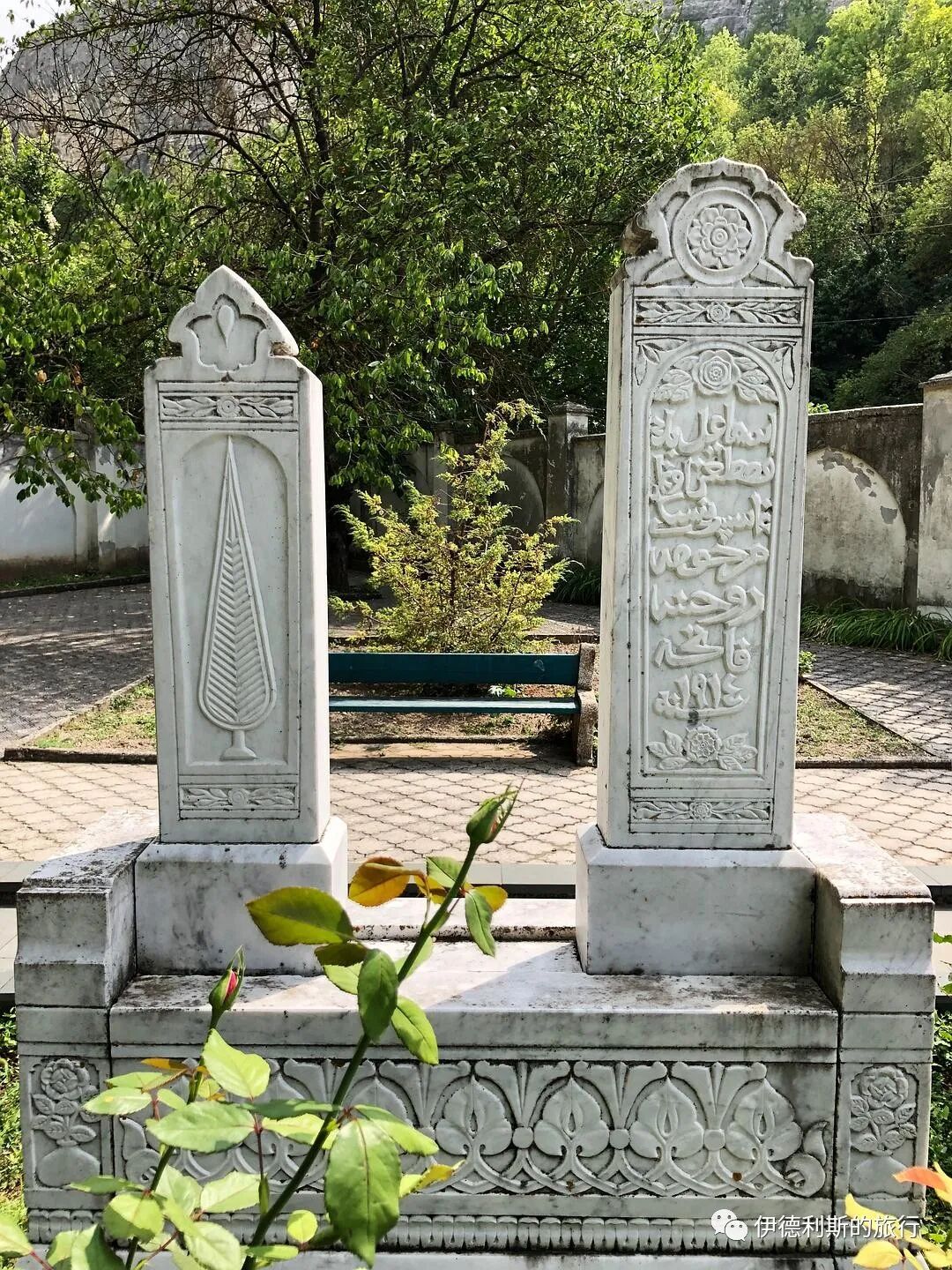
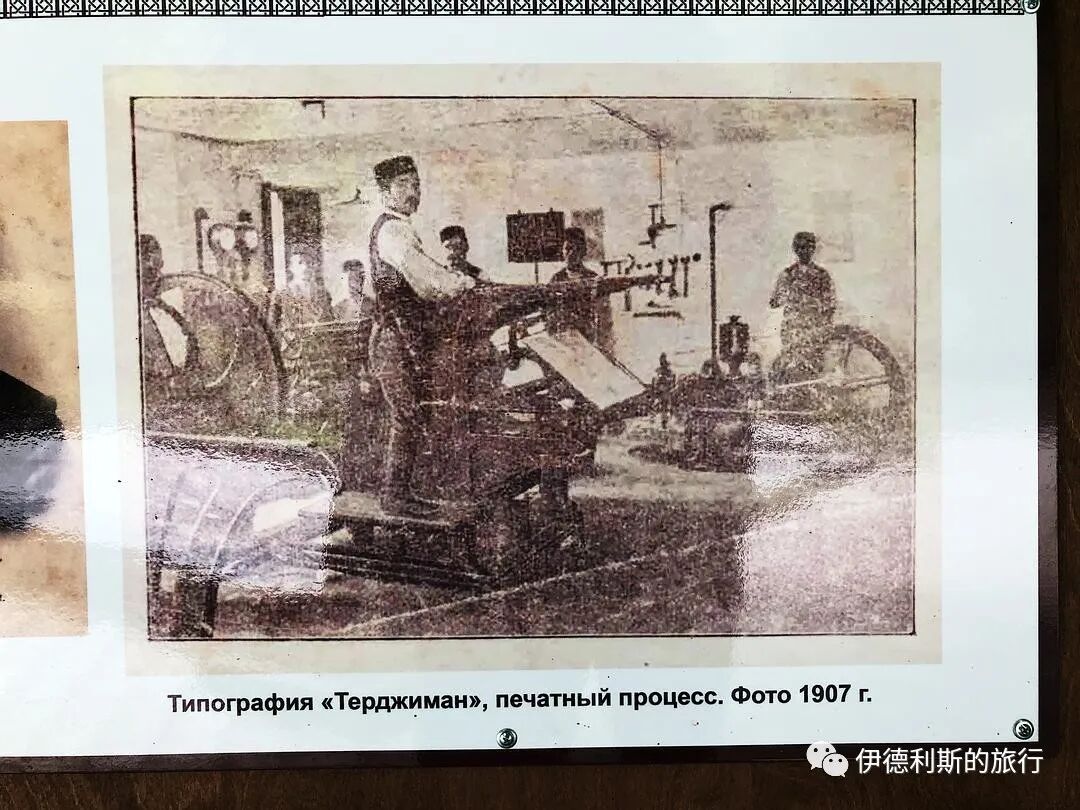
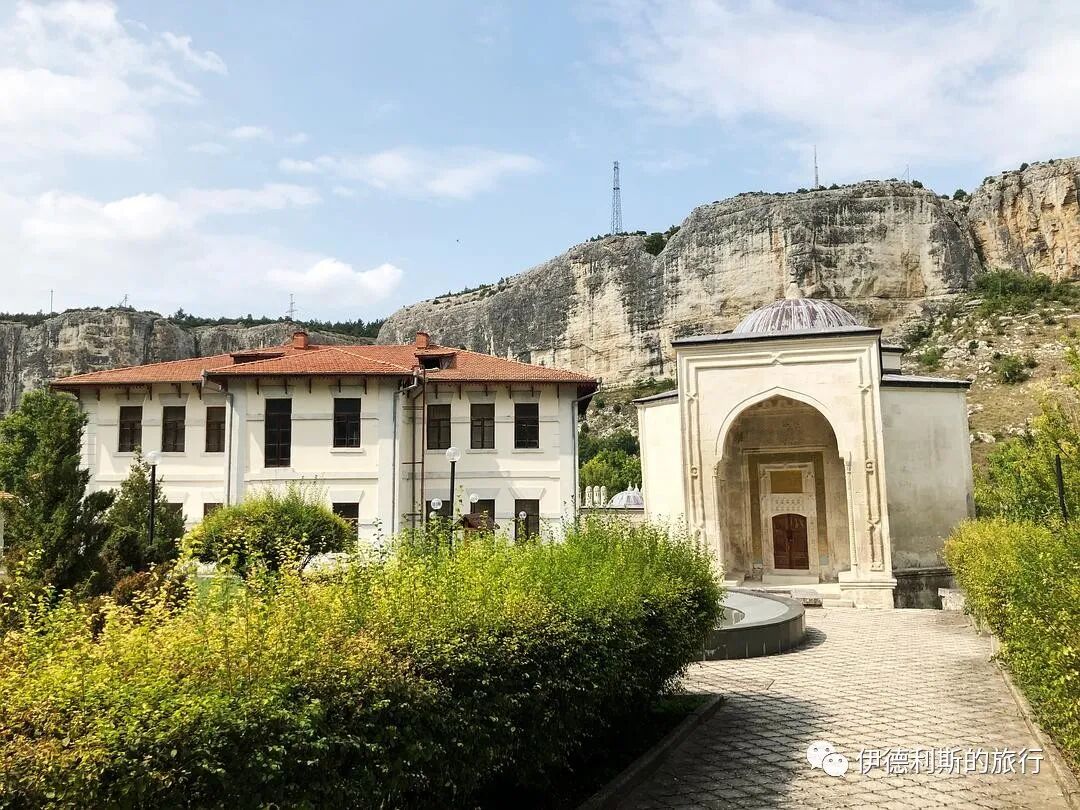
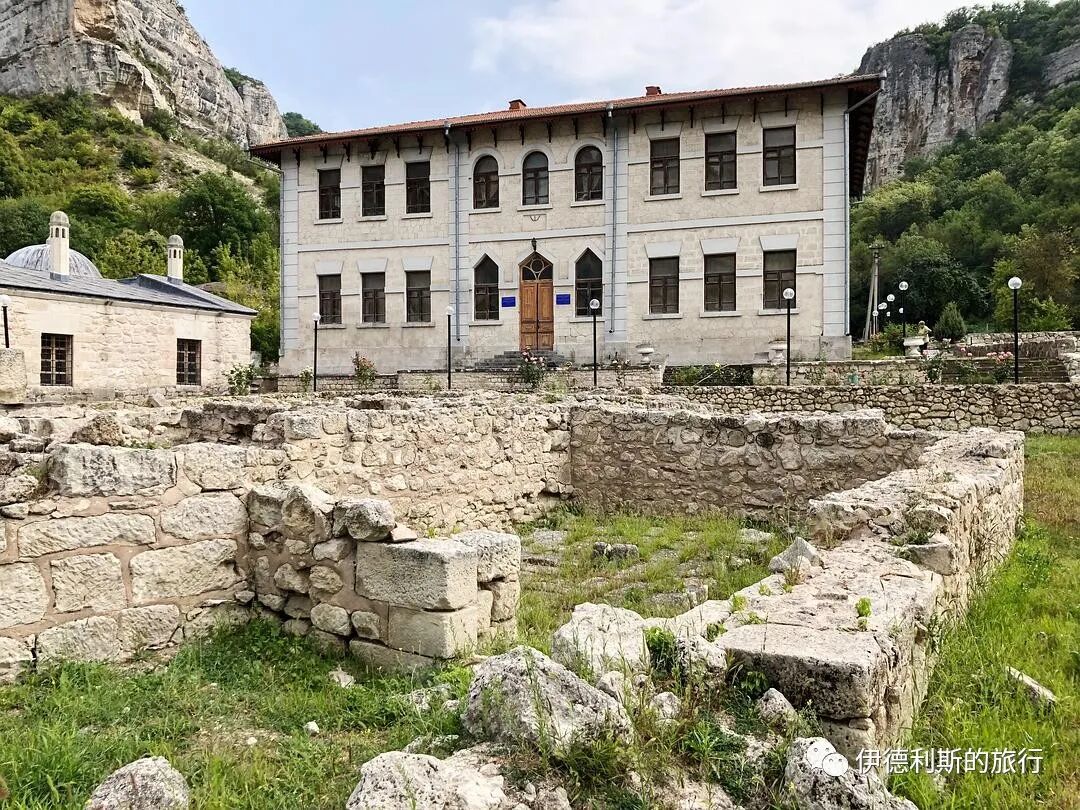
II. Bakhchisarai
1. North Gate: 1611
The North Gate (Darbehane Qapı) is the main entrance to the Khan Palace complex. In Crimean Tatar, "Darbehane Qapı" means "Mint Gate," because mint once grew across from the gate. The Khan Palace once had four main gates, but now only the North and South gates remain. The North Gate features a sculpture of two intertwined snakes. Legend has it that the builder of the palace, Sahib I Giray, saw two snakes fighting by the river in front of the gate, and one snake was healed by the river water, so he decided to build the palace there.
The North Gate was built in 1611. Before this, the Khan Palace had no walls because the defensive system of the Khanate's capital was at the Jewish fortress on the cliff. In the 17th century, as Cossack military activity increased, the Khan Palace was considered threatened, leading to the construction of the current walls and gates.
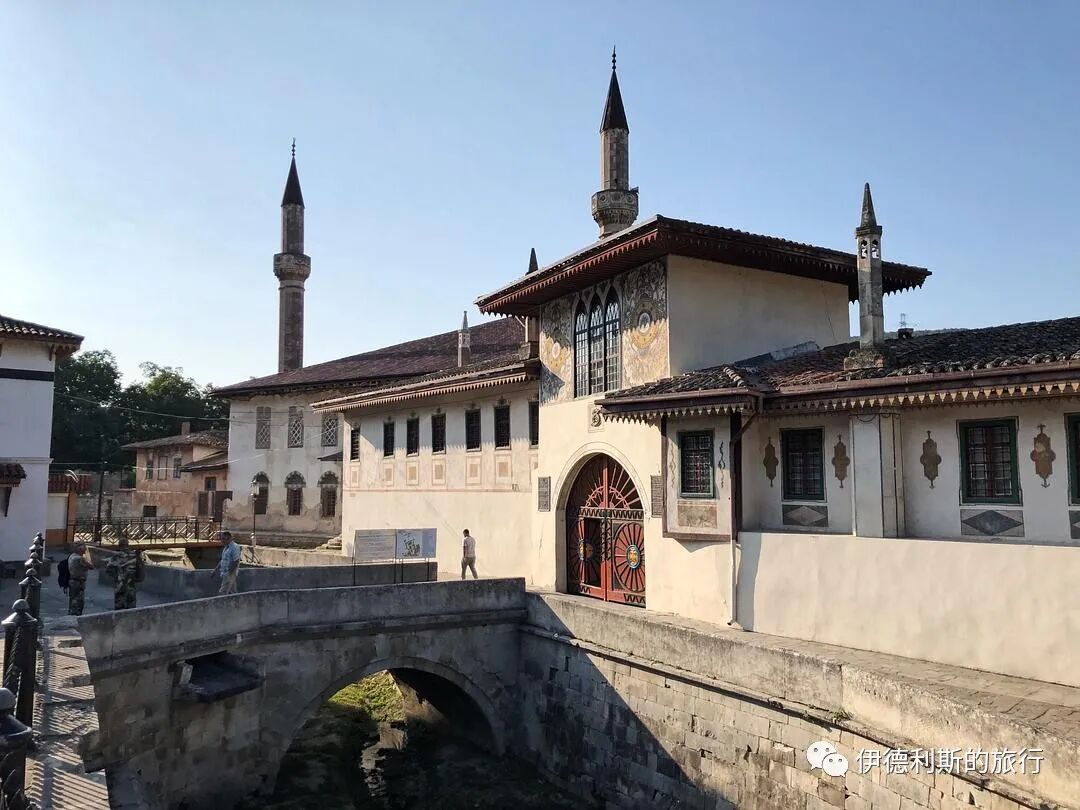
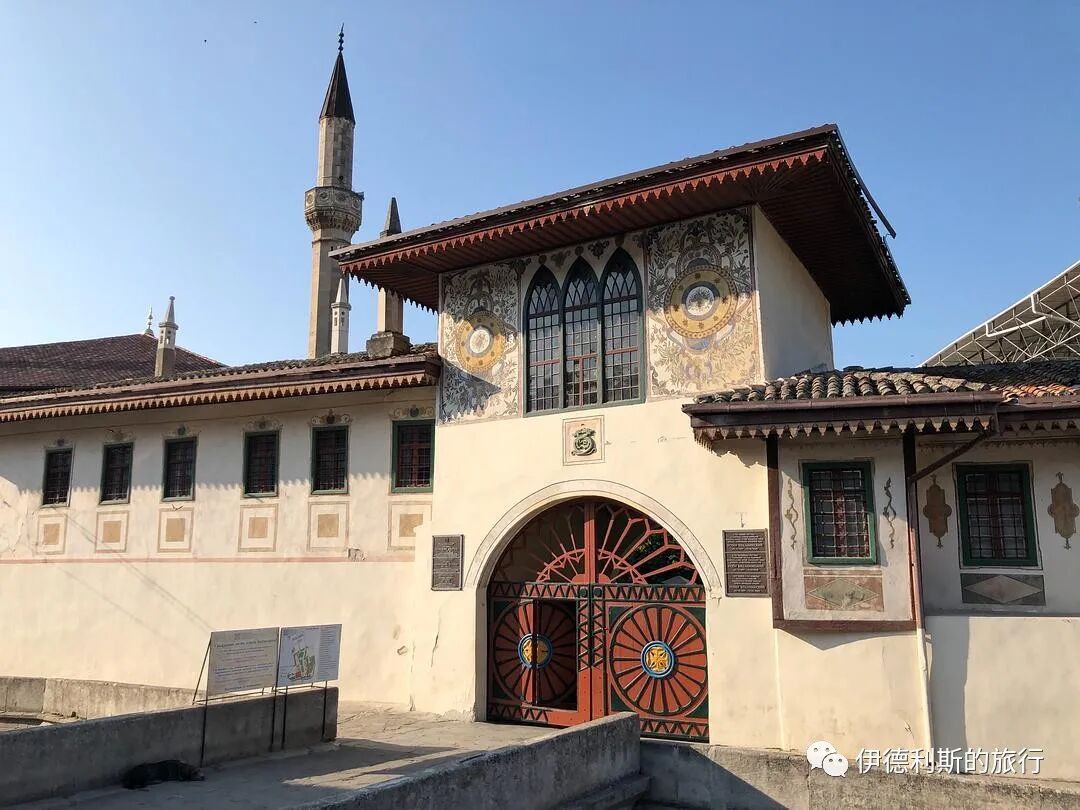
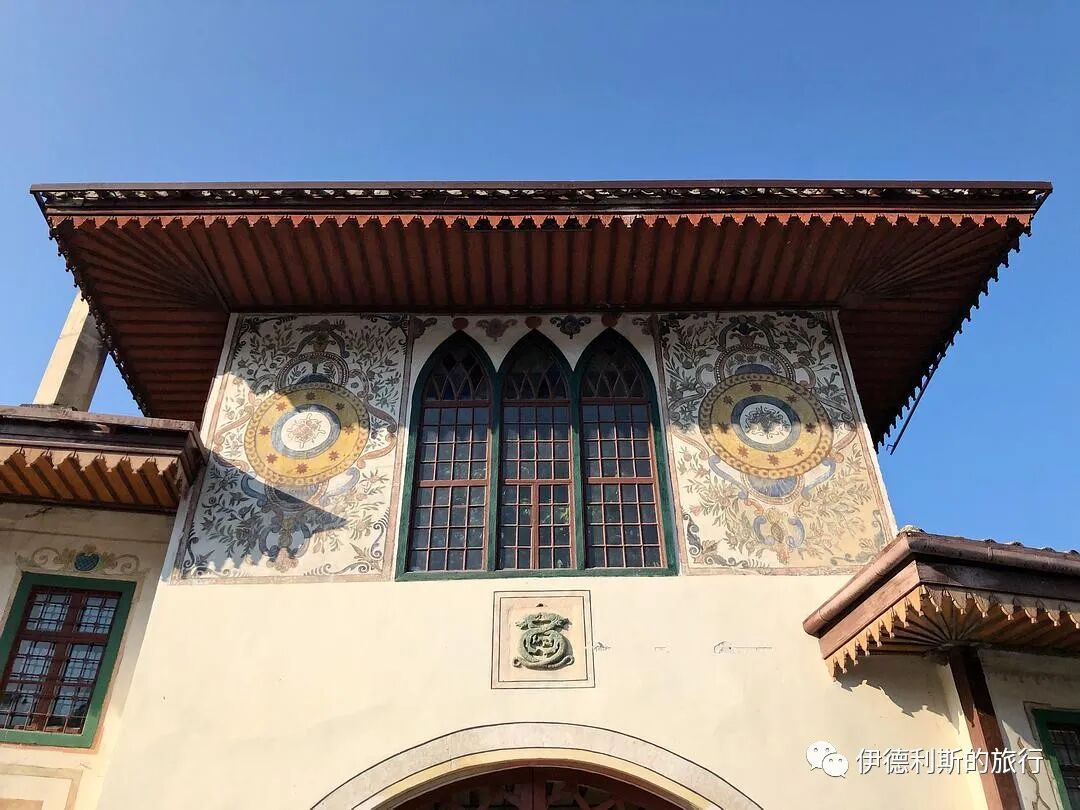
2. Khan Mosque: 1532
The Khan Mosque (Büyük Han Cami) is located inside the Bakhchisarai Khan Palace. In 1532, when the Crimean Khan Sahib I Giray moved the capital to Bakhchisarai, the Khan Mosque was one of the first buildings constructed in the palace. The original mosque consisted of multiple domes, similar to the Seljuk-style mosques popular in the Ottoman Empire in the 15th century. The mosque was destroyed by fire in 1736 and later restored by Khan Selamet II Giray (reigned 1740–1743), who changed it to a tiled roof.
During the Soviet era, the mosque was closed and became an exhibition hall for an archaeological museum. After Russia occupied Crimea in 2014, the mosque underwent restoration, some of which caused damage to the structure.
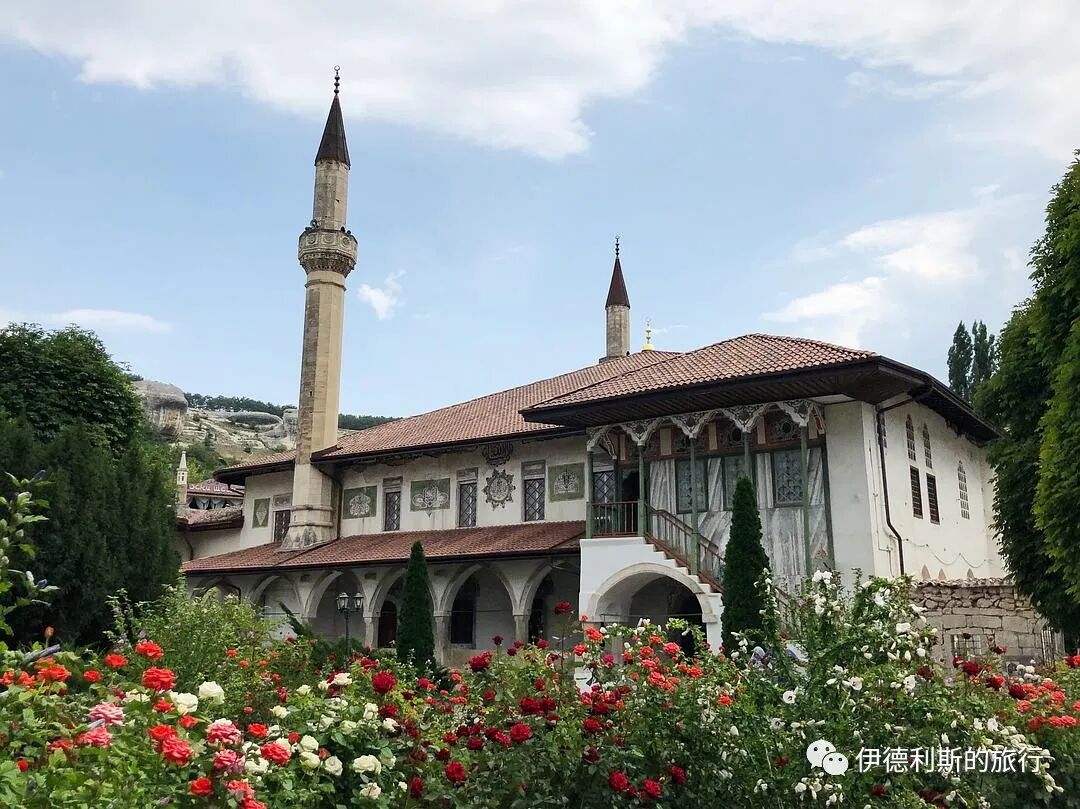
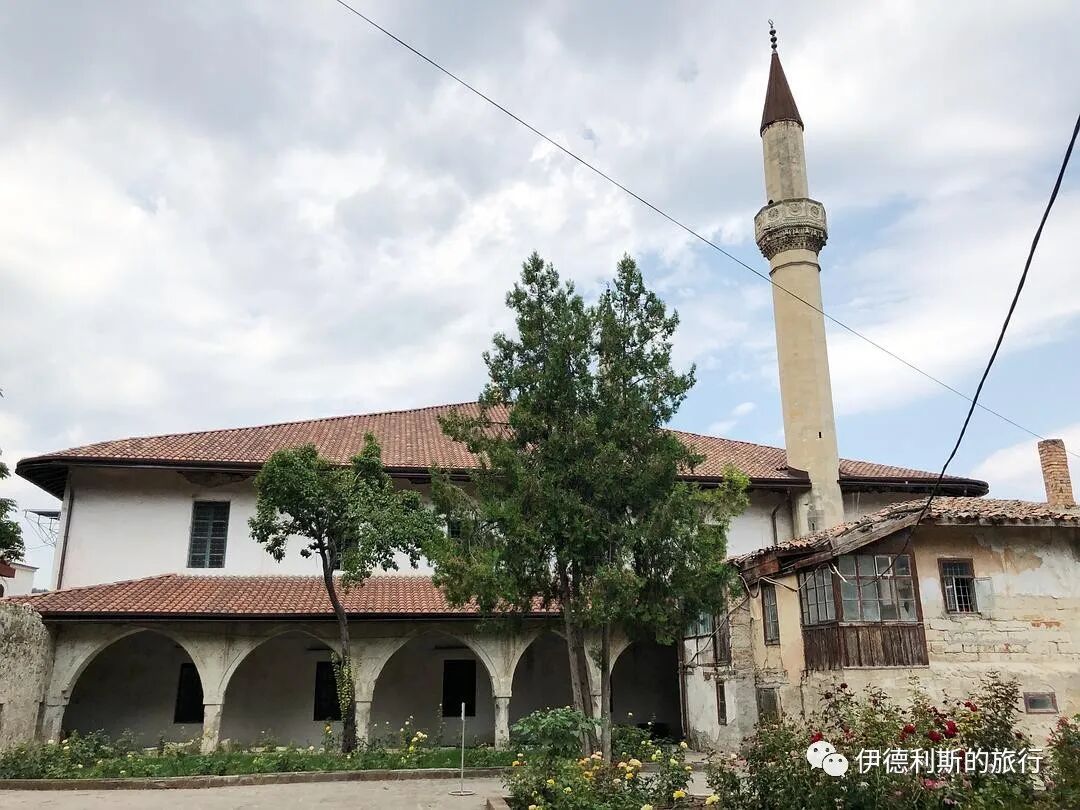
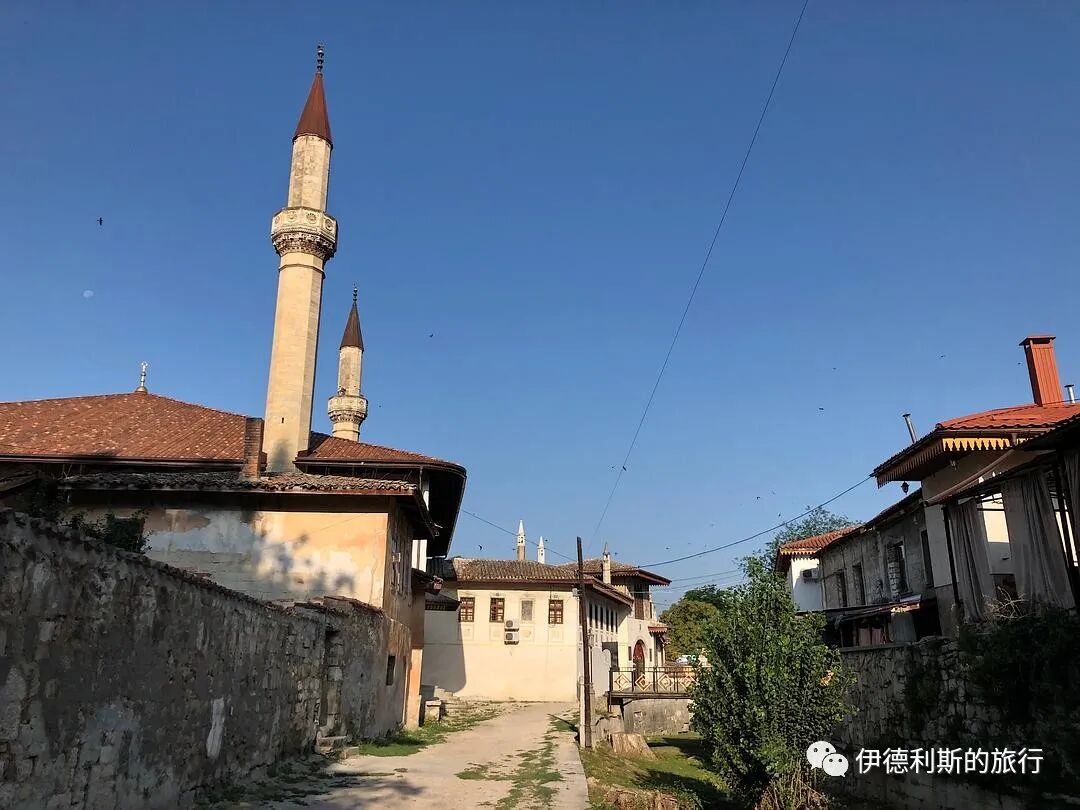
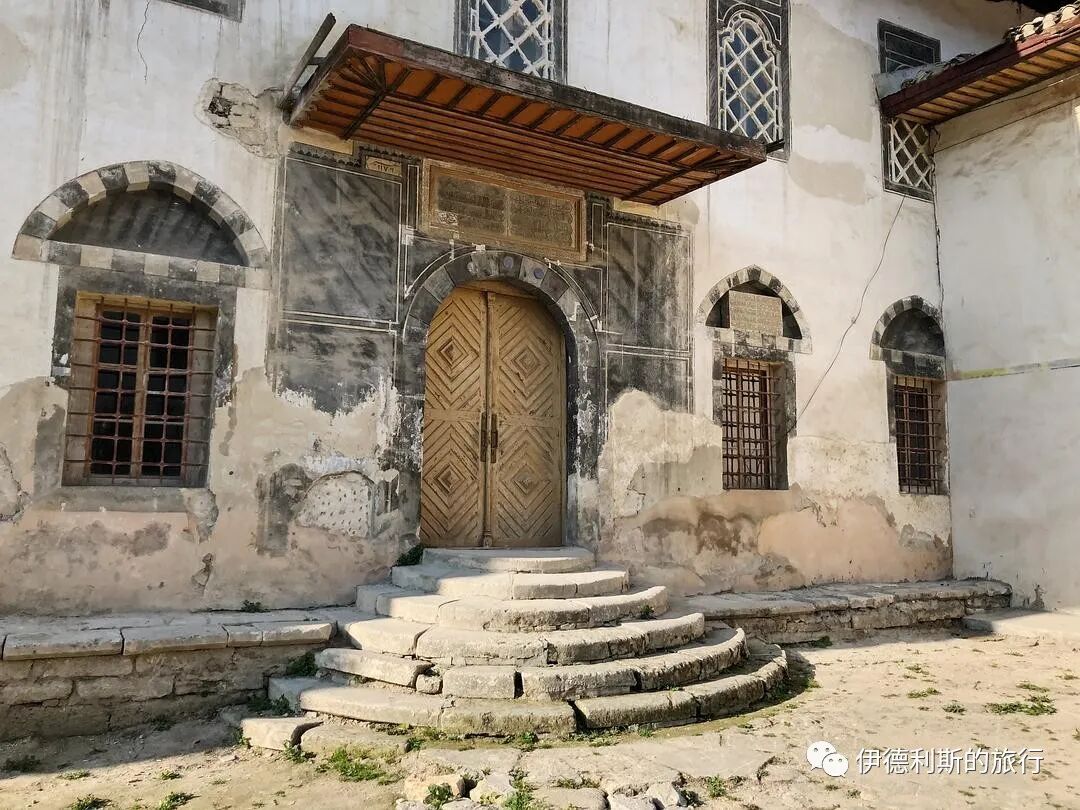
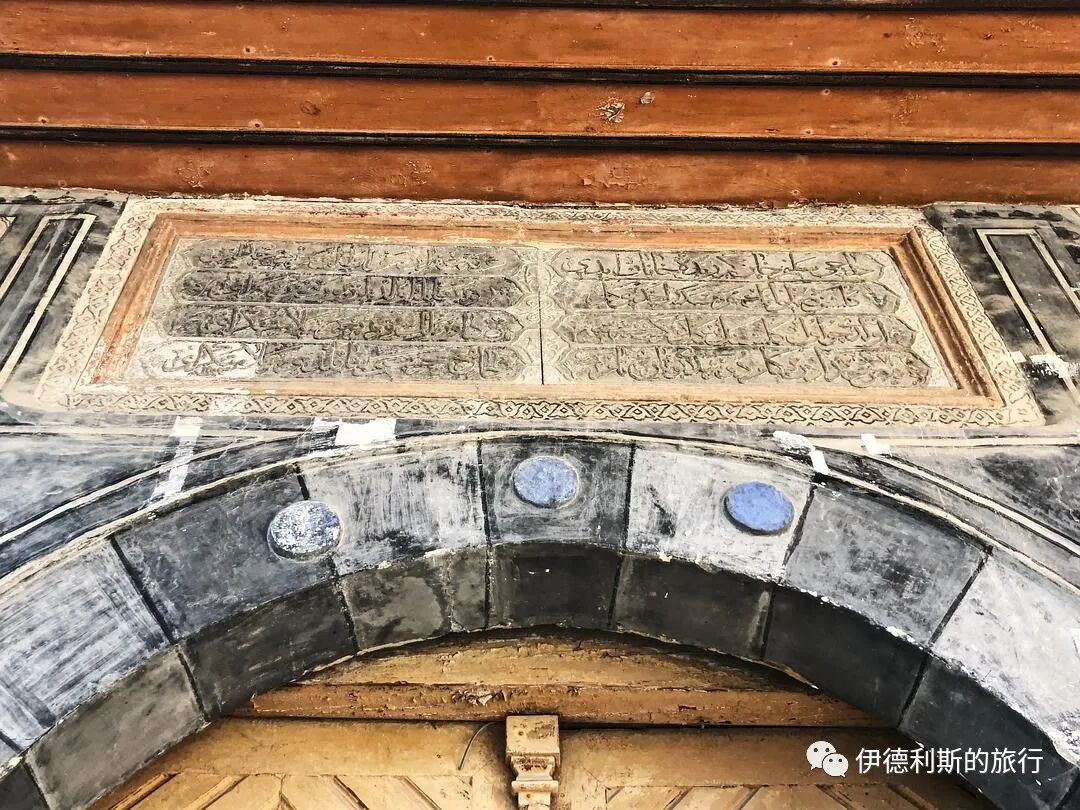
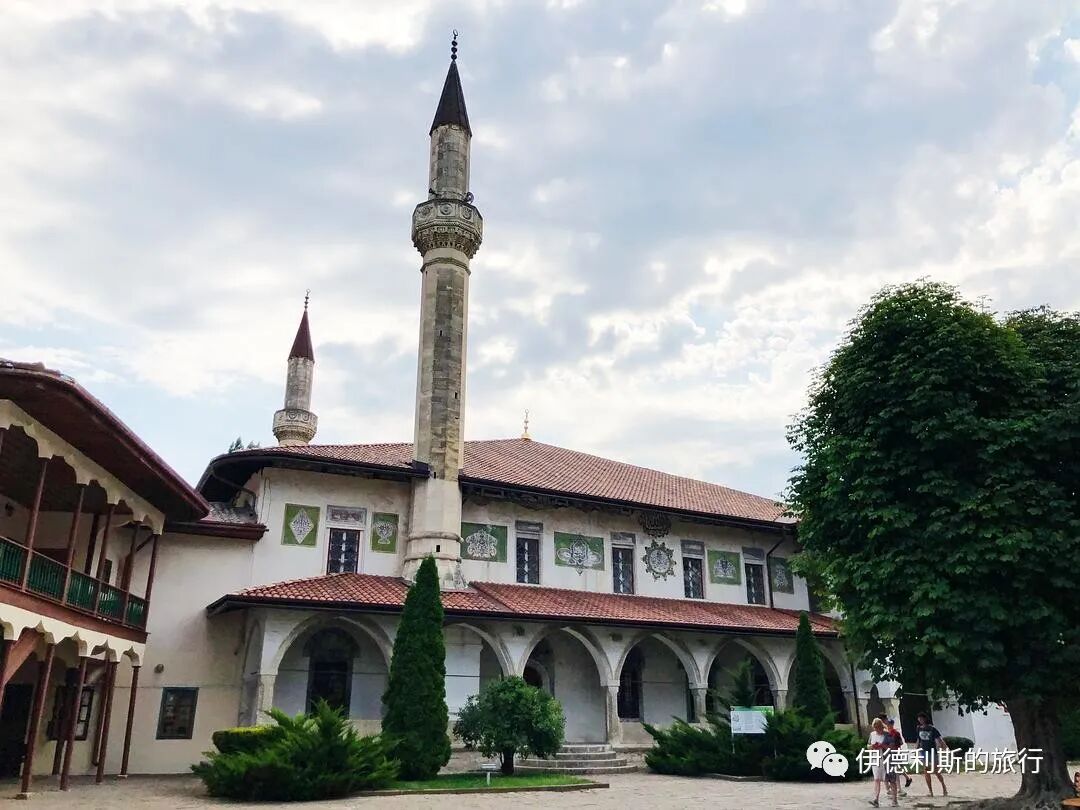
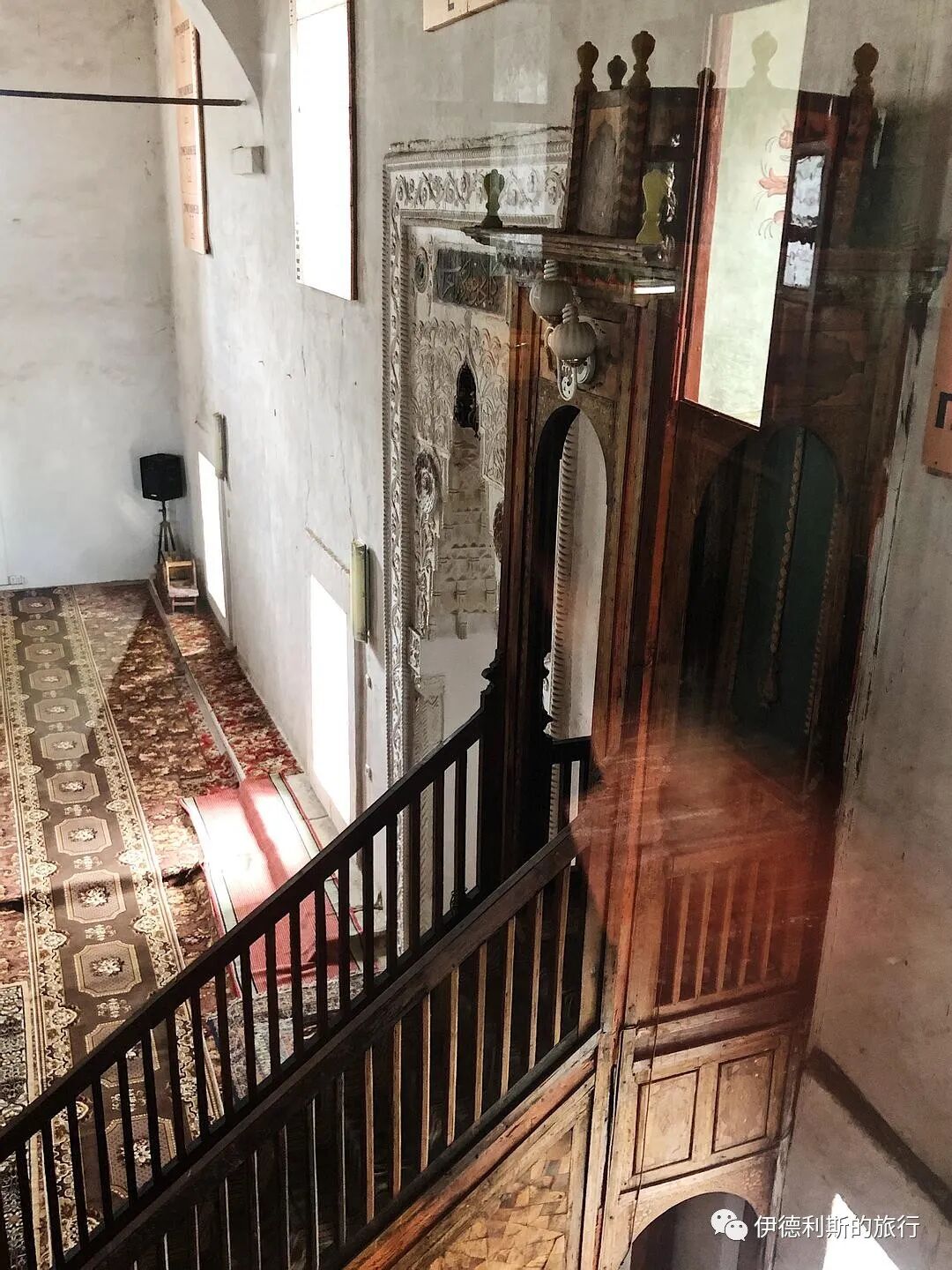
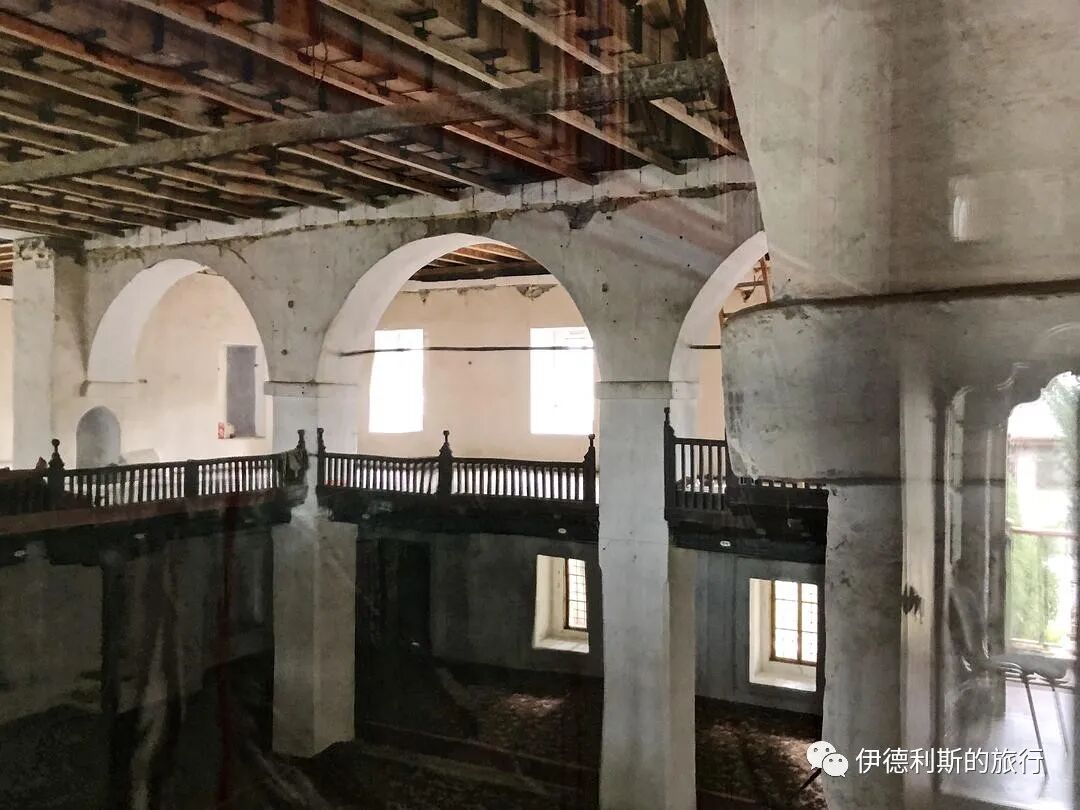
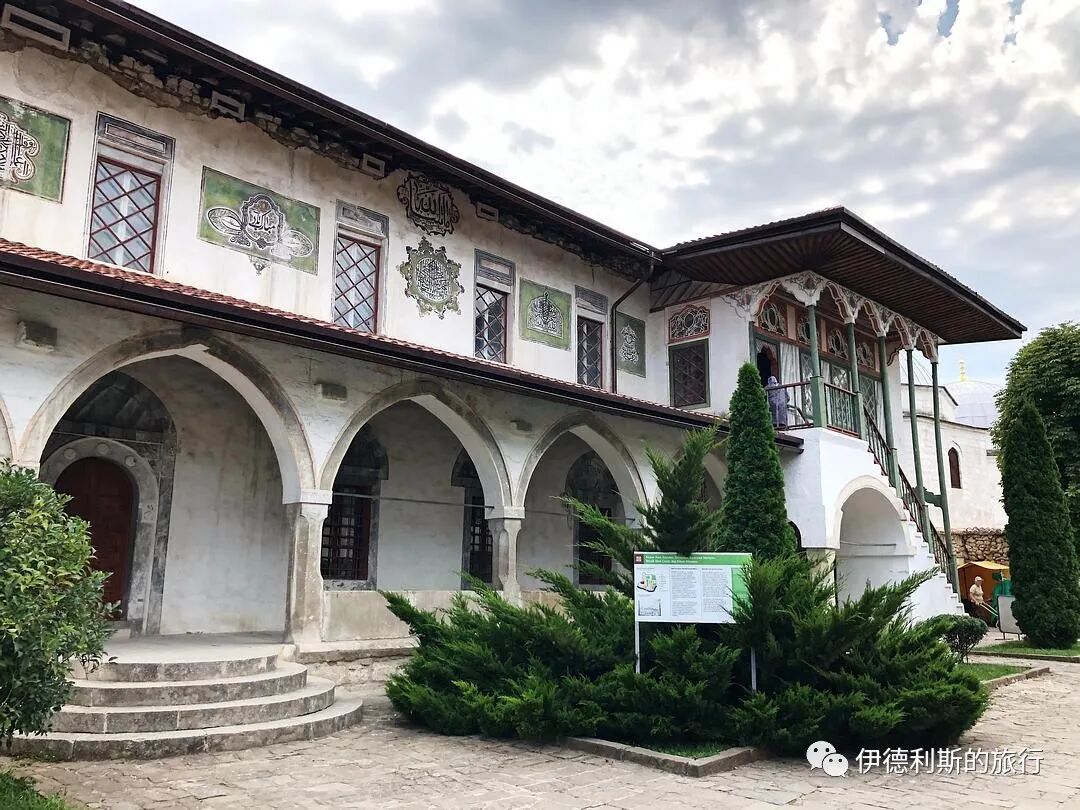
The Crimean Khan Qırım Giray (reigned 1758–1764) ordered the creation of Quranic calligraphy and murals for the Khan Mosque.
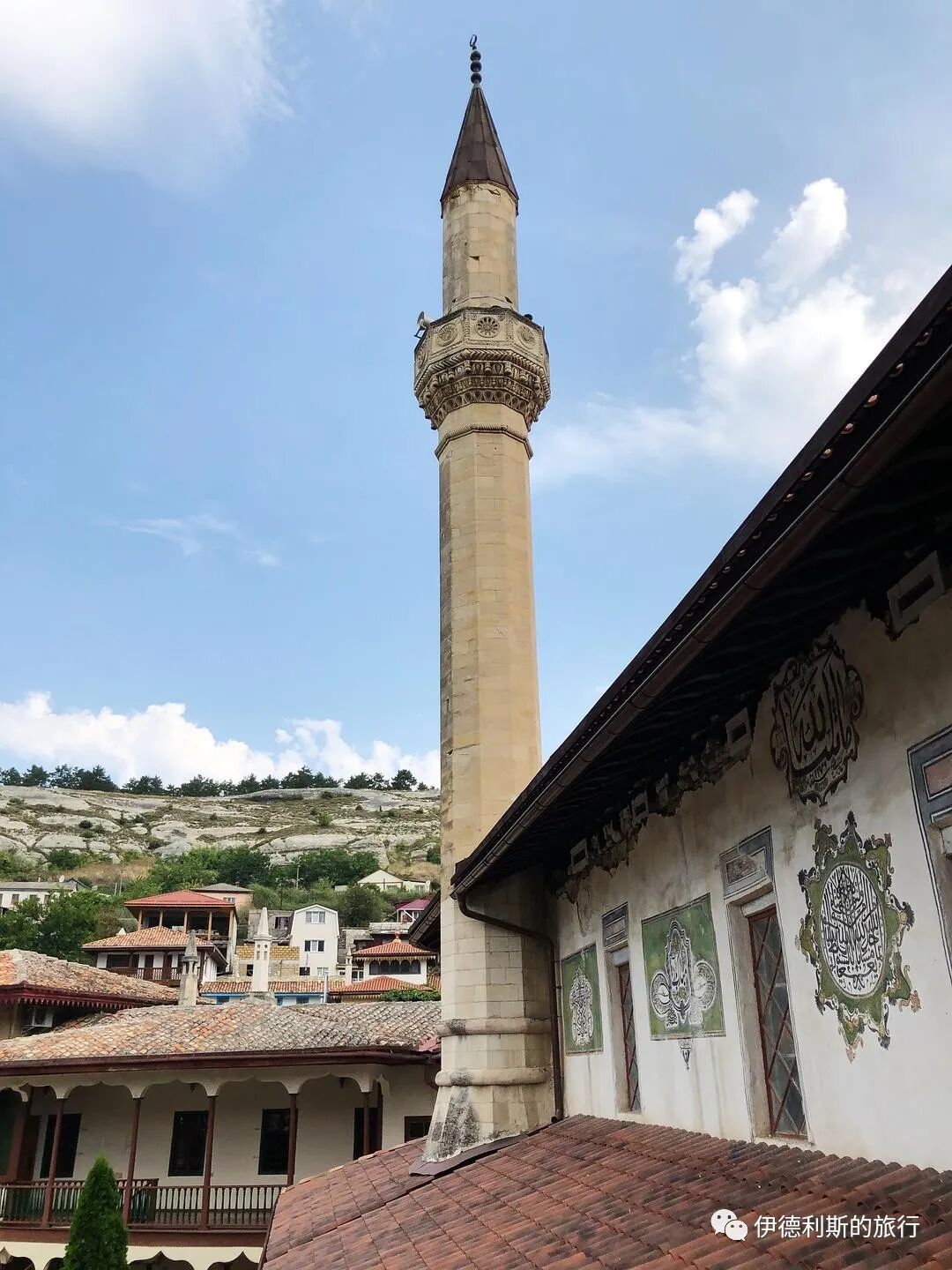
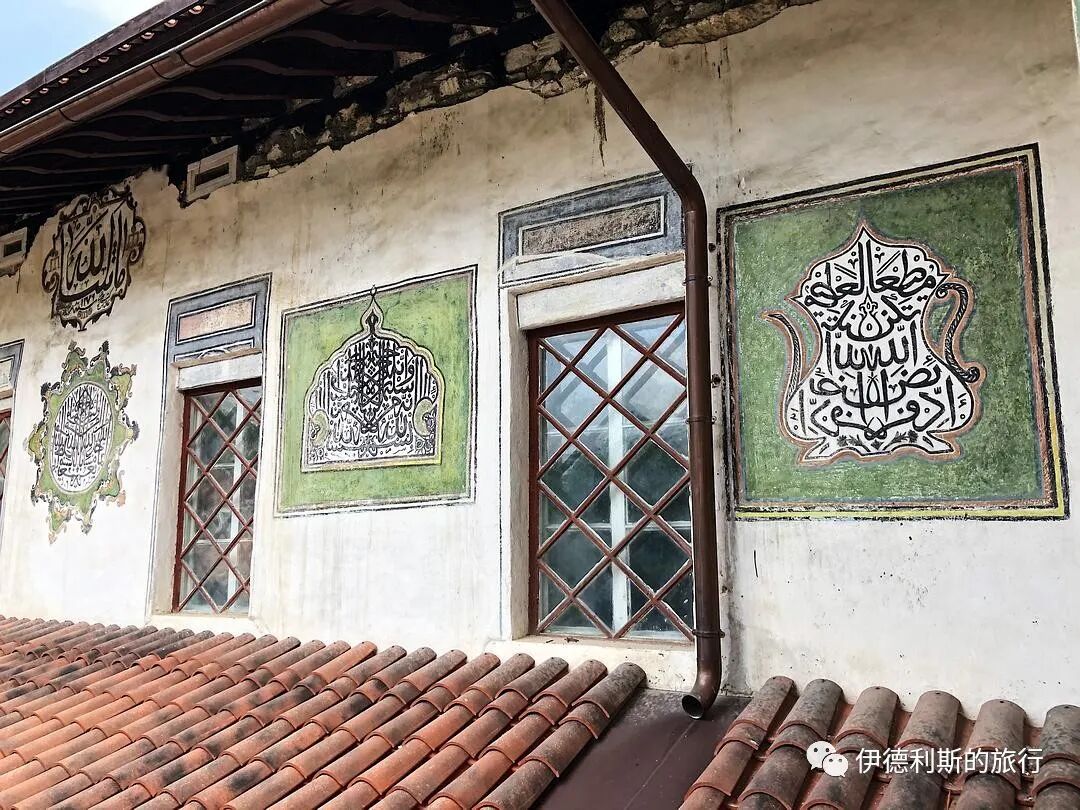
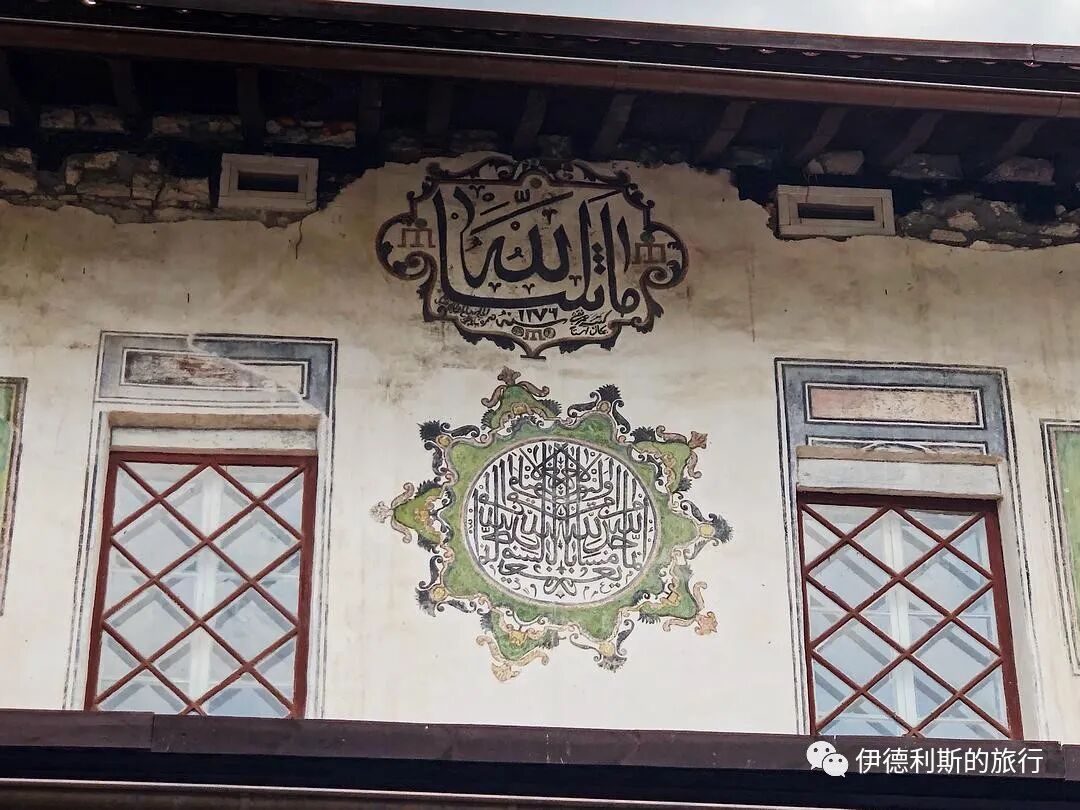
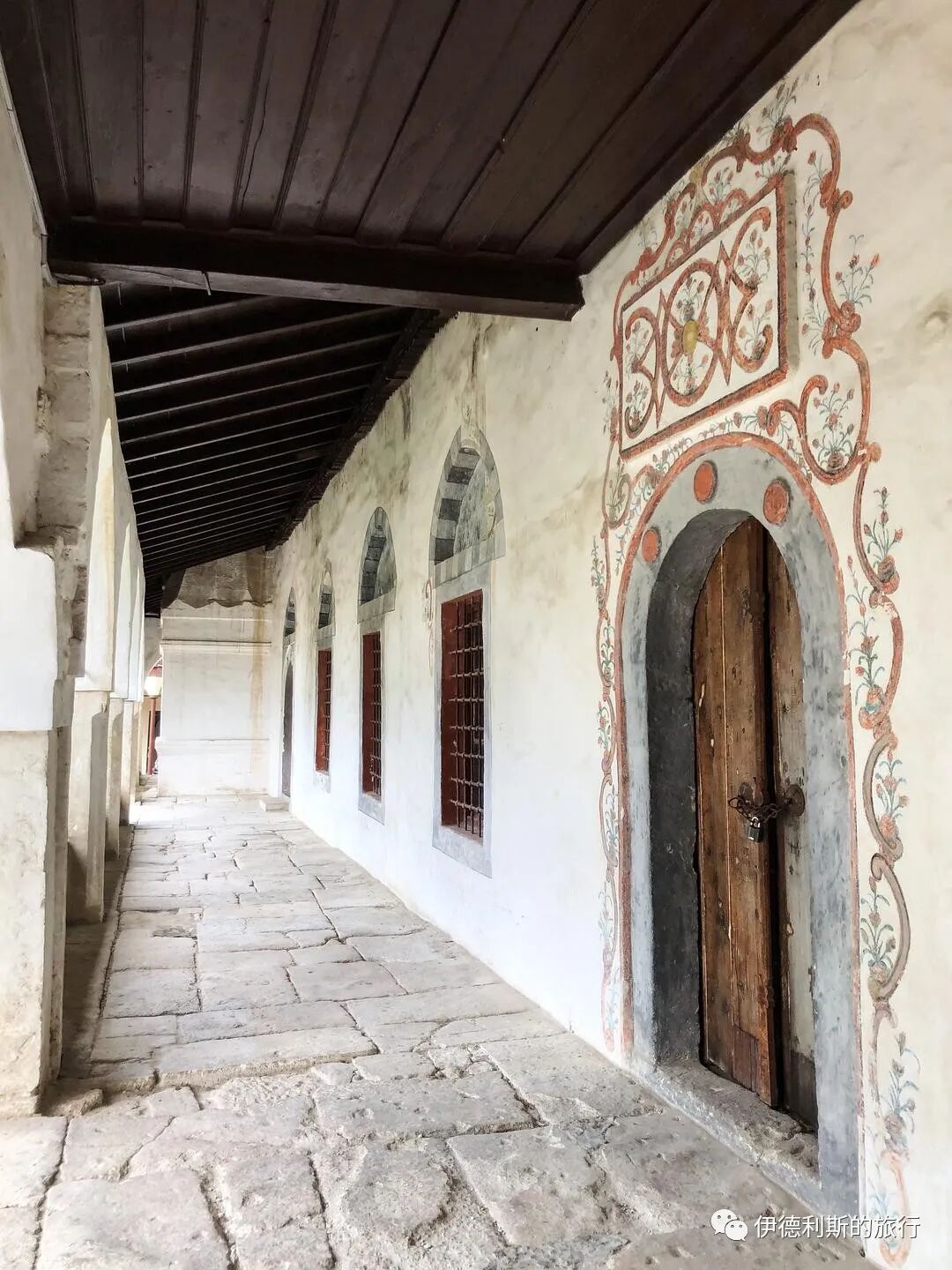
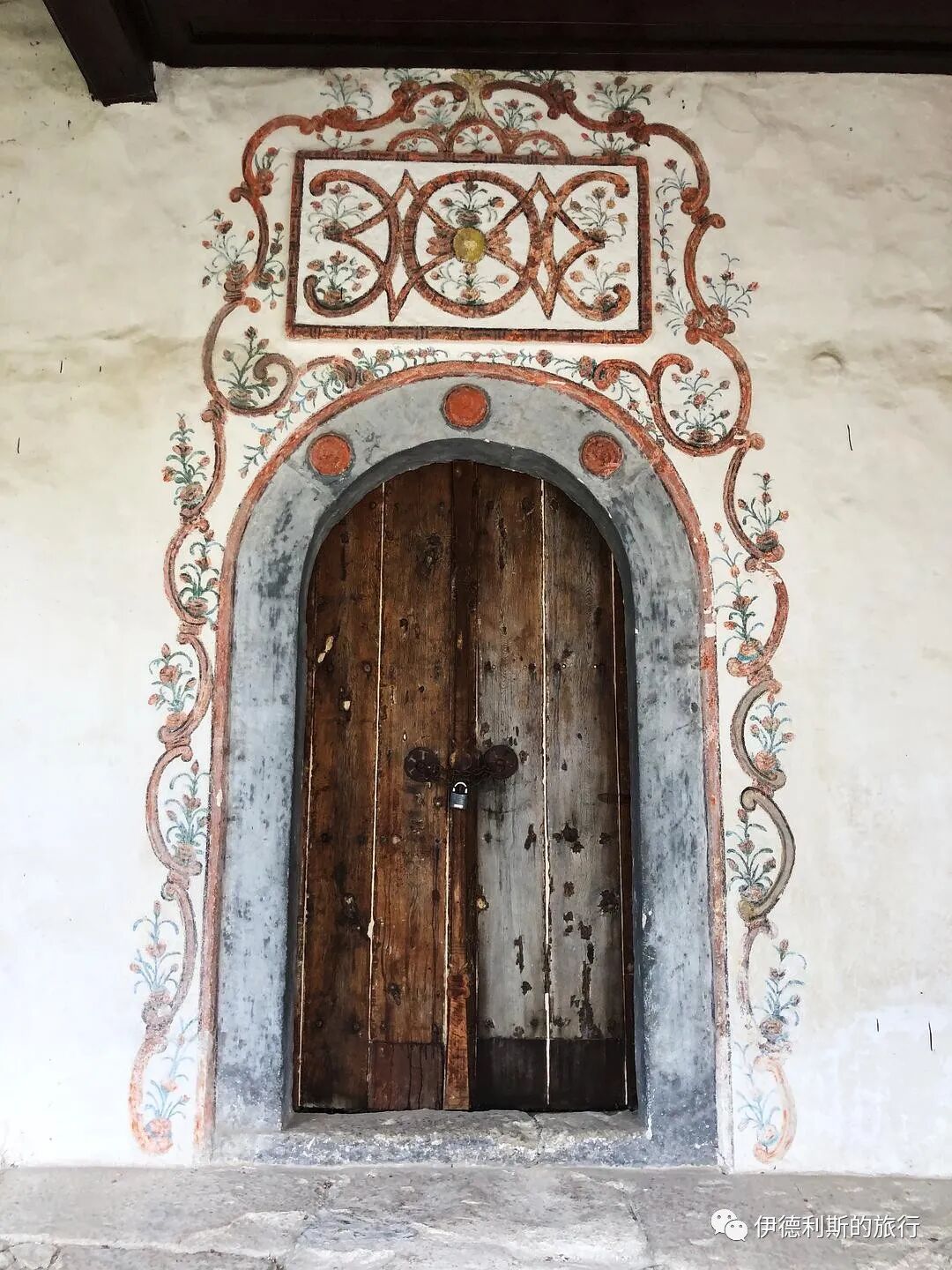
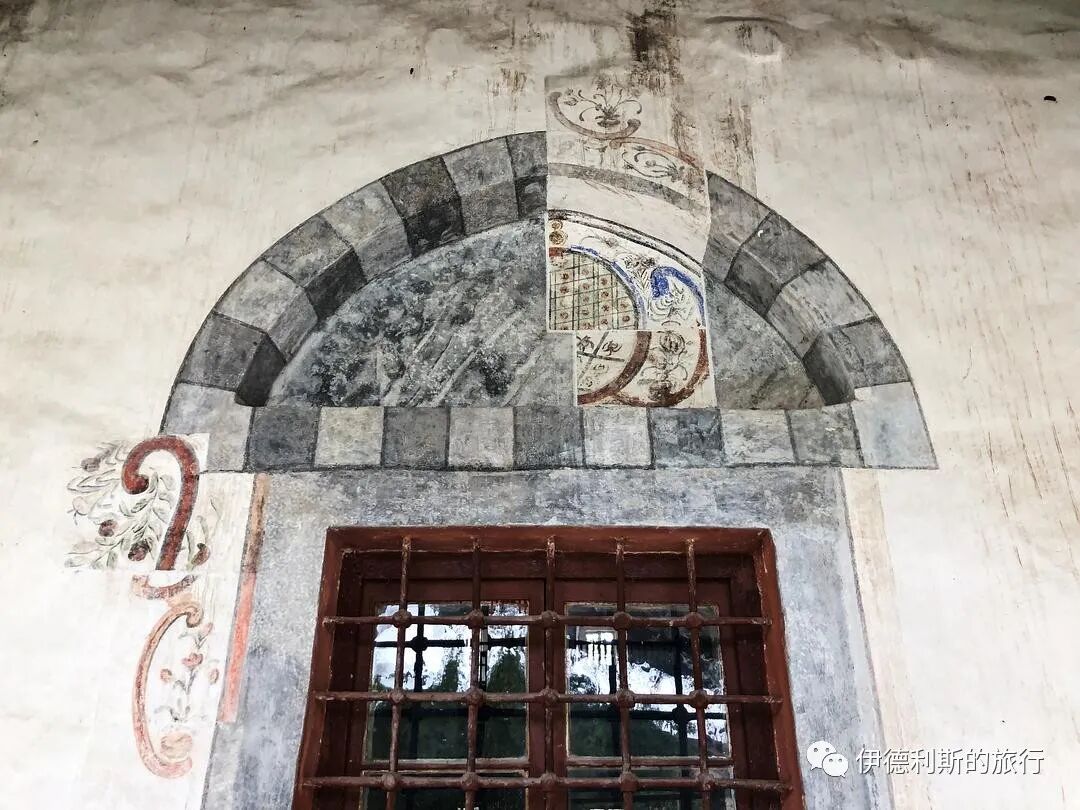
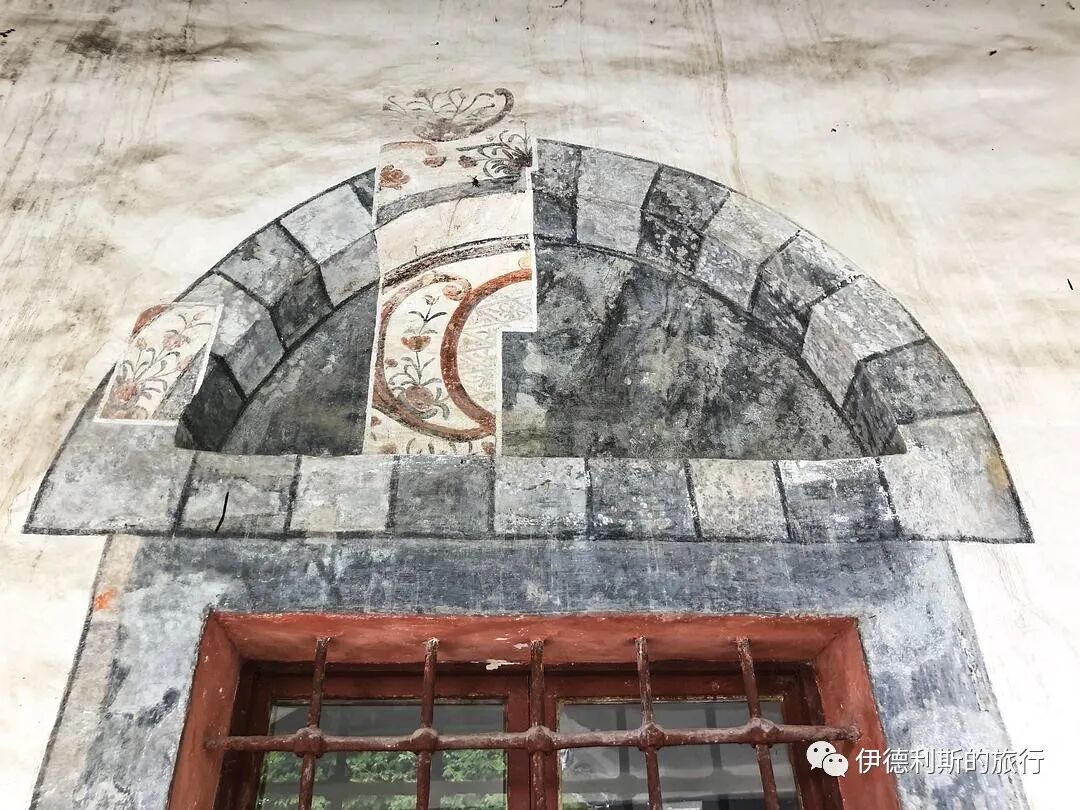
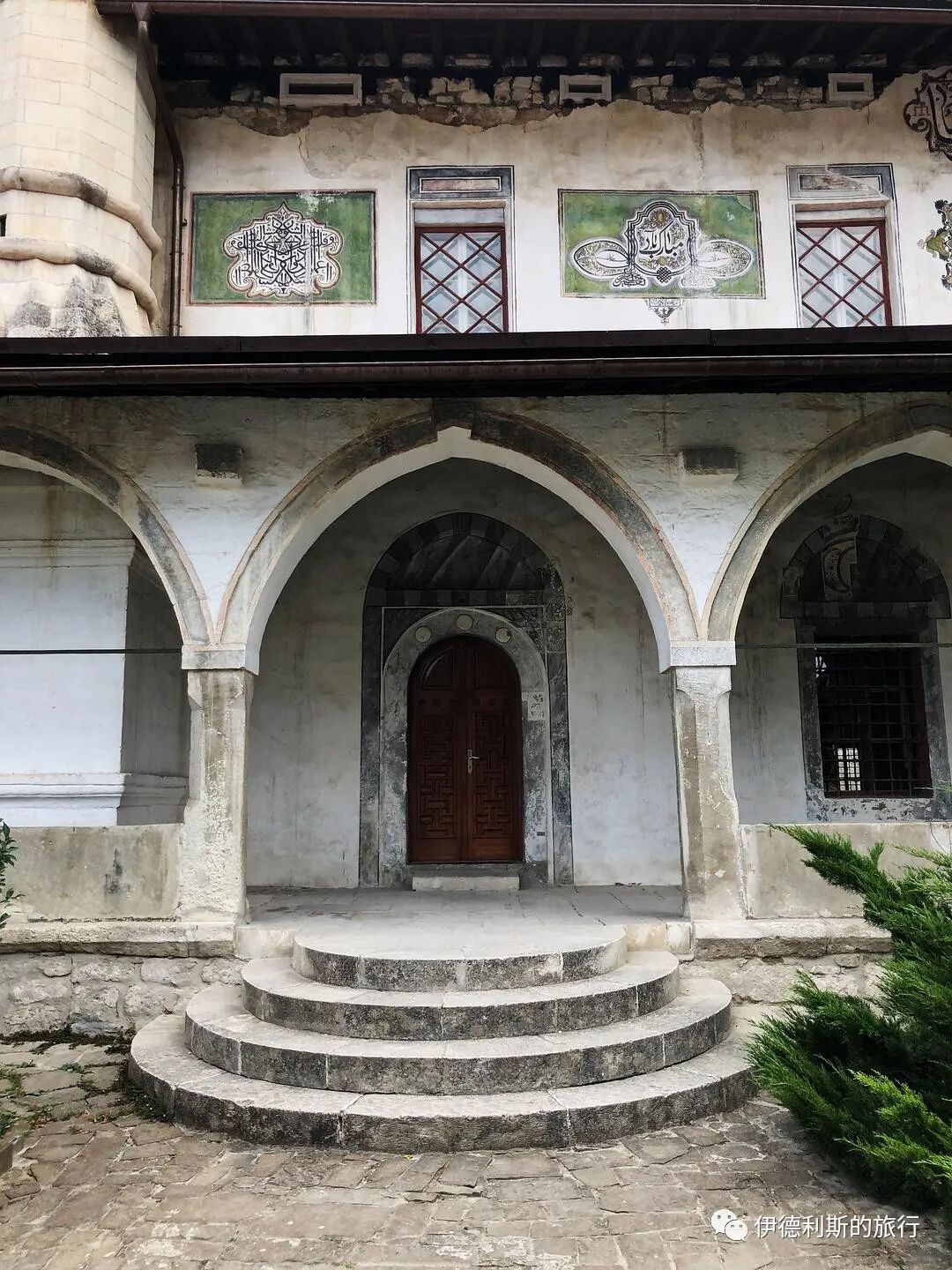
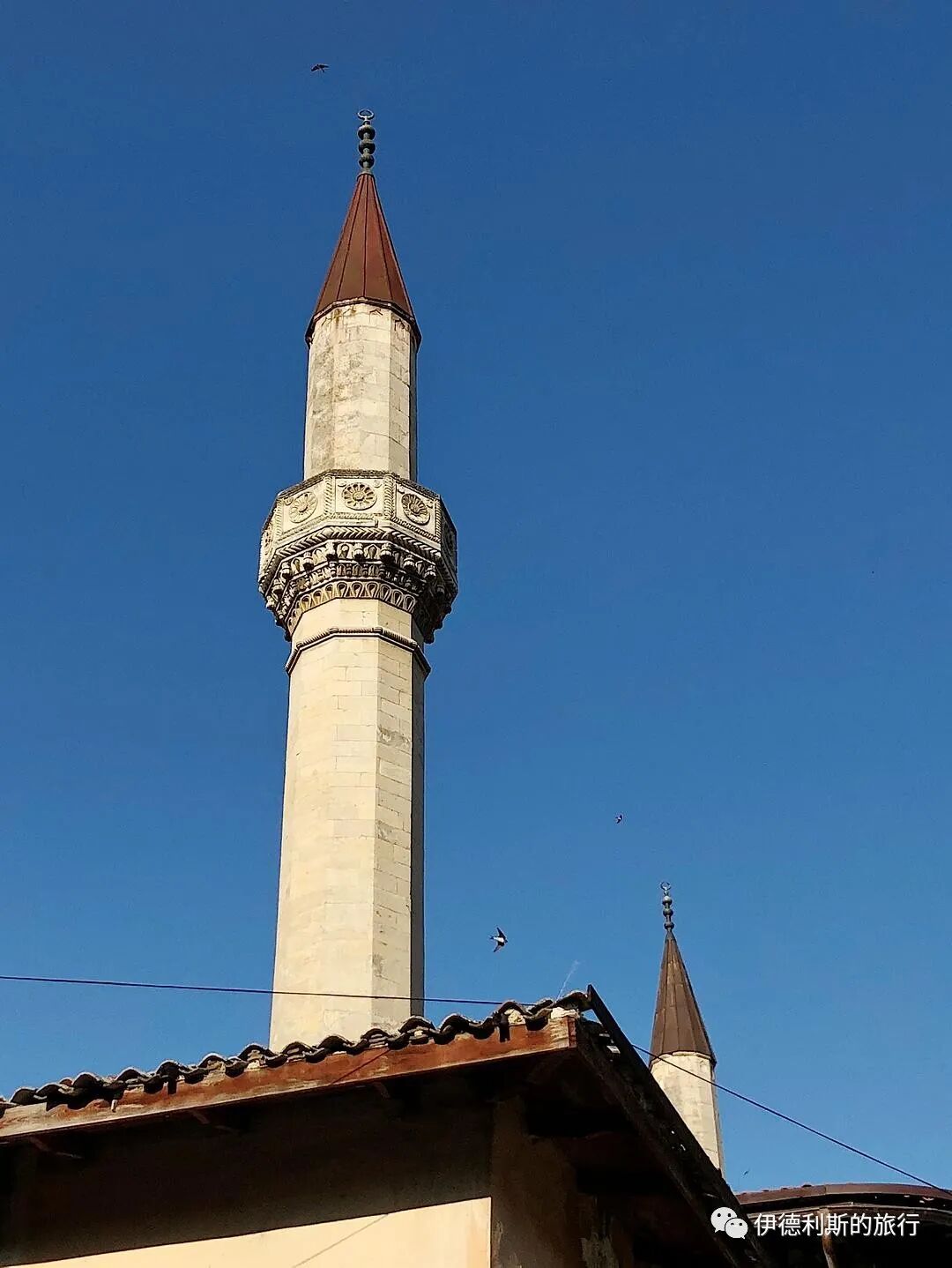
Maqsurah is an Arabic term meaning "enclosed space," which is a space inside a mosque for the ruler or nobility to pray. A Maqsurah is generally made as a wooden box or screen located near the mihrab of the mosque, while the Khan Mosque's Maqsurah was built as a second-floor loft. The main entrance of the Khan Mosque is connected to the north wall of the palace and can be accessed directly from the outside, while the Maqsurah can only be accessed via stairs from inside the palace.
The Maqsurah loft of the Khan Mosque was rebuilt after the 1736 fire and is decorated with famous Turkish Iznik tiles, stained glass, and various precious 18th-century murals.
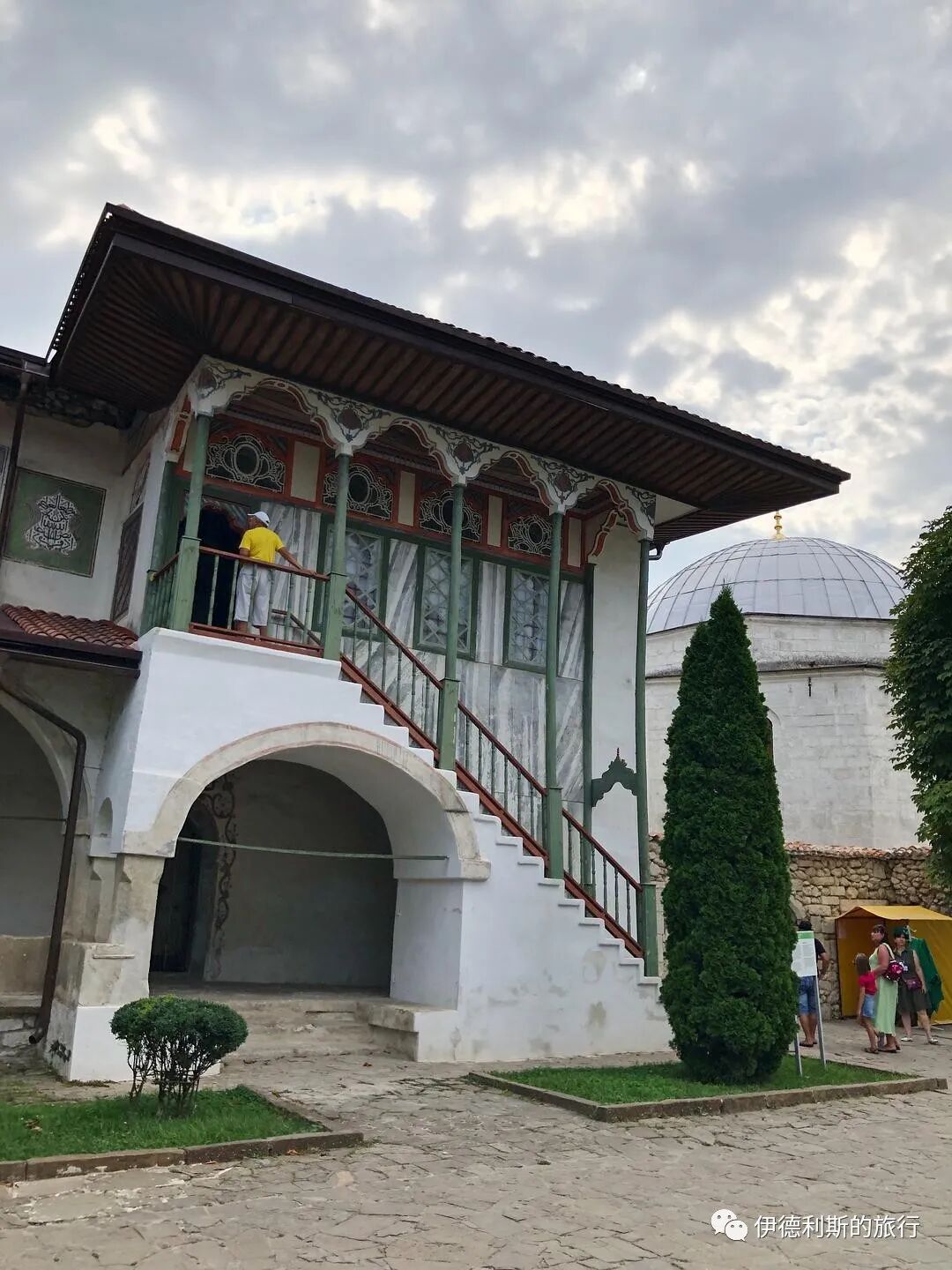
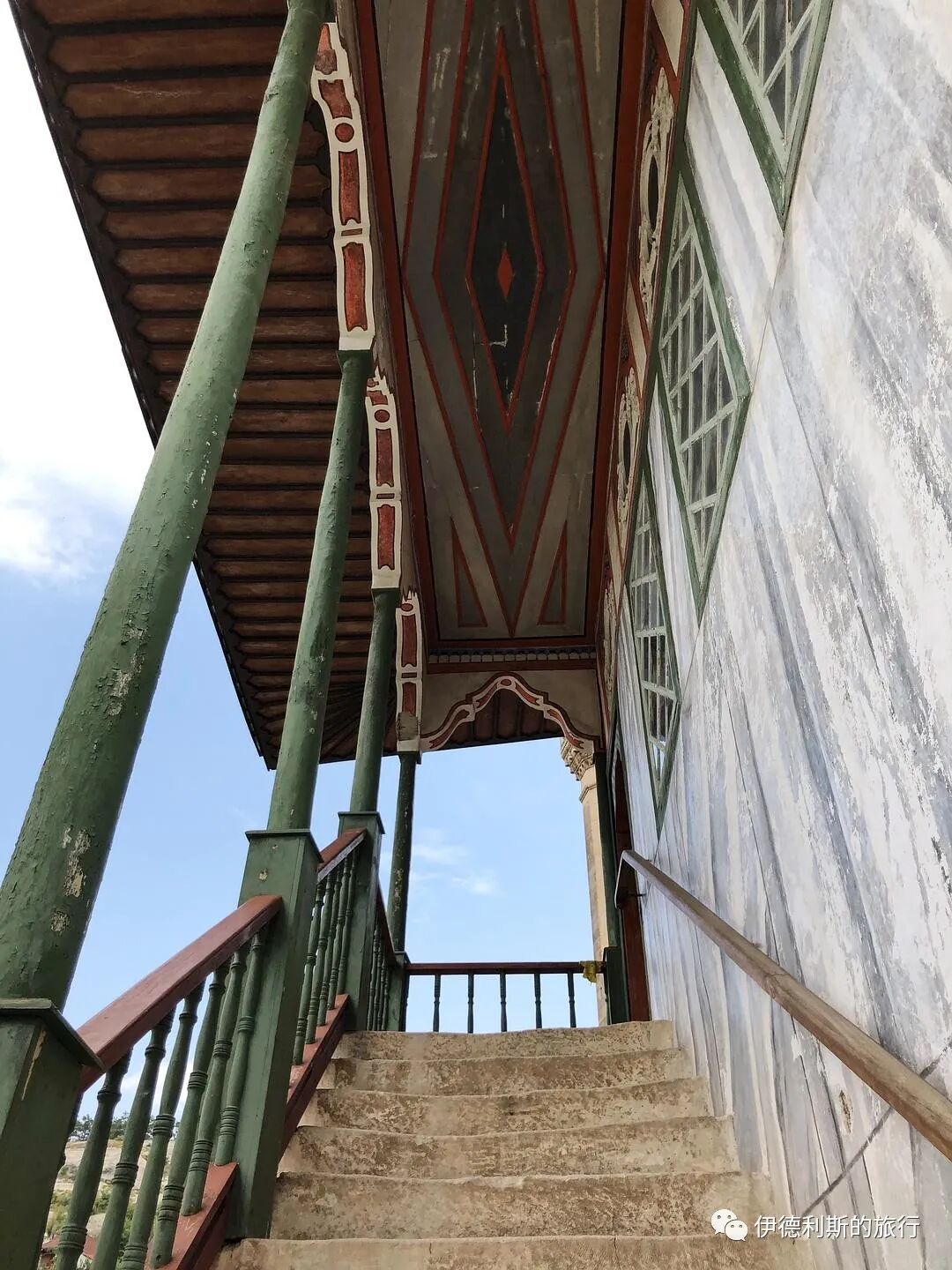
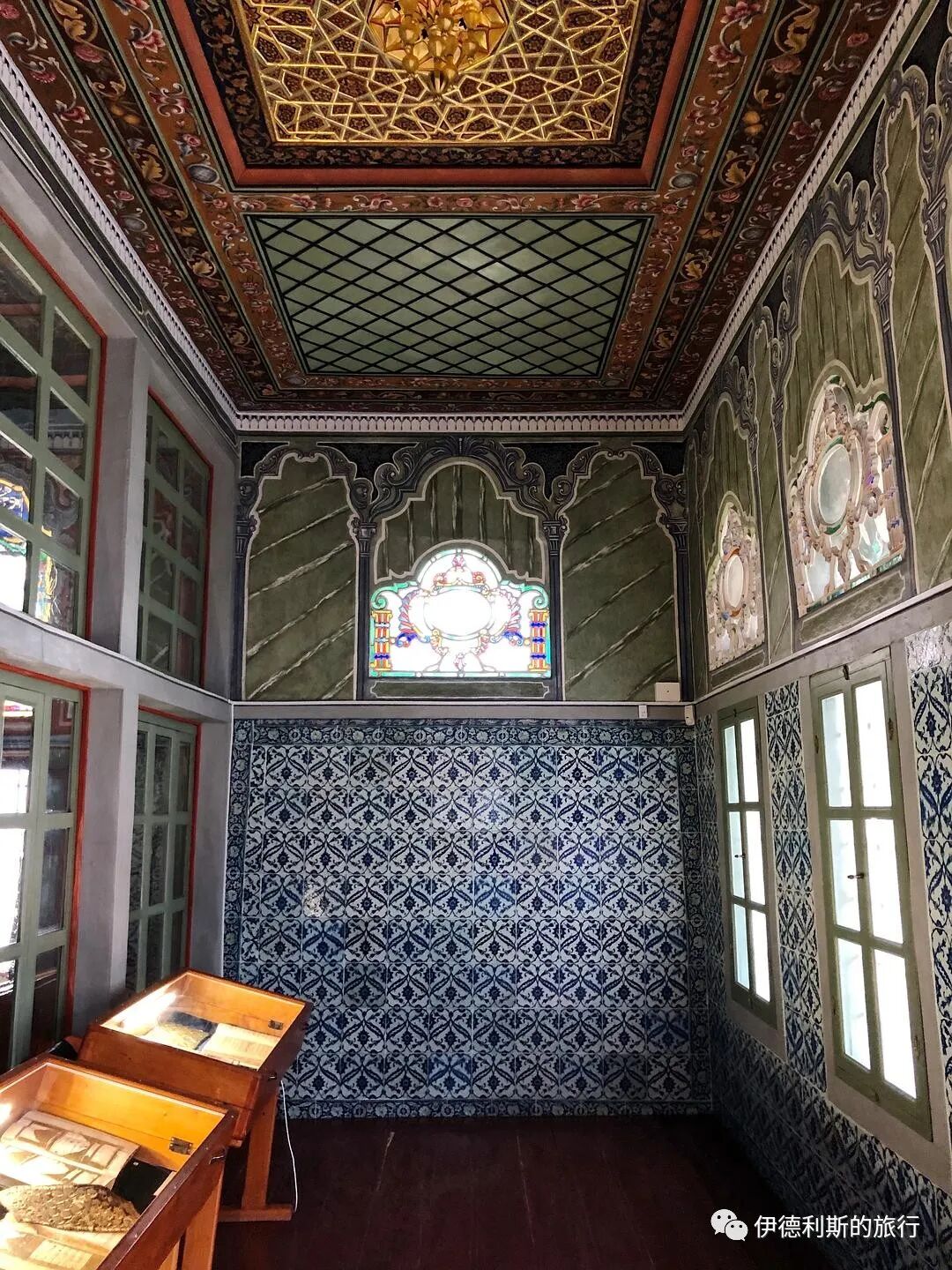
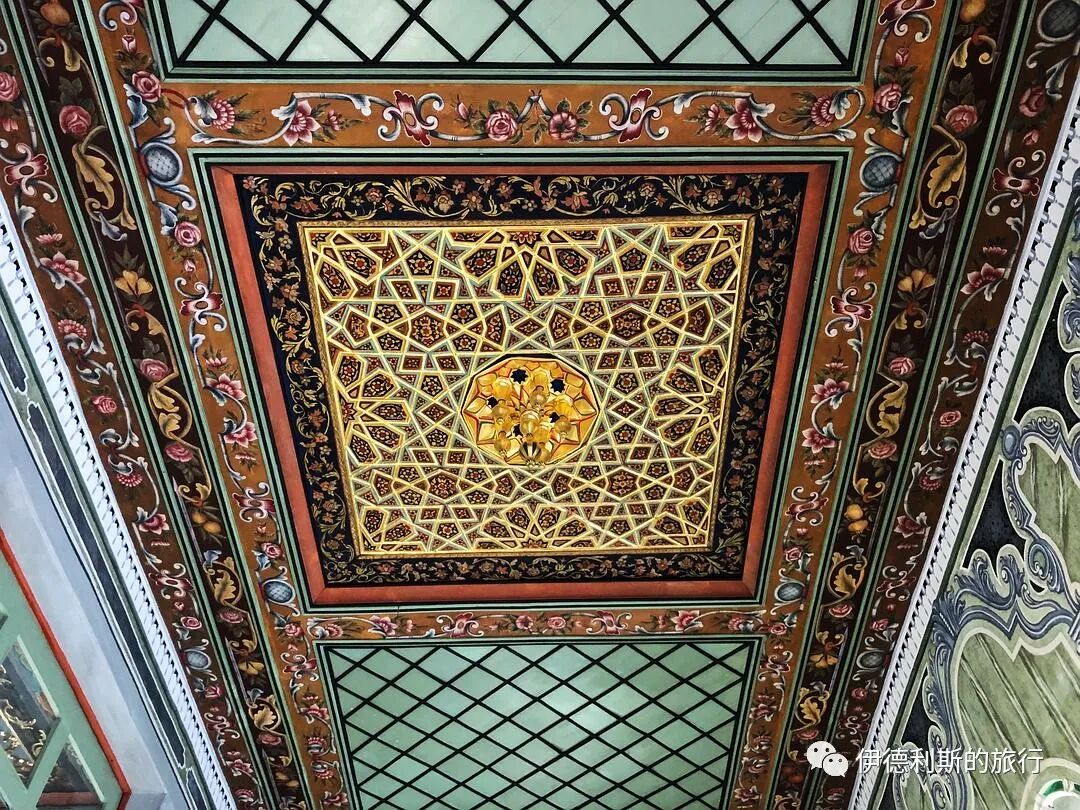
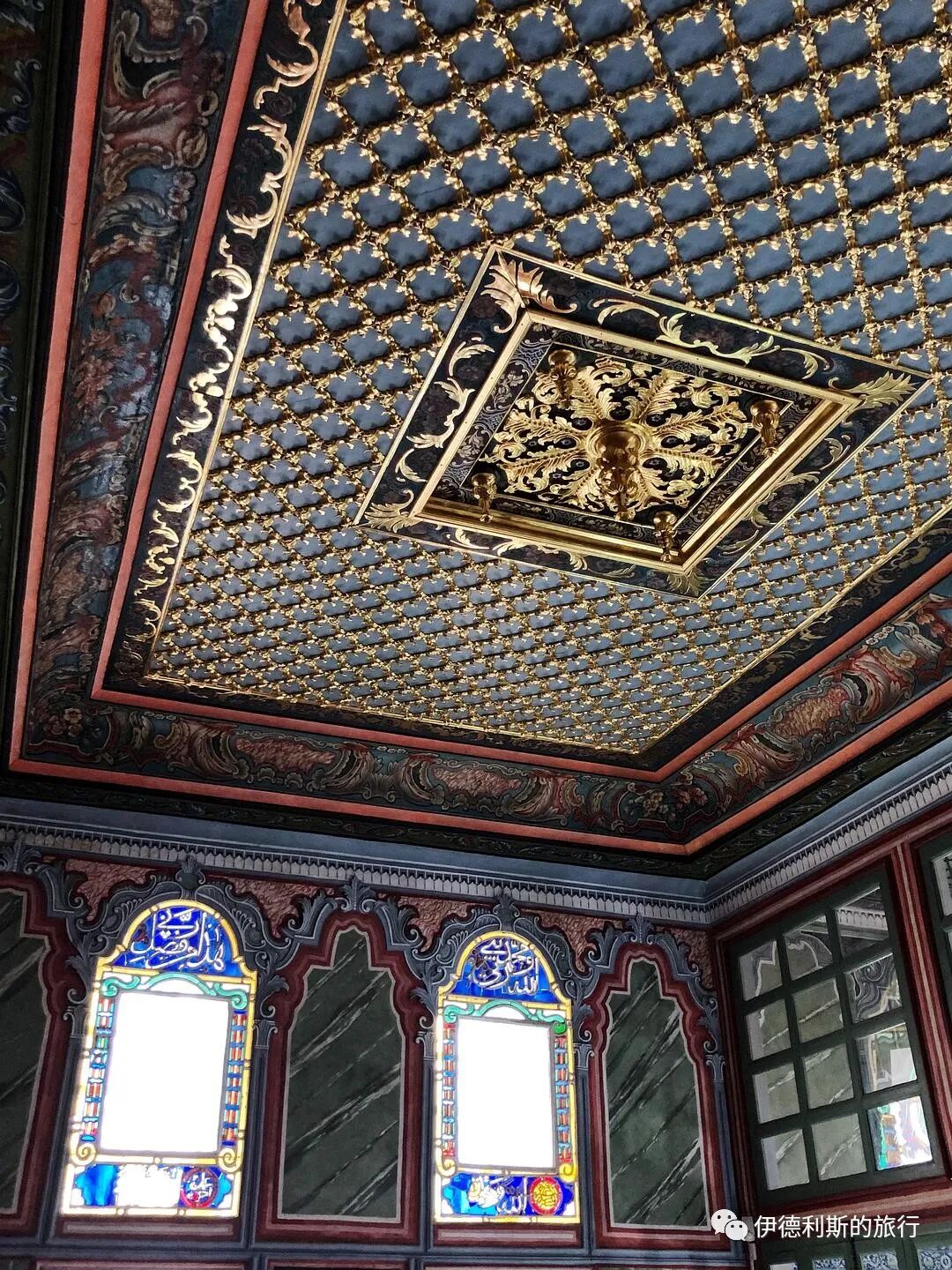
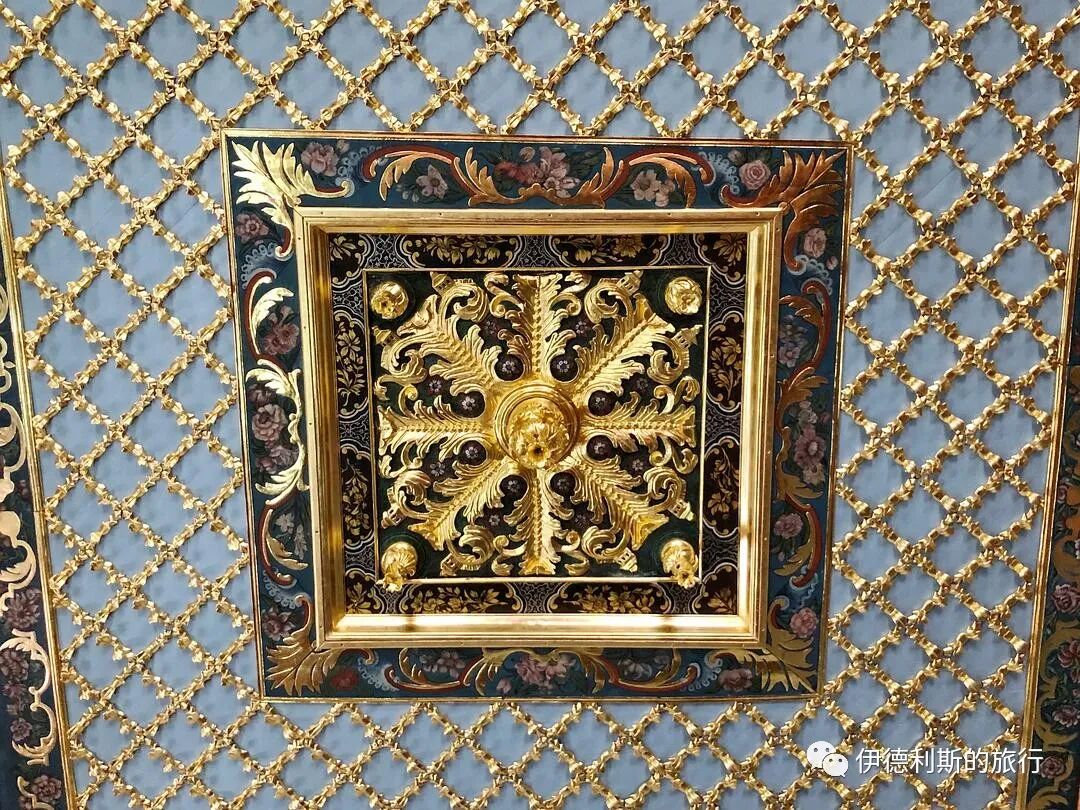
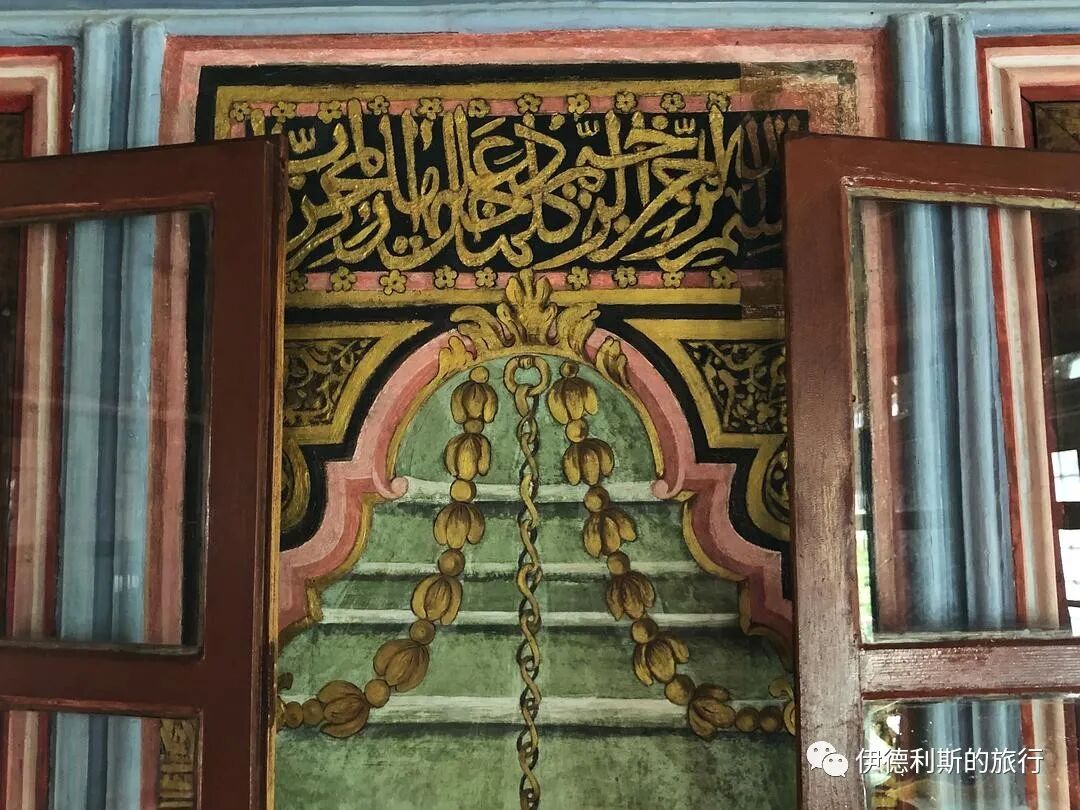
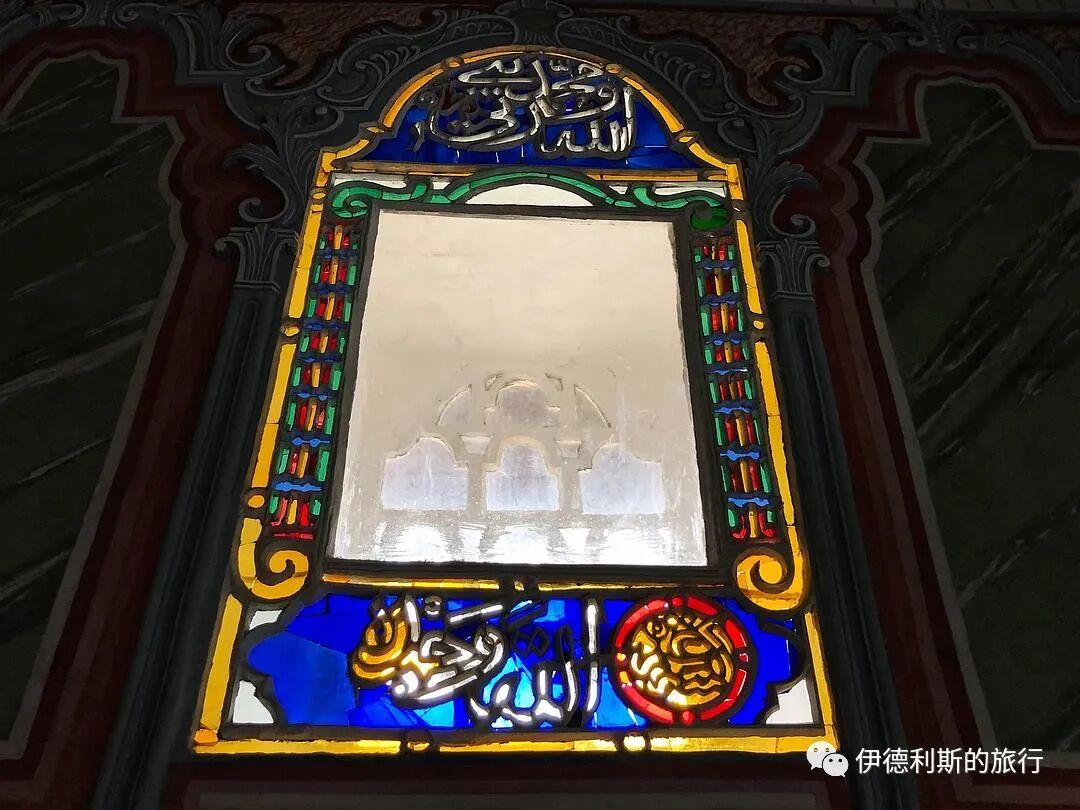
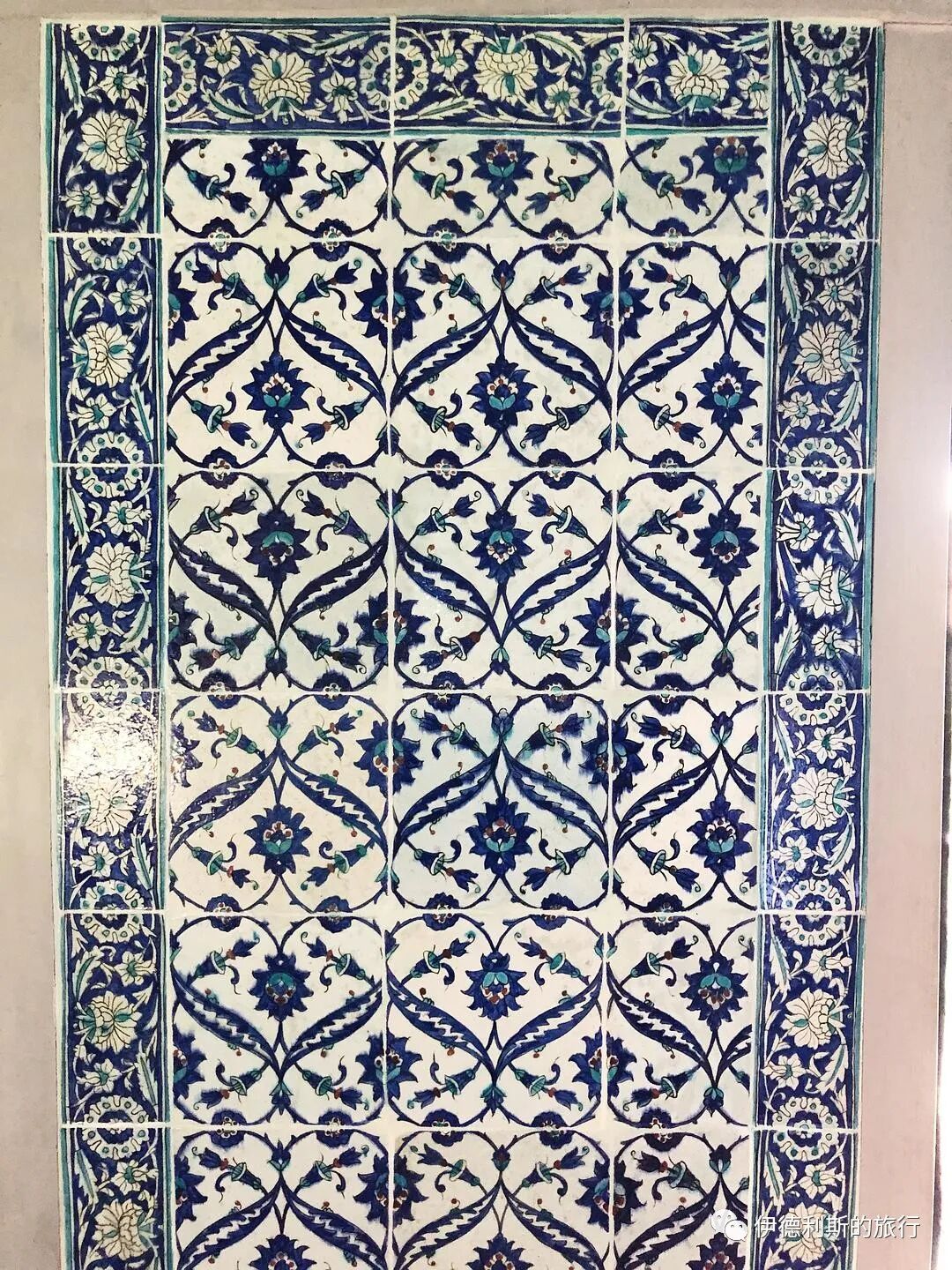
Artifacts displayed in the Maqsurah loft of the Khan Mosque:
A Quran copied in Bakhchisarai by Hafiz Mas'ud in 1794
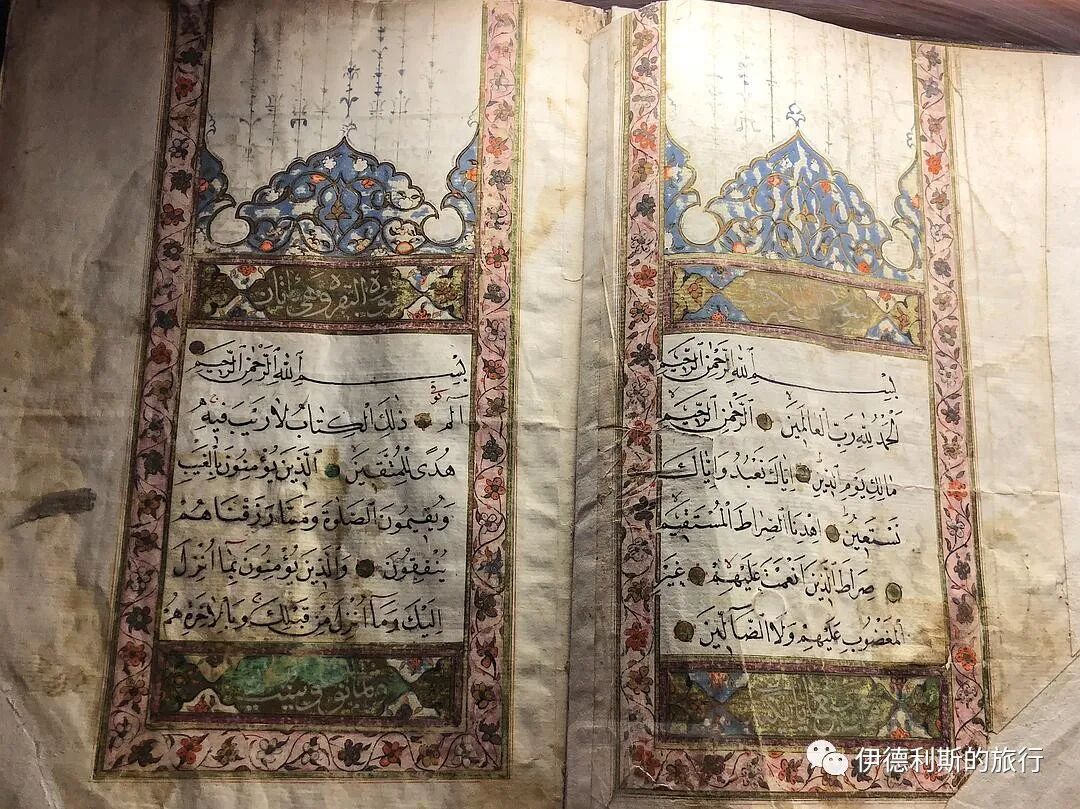
An 18th-century Quran bag
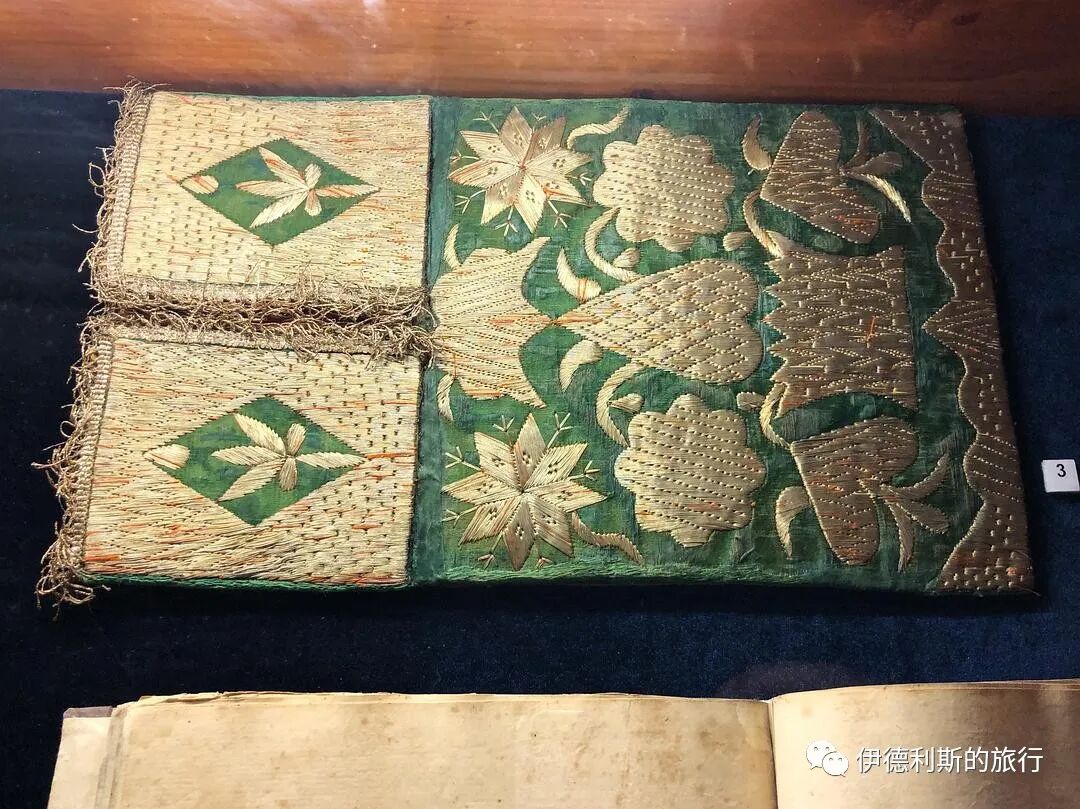
A Quran copied in Crimea in 1748, with an 18th-century bag.
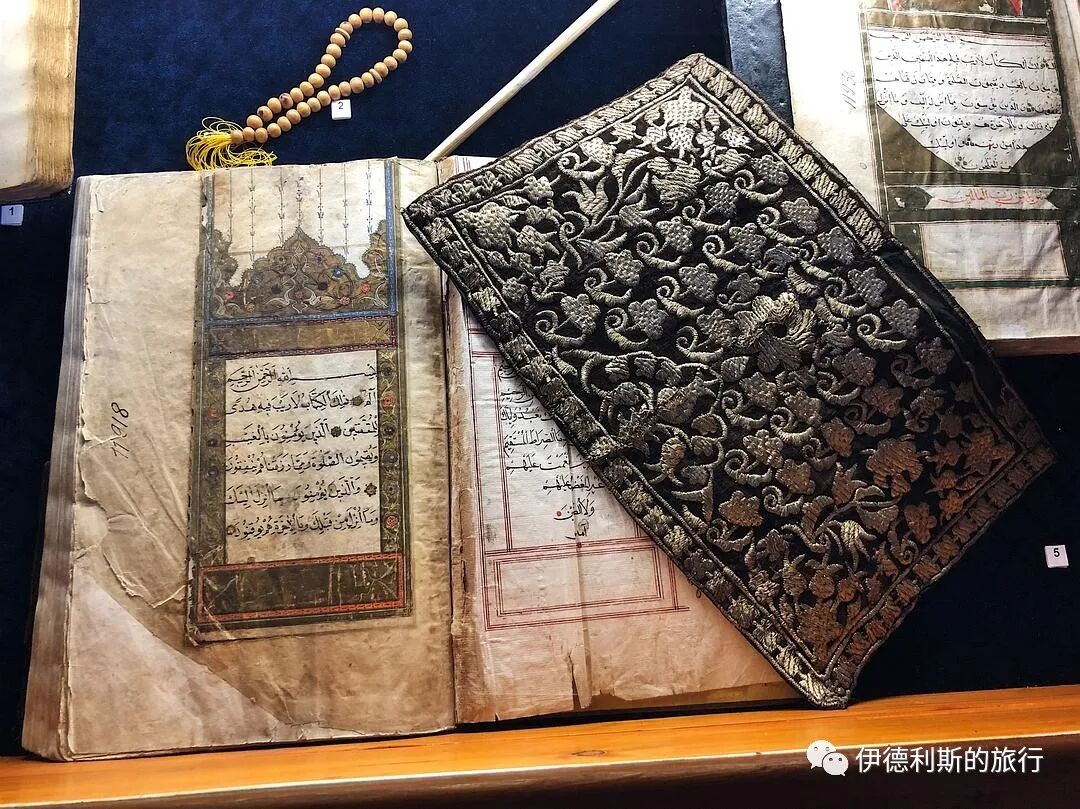
A Quran copied in 1808
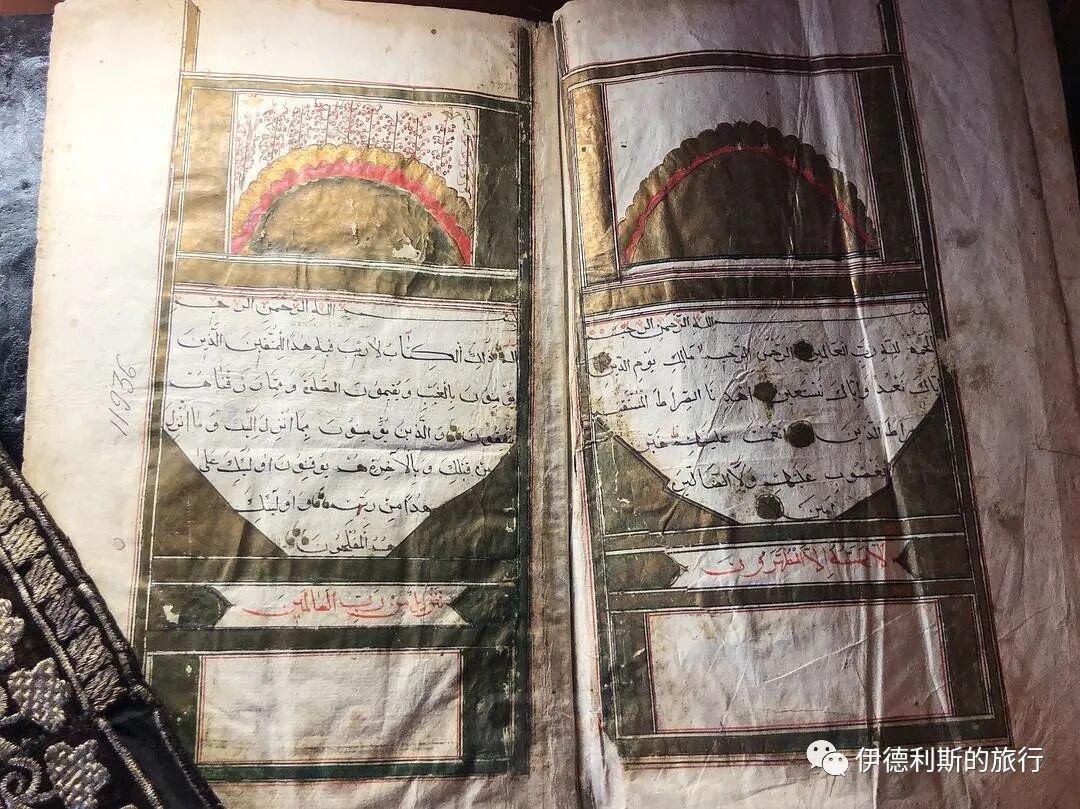
An 18th-century Quran
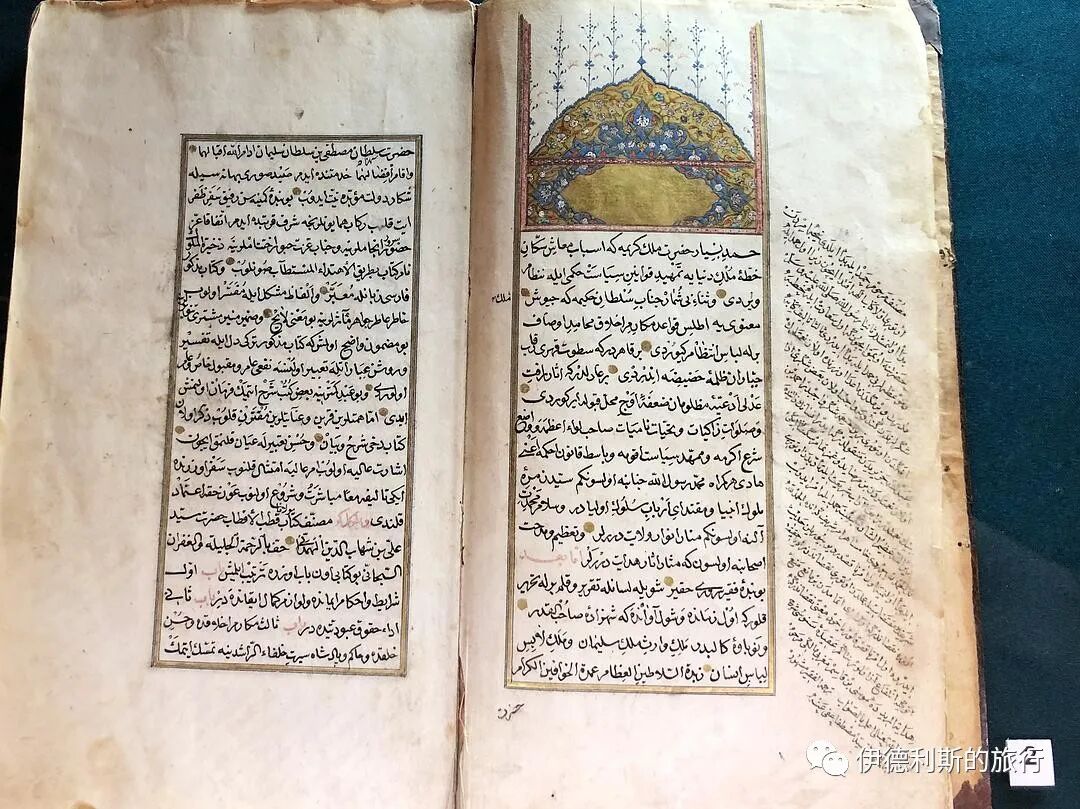
On the left is an 18th-century Sahih al-Bukhari, and on the right is an 18th-century Quran commentary.
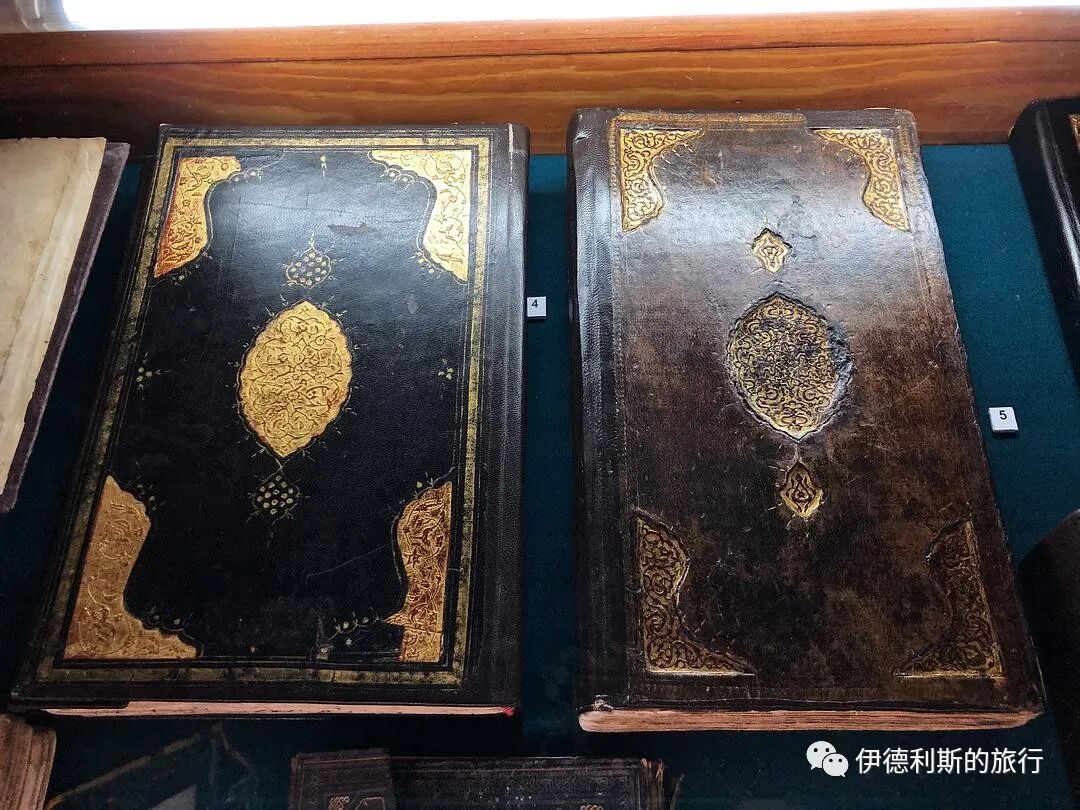
An 18th-century Quran
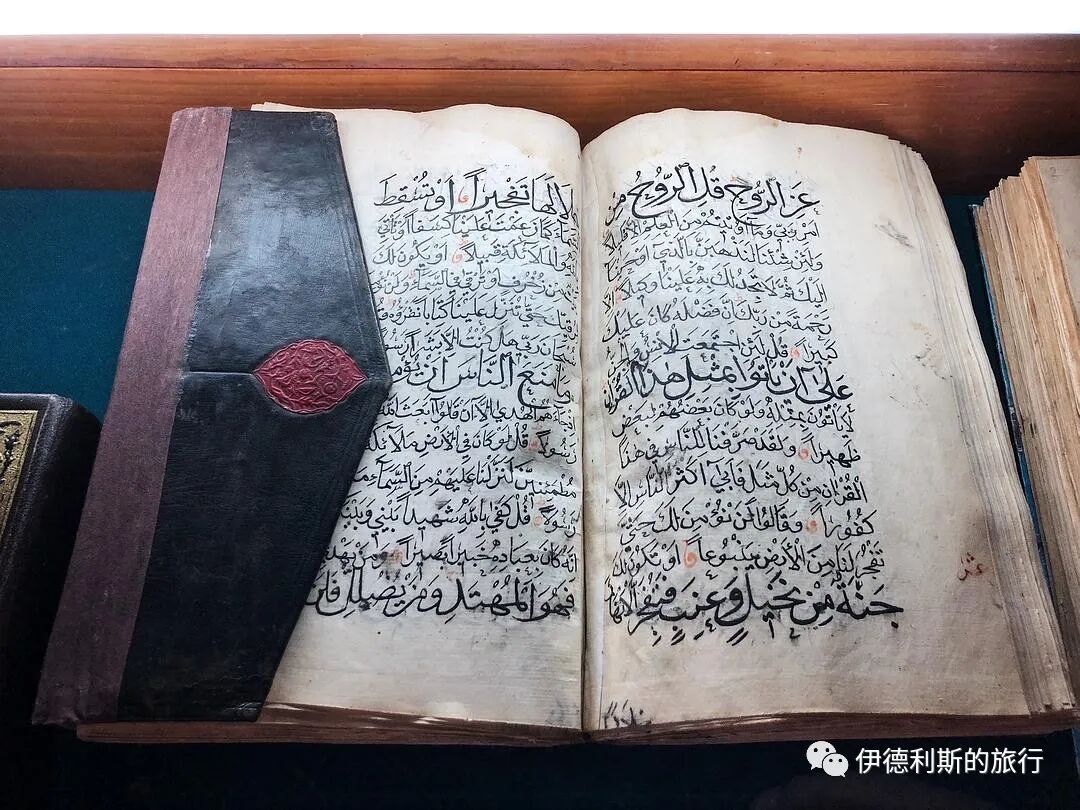
An 18th-century Quran
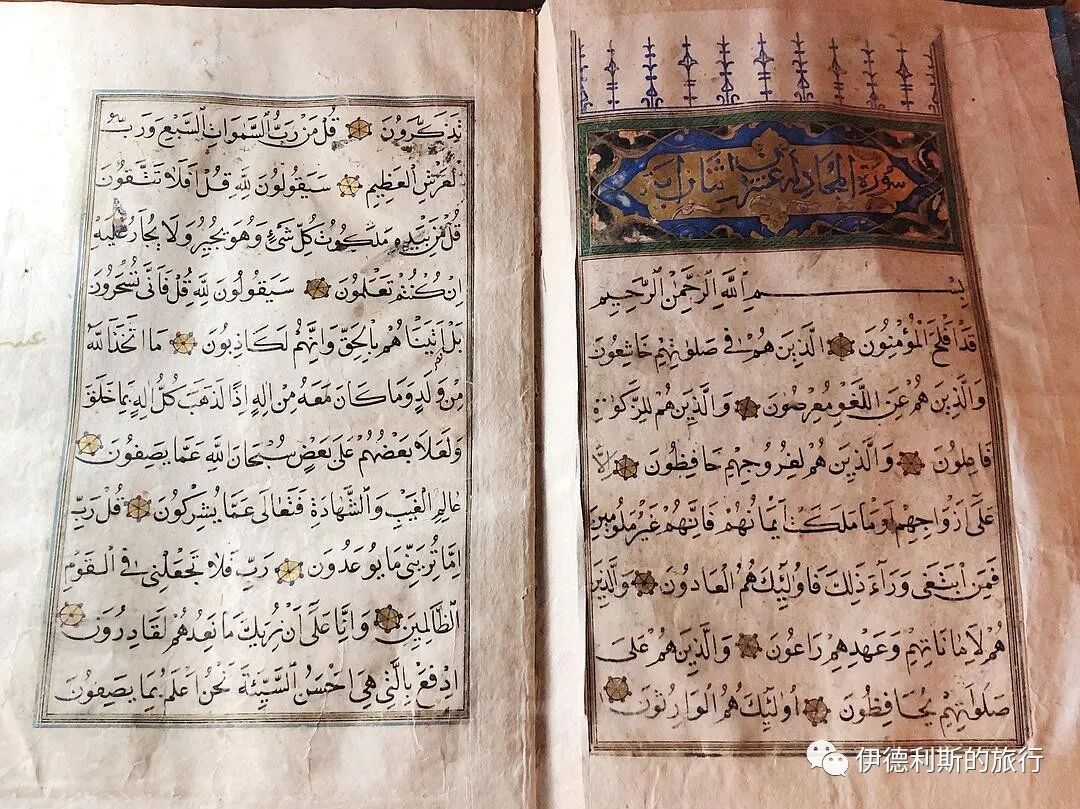
A Quran copied by Hajj Mahmoud in 1746
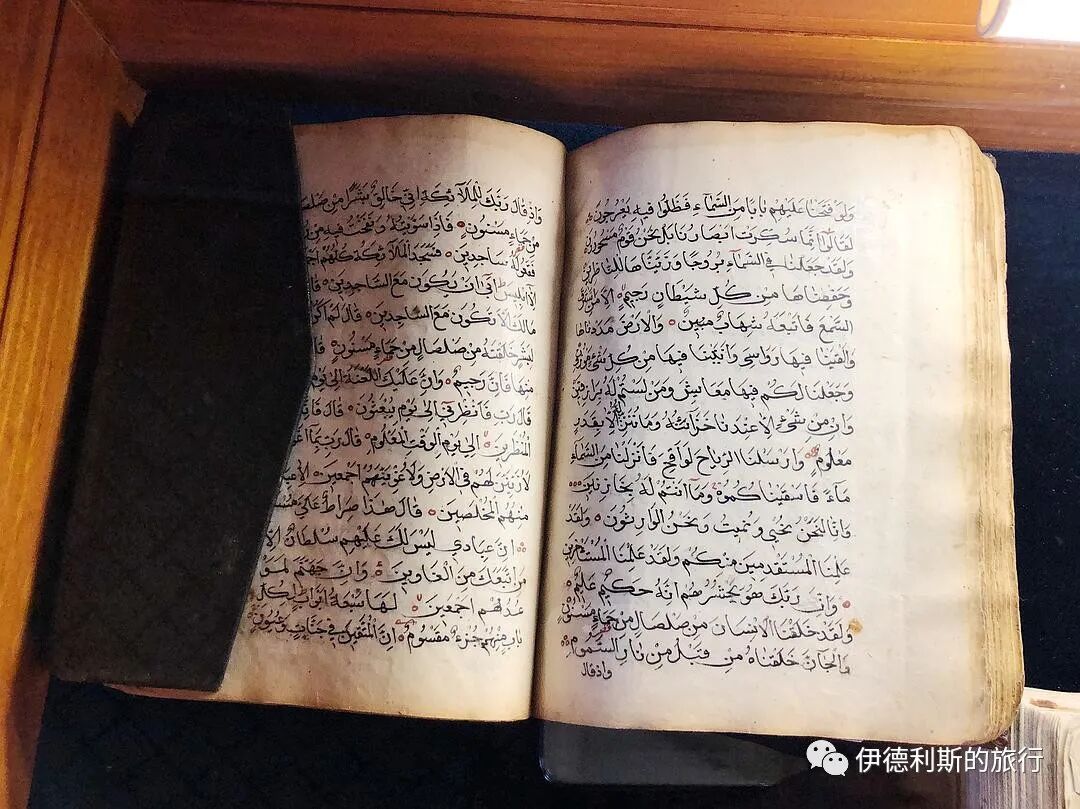
The ablution fountain of the Khan Mosque.
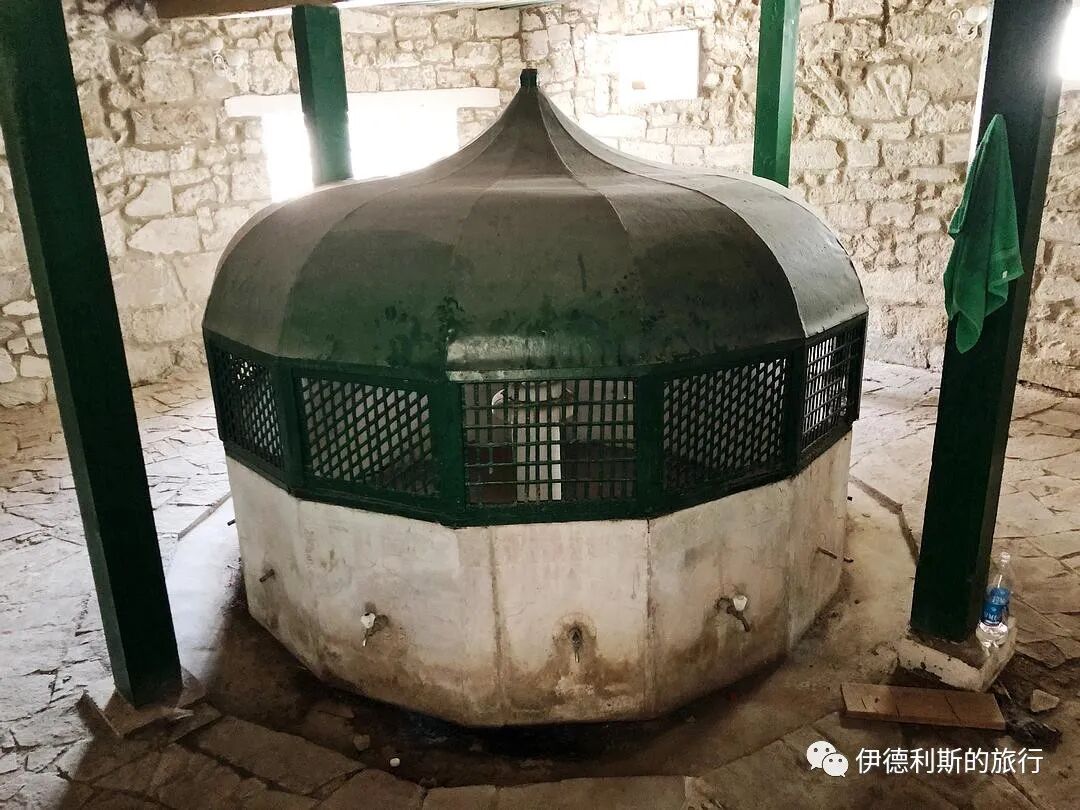
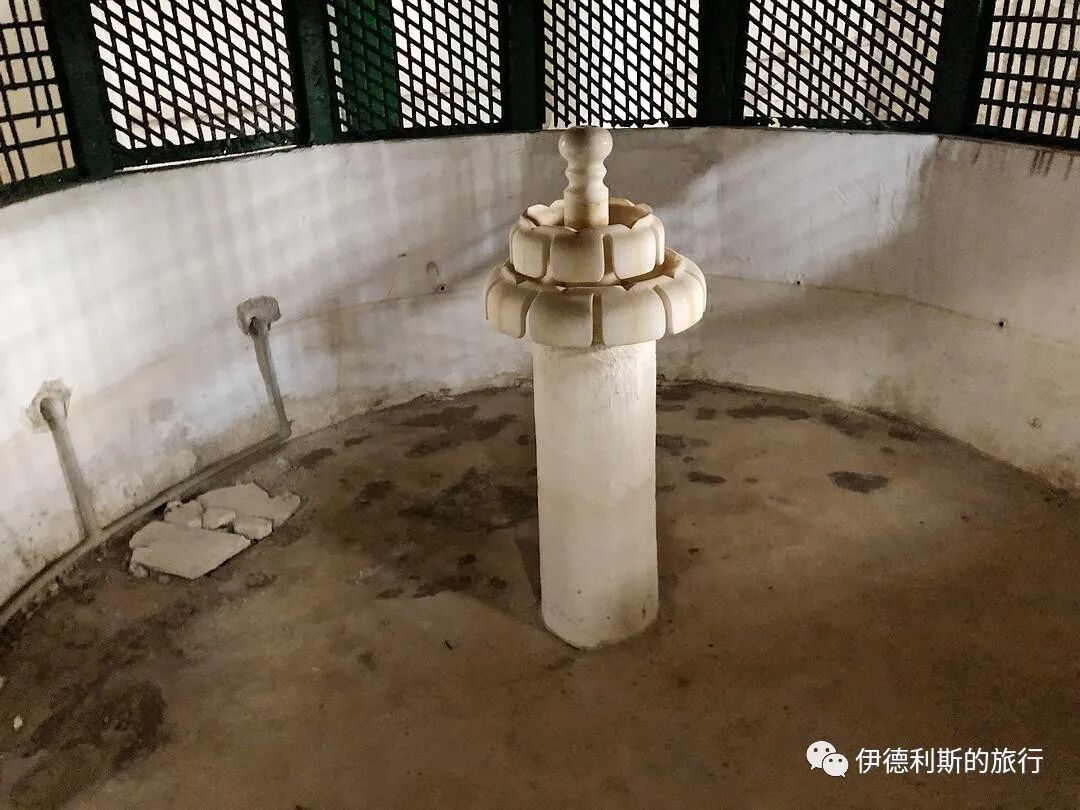
3. Khan Cemetery
The Khan Cemetery is located south of the Khan Mosque and contains the graves of 9 Crimean Khans from the 16th to 18th centuries, 45 members of the Khan family, and over 320 court nobles. The two most important mausoleums belong to Crimean Khans Devlet I Giray (reigned 1551–1577) and İslâm III Giray (reigned 1644–1654). These octagonal mausoleums are built of limestone, and their domes were originally lead, but were changed to iron after 1863. There is also the open-air tomb of Crimean Khan Meñli II Giray (reigned 1724–1730, 1737–1740) and the double tombstone of Crimean Khan Qırım Giray (reigned 1758–1764, 1768–1769).
The Khan Mosque, the tomb of Crimean Khan Devlet I Giray, and the tomb of İslâm III Giray.
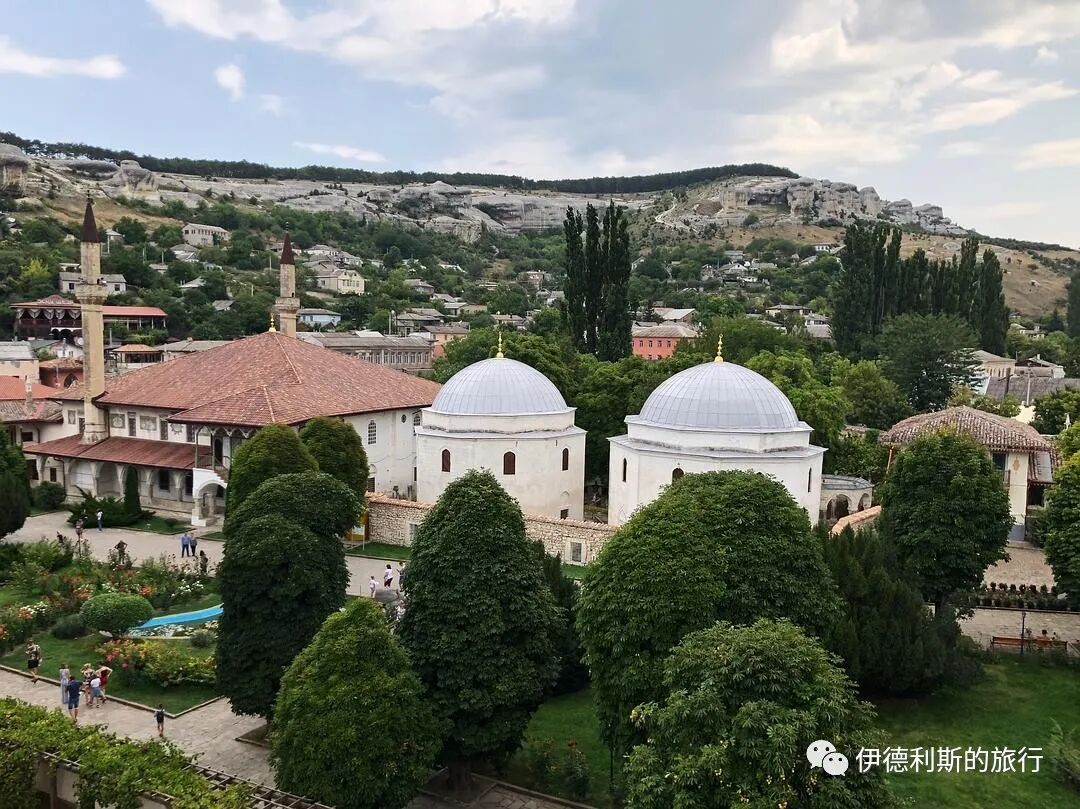
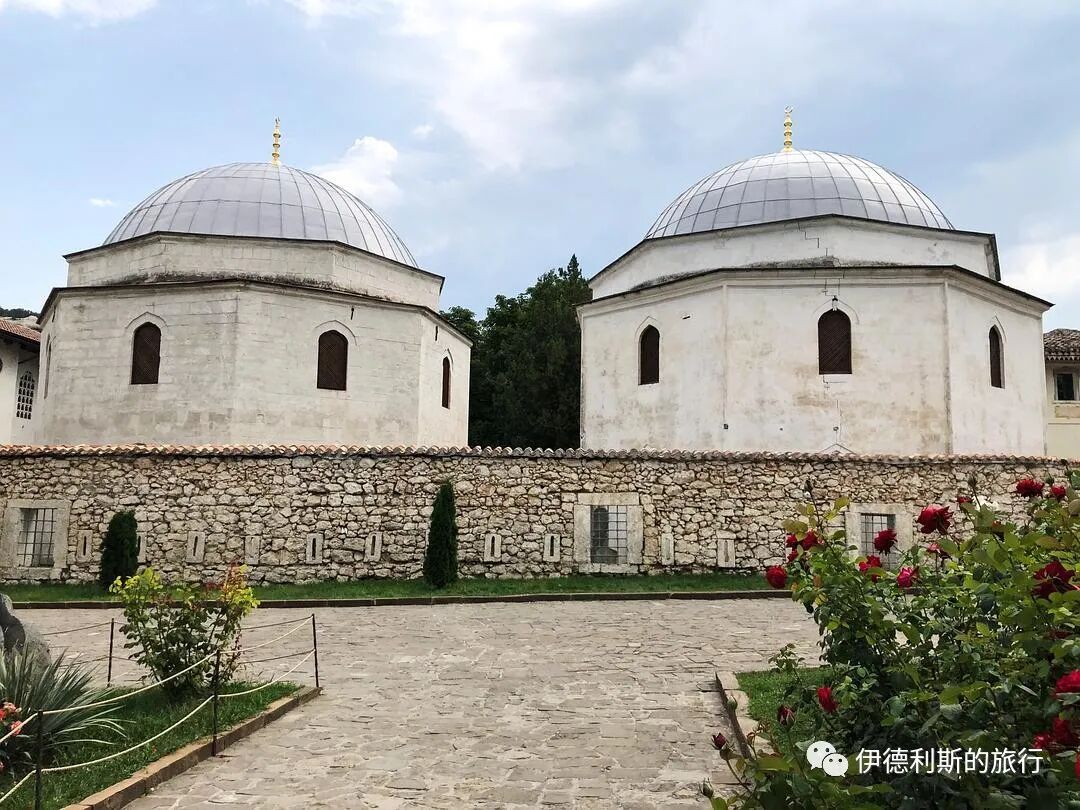
As it appeared in 1830
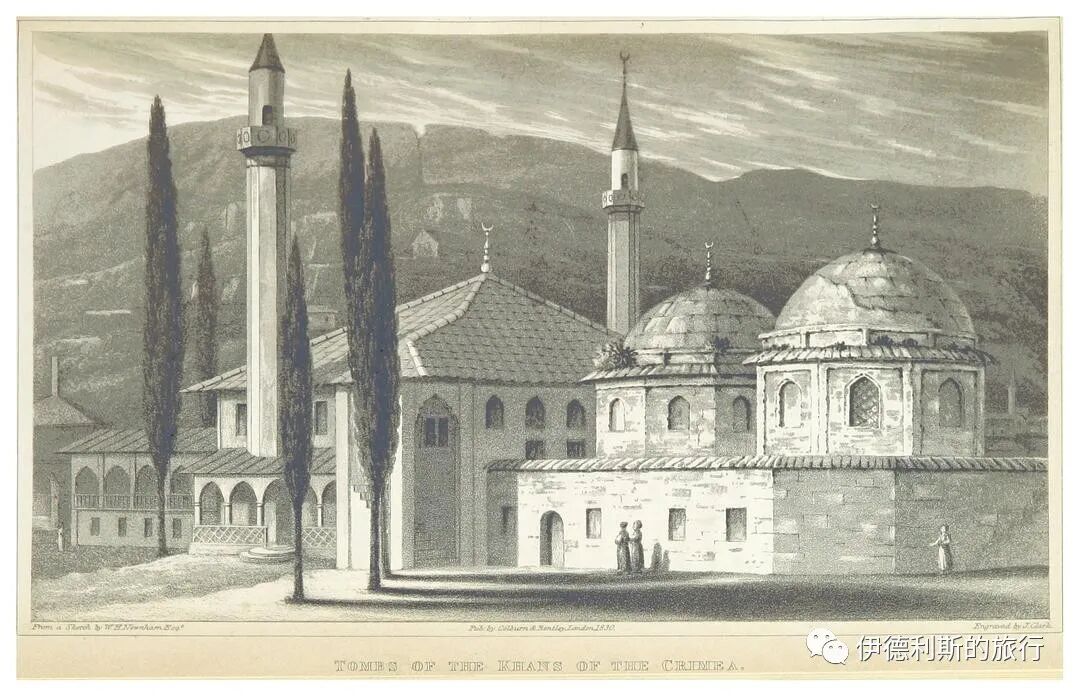
As it appeared between 1840 and 1842
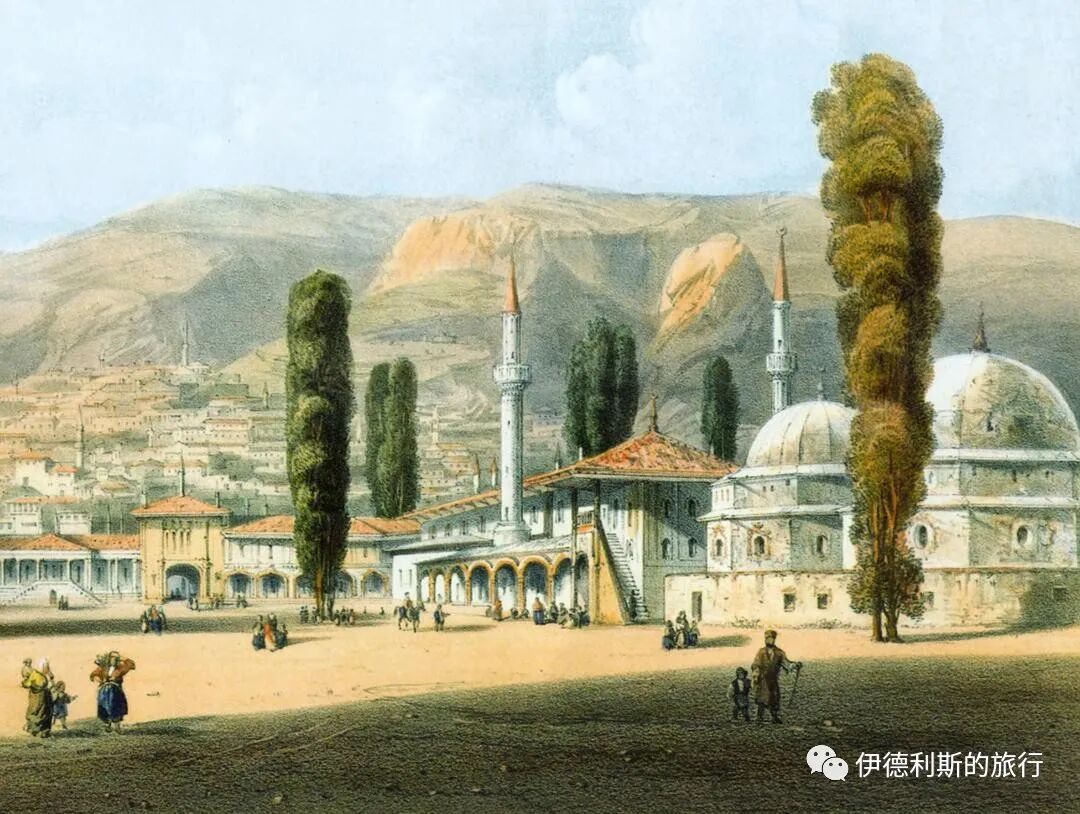
The mausoleum in the northern part of the Khan Cemetery belongs to Crimean Khan Devlet I Giray (reigned 1551–1577) and contains 6 tombstones.
Devlet I Giray reigned for 26 years. His most important campaign was the burning of Moscow in 1571, which forced Tsar Ivan the Terrible to flee, earning him the title "The One Who Took the Crown."
In 1530, Devlet I Giray was appointed Kalga (the second-in-command after the Khan) by his uncle Saadet I Giray. In 1532, Saadet I Giray voluntarily abdicated to serve Sultan Suleiman the Magnificent at the Ottoman court, and Devlet I Giray was subsequently imprisoned. After being released, Devlet I Giray also went to Istanbul, gradually gaining the trust of Suleiman the Magnificent. In 1551, when the then-Crimean Khan Sahib I Giray refused to help the Ottomans attack Persia, Suleiman the Magnificent decided to have Devlet I Giray replace his uncle.
Devlet I Giray led an army of 1,000 men and 60 cannons to occupy Bakhchisarai, then killed Sahib I Giray and all his descendants, becoming the new Crimean Khan.
In March 1552, the second year of his reign, Russian Tsar Ivan the Terrible sent troops to conquer the Kazan Khanate. Upon learning this, Devlet I Giray decided to attack the Russian heartland to save Kazan while their defenses were weak, but he was ultimately defeated by the Russian army. In October of that year, Kazan fell, and the Kazan Khanate was extinguished. Following this, in 1556, another Tatar state, the Astrakhan Khanate, was also conquered by Ivan the Terrible, leaving the Crimean Khanate as the last remaining Tatar state.
From 1551, the Crimean Khanate engaged in over twenty years of war with Russia. After several defeats, Devlet I Giray attempted to make peace with Russia, but this was opposed by the nobles of the Crimean Khanate. Finally, in the spring of 1571, Devlet I Giray led a joint force of 120,000 Crimean and Ottoman troops and, guided by six boys fleeing the increasingly insane Ivan the Terrible, arrived directly at Moscow. Devlet I Giray set fires in the suburbs of Moscow, and suddenly, strong winds blew the flames into the city, burning the entire city to the ground.
According to records, people fled into stone churches, but the churches collapsed, killing everyone inside. People jumped into the river, and many drowned. The Kremlin's armory exploded, and those hiding in the basement suffocated to death. Ivan the Terrible ordered the dead in the streets to be thrown into the river, causing the river to overflow and flood parts of the city. Historians estimate that between 60,000 and 200,000 people died in the fire.
Ivan the Terrible subsequently fled to Novgorod, and the Crimean army went in pursuit but was intercepted by Russian forces. Devlet I Giray was defeated by the Russian army in succession, losing a son and a grandson. At this point, false news arrived that Ivan the Terrible was leading a large army to arrive soon, forcing Devlet I Giray to withdraw.
In the following years, the Crimean Khanate had several more small-scale wars with Russia. In 1577, Devlet I Giray died of the plague and was buried in the Khan Cemetery in Bakhchisarai.
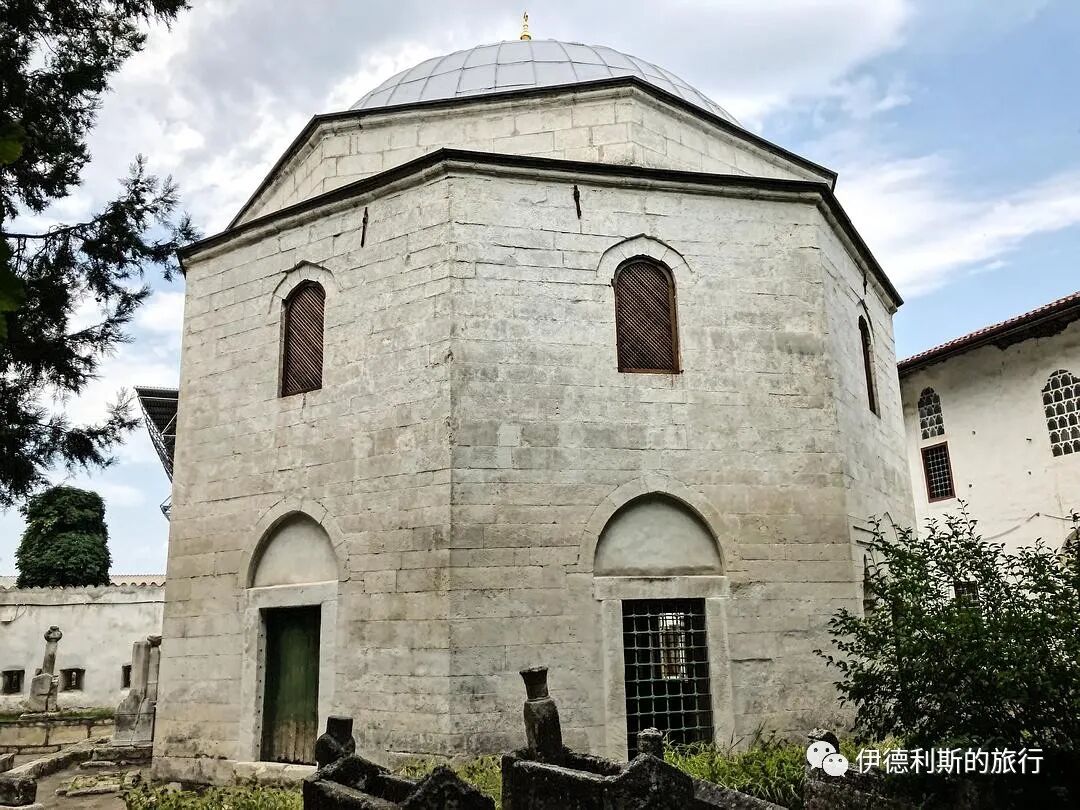
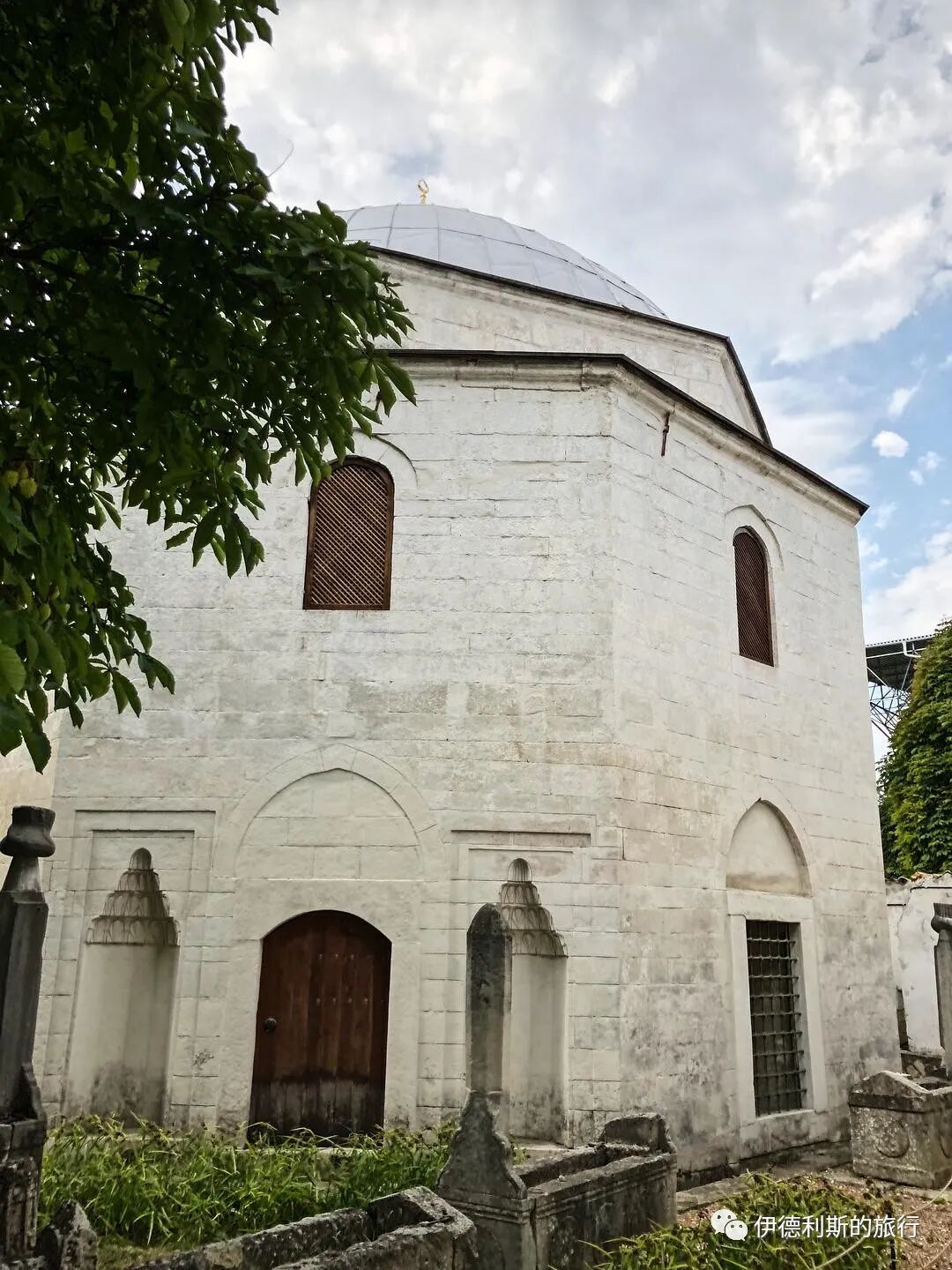
The mausoleum in the southern part of the Khan Cemetery belongs to Crimean Khan İslâm III Giray (reigned 1644–1654) and contains 9 tombstones.
In his youth, İslâm III Giray was captured by the Polish-Lithuanian Commonwealth and lived in Poland for 7 years. After being released, he settled in the Ottoman Empire. In 1637, he was appointed Kalga (the second-in-command after the Khan) by the new Crimean Khan. In 1640, he led an army that caused devastating damage to Ukraine. After another Khan succeeded to the throne in 1641, he left Crimea again and returned to the Ottoman Empire. In 1644, the Ottoman Sultan deposed the previous Crimean Khan and appointed İslâm III Giray as the Crimean Khan.
During his reign, İslâm III Giray attempted to resolve conflicts among the nobles within the Khanate, while also funding the construction and renovation of many public buildings, such as fountains, water systems, and fortresses.
In 1648, İslâm III Giray allied with the Zaporozhian Cossacks of Ukraine against the Polish-Lithuanian Commonwealth. In 1654, he turned to ally with Poland against the Russian Tsar. According to legend, he was killed shortly thereafter by his Cossack concubine.
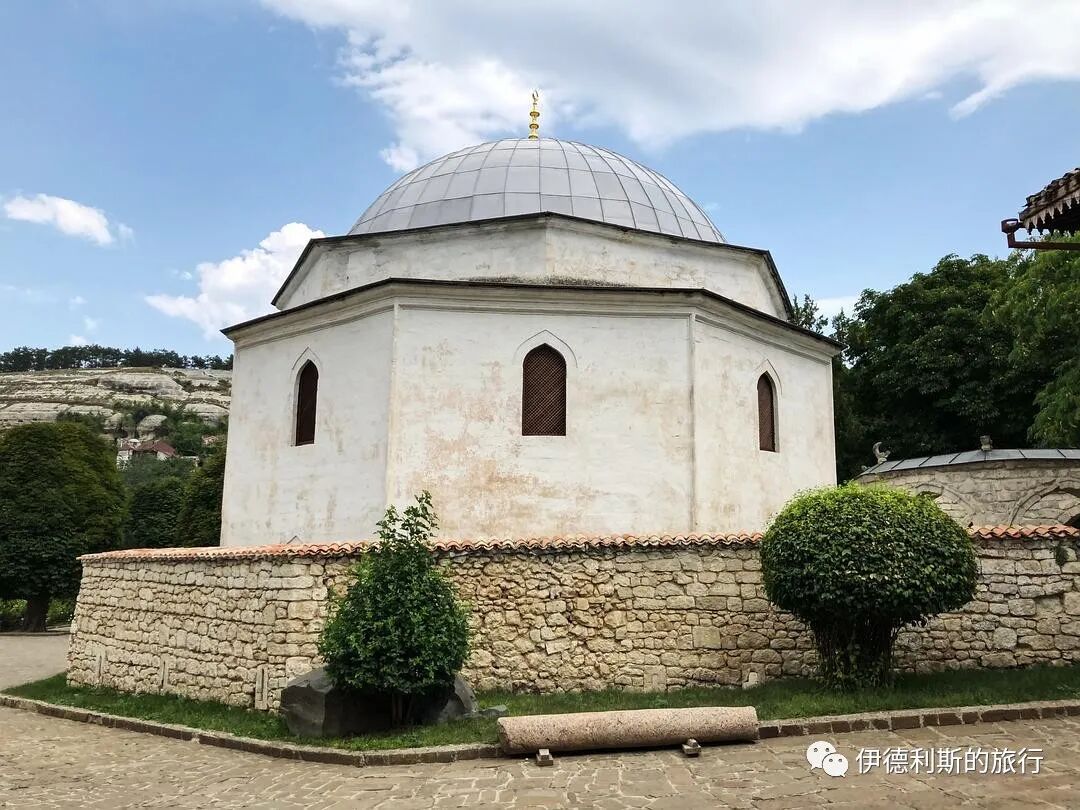
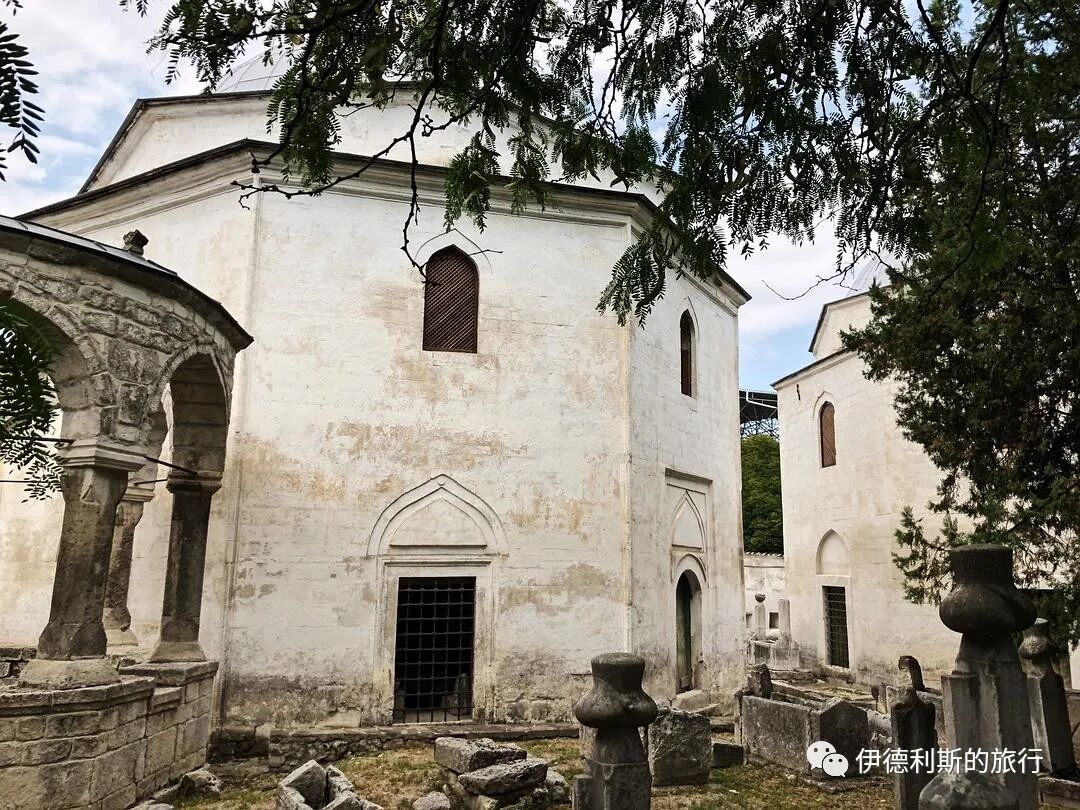
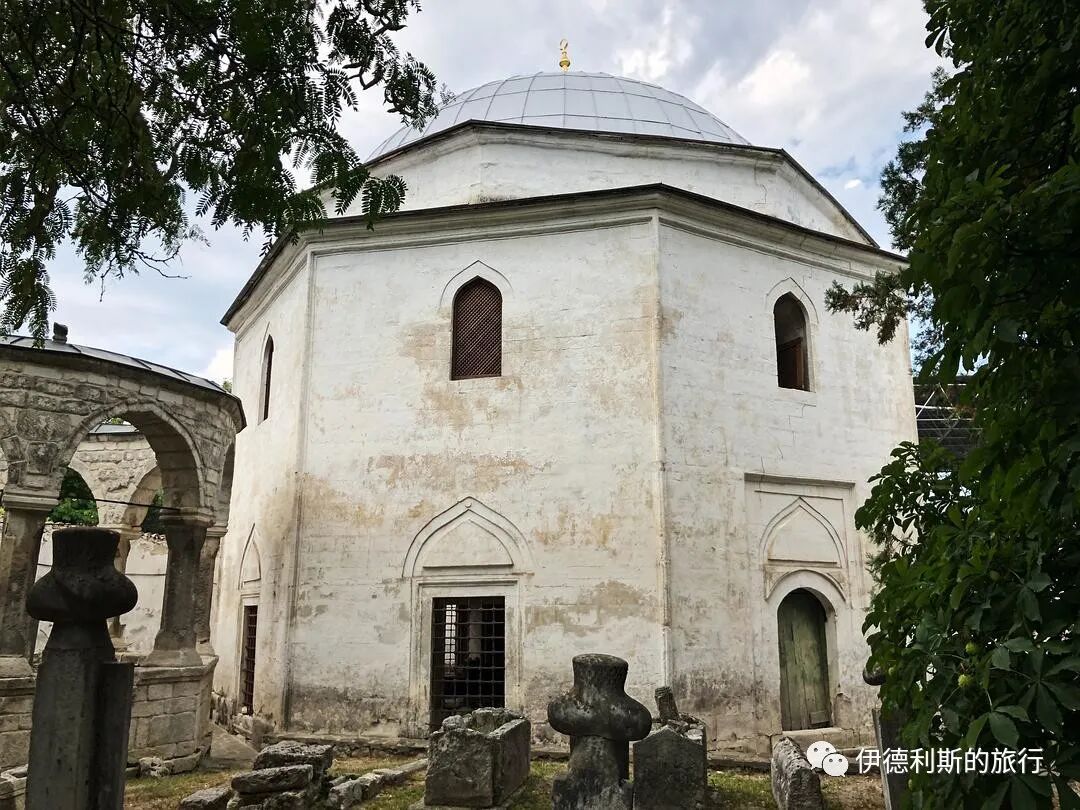
Next to the mausoleum of İslâm III Giray is the mausoleum of Crimean Khan Meñli II Giray (reigned 1724–1730, 1737–1740).
During his reign, Meñli II Giray ended the long-term turmoil in the Crimean Khanate and abolished some taxes, gaining the support of many people. During his second reign, he skillfully organized defenses to resist the invasion of the Russian army, inflicting heavy losses on the Russian forces. Meñli II Giray was also known for his love of literature and Islam. As a Sufi follower, he donated funds to many mosques.
In 1740, Meñli II Giray passed away in Bakhchisarai and was buried in the Khan Cemetery. His mausoleum has no roof and is an open-air rotunda.
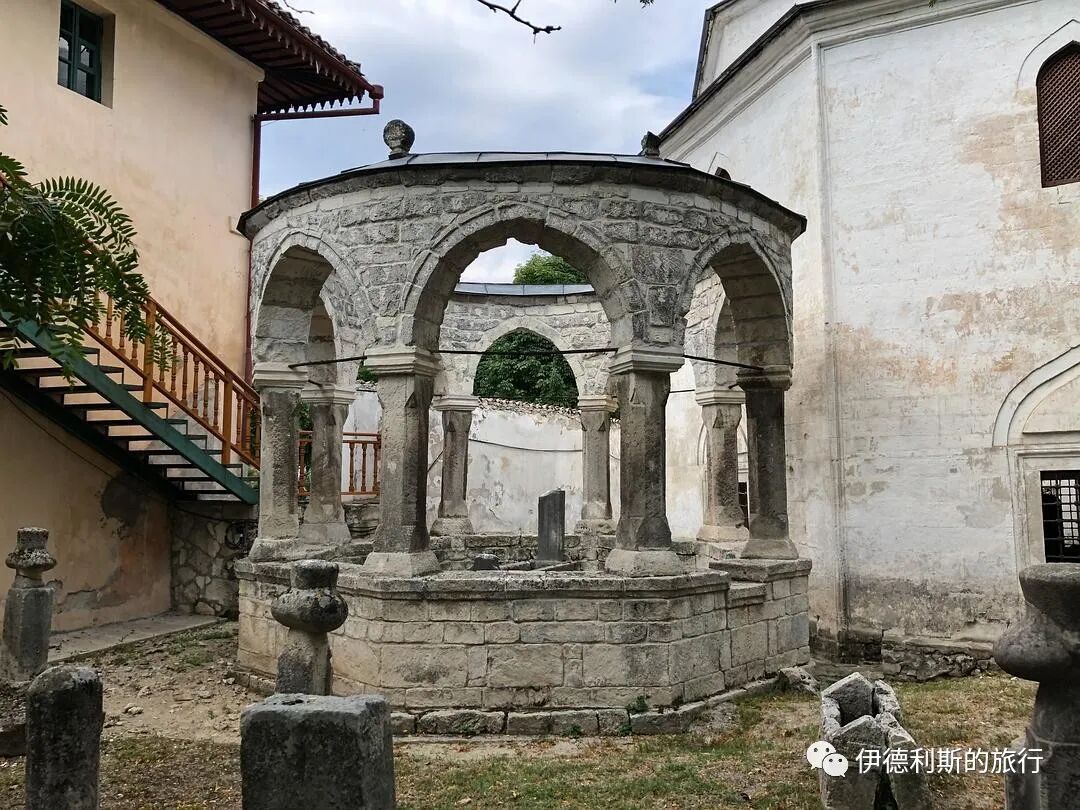
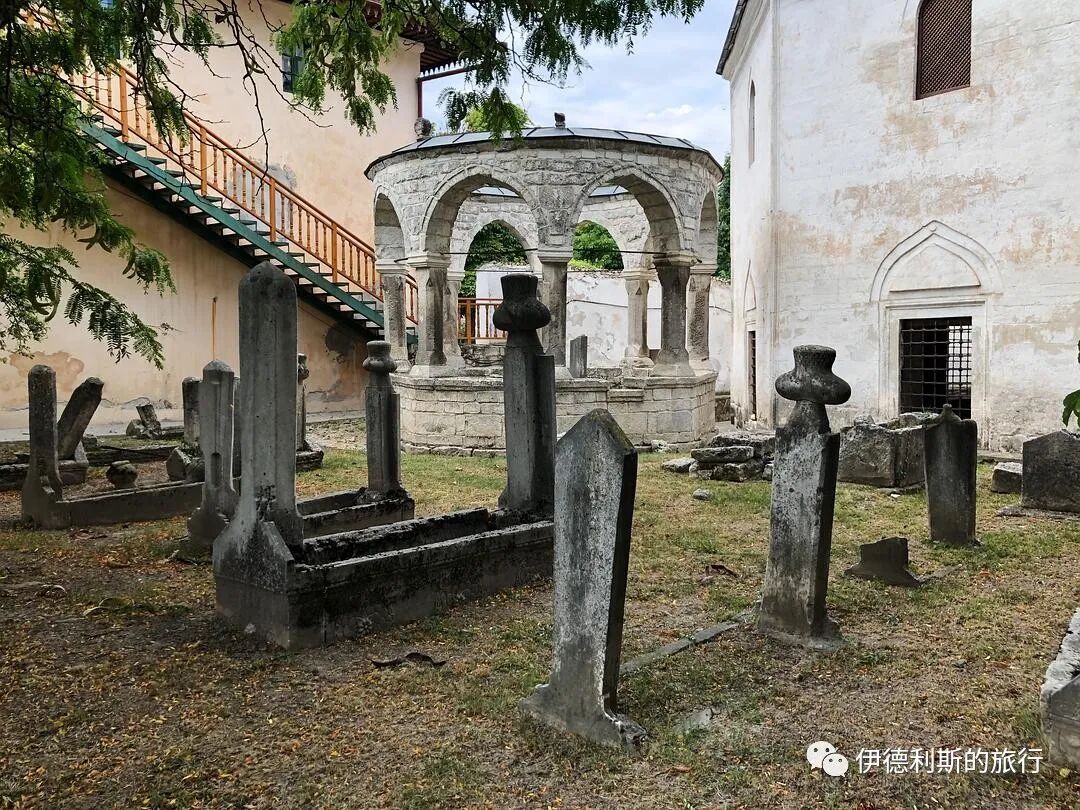
The tomb of Crimean Khan Qırım Giray (reigned 1758–1764, 1768–1769) is at the entrance of the Khan Cemetery; it has no mausoleum building, only a double tombstone.
Qırım Giray was a talented ruler under whose reign the Crimean Khanate experienced an artistic revival, developing a unique art style known as "Crimean Rococo." He invited many excellent artists and architects to build numerous mosques in Crimea and restored and expanded the Bakhchisarai Khan Palace, which had been burned by the Russians. Qırım Giray had a keen interest in European, especially French, culture, and was particularly fascinated by Molière's plays; the court frequently hosted musical and theatrical performances.
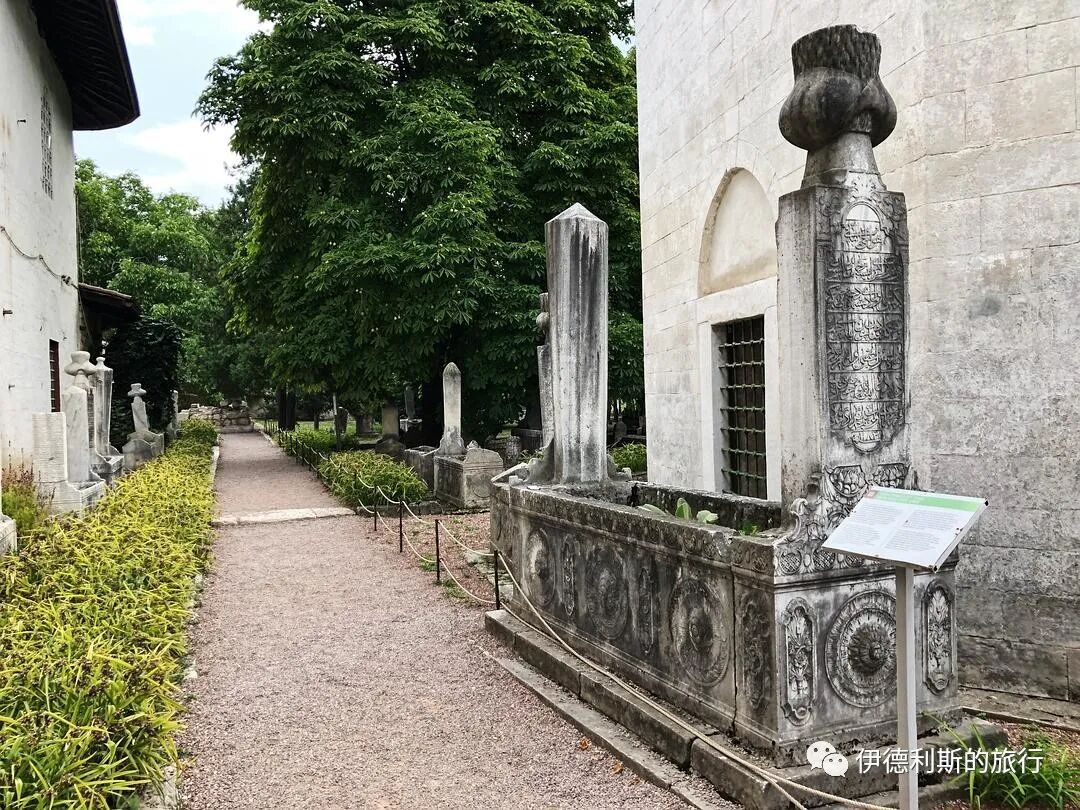
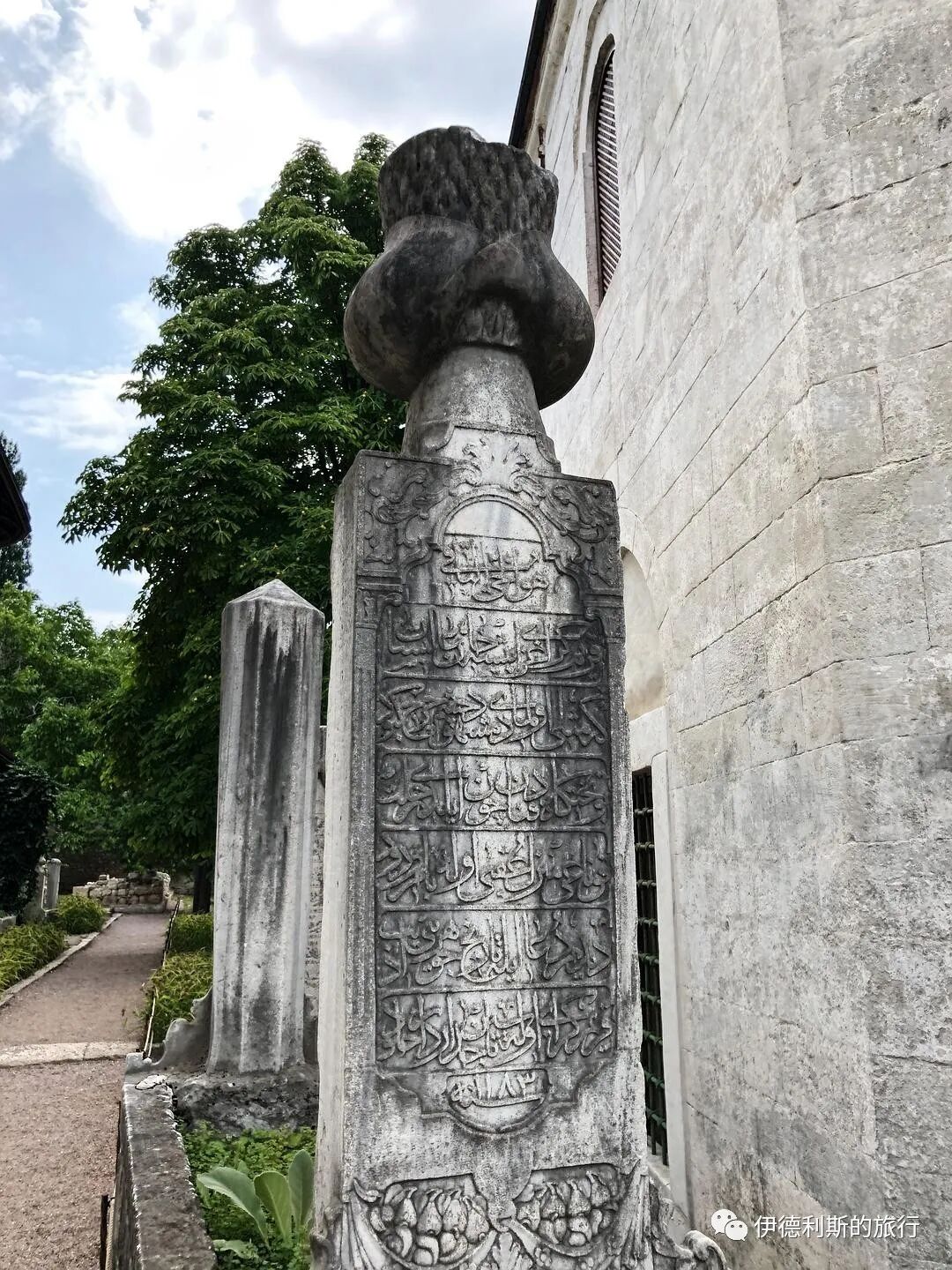
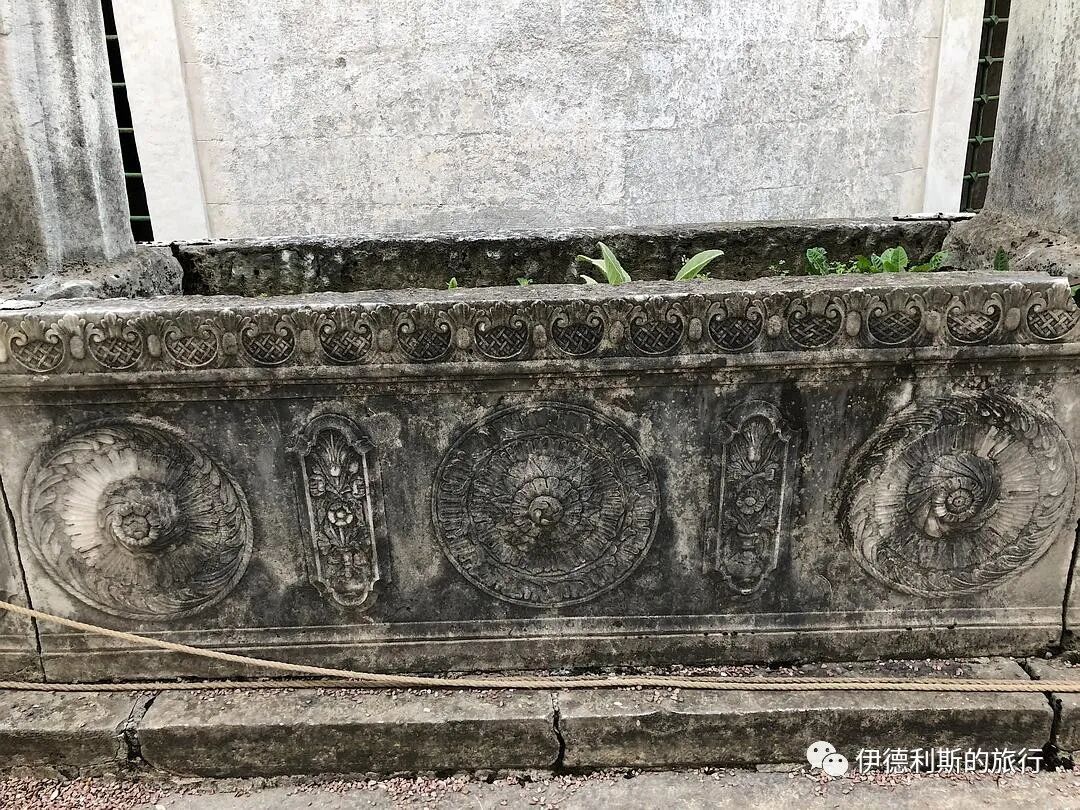
Most tombstones in the cemetery consist of two stones at the head and foot; the top of the headstone is carved with different headgear for men and women, and the body of the stone is inscribed with an epitaph.
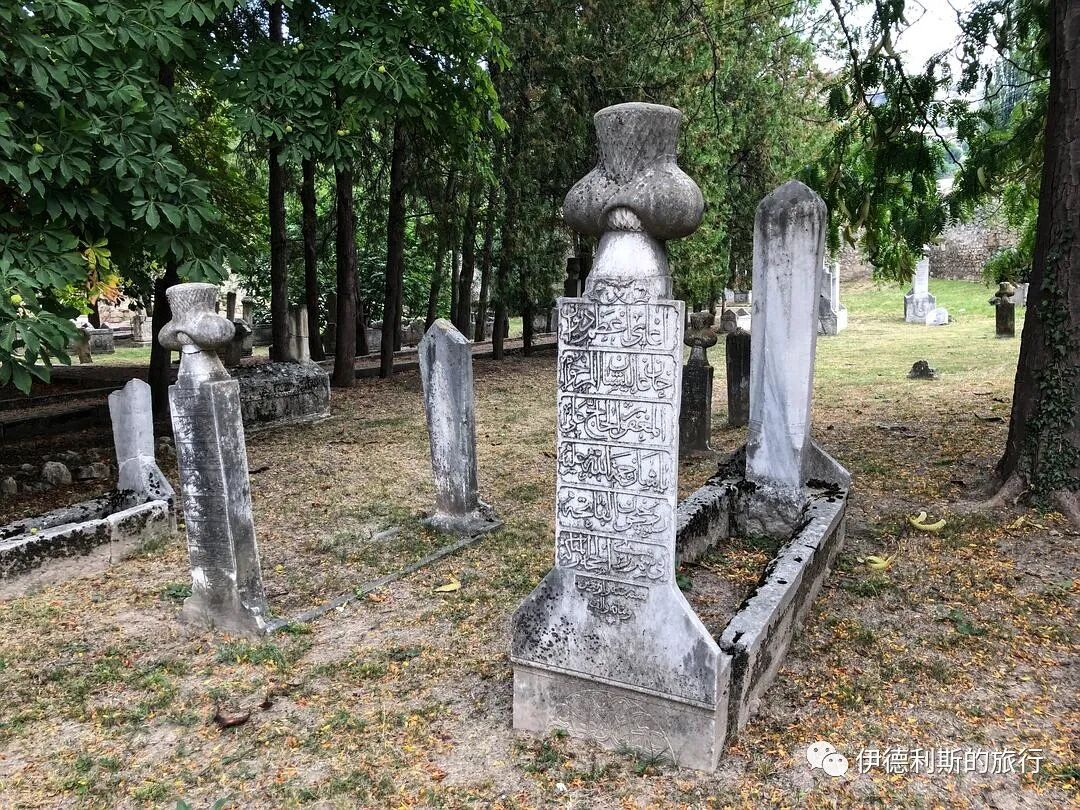
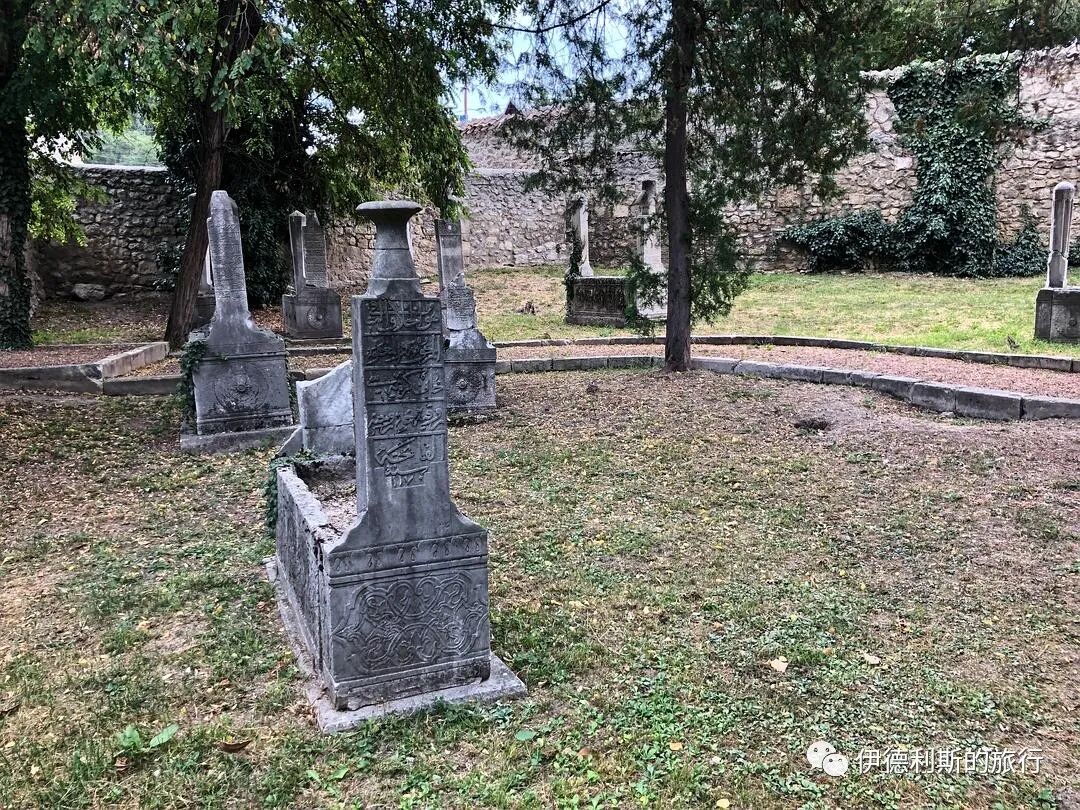
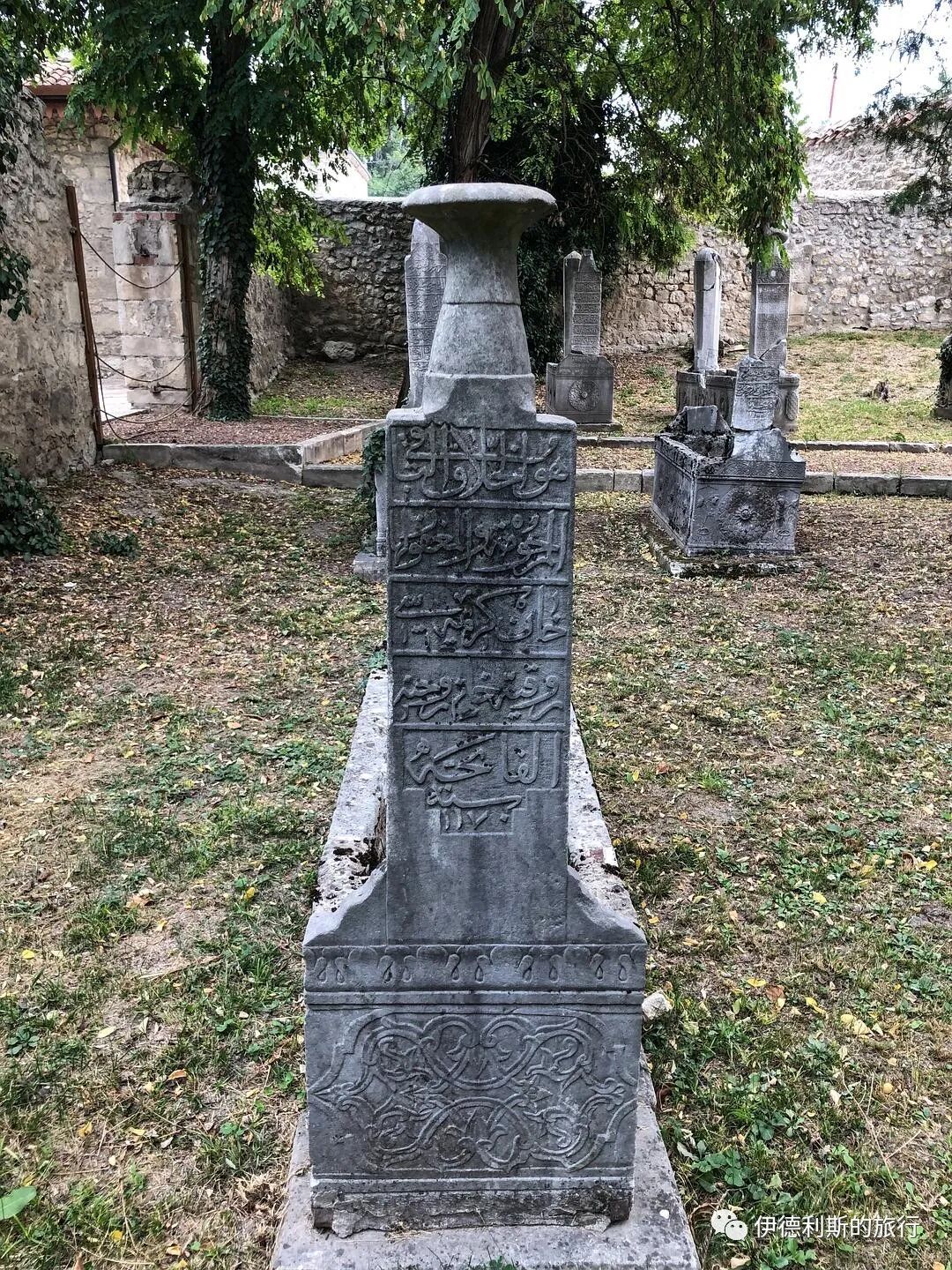
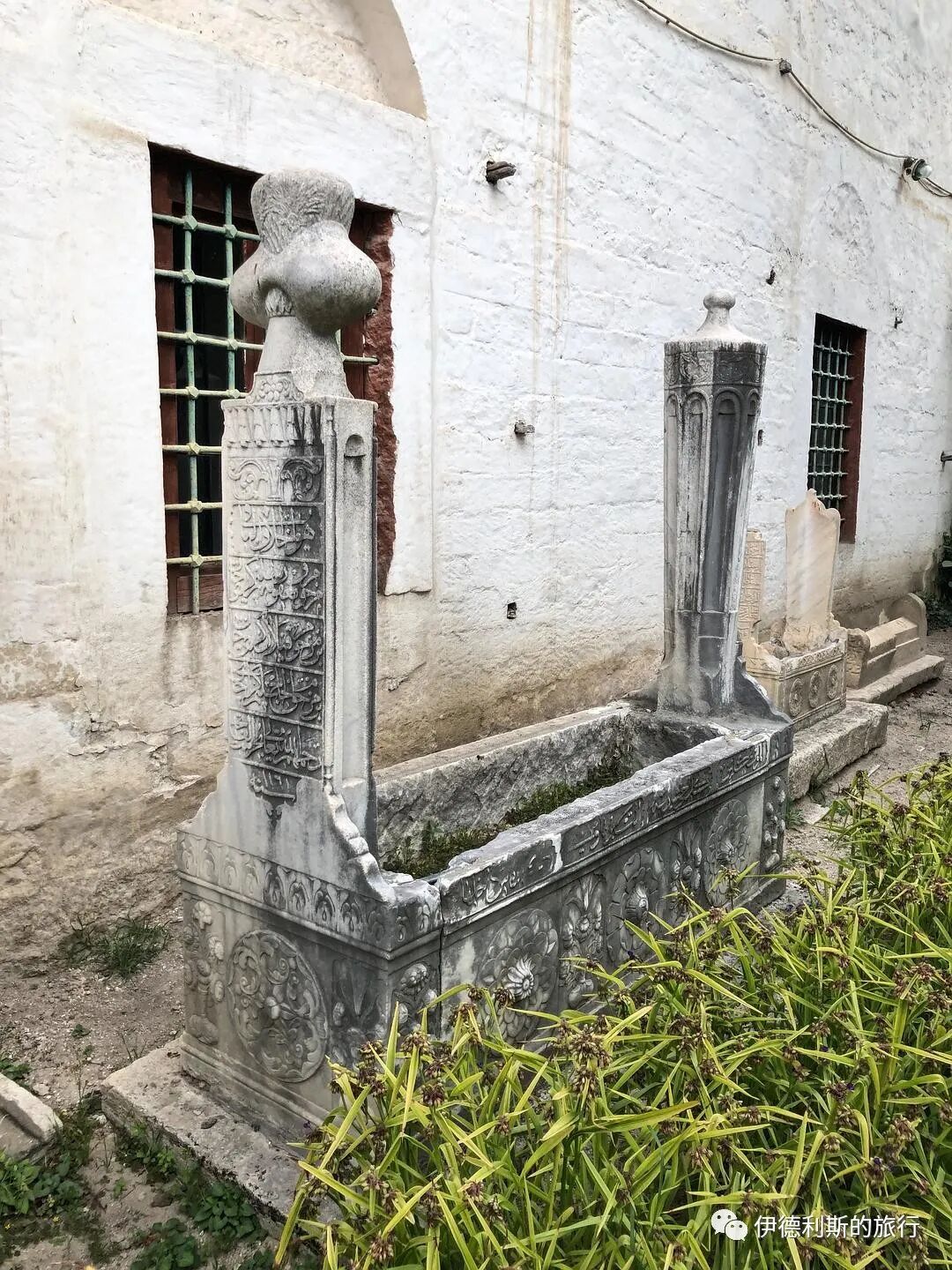
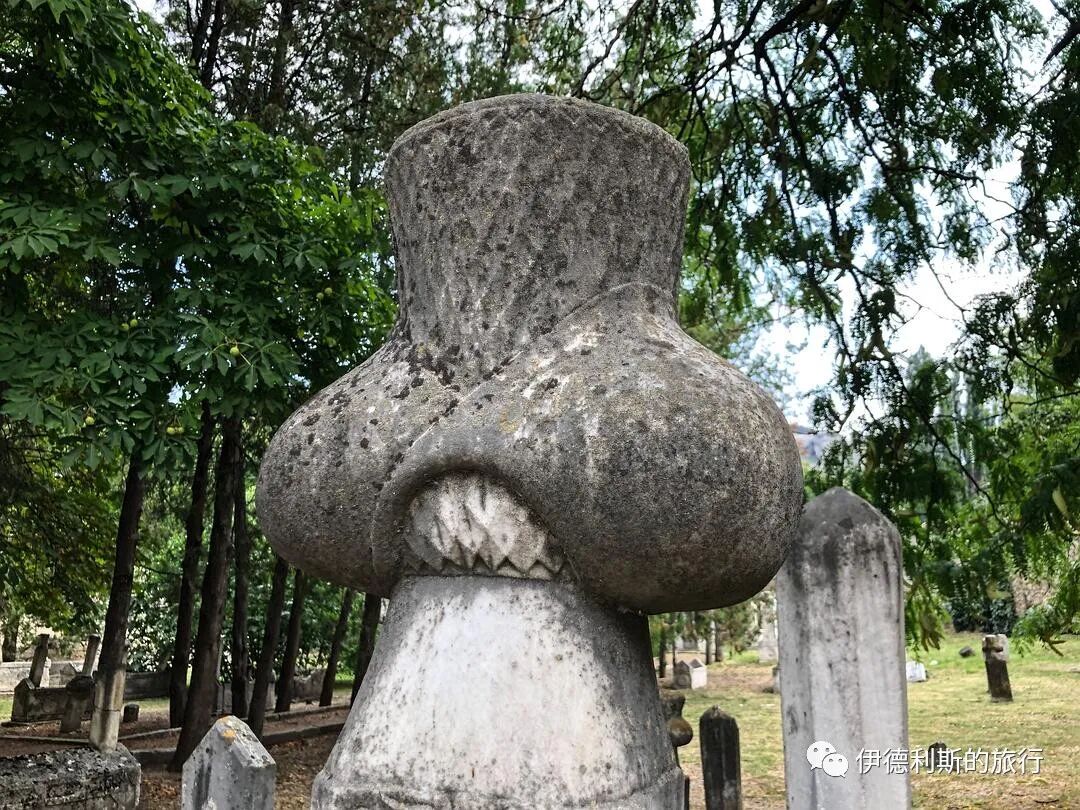
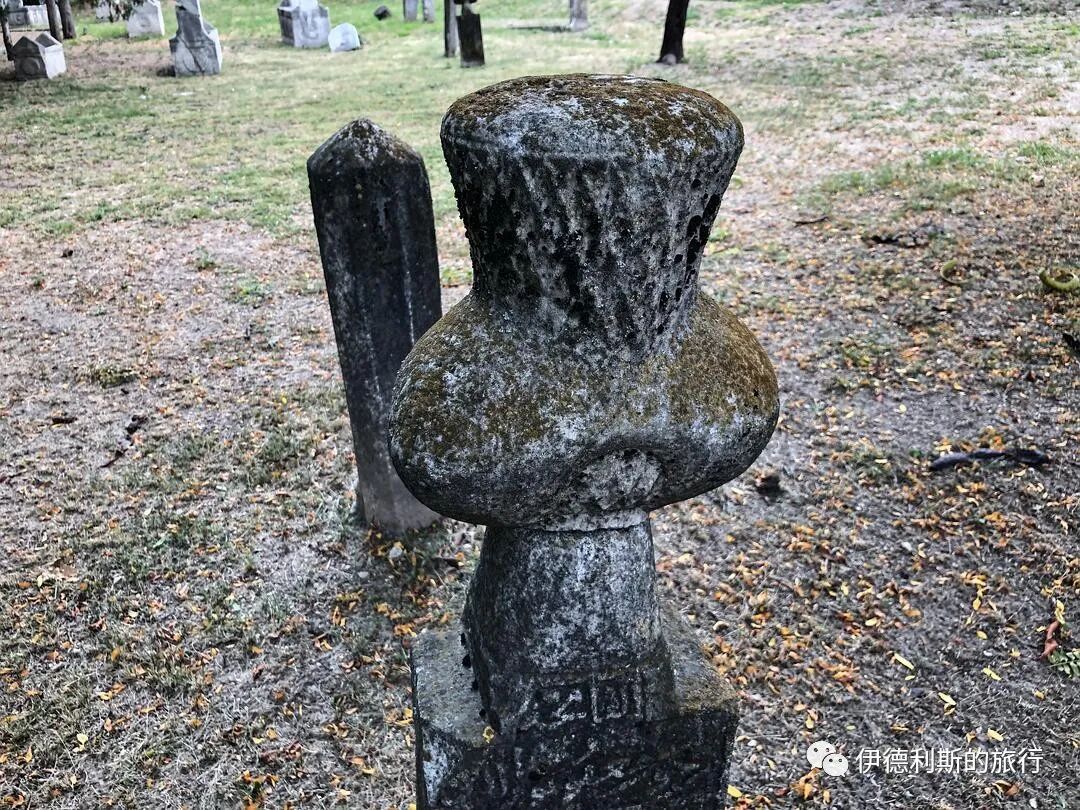
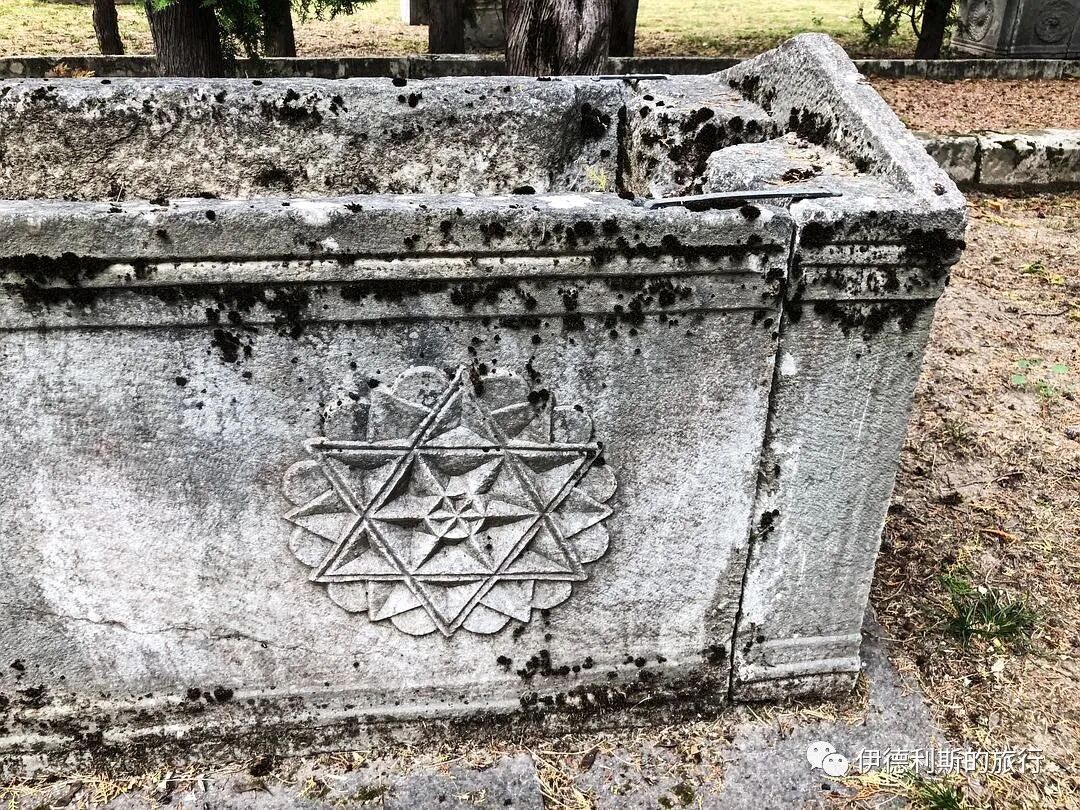
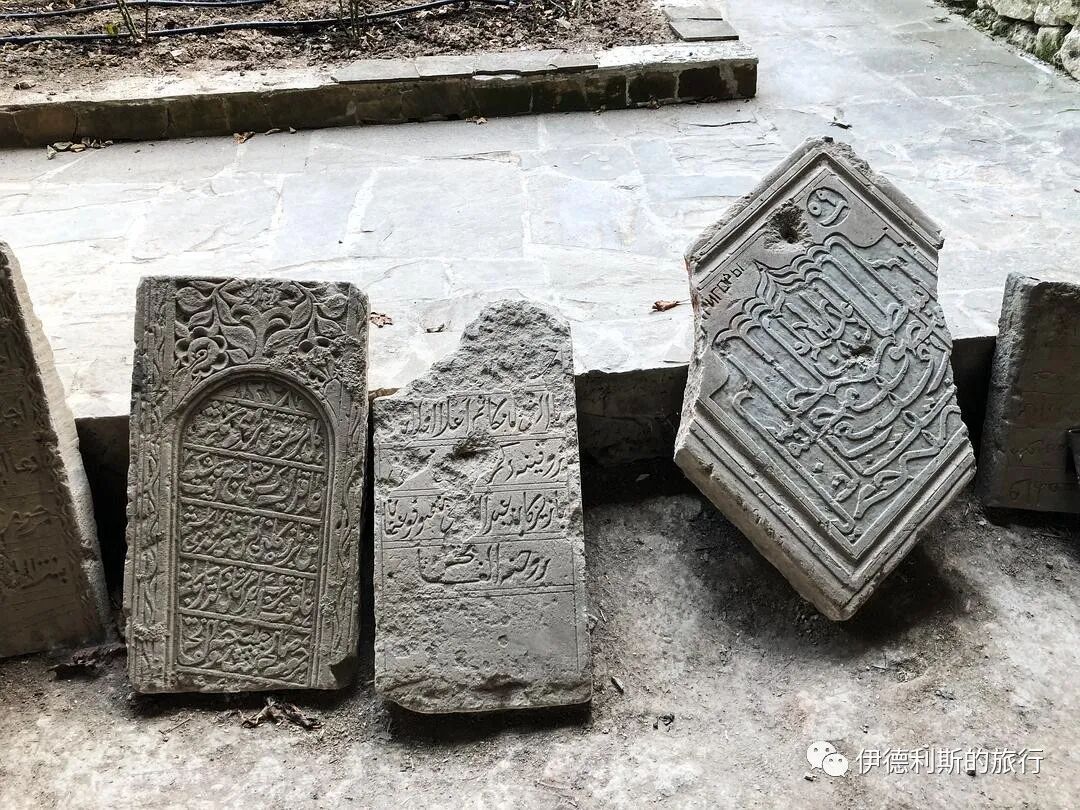
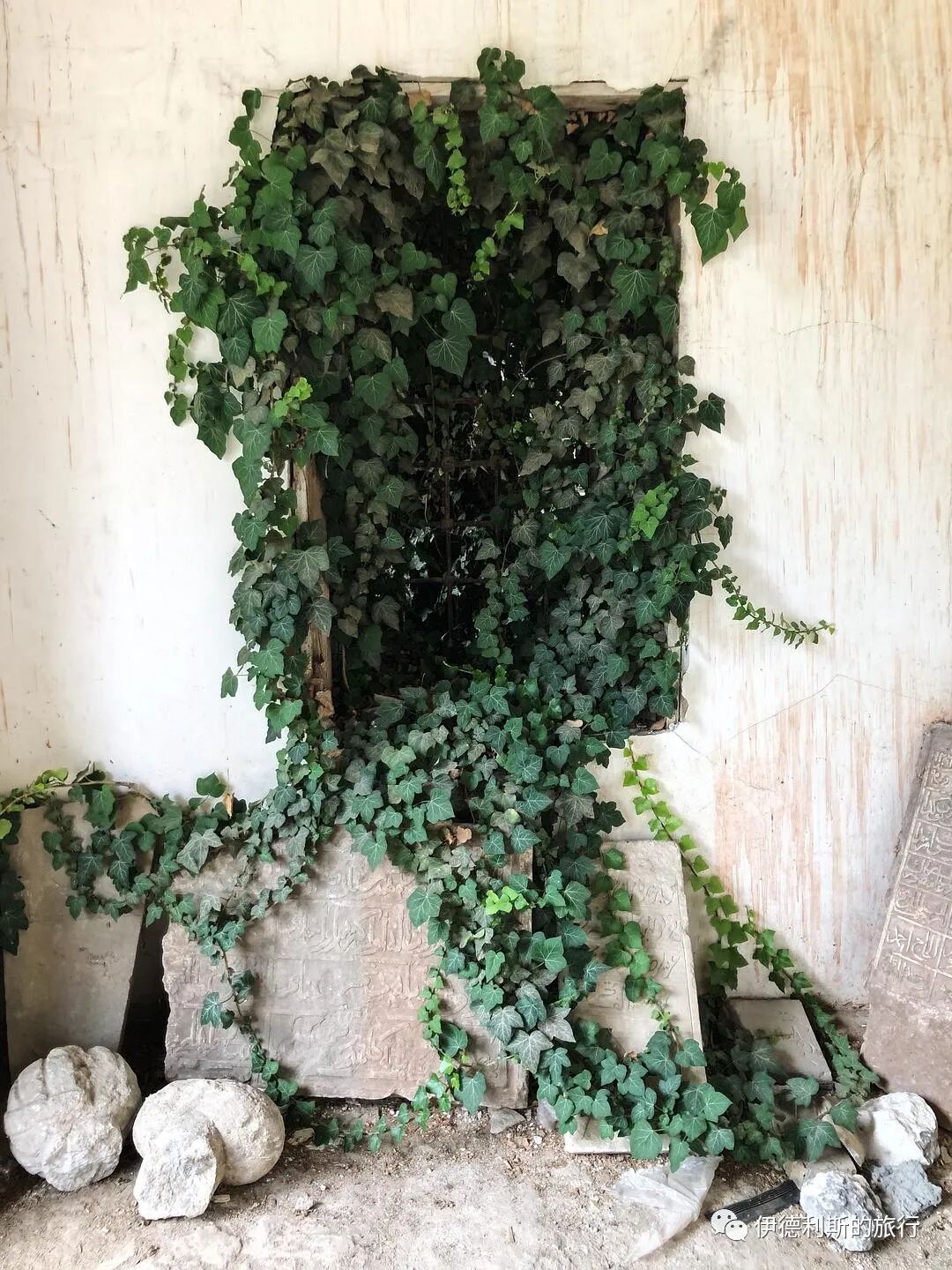
4. SaryGuzel Bath: 1532
The SaryGuzel Bath was built in 1532 by order of Crimean Khan Sahib I Giray and, like the Khan Mosque, is one of the earliest buildings constructed in the Bakhchisarai Khan Palace. "Sarı" in Crimean Tatar means "yellow or fair-skinned," and "Güzel" means "beautiful."
The SaryGuzel Bath is a typical Turkish bath; a furnace in the basement causes hot air to rise and heat the floor, and cold and hot water are supplied to the bath through lead pipes. The bath is divided into men's and women's sections, each with a dome featuring star-shaped cutouts for ventilation and light, and an indoor courtyard with a fountain at the exit.
The SaryGuzel Bath operated until 1924, after which it was closed as a dangerous structure; it has now been restored and is open for exhibition.
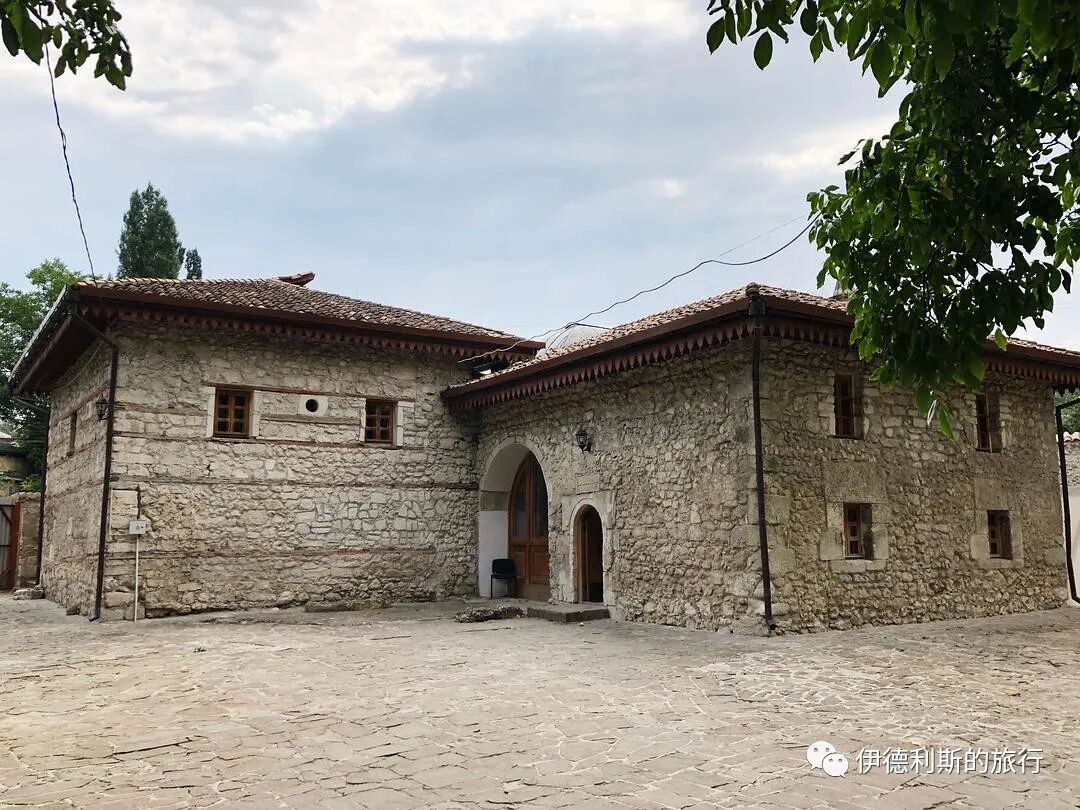
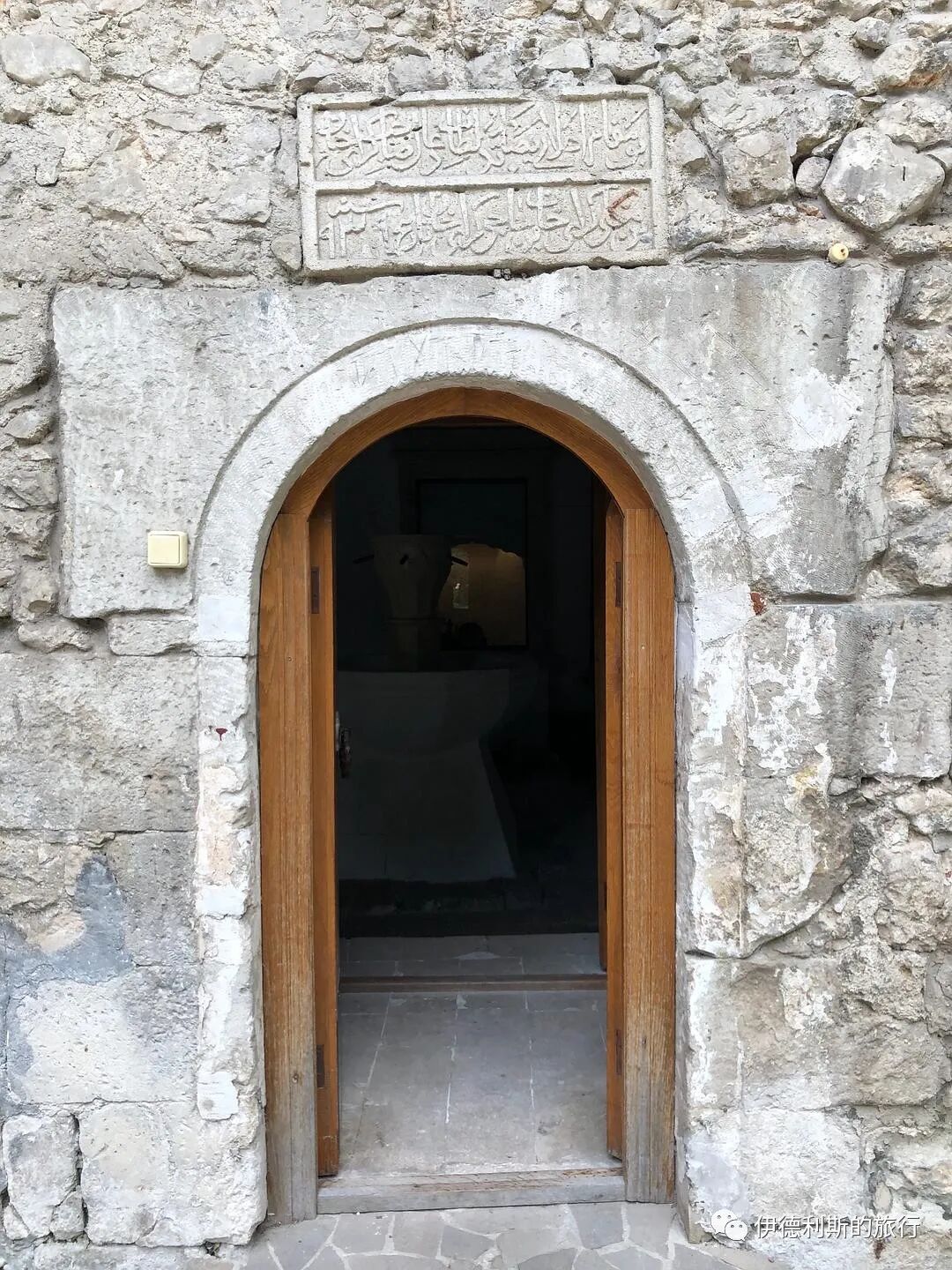
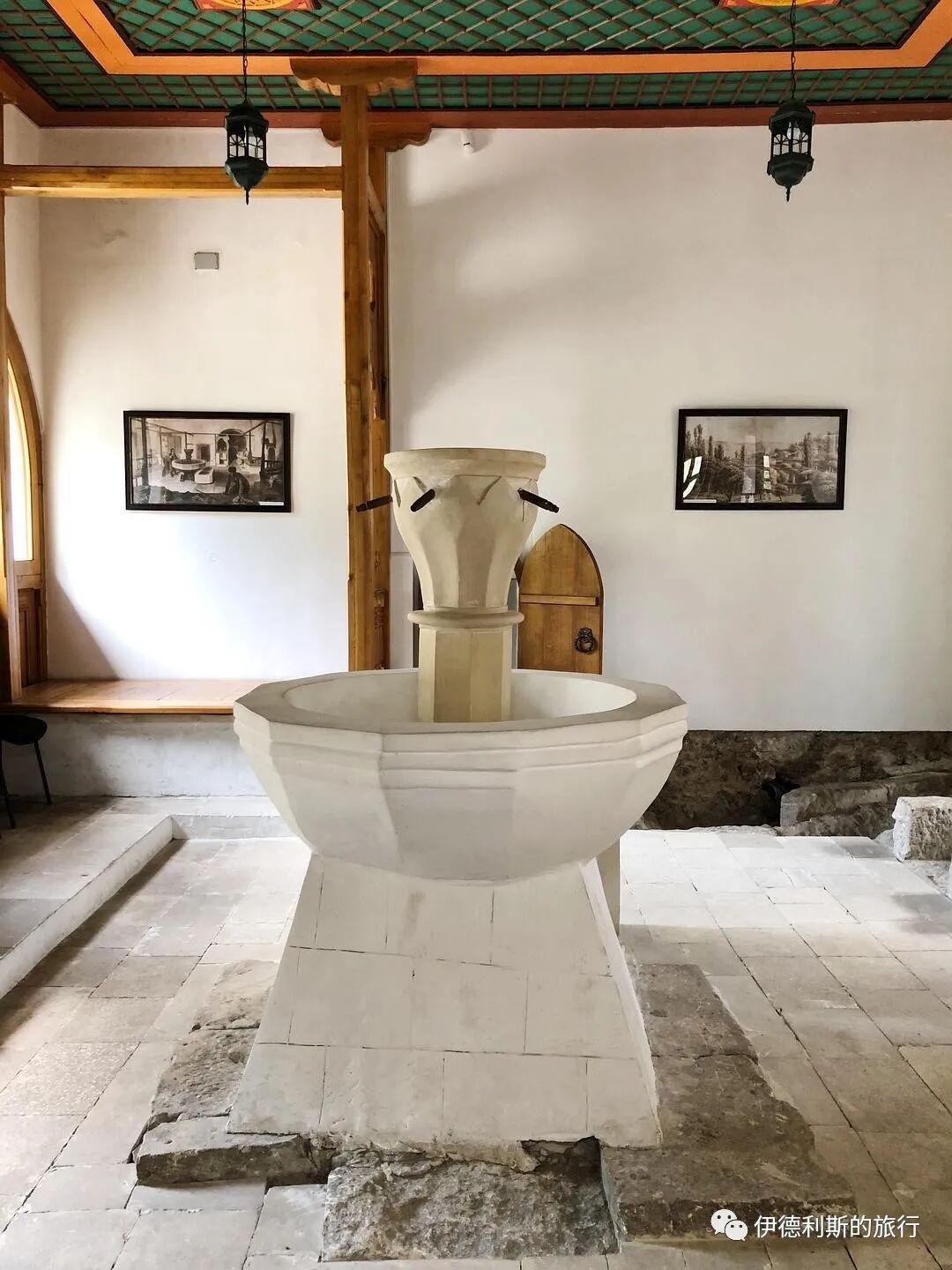
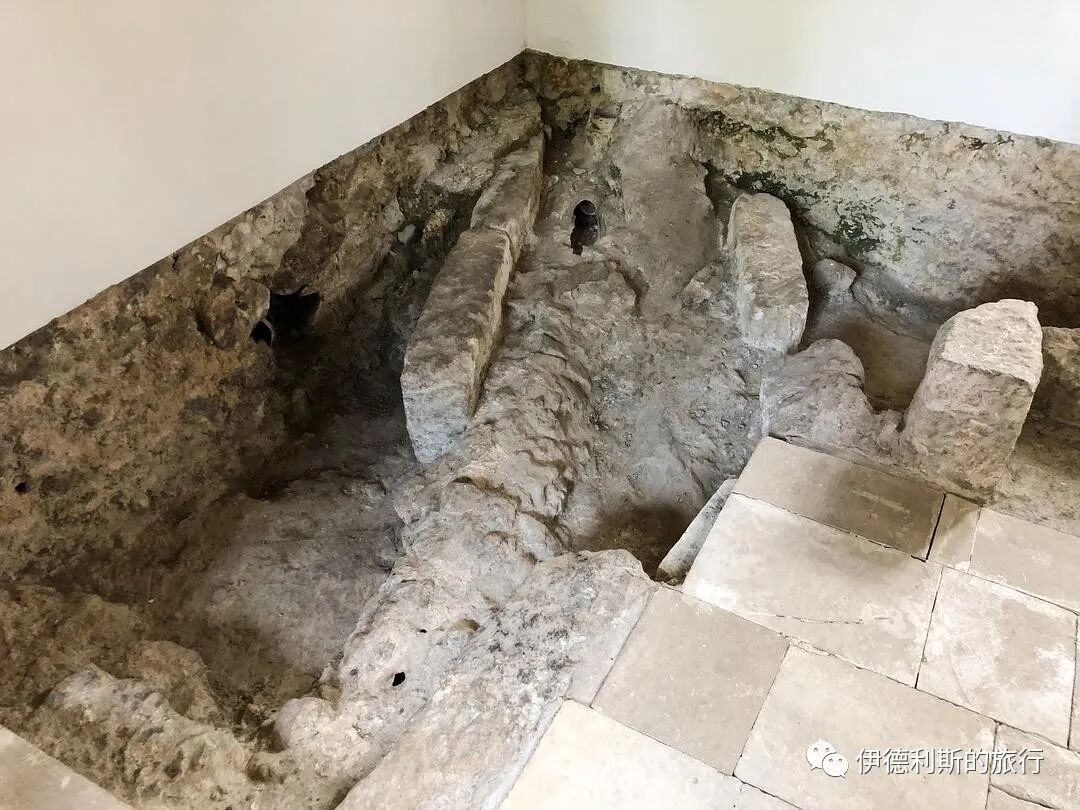
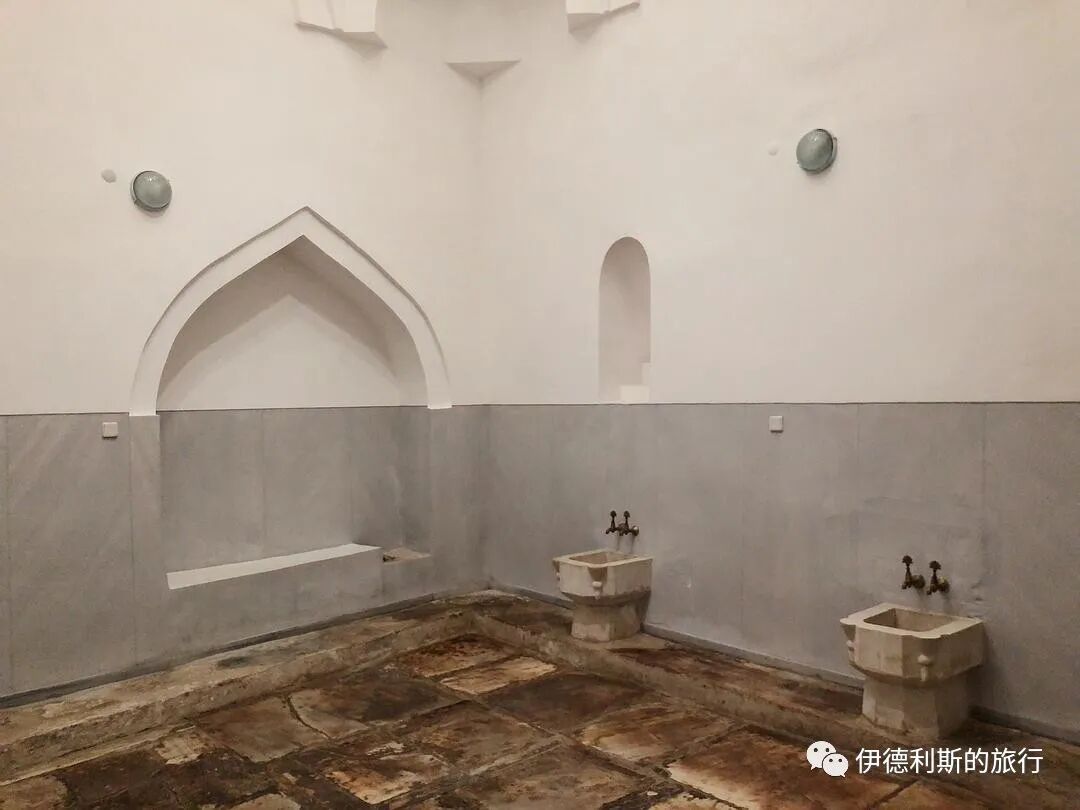
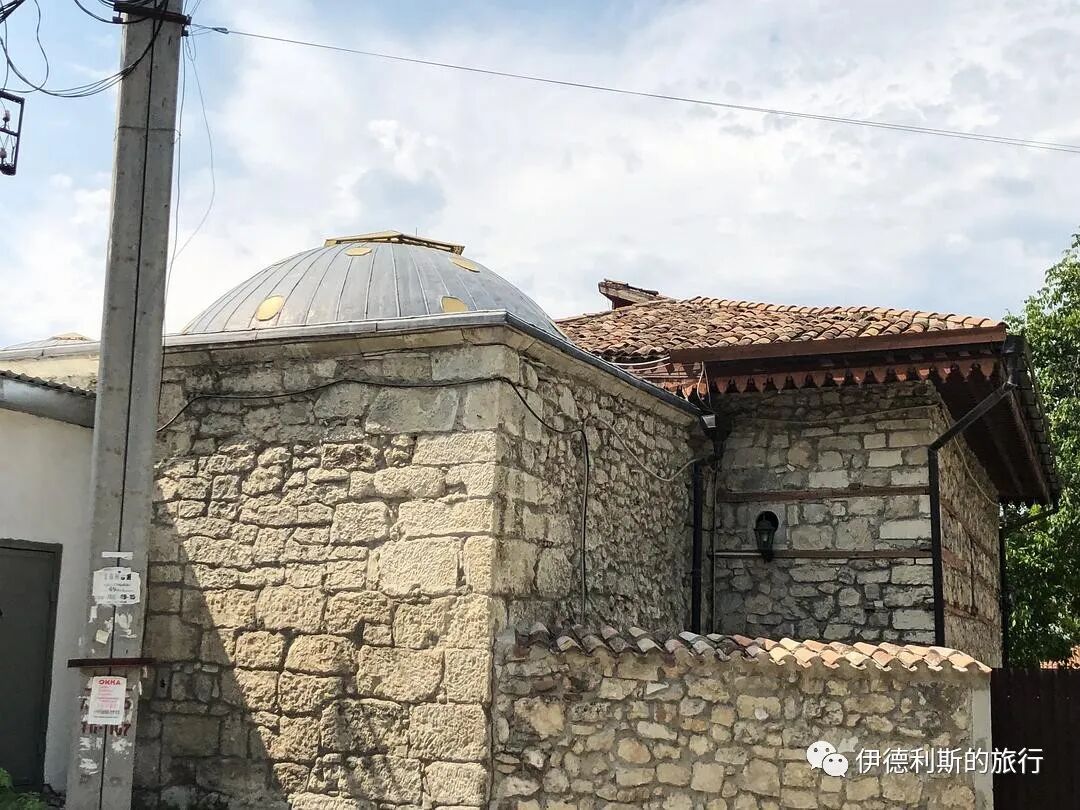
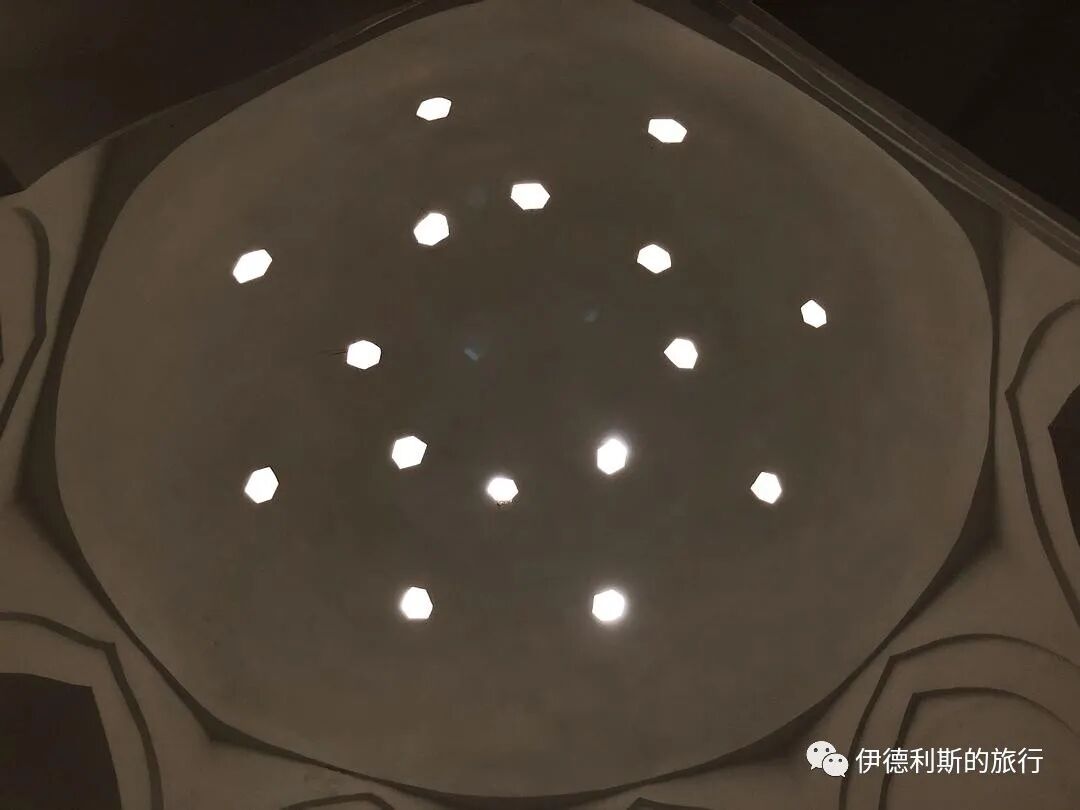
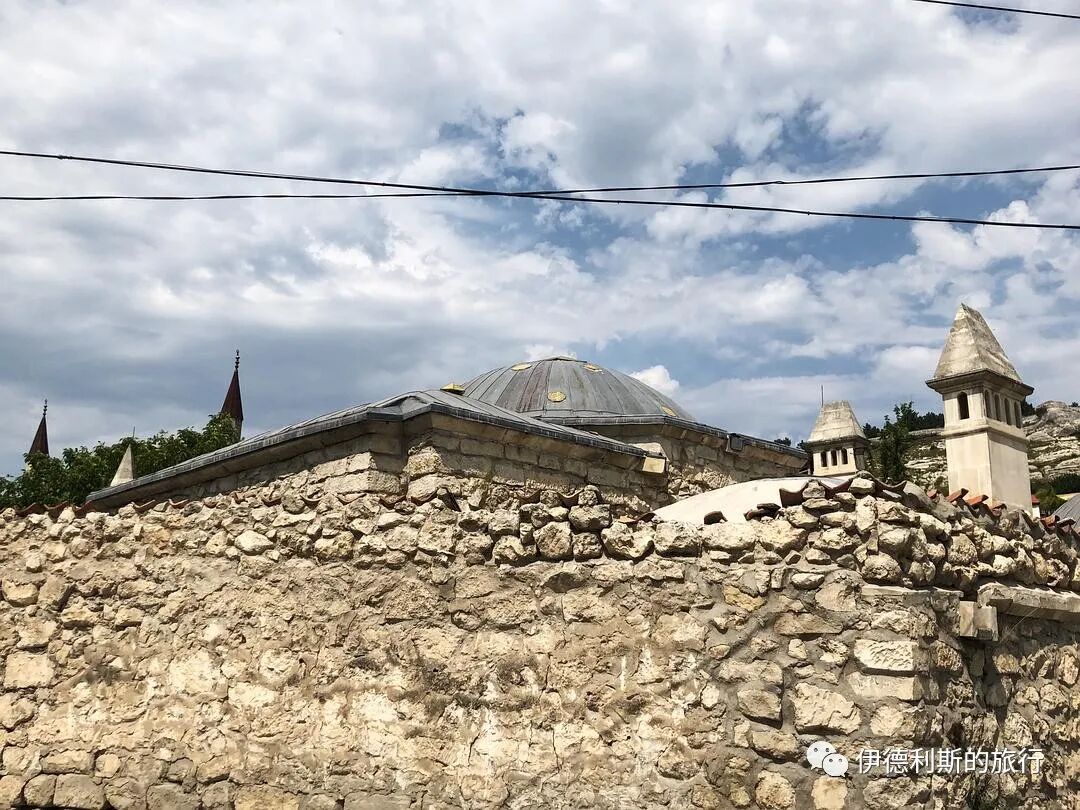
5. Falcon Tower
The Falcon Tower (Toğan qullesi) is located in a corner of the Persian Garden of the Khan Palace and is said to have been used to train the falcons of the Khan's court. The Falcon Tower was built in the 16th century, originally as a five-story brick, mud, and wood structure. It was rebuilt in 1760 into two stories: the lower level is a cube built of rubble and cement mortar, and the upper level is an octagonal tower built of wooden planks.
The Falcon Tower is connected to the Harem building of the Khan Palace, and a spiral staircase inside the tower leads to an observation deck at the top, allowing those living in the harem to climb the tower and overlook the entire palace.
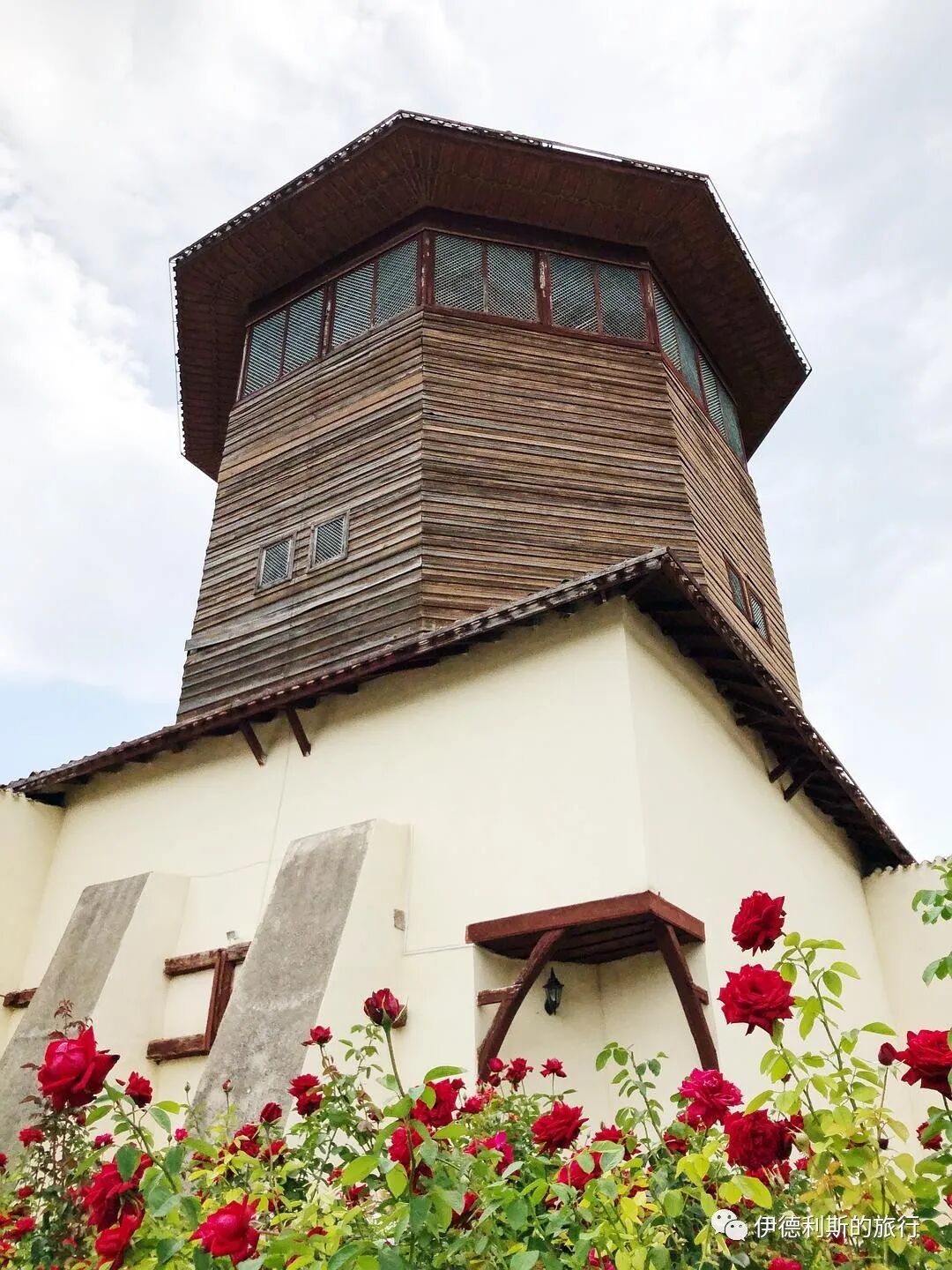
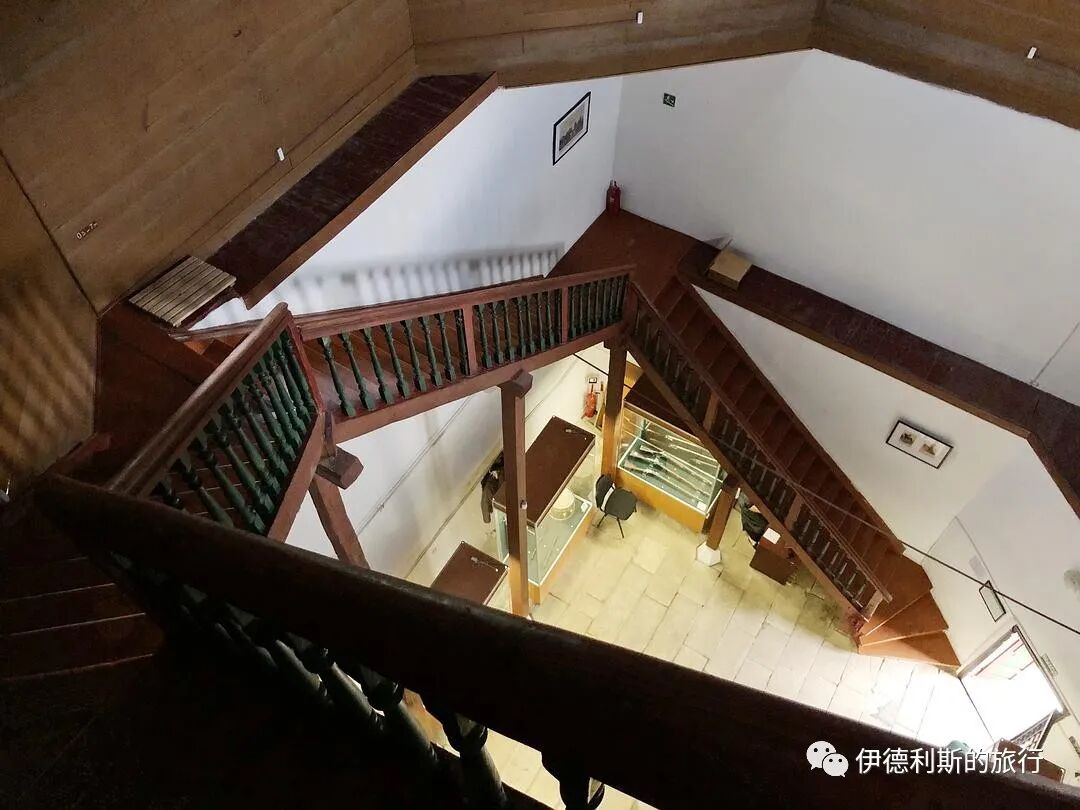
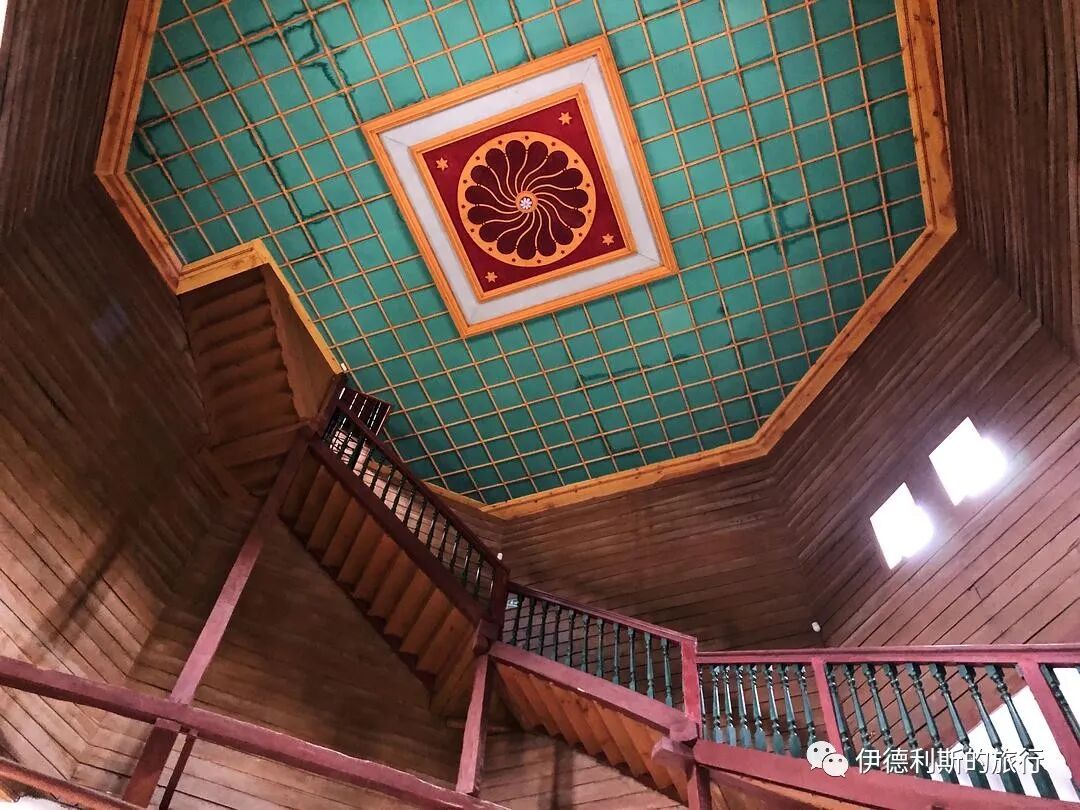
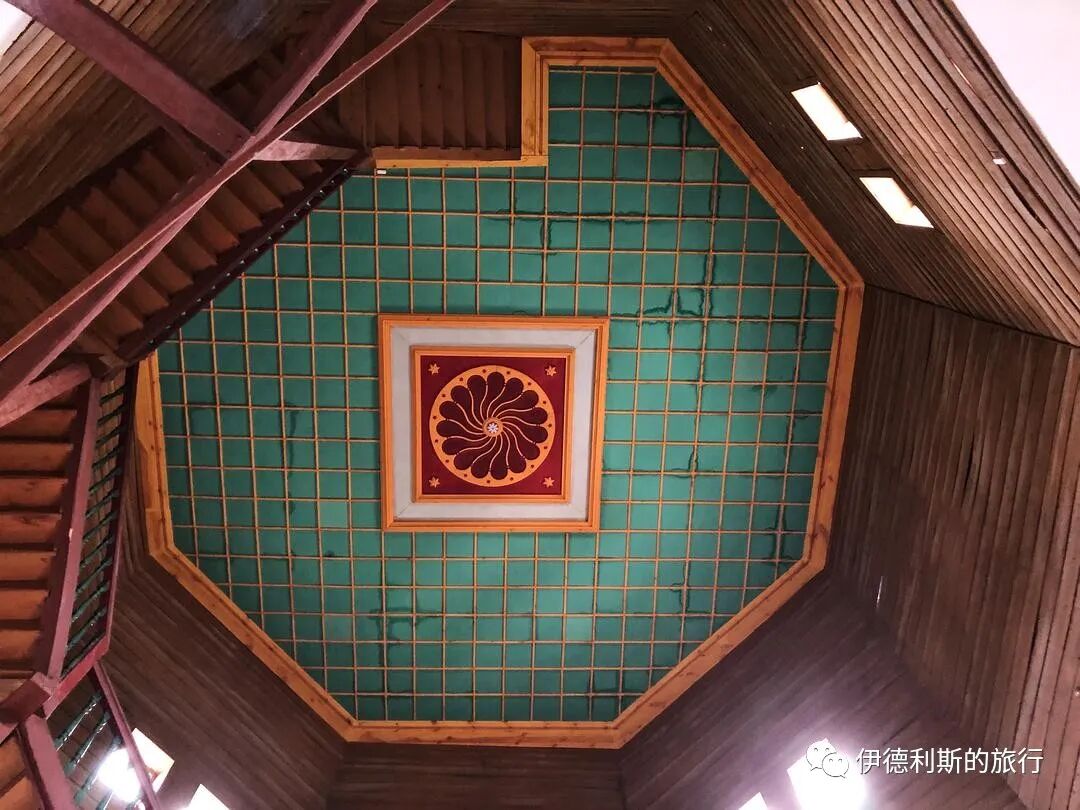
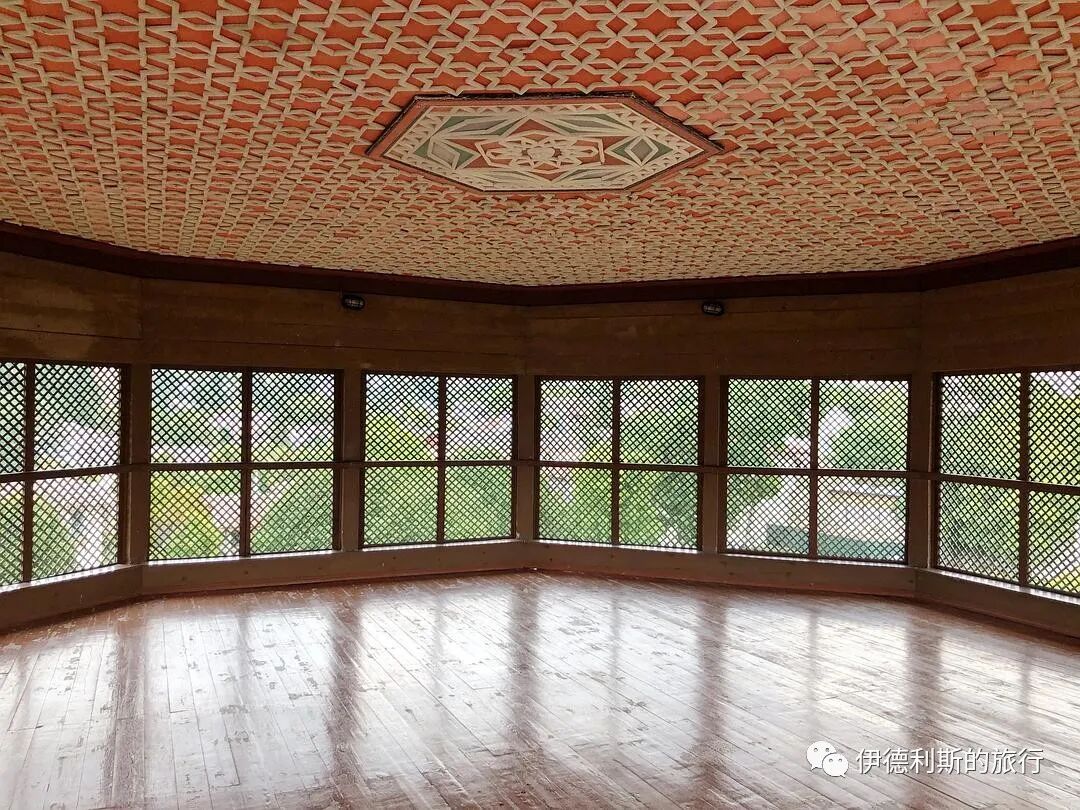
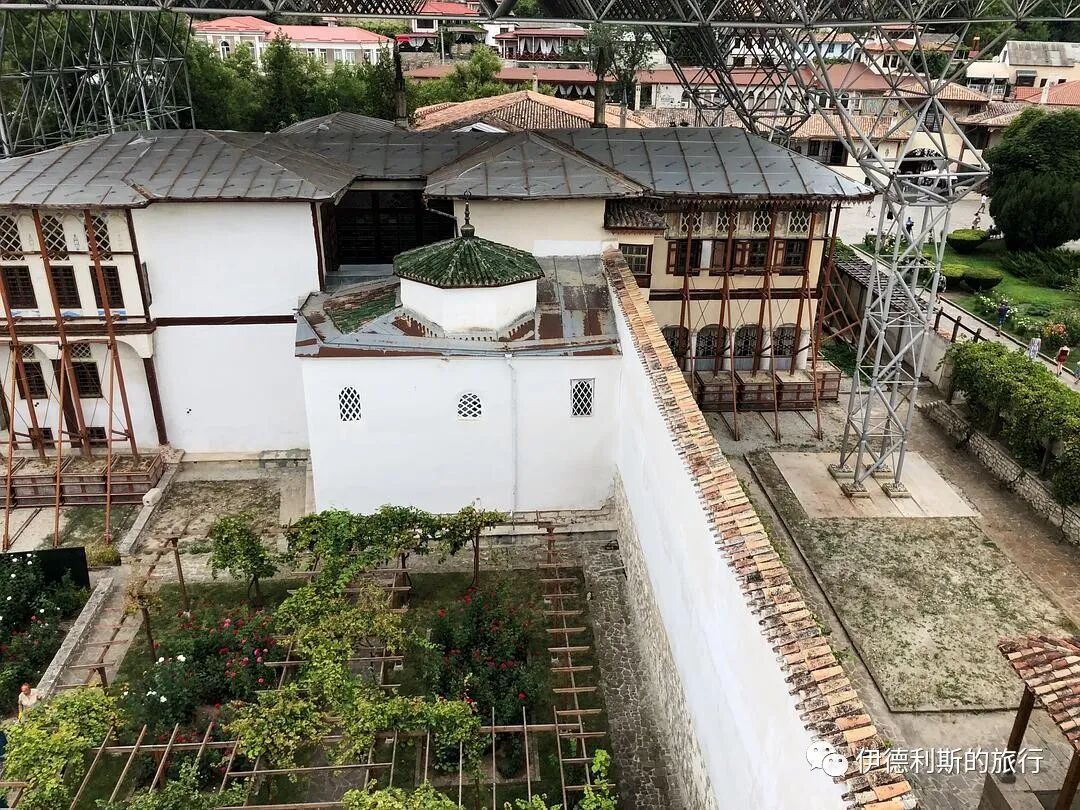
Weapons and saddles from the 18th–19th centuries displayed on the ground floor of the Falcon Tower
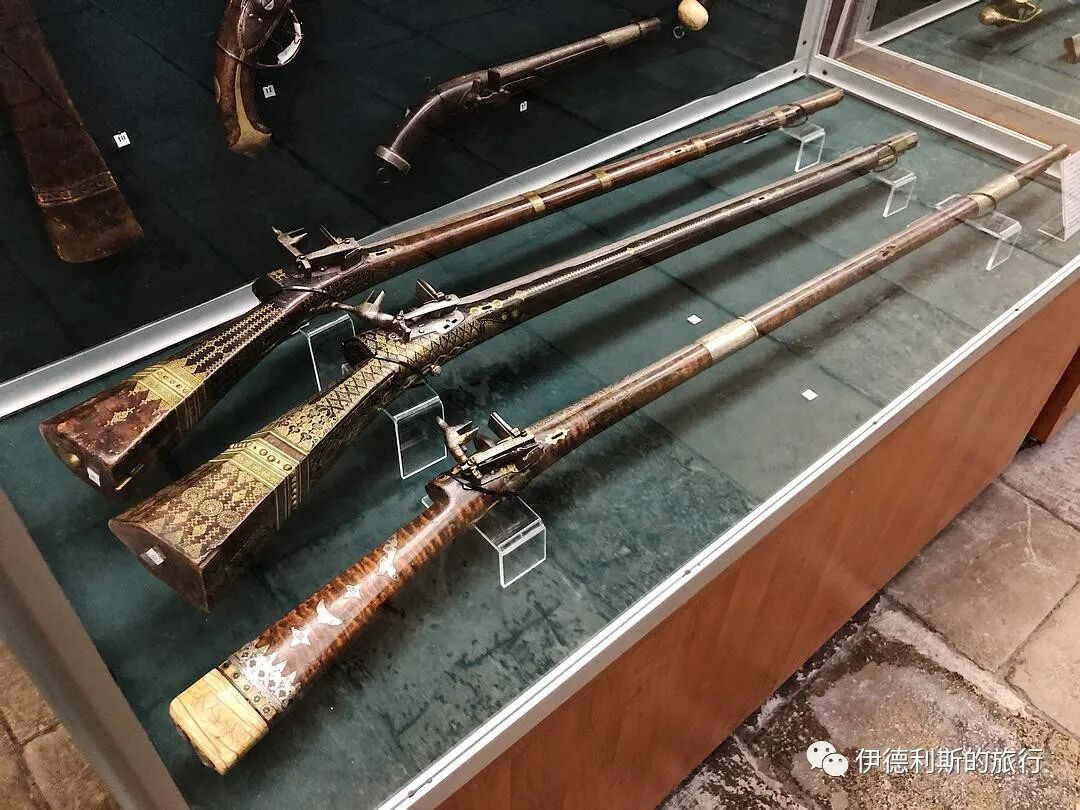
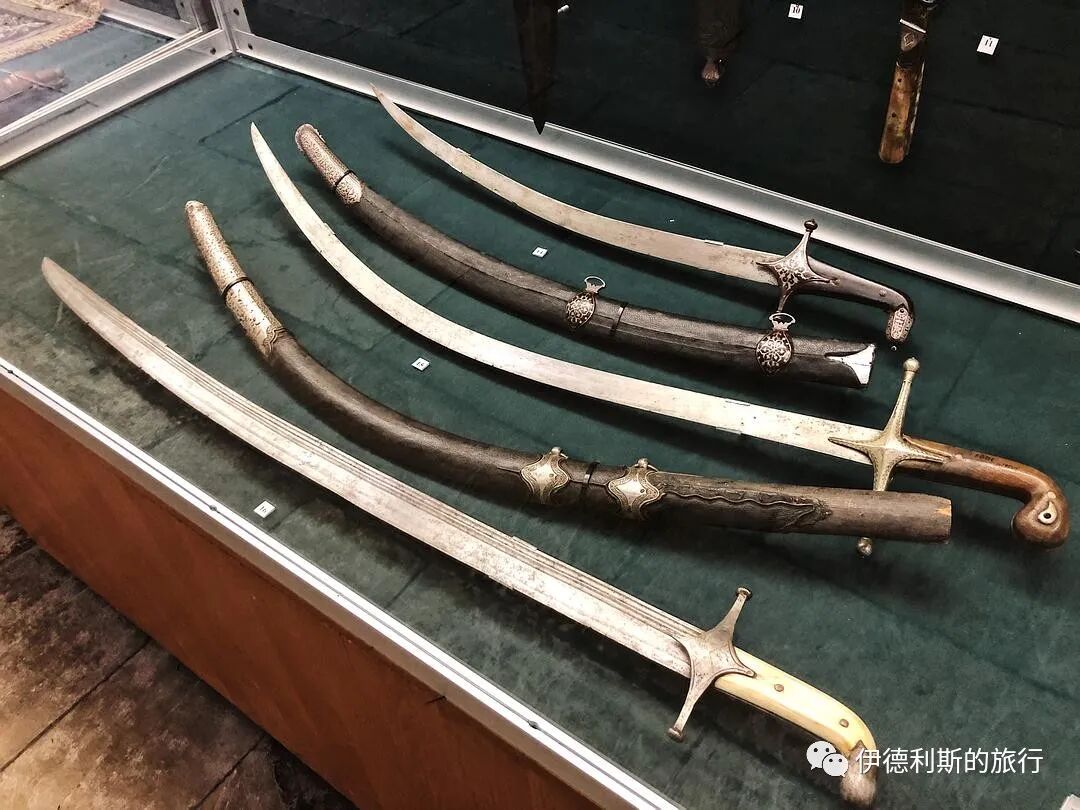
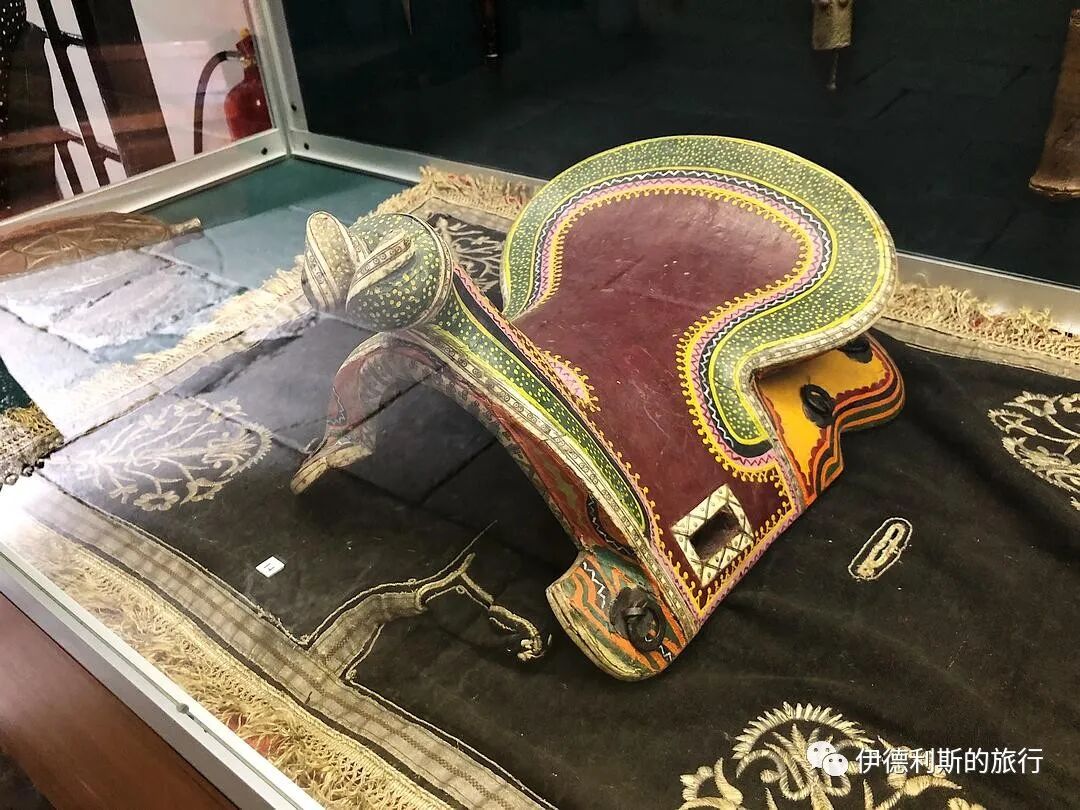
6. Harem
The Harem (Arem) of the Crimean Khan Palace once had 4 buildings and 73 rooms. In 1818, Tsar Alexander I demolished 3 buildings and 70 rooms, leaving only an annex with 3 rooms and a pavilion. Today, the annex displays the interior decorations of Crimean Tatar houses from the 17th to 19th centuries.
The living room retains its original fireplace and cupboards, and a mirror with the author's inscription was discovered during the 1980s restoration. Paintings on the vanity and Arabic poetry on the ceiling have also been cleaned.
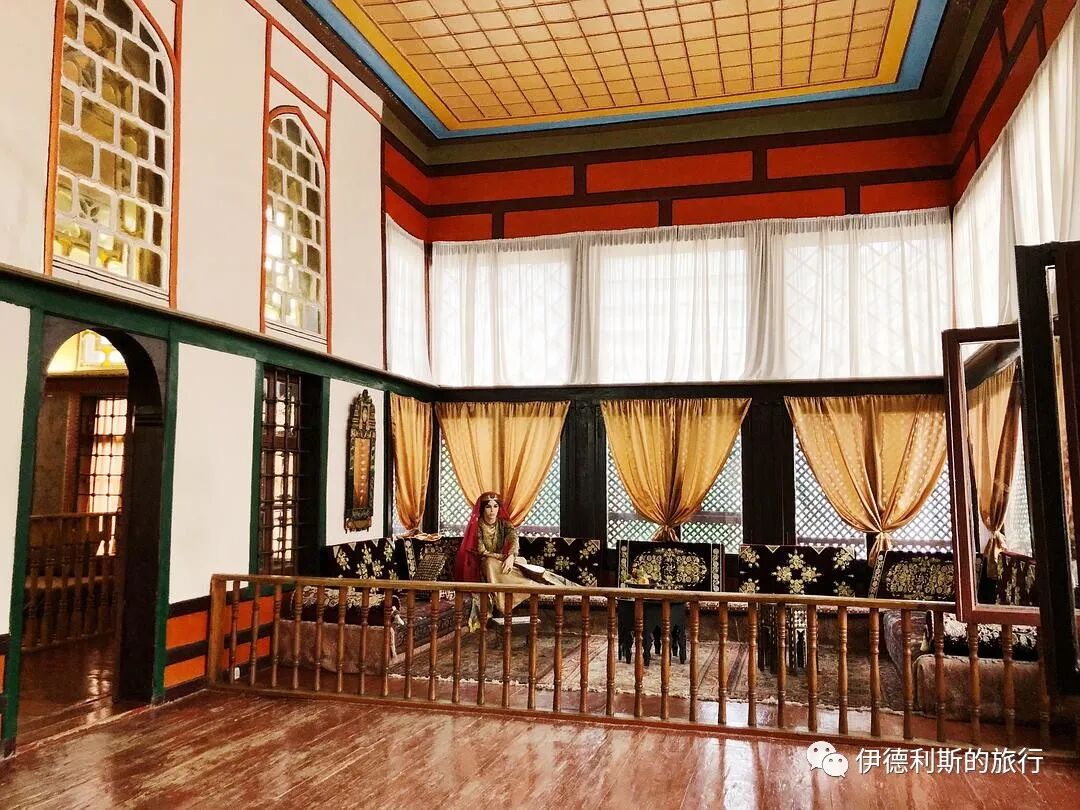
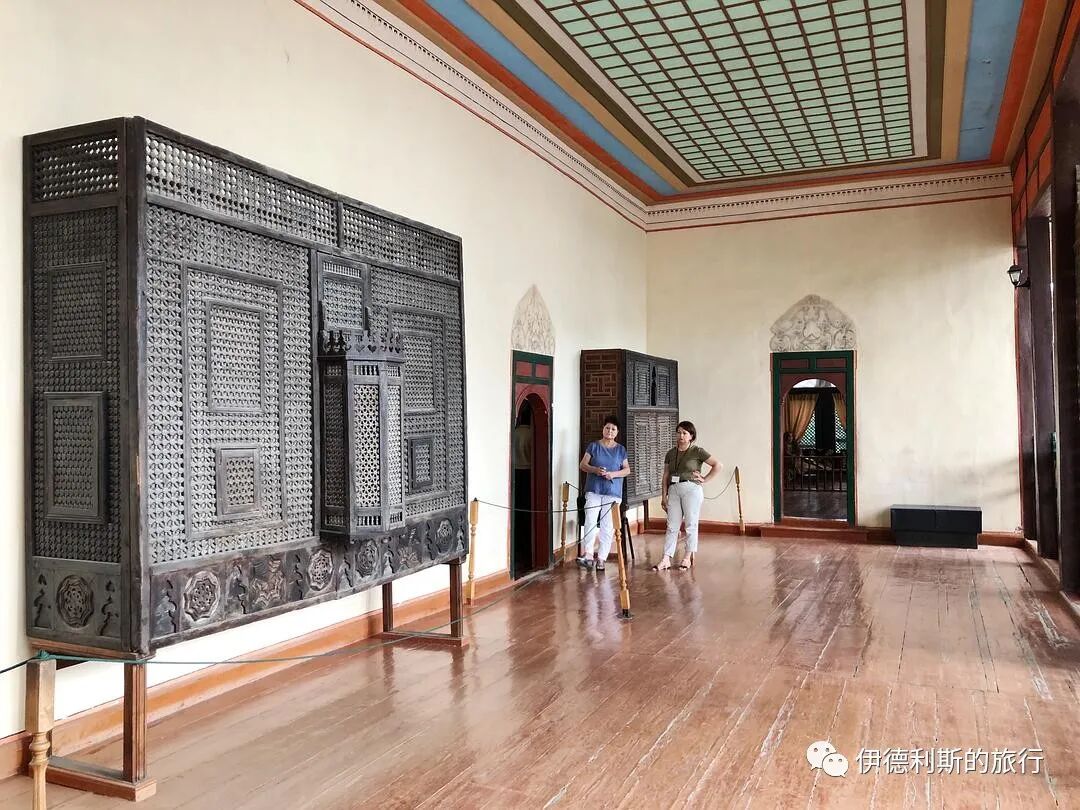
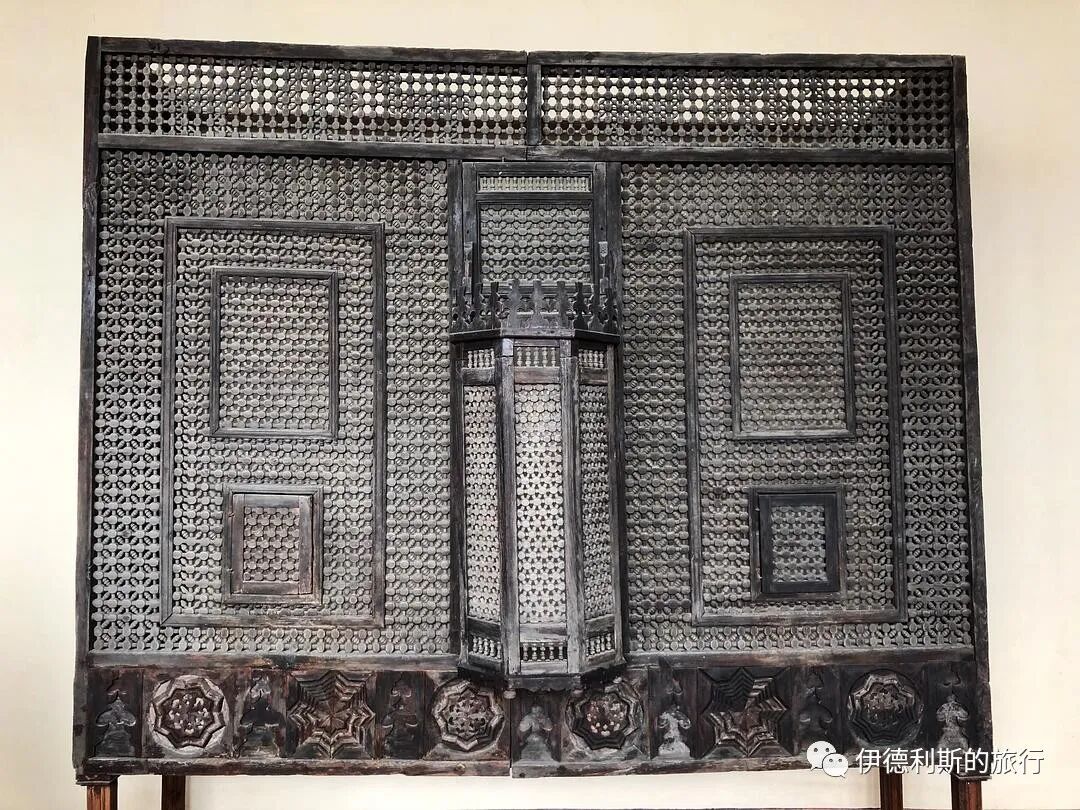
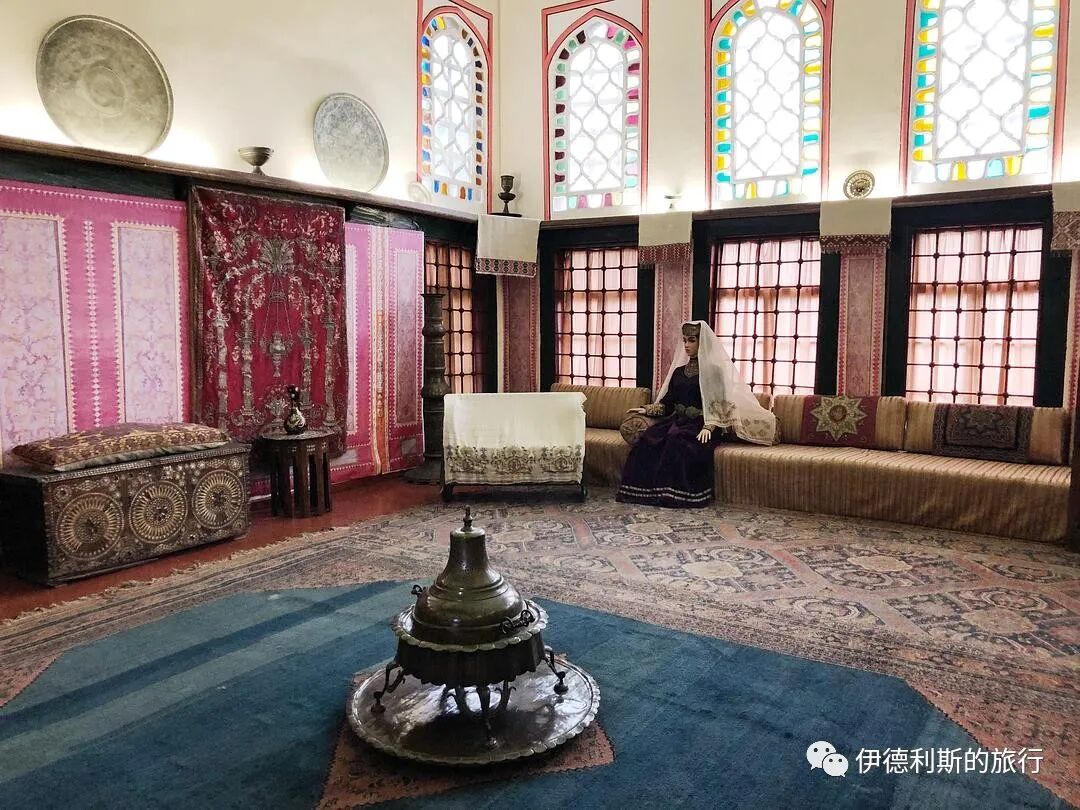
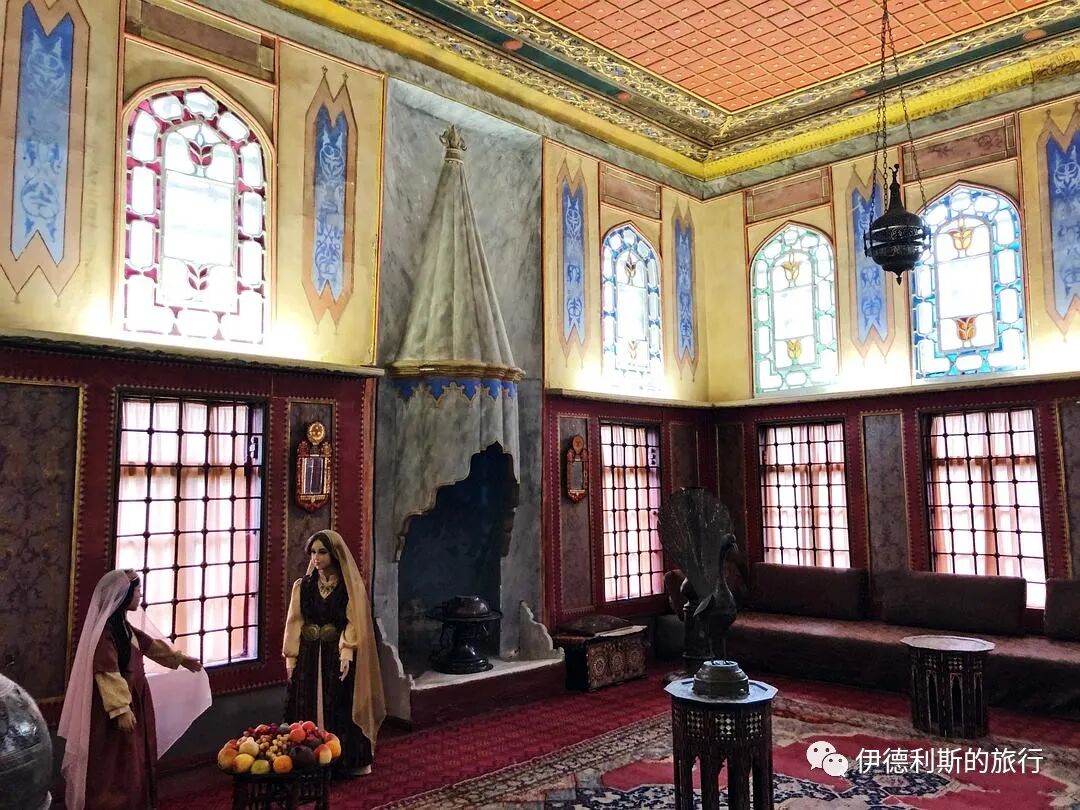
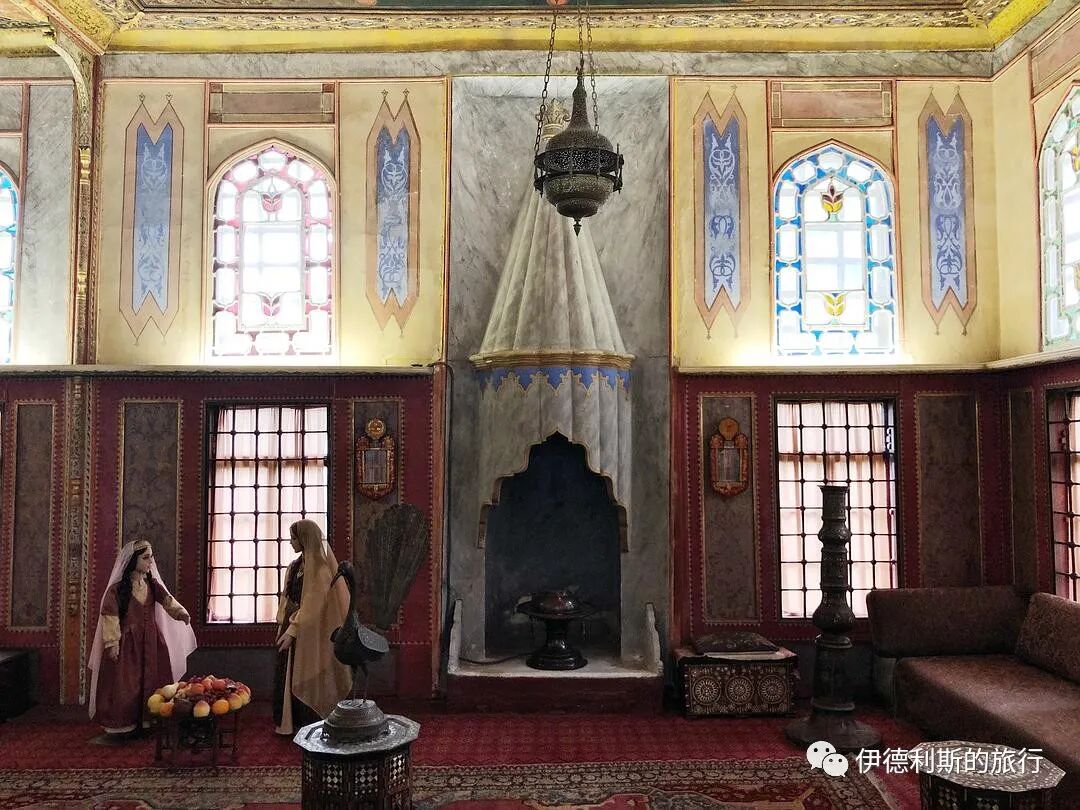
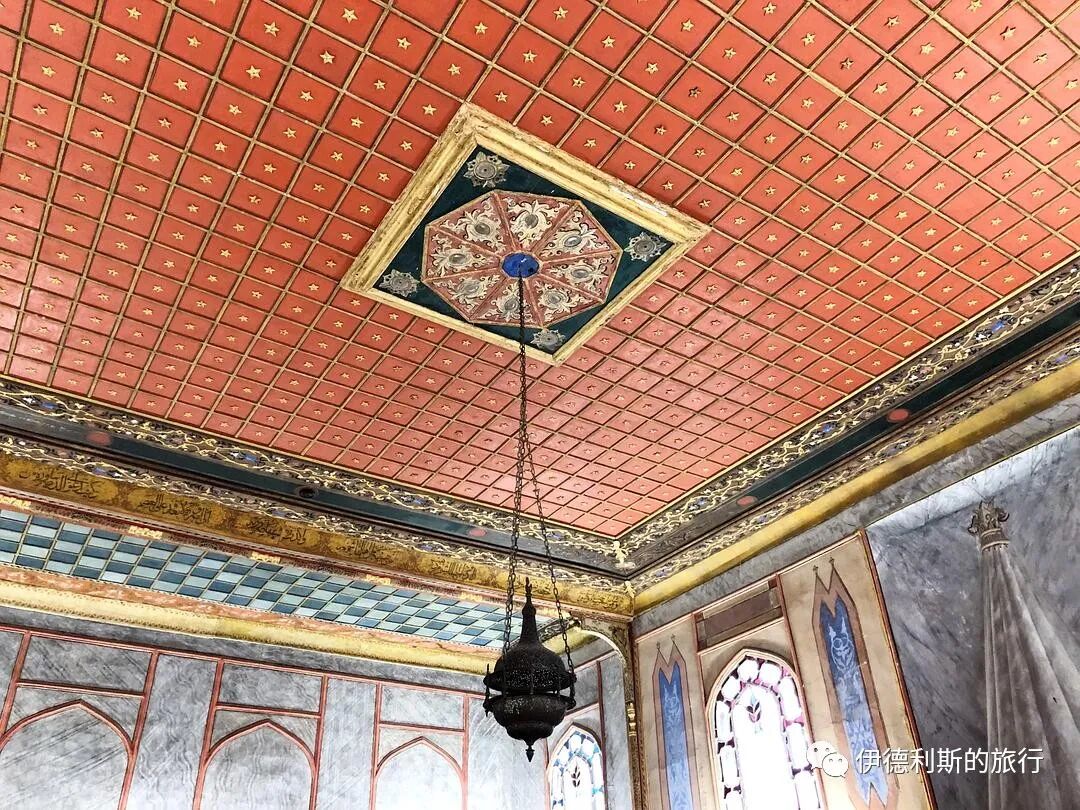
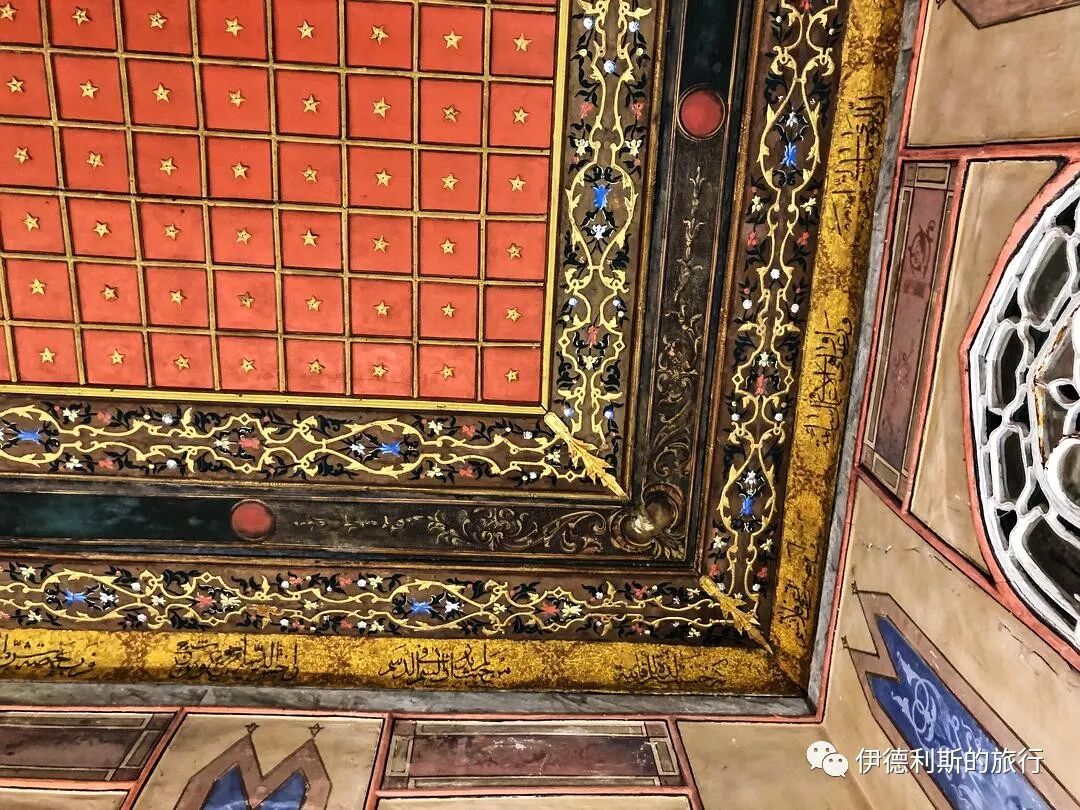
The Former Capital of the Crimean Khanate—Bakhchisarai (Part 2)
Articles • ali2007fr posted the article • 0 comments • 159 views • 2026-05-16 22:58
Summary: This travel note introduces The Former Capital of the Crimean Khanate—Bakhchisarai (Part 2). The pavilion in the harem, and an 18th-century coffee pot. It is useful for readers interested in Crimea Travel, Islamic History, Muslim Heritage.
The pavilion in the harem, and an 18th-century coffee pot.
7. Persian Garden
The Persian Garden in the southern part of the harem was surrounded by high walls and once featured various trees, fountains, and baths, but now only ruins remain.
8. Dilâra Bikeç Mausoleum: 1764
The Dilâra Bikeç Mausoleum is an octagonal tomb at the southernmost point of the Bakhchisaray Khan Palace. It was commissioned in 1764 by the Crimean Khan Qırım Giray (reigned 1758-1764, 1768-1769) for his beloved wife. The "Fountain of Tears," which Pushkin once wrote a poem to praise, was originally installed in this mausoleum before being moved to the Fountain Courtyard in 1783.
The love story of Qırım Giray has been circulating in Bakhchisaray since the 18th century. According to legend, his beloved wife Dilâra Bikeç was a Greek woman from Georgia.
After renovations in 2007, the dome of the mausoleum was re-covered with lead.
9. Small Khan Mosque
The Small Khan Mosque (Kiçik Han Cami) is located inside the main building of the Khan Palace and was used by members of the Khan's family and noble ministers. The Small Khan Mosque was built in the 16th century, destroyed by fire by the Russian army in 1736, and restored in 1741 by Khan Selamet II Giray (reigned 1740-1743).
The existing interior murals were created between the 17th and 18th centuries, with some painted by the Iranian architect Omer in the late 18th century. Early 16th-century murals were discovered during the 1991 restoration.
On the south wall of the Small Khan Mosque is a mihrab niche, carved with seven decorative bands symbolizing the seven heavens in the Quran.
Above the mihrab is a stained-glass window featuring the Seal of Solomon (Khātam Sulaymān) ✡. The legend of the Seal of Solomon ✡ dates back to the 1st century AD, but was primarily developed by medieval Arab writers. This seal is believed to have been engraved by Allah and given to Solomon; it was made of brass and iron and used to seal commands for good and evil. The traditional Arab Seal of Solomon comes in both five-pointed and six-pointed versions, with the six-pointed version later becoming the modern Jewish symbol, the "Star of David."
10. Demir Qapı Gate: 1503
The Demir Qapı Gate is the oldest structure in the Khan Palace. It was built between 1503 and 1504 for the Crimean Khan by the architect Aleviz Novy, who had been invited by Ivan the Great to Moscow to build a series of churches. The Demir Qapı Gate was likely originally built at the previous residence of the Crimean Khan, Devlet-Saray, and was moved to the main building of the Khan Palace after the Bakhchisaray Khan Palace was completed in 1532.
"Demir Qapı" means "Iron Gate" in Crimean Tatar. The portal of the gate is built of limestone and uses the decorative style of the Lombard-Venetian Renaissance.
11. Divan Hall
The Divan Hall (Divan hanesı) is the meeting room inside the main building of the Khan Palace. In the center of the south wall is the throne where the Khan sat, with sofas on the sides for the ministers. Above the north wall at the entrance to the hall is a narrow latticed balcony, said to have been used by the Khan to have people eavesdrop on meetings when he was absent.
The floor of the hall was paved with marble, and there was a square pool with a fountain in the center. The walls were covered with tiles, but these were destroyed in the fire set by the Russian army in 1736. Restorations were carried out in 1742, and many of the current decorations, such as the murals and chandeliers, were added during the renovation of the Khan Palace by architect I. F. Kolodin in 1822.
In 1917, the Crimean Tatars declared the establishment of an independent Crimean Tatar government here.
12. Summer Pavilion
The Summer Pavilion is a place for cooling off inside the main building of the Khan Palace, built in the late 17th to early 18th century. It was burned down by the Russian army in 1736 and later restored by the architect Omer ibn al Hadj Mustafa. In the center of the pavilion is a square pool containing a square marble fountain, surrounded by sofas.
Originally, the pavilion was open. Between 1821 and 1831, Tsar Alexander I ordered the architects Mikhail Klado and Vasiliy Dorofeyev to enclose the Summer Pavilion, adding columns, stained glass, and a carved ceiling.
Early murals were discovered during the restoration of the Summer Pavilion in 1962.
13. Golden Pavilion
The Golden Pavilion is on the second floor of the main building and was built in the late 18th century by the Iranian architect Omer. The interior of the pavilion originally featured murals of fruit vases and Arabic poems praising Khan Qırım Giray, but these were destroyed during the German occupation of Crimea from 1941 to 1944.
14. Golden Fountain: 1733
The Golden Fountain is located in the Fountain Courtyard of the main building of the Khan Palace, near the Small Khan Mosque, and was where the Crimean Khan and members of the Khan's court performed wudu.
The Golden Fountain is made of gilded marble. It depicts the "Paradise" (jannāt ʿadn, or the Garden of Eden) from the Quran by carving various flowers, fruits, and plant patterns, which is the place where Adam and his wife (Eve) lived. A circular outlet is carved in the middle of the fountain, symbolizing eternal life.
The Arabic inscription above the fountain indicates that it was built in 1733 by the Crimean Khan Qaplan I Giray. The Arabic inscription below is from the Quran (76:21): "And their Lord will give them a pure drink." "
15. Fountain of Tears: 1763
The Fountain of Tears was commissioned in 1763 by the Crimean Khan Qırım Giray (reigned 1758-1764, 1768-1769), and the architect was Omer ibn al Hadj Mustafa from Iran. The fountain was originally installed in the mausoleum of the Khan's beloved wife, Dilâra Bikeç. After Tsar Catherine II visited the palace in 1787, the dried-up fountain was moved to the Fountain Courtyard in front of the main building.
The love story of the Fountain of Tears has been circulating in Bakhchisaray since the 18th century. According to legend, the Khan's beloved wife Dilâra Bikeç was a Greek woman from Georgia who was killed in palace intrigue. The Khan fell into deep sorrow and built this fountain in her mausoleum to commemorate her. This love story later became widely known due to Pushkin's famous poem, "The Fountain of Bakhchisaray."
The fountain is made of marble and symbolizes the "Salsabil" (a spring in Paradise) mentioned in the Quran. The Quran (76:17-18) states: "And they will be given to drink therein a cup whose mixture is of ginger, [From] a spring within Paradise named Salsabil." The water outlet of the fountain is a flower; water drips from the center of the flower into a large bowl, flows down into two smaller bowls, and then gathers into another large bowl, repeating this process multiple times. According to 19th-century interpretations, the dripping water is like tears; filling the cup with water symbolizes inner sorrow, and the changing size of the cups symbolizes the process of sorrow intensifying and then subsiding. Many Muslim palaces once had fountains symbolizing Salsabil, but this design of interlocking water bowls only appears in Turkey and Crimea.
Below the fountain is a spiral shape, symbolizing eternity. At the very top of the fountain is a poem by the poet Sheikhiya commemorating Khan Qırım Giray, and below that is the Quranic verse (76:18): "[From] a spring within Paradise named Salsabil." "
"The Fountain of Bakhchisaray" is a long poem written by Pushkin after he visited the Bakhchisaray Khan Palace during his exile in 1820. The poem was started in 1821, completed in 1823, and published in 1824. Around 1950, a bronze statue of Pushkin was placed next to the fountain. Staff at the Museum of Crimean Tatar History and Culture place two roses in the top bowl every day, inspired by Pushkin's lines:
Fountain of love, fountain of living water,
I brought you two roses as a gift.
I love your silence,
And your poetic tears.
16. Suites
The suites on both sides of the North Gate were where the Khan Palace guards (Qapı Halqı) lived. After Crimea was occupied by Tsarist Russia, this was also where guests stayed. Today, the west building of the suites is an exhibition hall, and the east building is the museum office.
The exhibition hall in the west building displays some artifacts from the Crimean Khanate era, as well as the traditional life of the Crimean Tatars. The original fireplaces are still preserved in the suites.
The suite exhibition hall displays traditional women's clothing from the Crimean Khanate, including velvet fez hats embroidered with gold thread and headscarves.
The suite exhibition hall displays various copperware from the Crimean Khanate era.
17. Stables
The stables are divided into two floors: the first floor for keeping horses and the second floor for the grooms to live in. The current building was rebuilt in the 1850s.
III. Mosques outside the Khan Palace
1. Orta Mosque: 1674
The Orta Mosque was once the main Jumu'ah mosque in Bakhchisaray. It dates back to 1674, was rebuilt between 1737 and 1743 by Khan Mengli II Giray and Selamet II Giray, and was rebuilt again in 1861 to its current appearance.
After 1929, the mosque was used as a cultural center and cinema until it was returned to the Muslims in 2001. At that time, the mosque's minaret and surrounding auxiliary buildings had been destroyed; they were not rebuilt until 2012. After the project was completed in 2013, the mosque reopened.
2. Ismi Khan Mosque
The Ismi Khan Mosque was built in the 17th to 18th centuries, and its architectural decoration was strongly influenced by the European Baroque style. The upper circular opening is decorated with a wooden Seal of Solomon (Khātam Sulaymān) ✡. The mosque was used as a warehouse for a long time. There were plans for restoration in the early 21st century, but they have not been implemented to this day.
3. Molla Mustafa Jumu'ah Mosque
The Molla Mustafa Jumu'ah Mosque dates back to the 17th century. A document from 1890 mentions this mosque, stating that the local community covered the mosque with a roof in 1888.
4. Tahtali Mosque: 1707
The Tahtali Mosque was built in 1707 by Khan Sultan Beck, the son-in-law of the Crimean Khan Selim I Giray. "Tahtalı" means "wooden" in Crimean Tatar. This mosque was initially built of wooden planks, later enclosed with brick and stone, and the roof was covered with clay tiles.
IV. Eski Yurt (Old City)
Eski Yurt means "Old City." During the Golden Horde era, it was a large trading town and a transportation hub connecting the east and west ends of the Crimean Peninsula. After the Crimean Khanate was established in 1441, Eski Yurt maintained its status as an economic center. It was not until 1532, when the Khanate established its new capital, Bakhchisaray, in the valley adjacent to Eski Yurt, that its status was replaced and it began to be called the "Old City," with its original name gradually being forgotten. Nevertheless, because the city once housed the mausoleum of the Islamic saint Malik Ashtar, Eski Yurt remained a religious center for Crimean Tatars until the Soviet era.
Malik Ashtar was a cousin of the Prophet Muhammad and a loyal companion of Imam Ali; he is a fearless warrior in the eyes of Shia Muslims. In Crimean Tatar legend, Malik Ashtar was a brave warrior and the first person to come to Crimea to spread Islam. He eventually died in battle while fighting a giant in Eski Yurt. Many years later, some Sufi practitioners miraculously discovered his grave in Eski Yurt and built a mausoleum there. In reality, Malik Ashtar died in Egypt, and the mausoleum in Eski Yurt is only symbolic. Crimean Tatars believe that praying at the Malik Ashtar mausoleum after being bitten by a snake can lead to recovery.
Due to the important status of the Malik Ashtar mausoleum, a complex of hundreds of tombs formed around it, including those of three Crimean Khans: Mehmed II Giray (reigned 1577–1584), Saadet II Giray (reigned 1584), and Mehmed III Giray (reigned 1623–1628).
From the era of the Crimean Khanate until the early 20th century, commemorative ceremonies were held at the Malik Ashtar mausoleum every Thursday night. After all Crimean Tatars were forcibly exiled to Central Asia in 1948, the central square of the Malik Ashtar mausoleum was turned into a market. After Crimean Tatars began returning in the late 1980s, many demanded that the market be removed from the holy site, and it was finally moved in 2006.
The existing structures of the Malik Ashtar mausoleum complex include the 14th-15th century Bey Yude Sultan Mausoleum, the Ahmed Bey Mausoleum, the 16th-century Mehmed Bey Mausoleum, the mausoleum of Khan Mehmed II Giray, and the small minaret of the Malik Ashtar mausoleum mosque built during the Crimean Khanate era.
1. Mausoleum of Mehmed II Giray: 1579
The mausoleum of the Crimean Khan Mehmed II Giray is also known as the "Great Octagonal Mausoleum." Mehmed II Giray was known as "the Fat" because he was too heavy to ride a horse, so he preferred to travel in a carriage pulled by six to eight horses. During his reign, he attacked the Persian Safavid dynasty three times under the orders of the Ottoman Empire.
In 1579, Mehmed II Giray defeated the Persian army within the territory of the modern-day Republic of Azerbaijan, seizing a large amount of spoils and thousands of captives. In 1582, the Ottoman army ordered the Crimean Khanate to join them in another war against Persia. After convening a council of nobles, Mehmed II Giray decided to refuse the Ottomans. At the end of 1583, the Ottoman army and the Crimean Tatar army faced off on the Crimean Peninsula. Finally, in 1584, Mehmed II Giray fled to the steppe during internal divisions and was strangled in his carriage.
The mausoleum of Mehmed II Giray is the largest existing one in Eski Yurt and is clearly influenced by the Ottoman style. It is speculated that it may have been built by a student of the Ottoman master architect Mimar Sinan, but no information about the architect has been found to date. The mausoleum underwent a restoration in 2004.
2. Minaret of the Malik Ashtar Mausoleum Mosque
The image below shows the small minaret of the Malik Ashtar mausoleum mosque, built during the Crimean Khanate era. The mosque was destroyed in 1955. This was once a place where Sufi practitioners performed whirling dances and other practices, serving as a Sufi center on the Crimean Peninsula.
3. Ahmed Bey Mausoleum: 1577
Ahmed Bey died in 1577, and his tombstone was discovered near the entrance of the mausoleum in 1924. Although Ahmed Bey himself died in the 16th century, the architectural style of the mausoleum itself is not the type influenced by the Ottomans at that time, but rather an earlier Golden Horde mausoleum type. Other buildings similar to the Ahmed Bey Mausoleum can be traced back to the 13th and 14th centuries. Therefore, it is more likely that this mausoleum was built during the Golden Horde era.
Another mausoleum.
A photo of the two mausoleums together. view all
Summary: This travel note introduces The Former Capital of the Crimean Khanate—Bakhchisarai (Part 2). The pavilion in the harem, and an 18th-century coffee pot. It is useful for readers interested in Crimea Travel, Islamic History, Muslim Heritage.
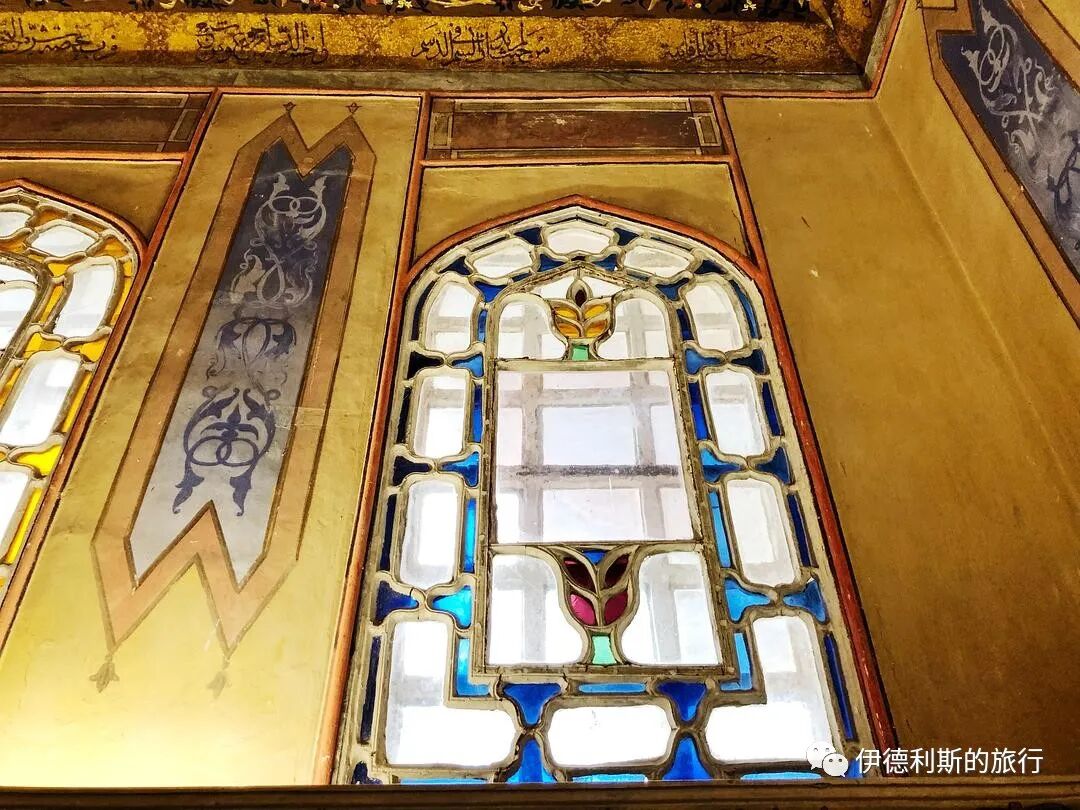
The pavilion in the harem, and an 18th-century coffee pot.
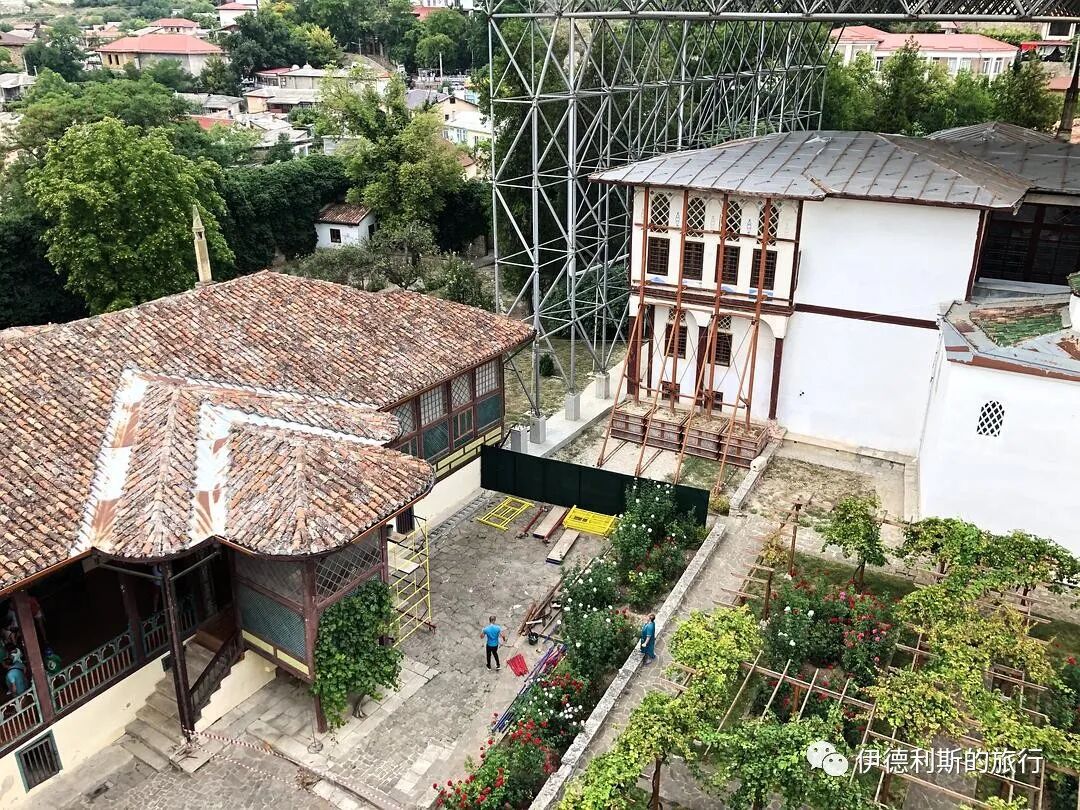
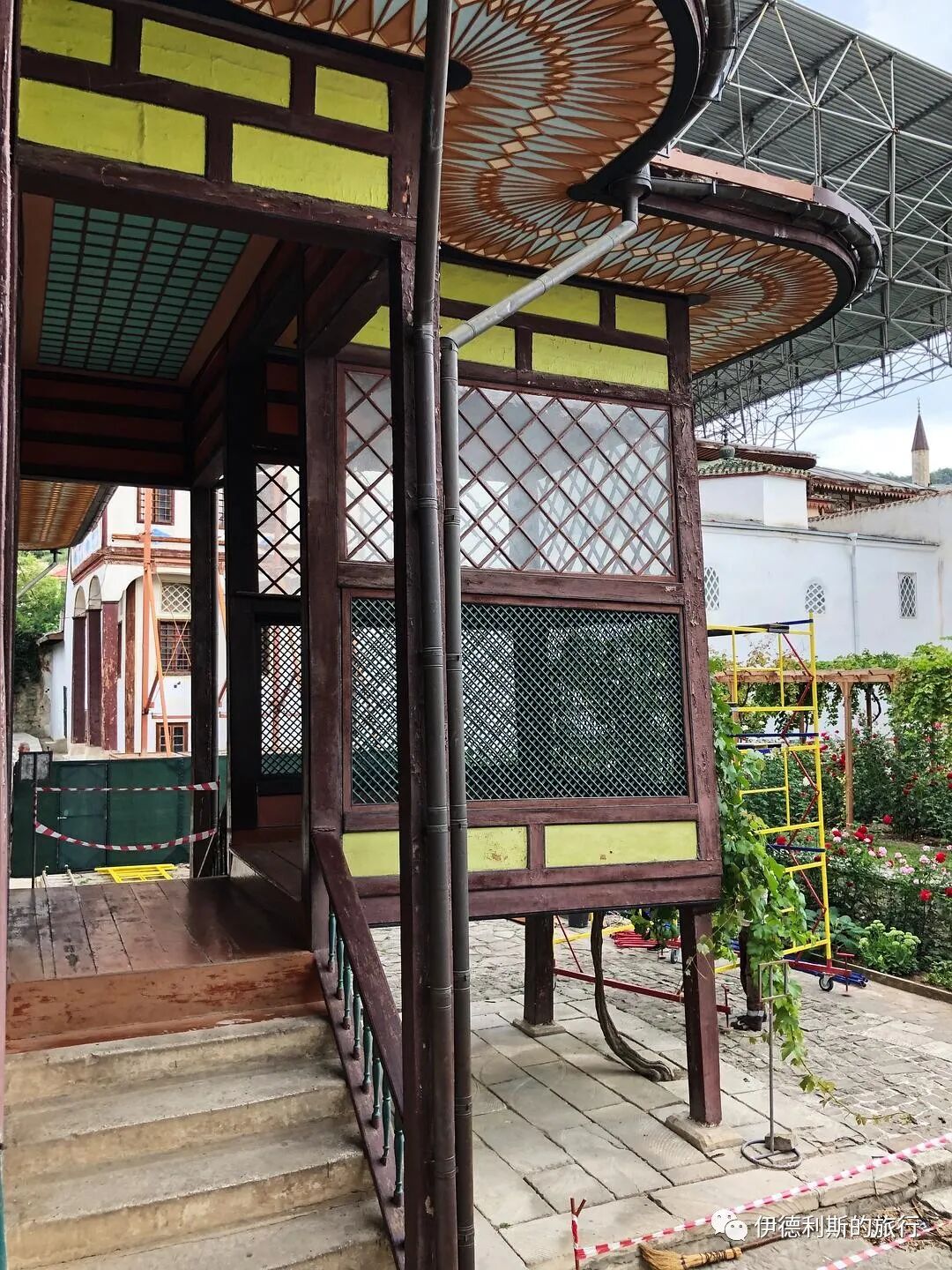
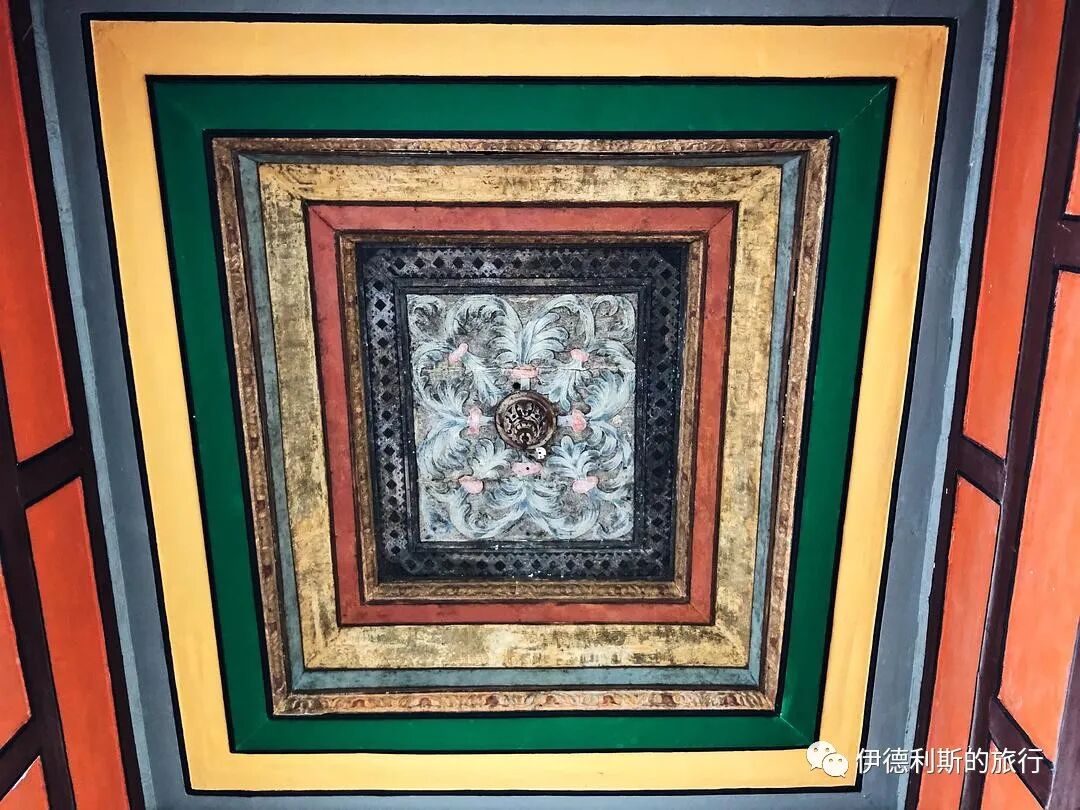
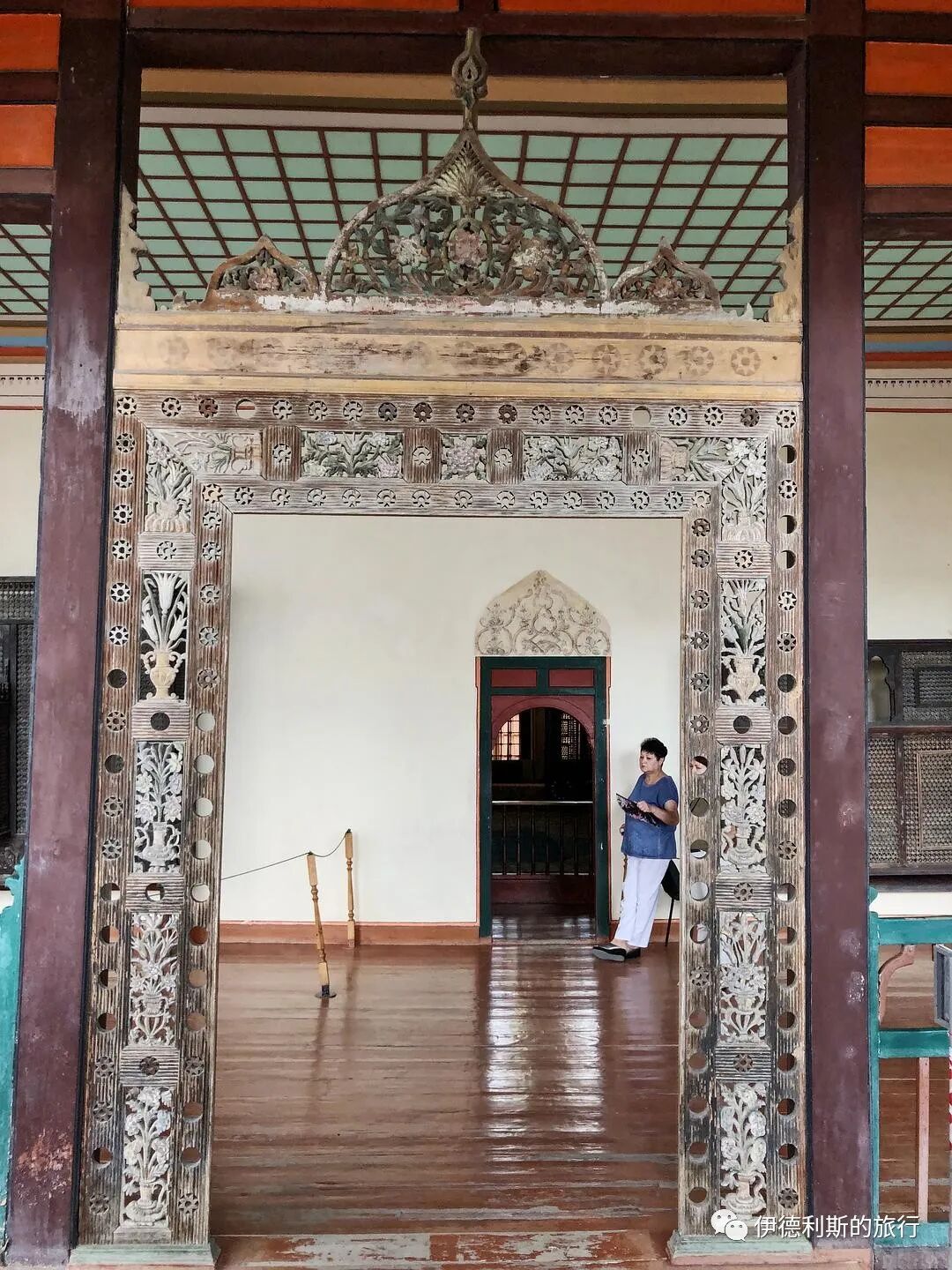
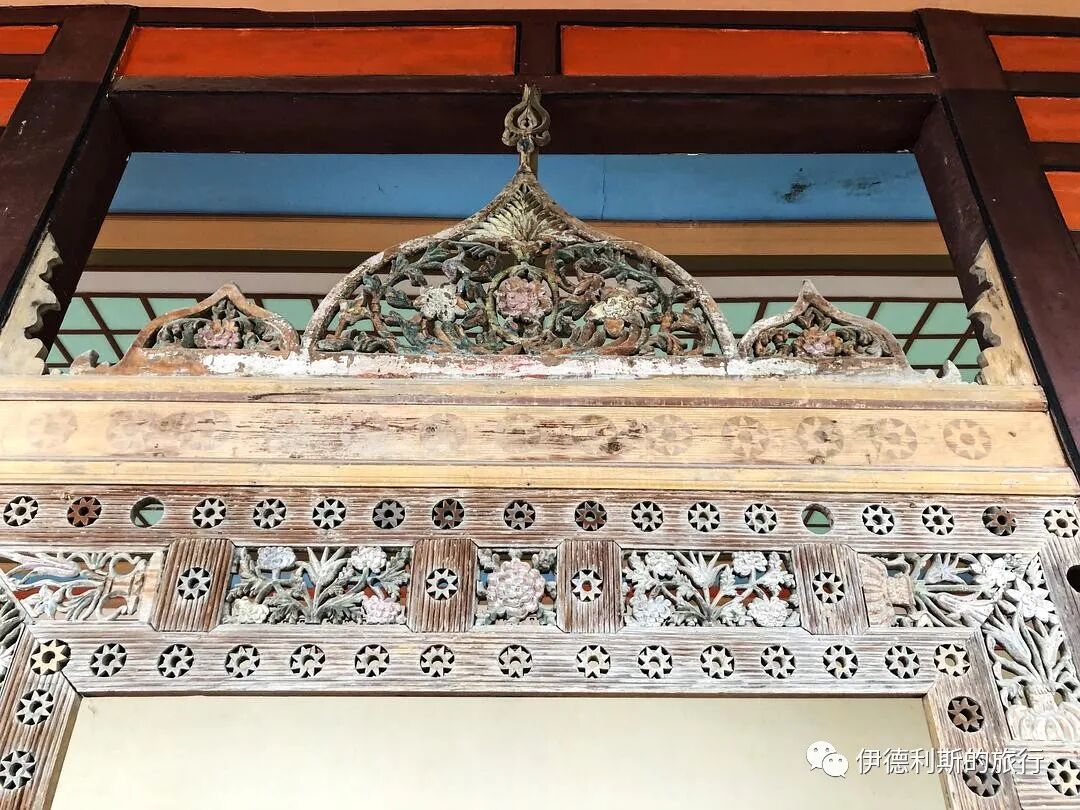
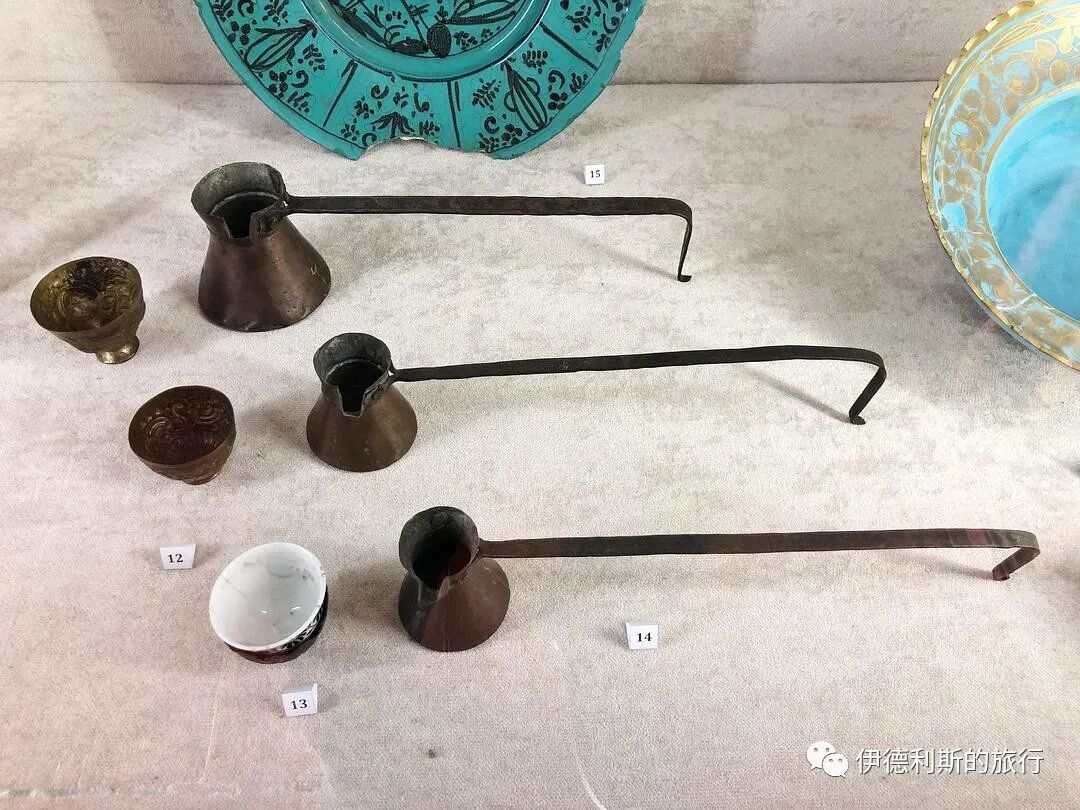
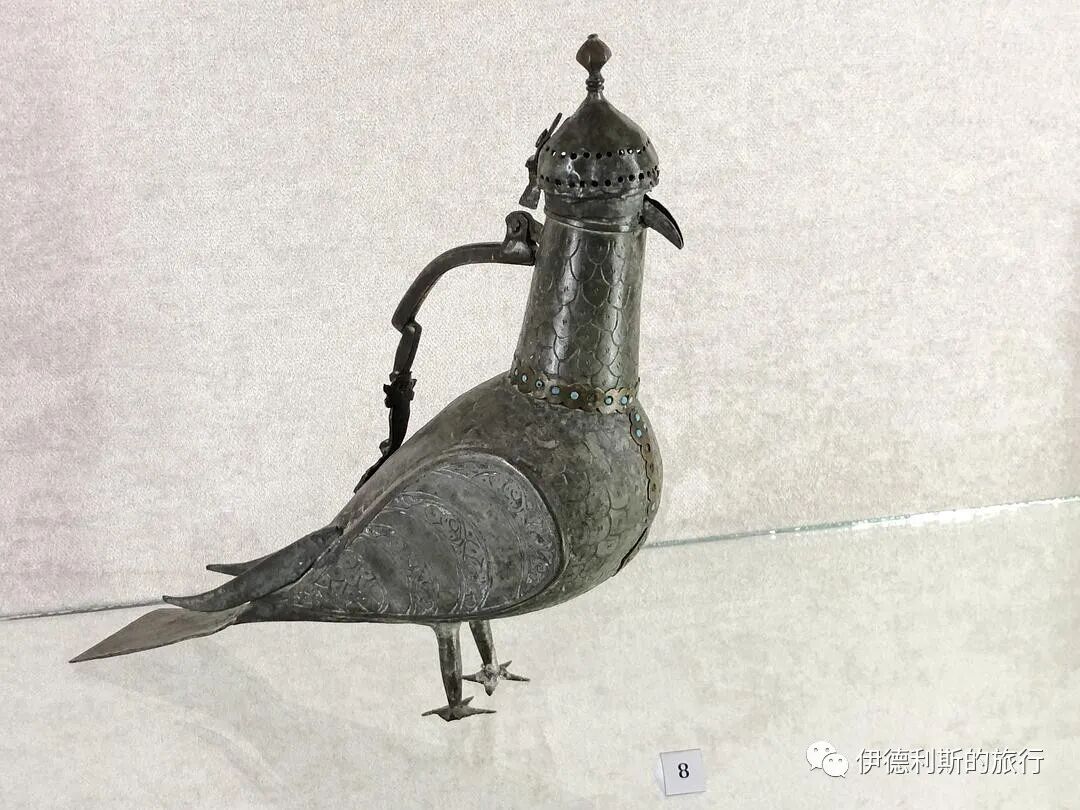
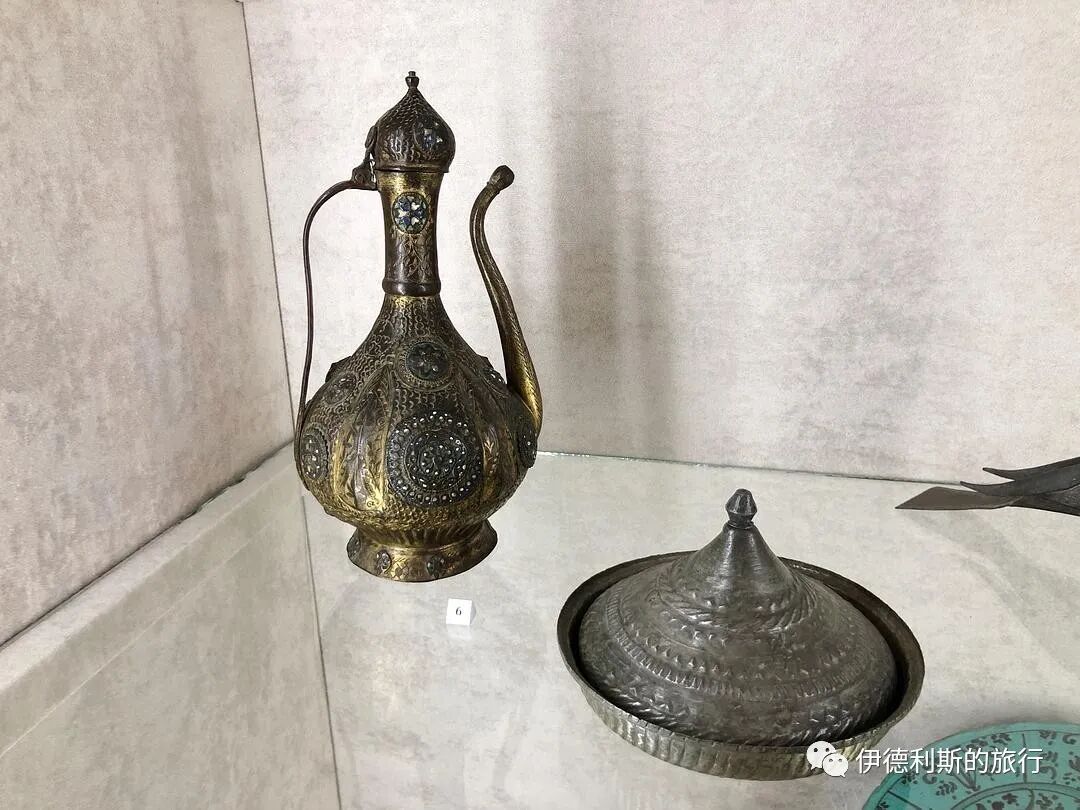
7. Persian Garden
The Persian Garden in the southern part of the harem was surrounded by high walls and once featured various trees, fountains, and baths, but now only ruins remain.
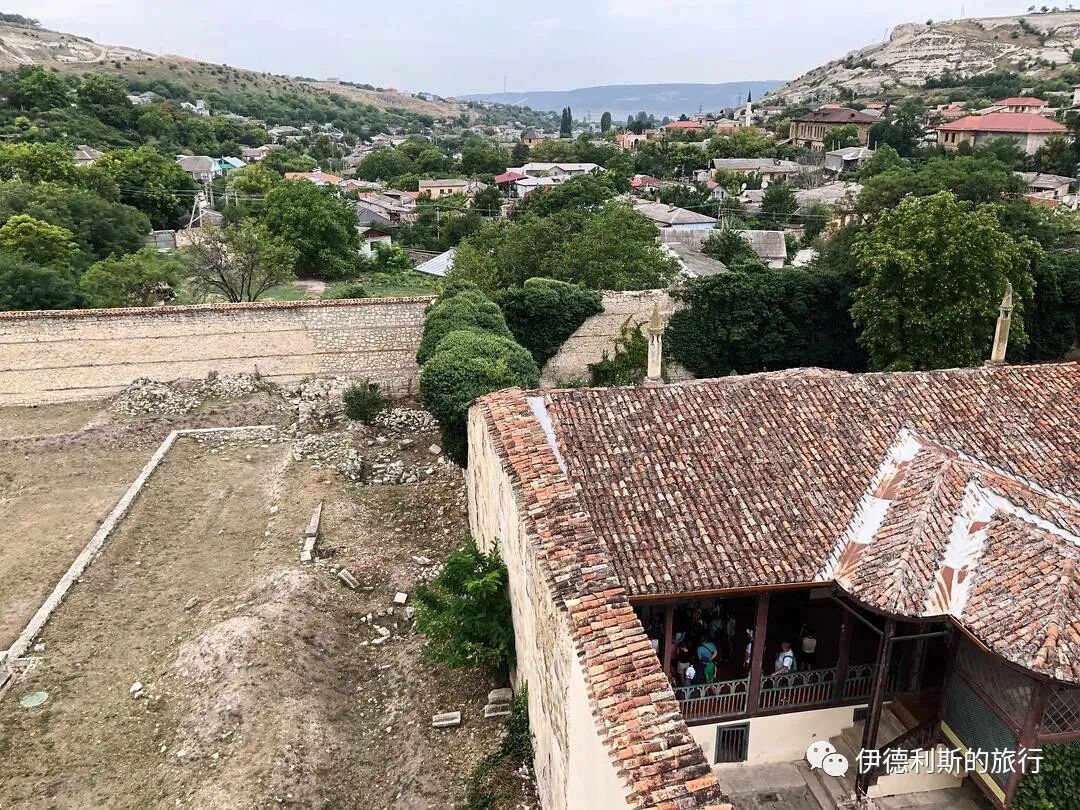
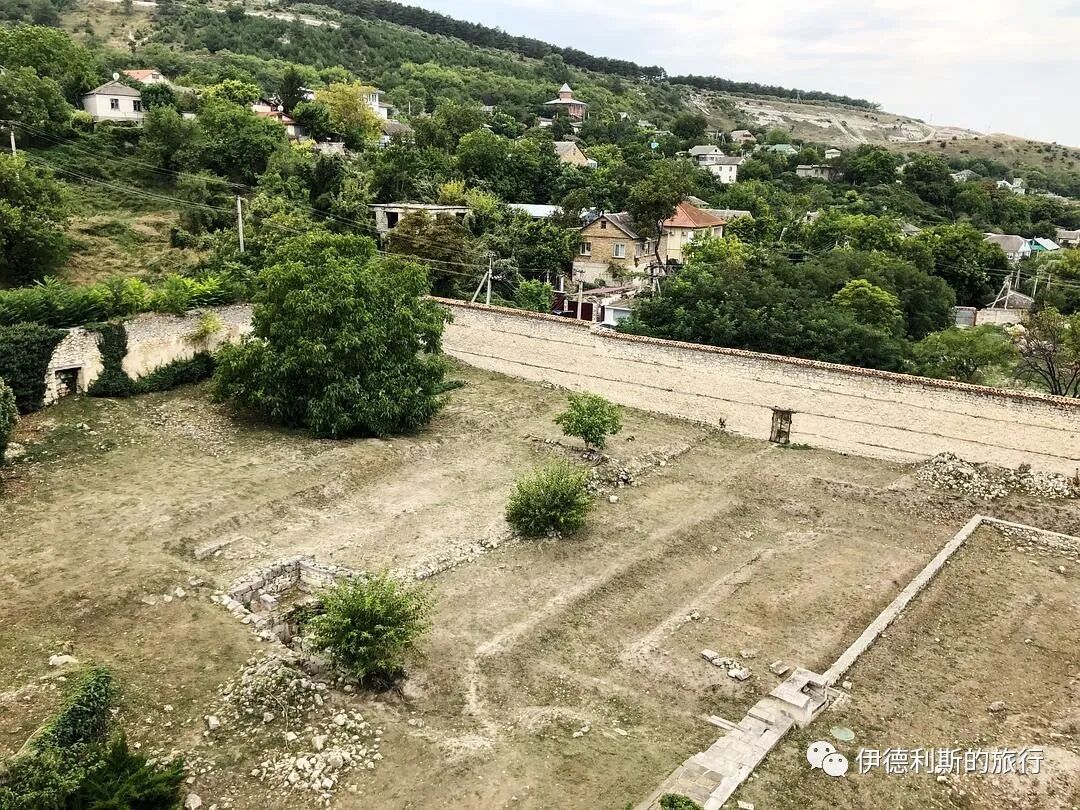
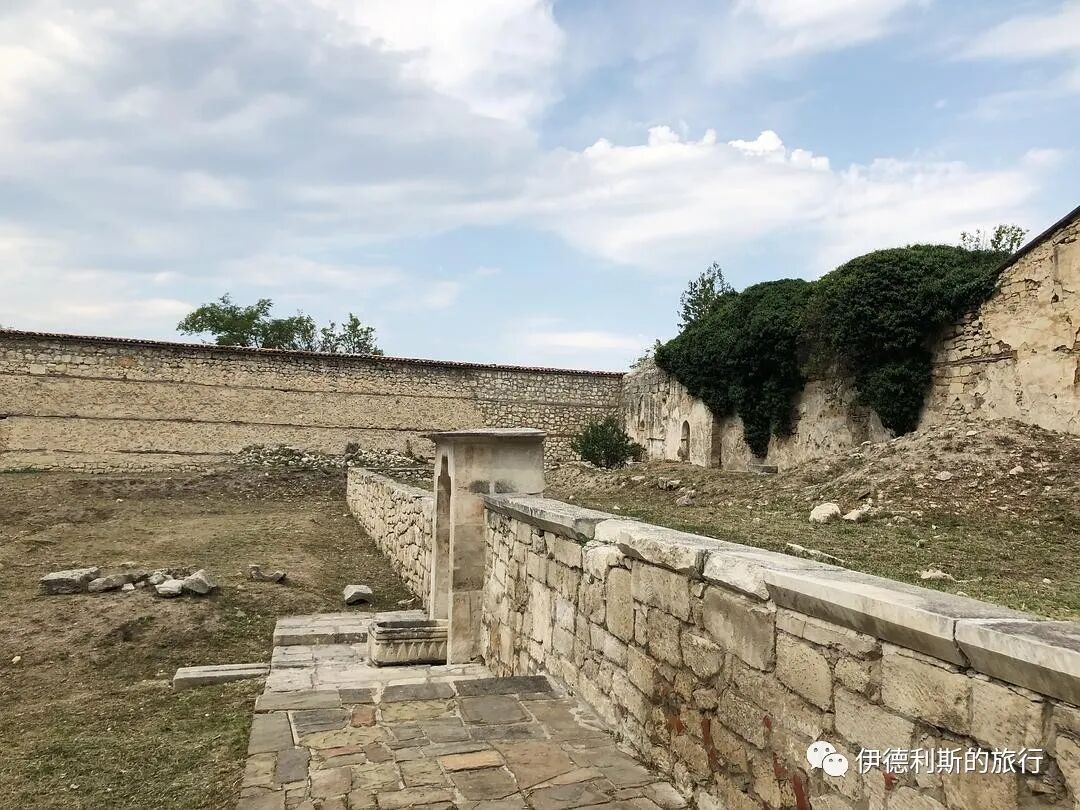
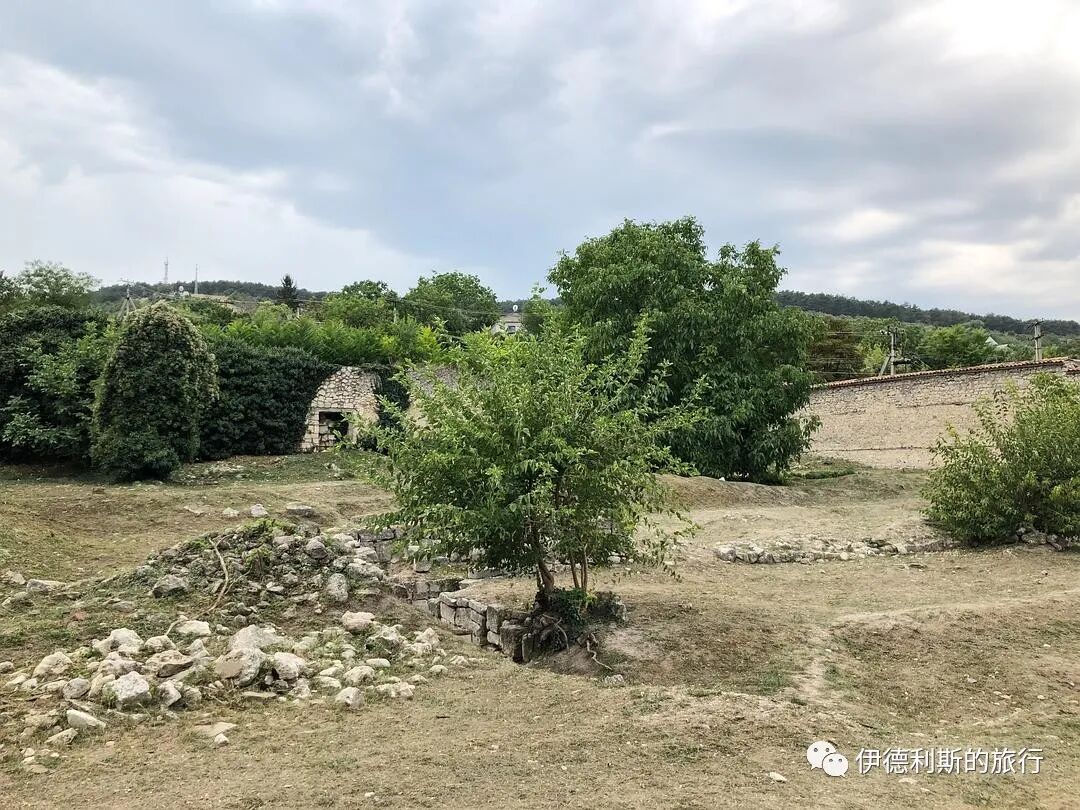
8. Dilâra Bikeç Mausoleum: 1764
The Dilâra Bikeç Mausoleum is an octagonal tomb at the southernmost point of the Bakhchisaray Khan Palace. It was commissioned in 1764 by the Crimean Khan Qırım Giray (reigned 1758-1764, 1768-1769) for his beloved wife. The "Fountain of Tears," which Pushkin once wrote a poem to praise, was originally installed in this mausoleum before being moved to the Fountain Courtyard in 1783.
The love story of Qırım Giray has been circulating in Bakhchisaray since the 18th century. According to legend, his beloved wife Dilâra Bikeç was a Greek woman from Georgia.
After renovations in 2007, the dome of the mausoleum was re-covered with lead.
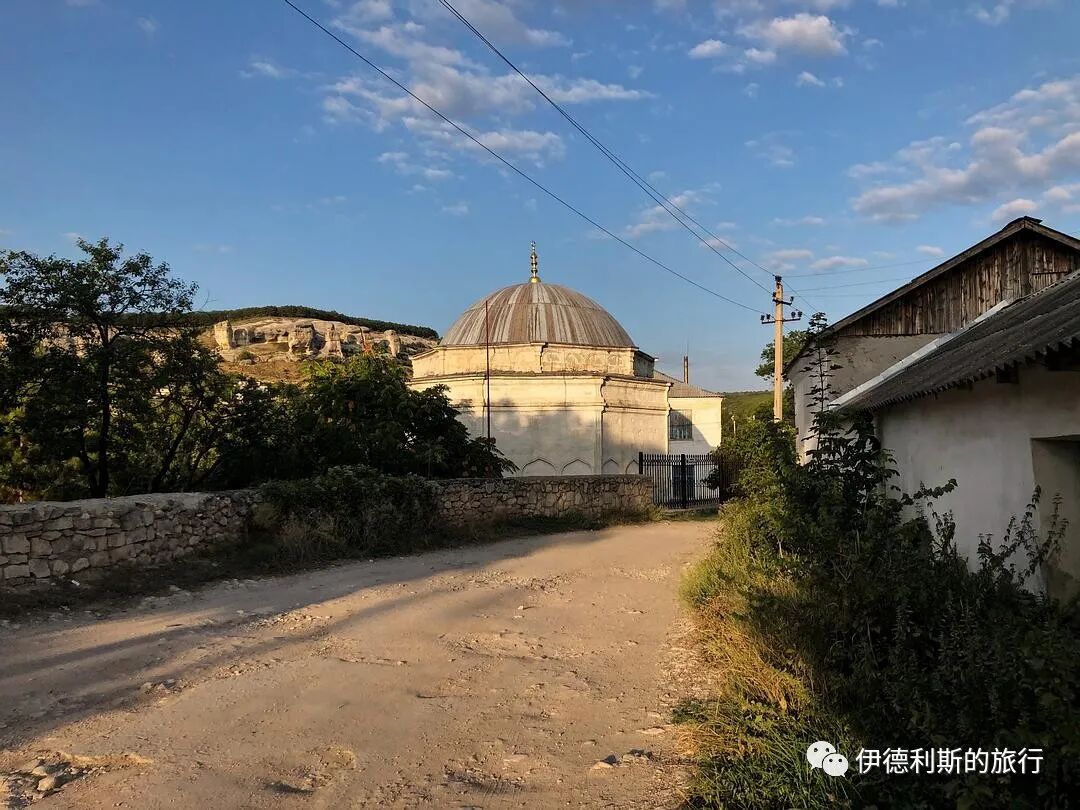
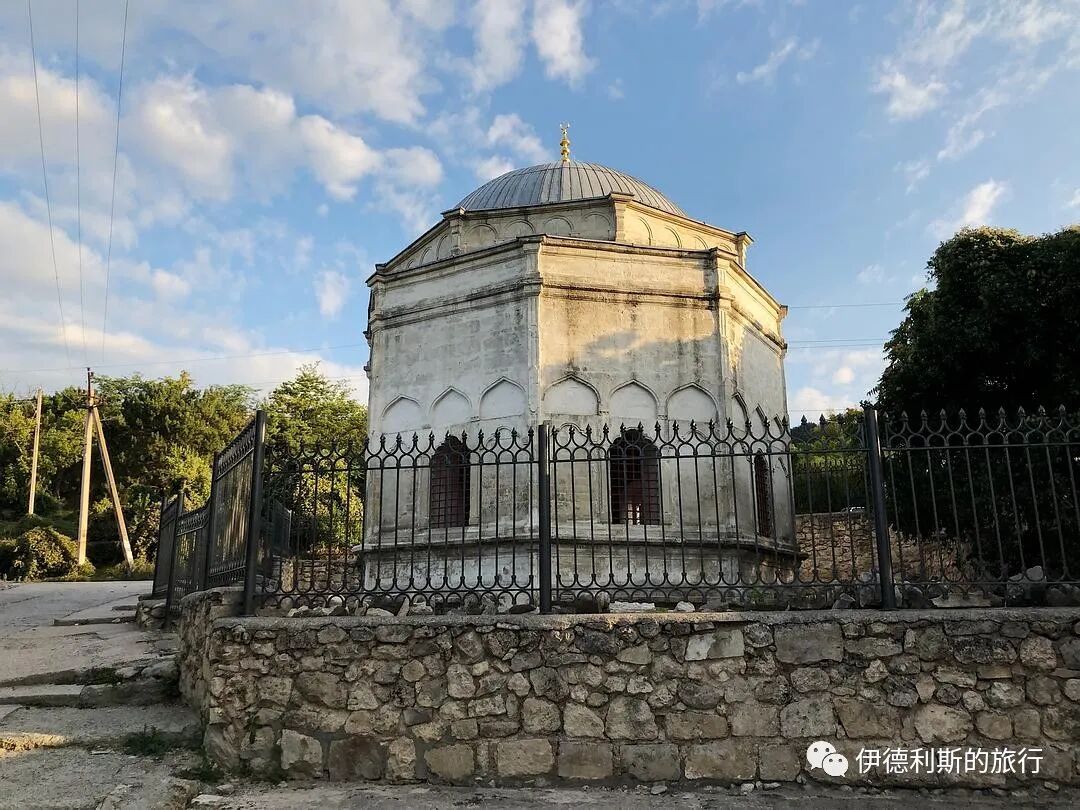
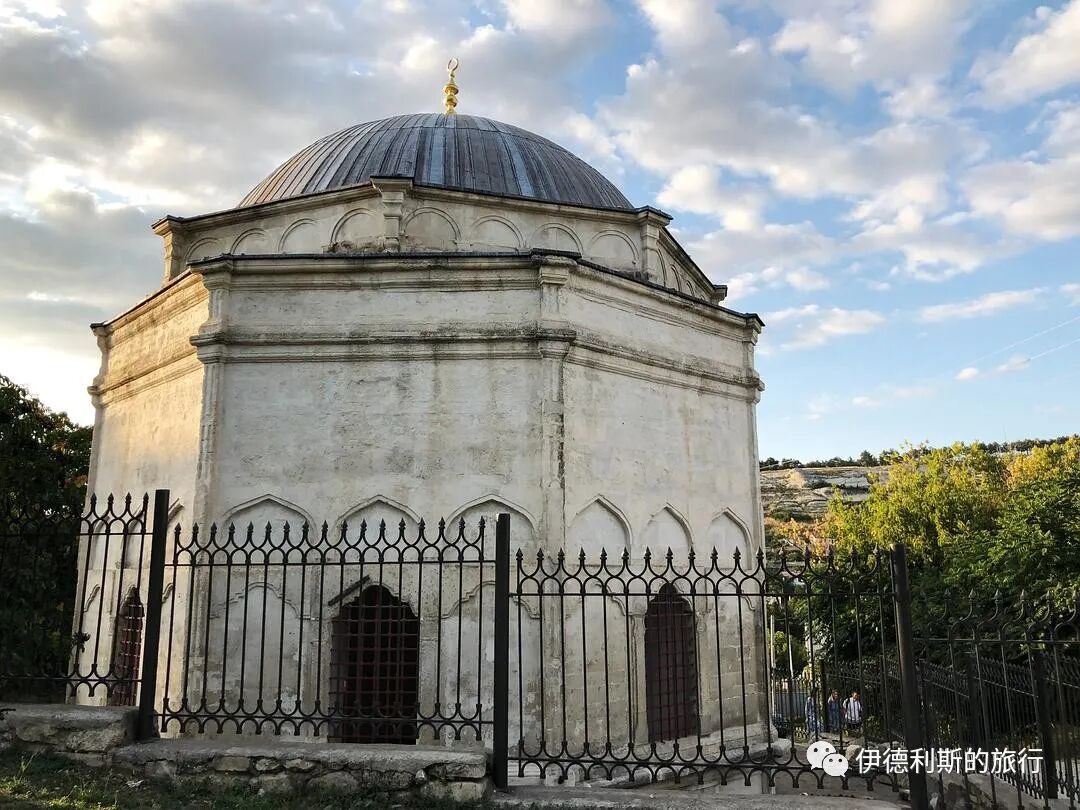
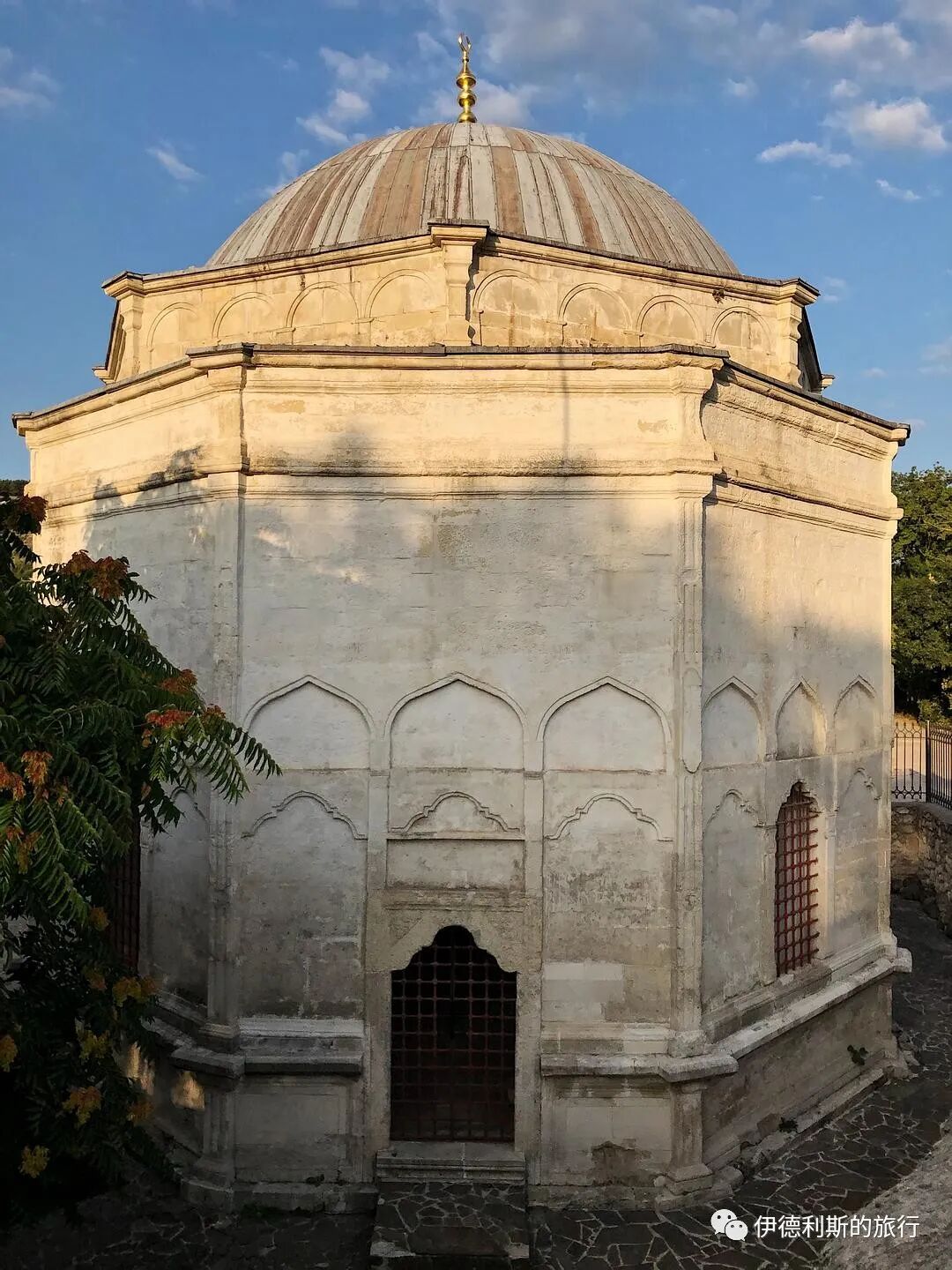
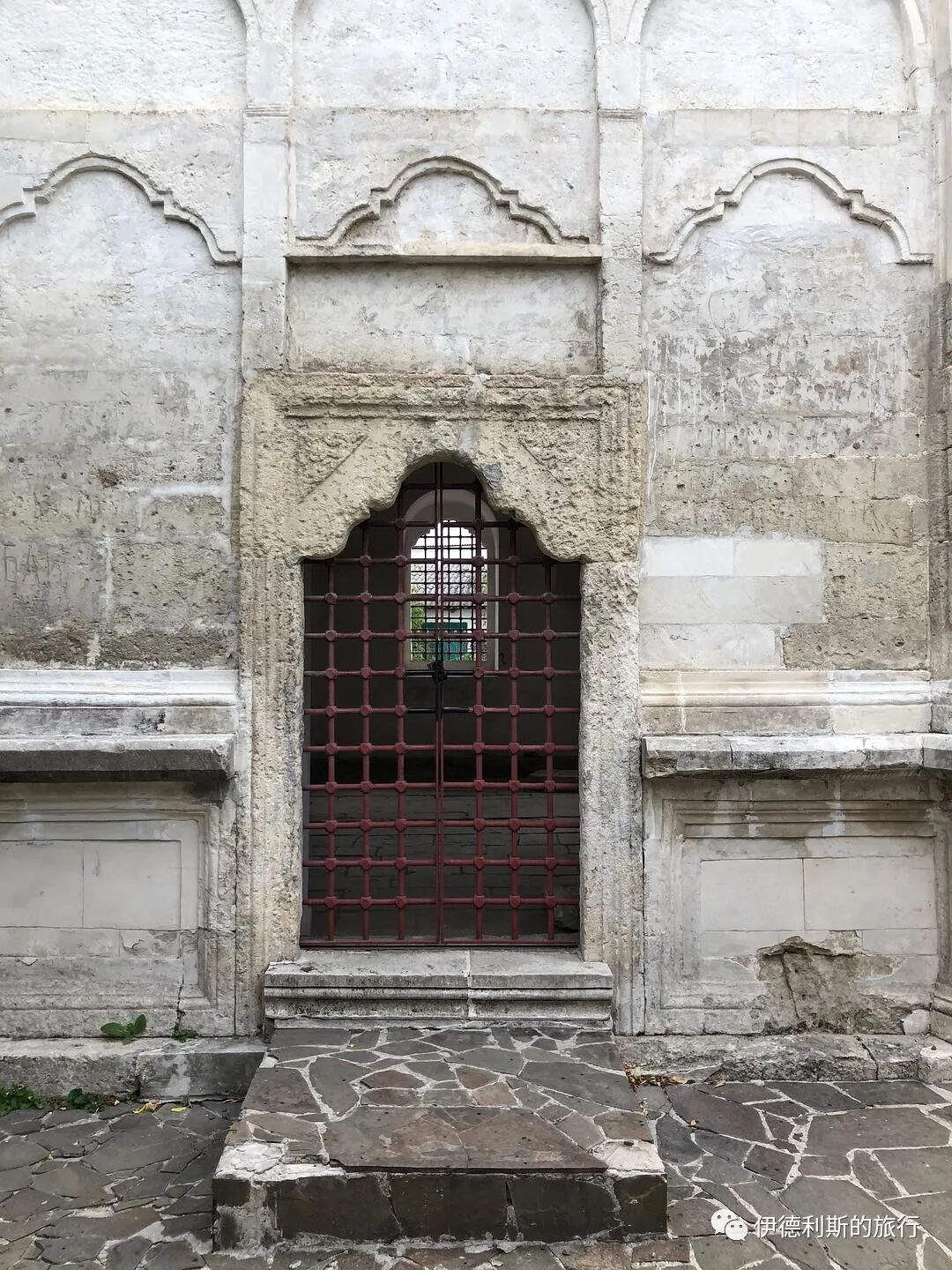
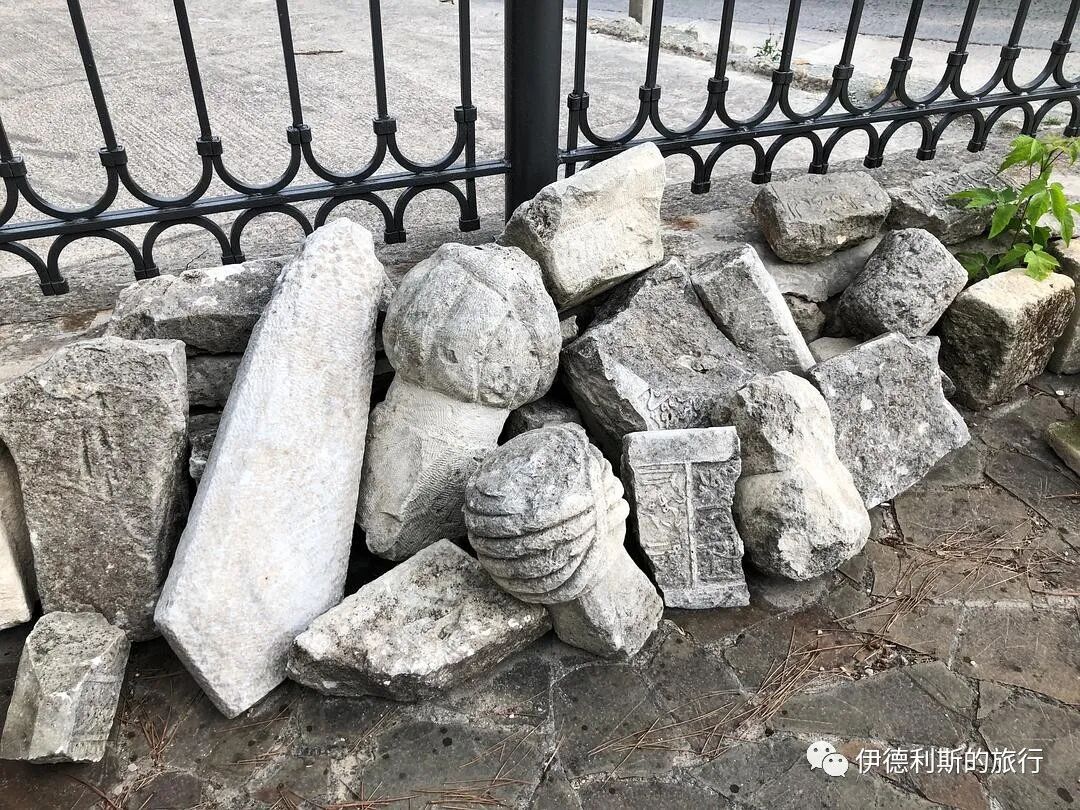
9. Small Khan Mosque
The Small Khan Mosque (Kiçik Han Cami) is located inside the main building of the Khan Palace and was used by members of the Khan's family and noble ministers. The Small Khan Mosque was built in the 16th century, destroyed by fire by the Russian army in 1736, and restored in 1741 by Khan Selamet II Giray (reigned 1740-1743).
The existing interior murals were created between the 17th and 18th centuries, with some painted by the Iranian architect Omer in the late 18th century. Early 16th-century murals were discovered during the 1991 restoration.
On the south wall of the Small Khan Mosque is a mihrab niche, carved with seven decorative bands symbolizing the seven heavens in the Quran.
Above the mihrab is a stained-glass window featuring the Seal of Solomon (Khātam Sulaymān) ✡. The legend of the Seal of Solomon ✡ dates back to the 1st century AD, but was primarily developed by medieval Arab writers. This seal is believed to have been engraved by Allah and given to Solomon; it was made of brass and iron and used to seal commands for good and evil. The traditional Arab Seal of Solomon comes in both five-pointed and six-pointed versions, with the six-pointed version later becoming the modern Jewish symbol, the "Star of David."
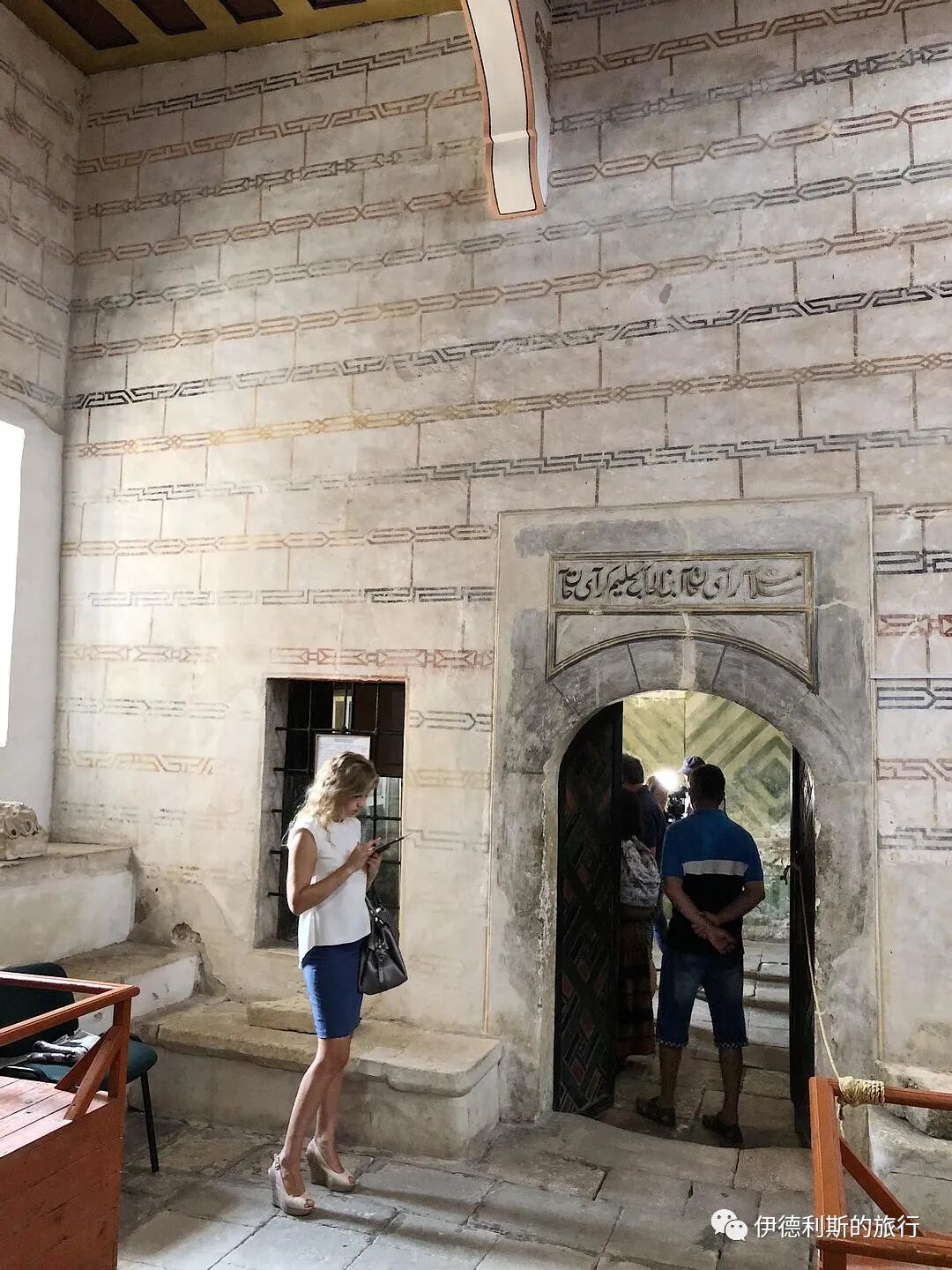
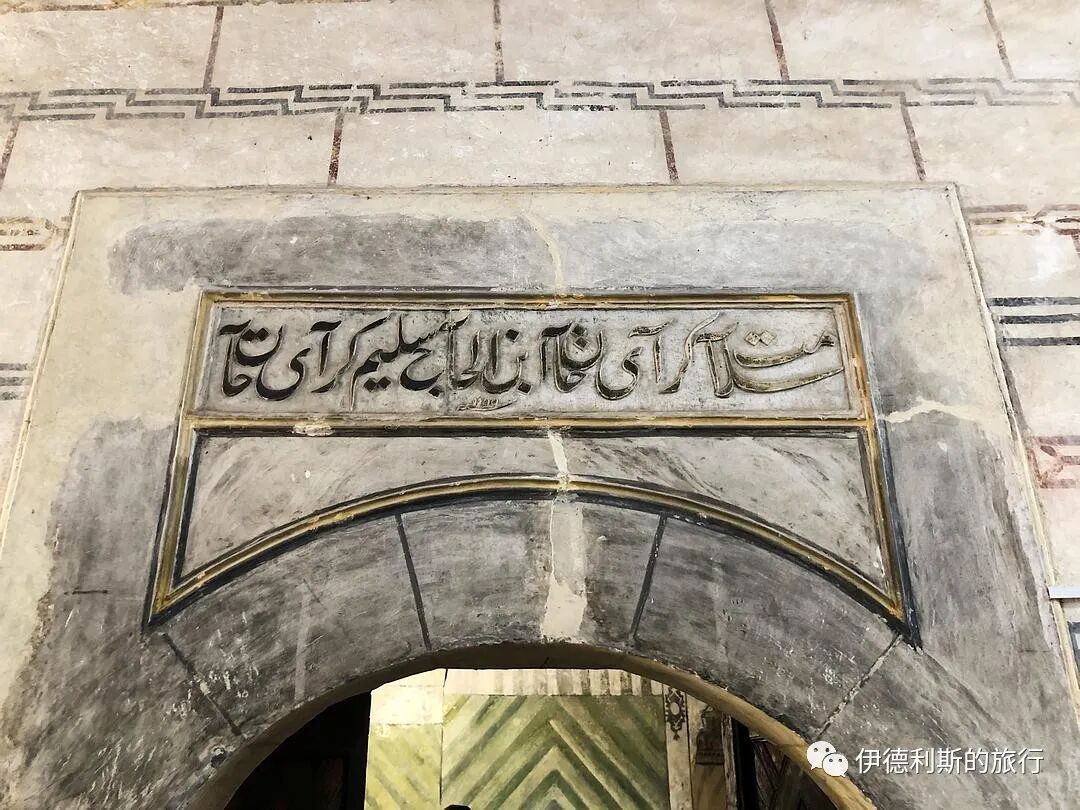
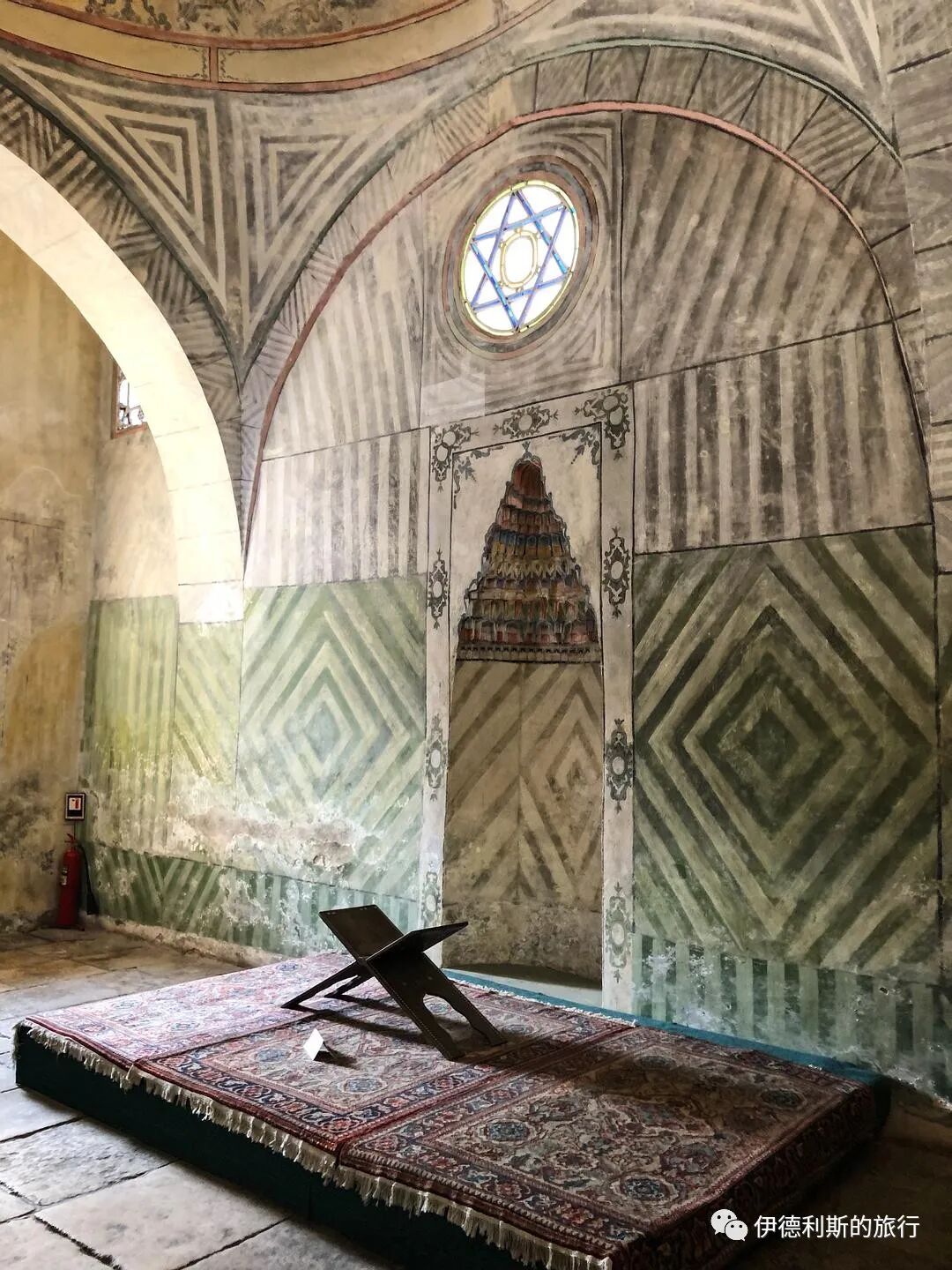
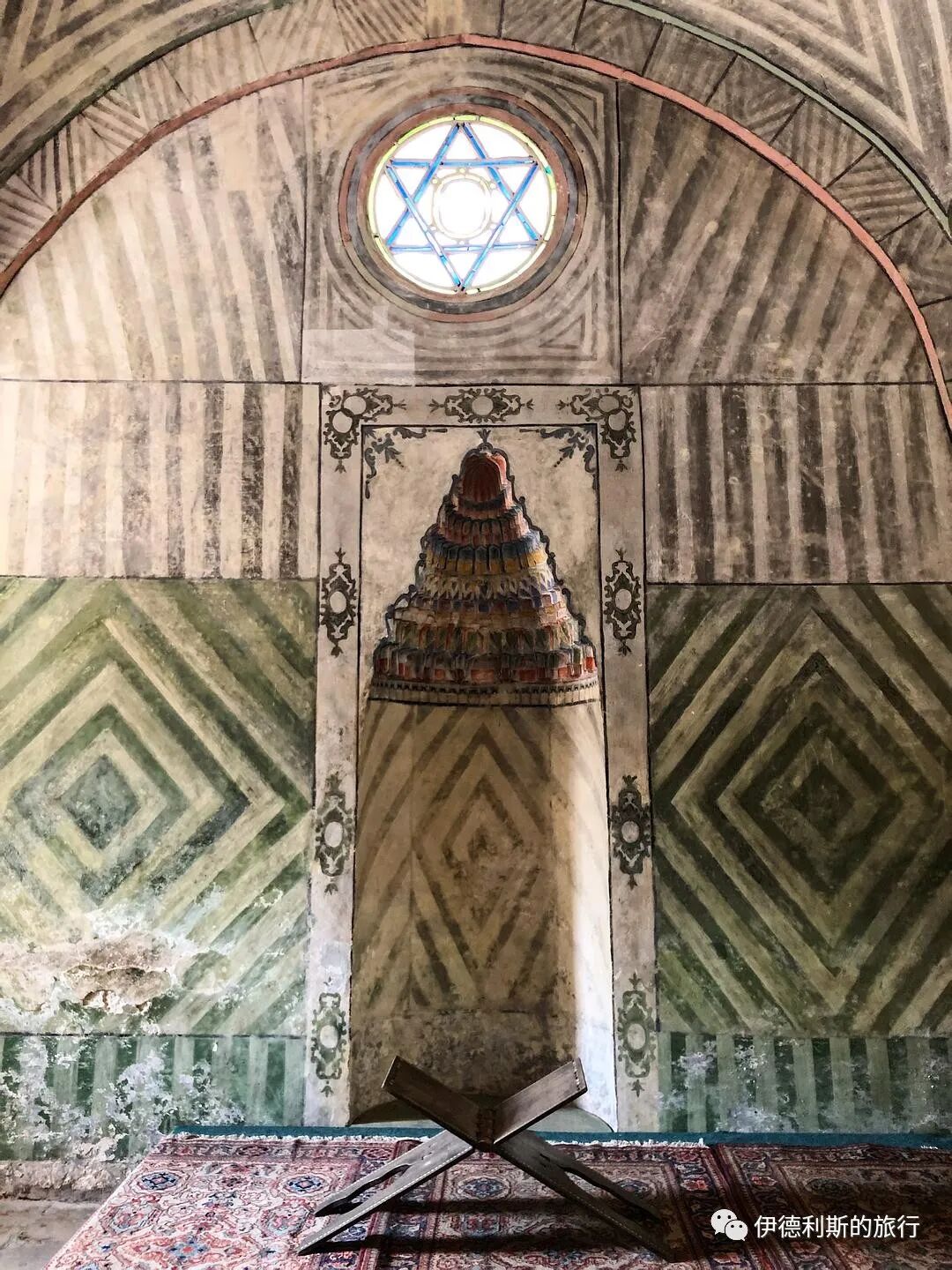
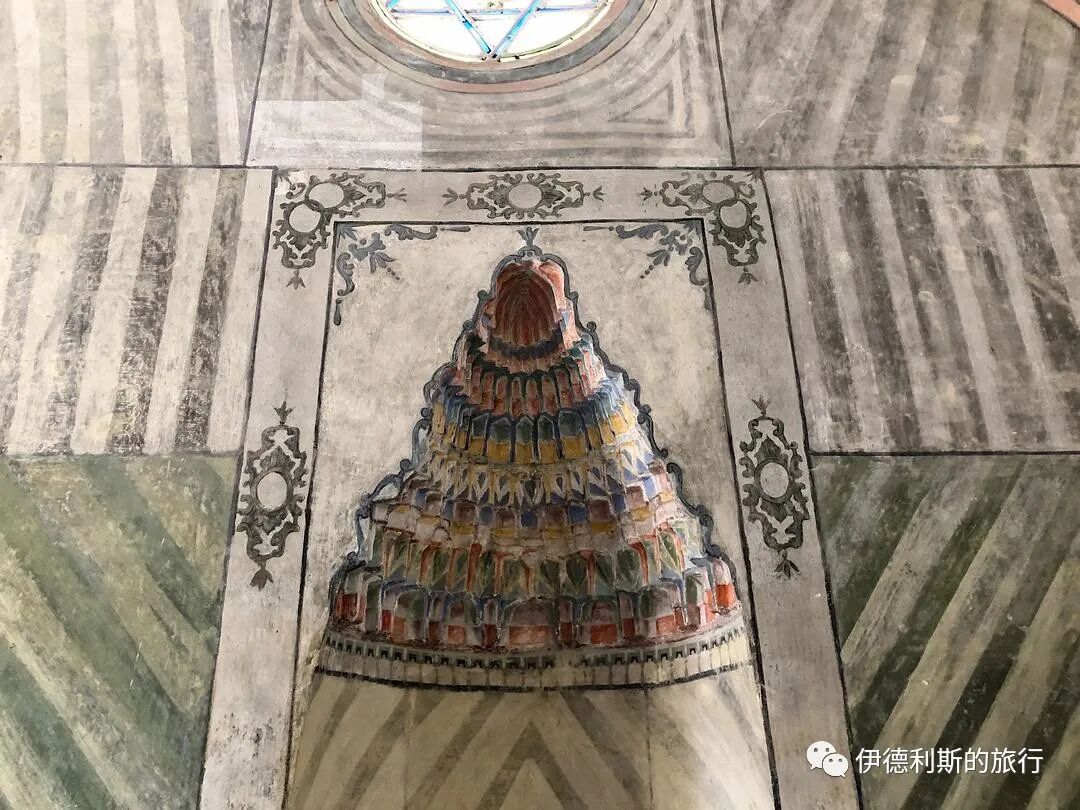
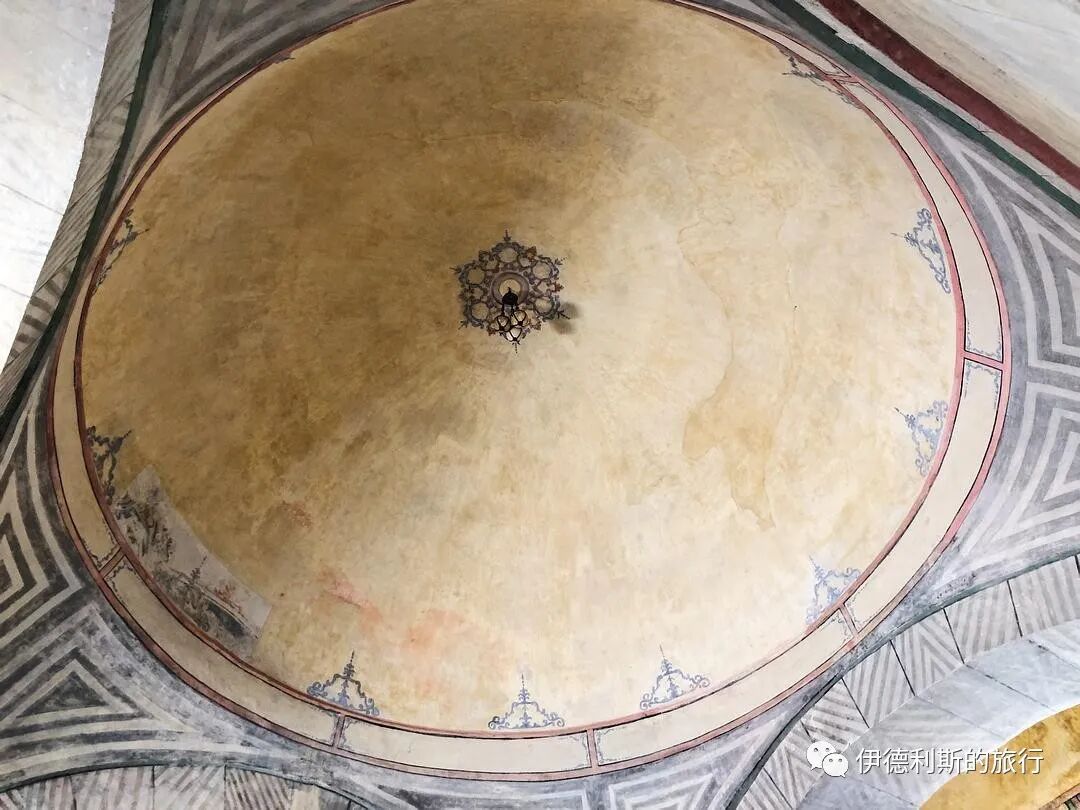
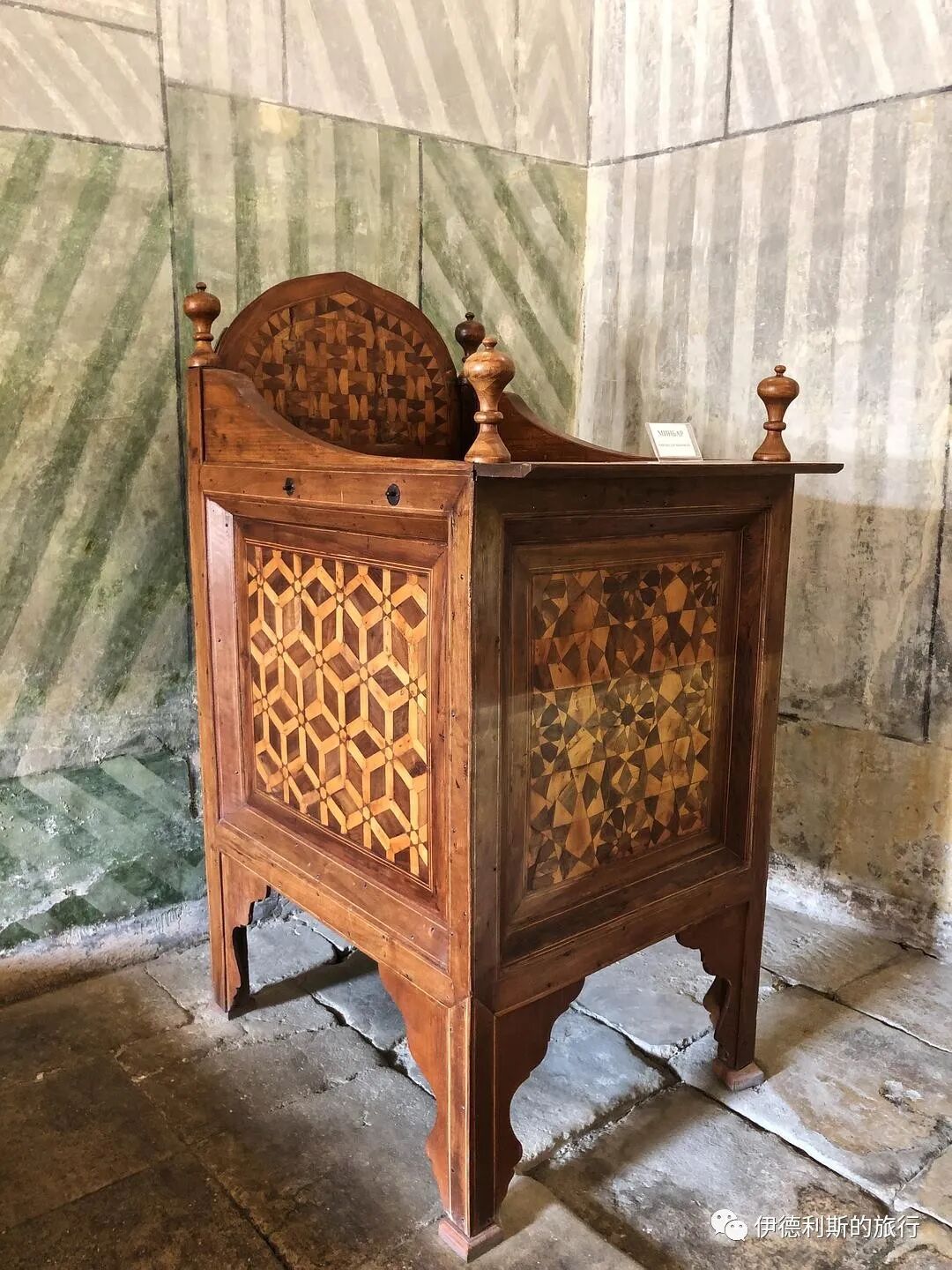
10. Demir Qapı Gate: 1503
The Demir Qapı Gate is the oldest structure in the Khan Palace. It was built between 1503 and 1504 for the Crimean Khan by the architect Aleviz Novy, who had been invited by Ivan the Great to Moscow to build a series of churches. The Demir Qapı Gate was likely originally built at the previous residence of the Crimean Khan, Devlet-Saray, and was moved to the main building of the Khan Palace after the Bakhchisaray Khan Palace was completed in 1532.
"Demir Qapı" means "Iron Gate" in Crimean Tatar. The portal of the gate is built of limestone and uses the decorative style of the Lombard-Venetian Renaissance.
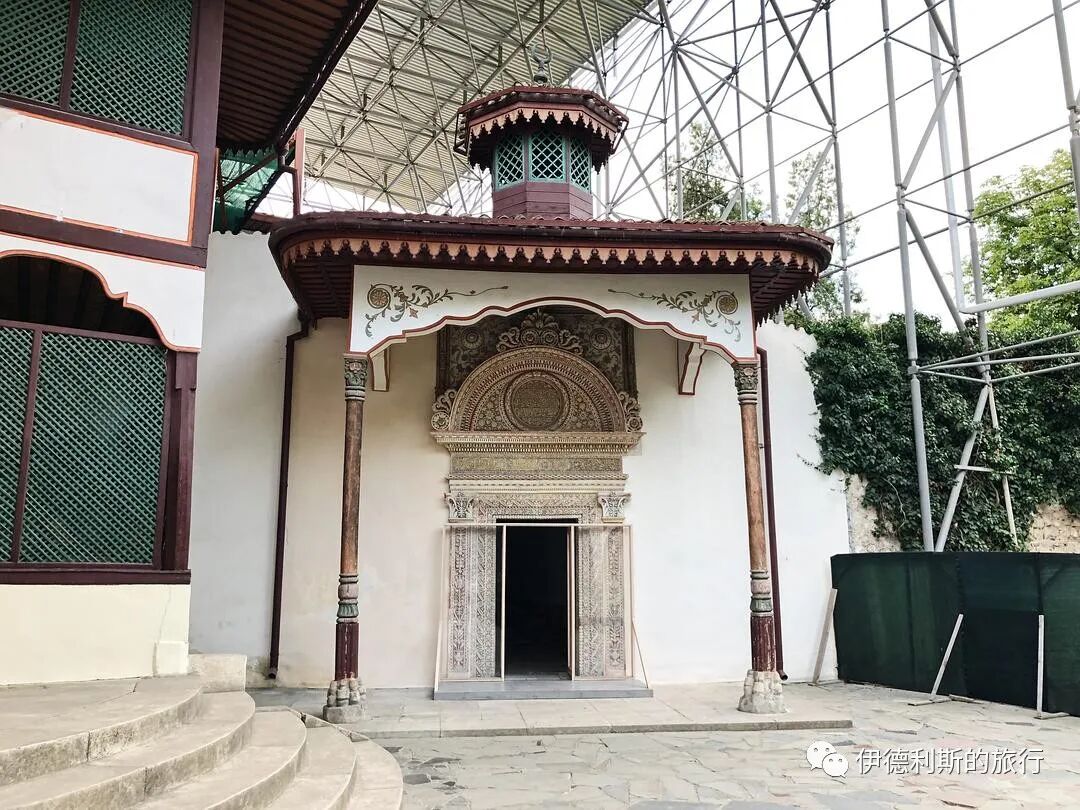
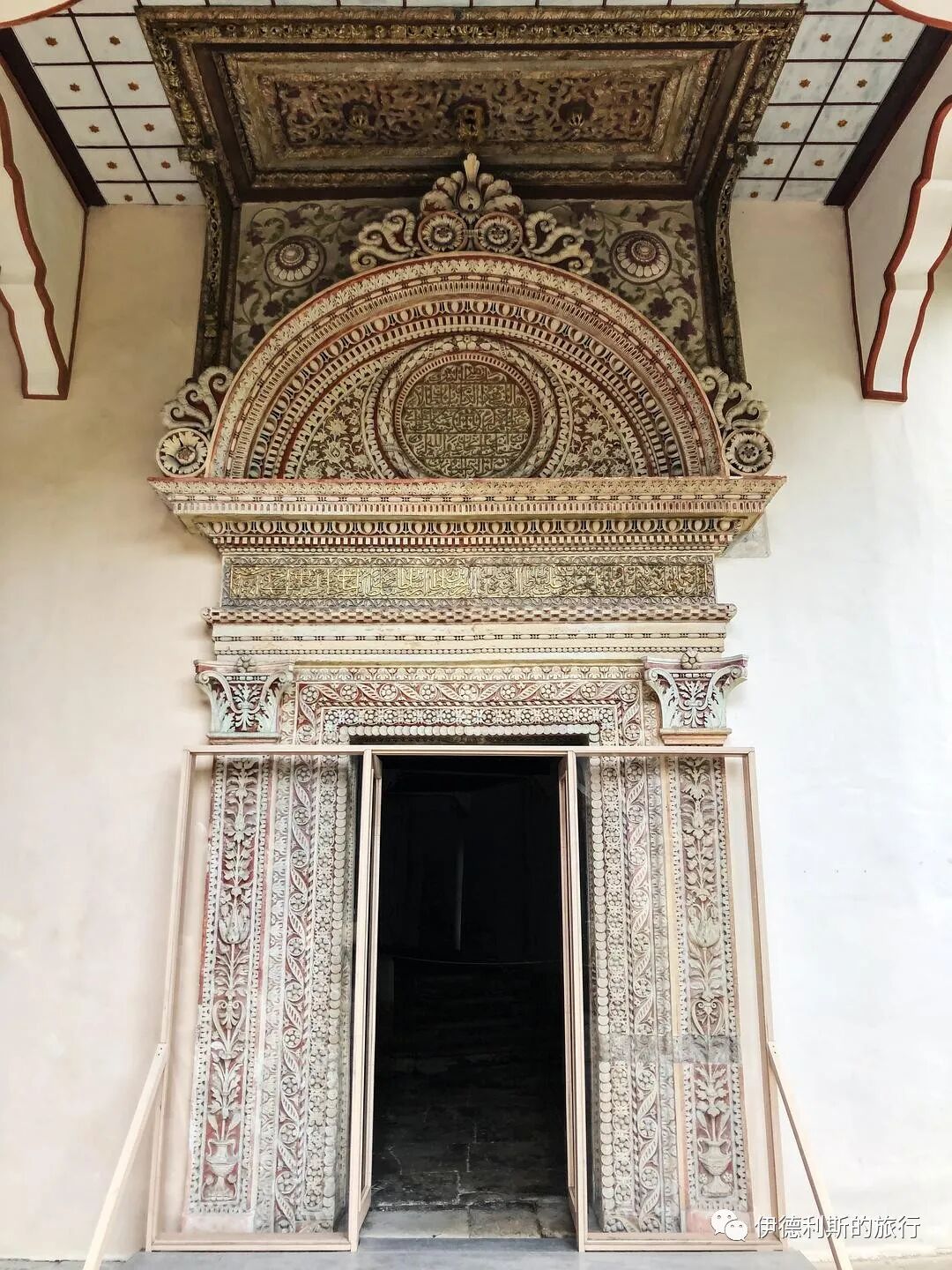
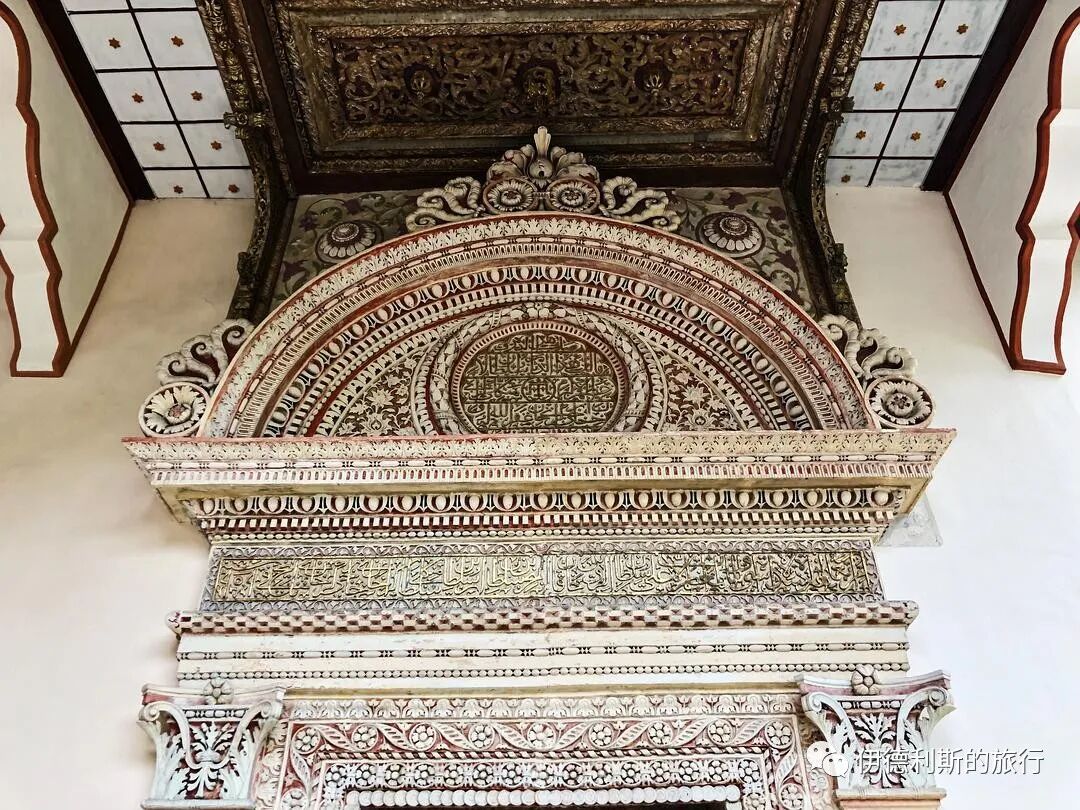
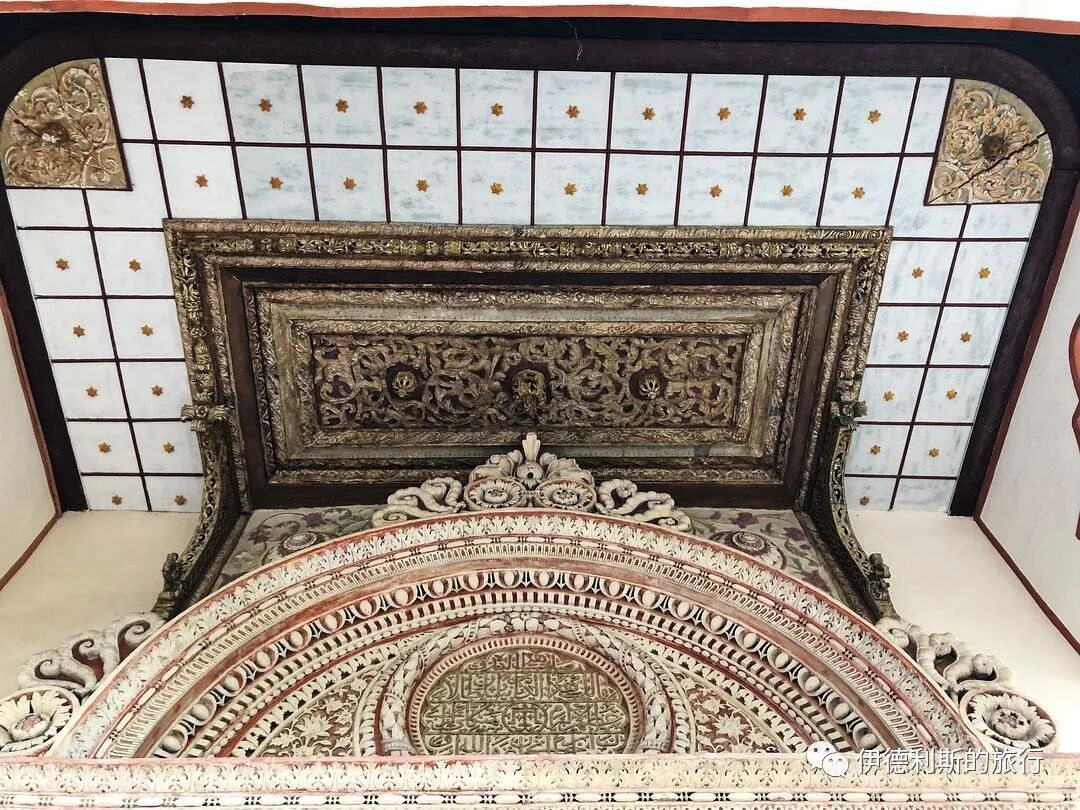
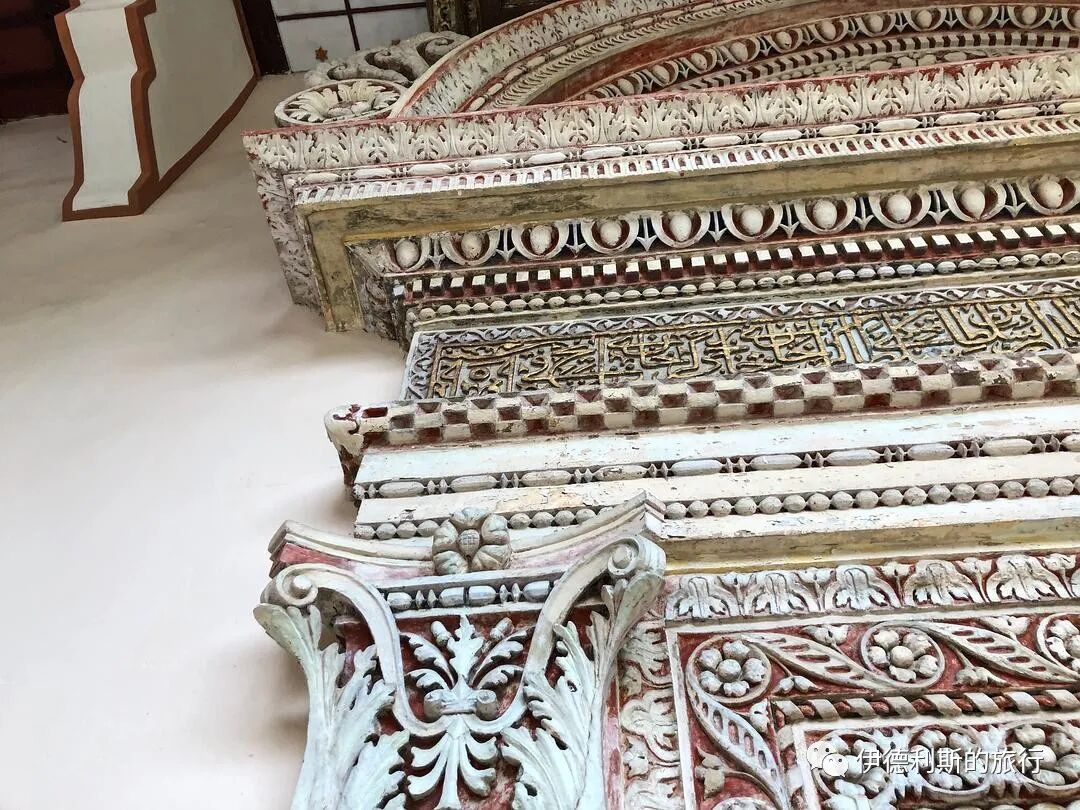
11. Divan Hall
The Divan Hall (Divan hanesı) is the meeting room inside the main building of the Khan Palace. In the center of the south wall is the throne where the Khan sat, with sofas on the sides for the ministers. Above the north wall at the entrance to the hall is a narrow latticed balcony, said to have been used by the Khan to have people eavesdrop on meetings when he was absent.
The floor of the hall was paved with marble, and there was a square pool with a fountain in the center. The walls were covered with tiles, but these were destroyed in the fire set by the Russian army in 1736. Restorations were carried out in 1742, and many of the current decorations, such as the murals and chandeliers, were added during the renovation of the Khan Palace by architect I. F. Kolodin in 1822.
In 1917, the Crimean Tatars declared the establishment of an independent Crimean Tatar government here.
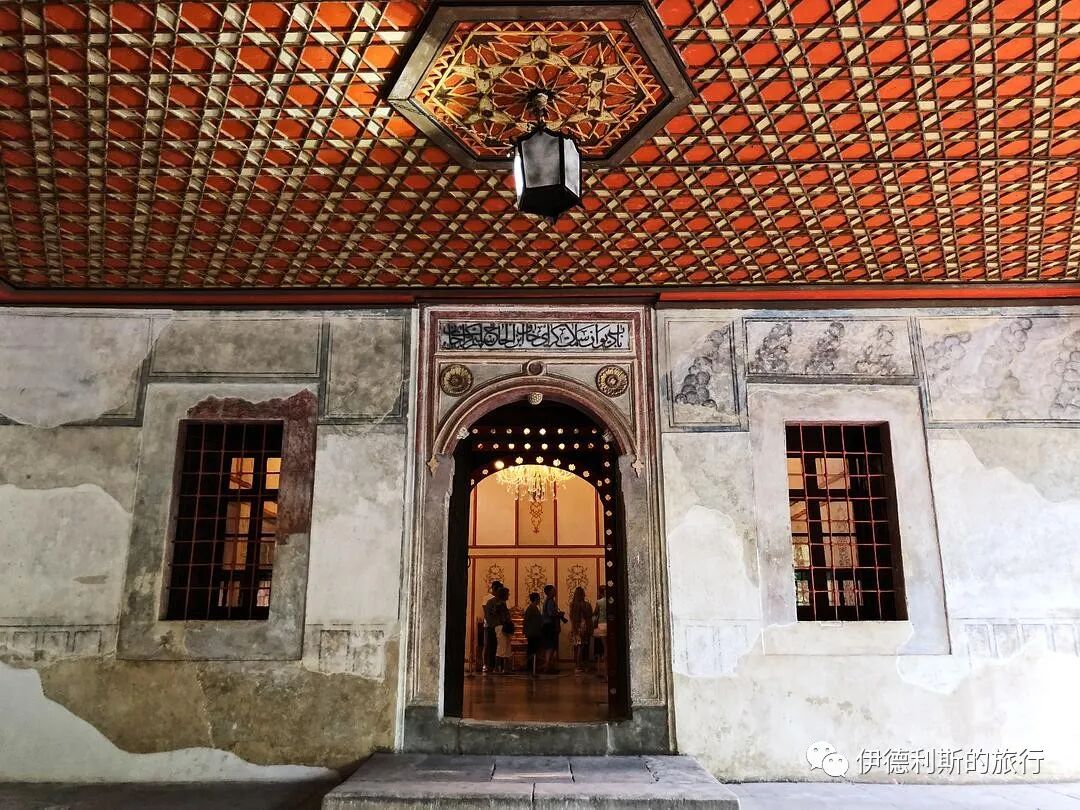
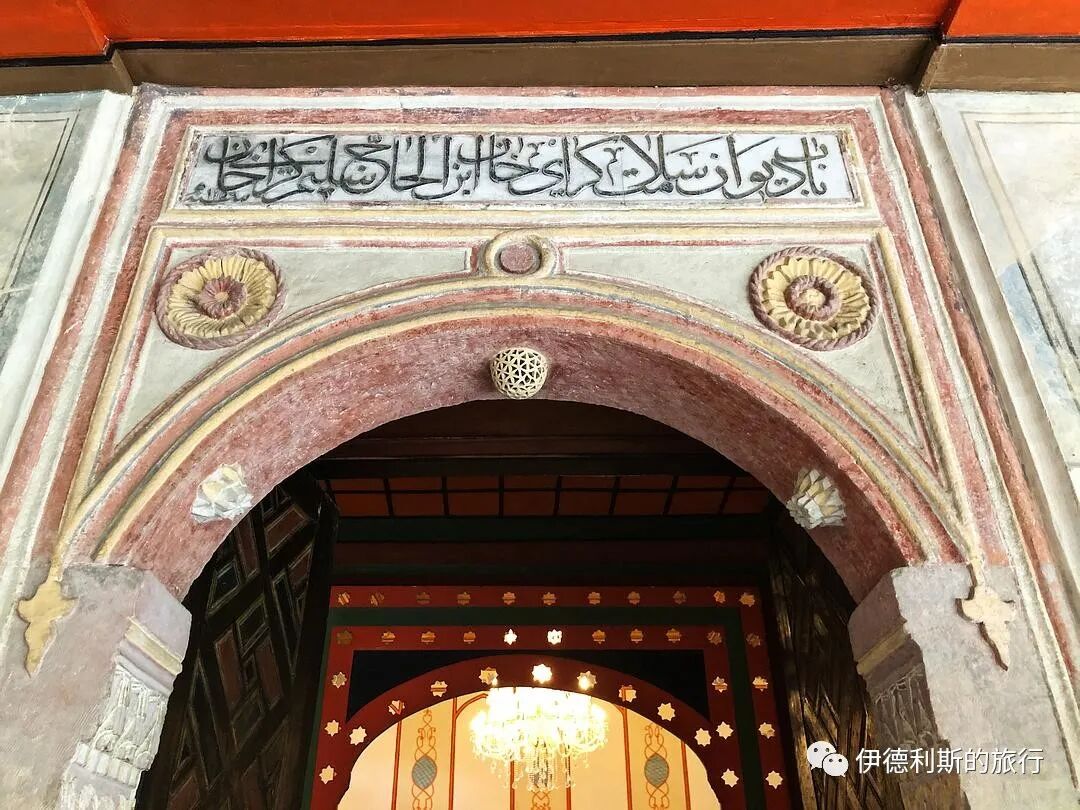
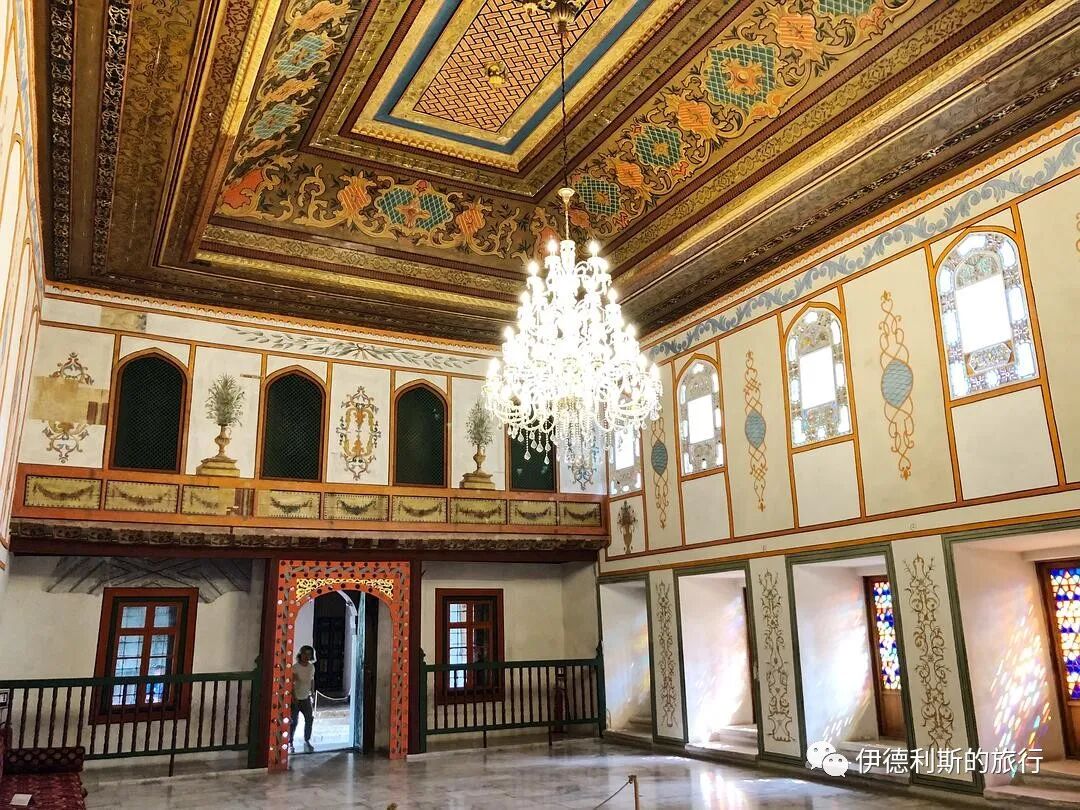
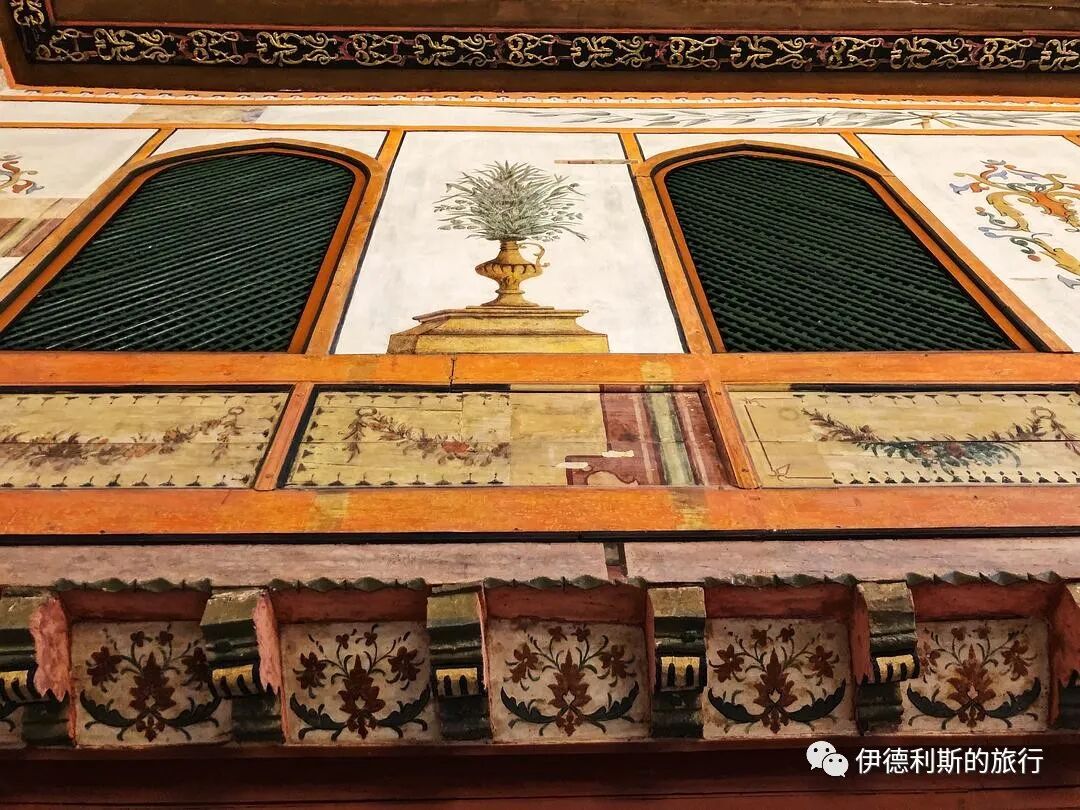
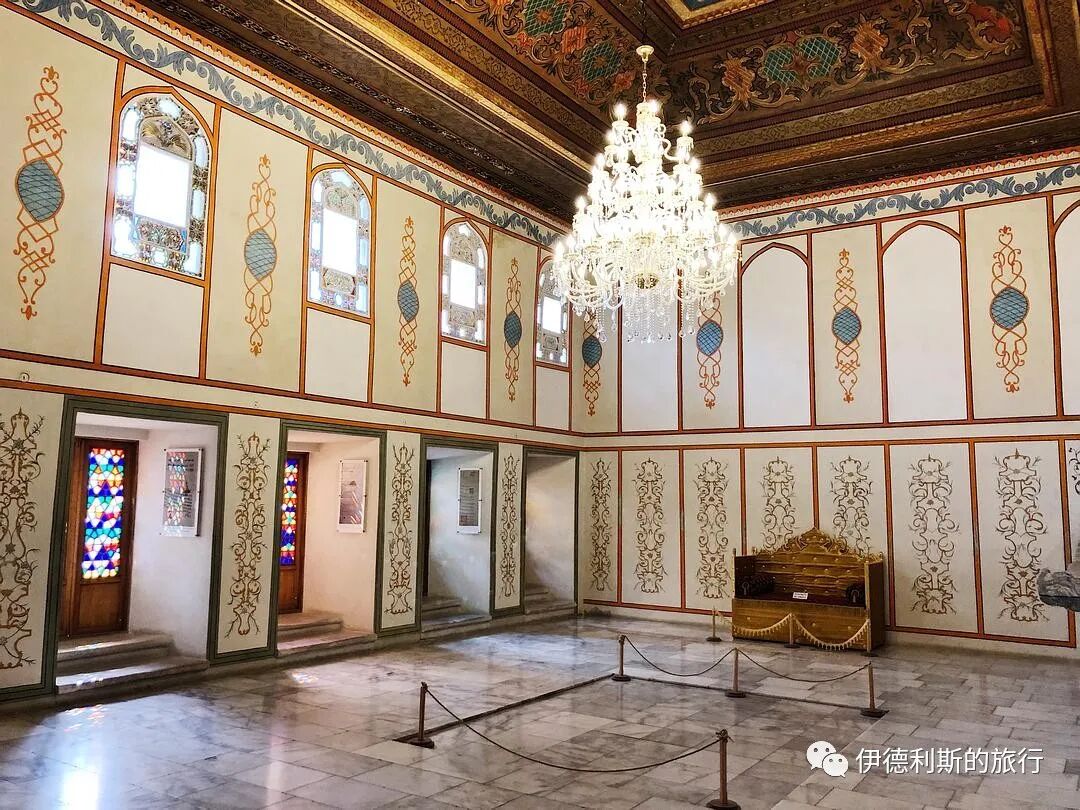
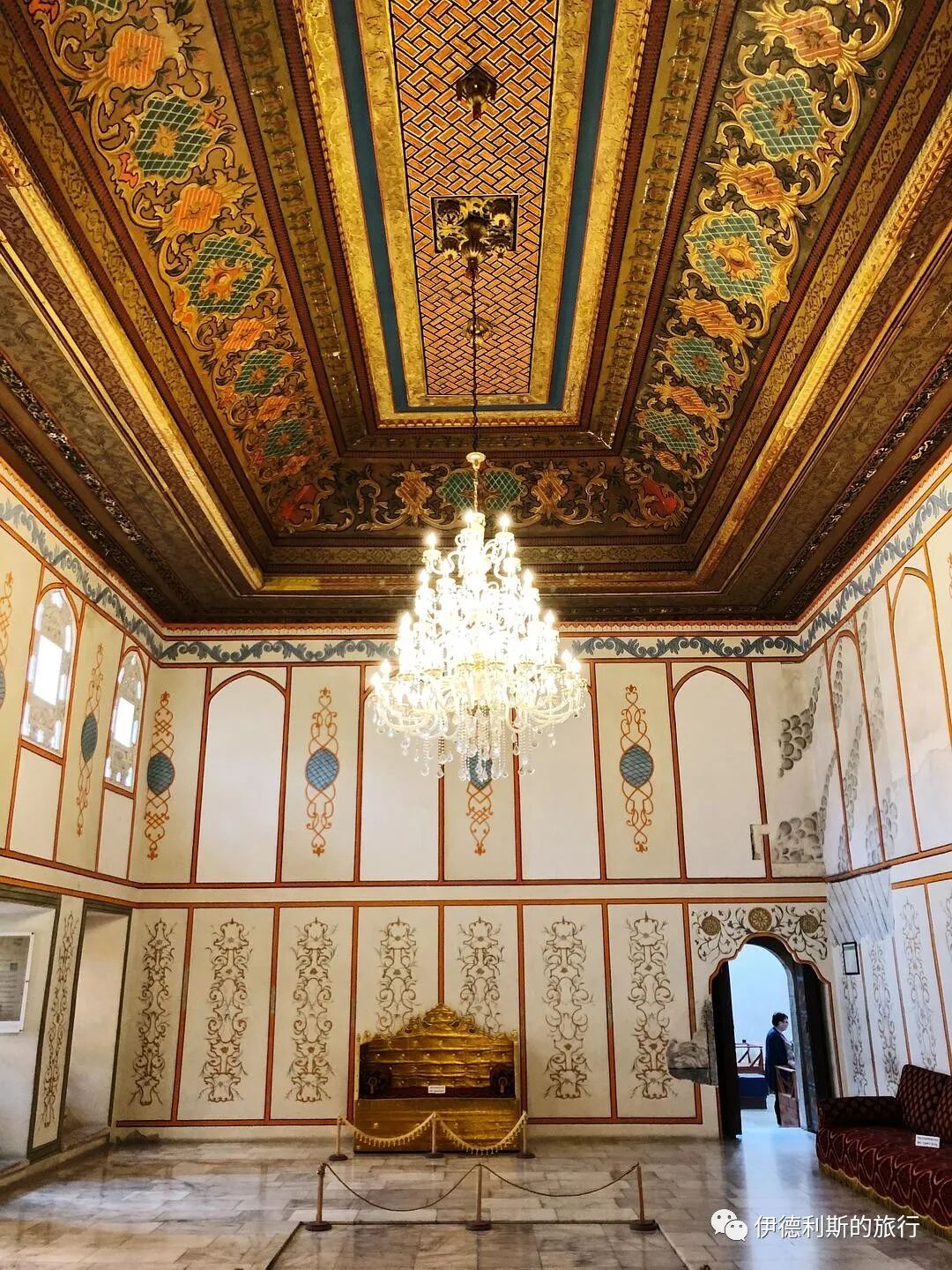
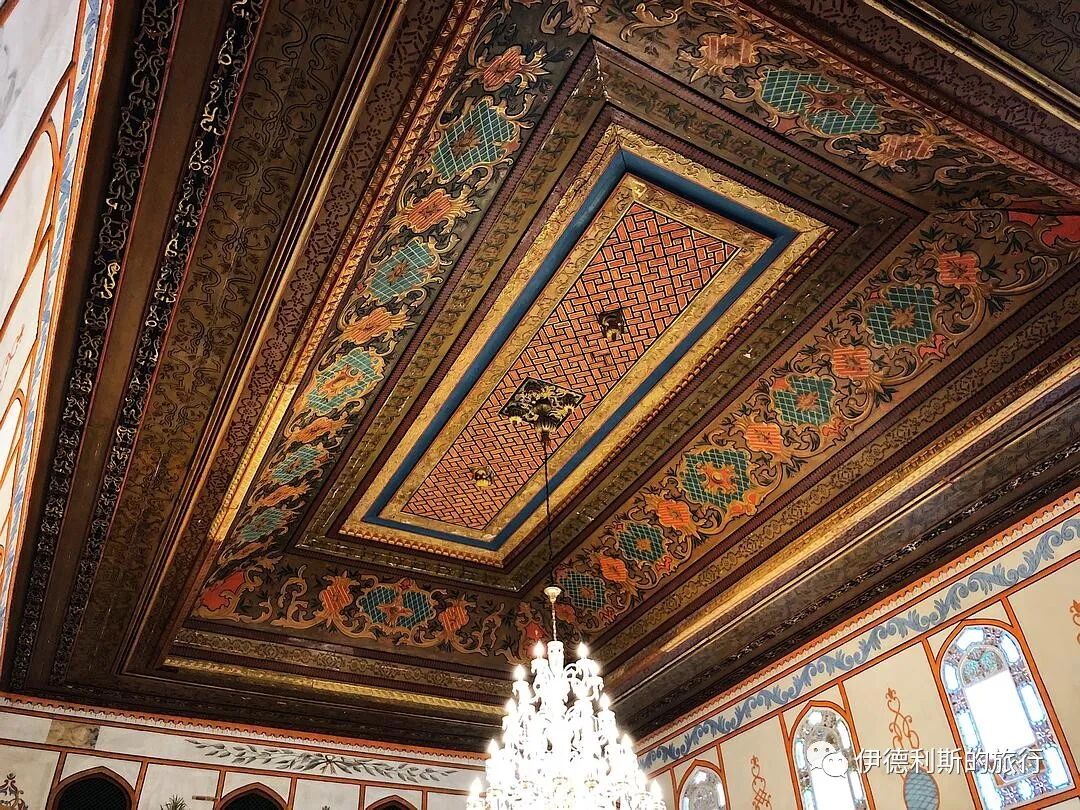
12. Summer Pavilion
The Summer Pavilion is a place for cooling off inside the main building of the Khan Palace, built in the late 17th to early 18th century. It was burned down by the Russian army in 1736 and later restored by the architect Omer ibn al Hadj Mustafa. In the center of the pavilion is a square pool containing a square marble fountain, surrounded by sofas.
Originally, the pavilion was open. Between 1821 and 1831, Tsar Alexander I ordered the architects Mikhail Klado and Vasiliy Dorofeyev to enclose the Summer Pavilion, adding columns, stained glass, and a carved ceiling.
Early murals were discovered during the restoration of the Summer Pavilion in 1962.
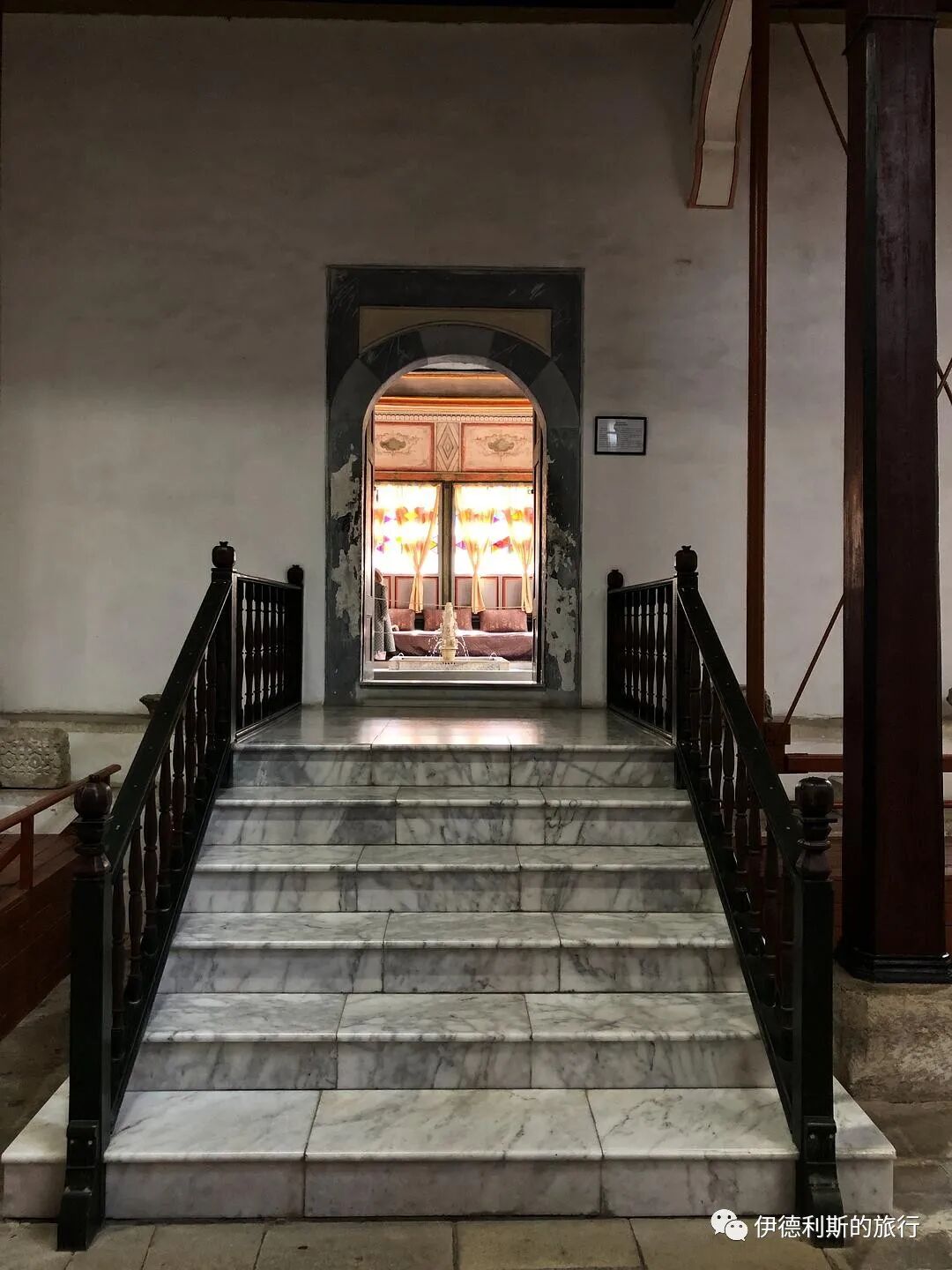
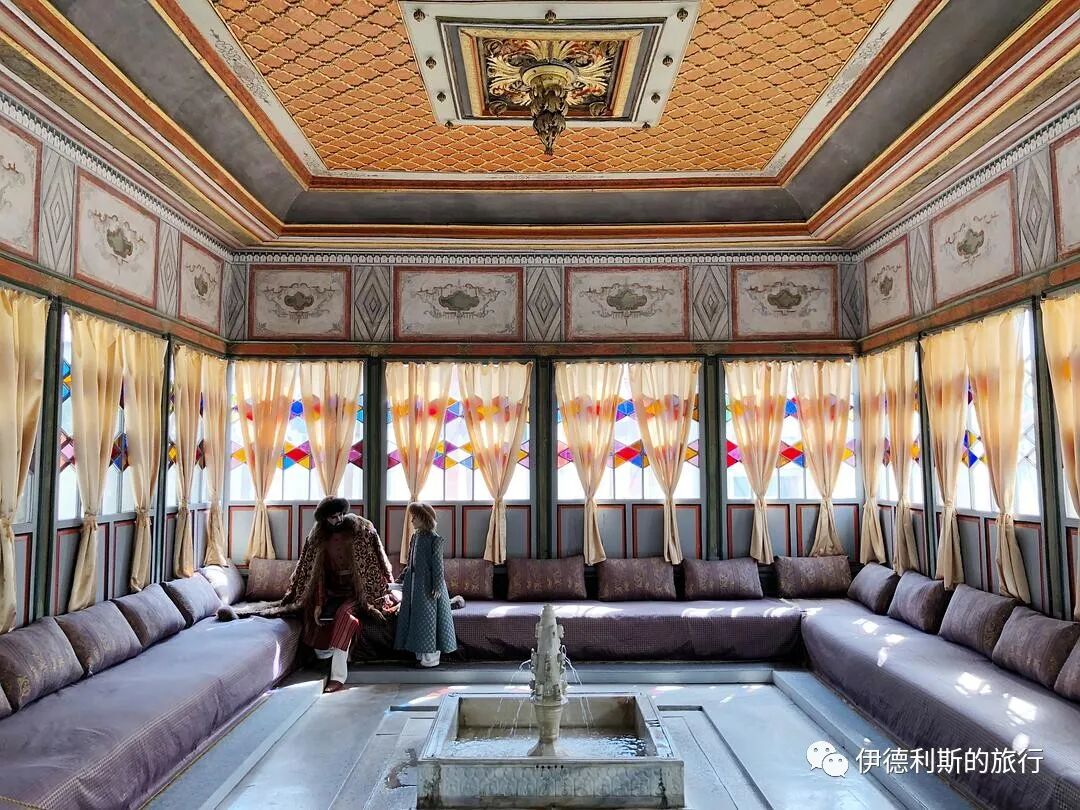
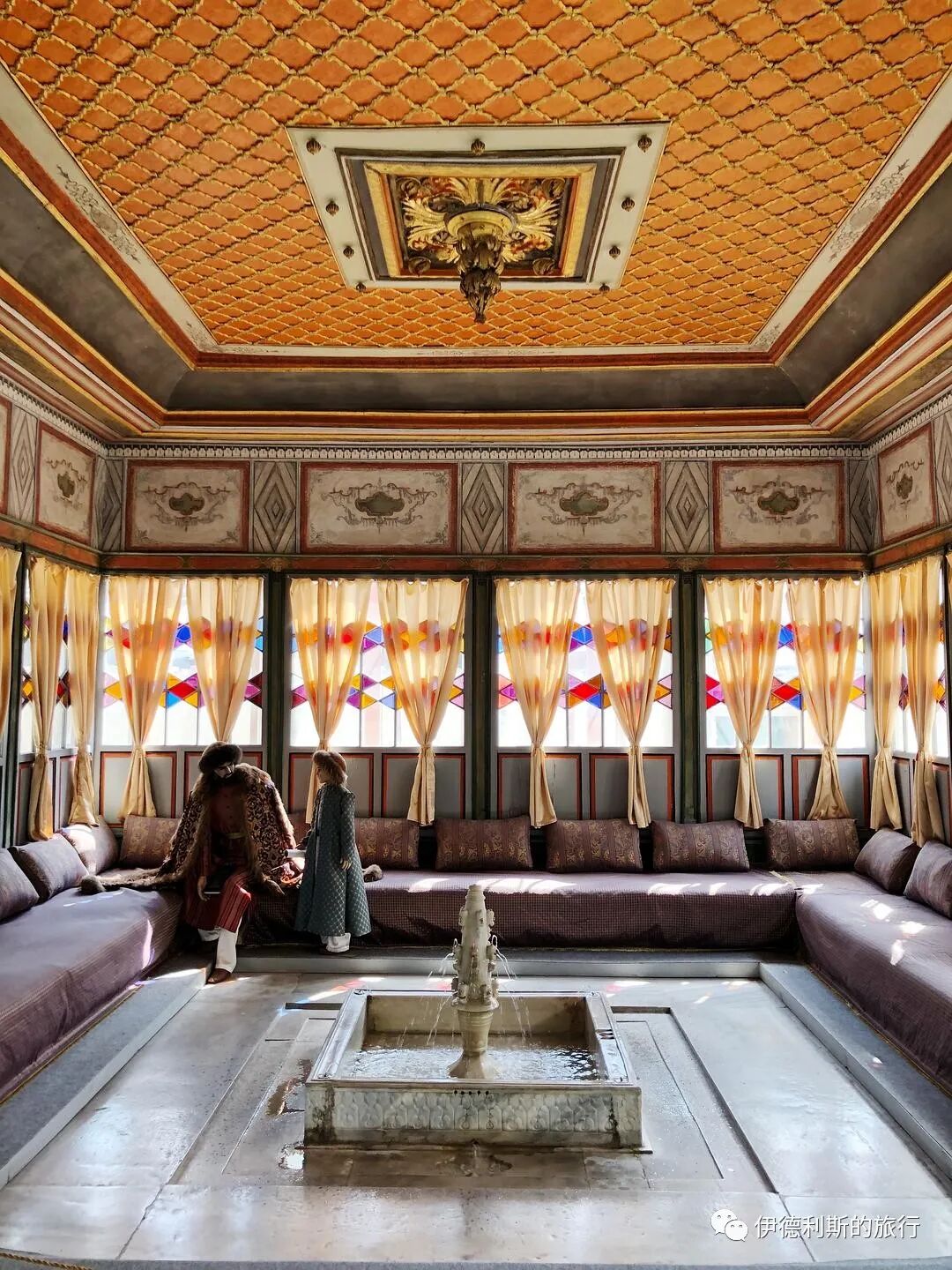
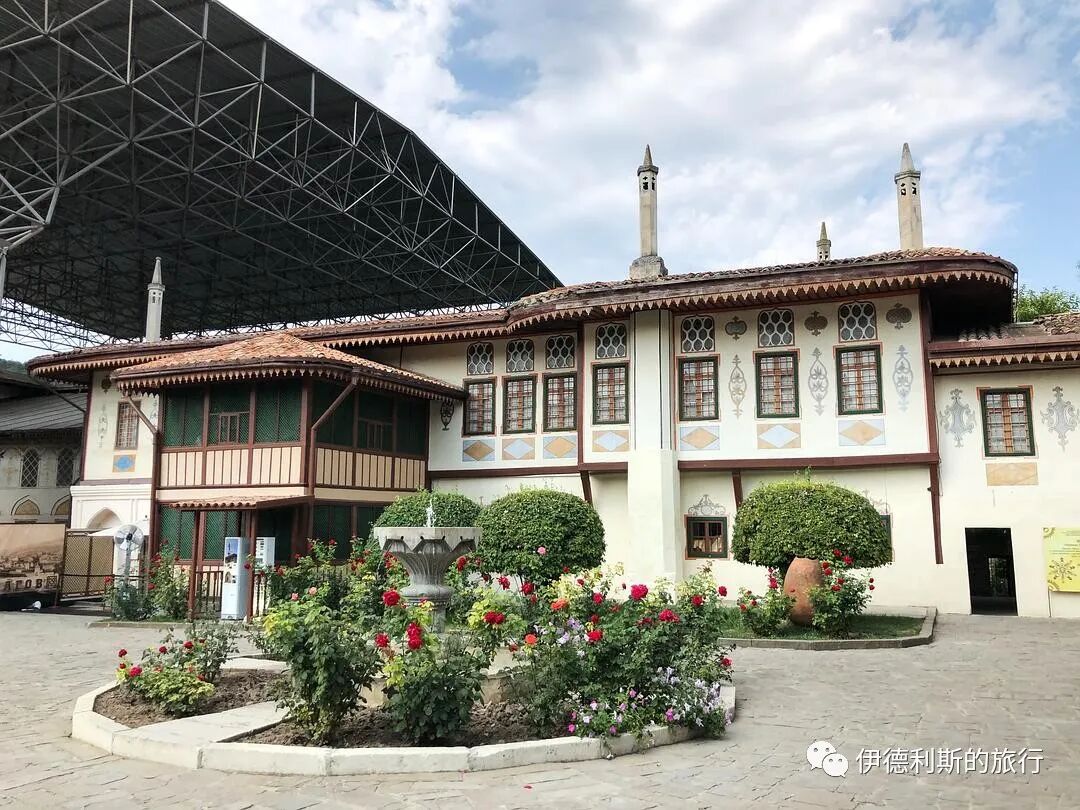
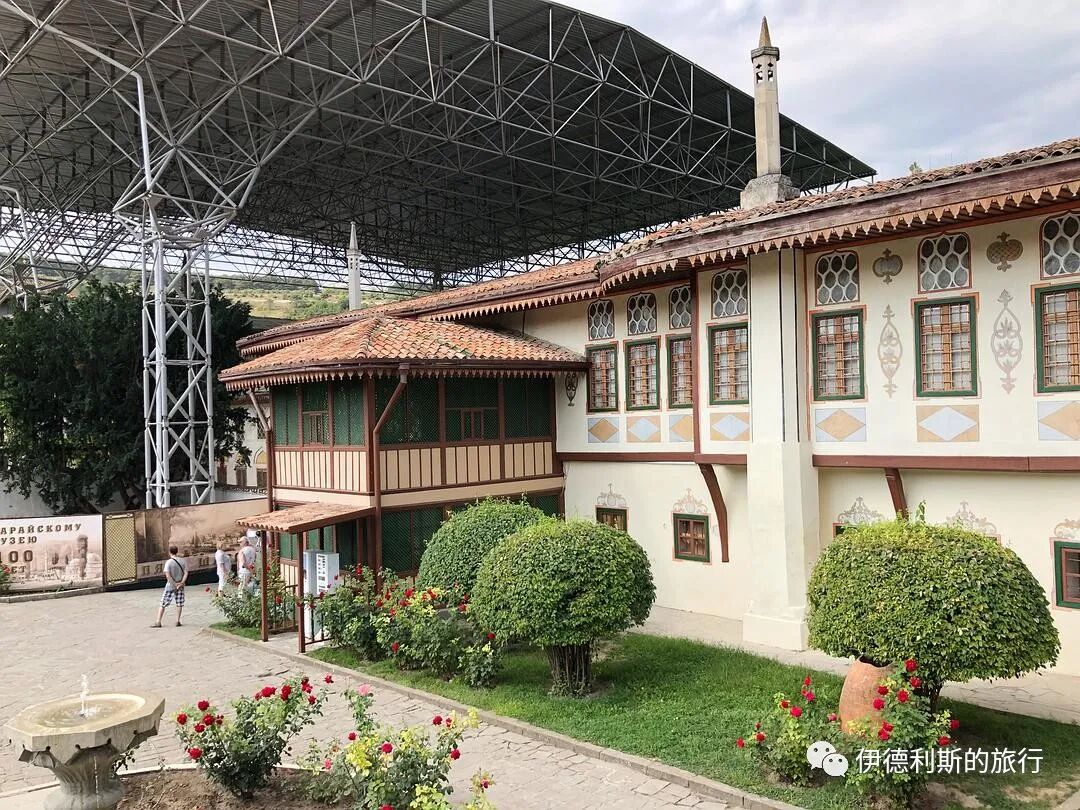
13. Golden Pavilion
The Golden Pavilion is on the second floor of the main building and was built in the late 18th century by the Iranian architect Omer. The interior of the pavilion originally featured murals of fruit vases and Arabic poems praising Khan Qırım Giray, but these were destroyed during the German occupation of Crimea from 1941 to 1944.
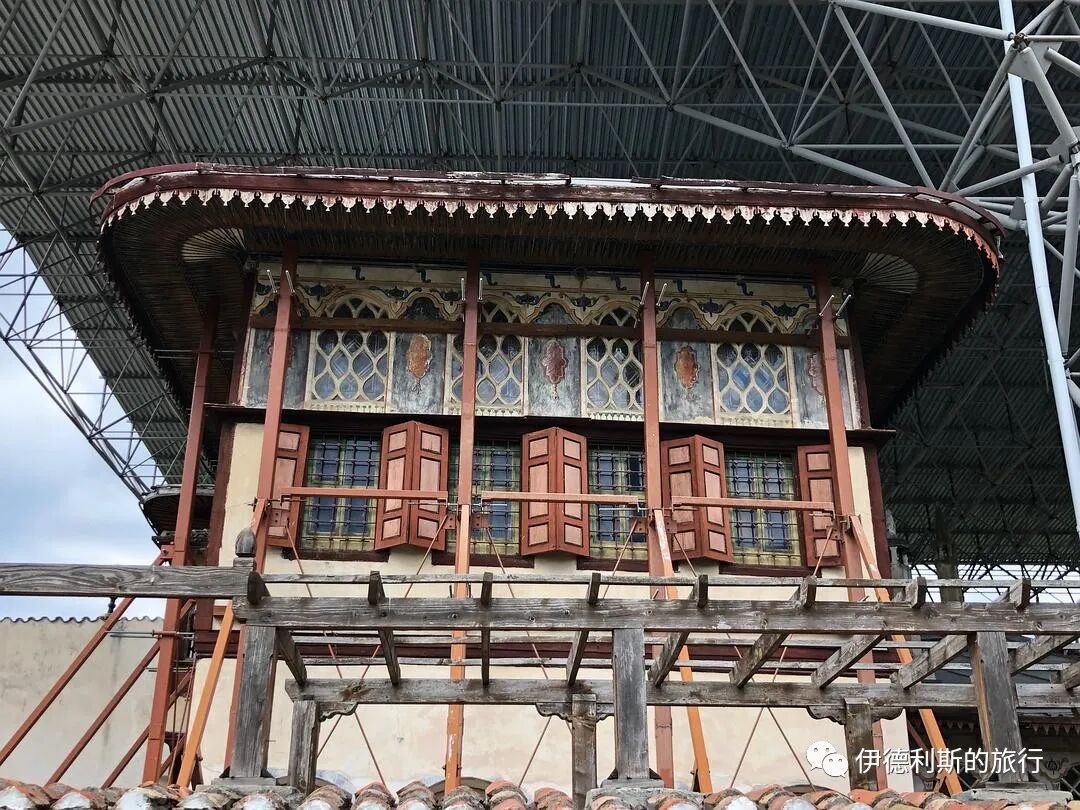
14. Golden Fountain: 1733
The Golden Fountain is located in the Fountain Courtyard of the main building of the Khan Palace, near the Small Khan Mosque, and was where the Crimean Khan and members of the Khan's court performed wudu.
The Golden Fountain is made of gilded marble. It depicts the "Paradise" (jannāt ʿadn, or the Garden of Eden) from the Quran by carving various flowers, fruits, and plant patterns, which is the place where Adam and his wife (Eve) lived. A circular outlet is carved in the middle of the fountain, symbolizing eternal life.
The Arabic inscription above the fountain indicates that it was built in 1733 by the Crimean Khan Qaplan I Giray. The Arabic inscription below is from the Quran (76:21): "And their Lord will give them a pure drink." "
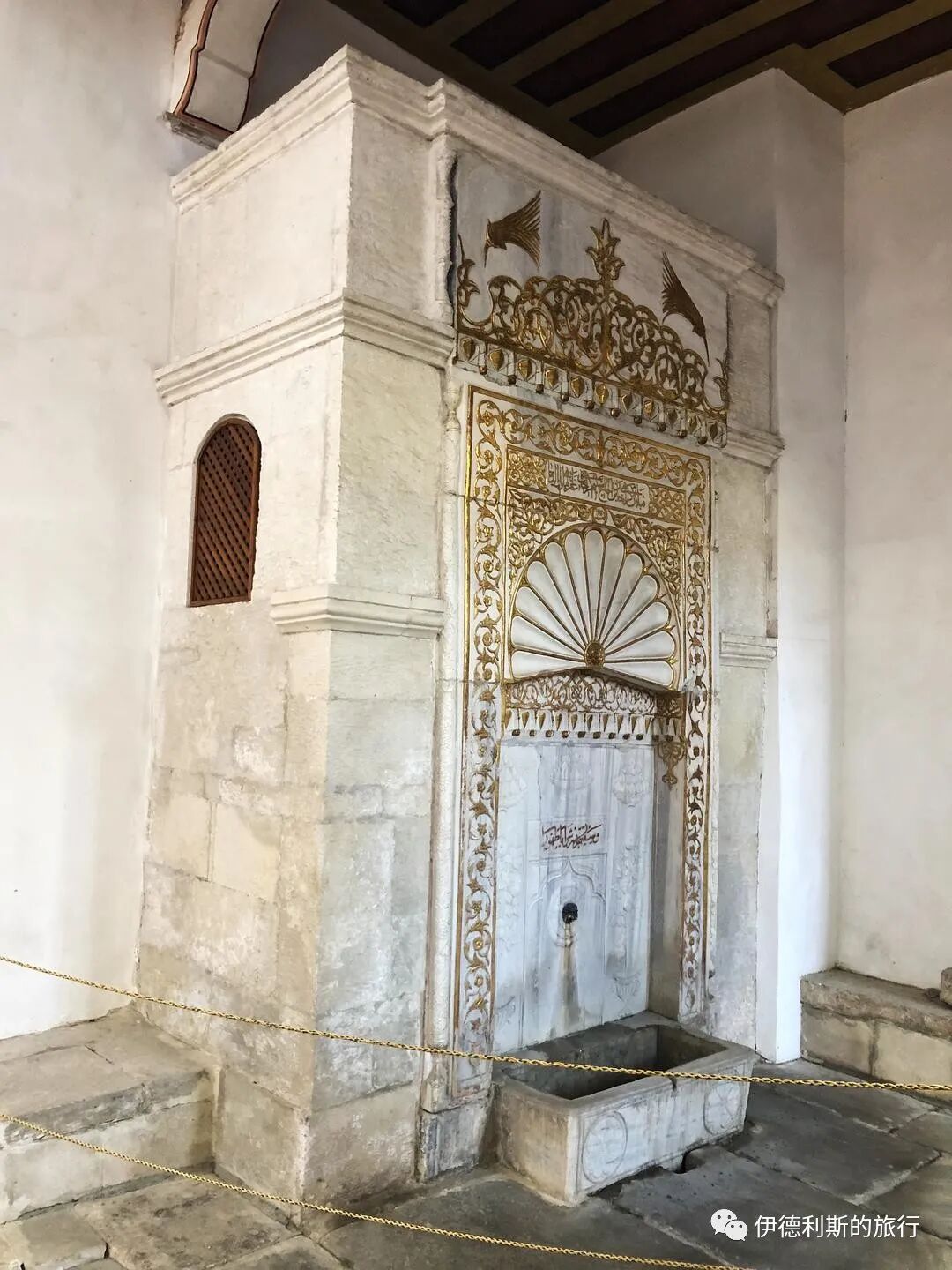
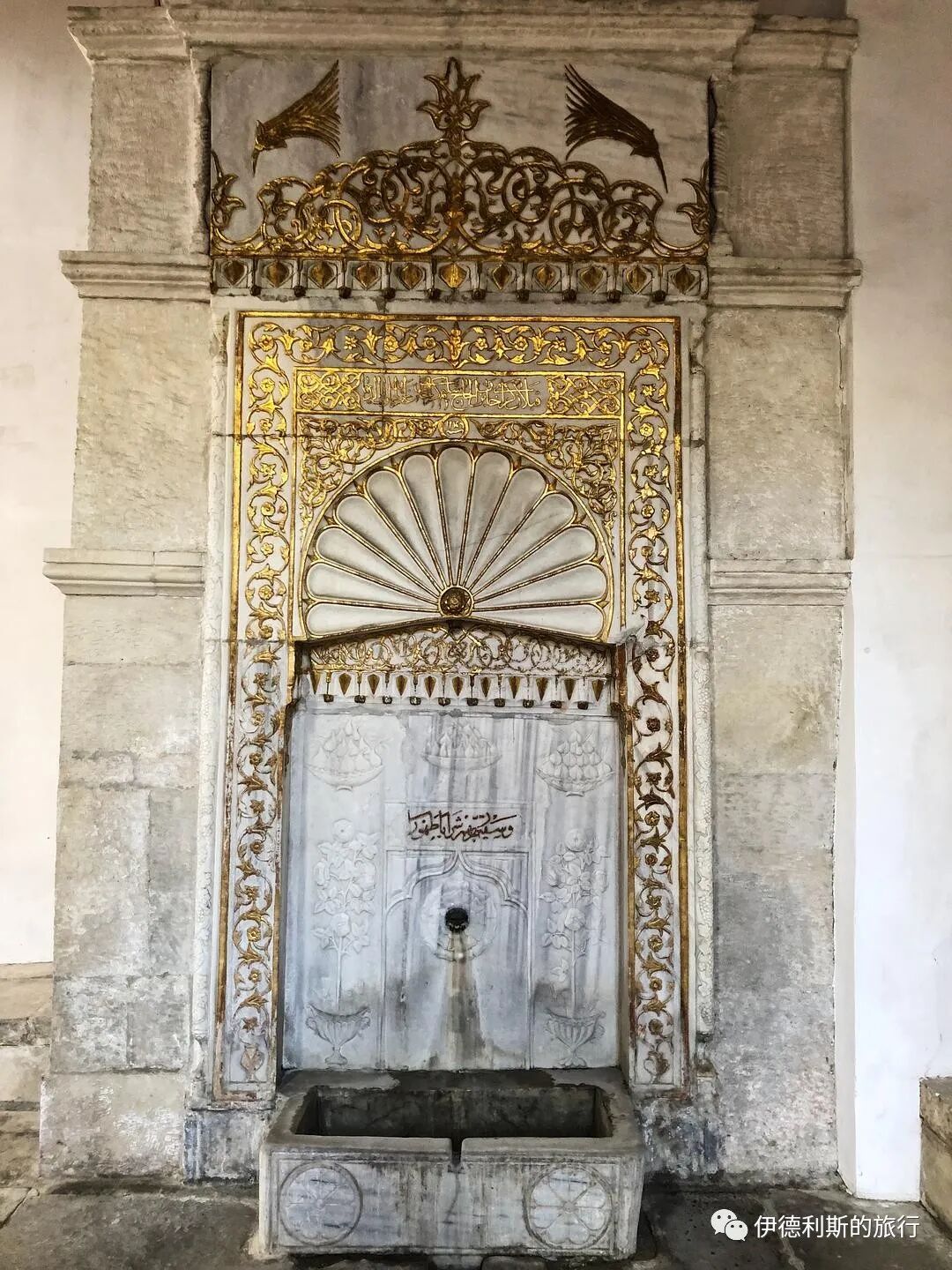
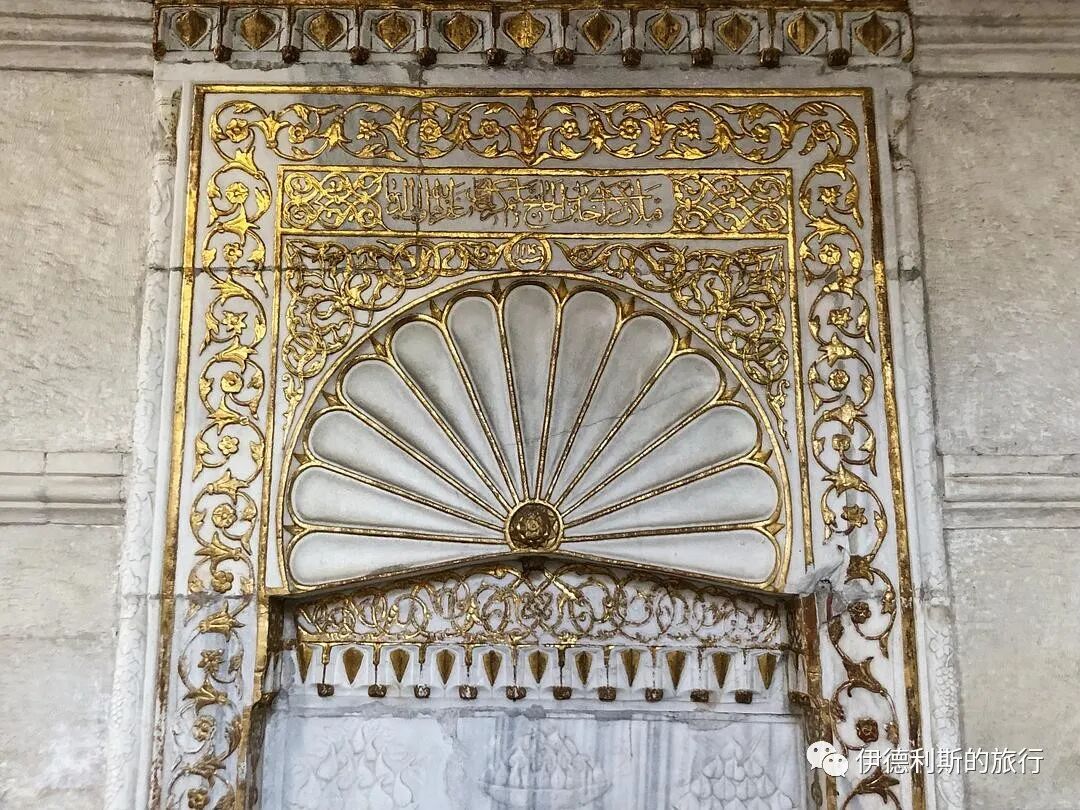
15. Fountain of Tears: 1763
The Fountain of Tears was commissioned in 1763 by the Crimean Khan Qırım Giray (reigned 1758-1764, 1768-1769), and the architect was Omer ibn al Hadj Mustafa from Iran. The fountain was originally installed in the mausoleum of the Khan's beloved wife, Dilâra Bikeç. After Tsar Catherine II visited the palace in 1787, the dried-up fountain was moved to the Fountain Courtyard in front of the main building.
The love story of the Fountain of Tears has been circulating in Bakhchisaray since the 18th century. According to legend, the Khan's beloved wife Dilâra Bikeç was a Greek woman from Georgia who was killed in palace intrigue. The Khan fell into deep sorrow and built this fountain in her mausoleum to commemorate her. This love story later became widely known due to Pushkin's famous poem, "The Fountain of Bakhchisaray."
The fountain is made of marble and symbolizes the "Salsabil" (a spring in Paradise) mentioned in the Quran. The Quran (76:17-18) states: "And they will be given to drink therein a cup whose mixture is of ginger, [From] a spring within Paradise named Salsabil." The water outlet of the fountain is a flower; water drips from the center of the flower into a large bowl, flows down into two smaller bowls, and then gathers into another large bowl, repeating this process multiple times. According to 19th-century interpretations, the dripping water is like tears; filling the cup with water symbolizes inner sorrow, and the changing size of the cups symbolizes the process of sorrow intensifying and then subsiding. Many Muslim palaces once had fountains symbolizing Salsabil, but this design of interlocking water bowls only appears in Turkey and Crimea.
Below the fountain is a spiral shape, symbolizing eternity. At the very top of the fountain is a poem by the poet Sheikhiya commemorating Khan Qırım Giray, and below that is the Quranic verse (76:18): "[From] a spring within Paradise named Salsabil." "
"The Fountain of Bakhchisaray" is a long poem written by Pushkin after he visited the Bakhchisaray Khan Palace during his exile in 1820. The poem was started in 1821, completed in 1823, and published in 1824. Around 1950, a bronze statue of Pushkin was placed next to the fountain. Staff at the Museum of Crimean Tatar History and Culture place two roses in the top bowl every day, inspired by Pushkin's lines:
Fountain of love, fountain of living water,
I brought you two roses as a gift.
I love your silence,
And your poetic tears.
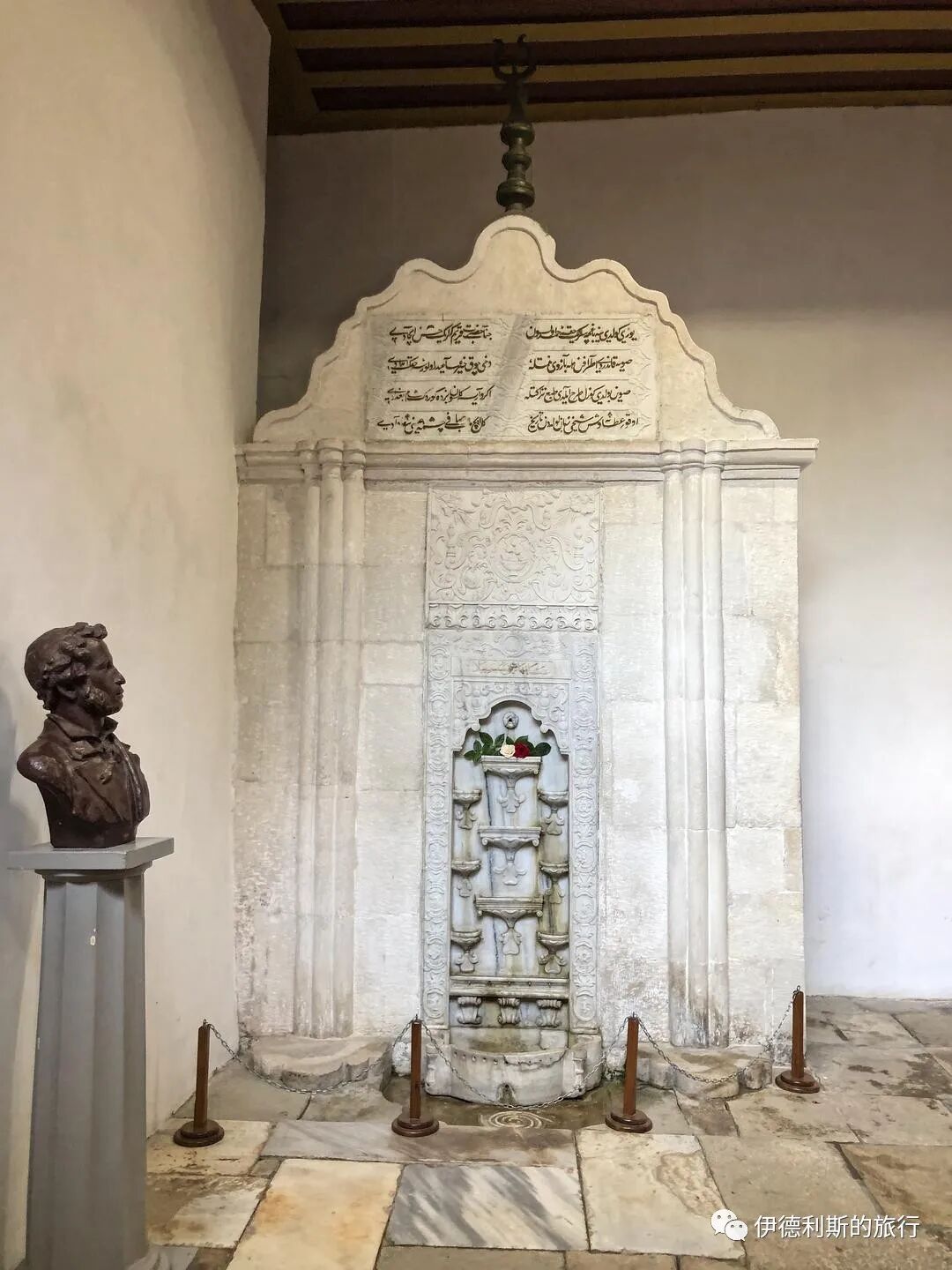
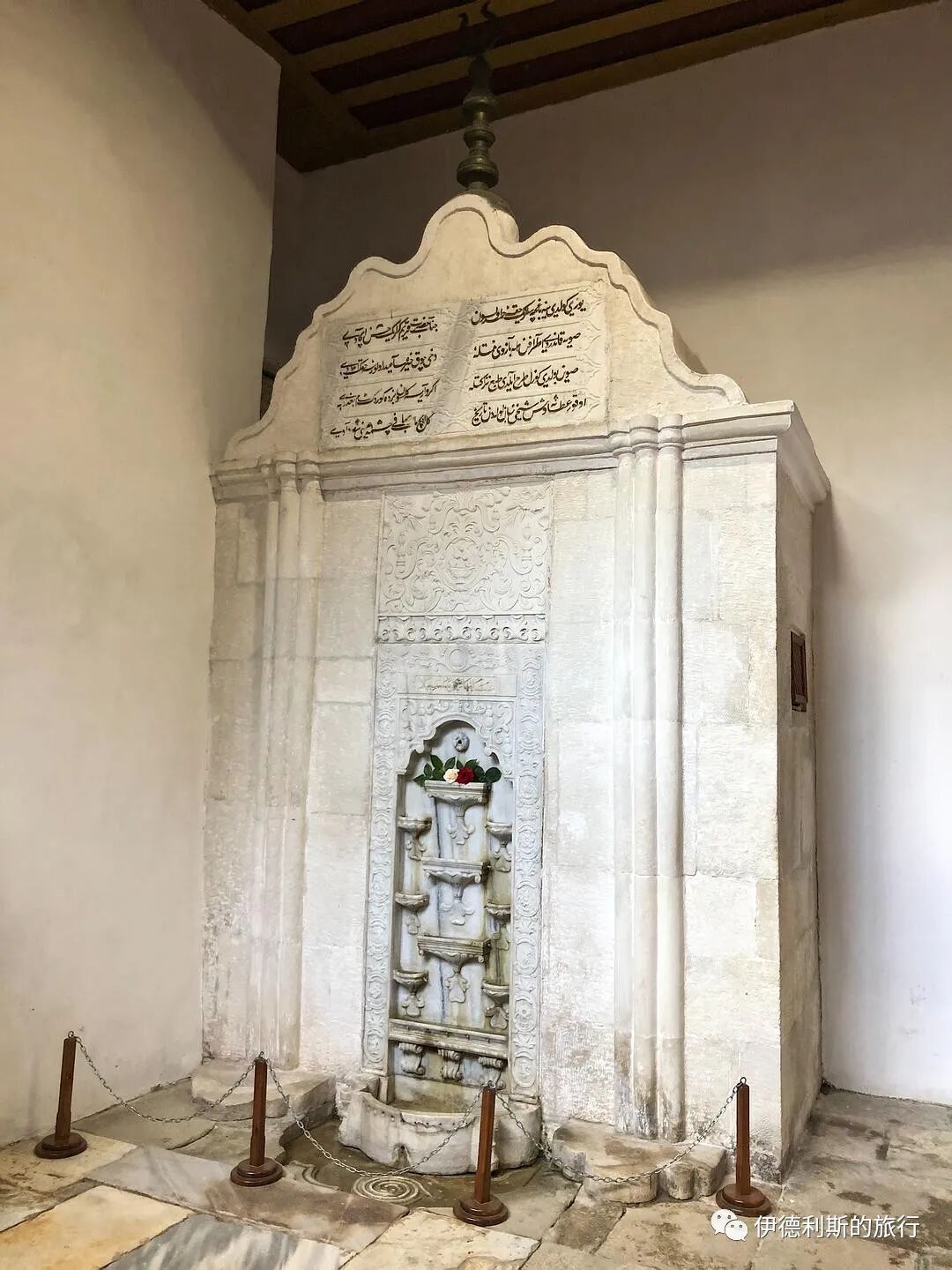
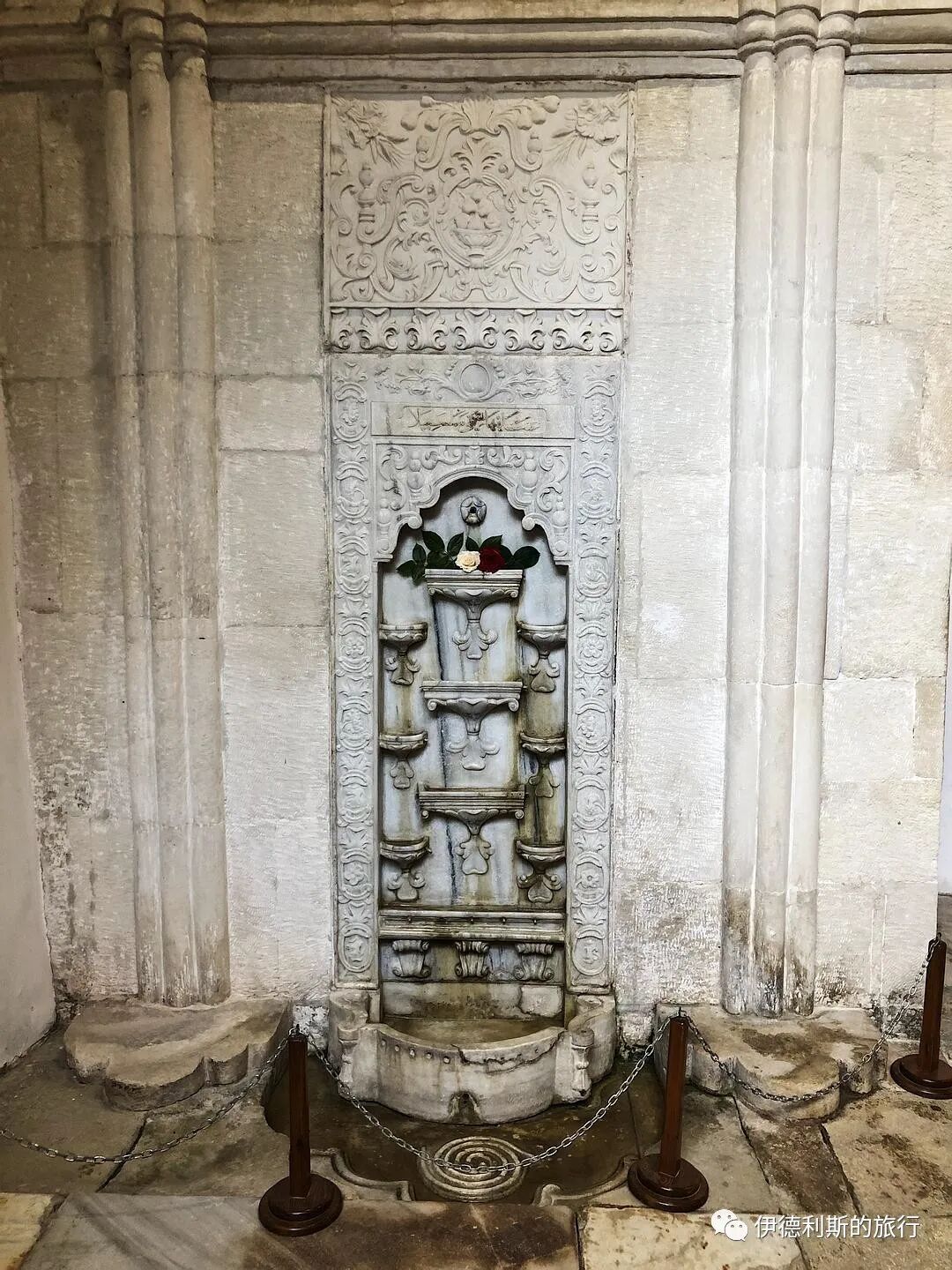
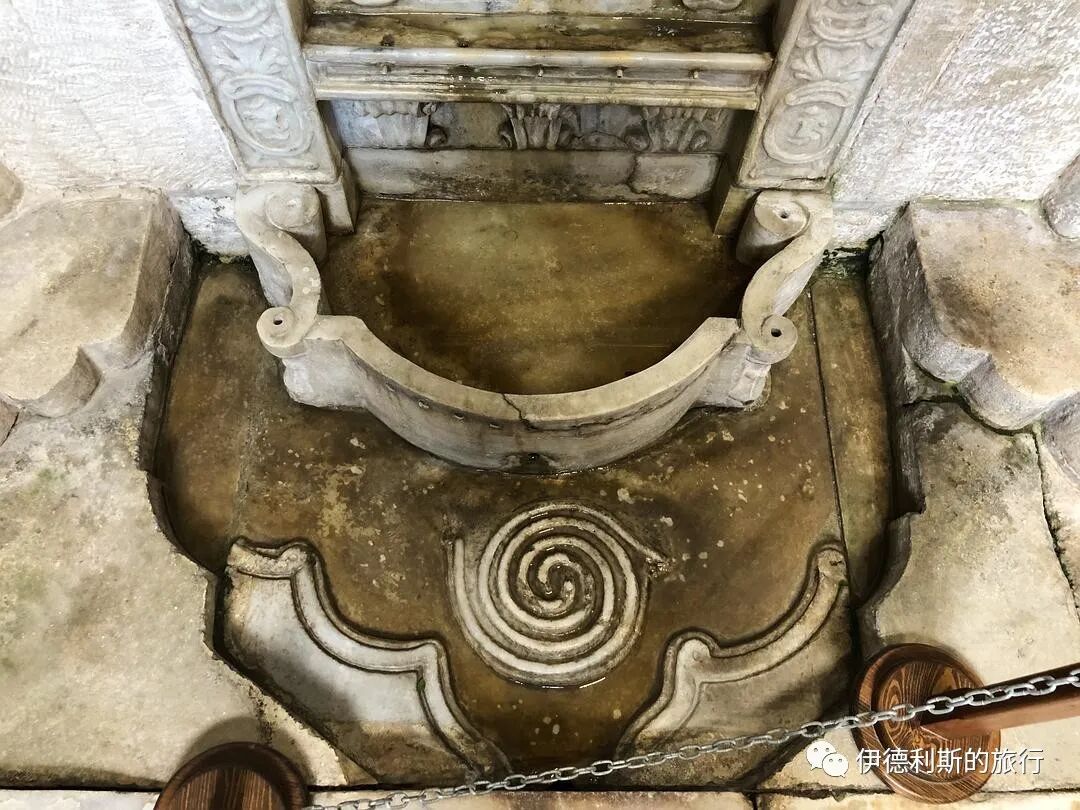
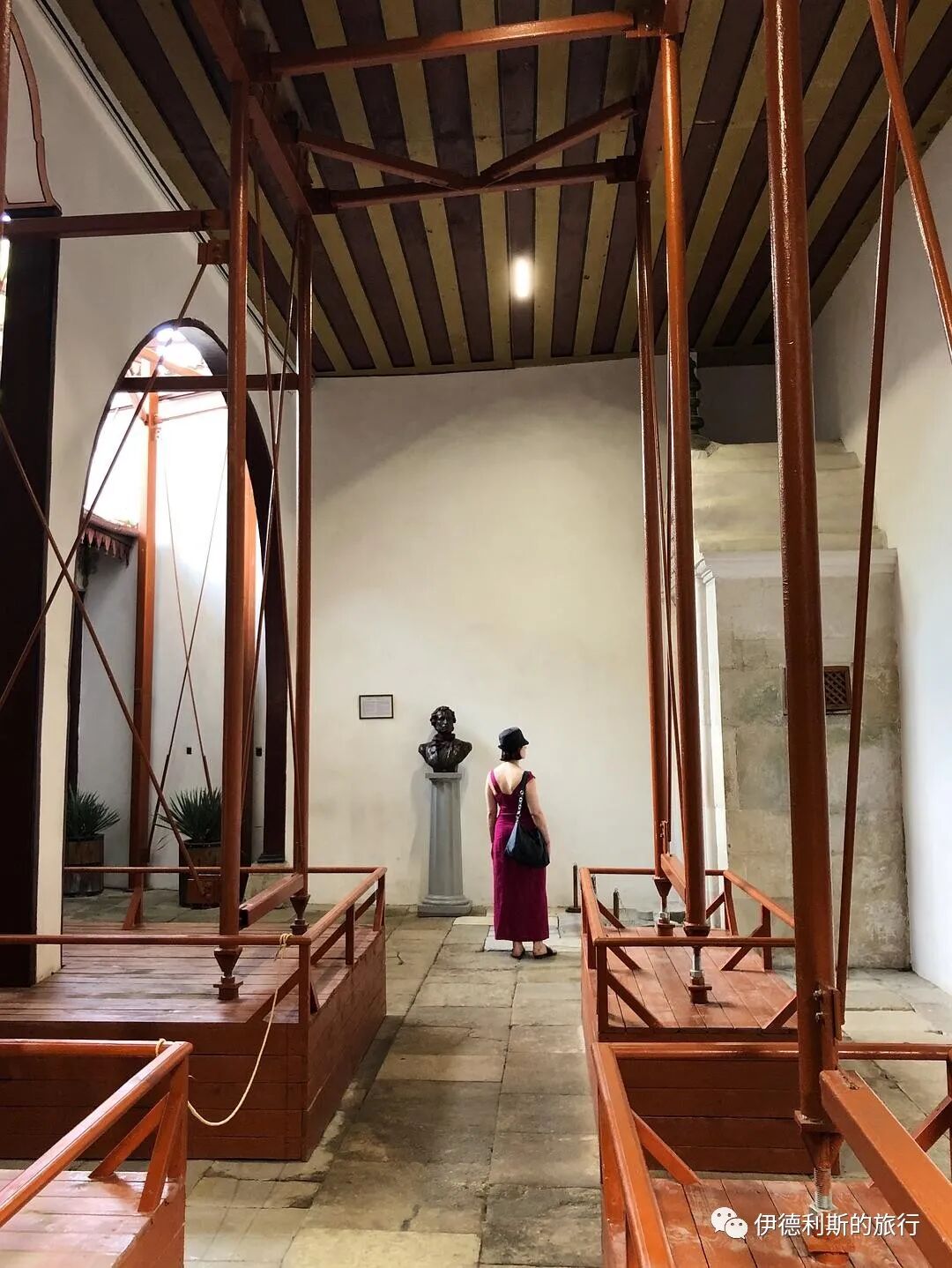
16. Suites
The suites on both sides of the North Gate were where the Khan Palace guards (Qapı Halqı) lived. After Crimea was occupied by Tsarist Russia, this was also where guests stayed. Today, the west building of the suites is an exhibition hall, and the east building is the museum office.
The exhibition hall in the west building displays some artifacts from the Crimean Khanate era, as well as the traditional life of the Crimean Tatars. The original fireplaces are still preserved in the suites.
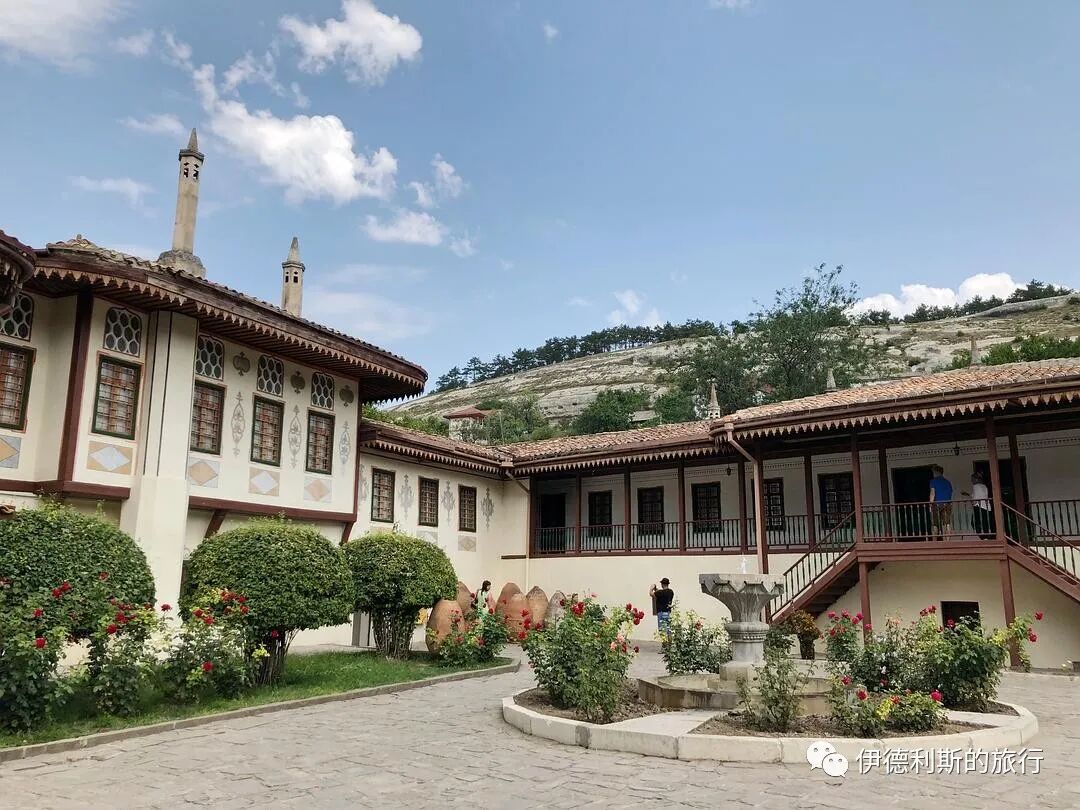
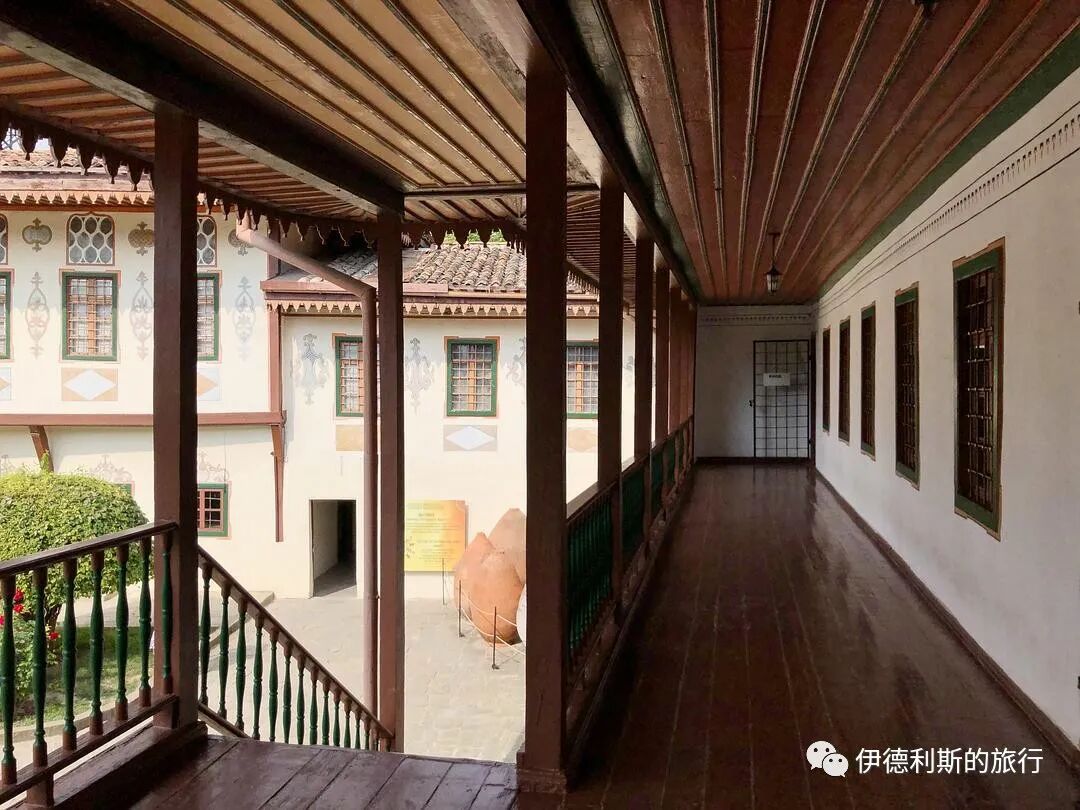
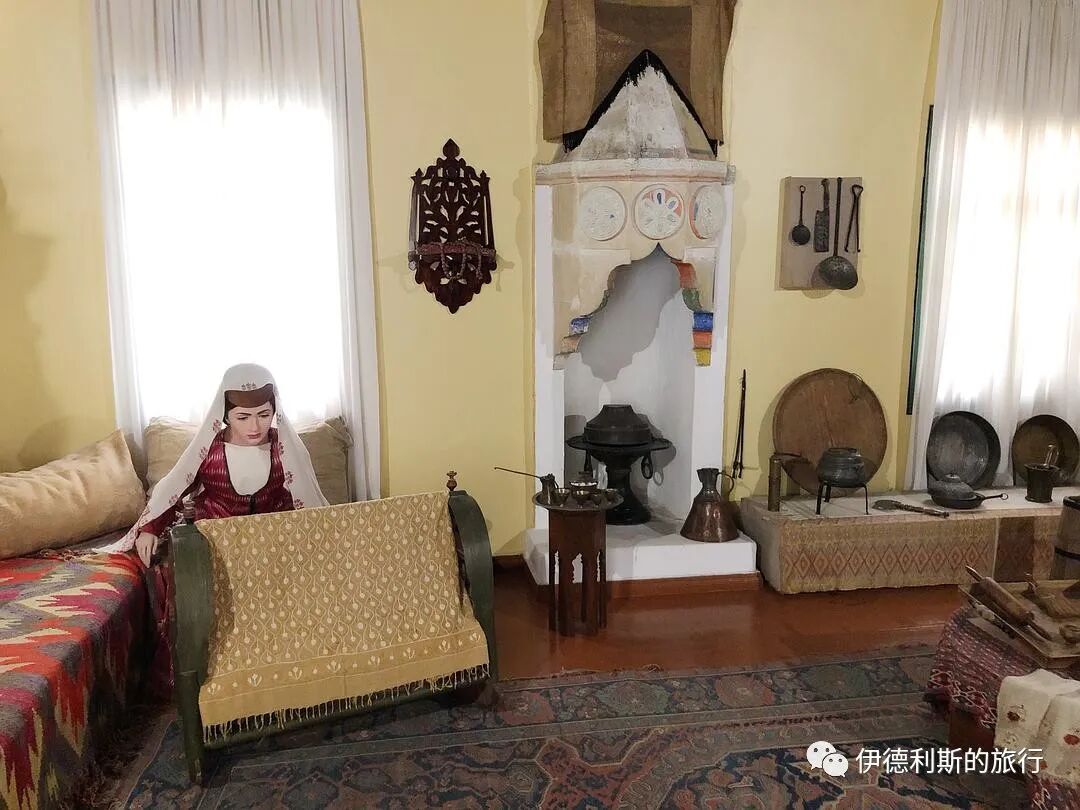
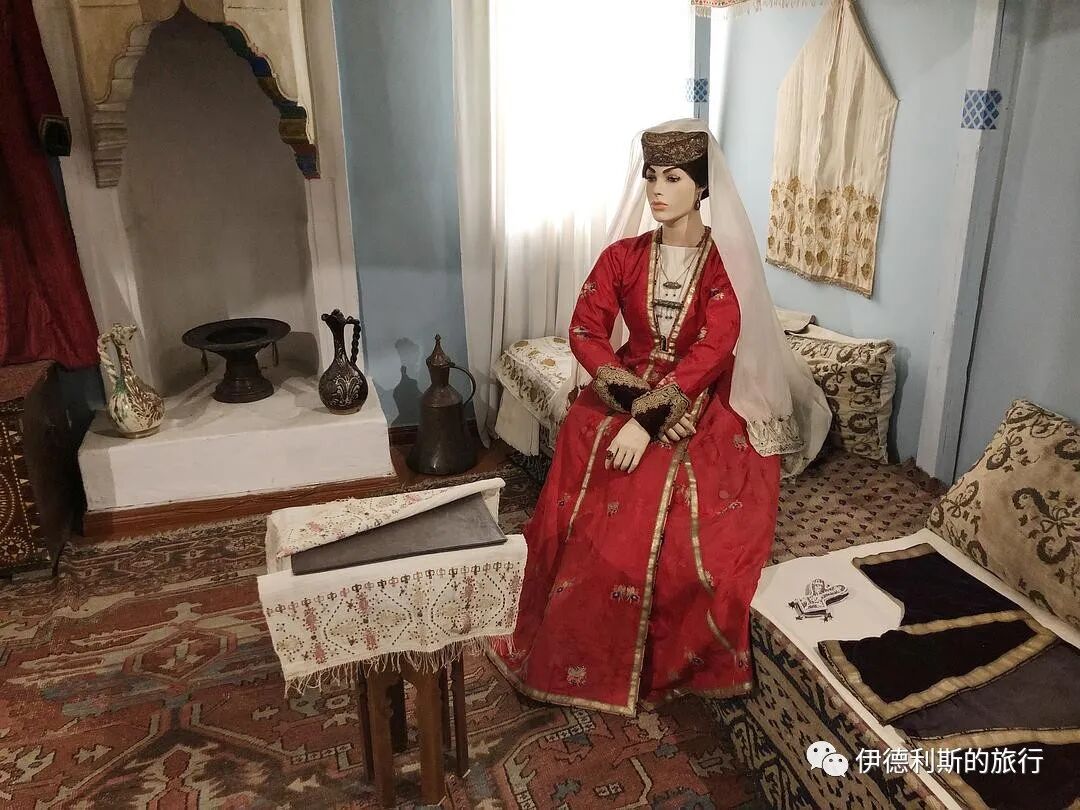
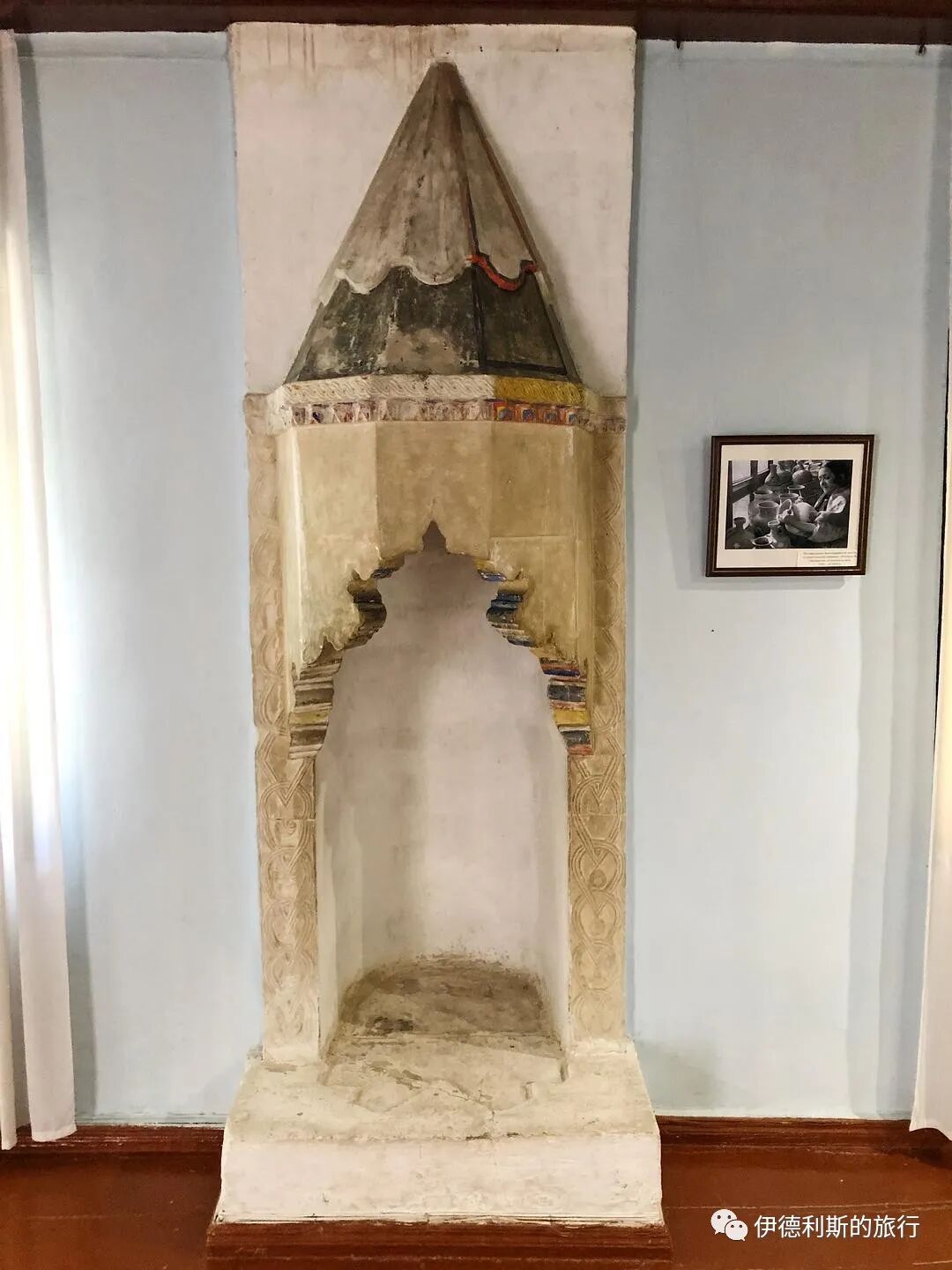
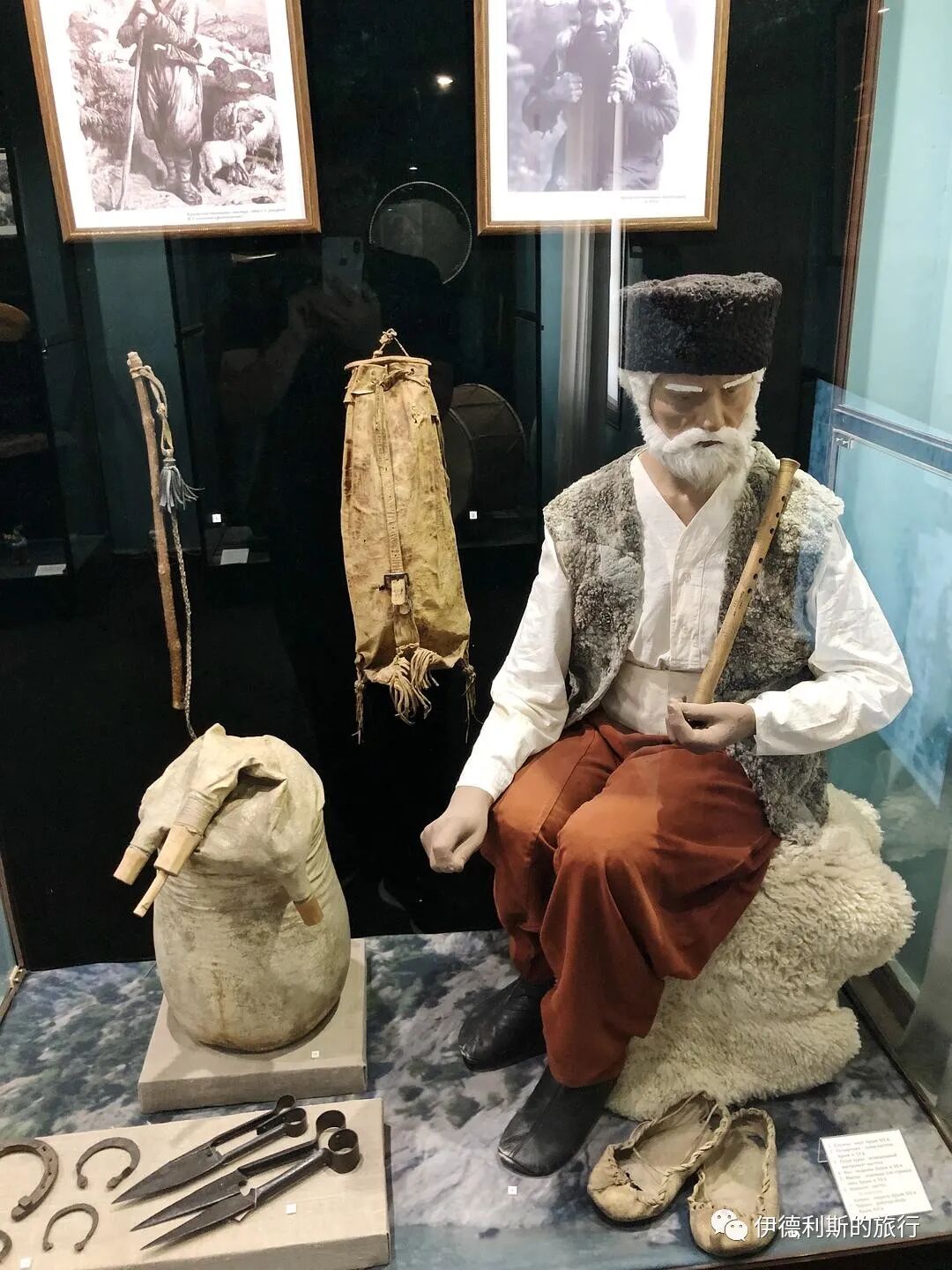
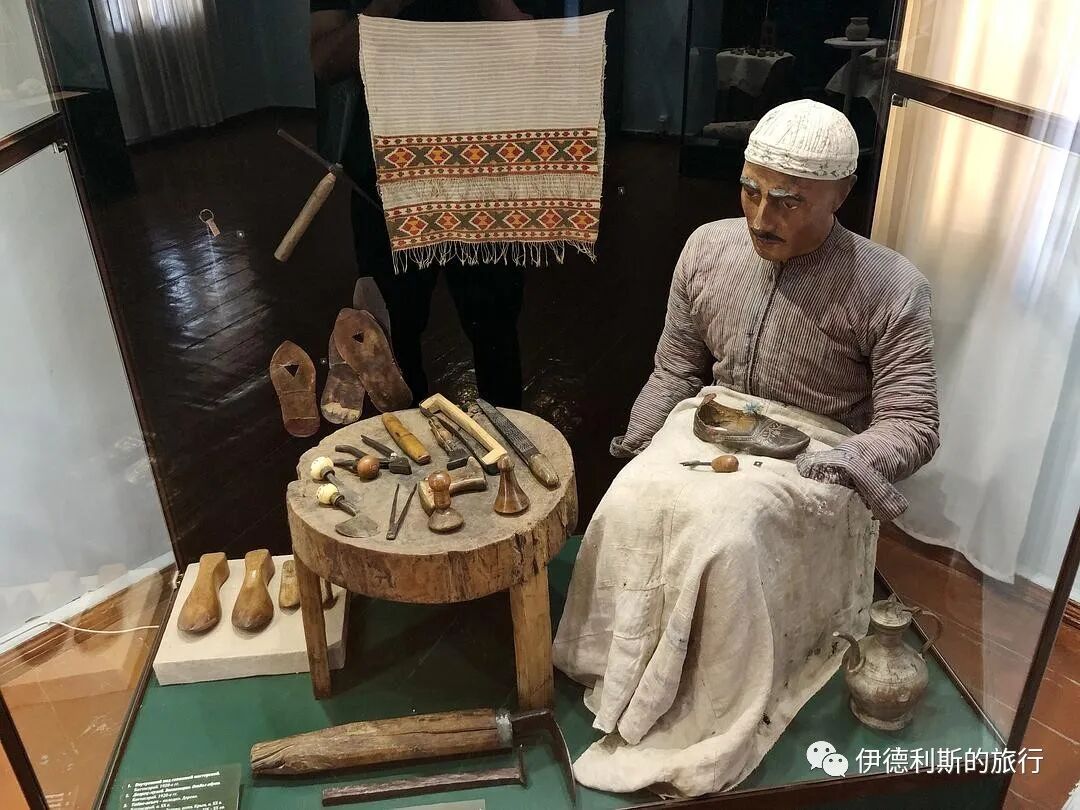
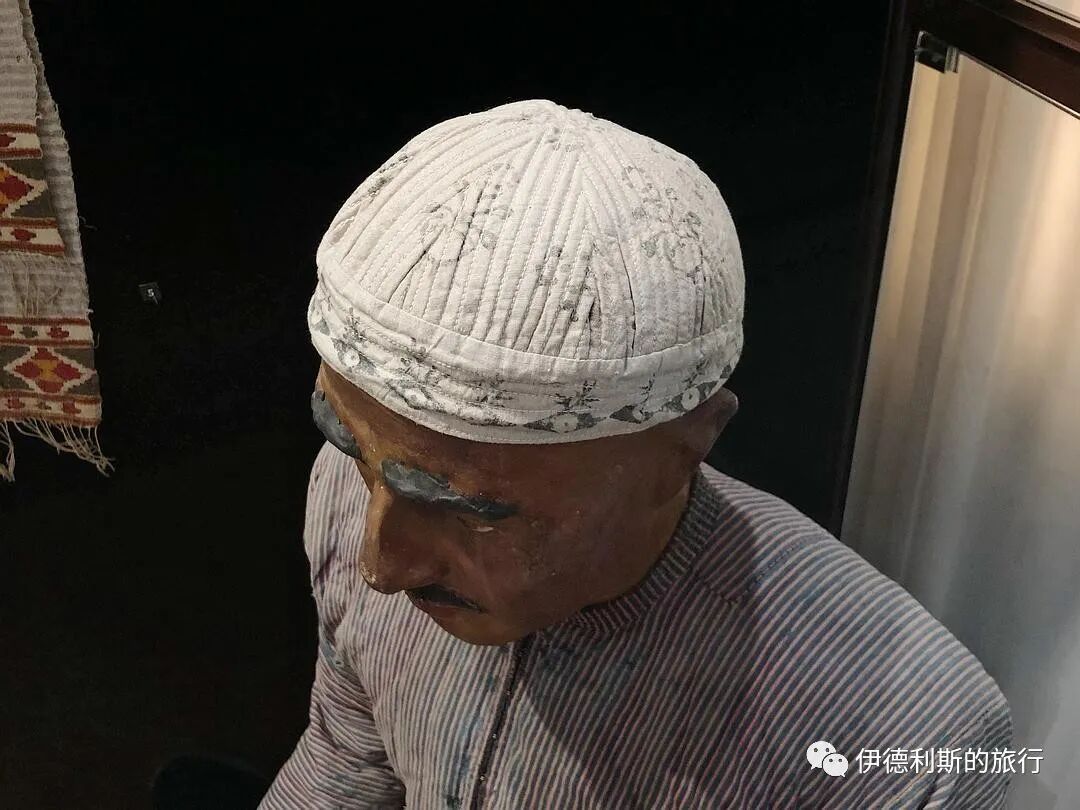
The suite exhibition hall displays traditional women's clothing from the Crimean Khanate, including velvet fez hats embroidered with gold thread and headscarves.
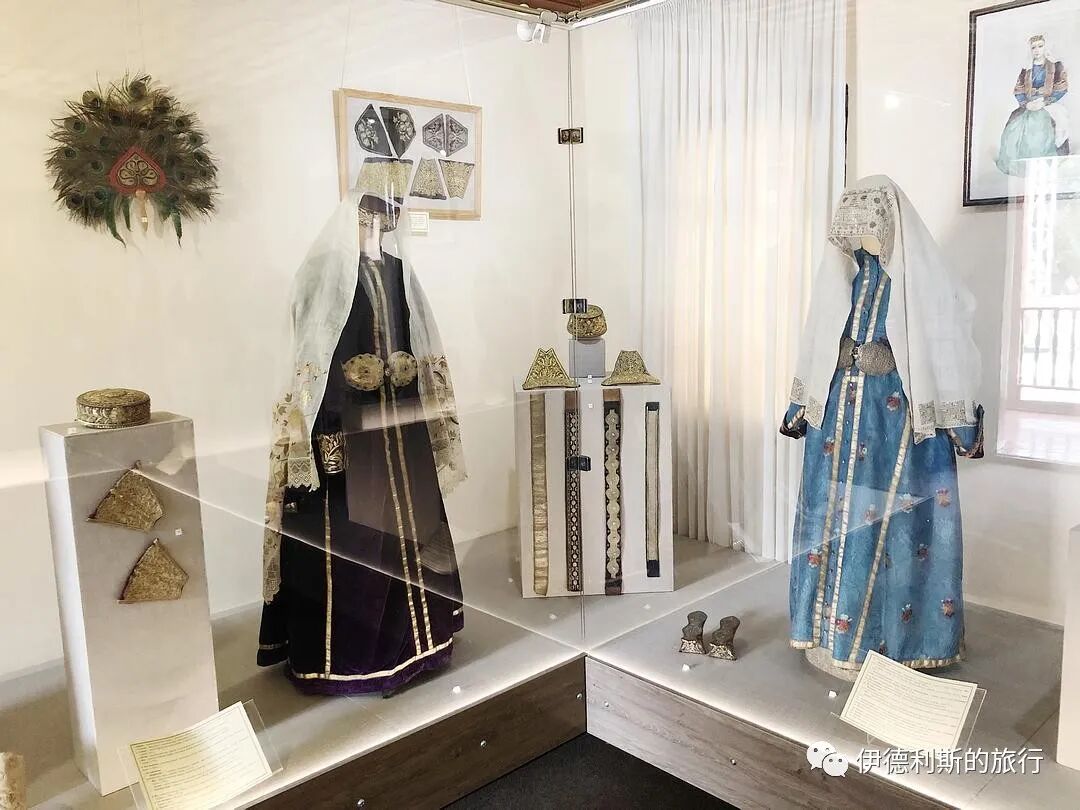
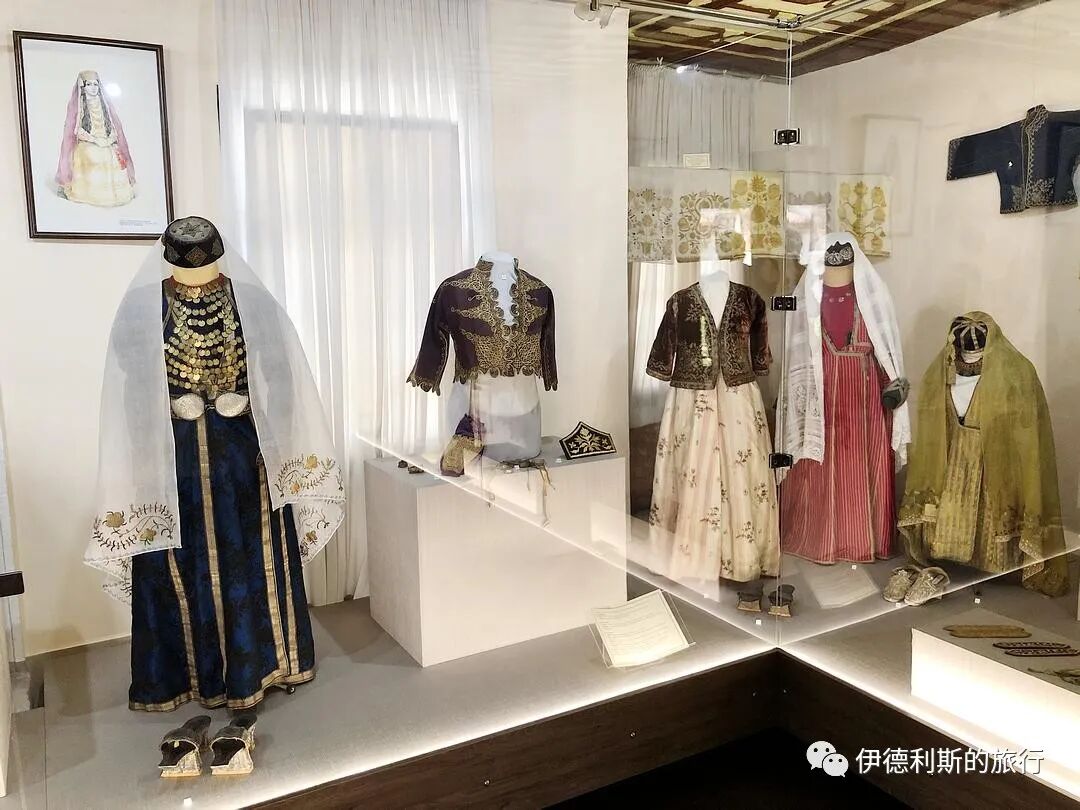
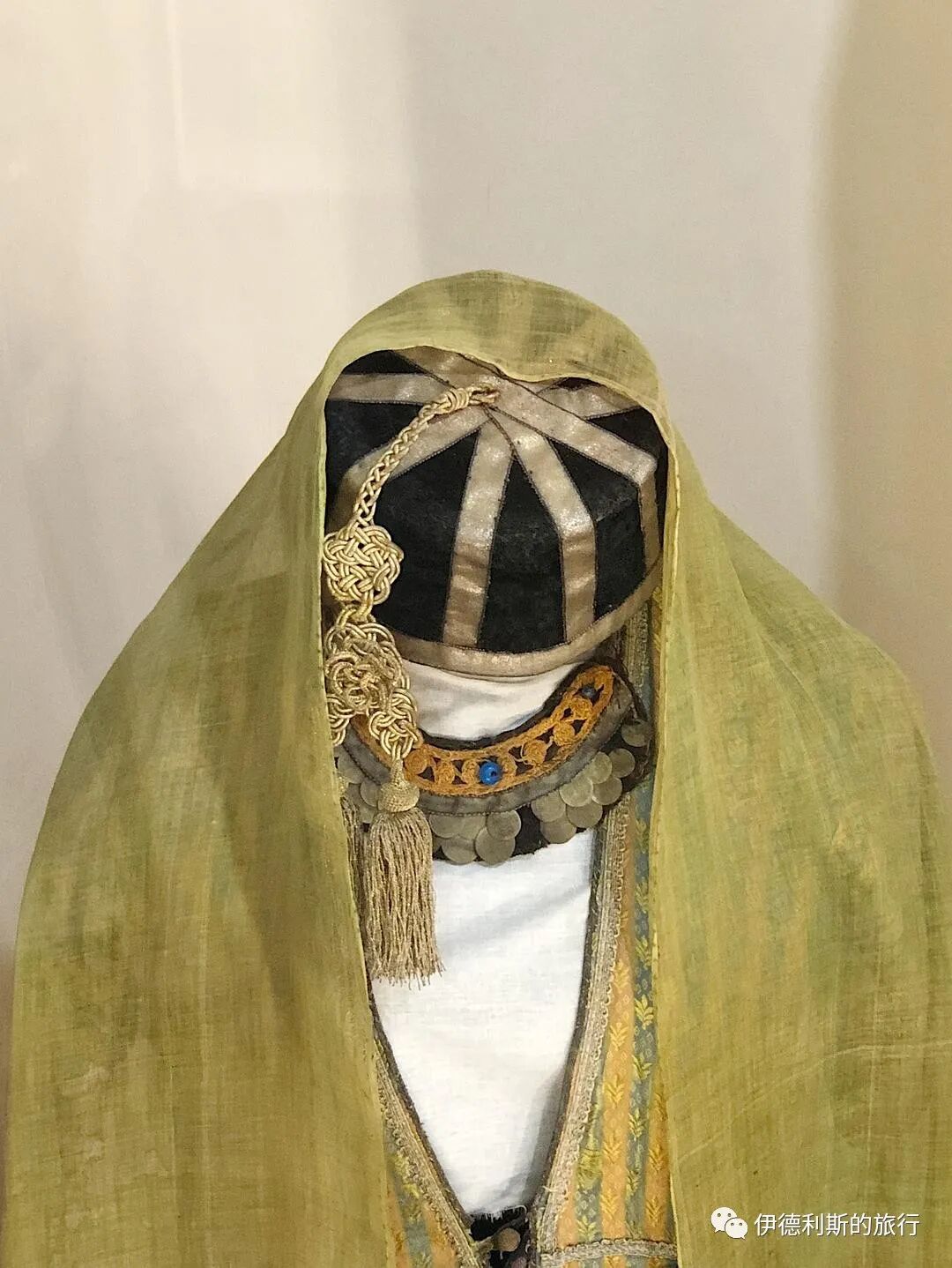
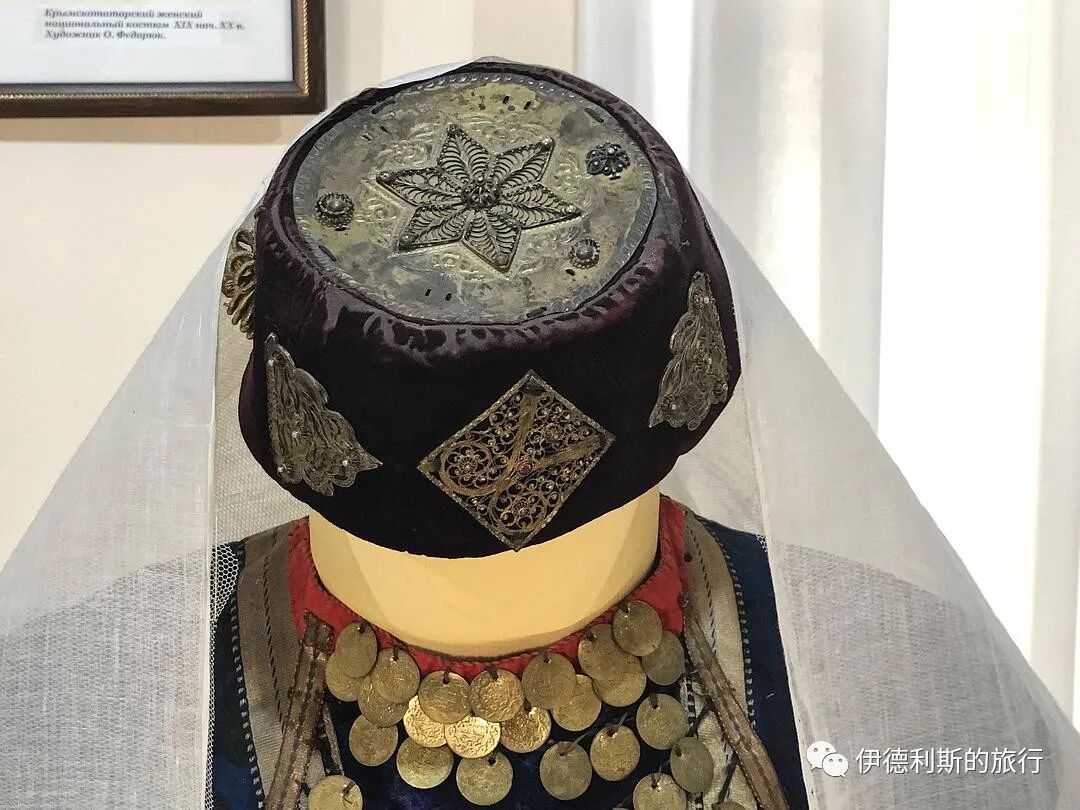
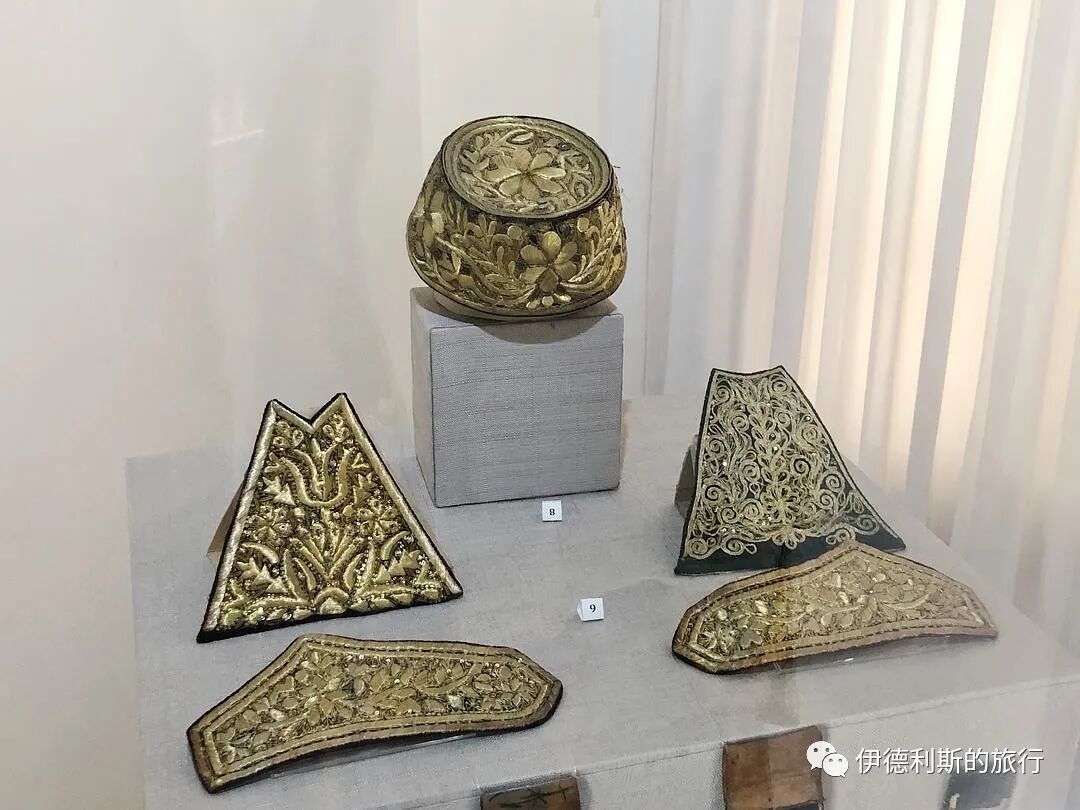
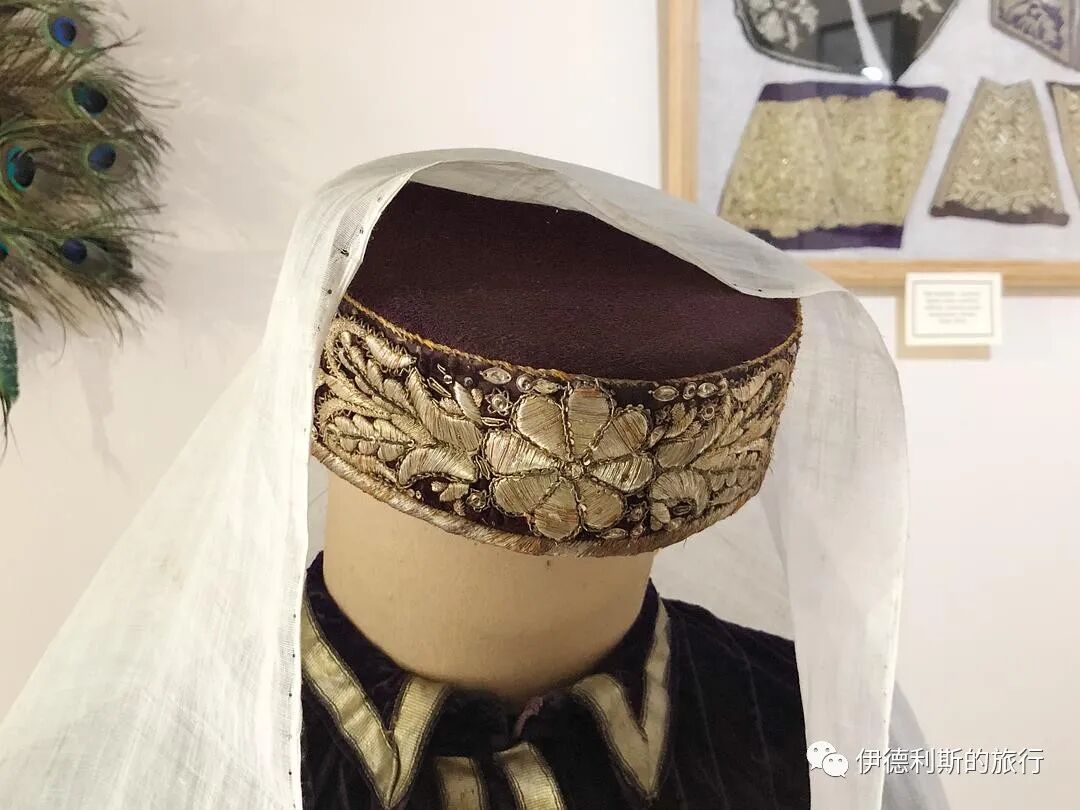
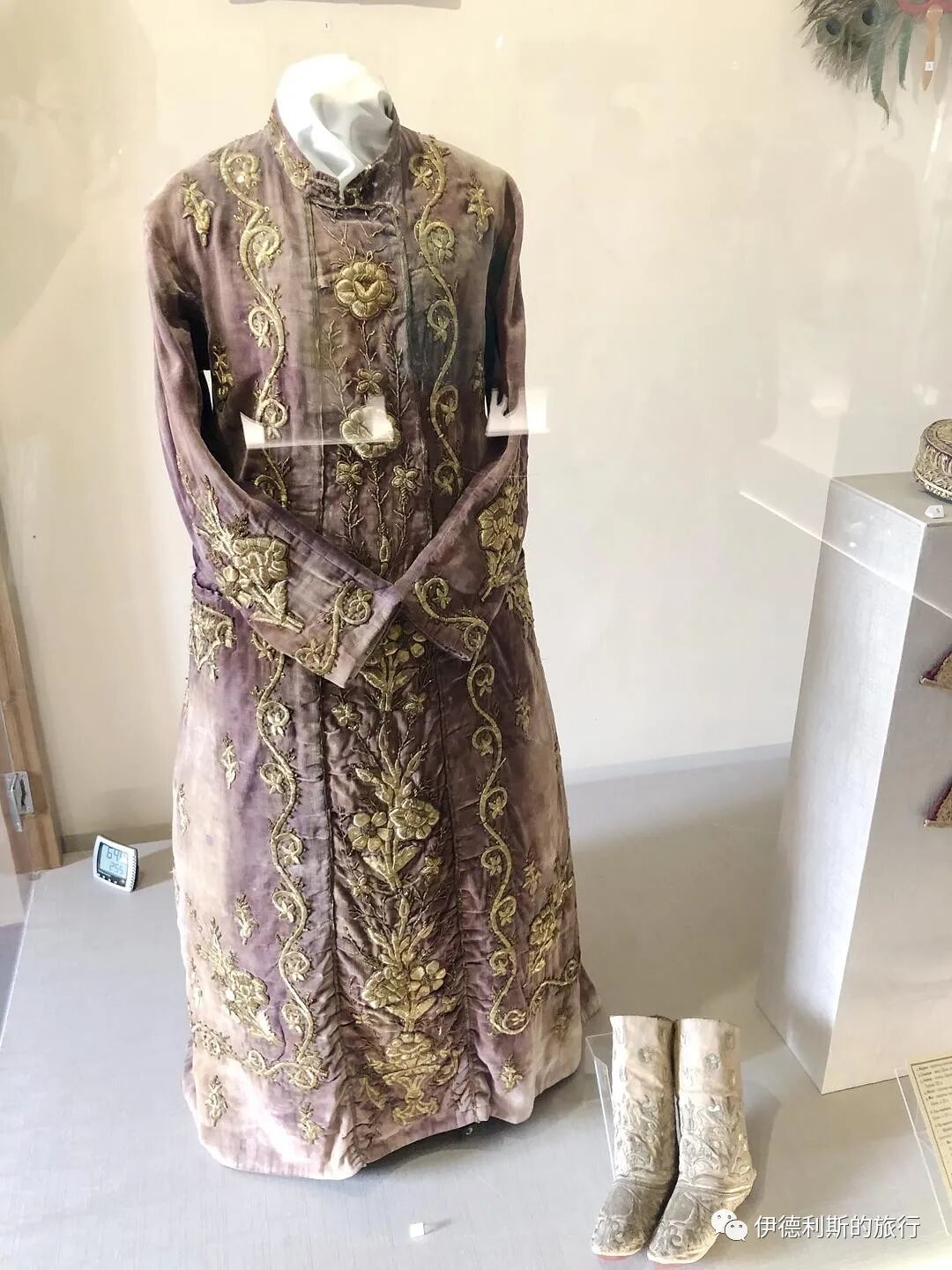
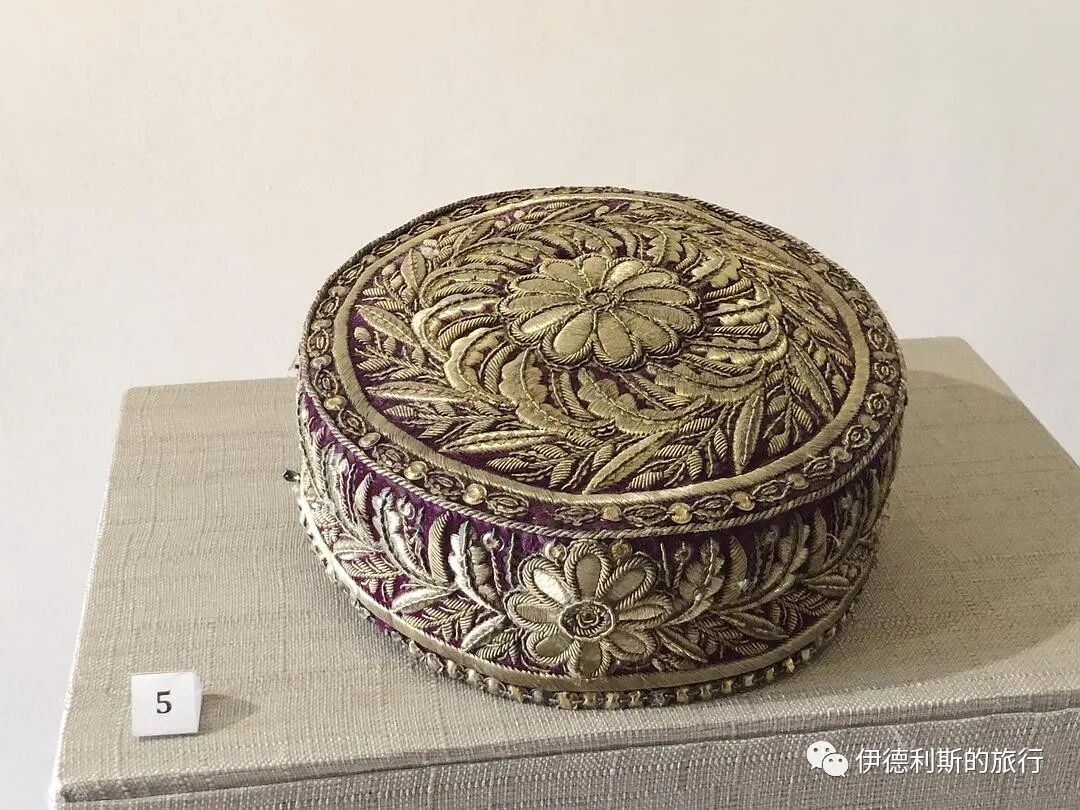
The suite exhibition hall displays various copperware from the Crimean Khanate era.
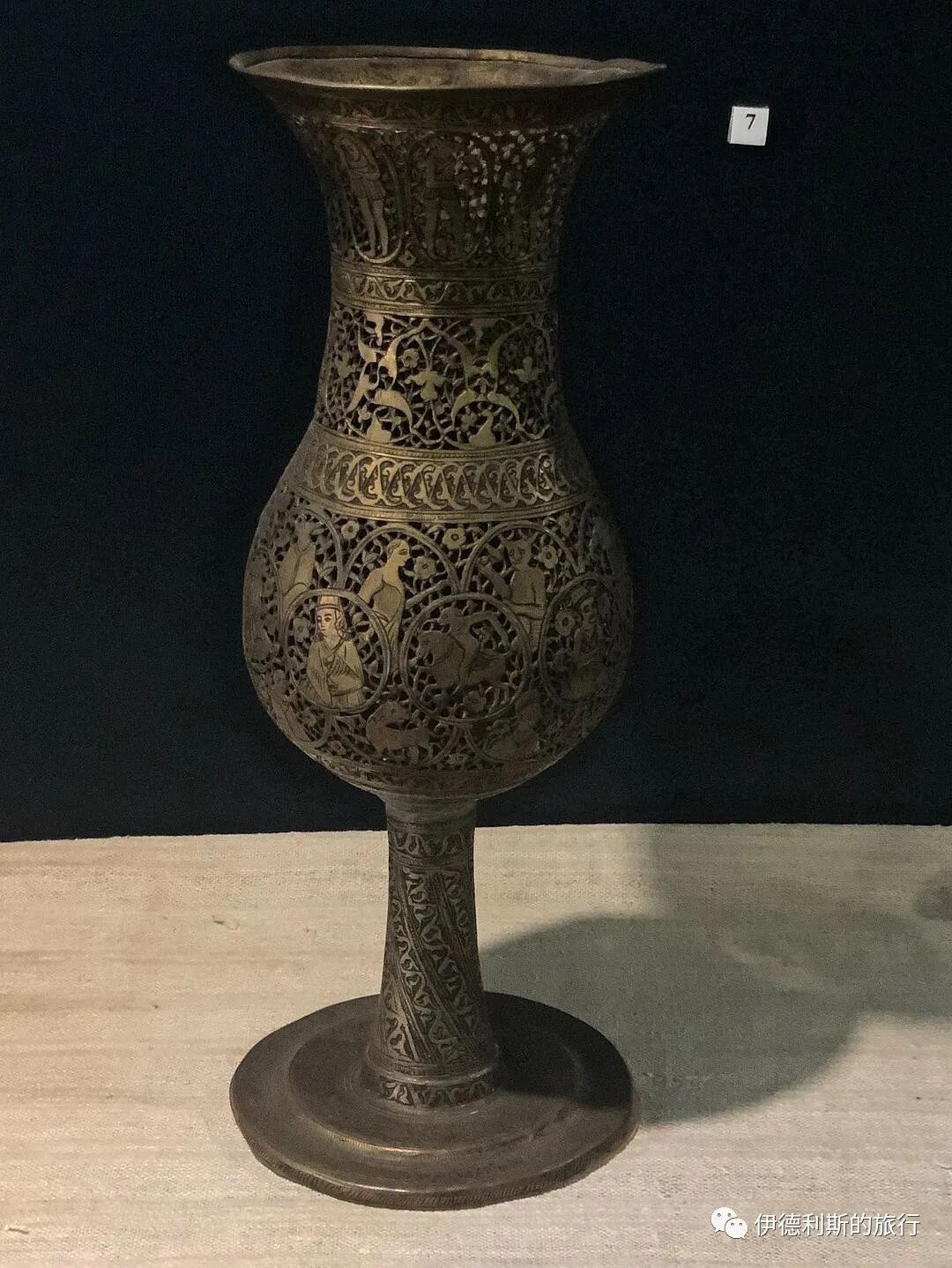
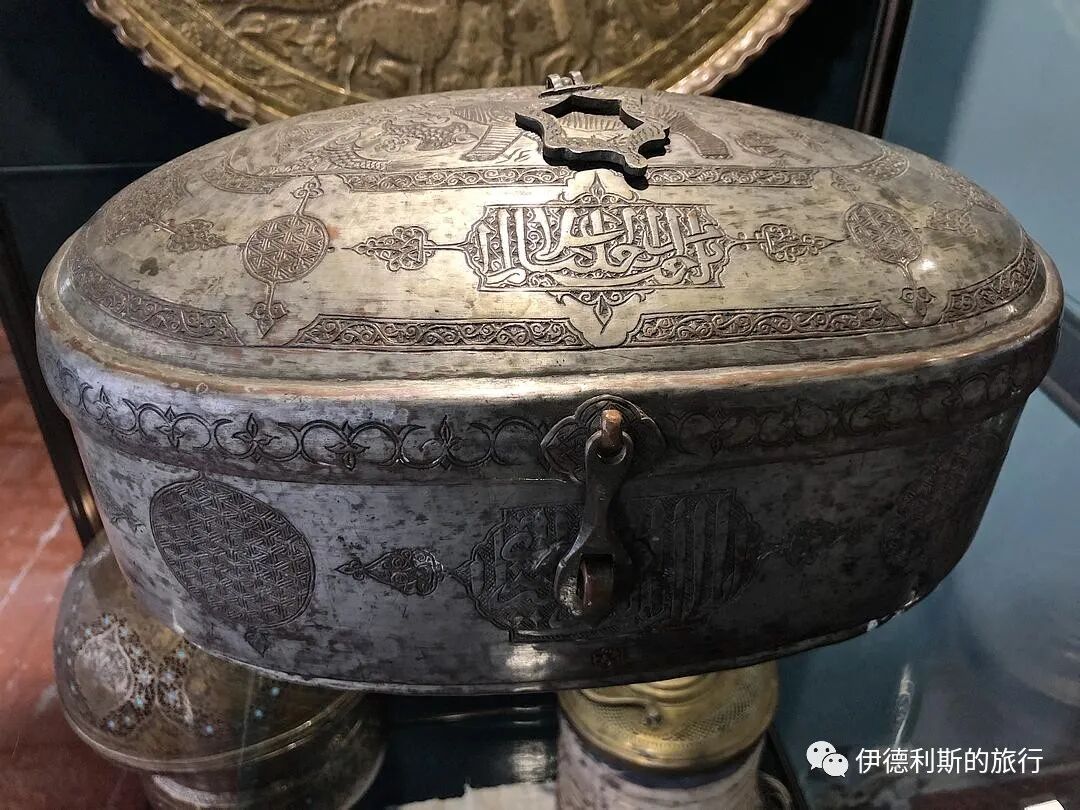
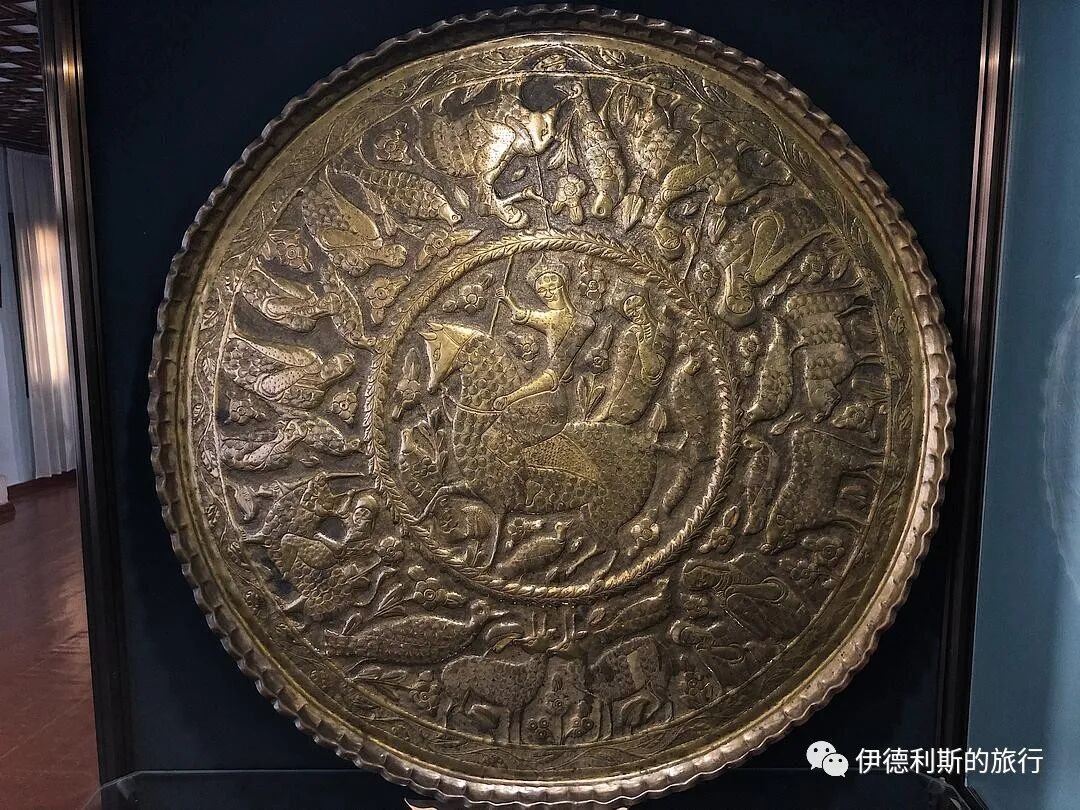
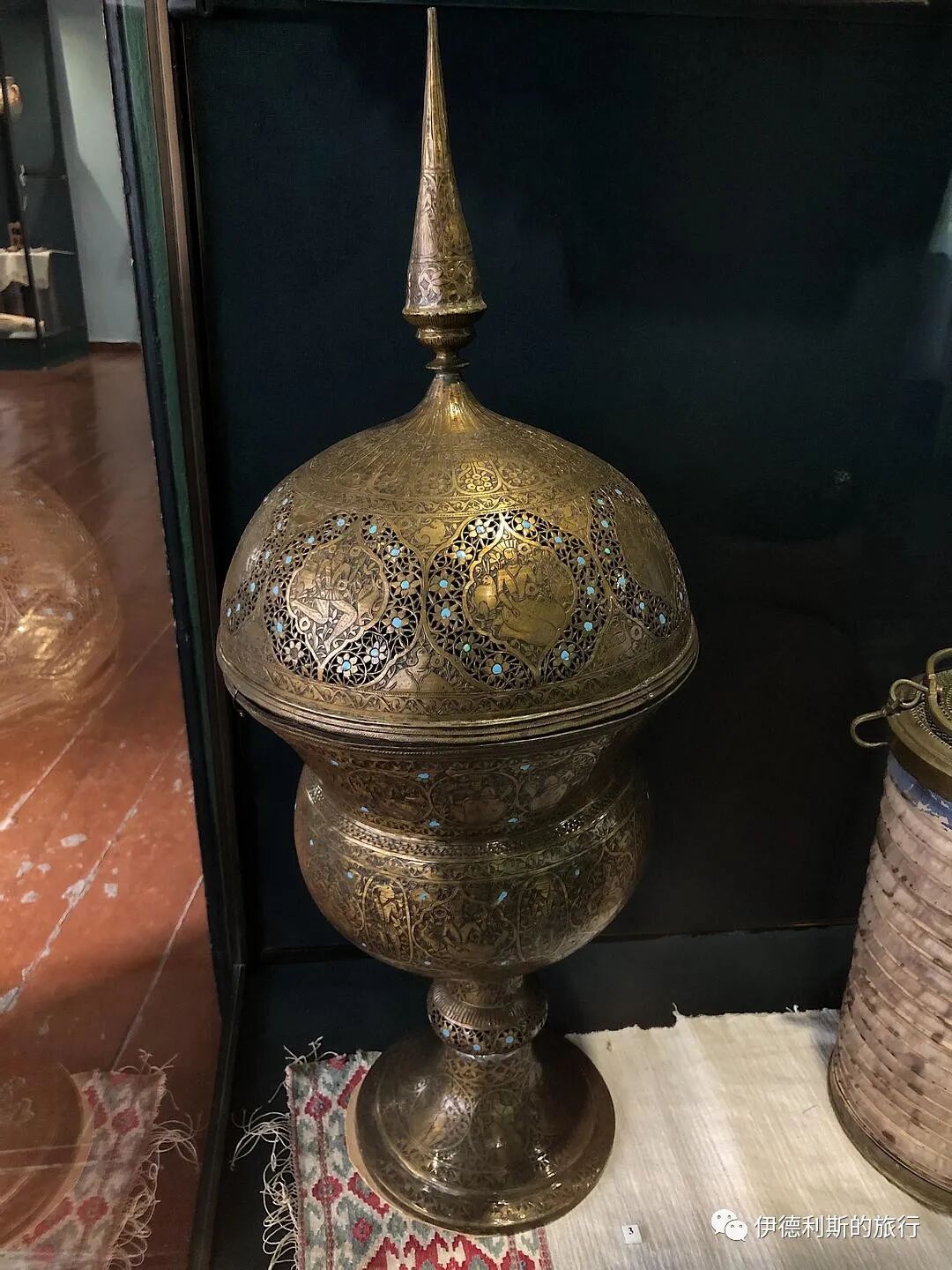
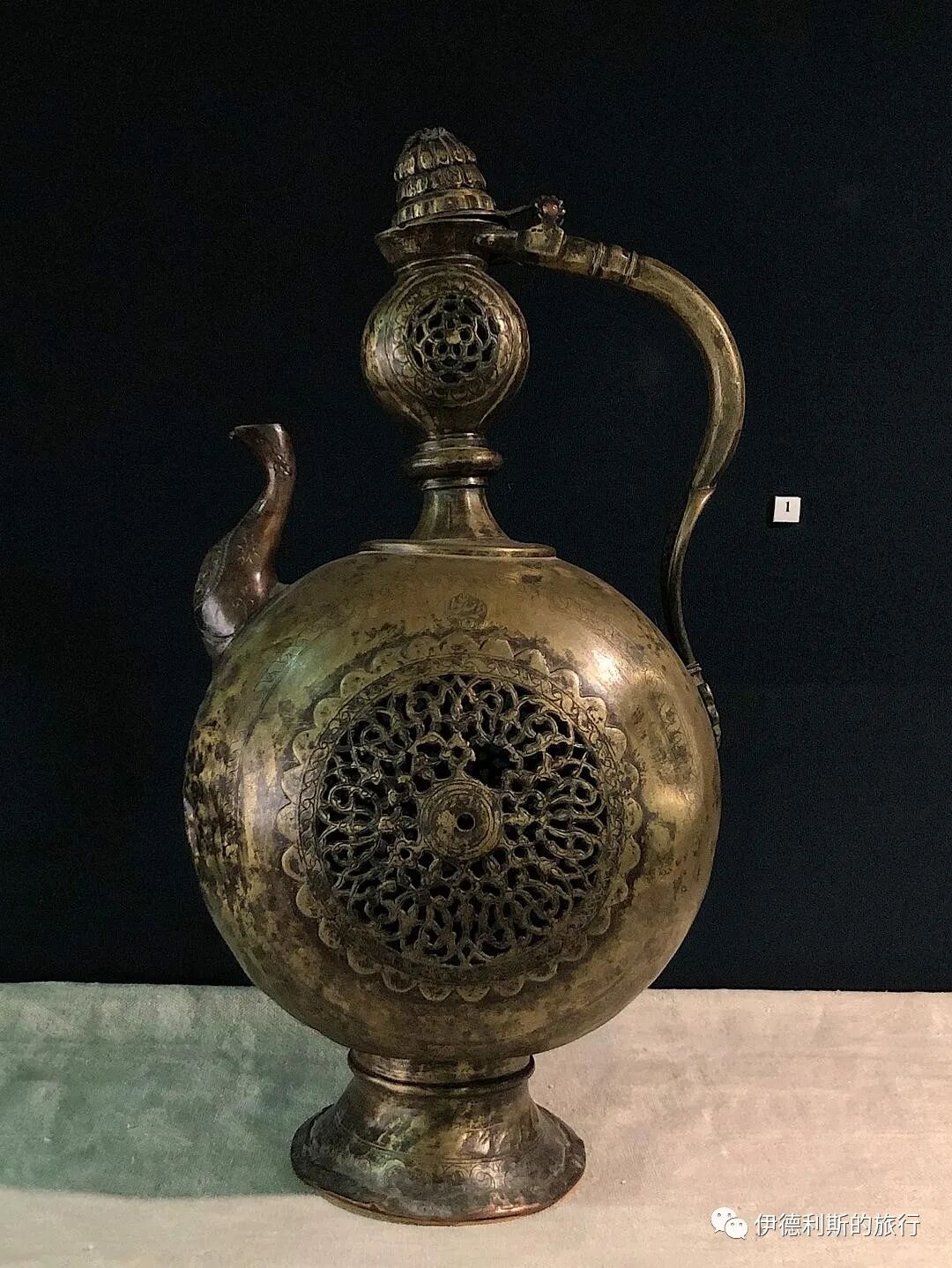
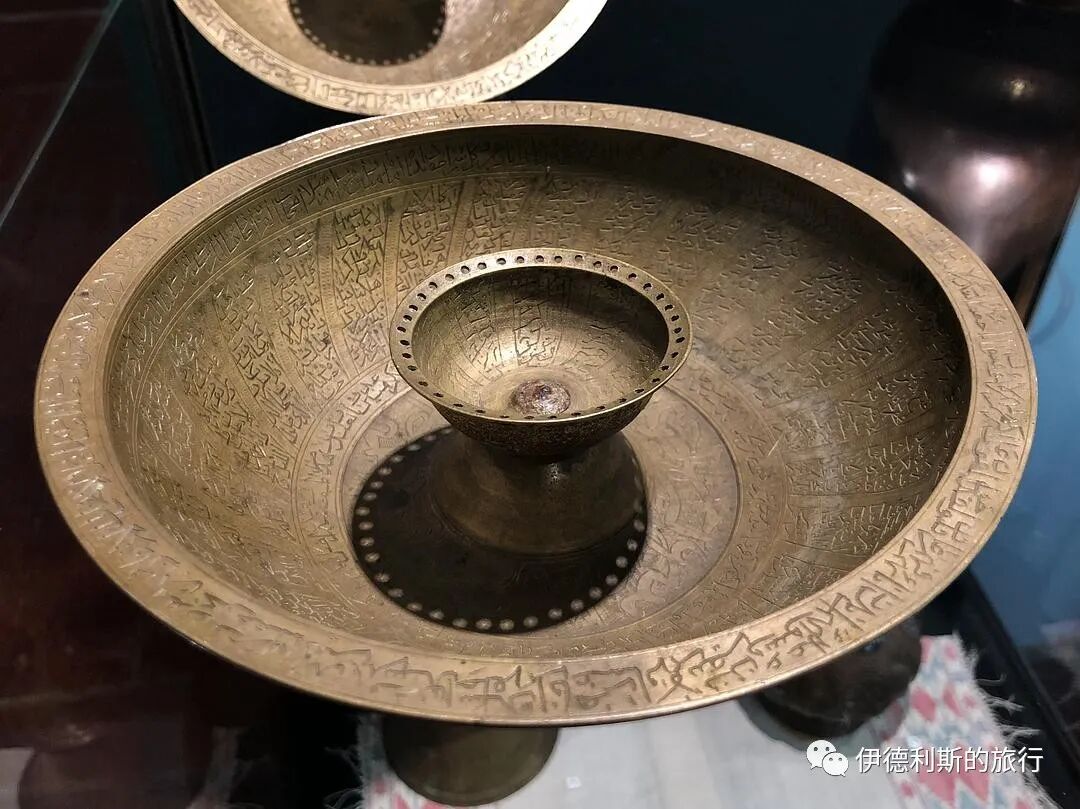
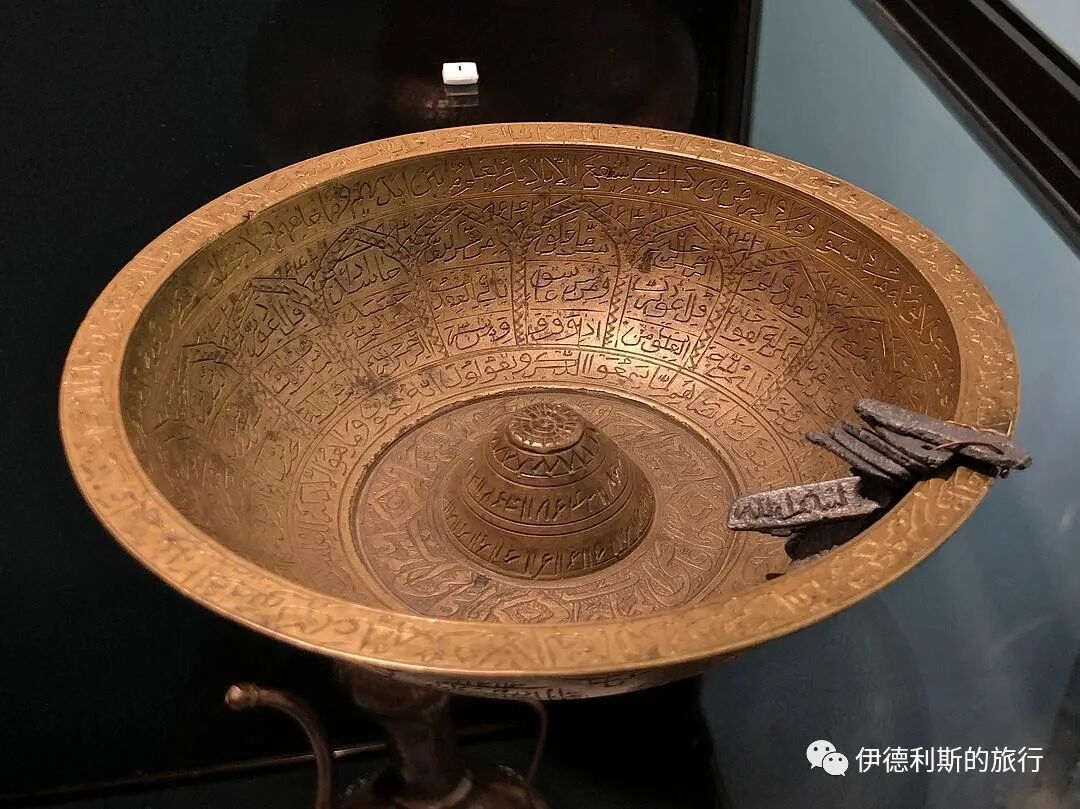
17. Stables
The stables are divided into two floors: the first floor for keeping horses and the second floor for the grooms to live in. The current building was rebuilt in the 1850s.
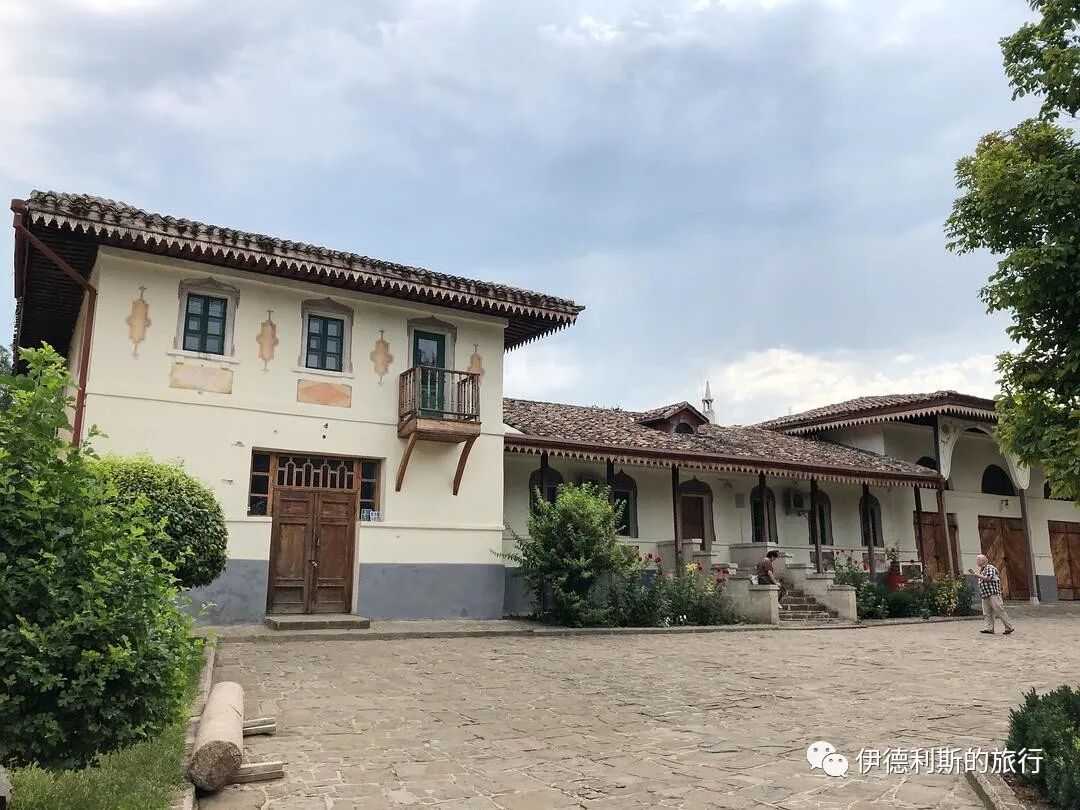
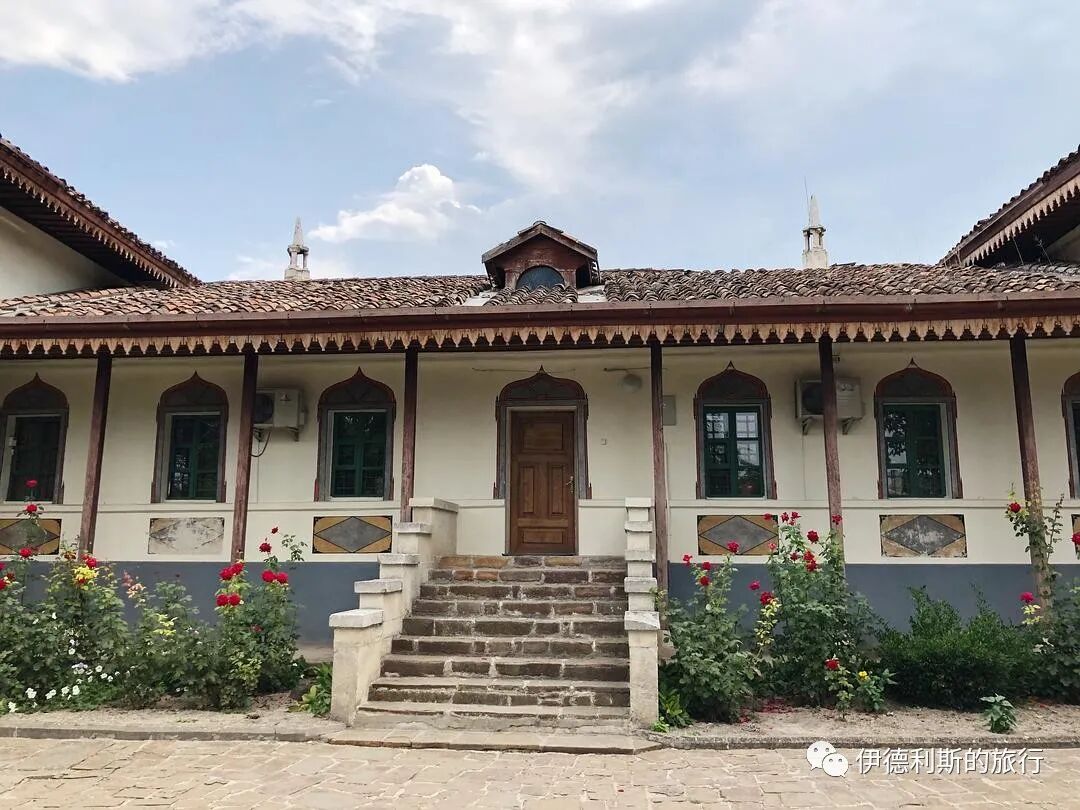
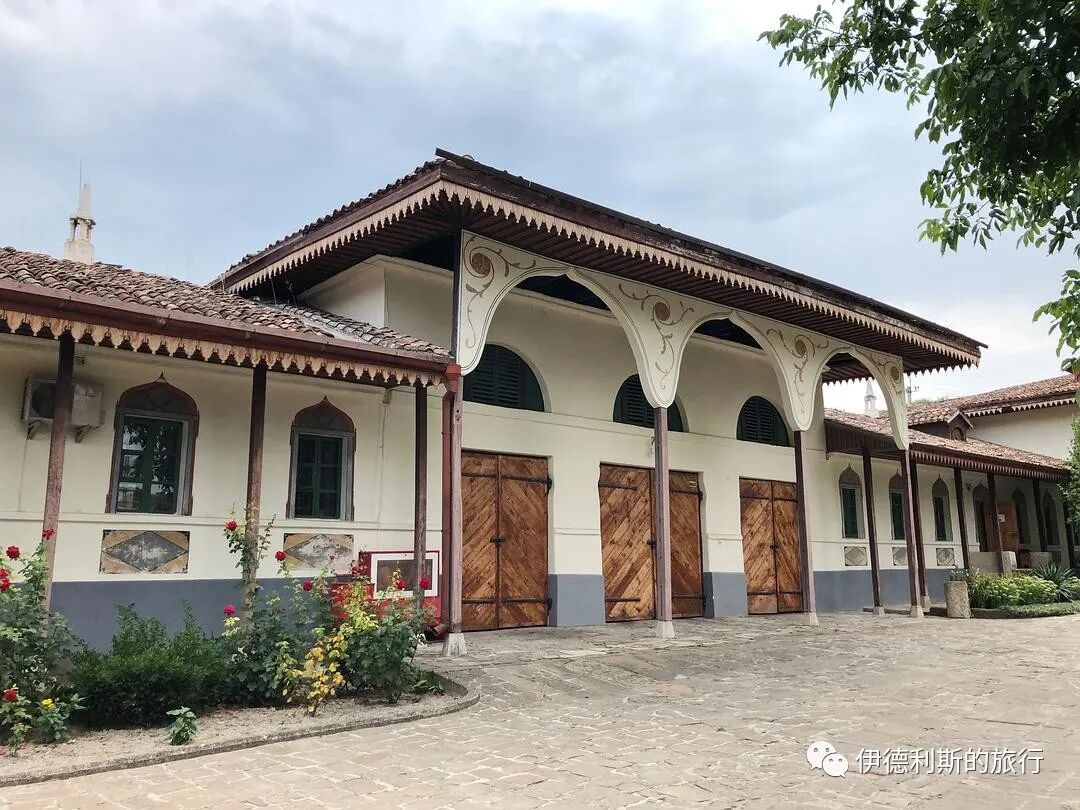
III. Mosques outside the Khan Palace
1. Orta Mosque: 1674
The Orta Mosque was once the main Jumu'ah mosque in Bakhchisaray. It dates back to 1674, was rebuilt between 1737 and 1743 by Khan Mengli II Giray and Selamet II Giray, and was rebuilt again in 1861 to its current appearance.
After 1929, the mosque was used as a cultural center and cinema until it was returned to the Muslims in 2001. At that time, the mosque's minaret and surrounding auxiliary buildings had been destroyed; they were not rebuilt until 2012. After the project was completed in 2013, the mosque reopened.
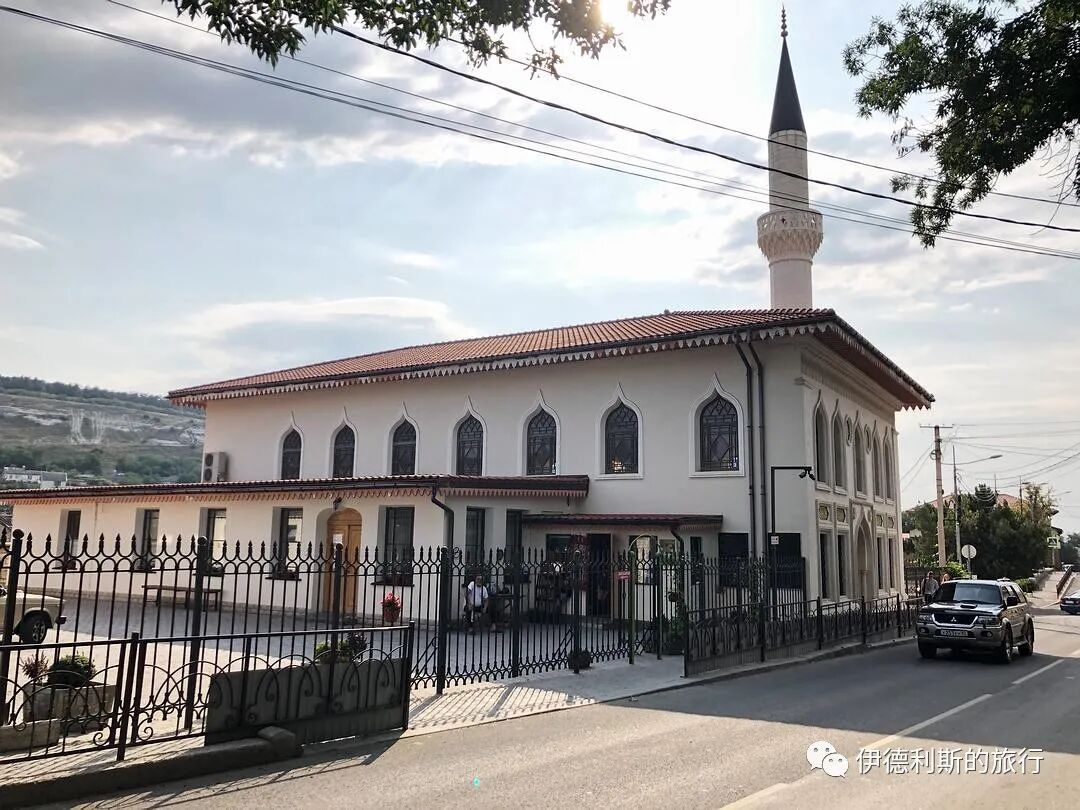
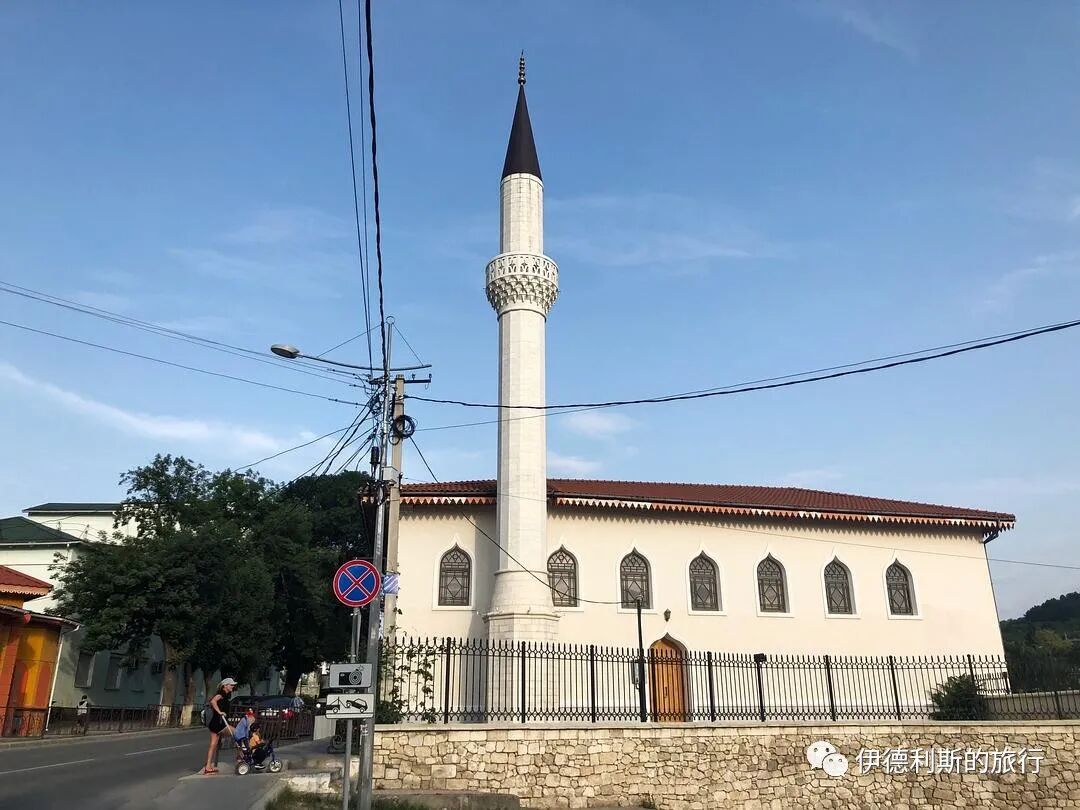
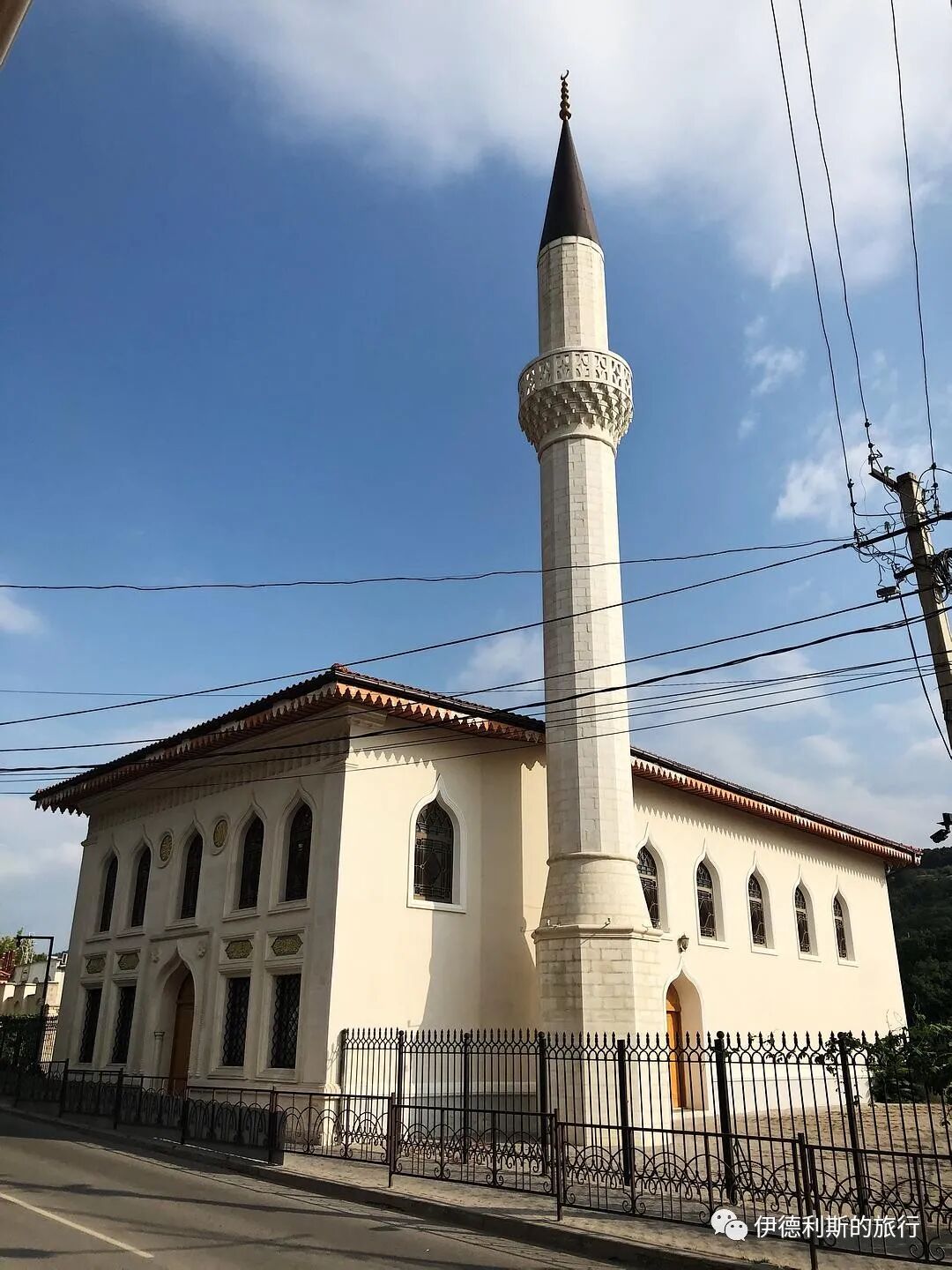
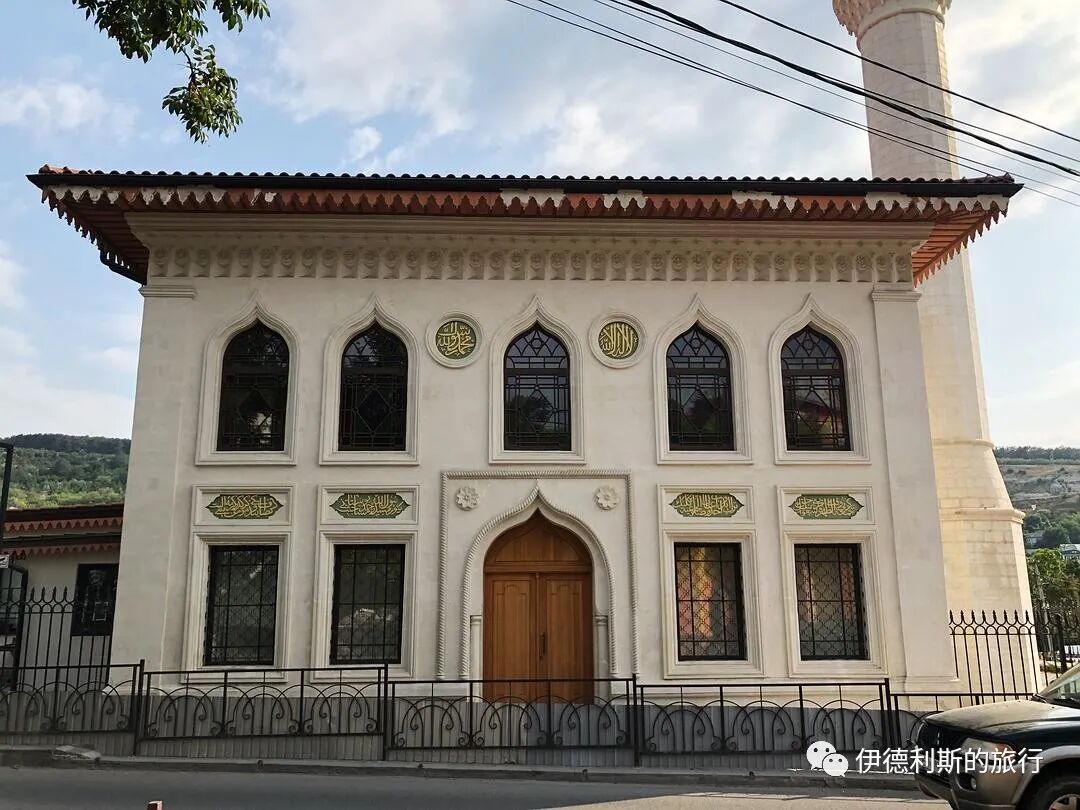
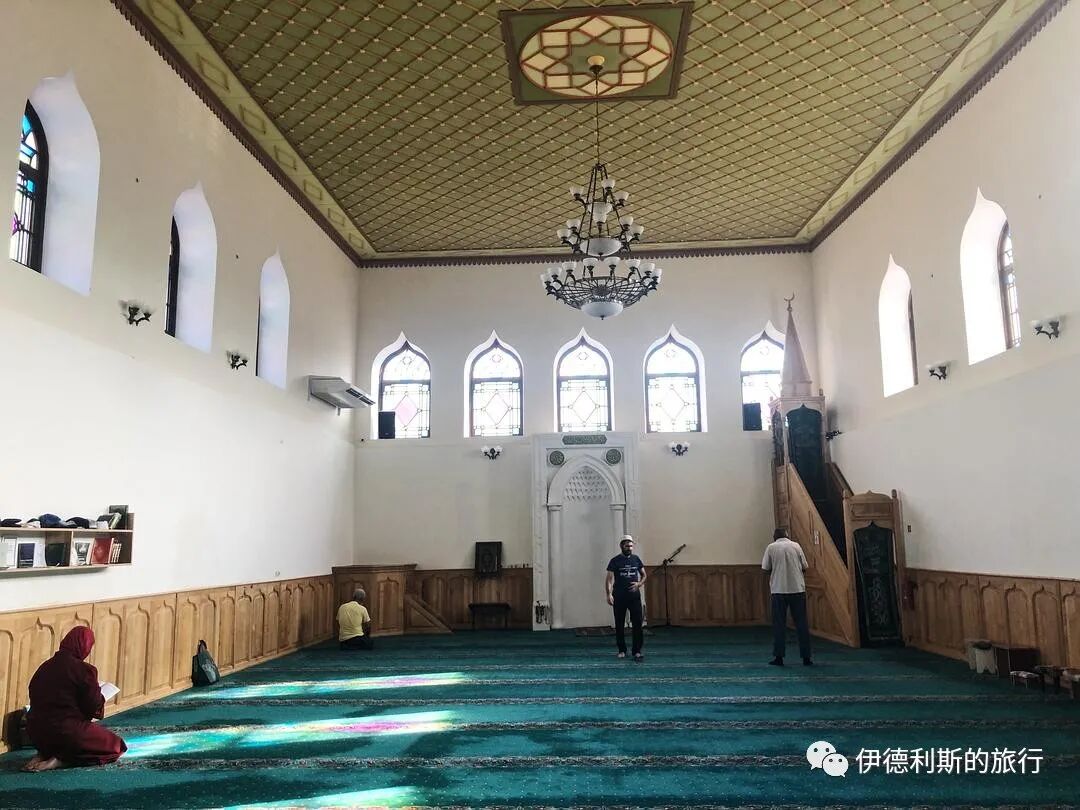
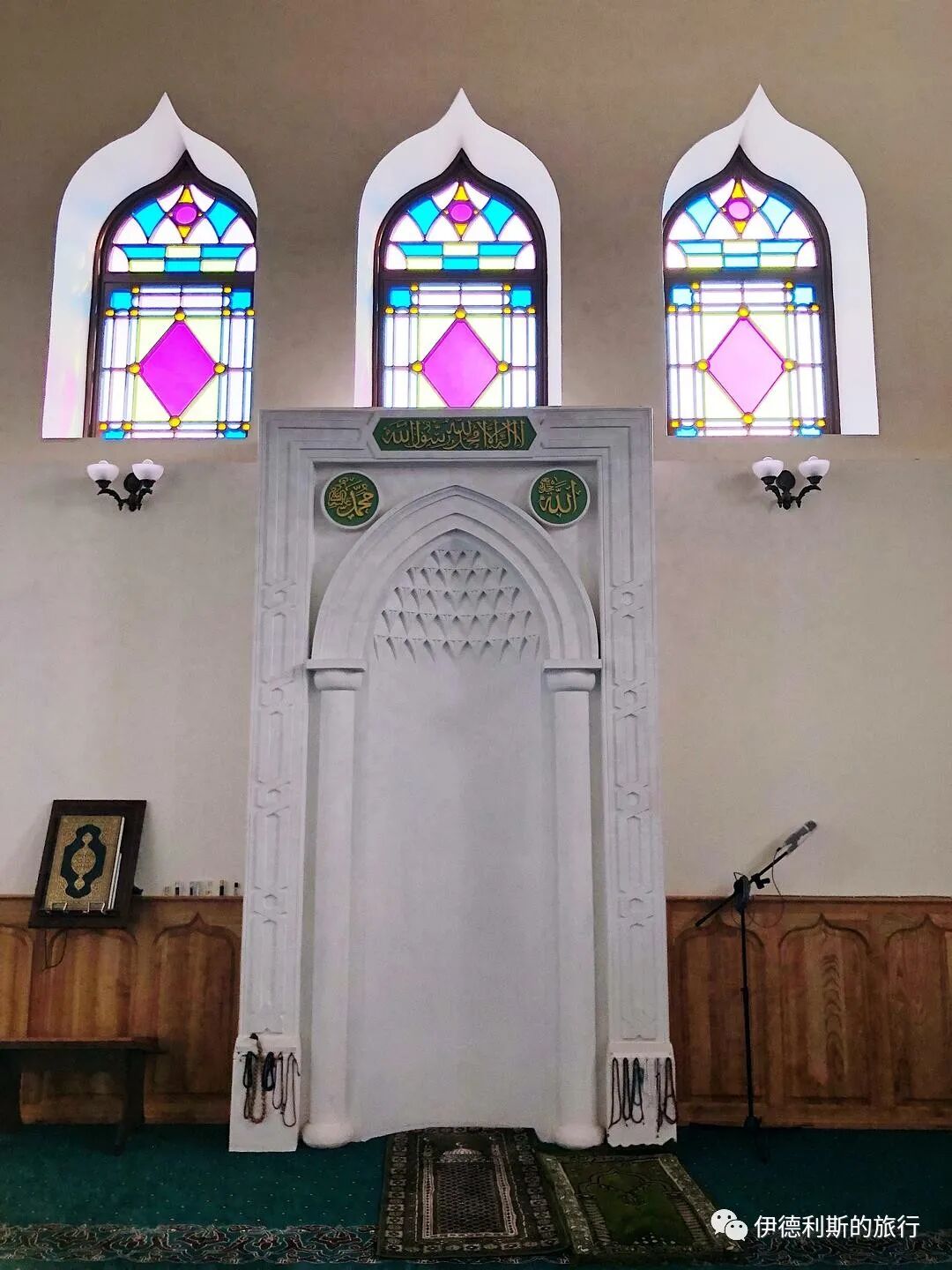
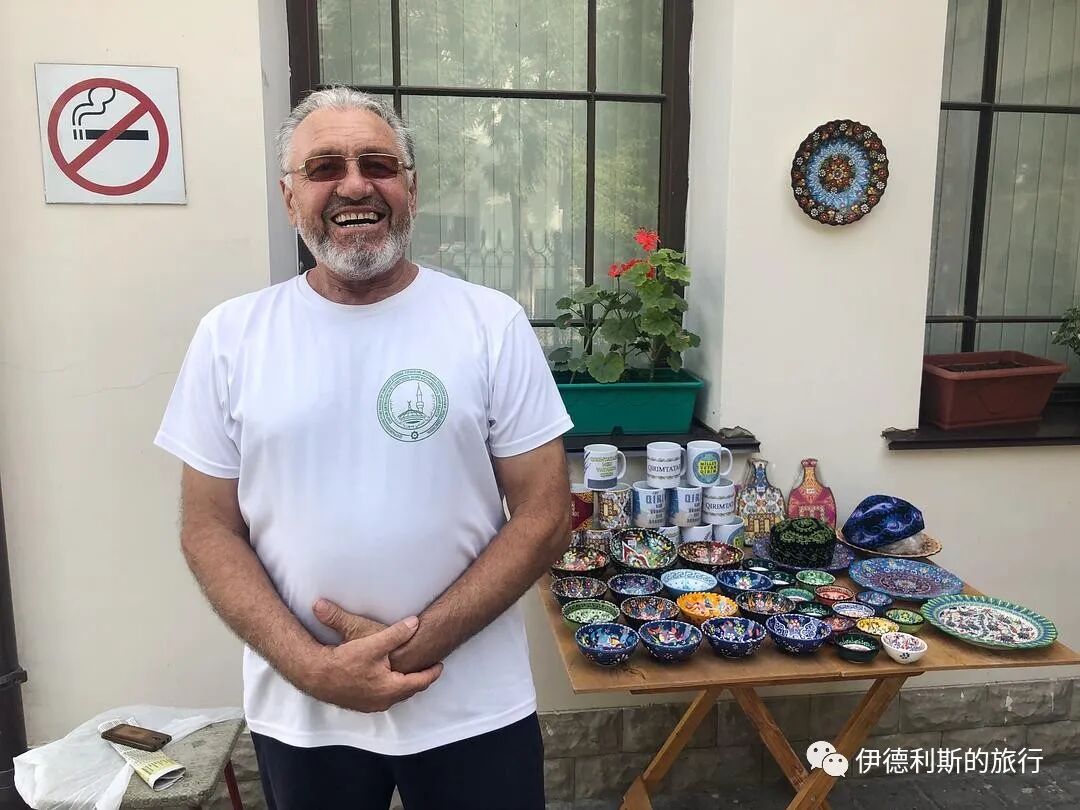
2. Ismi Khan Mosque
The Ismi Khan Mosque was built in the 17th to 18th centuries, and its architectural decoration was strongly influenced by the European Baroque style. The upper circular opening is decorated with a wooden Seal of Solomon (Khātam Sulaymān) ✡. The mosque was used as a warehouse for a long time. There were plans for restoration in the early 21st century, but they have not been implemented to this day.
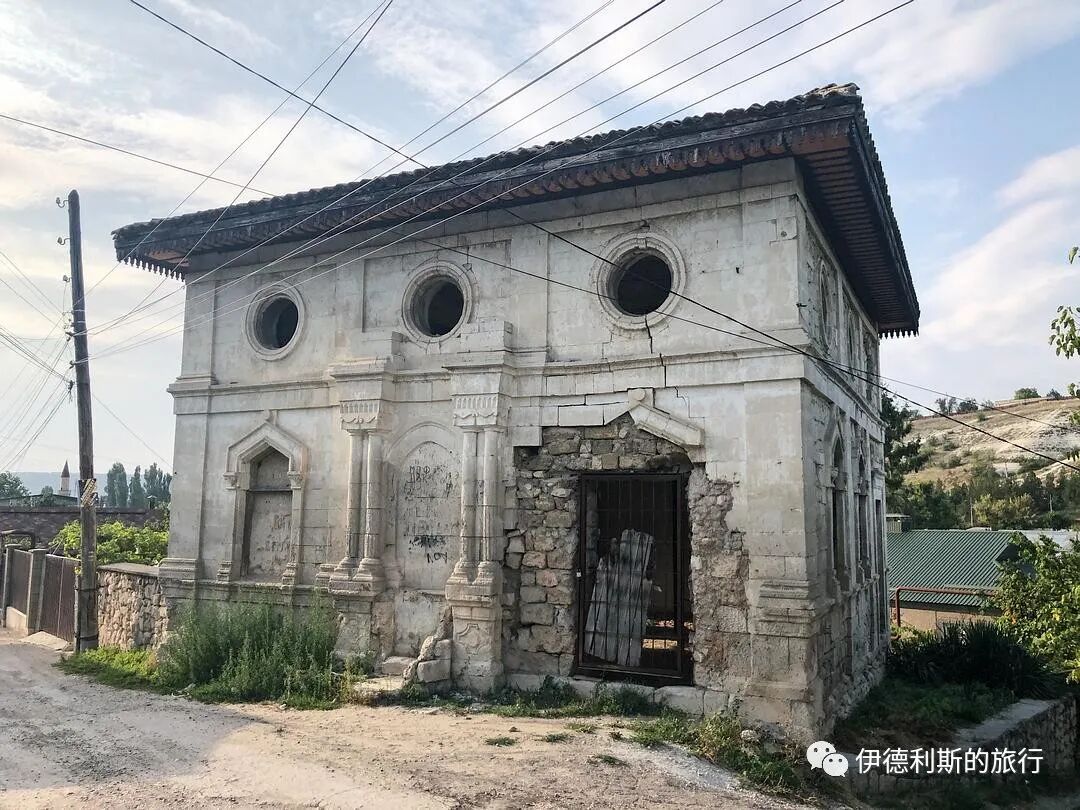
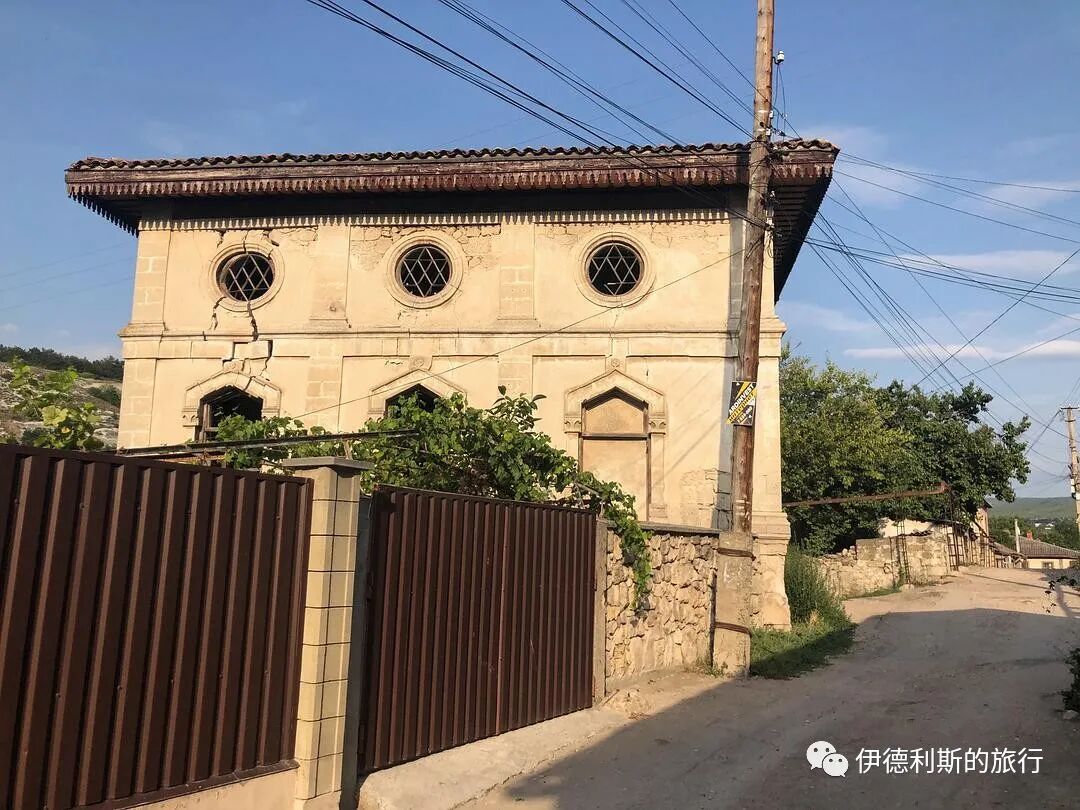
3. Molla Mustafa Jumu'ah Mosque
The Molla Mustafa Jumu'ah Mosque dates back to the 17th century. A document from 1890 mentions this mosque, stating that the local community covered the mosque with a roof in 1888.
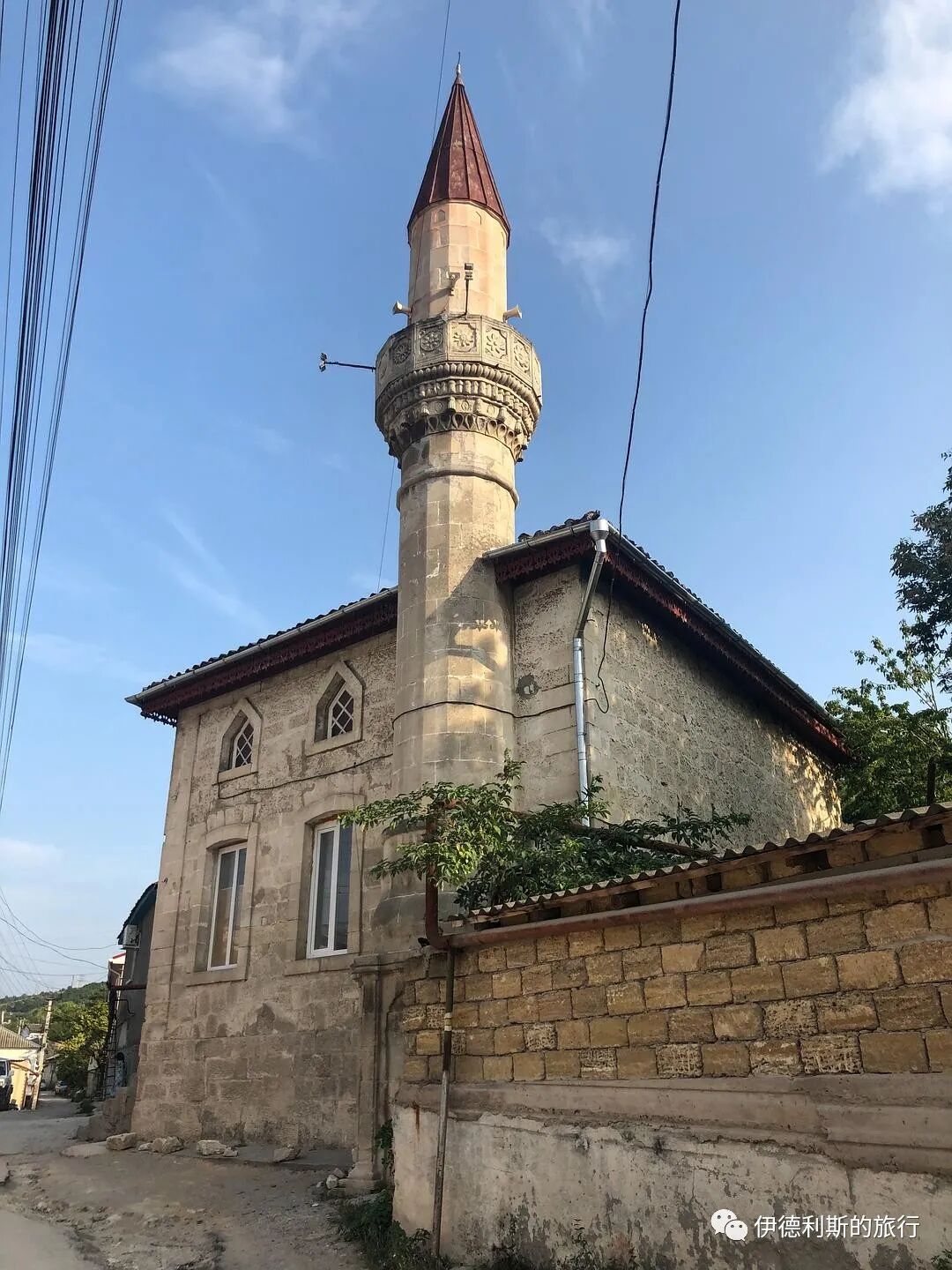
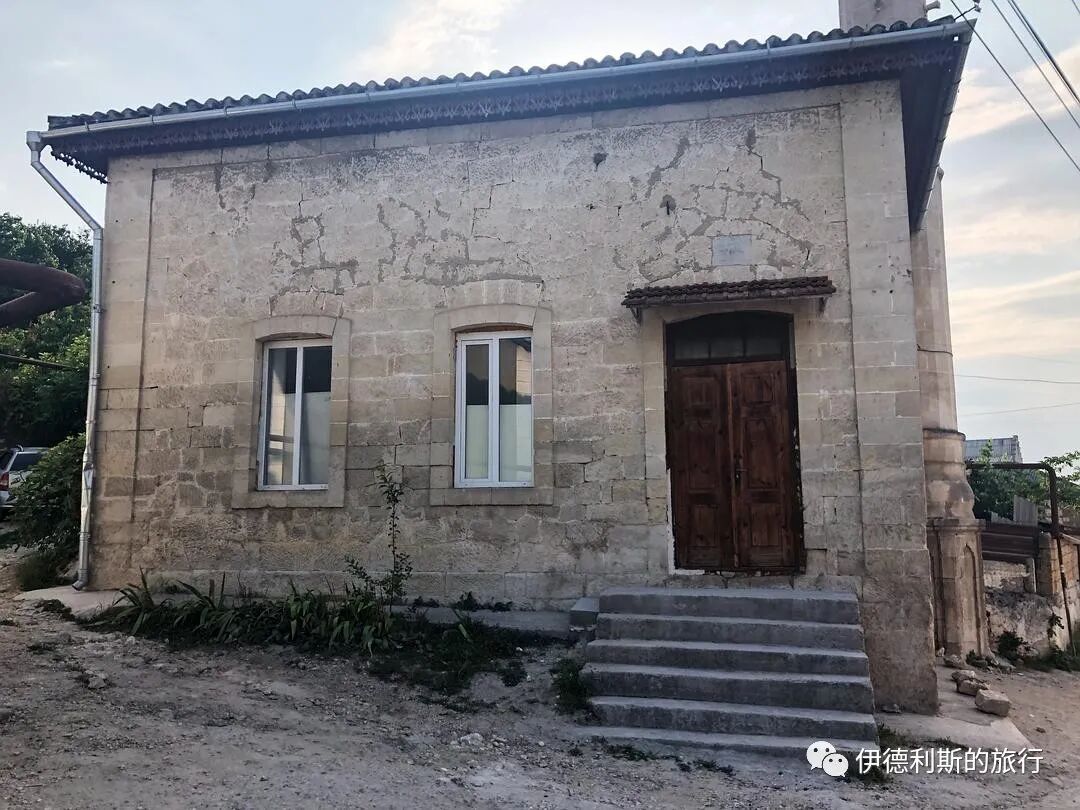
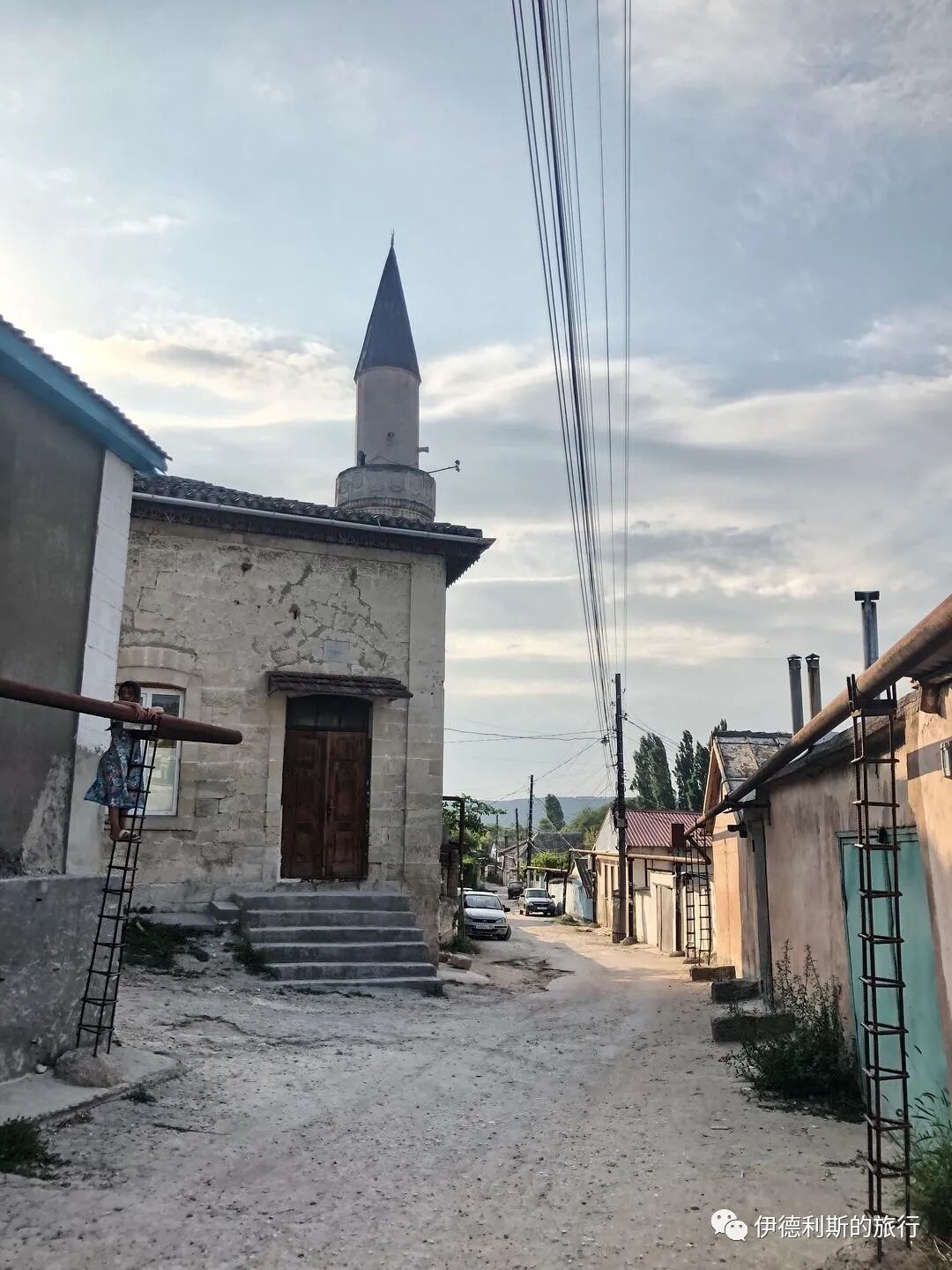
4. Tahtali Mosque: 1707
The Tahtali Mosque was built in 1707 by Khan Sultan Beck, the son-in-law of the Crimean Khan Selim I Giray. "Tahtalı" means "wooden" in Crimean Tatar. This mosque was initially built of wooden planks, later enclosed with brick and stone, and the roof was covered with clay tiles.
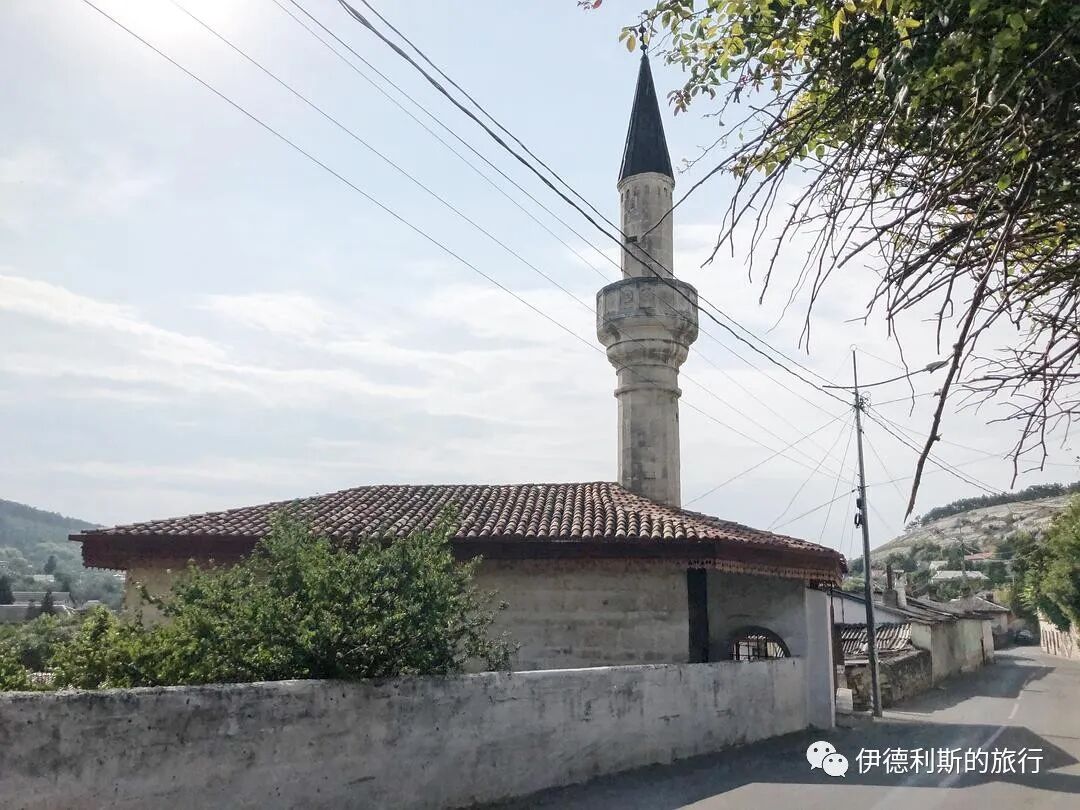
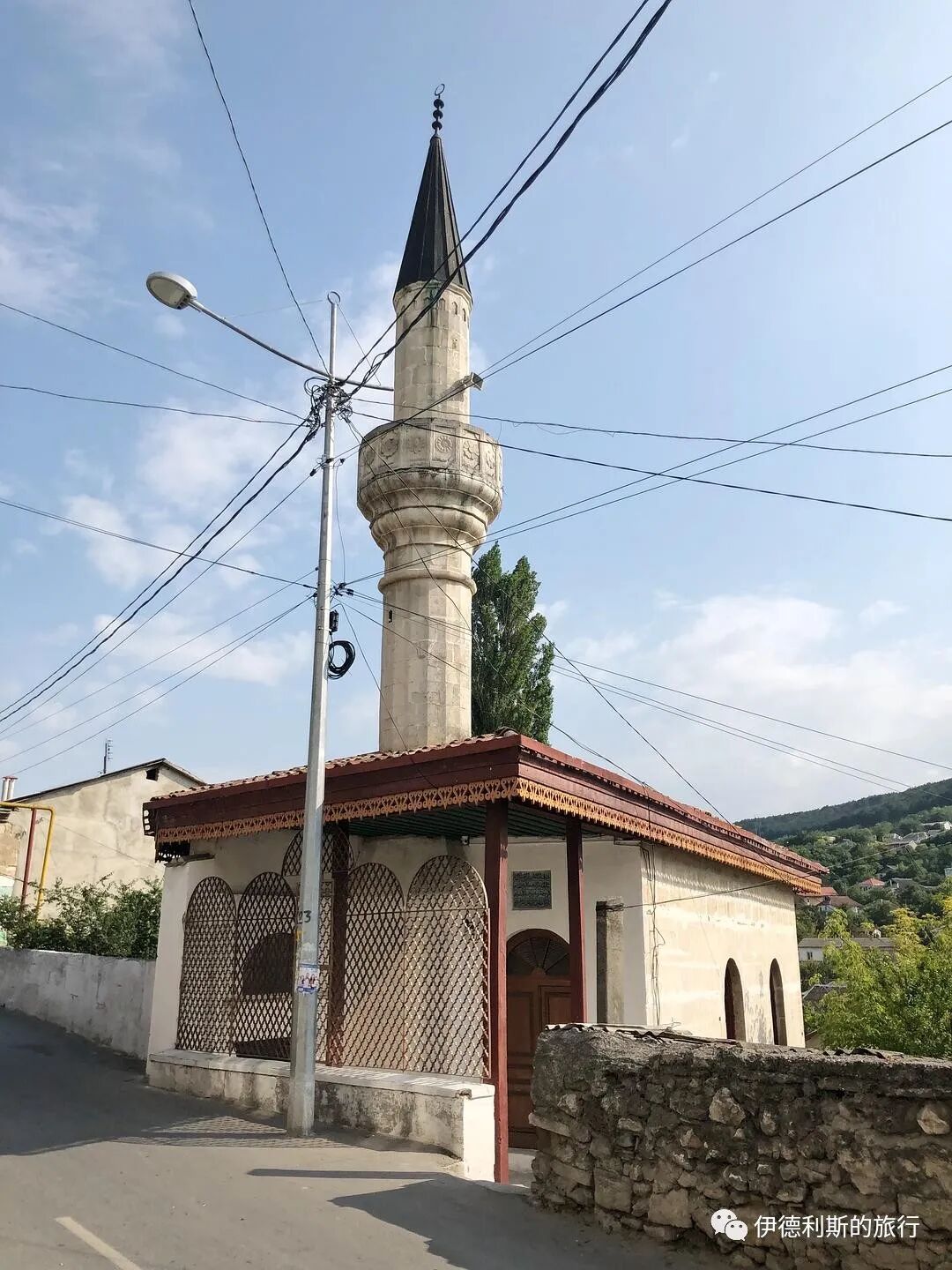
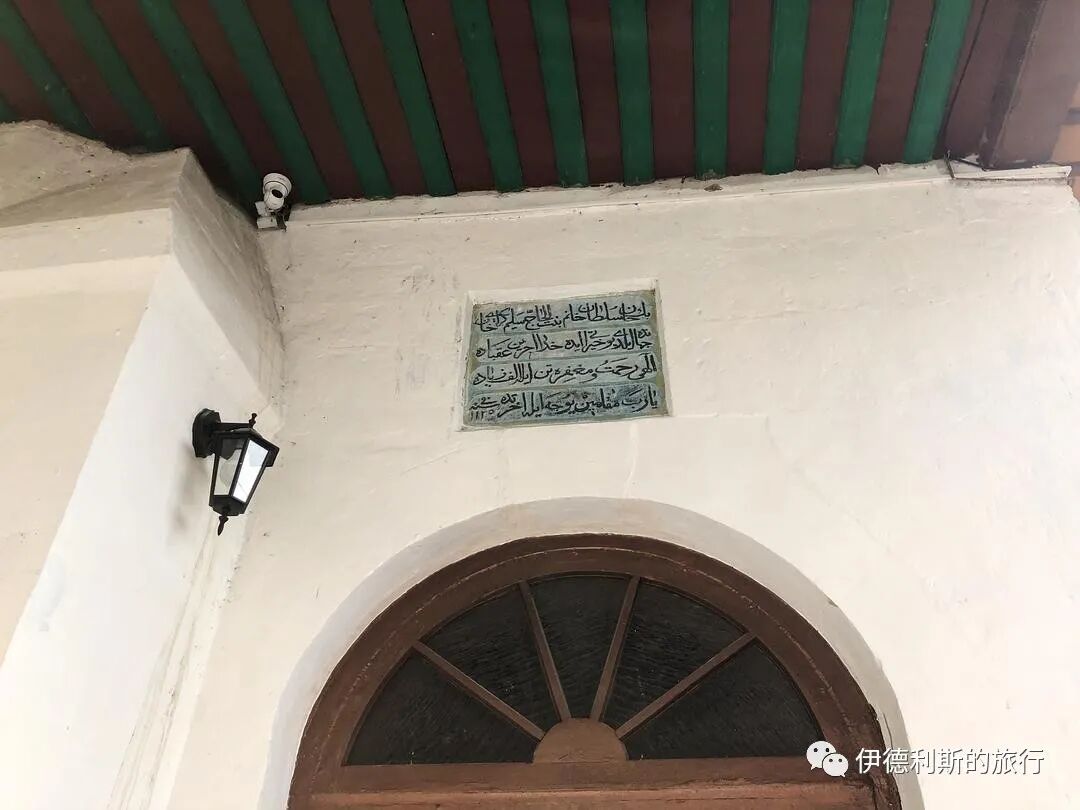
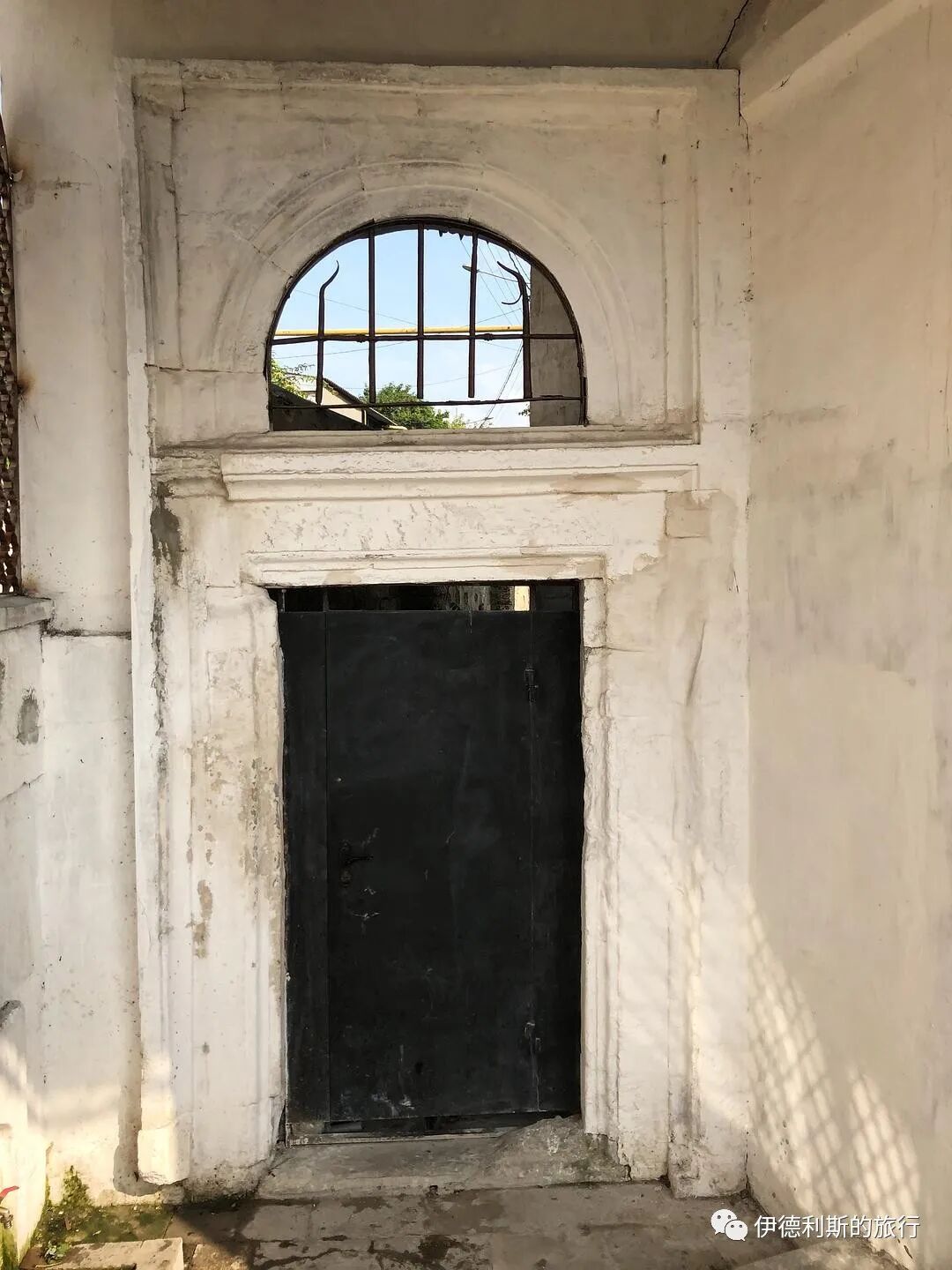
IV. Eski Yurt (Old City)
Eski Yurt means "Old City." During the Golden Horde era, it was a large trading town and a transportation hub connecting the east and west ends of the Crimean Peninsula. After the Crimean Khanate was established in 1441, Eski Yurt maintained its status as an economic center. It was not until 1532, when the Khanate established its new capital, Bakhchisaray, in the valley adjacent to Eski Yurt, that its status was replaced and it began to be called the "Old City," with its original name gradually being forgotten. Nevertheless, because the city once housed the mausoleum of the Islamic saint Malik Ashtar, Eski Yurt remained a religious center for Crimean Tatars until the Soviet era.
Malik Ashtar was a cousin of the Prophet Muhammad and a loyal companion of Imam Ali; he is a fearless warrior in the eyes of Shia Muslims. In Crimean Tatar legend, Malik Ashtar was a brave warrior and the first person to come to Crimea to spread Islam. He eventually died in battle while fighting a giant in Eski Yurt. Many years later, some Sufi practitioners miraculously discovered his grave in Eski Yurt and built a mausoleum there. In reality, Malik Ashtar died in Egypt, and the mausoleum in Eski Yurt is only symbolic. Crimean Tatars believe that praying at the Malik Ashtar mausoleum after being bitten by a snake can lead to recovery.
Due to the important status of the Malik Ashtar mausoleum, a complex of hundreds of tombs formed around it, including those of three Crimean Khans: Mehmed II Giray (reigned 1577–1584), Saadet II Giray (reigned 1584), and Mehmed III Giray (reigned 1623–1628).
From the era of the Crimean Khanate until the early 20th century, commemorative ceremonies were held at the Malik Ashtar mausoleum every Thursday night. After all Crimean Tatars were forcibly exiled to Central Asia in 1948, the central square of the Malik Ashtar mausoleum was turned into a market. After Crimean Tatars began returning in the late 1980s, many demanded that the market be removed from the holy site, and it was finally moved in 2006.
The existing structures of the Malik Ashtar mausoleum complex include the 14th-15th century Bey Yude Sultan Mausoleum, the Ahmed Bey Mausoleum, the 16th-century Mehmed Bey Mausoleum, the mausoleum of Khan Mehmed II Giray, and the small minaret of the Malik Ashtar mausoleum mosque built during the Crimean Khanate era.
1. Mausoleum of Mehmed II Giray: 1579
The mausoleum of the Crimean Khan Mehmed II Giray is also known as the "Great Octagonal Mausoleum." Mehmed II Giray was known as "the Fat" because he was too heavy to ride a horse, so he preferred to travel in a carriage pulled by six to eight horses. During his reign, he attacked the Persian Safavid dynasty three times under the orders of the Ottoman Empire.
In 1579, Mehmed II Giray defeated the Persian army within the territory of the modern-day Republic of Azerbaijan, seizing a large amount of spoils and thousands of captives. In 1582, the Ottoman army ordered the Crimean Khanate to join them in another war against Persia. After convening a council of nobles, Mehmed II Giray decided to refuse the Ottomans. At the end of 1583, the Ottoman army and the Crimean Tatar army faced off on the Crimean Peninsula. Finally, in 1584, Mehmed II Giray fled to the steppe during internal divisions and was strangled in his carriage.
The mausoleum of Mehmed II Giray is the largest existing one in Eski Yurt and is clearly influenced by the Ottoman style. It is speculated that it may have been built by a student of the Ottoman master architect Mimar Sinan, but no information about the architect has been found to date. The mausoleum underwent a restoration in 2004.
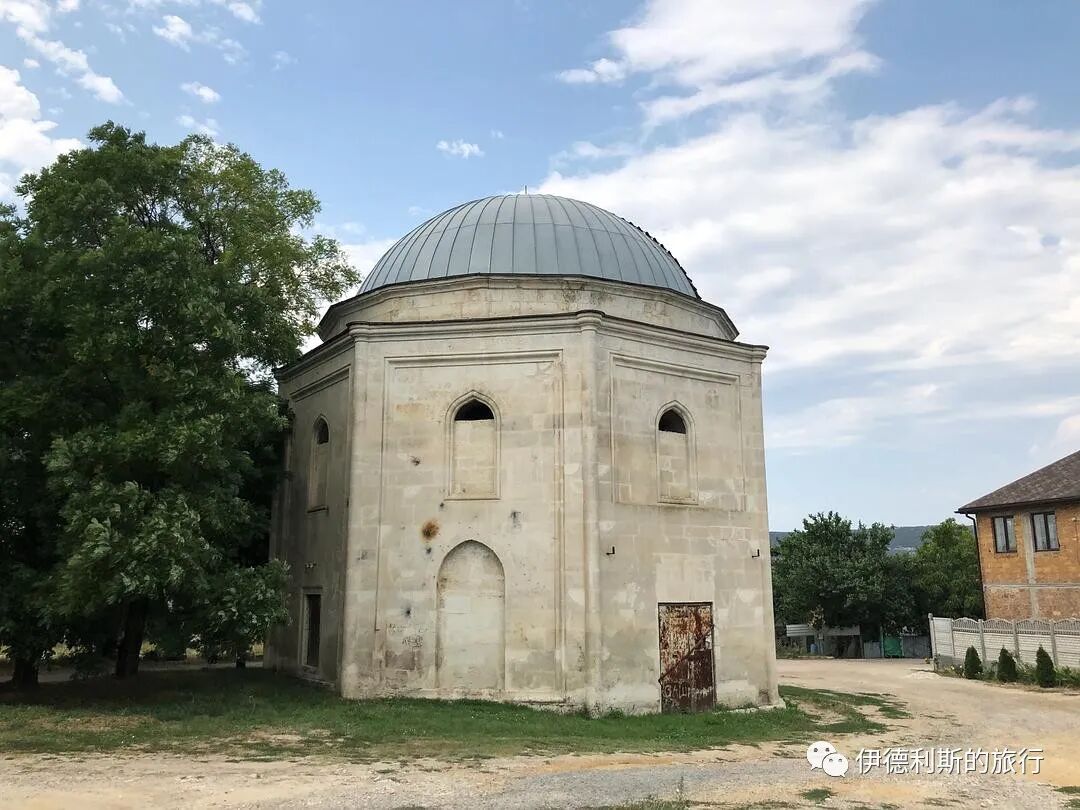
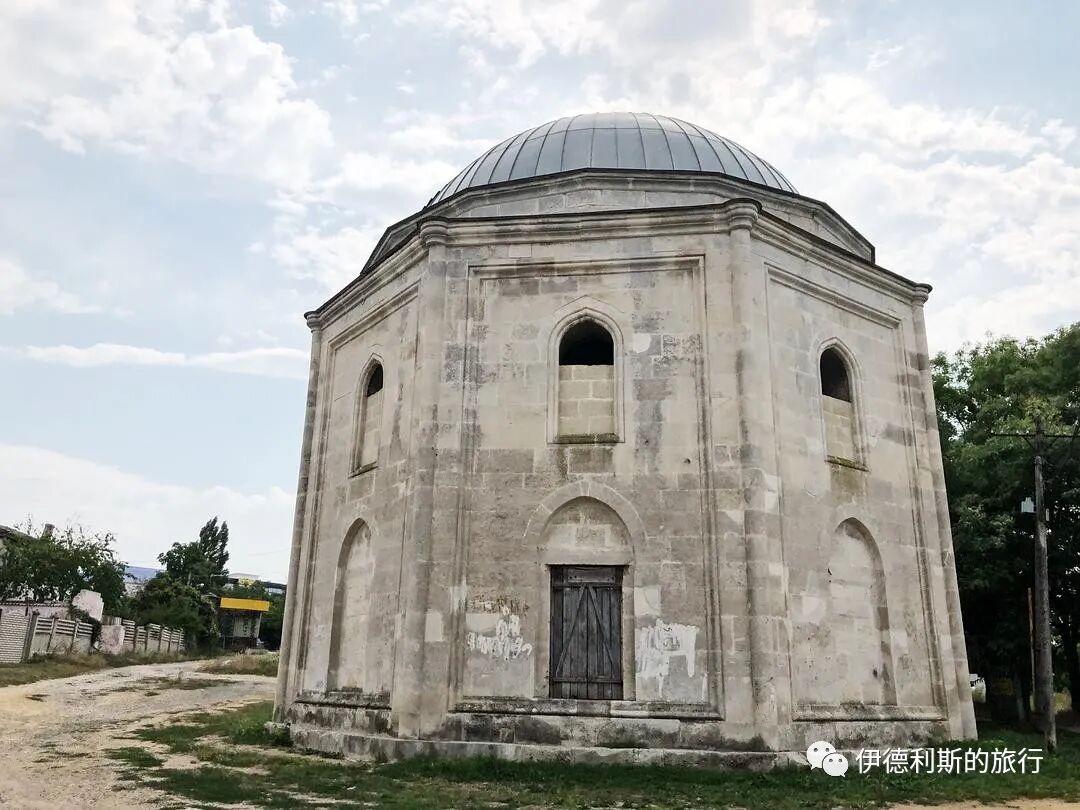
2. Minaret of the Malik Ashtar Mausoleum Mosque
The image below shows the small minaret of the Malik Ashtar mausoleum mosque, built during the Crimean Khanate era. The mosque was destroyed in 1955. This was once a place where Sufi practitioners performed whirling dances and other practices, serving as a Sufi center on the Crimean Peninsula.
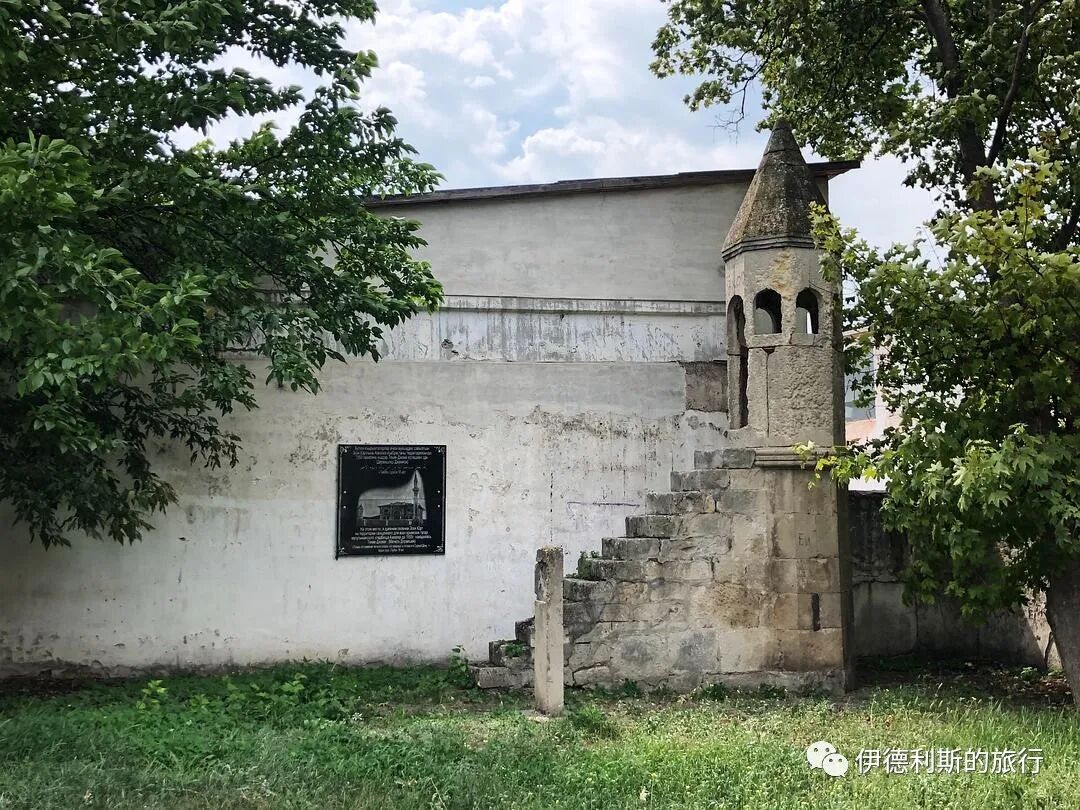
3. Ahmed Bey Mausoleum: 1577
Ahmed Bey died in 1577, and his tombstone was discovered near the entrance of the mausoleum in 1924. Although Ahmed Bey himself died in the 16th century, the architectural style of the mausoleum itself is not the type influenced by the Ottomans at that time, but rather an earlier Golden Horde mausoleum type. Other buildings similar to the Ahmed Bey Mausoleum can be traced back to the 13th and 14th centuries. Therefore, it is more likely that this mausoleum was built during the Golden Horde era.
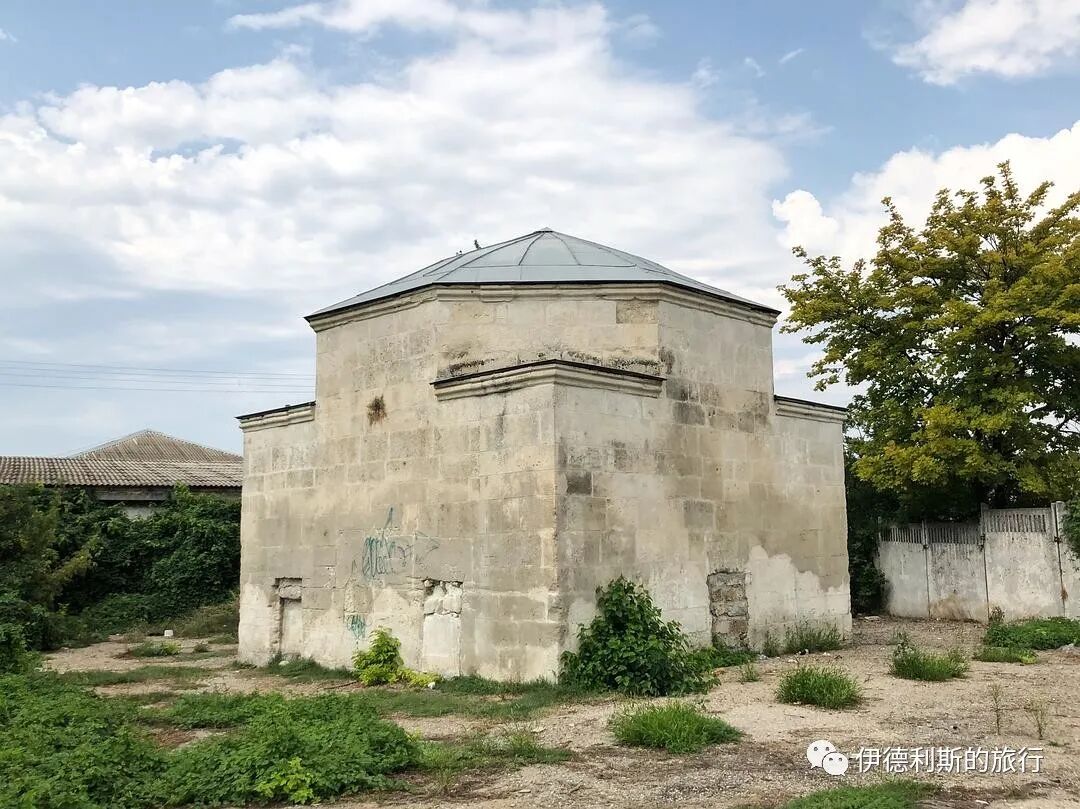
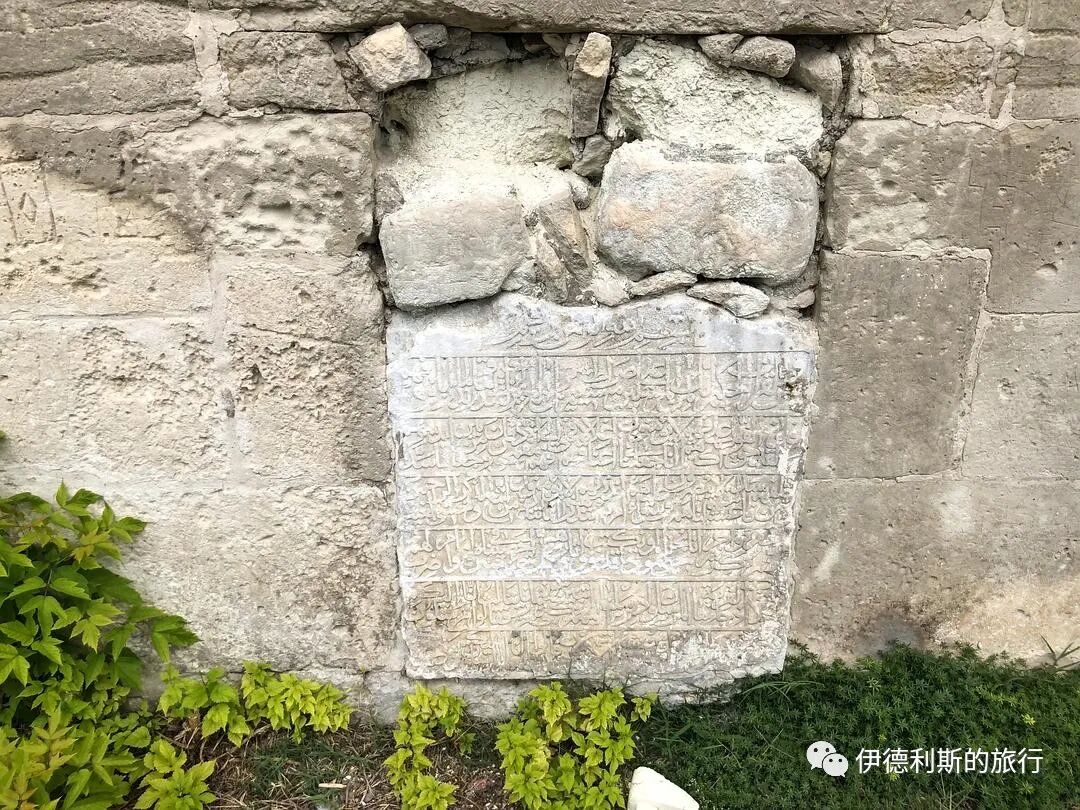
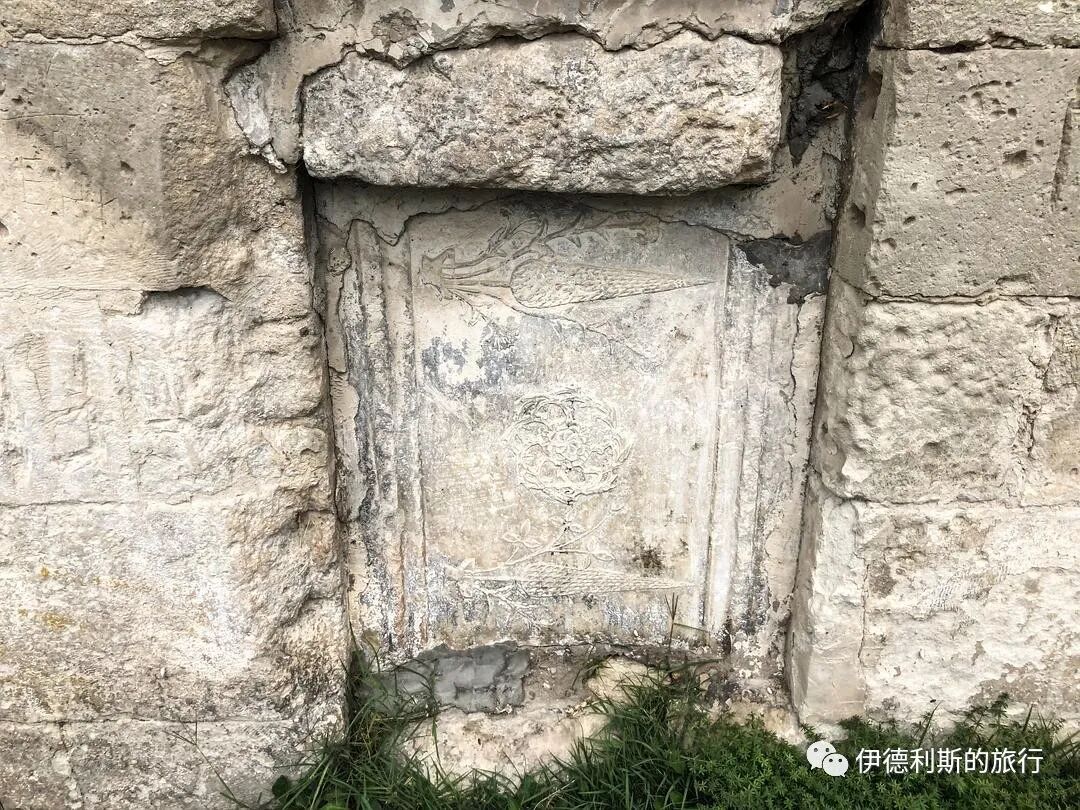
Another mausoleum.
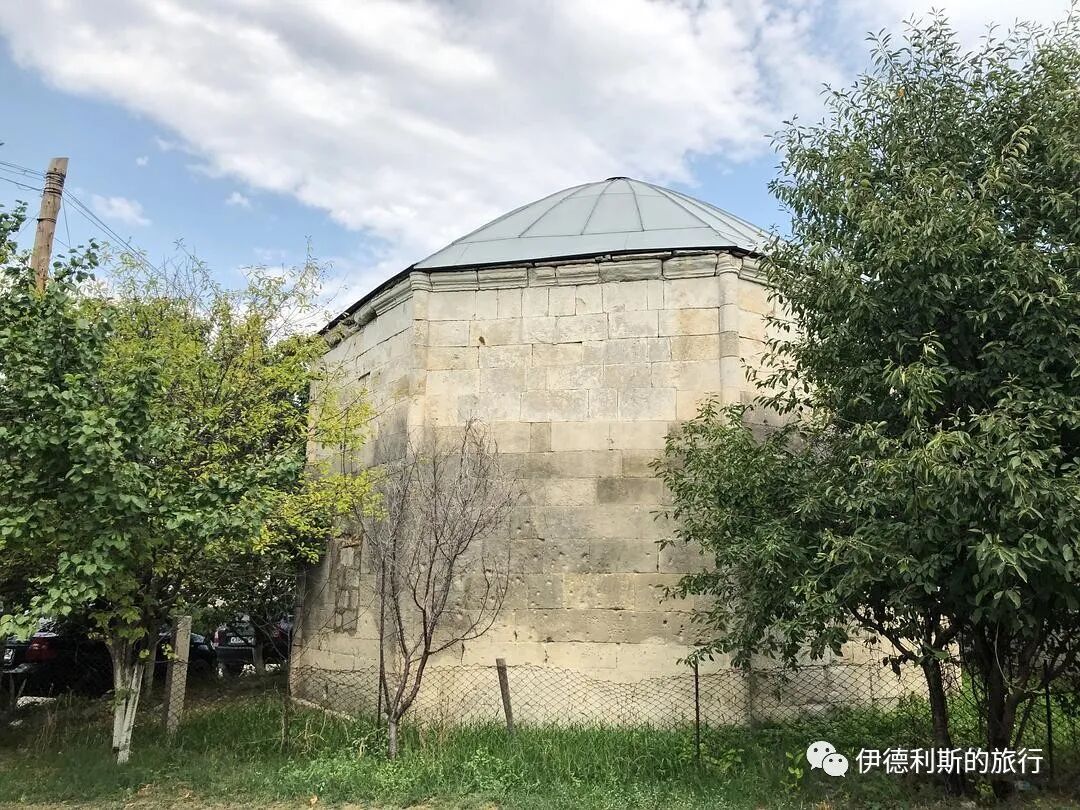
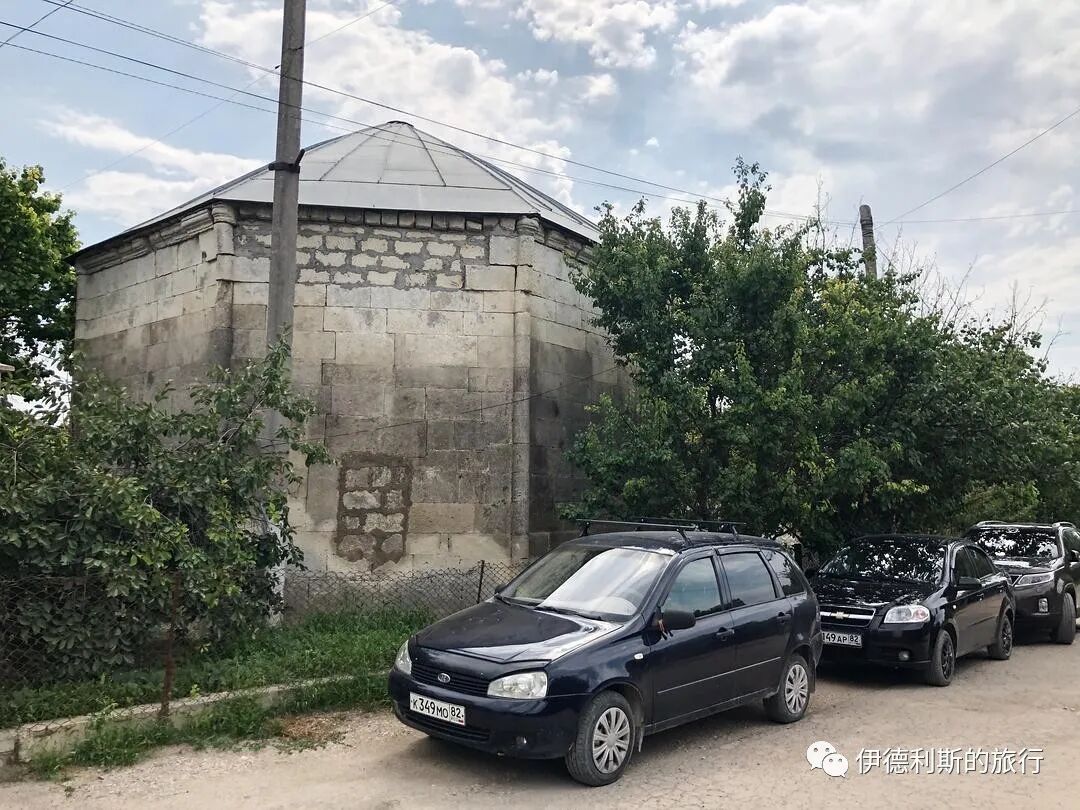
A photo of the two mausoleums together.
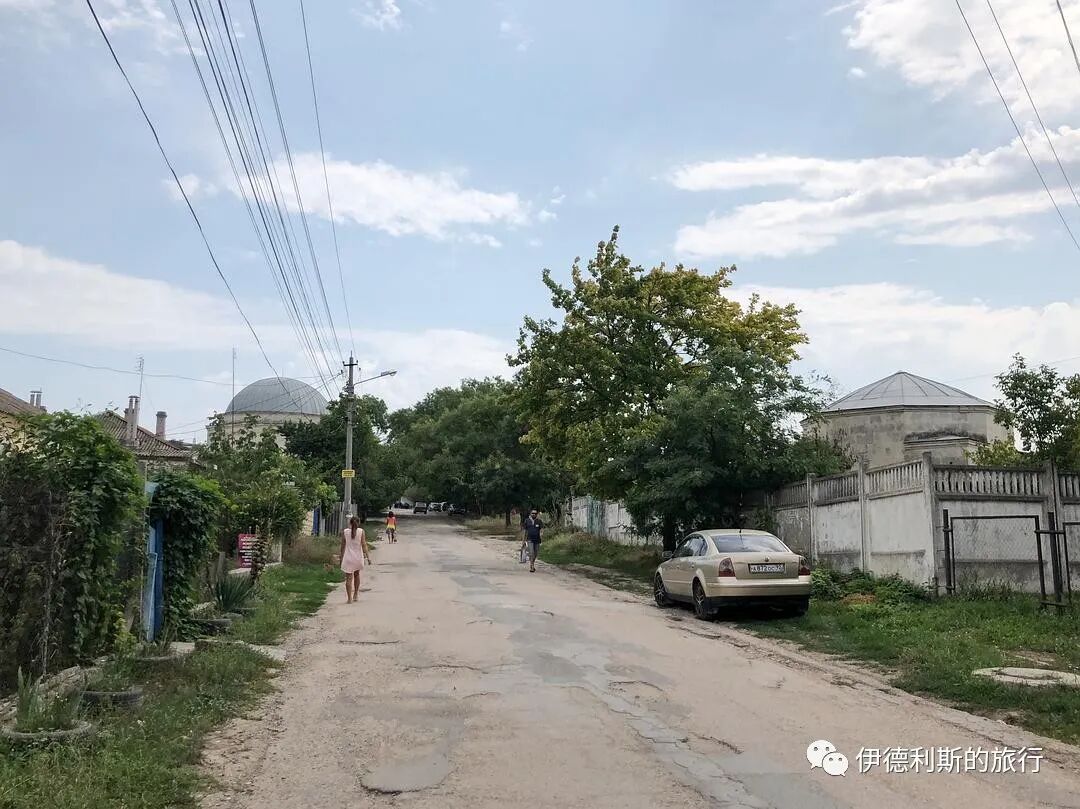
Halal Travel Guide: Crimean Khanate Early Capital - Mosques and History
Articles • ali2007fr posted the article • 0 comments • 230 views • 2026-05-20 09:03
Summary: The early capital of the Crimean Khanate is covered through palace sites, mosques, old streets, and Crimean Tatar history. This account keeps the original historical context, place names, architectural details, food notes, and photographs.
The Crimean Peninsula is in the northern Black Sea. It was conquered by the Mongol army in 1238 and later ruled by the Golden Horde. In 1313, Khan Uzbeg officially made Islam the state religion and built mosques (masjid) on the Crimean Peninsula.
At first, the Golden Horde's capital in Crimea was the city of Old Crimea (Stary Krym) in the southeast of the peninsula. In 1441, Haji Giray, a descendant of Genghis Khan's eldest son Jochi, minted coins with his own name at the Jewish Fortress (Chufut-Kale) on a cliff in the southwest of the peninsula, officially establishing the Crimean Khanate. The Jewish Fortress was first built by the Byzantines in the 5th to 6th centuries, and was later inhabited by Alans, Tatars, and Karaites. Today, the fortress still has city walls, gates, mosque ruins, and the tomb of a Golden Horde princess.
After Haji Giray died in 1466, his sixth son, Mengli Giray, eventually won the struggle for the throne. Around 1500, Mengli Giray built a new capital called Salachik. Salachik once had a complex of buildings including a palace, court, baths, and a mosque, but now only a madrasa and the tomb of the founding Crimean Khan, Haji Giray, remain.
Also, to the west of Bakhchysarai is Eski Yurt, a large trading town that was very prosperous during the Golden Horde period. It became a religious center for Crimea because of the gongbei of the religious elder Malik Ashtar. Today, it preserves several 14th to 16th-century tombs, including that of the Crimean Khan Mehmed II Giray.
Jewish Fortress (Chufut-Kale)
Between the 13th and 17th centuries, the Jewish Fortress was called Kyrk-Or, which means forty fortresses. After the mid-16th century, the Crimean Khan Sahib Giray (reigned 1532-1551) moved the capital to Bakhchysarai in the valley west of the Jewish Fortress, and the Tatars in the fortress gradually moved to Bakhchysarai. After the wells in the fortress dried up in the mid-17th century, all the Tatars left. Only the Karaite Jews continued to live there, and the fortress was gradually called the Jewish Fortress by the Crimean Tatars. After the 19th century, the Karaite Jews also left, and the fortress eventually became a ruin.
The walls of the Jewish Fortress were first built during the Byzantine period; some say they were built in the 5th to 6th centuries, while others say the 10th to 11th centuries. In 1299, General Nogai Khan of the Golden Horde led a Tatar army to attack the Crimean Peninsula. Byzantine soldiers used the strong walls of the Jewish fortress to hold off the Golden Horde's attack. The Tatar soldiers reportedly played harsh, loud music for three days and nights to disturb the Byzantine defenders inside the city. On the fourth day, the exhausted Byzantine defenders could no longer hold off a new round of attacks, and the Jewish fortress was captured by the Tatars of the Golden Horde.
Currently, the original walls consist of two sections, the south wall and the middle wall, along with two gates, the south gate and the middle gate. The south wall is built on the cliff in the southern part of the fortress, weaving between the rocks. The south gate is built in a pocket shape, allowing defenders to surround enemies from above if they break in. The middle wall runs across the space between the north and south cliffs of the fortress and is a typical example of Byzantine wall architecture.
There is no wall on the north cliff, but the steepness of the cliff itself is as effective as a wall. It was very windy when I visited, and I felt nervous just standing by the cliff edge.
The east wall was built between 1396 and 1433, and there is a lively bazaar outside the gate. Outside the east gate, there is still a preserved water collection area that merchants used to wash and water their livestock.
The Khan Jani Beg mosque is located on the west side of the Jewish fortress. It was first built in 1346 during the reign of Khan Jani Beg (reigned 1342-1357) of the Golden Horde. Khan Jani Beg was the son of Öz Beg Khan. During his father's reign, the Golden Horde fully converted to the faith, and Khan Jani Beg continued to develop the faith within the Khanate. The Khan Jani Beg mosque in the Jewish fortress stands as a witness to this.
In 1455, Haji Giray, the founding Khan of the Crimean Khanate, rebuilt the Khan Jani Beg mosque. An inscription about the reconstruction was once carved above the mosque door and was discovered during an archaeological excavation in 1928.
After the mid-17th century, the mosque was eventually abandoned as the Crimean Tatars moved from the Jewish fortress to Bakhchisaray. Today, only ruined walls, a mihrab niche, and some stone carvings remain at the mosque site. From these existing ruins, we can infer that it was a fairly typical traditional Crimean mosque building.
The tomb of Golden Horde Princess Dzhanike Khanym was built in 1437. It is the best-preserved Islamic building inside the Jewish fortress. The princess was the daughter of Tokhtamysh (reigned 1380-1397), the Great Khan of the Golden Horde. Tokhtamysh was the last Great Khan to unite the Golden Horde, but he was eventually defeated by Tamerlane the Great. After Tokhtamysh passed away, Dzhanike Khanym returned to her mother's homeland, Crimea.
The tomb is octagonal. The door is decorated with a classic Seljuk knot, a signature pattern from the Golden Horde period.
The roads inside the fortress vary in width, and you can see deep cart ruts on the main path.
The Tatar people gradually left the city after the water wells dried up in the 17th century.
The Gazi Mansur gongbei (shrine) and daotang (religious hall) are located in the valley on the west side of the Jewish fortress.
Legend says that Malik Ashter and Gazi Mansur, two of the first disciples of the Prophet Muhammad, came to the Crimean Peninsula in the 7th century to spread the faith and lived in a valley at the foot of the Jewish fortress. Not long after, Malik Ashter was killed by a giant, and Gazi Mansur died defending the Jewish fortress. They were both buried at the foot of the mountain. They remained unknown for a long time until, centuries later, a sheikh living in the ancient Central Asian city of Bukhara repeatedly dreamed of a narrow valley filled with shrubs. To understand his dream, the sheikh followed the guidance of an elder and began a pilgrimage to the Crimean Peninsula.
The sheikh arrived in Crimea in 1434. He recognized the valley from his dream at the foot of the Jewish cave and eventually discovered the tomb of Gazi Mansur. The sheikh then built a gongbei and a daotang at the site of the tomb. Because of this legendary karamat (miracle), pilgrims flocked to the site, and it even gained the favor of the Crimean Khan.
The Gazi Mansur gongbei and daotang stood until the 1930s, but were destroyed during the Soviet era. Today, only broken walls and a few surviving tombstones remain.
Salachik
The Salachik (Salaçıq) historical and archaeological complex was built between the late 15th and early 16th centuries and served as one of the capitals of the Crimean Khanate.
After Haji Giray died in 1466, his sixth son, Mengli I Giray, and his second son, Nur Devlet, fought repeatedly for the throne until Mengli I Giray finally won. Around 1500, Mengli I Giray built the new capital of Salachik in the valley west of the Jewish fortress.
In the 17th century, Salachik included a palace, a high court, baths, the Mengli Giray Mosque, and guard rooms. Genoese records mention that it also had a customs house, but most of these buildings were likely destroyed in an earthquake in 1698.
Today, only the Chain (Zıncırlı) madrasa, built in 1500, and the Haji Giray mausoleum, built in 1501, remain. The madrasa stayed open until the early 20th century. Archaeological excavations in 2008 uncovered the ruins of the baths and identified the general location of the Mengli Giray Mosque.
The Haji Giray mausoleum (Dürbe Hacı I Giray) is an octagonal building with a lead dome, built in 1501 by Mengli I Giray for his father, the founding Khan of Crimea, Haji Giray.
Archaeological digs between 2006 and 2007 examined 18 graves inside the mausoleum, including 13 adults and 5 children. They were wrapped in silk, and some rested on pillows stuffed with fabric scraps and fruit seeds. The mausoleum contains 8 stone sarcophagi covered in velvet, silk, and silver-threaded fabric. These likely include four Crimean Khans: Haji Giray himself, Mengli I Giray, Haji Giray's other son Nur Devlet—who fought Mengli I Giray for the throne for years before losing—and Sahib I Giray, the son of Mengli I Giray and the builder of Bakhchisaray.
These individuals were reburied after research was completed in 2009.
The Chain (Zıncırlı) madrasa was built in 1500 by order of the Crimean Khan Mengli I Giray. The name of the madrasa comes from the Turkic word "zyngyr," which means chain. A chain hangs above the main gate of the madrasa, forcing everyone who enters to bow their head.
The madrasa is rectangular with a central courtyard, an entrance on one side, and 11 rooms on the other three sides. At the time, the madrasa taught Turkish and Arabic grammar, calligraphy, arithmetic, ethics, logic, proof, Islamic law (sharia), and the study of the Quran and Hadith, with the full course of study taking ten years.
In 1909, influenced by the Crimean Tatar enlightenment movement, Gaspirali built a two-story modern Islamic school (madrasa) next to the old one. The school closed in 1917 and became the Mengli Giray Research Institute. The institute was shut down in 1923, then it served as a teacher training college, a medical school, a sanatorium for German soldiers, and a post-war psychiatric clinic. Today, the site is managed by the Bakhchisaray Historical, Cultural and Archaeological Museum.
During excavations at the Salachik historical and archaeological complex in 2008, researchers found 15th-century urban ruins including a bathhouse, a well, and a courtyard.
The bathhouse is a typical Turkish bath (hamam) with separate sections for men and women, each containing five rooms and a heating system. The heating system used clay pipes in the walls and under the floors to circulate warm air, keeping the bath at a constant temperature year-round and saving firewood. Each section also included a steam room, a washing area, a toilet, a lounge, and a changing room.
Archaeologists found many ceramics from the 15th to 18th centuries, mostly architectural tiles and pipes, along with some kitchenware, Turkish pottery, Chinese porcelain, and silver coins from the Crimean Khanate.
Ismail Gaspirali (1851-1914), the founder of the Crimean Tatar enlightenment movement, is buried in the backyard of the Zincirli Madrasa.
Gaspirali was a Crimean Tatar intellectual, educator, and publisher. He was the first to realize that Turkic Muslim society needed education and cultural reform to modernize, so he created the new Jadid education system and became known as the founder of the Crimean Tatar enlightenment.
In 1883, Gaspirali received permission to publish Tercüman, the first Turkic-language newspaper in Russia. Tercüman ran for 35 years. For a long time, it was the only Turkic-language publication in Russia and one of the earliest religious newspapers, influencing the entire Turkic-speaking world.
In the newspaper, he advocated for modernization through education and designed a new teaching method called Jadid. He taught the Arabic alphabet using a new phonetic method, which cut the time it took for students to learn to read from three years down to just a few months.
In 1909, Gaspirali built a two-story modern school next to the Zincirli Madrasa, which operated until it closed in 1917.
After Gasprinsky died in his hometown in 1914, he was buried in the cemetery behind the "Zincirli" (Chain) Madrasa. The original tombstone was lost in the second half of the 20th century, and the current one was rebuilt in the late 1990s.
Eski Yurt Old City
Eski Yurt means "old city." During the Golden Horde era, it was a large trading town and a transportation hub connecting the east and west ends of the Crimean Peninsula. After the Crimean Khanate was established in 1441, Eski Yurt remained an economic center. It was not until 1532, when the Khanate built its new capital, Bakhchisaray, in the valley right next to Eski Yurt, that the status of Eski Yurt was replaced and it began to be called the "old city." Even so, because the city once housed a gongbei (shrine) for the sage Malik Ashtar, Eski Yurt remained a religious center for Crimean Tatars until the Soviet era.
According to legend, Malik Ashtar was a cousin of the noble Prophet and a loyal companion of Imam Ali. In Crimean Tatar legends, Malik Ashtar was a brave warrior and the first person to come to Crimea to spread the faith. He eventually died in battle while fighting a giant in Eski Yurt. Many years later, some Sufi practitioners miraculously discovered his grave in Eski Yurt and built a gongbei there. In reality, Malik Ashtar passed away in Egypt, and the gongbei in Eski Yurt is a place where his karamat (miraculous signs) were manifested. Crimean Tatars believe that if you are bitten by a snake, you can recover by making dua at the Malik Ashtar gongbei.
Due to the importance of the Malik Ashtar gongbei, a complex of hundreds of tombs formed around it. This includes the tombs of three Khans of the Crimean Khanate: Mehmed II Giray (reigned 1577–1584), Saadet II Giray (reigned 1584), and Mehmed III Giray (reigned 1623–1628).
From the era of the Crimean Khanate until the early 20th century, a dhikr ceremony was held every Thursday night at the Malik Ashtar gongbei. After all Crimean Tatars were forced into exile in Central Asia in 1948, the central square of the Malik Ashtar gongbei was turned into a market. After Crimean Tatars began returning in the late 1980s, many demanded that the market be removed from the holy site, and it was finally moved in 2006.
The existing structures in the Malik Ashtar gongbei tomb complex include the 14th-15th century Bey Yude Sultan tomb and Ahmed Bey tomb, the 16th-century Mehmed Bey tomb and the tomb of Khan Mehmed II Giray, as well as the minbar (pulpit) of the Malik Ashtar shrine mosque.
The tomb of Crimean Khan Mehmed II Giray is also known as the Great Octagonal Tomb. During his reign, Mehmed II Giray attacked the Persian Safavid dynasty three times under orders from the Ottoman Empire.
The tomb of Mehmed II Giray is the largest one still standing in Eski Yurt and clearly shows Ottoman influence. Some speculate it was built by a student of the master Ottoman architect Mimar Sinan, but no records about the architect have been found.
The Malik Ashtar gongbei (a shrine for a Sufi saint) was built during the Crimean Khanate era with a minbar (pulpit) for sermons, but the mosque was destroyed in 1955. This place was once where Sufi practitioners performed dhikr (remembrance of Allah), and it served as a Sufi center on the Crimean Peninsula.
Ahmed Bey died in 1577, and his tombstone was found near the entrance of the tomb in 1924. Although Ahmed Bey died in the 16th century, the architectural style of the tomb itself does not match the Ottoman-influenced tombs of that time; instead, it follows the earlier Golden Horde tomb style. Other buildings similar to Ahmed Bey's tomb date back to the 13th and 14th centuries. Therefore, it is more likely that this tomb was built during the Golden Horde era. view all
Summary: The early capital of the Crimean Khanate is covered through palace sites, mosques, old streets, and Crimean Tatar history. This account keeps the original historical context, place names, architectural details, food notes, and photographs.
The Crimean Peninsula is in the northern Black Sea. It was conquered by the Mongol army in 1238 and later ruled by the Golden Horde. In 1313, Khan Uzbeg officially made Islam the state religion and built mosques (masjid) on the Crimean Peninsula.
At first, the Golden Horde's capital in Crimea was the city of Old Crimea (Stary Krym) in the southeast of the peninsula. In 1441, Haji Giray, a descendant of Genghis Khan's eldest son Jochi, minted coins with his own name at the Jewish Fortress (Chufut-Kale) on a cliff in the southwest of the peninsula, officially establishing the Crimean Khanate. The Jewish Fortress was first built by the Byzantines in the 5th to 6th centuries, and was later inhabited by Alans, Tatars, and Karaites. Today, the fortress still has city walls, gates, mosque ruins, and the tomb of a Golden Horde princess.
After Haji Giray died in 1466, his sixth son, Mengli Giray, eventually won the struggle for the throne. Around 1500, Mengli Giray built a new capital called Salachik. Salachik once had a complex of buildings including a palace, court, baths, and a mosque, but now only a madrasa and the tomb of the founding Crimean Khan, Haji Giray, remain.
Also, to the west of Bakhchysarai is Eski Yurt, a large trading town that was very prosperous during the Golden Horde period. It became a religious center for Crimea because of the gongbei of the religious elder Malik Ashtar. Today, it preserves several 14th to 16th-century tombs, including that of the Crimean Khan Mehmed II Giray.
Jewish Fortress (Chufut-Kale)
Between the 13th and 17th centuries, the Jewish Fortress was called Kyrk-Or, which means forty fortresses. After the mid-16th century, the Crimean Khan Sahib Giray (reigned 1532-1551) moved the capital to Bakhchysarai in the valley west of the Jewish Fortress, and the Tatars in the fortress gradually moved to Bakhchysarai. After the wells in the fortress dried up in the mid-17th century, all the Tatars left. Only the Karaite Jews continued to live there, and the fortress was gradually called the Jewish Fortress by the Crimean Tatars. After the 19th century, the Karaite Jews also left, and the fortress eventually became a ruin.
The walls of the Jewish Fortress were first built during the Byzantine period; some say they were built in the 5th to 6th centuries, while others say the 10th to 11th centuries. In 1299, General Nogai Khan of the Golden Horde led a Tatar army to attack the Crimean Peninsula. Byzantine soldiers used the strong walls of the Jewish fortress to hold off the Golden Horde's attack. The Tatar soldiers reportedly played harsh, loud music for three days and nights to disturb the Byzantine defenders inside the city. On the fourth day, the exhausted Byzantine defenders could no longer hold off a new round of attacks, and the Jewish fortress was captured by the Tatars of the Golden Horde.
Currently, the original walls consist of two sections, the south wall and the middle wall, along with two gates, the south gate and the middle gate. The south wall is built on the cliff in the southern part of the fortress, weaving between the rocks. The south gate is built in a pocket shape, allowing defenders to surround enemies from above if they break in. The middle wall runs across the space between the north and south cliffs of the fortress and is a typical example of Byzantine wall architecture.
There is no wall on the north cliff, but the steepness of the cliff itself is as effective as a wall. It was very windy when I visited, and I felt nervous just standing by the cliff edge.
The east wall was built between 1396 and 1433, and there is a lively bazaar outside the gate. Outside the east gate, there is still a preserved water collection area that merchants used to wash and water their livestock.
The Khan Jani Beg mosque is located on the west side of the Jewish fortress. It was first built in 1346 during the reign of Khan Jani Beg (reigned 1342-1357) of the Golden Horde. Khan Jani Beg was the son of Öz Beg Khan. During his father's reign, the Golden Horde fully converted to the faith, and Khan Jani Beg continued to develop the faith within the Khanate. The Khan Jani Beg mosque in the Jewish fortress stands as a witness to this.
In 1455, Haji Giray, the founding Khan of the Crimean Khanate, rebuilt the Khan Jani Beg mosque. An inscription about the reconstruction was once carved above the mosque door and was discovered during an archaeological excavation in 1928.
After the mid-17th century, the mosque was eventually abandoned as the Crimean Tatars moved from the Jewish fortress to Bakhchisaray. Today, only ruined walls, a mihrab niche, and some stone carvings remain at the mosque site. From these existing ruins, we can infer that it was a fairly typical traditional Crimean mosque building.
The tomb of Golden Horde Princess Dzhanike Khanym was built in 1437. It is the best-preserved Islamic building inside the Jewish fortress. The princess was the daughter of Tokhtamysh (reigned 1380-1397), the Great Khan of the Golden Horde. Tokhtamysh was the last Great Khan to unite the Golden Horde, but he was eventually defeated by Tamerlane the Great. After Tokhtamysh passed away, Dzhanike Khanym returned to her mother's homeland, Crimea.
The tomb is octagonal. The door is decorated with a classic Seljuk knot, a signature pattern from the Golden Horde period.
The roads inside the fortress vary in width, and you can see deep cart ruts on the main path.
The Tatar people gradually left the city after the water wells dried up in the 17th century.
The Gazi Mansur gongbei (shrine) and daotang (religious hall) are located in the valley on the west side of the Jewish fortress.
Legend says that Malik Ashter and Gazi Mansur, two of the first disciples of the Prophet Muhammad, came to the Crimean Peninsula in the 7th century to spread the faith and lived in a valley at the foot of the Jewish fortress. Not long after, Malik Ashter was killed by a giant, and Gazi Mansur died defending the Jewish fortress. They were both buried at the foot of the mountain. They remained unknown for a long time until, centuries later, a sheikh living in the ancient Central Asian city of Bukhara repeatedly dreamed of a narrow valley filled with shrubs. To understand his dream, the sheikh followed the guidance of an elder and began a pilgrimage to the Crimean Peninsula.
The sheikh arrived in Crimea in 1434. He recognized the valley from his dream at the foot of the Jewish cave and eventually discovered the tomb of Gazi Mansur. The sheikh then built a gongbei and a daotang at the site of the tomb. Because of this legendary karamat (miracle), pilgrims flocked to the site, and it even gained the favor of the Crimean Khan.
The Gazi Mansur gongbei and daotang stood until the 1930s, but were destroyed during the Soviet era. Today, only broken walls and a few surviving tombstones remain.
Salachik
The Salachik (Salaçıq) historical and archaeological complex was built between the late 15th and early 16th centuries and served as one of the capitals of the Crimean Khanate.
After Haji Giray died in 1466, his sixth son, Mengli I Giray, and his second son, Nur Devlet, fought repeatedly for the throne until Mengli I Giray finally won. Around 1500, Mengli I Giray built the new capital of Salachik in the valley west of the Jewish fortress.
In the 17th century, Salachik included a palace, a high court, baths, the Mengli Giray Mosque, and guard rooms. Genoese records mention that it also had a customs house, but most of these buildings were likely destroyed in an earthquake in 1698.
Today, only the Chain (Zıncırlı) madrasa, built in 1500, and the Haji Giray mausoleum, built in 1501, remain. The madrasa stayed open until the early 20th century. Archaeological excavations in 2008 uncovered the ruins of the baths and identified the general location of the Mengli Giray Mosque.
The Haji Giray mausoleum (Dürbe Hacı I Giray) is an octagonal building with a lead dome, built in 1501 by Mengli I Giray for his father, the founding Khan of Crimea, Haji Giray.
Archaeological digs between 2006 and 2007 examined 18 graves inside the mausoleum, including 13 adults and 5 children. They were wrapped in silk, and some rested on pillows stuffed with fabric scraps and fruit seeds. The mausoleum contains 8 stone sarcophagi covered in velvet, silk, and silver-threaded fabric. These likely include four Crimean Khans: Haji Giray himself, Mengli I Giray, Haji Giray's other son Nur Devlet—who fought Mengli I Giray for the throne for years before losing—and Sahib I Giray, the son of Mengli I Giray and the builder of Bakhchisaray.
These individuals were reburied after research was completed in 2009.
The Chain (Zıncırlı) madrasa was built in 1500 by order of the Crimean Khan Mengli I Giray. The name of the madrasa comes from the Turkic word "zyngyr," which means chain. A chain hangs above the main gate of the madrasa, forcing everyone who enters to bow their head.
The madrasa is rectangular with a central courtyard, an entrance on one side, and 11 rooms on the other three sides. At the time, the madrasa taught Turkish and Arabic grammar, calligraphy, arithmetic, ethics, logic, proof, Islamic law (sharia), and the study of the Quran and Hadith, with the full course of study taking ten years.
In 1909, influenced by the Crimean Tatar enlightenment movement, Gaspirali built a two-story modern Islamic school (madrasa) next to the old one. The school closed in 1917 and became the Mengli Giray Research Institute. The institute was shut down in 1923, then it served as a teacher training college, a medical school, a sanatorium for German soldiers, and a post-war psychiatric clinic. Today, the site is managed by the Bakhchisaray Historical, Cultural and Archaeological Museum.
During excavations at the Salachik historical and archaeological complex in 2008, researchers found 15th-century urban ruins including a bathhouse, a well, and a courtyard.
The bathhouse is a typical Turkish bath (hamam) with separate sections for men and women, each containing five rooms and a heating system. The heating system used clay pipes in the walls and under the floors to circulate warm air, keeping the bath at a constant temperature year-round and saving firewood. Each section also included a steam room, a washing area, a toilet, a lounge, and a changing room.
Archaeologists found many ceramics from the 15th to 18th centuries, mostly architectural tiles and pipes, along with some kitchenware, Turkish pottery, Chinese porcelain, and silver coins from the Crimean Khanate.
Ismail Gaspirali (1851-1914), the founder of the Crimean Tatar enlightenment movement, is buried in the backyard of the Zincirli Madrasa.
Gaspirali was a Crimean Tatar intellectual, educator, and publisher. He was the first to realize that Turkic Muslim society needed education and cultural reform to modernize, so he created the new Jadid education system and became known as the founder of the Crimean Tatar enlightenment.
In 1883, Gaspirali received permission to publish Tercüman, the first Turkic-language newspaper in Russia. Tercüman ran for 35 years. For a long time, it was the only Turkic-language publication in Russia and one of the earliest religious newspapers, influencing the entire Turkic-speaking world.
In the newspaper, he advocated for modernization through education and designed a new teaching method called Jadid. He taught the Arabic alphabet using a new phonetic method, which cut the time it took for students to learn to read from three years down to just a few months.
In 1909, Gaspirali built a two-story modern school next to the Zincirli Madrasa, which operated until it closed in 1917.
After Gasprinsky died in his hometown in 1914, he was buried in the cemetery behind the "Zincirli" (Chain) Madrasa. The original tombstone was lost in the second half of the 20th century, and the current one was rebuilt in the late 1990s.
Eski Yurt Old City
Eski Yurt means "old city." During the Golden Horde era, it was a large trading town and a transportation hub connecting the east and west ends of the Crimean Peninsula. After the Crimean Khanate was established in 1441, Eski Yurt remained an economic center. It was not until 1532, when the Khanate built its new capital, Bakhchisaray, in the valley right next to Eski Yurt, that the status of Eski Yurt was replaced and it began to be called the "old city." Even so, because the city once housed a gongbei (shrine) for the sage Malik Ashtar, Eski Yurt remained a religious center for Crimean Tatars until the Soviet era.
According to legend, Malik Ashtar was a cousin of the noble Prophet and a loyal companion of Imam Ali. In Crimean Tatar legends, Malik Ashtar was a brave warrior and the first person to come to Crimea to spread the faith. He eventually died in battle while fighting a giant in Eski Yurt. Many years later, some Sufi practitioners miraculously discovered his grave in Eski Yurt and built a gongbei there. In reality, Malik Ashtar passed away in Egypt, and the gongbei in Eski Yurt is a place where his karamat (miraculous signs) were manifested. Crimean Tatars believe that if you are bitten by a snake, you can recover by making dua at the Malik Ashtar gongbei.
Due to the importance of the Malik Ashtar gongbei, a complex of hundreds of tombs formed around it. This includes the tombs of three Khans of the Crimean Khanate: Mehmed II Giray (reigned 1577–1584), Saadet II Giray (reigned 1584), and Mehmed III Giray (reigned 1623–1628).
From the era of the Crimean Khanate until the early 20th century, a dhikr ceremony was held every Thursday night at the Malik Ashtar gongbei. After all Crimean Tatars were forced into exile in Central Asia in 1948, the central square of the Malik Ashtar gongbei was turned into a market. After Crimean Tatars began returning in the late 1980s, many demanded that the market be removed from the holy site, and it was finally moved in 2006.
The existing structures in the Malik Ashtar gongbei tomb complex include the 14th-15th century Bey Yude Sultan tomb and Ahmed Bey tomb, the 16th-century Mehmed Bey tomb and the tomb of Khan Mehmed II Giray, as well as the minbar (pulpit) of the Malik Ashtar shrine mosque.
The tomb of Crimean Khan Mehmed II Giray is also known as the Great Octagonal Tomb. During his reign, Mehmed II Giray attacked the Persian Safavid dynasty three times under orders from the Ottoman Empire.
The tomb of Mehmed II Giray is the largest one still standing in Eski Yurt and clearly shows Ottoman influence. Some speculate it was built by a student of the master Ottoman architect Mimar Sinan, but no records about the architect have been found.
The Malik Ashtar gongbei (a shrine for a Sufi saint) was built during the Crimean Khanate era with a minbar (pulpit) for sermons, but the mosque was destroyed in 1955. This place was once where Sufi practitioners performed dhikr (remembrance of Allah), and it served as a Sufi center on the Crimean Peninsula.
Ahmed Bey died in 1577, and his tombstone was found near the entrance of the tomb in 1924. Although Ahmed Bey died in the 16th century, the architectural style of the tomb itself does not match the Ottoman-influenced tombs of that time; instead, it follows the earlier Golden Horde tomb style. Other buildings similar to Ahmed Bey's tomb date back to the 13th and 14th centuries. Therefore, it is more likely that this tomb was built during the Golden Horde era.
Halal Travel Guide: Bakhchysarai, Crimea - Khan Palace and Mosques
Articles • ali2007fr posted the article • 0 comments • 268 views • 2026-05-20 08:47
Summary: Bakhchysarai in Crimea is shown through the Khan Palace, mosques, tombs, old neighborhoods, and Crimean Tatar heritage. This account keeps the original route, names, dates, architectural details, food notes, and photographs.
Bakhchisaray sits in a valley on the Crimean Peninsula and became the capital of the Crimean Khanate in 1532. Although it became an ordinary town after Russia occupied the Crimean Khanate in 1783, it remains the cultural center of the Crimean Tatars and preserves their unique culture and customs.
Crimean Tatars are a Turkic-speaking ethnic group that formed during the Golden Horde period. In May 1944, the Soviet Union deported all 240,000 Crimean Tatars from the Crimean Peninsula to Uzbekistan and other remote regions. Many Crimean Tatars died during the exile from cold, hunger, disease, and exhaustion. Even after reaching their destinations, many were forced to work hard in Gulag collective farms. For nearly half a century after that, there were almost no Crimean Tatars on the Crimean Peninsula.
After a long struggle by the Crimean Tatar civil rights movement, the Soviet Union finally declared the deportation of the Crimean Tatars illegal in 1989, and they finally gained the right to return to their homeland. Today, 250,000 Crimean Tatars have returned home, working to rebuild their lives, overcome social and economic obstacles, and pass on their culture.
The Palace
The North Gate is the entrance to the Khan Palace area. In the Crimean Tatar language, Darbehane Qapı means Mint Gate, named because mint once grew across from the gate. The Khan Palace once had four large gates, but only the North Gate and South Gate remain today. The North Gate features a carving of two snakes intertwined. Legend says the palace builder, Sahib I Giray, saw two snakes fighting by the river in front of the gate and watched one get healed by the water, so he decided to build the palace there.
The North Gate was built in 1611. Before this, the palace had no walls because the capital's defense system was at the Jewish Fortress on the cliff. As Cossack military activity increased in the 17th century, the palace was considered under threat, leading to the construction of the current walls and gates.
The Great Khan Mosque (Büyük Han Cami) was one of the first palace buildings constructed after the capital moved in 1532. The original mosque had several domes, much like the Seljuk-style mosques popular in 15th-century Ottoman Turkey. A fire destroyed the mosque in 1736, but Khan Selamet II Giray (reigned 1740-1743) later restored it and changed the roof to tiles.
During the Soviet era, the mosque closed and became an exhibition hall for an archaeological museum. After Russia occupied Crimea in 2014, they restored the mosque, though some of this work caused damage.
Maqsurah is Arabic for "enclosed space," and it served as a private area inside the mosque for rulers or nobles to perform namaz. A maqsurah is usually a wooden box or screen near the mihrab, but the Khan Mosque features a two-story loft instead. The main entrance of the Khan Mosque connects to the north wall of the Khan Palace for direct access, while you can only reach the maqsurah via stairs inside the palace.
The maqsurah in the Khan Mosque was rebuilt after the 1736 fire and features famous Turkish Iznik tiles, stained glass, and various precious 18th-century murals.
The Khan Cemetery sits south of the Khan Mosque and holds the graves of nine Crimean Khans from the 16th to 18th centuries, 45 members of the Khan family, and over 320 court nobles. The two most important tombs belong to Crimean Khans Devlet I Giray (reigned 1551-1577) and İslâm III Giray (reigned 1644-1654). These octagonal tombs are made of limestone and originally had lead domes, which were replaced with iron after 1863. There is also the open-air tomb of Crimean Khan Meñli II Giray (reigned 1724-1730, 1737-1740) and the double tombstone of Crimean Khan Qırım Giray (reigned 1758-1764, 1768-1769).
Devlet I Giray reigned for 26 years. His most important battle was burning Moscow in 1571, which forced Tsar Ivan the Terrible to flee, earning him the title "the one who took the crown." In 1640, İslâm III Giray led his army to deal a devastating blow to Ukraine.
During his reign, Meñli II Giray ended the long-standing instability of the Crimean Khanate and abolished certain taxes, which earned him much support. He skillfully organized defenses against the invading Russian army and caused them heavy losses.
Qırım Giray was a talented ruler. Under his rule, the Crimean Khanate saw an artistic revival and developed a unique style known as "Crimean Rococo."
The SaryGuzel bathhouse was ordered to be built in 1532 by Crimean Khan Sahib I Giray. Like the Khan Mosque, it is one of the oldest buildings in the Bakhchisaray Khan Palace. In the Crimean Tatar language, 'Sarı' means 'yellow or fair-skinned,' and 'Güzel' means 'beautiful.'
The SaryGuzel bathhouse is a typical Turkish bath. A furnace in the basement sends hot air up to heat the floor, and lead pipes supply hot and cold water to the bath. The bath is divided into men's and women's sections. Each section has a dome with star-shaped cutouts for light and ventilation, and there is an indoor courtyard with a fountain at the exit.
The SaryGuzel bathhouse operated until 1924, when it was closed because it was considered unsafe. It has since been restored and is now open for exhibitions.
The Falcon Tower (Toğan qullesi) is located in a corner of the Persian Garden at the Khan Palace. Legend says it was once used to train falcons for the Khan's court. The Falcon Tower was built in the 16th century. It was originally a five-story brick, mud, and wood structure. In 1760, it was rebuilt into two stories: a lower cube made of rubble and cement mortar, and an upper octagonal tower made of wooden planks.
The Falcon Tower connects to the Harem building of the Khan Palace. A spiral staircase inside leads to an observation deck at the top, where people living in the Harem could look out over the entire palace.
The Harem (Arem) of the Crimean Khan Palace once had 4 buildings and 73 rooms. In 1818, Tsar Alexander I ordered the demolition of 3 buildings and 70 rooms, leaving only an annex with 3 rooms and a pavilion. Today, the annex displays the interior decorations of Crimean Tatar homes from the 17th to the 19th centuries.
The living room retains its original fireplace and cupboards. During a 1980s restoration, a mirror with an inscription by the artist was discovered. Paintings on the vanity and Arabic poetry on the ceiling have also been cleaned and revealed.
The Persian Garden in the southern part of the Harem is surrounded by high walls. It once featured various trees, fountains, and baths, but now only ruins remain.
The Dilâra Bikeç Mausoleum is an octagonal tomb at the southernmost point of the Bakhchisaray Khan Palace. It was ordered to be built in 1764 by Crimean Khan Qırım Giray (reigned 1758-1764, 1768-1769) for his beloved wife.
The Small Khan Mosque (Kiçik Han Cami) is inside the main building of the Khan Palace and was used by members of the Khan's family and noble officials. The Small Khan Mosque was built in the 16th century. It was destroyed by fire by the Russian army in 1736 and restored in 1741 by Khan Selamet II Giray (reigned 1740-1743).
The existing interior murals were created between the 17th and 18th centuries, with some painted by the Iranian architect Omer in the late 18th century. Earlier murals from the 16th century were discovered during a 1991 restoration.
On the south wall of the Khan Mosque (Khan Jami) is a prayer niche (mihrab) carved with seven decorative bands, which symbolize the seven heavens mentioned in the Quran.
Above the prayer niche (mihrab) is a piece of stained glass featuring the Seal of Solomon (Khatam Sulayman) ✡.
The Iron Gate (Demir Qapi) is the oldest structure in the Khan Palace, built between 1503 and 1504 by the architect Aleviz Novy for the Crimean Khan. This architect had previously been invited by Ivan the Great to Moscow to build a series of churches. The Iron Gate (Demir Qapi) was likely originally built at the Crimean Khan's previous residence, Devlet-Saray, and was moved to the main building of the Khan Palace only after the Bakhchisaray Khan Palace was completed in 1532.
Demir Qapi means iron gate in the Crimean Tatar language. The gate's portal is made of limestone and uses decorative styles from the Lombard-Venetian Renaissance.
The Council Hall (Divan hanesi) is the meeting room inside the main building of the Khan Palace. In the center of the south wall is the throne where the Khan sat, with sofas on the sides for his ministers. Above the north wall at the entrance to the hall is a narrow latticed balcony, which is said to have been used by the Khan to have people eavesdrop on meetings when he was absent.
The floor of the hall was paved with marble and had a square pool with a fountain in the center. The walls were covered in tiles, but these were destroyed in a fire set by the Russian army in 1736. Restoration took place in 1742, and many of the current decorations, such as the murals and chandeliers, were added in 1822 when the architect I. F. Kolodin renovated the Khan Palace.
In 1917, the Crimean Tatars announced the establishment of an independent Crimean Tatar government here.
The Summer Pavilion is a place for cooling off inside the main building of the Khan Palace, built between the late 17th and early 18th centuries. It was burned down by the Russian army in 1736 and later restored by the architect Omer ibn al Hadj Mustafa. In the center of the pavilion is a square pool with a square marble fountain, surrounded by sofas.
The pavilion was originally open. Between 1821 and 1831, Tsar Alexander I ordered the architects Mikhail Klado and Vasiliy Dorofeyev to enclose the Summer Pavilion, adding columns, stained glass, and a carved ceiling.
Early murals were discovered during the restoration of the summer pavilion in 1962.
The Golden Pavilion is on the second floor of the main building and was built in the late 18th century by the Iranian architect Omer. The interior of the pavilion originally featured murals of fruit vases and Arabic poetry praising Khan Qırım Giray, but these were destroyed during the German occupation of Crimea from 1941 to 1944.
The Golden Fountain is located in the Fountain Courtyard of the Khan's Palace main building, near the Small Khan Mosque, and was where the Crimean Khan and members of the Khan's court performed wudu.
The Golden Fountain is made of gilded marble and features carvings of various flowers, fruits, and plants to depict the 'Garden of Eden' (jandātʿadni) from the Quran, the place where Adam and his wife lived. A circular outlet is carved in the center of the fountain, symbolizing eternal life.
The Fountain of Tears was commissioned in 1763 by the Crimean Khan Qırım Giray (reigned 1758-1764, 1768-1769), and the architect was Omer ibn al Hadj Mustafa from Iran. The fountain was originally installed in the mausoleum of the Khan's beloved wife, Dilâra Bikeç, but after Empress Catherine II visited the palace in 1787, the dried-up fountain was moved to the Fountain Courtyard in front of the main building.
A love story about the Fountain of Tears has circulated in Bakhchysarai since the 18th century. According to the legend, the Khan's beloved wife, Dilâra Bikeç, was a Greek woman from Georgia who was killed in palace intrigue. The Khan fell into deep grief and built this fountain in her mausoleum to honor her. This love story later became widely known because of Pushkin's famous poem, The Fountain of Bakhchisaray.
The suites on both sides of the North Gate were where the Khan's palace guards (Qapı Halqı) lived. After Crimea was occupied by Tsarist Russia, this area also served as guest lodging. Today, the west building of the suites is an exhibition hall, and the east building houses museum offices.
The exhibition hall in the west building displays artifacts from the Crimean Khanate era and the traditional life of the Crimean Tatars. The original fireplaces are still preserved inside the suites.
The stables are divided into two floors, with the first floor used for keeping horses and the second floor for the grooms to live in; the current building was rebuilt in the 1850s.
Mosque
Orta Mosque was once the main Friday mosque in Bakhchysarai. It dates back to 1674. The Khans Mengli Giray II and Selamet II Giray renovated it between 1737 and 1743, and it was rebuilt again in 1861 to reach its current form.
After 1929, the mosque served as a cultural center and then a cinema. It was not returned to the Muslim community until 2001. The mosque's minaret and surrounding buildings were destroyed at that time. They were not rebuilt until 2012. The mosque reopened in 2013 after the construction work finished.
Ismi Khan Mosque was built between the 17th and 18th centuries. Its architectural decorations show a strong influence from the European Baroque style. The upper circular openings are decorated with wooden Seals of Solomon (Khātam Sulaymān) ✡.
The mosque was used as a warehouse for a long time. There were plans to restore it in the early 21st century, but the work has not been carried out yet.
Molla Mustafa Friday Mosque dates back to the 17th century. An 1890 document mentions this mosque, stating that the local residents added a roof to the building in 1888.
Tahtali Mosque was built in 1707 by Khan Sultan Beck, the son-in-law of the Crimean Khan Selim I Giray. In the Crimean Tatar language, "Tahtalı" means "wooden." The mosque was originally built with wooden planks. Later, it was enclosed with brick and stone, and the roof was covered with clay tiles.
Accommodation
I stayed at a beautiful traditional Crimean Tatar house called Bahitgul Boutique-Hotel. They serve traditional Crimean Tatar food, so I usually ate breakfast right where I was staying. The view while eating there is excellent, as you can look out over the entire ancient capital.
The food culture of the Crimean Tatars is closely tied to their history. Because the Crimean Khanate was a long-term vassal of the Ottoman Empire, it has many Ottoman-related foods, such as Turkish coffee, baklava (a sweet pastry), and stuffed grape leaves (dolma). After being exiled to Uzbekistan in 1944, the Crimean Tatar diet added many Uzbek dishes, including rice pilaf (plov), hand-pulled noodles (lagman), baked meat buns (samsa), steamed dumplings (manti), and flatbread (nan). Crimean Tatars have some unique delicacies, such as the deep-fried meat pastry (chebureki), which is known as a signature national dish.
You can eat baked meat buns (samsa) at the bazaar.
I ate rice pilaf (plov), stuffed grape leaves (dolma), and lamb skewers (shashlik) at a Crimean Tatar restaurant; the lamb skewers were incredibly tender and fragrant.
I bought desserts at a Crimean Tatar sweet shop in the old city, which are basically the same as the baklava popular in former Ottoman regions like Turkey, the Caucasus, the Balkans, and the Levant. In the third picture, the first row on the iron tray says 'hazelnut,' and the second row says 'caramel'.
At a manor-style Crimean Tatar restaurant at the foot of the mountain, I ate sheep cheese with olives (brynza s maslinami), grilled salmon (deniz kebab), steamed dumplings (manti), and the signature Crimean Tatar deep-fried meat pastry (chebureki).
The deep-fried meat pastry (chebureki) is a unique national food of the Crimean Tatars. It can be made with lamb or beef, mixed with onions and black pepper, and the dough is very thin. Steamed dumplings (manti) were brought back by the Crimean Tatars after they were forced into exile in Uzbekistan in 1944.
Clothing
Skullcap (tubeteika)
I bought a wool hat called a kalpak at a shop, which is the most classic winter hat for Crimean Tatars. This word is the same as the name for the felt hat worn by the Kyrgyz people, but the shape is different. view all
Summary: Bakhchysarai in Crimea is shown through the Khan Palace, mosques, tombs, old neighborhoods, and Crimean Tatar heritage. This account keeps the original route, names, dates, architectural details, food notes, and photographs.
Bakhchisaray sits in a valley on the Crimean Peninsula and became the capital of the Crimean Khanate in 1532. Although it became an ordinary town after Russia occupied the Crimean Khanate in 1783, it remains the cultural center of the Crimean Tatars and preserves their unique culture and customs.
Crimean Tatars are a Turkic-speaking ethnic group that formed during the Golden Horde period. In May 1944, the Soviet Union deported all 240,000 Crimean Tatars from the Crimean Peninsula to Uzbekistan and other remote regions. Many Crimean Tatars died during the exile from cold, hunger, disease, and exhaustion. Even after reaching their destinations, many were forced to work hard in Gulag collective farms. For nearly half a century after that, there were almost no Crimean Tatars on the Crimean Peninsula.
After a long struggle by the Crimean Tatar civil rights movement, the Soviet Union finally declared the deportation of the Crimean Tatars illegal in 1989, and they finally gained the right to return to their homeland. Today, 250,000 Crimean Tatars have returned home, working to rebuild their lives, overcome social and economic obstacles, and pass on their culture.
The Palace
The North Gate is the entrance to the Khan Palace area. In the Crimean Tatar language, Darbehane Qapı means Mint Gate, named because mint once grew across from the gate. The Khan Palace once had four large gates, but only the North Gate and South Gate remain today. The North Gate features a carving of two snakes intertwined. Legend says the palace builder, Sahib I Giray, saw two snakes fighting by the river in front of the gate and watched one get healed by the water, so he decided to build the palace there.
The North Gate was built in 1611. Before this, the palace had no walls because the capital's defense system was at the Jewish Fortress on the cliff. As Cossack military activity increased in the 17th century, the palace was considered under threat, leading to the construction of the current walls and gates.
The Great Khan Mosque (Büyük Han Cami) was one of the first palace buildings constructed after the capital moved in 1532. The original mosque had several domes, much like the Seljuk-style mosques popular in 15th-century Ottoman Turkey. A fire destroyed the mosque in 1736, but Khan Selamet II Giray (reigned 1740-1743) later restored it and changed the roof to tiles.
During the Soviet era, the mosque closed and became an exhibition hall for an archaeological museum. After Russia occupied Crimea in 2014, they restored the mosque, though some of this work caused damage.
Maqsurah is Arabic for "enclosed space," and it served as a private area inside the mosque for rulers or nobles to perform namaz. A maqsurah is usually a wooden box or screen near the mihrab, but the Khan Mosque features a two-story loft instead. The main entrance of the Khan Mosque connects to the north wall of the Khan Palace for direct access, while you can only reach the maqsurah via stairs inside the palace.
The maqsurah in the Khan Mosque was rebuilt after the 1736 fire and features famous Turkish Iznik tiles, stained glass, and various precious 18th-century murals.
The Khan Cemetery sits south of the Khan Mosque and holds the graves of nine Crimean Khans from the 16th to 18th centuries, 45 members of the Khan family, and over 320 court nobles. The two most important tombs belong to Crimean Khans Devlet I Giray (reigned 1551-1577) and İslâm III Giray (reigned 1644-1654). These octagonal tombs are made of limestone and originally had lead domes, which were replaced with iron after 1863. There is also the open-air tomb of Crimean Khan Meñli II Giray (reigned 1724-1730, 1737-1740) and the double tombstone of Crimean Khan Qırım Giray (reigned 1758-1764, 1768-1769).
Devlet I Giray reigned for 26 years. His most important battle was burning Moscow in 1571, which forced Tsar Ivan the Terrible to flee, earning him the title "the one who took the crown." In 1640, İslâm III Giray led his army to deal a devastating blow to Ukraine.
During his reign, Meñli II Giray ended the long-standing instability of the Crimean Khanate and abolished certain taxes, which earned him much support. He skillfully organized defenses against the invading Russian army and caused them heavy losses.
Qırım Giray was a talented ruler. Under his rule, the Crimean Khanate saw an artistic revival and developed a unique style known as "Crimean Rococo."
The SaryGuzel bathhouse was ordered to be built in 1532 by Crimean Khan Sahib I Giray. Like the Khan Mosque, it is one of the oldest buildings in the Bakhchisaray Khan Palace. In the Crimean Tatar language, 'Sarı' means 'yellow or fair-skinned,' and 'Güzel' means 'beautiful.'
The SaryGuzel bathhouse is a typical Turkish bath. A furnace in the basement sends hot air up to heat the floor, and lead pipes supply hot and cold water to the bath. The bath is divided into men's and women's sections. Each section has a dome with star-shaped cutouts for light and ventilation, and there is an indoor courtyard with a fountain at the exit.
The SaryGuzel bathhouse operated until 1924, when it was closed because it was considered unsafe. It has since been restored and is now open for exhibitions.
The Falcon Tower (Toğan qullesi) is located in a corner of the Persian Garden at the Khan Palace. Legend says it was once used to train falcons for the Khan's court. The Falcon Tower was built in the 16th century. It was originally a five-story brick, mud, and wood structure. In 1760, it was rebuilt into two stories: a lower cube made of rubble and cement mortar, and an upper octagonal tower made of wooden planks.
The Falcon Tower connects to the Harem building of the Khan Palace. A spiral staircase inside leads to an observation deck at the top, where people living in the Harem could look out over the entire palace.
The Harem (Arem) of the Crimean Khan Palace once had 4 buildings and 73 rooms. In 1818, Tsar Alexander I ordered the demolition of 3 buildings and 70 rooms, leaving only an annex with 3 rooms and a pavilion. Today, the annex displays the interior decorations of Crimean Tatar homes from the 17th to the 19th centuries.
The living room retains its original fireplace and cupboards. During a 1980s restoration, a mirror with an inscription by the artist was discovered. Paintings on the vanity and Arabic poetry on the ceiling have also been cleaned and revealed.
The Persian Garden in the southern part of the Harem is surrounded by high walls. It once featured various trees, fountains, and baths, but now only ruins remain.
The Dilâra Bikeç Mausoleum is an octagonal tomb at the southernmost point of the Bakhchisaray Khan Palace. It was ordered to be built in 1764 by Crimean Khan Qırım Giray (reigned 1758-1764, 1768-1769) for his beloved wife.
The Small Khan Mosque (Kiçik Han Cami) is inside the main building of the Khan Palace and was used by members of the Khan's family and noble officials. The Small Khan Mosque was built in the 16th century. It was destroyed by fire by the Russian army in 1736 and restored in 1741 by Khan Selamet II Giray (reigned 1740-1743).
The existing interior murals were created between the 17th and 18th centuries, with some painted by the Iranian architect Omer in the late 18th century. Earlier murals from the 16th century were discovered during a 1991 restoration.
On the south wall of the Khan Mosque (Khan Jami) is a prayer niche (mihrab) carved with seven decorative bands, which symbolize the seven heavens mentioned in the Quran.
Above the prayer niche (mihrab) is a piece of stained glass featuring the Seal of Solomon (Khatam Sulayman) ✡.
The Iron Gate (Demir Qapi) is the oldest structure in the Khan Palace, built between 1503 and 1504 by the architect Aleviz Novy for the Crimean Khan. This architect had previously been invited by Ivan the Great to Moscow to build a series of churches. The Iron Gate (Demir Qapi) was likely originally built at the Crimean Khan's previous residence, Devlet-Saray, and was moved to the main building of the Khan Palace only after the Bakhchisaray Khan Palace was completed in 1532.
Demir Qapi means iron gate in the Crimean Tatar language. The gate's portal is made of limestone and uses decorative styles from the Lombard-Venetian Renaissance.
The Council Hall (Divan hanesi) is the meeting room inside the main building of the Khan Palace. In the center of the south wall is the throne where the Khan sat, with sofas on the sides for his ministers. Above the north wall at the entrance to the hall is a narrow latticed balcony, which is said to have been used by the Khan to have people eavesdrop on meetings when he was absent.
The floor of the hall was paved with marble and had a square pool with a fountain in the center. The walls were covered in tiles, but these were destroyed in a fire set by the Russian army in 1736. Restoration took place in 1742, and many of the current decorations, such as the murals and chandeliers, were added in 1822 when the architect I. F. Kolodin renovated the Khan Palace.
In 1917, the Crimean Tatars announced the establishment of an independent Crimean Tatar government here.
The Summer Pavilion is a place for cooling off inside the main building of the Khan Palace, built between the late 17th and early 18th centuries. It was burned down by the Russian army in 1736 and later restored by the architect Omer ibn al Hadj Mustafa. In the center of the pavilion is a square pool with a square marble fountain, surrounded by sofas.
The pavilion was originally open. Between 1821 and 1831, Tsar Alexander I ordered the architects Mikhail Klado and Vasiliy Dorofeyev to enclose the Summer Pavilion, adding columns, stained glass, and a carved ceiling.
Early murals were discovered during the restoration of the summer pavilion in 1962.
The Golden Pavilion is on the second floor of the main building and was built in the late 18th century by the Iranian architect Omer. The interior of the pavilion originally featured murals of fruit vases and Arabic poetry praising Khan Qırım Giray, but these were destroyed during the German occupation of Crimea from 1941 to 1944.
The Golden Fountain is located in the Fountain Courtyard of the Khan's Palace main building, near the Small Khan Mosque, and was where the Crimean Khan and members of the Khan's court performed wudu.
The Golden Fountain is made of gilded marble and features carvings of various flowers, fruits, and plants to depict the 'Garden of Eden' (jandātʿadni) from the Quran, the place where Adam and his wife lived. A circular outlet is carved in the center of the fountain, symbolizing eternal life.
The Fountain of Tears was commissioned in 1763 by the Crimean Khan Qırım Giray (reigned 1758-1764, 1768-1769), and the architect was Omer ibn al Hadj Mustafa from Iran. The fountain was originally installed in the mausoleum of the Khan's beloved wife, Dilâra Bikeç, but after Empress Catherine II visited the palace in 1787, the dried-up fountain was moved to the Fountain Courtyard in front of the main building.
A love story about the Fountain of Tears has circulated in Bakhchysarai since the 18th century. According to the legend, the Khan's beloved wife, Dilâra Bikeç, was a Greek woman from Georgia who was killed in palace intrigue. The Khan fell into deep grief and built this fountain in her mausoleum to honor her. This love story later became widely known because of Pushkin's famous poem, The Fountain of Bakhchisaray.
The suites on both sides of the North Gate were where the Khan's palace guards (Qapı Halqı) lived. After Crimea was occupied by Tsarist Russia, this area also served as guest lodging. Today, the west building of the suites is an exhibition hall, and the east building houses museum offices.
The exhibition hall in the west building displays artifacts from the Crimean Khanate era and the traditional life of the Crimean Tatars. The original fireplaces are still preserved inside the suites.
The stables are divided into two floors, with the first floor used for keeping horses and the second floor for the grooms to live in; the current building was rebuilt in the 1850s.
Mosque
Orta Mosque was once the main Friday mosque in Bakhchysarai. It dates back to 1674. The Khans Mengli Giray II and Selamet II Giray renovated it between 1737 and 1743, and it was rebuilt again in 1861 to reach its current form.
After 1929, the mosque served as a cultural center and then a cinema. It was not returned to the Muslim community until 2001. The mosque's minaret and surrounding buildings were destroyed at that time. They were not rebuilt until 2012. The mosque reopened in 2013 after the construction work finished.
Ismi Khan Mosque was built between the 17th and 18th centuries. Its architectural decorations show a strong influence from the European Baroque style. The upper circular openings are decorated with wooden Seals of Solomon (Khātam Sulaymān) ✡.
The mosque was used as a warehouse for a long time. There were plans to restore it in the early 21st century, but the work has not been carried out yet.
Molla Mustafa Friday Mosque dates back to the 17th century. An 1890 document mentions this mosque, stating that the local residents added a roof to the building in 1888.
Tahtali Mosque was built in 1707 by Khan Sultan Beck, the son-in-law of the Crimean Khan Selim I Giray. In the Crimean Tatar language, "Tahtalı" means "wooden." The mosque was originally built with wooden planks. Later, it was enclosed with brick and stone, and the roof was covered with clay tiles.
Accommodation
I stayed at a beautiful traditional Crimean Tatar house called Bahitgul Boutique-Hotel. They serve traditional Crimean Tatar food, so I usually ate breakfast right where I was staying. The view while eating there is excellent, as you can look out over the entire ancient capital.
The food culture of the Crimean Tatars is closely tied to their history. Because the Crimean Khanate was a long-term vassal of the Ottoman Empire, it has many Ottoman-related foods, such as Turkish coffee, baklava (a sweet pastry), and stuffed grape leaves (dolma). After being exiled to Uzbekistan in 1944, the Crimean Tatar diet added many Uzbek dishes, including rice pilaf (plov), hand-pulled noodles (lagman), baked meat buns (samsa), steamed dumplings (manti), and flatbread (nan). Crimean Tatars have some unique delicacies, such as the deep-fried meat pastry (chebureki), which is known as a signature national dish.
You can eat baked meat buns (samsa) at the bazaar.
I ate rice pilaf (plov), stuffed grape leaves (dolma), and lamb skewers (shashlik) at a Crimean Tatar restaurant; the lamb skewers were incredibly tender and fragrant.
I bought desserts at a Crimean Tatar sweet shop in the old city, which are basically the same as the baklava popular in former Ottoman regions like Turkey, the Caucasus, the Balkans, and the Levant. In the third picture, the first row on the iron tray says 'hazelnut,' and the second row says 'caramel'.
At a manor-style Crimean Tatar restaurant at the foot of the mountain, I ate sheep cheese with olives (brynza s maslinami), grilled salmon (deniz kebab), steamed dumplings (manti), and the signature Crimean Tatar deep-fried meat pastry (chebureki).
The deep-fried meat pastry (chebureki) is a unique national food of the Crimean Tatars. It can be made with lamb or beef, mixed with onions and black pepper, and the dough is very thin. Steamed dumplings (manti) were brought back by the Crimean Tatars after they were forced into exile in Uzbekistan in 1944.
Clothing
Skullcap (tubeteika)
I bought a wool hat called a kalpak at a shop, which is the most classic winter hat for Crimean Tatars. This word is the same as the name for the felt hat worn by the Kyrgyz people, but the shape is different.
The Former Capital of the Crimean Khanate - Bakhchisarai (Part 1)
Articles • ali2007fr posted the article • 0 comments • 173 views • 2026-05-16 22:58
Summary: This travel note introduces The Former Capital of the Crimean Khanate - Bakhchisarai (Part 1). In 1441, Hacı I Giray, a descendant of Jochi, the eldest son of Genghis Khan, minted coins bearing his name on the Crimean Peninsula, formally establishing the Crimean Khanate. It is useful for readers interested in Crimea Travel, Islamic History, Muslim Heritage.
In 1441, Hacı I Giray, a descendant of Jochi, the eldest son of Genghis Khan, minted coins bearing his name on the Crimean Peninsula, formally establishing the Crimean Khanate.
After Hacı I Giray passed away in 1466, his sixth son, Mengli I Giray, eventually emerged victorious after a struggle for the throne. Around 1500, Mengli I Giray built a new capital, Salachik. Salachik once possessed a complex of buildings including a palace, a court, baths, and a mosque, but now only a madrasa and the mausoleum of the founding Khan, Hacı I Giray, remain.
In 1532, Sahib I Giray, the son of Mengli I Giray, established a new capital, Bakhchisarai, in a valley two kilometers downstream from Salachik. For the next 250 years, Bakhchisarai served as the capital of the Crimean Khanate, where successive Khans built various palaces and mosques.
Furthermore, to the west of Bakhchisarai lies Eski Yurt, a large trading town that was prosperous during the Golden Horde period. It became an Islamic center of Crimea due to the shrine of the Islamic sage Malik Ashtar, and today it preserves several mausoleums from the 14th to 16th centuries, including that of the Crimean Khan Mehmed II Giray.
Table of Contents
I. Salaçıq Architectural Complex
1. Mausoleum of Hacı I Giray: 1501
2. Zıncırlı (Chain) Madrasa: 1500
3. Baths
4. Tomb of Ismail Gaspirali, founder of the Crimean Tatar Enlightenment
II. Bakhchisarai
1. North Gate: 1611
2. Khan Mosque: 1532
3. Khan Cemetery
4. SaryGuzel Bath: 1532
5. Falcon Tower
6. Harem
7. Persian Garden
8. Dilâra Bikeç Mausoleum: 1764
9. Small Khan Mosque
10. Demir Qapı Gate: 1503
11. Divan Hall
12. Summer Pavilion
13. Golden Pavilion
14. Golden Fountain: 1733
15. Fountain of Tears: 1763
16. Suites
17. Stables
III. Mosques outside the Khan Palace
1. Orta Mosque: 1674
2. Ismi Khan Mosque
3. Molla Mustafa Jumu'ah Mosque
4. Tahtali Mosque: 1707
IV. Eski Yurt (Old City)
1. Mausoleum of Mehmed II Giray: 1579
2. Minaret of the Malik Ashtar Mausoleum Mosque
3. Ahmed Bey Mausoleum: 1577
I. Salaçıq Architectural Complex
The Salachik (Salaçıq) historical and archaeological complex was built in the late 15th and early 16th centuries and was the third capital of the Crimean Khanate.
Initially, the capital of the Golden Horde in the Crimean region was the city of Stary Krym in the southeast of the Crimean Peninsula. In 1441, Hacı I Giray moved the capital to the Jewish fortress (Chufut-Kale) on a cliff in the southwest of the peninsula, establishing the Crimean Khanate. After Hacı I Giray passed away in 1466, his sixth son, Mengli I Giray, and his second son, Nur Devlet, repeatedly fought for the throne, with Mengli I Giray eventually winning. Around 1500, Mengli I Giray built a new capital, Salachik, in the valley to the west of the Jewish fortress. In 1532, Sahib I Giray, the son of Mengli I Giray, established a new capital, Bakhchisarai, in a valley two kilometers downstream from Salachik, ending Salachik's thirty-year tenure as the capital. In the 17th century, Salachik included a palace, a high court, baths, the Mengli I Giray Mosque, and a guardhouse. According to Genoese documents, there was also a customs office here, but most of the buildings were likely destroyed in the earthquake of 1698.
Today, only the Zıncırlı (Chain) Madrasa built in 1500 and the Hacı I Giray Mausoleum built in 1501 remain, and the madrasa operated until the early 20th century. In addition, archaeological excavations in 2008 discovered the ruins of the baths and determined the approximate location of the Mengli I Giray Mosque.
1. Mausoleum of Hacı I Giray: 1501
The Hacı I Giray Mausoleum (Dürbe Hacı I Giray) was built in 1501 by Mengli I Giray for his father, the founding Khan of Crimea. It is an octagonal mausoleum with a lead dome.
Archaeological excavations between 2006 and 2007 investigated 18 burials inside the mausoleum, 13 of which belonged to adults and 5 to children. They were wrapped in silk, some resting on pillows stuffed with rags and fruit seeds. Inside the mausoleum, there were 8 sarcophagi covered with velvet, silk, and silver-threaded fabrics. These likely included four Crimean Khans: Hacı I Giray himself, Mengli I Giray, another son of Hacı I Giray named Nur Devlet (who fought Mengli I Giray for the throne for many years but ultimately failed), and Sahib I Giray, the son of Mengli I Giray and the builder of Bakhchisarai.
After research was completed in 2009, these individuals were reburied.
The silk fabrics from the mausoleum are now on display in the Small Khan Mosque at the Bakhchisarai Khan Palace.
2. Zıncırlı (Chain) Madrasa: 1500
The Zıncırlı (Chain) Madrasa (Zıncırlı Medrese) was built in 1500 by order of the Crimean Khan Mengli I Giray. The name of the madrasa comes from the Turkic word "Zyngyr," meaning "chain." The chain hanging above the entrance of the madrasa forces everyone entering to bow their head.
The madrasa is rectangular with a courtyard in the middle, an entrance on one side, and 11 rooms on the other three sides. At that time, the madrasa offered courses in Turkish and Arabic grammar, calligraphy, arithmetic, ethics, logic, proof, Islamic law, theology, and Quranic studies. The entire course of study took ten years.
In 1909, under the influence of the Crimean Tatar Enlightenment, Gaspirali built a new two-story madrasa next to the old one. The madrasa closed in 1917 and was converted into the Mengli I Giray Research Institute. The institute was abolished in 1923 and later served successively as a teacher's college, a medical school, a sanatorium for German soldiers, and a post-war psychiatric clinic. Today, it is managed by the Bakhchisarai Historical, Cultural, and Archaeological Museum.
3. Baths
During archaeological excavations of the Salachik historical and archaeological complex in 2008, 15th-century baths, wells, and courtyard remains were discovered.
The bath is a typical Turkish bath (Hamam), divided into separate sections for men and women, each consisting of 5 rooms and a heating system. The heating system supplied warm air through ceramic pipes laid in the walls and under the floors, keeping the bath at a constant temperature year-round and reducing firewood consumption. In addition, each section had a steam room, a washing room, a toilet, a lounge, and a changing room.
Many ceramics from the 15th to 18th centuries were unearthed during the excavations, primarily architectural tiles and pipes, along with a small amount of kitchenware, Turkish ceramics, Chinese porcelain, and silver coins from the Crimean Khanate.
4. Tomb of Ismail Gaspirali, founder of the Crimean Tatar Enlightenment
Ismail Gaspirali (1851–1914), the founder of the Crimean Tatar Enlightenment, is buried in the backyard of the Zıncırlı Madrasa.
Gaspirali was a Crimean Tatar intellectual, educator, publisher, and one of the earliest modern Muslim intellectuals in the Russian Empire. He was the first to realize that Turkic Muslim society needed to modernize through educational and cultural reform, thus pioneering the "Jadid" new-style education, and is recognized as the founder of the Crimean Tatar Enlightenment.
Gaspirali was born in Bakhchisarai, studied in Paris from 1871 to 1874, and after returning home, served as the mayor of Bakhchisarai from 1879 to 1884. Gaspirali taught at the Zıncırlı Madrasa, where he advocated for 45-minute classes and a schedule based on bells, which was opposed by traditional teachers at the school, eventually forcing him to resign.
Gaspirali began attempting to launch a Turkic-language newspaper in 1879, and in 1883, he was granted permission to publish Russia's first Turkic-language newspaper, Tercüman (The Translator). Tercüman was published for 35 years and was long the only Turkic-language newspaper in Russia, as well as one of the earliest Muslim newspapers, influencing the entire Turkic Muslim society.
In the newspaper, he criticized the traditional Muslim education system, advocated for modernization through educational reform, and designed a new teaching method—Jadid. Jadid fundamentally changed the nature and structure of primary education in many Muslim regions, making it more secular. He taught the Arabic alphabet using a new phonetic method, reducing the time it took for students to become literate from three years to a few months.
In 1905, after nearly twenty years of effort, Gaspirali founded the first Turkic-language women's magazine, Alem-i Nisvan (Women's World), with his daughter Shefika serving as editor. In 1906, Gaspirali founded the first Turkic-language humor magazine, Ha-ha-ha.
In 1909, Gaspirali built a new two-story school next to the Zıncırlı Madrasa, which operated until it closed in 1917.
After Gaspirali passed away in his hometown in 1914, he was buried in the Muslim cemetery in the backyard of the Zıncırlı Madrasa. The original tombstone was lost in the second half of the 20th century, and the current one was rebuilt in the late 1990s.
II. Bakhchisarai
1. North Gate: 1611
The North Gate (Darbehane Qapı) is the main entrance to the Khan Palace complex. In Crimean Tatar, "Darbehane Qapı" means "Mint Gate," because mint once grew across from the gate. The Khan Palace once had four main gates, but now only the North and South gates remain. The North Gate features a sculpture of two intertwined snakes. Legend has it that the builder of the palace, Sahib I Giray, saw two snakes fighting by the river in front of the gate, and one snake was healed by the river water, so he decided to build the palace there.
The North Gate was built in 1611. Before this, the Khan Palace had no walls because the defensive system of the Khanate's capital was at the Jewish fortress on the cliff. In the 17th century, as Cossack military activity increased, the Khan Palace was considered threatened, leading to the construction of the current walls and gates.
2. Khan Mosque: 1532
The Khan Mosque (Büyük Han Cami) is located inside the Bakhchisarai Khan Palace. In 1532, when the Crimean Khan Sahib I Giray moved the capital to Bakhchisarai, the Khan Mosque was one of the first buildings constructed in the palace. The original mosque consisted of multiple domes, similar to the Seljuk-style mosques popular in the Ottoman Empire in the 15th century. The mosque was destroyed by fire in 1736 and later restored by Khan Selamet II Giray (reigned 1740–1743), who changed it to a tiled roof.
During the Soviet era, the mosque was closed and became an exhibition hall for an archaeological museum. After Russia occupied Crimea in 2014, the mosque underwent restoration, some of which caused damage to the structure.
The Crimean Khan Qırım Giray (reigned 1758–1764) ordered the creation of Quranic calligraphy and murals for the Khan Mosque.
Maqsurah is an Arabic term meaning "enclosed space," which is a space inside a mosque for the ruler or nobility to pray. A Maqsurah is generally made as a wooden box or screen located near the mihrab of the mosque, while the Khan Mosque's Maqsurah was built as a second-floor loft. The main entrance of the Khan Mosque is connected to the north wall of the palace and can be accessed directly from the outside, while the Maqsurah can only be accessed via stairs from inside the palace.
The Maqsurah loft of the Khan Mosque was rebuilt after the 1736 fire and is decorated with famous Turkish Iznik tiles, stained glass, and various precious 18th-century murals.
Artifacts displayed in the Maqsurah loft of the Khan Mosque:
A Quran copied in Bakhchisarai by Hafiz Mas'ud in 1794
An 18th-century Quran bag
A Quran copied in Crimea in 1748, with an 18th-century bag.
A Quran copied in 1808
An 18th-century Quran
On the left is an 18th-century Sahih al-Bukhari, and on the right is an 18th-century Quran commentary.
An 18th-century Quran
An 18th-century Quran
A Quran copied by Hajj Mahmoud in 1746
The ablution fountain of the Khan Mosque.
3. Khan Cemetery
The Khan Cemetery is located south of the Khan Mosque and contains the graves of 9 Crimean Khans from the 16th to 18th centuries, 45 members of the Khan family, and over 320 court nobles. The two most important mausoleums belong to Crimean Khans Devlet I Giray (reigned 1551–1577) and İslâm III Giray (reigned 1644–1654). These octagonal mausoleums are built of limestone, and their domes were originally lead, but were changed to iron after 1863. There is also the open-air tomb of Crimean Khan Meñli II Giray (reigned 1724–1730, 1737–1740) and the double tombstone of Crimean Khan Qırım Giray (reigned 1758–1764, 1768–1769).
The Khan Mosque, the tomb of Crimean Khan Devlet I Giray, and the tomb of İslâm III Giray.
As it appeared in 1830
As it appeared between 1840 and 1842
The mausoleum in the northern part of the Khan Cemetery belongs to Crimean Khan Devlet I Giray (reigned 1551–1577) and contains 6 tombstones.
Devlet I Giray reigned for 26 years. His most important campaign was the burning of Moscow in 1571, which forced Tsar Ivan the Terrible to flee, earning him the title "The One Who Took the Crown."
In 1530, Devlet I Giray was appointed Kalga (the second-in-command after the Khan) by his uncle Saadet I Giray. In 1532, Saadet I Giray voluntarily abdicated to serve Sultan Suleiman the Magnificent at the Ottoman court, and Devlet I Giray was subsequently imprisoned. After being released, Devlet I Giray also went to Istanbul, gradually gaining the trust of Suleiman the Magnificent. In 1551, when the then-Crimean Khan Sahib I Giray refused to help the Ottomans attack Persia, Suleiman the Magnificent decided to have Devlet I Giray replace his uncle.
Devlet I Giray led an army of 1,000 men and 60 cannons to occupy Bakhchisarai, then killed Sahib I Giray and all his descendants, becoming the new Crimean Khan.
In March 1552, the second year of his reign, Russian Tsar Ivan the Terrible sent troops to conquer the Kazan Khanate. Upon learning this, Devlet I Giray decided to attack the Russian heartland to save Kazan while their defenses were weak, but he was ultimately defeated by the Russian army. In October of that year, Kazan fell, and the Kazan Khanate was extinguished. Following this, in 1556, another Tatar state, the Astrakhan Khanate, was also conquered by Ivan the Terrible, leaving the Crimean Khanate as the last remaining Tatar state.
From 1551, the Crimean Khanate engaged in over twenty years of war with Russia. After several defeats, Devlet I Giray attempted to make peace with Russia, but this was opposed by the nobles of the Crimean Khanate. Finally, in the spring of 1571, Devlet I Giray led a joint force of 120,000 Crimean and Ottoman troops and, guided by six boys fleeing the increasingly insane Ivan the Terrible, arrived directly at Moscow. Devlet I Giray set fires in the suburbs of Moscow, and suddenly, strong winds blew the flames into the city, burning the entire city to the ground.
According to records, people fled into stone churches, but the churches collapsed, killing everyone inside. People jumped into the river, and many drowned. The Kremlin's armory exploded, and those hiding in the basement suffocated to death. Ivan the Terrible ordered the dead in the streets to be thrown into the river, causing the river to overflow and flood parts of the city. Historians estimate that between 60,000 and 200,000 people died in the fire.
Ivan the Terrible subsequently fled to Novgorod, and the Crimean army went in pursuit but was intercepted by Russian forces. Devlet I Giray was defeated by the Russian army in succession, losing a son and a grandson. At this point, false news arrived that Ivan the Terrible was leading a large army to arrive soon, forcing Devlet I Giray to withdraw.
In the following years, the Crimean Khanate had several more small-scale wars with Russia. In 1577, Devlet I Giray died of the plague and was buried in the Khan Cemetery in Bakhchisarai.
The mausoleum in the southern part of the Khan Cemetery belongs to Crimean Khan İslâm III Giray (reigned 1644–1654) and contains 9 tombstones.
In his youth, İslâm III Giray was captured by the Polish-Lithuanian Commonwealth and lived in Poland for 7 years. After being released, he settled in the Ottoman Empire. In 1637, he was appointed Kalga (the second-in-command after the Khan) by the new Crimean Khan. In 1640, he led an army that caused devastating damage to Ukraine. After another Khan succeeded to the throne in 1641, he left Crimea again and returned to the Ottoman Empire. In 1644, the Ottoman Sultan deposed the previous Crimean Khan and appointed İslâm III Giray as the Crimean Khan.
During his reign, İslâm III Giray attempted to resolve conflicts among the nobles within the Khanate, while also funding the construction and renovation of many public buildings, such as fountains, water systems, and fortresses.
In 1648, İslâm III Giray allied with the Zaporozhian Cossacks of Ukraine against the Polish-Lithuanian Commonwealth. In 1654, he turned to ally with Poland against the Russian Tsar. According to legend, he was killed shortly thereafter by his Cossack concubine.
Next to the mausoleum of İslâm III Giray is the mausoleum of Crimean Khan Meñli II Giray (reigned 1724–1730, 1737–1740).
During his reign, Meñli II Giray ended the long-term turmoil in the Crimean Khanate and abolished some taxes, gaining the support of many people. During his second reign, he skillfully organized defenses to resist the invasion of the Russian army, inflicting heavy losses on the Russian forces. Meñli II Giray was also known for his love of literature and Islam. As a Sufi follower, he donated funds to many mosques.
In 1740, Meñli II Giray passed away in Bakhchisarai and was buried in the Khan Cemetery. His mausoleum has no roof and is an open-air rotunda.
The tomb of Crimean Khan Qırım Giray (reigned 1758–1764, 1768–1769) is at the entrance of the Khan Cemetery; it has no mausoleum building, only a double tombstone.
Qırım Giray was a talented ruler under whose reign the Crimean Khanate experienced an artistic revival, developing a unique art style known as "Crimean Rococo." He invited many excellent artists and architects to build numerous mosques in Crimea and restored and expanded the Bakhchisarai Khan Palace, which had been burned by the Russians. Qırım Giray had a keen interest in European, especially French, culture, and was particularly fascinated by Molière's plays; the court frequently hosted musical and theatrical performances.
Most tombstones in the cemetery consist of two stones at the head and foot; the top of the headstone is carved with different headgear for men and women, and the body of the stone is inscribed with an epitaph.
4. SaryGuzel Bath: 1532
The SaryGuzel Bath was built in 1532 by order of Crimean Khan Sahib I Giray and, like the Khan Mosque, is one of the earliest buildings constructed in the Bakhchisarai Khan Palace. "Sarı" in Crimean Tatar means "yellow or fair-skinned," and "Güzel" means "beautiful."
The SaryGuzel Bath is a typical Turkish bath; a furnace in the basement causes hot air to rise and heat the floor, and cold and hot water are supplied to the bath through lead pipes. The bath is divided into men's and women's sections, each with a dome featuring star-shaped cutouts for ventilation and light, and an indoor courtyard with a fountain at the exit.
The SaryGuzel Bath operated until 1924, after which it was closed as a dangerous structure; it has now been restored and is open for exhibition.
5. Falcon Tower
The Falcon Tower (Toğan qullesi) is located in a corner of the Persian Garden of the Khan Palace and is said to have been used to train the falcons of the Khan's court. The Falcon Tower was built in the 16th century, originally as a five-story brick, mud, and wood structure. It was rebuilt in 1760 into two stories: the lower level is a cube built of rubble and cement mortar, and the upper level is an octagonal tower built of wooden planks.
The Falcon Tower is connected to the Harem building of the Khan Palace, and a spiral staircase inside the tower leads to an observation deck at the top, allowing those living in the harem to climb the tower and overlook the entire palace.
Weapons and saddles from the 18th–19th centuries displayed on the ground floor of the Falcon Tower
6. Harem
The Harem (Arem) of the Crimean Khan Palace once had 4 buildings and 73 rooms. In 1818, Tsar Alexander I demolished 3 buildings and 70 rooms, leaving only an annex with 3 rooms and a pavilion. Today, the annex displays the interior decorations of Crimean Tatar houses from the 17th to 19th centuries.
The living room retains its original fireplace and cupboards, and a mirror with the author's inscription was discovered during the 1980s restoration. Paintings on the vanity and Arabic poetry on the ceiling have also been cleaned. view all
Summary: This travel note introduces The Former Capital of the Crimean Khanate - Bakhchisarai (Part 1). In 1441, Hacı I Giray, a descendant of Jochi, the eldest son of Genghis Khan, minted coins bearing his name on the Crimean Peninsula, formally establishing the Crimean Khanate. It is useful for readers interested in Crimea Travel, Islamic History, Muslim Heritage.
In 1441, Hacı I Giray, a descendant of Jochi, the eldest son of Genghis Khan, minted coins bearing his name on the Crimean Peninsula, formally establishing the Crimean Khanate.
After Hacı I Giray passed away in 1466, his sixth son, Mengli I Giray, eventually emerged victorious after a struggle for the throne. Around 1500, Mengli I Giray built a new capital, Salachik. Salachik once possessed a complex of buildings including a palace, a court, baths, and a mosque, but now only a madrasa and the mausoleum of the founding Khan, Hacı I Giray, remain.
In 1532, Sahib I Giray, the son of Mengli I Giray, established a new capital, Bakhchisarai, in a valley two kilometers downstream from Salachik. For the next 250 years, Bakhchisarai served as the capital of the Crimean Khanate, where successive Khans built various palaces and mosques.
Furthermore, to the west of Bakhchisarai lies Eski Yurt, a large trading town that was prosperous during the Golden Horde period. It became an Islamic center of Crimea due to the shrine of the Islamic sage Malik Ashtar, and today it preserves several mausoleums from the 14th to 16th centuries, including that of the Crimean Khan Mehmed II Giray.
Table of Contents
I. Salaçıq Architectural Complex
1. Mausoleum of Hacı I Giray: 1501
2. Zıncırlı (Chain) Madrasa: 1500
3. Baths
4. Tomb of Ismail Gaspirali, founder of the Crimean Tatar Enlightenment
II. Bakhchisarai
1. North Gate: 1611
2. Khan Mosque: 1532
3. Khan Cemetery
4. SaryGuzel Bath: 1532
5. Falcon Tower
6. Harem
7. Persian Garden
8. Dilâra Bikeç Mausoleum: 1764
9. Small Khan Mosque
10. Demir Qapı Gate: 1503
11. Divan Hall
12. Summer Pavilion
13. Golden Pavilion
14. Golden Fountain: 1733
15. Fountain of Tears: 1763
16. Suites
17. Stables
III. Mosques outside the Khan Palace
1. Orta Mosque: 1674
2. Ismi Khan Mosque
3. Molla Mustafa Jumu'ah Mosque
4. Tahtali Mosque: 1707
IV. Eski Yurt (Old City)
1. Mausoleum of Mehmed II Giray: 1579
2. Minaret of the Malik Ashtar Mausoleum Mosque
3. Ahmed Bey Mausoleum: 1577
I. Salaçıq Architectural Complex
The Salachik (Salaçıq) historical and archaeological complex was built in the late 15th and early 16th centuries and was the third capital of the Crimean Khanate.
Initially, the capital of the Golden Horde in the Crimean region was the city of Stary Krym in the southeast of the Crimean Peninsula. In 1441, Hacı I Giray moved the capital to the Jewish fortress (Chufut-Kale) on a cliff in the southwest of the peninsula, establishing the Crimean Khanate. After Hacı I Giray passed away in 1466, his sixth son, Mengli I Giray, and his second son, Nur Devlet, repeatedly fought for the throne, with Mengli I Giray eventually winning. Around 1500, Mengli I Giray built a new capital, Salachik, in the valley to the west of the Jewish fortress. In 1532, Sahib I Giray, the son of Mengli I Giray, established a new capital, Bakhchisarai, in a valley two kilometers downstream from Salachik, ending Salachik's thirty-year tenure as the capital. In the 17th century, Salachik included a palace, a high court, baths, the Mengli I Giray Mosque, and a guardhouse. According to Genoese documents, there was also a customs office here, but most of the buildings were likely destroyed in the earthquake of 1698.
Today, only the Zıncırlı (Chain) Madrasa built in 1500 and the Hacı I Giray Mausoleum built in 1501 remain, and the madrasa operated until the early 20th century. In addition, archaeological excavations in 2008 discovered the ruins of the baths and determined the approximate location of the Mengli I Giray Mosque.
1. Mausoleum of Hacı I Giray: 1501
The Hacı I Giray Mausoleum (Dürbe Hacı I Giray) was built in 1501 by Mengli I Giray for his father, the founding Khan of Crimea. It is an octagonal mausoleum with a lead dome.
Archaeological excavations between 2006 and 2007 investigated 18 burials inside the mausoleum, 13 of which belonged to adults and 5 to children. They were wrapped in silk, some resting on pillows stuffed with rags and fruit seeds. Inside the mausoleum, there were 8 sarcophagi covered with velvet, silk, and silver-threaded fabrics. These likely included four Crimean Khans: Hacı I Giray himself, Mengli I Giray, another son of Hacı I Giray named Nur Devlet (who fought Mengli I Giray for the throne for many years but ultimately failed), and Sahib I Giray, the son of Mengli I Giray and the builder of Bakhchisarai.
After research was completed in 2009, these individuals were reburied.
The silk fabrics from the mausoleum are now on display in the Small Khan Mosque at the Bakhchisarai Khan Palace.
2. Zıncırlı (Chain) Madrasa: 1500
The Zıncırlı (Chain) Madrasa (Zıncırlı Medrese) was built in 1500 by order of the Crimean Khan Mengli I Giray. The name of the madrasa comes from the Turkic word "Zyngyr," meaning "chain." The chain hanging above the entrance of the madrasa forces everyone entering to bow their head.
The madrasa is rectangular with a courtyard in the middle, an entrance on one side, and 11 rooms on the other three sides. At that time, the madrasa offered courses in Turkish and Arabic grammar, calligraphy, arithmetic, ethics, logic, proof, Islamic law, theology, and Quranic studies. The entire course of study took ten years.
In 1909, under the influence of the Crimean Tatar Enlightenment, Gaspirali built a new two-story madrasa next to the old one. The madrasa closed in 1917 and was converted into the Mengli I Giray Research Institute. The institute was abolished in 1923 and later served successively as a teacher's college, a medical school, a sanatorium for German soldiers, and a post-war psychiatric clinic. Today, it is managed by the Bakhchisarai Historical, Cultural, and Archaeological Museum.
3. Baths
During archaeological excavations of the Salachik historical and archaeological complex in 2008, 15th-century baths, wells, and courtyard remains were discovered.
The bath is a typical Turkish bath (Hamam), divided into separate sections for men and women, each consisting of 5 rooms and a heating system. The heating system supplied warm air through ceramic pipes laid in the walls and under the floors, keeping the bath at a constant temperature year-round and reducing firewood consumption. In addition, each section had a steam room, a washing room, a toilet, a lounge, and a changing room.
Many ceramics from the 15th to 18th centuries were unearthed during the excavations, primarily architectural tiles and pipes, along with a small amount of kitchenware, Turkish ceramics, Chinese porcelain, and silver coins from the Crimean Khanate.
4. Tomb of Ismail Gaspirali, founder of the Crimean Tatar Enlightenment
Ismail Gaspirali (1851–1914), the founder of the Crimean Tatar Enlightenment, is buried in the backyard of the Zıncırlı Madrasa.
Gaspirali was a Crimean Tatar intellectual, educator, publisher, and one of the earliest modern Muslim intellectuals in the Russian Empire. He was the first to realize that Turkic Muslim society needed to modernize through educational and cultural reform, thus pioneering the "Jadid" new-style education, and is recognized as the founder of the Crimean Tatar Enlightenment.
Gaspirali was born in Bakhchisarai, studied in Paris from 1871 to 1874, and after returning home, served as the mayor of Bakhchisarai from 1879 to 1884. Gaspirali taught at the Zıncırlı Madrasa, where he advocated for 45-minute classes and a schedule based on bells, which was opposed by traditional teachers at the school, eventually forcing him to resign.
Gaspirali began attempting to launch a Turkic-language newspaper in 1879, and in 1883, he was granted permission to publish Russia's first Turkic-language newspaper, Tercüman (The Translator). Tercüman was published for 35 years and was long the only Turkic-language newspaper in Russia, as well as one of the earliest Muslim newspapers, influencing the entire Turkic Muslim society.
In the newspaper, he criticized the traditional Muslim education system, advocated for modernization through educational reform, and designed a new teaching method—Jadid. Jadid fundamentally changed the nature and structure of primary education in many Muslim regions, making it more secular. He taught the Arabic alphabet using a new phonetic method, reducing the time it took for students to become literate from three years to a few months.
In 1905, after nearly twenty years of effort, Gaspirali founded the first Turkic-language women's magazine, Alem-i Nisvan (Women's World), with his daughter Shefika serving as editor. In 1906, Gaspirali founded the first Turkic-language humor magazine, Ha-ha-ha.
In 1909, Gaspirali built a new two-story school next to the Zıncırlı Madrasa, which operated until it closed in 1917.
After Gaspirali passed away in his hometown in 1914, he was buried in the Muslim cemetery in the backyard of the Zıncırlı Madrasa. The original tombstone was lost in the second half of the 20th century, and the current one was rebuilt in the late 1990s.
II. Bakhchisarai
1. North Gate: 1611
The North Gate (Darbehane Qapı) is the main entrance to the Khan Palace complex. In Crimean Tatar, "Darbehane Qapı" means "Mint Gate," because mint once grew across from the gate. The Khan Palace once had four main gates, but now only the North and South gates remain. The North Gate features a sculpture of two intertwined snakes. Legend has it that the builder of the palace, Sahib I Giray, saw two snakes fighting by the river in front of the gate, and one snake was healed by the river water, so he decided to build the palace there.
The North Gate was built in 1611. Before this, the Khan Palace had no walls because the defensive system of the Khanate's capital was at the Jewish fortress on the cliff. In the 17th century, as Cossack military activity increased, the Khan Palace was considered threatened, leading to the construction of the current walls and gates.
2. Khan Mosque: 1532
The Khan Mosque (Büyük Han Cami) is located inside the Bakhchisarai Khan Palace. In 1532, when the Crimean Khan Sahib I Giray moved the capital to Bakhchisarai, the Khan Mosque was one of the first buildings constructed in the palace. The original mosque consisted of multiple domes, similar to the Seljuk-style mosques popular in the Ottoman Empire in the 15th century. The mosque was destroyed by fire in 1736 and later restored by Khan Selamet II Giray (reigned 1740–1743), who changed it to a tiled roof.
During the Soviet era, the mosque was closed and became an exhibition hall for an archaeological museum. After Russia occupied Crimea in 2014, the mosque underwent restoration, some of which caused damage to the structure.
The Crimean Khan Qırım Giray (reigned 1758–1764) ordered the creation of Quranic calligraphy and murals for the Khan Mosque.
Maqsurah is an Arabic term meaning "enclosed space," which is a space inside a mosque for the ruler or nobility to pray. A Maqsurah is generally made as a wooden box or screen located near the mihrab of the mosque, while the Khan Mosque's Maqsurah was built as a second-floor loft. The main entrance of the Khan Mosque is connected to the north wall of the palace and can be accessed directly from the outside, while the Maqsurah can only be accessed via stairs from inside the palace.
The Maqsurah loft of the Khan Mosque was rebuilt after the 1736 fire and is decorated with famous Turkish Iznik tiles, stained glass, and various precious 18th-century murals.
Artifacts displayed in the Maqsurah loft of the Khan Mosque:
A Quran copied in Bakhchisarai by Hafiz Mas'ud in 1794
An 18th-century Quran bag
A Quran copied in Crimea in 1748, with an 18th-century bag.
A Quran copied in 1808
An 18th-century Quran
On the left is an 18th-century Sahih al-Bukhari, and on the right is an 18th-century Quran commentary.
An 18th-century Quran
An 18th-century Quran
A Quran copied by Hajj Mahmoud in 1746
The ablution fountain of the Khan Mosque.
3. Khan Cemetery
The Khan Cemetery is located south of the Khan Mosque and contains the graves of 9 Crimean Khans from the 16th to 18th centuries, 45 members of the Khan family, and over 320 court nobles. The two most important mausoleums belong to Crimean Khans Devlet I Giray (reigned 1551–1577) and İslâm III Giray (reigned 1644–1654). These octagonal mausoleums are built of limestone, and their domes were originally lead, but were changed to iron after 1863. There is also the open-air tomb of Crimean Khan Meñli II Giray (reigned 1724–1730, 1737–1740) and the double tombstone of Crimean Khan Qırım Giray (reigned 1758–1764, 1768–1769).
The Khan Mosque, the tomb of Crimean Khan Devlet I Giray, and the tomb of İslâm III Giray.
As it appeared in 1830
As it appeared between 1840 and 1842
The mausoleum in the northern part of the Khan Cemetery belongs to Crimean Khan Devlet I Giray (reigned 1551–1577) and contains 6 tombstones.
Devlet I Giray reigned for 26 years. His most important campaign was the burning of Moscow in 1571, which forced Tsar Ivan the Terrible to flee, earning him the title "The One Who Took the Crown."
In 1530, Devlet I Giray was appointed Kalga (the second-in-command after the Khan) by his uncle Saadet I Giray. In 1532, Saadet I Giray voluntarily abdicated to serve Sultan Suleiman the Magnificent at the Ottoman court, and Devlet I Giray was subsequently imprisoned. After being released, Devlet I Giray also went to Istanbul, gradually gaining the trust of Suleiman the Magnificent. In 1551, when the then-Crimean Khan Sahib I Giray refused to help the Ottomans attack Persia, Suleiman the Magnificent decided to have Devlet I Giray replace his uncle.
Devlet I Giray led an army of 1,000 men and 60 cannons to occupy Bakhchisarai, then killed Sahib I Giray and all his descendants, becoming the new Crimean Khan.
In March 1552, the second year of his reign, Russian Tsar Ivan the Terrible sent troops to conquer the Kazan Khanate. Upon learning this, Devlet I Giray decided to attack the Russian heartland to save Kazan while their defenses were weak, but he was ultimately defeated by the Russian army. In October of that year, Kazan fell, and the Kazan Khanate was extinguished. Following this, in 1556, another Tatar state, the Astrakhan Khanate, was also conquered by Ivan the Terrible, leaving the Crimean Khanate as the last remaining Tatar state.
From 1551, the Crimean Khanate engaged in over twenty years of war with Russia. After several defeats, Devlet I Giray attempted to make peace with Russia, but this was opposed by the nobles of the Crimean Khanate. Finally, in the spring of 1571, Devlet I Giray led a joint force of 120,000 Crimean and Ottoman troops and, guided by six boys fleeing the increasingly insane Ivan the Terrible, arrived directly at Moscow. Devlet I Giray set fires in the suburbs of Moscow, and suddenly, strong winds blew the flames into the city, burning the entire city to the ground.
According to records, people fled into stone churches, but the churches collapsed, killing everyone inside. People jumped into the river, and many drowned. The Kremlin's armory exploded, and those hiding in the basement suffocated to death. Ivan the Terrible ordered the dead in the streets to be thrown into the river, causing the river to overflow and flood parts of the city. Historians estimate that between 60,000 and 200,000 people died in the fire.
Ivan the Terrible subsequently fled to Novgorod, and the Crimean army went in pursuit but was intercepted by Russian forces. Devlet I Giray was defeated by the Russian army in succession, losing a son and a grandson. At this point, false news arrived that Ivan the Terrible was leading a large army to arrive soon, forcing Devlet I Giray to withdraw.
In the following years, the Crimean Khanate had several more small-scale wars with Russia. In 1577, Devlet I Giray died of the plague and was buried in the Khan Cemetery in Bakhchisarai.
The mausoleum in the southern part of the Khan Cemetery belongs to Crimean Khan İslâm III Giray (reigned 1644–1654) and contains 9 tombstones.
In his youth, İslâm III Giray was captured by the Polish-Lithuanian Commonwealth and lived in Poland for 7 years. After being released, he settled in the Ottoman Empire. In 1637, he was appointed Kalga (the second-in-command after the Khan) by the new Crimean Khan. In 1640, he led an army that caused devastating damage to Ukraine. After another Khan succeeded to the throne in 1641, he left Crimea again and returned to the Ottoman Empire. In 1644, the Ottoman Sultan deposed the previous Crimean Khan and appointed İslâm III Giray as the Crimean Khan.
During his reign, İslâm III Giray attempted to resolve conflicts among the nobles within the Khanate, while also funding the construction and renovation of many public buildings, such as fountains, water systems, and fortresses.
In 1648, İslâm III Giray allied with the Zaporozhian Cossacks of Ukraine against the Polish-Lithuanian Commonwealth. In 1654, he turned to ally with Poland against the Russian Tsar. According to legend, he was killed shortly thereafter by his Cossack concubine.
Next to the mausoleum of İslâm III Giray is the mausoleum of Crimean Khan Meñli II Giray (reigned 1724–1730, 1737–1740).
During his reign, Meñli II Giray ended the long-term turmoil in the Crimean Khanate and abolished some taxes, gaining the support of many people. During his second reign, he skillfully organized defenses to resist the invasion of the Russian army, inflicting heavy losses on the Russian forces. Meñli II Giray was also known for his love of literature and Islam. As a Sufi follower, he donated funds to many mosques.
In 1740, Meñli II Giray passed away in Bakhchisarai and was buried in the Khan Cemetery. His mausoleum has no roof and is an open-air rotunda.
The tomb of Crimean Khan Qırım Giray (reigned 1758–1764, 1768–1769) is at the entrance of the Khan Cemetery; it has no mausoleum building, only a double tombstone.
Qırım Giray was a talented ruler under whose reign the Crimean Khanate experienced an artistic revival, developing a unique art style known as "Crimean Rococo." He invited many excellent artists and architects to build numerous mosques in Crimea and restored and expanded the Bakhchisarai Khan Palace, which had been burned by the Russians. Qırım Giray had a keen interest in European, especially French, culture, and was particularly fascinated by Molière's plays; the court frequently hosted musical and theatrical performances.
Most tombstones in the cemetery consist of two stones at the head and foot; the top of the headstone is carved with different headgear for men and women, and the body of the stone is inscribed with an epitaph.
4. SaryGuzel Bath: 1532
The SaryGuzel Bath was built in 1532 by order of Crimean Khan Sahib I Giray and, like the Khan Mosque, is one of the earliest buildings constructed in the Bakhchisarai Khan Palace. "Sarı" in Crimean Tatar means "yellow or fair-skinned," and "Güzel" means "beautiful."
The SaryGuzel Bath is a typical Turkish bath; a furnace in the basement causes hot air to rise and heat the floor, and cold and hot water are supplied to the bath through lead pipes. The bath is divided into men's and women's sections, each with a dome featuring star-shaped cutouts for ventilation and light, and an indoor courtyard with a fountain at the exit.
The SaryGuzel Bath operated until 1924, after which it was closed as a dangerous structure; it has now been restored and is open for exhibition.
5. Falcon Tower
The Falcon Tower (Toğan qullesi) is located in a corner of the Persian Garden of the Khan Palace and is said to have been used to train the falcons of the Khan's court. The Falcon Tower was built in the 16th century, originally as a five-story brick, mud, and wood structure. It was rebuilt in 1760 into two stories: the lower level is a cube built of rubble and cement mortar, and the upper level is an octagonal tower built of wooden planks.
The Falcon Tower is connected to the Harem building of the Khan Palace, and a spiral staircase inside the tower leads to an observation deck at the top, allowing those living in the harem to climb the tower and overlook the entire palace.
Weapons and saddles from the 18th–19th centuries displayed on the ground floor of the Falcon Tower
6. Harem
The Harem (Arem) of the Crimean Khan Palace once had 4 buildings and 73 rooms. In 1818, Tsar Alexander I demolished 3 buildings and 70 rooms, leaving only an annex with 3 rooms and a pavilion. Today, the annex displays the interior decorations of Crimean Tatar houses from the 17th to 19th centuries.
The living room retains its original fireplace and cupboards, and a mirror with the author's inscription was discovered during the 1980s restoration. Paintings on the vanity and Arabic poetry on the ceiling have also been cleaned.
The Former Capital of the Crimean Khanate—Bakhchisarai (Part 2)
Articles • ali2007fr posted the article • 0 comments • 159 views • 2026-05-16 22:58
Summary: This travel note introduces The Former Capital of the Crimean Khanate—Bakhchisarai (Part 2). The pavilion in the harem, and an 18th-century coffee pot. It is useful for readers interested in Crimea Travel, Islamic History, Muslim Heritage.
The pavilion in the harem, and an 18th-century coffee pot.
7. Persian Garden
The Persian Garden in the southern part of the harem was surrounded by high walls and once featured various trees, fountains, and baths, but now only ruins remain.
8. Dilâra Bikeç Mausoleum: 1764
The Dilâra Bikeç Mausoleum is an octagonal tomb at the southernmost point of the Bakhchisaray Khan Palace. It was commissioned in 1764 by the Crimean Khan Qırım Giray (reigned 1758-1764, 1768-1769) for his beloved wife. The "Fountain of Tears," which Pushkin once wrote a poem to praise, was originally installed in this mausoleum before being moved to the Fountain Courtyard in 1783.
The love story of Qırım Giray has been circulating in Bakhchisaray since the 18th century. According to legend, his beloved wife Dilâra Bikeç was a Greek woman from Georgia.
After renovations in 2007, the dome of the mausoleum was re-covered with lead.
9. Small Khan Mosque
The Small Khan Mosque (Kiçik Han Cami) is located inside the main building of the Khan Palace and was used by members of the Khan's family and noble ministers. The Small Khan Mosque was built in the 16th century, destroyed by fire by the Russian army in 1736, and restored in 1741 by Khan Selamet II Giray (reigned 1740-1743).
The existing interior murals were created between the 17th and 18th centuries, with some painted by the Iranian architect Omer in the late 18th century. Early 16th-century murals were discovered during the 1991 restoration.
On the south wall of the Small Khan Mosque is a mihrab niche, carved with seven decorative bands symbolizing the seven heavens in the Quran.
Above the mihrab is a stained-glass window featuring the Seal of Solomon (Khātam Sulaymān) ✡. The legend of the Seal of Solomon ✡ dates back to the 1st century AD, but was primarily developed by medieval Arab writers. This seal is believed to have been engraved by Allah and given to Solomon; it was made of brass and iron and used to seal commands for good and evil. The traditional Arab Seal of Solomon comes in both five-pointed and six-pointed versions, with the six-pointed version later becoming the modern Jewish symbol, the "Star of David."
10. Demir Qapı Gate: 1503
The Demir Qapı Gate is the oldest structure in the Khan Palace. It was built between 1503 and 1504 for the Crimean Khan by the architect Aleviz Novy, who had been invited by Ivan the Great to Moscow to build a series of churches. The Demir Qapı Gate was likely originally built at the previous residence of the Crimean Khan, Devlet-Saray, and was moved to the main building of the Khan Palace after the Bakhchisaray Khan Palace was completed in 1532.
"Demir Qapı" means "Iron Gate" in Crimean Tatar. The portal of the gate is built of limestone and uses the decorative style of the Lombard-Venetian Renaissance.
11. Divan Hall
The Divan Hall (Divan hanesı) is the meeting room inside the main building of the Khan Palace. In the center of the south wall is the throne where the Khan sat, with sofas on the sides for the ministers. Above the north wall at the entrance to the hall is a narrow latticed balcony, said to have been used by the Khan to have people eavesdrop on meetings when he was absent.
The floor of the hall was paved with marble, and there was a square pool with a fountain in the center. The walls were covered with tiles, but these were destroyed in the fire set by the Russian army in 1736. Restorations were carried out in 1742, and many of the current decorations, such as the murals and chandeliers, were added during the renovation of the Khan Palace by architect I. F. Kolodin in 1822.
In 1917, the Crimean Tatars declared the establishment of an independent Crimean Tatar government here.
12. Summer Pavilion
The Summer Pavilion is a place for cooling off inside the main building of the Khan Palace, built in the late 17th to early 18th century. It was burned down by the Russian army in 1736 and later restored by the architect Omer ibn al Hadj Mustafa. In the center of the pavilion is a square pool containing a square marble fountain, surrounded by sofas.
Originally, the pavilion was open. Between 1821 and 1831, Tsar Alexander I ordered the architects Mikhail Klado and Vasiliy Dorofeyev to enclose the Summer Pavilion, adding columns, stained glass, and a carved ceiling.
Early murals were discovered during the restoration of the Summer Pavilion in 1962.
13. Golden Pavilion
The Golden Pavilion is on the second floor of the main building and was built in the late 18th century by the Iranian architect Omer. The interior of the pavilion originally featured murals of fruit vases and Arabic poems praising Khan Qırım Giray, but these were destroyed during the German occupation of Crimea from 1941 to 1944.
14. Golden Fountain: 1733
The Golden Fountain is located in the Fountain Courtyard of the main building of the Khan Palace, near the Small Khan Mosque, and was where the Crimean Khan and members of the Khan's court performed wudu.
The Golden Fountain is made of gilded marble. It depicts the "Paradise" (jannāt ʿadn, or the Garden of Eden) from the Quran by carving various flowers, fruits, and plant patterns, which is the place where Adam and his wife (Eve) lived. A circular outlet is carved in the middle of the fountain, symbolizing eternal life.
The Arabic inscription above the fountain indicates that it was built in 1733 by the Crimean Khan Qaplan I Giray. The Arabic inscription below is from the Quran (76:21): "And their Lord will give them a pure drink." "
15. Fountain of Tears: 1763
The Fountain of Tears was commissioned in 1763 by the Crimean Khan Qırım Giray (reigned 1758-1764, 1768-1769), and the architect was Omer ibn al Hadj Mustafa from Iran. The fountain was originally installed in the mausoleum of the Khan's beloved wife, Dilâra Bikeç. After Tsar Catherine II visited the palace in 1787, the dried-up fountain was moved to the Fountain Courtyard in front of the main building.
The love story of the Fountain of Tears has been circulating in Bakhchisaray since the 18th century. According to legend, the Khan's beloved wife Dilâra Bikeç was a Greek woman from Georgia who was killed in palace intrigue. The Khan fell into deep sorrow and built this fountain in her mausoleum to commemorate her. This love story later became widely known due to Pushkin's famous poem, "The Fountain of Bakhchisaray."
The fountain is made of marble and symbolizes the "Salsabil" (a spring in Paradise) mentioned in the Quran. The Quran (76:17-18) states: "And they will be given to drink therein a cup whose mixture is of ginger, [From] a spring within Paradise named Salsabil." The water outlet of the fountain is a flower; water drips from the center of the flower into a large bowl, flows down into two smaller bowls, and then gathers into another large bowl, repeating this process multiple times. According to 19th-century interpretations, the dripping water is like tears; filling the cup with water symbolizes inner sorrow, and the changing size of the cups symbolizes the process of sorrow intensifying and then subsiding. Many Muslim palaces once had fountains symbolizing Salsabil, but this design of interlocking water bowls only appears in Turkey and Crimea.
Below the fountain is a spiral shape, symbolizing eternity. At the very top of the fountain is a poem by the poet Sheikhiya commemorating Khan Qırım Giray, and below that is the Quranic verse (76:18): "[From] a spring within Paradise named Salsabil." "
"The Fountain of Bakhchisaray" is a long poem written by Pushkin after he visited the Bakhchisaray Khan Palace during his exile in 1820. The poem was started in 1821, completed in 1823, and published in 1824. Around 1950, a bronze statue of Pushkin was placed next to the fountain. Staff at the Museum of Crimean Tatar History and Culture place two roses in the top bowl every day, inspired by Pushkin's lines:
Fountain of love, fountain of living water,
I brought you two roses as a gift.
I love your silence,
And your poetic tears.
16. Suites
The suites on both sides of the North Gate were where the Khan Palace guards (Qapı Halqı) lived. After Crimea was occupied by Tsarist Russia, this was also where guests stayed. Today, the west building of the suites is an exhibition hall, and the east building is the museum office.
The exhibition hall in the west building displays some artifacts from the Crimean Khanate era, as well as the traditional life of the Crimean Tatars. The original fireplaces are still preserved in the suites.
The suite exhibition hall displays traditional women's clothing from the Crimean Khanate, including velvet fez hats embroidered with gold thread and headscarves.
The suite exhibition hall displays various copperware from the Crimean Khanate era.
17. Stables
The stables are divided into two floors: the first floor for keeping horses and the second floor for the grooms to live in. The current building was rebuilt in the 1850s.
III. Mosques outside the Khan Palace
1. Orta Mosque: 1674
The Orta Mosque was once the main Jumu'ah mosque in Bakhchisaray. It dates back to 1674, was rebuilt between 1737 and 1743 by Khan Mengli II Giray and Selamet II Giray, and was rebuilt again in 1861 to its current appearance.
After 1929, the mosque was used as a cultural center and cinema until it was returned to the Muslims in 2001. At that time, the mosque's minaret and surrounding auxiliary buildings had been destroyed; they were not rebuilt until 2012. After the project was completed in 2013, the mosque reopened.
2. Ismi Khan Mosque
The Ismi Khan Mosque was built in the 17th to 18th centuries, and its architectural decoration was strongly influenced by the European Baroque style. The upper circular opening is decorated with a wooden Seal of Solomon (Khātam Sulaymān) ✡. The mosque was used as a warehouse for a long time. There were plans for restoration in the early 21st century, but they have not been implemented to this day.
3. Molla Mustafa Jumu'ah Mosque
The Molla Mustafa Jumu'ah Mosque dates back to the 17th century. A document from 1890 mentions this mosque, stating that the local community covered the mosque with a roof in 1888.
4. Tahtali Mosque: 1707
The Tahtali Mosque was built in 1707 by Khan Sultan Beck, the son-in-law of the Crimean Khan Selim I Giray. "Tahtalı" means "wooden" in Crimean Tatar. This mosque was initially built of wooden planks, later enclosed with brick and stone, and the roof was covered with clay tiles.
IV. Eski Yurt (Old City)
Eski Yurt means "Old City." During the Golden Horde era, it was a large trading town and a transportation hub connecting the east and west ends of the Crimean Peninsula. After the Crimean Khanate was established in 1441, Eski Yurt maintained its status as an economic center. It was not until 1532, when the Khanate established its new capital, Bakhchisaray, in the valley adjacent to Eski Yurt, that its status was replaced and it began to be called the "Old City," with its original name gradually being forgotten. Nevertheless, because the city once housed the mausoleum of the Islamic saint Malik Ashtar, Eski Yurt remained a religious center for Crimean Tatars until the Soviet era.
Malik Ashtar was a cousin of the Prophet Muhammad and a loyal companion of Imam Ali; he is a fearless warrior in the eyes of Shia Muslims. In Crimean Tatar legend, Malik Ashtar was a brave warrior and the first person to come to Crimea to spread Islam. He eventually died in battle while fighting a giant in Eski Yurt. Many years later, some Sufi practitioners miraculously discovered his grave in Eski Yurt and built a mausoleum there. In reality, Malik Ashtar died in Egypt, and the mausoleum in Eski Yurt is only symbolic. Crimean Tatars believe that praying at the Malik Ashtar mausoleum after being bitten by a snake can lead to recovery.
Due to the important status of the Malik Ashtar mausoleum, a complex of hundreds of tombs formed around it, including those of three Crimean Khans: Mehmed II Giray (reigned 1577–1584), Saadet II Giray (reigned 1584), and Mehmed III Giray (reigned 1623–1628).
From the era of the Crimean Khanate until the early 20th century, commemorative ceremonies were held at the Malik Ashtar mausoleum every Thursday night. After all Crimean Tatars were forcibly exiled to Central Asia in 1948, the central square of the Malik Ashtar mausoleum was turned into a market. After Crimean Tatars began returning in the late 1980s, many demanded that the market be removed from the holy site, and it was finally moved in 2006.
The existing structures of the Malik Ashtar mausoleum complex include the 14th-15th century Bey Yude Sultan Mausoleum, the Ahmed Bey Mausoleum, the 16th-century Mehmed Bey Mausoleum, the mausoleum of Khan Mehmed II Giray, and the small minaret of the Malik Ashtar mausoleum mosque built during the Crimean Khanate era.
1. Mausoleum of Mehmed II Giray: 1579
The mausoleum of the Crimean Khan Mehmed II Giray is also known as the "Great Octagonal Mausoleum." Mehmed II Giray was known as "the Fat" because he was too heavy to ride a horse, so he preferred to travel in a carriage pulled by six to eight horses. During his reign, he attacked the Persian Safavid dynasty three times under the orders of the Ottoman Empire.
In 1579, Mehmed II Giray defeated the Persian army within the territory of the modern-day Republic of Azerbaijan, seizing a large amount of spoils and thousands of captives. In 1582, the Ottoman army ordered the Crimean Khanate to join them in another war against Persia. After convening a council of nobles, Mehmed II Giray decided to refuse the Ottomans. At the end of 1583, the Ottoman army and the Crimean Tatar army faced off on the Crimean Peninsula. Finally, in 1584, Mehmed II Giray fled to the steppe during internal divisions and was strangled in his carriage.
The mausoleum of Mehmed II Giray is the largest existing one in Eski Yurt and is clearly influenced by the Ottoman style. It is speculated that it may have been built by a student of the Ottoman master architect Mimar Sinan, but no information about the architect has been found to date. The mausoleum underwent a restoration in 2004.
2. Minaret of the Malik Ashtar Mausoleum Mosque
The image below shows the small minaret of the Malik Ashtar mausoleum mosque, built during the Crimean Khanate era. The mosque was destroyed in 1955. This was once a place where Sufi practitioners performed whirling dances and other practices, serving as a Sufi center on the Crimean Peninsula.
3. Ahmed Bey Mausoleum: 1577
Ahmed Bey died in 1577, and his tombstone was discovered near the entrance of the mausoleum in 1924. Although Ahmed Bey himself died in the 16th century, the architectural style of the mausoleum itself is not the type influenced by the Ottomans at that time, but rather an earlier Golden Horde mausoleum type. Other buildings similar to the Ahmed Bey Mausoleum can be traced back to the 13th and 14th centuries. Therefore, it is more likely that this mausoleum was built during the Golden Horde era.
Another mausoleum.
A photo of the two mausoleums together. view all
Summary: This travel note introduces The Former Capital of the Crimean Khanate—Bakhchisarai (Part 2). The pavilion in the harem, and an 18th-century coffee pot. It is useful for readers interested in Crimea Travel, Islamic History, Muslim Heritage.
The pavilion in the harem, and an 18th-century coffee pot.
7. Persian Garden
The Persian Garden in the southern part of the harem was surrounded by high walls and once featured various trees, fountains, and baths, but now only ruins remain.
8. Dilâra Bikeç Mausoleum: 1764
The Dilâra Bikeç Mausoleum is an octagonal tomb at the southernmost point of the Bakhchisaray Khan Palace. It was commissioned in 1764 by the Crimean Khan Qırım Giray (reigned 1758-1764, 1768-1769) for his beloved wife. The "Fountain of Tears," which Pushkin once wrote a poem to praise, was originally installed in this mausoleum before being moved to the Fountain Courtyard in 1783.
The love story of Qırım Giray has been circulating in Bakhchisaray since the 18th century. According to legend, his beloved wife Dilâra Bikeç was a Greek woman from Georgia.
After renovations in 2007, the dome of the mausoleum was re-covered with lead.
9. Small Khan Mosque
The Small Khan Mosque (Kiçik Han Cami) is located inside the main building of the Khan Palace and was used by members of the Khan's family and noble ministers. The Small Khan Mosque was built in the 16th century, destroyed by fire by the Russian army in 1736, and restored in 1741 by Khan Selamet II Giray (reigned 1740-1743).
The existing interior murals were created between the 17th and 18th centuries, with some painted by the Iranian architect Omer in the late 18th century. Early 16th-century murals were discovered during the 1991 restoration.
On the south wall of the Small Khan Mosque is a mihrab niche, carved with seven decorative bands symbolizing the seven heavens in the Quran.
Above the mihrab is a stained-glass window featuring the Seal of Solomon (Khātam Sulaymān) ✡. The legend of the Seal of Solomon ✡ dates back to the 1st century AD, but was primarily developed by medieval Arab writers. This seal is believed to have been engraved by Allah and given to Solomon; it was made of brass and iron and used to seal commands for good and evil. The traditional Arab Seal of Solomon comes in both five-pointed and six-pointed versions, with the six-pointed version later becoming the modern Jewish symbol, the "Star of David."
10. Demir Qapı Gate: 1503
The Demir Qapı Gate is the oldest structure in the Khan Palace. It was built between 1503 and 1504 for the Crimean Khan by the architect Aleviz Novy, who had been invited by Ivan the Great to Moscow to build a series of churches. The Demir Qapı Gate was likely originally built at the previous residence of the Crimean Khan, Devlet-Saray, and was moved to the main building of the Khan Palace after the Bakhchisaray Khan Palace was completed in 1532.
"Demir Qapı" means "Iron Gate" in Crimean Tatar. The portal of the gate is built of limestone and uses the decorative style of the Lombard-Venetian Renaissance.
11. Divan Hall
The Divan Hall (Divan hanesı) is the meeting room inside the main building of the Khan Palace. In the center of the south wall is the throne where the Khan sat, with sofas on the sides for the ministers. Above the north wall at the entrance to the hall is a narrow latticed balcony, said to have been used by the Khan to have people eavesdrop on meetings when he was absent.
The floor of the hall was paved with marble, and there was a square pool with a fountain in the center. The walls were covered with tiles, but these were destroyed in the fire set by the Russian army in 1736. Restorations were carried out in 1742, and many of the current decorations, such as the murals and chandeliers, were added during the renovation of the Khan Palace by architect I. F. Kolodin in 1822.
In 1917, the Crimean Tatars declared the establishment of an independent Crimean Tatar government here.
12. Summer Pavilion
The Summer Pavilion is a place for cooling off inside the main building of the Khan Palace, built in the late 17th to early 18th century. It was burned down by the Russian army in 1736 and later restored by the architect Omer ibn al Hadj Mustafa. In the center of the pavilion is a square pool containing a square marble fountain, surrounded by sofas.
Originally, the pavilion was open. Between 1821 and 1831, Tsar Alexander I ordered the architects Mikhail Klado and Vasiliy Dorofeyev to enclose the Summer Pavilion, adding columns, stained glass, and a carved ceiling.
Early murals were discovered during the restoration of the Summer Pavilion in 1962.
13. Golden Pavilion
The Golden Pavilion is on the second floor of the main building and was built in the late 18th century by the Iranian architect Omer. The interior of the pavilion originally featured murals of fruit vases and Arabic poems praising Khan Qırım Giray, but these were destroyed during the German occupation of Crimea from 1941 to 1944.
14. Golden Fountain: 1733
The Golden Fountain is located in the Fountain Courtyard of the main building of the Khan Palace, near the Small Khan Mosque, and was where the Crimean Khan and members of the Khan's court performed wudu.
The Golden Fountain is made of gilded marble. It depicts the "Paradise" (jannāt ʿadn, or the Garden of Eden) from the Quran by carving various flowers, fruits, and plant patterns, which is the place where Adam and his wife (Eve) lived. A circular outlet is carved in the middle of the fountain, symbolizing eternal life.
The Arabic inscription above the fountain indicates that it was built in 1733 by the Crimean Khan Qaplan I Giray. The Arabic inscription below is from the Quran (76:21): "And their Lord will give them a pure drink." "
15. Fountain of Tears: 1763
The Fountain of Tears was commissioned in 1763 by the Crimean Khan Qırım Giray (reigned 1758-1764, 1768-1769), and the architect was Omer ibn al Hadj Mustafa from Iran. The fountain was originally installed in the mausoleum of the Khan's beloved wife, Dilâra Bikeç. After Tsar Catherine II visited the palace in 1787, the dried-up fountain was moved to the Fountain Courtyard in front of the main building.
The love story of the Fountain of Tears has been circulating in Bakhchisaray since the 18th century. According to legend, the Khan's beloved wife Dilâra Bikeç was a Greek woman from Georgia who was killed in palace intrigue. The Khan fell into deep sorrow and built this fountain in her mausoleum to commemorate her. This love story later became widely known due to Pushkin's famous poem, "The Fountain of Bakhchisaray."
The fountain is made of marble and symbolizes the "Salsabil" (a spring in Paradise) mentioned in the Quran. The Quran (76:17-18) states: "And they will be given to drink therein a cup whose mixture is of ginger, [From] a spring within Paradise named Salsabil." The water outlet of the fountain is a flower; water drips from the center of the flower into a large bowl, flows down into two smaller bowls, and then gathers into another large bowl, repeating this process multiple times. According to 19th-century interpretations, the dripping water is like tears; filling the cup with water symbolizes inner sorrow, and the changing size of the cups symbolizes the process of sorrow intensifying and then subsiding. Many Muslim palaces once had fountains symbolizing Salsabil, but this design of interlocking water bowls only appears in Turkey and Crimea.
Below the fountain is a spiral shape, symbolizing eternity. At the very top of the fountain is a poem by the poet Sheikhiya commemorating Khan Qırım Giray, and below that is the Quranic verse (76:18): "[From] a spring within Paradise named Salsabil." "
"The Fountain of Bakhchisaray" is a long poem written by Pushkin after he visited the Bakhchisaray Khan Palace during his exile in 1820. The poem was started in 1821, completed in 1823, and published in 1824. Around 1950, a bronze statue of Pushkin was placed next to the fountain. Staff at the Museum of Crimean Tatar History and Culture place two roses in the top bowl every day, inspired by Pushkin's lines:
Fountain of love, fountain of living water,
I brought you two roses as a gift.
I love your silence,
And your poetic tears.
16. Suites
The suites on both sides of the North Gate were where the Khan Palace guards (Qapı Halqı) lived. After Crimea was occupied by Tsarist Russia, this was also where guests stayed. Today, the west building of the suites is an exhibition hall, and the east building is the museum office.
The exhibition hall in the west building displays some artifacts from the Crimean Khanate era, as well as the traditional life of the Crimean Tatars. The original fireplaces are still preserved in the suites.
The suite exhibition hall displays traditional women's clothing from the Crimean Khanate, including velvet fez hats embroidered with gold thread and headscarves.
The suite exhibition hall displays various copperware from the Crimean Khanate era.
17. Stables
The stables are divided into two floors: the first floor for keeping horses and the second floor for the grooms to live in. The current building was rebuilt in the 1850s.
III. Mosques outside the Khan Palace
1. Orta Mosque: 1674
The Orta Mosque was once the main Jumu'ah mosque in Bakhchisaray. It dates back to 1674, was rebuilt between 1737 and 1743 by Khan Mengli II Giray and Selamet II Giray, and was rebuilt again in 1861 to its current appearance.
After 1929, the mosque was used as a cultural center and cinema until it was returned to the Muslims in 2001. At that time, the mosque's minaret and surrounding auxiliary buildings had been destroyed; they were not rebuilt until 2012. After the project was completed in 2013, the mosque reopened.
2. Ismi Khan Mosque
The Ismi Khan Mosque was built in the 17th to 18th centuries, and its architectural decoration was strongly influenced by the European Baroque style. The upper circular opening is decorated with a wooden Seal of Solomon (Khātam Sulaymān) ✡. The mosque was used as a warehouse for a long time. There were plans for restoration in the early 21st century, but they have not been implemented to this day.
3. Molla Mustafa Jumu'ah Mosque
The Molla Mustafa Jumu'ah Mosque dates back to the 17th century. A document from 1890 mentions this mosque, stating that the local community covered the mosque with a roof in 1888.
4. Tahtali Mosque: 1707
The Tahtali Mosque was built in 1707 by Khan Sultan Beck, the son-in-law of the Crimean Khan Selim I Giray. "Tahtalı" means "wooden" in Crimean Tatar. This mosque was initially built of wooden planks, later enclosed with brick and stone, and the roof was covered with clay tiles.
IV. Eski Yurt (Old City)
Eski Yurt means "Old City." During the Golden Horde era, it was a large trading town and a transportation hub connecting the east and west ends of the Crimean Peninsula. After the Crimean Khanate was established in 1441, Eski Yurt maintained its status as an economic center. It was not until 1532, when the Khanate established its new capital, Bakhchisaray, in the valley adjacent to Eski Yurt, that its status was replaced and it began to be called the "Old City," with its original name gradually being forgotten. Nevertheless, because the city once housed the mausoleum of the Islamic saint Malik Ashtar, Eski Yurt remained a religious center for Crimean Tatars until the Soviet era.
Malik Ashtar was a cousin of the Prophet Muhammad and a loyal companion of Imam Ali; he is a fearless warrior in the eyes of Shia Muslims. In Crimean Tatar legend, Malik Ashtar was a brave warrior and the first person to come to Crimea to spread Islam. He eventually died in battle while fighting a giant in Eski Yurt. Many years later, some Sufi practitioners miraculously discovered his grave in Eski Yurt and built a mausoleum there. In reality, Malik Ashtar died in Egypt, and the mausoleum in Eski Yurt is only symbolic. Crimean Tatars believe that praying at the Malik Ashtar mausoleum after being bitten by a snake can lead to recovery.
Due to the important status of the Malik Ashtar mausoleum, a complex of hundreds of tombs formed around it, including those of three Crimean Khans: Mehmed II Giray (reigned 1577–1584), Saadet II Giray (reigned 1584), and Mehmed III Giray (reigned 1623–1628).
From the era of the Crimean Khanate until the early 20th century, commemorative ceremonies were held at the Malik Ashtar mausoleum every Thursday night. After all Crimean Tatars were forcibly exiled to Central Asia in 1948, the central square of the Malik Ashtar mausoleum was turned into a market. After Crimean Tatars began returning in the late 1980s, many demanded that the market be removed from the holy site, and it was finally moved in 2006.
The existing structures of the Malik Ashtar mausoleum complex include the 14th-15th century Bey Yude Sultan Mausoleum, the Ahmed Bey Mausoleum, the 16th-century Mehmed Bey Mausoleum, the mausoleum of Khan Mehmed II Giray, and the small minaret of the Malik Ashtar mausoleum mosque built during the Crimean Khanate era.
1. Mausoleum of Mehmed II Giray: 1579
The mausoleum of the Crimean Khan Mehmed II Giray is also known as the "Great Octagonal Mausoleum." Mehmed II Giray was known as "the Fat" because he was too heavy to ride a horse, so he preferred to travel in a carriage pulled by six to eight horses. During his reign, he attacked the Persian Safavid dynasty three times under the orders of the Ottoman Empire.
In 1579, Mehmed II Giray defeated the Persian army within the territory of the modern-day Republic of Azerbaijan, seizing a large amount of spoils and thousands of captives. In 1582, the Ottoman army ordered the Crimean Khanate to join them in another war against Persia. After convening a council of nobles, Mehmed II Giray decided to refuse the Ottomans. At the end of 1583, the Ottoman army and the Crimean Tatar army faced off on the Crimean Peninsula. Finally, in 1584, Mehmed II Giray fled to the steppe during internal divisions and was strangled in his carriage.
The mausoleum of Mehmed II Giray is the largest existing one in Eski Yurt and is clearly influenced by the Ottoman style. It is speculated that it may have been built by a student of the Ottoman master architect Mimar Sinan, but no information about the architect has been found to date. The mausoleum underwent a restoration in 2004.
2. Minaret of the Malik Ashtar Mausoleum Mosque
The image below shows the small minaret of the Malik Ashtar mausoleum mosque, built during the Crimean Khanate era. The mosque was destroyed in 1955. This was once a place where Sufi practitioners performed whirling dances and other practices, serving as a Sufi center on the Crimean Peninsula.
3. Ahmed Bey Mausoleum: 1577
Ahmed Bey died in 1577, and his tombstone was discovered near the entrance of the mausoleum in 1924. Although Ahmed Bey himself died in the 16th century, the architectural style of the mausoleum itself is not the type influenced by the Ottomans at that time, but rather an earlier Golden Horde mausoleum type. Other buildings similar to the Ahmed Bey Mausoleum can be traced back to the 13th and 14th centuries. Therefore, it is more likely that this mausoleum was built during the Golden Horde era.
Another mausoleum.
A photo of the two mausoleums together.