

Dali Travel
Exploring Western Yunnan's Largest Mosque: Qu硐 Mosque's Traditional Chinese Hui Architecture in Dali Weishan
Articles • Hasan09 posted the article • 0 comments • 12 views • 1 days ago
[Internet Repost]
Exploring Western Yunnan's Largest Mosque: A Visual Guide to Dali Weishan's Traditional Chinese Hui Ancient Mosque with Bai-style Flying Eaves and Dougong Architecture
Abstract:
A field exploration of the largest mosque complex in western Yunnan, located in Weishan Yi and Hui Autonomous County, Dali. We break down the exquisite Chinese architectural style of the main prayer hall—a seamless blend of Bai-style colorful wood carvings, Han-style Xieshan flying eaves, and traditional Islamic patterns—showcasing an architectural masterpiece born from the symbiosis of ancient western Yunnan's Hui, Han, and Bai multi-ethnic cultures.
Whenever I used to visit Yongping, right after getting off the highway, I’d spot a towering, exotic castle-like building on the mountain with glowing green onion domes, looking super majestic and mysterious. My travel companions told me it was a mosque.
Years later, during a season when white michelia flowers were blooming, I finally stepped foot onto this sacred and solemn land of Muslim faith—Qutong Mosque (曲硐清真寺).
This is the biggest masjid in western Yunnan. Tucked away on the eastern foothills of Little Lion Mountain and commonly known as the 'libaisi' (prayer temple), it’s the main spot where the Hui Muslims of Qutong Village gather for prayers and communal life. Nowadays, the mosque has shifted to a traditional Chinese architectural style, with dark grey tile roofs replacing the Arabic-style onion domes. Feeling a bit curious, I noticed a line on the wall: 'Uphold the Sinicization of religion in our country,' and the reason suddenly clicked. Giving mosques a local Chinese look helps strengthen national identity, promotes ethnic integration, and builds a stronger sense of community for the Chinese nation.
Climbing the steps and crossing the plaza, right ahead stands a solemn and striking minaret (xuanshilou). With its grey colonnades, white exterior walls, and cinnabar-red doors and windows, the whole structure looks seriously grand and impressive.
The main prayer hall (chaozhendian) is where teachings are shared, the Quran is recited, and Muslims gather for their daily prayers. Visitors aren't allowed inside, so you have to peek and admire it from the doorway.
The crescent-moon-shaped dome is surrounded by wooden lattice windows, with patterned carpets laid out on the floor, making the interior feel super open and spacious. Natural light streams right through the wooden lattice glass, casting dappled, dreamy shadows on the wooden floorboards between the rugs.
There was nobody inside the hall, and it was so peaceful. Standing at the entrance, I just took a quiet moment to admire the sacred sanctuary, super careful not to break the serene vibe.
Right out in the plaza stands an Ethnic Unity and Progress stele—a living testament to the harmony, solidarity, and shared progress of China's various ethnic groups.
A michelia tree in the courtyard was in full bloom, its little white flowers nestled among lush green leaves looking super elegant, fresh, and fragrant in the rain.
Standing on the viewing platform, looking out at the retro street lamps, the mist-shrouded distant mountains, the village, and the fields felt like stepping right into a warm, cozy dream.
Qutong Village is laid out with the mosque right at its center. It’s an essential historic station along the ancient Boan Tea Horse Road of the Southwestern Silk Road, and also the largest Hui Muslim community in western Yunnan. Deep-rooted ethnic customs and unique caravan (mabang) culture come together and blend seamlessly right here.
Circling around to the back of the minaret, a crystal-clear pool suddenly opens up before your eyes. Surrounded by intricately carved stone railings with a stone arch bridge spanning across it, the tranquil water mirrors the corner eaves of the roof and the lush green trees along the bank.
Right by the water's edge, a bauhinia tree was blooming in full, stunning color, its rain-kissed petals looking extra vibrant and fresh.
Up on the mountain sits the newly built mosque from 2000, looking grand and majestic; down below is the century-old ancient mosque, carrying the heavy weight of history. The new and old mosques connect seamlessly along the timeline, standing in total harmony.
According to historical records, the earliest mosque in Qutong was built at the foot of Qutong South Mountain, commissioned by the famous Yuan dynasty Hui statesman Sayyid Ajjal Shams al-Din Omar (1211–1279) and his son while they were governing Dali. In 1913, it was relocated and rebuilt into the ancient mosque we see today, adopting the traditional Chinese upturned-eave Xieshan style. The whole complex is divided into an inner and outer courtyard: the inner courtyard features the main prayer hall, the minaret, and northern and southern side halls; the outer courtyard has side rooms and a grand gatehouse. The minaret was damaged during the Cultural Revolution, but in 1982, the main hall got a major renovation, and in 1990, the minaret and gatehouse were rebuilt, giving us the exact look we see today.
Having weathered the storms of history, Qutong Mosque stands like a weathered elder, quietly guarding the devout faith of the Muslims.
When we arrived, it wasn't prayer time, so the hall was whisper-quiet and the doors were left slightly ajar. Inside the courtyard, ancient cypress trees stood tall and lush, an old stone well bubbled with fresh spring water, and the whole place was overflowing with timeless charm.
A mosque isn't just a standalone building—it’s the lighthouse of faith for the people of Qutong, and a capsule of time that gently holds ethnic beliefs, caravan legends, and cultural blending all wrapped up in a treasure box of memories.
Stepping out of the mosque, the gentle echoes of Quranic recitation seemed to linger in the air. Generation after generation of Muslims have faithfully guarded their spiritual heritage and traditions. That unwavering dedication is as solid as a rock, staying completely unchanged as the years roll by.
Travel Tips:
When visiting the mosque, please respect local customs and religious etiquette, and follow all guidelines within the grounds. view all
Exploring Western Yunnan's Largest Mosque: A Visual Guide to Dali Weishan's Traditional Chinese Hui Ancient Mosque with Bai-style Flying Eaves and Dougong Architecture
Abstract:
A field exploration of the largest mosque complex in western Yunnan, located in Weishan Yi and Hui Autonomous County, Dali. We break down the exquisite Chinese architectural style of the main prayer hall—a seamless blend of Bai-style colorful wood carvings, Han-style Xieshan flying eaves, and traditional Islamic patterns—showcasing an architectural masterpiece born from the symbiosis of ancient western Yunnan's Hui, Han, and Bai multi-ethnic cultures.
Whenever I used to visit Yongping, right after getting off the highway, I’d spot a towering, exotic castle-like building on the mountain with glowing green onion domes, looking super majestic and mysterious. My travel companions told me it was a mosque.
Years later, during a season when white michelia flowers were blooming, I finally stepped foot onto this sacred and solemn land of Muslim faith—Qutong Mosque (曲硐清真寺).
This is the biggest masjid in western Yunnan. Tucked away on the eastern foothills of Little Lion Mountain and commonly known as the 'libaisi' (prayer temple), it’s the main spot where the Hui Muslims of Qutong Village gather for prayers and communal life. Nowadays, the mosque has shifted to a traditional Chinese architectural style, with dark grey tile roofs replacing the Arabic-style onion domes. Feeling a bit curious, I noticed a line on the wall: 'Uphold the Sinicization of religion in our country,' and the reason suddenly clicked. Giving mosques a local Chinese look helps strengthen national identity, promotes ethnic integration, and builds a stronger sense of community for the Chinese nation.
Climbing the steps and crossing the plaza, right ahead stands a solemn and striking minaret (xuanshilou). With its grey colonnades, white exterior walls, and cinnabar-red doors and windows, the whole structure looks seriously grand and impressive.
The main prayer hall (chaozhendian) is where teachings are shared, the Quran is recited, and Muslims gather for their daily prayers. Visitors aren't allowed inside, so you have to peek and admire it from the doorway.
The crescent-moon-shaped dome is surrounded by wooden lattice windows, with patterned carpets laid out on the floor, making the interior feel super open and spacious. Natural light streams right through the wooden lattice glass, casting dappled, dreamy shadows on the wooden floorboards between the rugs.
There was nobody inside the hall, and it was so peaceful. Standing at the entrance, I just took a quiet moment to admire the sacred sanctuary, super careful not to break the serene vibe.
Right out in the plaza stands an Ethnic Unity and Progress stele—a living testament to the harmony, solidarity, and shared progress of China's various ethnic groups.
A michelia tree in the courtyard was in full bloom, its little white flowers nestled among lush green leaves looking super elegant, fresh, and fragrant in the rain.
Standing on the viewing platform, looking out at the retro street lamps, the mist-shrouded distant mountains, the village, and the fields felt like stepping right into a warm, cozy dream.
Qutong Village is laid out with the mosque right at its center. It’s an essential historic station along the ancient Boan Tea Horse Road of the Southwestern Silk Road, and also the largest Hui Muslim community in western Yunnan. Deep-rooted ethnic customs and unique caravan (mabang) culture come together and blend seamlessly right here.
Circling around to the back of the minaret, a crystal-clear pool suddenly opens up before your eyes. Surrounded by intricately carved stone railings with a stone arch bridge spanning across it, the tranquil water mirrors the corner eaves of the roof and the lush green trees along the bank.
Right by the water's edge, a bauhinia tree was blooming in full, stunning color, its rain-kissed petals looking extra vibrant and fresh.
Up on the mountain sits the newly built mosque from 2000, looking grand and majestic; down below is the century-old ancient mosque, carrying the heavy weight of history. The new and old mosques connect seamlessly along the timeline, standing in total harmony.
According to historical records, the earliest mosque in Qutong was built at the foot of Qutong South Mountain, commissioned by the famous Yuan dynasty Hui statesman Sayyid Ajjal Shams al-Din Omar (1211–1279) and his son while they were governing Dali. In 1913, it was relocated and rebuilt into the ancient mosque we see today, adopting the traditional Chinese upturned-eave Xieshan style. The whole complex is divided into an inner and outer courtyard: the inner courtyard features the main prayer hall, the minaret, and northern and southern side halls; the outer courtyard has side rooms and a grand gatehouse. The minaret was damaged during the Cultural Revolution, but in 1982, the main hall got a major renovation, and in 1990, the minaret and gatehouse were rebuilt, giving us the exact look we see today.
Having weathered the storms of history, Qutong Mosque stands like a weathered elder, quietly guarding the devout faith of the Muslims.
When we arrived, it wasn't prayer time, so the hall was whisper-quiet and the doors were left slightly ajar. Inside the courtyard, ancient cypress trees stood tall and lush, an old stone well bubbled with fresh spring water, and the whole place was overflowing with timeless charm.
A mosque isn't just a standalone building—it’s the lighthouse of faith for the people of Qutong, and a capsule of time that gently holds ethnic beliefs, caravan legends, and cultural blending all wrapped up in a treasure box of memories.
Stepping out of the mosque, the gentle echoes of Quranic recitation seemed to linger in the air. Generation after generation of Muslims have faithfully guarded their spiritual heritage and traditions. That unwavering dedication is as solid as a rock, staying completely unchanged as the years roll by.
Travel Tips:
When visiting the mosque, please respect local customs and religious etiquette, and follow all guidelines within the grounds. view all
[Internet Repost]
Exploring Western Yunnan's Largest Mosque: A Visual Guide to Dali Weishan's Traditional Chinese Hui Ancient Mosque with Bai-style Flying Eaves and Dougong Architecture

Abstract:

A field exploration of the largest mosque complex in western Yunnan, located in Weishan Yi and Hui Autonomous County, Dali. We break down the exquisite Chinese architectural style of the main prayer hall—a seamless blend of Bai-style colorful wood carvings, Han-style Xieshan flying eaves, and traditional Islamic patterns—showcasing an architectural masterpiece born from the symbiosis of ancient western Yunnan's Hui, Han, and Bai multi-ethnic cultures.

Whenever I used to visit Yongping, right after getting off the highway, I’d spot a towering, exotic castle-like building on the mountain with glowing green onion domes, looking super majestic and mysterious. My travel companions told me it was a mosque.

Years later, during a season when white michelia flowers were blooming, I finally stepped foot onto this sacred and solemn land of Muslim faith—Qutong Mosque (曲硐清真寺).

This is the biggest masjid in western Yunnan. Tucked away on the eastern foothills of Little Lion Mountain and commonly known as the 'libaisi' (prayer temple), it’s the main spot where the Hui Muslims of Qutong Village gather for prayers and communal life. Nowadays, the mosque has shifted to a traditional Chinese architectural style, with dark grey tile roofs replacing the Arabic-style onion domes. Feeling a bit curious, I noticed a line on the wall: 'Uphold the Sinicization of religion in our country,' and the reason suddenly clicked. Giving mosques a local Chinese look helps strengthen national identity, promotes ethnic integration, and builds a stronger sense of community for the Chinese nation.

Climbing the steps and crossing the plaza, right ahead stands a solemn and striking minaret (xuanshilou). With its grey colonnades, white exterior walls, and cinnabar-red doors and windows, the whole structure looks seriously grand and impressive.

The main prayer hall (chaozhendian) is where teachings are shared, the Quran is recited, and Muslims gather for their daily prayers. Visitors aren't allowed inside, so you have to peek and admire it from the doorway.

The crescent-moon-shaped dome is surrounded by wooden lattice windows, with patterned carpets laid out on the floor, making the interior feel super open and spacious. Natural light streams right through the wooden lattice glass, casting dappled, dreamy shadows on the wooden floorboards between the rugs.

There was nobody inside the hall, and it was so peaceful. Standing at the entrance, I just took a quiet moment to admire the sacred sanctuary, super careful not to break the serene vibe.

Right out in the plaza stands an Ethnic Unity and Progress stele—a living testament to the harmony, solidarity, and shared progress of China's various ethnic groups.

A michelia tree in the courtyard was in full bloom, its little white flowers nestled among lush green leaves looking super elegant, fresh, and fragrant in the rain.

Standing on the viewing platform, looking out at the retro street lamps, the mist-shrouded distant mountains, the village, and the fields felt like stepping right into a warm, cozy dream.

Qutong Village is laid out with the mosque right at its center. It’s an essential historic station along the ancient Boan Tea Horse Road of the Southwestern Silk Road, and also the largest Hui Muslim community in western Yunnan. Deep-rooted ethnic customs and unique caravan (mabang) culture come together and blend seamlessly right here.

Circling around to the back of the minaret, a crystal-clear pool suddenly opens up before your eyes. Surrounded by intricately carved stone railings with a stone arch bridge spanning across it, the tranquil water mirrors the corner eaves of the roof and the lush green trees along the bank.

Right by the water's edge, a bauhinia tree was blooming in full, stunning color, its rain-kissed petals looking extra vibrant and fresh.

Up on the mountain sits the newly built mosque from 2000, looking grand and majestic; down below is the century-old ancient mosque, carrying the heavy weight of history. The new and old mosques connect seamlessly along the timeline, standing in total harmony.

According to historical records, the earliest mosque in Qutong was built at the foot of Qutong South Mountain, commissioned by the famous Yuan dynasty Hui statesman Sayyid Ajjal Shams al-Din Omar (1211–1279) and his son while they were governing Dali. In 1913, it was relocated and rebuilt into the ancient mosque we see today, adopting the traditional Chinese upturned-eave Xieshan style. The whole complex is divided into an inner and outer courtyard: the inner courtyard features the main prayer hall, the minaret, and northern and southern side halls; the outer courtyard has side rooms and a grand gatehouse. The minaret was damaged during the Cultural Revolution, but in 1982, the main hall got a major renovation, and in 1990, the minaret and gatehouse were rebuilt, giving us the exact look we see today.

Having weathered the storms of history, Qutong Mosque stands like a weathered elder, quietly guarding the devout faith of the Muslims.

When we arrived, it wasn't prayer time, so the hall was whisper-quiet and the doors were left slightly ajar. Inside the courtyard, ancient cypress trees stood tall and lush, an old stone well bubbled with fresh spring water, and the whole place was overflowing with timeless charm.

A mosque isn't just a standalone building—it’s the lighthouse of faith for the people of Qutong, and a capsule of time that gently holds ethnic beliefs, caravan legends, and cultural blending all wrapped up in a treasure box of memories.

Stepping out of the mosque, the gentle echoes of Quranic recitation seemed to linger in the air. Generation after generation of Muslims have faithfully guarded their spiritual heritage and traditions. That unwavering dedication is as solid as a rock, staying completely unchanged as the years roll by.

Travel Tips:

When visiting the mosque, please respect local customs and religious etiquette, and follow all guidelines within the grounds.


Exploring Western Yunnan's Largest Mosque: A Visual Guide to Dali Weishan's Traditional Chinese Hui Ancient Mosque with Bai-style Flying Eaves and Dougong Architecture
Abstract:
A field exploration of the largest mosque complex in western Yunnan, located in Weishan Yi and Hui Autonomous County, Dali. We break down the exquisite Chinese architectural style of the main prayer hall—a seamless blend of Bai-style colorful wood carvings, Han-style Xieshan flying eaves, and traditional Islamic patterns—showcasing an architectural masterpiece born from the symbiosis of ancient western Yunnan's Hui, Han, and Bai multi-ethnic cultures.
Whenever I used to visit Yongping, right after getting off the highway, I’d spot a towering, exotic castle-like building on the mountain with glowing green onion domes, looking super majestic and mysterious. My travel companions told me it was a mosque.
Years later, during a season when white michelia flowers were blooming, I finally stepped foot onto this sacred and solemn land of Muslim faith—Qutong Mosque (曲硐清真寺).
This is the biggest masjid in western Yunnan. Tucked away on the eastern foothills of Little Lion Mountain and commonly known as the 'libaisi' (prayer temple), it’s the main spot where the Hui Muslims of Qutong Village gather for prayers and communal life. Nowadays, the mosque has shifted to a traditional Chinese architectural style, with dark grey tile roofs replacing the Arabic-style onion domes. Feeling a bit curious, I noticed a line on the wall: 'Uphold the Sinicization of religion in our country,' and the reason suddenly clicked. Giving mosques a local Chinese look helps strengthen national identity, promotes ethnic integration, and builds a stronger sense of community for the Chinese nation.
Climbing the steps and crossing the plaza, right ahead stands a solemn and striking minaret (xuanshilou). With its grey colonnades, white exterior walls, and cinnabar-red doors and windows, the whole structure looks seriously grand and impressive.
The main prayer hall (chaozhendian) is where teachings are shared, the Quran is recited, and Muslims gather for their daily prayers. Visitors aren't allowed inside, so you have to peek and admire it from the doorway.
The crescent-moon-shaped dome is surrounded by wooden lattice windows, with patterned carpets laid out on the floor, making the interior feel super open and spacious. Natural light streams right through the wooden lattice glass, casting dappled, dreamy shadows on the wooden floorboards between the rugs.
There was nobody inside the hall, and it was so peaceful. Standing at the entrance, I just took a quiet moment to admire the sacred sanctuary, super careful not to break the serene vibe.
Right out in the plaza stands an Ethnic Unity and Progress stele—a living testament to the harmony, solidarity, and shared progress of China's various ethnic groups.
A michelia tree in the courtyard was in full bloom, its little white flowers nestled among lush green leaves looking super elegant, fresh, and fragrant in the rain.
Standing on the viewing platform, looking out at the retro street lamps, the mist-shrouded distant mountains, the village, and the fields felt like stepping right into a warm, cozy dream.
Qutong Village is laid out with the mosque right at its center. It’s an essential historic station along the ancient Boan Tea Horse Road of the Southwestern Silk Road, and also the largest Hui Muslim community in western Yunnan. Deep-rooted ethnic customs and unique caravan (mabang) culture come together and blend seamlessly right here.
Circling around to the back of the minaret, a crystal-clear pool suddenly opens up before your eyes. Surrounded by intricately carved stone railings with a stone arch bridge spanning across it, the tranquil water mirrors the corner eaves of the roof and the lush green trees along the bank.
Right by the water's edge, a bauhinia tree was blooming in full, stunning color, its rain-kissed petals looking extra vibrant and fresh.
Up on the mountain sits the newly built mosque from 2000, looking grand and majestic; down below is the century-old ancient mosque, carrying the heavy weight of history. The new and old mosques connect seamlessly along the timeline, standing in total harmony.
According to historical records, the earliest mosque in Qutong was built at the foot of Qutong South Mountain, commissioned by the famous Yuan dynasty Hui statesman Sayyid Ajjal Shams al-Din Omar (1211–1279) and his son while they were governing Dali. In 1913, it was relocated and rebuilt into the ancient mosque we see today, adopting the traditional Chinese upturned-eave Xieshan style. The whole complex is divided into an inner and outer courtyard: the inner courtyard features the main prayer hall, the minaret, and northern and southern side halls; the outer courtyard has side rooms and a grand gatehouse. The minaret was damaged during the Cultural Revolution, but in 1982, the main hall got a major renovation, and in 1990, the minaret and gatehouse were rebuilt, giving us the exact look we see today.
Having weathered the storms of history, Qutong Mosque stands like a weathered elder, quietly guarding the devout faith of the Muslims.
When we arrived, it wasn't prayer time, so the hall was whisper-quiet and the doors were left slightly ajar. Inside the courtyard, ancient cypress trees stood tall and lush, an old stone well bubbled with fresh spring water, and the whole place was overflowing with timeless charm.
A mosque isn't just a standalone building—it’s the lighthouse of faith for the people of Qutong, and a capsule of time that gently holds ethnic beliefs, caravan legends, and cultural blending all wrapped up in a treasure box of memories.
Stepping out of the mosque, the gentle echoes of Quranic recitation seemed to linger in the air. Generation after generation of Muslims have faithfully guarded their spiritual heritage and traditions. That unwavering dedication is as solid as a rock, staying completely unchanged as the years roll by.
Travel Tips:
When visiting the mosque, please respect local customs and religious etiquette, and follow all guidelines within the grounds.
Dali Halal Travel Guide: Xiaguan, Weishan, Mosques and Muslim Food
Articles • ali2007fr posted the article • 0 comments • 191 views • 2026-05-17 06:46
Reposted from the web
Summary: This travel note introduces Dali Halal Travel Guide: Xiaguan, Weishan, Mosques and Muslim Food. On August 3, 2020, we arrived in Kunming by plane, then transferred to a train to reach Xiaguan in Dali, officially starting our Yunnan trip. It is useful for readers interested in Dali Travel, Halal Food, Yunnan Muslims.
On August 3, 2020, we arrived in Kunming by plane, then transferred to a train to reach Xiaguan in Dali, officially starting our Yunnan trip. I had visited Dali once in 2017, going to some Hui Muslim villages in Weishan and Eryuan, which left a very good impression on me. This time, I mainly visited over a dozen Hui Muslim villages in Yongjian Town, Weishan County, visited over a dozen beautiful traditional mosques (see "Twenty Traditional Mosques in Dali"), also browsed the halal markets, and ate a lot of delicious food. I will share it with everyone below.
August 3: Arrive in Xiaguan
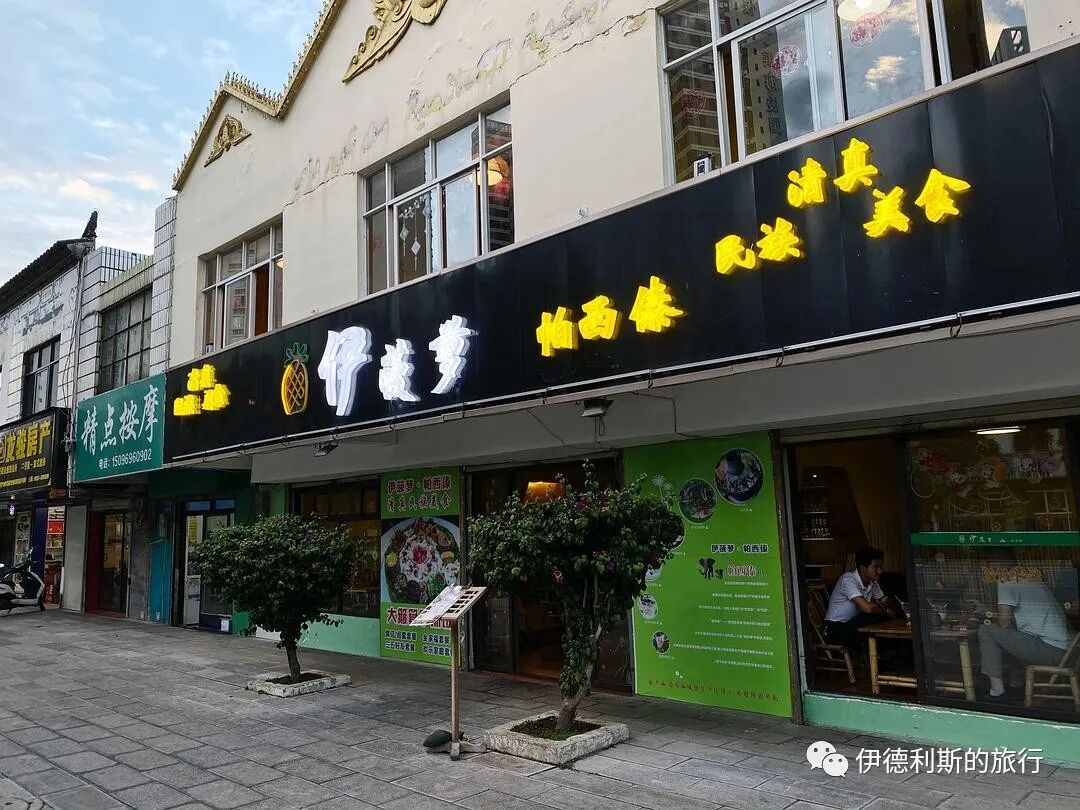
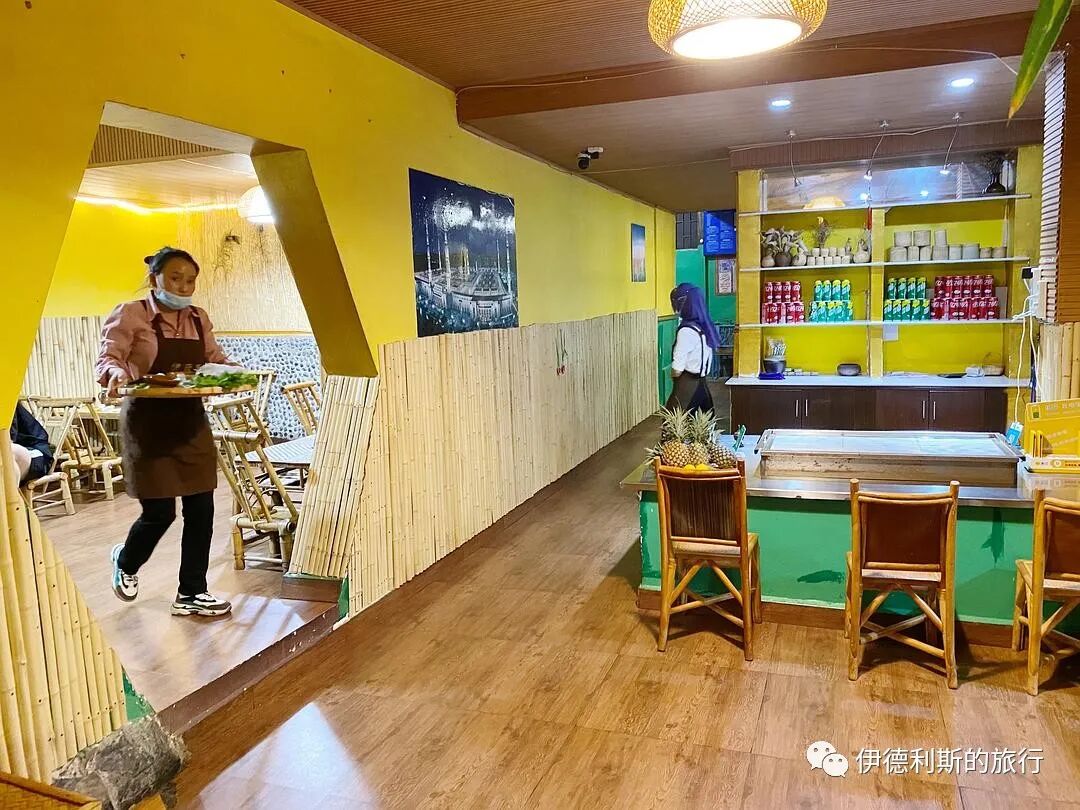
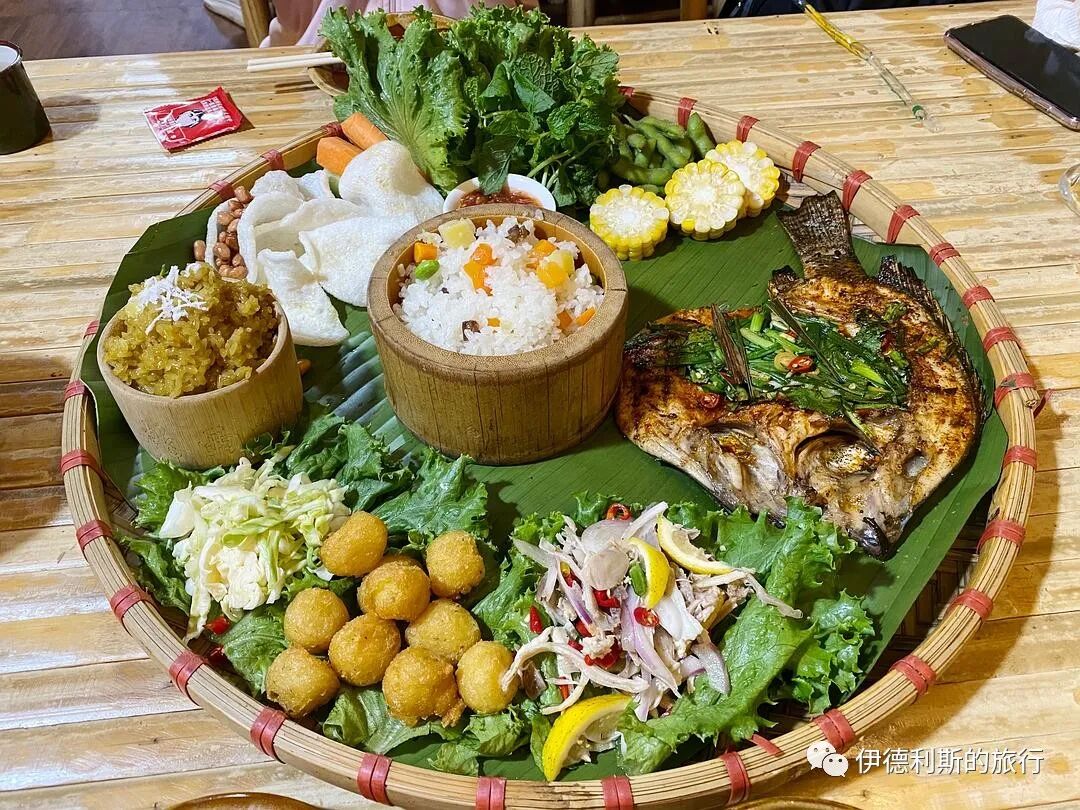
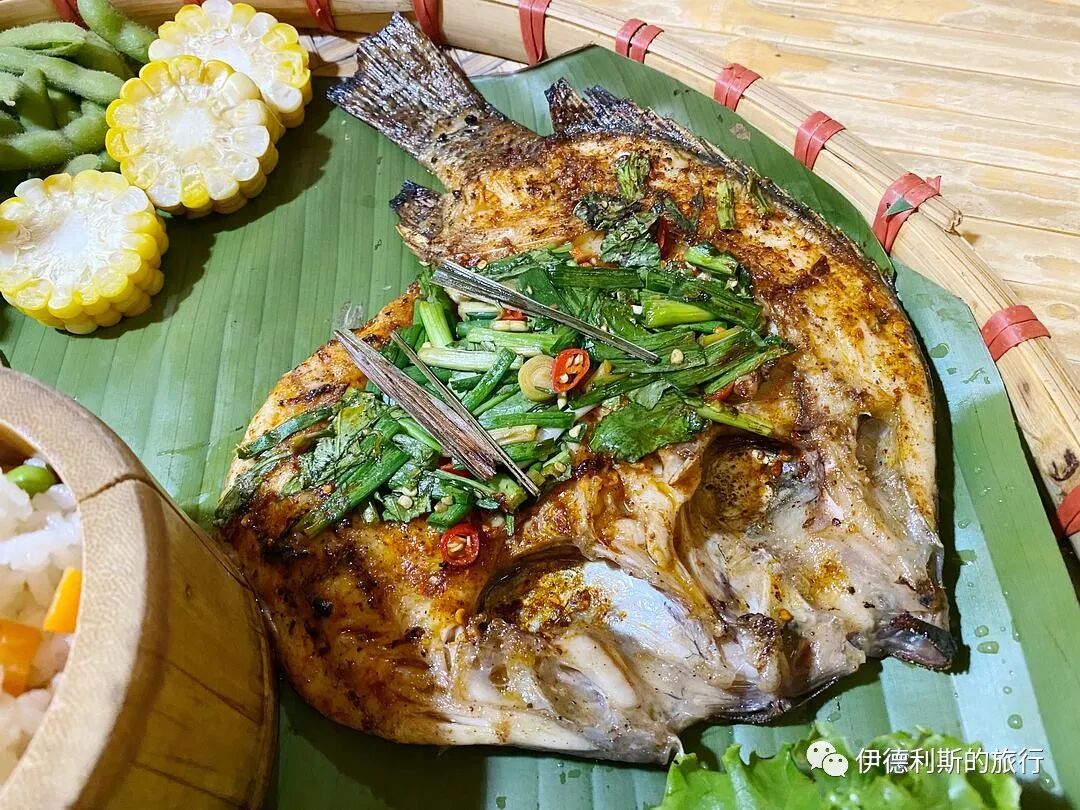
On the afternoon of August 3, we took a train from Kunming to Dali. In the evening, we ate at a Dai Muslim restaurant called Paxidai in Xiaguan. We ordered the Dai-style shouzhua fan (hand-grabbed rice), which included lemongrass grilled fish, potato balls, vegetable nammi (a type of spicy dipping sauce), pineapple rice, beef jerky potato rice, and shredded chicken with lemon. There was also qinglong guojiang tang (a type of soup) and paoluda (a dessert made with bread, coconut milk, and sago). I had eaten at a halal Dai restaurant called Paxidai in the Dali Ancient City before. This was the second time eating it, and I feel that Dai flavors are really both spicy and sour!
August 4: Xiaguan Hui Muslim Street
In the morning, we went hiking in Erhai Park, which is behind our accommodation in Xiaguan, Dali.
The Xiaguan Hui Muslim Street in Dali is now quite quiet, and basically only locals know about it.
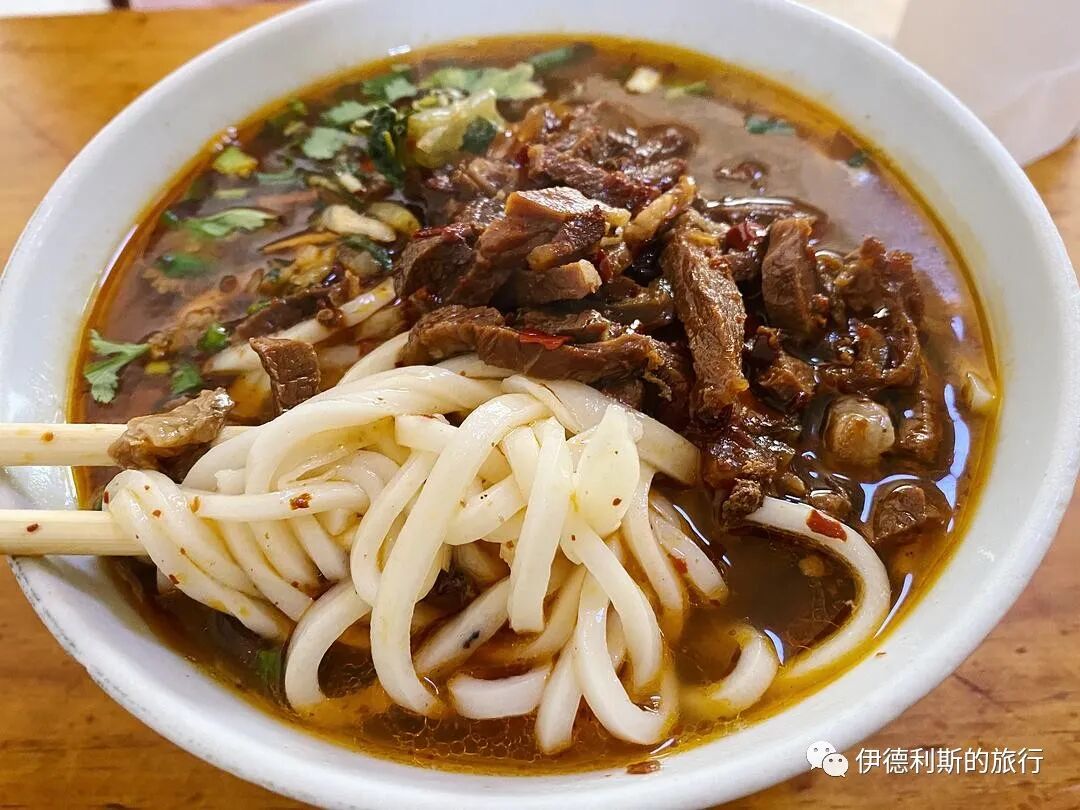
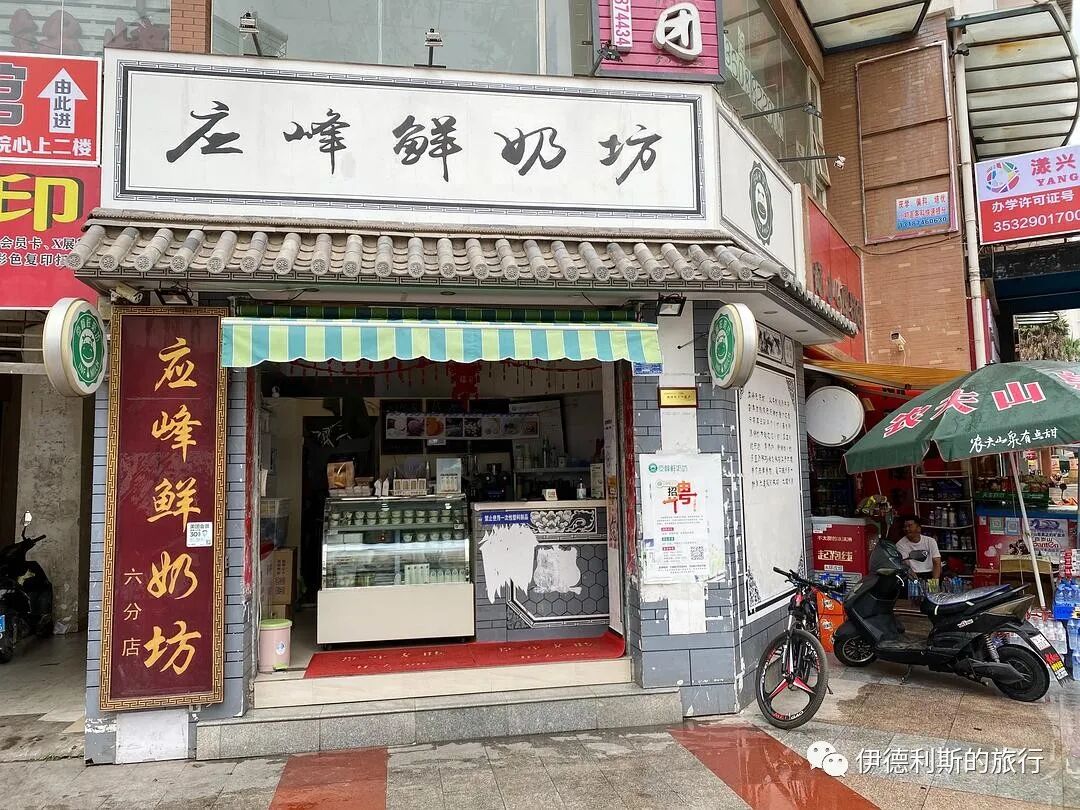
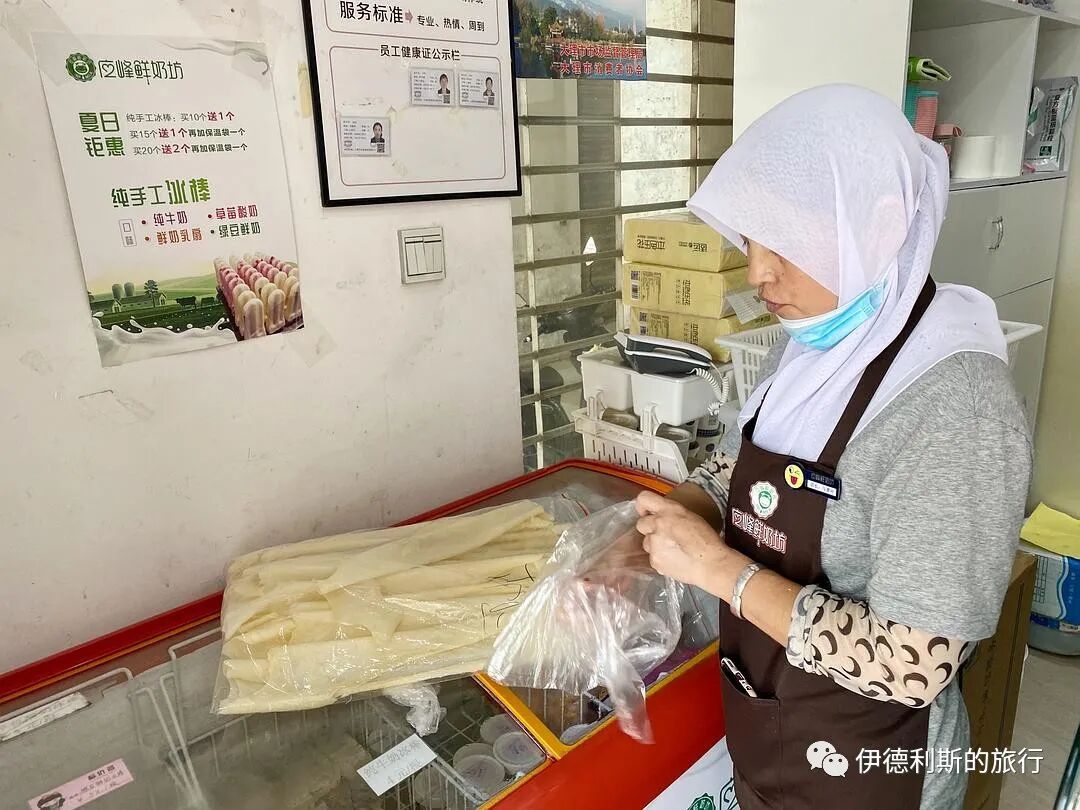
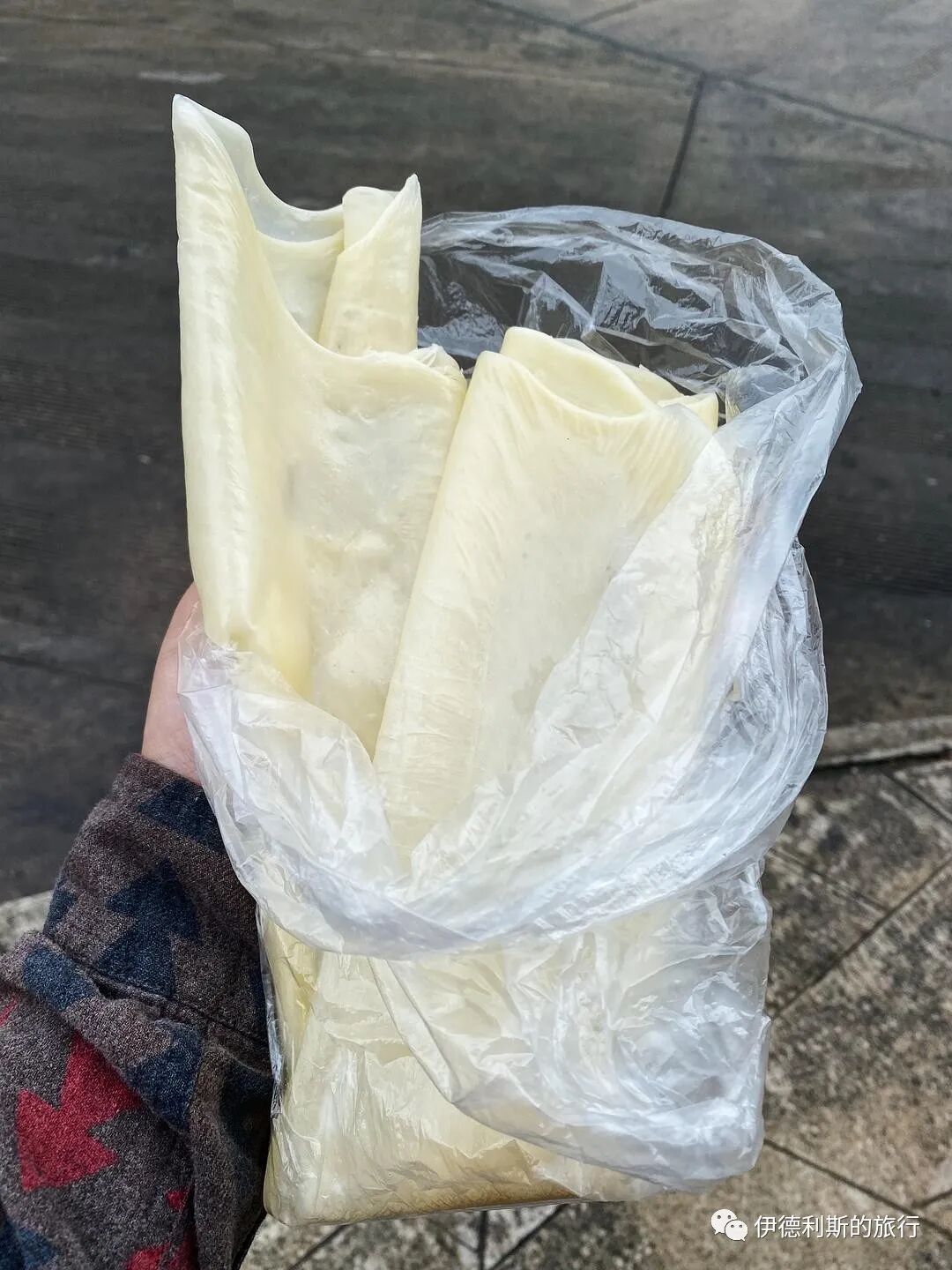
We ate braised meat rice noodles, braised meat ersi (thick rice noodles), and rushan (grilled milk cheese) on the Hui Muslim Street.
Opposite the Hui Muslim Street is the Longweiguan Ancient Town.
Dianzhong Huiying
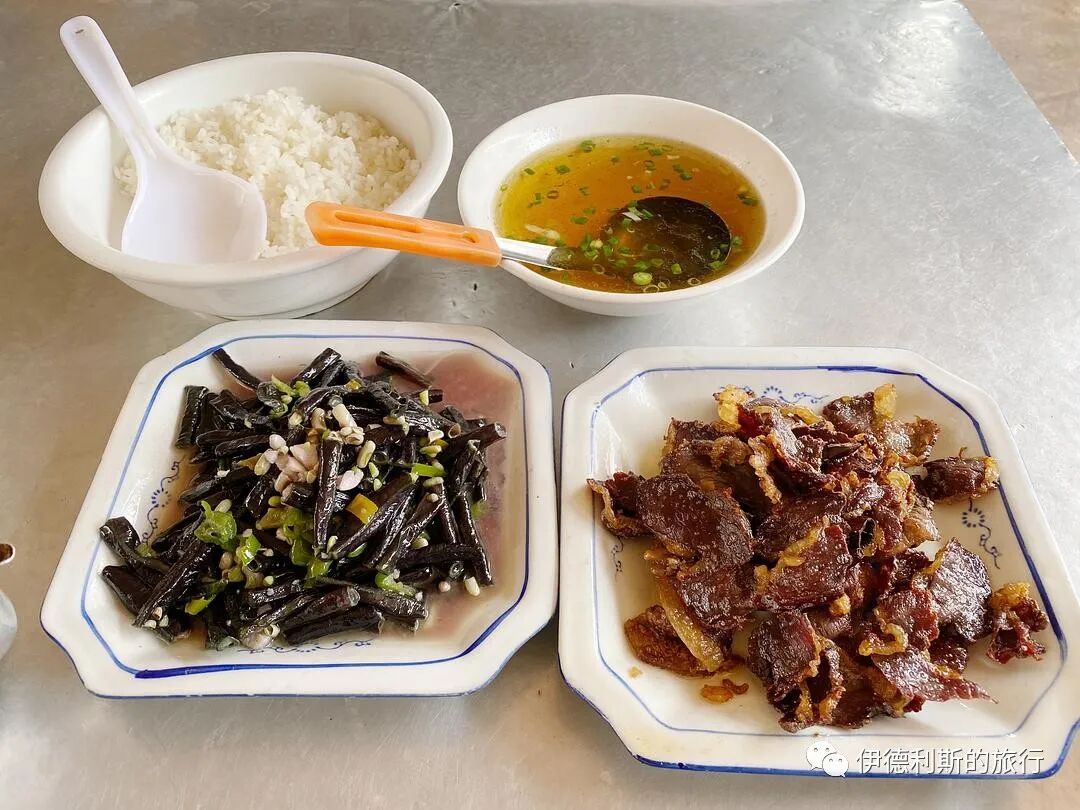
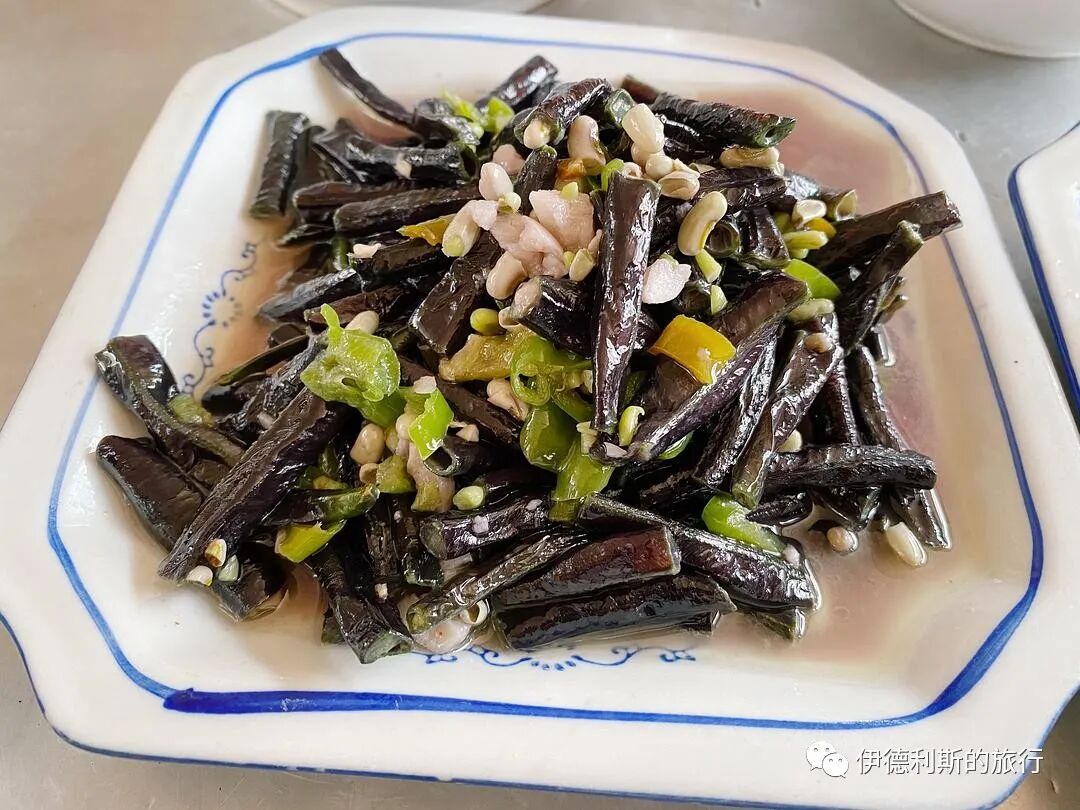
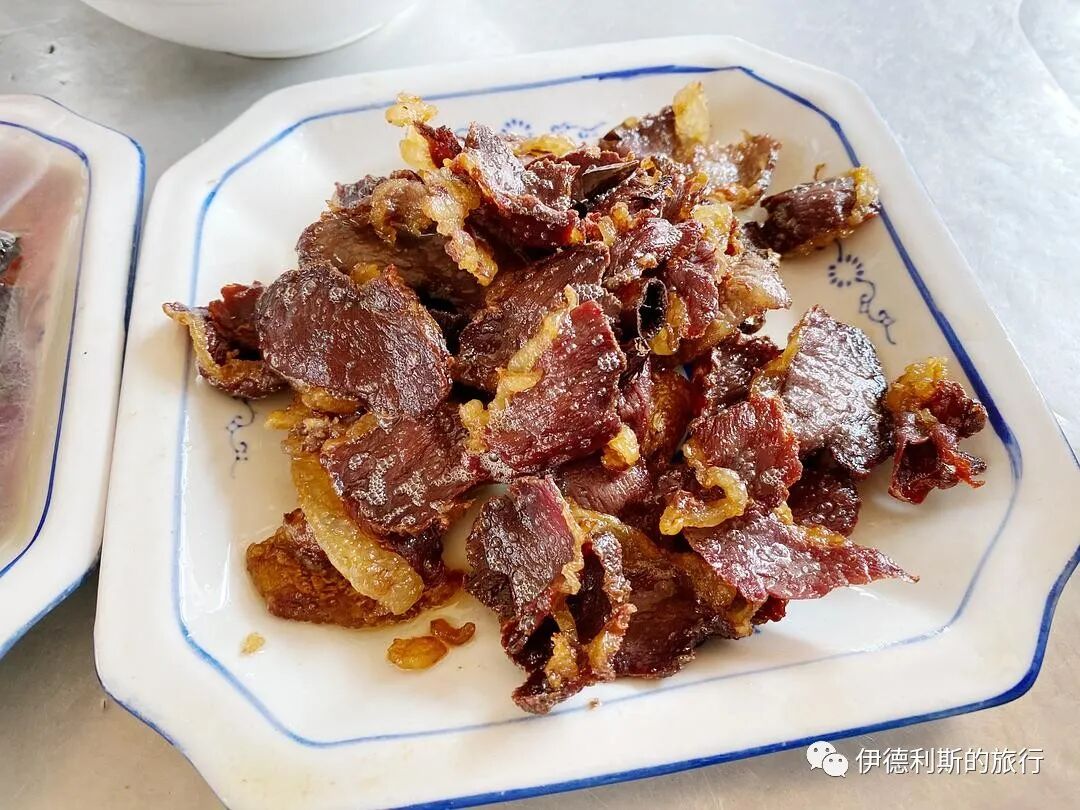
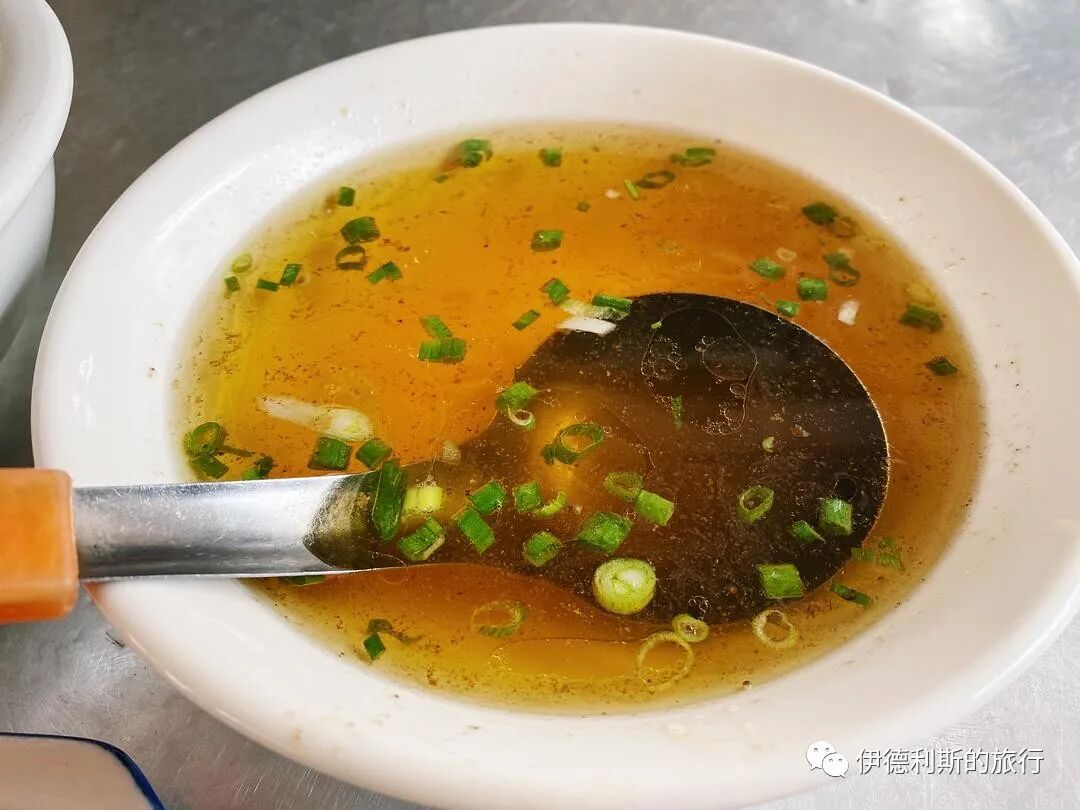
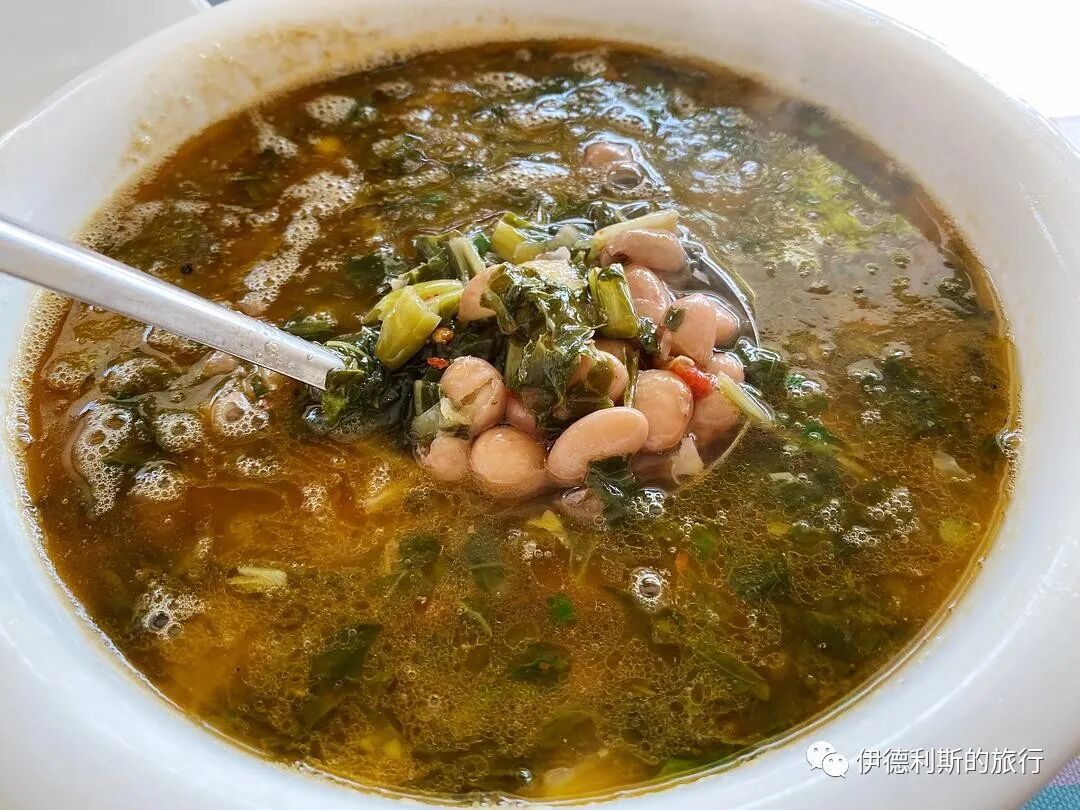
At noon, we went from Weishan County town to Dianzhong Huiying. We ate fried ganba (cured beef jerky) and stir-fried cowpeas (pronounced gandou) in the village. Their beef soup was so delicious!
Shenhe Village
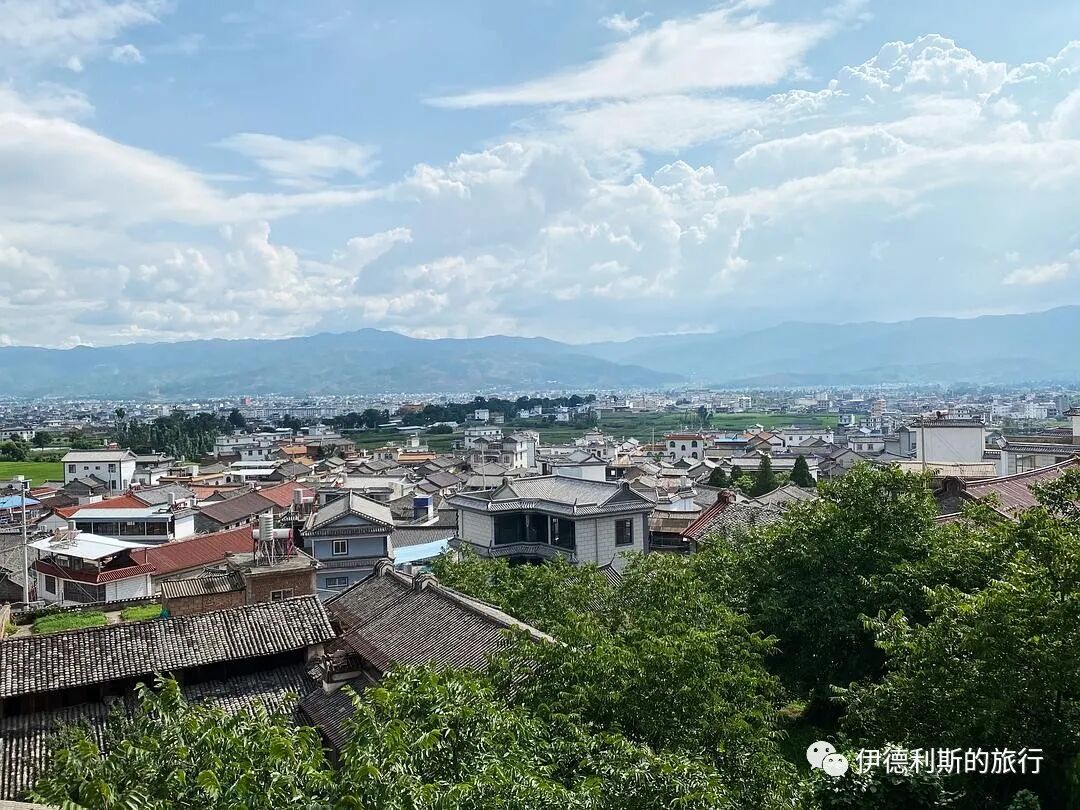
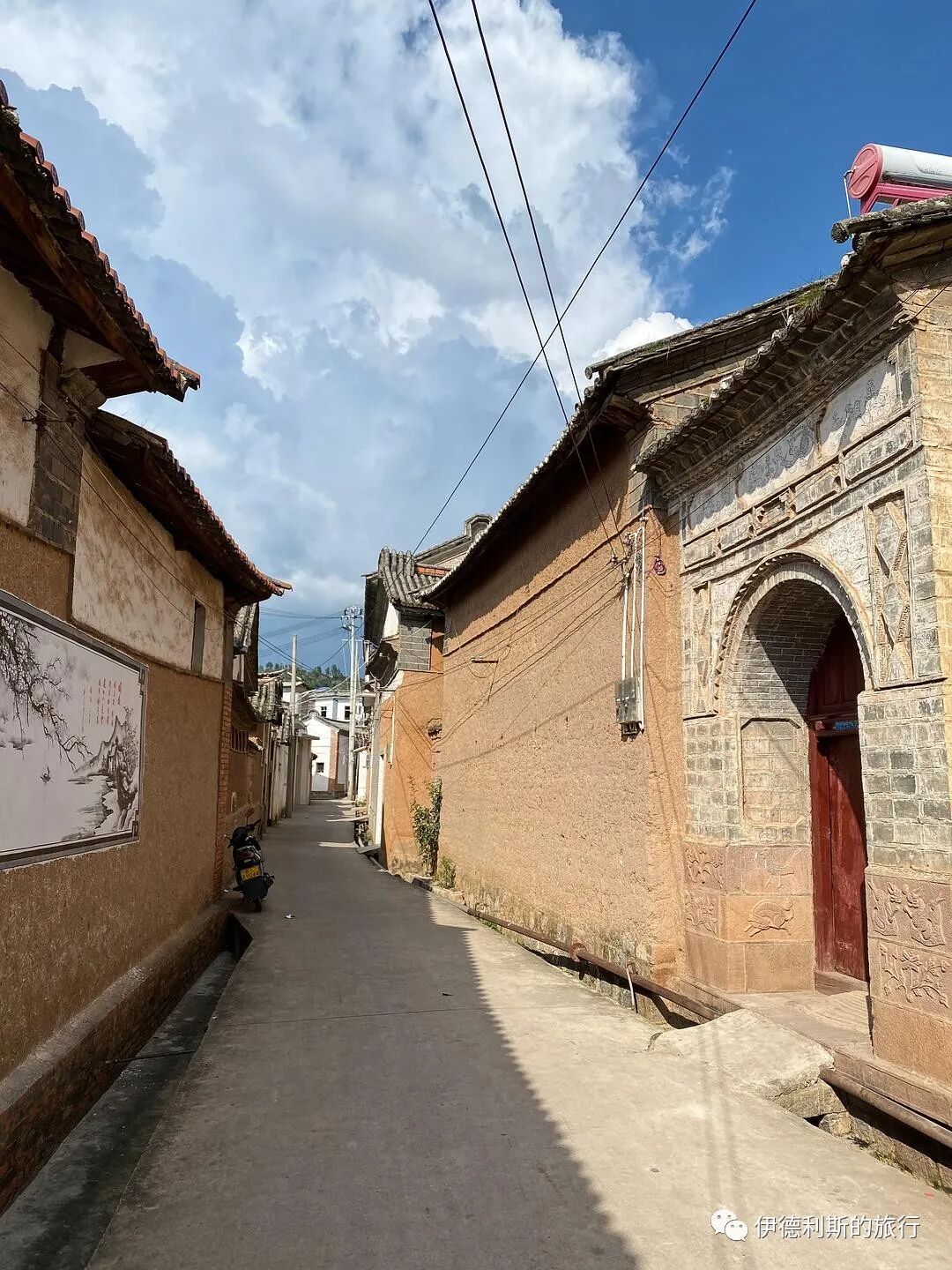
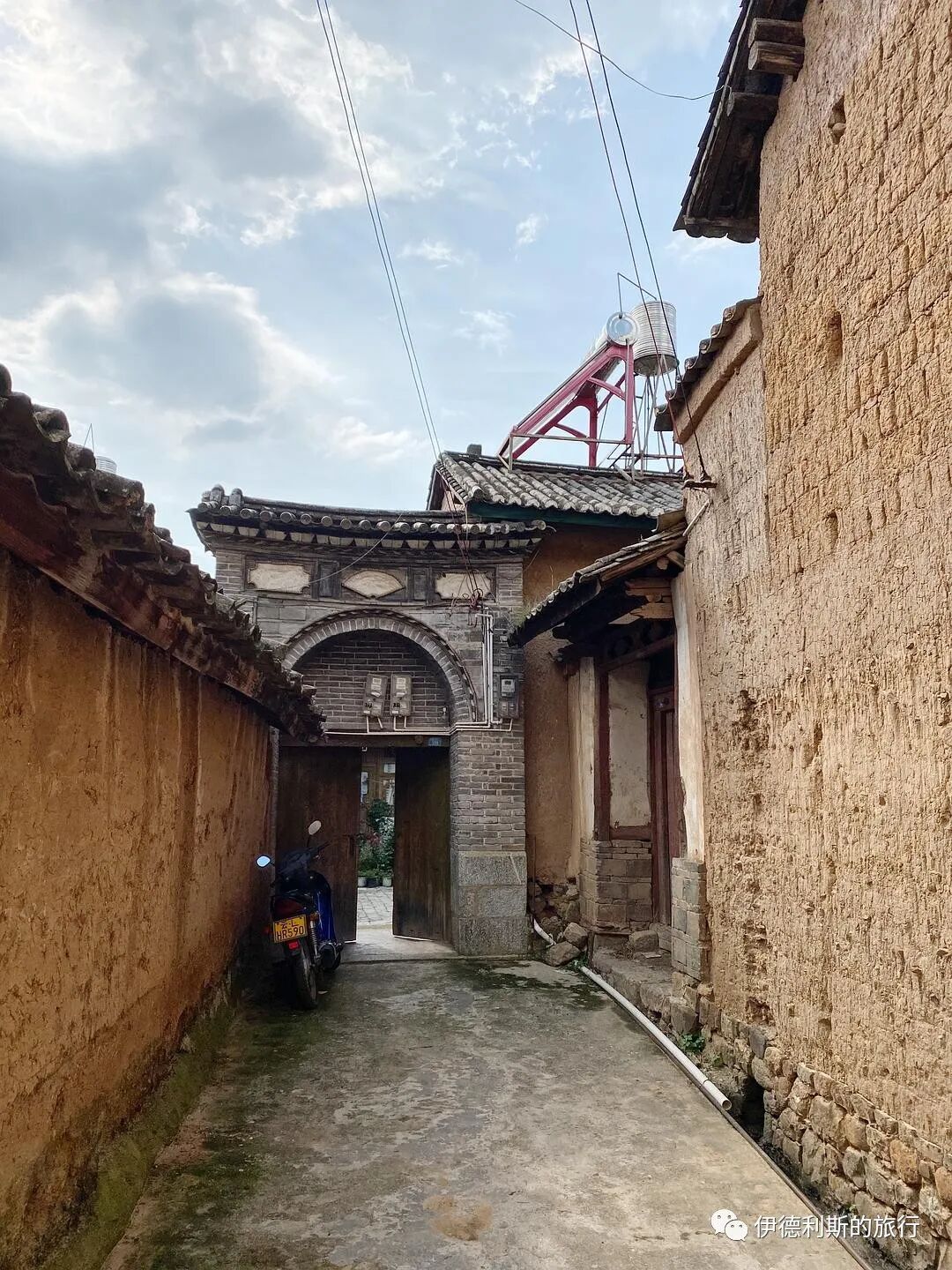
After eating, we arrived at another Hui Muslim village, Shenhe Village, from Dianzhong Huiying. The scene in the village is like this.
Mamichang
We continued to visit Hui Muslim villages, strolling from Shenhe Village to Mamichang. The village is on a small hillside, and you can overlook the surrounding scenery.
Return to Yongjian Town
Returning to Yongjian Town from Mamichang, we ate corn baba (corn cakes) and douhua (soft tofu pudding) on Hedijie Street, the busiest street in the town. Hedijie Street has changed a lot since I went in 2017; there are fewer and fewer old houses, and the scripture bookstore is gone.
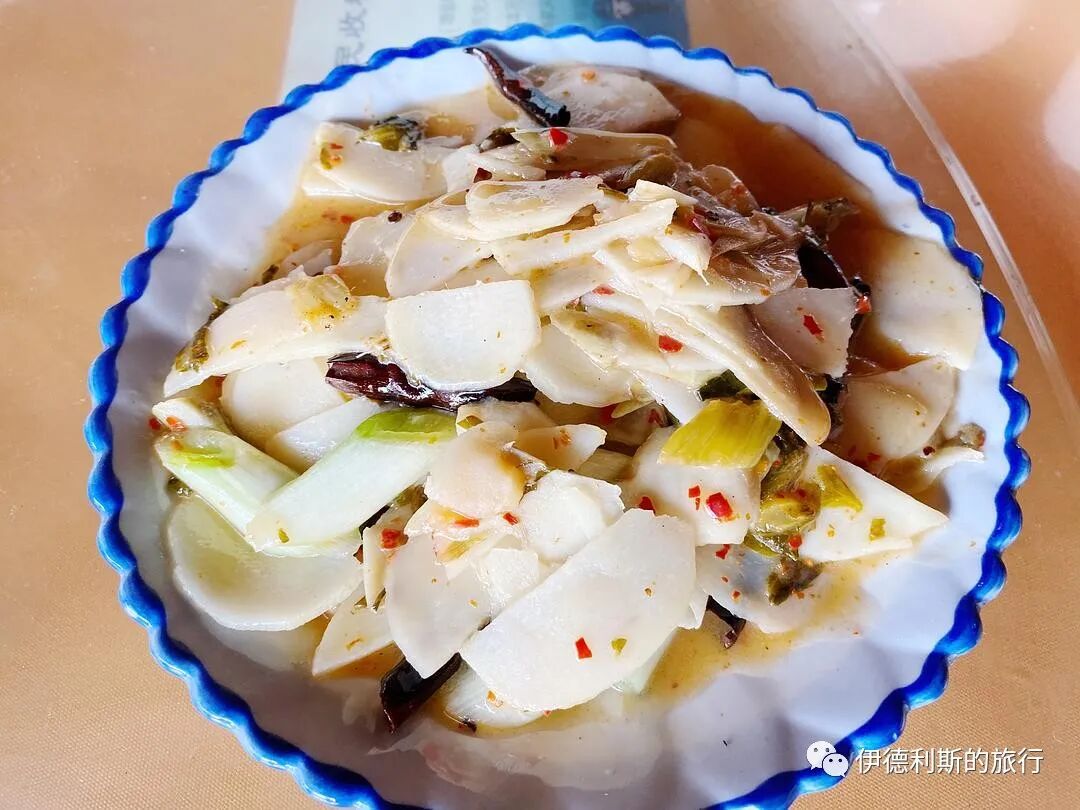
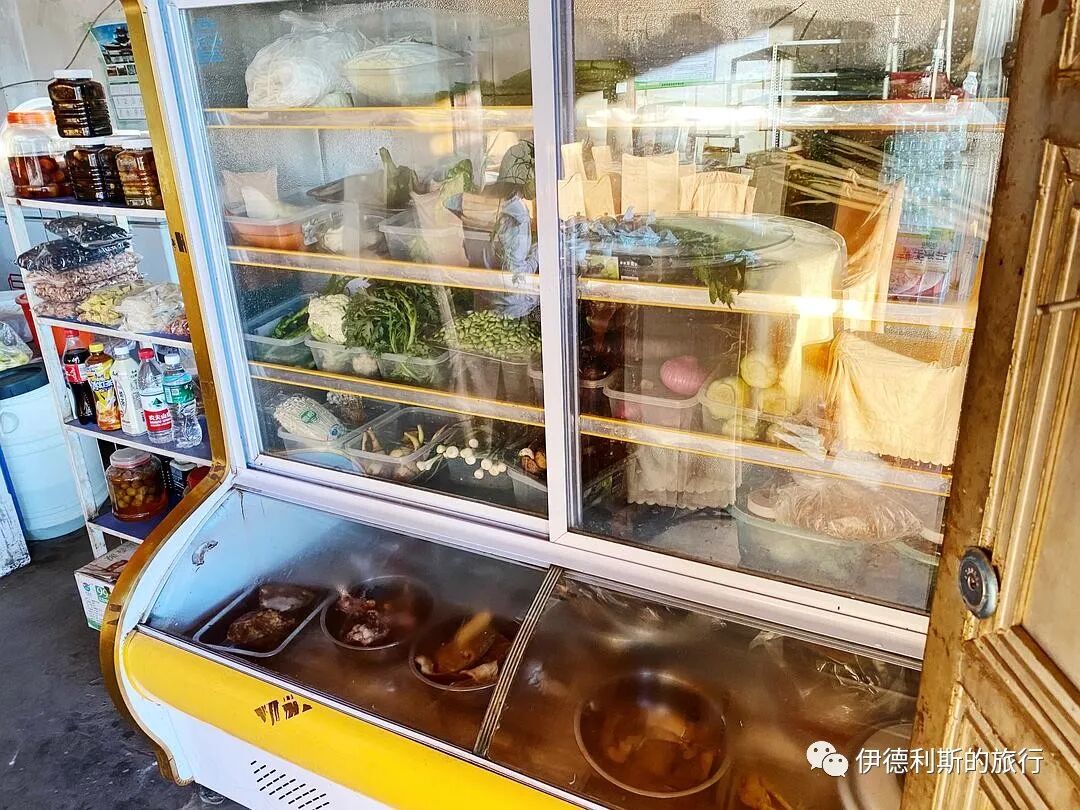
In the evening, we ate stir-fried cigu (arrowhead) with pickled vegetables and braised beef on the side of the road on Hedijie Street in Yongjian Town. The auntie who owns the place is from Xiaoweigeng Village. Restaurants that make stir-fry here generally do not have menus, but put all the ingredients in a freezer, and the guests point to whichever one they want, and they make it.
August 5: Market day in Yongjian Town
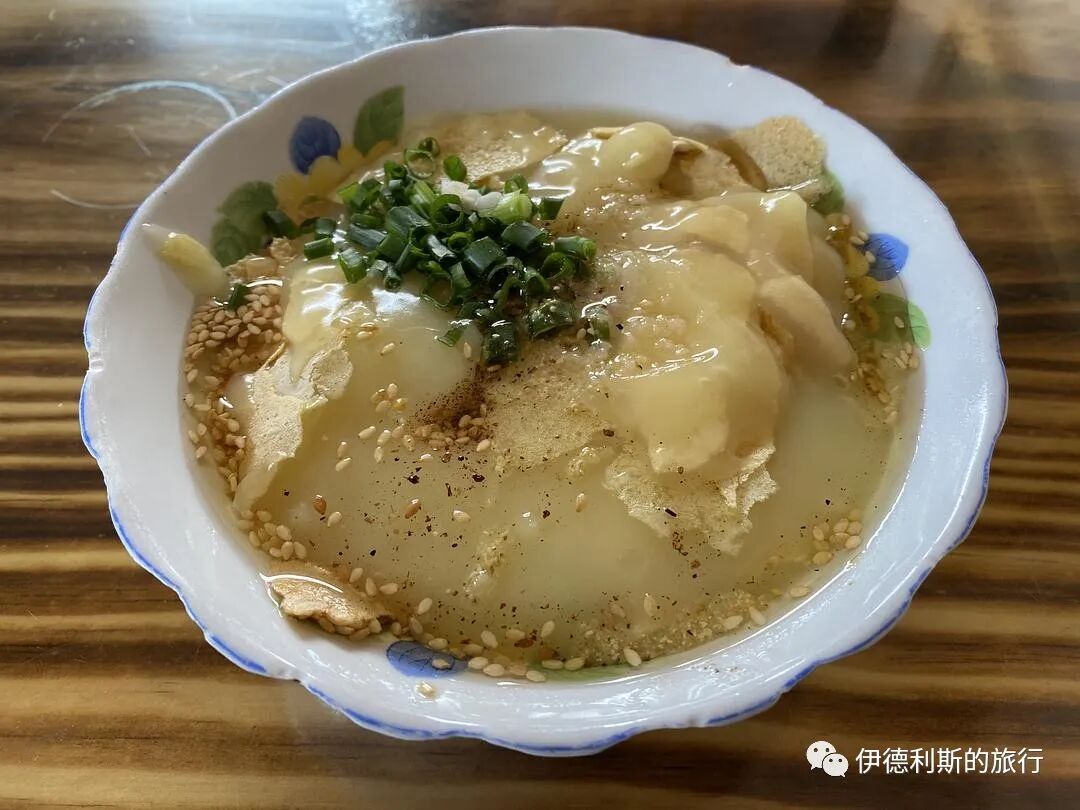
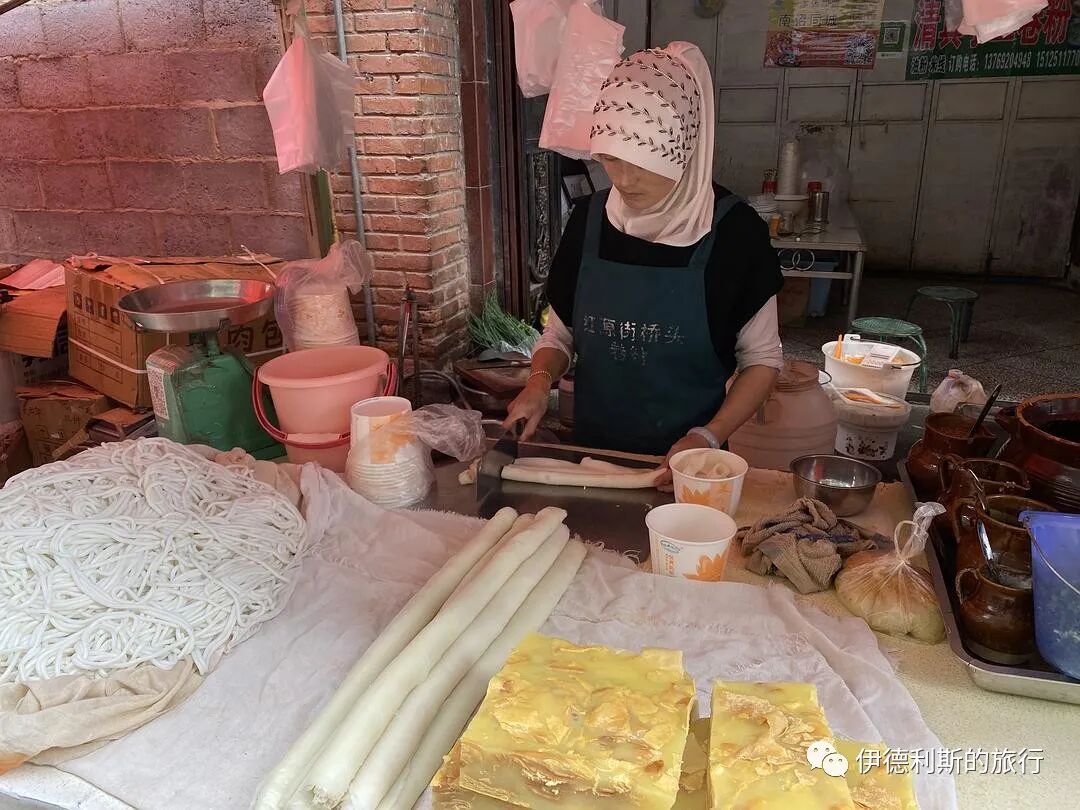
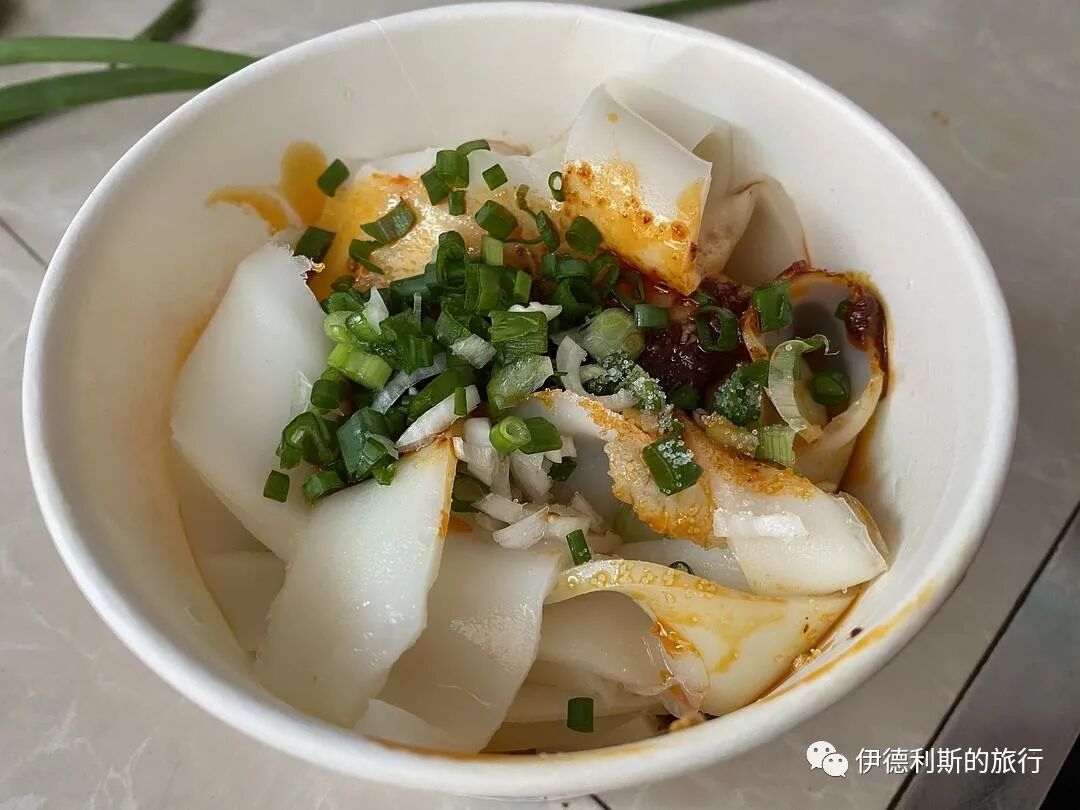
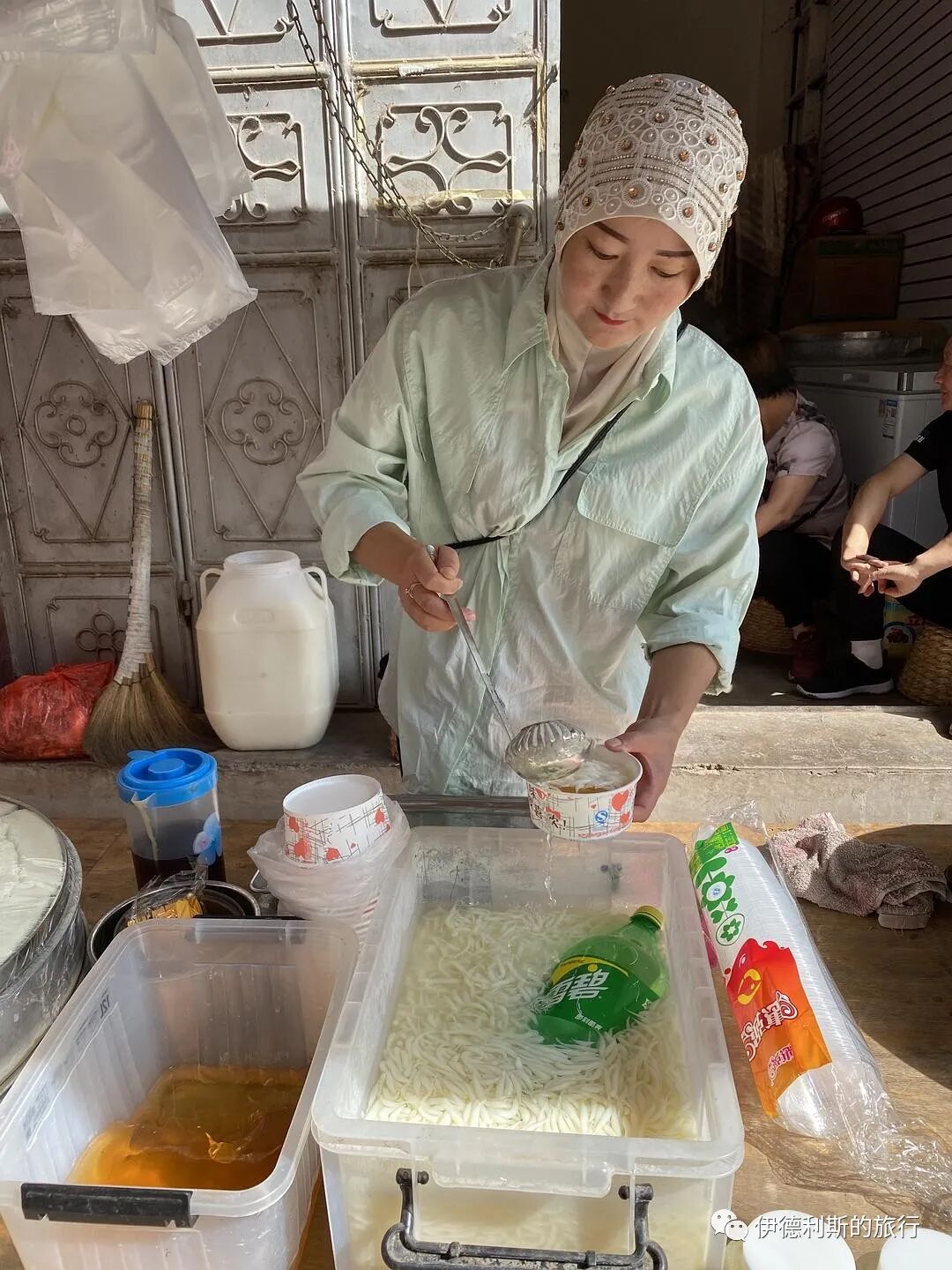
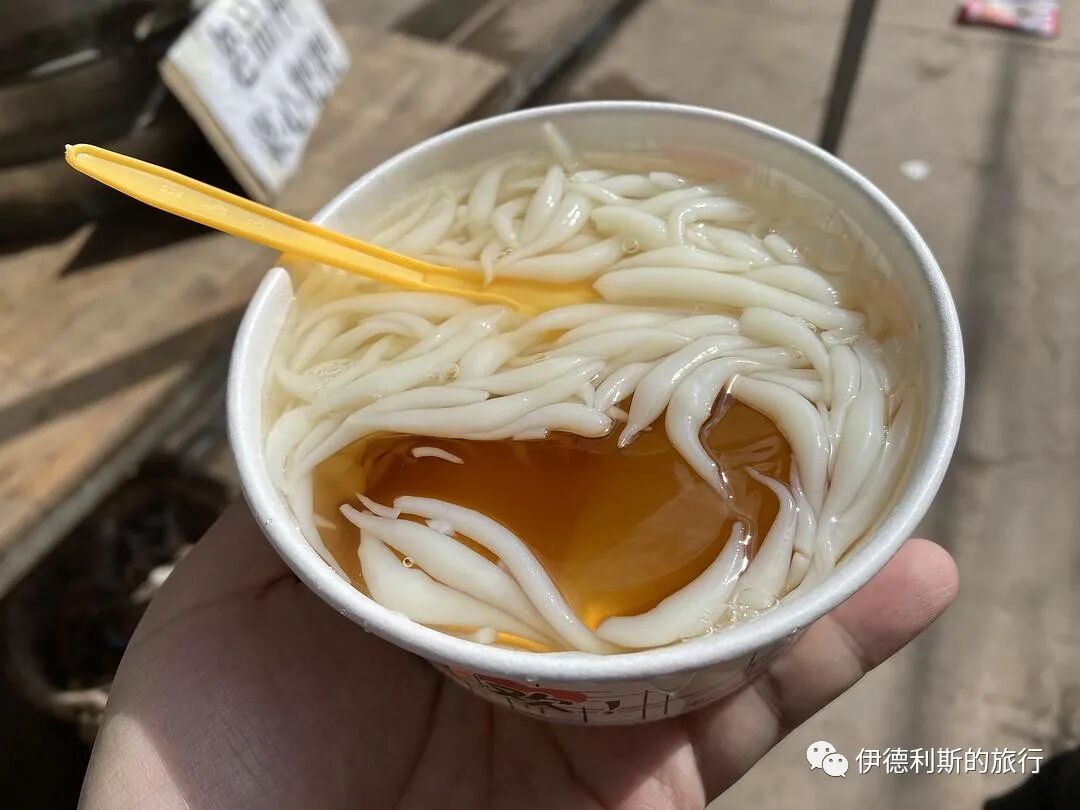
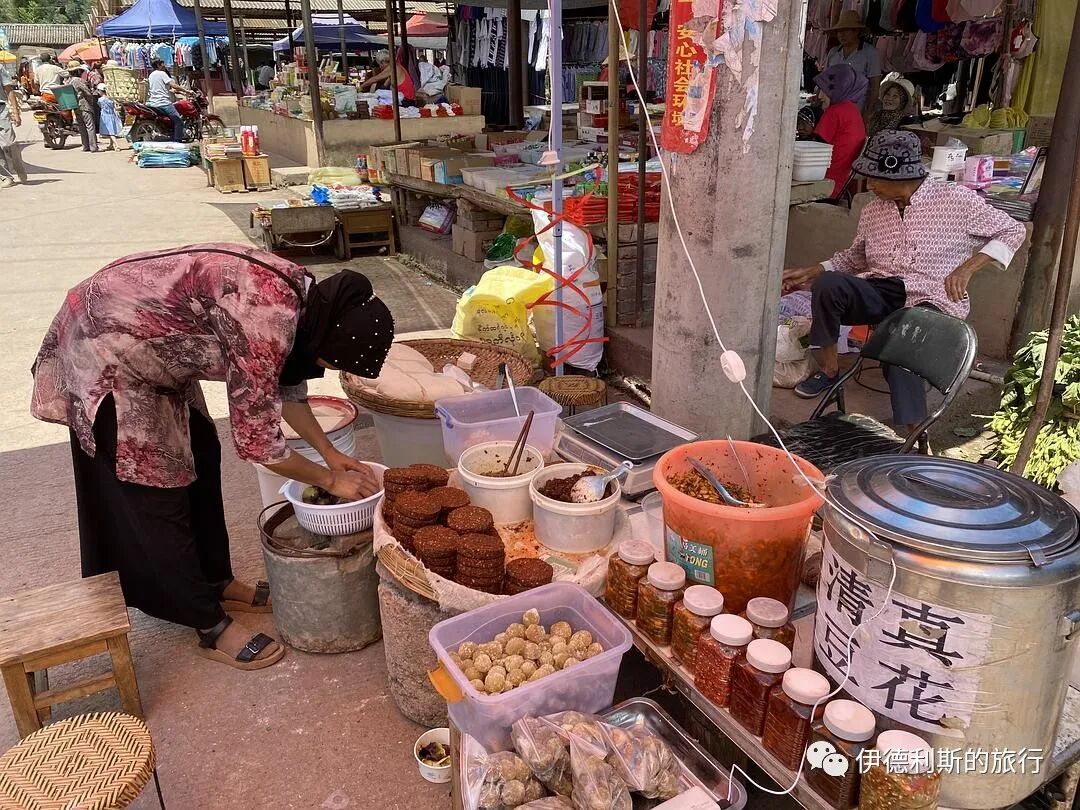
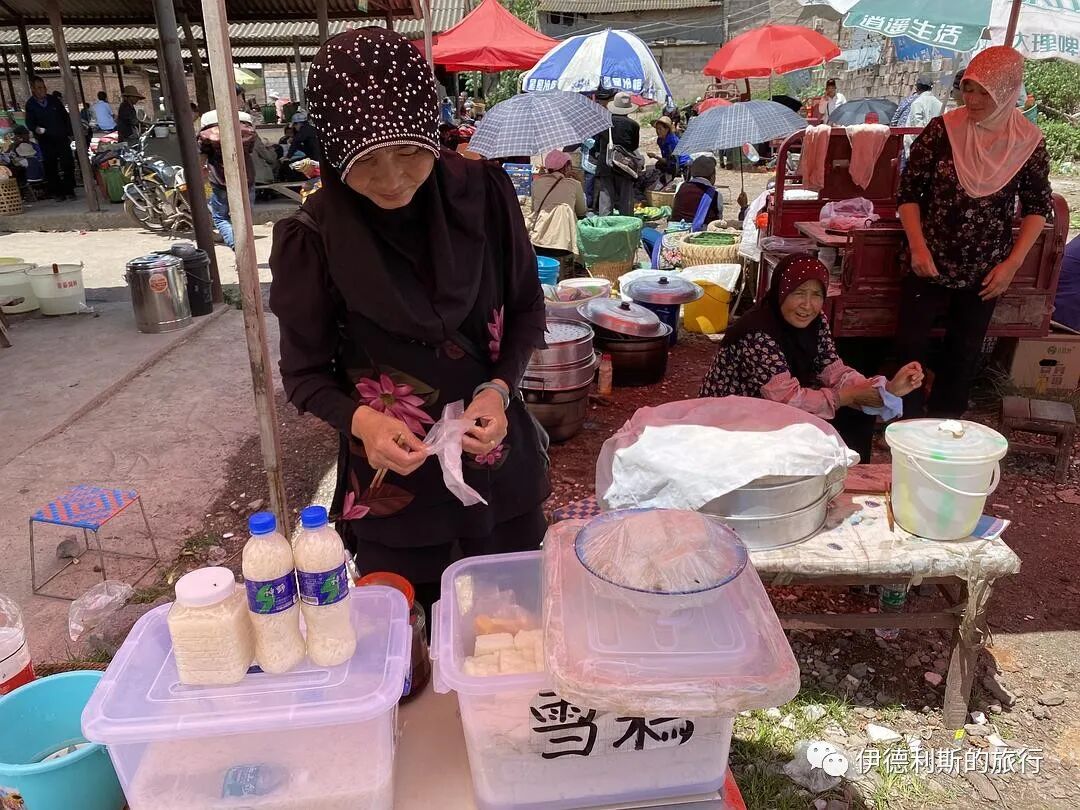
In the morning, we caught a very lively market in Yongjian Town. We ate hot youfen (pea starch jelly), juanfen (rolled rice noodles), qiaogao (buckwheat cake), and brown sugar liangxia (cold shrimp-shaped jelly), and also bought rose-flavored rushan. The youfen is really delicious. It is made by peeling peas and grinding them in a stone mill. The texture is soft and smooth, and it has crispy rice crust inside.
Yi and Hui Muslim aunties are together at the market.
Market day in Huihuideng
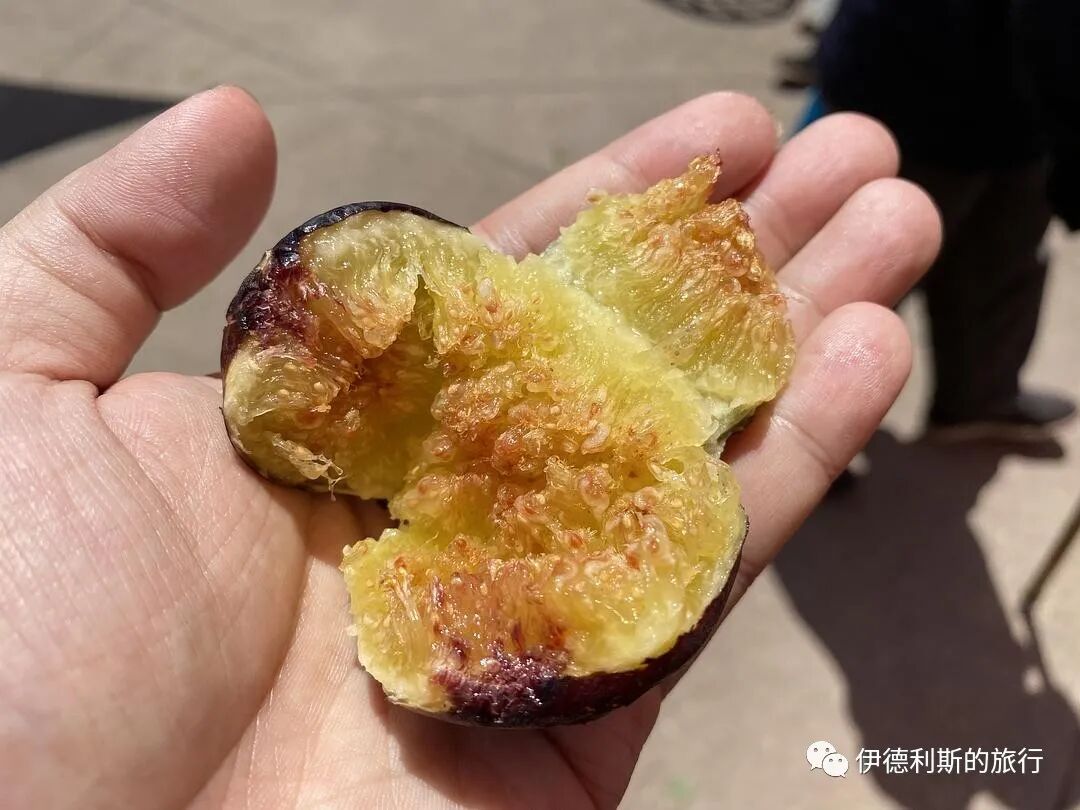
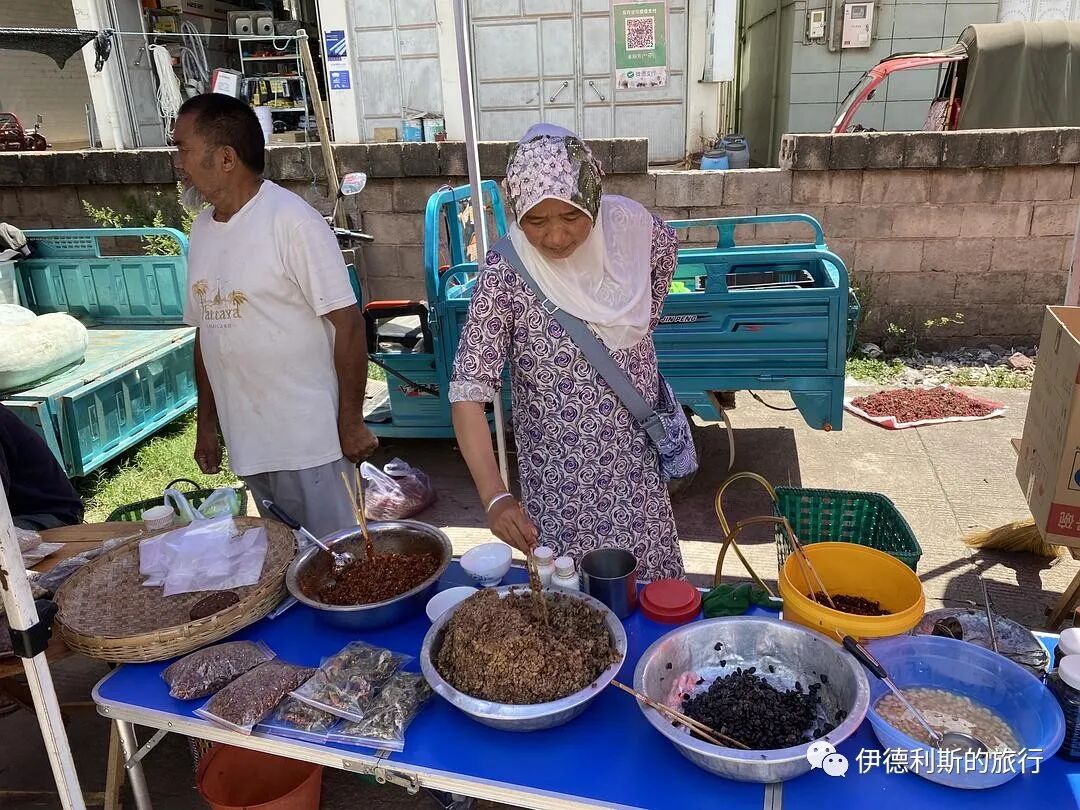
We set off from Yongjian Town to Huihuideng Village and caught another big market. We ate figs, ice cream, and soy milk. There are too many fun things here. Besides Hui Muslims, there are also many Yi aunties and grandmothers wearing traditional clothing. The Yi clothing is very beautiful.
Natto
The scenery of Huihuideng Village
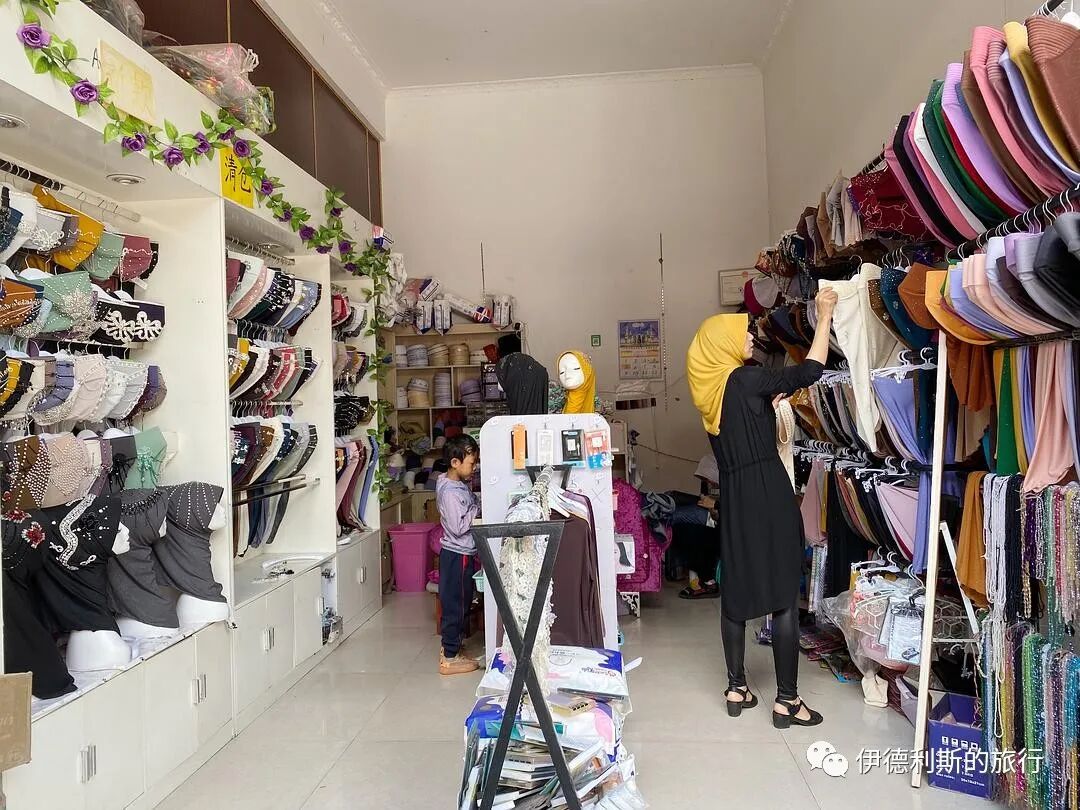
A small shop in Huihuideng Village that makes handmade headscarves. Zainabu bought one here.
Qingmenkou Village
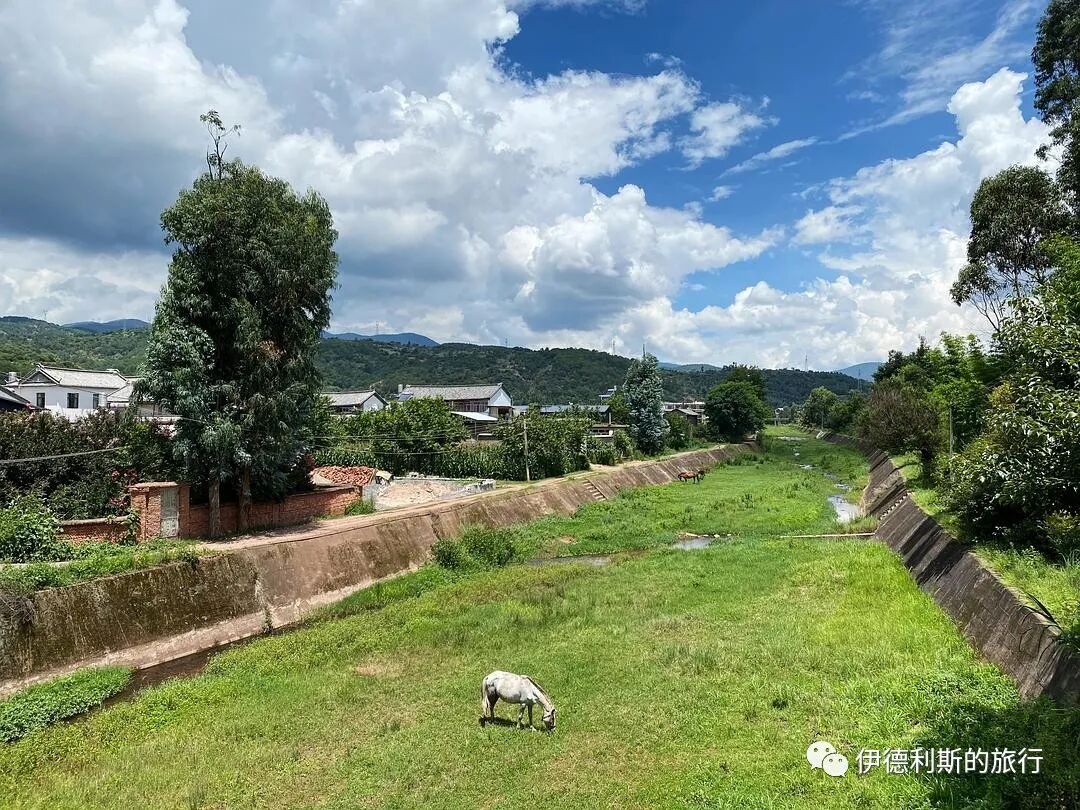
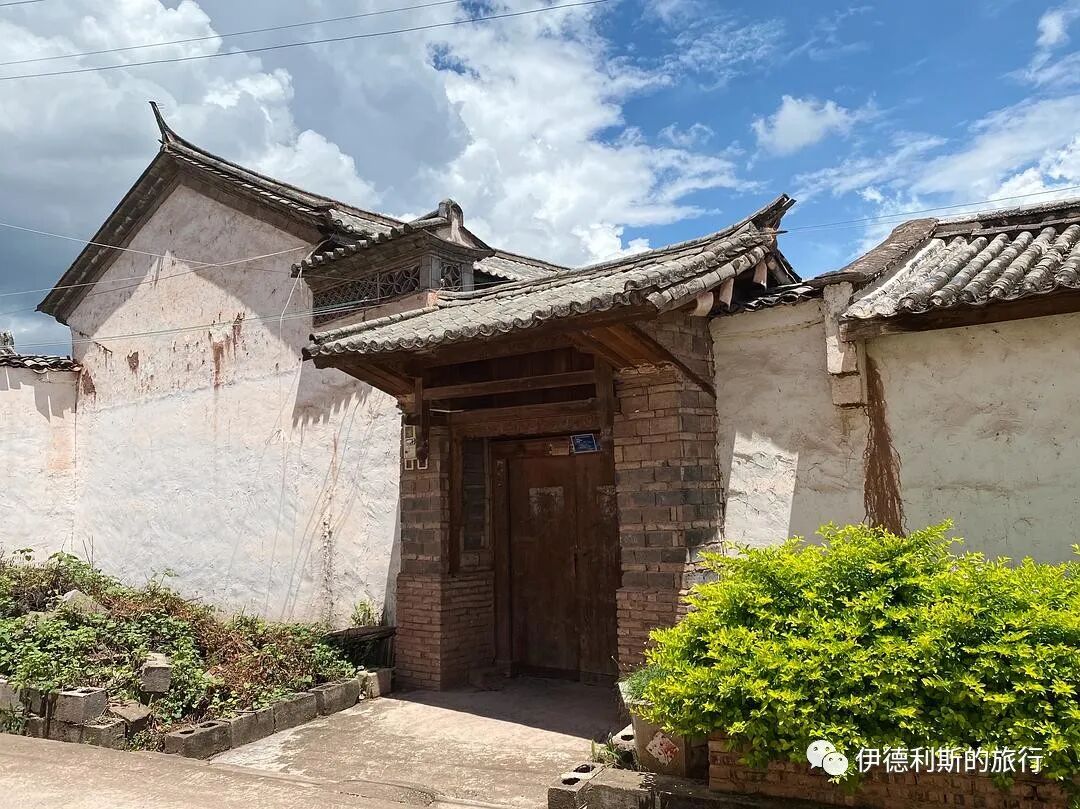
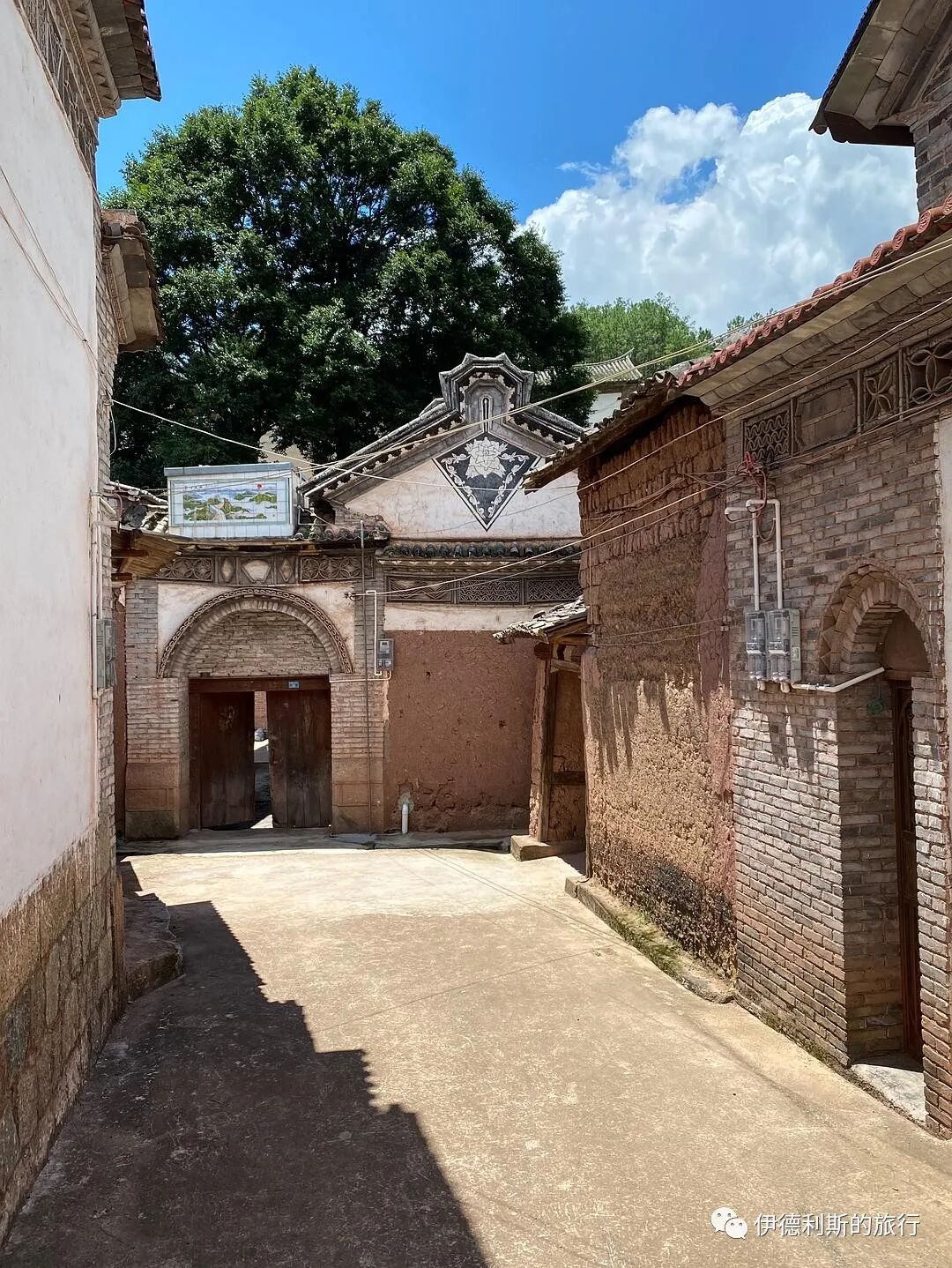
We strolled from Huihuideng Village to Qingmenkou Village. Qingmenkou is on the northwestern edge of the Weishan Basin and is a very beautiful Hui Muslim village.
On the way back to Huihuideng Village from another village, Xishulong Village, we walked for a while and then caught a tricycle.
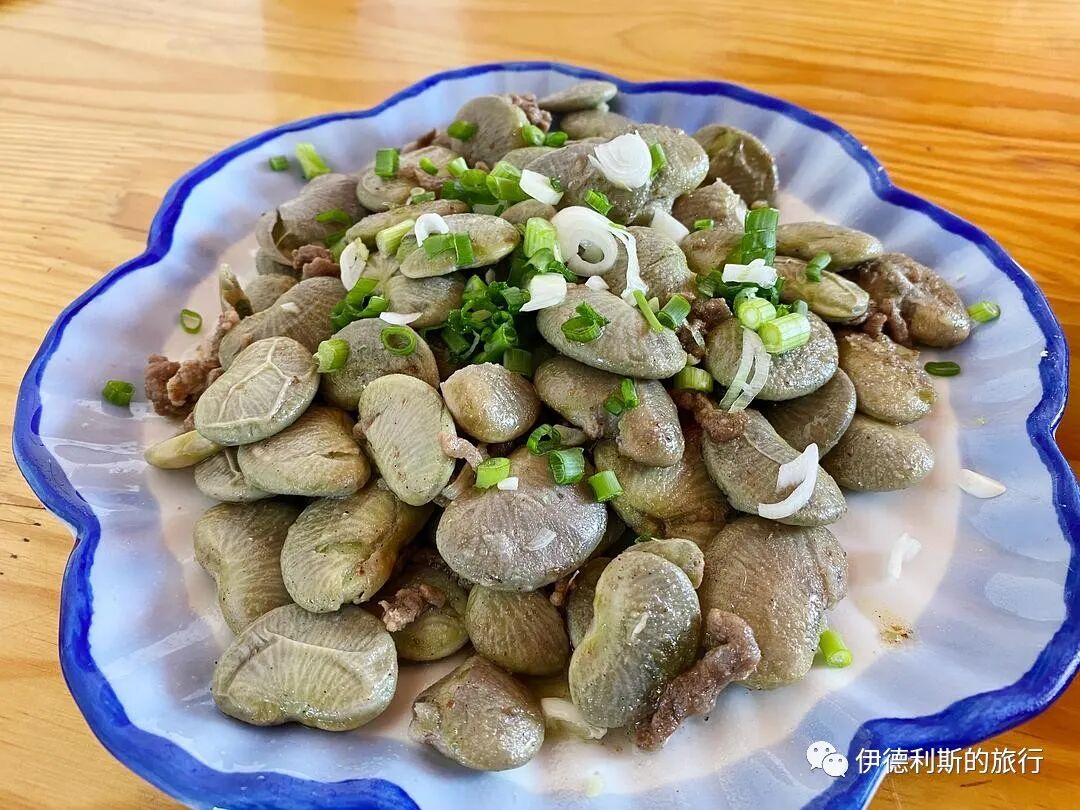
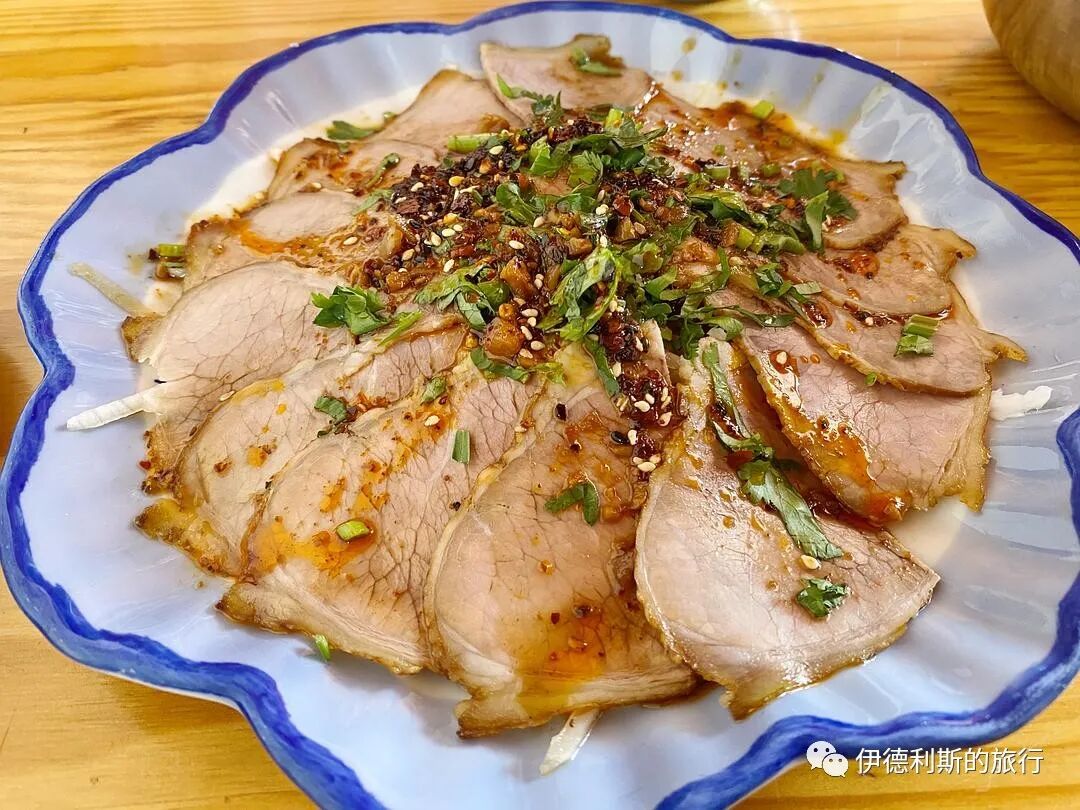
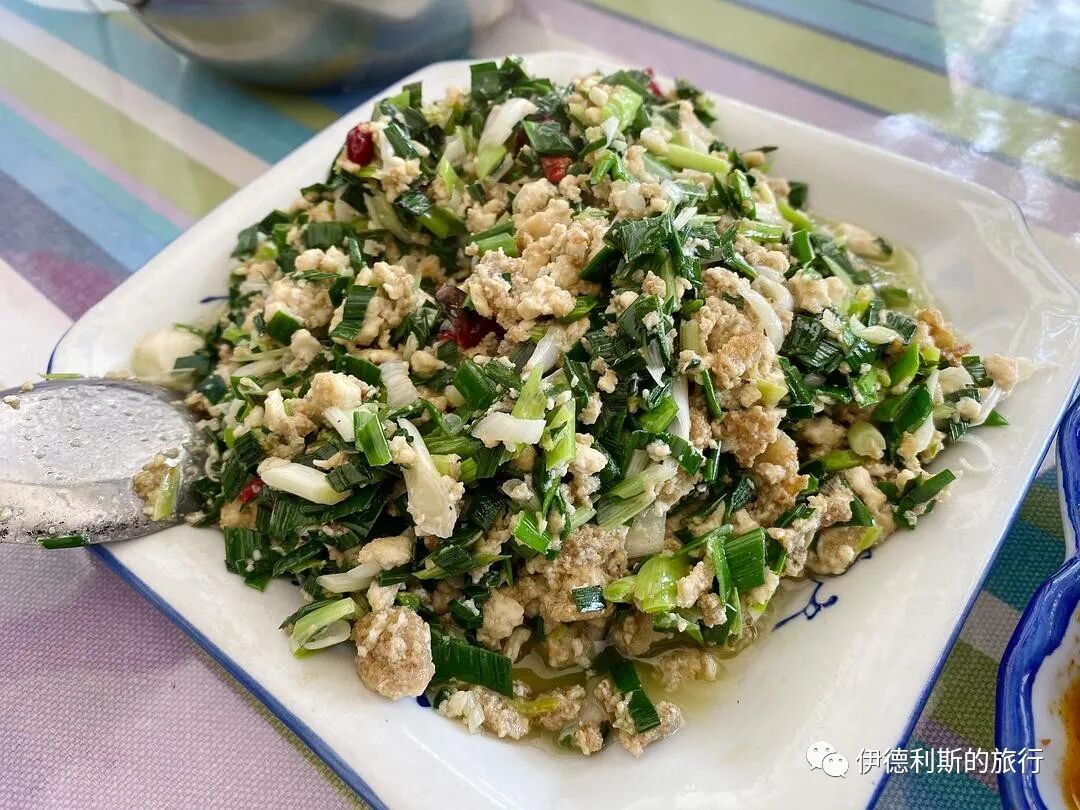
At noon, we ate stir-fried dayudou (a type of bean) with minced meat and cold beef slices next to the market in Huihui Village.
Return to Weishan County town
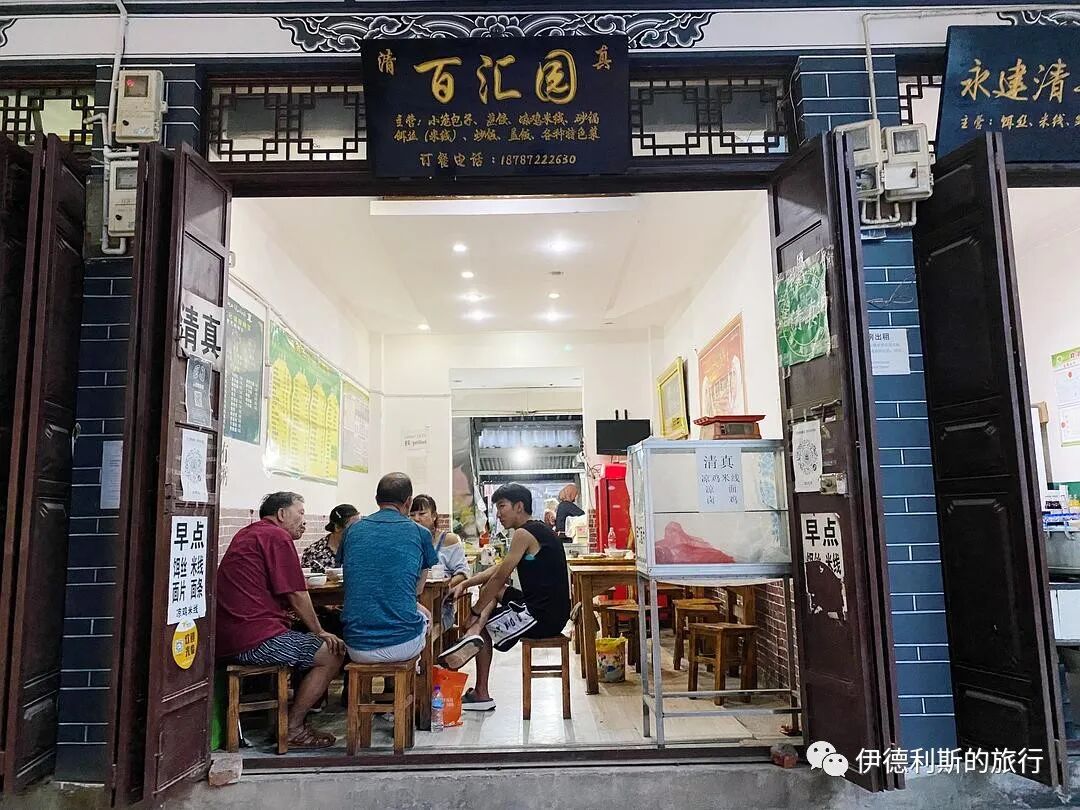
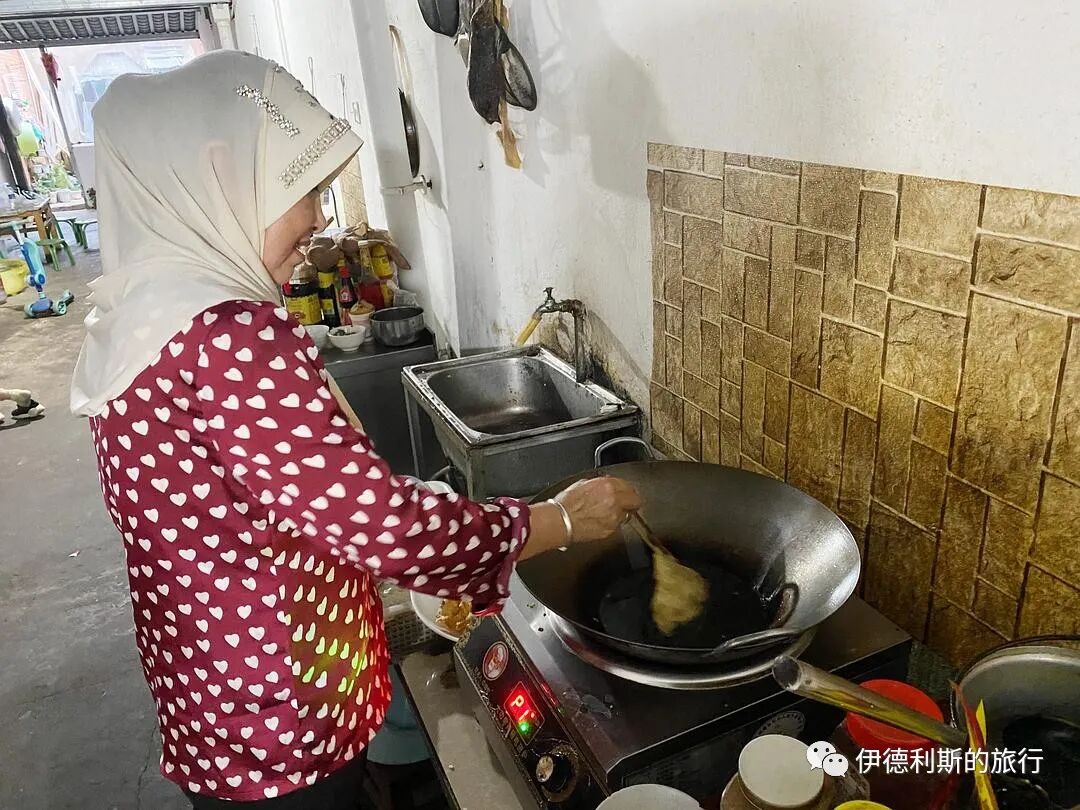
In the evening, we ate braised chicken legs, bahu (stewed) beef, and stir-fried xiaomicai (a type of green vegetable) near the Dingjiachang Mosque in Weishan County town. We also asked the auntie in the shop to fry the rose-flavored rushan we bought at the market on Hedijie Street in Yongjian Town that morning. I must say that frying rushan really requires skill; the requirements for heat control are too high. Then we also ordered bahu beef, braised chicken legs, and xiaomicai.
August 6: Weishan County town
In the morning, we ate braised ersi and beef offal at the Dingliang Hui Muslim Canteen near the Dingjiachang Mosque in Weishan County town. Their place is the halal breakfast spot with the longest queue near Dingjiachang. Everyone basically eats the two most classic dishes: braised ersi and rice noodles. In addition, the owner is a Hajj, and "Returned with Honor from Hajj" is hung on the wall.
(Optional) Image description
Delete
Return to Xiaguan
At noon, we transferred from Weishan back to Kunming. Passing through Xiaguan, we ate at a restaurant opened by a Hui Muslim from Yongping. Yongping is a county west of Dali. We ate the Yongping specialty, yellow-braised papaya chicken, which is sour and made with papaya juice. We also ate stir-fried fermented bean curd with garlic sprouts and pickled vegetable red bean soup. This red bean is not the kind of red bean we usually call. view all
Summary: This travel note introduces Dali Halal Travel Guide: Xiaguan, Weishan, Mosques and Muslim Food. On August 3, 2020, we arrived in Kunming by plane, then transferred to a train to reach Xiaguan in Dali, officially starting our Yunnan trip. It is useful for readers interested in Dali Travel, Halal Food, Yunnan Muslims.
On August 3, 2020, we arrived in Kunming by plane, then transferred to a train to reach Xiaguan in Dali, officially starting our Yunnan trip. I had visited Dali once in 2017, going to some Hui Muslim villages in Weishan and Eryuan, which left a very good impression on me. This time, I mainly visited over a dozen Hui Muslim villages in Yongjian Town, Weishan County, visited over a dozen beautiful traditional mosques (see "Twenty Traditional Mosques in Dali"), also browsed the halal markets, and ate a lot of delicious food. I will share it with everyone below.
August 3: Arrive in Xiaguan
On the afternoon of August 3, we took a train from Kunming to Dali. In the evening, we ate at a Dai Muslim restaurant called Paxidai in Xiaguan. We ordered the Dai-style shouzhua fan (hand-grabbed rice), which included lemongrass grilled fish, potato balls, vegetable nammi (a type of spicy dipping sauce), pineapple rice, beef jerky potato rice, and shredded chicken with lemon. There was also qinglong guojiang tang (a type of soup) and paoluda (a dessert made with bread, coconut milk, and sago). I had eaten at a halal Dai restaurant called Paxidai in the Dali Ancient City before. This was the second time eating it, and I feel that Dai flavors are really both spicy and sour!
August 4: Xiaguan Hui Muslim Street
In the morning, we went hiking in Erhai Park, which is behind our accommodation in Xiaguan, Dali.
The Xiaguan Hui Muslim Street in Dali is now quite quiet, and basically only locals know about it.
We ate braised meat rice noodles, braised meat ersi (thick rice noodles), and rushan (grilled milk cheese) on the Hui Muslim Street.
Opposite the Hui Muslim Street is the Longweiguan Ancient Town.
Dianzhong Huiying
At noon, we went from Weishan County town to Dianzhong Huiying. We ate fried ganba (cured beef jerky) and stir-fried cowpeas (pronounced gandou) in the village. Their beef soup was so delicious!
Shenhe Village
After eating, we arrived at another Hui Muslim village, Shenhe Village, from Dianzhong Huiying. The scene in the village is like this.
Mamichang
We continued to visit Hui Muslim villages, strolling from Shenhe Village to Mamichang. The village is on a small hillside, and you can overlook the surrounding scenery.
Return to Yongjian Town
Returning to Yongjian Town from Mamichang, we ate corn baba (corn cakes) and douhua (soft tofu pudding) on Hedijie Street, the busiest street in the town. Hedijie Street has changed a lot since I went in 2017; there are fewer and fewer old houses, and the scripture bookstore is gone.
In the evening, we ate stir-fried cigu (arrowhead) with pickled vegetables and braised beef on the side of the road on Hedijie Street in Yongjian Town. The auntie who owns the place is from Xiaoweigeng Village. Restaurants that make stir-fry here generally do not have menus, but put all the ingredients in a freezer, and the guests point to whichever one they want, and they make it.
August 5: Market day in Yongjian Town
In the morning, we caught a very lively market in Yongjian Town. We ate hot youfen (pea starch jelly), juanfen (rolled rice noodles), qiaogao (buckwheat cake), and brown sugar liangxia (cold shrimp-shaped jelly), and also bought rose-flavored rushan. The youfen is really delicious. It is made by peeling peas and grinding them in a stone mill. The texture is soft and smooth, and it has crispy rice crust inside.
Yi and Hui Muslim aunties are together at the market.
Market day in Huihuideng
We set off from Yongjian Town to Huihuideng Village and caught another big market. We ate figs, ice cream, and soy milk. There are too many fun things here. Besides Hui Muslims, there are also many Yi aunties and grandmothers wearing traditional clothing. The Yi clothing is very beautiful.
Natto
The scenery of Huihuideng Village
A small shop in Huihuideng Village that makes handmade headscarves. Zainabu bought one here.
Qingmenkou Village
We strolled from Huihuideng Village to Qingmenkou Village. Qingmenkou is on the northwestern edge of the Weishan Basin and is a very beautiful Hui Muslim village.
On the way back to Huihuideng Village from another village, Xishulong Village, we walked for a while and then caught a tricycle.
At noon, we ate stir-fried dayudou (a type of bean) with minced meat and cold beef slices next to the market in Huihui Village.
Return to Weishan County town
In the evening, we ate braised chicken legs, bahu (stewed) beef, and stir-fried xiaomicai (a type of green vegetable) near the Dingjiachang Mosque in Weishan County town. We also asked the auntie in the shop to fry the rose-flavored rushan we bought at the market on Hedijie Street in Yongjian Town that morning. I must say that frying rushan really requires skill; the requirements for heat control are too high. Then we also ordered bahu beef, braised chicken legs, and xiaomicai.
August 6: Weishan County town
In the morning, we ate braised ersi and beef offal at the Dingliang Hui Muslim Canteen near the Dingjiachang Mosque in Weishan County town. Their place is the halal breakfast spot with the longest queue near Dingjiachang. Everyone basically eats the two most classic dishes: braised ersi and rice noodles. In addition, the owner is a Hajj, and "Returned with Honor from Hajj" is hung on the wall.
(Optional) Image description
Delete
Return to Xiaguan
At noon, we transferred from Weishan back to Kunming. Passing through Xiaguan, we ate at a restaurant opened by a Hui Muslim from Yongping. Yongping is a county west of Dali. We ate the Yongping specialty, yellow-braised papaya chicken, which is sour and made with papaya juice. We also ate stir-fried fermented bean curd with garlic sprouts and pickled vegetable red bean soup. This red bean is not the kind of red bean we usually call. view all
Reposted from the web
Summary: This travel note introduces Dali Halal Travel Guide: Xiaguan, Weishan, Mosques and Muslim Food. On August 3, 2020, we arrived in Kunming by plane, then transferred to a train to reach Xiaguan in Dali, officially starting our Yunnan trip. It is useful for readers interested in Dali Travel, Halal Food, Yunnan Muslims.
On August 3, 2020, we arrived in Kunming by plane, then transferred to a train to reach Xiaguan in Dali, officially starting our Yunnan trip. I had visited Dali once in 2017, going to some Hui Muslim villages in Weishan and Eryuan, which left a very good impression on me. This time, I mainly visited over a dozen Hui Muslim villages in Yongjian Town, Weishan County, visited over a dozen beautiful traditional mosques (see "Twenty Traditional Mosques in Dali"), also browsed the halal markets, and ate a lot of delicious food. I will share it with everyone below.
August 3: Arrive in Xiaguan
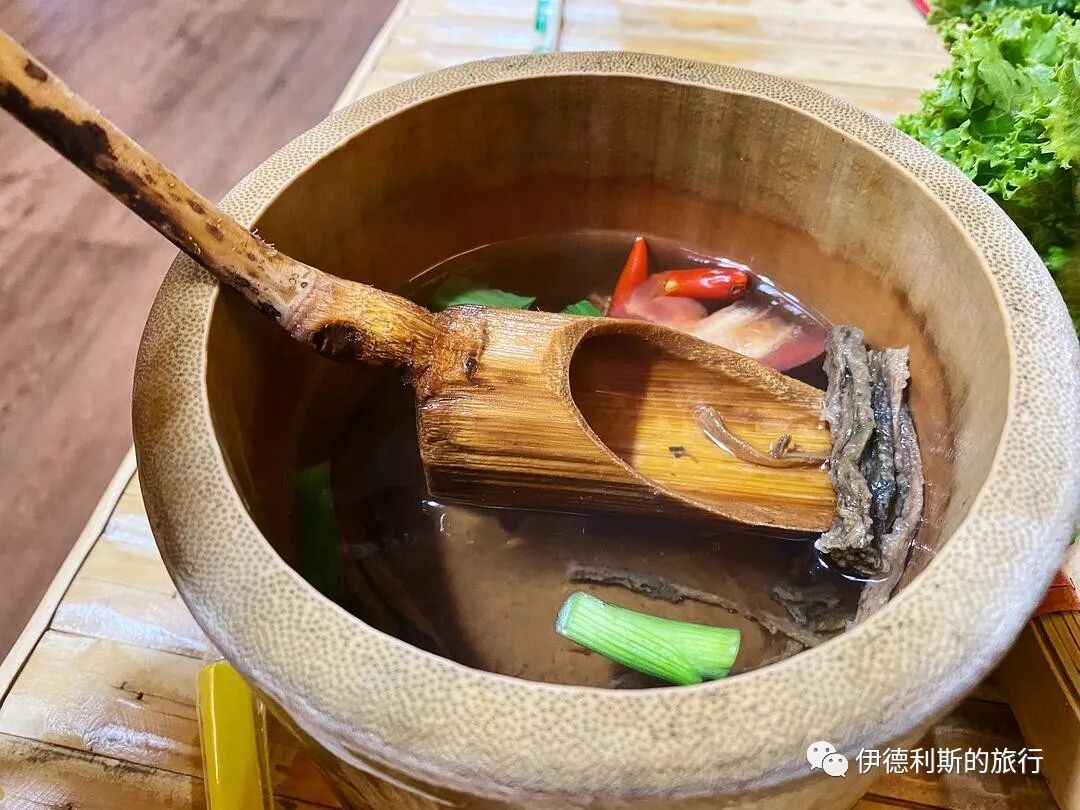
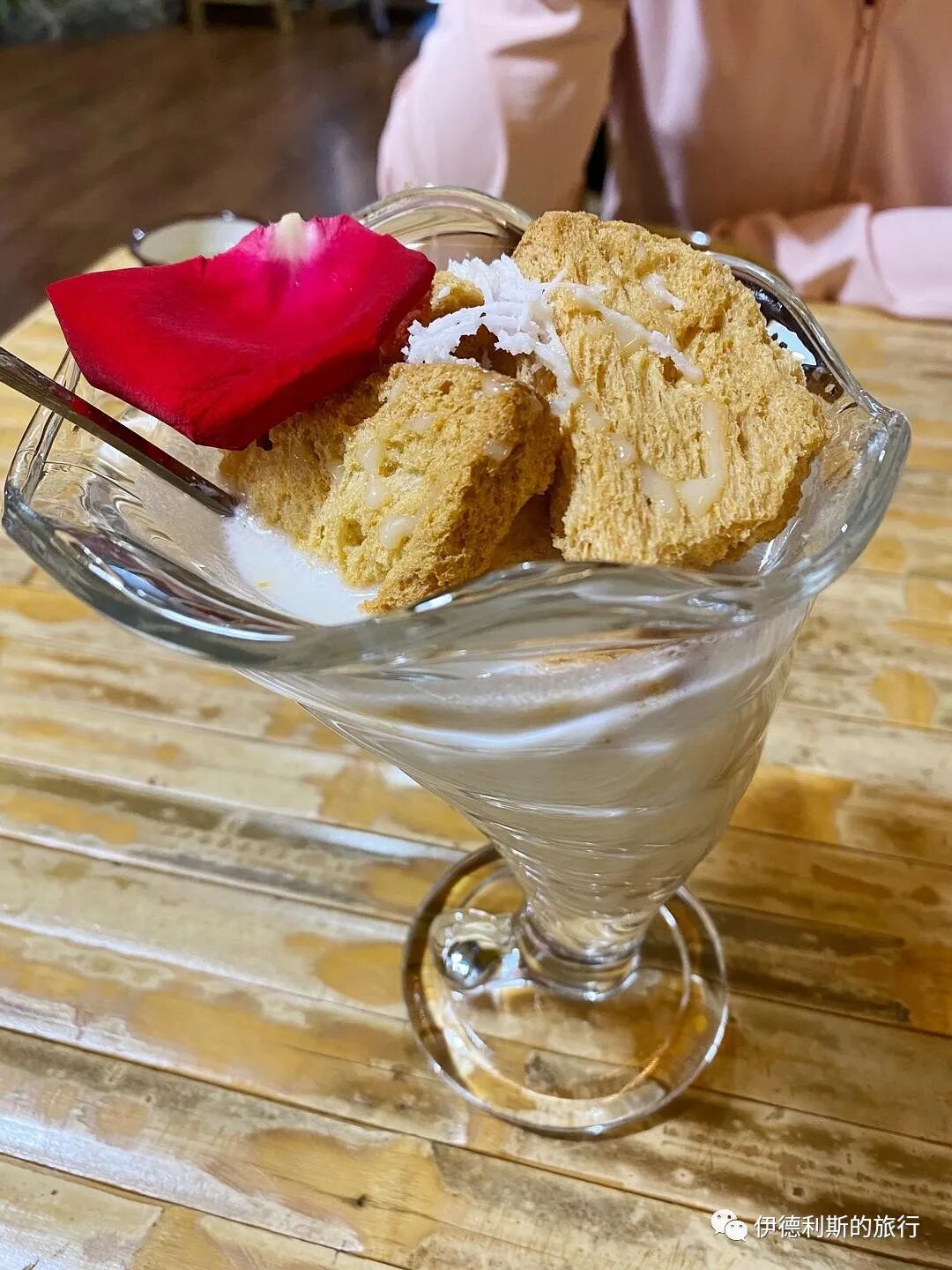
On the afternoon of August 3, we took a train from Kunming to Dali. In the evening, we ate at a Dai Muslim restaurant called Paxidai in Xiaguan. We ordered the Dai-style shouzhua fan (hand-grabbed rice), which included lemongrass grilled fish, potato balls, vegetable nammi (a type of spicy dipping sauce), pineapple rice, beef jerky potato rice, and shredded chicken with lemon. There was also qinglong guojiang tang (a type of soup) and paoluda (a dessert made with bread, coconut milk, and sago). I had eaten at a halal Dai restaurant called Paxidai in the Dali Ancient City before. This was the second time eating it, and I feel that Dai flavors are really both spicy and sour!
August 4: Xiaguan Hui Muslim Street
In the morning, we went hiking in Erhai Park, which is behind our accommodation in Xiaguan, Dali.
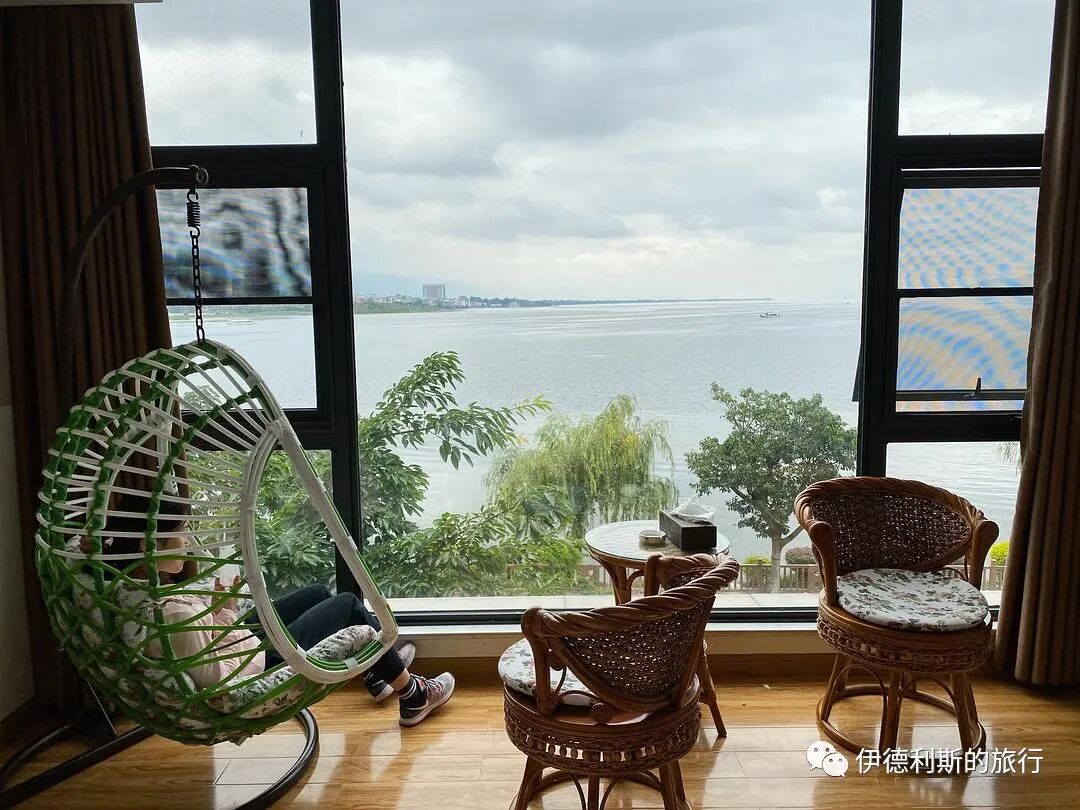
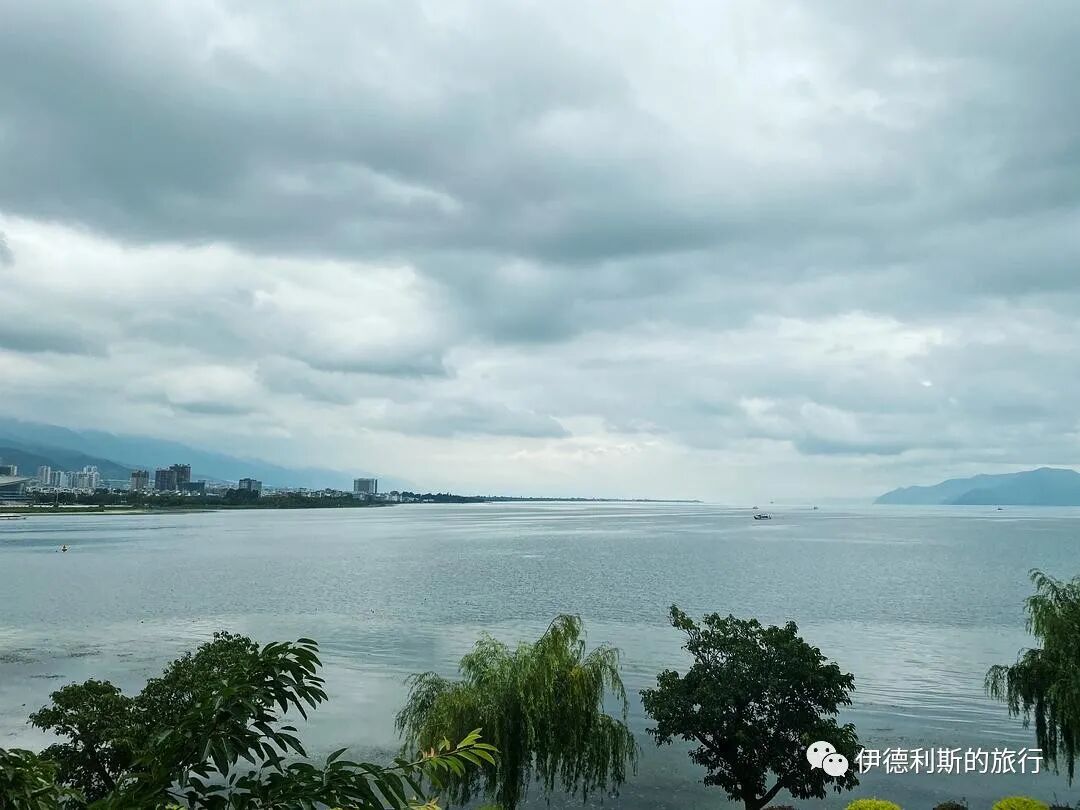
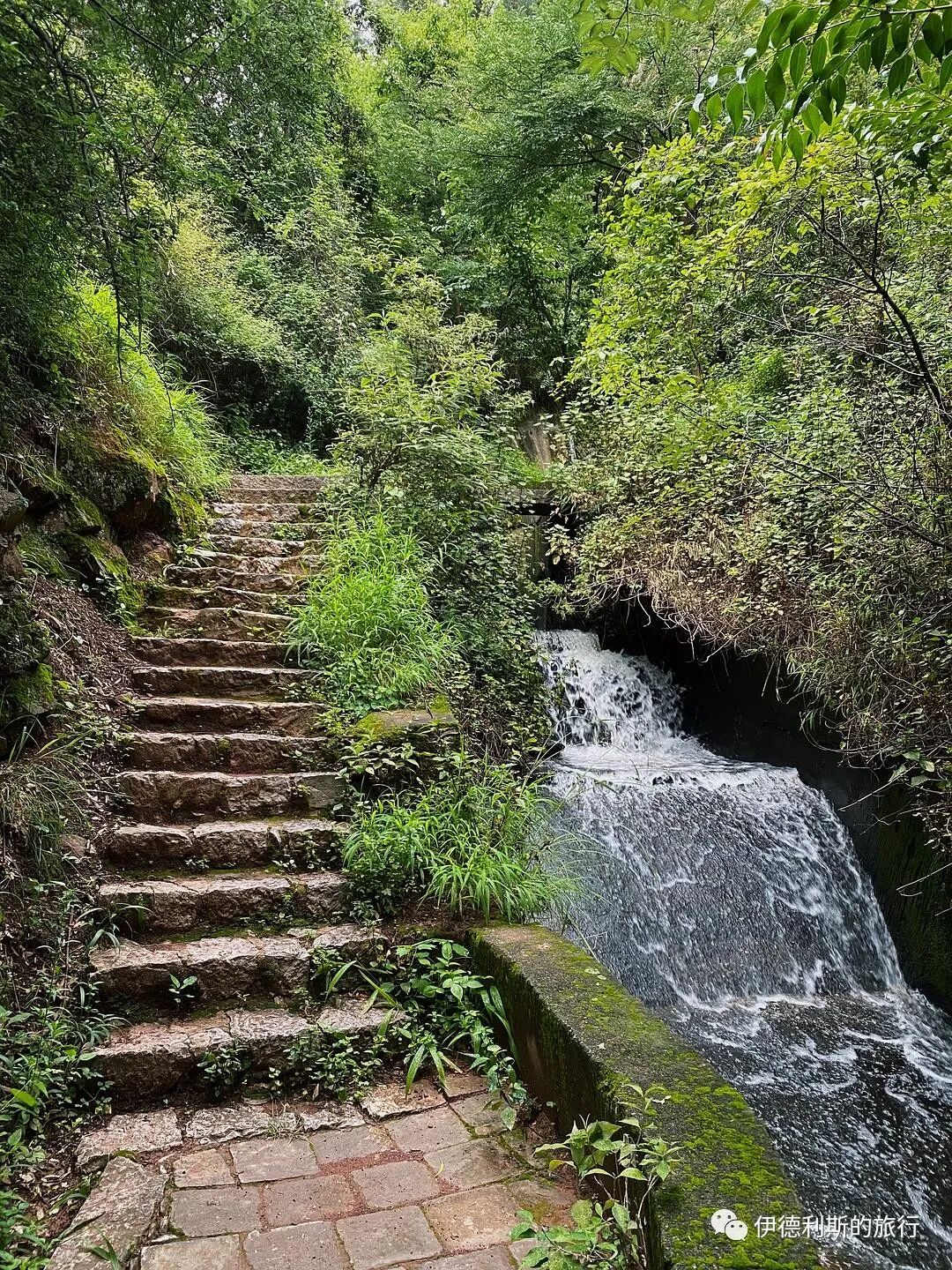
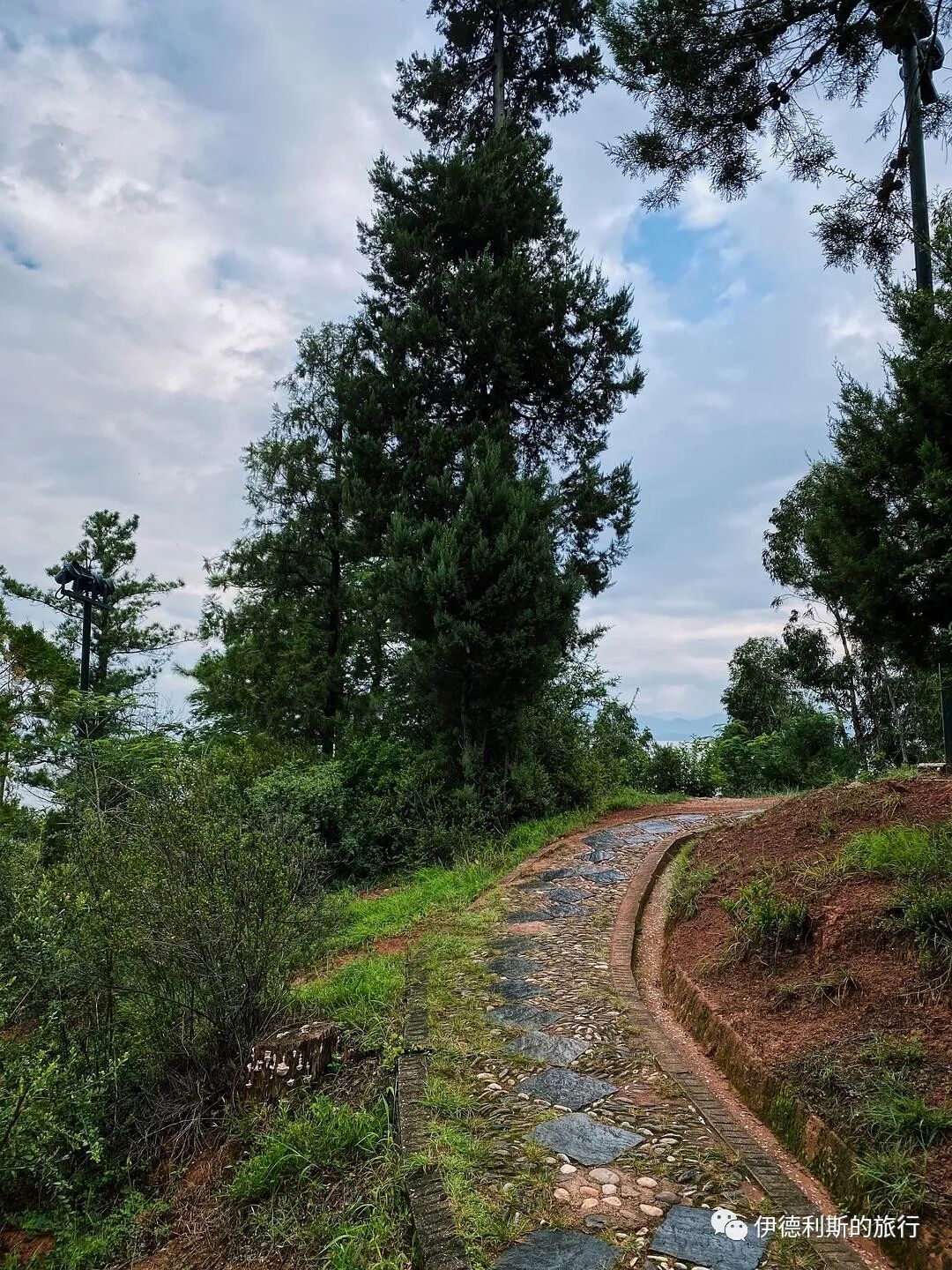
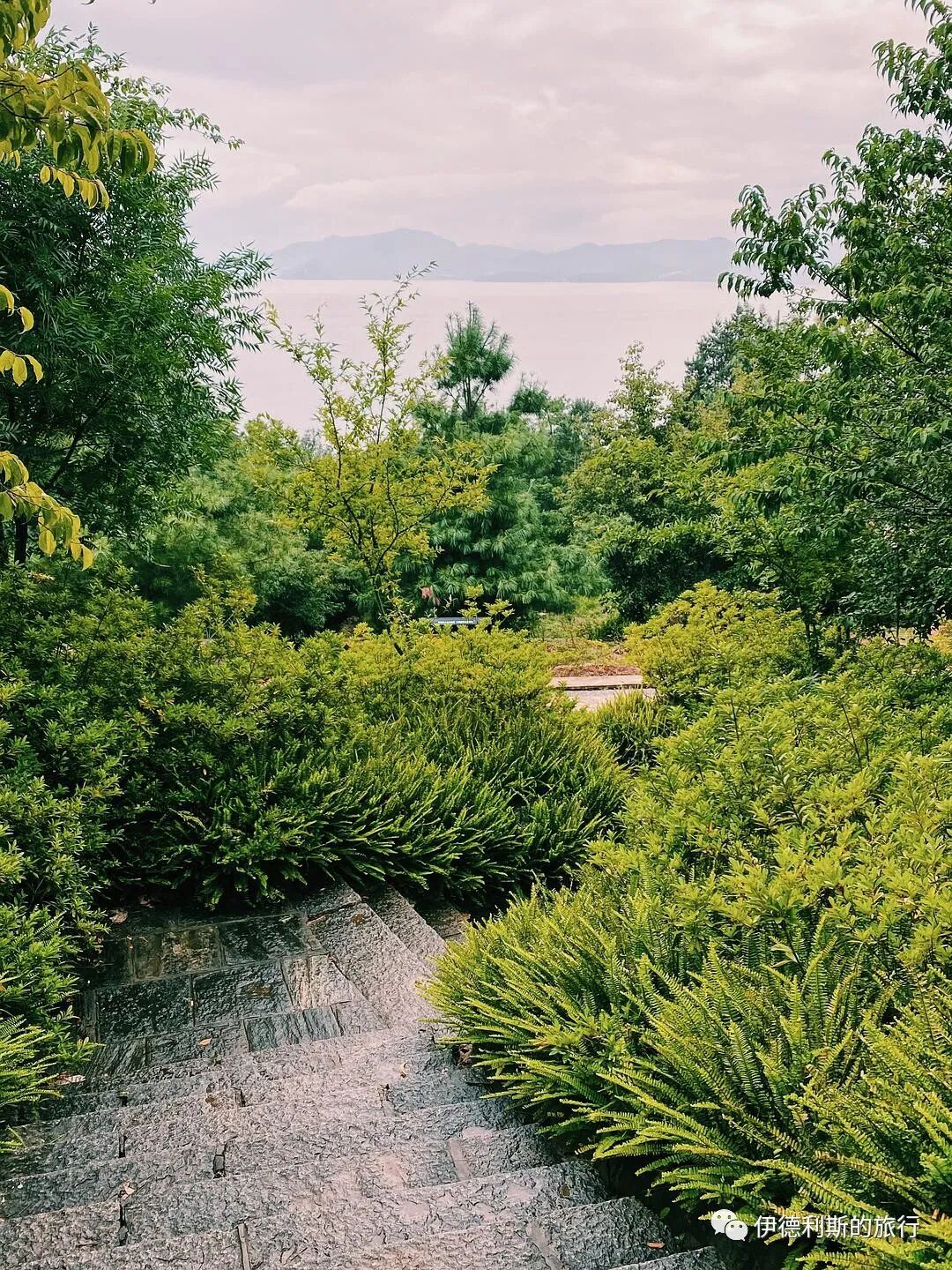
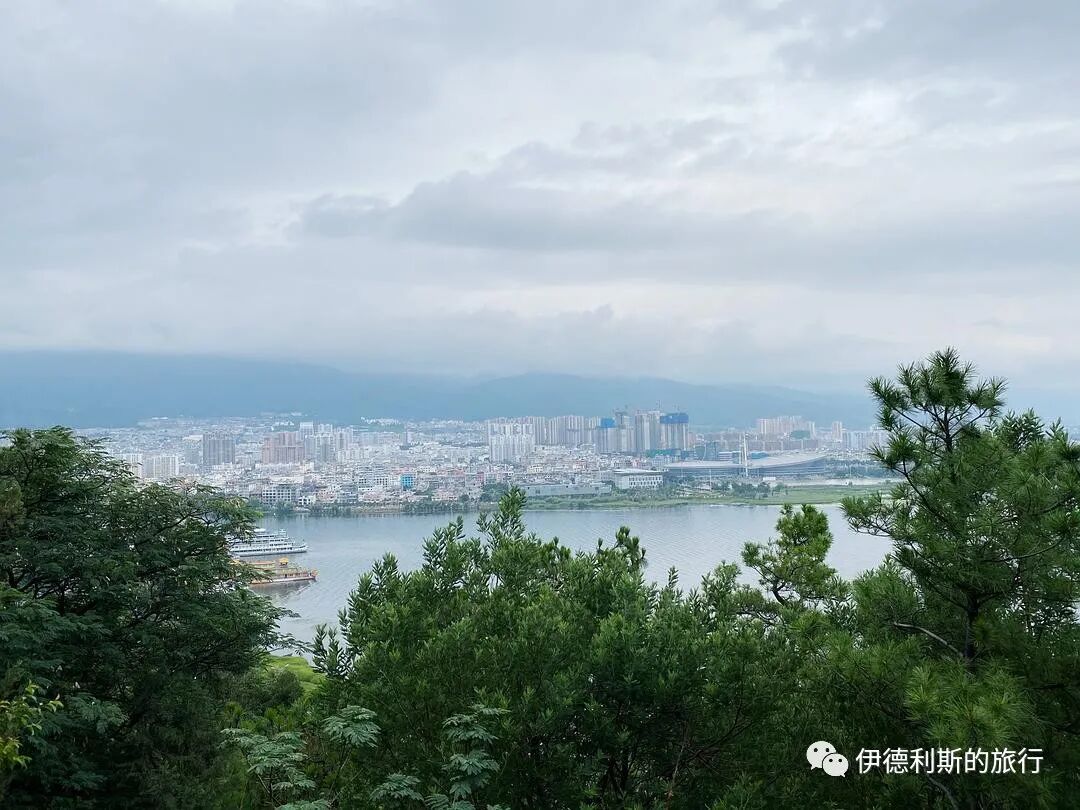
The Xiaguan Hui Muslim Street in Dali is now quite quiet, and basically only locals know about it.
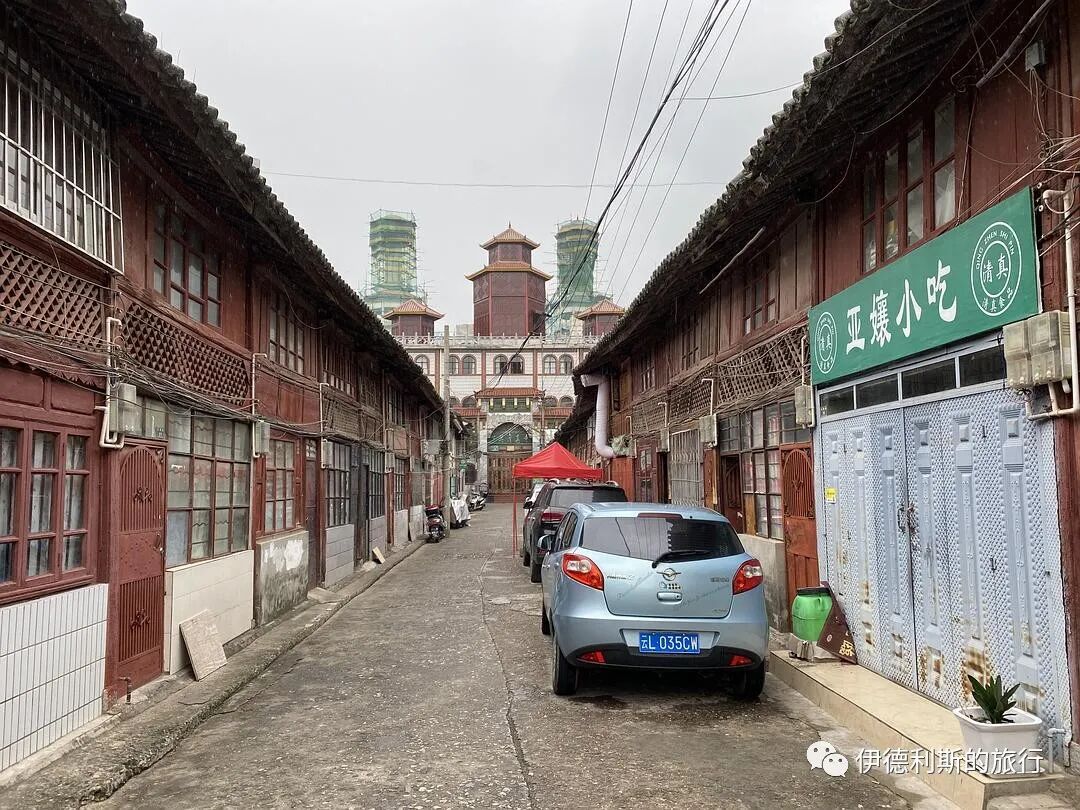
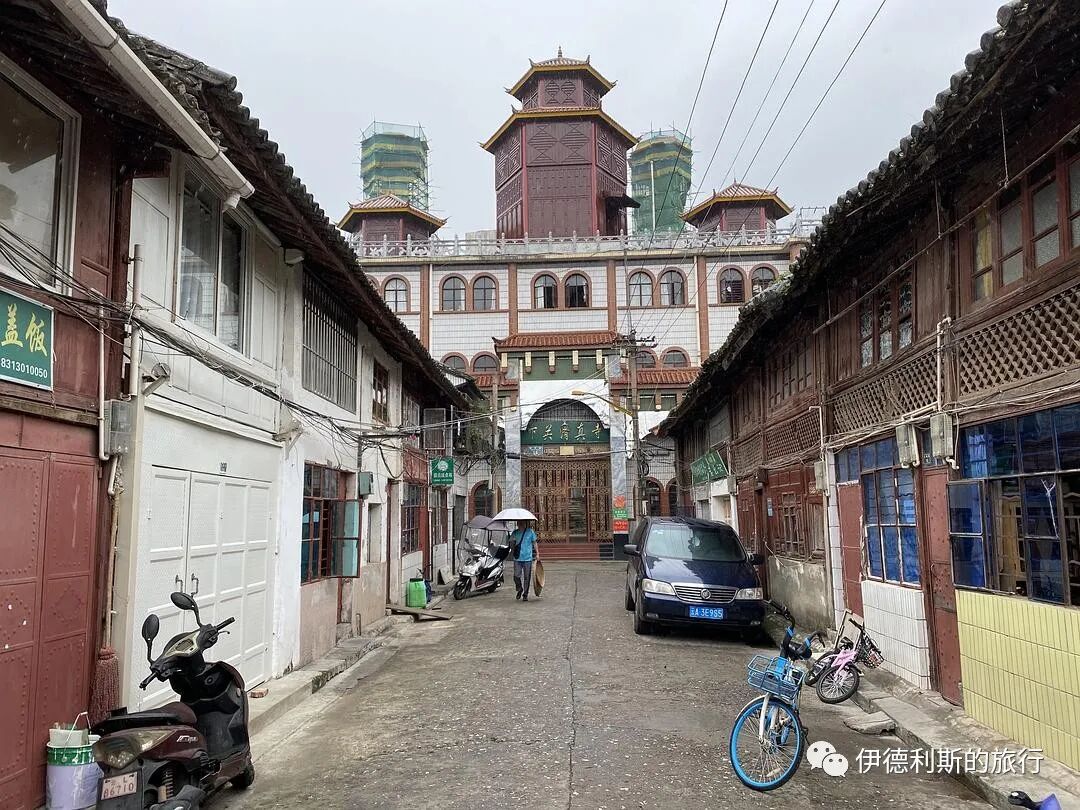
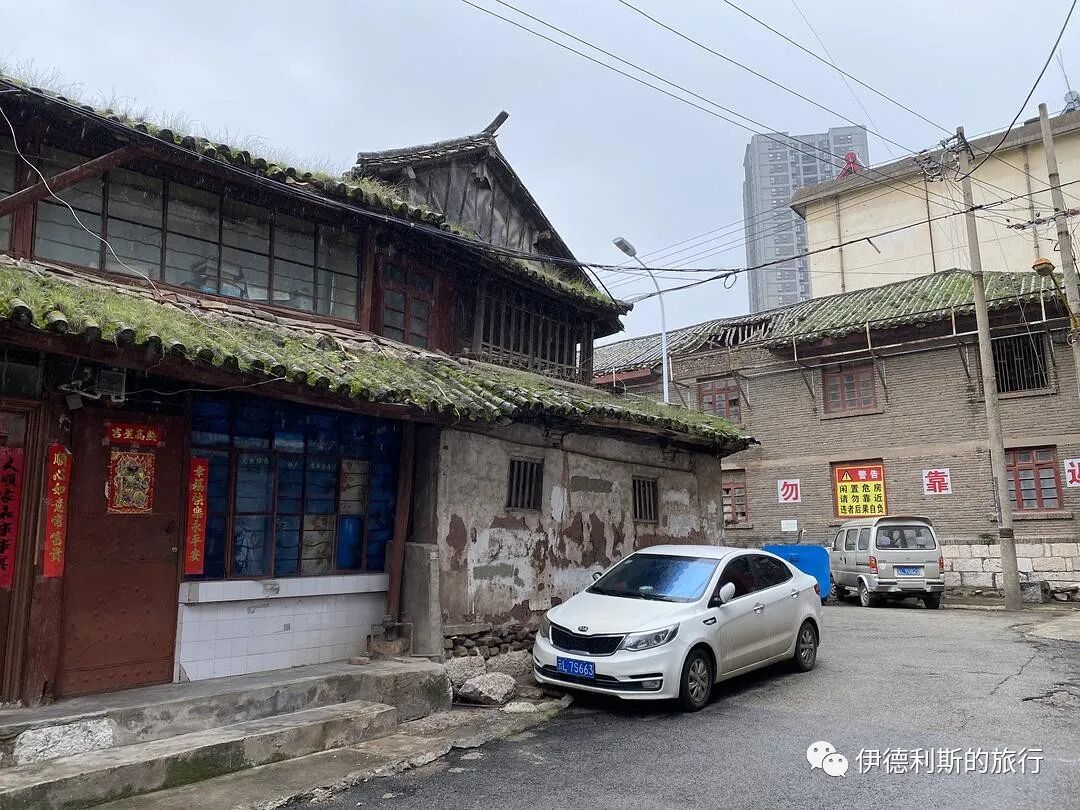
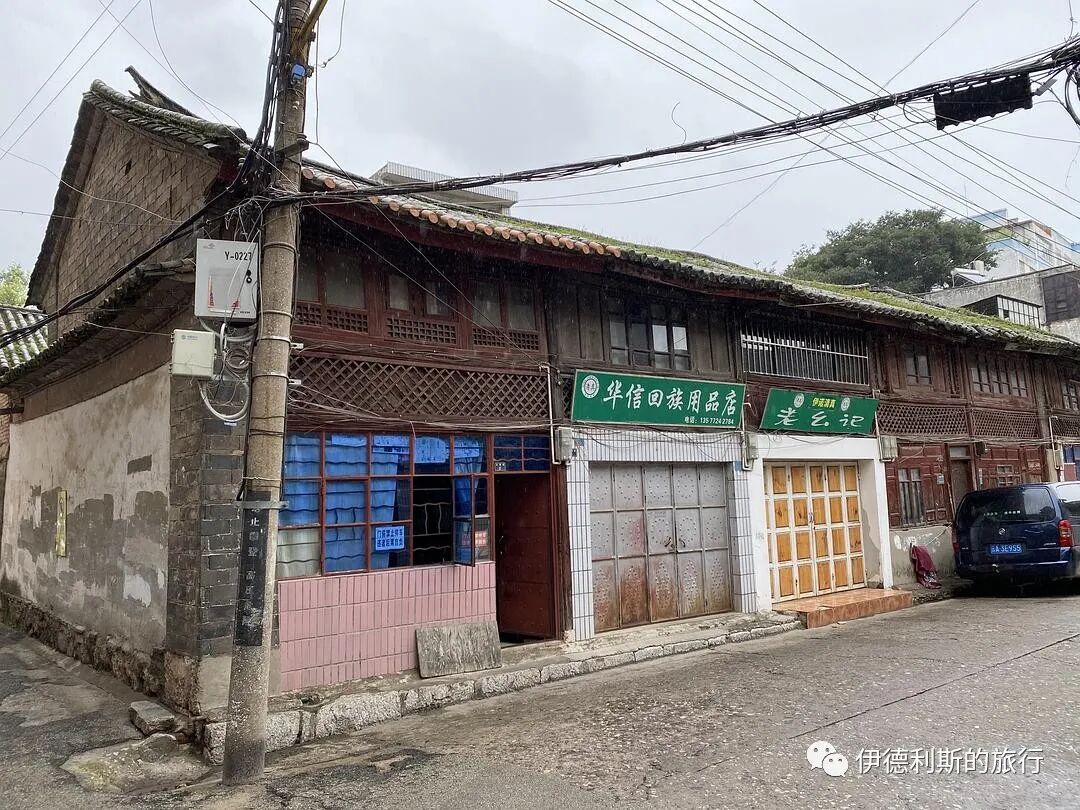
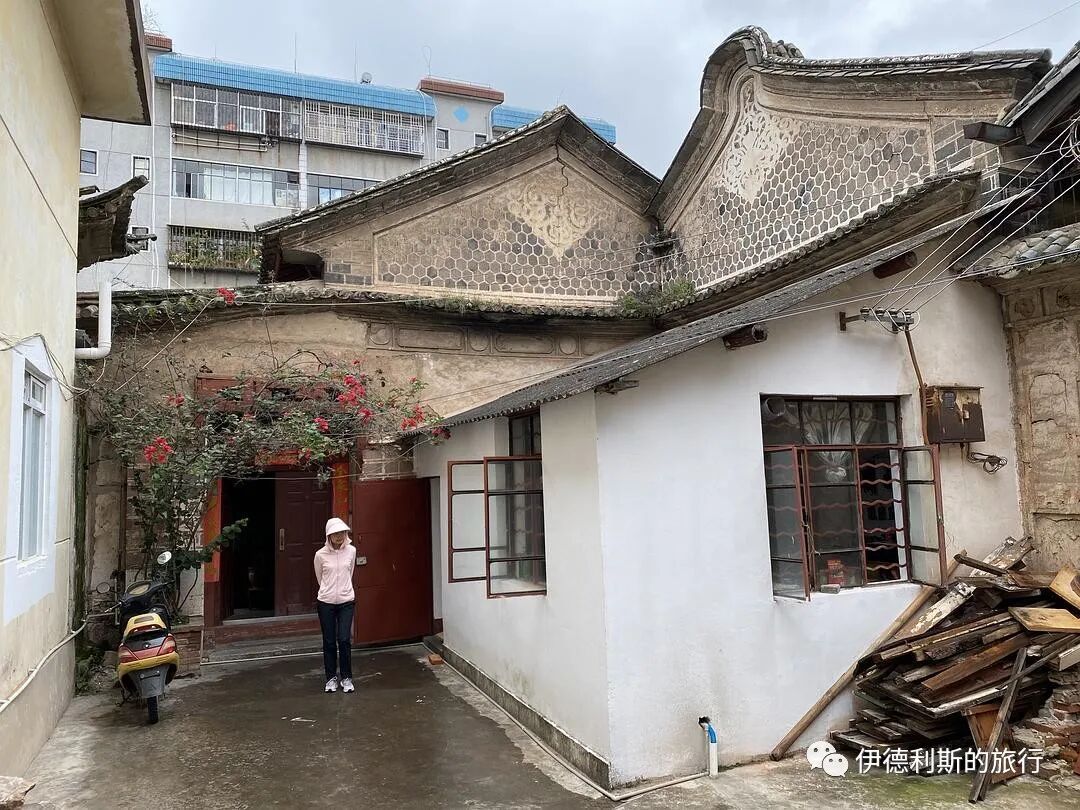
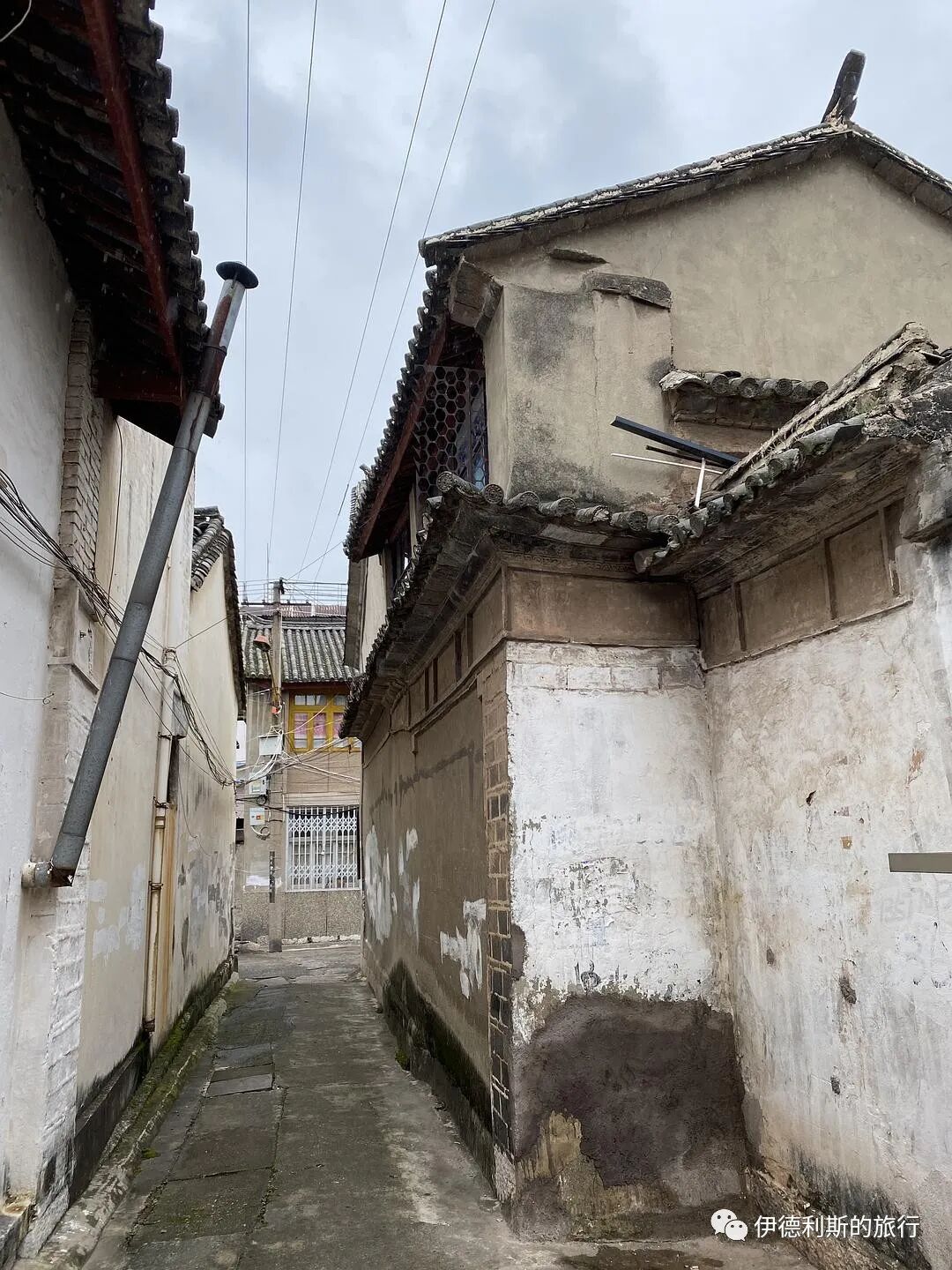
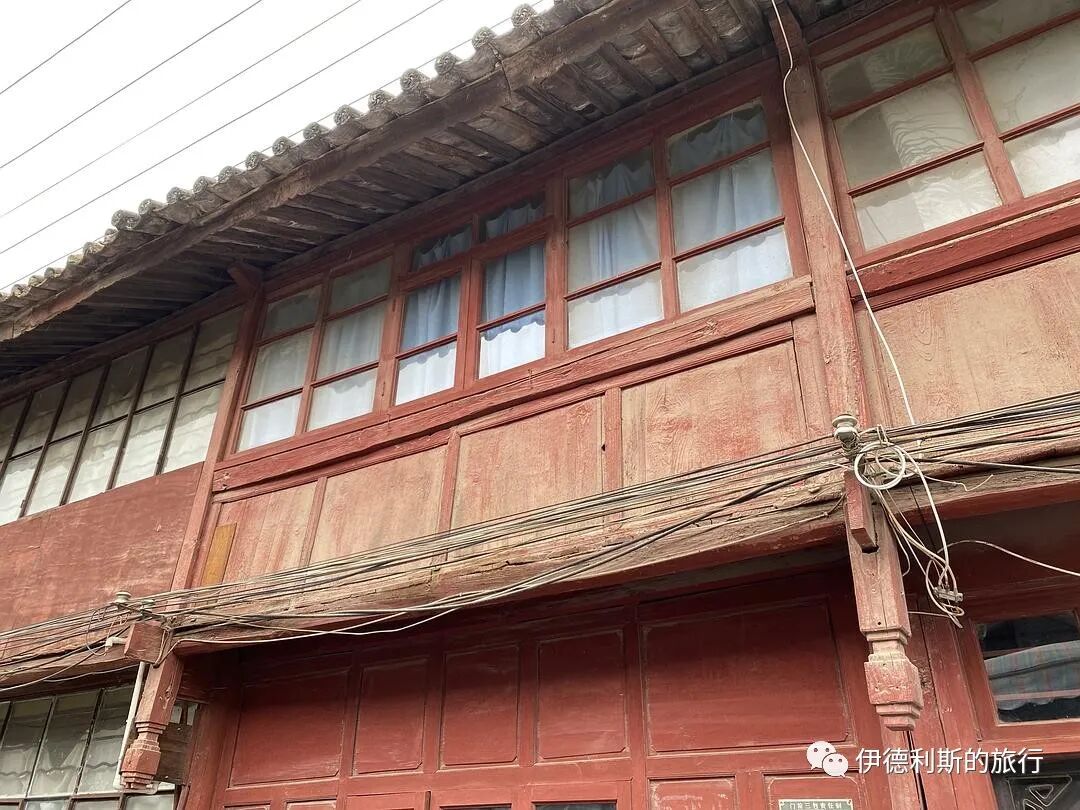
We ate braised meat rice noodles, braised meat ersi (thick rice noodles), and rushan (grilled milk cheese) on the Hui Muslim Street.
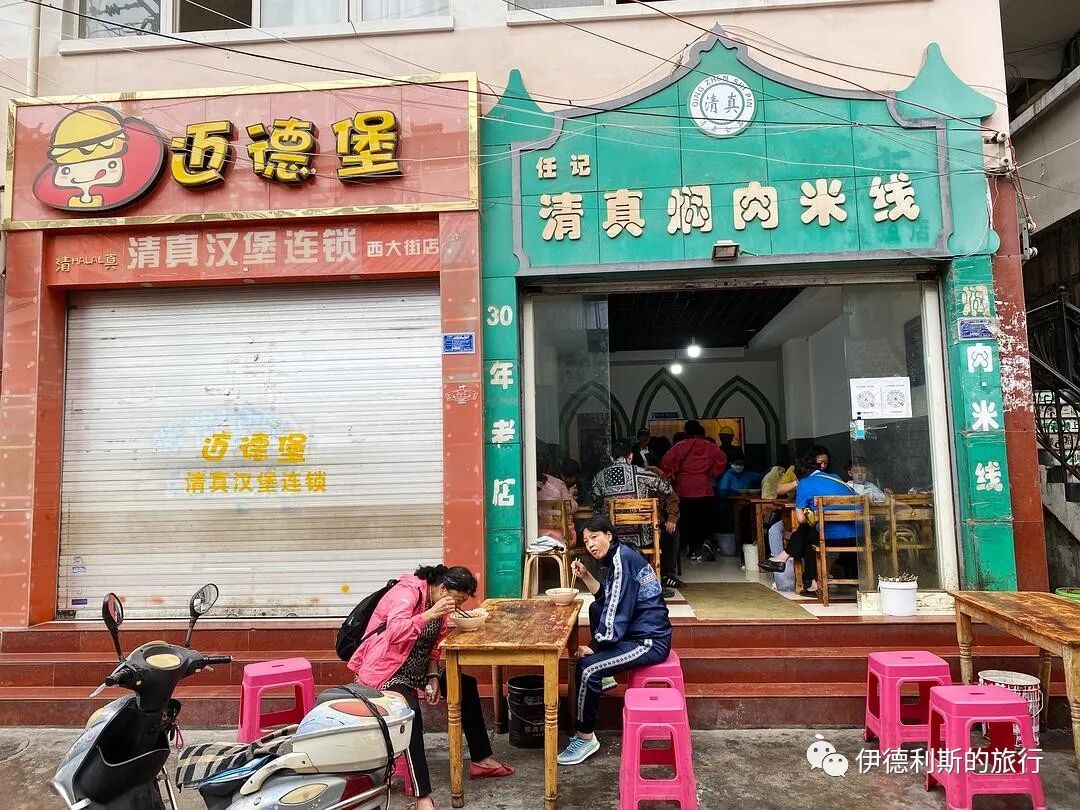
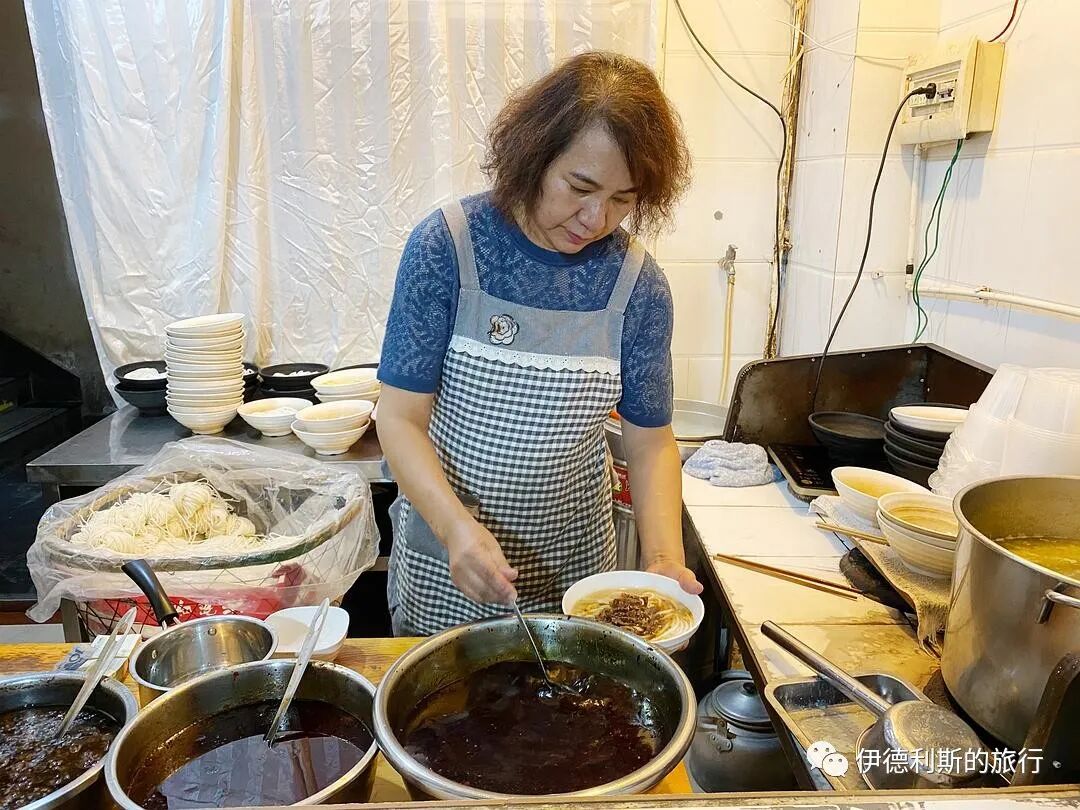
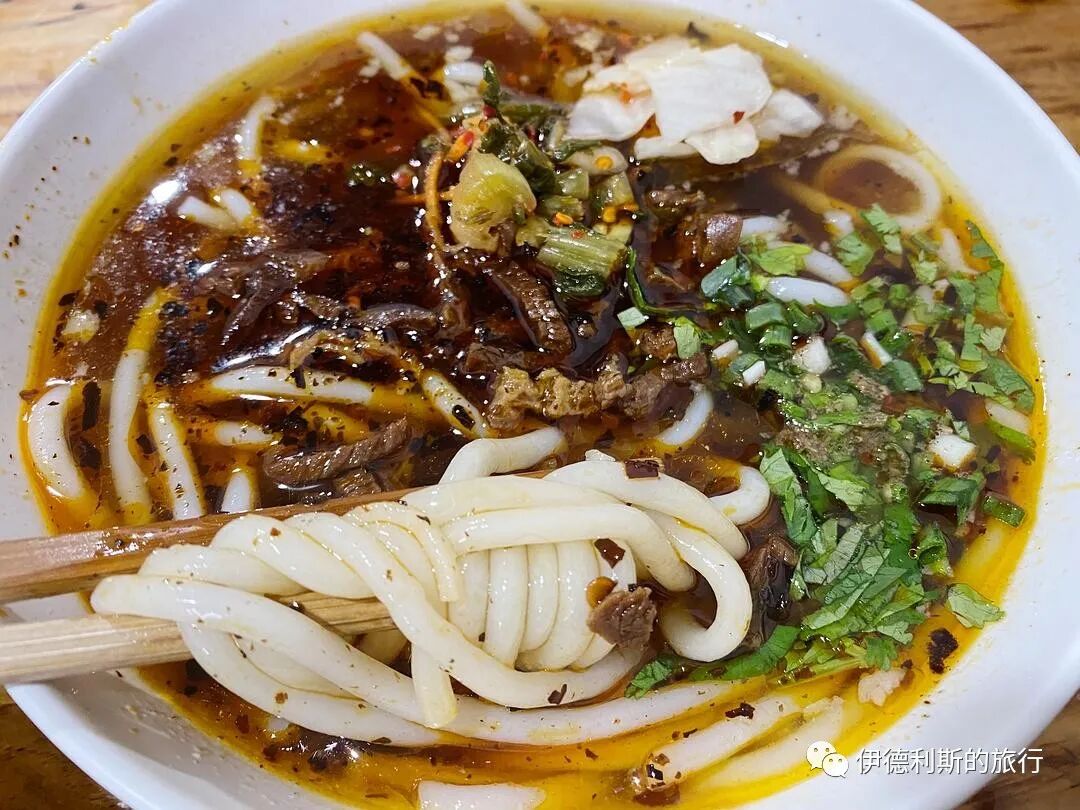
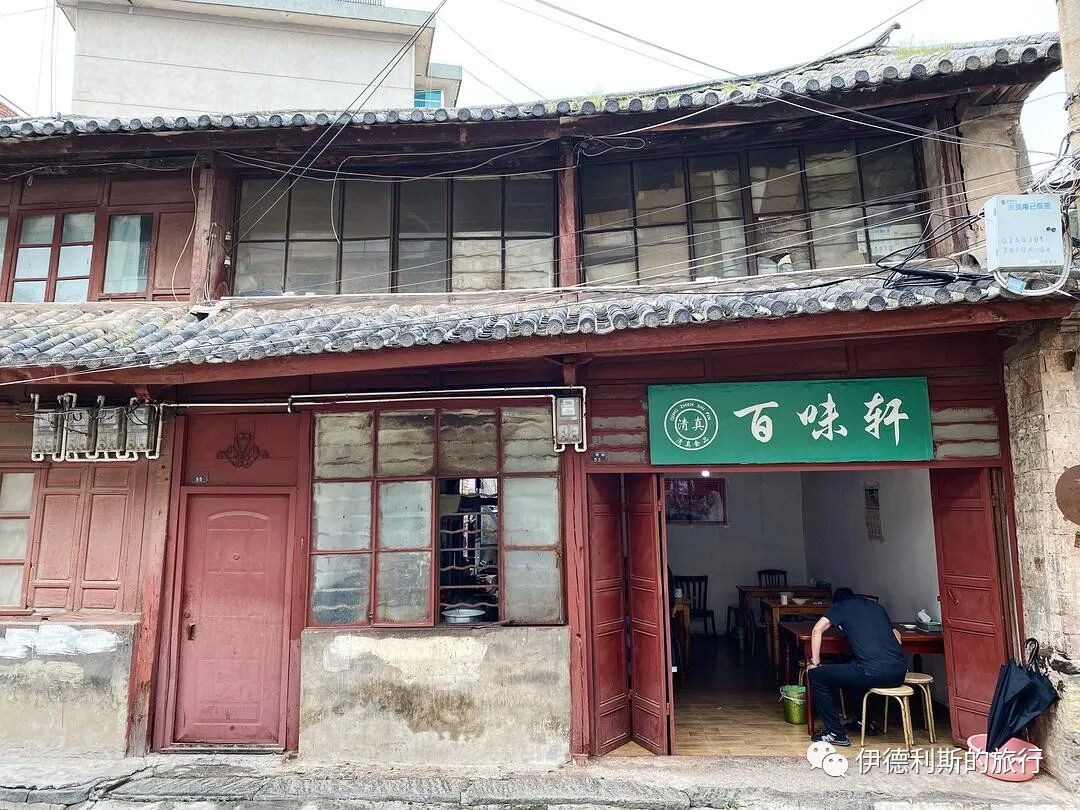
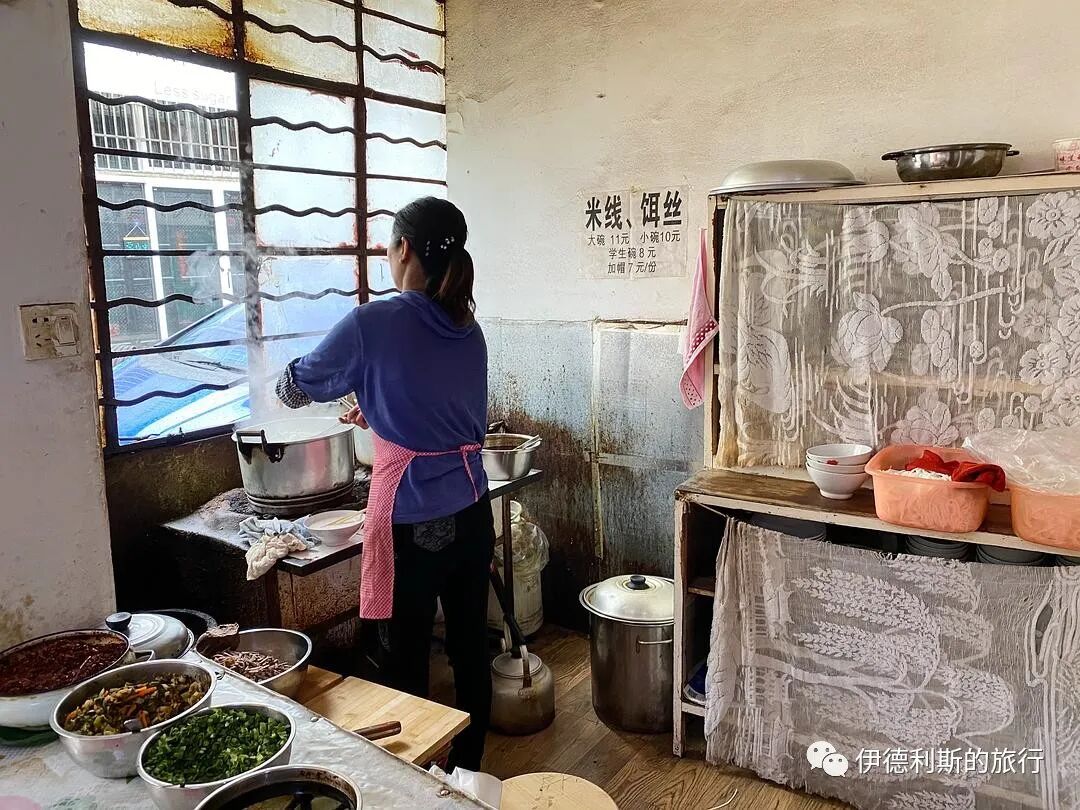
Opposite the Hui Muslim Street is the Longweiguan Ancient Town.
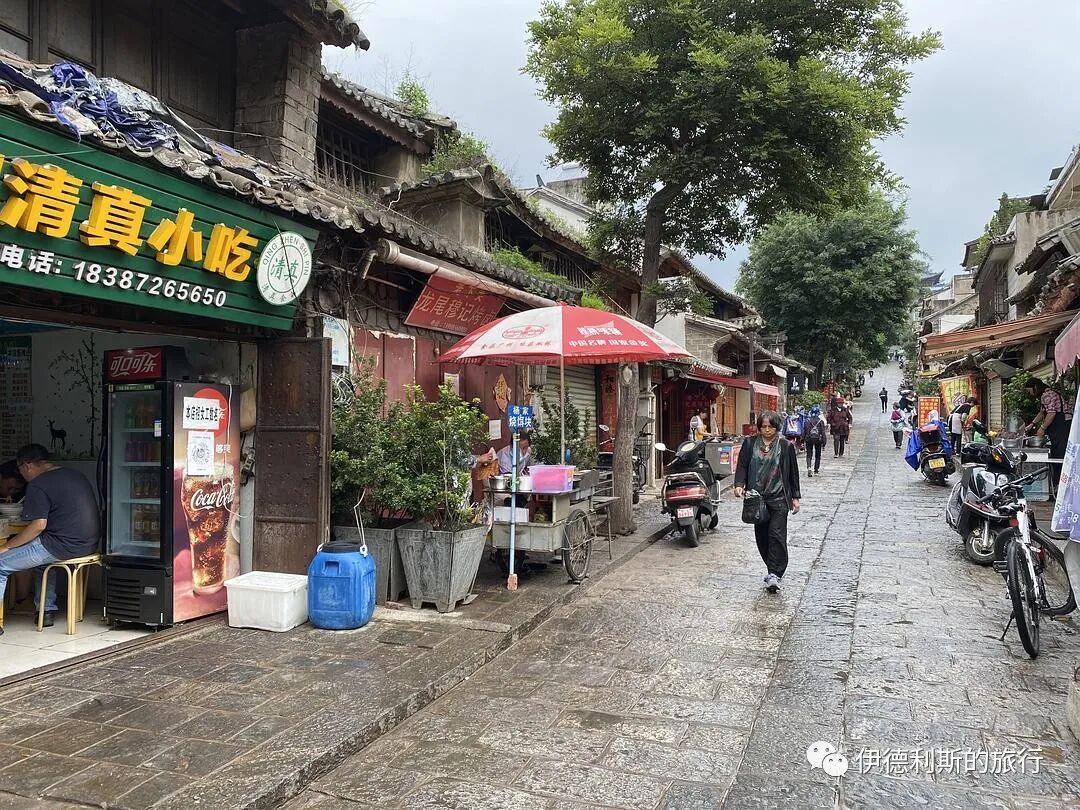
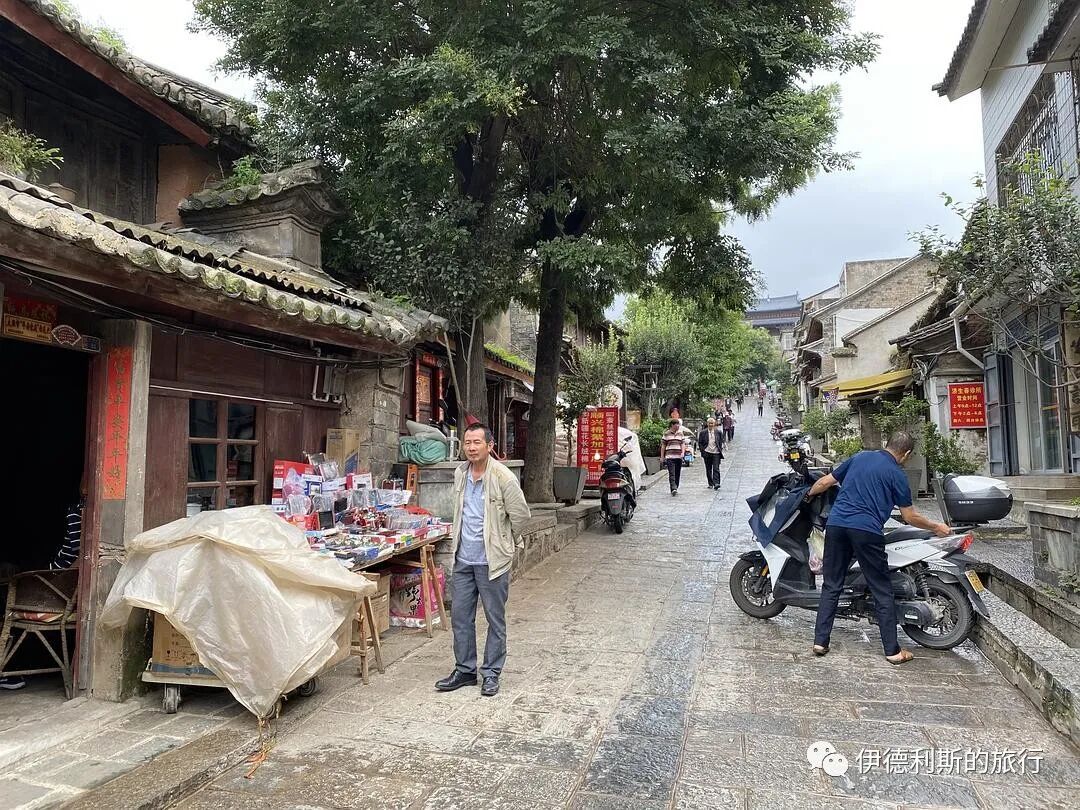
Dianzhong Huiying
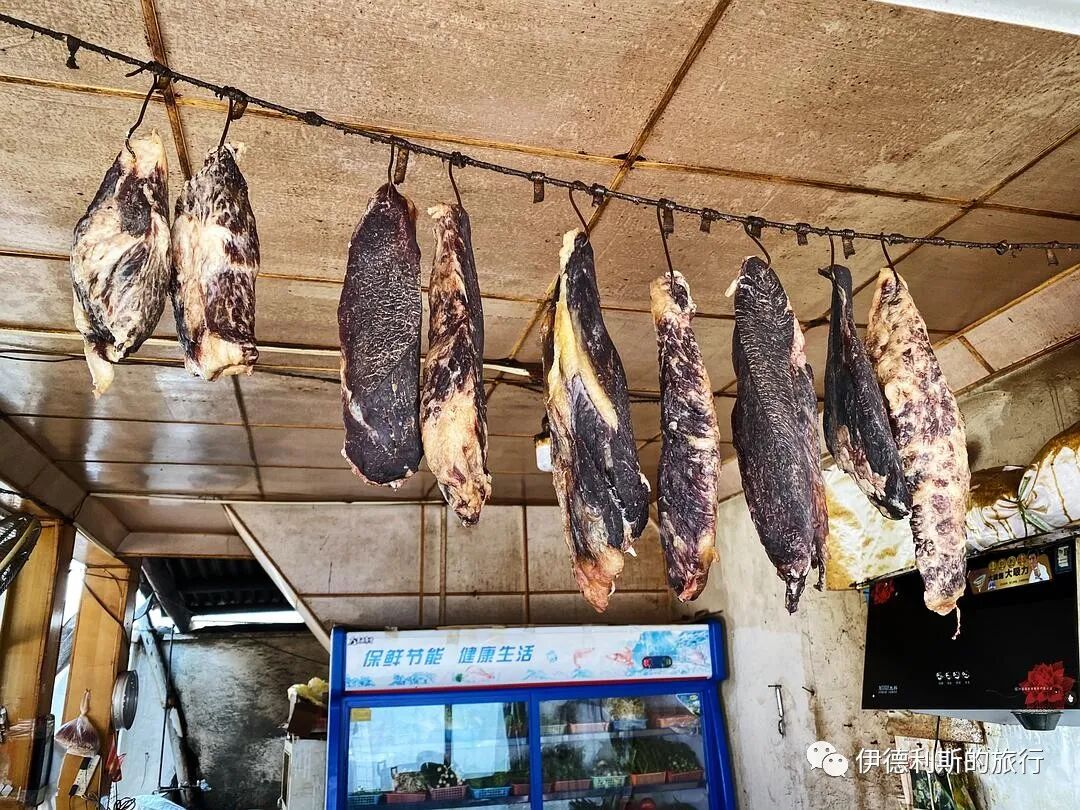
At noon, we went from Weishan County town to Dianzhong Huiying. We ate fried ganba (cured beef jerky) and stir-fried cowpeas (pronounced gandou) in the village. Their beef soup was so delicious!
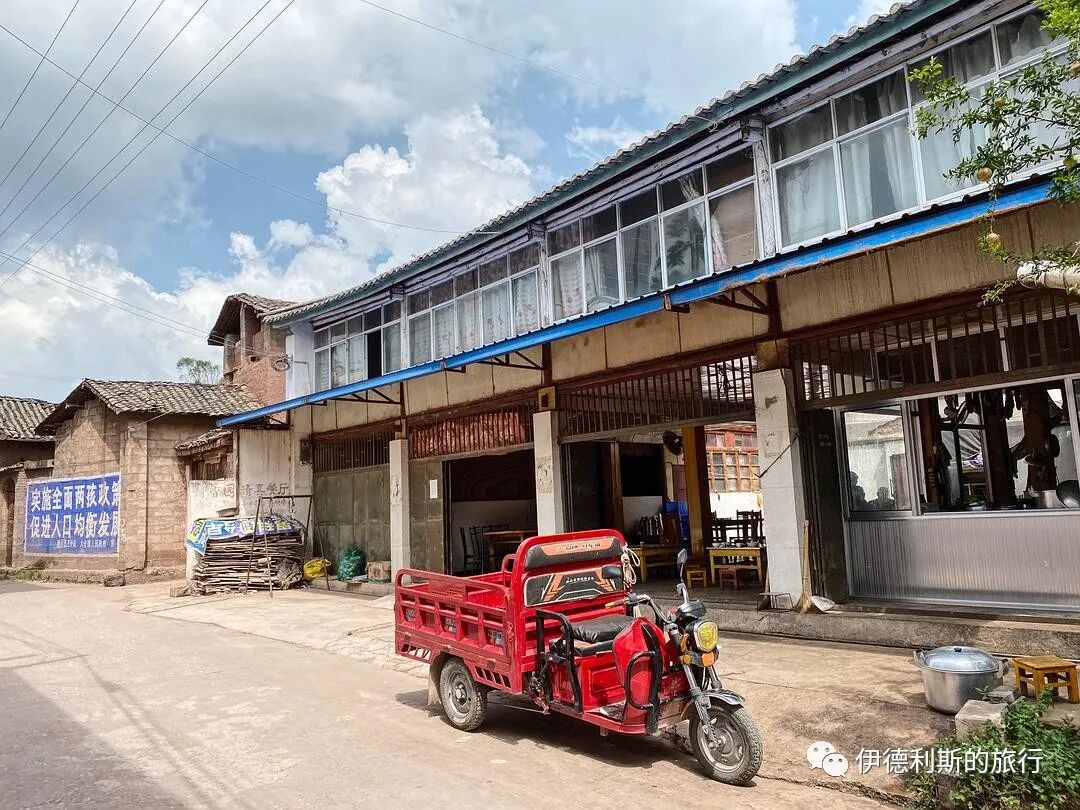
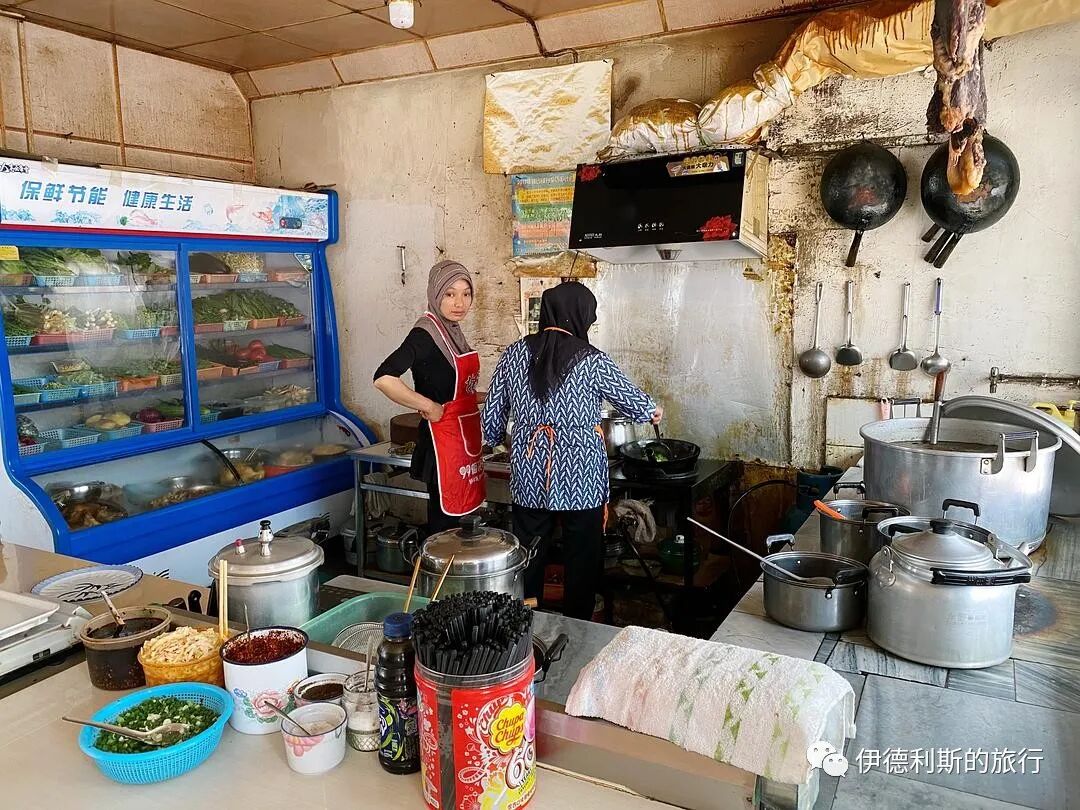
Shenhe Village
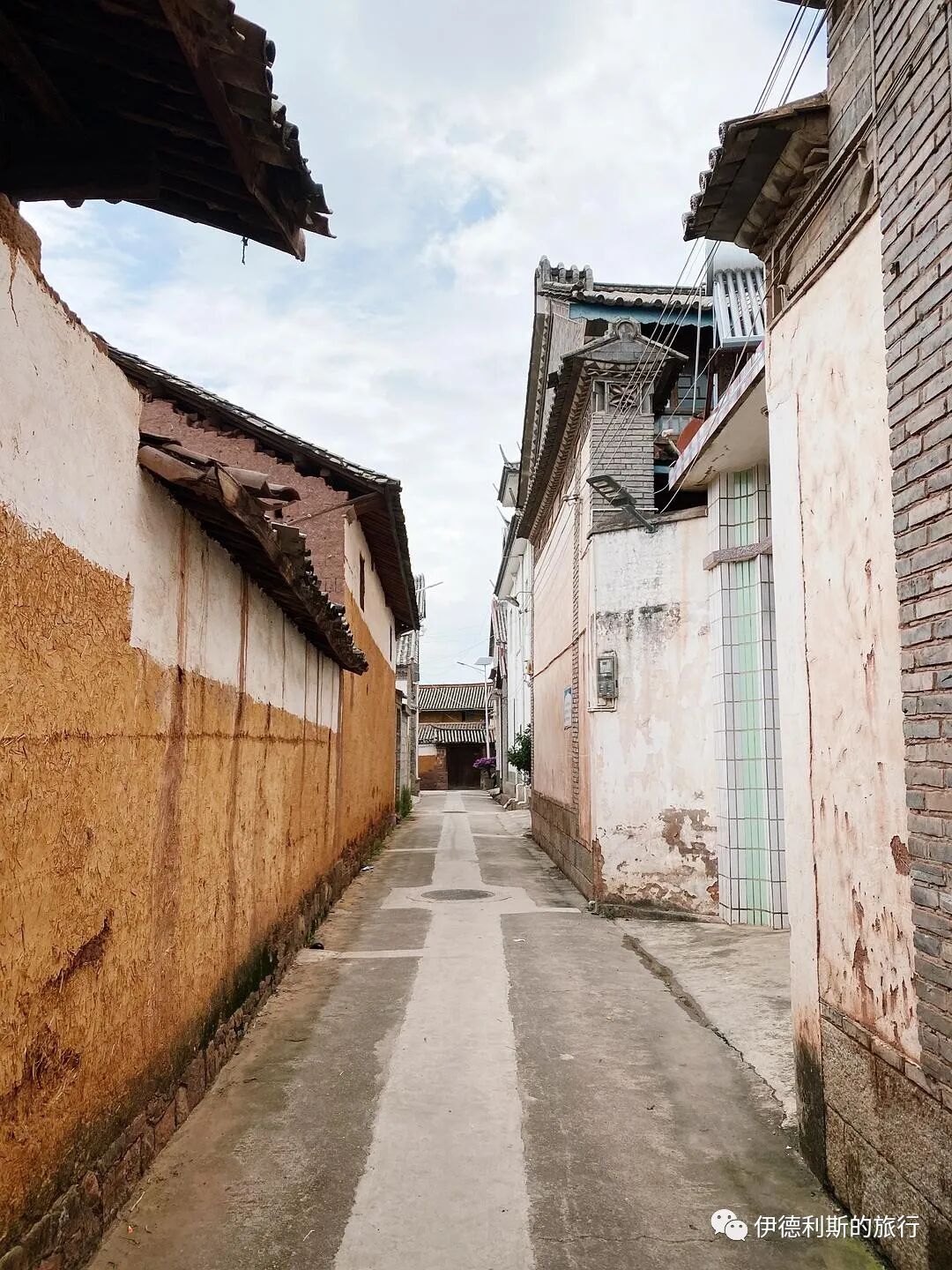
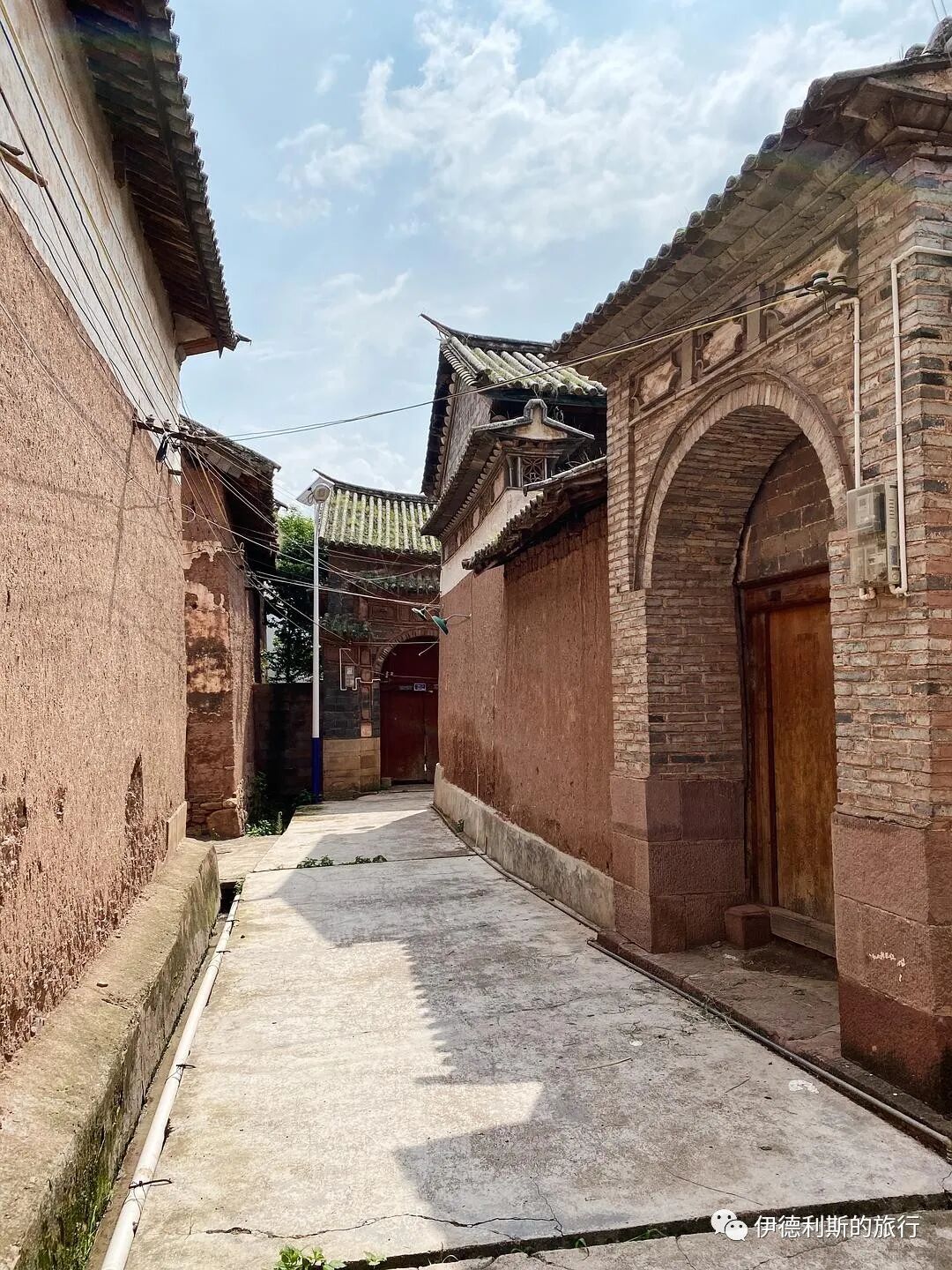
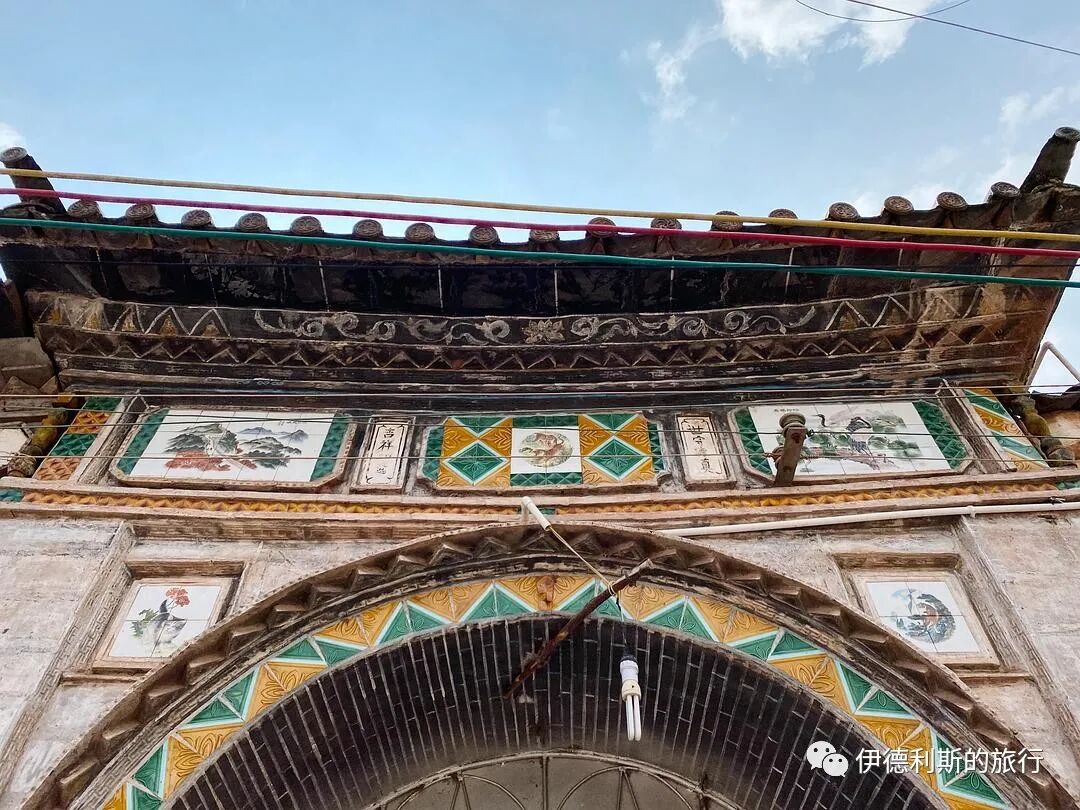
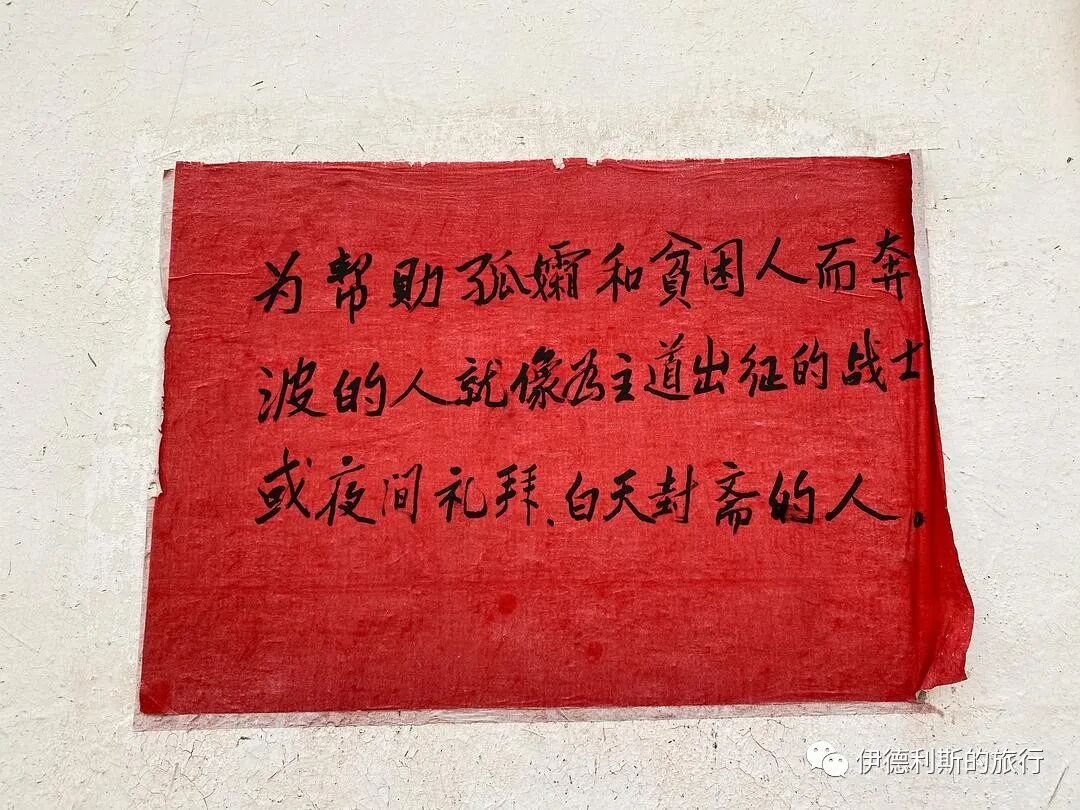
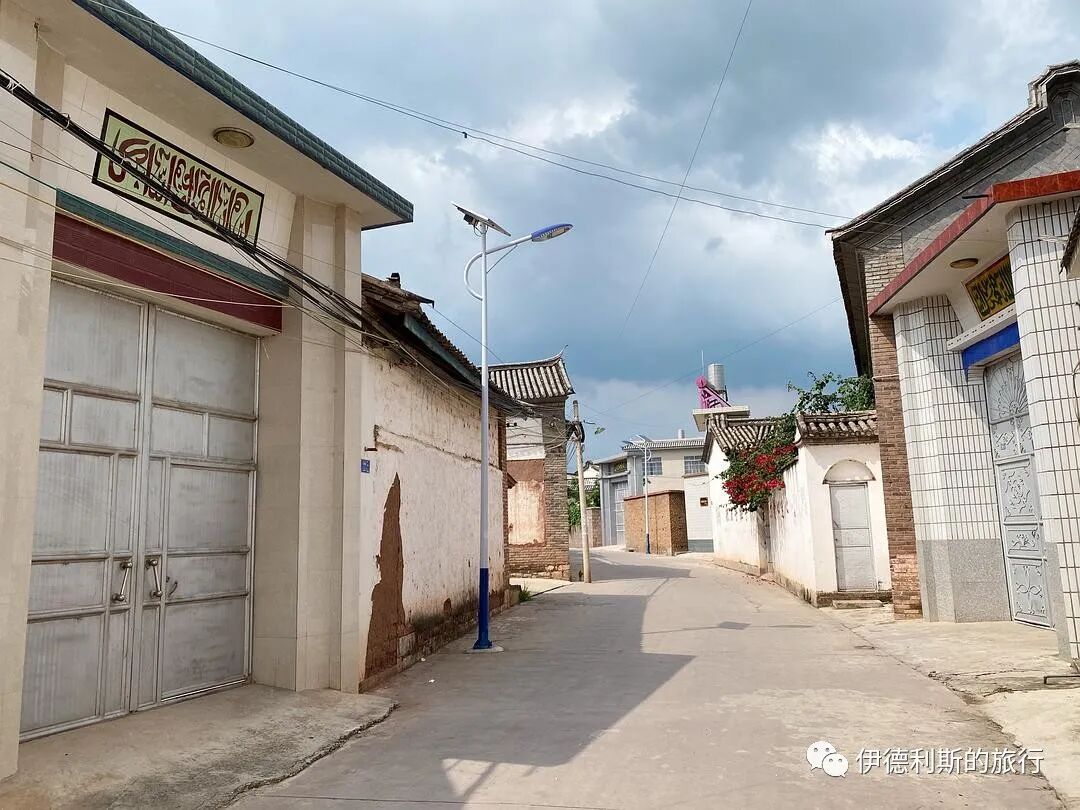
After eating, we arrived at another Hui Muslim village, Shenhe Village, from Dianzhong Huiying. The scene in the village is like this.
Mamichang
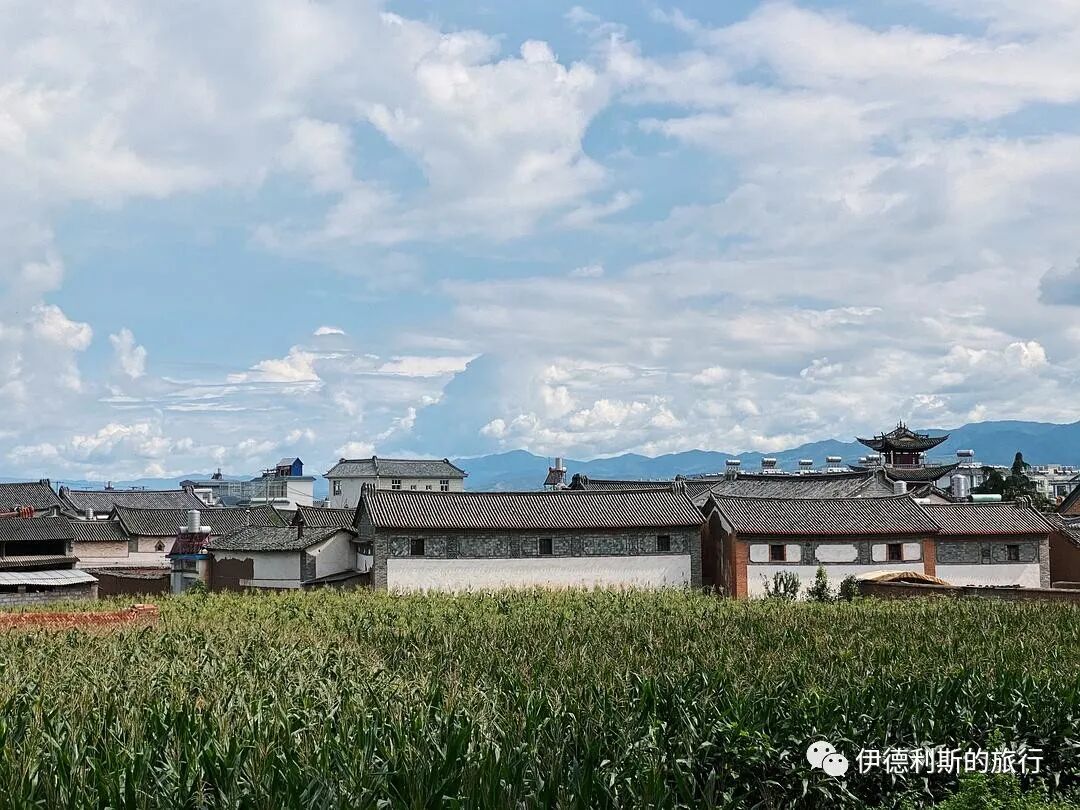
We continued to visit Hui Muslim villages, strolling from Shenhe Village to Mamichang. The village is on a small hillside, and you can overlook the surrounding scenery.
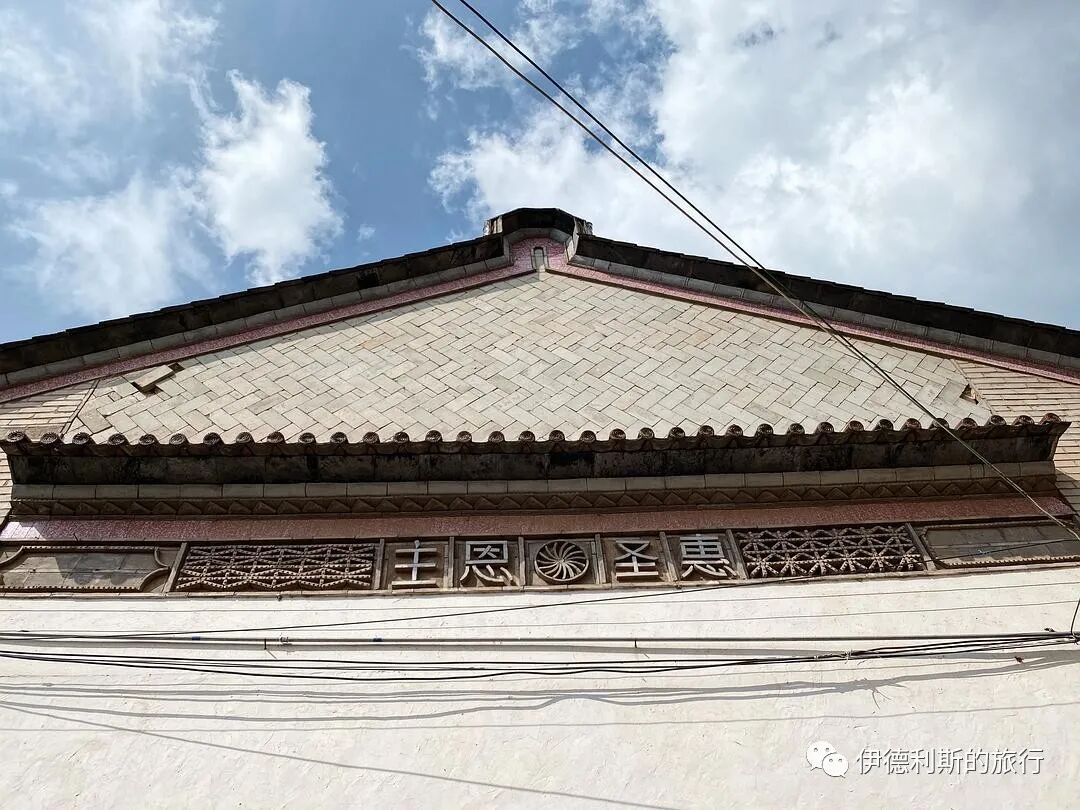
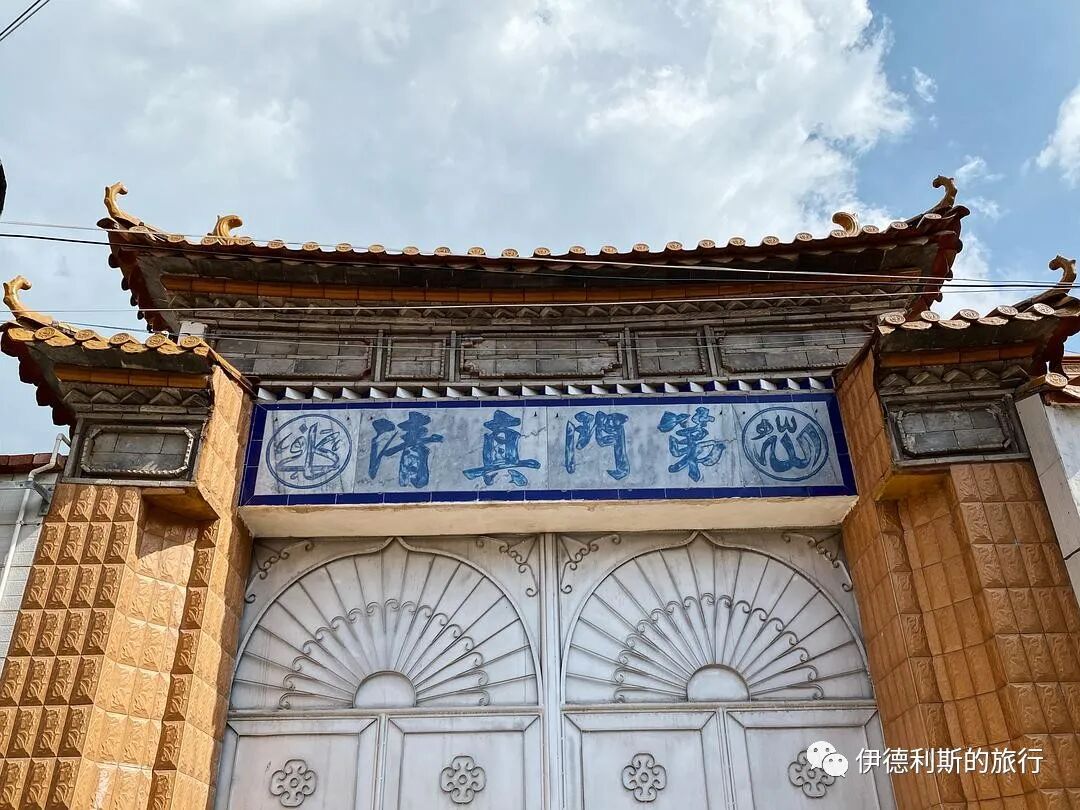
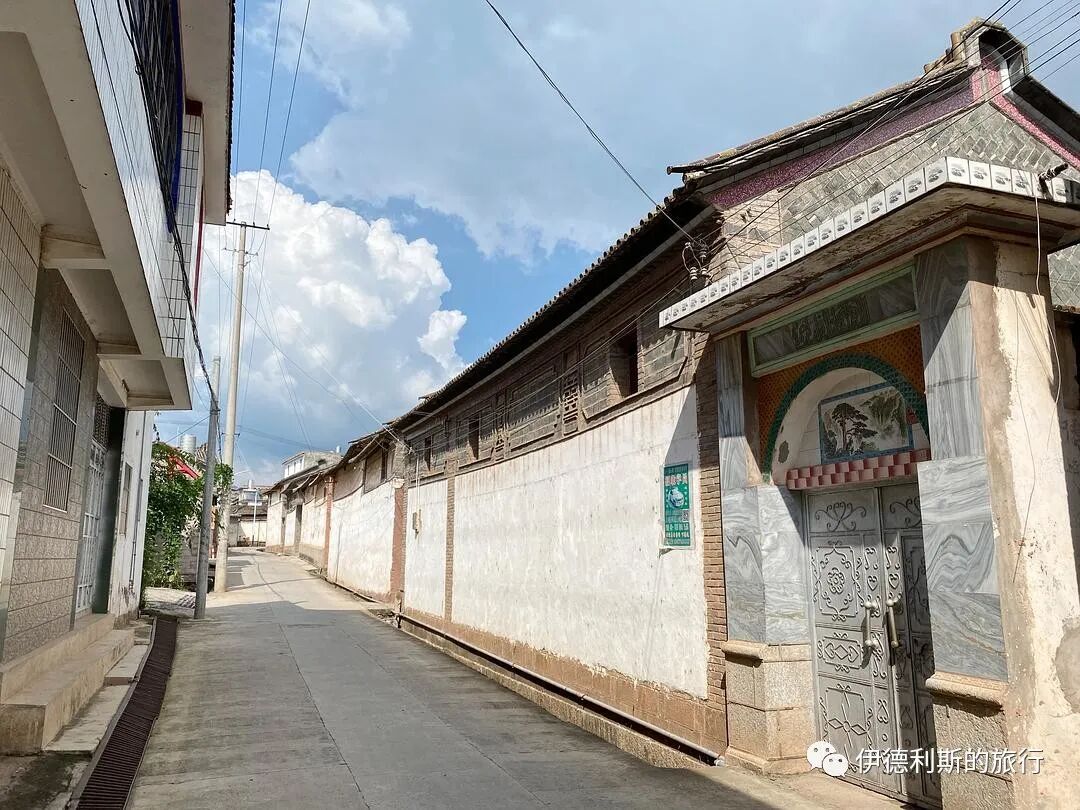
Return to Yongjian Town
Returning to Yongjian Town from Mamichang, we ate corn baba (corn cakes) and douhua (soft tofu pudding) on Hedijie Street, the busiest street in the town. Hedijie Street has changed a lot since I went in 2017; there are fewer and fewer old houses, and the scripture bookstore is gone.
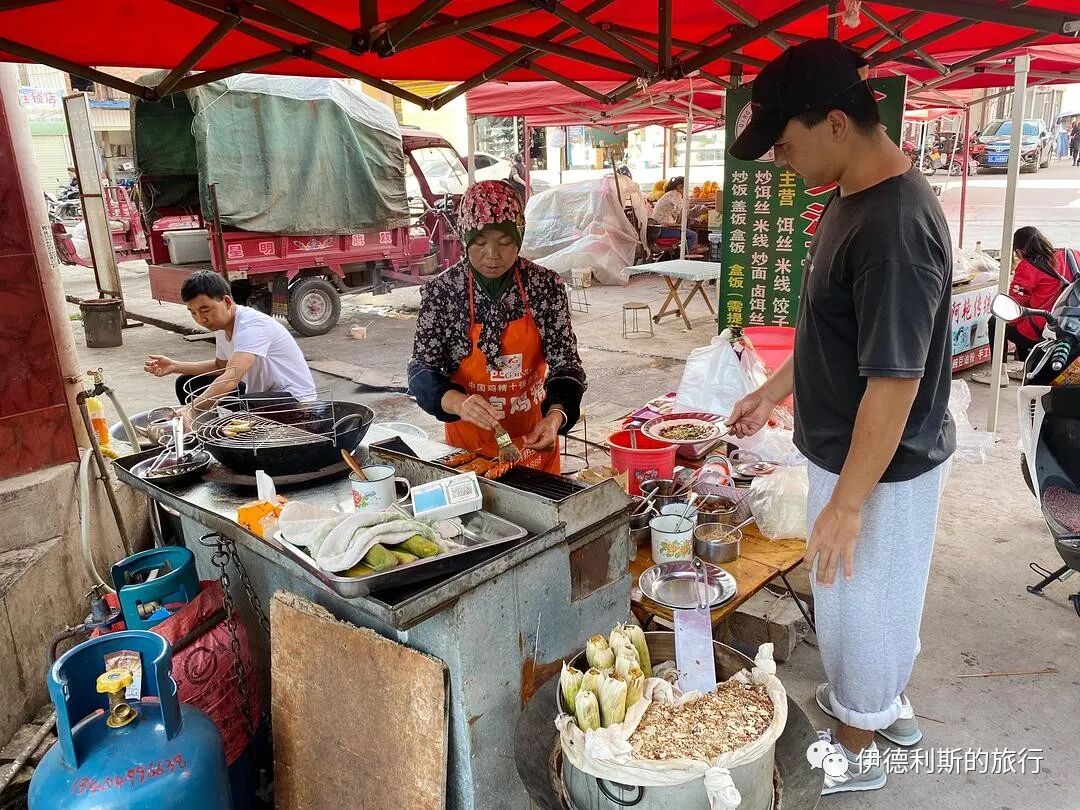
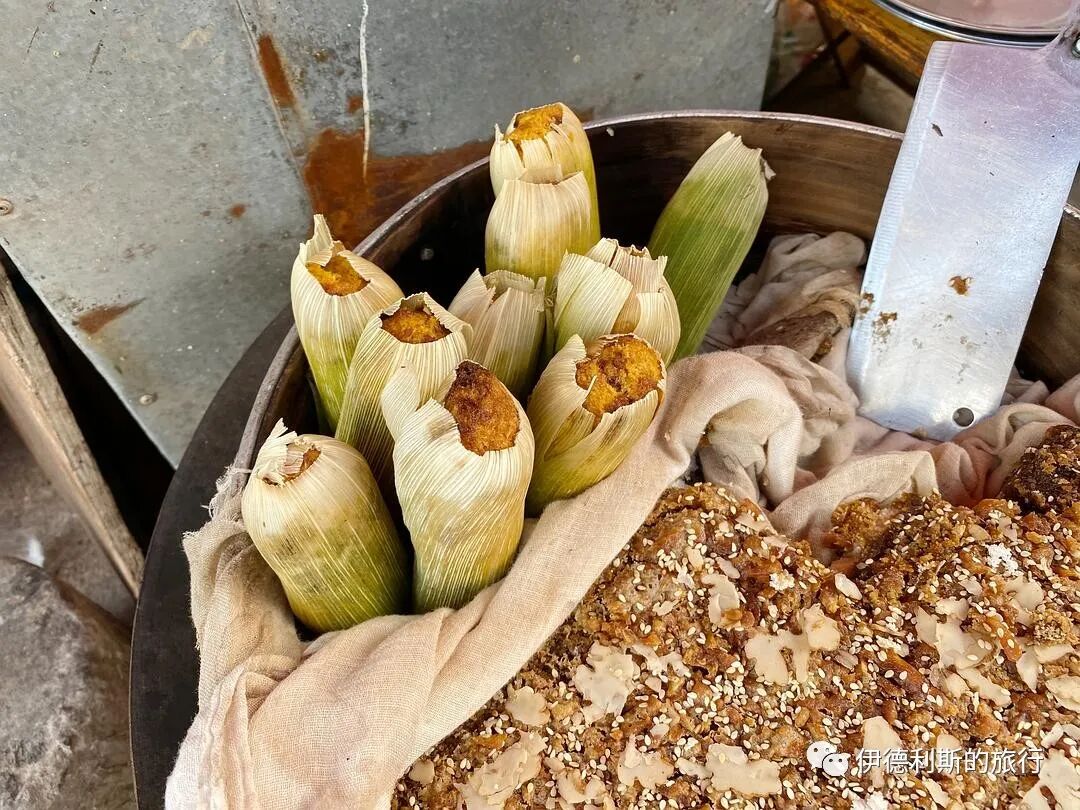
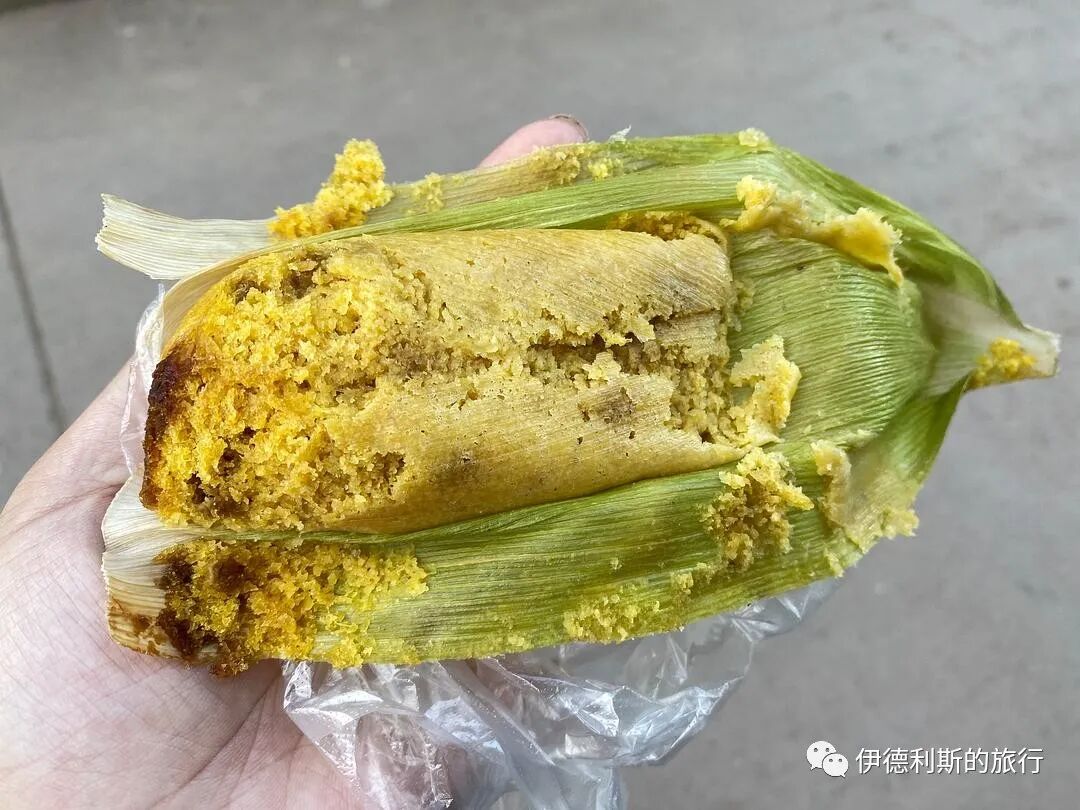
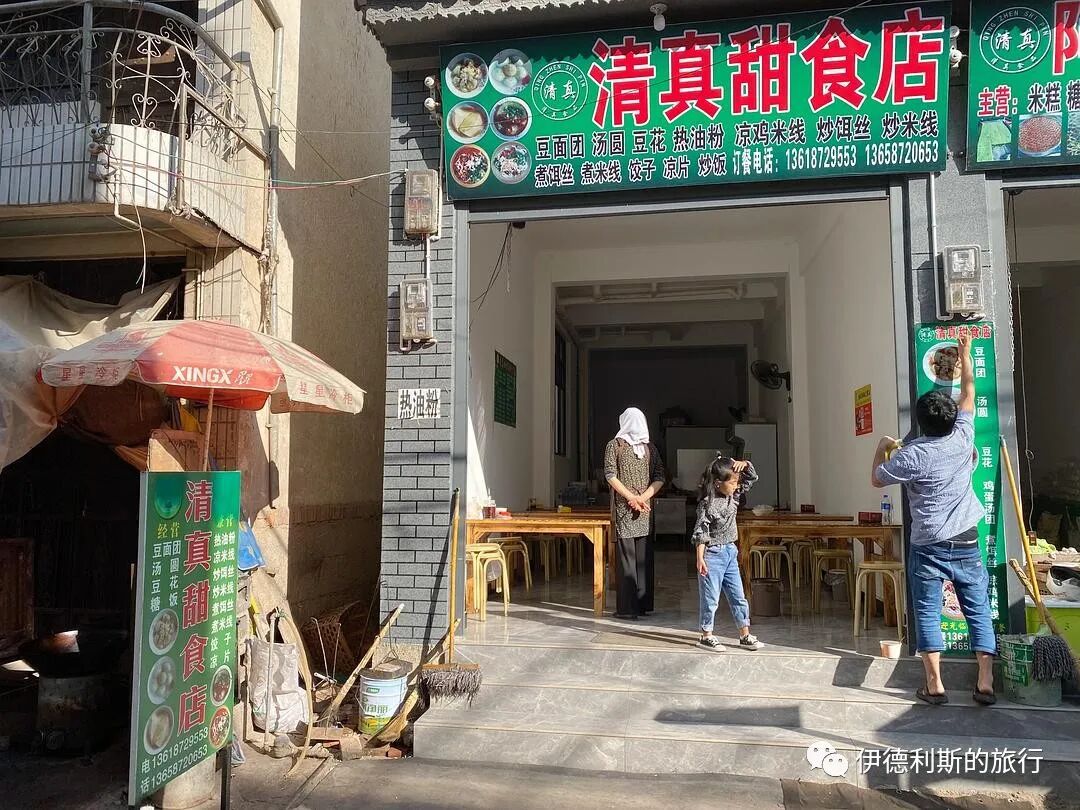
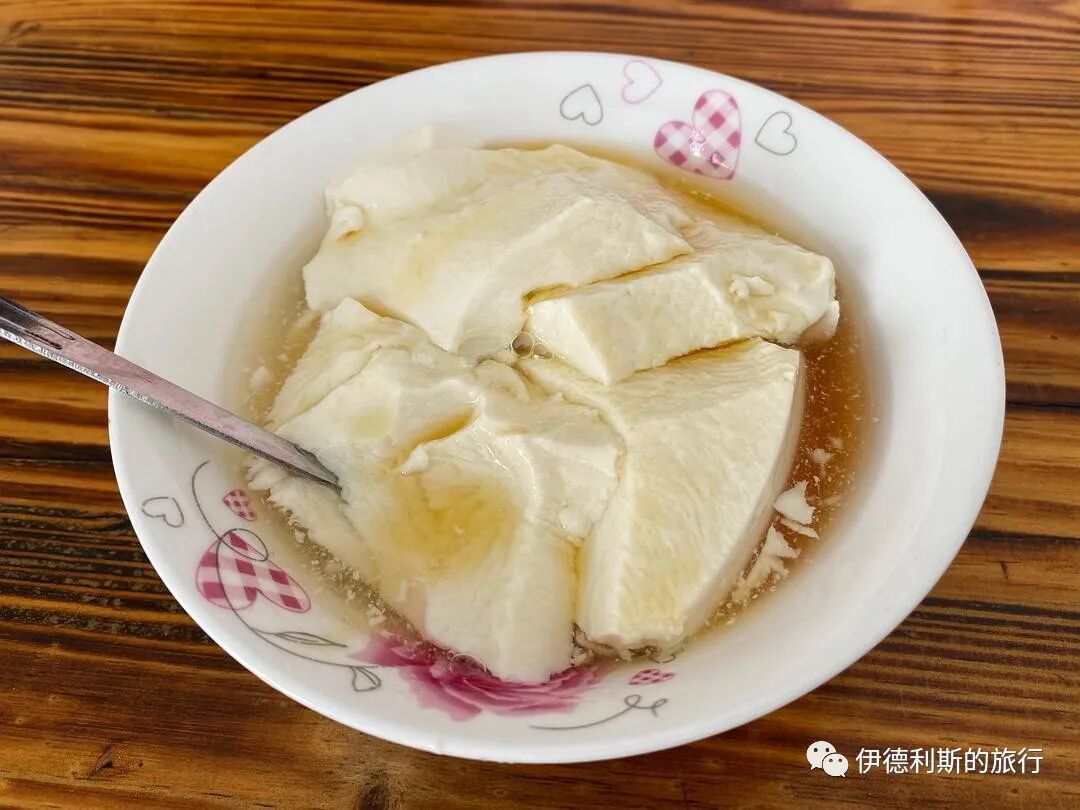
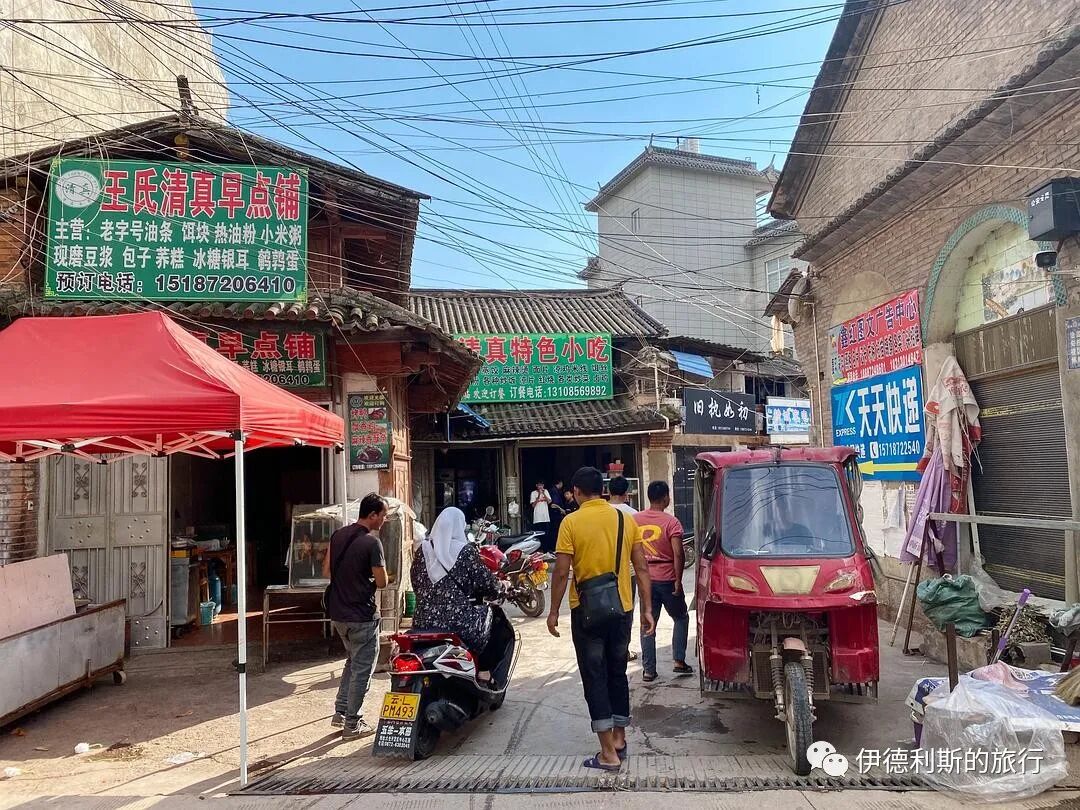
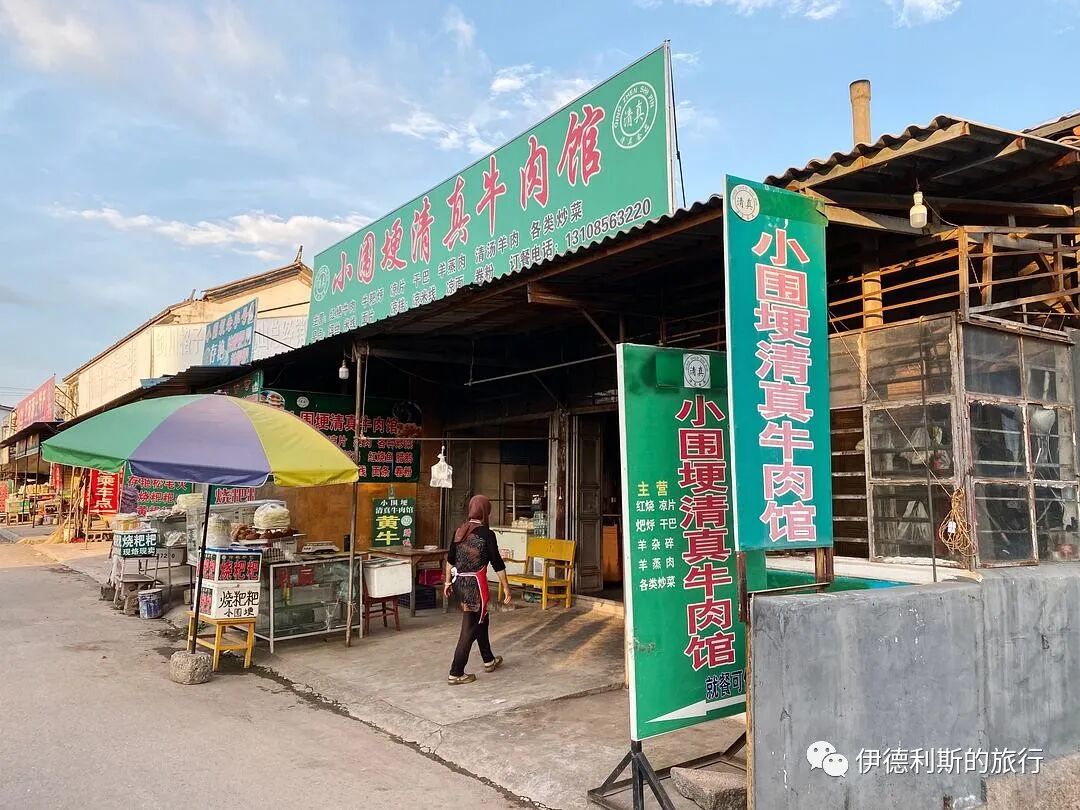
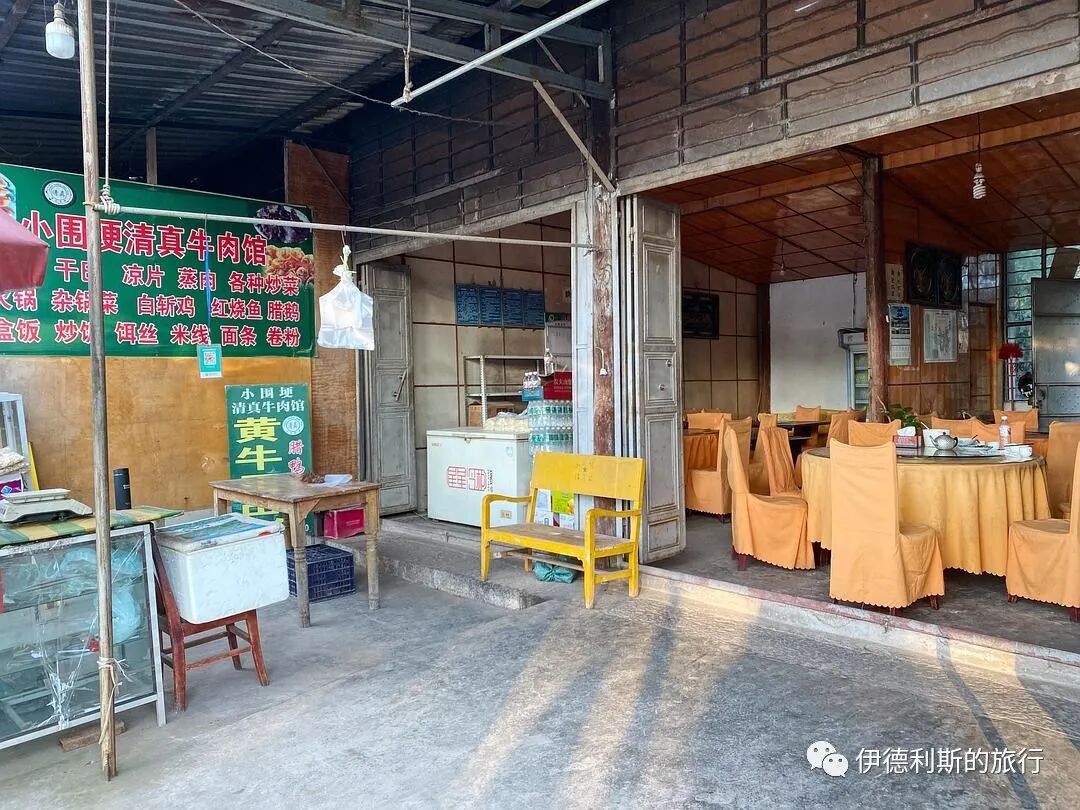
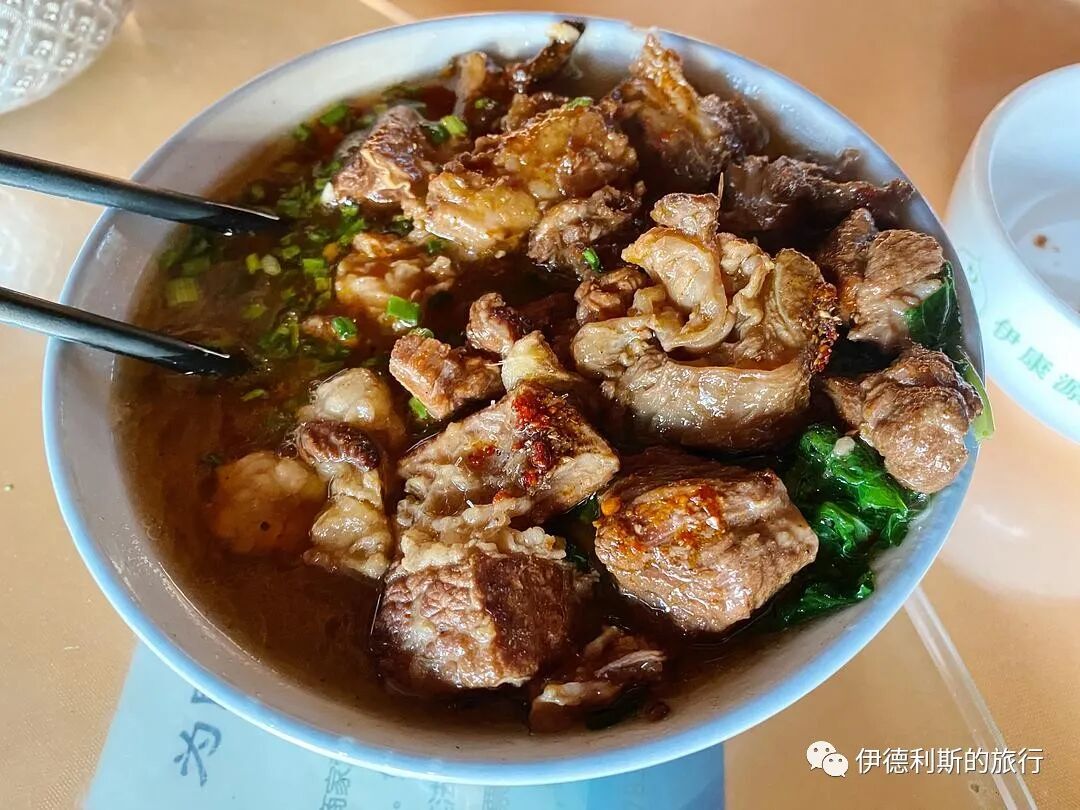
In the evening, we ate stir-fried cigu (arrowhead) with pickled vegetables and braised beef on the side of the road on Hedijie Street in Yongjian Town. The auntie who owns the place is from Xiaoweigeng Village. Restaurants that make stir-fry here generally do not have menus, but put all the ingredients in a freezer, and the guests point to whichever one they want, and they make it.
August 5: Market day in Yongjian Town
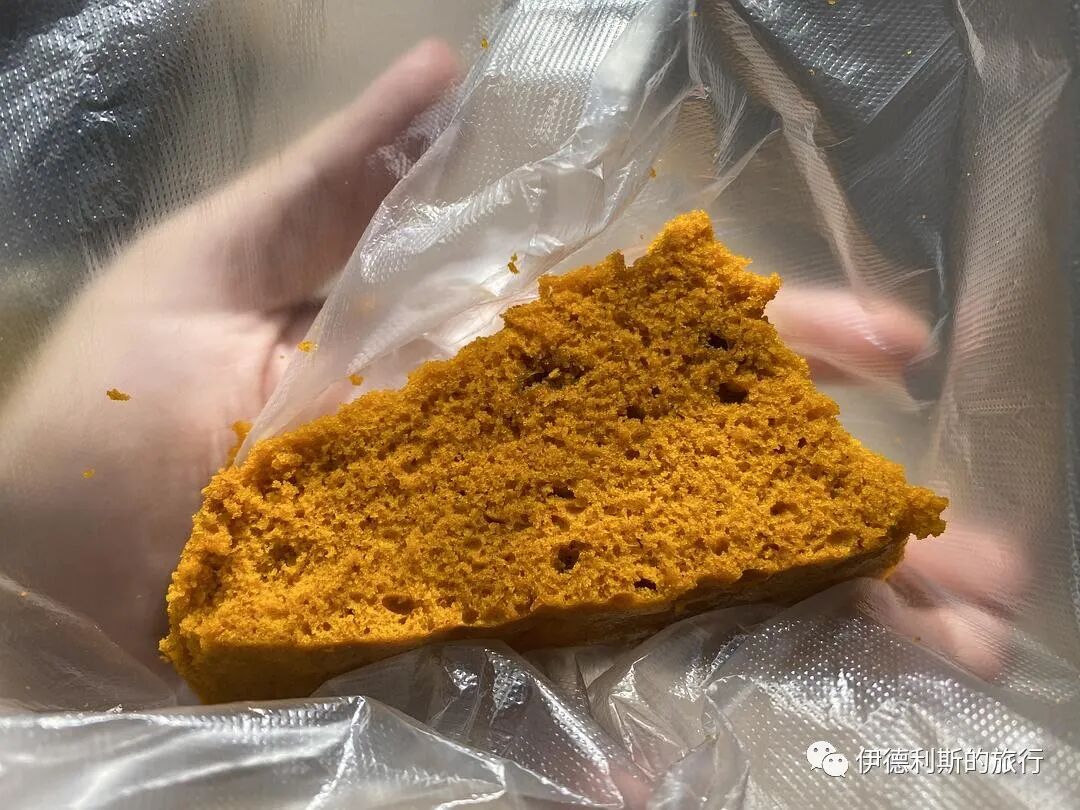
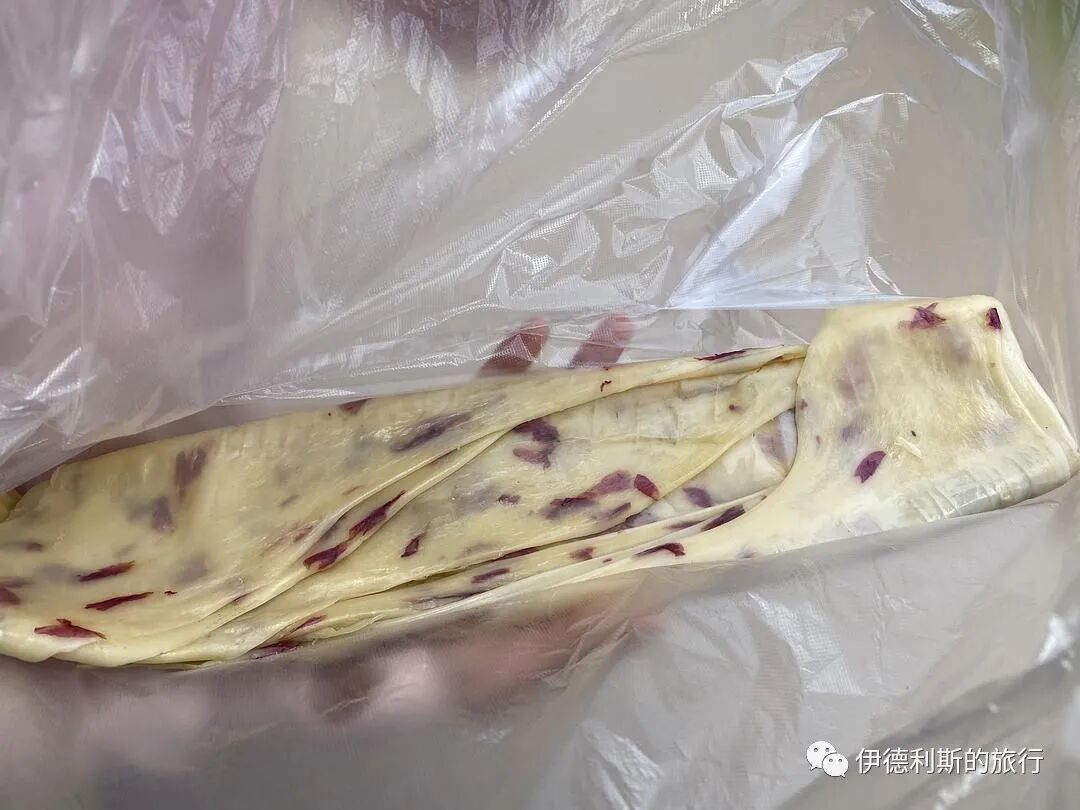
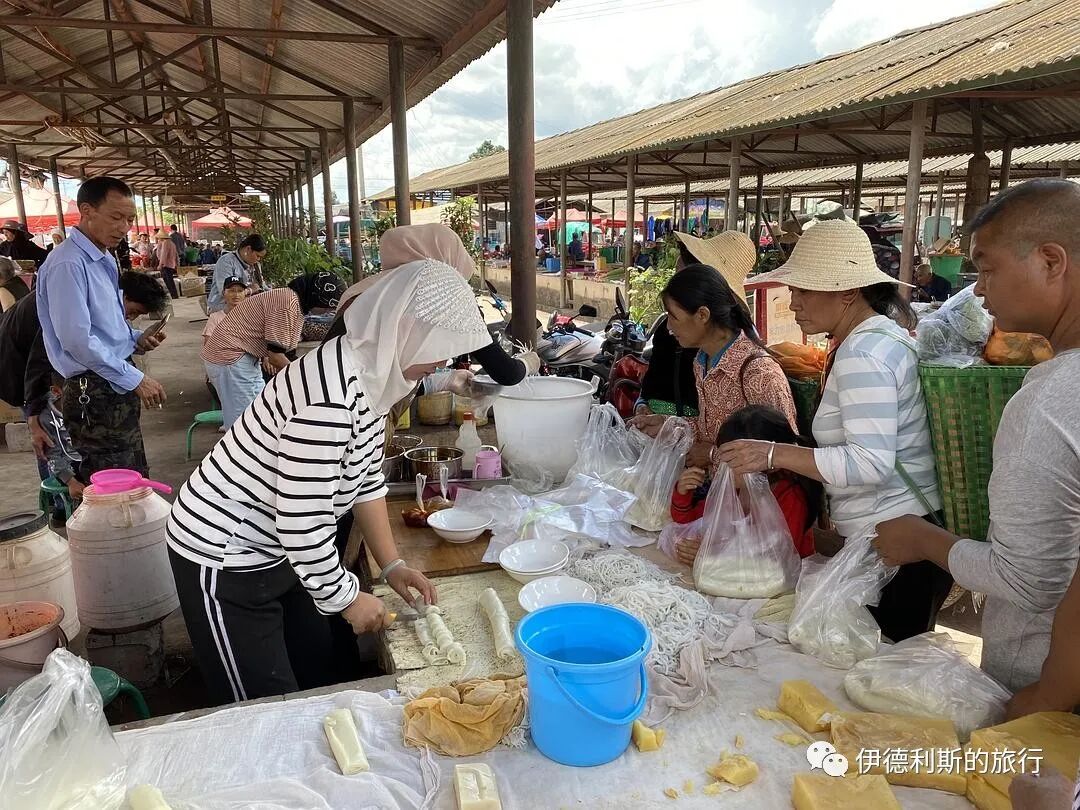
In the morning, we caught a very lively market in Yongjian Town. We ate hot youfen (pea starch jelly), juanfen (rolled rice noodles), qiaogao (buckwheat cake), and brown sugar liangxia (cold shrimp-shaped jelly), and also bought rose-flavored rushan. The youfen is really delicious. It is made by peeling peas and grinding them in a stone mill. The texture is soft and smooth, and it has crispy rice crust inside.
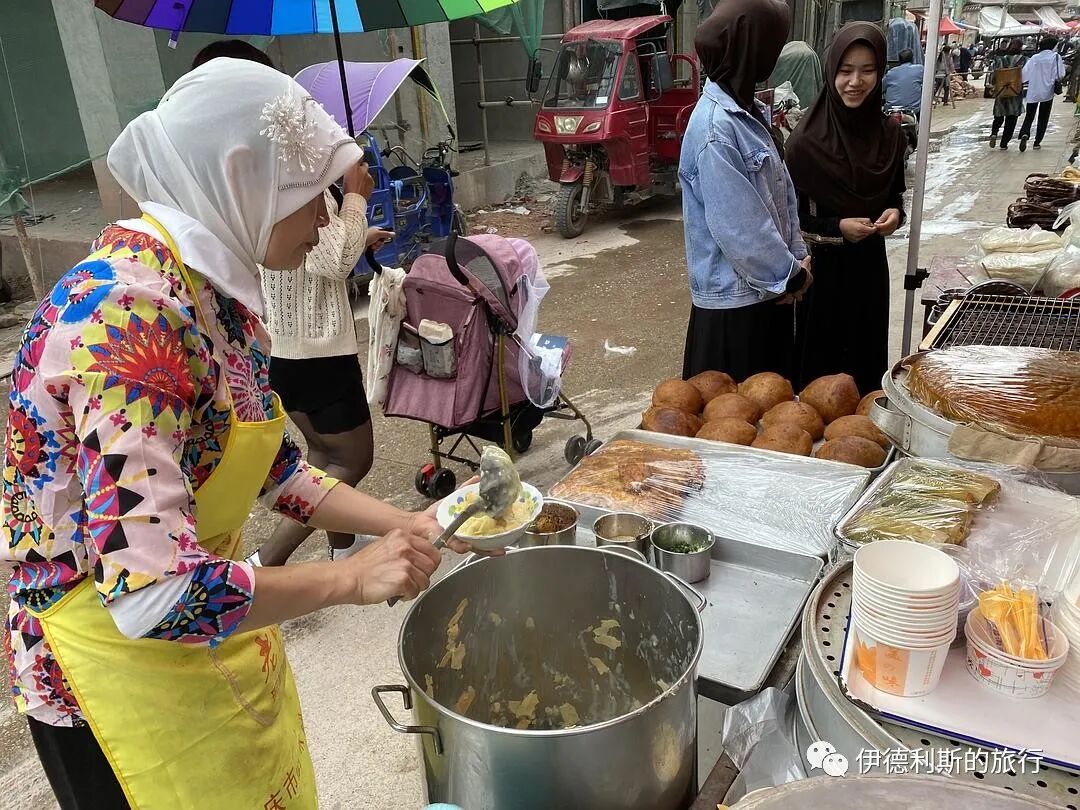
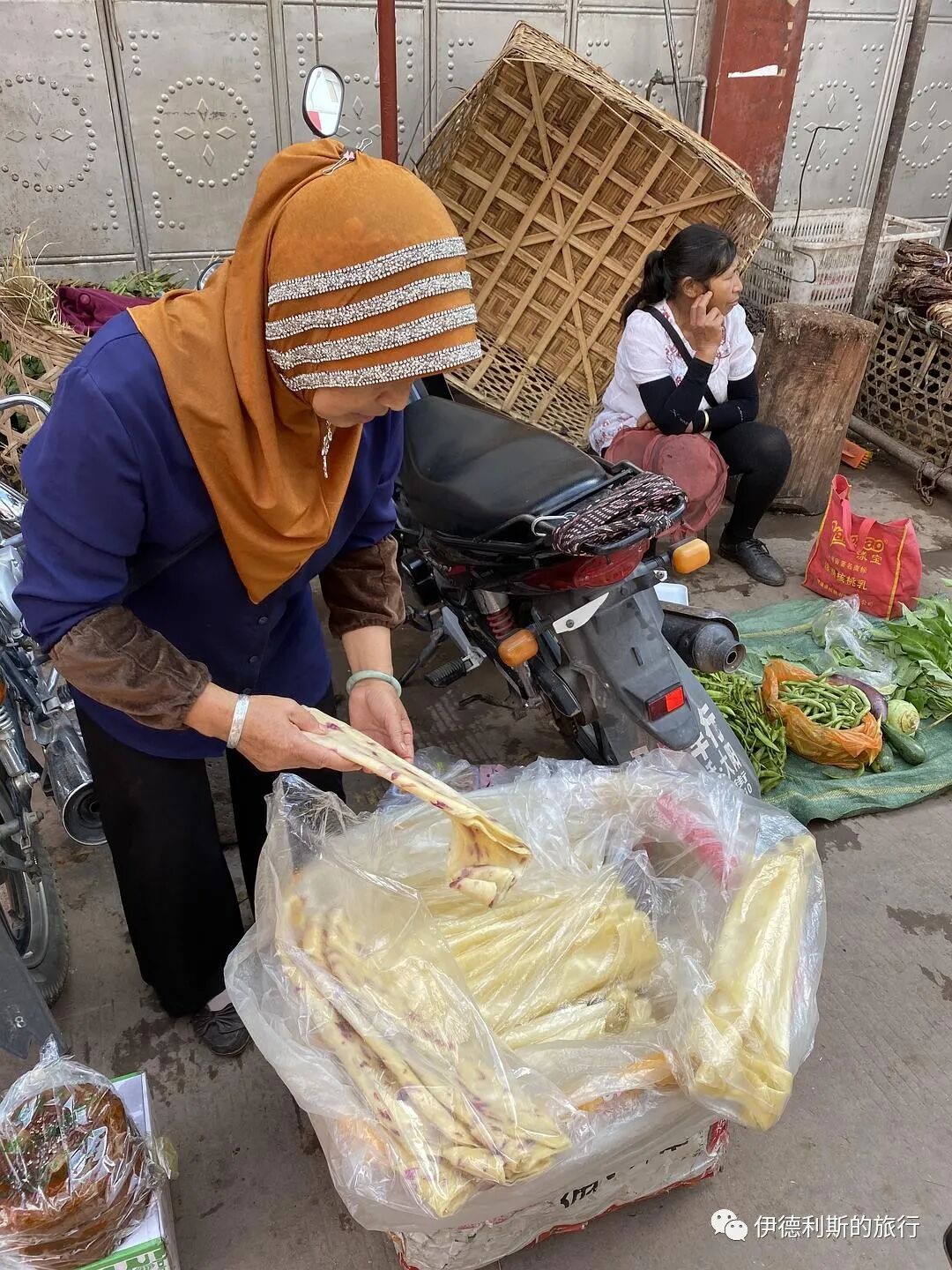
Yi and Hui Muslim aunties are together at the market.
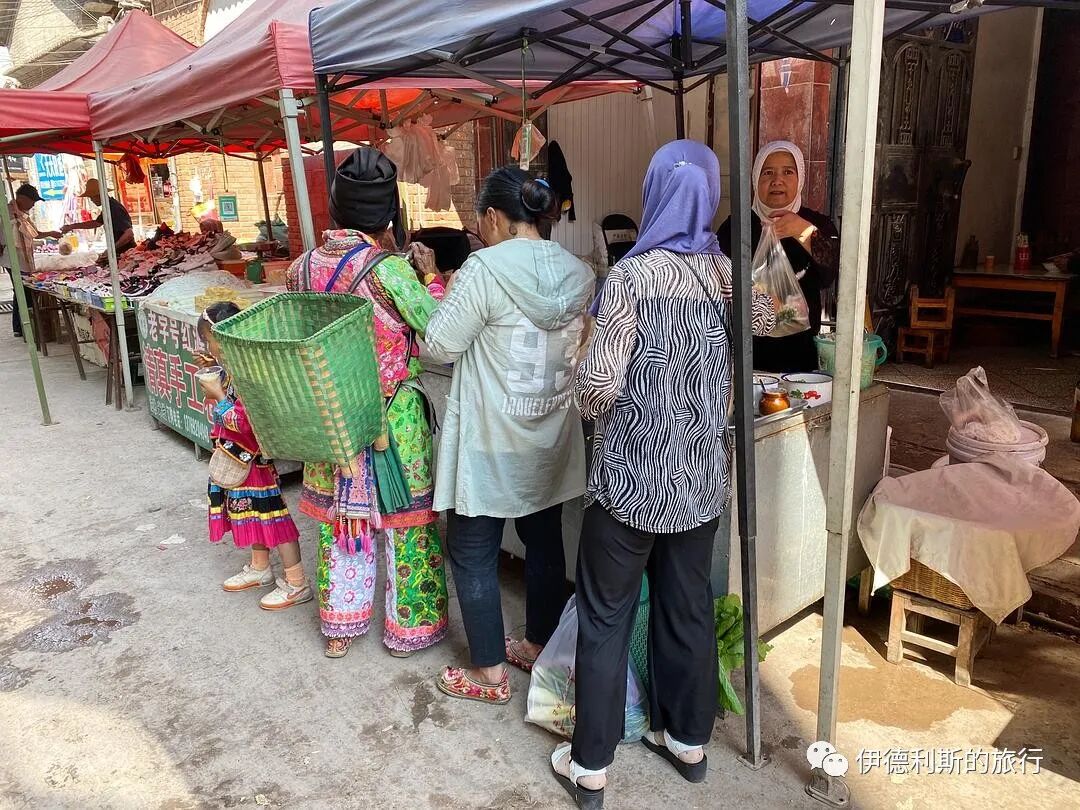
Market day in Huihuideng
We set off from Yongjian Town to Huihuideng Village and caught another big market. We ate figs, ice cream, and soy milk. There are too many fun things here. Besides Hui Muslims, there are also many Yi aunties and grandmothers wearing traditional clothing. The Yi clothing is very beautiful.
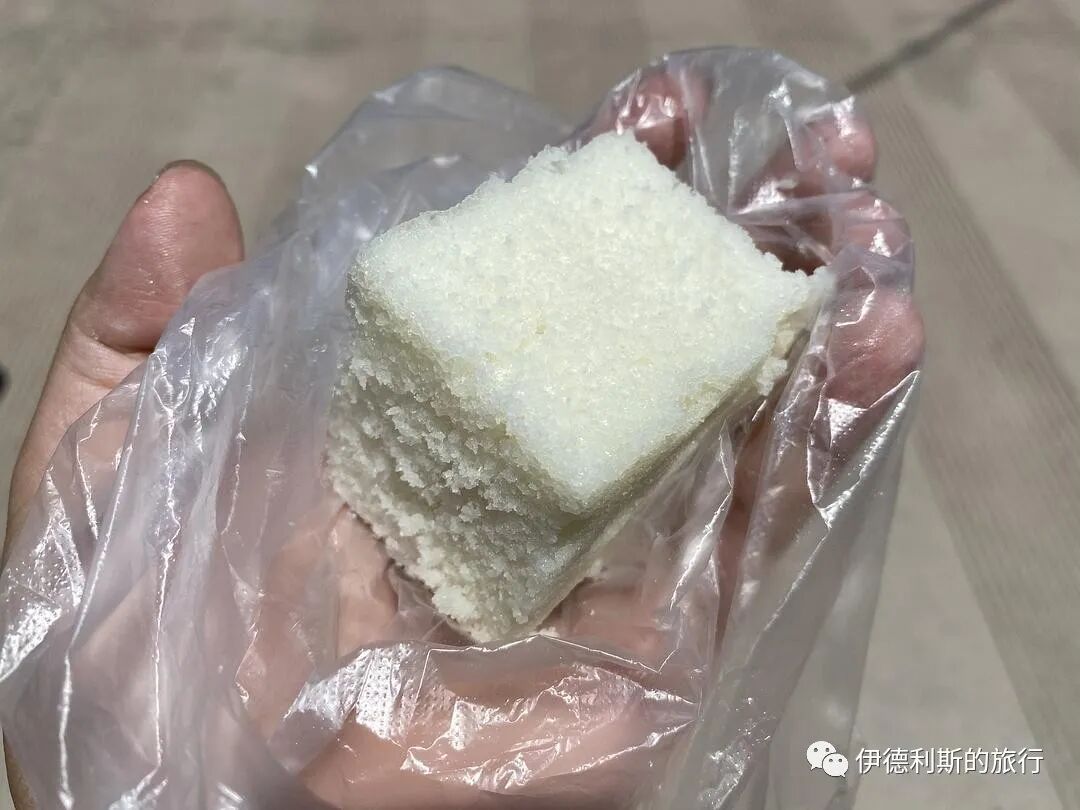
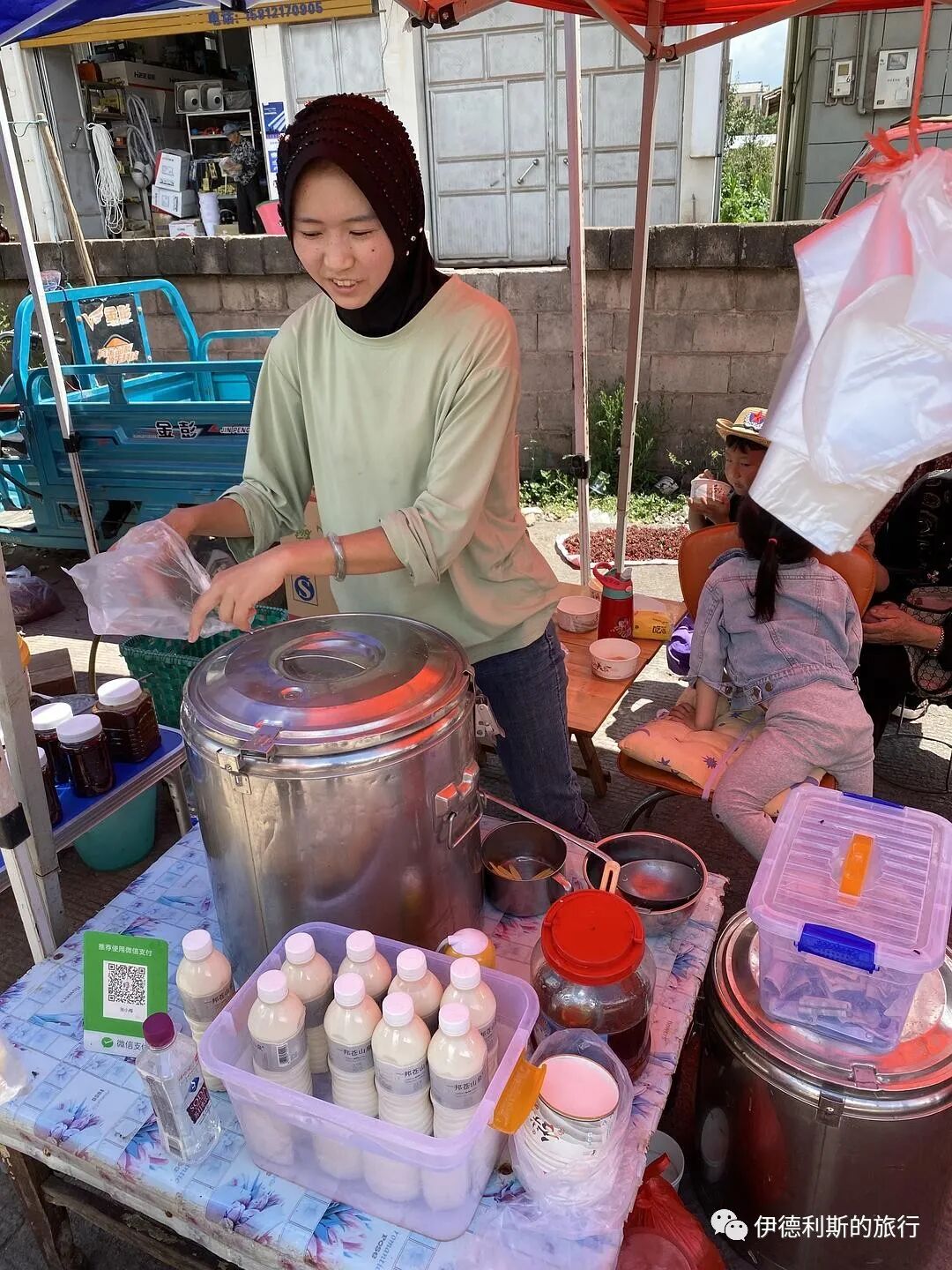
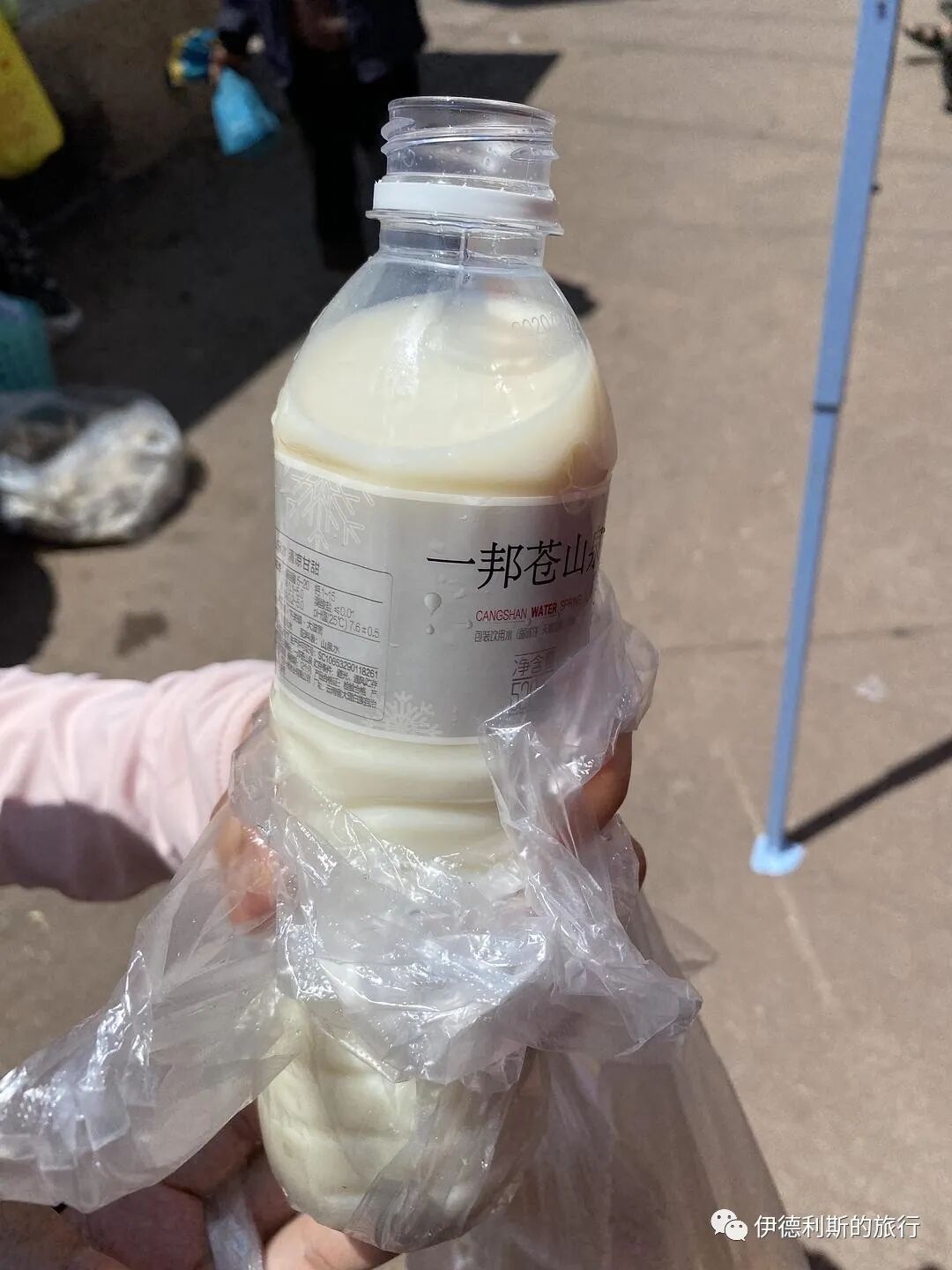
Natto
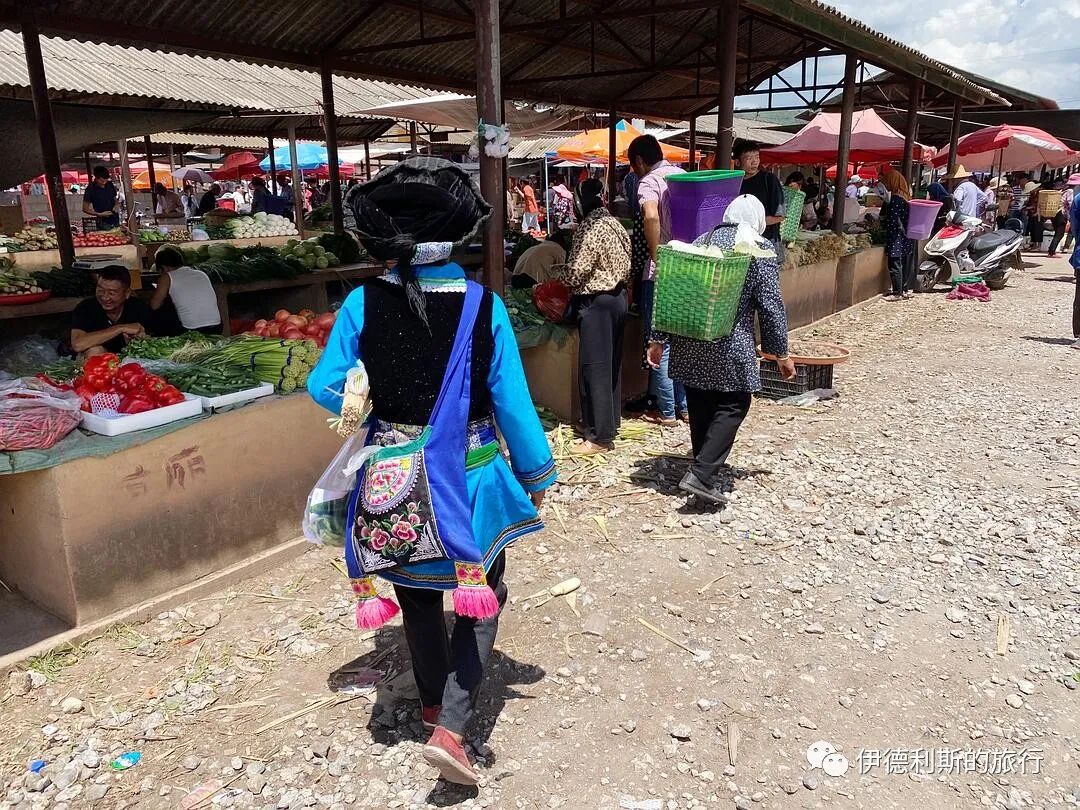
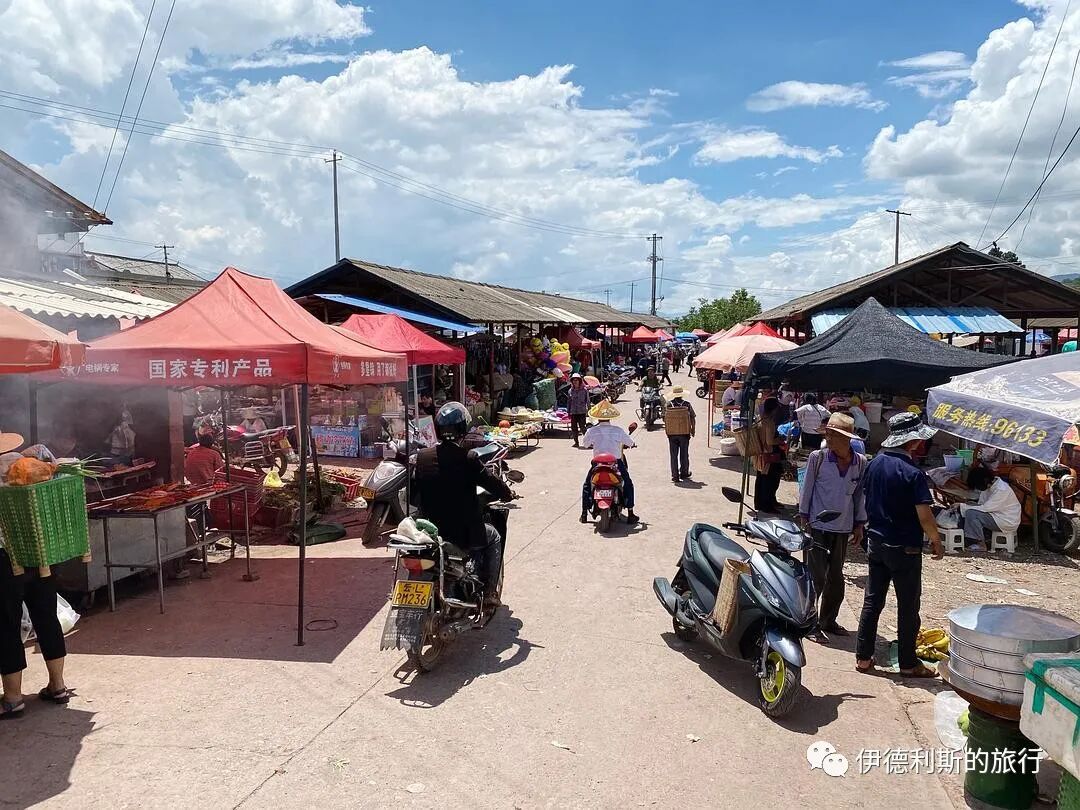
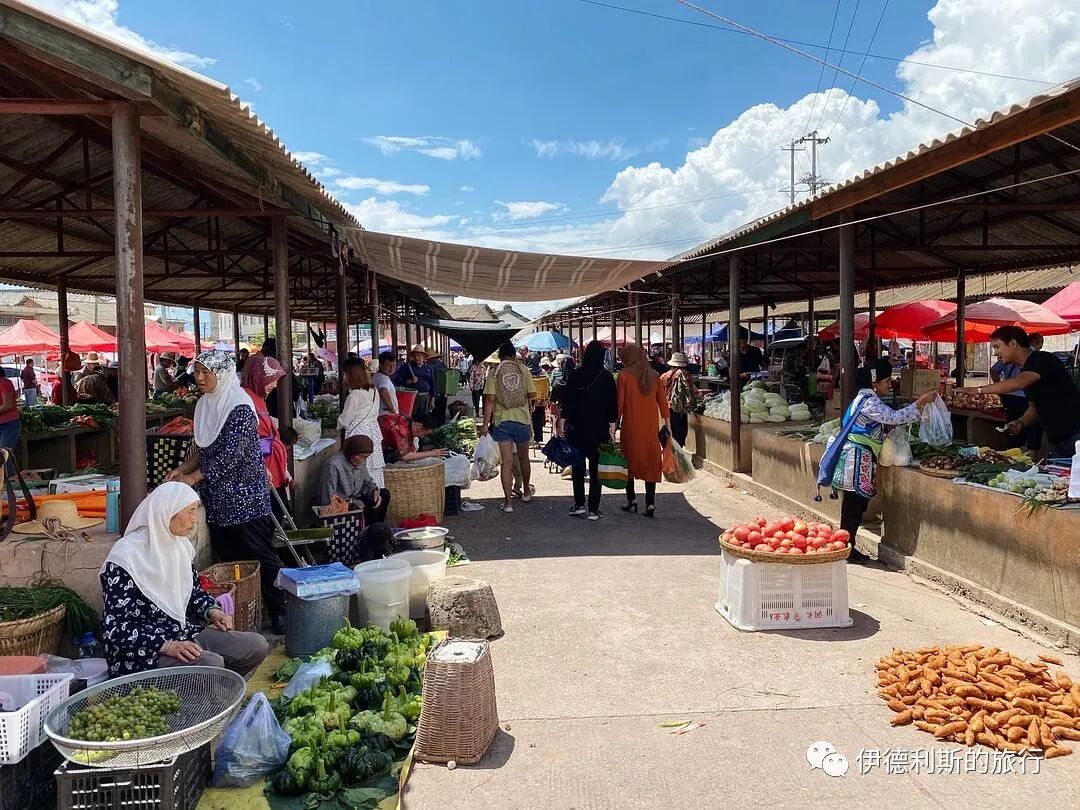
The scenery of Huihuideng Village
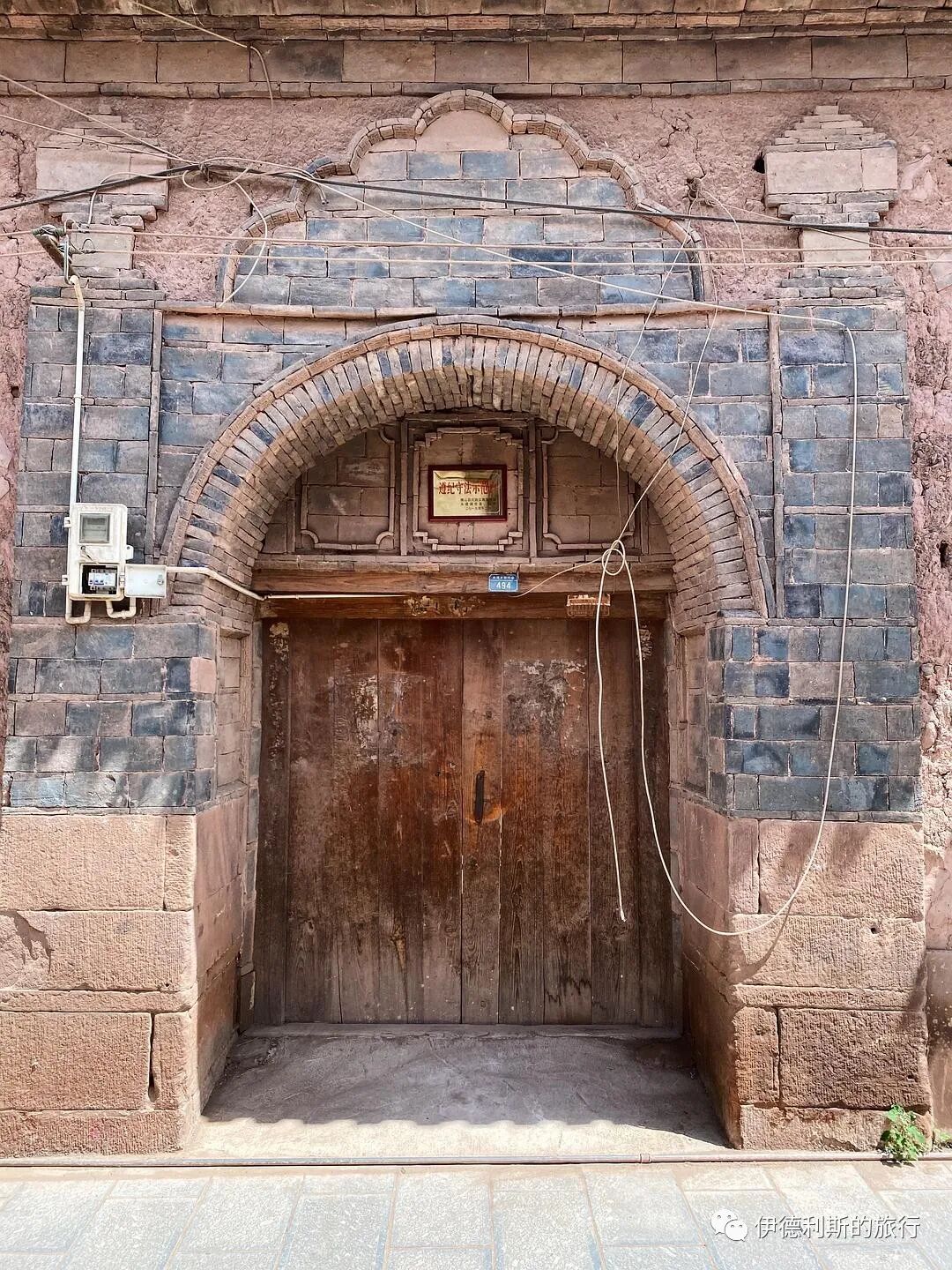
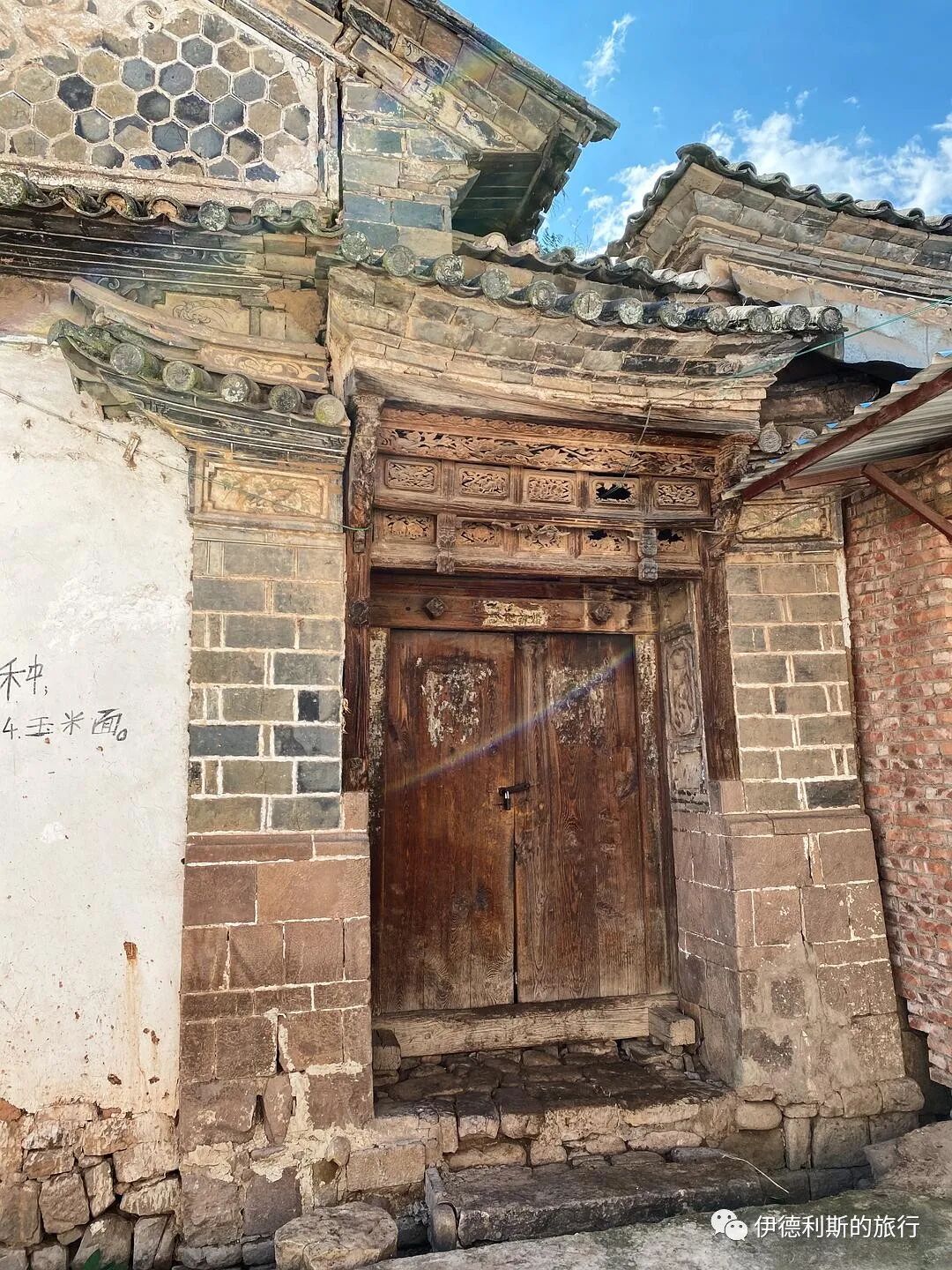
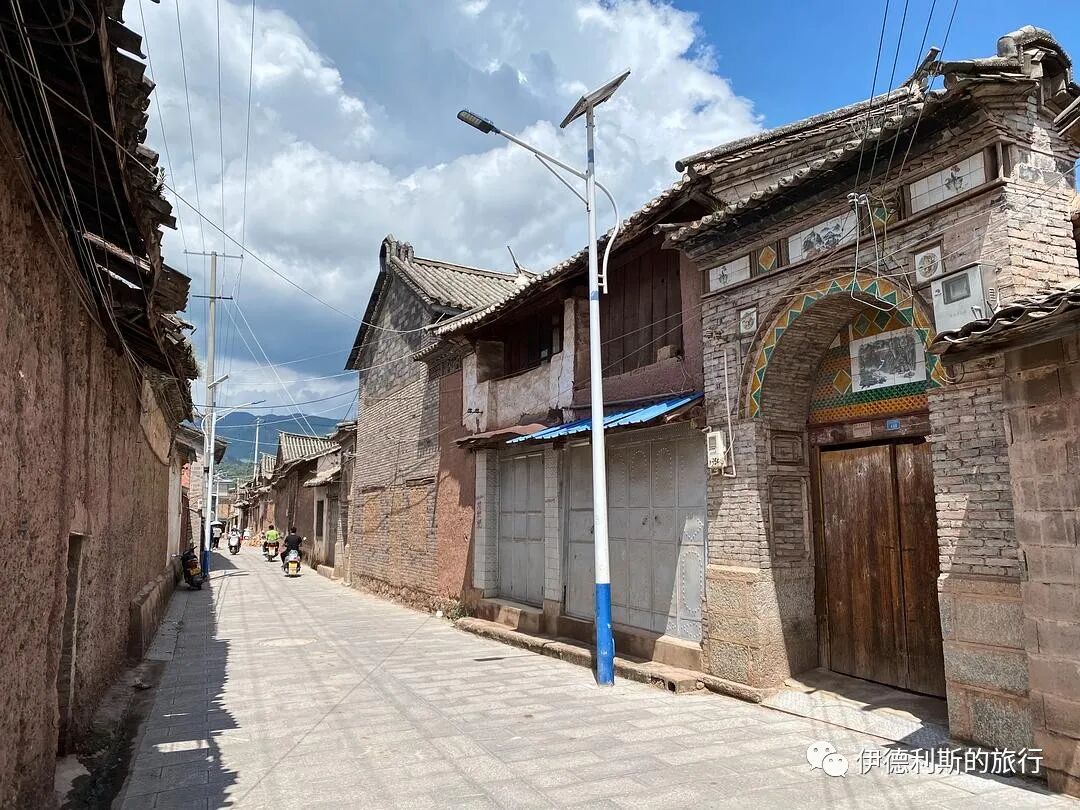
A small shop in Huihuideng Village that makes handmade headscarves. Zainabu bought one here.
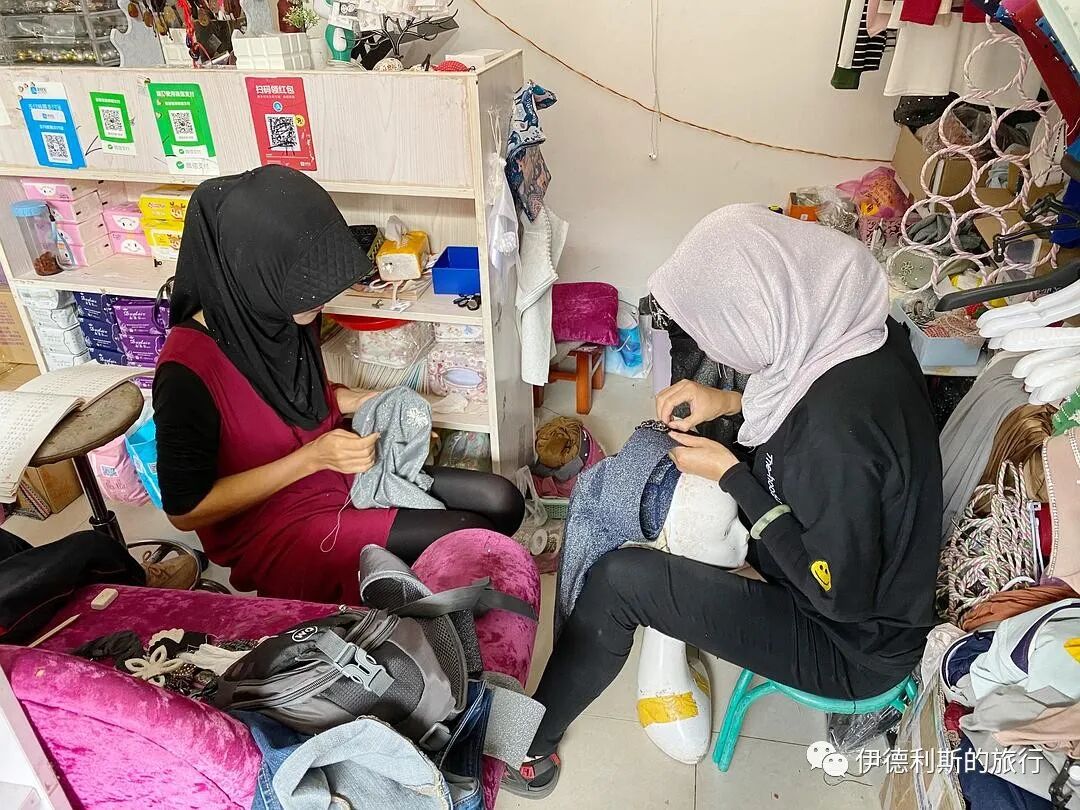
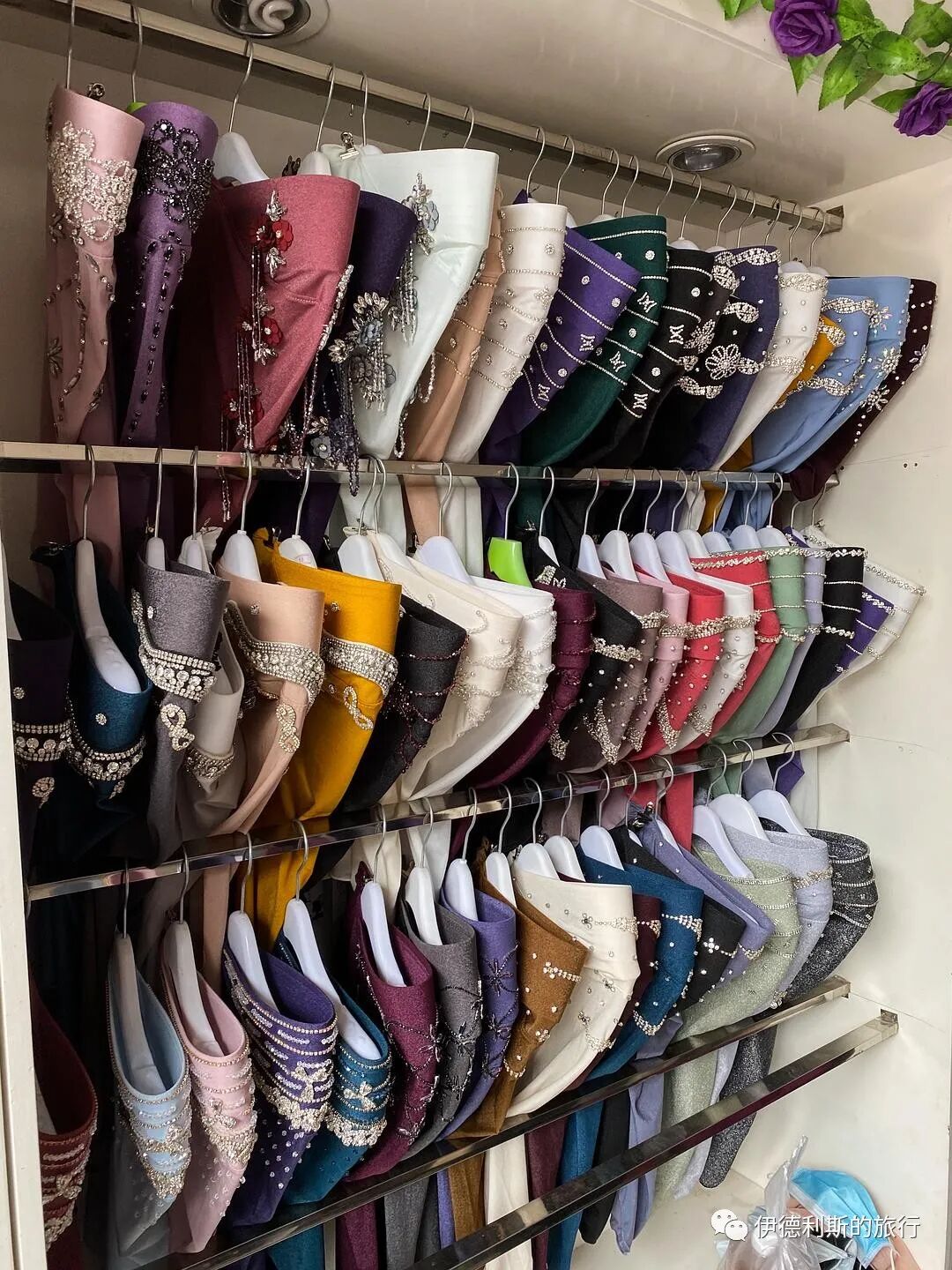
Qingmenkou Village
We strolled from Huihuideng Village to Qingmenkou Village. Qingmenkou is on the northwestern edge of the Weishan Basin and is a very beautiful Hui Muslim village.
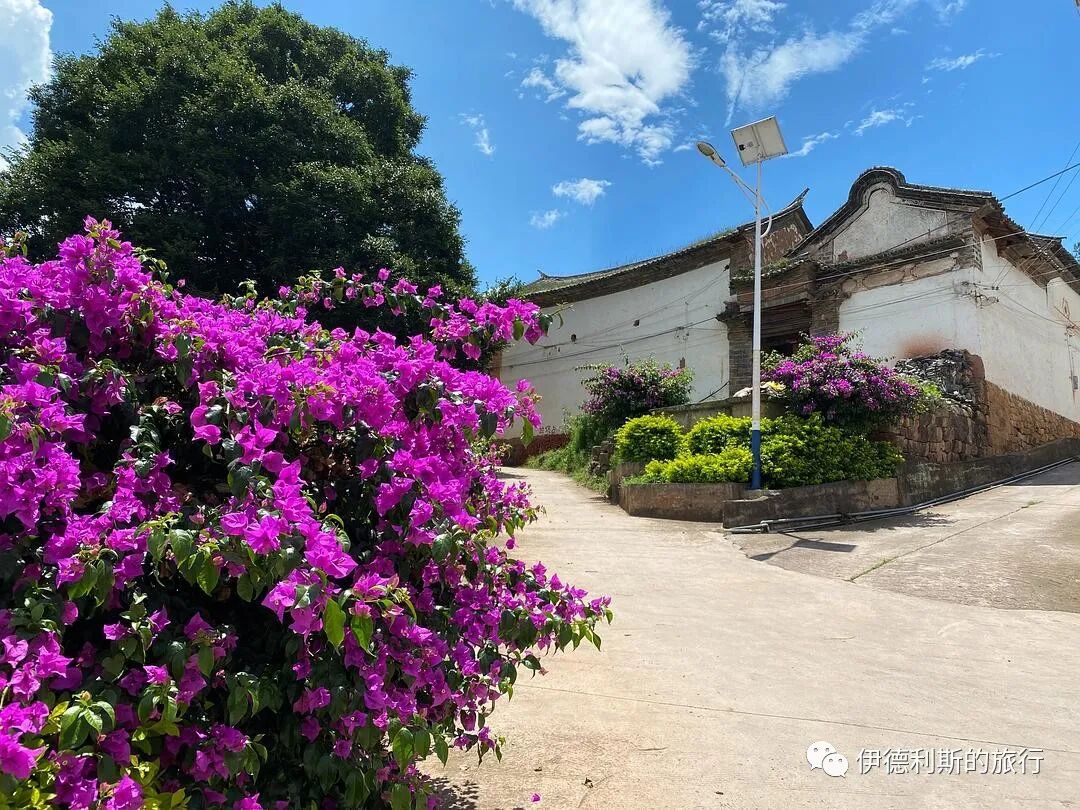
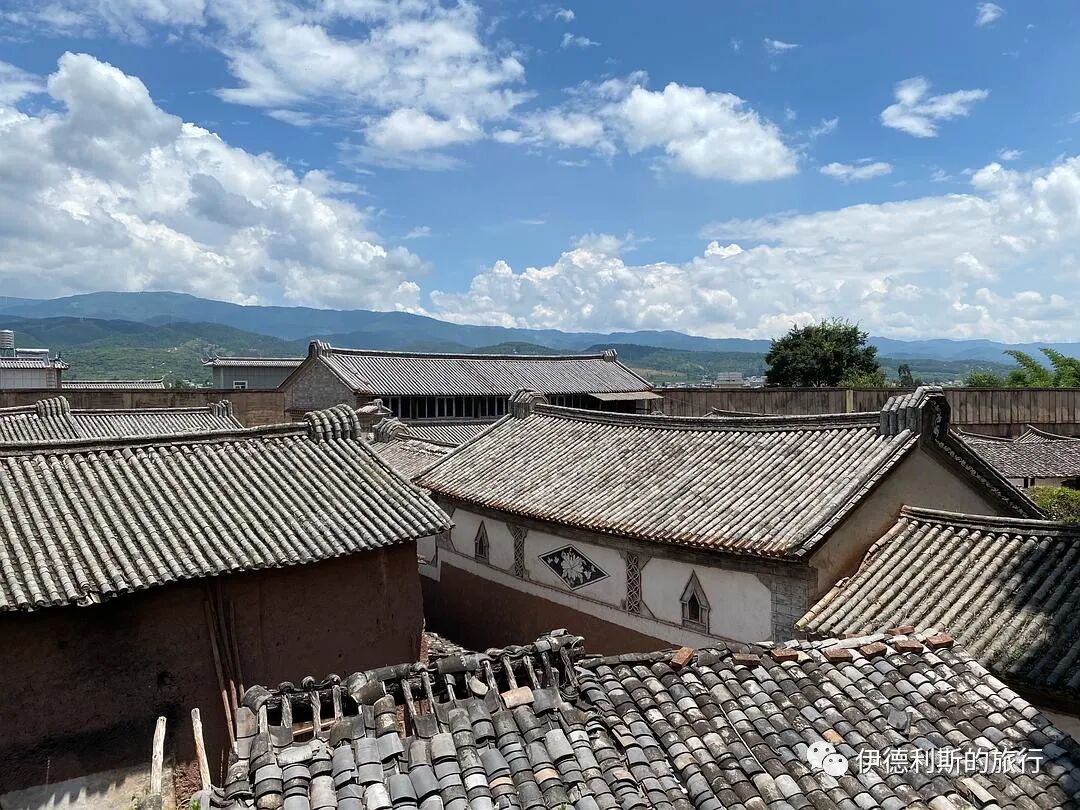
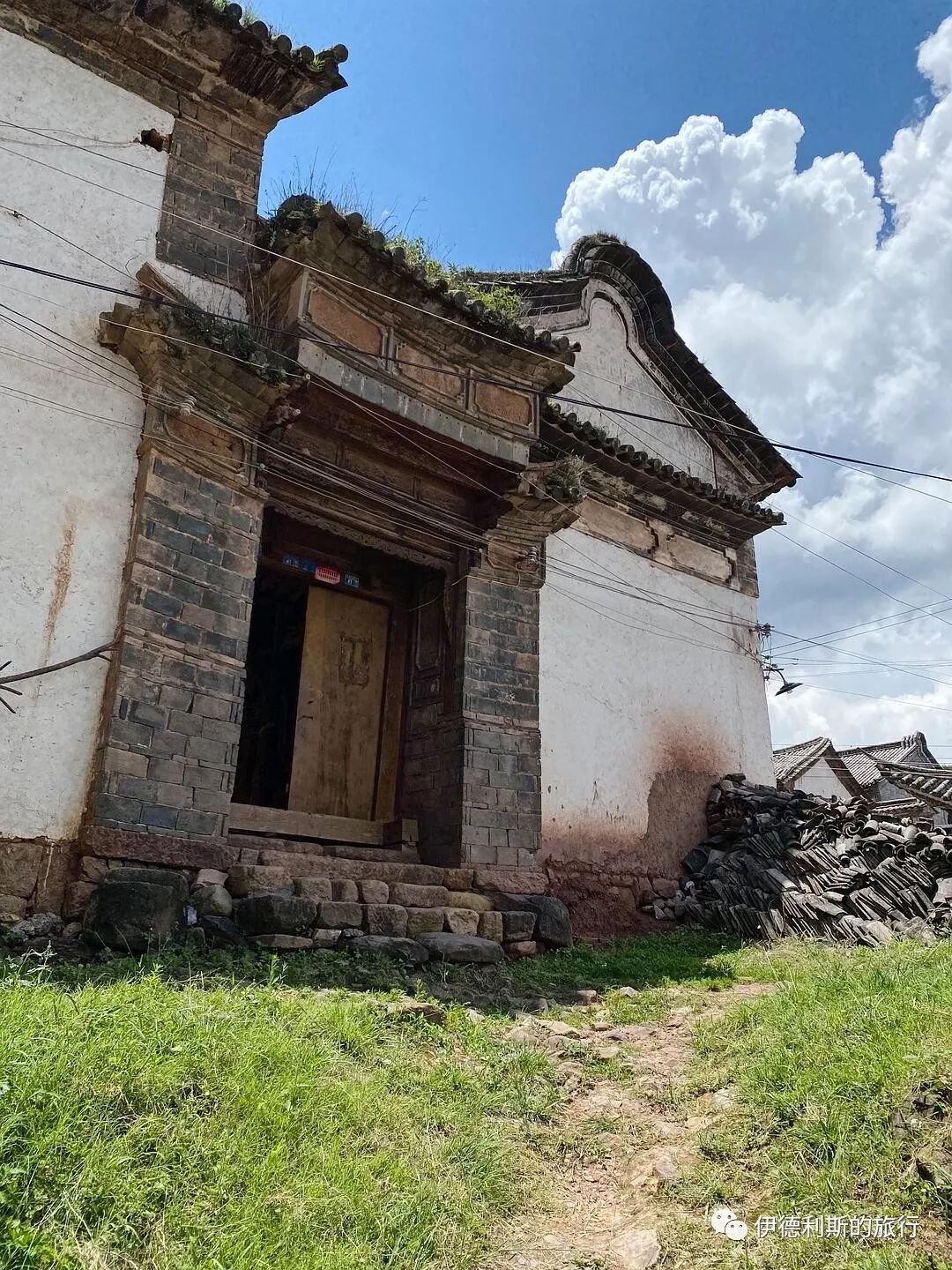
On the way back to Huihuideng Village from another village, Xishulong Village, we walked for a while and then caught a tricycle.
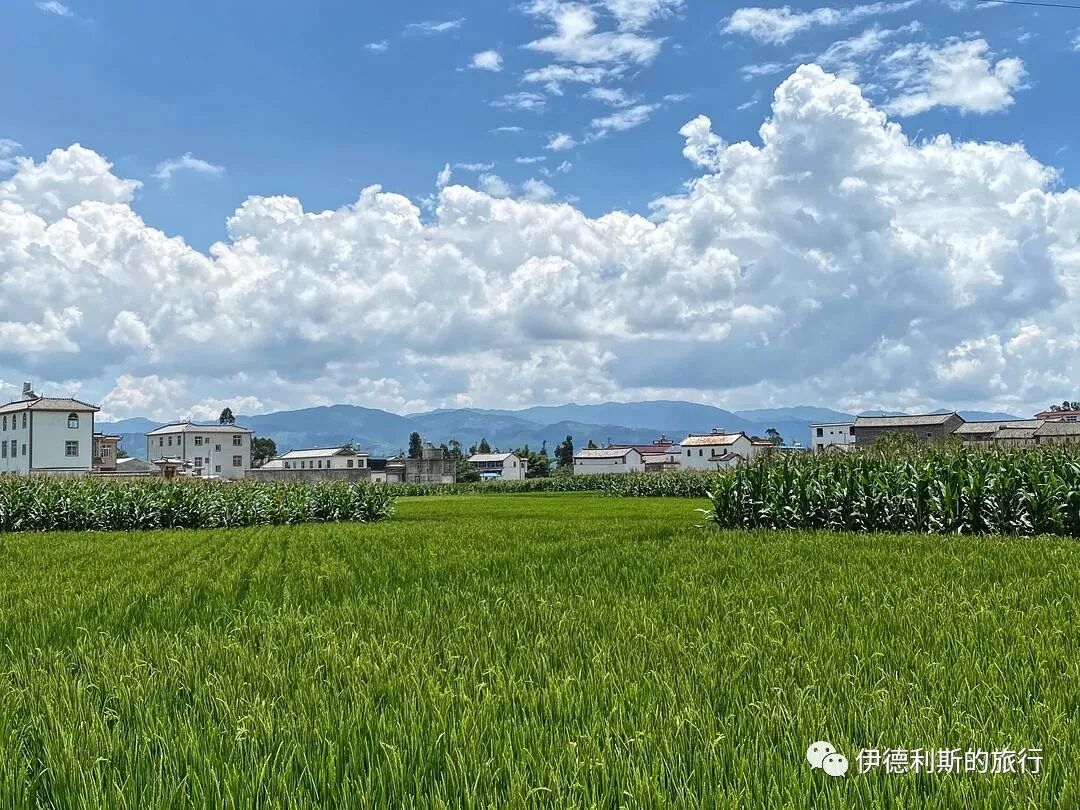
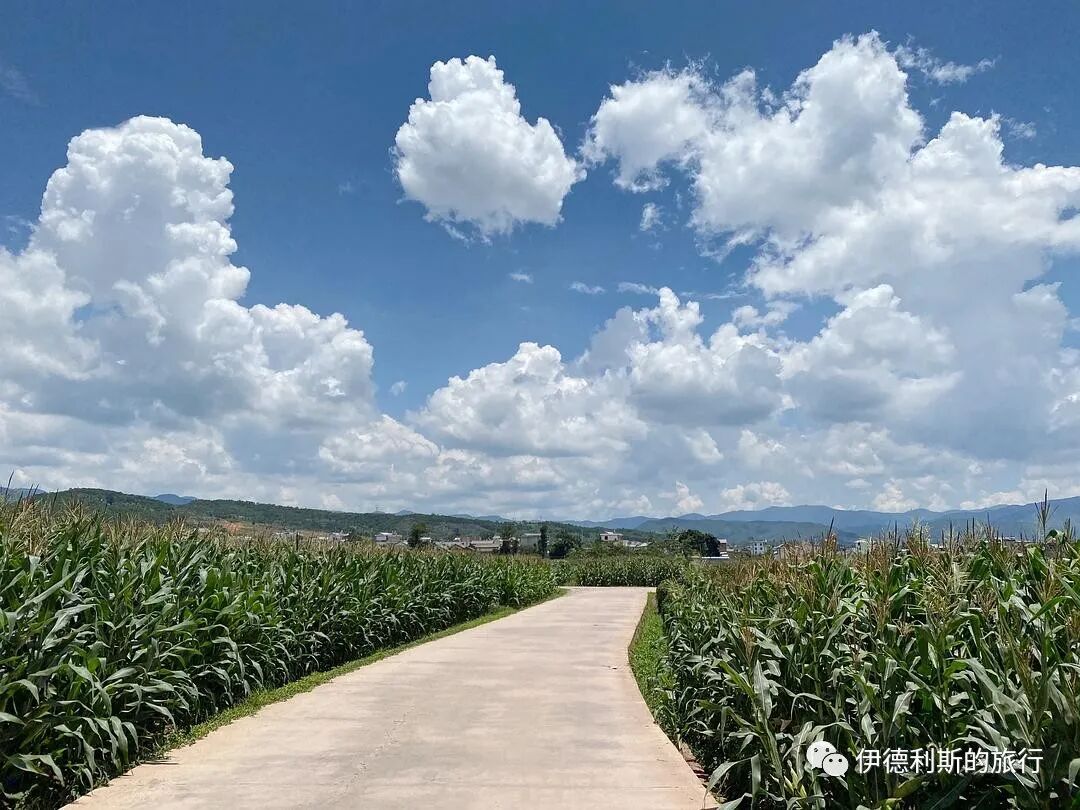
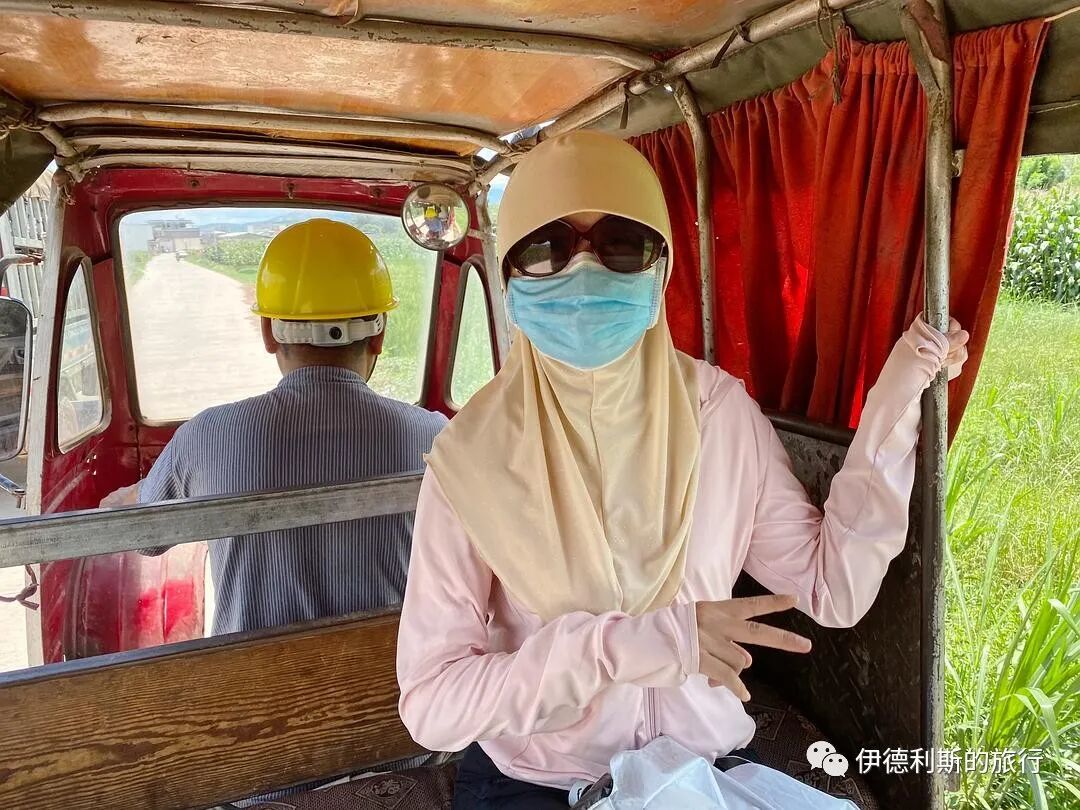
At noon, we ate stir-fried dayudou (a type of bean) with minced meat and cold beef slices next to the market in Huihui Village.
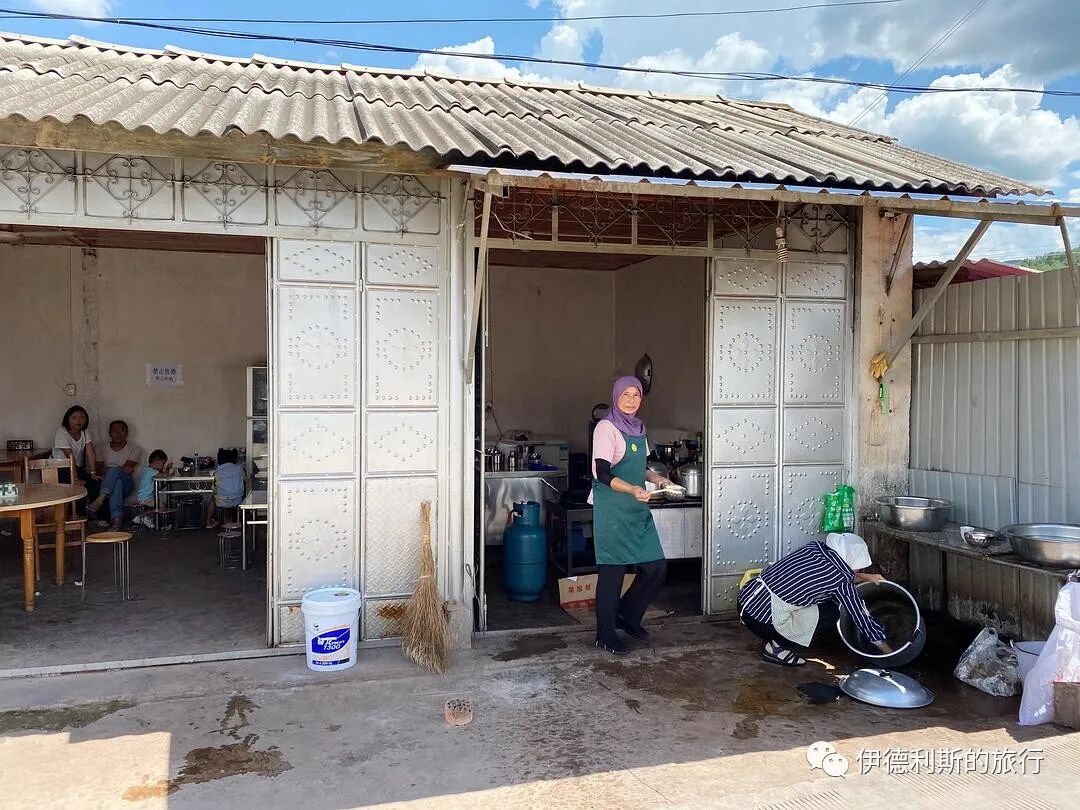
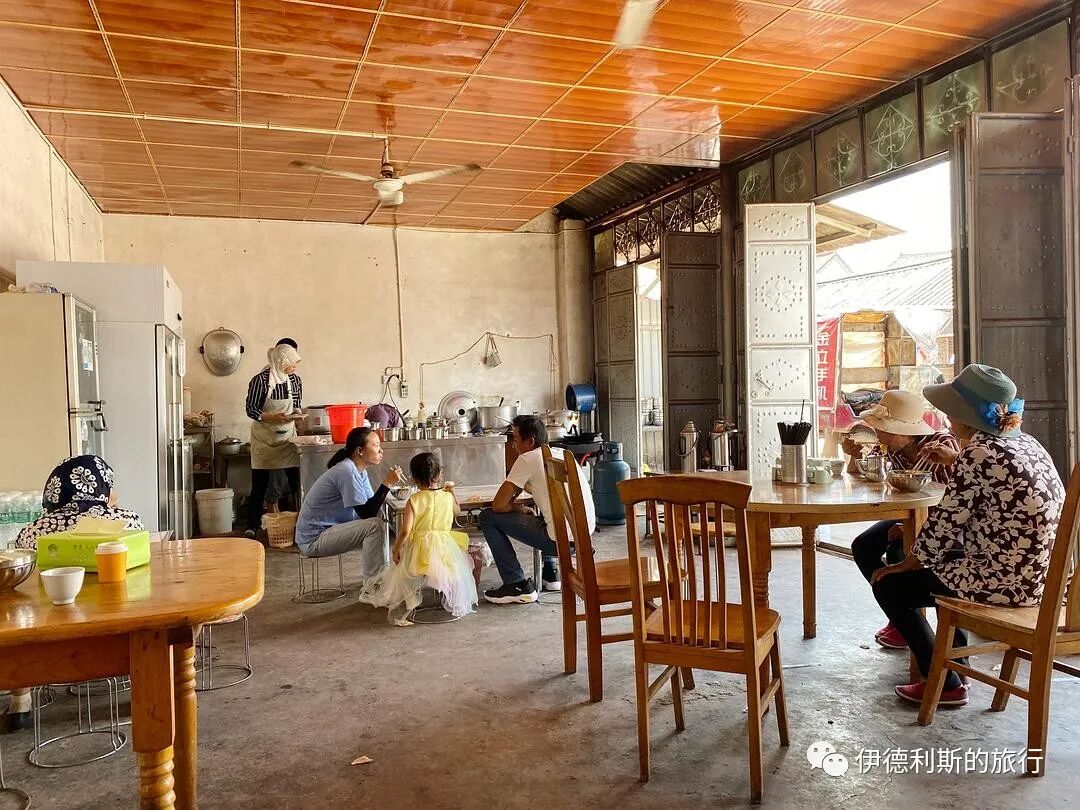
Return to Weishan County town
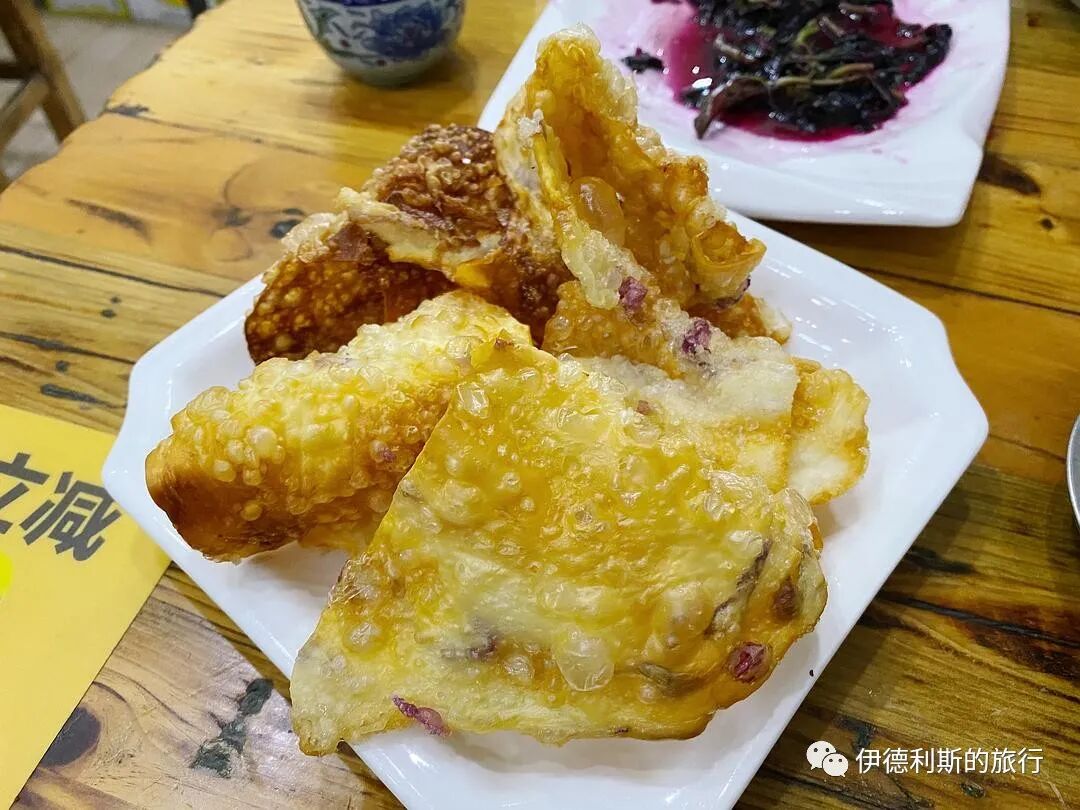
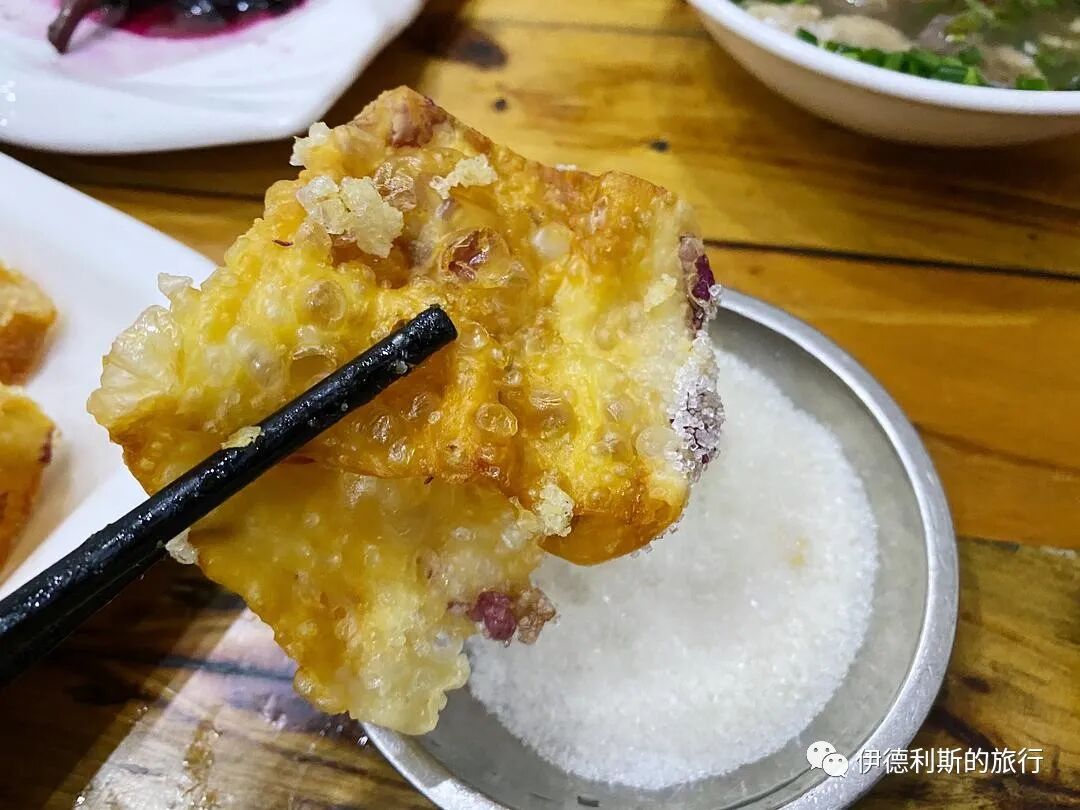
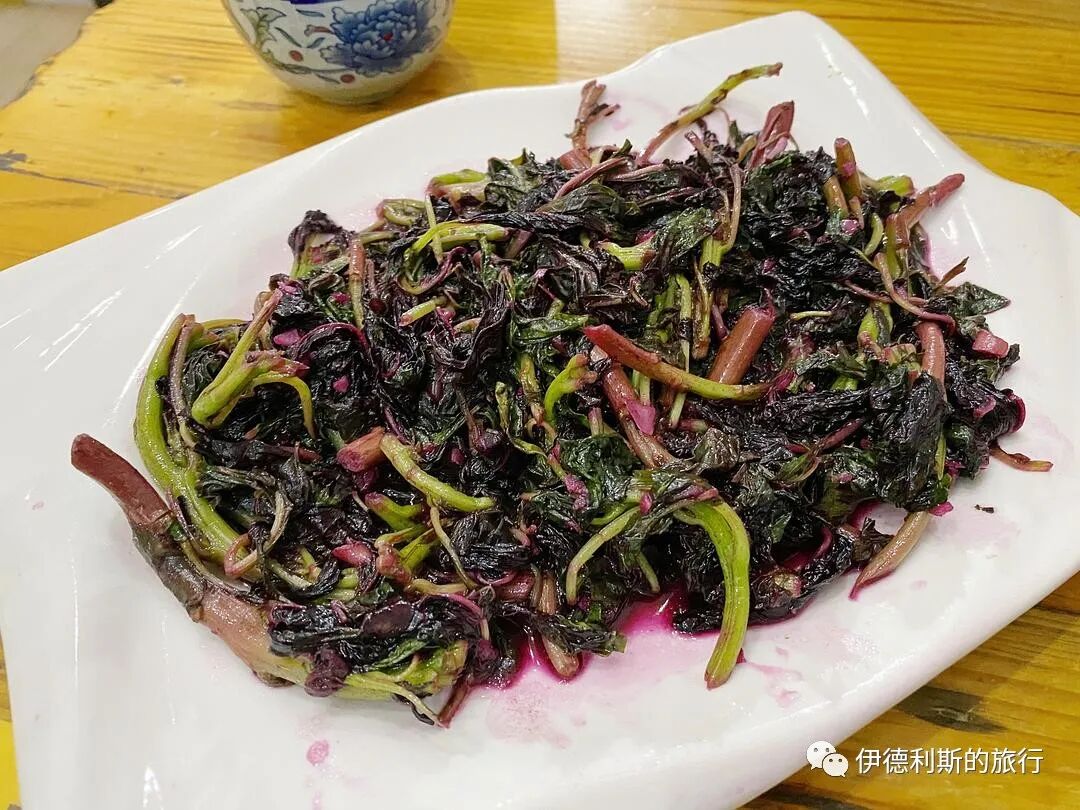
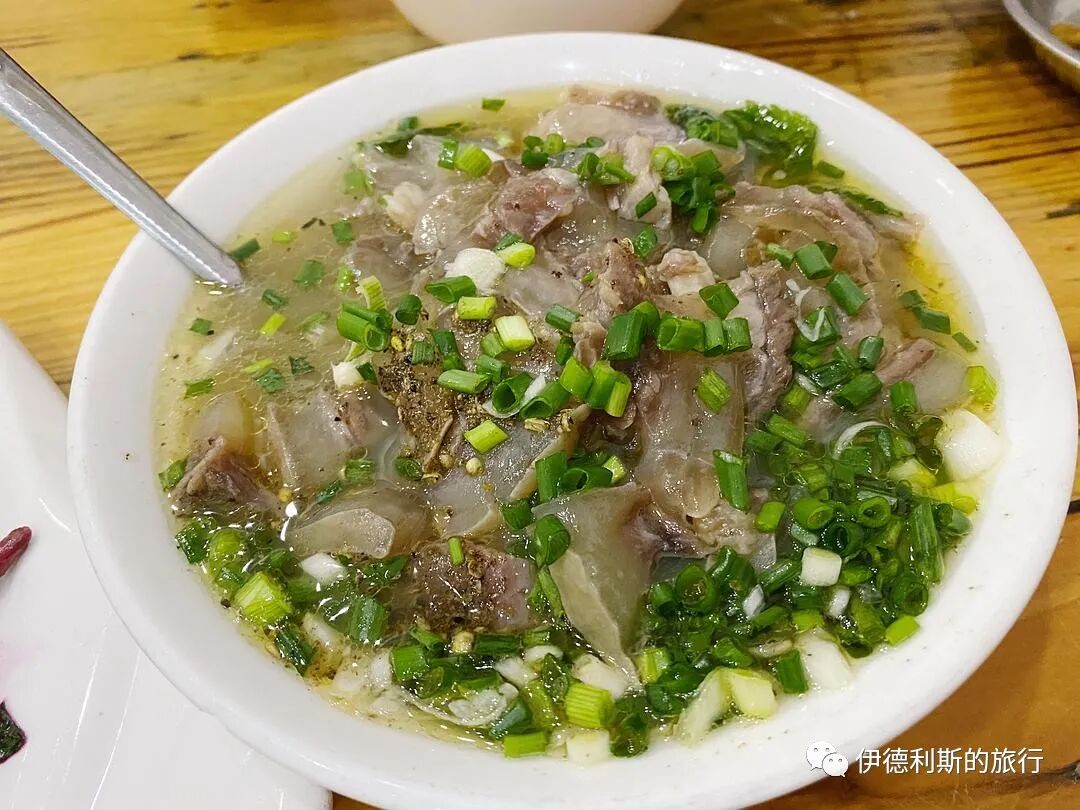
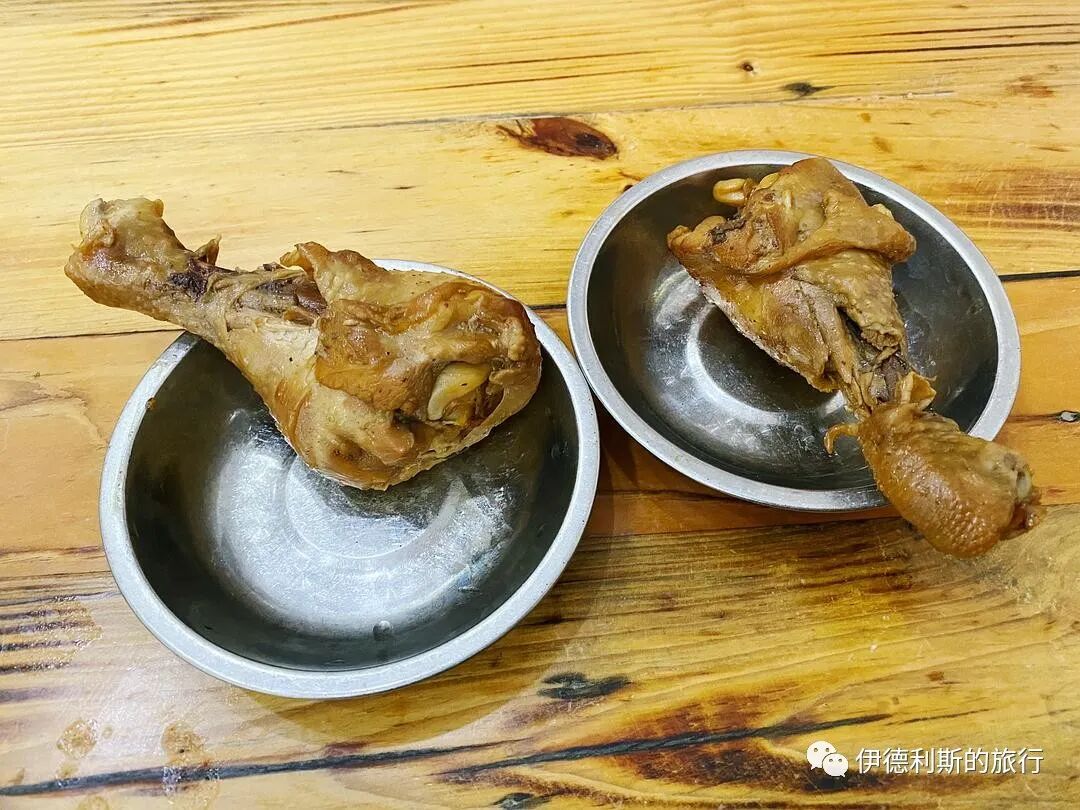
In the evening, we ate braised chicken legs, bahu (stewed) beef, and stir-fried xiaomicai (a type of green vegetable) near the Dingjiachang Mosque in Weishan County town. We also asked the auntie in the shop to fry the rose-flavored rushan we bought at the market on Hedijie Street in Yongjian Town that morning. I must say that frying rushan really requires skill; the requirements for heat control are too high. Then we also ordered bahu beef, braised chicken legs, and xiaomicai.
August 6: Weishan County town
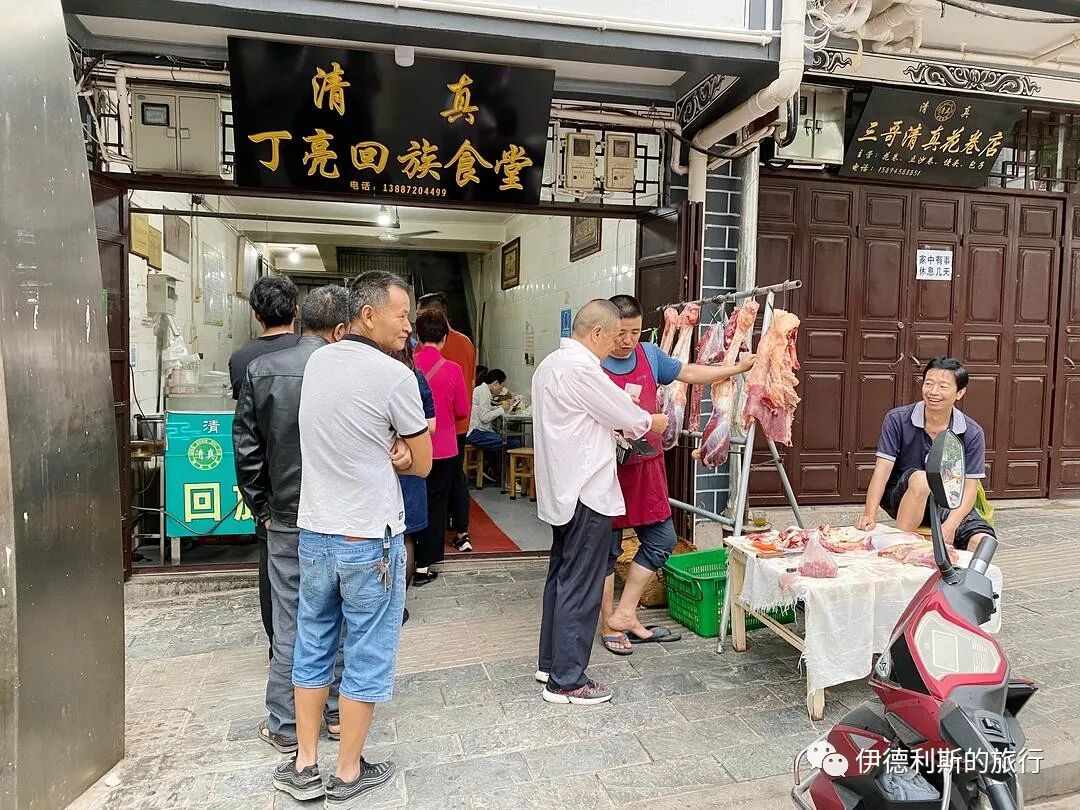
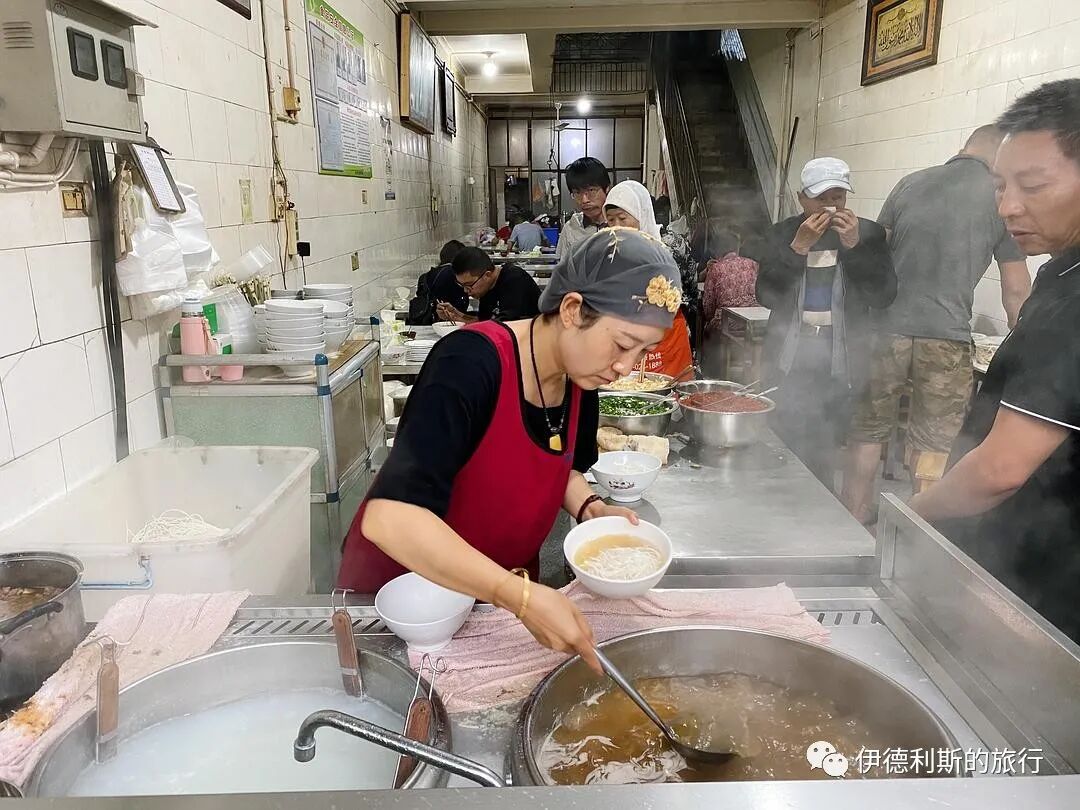
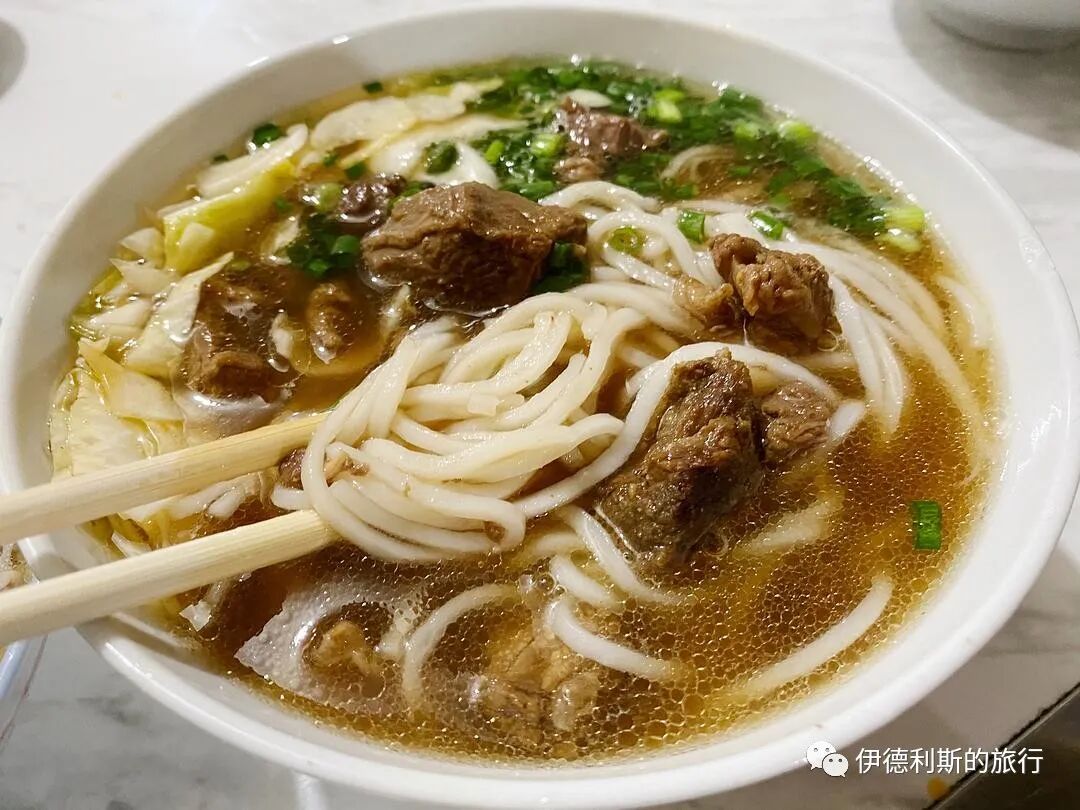
In the morning, we ate braised ersi and beef offal at the Dingliang Hui Muslim Canteen near the Dingjiachang Mosque in Weishan County town. Their place is the halal breakfast spot with the longest queue near Dingjiachang. Everyone basically eats the two most classic dishes: braised ersi and rice noodles. In addition, the owner is a Hajj, and "Returned with Honor from Hajj" is hung on the wall.
(Optional) Image description
Delete
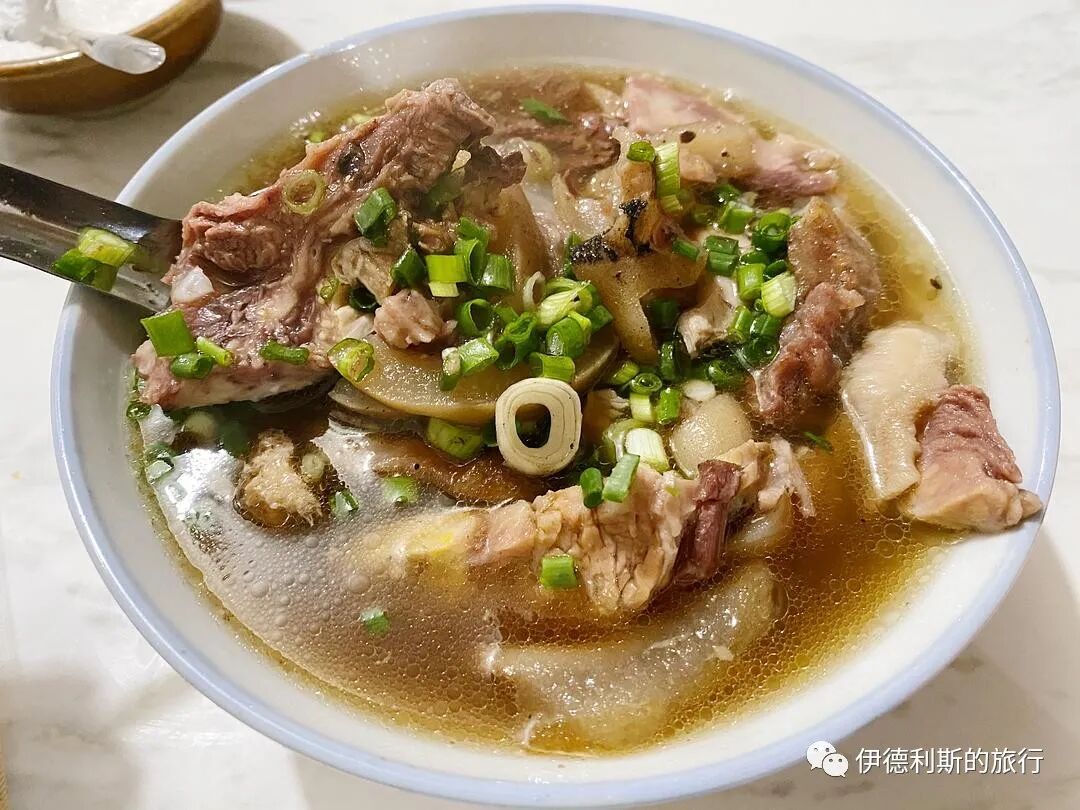
Return to Xiaguan
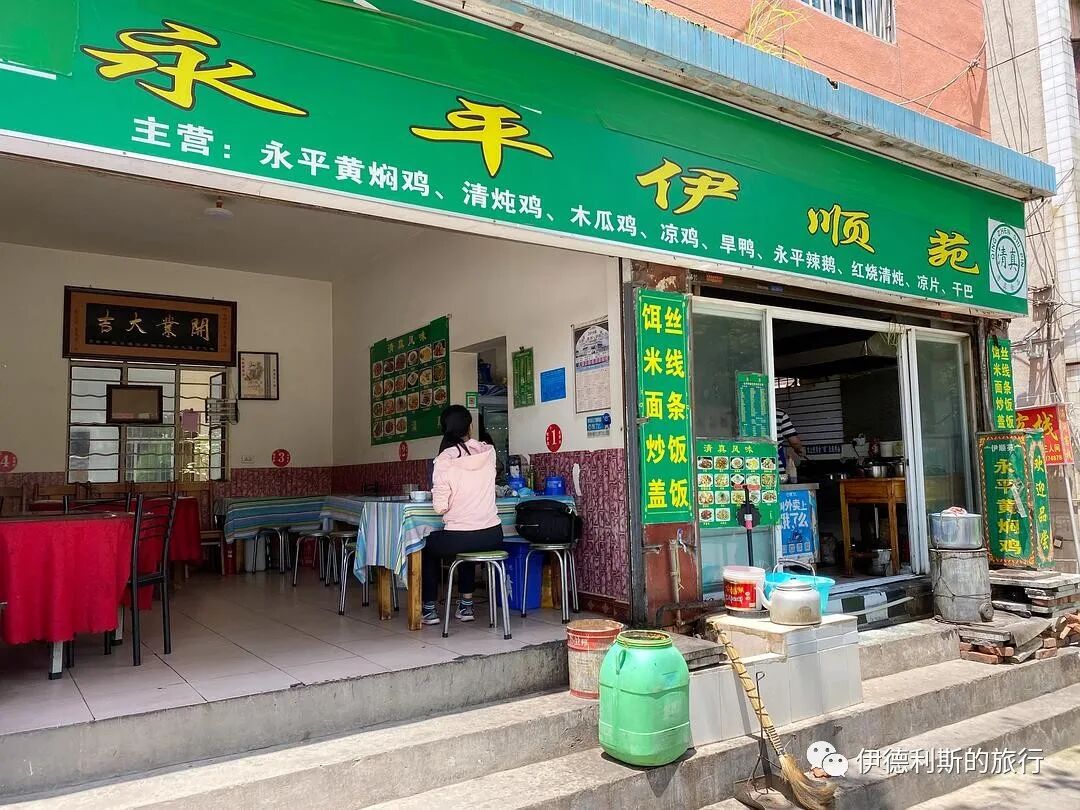
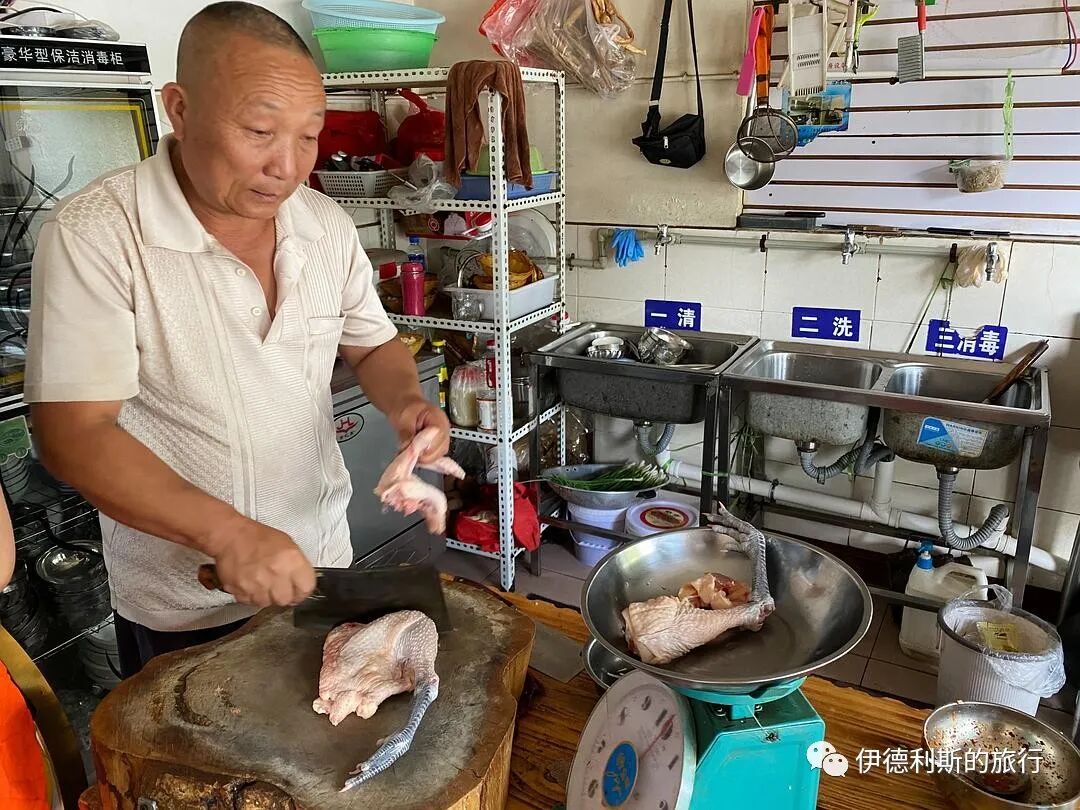
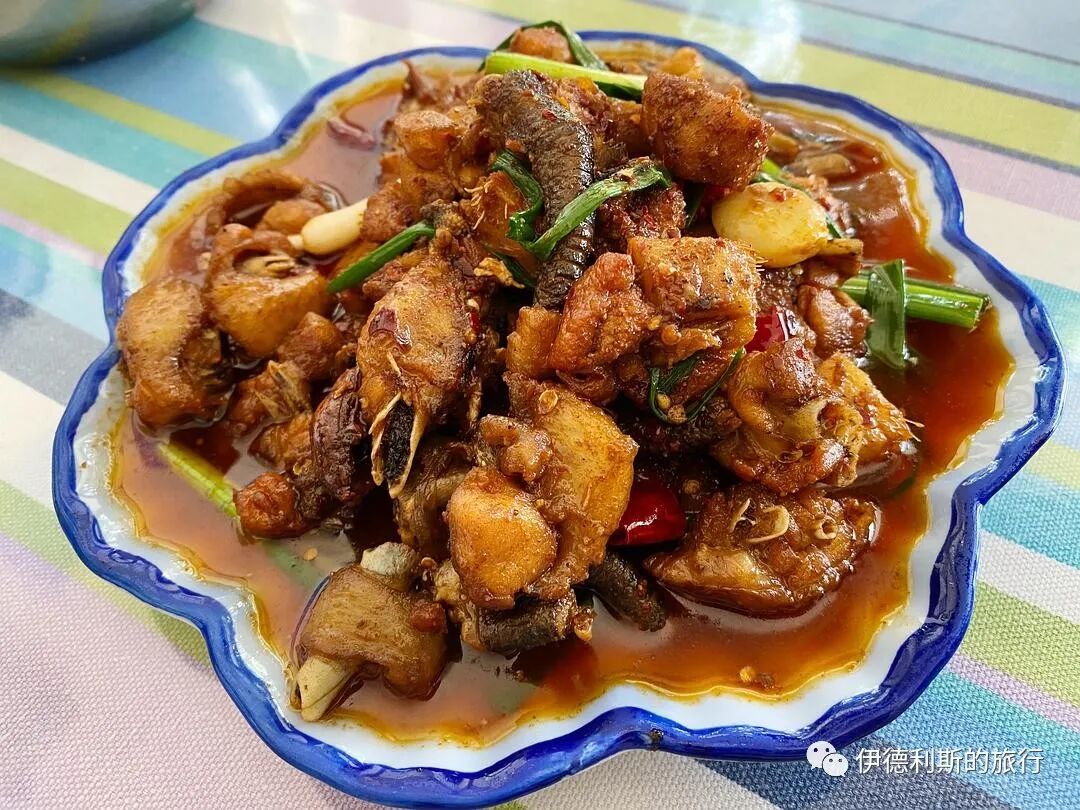
At noon, we transferred from Weishan back to Kunming. Passing through Xiaguan, we ate at a restaurant opened by a Hui Muslim from Yongping. Yongping is a county west of Dali. We ate the Yongping specialty, yellow-braised papaya chicken, which is sour and made with papaya juice. We also ate stir-fried fermented bean curd with garlic sprouts and pickled vegetable red bean soup. This red bean is not the kind of red bean we usually call.
Summary: This travel note introduces Dali Halal Travel Guide: Xiaguan, Weishan, Mosques and Muslim Food. On August 3, 2020, we arrived in Kunming by plane, then transferred to a train to reach Xiaguan in Dali, officially starting our Yunnan trip. It is useful for readers interested in Dali Travel, Halal Food, Yunnan Muslims.
On August 3, 2020, we arrived in Kunming by plane, then transferred to a train to reach Xiaguan in Dali, officially starting our Yunnan trip. I had visited Dali once in 2017, going to some Hui Muslim villages in Weishan and Eryuan, which left a very good impression on me. This time, I mainly visited over a dozen Hui Muslim villages in Yongjian Town, Weishan County, visited over a dozen beautiful traditional mosques (see "Twenty Traditional Mosques in Dali"), also browsed the halal markets, and ate a lot of delicious food. I will share it with everyone below.
August 3: Arrive in Xiaguan
On the afternoon of August 3, we took a train from Kunming to Dali. In the evening, we ate at a Dai Muslim restaurant called Paxidai in Xiaguan. We ordered the Dai-style shouzhua fan (hand-grabbed rice), which included lemongrass grilled fish, potato balls, vegetable nammi (a type of spicy dipping sauce), pineapple rice, beef jerky potato rice, and shredded chicken with lemon. There was also qinglong guojiang tang (a type of soup) and paoluda (a dessert made with bread, coconut milk, and sago). I had eaten at a halal Dai restaurant called Paxidai in the Dali Ancient City before. This was the second time eating it, and I feel that Dai flavors are really both spicy and sour!
August 4: Xiaguan Hui Muslim Street
In the morning, we went hiking in Erhai Park, which is behind our accommodation in Xiaguan, Dali.
The Xiaguan Hui Muslim Street in Dali is now quite quiet, and basically only locals know about it.
We ate braised meat rice noodles, braised meat ersi (thick rice noodles), and rushan (grilled milk cheese) on the Hui Muslim Street.
Opposite the Hui Muslim Street is the Longweiguan Ancient Town.
Dianzhong Huiying
At noon, we went from Weishan County town to Dianzhong Huiying. We ate fried ganba (cured beef jerky) and stir-fried cowpeas (pronounced gandou) in the village. Their beef soup was so delicious!
Shenhe Village
After eating, we arrived at another Hui Muslim village, Shenhe Village, from Dianzhong Huiying. The scene in the village is like this.
Mamichang
We continued to visit Hui Muslim villages, strolling from Shenhe Village to Mamichang. The village is on a small hillside, and you can overlook the surrounding scenery.
Return to Yongjian Town
Returning to Yongjian Town from Mamichang, we ate corn baba (corn cakes) and douhua (soft tofu pudding) on Hedijie Street, the busiest street in the town. Hedijie Street has changed a lot since I went in 2017; there are fewer and fewer old houses, and the scripture bookstore is gone.
In the evening, we ate stir-fried cigu (arrowhead) with pickled vegetables and braised beef on the side of the road on Hedijie Street in Yongjian Town. The auntie who owns the place is from Xiaoweigeng Village. Restaurants that make stir-fry here generally do not have menus, but put all the ingredients in a freezer, and the guests point to whichever one they want, and they make it.
August 5: Market day in Yongjian Town
In the morning, we caught a very lively market in Yongjian Town. We ate hot youfen (pea starch jelly), juanfen (rolled rice noodles), qiaogao (buckwheat cake), and brown sugar liangxia (cold shrimp-shaped jelly), and also bought rose-flavored rushan. The youfen is really delicious. It is made by peeling peas and grinding them in a stone mill. The texture is soft and smooth, and it has crispy rice crust inside.
Yi and Hui Muslim aunties are together at the market.
Market day in Huihuideng
We set off from Yongjian Town to Huihuideng Village and caught another big market. We ate figs, ice cream, and soy milk. There are too many fun things here. Besides Hui Muslims, there are also many Yi aunties and grandmothers wearing traditional clothing. The Yi clothing is very beautiful.
Natto
The scenery of Huihuideng Village
A small shop in Huihuideng Village that makes handmade headscarves. Zainabu bought one here.
Qingmenkou Village
We strolled from Huihuideng Village to Qingmenkou Village. Qingmenkou is on the northwestern edge of the Weishan Basin and is a very beautiful Hui Muslim village.
On the way back to Huihuideng Village from another village, Xishulong Village, we walked for a while and then caught a tricycle.
At noon, we ate stir-fried dayudou (a type of bean) with minced meat and cold beef slices next to the market in Huihui Village.
Return to Weishan County town
In the evening, we ate braised chicken legs, bahu (stewed) beef, and stir-fried xiaomicai (a type of green vegetable) near the Dingjiachang Mosque in Weishan County town. We also asked the auntie in the shop to fry the rose-flavored rushan we bought at the market on Hedijie Street in Yongjian Town that morning. I must say that frying rushan really requires skill; the requirements for heat control are too high. Then we also ordered bahu beef, braised chicken legs, and xiaomicai.
August 6: Weishan County town
In the morning, we ate braised ersi and beef offal at the Dingliang Hui Muslim Canteen near the Dingjiachang Mosque in Weishan County town. Their place is the halal breakfast spot with the longest queue near Dingjiachang. Everyone basically eats the two most classic dishes: braised ersi and rice noodles. In addition, the owner is a Hajj, and "Returned with Honor from Hajj" is hung on the wall.
(Optional) Image description
Delete
Return to Xiaguan
At noon, we transferred from Weishan back to Kunming. Passing through Xiaguan, we ate at a restaurant opened by a Hui Muslim from Yongping. Yongping is a county west of Dali. We ate the Yongping specialty, yellow-braised papaya chicken, which is sour and made with papaya juice. We also ate stir-fried fermented bean curd with garlic sprouts and pickled vegetable red bean soup. This red bean is not the kind of red bean we usually call.
Exploring Western Yunnan's Largest Mosque: Qu硐 Mosque's Traditional Chinese Hui Architecture in Dali Weishan
Articles • Hasan09 posted the article • 0 comments • 12 views • 1 days ago
[Internet Repost]
Exploring Western Yunnan's Largest Mosque: A Visual Guide to Dali Weishan's Traditional Chinese Hui Ancient Mosque with Bai-style Flying Eaves and Dougong Architecture
Abstract:
A field exploration of the largest mosque complex in western Yunnan, located in Weishan Yi and Hui Autonomous County, Dali. We break down the exquisite Chinese architectural style of the main prayer hall—a seamless blend of Bai-style colorful wood carvings, Han-style Xieshan flying eaves, and traditional Islamic patterns—showcasing an architectural masterpiece born from the symbiosis of ancient western Yunnan's Hui, Han, and Bai multi-ethnic cultures.
Whenever I used to visit Yongping, right after getting off the highway, I’d spot a towering, exotic castle-like building on the mountain with glowing green onion domes, looking super majestic and mysterious. My travel companions told me it was a mosque.
Years later, during a season when white michelia flowers were blooming, I finally stepped foot onto this sacred and solemn land of Muslim faith—Qutong Mosque (曲硐清真寺).
This is the biggest masjid in western Yunnan. Tucked away on the eastern foothills of Little Lion Mountain and commonly known as the 'libaisi' (prayer temple), it’s the main spot where the Hui Muslims of Qutong Village gather for prayers and communal life. Nowadays, the mosque has shifted to a traditional Chinese architectural style, with dark grey tile roofs replacing the Arabic-style onion domes. Feeling a bit curious, I noticed a line on the wall: 'Uphold the Sinicization of religion in our country,' and the reason suddenly clicked. Giving mosques a local Chinese look helps strengthen national identity, promotes ethnic integration, and builds a stronger sense of community for the Chinese nation.
Climbing the steps and crossing the plaza, right ahead stands a solemn and striking minaret (xuanshilou). With its grey colonnades, white exterior walls, and cinnabar-red doors and windows, the whole structure looks seriously grand and impressive.
The main prayer hall (chaozhendian) is where teachings are shared, the Quran is recited, and Muslims gather for their daily prayers. Visitors aren't allowed inside, so you have to peek and admire it from the doorway.
The crescent-moon-shaped dome is surrounded by wooden lattice windows, with patterned carpets laid out on the floor, making the interior feel super open and spacious. Natural light streams right through the wooden lattice glass, casting dappled, dreamy shadows on the wooden floorboards between the rugs.
There was nobody inside the hall, and it was so peaceful. Standing at the entrance, I just took a quiet moment to admire the sacred sanctuary, super careful not to break the serene vibe.
Right out in the plaza stands an Ethnic Unity and Progress stele—a living testament to the harmony, solidarity, and shared progress of China's various ethnic groups.
A michelia tree in the courtyard was in full bloom, its little white flowers nestled among lush green leaves looking super elegant, fresh, and fragrant in the rain.
Standing on the viewing platform, looking out at the retro street lamps, the mist-shrouded distant mountains, the village, and the fields felt like stepping right into a warm, cozy dream.
Qutong Village is laid out with the mosque right at its center. It’s an essential historic station along the ancient Boan Tea Horse Road of the Southwestern Silk Road, and also the largest Hui Muslim community in western Yunnan. Deep-rooted ethnic customs and unique caravan (mabang) culture come together and blend seamlessly right here.
Circling around to the back of the minaret, a crystal-clear pool suddenly opens up before your eyes. Surrounded by intricately carved stone railings with a stone arch bridge spanning across it, the tranquil water mirrors the corner eaves of the roof and the lush green trees along the bank.
Right by the water's edge, a bauhinia tree was blooming in full, stunning color, its rain-kissed petals looking extra vibrant and fresh.
Up on the mountain sits the newly built mosque from 2000, looking grand and majestic; down below is the century-old ancient mosque, carrying the heavy weight of history. The new and old mosques connect seamlessly along the timeline, standing in total harmony.
According to historical records, the earliest mosque in Qutong was built at the foot of Qutong South Mountain, commissioned by the famous Yuan dynasty Hui statesman Sayyid Ajjal Shams al-Din Omar (1211–1279) and his son while they were governing Dali. In 1913, it was relocated and rebuilt into the ancient mosque we see today, adopting the traditional Chinese upturned-eave Xieshan style. The whole complex is divided into an inner and outer courtyard: the inner courtyard features the main prayer hall, the minaret, and northern and southern side halls; the outer courtyard has side rooms and a grand gatehouse. The minaret was damaged during the Cultural Revolution, but in 1982, the main hall got a major renovation, and in 1990, the minaret and gatehouse were rebuilt, giving us the exact look we see today.
Having weathered the storms of history, Qutong Mosque stands like a weathered elder, quietly guarding the devout faith of the Muslims.
When we arrived, it wasn't prayer time, so the hall was whisper-quiet and the doors were left slightly ajar. Inside the courtyard, ancient cypress trees stood tall and lush, an old stone well bubbled with fresh spring water, and the whole place was overflowing with timeless charm.
A mosque isn't just a standalone building—it’s the lighthouse of faith for the people of Qutong, and a capsule of time that gently holds ethnic beliefs, caravan legends, and cultural blending all wrapped up in a treasure box of memories.
Stepping out of the mosque, the gentle echoes of Quranic recitation seemed to linger in the air. Generation after generation of Muslims have faithfully guarded their spiritual heritage and traditions. That unwavering dedication is as solid as a rock, staying completely unchanged as the years roll by.
Travel Tips:
When visiting the mosque, please respect local customs and religious etiquette, and follow all guidelines within the grounds. view all
Exploring Western Yunnan's Largest Mosque: A Visual Guide to Dali Weishan's Traditional Chinese Hui Ancient Mosque with Bai-style Flying Eaves and Dougong Architecture
Abstract:
A field exploration of the largest mosque complex in western Yunnan, located in Weishan Yi and Hui Autonomous County, Dali. We break down the exquisite Chinese architectural style of the main prayer hall—a seamless blend of Bai-style colorful wood carvings, Han-style Xieshan flying eaves, and traditional Islamic patterns—showcasing an architectural masterpiece born from the symbiosis of ancient western Yunnan's Hui, Han, and Bai multi-ethnic cultures.
Whenever I used to visit Yongping, right after getting off the highway, I’d spot a towering, exotic castle-like building on the mountain with glowing green onion domes, looking super majestic and mysterious. My travel companions told me it was a mosque.
Years later, during a season when white michelia flowers were blooming, I finally stepped foot onto this sacred and solemn land of Muslim faith—Qutong Mosque (曲硐清真寺).
This is the biggest masjid in western Yunnan. Tucked away on the eastern foothills of Little Lion Mountain and commonly known as the 'libaisi' (prayer temple), it’s the main spot where the Hui Muslims of Qutong Village gather for prayers and communal life. Nowadays, the mosque has shifted to a traditional Chinese architectural style, with dark grey tile roofs replacing the Arabic-style onion domes. Feeling a bit curious, I noticed a line on the wall: 'Uphold the Sinicization of religion in our country,' and the reason suddenly clicked. Giving mosques a local Chinese look helps strengthen national identity, promotes ethnic integration, and builds a stronger sense of community for the Chinese nation.
Climbing the steps and crossing the plaza, right ahead stands a solemn and striking minaret (xuanshilou). With its grey colonnades, white exterior walls, and cinnabar-red doors and windows, the whole structure looks seriously grand and impressive.
The main prayer hall (chaozhendian) is where teachings are shared, the Quran is recited, and Muslims gather for their daily prayers. Visitors aren't allowed inside, so you have to peek and admire it from the doorway.
The crescent-moon-shaped dome is surrounded by wooden lattice windows, with patterned carpets laid out on the floor, making the interior feel super open and spacious. Natural light streams right through the wooden lattice glass, casting dappled, dreamy shadows on the wooden floorboards between the rugs.
There was nobody inside the hall, and it was so peaceful. Standing at the entrance, I just took a quiet moment to admire the sacred sanctuary, super careful not to break the serene vibe.
Right out in the plaza stands an Ethnic Unity and Progress stele—a living testament to the harmony, solidarity, and shared progress of China's various ethnic groups.
A michelia tree in the courtyard was in full bloom, its little white flowers nestled among lush green leaves looking super elegant, fresh, and fragrant in the rain.
Standing on the viewing platform, looking out at the retro street lamps, the mist-shrouded distant mountains, the village, and the fields felt like stepping right into a warm, cozy dream.
Qutong Village is laid out with the mosque right at its center. It’s an essential historic station along the ancient Boan Tea Horse Road of the Southwestern Silk Road, and also the largest Hui Muslim community in western Yunnan. Deep-rooted ethnic customs and unique caravan (mabang) culture come together and blend seamlessly right here.
Circling around to the back of the minaret, a crystal-clear pool suddenly opens up before your eyes. Surrounded by intricately carved stone railings with a stone arch bridge spanning across it, the tranquil water mirrors the corner eaves of the roof and the lush green trees along the bank.
Right by the water's edge, a bauhinia tree was blooming in full, stunning color, its rain-kissed petals looking extra vibrant and fresh.
Up on the mountain sits the newly built mosque from 2000, looking grand and majestic; down below is the century-old ancient mosque, carrying the heavy weight of history. The new and old mosques connect seamlessly along the timeline, standing in total harmony.
According to historical records, the earliest mosque in Qutong was built at the foot of Qutong South Mountain, commissioned by the famous Yuan dynasty Hui statesman Sayyid Ajjal Shams al-Din Omar (1211–1279) and his son while they were governing Dali. In 1913, it was relocated and rebuilt into the ancient mosque we see today, adopting the traditional Chinese upturned-eave Xieshan style. The whole complex is divided into an inner and outer courtyard: the inner courtyard features the main prayer hall, the minaret, and northern and southern side halls; the outer courtyard has side rooms and a grand gatehouse. The minaret was damaged during the Cultural Revolution, but in 1982, the main hall got a major renovation, and in 1990, the minaret and gatehouse were rebuilt, giving us the exact look we see today.
Having weathered the storms of history, Qutong Mosque stands like a weathered elder, quietly guarding the devout faith of the Muslims.
When we arrived, it wasn't prayer time, so the hall was whisper-quiet and the doors were left slightly ajar. Inside the courtyard, ancient cypress trees stood tall and lush, an old stone well bubbled with fresh spring water, and the whole place was overflowing with timeless charm.
A mosque isn't just a standalone building—it’s the lighthouse of faith for the people of Qutong, and a capsule of time that gently holds ethnic beliefs, caravan legends, and cultural blending all wrapped up in a treasure box of memories.
Stepping out of the mosque, the gentle echoes of Quranic recitation seemed to linger in the air. Generation after generation of Muslims have faithfully guarded their spiritual heritage and traditions. That unwavering dedication is as solid as a rock, staying completely unchanged as the years roll by.
Travel Tips:
When visiting the mosque, please respect local customs and religious etiquette, and follow all guidelines within the grounds. view all
[Internet Repost]
Exploring Western Yunnan's Largest Mosque: A Visual Guide to Dali Weishan's Traditional Chinese Hui Ancient Mosque with Bai-style Flying Eaves and Dougong Architecture
Abstract:
A field exploration of the largest mosque complex in western Yunnan, located in Weishan Yi and Hui Autonomous County, Dali. We break down the exquisite Chinese architectural style of the main prayer hall—a seamless blend of Bai-style colorful wood carvings, Han-style Xieshan flying eaves, and traditional Islamic patterns—showcasing an architectural masterpiece born from the symbiosis of ancient western Yunnan's Hui, Han, and Bai multi-ethnic cultures.
Whenever I used to visit Yongping, right after getting off the highway, I’d spot a towering, exotic castle-like building on the mountain with glowing green onion domes, looking super majestic and mysterious. My travel companions told me it was a mosque.
Years later, during a season when white michelia flowers were blooming, I finally stepped foot onto this sacred and solemn land of Muslim faith—Qutong Mosque (曲硐清真寺).
This is the biggest masjid in western Yunnan. Tucked away on the eastern foothills of Little Lion Mountain and commonly known as the 'libaisi' (prayer temple), it’s the main spot where the Hui Muslims of Qutong Village gather for prayers and communal life. Nowadays, the mosque has shifted to a traditional Chinese architectural style, with dark grey tile roofs replacing the Arabic-style onion domes. Feeling a bit curious, I noticed a line on the wall: 'Uphold the Sinicization of religion in our country,' and the reason suddenly clicked. Giving mosques a local Chinese look helps strengthen national identity, promotes ethnic integration, and builds a stronger sense of community for the Chinese nation.
Climbing the steps and crossing the plaza, right ahead stands a solemn and striking minaret (xuanshilou). With its grey colonnades, white exterior walls, and cinnabar-red doors and windows, the whole structure looks seriously grand and impressive.
The main prayer hall (chaozhendian) is where teachings are shared, the Quran is recited, and Muslims gather for their daily prayers. Visitors aren't allowed inside, so you have to peek and admire it from the doorway.
The crescent-moon-shaped dome is surrounded by wooden lattice windows, with patterned carpets laid out on the floor, making the interior feel super open and spacious. Natural light streams right through the wooden lattice glass, casting dappled, dreamy shadows on the wooden floorboards between the rugs.
There was nobody inside the hall, and it was so peaceful. Standing at the entrance, I just took a quiet moment to admire the sacred sanctuary, super careful not to break the serene vibe.
Right out in the plaza stands an Ethnic Unity and Progress stele—a living testament to the harmony, solidarity, and shared progress of China's various ethnic groups.
A michelia tree in the courtyard was in full bloom, its little white flowers nestled among lush green leaves looking super elegant, fresh, and fragrant in the rain.
Standing on the viewing platform, looking out at the retro street lamps, the mist-shrouded distant mountains, the village, and the fields felt like stepping right into a warm, cozy dream.
Qutong Village is laid out with the mosque right at its center. It’s an essential historic station along the ancient Boan Tea Horse Road of the Southwestern Silk Road, and also the largest Hui Muslim community in western Yunnan. Deep-rooted ethnic customs and unique caravan (mabang) culture come together and blend seamlessly right here.
Circling around to the back of the minaret, a crystal-clear pool suddenly opens up before your eyes. Surrounded by intricately carved stone railings with a stone arch bridge spanning across it, the tranquil water mirrors the corner eaves of the roof and the lush green trees along the bank.
Right by the water's edge, a bauhinia tree was blooming in full, stunning color, its rain-kissed petals looking extra vibrant and fresh.
Up on the mountain sits the newly built mosque from 2000, looking grand and majestic; down below is the century-old ancient mosque, carrying the heavy weight of history. The new and old mosques connect seamlessly along the timeline, standing in total harmony.
According to historical records, the earliest mosque in Qutong was built at the foot of Qutong South Mountain, commissioned by the famous Yuan dynasty Hui statesman Sayyid Ajjal Shams al-Din Omar (1211–1279) and his son while they were governing Dali. In 1913, it was relocated and rebuilt into the ancient mosque we see today, adopting the traditional Chinese upturned-eave Xieshan style. The whole complex is divided into an inner and outer courtyard: the inner courtyard features the main prayer hall, the minaret, and northern and southern side halls; the outer courtyard has side rooms and a grand gatehouse. The minaret was damaged during the Cultural Revolution, but in 1982, the main hall got a major renovation, and in 1990, the minaret and gatehouse were rebuilt, giving us the exact look we see today.
Having weathered the storms of history, Qutong Mosque stands like a weathered elder, quietly guarding the devout faith of the Muslims.
When we arrived, it wasn't prayer time, so the hall was whisper-quiet and the doors were left slightly ajar. Inside the courtyard, ancient cypress trees stood tall and lush, an old stone well bubbled with fresh spring water, and the whole place was overflowing with timeless charm.
A mosque isn't just a standalone building—it’s the lighthouse of faith for the people of Qutong, and a capsule of time that gently holds ethnic beliefs, caravan legends, and cultural blending all wrapped up in a treasure box of memories.
Stepping out of the mosque, the gentle echoes of Quranic recitation seemed to linger in the air. Generation after generation of Muslims have faithfully guarded their spiritual heritage and traditions. That unwavering dedication is as solid as a rock, staying completely unchanged as the years roll by.
Travel Tips:
When visiting the mosque, please respect local customs and religious etiquette, and follow all guidelines within the grounds.
Exploring Western Yunnan's Largest Mosque: A Visual Guide to Dali Weishan's Traditional Chinese Hui Ancient Mosque with Bai-style Flying Eaves and Dougong Architecture
Abstract:
A field exploration of the largest mosque complex in western Yunnan, located in Weishan Yi and Hui Autonomous County, Dali. We break down the exquisite Chinese architectural style of the main prayer hall—a seamless blend of Bai-style colorful wood carvings, Han-style Xieshan flying eaves, and traditional Islamic patterns—showcasing an architectural masterpiece born from the symbiosis of ancient western Yunnan's Hui, Han, and Bai multi-ethnic cultures.
Whenever I used to visit Yongping, right after getting off the highway, I’d spot a towering, exotic castle-like building on the mountain with glowing green onion domes, looking super majestic and mysterious. My travel companions told me it was a mosque.
Years later, during a season when white michelia flowers were blooming, I finally stepped foot onto this sacred and solemn land of Muslim faith—Qutong Mosque (曲硐清真寺).
This is the biggest masjid in western Yunnan. Tucked away on the eastern foothills of Little Lion Mountain and commonly known as the 'libaisi' (prayer temple), it’s the main spot where the Hui Muslims of Qutong Village gather for prayers and communal life. Nowadays, the mosque has shifted to a traditional Chinese architectural style, with dark grey tile roofs replacing the Arabic-style onion domes. Feeling a bit curious, I noticed a line on the wall: 'Uphold the Sinicization of religion in our country,' and the reason suddenly clicked. Giving mosques a local Chinese look helps strengthen national identity, promotes ethnic integration, and builds a stronger sense of community for the Chinese nation.
Climbing the steps and crossing the plaza, right ahead stands a solemn and striking minaret (xuanshilou). With its grey colonnades, white exterior walls, and cinnabar-red doors and windows, the whole structure looks seriously grand and impressive.
The main prayer hall (chaozhendian) is where teachings are shared, the Quran is recited, and Muslims gather for their daily prayers. Visitors aren't allowed inside, so you have to peek and admire it from the doorway.
The crescent-moon-shaped dome is surrounded by wooden lattice windows, with patterned carpets laid out on the floor, making the interior feel super open and spacious. Natural light streams right through the wooden lattice glass, casting dappled, dreamy shadows on the wooden floorboards between the rugs.
There was nobody inside the hall, and it was so peaceful. Standing at the entrance, I just took a quiet moment to admire the sacred sanctuary, super careful not to break the serene vibe.
Right out in the plaza stands an Ethnic Unity and Progress stele—a living testament to the harmony, solidarity, and shared progress of China's various ethnic groups.
A michelia tree in the courtyard was in full bloom, its little white flowers nestled among lush green leaves looking super elegant, fresh, and fragrant in the rain.
Standing on the viewing platform, looking out at the retro street lamps, the mist-shrouded distant mountains, the village, and the fields felt like stepping right into a warm, cozy dream.
Qutong Village is laid out with the mosque right at its center. It’s an essential historic station along the ancient Boan Tea Horse Road of the Southwestern Silk Road, and also the largest Hui Muslim community in western Yunnan. Deep-rooted ethnic customs and unique caravan (mabang) culture come together and blend seamlessly right here.
Circling around to the back of the minaret, a crystal-clear pool suddenly opens up before your eyes. Surrounded by intricately carved stone railings with a stone arch bridge spanning across it, the tranquil water mirrors the corner eaves of the roof and the lush green trees along the bank.
Right by the water's edge, a bauhinia tree was blooming in full, stunning color, its rain-kissed petals looking extra vibrant and fresh.
Up on the mountain sits the newly built mosque from 2000, looking grand and majestic; down below is the century-old ancient mosque, carrying the heavy weight of history. The new and old mosques connect seamlessly along the timeline, standing in total harmony.
According to historical records, the earliest mosque in Qutong was built at the foot of Qutong South Mountain, commissioned by the famous Yuan dynasty Hui statesman Sayyid Ajjal Shams al-Din Omar (1211–1279) and his son while they were governing Dali. In 1913, it was relocated and rebuilt into the ancient mosque we see today, adopting the traditional Chinese upturned-eave Xieshan style. The whole complex is divided into an inner and outer courtyard: the inner courtyard features the main prayer hall, the minaret, and northern and southern side halls; the outer courtyard has side rooms and a grand gatehouse. The minaret was damaged during the Cultural Revolution, but in 1982, the main hall got a major renovation, and in 1990, the minaret and gatehouse were rebuilt, giving us the exact look we see today.
Having weathered the storms of history, Qutong Mosque stands like a weathered elder, quietly guarding the devout faith of the Muslims.
When we arrived, it wasn't prayer time, so the hall was whisper-quiet and the doors were left slightly ajar. Inside the courtyard, ancient cypress trees stood tall and lush, an old stone well bubbled with fresh spring water, and the whole place was overflowing with timeless charm.
A mosque isn't just a standalone building—it’s the lighthouse of faith for the people of Qutong, and a capsule of time that gently holds ethnic beliefs, caravan legends, and cultural blending all wrapped up in a treasure box of memories.
Stepping out of the mosque, the gentle echoes of Quranic recitation seemed to linger in the air. Generation after generation of Muslims have faithfully guarded their spiritual heritage and traditions. That unwavering dedication is as solid as a rock, staying completely unchanged as the years roll by.
Travel Tips:
When visiting the mosque, please respect local customs and religious etiquette, and follow all guidelines within the grounds.
Dali Halal Travel Guide: Xiaguan, Weishan, Mosques and Muslim Food
Articles • ali2007fr posted the article • 0 comments • 191 views • 2026-05-17 06:46
Reposted from the web
Summary: This travel note introduces Dali Halal Travel Guide: Xiaguan, Weishan, Mosques and Muslim Food. On August 3, 2020, we arrived in Kunming by plane, then transferred to a train to reach Xiaguan in Dali, officially starting our Yunnan trip. It is useful for readers interested in Dali Travel, Halal Food, Yunnan Muslims.
On August 3, 2020, we arrived in Kunming by plane, then transferred to a train to reach Xiaguan in Dali, officially starting our Yunnan trip. I had visited Dali once in 2017, going to some Hui Muslim villages in Weishan and Eryuan, which left a very good impression on me. This time, I mainly visited over a dozen Hui Muslim villages in Yongjian Town, Weishan County, visited over a dozen beautiful traditional mosques (see "Twenty Traditional Mosques in Dali"), also browsed the halal markets, and ate a lot of delicious food. I will share it with everyone below.
August 3: Arrive in Xiaguan
On the afternoon of August 3, we took a train from Kunming to Dali. In the evening, we ate at a Dai Muslim restaurant called Paxidai in Xiaguan. We ordered the Dai-style shouzhua fan (hand-grabbed rice), which included lemongrass grilled fish, potato balls, vegetable nammi (a type of spicy dipping sauce), pineapple rice, beef jerky potato rice, and shredded chicken with lemon. There was also qinglong guojiang tang (a type of soup) and paoluda (a dessert made with bread, coconut milk, and sago). I had eaten at a halal Dai restaurant called Paxidai in the Dali Ancient City before. This was the second time eating it, and I feel that Dai flavors are really both spicy and sour!
August 4: Xiaguan Hui Muslim Street
In the morning, we went hiking in Erhai Park, which is behind our accommodation in Xiaguan, Dali.
The Xiaguan Hui Muslim Street in Dali is now quite quiet, and basically only locals know about it.
We ate braised meat rice noodles, braised meat ersi (thick rice noodles), and rushan (grilled milk cheese) on the Hui Muslim Street.
Opposite the Hui Muslim Street is the Longweiguan Ancient Town.
Dianzhong Huiying
At noon, we went from Weishan County town to Dianzhong Huiying. We ate fried ganba (cured beef jerky) and stir-fried cowpeas (pronounced gandou) in the village. Their beef soup was so delicious!
Shenhe Village
After eating, we arrived at another Hui Muslim village, Shenhe Village, from Dianzhong Huiying. The scene in the village is like this.
Mamichang
We continued to visit Hui Muslim villages, strolling from Shenhe Village to Mamichang. The village is on a small hillside, and you can overlook the surrounding scenery.
Return to Yongjian Town
Returning to Yongjian Town from Mamichang, we ate corn baba (corn cakes) and douhua (soft tofu pudding) on Hedijie Street, the busiest street in the town. Hedijie Street has changed a lot since I went in 2017; there are fewer and fewer old houses, and the scripture bookstore is gone.
In the evening, we ate stir-fried cigu (arrowhead) with pickled vegetables and braised beef on the side of the road on Hedijie Street in Yongjian Town. The auntie who owns the place is from Xiaoweigeng Village. Restaurants that make stir-fry here generally do not have menus, but put all the ingredients in a freezer, and the guests point to whichever one they want, and they make it.
August 5: Market day in Yongjian Town
In the morning, we caught a very lively market in Yongjian Town. We ate hot youfen (pea starch jelly), juanfen (rolled rice noodles), qiaogao (buckwheat cake), and brown sugar liangxia (cold shrimp-shaped jelly), and also bought rose-flavored rushan. The youfen is really delicious. It is made by peeling peas and grinding them in a stone mill. The texture is soft and smooth, and it has crispy rice crust inside.
Yi and Hui Muslim aunties are together at the market.
Market day in Huihuideng
We set off from Yongjian Town to Huihuideng Village and caught another big market. We ate figs, ice cream, and soy milk. There are too many fun things here. Besides Hui Muslims, there are also many Yi aunties and grandmothers wearing traditional clothing. The Yi clothing is very beautiful.
Natto
The scenery of Huihuideng Village
A small shop in Huihuideng Village that makes handmade headscarves. Zainabu bought one here.
Qingmenkou Village
We strolled from Huihuideng Village to Qingmenkou Village. Qingmenkou is on the northwestern edge of the Weishan Basin and is a very beautiful Hui Muslim village.
On the way back to Huihuideng Village from another village, Xishulong Village, we walked for a while and then caught a tricycle.
At noon, we ate stir-fried dayudou (a type of bean) with minced meat and cold beef slices next to the market in Huihui Village.
Return to Weishan County town
In the evening, we ate braised chicken legs, bahu (stewed) beef, and stir-fried xiaomicai (a type of green vegetable) near the Dingjiachang Mosque in Weishan County town. We also asked the auntie in the shop to fry the rose-flavored rushan we bought at the market on Hedijie Street in Yongjian Town that morning. I must say that frying rushan really requires skill; the requirements for heat control are too high. Then we also ordered bahu beef, braised chicken legs, and xiaomicai.
August 6: Weishan County town
In the morning, we ate braised ersi and beef offal at the Dingliang Hui Muslim Canteen near the Dingjiachang Mosque in Weishan County town. Their place is the halal breakfast spot with the longest queue near Dingjiachang. Everyone basically eats the two most classic dishes: braised ersi and rice noodles. In addition, the owner is a Hajj, and "Returned with Honor from Hajj" is hung on the wall.
(Optional) Image description
Delete
Return to Xiaguan
At noon, we transferred from Weishan back to Kunming. Passing through Xiaguan, we ate at a restaurant opened by a Hui Muslim from Yongping. Yongping is a county west of Dali. We ate the Yongping specialty, yellow-braised papaya chicken, which is sour and made with papaya juice. We also ate stir-fried fermented bean curd with garlic sprouts and pickled vegetable red bean soup. This red bean is not the kind of red bean we usually call. view all
Summary: This travel note introduces Dali Halal Travel Guide: Xiaguan, Weishan, Mosques and Muslim Food. On August 3, 2020, we arrived in Kunming by plane, then transferred to a train to reach Xiaguan in Dali, officially starting our Yunnan trip. It is useful for readers interested in Dali Travel, Halal Food, Yunnan Muslims.
On August 3, 2020, we arrived in Kunming by plane, then transferred to a train to reach Xiaguan in Dali, officially starting our Yunnan trip. I had visited Dali once in 2017, going to some Hui Muslim villages in Weishan and Eryuan, which left a very good impression on me. This time, I mainly visited over a dozen Hui Muslim villages in Yongjian Town, Weishan County, visited over a dozen beautiful traditional mosques (see "Twenty Traditional Mosques in Dali"), also browsed the halal markets, and ate a lot of delicious food. I will share it with everyone below.
August 3: Arrive in Xiaguan
On the afternoon of August 3, we took a train from Kunming to Dali. In the evening, we ate at a Dai Muslim restaurant called Paxidai in Xiaguan. We ordered the Dai-style shouzhua fan (hand-grabbed rice), which included lemongrass grilled fish, potato balls, vegetable nammi (a type of spicy dipping sauce), pineapple rice, beef jerky potato rice, and shredded chicken with lemon. There was also qinglong guojiang tang (a type of soup) and paoluda (a dessert made with bread, coconut milk, and sago). I had eaten at a halal Dai restaurant called Paxidai in the Dali Ancient City before. This was the second time eating it, and I feel that Dai flavors are really both spicy and sour!
August 4: Xiaguan Hui Muslim Street
In the morning, we went hiking in Erhai Park, which is behind our accommodation in Xiaguan, Dali.
The Xiaguan Hui Muslim Street in Dali is now quite quiet, and basically only locals know about it.
We ate braised meat rice noodles, braised meat ersi (thick rice noodles), and rushan (grilled milk cheese) on the Hui Muslim Street.
Opposite the Hui Muslim Street is the Longweiguan Ancient Town.
Dianzhong Huiying
At noon, we went from Weishan County town to Dianzhong Huiying. We ate fried ganba (cured beef jerky) and stir-fried cowpeas (pronounced gandou) in the village. Their beef soup was so delicious!
Shenhe Village
After eating, we arrived at another Hui Muslim village, Shenhe Village, from Dianzhong Huiying. The scene in the village is like this.
Mamichang
We continued to visit Hui Muslim villages, strolling from Shenhe Village to Mamichang. The village is on a small hillside, and you can overlook the surrounding scenery.
Return to Yongjian Town
Returning to Yongjian Town from Mamichang, we ate corn baba (corn cakes) and douhua (soft tofu pudding) on Hedijie Street, the busiest street in the town. Hedijie Street has changed a lot since I went in 2017; there are fewer and fewer old houses, and the scripture bookstore is gone.
In the evening, we ate stir-fried cigu (arrowhead) with pickled vegetables and braised beef on the side of the road on Hedijie Street in Yongjian Town. The auntie who owns the place is from Xiaoweigeng Village. Restaurants that make stir-fry here generally do not have menus, but put all the ingredients in a freezer, and the guests point to whichever one they want, and they make it.
August 5: Market day in Yongjian Town
In the morning, we caught a very lively market in Yongjian Town. We ate hot youfen (pea starch jelly), juanfen (rolled rice noodles), qiaogao (buckwheat cake), and brown sugar liangxia (cold shrimp-shaped jelly), and also bought rose-flavored rushan. The youfen is really delicious. It is made by peeling peas and grinding them in a stone mill. The texture is soft and smooth, and it has crispy rice crust inside.
Yi and Hui Muslim aunties are together at the market.
Market day in Huihuideng
We set off from Yongjian Town to Huihuideng Village and caught another big market. We ate figs, ice cream, and soy milk. There are too many fun things here. Besides Hui Muslims, there are also many Yi aunties and grandmothers wearing traditional clothing. The Yi clothing is very beautiful.
Natto
The scenery of Huihuideng Village
A small shop in Huihuideng Village that makes handmade headscarves. Zainabu bought one here.
Qingmenkou Village
We strolled from Huihuideng Village to Qingmenkou Village. Qingmenkou is on the northwestern edge of the Weishan Basin and is a very beautiful Hui Muslim village.
On the way back to Huihuideng Village from another village, Xishulong Village, we walked for a while and then caught a tricycle.
At noon, we ate stir-fried dayudou (a type of bean) with minced meat and cold beef slices next to the market in Huihui Village.
Return to Weishan County town
In the evening, we ate braised chicken legs, bahu (stewed) beef, and stir-fried xiaomicai (a type of green vegetable) near the Dingjiachang Mosque in Weishan County town. We also asked the auntie in the shop to fry the rose-flavored rushan we bought at the market on Hedijie Street in Yongjian Town that morning. I must say that frying rushan really requires skill; the requirements for heat control are too high. Then we also ordered bahu beef, braised chicken legs, and xiaomicai.
August 6: Weishan County town
In the morning, we ate braised ersi and beef offal at the Dingliang Hui Muslim Canteen near the Dingjiachang Mosque in Weishan County town. Their place is the halal breakfast spot with the longest queue near Dingjiachang. Everyone basically eats the two most classic dishes: braised ersi and rice noodles. In addition, the owner is a Hajj, and "Returned with Honor from Hajj" is hung on the wall.
(Optional) Image description
Delete
Return to Xiaguan
At noon, we transferred from Weishan back to Kunming. Passing through Xiaguan, we ate at a restaurant opened by a Hui Muslim from Yongping. Yongping is a county west of Dali. We ate the Yongping specialty, yellow-braised papaya chicken, which is sour and made with papaya juice. We also ate stir-fried fermented bean curd with garlic sprouts and pickled vegetable red bean soup. This red bean is not the kind of red bean we usually call. view all
Reposted from the web
Summary: This travel note introduces Dali Halal Travel Guide: Xiaguan, Weishan, Mosques and Muslim Food. On August 3, 2020, we arrived in Kunming by plane, then transferred to a train to reach Xiaguan in Dali, officially starting our Yunnan trip. It is useful for readers interested in Dali Travel, Halal Food, Yunnan Muslims.
On August 3, 2020, we arrived in Kunming by plane, then transferred to a train to reach Xiaguan in Dali, officially starting our Yunnan trip. I had visited Dali once in 2017, going to some Hui Muslim villages in Weishan and Eryuan, which left a very good impression on me. This time, I mainly visited over a dozen Hui Muslim villages in Yongjian Town, Weishan County, visited over a dozen beautiful traditional mosques (see "Twenty Traditional Mosques in Dali"), also browsed the halal markets, and ate a lot of delicious food. I will share it with everyone below.
August 3: Arrive in Xiaguan
On the afternoon of August 3, we took a train from Kunming to Dali. In the evening, we ate at a Dai Muslim restaurant called Paxidai in Xiaguan. We ordered the Dai-style shouzhua fan (hand-grabbed rice), which included lemongrass grilled fish, potato balls, vegetable nammi (a type of spicy dipping sauce), pineapple rice, beef jerky potato rice, and shredded chicken with lemon. There was also qinglong guojiang tang (a type of soup) and paoluda (a dessert made with bread, coconut milk, and sago). I had eaten at a halal Dai restaurant called Paxidai in the Dali Ancient City before. This was the second time eating it, and I feel that Dai flavors are really both spicy and sour!
August 4: Xiaguan Hui Muslim Street
In the morning, we went hiking in Erhai Park, which is behind our accommodation in Xiaguan, Dali.
The Xiaguan Hui Muslim Street in Dali is now quite quiet, and basically only locals know about it.
We ate braised meat rice noodles, braised meat ersi (thick rice noodles), and rushan (grilled milk cheese) on the Hui Muslim Street.
Opposite the Hui Muslim Street is the Longweiguan Ancient Town.
Dianzhong Huiying
At noon, we went from Weishan County town to Dianzhong Huiying. We ate fried ganba (cured beef jerky) and stir-fried cowpeas (pronounced gandou) in the village. Their beef soup was so delicious!
Shenhe Village
After eating, we arrived at another Hui Muslim village, Shenhe Village, from Dianzhong Huiying. The scene in the village is like this.
Mamichang
We continued to visit Hui Muslim villages, strolling from Shenhe Village to Mamichang. The village is on a small hillside, and you can overlook the surrounding scenery.
Return to Yongjian Town
Returning to Yongjian Town from Mamichang, we ate corn baba (corn cakes) and douhua (soft tofu pudding) on Hedijie Street, the busiest street in the town. Hedijie Street has changed a lot since I went in 2017; there are fewer and fewer old houses, and the scripture bookstore is gone.
In the evening, we ate stir-fried cigu (arrowhead) with pickled vegetables and braised beef on the side of the road on Hedijie Street in Yongjian Town. The auntie who owns the place is from Xiaoweigeng Village. Restaurants that make stir-fry here generally do not have menus, but put all the ingredients in a freezer, and the guests point to whichever one they want, and they make it.
August 5: Market day in Yongjian Town
In the morning, we caught a very lively market in Yongjian Town. We ate hot youfen (pea starch jelly), juanfen (rolled rice noodles), qiaogao (buckwheat cake), and brown sugar liangxia (cold shrimp-shaped jelly), and also bought rose-flavored rushan. The youfen is really delicious. It is made by peeling peas and grinding them in a stone mill. The texture is soft and smooth, and it has crispy rice crust inside.
Yi and Hui Muslim aunties are together at the market.
Market day in Huihuideng
We set off from Yongjian Town to Huihuideng Village and caught another big market. We ate figs, ice cream, and soy milk. There are too many fun things here. Besides Hui Muslims, there are also many Yi aunties and grandmothers wearing traditional clothing. The Yi clothing is very beautiful.
Natto
The scenery of Huihuideng Village
A small shop in Huihuideng Village that makes handmade headscarves. Zainabu bought one here.
Qingmenkou Village
We strolled from Huihuideng Village to Qingmenkou Village. Qingmenkou is on the northwestern edge of the Weishan Basin and is a very beautiful Hui Muslim village.
On the way back to Huihuideng Village from another village, Xishulong Village, we walked for a while and then caught a tricycle.
At noon, we ate stir-fried dayudou (a type of bean) with minced meat and cold beef slices next to the market in Huihui Village.
Return to Weishan County town
In the evening, we ate braised chicken legs, bahu (stewed) beef, and stir-fried xiaomicai (a type of green vegetable) near the Dingjiachang Mosque in Weishan County town. We also asked the auntie in the shop to fry the rose-flavored rushan we bought at the market on Hedijie Street in Yongjian Town that morning. I must say that frying rushan really requires skill; the requirements for heat control are too high. Then we also ordered bahu beef, braised chicken legs, and xiaomicai.
August 6: Weishan County town
In the morning, we ate braised ersi and beef offal at the Dingliang Hui Muslim Canteen near the Dingjiachang Mosque in Weishan County town. Their place is the halal breakfast spot with the longest queue near Dingjiachang. Everyone basically eats the two most classic dishes: braised ersi and rice noodles. In addition, the owner is a Hajj, and "Returned with Honor from Hajj" is hung on the wall.
(Optional) Image description
Delete
Return to Xiaguan
At noon, we transferred from Weishan back to Kunming. Passing through Xiaguan, we ate at a restaurant opened by a Hui Muslim from Yongping. Yongping is a county west of Dali. We ate the Yongping specialty, yellow-braised papaya chicken, which is sour and made with papaya juice. We also ate stir-fried fermented bean curd with garlic sprouts and pickled vegetable red bean soup. This red bean is not the kind of red bean we usually call.
Summary: This travel note introduces Dali Halal Travel Guide: Xiaguan, Weishan, Mosques and Muslim Food. On August 3, 2020, we arrived in Kunming by plane, then transferred to a train to reach Xiaguan in Dali, officially starting our Yunnan trip. It is useful for readers interested in Dali Travel, Halal Food, Yunnan Muslims.
On August 3, 2020, we arrived in Kunming by plane, then transferred to a train to reach Xiaguan in Dali, officially starting our Yunnan trip. I had visited Dali once in 2017, going to some Hui Muslim villages in Weishan and Eryuan, which left a very good impression on me. This time, I mainly visited over a dozen Hui Muslim villages in Yongjian Town, Weishan County, visited over a dozen beautiful traditional mosques (see "Twenty Traditional Mosques in Dali"), also browsed the halal markets, and ate a lot of delicious food. I will share it with everyone below.
August 3: Arrive in Xiaguan
On the afternoon of August 3, we took a train from Kunming to Dali. In the evening, we ate at a Dai Muslim restaurant called Paxidai in Xiaguan. We ordered the Dai-style shouzhua fan (hand-grabbed rice), which included lemongrass grilled fish, potato balls, vegetable nammi (a type of spicy dipping sauce), pineapple rice, beef jerky potato rice, and shredded chicken with lemon. There was also qinglong guojiang tang (a type of soup) and paoluda (a dessert made with bread, coconut milk, and sago). I had eaten at a halal Dai restaurant called Paxidai in the Dali Ancient City before. This was the second time eating it, and I feel that Dai flavors are really both spicy and sour!
August 4: Xiaguan Hui Muslim Street
In the morning, we went hiking in Erhai Park, which is behind our accommodation in Xiaguan, Dali.
The Xiaguan Hui Muslim Street in Dali is now quite quiet, and basically only locals know about it.
We ate braised meat rice noodles, braised meat ersi (thick rice noodles), and rushan (grilled milk cheese) on the Hui Muslim Street.
Opposite the Hui Muslim Street is the Longweiguan Ancient Town.
Dianzhong Huiying
At noon, we went from Weishan County town to Dianzhong Huiying. We ate fried ganba (cured beef jerky) and stir-fried cowpeas (pronounced gandou) in the village. Their beef soup was so delicious!
Shenhe Village
After eating, we arrived at another Hui Muslim village, Shenhe Village, from Dianzhong Huiying. The scene in the village is like this.
Mamichang
We continued to visit Hui Muslim villages, strolling from Shenhe Village to Mamichang. The village is on a small hillside, and you can overlook the surrounding scenery.
Return to Yongjian Town
Returning to Yongjian Town from Mamichang, we ate corn baba (corn cakes) and douhua (soft tofu pudding) on Hedijie Street, the busiest street in the town. Hedijie Street has changed a lot since I went in 2017; there are fewer and fewer old houses, and the scripture bookstore is gone.
In the evening, we ate stir-fried cigu (arrowhead) with pickled vegetables and braised beef on the side of the road on Hedijie Street in Yongjian Town. The auntie who owns the place is from Xiaoweigeng Village. Restaurants that make stir-fry here generally do not have menus, but put all the ingredients in a freezer, and the guests point to whichever one they want, and they make it.
August 5: Market day in Yongjian Town
In the morning, we caught a very lively market in Yongjian Town. We ate hot youfen (pea starch jelly), juanfen (rolled rice noodles), qiaogao (buckwheat cake), and brown sugar liangxia (cold shrimp-shaped jelly), and also bought rose-flavored rushan. The youfen is really delicious. It is made by peeling peas and grinding them in a stone mill. The texture is soft and smooth, and it has crispy rice crust inside.
Yi and Hui Muslim aunties are together at the market.
Market day in Huihuideng
We set off from Yongjian Town to Huihuideng Village and caught another big market. We ate figs, ice cream, and soy milk. There are too many fun things here. Besides Hui Muslims, there are also many Yi aunties and grandmothers wearing traditional clothing. The Yi clothing is very beautiful.
Natto
The scenery of Huihuideng Village
A small shop in Huihuideng Village that makes handmade headscarves. Zainabu bought one here.
Qingmenkou Village
We strolled from Huihuideng Village to Qingmenkou Village. Qingmenkou is on the northwestern edge of the Weishan Basin and is a very beautiful Hui Muslim village.
On the way back to Huihuideng Village from another village, Xishulong Village, we walked for a while and then caught a tricycle.
At noon, we ate stir-fried dayudou (a type of bean) with minced meat and cold beef slices next to the market in Huihui Village.
Return to Weishan County town
In the evening, we ate braised chicken legs, bahu (stewed) beef, and stir-fried xiaomicai (a type of green vegetable) near the Dingjiachang Mosque in Weishan County town. We also asked the auntie in the shop to fry the rose-flavored rushan we bought at the market on Hedijie Street in Yongjian Town that morning. I must say that frying rushan really requires skill; the requirements for heat control are too high. Then we also ordered bahu beef, braised chicken legs, and xiaomicai.
August 6: Weishan County town
In the morning, we ate braised ersi and beef offal at the Dingliang Hui Muslim Canteen near the Dingjiachang Mosque in Weishan County town. Their place is the halal breakfast spot with the longest queue near Dingjiachang. Everyone basically eats the two most classic dishes: braised ersi and rice noodles. In addition, the owner is a Hajj, and "Returned with Honor from Hajj" is hung on the wall.
(Optional) Image description
Delete
Return to Xiaguan
At noon, we transferred from Weishan back to Kunming. Passing through Xiaguan, we ate at a restaurant opened by a Hui Muslim from Yongping. Yongping is a county west of Dali. We ate the Yongping specialty, yellow-braised papaya chicken, which is sour and made with papaya juice. We also ate stir-fried fermented bean curd with garlic sprouts and pickled vegetable red bean soup. This red bean is not the kind of red bean we usually call.