

Hainan Halal Food
Exploring China's Southernmost Muslim Villages: Sanya's Huihui & Huixin, Halal Cuisine, and Historic Mosques
Articles • Hasan09 posted the article • 0 comments • 17 views • 4 days ago
[Internet Repost]
Exploring China's Southernmost Muslim Villages: The Unique Geography and Culture of Sanya's Huihui and Huixin Villages
Abstract:
A systematic look at the history and current landscape of the Muslim villages in Sanya, sitting right at China's southernmost tip. We break down how the Utsul Muslims preserve their Islamic faith, distinct linguistic system, and strict dietary laws in this tropical seaside city, serving as a living specimen of Maritime Silk Road culture.
February 22, 2022
The sky was still a bit overcast. Yesterday's forecast promised clear skies, but today it flipped to cloudy. Whatever, at least it's finally not raining. Decided to head out for a stroll. The original plan was to hit Linchunling Forest Park for some hiking and panoramic views of Sanya.
Checked the map and saw that Bus Route 50 from the Sanya Railway Station goes straight there. Somehow, I ended up at Phoenix International Airport instead—didn't take the wrong bus, alright, I just got on heading the complete opposite direction.
On the way, we passed Huihui Village (Huihui Muslim Village). I'd looked it up online a few days ago—it’s hyped as China's southernmost Muslim village. It was only three stops away from the airport. After hanging out at the airport for a bit, I caught Bus Route 24 and hopped off right at the Beautiful Phoenix Hotel, which drops you right into Huihui Village. My first vibe? Honestly felt like stumbling into a Uyghur village.
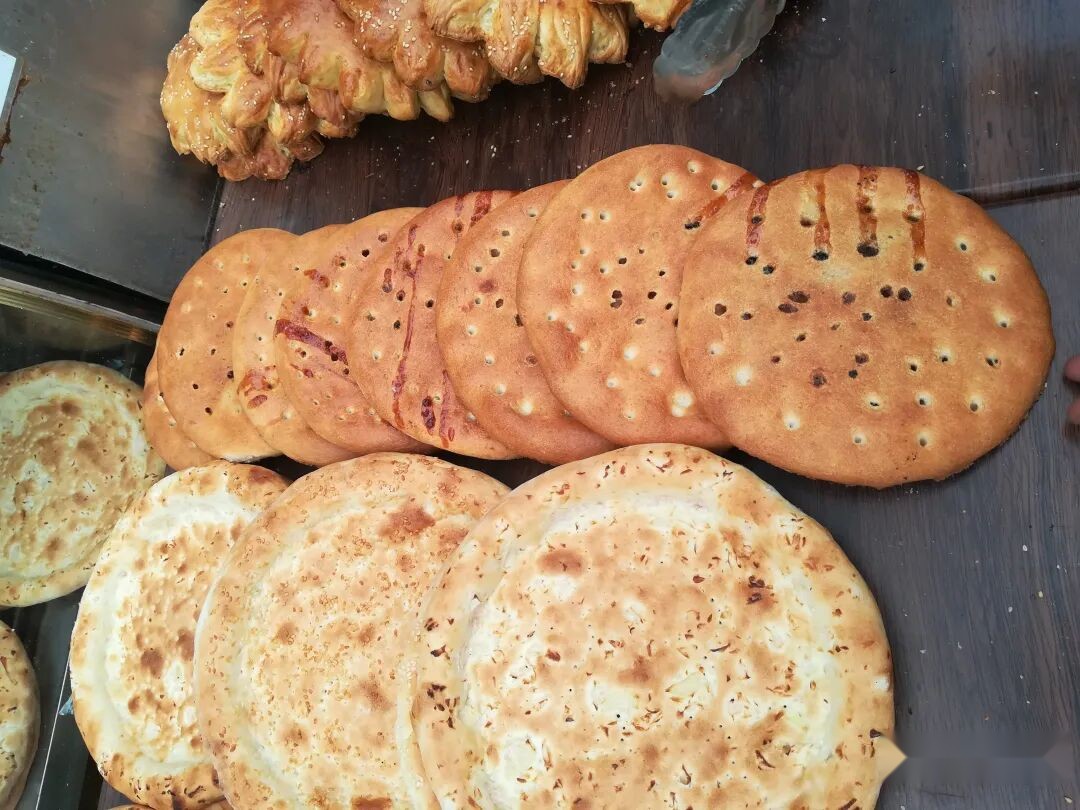
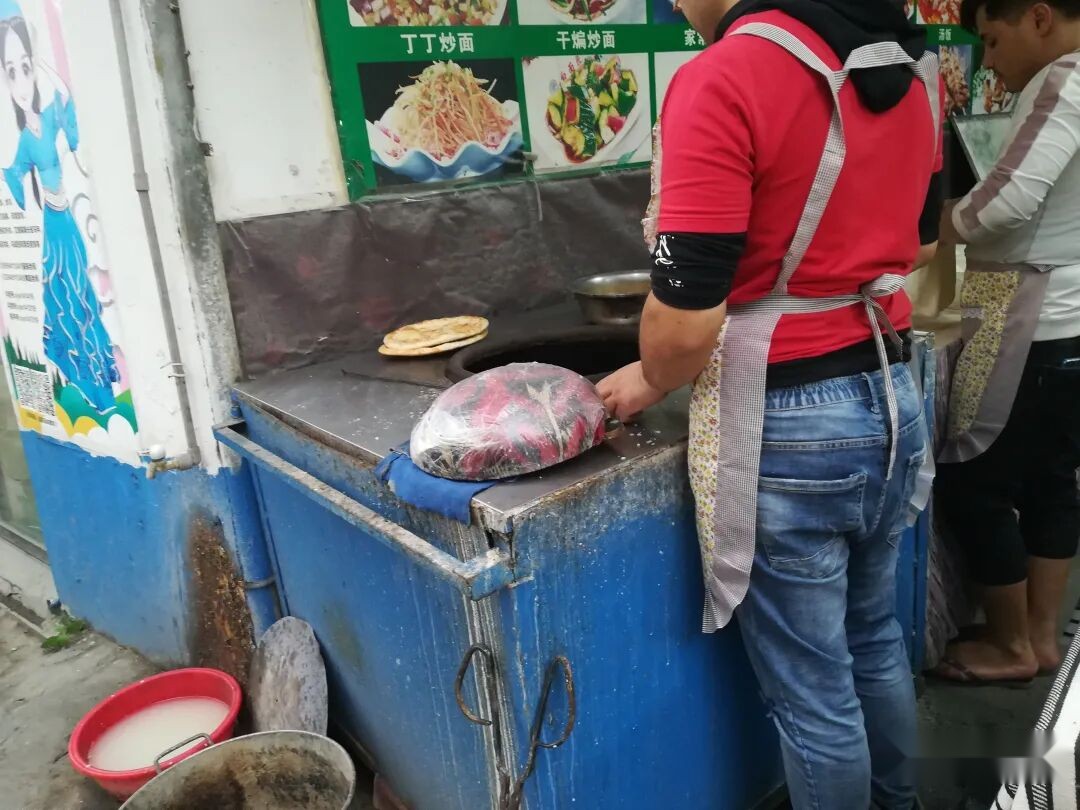
Freshly baked nan (traditional Uyghur flatbread) in Xinjiang usually has to be made at designated nan industrial parks, but here you see plenty of freshly baked nan stalls all over. Saw one of these syrup-dripping nan fresh out of the oven and couldn't resist grabbing one for 5 RMB. Munched on it while walking—super tasty.
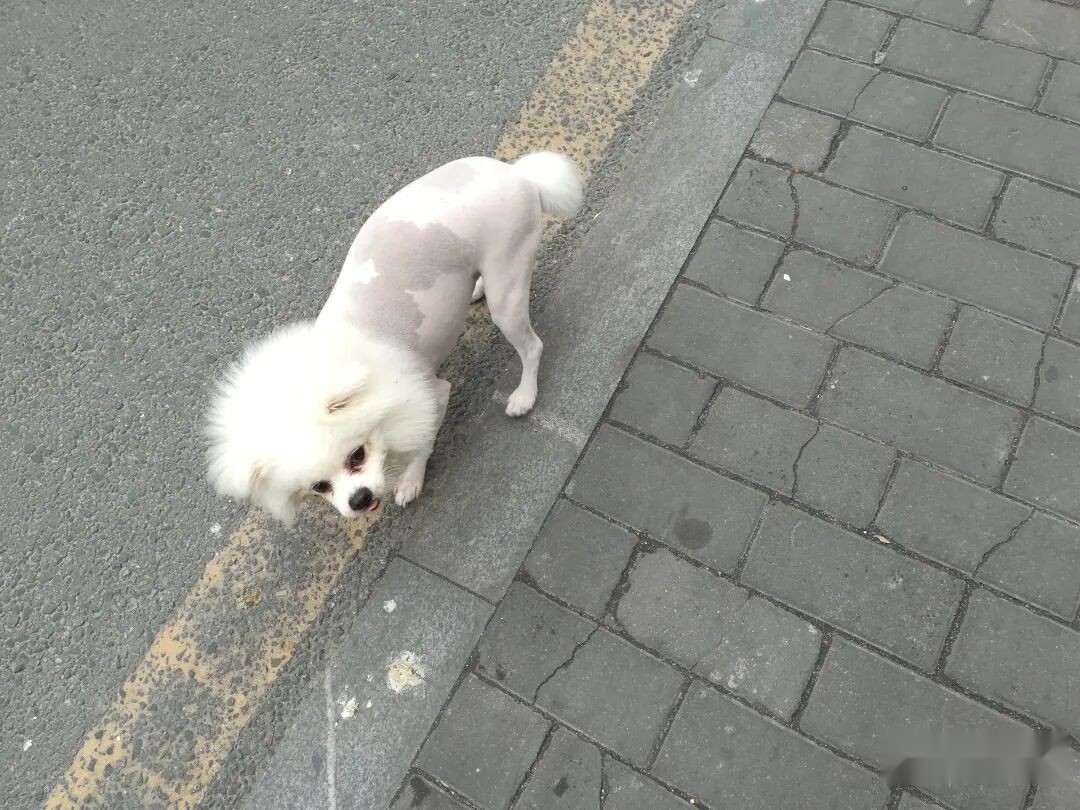
Thought I spotted a weird dog breed at first, but looking closer, the little guy just got a fresh haircut. Gotta say, the grooming skills aren't bad at all. Shaved super smooth, even the fur on its paws was trimmed clean.
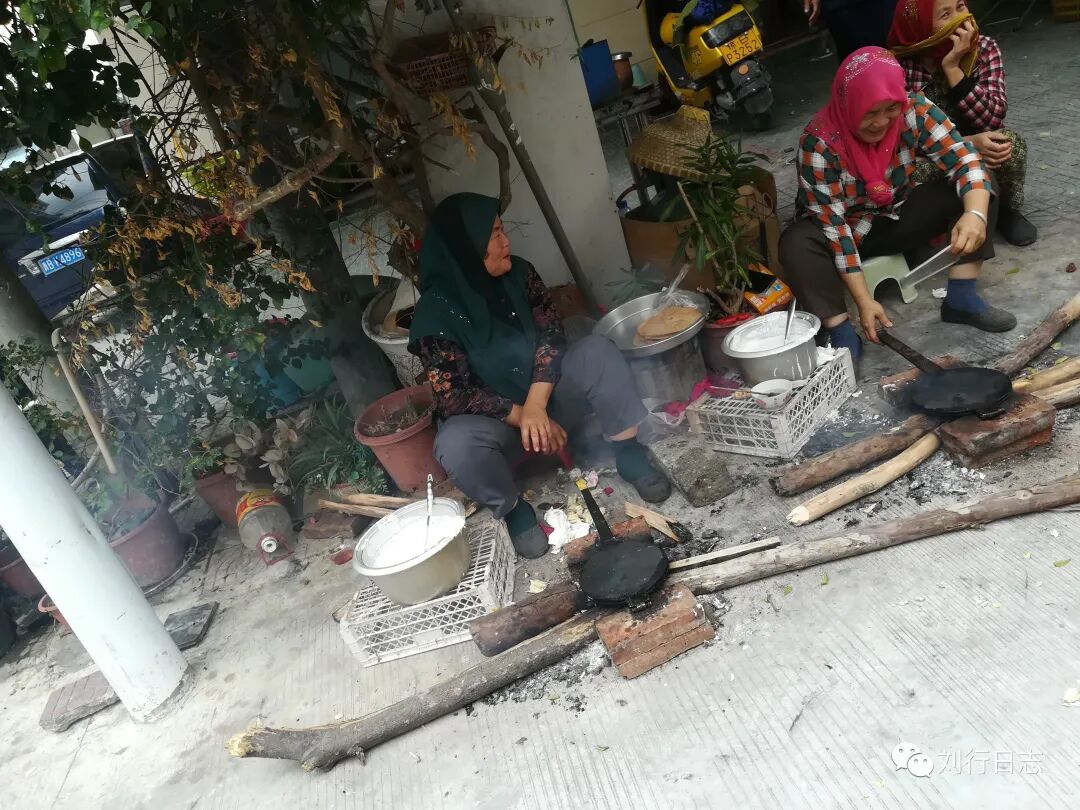
Found an older sister making pancakes in the alleyway with a vibe totally giving Gansu-Shaanxi Hui Muslim style. Using wood fuel, she pours the batter into this little black pan, closes the lid, and adds fire underneath. This pan can be heated from both sides, and the finished pancakes get tossed onto the iron tray right in the middle. The lady on the side said they're 2 RMB each, but when I asked the lady actually cooking them on the left, she said they aren't for sale. Pretty unique way of cooking, right?
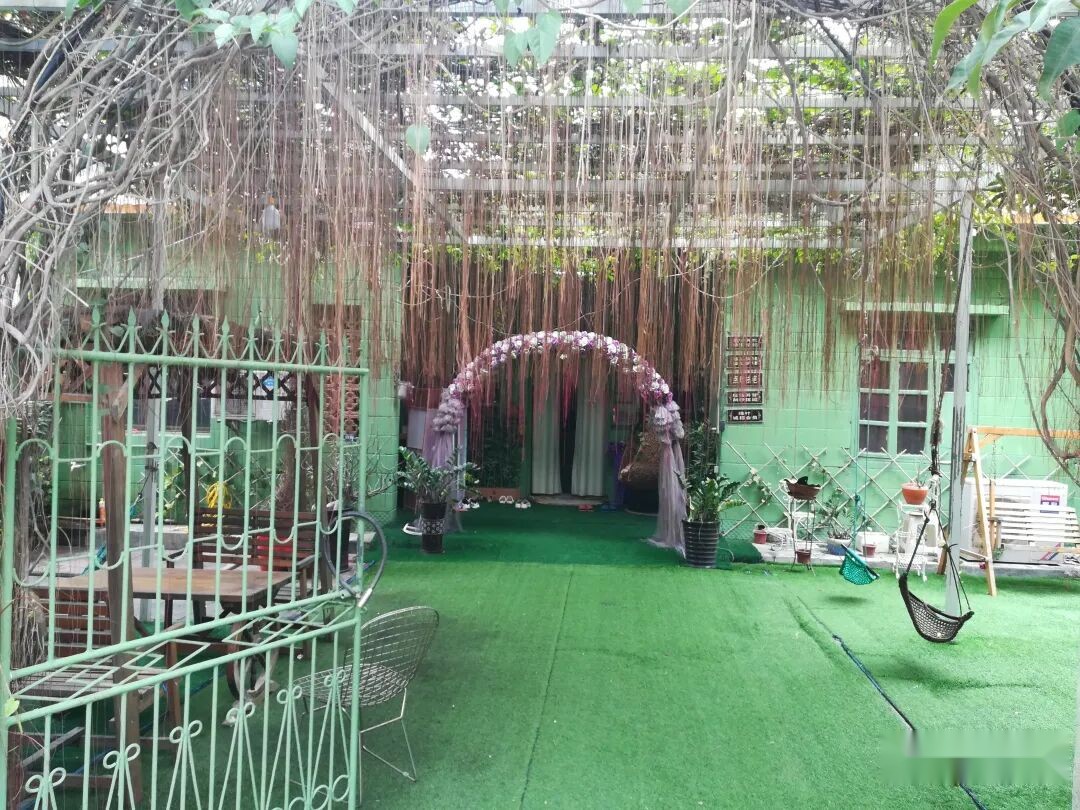
A green house in the village—looks like a women's beauty salon. Even the building is painted green, and the color combo is super coordinated and easy on the eyes.
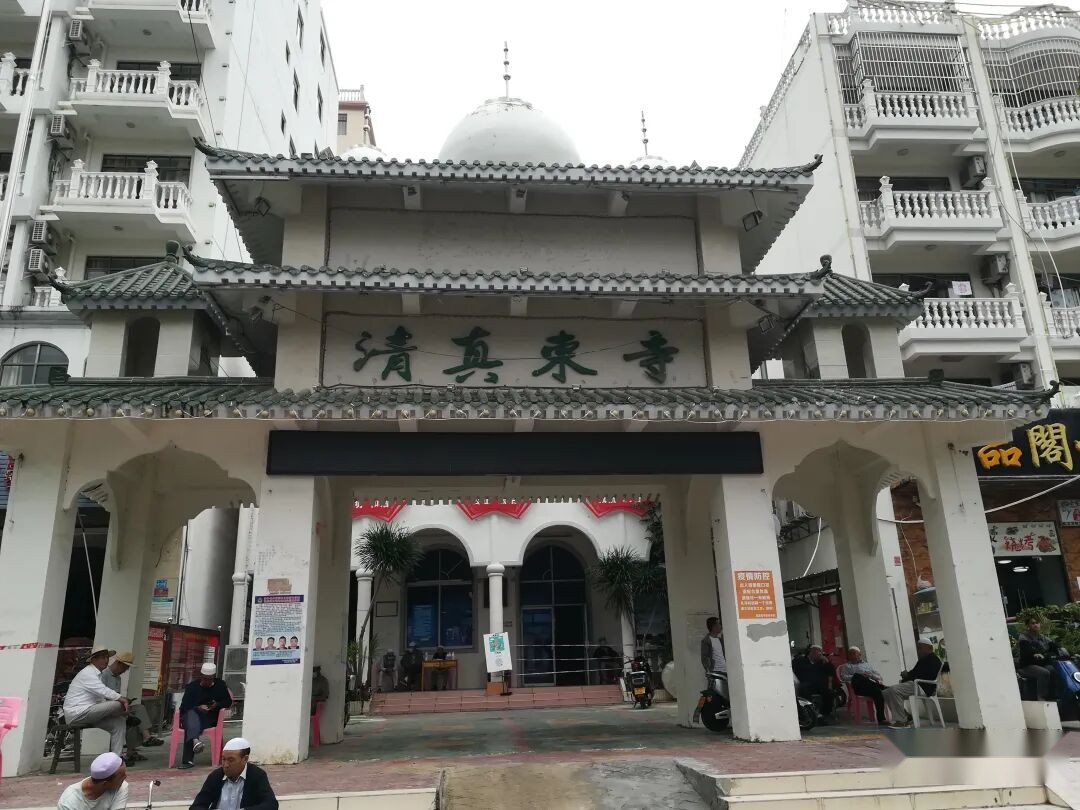
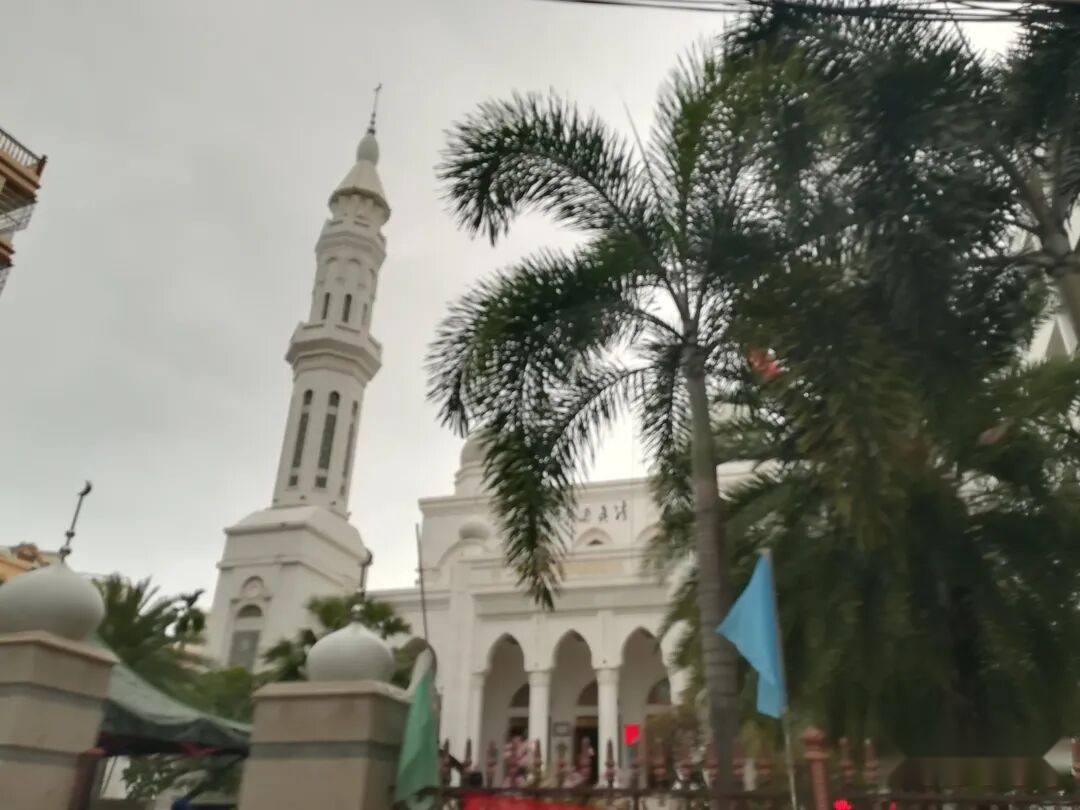
Qingzhen Dongsi (Sanya East Mosque). So, is there a Qingzhen Xisi (West Mosque)? Sure enough, there is! Not just a West Mosque, but a South Mosque and North Mosque too. There are six mosques in total, with the other two being the Sanya Ancient Mosque and Nankai Mosque.
Huihui Civilization Farmers Market. Not super big, and strictly sells halal food.
Killing a duck, getting it ready. This local sister just slaughtered a duck and is cleaning it up right there. Usually, whatever you buy at the market is already prepped, so this one must have been home-raised.
An airplane over the treetops.
A 'flying chicken' under the treetops.
Little kids working hard.
The village isn't far from Sanya Bay—just a little over two kilometers—so I ditched the mountain hike and went for a stroll by the ocean instead. It was overcast, but the waves were huge. Sat by the beach watching the surf and the crowds walking by. A few pretty girls walked past every now and then, and of course, plenty of not-so-pretty ones too.
A jellyfish washed ashore by the waves. Wonder if this one is edible—making a cold tossed jellyfish skin salad with it would be pretty awesome.
Two kids playing a real-life Jingwei (mythological bird trying to fill the sea with pebbles), using little plastic shovels trying to fill up the ocean. You guys got this!
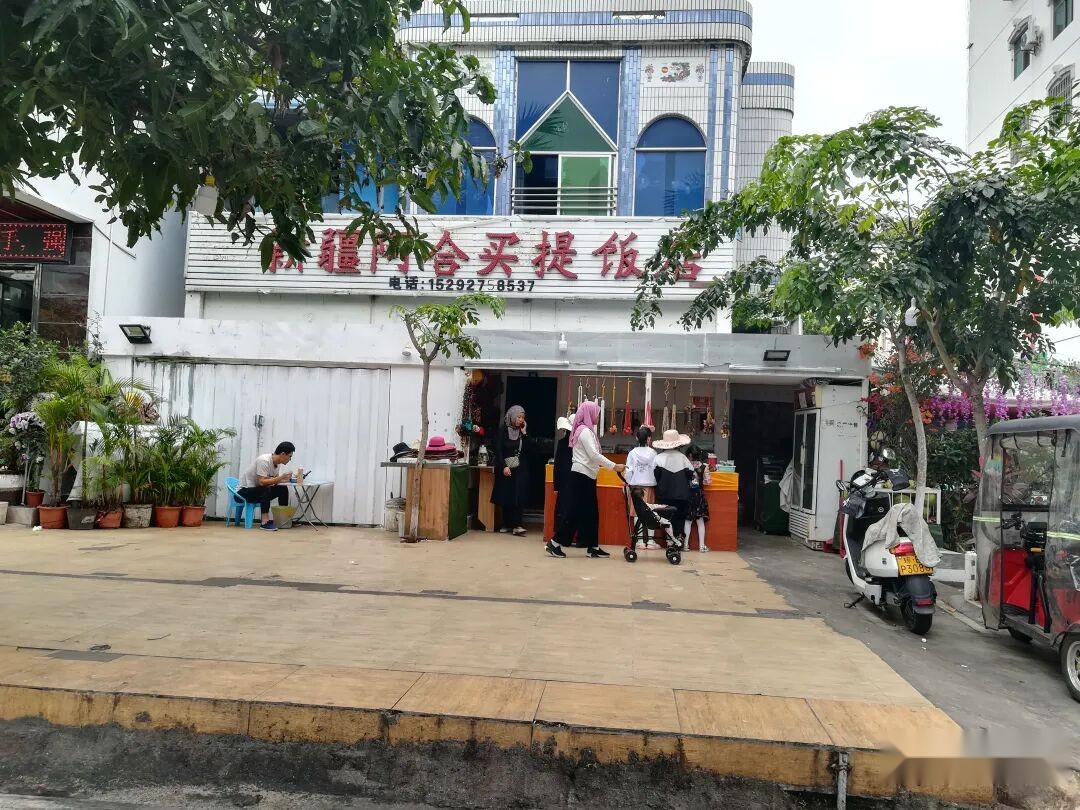
There are two Muslim villages. The other one is Huixin Village (Huixin Muslim Village), just over four kilometers from Huihui Village, and you can just walk along the coast to get there. There are tons of little shops in this village; two small streets are packed with vendors selling stuff, mostly street food. A lot of houses in the village also have homestay signs hanging outside. Saw another batch of fresh, plain nan just out of the oven. Grabbed one, though honestly, this one wasn't as good as the ones in Xinjiang. There were small street stalls selling home-grown produce, like dragon fruit going for 10 RMB for four jin (about 4 lbs), and watermelons for 5 RMB each.
Qingzhen Nansi (Sanya South Mosque). The architecture is super new, looks like it was recently renovated. Just happened to pass by Nankai Mosque too, didn't make a special trip for it though.
Walking back from Huixin Village is also over four kilometers, and the bus stop is a good two kilometers away. Might as well just walk all the way back since I'm not in a rush anyway, plus I get to check out the street views.
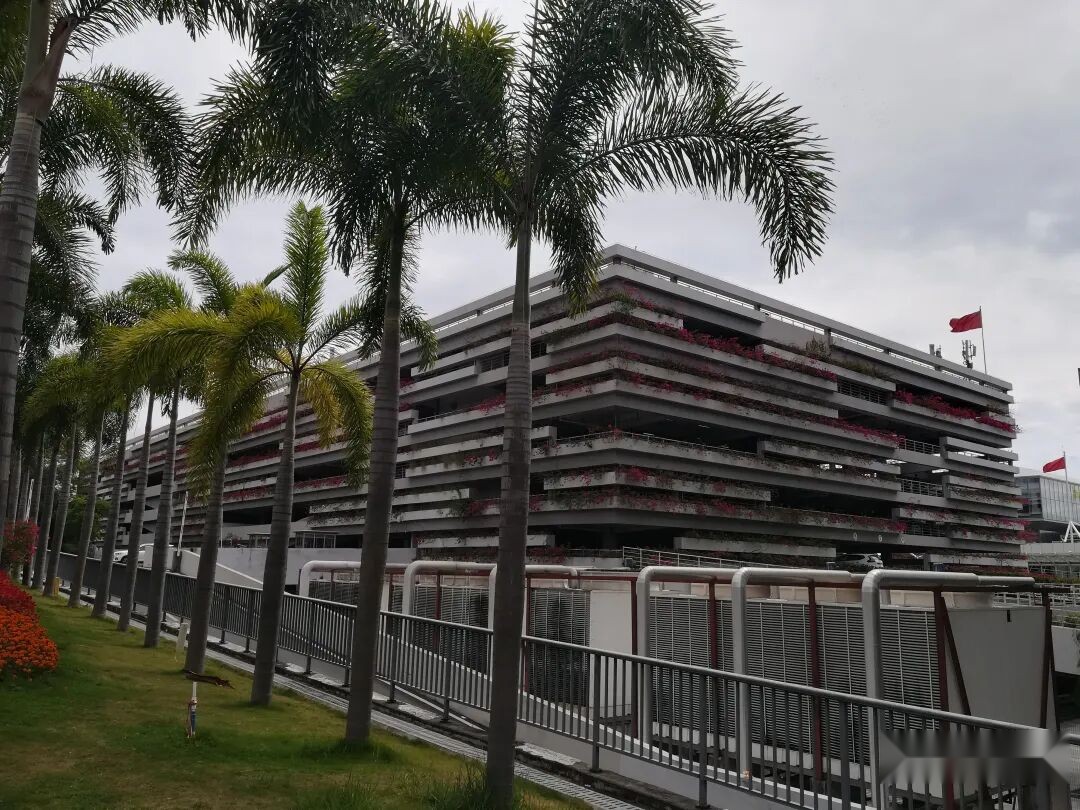
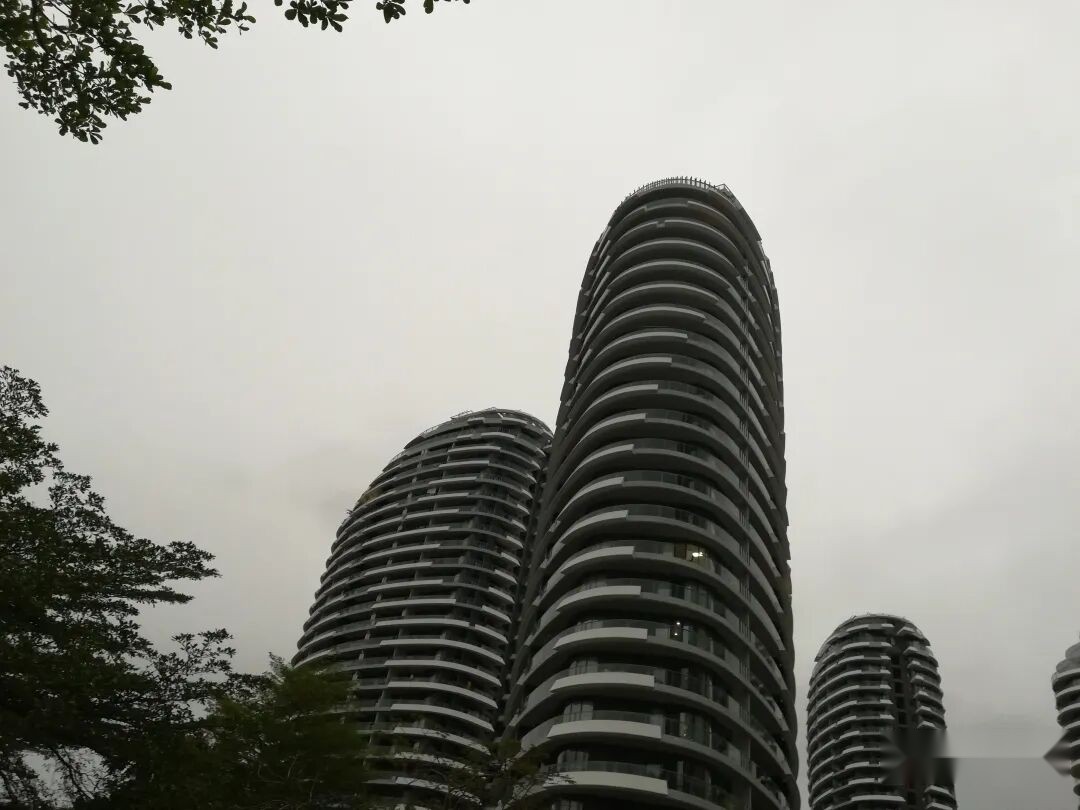
Sanya has a ton of gorgeous architecture. This cluster of four buildings has a really unique vibe.
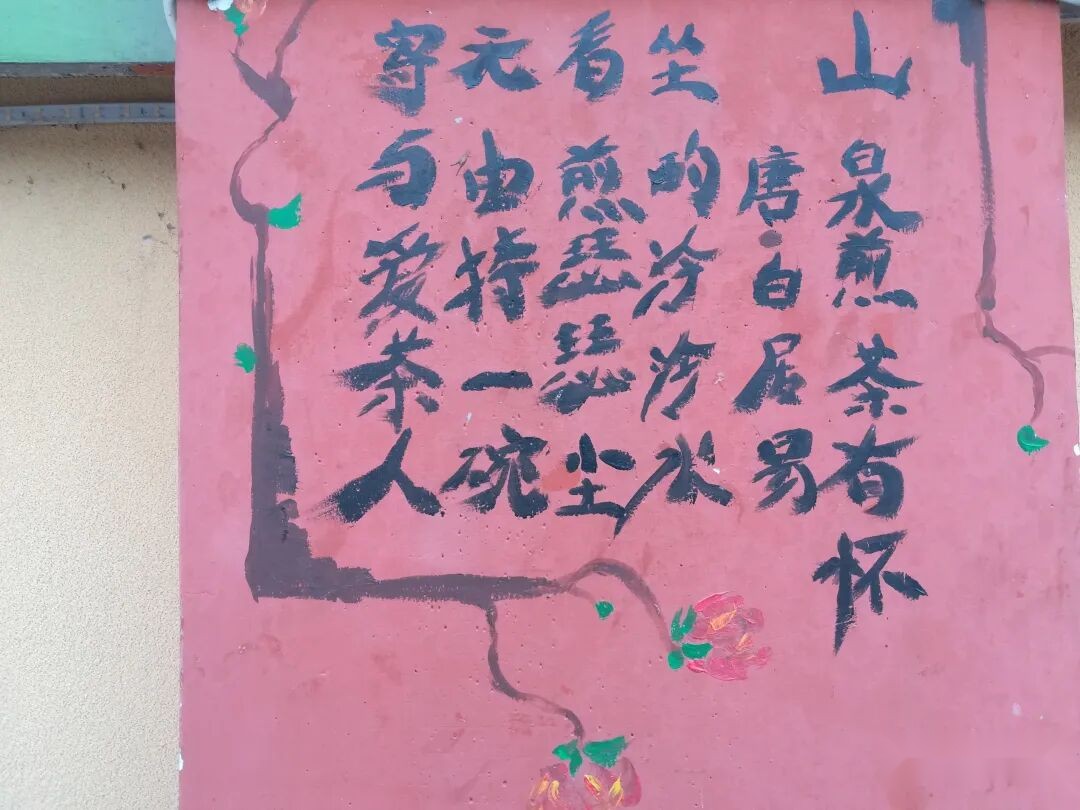
Not sure how my calligraphy skills are, but I feel like it's pretty much on par with mine. Guess it must just be my lack of skill that I couldn't appreciate their profound artistic depth.
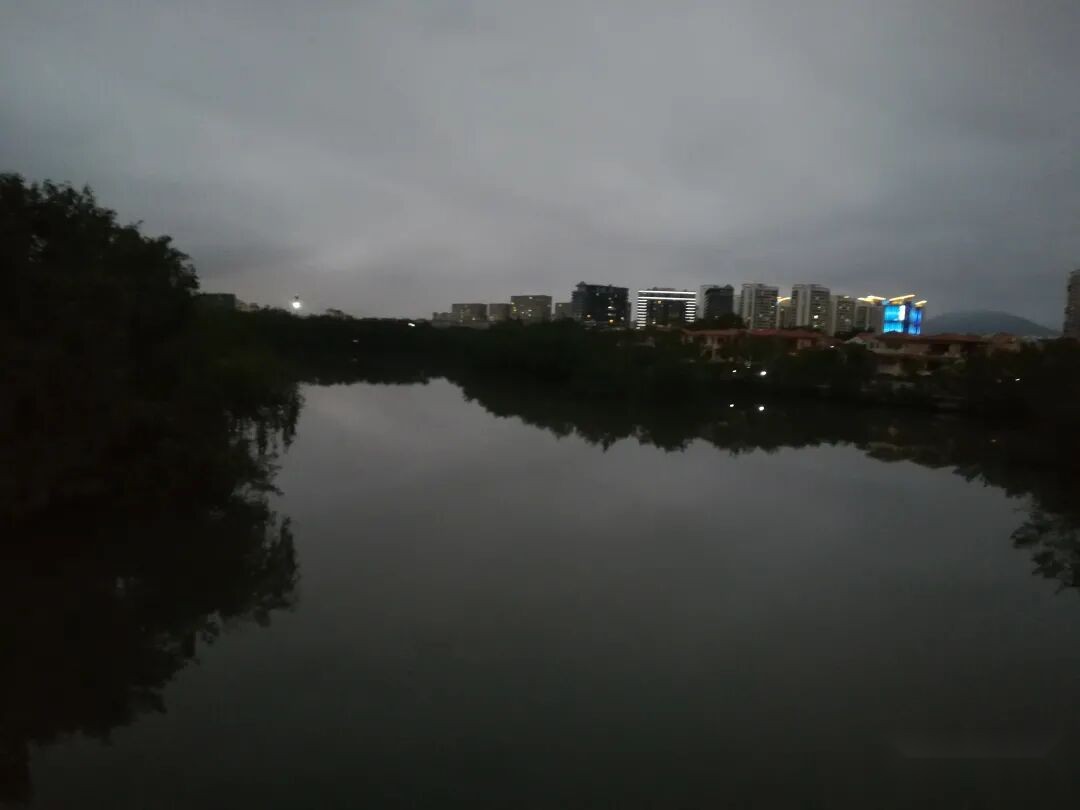
Sanya River in the evening twilight.
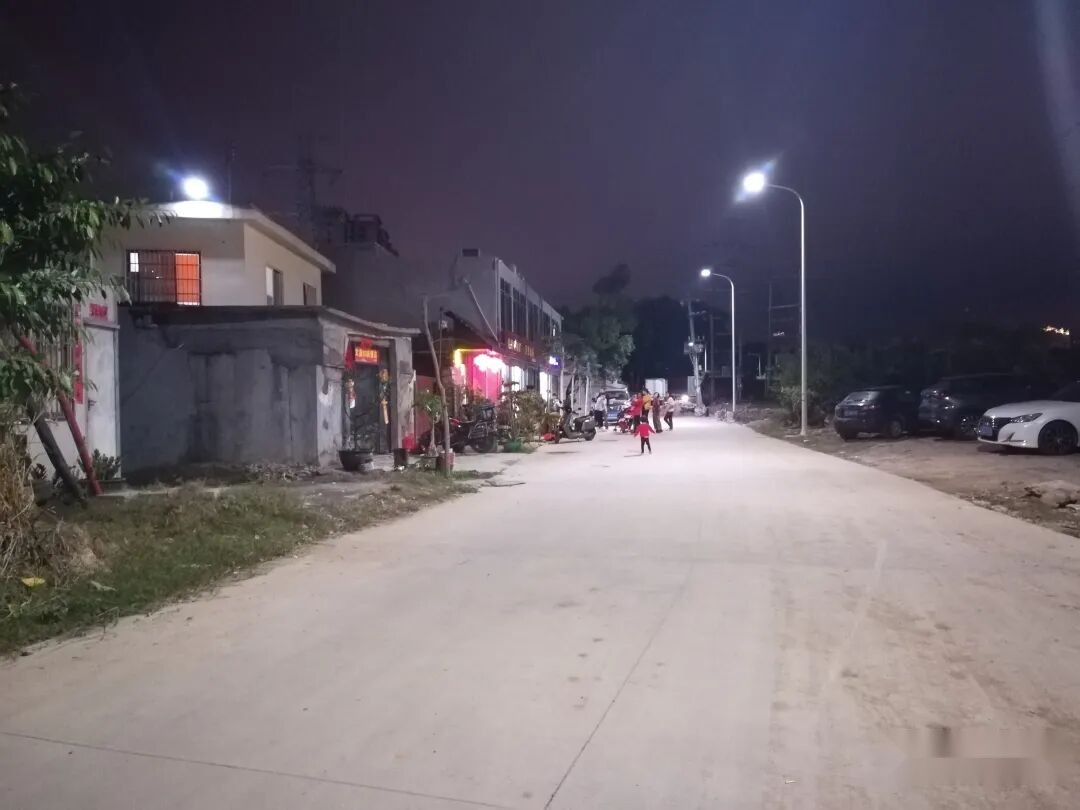
This kid in a red jacket chased me for a long way while the adults yelled from behind, 'Keep running and the old man up ahead is gonna grab you!' Well, I had to play along, so I yelled back for him to come with me, and he immediately ran back. Walked all day and felt pretty beat, so I grabbed some water and hit the sack. view all
Exploring China's Southernmost Muslim Villages: The Unique Geography and Culture of Sanya's Huihui and Huixin Villages
Abstract:
A systematic look at the history and current landscape of the Muslim villages in Sanya, sitting right at China's southernmost tip. We break down how the Utsul Muslims preserve their Islamic faith, distinct linguistic system, and strict dietary laws in this tropical seaside city, serving as a living specimen of Maritime Silk Road culture.
February 22, 2022
The sky was still a bit overcast. Yesterday's forecast promised clear skies, but today it flipped to cloudy. Whatever, at least it's finally not raining. Decided to head out for a stroll. The original plan was to hit Linchunling Forest Park for some hiking and panoramic views of Sanya.
Checked the map and saw that Bus Route 50 from the Sanya Railway Station goes straight there. Somehow, I ended up at Phoenix International Airport instead—didn't take the wrong bus, alright, I just got on heading the complete opposite direction.
On the way, we passed Huihui Village (Huihui Muslim Village). I'd looked it up online a few days ago—it’s hyped as China's southernmost Muslim village. It was only three stops away from the airport. After hanging out at the airport for a bit, I caught Bus Route 24 and hopped off right at the Beautiful Phoenix Hotel, which drops you right into Huihui Village. My first vibe? Honestly felt like stumbling into a Uyghur village.
Freshly baked nan (traditional Uyghur flatbread) in Xinjiang usually has to be made at designated nan industrial parks, but here you see plenty of freshly baked nan stalls all over. Saw one of these syrup-dripping nan fresh out of the oven and couldn't resist grabbing one for 5 RMB. Munched on it while walking—super tasty.
Thought I spotted a weird dog breed at first, but looking closer, the little guy just got a fresh haircut. Gotta say, the grooming skills aren't bad at all. Shaved super smooth, even the fur on its paws was trimmed clean.
Found an older sister making pancakes in the alleyway with a vibe totally giving Gansu-Shaanxi Hui Muslim style. Using wood fuel, she pours the batter into this little black pan, closes the lid, and adds fire underneath. This pan can be heated from both sides, and the finished pancakes get tossed onto the iron tray right in the middle. The lady on the side said they're 2 RMB each, but when I asked the lady actually cooking them on the left, she said they aren't for sale. Pretty unique way of cooking, right?
A green house in the village—looks like a women's beauty salon. Even the building is painted green, and the color combo is super coordinated and easy on the eyes.
Qingzhen Dongsi (Sanya East Mosque). So, is there a Qingzhen Xisi (West Mosque)? Sure enough, there is! Not just a West Mosque, but a South Mosque and North Mosque too. There are six mosques in total, with the other two being the Sanya Ancient Mosque and Nankai Mosque.
Huihui Civilization Farmers Market. Not super big, and strictly sells halal food.
Killing a duck, getting it ready. This local sister just slaughtered a duck and is cleaning it up right there. Usually, whatever you buy at the market is already prepped, so this one must have been home-raised.
An airplane over the treetops.
A 'flying chicken' under the treetops.
Little kids working hard.
The village isn't far from Sanya Bay—just a little over two kilometers—so I ditched the mountain hike and went for a stroll by the ocean instead. It was overcast, but the waves were huge. Sat by the beach watching the surf and the crowds walking by. A few pretty girls walked past every now and then, and of course, plenty of not-so-pretty ones too.
A jellyfish washed ashore by the waves. Wonder if this one is edible—making a cold tossed jellyfish skin salad with it would be pretty awesome.
Two kids playing a real-life Jingwei (mythological bird trying to fill the sea with pebbles), using little plastic shovels trying to fill up the ocean. You guys got this!
There are two Muslim villages. The other one is Huixin Village (Huixin Muslim Village), just over four kilometers from Huihui Village, and you can just walk along the coast to get there. There are tons of little shops in this village; two small streets are packed with vendors selling stuff, mostly street food. A lot of houses in the village also have homestay signs hanging outside. Saw another batch of fresh, plain nan just out of the oven. Grabbed one, though honestly, this one wasn't as good as the ones in Xinjiang. There were small street stalls selling home-grown produce, like dragon fruit going for 10 RMB for four jin (about 4 lbs), and watermelons for 5 RMB each.
Qingzhen Nansi (Sanya South Mosque). The architecture is super new, looks like it was recently renovated. Just happened to pass by Nankai Mosque too, didn't make a special trip for it though.
Walking back from Huixin Village is also over four kilometers, and the bus stop is a good two kilometers away. Might as well just walk all the way back since I'm not in a rush anyway, plus I get to check out the street views.
Sanya has a ton of gorgeous architecture. This cluster of four buildings has a really unique vibe.
Not sure how my calligraphy skills are, but I feel like it's pretty much on par with mine. Guess it must just be my lack of skill that I couldn't appreciate their profound artistic depth.
Sanya River in the evening twilight.
This kid in a red jacket chased me for a long way while the adults yelled from behind, 'Keep running and the old man up ahead is gonna grab you!' Well, I had to play along, so I yelled back for him to come with me, and he immediately ran back. Walked all day and felt pretty beat, so I grabbed some water and hit the sack. view all
[Internet Repost]
Exploring China's Southernmost Muslim Villages: The Unique Geography and Culture of Sanya's Huihui and Huixin Villages
Abstract:
A systematic look at the history and current landscape of the Muslim villages in Sanya, sitting right at China's southernmost tip. We break down how the Utsul Muslims preserve their Islamic faith, distinct linguistic system, and strict dietary laws in this tropical seaside city, serving as a living specimen of Maritime Silk Road culture.
February 22, 2022
The sky was still a bit overcast. Yesterday's forecast promised clear skies, but today it flipped to cloudy. Whatever, at least it's finally not raining. Decided to head out for a stroll. The original plan was to hit Linchunling Forest Park for some hiking and panoramic views of Sanya.
Checked the map and saw that Bus Route 50 from the Sanya Railway Station goes straight there. Somehow, I ended up at Phoenix International Airport instead—didn't take the wrong bus, alright, I just got on heading the complete opposite direction.
On the way, we passed Huihui Village (Huihui Muslim Village). I'd looked it up online a few days ago—it’s hyped as China's southernmost Muslim village. It was only three stops away from the airport. After hanging out at the airport for a bit, I caught Bus Route 24 and hopped off right at the Beautiful Phoenix Hotel, which drops you right into Huihui Village. My first vibe? Honestly felt like stumbling into a Uyghur village.
Freshly baked nan (traditional Uyghur flatbread) in Xinjiang usually has to be made at designated nan industrial parks, but here you see plenty of freshly baked nan stalls all over. Saw one of these syrup-dripping nan fresh out of the oven and couldn't resist grabbing one for 5 RMB. Munched on it while walking—super tasty.
Thought I spotted a weird dog breed at first, but looking closer, the little guy just got a fresh haircut. Gotta say, the grooming skills aren't bad at all. Shaved super smooth, even the fur on its paws was trimmed clean.
Found an older sister making pancakes in the alleyway with a vibe totally giving Gansu-Shaanxi Hui Muslim style. Using wood fuel, she pours the batter into this little black pan, closes the lid, and adds fire underneath. This pan can be heated from both sides, and the finished pancakes get tossed onto the iron tray right in the middle. The lady on the side said they're 2 RMB each, but when I asked the lady actually cooking them on the left, she said they aren't for sale. Pretty unique way of cooking, right?
A green house in the village—looks like a women's beauty salon. Even the building is painted green, and the color combo is super coordinated and easy on the eyes.
Qingzhen Dongsi (Sanya East Mosque). So, is there a Qingzhen Xisi (West Mosque)? Sure enough, there is! Not just a West Mosque, but a South Mosque and North Mosque too. There are six mosques in total, with the other two being the Sanya Ancient Mosque and Nankai Mosque.
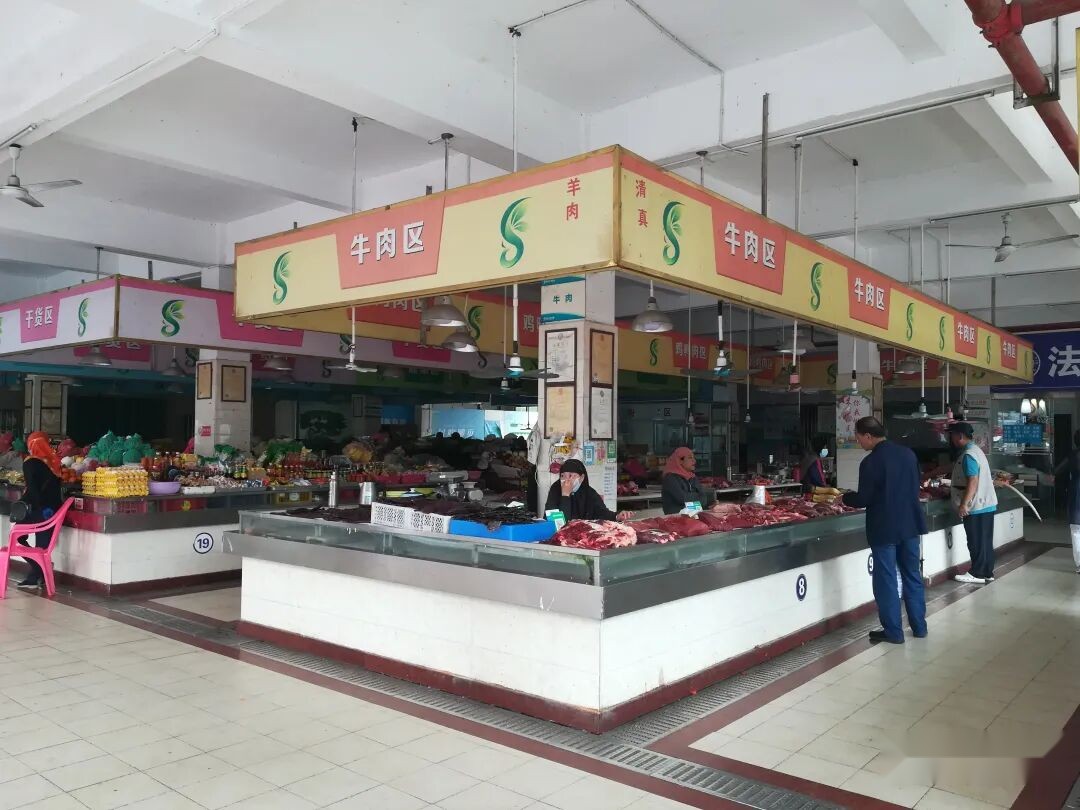
Huihui Civilization Farmers Market. Not super big, and strictly sells halal food.
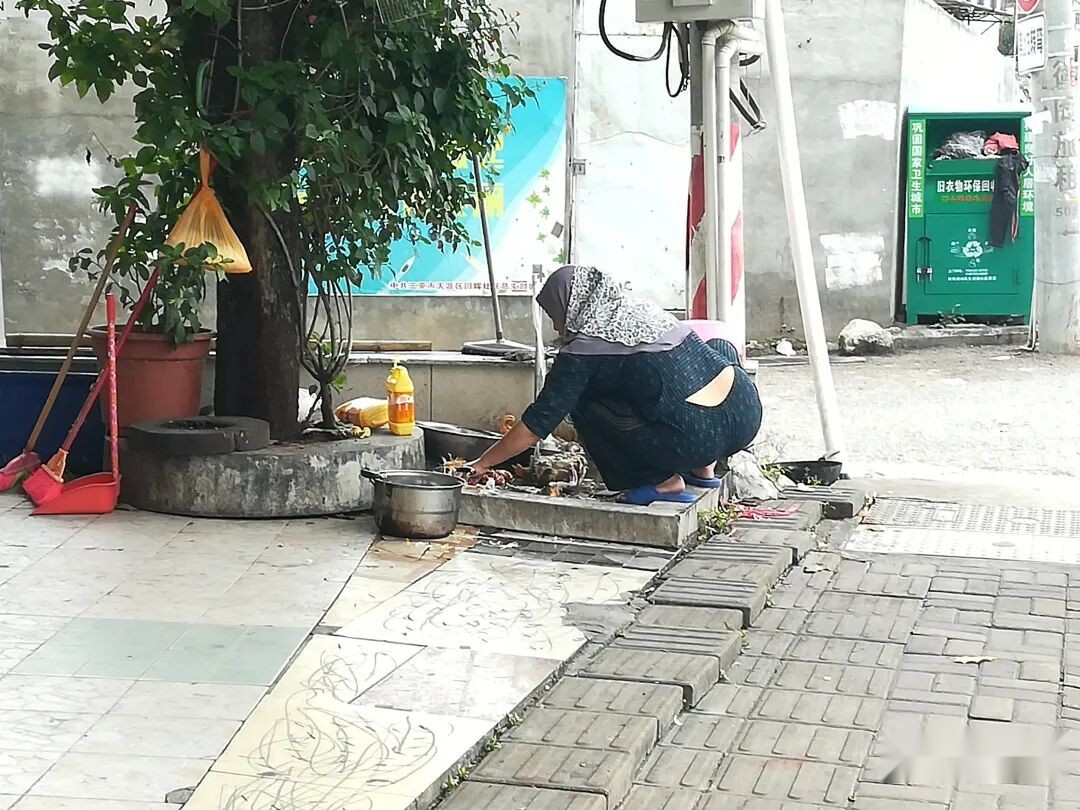
Killing a duck, getting it ready. This local sister just slaughtered a duck and is cleaning it up right there. Usually, whatever you buy at the market is already prepped, so this one must have been home-raised.
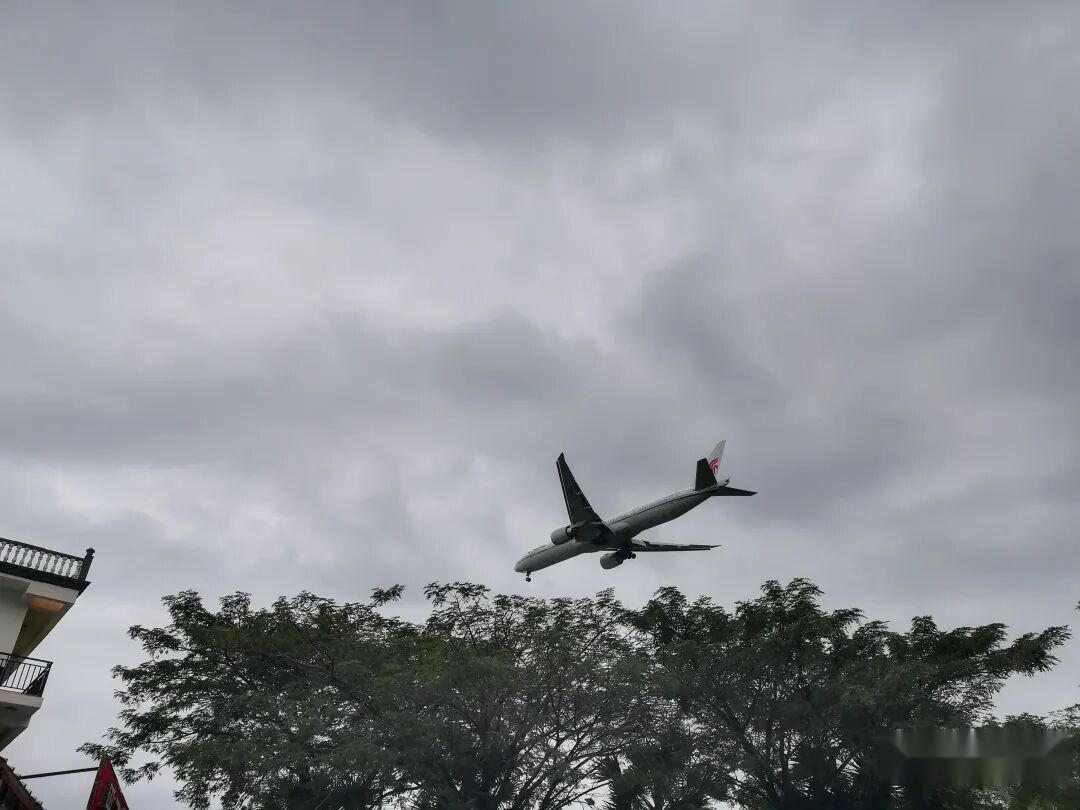
An airplane over the treetops.
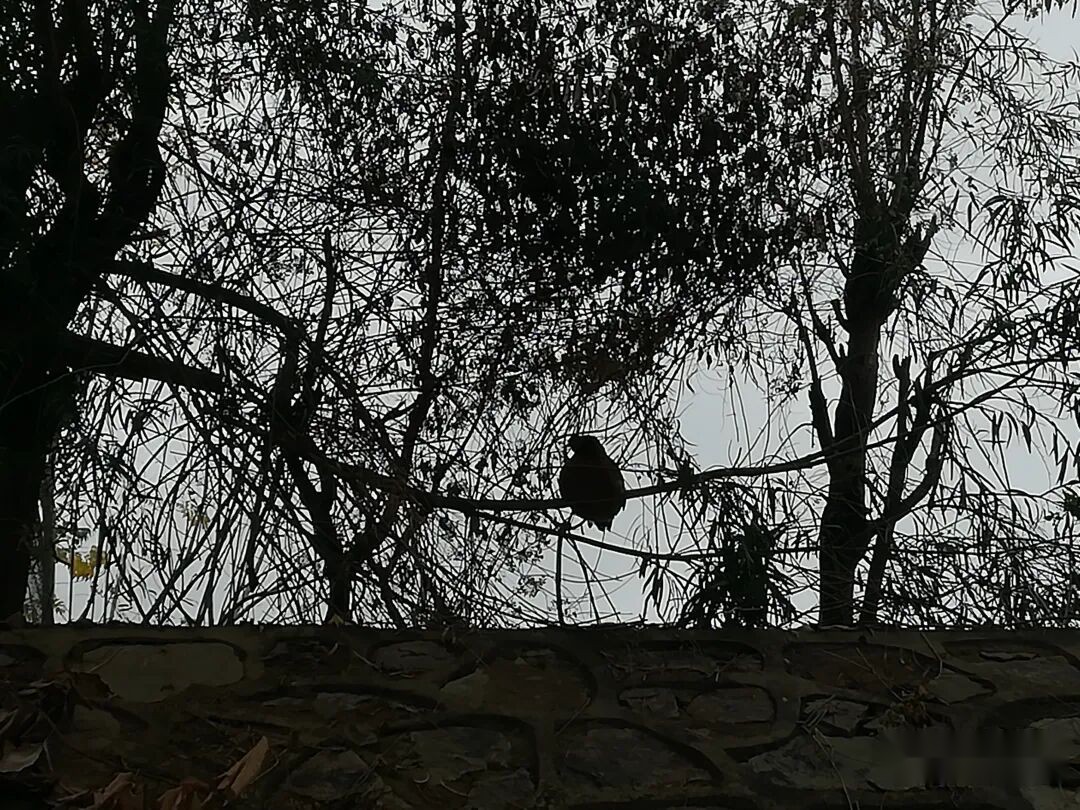
A 'flying chicken' under the treetops.
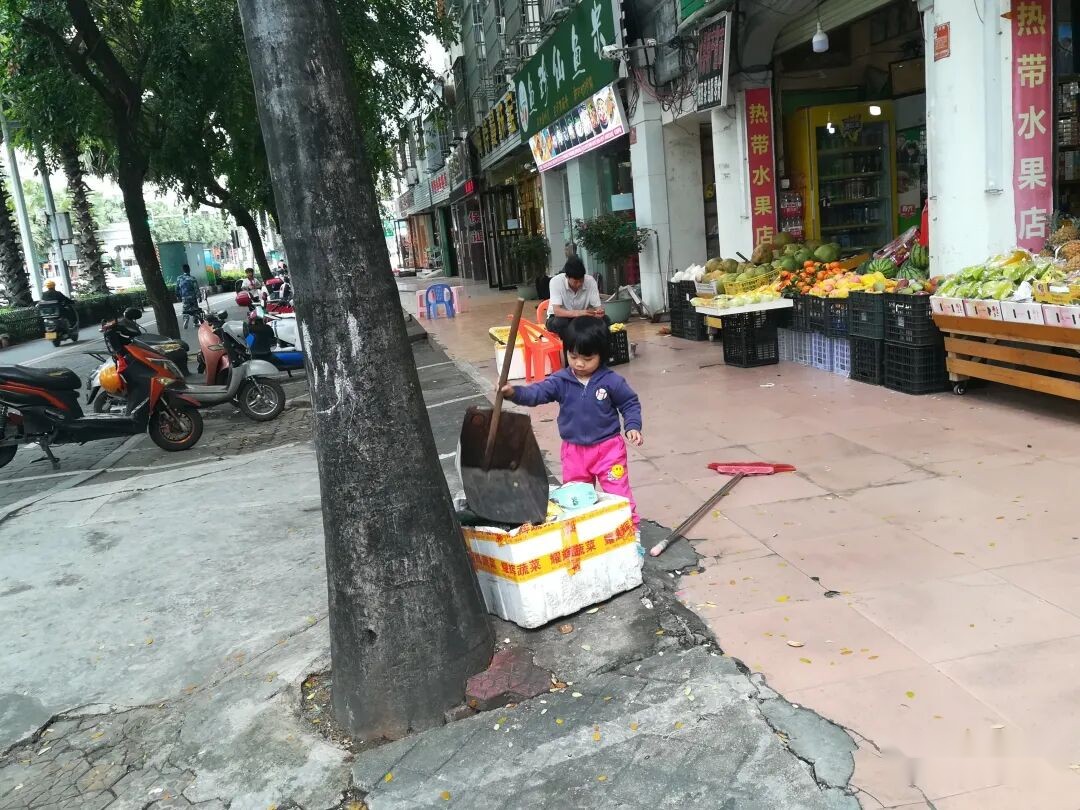
Little kids working hard.
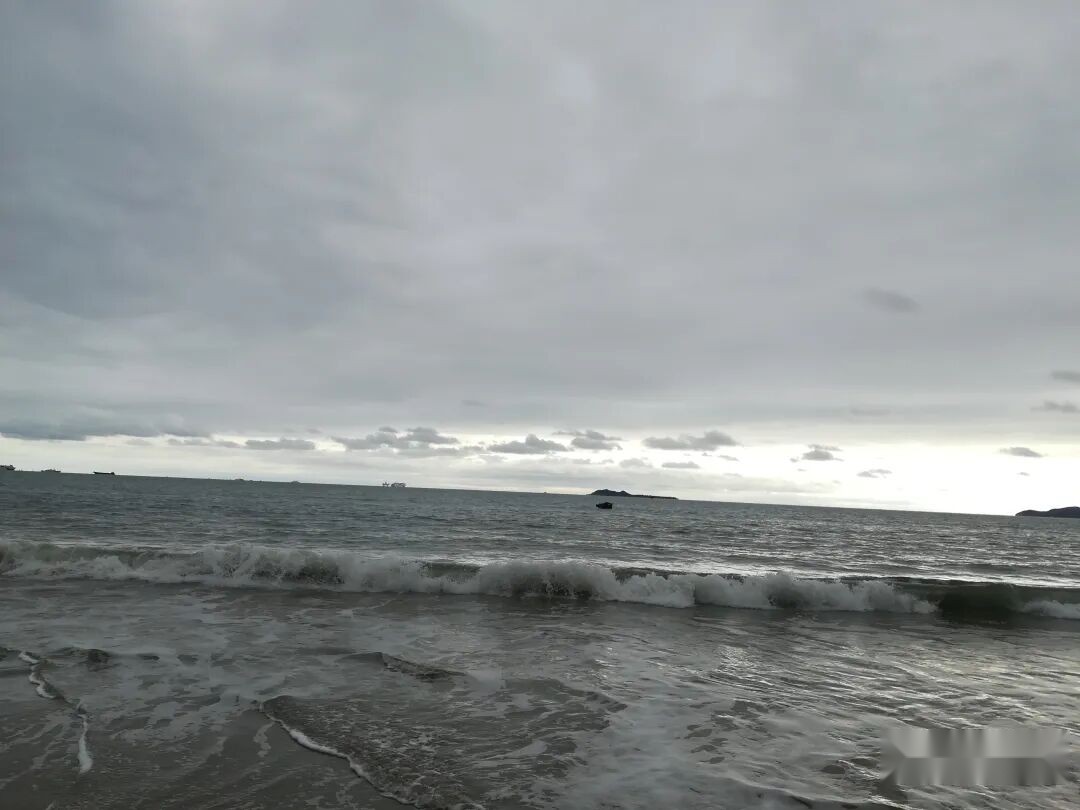
The village isn't far from Sanya Bay—just a little over two kilometers—so I ditched the mountain hike and went for a stroll by the ocean instead. It was overcast, but the waves were huge. Sat by the beach watching the surf and the crowds walking by. A few pretty girls walked past every now and then, and of course, plenty of not-so-pretty ones too.
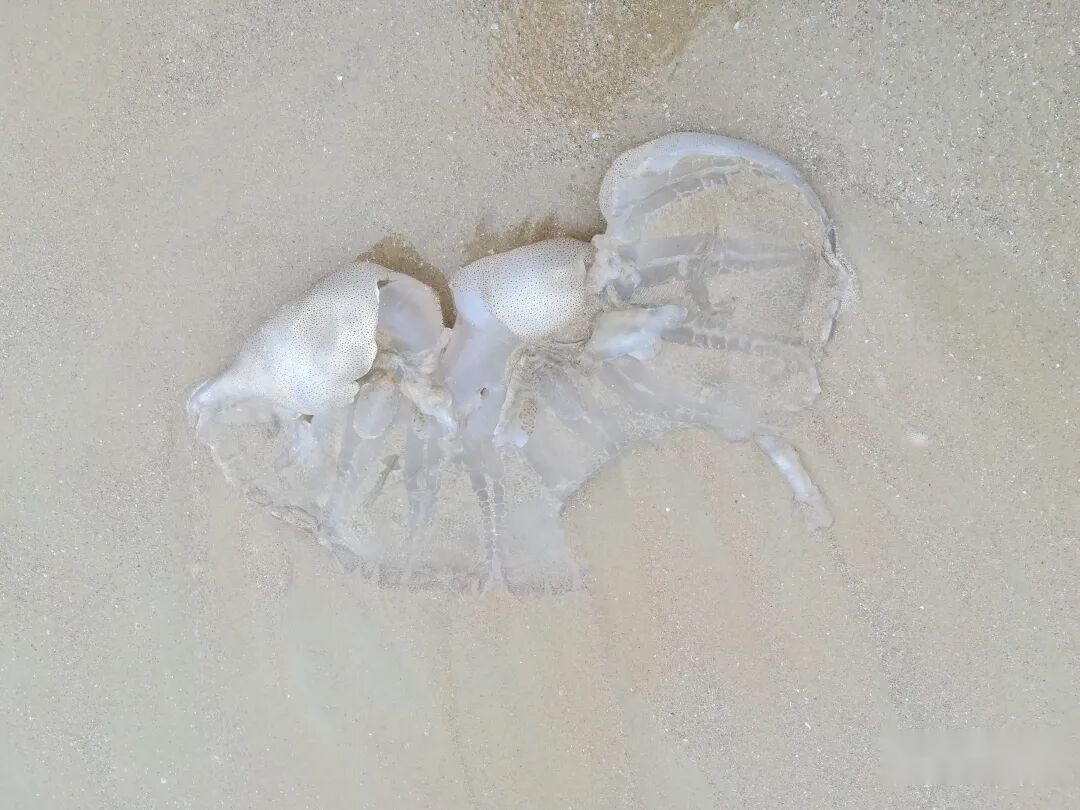
A jellyfish washed ashore by the waves. Wonder if this one is edible—making a cold tossed jellyfish skin salad with it would be pretty awesome.
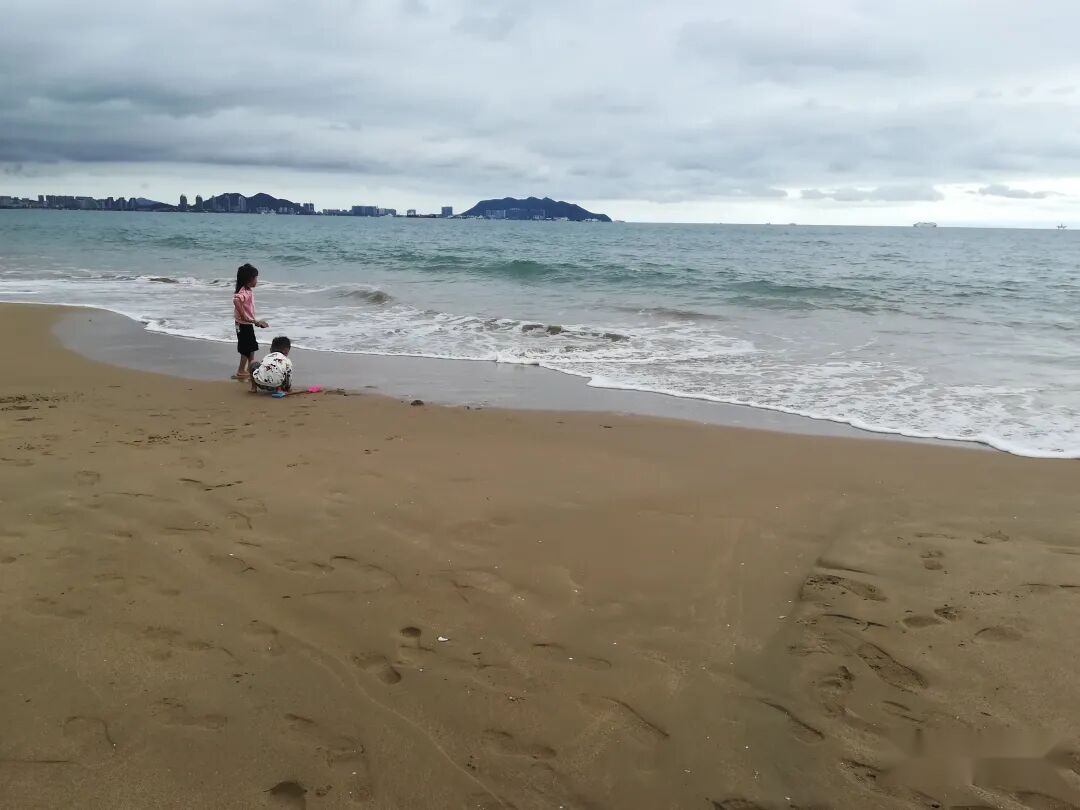
Two kids playing a real-life Jingwei (mythological bird trying to fill the sea with pebbles), using little plastic shovels trying to fill up the ocean. You guys got this!
There are two Muslim villages. The other one is Huixin Village (Huixin Muslim Village), just over four kilometers from Huihui Village, and you can just walk along the coast to get there. There are tons of little shops in this village; two small streets are packed with vendors selling stuff, mostly street food. A lot of houses in the village also have homestay signs hanging outside. Saw another batch of fresh, plain nan just out of the oven. Grabbed one, though honestly, this one wasn't as good as the ones in Xinjiang. There were small street stalls selling home-grown produce, like dragon fruit going for 10 RMB for four jin (about 4 lbs), and watermelons for 5 RMB each.
Qingzhen Nansi (Sanya South Mosque). The architecture is super new, looks like it was recently renovated. Just happened to pass by Nankai Mosque too, didn't make a special trip for it though.
Walking back from Huixin Village is also over four kilometers, and the bus stop is a good two kilometers away. Might as well just walk all the way back since I'm not in a rush anyway, plus I get to check out the street views.
Sanya has a ton of gorgeous architecture. This cluster of four buildings has a really unique vibe.
Not sure how my calligraphy skills are, but I feel like it's pretty much on par with mine. Guess it must just be my lack of skill that I couldn't appreciate their profound artistic depth.
Sanya River in the evening twilight.
This kid in a red jacket chased me for a long way while the adults yelled from behind, 'Keep running and the old man up ahead is gonna grab you!' Well, I had to play along, so I yelled back for him to come with me, and he immediately ran back. Walked all day and felt pretty beat, so I grabbed some water and hit the sack.
Exploring China's Southernmost Muslim Villages: The Unique Geography and Culture of Sanya's Huihui and Huixin Villages
Abstract:
A systematic look at the history and current landscape of the Muslim villages in Sanya, sitting right at China's southernmost tip. We break down how the Utsul Muslims preserve their Islamic faith, distinct linguistic system, and strict dietary laws in this tropical seaside city, serving as a living specimen of Maritime Silk Road culture.
February 22, 2022
The sky was still a bit overcast. Yesterday's forecast promised clear skies, but today it flipped to cloudy. Whatever, at least it's finally not raining. Decided to head out for a stroll. The original plan was to hit Linchunling Forest Park for some hiking and panoramic views of Sanya.
Checked the map and saw that Bus Route 50 from the Sanya Railway Station goes straight there. Somehow, I ended up at Phoenix International Airport instead—didn't take the wrong bus, alright, I just got on heading the complete opposite direction.
On the way, we passed Huihui Village (Huihui Muslim Village). I'd looked it up online a few days ago—it’s hyped as China's southernmost Muslim village. It was only three stops away from the airport. After hanging out at the airport for a bit, I caught Bus Route 24 and hopped off right at the Beautiful Phoenix Hotel, which drops you right into Huihui Village. My first vibe? Honestly felt like stumbling into a Uyghur village.
Freshly baked nan (traditional Uyghur flatbread) in Xinjiang usually has to be made at designated nan industrial parks, but here you see plenty of freshly baked nan stalls all over. Saw one of these syrup-dripping nan fresh out of the oven and couldn't resist grabbing one for 5 RMB. Munched on it while walking—super tasty.
Thought I spotted a weird dog breed at first, but looking closer, the little guy just got a fresh haircut. Gotta say, the grooming skills aren't bad at all. Shaved super smooth, even the fur on its paws was trimmed clean.
Found an older sister making pancakes in the alleyway with a vibe totally giving Gansu-Shaanxi Hui Muslim style. Using wood fuel, she pours the batter into this little black pan, closes the lid, and adds fire underneath. This pan can be heated from both sides, and the finished pancakes get tossed onto the iron tray right in the middle. The lady on the side said they're 2 RMB each, but when I asked the lady actually cooking them on the left, she said they aren't for sale. Pretty unique way of cooking, right?
A green house in the village—looks like a women's beauty salon. Even the building is painted green, and the color combo is super coordinated and easy on the eyes.
Qingzhen Dongsi (Sanya East Mosque). So, is there a Qingzhen Xisi (West Mosque)? Sure enough, there is! Not just a West Mosque, but a South Mosque and North Mosque too. There are six mosques in total, with the other two being the Sanya Ancient Mosque and Nankai Mosque.
Huihui Civilization Farmers Market. Not super big, and strictly sells halal food.
Killing a duck, getting it ready. This local sister just slaughtered a duck and is cleaning it up right there. Usually, whatever you buy at the market is already prepped, so this one must have been home-raised.
An airplane over the treetops.
A 'flying chicken' under the treetops.
Little kids working hard.
The village isn't far from Sanya Bay—just a little over two kilometers—so I ditched the mountain hike and went for a stroll by the ocean instead. It was overcast, but the waves were huge. Sat by the beach watching the surf and the crowds walking by. A few pretty girls walked past every now and then, and of course, plenty of not-so-pretty ones too.
A jellyfish washed ashore by the waves. Wonder if this one is edible—making a cold tossed jellyfish skin salad with it would be pretty awesome.
Two kids playing a real-life Jingwei (mythological bird trying to fill the sea with pebbles), using little plastic shovels trying to fill up the ocean. You guys got this!
There are two Muslim villages. The other one is Huixin Village (Huixin Muslim Village), just over four kilometers from Huihui Village, and you can just walk along the coast to get there. There are tons of little shops in this village; two small streets are packed with vendors selling stuff, mostly street food. A lot of houses in the village also have homestay signs hanging outside. Saw another batch of fresh, plain nan just out of the oven. Grabbed one, though honestly, this one wasn't as good as the ones in Xinjiang. There were small street stalls selling home-grown produce, like dragon fruit going for 10 RMB for four jin (about 4 lbs), and watermelons for 5 RMB each.
Qingzhen Nansi (Sanya South Mosque). The architecture is super new, looks like it was recently renovated. Just happened to pass by Nankai Mosque too, didn't make a special trip for it though.
Walking back from Huixin Village is also over four kilometers, and the bus stop is a good two kilometers away. Might as well just walk all the way back since I'm not in a rush anyway, plus I get to check out the street views.
Sanya has a ton of gorgeous architecture. This cluster of four buildings has a really unique vibe.
Not sure how my calligraphy skills are, but I feel like it's pretty much on par with mine. Guess it must just be my lack of skill that I couldn't appreciate their profound artistic depth.
Sanya River in the evening twilight.
This kid in a red jacket chased me for a long way while the adults yelled from behind, 'Keep running and the old man up ahead is gonna grab you!' Well, I had to play along, so I yelled back for him to come with me, and he immediately ran back. Walked all day and felt pretty beat, so I grabbed some water and hit the sack.
Sanya's Utsul Muslims: Maritime Silk Road History, Halal Cuisine & Culture
Articles • Hasan09 posted the article • 0 comments • 13 views • 4 days ago
[Internet Repost]
Tracing the Genetic and Linguistic Origins of Hainan's Sanya Hui Muslims: The Unique Tones of the Utsul Language and the Paternal History of Maritime Silk Road Migrations
Abstract:
A deep dive into the mystery of the origins of the Hui Muslim community in Sanya, Hainan, from the perspectives of molecular anthropology and linguistics. This explores the evolutionary history of the Utsul language—which possesses distinct Austronesian characteristics—while combining genetic haplogroup data to reconstruct the history of integration among ancient Arab, Persian, and Champa Muslims.
When people talk about China's Muslim communities, they usually think first of the Northwest—Shaanxi, Gansu, Ningxia, Qinghai—and Xinjiang. Yet down at the southernmost tip of Hainan Island in Sanya, tucked away in the coastal villages of Huihui Village (Huihui Muslim Village) and Huixin Village (Huixin Muslim Village), lives a unique group of people who have practiced Islam for generations. They never bow to Buddha, never step foot inside ancestral shrines, and strictly avoid pork. The most prominent landmarks in their villages are mosques (masjids), and their daily diet, weddings, funerals, and festivals all strictly adhere to Islamic sharia law. Even more fascinating is their language: it's neither standard Hainanese nor the Hlai language spoken by the island's indigenous Hlai people. Outsiders cannot understand a single word. Academics call it the Utsul language (Huihui language). While officially classified under the Hui ethnic group during ethnic identification, these people are completely distinct from mainland Hui Muslims in both their historical origins and the language they speak.
Most ancestors of mainland Hui Muslims traveled via the overland Silk Road, closely tied to Muslim merchants and accompanying soldiers from Central Asia, Arabia, and Persia. So, from which body of water did the paternal lineage of Hainan's community actually come? Was it the famous Arabian Peninsula, the Persian Gulf, or some mysterious ancient kingdom on the eastern coast of the Indochina Peninsula that has long since vanished? Linguistics, historical records, and ancient DNA each offer clues. Piecing them together reveals a surprising truth: the answer is far more twists-and-turns than any simple guess. It proves that while religion and culture can indeed cross oceans to spread, chromosomes don't necessarily follow along for the ride.
To figure out the exact origins of the Utsul people, we must first understand the kingdom of Champa. In ancient Chinese historical texts, Champa was successively known as Linyi, Huanwang, and Champa. Established around 192 CE—the late Eastern Han Dynasty—it was an ancient maritime kingdom built by Austronesian-speaking peoples in what is now the central to southern coastal region of Vietnam. The Cham people were exceptionally skilled at navigation and trade, and their territory happened to control the maritime bottleneck connecting China to India and Arabia. Chinese merchant ships heading south and Arab merchant ships heading east frequently docked in Champa's ports to take on supplies. The famous Song Dynasty scholar Zhou Qufei listed Champa in his book Lingwai Daida as a major metropolis among the southwestern nations. It was a maritime kingdom that lived by the sea and thrived by the sea.
Champa was initially deeply influenced by Indian culture, with Hinduism long serving as its primary religion. Coastal brick-built towers in the Cham style still stand today. By the late 9th century, residential quarters composed of Arab and Persian Muslim merchants had already emerged in southern Champa. Islam quietly spread there alongside maritime trade, and by the 10th century, the number of believers had steadily grown. Right up until the 17th century, Champa's royal family chose to convert to Islam. In other words, before Champa's official demise, this vast land had been dyed with thick Islamic colors layer upon layer, built atop a deep foundation of Hinduism.
However, Champa's northern neighbor, Vietnam, continuously expanded southward after declaring independence—an event known in history as the Nam Tien (Southward March). The two countries engaged in a tug-of-war lasting centuries. In 982 CE, Champa's capital was briefly breached by enemy forces, and even then, some Cham refugees chose to cross the sea and flee northward. The heaviest blow came in 1471, when the Vietnamese Later Le Dynasty led a massive army to capture Champa's strategic stronghold of Vijaya, leaving Champa existing in name only. Afterward, the Nguyen Dynasty kept up its southern pressure. Facing the desperate peril of a destroyed nation and shattered homes, the Cham people boarded boats and fled into the open sea. One group traveled south along the Indochina Peninsula, while another caught tailwinds and headed north, eventually arriving at Yazhou at the southern tip of Hainan Island—today's Sanya area. An ancient maritime kingdom that had stood for over a thousand years was ultimately squeezed step-by-step into the boundless ocean by its neighbor.
According to oral folklore, a Champa prince once led about 1,000 clansmen across the sea to Hainan, where they were properly settled by the Ming Dynasty government. In fact, official Chinese historical records of Cham people entering Hainan date back even further, appearing as early as the Song Dynasty. Aside from Champa refugees, Arab and foreign merchants (fanke) who arrived via the Maritime Silk Road during the Tang and Song dynasties and settled in Hainan's ports represent another source of Hainan's Muslim community. Tang Dynasty Muslim cemeteries discovered in the coastal areas of Lingshui and Sanya serve as physical proof of these early maritime visitors. The exiled refugees from fallen Champa, combined with the foreign merchants who had docked and settled here even earlier, blended through several waves of convergence to finally form today's unique Utsul people—themselves a wondrous confluence of multiple maritime migration streams.
The most indisputable proof of identity carried by the Utsul people is their language. The Utsul language belongs to the Chamic branch of the Malayo-Polynesian subgroup of the Austronesian language family, sharing a common origin with the Cham language spoken by surviving Cham people in Vietnam today, and bearing a particularly close resemblance to its northern branch. The Austronesian language family spans from Madagascar in the west to distant Easter Island in the east, and as far south as New Zealand, making it one of the most widely distributed language families in the world. Yet the Utsul language is the only Austronesian tongue actually spoken on the Chinese mainland today, and the Utsul people are the sole branch of the Hui nationality across all of China to possess their own independent language—Hui Muslims in other regions having long since adopted Chinese for general communication. Based solely on this unique language, they occupy a lonely and extremely distinctive position on the ethnic distribution map of the Chinese mainland.
Even more intriguing is that within the vast Austronesian language family, the Utsul language is a rare outlier. Because typical Austronesian languages are mostly multisyllabic without tonal distinctions—relying solely on various affixes to express grammatical details—the Utsul language instead evolved into a predominantly monosyllabic form complete with its own fully developed tonal system. Linguistically, it grew increasingly similar to the surrounding Chinese and Hlai languages widely spoken in the region. Linguists view it as a classic research sample for tone genesis in language contact studies. This happened because the descendants of the Cham people lived generation after generation as neighbors to Chinese- and Kra-Dai-speaking populations on Hainan Island, and their native tongue was reshaped step-by-step through extremely lengthy mutual contact. Although the surface framework of the language changed into a new shape, its core vocabulary still corresponds with related sister languages. Like an isolated island drifting alone on the ocean, it stubbornly preserves the final lingering hometown sounds left behind by the Champa refugees. Based solely on this language set and their profound faith, academics concluded long ago that the Utsul people are the surviving descendants of the Champa.
According to conventional imagination, the paternal lineage of these Muslims should perhaps trace directly back to the distant Arabian Peninsula, or at the very least be local Cham people from Champa. However, a 2013 study published by Li Dongna, Wang Chuanchao, and others from Fudan University overturned this assumption. They tested 102 Utsul individuals—including 72 males and 30 females—analyzing both paternal Y-chromosomes and maternal mitochondrial DNA. The final conclusion was unexpectedly astonishing: although language and faith securely pointed the clues back to the former kingdom of Champa, the chromosome data told a completely different story, and both the paternal and maternal test results agreed with eerie consistency.
First, regarding the paternal side: the most frequent Y-chromosome haplogroup among Utsul males turned out to be O1a, specifically designated as M119, which accounted for roughly 58.1% in earlier smaller-sample statistics. The problem, however, is that the primary paternal lineage carried by today's Vietnamese Cham males is O2a1 (specifically M95), whereas this branch accounts for a mere 4.17% among the Utsul. The paternal structures of the two groups fundamentally do not match. If they were truly direct refugees of Champa faithfully passing down their paternal lines, the high-frequency lineage appearing among the Utsul should naturally have been M95, absolutely not M119. This single set of extremely misaligned data alone is enough to arouse great skepticism toward the narrative of direct Champa descent.
Researchers subsequently used Y-chromosome short tandem repeats (STRs) to construct complex network diagrams. The results revealed that almost all O1a lineages carried by the Utsul fell directly into the specific branches native to Hainan's indigenous inhabitants—the Hlai and other Kra-Dai-speaking populations—rather than clustering with Vietnamese Cham or Indochinese populations. Within this network, the indigenous Hainan O1a spontaneously formed several clusters almost exclusive to the locality, and the Utsul samples were nearly all deeply embedded within these clusters. This clearly demonstrates that the primary paternal lineage of the Utsul did not arrive from afar with the Champa refugees, but was instead acquired from the local populations of Hainan after successfully landing on the island. The only relative their Y-chromosomes recognize is the native people of Hainan Island, not the Cham people across the vast sea.
The maternal pattern is an exact carbon copy of the paternal side. The maternal haplogroups of the Utsul are predominantly D4 and F2a, accounting for roughly 16.67% and 15.69% respectively, alongside downstream sub-lineages such as F1b, F1a1, B5a, M8a, D5, and B4a. Analyzing these individual sub-lineages at the network level reveals that these maternal lines either cluster with Hainan's indigenous inhabitants or with southern Chinese populations. Not a single Utsul sample could be found clustering directly with the Cham people. These two mutually independent, rock-solid pieces of evidence—paternal and maternal—jointly point to a final conclusion: genetically speaking, the Utsul people are much closer to Hainan's native Hlai people and the broader southern Chinese population than to the Cham of Vietnam. If the localization of the paternal line could still be barely explained by customs like matrilocal marriage (taking a husband into the wife's family), then the fact that even the maternal line shows an overall shift toward the local population can only fully prove that the biological core of these people truly grew anew and took root right here on the island.
This study also made the pleasant discovery that among the Utsul people, there are moderate frequencies of haplogroup C (designated M130) and haplogroup F (designated M89). These quite ancient Southeast Asian lineages very likely originate from genetic drift occurring in small populations during the foundation period. In addition, there is about 4.17% of O3a2c1a (designated M117), a typical Sino-Tibetan characteristic lineage, which most likely stems from genetic inflow from neighboring Han Chinese populations in more recent times. Meanwhile, the Arab J lineage or Central Asian R lineage that people originally expected to occupy a place failed to form any considerable proportion. In other words, within the gene pool, one can neither find large-scale Arab bloodlines nor large-scale Champa paternal lines; all that can be definitively found is a superposition of local Hainan, southern Chinese, and small amounts of Sino-Tibetan components.
Based on this, researchers directly titled their paper "Genetic Replacement of Local Hainan Lineages in the Utsul." They agreed that the ultimate formation of the Utsul community must have undergone a process of large-scale assimilation and absorption of Hainan's native populations. Although the Cham language and Islamic faith brought by the Champa exiles were stubbornly preserved, their biological core was thoroughly and step-by-step replaced by local Hainan lineages after successfully landing on the island. This differs significantly from the classic historical pattern where paternal lines are foreign and maternal lines are local; the Utsul exhibit a high degree of localization on both paternal and maternal fronts. What was genuinely and completely carried forward from the old Champa homeland was primarily that language and that faith, rather than deep chromosomes. One might say this was a group of people who successfully kept their hometown speech and the scriptures they brought, yet swapped their original bloodline for the bloodline of the very island upon which their feet stood.
Some people might wonder: since the Cham had converted to Islam long ago, surely their own paternal lines must contain quite a few Arab components? A study on Cham paternal lineages published in 2012 in the journal PLoS ONE by He Jiandong, Peng Minsheng, and others—in cooperation with Vietnamese scholars and led by Zhang Yaping's team at the Kunming Institute of Zoology of the Chinese Academy of Sciences—similarly offered a very sobering medical answer. This study clearly showed that the primary paternal genetic components of the Cham population trace their origins to Southeast Asia. Part of it can be traced to the Malay Archipelago, and part to the Indochinese Peninsula. A deep mixture of populations from these two regions shaped today's Cham people, and their core consists precisely of the various branches of O2a1 designated as M95, closely linked to the numerous farming and seafaring populations widely distributed across Southeast Asia.
The foreign components truly worthy of attention actually originate from South Asia rather than Arabia. Roughly 18.6% of Cham paternal lines can be directly traced to South Asia. Yet almost no corresponding South Asian maternal lineages can be found among them. Researchers made a logical deduction regarding this: during historical periods when Hinduism flourished immensely, large numbers of Indian merchants and sailors successfully arrived in Champa along the thriving Maritime Silk Road. Most of them were single men who subsequently formed unions with local women, thereby leaving significant imprints solely within the paternal gene pool while remaining completely untraceable in the maternal gene pool. This is the most typical sex-biased admixture phenomenon: men who traveled to cross-sea businesses started families in foreign ports, successfully leaving behind characteristic Y-chromosomes without bringing in batch-scale Indian wives. Consequently, this massive influx of foreign blood could only be inscribed along the single-track paternal line.
To put it another way, even back in their Champa homeland, the Cham displayed a typical Southeast Asian genetic foundation, merely superimposing a small number of Indian merchant paternal lines. Bloodlines from the Arabian Peninsula were inherently very limited. Islam largely arrived there following frequent trade and religious propagation, which did not necessarily entail large-scale Arab population migration inward. Understanding this logic makes it feel not at all surprising when looking back at why no scale-forming Arab paternal lineages can be found among Hainan's Utsul. The cross-ocean spread of religion and large-scale migration of bloodlines have always been two entirely different matters. A weighty Quran could completely spread across oceans following merchant vessels, but the descendants of the scripture's propagators might not necessarily keep pace with the scripture's distant forward journey.
When the Champa exiles landed back then, their numbers amounted to merely a few thousand. Placed among the indigenous Hlai residents of Hainan Island and the constantly migrating Han Chinese population, they were merely a tiny, tiny fraction. Furthermore, exile and cruel sea voyages often drastically depleted massive numbers of male populations, and after settling down, they had to intermarry with surrounding populations just to gain a foothold and survive. After a mere few generations of reproduction, those foreign Cham paternal and maternal lines were thoroughly diluted into the immensely vast local population pool. Meanwhile, locally dominant lineages like O1a turned the tables to become the primary lineage of the Utsul community. This is precisely the most common genetic outcome when a tiny group deeply embeds itself into a massive population. For people forced to cross the sea after their nation fell, being fortunate enough to save their lives and successfully safeguard their inherited faith was already a supreme blessing; they simply had no surplus population available to maintain a completely independent bloodline.
What truly bound these people tightly together for a millennium without being completely assimilated by the surrounding environment are two things that do not rely on bloodlines for transmission: one is that unique Utsul language, which allows the Champa descendants to consistently maintain a shared hometown voice internally—even though it grew distinctive tones under the influence of external dominant languages—and the other is that Islamic faith. The laws established by the religion penetrated deeply into marriage, property inheritance, daily diet, and post-mortem funeral rites, drawing an extremely clear boundary of identity that successfully distinguished them from the surrounding Han and Hlai populations who worshipped Buddha and ancestors. This shared faith and ancient language fostered a high degree of internal group identity and a strong tendency toward endogamy, enabling the Utsul to persist as an independent community down to the present day—even though the majority of their chromosomes now belong locally to Hainan. The words spoken in the mouths of the villagers remain the tongue of the old Champa homeland, and the Lord worshipped in their hearts remains the One God worshipped in the later periods of Champa. It was these two invisible things that firmly knit them into a tight-knit community.
Things like language can be learned, and concepts like faith can be inherited. Neither fundamentally relies on physical bloodlines. Meanwhile, physical biological integration must simply bow to the ruthless laws of population numbers and intermarriage ratios. Thus emerged a historical scenario that seems full of contradictions yet is entirely logical: culturally they are still Cham, while genetically they are infinitely close to the Hlai. Once this is understood, there is no need to feel any confusion over the Utsul's complex identity. They are neither fake Champa descendants nor simply Hlai people who changed their faith, but rather a resilient group of people who thoroughly rooted their bloodlines into a new land while stubbornly guarding their origins in culture.
Returning to the question posed at the very beginning of the article—from which body of water did the Utsul paternal line primarily come? It comes primarily not from the distant and unfamiliar Arabian Sea, nor mainly from the coastal waters near Champa, but rather from Hainan Island's own vast South China Sea bays and ancient Hlai settlements, originating from those Kra-Dai indigenous ancestors who had lived on this beautiful island for tens of thousands of years. After Champa suffered the misfortune of national destruction, some Cham people were forced to flee northward across the sea. They brought precious Cham language and the Quran, but could not bring a resilient paternal main stem capable of surviving to the present day. They put down new roots on Hainan Island, extensively intermarried and integrated with locals, and ultimately surrendered their physical bodies entirely to this brand-new land, while deeply leaving that hometown speech and faith behind within their community. Today, next to the towering mosques of Huihui Village, this Austronesian language—which counts as truly unique across the Chinese mainland—still echoes from time to time. It constantly reminds people behind them that what the ancient Maritime Silk Road left behind was never merely those exquisite porcelains and rich spices, but also a group of suffering descendants bearing the pain of a fallen nation, along with a story of language and faith crossing vast oceans while bloodlines grew anew in a strange land. The survival of a civilization sometimes relies not on the so-called purity of bloodlines, but precisely on that bit of precious resilience that relentlessly guards its own language and faith amidst continuous integration. view all
Tracing the Genetic and Linguistic Origins of Hainan's Sanya Hui Muslims: The Unique Tones of the Utsul Language and the Paternal History of Maritime Silk Road Migrations
Abstract:
A deep dive into the mystery of the origins of the Hui Muslim community in Sanya, Hainan, from the perspectives of molecular anthropology and linguistics. This explores the evolutionary history of the Utsul language—which possesses distinct Austronesian characteristics—while combining genetic haplogroup data to reconstruct the history of integration among ancient Arab, Persian, and Champa Muslims.
When people talk about China's Muslim communities, they usually think first of the Northwest—Shaanxi, Gansu, Ningxia, Qinghai—and Xinjiang. Yet down at the southernmost tip of Hainan Island in Sanya, tucked away in the coastal villages of Huihui Village (Huihui Muslim Village) and Huixin Village (Huixin Muslim Village), lives a unique group of people who have practiced Islam for generations. They never bow to Buddha, never step foot inside ancestral shrines, and strictly avoid pork. The most prominent landmarks in their villages are mosques (masjids), and their daily diet, weddings, funerals, and festivals all strictly adhere to Islamic sharia law. Even more fascinating is their language: it's neither standard Hainanese nor the Hlai language spoken by the island's indigenous Hlai people. Outsiders cannot understand a single word. Academics call it the Utsul language (Huihui language). While officially classified under the Hui ethnic group during ethnic identification, these people are completely distinct from mainland Hui Muslims in both their historical origins and the language they speak.
Most ancestors of mainland Hui Muslims traveled via the overland Silk Road, closely tied to Muslim merchants and accompanying soldiers from Central Asia, Arabia, and Persia. So, from which body of water did the paternal lineage of Hainan's community actually come? Was it the famous Arabian Peninsula, the Persian Gulf, or some mysterious ancient kingdom on the eastern coast of the Indochina Peninsula that has long since vanished? Linguistics, historical records, and ancient DNA each offer clues. Piecing them together reveals a surprising truth: the answer is far more twists-and-turns than any simple guess. It proves that while religion and culture can indeed cross oceans to spread, chromosomes don't necessarily follow along for the ride.
To figure out the exact origins of the Utsul people, we must first understand the kingdom of Champa. In ancient Chinese historical texts, Champa was successively known as Linyi, Huanwang, and Champa. Established around 192 CE—the late Eastern Han Dynasty—it was an ancient maritime kingdom built by Austronesian-speaking peoples in what is now the central to southern coastal region of Vietnam. The Cham people were exceptionally skilled at navigation and trade, and their territory happened to control the maritime bottleneck connecting China to India and Arabia. Chinese merchant ships heading south and Arab merchant ships heading east frequently docked in Champa's ports to take on supplies. The famous Song Dynasty scholar Zhou Qufei listed Champa in his book Lingwai Daida as a major metropolis among the southwestern nations. It was a maritime kingdom that lived by the sea and thrived by the sea.
Champa was initially deeply influenced by Indian culture, with Hinduism long serving as its primary religion. Coastal brick-built towers in the Cham style still stand today. By the late 9th century, residential quarters composed of Arab and Persian Muslim merchants had already emerged in southern Champa. Islam quietly spread there alongside maritime trade, and by the 10th century, the number of believers had steadily grown. Right up until the 17th century, Champa's royal family chose to convert to Islam. In other words, before Champa's official demise, this vast land had been dyed with thick Islamic colors layer upon layer, built atop a deep foundation of Hinduism.
However, Champa's northern neighbor, Vietnam, continuously expanded southward after declaring independence—an event known in history as the Nam Tien (Southward March). The two countries engaged in a tug-of-war lasting centuries. In 982 CE, Champa's capital was briefly breached by enemy forces, and even then, some Cham refugees chose to cross the sea and flee northward. The heaviest blow came in 1471, when the Vietnamese Later Le Dynasty led a massive army to capture Champa's strategic stronghold of Vijaya, leaving Champa existing in name only. Afterward, the Nguyen Dynasty kept up its southern pressure. Facing the desperate peril of a destroyed nation and shattered homes, the Cham people boarded boats and fled into the open sea. One group traveled south along the Indochina Peninsula, while another caught tailwinds and headed north, eventually arriving at Yazhou at the southern tip of Hainan Island—today's Sanya area. An ancient maritime kingdom that had stood for over a thousand years was ultimately squeezed step-by-step into the boundless ocean by its neighbor.
According to oral folklore, a Champa prince once led about 1,000 clansmen across the sea to Hainan, where they were properly settled by the Ming Dynasty government. In fact, official Chinese historical records of Cham people entering Hainan date back even further, appearing as early as the Song Dynasty. Aside from Champa refugees, Arab and foreign merchants (fanke) who arrived via the Maritime Silk Road during the Tang and Song dynasties and settled in Hainan's ports represent another source of Hainan's Muslim community. Tang Dynasty Muslim cemeteries discovered in the coastal areas of Lingshui and Sanya serve as physical proof of these early maritime visitors. The exiled refugees from fallen Champa, combined with the foreign merchants who had docked and settled here even earlier, blended through several waves of convergence to finally form today's unique Utsul people—themselves a wondrous confluence of multiple maritime migration streams.
The most indisputable proof of identity carried by the Utsul people is their language. The Utsul language belongs to the Chamic branch of the Malayo-Polynesian subgroup of the Austronesian language family, sharing a common origin with the Cham language spoken by surviving Cham people in Vietnam today, and bearing a particularly close resemblance to its northern branch. The Austronesian language family spans from Madagascar in the west to distant Easter Island in the east, and as far south as New Zealand, making it one of the most widely distributed language families in the world. Yet the Utsul language is the only Austronesian tongue actually spoken on the Chinese mainland today, and the Utsul people are the sole branch of the Hui nationality across all of China to possess their own independent language—Hui Muslims in other regions having long since adopted Chinese for general communication. Based solely on this unique language, they occupy a lonely and extremely distinctive position on the ethnic distribution map of the Chinese mainland.
Even more intriguing is that within the vast Austronesian language family, the Utsul language is a rare outlier. Because typical Austronesian languages are mostly multisyllabic without tonal distinctions—relying solely on various affixes to express grammatical details—the Utsul language instead evolved into a predominantly monosyllabic form complete with its own fully developed tonal system. Linguistically, it grew increasingly similar to the surrounding Chinese and Hlai languages widely spoken in the region. Linguists view it as a classic research sample for tone genesis in language contact studies. This happened because the descendants of the Cham people lived generation after generation as neighbors to Chinese- and Kra-Dai-speaking populations on Hainan Island, and their native tongue was reshaped step-by-step through extremely lengthy mutual contact. Although the surface framework of the language changed into a new shape, its core vocabulary still corresponds with related sister languages. Like an isolated island drifting alone on the ocean, it stubbornly preserves the final lingering hometown sounds left behind by the Champa refugees. Based solely on this language set and their profound faith, academics concluded long ago that the Utsul people are the surviving descendants of the Champa.
According to conventional imagination, the paternal lineage of these Muslims should perhaps trace directly back to the distant Arabian Peninsula, or at the very least be local Cham people from Champa. However, a 2013 study published by Li Dongna, Wang Chuanchao, and others from Fudan University overturned this assumption. They tested 102 Utsul individuals—including 72 males and 30 females—analyzing both paternal Y-chromosomes and maternal mitochondrial DNA. The final conclusion was unexpectedly astonishing: although language and faith securely pointed the clues back to the former kingdom of Champa, the chromosome data told a completely different story, and both the paternal and maternal test results agreed with eerie consistency.
First, regarding the paternal side: the most frequent Y-chromosome haplogroup among Utsul males turned out to be O1a, specifically designated as M119, which accounted for roughly 58.1% in earlier smaller-sample statistics. The problem, however, is that the primary paternal lineage carried by today's Vietnamese Cham males is O2a1 (specifically M95), whereas this branch accounts for a mere 4.17% among the Utsul. The paternal structures of the two groups fundamentally do not match. If they were truly direct refugees of Champa faithfully passing down their paternal lines, the high-frequency lineage appearing among the Utsul should naturally have been M95, absolutely not M119. This single set of extremely misaligned data alone is enough to arouse great skepticism toward the narrative of direct Champa descent.
Researchers subsequently used Y-chromosome short tandem repeats (STRs) to construct complex network diagrams. The results revealed that almost all O1a lineages carried by the Utsul fell directly into the specific branches native to Hainan's indigenous inhabitants—the Hlai and other Kra-Dai-speaking populations—rather than clustering with Vietnamese Cham or Indochinese populations. Within this network, the indigenous Hainan O1a spontaneously formed several clusters almost exclusive to the locality, and the Utsul samples were nearly all deeply embedded within these clusters. This clearly demonstrates that the primary paternal lineage of the Utsul did not arrive from afar with the Champa refugees, but was instead acquired from the local populations of Hainan after successfully landing on the island. The only relative their Y-chromosomes recognize is the native people of Hainan Island, not the Cham people across the vast sea.
The maternal pattern is an exact carbon copy of the paternal side. The maternal haplogroups of the Utsul are predominantly D4 and F2a, accounting for roughly 16.67% and 15.69% respectively, alongside downstream sub-lineages such as F1b, F1a1, B5a, M8a, D5, and B4a. Analyzing these individual sub-lineages at the network level reveals that these maternal lines either cluster with Hainan's indigenous inhabitants or with southern Chinese populations. Not a single Utsul sample could be found clustering directly with the Cham people. These two mutually independent, rock-solid pieces of evidence—paternal and maternal—jointly point to a final conclusion: genetically speaking, the Utsul people are much closer to Hainan's native Hlai people and the broader southern Chinese population than to the Cham of Vietnam. If the localization of the paternal line could still be barely explained by customs like matrilocal marriage (taking a husband into the wife's family), then the fact that even the maternal line shows an overall shift toward the local population can only fully prove that the biological core of these people truly grew anew and took root right here on the island.
This study also made the pleasant discovery that among the Utsul people, there are moderate frequencies of haplogroup C (designated M130) and haplogroup F (designated M89). These quite ancient Southeast Asian lineages very likely originate from genetic drift occurring in small populations during the foundation period. In addition, there is about 4.17% of O3a2c1a (designated M117), a typical Sino-Tibetan characteristic lineage, which most likely stems from genetic inflow from neighboring Han Chinese populations in more recent times. Meanwhile, the Arab J lineage or Central Asian R lineage that people originally expected to occupy a place failed to form any considerable proportion. In other words, within the gene pool, one can neither find large-scale Arab bloodlines nor large-scale Champa paternal lines; all that can be definitively found is a superposition of local Hainan, southern Chinese, and small amounts of Sino-Tibetan components.
Based on this, researchers directly titled their paper "Genetic Replacement of Local Hainan Lineages in the Utsul." They agreed that the ultimate formation of the Utsul community must have undergone a process of large-scale assimilation and absorption of Hainan's native populations. Although the Cham language and Islamic faith brought by the Champa exiles were stubbornly preserved, their biological core was thoroughly and step-by-step replaced by local Hainan lineages after successfully landing on the island. This differs significantly from the classic historical pattern where paternal lines are foreign and maternal lines are local; the Utsul exhibit a high degree of localization on both paternal and maternal fronts. What was genuinely and completely carried forward from the old Champa homeland was primarily that language and that faith, rather than deep chromosomes. One might say this was a group of people who successfully kept their hometown speech and the scriptures they brought, yet swapped their original bloodline for the bloodline of the very island upon which their feet stood.
Some people might wonder: since the Cham had converted to Islam long ago, surely their own paternal lines must contain quite a few Arab components? A study on Cham paternal lineages published in 2012 in the journal PLoS ONE by He Jiandong, Peng Minsheng, and others—in cooperation with Vietnamese scholars and led by Zhang Yaping's team at the Kunming Institute of Zoology of the Chinese Academy of Sciences—similarly offered a very sobering medical answer. This study clearly showed that the primary paternal genetic components of the Cham population trace their origins to Southeast Asia. Part of it can be traced to the Malay Archipelago, and part to the Indochinese Peninsula. A deep mixture of populations from these two regions shaped today's Cham people, and their core consists precisely of the various branches of O2a1 designated as M95, closely linked to the numerous farming and seafaring populations widely distributed across Southeast Asia.
The foreign components truly worthy of attention actually originate from South Asia rather than Arabia. Roughly 18.6% of Cham paternal lines can be directly traced to South Asia. Yet almost no corresponding South Asian maternal lineages can be found among them. Researchers made a logical deduction regarding this: during historical periods when Hinduism flourished immensely, large numbers of Indian merchants and sailors successfully arrived in Champa along the thriving Maritime Silk Road. Most of them were single men who subsequently formed unions with local women, thereby leaving significant imprints solely within the paternal gene pool while remaining completely untraceable in the maternal gene pool. This is the most typical sex-biased admixture phenomenon: men who traveled to cross-sea businesses started families in foreign ports, successfully leaving behind characteristic Y-chromosomes without bringing in batch-scale Indian wives. Consequently, this massive influx of foreign blood could only be inscribed along the single-track paternal line.
To put it another way, even back in their Champa homeland, the Cham displayed a typical Southeast Asian genetic foundation, merely superimposing a small number of Indian merchant paternal lines. Bloodlines from the Arabian Peninsula were inherently very limited. Islam largely arrived there following frequent trade and religious propagation, which did not necessarily entail large-scale Arab population migration inward. Understanding this logic makes it feel not at all surprising when looking back at why no scale-forming Arab paternal lineages can be found among Hainan's Utsul. The cross-ocean spread of religion and large-scale migration of bloodlines have always been two entirely different matters. A weighty Quran could completely spread across oceans following merchant vessels, but the descendants of the scripture's propagators might not necessarily keep pace with the scripture's distant forward journey.
When the Champa exiles landed back then, their numbers amounted to merely a few thousand. Placed among the indigenous Hlai residents of Hainan Island and the constantly migrating Han Chinese population, they were merely a tiny, tiny fraction. Furthermore, exile and cruel sea voyages often drastically depleted massive numbers of male populations, and after settling down, they had to intermarry with surrounding populations just to gain a foothold and survive. After a mere few generations of reproduction, those foreign Cham paternal and maternal lines were thoroughly diluted into the immensely vast local population pool. Meanwhile, locally dominant lineages like O1a turned the tables to become the primary lineage of the Utsul community. This is precisely the most common genetic outcome when a tiny group deeply embeds itself into a massive population. For people forced to cross the sea after their nation fell, being fortunate enough to save their lives and successfully safeguard their inherited faith was already a supreme blessing; they simply had no surplus population available to maintain a completely independent bloodline.
What truly bound these people tightly together for a millennium without being completely assimilated by the surrounding environment are two things that do not rely on bloodlines for transmission: one is that unique Utsul language, which allows the Champa descendants to consistently maintain a shared hometown voice internally—even though it grew distinctive tones under the influence of external dominant languages—and the other is that Islamic faith. The laws established by the religion penetrated deeply into marriage, property inheritance, daily diet, and post-mortem funeral rites, drawing an extremely clear boundary of identity that successfully distinguished them from the surrounding Han and Hlai populations who worshipped Buddha and ancestors. This shared faith and ancient language fostered a high degree of internal group identity and a strong tendency toward endogamy, enabling the Utsul to persist as an independent community down to the present day—even though the majority of their chromosomes now belong locally to Hainan. The words spoken in the mouths of the villagers remain the tongue of the old Champa homeland, and the Lord worshipped in their hearts remains the One God worshipped in the later periods of Champa. It was these two invisible things that firmly knit them into a tight-knit community.
Things like language can be learned, and concepts like faith can be inherited. Neither fundamentally relies on physical bloodlines. Meanwhile, physical biological integration must simply bow to the ruthless laws of population numbers and intermarriage ratios. Thus emerged a historical scenario that seems full of contradictions yet is entirely logical: culturally they are still Cham, while genetically they are infinitely close to the Hlai. Once this is understood, there is no need to feel any confusion over the Utsul's complex identity. They are neither fake Champa descendants nor simply Hlai people who changed their faith, but rather a resilient group of people who thoroughly rooted their bloodlines into a new land while stubbornly guarding their origins in culture.
Returning to the question posed at the very beginning of the article—from which body of water did the Utsul paternal line primarily come? It comes primarily not from the distant and unfamiliar Arabian Sea, nor mainly from the coastal waters near Champa, but rather from Hainan Island's own vast South China Sea bays and ancient Hlai settlements, originating from those Kra-Dai indigenous ancestors who had lived on this beautiful island for tens of thousands of years. After Champa suffered the misfortune of national destruction, some Cham people were forced to flee northward across the sea. They brought precious Cham language and the Quran, but could not bring a resilient paternal main stem capable of surviving to the present day. They put down new roots on Hainan Island, extensively intermarried and integrated with locals, and ultimately surrendered their physical bodies entirely to this brand-new land, while deeply leaving that hometown speech and faith behind within their community. Today, next to the towering mosques of Huihui Village, this Austronesian language—which counts as truly unique across the Chinese mainland—still echoes from time to time. It constantly reminds people behind them that what the ancient Maritime Silk Road left behind was never merely those exquisite porcelains and rich spices, but also a group of suffering descendants bearing the pain of a fallen nation, along with a story of language and faith crossing vast oceans while bloodlines grew anew in a strange land. The survival of a civilization sometimes relies not on the so-called purity of bloodlines, but precisely on that bit of precious resilience that relentlessly guards its own language and faith amidst continuous integration. view all
[Internet Repost]
Tracing the Genetic and Linguistic Origins of Hainan's Sanya Hui Muslims: The Unique Tones of the Utsul Language and the Paternal History of Maritime Silk Road Migrations
Abstract:
A deep dive into the mystery of the origins of the Hui Muslim community in Sanya, Hainan, from the perspectives of molecular anthropology and linguistics. This explores the evolutionary history of the Utsul language—which possesses distinct Austronesian characteristics—while combining genetic haplogroup data to reconstruct the history of integration among ancient Arab, Persian, and Champa Muslims.
When people talk about China's Muslim communities, they usually think first of the Northwest—Shaanxi, Gansu, Ningxia, Qinghai—and Xinjiang. Yet down at the southernmost tip of Hainan Island in Sanya, tucked away in the coastal villages of Huihui Village (Huihui Muslim Village) and Huixin Village (Huixin Muslim Village), lives a unique group of people who have practiced Islam for generations. They never bow to Buddha, never step foot inside ancestral shrines, and strictly avoid pork. The most prominent landmarks in their villages are mosques (masjids), and their daily diet, weddings, funerals, and festivals all strictly adhere to Islamic sharia law. Even more fascinating is their language: it's neither standard Hainanese nor the Hlai language spoken by the island's indigenous Hlai people. Outsiders cannot understand a single word. Academics call it the Utsul language (Huihui language). While officially classified under the Hui ethnic group during ethnic identification, these people are completely distinct from mainland Hui Muslims in both their historical origins and the language they speak.
Most ancestors of mainland Hui Muslims traveled via the overland Silk Road, closely tied to Muslim merchants and accompanying soldiers from Central Asia, Arabia, and Persia. So, from which body of water did the paternal lineage of Hainan's community actually come? Was it the famous Arabian Peninsula, the Persian Gulf, or some mysterious ancient kingdom on the eastern coast of the Indochina Peninsula that has long since vanished? Linguistics, historical records, and ancient DNA each offer clues. Piecing them together reveals a surprising truth: the answer is far more twists-and-turns than any simple guess. It proves that while religion and culture can indeed cross oceans to spread, chromosomes don't necessarily follow along for the ride.
To figure out the exact origins of the Utsul people, we must first understand the kingdom of Champa. In ancient Chinese historical texts, Champa was successively known as Linyi, Huanwang, and Champa. Established around 192 CE—the late Eastern Han Dynasty—it was an ancient maritime kingdom built by Austronesian-speaking peoples in what is now the central to southern coastal region of Vietnam. The Cham people were exceptionally skilled at navigation and trade, and their territory happened to control the maritime bottleneck connecting China to India and Arabia. Chinese merchant ships heading south and Arab merchant ships heading east frequently docked in Champa's ports to take on supplies. The famous Song Dynasty scholar Zhou Qufei listed Champa in his book Lingwai Daida as a major metropolis among the southwestern nations. It was a maritime kingdom that lived by the sea and thrived by the sea.
Champa was initially deeply influenced by Indian culture, with Hinduism long serving as its primary religion. Coastal brick-built towers in the Cham style still stand today. By the late 9th century, residential quarters composed of Arab and Persian Muslim merchants had already emerged in southern Champa. Islam quietly spread there alongside maritime trade, and by the 10th century, the number of believers had steadily grown. Right up until the 17th century, Champa's royal family chose to convert to Islam. In other words, before Champa's official demise, this vast land had been dyed with thick Islamic colors layer upon layer, built atop a deep foundation of Hinduism.
However, Champa's northern neighbor, Vietnam, continuously expanded southward after declaring independence—an event known in history as the Nam Tien (Southward March). The two countries engaged in a tug-of-war lasting centuries. In 982 CE, Champa's capital was briefly breached by enemy forces, and even then, some Cham refugees chose to cross the sea and flee northward. The heaviest blow came in 1471, when the Vietnamese Later Le Dynasty led a massive army to capture Champa's strategic stronghold of Vijaya, leaving Champa existing in name only. Afterward, the Nguyen Dynasty kept up its southern pressure. Facing the desperate peril of a destroyed nation and shattered homes, the Cham people boarded boats and fled into the open sea. One group traveled south along the Indochina Peninsula, while another caught tailwinds and headed north, eventually arriving at Yazhou at the southern tip of Hainan Island—today's Sanya area. An ancient maritime kingdom that had stood for over a thousand years was ultimately squeezed step-by-step into the boundless ocean by its neighbor.
According to oral folklore, a Champa prince once led about 1,000 clansmen across the sea to Hainan, where they were properly settled by the Ming Dynasty government. In fact, official Chinese historical records of Cham people entering Hainan date back even further, appearing as early as the Song Dynasty. Aside from Champa refugees, Arab and foreign merchants (fanke) who arrived via the Maritime Silk Road during the Tang and Song dynasties and settled in Hainan's ports represent another source of Hainan's Muslim community. Tang Dynasty Muslim cemeteries discovered in the coastal areas of Lingshui and Sanya serve as physical proof of these early maritime visitors. The exiled refugees from fallen Champa, combined with the foreign merchants who had docked and settled here even earlier, blended through several waves of convergence to finally form today's unique Utsul people—themselves a wondrous confluence of multiple maritime migration streams.
The most indisputable proof of identity carried by the Utsul people is their language. The Utsul language belongs to the Chamic branch of the Malayo-Polynesian subgroup of the Austronesian language family, sharing a common origin with the Cham language spoken by surviving Cham people in Vietnam today, and bearing a particularly close resemblance to its northern branch. The Austronesian language family spans from Madagascar in the west to distant Easter Island in the east, and as far south as New Zealand, making it one of the most widely distributed language families in the world. Yet the Utsul language is the only Austronesian tongue actually spoken on the Chinese mainland today, and the Utsul people are the sole branch of the Hui nationality across all of China to possess their own independent language—Hui Muslims in other regions having long since adopted Chinese for general communication. Based solely on this unique language, they occupy a lonely and extremely distinctive position on the ethnic distribution map of the Chinese mainland.
Even more intriguing is that within the vast Austronesian language family, the Utsul language is a rare outlier. Because typical Austronesian languages are mostly multisyllabic without tonal distinctions—relying solely on various affixes to express grammatical details—the Utsul language instead evolved into a predominantly monosyllabic form complete with its own fully developed tonal system. Linguistically, it grew increasingly similar to the surrounding Chinese and Hlai languages widely spoken in the region. Linguists view it as a classic research sample for tone genesis in language contact studies. This happened because the descendants of the Cham people lived generation after generation as neighbors to Chinese- and Kra-Dai-speaking populations on Hainan Island, and their native tongue was reshaped step-by-step through extremely lengthy mutual contact. Although the surface framework of the language changed into a new shape, its core vocabulary still corresponds with related sister languages. Like an isolated island drifting alone on the ocean, it stubbornly preserves the final lingering hometown sounds left behind by the Champa refugees. Based solely on this language set and their profound faith, academics concluded long ago that the Utsul people are the surviving descendants of the Champa.
According to conventional imagination, the paternal lineage of these Muslims should perhaps trace directly back to the distant Arabian Peninsula, or at the very least be local Cham people from Champa. However, a 2013 study published by Li Dongna, Wang Chuanchao, and others from Fudan University overturned this assumption. They tested 102 Utsul individuals—including 72 males and 30 females—analyzing both paternal Y-chromosomes and maternal mitochondrial DNA. The final conclusion was unexpectedly astonishing: although language and faith securely pointed the clues back to the former kingdom of Champa, the chromosome data told a completely different story, and both the paternal and maternal test results agreed with eerie consistency.
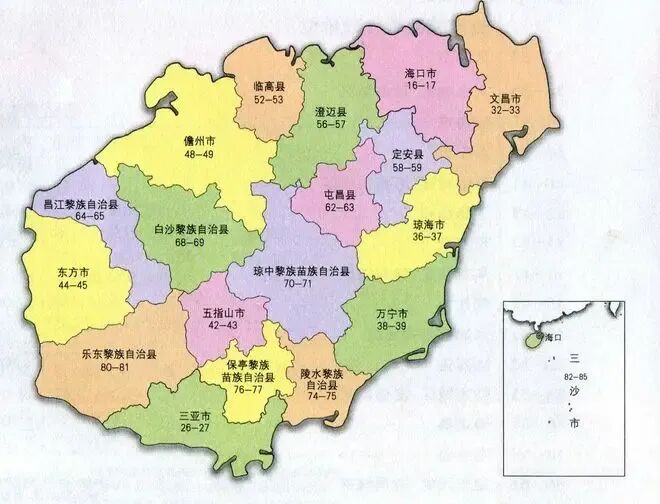
First, regarding the paternal side: the most frequent Y-chromosome haplogroup among Utsul males turned out to be O1a, specifically designated as M119, which accounted for roughly 58.1% in earlier smaller-sample statistics. The problem, however, is that the primary paternal lineage carried by today's Vietnamese Cham males is O2a1 (specifically M95), whereas this branch accounts for a mere 4.17% among the Utsul. The paternal structures of the two groups fundamentally do not match. If they were truly direct refugees of Champa faithfully passing down their paternal lines, the high-frequency lineage appearing among the Utsul should naturally have been M95, absolutely not M119. This single set of extremely misaligned data alone is enough to arouse great skepticism toward the narrative of direct Champa descent.
Researchers subsequently used Y-chromosome short tandem repeats (STRs) to construct complex network diagrams. The results revealed that almost all O1a lineages carried by the Utsul fell directly into the specific branches native to Hainan's indigenous inhabitants—the Hlai and other Kra-Dai-speaking populations—rather than clustering with Vietnamese Cham or Indochinese populations. Within this network, the indigenous Hainan O1a spontaneously formed several clusters almost exclusive to the locality, and the Utsul samples were nearly all deeply embedded within these clusters. This clearly demonstrates that the primary paternal lineage of the Utsul did not arrive from afar with the Champa refugees, but was instead acquired from the local populations of Hainan after successfully landing on the island. The only relative their Y-chromosomes recognize is the native people of Hainan Island, not the Cham people across the vast sea.
The maternal pattern is an exact carbon copy of the paternal side. The maternal haplogroups of the Utsul are predominantly D4 and F2a, accounting for roughly 16.67% and 15.69% respectively, alongside downstream sub-lineages such as F1b, F1a1, B5a, M8a, D5, and B4a. Analyzing these individual sub-lineages at the network level reveals that these maternal lines either cluster with Hainan's indigenous inhabitants or with southern Chinese populations. Not a single Utsul sample could be found clustering directly with the Cham people. These two mutually independent, rock-solid pieces of evidence—paternal and maternal—jointly point to a final conclusion: genetically speaking, the Utsul people are much closer to Hainan's native Hlai people and the broader southern Chinese population than to the Cham of Vietnam. If the localization of the paternal line could still be barely explained by customs like matrilocal marriage (taking a husband into the wife's family), then the fact that even the maternal line shows an overall shift toward the local population can only fully prove that the biological core of these people truly grew anew and took root right here on the island.
This study also made the pleasant discovery that among the Utsul people, there are moderate frequencies of haplogroup C (designated M130) and haplogroup F (designated M89). These quite ancient Southeast Asian lineages very likely originate from genetic drift occurring in small populations during the foundation period. In addition, there is about 4.17% of O3a2c1a (designated M117), a typical Sino-Tibetan characteristic lineage, which most likely stems from genetic inflow from neighboring Han Chinese populations in more recent times. Meanwhile, the Arab J lineage or Central Asian R lineage that people originally expected to occupy a place failed to form any considerable proportion. In other words, within the gene pool, one can neither find large-scale Arab bloodlines nor large-scale Champa paternal lines; all that can be definitively found is a superposition of local Hainan, southern Chinese, and small amounts of Sino-Tibetan components.
Based on this, researchers directly titled their paper "Genetic Replacement of Local Hainan Lineages in the Utsul." They agreed that the ultimate formation of the Utsul community must have undergone a process of large-scale assimilation and absorption of Hainan's native populations. Although the Cham language and Islamic faith brought by the Champa exiles were stubbornly preserved, their biological core was thoroughly and step-by-step replaced by local Hainan lineages after successfully landing on the island. This differs significantly from the classic historical pattern where paternal lines are foreign and maternal lines are local; the Utsul exhibit a high degree of localization on both paternal and maternal fronts. What was genuinely and completely carried forward from the old Champa homeland was primarily that language and that faith, rather than deep chromosomes. One might say this was a group of people who successfully kept their hometown speech and the scriptures they brought, yet swapped their original bloodline for the bloodline of the very island upon which their feet stood.
Some people might wonder: since the Cham had converted to Islam long ago, surely their own paternal lines must contain quite a few Arab components? A study on Cham paternal lineages published in 2012 in the journal PLoS ONE by He Jiandong, Peng Minsheng, and others—in cooperation with Vietnamese scholars and led by Zhang Yaping's team at the Kunming Institute of Zoology of the Chinese Academy of Sciences—similarly offered a very sobering medical answer. This study clearly showed that the primary paternal genetic components of the Cham population trace their origins to Southeast Asia. Part of it can be traced to the Malay Archipelago, and part to the Indochinese Peninsula. A deep mixture of populations from these two regions shaped today's Cham people, and their core consists precisely of the various branches of O2a1 designated as M95, closely linked to the numerous farming and seafaring populations widely distributed across Southeast Asia.
The foreign components truly worthy of attention actually originate from South Asia rather than Arabia. Roughly 18.6% of Cham paternal lines can be directly traced to South Asia. Yet almost no corresponding South Asian maternal lineages can be found among them. Researchers made a logical deduction regarding this: during historical periods when Hinduism flourished immensely, large numbers of Indian merchants and sailors successfully arrived in Champa along the thriving Maritime Silk Road. Most of them were single men who subsequently formed unions with local women, thereby leaving significant imprints solely within the paternal gene pool while remaining completely untraceable in the maternal gene pool. This is the most typical sex-biased admixture phenomenon: men who traveled to cross-sea businesses started families in foreign ports, successfully leaving behind characteristic Y-chromosomes without bringing in batch-scale Indian wives. Consequently, this massive influx of foreign blood could only be inscribed along the single-track paternal line.
To put it another way, even back in their Champa homeland, the Cham displayed a typical Southeast Asian genetic foundation, merely superimposing a small number of Indian merchant paternal lines. Bloodlines from the Arabian Peninsula were inherently very limited. Islam largely arrived there following frequent trade and religious propagation, which did not necessarily entail large-scale Arab population migration inward. Understanding this logic makes it feel not at all surprising when looking back at why no scale-forming Arab paternal lineages can be found among Hainan's Utsul. The cross-ocean spread of religion and large-scale migration of bloodlines have always been two entirely different matters. A weighty Quran could completely spread across oceans following merchant vessels, but the descendants of the scripture's propagators might not necessarily keep pace with the scripture's distant forward journey.
When the Champa exiles landed back then, their numbers amounted to merely a few thousand. Placed among the indigenous Hlai residents of Hainan Island and the constantly migrating Han Chinese population, they were merely a tiny, tiny fraction. Furthermore, exile and cruel sea voyages often drastically depleted massive numbers of male populations, and after settling down, they had to intermarry with surrounding populations just to gain a foothold and survive. After a mere few generations of reproduction, those foreign Cham paternal and maternal lines were thoroughly diluted into the immensely vast local population pool. Meanwhile, locally dominant lineages like O1a turned the tables to become the primary lineage of the Utsul community. This is precisely the most common genetic outcome when a tiny group deeply embeds itself into a massive population. For people forced to cross the sea after their nation fell, being fortunate enough to save their lives and successfully safeguard their inherited faith was already a supreme blessing; they simply had no surplus population available to maintain a completely independent bloodline.
What truly bound these people tightly together for a millennium without being completely assimilated by the surrounding environment are two things that do not rely on bloodlines for transmission: one is that unique Utsul language, which allows the Champa descendants to consistently maintain a shared hometown voice internally—even though it grew distinctive tones under the influence of external dominant languages—and the other is that Islamic faith. The laws established by the religion penetrated deeply into marriage, property inheritance, daily diet, and post-mortem funeral rites, drawing an extremely clear boundary of identity that successfully distinguished them from the surrounding Han and Hlai populations who worshipped Buddha and ancestors. This shared faith and ancient language fostered a high degree of internal group identity and a strong tendency toward endogamy, enabling the Utsul to persist as an independent community down to the present day—even though the majority of their chromosomes now belong locally to Hainan. The words spoken in the mouths of the villagers remain the tongue of the old Champa homeland, and the Lord worshipped in their hearts remains the One God worshipped in the later periods of Champa. It was these two invisible things that firmly knit them into a tight-knit community.
Things like language can be learned, and concepts like faith can be inherited. Neither fundamentally relies on physical bloodlines. Meanwhile, physical biological integration must simply bow to the ruthless laws of population numbers and intermarriage ratios. Thus emerged a historical scenario that seems full of contradictions yet is entirely logical: culturally they are still Cham, while genetically they are infinitely close to the Hlai. Once this is understood, there is no need to feel any confusion over the Utsul's complex identity. They are neither fake Champa descendants nor simply Hlai people who changed their faith, but rather a resilient group of people who thoroughly rooted their bloodlines into a new land while stubbornly guarding their origins in culture.
Returning to the question posed at the very beginning of the article—from which body of water did the Utsul paternal line primarily come? It comes primarily not from the distant and unfamiliar Arabian Sea, nor mainly from the coastal waters near Champa, but rather from Hainan Island's own vast South China Sea bays and ancient Hlai settlements, originating from those Kra-Dai indigenous ancestors who had lived on this beautiful island for tens of thousands of years. After Champa suffered the misfortune of national destruction, some Cham people were forced to flee northward across the sea. They brought precious Cham language and the Quran, but could not bring a resilient paternal main stem capable of surviving to the present day. They put down new roots on Hainan Island, extensively intermarried and integrated with locals, and ultimately surrendered their physical bodies entirely to this brand-new land, while deeply leaving that hometown speech and faith behind within their community. Today, next to the towering mosques of Huihui Village, this Austronesian language—which counts as truly unique across the Chinese mainland—still echoes from time to time. It constantly reminds people behind them that what the ancient Maritime Silk Road left behind was never merely those exquisite porcelains and rich spices, but also a group of suffering descendants bearing the pain of a fallen nation, along with a story of language and faith crossing vast oceans while bloodlines grew anew in a strange land. The survival of a civilization sometimes relies not on the so-called purity of bloodlines, but precisely on that bit of precious resilience that relentlessly guards its own language and faith amidst continuous integration.
Tracing the Genetic and Linguistic Origins of Hainan's Sanya Hui Muslims: The Unique Tones of the Utsul Language and the Paternal History of Maritime Silk Road Migrations
Abstract:
A deep dive into the mystery of the origins of the Hui Muslim community in Sanya, Hainan, from the perspectives of molecular anthropology and linguistics. This explores the evolutionary history of the Utsul language—which possesses distinct Austronesian characteristics—while combining genetic haplogroup data to reconstruct the history of integration among ancient Arab, Persian, and Champa Muslims.
When people talk about China's Muslim communities, they usually think first of the Northwest—Shaanxi, Gansu, Ningxia, Qinghai—and Xinjiang. Yet down at the southernmost tip of Hainan Island in Sanya, tucked away in the coastal villages of Huihui Village (Huihui Muslim Village) and Huixin Village (Huixin Muslim Village), lives a unique group of people who have practiced Islam for generations. They never bow to Buddha, never step foot inside ancestral shrines, and strictly avoid pork. The most prominent landmarks in their villages are mosques (masjids), and their daily diet, weddings, funerals, and festivals all strictly adhere to Islamic sharia law. Even more fascinating is their language: it's neither standard Hainanese nor the Hlai language spoken by the island's indigenous Hlai people. Outsiders cannot understand a single word. Academics call it the Utsul language (Huihui language). While officially classified under the Hui ethnic group during ethnic identification, these people are completely distinct from mainland Hui Muslims in both their historical origins and the language they speak.
Most ancestors of mainland Hui Muslims traveled via the overland Silk Road, closely tied to Muslim merchants and accompanying soldiers from Central Asia, Arabia, and Persia. So, from which body of water did the paternal lineage of Hainan's community actually come? Was it the famous Arabian Peninsula, the Persian Gulf, or some mysterious ancient kingdom on the eastern coast of the Indochina Peninsula that has long since vanished? Linguistics, historical records, and ancient DNA each offer clues. Piecing them together reveals a surprising truth: the answer is far more twists-and-turns than any simple guess. It proves that while religion and culture can indeed cross oceans to spread, chromosomes don't necessarily follow along for the ride.
To figure out the exact origins of the Utsul people, we must first understand the kingdom of Champa. In ancient Chinese historical texts, Champa was successively known as Linyi, Huanwang, and Champa. Established around 192 CE—the late Eastern Han Dynasty—it was an ancient maritime kingdom built by Austronesian-speaking peoples in what is now the central to southern coastal region of Vietnam. The Cham people were exceptionally skilled at navigation and trade, and their territory happened to control the maritime bottleneck connecting China to India and Arabia. Chinese merchant ships heading south and Arab merchant ships heading east frequently docked in Champa's ports to take on supplies. The famous Song Dynasty scholar Zhou Qufei listed Champa in his book Lingwai Daida as a major metropolis among the southwestern nations. It was a maritime kingdom that lived by the sea and thrived by the sea.
Champa was initially deeply influenced by Indian culture, with Hinduism long serving as its primary religion. Coastal brick-built towers in the Cham style still stand today. By the late 9th century, residential quarters composed of Arab and Persian Muslim merchants had already emerged in southern Champa. Islam quietly spread there alongside maritime trade, and by the 10th century, the number of believers had steadily grown. Right up until the 17th century, Champa's royal family chose to convert to Islam. In other words, before Champa's official demise, this vast land had been dyed with thick Islamic colors layer upon layer, built atop a deep foundation of Hinduism.
However, Champa's northern neighbor, Vietnam, continuously expanded southward after declaring independence—an event known in history as the Nam Tien (Southward March). The two countries engaged in a tug-of-war lasting centuries. In 982 CE, Champa's capital was briefly breached by enemy forces, and even then, some Cham refugees chose to cross the sea and flee northward. The heaviest blow came in 1471, when the Vietnamese Later Le Dynasty led a massive army to capture Champa's strategic stronghold of Vijaya, leaving Champa existing in name only. Afterward, the Nguyen Dynasty kept up its southern pressure. Facing the desperate peril of a destroyed nation and shattered homes, the Cham people boarded boats and fled into the open sea. One group traveled south along the Indochina Peninsula, while another caught tailwinds and headed north, eventually arriving at Yazhou at the southern tip of Hainan Island—today's Sanya area. An ancient maritime kingdom that had stood for over a thousand years was ultimately squeezed step-by-step into the boundless ocean by its neighbor.
According to oral folklore, a Champa prince once led about 1,000 clansmen across the sea to Hainan, where they were properly settled by the Ming Dynasty government. In fact, official Chinese historical records of Cham people entering Hainan date back even further, appearing as early as the Song Dynasty. Aside from Champa refugees, Arab and foreign merchants (fanke) who arrived via the Maritime Silk Road during the Tang and Song dynasties and settled in Hainan's ports represent another source of Hainan's Muslim community. Tang Dynasty Muslim cemeteries discovered in the coastal areas of Lingshui and Sanya serve as physical proof of these early maritime visitors. The exiled refugees from fallen Champa, combined with the foreign merchants who had docked and settled here even earlier, blended through several waves of convergence to finally form today's unique Utsul people—themselves a wondrous confluence of multiple maritime migration streams.
The most indisputable proof of identity carried by the Utsul people is their language. The Utsul language belongs to the Chamic branch of the Malayo-Polynesian subgroup of the Austronesian language family, sharing a common origin with the Cham language spoken by surviving Cham people in Vietnam today, and bearing a particularly close resemblance to its northern branch. The Austronesian language family spans from Madagascar in the west to distant Easter Island in the east, and as far south as New Zealand, making it one of the most widely distributed language families in the world. Yet the Utsul language is the only Austronesian tongue actually spoken on the Chinese mainland today, and the Utsul people are the sole branch of the Hui nationality across all of China to possess their own independent language—Hui Muslims in other regions having long since adopted Chinese for general communication. Based solely on this unique language, they occupy a lonely and extremely distinctive position on the ethnic distribution map of the Chinese mainland.
Even more intriguing is that within the vast Austronesian language family, the Utsul language is a rare outlier. Because typical Austronesian languages are mostly multisyllabic without tonal distinctions—relying solely on various affixes to express grammatical details—the Utsul language instead evolved into a predominantly monosyllabic form complete with its own fully developed tonal system. Linguistically, it grew increasingly similar to the surrounding Chinese and Hlai languages widely spoken in the region. Linguists view it as a classic research sample for tone genesis in language contact studies. This happened because the descendants of the Cham people lived generation after generation as neighbors to Chinese- and Kra-Dai-speaking populations on Hainan Island, and their native tongue was reshaped step-by-step through extremely lengthy mutual contact. Although the surface framework of the language changed into a new shape, its core vocabulary still corresponds with related sister languages. Like an isolated island drifting alone on the ocean, it stubbornly preserves the final lingering hometown sounds left behind by the Champa refugees. Based solely on this language set and their profound faith, academics concluded long ago that the Utsul people are the surviving descendants of the Champa.
According to conventional imagination, the paternal lineage of these Muslims should perhaps trace directly back to the distant Arabian Peninsula, or at the very least be local Cham people from Champa. However, a 2013 study published by Li Dongna, Wang Chuanchao, and others from Fudan University overturned this assumption. They tested 102 Utsul individuals—including 72 males and 30 females—analyzing both paternal Y-chromosomes and maternal mitochondrial DNA. The final conclusion was unexpectedly astonishing: although language and faith securely pointed the clues back to the former kingdom of Champa, the chromosome data told a completely different story, and both the paternal and maternal test results agreed with eerie consistency.
First, regarding the paternal side: the most frequent Y-chromosome haplogroup among Utsul males turned out to be O1a, specifically designated as M119, which accounted for roughly 58.1% in earlier smaller-sample statistics. The problem, however, is that the primary paternal lineage carried by today's Vietnamese Cham males is O2a1 (specifically M95), whereas this branch accounts for a mere 4.17% among the Utsul. The paternal structures of the two groups fundamentally do not match. If they were truly direct refugees of Champa faithfully passing down their paternal lines, the high-frequency lineage appearing among the Utsul should naturally have been M95, absolutely not M119. This single set of extremely misaligned data alone is enough to arouse great skepticism toward the narrative of direct Champa descent.
Researchers subsequently used Y-chromosome short tandem repeats (STRs) to construct complex network diagrams. The results revealed that almost all O1a lineages carried by the Utsul fell directly into the specific branches native to Hainan's indigenous inhabitants—the Hlai and other Kra-Dai-speaking populations—rather than clustering with Vietnamese Cham or Indochinese populations. Within this network, the indigenous Hainan O1a spontaneously formed several clusters almost exclusive to the locality, and the Utsul samples were nearly all deeply embedded within these clusters. This clearly demonstrates that the primary paternal lineage of the Utsul did not arrive from afar with the Champa refugees, but was instead acquired from the local populations of Hainan after successfully landing on the island. The only relative their Y-chromosomes recognize is the native people of Hainan Island, not the Cham people across the vast sea.
The maternal pattern is an exact carbon copy of the paternal side. The maternal haplogroups of the Utsul are predominantly D4 and F2a, accounting for roughly 16.67% and 15.69% respectively, alongside downstream sub-lineages such as F1b, F1a1, B5a, M8a, D5, and B4a. Analyzing these individual sub-lineages at the network level reveals that these maternal lines either cluster with Hainan's indigenous inhabitants or with southern Chinese populations. Not a single Utsul sample could be found clustering directly with the Cham people. These two mutually independent, rock-solid pieces of evidence—paternal and maternal—jointly point to a final conclusion: genetically speaking, the Utsul people are much closer to Hainan's native Hlai people and the broader southern Chinese population than to the Cham of Vietnam. If the localization of the paternal line could still be barely explained by customs like matrilocal marriage (taking a husband into the wife's family), then the fact that even the maternal line shows an overall shift toward the local population can only fully prove that the biological core of these people truly grew anew and took root right here on the island.
This study also made the pleasant discovery that among the Utsul people, there are moderate frequencies of haplogroup C (designated M130) and haplogroup F (designated M89). These quite ancient Southeast Asian lineages very likely originate from genetic drift occurring in small populations during the foundation period. In addition, there is about 4.17% of O3a2c1a (designated M117), a typical Sino-Tibetan characteristic lineage, which most likely stems from genetic inflow from neighboring Han Chinese populations in more recent times. Meanwhile, the Arab J lineage or Central Asian R lineage that people originally expected to occupy a place failed to form any considerable proportion. In other words, within the gene pool, one can neither find large-scale Arab bloodlines nor large-scale Champa paternal lines; all that can be definitively found is a superposition of local Hainan, southern Chinese, and small amounts of Sino-Tibetan components.
Based on this, researchers directly titled their paper "Genetic Replacement of Local Hainan Lineages in the Utsul." They agreed that the ultimate formation of the Utsul community must have undergone a process of large-scale assimilation and absorption of Hainan's native populations. Although the Cham language and Islamic faith brought by the Champa exiles were stubbornly preserved, their biological core was thoroughly and step-by-step replaced by local Hainan lineages after successfully landing on the island. This differs significantly from the classic historical pattern where paternal lines are foreign and maternal lines are local; the Utsul exhibit a high degree of localization on both paternal and maternal fronts. What was genuinely and completely carried forward from the old Champa homeland was primarily that language and that faith, rather than deep chromosomes. One might say this was a group of people who successfully kept their hometown speech and the scriptures they brought, yet swapped their original bloodline for the bloodline of the very island upon which their feet stood.
Some people might wonder: since the Cham had converted to Islam long ago, surely their own paternal lines must contain quite a few Arab components? A study on Cham paternal lineages published in 2012 in the journal PLoS ONE by He Jiandong, Peng Minsheng, and others—in cooperation with Vietnamese scholars and led by Zhang Yaping's team at the Kunming Institute of Zoology of the Chinese Academy of Sciences—similarly offered a very sobering medical answer. This study clearly showed that the primary paternal genetic components of the Cham population trace their origins to Southeast Asia. Part of it can be traced to the Malay Archipelago, and part to the Indochinese Peninsula. A deep mixture of populations from these two regions shaped today's Cham people, and their core consists precisely of the various branches of O2a1 designated as M95, closely linked to the numerous farming and seafaring populations widely distributed across Southeast Asia.
The foreign components truly worthy of attention actually originate from South Asia rather than Arabia. Roughly 18.6% of Cham paternal lines can be directly traced to South Asia. Yet almost no corresponding South Asian maternal lineages can be found among them. Researchers made a logical deduction regarding this: during historical periods when Hinduism flourished immensely, large numbers of Indian merchants and sailors successfully arrived in Champa along the thriving Maritime Silk Road. Most of them were single men who subsequently formed unions with local women, thereby leaving significant imprints solely within the paternal gene pool while remaining completely untraceable in the maternal gene pool. This is the most typical sex-biased admixture phenomenon: men who traveled to cross-sea businesses started families in foreign ports, successfully leaving behind characteristic Y-chromosomes without bringing in batch-scale Indian wives. Consequently, this massive influx of foreign blood could only be inscribed along the single-track paternal line.
To put it another way, even back in their Champa homeland, the Cham displayed a typical Southeast Asian genetic foundation, merely superimposing a small number of Indian merchant paternal lines. Bloodlines from the Arabian Peninsula were inherently very limited. Islam largely arrived there following frequent trade and religious propagation, which did not necessarily entail large-scale Arab population migration inward. Understanding this logic makes it feel not at all surprising when looking back at why no scale-forming Arab paternal lineages can be found among Hainan's Utsul. The cross-ocean spread of religion and large-scale migration of bloodlines have always been two entirely different matters. A weighty Quran could completely spread across oceans following merchant vessels, but the descendants of the scripture's propagators might not necessarily keep pace with the scripture's distant forward journey.
When the Champa exiles landed back then, their numbers amounted to merely a few thousand. Placed among the indigenous Hlai residents of Hainan Island and the constantly migrating Han Chinese population, they were merely a tiny, tiny fraction. Furthermore, exile and cruel sea voyages often drastically depleted massive numbers of male populations, and after settling down, they had to intermarry with surrounding populations just to gain a foothold and survive. After a mere few generations of reproduction, those foreign Cham paternal and maternal lines were thoroughly diluted into the immensely vast local population pool. Meanwhile, locally dominant lineages like O1a turned the tables to become the primary lineage of the Utsul community. This is precisely the most common genetic outcome when a tiny group deeply embeds itself into a massive population. For people forced to cross the sea after their nation fell, being fortunate enough to save their lives and successfully safeguard their inherited faith was already a supreme blessing; they simply had no surplus population available to maintain a completely independent bloodline.
What truly bound these people tightly together for a millennium without being completely assimilated by the surrounding environment are two things that do not rely on bloodlines for transmission: one is that unique Utsul language, which allows the Champa descendants to consistently maintain a shared hometown voice internally—even though it grew distinctive tones under the influence of external dominant languages—and the other is that Islamic faith. The laws established by the religion penetrated deeply into marriage, property inheritance, daily diet, and post-mortem funeral rites, drawing an extremely clear boundary of identity that successfully distinguished them from the surrounding Han and Hlai populations who worshipped Buddha and ancestors. This shared faith and ancient language fostered a high degree of internal group identity and a strong tendency toward endogamy, enabling the Utsul to persist as an independent community down to the present day—even though the majority of their chromosomes now belong locally to Hainan. The words spoken in the mouths of the villagers remain the tongue of the old Champa homeland, and the Lord worshipped in their hearts remains the One God worshipped in the later periods of Champa. It was these two invisible things that firmly knit them into a tight-knit community.
Things like language can be learned, and concepts like faith can be inherited. Neither fundamentally relies on physical bloodlines. Meanwhile, physical biological integration must simply bow to the ruthless laws of population numbers and intermarriage ratios. Thus emerged a historical scenario that seems full of contradictions yet is entirely logical: culturally they are still Cham, while genetically they are infinitely close to the Hlai. Once this is understood, there is no need to feel any confusion over the Utsul's complex identity. They are neither fake Champa descendants nor simply Hlai people who changed their faith, but rather a resilient group of people who thoroughly rooted their bloodlines into a new land while stubbornly guarding their origins in culture.
Returning to the question posed at the very beginning of the article—from which body of water did the Utsul paternal line primarily come? It comes primarily not from the distant and unfamiliar Arabian Sea, nor mainly from the coastal waters near Champa, but rather from Hainan Island's own vast South China Sea bays and ancient Hlai settlements, originating from those Kra-Dai indigenous ancestors who had lived on this beautiful island for tens of thousands of years. After Champa suffered the misfortune of national destruction, some Cham people were forced to flee northward across the sea. They brought precious Cham language and the Quran, but could not bring a resilient paternal main stem capable of surviving to the present day. They put down new roots on Hainan Island, extensively intermarried and integrated with locals, and ultimately surrendered their physical bodies entirely to this brand-new land, while deeply leaving that hometown speech and faith behind within their community. Today, next to the towering mosques of Huihui Village, this Austronesian language—which counts as truly unique across the Chinese mainland—still echoes from time to time. It constantly reminds people behind them that what the ancient Maritime Silk Road left behind was never merely those exquisite porcelains and rich spices, but also a group of suffering descendants bearing the pain of a fallen nation, along with a story of language and faith crossing vast oceans while bloodlines grew anew in a strange land. The survival of a civilization sometimes relies not on the so-called purity of bloodlines, but precisely on that bit of precious resilience that relentlessly guards its own language and faith amidst continuous integration.
Best Halal Food in Hainan: Haikou and Sanya Muslim Restaurants, Seafood and Local Food
Articles • ali2007fr posted the article • 0 comments • 349 views • 2026-05-21 08:42
Reposted from the web
Summary: This Hainan halal food map follows Haikou, Sanya, Huihui Village, seafood, Muslim restaurants, and island food stops while keeping the original places and photos in order.
Hainan has seven mosques in total. There is one in Haikou, two in Huixin Village in Sanya, and four in Huihui Village. Hainan's Muslims are mainly concentrated in Huixin and Huihui villages. These Muslims are long-term local residents who are relatively wealthy in Hainan. They value their faith deeply, seek blessings in both this life and the next, and serve as a model for Muslims across China.
1. Halal beef hot pot
You cannot miss seafood when visiting Hainan. There are not many halal restaurants in Haikou, so this halal hot pot shop is a great choice for your first meal in Hainan.
They offer individual small pots, which are perfect for solo travelers, though large pots are also available.
Since it is a beef hot pot shop, you should try their beef.
Cook the scallops in the hot pot. A quick dip in the hot soup makes them just right to eat.
A pair of large shrimp is enough for one person.
Seafood alone might not fill you up, so I recommend the steamed buns (baozi) here. They have lamb filling and vegetable filling. I chose the lamb, and after finishing, I told the server the buns were great. The server said the vegetable ones are also delicious.
Address: No. 98-8 Longkun South Road, Longhua District, Haikou City (diagonally opposite the Provincial High Court, 100 meters in front of the 187 Hospital, and 500 meters from the high-speed railway station).
2. Haikou Mosque
Haikou currently has only this one mosque, and it is still under construction. The prayer hall is a temporary structure. At the entrance of the mosque, there is a noodle shop and a baked flatbread (nang) shop run by Uyghurs. If you are in a hurry, you can eat here. Crossing the street from here leads to the Haikou High-Speed Railway Station.
Address: No. 30 Fengxiang West Road, Qiongshan District, Haikou City.
Huixin Village
3. Yilanxinge Restaurant
This is a halal Western-style restaurant with a nice atmosphere, and they also serve hot pot on the second floor.
Address: South side of Huixin Village Road.
4. Huixin Village Hong Kong-style Drink Bar
Located inside Huixin Village near the South Mosque (Nanda Si), this place sells not only homemade drinks but also snacks.
A pretty Huixin girl makes octopus balls (takoyaki).
The packaging box is very cute.
I had only seen non-halal octopus balls before and had never eaten them, so this was a chance to satisfy my craving.
Actually, I want to highlight their passion fruit tea. The young girl cuts two passion fruits, pours the pulp into a cup, adds a few slices of fresh lemon, squeezes out the juice, and adds ice. In the hot Sanya weather, holding a cup of iced passion fruit tea is refreshing and thirst-quenching. All the ingredients are natural with no additives. I came here to buy a cup almost every day, and a large one is only 8 yuan.
5. Daguangming Barbecue Snack Shop
There are several small shops selling seafood barbecue in Huixin Village. I chose this one because it was nearby, and I assume the taste is quite similar.
There is all kinds of seafood here, including sea cucumber, conch meat, sea shrimp, and sea fish, plus some vegetables. The prices are very cheap, so I do not worry about being overcharged when eating seafood here.
I cannot remember the individual prices, but I spent a total of over 30 yuan and got to taste all kinds of fresh seafood.
Pineapple rice (boluofan) is a Hainan specialty snack made by steaming glutinous rice with pineapple and adding goji berries. Some shops use the pineapple shell as a bowl to make it look better.
It was Jumu (Friday prayer) that day, and it happened to be the first Jumu held at the newly built Huixin Village South Mosque. The main hall was packed with people coming for namaz. After the prayer, you can receive sticky rice cakes (nuomibing) given out as duosi at the mosque gate. This is also a Hainan snack, and the black sesame filling is delicious.
Huihui Village
6. Fenghuang Yueju Restaurant
Most restaurants in Huihui Village are located along Huihui Road. This one is on the south side of the road and is a halal restaurant serving Hainan-style food run by locals.
One of the more famous Hainan snacks is beef bone noodle soup (niugufen tang), which features a large piece of meaty beef bone under the noodles.
7. Yuxiang Hot Pot
It is hard to find Sichuan-style halal hot pot after leaving Sichuan. If you find seafood too bland, you can come here to try it.
8. Xining Saisai Private Kitchen
Located next to the old mosque in Huihui Village. I did not eat here, but I was curious because halal private kitchens are quite rare.
9. Huihui Old Restaurant
This is a Hainan-style restaurant. Fresh fish soup and coconut rice (yezi fan) are both local specialties. Coconut rice is not sold individually; it is a complimentary item when you order other dishes.
10. Fenghuang First Seafood Food City
That is the name of the place. Fenghuang refers to Fenghuang Town, where both Huixin Village and Huihui Village are located. The seafood is all fresh, and there are many kinds I cannot even name.
Qinghui—you can tell at a glance that this is a halal tableware brand from Huihui Village.
I also tasted the fresh fish soup. They prepared one spotted fish in two ways: part of it was steamed, and the rest was made into fish soup. The soup was indeed very fresh.
The spotted fish is expensive for a reason; the meat is tender and has no bones.
Spicy crab—I do not remember the name of the crab, only that it was very expensive, costing over 100 yuan for a single catty.
This is called winged bean (sijiaodou), a specialty vegetable in Hainan. It has a good texture and tastes crunchy.
Address: No. 348 Fenghuang Road
11. Aijiayi
Leaving Fenghuang Town, it is time to head to the scenic spots. Huixin Village is not far from Sanya Bay and Dadonghai. This Hainan-style restaurant is near Dadonghai Square.
This place sells Wenchang chicken (Wenchang ji), a specialty from Hainan. Wenchang is a place name in Hainan, and the owner is from Huixin Village and is very welcoming.
12. Yalong Bay Halal Food Street
You do not need to worry about finding food while traveling in Sanya. Every popular tourist spot has a halal restaurant.
Yalong Bay is a beautiful part of Sanya with many tourists. A pleasant surprise is that there is a halal food street right near the public beach.
Sanya is really hot during the day in winter. Seeing these fresh tropical fruits makes me want to eat them right away. Holding a coconut drink while sunbathing on the beach is great. Coconuts are 15 yuan each, which is a bit more expensive than in Malaysia.
13. Wuzhizhou Island
Wuzhizhou Island is the most beautiful island in Sanya. If you are short on time, you can just come here, as other beaches do not look as good as Wuzhizhou Island.
There is also a halal restaurant on the island that sells various snacks.
The prices are a bit high because everything on the island is expensive. I suggest you prepare food and drinks before you get on the island.
This covers the main halal food options in Hainan. By the way, regarding accommodation, renting a place in Sanya is very cheap. Muslims can choose to stay in Huixin Village or Huihui Village. A room costs only a few hundred yuan per month. Many Muslims from Northwest China come here to spend the winter. The temperature in Sanya is over 20 degrees in winter, and the air is fresh and humid. Staying in the village for a month or two does not cost much in rent, and it is easy to find food. view all
Summary: This Hainan halal food map follows Haikou, Sanya, Huihui Village, seafood, Muslim restaurants, and island food stops while keeping the original places and photos in order.
Hainan has seven mosques in total. There is one in Haikou, two in Huixin Village in Sanya, and four in Huihui Village. Hainan's Muslims are mainly concentrated in Huixin and Huihui villages. These Muslims are long-term local residents who are relatively wealthy in Hainan. They value their faith deeply, seek blessings in both this life and the next, and serve as a model for Muslims across China.
1. Halal beef hot pot
You cannot miss seafood when visiting Hainan. There are not many halal restaurants in Haikou, so this halal hot pot shop is a great choice for your first meal in Hainan.
They offer individual small pots, which are perfect for solo travelers, though large pots are also available.
Since it is a beef hot pot shop, you should try their beef.
Cook the scallops in the hot pot. A quick dip in the hot soup makes them just right to eat.
A pair of large shrimp is enough for one person.
Seafood alone might not fill you up, so I recommend the steamed buns (baozi) here. They have lamb filling and vegetable filling. I chose the lamb, and after finishing, I told the server the buns were great. The server said the vegetable ones are also delicious.
Address: No. 98-8 Longkun South Road, Longhua District, Haikou City (diagonally opposite the Provincial High Court, 100 meters in front of the 187 Hospital, and 500 meters from the high-speed railway station).
2. Haikou Mosque
Haikou currently has only this one mosque, and it is still under construction. The prayer hall is a temporary structure. At the entrance of the mosque, there is a noodle shop and a baked flatbread (nang) shop run by Uyghurs. If you are in a hurry, you can eat here. Crossing the street from here leads to the Haikou High-Speed Railway Station.
Address: No. 30 Fengxiang West Road, Qiongshan District, Haikou City.
Huixin Village
3. Yilanxinge Restaurant
This is a halal Western-style restaurant with a nice atmosphere, and they also serve hot pot on the second floor.
Address: South side of Huixin Village Road.
4. Huixin Village Hong Kong-style Drink Bar
Located inside Huixin Village near the South Mosque (Nanda Si), this place sells not only homemade drinks but also snacks.
A pretty Huixin girl makes octopus balls (takoyaki).
The packaging box is very cute.
I had only seen non-halal octopus balls before and had never eaten them, so this was a chance to satisfy my craving.
Actually, I want to highlight their passion fruit tea. The young girl cuts two passion fruits, pours the pulp into a cup, adds a few slices of fresh lemon, squeezes out the juice, and adds ice. In the hot Sanya weather, holding a cup of iced passion fruit tea is refreshing and thirst-quenching. All the ingredients are natural with no additives. I came here to buy a cup almost every day, and a large one is only 8 yuan.
5. Daguangming Barbecue Snack Shop
There are several small shops selling seafood barbecue in Huixin Village. I chose this one because it was nearby, and I assume the taste is quite similar.
There is all kinds of seafood here, including sea cucumber, conch meat, sea shrimp, and sea fish, plus some vegetables. The prices are very cheap, so I do not worry about being overcharged when eating seafood here.
I cannot remember the individual prices, but I spent a total of over 30 yuan and got to taste all kinds of fresh seafood.
Pineapple rice (boluofan) is a Hainan specialty snack made by steaming glutinous rice with pineapple and adding goji berries. Some shops use the pineapple shell as a bowl to make it look better.
It was Jumu (Friday prayer) that day, and it happened to be the first Jumu held at the newly built Huixin Village South Mosque. The main hall was packed with people coming for namaz. After the prayer, you can receive sticky rice cakes (nuomibing) given out as duosi at the mosque gate. This is also a Hainan snack, and the black sesame filling is delicious.
Huihui Village
6. Fenghuang Yueju Restaurant
Most restaurants in Huihui Village are located along Huihui Road. This one is on the south side of the road and is a halal restaurant serving Hainan-style food run by locals.
One of the more famous Hainan snacks is beef bone noodle soup (niugufen tang), which features a large piece of meaty beef bone under the noodles.
7. Yuxiang Hot Pot
It is hard to find Sichuan-style halal hot pot after leaving Sichuan. If you find seafood too bland, you can come here to try it.
8. Xining Saisai Private Kitchen
Located next to the old mosque in Huihui Village. I did not eat here, but I was curious because halal private kitchens are quite rare.
9. Huihui Old Restaurant
This is a Hainan-style restaurant. Fresh fish soup and coconut rice (yezi fan) are both local specialties. Coconut rice is not sold individually; it is a complimentary item when you order other dishes.
10. Fenghuang First Seafood Food City
That is the name of the place. Fenghuang refers to Fenghuang Town, where both Huixin Village and Huihui Village are located. The seafood is all fresh, and there are many kinds I cannot even name.
Qinghui—you can tell at a glance that this is a halal tableware brand from Huihui Village.
I also tasted the fresh fish soup. They prepared one spotted fish in two ways: part of it was steamed, and the rest was made into fish soup. The soup was indeed very fresh.
The spotted fish is expensive for a reason; the meat is tender and has no bones.
Spicy crab—I do not remember the name of the crab, only that it was very expensive, costing over 100 yuan for a single catty.
This is called winged bean (sijiaodou), a specialty vegetable in Hainan. It has a good texture and tastes crunchy.
Address: No. 348 Fenghuang Road
11. Aijiayi
Leaving Fenghuang Town, it is time to head to the scenic spots. Huixin Village is not far from Sanya Bay and Dadonghai. This Hainan-style restaurant is near Dadonghai Square.
This place sells Wenchang chicken (Wenchang ji), a specialty from Hainan. Wenchang is a place name in Hainan, and the owner is from Huixin Village and is very welcoming.
12. Yalong Bay Halal Food Street
You do not need to worry about finding food while traveling in Sanya. Every popular tourist spot has a halal restaurant.
Yalong Bay is a beautiful part of Sanya with many tourists. A pleasant surprise is that there is a halal food street right near the public beach.
Sanya is really hot during the day in winter. Seeing these fresh tropical fruits makes me want to eat them right away. Holding a coconut drink while sunbathing on the beach is great. Coconuts are 15 yuan each, which is a bit more expensive than in Malaysia.
13. Wuzhizhou Island
Wuzhizhou Island is the most beautiful island in Sanya. If you are short on time, you can just come here, as other beaches do not look as good as Wuzhizhou Island.
There is also a halal restaurant on the island that sells various snacks.
The prices are a bit high because everything on the island is expensive. I suggest you prepare food and drinks before you get on the island.
This covers the main halal food options in Hainan. By the way, regarding accommodation, renting a place in Sanya is very cheap. Muslims can choose to stay in Huixin Village or Huihui Village. A room costs only a few hundred yuan per month. Many Muslims from Northwest China come here to spend the winter. The temperature in Sanya is over 20 degrees in winter, and the air is fresh and humid. Staying in the village for a month or two does not cost much in rent, and it is easy to find food. view all
Reposted from the web
Summary: This Hainan halal food map follows Haikou, Sanya, Huihui Village, seafood, Muslim restaurants, and island food stops while keeping the original places and photos in order.
Hainan has seven mosques in total. There is one in Haikou, two in Huixin Village in Sanya, and four in Huihui Village. Hainan's Muslims are mainly concentrated in Huixin and Huihui villages. These Muslims are long-term local residents who are relatively wealthy in Hainan. They value their faith deeply, seek blessings in both this life and the next, and serve as a model for Muslims across China.
1. Halal beef hot pot
You cannot miss seafood when visiting Hainan. There are not many halal restaurants in Haikou, so this halal hot pot shop is a great choice for your first meal in Hainan.
They offer individual small pots, which are perfect for solo travelers, though large pots are also available.
Since it is a beef hot pot shop, you should try their beef.
Cook the scallops in the hot pot. A quick dip in the hot soup makes them just right to eat.
A pair of large shrimp is enough for one person.
Seafood alone might not fill you up, so I recommend the steamed buns (baozi) here. They have lamb filling and vegetable filling. I chose the lamb, and after finishing, I told the server the buns were great. The server said the vegetable ones are also delicious.
Address: No. 98-8 Longkun South Road, Longhua District, Haikou City (diagonally opposite the Provincial High Court, 100 meters in front of the 187 Hospital, and 500 meters from the high-speed railway station).
2. Haikou Mosque
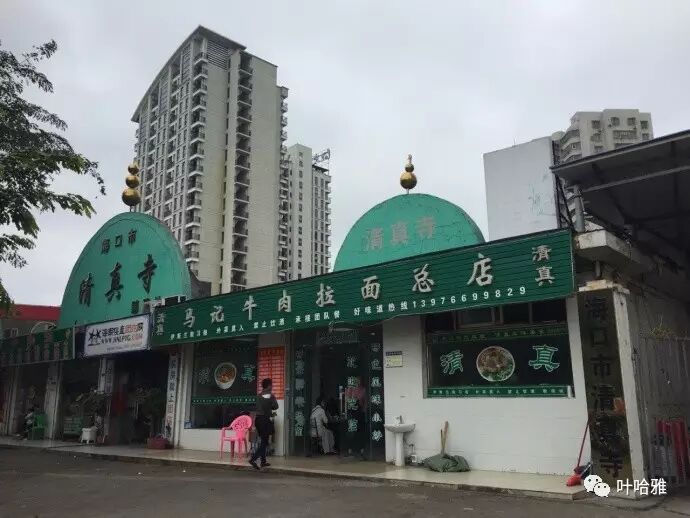
Haikou currently has only this one mosque, and it is still under construction. The prayer hall is a temporary structure. At the entrance of the mosque, there is a noodle shop and a baked flatbread (nang) shop run by Uyghurs. If you are in a hurry, you can eat here. Crossing the street from here leads to the Haikou High-Speed Railway Station.
Address: No. 30 Fengxiang West Road, Qiongshan District, Haikou City.
Huixin Village
3. Yilanxinge Restaurant
This is a halal Western-style restaurant with a nice atmosphere, and they also serve hot pot on the second floor.
Address: South side of Huixin Village Road.
4. Huixin Village Hong Kong-style Drink Bar
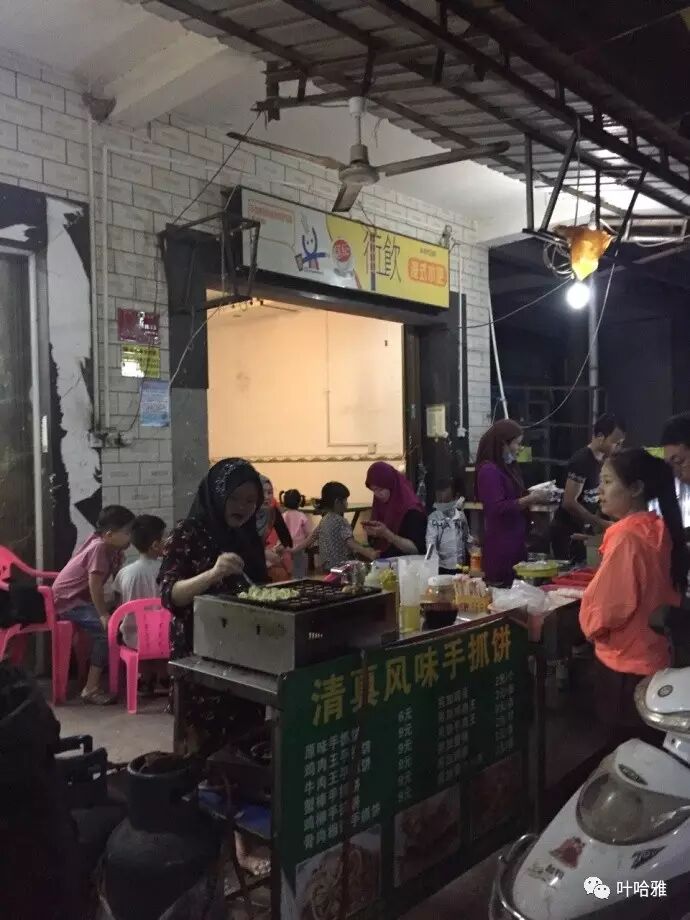
Located inside Huixin Village near the South Mosque (Nanda Si), this place sells not only homemade drinks but also snacks.
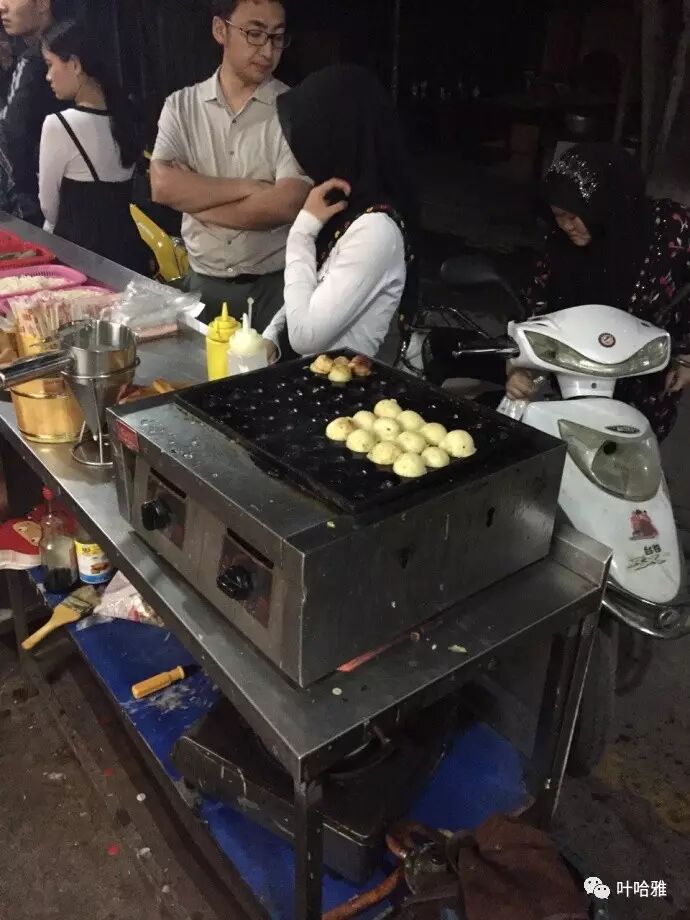
A pretty Huixin girl makes octopus balls (takoyaki).
The packaging box is very cute.
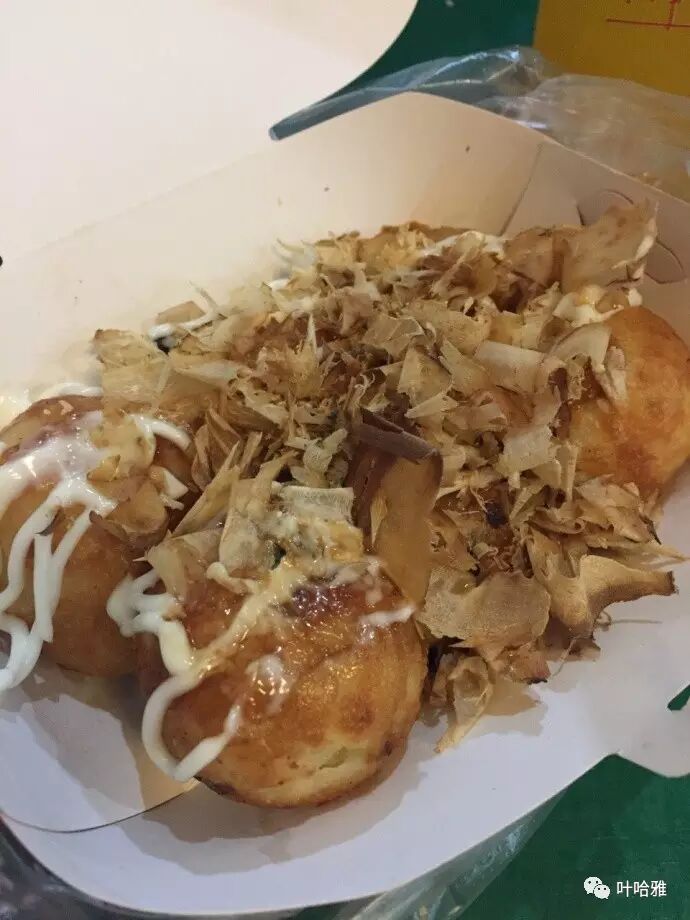
I had only seen non-halal octopus balls before and had never eaten them, so this was a chance to satisfy my craving.
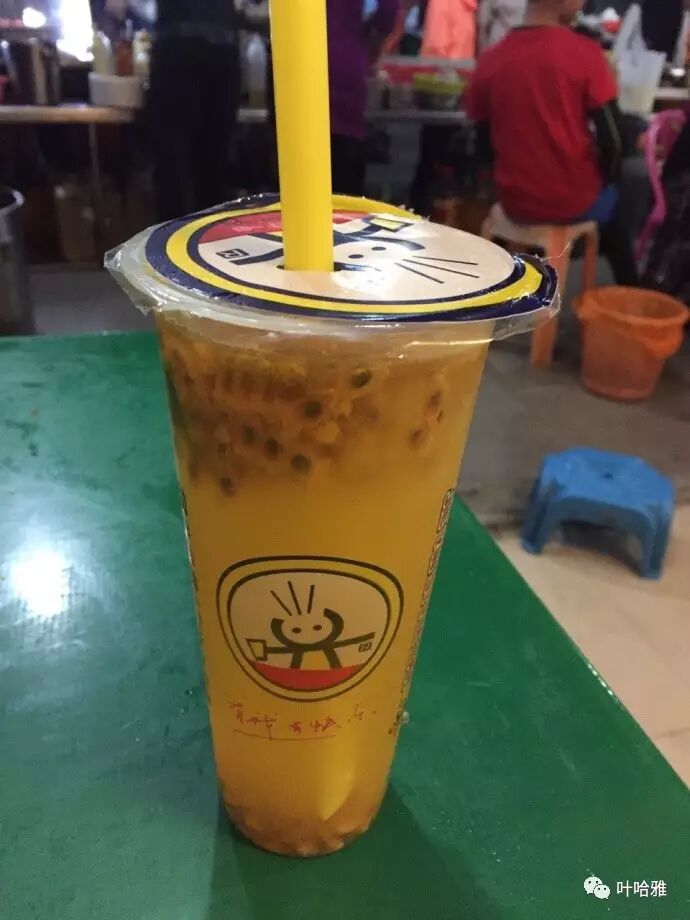
Actually, I want to highlight their passion fruit tea. The young girl cuts two passion fruits, pours the pulp into a cup, adds a few slices of fresh lemon, squeezes out the juice, and adds ice. In the hot Sanya weather, holding a cup of iced passion fruit tea is refreshing and thirst-quenching. All the ingredients are natural with no additives. I came here to buy a cup almost every day, and a large one is only 8 yuan.
5. Daguangming Barbecue Snack Shop
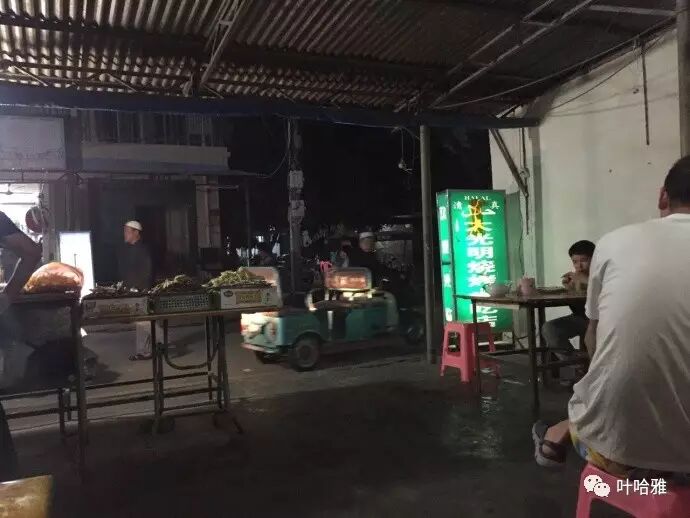
There are several small shops selling seafood barbecue in Huixin Village. I chose this one because it was nearby, and I assume the taste is quite similar.
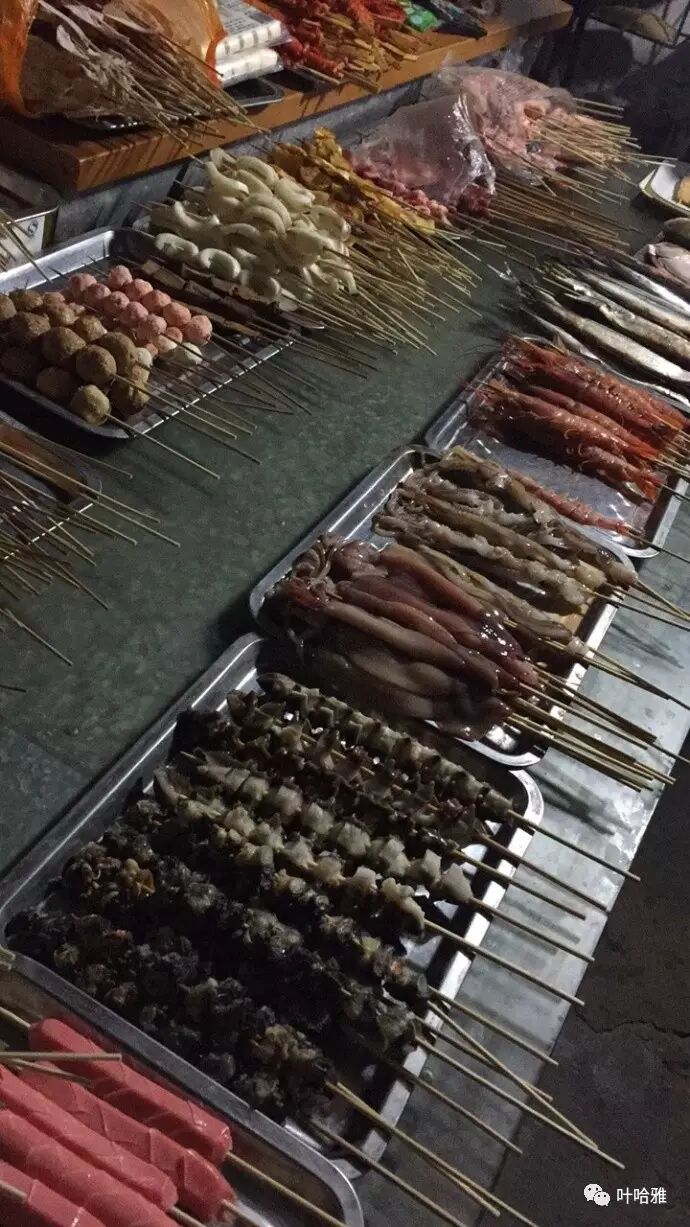
There is all kinds of seafood here, including sea cucumber, conch meat, sea shrimp, and sea fish, plus some vegetables. The prices are very cheap, so I do not worry about being overcharged when eating seafood here.
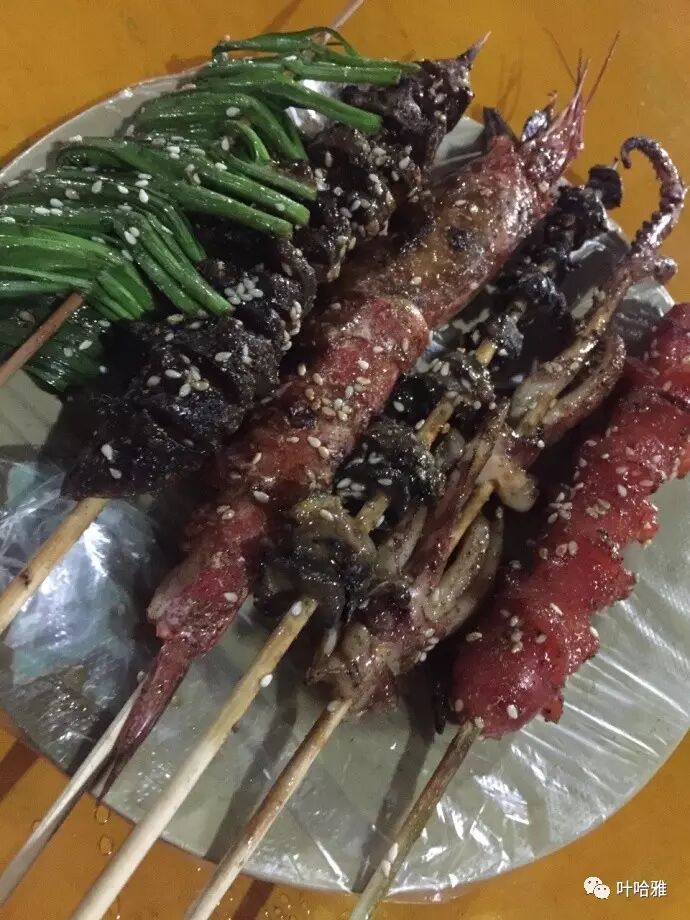
I cannot remember the individual prices, but I spent a total of over 30 yuan and got to taste all kinds of fresh seafood.
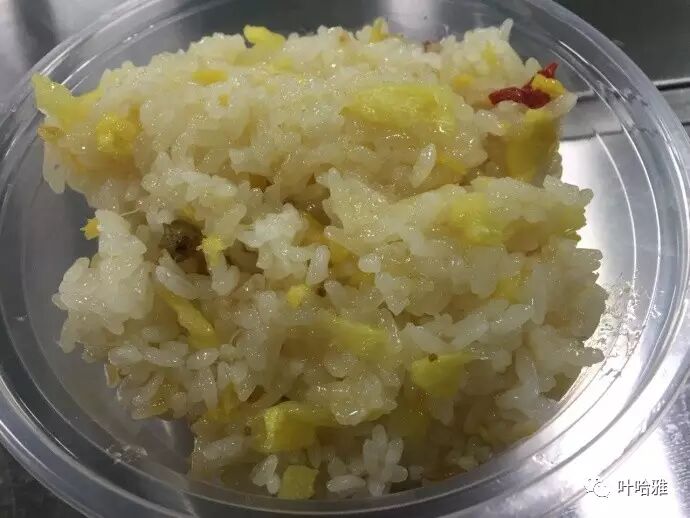
Pineapple rice (boluofan) is a Hainan specialty snack made by steaming glutinous rice with pineapple and adding goji berries. Some shops use the pineapple shell as a bowl to make it look better.
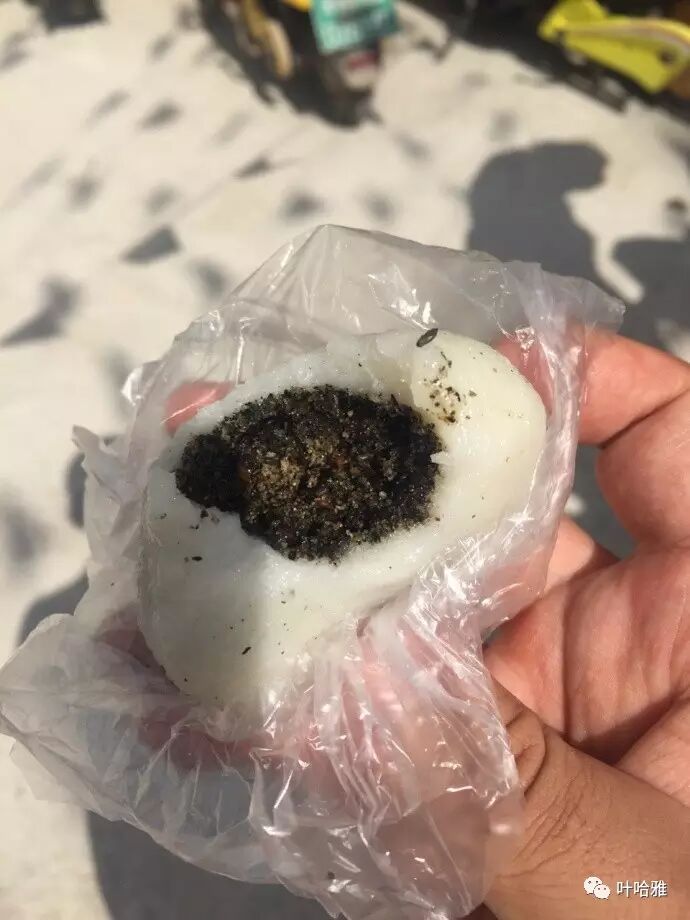
It was Jumu (Friday prayer) that day, and it happened to be the first Jumu held at the newly built Huixin Village South Mosque. The main hall was packed with people coming for namaz. After the prayer, you can receive sticky rice cakes (nuomibing) given out as duosi at the mosque gate. This is also a Hainan snack, and the black sesame filling is delicious.
Huihui Village
6. Fenghuang Yueju Restaurant
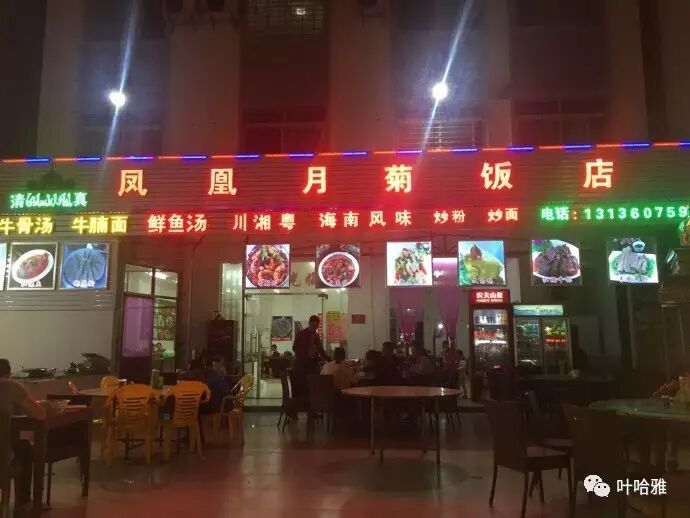
Most restaurants in Huihui Village are located along Huihui Road. This one is on the south side of the road and is a halal restaurant serving Hainan-style food run by locals.
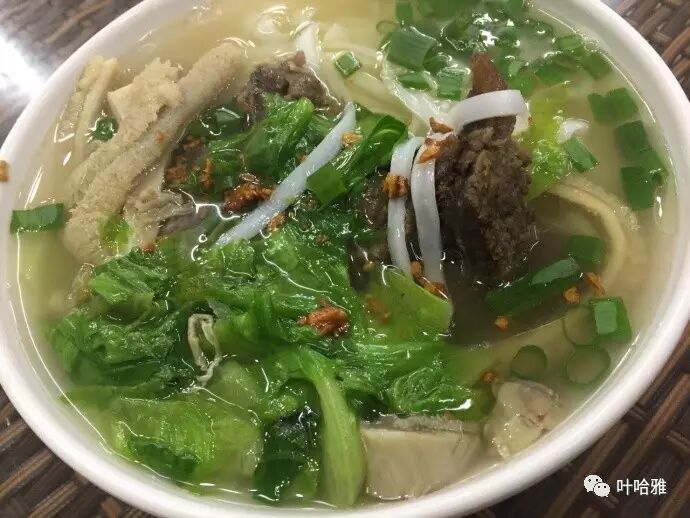
One of the more famous Hainan snacks is beef bone noodle soup (niugufen tang), which features a large piece of meaty beef bone under the noodles.
7. Yuxiang Hot Pot
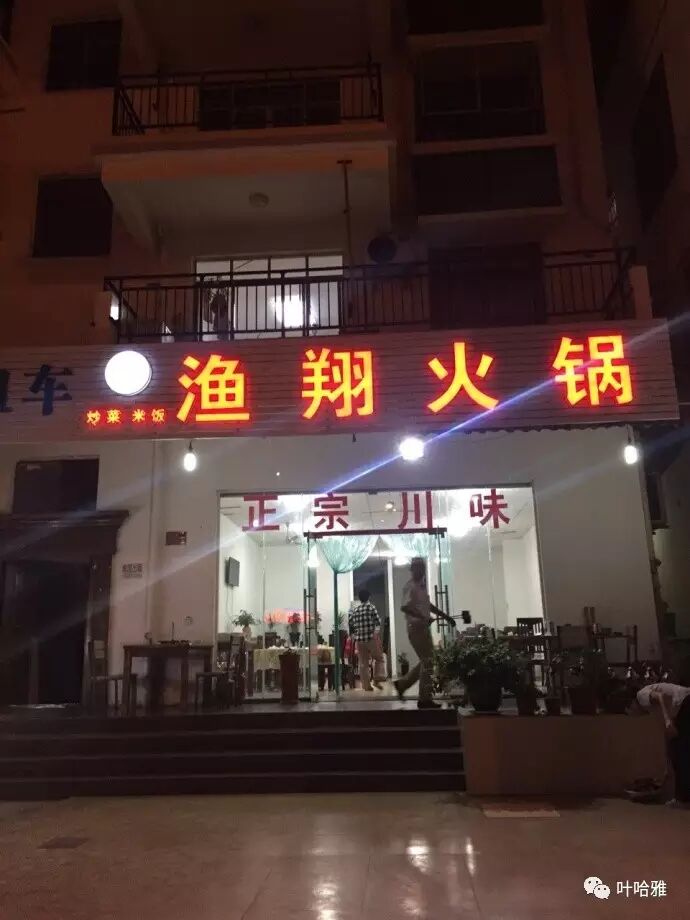
It is hard to find Sichuan-style halal hot pot after leaving Sichuan. If you find seafood too bland, you can come here to try it.
8. Xining Saisai Private Kitchen
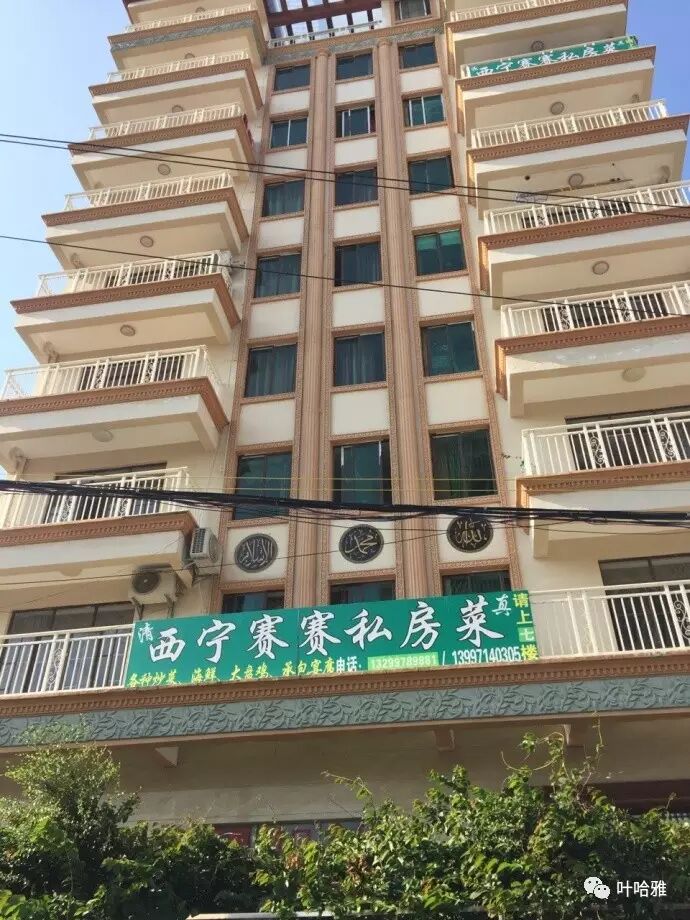
Located next to the old mosque in Huihui Village. I did not eat here, but I was curious because halal private kitchens are quite rare.
9. Huihui Old Restaurant
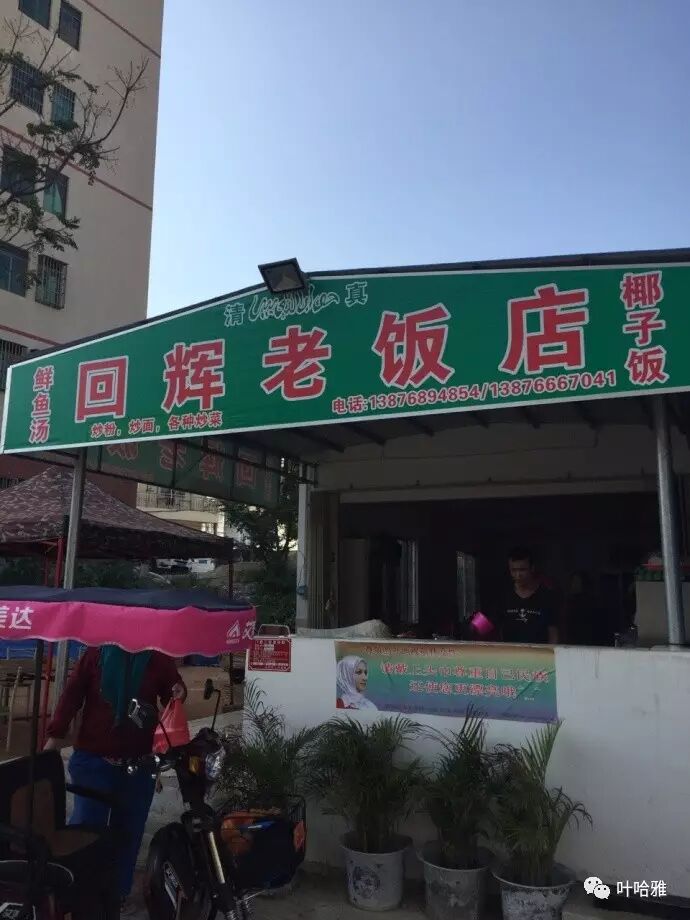
This is a Hainan-style restaurant. Fresh fish soup and coconut rice (yezi fan) are both local specialties. Coconut rice is not sold individually; it is a complimentary item when you order other dishes.
10. Fenghuang First Seafood Food City
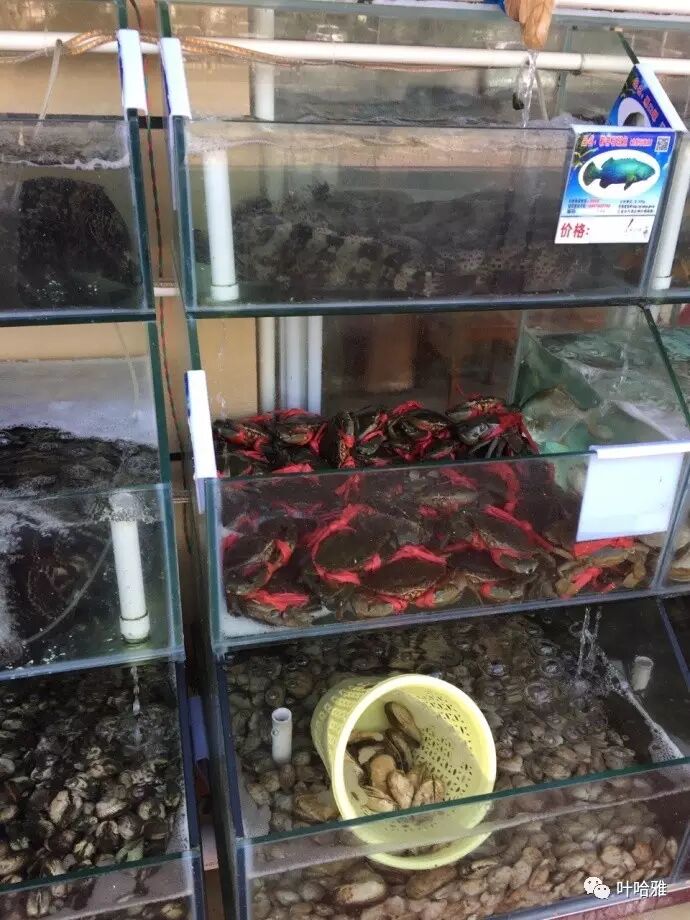
That is the name of the place. Fenghuang refers to Fenghuang Town, where both Huixin Village and Huihui Village are located. The seafood is all fresh, and there are many kinds I cannot even name.
Qinghui—you can tell at a glance that this is a halal tableware brand from Huihui Village.
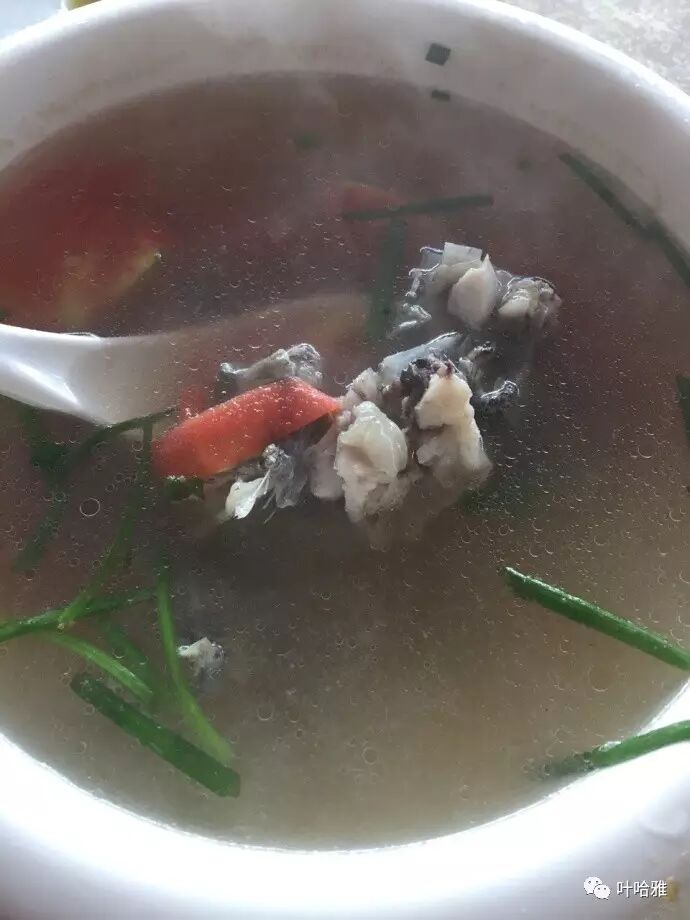
I also tasted the fresh fish soup. They prepared one spotted fish in two ways: part of it was steamed, and the rest was made into fish soup. The soup was indeed very fresh.
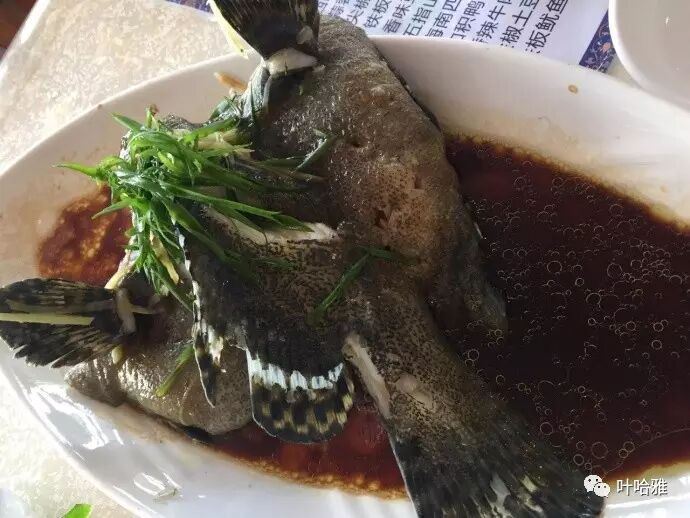
The spotted fish is expensive for a reason; the meat is tender and has no bones.
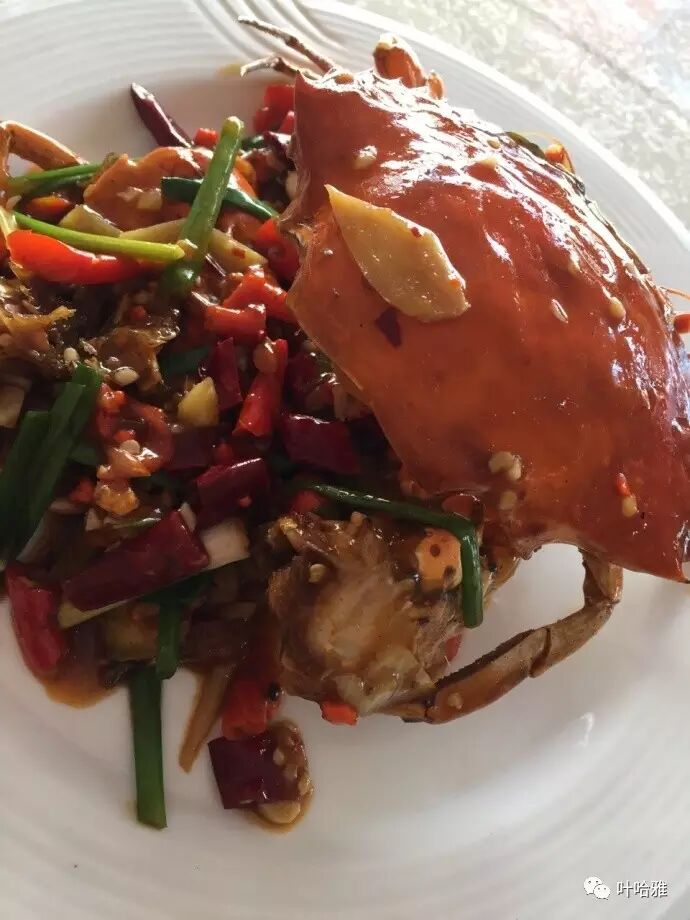
Spicy crab—I do not remember the name of the crab, only that it was very expensive, costing over 100 yuan for a single catty.
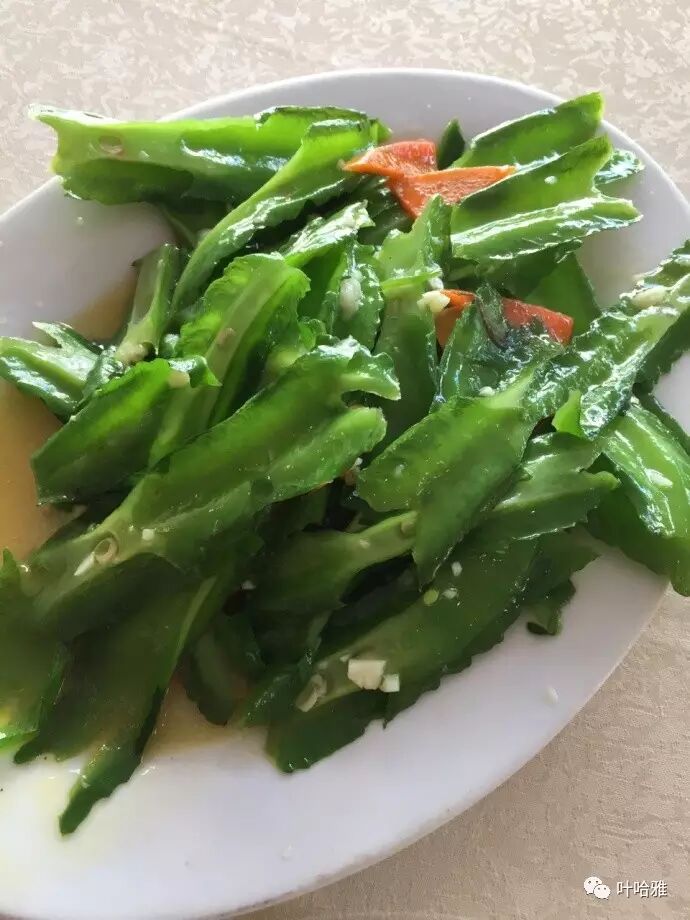
This is called winged bean (sijiaodou), a specialty vegetable in Hainan. It has a good texture and tastes crunchy.
Address: No. 348 Fenghuang Road
11. Aijiayi
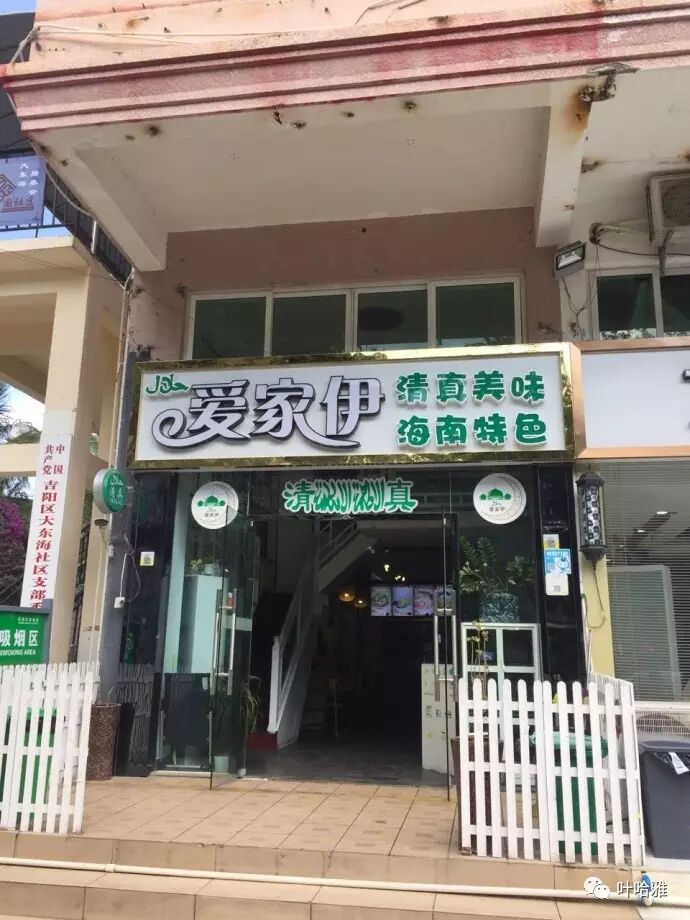
Leaving Fenghuang Town, it is time to head to the scenic spots. Huixin Village is not far from Sanya Bay and Dadonghai. This Hainan-style restaurant is near Dadonghai Square.
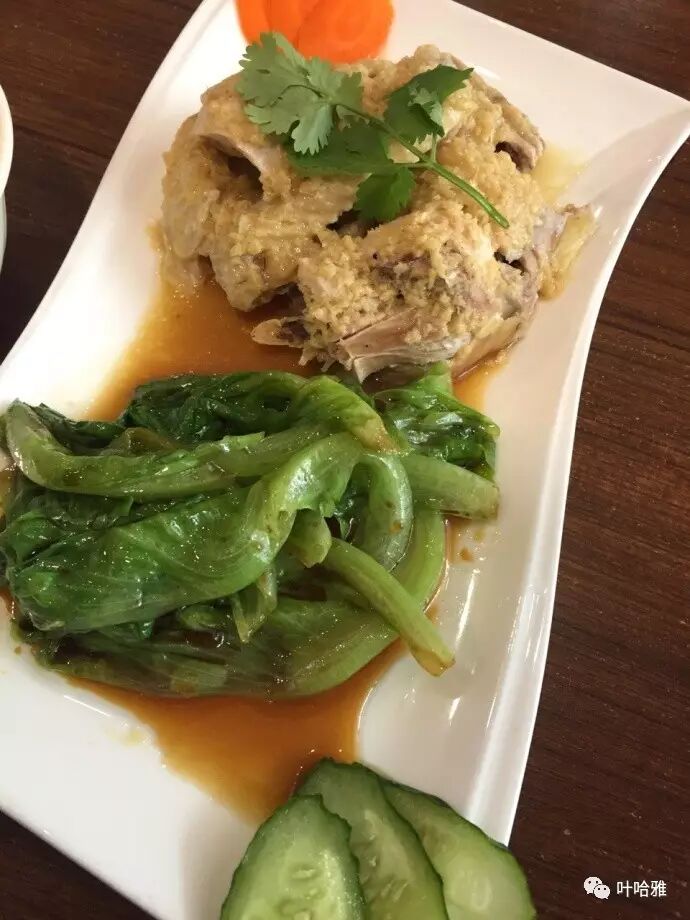
This place sells Wenchang chicken (Wenchang ji), a specialty from Hainan. Wenchang is a place name in Hainan, and the owner is from Huixin Village and is very welcoming.
12. Yalong Bay Halal Food Street
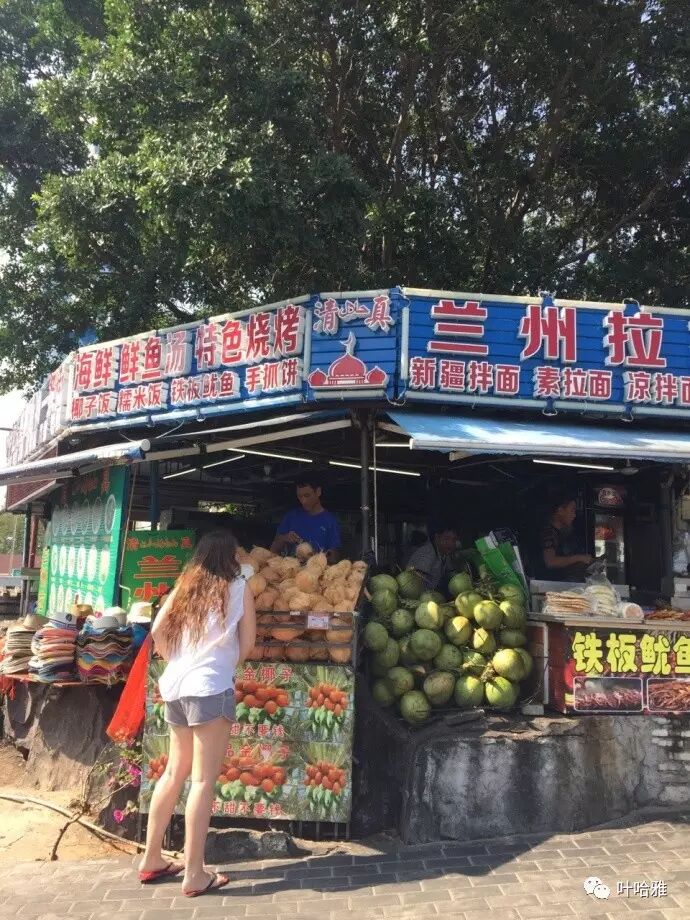
You do not need to worry about finding food while traveling in Sanya. Every popular tourist spot has a halal restaurant.
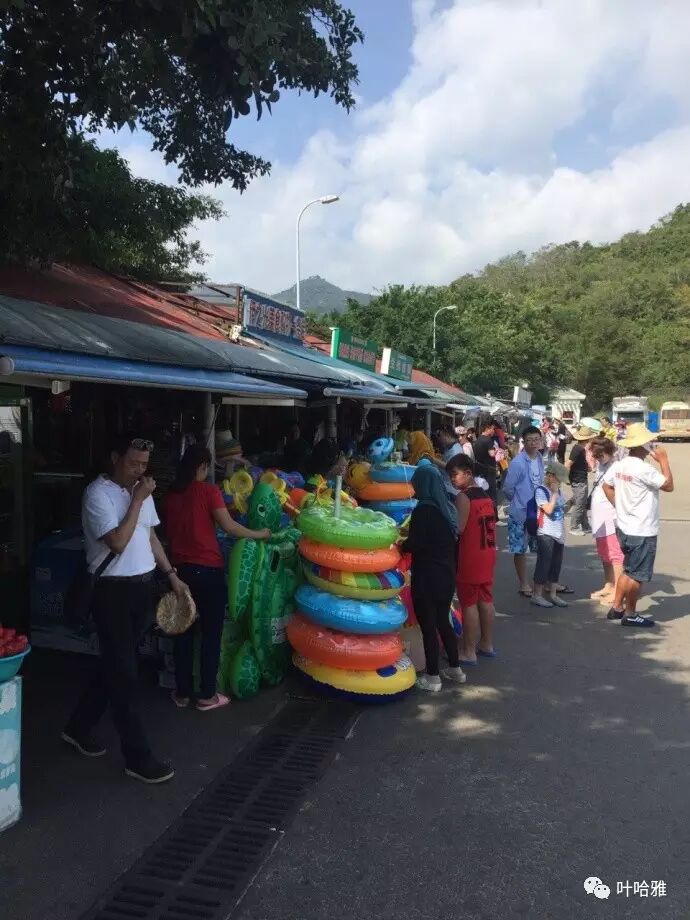
Yalong Bay is a beautiful part of Sanya with many tourists. A pleasant surprise is that there is a halal food street right near the public beach.
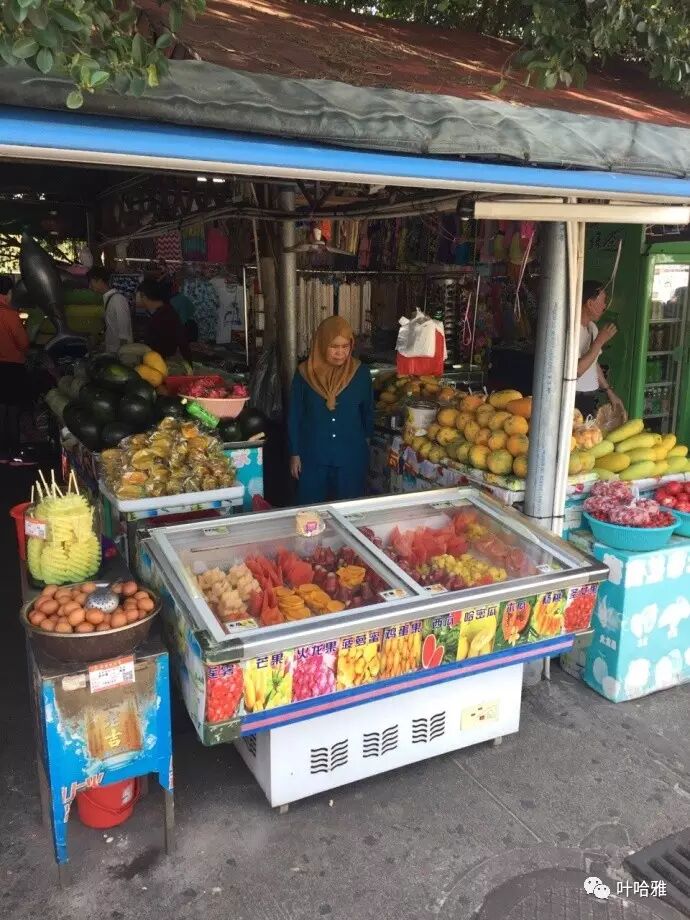
Sanya is really hot during the day in winter. Seeing these fresh tropical fruits makes me want to eat them right away. Holding a coconut drink while sunbathing on the beach is great. Coconuts are 15 yuan each, which is a bit more expensive than in Malaysia.
13. Wuzhizhou Island
Wuzhizhou Island is the most beautiful island in Sanya. If you are short on time, you can just come here, as other beaches do not look as good as Wuzhizhou Island.
There is also a halal restaurant on the island that sells various snacks.
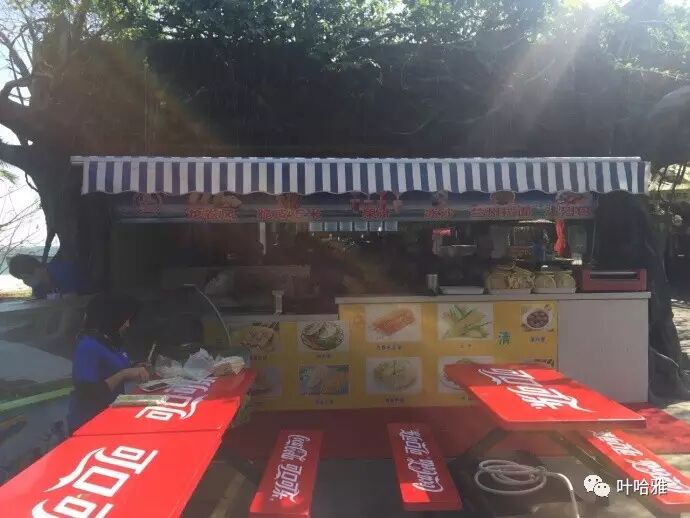
The prices are a bit high because everything on the island is expensive. I suggest you prepare food and drinks before you get on the island.
This covers the main halal food options in Hainan. By the way, regarding accommodation, renting a place in Sanya is very cheap. Muslims can choose to stay in Huixin Village or Huihui Village. A room costs only a few hundred yuan per month. Many Muslims from Northwest China come here to spend the winter. The temperature in Sanya is over 20 degrees in winter, and the air is fresh and humid. Staying in the village for a month or two does not cost much in rent, and it is easy to find food.
Summary: This Hainan halal food map follows Haikou, Sanya, Huihui Village, seafood, Muslim restaurants, and island food stops while keeping the original places and photos in order.
Hainan has seven mosques in total. There is one in Haikou, two in Huixin Village in Sanya, and four in Huihui Village. Hainan's Muslims are mainly concentrated in Huixin and Huihui villages. These Muslims are long-term local residents who are relatively wealthy in Hainan. They value their faith deeply, seek blessings in both this life and the next, and serve as a model for Muslims across China.
1. Halal beef hot pot
You cannot miss seafood when visiting Hainan. There are not many halal restaurants in Haikou, so this halal hot pot shop is a great choice for your first meal in Hainan.
They offer individual small pots, which are perfect for solo travelers, though large pots are also available.
Since it is a beef hot pot shop, you should try their beef.
Cook the scallops in the hot pot. A quick dip in the hot soup makes them just right to eat.
A pair of large shrimp is enough for one person.
Seafood alone might not fill you up, so I recommend the steamed buns (baozi) here. They have lamb filling and vegetable filling. I chose the lamb, and after finishing, I told the server the buns were great. The server said the vegetable ones are also delicious.
Address: No. 98-8 Longkun South Road, Longhua District, Haikou City (diagonally opposite the Provincial High Court, 100 meters in front of the 187 Hospital, and 500 meters from the high-speed railway station).
2. Haikou Mosque
Haikou currently has only this one mosque, and it is still under construction. The prayer hall is a temporary structure. At the entrance of the mosque, there is a noodle shop and a baked flatbread (nang) shop run by Uyghurs. If you are in a hurry, you can eat here. Crossing the street from here leads to the Haikou High-Speed Railway Station.
Address: No. 30 Fengxiang West Road, Qiongshan District, Haikou City.
Huixin Village
3. Yilanxinge Restaurant
This is a halal Western-style restaurant with a nice atmosphere, and they also serve hot pot on the second floor.
Address: South side of Huixin Village Road.
4. Huixin Village Hong Kong-style Drink Bar
Located inside Huixin Village near the South Mosque (Nanda Si), this place sells not only homemade drinks but also snacks.
A pretty Huixin girl makes octopus balls (takoyaki).
The packaging box is very cute.
I had only seen non-halal octopus balls before and had never eaten them, so this was a chance to satisfy my craving.
Actually, I want to highlight their passion fruit tea. The young girl cuts two passion fruits, pours the pulp into a cup, adds a few slices of fresh lemon, squeezes out the juice, and adds ice. In the hot Sanya weather, holding a cup of iced passion fruit tea is refreshing and thirst-quenching. All the ingredients are natural with no additives. I came here to buy a cup almost every day, and a large one is only 8 yuan.
5. Daguangming Barbecue Snack Shop
There are several small shops selling seafood barbecue in Huixin Village. I chose this one because it was nearby, and I assume the taste is quite similar.
There is all kinds of seafood here, including sea cucumber, conch meat, sea shrimp, and sea fish, plus some vegetables. The prices are very cheap, so I do not worry about being overcharged when eating seafood here.
I cannot remember the individual prices, but I spent a total of over 30 yuan and got to taste all kinds of fresh seafood.
Pineapple rice (boluofan) is a Hainan specialty snack made by steaming glutinous rice with pineapple and adding goji berries. Some shops use the pineapple shell as a bowl to make it look better.
It was Jumu (Friday prayer) that day, and it happened to be the first Jumu held at the newly built Huixin Village South Mosque. The main hall was packed with people coming for namaz. After the prayer, you can receive sticky rice cakes (nuomibing) given out as duosi at the mosque gate. This is also a Hainan snack, and the black sesame filling is delicious.
Huihui Village
6. Fenghuang Yueju Restaurant
Most restaurants in Huihui Village are located along Huihui Road. This one is on the south side of the road and is a halal restaurant serving Hainan-style food run by locals.
One of the more famous Hainan snacks is beef bone noodle soup (niugufen tang), which features a large piece of meaty beef bone under the noodles.
7. Yuxiang Hot Pot
It is hard to find Sichuan-style halal hot pot after leaving Sichuan. If you find seafood too bland, you can come here to try it.
8. Xining Saisai Private Kitchen
Located next to the old mosque in Huihui Village. I did not eat here, but I was curious because halal private kitchens are quite rare.
9. Huihui Old Restaurant
This is a Hainan-style restaurant. Fresh fish soup and coconut rice (yezi fan) are both local specialties. Coconut rice is not sold individually; it is a complimentary item when you order other dishes.
10. Fenghuang First Seafood Food City
That is the name of the place. Fenghuang refers to Fenghuang Town, where both Huixin Village and Huihui Village are located. The seafood is all fresh, and there are many kinds I cannot even name.
Qinghui—you can tell at a glance that this is a halal tableware brand from Huihui Village.
I also tasted the fresh fish soup. They prepared one spotted fish in two ways: part of it was steamed, and the rest was made into fish soup. The soup was indeed very fresh.
The spotted fish is expensive for a reason; the meat is tender and has no bones.
Spicy crab—I do not remember the name of the crab, only that it was very expensive, costing over 100 yuan for a single catty.
This is called winged bean (sijiaodou), a specialty vegetable in Hainan. It has a good texture and tastes crunchy.
Address: No. 348 Fenghuang Road
11. Aijiayi
Leaving Fenghuang Town, it is time to head to the scenic spots. Huixin Village is not far from Sanya Bay and Dadonghai. This Hainan-style restaurant is near Dadonghai Square.
This place sells Wenchang chicken (Wenchang ji), a specialty from Hainan. Wenchang is a place name in Hainan, and the owner is from Huixin Village and is very welcoming.
12. Yalong Bay Halal Food Street
You do not need to worry about finding food while traveling in Sanya. Every popular tourist spot has a halal restaurant.
Yalong Bay is a beautiful part of Sanya with many tourists. A pleasant surprise is that there is a halal food street right near the public beach.
Sanya is really hot during the day in winter. Seeing these fresh tropical fruits makes me want to eat them right away. Holding a coconut drink while sunbathing on the beach is great. Coconuts are 15 yuan each, which is a bit more expensive than in Malaysia.
13. Wuzhizhou Island
Wuzhizhou Island is the most beautiful island in Sanya. If you are short on time, you can just come here, as other beaches do not look as good as Wuzhizhou Island.
There is also a halal restaurant on the island that sells various snacks.
The prices are a bit high because everything on the island is expensive. I suggest you prepare food and drinks before you get on the island.
This covers the main halal food options in Hainan. By the way, regarding accommodation, renting a place in Sanya is very cheap. Muslims can choose to stay in Huixin Village or Huihui Village. A room costs only a few hundred yuan per month. Many Muslims from Northwest China come here to spend the winter. The temperature in Sanya is over 20 degrees in winter, and the air is fresh and humid. Staying in the village for a month or two does not cost much in rent, and it is easy to find food.
Exploring China's Southernmost Muslim Villages: Sanya's Huihui & Huixin, Halal Cuisine, and Historic Mosques
Articles • Hasan09 posted the article • 0 comments • 17 views • 4 days ago
[Internet Repost]
Exploring China's Southernmost Muslim Villages: The Unique Geography and Culture of Sanya's Huihui and Huixin Villages
Abstract:
A systematic look at the history and current landscape of the Muslim villages in Sanya, sitting right at China's southernmost tip. We break down how the Utsul Muslims preserve their Islamic faith, distinct linguistic system, and strict dietary laws in this tropical seaside city, serving as a living specimen of Maritime Silk Road culture.
February 22, 2022
The sky was still a bit overcast. Yesterday's forecast promised clear skies, but today it flipped to cloudy. Whatever, at least it's finally not raining. Decided to head out for a stroll. The original plan was to hit Linchunling Forest Park for some hiking and panoramic views of Sanya.
Checked the map and saw that Bus Route 50 from the Sanya Railway Station goes straight there. Somehow, I ended up at Phoenix International Airport instead—didn't take the wrong bus, alright, I just got on heading the complete opposite direction.
On the way, we passed Huihui Village (Huihui Muslim Village). I'd looked it up online a few days ago—it’s hyped as China's southernmost Muslim village. It was only three stops away from the airport. After hanging out at the airport for a bit, I caught Bus Route 24 and hopped off right at the Beautiful Phoenix Hotel, which drops you right into Huihui Village. My first vibe? Honestly felt like stumbling into a Uyghur village.
Freshly baked nan (traditional Uyghur flatbread) in Xinjiang usually has to be made at designated nan industrial parks, but here you see plenty of freshly baked nan stalls all over. Saw one of these syrup-dripping nan fresh out of the oven and couldn't resist grabbing one for 5 RMB. Munched on it while walking—super tasty.
Thought I spotted a weird dog breed at first, but looking closer, the little guy just got a fresh haircut. Gotta say, the grooming skills aren't bad at all. Shaved super smooth, even the fur on its paws was trimmed clean.
Found an older sister making pancakes in the alleyway with a vibe totally giving Gansu-Shaanxi Hui Muslim style. Using wood fuel, she pours the batter into this little black pan, closes the lid, and adds fire underneath. This pan can be heated from both sides, and the finished pancakes get tossed onto the iron tray right in the middle. The lady on the side said they're 2 RMB each, but when I asked the lady actually cooking them on the left, she said they aren't for sale. Pretty unique way of cooking, right?
A green house in the village—looks like a women's beauty salon. Even the building is painted green, and the color combo is super coordinated and easy on the eyes.
Qingzhen Dongsi (Sanya East Mosque). So, is there a Qingzhen Xisi (West Mosque)? Sure enough, there is! Not just a West Mosque, but a South Mosque and North Mosque too. There are six mosques in total, with the other two being the Sanya Ancient Mosque and Nankai Mosque.
Huihui Civilization Farmers Market. Not super big, and strictly sells halal food.
Killing a duck, getting it ready. This local sister just slaughtered a duck and is cleaning it up right there. Usually, whatever you buy at the market is already prepped, so this one must have been home-raised.
An airplane over the treetops.
A 'flying chicken' under the treetops.
Little kids working hard.
The village isn't far from Sanya Bay—just a little over two kilometers—so I ditched the mountain hike and went for a stroll by the ocean instead. It was overcast, but the waves were huge. Sat by the beach watching the surf and the crowds walking by. A few pretty girls walked past every now and then, and of course, plenty of not-so-pretty ones too.
A jellyfish washed ashore by the waves. Wonder if this one is edible—making a cold tossed jellyfish skin salad with it would be pretty awesome.
Two kids playing a real-life Jingwei (mythological bird trying to fill the sea with pebbles), using little plastic shovels trying to fill up the ocean. You guys got this!
There are two Muslim villages. The other one is Huixin Village (Huixin Muslim Village), just over four kilometers from Huihui Village, and you can just walk along the coast to get there. There are tons of little shops in this village; two small streets are packed with vendors selling stuff, mostly street food. A lot of houses in the village also have homestay signs hanging outside. Saw another batch of fresh, plain nan just out of the oven. Grabbed one, though honestly, this one wasn't as good as the ones in Xinjiang. There were small street stalls selling home-grown produce, like dragon fruit going for 10 RMB for four jin (about 4 lbs), and watermelons for 5 RMB each.
Qingzhen Nansi (Sanya South Mosque). The architecture is super new, looks like it was recently renovated. Just happened to pass by Nankai Mosque too, didn't make a special trip for it though.
Walking back from Huixin Village is also over four kilometers, and the bus stop is a good two kilometers away. Might as well just walk all the way back since I'm not in a rush anyway, plus I get to check out the street views.
Sanya has a ton of gorgeous architecture. This cluster of four buildings has a really unique vibe.
Not sure how my calligraphy skills are, but I feel like it's pretty much on par with mine. Guess it must just be my lack of skill that I couldn't appreciate their profound artistic depth.
Sanya River in the evening twilight.
This kid in a red jacket chased me for a long way while the adults yelled from behind, 'Keep running and the old man up ahead is gonna grab you!' Well, I had to play along, so I yelled back for him to come with me, and he immediately ran back. Walked all day and felt pretty beat, so I grabbed some water and hit the sack. view all
Exploring China's Southernmost Muslim Villages: The Unique Geography and Culture of Sanya's Huihui and Huixin Villages
Abstract:
A systematic look at the history and current landscape of the Muslim villages in Sanya, sitting right at China's southernmost tip. We break down how the Utsul Muslims preserve their Islamic faith, distinct linguistic system, and strict dietary laws in this tropical seaside city, serving as a living specimen of Maritime Silk Road culture.
February 22, 2022
The sky was still a bit overcast. Yesterday's forecast promised clear skies, but today it flipped to cloudy. Whatever, at least it's finally not raining. Decided to head out for a stroll. The original plan was to hit Linchunling Forest Park for some hiking and panoramic views of Sanya.
Checked the map and saw that Bus Route 50 from the Sanya Railway Station goes straight there. Somehow, I ended up at Phoenix International Airport instead—didn't take the wrong bus, alright, I just got on heading the complete opposite direction.
On the way, we passed Huihui Village (Huihui Muslim Village). I'd looked it up online a few days ago—it’s hyped as China's southernmost Muslim village. It was only three stops away from the airport. After hanging out at the airport for a bit, I caught Bus Route 24 and hopped off right at the Beautiful Phoenix Hotel, which drops you right into Huihui Village. My first vibe? Honestly felt like stumbling into a Uyghur village.
Freshly baked nan (traditional Uyghur flatbread) in Xinjiang usually has to be made at designated nan industrial parks, but here you see plenty of freshly baked nan stalls all over. Saw one of these syrup-dripping nan fresh out of the oven and couldn't resist grabbing one for 5 RMB. Munched on it while walking—super tasty.
Thought I spotted a weird dog breed at first, but looking closer, the little guy just got a fresh haircut. Gotta say, the grooming skills aren't bad at all. Shaved super smooth, even the fur on its paws was trimmed clean.
Found an older sister making pancakes in the alleyway with a vibe totally giving Gansu-Shaanxi Hui Muslim style. Using wood fuel, she pours the batter into this little black pan, closes the lid, and adds fire underneath. This pan can be heated from both sides, and the finished pancakes get tossed onto the iron tray right in the middle. The lady on the side said they're 2 RMB each, but when I asked the lady actually cooking them on the left, she said they aren't for sale. Pretty unique way of cooking, right?
A green house in the village—looks like a women's beauty salon. Even the building is painted green, and the color combo is super coordinated and easy on the eyes.
Qingzhen Dongsi (Sanya East Mosque). So, is there a Qingzhen Xisi (West Mosque)? Sure enough, there is! Not just a West Mosque, but a South Mosque and North Mosque too. There are six mosques in total, with the other two being the Sanya Ancient Mosque and Nankai Mosque.
Huihui Civilization Farmers Market. Not super big, and strictly sells halal food.
Killing a duck, getting it ready. This local sister just slaughtered a duck and is cleaning it up right there. Usually, whatever you buy at the market is already prepped, so this one must have been home-raised.
An airplane over the treetops.
A 'flying chicken' under the treetops.
Little kids working hard.
The village isn't far from Sanya Bay—just a little over two kilometers—so I ditched the mountain hike and went for a stroll by the ocean instead. It was overcast, but the waves were huge. Sat by the beach watching the surf and the crowds walking by. A few pretty girls walked past every now and then, and of course, plenty of not-so-pretty ones too.
A jellyfish washed ashore by the waves. Wonder if this one is edible—making a cold tossed jellyfish skin salad with it would be pretty awesome.
Two kids playing a real-life Jingwei (mythological bird trying to fill the sea with pebbles), using little plastic shovels trying to fill up the ocean. You guys got this!
There are two Muslim villages. The other one is Huixin Village (Huixin Muslim Village), just over four kilometers from Huihui Village, and you can just walk along the coast to get there. There are tons of little shops in this village; two small streets are packed with vendors selling stuff, mostly street food. A lot of houses in the village also have homestay signs hanging outside. Saw another batch of fresh, plain nan just out of the oven. Grabbed one, though honestly, this one wasn't as good as the ones in Xinjiang. There were small street stalls selling home-grown produce, like dragon fruit going for 10 RMB for four jin (about 4 lbs), and watermelons for 5 RMB each.
Qingzhen Nansi (Sanya South Mosque). The architecture is super new, looks like it was recently renovated. Just happened to pass by Nankai Mosque too, didn't make a special trip for it though.
Walking back from Huixin Village is also over four kilometers, and the bus stop is a good two kilometers away. Might as well just walk all the way back since I'm not in a rush anyway, plus I get to check out the street views.
Sanya has a ton of gorgeous architecture. This cluster of four buildings has a really unique vibe.
Not sure how my calligraphy skills are, but I feel like it's pretty much on par with mine. Guess it must just be my lack of skill that I couldn't appreciate their profound artistic depth.
Sanya River in the evening twilight.
This kid in a red jacket chased me for a long way while the adults yelled from behind, 'Keep running and the old man up ahead is gonna grab you!' Well, I had to play along, so I yelled back for him to come with me, and he immediately ran back. Walked all day and felt pretty beat, so I grabbed some water and hit the sack. view all
[Internet Repost]
Exploring China's Southernmost Muslim Villages: The Unique Geography and Culture of Sanya's Huihui and Huixin Villages
Abstract:
A systematic look at the history and current landscape of the Muslim villages in Sanya, sitting right at China's southernmost tip. We break down how the Utsul Muslims preserve their Islamic faith, distinct linguistic system, and strict dietary laws in this tropical seaside city, serving as a living specimen of Maritime Silk Road culture.
February 22, 2022
The sky was still a bit overcast. Yesterday's forecast promised clear skies, but today it flipped to cloudy. Whatever, at least it's finally not raining. Decided to head out for a stroll. The original plan was to hit Linchunling Forest Park for some hiking and panoramic views of Sanya.
Checked the map and saw that Bus Route 50 from the Sanya Railway Station goes straight there. Somehow, I ended up at Phoenix International Airport instead—didn't take the wrong bus, alright, I just got on heading the complete opposite direction.
On the way, we passed Huihui Village (Huihui Muslim Village). I'd looked it up online a few days ago—it’s hyped as China's southernmost Muslim village. It was only three stops away from the airport. After hanging out at the airport for a bit, I caught Bus Route 24 and hopped off right at the Beautiful Phoenix Hotel, which drops you right into Huihui Village. My first vibe? Honestly felt like stumbling into a Uyghur village.
Freshly baked nan (traditional Uyghur flatbread) in Xinjiang usually has to be made at designated nan industrial parks, but here you see plenty of freshly baked nan stalls all over. Saw one of these syrup-dripping nan fresh out of the oven and couldn't resist grabbing one for 5 RMB. Munched on it while walking—super tasty.
Thought I spotted a weird dog breed at first, but looking closer, the little guy just got a fresh haircut. Gotta say, the grooming skills aren't bad at all. Shaved super smooth, even the fur on its paws was trimmed clean.
Found an older sister making pancakes in the alleyway with a vibe totally giving Gansu-Shaanxi Hui Muslim style. Using wood fuel, she pours the batter into this little black pan, closes the lid, and adds fire underneath. This pan can be heated from both sides, and the finished pancakes get tossed onto the iron tray right in the middle. The lady on the side said they're 2 RMB each, but when I asked the lady actually cooking them on the left, she said they aren't for sale. Pretty unique way of cooking, right?
A green house in the village—looks like a women's beauty salon. Even the building is painted green, and the color combo is super coordinated and easy on the eyes.
Qingzhen Dongsi (Sanya East Mosque). So, is there a Qingzhen Xisi (West Mosque)? Sure enough, there is! Not just a West Mosque, but a South Mosque and North Mosque too. There are six mosques in total, with the other two being the Sanya Ancient Mosque and Nankai Mosque.
Huihui Civilization Farmers Market. Not super big, and strictly sells halal food.
Killing a duck, getting it ready. This local sister just slaughtered a duck and is cleaning it up right there. Usually, whatever you buy at the market is already prepped, so this one must have been home-raised.
An airplane over the treetops.
A 'flying chicken' under the treetops.
Little kids working hard.
The village isn't far from Sanya Bay—just a little over two kilometers—so I ditched the mountain hike and went for a stroll by the ocean instead. It was overcast, but the waves were huge. Sat by the beach watching the surf and the crowds walking by. A few pretty girls walked past every now and then, and of course, plenty of not-so-pretty ones too.
A jellyfish washed ashore by the waves. Wonder if this one is edible—making a cold tossed jellyfish skin salad with it would be pretty awesome.
Two kids playing a real-life Jingwei (mythological bird trying to fill the sea with pebbles), using little plastic shovels trying to fill up the ocean. You guys got this!
There are two Muslim villages. The other one is Huixin Village (Huixin Muslim Village), just over four kilometers from Huihui Village, and you can just walk along the coast to get there. There are tons of little shops in this village; two small streets are packed with vendors selling stuff, mostly street food. A lot of houses in the village also have homestay signs hanging outside. Saw another batch of fresh, plain nan just out of the oven. Grabbed one, though honestly, this one wasn't as good as the ones in Xinjiang. There were small street stalls selling home-grown produce, like dragon fruit going for 10 RMB for four jin (about 4 lbs), and watermelons for 5 RMB each.
Qingzhen Nansi (Sanya South Mosque). The architecture is super new, looks like it was recently renovated. Just happened to pass by Nankai Mosque too, didn't make a special trip for it though.
Walking back from Huixin Village is also over four kilometers, and the bus stop is a good two kilometers away. Might as well just walk all the way back since I'm not in a rush anyway, plus I get to check out the street views.
Sanya has a ton of gorgeous architecture. This cluster of four buildings has a really unique vibe.
Not sure how my calligraphy skills are, but I feel like it's pretty much on par with mine. Guess it must just be my lack of skill that I couldn't appreciate their profound artistic depth.
Sanya River in the evening twilight.
This kid in a red jacket chased me for a long way while the adults yelled from behind, 'Keep running and the old man up ahead is gonna grab you!' Well, I had to play along, so I yelled back for him to come with me, and he immediately ran back. Walked all day and felt pretty beat, so I grabbed some water and hit the sack.
Exploring China's Southernmost Muslim Villages: The Unique Geography and Culture of Sanya's Huihui and Huixin Villages
Abstract:
A systematic look at the history and current landscape of the Muslim villages in Sanya, sitting right at China's southernmost tip. We break down how the Utsul Muslims preserve their Islamic faith, distinct linguistic system, and strict dietary laws in this tropical seaside city, serving as a living specimen of Maritime Silk Road culture.
February 22, 2022
The sky was still a bit overcast. Yesterday's forecast promised clear skies, but today it flipped to cloudy. Whatever, at least it's finally not raining. Decided to head out for a stroll. The original plan was to hit Linchunling Forest Park for some hiking and panoramic views of Sanya.
Checked the map and saw that Bus Route 50 from the Sanya Railway Station goes straight there. Somehow, I ended up at Phoenix International Airport instead—didn't take the wrong bus, alright, I just got on heading the complete opposite direction.
On the way, we passed Huihui Village (Huihui Muslim Village). I'd looked it up online a few days ago—it’s hyped as China's southernmost Muslim village. It was only three stops away from the airport. After hanging out at the airport for a bit, I caught Bus Route 24 and hopped off right at the Beautiful Phoenix Hotel, which drops you right into Huihui Village. My first vibe? Honestly felt like stumbling into a Uyghur village.
Freshly baked nan (traditional Uyghur flatbread) in Xinjiang usually has to be made at designated nan industrial parks, but here you see plenty of freshly baked nan stalls all over. Saw one of these syrup-dripping nan fresh out of the oven and couldn't resist grabbing one for 5 RMB. Munched on it while walking—super tasty.
Thought I spotted a weird dog breed at first, but looking closer, the little guy just got a fresh haircut. Gotta say, the grooming skills aren't bad at all. Shaved super smooth, even the fur on its paws was trimmed clean.
Found an older sister making pancakes in the alleyway with a vibe totally giving Gansu-Shaanxi Hui Muslim style. Using wood fuel, she pours the batter into this little black pan, closes the lid, and adds fire underneath. This pan can be heated from both sides, and the finished pancakes get tossed onto the iron tray right in the middle. The lady on the side said they're 2 RMB each, but when I asked the lady actually cooking them on the left, she said they aren't for sale. Pretty unique way of cooking, right?
A green house in the village—looks like a women's beauty salon. Even the building is painted green, and the color combo is super coordinated and easy on the eyes.
Qingzhen Dongsi (Sanya East Mosque). So, is there a Qingzhen Xisi (West Mosque)? Sure enough, there is! Not just a West Mosque, but a South Mosque and North Mosque too. There are six mosques in total, with the other two being the Sanya Ancient Mosque and Nankai Mosque.
Huihui Civilization Farmers Market. Not super big, and strictly sells halal food.
Killing a duck, getting it ready. This local sister just slaughtered a duck and is cleaning it up right there. Usually, whatever you buy at the market is already prepped, so this one must have been home-raised.
An airplane over the treetops.
A 'flying chicken' under the treetops.
Little kids working hard.
The village isn't far from Sanya Bay—just a little over two kilometers—so I ditched the mountain hike and went for a stroll by the ocean instead. It was overcast, but the waves were huge. Sat by the beach watching the surf and the crowds walking by. A few pretty girls walked past every now and then, and of course, plenty of not-so-pretty ones too.
A jellyfish washed ashore by the waves. Wonder if this one is edible—making a cold tossed jellyfish skin salad with it would be pretty awesome.
Two kids playing a real-life Jingwei (mythological bird trying to fill the sea with pebbles), using little plastic shovels trying to fill up the ocean. You guys got this!
There are two Muslim villages. The other one is Huixin Village (Huixin Muslim Village), just over four kilometers from Huihui Village, and you can just walk along the coast to get there. There are tons of little shops in this village; two small streets are packed with vendors selling stuff, mostly street food. A lot of houses in the village also have homestay signs hanging outside. Saw another batch of fresh, plain nan just out of the oven. Grabbed one, though honestly, this one wasn't as good as the ones in Xinjiang. There were small street stalls selling home-grown produce, like dragon fruit going for 10 RMB for four jin (about 4 lbs), and watermelons for 5 RMB each.
Qingzhen Nansi (Sanya South Mosque). The architecture is super new, looks like it was recently renovated. Just happened to pass by Nankai Mosque too, didn't make a special trip for it though.
Walking back from Huixin Village is also over four kilometers, and the bus stop is a good two kilometers away. Might as well just walk all the way back since I'm not in a rush anyway, plus I get to check out the street views.
Sanya has a ton of gorgeous architecture. This cluster of four buildings has a really unique vibe.
Not sure how my calligraphy skills are, but I feel like it's pretty much on par with mine. Guess it must just be my lack of skill that I couldn't appreciate their profound artistic depth.
Sanya River in the evening twilight.
This kid in a red jacket chased me for a long way while the adults yelled from behind, 'Keep running and the old man up ahead is gonna grab you!' Well, I had to play along, so I yelled back for him to come with me, and he immediately ran back. Walked all day and felt pretty beat, so I grabbed some water and hit the sack.
Sanya's Utsul Muslims: Maritime Silk Road History, Halal Cuisine & Culture
Articles • Hasan09 posted the article • 0 comments • 13 views • 4 days ago
[Internet Repost]
Tracing the Genetic and Linguistic Origins of Hainan's Sanya Hui Muslims: The Unique Tones of the Utsul Language and the Paternal History of Maritime Silk Road Migrations
Abstract:
A deep dive into the mystery of the origins of the Hui Muslim community in Sanya, Hainan, from the perspectives of molecular anthropology and linguistics. This explores the evolutionary history of the Utsul language—which possesses distinct Austronesian characteristics—while combining genetic haplogroup data to reconstruct the history of integration among ancient Arab, Persian, and Champa Muslims.
When people talk about China's Muslim communities, they usually think first of the Northwest—Shaanxi, Gansu, Ningxia, Qinghai—and Xinjiang. Yet down at the southernmost tip of Hainan Island in Sanya, tucked away in the coastal villages of Huihui Village (Huihui Muslim Village) and Huixin Village (Huixin Muslim Village), lives a unique group of people who have practiced Islam for generations. They never bow to Buddha, never step foot inside ancestral shrines, and strictly avoid pork. The most prominent landmarks in their villages are mosques (masjids), and their daily diet, weddings, funerals, and festivals all strictly adhere to Islamic sharia law. Even more fascinating is their language: it's neither standard Hainanese nor the Hlai language spoken by the island's indigenous Hlai people. Outsiders cannot understand a single word. Academics call it the Utsul language (Huihui language). While officially classified under the Hui ethnic group during ethnic identification, these people are completely distinct from mainland Hui Muslims in both their historical origins and the language they speak.
Most ancestors of mainland Hui Muslims traveled via the overland Silk Road, closely tied to Muslim merchants and accompanying soldiers from Central Asia, Arabia, and Persia. So, from which body of water did the paternal lineage of Hainan's community actually come? Was it the famous Arabian Peninsula, the Persian Gulf, or some mysterious ancient kingdom on the eastern coast of the Indochina Peninsula that has long since vanished? Linguistics, historical records, and ancient DNA each offer clues. Piecing them together reveals a surprising truth: the answer is far more twists-and-turns than any simple guess. It proves that while religion and culture can indeed cross oceans to spread, chromosomes don't necessarily follow along for the ride.
To figure out the exact origins of the Utsul people, we must first understand the kingdom of Champa. In ancient Chinese historical texts, Champa was successively known as Linyi, Huanwang, and Champa. Established around 192 CE—the late Eastern Han Dynasty—it was an ancient maritime kingdom built by Austronesian-speaking peoples in what is now the central to southern coastal region of Vietnam. The Cham people were exceptionally skilled at navigation and trade, and their territory happened to control the maritime bottleneck connecting China to India and Arabia. Chinese merchant ships heading south and Arab merchant ships heading east frequently docked in Champa's ports to take on supplies. The famous Song Dynasty scholar Zhou Qufei listed Champa in his book Lingwai Daida as a major metropolis among the southwestern nations. It was a maritime kingdom that lived by the sea and thrived by the sea.
Champa was initially deeply influenced by Indian culture, with Hinduism long serving as its primary religion. Coastal brick-built towers in the Cham style still stand today. By the late 9th century, residential quarters composed of Arab and Persian Muslim merchants had already emerged in southern Champa. Islam quietly spread there alongside maritime trade, and by the 10th century, the number of believers had steadily grown. Right up until the 17th century, Champa's royal family chose to convert to Islam. In other words, before Champa's official demise, this vast land had been dyed with thick Islamic colors layer upon layer, built atop a deep foundation of Hinduism.
However, Champa's northern neighbor, Vietnam, continuously expanded southward after declaring independence—an event known in history as the Nam Tien (Southward March). The two countries engaged in a tug-of-war lasting centuries. In 982 CE, Champa's capital was briefly breached by enemy forces, and even then, some Cham refugees chose to cross the sea and flee northward. The heaviest blow came in 1471, when the Vietnamese Later Le Dynasty led a massive army to capture Champa's strategic stronghold of Vijaya, leaving Champa existing in name only. Afterward, the Nguyen Dynasty kept up its southern pressure. Facing the desperate peril of a destroyed nation and shattered homes, the Cham people boarded boats and fled into the open sea. One group traveled south along the Indochina Peninsula, while another caught tailwinds and headed north, eventually arriving at Yazhou at the southern tip of Hainan Island—today's Sanya area. An ancient maritime kingdom that had stood for over a thousand years was ultimately squeezed step-by-step into the boundless ocean by its neighbor.
According to oral folklore, a Champa prince once led about 1,000 clansmen across the sea to Hainan, where they were properly settled by the Ming Dynasty government. In fact, official Chinese historical records of Cham people entering Hainan date back even further, appearing as early as the Song Dynasty. Aside from Champa refugees, Arab and foreign merchants (fanke) who arrived via the Maritime Silk Road during the Tang and Song dynasties and settled in Hainan's ports represent another source of Hainan's Muslim community. Tang Dynasty Muslim cemeteries discovered in the coastal areas of Lingshui and Sanya serve as physical proof of these early maritime visitors. The exiled refugees from fallen Champa, combined with the foreign merchants who had docked and settled here even earlier, blended through several waves of convergence to finally form today's unique Utsul people—themselves a wondrous confluence of multiple maritime migration streams.
The most indisputable proof of identity carried by the Utsul people is their language. The Utsul language belongs to the Chamic branch of the Malayo-Polynesian subgroup of the Austronesian language family, sharing a common origin with the Cham language spoken by surviving Cham people in Vietnam today, and bearing a particularly close resemblance to its northern branch. The Austronesian language family spans from Madagascar in the west to distant Easter Island in the east, and as far south as New Zealand, making it one of the most widely distributed language families in the world. Yet the Utsul language is the only Austronesian tongue actually spoken on the Chinese mainland today, and the Utsul people are the sole branch of the Hui nationality across all of China to possess their own independent language—Hui Muslims in other regions having long since adopted Chinese for general communication. Based solely on this unique language, they occupy a lonely and extremely distinctive position on the ethnic distribution map of the Chinese mainland.
Even more intriguing is that within the vast Austronesian language family, the Utsul language is a rare outlier. Because typical Austronesian languages are mostly multisyllabic without tonal distinctions—relying solely on various affixes to express grammatical details—the Utsul language instead evolved into a predominantly monosyllabic form complete with its own fully developed tonal system. Linguistically, it grew increasingly similar to the surrounding Chinese and Hlai languages widely spoken in the region. Linguists view it as a classic research sample for tone genesis in language contact studies. This happened because the descendants of the Cham people lived generation after generation as neighbors to Chinese- and Kra-Dai-speaking populations on Hainan Island, and their native tongue was reshaped step-by-step through extremely lengthy mutual contact. Although the surface framework of the language changed into a new shape, its core vocabulary still corresponds with related sister languages. Like an isolated island drifting alone on the ocean, it stubbornly preserves the final lingering hometown sounds left behind by the Champa refugees. Based solely on this language set and their profound faith, academics concluded long ago that the Utsul people are the surviving descendants of the Champa.
According to conventional imagination, the paternal lineage of these Muslims should perhaps trace directly back to the distant Arabian Peninsula, or at the very least be local Cham people from Champa. However, a 2013 study published by Li Dongna, Wang Chuanchao, and others from Fudan University overturned this assumption. They tested 102 Utsul individuals—including 72 males and 30 females—analyzing both paternal Y-chromosomes and maternal mitochondrial DNA. The final conclusion was unexpectedly astonishing: although language and faith securely pointed the clues back to the former kingdom of Champa, the chromosome data told a completely different story, and both the paternal and maternal test results agreed with eerie consistency.
First, regarding the paternal side: the most frequent Y-chromosome haplogroup among Utsul males turned out to be O1a, specifically designated as M119, which accounted for roughly 58.1% in earlier smaller-sample statistics. The problem, however, is that the primary paternal lineage carried by today's Vietnamese Cham males is O2a1 (specifically M95), whereas this branch accounts for a mere 4.17% among the Utsul. The paternal structures of the two groups fundamentally do not match. If they were truly direct refugees of Champa faithfully passing down their paternal lines, the high-frequency lineage appearing among the Utsul should naturally have been M95, absolutely not M119. This single set of extremely misaligned data alone is enough to arouse great skepticism toward the narrative of direct Champa descent.
Researchers subsequently used Y-chromosome short tandem repeats (STRs) to construct complex network diagrams. The results revealed that almost all O1a lineages carried by the Utsul fell directly into the specific branches native to Hainan's indigenous inhabitants—the Hlai and other Kra-Dai-speaking populations—rather than clustering with Vietnamese Cham or Indochinese populations. Within this network, the indigenous Hainan O1a spontaneously formed several clusters almost exclusive to the locality, and the Utsul samples were nearly all deeply embedded within these clusters. This clearly demonstrates that the primary paternal lineage of the Utsul did not arrive from afar with the Champa refugees, but was instead acquired from the local populations of Hainan after successfully landing on the island. The only relative their Y-chromosomes recognize is the native people of Hainan Island, not the Cham people across the vast sea.
The maternal pattern is an exact carbon copy of the paternal side. The maternal haplogroups of the Utsul are predominantly D4 and F2a, accounting for roughly 16.67% and 15.69% respectively, alongside downstream sub-lineages such as F1b, F1a1, B5a, M8a, D5, and B4a. Analyzing these individual sub-lineages at the network level reveals that these maternal lines either cluster with Hainan's indigenous inhabitants or with southern Chinese populations. Not a single Utsul sample could be found clustering directly with the Cham people. These two mutually independent, rock-solid pieces of evidence—paternal and maternal—jointly point to a final conclusion: genetically speaking, the Utsul people are much closer to Hainan's native Hlai people and the broader southern Chinese population than to the Cham of Vietnam. If the localization of the paternal line could still be barely explained by customs like matrilocal marriage (taking a husband into the wife's family), then the fact that even the maternal line shows an overall shift toward the local population can only fully prove that the biological core of these people truly grew anew and took root right here on the island.
This study also made the pleasant discovery that among the Utsul people, there are moderate frequencies of haplogroup C (designated M130) and haplogroup F (designated M89). These quite ancient Southeast Asian lineages very likely originate from genetic drift occurring in small populations during the foundation period. In addition, there is about 4.17% of O3a2c1a (designated M117), a typical Sino-Tibetan characteristic lineage, which most likely stems from genetic inflow from neighboring Han Chinese populations in more recent times. Meanwhile, the Arab J lineage or Central Asian R lineage that people originally expected to occupy a place failed to form any considerable proportion. In other words, within the gene pool, one can neither find large-scale Arab bloodlines nor large-scale Champa paternal lines; all that can be definitively found is a superposition of local Hainan, southern Chinese, and small amounts of Sino-Tibetan components.
Based on this, researchers directly titled their paper "Genetic Replacement of Local Hainan Lineages in the Utsul." They agreed that the ultimate formation of the Utsul community must have undergone a process of large-scale assimilation and absorption of Hainan's native populations. Although the Cham language and Islamic faith brought by the Champa exiles were stubbornly preserved, their biological core was thoroughly and step-by-step replaced by local Hainan lineages after successfully landing on the island. This differs significantly from the classic historical pattern where paternal lines are foreign and maternal lines are local; the Utsul exhibit a high degree of localization on both paternal and maternal fronts. What was genuinely and completely carried forward from the old Champa homeland was primarily that language and that faith, rather than deep chromosomes. One might say this was a group of people who successfully kept their hometown speech and the scriptures they brought, yet swapped their original bloodline for the bloodline of the very island upon which their feet stood.
Some people might wonder: since the Cham had converted to Islam long ago, surely their own paternal lines must contain quite a few Arab components? A study on Cham paternal lineages published in 2012 in the journal PLoS ONE by He Jiandong, Peng Minsheng, and others—in cooperation with Vietnamese scholars and led by Zhang Yaping's team at the Kunming Institute of Zoology of the Chinese Academy of Sciences—similarly offered a very sobering medical answer. This study clearly showed that the primary paternal genetic components of the Cham population trace their origins to Southeast Asia. Part of it can be traced to the Malay Archipelago, and part to the Indochinese Peninsula. A deep mixture of populations from these two regions shaped today's Cham people, and their core consists precisely of the various branches of O2a1 designated as M95, closely linked to the numerous farming and seafaring populations widely distributed across Southeast Asia.
The foreign components truly worthy of attention actually originate from South Asia rather than Arabia. Roughly 18.6% of Cham paternal lines can be directly traced to South Asia. Yet almost no corresponding South Asian maternal lineages can be found among them. Researchers made a logical deduction regarding this: during historical periods when Hinduism flourished immensely, large numbers of Indian merchants and sailors successfully arrived in Champa along the thriving Maritime Silk Road. Most of them were single men who subsequently formed unions with local women, thereby leaving significant imprints solely within the paternal gene pool while remaining completely untraceable in the maternal gene pool. This is the most typical sex-biased admixture phenomenon: men who traveled to cross-sea businesses started families in foreign ports, successfully leaving behind characteristic Y-chromosomes without bringing in batch-scale Indian wives. Consequently, this massive influx of foreign blood could only be inscribed along the single-track paternal line.
To put it another way, even back in their Champa homeland, the Cham displayed a typical Southeast Asian genetic foundation, merely superimposing a small number of Indian merchant paternal lines. Bloodlines from the Arabian Peninsula were inherently very limited. Islam largely arrived there following frequent trade and religious propagation, which did not necessarily entail large-scale Arab population migration inward. Understanding this logic makes it feel not at all surprising when looking back at why no scale-forming Arab paternal lineages can be found among Hainan's Utsul. The cross-ocean spread of religion and large-scale migration of bloodlines have always been two entirely different matters. A weighty Quran could completely spread across oceans following merchant vessels, but the descendants of the scripture's propagators might not necessarily keep pace with the scripture's distant forward journey.
When the Champa exiles landed back then, their numbers amounted to merely a few thousand. Placed among the indigenous Hlai residents of Hainan Island and the constantly migrating Han Chinese population, they were merely a tiny, tiny fraction. Furthermore, exile and cruel sea voyages often drastically depleted massive numbers of male populations, and after settling down, they had to intermarry with surrounding populations just to gain a foothold and survive. After a mere few generations of reproduction, those foreign Cham paternal and maternal lines were thoroughly diluted into the immensely vast local population pool. Meanwhile, locally dominant lineages like O1a turned the tables to become the primary lineage of the Utsul community. This is precisely the most common genetic outcome when a tiny group deeply embeds itself into a massive population. For people forced to cross the sea after their nation fell, being fortunate enough to save their lives and successfully safeguard their inherited faith was already a supreme blessing; they simply had no surplus population available to maintain a completely independent bloodline.
What truly bound these people tightly together for a millennium without being completely assimilated by the surrounding environment are two things that do not rely on bloodlines for transmission: one is that unique Utsul language, which allows the Champa descendants to consistently maintain a shared hometown voice internally—even though it grew distinctive tones under the influence of external dominant languages—and the other is that Islamic faith. The laws established by the religion penetrated deeply into marriage, property inheritance, daily diet, and post-mortem funeral rites, drawing an extremely clear boundary of identity that successfully distinguished them from the surrounding Han and Hlai populations who worshipped Buddha and ancestors. This shared faith and ancient language fostered a high degree of internal group identity and a strong tendency toward endogamy, enabling the Utsul to persist as an independent community down to the present day—even though the majority of their chromosomes now belong locally to Hainan. The words spoken in the mouths of the villagers remain the tongue of the old Champa homeland, and the Lord worshipped in their hearts remains the One God worshipped in the later periods of Champa. It was these two invisible things that firmly knit them into a tight-knit community.
Things like language can be learned, and concepts like faith can be inherited. Neither fundamentally relies on physical bloodlines. Meanwhile, physical biological integration must simply bow to the ruthless laws of population numbers and intermarriage ratios. Thus emerged a historical scenario that seems full of contradictions yet is entirely logical: culturally they are still Cham, while genetically they are infinitely close to the Hlai. Once this is understood, there is no need to feel any confusion over the Utsul's complex identity. They are neither fake Champa descendants nor simply Hlai people who changed their faith, but rather a resilient group of people who thoroughly rooted their bloodlines into a new land while stubbornly guarding their origins in culture.
Returning to the question posed at the very beginning of the article—from which body of water did the Utsul paternal line primarily come? It comes primarily not from the distant and unfamiliar Arabian Sea, nor mainly from the coastal waters near Champa, but rather from Hainan Island's own vast South China Sea bays and ancient Hlai settlements, originating from those Kra-Dai indigenous ancestors who had lived on this beautiful island for tens of thousands of years. After Champa suffered the misfortune of national destruction, some Cham people were forced to flee northward across the sea. They brought precious Cham language and the Quran, but could not bring a resilient paternal main stem capable of surviving to the present day. They put down new roots on Hainan Island, extensively intermarried and integrated with locals, and ultimately surrendered their physical bodies entirely to this brand-new land, while deeply leaving that hometown speech and faith behind within their community. Today, next to the towering mosques of Huihui Village, this Austronesian language—which counts as truly unique across the Chinese mainland—still echoes from time to time. It constantly reminds people behind them that what the ancient Maritime Silk Road left behind was never merely those exquisite porcelains and rich spices, but also a group of suffering descendants bearing the pain of a fallen nation, along with a story of language and faith crossing vast oceans while bloodlines grew anew in a strange land. The survival of a civilization sometimes relies not on the so-called purity of bloodlines, but precisely on that bit of precious resilience that relentlessly guards its own language and faith amidst continuous integration. view all
Tracing the Genetic and Linguistic Origins of Hainan's Sanya Hui Muslims: The Unique Tones of the Utsul Language and the Paternal History of Maritime Silk Road Migrations
Abstract:
A deep dive into the mystery of the origins of the Hui Muslim community in Sanya, Hainan, from the perspectives of molecular anthropology and linguistics. This explores the evolutionary history of the Utsul language—which possesses distinct Austronesian characteristics—while combining genetic haplogroup data to reconstruct the history of integration among ancient Arab, Persian, and Champa Muslims.
When people talk about China's Muslim communities, they usually think first of the Northwest—Shaanxi, Gansu, Ningxia, Qinghai—and Xinjiang. Yet down at the southernmost tip of Hainan Island in Sanya, tucked away in the coastal villages of Huihui Village (Huihui Muslim Village) and Huixin Village (Huixin Muslim Village), lives a unique group of people who have practiced Islam for generations. They never bow to Buddha, never step foot inside ancestral shrines, and strictly avoid pork. The most prominent landmarks in their villages are mosques (masjids), and their daily diet, weddings, funerals, and festivals all strictly adhere to Islamic sharia law. Even more fascinating is their language: it's neither standard Hainanese nor the Hlai language spoken by the island's indigenous Hlai people. Outsiders cannot understand a single word. Academics call it the Utsul language (Huihui language). While officially classified under the Hui ethnic group during ethnic identification, these people are completely distinct from mainland Hui Muslims in both their historical origins and the language they speak.
Most ancestors of mainland Hui Muslims traveled via the overland Silk Road, closely tied to Muslim merchants and accompanying soldiers from Central Asia, Arabia, and Persia. So, from which body of water did the paternal lineage of Hainan's community actually come? Was it the famous Arabian Peninsula, the Persian Gulf, or some mysterious ancient kingdom on the eastern coast of the Indochina Peninsula that has long since vanished? Linguistics, historical records, and ancient DNA each offer clues. Piecing them together reveals a surprising truth: the answer is far more twists-and-turns than any simple guess. It proves that while religion and culture can indeed cross oceans to spread, chromosomes don't necessarily follow along for the ride.
To figure out the exact origins of the Utsul people, we must first understand the kingdom of Champa. In ancient Chinese historical texts, Champa was successively known as Linyi, Huanwang, and Champa. Established around 192 CE—the late Eastern Han Dynasty—it was an ancient maritime kingdom built by Austronesian-speaking peoples in what is now the central to southern coastal region of Vietnam. The Cham people were exceptionally skilled at navigation and trade, and their territory happened to control the maritime bottleneck connecting China to India and Arabia. Chinese merchant ships heading south and Arab merchant ships heading east frequently docked in Champa's ports to take on supplies. The famous Song Dynasty scholar Zhou Qufei listed Champa in his book Lingwai Daida as a major metropolis among the southwestern nations. It was a maritime kingdom that lived by the sea and thrived by the sea.
Champa was initially deeply influenced by Indian culture, with Hinduism long serving as its primary religion. Coastal brick-built towers in the Cham style still stand today. By the late 9th century, residential quarters composed of Arab and Persian Muslim merchants had already emerged in southern Champa. Islam quietly spread there alongside maritime trade, and by the 10th century, the number of believers had steadily grown. Right up until the 17th century, Champa's royal family chose to convert to Islam. In other words, before Champa's official demise, this vast land had been dyed with thick Islamic colors layer upon layer, built atop a deep foundation of Hinduism.
However, Champa's northern neighbor, Vietnam, continuously expanded southward after declaring independence—an event known in history as the Nam Tien (Southward March). The two countries engaged in a tug-of-war lasting centuries. In 982 CE, Champa's capital was briefly breached by enemy forces, and even then, some Cham refugees chose to cross the sea and flee northward. The heaviest blow came in 1471, when the Vietnamese Later Le Dynasty led a massive army to capture Champa's strategic stronghold of Vijaya, leaving Champa existing in name only. Afterward, the Nguyen Dynasty kept up its southern pressure. Facing the desperate peril of a destroyed nation and shattered homes, the Cham people boarded boats and fled into the open sea. One group traveled south along the Indochina Peninsula, while another caught tailwinds and headed north, eventually arriving at Yazhou at the southern tip of Hainan Island—today's Sanya area. An ancient maritime kingdom that had stood for over a thousand years was ultimately squeezed step-by-step into the boundless ocean by its neighbor.
According to oral folklore, a Champa prince once led about 1,000 clansmen across the sea to Hainan, where they were properly settled by the Ming Dynasty government. In fact, official Chinese historical records of Cham people entering Hainan date back even further, appearing as early as the Song Dynasty. Aside from Champa refugees, Arab and foreign merchants (fanke) who arrived via the Maritime Silk Road during the Tang and Song dynasties and settled in Hainan's ports represent another source of Hainan's Muslim community. Tang Dynasty Muslim cemeteries discovered in the coastal areas of Lingshui and Sanya serve as physical proof of these early maritime visitors. The exiled refugees from fallen Champa, combined with the foreign merchants who had docked and settled here even earlier, blended through several waves of convergence to finally form today's unique Utsul people—themselves a wondrous confluence of multiple maritime migration streams.
The most indisputable proof of identity carried by the Utsul people is their language. The Utsul language belongs to the Chamic branch of the Malayo-Polynesian subgroup of the Austronesian language family, sharing a common origin with the Cham language spoken by surviving Cham people in Vietnam today, and bearing a particularly close resemblance to its northern branch. The Austronesian language family spans from Madagascar in the west to distant Easter Island in the east, and as far south as New Zealand, making it one of the most widely distributed language families in the world. Yet the Utsul language is the only Austronesian tongue actually spoken on the Chinese mainland today, and the Utsul people are the sole branch of the Hui nationality across all of China to possess their own independent language—Hui Muslims in other regions having long since adopted Chinese for general communication. Based solely on this unique language, they occupy a lonely and extremely distinctive position on the ethnic distribution map of the Chinese mainland.
Even more intriguing is that within the vast Austronesian language family, the Utsul language is a rare outlier. Because typical Austronesian languages are mostly multisyllabic without tonal distinctions—relying solely on various affixes to express grammatical details—the Utsul language instead evolved into a predominantly monosyllabic form complete with its own fully developed tonal system. Linguistically, it grew increasingly similar to the surrounding Chinese and Hlai languages widely spoken in the region. Linguists view it as a classic research sample for tone genesis in language contact studies. This happened because the descendants of the Cham people lived generation after generation as neighbors to Chinese- and Kra-Dai-speaking populations on Hainan Island, and their native tongue was reshaped step-by-step through extremely lengthy mutual contact. Although the surface framework of the language changed into a new shape, its core vocabulary still corresponds with related sister languages. Like an isolated island drifting alone on the ocean, it stubbornly preserves the final lingering hometown sounds left behind by the Champa refugees. Based solely on this language set and their profound faith, academics concluded long ago that the Utsul people are the surviving descendants of the Champa.
According to conventional imagination, the paternal lineage of these Muslims should perhaps trace directly back to the distant Arabian Peninsula, or at the very least be local Cham people from Champa. However, a 2013 study published by Li Dongna, Wang Chuanchao, and others from Fudan University overturned this assumption. They tested 102 Utsul individuals—including 72 males and 30 females—analyzing both paternal Y-chromosomes and maternal mitochondrial DNA. The final conclusion was unexpectedly astonishing: although language and faith securely pointed the clues back to the former kingdom of Champa, the chromosome data told a completely different story, and both the paternal and maternal test results agreed with eerie consistency.
First, regarding the paternal side: the most frequent Y-chromosome haplogroup among Utsul males turned out to be O1a, specifically designated as M119, which accounted for roughly 58.1% in earlier smaller-sample statistics. The problem, however, is that the primary paternal lineage carried by today's Vietnamese Cham males is O2a1 (specifically M95), whereas this branch accounts for a mere 4.17% among the Utsul. The paternal structures of the two groups fundamentally do not match. If they were truly direct refugees of Champa faithfully passing down their paternal lines, the high-frequency lineage appearing among the Utsul should naturally have been M95, absolutely not M119. This single set of extremely misaligned data alone is enough to arouse great skepticism toward the narrative of direct Champa descent.
Researchers subsequently used Y-chromosome short tandem repeats (STRs) to construct complex network diagrams. The results revealed that almost all O1a lineages carried by the Utsul fell directly into the specific branches native to Hainan's indigenous inhabitants—the Hlai and other Kra-Dai-speaking populations—rather than clustering with Vietnamese Cham or Indochinese populations. Within this network, the indigenous Hainan O1a spontaneously formed several clusters almost exclusive to the locality, and the Utsul samples were nearly all deeply embedded within these clusters. This clearly demonstrates that the primary paternal lineage of the Utsul did not arrive from afar with the Champa refugees, but was instead acquired from the local populations of Hainan after successfully landing on the island. The only relative their Y-chromosomes recognize is the native people of Hainan Island, not the Cham people across the vast sea.
The maternal pattern is an exact carbon copy of the paternal side. The maternal haplogroups of the Utsul are predominantly D4 and F2a, accounting for roughly 16.67% and 15.69% respectively, alongside downstream sub-lineages such as F1b, F1a1, B5a, M8a, D5, and B4a. Analyzing these individual sub-lineages at the network level reveals that these maternal lines either cluster with Hainan's indigenous inhabitants or with southern Chinese populations. Not a single Utsul sample could be found clustering directly with the Cham people. These two mutually independent, rock-solid pieces of evidence—paternal and maternal—jointly point to a final conclusion: genetically speaking, the Utsul people are much closer to Hainan's native Hlai people and the broader southern Chinese population than to the Cham of Vietnam. If the localization of the paternal line could still be barely explained by customs like matrilocal marriage (taking a husband into the wife's family), then the fact that even the maternal line shows an overall shift toward the local population can only fully prove that the biological core of these people truly grew anew and took root right here on the island.
This study also made the pleasant discovery that among the Utsul people, there are moderate frequencies of haplogroup C (designated M130) and haplogroup F (designated M89). These quite ancient Southeast Asian lineages very likely originate from genetic drift occurring in small populations during the foundation period. In addition, there is about 4.17% of O3a2c1a (designated M117), a typical Sino-Tibetan characteristic lineage, which most likely stems from genetic inflow from neighboring Han Chinese populations in more recent times. Meanwhile, the Arab J lineage or Central Asian R lineage that people originally expected to occupy a place failed to form any considerable proportion. In other words, within the gene pool, one can neither find large-scale Arab bloodlines nor large-scale Champa paternal lines; all that can be definitively found is a superposition of local Hainan, southern Chinese, and small amounts of Sino-Tibetan components.
Based on this, researchers directly titled their paper "Genetic Replacement of Local Hainan Lineages in the Utsul." They agreed that the ultimate formation of the Utsul community must have undergone a process of large-scale assimilation and absorption of Hainan's native populations. Although the Cham language and Islamic faith brought by the Champa exiles were stubbornly preserved, their biological core was thoroughly and step-by-step replaced by local Hainan lineages after successfully landing on the island. This differs significantly from the classic historical pattern where paternal lines are foreign and maternal lines are local; the Utsul exhibit a high degree of localization on both paternal and maternal fronts. What was genuinely and completely carried forward from the old Champa homeland was primarily that language and that faith, rather than deep chromosomes. One might say this was a group of people who successfully kept their hometown speech and the scriptures they brought, yet swapped their original bloodline for the bloodline of the very island upon which their feet stood.
Some people might wonder: since the Cham had converted to Islam long ago, surely their own paternal lines must contain quite a few Arab components? A study on Cham paternal lineages published in 2012 in the journal PLoS ONE by He Jiandong, Peng Minsheng, and others—in cooperation with Vietnamese scholars and led by Zhang Yaping's team at the Kunming Institute of Zoology of the Chinese Academy of Sciences—similarly offered a very sobering medical answer. This study clearly showed that the primary paternal genetic components of the Cham population trace their origins to Southeast Asia. Part of it can be traced to the Malay Archipelago, and part to the Indochinese Peninsula. A deep mixture of populations from these two regions shaped today's Cham people, and their core consists precisely of the various branches of O2a1 designated as M95, closely linked to the numerous farming and seafaring populations widely distributed across Southeast Asia.
The foreign components truly worthy of attention actually originate from South Asia rather than Arabia. Roughly 18.6% of Cham paternal lines can be directly traced to South Asia. Yet almost no corresponding South Asian maternal lineages can be found among them. Researchers made a logical deduction regarding this: during historical periods when Hinduism flourished immensely, large numbers of Indian merchants and sailors successfully arrived in Champa along the thriving Maritime Silk Road. Most of them were single men who subsequently formed unions with local women, thereby leaving significant imprints solely within the paternal gene pool while remaining completely untraceable in the maternal gene pool. This is the most typical sex-biased admixture phenomenon: men who traveled to cross-sea businesses started families in foreign ports, successfully leaving behind characteristic Y-chromosomes without bringing in batch-scale Indian wives. Consequently, this massive influx of foreign blood could only be inscribed along the single-track paternal line.
To put it another way, even back in their Champa homeland, the Cham displayed a typical Southeast Asian genetic foundation, merely superimposing a small number of Indian merchant paternal lines. Bloodlines from the Arabian Peninsula were inherently very limited. Islam largely arrived there following frequent trade and religious propagation, which did not necessarily entail large-scale Arab population migration inward. Understanding this logic makes it feel not at all surprising when looking back at why no scale-forming Arab paternal lineages can be found among Hainan's Utsul. The cross-ocean spread of religion and large-scale migration of bloodlines have always been two entirely different matters. A weighty Quran could completely spread across oceans following merchant vessels, but the descendants of the scripture's propagators might not necessarily keep pace with the scripture's distant forward journey.
When the Champa exiles landed back then, their numbers amounted to merely a few thousand. Placed among the indigenous Hlai residents of Hainan Island and the constantly migrating Han Chinese population, they were merely a tiny, tiny fraction. Furthermore, exile and cruel sea voyages often drastically depleted massive numbers of male populations, and after settling down, they had to intermarry with surrounding populations just to gain a foothold and survive. After a mere few generations of reproduction, those foreign Cham paternal and maternal lines were thoroughly diluted into the immensely vast local population pool. Meanwhile, locally dominant lineages like O1a turned the tables to become the primary lineage of the Utsul community. This is precisely the most common genetic outcome when a tiny group deeply embeds itself into a massive population. For people forced to cross the sea after their nation fell, being fortunate enough to save their lives and successfully safeguard their inherited faith was already a supreme blessing; they simply had no surplus population available to maintain a completely independent bloodline.
What truly bound these people tightly together for a millennium without being completely assimilated by the surrounding environment are two things that do not rely on bloodlines for transmission: one is that unique Utsul language, which allows the Champa descendants to consistently maintain a shared hometown voice internally—even though it grew distinctive tones under the influence of external dominant languages—and the other is that Islamic faith. The laws established by the religion penetrated deeply into marriage, property inheritance, daily diet, and post-mortem funeral rites, drawing an extremely clear boundary of identity that successfully distinguished them from the surrounding Han and Hlai populations who worshipped Buddha and ancestors. This shared faith and ancient language fostered a high degree of internal group identity and a strong tendency toward endogamy, enabling the Utsul to persist as an independent community down to the present day—even though the majority of their chromosomes now belong locally to Hainan. The words spoken in the mouths of the villagers remain the tongue of the old Champa homeland, and the Lord worshipped in their hearts remains the One God worshipped in the later periods of Champa. It was these two invisible things that firmly knit them into a tight-knit community.
Things like language can be learned, and concepts like faith can be inherited. Neither fundamentally relies on physical bloodlines. Meanwhile, physical biological integration must simply bow to the ruthless laws of population numbers and intermarriage ratios. Thus emerged a historical scenario that seems full of contradictions yet is entirely logical: culturally they are still Cham, while genetically they are infinitely close to the Hlai. Once this is understood, there is no need to feel any confusion over the Utsul's complex identity. They are neither fake Champa descendants nor simply Hlai people who changed their faith, but rather a resilient group of people who thoroughly rooted their bloodlines into a new land while stubbornly guarding their origins in culture.
Returning to the question posed at the very beginning of the article—from which body of water did the Utsul paternal line primarily come? It comes primarily not from the distant and unfamiliar Arabian Sea, nor mainly from the coastal waters near Champa, but rather from Hainan Island's own vast South China Sea bays and ancient Hlai settlements, originating from those Kra-Dai indigenous ancestors who had lived on this beautiful island for tens of thousands of years. After Champa suffered the misfortune of national destruction, some Cham people were forced to flee northward across the sea. They brought precious Cham language and the Quran, but could not bring a resilient paternal main stem capable of surviving to the present day. They put down new roots on Hainan Island, extensively intermarried and integrated with locals, and ultimately surrendered their physical bodies entirely to this brand-new land, while deeply leaving that hometown speech and faith behind within their community. Today, next to the towering mosques of Huihui Village, this Austronesian language—which counts as truly unique across the Chinese mainland—still echoes from time to time. It constantly reminds people behind them that what the ancient Maritime Silk Road left behind was never merely those exquisite porcelains and rich spices, but also a group of suffering descendants bearing the pain of a fallen nation, along with a story of language and faith crossing vast oceans while bloodlines grew anew in a strange land. The survival of a civilization sometimes relies not on the so-called purity of bloodlines, but precisely on that bit of precious resilience that relentlessly guards its own language and faith amidst continuous integration. view all
[Internet Repost]
Tracing the Genetic and Linguistic Origins of Hainan's Sanya Hui Muslims: The Unique Tones of the Utsul Language and the Paternal History of Maritime Silk Road Migrations
Abstract:
A deep dive into the mystery of the origins of the Hui Muslim community in Sanya, Hainan, from the perspectives of molecular anthropology and linguistics. This explores the evolutionary history of the Utsul language—which possesses distinct Austronesian characteristics—while combining genetic haplogroup data to reconstruct the history of integration among ancient Arab, Persian, and Champa Muslims.
When people talk about China's Muslim communities, they usually think first of the Northwest—Shaanxi, Gansu, Ningxia, Qinghai—and Xinjiang. Yet down at the southernmost tip of Hainan Island in Sanya, tucked away in the coastal villages of Huihui Village (Huihui Muslim Village) and Huixin Village (Huixin Muslim Village), lives a unique group of people who have practiced Islam for generations. They never bow to Buddha, never step foot inside ancestral shrines, and strictly avoid pork. The most prominent landmarks in their villages are mosques (masjids), and their daily diet, weddings, funerals, and festivals all strictly adhere to Islamic sharia law. Even more fascinating is their language: it's neither standard Hainanese nor the Hlai language spoken by the island's indigenous Hlai people. Outsiders cannot understand a single word. Academics call it the Utsul language (Huihui language). While officially classified under the Hui ethnic group during ethnic identification, these people are completely distinct from mainland Hui Muslims in both their historical origins and the language they speak.
Most ancestors of mainland Hui Muslims traveled via the overland Silk Road, closely tied to Muslim merchants and accompanying soldiers from Central Asia, Arabia, and Persia. So, from which body of water did the paternal lineage of Hainan's community actually come? Was it the famous Arabian Peninsula, the Persian Gulf, or some mysterious ancient kingdom on the eastern coast of the Indochina Peninsula that has long since vanished? Linguistics, historical records, and ancient DNA each offer clues. Piecing them together reveals a surprising truth: the answer is far more twists-and-turns than any simple guess. It proves that while religion and culture can indeed cross oceans to spread, chromosomes don't necessarily follow along for the ride.
To figure out the exact origins of the Utsul people, we must first understand the kingdom of Champa. In ancient Chinese historical texts, Champa was successively known as Linyi, Huanwang, and Champa. Established around 192 CE—the late Eastern Han Dynasty—it was an ancient maritime kingdom built by Austronesian-speaking peoples in what is now the central to southern coastal region of Vietnam. The Cham people were exceptionally skilled at navigation and trade, and their territory happened to control the maritime bottleneck connecting China to India and Arabia. Chinese merchant ships heading south and Arab merchant ships heading east frequently docked in Champa's ports to take on supplies. The famous Song Dynasty scholar Zhou Qufei listed Champa in his book Lingwai Daida as a major metropolis among the southwestern nations. It was a maritime kingdom that lived by the sea and thrived by the sea.
Champa was initially deeply influenced by Indian culture, with Hinduism long serving as its primary religion. Coastal brick-built towers in the Cham style still stand today. By the late 9th century, residential quarters composed of Arab and Persian Muslim merchants had already emerged in southern Champa. Islam quietly spread there alongside maritime trade, and by the 10th century, the number of believers had steadily grown. Right up until the 17th century, Champa's royal family chose to convert to Islam. In other words, before Champa's official demise, this vast land had been dyed with thick Islamic colors layer upon layer, built atop a deep foundation of Hinduism.
However, Champa's northern neighbor, Vietnam, continuously expanded southward after declaring independence—an event known in history as the Nam Tien (Southward March). The two countries engaged in a tug-of-war lasting centuries. In 982 CE, Champa's capital was briefly breached by enemy forces, and even then, some Cham refugees chose to cross the sea and flee northward. The heaviest blow came in 1471, when the Vietnamese Later Le Dynasty led a massive army to capture Champa's strategic stronghold of Vijaya, leaving Champa existing in name only. Afterward, the Nguyen Dynasty kept up its southern pressure. Facing the desperate peril of a destroyed nation and shattered homes, the Cham people boarded boats and fled into the open sea. One group traveled south along the Indochina Peninsula, while another caught tailwinds and headed north, eventually arriving at Yazhou at the southern tip of Hainan Island—today's Sanya area. An ancient maritime kingdom that had stood for over a thousand years was ultimately squeezed step-by-step into the boundless ocean by its neighbor.
According to oral folklore, a Champa prince once led about 1,000 clansmen across the sea to Hainan, where they were properly settled by the Ming Dynasty government. In fact, official Chinese historical records of Cham people entering Hainan date back even further, appearing as early as the Song Dynasty. Aside from Champa refugees, Arab and foreign merchants (fanke) who arrived via the Maritime Silk Road during the Tang and Song dynasties and settled in Hainan's ports represent another source of Hainan's Muslim community. Tang Dynasty Muslim cemeteries discovered in the coastal areas of Lingshui and Sanya serve as physical proof of these early maritime visitors. The exiled refugees from fallen Champa, combined with the foreign merchants who had docked and settled here even earlier, blended through several waves of convergence to finally form today's unique Utsul people—themselves a wondrous confluence of multiple maritime migration streams.
The most indisputable proof of identity carried by the Utsul people is their language. The Utsul language belongs to the Chamic branch of the Malayo-Polynesian subgroup of the Austronesian language family, sharing a common origin with the Cham language spoken by surviving Cham people in Vietnam today, and bearing a particularly close resemblance to its northern branch. The Austronesian language family spans from Madagascar in the west to distant Easter Island in the east, and as far south as New Zealand, making it one of the most widely distributed language families in the world. Yet the Utsul language is the only Austronesian tongue actually spoken on the Chinese mainland today, and the Utsul people are the sole branch of the Hui nationality across all of China to possess their own independent language—Hui Muslims in other regions having long since adopted Chinese for general communication. Based solely on this unique language, they occupy a lonely and extremely distinctive position on the ethnic distribution map of the Chinese mainland.
Even more intriguing is that within the vast Austronesian language family, the Utsul language is a rare outlier. Because typical Austronesian languages are mostly multisyllabic without tonal distinctions—relying solely on various affixes to express grammatical details—the Utsul language instead evolved into a predominantly monosyllabic form complete with its own fully developed tonal system. Linguistically, it grew increasingly similar to the surrounding Chinese and Hlai languages widely spoken in the region. Linguists view it as a classic research sample for tone genesis in language contact studies. This happened because the descendants of the Cham people lived generation after generation as neighbors to Chinese- and Kra-Dai-speaking populations on Hainan Island, and their native tongue was reshaped step-by-step through extremely lengthy mutual contact. Although the surface framework of the language changed into a new shape, its core vocabulary still corresponds with related sister languages. Like an isolated island drifting alone on the ocean, it stubbornly preserves the final lingering hometown sounds left behind by the Champa refugees. Based solely on this language set and their profound faith, academics concluded long ago that the Utsul people are the surviving descendants of the Champa.
According to conventional imagination, the paternal lineage of these Muslims should perhaps trace directly back to the distant Arabian Peninsula, or at the very least be local Cham people from Champa. However, a 2013 study published by Li Dongna, Wang Chuanchao, and others from Fudan University overturned this assumption. They tested 102 Utsul individuals—including 72 males and 30 females—analyzing both paternal Y-chromosomes and maternal mitochondrial DNA. The final conclusion was unexpectedly astonishing: although language and faith securely pointed the clues back to the former kingdom of Champa, the chromosome data told a completely different story, and both the paternal and maternal test results agreed with eerie consistency.
First, regarding the paternal side: the most frequent Y-chromosome haplogroup among Utsul males turned out to be O1a, specifically designated as M119, which accounted for roughly 58.1% in earlier smaller-sample statistics. The problem, however, is that the primary paternal lineage carried by today's Vietnamese Cham males is O2a1 (specifically M95), whereas this branch accounts for a mere 4.17% among the Utsul. The paternal structures of the two groups fundamentally do not match. If they were truly direct refugees of Champa faithfully passing down their paternal lines, the high-frequency lineage appearing among the Utsul should naturally have been M95, absolutely not M119. This single set of extremely misaligned data alone is enough to arouse great skepticism toward the narrative of direct Champa descent.
Researchers subsequently used Y-chromosome short tandem repeats (STRs) to construct complex network diagrams. The results revealed that almost all O1a lineages carried by the Utsul fell directly into the specific branches native to Hainan's indigenous inhabitants—the Hlai and other Kra-Dai-speaking populations—rather than clustering with Vietnamese Cham or Indochinese populations. Within this network, the indigenous Hainan O1a spontaneously formed several clusters almost exclusive to the locality, and the Utsul samples were nearly all deeply embedded within these clusters. This clearly demonstrates that the primary paternal lineage of the Utsul did not arrive from afar with the Champa refugees, but was instead acquired from the local populations of Hainan after successfully landing on the island. The only relative their Y-chromosomes recognize is the native people of Hainan Island, not the Cham people across the vast sea.
The maternal pattern is an exact carbon copy of the paternal side. The maternal haplogroups of the Utsul are predominantly D4 and F2a, accounting for roughly 16.67% and 15.69% respectively, alongside downstream sub-lineages such as F1b, F1a1, B5a, M8a, D5, and B4a. Analyzing these individual sub-lineages at the network level reveals that these maternal lines either cluster with Hainan's indigenous inhabitants or with southern Chinese populations. Not a single Utsul sample could be found clustering directly with the Cham people. These two mutually independent, rock-solid pieces of evidence—paternal and maternal—jointly point to a final conclusion: genetically speaking, the Utsul people are much closer to Hainan's native Hlai people and the broader southern Chinese population than to the Cham of Vietnam. If the localization of the paternal line could still be barely explained by customs like matrilocal marriage (taking a husband into the wife's family), then the fact that even the maternal line shows an overall shift toward the local population can only fully prove that the biological core of these people truly grew anew and took root right here on the island.
This study also made the pleasant discovery that among the Utsul people, there are moderate frequencies of haplogroup C (designated M130) and haplogroup F (designated M89). These quite ancient Southeast Asian lineages very likely originate from genetic drift occurring in small populations during the foundation period. In addition, there is about 4.17% of O3a2c1a (designated M117), a typical Sino-Tibetan characteristic lineage, which most likely stems from genetic inflow from neighboring Han Chinese populations in more recent times. Meanwhile, the Arab J lineage or Central Asian R lineage that people originally expected to occupy a place failed to form any considerable proportion. In other words, within the gene pool, one can neither find large-scale Arab bloodlines nor large-scale Champa paternal lines; all that can be definitively found is a superposition of local Hainan, southern Chinese, and small amounts of Sino-Tibetan components.
Based on this, researchers directly titled their paper "Genetic Replacement of Local Hainan Lineages in the Utsul." They agreed that the ultimate formation of the Utsul community must have undergone a process of large-scale assimilation and absorption of Hainan's native populations. Although the Cham language and Islamic faith brought by the Champa exiles were stubbornly preserved, their biological core was thoroughly and step-by-step replaced by local Hainan lineages after successfully landing on the island. This differs significantly from the classic historical pattern where paternal lines are foreign and maternal lines are local; the Utsul exhibit a high degree of localization on both paternal and maternal fronts. What was genuinely and completely carried forward from the old Champa homeland was primarily that language and that faith, rather than deep chromosomes. One might say this was a group of people who successfully kept their hometown speech and the scriptures they brought, yet swapped their original bloodline for the bloodline of the very island upon which their feet stood.
Some people might wonder: since the Cham had converted to Islam long ago, surely their own paternal lines must contain quite a few Arab components? A study on Cham paternal lineages published in 2012 in the journal PLoS ONE by He Jiandong, Peng Minsheng, and others—in cooperation with Vietnamese scholars and led by Zhang Yaping's team at the Kunming Institute of Zoology of the Chinese Academy of Sciences—similarly offered a very sobering medical answer. This study clearly showed that the primary paternal genetic components of the Cham population trace their origins to Southeast Asia. Part of it can be traced to the Malay Archipelago, and part to the Indochinese Peninsula. A deep mixture of populations from these two regions shaped today's Cham people, and their core consists precisely of the various branches of O2a1 designated as M95, closely linked to the numerous farming and seafaring populations widely distributed across Southeast Asia.
The foreign components truly worthy of attention actually originate from South Asia rather than Arabia. Roughly 18.6% of Cham paternal lines can be directly traced to South Asia. Yet almost no corresponding South Asian maternal lineages can be found among them. Researchers made a logical deduction regarding this: during historical periods when Hinduism flourished immensely, large numbers of Indian merchants and sailors successfully arrived in Champa along the thriving Maritime Silk Road. Most of them were single men who subsequently formed unions with local women, thereby leaving significant imprints solely within the paternal gene pool while remaining completely untraceable in the maternal gene pool. This is the most typical sex-biased admixture phenomenon: men who traveled to cross-sea businesses started families in foreign ports, successfully leaving behind characteristic Y-chromosomes without bringing in batch-scale Indian wives. Consequently, this massive influx of foreign blood could only be inscribed along the single-track paternal line.
To put it another way, even back in their Champa homeland, the Cham displayed a typical Southeast Asian genetic foundation, merely superimposing a small number of Indian merchant paternal lines. Bloodlines from the Arabian Peninsula were inherently very limited. Islam largely arrived there following frequent trade and religious propagation, which did not necessarily entail large-scale Arab population migration inward. Understanding this logic makes it feel not at all surprising when looking back at why no scale-forming Arab paternal lineages can be found among Hainan's Utsul. The cross-ocean spread of religion and large-scale migration of bloodlines have always been two entirely different matters. A weighty Quran could completely spread across oceans following merchant vessels, but the descendants of the scripture's propagators might not necessarily keep pace with the scripture's distant forward journey.
When the Champa exiles landed back then, their numbers amounted to merely a few thousand. Placed among the indigenous Hlai residents of Hainan Island and the constantly migrating Han Chinese population, they were merely a tiny, tiny fraction. Furthermore, exile and cruel sea voyages often drastically depleted massive numbers of male populations, and after settling down, they had to intermarry with surrounding populations just to gain a foothold and survive. After a mere few generations of reproduction, those foreign Cham paternal and maternal lines were thoroughly diluted into the immensely vast local population pool. Meanwhile, locally dominant lineages like O1a turned the tables to become the primary lineage of the Utsul community. This is precisely the most common genetic outcome when a tiny group deeply embeds itself into a massive population. For people forced to cross the sea after their nation fell, being fortunate enough to save their lives and successfully safeguard their inherited faith was already a supreme blessing; they simply had no surplus population available to maintain a completely independent bloodline.
What truly bound these people tightly together for a millennium without being completely assimilated by the surrounding environment are two things that do not rely on bloodlines for transmission: one is that unique Utsul language, which allows the Champa descendants to consistently maintain a shared hometown voice internally—even though it grew distinctive tones under the influence of external dominant languages—and the other is that Islamic faith. The laws established by the religion penetrated deeply into marriage, property inheritance, daily diet, and post-mortem funeral rites, drawing an extremely clear boundary of identity that successfully distinguished them from the surrounding Han and Hlai populations who worshipped Buddha and ancestors. This shared faith and ancient language fostered a high degree of internal group identity and a strong tendency toward endogamy, enabling the Utsul to persist as an independent community down to the present day—even though the majority of their chromosomes now belong locally to Hainan. The words spoken in the mouths of the villagers remain the tongue of the old Champa homeland, and the Lord worshipped in their hearts remains the One God worshipped in the later periods of Champa. It was these two invisible things that firmly knit them into a tight-knit community.
Things like language can be learned, and concepts like faith can be inherited. Neither fundamentally relies on physical bloodlines. Meanwhile, physical biological integration must simply bow to the ruthless laws of population numbers and intermarriage ratios. Thus emerged a historical scenario that seems full of contradictions yet is entirely logical: culturally they are still Cham, while genetically they are infinitely close to the Hlai. Once this is understood, there is no need to feel any confusion over the Utsul's complex identity. They are neither fake Champa descendants nor simply Hlai people who changed their faith, but rather a resilient group of people who thoroughly rooted their bloodlines into a new land while stubbornly guarding their origins in culture.
Returning to the question posed at the very beginning of the article—from which body of water did the Utsul paternal line primarily come? It comes primarily not from the distant and unfamiliar Arabian Sea, nor mainly from the coastal waters near Champa, but rather from Hainan Island's own vast South China Sea bays and ancient Hlai settlements, originating from those Kra-Dai indigenous ancestors who had lived on this beautiful island for tens of thousands of years. After Champa suffered the misfortune of national destruction, some Cham people were forced to flee northward across the sea. They brought precious Cham language and the Quran, but could not bring a resilient paternal main stem capable of surviving to the present day. They put down new roots on Hainan Island, extensively intermarried and integrated with locals, and ultimately surrendered their physical bodies entirely to this brand-new land, while deeply leaving that hometown speech and faith behind within their community. Today, next to the towering mosques of Huihui Village, this Austronesian language—which counts as truly unique across the Chinese mainland—still echoes from time to time. It constantly reminds people behind them that what the ancient Maritime Silk Road left behind was never merely those exquisite porcelains and rich spices, but also a group of suffering descendants bearing the pain of a fallen nation, along with a story of language and faith crossing vast oceans while bloodlines grew anew in a strange land. The survival of a civilization sometimes relies not on the so-called purity of bloodlines, but precisely on that bit of precious resilience that relentlessly guards its own language and faith amidst continuous integration.
Tracing the Genetic and Linguistic Origins of Hainan's Sanya Hui Muslims: The Unique Tones of the Utsul Language and the Paternal History of Maritime Silk Road Migrations
Abstract:
A deep dive into the mystery of the origins of the Hui Muslim community in Sanya, Hainan, from the perspectives of molecular anthropology and linguistics. This explores the evolutionary history of the Utsul language—which possesses distinct Austronesian characteristics—while combining genetic haplogroup data to reconstruct the history of integration among ancient Arab, Persian, and Champa Muslims.
When people talk about China's Muslim communities, they usually think first of the Northwest—Shaanxi, Gansu, Ningxia, Qinghai—and Xinjiang. Yet down at the southernmost tip of Hainan Island in Sanya, tucked away in the coastal villages of Huihui Village (Huihui Muslim Village) and Huixin Village (Huixin Muslim Village), lives a unique group of people who have practiced Islam for generations. They never bow to Buddha, never step foot inside ancestral shrines, and strictly avoid pork. The most prominent landmarks in their villages are mosques (masjids), and their daily diet, weddings, funerals, and festivals all strictly adhere to Islamic sharia law. Even more fascinating is their language: it's neither standard Hainanese nor the Hlai language spoken by the island's indigenous Hlai people. Outsiders cannot understand a single word. Academics call it the Utsul language (Huihui language). While officially classified under the Hui ethnic group during ethnic identification, these people are completely distinct from mainland Hui Muslims in both their historical origins and the language they speak.
Most ancestors of mainland Hui Muslims traveled via the overland Silk Road, closely tied to Muslim merchants and accompanying soldiers from Central Asia, Arabia, and Persia. So, from which body of water did the paternal lineage of Hainan's community actually come? Was it the famous Arabian Peninsula, the Persian Gulf, or some mysterious ancient kingdom on the eastern coast of the Indochina Peninsula that has long since vanished? Linguistics, historical records, and ancient DNA each offer clues. Piecing them together reveals a surprising truth: the answer is far more twists-and-turns than any simple guess. It proves that while religion and culture can indeed cross oceans to spread, chromosomes don't necessarily follow along for the ride.
To figure out the exact origins of the Utsul people, we must first understand the kingdom of Champa. In ancient Chinese historical texts, Champa was successively known as Linyi, Huanwang, and Champa. Established around 192 CE—the late Eastern Han Dynasty—it was an ancient maritime kingdom built by Austronesian-speaking peoples in what is now the central to southern coastal region of Vietnam. The Cham people were exceptionally skilled at navigation and trade, and their territory happened to control the maritime bottleneck connecting China to India and Arabia. Chinese merchant ships heading south and Arab merchant ships heading east frequently docked in Champa's ports to take on supplies. The famous Song Dynasty scholar Zhou Qufei listed Champa in his book Lingwai Daida as a major metropolis among the southwestern nations. It was a maritime kingdom that lived by the sea and thrived by the sea.
Champa was initially deeply influenced by Indian culture, with Hinduism long serving as its primary religion. Coastal brick-built towers in the Cham style still stand today. By the late 9th century, residential quarters composed of Arab and Persian Muslim merchants had already emerged in southern Champa. Islam quietly spread there alongside maritime trade, and by the 10th century, the number of believers had steadily grown. Right up until the 17th century, Champa's royal family chose to convert to Islam. In other words, before Champa's official demise, this vast land had been dyed with thick Islamic colors layer upon layer, built atop a deep foundation of Hinduism.
However, Champa's northern neighbor, Vietnam, continuously expanded southward after declaring independence—an event known in history as the Nam Tien (Southward March). The two countries engaged in a tug-of-war lasting centuries. In 982 CE, Champa's capital was briefly breached by enemy forces, and even then, some Cham refugees chose to cross the sea and flee northward. The heaviest blow came in 1471, when the Vietnamese Later Le Dynasty led a massive army to capture Champa's strategic stronghold of Vijaya, leaving Champa existing in name only. Afterward, the Nguyen Dynasty kept up its southern pressure. Facing the desperate peril of a destroyed nation and shattered homes, the Cham people boarded boats and fled into the open sea. One group traveled south along the Indochina Peninsula, while another caught tailwinds and headed north, eventually arriving at Yazhou at the southern tip of Hainan Island—today's Sanya area. An ancient maritime kingdom that had stood for over a thousand years was ultimately squeezed step-by-step into the boundless ocean by its neighbor.
According to oral folklore, a Champa prince once led about 1,000 clansmen across the sea to Hainan, where they were properly settled by the Ming Dynasty government. In fact, official Chinese historical records of Cham people entering Hainan date back even further, appearing as early as the Song Dynasty. Aside from Champa refugees, Arab and foreign merchants (fanke) who arrived via the Maritime Silk Road during the Tang and Song dynasties and settled in Hainan's ports represent another source of Hainan's Muslim community. Tang Dynasty Muslim cemeteries discovered in the coastal areas of Lingshui and Sanya serve as physical proof of these early maritime visitors. The exiled refugees from fallen Champa, combined with the foreign merchants who had docked and settled here even earlier, blended through several waves of convergence to finally form today's unique Utsul people—themselves a wondrous confluence of multiple maritime migration streams.
The most indisputable proof of identity carried by the Utsul people is their language. The Utsul language belongs to the Chamic branch of the Malayo-Polynesian subgroup of the Austronesian language family, sharing a common origin with the Cham language spoken by surviving Cham people in Vietnam today, and bearing a particularly close resemblance to its northern branch. The Austronesian language family spans from Madagascar in the west to distant Easter Island in the east, and as far south as New Zealand, making it one of the most widely distributed language families in the world. Yet the Utsul language is the only Austronesian tongue actually spoken on the Chinese mainland today, and the Utsul people are the sole branch of the Hui nationality across all of China to possess their own independent language—Hui Muslims in other regions having long since adopted Chinese for general communication. Based solely on this unique language, they occupy a lonely and extremely distinctive position on the ethnic distribution map of the Chinese mainland.
Even more intriguing is that within the vast Austronesian language family, the Utsul language is a rare outlier. Because typical Austronesian languages are mostly multisyllabic without tonal distinctions—relying solely on various affixes to express grammatical details—the Utsul language instead evolved into a predominantly monosyllabic form complete with its own fully developed tonal system. Linguistically, it grew increasingly similar to the surrounding Chinese and Hlai languages widely spoken in the region. Linguists view it as a classic research sample for tone genesis in language contact studies. This happened because the descendants of the Cham people lived generation after generation as neighbors to Chinese- and Kra-Dai-speaking populations on Hainan Island, and their native tongue was reshaped step-by-step through extremely lengthy mutual contact. Although the surface framework of the language changed into a new shape, its core vocabulary still corresponds with related sister languages. Like an isolated island drifting alone on the ocean, it stubbornly preserves the final lingering hometown sounds left behind by the Champa refugees. Based solely on this language set and their profound faith, academics concluded long ago that the Utsul people are the surviving descendants of the Champa.
According to conventional imagination, the paternal lineage of these Muslims should perhaps trace directly back to the distant Arabian Peninsula, or at the very least be local Cham people from Champa. However, a 2013 study published by Li Dongna, Wang Chuanchao, and others from Fudan University overturned this assumption. They tested 102 Utsul individuals—including 72 males and 30 females—analyzing both paternal Y-chromosomes and maternal mitochondrial DNA. The final conclusion was unexpectedly astonishing: although language and faith securely pointed the clues back to the former kingdom of Champa, the chromosome data told a completely different story, and both the paternal and maternal test results agreed with eerie consistency.
First, regarding the paternal side: the most frequent Y-chromosome haplogroup among Utsul males turned out to be O1a, specifically designated as M119, which accounted for roughly 58.1% in earlier smaller-sample statistics. The problem, however, is that the primary paternal lineage carried by today's Vietnamese Cham males is O2a1 (specifically M95), whereas this branch accounts for a mere 4.17% among the Utsul. The paternal structures of the two groups fundamentally do not match. If they were truly direct refugees of Champa faithfully passing down their paternal lines, the high-frequency lineage appearing among the Utsul should naturally have been M95, absolutely not M119. This single set of extremely misaligned data alone is enough to arouse great skepticism toward the narrative of direct Champa descent.
Researchers subsequently used Y-chromosome short tandem repeats (STRs) to construct complex network diagrams. The results revealed that almost all O1a lineages carried by the Utsul fell directly into the specific branches native to Hainan's indigenous inhabitants—the Hlai and other Kra-Dai-speaking populations—rather than clustering with Vietnamese Cham or Indochinese populations. Within this network, the indigenous Hainan O1a spontaneously formed several clusters almost exclusive to the locality, and the Utsul samples were nearly all deeply embedded within these clusters. This clearly demonstrates that the primary paternal lineage of the Utsul did not arrive from afar with the Champa refugees, but was instead acquired from the local populations of Hainan after successfully landing on the island. The only relative their Y-chromosomes recognize is the native people of Hainan Island, not the Cham people across the vast sea.
The maternal pattern is an exact carbon copy of the paternal side. The maternal haplogroups of the Utsul are predominantly D4 and F2a, accounting for roughly 16.67% and 15.69% respectively, alongside downstream sub-lineages such as F1b, F1a1, B5a, M8a, D5, and B4a. Analyzing these individual sub-lineages at the network level reveals that these maternal lines either cluster with Hainan's indigenous inhabitants or with southern Chinese populations. Not a single Utsul sample could be found clustering directly with the Cham people. These two mutually independent, rock-solid pieces of evidence—paternal and maternal—jointly point to a final conclusion: genetically speaking, the Utsul people are much closer to Hainan's native Hlai people and the broader southern Chinese population than to the Cham of Vietnam. If the localization of the paternal line could still be barely explained by customs like matrilocal marriage (taking a husband into the wife's family), then the fact that even the maternal line shows an overall shift toward the local population can only fully prove that the biological core of these people truly grew anew and took root right here on the island.
This study also made the pleasant discovery that among the Utsul people, there are moderate frequencies of haplogroup C (designated M130) and haplogroup F (designated M89). These quite ancient Southeast Asian lineages very likely originate from genetic drift occurring in small populations during the foundation period. In addition, there is about 4.17% of O3a2c1a (designated M117), a typical Sino-Tibetan characteristic lineage, which most likely stems from genetic inflow from neighboring Han Chinese populations in more recent times. Meanwhile, the Arab J lineage or Central Asian R lineage that people originally expected to occupy a place failed to form any considerable proportion. In other words, within the gene pool, one can neither find large-scale Arab bloodlines nor large-scale Champa paternal lines; all that can be definitively found is a superposition of local Hainan, southern Chinese, and small amounts of Sino-Tibetan components.
Based on this, researchers directly titled their paper "Genetic Replacement of Local Hainan Lineages in the Utsul." They agreed that the ultimate formation of the Utsul community must have undergone a process of large-scale assimilation and absorption of Hainan's native populations. Although the Cham language and Islamic faith brought by the Champa exiles were stubbornly preserved, their biological core was thoroughly and step-by-step replaced by local Hainan lineages after successfully landing on the island. This differs significantly from the classic historical pattern where paternal lines are foreign and maternal lines are local; the Utsul exhibit a high degree of localization on both paternal and maternal fronts. What was genuinely and completely carried forward from the old Champa homeland was primarily that language and that faith, rather than deep chromosomes. One might say this was a group of people who successfully kept their hometown speech and the scriptures they brought, yet swapped their original bloodline for the bloodline of the very island upon which their feet stood.
Some people might wonder: since the Cham had converted to Islam long ago, surely their own paternal lines must contain quite a few Arab components? A study on Cham paternal lineages published in 2012 in the journal PLoS ONE by He Jiandong, Peng Minsheng, and others—in cooperation with Vietnamese scholars and led by Zhang Yaping's team at the Kunming Institute of Zoology of the Chinese Academy of Sciences—similarly offered a very sobering medical answer. This study clearly showed that the primary paternal genetic components of the Cham population trace their origins to Southeast Asia. Part of it can be traced to the Malay Archipelago, and part to the Indochinese Peninsula. A deep mixture of populations from these two regions shaped today's Cham people, and their core consists precisely of the various branches of O2a1 designated as M95, closely linked to the numerous farming and seafaring populations widely distributed across Southeast Asia.
The foreign components truly worthy of attention actually originate from South Asia rather than Arabia. Roughly 18.6% of Cham paternal lines can be directly traced to South Asia. Yet almost no corresponding South Asian maternal lineages can be found among them. Researchers made a logical deduction regarding this: during historical periods when Hinduism flourished immensely, large numbers of Indian merchants and sailors successfully arrived in Champa along the thriving Maritime Silk Road. Most of them were single men who subsequently formed unions with local women, thereby leaving significant imprints solely within the paternal gene pool while remaining completely untraceable in the maternal gene pool. This is the most typical sex-biased admixture phenomenon: men who traveled to cross-sea businesses started families in foreign ports, successfully leaving behind characteristic Y-chromosomes without bringing in batch-scale Indian wives. Consequently, this massive influx of foreign blood could only be inscribed along the single-track paternal line.
To put it another way, even back in their Champa homeland, the Cham displayed a typical Southeast Asian genetic foundation, merely superimposing a small number of Indian merchant paternal lines. Bloodlines from the Arabian Peninsula were inherently very limited. Islam largely arrived there following frequent trade and religious propagation, which did not necessarily entail large-scale Arab population migration inward. Understanding this logic makes it feel not at all surprising when looking back at why no scale-forming Arab paternal lineages can be found among Hainan's Utsul. The cross-ocean spread of religion and large-scale migration of bloodlines have always been two entirely different matters. A weighty Quran could completely spread across oceans following merchant vessels, but the descendants of the scripture's propagators might not necessarily keep pace with the scripture's distant forward journey.
When the Champa exiles landed back then, their numbers amounted to merely a few thousand. Placed among the indigenous Hlai residents of Hainan Island and the constantly migrating Han Chinese population, they were merely a tiny, tiny fraction. Furthermore, exile and cruel sea voyages often drastically depleted massive numbers of male populations, and after settling down, they had to intermarry with surrounding populations just to gain a foothold and survive. After a mere few generations of reproduction, those foreign Cham paternal and maternal lines were thoroughly diluted into the immensely vast local population pool. Meanwhile, locally dominant lineages like O1a turned the tables to become the primary lineage of the Utsul community. This is precisely the most common genetic outcome when a tiny group deeply embeds itself into a massive population. For people forced to cross the sea after their nation fell, being fortunate enough to save their lives and successfully safeguard their inherited faith was already a supreme blessing; they simply had no surplus population available to maintain a completely independent bloodline.
What truly bound these people tightly together for a millennium without being completely assimilated by the surrounding environment are two things that do not rely on bloodlines for transmission: one is that unique Utsul language, which allows the Champa descendants to consistently maintain a shared hometown voice internally—even though it grew distinctive tones under the influence of external dominant languages—and the other is that Islamic faith. The laws established by the religion penetrated deeply into marriage, property inheritance, daily diet, and post-mortem funeral rites, drawing an extremely clear boundary of identity that successfully distinguished them from the surrounding Han and Hlai populations who worshipped Buddha and ancestors. This shared faith and ancient language fostered a high degree of internal group identity and a strong tendency toward endogamy, enabling the Utsul to persist as an independent community down to the present day—even though the majority of their chromosomes now belong locally to Hainan. The words spoken in the mouths of the villagers remain the tongue of the old Champa homeland, and the Lord worshipped in their hearts remains the One God worshipped in the later periods of Champa. It was these two invisible things that firmly knit them into a tight-knit community.
Things like language can be learned, and concepts like faith can be inherited. Neither fundamentally relies on physical bloodlines. Meanwhile, physical biological integration must simply bow to the ruthless laws of population numbers and intermarriage ratios. Thus emerged a historical scenario that seems full of contradictions yet is entirely logical: culturally they are still Cham, while genetically they are infinitely close to the Hlai. Once this is understood, there is no need to feel any confusion over the Utsul's complex identity. They are neither fake Champa descendants nor simply Hlai people who changed their faith, but rather a resilient group of people who thoroughly rooted their bloodlines into a new land while stubbornly guarding their origins in culture.
Returning to the question posed at the very beginning of the article—from which body of water did the Utsul paternal line primarily come? It comes primarily not from the distant and unfamiliar Arabian Sea, nor mainly from the coastal waters near Champa, but rather from Hainan Island's own vast South China Sea bays and ancient Hlai settlements, originating from those Kra-Dai indigenous ancestors who had lived on this beautiful island for tens of thousands of years. After Champa suffered the misfortune of national destruction, some Cham people were forced to flee northward across the sea. They brought precious Cham language and the Quran, but could not bring a resilient paternal main stem capable of surviving to the present day. They put down new roots on Hainan Island, extensively intermarried and integrated with locals, and ultimately surrendered their physical bodies entirely to this brand-new land, while deeply leaving that hometown speech and faith behind within their community. Today, next to the towering mosques of Huihui Village, this Austronesian language—which counts as truly unique across the Chinese mainland—still echoes from time to time. It constantly reminds people behind them that what the ancient Maritime Silk Road left behind was never merely those exquisite porcelains and rich spices, but also a group of suffering descendants bearing the pain of a fallen nation, along with a story of language and faith crossing vast oceans while bloodlines grew anew in a strange land. The survival of a civilization sometimes relies not on the so-called purity of bloodlines, but precisely on that bit of precious resilience that relentlessly guards its own language and faith amidst continuous integration.
Best Halal Food in Hainan: Haikou and Sanya Muslim Restaurants, Seafood and Local Food
Articles • ali2007fr posted the article • 0 comments • 349 views • 2026-05-21 08:42
Reposted from the web
Summary: This Hainan halal food map follows Haikou, Sanya, Huihui Village, seafood, Muslim restaurants, and island food stops while keeping the original places and photos in order.
Hainan has seven mosques in total. There is one in Haikou, two in Huixin Village in Sanya, and four in Huihui Village. Hainan's Muslims are mainly concentrated in Huixin and Huihui villages. These Muslims are long-term local residents who are relatively wealthy in Hainan. They value their faith deeply, seek blessings in both this life and the next, and serve as a model for Muslims across China.
1. Halal beef hot pot
You cannot miss seafood when visiting Hainan. There are not many halal restaurants in Haikou, so this halal hot pot shop is a great choice for your first meal in Hainan.
They offer individual small pots, which are perfect for solo travelers, though large pots are also available.
Since it is a beef hot pot shop, you should try their beef.
Cook the scallops in the hot pot. A quick dip in the hot soup makes them just right to eat.
A pair of large shrimp is enough for one person.
Seafood alone might not fill you up, so I recommend the steamed buns (baozi) here. They have lamb filling and vegetable filling. I chose the lamb, and after finishing, I told the server the buns were great. The server said the vegetable ones are also delicious.
Address: No. 98-8 Longkun South Road, Longhua District, Haikou City (diagonally opposite the Provincial High Court, 100 meters in front of the 187 Hospital, and 500 meters from the high-speed railway station).
2. Haikou Mosque
Haikou currently has only this one mosque, and it is still under construction. The prayer hall is a temporary structure. At the entrance of the mosque, there is a noodle shop and a baked flatbread (nang) shop run by Uyghurs. If you are in a hurry, you can eat here. Crossing the street from here leads to the Haikou High-Speed Railway Station.
Address: No. 30 Fengxiang West Road, Qiongshan District, Haikou City.
Huixin Village
3. Yilanxinge Restaurant
This is a halal Western-style restaurant with a nice atmosphere, and they also serve hot pot on the second floor.
Address: South side of Huixin Village Road.
4. Huixin Village Hong Kong-style Drink Bar
Located inside Huixin Village near the South Mosque (Nanda Si), this place sells not only homemade drinks but also snacks.
A pretty Huixin girl makes octopus balls (takoyaki).
The packaging box is very cute.
I had only seen non-halal octopus balls before and had never eaten them, so this was a chance to satisfy my craving.
Actually, I want to highlight their passion fruit tea. The young girl cuts two passion fruits, pours the pulp into a cup, adds a few slices of fresh lemon, squeezes out the juice, and adds ice. In the hot Sanya weather, holding a cup of iced passion fruit tea is refreshing and thirst-quenching. All the ingredients are natural with no additives. I came here to buy a cup almost every day, and a large one is only 8 yuan.
5. Daguangming Barbecue Snack Shop
There are several small shops selling seafood barbecue in Huixin Village. I chose this one because it was nearby, and I assume the taste is quite similar.
There is all kinds of seafood here, including sea cucumber, conch meat, sea shrimp, and sea fish, plus some vegetables. The prices are very cheap, so I do not worry about being overcharged when eating seafood here.
I cannot remember the individual prices, but I spent a total of over 30 yuan and got to taste all kinds of fresh seafood.
Pineapple rice (boluofan) is a Hainan specialty snack made by steaming glutinous rice with pineapple and adding goji berries. Some shops use the pineapple shell as a bowl to make it look better.
It was Jumu (Friday prayer) that day, and it happened to be the first Jumu held at the newly built Huixin Village South Mosque. The main hall was packed with people coming for namaz. After the prayer, you can receive sticky rice cakes (nuomibing) given out as duosi at the mosque gate. This is also a Hainan snack, and the black sesame filling is delicious.
Huihui Village
6. Fenghuang Yueju Restaurant
Most restaurants in Huihui Village are located along Huihui Road. This one is on the south side of the road and is a halal restaurant serving Hainan-style food run by locals.
One of the more famous Hainan snacks is beef bone noodle soup (niugufen tang), which features a large piece of meaty beef bone under the noodles.
7. Yuxiang Hot Pot
It is hard to find Sichuan-style halal hot pot after leaving Sichuan. If you find seafood too bland, you can come here to try it.
8. Xining Saisai Private Kitchen
Located next to the old mosque in Huihui Village. I did not eat here, but I was curious because halal private kitchens are quite rare.
9. Huihui Old Restaurant
This is a Hainan-style restaurant. Fresh fish soup and coconut rice (yezi fan) are both local specialties. Coconut rice is not sold individually; it is a complimentary item when you order other dishes.
10. Fenghuang First Seafood Food City
That is the name of the place. Fenghuang refers to Fenghuang Town, where both Huixin Village and Huihui Village are located. The seafood is all fresh, and there are many kinds I cannot even name.
Qinghui—you can tell at a glance that this is a halal tableware brand from Huihui Village.
I also tasted the fresh fish soup. They prepared one spotted fish in two ways: part of it was steamed, and the rest was made into fish soup. The soup was indeed very fresh.
The spotted fish is expensive for a reason; the meat is tender and has no bones.
Spicy crab—I do not remember the name of the crab, only that it was very expensive, costing over 100 yuan for a single catty.
This is called winged bean (sijiaodou), a specialty vegetable in Hainan. It has a good texture and tastes crunchy.
Address: No. 348 Fenghuang Road
11. Aijiayi
Leaving Fenghuang Town, it is time to head to the scenic spots. Huixin Village is not far from Sanya Bay and Dadonghai. This Hainan-style restaurant is near Dadonghai Square.
This place sells Wenchang chicken (Wenchang ji), a specialty from Hainan. Wenchang is a place name in Hainan, and the owner is from Huixin Village and is very welcoming.
12. Yalong Bay Halal Food Street
You do not need to worry about finding food while traveling in Sanya. Every popular tourist spot has a halal restaurant.
Yalong Bay is a beautiful part of Sanya with many tourists. A pleasant surprise is that there is a halal food street right near the public beach.
Sanya is really hot during the day in winter. Seeing these fresh tropical fruits makes me want to eat them right away. Holding a coconut drink while sunbathing on the beach is great. Coconuts are 15 yuan each, which is a bit more expensive than in Malaysia.
13. Wuzhizhou Island
Wuzhizhou Island is the most beautiful island in Sanya. If you are short on time, you can just come here, as other beaches do not look as good as Wuzhizhou Island.
There is also a halal restaurant on the island that sells various snacks.
The prices are a bit high because everything on the island is expensive. I suggest you prepare food and drinks before you get on the island.
This covers the main halal food options in Hainan. By the way, regarding accommodation, renting a place in Sanya is very cheap. Muslims can choose to stay in Huixin Village or Huihui Village. A room costs only a few hundred yuan per month. Many Muslims from Northwest China come here to spend the winter. The temperature in Sanya is over 20 degrees in winter, and the air is fresh and humid. Staying in the village for a month or two does not cost much in rent, and it is easy to find food. view all
Summary: This Hainan halal food map follows Haikou, Sanya, Huihui Village, seafood, Muslim restaurants, and island food stops while keeping the original places and photos in order.
Hainan has seven mosques in total. There is one in Haikou, two in Huixin Village in Sanya, and four in Huihui Village. Hainan's Muslims are mainly concentrated in Huixin and Huihui villages. These Muslims are long-term local residents who are relatively wealthy in Hainan. They value their faith deeply, seek blessings in both this life and the next, and serve as a model for Muslims across China.
1. Halal beef hot pot
You cannot miss seafood when visiting Hainan. There are not many halal restaurants in Haikou, so this halal hot pot shop is a great choice for your first meal in Hainan.
They offer individual small pots, which are perfect for solo travelers, though large pots are also available.
Since it is a beef hot pot shop, you should try their beef.
Cook the scallops in the hot pot. A quick dip in the hot soup makes them just right to eat.
A pair of large shrimp is enough for one person.
Seafood alone might not fill you up, so I recommend the steamed buns (baozi) here. They have lamb filling and vegetable filling. I chose the lamb, and after finishing, I told the server the buns were great. The server said the vegetable ones are also delicious.
Address: No. 98-8 Longkun South Road, Longhua District, Haikou City (diagonally opposite the Provincial High Court, 100 meters in front of the 187 Hospital, and 500 meters from the high-speed railway station).
2. Haikou Mosque
Haikou currently has only this one mosque, and it is still under construction. The prayer hall is a temporary structure. At the entrance of the mosque, there is a noodle shop and a baked flatbread (nang) shop run by Uyghurs. If you are in a hurry, you can eat here. Crossing the street from here leads to the Haikou High-Speed Railway Station.
Address: No. 30 Fengxiang West Road, Qiongshan District, Haikou City.
Huixin Village
3. Yilanxinge Restaurant
This is a halal Western-style restaurant with a nice atmosphere, and they also serve hot pot on the second floor.
Address: South side of Huixin Village Road.
4. Huixin Village Hong Kong-style Drink Bar
Located inside Huixin Village near the South Mosque (Nanda Si), this place sells not only homemade drinks but also snacks.
A pretty Huixin girl makes octopus balls (takoyaki).
The packaging box is very cute.
I had only seen non-halal octopus balls before and had never eaten them, so this was a chance to satisfy my craving.
Actually, I want to highlight their passion fruit tea. The young girl cuts two passion fruits, pours the pulp into a cup, adds a few slices of fresh lemon, squeezes out the juice, and adds ice. In the hot Sanya weather, holding a cup of iced passion fruit tea is refreshing and thirst-quenching. All the ingredients are natural with no additives. I came here to buy a cup almost every day, and a large one is only 8 yuan.
5. Daguangming Barbecue Snack Shop
There are several small shops selling seafood barbecue in Huixin Village. I chose this one because it was nearby, and I assume the taste is quite similar.
There is all kinds of seafood here, including sea cucumber, conch meat, sea shrimp, and sea fish, plus some vegetables. The prices are very cheap, so I do not worry about being overcharged when eating seafood here.
I cannot remember the individual prices, but I spent a total of over 30 yuan and got to taste all kinds of fresh seafood.
Pineapple rice (boluofan) is a Hainan specialty snack made by steaming glutinous rice with pineapple and adding goji berries. Some shops use the pineapple shell as a bowl to make it look better.
It was Jumu (Friday prayer) that day, and it happened to be the first Jumu held at the newly built Huixin Village South Mosque. The main hall was packed with people coming for namaz. After the prayer, you can receive sticky rice cakes (nuomibing) given out as duosi at the mosque gate. This is also a Hainan snack, and the black sesame filling is delicious.
Huihui Village
6. Fenghuang Yueju Restaurant
Most restaurants in Huihui Village are located along Huihui Road. This one is on the south side of the road and is a halal restaurant serving Hainan-style food run by locals.
One of the more famous Hainan snacks is beef bone noodle soup (niugufen tang), which features a large piece of meaty beef bone under the noodles.
7. Yuxiang Hot Pot
It is hard to find Sichuan-style halal hot pot after leaving Sichuan. If you find seafood too bland, you can come here to try it.
8. Xining Saisai Private Kitchen
Located next to the old mosque in Huihui Village. I did not eat here, but I was curious because halal private kitchens are quite rare.
9. Huihui Old Restaurant
This is a Hainan-style restaurant. Fresh fish soup and coconut rice (yezi fan) are both local specialties. Coconut rice is not sold individually; it is a complimentary item when you order other dishes.
10. Fenghuang First Seafood Food City
That is the name of the place. Fenghuang refers to Fenghuang Town, where both Huixin Village and Huihui Village are located. The seafood is all fresh, and there are many kinds I cannot even name.
Qinghui—you can tell at a glance that this is a halal tableware brand from Huihui Village.
I also tasted the fresh fish soup. They prepared one spotted fish in two ways: part of it was steamed, and the rest was made into fish soup. The soup was indeed very fresh.
The spotted fish is expensive for a reason; the meat is tender and has no bones.
Spicy crab—I do not remember the name of the crab, only that it was very expensive, costing over 100 yuan for a single catty.
This is called winged bean (sijiaodou), a specialty vegetable in Hainan. It has a good texture and tastes crunchy.
Address: No. 348 Fenghuang Road
11. Aijiayi
Leaving Fenghuang Town, it is time to head to the scenic spots. Huixin Village is not far from Sanya Bay and Dadonghai. This Hainan-style restaurant is near Dadonghai Square.
This place sells Wenchang chicken (Wenchang ji), a specialty from Hainan. Wenchang is a place name in Hainan, and the owner is from Huixin Village and is very welcoming.
12. Yalong Bay Halal Food Street
You do not need to worry about finding food while traveling in Sanya. Every popular tourist spot has a halal restaurant.
Yalong Bay is a beautiful part of Sanya with many tourists. A pleasant surprise is that there is a halal food street right near the public beach.
Sanya is really hot during the day in winter. Seeing these fresh tropical fruits makes me want to eat them right away. Holding a coconut drink while sunbathing on the beach is great. Coconuts are 15 yuan each, which is a bit more expensive than in Malaysia.
13. Wuzhizhou Island
Wuzhizhou Island is the most beautiful island in Sanya. If you are short on time, you can just come here, as other beaches do not look as good as Wuzhizhou Island.
There is also a halal restaurant on the island that sells various snacks.
The prices are a bit high because everything on the island is expensive. I suggest you prepare food and drinks before you get on the island.
This covers the main halal food options in Hainan. By the way, regarding accommodation, renting a place in Sanya is very cheap. Muslims can choose to stay in Huixin Village or Huihui Village. A room costs only a few hundred yuan per month. Many Muslims from Northwest China come here to spend the winter. The temperature in Sanya is over 20 degrees in winter, and the air is fresh and humid. Staying in the village for a month or two does not cost much in rent, and it is easy to find food. view all
Reposted from the web
Summary: This Hainan halal food map follows Haikou, Sanya, Huihui Village, seafood, Muslim restaurants, and island food stops while keeping the original places and photos in order.
Hainan has seven mosques in total. There is one in Haikou, two in Huixin Village in Sanya, and four in Huihui Village. Hainan's Muslims are mainly concentrated in Huixin and Huihui villages. These Muslims are long-term local residents who are relatively wealthy in Hainan. They value their faith deeply, seek blessings in both this life and the next, and serve as a model for Muslims across China.
1. Halal beef hot pot
You cannot miss seafood when visiting Hainan. There are not many halal restaurants in Haikou, so this halal hot pot shop is a great choice for your first meal in Hainan.
They offer individual small pots, which are perfect for solo travelers, though large pots are also available.
Since it is a beef hot pot shop, you should try their beef.
Cook the scallops in the hot pot. A quick dip in the hot soup makes them just right to eat.
A pair of large shrimp is enough for one person.
Seafood alone might not fill you up, so I recommend the steamed buns (baozi) here. They have lamb filling and vegetable filling. I chose the lamb, and after finishing, I told the server the buns were great. The server said the vegetable ones are also delicious.
Address: No. 98-8 Longkun South Road, Longhua District, Haikou City (diagonally opposite the Provincial High Court, 100 meters in front of the 187 Hospital, and 500 meters from the high-speed railway station).
2. Haikou Mosque
Haikou currently has only this one mosque, and it is still under construction. The prayer hall is a temporary structure. At the entrance of the mosque, there is a noodle shop and a baked flatbread (nang) shop run by Uyghurs. If you are in a hurry, you can eat here. Crossing the street from here leads to the Haikou High-Speed Railway Station.
Address: No. 30 Fengxiang West Road, Qiongshan District, Haikou City.
Huixin Village
3. Yilanxinge Restaurant
This is a halal Western-style restaurant with a nice atmosphere, and they also serve hot pot on the second floor.
Address: South side of Huixin Village Road.
4. Huixin Village Hong Kong-style Drink Bar
Located inside Huixin Village near the South Mosque (Nanda Si), this place sells not only homemade drinks but also snacks.
A pretty Huixin girl makes octopus balls (takoyaki).
The packaging box is very cute.
I had only seen non-halal octopus balls before and had never eaten them, so this was a chance to satisfy my craving.
Actually, I want to highlight their passion fruit tea. The young girl cuts two passion fruits, pours the pulp into a cup, adds a few slices of fresh lemon, squeezes out the juice, and adds ice. In the hot Sanya weather, holding a cup of iced passion fruit tea is refreshing and thirst-quenching. All the ingredients are natural with no additives. I came here to buy a cup almost every day, and a large one is only 8 yuan.
5. Daguangming Barbecue Snack Shop
There are several small shops selling seafood barbecue in Huixin Village. I chose this one because it was nearby, and I assume the taste is quite similar.
There is all kinds of seafood here, including sea cucumber, conch meat, sea shrimp, and sea fish, plus some vegetables. The prices are very cheap, so I do not worry about being overcharged when eating seafood here.
I cannot remember the individual prices, but I spent a total of over 30 yuan and got to taste all kinds of fresh seafood.
Pineapple rice (boluofan) is a Hainan specialty snack made by steaming glutinous rice with pineapple and adding goji berries. Some shops use the pineapple shell as a bowl to make it look better.
It was Jumu (Friday prayer) that day, and it happened to be the first Jumu held at the newly built Huixin Village South Mosque. The main hall was packed with people coming for namaz. After the prayer, you can receive sticky rice cakes (nuomibing) given out as duosi at the mosque gate. This is also a Hainan snack, and the black sesame filling is delicious.
Huihui Village
6. Fenghuang Yueju Restaurant
Most restaurants in Huihui Village are located along Huihui Road. This one is on the south side of the road and is a halal restaurant serving Hainan-style food run by locals.
One of the more famous Hainan snacks is beef bone noodle soup (niugufen tang), which features a large piece of meaty beef bone under the noodles.
7. Yuxiang Hot Pot
It is hard to find Sichuan-style halal hot pot after leaving Sichuan. If you find seafood too bland, you can come here to try it.
8. Xining Saisai Private Kitchen
Located next to the old mosque in Huihui Village. I did not eat here, but I was curious because halal private kitchens are quite rare.
9. Huihui Old Restaurant
This is a Hainan-style restaurant. Fresh fish soup and coconut rice (yezi fan) are both local specialties. Coconut rice is not sold individually; it is a complimentary item when you order other dishes.
10. Fenghuang First Seafood Food City
That is the name of the place. Fenghuang refers to Fenghuang Town, where both Huixin Village and Huihui Village are located. The seafood is all fresh, and there are many kinds I cannot even name.
Qinghui—you can tell at a glance that this is a halal tableware brand from Huihui Village.
I also tasted the fresh fish soup. They prepared one spotted fish in two ways: part of it was steamed, and the rest was made into fish soup. The soup was indeed very fresh.
The spotted fish is expensive for a reason; the meat is tender and has no bones.
Spicy crab—I do not remember the name of the crab, only that it was very expensive, costing over 100 yuan for a single catty.
This is called winged bean (sijiaodou), a specialty vegetable in Hainan. It has a good texture and tastes crunchy.
Address: No. 348 Fenghuang Road
11. Aijiayi
Leaving Fenghuang Town, it is time to head to the scenic spots. Huixin Village is not far from Sanya Bay and Dadonghai. This Hainan-style restaurant is near Dadonghai Square.
This place sells Wenchang chicken (Wenchang ji), a specialty from Hainan. Wenchang is a place name in Hainan, and the owner is from Huixin Village and is very welcoming.
12. Yalong Bay Halal Food Street
You do not need to worry about finding food while traveling in Sanya. Every popular tourist spot has a halal restaurant.
Yalong Bay is a beautiful part of Sanya with many tourists. A pleasant surprise is that there is a halal food street right near the public beach.
Sanya is really hot during the day in winter. Seeing these fresh tropical fruits makes me want to eat them right away. Holding a coconut drink while sunbathing on the beach is great. Coconuts are 15 yuan each, which is a bit more expensive than in Malaysia.
13. Wuzhizhou Island
Wuzhizhou Island is the most beautiful island in Sanya. If you are short on time, you can just come here, as other beaches do not look as good as Wuzhizhou Island.
There is also a halal restaurant on the island that sells various snacks.
The prices are a bit high because everything on the island is expensive. I suggest you prepare food and drinks before you get on the island.
This covers the main halal food options in Hainan. By the way, regarding accommodation, renting a place in Sanya is very cheap. Muslims can choose to stay in Huixin Village or Huihui Village. A room costs only a few hundred yuan per month. Many Muslims from Northwest China come here to spend the winter. The temperature in Sanya is over 20 degrees in winter, and the air is fresh and humid. Staying in the village for a month or two does not cost much in rent, and it is easy to find food.
Summary: This Hainan halal food map follows Haikou, Sanya, Huihui Village, seafood, Muslim restaurants, and island food stops while keeping the original places and photos in order.
Hainan has seven mosques in total. There is one in Haikou, two in Huixin Village in Sanya, and four in Huihui Village. Hainan's Muslims are mainly concentrated in Huixin and Huihui villages. These Muslims are long-term local residents who are relatively wealthy in Hainan. They value their faith deeply, seek blessings in both this life and the next, and serve as a model for Muslims across China.
1. Halal beef hot pot
You cannot miss seafood when visiting Hainan. There are not many halal restaurants in Haikou, so this halal hot pot shop is a great choice for your first meal in Hainan.
They offer individual small pots, which are perfect for solo travelers, though large pots are also available.
Since it is a beef hot pot shop, you should try their beef.
Cook the scallops in the hot pot. A quick dip in the hot soup makes them just right to eat.
A pair of large shrimp is enough for one person.
Seafood alone might not fill you up, so I recommend the steamed buns (baozi) here. They have lamb filling and vegetable filling. I chose the lamb, and after finishing, I told the server the buns were great. The server said the vegetable ones are also delicious.
Address: No. 98-8 Longkun South Road, Longhua District, Haikou City (diagonally opposite the Provincial High Court, 100 meters in front of the 187 Hospital, and 500 meters from the high-speed railway station).
2. Haikou Mosque
Haikou currently has only this one mosque, and it is still under construction. The prayer hall is a temporary structure. At the entrance of the mosque, there is a noodle shop and a baked flatbread (nang) shop run by Uyghurs. If you are in a hurry, you can eat here. Crossing the street from here leads to the Haikou High-Speed Railway Station.
Address: No. 30 Fengxiang West Road, Qiongshan District, Haikou City.
Huixin Village
3. Yilanxinge Restaurant
This is a halal Western-style restaurant with a nice atmosphere, and they also serve hot pot on the second floor.
Address: South side of Huixin Village Road.
4. Huixin Village Hong Kong-style Drink Bar
Located inside Huixin Village near the South Mosque (Nanda Si), this place sells not only homemade drinks but also snacks.
A pretty Huixin girl makes octopus balls (takoyaki).
The packaging box is very cute.
I had only seen non-halal octopus balls before and had never eaten them, so this was a chance to satisfy my craving.
Actually, I want to highlight their passion fruit tea. The young girl cuts two passion fruits, pours the pulp into a cup, adds a few slices of fresh lemon, squeezes out the juice, and adds ice. In the hot Sanya weather, holding a cup of iced passion fruit tea is refreshing and thirst-quenching. All the ingredients are natural with no additives. I came here to buy a cup almost every day, and a large one is only 8 yuan.
5. Daguangming Barbecue Snack Shop
There are several small shops selling seafood barbecue in Huixin Village. I chose this one because it was nearby, and I assume the taste is quite similar.
There is all kinds of seafood here, including sea cucumber, conch meat, sea shrimp, and sea fish, plus some vegetables. The prices are very cheap, so I do not worry about being overcharged when eating seafood here.
I cannot remember the individual prices, but I spent a total of over 30 yuan and got to taste all kinds of fresh seafood.
Pineapple rice (boluofan) is a Hainan specialty snack made by steaming glutinous rice with pineapple and adding goji berries. Some shops use the pineapple shell as a bowl to make it look better.
It was Jumu (Friday prayer) that day, and it happened to be the first Jumu held at the newly built Huixin Village South Mosque. The main hall was packed with people coming for namaz. After the prayer, you can receive sticky rice cakes (nuomibing) given out as duosi at the mosque gate. This is also a Hainan snack, and the black sesame filling is delicious.
Huihui Village
6. Fenghuang Yueju Restaurant
Most restaurants in Huihui Village are located along Huihui Road. This one is on the south side of the road and is a halal restaurant serving Hainan-style food run by locals.
One of the more famous Hainan snacks is beef bone noodle soup (niugufen tang), which features a large piece of meaty beef bone under the noodles.
7. Yuxiang Hot Pot
It is hard to find Sichuan-style halal hot pot after leaving Sichuan. If you find seafood too bland, you can come here to try it.
8. Xining Saisai Private Kitchen
Located next to the old mosque in Huihui Village. I did not eat here, but I was curious because halal private kitchens are quite rare.
9. Huihui Old Restaurant
This is a Hainan-style restaurant. Fresh fish soup and coconut rice (yezi fan) are both local specialties. Coconut rice is not sold individually; it is a complimentary item when you order other dishes.
10. Fenghuang First Seafood Food City
That is the name of the place. Fenghuang refers to Fenghuang Town, where both Huixin Village and Huihui Village are located. The seafood is all fresh, and there are many kinds I cannot even name.
Qinghui—you can tell at a glance that this is a halal tableware brand from Huihui Village.
I also tasted the fresh fish soup. They prepared one spotted fish in two ways: part of it was steamed, and the rest was made into fish soup. The soup was indeed very fresh.
The spotted fish is expensive for a reason; the meat is tender and has no bones.
Spicy crab—I do not remember the name of the crab, only that it was very expensive, costing over 100 yuan for a single catty.
This is called winged bean (sijiaodou), a specialty vegetable in Hainan. It has a good texture and tastes crunchy.
Address: No. 348 Fenghuang Road
11. Aijiayi
Leaving Fenghuang Town, it is time to head to the scenic spots. Huixin Village is not far from Sanya Bay and Dadonghai. This Hainan-style restaurant is near Dadonghai Square.
This place sells Wenchang chicken (Wenchang ji), a specialty from Hainan. Wenchang is a place name in Hainan, and the owner is from Huixin Village and is very welcoming.
12. Yalong Bay Halal Food Street
You do not need to worry about finding food while traveling in Sanya. Every popular tourist spot has a halal restaurant.
Yalong Bay is a beautiful part of Sanya with many tourists. A pleasant surprise is that there is a halal food street right near the public beach.
Sanya is really hot during the day in winter. Seeing these fresh tropical fruits makes me want to eat them right away. Holding a coconut drink while sunbathing on the beach is great. Coconuts are 15 yuan each, which is a bit more expensive than in Malaysia.
13. Wuzhizhou Island
Wuzhizhou Island is the most beautiful island in Sanya. If you are short on time, you can just come here, as other beaches do not look as good as Wuzhizhou Island.
There is also a halal restaurant on the island that sells various snacks.
The prices are a bit high because everything on the island is expensive. I suggest you prepare food and drinks before you get on the island.
This covers the main halal food options in Hainan. By the way, regarding accommodation, renting a place in Sanya is very cheap. Muslims can choose to stay in Huixin Village or Huihui Village. A room costs only a few hundred yuan per month. Many Muslims from Northwest China come here to spend the winter. The temperature in Sanya is over 20 degrees in winter, and the air is fresh and humid. Staying in the village for a month or two does not cost much in rent, and it is easy to find food.