

Halal Cuisine
Authentic Halal Food in Xi'an: 7 Local-Favorite Gems in the Muslim Quarter for Real Foodies
Articles • Hasan09 posted the article • 0 comments • 13 views • 15 hours ago
[Internet Repost]
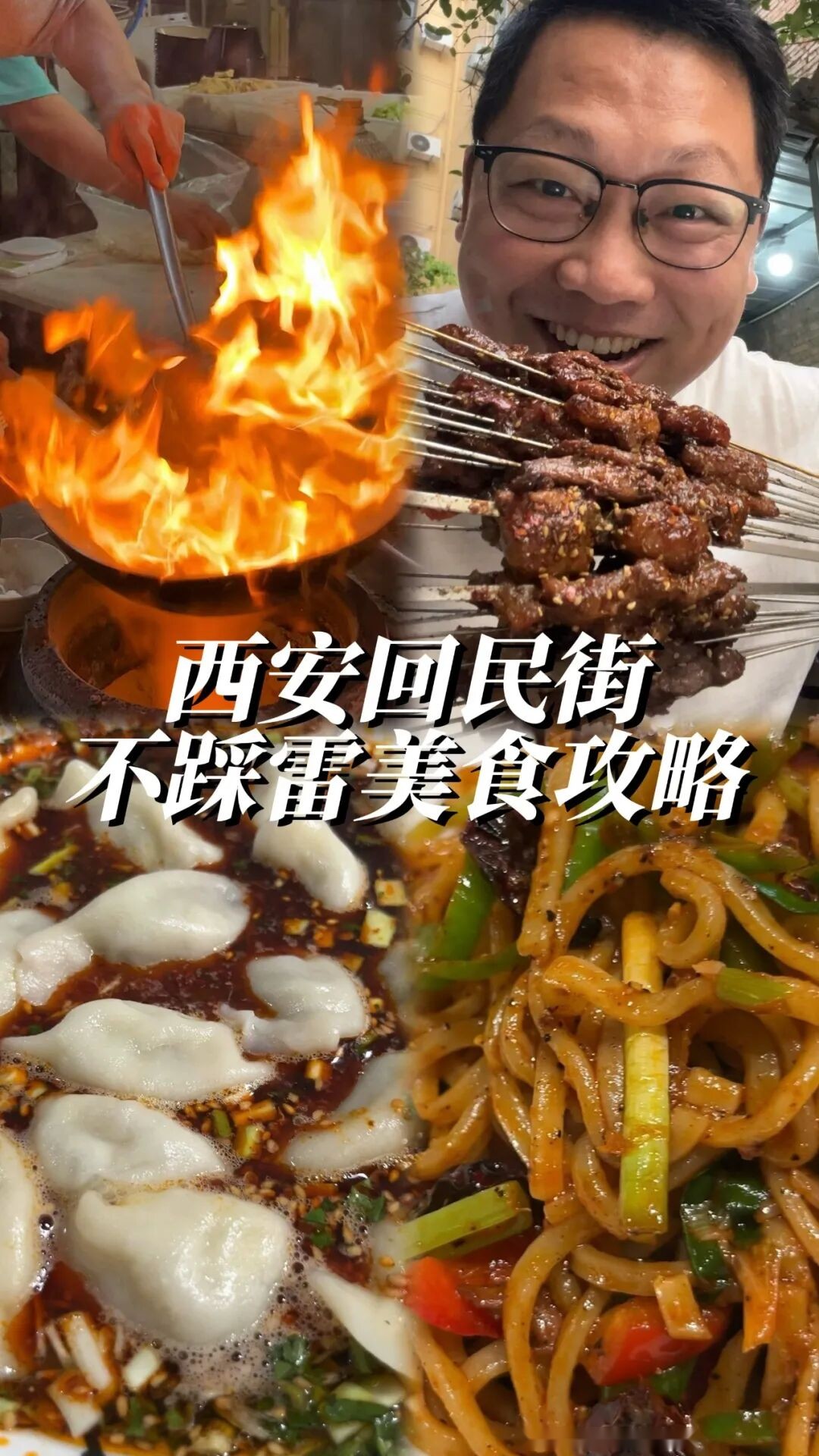
Here is a roundup of 7 classic halal spots that the locals in the Xi'an Muslim Quarter actually visit. Forget the tourist traps; we are diving deep into Dapiyuan, Sajinqiao, and Miaohou Street to test out authentic niuyangrou paomo (crumbled flatbread in mutton soup), xiaochao (stir-fried crumbled flatbread), meatball hulatang (spicy pepper soup), and traditional pastries.
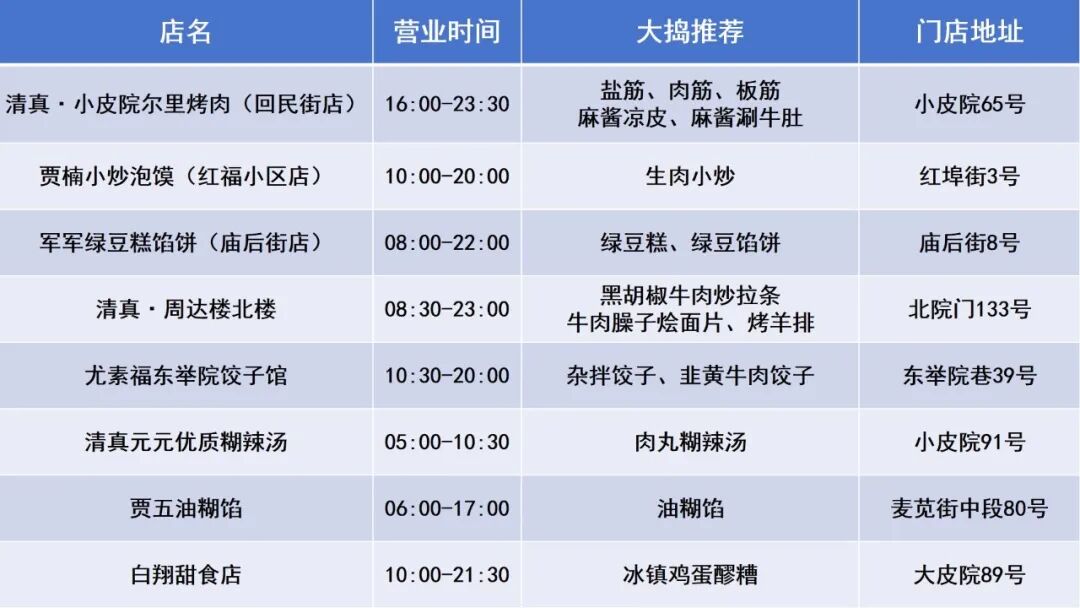
Over the last month, I have asked every Xi'an local I know how they eat and what they order in the Muslim Quarter (which we call Huifang or Fangshang). This video is super local, so for all you out-of-towners, let’s experience what makes the locals happy! The article is a bit long, so feel free to save it for later. The shop details are listed at the end.
Okay, let's get into it.
Qingzhen Xiaopiyuan Erli Barbecue (Muslim Quarter Branch)
If you come to Xi'an to explore the food scene and you haven't tried the barbecue in the Muslim Quarter, how are you going to write that travel diary or post those Instagram stories after you head home?
This barbecue spot in Xiaopiyuan is a bit of a hidden gem. It’s not on the main strip of the Muslim Quarter, but it is definitely where the local friends hang out after work.
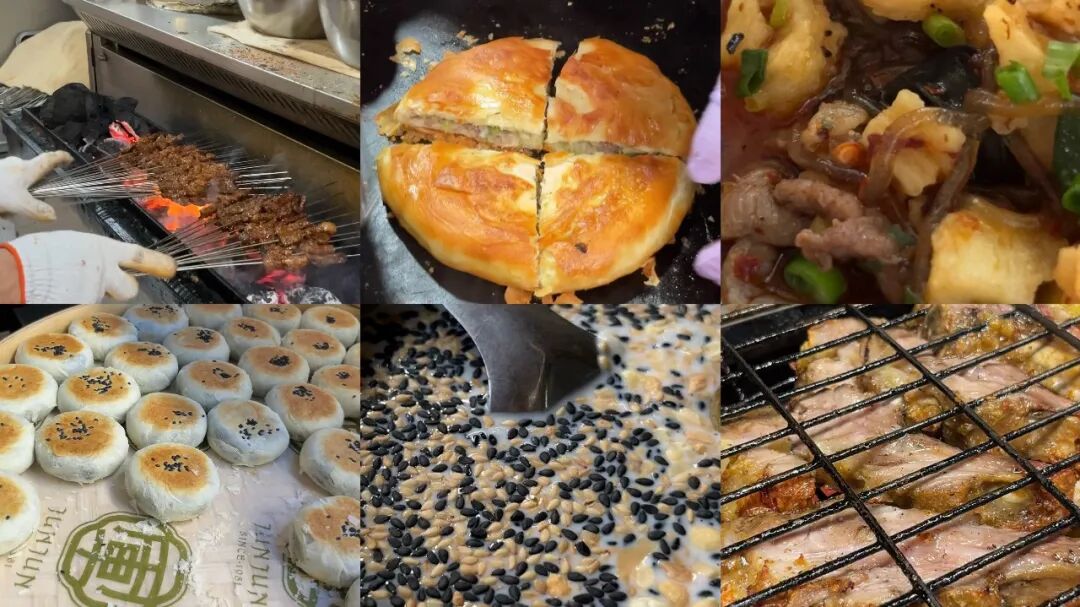
Once you see it’s grilled over charcoal, you can rest easy. Order a round of yan jin (salted beef tendons), ban jin (beef tendon), feishou (fatty and lean meat), and yaozi (kidneys) to get a taste. They use a special sauce, so it comes out perfectly dry and savory.
For all my sesame sauce lovers, how could you skip the sesame sauce liangpi (cold skin noodles) and shuan niudu (blanched beef tripe)? I honestly can't resist sesame sauce. One bite of that rich, nutty flavor and all your stress just melts away—it’s an instant mood booster.
When I travel, I love these kinds of spots that have a bit of everything. From barbecue and local snacks to specialty drinks and main courses, you can get it all in one place. Ordering a little bit of everything allows you to sample all the specialties, which is just the best.
Jia Nan Xiaochao Paomo (Hongfu Community Branch)
Check this out—do you want to see how much the locals actually pay for a bowl of paomo or xiaochao?
It's only 15 yuan! This place is tucked under a residential building. It’s not cheap because it’s low quality; this spot has been around for nearly 10 years.
So please, stop saying that paomo in Xi'an is overpriced, okay? Finding me is like getting a masterclass in budgeting.
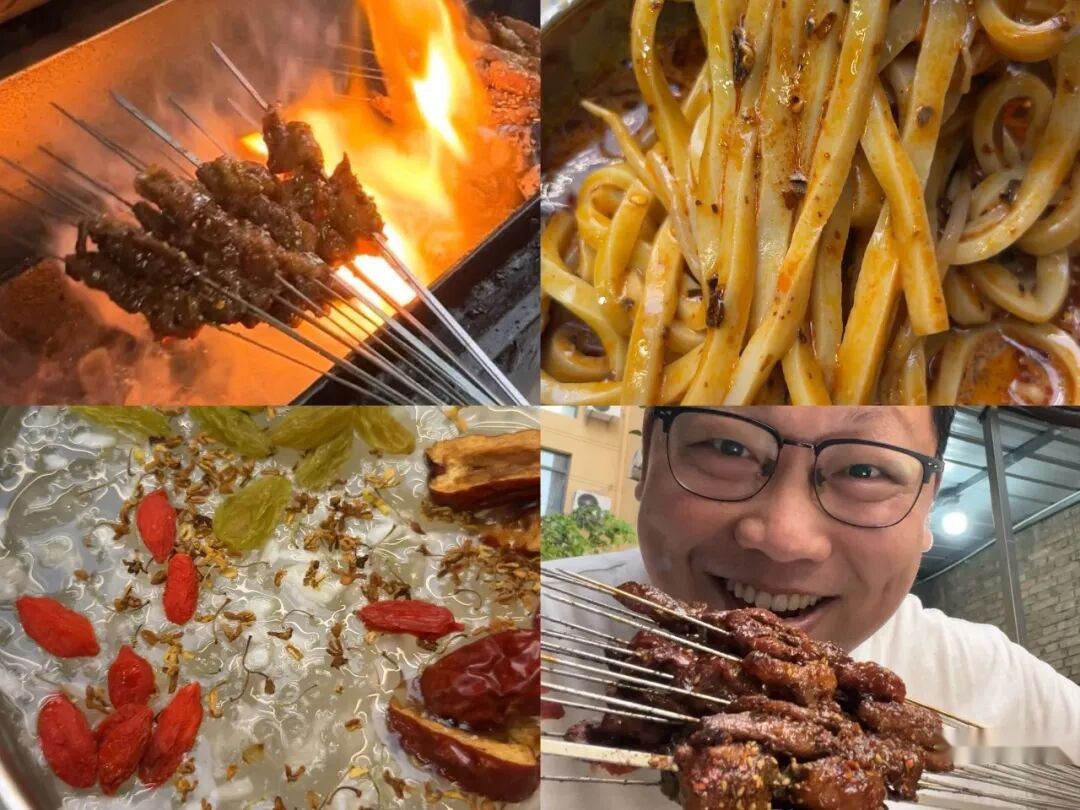
I ordered the raw-meat xiaochao; the price is the same whether you use raw or pre-cooked meat. It’s heavy on the vinegar and chili oil, but the heat is just right. They don't mess around with fancy toppings here—just beef, vermicelli, wood ear mushrooms, and yuba (tofu skin), which is more than enough.
What makes them special is they use sweet potato starch noodles instead of the typical vermicelli. The noodles are cooked until they are soft and chewy. You can't help but take another bite, even if it's piping hot—it really leaves an impression.
There is only one pot in the kitchen, and they cook it bowl by bowl. If you come during the rush, expect to wait in line. I suggest coming off-peak to chow down. Two generations dedicated to one shop—that is what I call true craftsmanship.
What are your own secret spots for xiaochao paomo? Drop them in the comments section.
Junjun Mung Bean Cake and Pastries (Miaohou Street Branch)
Mung bean cakes and mung bean pastries, paired with a cup of Fucha (fermented dark tea)—I’m not sure if the afternoon tea on the Champs-Élysées is more elegant than this on Miaohou Street.
If you want to know what kind of sweets and pastries locals love, Junjun Mung Bean Cake is definitely on the list.
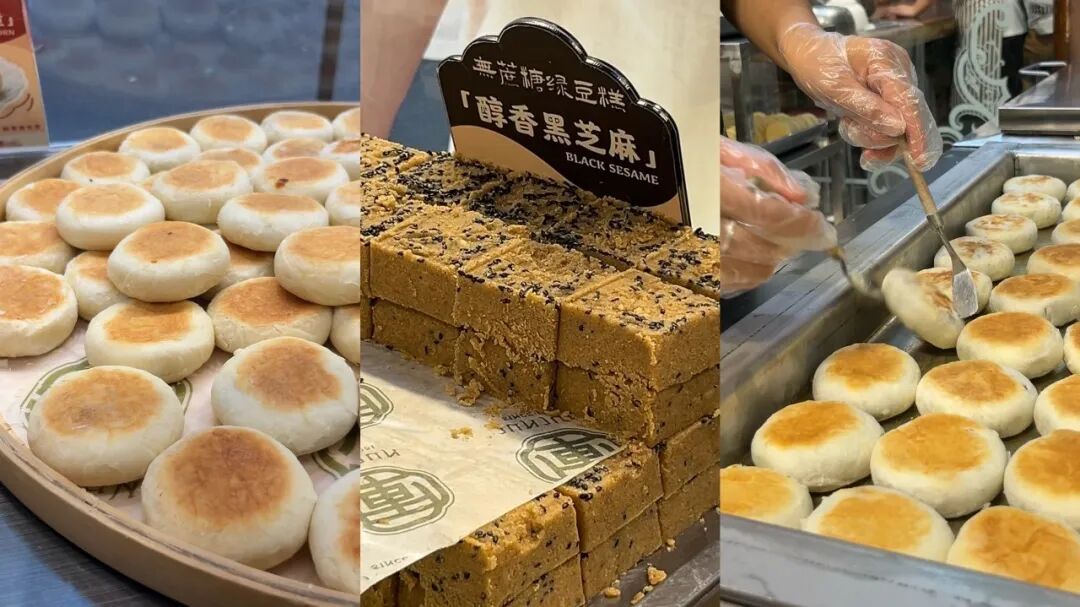
They are famous for their mung bean cakes, which have crossed over from a local specialty into a popular tea-time treat. They’ve since expanded to offer mung bean pastries, nut crisps, wuren su (five-kernel pastries), and more.
The versions they have now still use no additives and are handcrafted and baked fresh daily, preserving the flavors we grew up with. At the same time, they've adjusted the recipes to be lower in sugar.
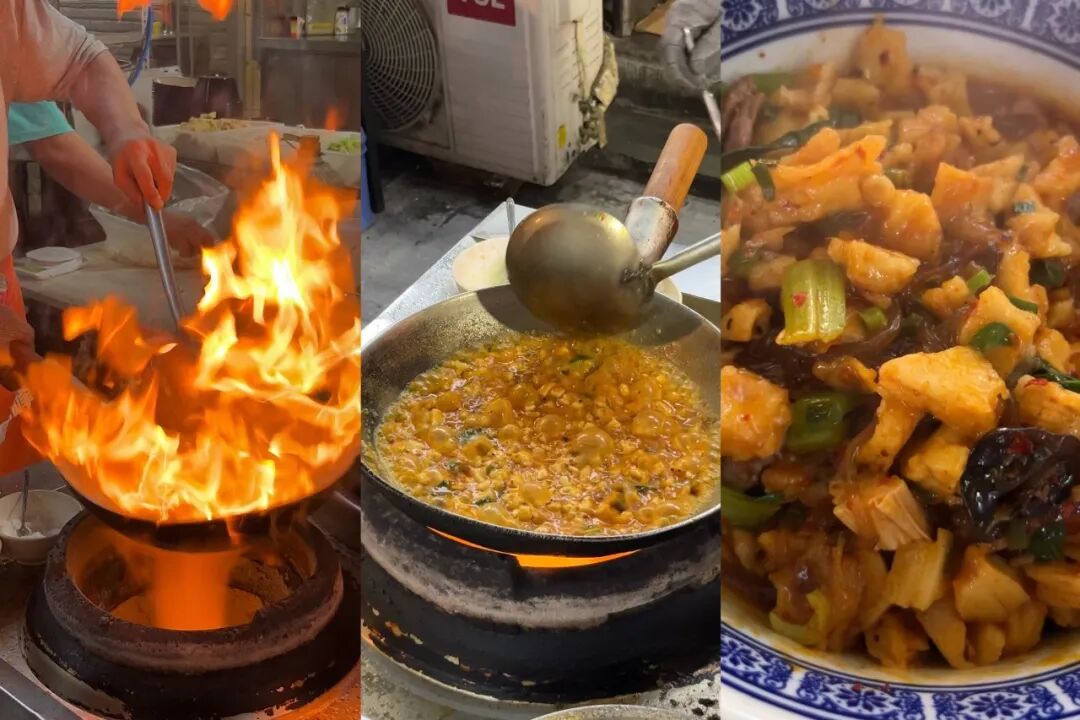
The texture of the mung bean cake is incredibly light and powdery. It melts in your mouth—soft but not crumbly, sticky but not gluey. As it dissolves on your tongue, it doesn’t leave a gritty feeling. First comes the sweet rush, followed by a lingering bean aroma. It’s light and delicate, not the kind of cloying sweetness that tires your palate.
They have five flavors of mung bean pastries. My favorite is the original mung bean; when you break it open, you can see the flakes falling. The filling is super fine, moist, and soft, with a distinct and long-lasting sweet aroma of mung beans.
Nowadays, it’s not just the locals who love them; tourists visiting Xi'an leave with bags of them. If you’re here for the holidays, these make the perfect souvenir—they’re affordable and everyone from kids to grandparents will love them.
Qingzhen Zhoudalou Beilou
This restaurant specializes in Lanzhou-style cuisine and is located on Beiyuanmen, just behind the Drum Tower.
I came here for two reasons: I heard their Lanzhou snacks are incredibly authentic, and lately, the residents of the Muslim Quarter have been choosing this place for weddings, birthdays, and graduation banquets.
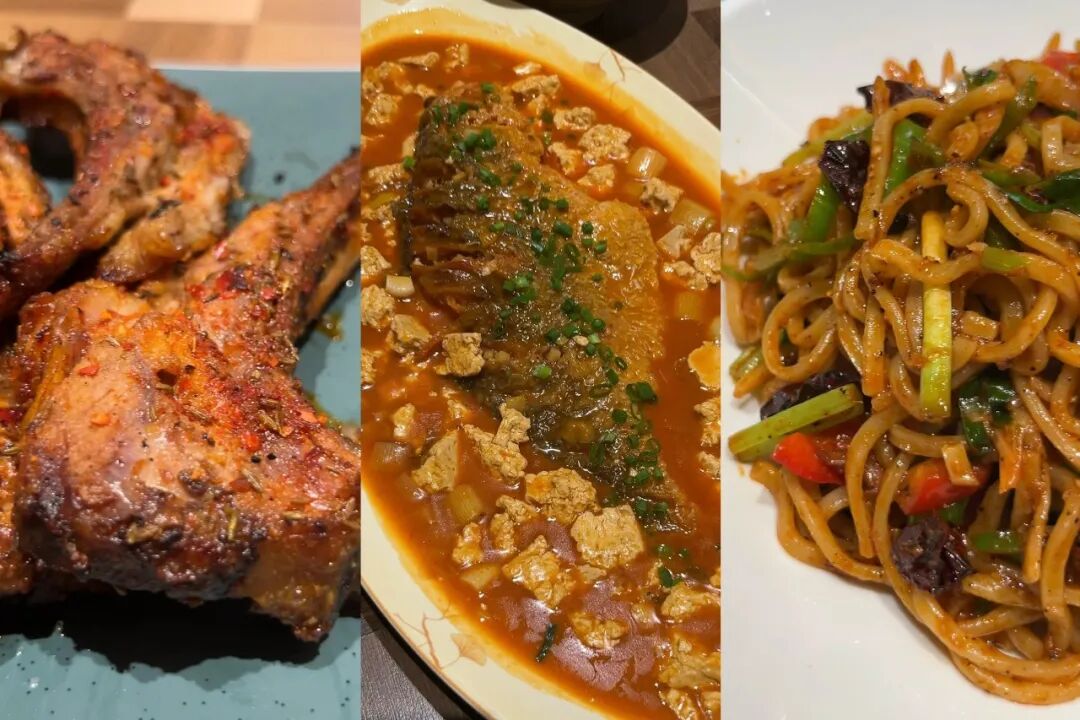
The black pepper stir-fried latiao (wheat noodles) tastes completely different from the ones in Xi'an. These noodles are thinner and cooked without tomato sauce, making them oily, savory, and dry—not mushy at all.
The beef sazi (minced topping) noodles are hand-torn to order. The noodles have a great chew, and the broth is bursting with savory flavor. It is seriously satisfying. It’s completely different from other places you’ll find in Xi'an; you’ll know it the moment you take a bite.
The grilled lamb chops are roasted once in a rotating oven and then reheated on the grill. They are perfectly fatty and lean, sizzling with oil. Pair them with a bit of piyazi (onions), and every bite is pure bliss.
The yellow croaker with tofu is so good—it's the first time I've seen such a huge plate of yellow croaker. The tofu absorbs all the flavor, and the fish is pan-fried before being braised, leaving the skin crispy while the meat inside stays tender and juicy.
This brand has been in Lanzhou for a long time. If you're a Lanzhou local living in Xi'an missing the taste of home, you should definitely come here.
Yusufu Dongjuyuan Dumpling House
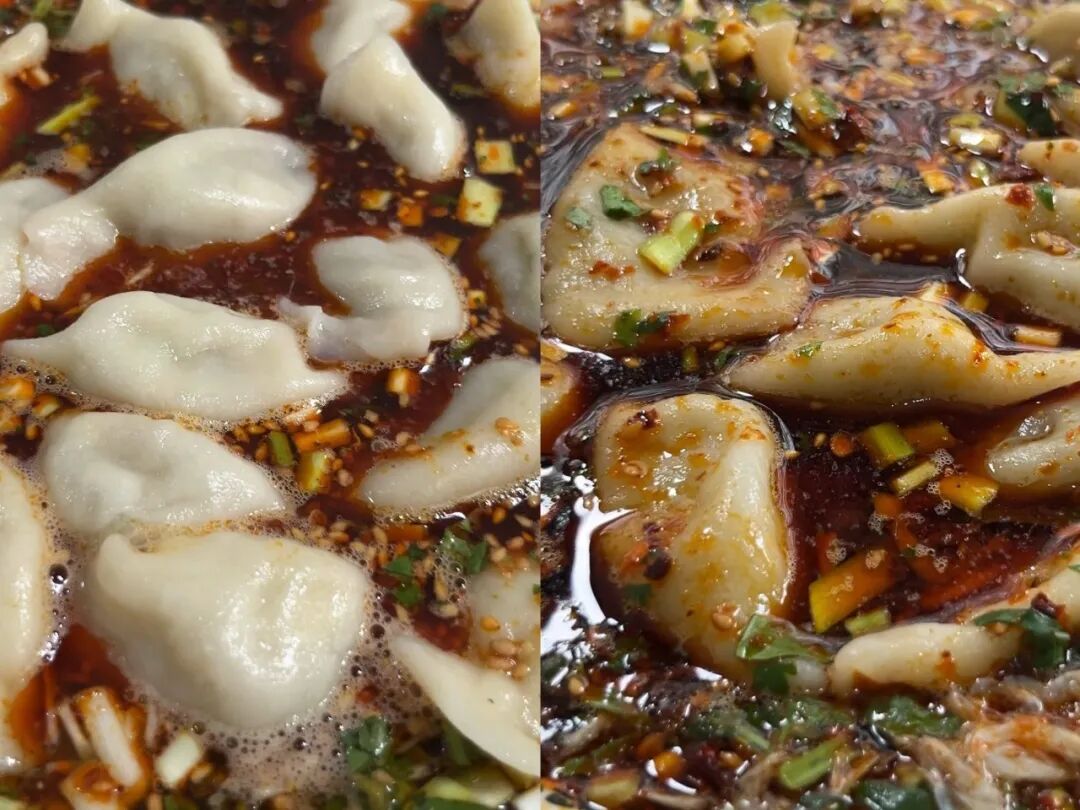
This dumpling house, famous for its zaban (mixed variety dumplings), has been open for over 20 years. Zaban means they serve a mix of dumplings with different fillings in one bowl. Half the fun is the surprise of not knowing what flavor your next bite will be.
In the Muslim Quarter, we mostly eat suantang shuijiao (dumplings in sour soup), which are usually filled with chive and beef. Many shops only sell that one specific flavor. This place offers more variety, so everyone can find exactly what they like.
The dumplings come out piping hot, looking plump and juicy, which is a real tease for your appetite. For suantang shuijiao, the secret is to drink the soup first. The sour broth is made with dried shrimp, sesame seeds, and chives. One sip of that warm, tangy broth and your appetite is completely opened up.
As for the dumplings, I don't even need to say much. The fillings are generous, and the masters know exactly how to control the heat—the dough isn't mushy or tough. One after another, they are just so satisfying to eat.
Which other dumpling spots in the Muslim Quarter do you guys visit often? Feel free to share them with our out-of-town friends.
Qingzhen Yuanyuan High-Quality Hulatang (Locally Owned Shop)
If you’re coming to Xi’an, you’ve gotta grab a bowl of the iconic local breakfast, rouwan hulatang (meatball spicy soup), to really get the vibe of the city.
Honestly, there’s a huge difference between the good stuff and the tourist traps. The spot I’m recommending? It’s legit—this place is the ultimate breakfast canteen for the locals.
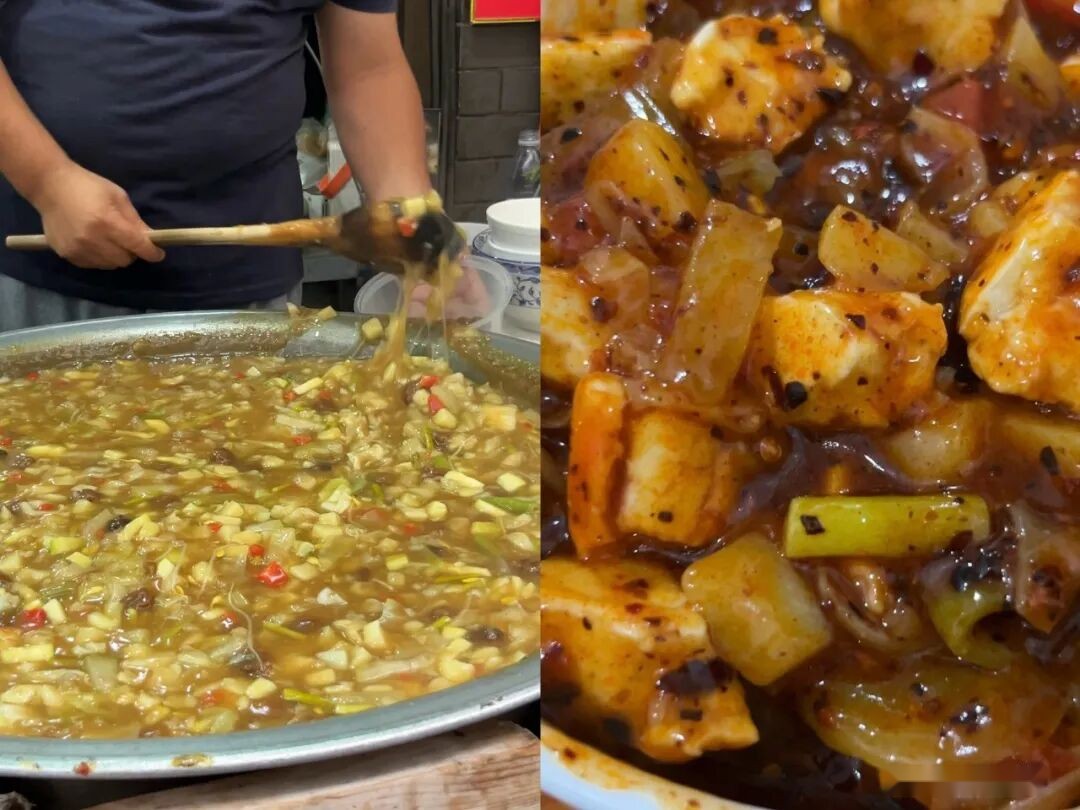
The secret to their hulatang is definitely the youpo lazi (hot chili oil). The second you take a bite, that aroma from the chili oil hits you right in the senses. You might still be a little groggy, but your stomach is already waking up for the day.
Just ask the owner for a mo (steamed bun) and tell them you want to tear it up yourself. Break the mo into slightly larger chunks, hand it back, and let them pour that piping hot soup over it—and make sure they go heavy on the chili oil. It’s glorious.
Between the smoky kick of the chili, the veggies, and all that hearty starch, you’ll be in total food heaven by the time you finish the bowl.
This place and another one not far away are both top-tier in terms of taste and local reputation. They only serve breakfast, so just head to whichever one has a shorter line. Which one do you guys prefer?
Jiawu Youhuxian (Jiawu Deep-Fried Meat Pies)
After finishing that meatball soup, you might still feel like you’re missing something, right?
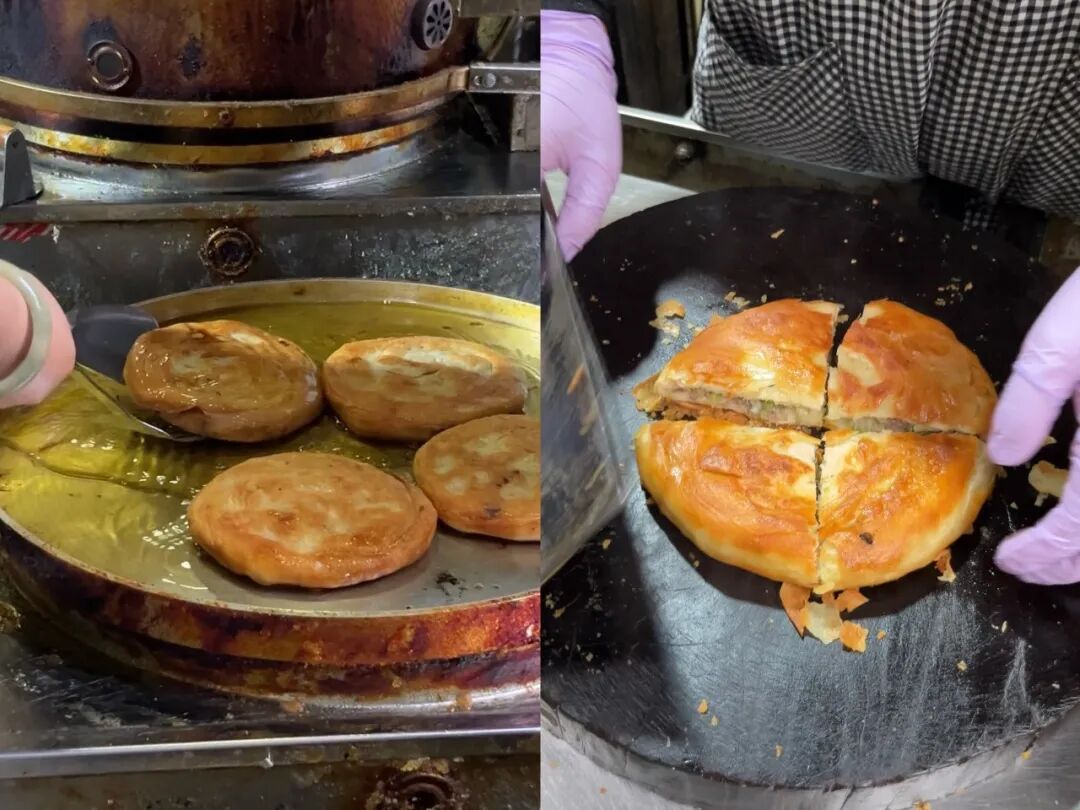
Well, let’s keep it moving and grab Xi’an’s very own version of borek—the youhuxian (deep-fried savory pie).
They’re pan-fried right in the wok until the crust is golden and crispy, but the filling is scorching hot. You have to be careful—it’s not great cold, but eating it hot is like trying to balance an acrobat troupe inside your mouth.
Timing your bites is definitely tricky. Plus, if you try to reheat these at home, the flavor just isn't the same. You’ve really just gotta blow on them and eat them right there on the spot.
Don't worry about the portion size—even though these pies look bigger than your face, the dough is light and airy, not super dense. You can snack on it while you walk, and honestly, you’ll be hungry again before you even leave the Muslim Quarter.
Baixiang Sweets Shop
Bingzhen jidan laozao (iced egg and fermented glutinous rice soup) is another beloved local sweet treat around the neighborhood.
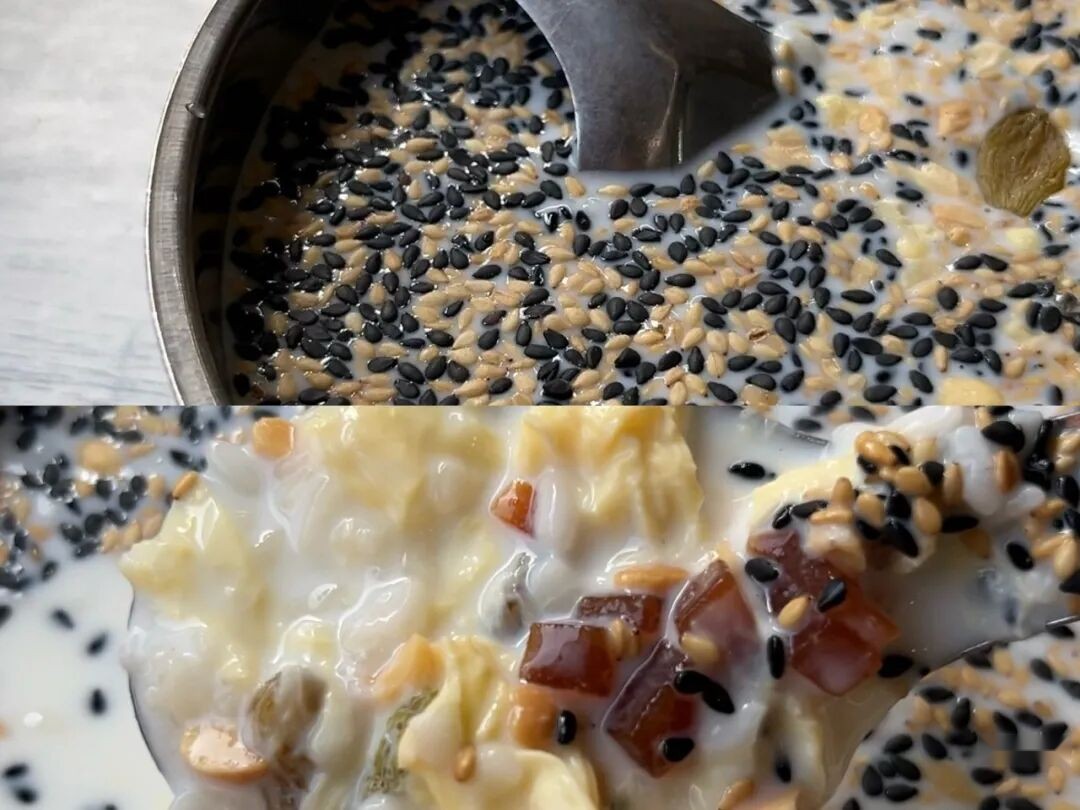
You might call it a soup, but every spoonful is packed with so much stuff—black and white sesame seeds, crushed peanuts, raisins, hawthorn cubes, eggs, and milk. It’s loaded, almost like a congee.
When you’re tired and thirsty from walking around, one sip and you won’t be able to stop. Especially once you’re past that age of just wanting sodas, finding a sweet drink like this feels like meeting your soulmate.
A lot of shops sell similar versions now, so definitely give it a try if you see one. It’s the perfect way to cool down, quench your thirst, and recharge.
After trying these eight spots, the takeaway is simple: the barbecue, stir-fries, desserts, and breakfasts that locals actually love are hiding in plain sight at these super low-key shops. Just ask around, and you’ll find the places the neighborhood residents frequent daily—it doesn’t get more authentic than that. There’s so much more incredible food in the Muslim Quarter just waiting for you to discover it. view all
[Internet Repost]
Here is a roundup of 7 classic halal spots that the locals in the Xi'an Muslim Quarter actually visit. Forget the tourist traps; we are diving deep into Dapiyuan, Sajinqiao, and Miaohou Street to test out authentic niuyangrou paomo (crumbled flatbread in mutton soup), xiaochao (stir-fried crumbled flatbread), meatball hulatang (spicy pepper soup), and traditional pastries.
Over the last month, I have asked every Xi'an local I know how they eat and what they order in the Muslim Quarter (which we call Huifang or Fangshang). This video is super local, so for all you out-of-towners, let’s experience what makes the locals happy! The article is a bit long, so feel free to save it for later. The shop details are listed at the end.
Okay, let's get into it.
Qingzhen Xiaopiyuan Erli Barbecue (Muslim Quarter Branch)
If you come to Xi'an to explore the food scene and you haven't tried the barbecue in the Muslim Quarter, how are you going to write that travel diary or post those Instagram stories after you head home?
This barbecue spot in Xiaopiyuan is a bit of a hidden gem. It’s not on the main strip of the Muslim Quarter, but it is definitely where the local friends hang out after work.
Once you see it’s grilled over charcoal, you can rest easy. Order a round of yan jin (salted beef tendons), ban jin (beef tendon), feishou (fatty and lean meat), and yaozi (kidneys) to get a taste. They use a special sauce, so it comes out perfectly dry and savory.
For all my sesame sauce lovers, how could you skip the sesame sauce liangpi (cold skin noodles) and shuan niudu (blanched beef tripe)? I honestly can't resist sesame sauce. One bite of that rich, nutty flavor and all your stress just melts away—it’s an instant mood booster.
When I travel, I love these kinds of spots that have a bit of everything. From barbecue and local snacks to specialty drinks and main courses, you can get it all in one place. Ordering a little bit of everything allows you to sample all the specialties, which is just the best.
Jia Nan Xiaochao Paomo (Hongfu Community Branch)
Check this out—do you want to see how much the locals actually pay for a bowl of paomo or xiaochao?
It's only 15 yuan! This place is tucked under a residential building. It’s not cheap because it’s low quality; this spot has been around for nearly 10 years.
So please, stop saying that paomo in Xi'an is overpriced, okay? Finding me is like getting a masterclass in budgeting.
I ordered the raw-meat xiaochao; the price is the same whether you use raw or pre-cooked meat. It’s heavy on the vinegar and chili oil, but the heat is just right. They don't mess around with fancy toppings here—just beef, vermicelli, wood ear mushrooms, and yuba (tofu skin), which is more than enough.
What makes them special is they use sweet potato starch noodles instead of the typical vermicelli. The noodles are cooked until they are soft and chewy. You can't help but take another bite, even if it's piping hot—it really leaves an impression.
There is only one pot in the kitchen, and they cook it bowl by bowl. If you come during the rush, expect to wait in line. I suggest coming off-peak to chow down. Two generations dedicated to one shop—that is what I call true craftsmanship.
What are your own secret spots for xiaochao paomo? Drop them in the comments section.
Junjun Mung Bean Cake and Pastries (Miaohou Street Branch)
Mung bean cakes and mung bean pastries, paired with a cup of Fucha (fermented dark tea)—I’m not sure if the afternoon tea on the Champs-Élysées is more elegant than this on Miaohou Street.
If you want to know what kind of sweets and pastries locals love, Junjun Mung Bean Cake is definitely on the list.
They are famous for their mung bean cakes, which have crossed over from a local specialty into a popular tea-time treat. They’ve since expanded to offer mung bean pastries, nut crisps, wuren su (five-kernel pastries), and more.
The versions they have now still use no additives and are handcrafted and baked fresh daily, preserving the flavors we grew up with. At the same time, they've adjusted the recipes to be lower in sugar.
The texture of the mung bean cake is incredibly light and powdery. It melts in your mouth—soft but not crumbly, sticky but not gluey. As it dissolves on your tongue, it doesn’t leave a gritty feeling. First comes the sweet rush, followed by a lingering bean aroma. It’s light and delicate, not the kind of cloying sweetness that tires your palate.
They have five flavors of mung bean pastries. My favorite is the original mung bean; when you break it open, you can see the flakes falling. The filling is super fine, moist, and soft, with a distinct and long-lasting sweet aroma of mung beans.
Nowadays, it’s not just the locals who love them; tourists visiting Xi'an leave with bags of them. If you’re here for the holidays, these make the perfect souvenir—they’re affordable and everyone from kids to grandparents will love them.
Qingzhen Zhoudalou Beilou
This restaurant specializes in Lanzhou-style cuisine and is located on Beiyuanmen, just behind the Drum Tower.
I came here for two reasons: I heard their Lanzhou snacks are incredibly authentic, and lately, the residents of the Muslim Quarter have been choosing this place for weddings, birthdays, and graduation banquets.
The black pepper stir-fried latiao (wheat noodles) tastes completely different from the ones in Xi'an. These noodles are thinner and cooked without tomato sauce, making them oily, savory, and dry—not mushy at all.
The beef sazi (minced topping) noodles are hand-torn to order. The noodles have a great chew, and the broth is bursting with savory flavor. It is seriously satisfying. It’s completely different from other places you’ll find in Xi'an; you’ll know it the moment you take a bite.
The grilled lamb chops are roasted once in a rotating oven and then reheated on the grill. They are perfectly fatty and lean, sizzling with oil. Pair them with a bit of piyazi (onions), and every bite is pure bliss.
The yellow croaker with tofu is so good—it's the first time I've seen such a huge plate of yellow croaker. The tofu absorbs all the flavor, and the fish is pan-fried before being braised, leaving the skin crispy while the meat inside stays tender and juicy.
This brand has been in Lanzhou for a long time. If you're a Lanzhou local living in Xi'an missing the taste of home, you should definitely come here.
Yusufu Dongjuyuan Dumpling House
This dumpling house, famous for its zaban (mixed variety dumplings), has been open for over 20 years. Zaban means they serve a mix of dumplings with different fillings in one bowl. Half the fun is the surprise of not knowing what flavor your next bite will be.
In the Muslim Quarter, we mostly eat suantang shuijiao (dumplings in sour soup), which are usually filled with chive and beef. Many shops only sell that one specific flavor. This place offers more variety, so everyone can find exactly what they like.
The dumplings come out piping hot, looking plump and juicy, which is a real tease for your appetite. For suantang shuijiao, the secret is to drink the soup first. The sour broth is made with dried shrimp, sesame seeds, and chives. One sip of that warm, tangy broth and your appetite is completely opened up.
As for the dumplings, I don't even need to say much. The fillings are generous, and the masters know exactly how to control the heat—the dough isn't mushy or tough. One after another, they are just so satisfying to eat.
Which other dumpling spots in the Muslim Quarter do you guys visit often? Feel free to share them with our out-of-town friends.
Qingzhen Yuanyuan High-Quality Hulatang (Locally Owned Shop)
If you’re coming to Xi’an, you’ve gotta grab a bowl of the iconic local breakfast, rouwan hulatang (meatball spicy soup), to really get the vibe of the city.
Honestly, there’s a huge difference between the good stuff and the tourist traps. The spot I’m recommending? It’s legit—this place is the ultimate breakfast canteen for the locals.
The secret to their hulatang is definitely the youpo lazi (hot chili oil). The second you take a bite, that aroma from the chili oil hits you right in the senses. You might still be a little groggy, but your stomach is already waking up for the day.
Just ask the owner for a mo (steamed bun) and tell them you want to tear it up yourself. Break the mo into slightly larger chunks, hand it back, and let them pour that piping hot soup over it—and make sure they go heavy on the chili oil. It’s glorious.
Between the smoky kick of the chili, the veggies, and all that hearty starch, you’ll be in total food heaven by the time you finish the bowl.
This place and another one not far away are both top-tier in terms of taste and local reputation. They only serve breakfast, so just head to whichever one has a shorter line. Which one do you guys prefer?
Jiawu Youhuxian (Jiawu Deep-Fried Meat Pies)
After finishing that meatball soup, you might still feel like you’re missing something, right?
Well, let’s keep it moving and grab Xi’an’s very own version of borek—the youhuxian (deep-fried savory pie).
They’re pan-fried right in the wok until the crust is golden and crispy, but the filling is scorching hot. You have to be careful—it’s not great cold, but eating it hot is like trying to balance an acrobat troupe inside your mouth.
Timing your bites is definitely tricky. Plus, if you try to reheat these at home, the flavor just isn't the same. You’ve really just gotta blow on them and eat them right there on the spot.
Don't worry about the portion size—even though these pies look bigger than your face, the dough is light and airy, not super dense. You can snack on it while you walk, and honestly, you’ll be hungry again before you even leave the Muslim Quarter.
Baixiang Sweets Shop
Bingzhen jidan laozao (iced egg and fermented glutinous rice soup) is another beloved local sweet treat around the neighborhood.
You might call it a soup, but every spoonful is packed with so much stuff—black and white sesame seeds, crushed peanuts, raisins, hawthorn cubes, eggs, and milk. It’s loaded, almost like a congee.
When you’re tired and thirsty from walking around, one sip and you won’t be able to stop. Especially once you’re past that age of just wanting sodas, finding a sweet drink like this feels like meeting your soulmate.
A lot of shops sell similar versions now, so definitely give it a try if you see one. It’s the perfect way to cool down, quench your thirst, and recharge.
After trying these eight spots, the takeaway is simple: the barbecue, stir-fries, desserts, and breakfasts that locals actually love are hiding in plain sight at these super low-key shops. Just ask around, and you’ll find the places the neighborhood residents frequent daily—it doesn’t get more authentic than that. There’s so much more incredible food in the Muslim Quarter just waiting for you to discover it.
Here is a roundup of 7 classic halal spots that the locals in the Xi'an Muslim Quarter actually visit. Forget the tourist traps; we are diving deep into Dapiyuan, Sajinqiao, and Miaohou Street to test out authentic niuyangrou paomo (crumbled flatbread in mutton soup), xiaochao (stir-fried crumbled flatbread), meatball hulatang (spicy pepper soup), and traditional pastries.
Over the last month, I have asked every Xi'an local I know how they eat and what they order in the Muslim Quarter (which we call Huifang or Fangshang). This video is super local, so for all you out-of-towners, let’s experience what makes the locals happy! The article is a bit long, so feel free to save it for later. The shop details are listed at the end.
Okay, let's get into it.
Qingzhen Xiaopiyuan Erli Barbecue (Muslim Quarter Branch)
If you come to Xi'an to explore the food scene and you haven't tried the barbecue in the Muslim Quarter, how are you going to write that travel diary or post those Instagram stories after you head home?
This barbecue spot in Xiaopiyuan is a bit of a hidden gem. It’s not on the main strip of the Muslim Quarter, but it is definitely where the local friends hang out after work.
Once you see it’s grilled over charcoal, you can rest easy. Order a round of yan jin (salted beef tendons), ban jin (beef tendon), feishou (fatty and lean meat), and yaozi (kidneys) to get a taste. They use a special sauce, so it comes out perfectly dry and savory.
For all my sesame sauce lovers, how could you skip the sesame sauce liangpi (cold skin noodles) and shuan niudu (blanched beef tripe)? I honestly can't resist sesame sauce. One bite of that rich, nutty flavor and all your stress just melts away—it’s an instant mood booster.
When I travel, I love these kinds of spots that have a bit of everything. From barbecue and local snacks to specialty drinks and main courses, you can get it all in one place. Ordering a little bit of everything allows you to sample all the specialties, which is just the best.
Jia Nan Xiaochao Paomo (Hongfu Community Branch)
Check this out—do you want to see how much the locals actually pay for a bowl of paomo or xiaochao?
It's only 15 yuan! This place is tucked under a residential building. It’s not cheap because it’s low quality; this spot has been around for nearly 10 years.
So please, stop saying that paomo in Xi'an is overpriced, okay? Finding me is like getting a masterclass in budgeting.
I ordered the raw-meat xiaochao; the price is the same whether you use raw or pre-cooked meat. It’s heavy on the vinegar and chili oil, but the heat is just right. They don't mess around with fancy toppings here—just beef, vermicelli, wood ear mushrooms, and yuba (tofu skin), which is more than enough.
What makes them special is they use sweet potato starch noodles instead of the typical vermicelli. The noodles are cooked until they are soft and chewy. You can't help but take another bite, even if it's piping hot—it really leaves an impression.
There is only one pot in the kitchen, and they cook it bowl by bowl. If you come during the rush, expect to wait in line. I suggest coming off-peak to chow down. Two generations dedicated to one shop—that is what I call true craftsmanship.
What are your own secret spots for xiaochao paomo? Drop them in the comments section.
Junjun Mung Bean Cake and Pastries (Miaohou Street Branch)
Mung bean cakes and mung bean pastries, paired with a cup of Fucha (fermented dark tea)—I’m not sure if the afternoon tea on the Champs-Élysées is more elegant than this on Miaohou Street.
If you want to know what kind of sweets and pastries locals love, Junjun Mung Bean Cake is definitely on the list.
They are famous for their mung bean cakes, which have crossed over from a local specialty into a popular tea-time treat. They’ve since expanded to offer mung bean pastries, nut crisps, wuren su (five-kernel pastries), and more.
The versions they have now still use no additives and are handcrafted and baked fresh daily, preserving the flavors we grew up with. At the same time, they've adjusted the recipes to be lower in sugar.
The texture of the mung bean cake is incredibly light and powdery. It melts in your mouth—soft but not crumbly, sticky but not gluey. As it dissolves on your tongue, it doesn’t leave a gritty feeling. First comes the sweet rush, followed by a lingering bean aroma. It’s light and delicate, not the kind of cloying sweetness that tires your palate.
They have five flavors of mung bean pastries. My favorite is the original mung bean; when you break it open, you can see the flakes falling. The filling is super fine, moist, and soft, with a distinct and long-lasting sweet aroma of mung beans.
Nowadays, it’s not just the locals who love them; tourists visiting Xi'an leave with bags of them. If you’re here for the holidays, these make the perfect souvenir—they’re affordable and everyone from kids to grandparents will love them.
Qingzhen Zhoudalou Beilou
This restaurant specializes in Lanzhou-style cuisine and is located on Beiyuanmen, just behind the Drum Tower.
I came here for two reasons: I heard their Lanzhou snacks are incredibly authentic, and lately, the residents of the Muslim Quarter have been choosing this place for weddings, birthdays, and graduation banquets.
The black pepper stir-fried latiao (wheat noodles) tastes completely different from the ones in Xi'an. These noodles are thinner and cooked without tomato sauce, making them oily, savory, and dry—not mushy at all.
The beef sazi (minced topping) noodles are hand-torn to order. The noodles have a great chew, and the broth is bursting with savory flavor. It is seriously satisfying. It’s completely different from other places you’ll find in Xi'an; you’ll know it the moment you take a bite.
The grilled lamb chops are roasted once in a rotating oven and then reheated on the grill. They are perfectly fatty and lean, sizzling with oil. Pair them with a bit of piyazi (onions), and every bite is pure bliss.
The yellow croaker with tofu is so good—it's the first time I've seen such a huge plate of yellow croaker. The tofu absorbs all the flavor, and the fish is pan-fried before being braised, leaving the skin crispy while the meat inside stays tender and juicy.
This brand has been in Lanzhou for a long time. If you're a Lanzhou local living in Xi'an missing the taste of home, you should definitely come here.
Yusufu Dongjuyuan Dumpling House
This dumpling house, famous for its zaban (mixed variety dumplings), has been open for over 20 years. Zaban means they serve a mix of dumplings with different fillings in one bowl. Half the fun is the surprise of not knowing what flavor your next bite will be.
In the Muslim Quarter, we mostly eat suantang shuijiao (dumplings in sour soup), which are usually filled with chive and beef. Many shops only sell that one specific flavor. This place offers more variety, so everyone can find exactly what they like.
The dumplings come out piping hot, looking plump and juicy, which is a real tease for your appetite. For suantang shuijiao, the secret is to drink the soup first. The sour broth is made with dried shrimp, sesame seeds, and chives. One sip of that warm, tangy broth and your appetite is completely opened up.
As for the dumplings, I don't even need to say much. The fillings are generous, and the masters know exactly how to control the heat—the dough isn't mushy or tough. One after another, they are just so satisfying to eat.
Which other dumpling spots in the Muslim Quarter do you guys visit often? Feel free to share them with our out-of-town friends.
Qingzhen Yuanyuan High-Quality Hulatang (Locally Owned Shop)
If you’re coming to Xi’an, you’ve gotta grab a bowl of the iconic local breakfast, rouwan hulatang (meatball spicy soup), to really get the vibe of the city.
Honestly, there’s a huge difference between the good stuff and the tourist traps. The spot I’m recommending? It’s legit—this place is the ultimate breakfast canteen for the locals.
The secret to their hulatang is definitely the youpo lazi (hot chili oil). The second you take a bite, that aroma from the chili oil hits you right in the senses. You might still be a little groggy, but your stomach is already waking up for the day.
Just ask the owner for a mo (steamed bun) and tell them you want to tear it up yourself. Break the mo into slightly larger chunks, hand it back, and let them pour that piping hot soup over it—and make sure they go heavy on the chili oil. It’s glorious.
Between the smoky kick of the chili, the veggies, and all that hearty starch, you’ll be in total food heaven by the time you finish the bowl.
This place and another one not far away are both top-tier in terms of taste and local reputation. They only serve breakfast, so just head to whichever one has a shorter line. Which one do you guys prefer?
Jiawu Youhuxian (Jiawu Deep-Fried Meat Pies)
After finishing that meatball soup, you might still feel like you’re missing something, right?
Well, let’s keep it moving and grab Xi’an’s very own version of borek—the youhuxian (deep-fried savory pie).
They’re pan-fried right in the wok until the crust is golden and crispy, but the filling is scorching hot. You have to be careful—it’s not great cold, but eating it hot is like trying to balance an acrobat troupe inside your mouth.
Timing your bites is definitely tricky. Plus, if you try to reheat these at home, the flavor just isn't the same. You’ve really just gotta blow on them and eat them right there on the spot.
Don't worry about the portion size—even though these pies look bigger than your face, the dough is light and airy, not super dense. You can snack on it while you walk, and honestly, you’ll be hungry again before you even leave the Muslim Quarter.
Baixiang Sweets Shop
Bingzhen jidan laozao (iced egg and fermented glutinous rice soup) is another beloved local sweet treat around the neighborhood.
You might call it a soup, but every spoonful is packed with so much stuff—black and white sesame seeds, crushed peanuts, raisins, hawthorn cubes, eggs, and milk. It’s loaded, almost like a congee.
When you’re tired and thirsty from walking around, one sip and you won’t be able to stop. Especially once you’re past that age of just wanting sodas, finding a sweet drink like this feels like meeting your soulmate.
A lot of shops sell similar versions now, so definitely give it a try if you see one. It’s the perfect way to cool down, quench your thirst, and recharge.
After trying these eight spots, the takeaway is simple: the barbecue, stir-fries, desserts, and breakfasts that locals actually love are hiding in plain sight at these super low-key shops. Just ask around, and you’ll find the places the neighborhood residents frequent daily—it doesn’t get more authentic than that. There’s so much more incredible food in the Muslim Quarter just waiting for you to discover it.
Why Xi'an's Best Halal Food Rules: A Deep Dive into Muslim Street Food and Hui Culture
Articles • Hasan09 posted the article • 0 comments • 12 views • 15 hours ago
[Internet Repost]
From the settlement of Silk Road merchants in Chang'an during the Tang Dynasty and the beef and lamb trade hub of the Ming and Qing eras, to the 'living by the masjid' craftsmanship passed down by Hui Muslims, we’re diving deep into the halal culinary DNA behind iconic Xi'an dishes like yangrou paomo (lamb and bread stew), rouwan hulatang (meatball spicy soup), and lazhourou jiamo (cured beef sandwich).
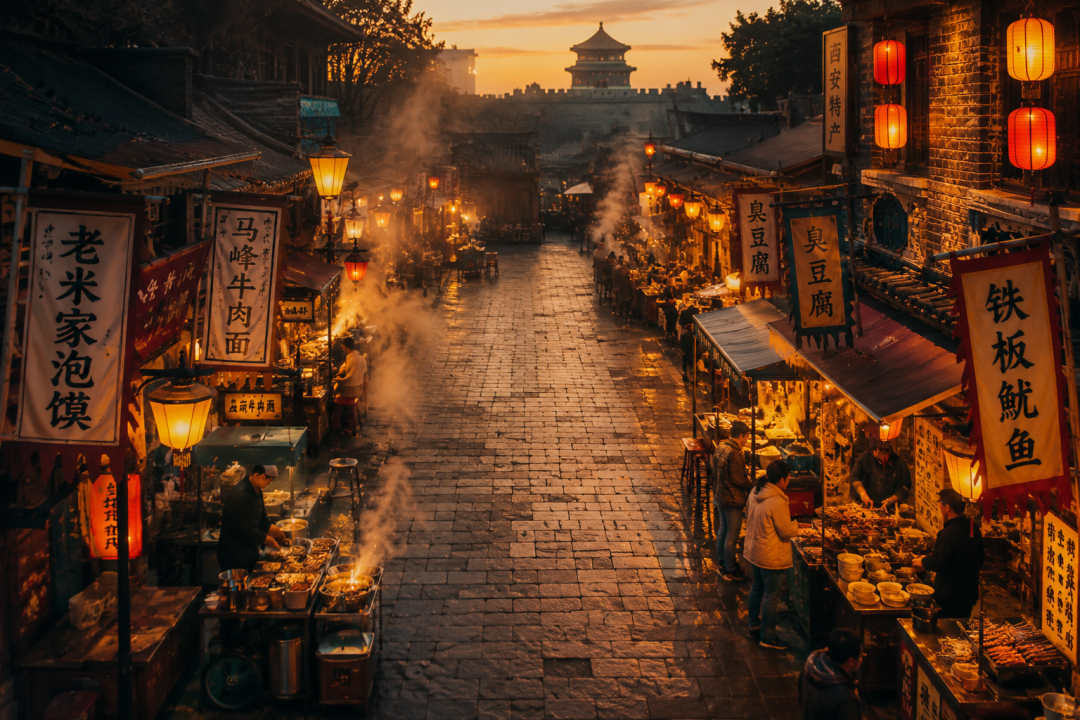
I was scrolling through some short videos recently and noticed a pretty interesting trend.
Whenever Xi'an food goes viral, it almost always comes from the exact same map: Huimin Street, Sanjinqiao, Dapiyuan, and Beiguangji Street.
The stuff featured is pretty much the same: yangrou paomo, xiaochao paomo (stir-fried crumbled bread stew), rouwan hulatang, zenggao (steamed sticky rice cake), niurou bing (beef pancake), lazhourou jiamo, and guantangbao (soup-filled steamed buns).
As I kept watching, a question suddenly hit me—
Why does the most famous, 'viral' food in Xi'an seem to always have the word 'Halal' attached to it?
In fact, many first-time visitors to Xi'an get this misconception that Xi'an food is just one big synonym for halal food.
After I did some digging, I realized it’s definitely not a coincidence.
The answer goes all the way back to the Tang Dynasty.
A lot of people think Huimin Street is just a tourist trap.
But actually, it’s a community first and foremost.
And it's a neighborhood with some serious history.
If you roll the clock back, you can trace it all the way to the Tang Dynasty.
Chang'an back then was a world-class international metropolis. Persians came, Arabs came, and traders from Central Asia all flocked there. Many traveled along the Silk Road to do business in Chang'an; some left, but others stayed, slowly forming their own neighborhoods.
Over the next thousand years of cultural integration, intermarriage, and growth, it gradually became what we call the 'Hui Quarter' today.
So, why is Xi'an's halal food scene so concentrated? Because these folks have been living here for over a thousand years.
Those 'viral' snacks are basically just the natural overflow of the daily diet of this ancient community.
Beef and lamb are just a match made in heaven.
But having history isn't enough. I mean, there are plenty of historic places in China, so why did the halal food scene in Xi'an specifically take off?
I think there's another reason: the beef and lamb.
People in Shaanxi are absolutely obsessed with lamb.
Yangrou paomo, shuipen yangrou (water basin lamb soup), hutou (lamb head stew), fentang yangxue (vermicelli and lamb blood soup), yangza (lamb offal)—they can do endless things with just lamb.
And halal cuisine has always been exceptionally skilled at handling beef and lamb.
What’s it like? It’s like two people who are just perfectly in sync meeting each other.
Shaanxi locals already loved lamb, and halal eateries are masters at cooking it. They essentially maxed out that culinary potential.
That’s how we ended up with the legendary yangrou paomo. Outsiders find it novel, but locals have been eating it their whole lives.
But honestly, locals don't really go there anymore.
Now that I'm writing this, I’ve got to keep it real.
Xi'an locals, especially the younger generation, rarely go to Huimin Street to eat these days.
The reason is simple: it’s gotten too expensive.
Recently, Xi'an's yangrou paomo got dragged on social media. A single bowl is now 30 or 40 yuan, and the portions are getting smaller. As someone from Pucheng in Weinan, I honestly don't get it. Back home, a bowl of paomo is 20 yuan, the portions are huge, and it tastes amazing.
How did the price double just by coming to the provincial capital?
Some say it's high rent, expensive labor, and using better quality lamb. I buy that. But the actual old-school shops that have been around for decades are actually pretty reasonable with their pricing. The ones driving up prices the hardest are usually the shops that blew up overnight and got fancy renovations. They’re packed with tourists, but the locals stopped going a long time ago.
So we’re left with a pretty ridiculous situation—
Tourists head to Huimin Street chasing the 'Xi'an Food' hype, thinking they’re getting the most authentic experience possible.
But the real locals have already voted with their feet.
At the end of the day, people aren't complaining because paomo is expensive. They’re complaining because you turned a hearty, honest meal into a way to milk tourists for cash.
Finally,
Back to the original question: Why is the most viral food in Xi'an always linked to halal traditions?
History gave us the answer. The Silk Road of the Tang Dynasty left behind a community that mastered beef and lamb, and the people of Shaanxi have a natural love for lamb. Those two gears interlocked perfectly and have been turning for over a millennium.
Sure, Xi'an's food scene is blowing up online, but what happens when the hype actually dies down?
You’ve got bowls of paomo (crumbled flatbread in lamb soup) going for thirty or forty bucks, with the portions shrinking and the meat getting thinner by the day. Once the tourists record their videos and head home, the locals just stop showing up entirely.
At that point, it’s not the real taste of Xi'an anymore.
That’s just the taste of a generic tourist trap.
It honestly makes you stop and think. Chang’an isn't the same city it used to be back in the day, but the flavors brought here by the people traveling the Silk Road are still drifting through those narrow alleys today.
I just hope it stays that way.
Rather than turning into nothing more than a thirty-eight dollar "cultural tourism experience." view all
[Internet Repost]
From the settlement of Silk Road merchants in Chang'an during the Tang Dynasty and the beef and lamb trade hub of the Ming and Qing eras, to the 'living by the masjid' craftsmanship passed down by Hui Muslims, we’re diving deep into the halal culinary DNA behind iconic Xi'an dishes like yangrou paomo (lamb and bread stew), rouwan hulatang (meatball spicy soup), and lazhourou jiamo (cured beef sandwich).
I was scrolling through some short videos recently and noticed a pretty interesting trend.
Whenever Xi'an food goes viral, it almost always comes from the exact same map: Huimin Street, Sanjinqiao, Dapiyuan, and Beiguangji Street.
The stuff featured is pretty much the same: yangrou paomo, xiaochao paomo (stir-fried crumbled bread stew), rouwan hulatang, zenggao (steamed sticky rice cake), niurou bing (beef pancake), lazhourou jiamo, and guantangbao (soup-filled steamed buns).
As I kept watching, a question suddenly hit me—
Why does the most famous, 'viral' food in Xi'an seem to always have the word 'Halal' attached to it?
In fact, many first-time visitors to Xi'an get this misconception that Xi'an food is just one big synonym for halal food.
After I did some digging, I realized it’s definitely not a coincidence.
The answer goes all the way back to the Tang Dynasty.
A lot of people think Huimin Street is just a tourist trap.
But actually, it’s a community first and foremost.
And it's a neighborhood with some serious history.
If you roll the clock back, you can trace it all the way to the Tang Dynasty.
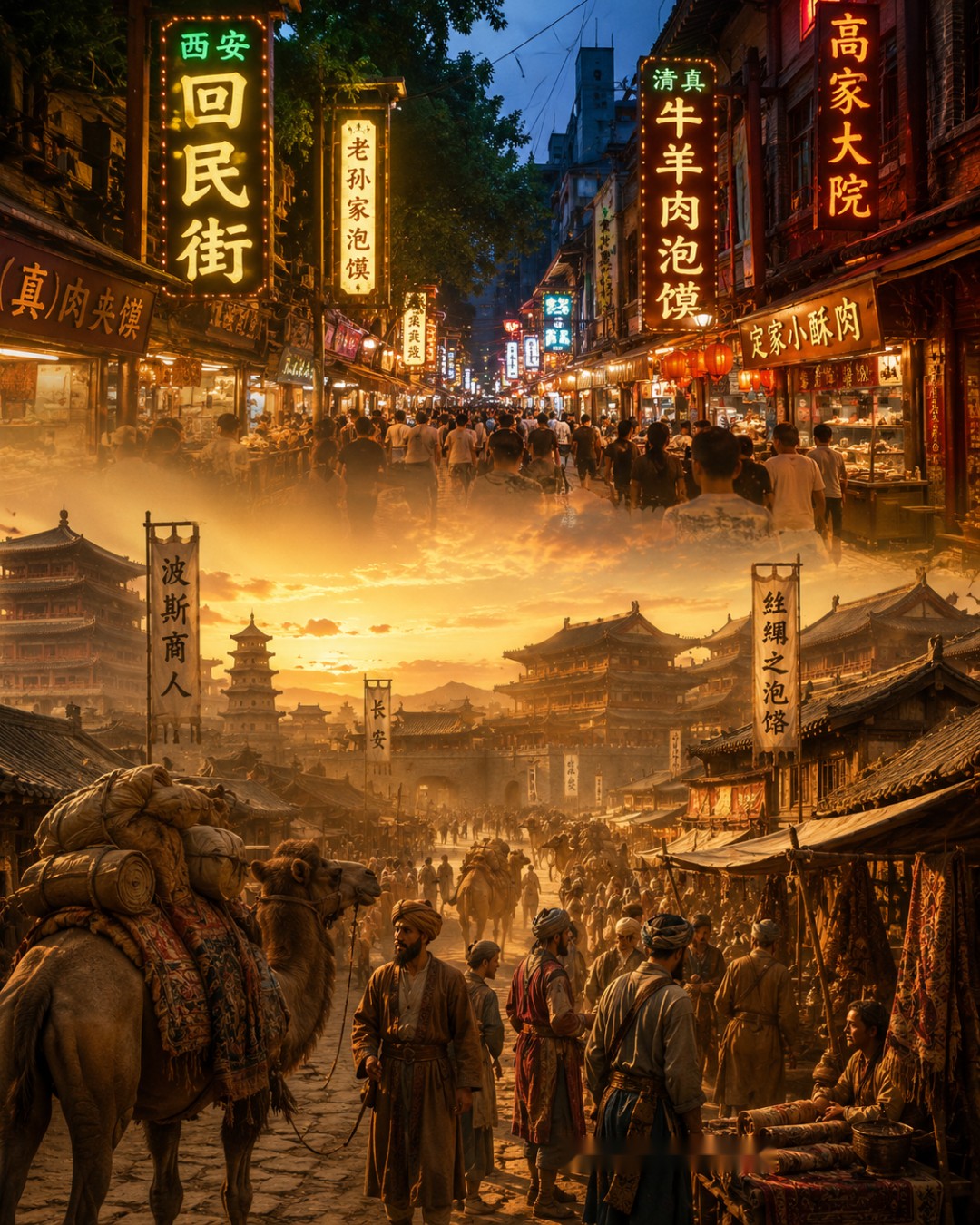
Chang'an back then was a world-class international metropolis. Persians came, Arabs came, and traders from Central Asia all flocked there. Many traveled along the Silk Road to do business in Chang'an; some left, but others stayed, slowly forming their own neighborhoods.
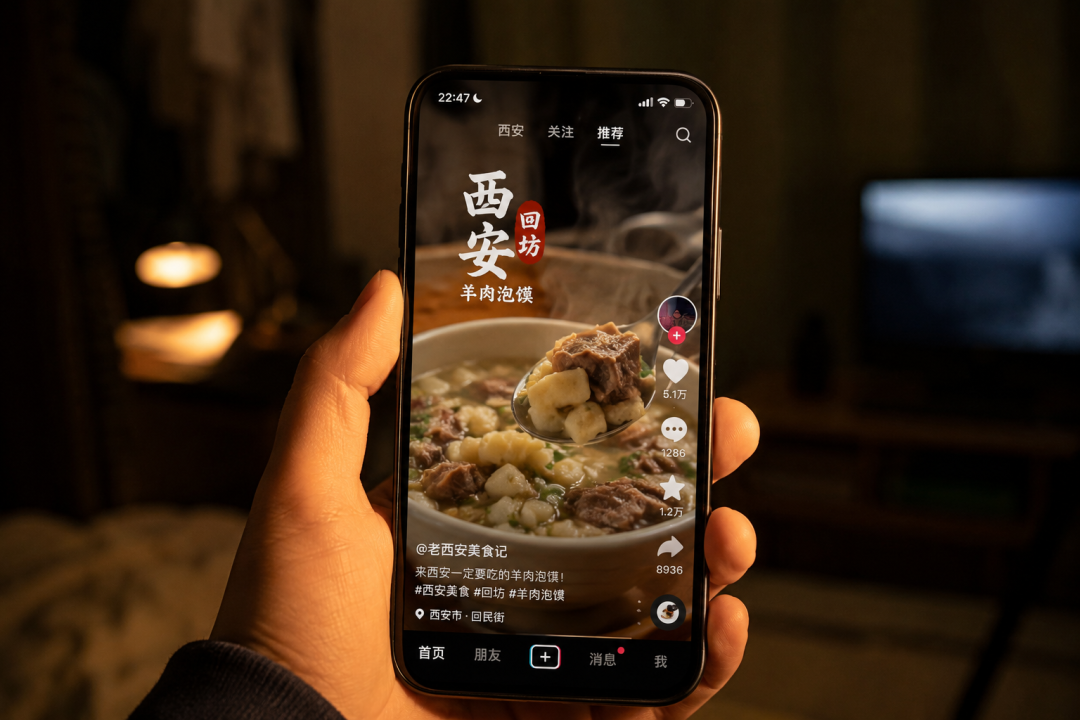
Over the next thousand years of cultural integration, intermarriage, and growth, it gradually became what we call the 'Hui Quarter' today.
So, why is Xi'an's halal food scene so concentrated? Because these folks have been living here for over a thousand years.
Those 'viral' snacks are basically just the natural overflow of the daily diet of this ancient community.
Beef and lamb are just a match made in heaven.
But having history isn't enough. I mean, there are plenty of historic places in China, so why did the halal food scene in Xi'an specifically take off?
I think there's another reason: the beef and lamb.
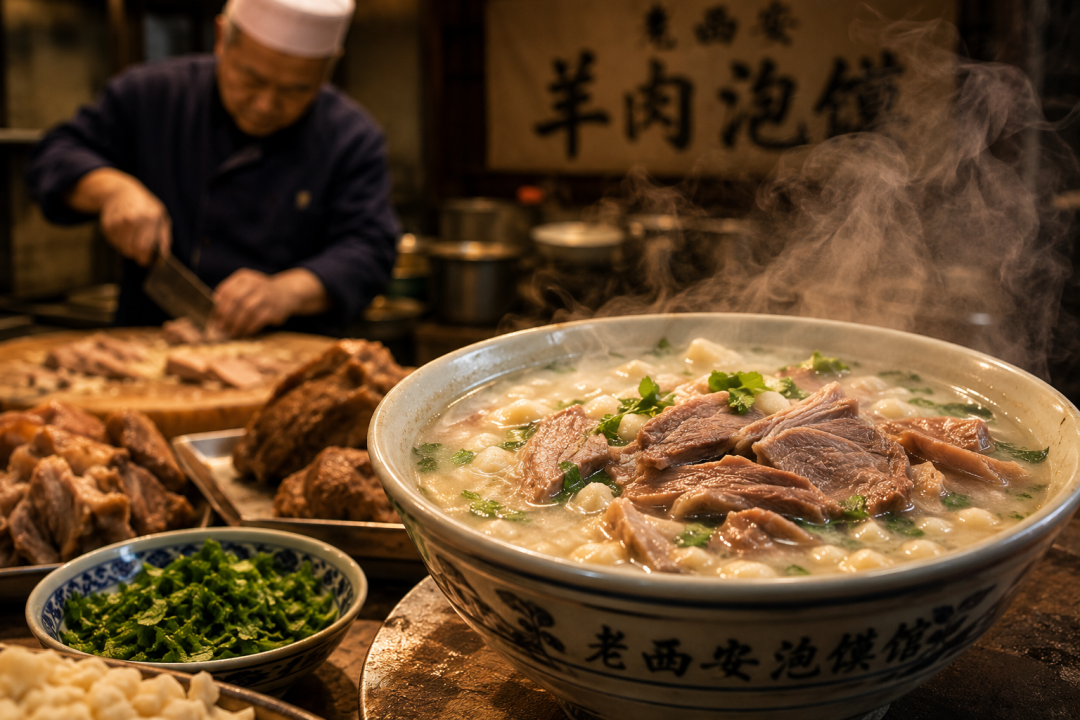
People in Shaanxi are absolutely obsessed with lamb.
Yangrou paomo, shuipen yangrou (water basin lamb soup), hutou (lamb head stew), fentang yangxue (vermicelli and lamb blood soup), yangza (lamb offal)—they can do endless things with just lamb.
And halal cuisine has always been exceptionally skilled at handling beef and lamb.
What’s it like? It’s like two people who are just perfectly in sync meeting each other.
Shaanxi locals already loved lamb, and halal eateries are masters at cooking it. They essentially maxed out that culinary potential.
That’s how we ended up with the legendary yangrou paomo. Outsiders find it novel, but locals have been eating it their whole lives.
But honestly, locals don't really go there anymore.
Now that I'm writing this, I’ve got to keep it real.
Xi'an locals, especially the younger generation, rarely go to Huimin Street to eat these days.
The reason is simple: it’s gotten too expensive.
Recently, Xi'an's yangrou paomo got dragged on social media. A single bowl is now 30 or 40 yuan, and the portions are getting smaller. As someone from Pucheng in Weinan, I honestly don't get it. Back home, a bowl of paomo is 20 yuan, the portions are huge, and it tastes amazing.
How did the price double just by coming to the provincial capital?
Some say it's high rent, expensive labor, and using better quality lamb. I buy that. But the actual old-school shops that have been around for decades are actually pretty reasonable with their pricing. The ones driving up prices the hardest are usually the shops that blew up overnight and got fancy renovations. They’re packed with tourists, but the locals stopped going a long time ago.
So we’re left with a pretty ridiculous situation—
Tourists head to Huimin Street chasing the 'Xi'an Food' hype, thinking they’re getting the most authentic experience possible.
But the real locals have already voted with their feet.
At the end of the day, people aren't complaining because paomo is expensive. They’re complaining because you turned a hearty, honest meal into a way to milk tourists for cash.
Finally,
Back to the original question: Why is the most viral food in Xi'an always linked to halal traditions?
History gave us the answer. The Silk Road of the Tang Dynasty left behind a community that mastered beef and lamb, and the people of Shaanxi have a natural love for lamb. Those two gears interlocked perfectly and have been turning for over a millennium.
Sure, Xi'an's food scene is blowing up online, but what happens when the hype actually dies down?
You’ve got bowls of paomo (crumbled flatbread in lamb soup) going for thirty or forty bucks, with the portions shrinking and the meat getting thinner by the day. Once the tourists record their videos and head home, the locals just stop showing up entirely.
At that point, it’s not the real taste of Xi'an anymore.
That’s just the taste of a generic tourist trap.
It honestly makes you stop and think. Chang’an isn't the same city it used to be back in the day, but the flavors brought here by the people traveling the Silk Road are still drifting through those narrow alleys today.
I just hope it stays that way.
Rather than turning into nothing more than a thirty-eight dollar "cultural tourism experience."
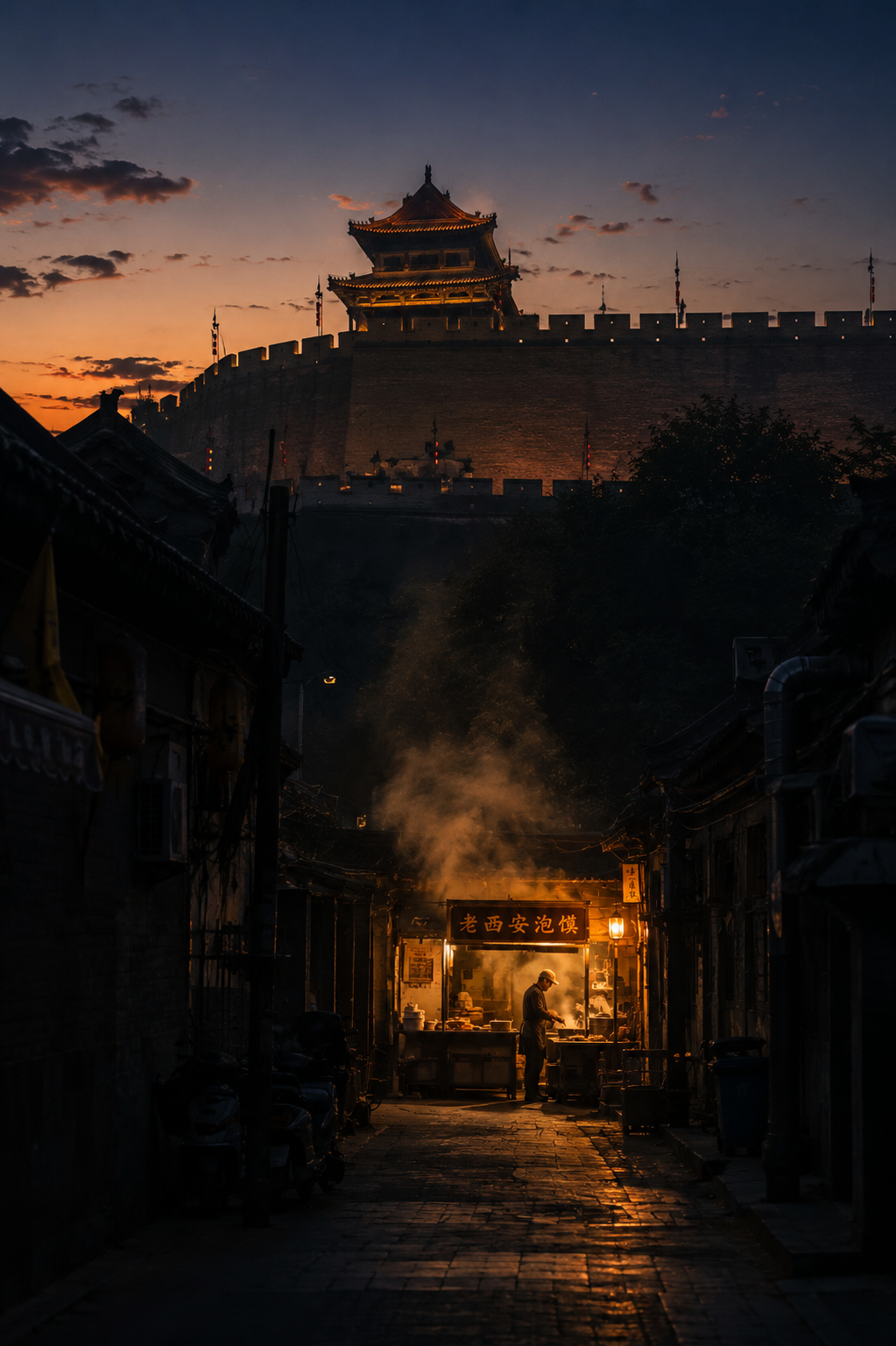
From the settlement of Silk Road merchants in Chang'an during the Tang Dynasty and the beef and lamb trade hub of the Ming and Qing eras, to the 'living by the masjid' craftsmanship passed down by Hui Muslims, we’re diving deep into the halal culinary DNA behind iconic Xi'an dishes like yangrou paomo (lamb and bread stew), rouwan hulatang (meatball spicy soup), and lazhourou jiamo (cured beef sandwich).
I was scrolling through some short videos recently and noticed a pretty interesting trend.
Whenever Xi'an food goes viral, it almost always comes from the exact same map: Huimin Street, Sanjinqiao, Dapiyuan, and Beiguangji Street.
The stuff featured is pretty much the same: yangrou paomo, xiaochao paomo (stir-fried crumbled bread stew), rouwan hulatang, zenggao (steamed sticky rice cake), niurou bing (beef pancake), lazhourou jiamo, and guantangbao (soup-filled steamed buns).
As I kept watching, a question suddenly hit me—
Why does the most famous, 'viral' food in Xi'an seem to always have the word 'Halal' attached to it?
In fact, many first-time visitors to Xi'an get this misconception that Xi'an food is just one big synonym for halal food.
After I did some digging, I realized it’s definitely not a coincidence.
The answer goes all the way back to the Tang Dynasty.
A lot of people think Huimin Street is just a tourist trap.
But actually, it’s a community first and foremost.
And it's a neighborhood with some serious history.
If you roll the clock back, you can trace it all the way to the Tang Dynasty.
Chang'an back then was a world-class international metropolis. Persians came, Arabs came, and traders from Central Asia all flocked there. Many traveled along the Silk Road to do business in Chang'an; some left, but others stayed, slowly forming their own neighborhoods.
Over the next thousand years of cultural integration, intermarriage, and growth, it gradually became what we call the 'Hui Quarter' today.
So, why is Xi'an's halal food scene so concentrated? Because these folks have been living here for over a thousand years.
Those 'viral' snacks are basically just the natural overflow of the daily diet of this ancient community.
Beef and lamb are just a match made in heaven.
But having history isn't enough. I mean, there are plenty of historic places in China, so why did the halal food scene in Xi'an specifically take off?
I think there's another reason: the beef and lamb.
People in Shaanxi are absolutely obsessed with lamb.
Yangrou paomo, shuipen yangrou (water basin lamb soup), hutou (lamb head stew), fentang yangxue (vermicelli and lamb blood soup), yangza (lamb offal)—they can do endless things with just lamb.
And halal cuisine has always been exceptionally skilled at handling beef and lamb.
What’s it like? It’s like two people who are just perfectly in sync meeting each other.
Shaanxi locals already loved lamb, and halal eateries are masters at cooking it. They essentially maxed out that culinary potential.
That’s how we ended up with the legendary yangrou paomo. Outsiders find it novel, but locals have been eating it their whole lives.
But honestly, locals don't really go there anymore.
Now that I'm writing this, I’ve got to keep it real.
Xi'an locals, especially the younger generation, rarely go to Huimin Street to eat these days.
The reason is simple: it’s gotten too expensive.
Recently, Xi'an's yangrou paomo got dragged on social media. A single bowl is now 30 or 40 yuan, and the portions are getting smaller. As someone from Pucheng in Weinan, I honestly don't get it. Back home, a bowl of paomo is 20 yuan, the portions are huge, and it tastes amazing.
How did the price double just by coming to the provincial capital?
Some say it's high rent, expensive labor, and using better quality lamb. I buy that. But the actual old-school shops that have been around for decades are actually pretty reasonable with their pricing. The ones driving up prices the hardest are usually the shops that blew up overnight and got fancy renovations. They’re packed with tourists, but the locals stopped going a long time ago.
So we’re left with a pretty ridiculous situation—
Tourists head to Huimin Street chasing the 'Xi'an Food' hype, thinking they’re getting the most authentic experience possible.
But the real locals have already voted with their feet.
At the end of the day, people aren't complaining because paomo is expensive. They’re complaining because you turned a hearty, honest meal into a way to milk tourists for cash.
Finally,
Back to the original question: Why is the most viral food in Xi'an always linked to halal traditions?
History gave us the answer. The Silk Road of the Tang Dynasty left behind a community that mastered beef and lamb, and the people of Shaanxi have a natural love for lamb. Those two gears interlocked perfectly and have been turning for over a millennium.
Sure, Xi'an's food scene is blowing up online, but what happens when the hype actually dies down?
You’ve got bowls of paomo (crumbled flatbread in lamb soup) going for thirty or forty bucks, with the portions shrinking and the meat getting thinner by the day. Once the tourists record their videos and head home, the locals just stop showing up entirely.
At that point, it’s not the real taste of Xi'an anymore.
That’s just the taste of a generic tourist trap.
It honestly makes you stop and think. Chang’an isn't the same city it used to be back in the day, but the flavors brought here by the people traveling the Silk Road are still drifting through those narrow alleys today.
I just hope it stays that way.
Rather than turning into nothing more than a thirty-eight dollar "cultural tourism experience."
Authentic Halal Food in Xi'an: 7 Local-Favorite Gems in the Muslim Quarter for Real Foodies
Articles • Hasan09 posted the article • 0 comments • 13 views • 15 hours ago
[Internet Repost]
Here is a roundup of 7 classic halal spots that the locals in the Xi'an Muslim Quarter actually visit. Forget the tourist traps; we are diving deep into Dapiyuan, Sajinqiao, and Miaohou Street to test out authentic niuyangrou paomo (crumbled flatbread in mutton soup), xiaochao (stir-fried crumbled flatbread), meatball hulatang (spicy pepper soup), and traditional pastries.
Over the last month, I have asked every Xi'an local I know how they eat and what they order in the Muslim Quarter (which we call Huifang or Fangshang). This video is super local, so for all you out-of-towners, let’s experience what makes the locals happy! The article is a bit long, so feel free to save it for later. The shop details are listed at the end.
Okay, let's get into it.
Qingzhen Xiaopiyuan Erli Barbecue (Muslim Quarter Branch)
If you come to Xi'an to explore the food scene and you haven't tried the barbecue in the Muslim Quarter, how are you going to write that travel diary or post those Instagram stories after you head home?
This barbecue spot in Xiaopiyuan is a bit of a hidden gem. It’s not on the main strip of the Muslim Quarter, but it is definitely where the local friends hang out after work.
Once you see it’s grilled over charcoal, you can rest easy. Order a round of yan jin (salted beef tendons), ban jin (beef tendon), feishou (fatty and lean meat), and yaozi (kidneys) to get a taste. They use a special sauce, so it comes out perfectly dry and savory.
For all my sesame sauce lovers, how could you skip the sesame sauce liangpi (cold skin noodles) and shuan niudu (blanched beef tripe)? I honestly can't resist sesame sauce. One bite of that rich, nutty flavor and all your stress just melts away—it’s an instant mood booster.
When I travel, I love these kinds of spots that have a bit of everything. From barbecue and local snacks to specialty drinks and main courses, you can get it all in one place. Ordering a little bit of everything allows you to sample all the specialties, which is just the best.
Jia Nan Xiaochao Paomo (Hongfu Community Branch)
Check this out—do you want to see how much the locals actually pay for a bowl of paomo or xiaochao?
It's only 15 yuan! This place is tucked under a residential building. It’s not cheap because it’s low quality; this spot has been around for nearly 10 years.
So please, stop saying that paomo in Xi'an is overpriced, okay? Finding me is like getting a masterclass in budgeting.
I ordered the raw-meat xiaochao; the price is the same whether you use raw or pre-cooked meat. It’s heavy on the vinegar and chili oil, but the heat is just right. They don't mess around with fancy toppings here—just beef, vermicelli, wood ear mushrooms, and yuba (tofu skin), which is more than enough.
What makes them special is they use sweet potato starch noodles instead of the typical vermicelli. The noodles are cooked until they are soft and chewy. You can't help but take another bite, even if it's piping hot—it really leaves an impression.
There is only one pot in the kitchen, and they cook it bowl by bowl. If you come during the rush, expect to wait in line. I suggest coming off-peak to chow down. Two generations dedicated to one shop—that is what I call true craftsmanship.
What are your own secret spots for xiaochao paomo? Drop them in the comments section.
Junjun Mung Bean Cake and Pastries (Miaohou Street Branch)
Mung bean cakes and mung bean pastries, paired with a cup of Fucha (fermented dark tea)—I’m not sure if the afternoon tea on the Champs-Élysées is more elegant than this on Miaohou Street.
If you want to know what kind of sweets and pastries locals love, Junjun Mung Bean Cake is definitely on the list.
They are famous for their mung bean cakes, which have crossed over from a local specialty into a popular tea-time treat. They’ve since expanded to offer mung bean pastries, nut crisps, wuren su (five-kernel pastries), and more.
The versions they have now still use no additives and are handcrafted and baked fresh daily, preserving the flavors we grew up with. At the same time, they've adjusted the recipes to be lower in sugar.
The texture of the mung bean cake is incredibly light and powdery. It melts in your mouth—soft but not crumbly, sticky but not gluey. As it dissolves on your tongue, it doesn’t leave a gritty feeling. First comes the sweet rush, followed by a lingering bean aroma. It’s light and delicate, not the kind of cloying sweetness that tires your palate.
They have five flavors of mung bean pastries. My favorite is the original mung bean; when you break it open, you can see the flakes falling. The filling is super fine, moist, and soft, with a distinct and long-lasting sweet aroma of mung beans.
Nowadays, it’s not just the locals who love them; tourists visiting Xi'an leave with bags of them. If you’re here for the holidays, these make the perfect souvenir—they’re affordable and everyone from kids to grandparents will love them.
Qingzhen Zhoudalou Beilou
This restaurant specializes in Lanzhou-style cuisine and is located on Beiyuanmen, just behind the Drum Tower.
I came here for two reasons: I heard their Lanzhou snacks are incredibly authentic, and lately, the residents of the Muslim Quarter have been choosing this place for weddings, birthdays, and graduation banquets.
The black pepper stir-fried latiao (wheat noodles) tastes completely different from the ones in Xi'an. These noodles are thinner and cooked without tomato sauce, making them oily, savory, and dry—not mushy at all.
The beef sazi (minced topping) noodles are hand-torn to order. The noodles have a great chew, and the broth is bursting with savory flavor. It is seriously satisfying. It’s completely different from other places you’ll find in Xi'an; you’ll know it the moment you take a bite.
The grilled lamb chops are roasted once in a rotating oven and then reheated on the grill. They are perfectly fatty and lean, sizzling with oil. Pair them with a bit of piyazi (onions), and every bite is pure bliss.
The yellow croaker with tofu is so good—it's the first time I've seen such a huge plate of yellow croaker. The tofu absorbs all the flavor, and the fish is pan-fried before being braised, leaving the skin crispy while the meat inside stays tender and juicy.
This brand has been in Lanzhou for a long time. If you're a Lanzhou local living in Xi'an missing the taste of home, you should definitely come here.
Yusufu Dongjuyuan Dumpling House
This dumpling house, famous for its zaban (mixed variety dumplings), has been open for over 20 years. Zaban means they serve a mix of dumplings with different fillings in one bowl. Half the fun is the surprise of not knowing what flavor your next bite will be.
In the Muslim Quarter, we mostly eat suantang shuijiao (dumplings in sour soup), which are usually filled with chive and beef. Many shops only sell that one specific flavor. This place offers more variety, so everyone can find exactly what they like.
The dumplings come out piping hot, looking plump and juicy, which is a real tease for your appetite. For suantang shuijiao, the secret is to drink the soup first. The sour broth is made with dried shrimp, sesame seeds, and chives. One sip of that warm, tangy broth and your appetite is completely opened up.
As for the dumplings, I don't even need to say much. The fillings are generous, and the masters know exactly how to control the heat—the dough isn't mushy or tough. One after another, they are just so satisfying to eat.
Which other dumpling spots in the Muslim Quarter do you guys visit often? Feel free to share them with our out-of-town friends.
Qingzhen Yuanyuan High-Quality Hulatang (Locally Owned Shop)
If you’re coming to Xi’an, you’ve gotta grab a bowl of the iconic local breakfast, rouwan hulatang (meatball spicy soup), to really get the vibe of the city.
Honestly, there’s a huge difference between the good stuff and the tourist traps. The spot I’m recommending? It’s legit—this place is the ultimate breakfast canteen for the locals.
The secret to their hulatang is definitely the youpo lazi (hot chili oil). The second you take a bite, that aroma from the chili oil hits you right in the senses. You might still be a little groggy, but your stomach is already waking up for the day.
Just ask the owner for a mo (steamed bun) and tell them you want to tear it up yourself. Break the mo into slightly larger chunks, hand it back, and let them pour that piping hot soup over it—and make sure they go heavy on the chili oil. It’s glorious.
Between the smoky kick of the chili, the veggies, and all that hearty starch, you’ll be in total food heaven by the time you finish the bowl.
This place and another one not far away are both top-tier in terms of taste and local reputation. They only serve breakfast, so just head to whichever one has a shorter line. Which one do you guys prefer?
Jiawu Youhuxian (Jiawu Deep-Fried Meat Pies)
After finishing that meatball soup, you might still feel like you’re missing something, right?
Well, let’s keep it moving and grab Xi’an’s very own version of borek—the youhuxian (deep-fried savory pie).
They’re pan-fried right in the wok until the crust is golden and crispy, but the filling is scorching hot. You have to be careful—it’s not great cold, but eating it hot is like trying to balance an acrobat troupe inside your mouth.
Timing your bites is definitely tricky. Plus, if you try to reheat these at home, the flavor just isn't the same. You’ve really just gotta blow on them and eat them right there on the spot.
Don't worry about the portion size—even though these pies look bigger than your face, the dough is light and airy, not super dense. You can snack on it while you walk, and honestly, you’ll be hungry again before you even leave the Muslim Quarter.
Baixiang Sweets Shop
Bingzhen jidan laozao (iced egg and fermented glutinous rice soup) is another beloved local sweet treat around the neighborhood.
You might call it a soup, but every spoonful is packed with so much stuff—black and white sesame seeds, crushed peanuts, raisins, hawthorn cubes, eggs, and milk. It’s loaded, almost like a congee.
When you’re tired and thirsty from walking around, one sip and you won’t be able to stop. Especially once you’re past that age of just wanting sodas, finding a sweet drink like this feels like meeting your soulmate.
A lot of shops sell similar versions now, so definitely give it a try if you see one. It’s the perfect way to cool down, quench your thirst, and recharge.
After trying these eight spots, the takeaway is simple: the barbecue, stir-fries, desserts, and breakfasts that locals actually love are hiding in plain sight at these super low-key shops. Just ask around, and you’ll find the places the neighborhood residents frequent daily—it doesn’t get more authentic than that. There’s so much more incredible food in the Muslim Quarter just waiting for you to discover it. view all
Here is a roundup of 7 classic halal spots that the locals in the Xi'an Muslim Quarter actually visit. Forget the tourist traps; we are diving deep into Dapiyuan, Sajinqiao, and Miaohou Street to test out authentic niuyangrou paomo (crumbled flatbread in mutton soup), xiaochao (stir-fried crumbled flatbread), meatball hulatang (spicy pepper soup), and traditional pastries.
Over the last month, I have asked every Xi'an local I know how they eat and what they order in the Muslim Quarter (which we call Huifang or Fangshang). This video is super local, so for all you out-of-towners, let’s experience what makes the locals happy! The article is a bit long, so feel free to save it for later. The shop details are listed at the end.
Okay, let's get into it.
Qingzhen Xiaopiyuan Erli Barbecue (Muslim Quarter Branch)
If you come to Xi'an to explore the food scene and you haven't tried the barbecue in the Muslim Quarter, how are you going to write that travel diary or post those Instagram stories after you head home?
This barbecue spot in Xiaopiyuan is a bit of a hidden gem. It’s not on the main strip of the Muslim Quarter, but it is definitely where the local friends hang out after work.
Once you see it’s grilled over charcoal, you can rest easy. Order a round of yan jin (salted beef tendons), ban jin (beef tendon), feishou (fatty and lean meat), and yaozi (kidneys) to get a taste. They use a special sauce, so it comes out perfectly dry and savory.
For all my sesame sauce lovers, how could you skip the sesame sauce liangpi (cold skin noodles) and shuan niudu (blanched beef tripe)? I honestly can't resist sesame sauce. One bite of that rich, nutty flavor and all your stress just melts away—it’s an instant mood booster.
When I travel, I love these kinds of spots that have a bit of everything. From barbecue and local snacks to specialty drinks and main courses, you can get it all in one place. Ordering a little bit of everything allows you to sample all the specialties, which is just the best.
Jia Nan Xiaochao Paomo (Hongfu Community Branch)
Check this out—do you want to see how much the locals actually pay for a bowl of paomo or xiaochao?
It's only 15 yuan! This place is tucked under a residential building. It’s not cheap because it’s low quality; this spot has been around for nearly 10 years.
So please, stop saying that paomo in Xi'an is overpriced, okay? Finding me is like getting a masterclass in budgeting.
I ordered the raw-meat xiaochao; the price is the same whether you use raw or pre-cooked meat. It’s heavy on the vinegar and chili oil, but the heat is just right. They don't mess around with fancy toppings here—just beef, vermicelli, wood ear mushrooms, and yuba (tofu skin), which is more than enough.
What makes them special is they use sweet potato starch noodles instead of the typical vermicelli. The noodles are cooked until they are soft and chewy. You can't help but take another bite, even if it's piping hot—it really leaves an impression.
There is only one pot in the kitchen, and they cook it bowl by bowl. If you come during the rush, expect to wait in line. I suggest coming off-peak to chow down. Two generations dedicated to one shop—that is what I call true craftsmanship.
What are your own secret spots for xiaochao paomo? Drop them in the comments section.
Junjun Mung Bean Cake and Pastries (Miaohou Street Branch)
Mung bean cakes and mung bean pastries, paired with a cup of Fucha (fermented dark tea)—I’m not sure if the afternoon tea on the Champs-Élysées is more elegant than this on Miaohou Street.
If you want to know what kind of sweets and pastries locals love, Junjun Mung Bean Cake is definitely on the list.
They are famous for their mung bean cakes, which have crossed over from a local specialty into a popular tea-time treat. They’ve since expanded to offer mung bean pastries, nut crisps, wuren su (five-kernel pastries), and more.
The versions they have now still use no additives and are handcrafted and baked fresh daily, preserving the flavors we grew up with. At the same time, they've adjusted the recipes to be lower in sugar.
The texture of the mung bean cake is incredibly light and powdery. It melts in your mouth—soft but not crumbly, sticky but not gluey. As it dissolves on your tongue, it doesn’t leave a gritty feeling. First comes the sweet rush, followed by a lingering bean aroma. It’s light and delicate, not the kind of cloying sweetness that tires your palate.
They have five flavors of mung bean pastries. My favorite is the original mung bean; when you break it open, you can see the flakes falling. The filling is super fine, moist, and soft, with a distinct and long-lasting sweet aroma of mung beans.
Nowadays, it’s not just the locals who love them; tourists visiting Xi'an leave with bags of them. If you’re here for the holidays, these make the perfect souvenir—they’re affordable and everyone from kids to grandparents will love them.
Qingzhen Zhoudalou Beilou
This restaurant specializes in Lanzhou-style cuisine and is located on Beiyuanmen, just behind the Drum Tower.
I came here for two reasons: I heard their Lanzhou snacks are incredibly authentic, and lately, the residents of the Muslim Quarter have been choosing this place for weddings, birthdays, and graduation banquets.
The black pepper stir-fried latiao (wheat noodles) tastes completely different from the ones in Xi'an. These noodles are thinner and cooked without tomato sauce, making them oily, savory, and dry—not mushy at all.
The beef sazi (minced topping) noodles are hand-torn to order. The noodles have a great chew, and the broth is bursting with savory flavor. It is seriously satisfying. It’s completely different from other places you’ll find in Xi'an; you’ll know it the moment you take a bite.
The grilled lamb chops are roasted once in a rotating oven and then reheated on the grill. They are perfectly fatty and lean, sizzling with oil. Pair them with a bit of piyazi (onions), and every bite is pure bliss.
The yellow croaker with tofu is so good—it's the first time I've seen such a huge plate of yellow croaker. The tofu absorbs all the flavor, and the fish is pan-fried before being braised, leaving the skin crispy while the meat inside stays tender and juicy.
This brand has been in Lanzhou for a long time. If you're a Lanzhou local living in Xi'an missing the taste of home, you should definitely come here.
Yusufu Dongjuyuan Dumpling House
This dumpling house, famous for its zaban (mixed variety dumplings), has been open for over 20 years. Zaban means they serve a mix of dumplings with different fillings in one bowl. Half the fun is the surprise of not knowing what flavor your next bite will be.
In the Muslim Quarter, we mostly eat suantang shuijiao (dumplings in sour soup), which are usually filled with chive and beef. Many shops only sell that one specific flavor. This place offers more variety, so everyone can find exactly what they like.
The dumplings come out piping hot, looking plump and juicy, which is a real tease for your appetite. For suantang shuijiao, the secret is to drink the soup first. The sour broth is made with dried shrimp, sesame seeds, and chives. One sip of that warm, tangy broth and your appetite is completely opened up.
As for the dumplings, I don't even need to say much. The fillings are generous, and the masters know exactly how to control the heat—the dough isn't mushy or tough. One after another, they are just so satisfying to eat.
Which other dumpling spots in the Muslim Quarter do you guys visit often? Feel free to share them with our out-of-town friends.
Qingzhen Yuanyuan High-Quality Hulatang (Locally Owned Shop)
If you’re coming to Xi’an, you’ve gotta grab a bowl of the iconic local breakfast, rouwan hulatang (meatball spicy soup), to really get the vibe of the city.
Honestly, there’s a huge difference between the good stuff and the tourist traps. The spot I’m recommending? It’s legit—this place is the ultimate breakfast canteen for the locals.
The secret to their hulatang is definitely the youpo lazi (hot chili oil). The second you take a bite, that aroma from the chili oil hits you right in the senses. You might still be a little groggy, but your stomach is already waking up for the day.
Just ask the owner for a mo (steamed bun) and tell them you want to tear it up yourself. Break the mo into slightly larger chunks, hand it back, and let them pour that piping hot soup over it—and make sure they go heavy on the chili oil. It’s glorious.
Between the smoky kick of the chili, the veggies, and all that hearty starch, you’ll be in total food heaven by the time you finish the bowl.
This place and another one not far away are both top-tier in terms of taste and local reputation. They only serve breakfast, so just head to whichever one has a shorter line. Which one do you guys prefer?
Jiawu Youhuxian (Jiawu Deep-Fried Meat Pies)
After finishing that meatball soup, you might still feel like you’re missing something, right?
Well, let’s keep it moving and grab Xi’an’s very own version of borek—the youhuxian (deep-fried savory pie).
They’re pan-fried right in the wok until the crust is golden and crispy, but the filling is scorching hot. You have to be careful—it’s not great cold, but eating it hot is like trying to balance an acrobat troupe inside your mouth.
Timing your bites is definitely tricky. Plus, if you try to reheat these at home, the flavor just isn't the same. You’ve really just gotta blow on them and eat them right there on the spot.
Don't worry about the portion size—even though these pies look bigger than your face, the dough is light and airy, not super dense. You can snack on it while you walk, and honestly, you’ll be hungry again before you even leave the Muslim Quarter.
Baixiang Sweets Shop
Bingzhen jidan laozao (iced egg and fermented glutinous rice soup) is another beloved local sweet treat around the neighborhood.
You might call it a soup, but every spoonful is packed with so much stuff—black and white sesame seeds, crushed peanuts, raisins, hawthorn cubes, eggs, and milk. It’s loaded, almost like a congee.
When you’re tired and thirsty from walking around, one sip and you won’t be able to stop. Especially once you’re past that age of just wanting sodas, finding a sweet drink like this feels like meeting your soulmate.
A lot of shops sell similar versions now, so definitely give it a try if you see one. It’s the perfect way to cool down, quench your thirst, and recharge.
After trying these eight spots, the takeaway is simple: the barbecue, stir-fries, desserts, and breakfasts that locals actually love are hiding in plain sight at these super low-key shops. Just ask around, and you’ll find the places the neighborhood residents frequent daily—it doesn’t get more authentic than that. There’s so much more incredible food in the Muslim Quarter just waiting for you to discover it. view all
[Internet Repost]
Here is a roundup of 7 classic halal spots that the locals in the Xi'an Muslim Quarter actually visit. Forget the tourist traps; we are diving deep into Dapiyuan, Sajinqiao, and Miaohou Street to test out authentic niuyangrou paomo (crumbled flatbread in mutton soup), xiaochao (stir-fried crumbled flatbread), meatball hulatang (spicy pepper soup), and traditional pastries.
Over the last month, I have asked every Xi'an local I know how they eat and what they order in the Muslim Quarter (which we call Huifang or Fangshang). This video is super local, so for all you out-of-towners, let’s experience what makes the locals happy! The article is a bit long, so feel free to save it for later. The shop details are listed at the end.
Okay, let's get into it.
Qingzhen Xiaopiyuan Erli Barbecue (Muslim Quarter Branch)
If you come to Xi'an to explore the food scene and you haven't tried the barbecue in the Muslim Quarter, how are you going to write that travel diary or post those Instagram stories after you head home?
This barbecue spot in Xiaopiyuan is a bit of a hidden gem. It’s not on the main strip of the Muslim Quarter, but it is definitely where the local friends hang out after work.
Once you see it’s grilled over charcoal, you can rest easy. Order a round of yan jin (salted beef tendons), ban jin (beef tendon), feishou (fatty and lean meat), and yaozi (kidneys) to get a taste. They use a special sauce, so it comes out perfectly dry and savory.
For all my sesame sauce lovers, how could you skip the sesame sauce liangpi (cold skin noodles) and shuan niudu (blanched beef tripe)? I honestly can't resist sesame sauce. One bite of that rich, nutty flavor and all your stress just melts away—it’s an instant mood booster.
When I travel, I love these kinds of spots that have a bit of everything. From barbecue and local snacks to specialty drinks and main courses, you can get it all in one place. Ordering a little bit of everything allows you to sample all the specialties, which is just the best.
Jia Nan Xiaochao Paomo (Hongfu Community Branch)
Check this out—do you want to see how much the locals actually pay for a bowl of paomo or xiaochao?
It's only 15 yuan! This place is tucked under a residential building. It’s not cheap because it’s low quality; this spot has been around for nearly 10 years.
So please, stop saying that paomo in Xi'an is overpriced, okay? Finding me is like getting a masterclass in budgeting.
I ordered the raw-meat xiaochao; the price is the same whether you use raw or pre-cooked meat. It’s heavy on the vinegar and chili oil, but the heat is just right. They don't mess around with fancy toppings here—just beef, vermicelli, wood ear mushrooms, and yuba (tofu skin), which is more than enough.
What makes them special is they use sweet potato starch noodles instead of the typical vermicelli. The noodles are cooked until they are soft and chewy. You can't help but take another bite, even if it's piping hot—it really leaves an impression.
There is only one pot in the kitchen, and they cook it bowl by bowl. If you come during the rush, expect to wait in line. I suggest coming off-peak to chow down. Two generations dedicated to one shop—that is what I call true craftsmanship.
What are your own secret spots for xiaochao paomo? Drop them in the comments section.
Junjun Mung Bean Cake and Pastries (Miaohou Street Branch)
Mung bean cakes and mung bean pastries, paired with a cup of Fucha (fermented dark tea)—I’m not sure if the afternoon tea on the Champs-Élysées is more elegant than this on Miaohou Street.
If you want to know what kind of sweets and pastries locals love, Junjun Mung Bean Cake is definitely on the list.
They are famous for their mung bean cakes, which have crossed over from a local specialty into a popular tea-time treat. They’ve since expanded to offer mung bean pastries, nut crisps, wuren su (five-kernel pastries), and more.
The versions they have now still use no additives and are handcrafted and baked fresh daily, preserving the flavors we grew up with. At the same time, they've adjusted the recipes to be lower in sugar.
The texture of the mung bean cake is incredibly light and powdery. It melts in your mouth—soft but not crumbly, sticky but not gluey. As it dissolves on your tongue, it doesn’t leave a gritty feeling. First comes the sweet rush, followed by a lingering bean aroma. It’s light and delicate, not the kind of cloying sweetness that tires your palate.
They have five flavors of mung bean pastries. My favorite is the original mung bean; when you break it open, you can see the flakes falling. The filling is super fine, moist, and soft, with a distinct and long-lasting sweet aroma of mung beans.
Nowadays, it’s not just the locals who love them; tourists visiting Xi'an leave with bags of them. If you’re here for the holidays, these make the perfect souvenir—they’re affordable and everyone from kids to grandparents will love them.
Qingzhen Zhoudalou Beilou
This restaurant specializes in Lanzhou-style cuisine and is located on Beiyuanmen, just behind the Drum Tower.
I came here for two reasons: I heard their Lanzhou snacks are incredibly authentic, and lately, the residents of the Muslim Quarter have been choosing this place for weddings, birthdays, and graduation banquets.
The black pepper stir-fried latiao (wheat noodles) tastes completely different from the ones in Xi'an. These noodles are thinner and cooked without tomato sauce, making them oily, savory, and dry—not mushy at all.
The beef sazi (minced topping) noodles are hand-torn to order. The noodles have a great chew, and the broth is bursting with savory flavor. It is seriously satisfying. It’s completely different from other places you’ll find in Xi'an; you’ll know it the moment you take a bite.
The grilled lamb chops are roasted once in a rotating oven and then reheated on the grill. They are perfectly fatty and lean, sizzling with oil. Pair them with a bit of piyazi (onions), and every bite is pure bliss.
The yellow croaker with tofu is so good—it's the first time I've seen such a huge plate of yellow croaker. The tofu absorbs all the flavor, and the fish is pan-fried before being braised, leaving the skin crispy while the meat inside stays tender and juicy.
This brand has been in Lanzhou for a long time. If you're a Lanzhou local living in Xi'an missing the taste of home, you should definitely come here.
Yusufu Dongjuyuan Dumpling House
This dumpling house, famous for its zaban (mixed variety dumplings), has been open for over 20 years. Zaban means they serve a mix of dumplings with different fillings in one bowl. Half the fun is the surprise of not knowing what flavor your next bite will be.
In the Muslim Quarter, we mostly eat suantang shuijiao (dumplings in sour soup), which are usually filled with chive and beef. Many shops only sell that one specific flavor. This place offers more variety, so everyone can find exactly what they like.
The dumplings come out piping hot, looking plump and juicy, which is a real tease for your appetite. For suantang shuijiao, the secret is to drink the soup first. The sour broth is made with dried shrimp, sesame seeds, and chives. One sip of that warm, tangy broth and your appetite is completely opened up.
As for the dumplings, I don't even need to say much. The fillings are generous, and the masters know exactly how to control the heat—the dough isn't mushy or tough. One after another, they are just so satisfying to eat.
Which other dumpling spots in the Muslim Quarter do you guys visit often? Feel free to share them with our out-of-town friends.
Qingzhen Yuanyuan High-Quality Hulatang (Locally Owned Shop)
If you’re coming to Xi’an, you’ve gotta grab a bowl of the iconic local breakfast, rouwan hulatang (meatball spicy soup), to really get the vibe of the city.
Honestly, there’s a huge difference between the good stuff and the tourist traps. The spot I’m recommending? It’s legit—this place is the ultimate breakfast canteen for the locals.
The secret to their hulatang is definitely the youpo lazi (hot chili oil). The second you take a bite, that aroma from the chili oil hits you right in the senses. You might still be a little groggy, but your stomach is already waking up for the day.
Just ask the owner for a mo (steamed bun) and tell them you want to tear it up yourself. Break the mo into slightly larger chunks, hand it back, and let them pour that piping hot soup over it—and make sure they go heavy on the chili oil. It’s glorious.
Between the smoky kick of the chili, the veggies, and all that hearty starch, you’ll be in total food heaven by the time you finish the bowl.
This place and another one not far away are both top-tier in terms of taste and local reputation. They only serve breakfast, so just head to whichever one has a shorter line. Which one do you guys prefer?
Jiawu Youhuxian (Jiawu Deep-Fried Meat Pies)
After finishing that meatball soup, you might still feel like you’re missing something, right?
Well, let’s keep it moving and grab Xi’an’s very own version of borek—the youhuxian (deep-fried savory pie).
They’re pan-fried right in the wok until the crust is golden and crispy, but the filling is scorching hot. You have to be careful—it’s not great cold, but eating it hot is like trying to balance an acrobat troupe inside your mouth.
Timing your bites is definitely tricky. Plus, if you try to reheat these at home, the flavor just isn't the same. You’ve really just gotta blow on them and eat them right there on the spot.
Don't worry about the portion size—even though these pies look bigger than your face, the dough is light and airy, not super dense. You can snack on it while you walk, and honestly, you’ll be hungry again before you even leave the Muslim Quarter.
Baixiang Sweets Shop
Bingzhen jidan laozao (iced egg and fermented glutinous rice soup) is another beloved local sweet treat around the neighborhood.
You might call it a soup, but every spoonful is packed with so much stuff—black and white sesame seeds, crushed peanuts, raisins, hawthorn cubes, eggs, and milk. It’s loaded, almost like a congee.
When you’re tired and thirsty from walking around, one sip and you won’t be able to stop. Especially once you’re past that age of just wanting sodas, finding a sweet drink like this feels like meeting your soulmate.
A lot of shops sell similar versions now, so definitely give it a try if you see one. It’s the perfect way to cool down, quench your thirst, and recharge.
After trying these eight spots, the takeaway is simple: the barbecue, stir-fries, desserts, and breakfasts that locals actually love are hiding in plain sight at these super low-key shops. Just ask around, and you’ll find the places the neighborhood residents frequent daily—it doesn’t get more authentic than that. There’s so much more incredible food in the Muslim Quarter just waiting for you to discover it.
Why Xi'an's Best Halal Food Rules: A Deep Dive into Muslim Street Food and Hui Culture
Articles • Hasan09 posted the article • 0 comments • 12 views • 15 hours ago
[Internet Repost]
From the settlement of Silk Road merchants in Chang'an during the Tang Dynasty and the beef and lamb trade hub of the Ming and Qing eras, to the 'living by the masjid' craftsmanship passed down by Hui Muslims, we’re diving deep into the halal culinary DNA behind iconic Xi'an dishes like yangrou paomo (lamb and bread stew), rouwan hulatang (meatball spicy soup), and lazhourou jiamo (cured beef sandwich).
I was scrolling through some short videos recently and noticed a pretty interesting trend.
Whenever Xi'an food goes viral, it almost always comes from the exact same map: Huimin Street, Sanjinqiao, Dapiyuan, and Beiguangji Street.
The stuff featured is pretty much the same: yangrou paomo, xiaochao paomo (stir-fried crumbled bread stew), rouwan hulatang, zenggao (steamed sticky rice cake), niurou bing (beef pancake), lazhourou jiamo, and guantangbao (soup-filled steamed buns).
As I kept watching, a question suddenly hit me—
Why does the most famous, 'viral' food in Xi'an seem to always have the word 'Halal' attached to it?
In fact, many first-time visitors to Xi'an get this misconception that Xi'an food is just one big synonym for halal food.
After I did some digging, I realized it’s definitely not a coincidence.
The answer goes all the way back to the Tang Dynasty.
A lot of people think Huimin Street is just a tourist trap.
But actually, it’s a community first and foremost.
And it's a neighborhood with some serious history.
If you roll the clock back, you can trace it all the way to the Tang Dynasty.
Chang'an back then was a world-class international metropolis. Persians came, Arabs came, and traders from Central Asia all flocked there. Many traveled along the Silk Road to do business in Chang'an; some left, but others stayed, slowly forming their own neighborhoods.
Over the next thousand years of cultural integration, intermarriage, and growth, it gradually became what we call the 'Hui Quarter' today.
So, why is Xi'an's halal food scene so concentrated? Because these folks have been living here for over a thousand years.
Those 'viral' snacks are basically just the natural overflow of the daily diet of this ancient community.
Beef and lamb are just a match made in heaven.
But having history isn't enough. I mean, there are plenty of historic places in China, so why did the halal food scene in Xi'an specifically take off?
I think there's another reason: the beef and lamb.
People in Shaanxi are absolutely obsessed with lamb.
Yangrou paomo, shuipen yangrou (water basin lamb soup), hutou (lamb head stew), fentang yangxue (vermicelli and lamb blood soup), yangza (lamb offal)—they can do endless things with just lamb.
And halal cuisine has always been exceptionally skilled at handling beef and lamb.
What’s it like? It’s like two people who are just perfectly in sync meeting each other.
Shaanxi locals already loved lamb, and halal eateries are masters at cooking it. They essentially maxed out that culinary potential.
That’s how we ended up with the legendary yangrou paomo. Outsiders find it novel, but locals have been eating it their whole lives.
But honestly, locals don't really go there anymore.
Now that I'm writing this, I’ve got to keep it real.
Xi'an locals, especially the younger generation, rarely go to Huimin Street to eat these days.
The reason is simple: it’s gotten too expensive.
Recently, Xi'an's yangrou paomo got dragged on social media. A single bowl is now 30 or 40 yuan, and the portions are getting smaller. As someone from Pucheng in Weinan, I honestly don't get it. Back home, a bowl of paomo is 20 yuan, the portions are huge, and it tastes amazing.
How did the price double just by coming to the provincial capital?
Some say it's high rent, expensive labor, and using better quality lamb. I buy that. But the actual old-school shops that have been around for decades are actually pretty reasonable with their pricing. The ones driving up prices the hardest are usually the shops that blew up overnight and got fancy renovations. They’re packed with tourists, but the locals stopped going a long time ago.
So we’re left with a pretty ridiculous situation—
Tourists head to Huimin Street chasing the 'Xi'an Food' hype, thinking they’re getting the most authentic experience possible.
But the real locals have already voted with their feet.
At the end of the day, people aren't complaining because paomo is expensive. They’re complaining because you turned a hearty, honest meal into a way to milk tourists for cash.
Finally,
Back to the original question: Why is the most viral food in Xi'an always linked to halal traditions?
History gave us the answer. The Silk Road of the Tang Dynasty left behind a community that mastered beef and lamb, and the people of Shaanxi have a natural love for lamb. Those two gears interlocked perfectly and have been turning for over a millennium.
Sure, Xi'an's food scene is blowing up online, but what happens when the hype actually dies down?
You’ve got bowls of paomo (crumbled flatbread in lamb soup) going for thirty or forty bucks, with the portions shrinking and the meat getting thinner by the day. Once the tourists record their videos and head home, the locals just stop showing up entirely.
At that point, it’s not the real taste of Xi'an anymore.
That’s just the taste of a generic tourist trap.
It honestly makes you stop and think. Chang’an isn't the same city it used to be back in the day, but the flavors brought here by the people traveling the Silk Road are still drifting through those narrow alleys today.
I just hope it stays that way.
Rather than turning into nothing more than a thirty-eight dollar "cultural tourism experience." view all
From the settlement of Silk Road merchants in Chang'an during the Tang Dynasty and the beef and lamb trade hub of the Ming and Qing eras, to the 'living by the masjid' craftsmanship passed down by Hui Muslims, we’re diving deep into the halal culinary DNA behind iconic Xi'an dishes like yangrou paomo (lamb and bread stew), rouwan hulatang (meatball spicy soup), and lazhourou jiamo (cured beef sandwich).
I was scrolling through some short videos recently and noticed a pretty interesting trend.
Whenever Xi'an food goes viral, it almost always comes from the exact same map: Huimin Street, Sanjinqiao, Dapiyuan, and Beiguangji Street.
The stuff featured is pretty much the same: yangrou paomo, xiaochao paomo (stir-fried crumbled bread stew), rouwan hulatang, zenggao (steamed sticky rice cake), niurou bing (beef pancake), lazhourou jiamo, and guantangbao (soup-filled steamed buns).
As I kept watching, a question suddenly hit me—
Why does the most famous, 'viral' food in Xi'an seem to always have the word 'Halal' attached to it?
In fact, many first-time visitors to Xi'an get this misconception that Xi'an food is just one big synonym for halal food.
After I did some digging, I realized it’s definitely not a coincidence.
The answer goes all the way back to the Tang Dynasty.
A lot of people think Huimin Street is just a tourist trap.
But actually, it’s a community first and foremost.
And it's a neighborhood with some serious history.
If you roll the clock back, you can trace it all the way to the Tang Dynasty.
Chang'an back then was a world-class international metropolis. Persians came, Arabs came, and traders from Central Asia all flocked there. Many traveled along the Silk Road to do business in Chang'an; some left, but others stayed, slowly forming their own neighborhoods.
Over the next thousand years of cultural integration, intermarriage, and growth, it gradually became what we call the 'Hui Quarter' today.
So, why is Xi'an's halal food scene so concentrated? Because these folks have been living here for over a thousand years.
Those 'viral' snacks are basically just the natural overflow of the daily diet of this ancient community.
Beef and lamb are just a match made in heaven.
But having history isn't enough. I mean, there are plenty of historic places in China, so why did the halal food scene in Xi'an specifically take off?
I think there's another reason: the beef and lamb.
People in Shaanxi are absolutely obsessed with lamb.
Yangrou paomo, shuipen yangrou (water basin lamb soup), hutou (lamb head stew), fentang yangxue (vermicelli and lamb blood soup), yangza (lamb offal)—they can do endless things with just lamb.
And halal cuisine has always been exceptionally skilled at handling beef and lamb.
What’s it like? It’s like two people who are just perfectly in sync meeting each other.
Shaanxi locals already loved lamb, and halal eateries are masters at cooking it. They essentially maxed out that culinary potential.
That’s how we ended up with the legendary yangrou paomo. Outsiders find it novel, but locals have been eating it their whole lives.
But honestly, locals don't really go there anymore.
Now that I'm writing this, I’ve got to keep it real.
Xi'an locals, especially the younger generation, rarely go to Huimin Street to eat these days.
The reason is simple: it’s gotten too expensive.
Recently, Xi'an's yangrou paomo got dragged on social media. A single bowl is now 30 or 40 yuan, and the portions are getting smaller. As someone from Pucheng in Weinan, I honestly don't get it. Back home, a bowl of paomo is 20 yuan, the portions are huge, and it tastes amazing.
How did the price double just by coming to the provincial capital?
Some say it's high rent, expensive labor, and using better quality lamb. I buy that. But the actual old-school shops that have been around for decades are actually pretty reasonable with their pricing. The ones driving up prices the hardest are usually the shops that blew up overnight and got fancy renovations. They’re packed with tourists, but the locals stopped going a long time ago.
So we’re left with a pretty ridiculous situation—
Tourists head to Huimin Street chasing the 'Xi'an Food' hype, thinking they’re getting the most authentic experience possible.
But the real locals have already voted with their feet.
At the end of the day, people aren't complaining because paomo is expensive. They’re complaining because you turned a hearty, honest meal into a way to milk tourists for cash.
Finally,
Back to the original question: Why is the most viral food in Xi'an always linked to halal traditions?
History gave us the answer. The Silk Road of the Tang Dynasty left behind a community that mastered beef and lamb, and the people of Shaanxi have a natural love for lamb. Those two gears interlocked perfectly and have been turning for over a millennium.
Sure, Xi'an's food scene is blowing up online, but what happens when the hype actually dies down?
You’ve got bowls of paomo (crumbled flatbread in lamb soup) going for thirty or forty bucks, with the portions shrinking and the meat getting thinner by the day. Once the tourists record their videos and head home, the locals just stop showing up entirely.
At that point, it’s not the real taste of Xi'an anymore.
That’s just the taste of a generic tourist trap.
It honestly makes you stop and think. Chang’an isn't the same city it used to be back in the day, but the flavors brought here by the people traveling the Silk Road are still drifting through those narrow alleys today.
I just hope it stays that way.
Rather than turning into nothing more than a thirty-eight dollar "cultural tourism experience." view all
[Internet Repost]
From the settlement of Silk Road merchants in Chang'an during the Tang Dynasty and the beef and lamb trade hub of the Ming and Qing eras, to the 'living by the masjid' craftsmanship passed down by Hui Muslims, we’re diving deep into the halal culinary DNA behind iconic Xi'an dishes like yangrou paomo (lamb and bread stew), rouwan hulatang (meatball spicy soup), and lazhourou jiamo (cured beef sandwich).
I was scrolling through some short videos recently and noticed a pretty interesting trend.
Whenever Xi'an food goes viral, it almost always comes from the exact same map: Huimin Street, Sanjinqiao, Dapiyuan, and Beiguangji Street.
The stuff featured is pretty much the same: yangrou paomo, xiaochao paomo (stir-fried crumbled bread stew), rouwan hulatang, zenggao (steamed sticky rice cake), niurou bing (beef pancake), lazhourou jiamo, and guantangbao (soup-filled steamed buns).
As I kept watching, a question suddenly hit me—
Why does the most famous, 'viral' food in Xi'an seem to always have the word 'Halal' attached to it?
In fact, many first-time visitors to Xi'an get this misconception that Xi'an food is just one big synonym for halal food.
After I did some digging, I realized it’s definitely not a coincidence.
The answer goes all the way back to the Tang Dynasty.
A lot of people think Huimin Street is just a tourist trap.
But actually, it’s a community first and foremost.
And it's a neighborhood with some serious history.
If you roll the clock back, you can trace it all the way to the Tang Dynasty.
Chang'an back then was a world-class international metropolis. Persians came, Arabs came, and traders from Central Asia all flocked there. Many traveled along the Silk Road to do business in Chang'an; some left, but others stayed, slowly forming their own neighborhoods.
Over the next thousand years of cultural integration, intermarriage, and growth, it gradually became what we call the 'Hui Quarter' today.
So, why is Xi'an's halal food scene so concentrated? Because these folks have been living here for over a thousand years.
Those 'viral' snacks are basically just the natural overflow of the daily diet of this ancient community.
Beef and lamb are just a match made in heaven.
But having history isn't enough. I mean, there are plenty of historic places in China, so why did the halal food scene in Xi'an specifically take off?
I think there's another reason: the beef and lamb.
People in Shaanxi are absolutely obsessed with lamb.
Yangrou paomo, shuipen yangrou (water basin lamb soup), hutou (lamb head stew), fentang yangxue (vermicelli and lamb blood soup), yangza (lamb offal)—they can do endless things with just lamb.
And halal cuisine has always been exceptionally skilled at handling beef and lamb.
What’s it like? It’s like two people who are just perfectly in sync meeting each other.
Shaanxi locals already loved lamb, and halal eateries are masters at cooking it. They essentially maxed out that culinary potential.
That’s how we ended up with the legendary yangrou paomo. Outsiders find it novel, but locals have been eating it their whole lives.
But honestly, locals don't really go there anymore.
Now that I'm writing this, I’ve got to keep it real.
Xi'an locals, especially the younger generation, rarely go to Huimin Street to eat these days.
The reason is simple: it’s gotten too expensive.
Recently, Xi'an's yangrou paomo got dragged on social media. A single bowl is now 30 or 40 yuan, and the portions are getting smaller. As someone from Pucheng in Weinan, I honestly don't get it. Back home, a bowl of paomo is 20 yuan, the portions are huge, and it tastes amazing.
How did the price double just by coming to the provincial capital?
Some say it's high rent, expensive labor, and using better quality lamb. I buy that. But the actual old-school shops that have been around for decades are actually pretty reasonable with their pricing. The ones driving up prices the hardest are usually the shops that blew up overnight and got fancy renovations. They’re packed with tourists, but the locals stopped going a long time ago.
So we’re left with a pretty ridiculous situation—
Tourists head to Huimin Street chasing the 'Xi'an Food' hype, thinking they’re getting the most authentic experience possible.
But the real locals have already voted with their feet.
At the end of the day, people aren't complaining because paomo is expensive. They’re complaining because you turned a hearty, honest meal into a way to milk tourists for cash.
Finally,
Back to the original question: Why is the most viral food in Xi'an always linked to halal traditions?
History gave us the answer. The Silk Road of the Tang Dynasty left behind a community that mastered beef and lamb, and the people of Shaanxi have a natural love for lamb. Those two gears interlocked perfectly and have been turning for over a millennium.
Sure, Xi'an's food scene is blowing up online, but what happens when the hype actually dies down?
You’ve got bowls of paomo (crumbled flatbread in lamb soup) going for thirty or forty bucks, with the portions shrinking and the meat getting thinner by the day. Once the tourists record their videos and head home, the locals just stop showing up entirely.
At that point, it’s not the real taste of Xi'an anymore.
That’s just the taste of a generic tourist trap.
It honestly makes you stop and think. Chang’an isn't the same city it used to be back in the day, but the flavors brought here by the people traveling the Silk Road are still drifting through those narrow alleys today.
I just hope it stays that way.
Rather than turning into nothing more than a thirty-eight dollar "cultural tourism experience."