

Halal Snacks
Halal Food Guide: Lanzhou Night Market — Muslim Snacks and Local Streets
Articles • ali2007fr posted the article • 0 comments • 175 views • 2026-05-18 07:38
Summary: Halal Food Guide: Lanzhou Night Market — Muslim Snacks and Local Streets is presented here as a firsthand travel account in clear English, beginning with this scene: On the 28th day of the fourth lunar month in 2019, I came to Lanzhou to see the famous Songmingyan Flower Festival (hua'er hui) and took the chance to explore the night markets. The account keeps its focus on Lanzhou Night Market, Halal Snacks, Gansu Food while preserving the names, places, food, and historical details from the Chinese source.
On the 28th day of the fourth lunar month in 2019, I came to Lanzhou to see the famous Songmingyan Flower Festival (hua'er hui) and took the chance to explore the night markets. I mainly ate at the Xizhan and Nanguan night markets.
Xizhan Night Market
Xizhan Night Market is located on the southern section of Jianlan Road at the Xizhan intersection in Lanzhou. It is not as famous as the Nanguan or Zhengning Road night markets, but it has a better vibe. It has not been affected by tourism and has no internet-famous shops; it is a purely authentic, local night market.
I started with a bowl of lamb offal soup (yangza tang), which was about ten times better than the one back home.
Then I had the Lanzhou specialty, milk egg fermented rice (niunai jidan laozao), which was sweet and delicious.
After that, I ate grilled lamb skewers. At a night market, it is best to choose a stall where they cut the meat and thread the skewers right in front of you.
The young man cutting the meat.
Nanguan Night Market
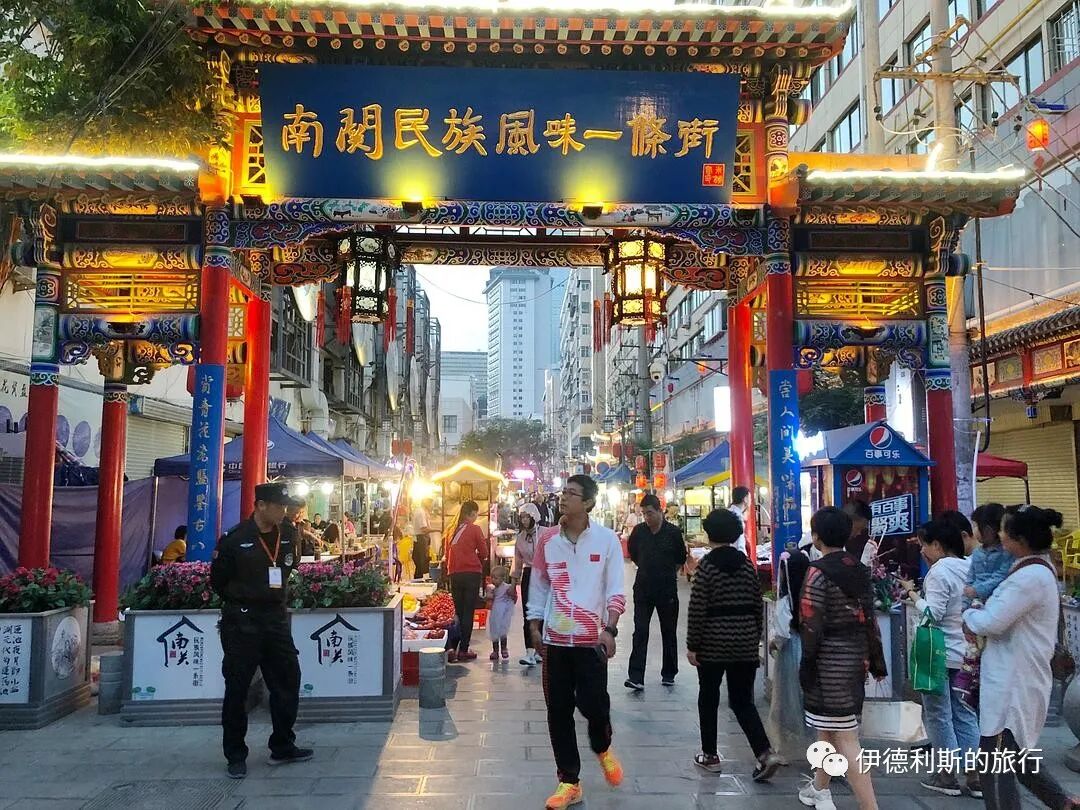
Nanguan Night Market opened in 2018. Because of its good location, it is very crowded, though not as internet-famous as Zhengning Road.
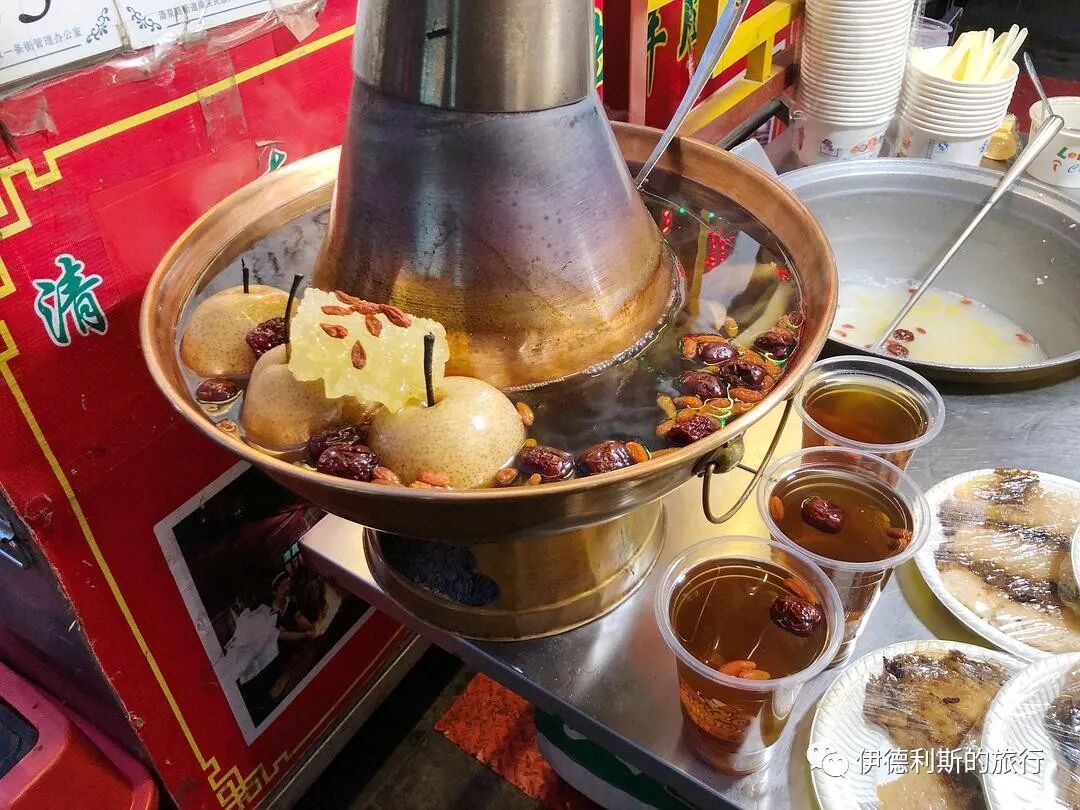
I drank hot winter fruit tea (re dongguo) and apricot skin tea (xingpi shui) here. Hot winter fruit tea is usually drunk in winter; it is made by steaming and boiling frozen pears.
I had tried apricot skin tea before in Zhangye; it is made from dried apricots and is very refreshing.
I ate the Linxia specialty, raft noodle sausage (fazi mianchang), which gets its name because it looks like a sheepskin raft.
The lamb soup served with it was truly delicious.
Then I bought a sugar oil cake (tangyou gao), which is usually sold for breakfast in Lanzhou; the sugar filling tasted great.
I bought fermented vegetable jelly noodles (jiangshui louyu) and fermented vegetable noodle soup (jiangshui saozi mian) at this stall.
Fermented vegetable broth (jiangshui) is made from celery and cabbage. It has a slightly sour taste and is very refreshing in the summer.
I had some sweet fermented wheat (tianbeizi) here, which is made from wheat.
The stir-fried lamb offal (chaobola) here looked delicious, but I was too full to try it.
Old Ma's Milk and Egg Fermented Rice (laoma niunai jidan laozao) on Zhengning Road.
I walked from Nanguan Night Market to Lanzhou's most famous Zhengning Road Night Market. While there, I grabbed a bowl of Old Ma's Milk and Egg Fermented Rice, which had the longest line. view all
Summary: Halal Food Guide: Lanzhou Night Market — Muslim Snacks and Local Streets is presented here as a firsthand travel account in clear English, beginning with this scene: On the 28th day of the fourth lunar month in 2019, I came to Lanzhou to see the famous Songmingyan Flower Festival (hua'er hui) and took the chance to explore the night markets. The account keeps its focus on Lanzhou Night Market, Halal Snacks, Gansu Food while preserving the names, places, food, and historical details from the Chinese source.
On the 28th day of the fourth lunar month in 2019, I came to Lanzhou to see the famous Songmingyan Flower Festival (hua'er hui) and took the chance to explore the night markets. I mainly ate at the Xizhan and Nanguan night markets.
Xizhan Night Market
Xizhan Night Market is located on the southern section of Jianlan Road at the Xizhan intersection in Lanzhou. It is not as famous as the Nanguan or Zhengning Road night markets, but it has a better vibe. It has not been affected by tourism and has no internet-famous shops; it is a purely authentic, local night market.
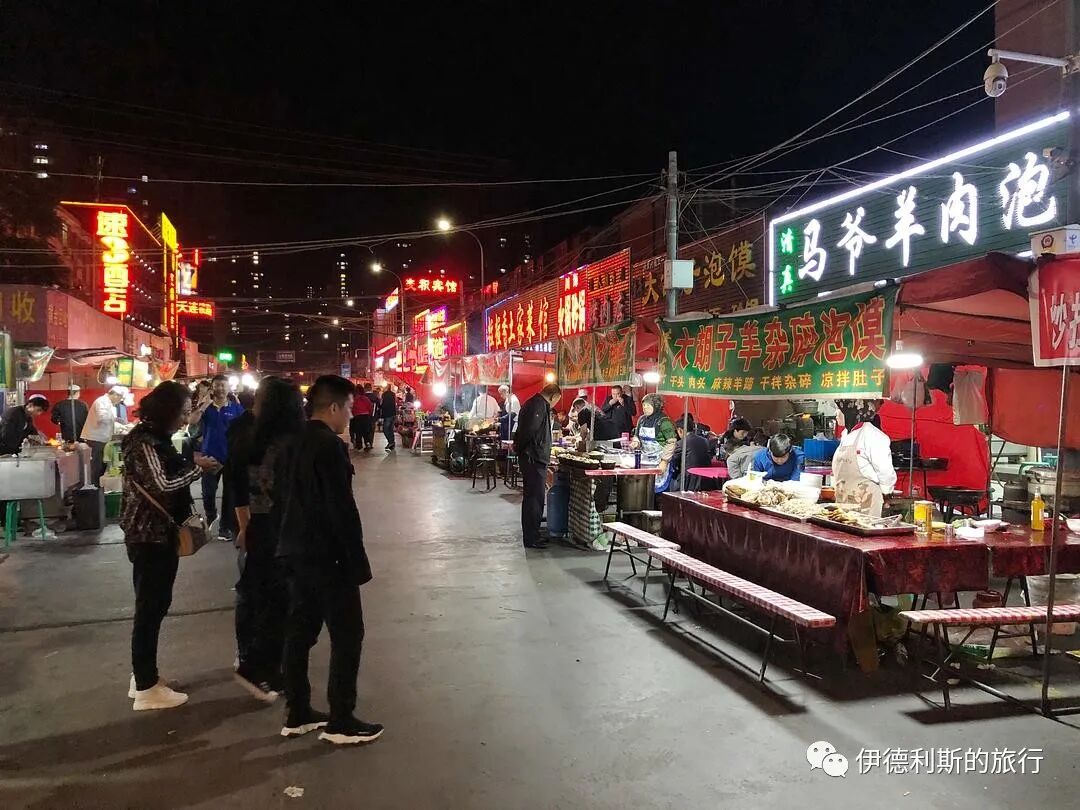
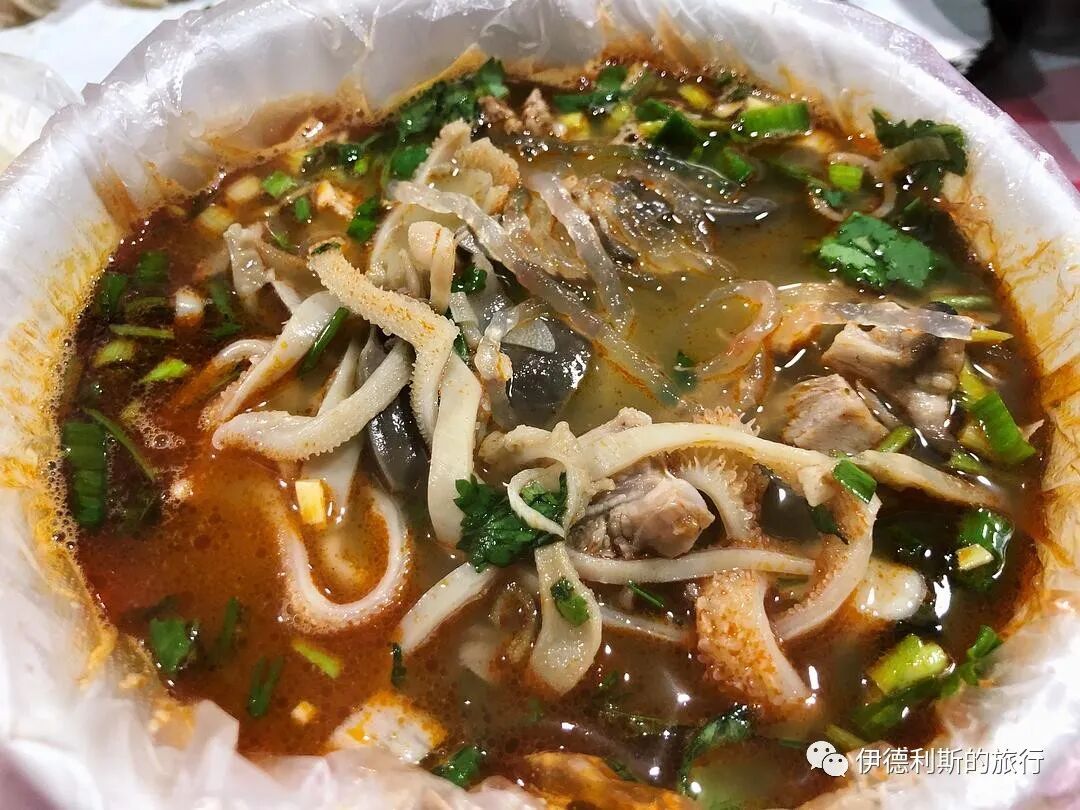
I started with a bowl of lamb offal soup (yangza tang), which was about ten times better than the one back home.
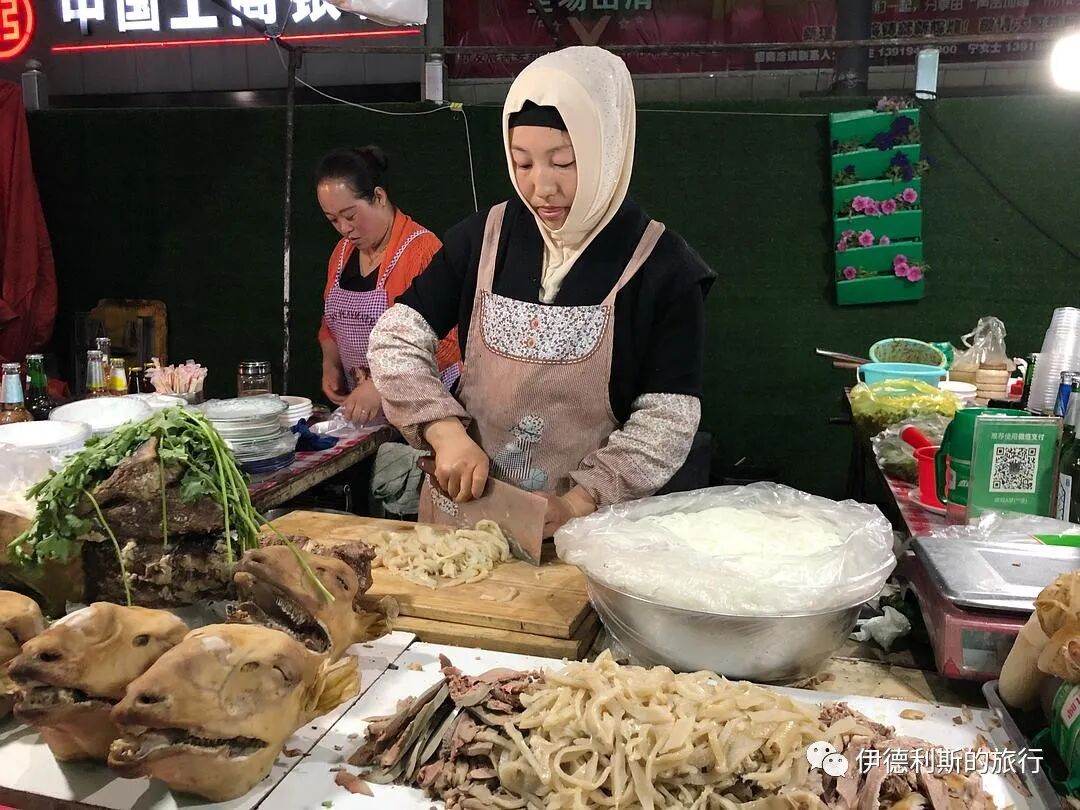
Then I had the Lanzhou specialty, milk egg fermented rice (niunai jidan laozao), which was sweet and delicious.
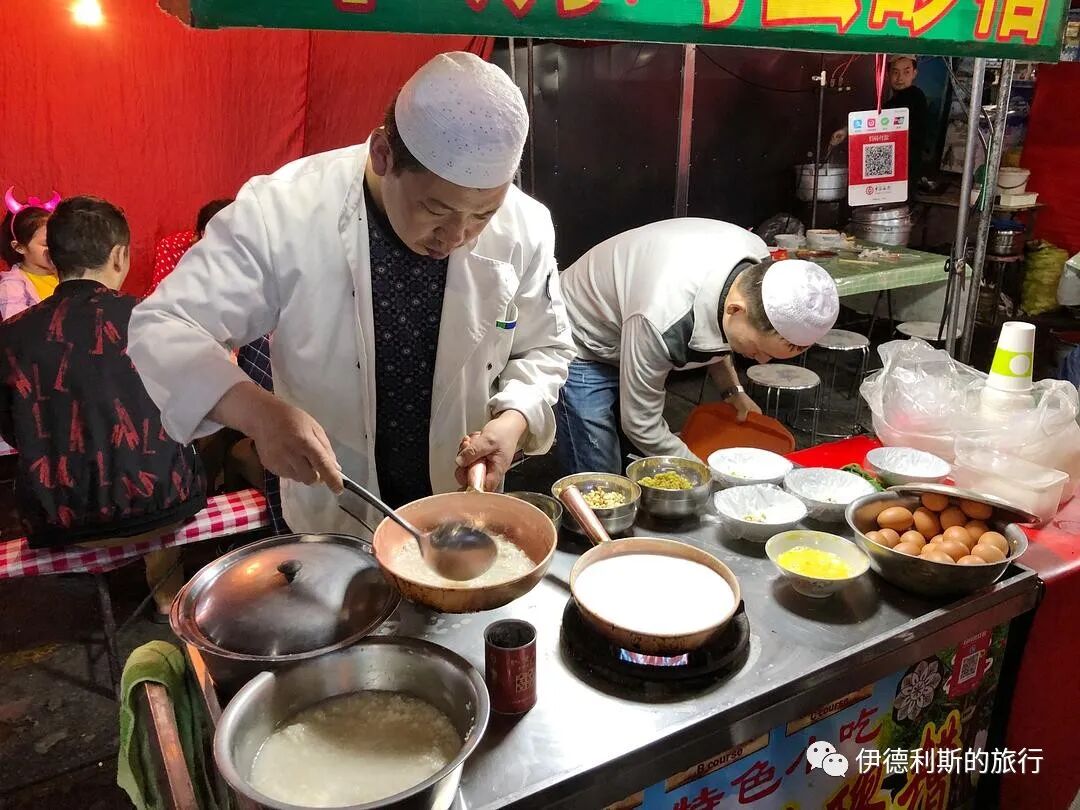
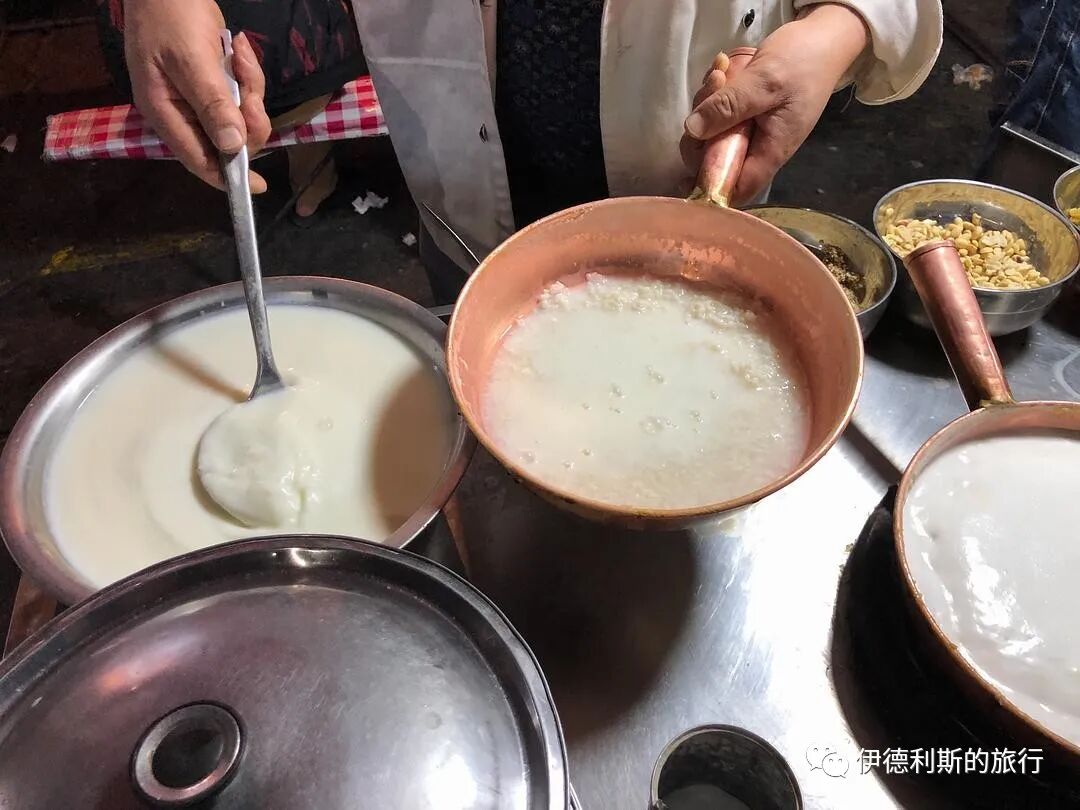
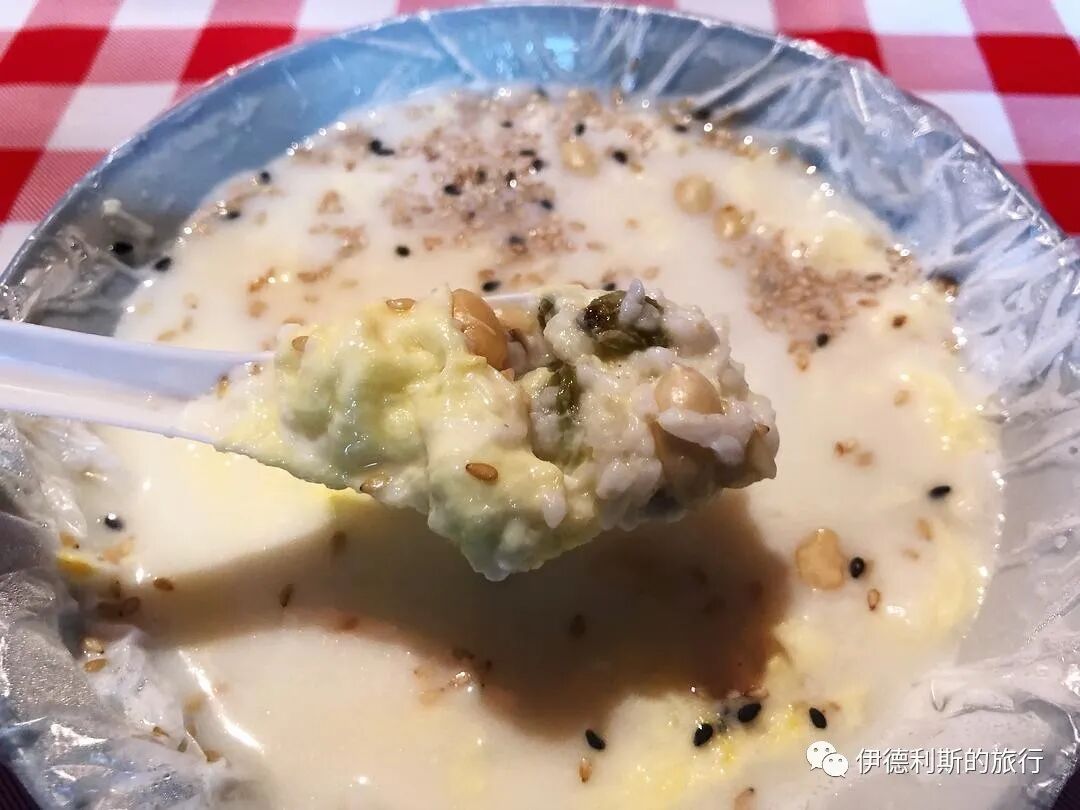
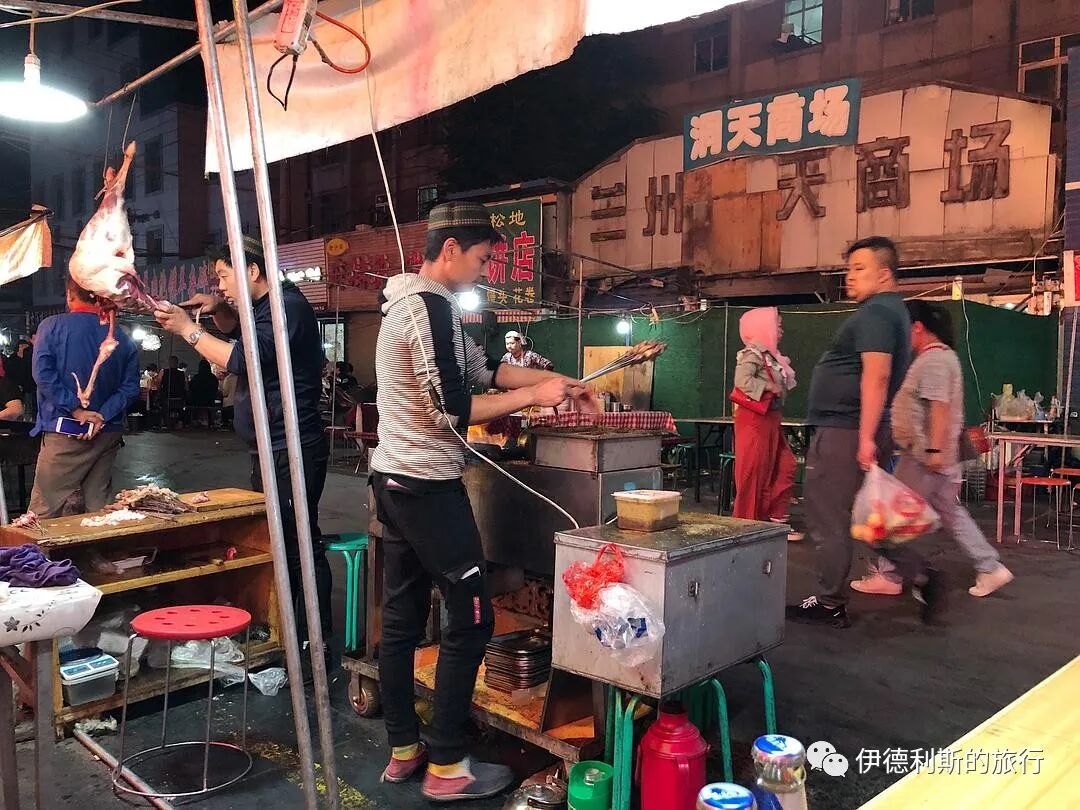
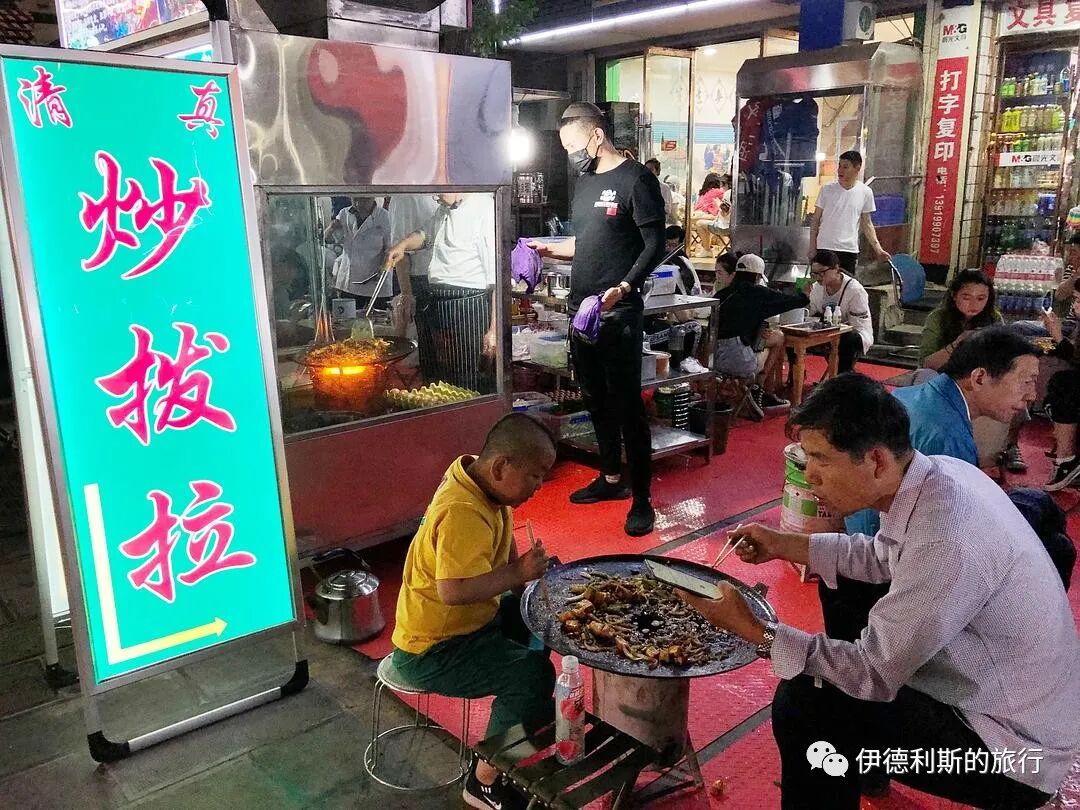
After that, I ate grilled lamb skewers. At a night market, it is best to choose a stall where they cut the meat and thread the skewers right in front of you.
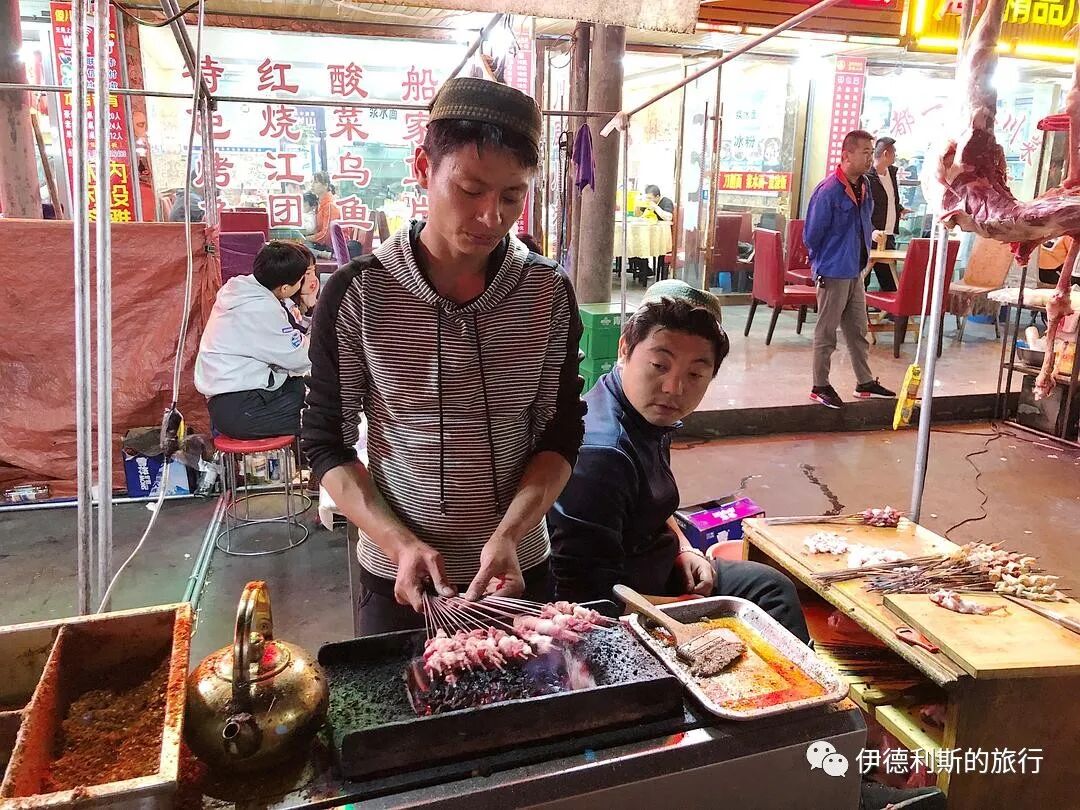
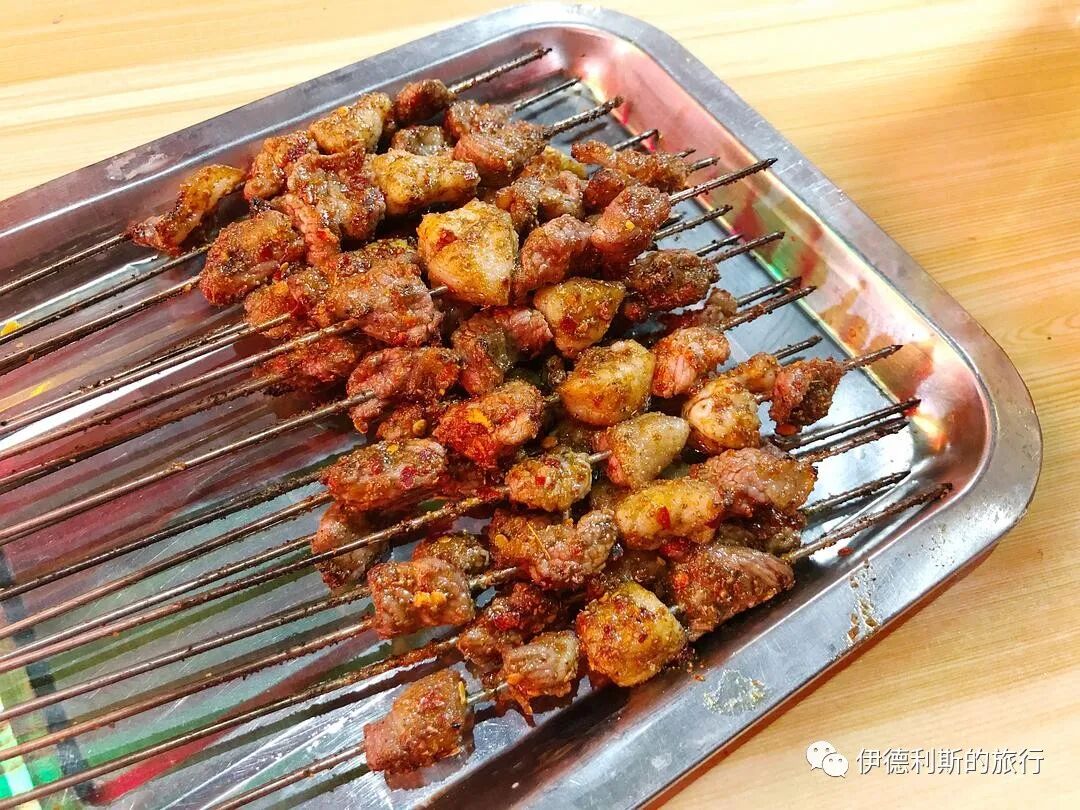
The young man cutting the meat.
Nanguan Night Market
Nanguan Night Market opened in 2018. Because of its good location, it is very crowded, though not as internet-famous as Zhengning Road.
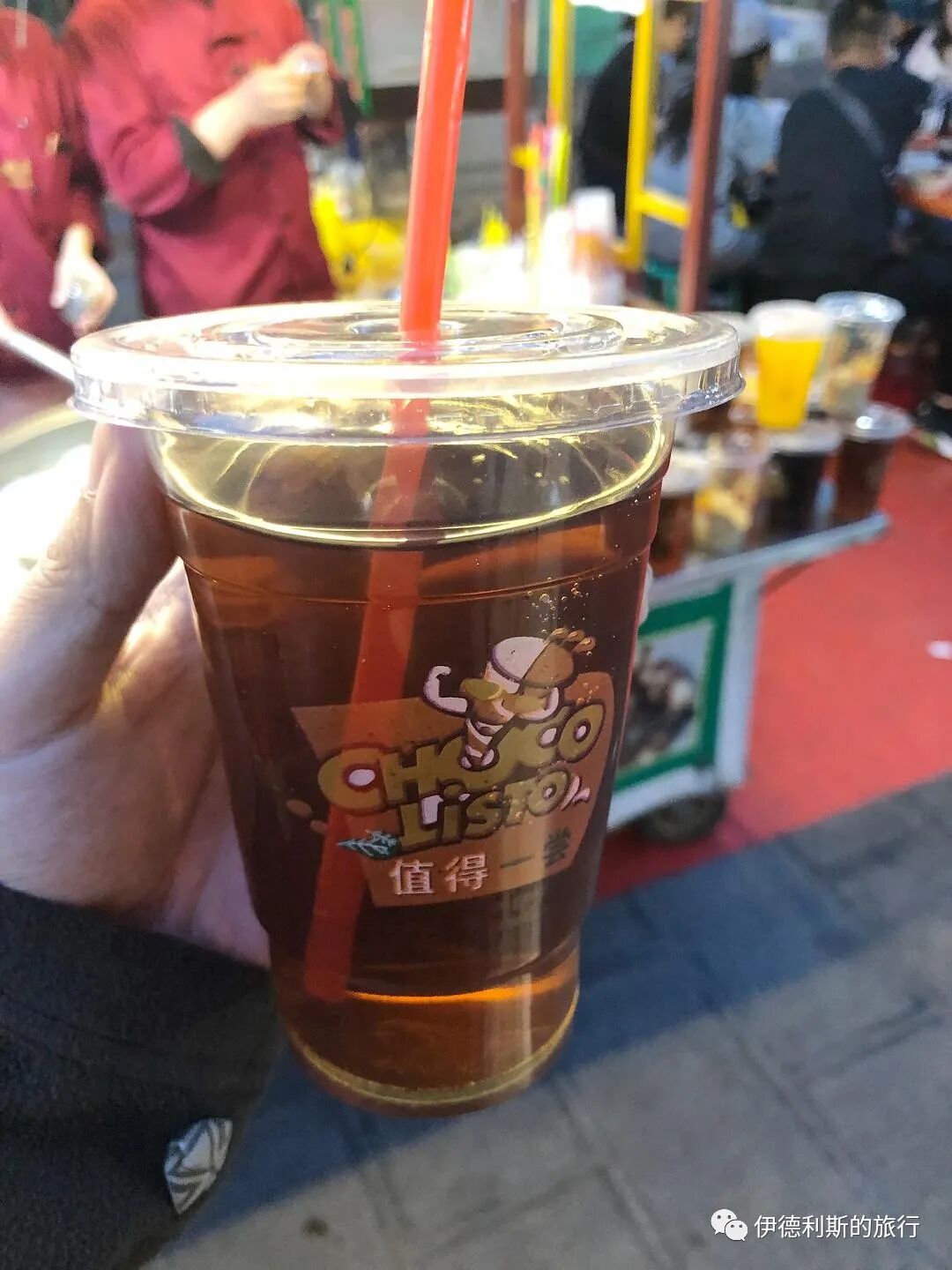
I drank hot winter fruit tea (re dongguo) and apricot skin tea (xingpi shui) here. Hot winter fruit tea is usually drunk in winter; it is made by steaming and boiling frozen pears.
I had tried apricot skin tea before in Zhangye; it is made from dried apricots and is very refreshing.
I ate the Linxia specialty, raft noodle sausage (fazi mianchang), which gets its name because it looks like a sheepskin raft.
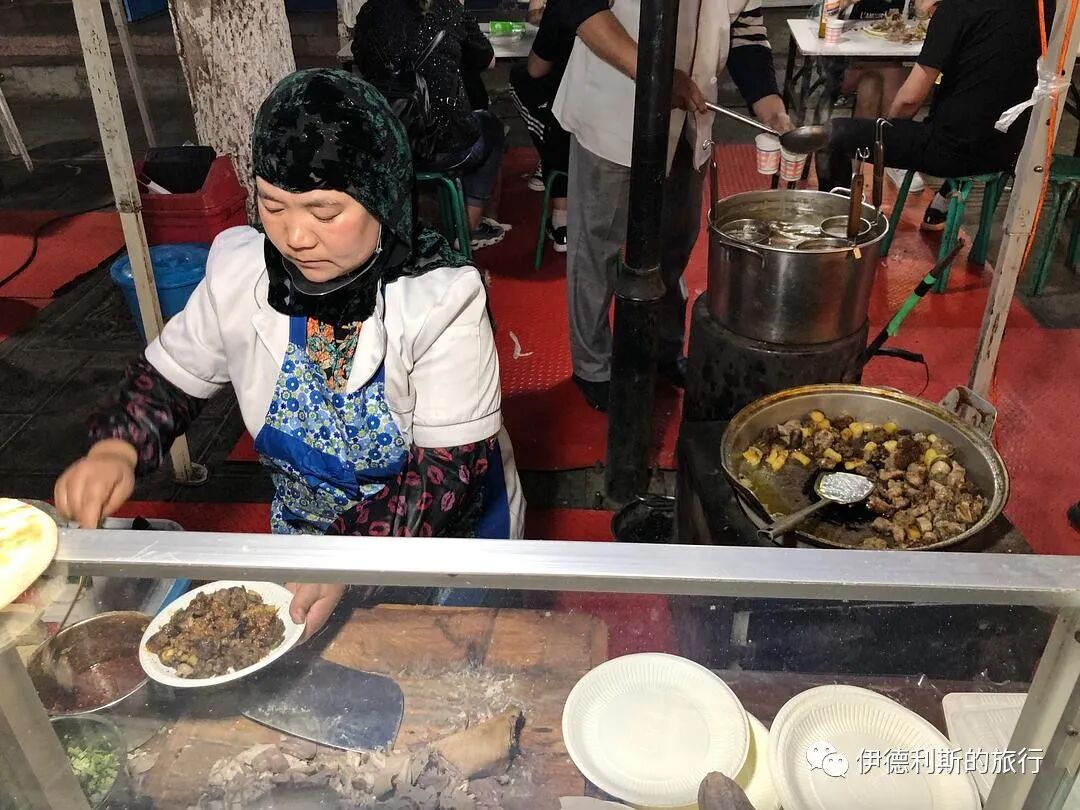
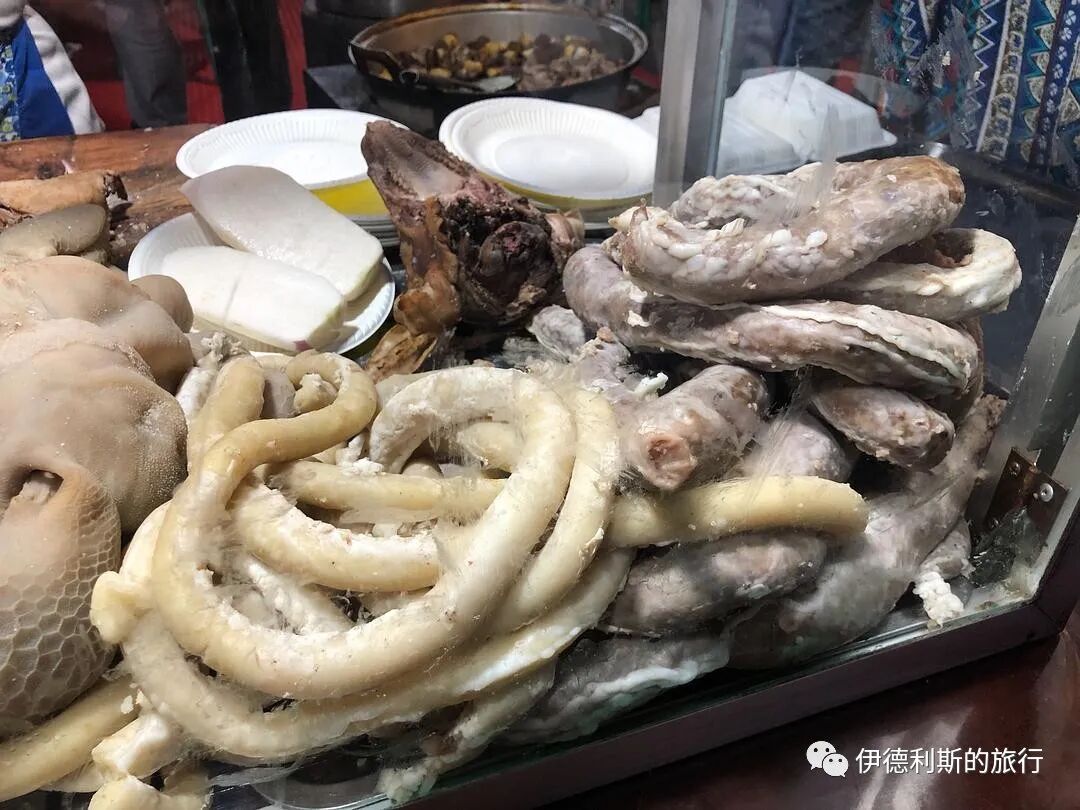
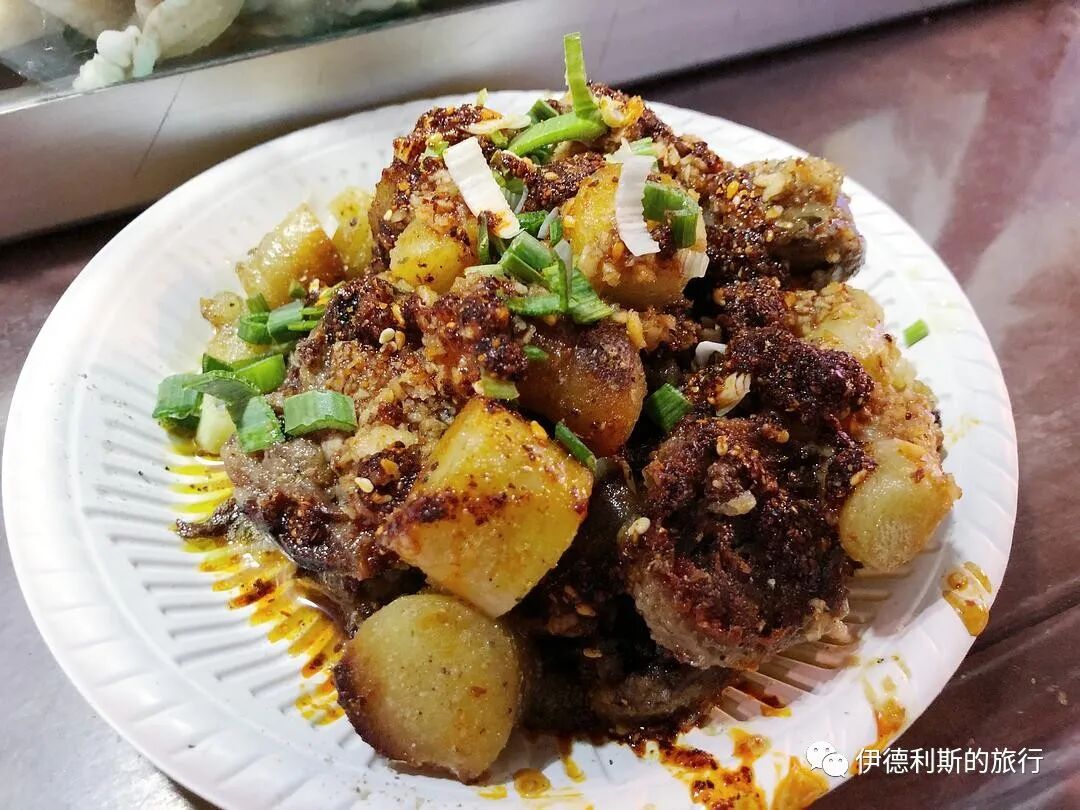
The lamb soup served with it was truly delicious.
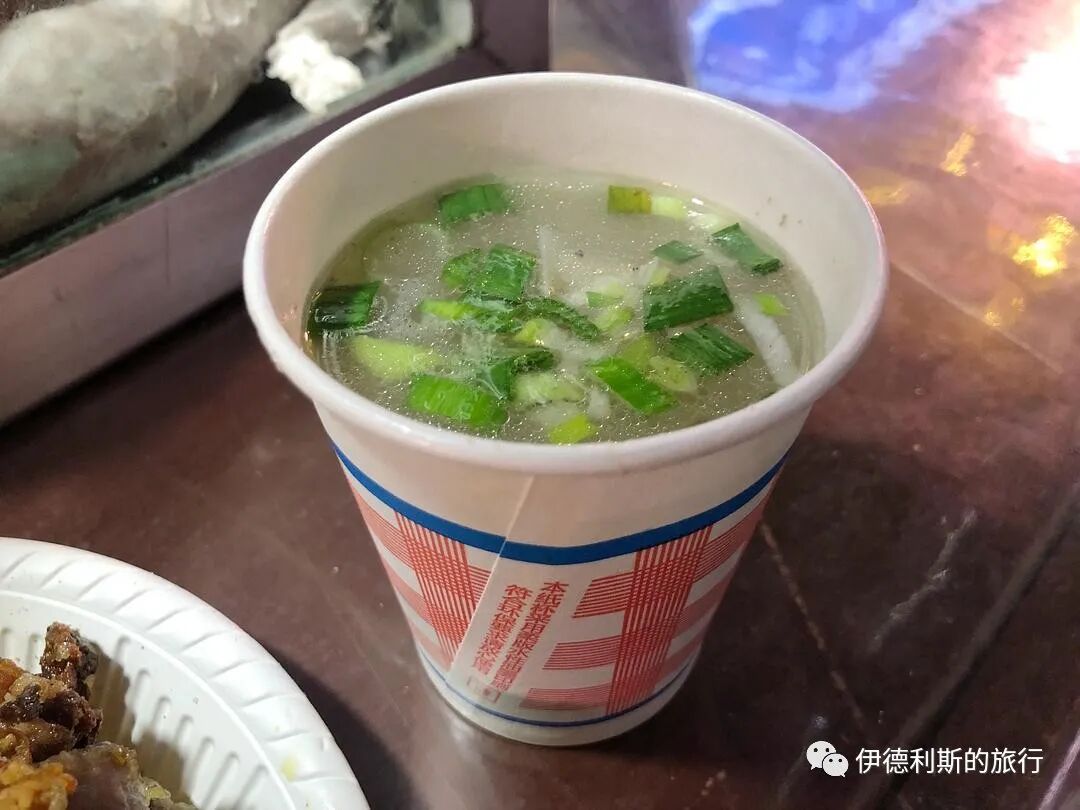
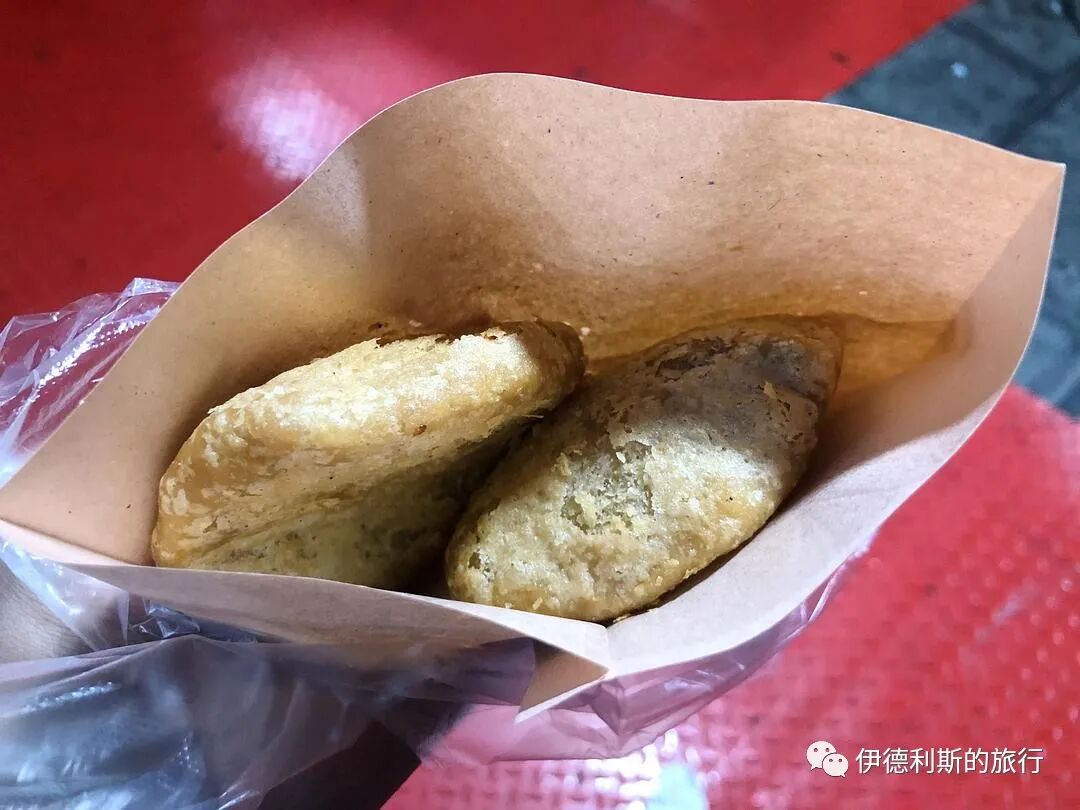
Then I bought a sugar oil cake (tangyou gao), which is usually sold for breakfast in Lanzhou; the sugar filling tasted great.
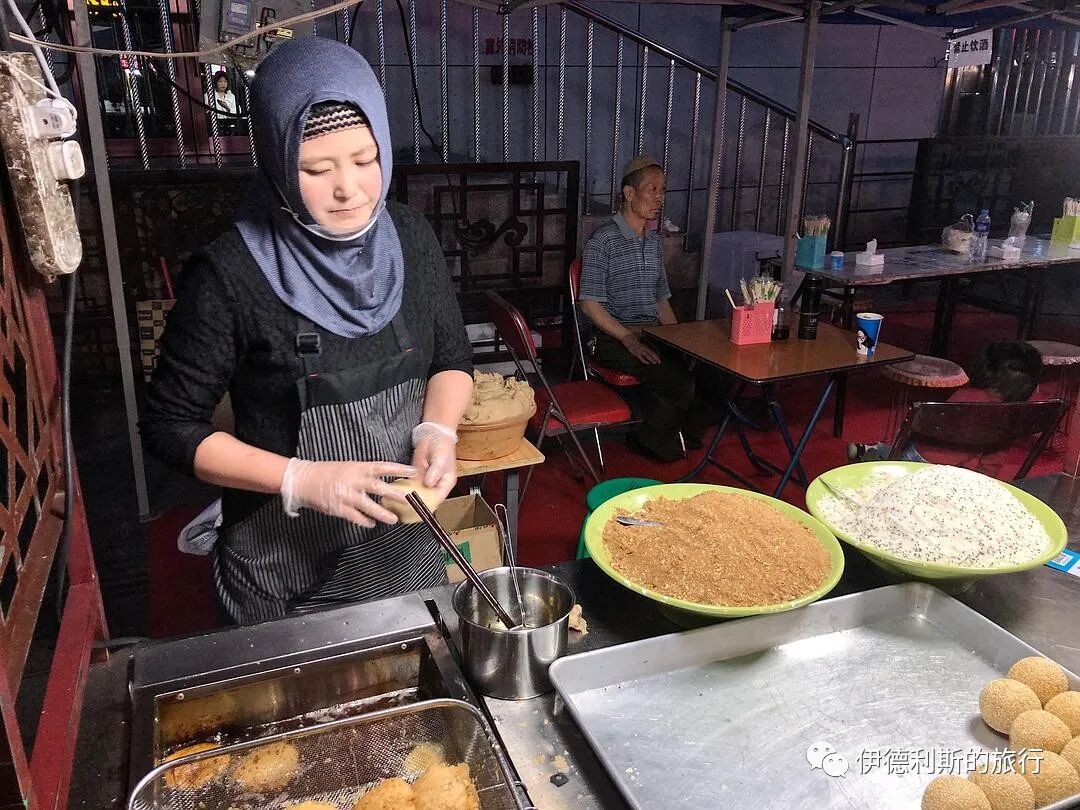
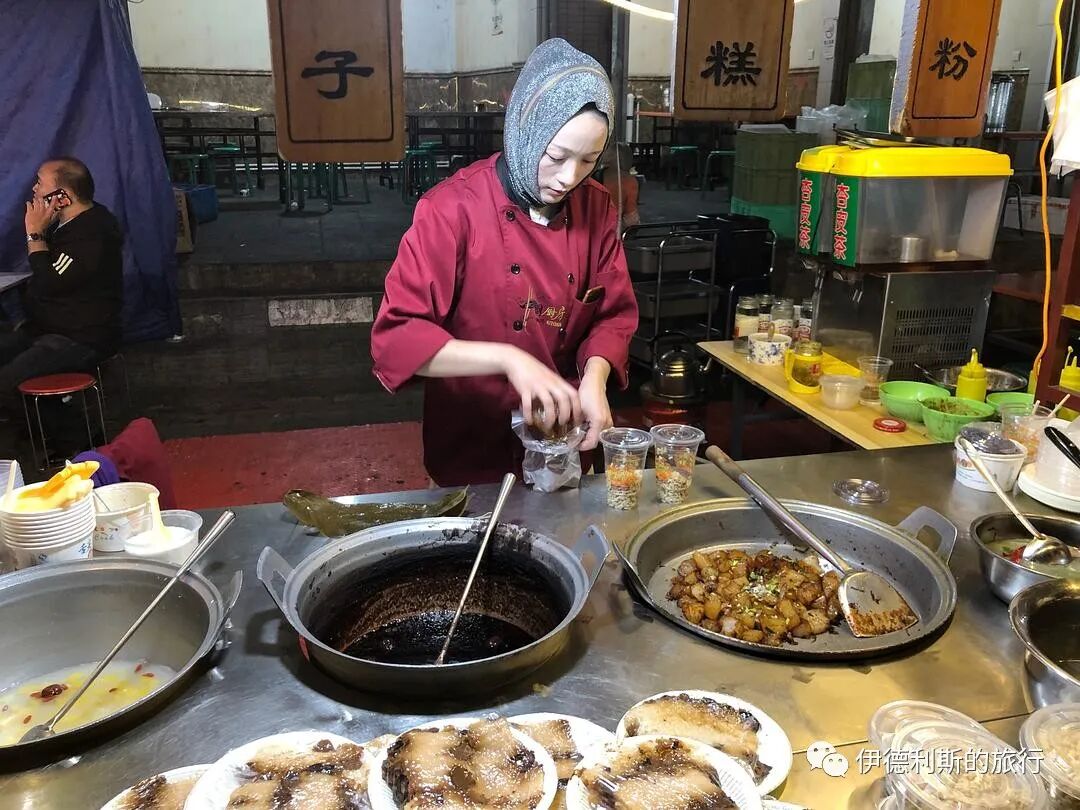
I bought fermented vegetable jelly noodles (jiangshui louyu) and fermented vegetable noodle soup (jiangshui saozi mian) at this stall.
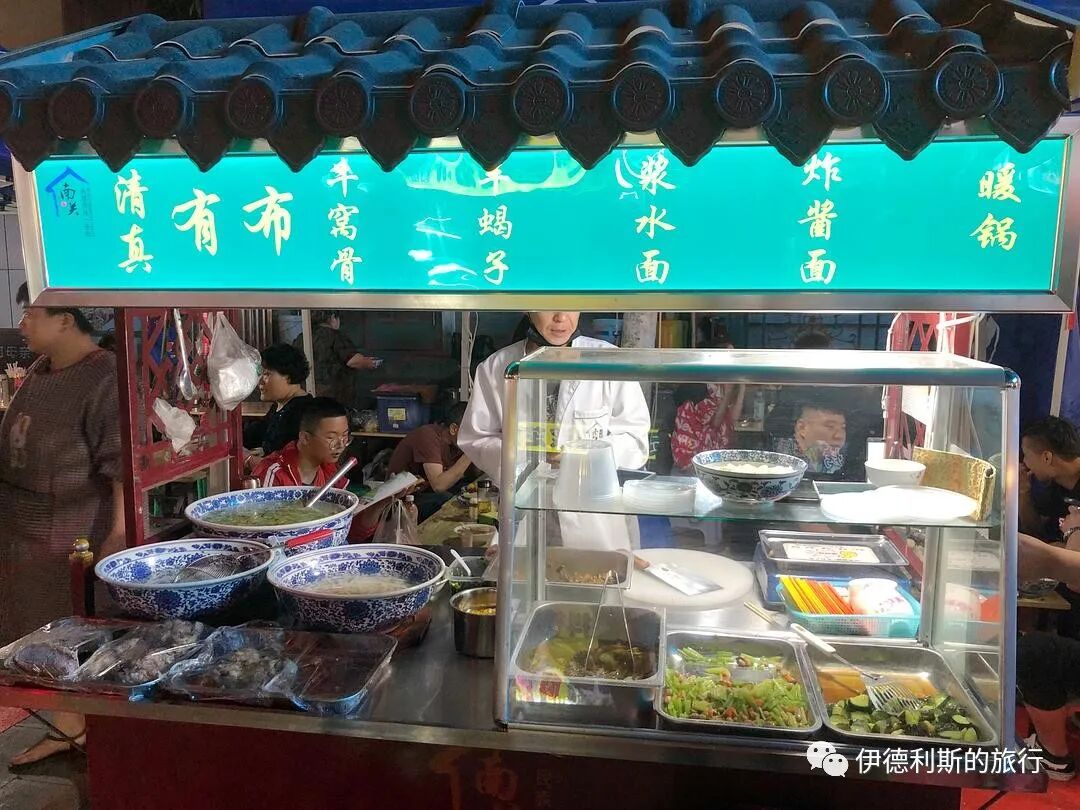
Fermented vegetable broth (jiangshui) is made from celery and cabbage. It has a slightly sour taste and is very refreshing in the summer.
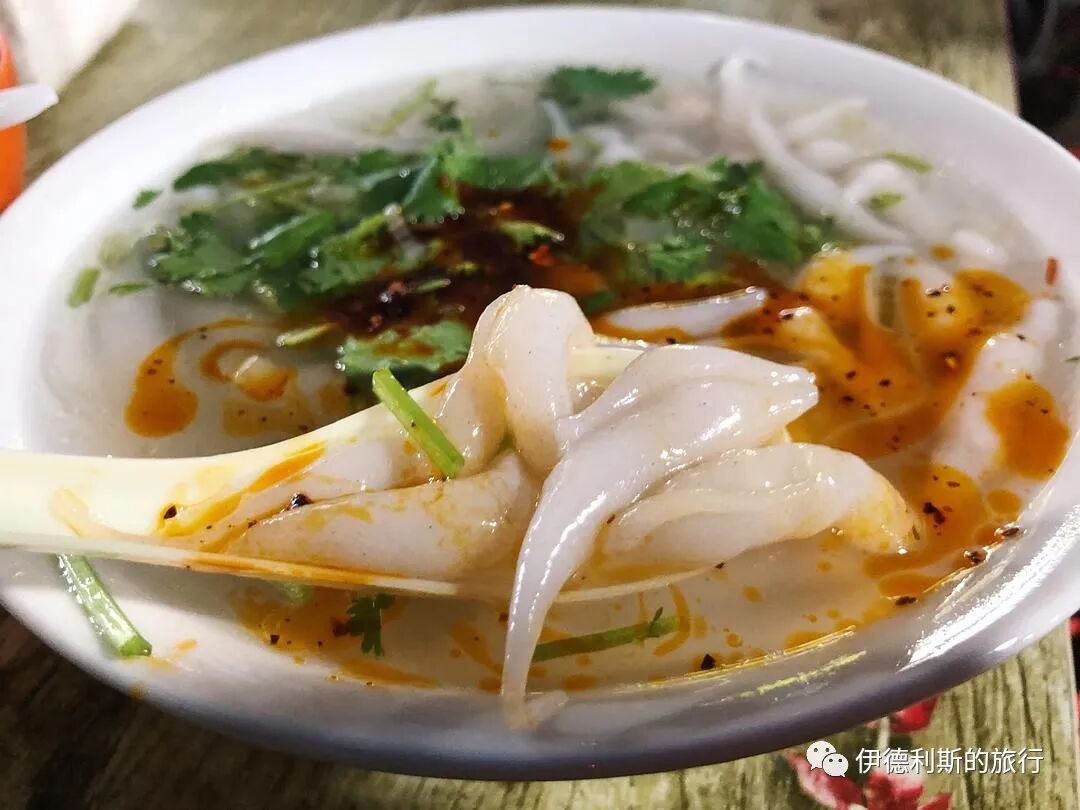
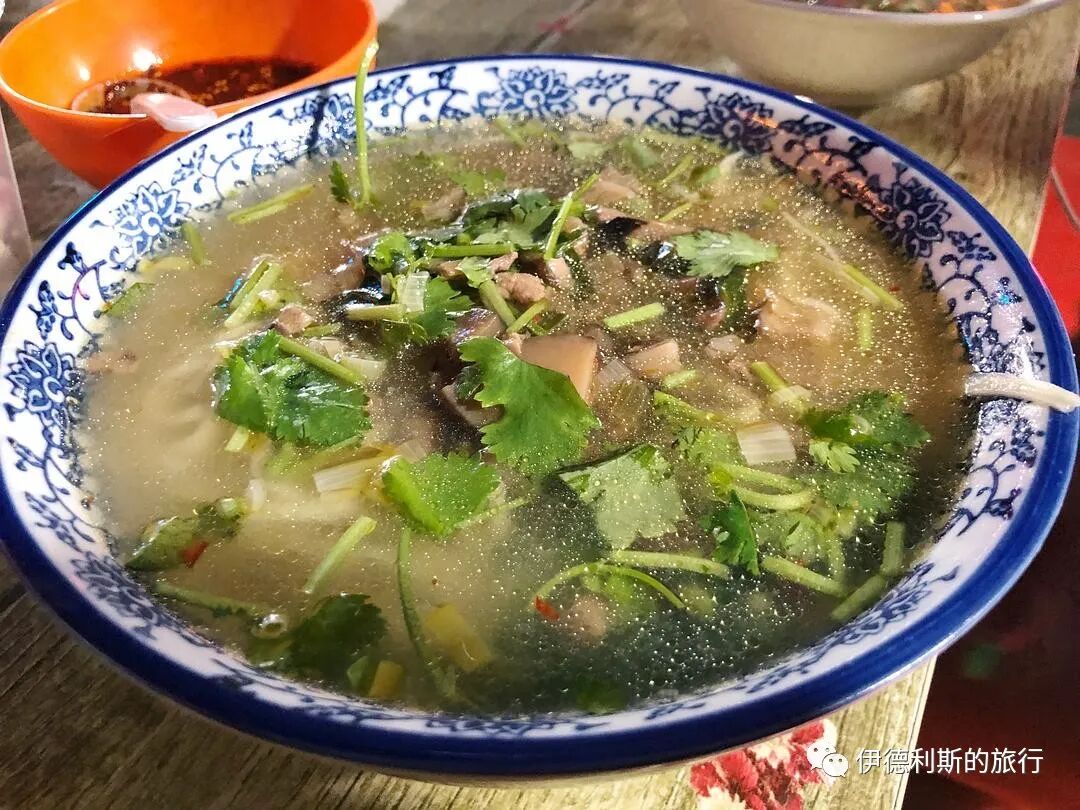
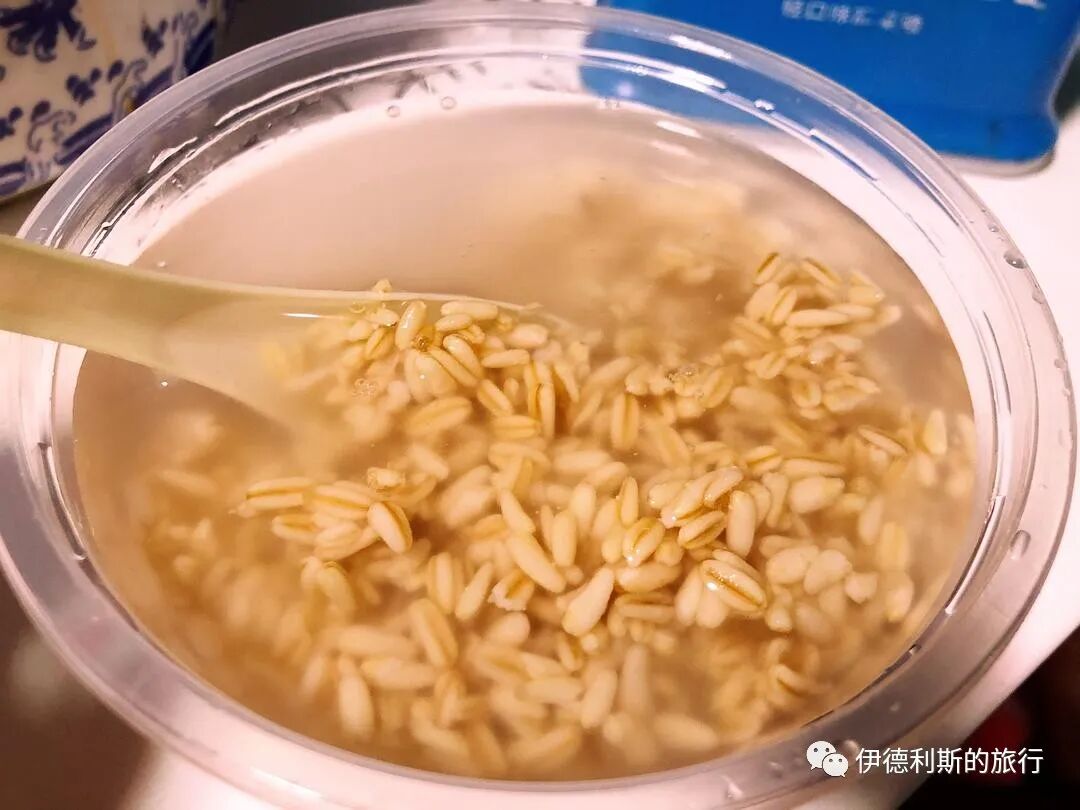
I had some sweet fermented wheat (tianbeizi) here, which is made from wheat.
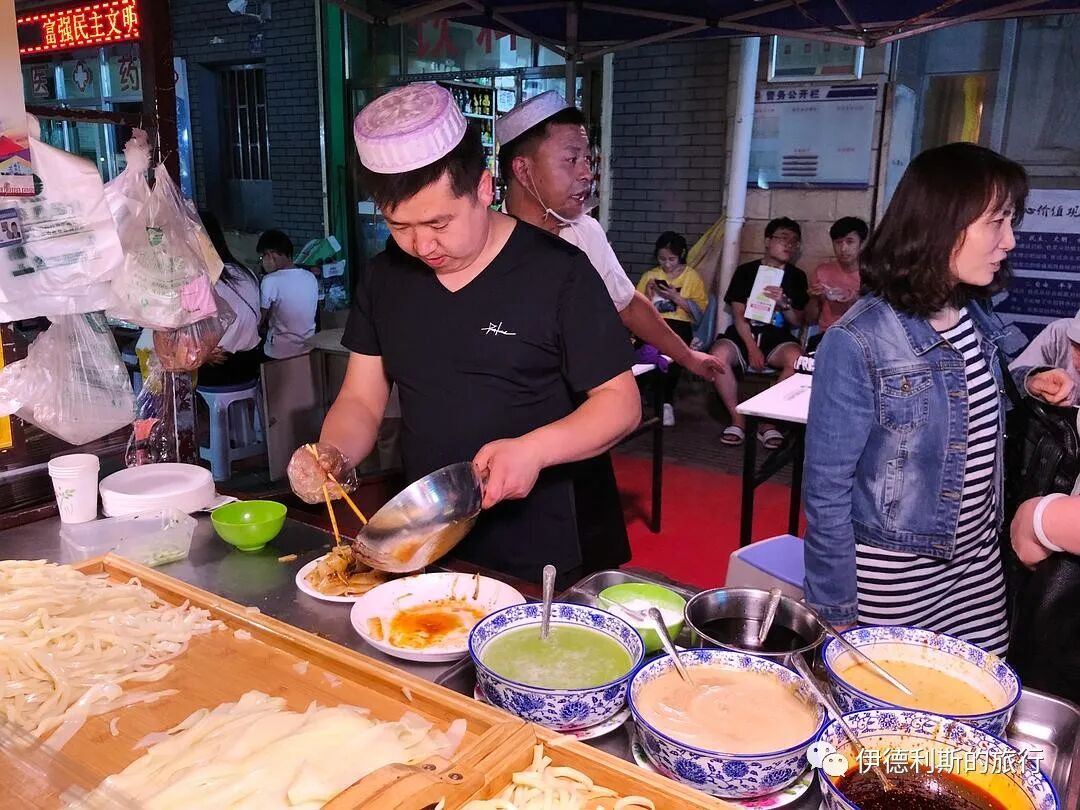
The stir-fried lamb offal (chaobola) here looked delicious, but I was too full to try it.
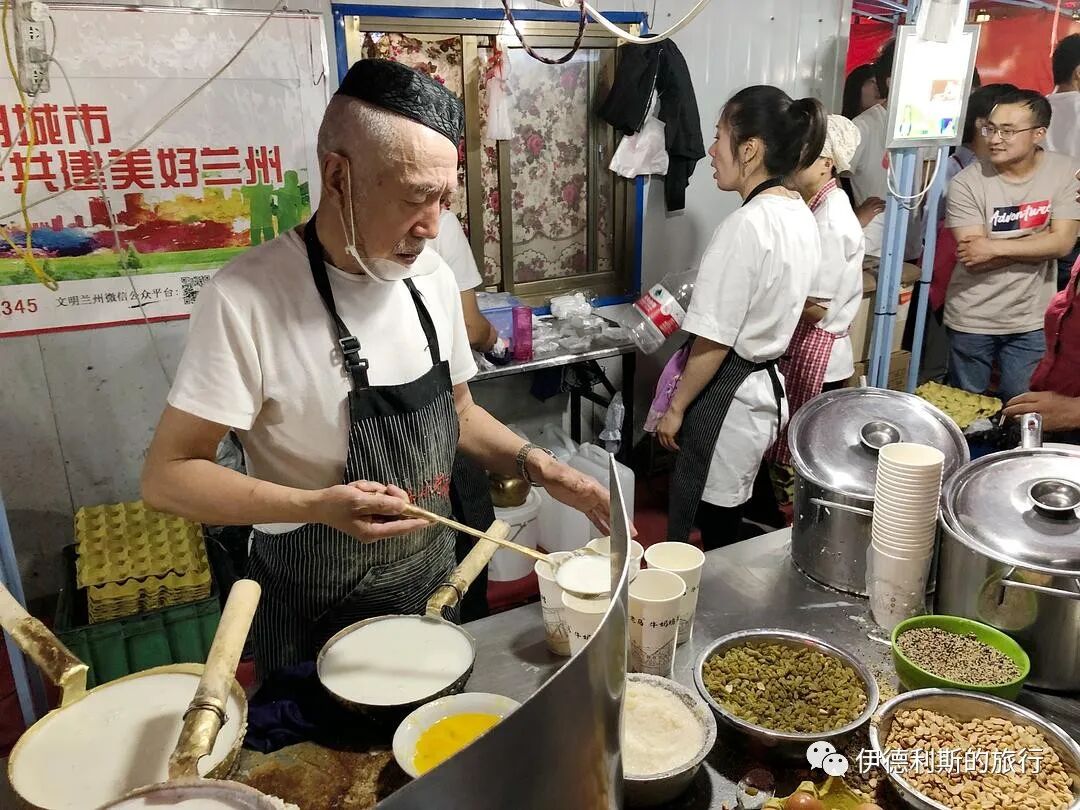
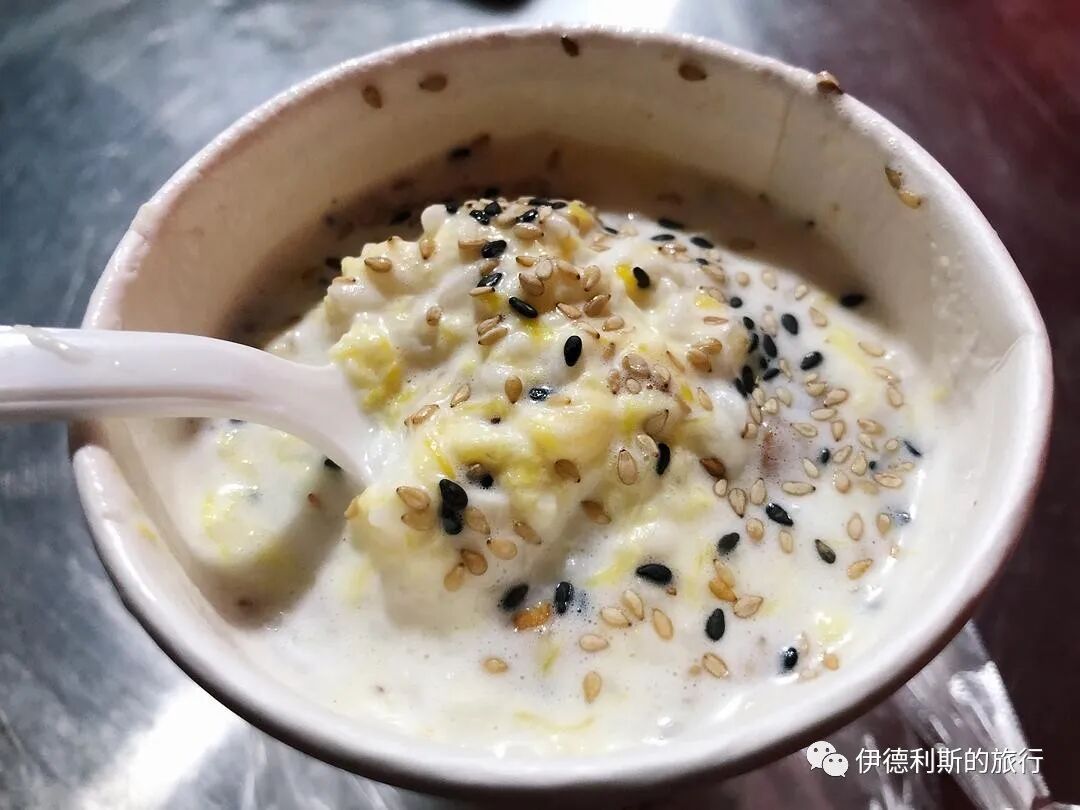
Old Ma's Milk and Egg Fermented Rice (laoma niunai jidan laozao) on Zhengning Road.
I walked from Nanguan Night Market to Lanzhou's most famous Zhengning Road Night Market. While there, I grabbed a bowl of Old Ma's Milk and Egg Fermented Rice, which had the longest line.
Halal Food Guide: Linxia Night Market — Hui Muslim Snacks and Street Food
Articles • ali2007fr posted the article • 0 comments • 196 views • 2026-05-18 01:27
Summary: Halal Food Guide: Linxia Night Market — Hui Muslim Snacks and Street Food is presented here as a firsthand travel account in clear English, beginning with this scene: I went to Gansu in May 2019 to listen to folk songs (hua'er), then stopped by Linxia to explore the food. The account keeps its focus on Linxia Food, Halal Snacks, Hui Muslims while preserving the names, places, food, and historical details from the Chinese source.
I went to Gansu in May 2019 to listen to folk songs (hua'er), then stopped by Linxia to explore the food.
Linxia North Street Night Market
Every day after sunset, Linxia North Street turns into a lively night market for snacks.
This Dongxiang stall was packed with customers. Listening to the young man speak the Dongxiang language, which sounds a lot like Mongolian, felt like stepping back into the Mongol Empire era.
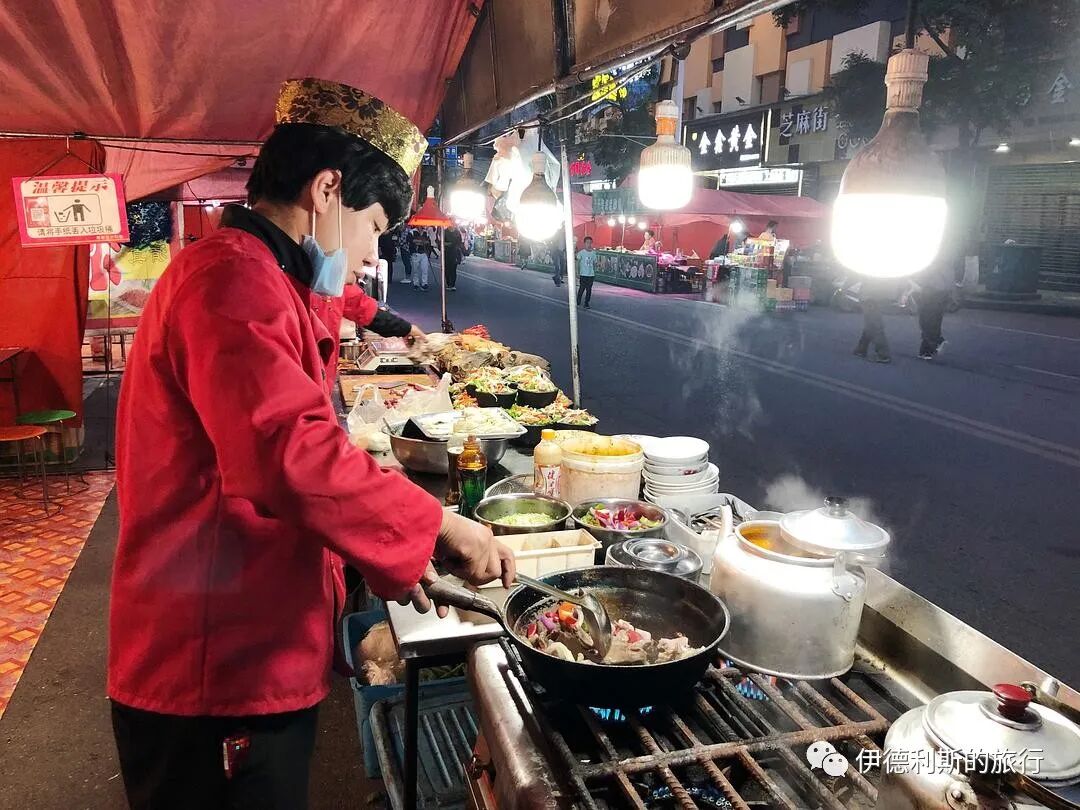
I had lamb clay pot (yangrou shaguo) and lamb skewers (yangrou chuan). The clay pot tasted very fresh and delicious.
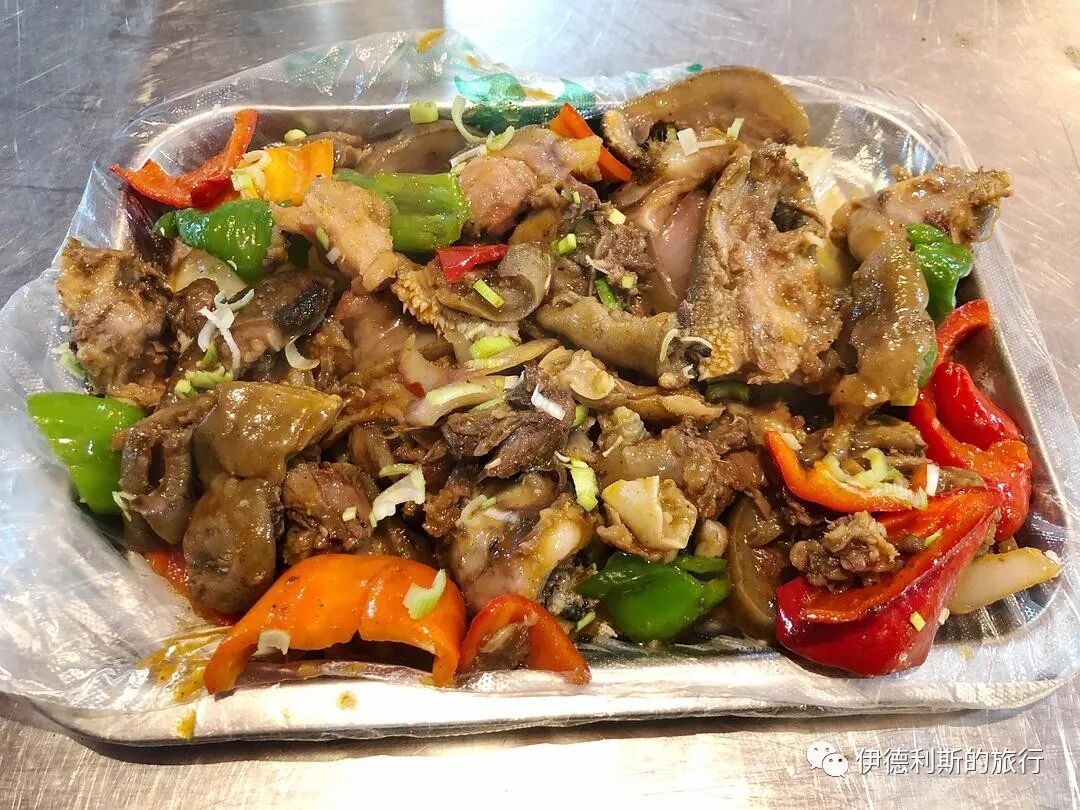
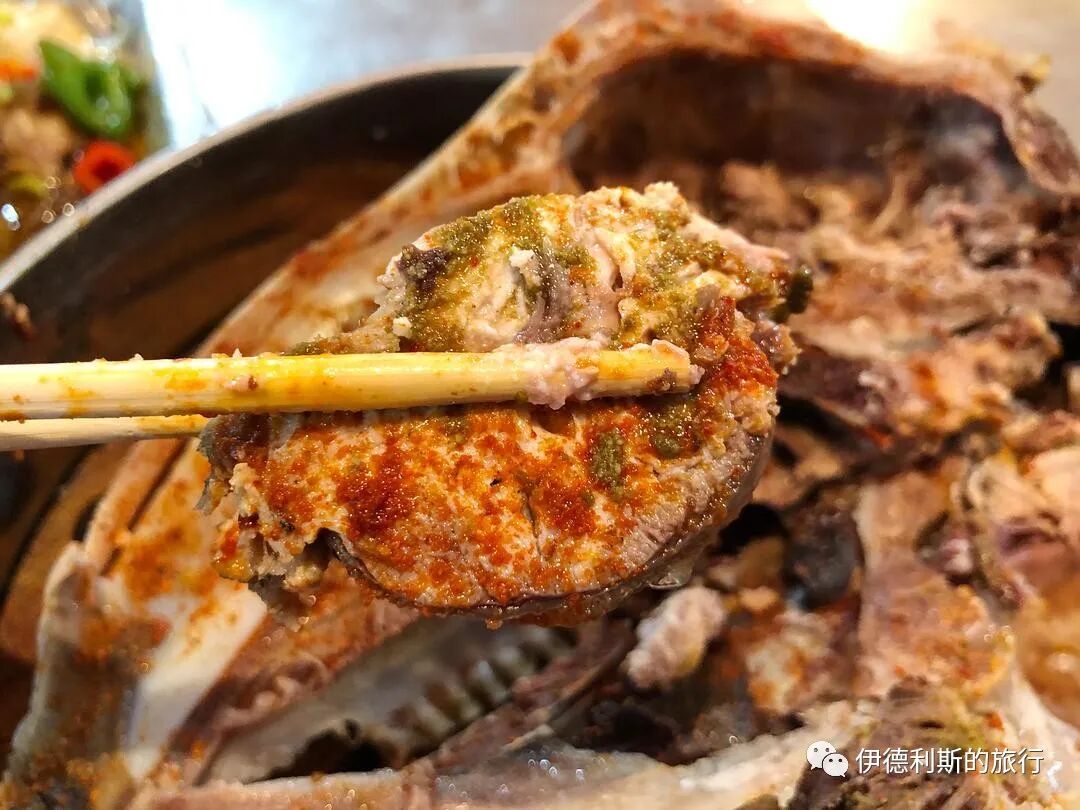
I also ate lamb head at this shop. The name 'Nuhai' actually refers to Noah from Noah's Ark. The stir-fried lamb head meat, steamed lamb brains, and steamed lamb neck were all incredibly tasty.
Lamb brains
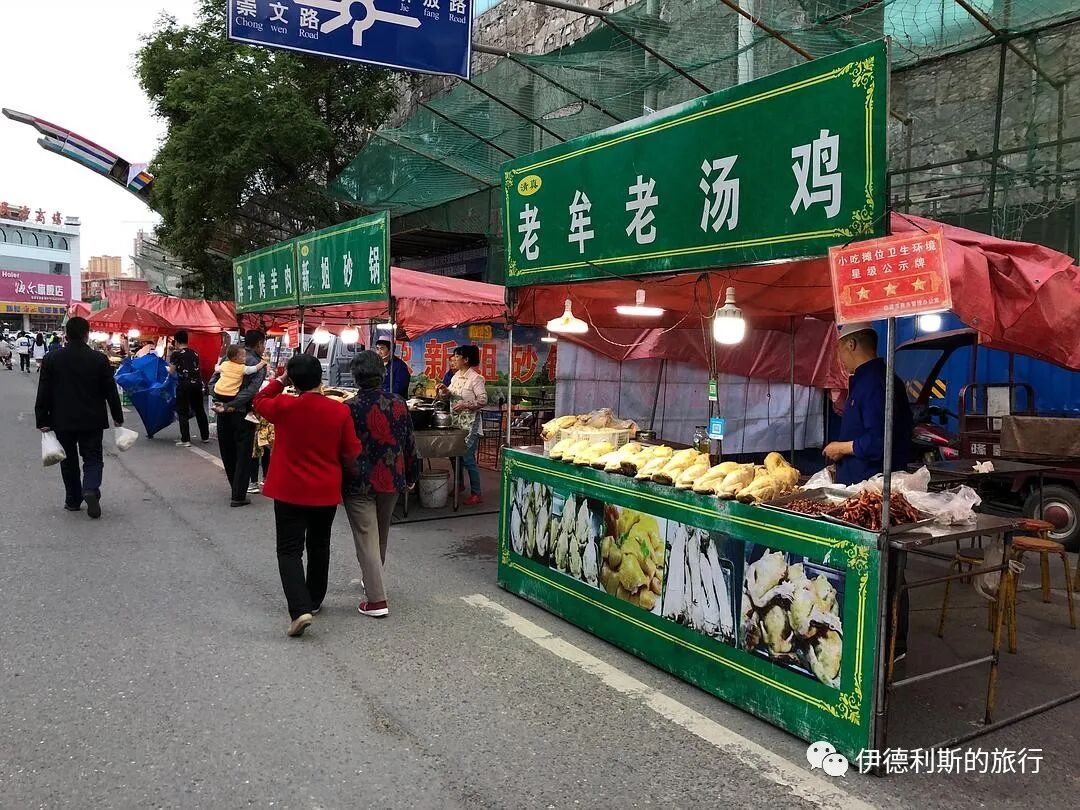
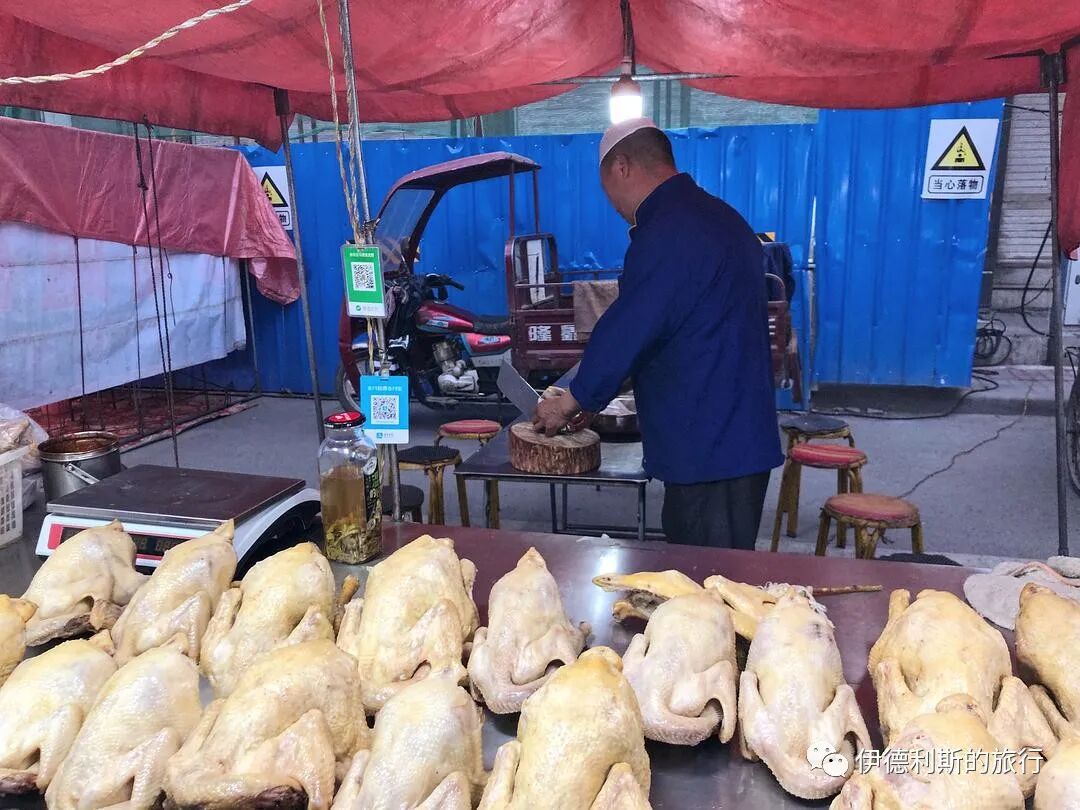
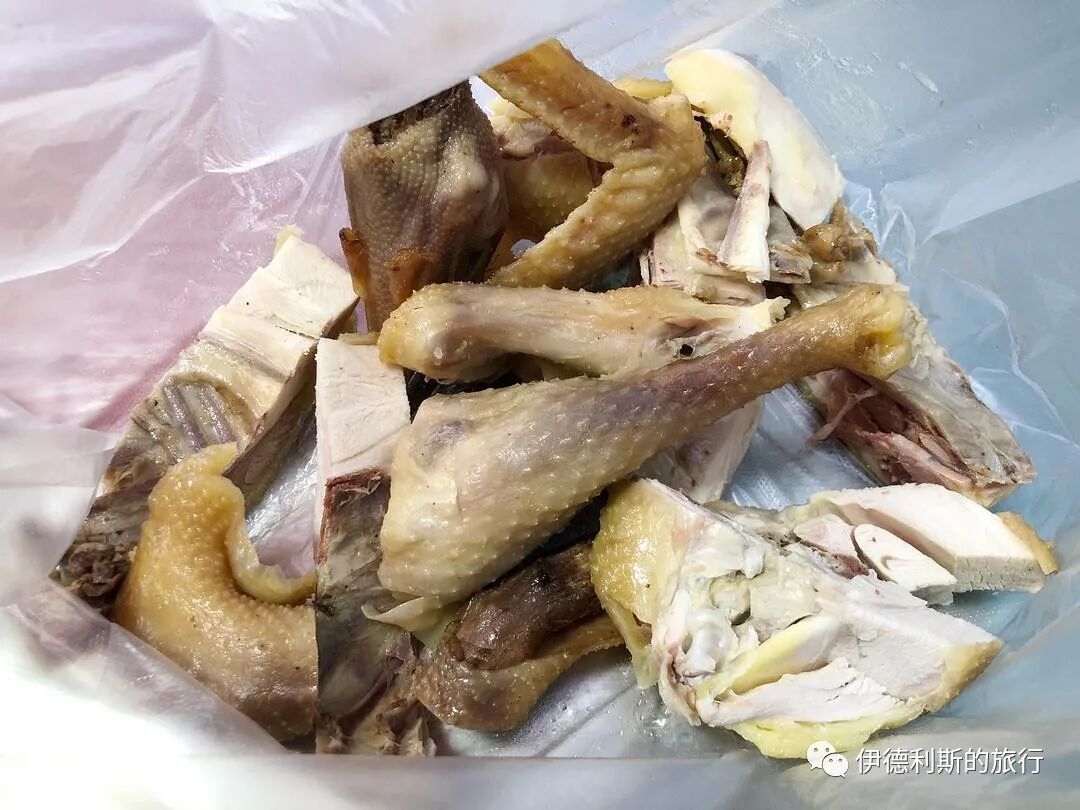
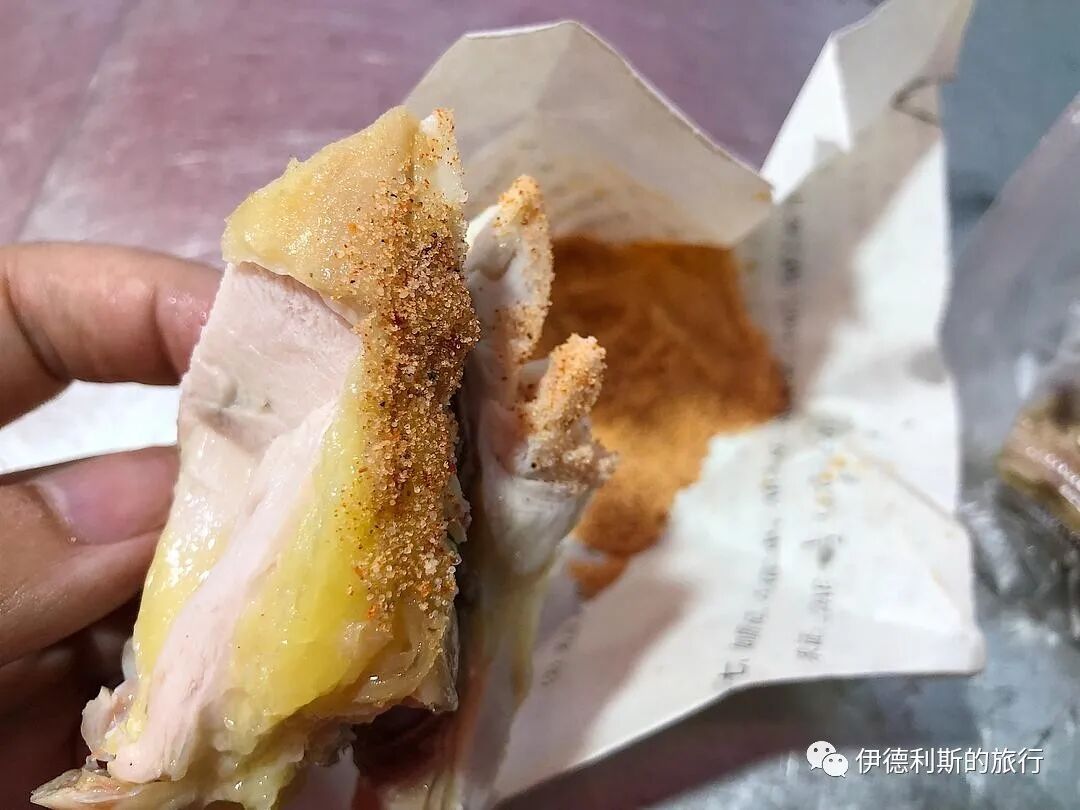
I ate old-broth chicken (laotang ji) at this shop, but when I returned in 2021, this row of stalls at the night market was gone.
Linxia snacks
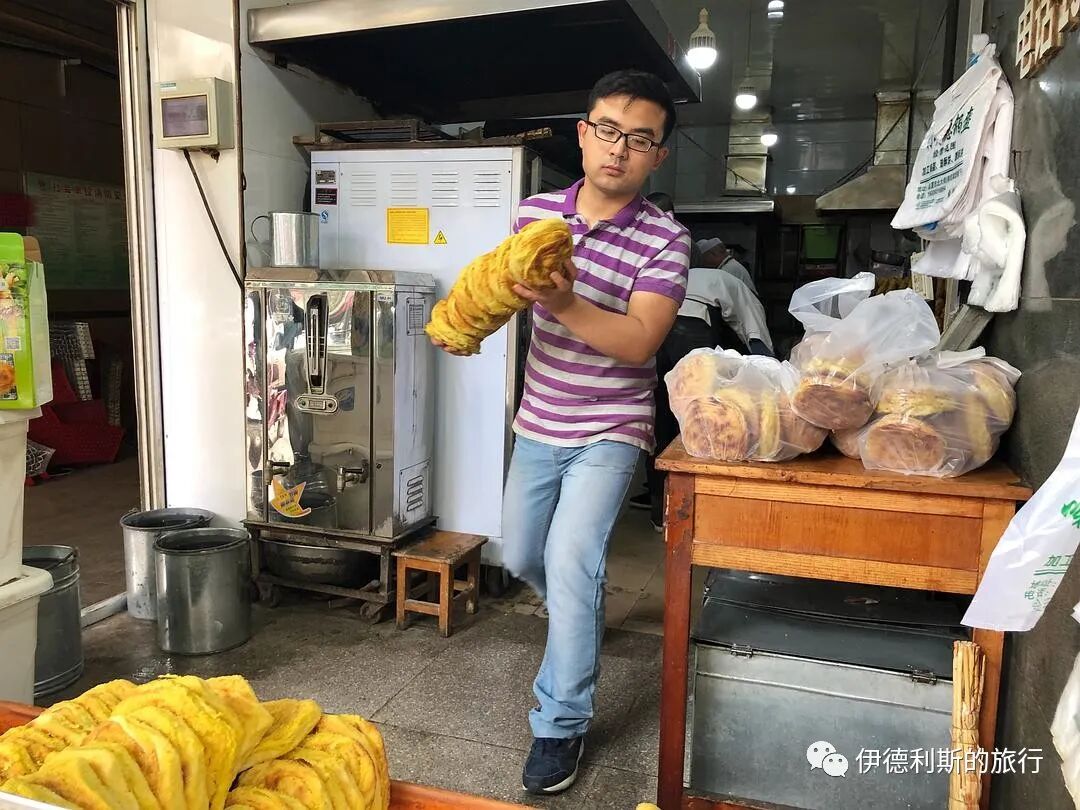
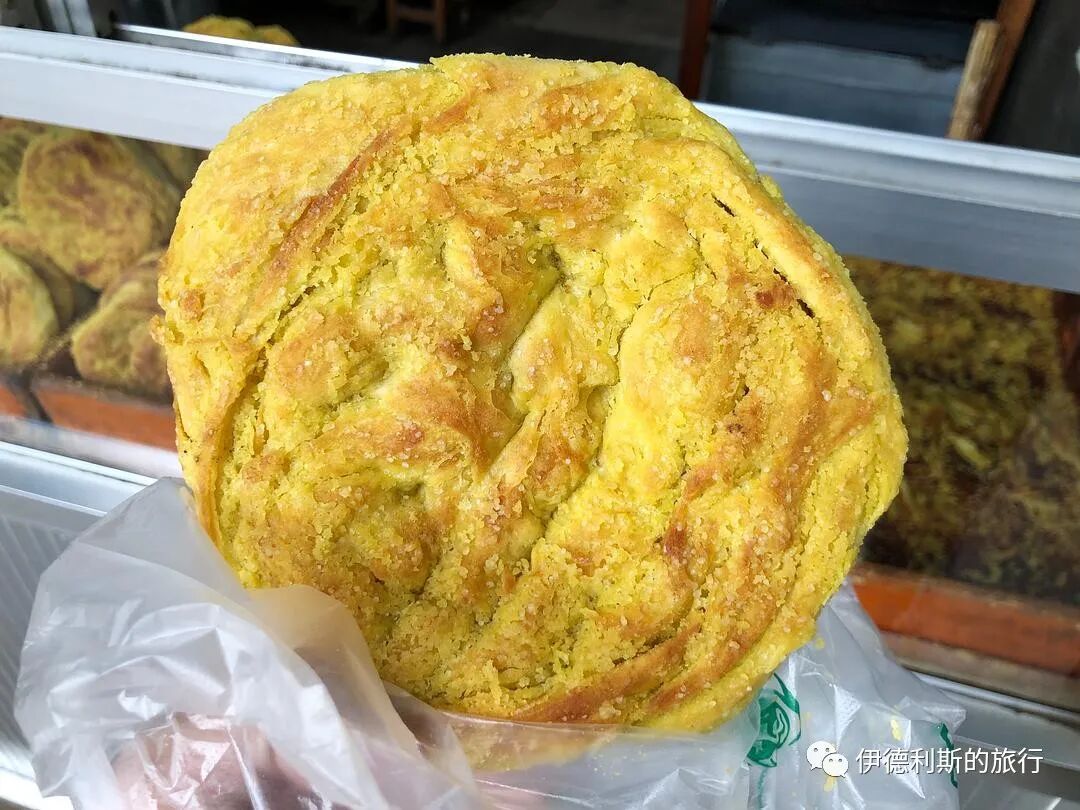
Linxia has all kinds of snacks during the day, but since I visited right after Eid al-Fitr, many restaurants were closed. Linxia's thick flatbread (guokui) is made with bitter bean herb (kudou), which gives it a special fragrance that I really like.
At this shop, I tried cold buckwheat noodles (qiaofen). They taste different from regular cold wheat noodles (liangpi) and are very unique.
I had old-braised noodles (laolu mian) and Hezhou steamed buns (Hezhou baozi) at this shop. The old-braised noodles were very rich and had a thick, hearty texture. The buns were filled with radish, and you could see the golden Sichuan peppercorn oil seeping through. view all
Summary: Halal Food Guide: Linxia Night Market — Hui Muslim Snacks and Street Food is presented here as a firsthand travel account in clear English, beginning with this scene: I went to Gansu in May 2019 to listen to folk songs (hua'er), then stopped by Linxia to explore the food. The account keeps its focus on Linxia Food, Halal Snacks, Hui Muslims while preserving the names, places, food, and historical details from the Chinese source.
I went to Gansu in May 2019 to listen to folk songs (hua'er), then stopped by Linxia to explore the food.
Linxia North Street Night Market
Every day after sunset, Linxia North Street turns into a lively night market for snacks.
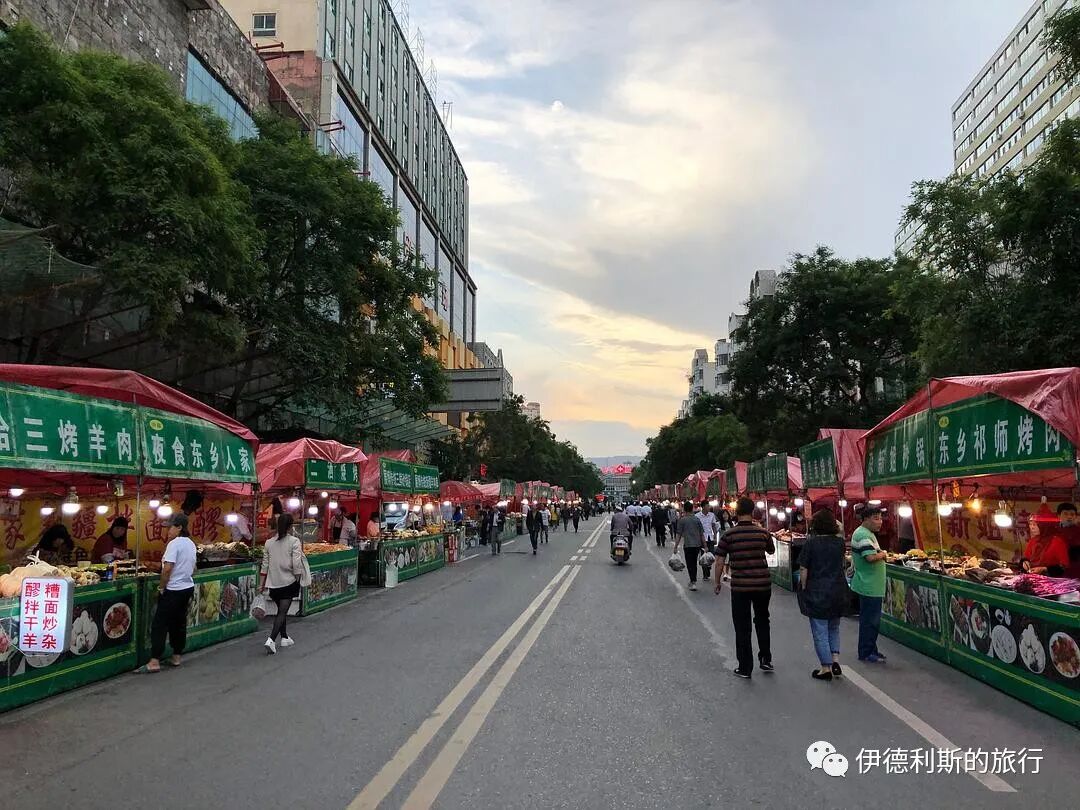
This Dongxiang stall was packed with customers. Listening to the young man speak the Dongxiang language, which sounds a lot like Mongolian, felt like stepping back into the Mongol Empire era.
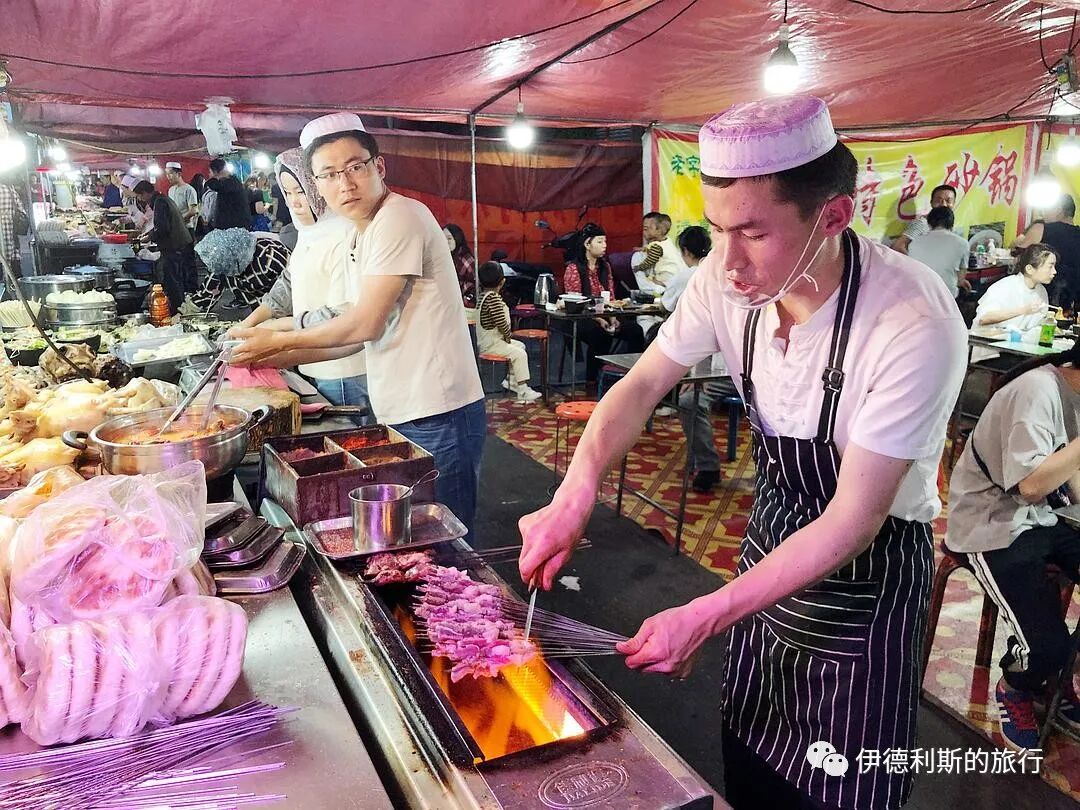
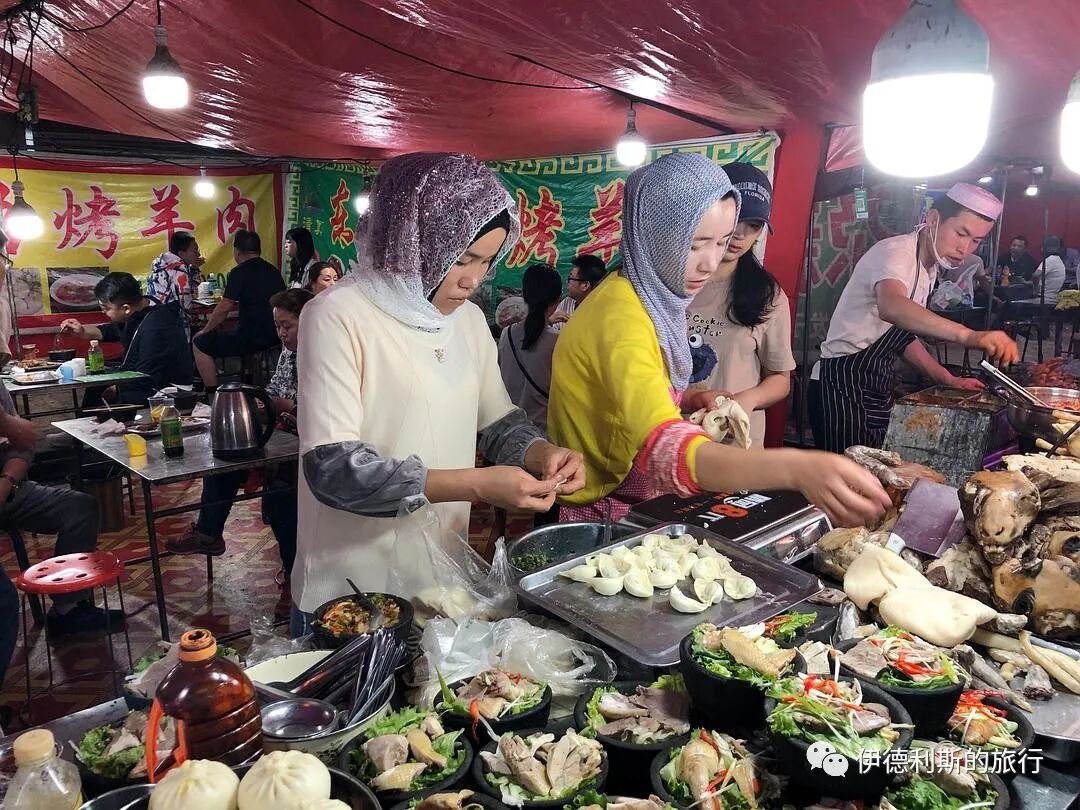
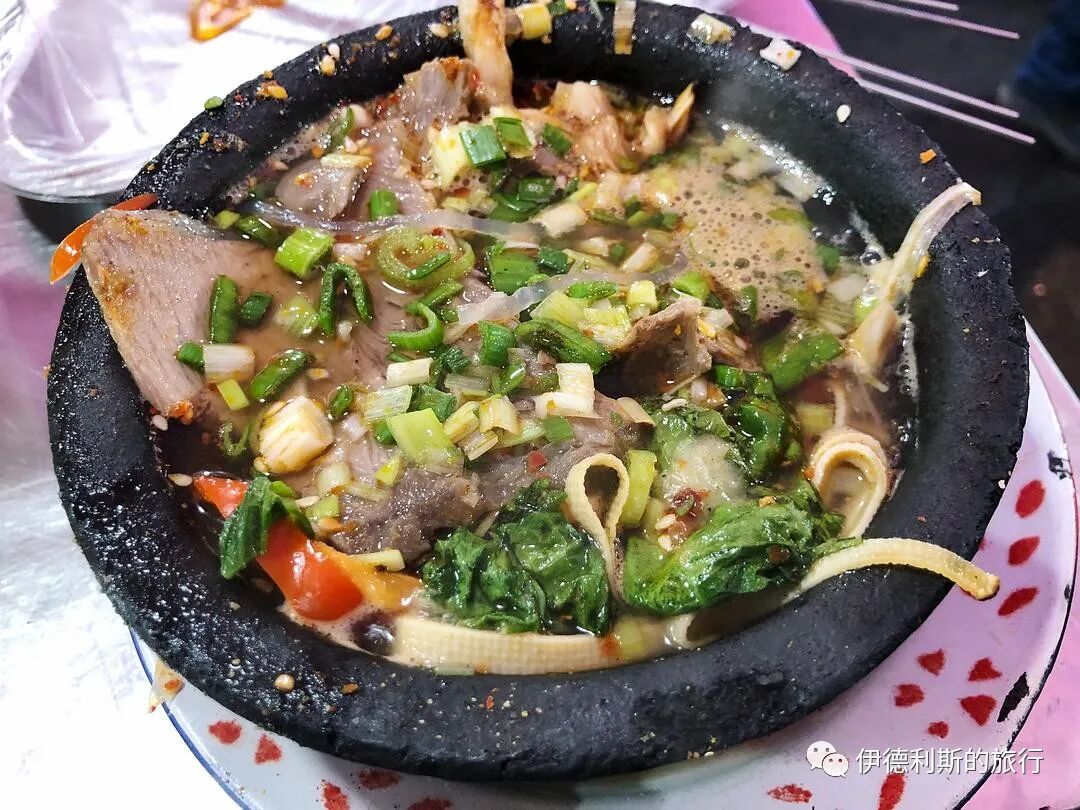
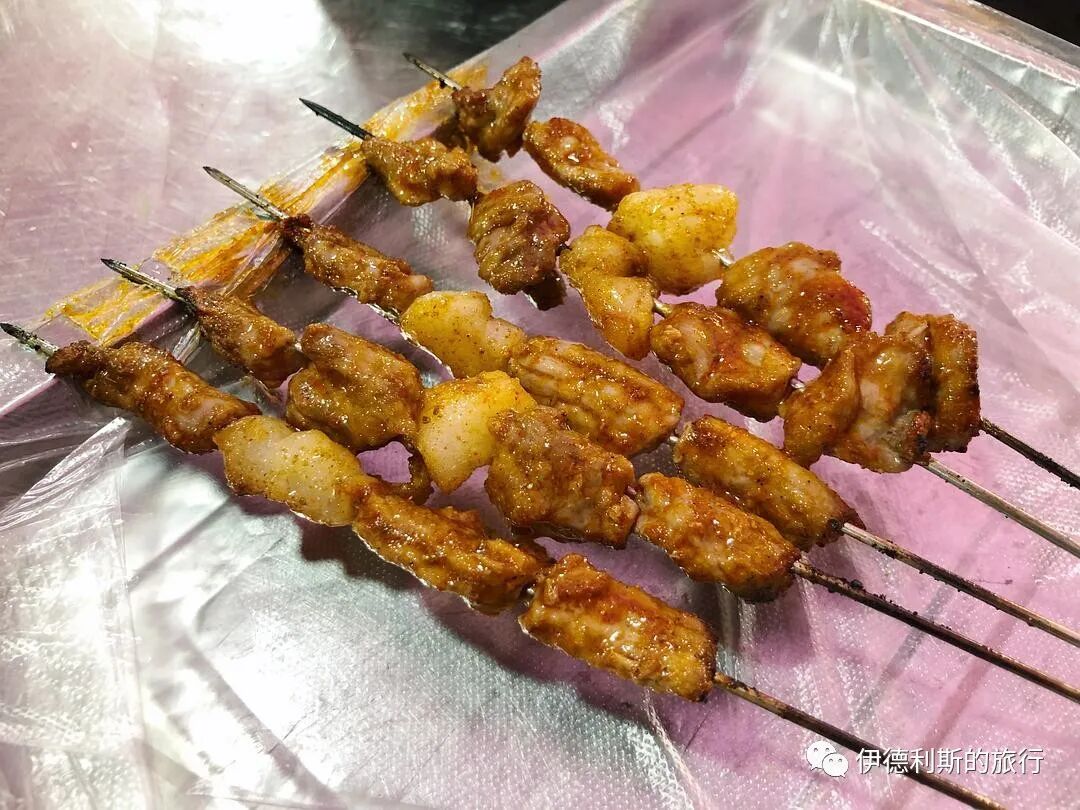
I had lamb clay pot (yangrou shaguo) and lamb skewers (yangrou chuan). The clay pot tasted very fresh and delicious.
I also ate lamb head at this shop. The name 'Nuhai' actually refers to Noah from Noah's Ark. The stir-fried lamb head meat, steamed lamb brains, and steamed lamb neck were all incredibly tasty.
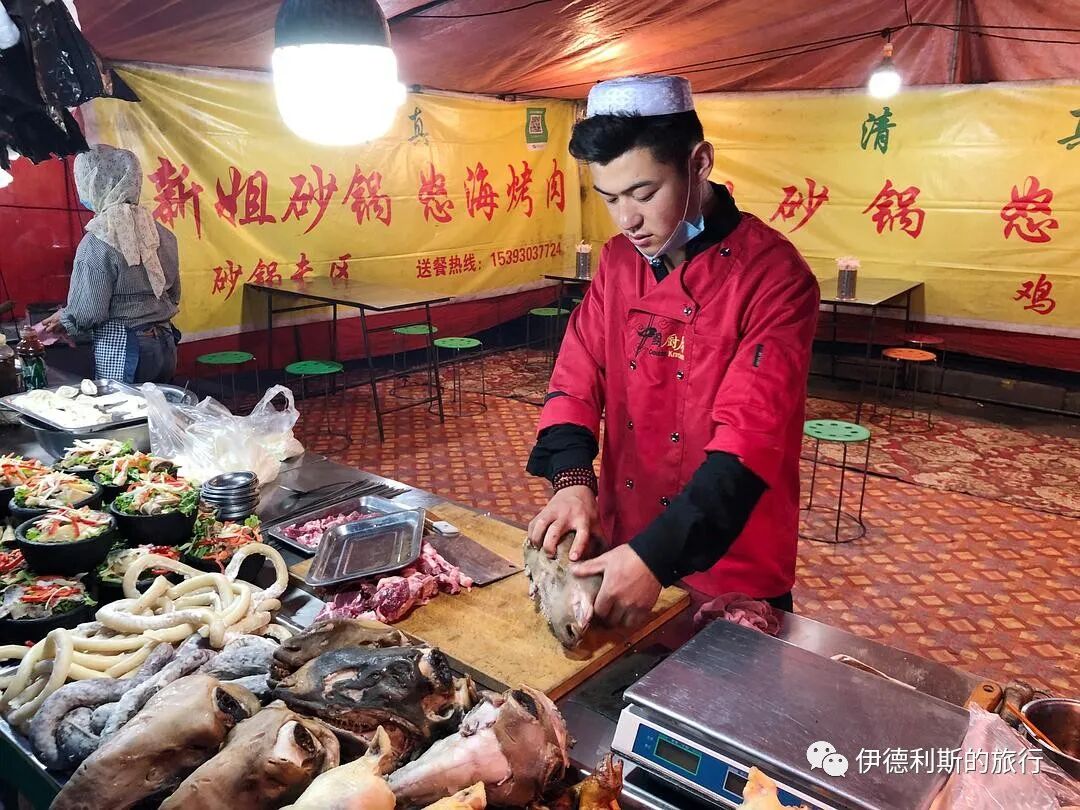
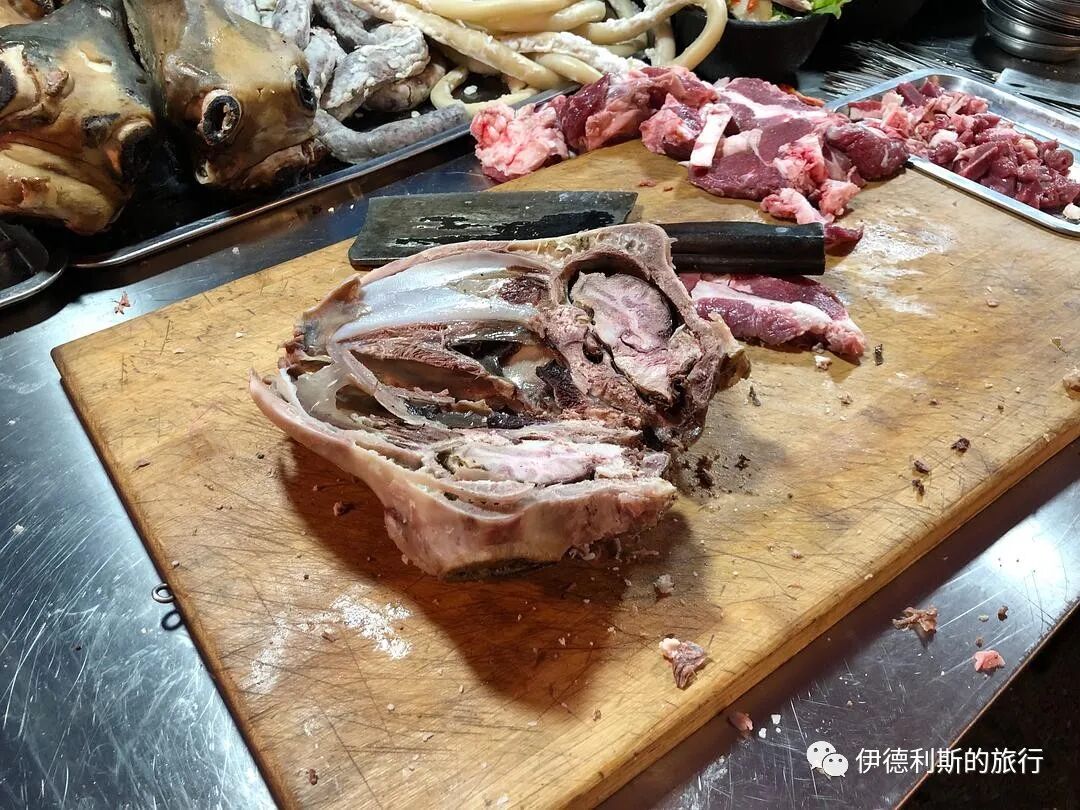
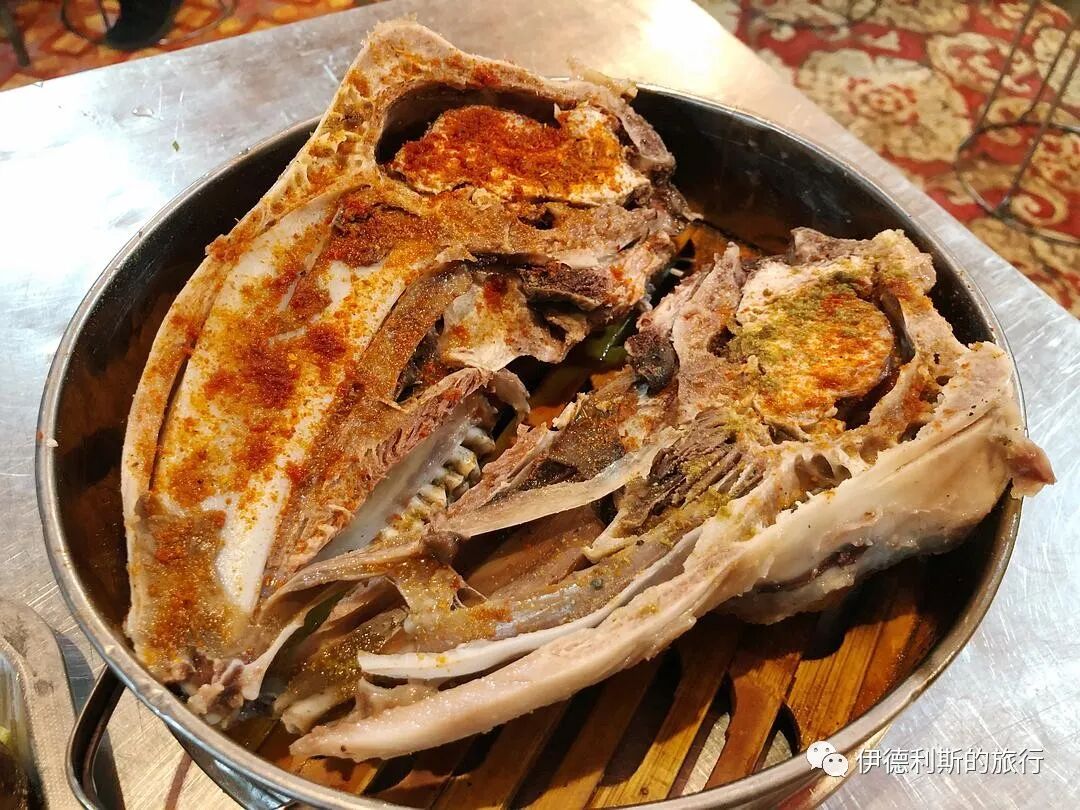
Lamb brains
I ate old-broth chicken (laotang ji) at this shop, but when I returned in 2021, this row of stalls at the night market was gone.
Linxia snacks
Linxia has all kinds of snacks during the day, but since I visited right after Eid al-Fitr, many restaurants were closed. Linxia's thick flatbread (guokui) is made with bitter bean herb (kudou), which gives it a special fragrance that I really like.
At this shop, I tried cold buckwheat noodles (qiaofen). They taste different from regular cold wheat noodles (liangpi) and are very unique.
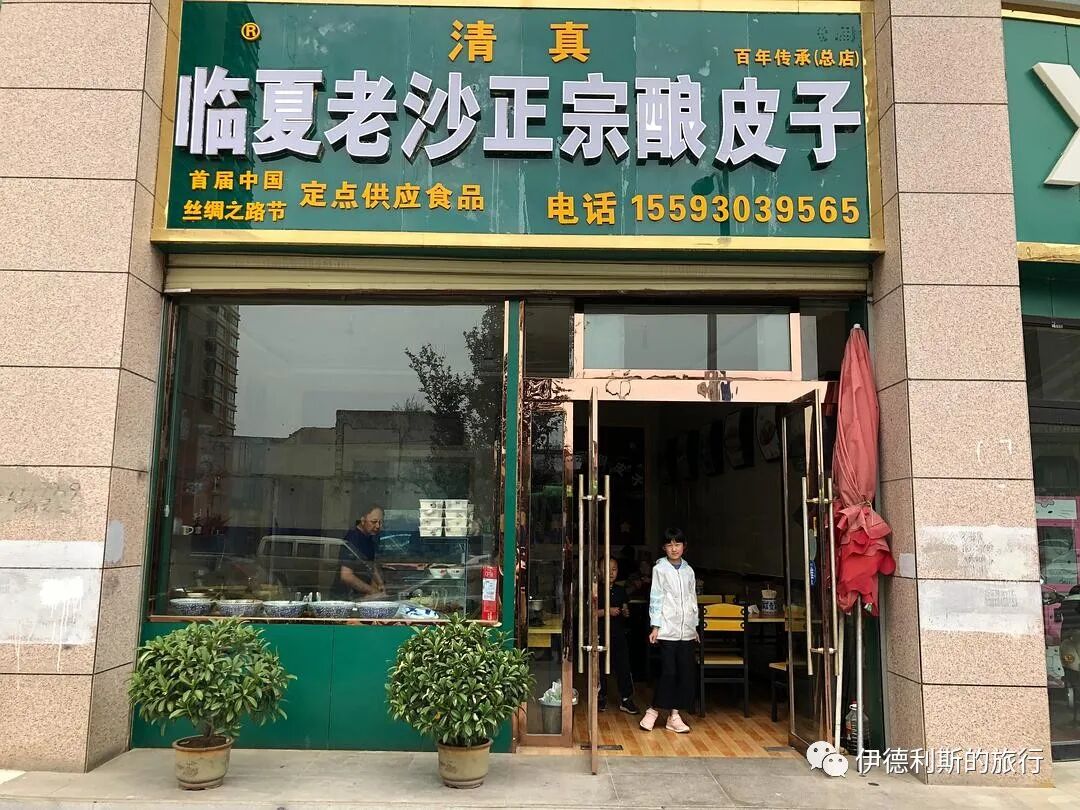
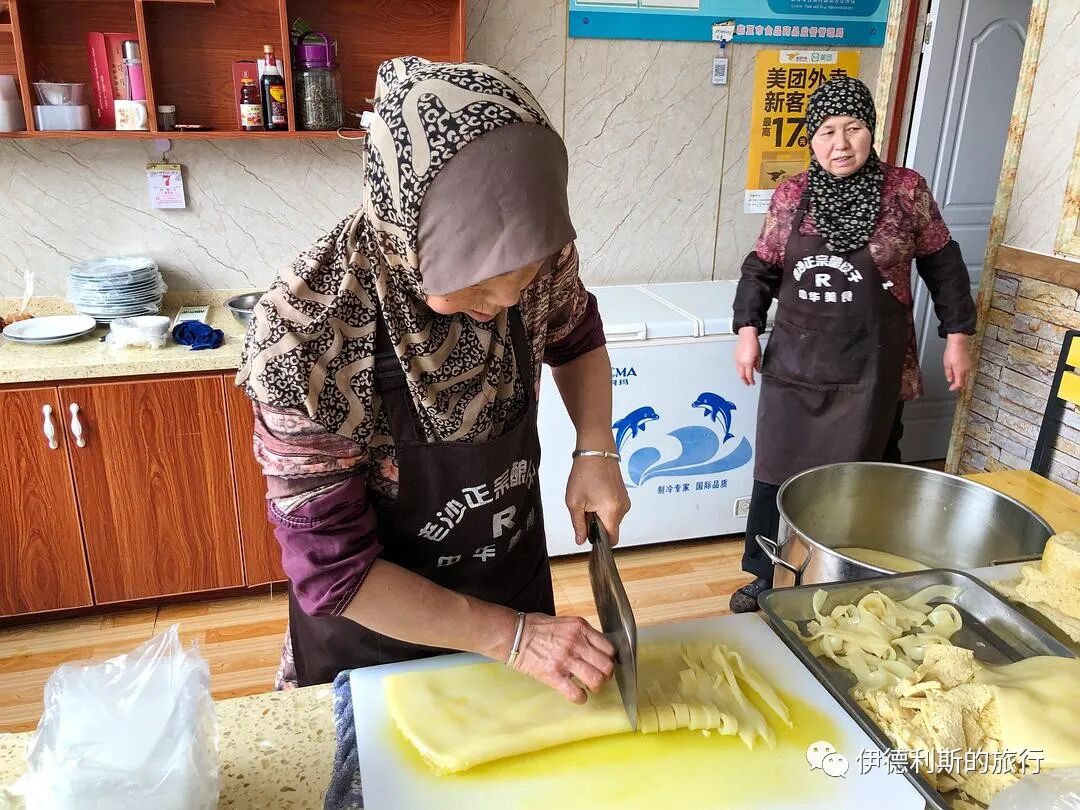
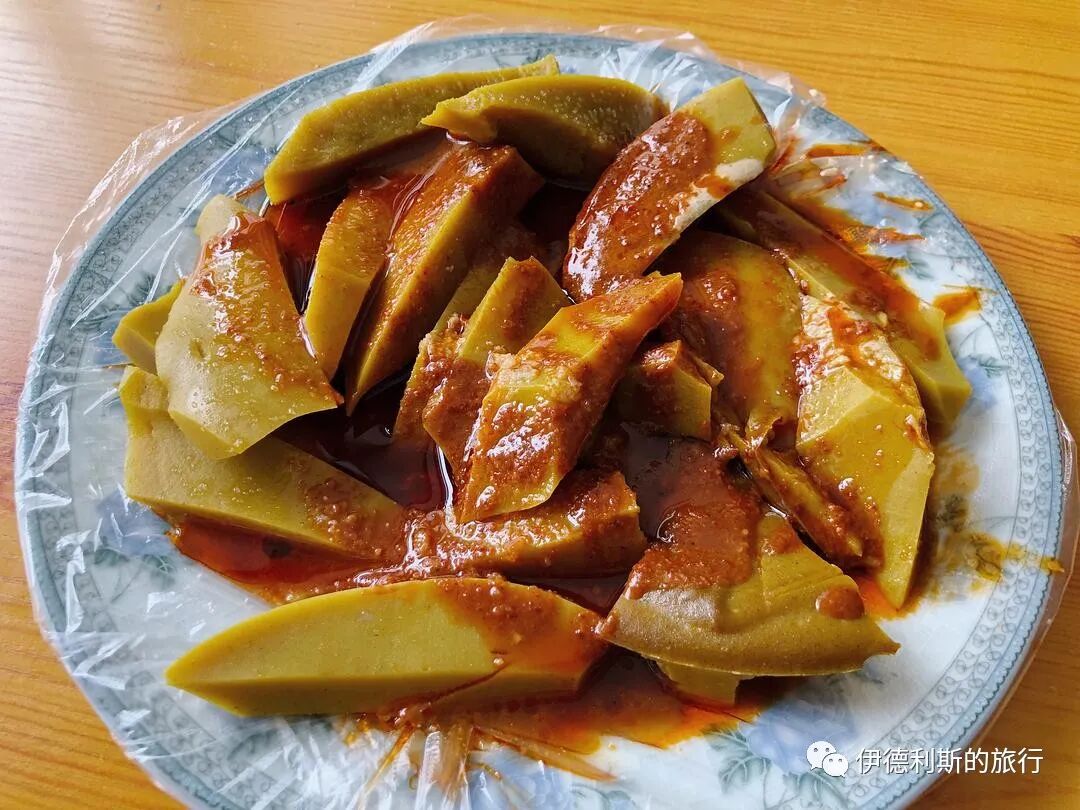
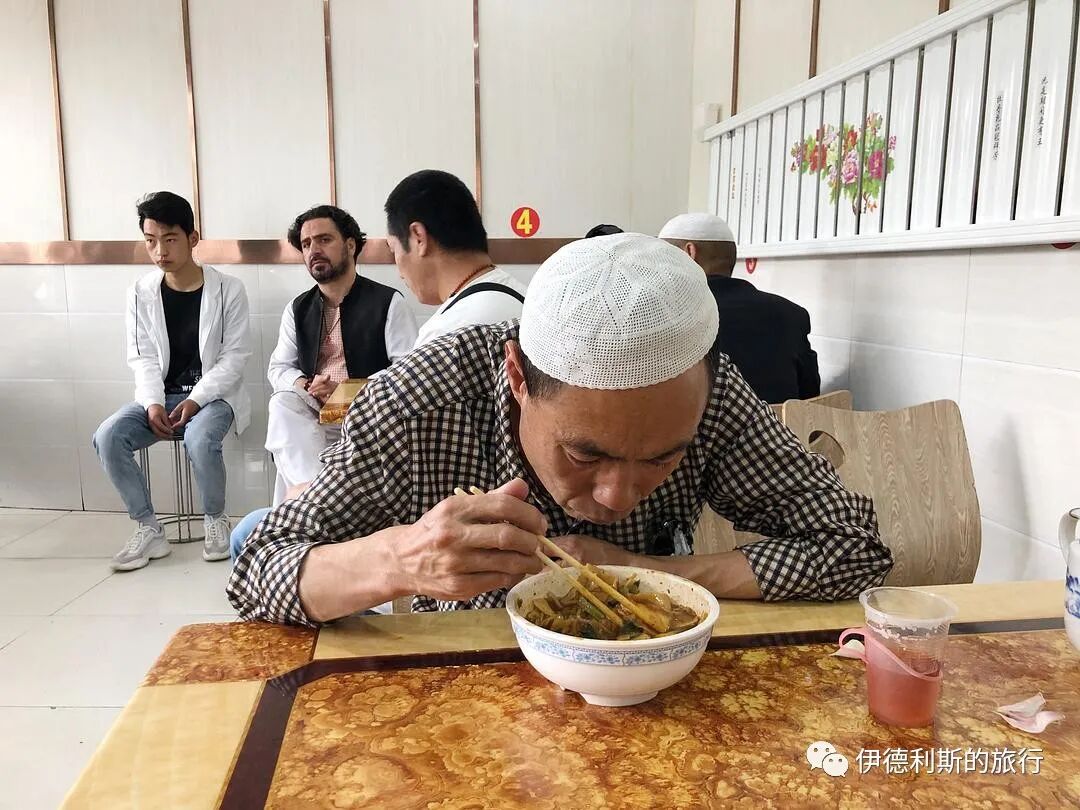
I had old-braised noodles (laolu mian) and Hezhou steamed buns (Hezhou baozi) at this shop. The old-braised noodles were very rich and had a thick, hearty texture. The buns were filled with radish, and you could see the golden Sichuan peppercorn oil seeping through.
Halal Food Guide: Western China — Muslim Snacks and Local Halal Food (Part 1)
Articles • ali2007fr posted the article • 0 comments • 216 views • 2026-05-17 22:15
Summary: Halal Food Guide: Western China — Muslim Snacks and Local Halal Food is presented here as a firsthand travel account in clear English, beginning with this scene: I am sharing 53 halal snack spots I visited across 53 places in Western China. Some are in small restaurants and others are at street stalls, each with its own unique flavor. The account keeps its focus on Western China Food, Halal Snacks, Halal Food while preserving the names, places, food, and historical details from the Chinese source.
I am sharing 53 halal snack spots I visited across 53 places in Western China. Some are in small restaurants and others are at street stalls, each with its own unique flavor.
Table of Contents
1. Sichuan
1. Guangyuan 2. Langzhong 3. Nanchong 4. Tuqiao in Chengdu 5. Dujiangyan 6. Mimou Town
2. Yunnan
1. Zhaotong 2. Ludian 3. Kunming 4. Xundian 5. Xiaguan in Dali 6. Weishan in Dali 7. Dali Ancient City 8. Ruili 9. Xishuangbanna 10. Daying in Yuxi 11. Najiaying 12. Jianshui 13. Shadian 14. Mengzi
3. Shaanxi
1. Xi'an 2. Ankang 3. Shuhe Ancient Town 4. Xixiang 5. Xianyin Mosque (Xianyin Si) in Hanzhong
4. Inner Mongolia
1. Hohhot 2. Longshengzhuang 3. Jining
5. Ningxia
1. Yinchuan
6. Gansu
1. Lanzhou, 2. Linxia
7. Qinghai
1. Ping'an 2. Xunhua 3. Xining
8. Xinjiang
1. Urumqi 2. Toksun County 3. Turpan 4. Huoyanshan Town 5. Shanshan County 6. Yarkant (Shache) 7. Kashgar (Kashi) 8. Yining 9. Qingshuihe Town, Huocheng County 10. Zhaosu County 11. Nalati Town, Xinyuan County 12. Hami 13. Korla (Ku'erle) 14. Bayanbulak Town, Hejing County 15. Hejing County 16. Yanqi County 17. Lopnur (Yuli) County 18. Kuqa 19. Yengisar (Yingjisha) County
1. Sichuan Province
1. Guangyuan
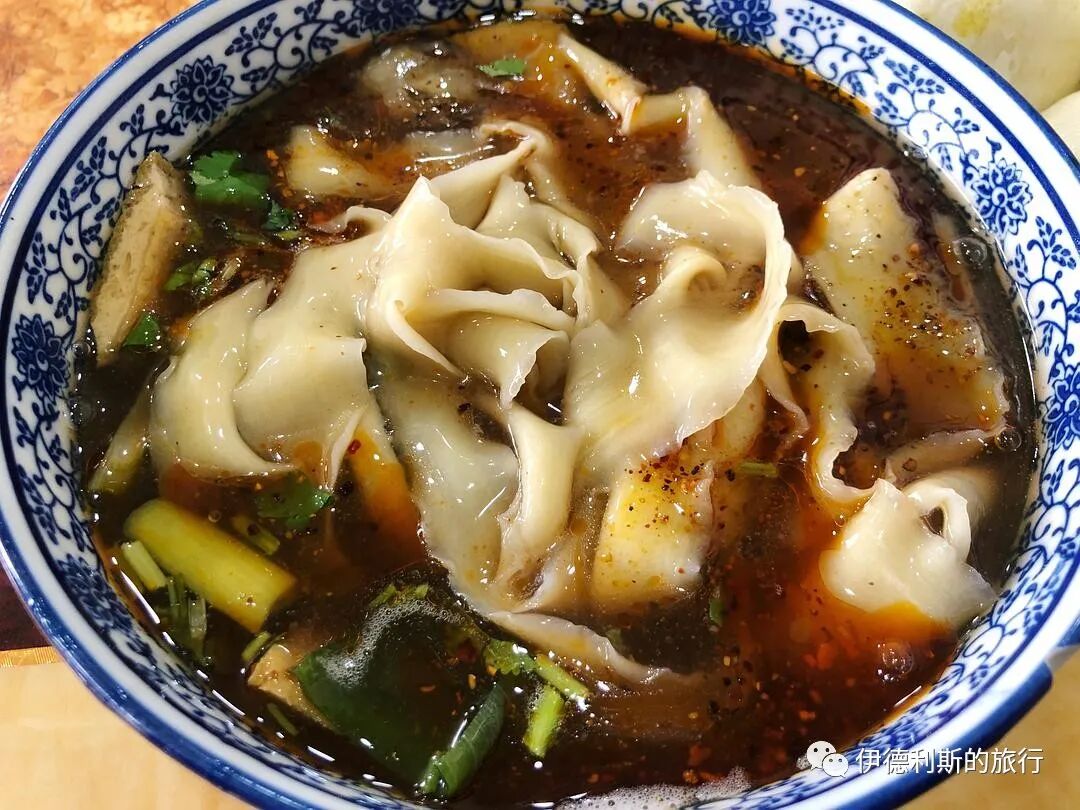
Around the mosque on Shanghe Street in Guangyuan, Sichuan, there are many local halal restaurants. They specialize in beef soup pot (niurou tangguo) and stewed flatbread (huimo). Compared to other parts of Sichuan, the halal food here is closer to the style of Hanzhong in Shaanxi.
2. Langzhong
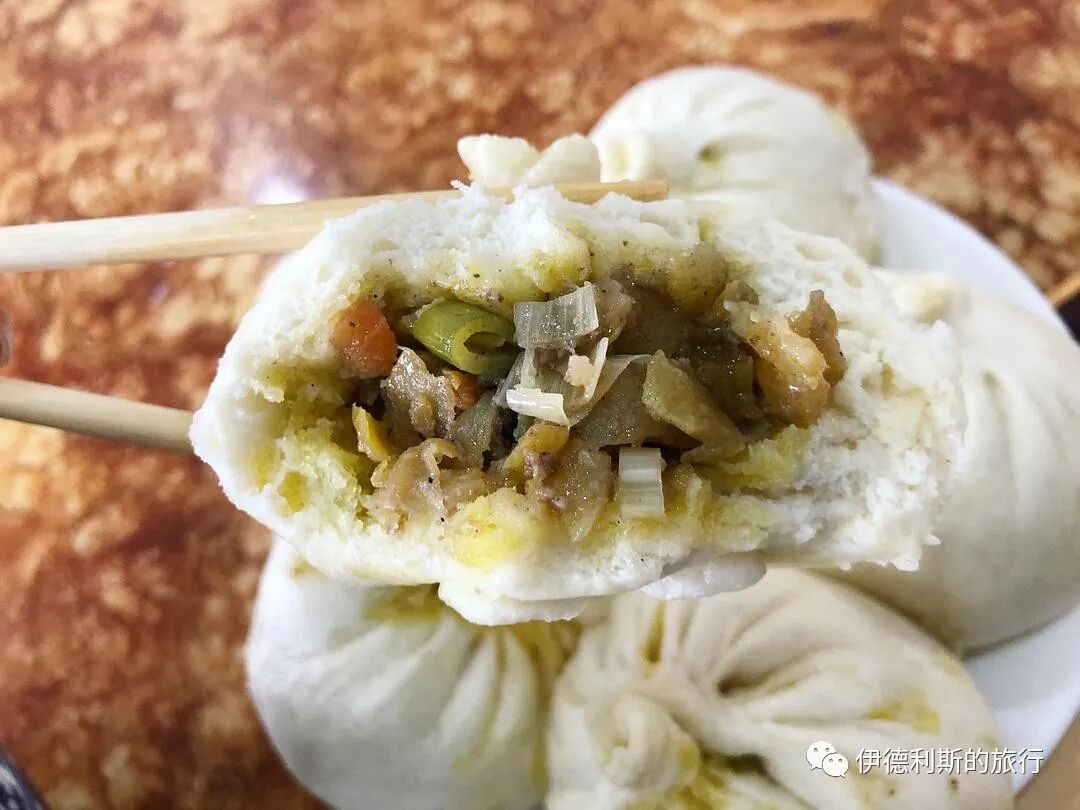
There are many halal restaurants inside the old town of Langzhong. At one of them, I ate twice-cooked pork made with salted leaf beef (yanyezi niurou), as well as northern Sichuan cold jelly noodles (chuanbei liangfen) and steamed sugar buns (baitang zhengmo). Steamed sugar buns are a specialty of the Hui Muslims in Langzhong. They were created by the Hui Muslim pastry chef Ha Gongkui during the Qianlong era. Instead of using lye, they are fermented with naturally cultivated enzymes and include some osmanthus flowers. You can also steam them again later.
3. Nanchong
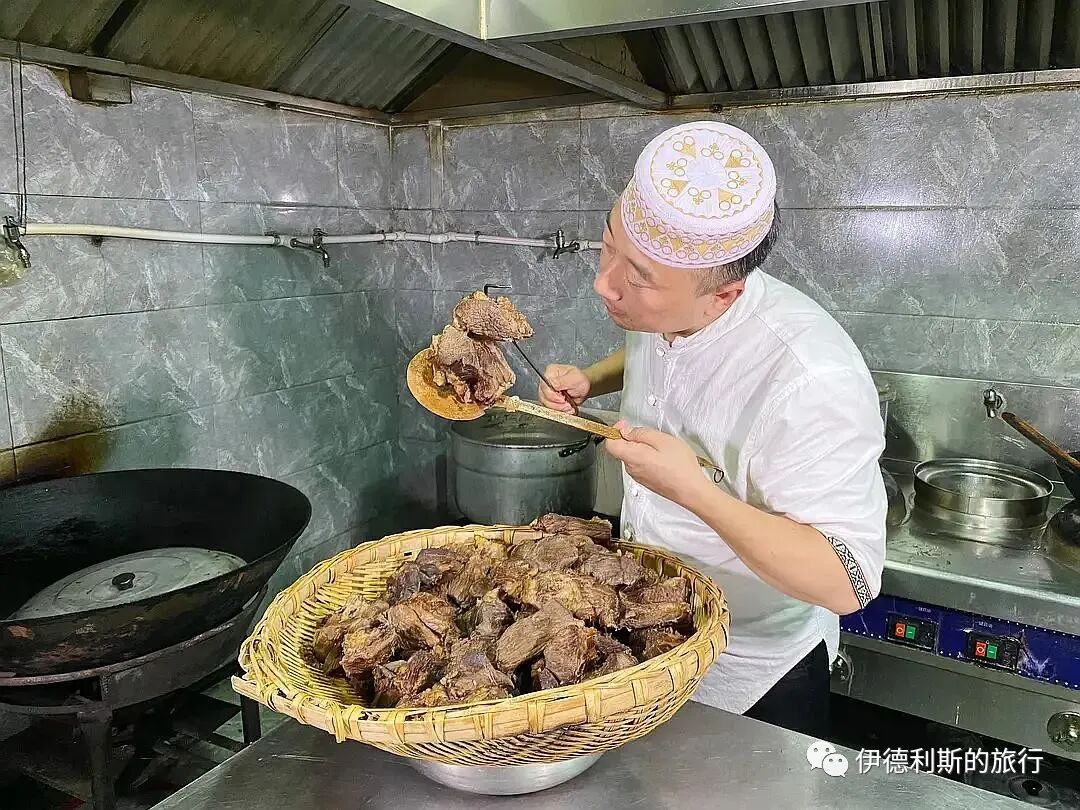
At the entrance of the Nanchong Mosque, Imam Feng Yong and his family sell Yunus beef jerky, which is a precious piece of intangible cultural heritage.
Imam Feng Yong’s ancestors moved from Shaanxi to settle in Nanchong during the Qing Dynasty. At that time, the busy Jishikou market had many stalls selling braised beef, and the Imam’s great-grandfather, Yang Fangyun, ran his family’s traditional halal beef jerky business there. Because they used a red lantern to block the wind and provide light on windy days, people started calling it Red Lantern beef jerky (hongdenglong gan niurou).
During the Republic of China era, the Feng family joined forces through marriage with Yang Fangyun, who made Red Lantern beef jerky, Ma Yutu, who made Ma Laizi jarred beef (guanguan niurou), and Zhang Dechao, who made beef crispy cakes (niurou jiaobing). The Imam’s grandfather, Feng Zifeng, then opened the Shixian shop on Fu Street, establishing the Hui Muslim halal restaurant to keep the Red Lantern beef jerky tradition alive.
In 1958, the Red Lantern brand became a public-private partnership. Yang Fangyun chose not to work in the factory and instead stayed home to do small-scale work. In the early 1990s, Imam Feng's grandfather set up a stall selling spiced beef (lu niurou) in front of their old family home and passed the craft down to Imam Feng, who was still in middle school at the time.
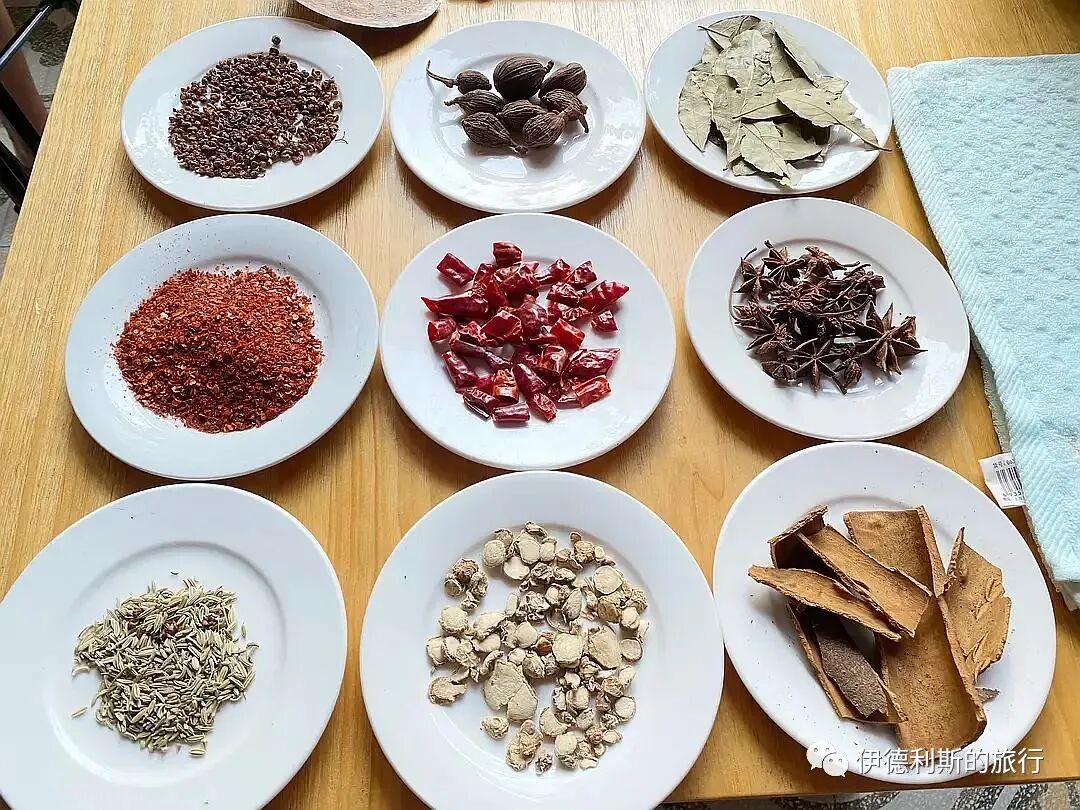
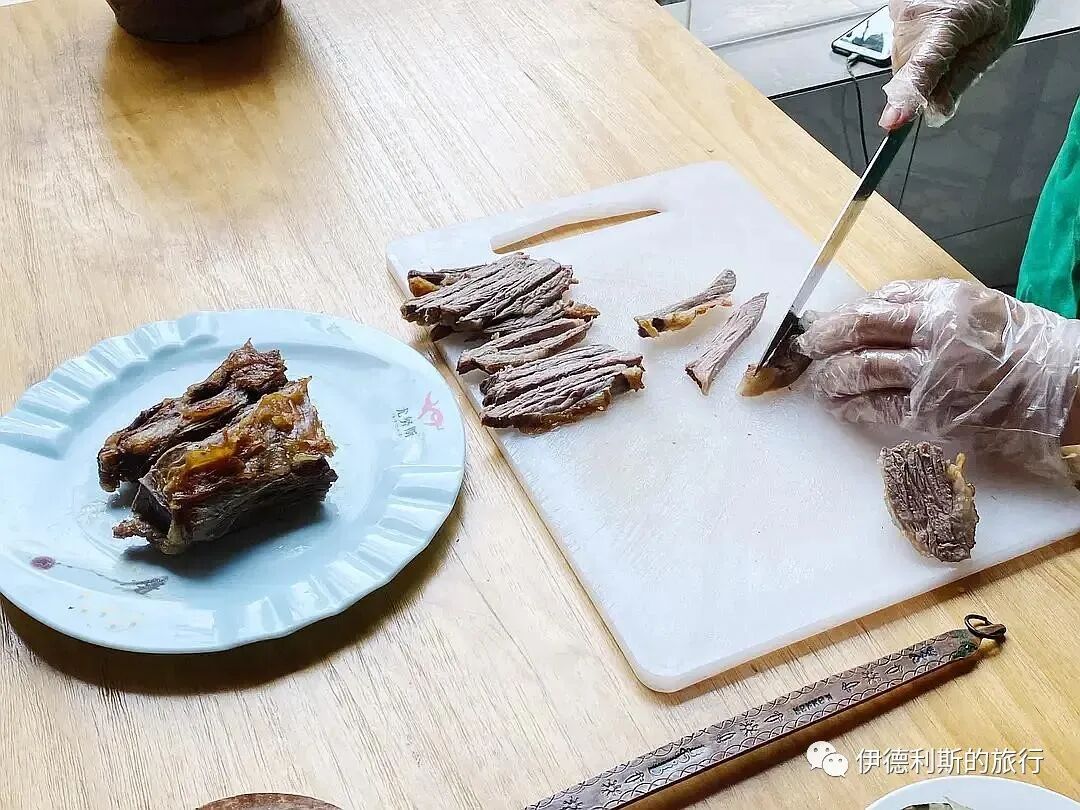
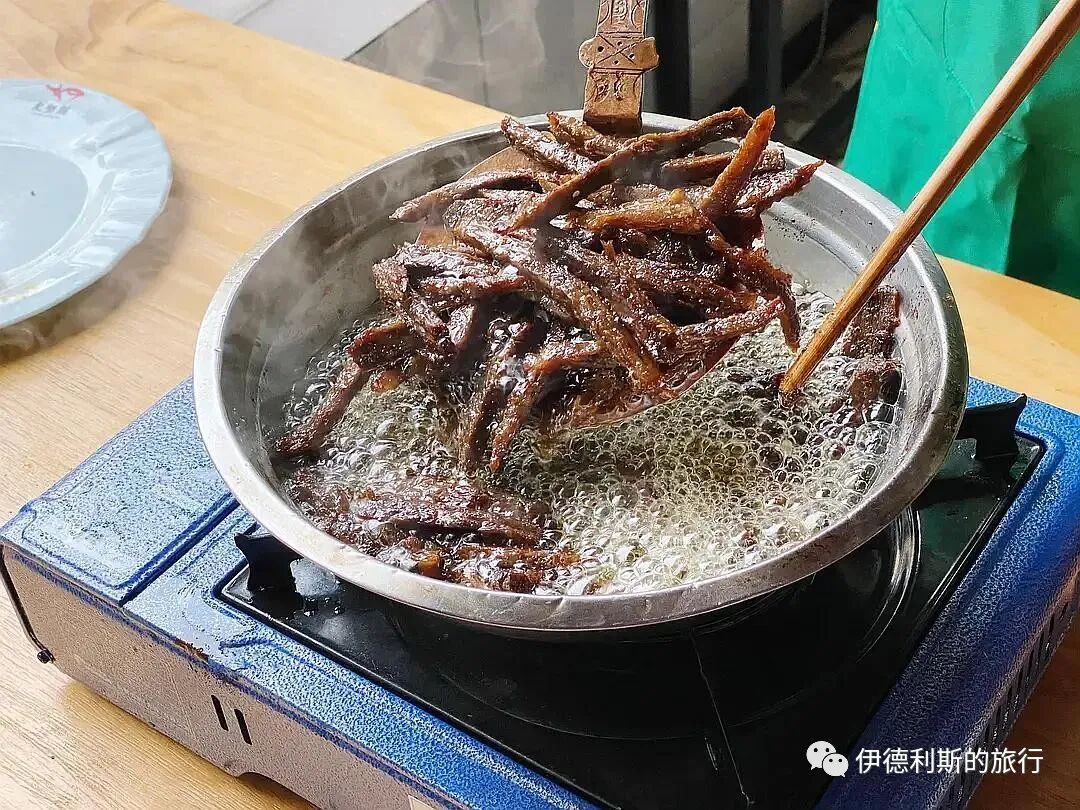
To make beef jerky, you first marinate the meat with various spices, then braise it, and let it dry in the sun. Finally, you toss it in a pan with chili powder, salt, Sichuan peppercorn powder, and white sesame seeds.
4. Tuqiao, Chengdu
After the Huangchengba Muslim community in Chengdu was dismantled, the town of Tuqiao in the northwest suburbs became the closest traditional Muslim community to the city center. Many local Hui Muslims come here for Friday namaz. Although Tuqiao has gone through demolition, the traditional mosque and the halal snack shops at its entrance are still there, so the area remains very lively. I arrived at Tuqiao just before Friday prayers (Jumu'ah) and stopped at a small snack shop by the entrance. I had beef offal noodles (niuzafen), steamed beef with rice flour (fenzheng niurou), and fermented rice with egg (laozaodan) to get a taste of authentic Chengdu halal snacks.
5. Dujiangyan
Starting in 2009, Dujiangyan City turned the old Guanxian County town into a tourist destination similar to Dali or Lijiang. It has now become a heavily commercialized tourist spot, not much different from other highly developed ancient towns in the south. Luckily, there are still several traditional halal restaurants on South Street and West Street in the old town. I ate Min River fine-scaled fish (minjiang xilinyu) and bamboo leaf greens (zhuyecai) at the Maji Huixiang Restaurant.
6. Mimou Town
Mimou Town sits on the Golden Ox Road (Jinniu Dao), an ancient path from Chengdu to Shaanxi. Hui Muslims began settling here during the Ming Dynasty, and many more from Shaanxi and Hunan moved in after the Kangxi era. Unlike the heavily developed ancient town of Dujiangyan, Mimou Town has no signs of tourism. It is full of everyday life and keeps its own pace. I ate goose soup noodles (etang mian) and small steamed beef dumplings (xiaolong zheng niurou) here.
2. Yunnan
1. Zhaotong
Inside the Sanguan Mosque vegetable market across from the Zhaotong East Mosque, all the stalls are run by Hui Muslims. They sell all kinds of raw and cooked meat, pea starch jelly (wandoufen), corn flour, and more. At a stall by the market entrance, I drank some pea starch jelly and ate a rice cake sandwich with a fried dough cake (erkua jia yougao), which is a traditional local breakfast.
2. Ludian
I was invited to a banquet at the Longtoushan Mosque in Ludian. I really love attending banquets, especially because the crispy stir-fried meat (surou) is so delicious!
3. Kunming
Shuncheng Street Mosque in Kunming was first built during the Hongxi and Xuande periods of the Ming Dynasty (1425-1435). Many of the first Hui Muslims to settle here were soldiers who came to Yunnan with Mu Ying to guard the region. Shuncheng Street is the main hub for halal food in Kunming. I ate papaya cold shrimp jelly (mugua liangxia) and a mix of thick and thin pea starch noodles (wandoufen) here.
4. Xundian
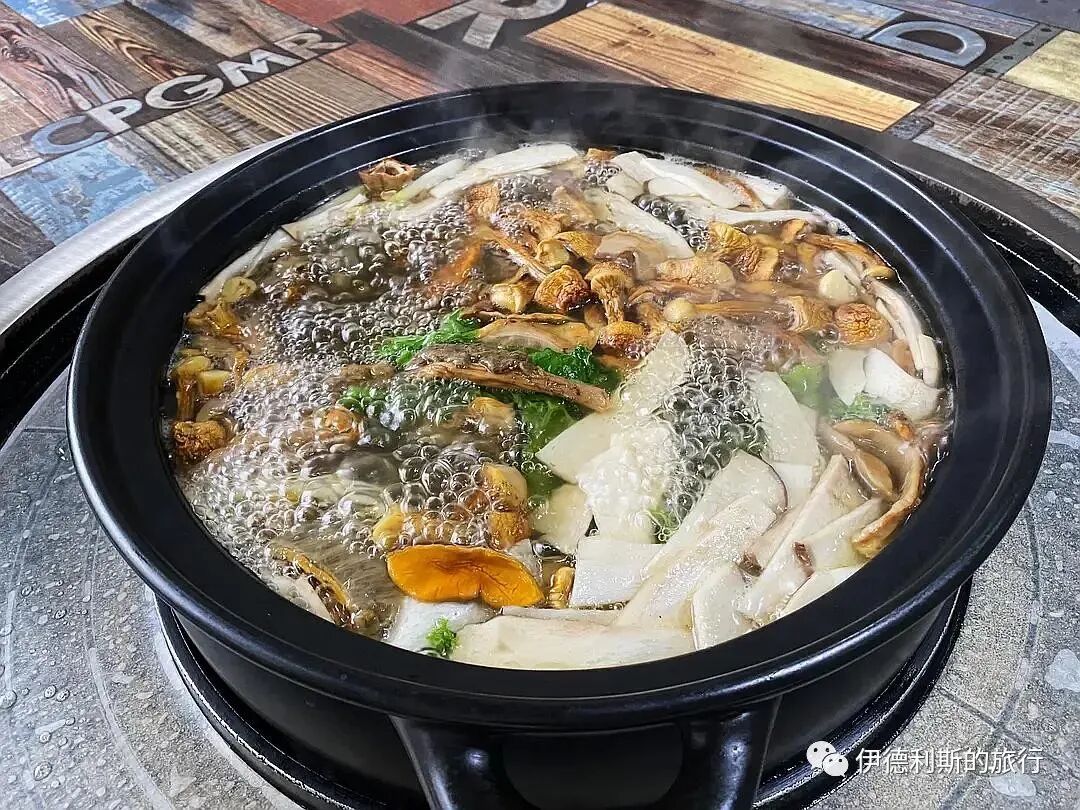
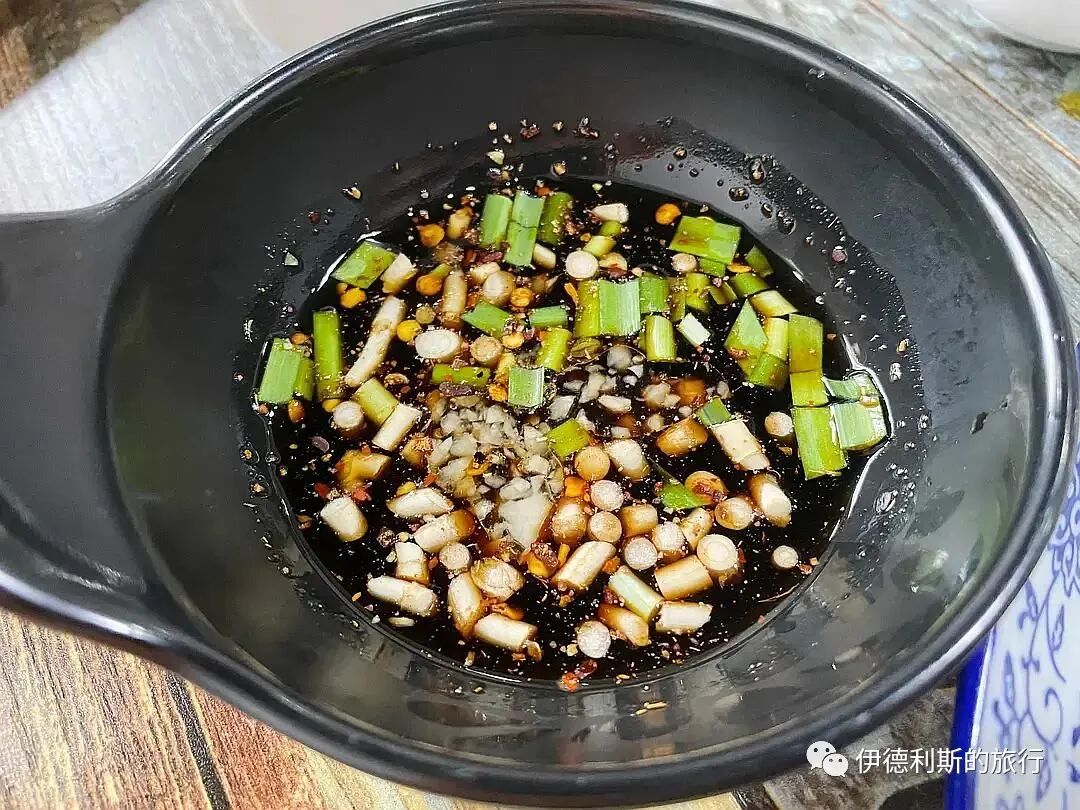
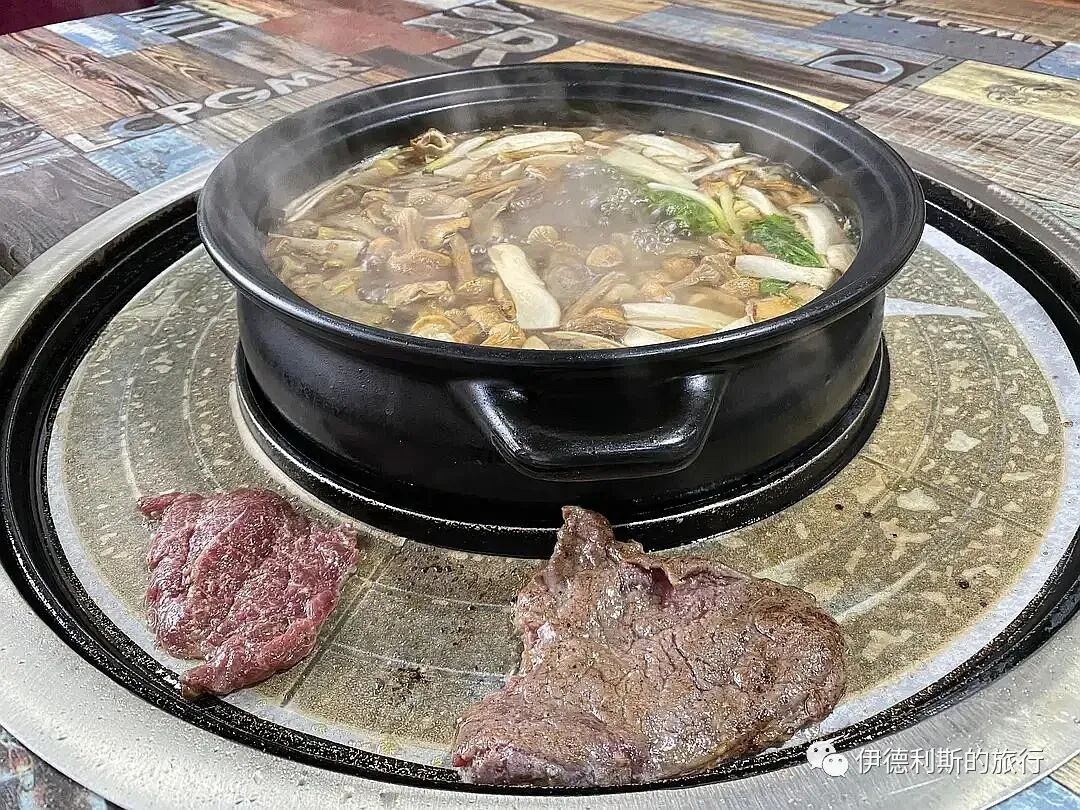
In Xundian County, I ate grilled beef in mushroom soup (juntang kaoniurou). The mushroom soup was incredibly fresh, the beef was very tender, and the dipping sauce with fish mint (zhe'ergen) had a real kick.
5. Xiaguan, Dali
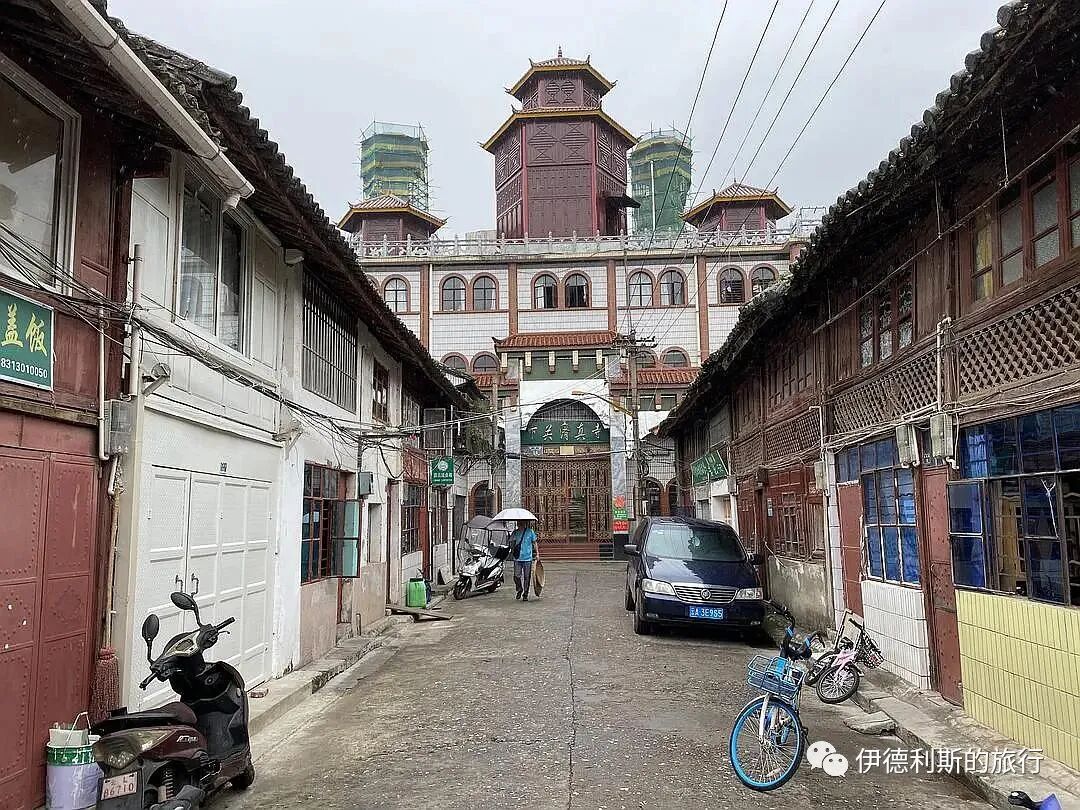
The Hui Muslims street in Xiaguan, Dali, is tucked away behind the main roads. It is quite quiet now, and mostly only locals know about it. I ate braised meat rice noodles (menrou ersi) here.
6. Weishan, Dali
I caught a very lively market in Yongjian Town, Weishan, and bought some rose-flavored milk curd (rufan).
In the evening, I went to a restaurant near the Dingjiachang Mosque in Weishan County and asked the lady to fry the rose-flavored milk curd for me.
7. Dali Ancient City
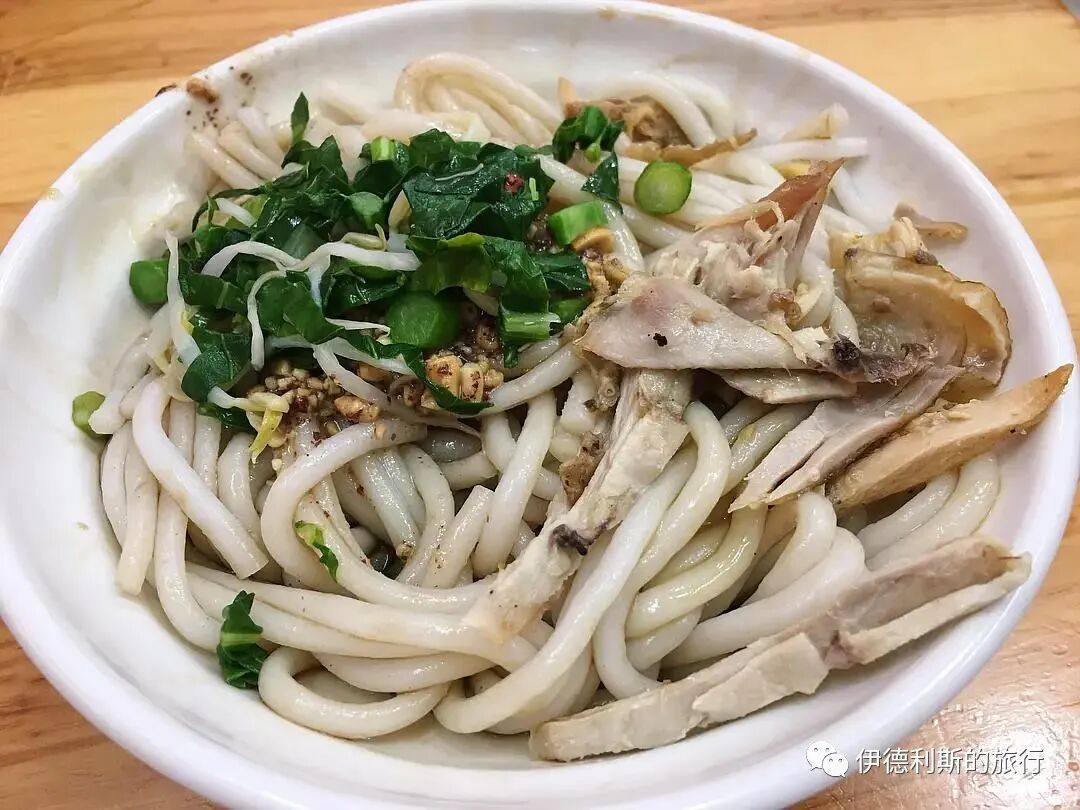
Zaihuishou is a famous halal snack shop in the ancient city, known for its cold rice noodles with free-range chicken (tuji liang mixian).
8. Ruili
From the 1980s to 2020, there was a halal food street on Baijing East Lane near the Ruili jewelry market. It served food to Burmese Muslim merchants working in the jewelry trade, and locals in Ruili usually called it Old Burmese Street (Lao Mian Jie).
The substance on this lady's face is called Thanaka. It is made by grinding yellow fragrant cedar branches into a powder and mixing it with water. It helps prevent mosquito bites and provides a cooling sensation.
In front of her are various mixed noodles, ranging from thick to thin: Nan ji, lat, and thay thout. The white ones are glass noodles (ja zan).
On the plate is Burmese tofu (to hpu), which comes from the Shan people and is made from yellow peas and Burmese chickpeas.
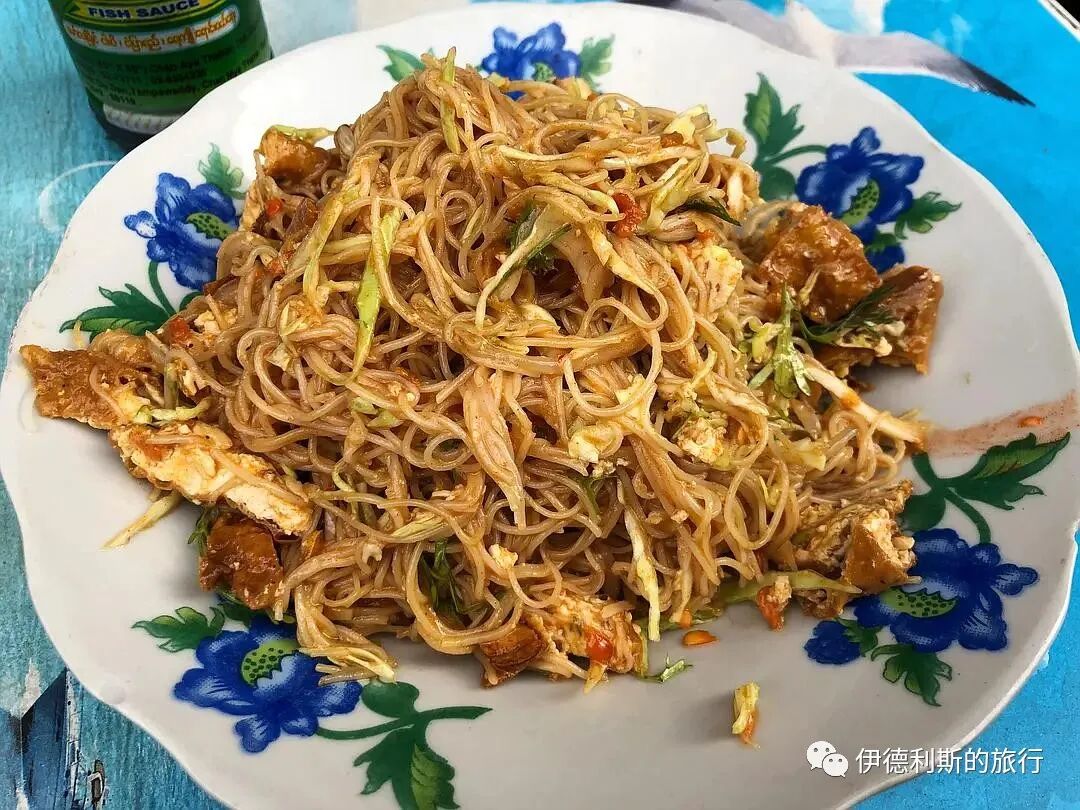
Mixed noodles made with Burmese fried tofu.
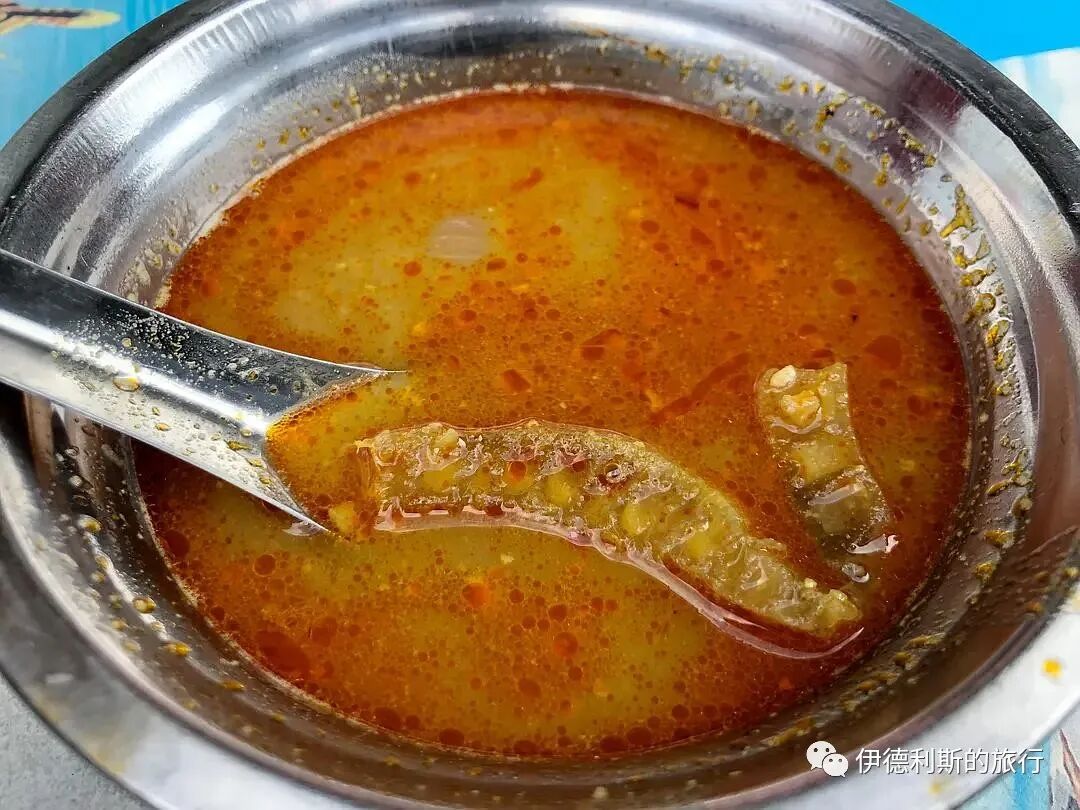
A type of bean soup.
9. Xishuangbanna
I had a halal Dai-style breakfast in Manluanhui, Menghai County, Xishuangbanna. The place I chose is called Paxidai. Paxidai calls itself 'Paxi.' They are Hui Muslims who follow the faith and keep the rules, but they speak the Dai language, use the Dai script, and cook halal Dai-style food. You could say they have kept their Hui Muslim identity while blending into Dai culture.
In the morning, Paxidai mostly serves beef rice noodles (mixian) and rice sheets (migan). We ordered the rice sheets. The variety of side dishes here is really impressive. They have pea tips, chives, bean sprouts, and all kinds of dipping sauces. The best part is that their beef is delicious! It is a little sweet and very fragrant.
10. Daying in Yuxi
I walked through the market in Daying, Yuxi, and bought some local crispy roast duck (kaoya) from a shop that has been open for 30 years. The leaner duck tastes much better than Beijing roast duck, though the dipping sauce is not as good as the one in Nanjing.
11. Najiaying
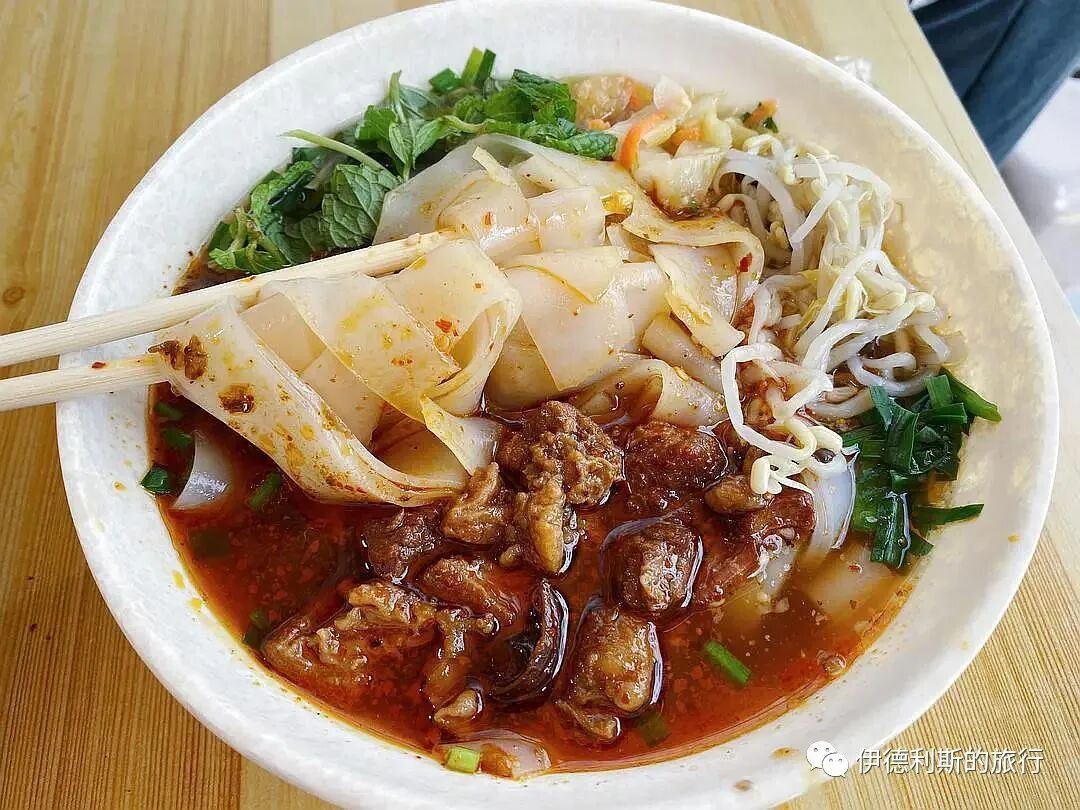
I had beef rice noodle rolls (niurou juanfen) for breakfast in Najiaying.
12. Jianshui
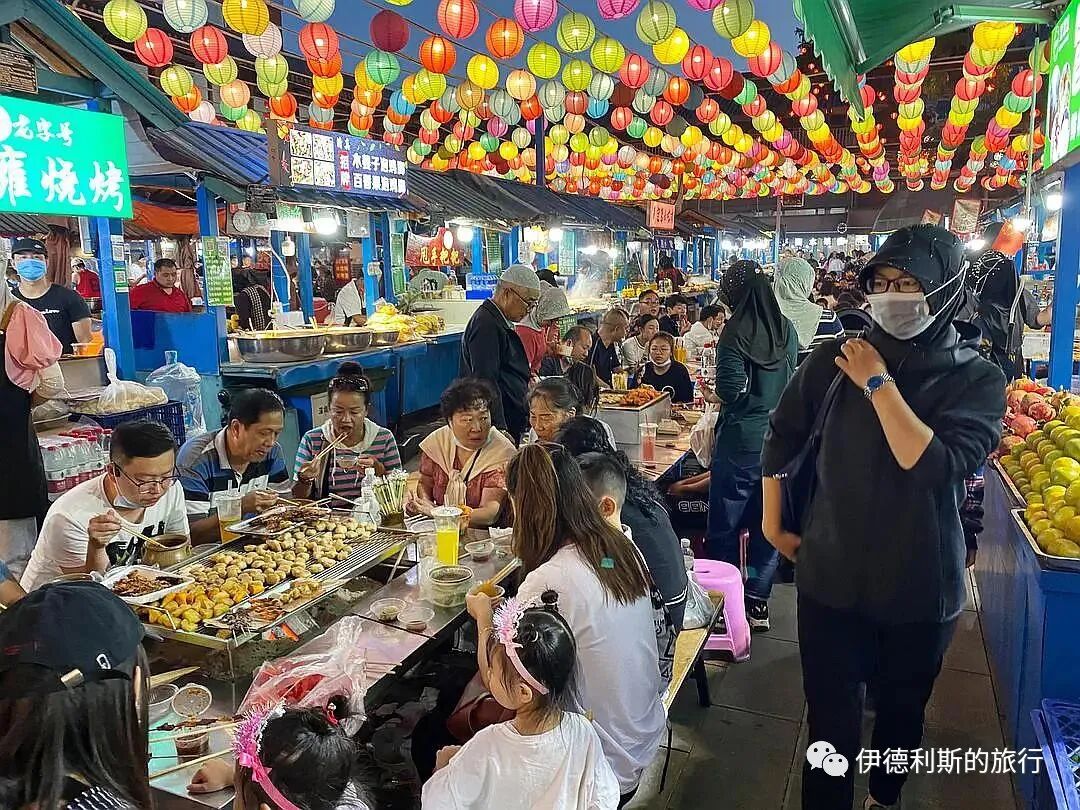
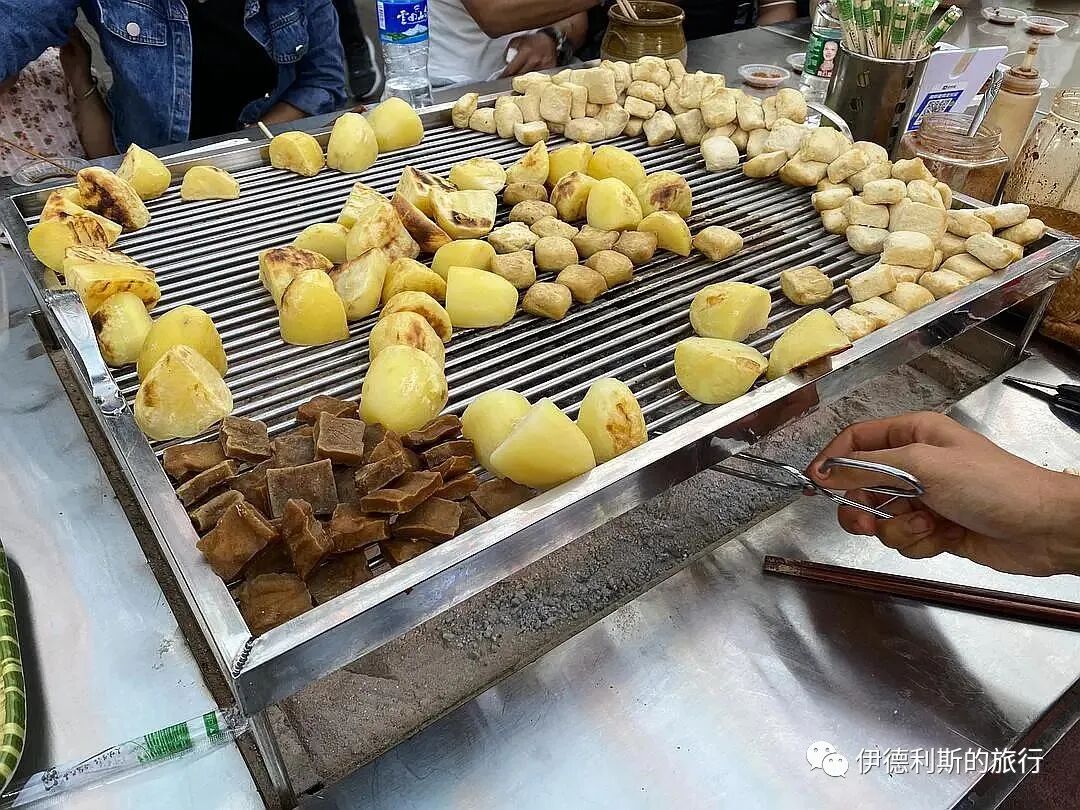
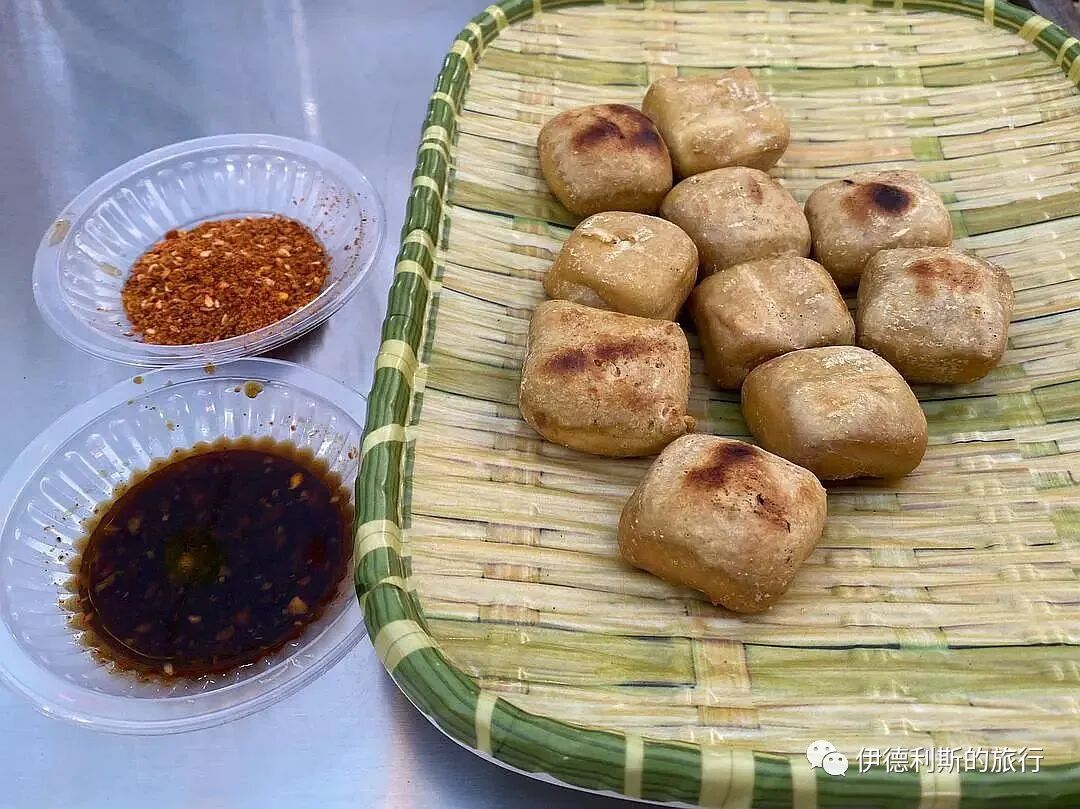
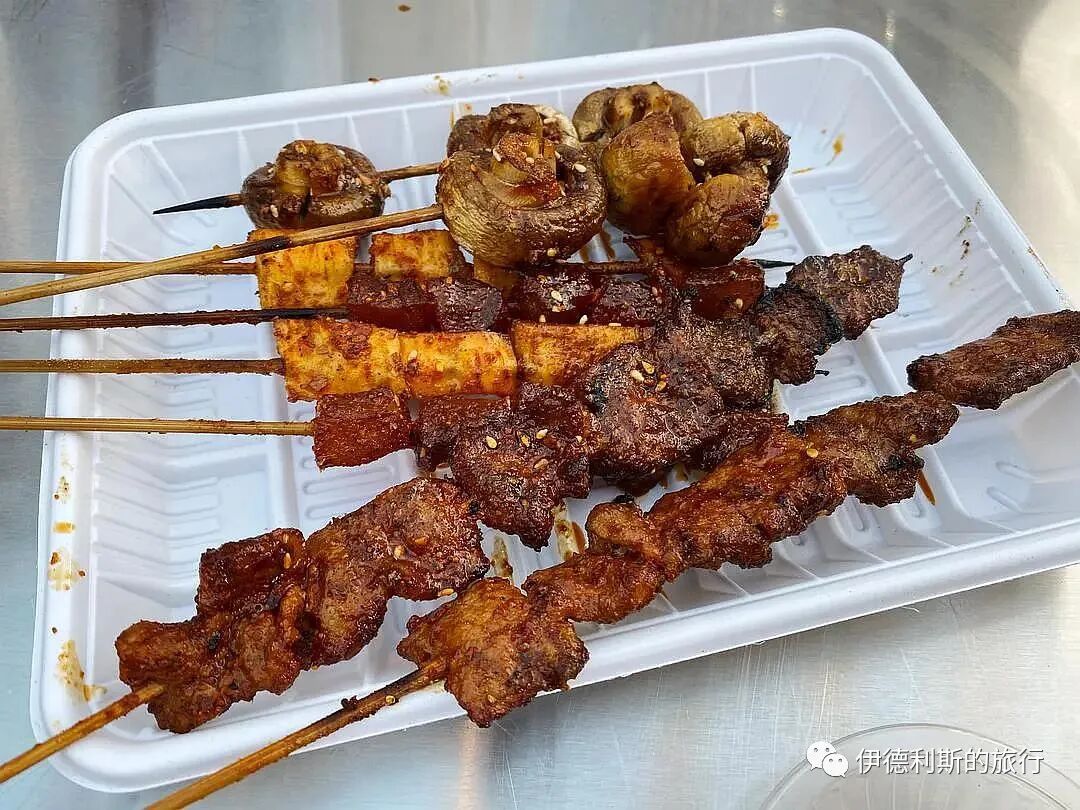
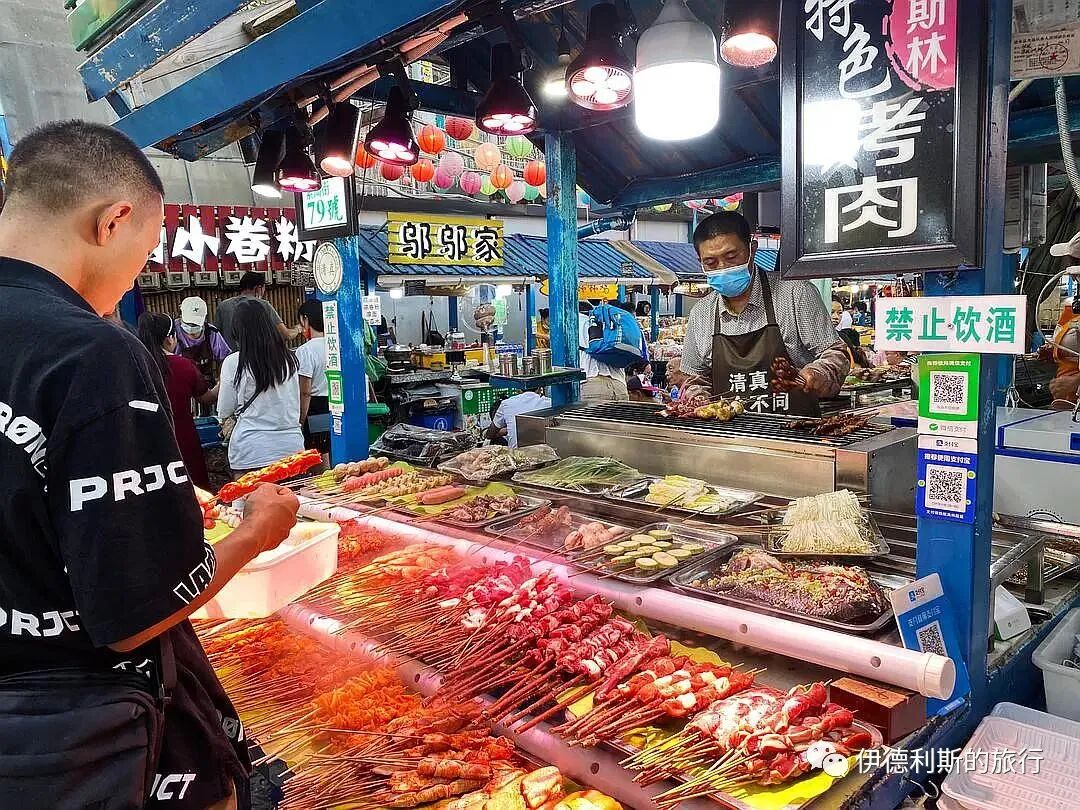
There are so many halal stalls on Zitao Street in Jianshui! The main ones are grilled tofu, grilled potatoes, and meat skewers. Of course, there are also all kinds of cattail shoot rice noodles (caoya mixian), tilapia, pounded chicken feet, and more. You just can't eat it all.
13. Shadian
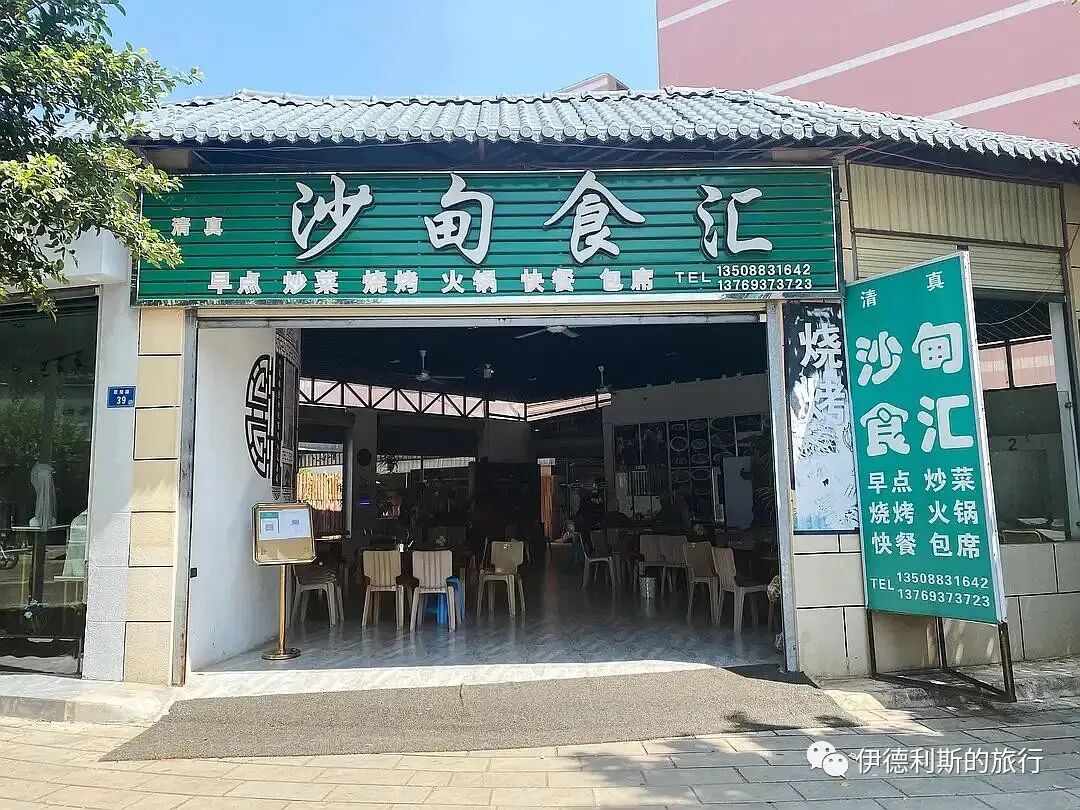
We ate at Shadian Food Court on the road in front of the Great Mosque of Shadian. We had stir-fried chayote tips (fengshou guajian), five-spice chicken, sweet and sour pork tenderloin, cold tossed cattail shoots with wood ear mushrooms, and steamed lotus root with rice flour. The food here is really rich in variety! Also, someone had just finished hosting a banquet when we arrived, so our food came out very quickly.
14. Mengzi
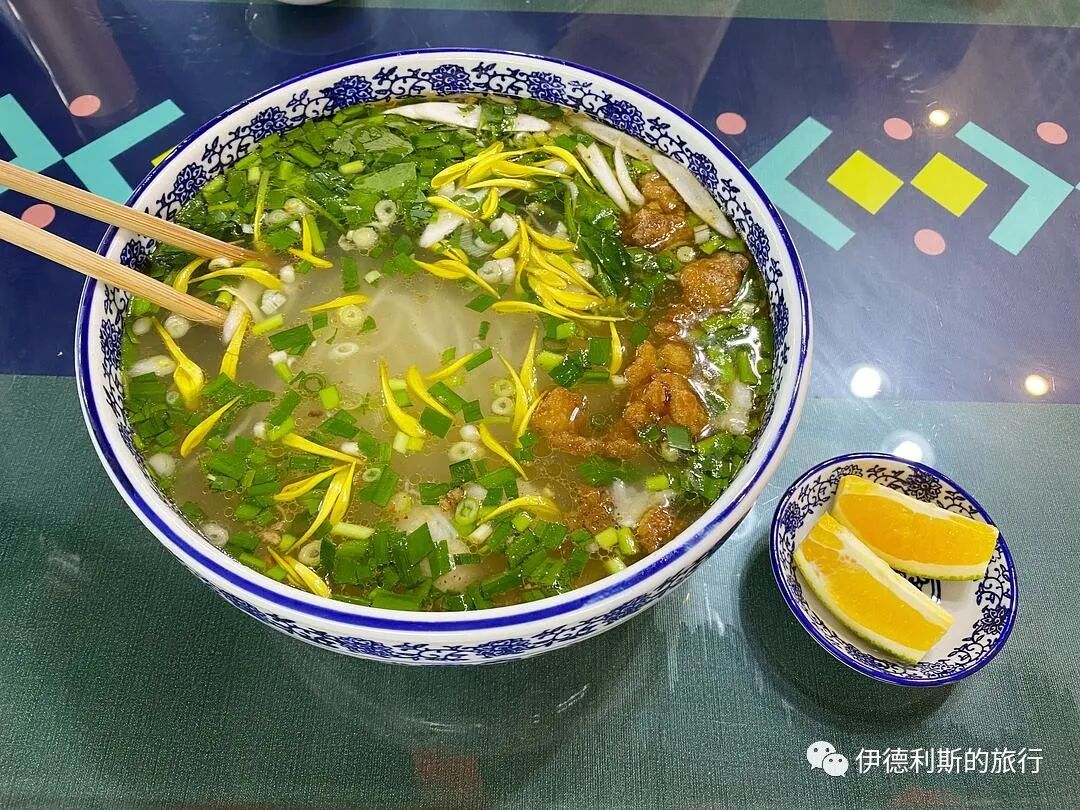
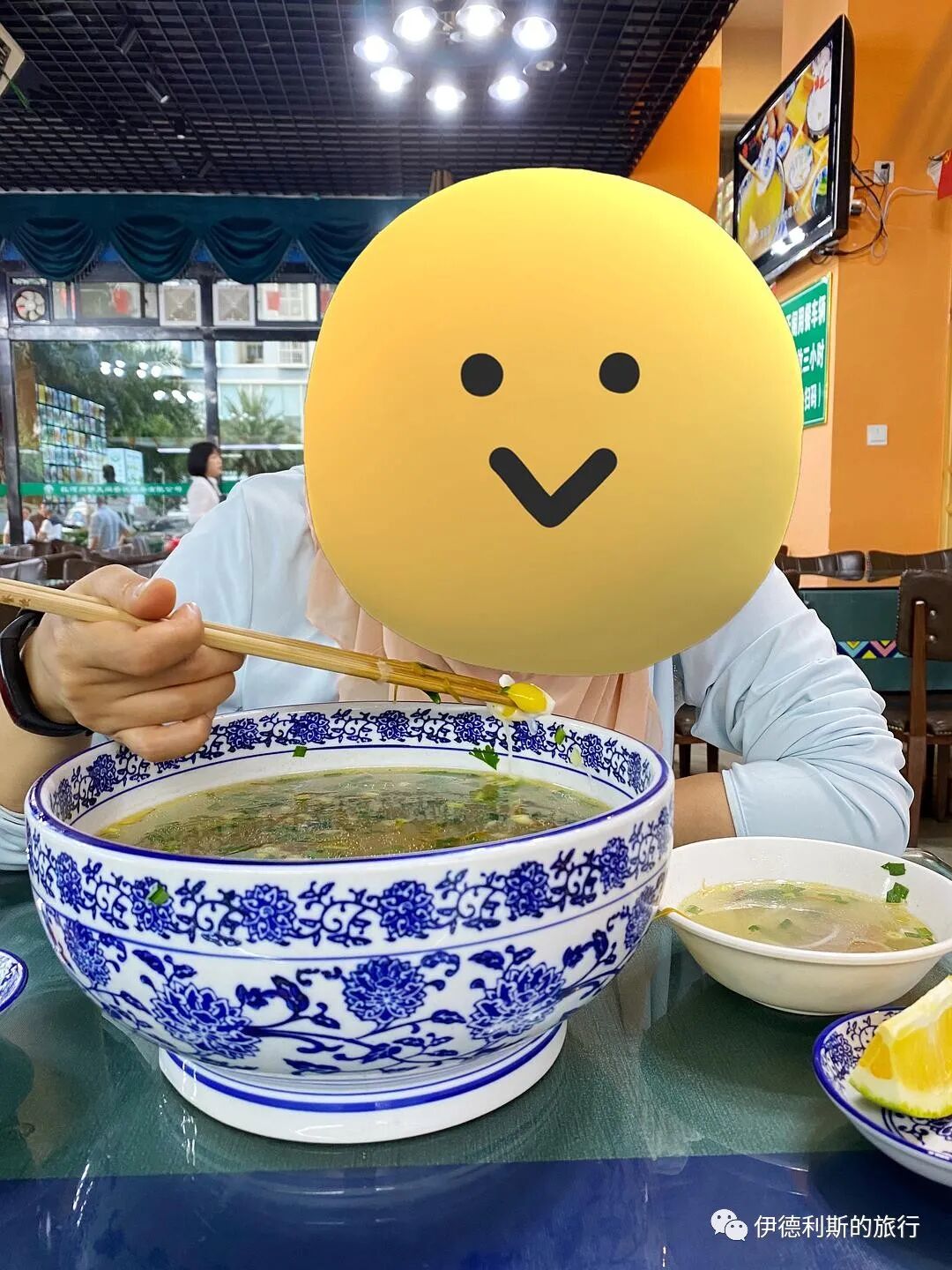
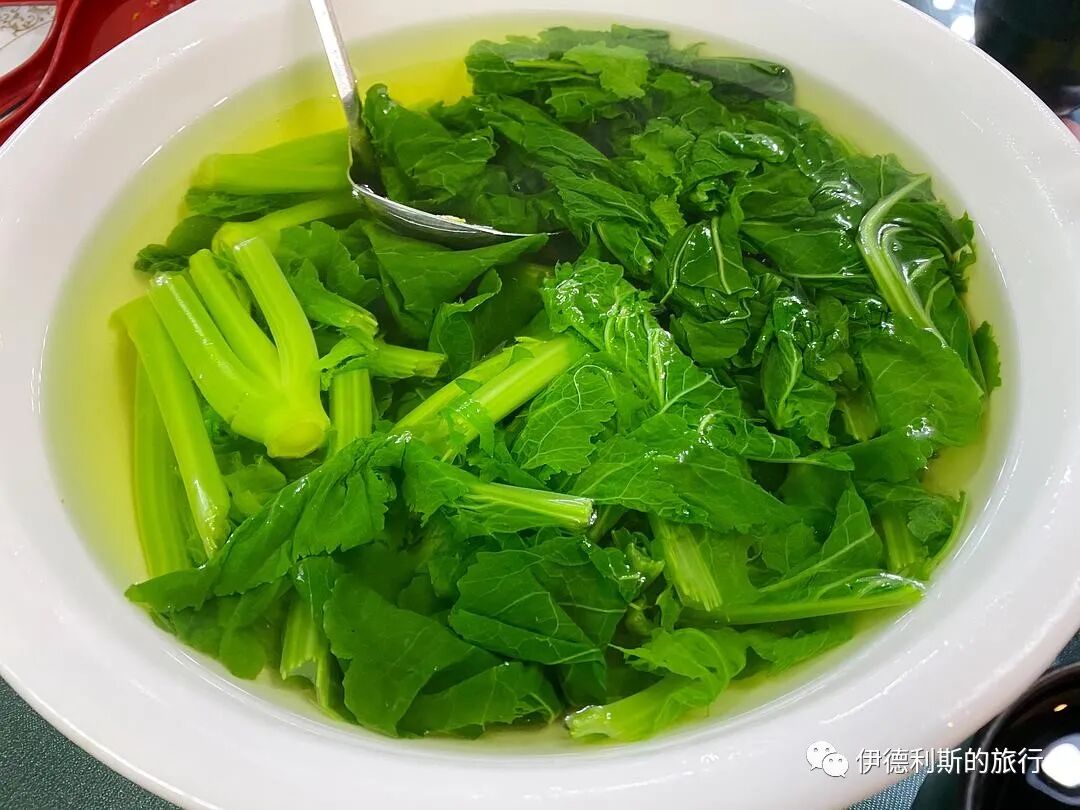
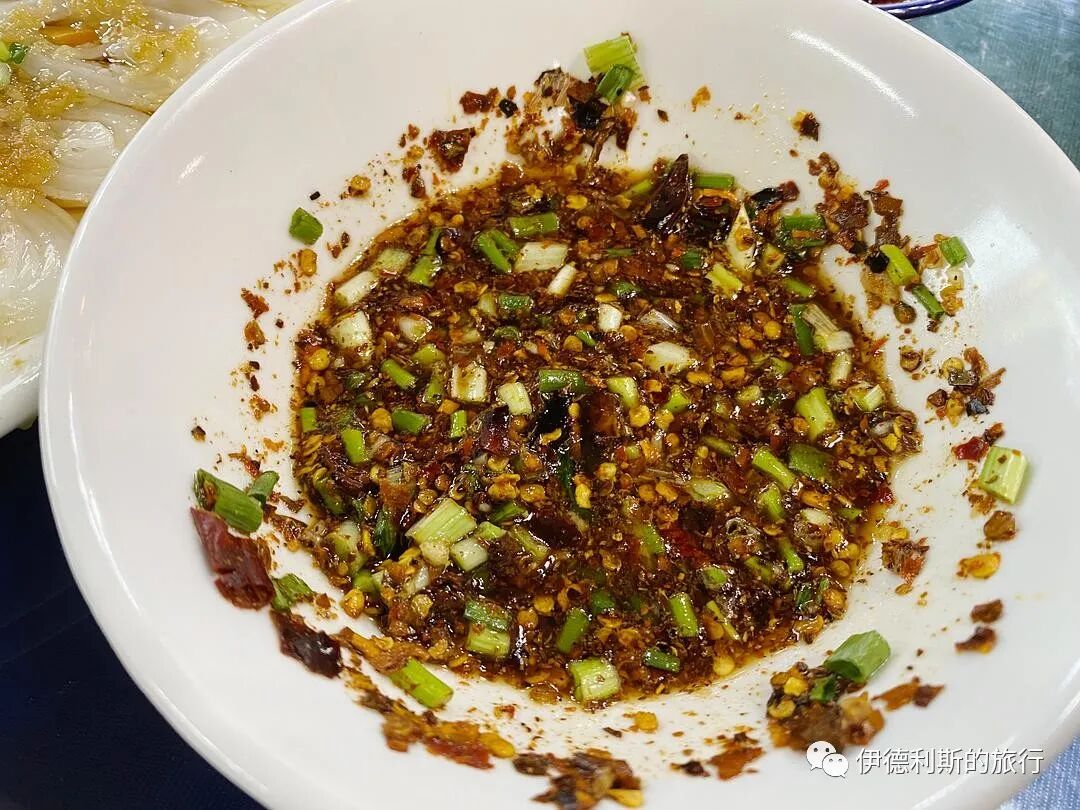
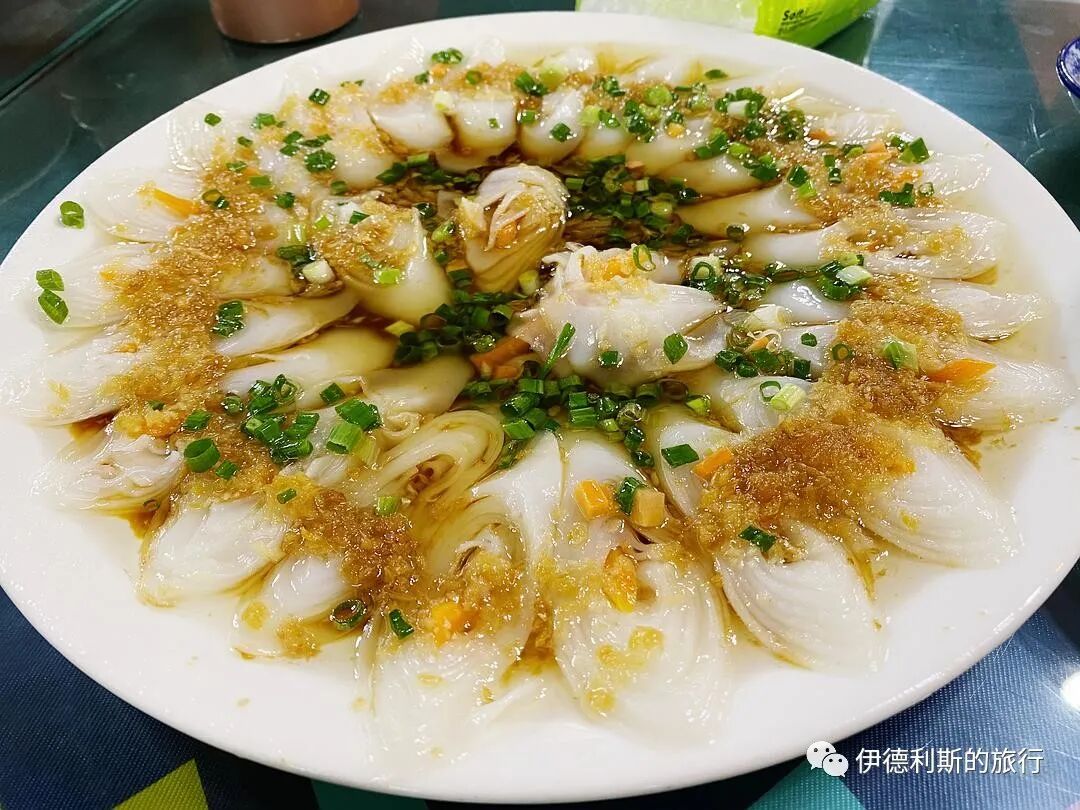
Yitiange is the most popular halal bridge-crossing rice noodle (guoqiao mixian) shop in Mengzi. They have copper pot bridge-crossing rice noodles ranging from 12 to 50 yuan. We ordered the 50-yuan deluxe version. It comes with 26 small plates, and you can get unlimited refills of the meat broth and rice noodles. The plates include raw fish slices, raw beef slices, raw quail eggs, shrimp, dried beef (niuganba), beef tongue, cold duck slices, cold beef slices, crispy beef fat, braised beef, cattail shoots (caoya), chrysanthemum flowers, pea starch jelly (wandoutuo), bean sprouts, tofu skin, chives, cilantro, mint, green onion, pumpkin tips, ginger, garlic, chili, and chili sauce. This is the most complete variety I have ever eaten! They also serve a wide variety of stir-fried dishes and seasonal vegetables, with so many options to choose from. We ordered the egg-white spring rolls (furong juanfen) and bitter greens soup (kucai tang), and both were delicious. I recommend this place to all the friends (dosti) planning a trip to Mengzi!
3. Shaanxi
1. Xi'an
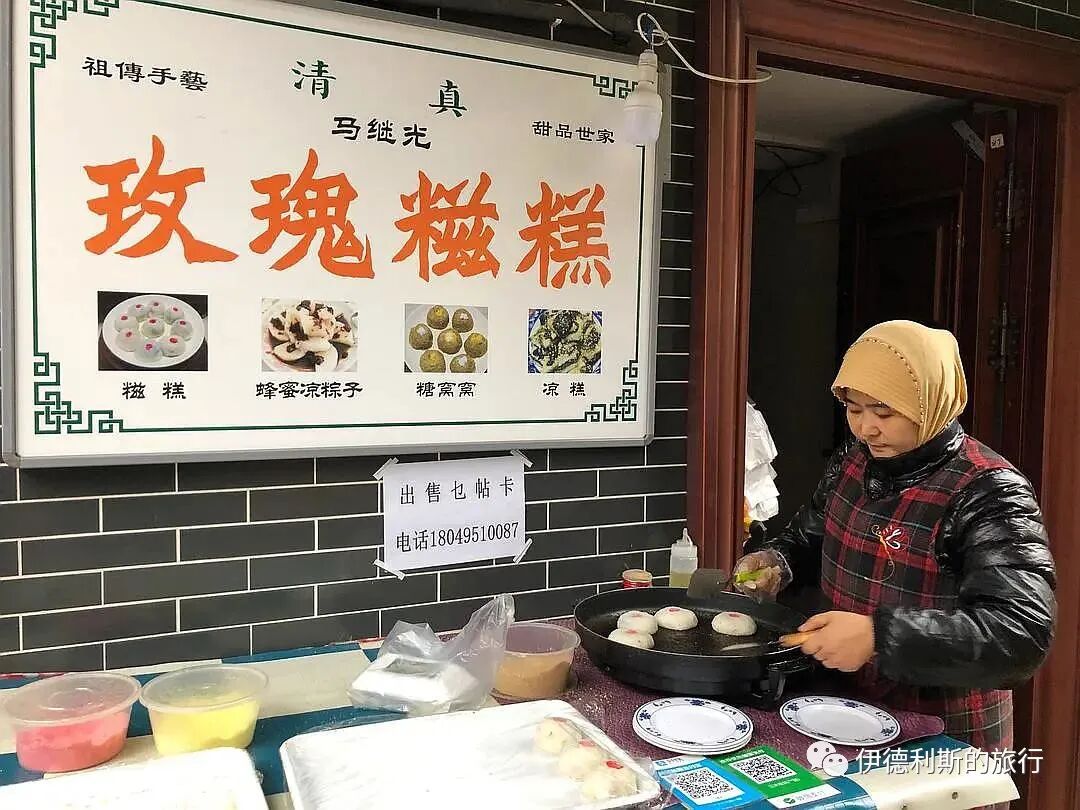
I ate rose sticky rice cake (cigao) on Primary School X Lane. In the past, Hui Muslims in Xi'an usually carried sticky rice cakes (cigao) on shoulder poles to sell along the streets, but they are much less common now than steamed date cake (zenggao). As far as I know, only Ma Jiguang Cigao Shop still sells them.
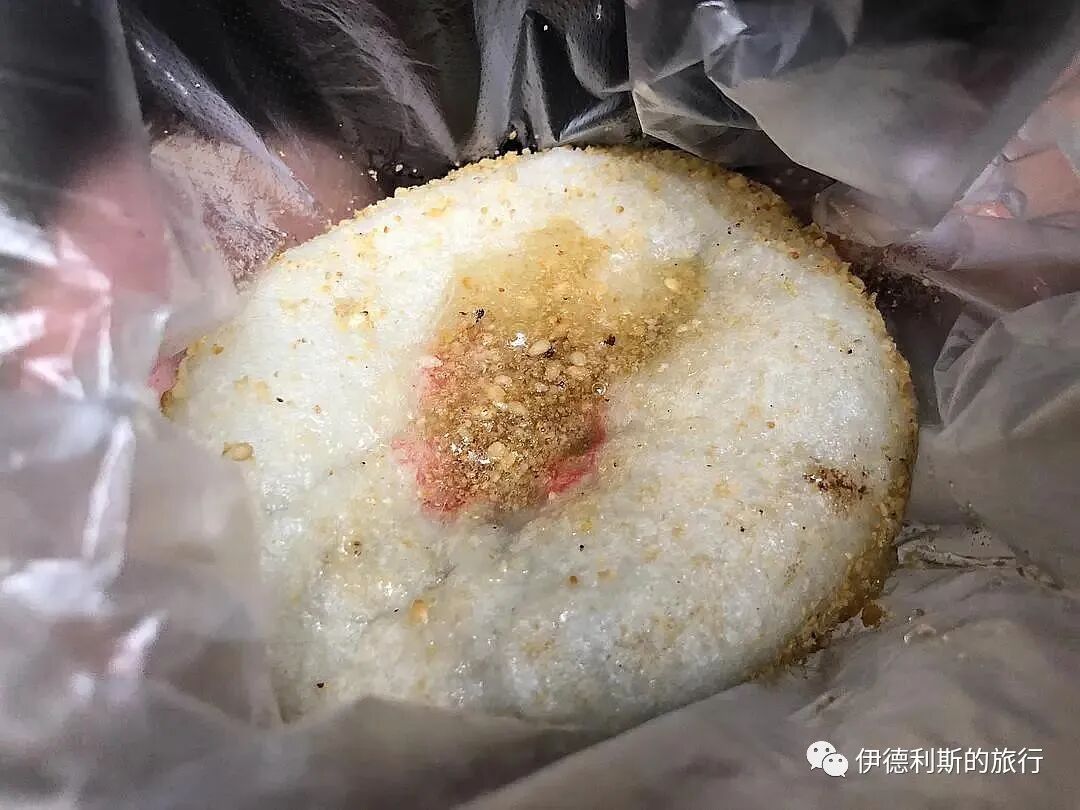
Sticky rice cake (cigao) is a glutinous rice snack filled with red bean paste. The filling contains small beans, brown sugar, sweet osmanthus sauce (huanggui jiang), rose sauce (meigui jiang), and walnut kernels. After it is made, sesame seeds are sprinkled on top.
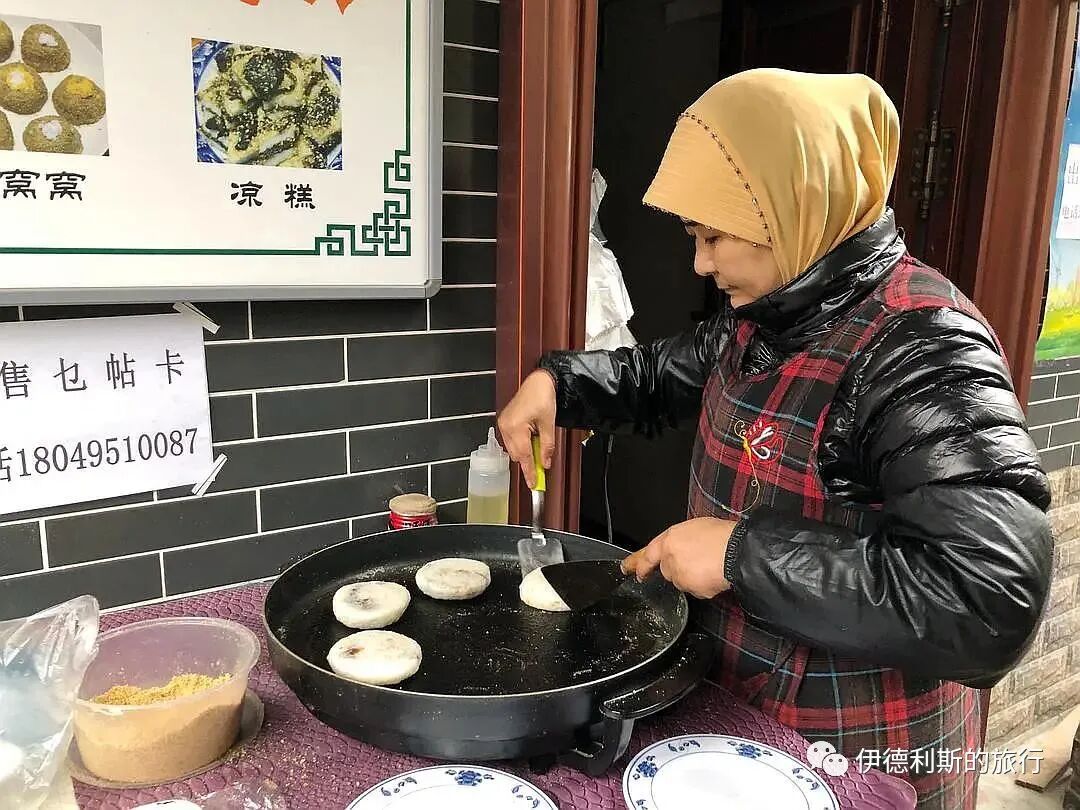
Traditionally, there are two ways to eat it: cold or hot. To eat it cold, you wrap it up and sprinkle white sugar on it. To eat it hot, you pan-fry it over low heat with rapeseed oil. We chose to eat it hot, and the lady added some honey at the end.
2. Ankang
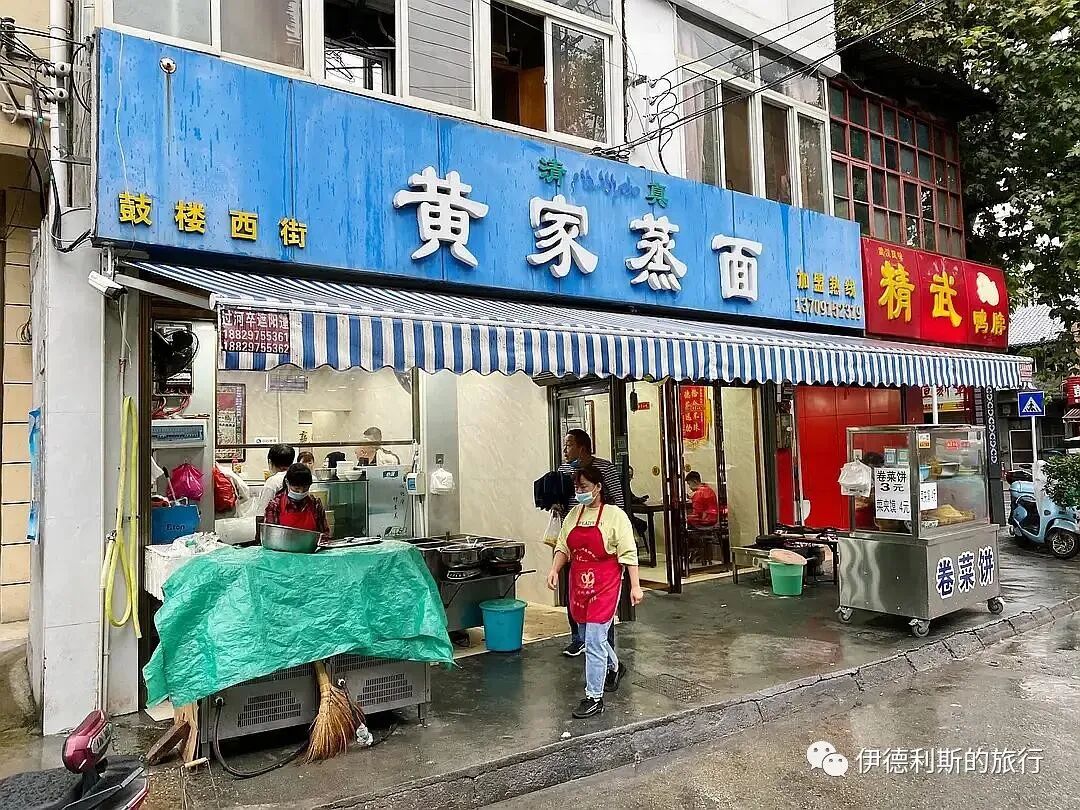
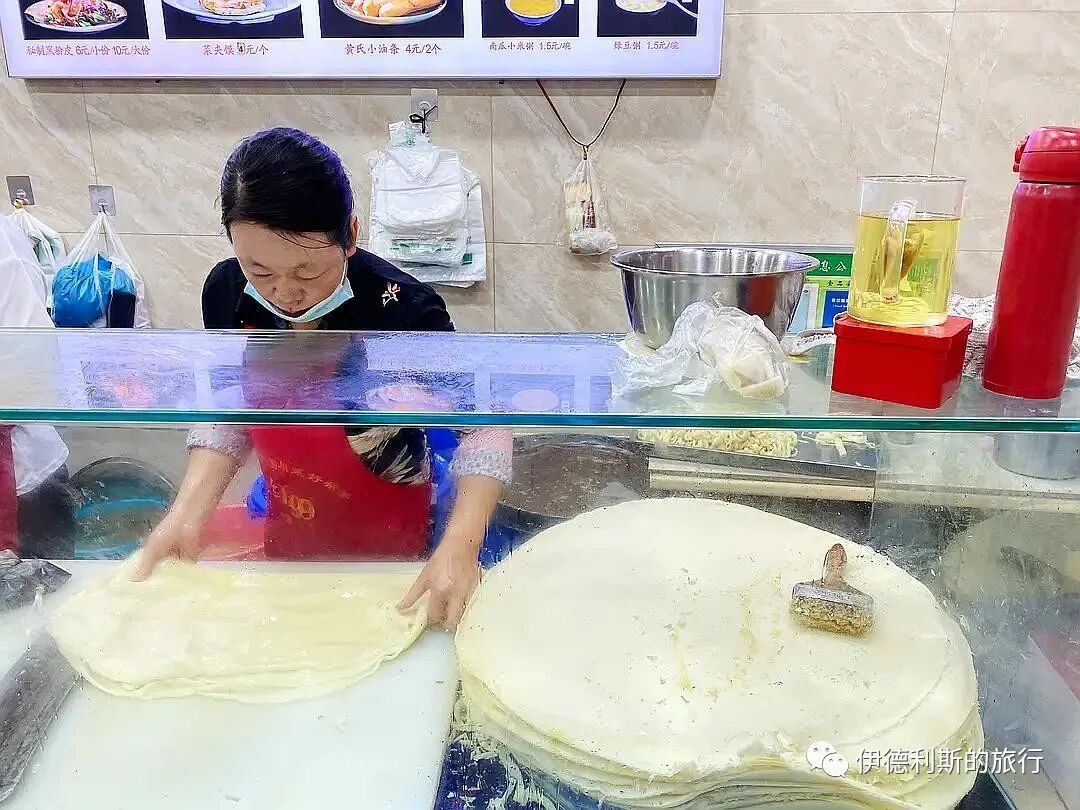
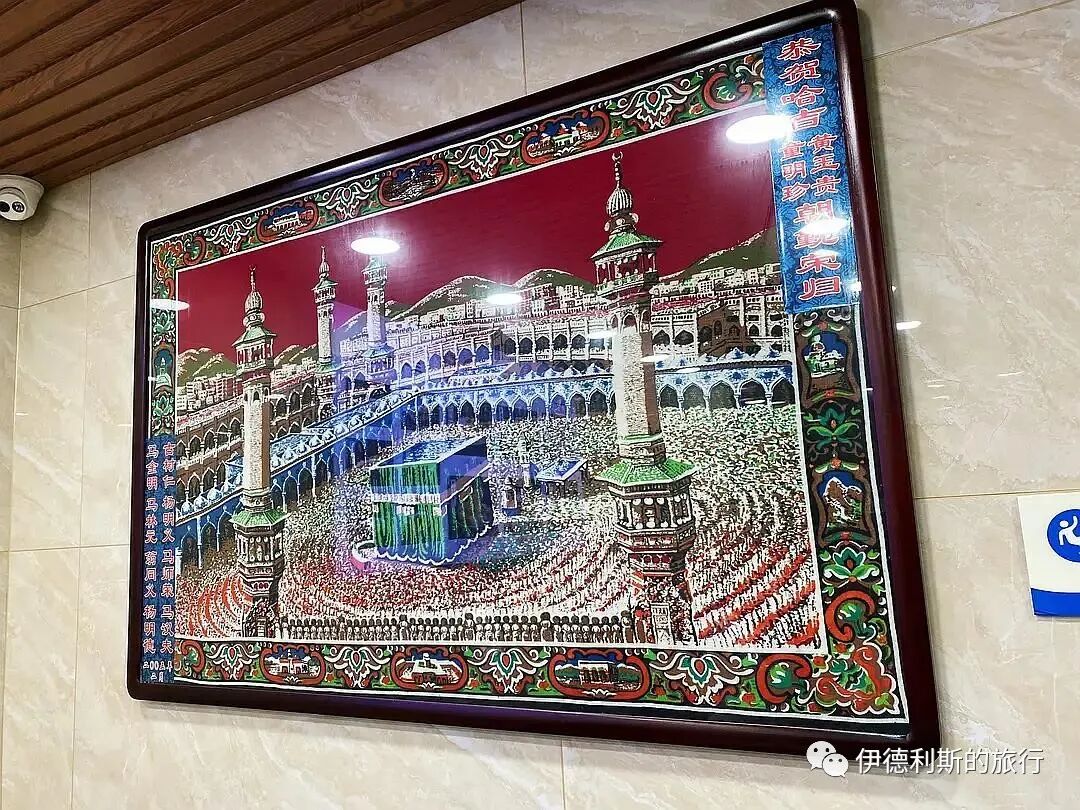
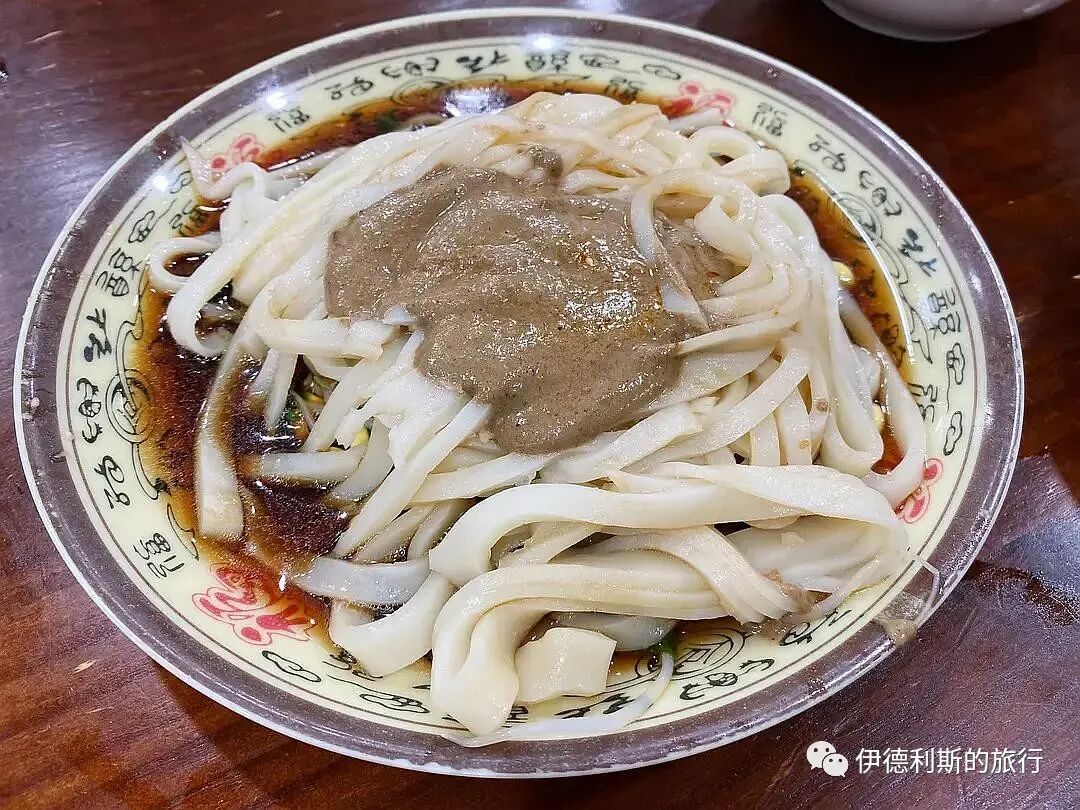
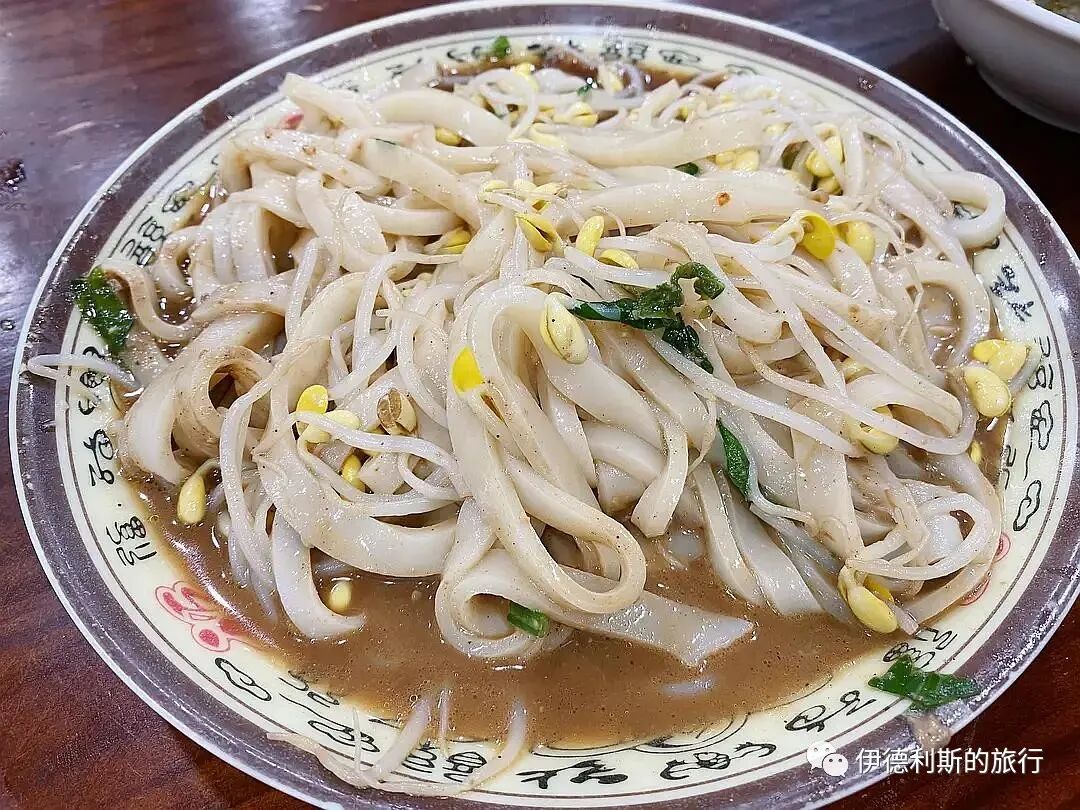
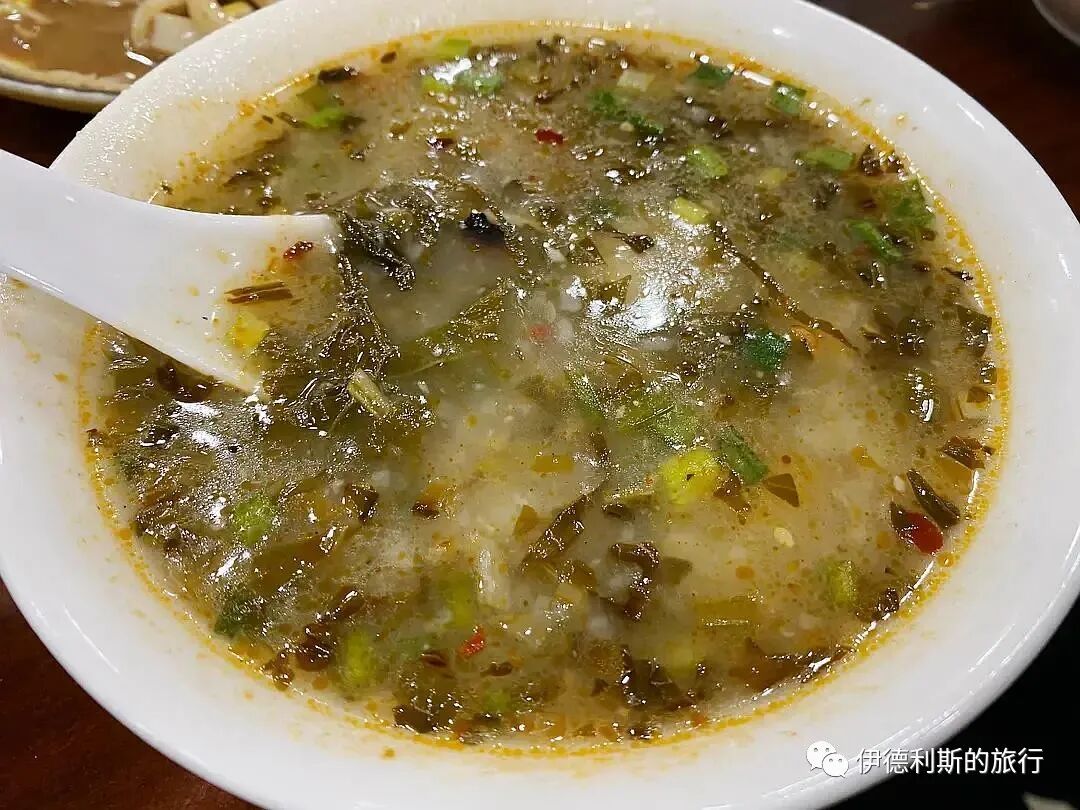
Ankang is the largest area where Hui Muslims live in southern Shaanxi. They have settled here since the Ming Dynasty, and by the Republican era, seven mosques had been built. In the morning, I went to the most popular spot at the entrance of Gulou Street to have steamed noodles (zhengmian) with pickled vegetable soup (suancai bantang). The owners are Hajj who returned from their pilgrimage in 2005. Ankang steamed noodles are a type of Shaanxi cold skin noodles (liangpi). Unlike the version in Xi'an that uses raw vinegar, Ankang steamed noodles use cooked vinegar. Steamed noodles usually come with hot chili oil (youpo lazi), but I skipped it because I cannot handle much spice.
3. Shuhe Ancient Town
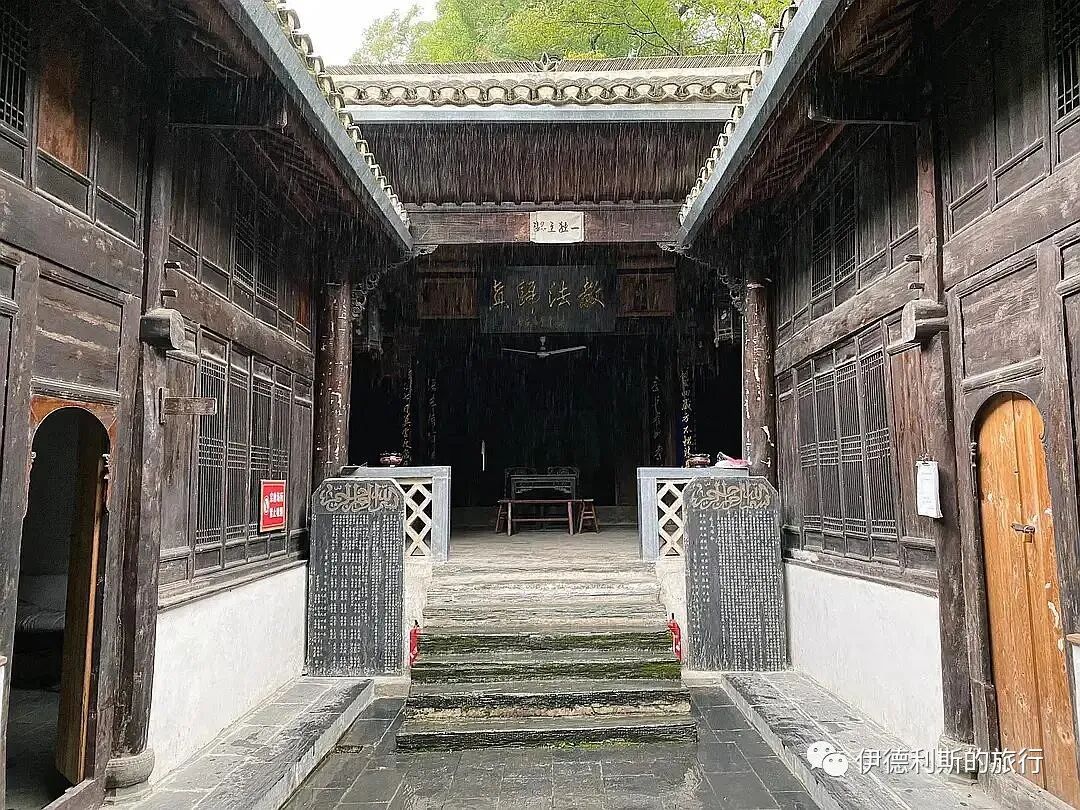
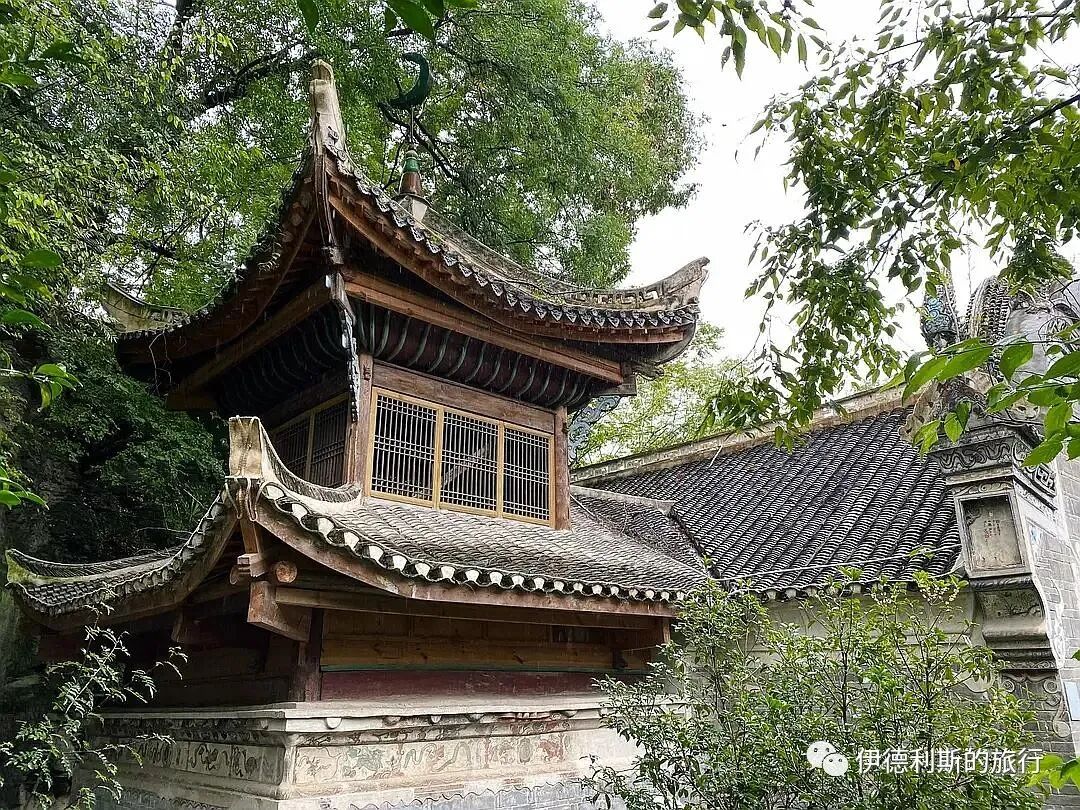
Shuhe Ancient Town is the last town the Han River passes through in southern Shaanxi before it flows into Hubei. During the Ming and Qing dynasties, when Han River shipping was booming, it was an important trading post. Merchants gathered and shops lined the streets. Hui Muslims moved to Shuhe to settle down during that time, and hundreds of families still live there today.
After attending Jumu'ah prayers at the mosque, we happened to catch a ten-bowl feast, a local Shuhe specialty. Zainab really enjoyed the meal, and we were even given plenty of fried dough (youxiang) to take home. The ten-bowl feast includes lotus root boxes (liancai hezi—lotus root stuffed with lamb, coated in egg, fried, and then steamed), lamb meatballs (yangrou wanzi—coated in egg, fried, and then steamed), braised beef, steamed lamb with flour (fenzheng rou—lamb coated in flour and steamed with sweet potato chunks), steamed white meat (fatty meat with lamb cartilage, steamed), chicken (half-fried then steamed), fish chunks (grass carp chunks coated in flour, fried, and then steamed), and three vegetable dishes. Hui Muslim banquet dishes are different from everyday home cooking. Since they usually serve many people, most dishes are prepared halfway and then steamed together in a large pot. This keeps the food hot and makes the cooking process efficient.
4. Xixiang County
Xixiang County sits in the middle of the Hanzhong Basin in southern Shaanxi. It is tucked between the Qinling Mountains and the Bashan Mountains, and the Muma River, a tributary of the Han River, flows through the county town. Starting in the Ming Dynasty, Hui Muslims from Pingliang, Gansu, moved to Xixiang to settle down. The Hui Muslim population continued to grow during the Kangxi and Qianlong eras. Today, more than 2,000 Hui Muslims live in the Xiguan area of the county town.
Hui Muslims in Xixiang have been famous for making beef jerky since the Tongzhi era. The local Xizhen cattle in Xixiang are a nationally famous breed of yellow cattle that are perfect for making beef jerky. Today, you can see shops selling halal beef jerky all over the Xiguan area of Xixiang, with the highest concentration found at the Xiguan Halal Beef and Mutton Market. Every shop in Xiguan makes its beef jerky a little differently, so some are hard, some are soft, some are salty, and some are mild.
We bought some beef jerky at a shop called Zhongping Food Store, where many locals go to shop. view all
Summary: Halal Food Guide: Western China — Muslim Snacks and Local Halal Food is presented here as a firsthand travel account in clear English, beginning with this scene: I am sharing 53 halal snack spots I visited across 53 places in Western China. Some are in small restaurants and others are at street stalls, each with its own unique flavor. The account keeps its focus on Western China Food, Halal Snacks, Halal Food while preserving the names, places, food, and historical details from the Chinese source.
I am sharing 53 halal snack spots I visited across 53 places in Western China. Some are in small restaurants and others are at street stalls, each with its own unique flavor.
Table of Contents
1. Sichuan
1. Guangyuan 2. Langzhong 3. Nanchong 4. Tuqiao in Chengdu 5. Dujiangyan 6. Mimou Town
2. Yunnan
1. Zhaotong 2. Ludian 3. Kunming 4. Xundian 5. Xiaguan in Dali 6. Weishan in Dali 7. Dali Ancient City 8. Ruili 9. Xishuangbanna 10. Daying in Yuxi 11. Najiaying 12. Jianshui 13. Shadian 14. Mengzi
3. Shaanxi
1. Xi'an 2. Ankang 3. Shuhe Ancient Town 4. Xixiang 5. Xianyin Mosque (Xianyin Si) in Hanzhong
4. Inner Mongolia
1. Hohhot 2. Longshengzhuang 3. Jining
5. Ningxia
1. Yinchuan
6. Gansu
1. Lanzhou, 2. Linxia
7. Qinghai
1. Ping'an 2. Xunhua 3. Xining
8. Xinjiang
1. Urumqi 2. Toksun County 3. Turpan 4. Huoyanshan Town 5. Shanshan County 6. Yarkant (Shache) 7. Kashgar (Kashi) 8. Yining 9. Qingshuihe Town, Huocheng County 10. Zhaosu County 11. Nalati Town, Xinyuan County 12. Hami 13. Korla (Ku'erle) 14. Bayanbulak Town, Hejing County 15. Hejing County 16. Yanqi County 17. Lopnur (Yuli) County 18. Kuqa 19. Yengisar (Yingjisha) County
1. Sichuan Province
1. Guangyuan
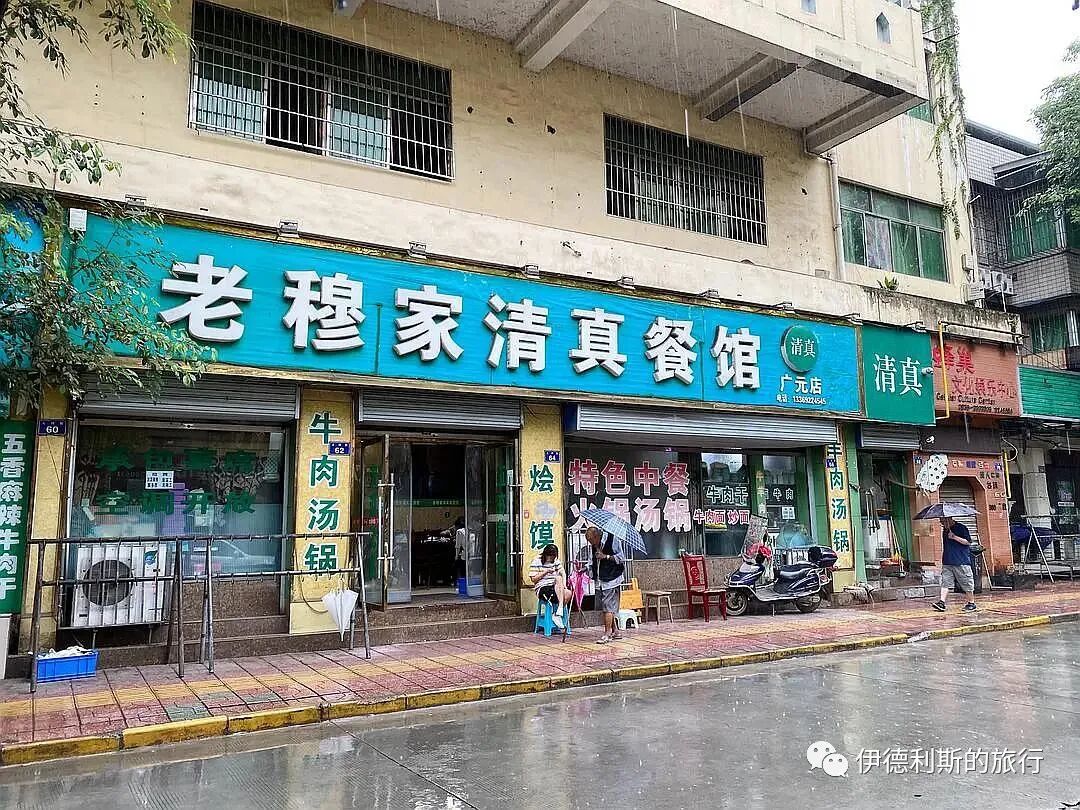
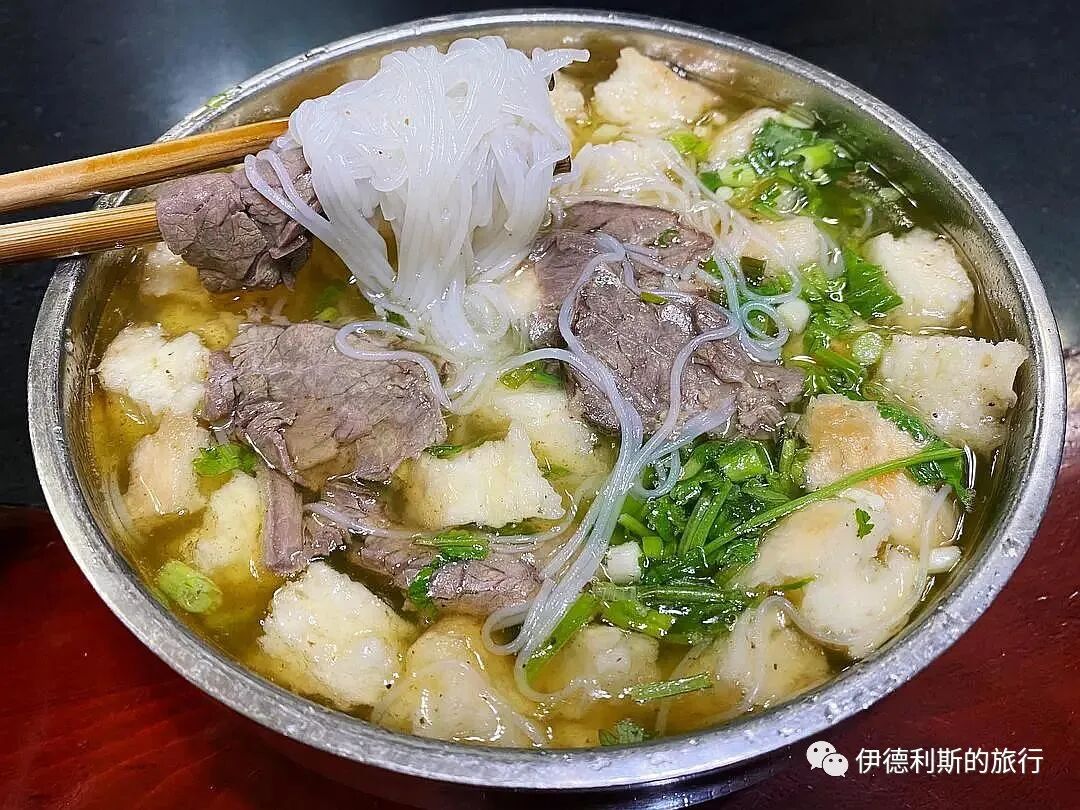
Around the mosque on Shanghe Street in Guangyuan, Sichuan, there are many local halal restaurants. They specialize in beef soup pot (niurou tangguo) and stewed flatbread (huimo). Compared to other parts of Sichuan, the halal food here is closer to the style of Hanzhong in Shaanxi.
2. Langzhong
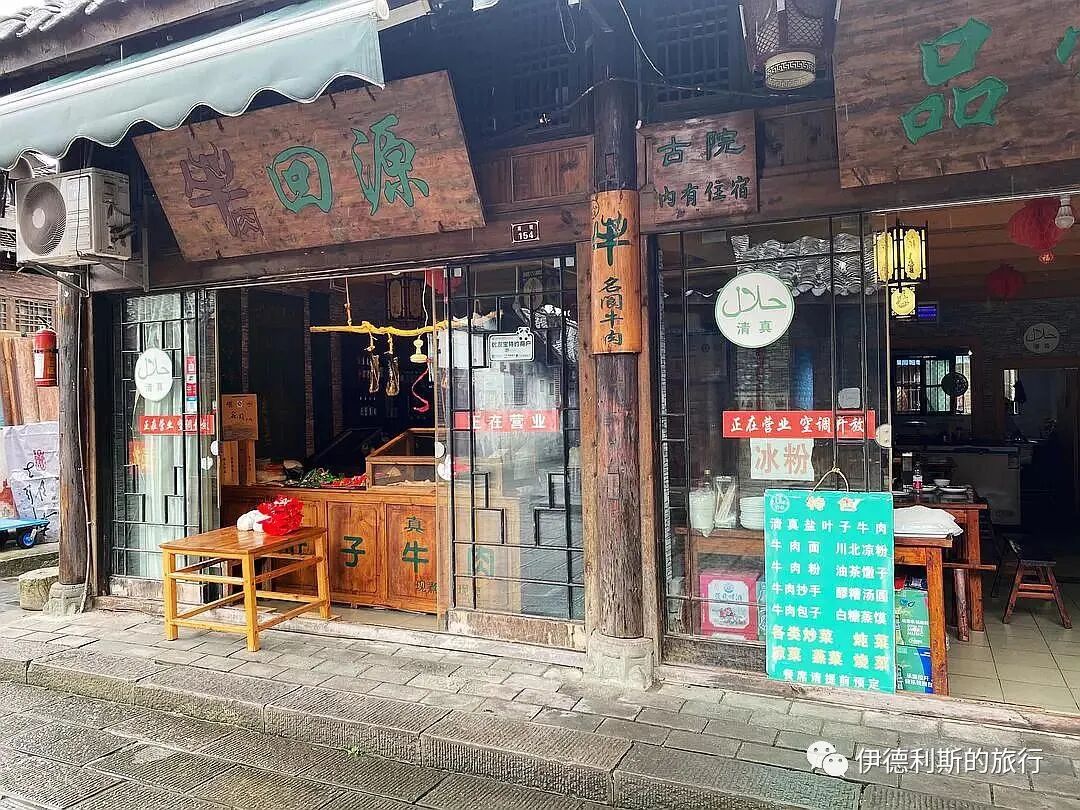
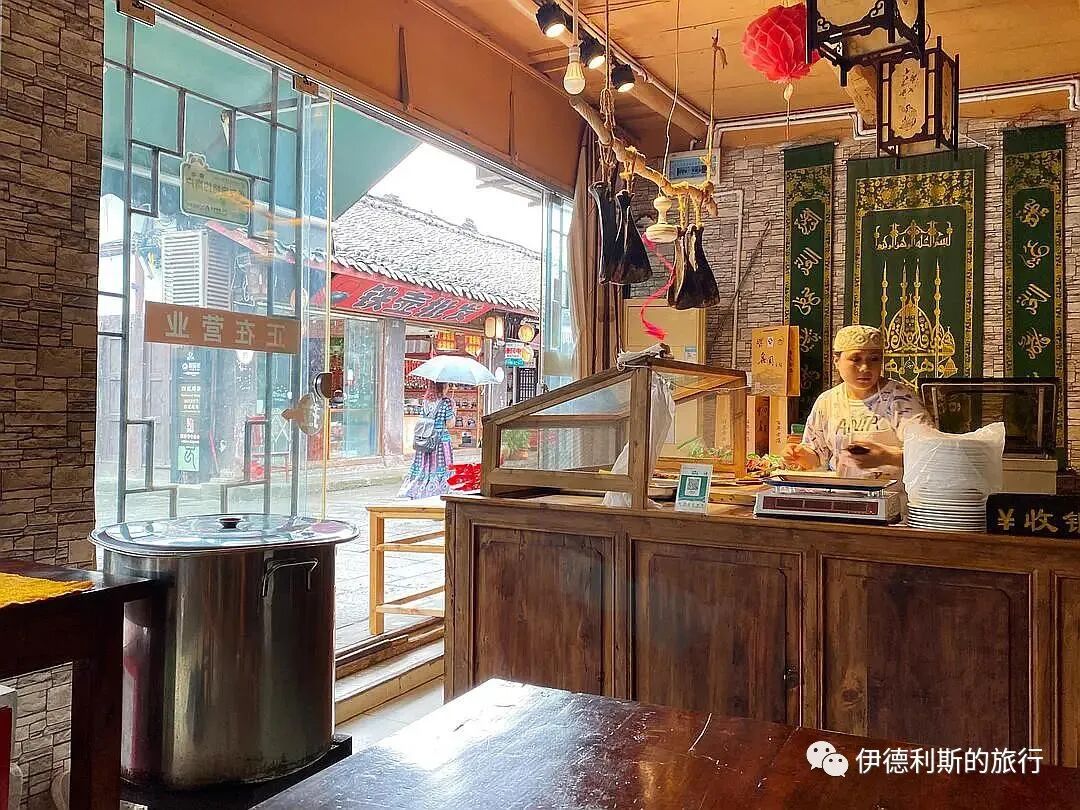
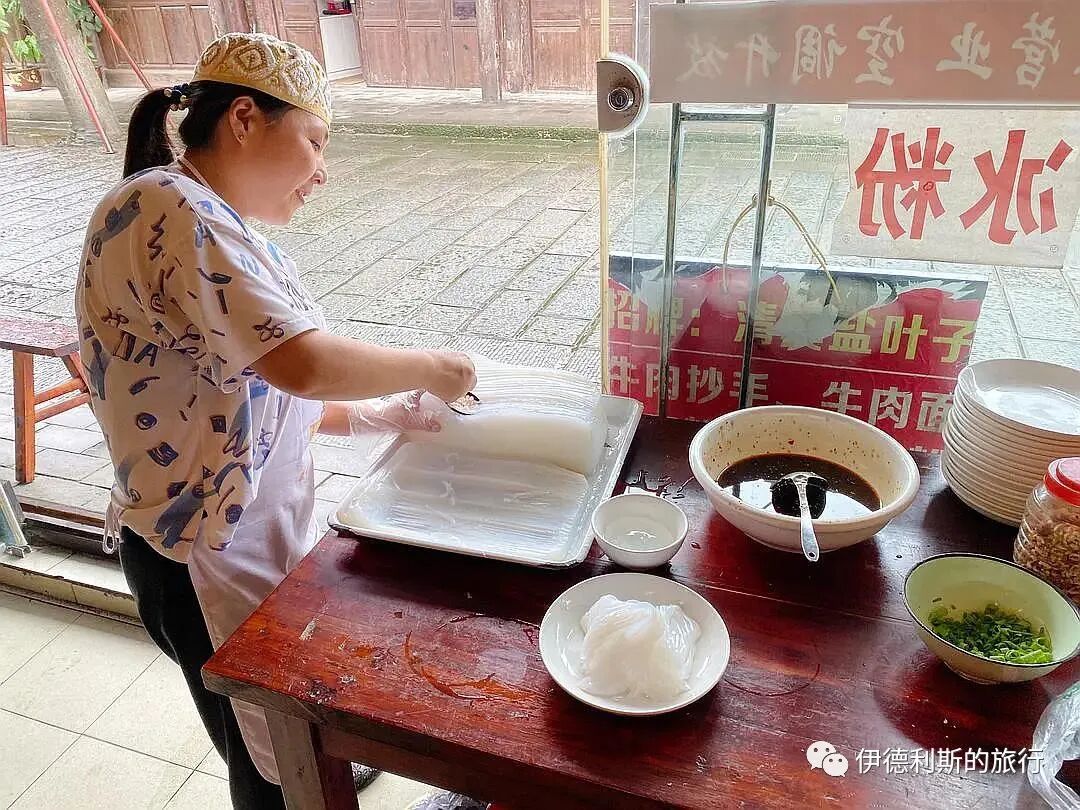
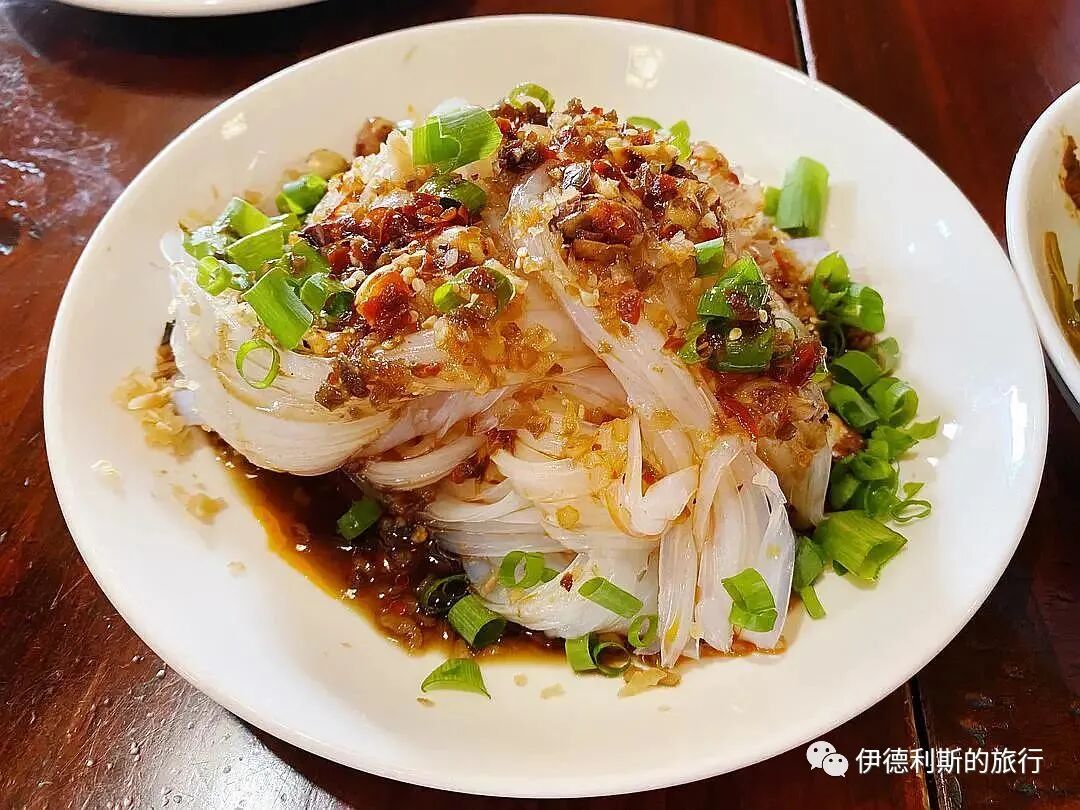
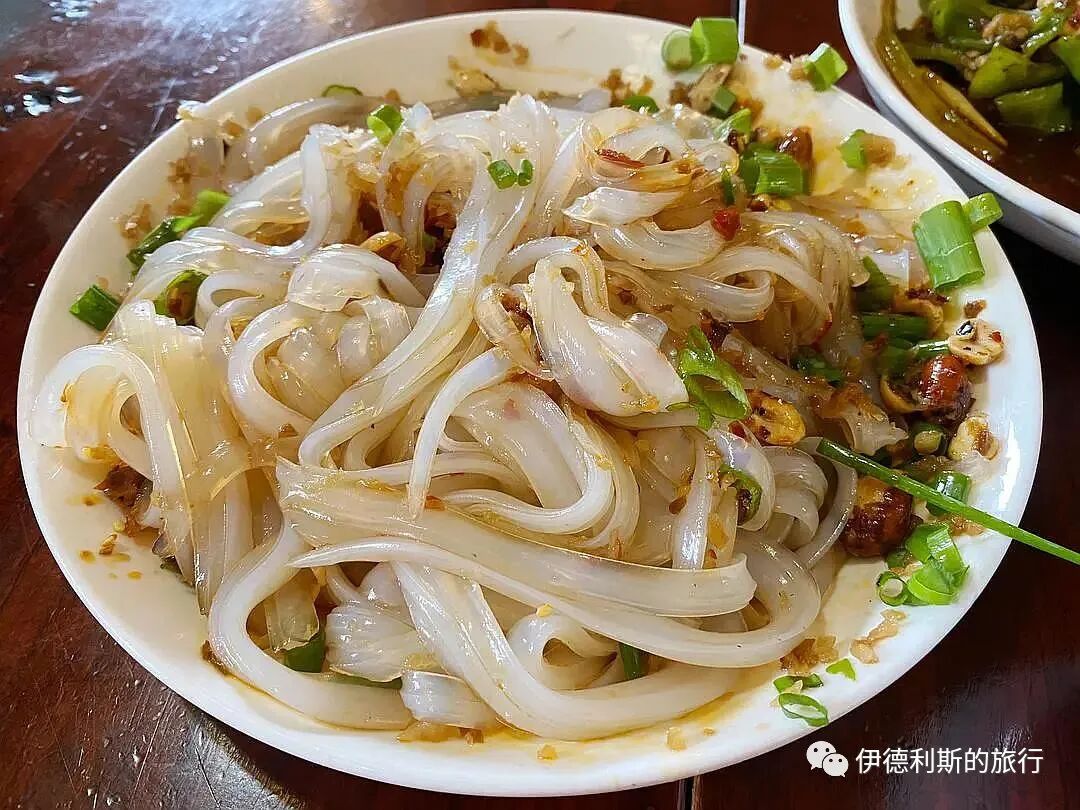
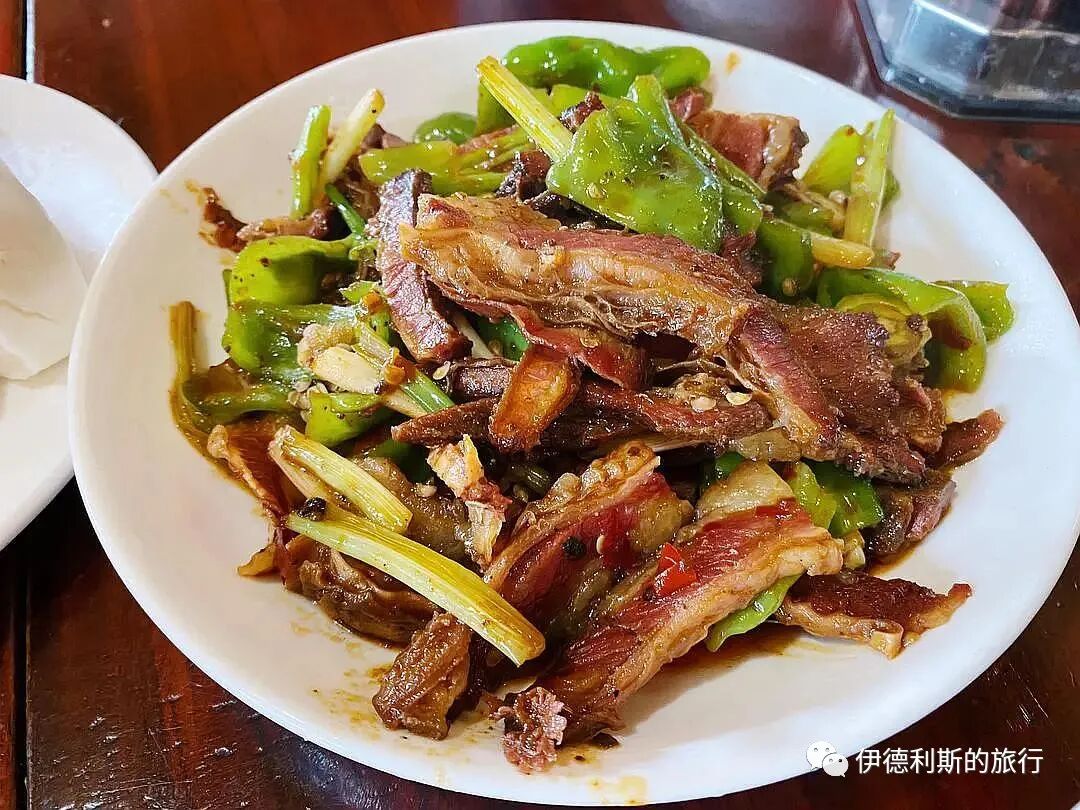
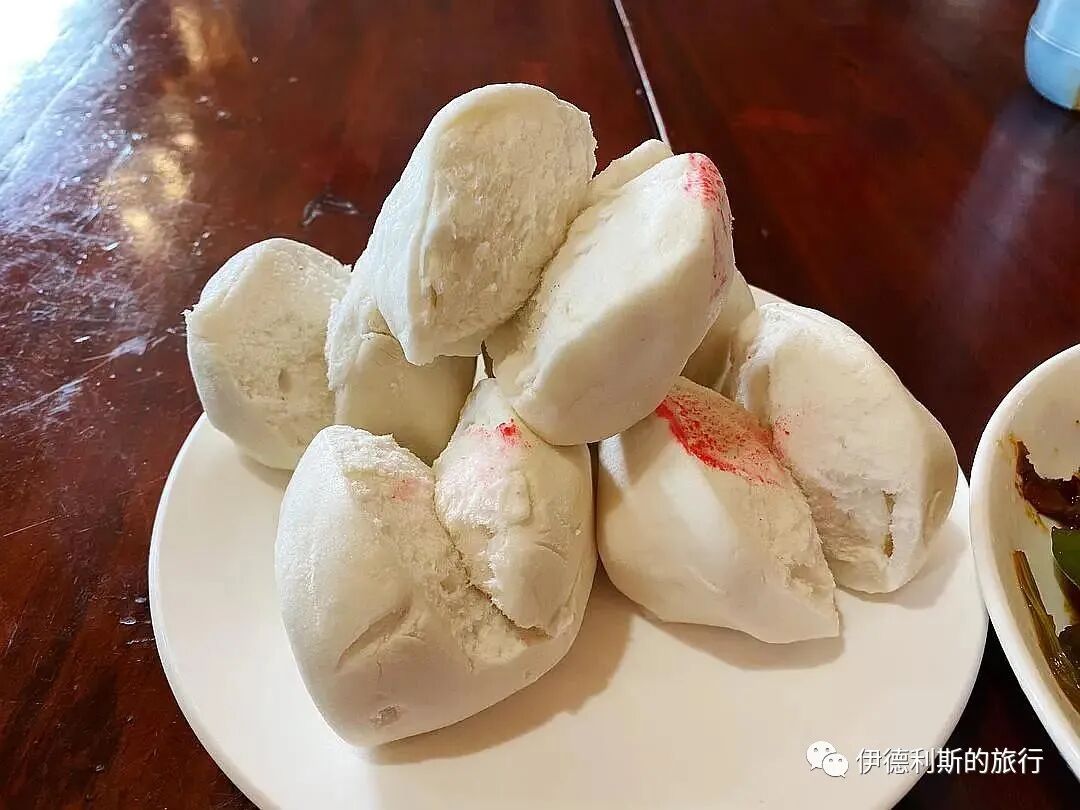
There are many halal restaurants inside the old town of Langzhong. At one of them, I ate twice-cooked pork made with salted leaf beef (yanyezi niurou), as well as northern Sichuan cold jelly noodles (chuanbei liangfen) and steamed sugar buns (baitang zhengmo). Steamed sugar buns are a specialty of the Hui Muslims in Langzhong. They were created by the Hui Muslim pastry chef Ha Gongkui during the Qianlong era. Instead of using lye, they are fermented with naturally cultivated enzymes and include some osmanthus flowers. You can also steam them again later.
3. Nanchong
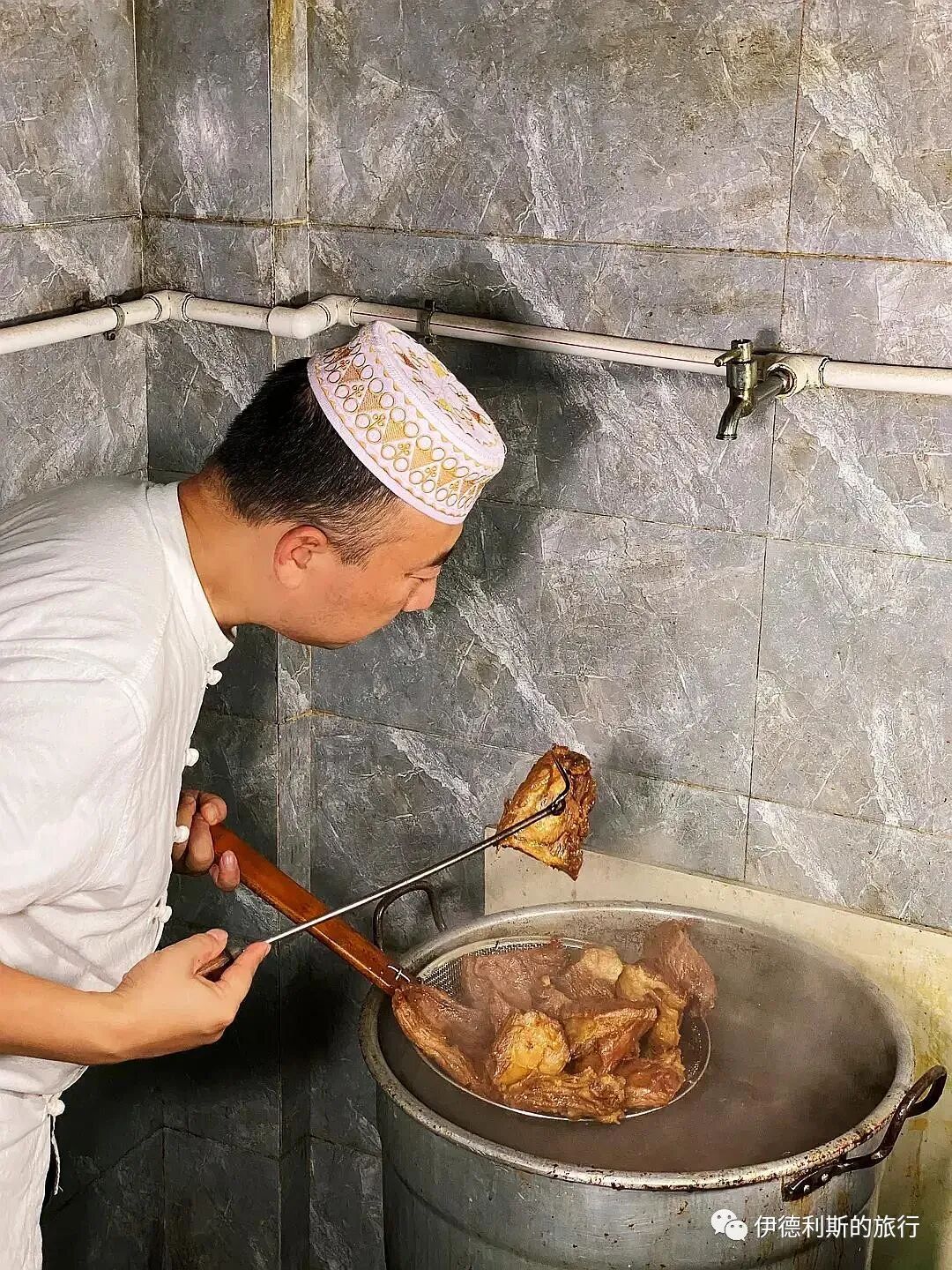
At the entrance of the Nanchong Mosque, Imam Feng Yong and his family sell Yunus beef jerky, which is a precious piece of intangible cultural heritage.
Imam Feng Yong’s ancestors moved from Shaanxi to settle in Nanchong during the Qing Dynasty. At that time, the busy Jishikou market had many stalls selling braised beef, and the Imam’s great-grandfather, Yang Fangyun, ran his family’s traditional halal beef jerky business there. Because they used a red lantern to block the wind and provide light on windy days, people started calling it Red Lantern beef jerky (hongdenglong gan niurou).
During the Republic of China era, the Feng family joined forces through marriage with Yang Fangyun, who made Red Lantern beef jerky, Ma Yutu, who made Ma Laizi jarred beef (guanguan niurou), and Zhang Dechao, who made beef crispy cakes (niurou jiaobing). The Imam’s grandfather, Feng Zifeng, then opened the Shixian shop on Fu Street, establishing the Hui Muslim halal restaurant to keep the Red Lantern beef jerky tradition alive.
In 1958, the Red Lantern brand became a public-private partnership. Yang Fangyun chose not to work in the factory and instead stayed home to do small-scale work. In the early 1990s, Imam Feng's grandfather set up a stall selling spiced beef (lu niurou) in front of their old family home and passed the craft down to Imam Feng, who was still in middle school at the time.
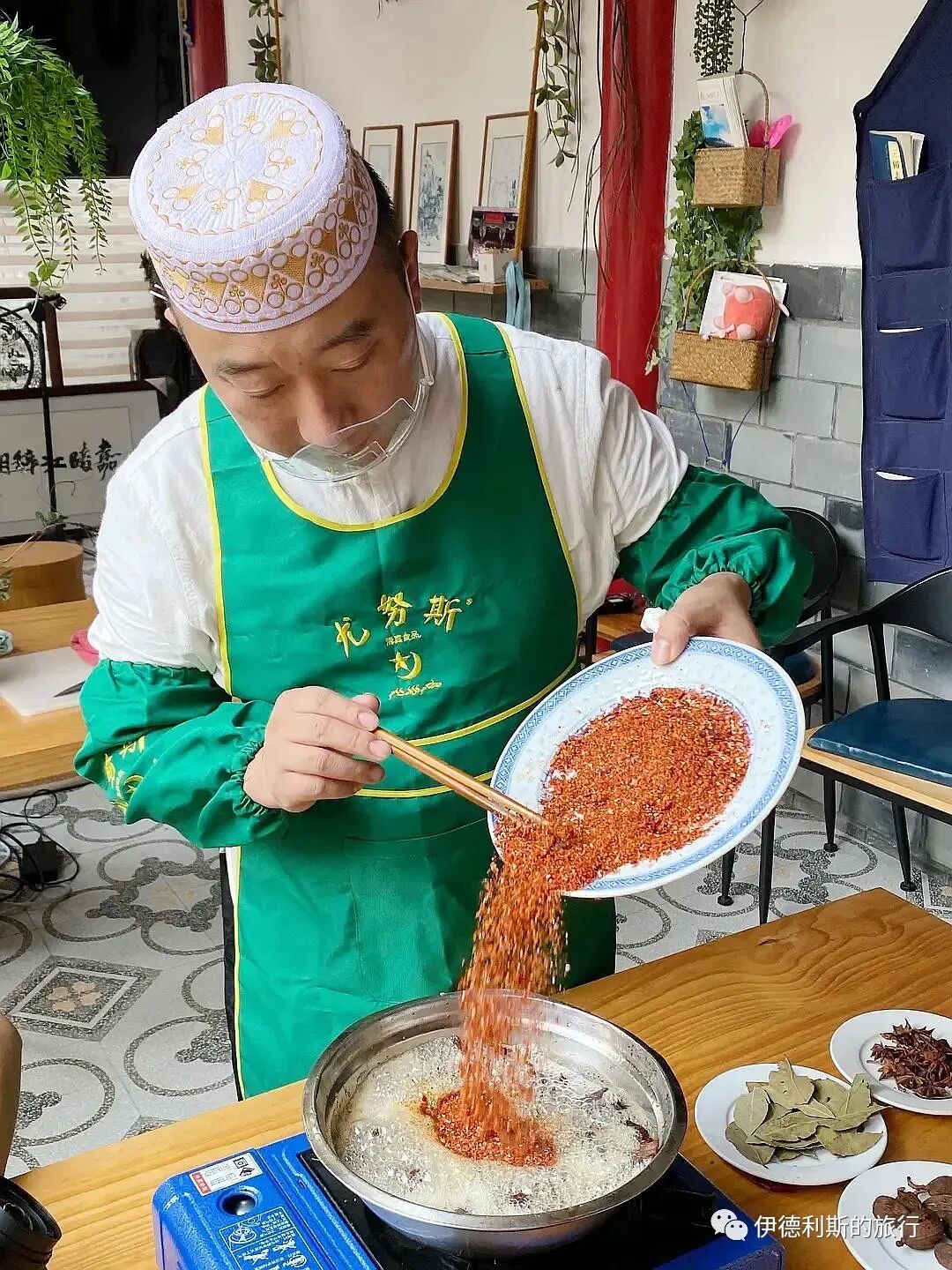
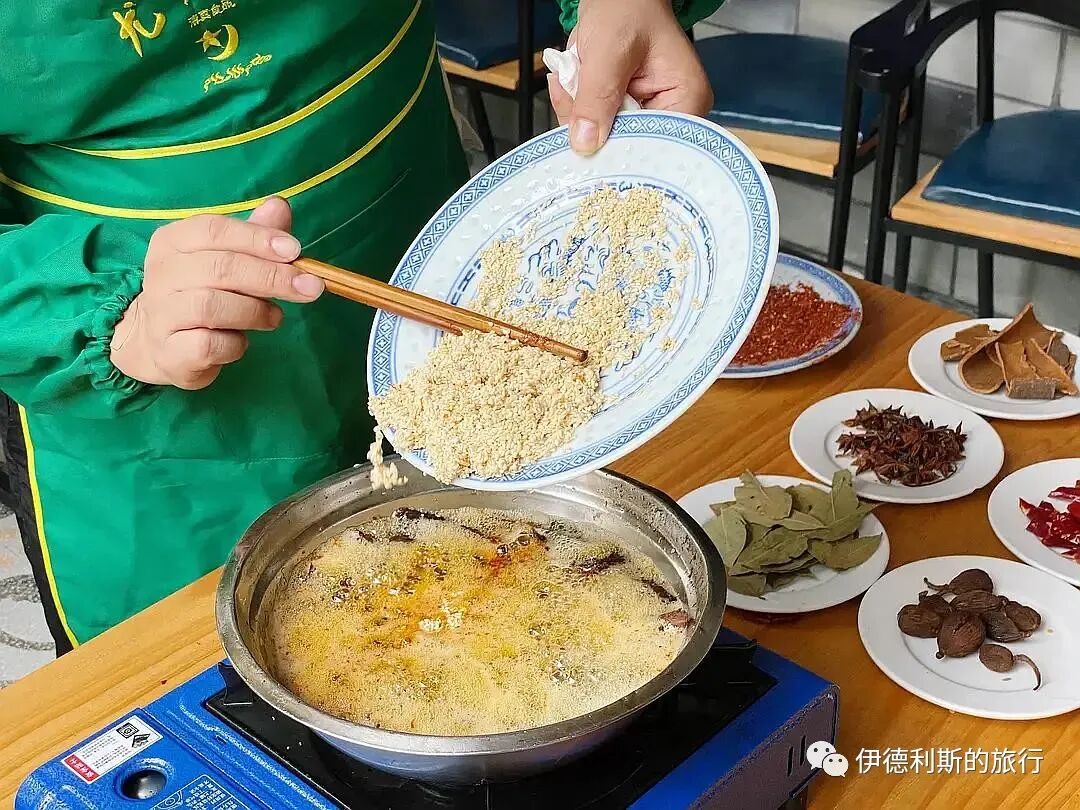
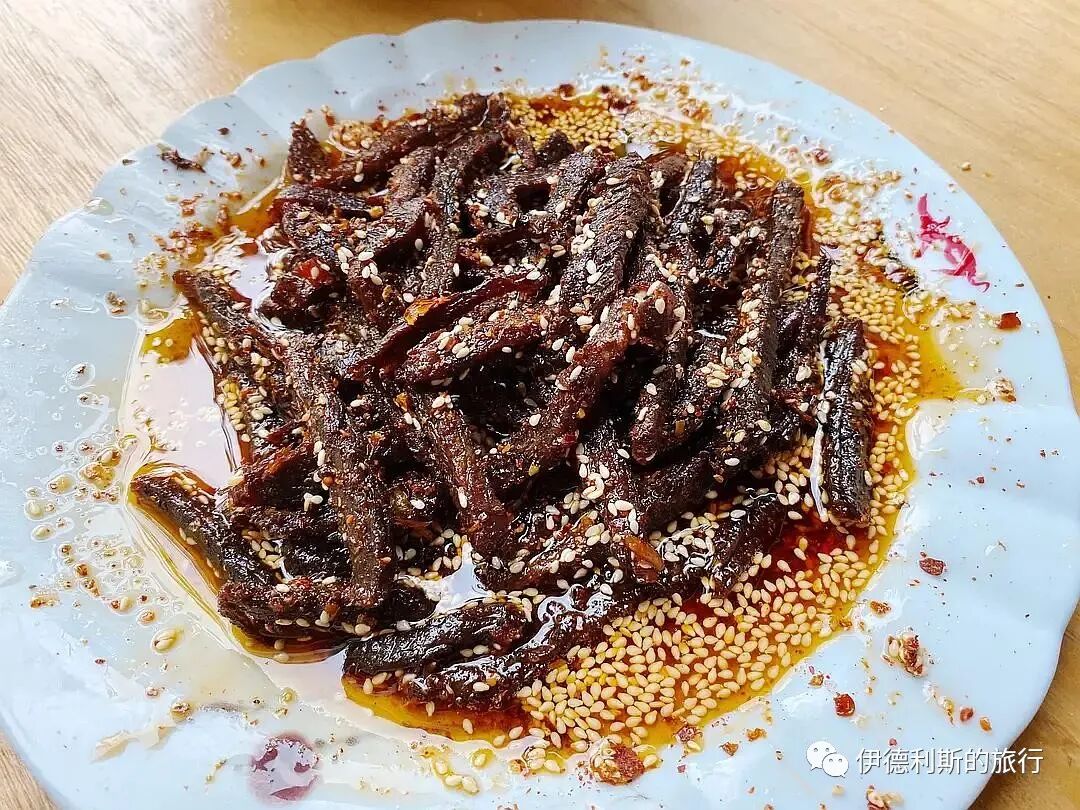
To make beef jerky, you first marinate the meat with various spices, then braise it, and let it dry in the sun. Finally, you toss it in a pan with chili powder, salt, Sichuan peppercorn powder, and white sesame seeds.
4. Tuqiao, Chengdu
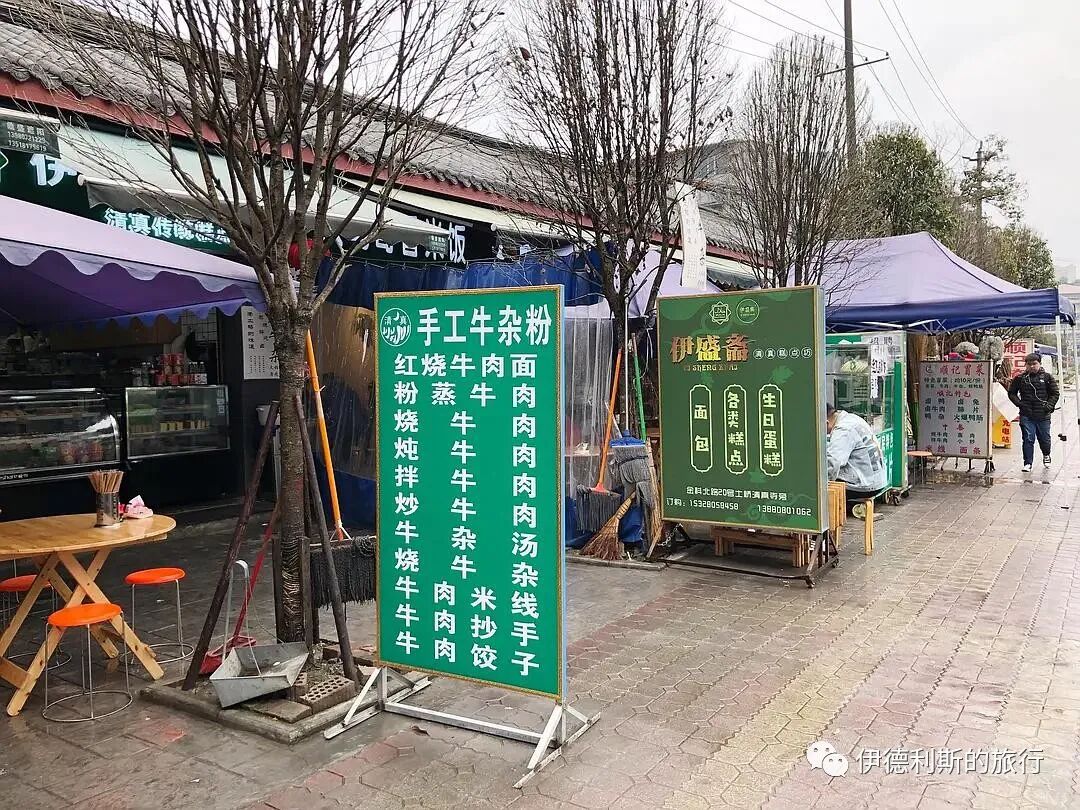
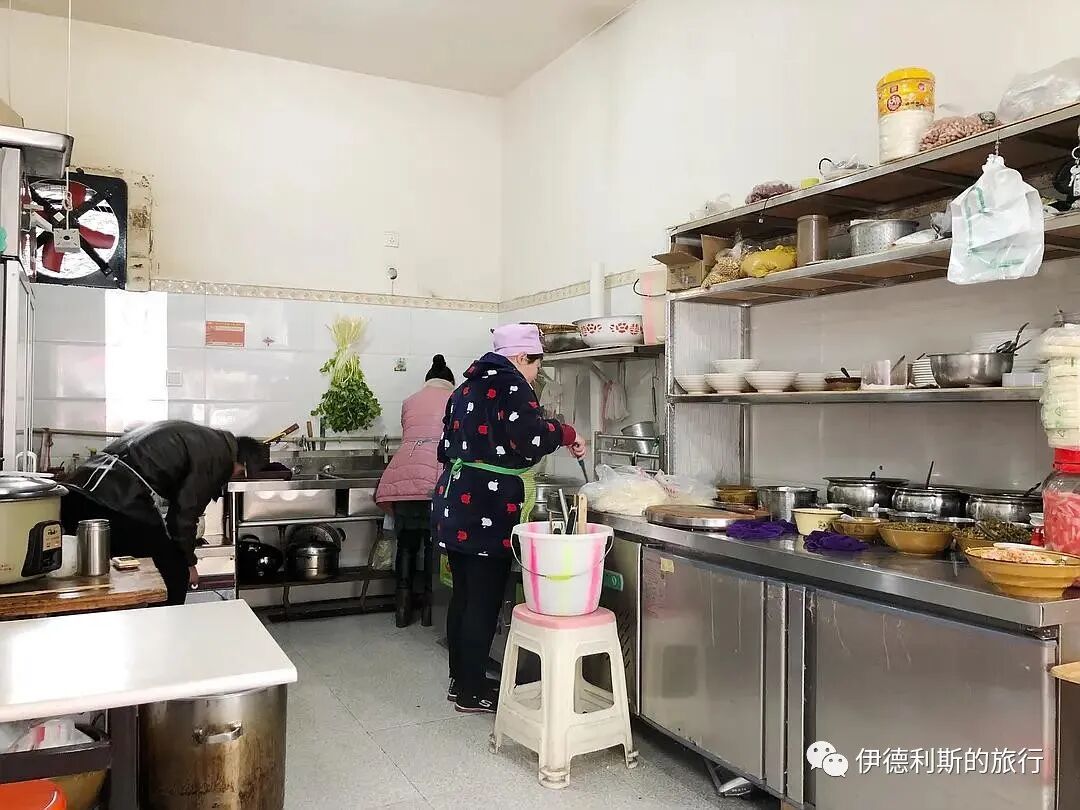
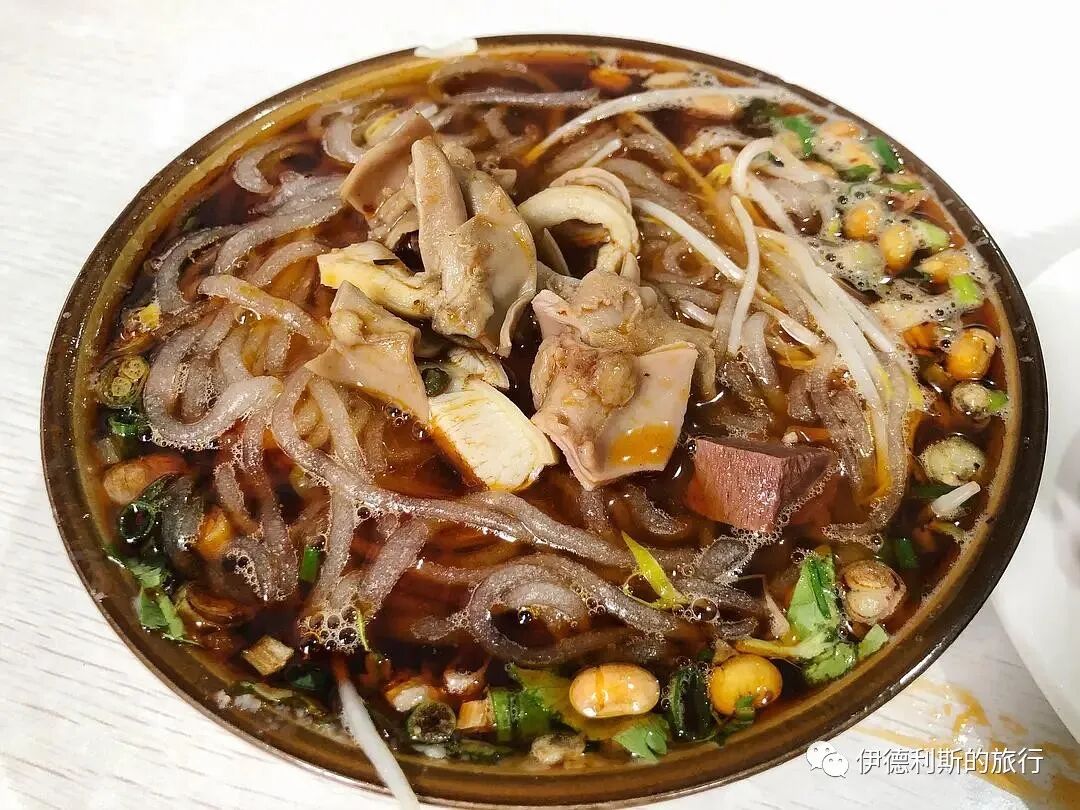
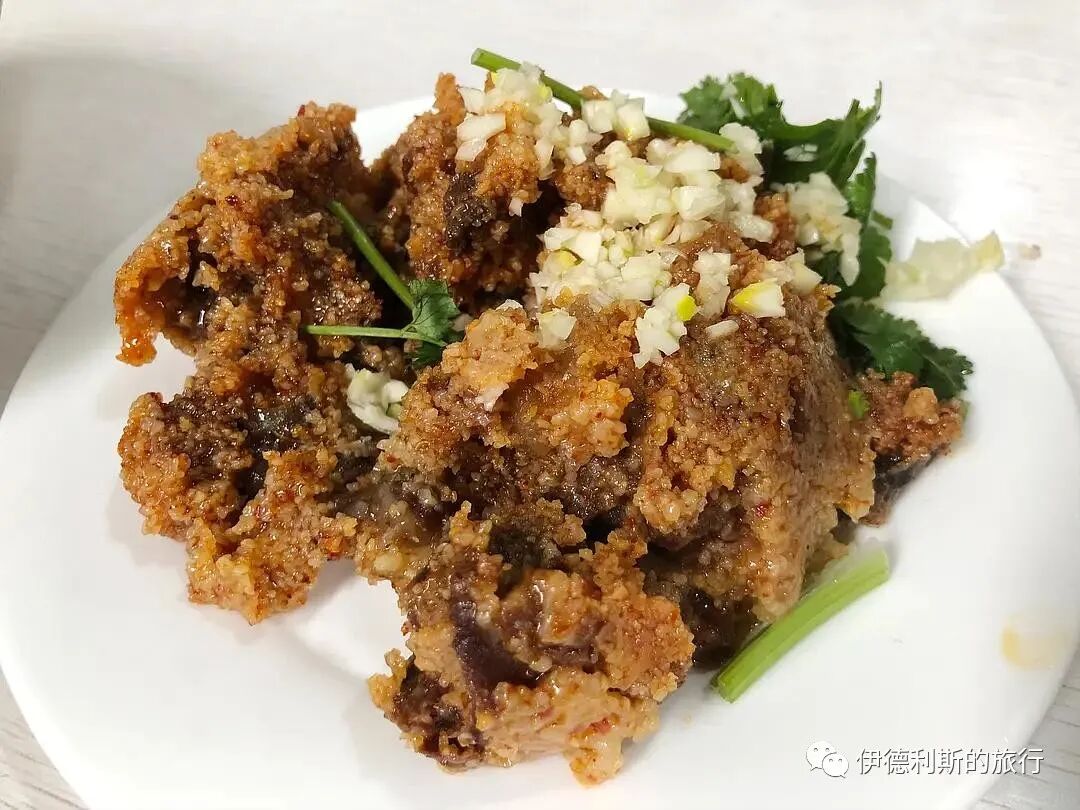
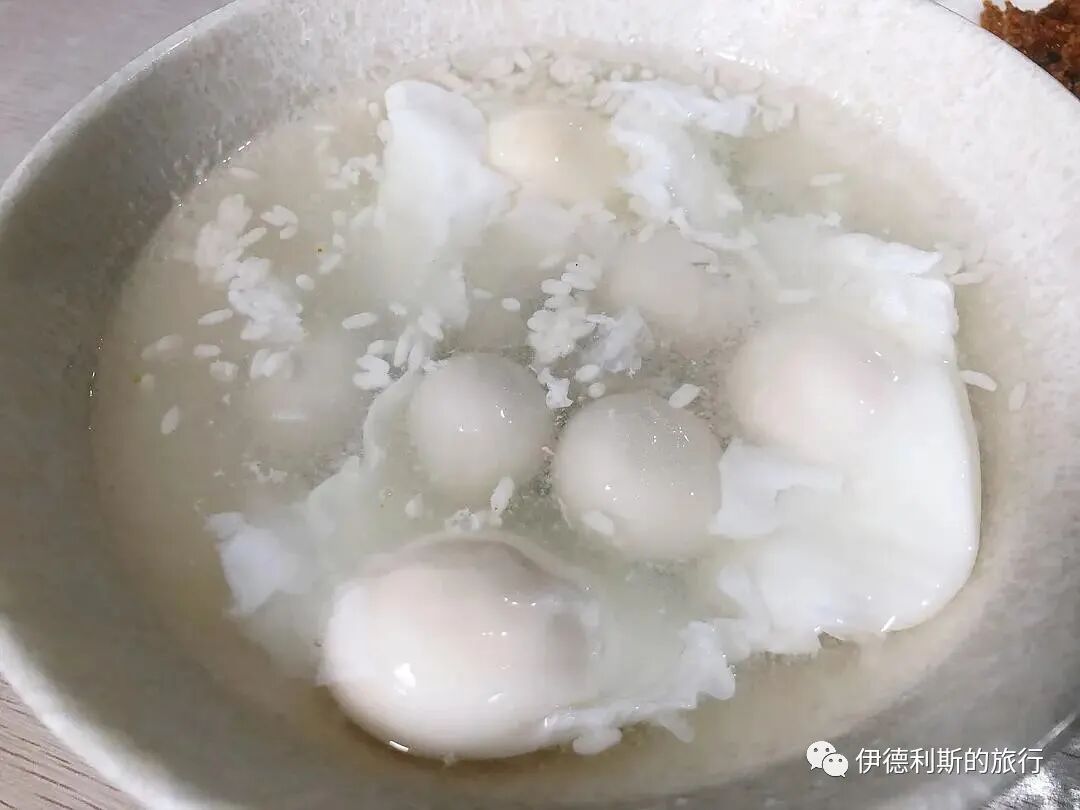
After the Huangchengba Muslim community in Chengdu was dismantled, the town of Tuqiao in the northwest suburbs became the closest traditional Muslim community to the city center. Many local Hui Muslims come here for Friday namaz. Although Tuqiao has gone through demolition, the traditional mosque and the halal snack shops at its entrance are still there, so the area remains very lively. I arrived at Tuqiao just before Friday prayers (Jumu'ah) and stopped at a small snack shop by the entrance. I had beef offal noodles (niuzafen), steamed beef with rice flour (fenzheng niurou), and fermented rice with egg (laozaodan) to get a taste of authentic Chengdu halal snacks.
5. Dujiangyan
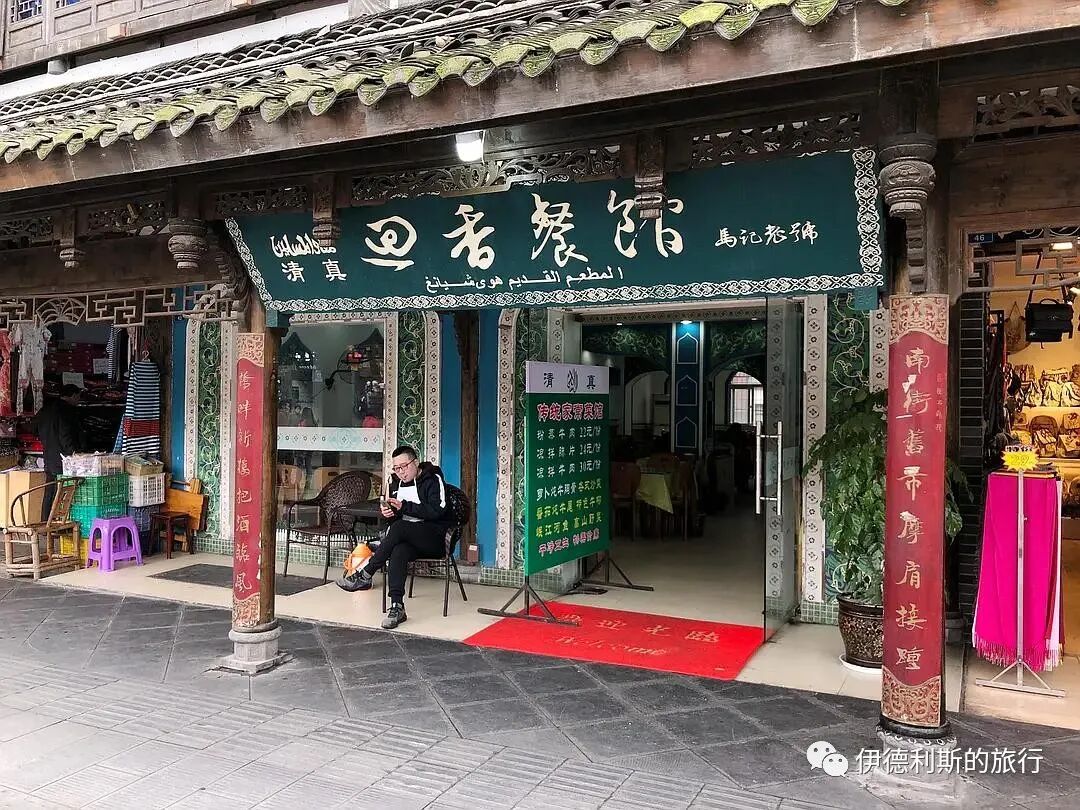
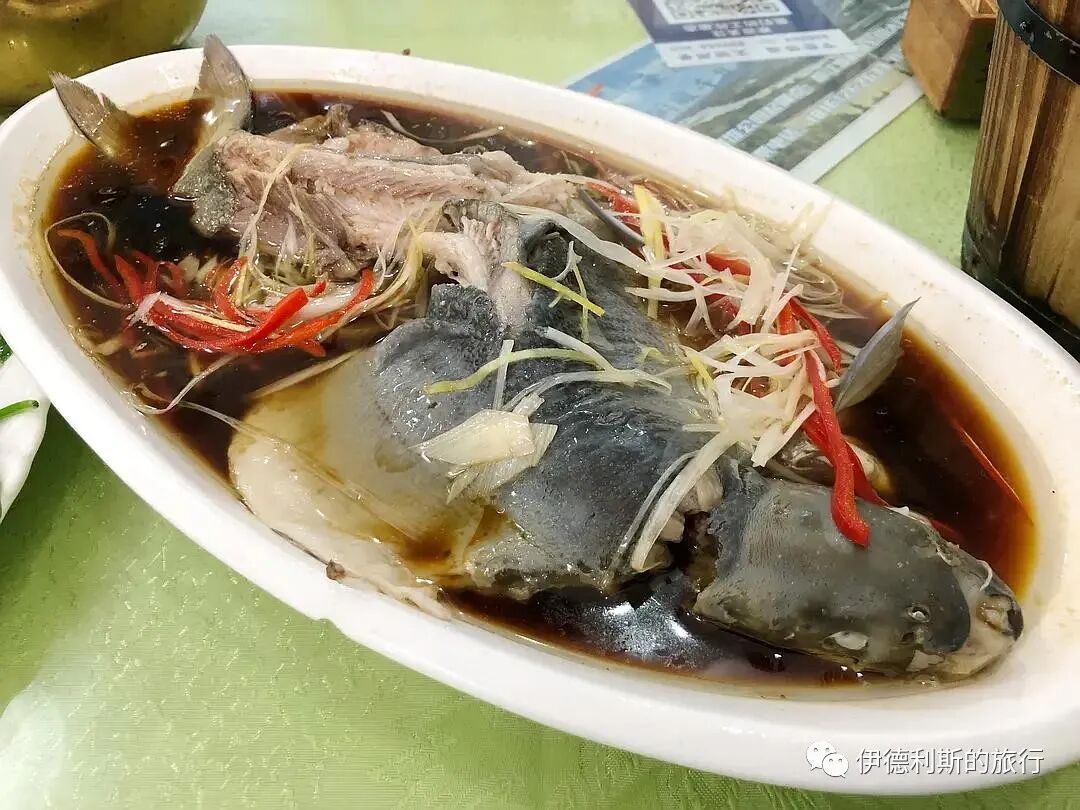
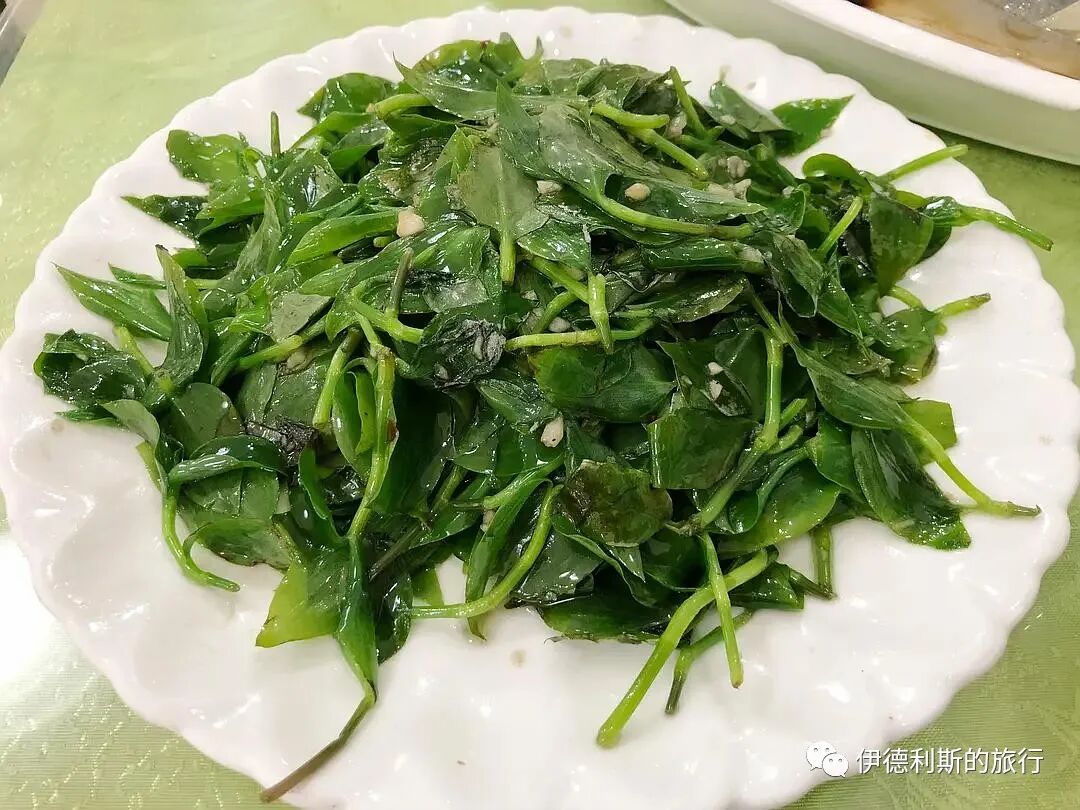
Starting in 2009, Dujiangyan City turned the old Guanxian County town into a tourist destination similar to Dali or Lijiang. It has now become a heavily commercialized tourist spot, not much different from other highly developed ancient towns in the south. Luckily, there are still several traditional halal restaurants on South Street and West Street in the old town. I ate Min River fine-scaled fish (minjiang xilinyu) and bamboo leaf greens (zhuyecai) at the Maji Huixiang Restaurant.
6. Mimou Town
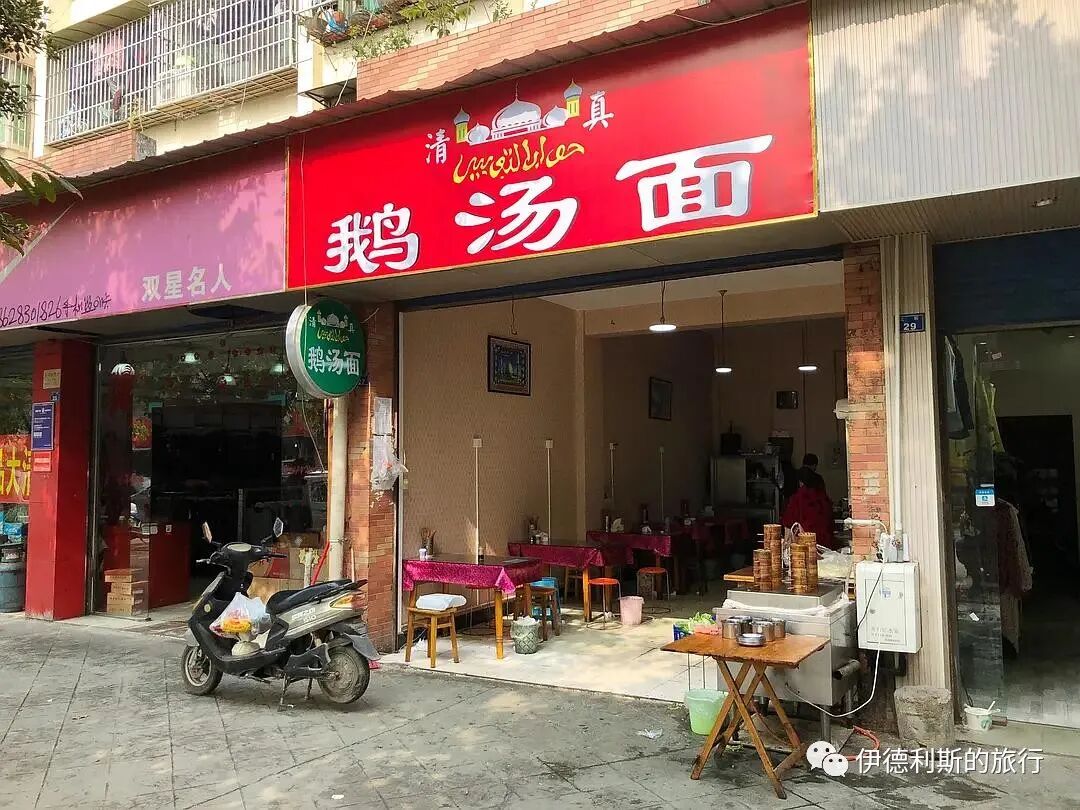
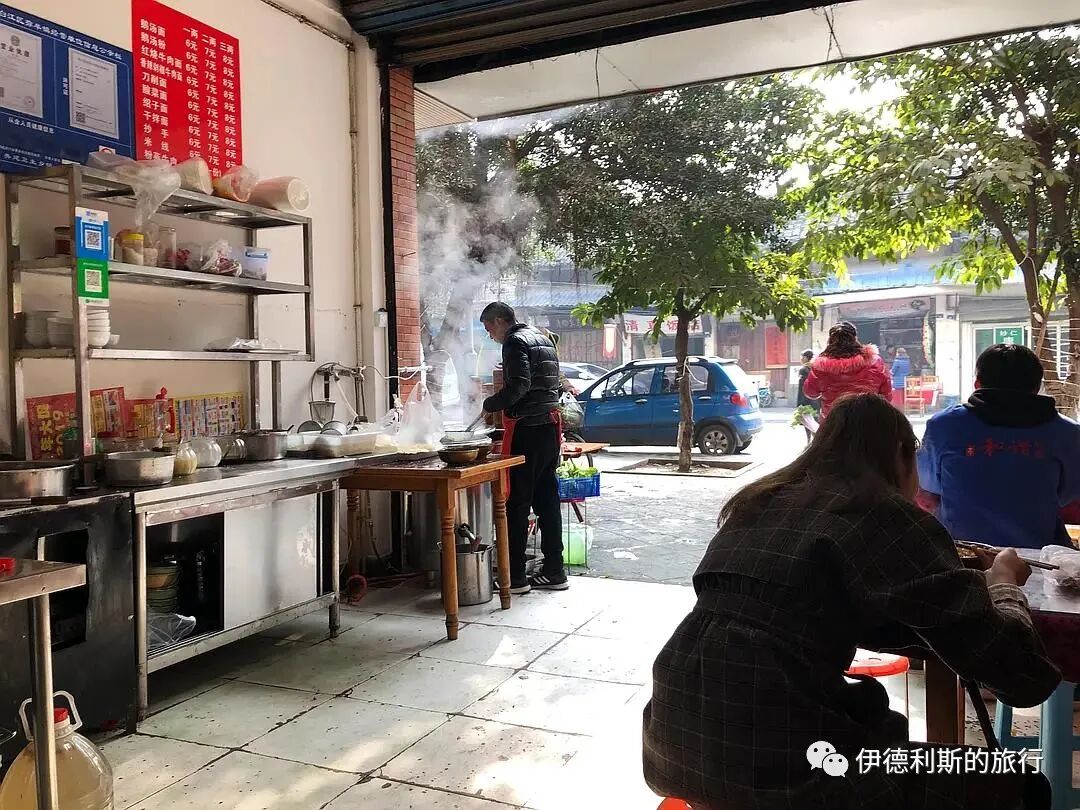
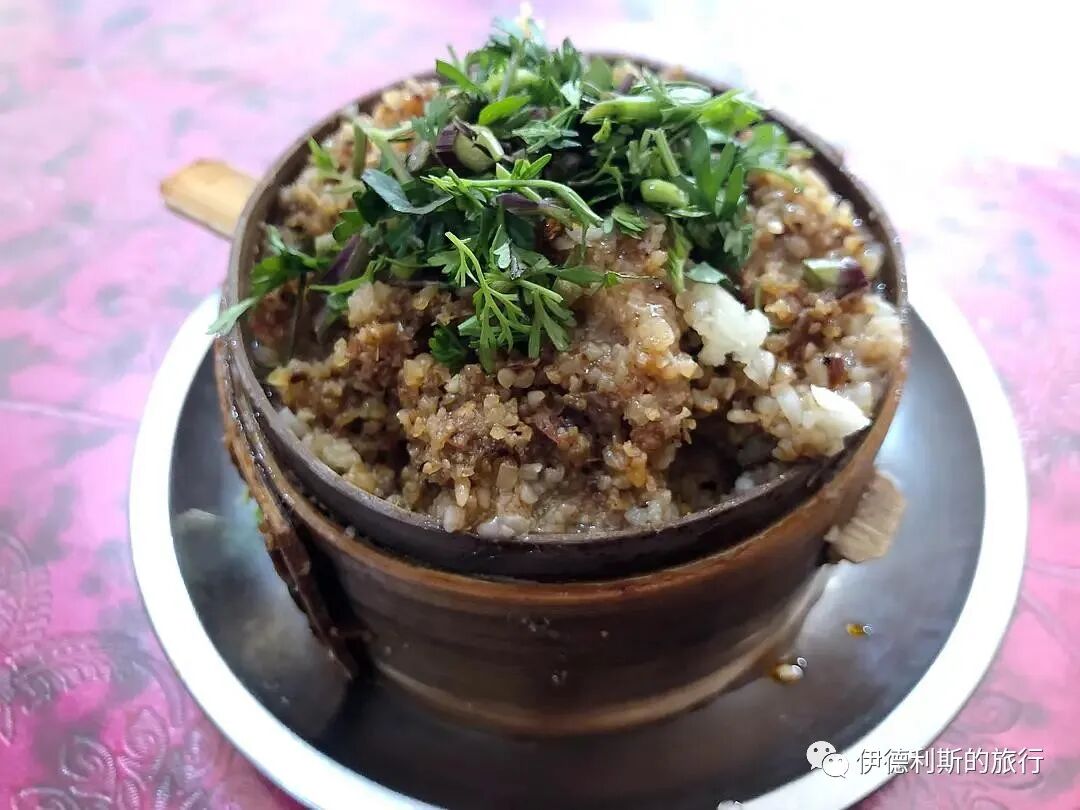
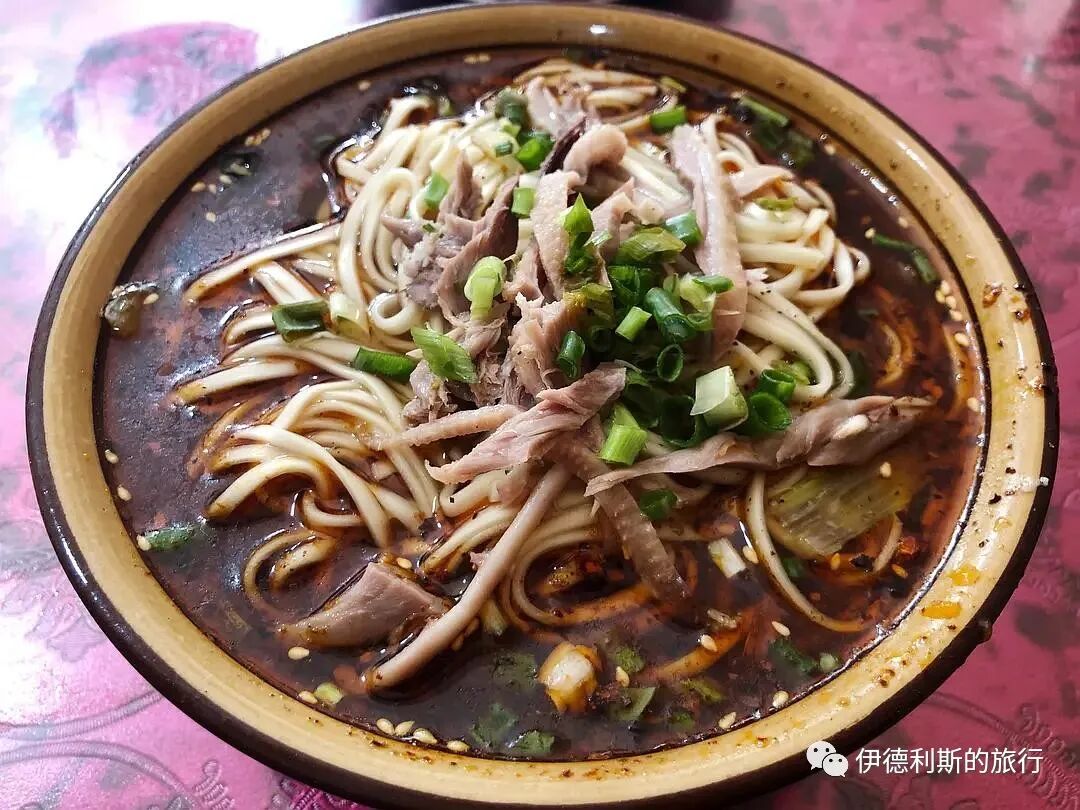
Mimou Town sits on the Golden Ox Road (Jinniu Dao), an ancient path from Chengdu to Shaanxi. Hui Muslims began settling here during the Ming Dynasty, and many more from Shaanxi and Hunan moved in after the Kangxi era. Unlike the heavily developed ancient town of Dujiangyan, Mimou Town has no signs of tourism. It is full of everyday life and keeps its own pace. I ate goose soup noodles (etang mian) and small steamed beef dumplings (xiaolong zheng niurou) here.
2. Yunnan
1. Zhaotong
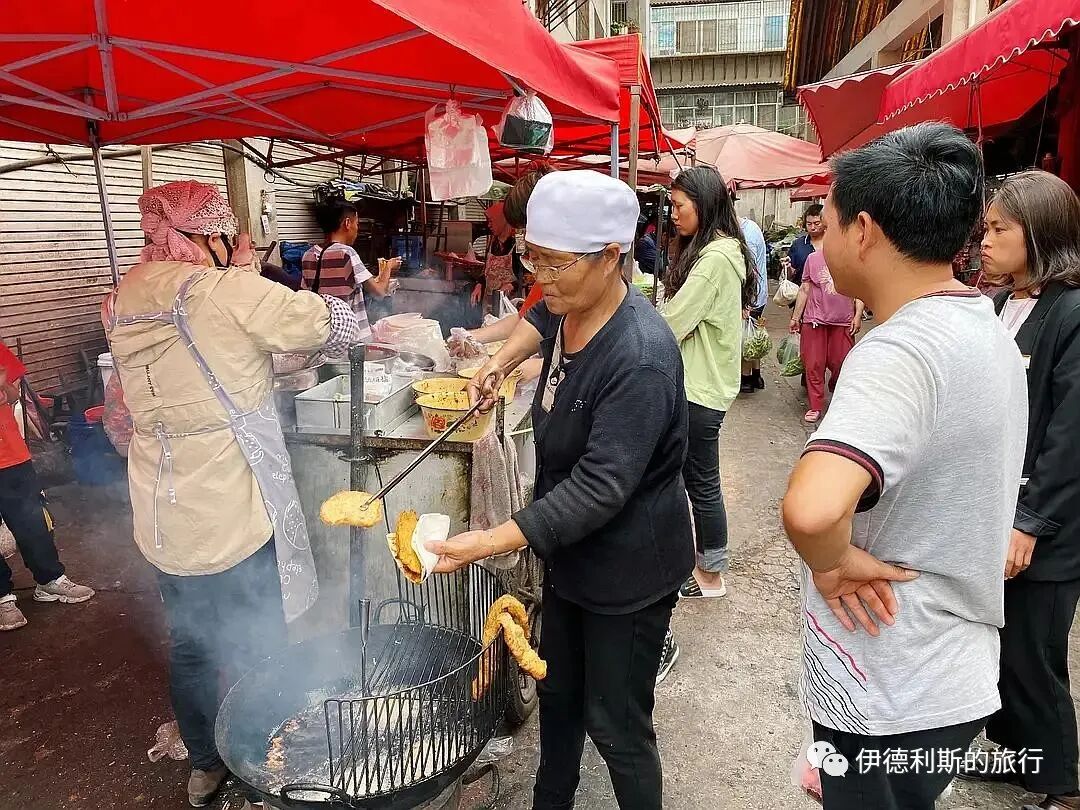
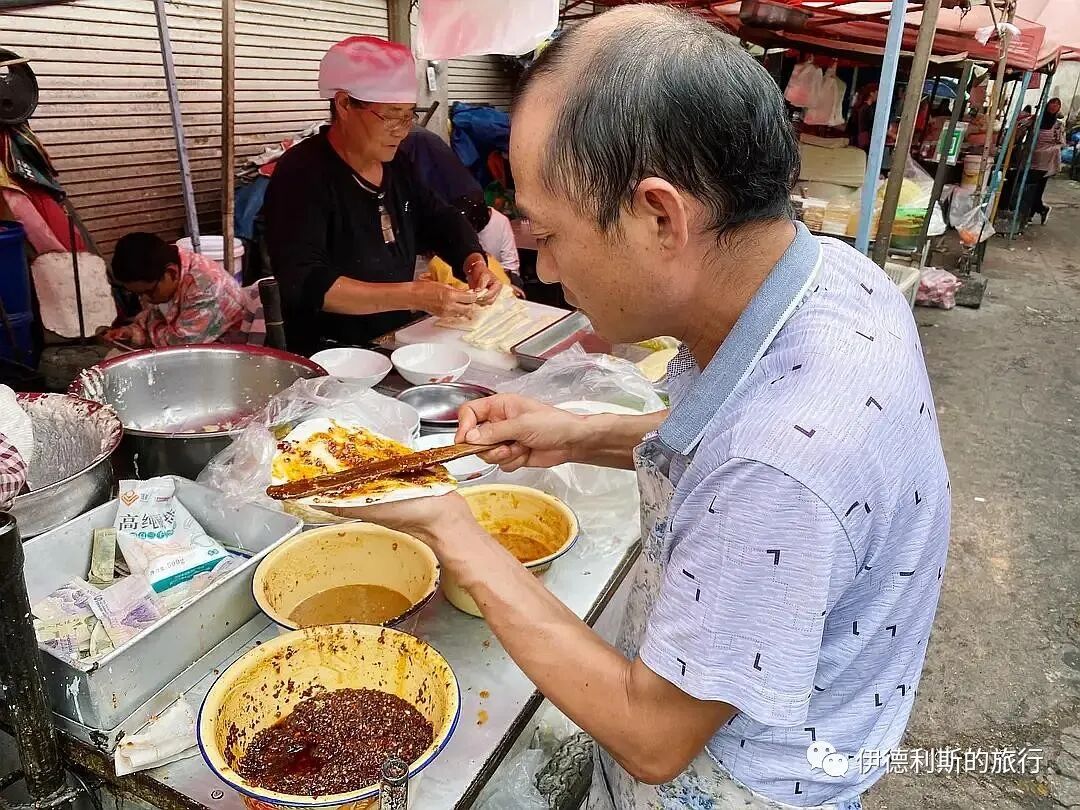
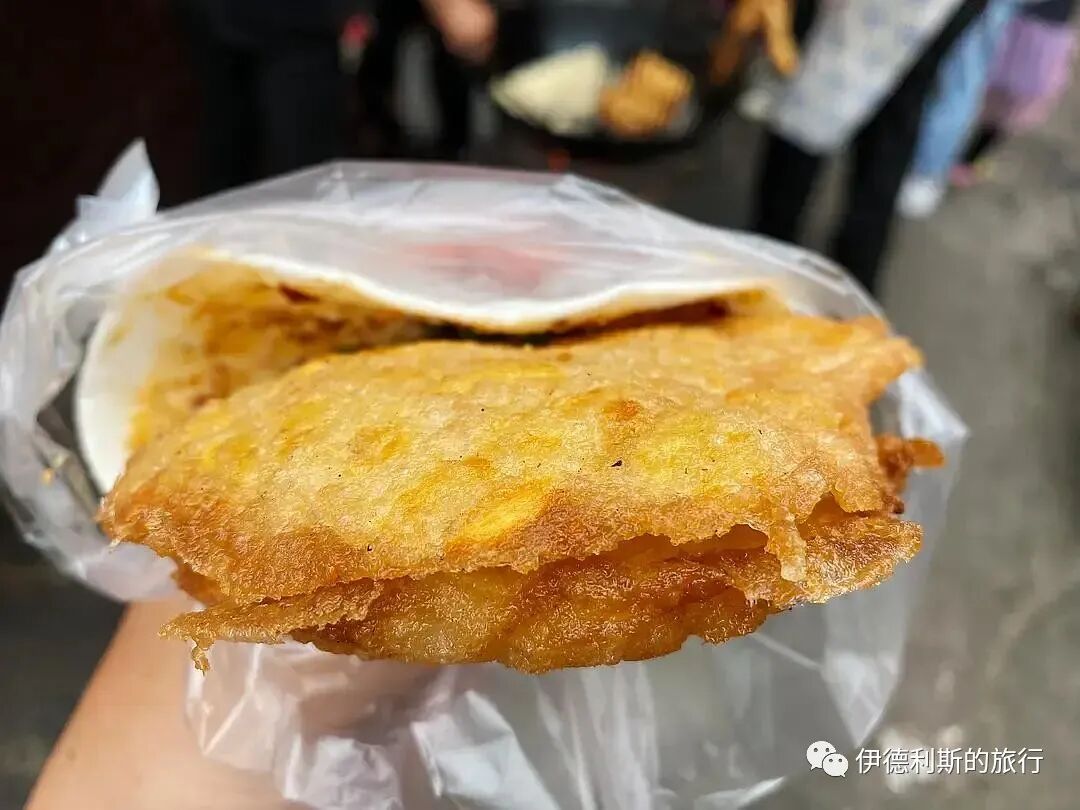
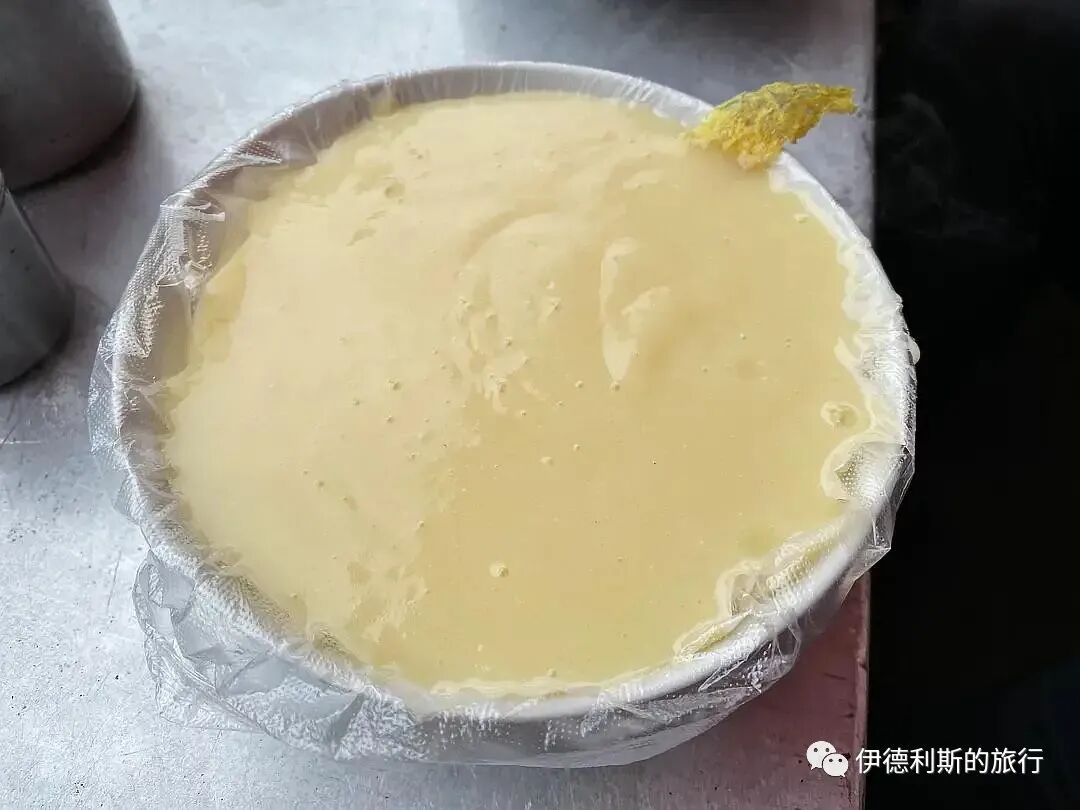
Inside the Sanguan Mosque vegetable market across from the Zhaotong East Mosque, all the stalls are run by Hui Muslims. They sell all kinds of raw and cooked meat, pea starch jelly (wandoufen), corn flour, and more. At a stall by the market entrance, I drank some pea starch jelly and ate a rice cake sandwich with a fried dough cake (erkua jia yougao), which is a traditional local breakfast.
2. Ludian
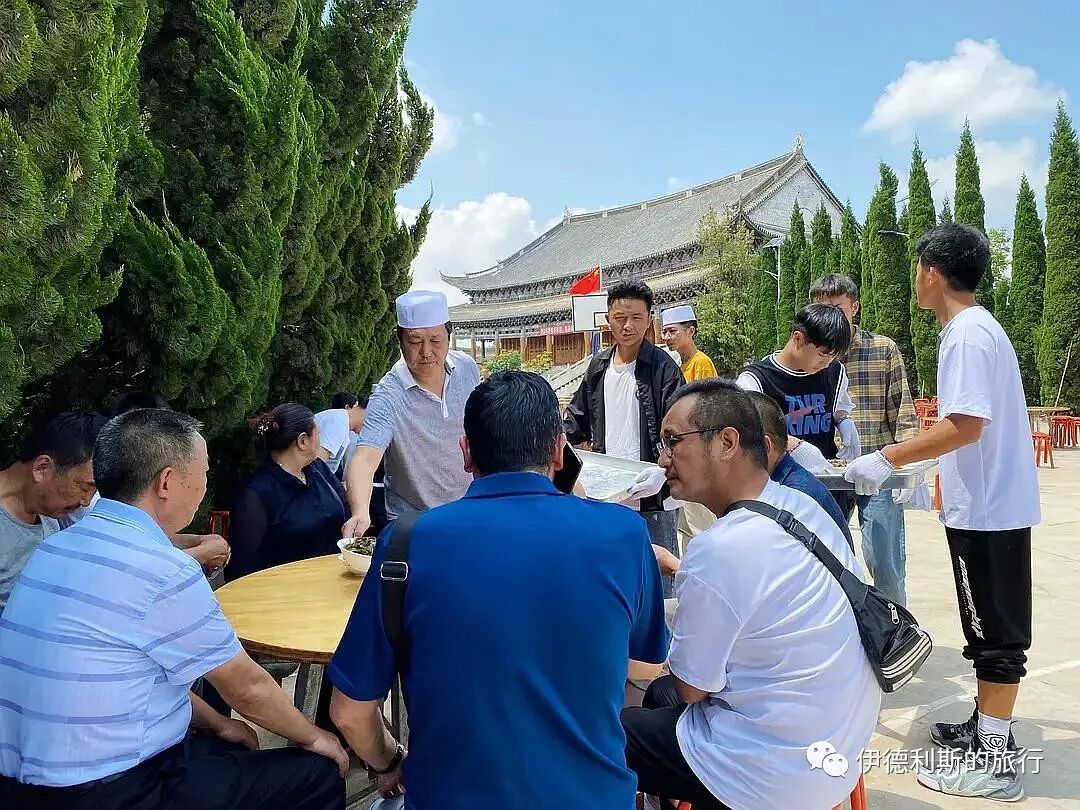
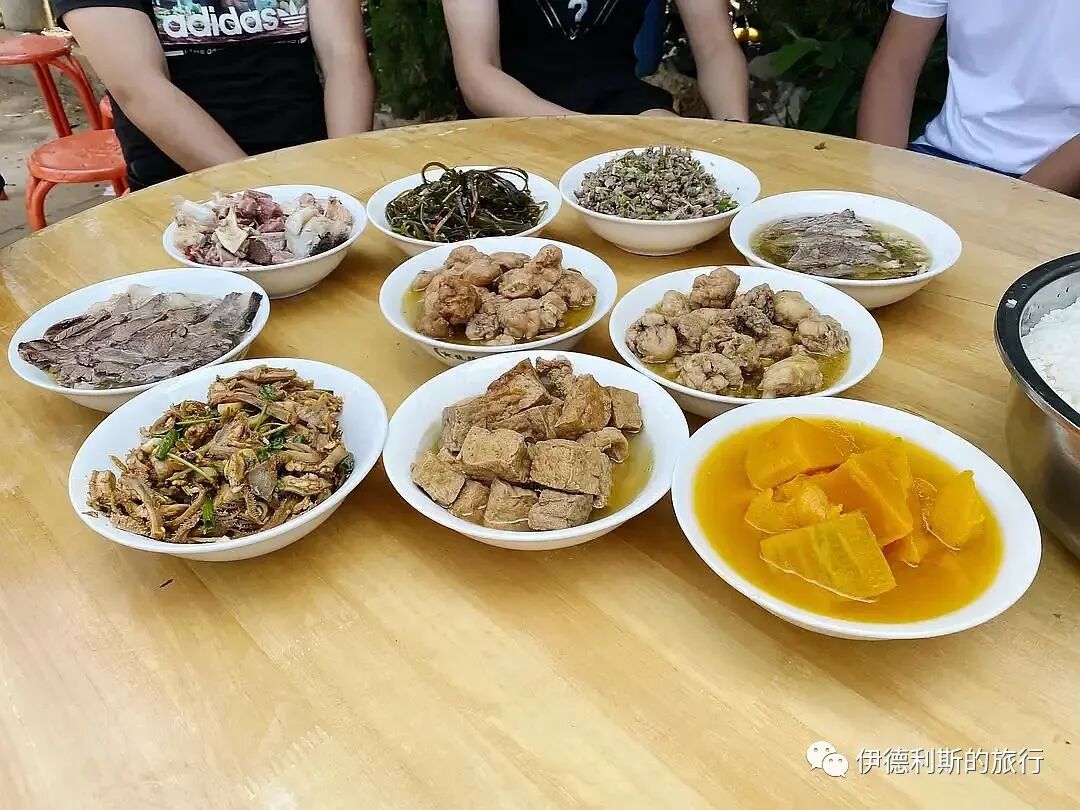
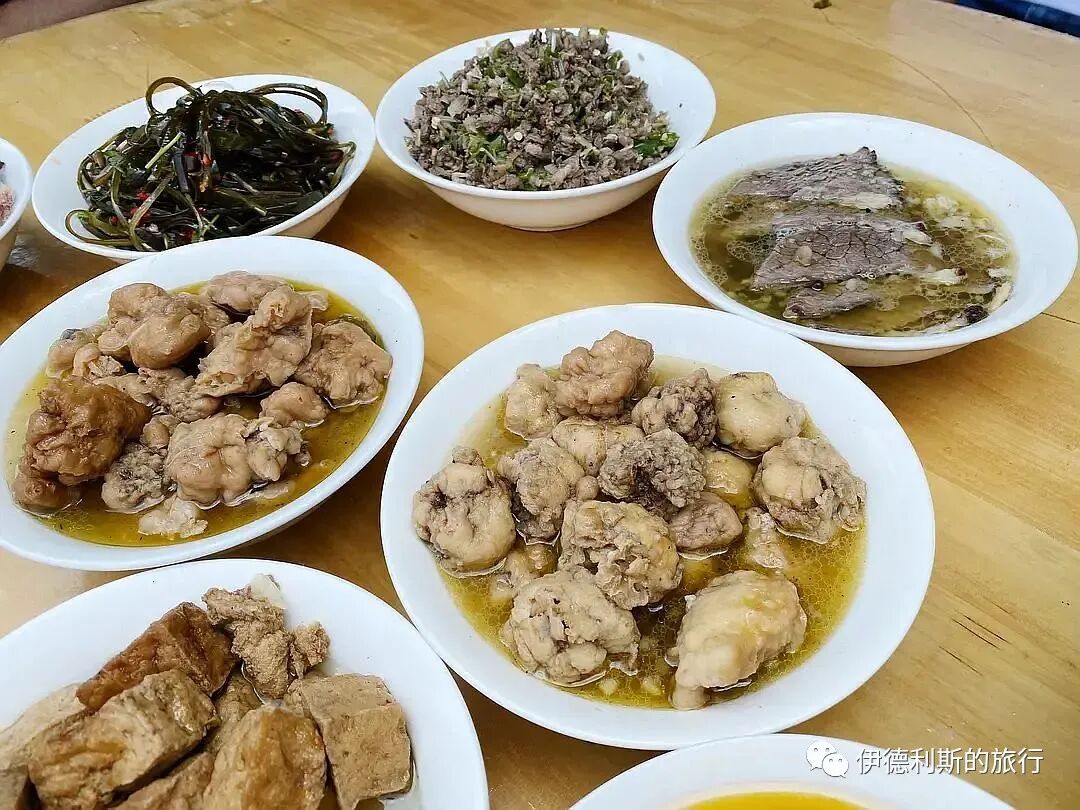
I was invited to a banquet at the Longtoushan Mosque in Ludian. I really love attending banquets, especially because the crispy stir-fried meat (surou) is so delicious!
3. Kunming
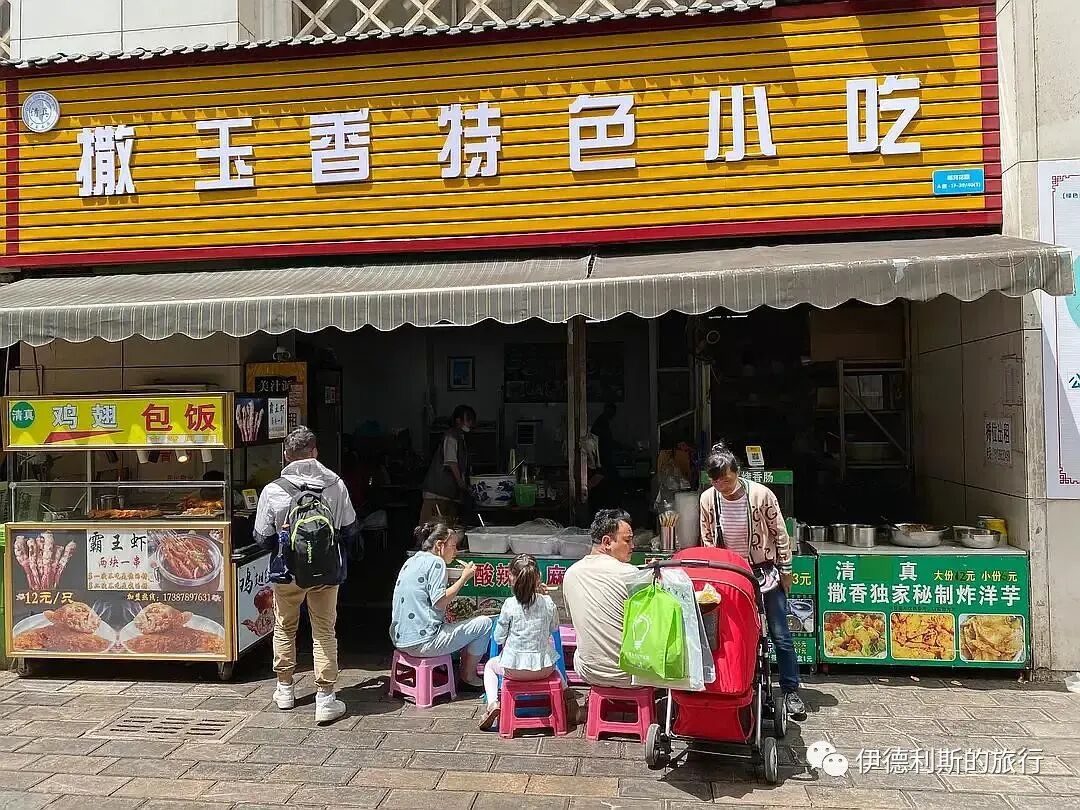
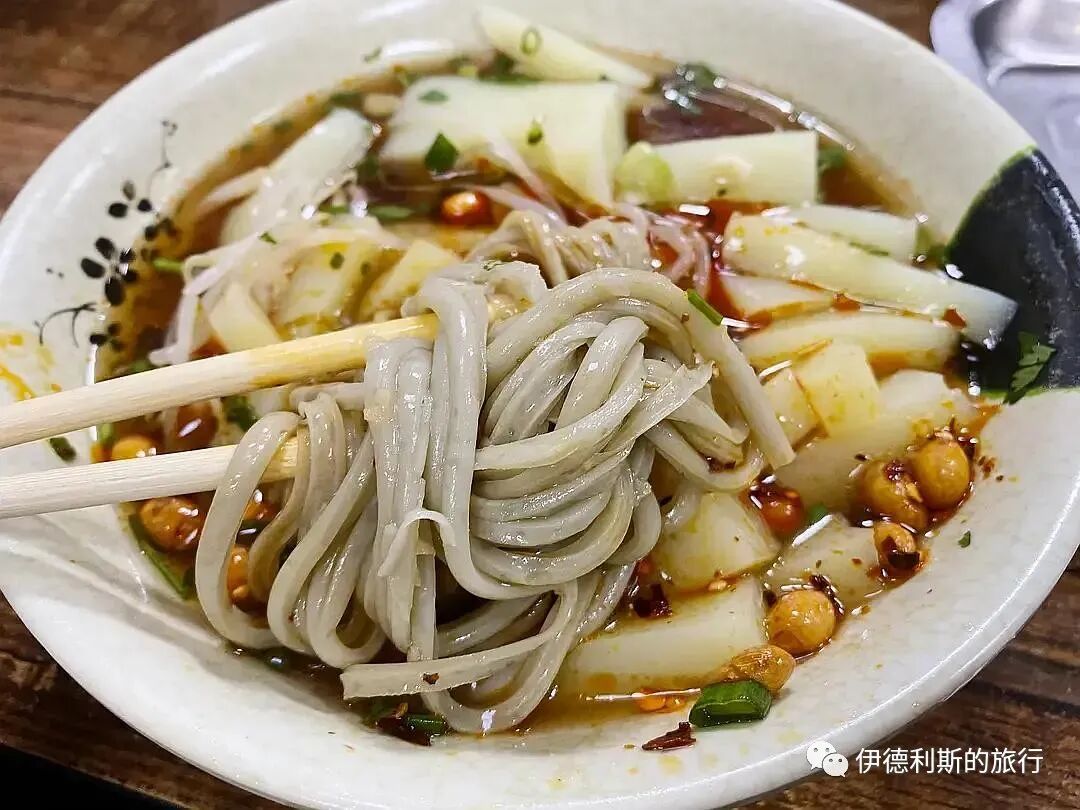
Shuncheng Street Mosque in Kunming was first built during the Hongxi and Xuande periods of the Ming Dynasty (1425-1435). Many of the first Hui Muslims to settle here were soldiers who came to Yunnan with Mu Ying to guard the region. Shuncheng Street is the main hub for halal food in Kunming. I ate papaya cold shrimp jelly (mugua liangxia) and a mix of thick and thin pea starch noodles (wandoufen) here.
4. Xundian
In Xundian County, I ate grilled beef in mushroom soup (juntang kaoniurou). The mushroom soup was incredibly fresh, the beef was very tender, and the dipping sauce with fish mint (zhe'ergen) had a real kick.
5. Xiaguan, Dali
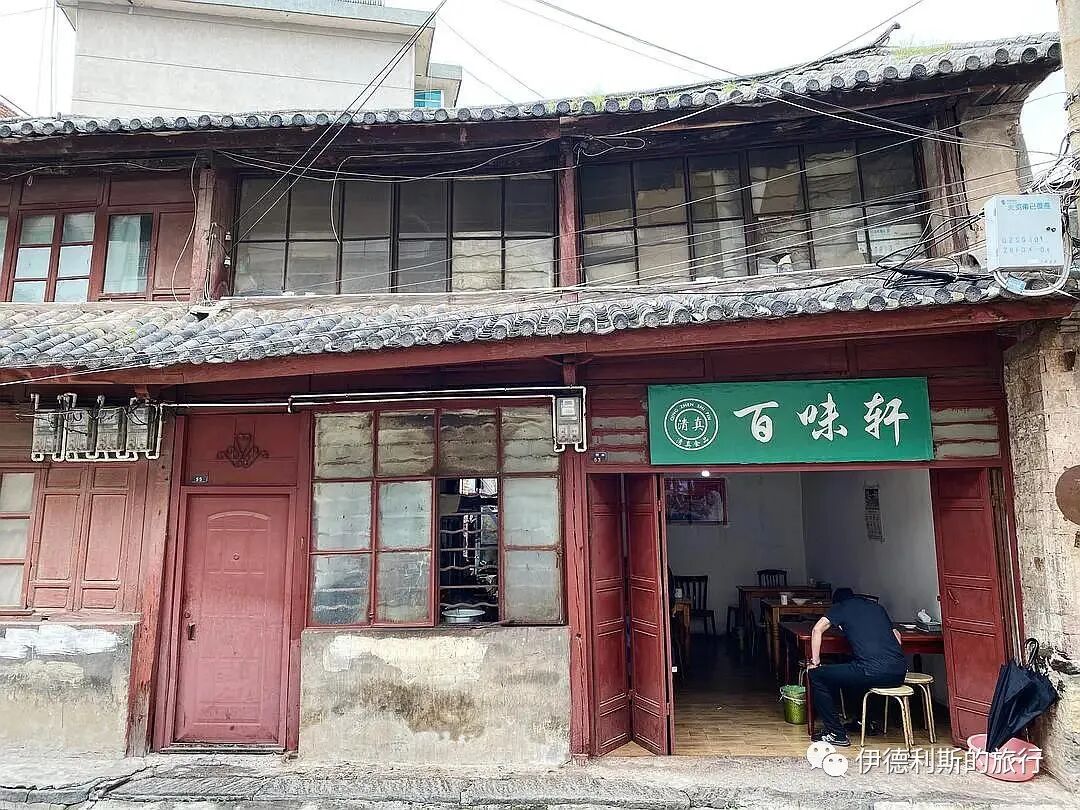
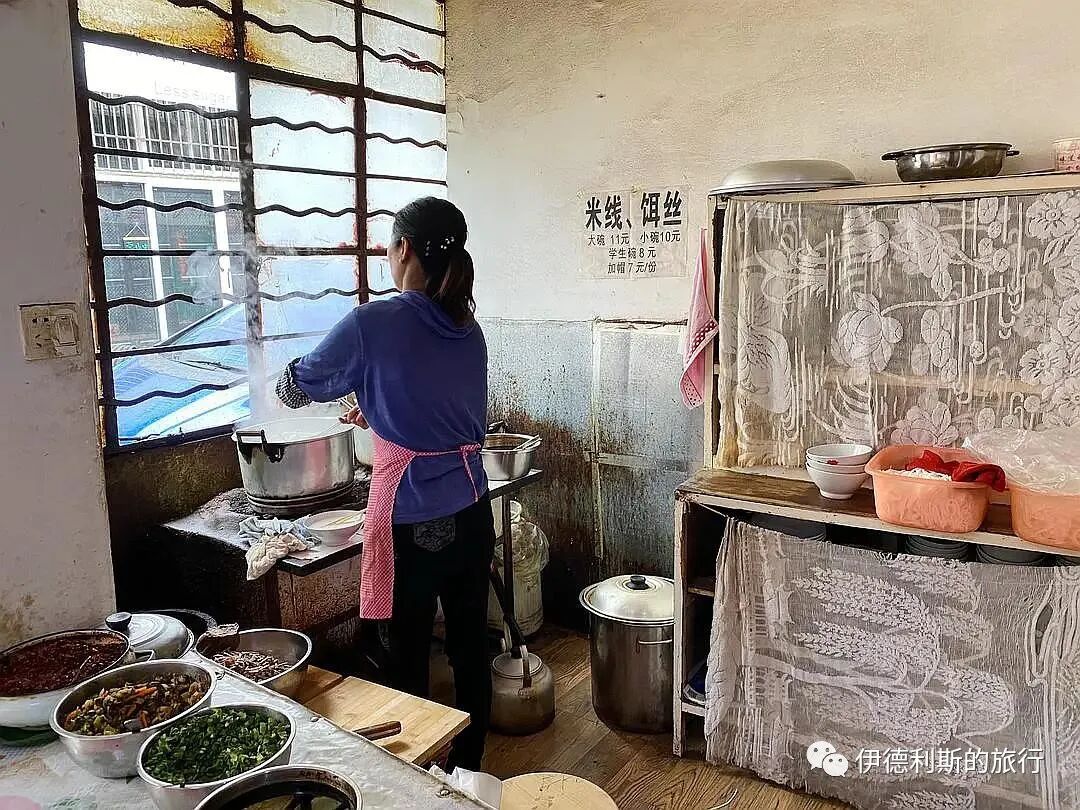
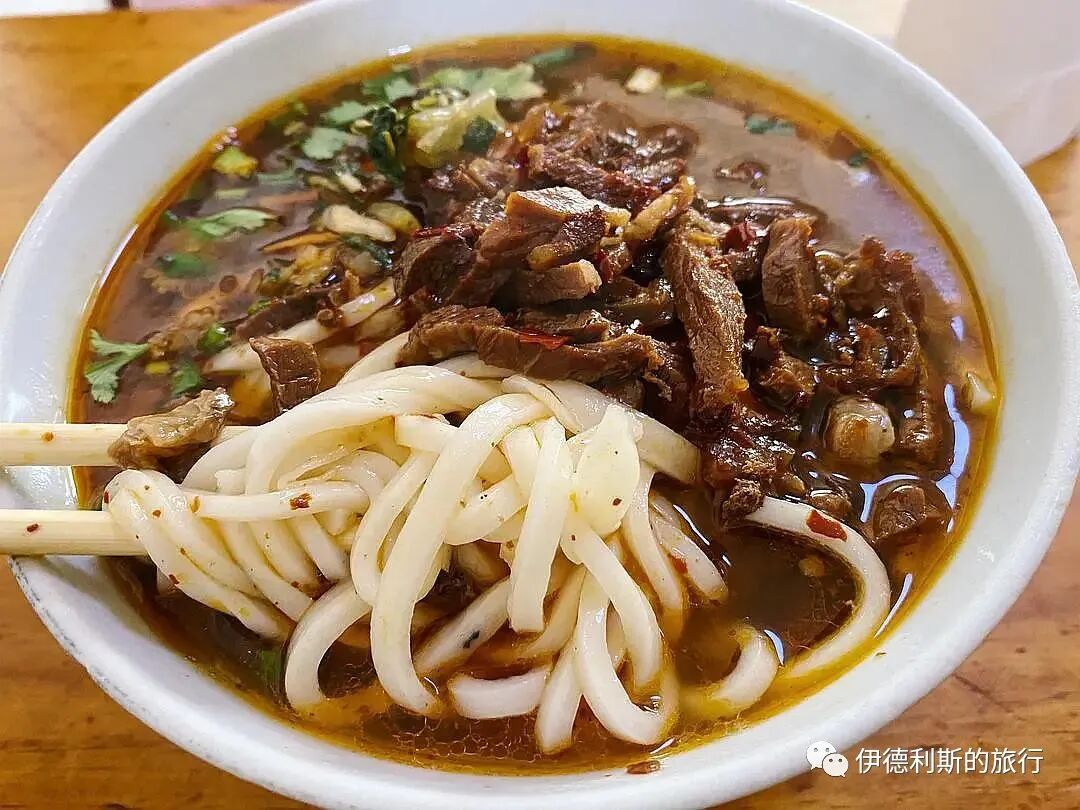
The Hui Muslims street in Xiaguan, Dali, is tucked away behind the main roads. It is quite quiet now, and mostly only locals know about it. I ate braised meat rice noodles (menrou ersi) here.
6. Weishan, Dali
I caught a very lively market in Yongjian Town, Weishan, and bought some rose-flavored milk curd (rufan).
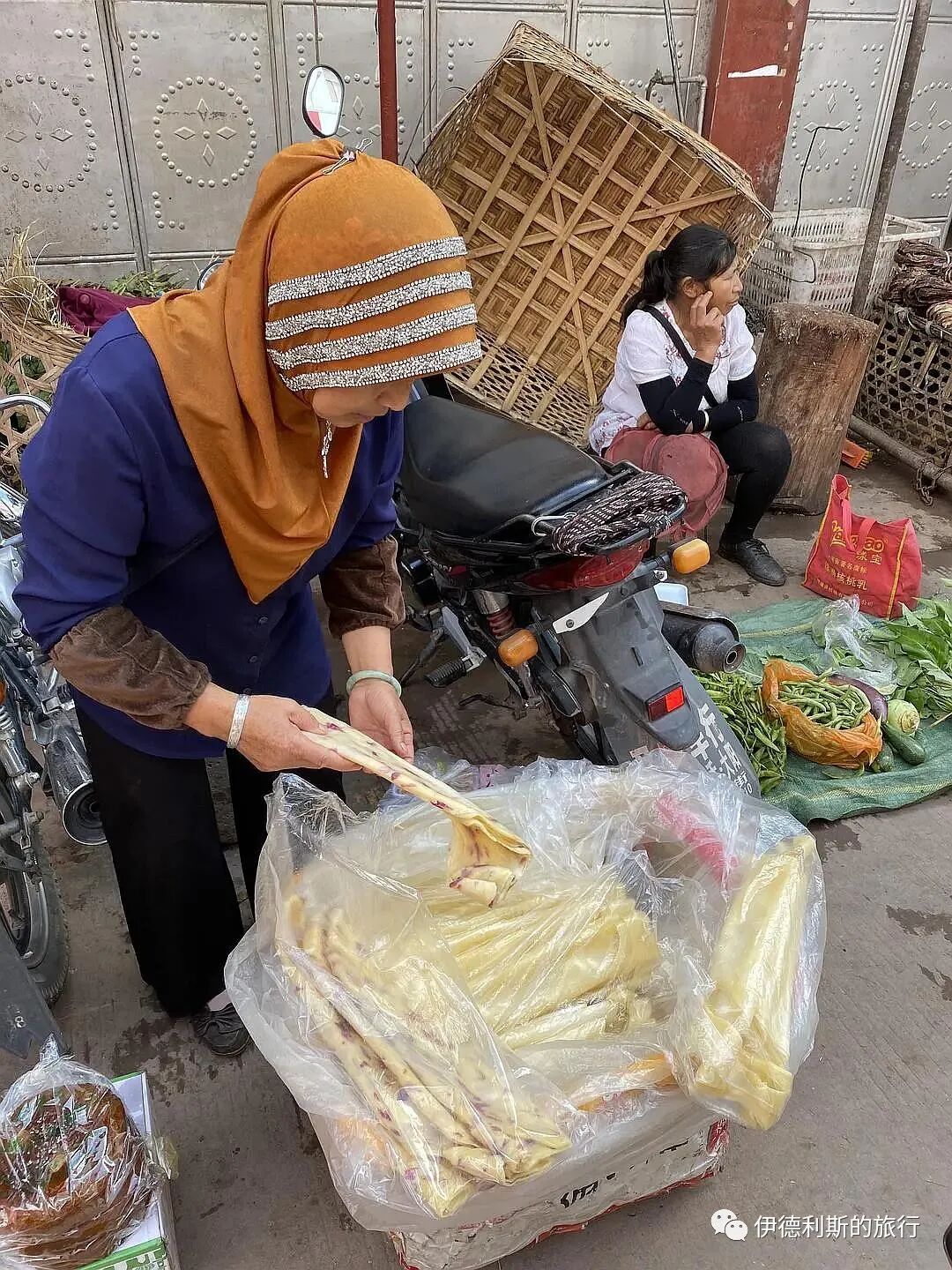
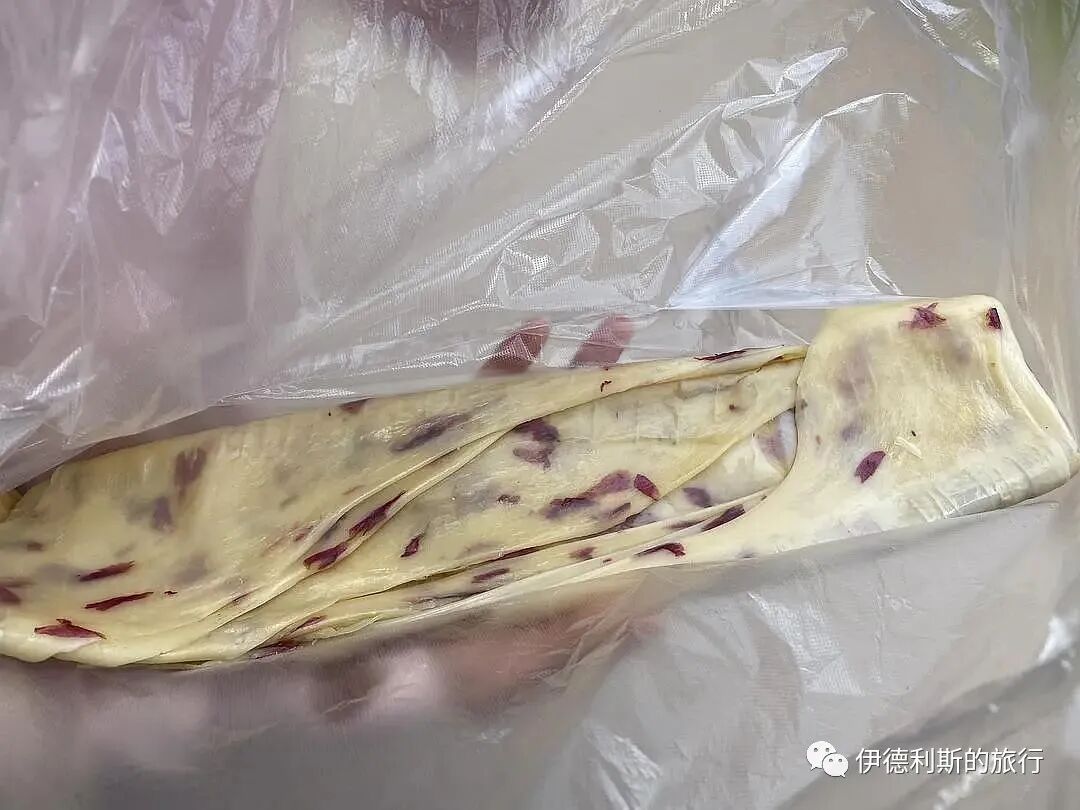
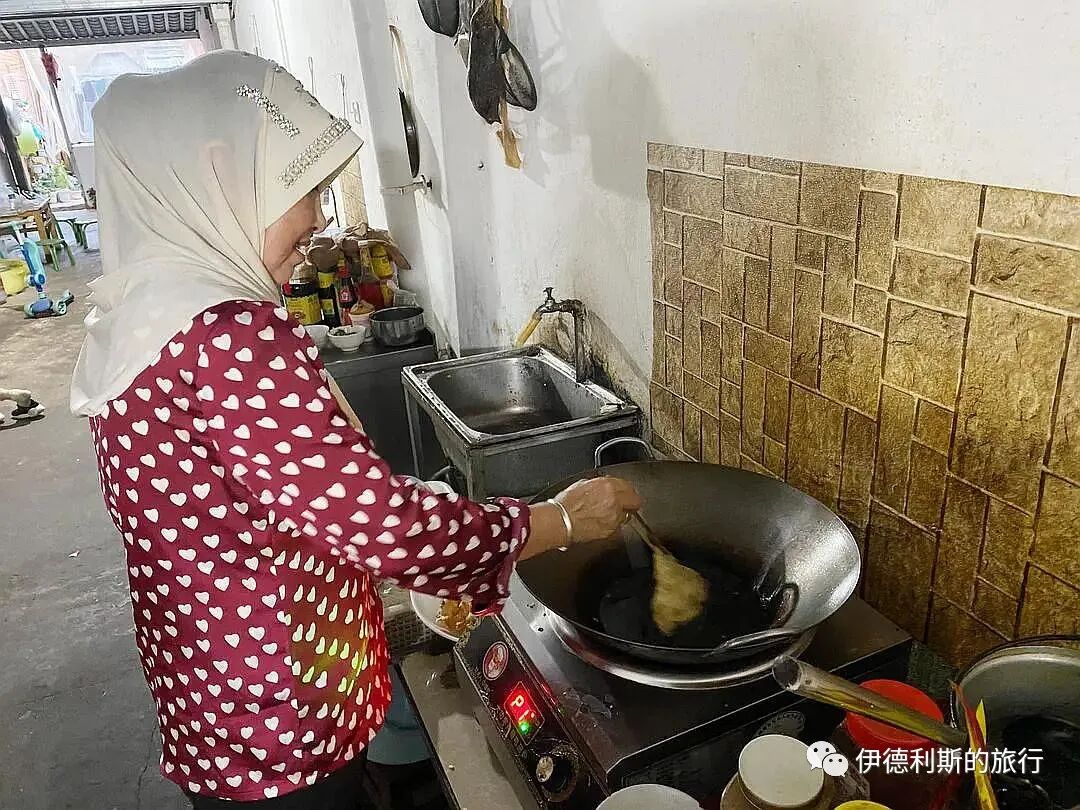
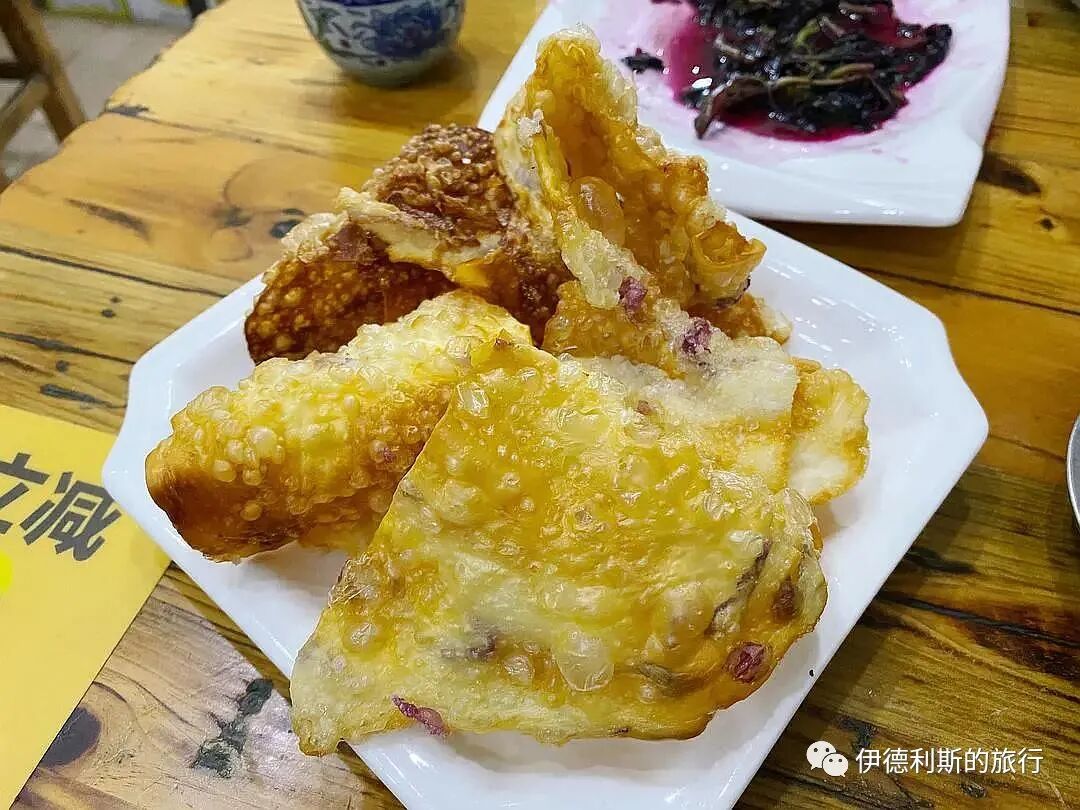
In the evening, I went to a restaurant near the Dingjiachang Mosque in Weishan County and asked the lady to fry the rose-flavored milk curd for me.
7. Dali Ancient City
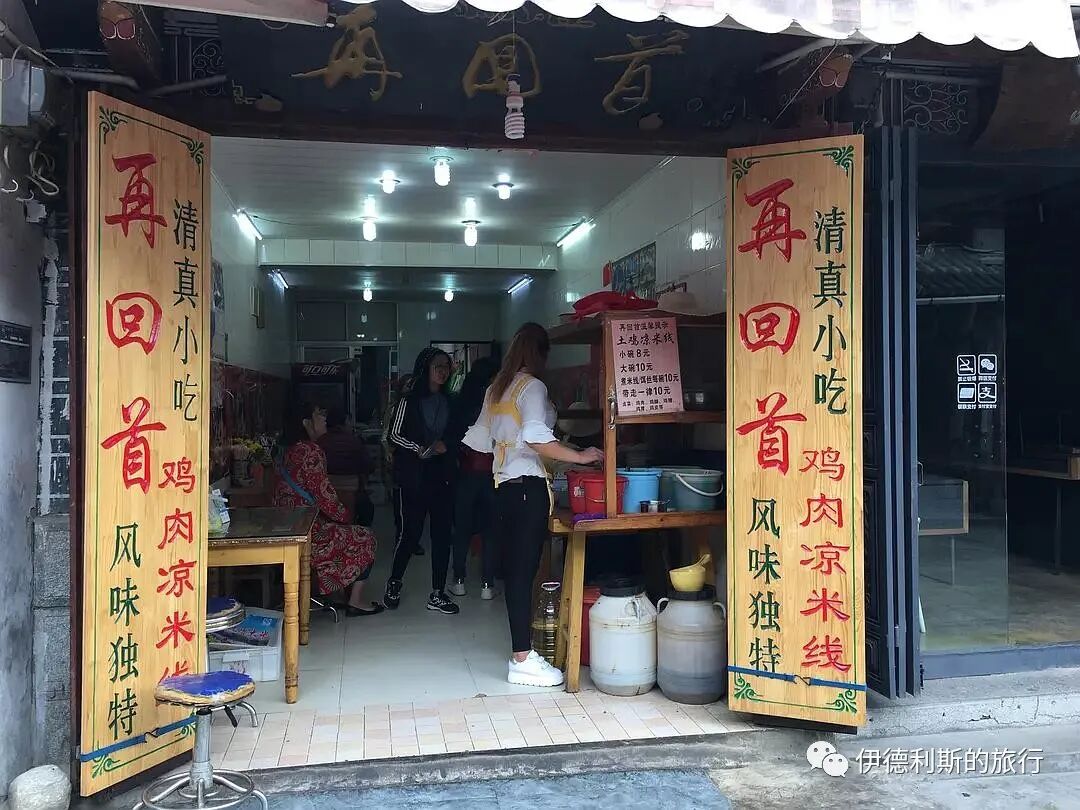
Zaihuishou is a famous halal snack shop in the ancient city, known for its cold rice noodles with free-range chicken (tuji liang mixian).
8. Ruili
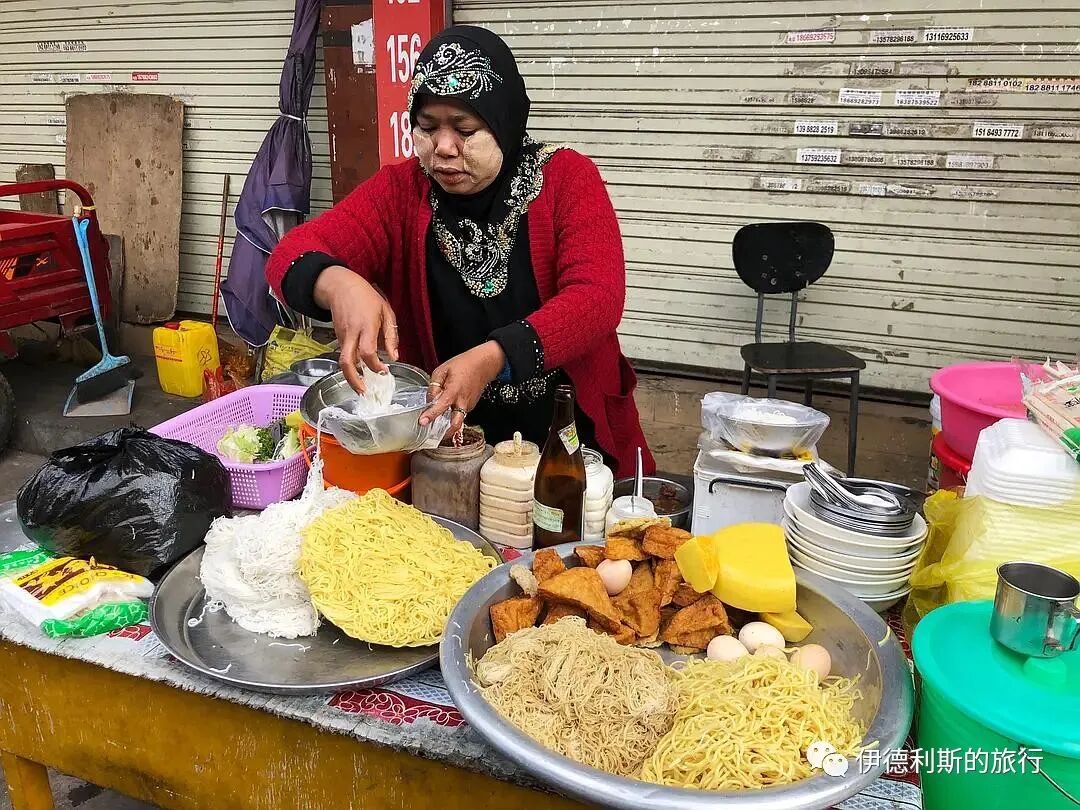
From the 1980s to 2020, there was a halal food street on Baijing East Lane near the Ruili jewelry market. It served food to Burmese Muslim merchants working in the jewelry trade, and locals in Ruili usually called it Old Burmese Street (Lao Mian Jie).
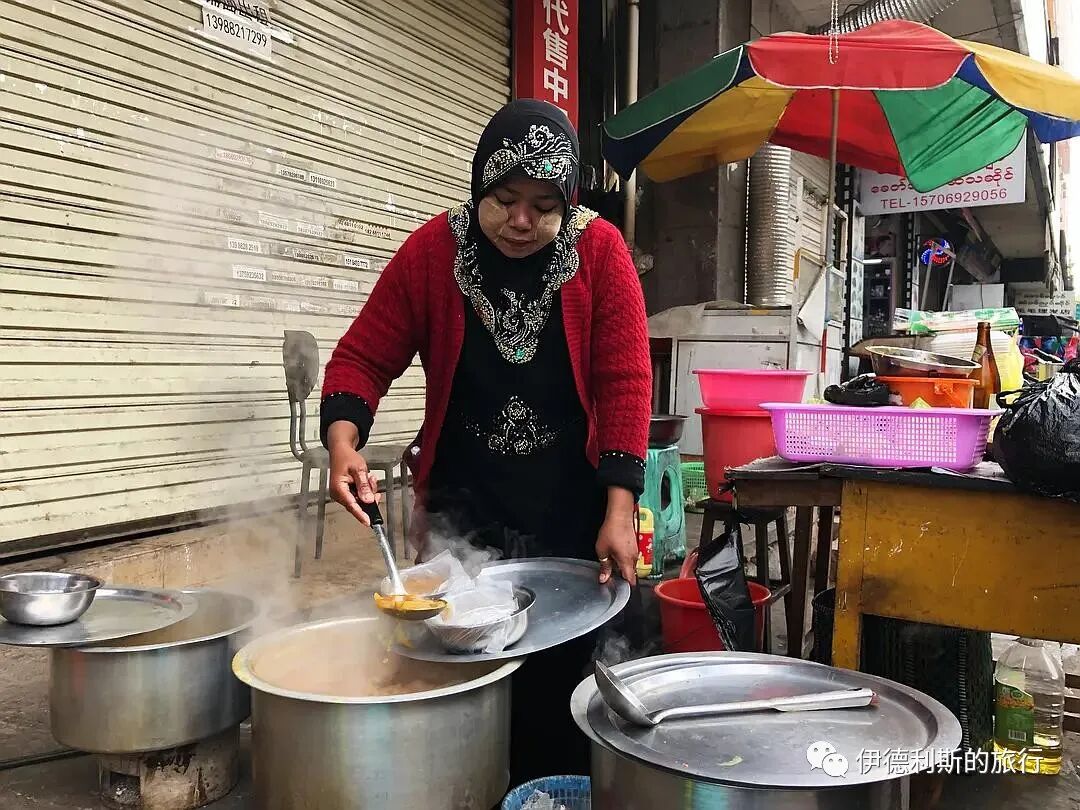
The substance on this lady's face is called Thanaka. It is made by grinding yellow fragrant cedar branches into a powder and mixing it with water. It helps prevent mosquito bites and provides a cooling sensation.
In front of her are various mixed noodles, ranging from thick to thin: Nan ji, lat, and thay thout. The white ones are glass noodles (ja zan).
On the plate is Burmese tofu (to hpu), which comes from the Shan people and is made from yellow peas and Burmese chickpeas.
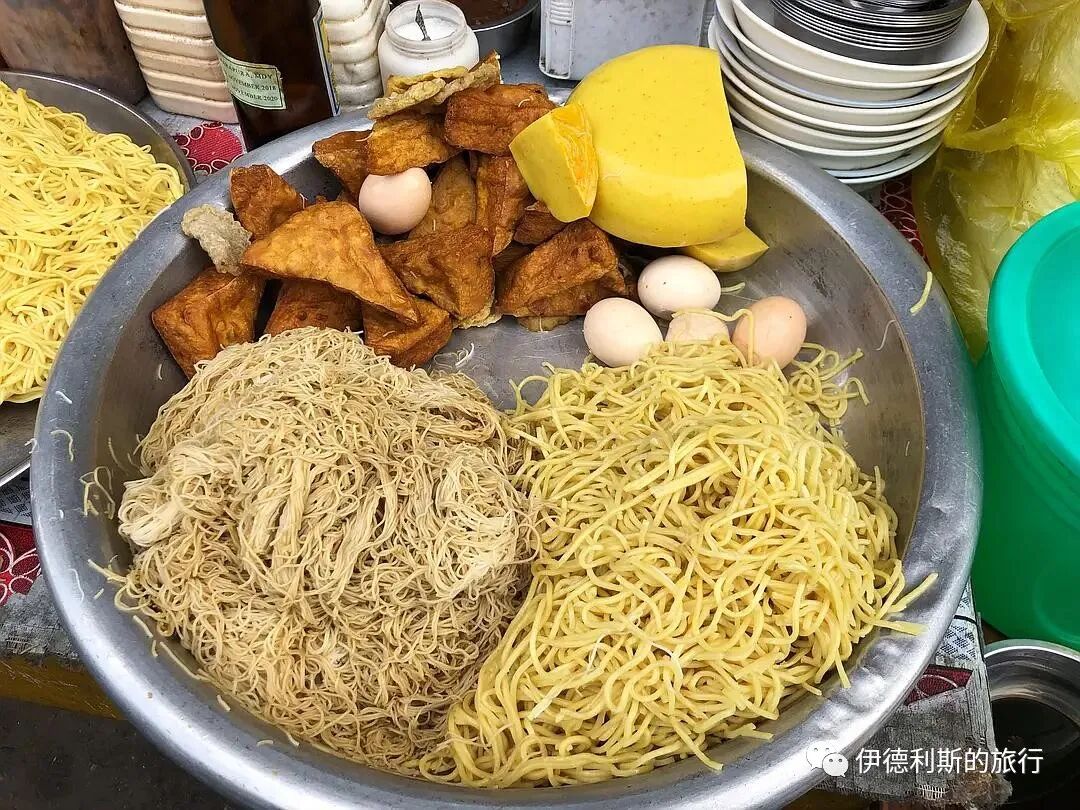
Mixed noodles made with Burmese fried tofu.
A type of bean soup.
9. Xishuangbanna
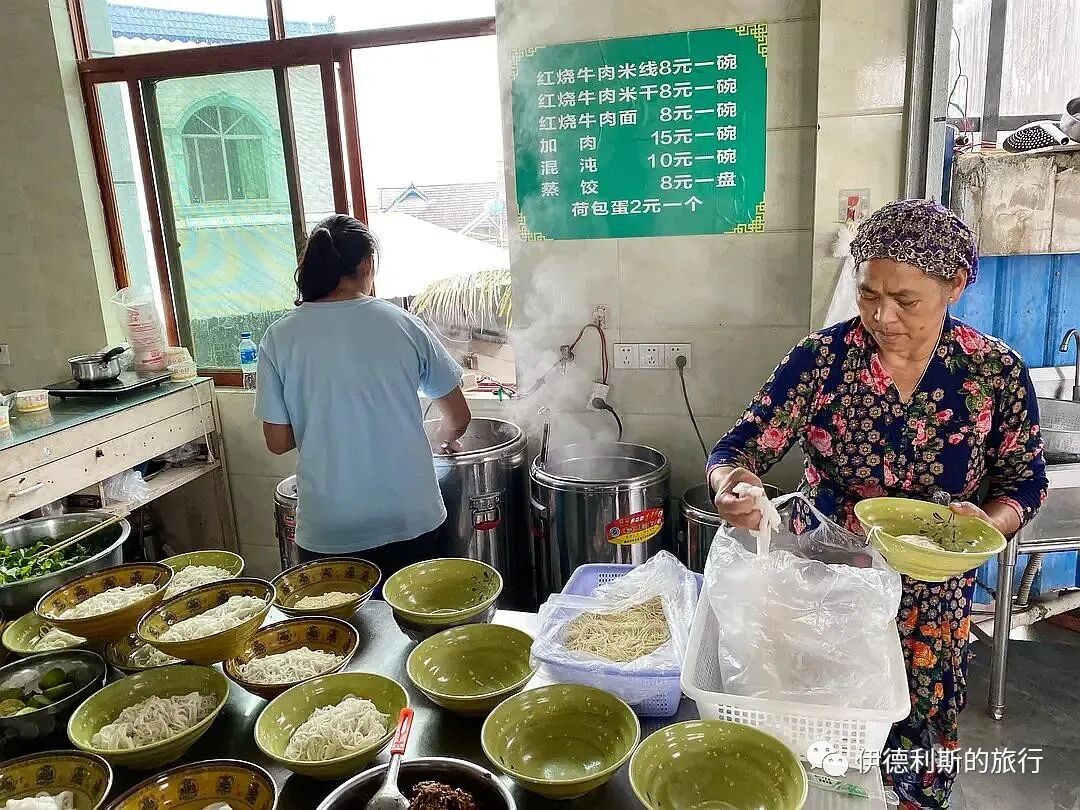
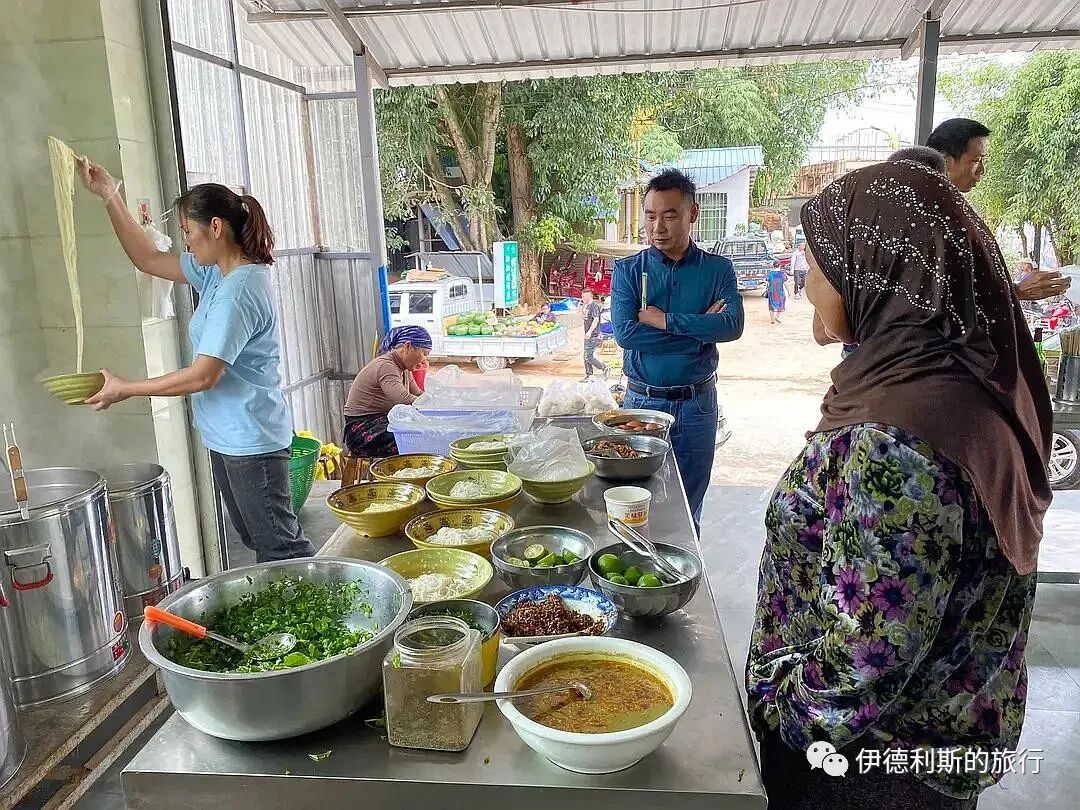
I had a halal Dai-style breakfast in Manluanhui, Menghai County, Xishuangbanna. The place I chose is called Paxidai. Paxidai calls itself 'Paxi.' They are Hui Muslims who follow the faith and keep the rules, but they speak the Dai language, use the Dai script, and cook halal Dai-style food. You could say they have kept their Hui Muslim identity while blending into Dai culture.
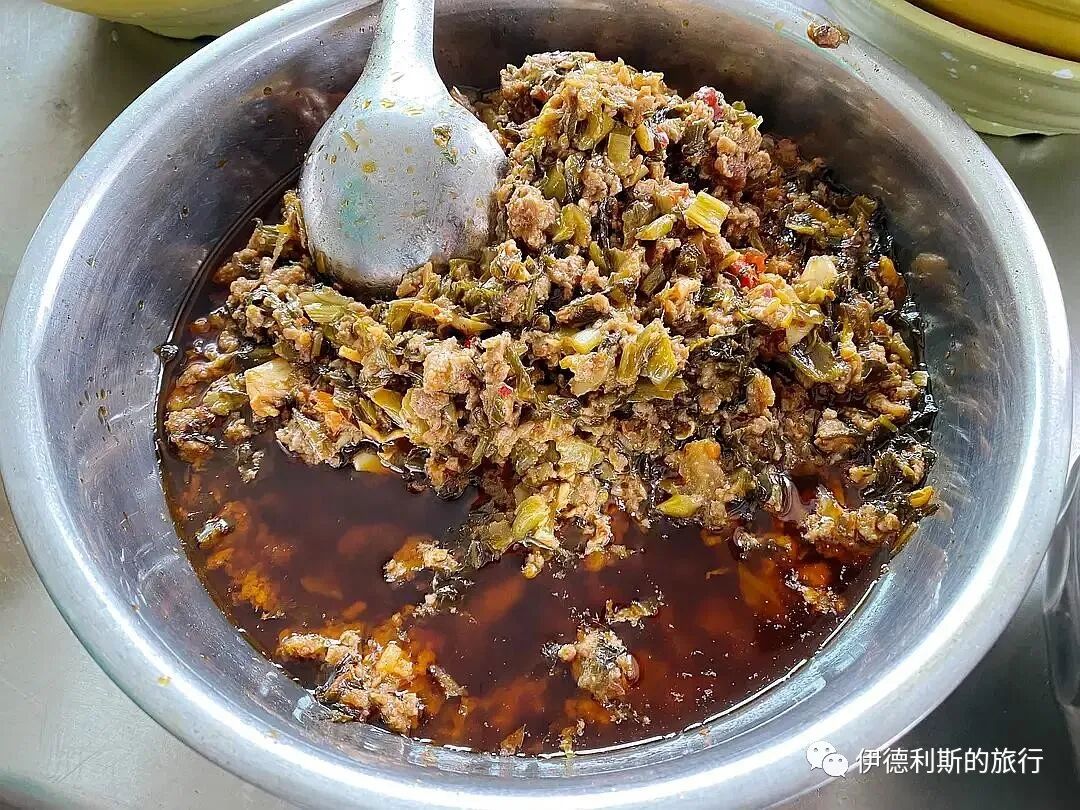
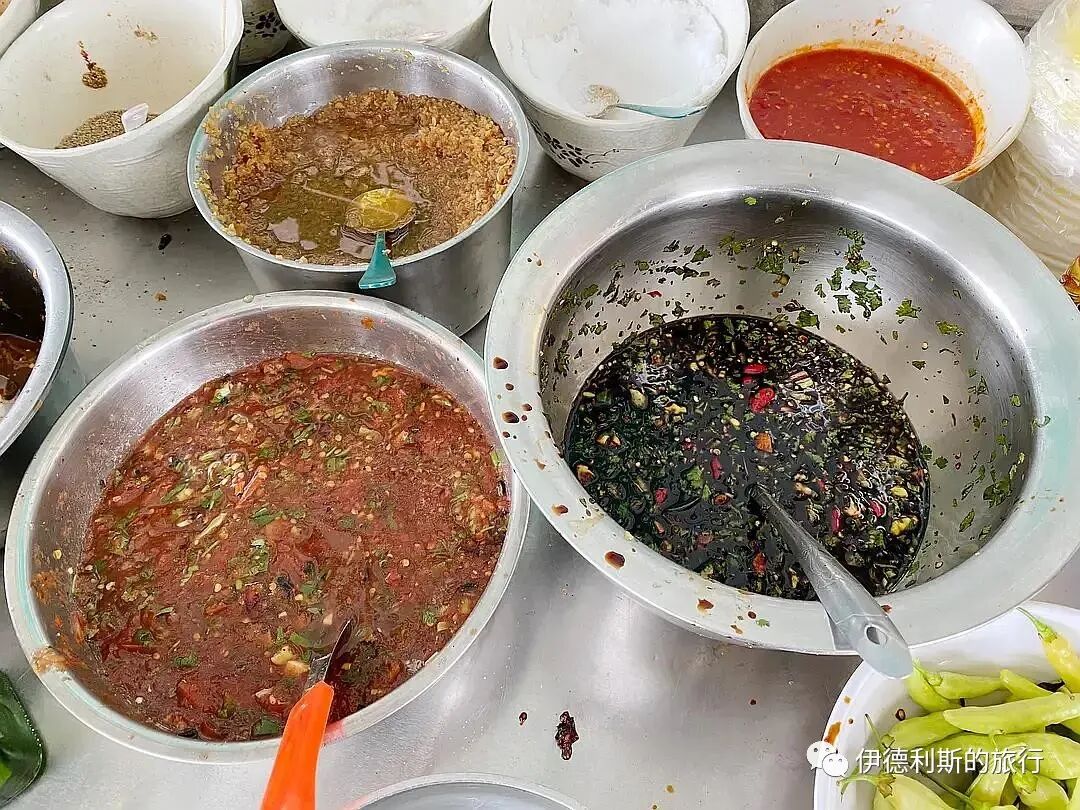
In the morning, Paxidai mostly serves beef rice noodles (mixian) and rice sheets (migan). We ordered the rice sheets. The variety of side dishes here is really impressive. They have pea tips, chives, bean sprouts, and all kinds of dipping sauces. The best part is that their beef is delicious! It is a little sweet and very fragrant.

10. Daying in Yuxi
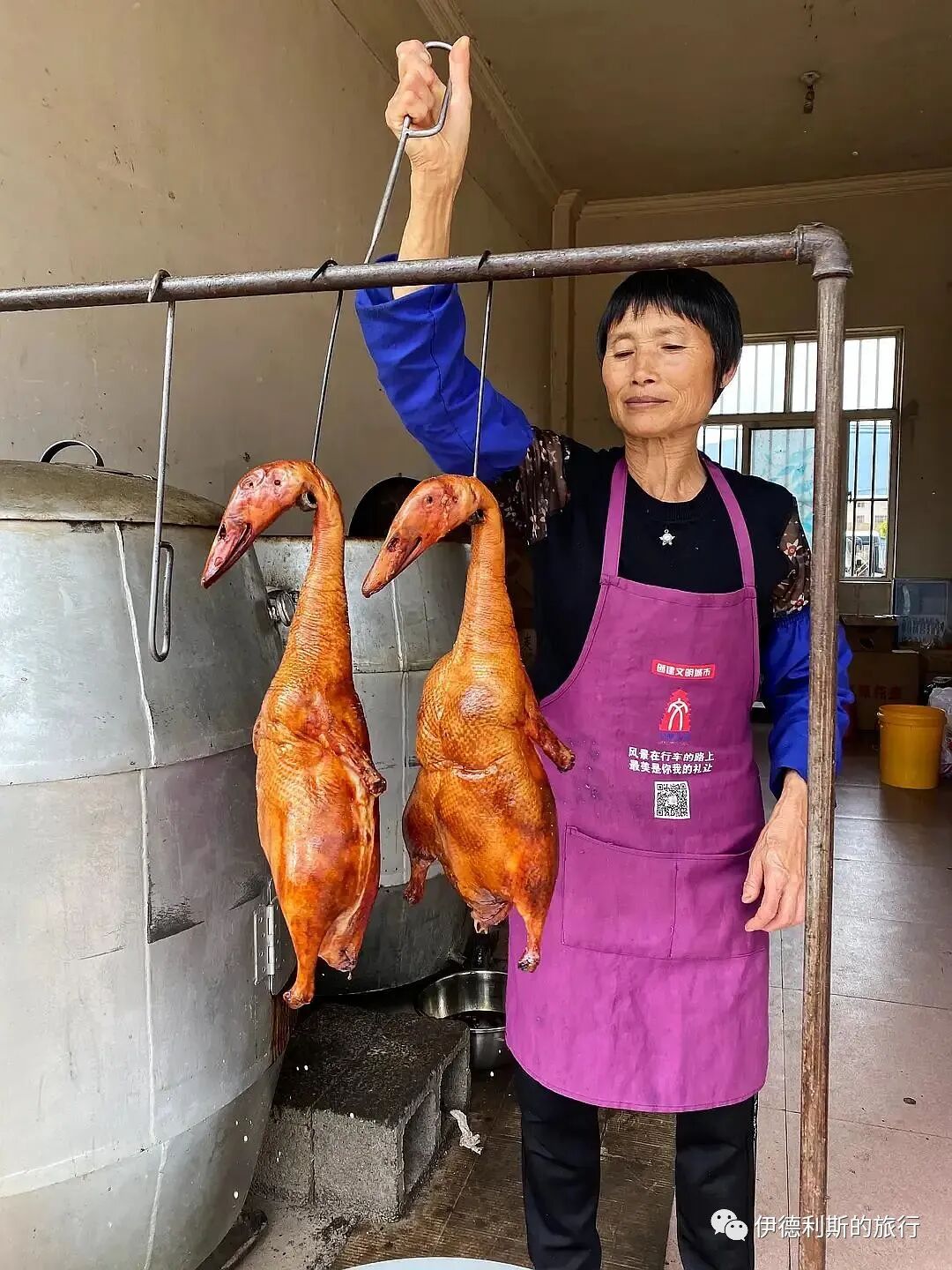
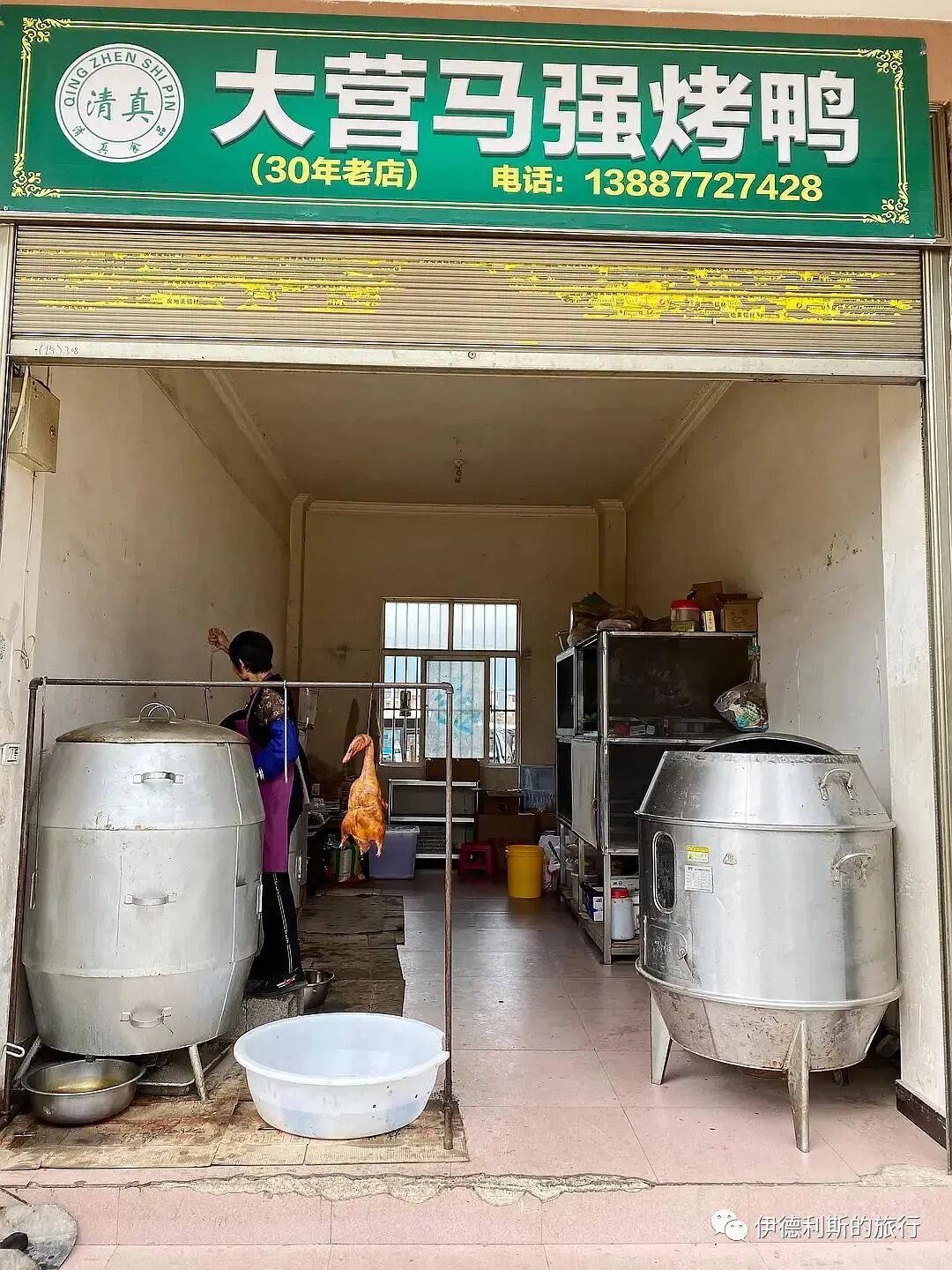
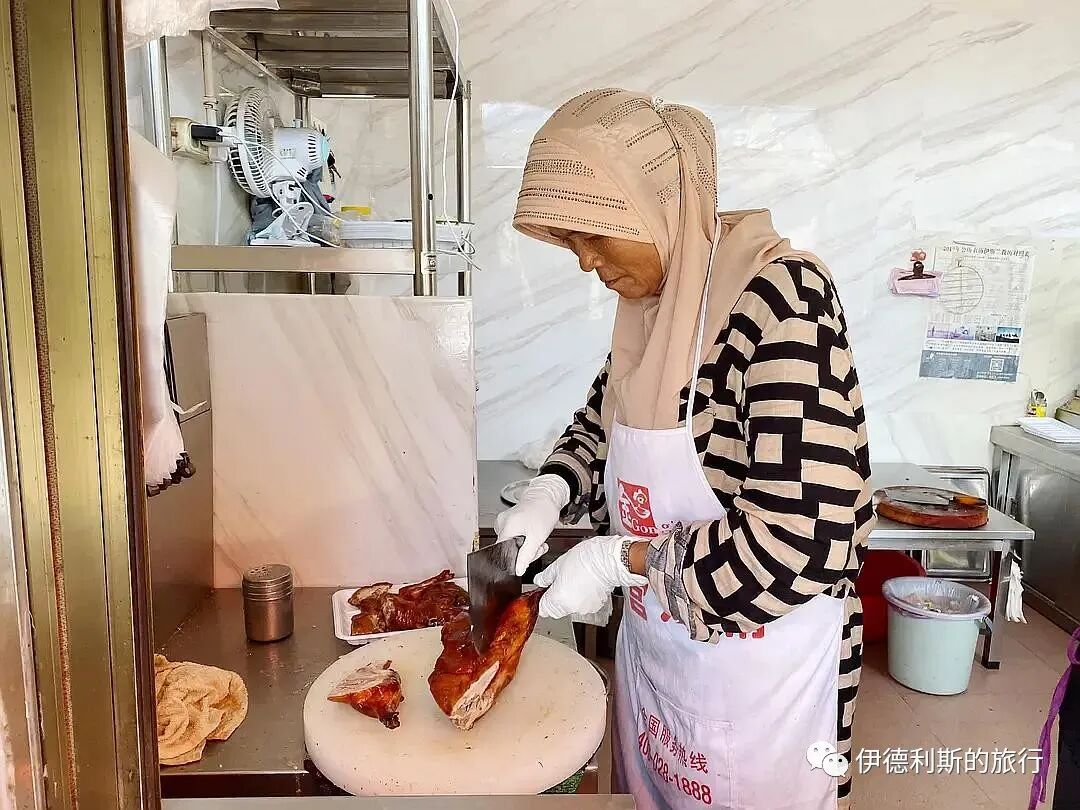
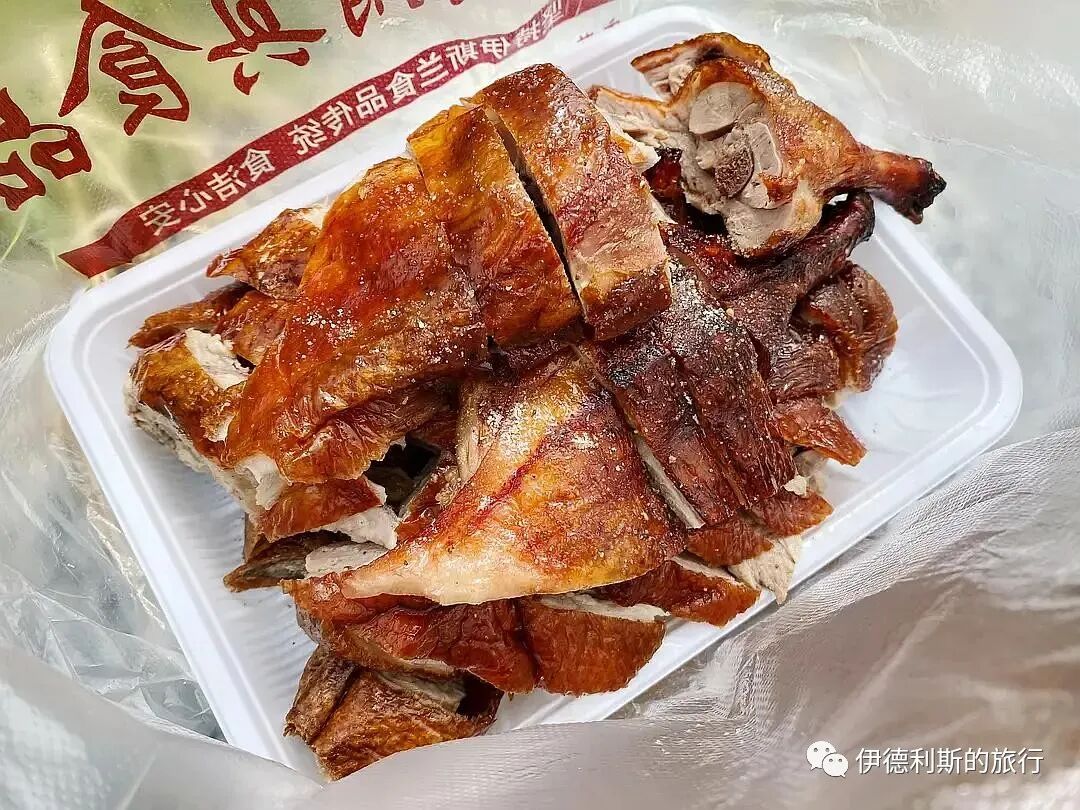
I walked through the market in Daying, Yuxi, and bought some local crispy roast duck (kaoya) from a shop that has been open for 30 years. The leaner duck tastes much better than Beijing roast duck, though the dipping sauce is not as good as the one in Nanjing.
11. Najiaying
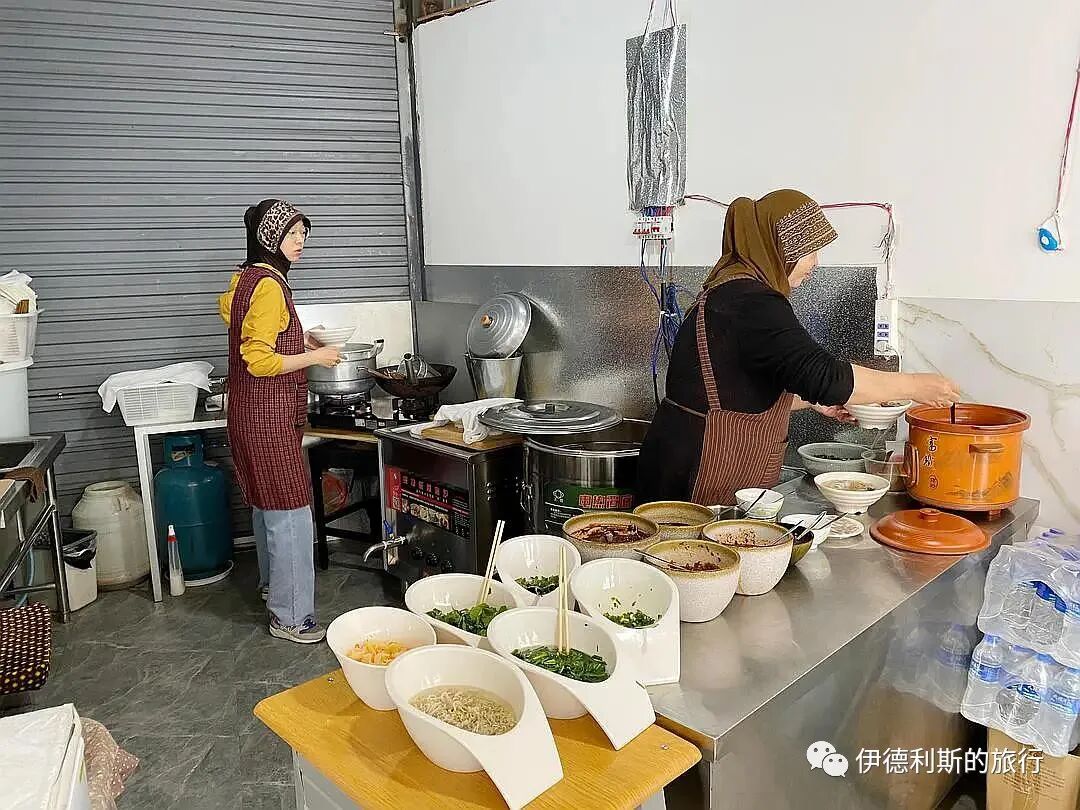
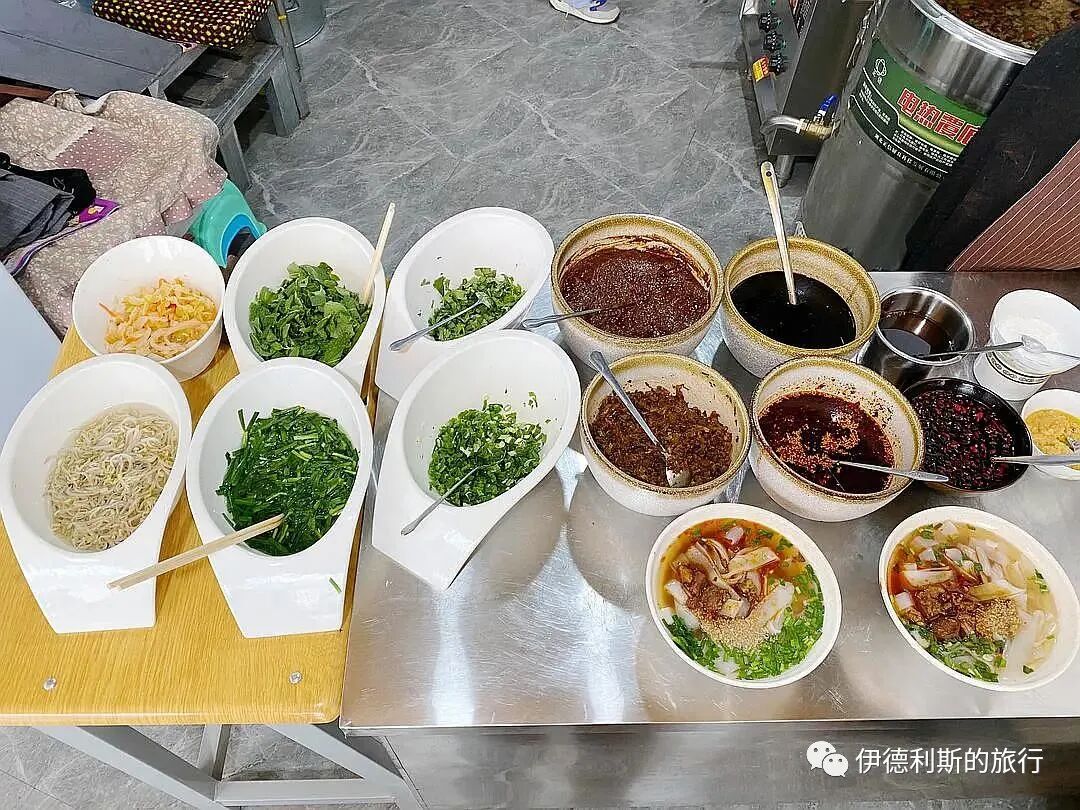
I had beef rice noodle rolls (niurou juanfen) for breakfast in Najiaying.
12. Jianshui
There are so many halal stalls on Zitao Street in Jianshui! The main ones are grilled tofu, grilled potatoes, and meat skewers. Of course, there are also all kinds of cattail shoot rice noodles (caoya mixian), tilapia, pounded chicken feet, and more. You just can't eat it all.
13. Shadian
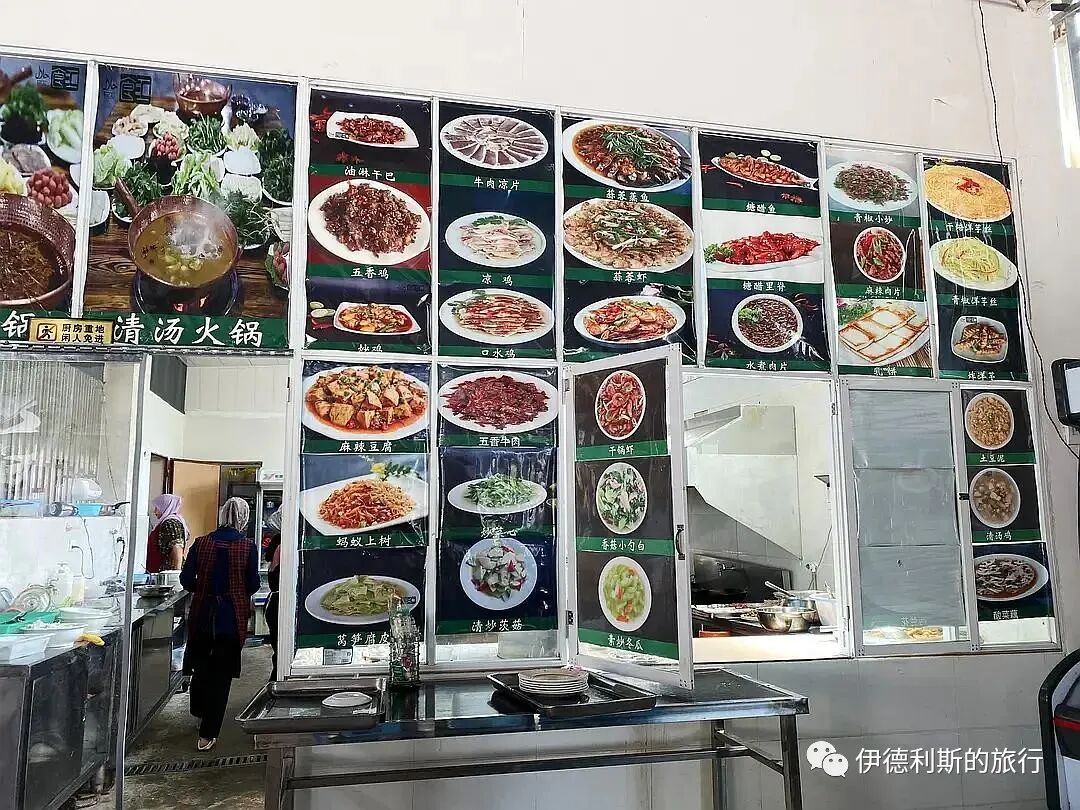
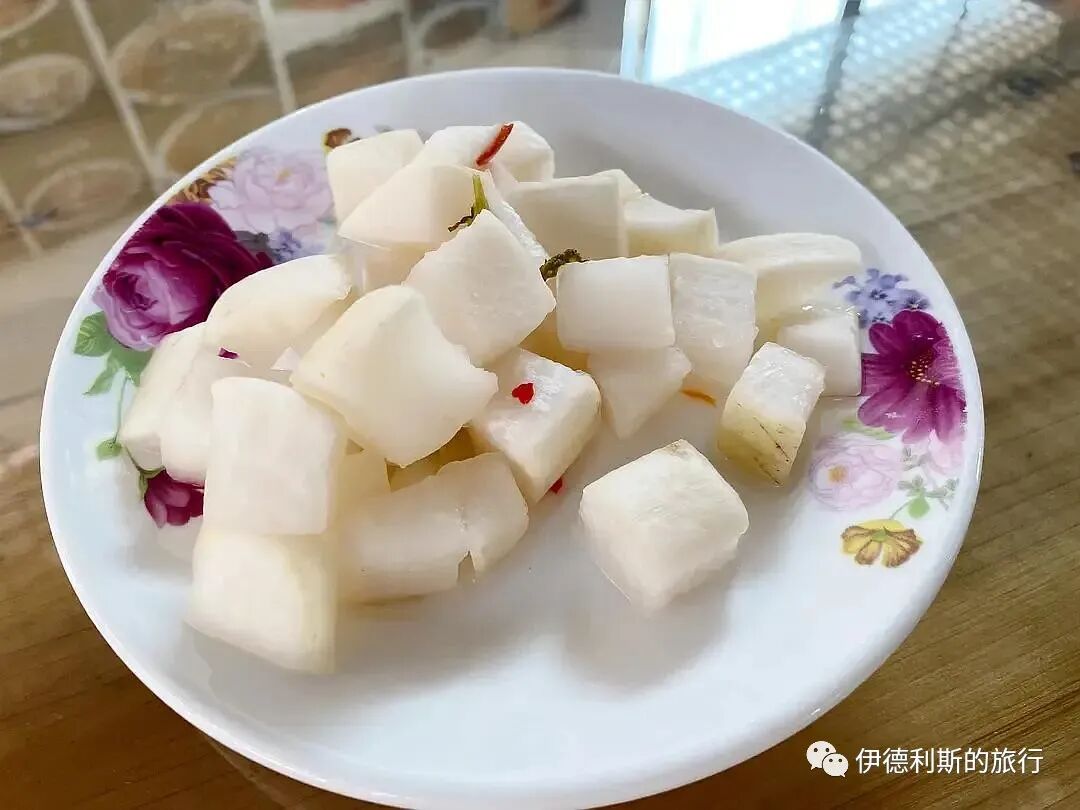
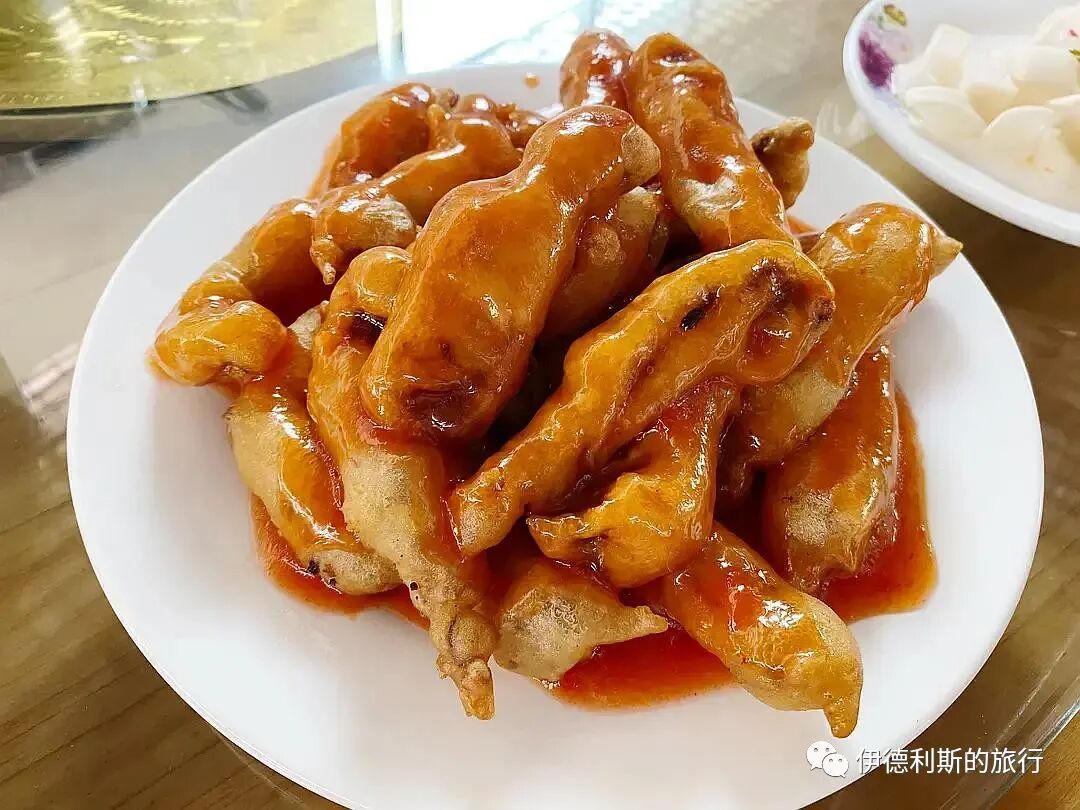
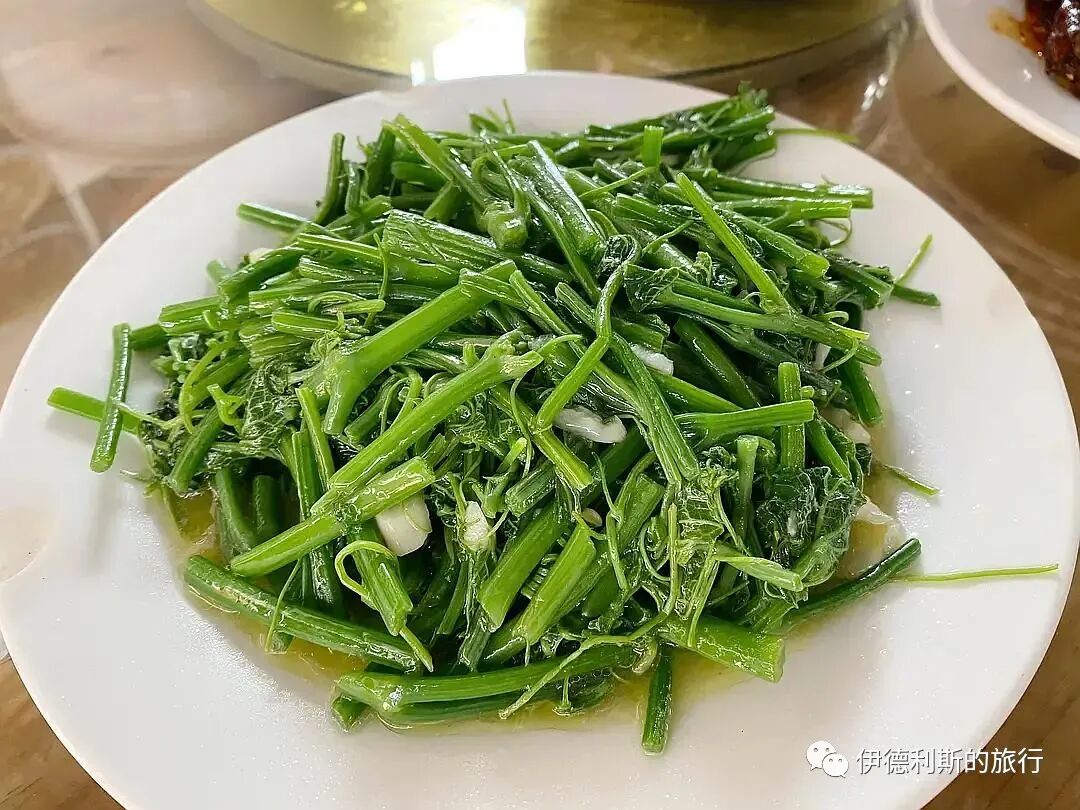
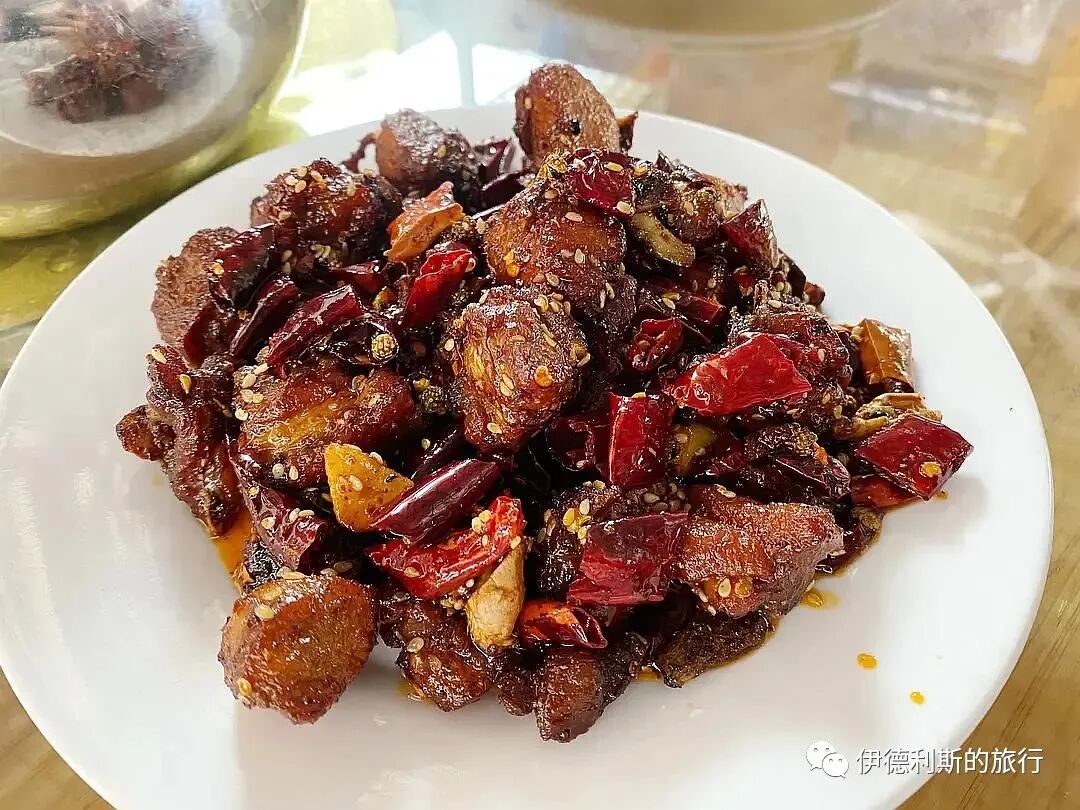
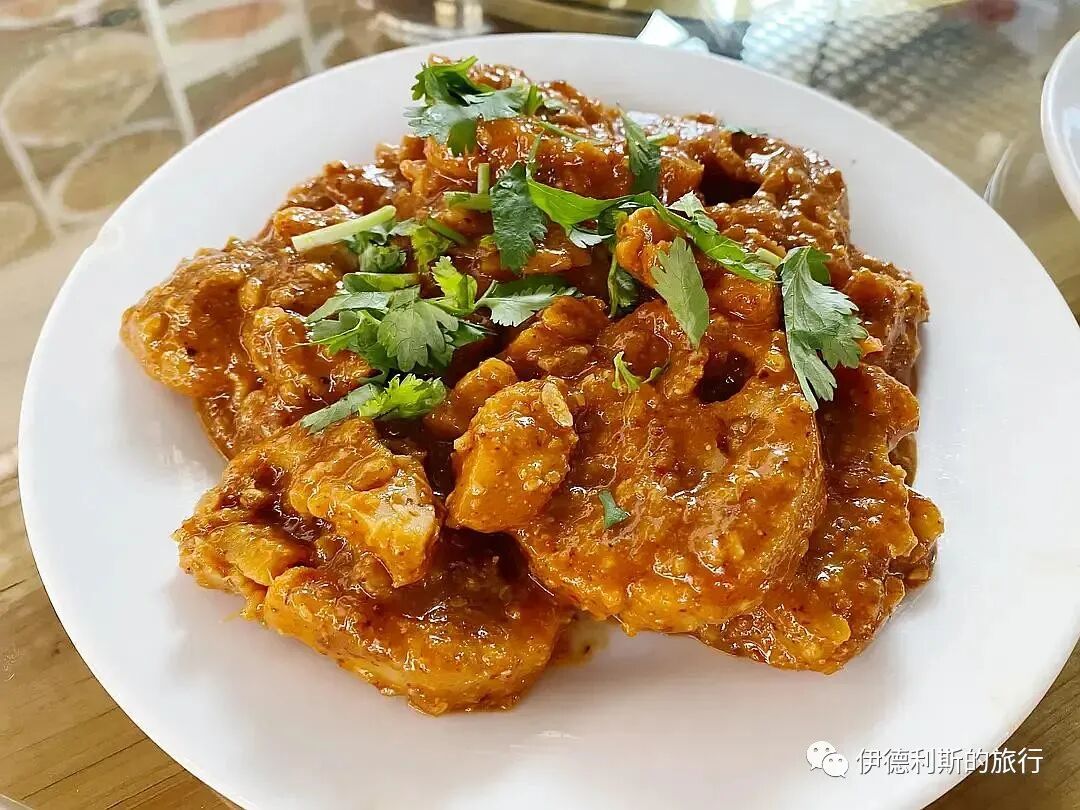
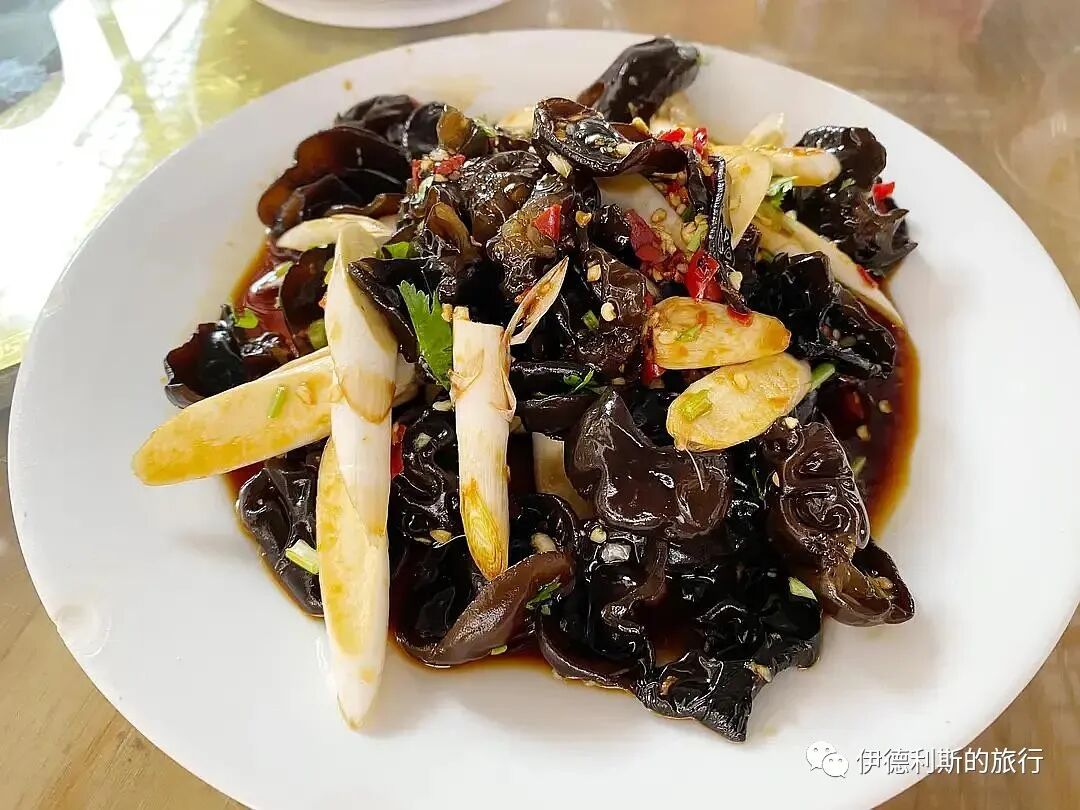
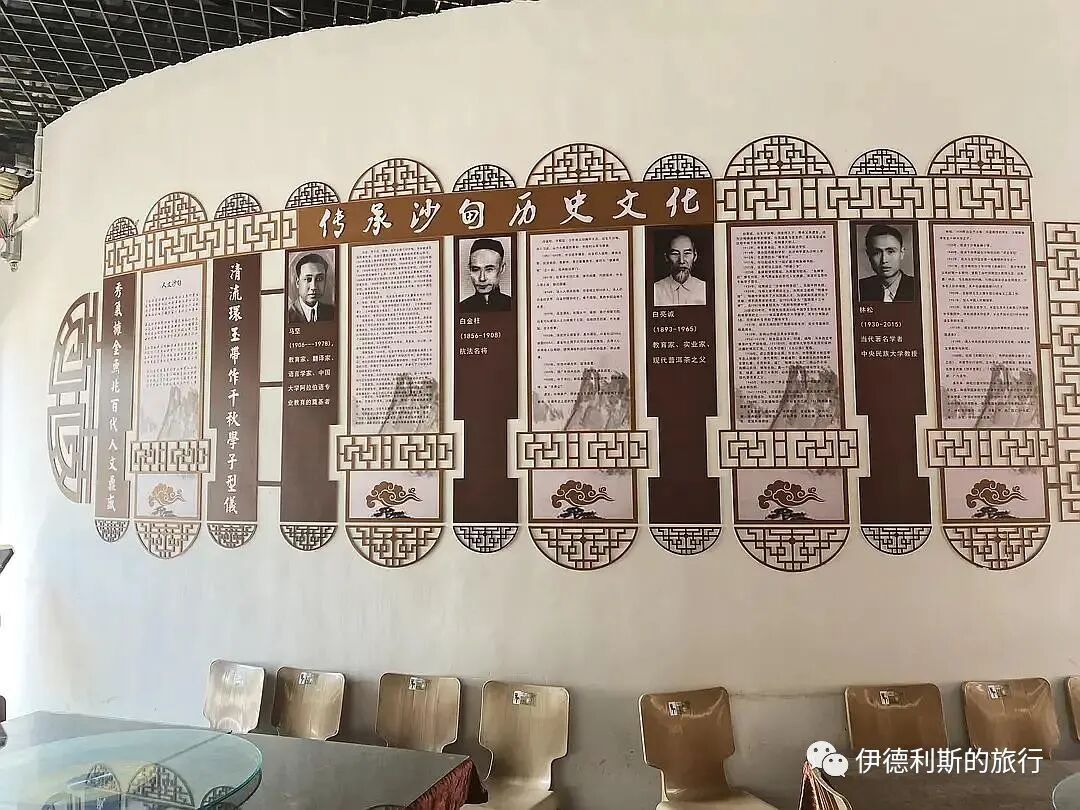
We ate at Shadian Food Court on the road in front of the Great Mosque of Shadian. We had stir-fried chayote tips (fengshou guajian), five-spice chicken, sweet and sour pork tenderloin, cold tossed cattail shoots with wood ear mushrooms, and steamed lotus root with rice flour. The food here is really rich in variety! Also, someone had just finished hosting a banquet when we arrived, so our food came out very quickly.
14. Mengzi
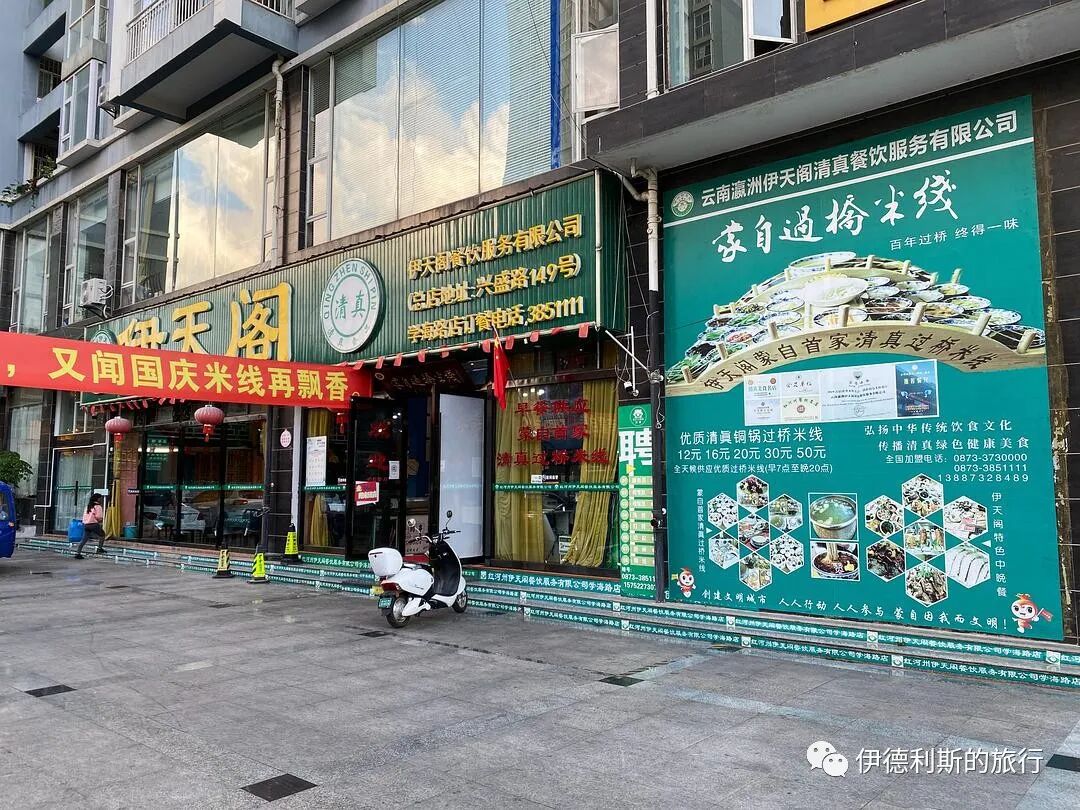
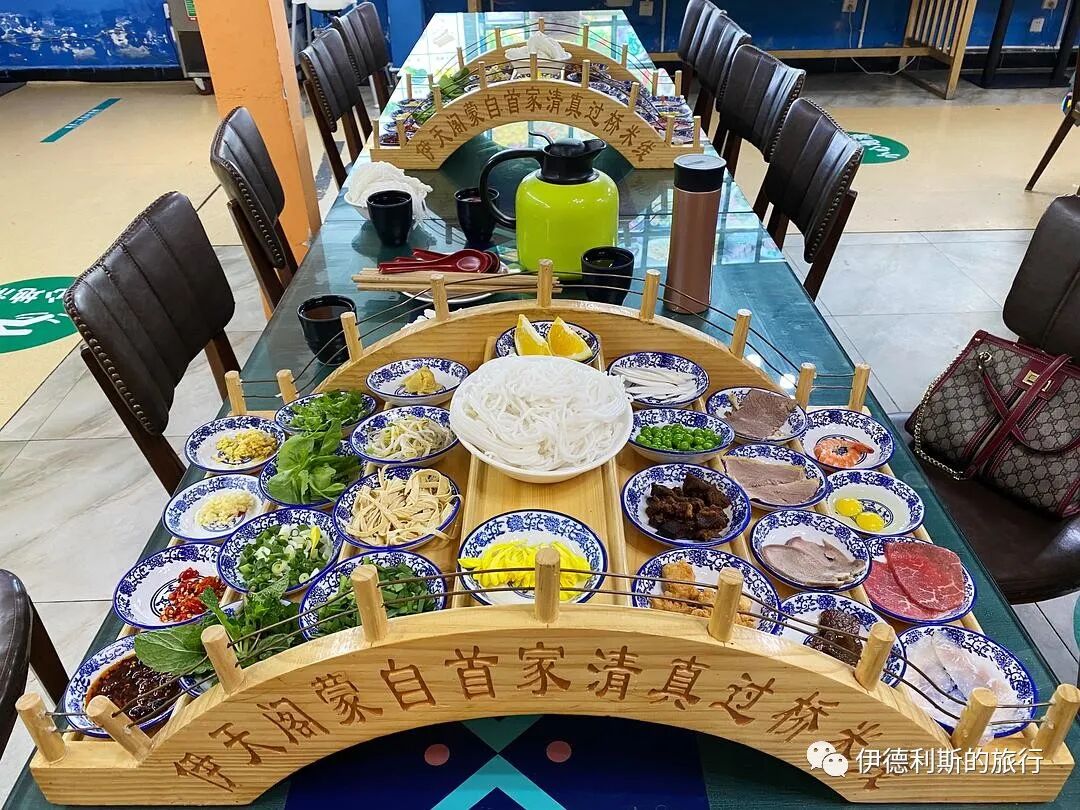
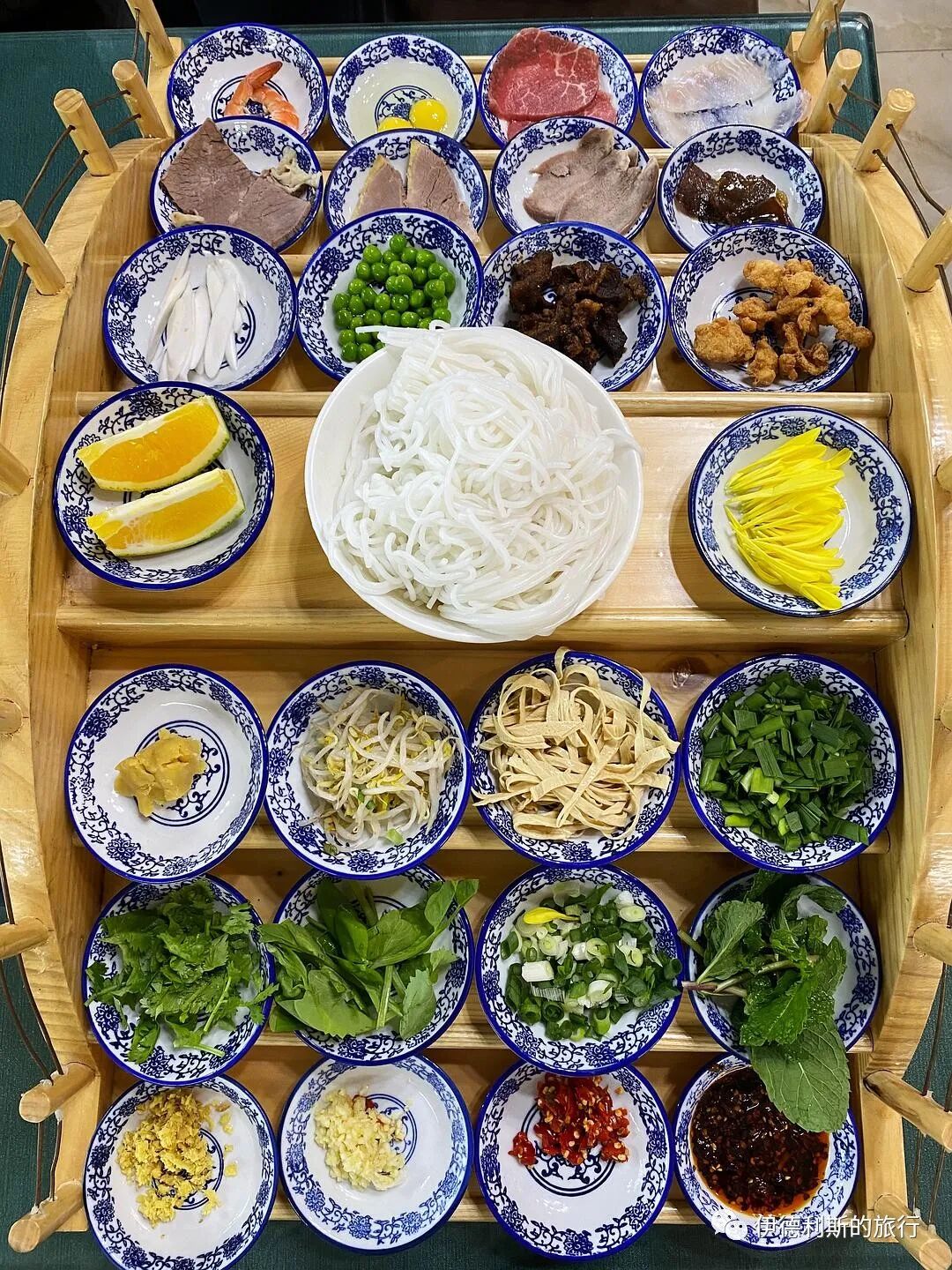
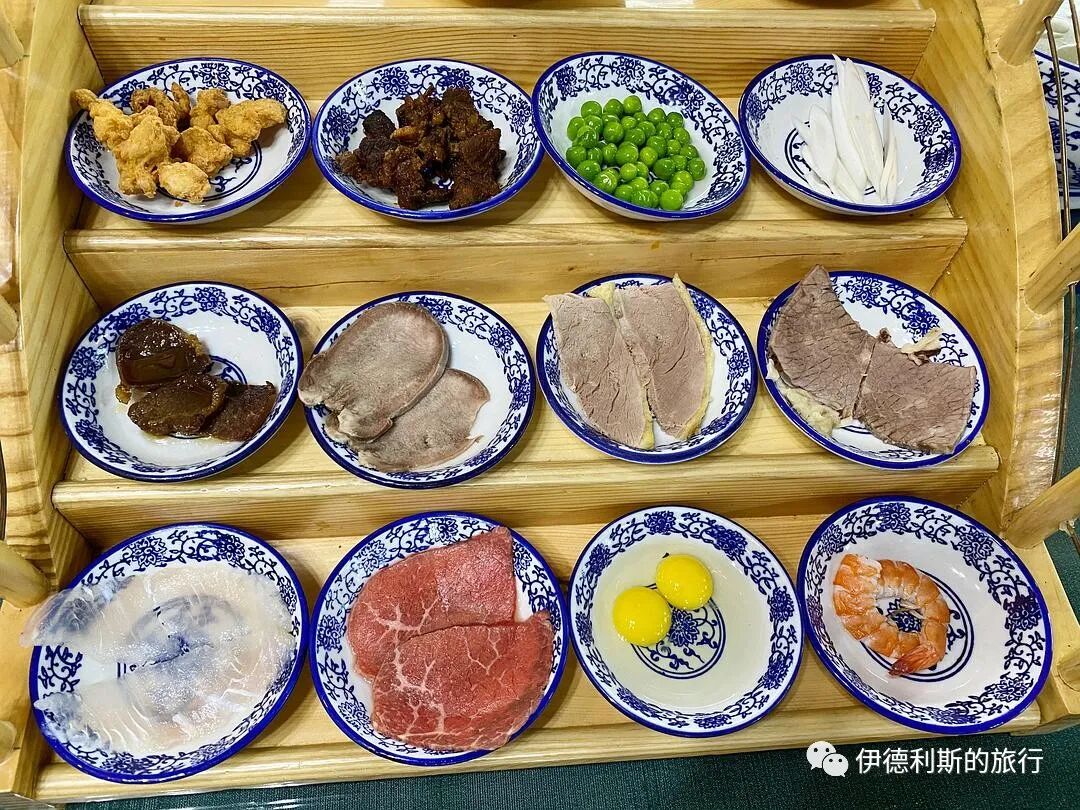
Yitiange is the most popular halal bridge-crossing rice noodle (guoqiao mixian) shop in Mengzi. They have copper pot bridge-crossing rice noodles ranging from 12 to 50 yuan. We ordered the 50-yuan deluxe version. It comes with 26 small plates, and you can get unlimited refills of the meat broth and rice noodles. The plates include raw fish slices, raw beef slices, raw quail eggs, shrimp, dried beef (niuganba), beef tongue, cold duck slices, cold beef slices, crispy beef fat, braised beef, cattail shoots (caoya), chrysanthemum flowers, pea starch jelly (wandoutuo), bean sprouts, tofu skin, chives, cilantro, mint, green onion, pumpkin tips, ginger, garlic, chili, and chili sauce. This is the most complete variety I have ever eaten! They also serve a wide variety of stir-fried dishes and seasonal vegetables, with so many options to choose from. We ordered the egg-white spring rolls (furong juanfen) and bitter greens soup (kucai tang), and both were delicious. I recommend this place to all the friends (dosti) planning a trip to Mengzi!
3. Shaanxi
1. Xi'an
I ate rose sticky rice cake (cigao) on Primary School X Lane. In the past, Hui Muslims in Xi'an usually carried sticky rice cakes (cigao) on shoulder poles to sell along the streets, but they are much less common now than steamed date cake (zenggao). As far as I know, only Ma Jiguang Cigao Shop still sells them.
Sticky rice cake (cigao) is a glutinous rice snack filled with red bean paste. The filling contains small beans, brown sugar, sweet osmanthus sauce (huanggui jiang), rose sauce (meigui jiang), and walnut kernels. After it is made, sesame seeds are sprinkled on top.
Traditionally, there are two ways to eat it: cold or hot. To eat it cold, you wrap it up and sprinkle white sugar on it. To eat it hot, you pan-fry it over low heat with rapeseed oil. We chose to eat it hot, and the lady added some honey at the end.
2. Ankang
Ankang is the largest area where Hui Muslims live in southern Shaanxi. They have settled here since the Ming Dynasty, and by the Republican era, seven mosques had been built. In the morning, I went to the most popular spot at the entrance of Gulou Street to have steamed noodles (zhengmian) with pickled vegetable soup (suancai bantang). The owners are Hajj who returned from their pilgrimage in 2005. Ankang steamed noodles are a type of Shaanxi cold skin noodles (liangpi). Unlike the version in Xi'an that uses raw vinegar, Ankang steamed noodles use cooked vinegar. Steamed noodles usually come with hot chili oil (youpo lazi), but I skipped it because I cannot handle much spice.
3. Shuhe Ancient Town
Shuhe Ancient Town is the last town the Han River passes through in southern Shaanxi before it flows into Hubei. During the Ming and Qing dynasties, when Han River shipping was booming, it was an important trading post. Merchants gathered and shops lined the streets. Hui Muslims moved to Shuhe to settle down during that time, and hundreds of families still live there today.
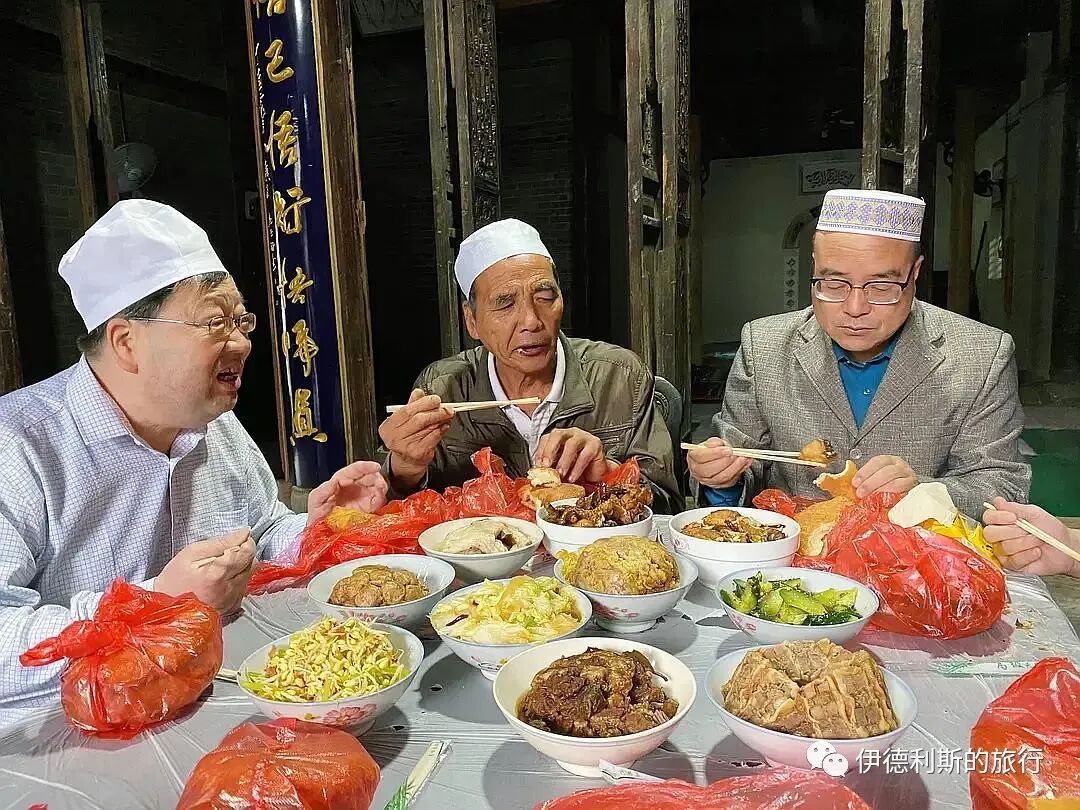
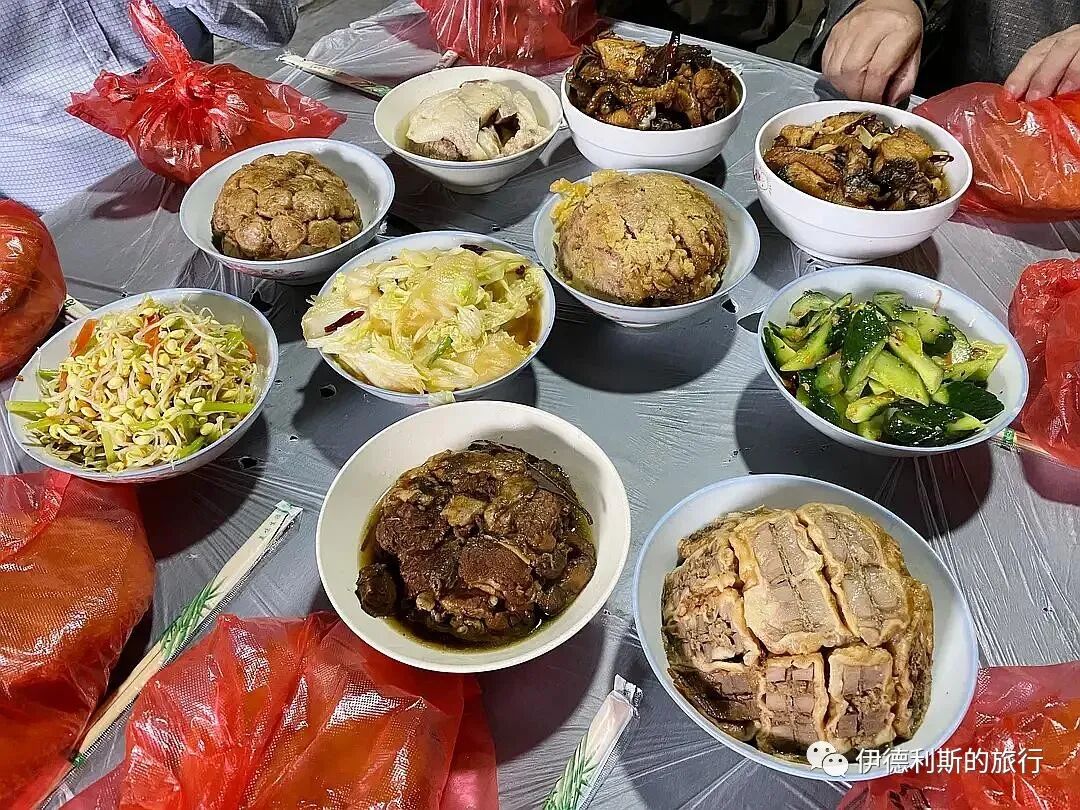
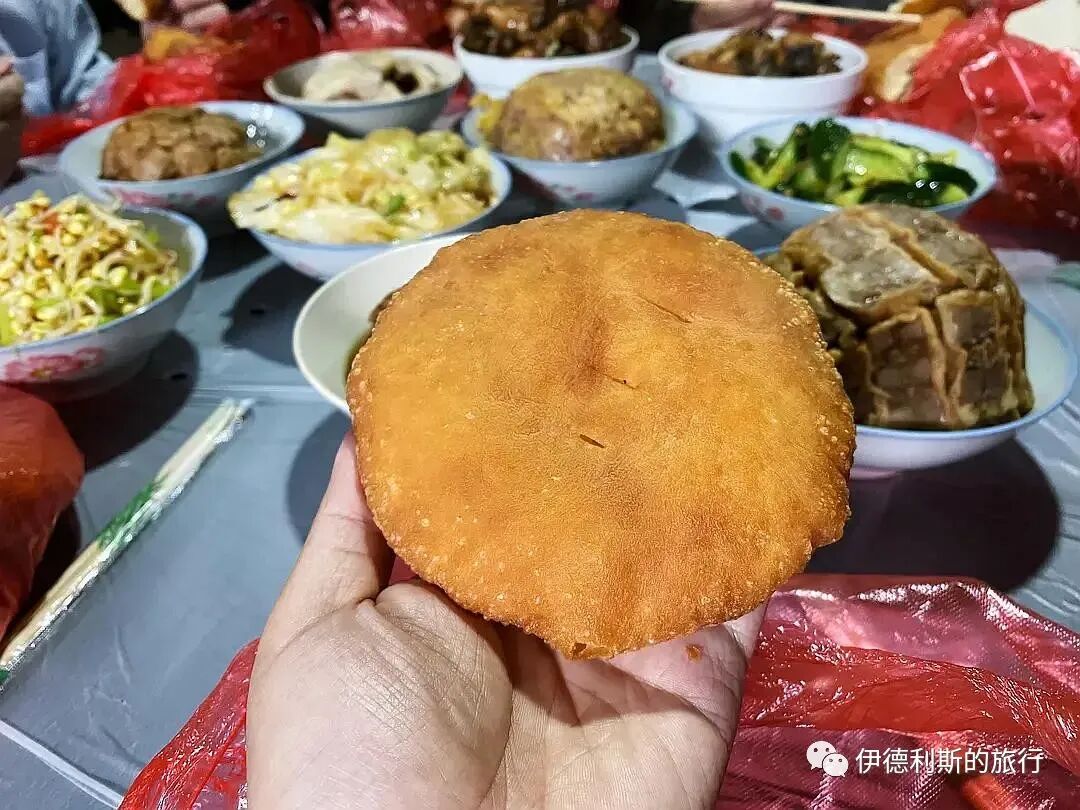
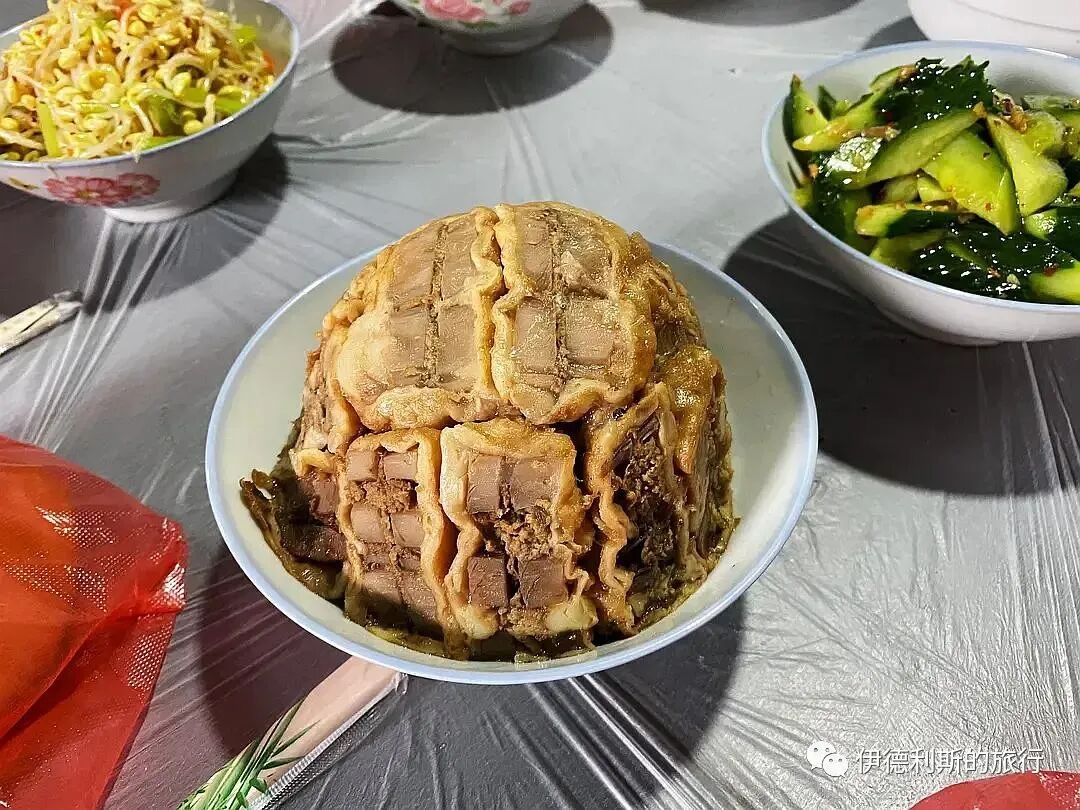
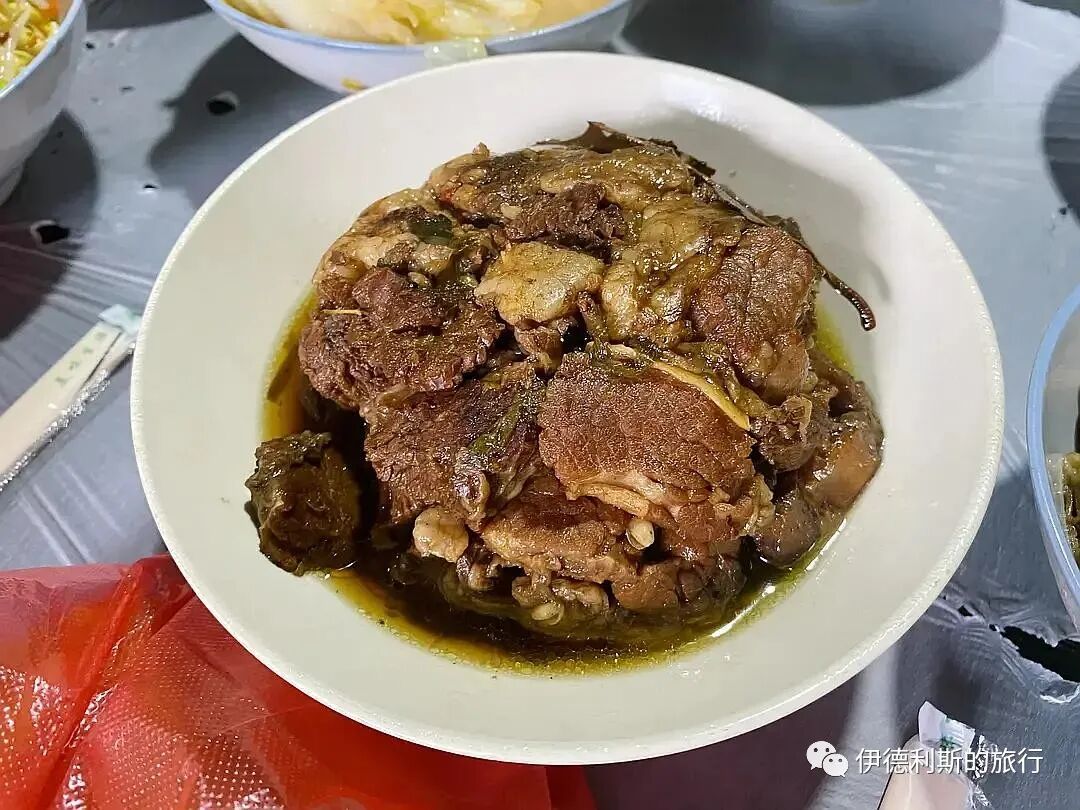
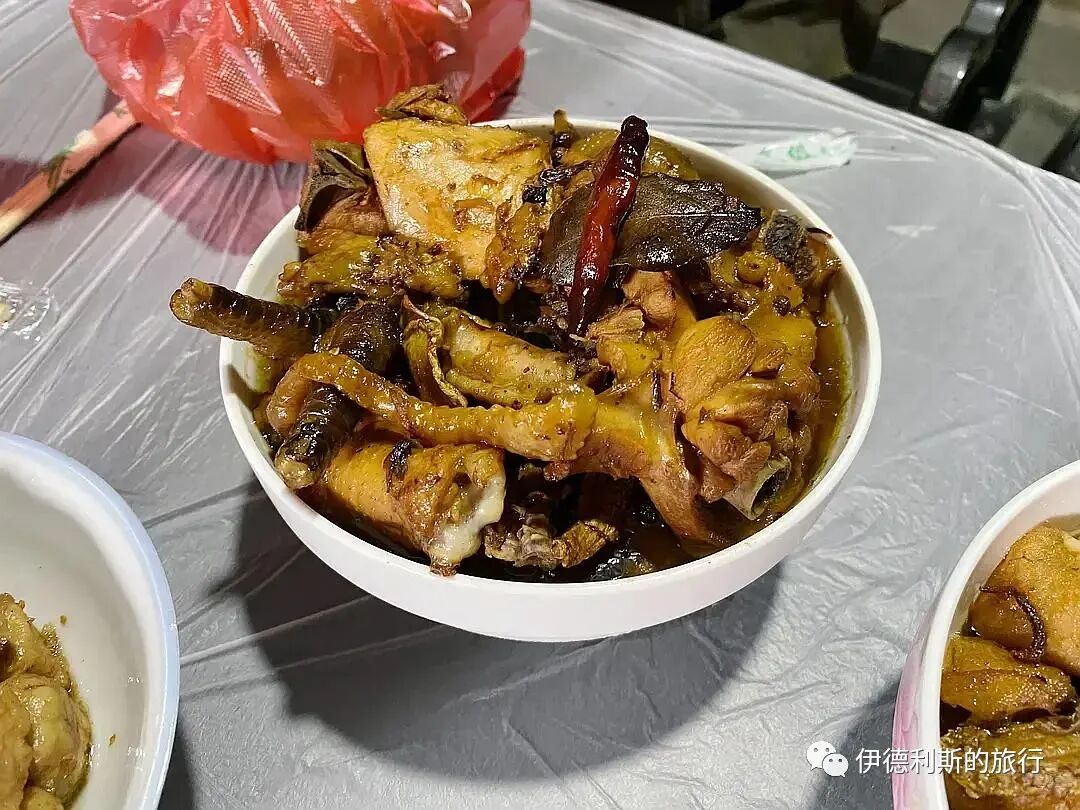
After attending Jumu'ah prayers at the mosque, we happened to catch a ten-bowl feast, a local Shuhe specialty. Zainab really enjoyed the meal, and we were even given plenty of fried dough (youxiang) to take home. The ten-bowl feast includes lotus root boxes (liancai hezi—lotus root stuffed with lamb, coated in egg, fried, and then steamed), lamb meatballs (yangrou wanzi—coated in egg, fried, and then steamed), braised beef, steamed lamb with flour (fenzheng rou—lamb coated in flour and steamed with sweet potato chunks), steamed white meat (fatty meat with lamb cartilage, steamed), chicken (half-fried then steamed), fish chunks (grass carp chunks coated in flour, fried, and then steamed), and three vegetable dishes. Hui Muslim banquet dishes are different from everyday home cooking. Since they usually serve many people, most dishes are prepared halfway and then steamed together in a large pot. This keeps the food hot and makes the cooking process efficient.
4. Xixiang County
Xixiang County sits in the middle of the Hanzhong Basin in southern Shaanxi. It is tucked between the Qinling Mountains and the Bashan Mountains, and the Muma River, a tributary of the Han River, flows through the county town. Starting in the Ming Dynasty, Hui Muslims from Pingliang, Gansu, moved to Xixiang to settle down. The Hui Muslim population continued to grow during the Kangxi and Qianlong eras. Today, more than 2,000 Hui Muslims live in the Xiguan area of the county town.
Hui Muslims in Xixiang have been famous for making beef jerky since the Tongzhi era. The local Xizhen cattle in Xixiang are a nationally famous breed of yellow cattle that are perfect for making beef jerky. Today, you can see shops selling halal beef jerky all over the Xiguan area of Xixiang, with the highest concentration found at the Xiguan Halal Beef and Mutton Market. Every shop in Xiguan makes its beef jerky a little differently, so some are hard, some are soft, some are salty, and some are mild.
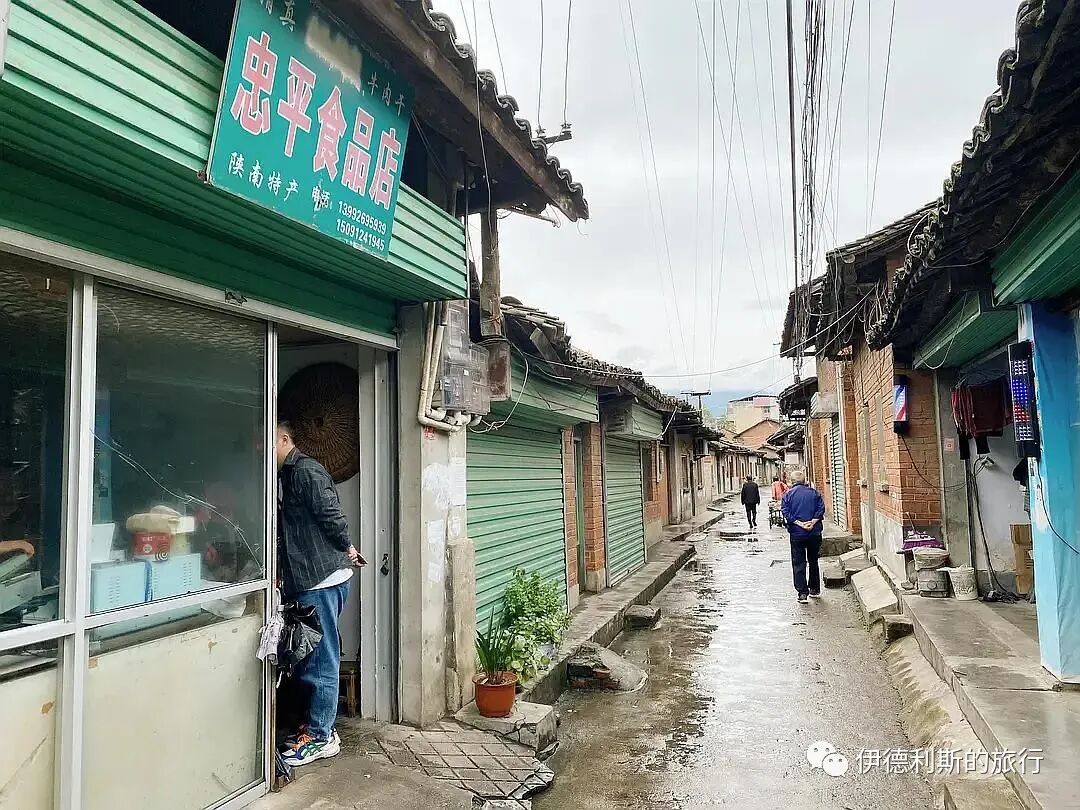
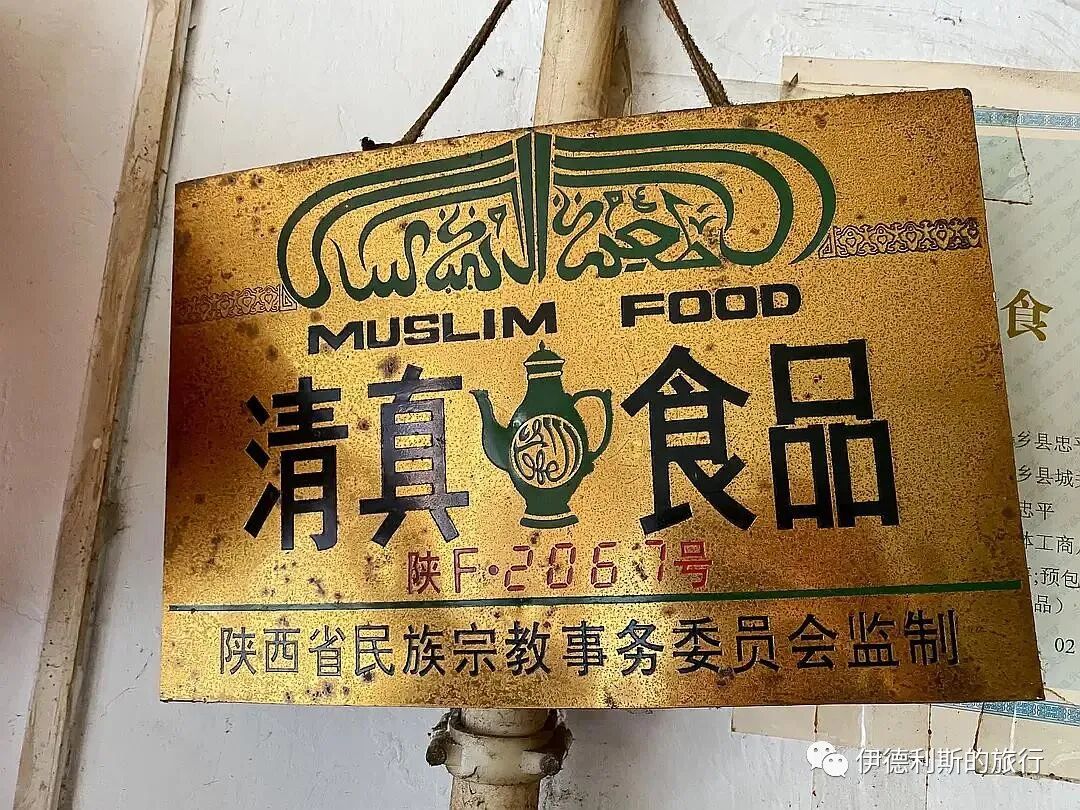
We bought some beef jerky at a shop called Zhongping Food Store, where many locals go to shop.
Halal Food Guide: Western China — Muslim Snacks and Local Halal Food (Part 1)
Articles • ali2007fr posted the article • 0 comments • 181 views • 2026-05-17 21:58
Summary: Halal Food Guide: Western China — Muslim Snacks and Local Halal Food is presented here as a firsthand travel account in clear English, beginning with this scene: I am sharing 53 halal snack spots I visited across 53 places in Western China. Some are in small restaurants and others are at street stalls, each with its own unique flavor. The account keeps its focus on Western China Food, Halal Snacks, Halal Food while preserving the names, places, food, and historical details from the Chinese source.
I am sharing 53 halal snack spots I visited across 53 places in Western China. Some are in small restaurants and others are at street stalls, each with its own unique flavor.
Table of Contents
1. Sichuan
1. Guangyuan 2. Langzhong 3. Nanchong 4. Tuqiao in Chengdu 5. Dujiangyan 6. Mimou Town
2. Yunnan
1. Zhaotong 2. Ludian 3. Kunming 4. Xundian 5. Xiaguan in Dali 6. Weishan in Dali 7. Dali Ancient City 8. Ruili 9. Xishuangbanna 10. Daying in Yuxi 11. Najiaying 12. Jianshui 13. Shadian 14. Mengzi
3. Shaanxi
1. Xi'an 2. Ankang 3. Shuhe Ancient Town 4. Xixiang 5. Xianyin Mosque (Xianyin Si) in Hanzhong
4. Inner Mongolia
1. Hohhot 2. Longshengzhuang 3. Jining
5. Ningxia
1. Yinchuan
6. Gansu
1. Lanzhou, 2. Linxia
7. Qinghai
1. Ping'an 2. Xunhua 3. Xining
8. Xinjiang
1. Urumqi 2. Toksun County 3. Turpan 4. Huoyanshan Town 5. Shanshan County 6. Yarkant (Shache) 7. Kashgar (Kashi) 8. Yining 9. Qingshuihe Town, Huocheng County 10. Zhaosu County 11. Nalati Town, Xinyuan County 12. Hami 13. Korla (Ku'erle) 14. Bayanbulak Town, Hejing County 15. Hejing County 16. Yanqi County 17. Lopnur (Yuli) County 18. Kuqa 19. Yengisar (Yingjisha) County
1. Sichuan Province
1. Guangyuan
Around the mosque on Shanghe Street in Guangyuan, Sichuan, there are many local halal restaurants. They specialize in beef soup pot (niurou tangguo) and stewed flatbread (huimo). Compared to other parts of Sichuan, the halal food here is closer to the style of Hanzhong in Shaanxi.
2. Langzhong
There are many halal restaurants inside the old town of Langzhong. At one of them, I ate twice-cooked pork made with salted leaf beef (yanyezi niurou), as well as northern Sichuan cold jelly noodles (chuanbei liangfen) and steamed sugar buns (baitang zhengmo). Steamed sugar buns are a specialty of the Hui Muslims in Langzhong. They were created by the Hui Muslim pastry chef Ha Gongkui during the Qianlong era. Instead of using lye, they are fermented with naturally cultivated enzymes and include some osmanthus flowers. You can also steam them again later.
3. Nanchong
At the entrance of the Nanchong Mosque, Imam Feng Yong and his family sell Yunus beef jerky, which is a precious piece of intangible cultural heritage.
Imam Feng Yong’s ancestors moved from Shaanxi to settle in Nanchong during the Qing Dynasty. At that time, the busy Jishikou market had many stalls selling braised beef, and the Imam’s great-grandfather, Yang Fangyun, ran his family’s traditional halal beef jerky business there. Because they used a red lantern to block the wind and provide light on windy days, people started calling it Red Lantern beef jerky (hongdenglong gan niurou).
During the Republic of China era, the Feng family joined forces through marriage with Yang Fangyun, who made Red Lantern beef jerky, Ma Yutu, who made Ma Laizi jarred beef (guanguan niurou), and Zhang Dechao, who made beef crispy cakes (niurou jiaobing). The Imam’s grandfather, Feng Zifeng, then opened the Shixian shop on Fu Street, establishing the Hui Muslim halal restaurant to keep the Red Lantern beef jerky tradition alive.
In 1958, the Red Lantern brand became a public-private partnership. Yang Fangyun chose not to work in the factory and instead stayed home to do small-scale work. In the early 1990s, Imam Feng's grandfather set up a stall selling spiced beef (lu niurou) in front of their old family home and passed the craft down to Imam Feng, who was still in middle school at the time.
To make beef jerky, you first marinate the meat with various spices, then braise it, and let it dry in the sun. Finally, you toss it in a pan with chili powder, salt, Sichuan peppercorn powder, and white sesame seeds.
4. Tuqiao, Chengdu
After the Huangchengba Muslim community in Chengdu was dismantled, the town of Tuqiao in the northwest suburbs became the closest traditional Muslim community to the city center. Many local Hui Muslims come here for Friday namaz. Although Tuqiao has gone through demolition, the traditional mosque and the halal snack shops at its entrance are still there, so the area remains very lively. I arrived at Tuqiao just before Friday prayers (Jumu'ah) and stopped at a small snack shop by the entrance. I had beef offal noodles (niuzafen), steamed beef with rice flour (fenzheng niurou), and fermented rice with egg (laozaodan) to get a taste of authentic Chengdu halal snacks.
5. Dujiangyan
Starting in 2009, Dujiangyan City turned the old Guanxian County town into a tourist destination similar to Dali or Lijiang. It has now become a heavily commercialized tourist spot, not much different from other highly developed ancient towns in the south. Luckily, there are still several traditional halal restaurants on South Street and West Street in the old town. I ate Min River fine-scaled fish (minjiang xilinyu) and bamboo leaf greens (zhuyecai) at the Maji Huixiang Restaurant.
6. Mimou Town
Mimou Town sits on the Golden Ox Road (Jinniu Dao), an ancient path from Chengdu to Shaanxi. Hui Muslims began settling here during the Ming Dynasty, and many more from Shaanxi and Hunan moved in after the Kangxi era. Unlike the heavily developed ancient town of Dujiangyan, Mimou Town has no signs of tourism. It is full of everyday life and keeps its own pace. I ate goose soup noodles (etang mian) and small steamed beef dumplings (xiaolong zheng niurou) here.
2. Yunnan
1. Zhaotong
Inside the Sanguan Mosque vegetable market across from the Zhaotong East Mosque, all the stalls are run by Hui Muslims. They sell all kinds of raw and cooked meat, pea starch jelly (wandoufen), corn flour, and more. At a stall by the market entrance, I drank some pea starch jelly and ate a rice cake sandwich with a fried dough cake (erkua jia yougao), which is a traditional local breakfast.
2. Ludian
I was invited to a banquet at the Longtoushan Mosque in Ludian. I really love attending banquets, especially because the crispy stir-fried meat (surou) is so delicious!
3. Kunming
Shuncheng Street Mosque in Kunming was first built during the Hongxi and Xuande periods of the Ming Dynasty (1425-1435). Many of the first Hui Muslims to settle here were soldiers who came to Yunnan with Mu Ying to guard the region. Shuncheng Street is the main hub for halal food in Kunming. I ate papaya cold shrimp jelly (mugua liangxia) and a mix of thick and thin pea starch noodles (wandoufen) here.
4. Xundian
In Xundian County, I ate grilled beef in mushroom soup (juntang kaoniurou). The mushroom soup was incredibly fresh, the beef was very tender, and the dipping sauce with fish mint (zhe'ergen) had a real kick.
5. Xiaguan, Dali
The Hui Muslims street in Xiaguan, Dali, is tucked away behind the main roads. It is quite quiet now, and mostly only locals know about it. I ate braised meat rice noodles (menrou ersi) here.
6. Weishan, Dali
I caught a very lively market in Yongjian Town, Weishan, and bought some rose-flavored milk curd (rufan).
In the evening, I went to a restaurant near the Dingjiachang Mosque in Weishan County and asked the lady to fry the rose-flavored milk curd for me.
7. Dali Ancient City
Zaihuishou is a famous halal snack shop in the ancient city, known for its cold rice noodles with free-range chicken (tuji liang mixian).
8. Ruili
From the 1980s to 2020, there was a halal food street on Baijing East Lane near the Ruili jewelry market. It served food to Burmese Muslim merchants working in the jewelry trade, and locals in Ruili usually called it Old Burmese Street (Lao Mian Jie).
The substance on this lady's face is called Thanaka. It is made by grinding yellow fragrant cedar branches into a powder and mixing it with water. It helps prevent mosquito bites and provides a cooling sensation.
In front of her are various mixed noodles, ranging from thick to thin: Nan ji, lat, and thay thout. The white ones are glass noodles (ja zan).
On the plate is Burmese tofu (to hpu), which comes from the Shan people and is made from yellow peas and Burmese chickpeas.
Mixed noodles made with Burmese fried tofu.
A type of bean soup.
9. Xishuangbanna
I had a halal Dai-style breakfast in Manluanhui, Menghai County, Xishuangbanna. The place I chose is called Paxidai. Paxidai calls itself 'Paxi.' They are Hui Muslims who follow the faith and keep the rules, but they speak the Dai language, use the Dai script, and cook halal Dai-style food. You could say they have kept their Hui Muslim identity while blending into Dai culture.
In the morning, Paxidai mostly serves beef rice noodles (mixian) and rice sheets (migan). We ordered the rice sheets. The variety of side dishes here is really impressive. They have pea tips, chives, bean sprouts, and all kinds of dipping sauces. The best part is that their beef is delicious! It is a little sweet and very fragrant.
10. Daying in Yuxi
I walked through the market in Daying, Yuxi, and bought some local crispy roast duck (kaoya) from a shop that has been open for 30 years. The leaner duck tastes much better than Beijing roast duck, though the dipping sauce is not as good as the one in Nanjing.
11. Najiaying
I had beef rice noodle rolls (niurou juanfen) for breakfast in Najiaying.
12. Jianshui
There are so many halal stalls on Zitao Street in Jianshui! The main ones are grilled tofu, grilled potatoes, and meat skewers. Of course, there are also all kinds of cattail shoot rice noodles (caoya mixian), tilapia, pounded chicken feet, and more. You just can't eat it all.
13. Shadian
We ate at Shadian Food Court on the road in front of the Great Mosque of Shadian. We had stir-fried chayote tips (fengshou guajian), five-spice chicken, sweet and sour pork tenderloin, cold tossed cattail shoots with wood ear mushrooms, and steamed lotus root with rice flour. The food here is really rich in variety! Also, someone had just finished hosting a banquet when we arrived, so our food came out very quickly.
14. Mengzi
Yitiange is the most popular halal bridge-crossing rice noodle (guoqiao mixian) shop in Mengzi. They have copper pot bridge-crossing rice noodles ranging from 12 to 50 yuan. We ordered the 50-yuan deluxe version. It comes with 26 small plates, and you can get unlimited refills of the meat broth and rice noodles. The plates include raw fish slices, raw beef slices, raw quail eggs, shrimp, dried beef (niuganba), beef tongue, cold duck slices, cold beef slices, crispy beef fat, braised beef, cattail shoots (caoya), chrysanthemum flowers, pea starch jelly (wandoutuo), bean sprouts, tofu skin, chives, cilantro, mint, green onion, pumpkin tips, ginger, garlic, chili, and chili sauce. This is the most complete variety I have ever eaten! They also serve a wide variety of stir-fried dishes and seasonal vegetables, with so many options to choose from. We ordered the egg-white spring rolls (furong juanfen) and bitter greens soup (kucai tang), and both were delicious. I recommend this place to all the friends (dosti) planning a trip to Mengzi!
3. Shaanxi
1. Xi'an
I ate rose sticky rice cake (cigao) on Primary School X Lane. In the past, Hui Muslims in Xi'an usually carried sticky rice cakes (cigao) on shoulder poles to sell along the streets, but they are much less common now than steamed date cake (zenggao). As far as I know, only Ma Jiguang Cigao Shop still sells them.
Sticky rice cake (cigao) is a glutinous rice snack filled with red bean paste. The filling contains small beans, brown sugar, sweet osmanthus sauce (huanggui jiang), rose sauce (meigui jiang), and walnut kernels. After it is made, sesame seeds are sprinkled on top.
Traditionally, there are two ways to eat it: cold or hot. To eat it cold, you wrap it up and sprinkle white sugar on it. To eat it hot, you pan-fry it over low heat with rapeseed oil. We chose to eat it hot, and the lady added some honey at the end.
2. Ankang
Ankang is the largest area where Hui Muslims live in southern Shaanxi. They have settled here since the Ming Dynasty, and by the Republican era, seven mosques had been built. In the morning, I went to the most popular spot at the entrance of Gulou Street to have steamed noodles (zhengmian) with pickled vegetable soup (suancai bantang). The owners are Hajj who returned from their pilgrimage in 2005. Ankang steamed noodles are a type of Shaanxi cold skin noodles (liangpi). Unlike the version in Xi'an that uses raw vinegar, Ankang steamed noodles use cooked vinegar. Steamed noodles usually come with hot chili oil (youpo lazi), but I skipped it because I cannot handle much spice.
3. Shuhe Ancient Town
Shuhe Ancient Town is the last town the Han River passes through in southern Shaanxi before it flows into Hubei. During the Ming and Qing dynasties, when Han River shipping was booming, it was an important trading post. Merchants gathered and shops lined the streets. Hui Muslims moved to Shuhe to settle down during that time, and hundreds of families still live there today.
After attending Jumu'ah prayers at the mosque, we happened to catch a ten-bowl feast, a local Shuhe specialty. Zainab really enjoyed the meal, and we were even given plenty of fried dough (youxiang) to take home. The ten-bowl feast includes lotus root boxes (liancai hezi—lotus root stuffed with lamb, coated in egg, fried, and then steamed), lamb meatballs (yangrou wanzi—coated in egg, fried, and then steamed), braised beef, steamed lamb with flour (fenzheng rou—lamb coated in flour and steamed with sweet potato chunks), steamed white meat (fatty meat with lamb cartilage, steamed), chicken (half-fried then steamed), fish chunks (grass carp chunks coated in flour, fried, and then steamed), and three vegetable dishes. Hui Muslim banquet dishes are different from everyday home cooking. Since they usually serve many people, most dishes are prepared halfway and then steamed together in a large pot. This keeps the food hot and makes the cooking process efficient.
4. Xixiang County
Xixiang County sits in the middle of the Hanzhong Basin in southern Shaanxi. It is tucked between the Qinling Mountains and the Bashan Mountains, and the Muma River, a tributary of the Han River, flows through the county town. Starting in the Ming Dynasty, Hui Muslims from Pingliang, Gansu, moved to Xixiang to settle down. The Hui Muslim population continued to grow during the Kangxi and Qianlong eras. Today, more than 2,000 Hui Muslims live in the Xiguan area of the county town.
Hui Muslims in Xixiang have been famous for making beef jerky since the Tongzhi era. The local Xizhen cattle in Xixiang are a nationally famous breed of yellow cattle that are perfect for making beef jerky. Today, you can see shops selling halal beef jerky all over the Xiguan area of Xixiang, with the highest concentration found at the Xiguan Halal Beef and Mutton Market. Every shop in Xiguan makes its beef jerky a little differently, so some are hard, some are soft, some are salty, and some are mild.
We bought some beef jerky at a shop called Zhongping Food Store, where many locals go to shop. view all
Summary: Halal Food Guide: Western China — Muslim Snacks and Local Halal Food is presented here as a firsthand travel account in clear English, beginning with this scene: I am sharing 53 halal snack spots I visited across 53 places in Western China. Some are in small restaurants and others are at street stalls, each with its own unique flavor. The account keeps its focus on Western China Food, Halal Snacks, Halal Food while preserving the names, places, food, and historical details from the Chinese source.
I am sharing 53 halal snack spots I visited across 53 places in Western China. Some are in small restaurants and others are at street stalls, each with its own unique flavor.
Table of Contents
1. Sichuan
1. Guangyuan 2. Langzhong 3. Nanchong 4. Tuqiao in Chengdu 5. Dujiangyan 6. Mimou Town
2. Yunnan
1. Zhaotong 2. Ludian 3. Kunming 4. Xundian 5. Xiaguan in Dali 6. Weishan in Dali 7. Dali Ancient City 8. Ruili 9. Xishuangbanna 10. Daying in Yuxi 11. Najiaying 12. Jianshui 13. Shadian 14. Mengzi
3. Shaanxi
1. Xi'an 2. Ankang 3. Shuhe Ancient Town 4. Xixiang 5. Xianyin Mosque (Xianyin Si) in Hanzhong
4. Inner Mongolia
1. Hohhot 2. Longshengzhuang 3. Jining
5. Ningxia
1. Yinchuan
6. Gansu
1. Lanzhou, 2. Linxia
7. Qinghai
1. Ping'an 2. Xunhua 3. Xining
8. Xinjiang
1. Urumqi 2. Toksun County 3. Turpan 4. Huoyanshan Town 5. Shanshan County 6. Yarkant (Shache) 7. Kashgar (Kashi) 8. Yining 9. Qingshuihe Town, Huocheng County 10. Zhaosu County 11. Nalati Town, Xinyuan County 12. Hami 13. Korla (Ku'erle) 14. Bayanbulak Town, Hejing County 15. Hejing County 16. Yanqi County 17. Lopnur (Yuli) County 18. Kuqa 19. Yengisar (Yingjisha) County
1. Sichuan Province
1. Guangyuan
Around the mosque on Shanghe Street in Guangyuan, Sichuan, there are many local halal restaurants. They specialize in beef soup pot (niurou tangguo) and stewed flatbread (huimo). Compared to other parts of Sichuan, the halal food here is closer to the style of Hanzhong in Shaanxi.
2. Langzhong
There are many halal restaurants inside the old town of Langzhong. At one of them, I ate twice-cooked pork made with salted leaf beef (yanyezi niurou), as well as northern Sichuan cold jelly noodles (chuanbei liangfen) and steamed sugar buns (baitang zhengmo). Steamed sugar buns are a specialty of the Hui Muslims in Langzhong. They were created by the Hui Muslim pastry chef Ha Gongkui during the Qianlong era. Instead of using lye, they are fermented with naturally cultivated enzymes and include some osmanthus flowers. You can also steam them again later.
3. Nanchong
At the entrance of the Nanchong Mosque, Imam Feng Yong and his family sell Yunus beef jerky, which is a precious piece of intangible cultural heritage.
Imam Feng Yong’s ancestors moved from Shaanxi to settle in Nanchong during the Qing Dynasty. At that time, the busy Jishikou market had many stalls selling braised beef, and the Imam’s great-grandfather, Yang Fangyun, ran his family’s traditional halal beef jerky business there. Because they used a red lantern to block the wind and provide light on windy days, people started calling it Red Lantern beef jerky (hongdenglong gan niurou).
During the Republic of China era, the Feng family joined forces through marriage with Yang Fangyun, who made Red Lantern beef jerky, Ma Yutu, who made Ma Laizi jarred beef (guanguan niurou), and Zhang Dechao, who made beef crispy cakes (niurou jiaobing). The Imam’s grandfather, Feng Zifeng, then opened the Shixian shop on Fu Street, establishing the Hui Muslim halal restaurant to keep the Red Lantern beef jerky tradition alive.
In 1958, the Red Lantern brand became a public-private partnership. Yang Fangyun chose not to work in the factory and instead stayed home to do small-scale work. In the early 1990s, Imam Feng's grandfather set up a stall selling spiced beef (lu niurou) in front of their old family home and passed the craft down to Imam Feng, who was still in middle school at the time.
To make beef jerky, you first marinate the meat with various spices, then braise it, and let it dry in the sun. Finally, you toss it in a pan with chili powder, salt, Sichuan peppercorn powder, and white sesame seeds.
4. Tuqiao, Chengdu
After the Huangchengba Muslim community in Chengdu was dismantled, the town of Tuqiao in the northwest suburbs became the closest traditional Muslim community to the city center. Many local Hui Muslims come here for Friday namaz. Although Tuqiao has gone through demolition, the traditional mosque and the halal snack shops at its entrance are still there, so the area remains very lively. I arrived at Tuqiao just before Friday prayers (Jumu'ah) and stopped at a small snack shop by the entrance. I had beef offal noodles (niuzafen), steamed beef with rice flour (fenzheng niurou), and fermented rice with egg (laozaodan) to get a taste of authentic Chengdu halal snacks.
5. Dujiangyan
Starting in 2009, Dujiangyan City turned the old Guanxian County town into a tourist destination similar to Dali or Lijiang. It has now become a heavily commercialized tourist spot, not much different from other highly developed ancient towns in the south. Luckily, there are still several traditional halal restaurants on South Street and West Street in the old town. I ate Min River fine-scaled fish (minjiang xilinyu) and bamboo leaf greens (zhuyecai) at the Maji Huixiang Restaurant.
6. Mimou Town
Mimou Town sits on the Golden Ox Road (Jinniu Dao), an ancient path from Chengdu to Shaanxi. Hui Muslims began settling here during the Ming Dynasty, and many more from Shaanxi and Hunan moved in after the Kangxi era. Unlike the heavily developed ancient town of Dujiangyan, Mimou Town has no signs of tourism. It is full of everyday life and keeps its own pace. I ate goose soup noodles (etang mian) and small steamed beef dumplings (xiaolong zheng niurou) here.
2. Yunnan
1. Zhaotong
Inside the Sanguan Mosque vegetable market across from the Zhaotong East Mosque, all the stalls are run by Hui Muslims. They sell all kinds of raw and cooked meat, pea starch jelly (wandoufen), corn flour, and more. At a stall by the market entrance, I drank some pea starch jelly and ate a rice cake sandwich with a fried dough cake (erkua jia yougao), which is a traditional local breakfast.
2. Ludian
I was invited to a banquet at the Longtoushan Mosque in Ludian. I really love attending banquets, especially because the crispy stir-fried meat (surou) is so delicious!
3. Kunming
Shuncheng Street Mosque in Kunming was first built during the Hongxi and Xuande periods of the Ming Dynasty (1425-1435). Many of the first Hui Muslims to settle here were soldiers who came to Yunnan with Mu Ying to guard the region. Shuncheng Street is the main hub for halal food in Kunming. I ate papaya cold shrimp jelly (mugua liangxia) and a mix of thick and thin pea starch noodles (wandoufen) here.
4. Xundian
In Xundian County, I ate grilled beef in mushroom soup (juntang kaoniurou). The mushroom soup was incredibly fresh, the beef was very tender, and the dipping sauce with fish mint (zhe'ergen) had a real kick.
5. Xiaguan, Dali
The Hui Muslims street in Xiaguan, Dali, is tucked away behind the main roads. It is quite quiet now, and mostly only locals know about it. I ate braised meat rice noodles (menrou ersi) here.
6. Weishan, Dali
I caught a very lively market in Yongjian Town, Weishan, and bought some rose-flavored milk curd (rufan).
In the evening, I went to a restaurant near the Dingjiachang Mosque in Weishan County and asked the lady to fry the rose-flavored milk curd for me.
7. Dali Ancient City
Zaihuishou is a famous halal snack shop in the ancient city, known for its cold rice noodles with free-range chicken (tuji liang mixian).
8. Ruili
From the 1980s to 2020, there was a halal food street on Baijing East Lane near the Ruili jewelry market. It served food to Burmese Muslim merchants working in the jewelry trade, and locals in Ruili usually called it Old Burmese Street (Lao Mian Jie).
The substance on this lady's face is called Thanaka. It is made by grinding yellow fragrant cedar branches into a powder and mixing it with water. It helps prevent mosquito bites and provides a cooling sensation.
In front of her are various mixed noodles, ranging from thick to thin: Nan ji, lat, and thay thout. The white ones are glass noodles (ja zan).
On the plate is Burmese tofu (to hpu), which comes from the Shan people and is made from yellow peas and Burmese chickpeas.
Mixed noodles made with Burmese fried tofu.
A type of bean soup.
9. Xishuangbanna
I had a halal Dai-style breakfast in Manluanhui, Menghai County, Xishuangbanna. The place I chose is called Paxidai. Paxidai calls itself 'Paxi.' They are Hui Muslims who follow the faith and keep the rules, but they speak the Dai language, use the Dai script, and cook halal Dai-style food. You could say they have kept their Hui Muslim identity while blending into Dai culture.
In the morning, Paxidai mostly serves beef rice noodles (mixian) and rice sheets (migan). We ordered the rice sheets. The variety of side dishes here is really impressive. They have pea tips, chives, bean sprouts, and all kinds of dipping sauces. The best part is that their beef is delicious! It is a little sweet and very fragrant.
10. Daying in Yuxi
I walked through the market in Daying, Yuxi, and bought some local crispy roast duck (kaoya) from a shop that has been open for 30 years. The leaner duck tastes much better than Beijing roast duck, though the dipping sauce is not as good as the one in Nanjing.
11. Najiaying
I had beef rice noodle rolls (niurou juanfen) for breakfast in Najiaying.
12. Jianshui
There are so many halal stalls on Zitao Street in Jianshui! The main ones are grilled tofu, grilled potatoes, and meat skewers. Of course, there are also all kinds of cattail shoot rice noodles (caoya mixian), tilapia, pounded chicken feet, and more. You just can't eat it all.
13. Shadian
We ate at Shadian Food Court on the road in front of the Great Mosque of Shadian. We had stir-fried chayote tips (fengshou guajian), five-spice chicken, sweet and sour pork tenderloin, cold tossed cattail shoots with wood ear mushrooms, and steamed lotus root with rice flour. The food here is really rich in variety! Also, someone had just finished hosting a banquet when we arrived, so our food came out very quickly.
14. Mengzi
Yitiange is the most popular halal bridge-crossing rice noodle (guoqiao mixian) shop in Mengzi. They have copper pot bridge-crossing rice noodles ranging from 12 to 50 yuan. We ordered the 50-yuan deluxe version. It comes with 26 small plates, and you can get unlimited refills of the meat broth and rice noodles. The plates include raw fish slices, raw beef slices, raw quail eggs, shrimp, dried beef (niuganba), beef tongue, cold duck slices, cold beef slices, crispy beef fat, braised beef, cattail shoots (caoya), chrysanthemum flowers, pea starch jelly (wandoutuo), bean sprouts, tofu skin, chives, cilantro, mint, green onion, pumpkin tips, ginger, garlic, chili, and chili sauce. This is the most complete variety I have ever eaten! They also serve a wide variety of stir-fried dishes and seasonal vegetables, with so many options to choose from. We ordered the egg-white spring rolls (furong juanfen) and bitter greens soup (kucai tang), and both were delicious. I recommend this place to all the friends (dosti) planning a trip to Mengzi!
3. Shaanxi
1. Xi'an
I ate rose sticky rice cake (cigao) on Primary School X Lane. In the past, Hui Muslims in Xi'an usually carried sticky rice cakes (cigao) on shoulder poles to sell along the streets, but they are much less common now than steamed date cake (zenggao). As far as I know, only Ma Jiguang Cigao Shop still sells them.
Sticky rice cake (cigao) is a glutinous rice snack filled with red bean paste. The filling contains small beans, brown sugar, sweet osmanthus sauce (huanggui jiang), rose sauce (meigui jiang), and walnut kernels. After it is made, sesame seeds are sprinkled on top.
Traditionally, there are two ways to eat it: cold or hot. To eat it cold, you wrap it up and sprinkle white sugar on it. To eat it hot, you pan-fry it over low heat with rapeseed oil. We chose to eat it hot, and the lady added some honey at the end.
2. Ankang
Ankang is the largest area where Hui Muslims live in southern Shaanxi. They have settled here since the Ming Dynasty, and by the Republican era, seven mosques had been built. In the morning, I went to the most popular spot at the entrance of Gulou Street to have steamed noodles (zhengmian) with pickled vegetable soup (suancai bantang). The owners are Hajj who returned from their pilgrimage in 2005. Ankang steamed noodles are a type of Shaanxi cold skin noodles (liangpi). Unlike the version in Xi'an that uses raw vinegar, Ankang steamed noodles use cooked vinegar. Steamed noodles usually come with hot chili oil (youpo lazi), but I skipped it because I cannot handle much spice.
3. Shuhe Ancient Town
Shuhe Ancient Town is the last town the Han River passes through in southern Shaanxi before it flows into Hubei. During the Ming and Qing dynasties, when Han River shipping was booming, it was an important trading post. Merchants gathered and shops lined the streets. Hui Muslims moved to Shuhe to settle down during that time, and hundreds of families still live there today.
After attending Jumu'ah prayers at the mosque, we happened to catch a ten-bowl feast, a local Shuhe specialty. Zainab really enjoyed the meal, and we were even given plenty of fried dough (youxiang) to take home. The ten-bowl feast includes lotus root boxes (liancai hezi—lotus root stuffed with lamb, coated in egg, fried, and then steamed), lamb meatballs (yangrou wanzi—coated in egg, fried, and then steamed), braised beef, steamed lamb with flour (fenzheng rou—lamb coated in flour and steamed with sweet potato chunks), steamed white meat (fatty meat with lamb cartilage, steamed), chicken (half-fried then steamed), fish chunks (grass carp chunks coated in flour, fried, and then steamed), and three vegetable dishes. Hui Muslim banquet dishes are different from everyday home cooking. Since they usually serve many people, most dishes are prepared halfway and then steamed together in a large pot. This keeps the food hot and makes the cooking process efficient.
4. Xixiang County
Xixiang County sits in the middle of the Hanzhong Basin in southern Shaanxi. It is tucked between the Qinling Mountains and the Bashan Mountains, and the Muma River, a tributary of the Han River, flows through the county town. Starting in the Ming Dynasty, Hui Muslims from Pingliang, Gansu, moved to Xixiang to settle down. The Hui Muslim population continued to grow during the Kangxi and Qianlong eras. Today, more than 2,000 Hui Muslims live in the Xiguan area of the county town.
Hui Muslims in Xixiang have been famous for making beef jerky since the Tongzhi era. The local Xizhen cattle in Xixiang are a nationally famous breed of yellow cattle that are perfect for making beef jerky. Today, you can see shops selling halal beef jerky all over the Xiguan area of Xixiang, with the highest concentration found at the Xiguan Halal Beef and Mutton Market. Every shop in Xiguan makes its beef jerky a little differently, so some are hard, some are soft, some are salty, and some are mild.
We bought some beef jerky at a shop called Zhongping Food Store, where many locals go to shop.
Halal Food Guide: Western China — Muslim Snacks and Local Halal Food (Part 2)
Articles • ali2007fr posted the article • 0 comments • 159 views • 2026-05-17 21:54
Summary: Halal Food Guide: Western China — Muslim Snacks and Local Halal Food is presented here as a firsthand travel account in clear English, beginning with this scene: Xianyin Mosque is not far northwest of the Hanzhong train station. Like Baba Mosque in Langzhong and Luling Mosque in Xixiang, it belongs to the Sufi Qadiriyya menhuan gongbei tradition. The account keeps its focus on Western China Food, Halal Snacks, China Travel while preserving the names, places, food, and historical details from the Chinese source.
5. Xianyin Mosque in Hanzhong
Xianyin Mosque is not far northwest of the Hanzhong train station. Like Baba Mosque in Langzhong and Luling Mosque in Xixiang, it belongs to the Sufi Qadiriyya menhuan gongbei tradition.
Two ascetics who guard the gongbei at Xianyin Mosque gave us a warm welcome. Beyond following the Quran and Sunnah, the Qadiriyya menhuan gongbei tradition teaches that one must escape the temptations of daily life and practice asceticism to know and draw closer to Allah. Because of this, disciples of the gongbei tradition enter the site at a young age to live apart from the world, remain unmarried for life, and are known as ascetics. According to the rules, religious workers must rotate every three years to guard the various shrines under the jurisdiction of the Great Gongbei, a practice known as guarding the gongbei. The two religious workers at Xianyin Mosque were both sent from the Linxia Great Gongbei and will return to Linxia after their three-year term ends.
When we visited Xianyin Mosque, we happened to meet a large family from Linxia who had come to hold a religious gathering (a'mali), which allowed us to enjoy some Hezhou delicacies in Hanzhong. The religious workers prepared fresh hand-grabbed lamb (shouzhua rou) that was very tender, and they also stir-fried lamb liver and deep-fried hot-water dough fritters (youxiang).
4. Inner Mongolia
1. Hohhot
Buy some baked milk skin (kaonaipi) at Bai's Dairy Shop on Houxincheng Road in Hohhot. Their baked milk skin has a great texture and is not hard at all. Zainab said it tastes much better than the kind she bought online before. Their cheese is also delicious, with a sweet and sour taste, but it was too hot to carry, so we only tried a little.
One theory says the Bai family of Hui Muslims in Hohhot came to Guihua City to trade after Princess Kejing married the Mongol Tushetu Khan in 1697 (the 36th year of the Kangxi reign). Another theory says they moved from Xi'an during the late Qing Dynasty. The most famous noodle shop outside the north gate of Guihua City at that time was run by Bai Xiu.
2. Longshengzhuang
Longshengzhuang sits on the border of Shanxi and Inner Mongolia. From the Qing Dynasty to the early Republic of China, it was a meeting point for trade routes between Hohhot, Datong, and Zhangjiakou, serving as a key market town for Shanxi merchants trading in Mongolia. Shanxi merchants traveling to Mongolia brought rice, flour, tea, oil, wine, and daily goods from Longshengzhuang to Mongolia, returning with furs, livestock, and leather, which brought great wealth to the town.
Starting in the early Qing Dynasty, Hui Muslims from Hebei and Shandong moved to Longshengzhuang in Inner Mongolia for business, and many more Hui Muslims from Shaanxi arrived during the late Qing Dynasty. After the Ping-Sui Railway opened in 1921, Longshengzhuang declined quickly. People moved away in large numbers after the 1930s, and today only about 30 Hui Muslims remain, mostly elderly.
In Maqiao Square at the center of Longshengzhuang, a few Hui Muslim vendors still sell honey pastries (misu), fried dough strips (maye), fried dough twists (mahua), and baked flatbreads (beizi). We bought a sugar-coated fried dough strip (tangmaye) at the old Liu Zhen shop. It looked very sweet, but it was not greasy at all, and I finished it in a few bites.
3. Jining
Xinti Street is the halal food street of Jining. It is lined with various halal restaurants serving oat noodles (youmian), bone broth, steamed dumplings (zhengjiao), steamed meat dumplings (shaomai), rice noodles (mixian), stir-fried meat stew (chaohuirou), and barbecue. We arrived at 3:00 PM, and many of these places were closed, so we had meat pies instead. The freshly pan-fried meat pies were hot and fragrant. We also ordered shredded tofu salad, braised beef liver, and stir-fried meat stew with potato starch noodles (tudoufen chaohuirou). The noodles were delicious, and the meat had no gamey taste.
5. Ningxia
1. Yinchuan
Visit Fuyuan Noodle Restaurant on Zhongxin Lane in Yinchuan. They only sell lamb neck, lamb stew with hand-torn noodles (lian guo yangrou xiao jiupian), and side dishes. I ordered half a jin of lamb neck. It tasted great and smelled delicious. Three people work together to tear the dough for the lamb hand-torn noodles into a large pot. Watching the pieces of dough fly into the pot is quite a sight.
6. Gansu
1. Lanzhou
I arrived in Lanzhou at night and went straight to the Jianlan Road night market. I had a sheep head with milk egg fermented rice soup (niunai jidan laozao). The hot-mixed version tastes different from the stir-fried one, but it is also quite delicious!
2. Linxia
At the Lao Dongxiang Manai stall in the Linxia North Street night market, I had beef clay pot (niurou shaguo) and stir-fried flour sausage (fazi mianchang). Fazi, also called fazi, is sheep intestine stuffed with chopped organ meats and minced meat. I think the highlight of the Linxia North Street night market is the stir-frying. The flames on the stoves can rise higher than a person, but I didn't manage to take a picture.
7. Qinghai
1. Ping'an
Go to the Daqingzhen Kangguo Grill in Ping'an District, Haidong, to eat pan-roasted meat (kangguo). They have many kinds of pan-roasted dishes (kanguo) here, including lamb, tripe, intestines, and chicken. We ordered the pan-roasted lamb head and the wheat kernel porridge (mairen zhou), which is a must-have at any Qinghai barbecue shop.
The restaurant layout features small private rooms common in Qinghai towns. Even for two people, you can pull the curtain for privacy, which feels quite nice. After we ordered, they brought out free pickles, radishes, mung bean jelly (liangfen), and boiled tea (aocha). The servers were very friendly. We had a few bites of the mung bean jelly and some tea before the pan-roasted dish arrived. Besides the whole lamb head, it came with potatoes, corn, and vermicelli (fentiao). We really did not need to order any other main dish. Finish with a bowl of wheat kernel porridge (mairen zhou) for a very satisfying end.
2. Xunhua
In Xunhua County, we had a home-style assorted clay pot hotpot (tuhuoguo). It was packed with a variety of vegetables, and there was actually plenty of meat hidden underneath. A small pot was more than enough to leave two people feeling full.
3. Xining
At Old Wang’s place in Dongguan, Xining, we had starch noodles (gengpi) and fresh yak yogurt. Zainabu said this was the best yogurt we had during our entire trip to Xining.
8. Xinjiang
1. Urumqi
We had milk tea at a Kazakh milk tea shop in Dawan. This place is likely the most famous spot for Kazakh breakfast in the area. Seeing the fresh milk being boiled in a basin made it feel very authentic. We ate milk tea, horse meat sausage (machangzi), fried dough (baowusake), Kazakh-style potatoes, and steamed buns (baozi). Everything tasted great.
2. Toksun County
The most popular spot in Tuokexun County is Lao Si Hao. It is packed at meal times with both locals and people who travel all the way from Turpan just to eat here. Their specialty is stir-fried meat with noodles (guoyou rou banmian) made with black goat. This local specialty lives on the cliffs of the Tianshan Mountains. It costs much more than regular lamb, but the taste and texture are truly different. I think it is much better.
3. Turpan
At the Turpan Museum, you can find the incredibly popular baked buns (kaobaozi) from Koshimaklar. They used to be the Twin Baked Buns at the entrance of the Big Cross Bazaar before moving here. We arrived at 8:30 in the morning to catch the first batch from the oven. We had to get a queue card to buy them, and there were already many people waiting behind us.
Their baked buns (kaobaozi) are truly delicious. They are baked over charcoal, which is hard to find in Urumqi. The filling inside is not fatty and has plenty of meat.
4. Huoyanshan Town
Huoyanshan Town is famous for its yellow noodles with grilled meat (huangmian kaorou). The whole street is filled with shops selling them. The most famous one is called Huoyanshan Famous Yellow Noodle and Grilled Meat Shop, but it was fully booked when we arrived, so we ate at the place across the street. We ordered a mix of yellow noodles and cold starch noodles (liangpi). Once the grilled meat was ready, they took it off the skewers and placed it on top of the noodles. It was so refreshing to eat in the summer and felt perfect for the climate of the Flaming Mountains. We also had grilled fish, and everyone agreed the meat was tender and delicious.
The beef head meat had a great chewy texture and the portion was huge. We also drank a fermented raisin and dried apricot beverage that is a specialty of Flaming Mountain Town, which is even richer than kvass (kawasi).
5. Shanshan County
We ate bean noodle soup (doudou mian) and eggplant noodles in Shanshan County, Turpan. People in Turpan love eating beans, including bean soup noodles (doudou tangfan), bean dumplings (doudou ququ'er), and bean mixed noodles (doudou banmian).
6. Yarkant (Shache)
We ate pigeon with the Yarkant Muqam Art Troupe at the Hometown of Muqam Restaurant (Mukamu Guxiang Canting). This is a famous spot for pigeon in Yarkant.
We ordered pigeon meat with turnip noodles (qiamugula mian) and roasted pigeon, both of which were delicious.
7. Kashgar (Kashi)
The fried fish at the night market across from the Id Kah Mosque in Kashgar is so fragrant, and this enamel plate is huge!
8. Yining
On Ahemaitijiang Road in Yining, there is a traditional Russian bread shop (lieba) run by locals. It has been open since 1988, and they still make their bread by hand and bake it over charcoal. The original owner was an old man with a big beard named Vladimir. Later, it was run by a long-haired young man named Balike, along with his mother Lima and his aunts Liuba and Ala. Since the traditional plain bread (lieba) is only available on Mondays, I only bought the raisin bread, but it was still delicious. The shop also has small apricot jam buns, and they make the apricot jam themselves.
9. Qingshuihe Town, Huocheng County
Eat yogurt shaved ice (suannai baobing), beef tendon noodles (niujinmian), and yellow noodles (huangmian) in the shed outside the Qingshuihe Town bus station in Huocheng County, Ili. Summer in the Ili Valley is much hotter than in the surrounding pasture areas. view all
Summary: Halal Food Guide: Western China — Muslim Snacks and Local Halal Food is presented here as a firsthand travel account in clear English, beginning with this scene: Xianyin Mosque is not far northwest of the Hanzhong train station. Like Baba Mosque in Langzhong and Luling Mosque in Xixiang, it belongs to the Sufi Qadiriyya menhuan gongbei tradition. The account keeps its focus on Western China Food, Halal Snacks, China Travel while preserving the names, places, food, and historical details from the Chinese source.
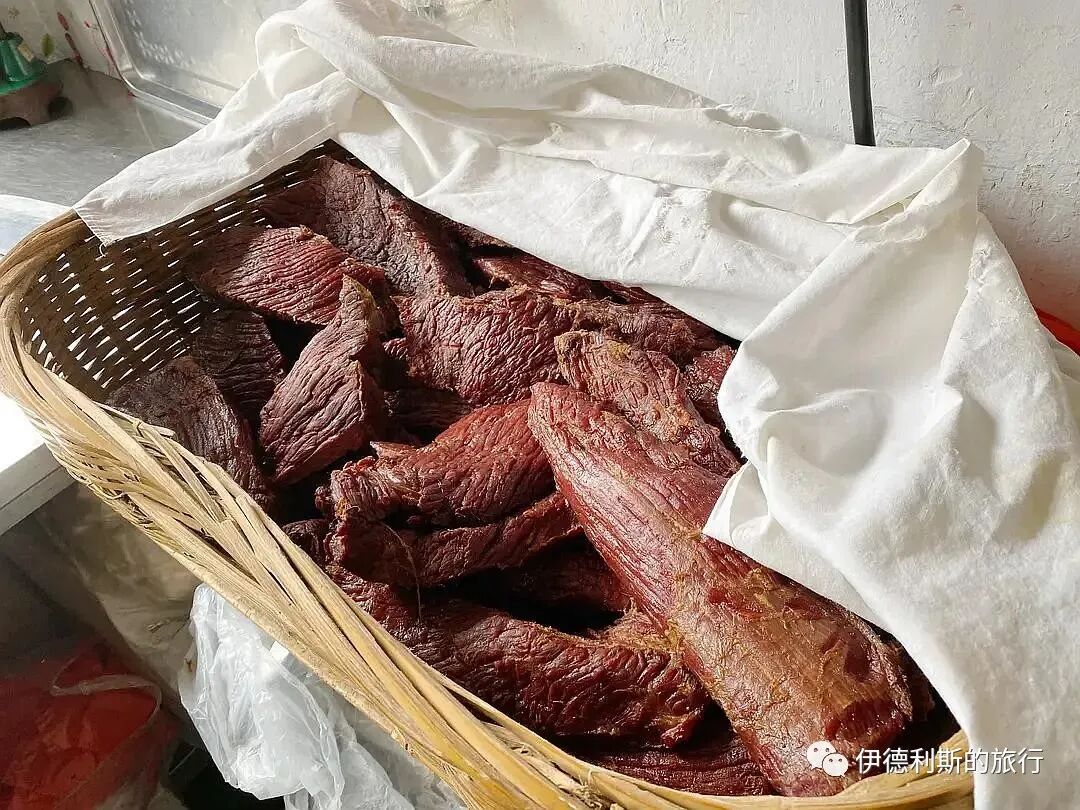
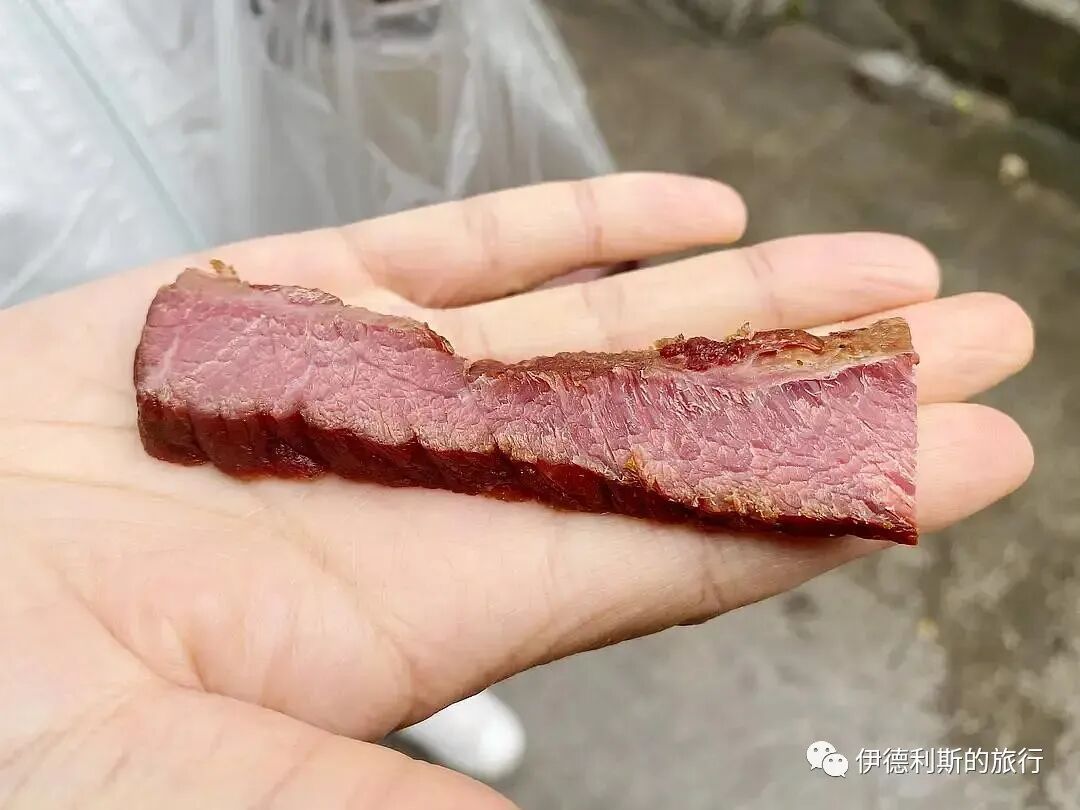
5. Xianyin Mosque in Hanzhong
Xianyin Mosque is not far northwest of the Hanzhong train station. Like Baba Mosque in Langzhong and Luling Mosque in Xixiang, it belongs to the Sufi Qadiriyya menhuan gongbei tradition.
Two ascetics who guard the gongbei at Xianyin Mosque gave us a warm welcome. Beyond following the Quran and Sunnah, the Qadiriyya menhuan gongbei tradition teaches that one must escape the temptations of daily life and practice asceticism to know and draw closer to Allah. Because of this, disciples of the gongbei tradition enter the site at a young age to live apart from the world, remain unmarried for life, and are known as ascetics. According to the rules, religious workers must rotate every three years to guard the various shrines under the jurisdiction of the Great Gongbei, a practice known as guarding the gongbei. The two religious workers at Xianyin Mosque were both sent from the Linxia Great Gongbei and will return to Linxia after their three-year term ends.
When we visited Xianyin Mosque, we happened to meet a large family from Linxia who had come to hold a religious gathering (a'mali), which allowed us to enjoy some Hezhou delicacies in Hanzhong. The religious workers prepared fresh hand-grabbed lamb (shouzhua rou) that was very tender, and they also stir-fried lamb liver and deep-fried hot-water dough fritters (youxiang).
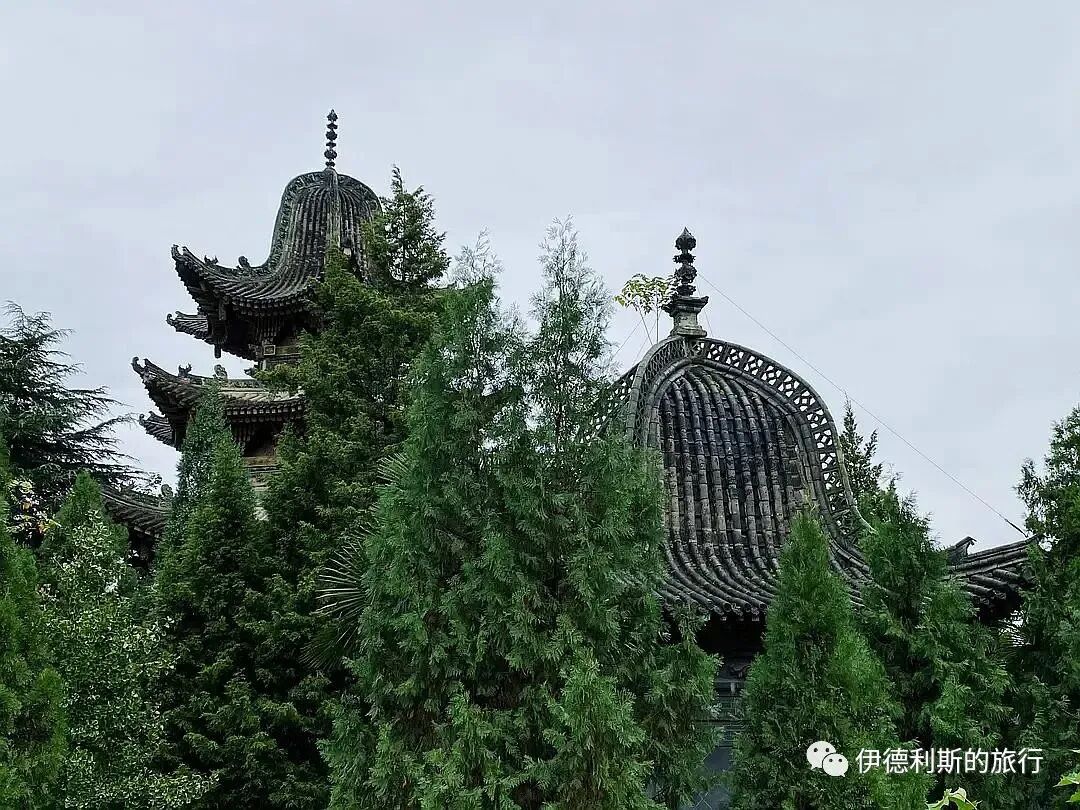
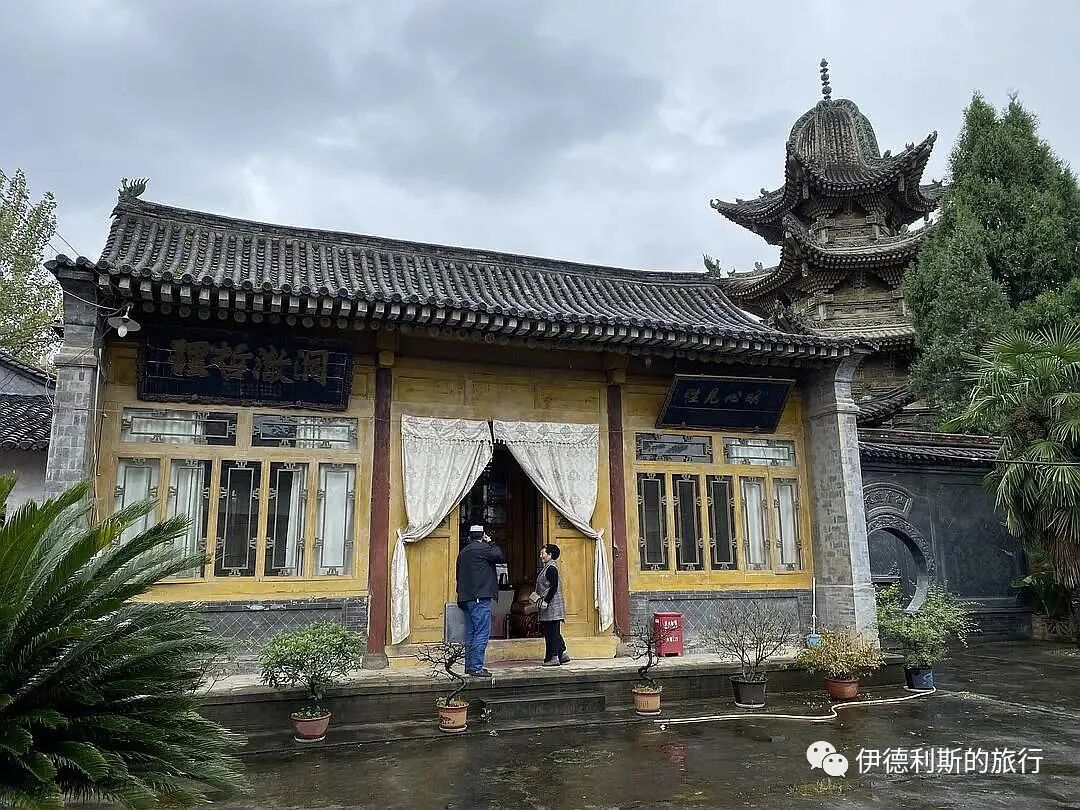
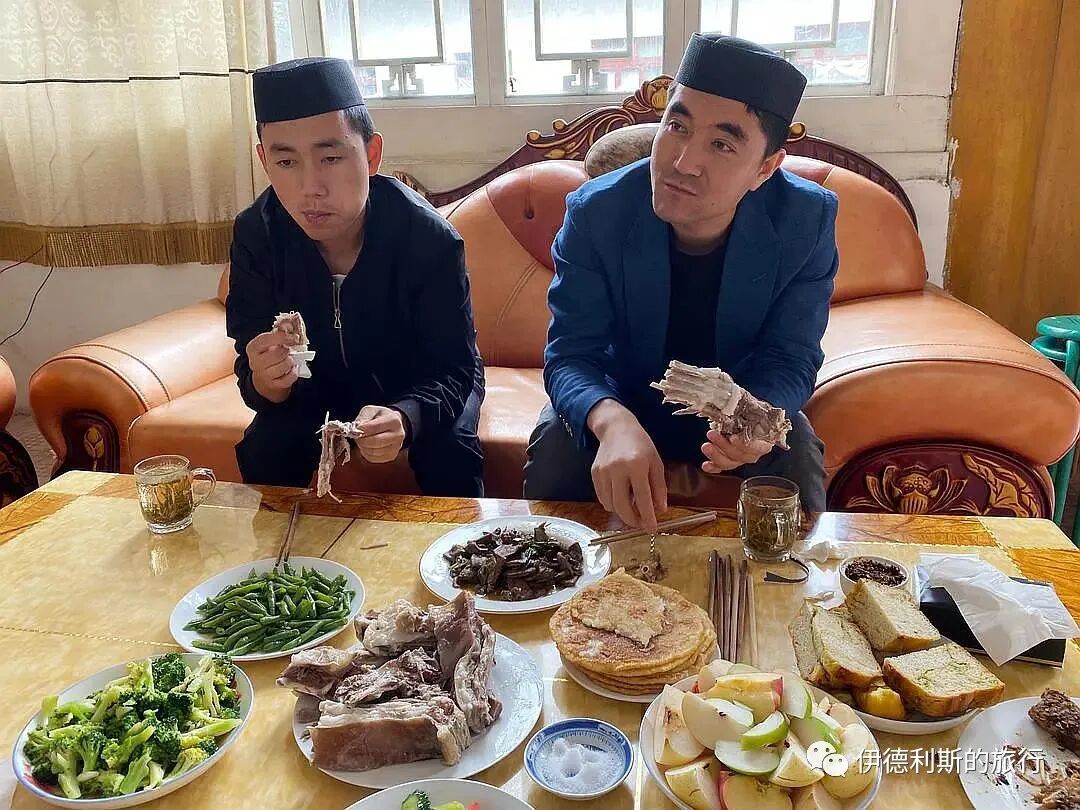
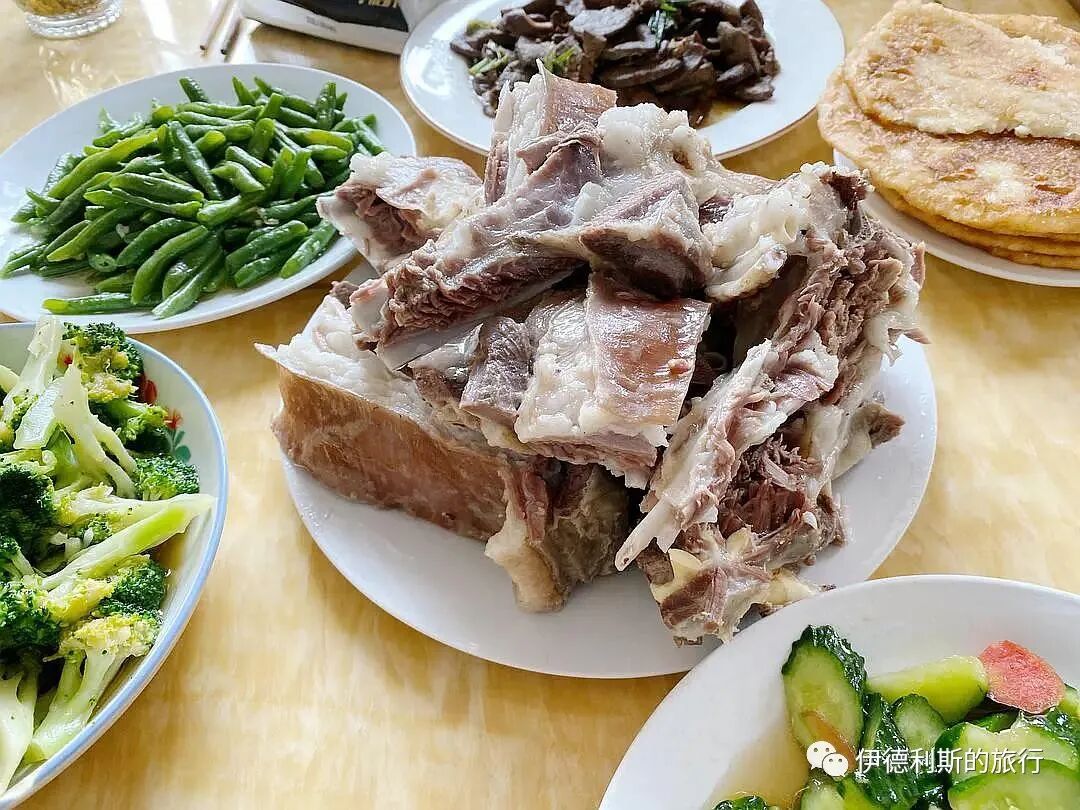
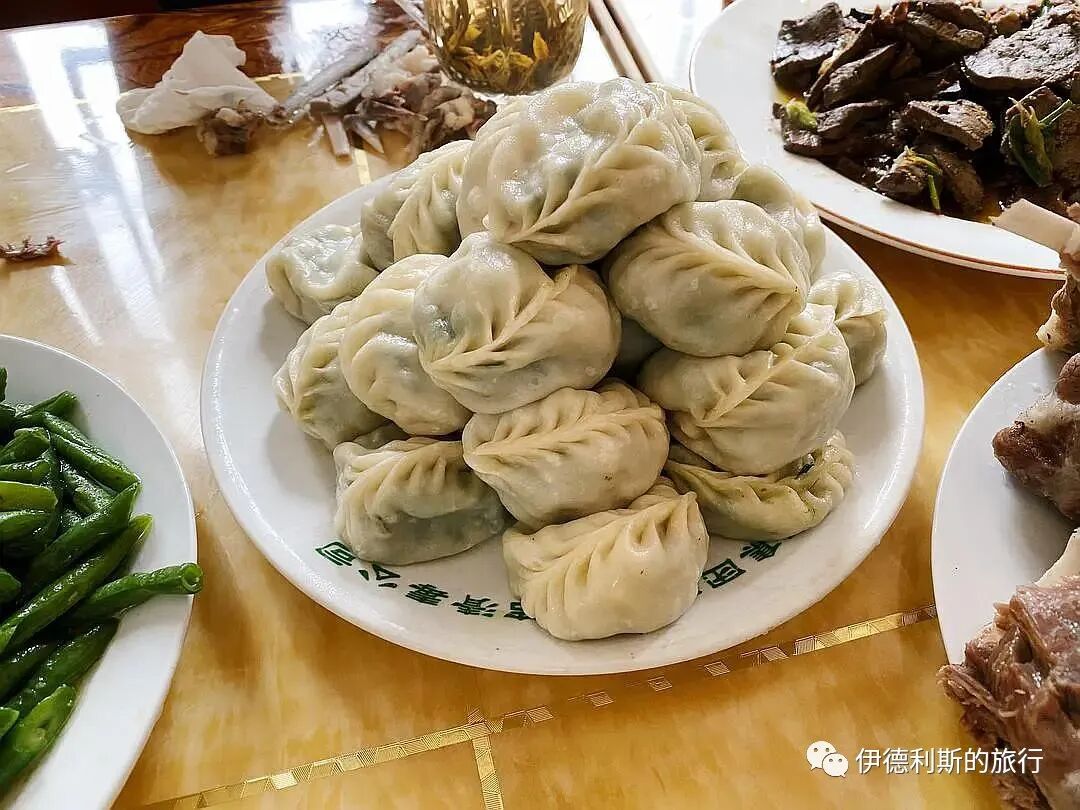
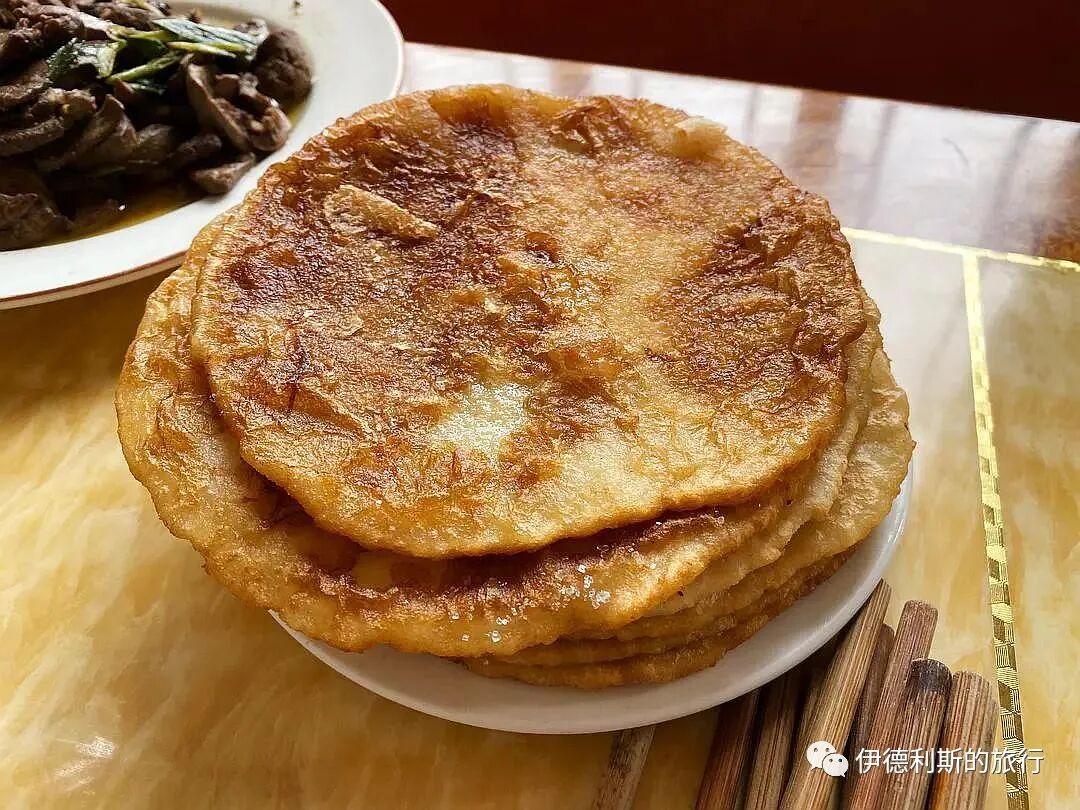
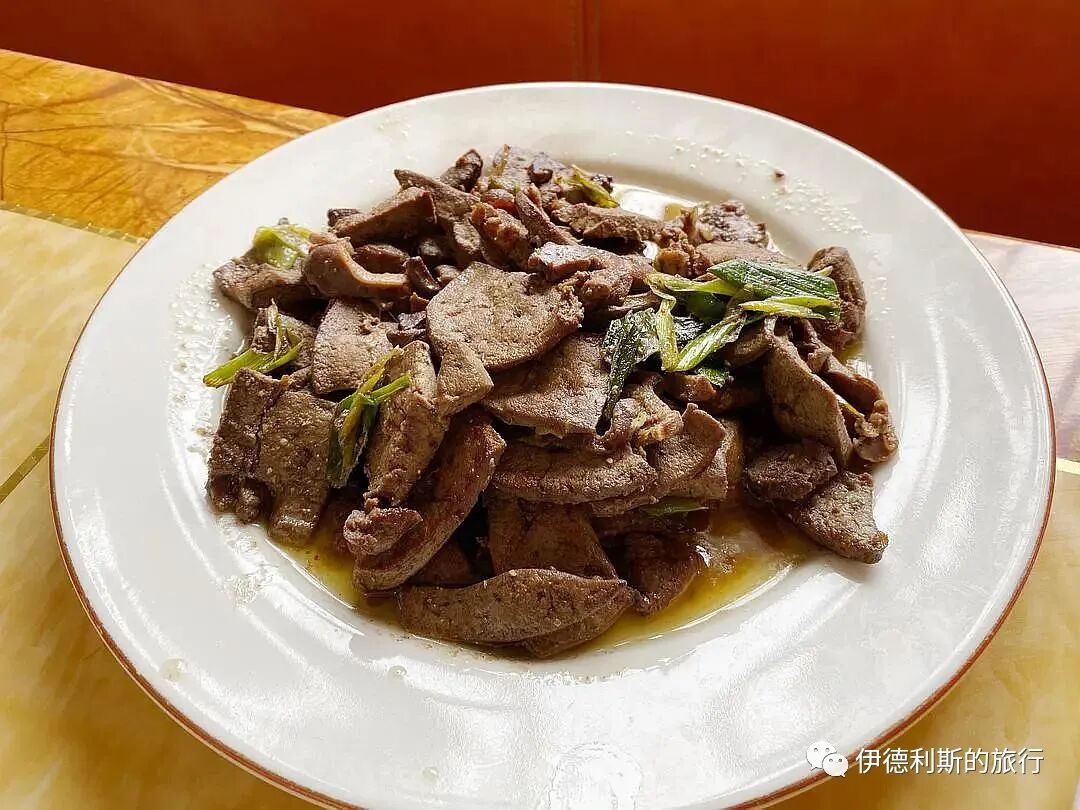
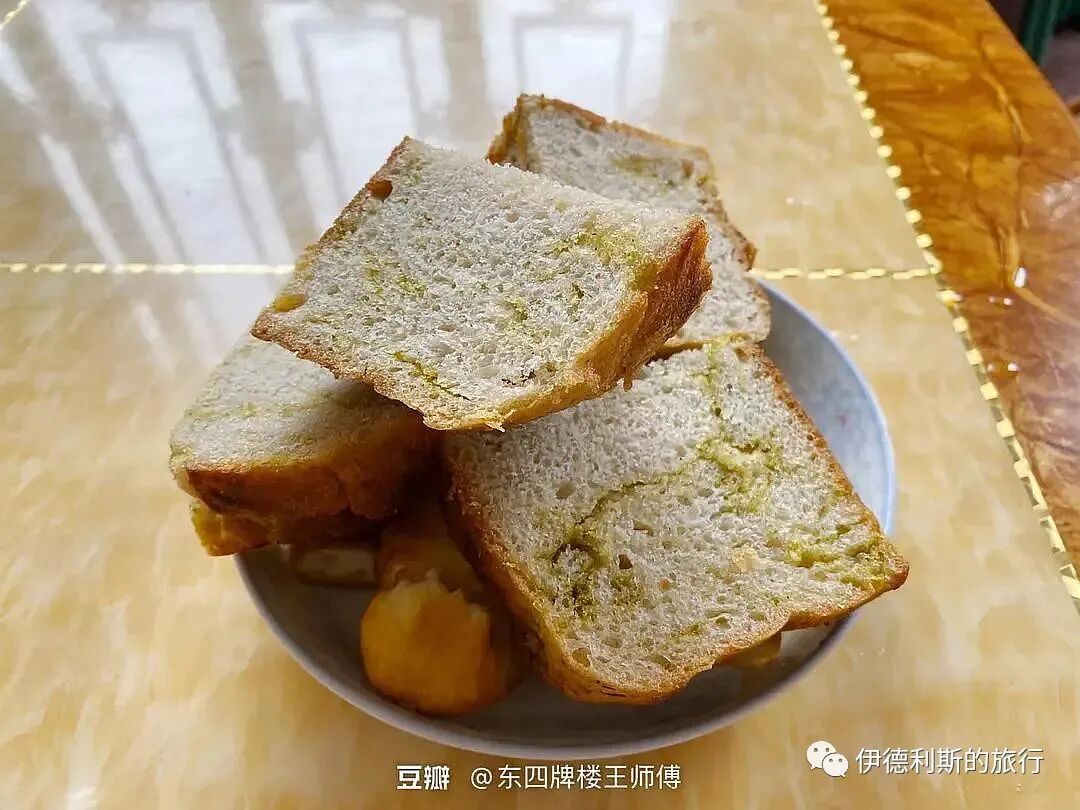
4. Inner Mongolia
1. Hohhot
Buy some baked milk skin (kaonaipi) at Bai's Dairy Shop on Houxincheng Road in Hohhot. Their baked milk skin has a great texture and is not hard at all. Zainab said it tastes much better than the kind she bought online before. Their cheese is also delicious, with a sweet and sour taste, but it was too hot to carry, so we only tried a little.
One theory says the Bai family of Hui Muslims in Hohhot came to Guihua City to trade after Princess Kejing married the Mongol Tushetu Khan in 1697 (the 36th year of the Kangxi reign). Another theory says they moved from Xi'an during the late Qing Dynasty. The most famous noodle shop outside the north gate of Guihua City at that time was run by Bai Xiu.
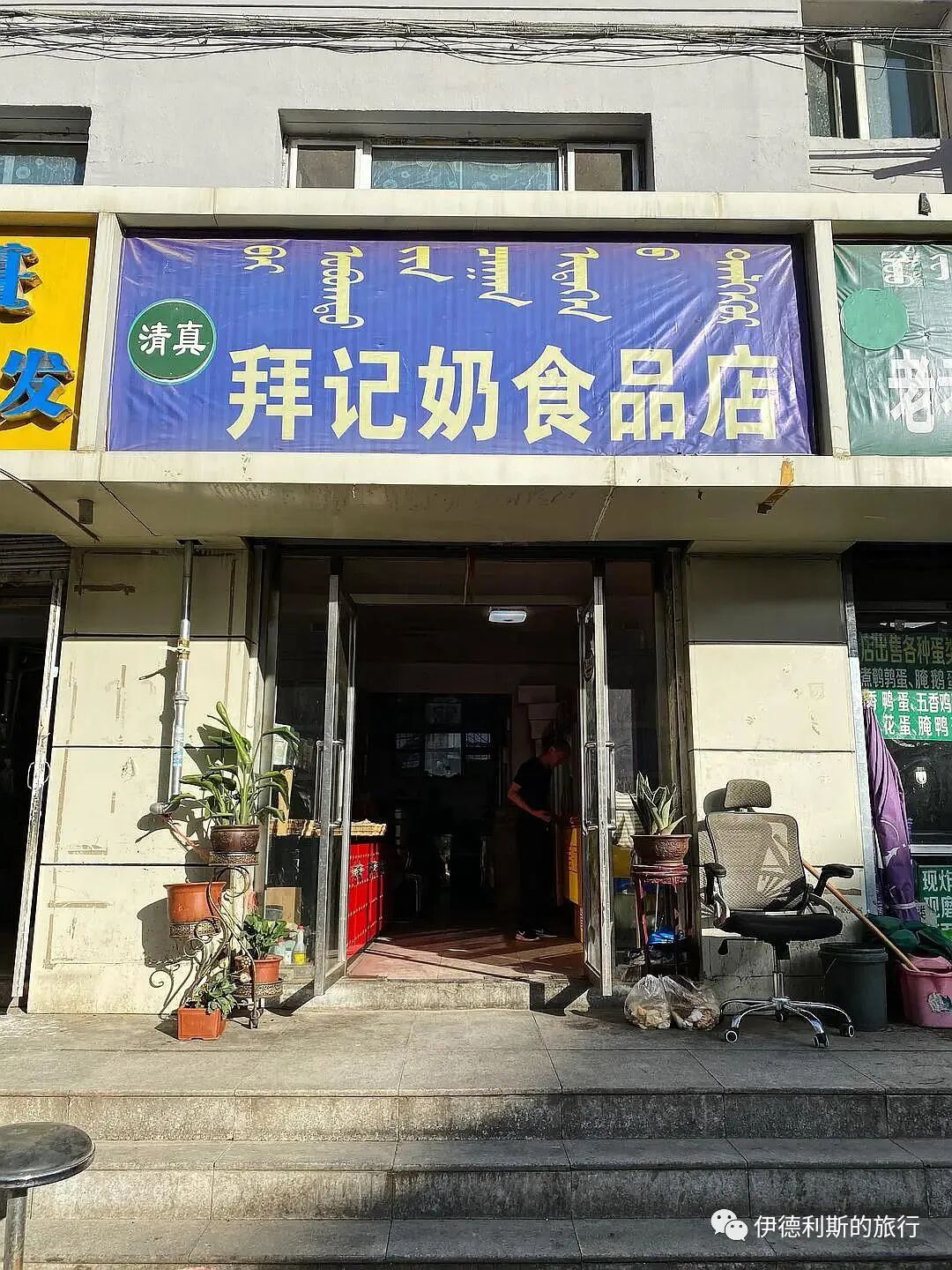
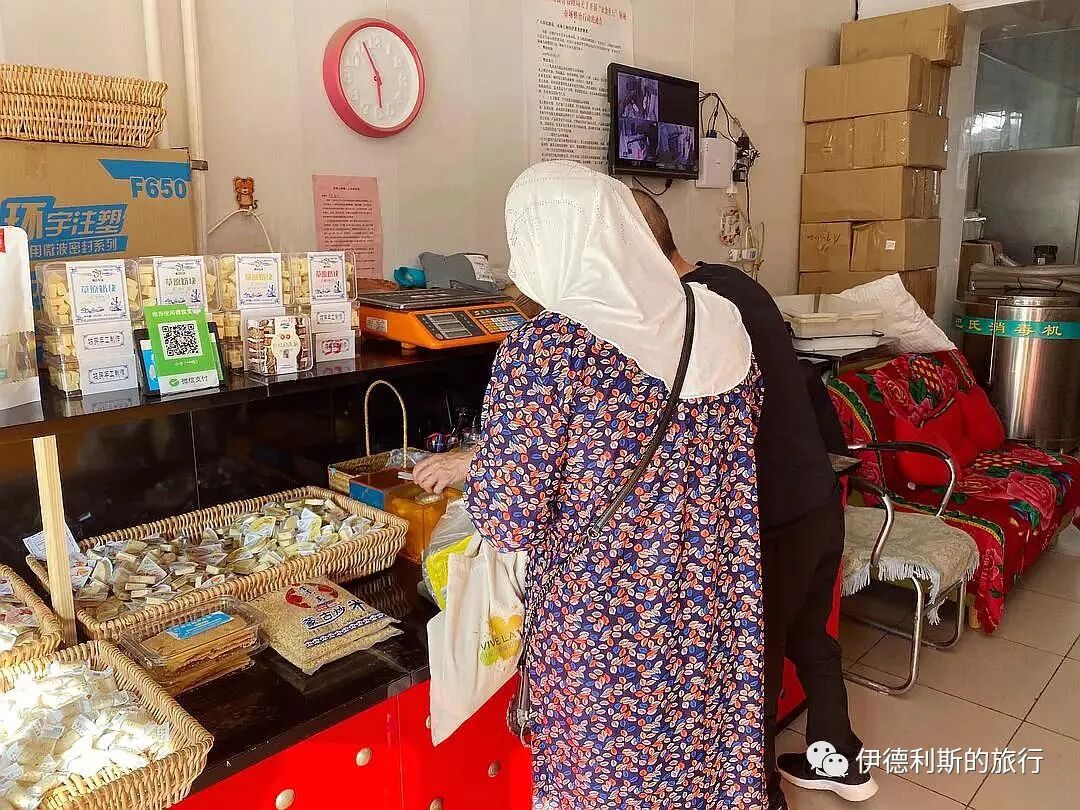
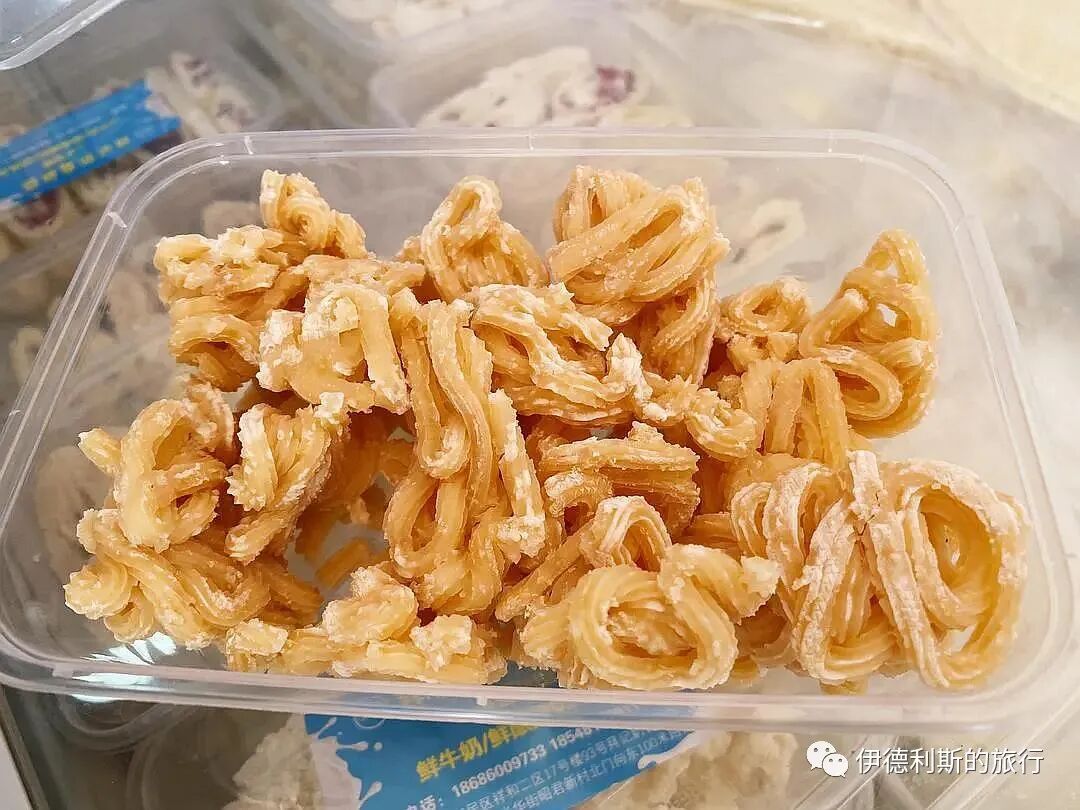
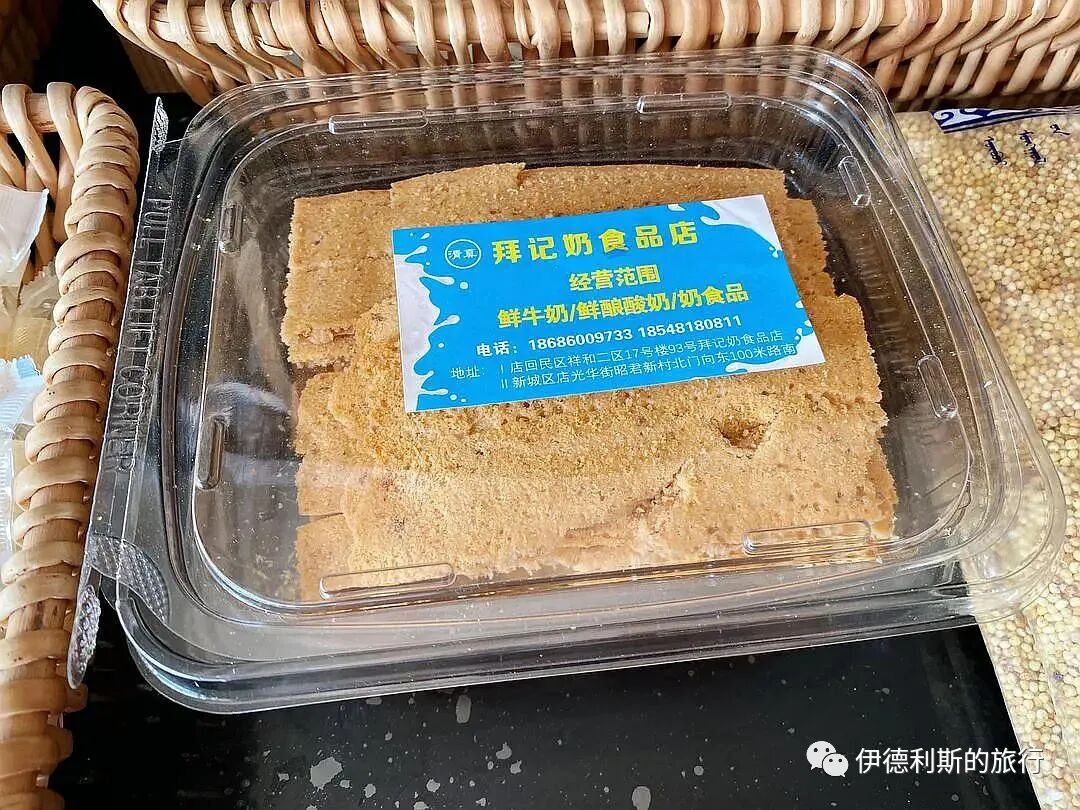
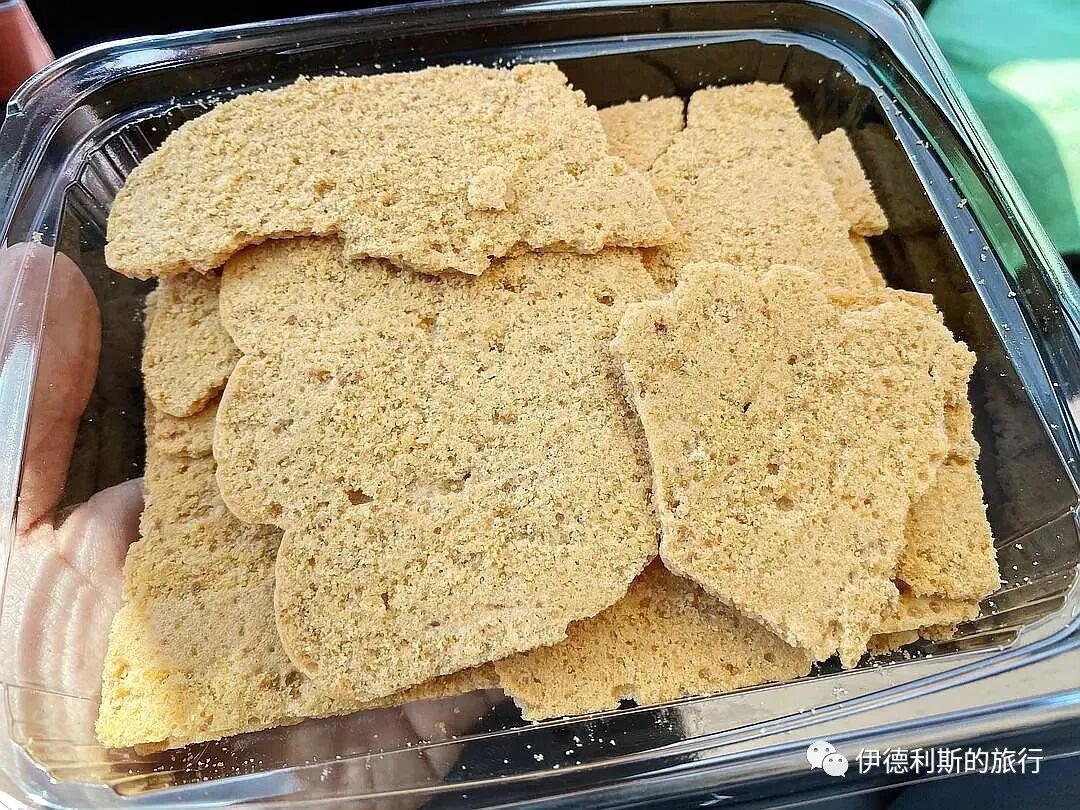
2. Longshengzhuang
Longshengzhuang sits on the border of Shanxi and Inner Mongolia. From the Qing Dynasty to the early Republic of China, it was a meeting point for trade routes between Hohhot, Datong, and Zhangjiakou, serving as a key market town for Shanxi merchants trading in Mongolia. Shanxi merchants traveling to Mongolia brought rice, flour, tea, oil, wine, and daily goods from Longshengzhuang to Mongolia, returning with furs, livestock, and leather, which brought great wealth to the town.
Starting in the early Qing Dynasty, Hui Muslims from Hebei and Shandong moved to Longshengzhuang in Inner Mongolia for business, and many more Hui Muslims from Shaanxi arrived during the late Qing Dynasty. After the Ping-Sui Railway opened in 1921, Longshengzhuang declined quickly. People moved away in large numbers after the 1930s, and today only about 30 Hui Muslims remain, mostly elderly.
In Maqiao Square at the center of Longshengzhuang, a few Hui Muslim vendors still sell honey pastries (misu), fried dough strips (maye), fried dough twists (mahua), and baked flatbreads (beizi). We bought a sugar-coated fried dough strip (tangmaye) at the old Liu Zhen shop. It looked very sweet, but it was not greasy at all, and I finished it in a few bites.
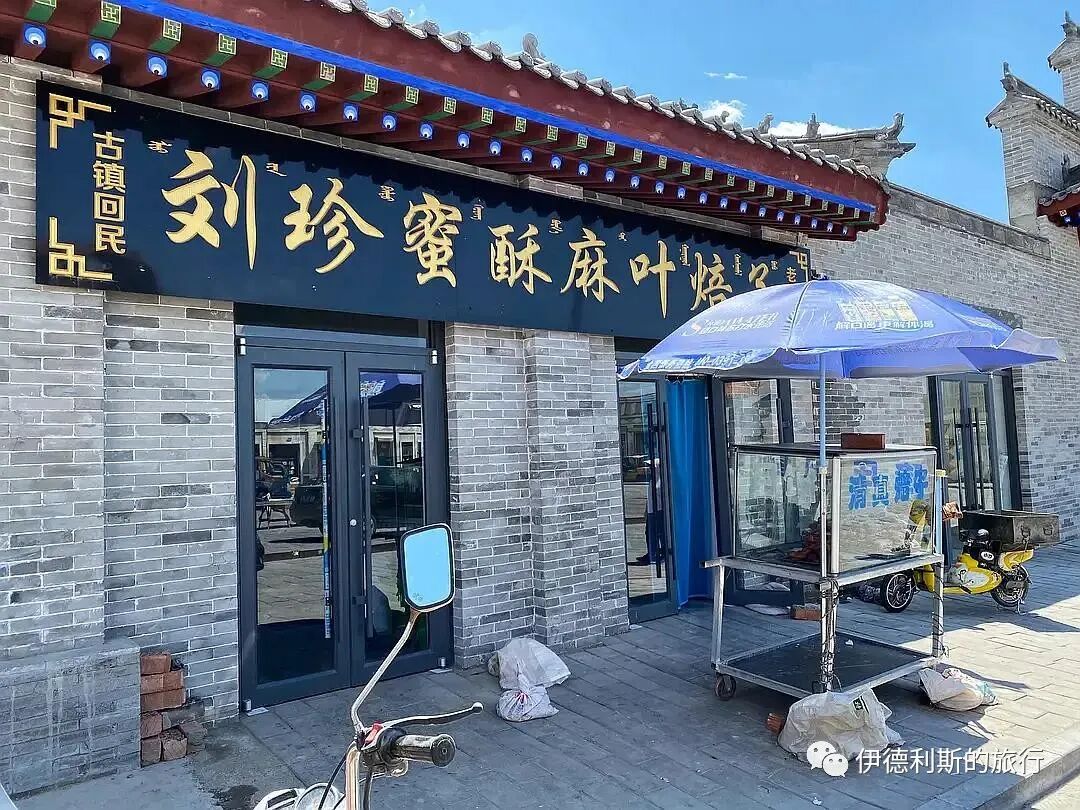
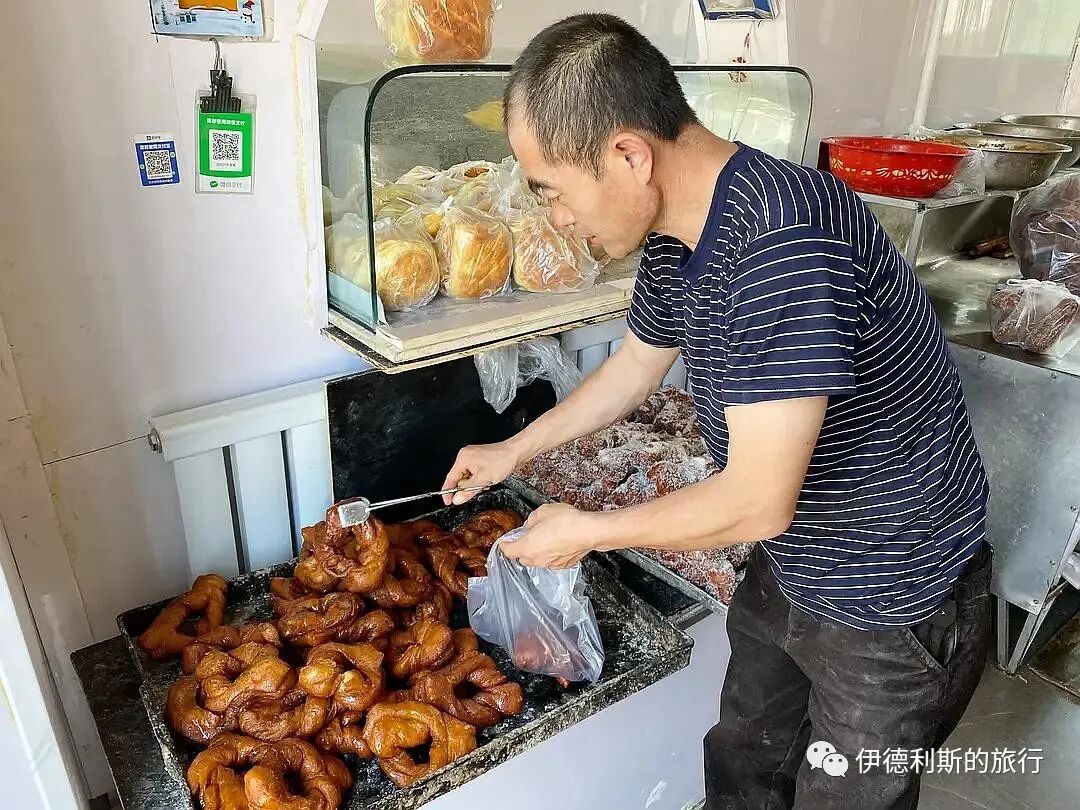
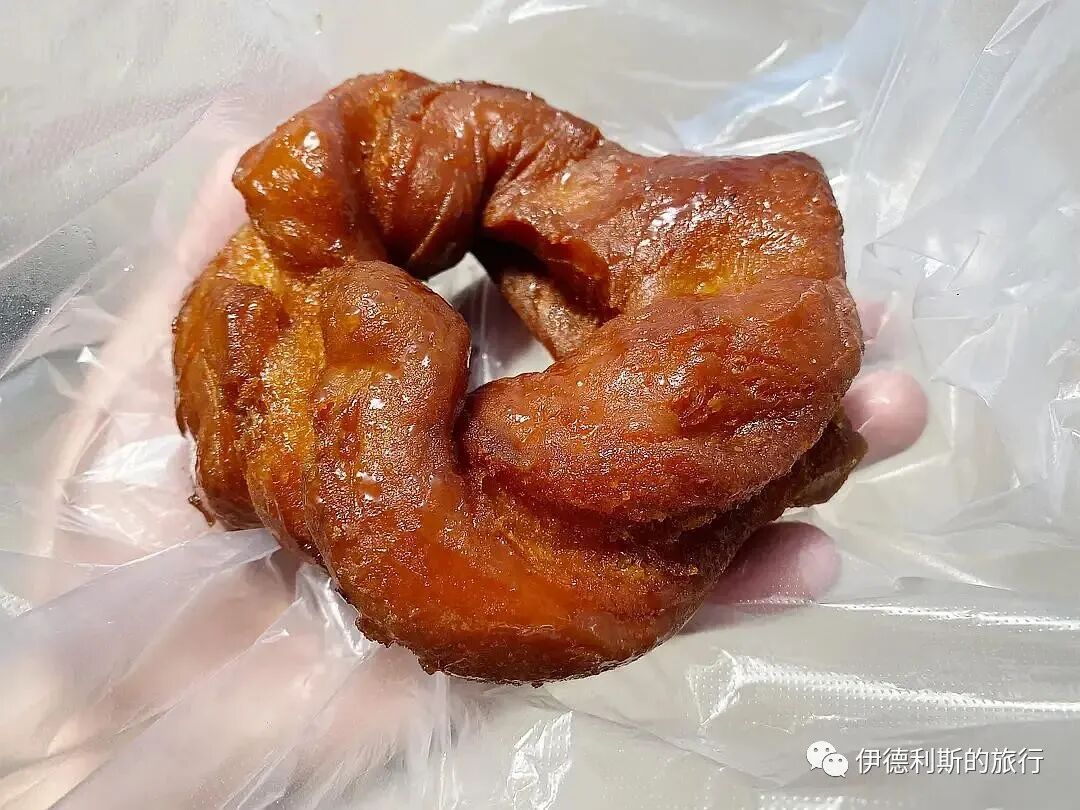
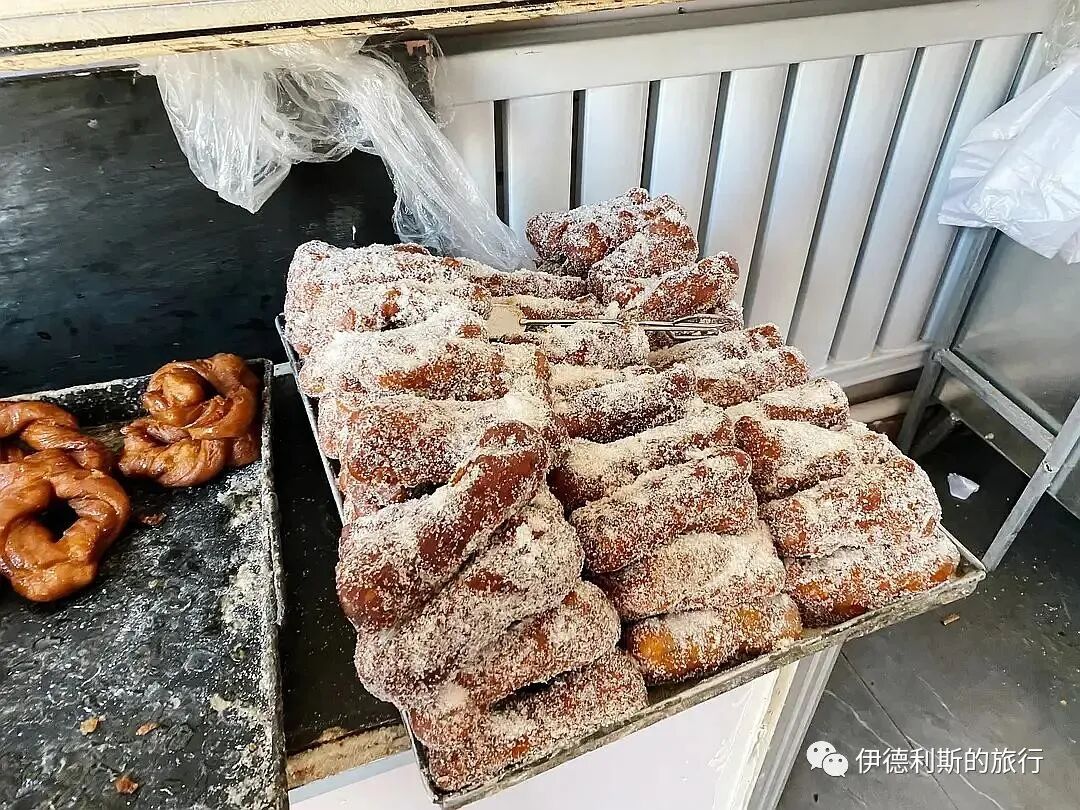
3. Jining
Xinti Street is the halal food street of Jining. It is lined with various halal restaurants serving oat noodles (youmian), bone broth, steamed dumplings (zhengjiao), steamed meat dumplings (shaomai), rice noodles (mixian), stir-fried meat stew (chaohuirou), and barbecue. We arrived at 3:00 PM, and many of these places were closed, so we had meat pies instead. The freshly pan-fried meat pies were hot and fragrant. We also ordered shredded tofu salad, braised beef liver, and stir-fried meat stew with potato starch noodles (tudoufen chaohuirou). The noodles were delicious, and the meat had no gamey taste.
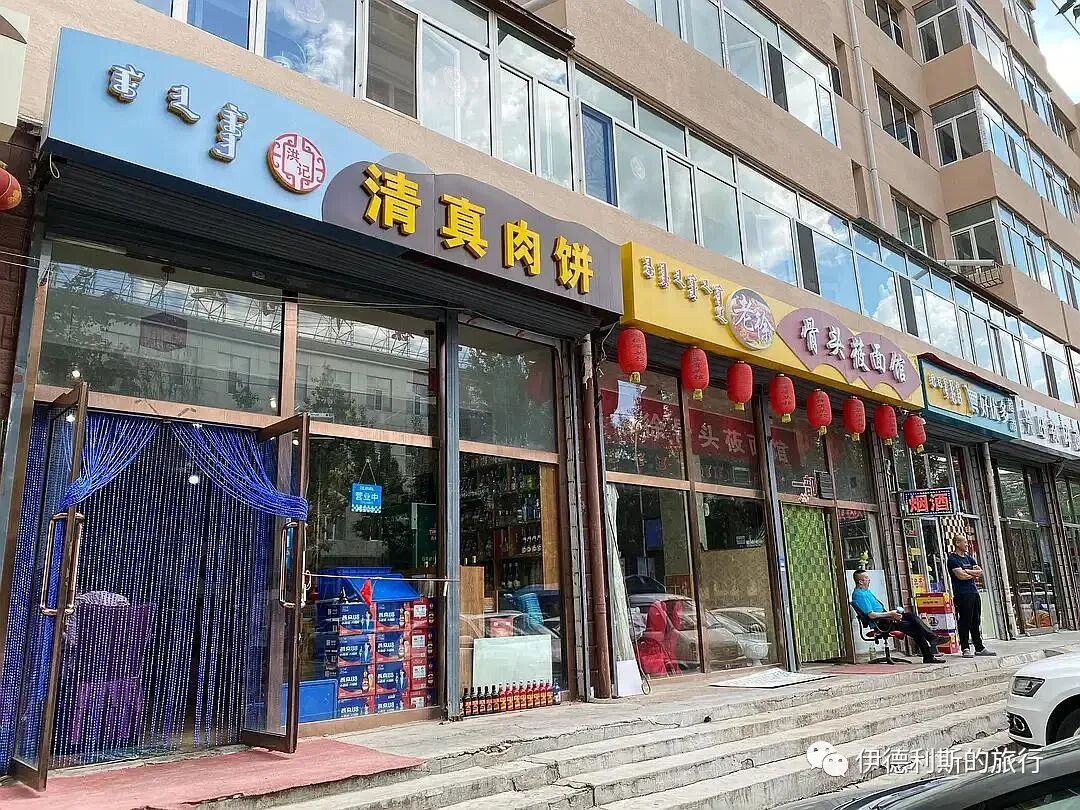
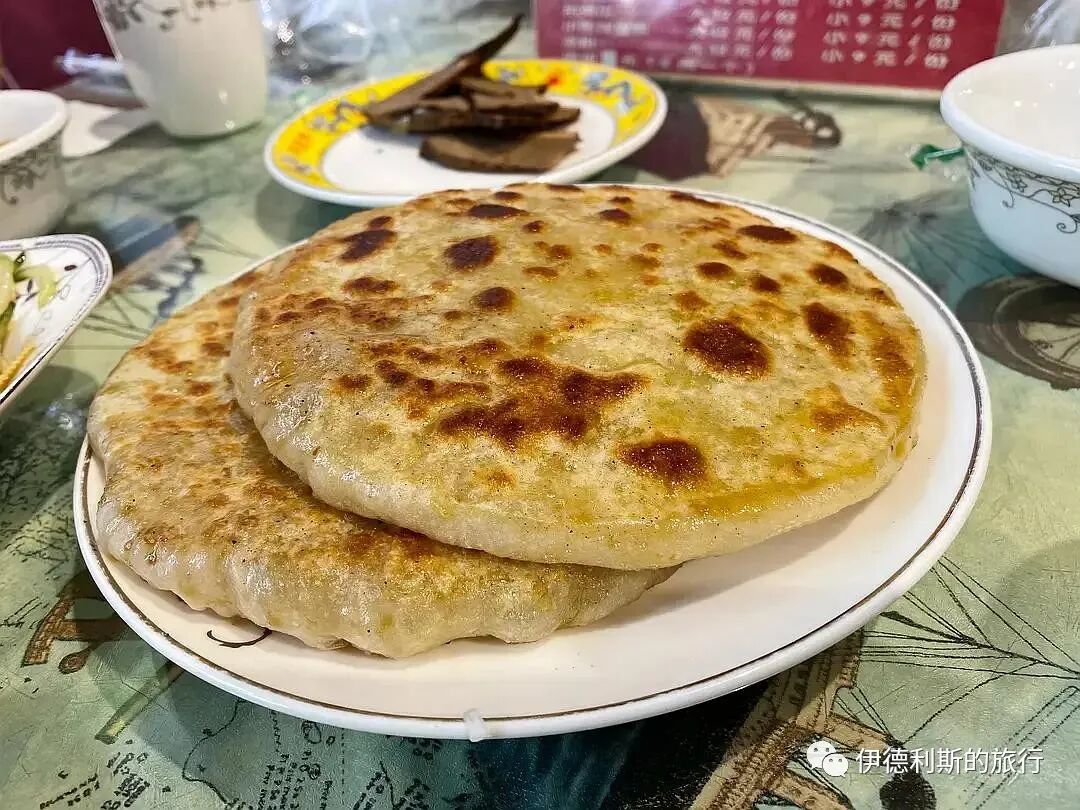
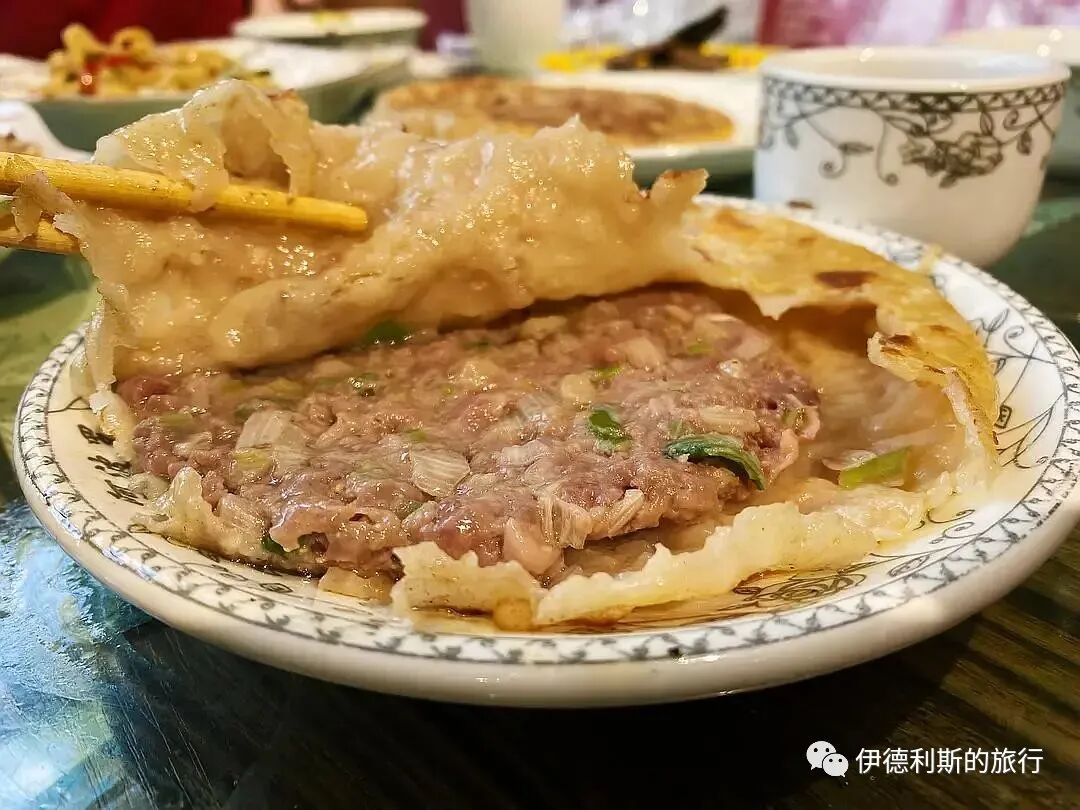
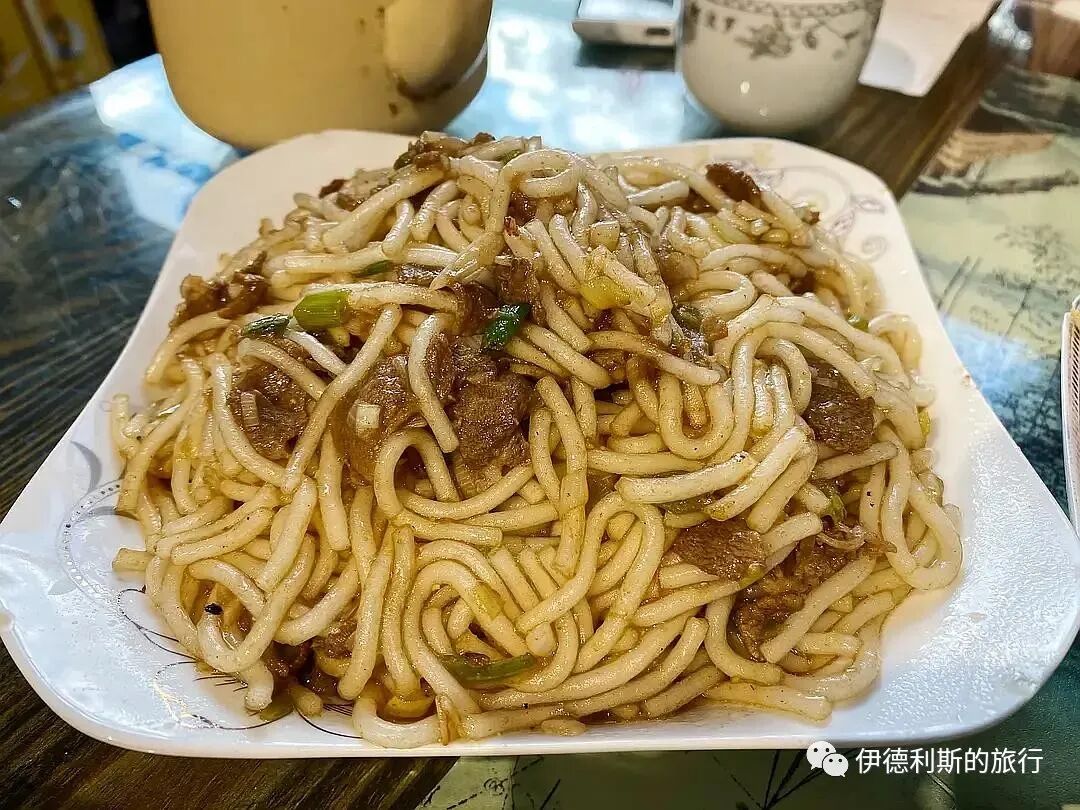
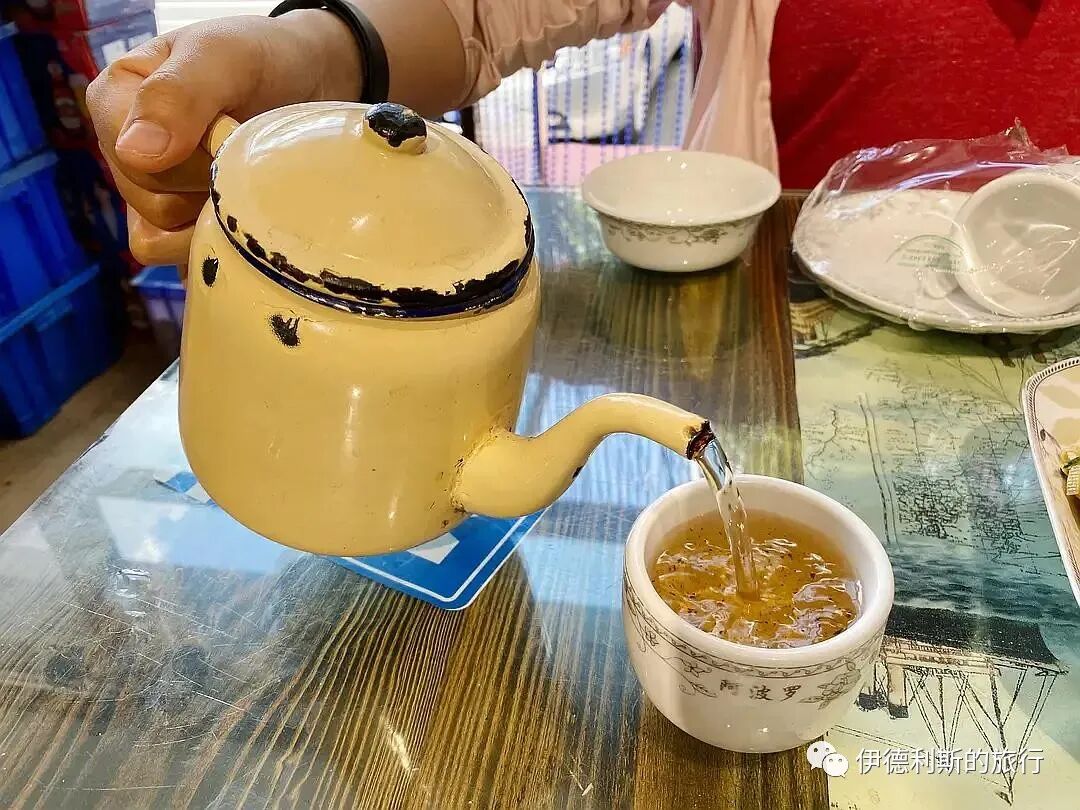
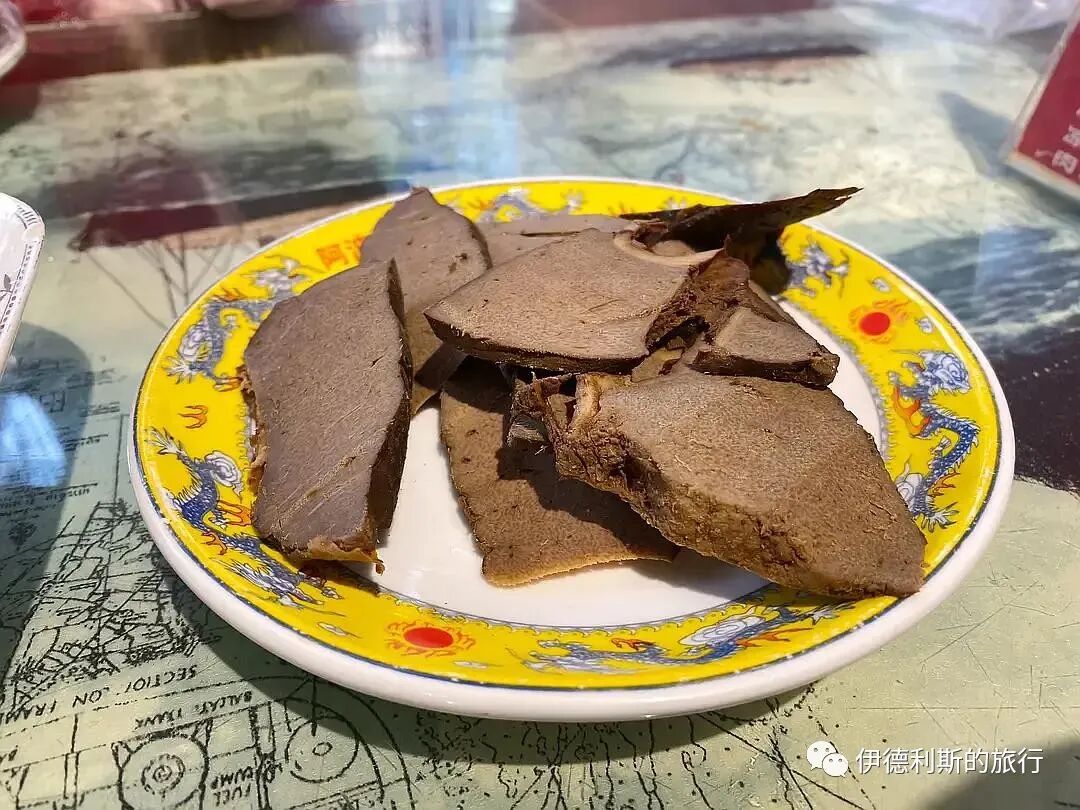
5. Ningxia
1. Yinchuan
Visit Fuyuan Noodle Restaurant on Zhongxin Lane in Yinchuan. They only sell lamb neck, lamb stew with hand-torn noodles (lian guo yangrou xiao jiupian), and side dishes. I ordered half a jin of lamb neck. It tasted great and smelled delicious. Three people work together to tear the dough for the lamb hand-torn noodles into a large pot. Watching the pieces of dough fly into the pot is quite a sight.
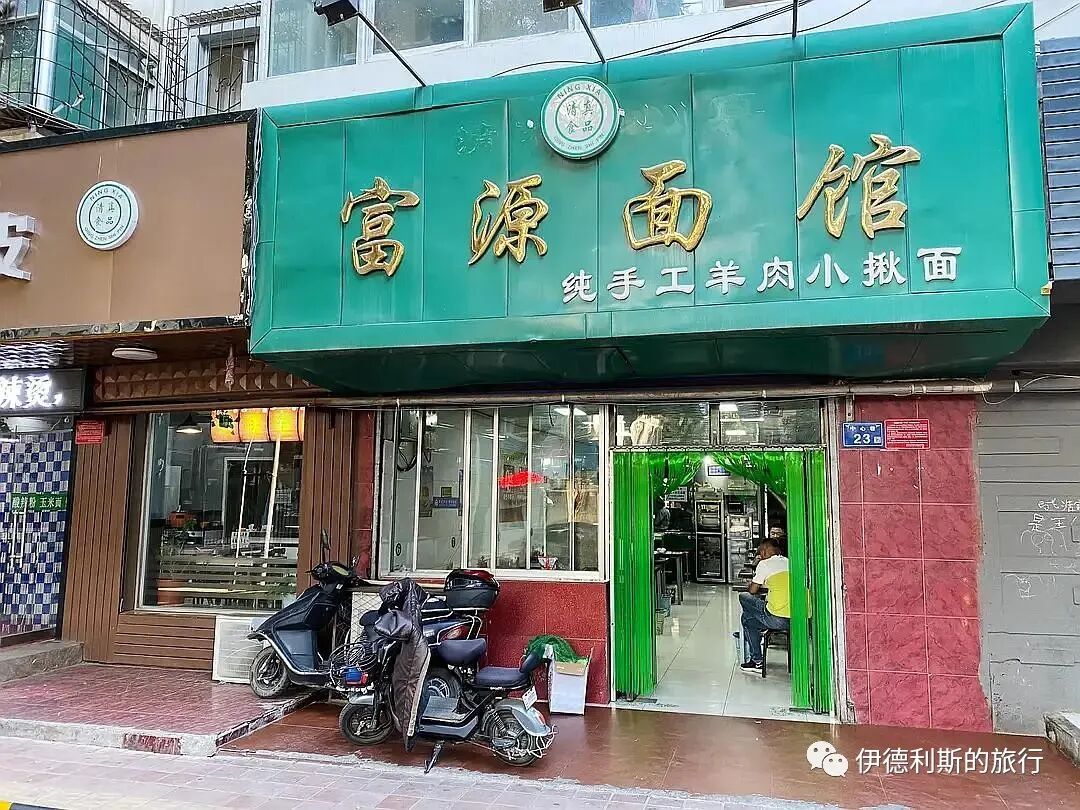
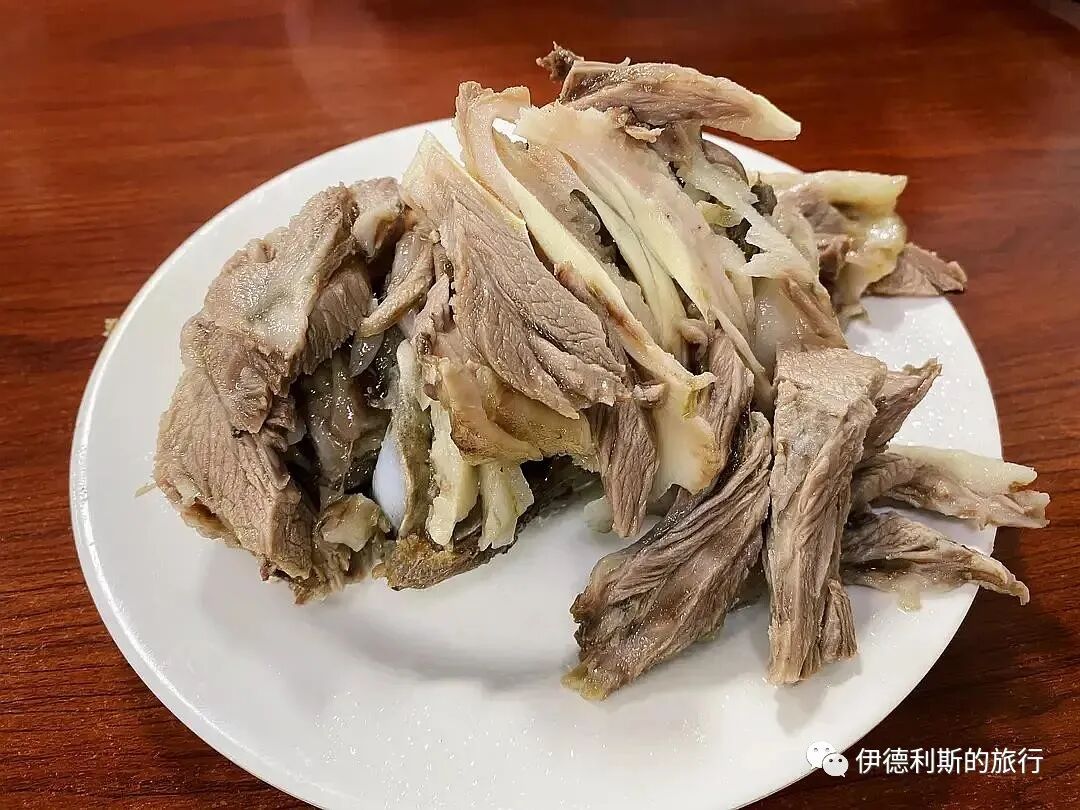
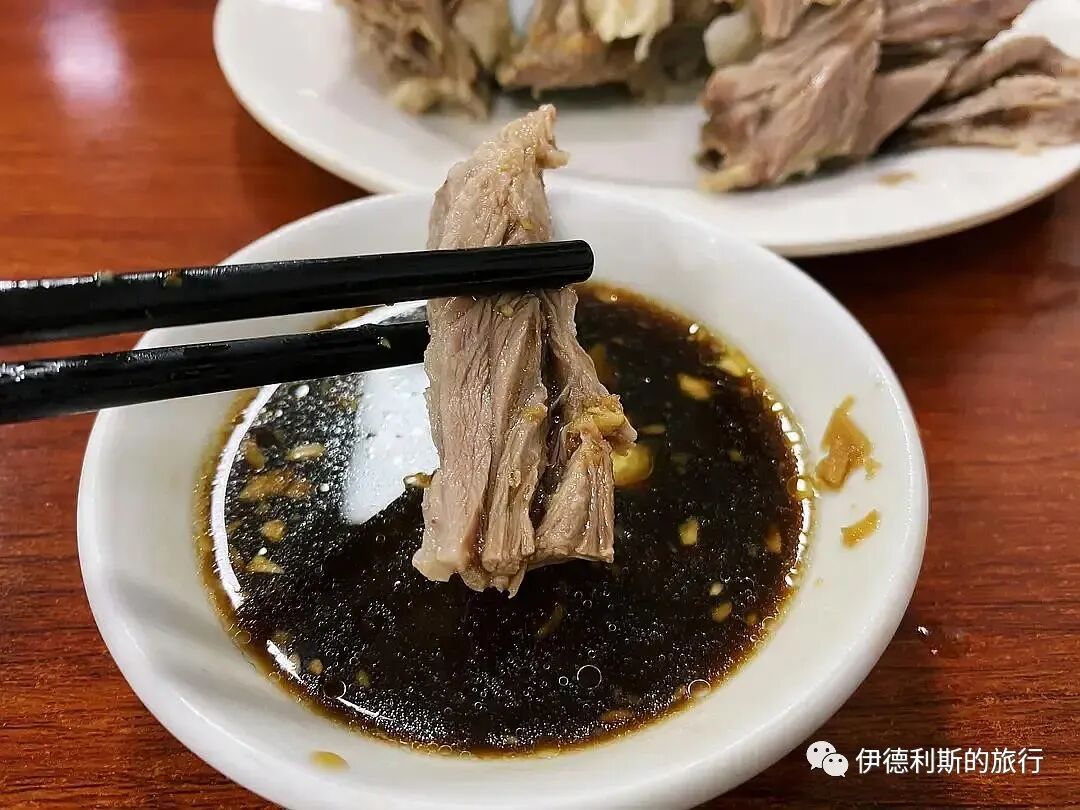
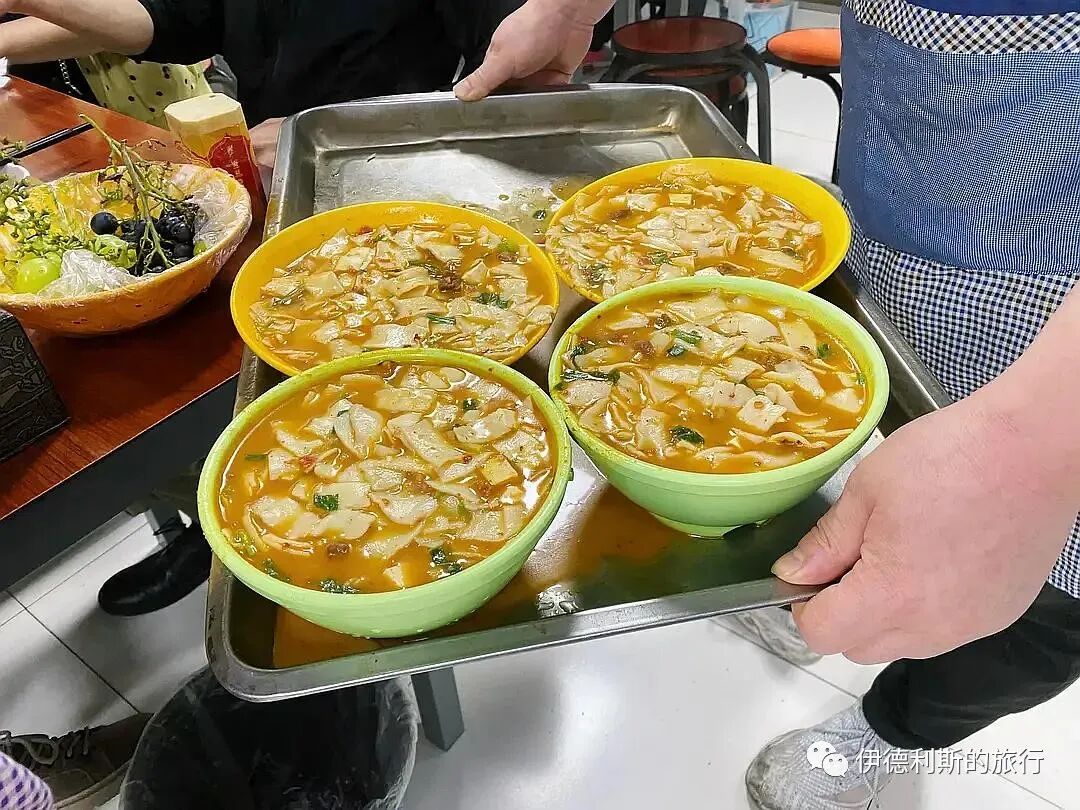
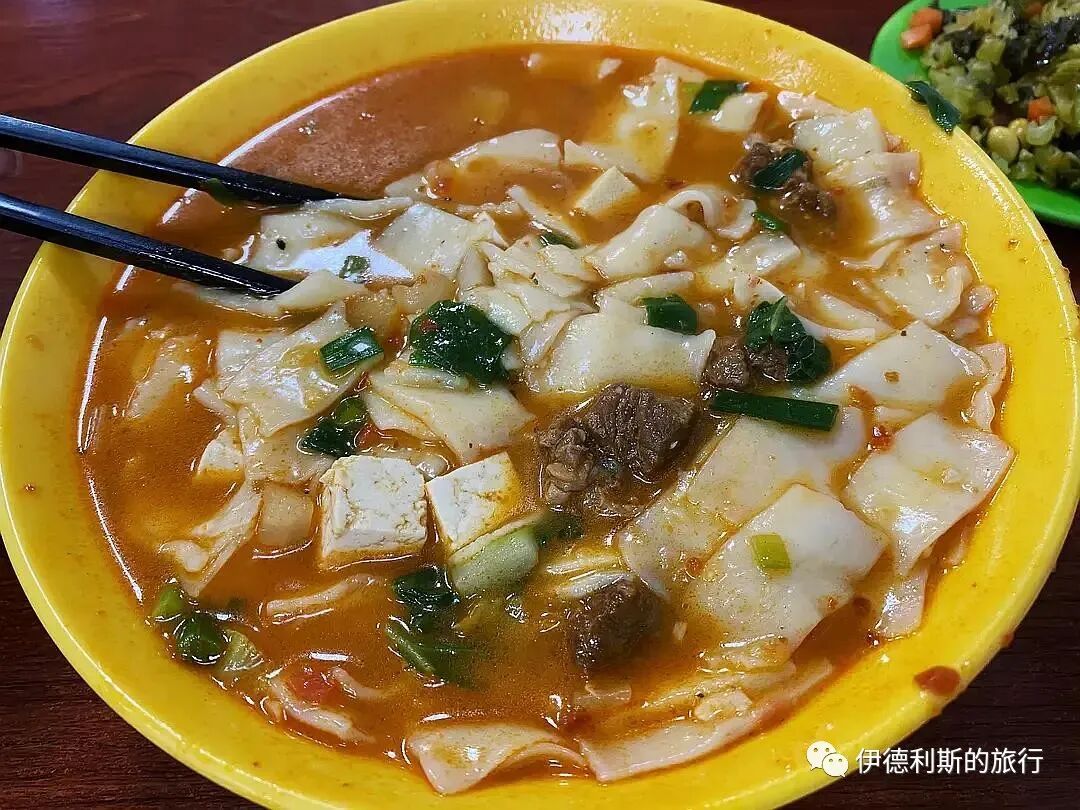
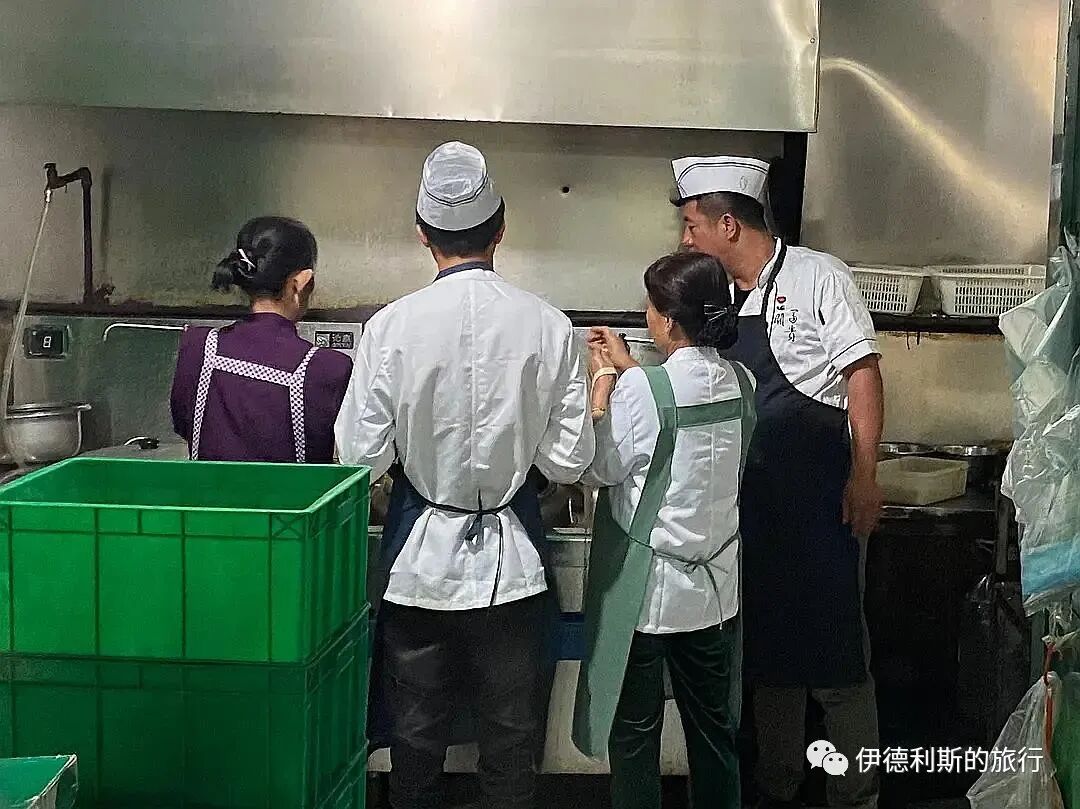
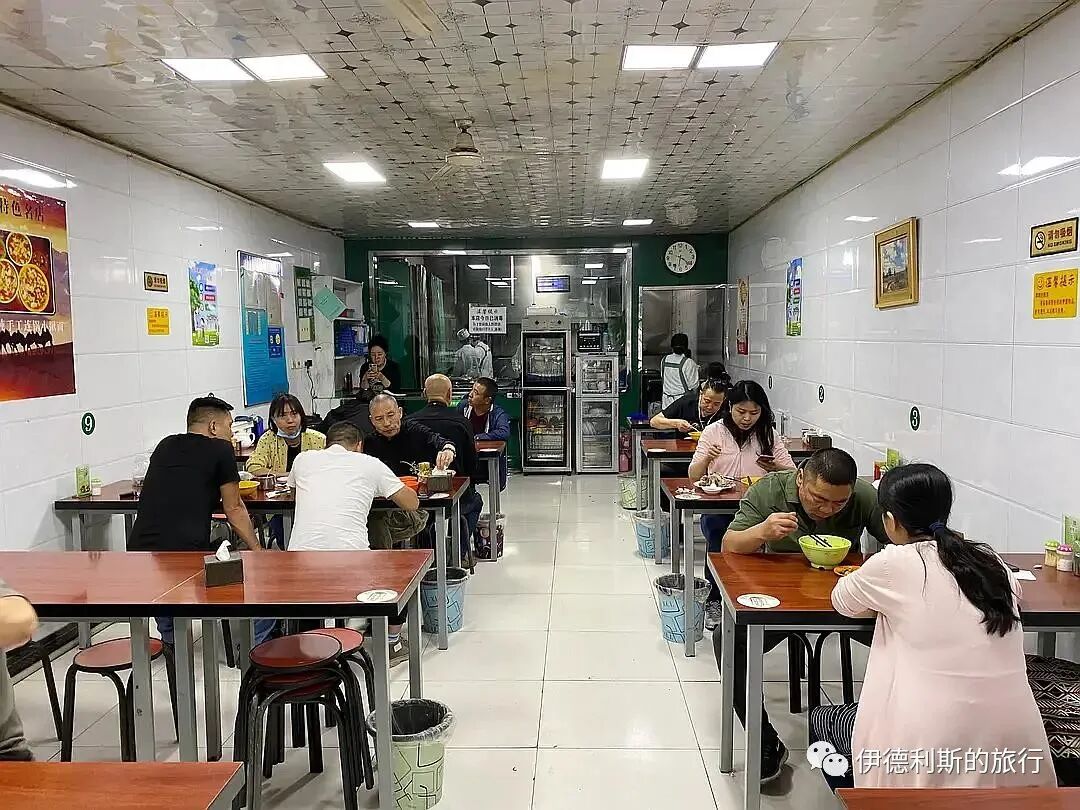
6. Gansu
1. Lanzhou
I arrived in Lanzhou at night and went straight to the Jianlan Road night market. I had a sheep head with milk egg fermented rice soup (niunai jidan laozao). The hot-mixed version tastes different from the stir-fried one, but it is also quite delicious!
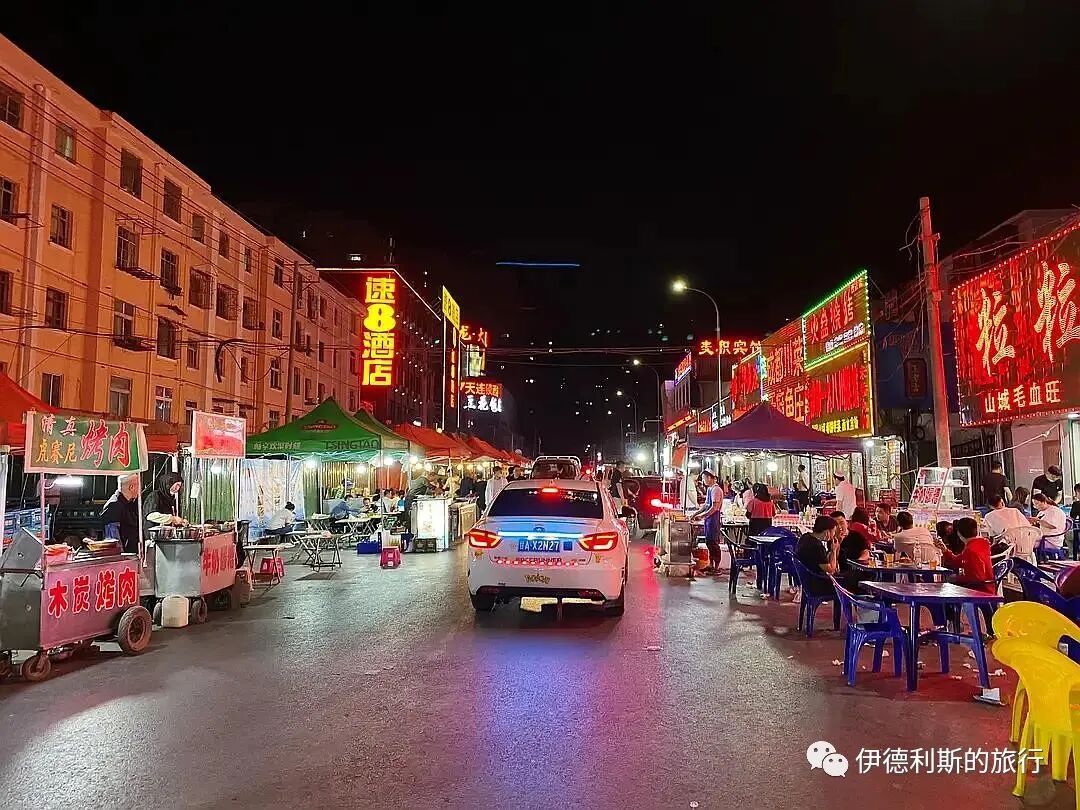
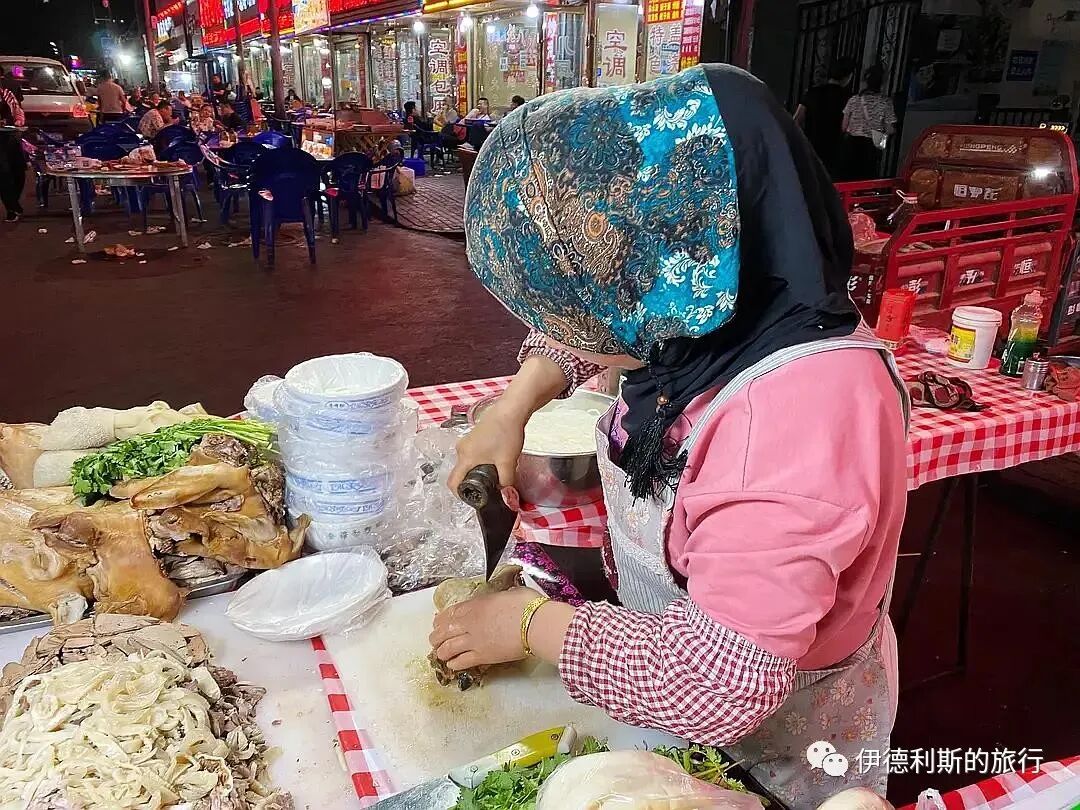
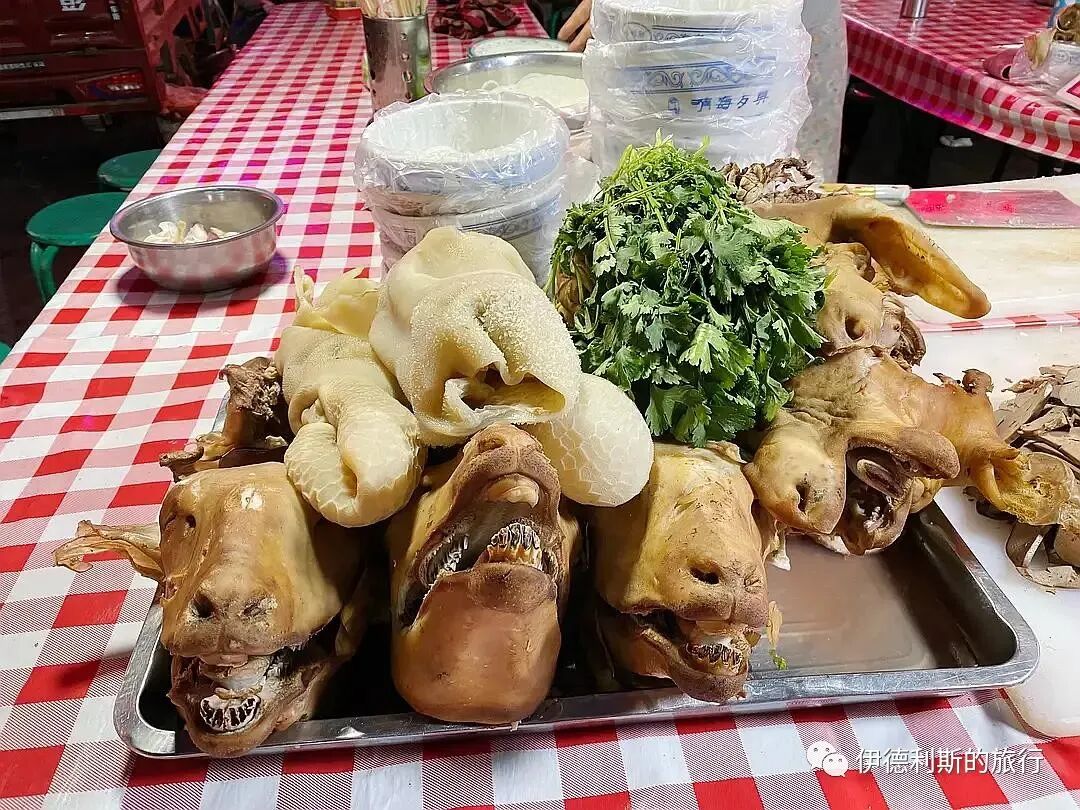
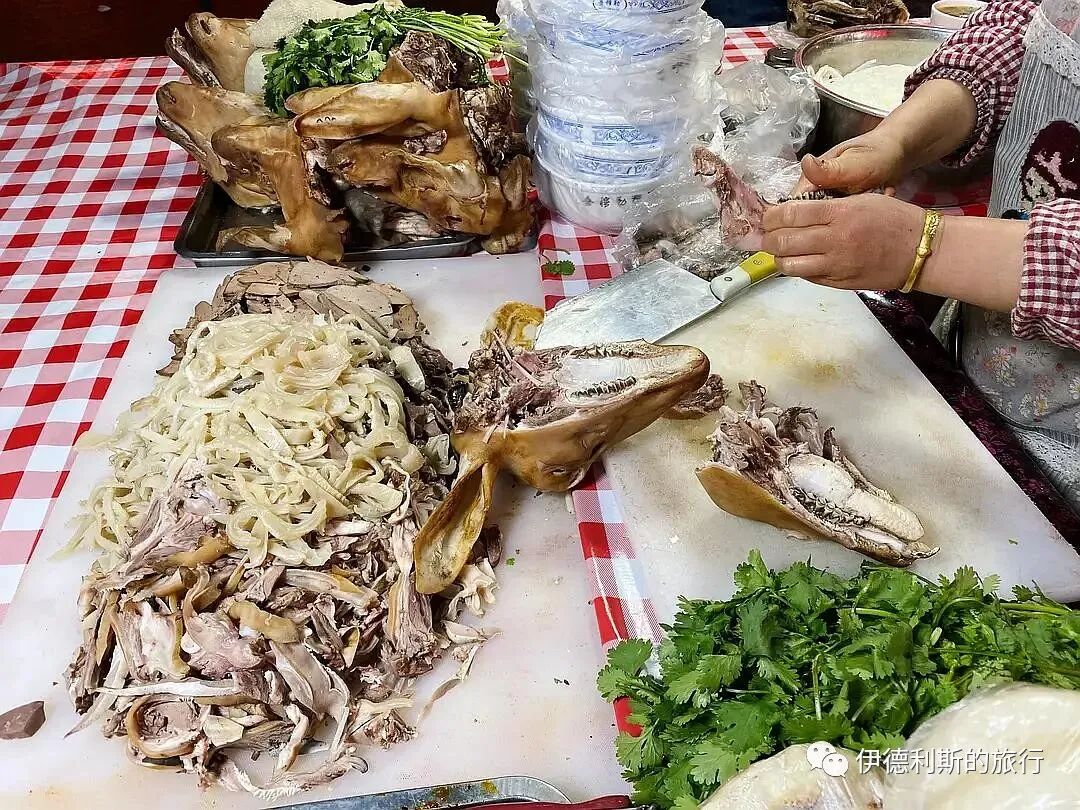
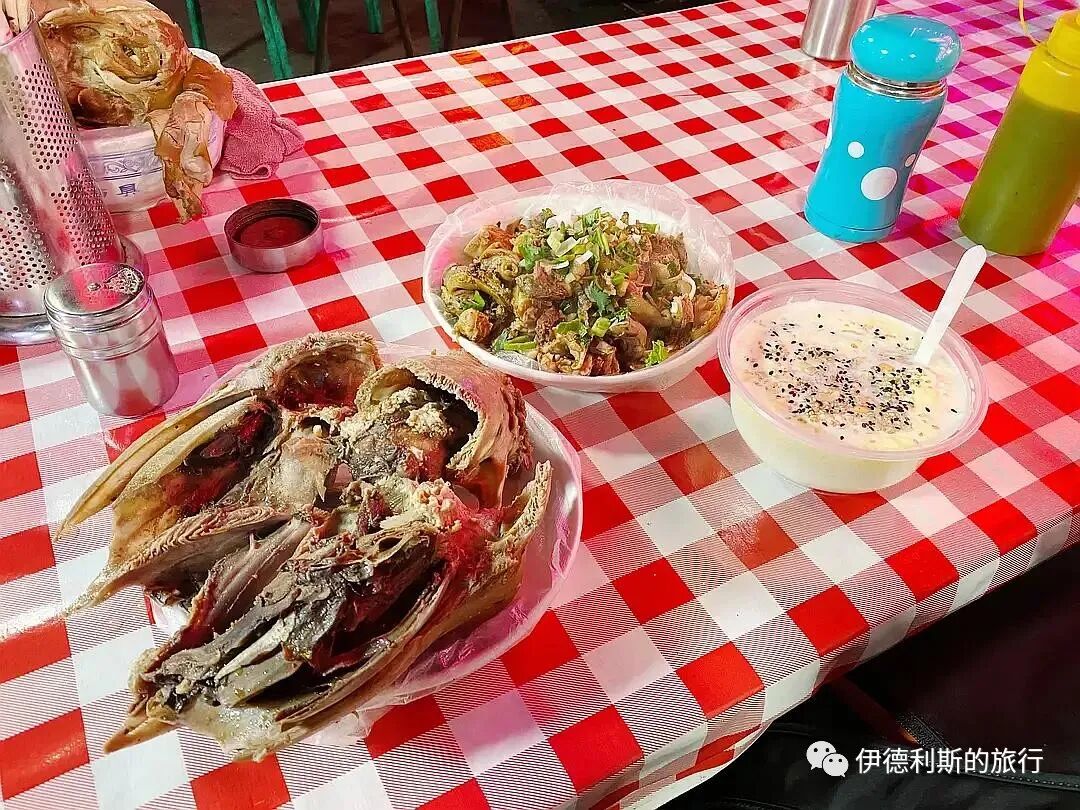
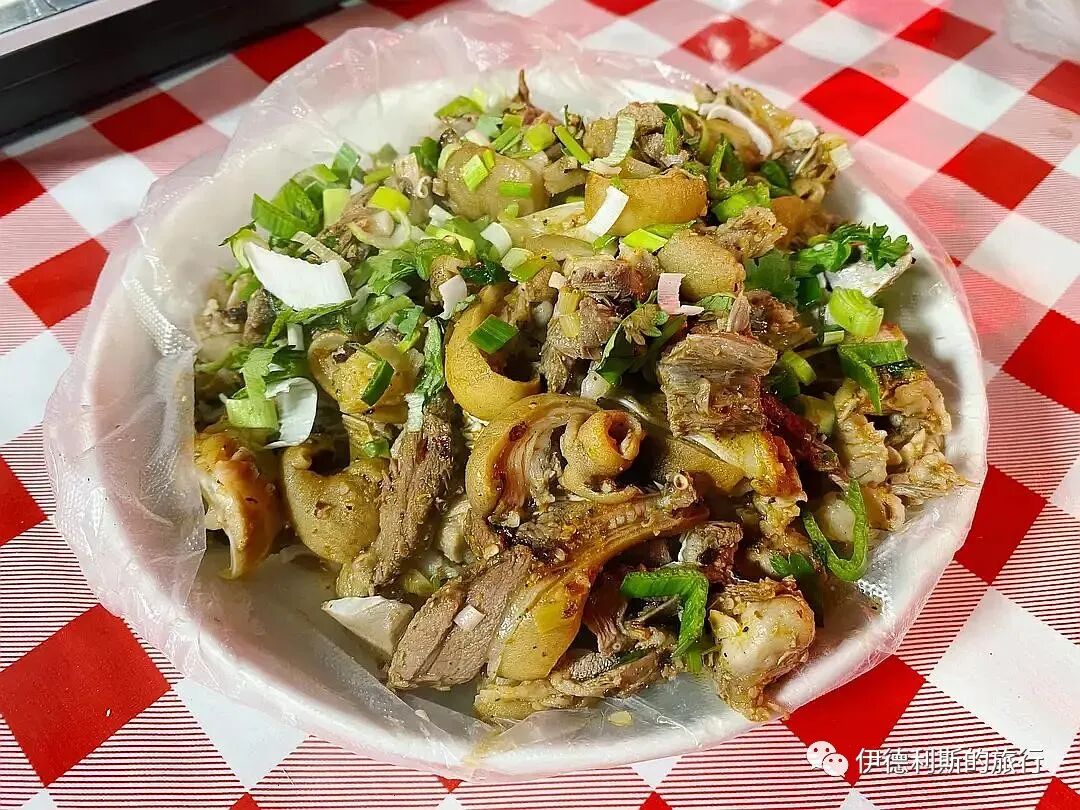
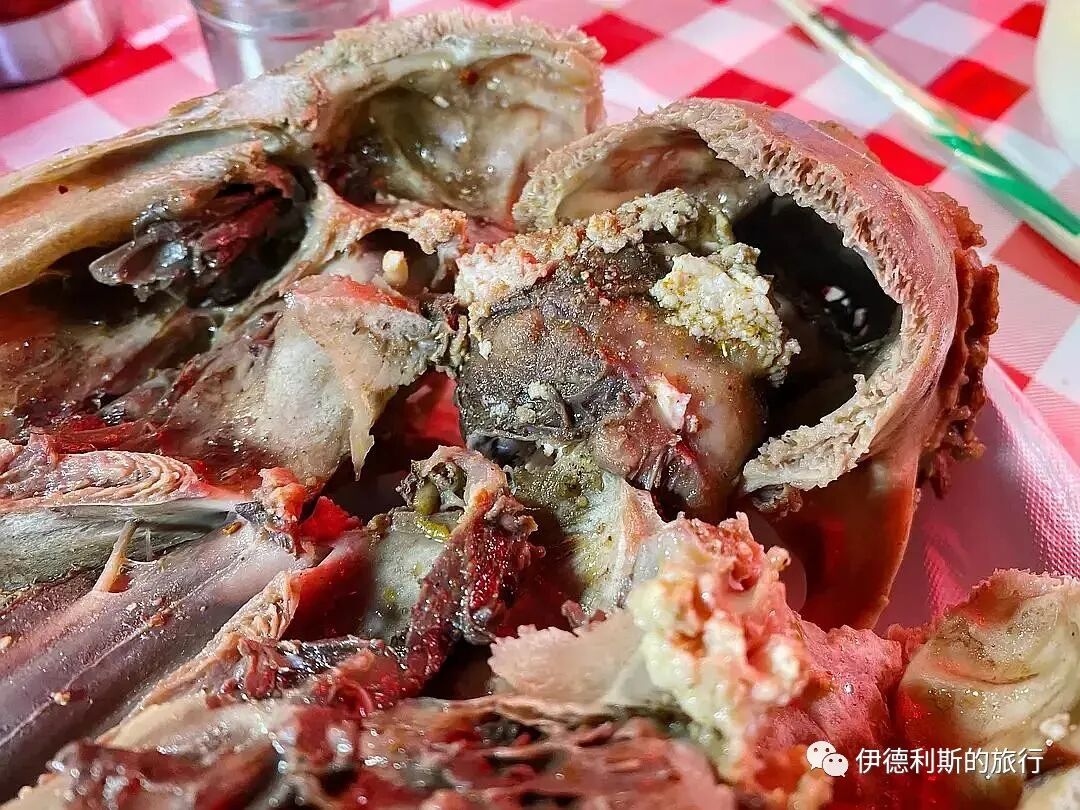
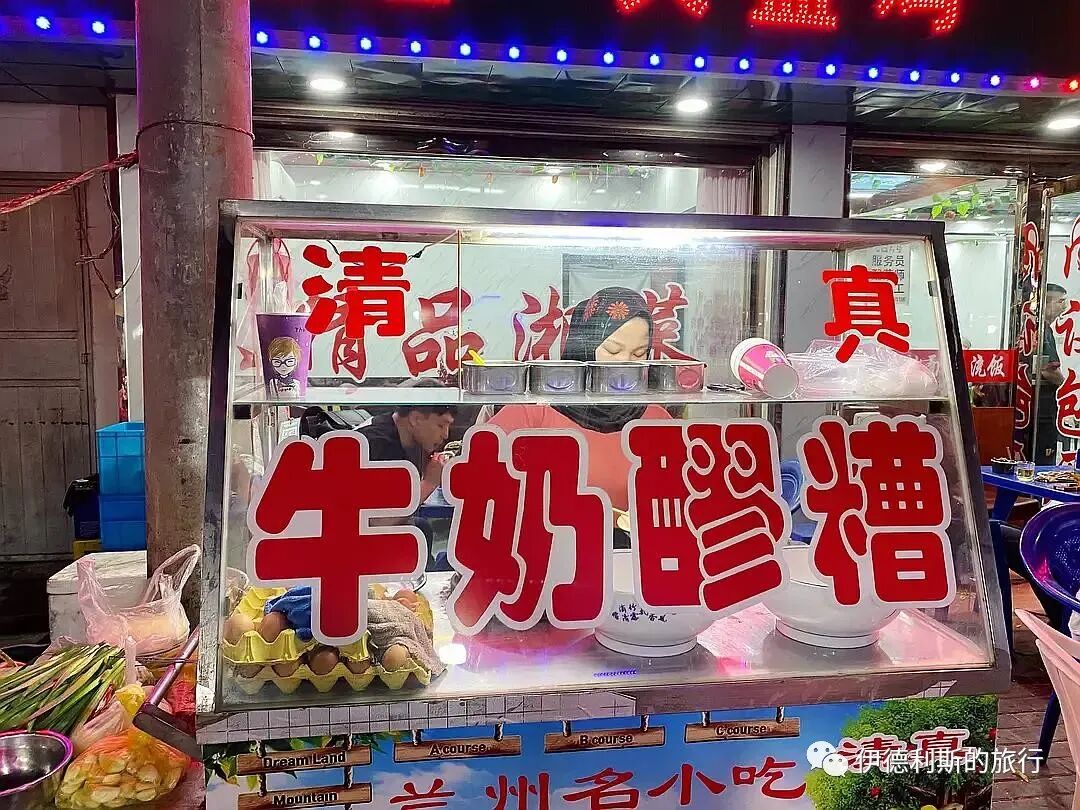
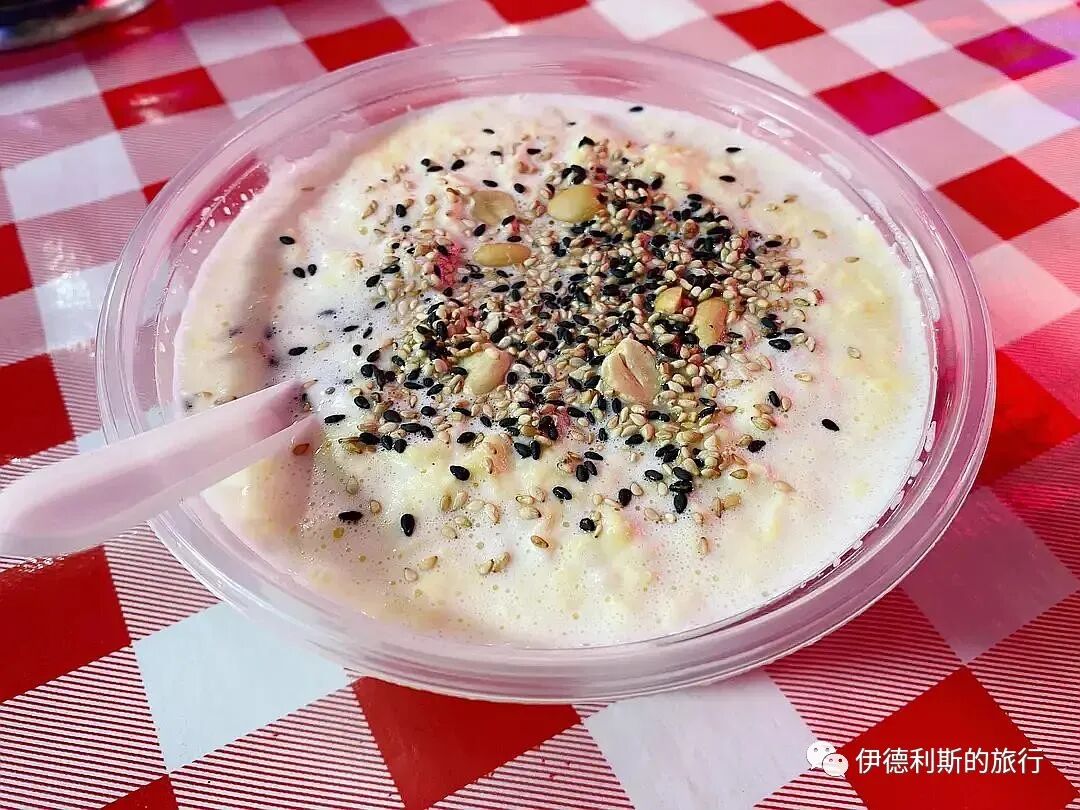
2. Linxia
At the Lao Dongxiang Manai stall in the Linxia North Street night market, I had beef clay pot (niurou shaguo) and stir-fried flour sausage (fazi mianchang). Fazi, also called fazi, is sheep intestine stuffed with chopped organ meats and minced meat. I think the highlight of the Linxia North Street night market is the stir-frying. The flames on the stoves can rise higher than a person, but I didn't manage to take a picture.
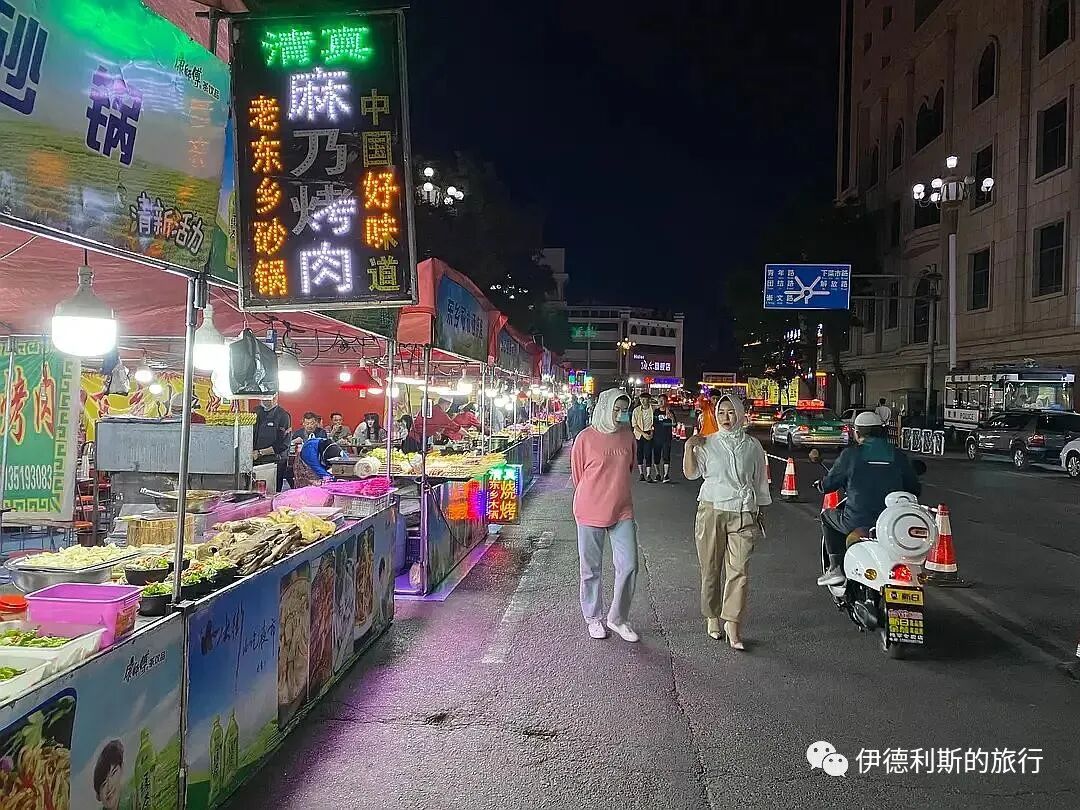
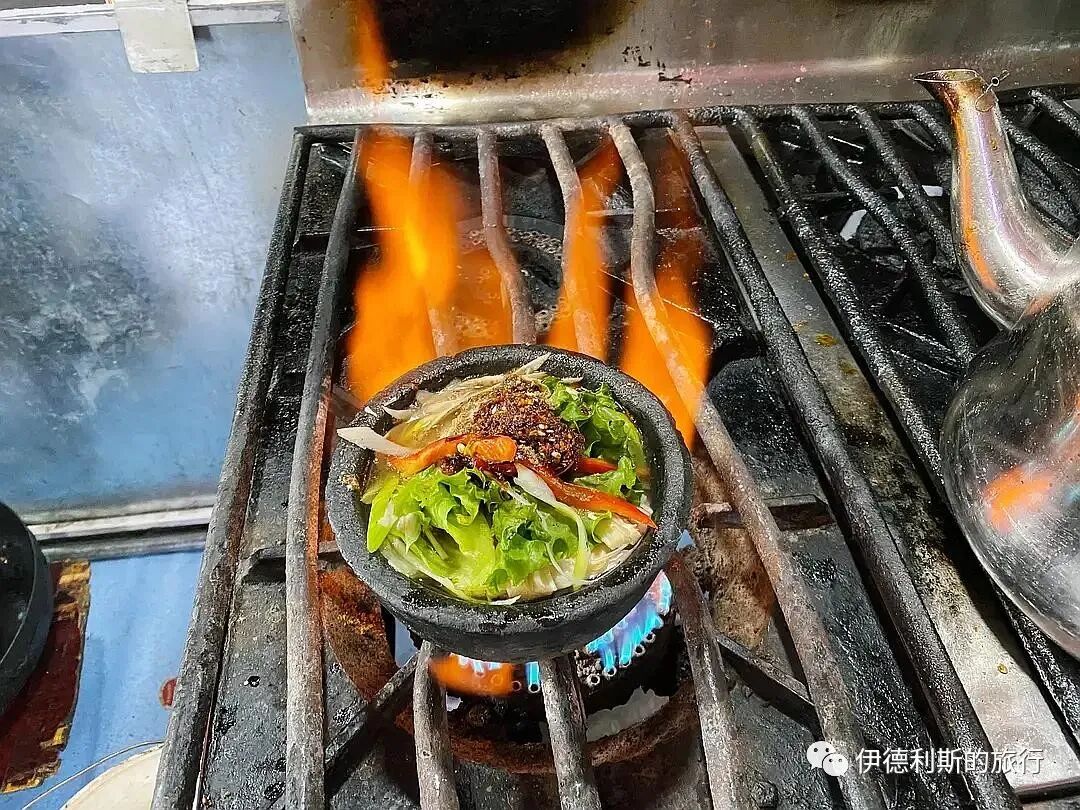
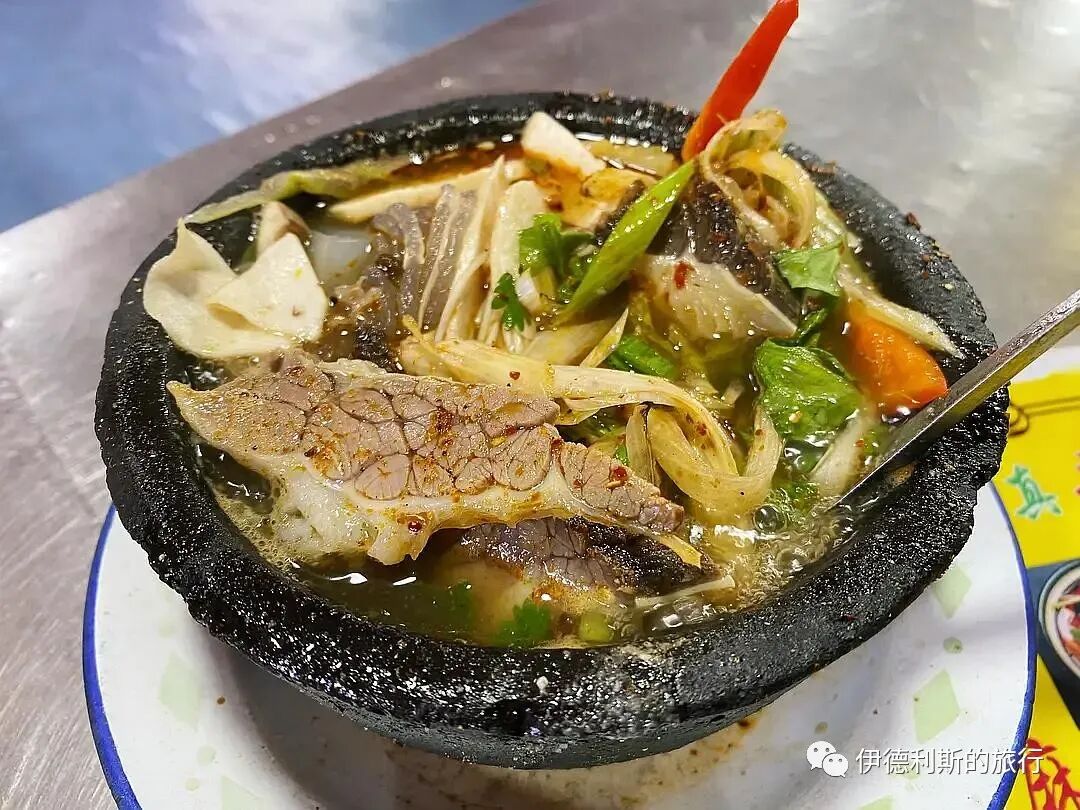
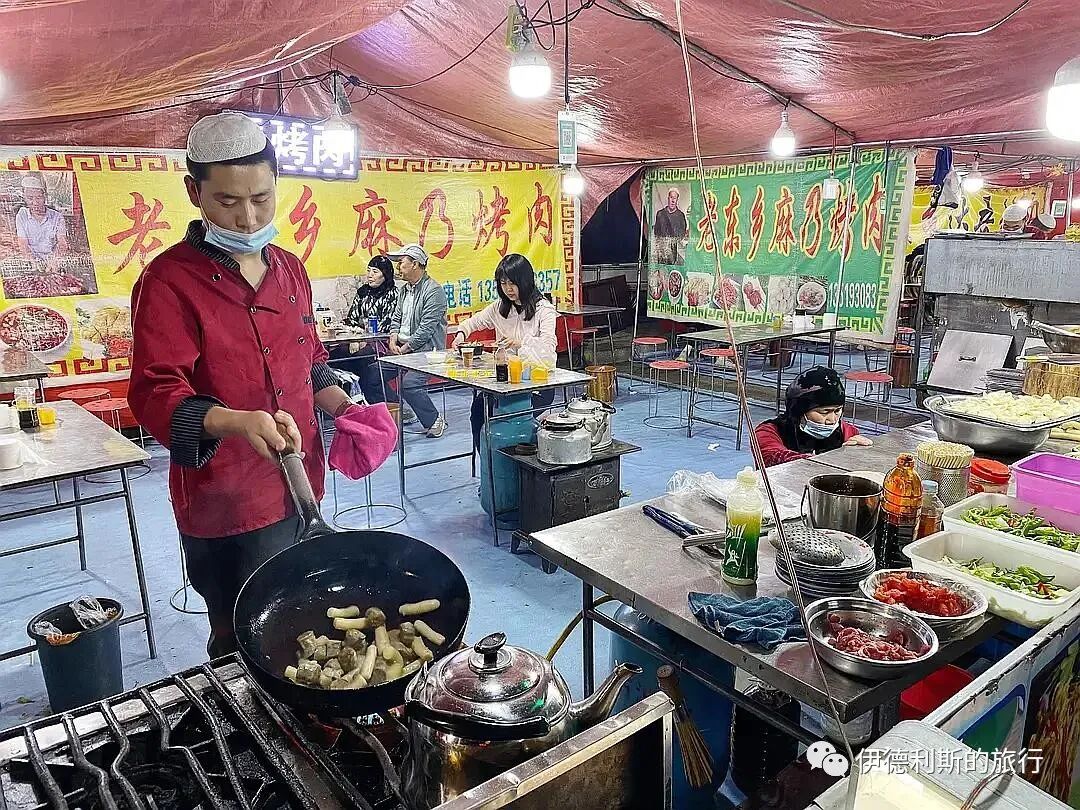
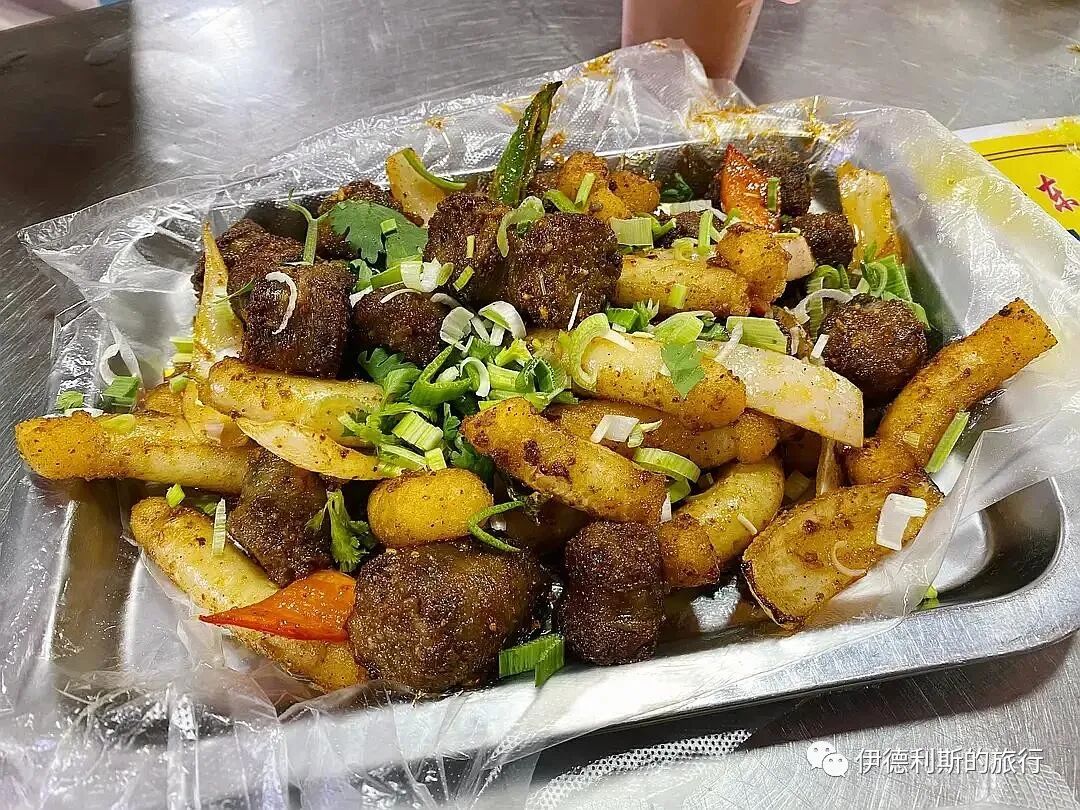
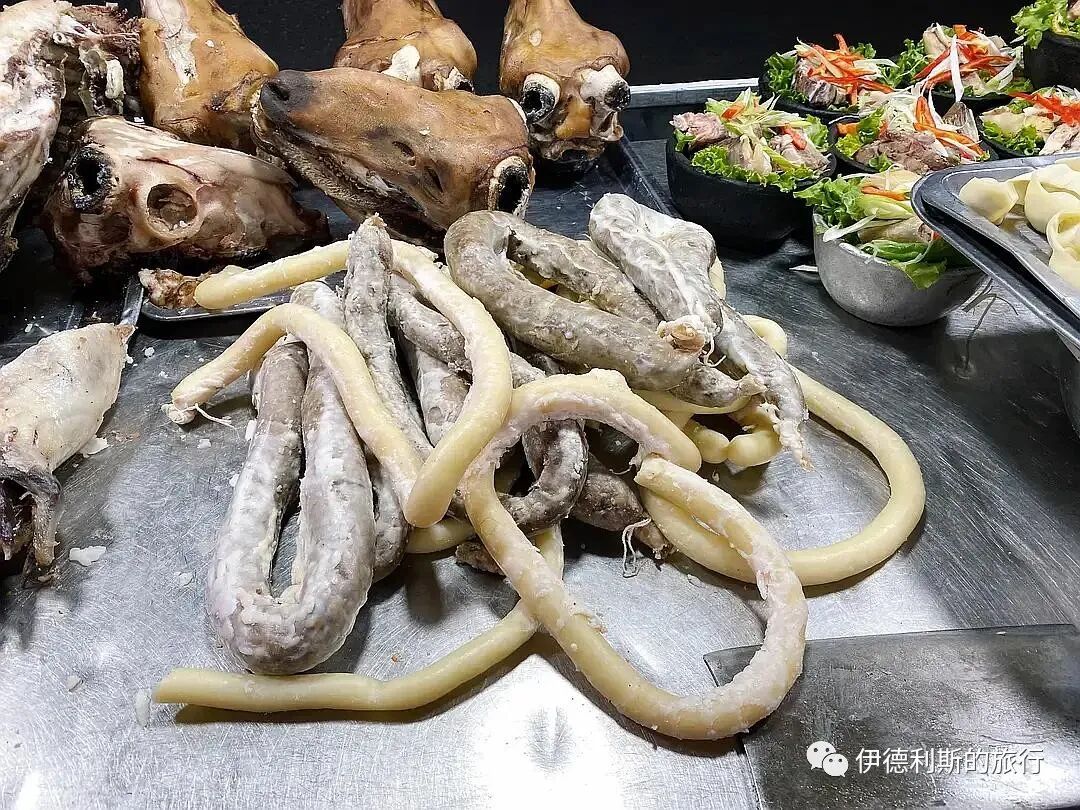
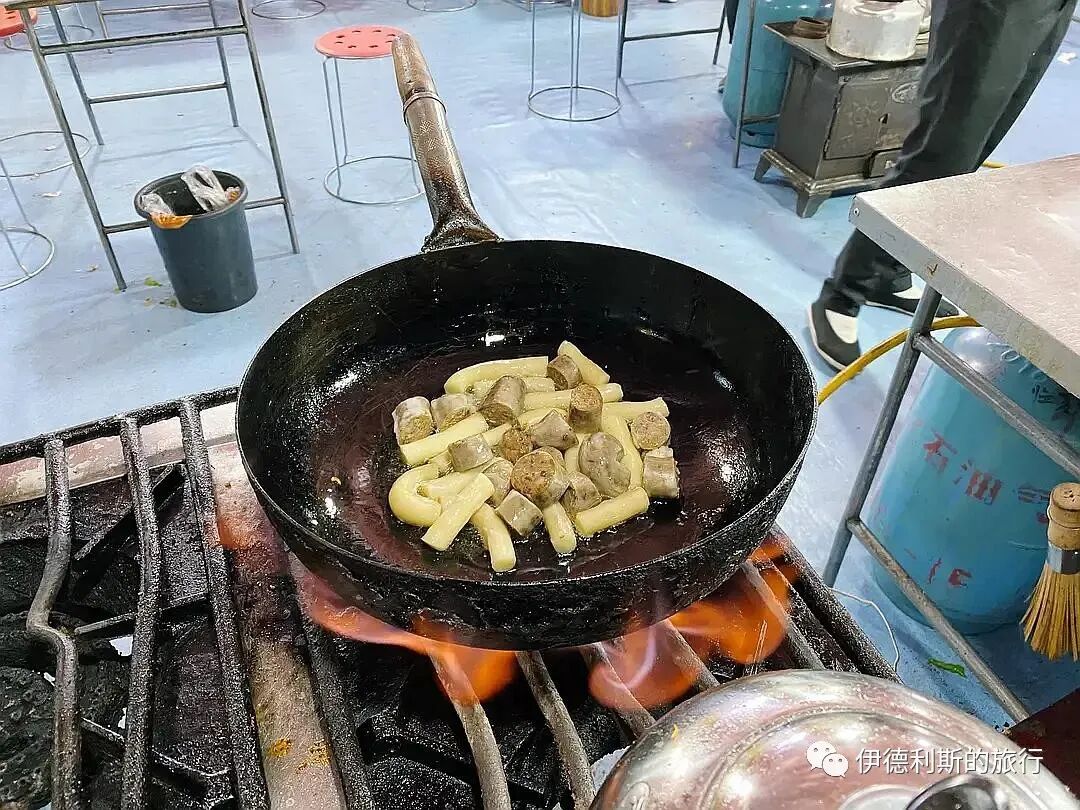
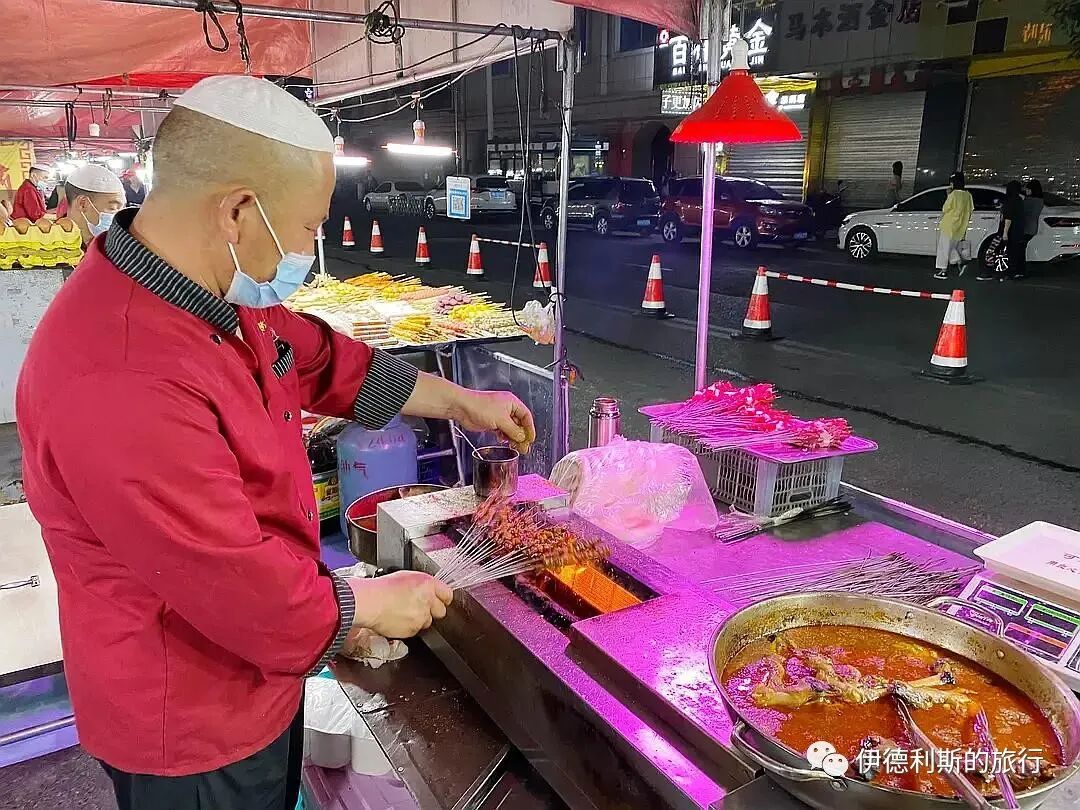
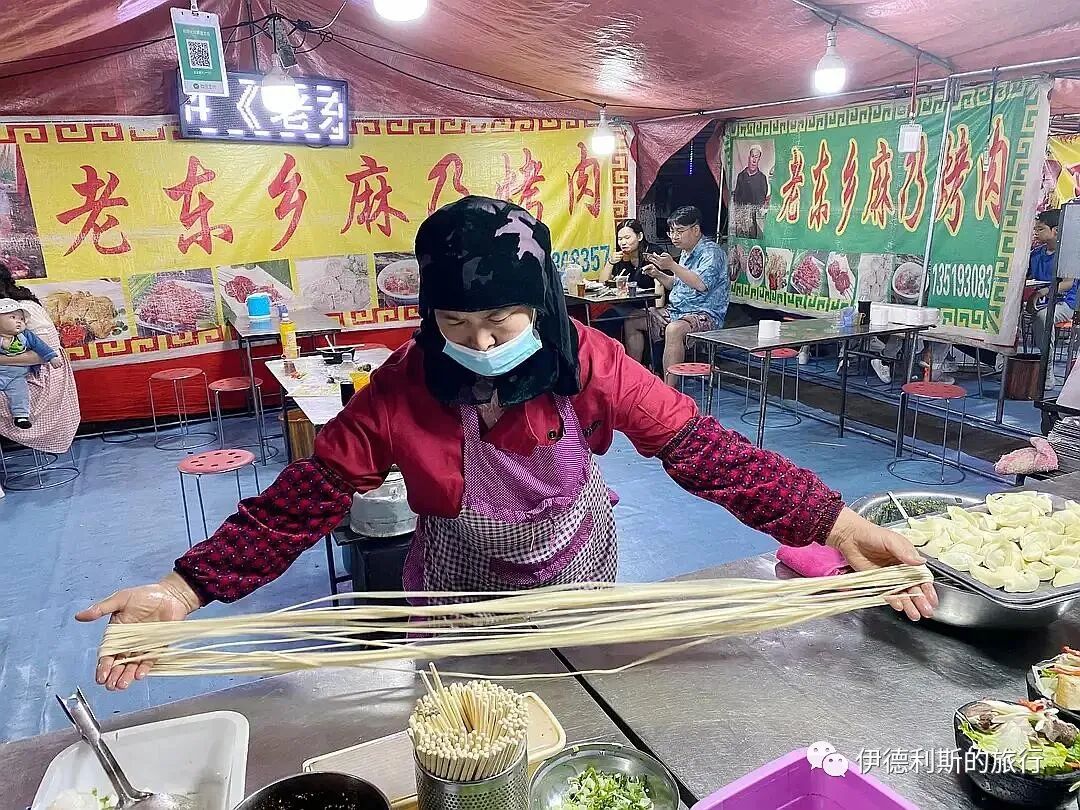
7. Qinghai
1. Ping'an
Go to the Daqingzhen Kangguo Grill in Ping'an District, Haidong, to eat pan-roasted meat (kangguo). They have many kinds of pan-roasted dishes (kanguo) here, including lamb, tripe, intestines, and chicken. We ordered the pan-roasted lamb head and the wheat kernel porridge (mairen zhou), which is a must-have at any Qinghai barbecue shop.
The restaurant layout features small private rooms common in Qinghai towns. Even for two people, you can pull the curtain for privacy, which feels quite nice. After we ordered, they brought out free pickles, radishes, mung bean jelly (liangfen), and boiled tea (aocha). The servers were very friendly. We had a few bites of the mung bean jelly and some tea before the pan-roasted dish arrived. Besides the whole lamb head, it came with potatoes, corn, and vermicelli (fentiao). We really did not need to order any other main dish. Finish with a bowl of wheat kernel porridge (mairen zhou) for a very satisfying end.
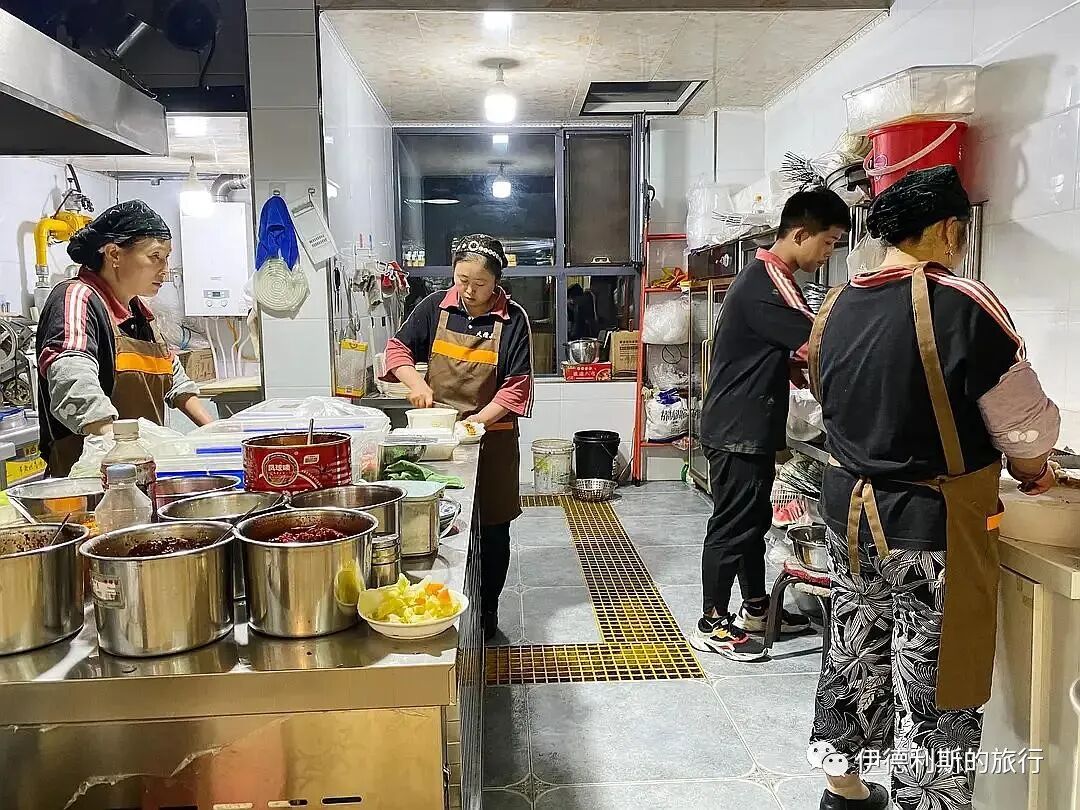
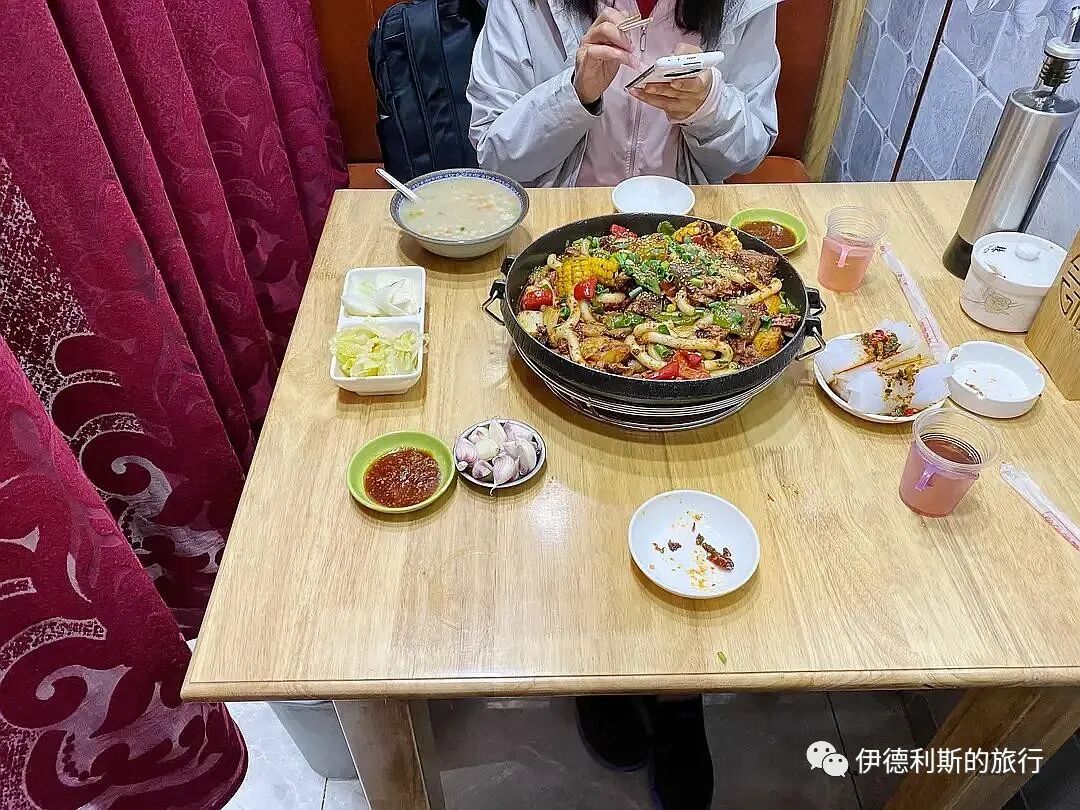
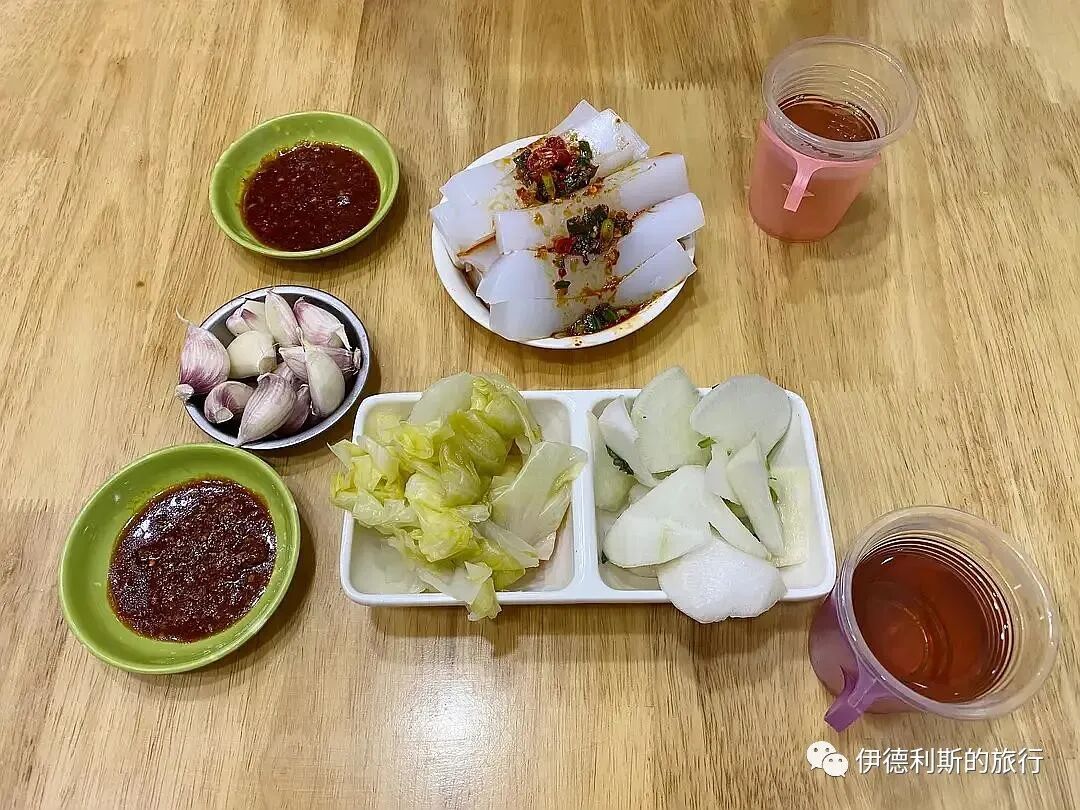
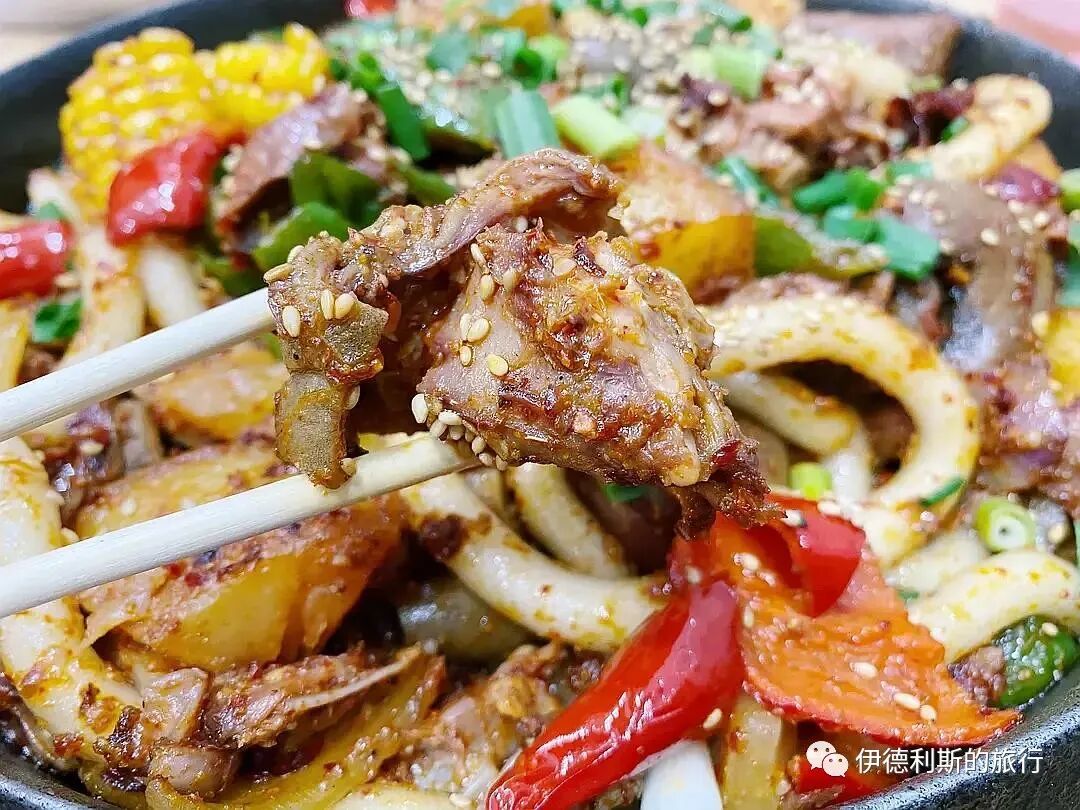
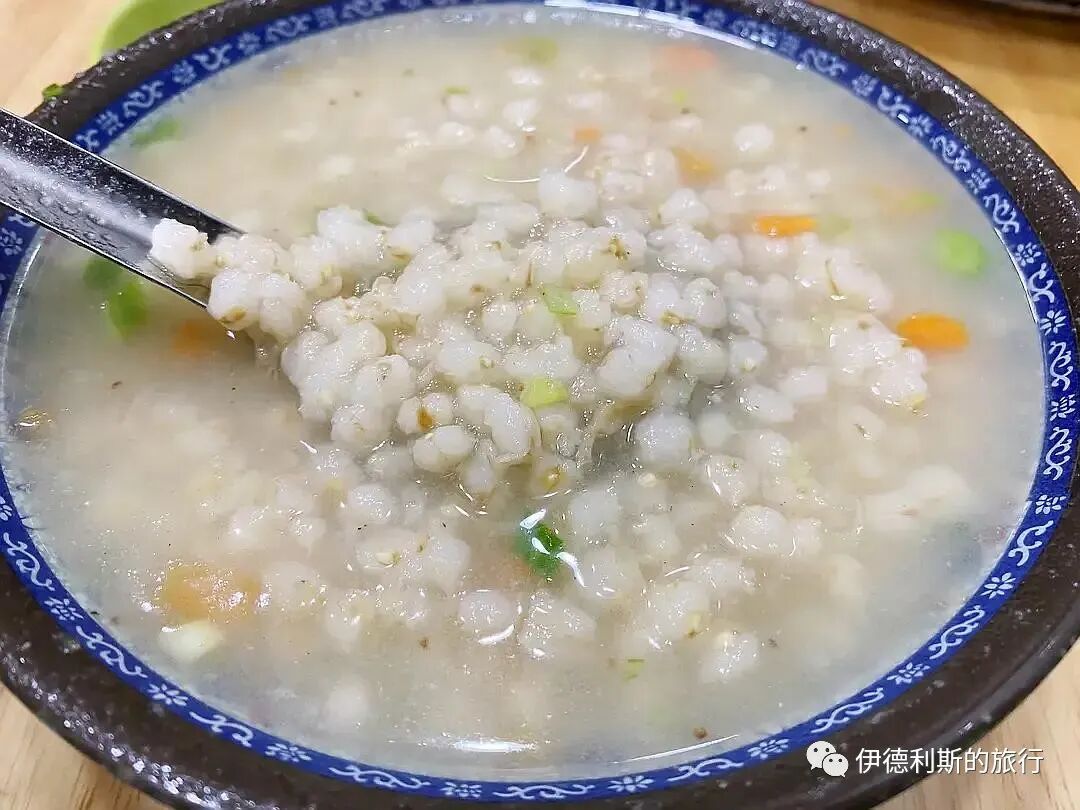
2. Xunhua
In Xunhua County, we had a home-style assorted clay pot hotpot (tuhuoguo). It was packed with a variety of vegetables, and there was actually plenty of meat hidden underneath. A small pot was more than enough to leave two people feeling full.
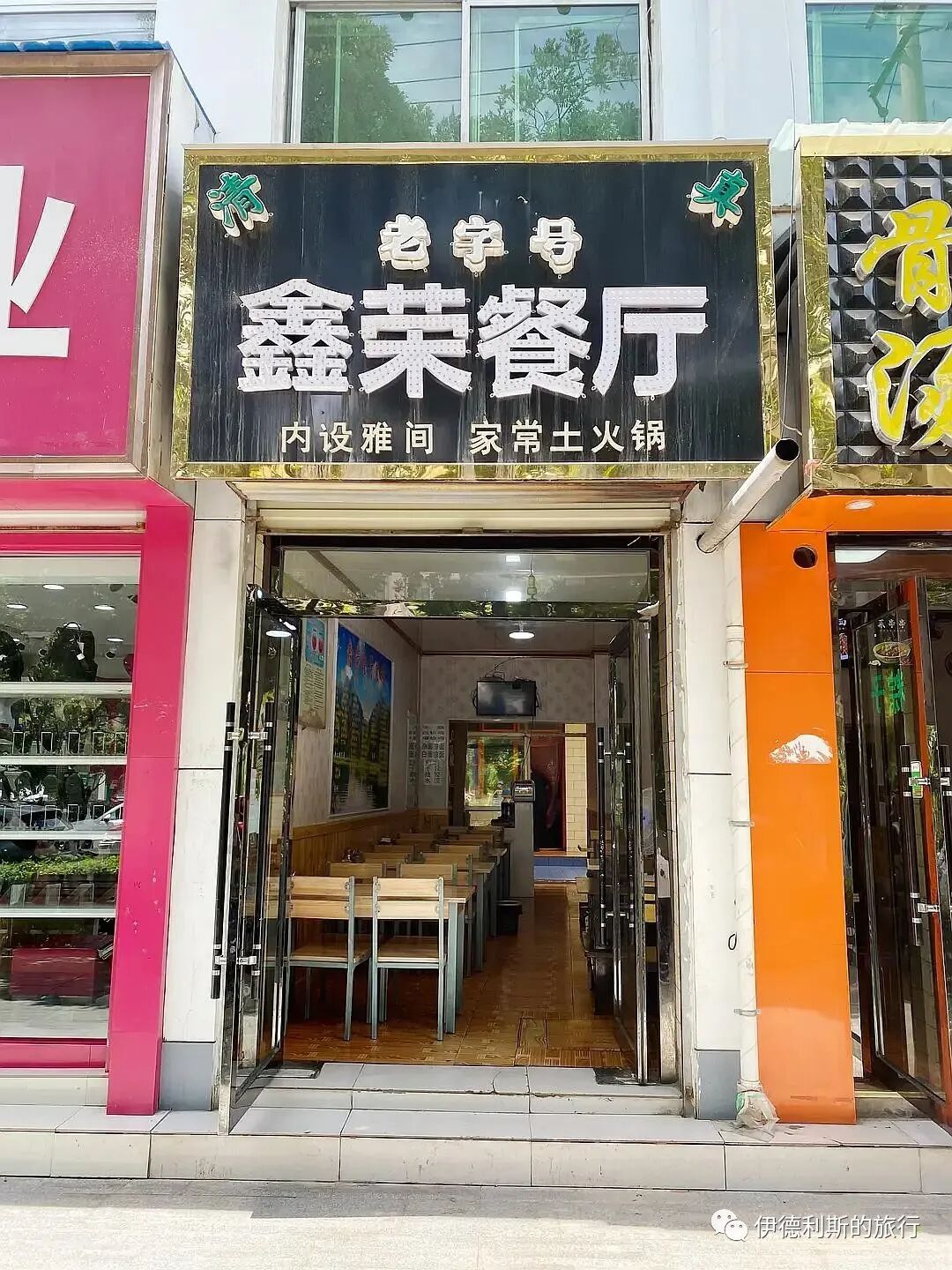
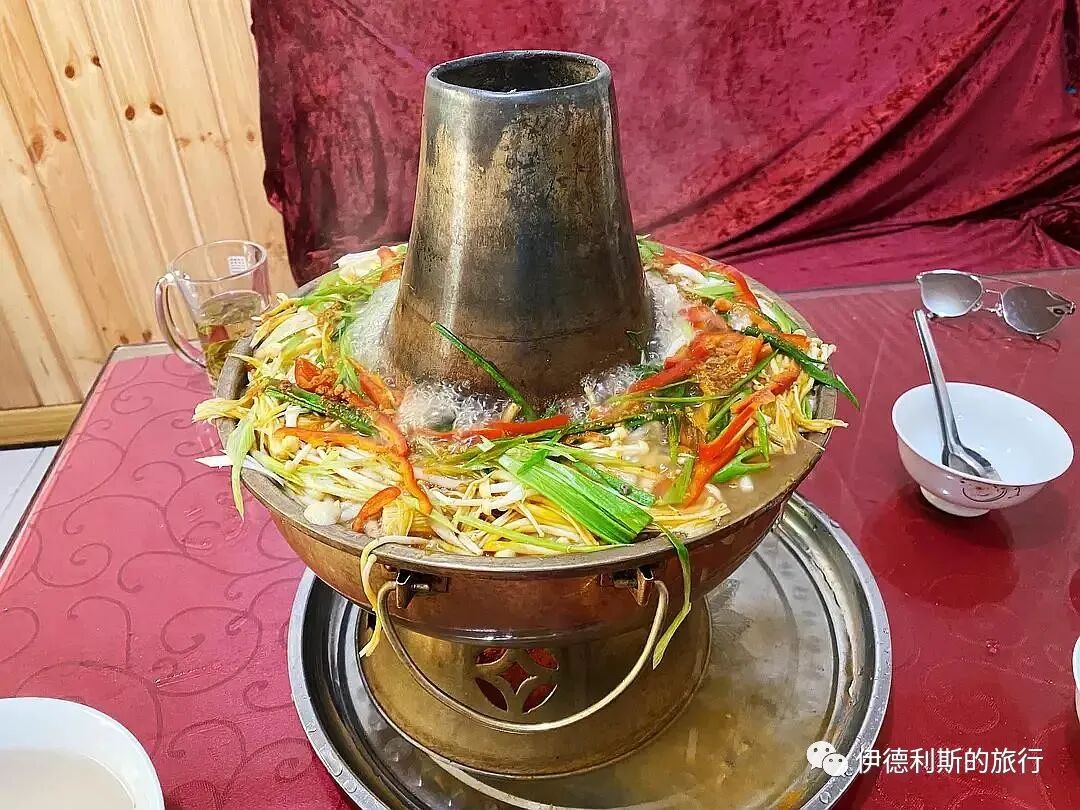
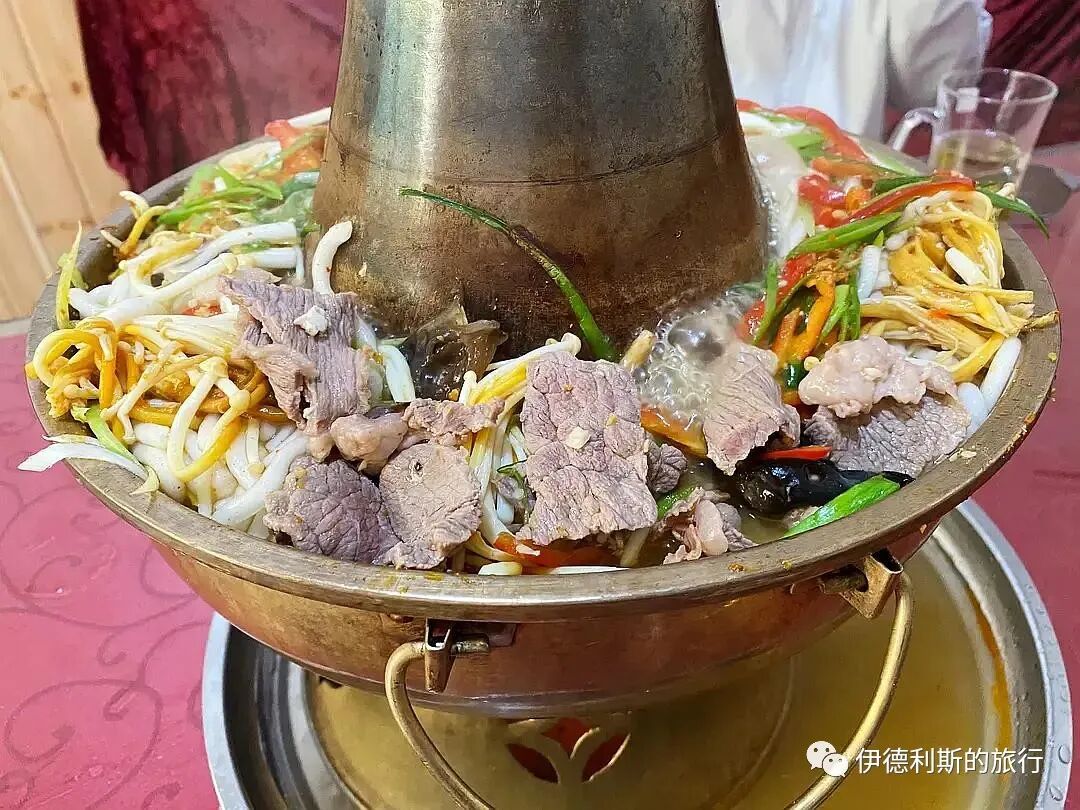
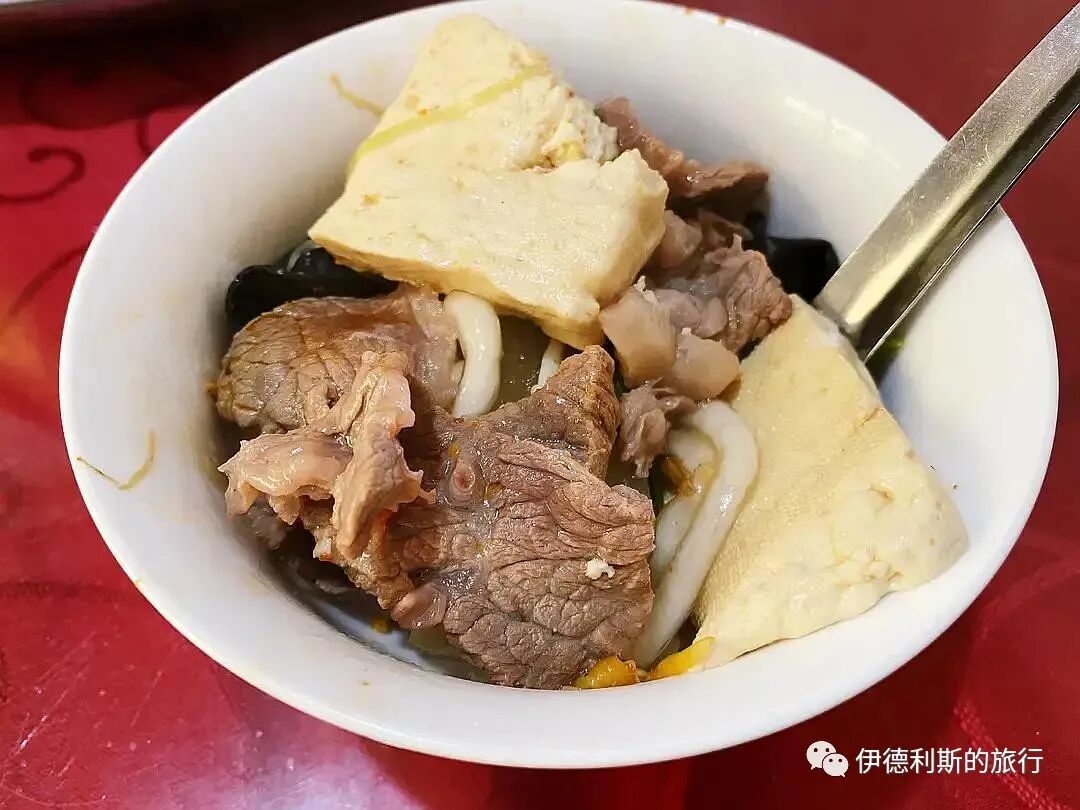
3. Xining
At Old Wang’s place in Dongguan, Xining, we had starch noodles (gengpi) and fresh yak yogurt. Zainabu said this was the best yogurt we had during our entire trip to Xining.
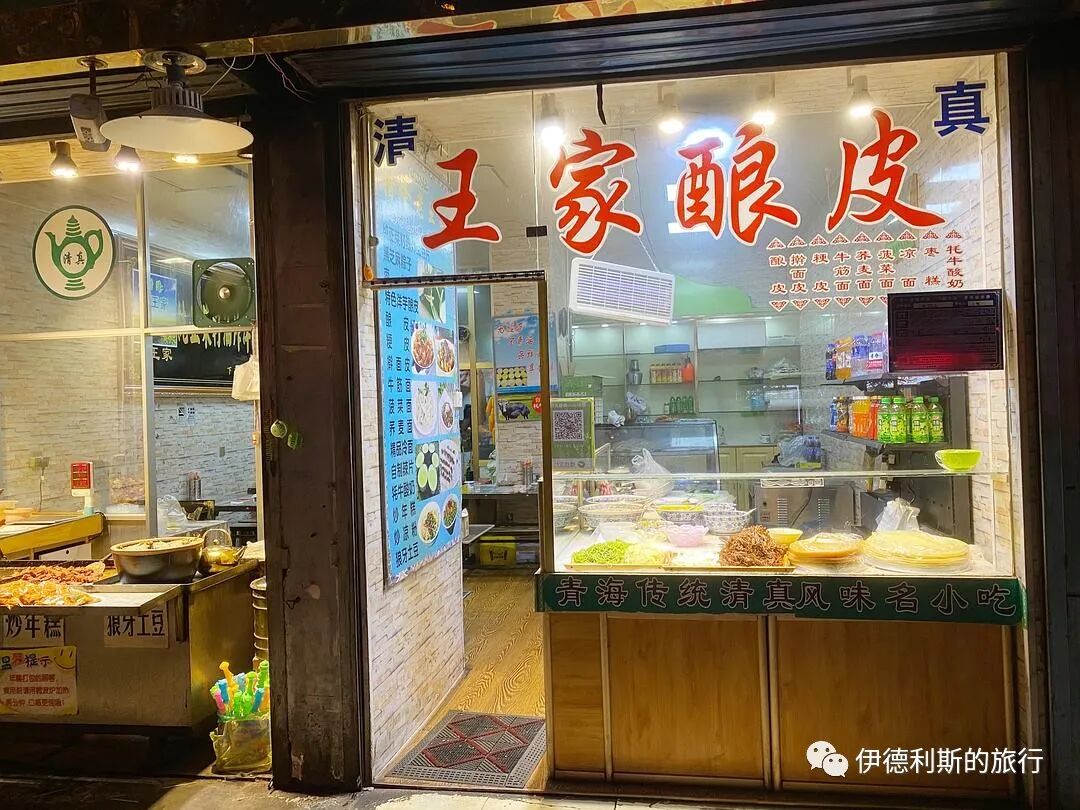
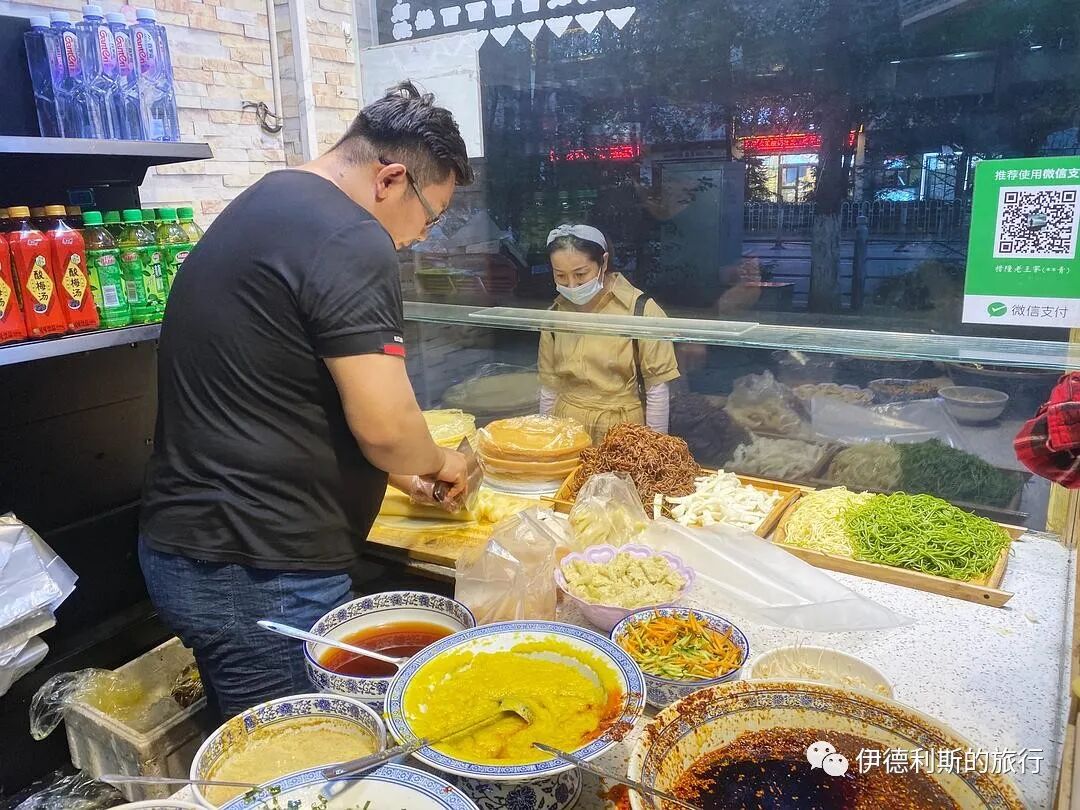
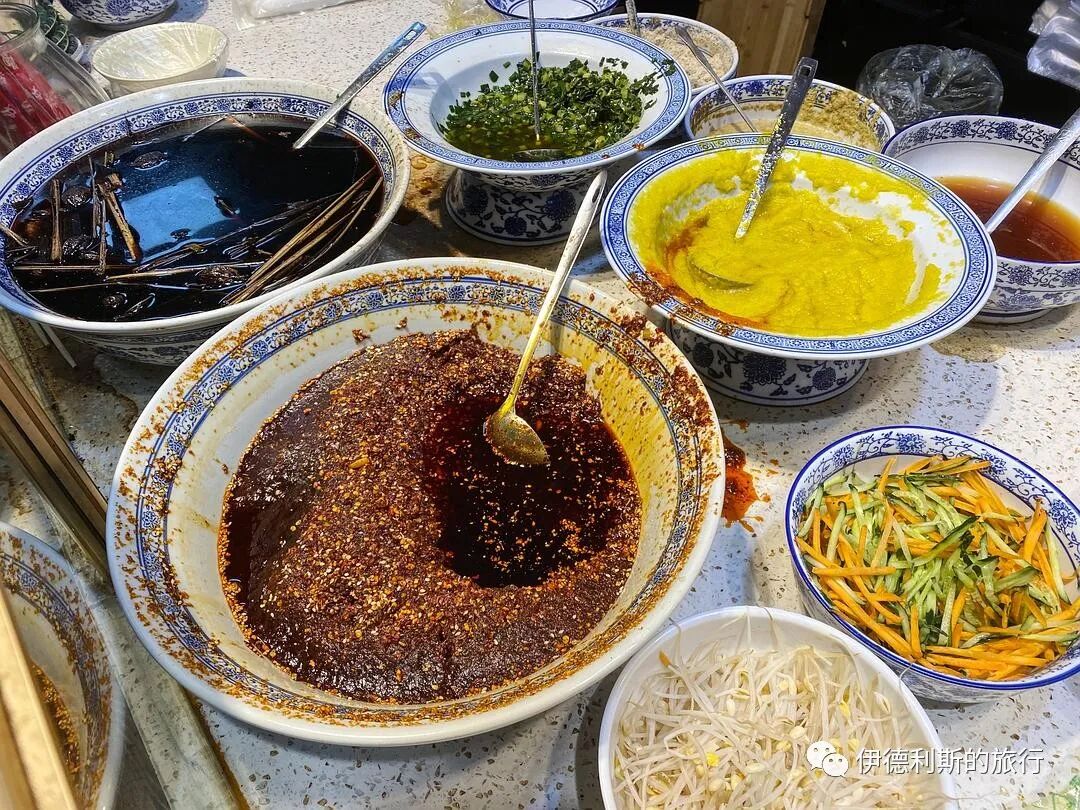
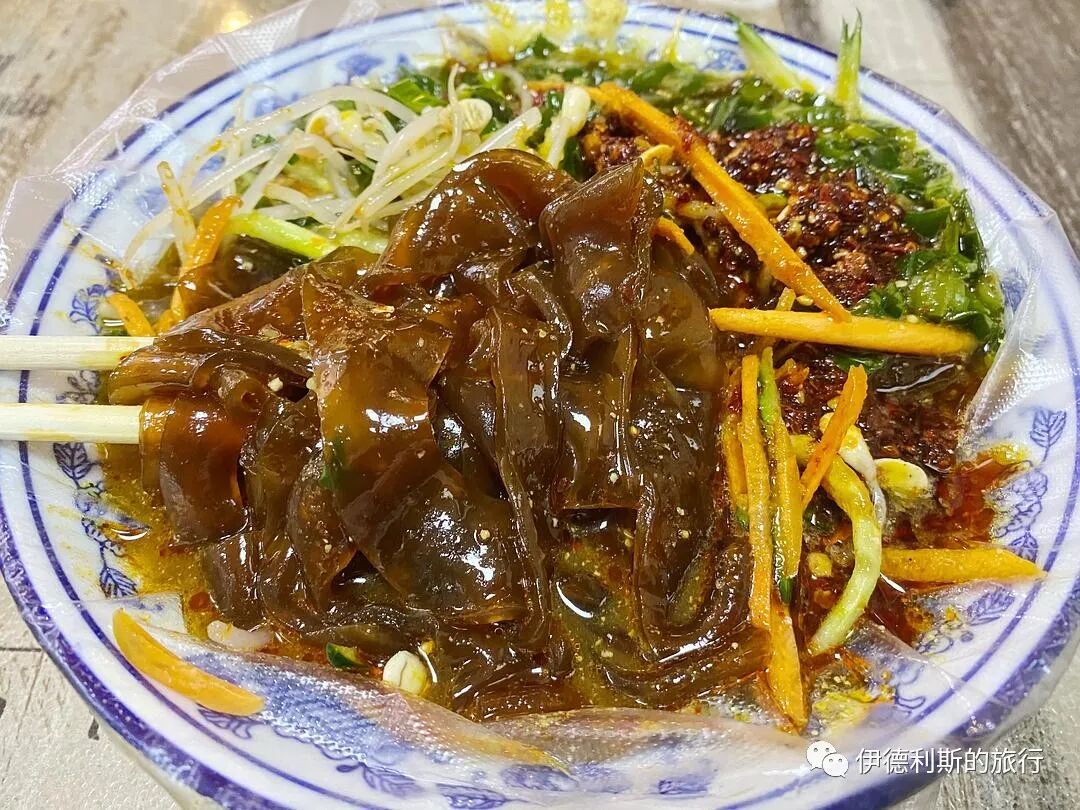
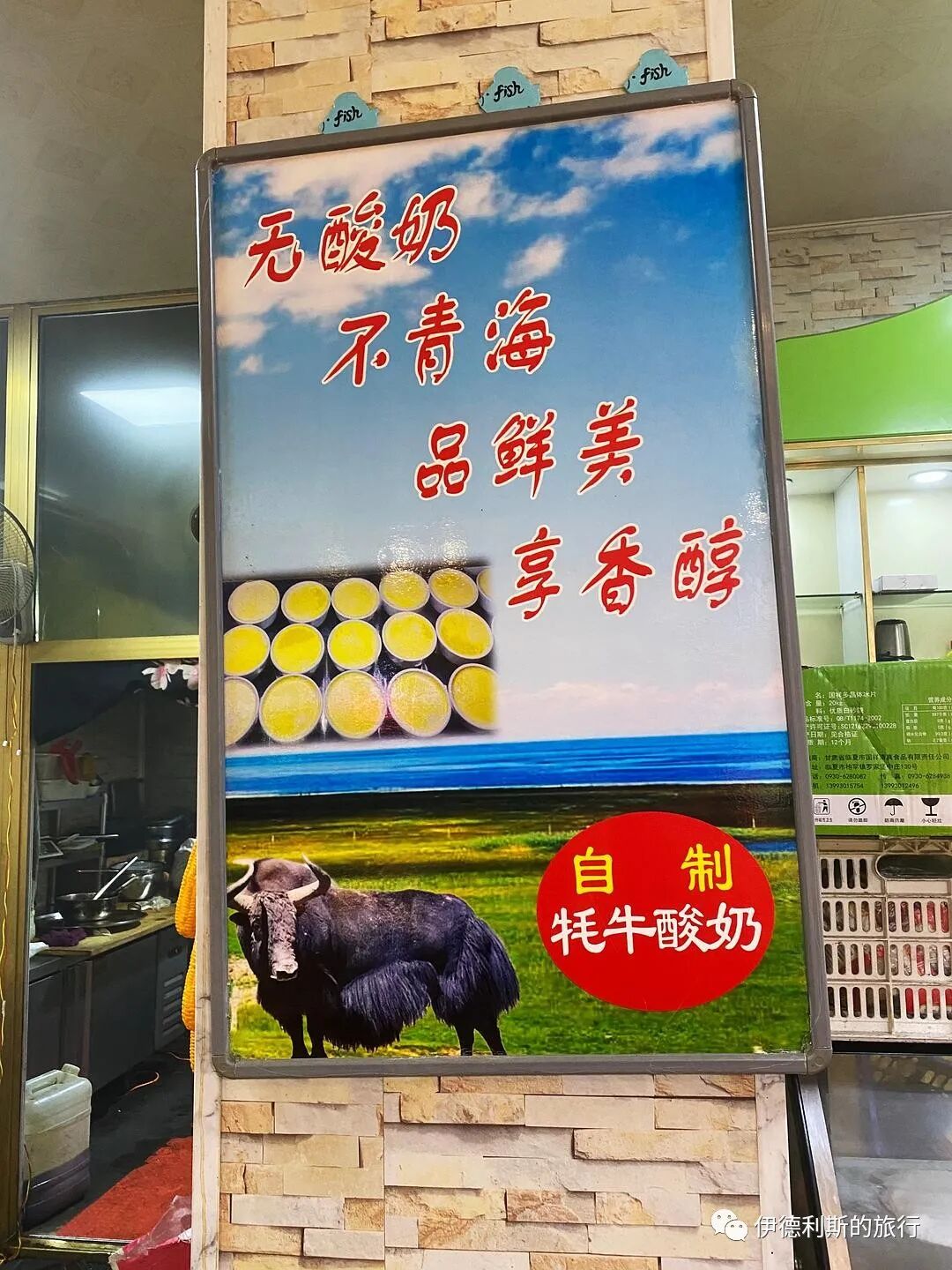
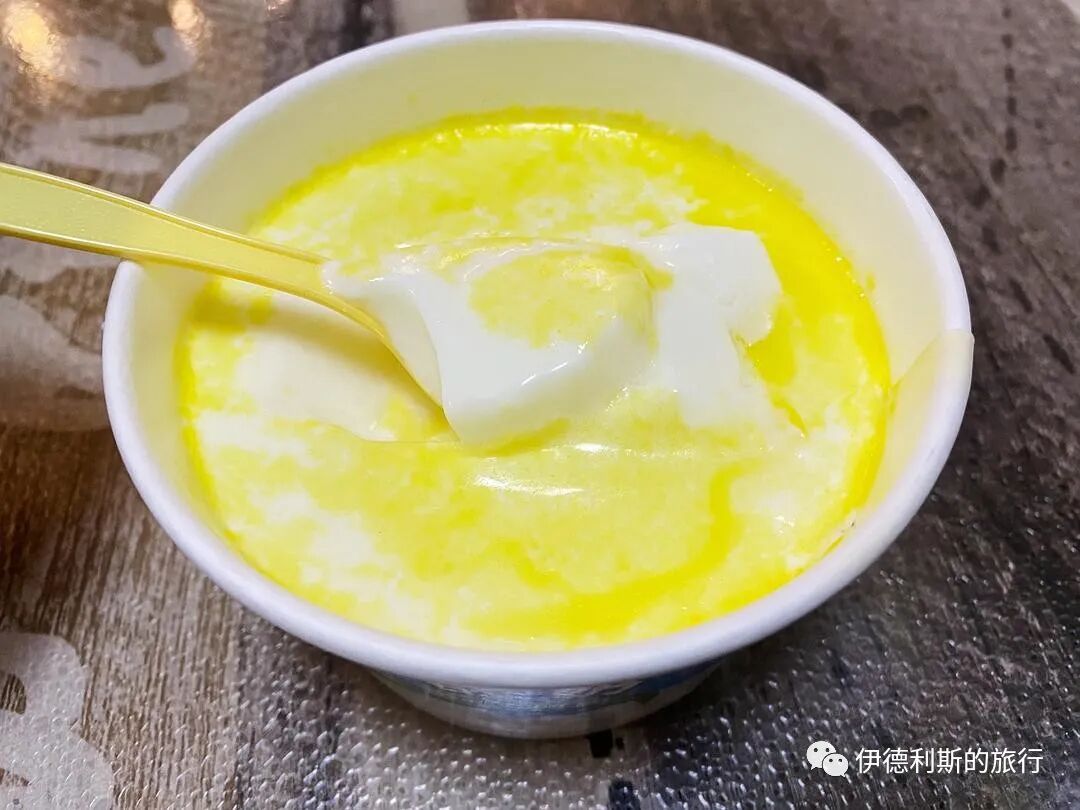
8. Xinjiang
1. Urumqi
We had milk tea at a Kazakh milk tea shop in Dawan. This place is likely the most famous spot for Kazakh breakfast in the area. Seeing the fresh milk being boiled in a basin made it feel very authentic. We ate milk tea, horse meat sausage (machangzi), fried dough (baowusake), Kazakh-style potatoes, and steamed buns (baozi). Everything tasted great.
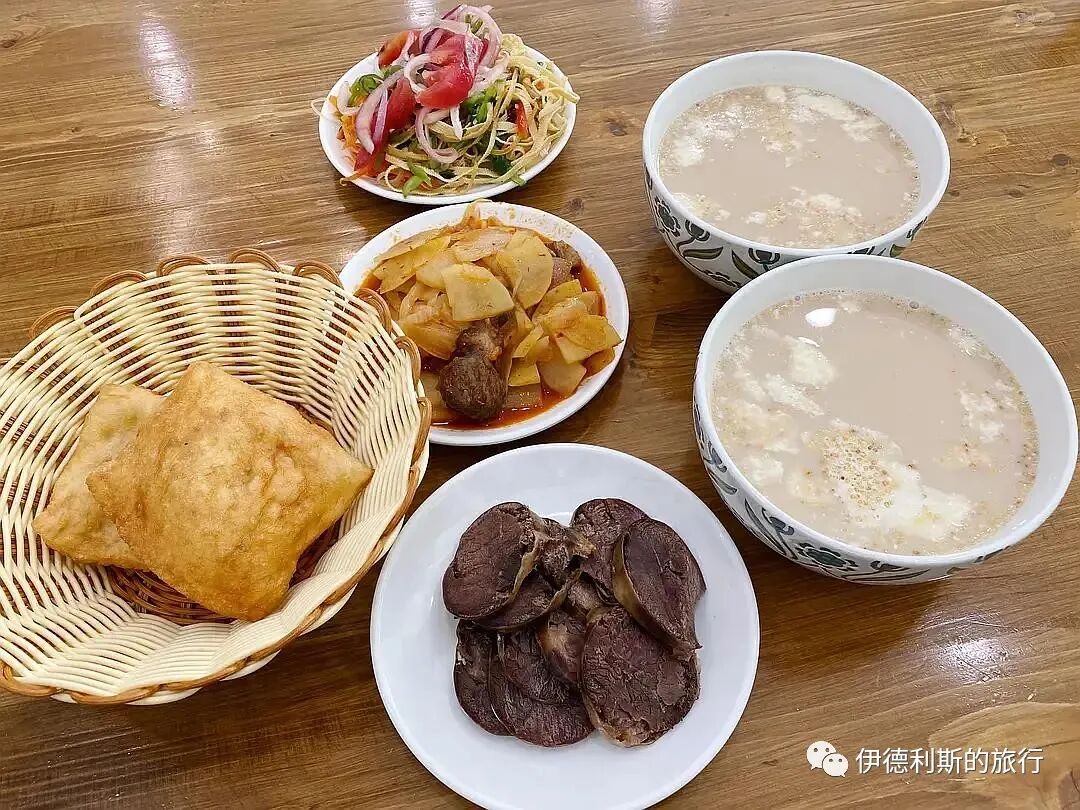
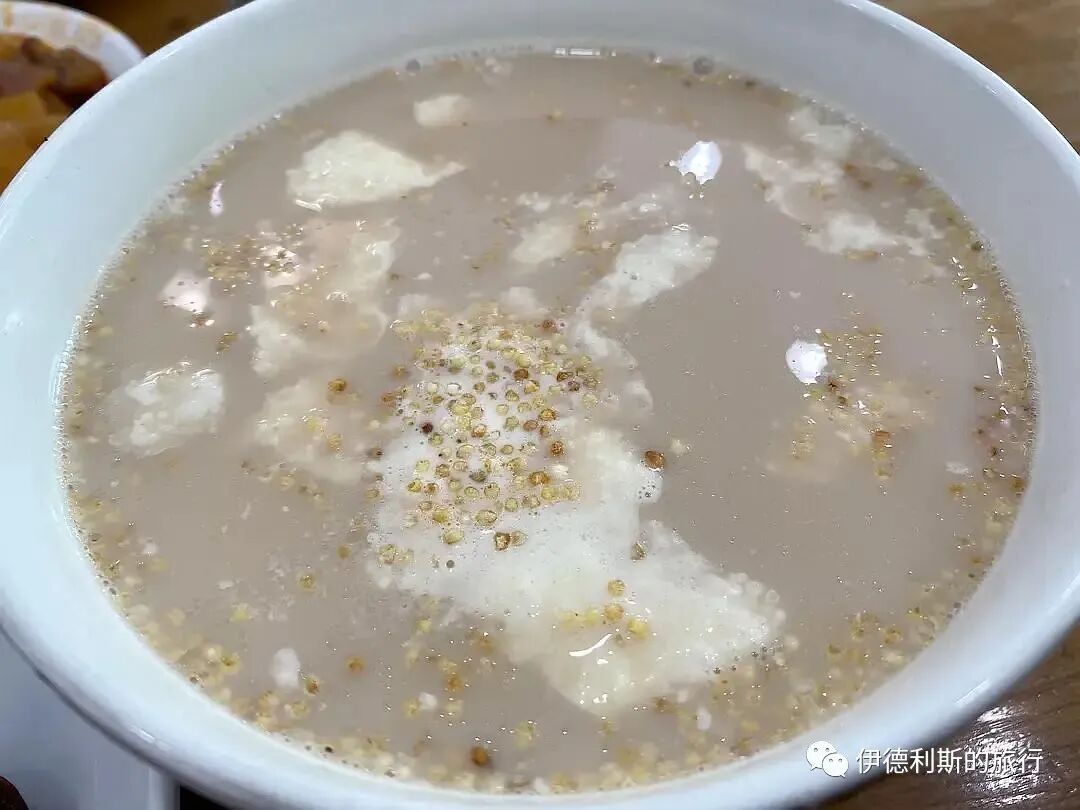
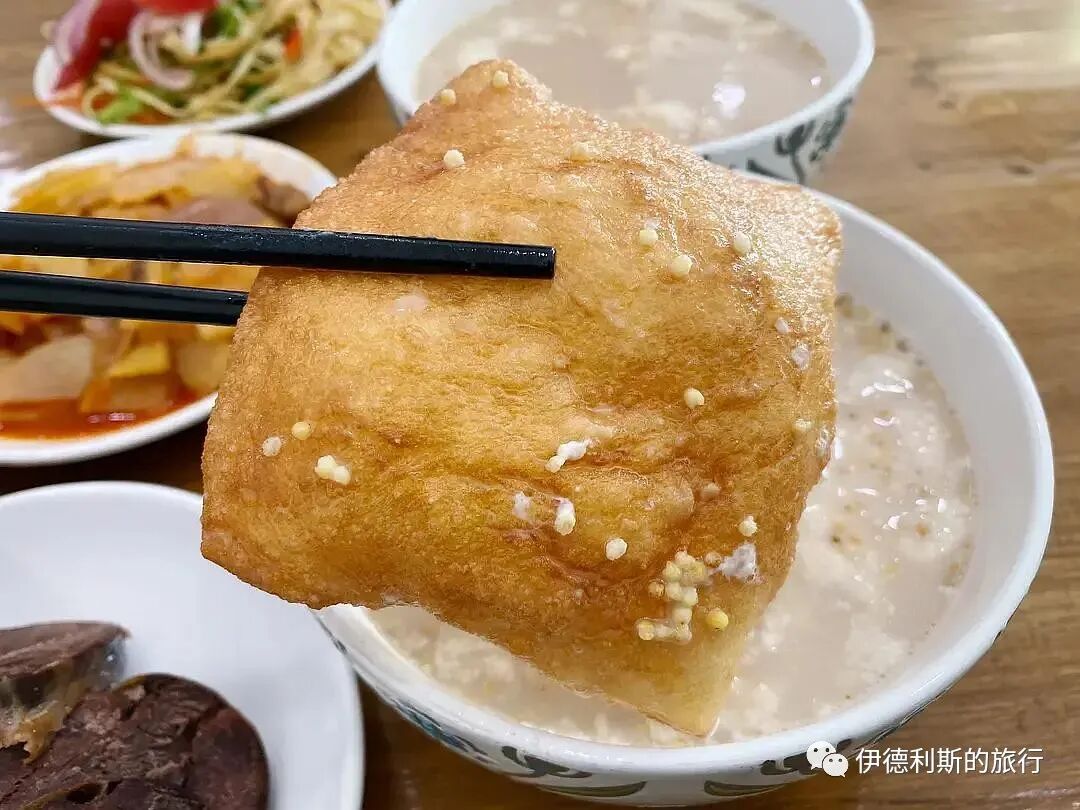
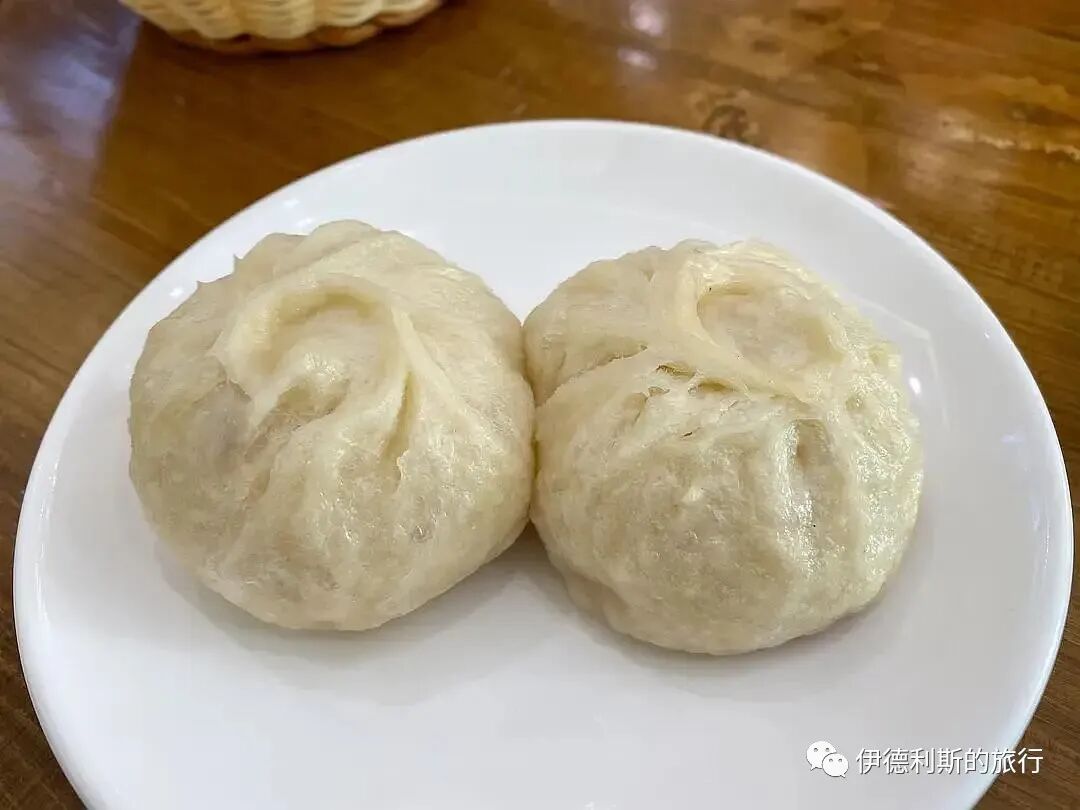
2. Toksun County
The most popular spot in Tuokexun County is Lao Si Hao. It is packed at meal times with both locals and people who travel all the way from Turpan just to eat here. Their specialty is stir-fried meat with noodles (guoyou rou banmian) made with black goat. This local specialty lives on the cliffs of the Tianshan Mountains. It costs much more than regular lamb, but the taste and texture are truly different. I think it is much better.
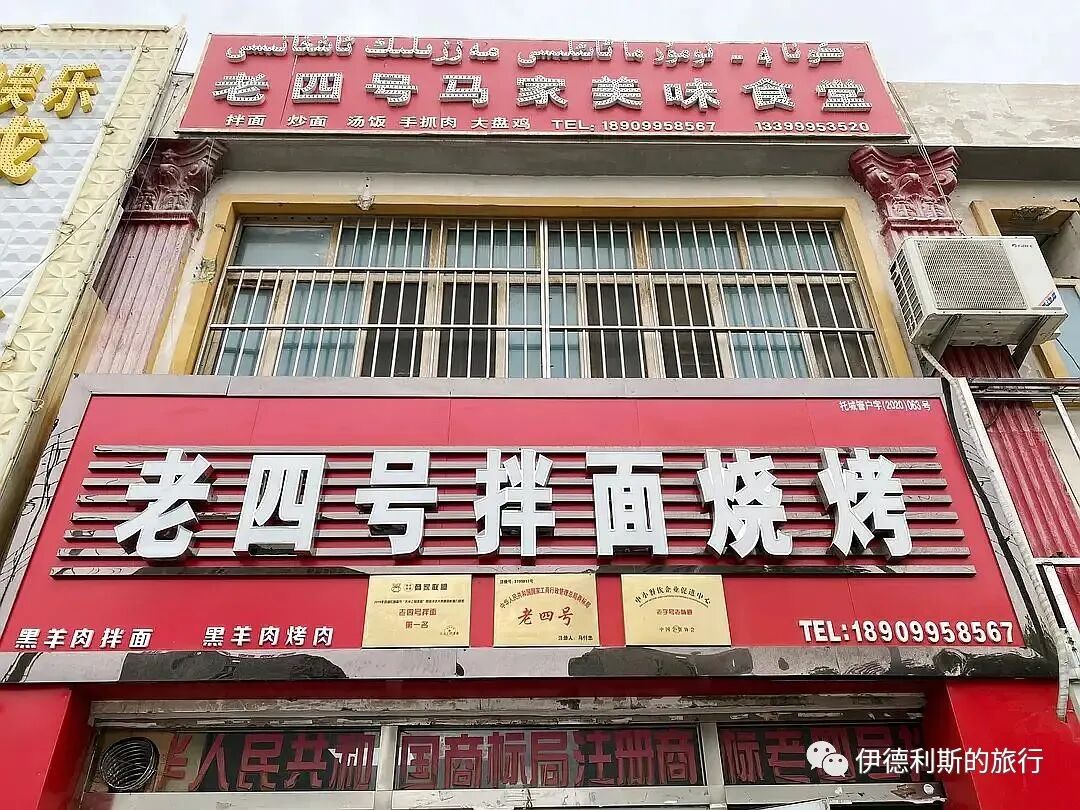
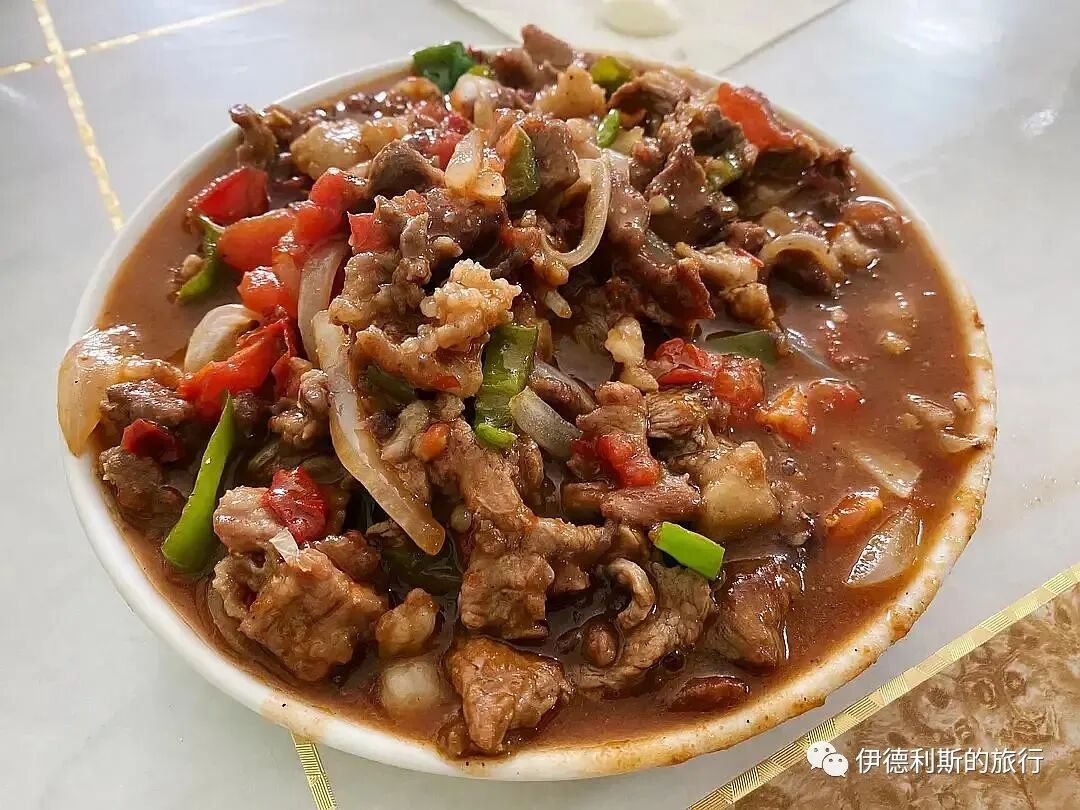
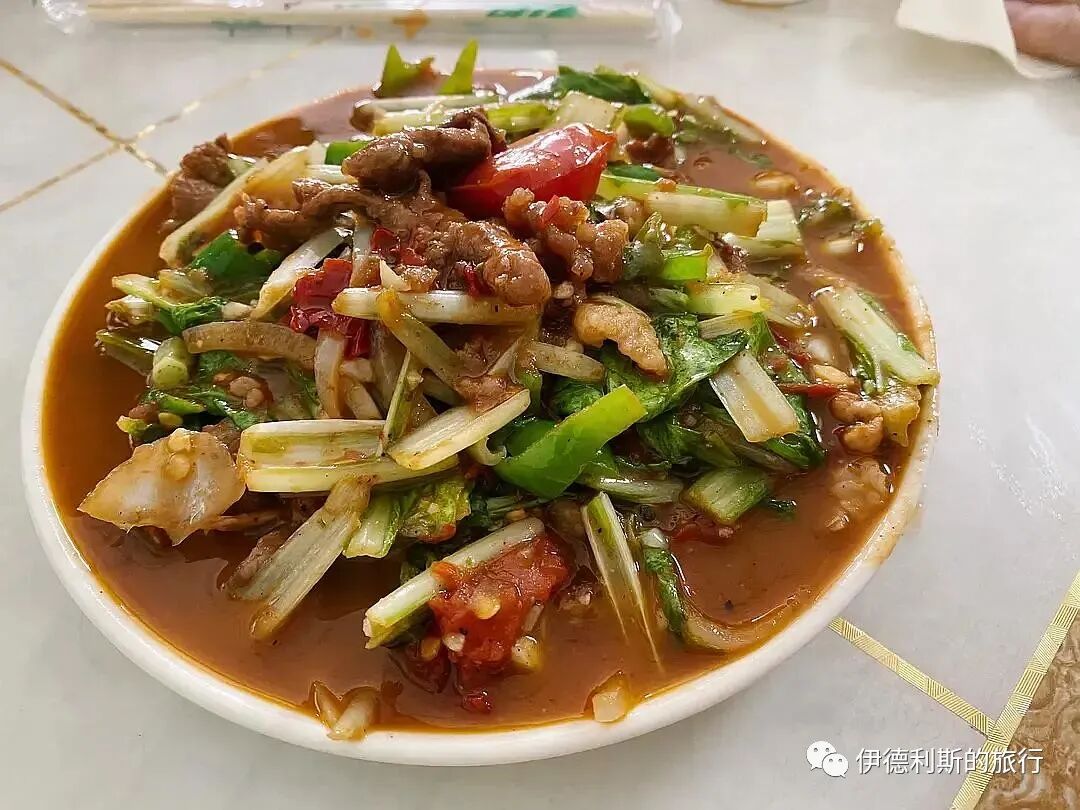
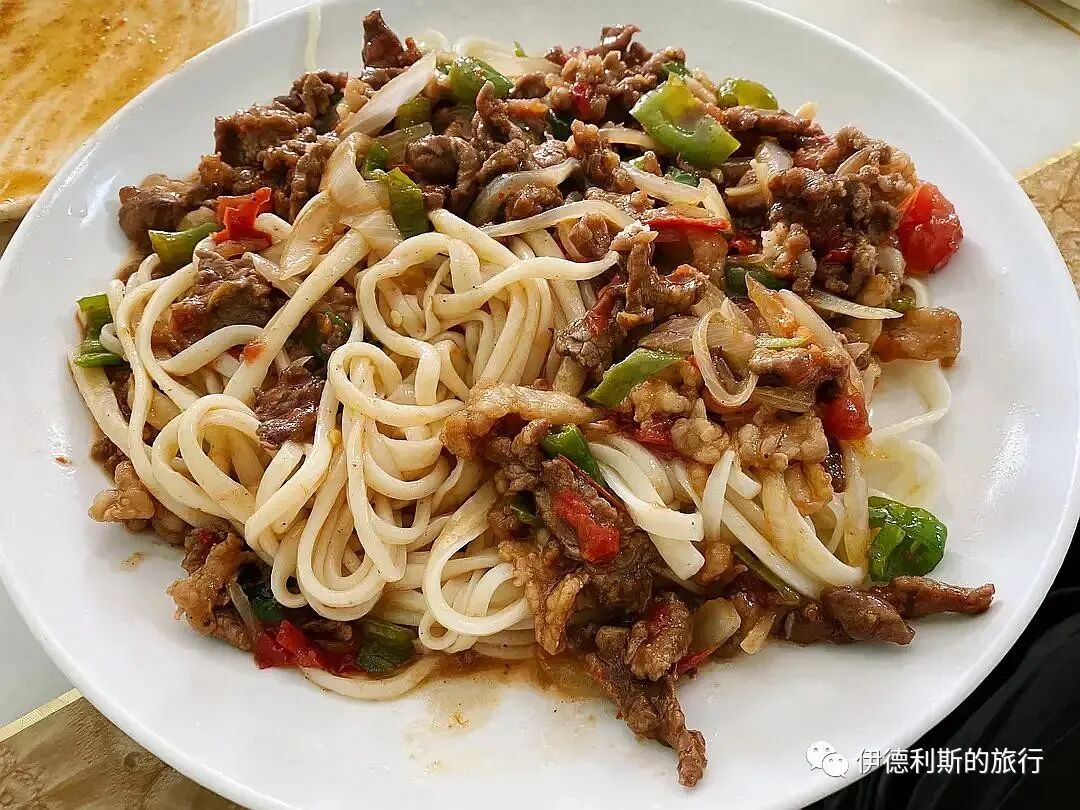
3. Turpan
At the Turpan Museum, you can find the incredibly popular baked buns (kaobaozi) from Koshimaklar. They used to be the Twin Baked Buns at the entrance of the Big Cross Bazaar before moving here. We arrived at 8:30 in the morning to catch the first batch from the oven. We had to get a queue card to buy them, and there were already many people waiting behind us.
Their baked buns (kaobaozi) are truly delicious. They are baked over charcoal, which is hard to find in Urumqi. The filling inside is not fatty and has plenty of meat.
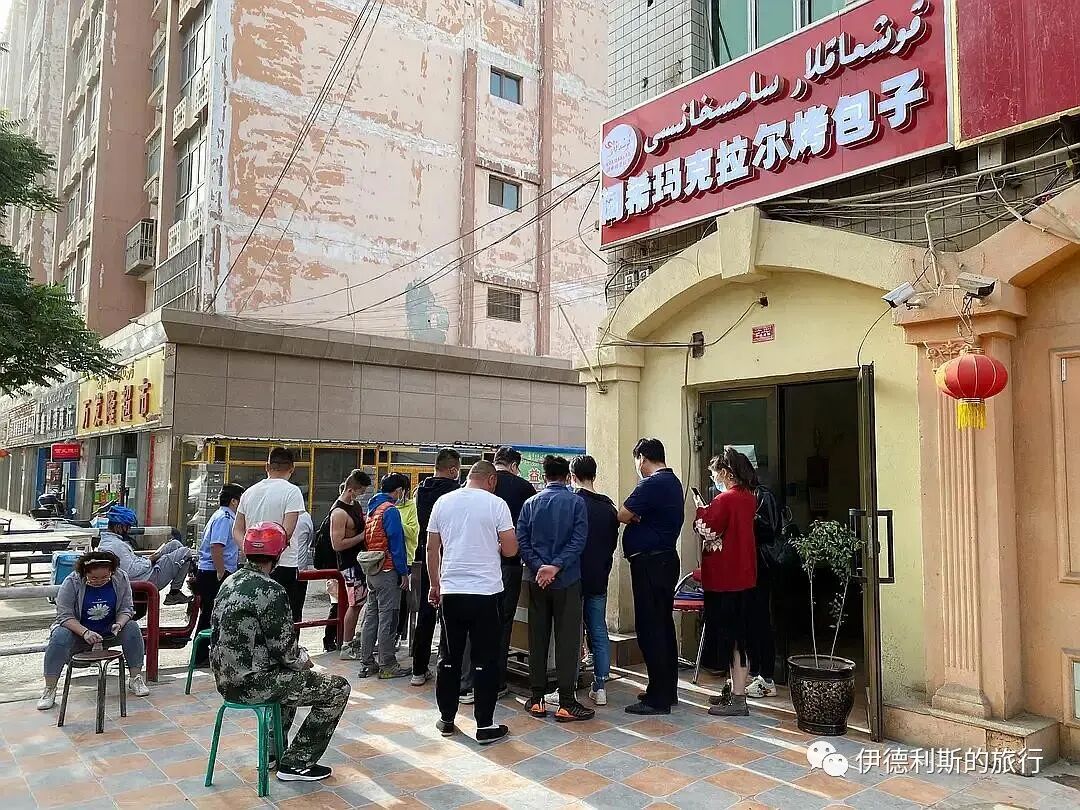
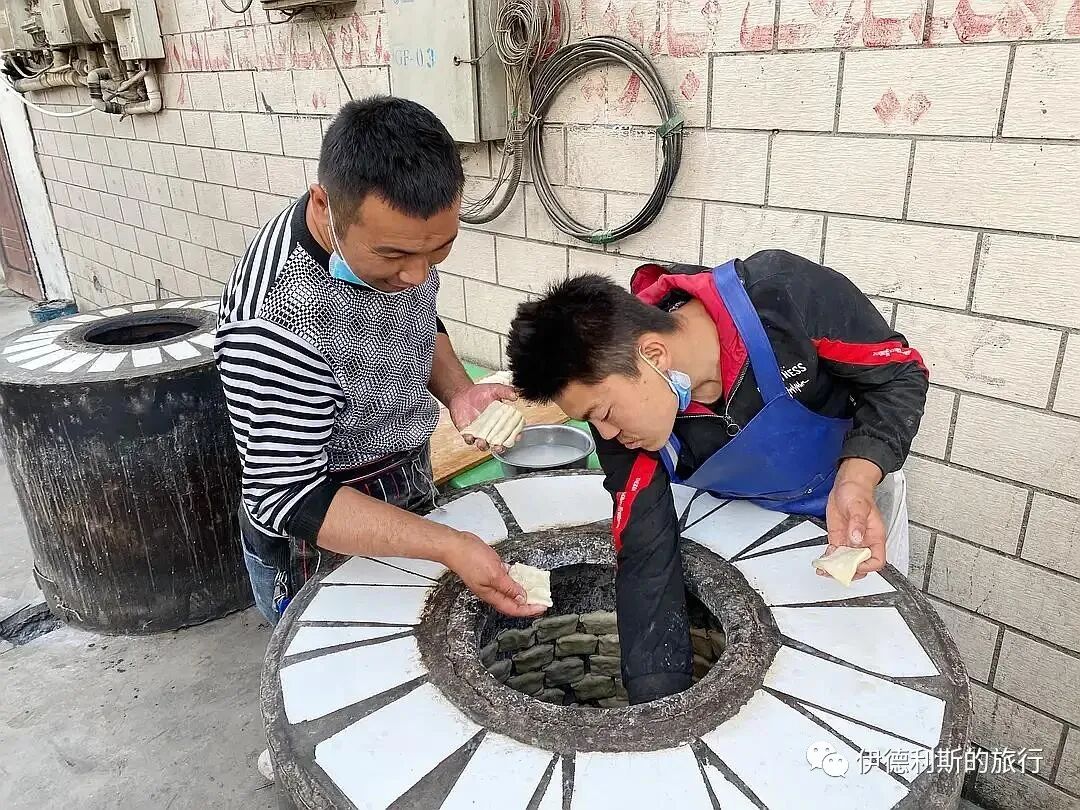
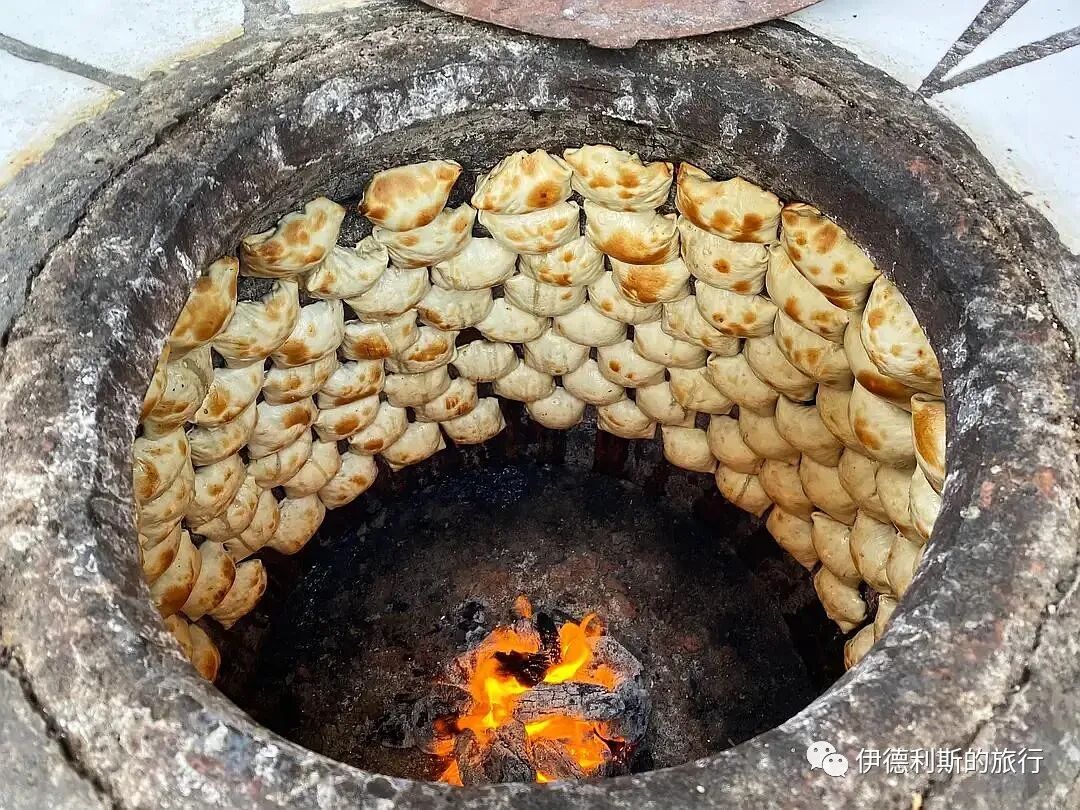
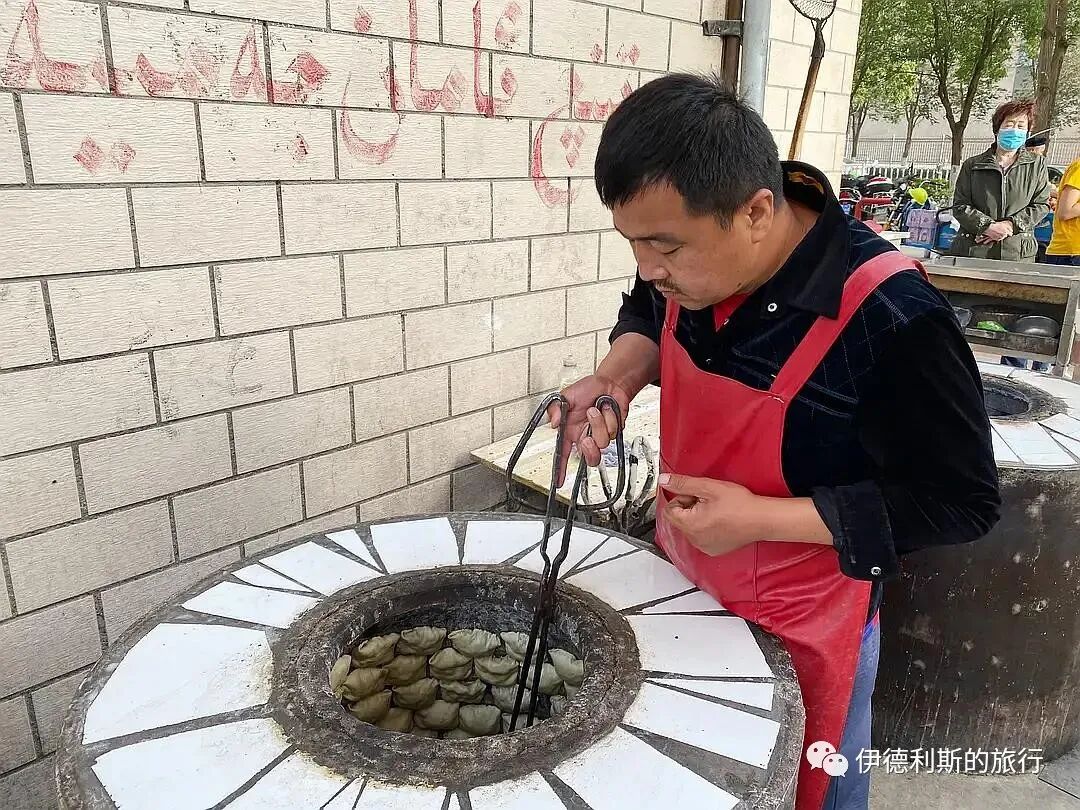
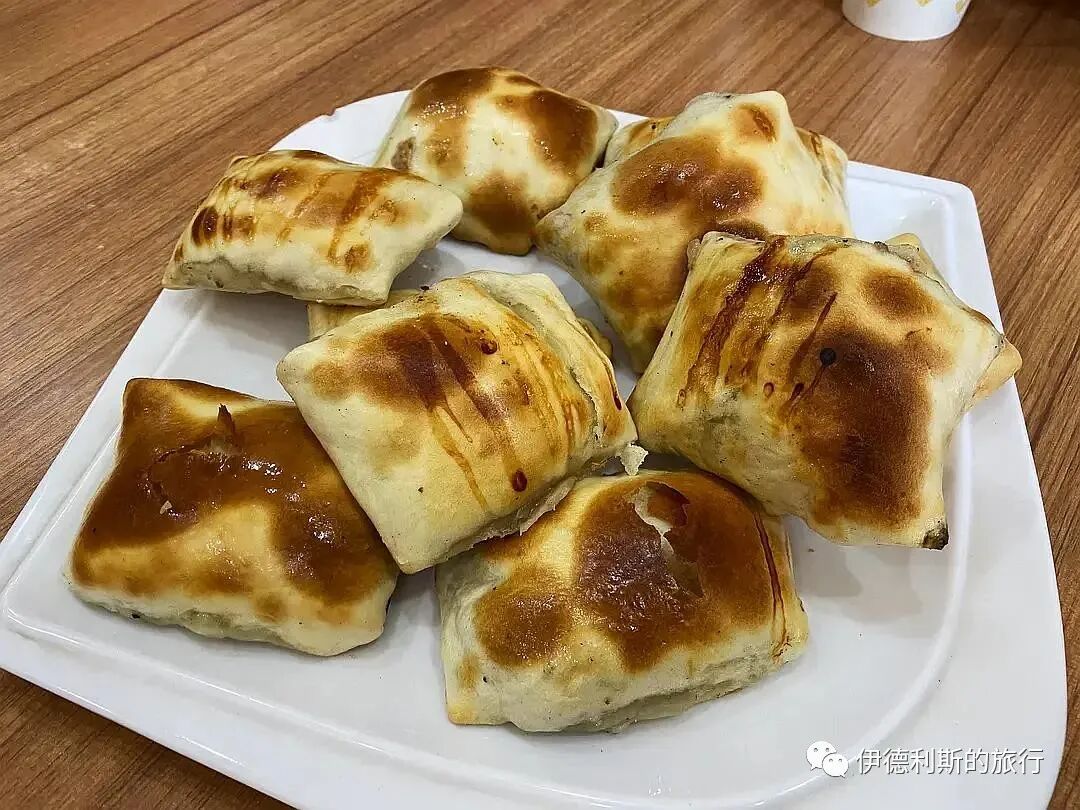
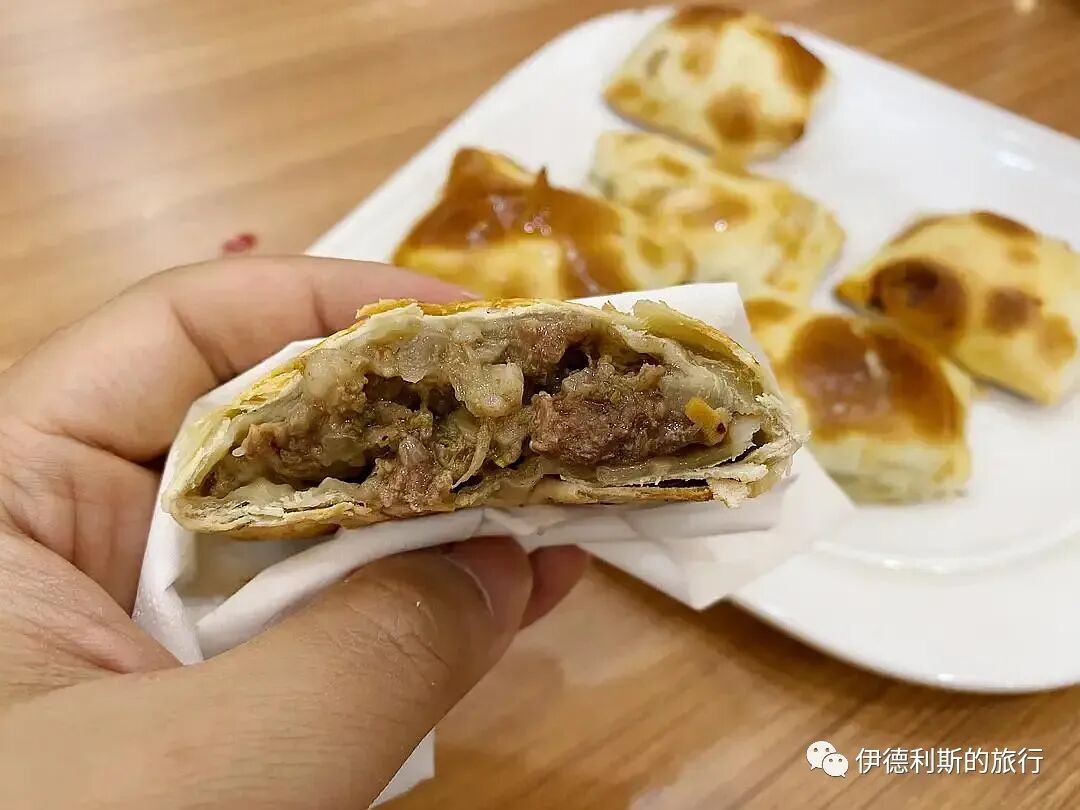
4. Huoyanshan Town
Huoyanshan Town is famous for its yellow noodles with grilled meat (huangmian kaorou). The whole street is filled with shops selling them. The most famous one is called Huoyanshan Famous Yellow Noodle and Grilled Meat Shop, but it was fully booked when we arrived, so we ate at the place across the street. We ordered a mix of yellow noodles and cold starch noodles (liangpi). Once the grilled meat was ready, they took it off the skewers and placed it on top of the noodles. It was so refreshing to eat in the summer and felt perfect for the climate of the Flaming Mountains. We also had grilled fish, and everyone agreed the meat was tender and delicious.
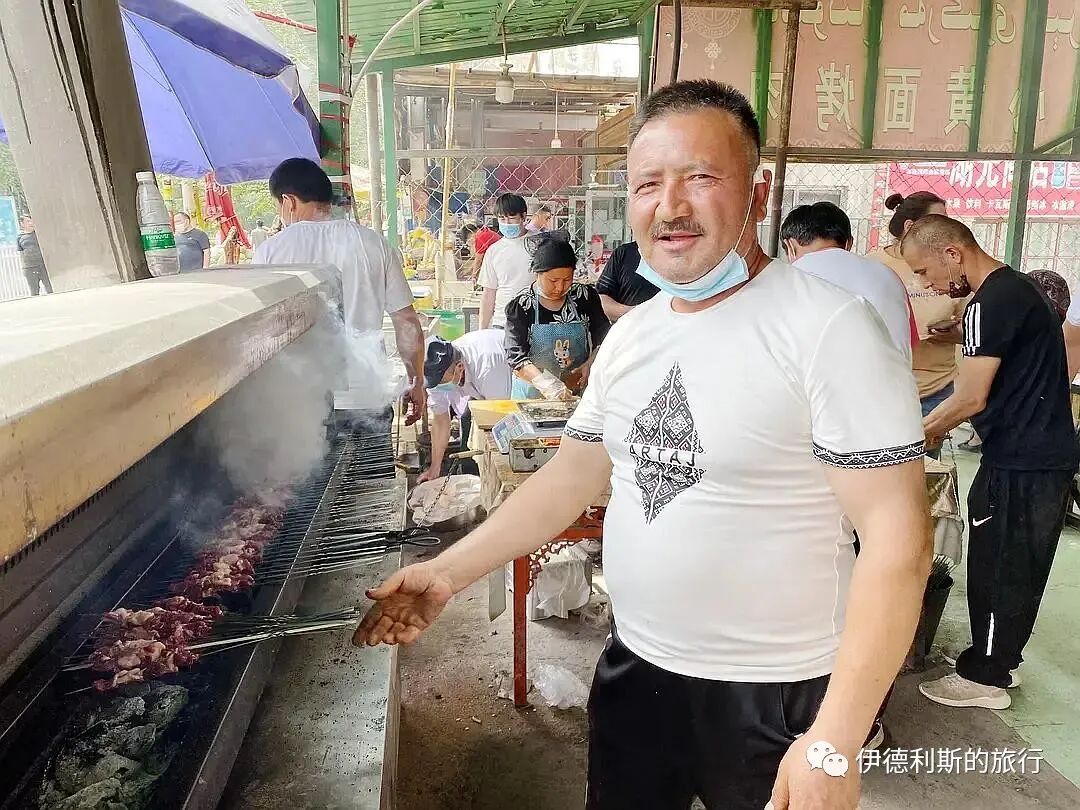
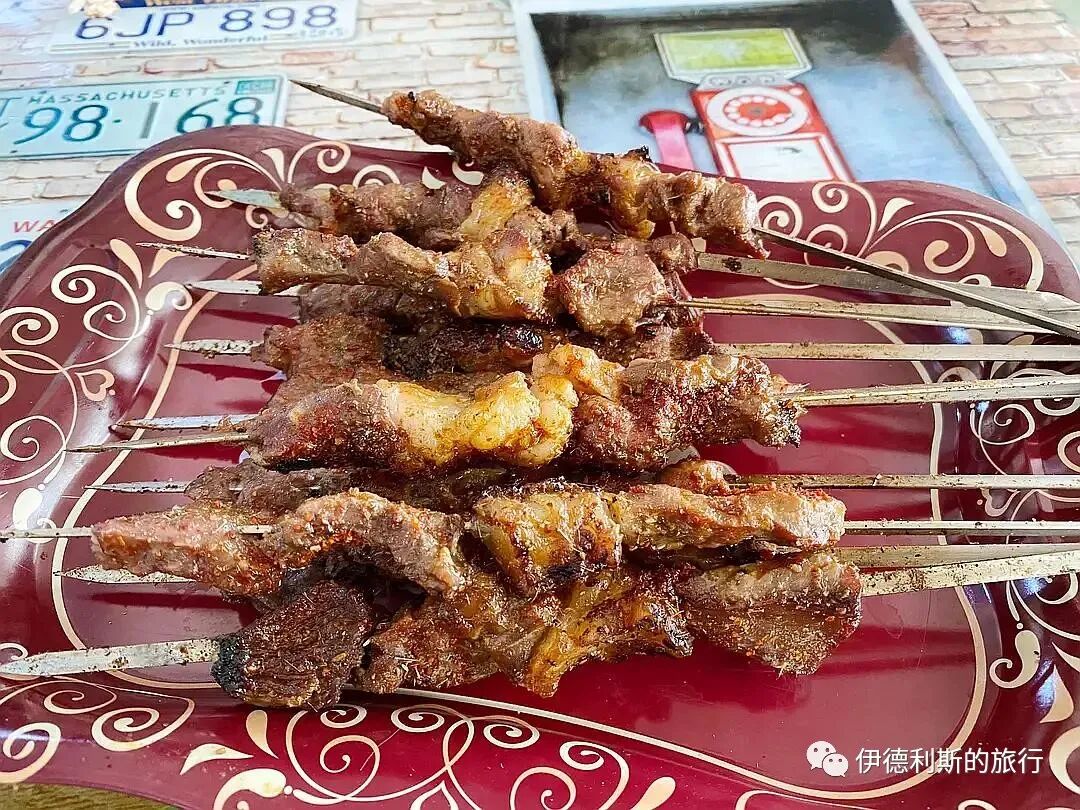
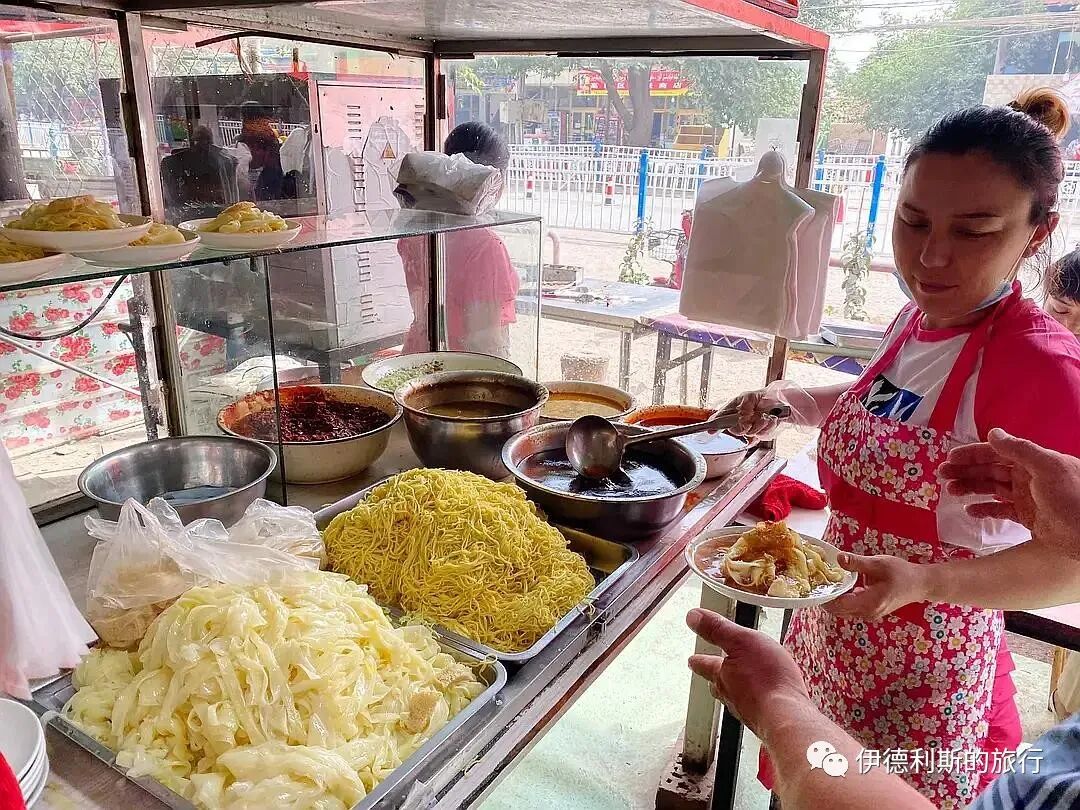
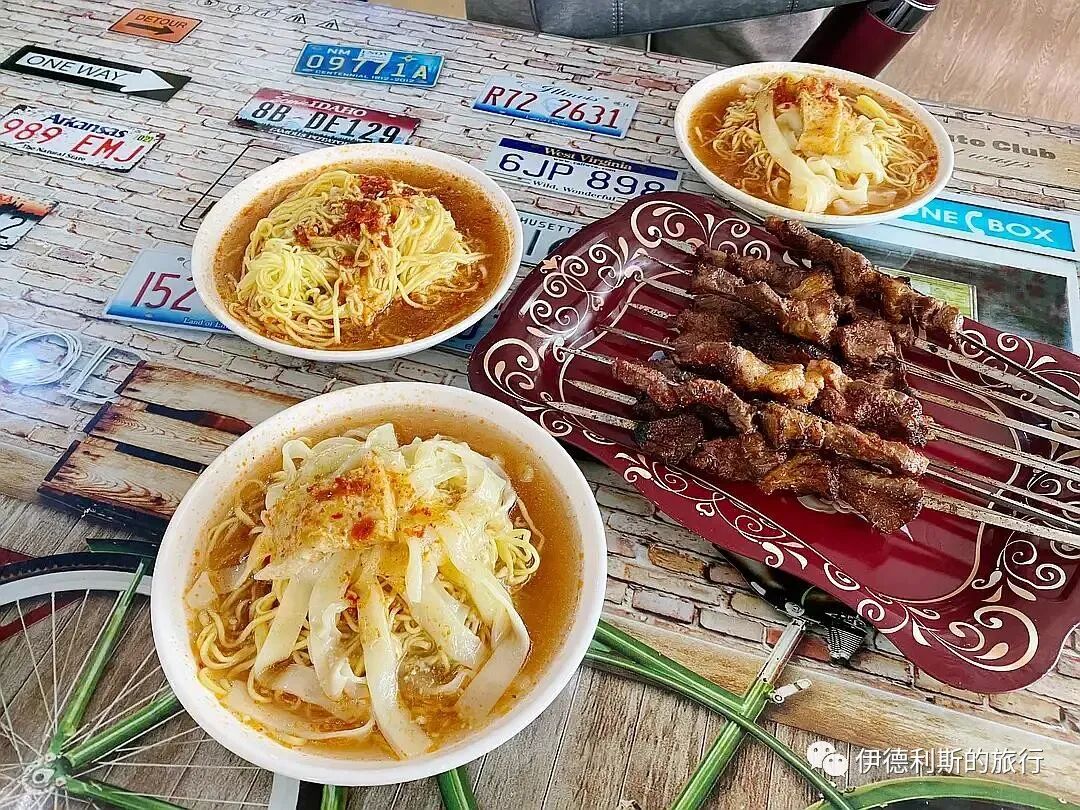
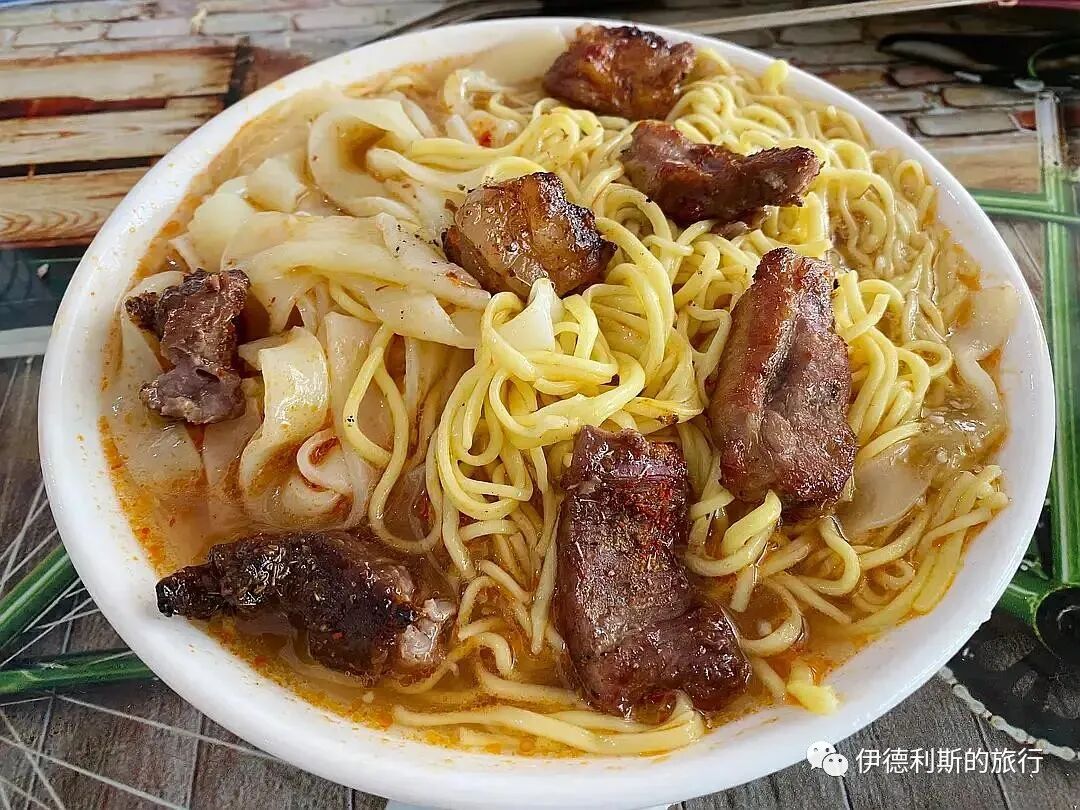
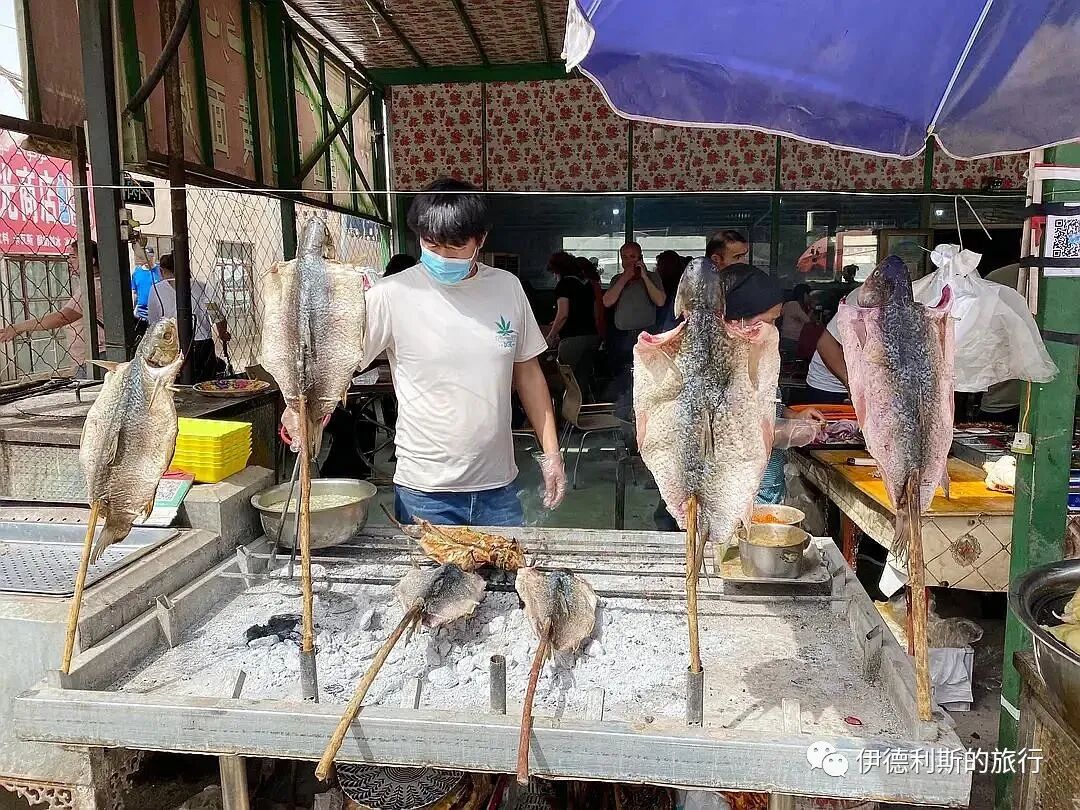
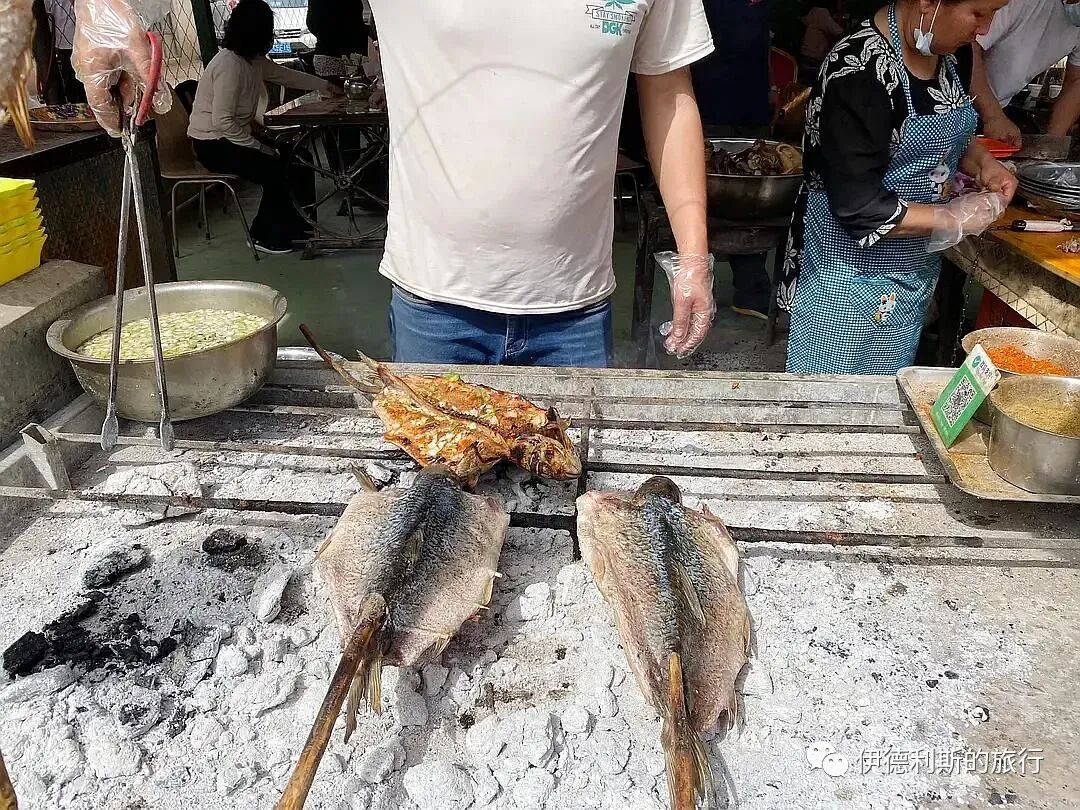
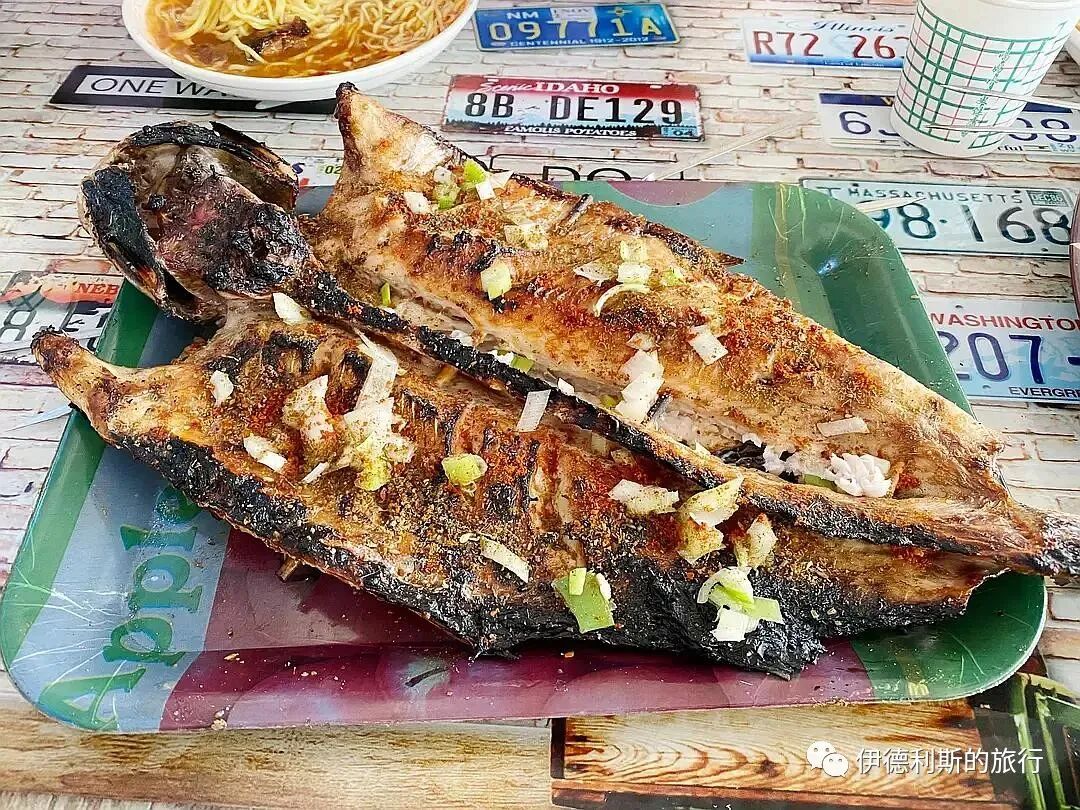
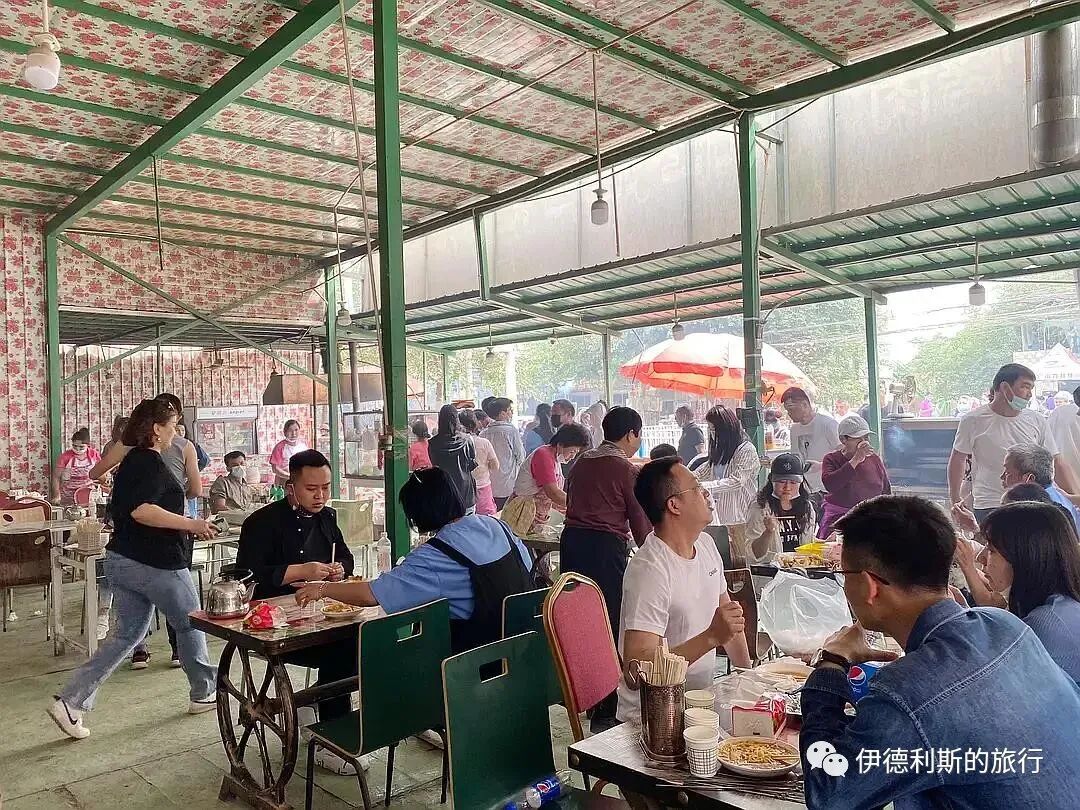
The beef head meat had a great chewy texture and the portion was huge. We also drank a fermented raisin and dried apricot beverage that is a specialty of Flaming Mountain Town, which is even richer than kvass (kawasi).
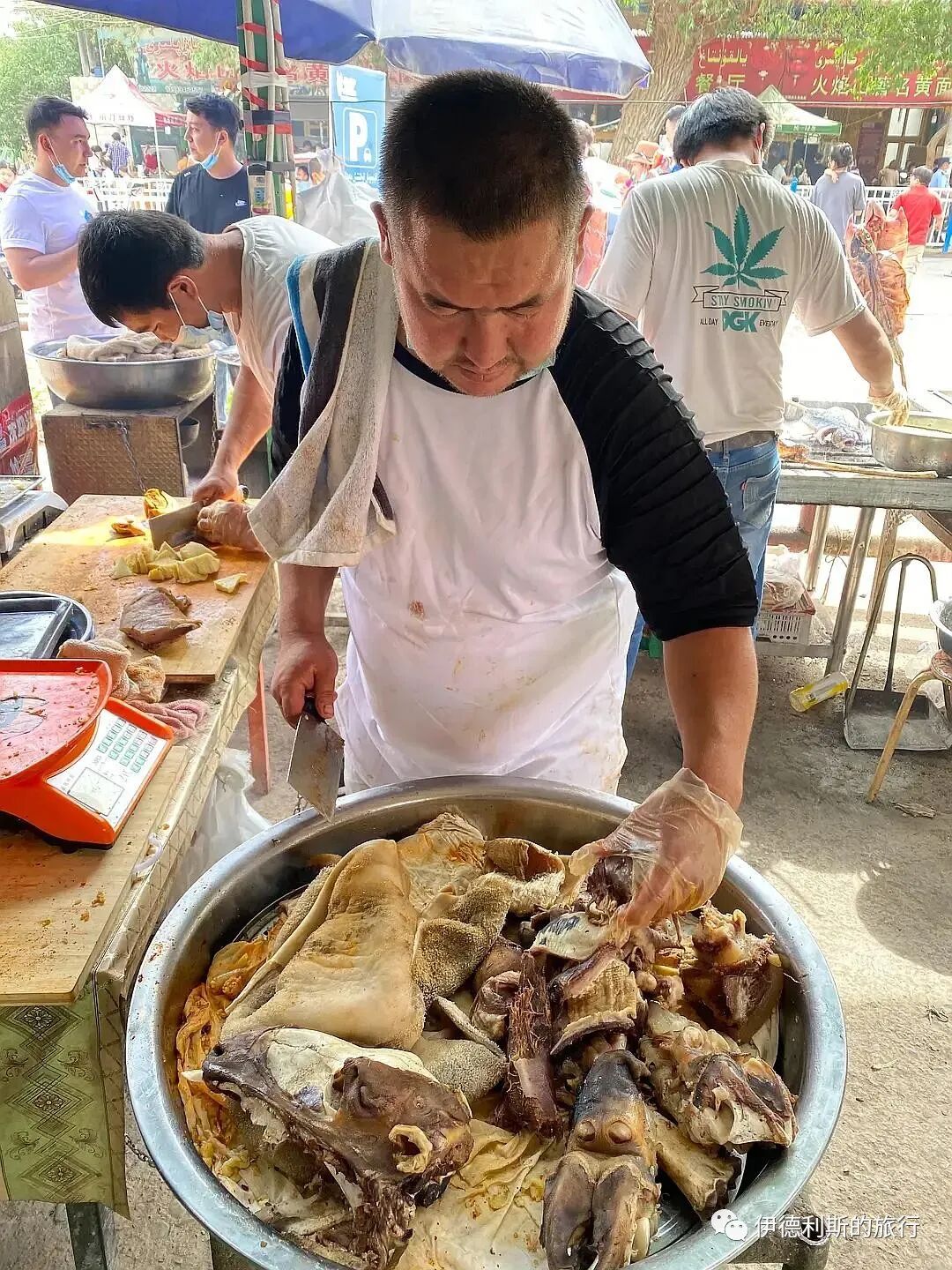
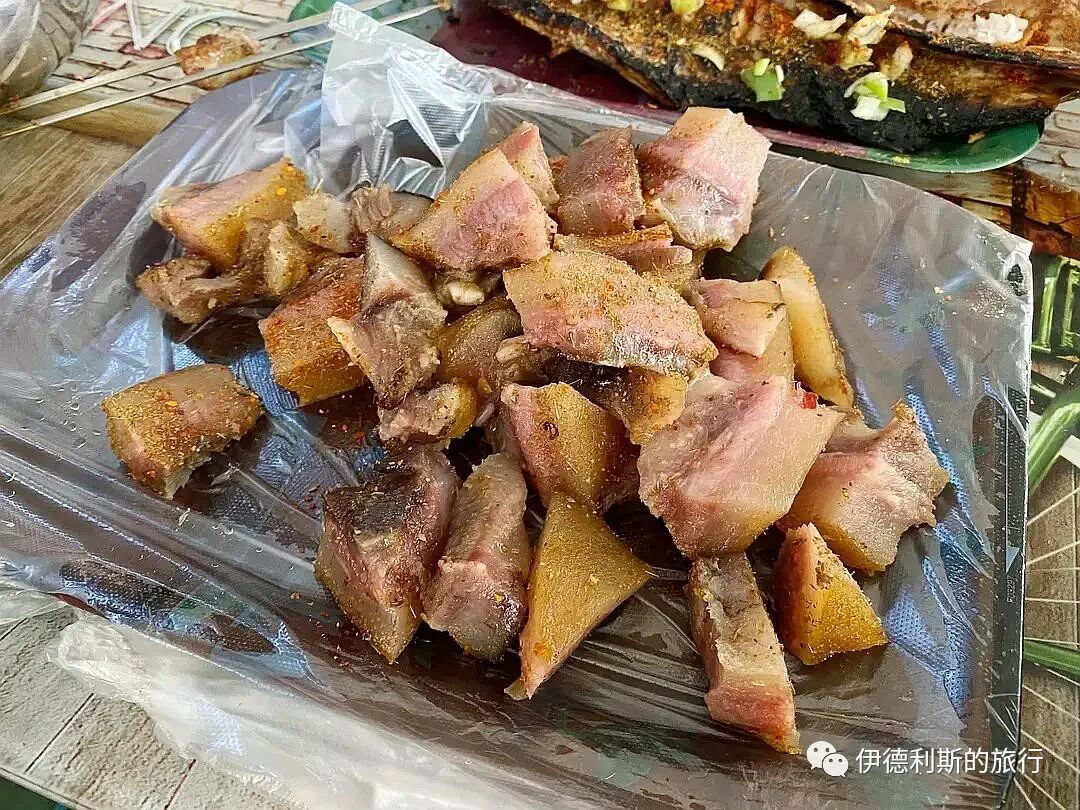
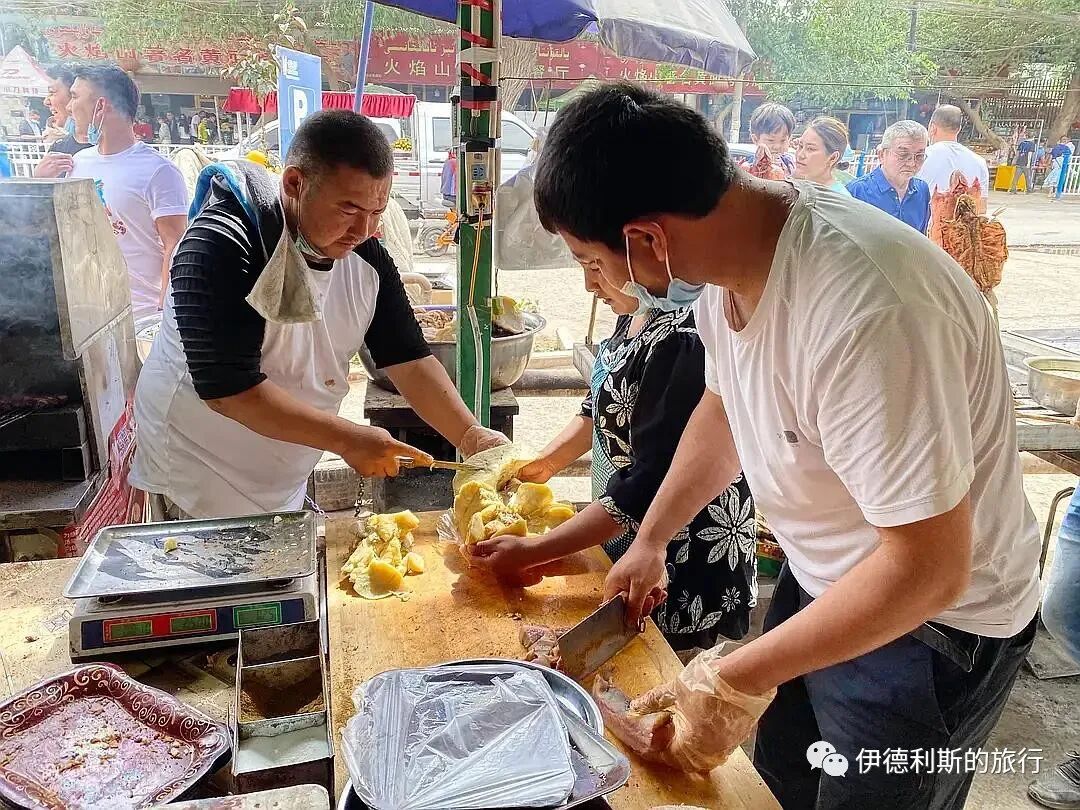
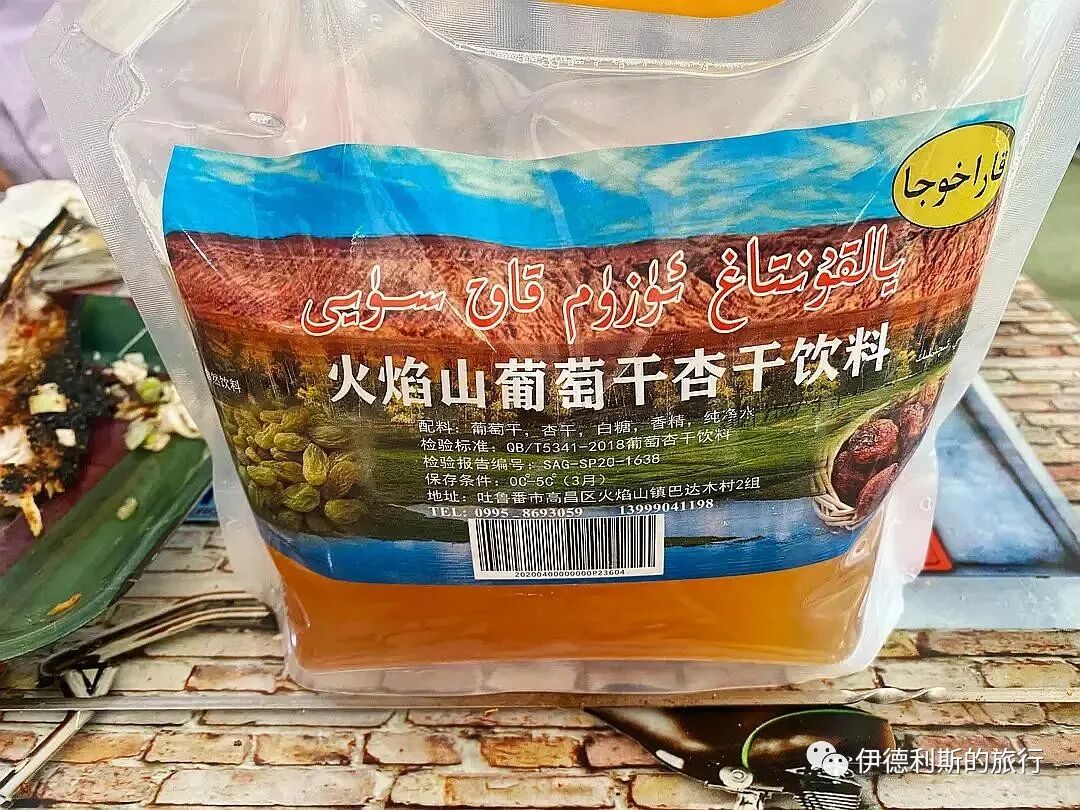
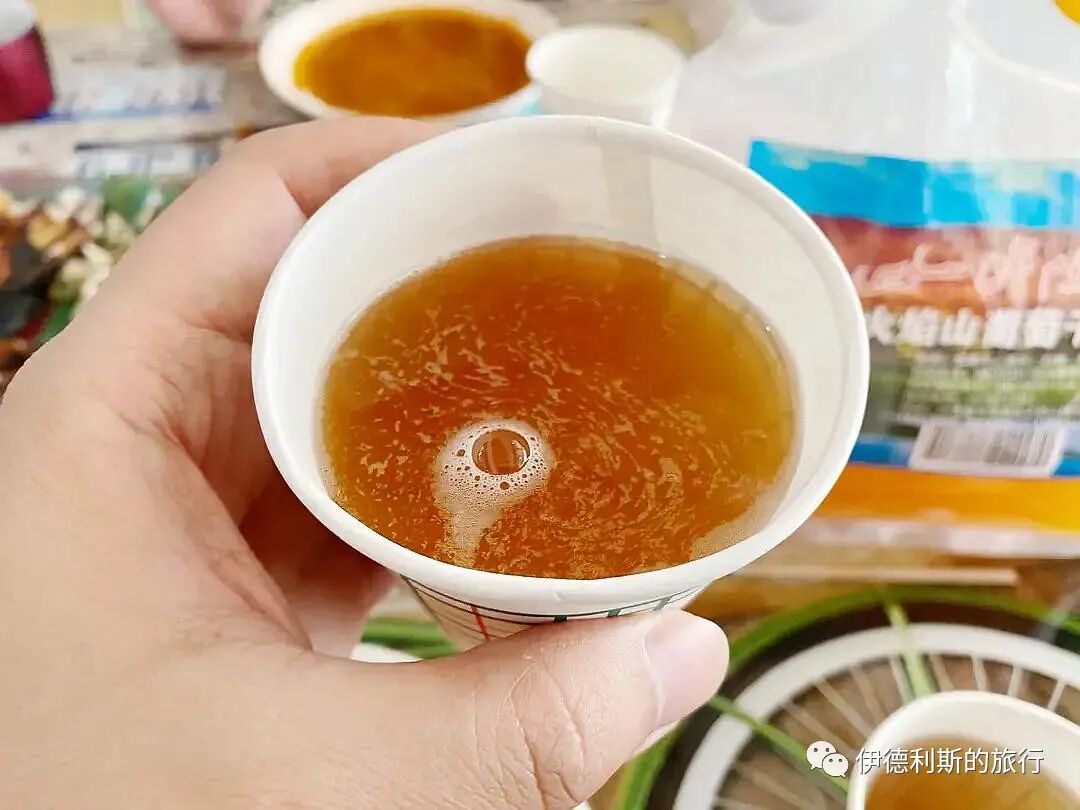
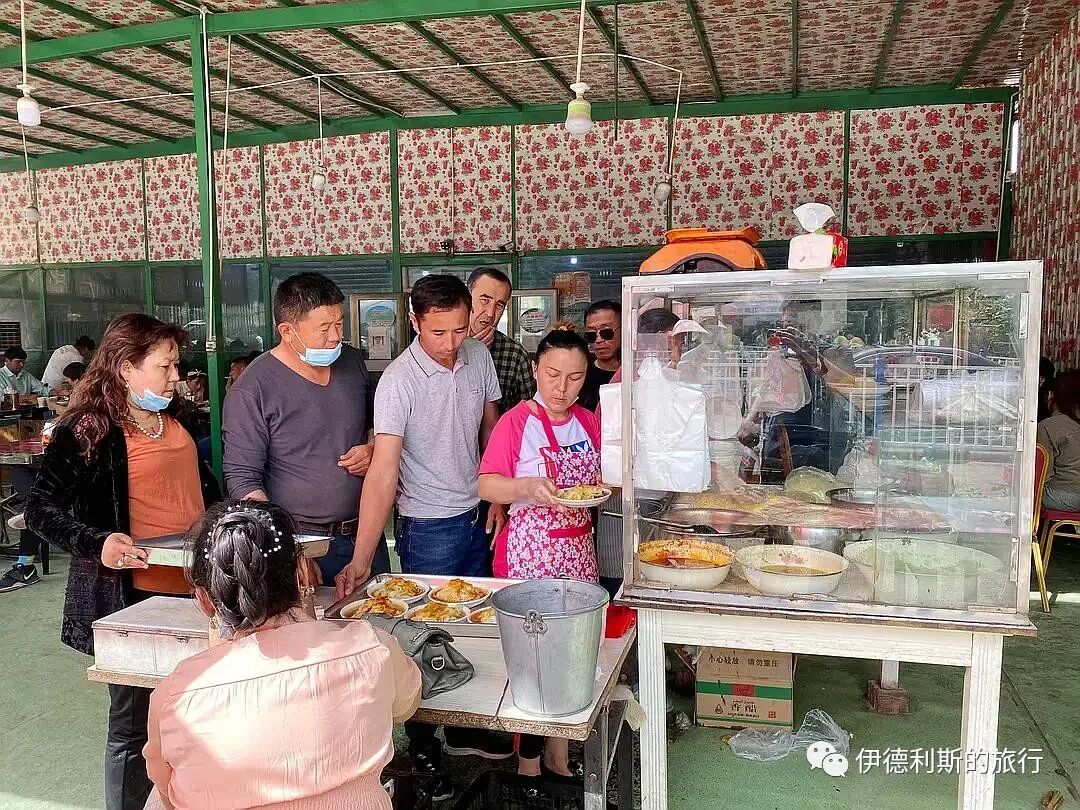
5. Shanshan County
We ate bean noodle soup (doudou mian) and eggplant noodles in Shanshan County, Turpan. People in Turpan love eating beans, including bean soup noodles (doudou tangfan), bean dumplings (doudou ququ'er), and bean mixed noodles (doudou banmian).
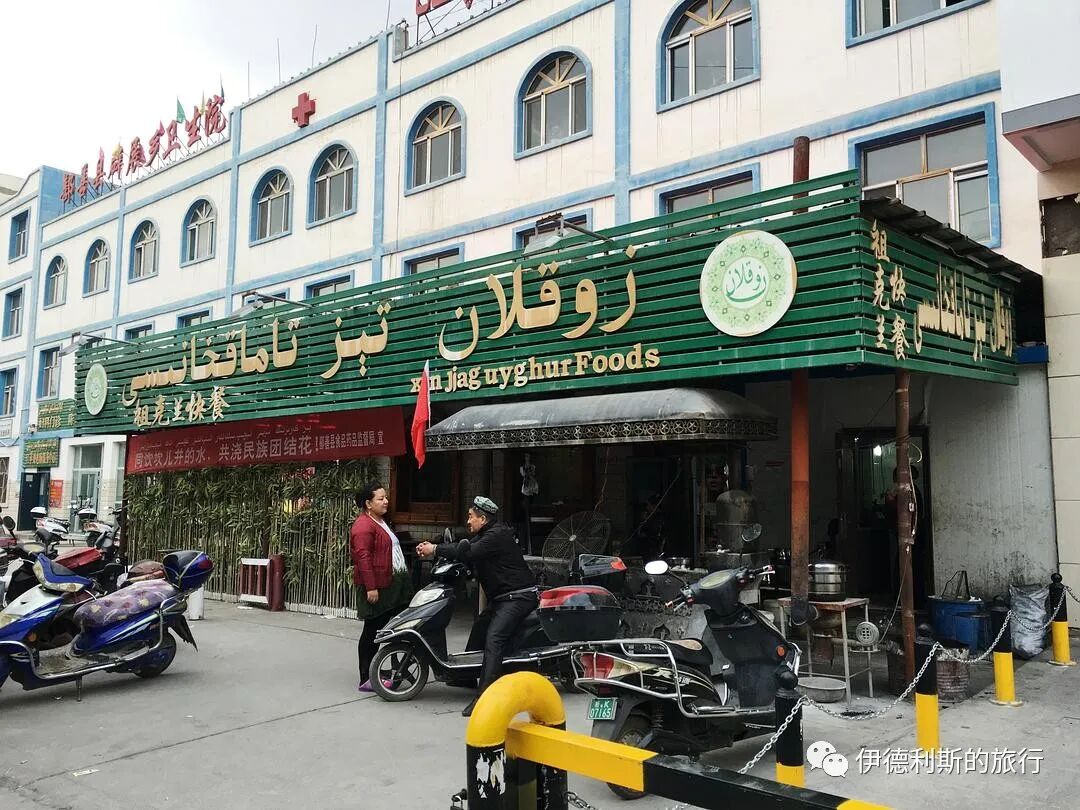
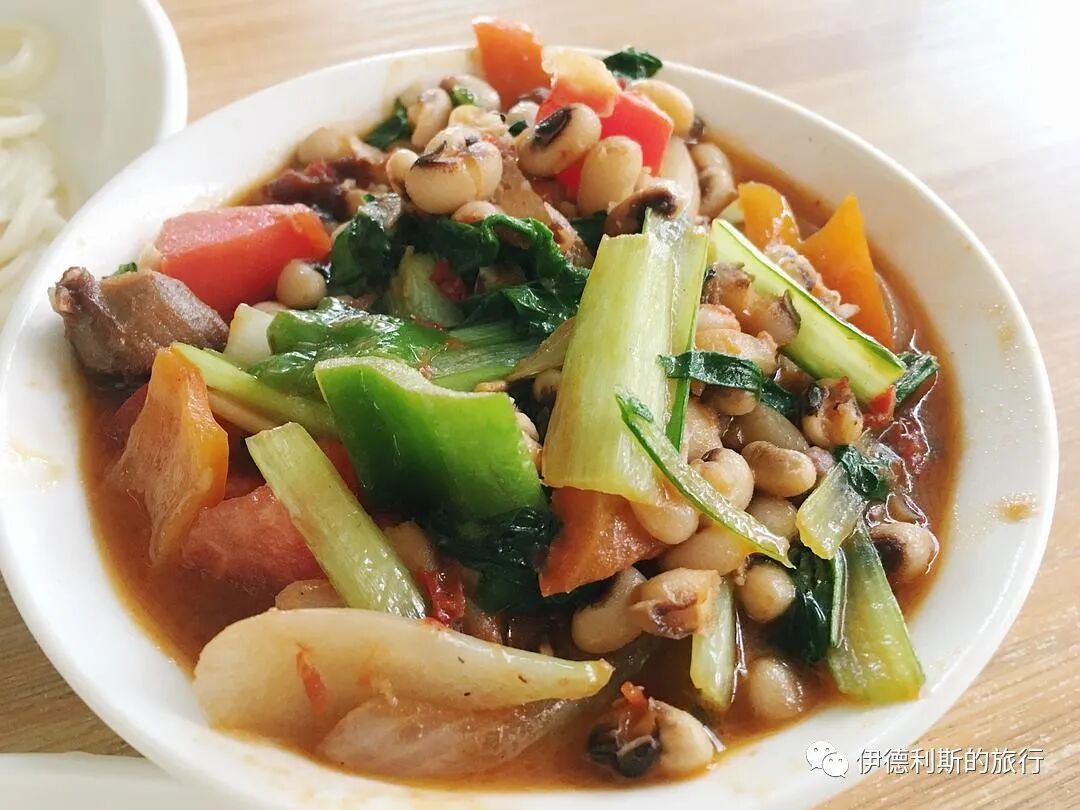
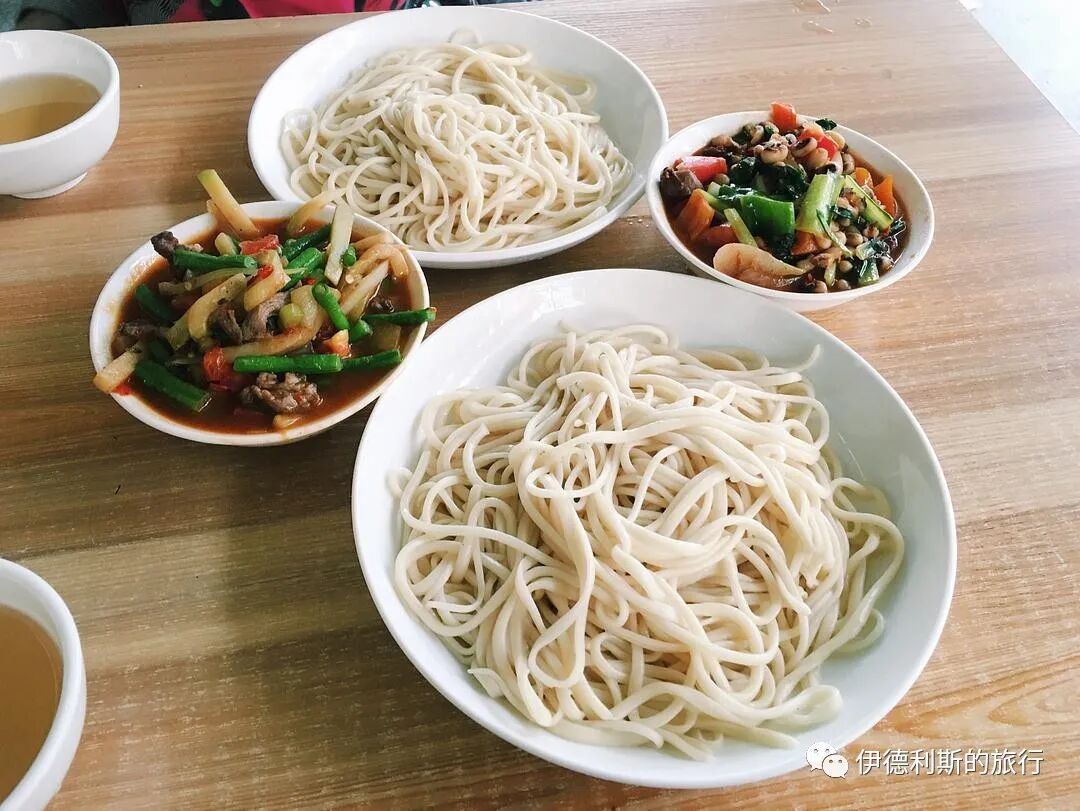
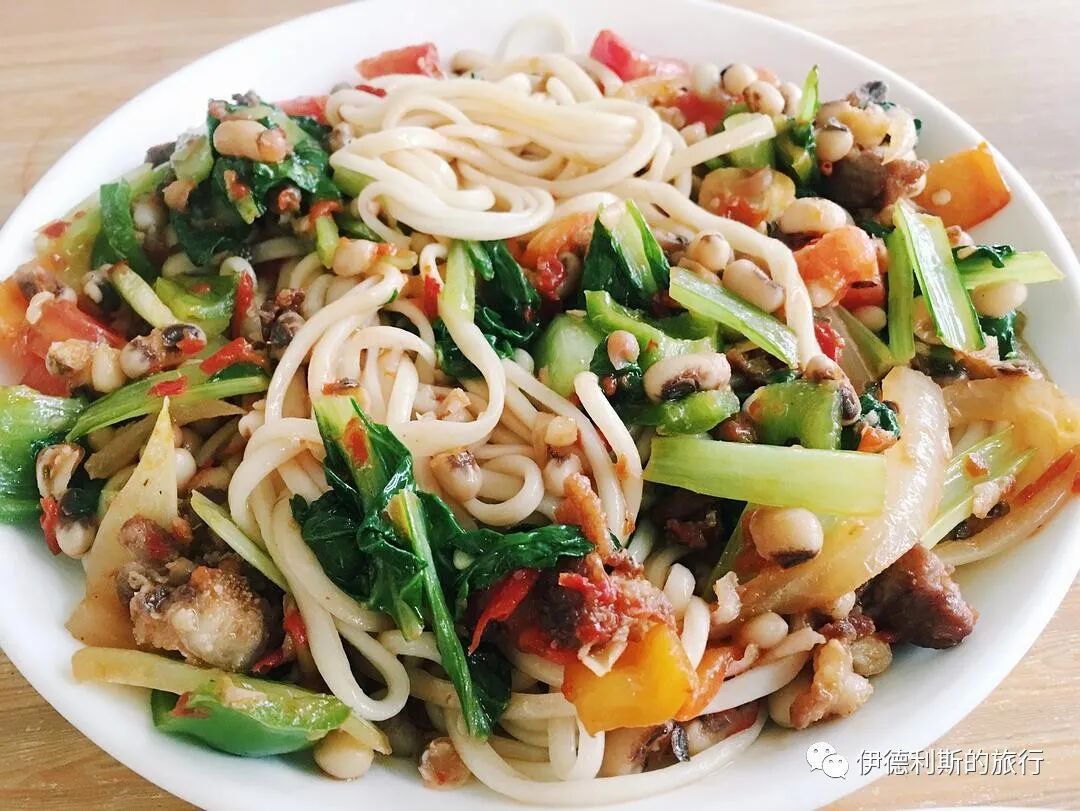
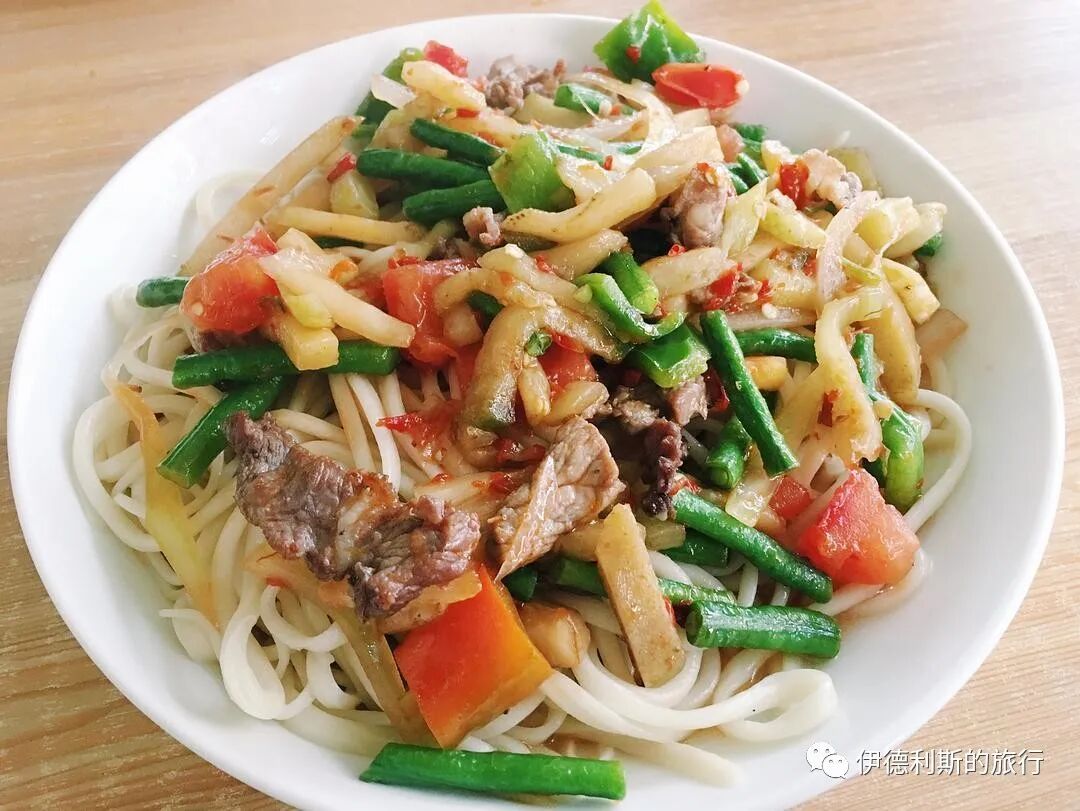
6. Yarkant (Shache)
We ate pigeon with the Yarkant Muqam Art Troupe at the Hometown of Muqam Restaurant (Mukamu Guxiang Canting). This is a famous spot for pigeon in Yarkant.
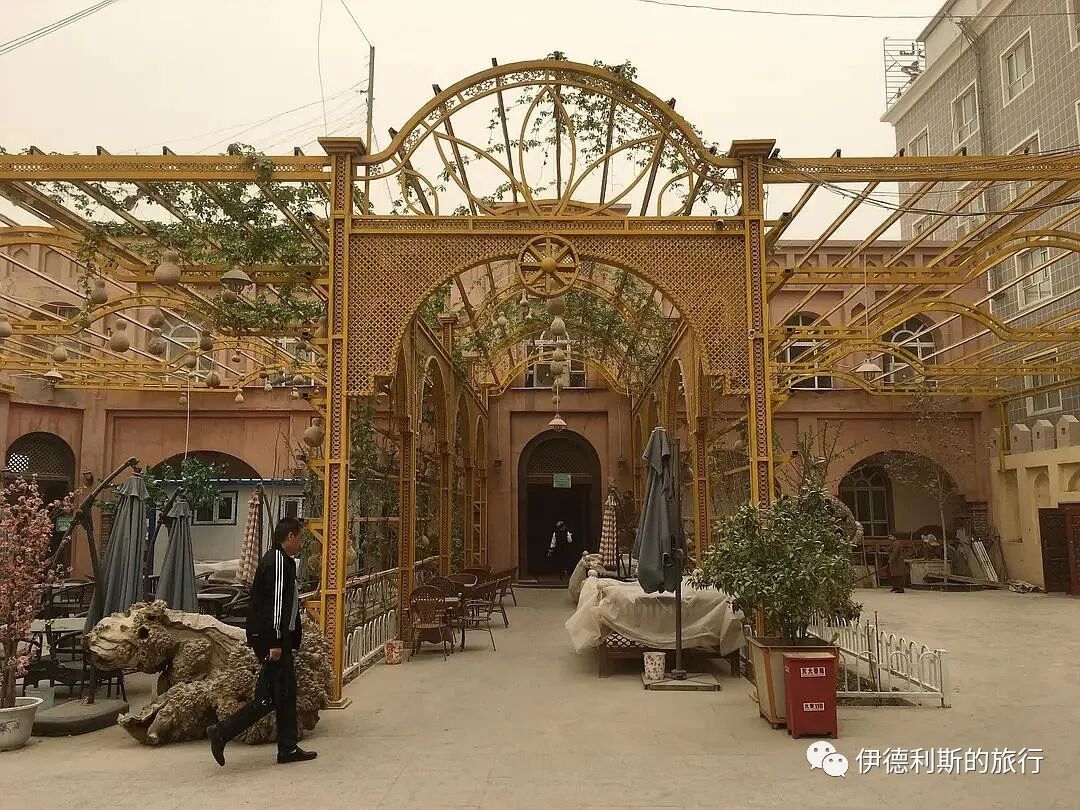
We ordered pigeon meat with turnip noodles (qiamugula mian) and roasted pigeon, both of which were delicious.
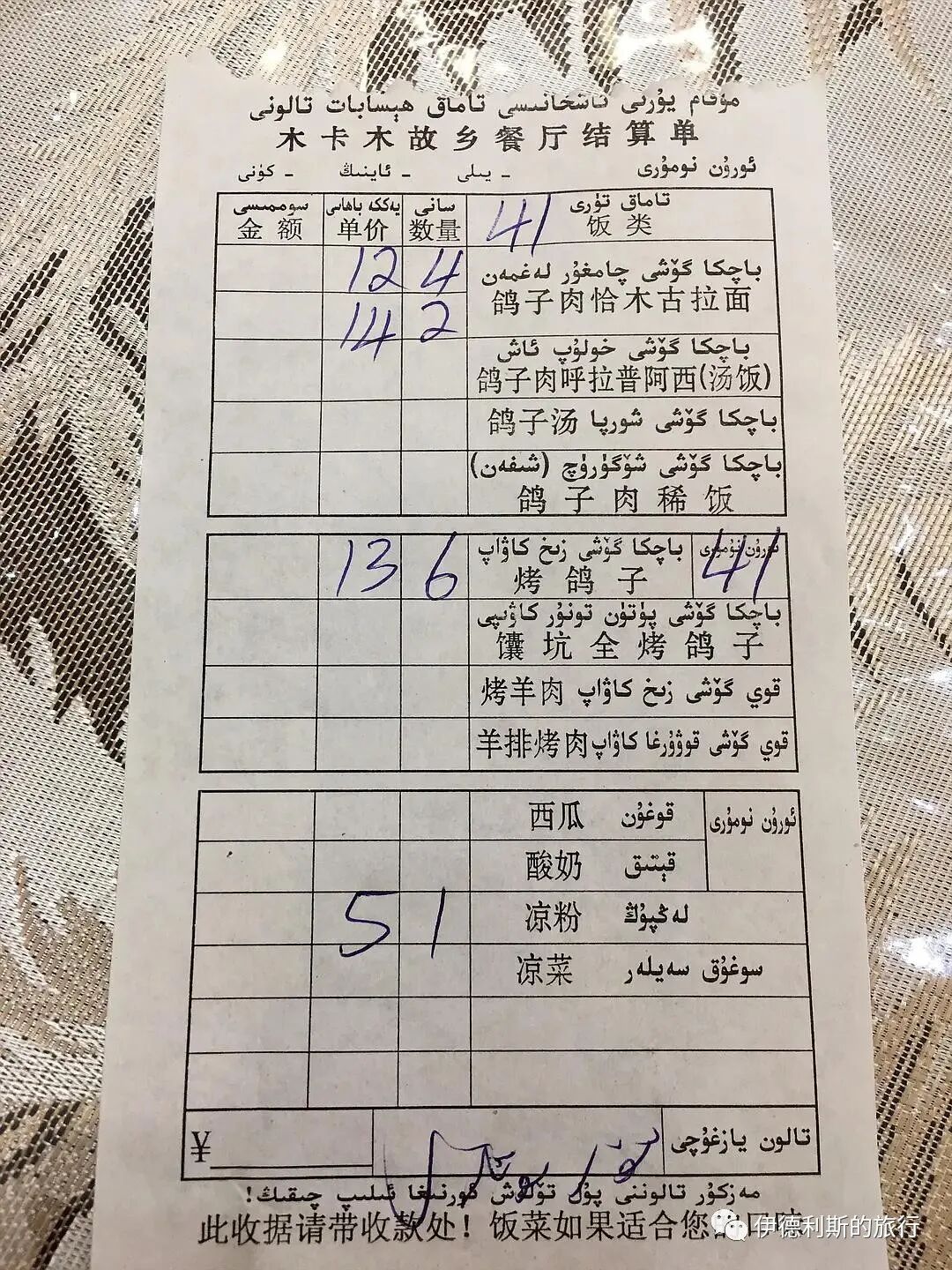
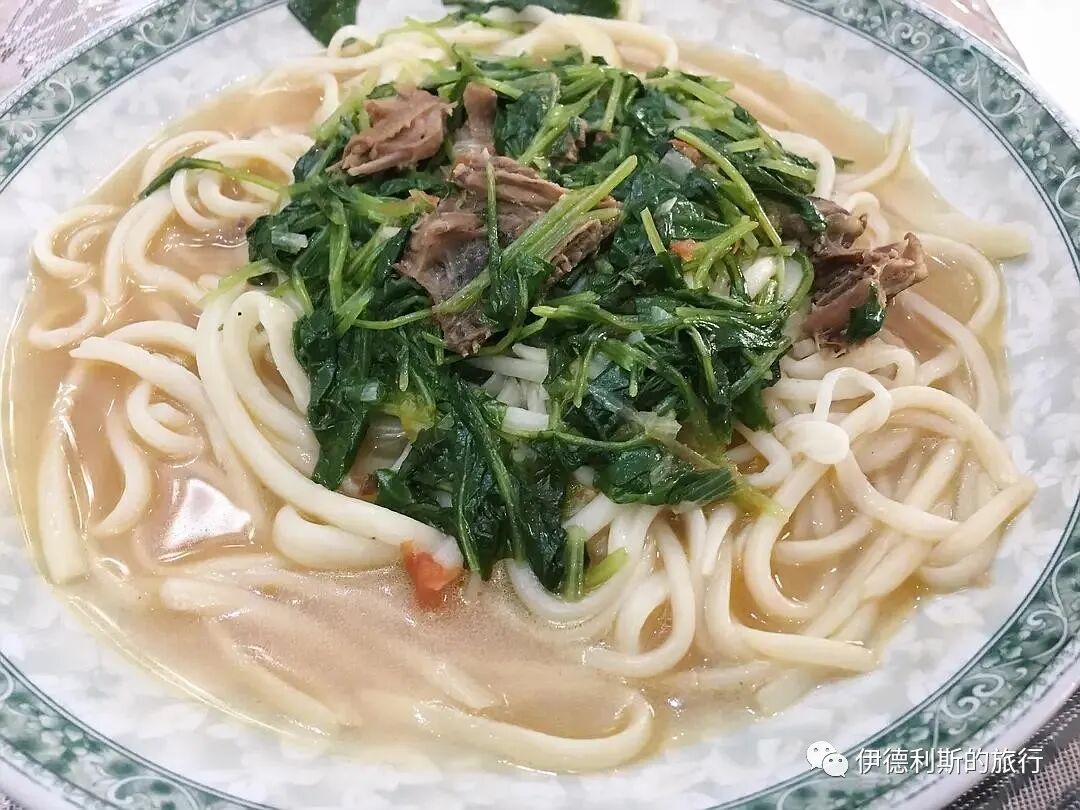
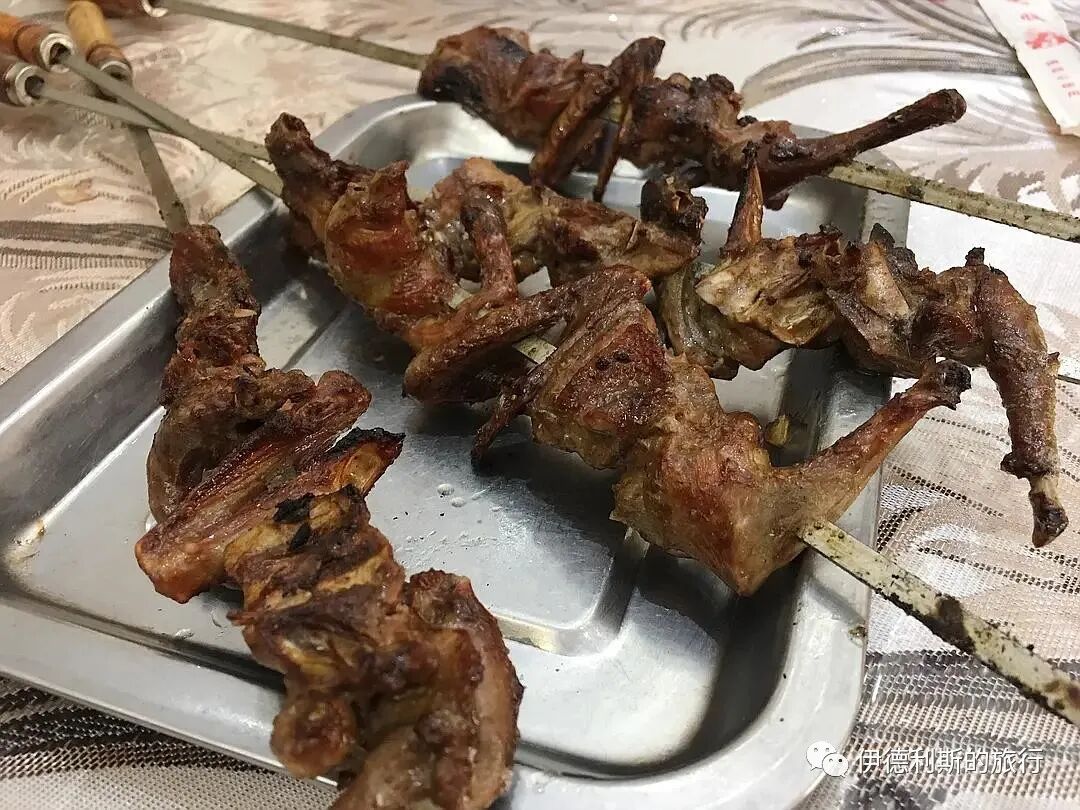
7. Kashgar (Kashi)
The fried fish at the night market across from the Id Kah Mosque in Kashgar is so fragrant, and this enamel plate is huge!
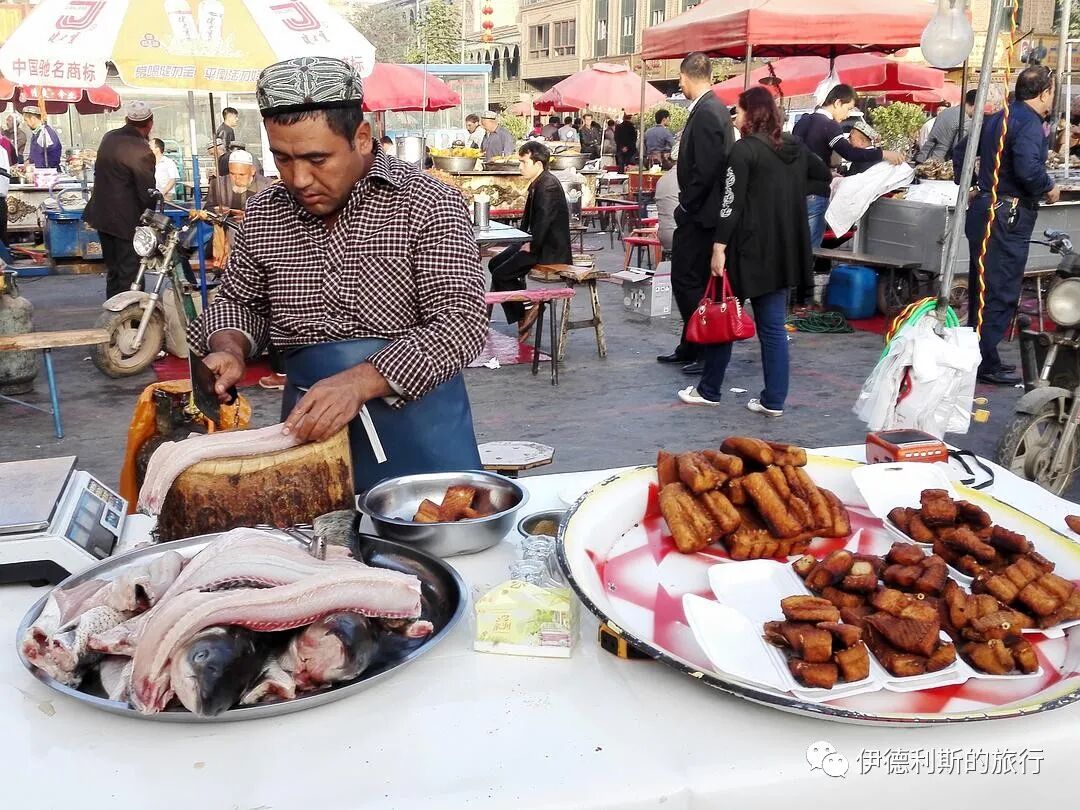
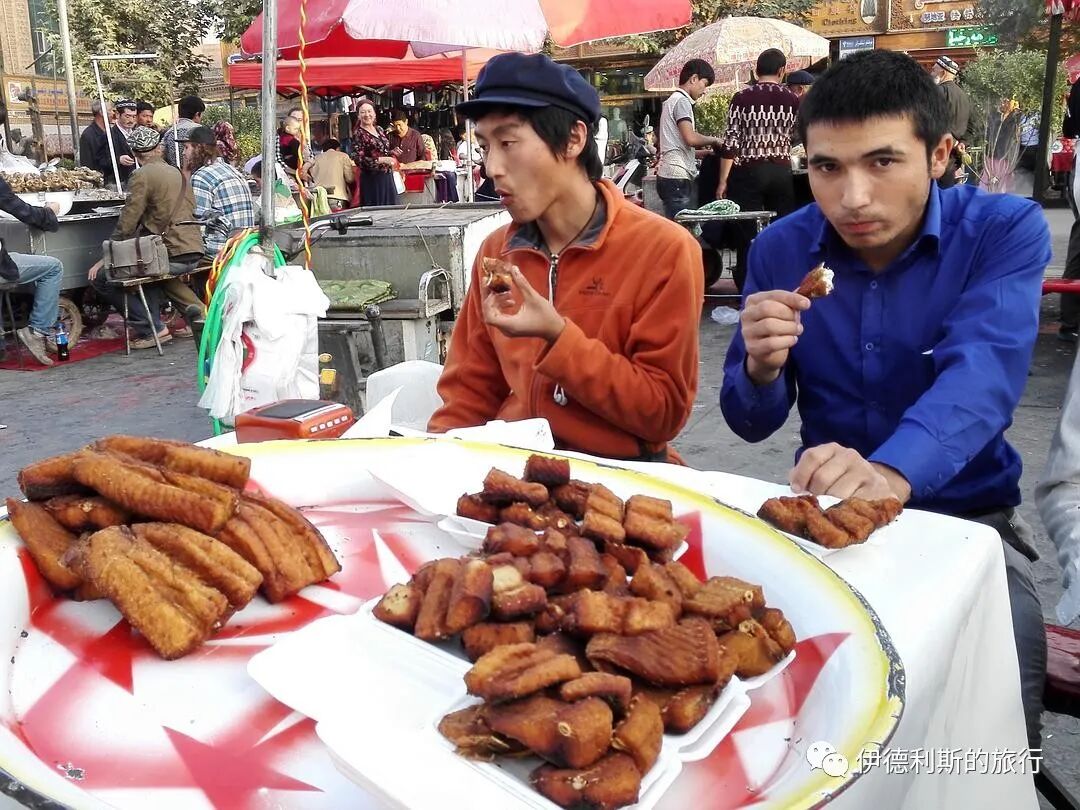
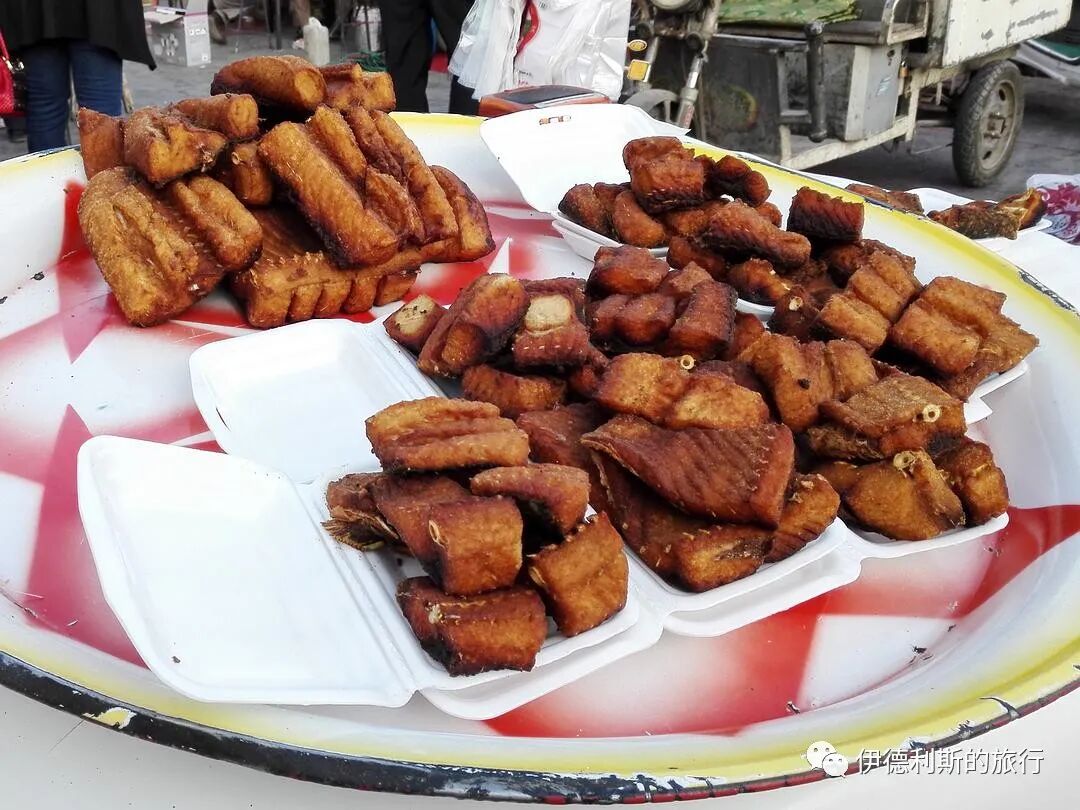
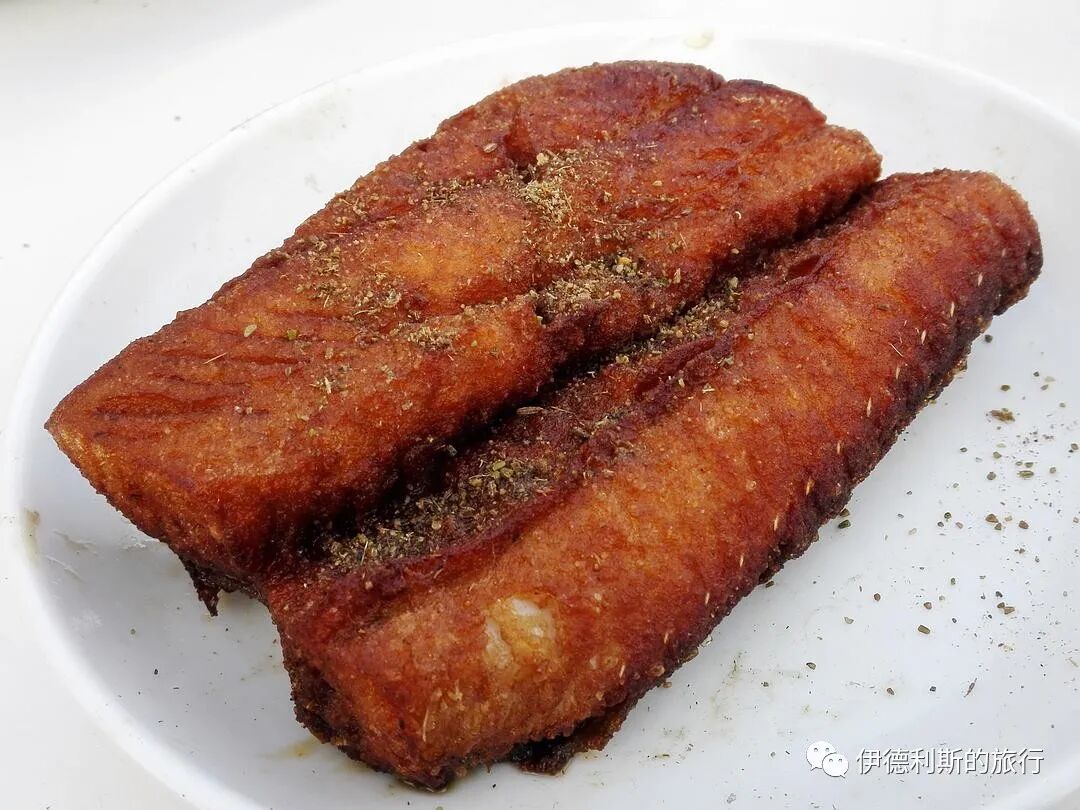
8. Yining
On Ahemaitijiang Road in Yining, there is a traditional Russian bread shop (lieba) run by locals. It has been open since 1988, and they still make their bread by hand and bake it over charcoal. The original owner was an old man with a big beard named Vladimir. Later, it was run by a long-haired young man named Balike, along with his mother Lima and his aunts Liuba and Ala. Since the traditional plain bread (lieba) is only available on Mondays, I only bought the raisin bread, but it was still delicious. The shop also has small apricot jam buns, and they make the apricot jam themselves.
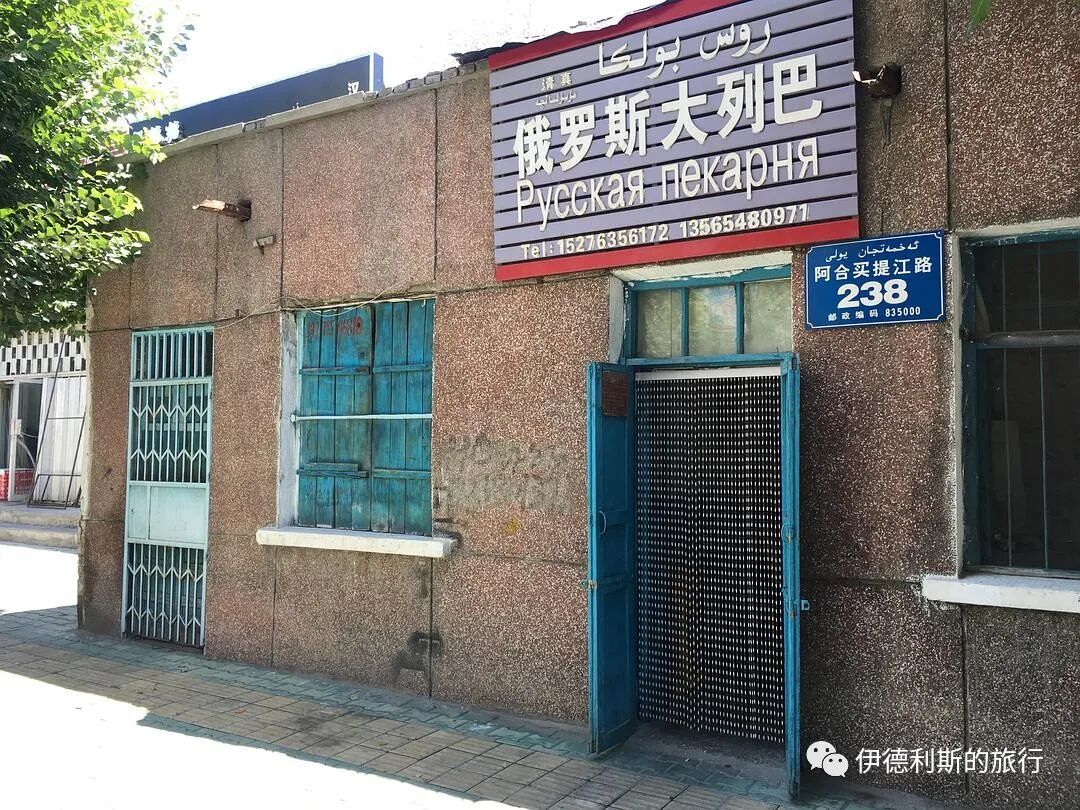
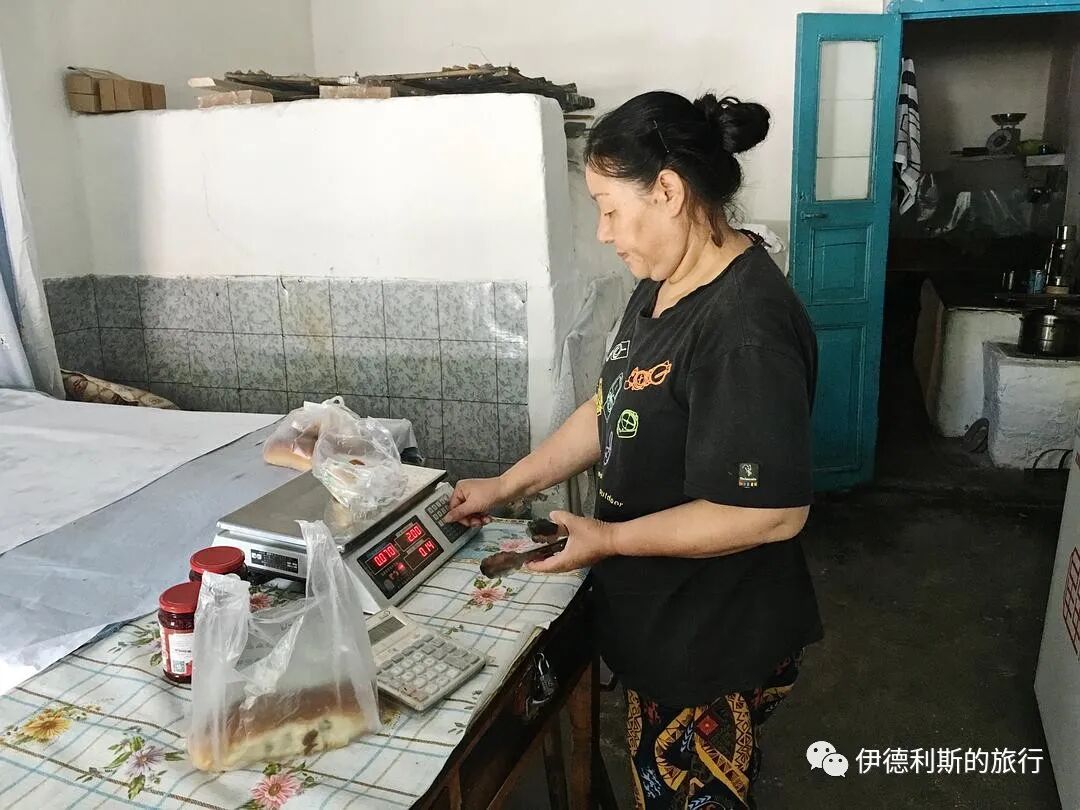
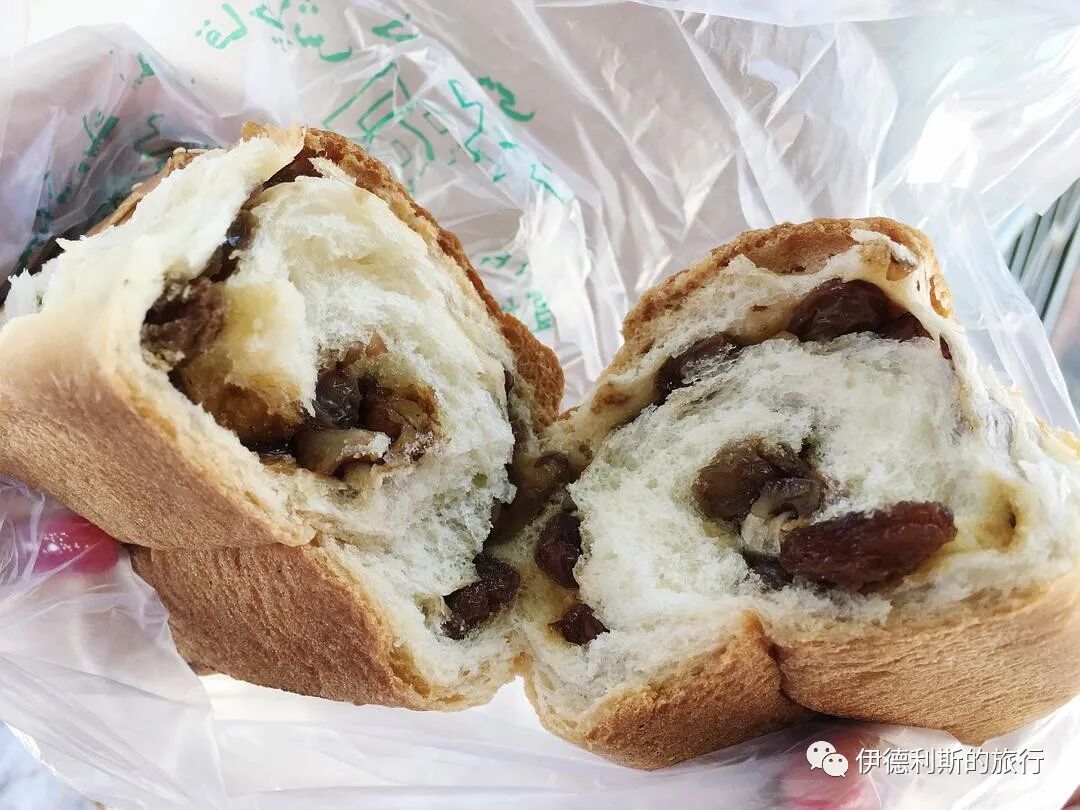
9. Qingshuihe Town, Huocheng County
Eat yogurt shaved ice (suannai baobing), beef tendon noodles (niujinmian), and yellow noodles (huangmian) in the shed outside the Qingshuihe Town bus station in Huocheng County, Ili. Summer in the Ili Valley is much hotter than in the surrounding pasture areas.
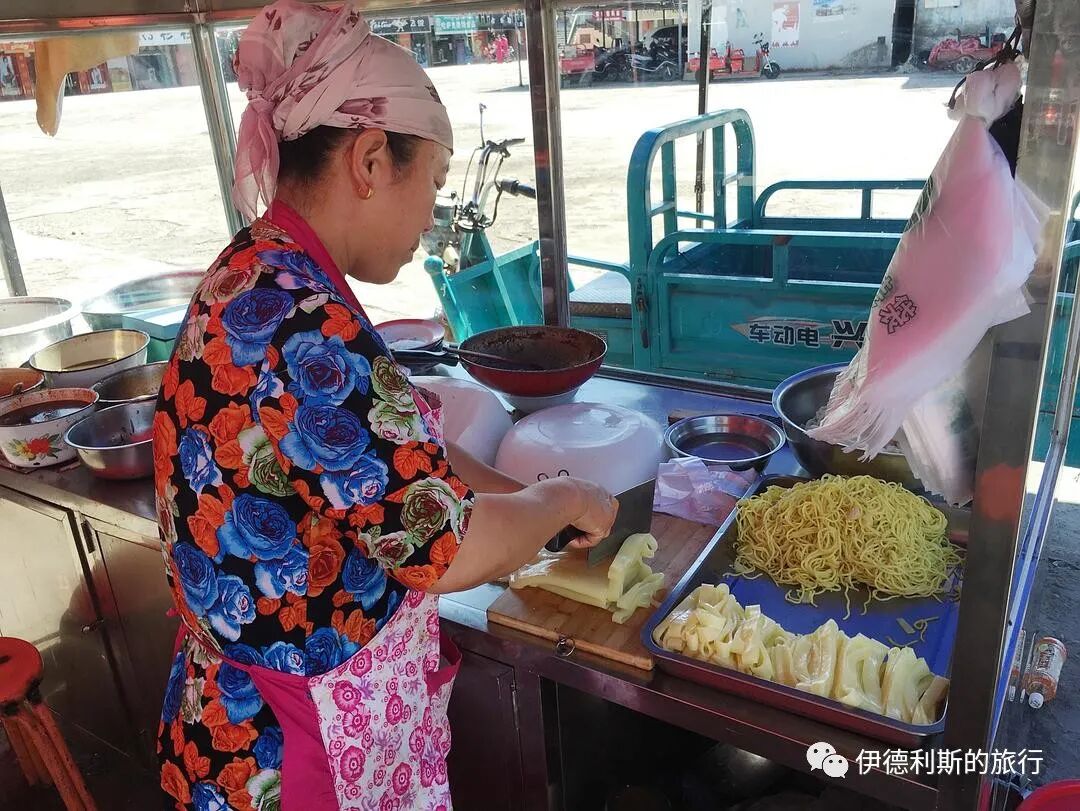
Halal Food Guide: Western China — Muslim Snacks and Local Halal Food (Part 3)
Articles • ali2007fr posted the article • 0 comments • 173 views • 2026-05-17 21:54
Summary: Halal Food Guide: Western China — Muslim Snacks and Local Halal Food is presented here as a firsthand travel account in clear English, beginning with this scene: In Zhaosu County, Ili, I ate braised young chicken with steamed flower rolls (huajuan) made by Hui Muslims. Their food is amazing. The flower rolls are braised right inside the chicken, making them smell incredible. The account keeps its focus on Western China Food, Halal Snacks, Muslim Travel while preserving the names, places, food, and historical details from the Chinese source.
10. Zhaosu County
In Zhaosu County, Ili, I ate braised young chicken with steamed flower rolls (huajuan) made by Hui Muslims. Their food is amazing. The flower rolls are braised right inside the chicken, making them smell incredible.
11. Nalati Town, Xinyuan County
In Nalati Town, Ili, I drank fermented mare's milk (manai-zi) and yogurt (suannai-zi) and ate Kazakh flatbread (nang). This was my first time drinking fermented mare's milk, and I liked it right away. I took a minibus from Nalati to Bayanbulak. Because it was the horse racing festival, the bus was packed with buckets of fermented mare's milk (manazi). The whole trip was filled with the scent of mare's milk, which is a truly unforgettable memory.
12. Hami
In Hami, I ate a big bowl of wild mushroom and lamb soup with rice (tangfan) at a place run by Hui Muslims. They call it a big bowl, but it is actually a large basin. When you order, you choose the amount of lamb, with a minimum of half a kilogram, and it comes with fried dough (youxiang) and various side dishes. It was my first time eating lamb soup with rice in such a generous way, and it felt so warm and comforting.
13. Korla
Eating figs on the streets of Korla is like eating honey; they are incredibly sweet. Figs from southern Xinjiang bruise easily and are hard to transport, so you cannot find them fresh once you leave Xinjiang. They are not even common in Urumqi.
14. Bayanbulak Town, Hejing County
Eating hand-pulled noodles with wild mushrooms (banmian) in Bayanbulak Town, Bayin'gholin Prefecture. In the summer, the whole town is covered in wild mushrooms drying in the sun.
15. Hejing County
I had sweet rice dumplings (tangzongzi) at a Hui Muslim cold noodle shop in Hejing County, and they are eaten very differently here than back home.
16. Yanqi County
I ate lamb offal soup (yangzasui) and meatball soup (wanzitang) at a Hui Muslim snack shop on the street in Yanqi County, Bayingolin. The soup base here is heavier and spicier than what the Hui Muslims make in Changji.
17. Yuli County
I ate small oil-brushed flatbreads (xiaoyounang) at the entrance of the Great Mosque in Yuli County, Bayingolin. I also had a huge baked bun (kaobaozi) there; I remembered the name at the time, but I have forgotten it now, haha.
18. Kuqa
I drank mulberry juice at the bazaar in the new city of Kuqa. The mix of sweet and tart flavors rushed into my heart, tasting just like first love.
19. Yengisar County
Meat broth (yangtang) with flatbread (nang) at the weekend bazaar in Yengisar County. I made a special trip there from Kashgar, and it was huge! It felt so authentic and wild, I loved it. It has been many years since I visited a wild bazaar in a southern Xinjiang county, and I really miss it. view all
Summary: Halal Food Guide: Western China — Muslim Snacks and Local Halal Food is presented here as a firsthand travel account in clear English, beginning with this scene: In Zhaosu County, Ili, I ate braised young chicken with steamed flower rolls (huajuan) made by Hui Muslims. Their food is amazing. The flower rolls are braised right inside the chicken, making them smell incredible. The account keeps its focus on Western China Food, Halal Snacks, Muslim Travel while preserving the names, places, food, and historical details from the Chinese source.
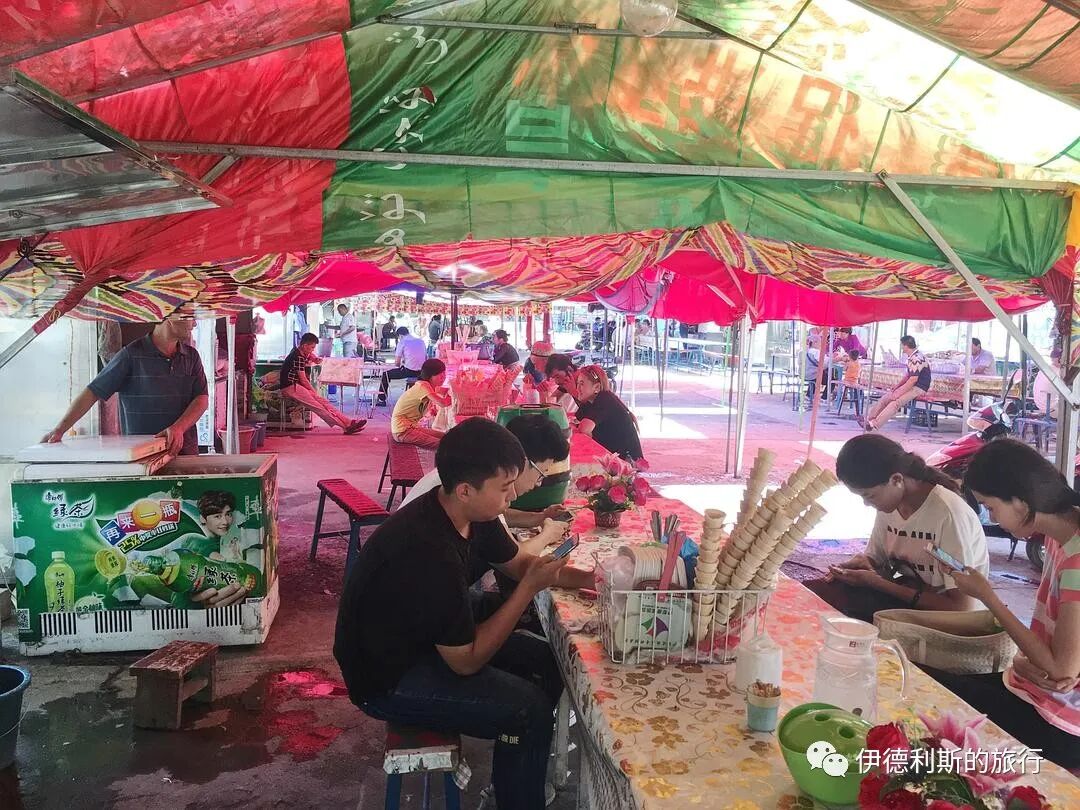
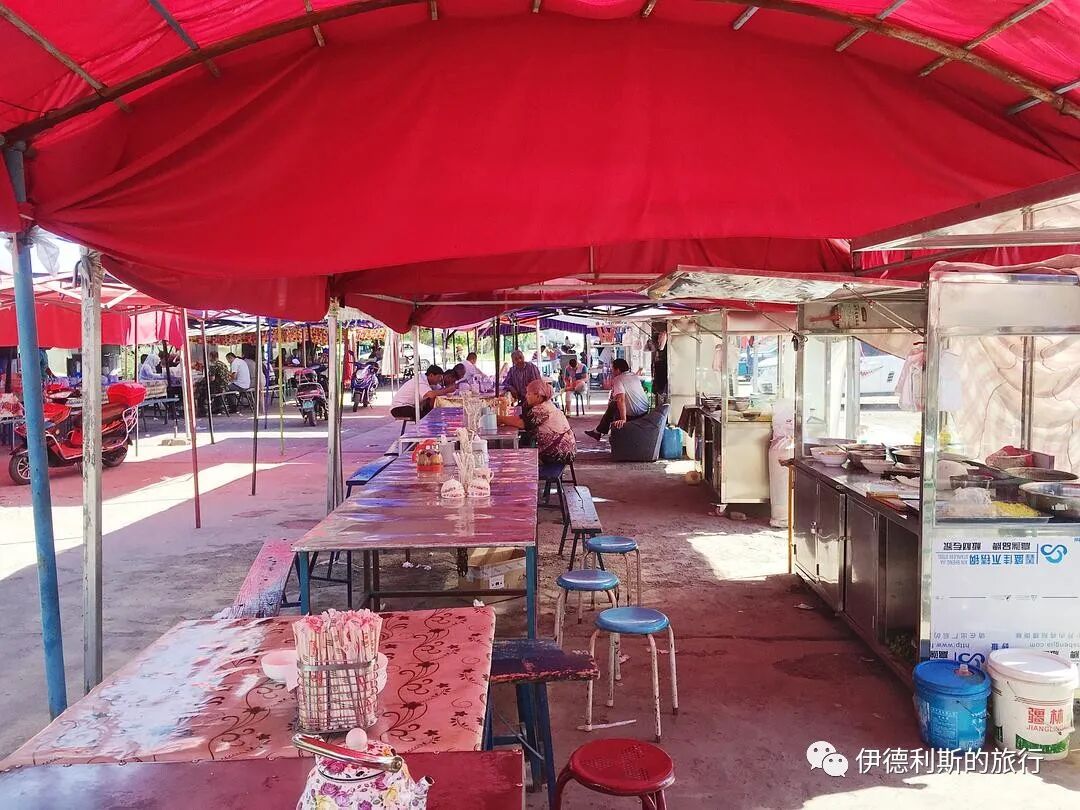
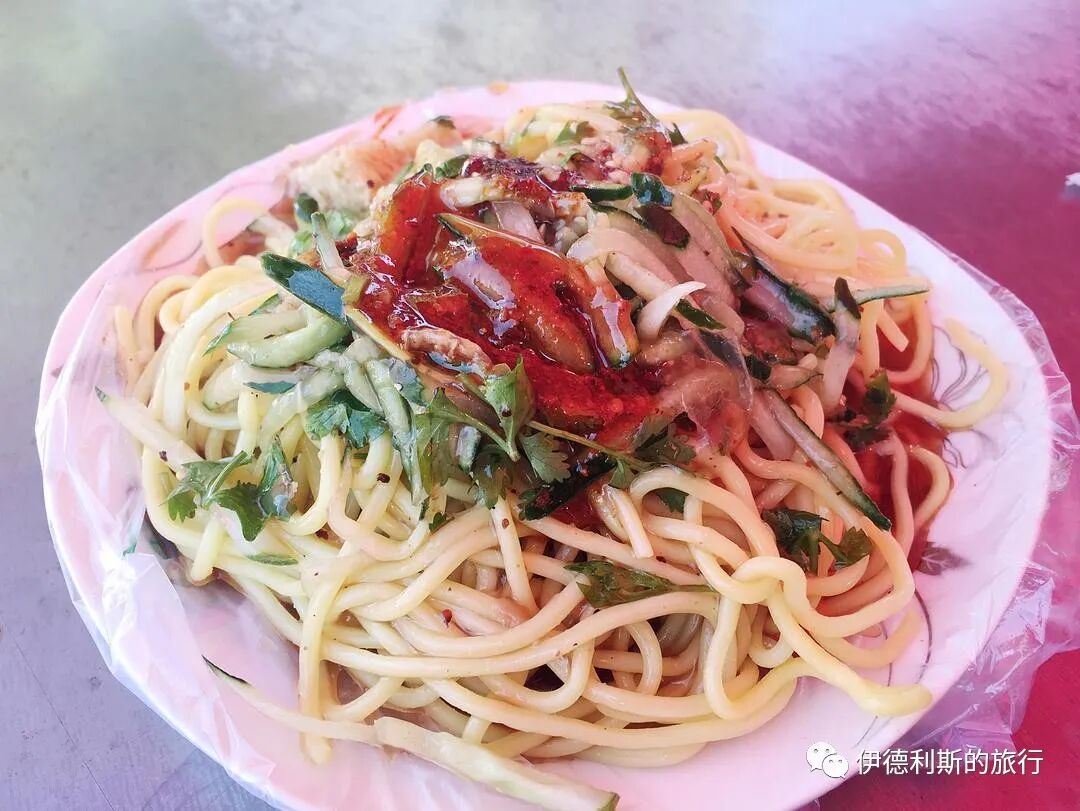
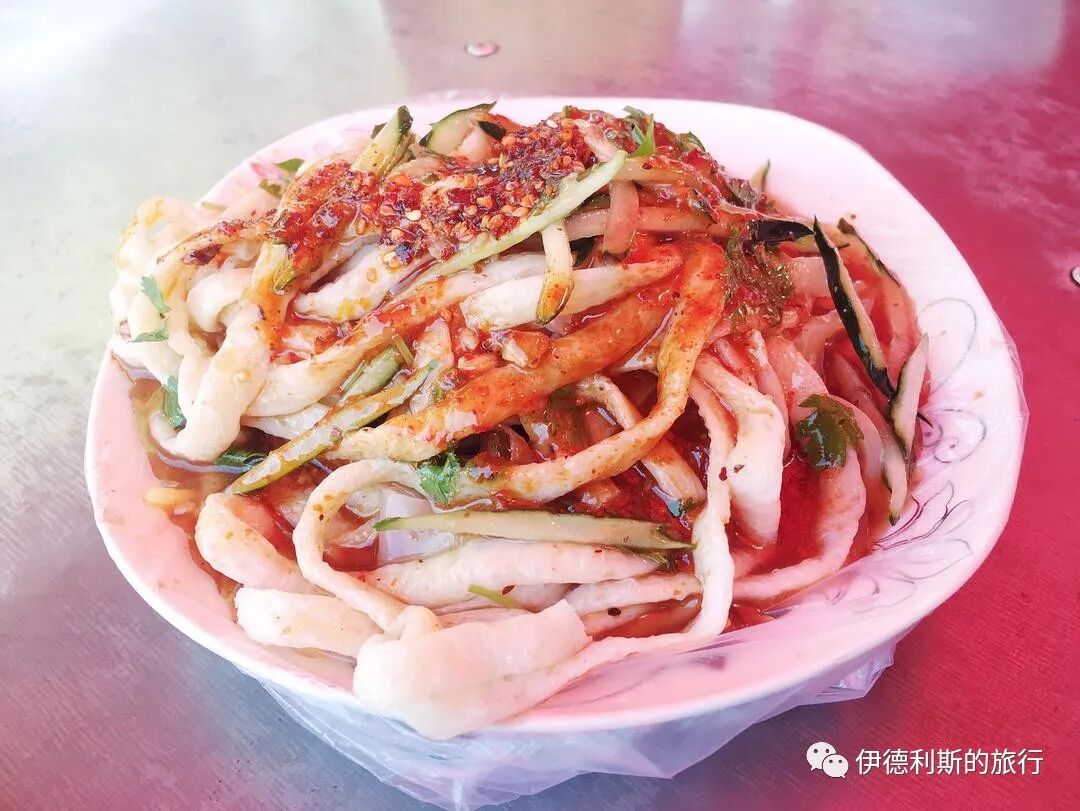
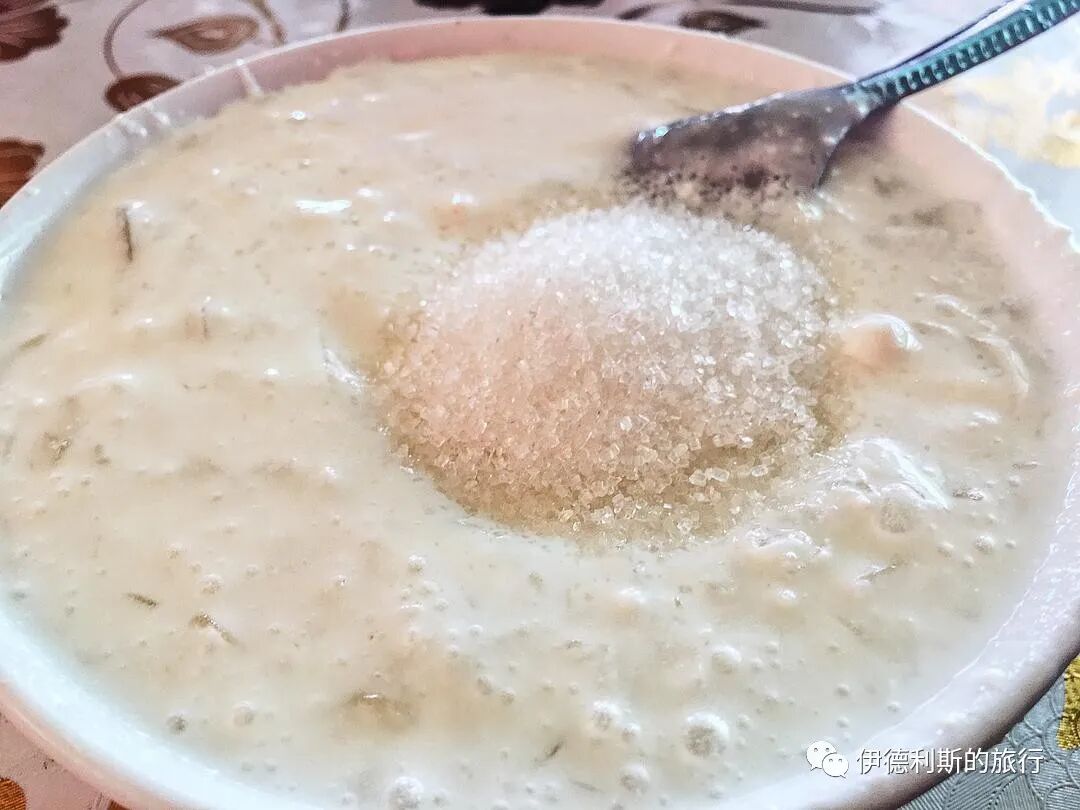
10. Zhaosu County
In Zhaosu County, Ili, I ate braised young chicken with steamed flower rolls (huajuan) made by Hui Muslims. Their food is amazing. The flower rolls are braised right inside the chicken, making them smell incredible.
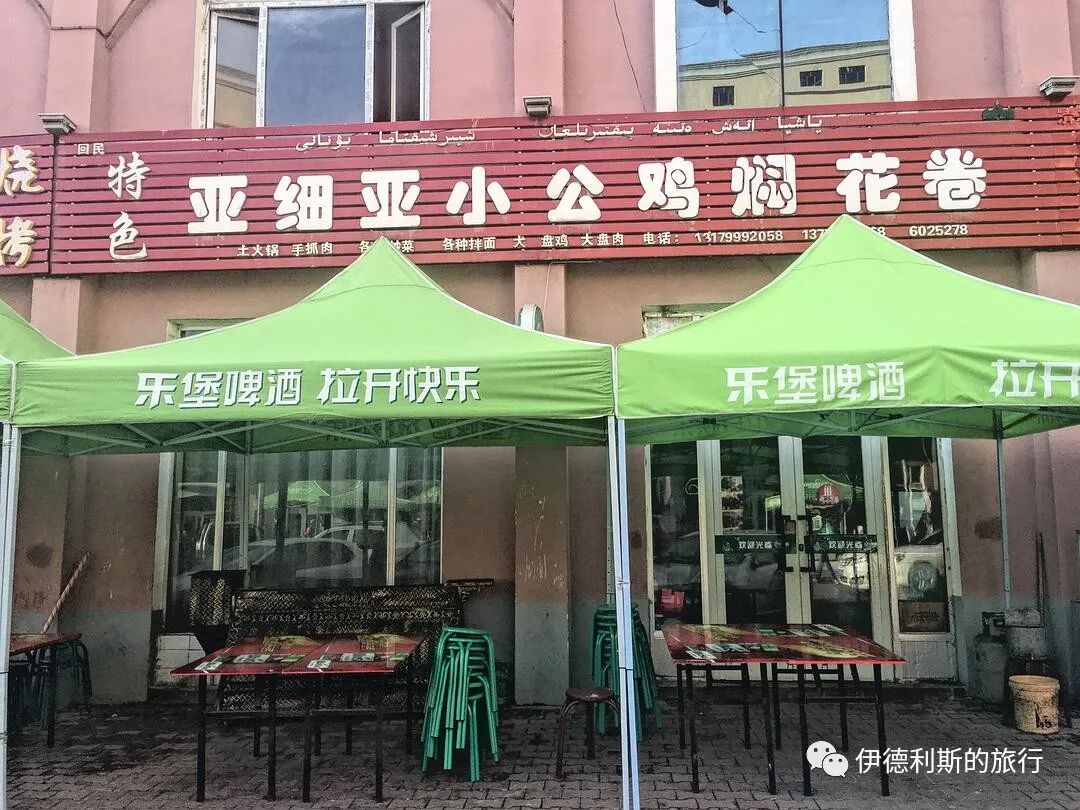
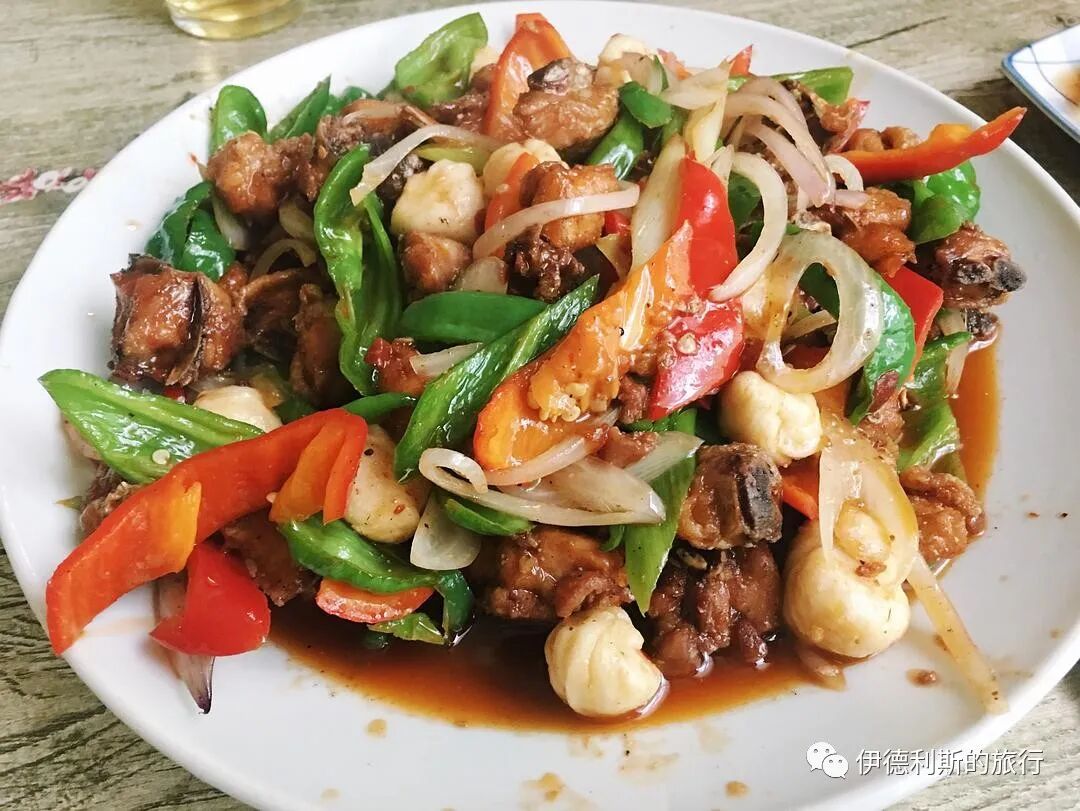
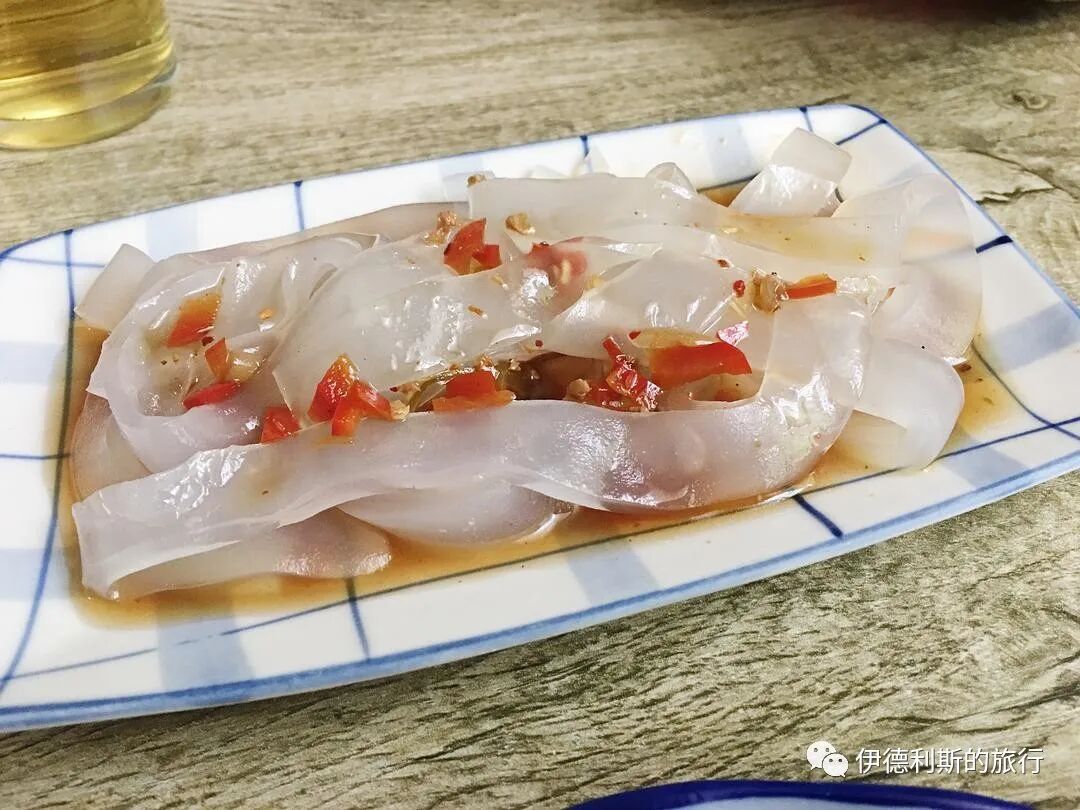
11. Nalati Town, Xinyuan County
In Nalati Town, Ili, I drank fermented mare's milk (manai-zi) and yogurt (suannai-zi) and ate Kazakh flatbread (nang). This was my first time drinking fermented mare's milk, and I liked it right away. I took a minibus from Nalati to Bayanbulak. Because it was the horse racing festival, the bus was packed with buckets of fermented mare's milk (manazi). The whole trip was filled with the scent of mare's milk, which is a truly unforgettable memory.
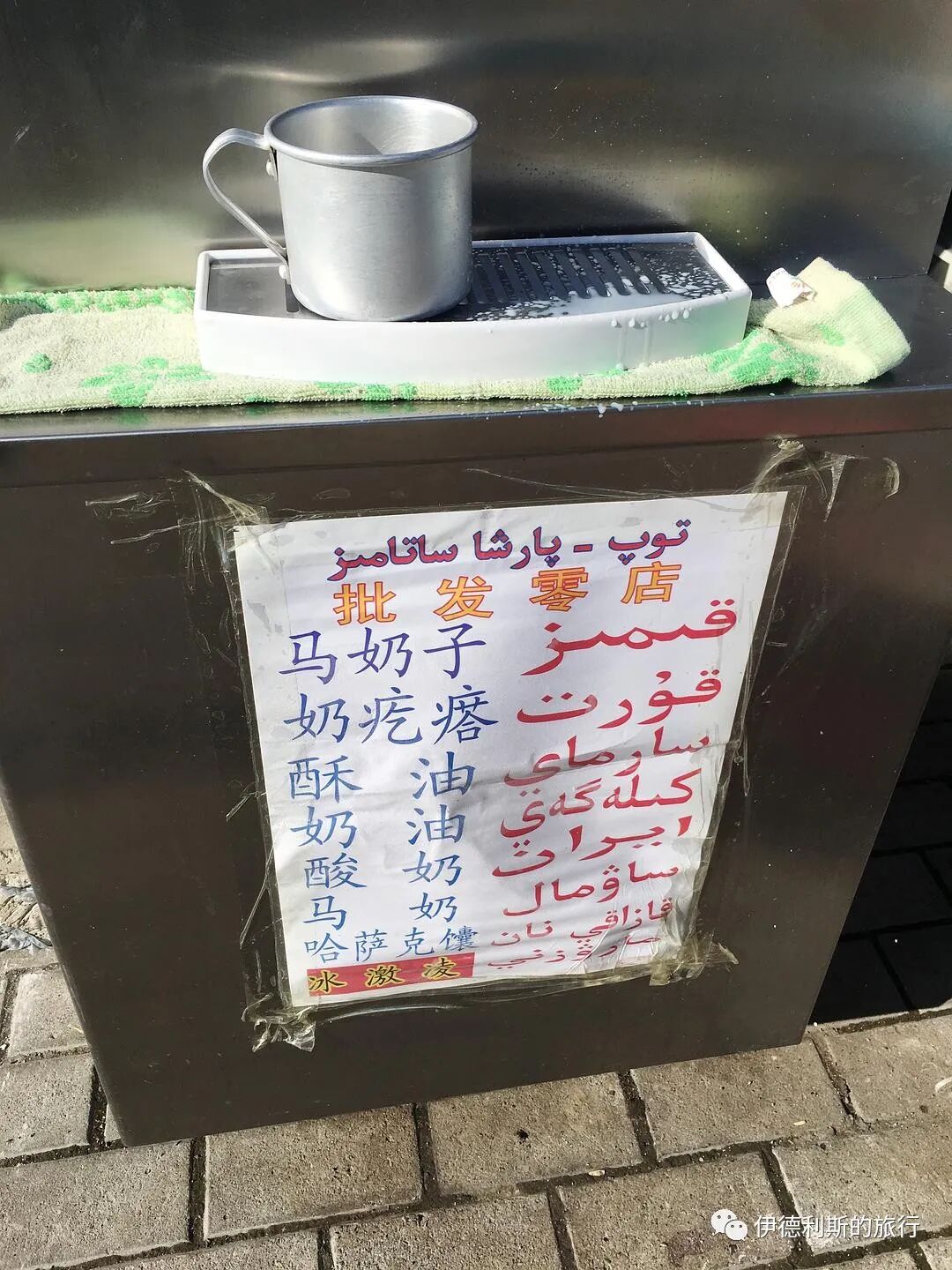
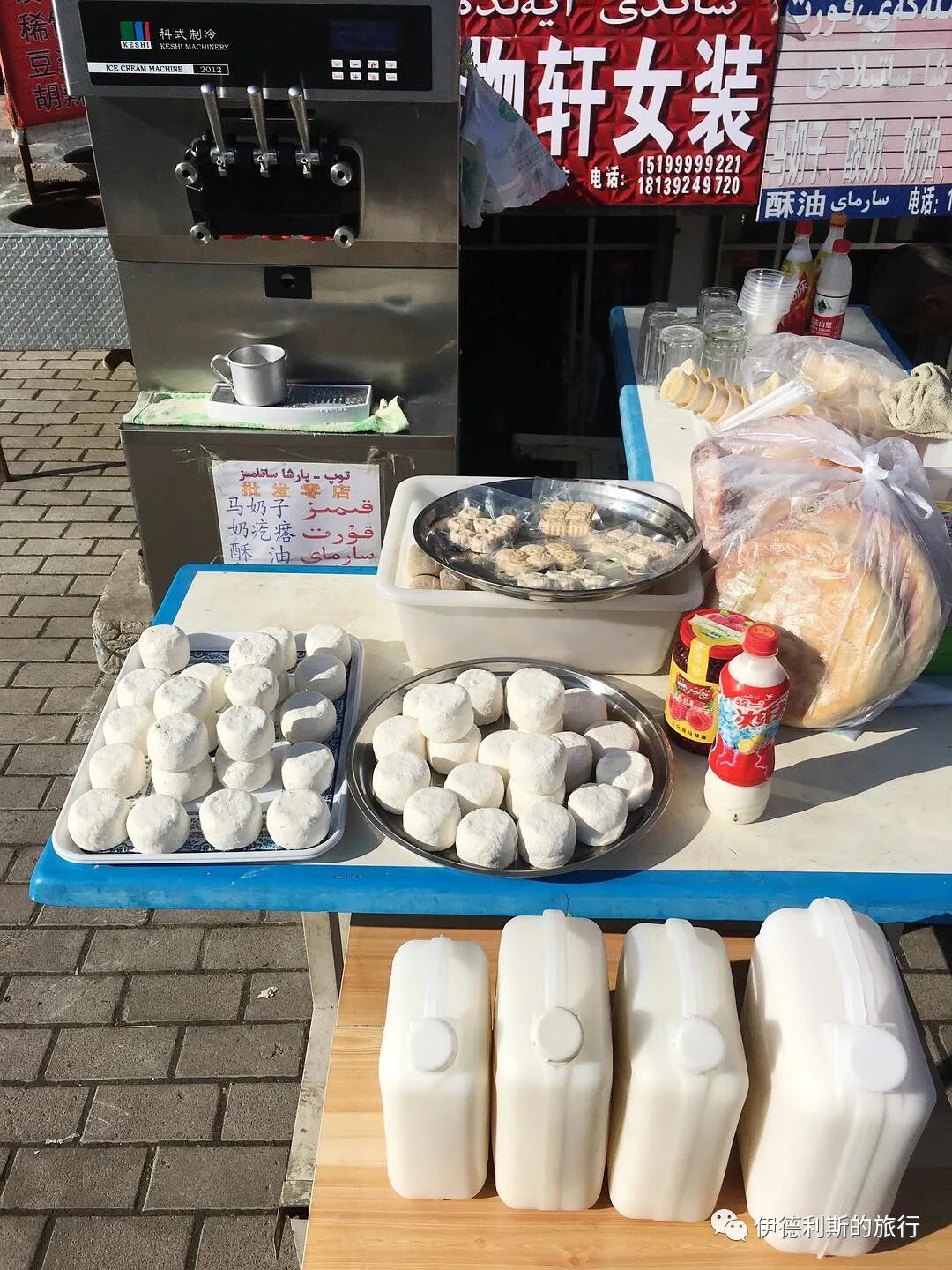
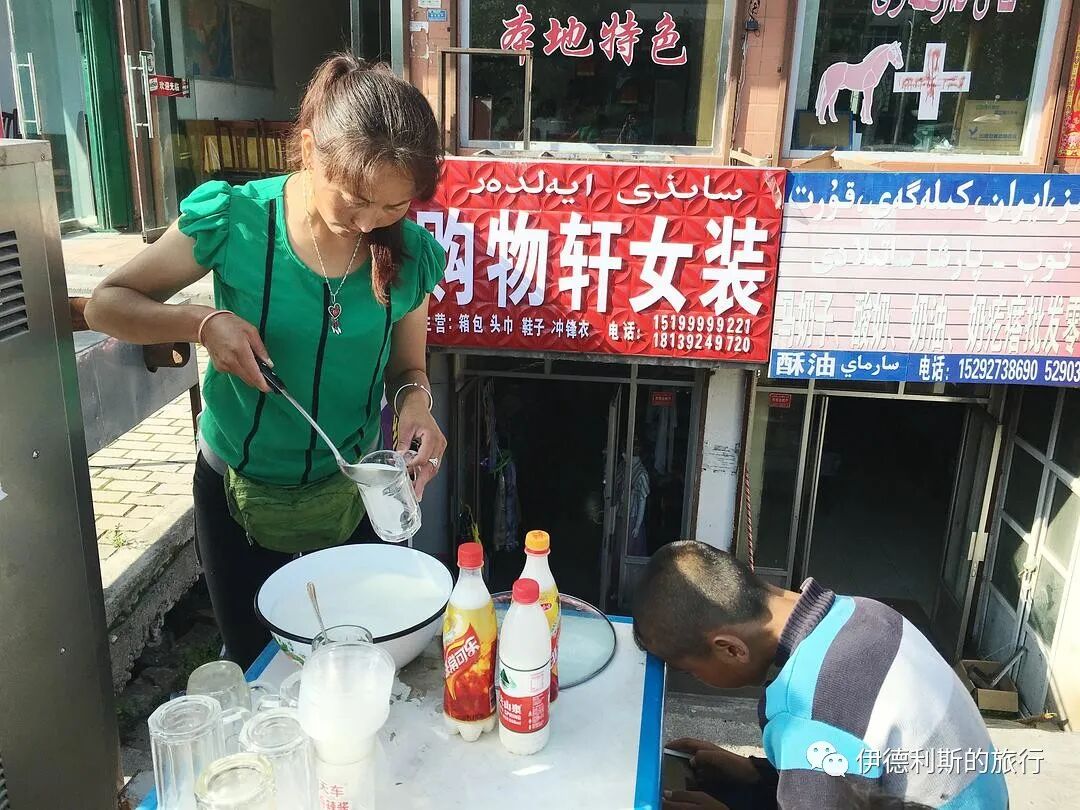
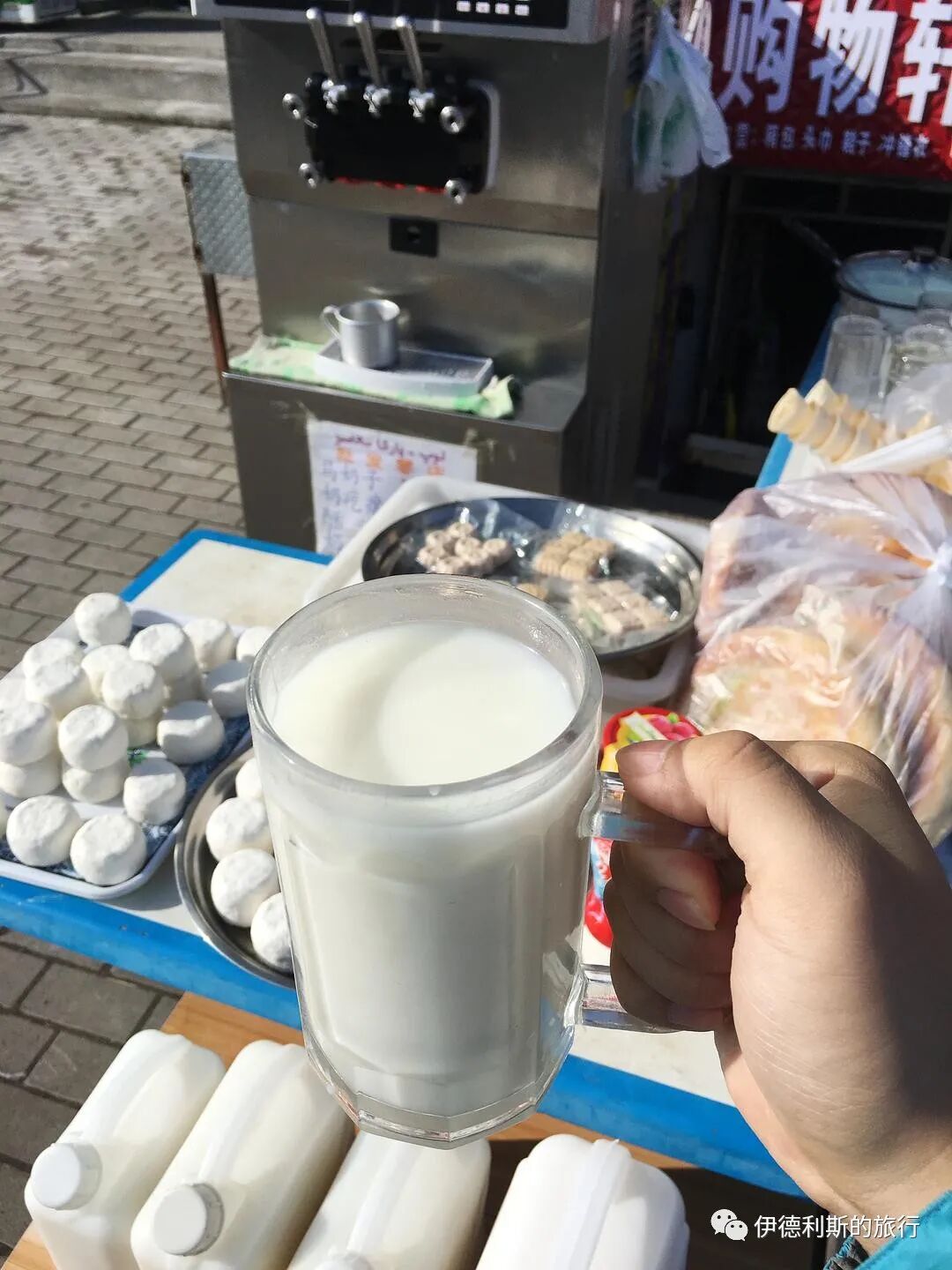
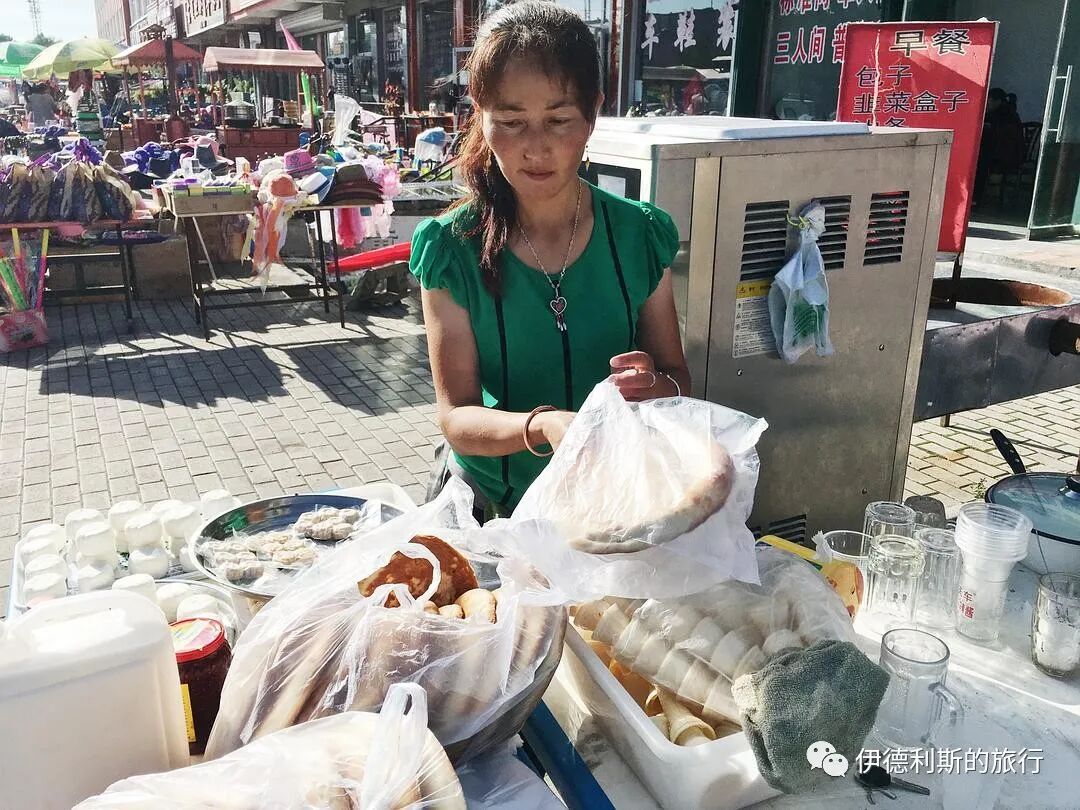
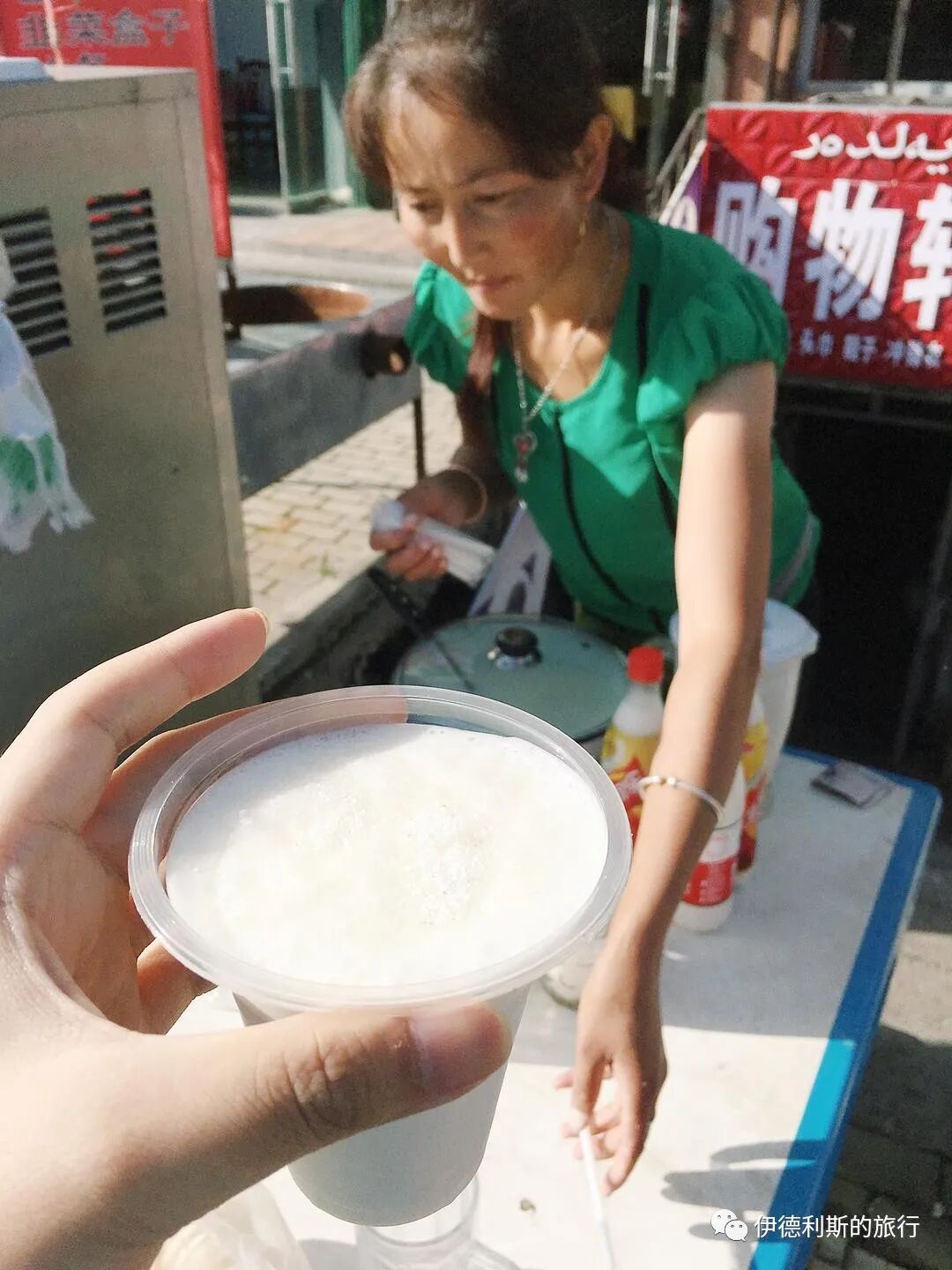
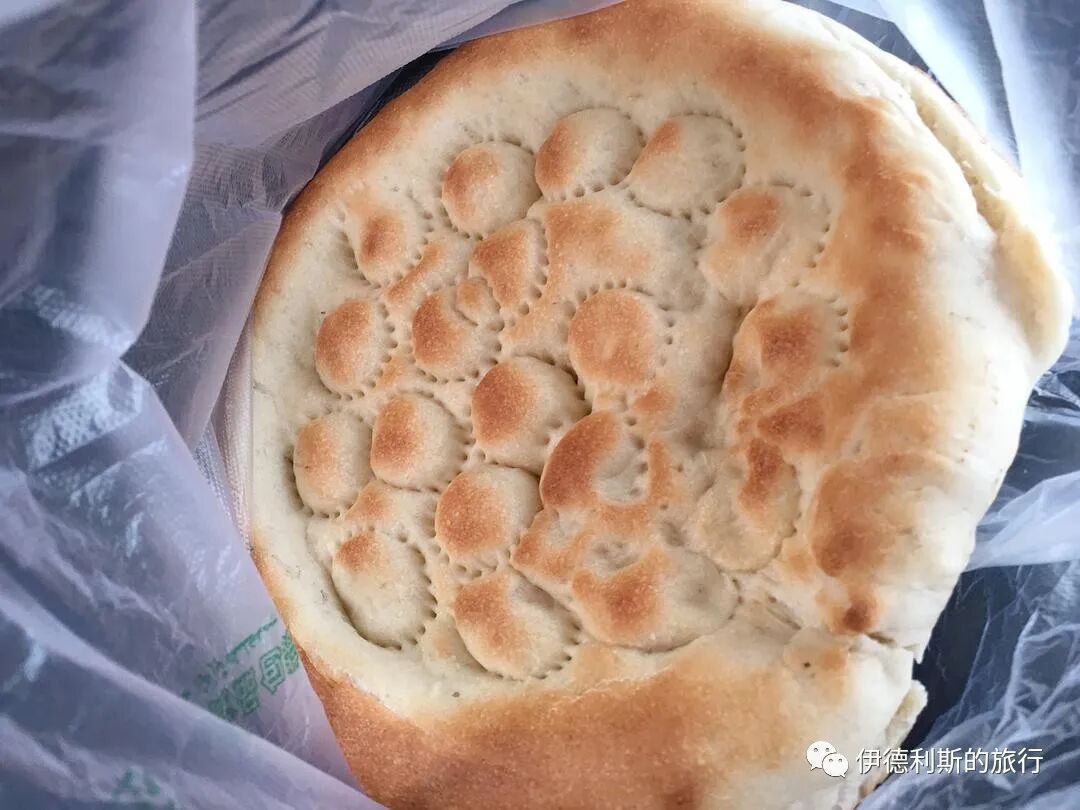
12. Hami
In Hami, I ate a big bowl of wild mushroom and lamb soup with rice (tangfan) at a place run by Hui Muslims. They call it a big bowl, but it is actually a large basin. When you order, you choose the amount of lamb, with a minimum of half a kilogram, and it comes with fried dough (youxiang) and various side dishes. It was my first time eating lamb soup with rice in such a generous way, and it felt so warm and comforting.
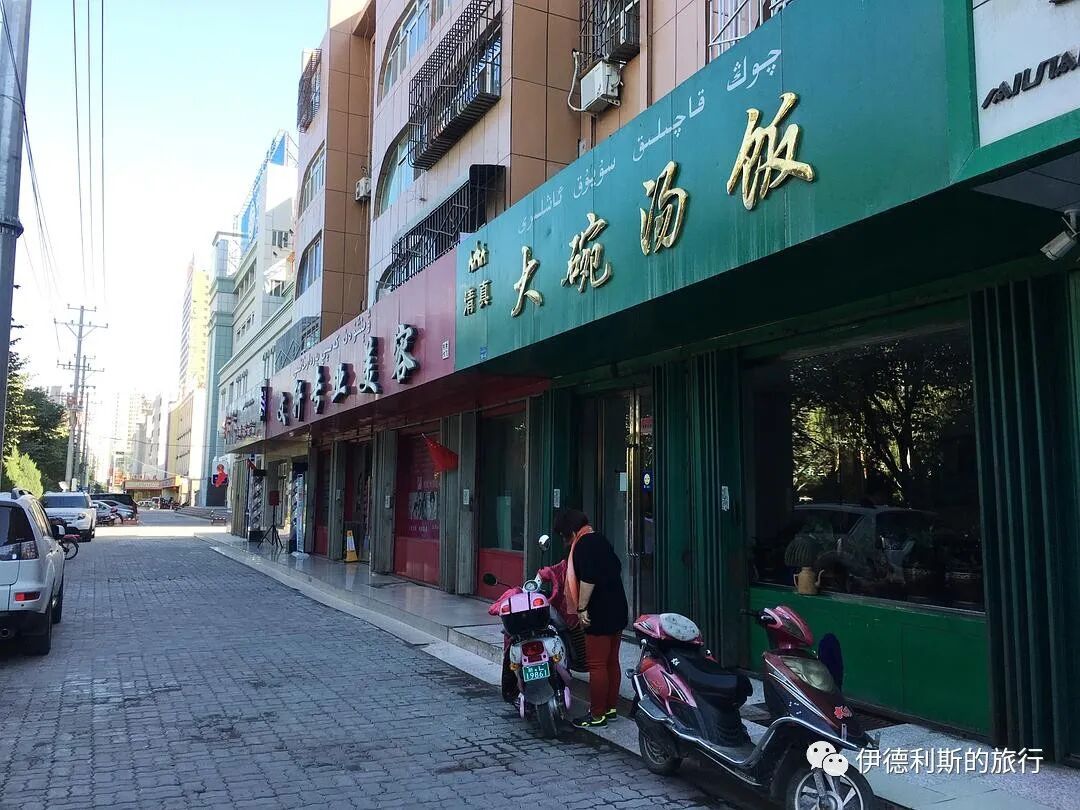
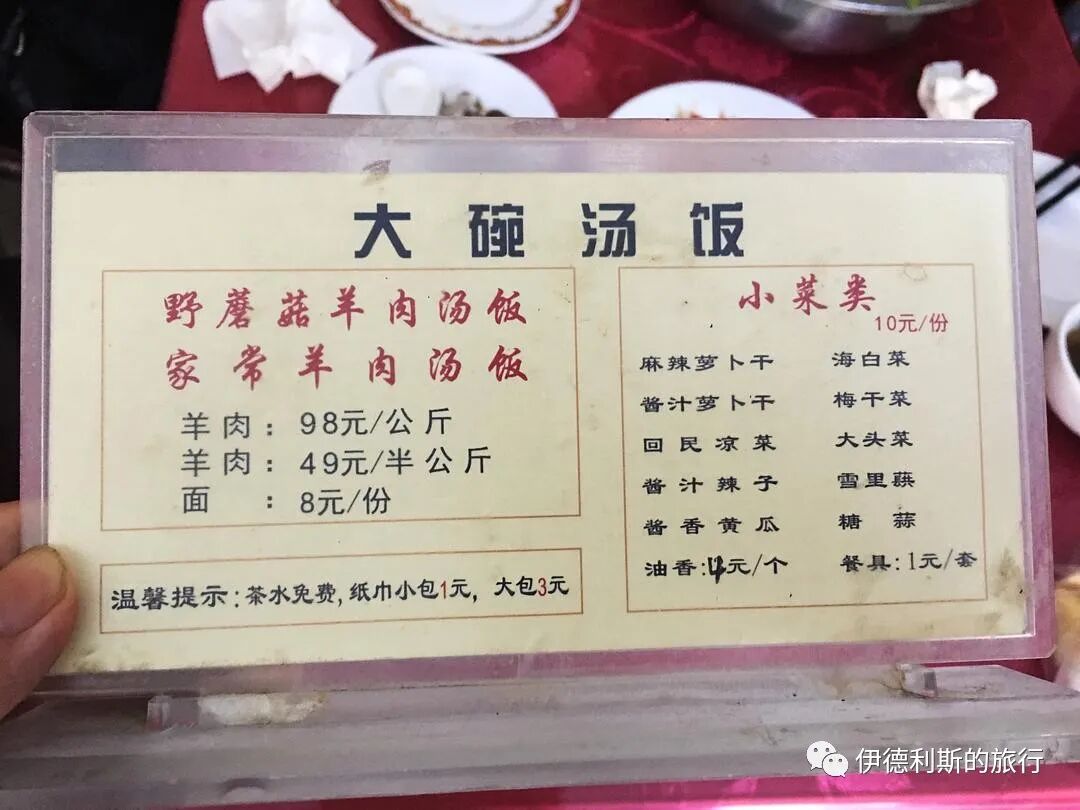
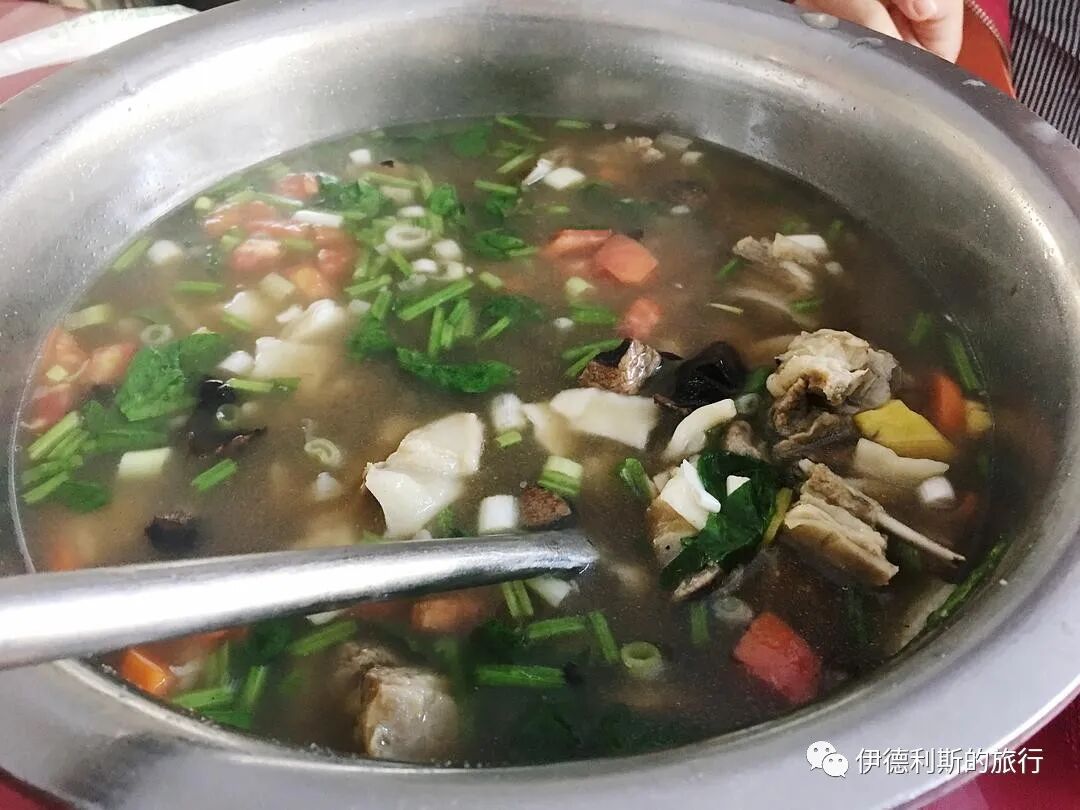
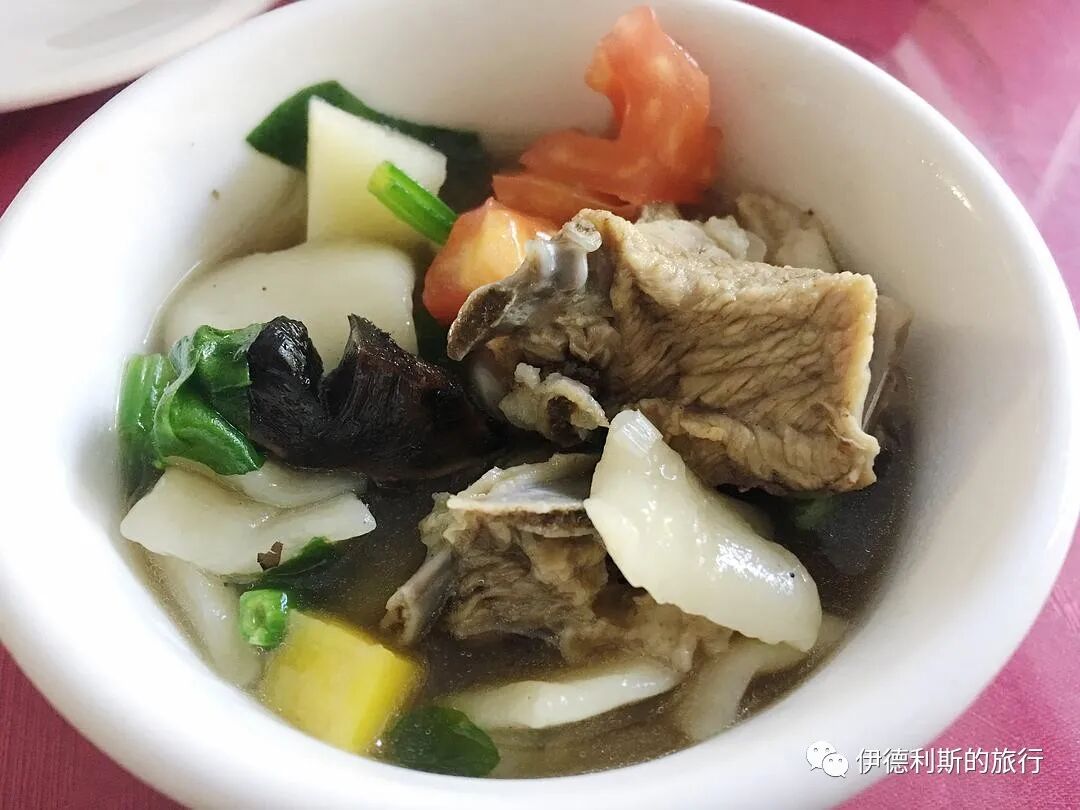
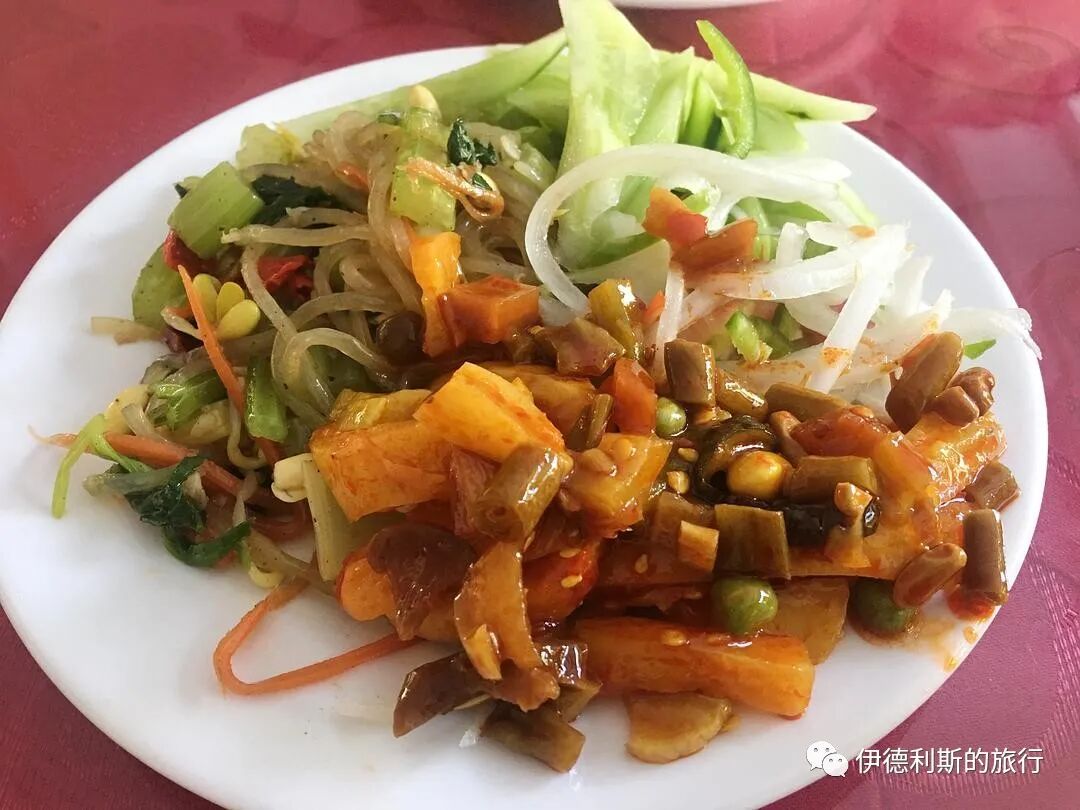
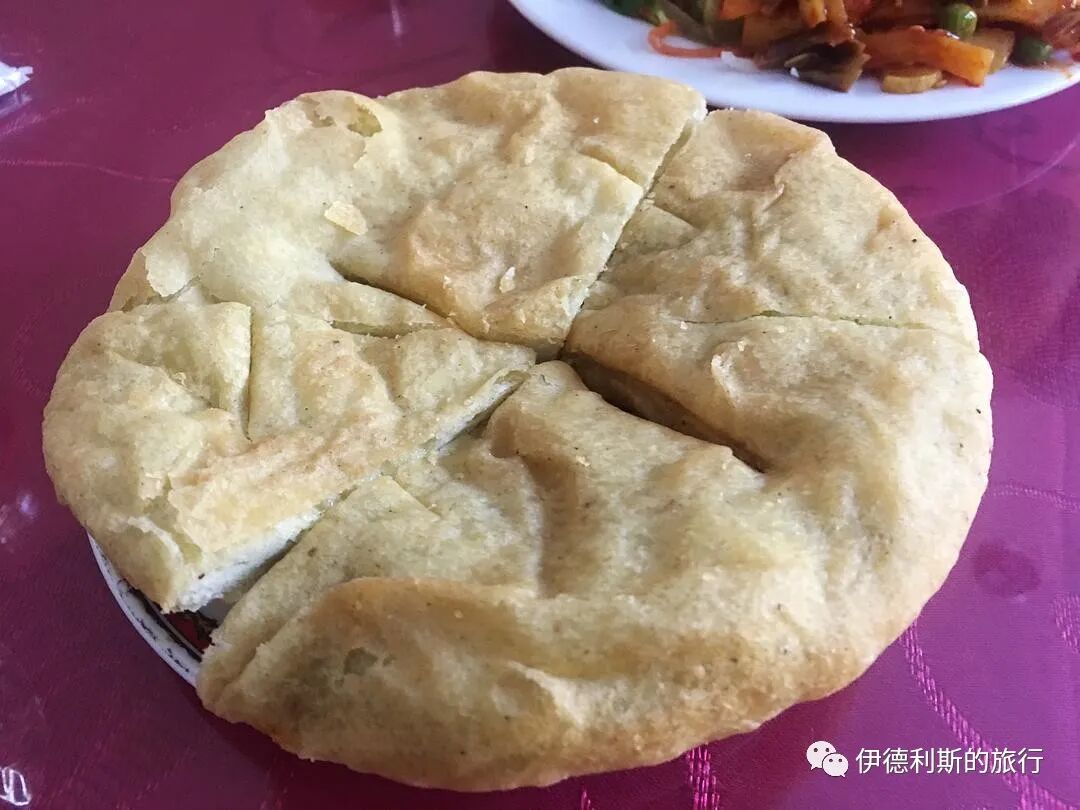
13. Korla
Eating figs on the streets of Korla is like eating honey; they are incredibly sweet. Figs from southern Xinjiang bruise easily and are hard to transport, so you cannot find them fresh once you leave Xinjiang. They are not even common in Urumqi.
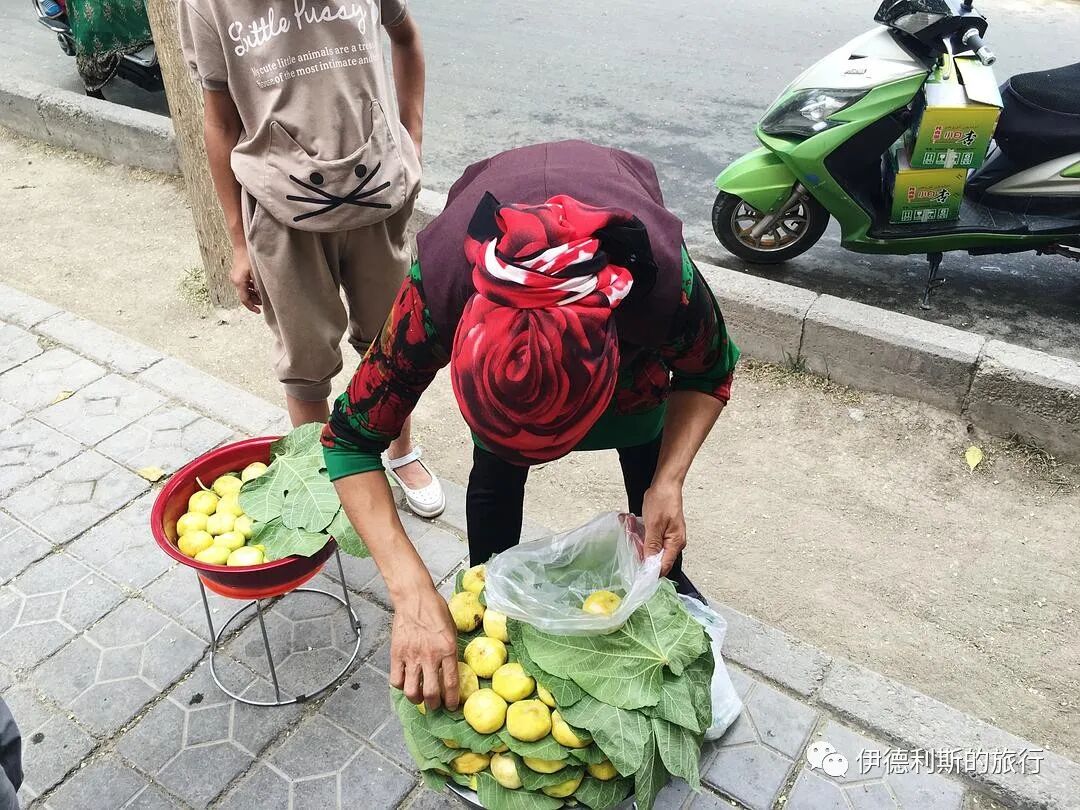
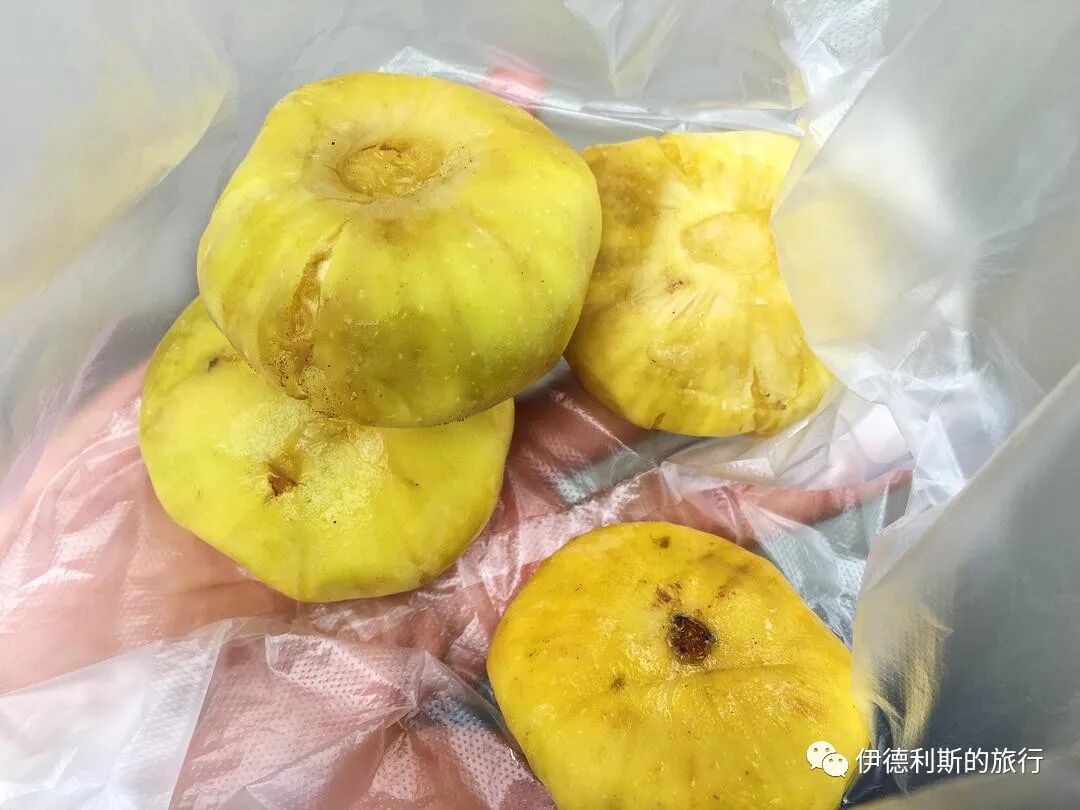
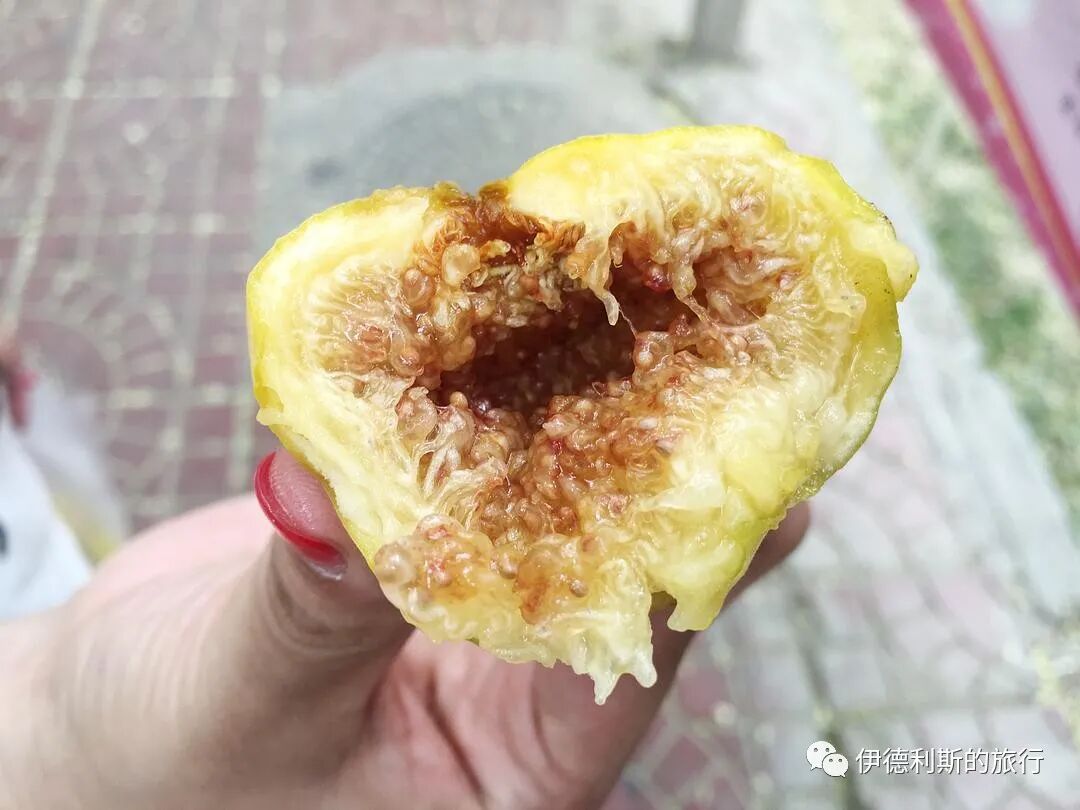
14. Bayanbulak Town, Hejing County
Eating hand-pulled noodles with wild mushrooms (banmian) in Bayanbulak Town, Bayin'gholin Prefecture. In the summer, the whole town is covered in wild mushrooms drying in the sun.
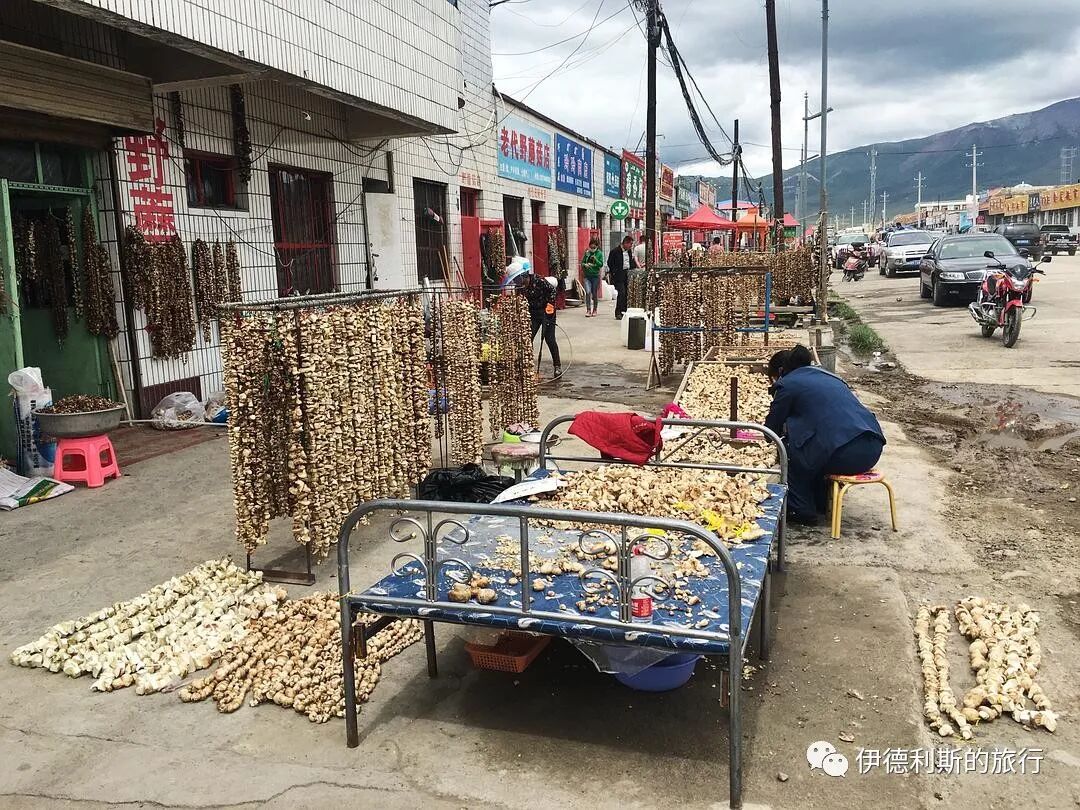
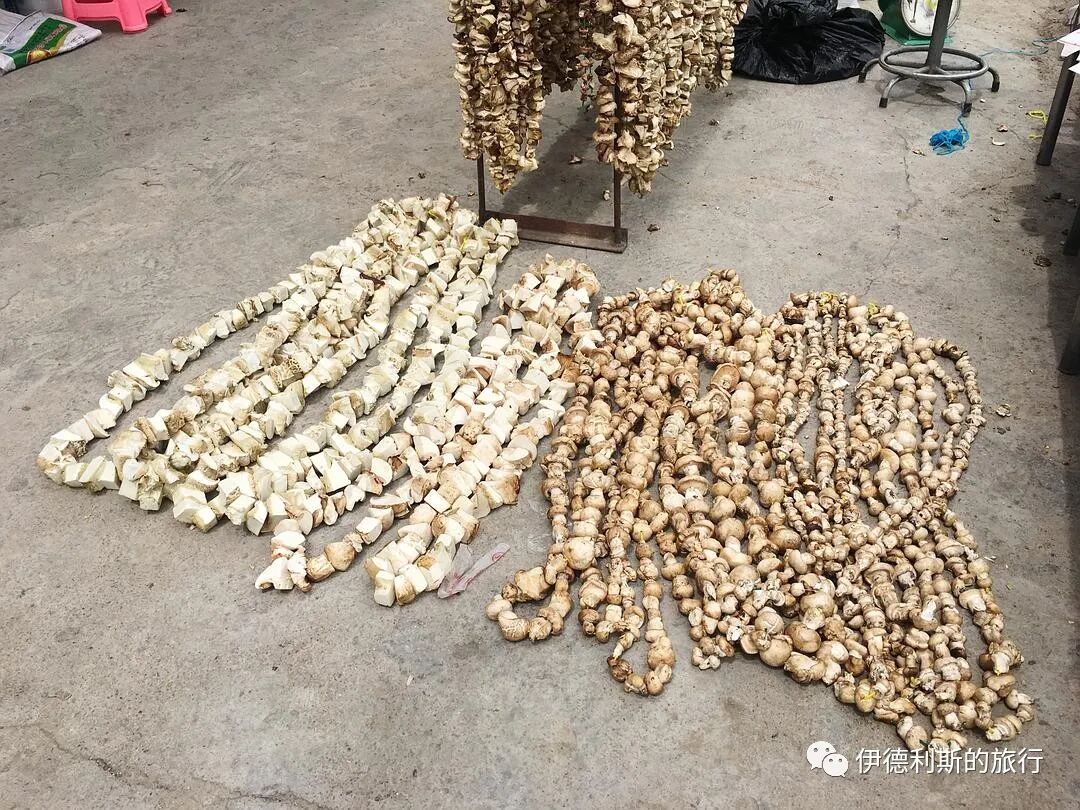
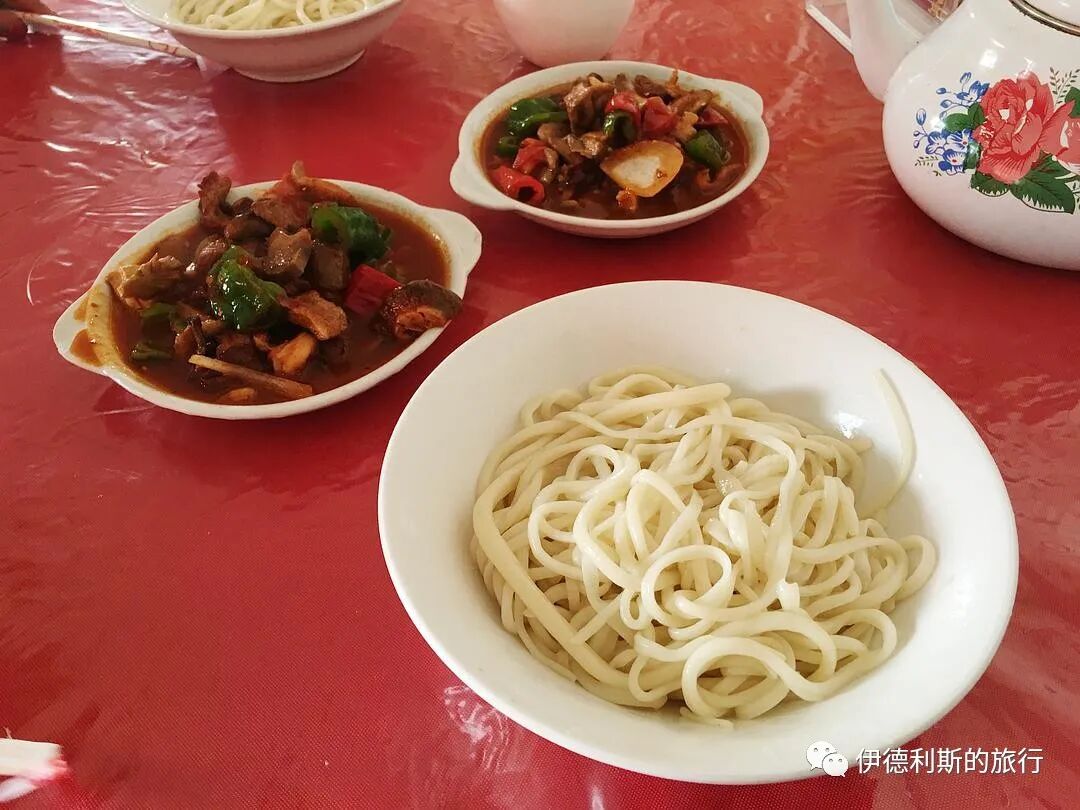
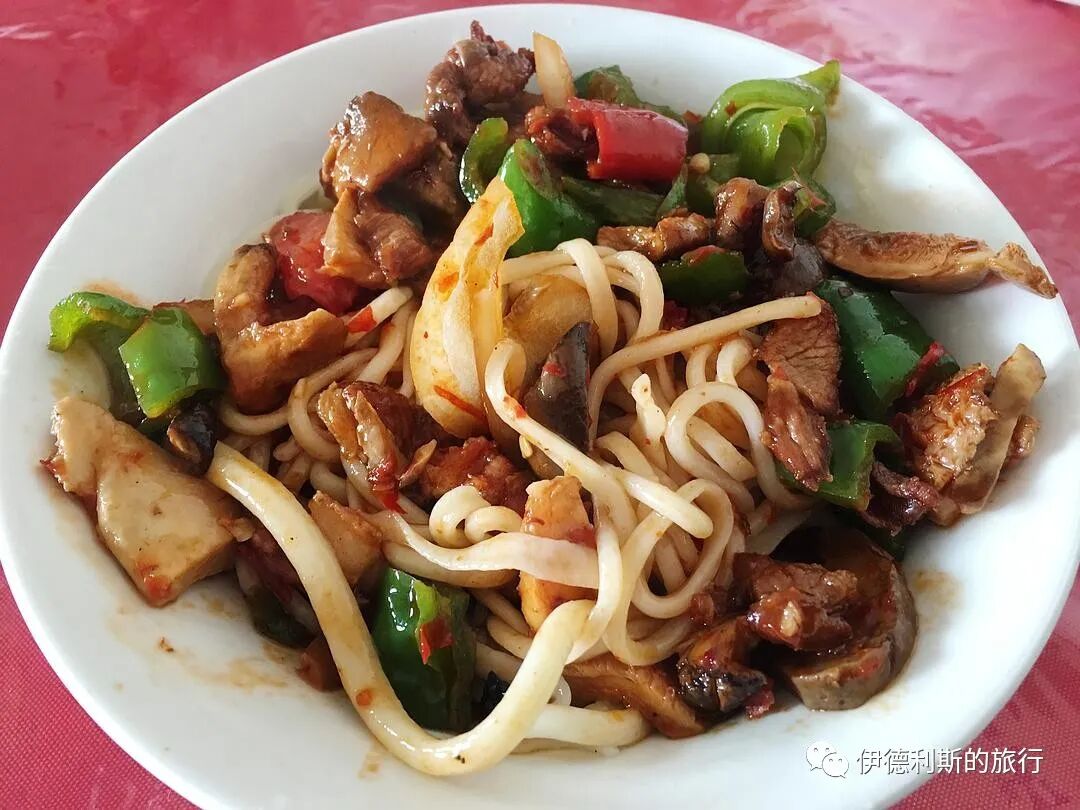
15. Hejing County
I had sweet rice dumplings (tangzongzi) at a Hui Muslim cold noodle shop in Hejing County, and they are eaten very differently here than back home.
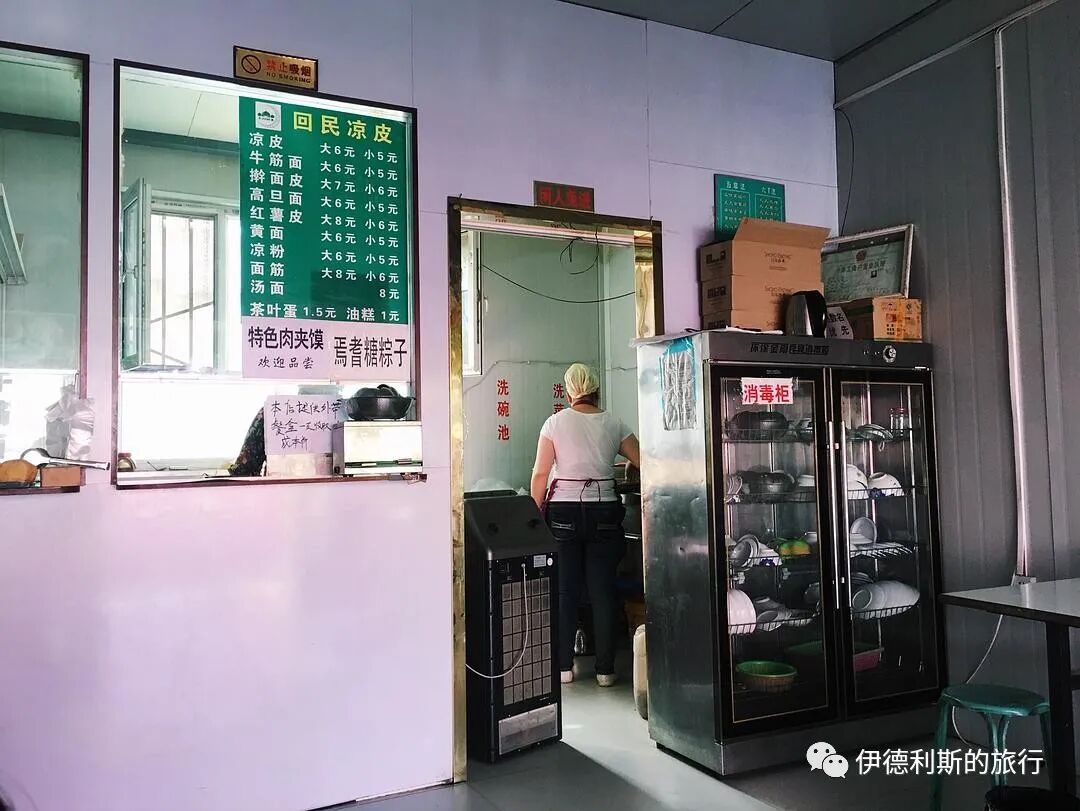
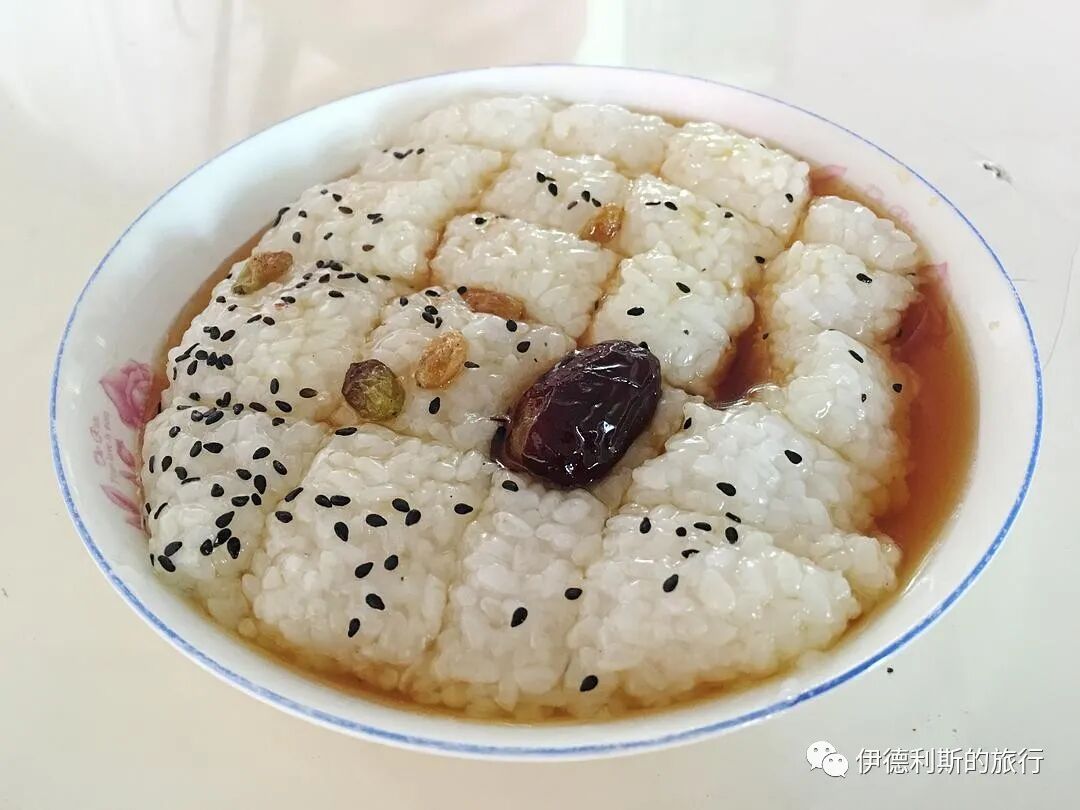
16. Yanqi County
I ate lamb offal soup (yangzasui) and meatball soup (wanzitang) at a Hui Muslim snack shop on the street in Yanqi County, Bayingolin. The soup base here is heavier and spicier than what the Hui Muslims make in Changji.
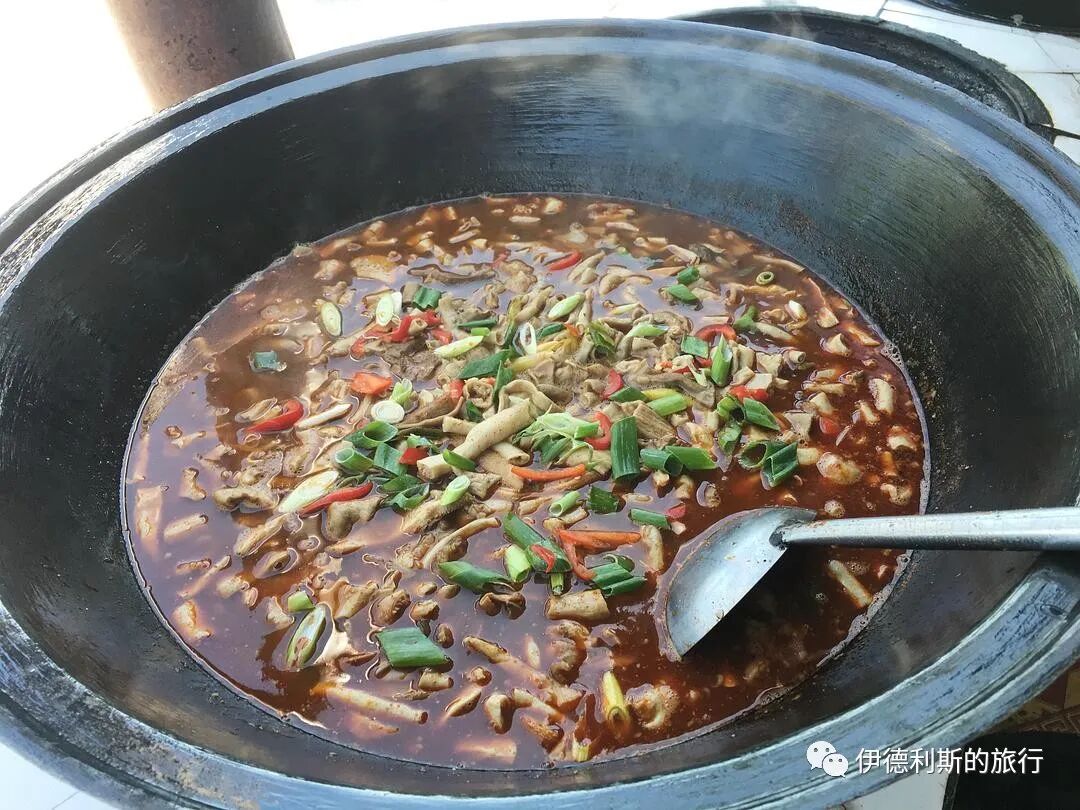
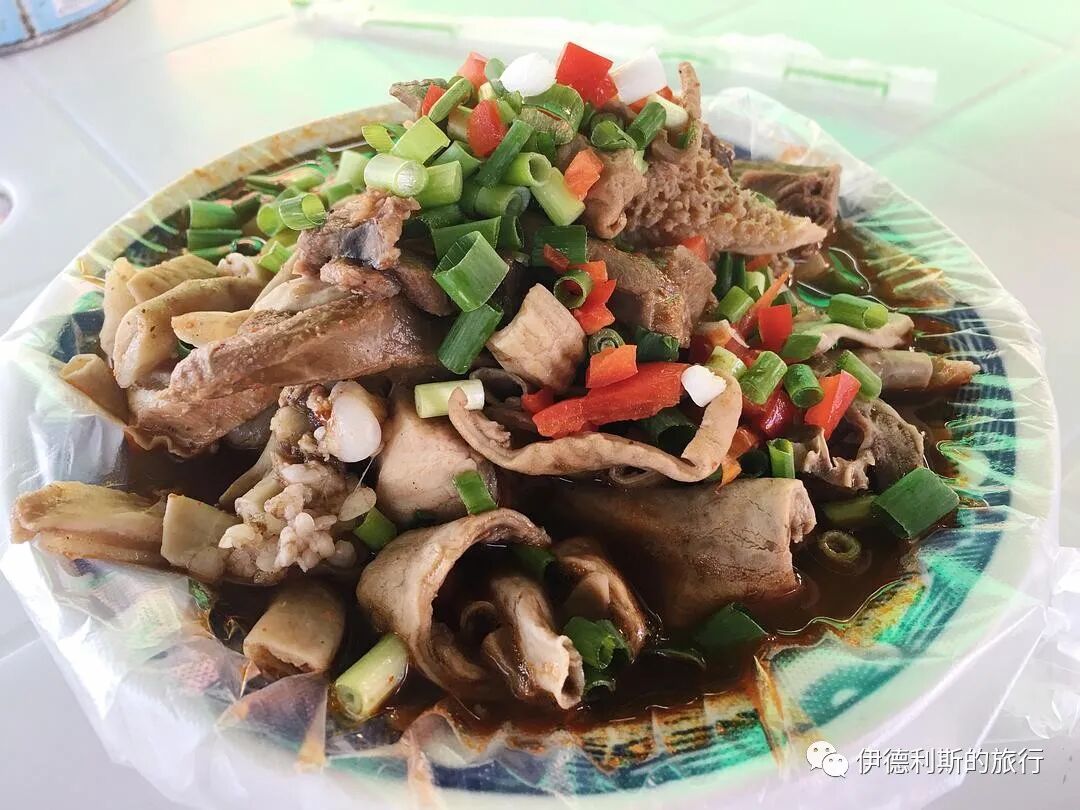
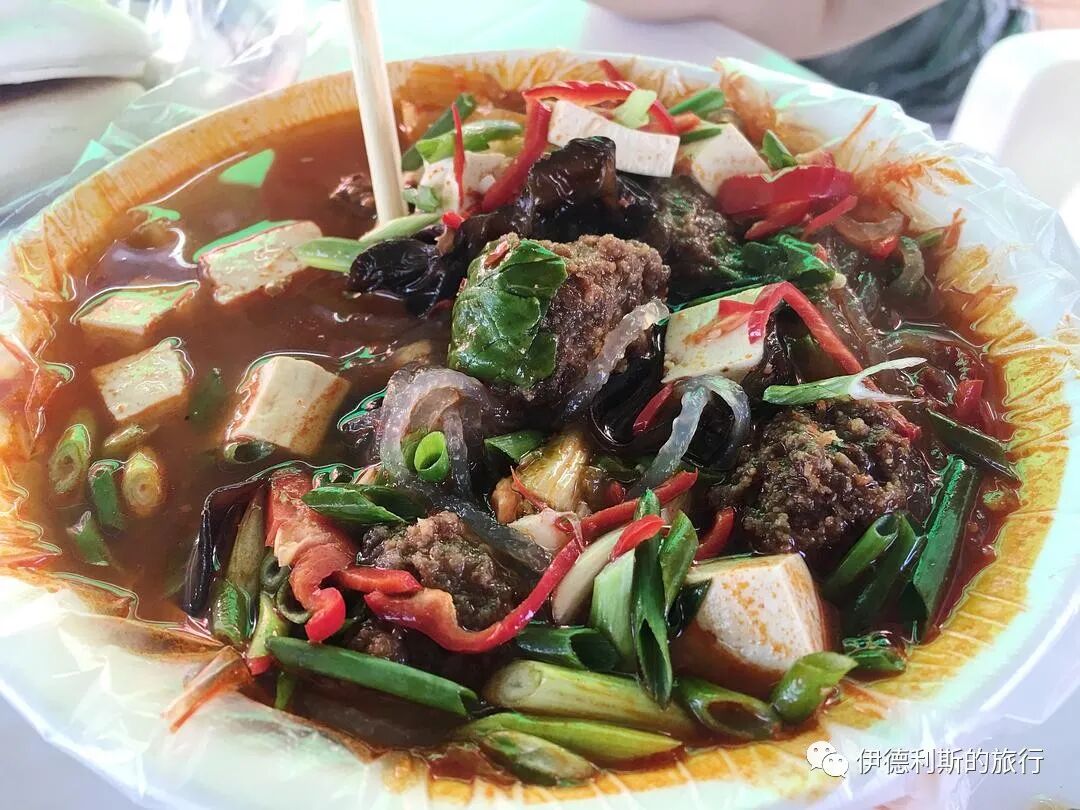
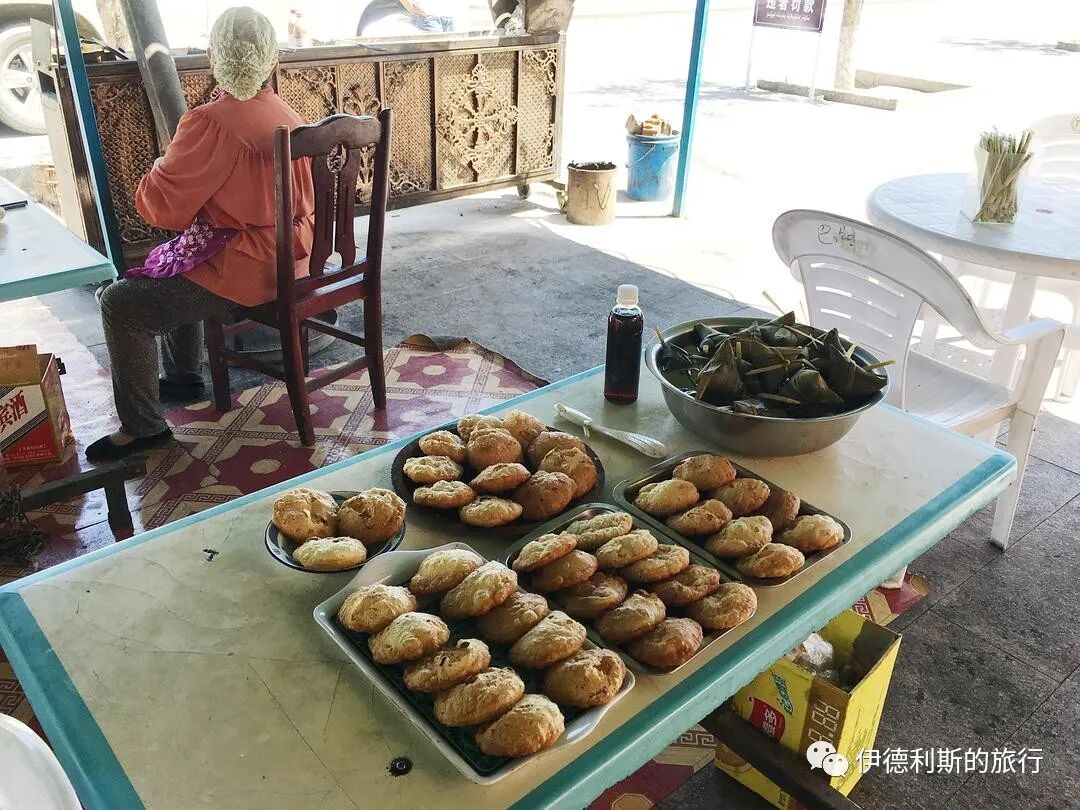
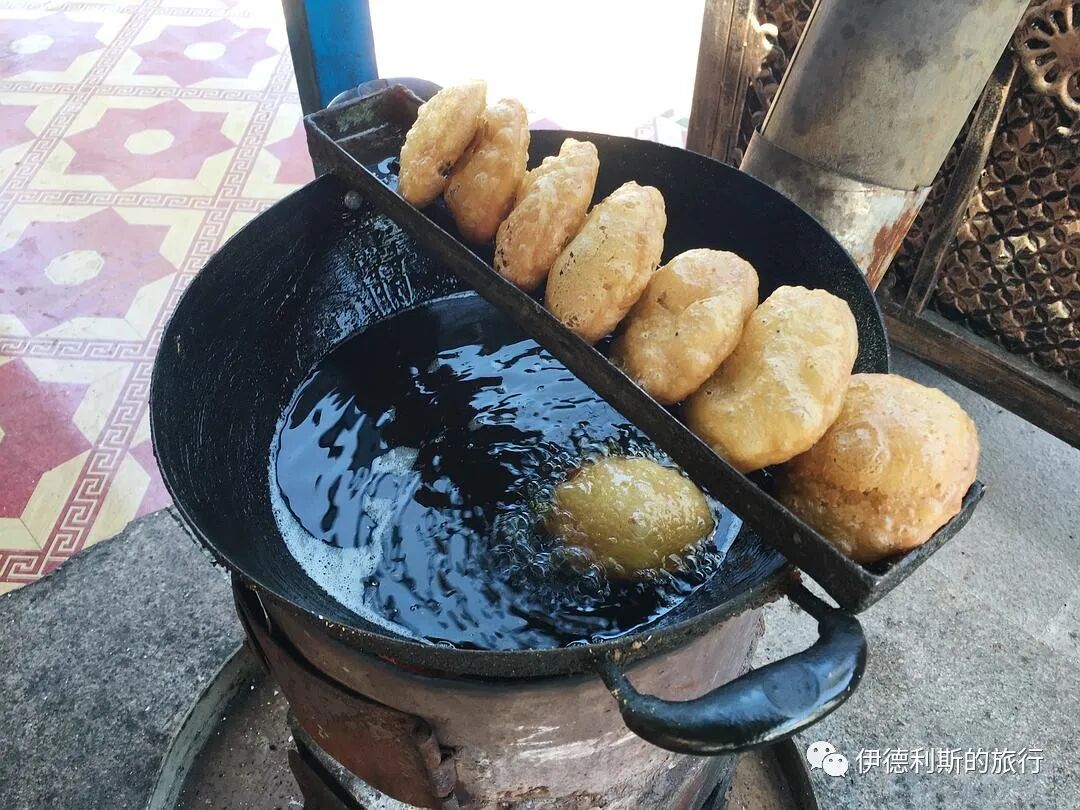
17. Yuli County
I ate small oil-brushed flatbreads (xiaoyounang) at the entrance of the Great Mosque in Yuli County, Bayingolin. I also had a huge baked bun (kaobaozi) there; I remembered the name at the time, but I have forgotten it now, haha.
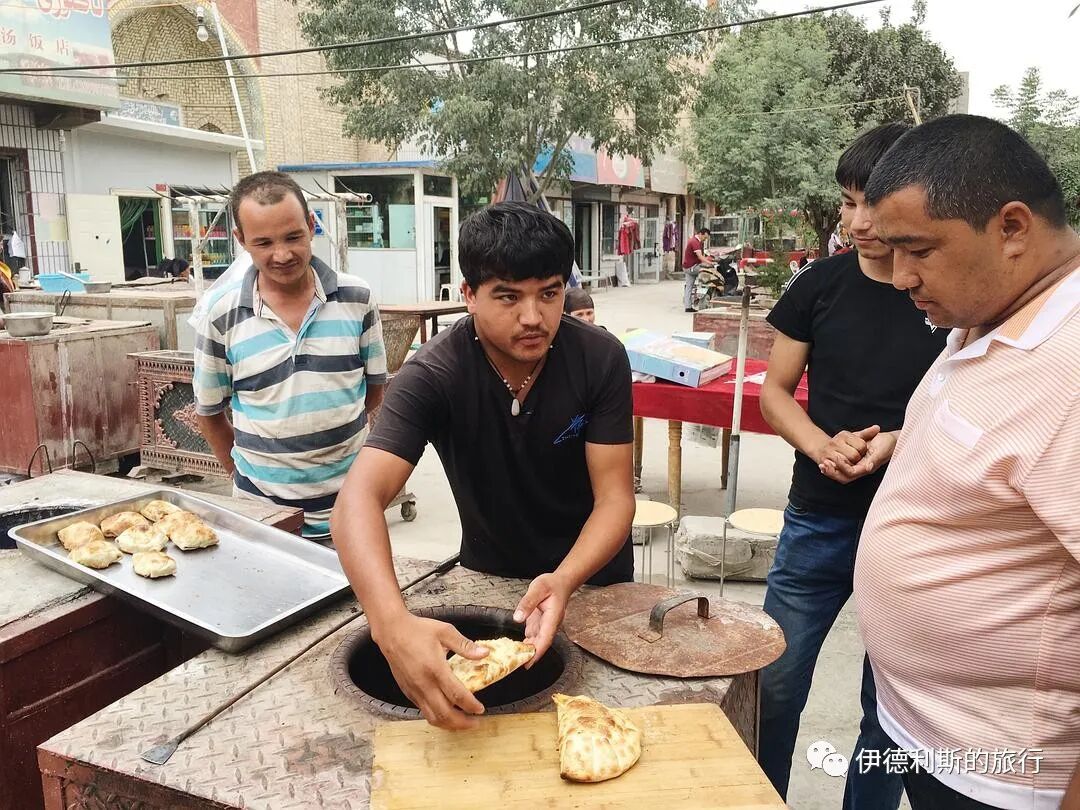
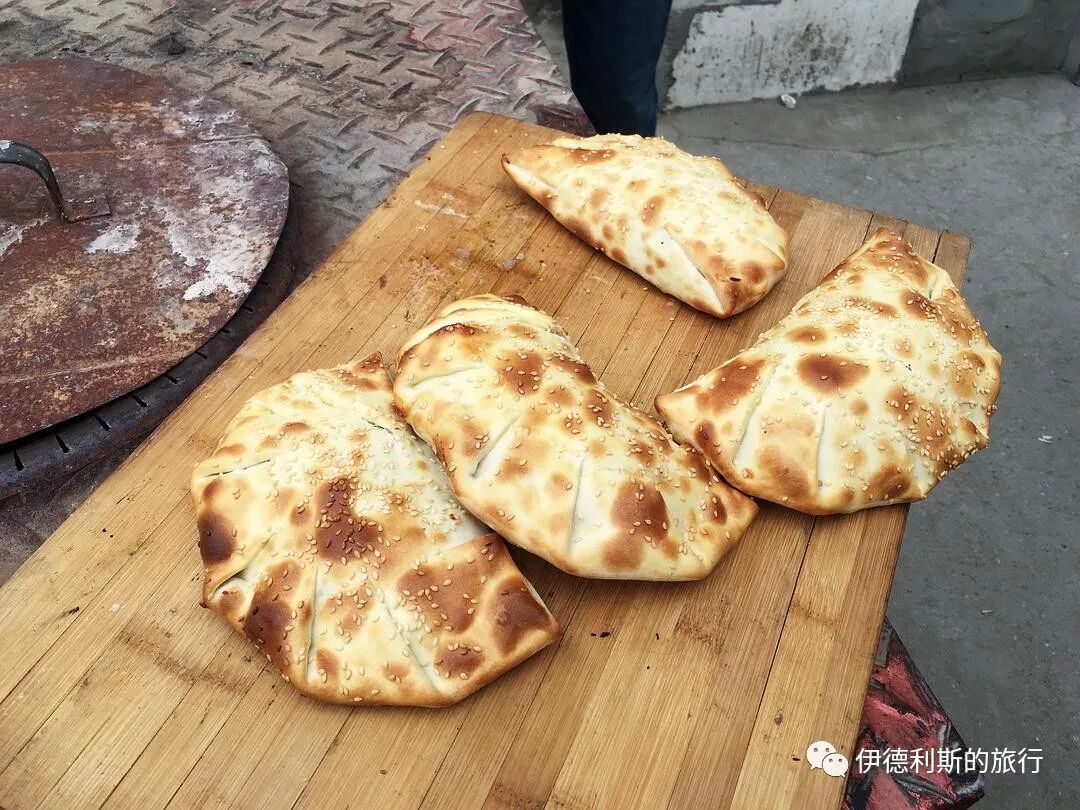
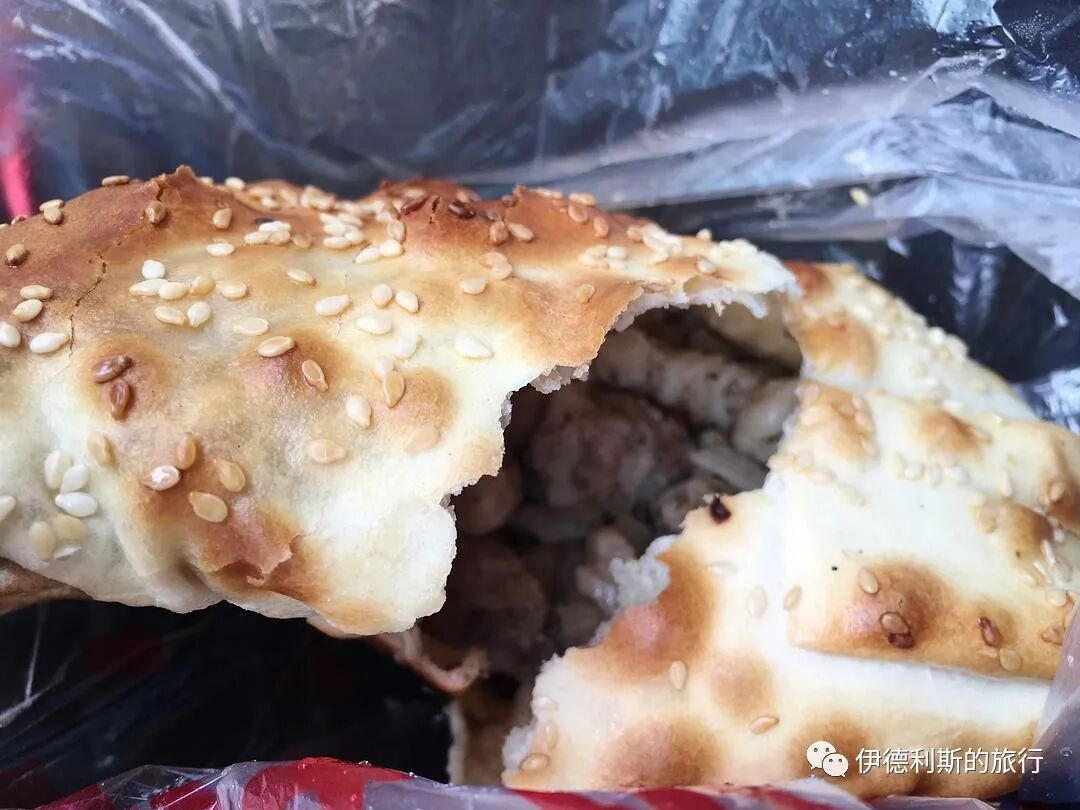
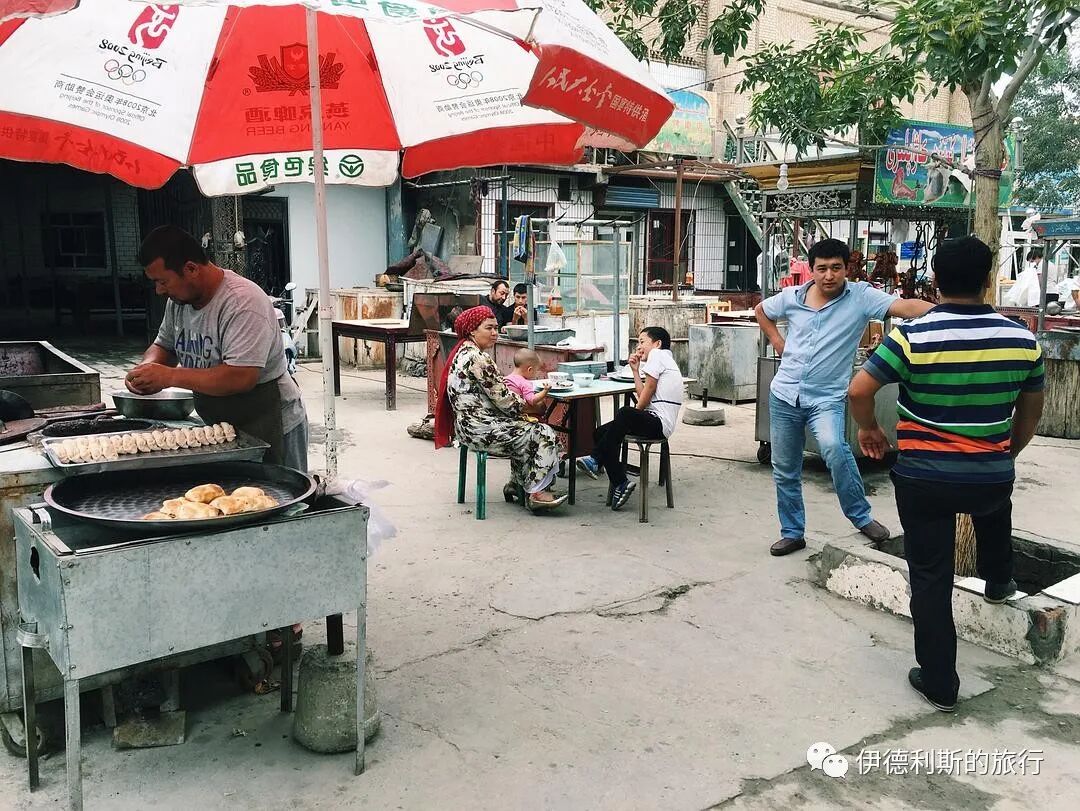
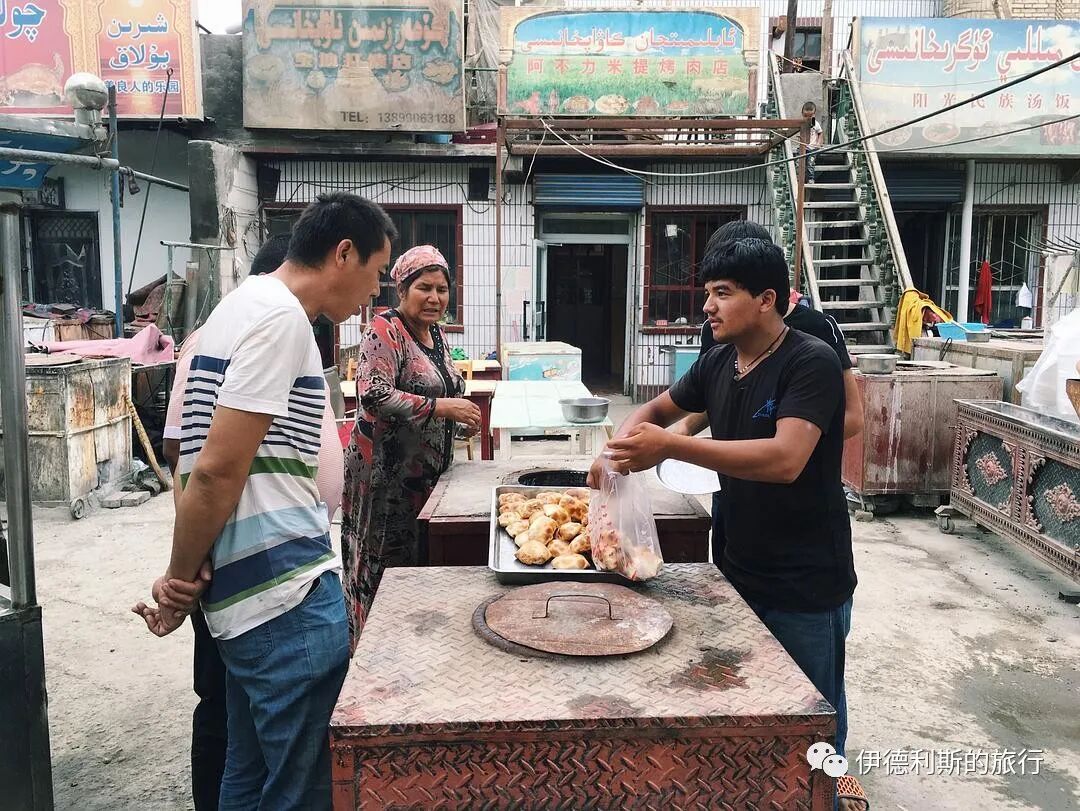
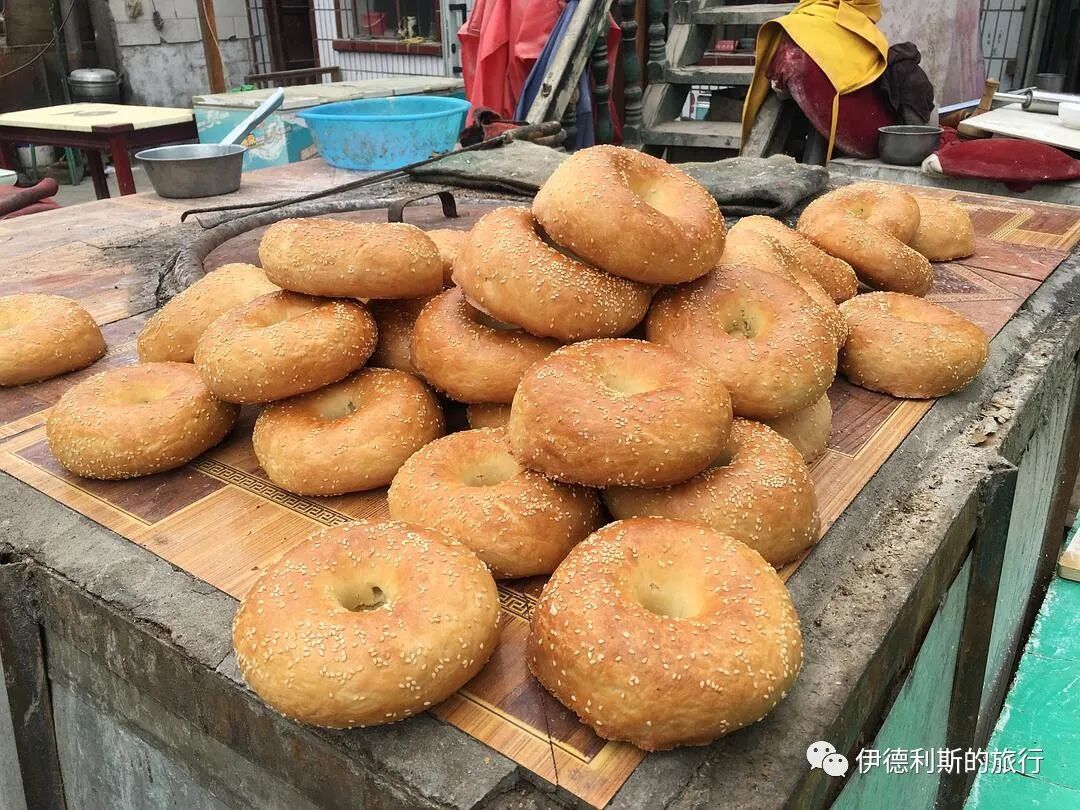
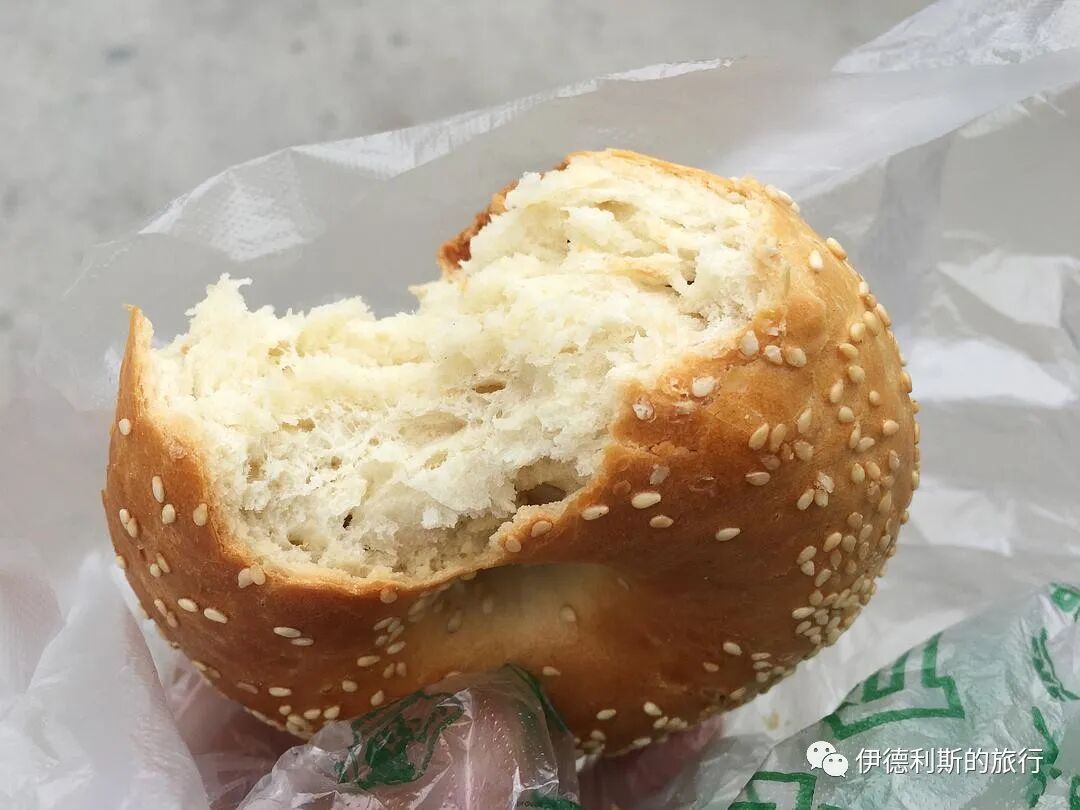
18. Kuqa
I drank mulberry juice at the bazaar in the new city of Kuqa. The mix of sweet and tart flavors rushed into my heart, tasting just like first love.
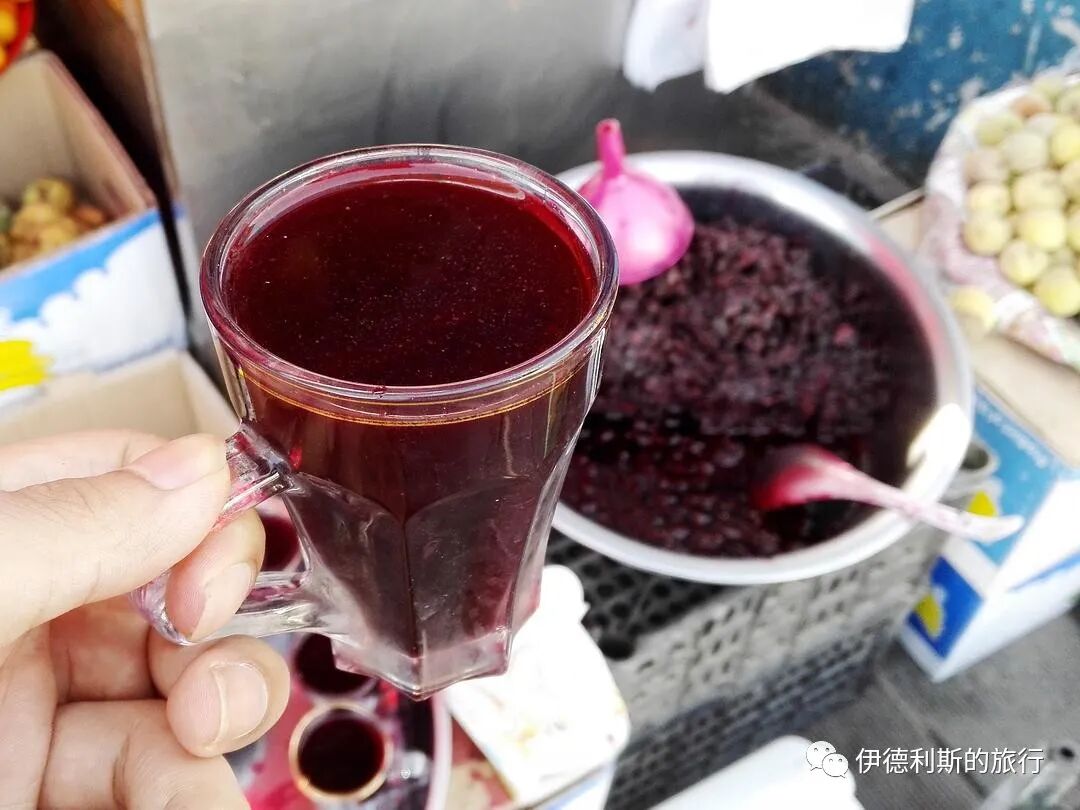
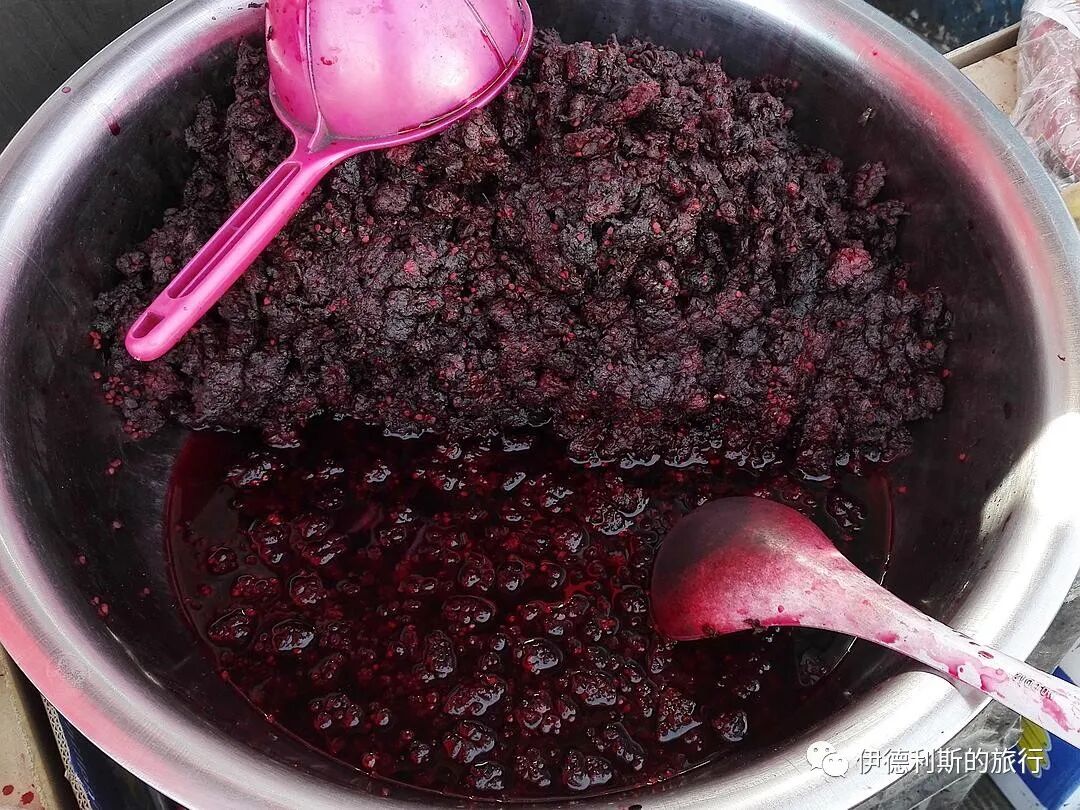
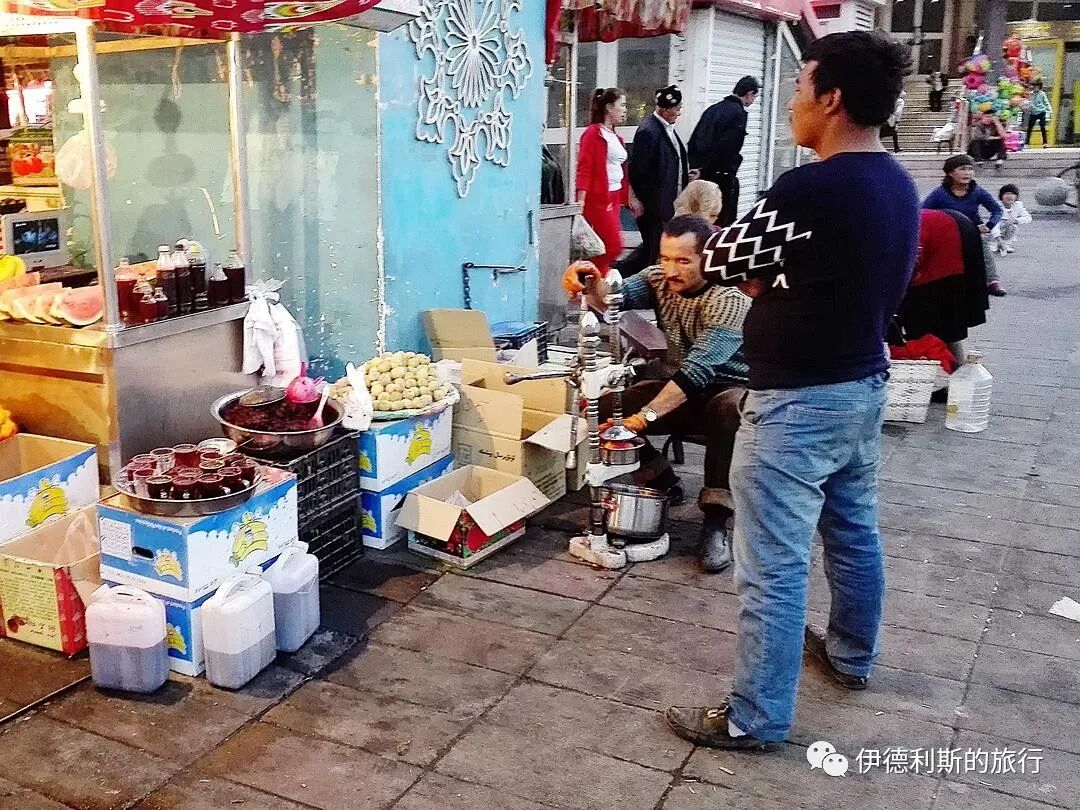
19. Yengisar County
Meat broth (yangtang) with flatbread (nang) at the weekend bazaar in Yengisar County. I made a special trip there from Kashgar, and it was huge! It felt so authentic and wild, I loved it. It has been many years since I visited a wild bazaar in a southern Xinjiang county, and I really miss it.
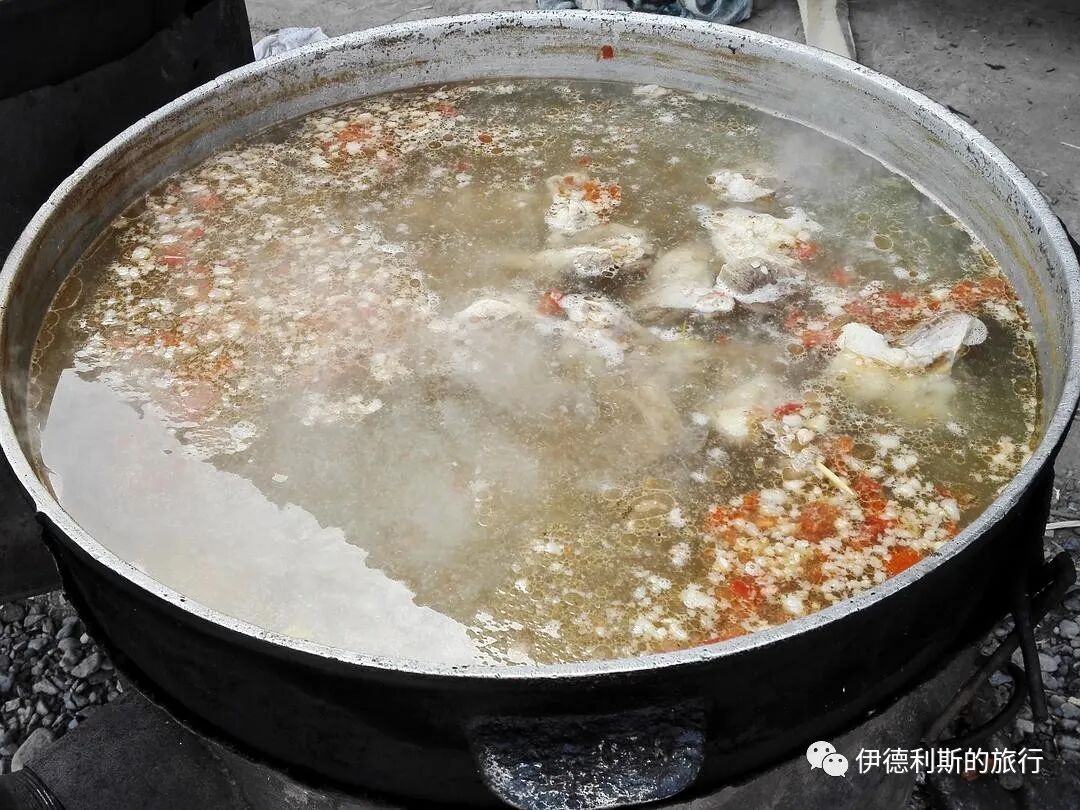
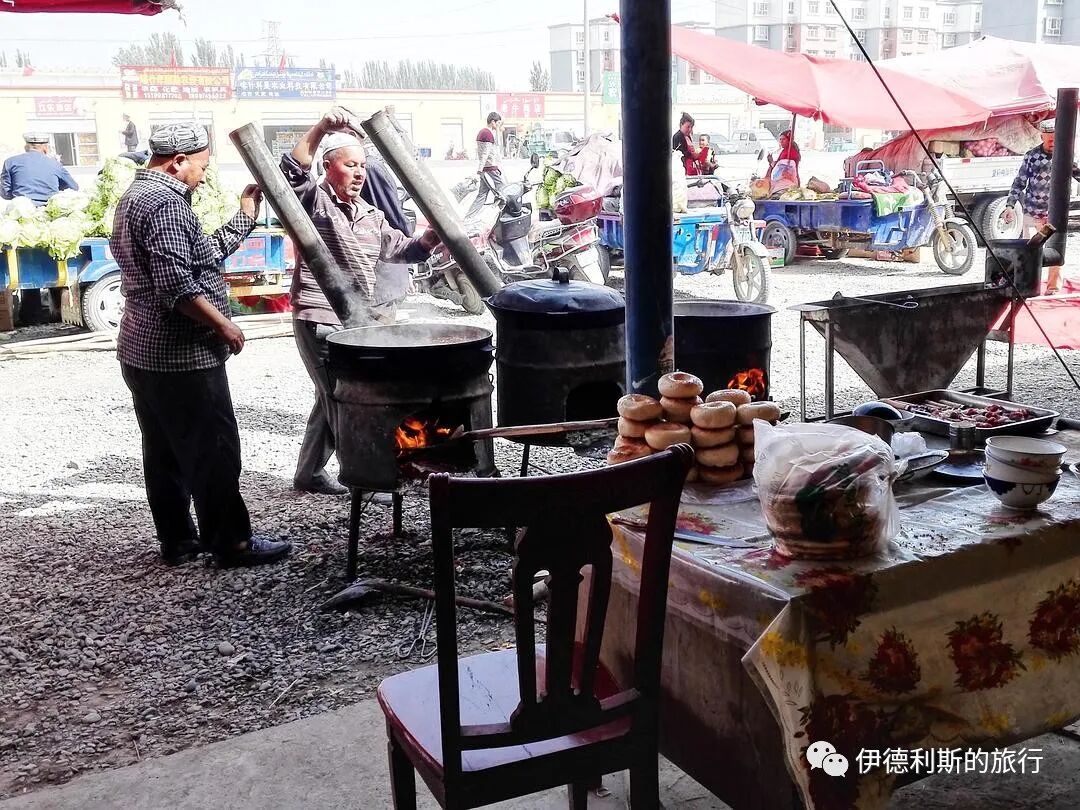
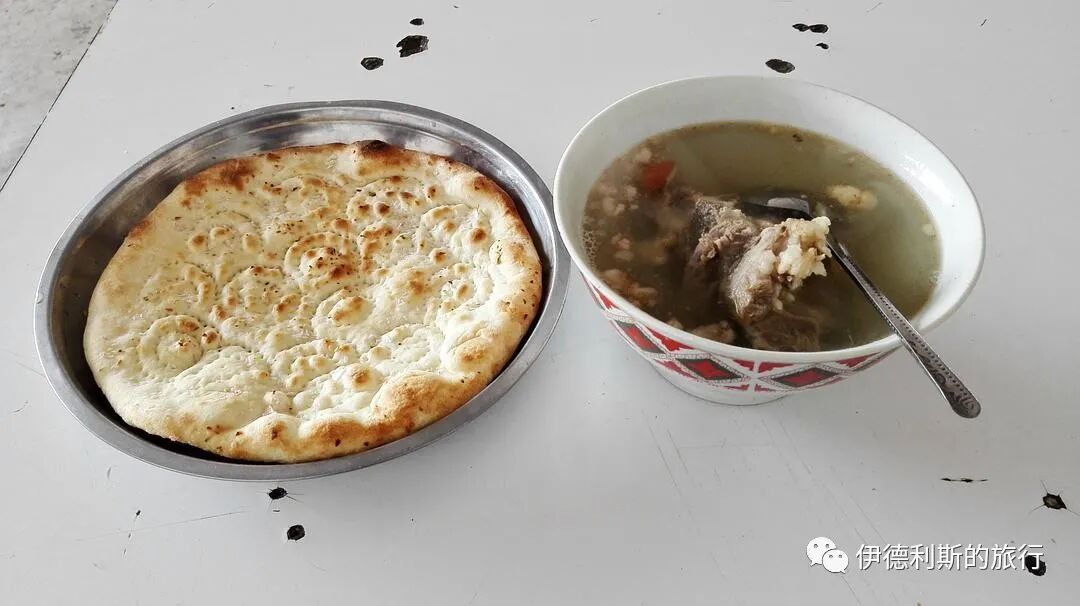
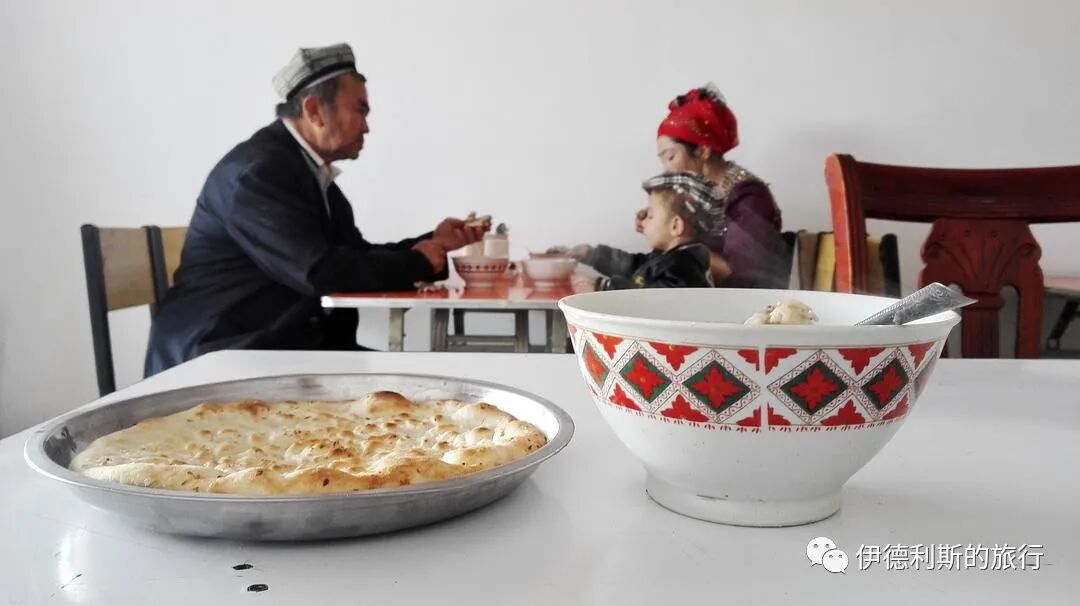
Suizhong Halal Travel Guide: Mosques and Muslim Snacks in Liaoning
Articles • ali2007fr posted the article • 0 comments • 198 views • 2026-05-17 05:52
Summary: This travel note introduces Suizhong Halal Travel Guide: Mosques and Muslim Snacks in Liaoning. Suizhong is located right next to Shanhai Pass and is the southwesternmost county in Liaoning Province. It is useful for readers interested in Suizhong Mosques, Halal Snacks, Liaoning Travel.
Suizhong is located right next to Shanhai Pass and is the southwesternmost county in Liaoning Province. Starting in the 18th century, more than ten Hui Muslim families, including the Zhang, Ding, Li, and Jin families, moved to Suizhong from Hebei Province. In 1737 (the second year of the Qianlong reign), the first mosque was built in the southeast of Suizhong city below the Kuixing Tower, and in 1797 (the third year of the Jiaqing reign), it was moved to its current location inside the West Gate.
The Suizhong Mosque was renovated between 1924 and 1927, suffered severe damage in the 1960s, and was restored between 1981 and 1984.
The main gate of the mosque; people at the entrance are preparing for a janazah (funeral prayer).
Turning left after entering the gate is the shuifang (ablution room).
Calligraphy in the ablution room.
Opposite the main gate is the second gate.
The vase-shaped ornament on the juanpeng (curved roof structure).
Inside the second gate is the main prayer hall.
The baoxia (front porch) in front of the main prayer hall is the most distinctive part of the entire mosque, and it is the most colorfully decorated mosque porch I have ever seen.
The front is inscribed with "Qingzhensi" (Mosque), and the two sides are inscribed with "Zhengxin" (rectify the heart) and "Chengyi" (sincerity of intent).
A plaque reading "Recognizing the Oneness of Allah."
Details of the patterns.
Behind the porch is the main prayer hall, and the brick carvings on the hall are also very delicate.
The large character "Jiao" (religion) at the bottom is new work, while the brick carvings above should be original old work.
You can take a close look at the content of the brick carvings, which include scrolls, painting tubes, incense vases, and even chessboards and various fruits.
Traditional Hui Muslim paintings on the doors of the main prayer hall.
The interior of the main prayer hall was likely rearranged after the 1980s, and both the mihrab (niche indicating the direction of prayer) and the minbar (pulpit) are very simple.
Above the yaodian (rear hall) at the back of the main prayer hall is the wangyuelou (moon-sighting tower).
A brand-new Halal food street is being built next to the mosque, and the old houses around the mosque are about to be demolished; judging by the wood carvings, some of these houses should be historical buildings.
There are many Halal restaurants around the South Gate of Suizhong; I had meat-braised tofu with sorghum rice for breakfast, and it was super delicious.
Tangniangao (sticky rice cake with sugar) and su shaobing (flaky baked flatbread) on the street.
Suizhong-style lengmian (cold noodles), which are perfect for eating in the summer.
Finally, sharing some street scenes. view all
Summary: This travel note introduces Suizhong Halal Travel Guide: Mosques and Muslim Snacks in Liaoning. Suizhong is located right next to Shanhai Pass and is the southwesternmost county in Liaoning Province. It is useful for readers interested in Suizhong Mosques, Halal Snacks, Liaoning Travel.
Suizhong is located right next to Shanhai Pass and is the southwesternmost county in Liaoning Province. Starting in the 18th century, more than ten Hui Muslim families, including the Zhang, Ding, Li, and Jin families, moved to Suizhong from Hebei Province. In 1737 (the second year of the Qianlong reign), the first mosque was built in the southeast of Suizhong city below the Kuixing Tower, and in 1797 (the third year of the Jiaqing reign), it was moved to its current location inside the West Gate.
The Suizhong Mosque was renovated between 1924 and 1927, suffered severe damage in the 1960s, and was restored between 1981 and 1984.
The main gate of the mosque; people at the entrance are preparing for a janazah (funeral prayer).
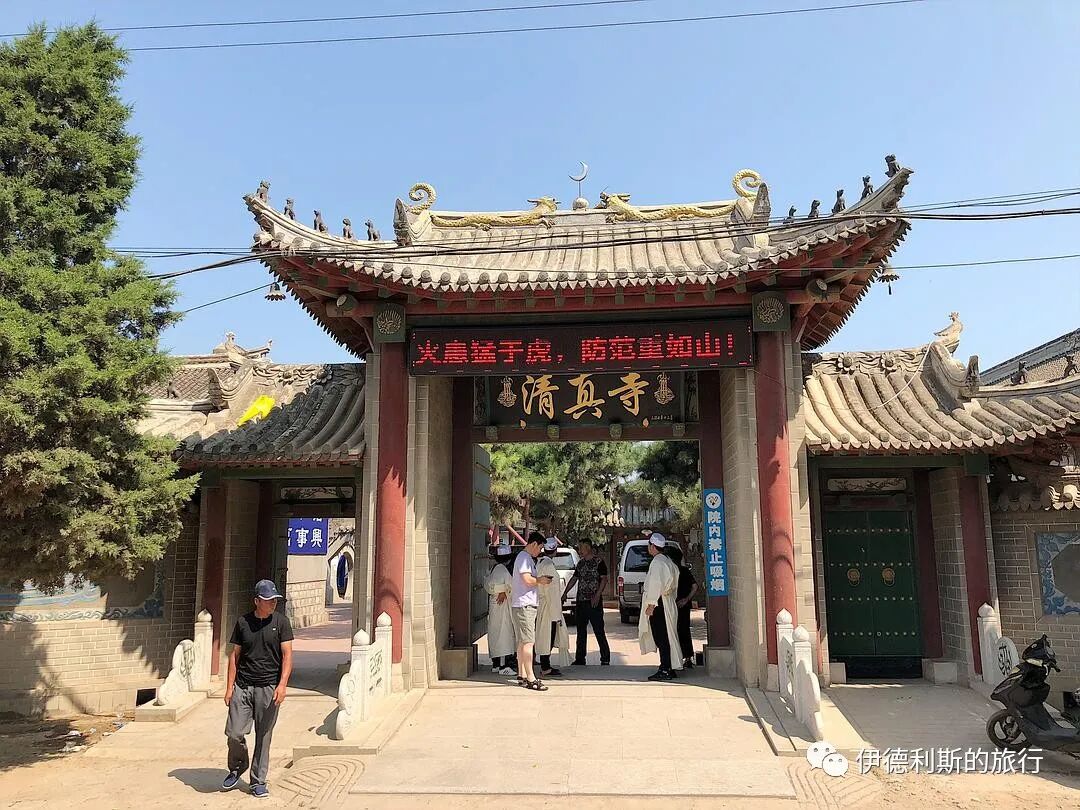
Turning left after entering the gate is the shuifang (ablution room).
Calligraphy in the ablution room.
Opposite the main gate is the second gate.
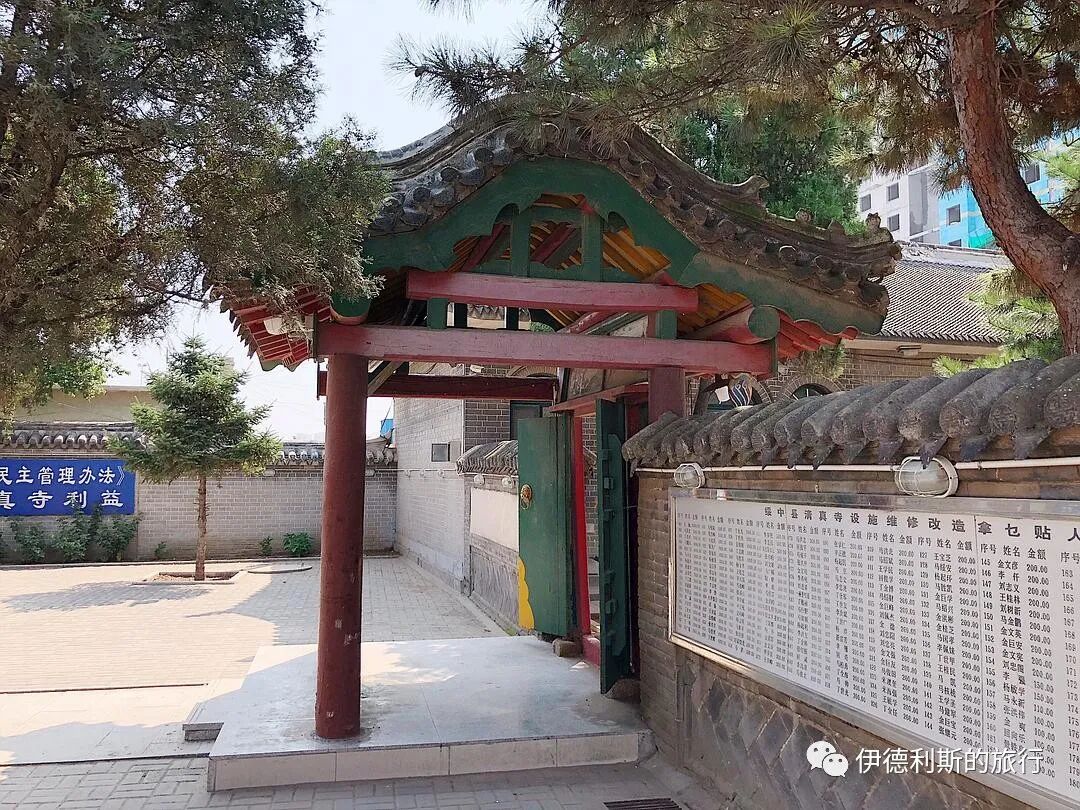
The vase-shaped ornament on the juanpeng (curved roof structure).
Inside the second gate is the main prayer hall.
The baoxia (front porch) in front of the main prayer hall is the most distinctive part of the entire mosque, and it is the most colorfully decorated mosque porch I have ever seen.
The front is inscribed with "Qingzhensi" (Mosque), and the two sides are inscribed with "Zhengxin" (rectify the heart) and "Chengyi" (sincerity of intent).
A plaque reading "Recognizing the Oneness of Allah."
Details of the patterns.
Behind the porch is the main prayer hall, and the brick carvings on the hall are also very delicate.
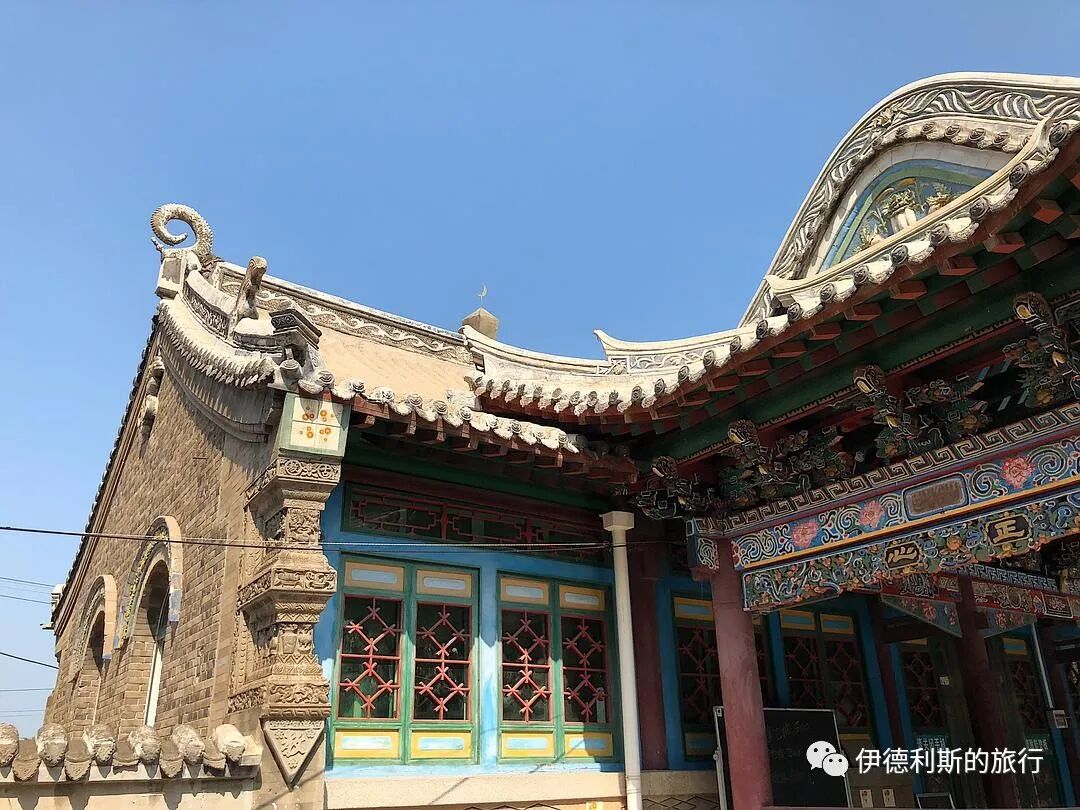
The large character "Jiao" (religion) at the bottom is new work, while the brick carvings above should be original old work.
You can take a close look at the content of the brick carvings, which include scrolls, painting tubes, incense vases, and even chessboards and various fruits.
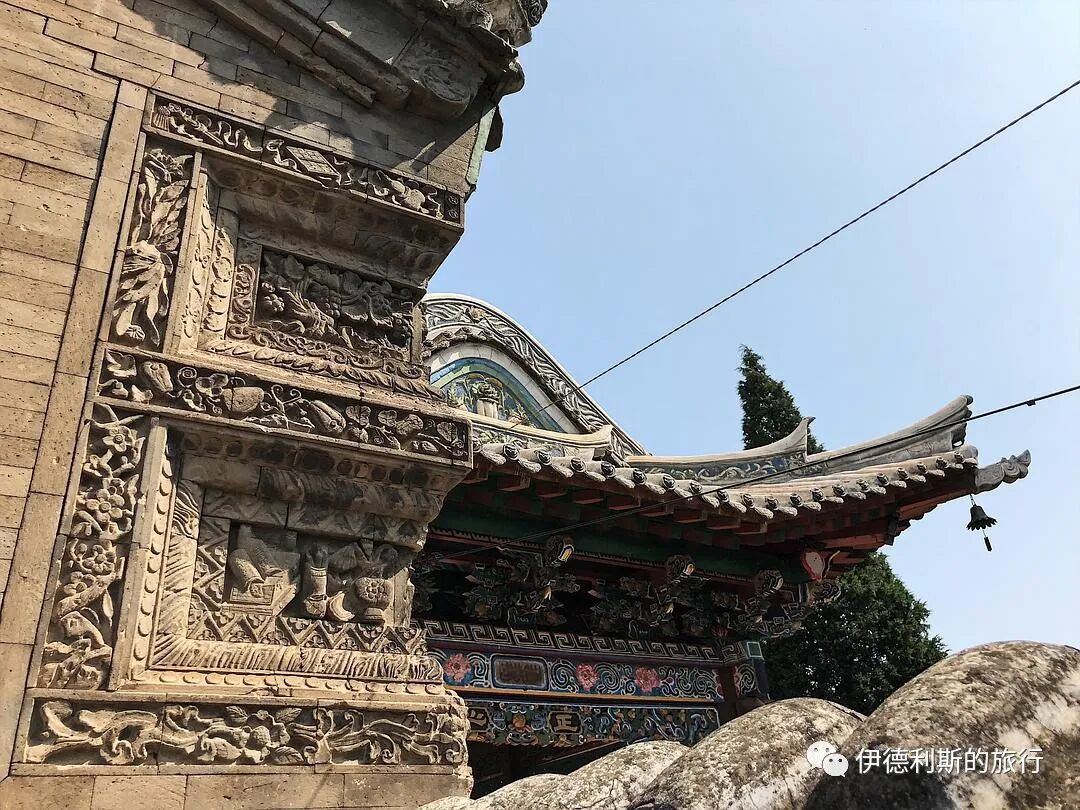
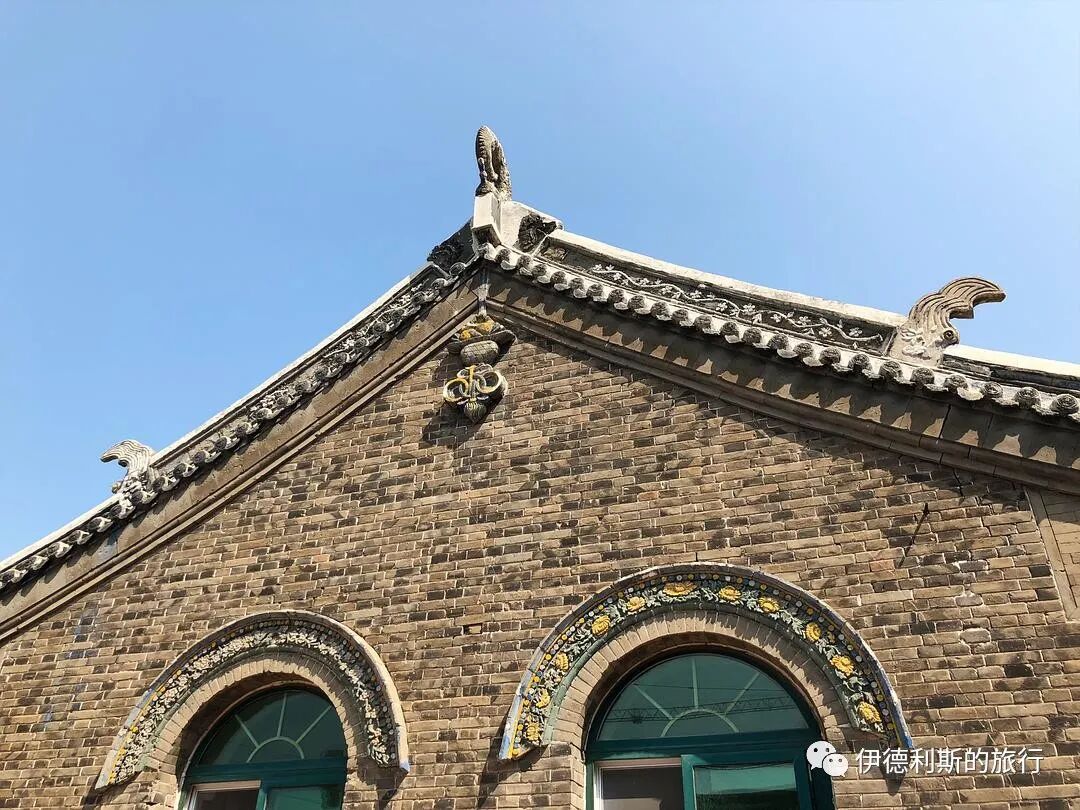
Traditional Hui Muslim paintings on the doors of the main prayer hall.
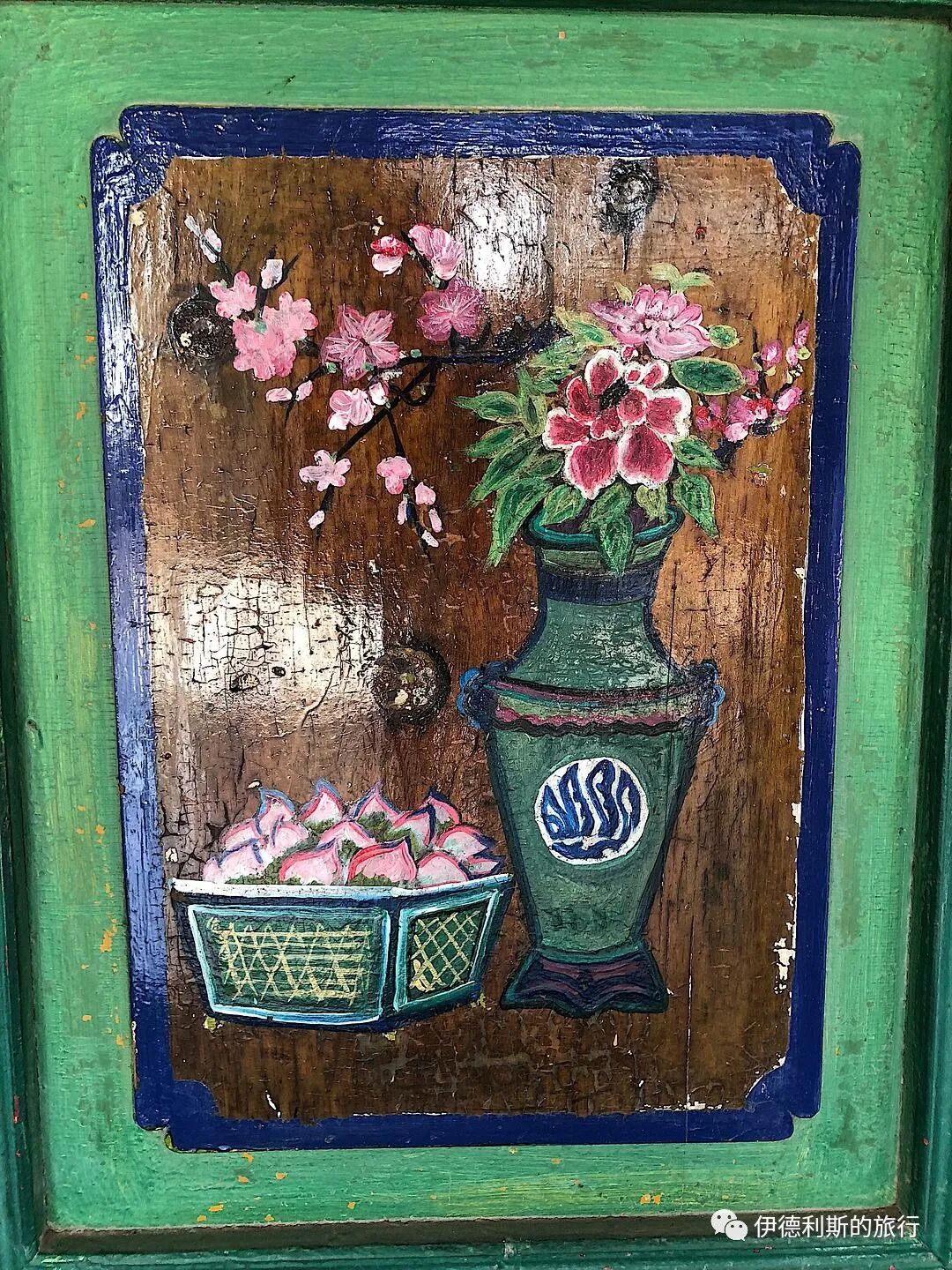
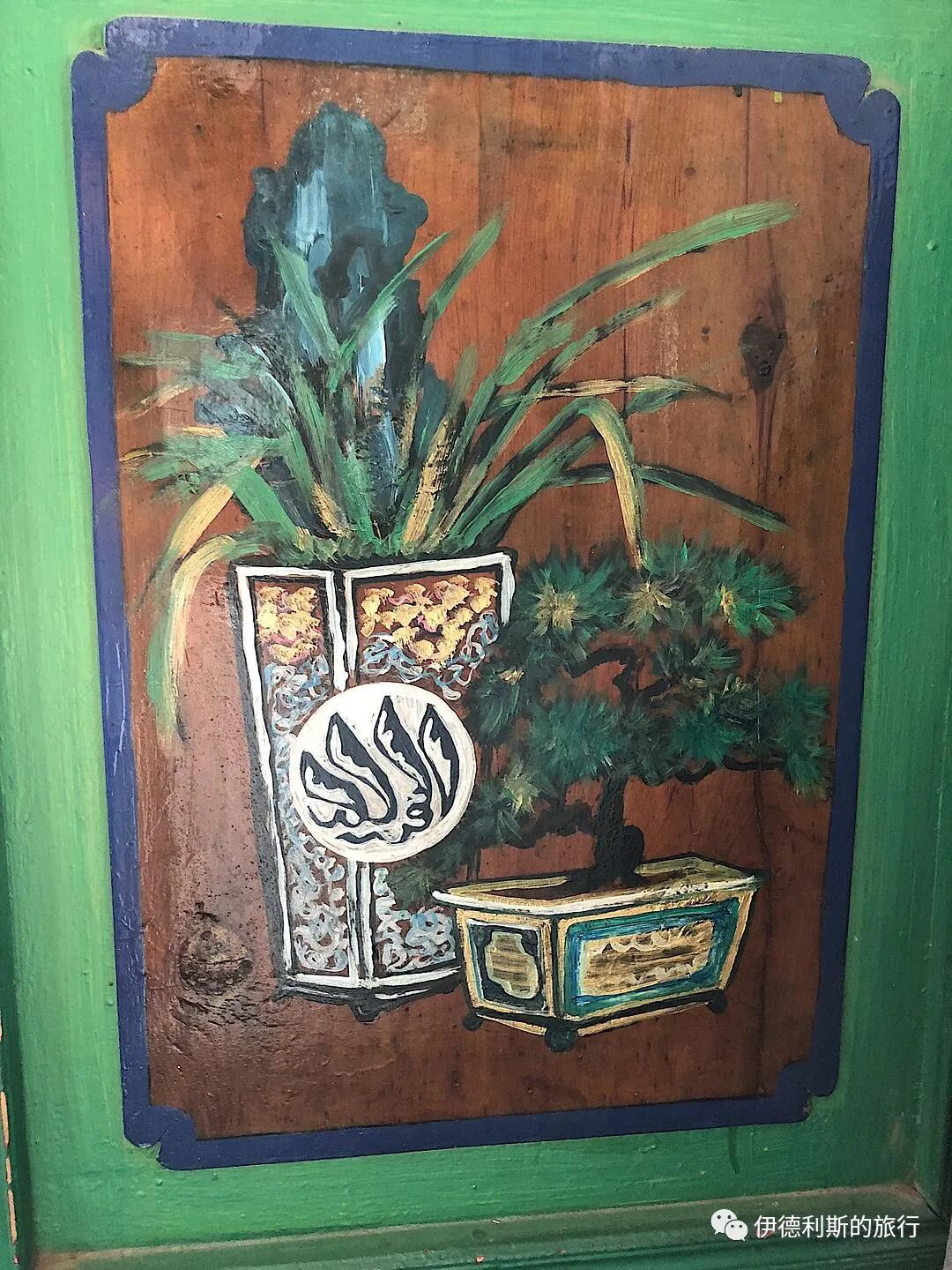
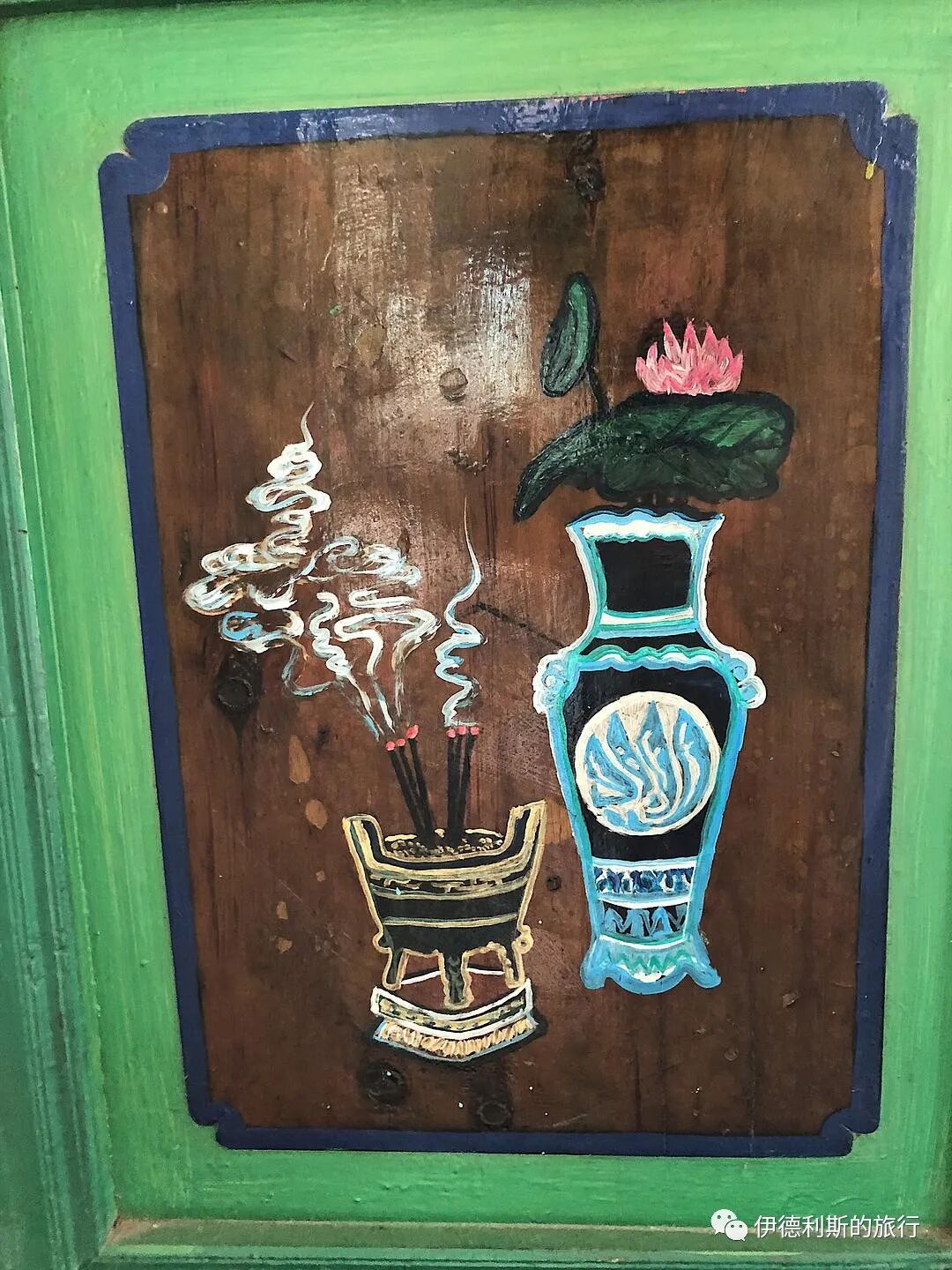
The interior of the main prayer hall was likely rearranged after the 1980s, and both the mihrab (niche indicating the direction of prayer) and the minbar (pulpit) are very simple.
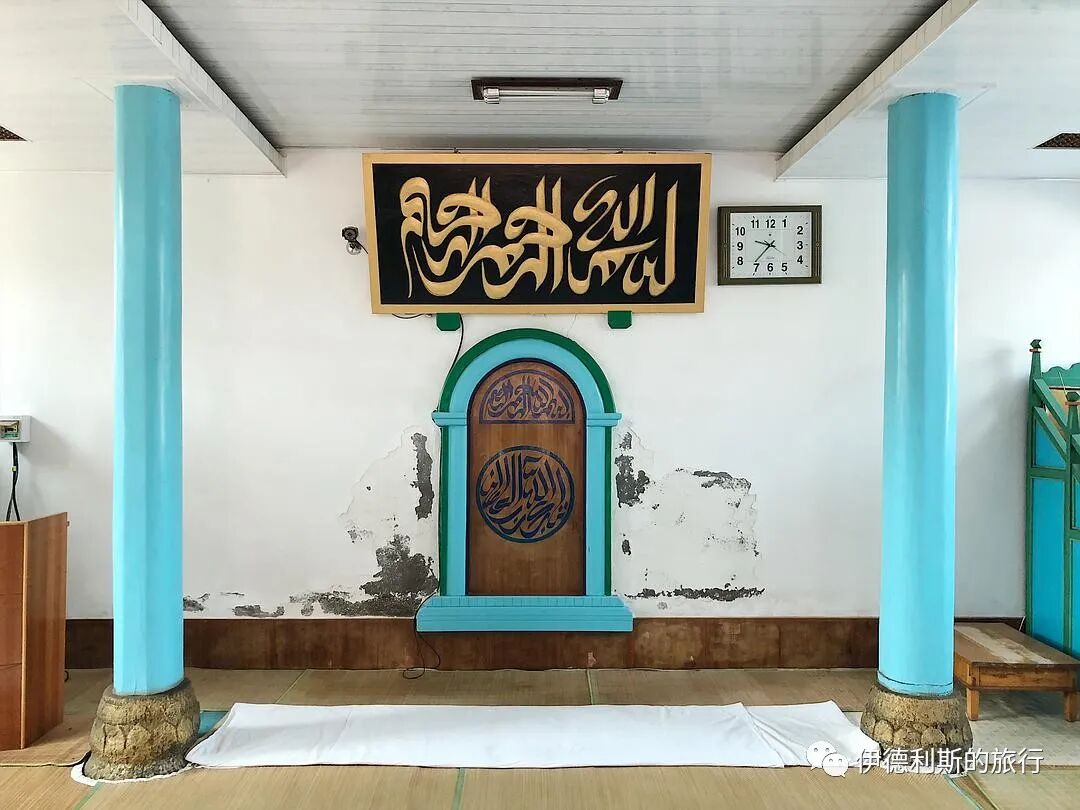
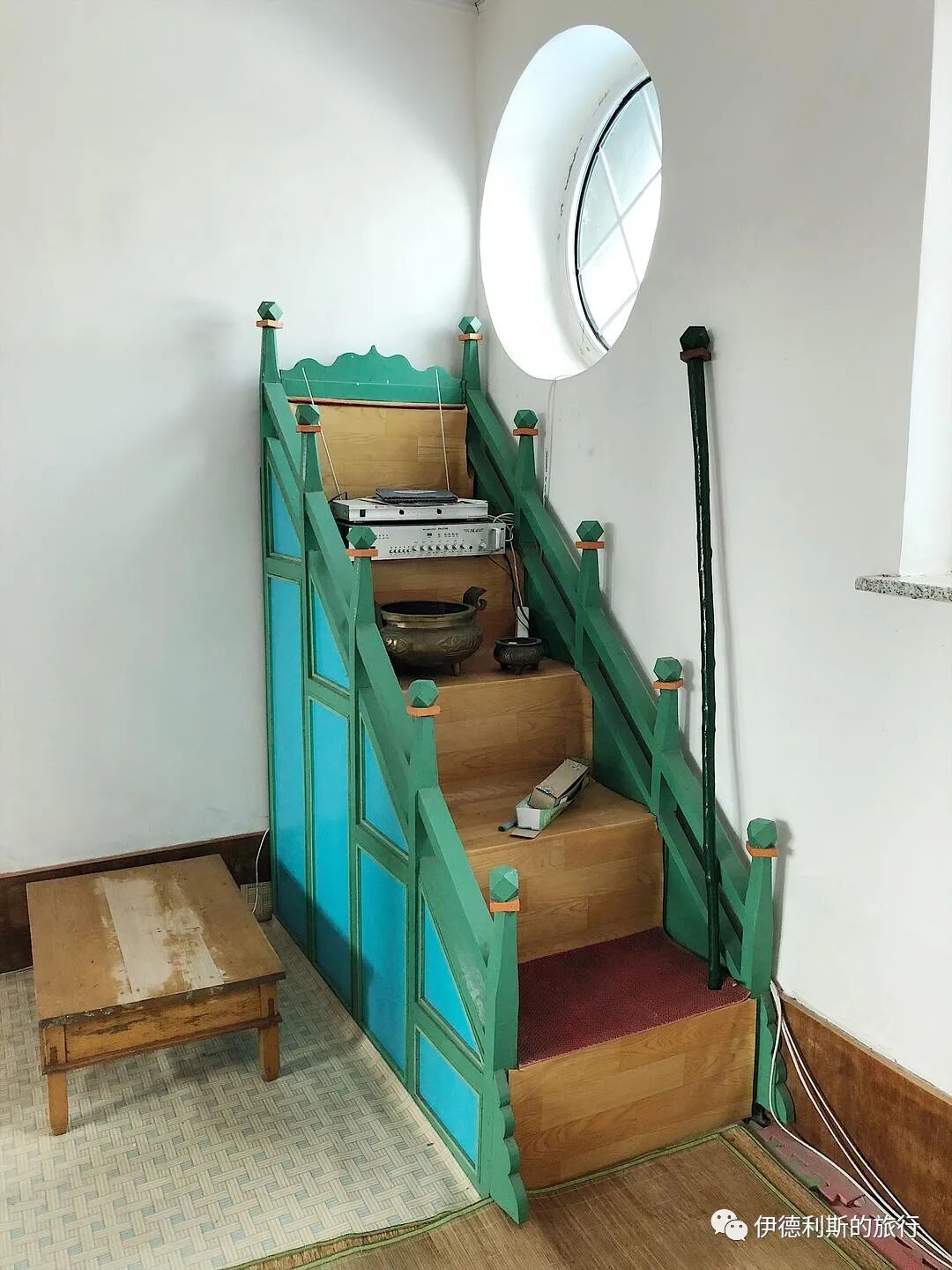
Above the yaodian (rear hall) at the back of the main prayer hall is the wangyuelou (moon-sighting tower).
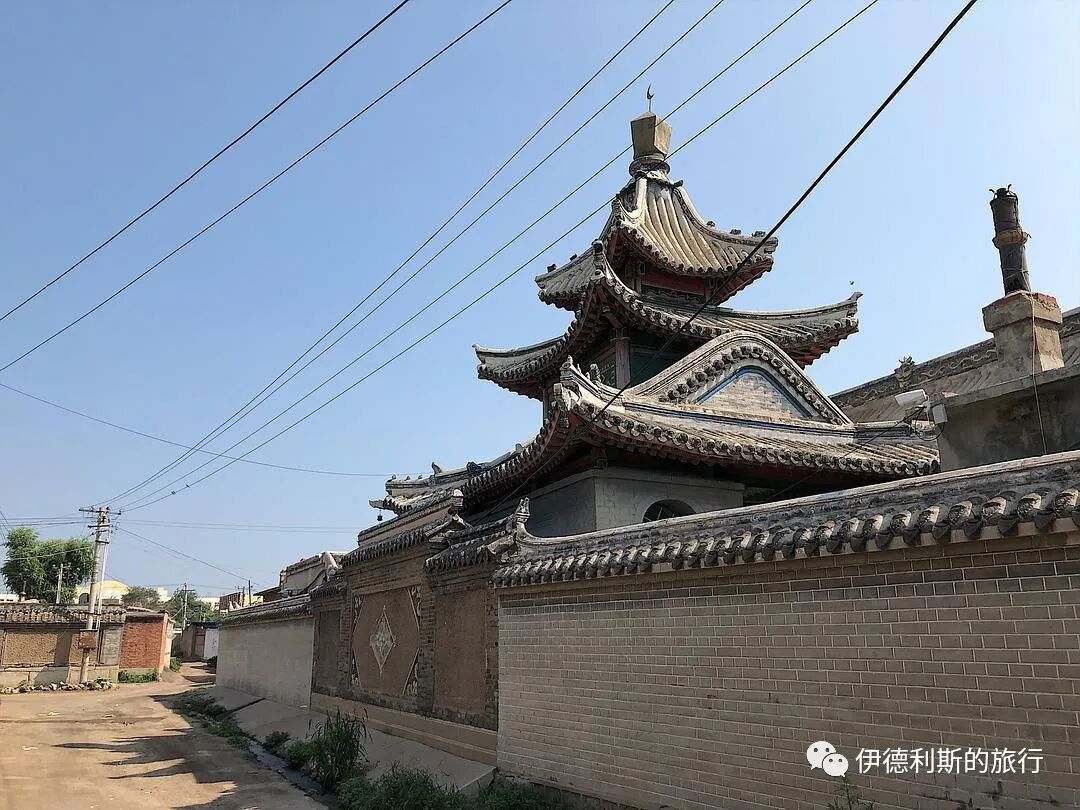
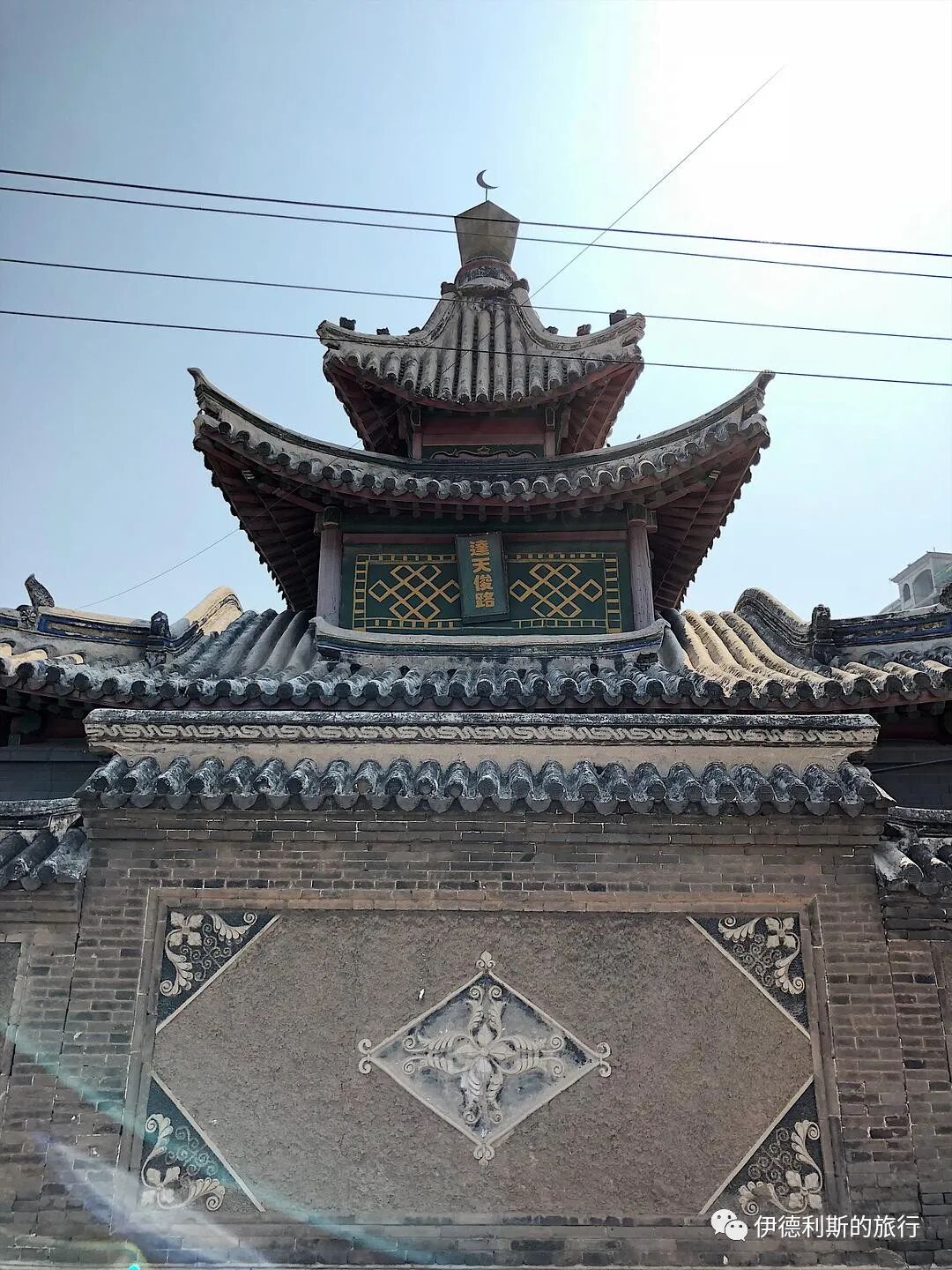
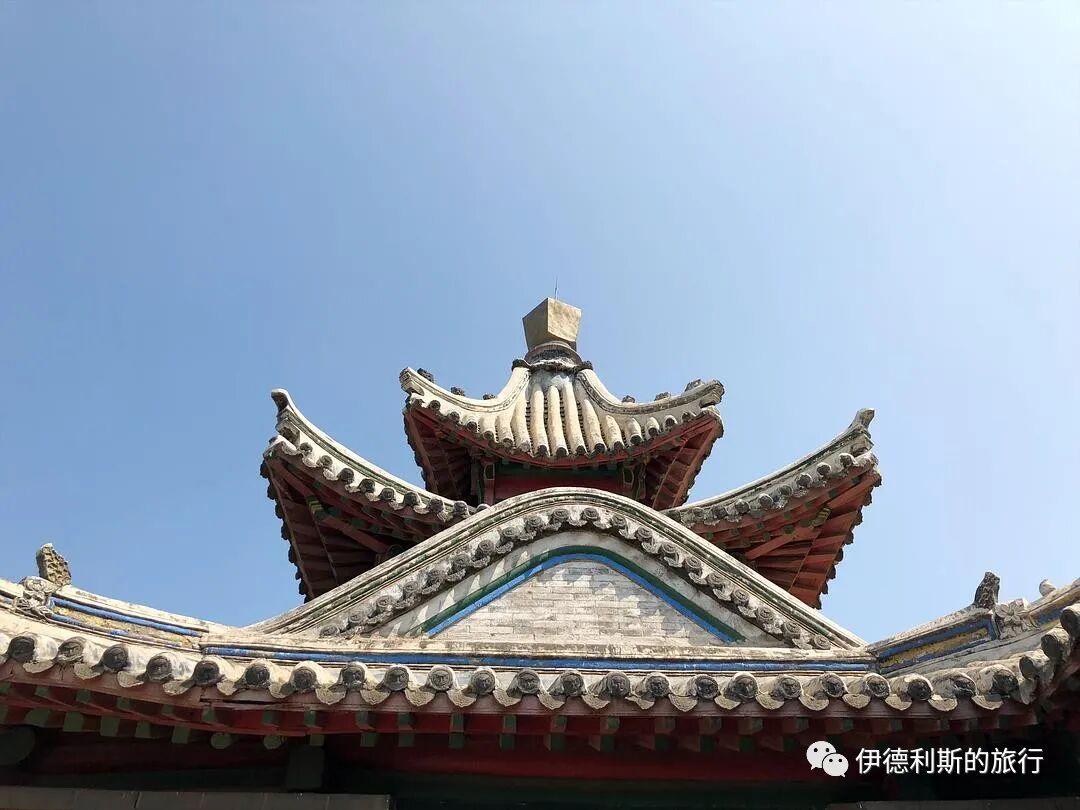
A brand-new Halal food street is being built next to the mosque, and the old houses around the mosque are about to be demolished; judging by the wood carvings, some of these houses should be historical buildings.
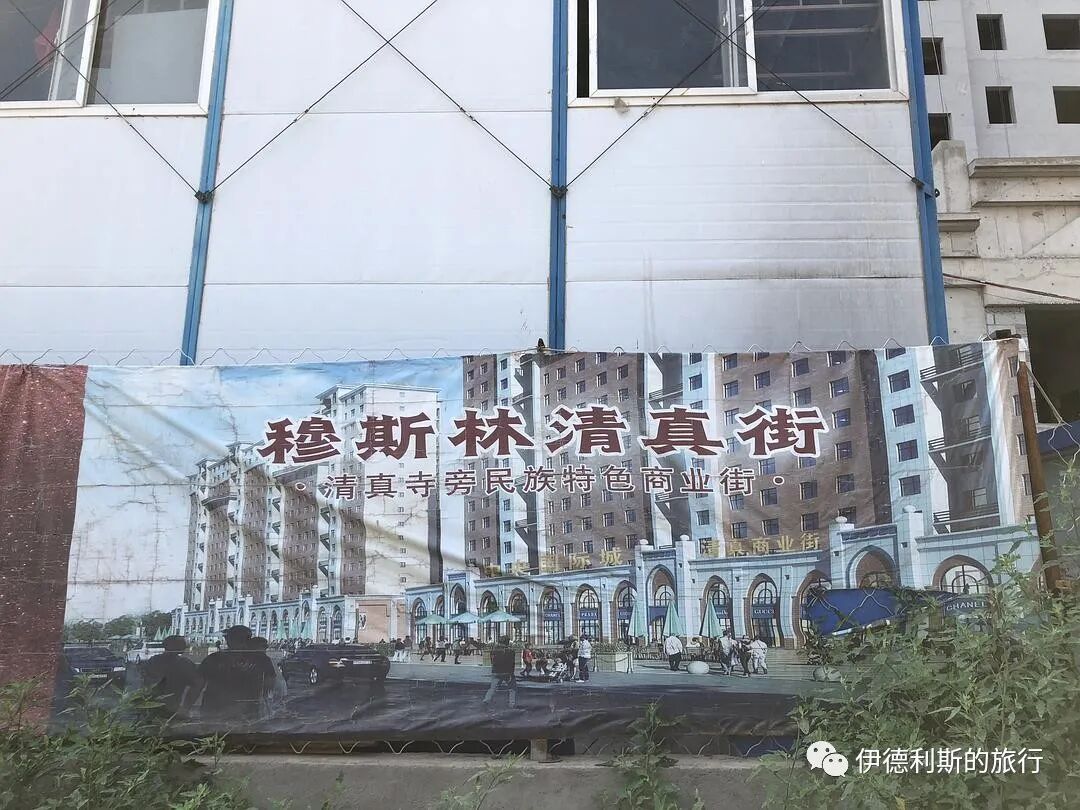
There are many Halal restaurants around the South Gate of Suizhong; I had meat-braised tofu with sorghum rice for breakfast, and it was super delicious.
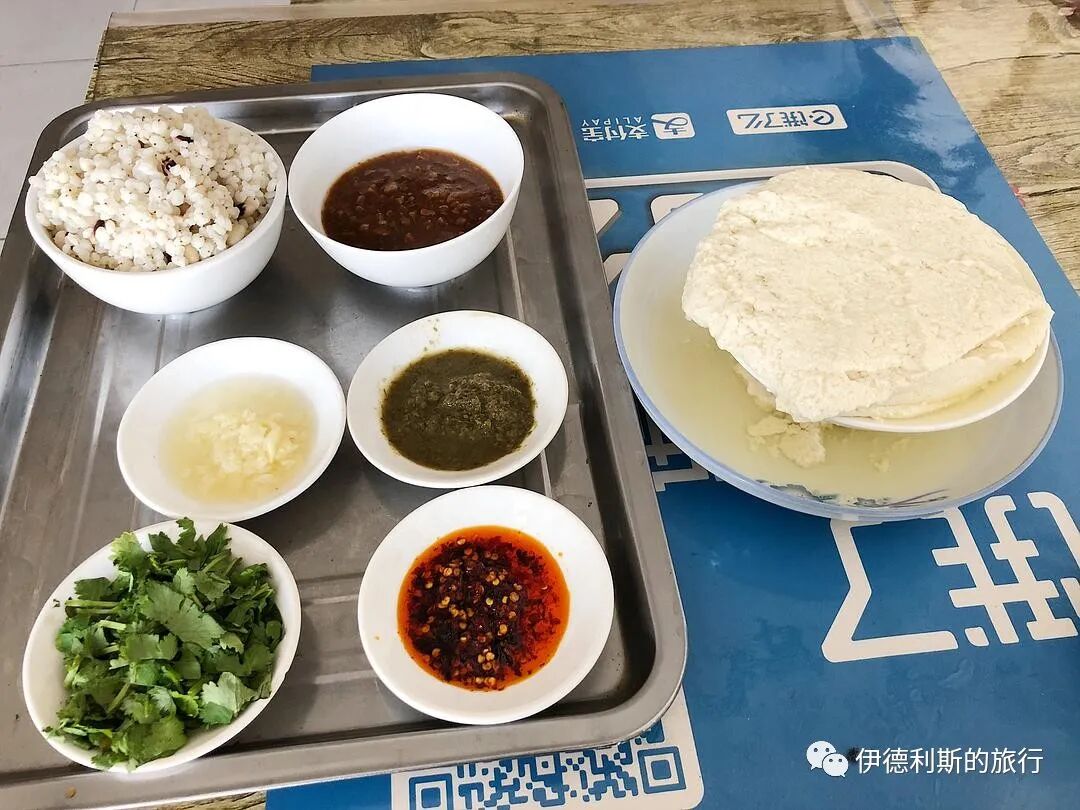
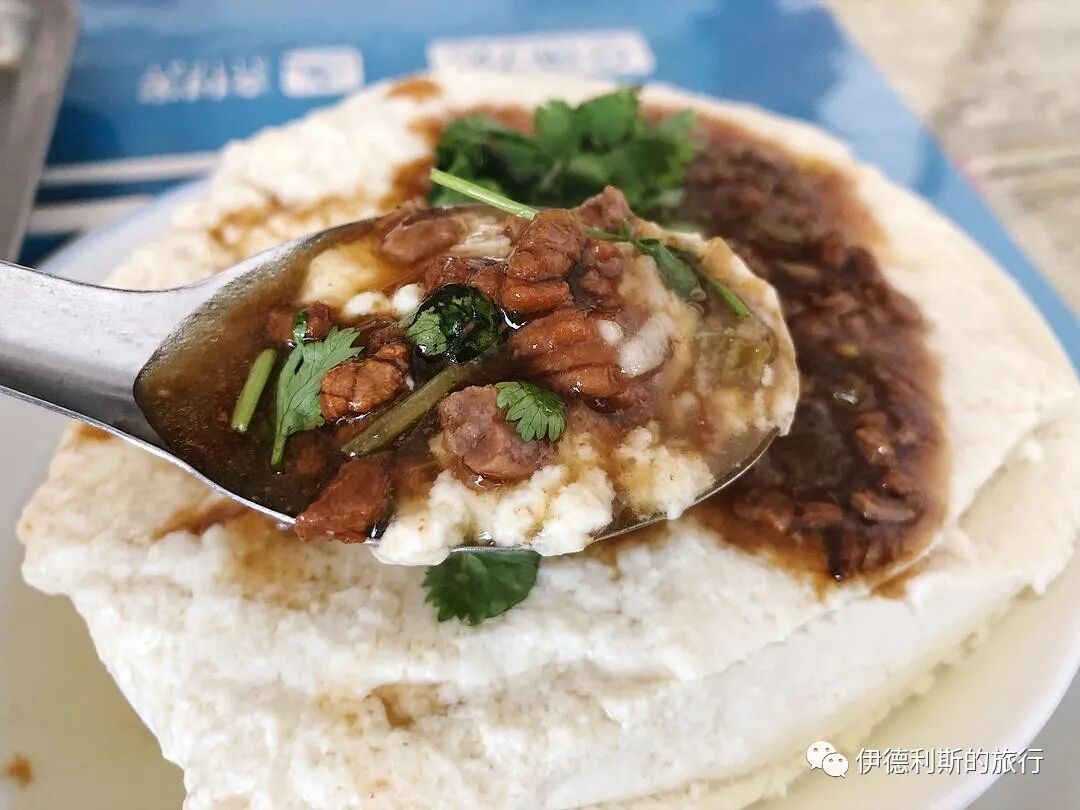
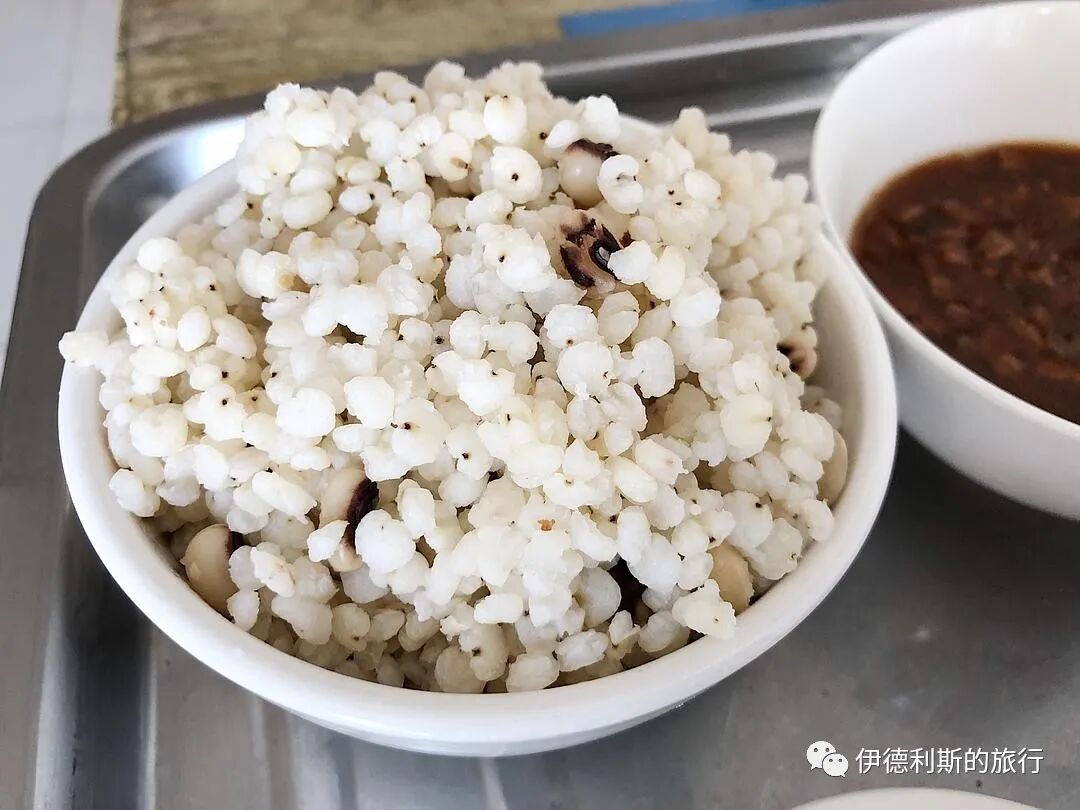
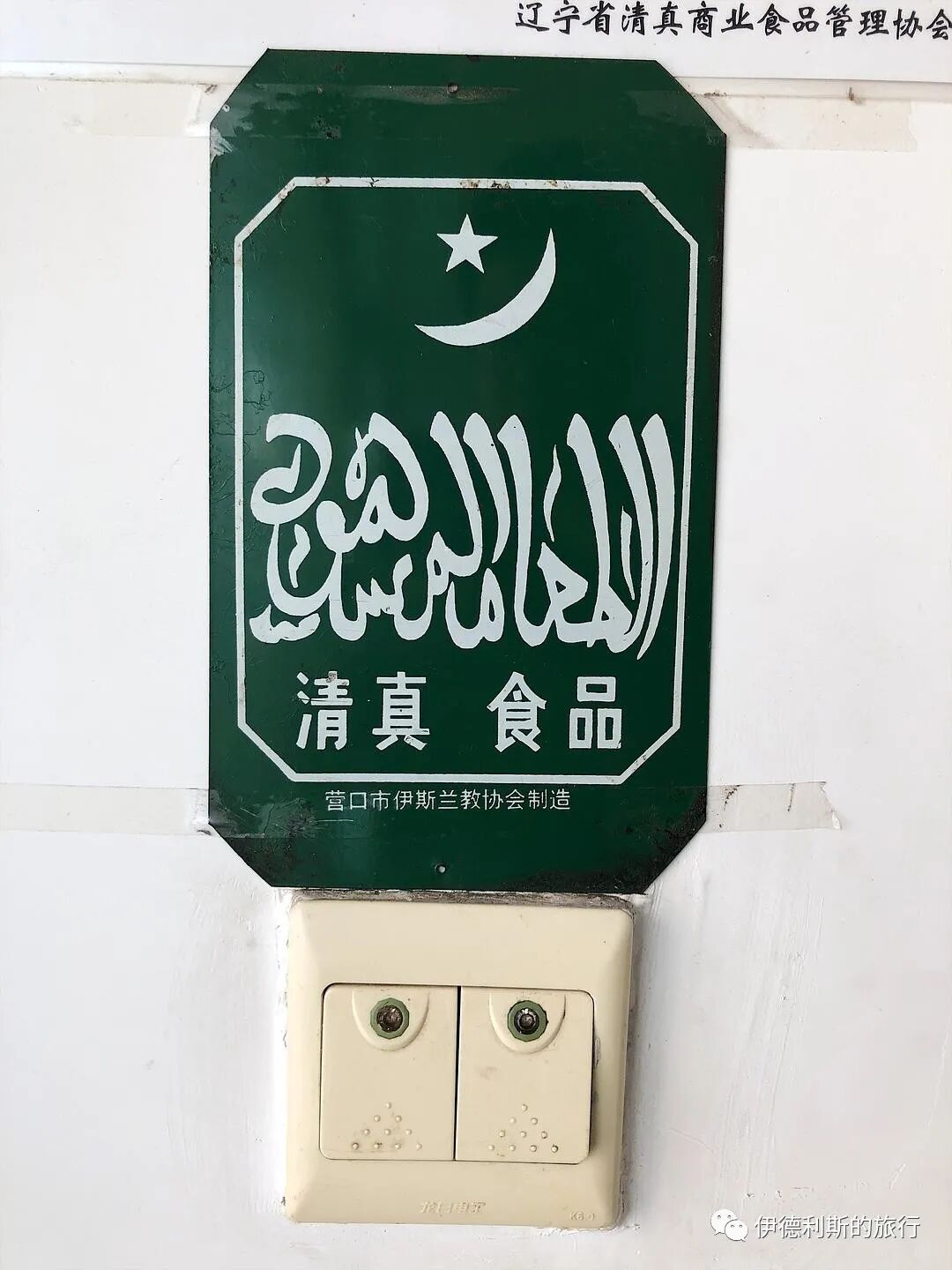
Tangniangao (sticky rice cake with sugar) and su shaobing (flaky baked flatbread) on the street.
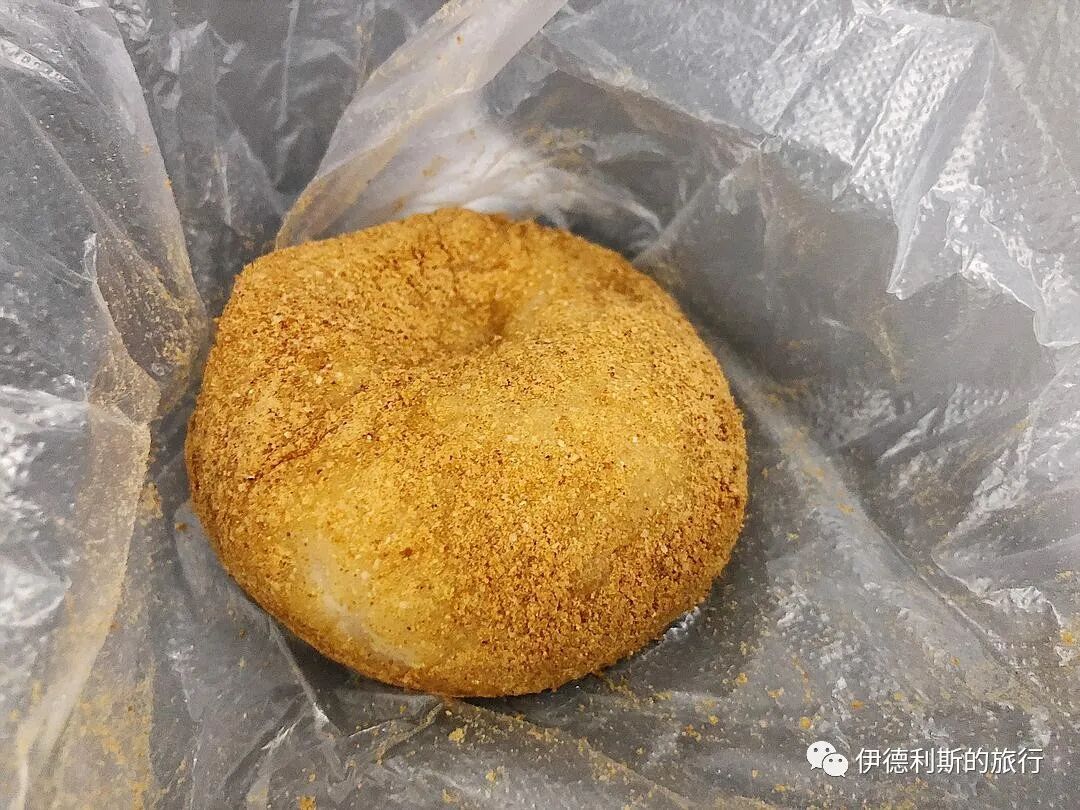
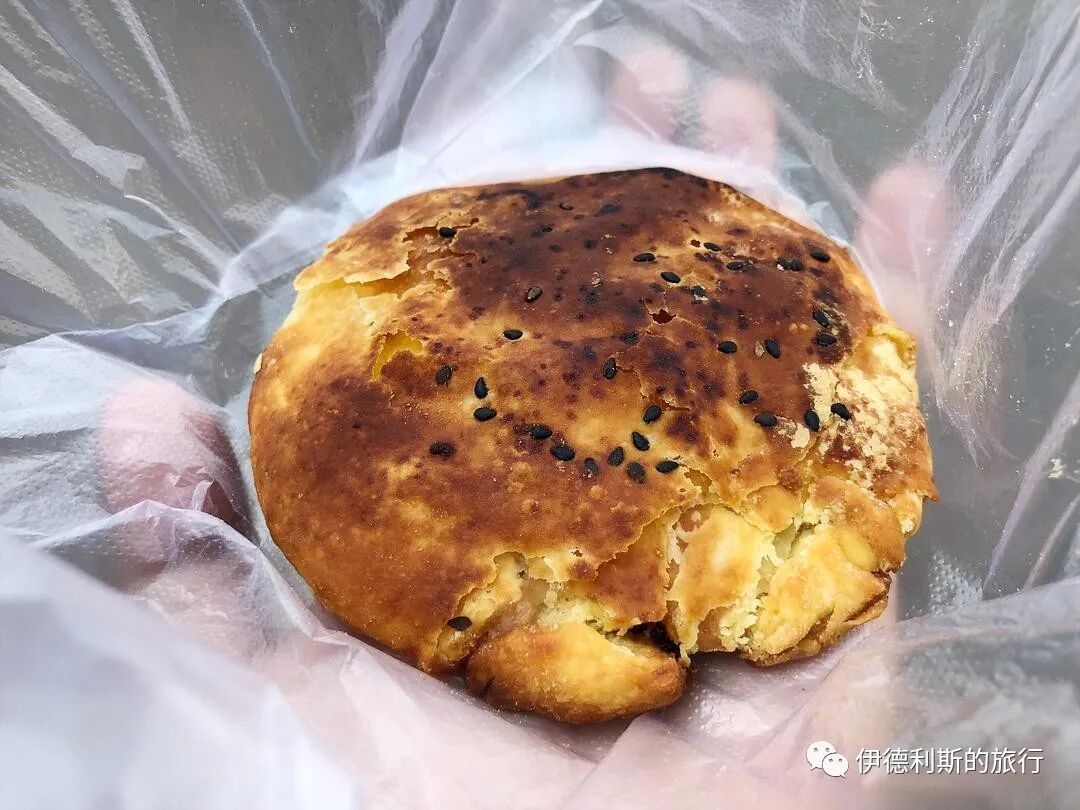
Suizhong-style lengmian (cold noodles), which are perfect for eating in the summer.
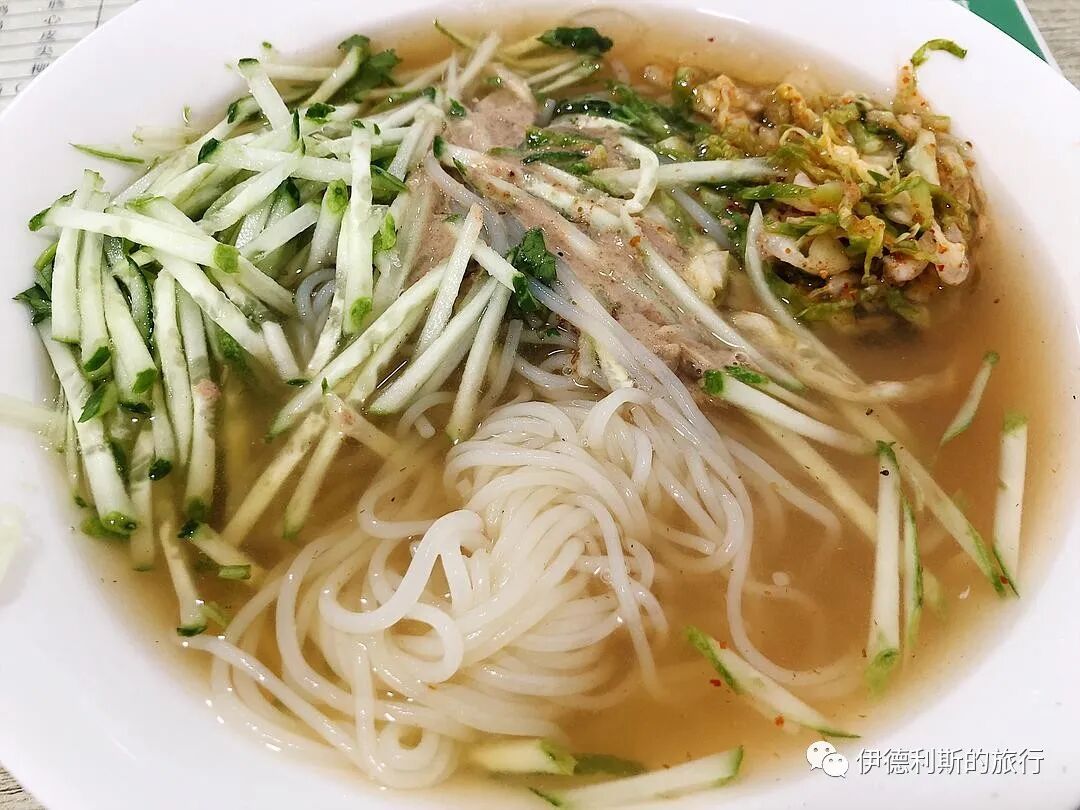
Finally, sharing some street scenes.
Halal Food Guide: Lanzhou Night Market — Muslim Snacks and Local Streets
Articles • ali2007fr posted the article • 0 comments • 175 views • 2026-05-18 07:38
Summary: Halal Food Guide: Lanzhou Night Market — Muslim Snacks and Local Streets is presented here as a firsthand travel account in clear English, beginning with this scene: On the 28th day of the fourth lunar month in 2019, I came to Lanzhou to see the famous Songmingyan Flower Festival (hua'er hui) and took the chance to explore the night markets. The account keeps its focus on Lanzhou Night Market, Halal Snacks, Gansu Food while preserving the names, places, food, and historical details from the Chinese source.
On the 28th day of the fourth lunar month in 2019, I came to Lanzhou to see the famous Songmingyan Flower Festival (hua'er hui) and took the chance to explore the night markets. I mainly ate at the Xizhan and Nanguan night markets.
Xizhan Night Market
Xizhan Night Market is located on the southern section of Jianlan Road at the Xizhan intersection in Lanzhou. It is not as famous as the Nanguan or Zhengning Road night markets, but it has a better vibe. It has not been affected by tourism and has no internet-famous shops; it is a purely authentic, local night market.
I started with a bowl of lamb offal soup (yangza tang), which was about ten times better than the one back home.
Then I had the Lanzhou specialty, milk egg fermented rice (niunai jidan laozao), which was sweet and delicious.
After that, I ate grilled lamb skewers. At a night market, it is best to choose a stall where they cut the meat and thread the skewers right in front of you.
The young man cutting the meat.
Nanguan Night Market
Nanguan Night Market opened in 2018. Because of its good location, it is very crowded, though not as internet-famous as Zhengning Road.
I drank hot winter fruit tea (re dongguo) and apricot skin tea (xingpi shui) here. Hot winter fruit tea is usually drunk in winter; it is made by steaming and boiling frozen pears.
I had tried apricot skin tea before in Zhangye; it is made from dried apricots and is very refreshing.
I ate the Linxia specialty, raft noodle sausage (fazi mianchang), which gets its name because it looks like a sheepskin raft.
The lamb soup served with it was truly delicious.
Then I bought a sugar oil cake (tangyou gao), which is usually sold for breakfast in Lanzhou; the sugar filling tasted great.
I bought fermented vegetable jelly noodles (jiangshui louyu) and fermented vegetable noodle soup (jiangshui saozi mian) at this stall.
Fermented vegetable broth (jiangshui) is made from celery and cabbage. It has a slightly sour taste and is very refreshing in the summer.
I had some sweet fermented wheat (tianbeizi) here, which is made from wheat.
The stir-fried lamb offal (chaobola) here looked delicious, but I was too full to try it.
Old Ma's Milk and Egg Fermented Rice (laoma niunai jidan laozao) on Zhengning Road.
I walked from Nanguan Night Market to Lanzhou's most famous Zhengning Road Night Market. While there, I grabbed a bowl of Old Ma's Milk and Egg Fermented Rice, which had the longest line. view all
Summary: Halal Food Guide: Lanzhou Night Market — Muslim Snacks and Local Streets is presented here as a firsthand travel account in clear English, beginning with this scene: On the 28th day of the fourth lunar month in 2019, I came to Lanzhou to see the famous Songmingyan Flower Festival (hua'er hui) and took the chance to explore the night markets. The account keeps its focus on Lanzhou Night Market, Halal Snacks, Gansu Food while preserving the names, places, food, and historical details from the Chinese source.
On the 28th day of the fourth lunar month in 2019, I came to Lanzhou to see the famous Songmingyan Flower Festival (hua'er hui) and took the chance to explore the night markets. I mainly ate at the Xizhan and Nanguan night markets.
Xizhan Night Market
Xizhan Night Market is located on the southern section of Jianlan Road at the Xizhan intersection in Lanzhou. It is not as famous as the Nanguan or Zhengning Road night markets, but it has a better vibe. It has not been affected by tourism and has no internet-famous shops; it is a purely authentic, local night market.
I started with a bowl of lamb offal soup (yangza tang), which was about ten times better than the one back home.
Then I had the Lanzhou specialty, milk egg fermented rice (niunai jidan laozao), which was sweet and delicious.
After that, I ate grilled lamb skewers. At a night market, it is best to choose a stall where they cut the meat and thread the skewers right in front of you.
The young man cutting the meat.
Nanguan Night Market
Nanguan Night Market opened in 2018. Because of its good location, it is very crowded, though not as internet-famous as Zhengning Road.
I drank hot winter fruit tea (re dongguo) and apricot skin tea (xingpi shui) here. Hot winter fruit tea is usually drunk in winter; it is made by steaming and boiling frozen pears.
I had tried apricot skin tea before in Zhangye; it is made from dried apricots and is very refreshing.
I ate the Linxia specialty, raft noodle sausage (fazi mianchang), which gets its name because it looks like a sheepskin raft.
The lamb soup served with it was truly delicious.
Then I bought a sugar oil cake (tangyou gao), which is usually sold for breakfast in Lanzhou; the sugar filling tasted great.
I bought fermented vegetable jelly noodles (jiangshui louyu) and fermented vegetable noodle soup (jiangshui saozi mian) at this stall.
Fermented vegetable broth (jiangshui) is made from celery and cabbage. It has a slightly sour taste and is very refreshing in the summer.
I had some sweet fermented wheat (tianbeizi) here, which is made from wheat.
The stir-fried lamb offal (chaobola) here looked delicious, but I was too full to try it.
Old Ma's Milk and Egg Fermented Rice (laoma niunai jidan laozao) on Zhengning Road.
I walked from Nanguan Night Market to Lanzhou's most famous Zhengning Road Night Market. While there, I grabbed a bowl of Old Ma's Milk and Egg Fermented Rice, which had the longest line.
Halal Food Guide: Linxia Night Market — Hui Muslim Snacks and Street Food
Articles • ali2007fr posted the article • 0 comments • 196 views • 2026-05-18 01:27
Summary: Halal Food Guide: Linxia Night Market — Hui Muslim Snacks and Street Food is presented here as a firsthand travel account in clear English, beginning with this scene: I went to Gansu in May 2019 to listen to folk songs (hua'er), then stopped by Linxia to explore the food. The account keeps its focus on Linxia Food, Halal Snacks, Hui Muslims while preserving the names, places, food, and historical details from the Chinese source.
I went to Gansu in May 2019 to listen to folk songs (hua'er), then stopped by Linxia to explore the food.
Linxia North Street Night Market
Every day after sunset, Linxia North Street turns into a lively night market for snacks.
This Dongxiang stall was packed with customers. Listening to the young man speak the Dongxiang language, which sounds a lot like Mongolian, felt like stepping back into the Mongol Empire era.
I had lamb clay pot (yangrou shaguo) and lamb skewers (yangrou chuan). The clay pot tasted very fresh and delicious.
I also ate lamb head at this shop. The name 'Nuhai' actually refers to Noah from Noah's Ark. The stir-fried lamb head meat, steamed lamb brains, and steamed lamb neck were all incredibly tasty.
Lamb brains
I ate old-broth chicken (laotang ji) at this shop, but when I returned in 2021, this row of stalls at the night market was gone.
Linxia snacks
Linxia has all kinds of snacks during the day, but since I visited right after Eid al-Fitr, many restaurants were closed. Linxia's thick flatbread (guokui) is made with bitter bean herb (kudou), which gives it a special fragrance that I really like.
At this shop, I tried cold buckwheat noodles (qiaofen). They taste different from regular cold wheat noodles (liangpi) and are very unique.
I had old-braised noodles (laolu mian) and Hezhou steamed buns (Hezhou baozi) at this shop. The old-braised noodles were very rich and had a thick, hearty texture. The buns were filled with radish, and you could see the golden Sichuan peppercorn oil seeping through. view all
Summary: Halal Food Guide: Linxia Night Market — Hui Muslim Snacks and Street Food is presented here as a firsthand travel account in clear English, beginning with this scene: I went to Gansu in May 2019 to listen to folk songs (hua'er), then stopped by Linxia to explore the food. The account keeps its focus on Linxia Food, Halal Snacks, Hui Muslims while preserving the names, places, food, and historical details from the Chinese source.
I went to Gansu in May 2019 to listen to folk songs (hua'er), then stopped by Linxia to explore the food.
Linxia North Street Night Market
Every day after sunset, Linxia North Street turns into a lively night market for snacks.
This Dongxiang stall was packed with customers. Listening to the young man speak the Dongxiang language, which sounds a lot like Mongolian, felt like stepping back into the Mongol Empire era.
I had lamb clay pot (yangrou shaguo) and lamb skewers (yangrou chuan). The clay pot tasted very fresh and delicious.
I also ate lamb head at this shop. The name 'Nuhai' actually refers to Noah from Noah's Ark. The stir-fried lamb head meat, steamed lamb brains, and steamed lamb neck were all incredibly tasty.
Lamb brains
I ate old-broth chicken (laotang ji) at this shop, but when I returned in 2021, this row of stalls at the night market was gone.
Linxia snacks
Linxia has all kinds of snacks during the day, but since I visited right after Eid al-Fitr, many restaurants were closed. Linxia's thick flatbread (guokui) is made with bitter bean herb (kudou), which gives it a special fragrance that I really like.
At this shop, I tried cold buckwheat noodles (qiaofen). They taste different from regular cold wheat noodles (liangpi) and are very unique.
I had old-braised noodles (laolu mian) and Hezhou steamed buns (Hezhou baozi) at this shop. The old-braised noodles were very rich and had a thick, hearty texture. The buns were filled with radish, and you could see the golden Sichuan peppercorn oil seeping through.
Halal Food Guide: Western China — Muslim Snacks and Local Halal Food (Part 1)
Articles • ali2007fr posted the article • 0 comments • 216 views • 2026-05-17 22:15
Summary: Halal Food Guide: Western China — Muslim Snacks and Local Halal Food is presented here as a firsthand travel account in clear English, beginning with this scene: I am sharing 53 halal snack spots I visited across 53 places in Western China. Some are in small restaurants and others are at street stalls, each with its own unique flavor. The account keeps its focus on Western China Food, Halal Snacks, Halal Food while preserving the names, places, food, and historical details from the Chinese source.
I am sharing 53 halal snack spots I visited across 53 places in Western China. Some are in small restaurants and others are at street stalls, each with its own unique flavor.
Table of Contents
1. Sichuan
1. Guangyuan 2. Langzhong 3. Nanchong 4. Tuqiao in Chengdu 5. Dujiangyan 6. Mimou Town
2. Yunnan
1. Zhaotong 2. Ludian 3. Kunming 4. Xundian 5. Xiaguan in Dali 6. Weishan in Dali 7. Dali Ancient City 8. Ruili 9. Xishuangbanna 10. Daying in Yuxi 11. Najiaying 12. Jianshui 13. Shadian 14. Mengzi
3. Shaanxi
1. Xi'an 2. Ankang 3. Shuhe Ancient Town 4. Xixiang 5. Xianyin Mosque (Xianyin Si) in Hanzhong
4. Inner Mongolia
1. Hohhot 2. Longshengzhuang 3. Jining
5. Ningxia
1. Yinchuan
6. Gansu
1. Lanzhou, 2. Linxia
7. Qinghai
1. Ping'an 2. Xunhua 3. Xining
8. Xinjiang
1. Urumqi 2. Toksun County 3. Turpan 4. Huoyanshan Town 5. Shanshan County 6. Yarkant (Shache) 7. Kashgar (Kashi) 8. Yining 9. Qingshuihe Town, Huocheng County 10. Zhaosu County 11. Nalati Town, Xinyuan County 12. Hami 13. Korla (Ku'erle) 14. Bayanbulak Town, Hejing County 15. Hejing County 16. Yanqi County 17. Lopnur (Yuli) County 18. Kuqa 19. Yengisar (Yingjisha) County
1. Sichuan Province
1. Guangyuan
Around the mosque on Shanghe Street in Guangyuan, Sichuan, there are many local halal restaurants. They specialize in beef soup pot (niurou tangguo) and stewed flatbread (huimo). Compared to other parts of Sichuan, the halal food here is closer to the style of Hanzhong in Shaanxi.
2. Langzhong
There are many halal restaurants inside the old town of Langzhong. At one of them, I ate twice-cooked pork made with salted leaf beef (yanyezi niurou), as well as northern Sichuan cold jelly noodles (chuanbei liangfen) and steamed sugar buns (baitang zhengmo). Steamed sugar buns are a specialty of the Hui Muslims in Langzhong. They were created by the Hui Muslim pastry chef Ha Gongkui during the Qianlong era. Instead of using lye, they are fermented with naturally cultivated enzymes and include some osmanthus flowers. You can also steam them again later.
3. Nanchong
At the entrance of the Nanchong Mosque, Imam Feng Yong and his family sell Yunus beef jerky, which is a precious piece of intangible cultural heritage.
Imam Feng Yong’s ancestors moved from Shaanxi to settle in Nanchong during the Qing Dynasty. At that time, the busy Jishikou market had many stalls selling braised beef, and the Imam’s great-grandfather, Yang Fangyun, ran his family’s traditional halal beef jerky business there. Because they used a red lantern to block the wind and provide light on windy days, people started calling it Red Lantern beef jerky (hongdenglong gan niurou).
During the Republic of China era, the Feng family joined forces through marriage with Yang Fangyun, who made Red Lantern beef jerky, Ma Yutu, who made Ma Laizi jarred beef (guanguan niurou), and Zhang Dechao, who made beef crispy cakes (niurou jiaobing). The Imam’s grandfather, Feng Zifeng, then opened the Shixian shop on Fu Street, establishing the Hui Muslim halal restaurant to keep the Red Lantern beef jerky tradition alive.
In 1958, the Red Lantern brand became a public-private partnership. Yang Fangyun chose not to work in the factory and instead stayed home to do small-scale work. In the early 1990s, Imam Feng's grandfather set up a stall selling spiced beef (lu niurou) in front of their old family home and passed the craft down to Imam Feng, who was still in middle school at the time.
To make beef jerky, you first marinate the meat with various spices, then braise it, and let it dry in the sun. Finally, you toss it in a pan with chili powder, salt, Sichuan peppercorn powder, and white sesame seeds.
4. Tuqiao, Chengdu
After the Huangchengba Muslim community in Chengdu was dismantled, the town of Tuqiao in the northwest suburbs became the closest traditional Muslim community to the city center. Many local Hui Muslims come here for Friday namaz. Although Tuqiao has gone through demolition, the traditional mosque and the halal snack shops at its entrance are still there, so the area remains very lively. I arrived at Tuqiao just before Friday prayers (Jumu'ah) and stopped at a small snack shop by the entrance. I had beef offal noodles (niuzafen), steamed beef with rice flour (fenzheng niurou), and fermented rice with egg (laozaodan) to get a taste of authentic Chengdu halal snacks.
5. Dujiangyan
Starting in 2009, Dujiangyan City turned the old Guanxian County town into a tourist destination similar to Dali or Lijiang. It has now become a heavily commercialized tourist spot, not much different from other highly developed ancient towns in the south. Luckily, there are still several traditional halal restaurants on South Street and West Street in the old town. I ate Min River fine-scaled fish (minjiang xilinyu) and bamboo leaf greens (zhuyecai) at the Maji Huixiang Restaurant.
6. Mimou Town
Mimou Town sits on the Golden Ox Road (Jinniu Dao), an ancient path from Chengdu to Shaanxi. Hui Muslims began settling here during the Ming Dynasty, and many more from Shaanxi and Hunan moved in after the Kangxi era. Unlike the heavily developed ancient town of Dujiangyan, Mimou Town has no signs of tourism. It is full of everyday life and keeps its own pace. I ate goose soup noodles (etang mian) and small steamed beef dumplings (xiaolong zheng niurou) here.
2. Yunnan
1. Zhaotong
Inside the Sanguan Mosque vegetable market across from the Zhaotong East Mosque, all the stalls are run by Hui Muslims. They sell all kinds of raw and cooked meat, pea starch jelly (wandoufen), corn flour, and more. At a stall by the market entrance, I drank some pea starch jelly and ate a rice cake sandwich with a fried dough cake (erkua jia yougao), which is a traditional local breakfast.
2. Ludian
I was invited to a banquet at the Longtoushan Mosque in Ludian. I really love attending banquets, especially because the crispy stir-fried meat (surou) is so delicious!
3. Kunming
Shuncheng Street Mosque in Kunming was first built during the Hongxi and Xuande periods of the Ming Dynasty (1425-1435). Many of the first Hui Muslims to settle here were soldiers who came to Yunnan with Mu Ying to guard the region. Shuncheng Street is the main hub for halal food in Kunming. I ate papaya cold shrimp jelly (mugua liangxia) and a mix of thick and thin pea starch noodles (wandoufen) here.
4. Xundian
In Xundian County, I ate grilled beef in mushroom soup (juntang kaoniurou). The mushroom soup was incredibly fresh, the beef was very tender, and the dipping sauce with fish mint (zhe'ergen) had a real kick.
5. Xiaguan, Dali
The Hui Muslims street in Xiaguan, Dali, is tucked away behind the main roads. It is quite quiet now, and mostly only locals know about it. I ate braised meat rice noodles (menrou ersi) here.
6. Weishan, Dali
I caught a very lively market in Yongjian Town, Weishan, and bought some rose-flavored milk curd (rufan).
In the evening, I went to a restaurant near the Dingjiachang Mosque in Weishan County and asked the lady to fry the rose-flavored milk curd for me.
7. Dali Ancient City
Zaihuishou is a famous halal snack shop in the ancient city, known for its cold rice noodles with free-range chicken (tuji liang mixian).
8. Ruili
From the 1980s to 2020, there was a halal food street on Baijing East Lane near the Ruili jewelry market. It served food to Burmese Muslim merchants working in the jewelry trade, and locals in Ruili usually called it Old Burmese Street (Lao Mian Jie).
The substance on this lady's face is called Thanaka. It is made by grinding yellow fragrant cedar branches into a powder and mixing it with water. It helps prevent mosquito bites and provides a cooling sensation.
In front of her are various mixed noodles, ranging from thick to thin: Nan ji, lat, and thay thout. The white ones are glass noodles (ja zan).
On the plate is Burmese tofu (to hpu), which comes from the Shan people and is made from yellow peas and Burmese chickpeas.
Mixed noodles made with Burmese fried tofu.
A type of bean soup.
9. Xishuangbanna
I had a halal Dai-style breakfast in Manluanhui, Menghai County, Xishuangbanna. The place I chose is called Paxidai. Paxidai calls itself 'Paxi.' They are Hui Muslims who follow the faith and keep the rules, but they speak the Dai language, use the Dai script, and cook halal Dai-style food. You could say they have kept their Hui Muslim identity while blending into Dai culture.
In the morning, Paxidai mostly serves beef rice noodles (mixian) and rice sheets (migan). We ordered the rice sheets. The variety of side dishes here is really impressive. They have pea tips, chives, bean sprouts, and all kinds of dipping sauces. The best part is that their beef is delicious! It is a little sweet and very fragrant.
10. Daying in Yuxi
I walked through the market in Daying, Yuxi, and bought some local crispy roast duck (kaoya) from a shop that has been open for 30 years. The leaner duck tastes much better than Beijing roast duck, though the dipping sauce is not as good as the one in Nanjing.
11. Najiaying
I had beef rice noodle rolls (niurou juanfen) for breakfast in Najiaying.
12. Jianshui
There are so many halal stalls on Zitao Street in Jianshui! The main ones are grilled tofu, grilled potatoes, and meat skewers. Of course, there are also all kinds of cattail shoot rice noodles (caoya mixian), tilapia, pounded chicken feet, and more. You just can't eat it all.
13. Shadian
We ate at Shadian Food Court on the road in front of the Great Mosque of Shadian. We had stir-fried chayote tips (fengshou guajian), five-spice chicken, sweet and sour pork tenderloin, cold tossed cattail shoots with wood ear mushrooms, and steamed lotus root with rice flour. The food here is really rich in variety! Also, someone had just finished hosting a banquet when we arrived, so our food came out very quickly.
14. Mengzi
Yitiange is the most popular halal bridge-crossing rice noodle (guoqiao mixian) shop in Mengzi. They have copper pot bridge-crossing rice noodles ranging from 12 to 50 yuan. We ordered the 50-yuan deluxe version. It comes with 26 small plates, and you can get unlimited refills of the meat broth and rice noodles. The plates include raw fish slices, raw beef slices, raw quail eggs, shrimp, dried beef (niuganba), beef tongue, cold duck slices, cold beef slices, crispy beef fat, braised beef, cattail shoots (caoya), chrysanthemum flowers, pea starch jelly (wandoutuo), bean sprouts, tofu skin, chives, cilantro, mint, green onion, pumpkin tips, ginger, garlic, chili, and chili sauce. This is the most complete variety I have ever eaten! They also serve a wide variety of stir-fried dishes and seasonal vegetables, with so many options to choose from. We ordered the egg-white spring rolls (furong juanfen) and bitter greens soup (kucai tang), and both were delicious. I recommend this place to all the friends (dosti) planning a trip to Mengzi!
3. Shaanxi
1. Xi'an
I ate rose sticky rice cake (cigao) on Primary School X Lane. In the past, Hui Muslims in Xi'an usually carried sticky rice cakes (cigao) on shoulder poles to sell along the streets, but they are much less common now than steamed date cake (zenggao). As far as I know, only Ma Jiguang Cigao Shop still sells them.
Sticky rice cake (cigao) is a glutinous rice snack filled with red bean paste. The filling contains small beans, brown sugar, sweet osmanthus sauce (huanggui jiang), rose sauce (meigui jiang), and walnut kernels. After it is made, sesame seeds are sprinkled on top.
Traditionally, there are two ways to eat it: cold or hot. To eat it cold, you wrap it up and sprinkle white sugar on it. To eat it hot, you pan-fry it over low heat with rapeseed oil. We chose to eat it hot, and the lady added some honey at the end.
2. Ankang
Ankang is the largest area where Hui Muslims live in southern Shaanxi. They have settled here since the Ming Dynasty, and by the Republican era, seven mosques had been built. In the morning, I went to the most popular spot at the entrance of Gulou Street to have steamed noodles (zhengmian) with pickled vegetable soup (suancai bantang). The owners are Hajj who returned from their pilgrimage in 2005. Ankang steamed noodles are a type of Shaanxi cold skin noodles (liangpi). Unlike the version in Xi'an that uses raw vinegar, Ankang steamed noodles use cooked vinegar. Steamed noodles usually come with hot chili oil (youpo lazi), but I skipped it because I cannot handle much spice.
3. Shuhe Ancient Town
Shuhe Ancient Town is the last town the Han River passes through in southern Shaanxi before it flows into Hubei. During the Ming and Qing dynasties, when Han River shipping was booming, it was an important trading post. Merchants gathered and shops lined the streets. Hui Muslims moved to Shuhe to settle down during that time, and hundreds of families still live there today.
After attending Jumu'ah prayers at the mosque, we happened to catch a ten-bowl feast, a local Shuhe specialty. Zainab really enjoyed the meal, and we were even given plenty of fried dough (youxiang) to take home. The ten-bowl feast includes lotus root boxes (liancai hezi—lotus root stuffed with lamb, coated in egg, fried, and then steamed), lamb meatballs (yangrou wanzi—coated in egg, fried, and then steamed), braised beef, steamed lamb with flour (fenzheng rou—lamb coated in flour and steamed with sweet potato chunks), steamed white meat (fatty meat with lamb cartilage, steamed), chicken (half-fried then steamed), fish chunks (grass carp chunks coated in flour, fried, and then steamed), and three vegetable dishes. Hui Muslim banquet dishes are different from everyday home cooking. Since they usually serve many people, most dishes are prepared halfway and then steamed together in a large pot. This keeps the food hot and makes the cooking process efficient.
4. Xixiang County
Xixiang County sits in the middle of the Hanzhong Basin in southern Shaanxi. It is tucked between the Qinling Mountains and the Bashan Mountains, and the Muma River, a tributary of the Han River, flows through the county town. Starting in the Ming Dynasty, Hui Muslims from Pingliang, Gansu, moved to Xixiang to settle down. The Hui Muslim population continued to grow during the Kangxi and Qianlong eras. Today, more than 2,000 Hui Muslims live in the Xiguan area of the county town.
Hui Muslims in Xixiang have been famous for making beef jerky since the Tongzhi era. The local Xizhen cattle in Xixiang are a nationally famous breed of yellow cattle that are perfect for making beef jerky. Today, you can see shops selling halal beef jerky all over the Xiguan area of Xixiang, with the highest concentration found at the Xiguan Halal Beef and Mutton Market. Every shop in Xiguan makes its beef jerky a little differently, so some are hard, some are soft, some are salty, and some are mild.
We bought some beef jerky at a shop called Zhongping Food Store, where many locals go to shop. view all
Summary: Halal Food Guide: Western China — Muslim Snacks and Local Halal Food is presented here as a firsthand travel account in clear English, beginning with this scene: I am sharing 53 halal snack spots I visited across 53 places in Western China. Some are in small restaurants and others are at street stalls, each with its own unique flavor. The account keeps its focus on Western China Food, Halal Snacks, Halal Food while preserving the names, places, food, and historical details from the Chinese source.
I am sharing 53 halal snack spots I visited across 53 places in Western China. Some are in small restaurants and others are at street stalls, each with its own unique flavor.
Table of Contents
1. Sichuan
1. Guangyuan 2. Langzhong 3. Nanchong 4. Tuqiao in Chengdu 5. Dujiangyan 6. Mimou Town
2. Yunnan
1. Zhaotong 2. Ludian 3. Kunming 4. Xundian 5. Xiaguan in Dali 6. Weishan in Dali 7. Dali Ancient City 8. Ruili 9. Xishuangbanna 10. Daying in Yuxi 11. Najiaying 12. Jianshui 13. Shadian 14. Mengzi
3. Shaanxi
1. Xi'an 2. Ankang 3. Shuhe Ancient Town 4. Xixiang 5. Xianyin Mosque (Xianyin Si) in Hanzhong
4. Inner Mongolia
1. Hohhot 2. Longshengzhuang 3. Jining
5. Ningxia
1. Yinchuan
6. Gansu
1. Lanzhou, 2. Linxia
7. Qinghai
1. Ping'an 2. Xunhua 3. Xining
8. Xinjiang
1. Urumqi 2. Toksun County 3. Turpan 4. Huoyanshan Town 5. Shanshan County 6. Yarkant (Shache) 7. Kashgar (Kashi) 8. Yining 9. Qingshuihe Town, Huocheng County 10. Zhaosu County 11. Nalati Town, Xinyuan County 12. Hami 13. Korla (Ku'erle) 14. Bayanbulak Town, Hejing County 15. Hejing County 16. Yanqi County 17. Lopnur (Yuli) County 18. Kuqa 19. Yengisar (Yingjisha) County
1. Sichuan Province
1. Guangyuan
Around the mosque on Shanghe Street in Guangyuan, Sichuan, there are many local halal restaurants. They specialize in beef soup pot (niurou tangguo) and stewed flatbread (huimo). Compared to other parts of Sichuan, the halal food here is closer to the style of Hanzhong in Shaanxi.
2. Langzhong
There are many halal restaurants inside the old town of Langzhong. At one of them, I ate twice-cooked pork made with salted leaf beef (yanyezi niurou), as well as northern Sichuan cold jelly noodles (chuanbei liangfen) and steamed sugar buns (baitang zhengmo). Steamed sugar buns are a specialty of the Hui Muslims in Langzhong. They were created by the Hui Muslim pastry chef Ha Gongkui during the Qianlong era. Instead of using lye, they are fermented with naturally cultivated enzymes and include some osmanthus flowers. You can also steam them again later.
3. Nanchong
At the entrance of the Nanchong Mosque, Imam Feng Yong and his family sell Yunus beef jerky, which is a precious piece of intangible cultural heritage.
Imam Feng Yong’s ancestors moved from Shaanxi to settle in Nanchong during the Qing Dynasty. At that time, the busy Jishikou market had many stalls selling braised beef, and the Imam’s great-grandfather, Yang Fangyun, ran his family’s traditional halal beef jerky business there. Because they used a red lantern to block the wind and provide light on windy days, people started calling it Red Lantern beef jerky (hongdenglong gan niurou).
During the Republic of China era, the Feng family joined forces through marriage with Yang Fangyun, who made Red Lantern beef jerky, Ma Yutu, who made Ma Laizi jarred beef (guanguan niurou), and Zhang Dechao, who made beef crispy cakes (niurou jiaobing). The Imam’s grandfather, Feng Zifeng, then opened the Shixian shop on Fu Street, establishing the Hui Muslim halal restaurant to keep the Red Lantern beef jerky tradition alive.
In 1958, the Red Lantern brand became a public-private partnership. Yang Fangyun chose not to work in the factory and instead stayed home to do small-scale work. In the early 1990s, Imam Feng's grandfather set up a stall selling spiced beef (lu niurou) in front of their old family home and passed the craft down to Imam Feng, who was still in middle school at the time.
To make beef jerky, you first marinate the meat with various spices, then braise it, and let it dry in the sun. Finally, you toss it in a pan with chili powder, salt, Sichuan peppercorn powder, and white sesame seeds.
4. Tuqiao, Chengdu
After the Huangchengba Muslim community in Chengdu was dismantled, the town of Tuqiao in the northwest suburbs became the closest traditional Muslim community to the city center. Many local Hui Muslims come here for Friday namaz. Although Tuqiao has gone through demolition, the traditional mosque and the halal snack shops at its entrance are still there, so the area remains very lively. I arrived at Tuqiao just before Friday prayers (Jumu'ah) and stopped at a small snack shop by the entrance. I had beef offal noodles (niuzafen), steamed beef with rice flour (fenzheng niurou), and fermented rice with egg (laozaodan) to get a taste of authentic Chengdu halal snacks.
5. Dujiangyan
Starting in 2009, Dujiangyan City turned the old Guanxian County town into a tourist destination similar to Dali or Lijiang. It has now become a heavily commercialized tourist spot, not much different from other highly developed ancient towns in the south. Luckily, there are still several traditional halal restaurants on South Street and West Street in the old town. I ate Min River fine-scaled fish (minjiang xilinyu) and bamboo leaf greens (zhuyecai) at the Maji Huixiang Restaurant.
6. Mimou Town
Mimou Town sits on the Golden Ox Road (Jinniu Dao), an ancient path from Chengdu to Shaanxi. Hui Muslims began settling here during the Ming Dynasty, and many more from Shaanxi and Hunan moved in after the Kangxi era. Unlike the heavily developed ancient town of Dujiangyan, Mimou Town has no signs of tourism. It is full of everyday life and keeps its own pace. I ate goose soup noodles (etang mian) and small steamed beef dumplings (xiaolong zheng niurou) here.
2. Yunnan
1. Zhaotong
Inside the Sanguan Mosque vegetable market across from the Zhaotong East Mosque, all the stalls are run by Hui Muslims. They sell all kinds of raw and cooked meat, pea starch jelly (wandoufen), corn flour, and more. At a stall by the market entrance, I drank some pea starch jelly and ate a rice cake sandwich with a fried dough cake (erkua jia yougao), which is a traditional local breakfast.
2. Ludian
I was invited to a banquet at the Longtoushan Mosque in Ludian. I really love attending banquets, especially because the crispy stir-fried meat (surou) is so delicious!
3. Kunming
Shuncheng Street Mosque in Kunming was first built during the Hongxi and Xuande periods of the Ming Dynasty (1425-1435). Many of the first Hui Muslims to settle here were soldiers who came to Yunnan with Mu Ying to guard the region. Shuncheng Street is the main hub for halal food in Kunming. I ate papaya cold shrimp jelly (mugua liangxia) and a mix of thick and thin pea starch noodles (wandoufen) here.
4. Xundian
In Xundian County, I ate grilled beef in mushroom soup (juntang kaoniurou). The mushroom soup was incredibly fresh, the beef was very tender, and the dipping sauce with fish mint (zhe'ergen) had a real kick.
5. Xiaguan, Dali
The Hui Muslims street in Xiaguan, Dali, is tucked away behind the main roads. It is quite quiet now, and mostly only locals know about it. I ate braised meat rice noodles (menrou ersi) here.
6. Weishan, Dali
I caught a very lively market in Yongjian Town, Weishan, and bought some rose-flavored milk curd (rufan).
In the evening, I went to a restaurant near the Dingjiachang Mosque in Weishan County and asked the lady to fry the rose-flavored milk curd for me.
7. Dali Ancient City
Zaihuishou is a famous halal snack shop in the ancient city, known for its cold rice noodles with free-range chicken (tuji liang mixian).
8. Ruili
From the 1980s to 2020, there was a halal food street on Baijing East Lane near the Ruili jewelry market. It served food to Burmese Muslim merchants working in the jewelry trade, and locals in Ruili usually called it Old Burmese Street (Lao Mian Jie).
The substance on this lady's face is called Thanaka. It is made by grinding yellow fragrant cedar branches into a powder and mixing it with water. It helps prevent mosquito bites and provides a cooling sensation.
In front of her are various mixed noodles, ranging from thick to thin: Nan ji, lat, and thay thout. The white ones are glass noodles (ja zan).
On the plate is Burmese tofu (to hpu), which comes from the Shan people and is made from yellow peas and Burmese chickpeas.
Mixed noodles made with Burmese fried tofu.
A type of bean soup.
9. Xishuangbanna
I had a halal Dai-style breakfast in Manluanhui, Menghai County, Xishuangbanna. The place I chose is called Paxidai. Paxidai calls itself 'Paxi.' They are Hui Muslims who follow the faith and keep the rules, but they speak the Dai language, use the Dai script, and cook halal Dai-style food. You could say they have kept their Hui Muslim identity while blending into Dai culture.
In the morning, Paxidai mostly serves beef rice noodles (mixian) and rice sheets (migan). We ordered the rice sheets. The variety of side dishes here is really impressive. They have pea tips, chives, bean sprouts, and all kinds of dipping sauces. The best part is that their beef is delicious! It is a little sweet and very fragrant.
10. Daying in Yuxi
I walked through the market in Daying, Yuxi, and bought some local crispy roast duck (kaoya) from a shop that has been open for 30 years. The leaner duck tastes much better than Beijing roast duck, though the dipping sauce is not as good as the one in Nanjing.
11. Najiaying
I had beef rice noodle rolls (niurou juanfen) for breakfast in Najiaying.
12. Jianshui
There are so many halal stalls on Zitao Street in Jianshui! The main ones are grilled tofu, grilled potatoes, and meat skewers. Of course, there are also all kinds of cattail shoot rice noodles (caoya mixian), tilapia, pounded chicken feet, and more. You just can't eat it all.
13. Shadian
We ate at Shadian Food Court on the road in front of the Great Mosque of Shadian. We had stir-fried chayote tips (fengshou guajian), five-spice chicken, sweet and sour pork tenderloin, cold tossed cattail shoots with wood ear mushrooms, and steamed lotus root with rice flour. The food here is really rich in variety! Also, someone had just finished hosting a banquet when we arrived, so our food came out very quickly.
14. Mengzi
Yitiange is the most popular halal bridge-crossing rice noodle (guoqiao mixian) shop in Mengzi. They have copper pot bridge-crossing rice noodles ranging from 12 to 50 yuan. We ordered the 50-yuan deluxe version. It comes with 26 small plates, and you can get unlimited refills of the meat broth and rice noodles. The plates include raw fish slices, raw beef slices, raw quail eggs, shrimp, dried beef (niuganba), beef tongue, cold duck slices, cold beef slices, crispy beef fat, braised beef, cattail shoots (caoya), chrysanthemum flowers, pea starch jelly (wandoutuo), bean sprouts, tofu skin, chives, cilantro, mint, green onion, pumpkin tips, ginger, garlic, chili, and chili sauce. This is the most complete variety I have ever eaten! They also serve a wide variety of stir-fried dishes and seasonal vegetables, with so many options to choose from. We ordered the egg-white spring rolls (furong juanfen) and bitter greens soup (kucai tang), and both were delicious. I recommend this place to all the friends (dosti) planning a trip to Mengzi!
3. Shaanxi
1. Xi'an
I ate rose sticky rice cake (cigao) on Primary School X Lane. In the past, Hui Muslims in Xi'an usually carried sticky rice cakes (cigao) on shoulder poles to sell along the streets, but they are much less common now than steamed date cake (zenggao). As far as I know, only Ma Jiguang Cigao Shop still sells them.
Sticky rice cake (cigao) is a glutinous rice snack filled with red bean paste. The filling contains small beans, brown sugar, sweet osmanthus sauce (huanggui jiang), rose sauce (meigui jiang), and walnut kernels. After it is made, sesame seeds are sprinkled on top.
Traditionally, there are two ways to eat it: cold or hot. To eat it cold, you wrap it up and sprinkle white sugar on it. To eat it hot, you pan-fry it over low heat with rapeseed oil. We chose to eat it hot, and the lady added some honey at the end.
2. Ankang
Ankang is the largest area where Hui Muslims live in southern Shaanxi. They have settled here since the Ming Dynasty, and by the Republican era, seven mosques had been built. In the morning, I went to the most popular spot at the entrance of Gulou Street to have steamed noodles (zhengmian) with pickled vegetable soup (suancai bantang). The owners are Hajj who returned from their pilgrimage in 2005. Ankang steamed noodles are a type of Shaanxi cold skin noodles (liangpi). Unlike the version in Xi'an that uses raw vinegar, Ankang steamed noodles use cooked vinegar. Steamed noodles usually come with hot chili oil (youpo lazi), but I skipped it because I cannot handle much spice.
3. Shuhe Ancient Town
Shuhe Ancient Town is the last town the Han River passes through in southern Shaanxi before it flows into Hubei. During the Ming and Qing dynasties, when Han River shipping was booming, it was an important trading post. Merchants gathered and shops lined the streets. Hui Muslims moved to Shuhe to settle down during that time, and hundreds of families still live there today.
After attending Jumu'ah prayers at the mosque, we happened to catch a ten-bowl feast, a local Shuhe specialty. Zainab really enjoyed the meal, and we were even given plenty of fried dough (youxiang) to take home. The ten-bowl feast includes lotus root boxes (liancai hezi—lotus root stuffed with lamb, coated in egg, fried, and then steamed), lamb meatballs (yangrou wanzi—coated in egg, fried, and then steamed), braised beef, steamed lamb with flour (fenzheng rou—lamb coated in flour and steamed with sweet potato chunks), steamed white meat (fatty meat with lamb cartilage, steamed), chicken (half-fried then steamed), fish chunks (grass carp chunks coated in flour, fried, and then steamed), and three vegetable dishes. Hui Muslim banquet dishes are different from everyday home cooking. Since they usually serve many people, most dishes are prepared halfway and then steamed together in a large pot. This keeps the food hot and makes the cooking process efficient.
4. Xixiang County
Xixiang County sits in the middle of the Hanzhong Basin in southern Shaanxi. It is tucked between the Qinling Mountains and the Bashan Mountains, and the Muma River, a tributary of the Han River, flows through the county town. Starting in the Ming Dynasty, Hui Muslims from Pingliang, Gansu, moved to Xixiang to settle down. The Hui Muslim population continued to grow during the Kangxi and Qianlong eras. Today, more than 2,000 Hui Muslims live in the Xiguan area of the county town.
Hui Muslims in Xixiang have been famous for making beef jerky since the Tongzhi era. The local Xizhen cattle in Xixiang are a nationally famous breed of yellow cattle that are perfect for making beef jerky. Today, you can see shops selling halal beef jerky all over the Xiguan area of Xixiang, with the highest concentration found at the Xiguan Halal Beef and Mutton Market. Every shop in Xiguan makes its beef jerky a little differently, so some are hard, some are soft, some are salty, and some are mild.
We bought some beef jerky at a shop called Zhongping Food Store, where many locals go to shop.
Halal Food Guide: Western China — Muslim Snacks and Local Halal Food (Part 1)
Articles • ali2007fr posted the article • 0 comments • 181 views • 2026-05-17 21:58
Summary: Halal Food Guide: Western China — Muslim Snacks and Local Halal Food is presented here as a firsthand travel account in clear English, beginning with this scene: I am sharing 53 halal snack spots I visited across 53 places in Western China. Some are in small restaurants and others are at street stalls, each with its own unique flavor. The account keeps its focus on Western China Food, Halal Snacks, Halal Food while preserving the names, places, food, and historical details from the Chinese source.
I am sharing 53 halal snack spots I visited across 53 places in Western China. Some are in small restaurants and others are at street stalls, each with its own unique flavor.
Table of Contents
1. Sichuan
1. Guangyuan 2. Langzhong 3. Nanchong 4. Tuqiao in Chengdu 5. Dujiangyan 6. Mimou Town
2. Yunnan
1. Zhaotong 2. Ludian 3. Kunming 4. Xundian 5. Xiaguan in Dali 6. Weishan in Dali 7. Dali Ancient City 8. Ruili 9. Xishuangbanna 10. Daying in Yuxi 11. Najiaying 12. Jianshui 13. Shadian 14. Mengzi
3. Shaanxi
1. Xi'an 2. Ankang 3. Shuhe Ancient Town 4. Xixiang 5. Xianyin Mosque (Xianyin Si) in Hanzhong
4. Inner Mongolia
1. Hohhot 2. Longshengzhuang 3. Jining
5. Ningxia
1. Yinchuan
6. Gansu
1. Lanzhou, 2. Linxia
7. Qinghai
1. Ping'an 2. Xunhua 3. Xining
8. Xinjiang
1. Urumqi 2. Toksun County 3. Turpan 4. Huoyanshan Town 5. Shanshan County 6. Yarkant (Shache) 7. Kashgar (Kashi) 8. Yining 9. Qingshuihe Town, Huocheng County 10. Zhaosu County 11. Nalati Town, Xinyuan County 12. Hami 13. Korla (Ku'erle) 14. Bayanbulak Town, Hejing County 15. Hejing County 16. Yanqi County 17. Lopnur (Yuli) County 18. Kuqa 19. Yengisar (Yingjisha) County
1. Sichuan Province
1. Guangyuan
Around the mosque on Shanghe Street in Guangyuan, Sichuan, there are many local halal restaurants. They specialize in beef soup pot (niurou tangguo) and stewed flatbread (huimo). Compared to other parts of Sichuan, the halal food here is closer to the style of Hanzhong in Shaanxi.
2. Langzhong
There are many halal restaurants inside the old town of Langzhong. At one of them, I ate twice-cooked pork made with salted leaf beef (yanyezi niurou), as well as northern Sichuan cold jelly noodles (chuanbei liangfen) and steamed sugar buns (baitang zhengmo). Steamed sugar buns are a specialty of the Hui Muslims in Langzhong. They were created by the Hui Muslim pastry chef Ha Gongkui during the Qianlong era. Instead of using lye, they are fermented with naturally cultivated enzymes and include some osmanthus flowers. You can also steam them again later.
3. Nanchong
At the entrance of the Nanchong Mosque, Imam Feng Yong and his family sell Yunus beef jerky, which is a precious piece of intangible cultural heritage.
Imam Feng Yong’s ancestors moved from Shaanxi to settle in Nanchong during the Qing Dynasty. At that time, the busy Jishikou market had many stalls selling braised beef, and the Imam’s great-grandfather, Yang Fangyun, ran his family’s traditional halal beef jerky business there. Because they used a red lantern to block the wind and provide light on windy days, people started calling it Red Lantern beef jerky (hongdenglong gan niurou).
During the Republic of China era, the Feng family joined forces through marriage with Yang Fangyun, who made Red Lantern beef jerky, Ma Yutu, who made Ma Laizi jarred beef (guanguan niurou), and Zhang Dechao, who made beef crispy cakes (niurou jiaobing). The Imam’s grandfather, Feng Zifeng, then opened the Shixian shop on Fu Street, establishing the Hui Muslim halal restaurant to keep the Red Lantern beef jerky tradition alive.
In 1958, the Red Lantern brand became a public-private partnership. Yang Fangyun chose not to work in the factory and instead stayed home to do small-scale work. In the early 1990s, Imam Feng's grandfather set up a stall selling spiced beef (lu niurou) in front of their old family home and passed the craft down to Imam Feng, who was still in middle school at the time.
To make beef jerky, you first marinate the meat with various spices, then braise it, and let it dry in the sun. Finally, you toss it in a pan with chili powder, salt, Sichuan peppercorn powder, and white sesame seeds.
4. Tuqiao, Chengdu
After the Huangchengba Muslim community in Chengdu was dismantled, the town of Tuqiao in the northwest suburbs became the closest traditional Muslim community to the city center. Many local Hui Muslims come here for Friday namaz. Although Tuqiao has gone through demolition, the traditional mosque and the halal snack shops at its entrance are still there, so the area remains very lively. I arrived at Tuqiao just before Friday prayers (Jumu'ah) and stopped at a small snack shop by the entrance. I had beef offal noodles (niuzafen), steamed beef with rice flour (fenzheng niurou), and fermented rice with egg (laozaodan) to get a taste of authentic Chengdu halal snacks.
5. Dujiangyan
Starting in 2009, Dujiangyan City turned the old Guanxian County town into a tourist destination similar to Dali or Lijiang. It has now become a heavily commercialized tourist spot, not much different from other highly developed ancient towns in the south. Luckily, there are still several traditional halal restaurants on South Street and West Street in the old town. I ate Min River fine-scaled fish (minjiang xilinyu) and bamboo leaf greens (zhuyecai) at the Maji Huixiang Restaurant.
6. Mimou Town
Mimou Town sits on the Golden Ox Road (Jinniu Dao), an ancient path from Chengdu to Shaanxi. Hui Muslims began settling here during the Ming Dynasty, and many more from Shaanxi and Hunan moved in after the Kangxi era. Unlike the heavily developed ancient town of Dujiangyan, Mimou Town has no signs of tourism. It is full of everyday life and keeps its own pace. I ate goose soup noodles (etang mian) and small steamed beef dumplings (xiaolong zheng niurou) here.
2. Yunnan
1. Zhaotong
Inside the Sanguan Mosque vegetable market across from the Zhaotong East Mosque, all the stalls are run by Hui Muslims. They sell all kinds of raw and cooked meat, pea starch jelly (wandoufen), corn flour, and more. At a stall by the market entrance, I drank some pea starch jelly and ate a rice cake sandwich with a fried dough cake (erkua jia yougao), which is a traditional local breakfast.
2. Ludian
I was invited to a banquet at the Longtoushan Mosque in Ludian. I really love attending banquets, especially because the crispy stir-fried meat (surou) is so delicious!
3. Kunming
Shuncheng Street Mosque in Kunming was first built during the Hongxi and Xuande periods of the Ming Dynasty (1425-1435). Many of the first Hui Muslims to settle here were soldiers who came to Yunnan with Mu Ying to guard the region. Shuncheng Street is the main hub for halal food in Kunming. I ate papaya cold shrimp jelly (mugua liangxia) and a mix of thick and thin pea starch noodles (wandoufen) here.
4. Xundian
In Xundian County, I ate grilled beef in mushroom soup (juntang kaoniurou). The mushroom soup was incredibly fresh, the beef was very tender, and the dipping sauce with fish mint (zhe'ergen) had a real kick.
5. Xiaguan, Dali
The Hui Muslims street in Xiaguan, Dali, is tucked away behind the main roads. It is quite quiet now, and mostly only locals know about it. I ate braised meat rice noodles (menrou ersi) here.
6. Weishan, Dali
I caught a very lively market in Yongjian Town, Weishan, and bought some rose-flavored milk curd (rufan).
In the evening, I went to a restaurant near the Dingjiachang Mosque in Weishan County and asked the lady to fry the rose-flavored milk curd for me.
7. Dali Ancient City
Zaihuishou is a famous halal snack shop in the ancient city, known for its cold rice noodles with free-range chicken (tuji liang mixian).
8. Ruili
From the 1980s to 2020, there was a halal food street on Baijing East Lane near the Ruili jewelry market. It served food to Burmese Muslim merchants working in the jewelry trade, and locals in Ruili usually called it Old Burmese Street (Lao Mian Jie).
The substance on this lady's face is called Thanaka. It is made by grinding yellow fragrant cedar branches into a powder and mixing it with water. It helps prevent mosquito bites and provides a cooling sensation.
In front of her are various mixed noodles, ranging from thick to thin: Nan ji, lat, and thay thout. The white ones are glass noodles (ja zan).
On the plate is Burmese tofu (to hpu), which comes from the Shan people and is made from yellow peas and Burmese chickpeas.
Mixed noodles made with Burmese fried tofu.
A type of bean soup.
9. Xishuangbanna
I had a halal Dai-style breakfast in Manluanhui, Menghai County, Xishuangbanna. The place I chose is called Paxidai. Paxidai calls itself 'Paxi.' They are Hui Muslims who follow the faith and keep the rules, but they speak the Dai language, use the Dai script, and cook halal Dai-style food. You could say they have kept their Hui Muslim identity while blending into Dai culture.
In the morning, Paxidai mostly serves beef rice noodles (mixian) and rice sheets (migan). We ordered the rice sheets. The variety of side dishes here is really impressive. They have pea tips, chives, bean sprouts, and all kinds of dipping sauces. The best part is that their beef is delicious! It is a little sweet and very fragrant.
10. Daying in Yuxi
I walked through the market in Daying, Yuxi, and bought some local crispy roast duck (kaoya) from a shop that has been open for 30 years. The leaner duck tastes much better than Beijing roast duck, though the dipping sauce is not as good as the one in Nanjing.
11. Najiaying
I had beef rice noodle rolls (niurou juanfen) for breakfast in Najiaying.
12. Jianshui
There are so many halal stalls on Zitao Street in Jianshui! The main ones are grilled tofu, grilled potatoes, and meat skewers. Of course, there are also all kinds of cattail shoot rice noodles (caoya mixian), tilapia, pounded chicken feet, and more. You just can't eat it all.
13. Shadian
We ate at Shadian Food Court on the road in front of the Great Mosque of Shadian. We had stir-fried chayote tips (fengshou guajian), five-spice chicken, sweet and sour pork tenderloin, cold tossed cattail shoots with wood ear mushrooms, and steamed lotus root with rice flour. The food here is really rich in variety! Also, someone had just finished hosting a banquet when we arrived, so our food came out very quickly.
14. Mengzi
Yitiange is the most popular halal bridge-crossing rice noodle (guoqiao mixian) shop in Mengzi. They have copper pot bridge-crossing rice noodles ranging from 12 to 50 yuan. We ordered the 50-yuan deluxe version. It comes with 26 small plates, and you can get unlimited refills of the meat broth and rice noodles. The plates include raw fish slices, raw beef slices, raw quail eggs, shrimp, dried beef (niuganba), beef tongue, cold duck slices, cold beef slices, crispy beef fat, braised beef, cattail shoots (caoya), chrysanthemum flowers, pea starch jelly (wandoutuo), bean sprouts, tofu skin, chives, cilantro, mint, green onion, pumpkin tips, ginger, garlic, chili, and chili sauce. This is the most complete variety I have ever eaten! They also serve a wide variety of stir-fried dishes and seasonal vegetables, with so many options to choose from. We ordered the egg-white spring rolls (furong juanfen) and bitter greens soup (kucai tang), and both were delicious. I recommend this place to all the friends (dosti) planning a trip to Mengzi!
3. Shaanxi
1. Xi'an
I ate rose sticky rice cake (cigao) on Primary School X Lane. In the past, Hui Muslims in Xi'an usually carried sticky rice cakes (cigao) on shoulder poles to sell along the streets, but they are much less common now than steamed date cake (zenggao). As far as I know, only Ma Jiguang Cigao Shop still sells them.
Sticky rice cake (cigao) is a glutinous rice snack filled with red bean paste. The filling contains small beans, brown sugar, sweet osmanthus sauce (huanggui jiang), rose sauce (meigui jiang), and walnut kernels. After it is made, sesame seeds are sprinkled on top.
Traditionally, there are two ways to eat it: cold or hot. To eat it cold, you wrap it up and sprinkle white sugar on it. To eat it hot, you pan-fry it over low heat with rapeseed oil. We chose to eat it hot, and the lady added some honey at the end.
2. Ankang
Ankang is the largest area where Hui Muslims live in southern Shaanxi. They have settled here since the Ming Dynasty, and by the Republican era, seven mosques had been built. In the morning, I went to the most popular spot at the entrance of Gulou Street to have steamed noodles (zhengmian) with pickled vegetable soup (suancai bantang). The owners are Hajj who returned from their pilgrimage in 2005. Ankang steamed noodles are a type of Shaanxi cold skin noodles (liangpi). Unlike the version in Xi'an that uses raw vinegar, Ankang steamed noodles use cooked vinegar. Steamed noodles usually come with hot chili oil (youpo lazi), but I skipped it because I cannot handle much spice.
3. Shuhe Ancient Town
Shuhe Ancient Town is the last town the Han River passes through in southern Shaanxi before it flows into Hubei. During the Ming and Qing dynasties, when Han River shipping was booming, it was an important trading post. Merchants gathered and shops lined the streets. Hui Muslims moved to Shuhe to settle down during that time, and hundreds of families still live there today.
After attending Jumu'ah prayers at the mosque, we happened to catch a ten-bowl feast, a local Shuhe specialty. Zainab really enjoyed the meal, and we were even given plenty of fried dough (youxiang) to take home. The ten-bowl feast includes lotus root boxes (liancai hezi—lotus root stuffed with lamb, coated in egg, fried, and then steamed), lamb meatballs (yangrou wanzi—coated in egg, fried, and then steamed), braised beef, steamed lamb with flour (fenzheng rou—lamb coated in flour and steamed with sweet potato chunks), steamed white meat (fatty meat with lamb cartilage, steamed), chicken (half-fried then steamed), fish chunks (grass carp chunks coated in flour, fried, and then steamed), and three vegetable dishes. Hui Muslim banquet dishes are different from everyday home cooking. Since they usually serve many people, most dishes are prepared halfway and then steamed together in a large pot. This keeps the food hot and makes the cooking process efficient.
4. Xixiang County
Xixiang County sits in the middle of the Hanzhong Basin in southern Shaanxi. It is tucked between the Qinling Mountains and the Bashan Mountains, and the Muma River, a tributary of the Han River, flows through the county town. Starting in the Ming Dynasty, Hui Muslims from Pingliang, Gansu, moved to Xixiang to settle down. The Hui Muslim population continued to grow during the Kangxi and Qianlong eras. Today, more than 2,000 Hui Muslims live in the Xiguan area of the county town.
Hui Muslims in Xixiang have been famous for making beef jerky since the Tongzhi era. The local Xizhen cattle in Xixiang are a nationally famous breed of yellow cattle that are perfect for making beef jerky. Today, you can see shops selling halal beef jerky all over the Xiguan area of Xixiang, with the highest concentration found at the Xiguan Halal Beef and Mutton Market. Every shop in Xiguan makes its beef jerky a little differently, so some are hard, some are soft, some are salty, and some are mild.
We bought some beef jerky at a shop called Zhongping Food Store, where many locals go to shop. view all
Summary: Halal Food Guide: Western China — Muslim Snacks and Local Halal Food is presented here as a firsthand travel account in clear English, beginning with this scene: I am sharing 53 halal snack spots I visited across 53 places in Western China. Some are in small restaurants and others are at street stalls, each with its own unique flavor. The account keeps its focus on Western China Food, Halal Snacks, Halal Food while preserving the names, places, food, and historical details from the Chinese source.
I am sharing 53 halal snack spots I visited across 53 places in Western China. Some are in small restaurants and others are at street stalls, each with its own unique flavor.
Table of Contents
1. Sichuan
1. Guangyuan 2. Langzhong 3. Nanchong 4. Tuqiao in Chengdu 5. Dujiangyan 6. Mimou Town
2. Yunnan
1. Zhaotong 2. Ludian 3. Kunming 4. Xundian 5. Xiaguan in Dali 6. Weishan in Dali 7. Dali Ancient City 8. Ruili 9. Xishuangbanna 10. Daying in Yuxi 11. Najiaying 12. Jianshui 13. Shadian 14. Mengzi
3. Shaanxi
1. Xi'an 2. Ankang 3. Shuhe Ancient Town 4. Xixiang 5. Xianyin Mosque (Xianyin Si) in Hanzhong
4. Inner Mongolia
1. Hohhot 2. Longshengzhuang 3. Jining
5. Ningxia
1. Yinchuan
6. Gansu
1. Lanzhou, 2. Linxia
7. Qinghai
1. Ping'an 2. Xunhua 3. Xining
8. Xinjiang
1. Urumqi 2. Toksun County 3. Turpan 4. Huoyanshan Town 5. Shanshan County 6. Yarkant (Shache) 7. Kashgar (Kashi) 8. Yining 9. Qingshuihe Town, Huocheng County 10. Zhaosu County 11. Nalati Town, Xinyuan County 12. Hami 13. Korla (Ku'erle) 14. Bayanbulak Town, Hejing County 15. Hejing County 16. Yanqi County 17. Lopnur (Yuli) County 18. Kuqa 19. Yengisar (Yingjisha) County
1. Sichuan Province
1. Guangyuan
Around the mosque on Shanghe Street in Guangyuan, Sichuan, there are many local halal restaurants. They specialize in beef soup pot (niurou tangguo) and stewed flatbread (huimo). Compared to other parts of Sichuan, the halal food here is closer to the style of Hanzhong in Shaanxi.
2. Langzhong
There are many halal restaurants inside the old town of Langzhong. At one of them, I ate twice-cooked pork made with salted leaf beef (yanyezi niurou), as well as northern Sichuan cold jelly noodles (chuanbei liangfen) and steamed sugar buns (baitang zhengmo). Steamed sugar buns are a specialty of the Hui Muslims in Langzhong. They were created by the Hui Muslim pastry chef Ha Gongkui during the Qianlong era. Instead of using lye, they are fermented with naturally cultivated enzymes and include some osmanthus flowers. You can also steam them again later.
3. Nanchong
At the entrance of the Nanchong Mosque, Imam Feng Yong and his family sell Yunus beef jerky, which is a precious piece of intangible cultural heritage.
Imam Feng Yong’s ancestors moved from Shaanxi to settle in Nanchong during the Qing Dynasty. At that time, the busy Jishikou market had many stalls selling braised beef, and the Imam’s great-grandfather, Yang Fangyun, ran his family’s traditional halal beef jerky business there. Because they used a red lantern to block the wind and provide light on windy days, people started calling it Red Lantern beef jerky (hongdenglong gan niurou).
During the Republic of China era, the Feng family joined forces through marriage with Yang Fangyun, who made Red Lantern beef jerky, Ma Yutu, who made Ma Laizi jarred beef (guanguan niurou), and Zhang Dechao, who made beef crispy cakes (niurou jiaobing). The Imam’s grandfather, Feng Zifeng, then opened the Shixian shop on Fu Street, establishing the Hui Muslim halal restaurant to keep the Red Lantern beef jerky tradition alive.
In 1958, the Red Lantern brand became a public-private partnership. Yang Fangyun chose not to work in the factory and instead stayed home to do small-scale work. In the early 1990s, Imam Feng's grandfather set up a stall selling spiced beef (lu niurou) in front of their old family home and passed the craft down to Imam Feng, who was still in middle school at the time.
To make beef jerky, you first marinate the meat with various spices, then braise it, and let it dry in the sun. Finally, you toss it in a pan with chili powder, salt, Sichuan peppercorn powder, and white sesame seeds.
4. Tuqiao, Chengdu
After the Huangchengba Muslim community in Chengdu was dismantled, the town of Tuqiao in the northwest suburbs became the closest traditional Muslim community to the city center. Many local Hui Muslims come here for Friday namaz. Although Tuqiao has gone through demolition, the traditional mosque and the halal snack shops at its entrance are still there, so the area remains very lively. I arrived at Tuqiao just before Friday prayers (Jumu'ah) and stopped at a small snack shop by the entrance. I had beef offal noodles (niuzafen), steamed beef with rice flour (fenzheng niurou), and fermented rice with egg (laozaodan) to get a taste of authentic Chengdu halal snacks.
5. Dujiangyan
Starting in 2009, Dujiangyan City turned the old Guanxian County town into a tourist destination similar to Dali or Lijiang. It has now become a heavily commercialized tourist spot, not much different from other highly developed ancient towns in the south. Luckily, there are still several traditional halal restaurants on South Street and West Street in the old town. I ate Min River fine-scaled fish (minjiang xilinyu) and bamboo leaf greens (zhuyecai) at the Maji Huixiang Restaurant.
6. Mimou Town
Mimou Town sits on the Golden Ox Road (Jinniu Dao), an ancient path from Chengdu to Shaanxi. Hui Muslims began settling here during the Ming Dynasty, and many more from Shaanxi and Hunan moved in after the Kangxi era. Unlike the heavily developed ancient town of Dujiangyan, Mimou Town has no signs of tourism. It is full of everyday life and keeps its own pace. I ate goose soup noodles (etang mian) and small steamed beef dumplings (xiaolong zheng niurou) here.
2. Yunnan
1. Zhaotong
Inside the Sanguan Mosque vegetable market across from the Zhaotong East Mosque, all the stalls are run by Hui Muslims. They sell all kinds of raw and cooked meat, pea starch jelly (wandoufen), corn flour, and more. At a stall by the market entrance, I drank some pea starch jelly and ate a rice cake sandwich with a fried dough cake (erkua jia yougao), which is a traditional local breakfast.
2. Ludian
I was invited to a banquet at the Longtoushan Mosque in Ludian. I really love attending banquets, especially because the crispy stir-fried meat (surou) is so delicious!
3. Kunming
Shuncheng Street Mosque in Kunming was first built during the Hongxi and Xuande periods of the Ming Dynasty (1425-1435). Many of the first Hui Muslims to settle here were soldiers who came to Yunnan with Mu Ying to guard the region. Shuncheng Street is the main hub for halal food in Kunming. I ate papaya cold shrimp jelly (mugua liangxia) and a mix of thick and thin pea starch noodles (wandoufen) here.
4. Xundian
In Xundian County, I ate grilled beef in mushroom soup (juntang kaoniurou). The mushroom soup was incredibly fresh, the beef was very tender, and the dipping sauce with fish mint (zhe'ergen) had a real kick.
5. Xiaguan, Dali
The Hui Muslims street in Xiaguan, Dali, is tucked away behind the main roads. It is quite quiet now, and mostly only locals know about it. I ate braised meat rice noodles (menrou ersi) here.
6. Weishan, Dali
I caught a very lively market in Yongjian Town, Weishan, and bought some rose-flavored milk curd (rufan).
In the evening, I went to a restaurant near the Dingjiachang Mosque in Weishan County and asked the lady to fry the rose-flavored milk curd for me.
7. Dali Ancient City
Zaihuishou is a famous halal snack shop in the ancient city, known for its cold rice noodles with free-range chicken (tuji liang mixian).
8. Ruili
From the 1980s to 2020, there was a halal food street on Baijing East Lane near the Ruili jewelry market. It served food to Burmese Muslim merchants working in the jewelry trade, and locals in Ruili usually called it Old Burmese Street (Lao Mian Jie).
The substance on this lady's face is called Thanaka. It is made by grinding yellow fragrant cedar branches into a powder and mixing it with water. It helps prevent mosquito bites and provides a cooling sensation.
In front of her are various mixed noodles, ranging from thick to thin: Nan ji, lat, and thay thout. The white ones are glass noodles (ja zan).
On the plate is Burmese tofu (to hpu), which comes from the Shan people and is made from yellow peas and Burmese chickpeas.
Mixed noodles made with Burmese fried tofu.
A type of bean soup.
9. Xishuangbanna
I had a halal Dai-style breakfast in Manluanhui, Menghai County, Xishuangbanna. The place I chose is called Paxidai. Paxidai calls itself 'Paxi.' They are Hui Muslims who follow the faith and keep the rules, but they speak the Dai language, use the Dai script, and cook halal Dai-style food. You could say they have kept their Hui Muslim identity while blending into Dai culture.
In the morning, Paxidai mostly serves beef rice noodles (mixian) and rice sheets (migan). We ordered the rice sheets. The variety of side dishes here is really impressive. They have pea tips, chives, bean sprouts, and all kinds of dipping sauces. The best part is that their beef is delicious! It is a little sweet and very fragrant.
10. Daying in Yuxi
I walked through the market in Daying, Yuxi, and bought some local crispy roast duck (kaoya) from a shop that has been open for 30 years. The leaner duck tastes much better than Beijing roast duck, though the dipping sauce is not as good as the one in Nanjing.
11. Najiaying
I had beef rice noodle rolls (niurou juanfen) for breakfast in Najiaying.
12. Jianshui
There are so many halal stalls on Zitao Street in Jianshui! The main ones are grilled tofu, grilled potatoes, and meat skewers. Of course, there are also all kinds of cattail shoot rice noodles (caoya mixian), tilapia, pounded chicken feet, and more. You just can't eat it all.
13. Shadian
We ate at Shadian Food Court on the road in front of the Great Mosque of Shadian. We had stir-fried chayote tips (fengshou guajian), five-spice chicken, sweet and sour pork tenderloin, cold tossed cattail shoots with wood ear mushrooms, and steamed lotus root with rice flour. The food here is really rich in variety! Also, someone had just finished hosting a banquet when we arrived, so our food came out very quickly.
14. Mengzi
Yitiange is the most popular halal bridge-crossing rice noodle (guoqiao mixian) shop in Mengzi. They have copper pot bridge-crossing rice noodles ranging from 12 to 50 yuan. We ordered the 50-yuan deluxe version. It comes with 26 small plates, and you can get unlimited refills of the meat broth and rice noodles. The plates include raw fish slices, raw beef slices, raw quail eggs, shrimp, dried beef (niuganba), beef tongue, cold duck slices, cold beef slices, crispy beef fat, braised beef, cattail shoots (caoya), chrysanthemum flowers, pea starch jelly (wandoutuo), bean sprouts, tofu skin, chives, cilantro, mint, green onion, pumpkin tips, ginger, garlic, chili, and chili sauce. This is the most complete variety I have ever eaten! They also serve a wide variety of stir-fried dishes and seasonal vegetables, with so many options to choose from. We ordered the egg-white spring rolls (furong juanfen) and bitter greens soup (kucai tang), and both were delicious. I recommend this place to all the friends (dosti) planning a trip to Mengzi!
3. Shaanxi
1. Xi'an
I ate rose sticky rice cake (cigao) on Primary School X Lane. In the past, Hui Muslims in Xi'an usually carried sticky rice cakes (cigao) on shoulder poles to sell along the streets, but they are much less common now than steamed date cake (zenggao). As far as I know, only Ma Jiguang Cigao Shop still sells them.
Sticky rice cake (cigao) is a glutinous rice snack filled with red bean paste. The filling contains small beans, brown sugar, sweet osmanthus sauce (huanggui jiang), rose sauce (meigui jiang), and walnut kernels. After it is made, sesame seeds are sprinkled on top.
Traditionally, there are two ways to eat it: cold or hot. To eat it cold, you wrap it up and sprinkle white sugar on it. To eat it hot, you pan-fry it over low heat with rapeseed oil. We chose to eat it hot, and the lady added some honey at the end.
2. Ankang
Ankang is the largest area where Hui Muslims live in southern Shaanxi. They have settled here since the Ming Dynasty, and by the Republican era, seven mosques had been built. In the morning, I went to the most popular spot at the entrance of Gulou Street to have steamed noodles (zhengmian) with pickled vegetable soup (suancai bantang). The owners are Hajj who returned from their pilgrimage in 2005. Ankang steamed noodles are a type of Shaanxi cold skin noodles (liangpi). Unlike the version in Xi'an that uses raw vinegar, Ankang steamed noodles use cooked vinegar. Steamed noodles usually come with hot chili oil (youpo lazi), but I skipped it because I cannot handle much spice.
3. Shuhe Ancient Town
Shuhe Ancient Town is the last town the Han River passes through in southern Shaanxi before it flows into Hubei. During the Ming and Qing dynasties, when Han River shipping was booming, it was an important trading post. Merchants gathered and shops lined the streets. Hui Muslims moved to Shuhe to settle down during that time, and hundreds of families still live there today.
After attending Jumu'ah prayers at the mosque, we happened to catch a ten-bowl feast, a local Shuhe specialty. Zainab really enjoyed the meal, and we were even given plenty of fried dough (youxiang) to take home. The ten-bowl feast includes lotus root boxes (liancai hezi—lotus root stuffed with lamb, coated in egg, fried, and then steamed), lamb meatballs (yangrou wanzi—coated in egg, fried, and then steamed), braised beef, steamed lamb with flour (fenzheng rou—lamb coated in flour and steamed with sweet potato chunks), steamed white meat (fatty meat with lamb cartilage, steamed), chicken (half-fried then steamed), fish chunks (grass carp chunks coated in flour, fried, and then steamed), and three vegetable dishes. Hui Muslim banquet dishes are different from everyday home cooking. Since they usually serve many people, most dishes are prepared halfway and then steamed together in a large pot. This keeps the food hot and makes the cooking process efficient.
4. Xixiang County
Xixiang County sits in the middle of the Hanzhong Basin in southern Shaanxi. It is tucked between the Qinling Mountains and the Bashan Mountains, and the Muma River, a tributary of the Han River, flows through the county town. Starting in the Ming Dynasty, Hui Muslims from Pingliang, Gansu, moved to Xixiang to settle down. The Hui Muslim population continued to grow during the Kangxi and Qianlong eras. Today, more than 2,000 Hui Muslims live in the Xiguan area of the county town.
Hui Muslims in Xixiang have been famous for making beef jerky since the Tongzhi era. The local Xizhen cattle in Xixiang are a nationally famous breed of yellow cattle that are perfect for making beef jerky. Today, you can see shops selling halal beef jerky all over the Xiguan area of Xixiang, with the highest concentration found at the Xiguan Halal Beef and Mutton Market. Every shop in Xiguan makes its beef jerky a little differently, so some are hard, some are soft, some are salty, and some are mild.
We bought some beef jerky at a shop called Zhongping Food Store, where many locals go to shop.
Halal Food Guide: Western China — Muslim Snacks and Local Halal Food (Part 2)
Articles • ali2007fr posted the article • 0 comments • 159 views • 2026-05-17 21:54
Summary: Halal Food Guide: Western China — Muslim Snacks and Local Halal Food is presented here as a firsthand travel account in clear English, beginning with this scene: Xianyin Mosque is not far northwest of the Hanzhong train station. Like Baba Mosque in Langzhong and Luling Mosque in Xixiang, it belongs to the Sufi Qadiriyya menhuan gongbei tradition. The account keeps its focus on Western China Food, Halal Snacks, China Travel while preserving the names, places, food, and historical details from the Chinese source.
5. Xianyin Mosque in Hanzhong
Xianyin Mosque is not far northwest of the Hanzhong train station. Like Baba Mosque in Langzhong and Luling Mosque in Xixiang, it belongs to the Sufi Qadiriyya menhuan gongbei tradition.
Two ascetics who guard the gongbei at Xianyin Mosque gave us a warm welcome. Beyond following the Quran and Sunnah, the Qadiriyya menhuan gongbei tradition teaches that one must escape the temptations of daily life and practice asceticism to know and draw closer to Allah. Because of this, disciples of the gongbei tradition enter the site at a young age to live apart from the world, remain unmarried for life, and are known as ascetics. According to the rules, religious workers must rotate every three years to guard the various shrines under the jurisdiction of the Great Gongbei, a practice known as guarding the gongbei. The two religious workers at Xianyin Mosque were both sent from the Linxia Great Gongbei and will return to Linxia after their three-year term ends.
When we visited Xianyin Mosque, we happened to meet a large family from Linxia who had come to hold a religious gathering (a'mali), which allowed us to enjoy some Hezhou delicacies in Hanzhong. The religious workers prepared fresh hand-grabbed lamb (shouzhua rou) that was very tender, and they also stir-fried lamb liver and deep-fried hot-water dough fritters (youxiang).
4. Inner Mongolia
1. Hohhot
Buy some baked milk skin (kaonaipi) at Bai's Dairy Shop on Houxincheng Road in Hohhot. Their baked milk skin has a great texture and is not hard at all. Zainab said it tastes much better than the kind she bought online before. Their cheese is also delicious, with a sweet and sour taste, but it was too hot to carry, so we only tried a little.
One theory says the Bai family of Hui Muslims in Hohhot came to Guihua City to trade after Princess Kejing married the Mongol Tushetu Khan in 1697 (the 36th year of the Kangxi reign). Another theory says they moved from Xi'an during the late Qing Dynasty. The most famous noodle shop outside the north gate of Guihua City at that time was run by Bai Xiu.
2. Longshengzhuang
Longshengzhuang sits on the border of Shanxi and Inner Mongolia. From the Qing Dynasty to the early Republic of China, it was a meeting point for trade routes between Hohhot, Datong, and Zhangjiakou, serving as a key market town for Shanxi merchants trading in Mongolia. Shanxi merchants traveling to Mongolia brought rice, flour, tea, oil, wine, and daily goods from Longshengzhuang to Mongolia, returning with furs, livestock, and leather, which brought great wealth to the town.
Starting in the early Qing Dynasty, Hui Muslims from Hebei and Shandong moved to Longshengzhuang in Inner Mongolia for business, and many more Hui Muslims from Shaanxi arrived during the late Qing Dynasty. After the Ping-Sui Railway opened in 1921, Longshengzhuang declined quickly. People moved away in large numbers after the 1930s, and today only about 30 Hui Muslims remain, mostly elderly.
In Maqiao Square at the center of Longshengzhuang, a few Hui Muslim vendors still sell honey pastries (misu), fried dough strips (maye), fried dough twists (mahua), and baked flatbreads (beizi). We bought a sugar-coated fried dough strip (tangmaye) at the old Liu Zhen shop. It looked very sweet, but it was not greasy at all, and I finished it in a few bites.
3. Jining
Xinti Street is the halal food street of Jining. It is lined with various halal restaurants serving oat noodles (youmian), bone broth, steamed dumplings (zhengjiao), steamed meat dumplings (shaomai), rice noodles (mixian), stir-fried meat stew (chaohuirou), and barbecue. We arrived at 3:00 PM, and many of these places were closed, so we had meat pies instead. The freshly pan-fried meat pies were hot and fragrant. We also ordered shredded tofu salad, braised beef liver, and stir-fried meat stew with potato starch noodles (tudoufen chaohuirou). The noodles were delicious, and the meat had no gamey taste.
5. Ningxia
1. Yinchuan
Visit Fuyuan Noodle Restaurant on Zhongxin Lane in Yinchuan. They only sell lamb neck, lamb stew with hand-torn noodles (lian guo yangrou xiao jiupian), and side dishes. I ordered half a jin of lamb neck. It tasted great and smelled delicious. Three people work together to tear the dough for the lamb hand-torn noodles into a large pot. Watching the pieces of dough fly into the pot is quite a sight.
6. Gansu
1. Lanzhou
I arrived in Lanzhou at night and went straight to the Jianlan Road night market. I had a sheep head with milk egg fermented rice soup (niunai jidan laozao). The hot-mixed version tastes different from the stir-fried one, but it is also quite delicious!
2. Linxia
At the Lao Dongxiang Manai stall in the Linxia North Street night market, I had beef clay pot (niurou shaguo) and stir-fried flour sausage (fazi mianchang). Fazi, also called fazi, is sheep intestine stuffed with chopped organ meats and minced meat. I think the highlight of the Linxia North Street night market is the stir-frying. The flames on the stoves can rise higher than a person, but I didn't manage to take a picture.
7. Qinghai
1. Ping'an
Go to the Daqingzhen Kangguo Grill in Ping'an District, Haidong, to eat pan-roasted meat (kangguo). They have many kinds of pan-roasted dishes (kanguo) here, including lamb, tripe, intestines, and chicken. We ordered the pan-roasted lamb head and the wheat kernel porridge (mairen zhou), which is a must-have at any Qinghai barbecue shop.
The restaurant layout features small private rooms common in Qinghai towns. Even for two people, you can pull the curtain for privacy, which feels quite nice. After we ordered, they brought out free pickles, radishes, mung bean jelly (liangfen), and boiled tea (aocha). The servers were very friendly. We had a few bites of the mung bean jelly and some tea before the pan-roasted dish arrived. Besides the whole lamb head, it came with potatoes, corn, and vermicelli (fentiao). We really did not need to order any other main dish. Finish with a bowl of wheat kernel porridge (mairen zhou) for a very satisfying end.
2. Xunhua
In Xunhua County, we had a home-style assorted clay pot hotpot (tuhuoguo). It was packed with a variety of vegetables, and there was actually plenty of meat hidden underneath. A small pot was more than enough to leave two people feeling full.
3. Xining
At Old Wang’s place in Dongguan, Xining, we had starch noodles (gengpi) and fresh yak yogurt. Zainabu said this was the best yogurt we had during our entire trip to Xining.
8. Xinjiang
1. Urumqi
We had milk tea at a Kazakh milk tea shop in Dawan. This place is likely the most famous spot for Kazakh breakfast in the area. Seeing the fresh milk being boiled in a basin made it feel very authentic. We ate milk tea, horse meat sausage (machangzi), fried dough (baowusake), Kazakh-style potatoes, and steamed buns (baozi). Everything tasted great.
2. Toksun County
The most popular spot in Tuokexun County is Lao Si Hao. It is packed at meal times with both locals and people who travel all the way from Turpan just to eat here. Their specialty is stir-fried meat with noodles (guoyou rou banmian) made with black goat. This local specialty lives on the cliffs of the Tianshan Mountains. It costs much more than regular lamb, but the taste and texture are truly different. I think it is much better.
3. Turpan
At the Turpan Museum, you can find the incredibly popular baked buns (kaobaozi) from Koshimaklar. They used to be the Twin Baked Buns at the entrance of the Big Cross Bazaar before moving here. We arrived at 8:30 in the morning to catch the first batch from the oven. We had to get a queue card to buy them, and there were already many people waiting behind us.
Their baked buns (kaobaozi) are truly delicious. They are baked over charcoal, which is hard to find in Urumqi. The filling inside is not fatty and has plenty of meat.
4. Huoyanshan Town
Huoyanshan Town is famous for its yellow noodles with grilled meat (huangmian kaorou). The whole street is filled with shops selling them. The most famous one is called Huoyanshan Famous Yellow Noodle and Grilled Meat Shop, but it was fully booked when we arrived, so we ate at the place across the street. We ordered a mix of yellow noodles and cold starch noodles (liangpi). Once the grilled meat was ready, they took it off the skewers and placed it on top of the noodles. It was so refreshing to eat in the summer and felt perfect for the climate of the Flaming Mountains. We also had grilled fish, and everyone agreed the meat was tender and delicious.
The beef head meat had a great chewy texture and the portion was huge. We also drank a fermented raisin and dried apricot beverage that is a specialty of Flaming Mountain Town, which is even richer than kvass (kawasi).
5. Shanshan County
We ate bean noodle soup (doudou mian) and eggplant noodles in Shanshan County, Turpan. People in Turpan love eating beans, including bean soup noodles (doudou tangfan), bean dumplings (doudou ququ'er), and bean mixed noodles (doudou banmian).
6. Yarkant (Shache)
We ate pigeon with the Yarkant Muqam Art Troupe at the Hometown of Muqam Restaurant (Mukamu Guxiang Canting). This is a famous spot for pigeon in Yarkant.
We ordered pigeon meat with turnip noodles (qiamugula mian) and roasted pigeon, both of which were delicious.
7. Kashgar (Kashi)
The fried fish at the night market across from the Id Kah Mosque in Kashgar is so fragrant, and this enamel plate is huge!
8. Yining
On Ahemaitijiang Road in Yining, there is a traditional Russian bread shop (lieba) run by locals. It has been open since 1988, and they still make their bread by hand and bake it over charcoal. The original owner was an old man with a big beard named Vladimir. Later, it was run by a long-haired young man named Balike, along with his mother Lima and his aunts Liuba and Ala. Since the traditional plain bread (lieba) is only available on Mondays, I only bought the raisin bread, but it was still delicious. The shop also has small apricot jam buns, and they make the apricot jam themselves.
9. Qingshuihe Town, Huocheng County
Eat yogurt shaved ice (suannai baobing), beef tendon noodles (niujinmian), and yellow noodles (huangmian) in the shed outside the Qingshuihe Town bus station in Huocheng County, Ili. Summer in the Ili Valley is much hotter than in the surrounding pasture areas. view all
Summary: Halal Food Guide: Western China — Muslim Snacks and Local Halal Food is presented here as a firsthand travel account in clear English, beginning with this scene: Xianyin Mosque is not far northwest of the Hanzhong train station. Like Baba Mosque in Langzhong and Luling Mosque in Xixiang, it belongs to the Sufi Qadiriyya menhuan gongbei tradition. The account keeps its focus on Western China Food, Halal Snacks, China Travel while preserving the names, places, food, and historical details from the Chinese source.
5. Xianyin Mosque in Hanzhong
Xianyin Mosque is not far northwest of the Hanzhong train station. Like Baba Mosque in Langzhong and Luling Mosque in Xixiang, it belongs to the Sufi Qadiriyya menhuan gongbei tradition.
Two ascetics who guard the gongbei at Xianyin Mosque gave us a warm welcome. Beyond following the Quran and Sunnah, the Qadiriyya menhuan gongbei tradition teaches that one must escape the temptations of daily life and practice asceticism to know and draw closer to Allah. Because of this, disciples of the gongbei tradition enter the site at a young age to live apart from the world, remain unmarried for life, and are known as ascetics. According to the rules, religious workers must rotate every three years to guard the various shrines under the jurisdiction of the Great Gongbei, a practice known as guarding the gongbei. The two religious workers at Xianyin Mosque were both sent from the Linxia Great Gongbei and will return to Linxia after their three-year term ends.
When we visited Xianyin Mosque, we happened to meet a large family from Linxia who had come to hold a religious gathering (a'mali), which allowed us to enjoy some Hezhou delicacies in Hanzhong. The religious workers prepared fresh hand-grabbed lamb (shouzhua rou) that was very tender, and they also stir-fried lamb liver and deep-fried hot-water dough fritters (youxiang).
4. Inner Mongolia
1. Hohhot
Buy some baked milk skin (kaonaipi) at Bai's Dairy Shop on Houxincheng Road in Hohhot. Their baked milk skin has a great texture and is not hard at all. Zainab said it tastes much better than the kind she bought online before. Their cheese is also delicious, with a sweet and sour taste, but it was too hot to carry, so we only tried a little.
One theory says the Bai family of Hui Muslims in Hohhot came to Guihua City to trade after Princess Kejing married the Mongol Tushetu Khan in 1697 (the 36th year of the Kangxi reign). Another theory says they moved from Xi'an during the late Qing Dynasty. The most famous noodle shop outside the north gate of Guihua City at that time was run by Bai Xiu.
2. Longshengzhuang
Longshengzhuang sits on the border of Shanxi and Inner Mongolia. From the Qing Dynasty to the early Republic of China, it was a meeting point for trade routes between Hohhot, Datong, and Zhangjiakou, serving as a key market town for Shanxi merchants trading in Mongolia. Shanxi merchants traveling to Mongolia brought rice, flour, tea, oil, wine, and daily goods from Longshengzhuang to Mongolia, returning with furs, livestock, and leather, which brought great wealth to the town.
Starting in the early Qing Dynasty, Hui Muslims from Hebei and Shandong moved to Longshengzhuang in Inner Mongolia for business, and many more Hui Muslims from Shaanxi arrived during the late Qing Dynasty. After the Ping-Sui Railway opened in 1921, Longshengzhuang declined quickly. People moved away in large numbers after the 1930s, and today only about 30 Hui Muslims remain, mostly elderly.
In Maqiao Square at the center of Longshengzhuang, a few Hui Muslim vendors still sell honey pastries (misu), fried dough strips (maye), fried dough twists (mahua), and baked flatbreads (beizi). We bought a sugar-coated fried dough strip (tangmaye) at the old Liu Zhen shop. It looked very sweet, but it was not greasy at all, and I finished it in a few bites.
3. Jining
Xinti Street is the halal food street of Jining. It is lined with various halal restaurants serving oat noodles (youmian), bone broth, steamed dumplings (zhengjiao), steamed meat dumplings (shaomai), rice noodles (mixian), stir-fried meat stew (chaohuirou), and barbecue. We arrived at 3:00 PM, and many of these places were closed, so we had meat pies instead. The freshly pan-fried meat pies were hot and fragrant. We also ordered shredded tofu salad, braised beef liver, and stir-fried meat stew with potato starch noodles (tudoufen chaohuirou). The noodles were delicious, and the meat had no gamey taste.
5. Ningxia
1. Yinchuan
Visit Fuyuan Noodle Restaurant on Zhongxin Lane in Yinchuan. They only sell lamb neck, lamb stew with hand-torn noodles (lian guo yangrou xiao jiupian), and side dishes. I ordered half a jin of lamb neck. It tasted great and smelled delicious. Three people work together to tear the dough for the lamb hand-torn noodles into a large pot. Watching the pieces of dough fly into the pot is quite a sight.
6. Gansu
1. Lanzhou
I arrived in Lanzhou at night and went straight to the Jianlan Road night market. I had a sheep head with milk egg fermented rice soup (niunai jidan laozao). The hot-mixed version tastes different from the stir-fried one, but it is also quite delicious!
2. Linxia
At the Lao Dongxiang Manai stall in the Linxia North Street night market, I had beef clay pot (niurou shaguo) and stir-fried flour sausage (fazi mianchang). Fazi, also called fazi, is sheep intestine stuffed with chopped organ meats and minced meat. I think the highlight of the Linxia North Street night market is the stir-frying. The flames on the stoves can rise higher than a person, but I didn't manage to take a picture.
7. Qinghai
1. Ping'an
Go to the Daqingzhen Kangguo Grill in Ping'an District, Haidong, to eat pan-roasted meat (kangguo). They have many kinds of pan-roasted dishes (kanguo) here, including lamb, tripe, intestines, and chicken. We ordered the pan-roasted lamb head and the wheat kernel porridge (mairen zhou), which is a must-have at any Qinghai barbecue shop.
The restaurant layout features small private rooms common in Qinghai towns. Even for two people, you can pull the curtain for privacy, which feels quite nice. After we ordered, they brought out free pickles, radishes, mung bean jelly (liangfen), and boiled tea (aocha). The servers were very friendly. We had a few bites of the mung bean jelly and some tea before the pan-roasted dish arrived. Besides the whole lamb head, it came with potatoes, corn, and vermicelli (fentiao). We really did not need to order any other main dish. Finish with a bowl of wheat kernel porridge (mairen zhou) for a very satisfying end.
2. Xunhua
In Xunhua County, we had a home-style assorted clay pot hotpot (tuhuoguo). It was packed with a variety of vegetables, and there was actually plenty of meat hidden underneath. A small pot was more than enough to leave two people feeling full.
3. Xining
At Old Wang’s place in Dongguan, Xining, we had starch noodles (gengpi) and fresh yak yogurt. Zainabu said this was the best yogurt we had during our entire trip to Xining.
8. Xinjiang
1. Urumqi
We had milk tea at a Kazakh milk tea shop in Dawan. This place is likely the most famous spot for Kazakh breakfast in the area. Seeing the fresh milk being boiled in a basin made it feel very authentic. We ate milk tea, horse meat sausage (machangzi), fried dough (baowusake), Kazakh-style potatoes, and steamed buns (baozi). Everything tasted great.
2. Toksun County
The most popular spot in Tuokexun County is Lao Si Hao. It is packed at meal times with both locals and people who travel all the way from Turpan just to eat here. Their specialty is stir-fried meat with noodles (guoyou rou banmian) made with black goat. This local specialty lives on the cliffs of the Tianshan Mountains. It costs much more than regular lamb, but the taste and texture are truly different. I think it is much better.
3. Turpan
At the Turpan Museum, you can find the incredibly popular baked buns (kaobaozi) from Koshimaklar. They used to be the Twin Baked Buns at the entrance of the Big Cross Bazaar before moving here. We arrived at 8:30 in the morning to catch the first batch from the oven. We had to get a queue card to buy them, and there were already many people waiting behind us.
Their baked buns (kaobaozi) are truly delicious. They are baked over charcoal, which is hard to find in Urumqi. The filling inside is not fatty and has plenty of meat.
4. Huoyanshan Town
Huoyanshan Town is famous for its yellow noodles with grilled meat (huangmian kaorou). The whole street is filled with shops selling them. The most famous one is called Huoyanshan Famous Yellow Noodle and Grilled Meat Shop, but it was fully booked when we arrived, so we ate at the place across the street. We ordered a mix of yellow noodles and cold starch noodles (liangpi). Once the grilled meat was ready, they took it off the skewers and placed it on top of the noodles. It was so refreshing to eat in the summer and felt perfect for the climate of the Flaming Mountains. We also had grilled fish, and everyone agreed the meat was tender and delicious.
The beef head meat had a great chewy texture and the portion was huge. We also drank a fermented raisin and dried apricot beverage that is a specialty of Flaming Mountain Town, which is even richer than kvass (kawasi).
5. Shanshan County
We ate bean noodle soup (doudou mian) and eggplant noodles in Shanshan County, Turpan. People in Turpan love eating beans, including bean soup noodles (doudou tangfan), bean dumplings (doudou ququ'er), and bean mixed noodles (doudou banmian).
6. Yarkant (Shache)
We ate pigeon with the Yarkant Muqam Art Troupe at the Hometown of Muqam Restaurant (Mukamu Guxiang Canting). This is a famous spot for pigeon in Yarkant.
We ordered pigeon meat with turnip noodles (qiamugula mian) and roasted pigeon, both of which were delicious.
7. Kashgar (Kashi)
The fried fish at the night market across from the Id Kah Mosque in Kashgar is so fragrant, and this enamel plate is huge!
8. Yining
On Ahemaitijiang Road in Yining, there is a traditional Russian bread shop (lieba) run by locals. It has been open since 1988, and they still make their bread by hand and bake it over charcoal. The original owner was an old man with a big beard named Vladimir. Later, it was run by a long-haired young man named Balike, along with his mother Lima and his aunts Liuba and Ala. Since the traditional plain bread (lieba) is only available on Mondays, I only bought the raisin bread, but it was still delicious. The shop also has small apricot jam buns, and they make the apricot jam themselves.
9. Qingshuihe Town, Huocheng County
Eat yogurt shaved ice (suannai baobing), beef tendon noodles (niujinmian), and yellow noodles (huangmian) in the shed outside the Qingshuihe Town bus station in Huocheng County, Ili. Summer in the Ili Valley is much hotter than in the surrounding pasture areas.
Halal Food Guide: Western China — Muslim Snacks and Local Halal Food (Part 3)
Articles • ali2007fr posted the article • 0 comments • 173 views • 2026-05-17 21:54
Summary: Halal Food Guide: Western China — Muslim Snacks and Local Halal Food is presented here as a firsthand travel account in clear English, beginning with this scene: In Zhaosu County, Ili, I ate braised young chicken with steamed flower rolls (huajuan) made by Hui Muslims. Their food is amazing. The flower rolls are braised right inside the chicken, making them smell incredible. The account keeps its focus on Western China Food, Halal Snacks, Muslim Travel while preserving the names, places, food, and historical details from the Chinese source.
10. Zhaosu County
In Zhaosu County, Ili, I ate braised young chicken with steamed flower rolls (huajuan) made by Hui Muslims. Their food is amazing. The flower rolls are braised right inside the chicken, making them smell incredible.
11. Nalati Town, Xinyuan County
In Nalati Town, Ili, I drank fermented mare's milk (manai-zi) and yogurt (suannai-zi) and ate Kazakh flatbread (nang). This was my first time drinking fermented mare's milk, and I liked it right away. I took a minibus from Nalati to Bayanbulak. Because it was the horse racing festival, the bus was packed with buckets of fermented mare's milk (manazi). The whole trip was filled with the scent of mare's milk, which is a truly unforgettable memory.
12. Hami
In Hami, I ate a big bowl of wild mushroom and lamb soup with rice (tangfan) at a place run by Hui Muslims. They call it a big bowl, but it is actually a large basin. When you order, you choose the amount of lamb, with a minimum of half a kilogram, and it comes with fried dough (youxiang) and various side dishes. It was my first time eating lamb soup with rice in such a generous way, and it felt so warm and comforting.
13. Korla
Eating figs on the streets of Korla is like eating honey; they are incredibly sweet. Figs from southern Xinjiang bruise easily and are hard to transport, so you cannot find them fresh once you leave Xinjiang. They are not even common in Urumqi.
14. Bayanbulak Town, Hejing County
Eating hand-pulled noodles with wild mushrooms (banmian) in Bayanbulak Town, Bayin'gholin Prefecture. In the summer, the whole town is covered in wild mushrooms drying in the sun.
15. Hejing County
I had sweet rice dumplings (tangzongzi) at a Hui Muslim cold noodle shop in Hejing County, and they are eaten very differently here than back home.
16. Yanqi County
I ate lamb offal soup (yangzasui) and meatball soup (wanzitang) at a Hui Muslim snack shop on the street in Yanqi County, Bayingolin. The soup base here is heavier and spicier than what the Hui Muslims make in Changji.
17. Yuli County
I ate small oil-brushed flatbreads (xiaoyounang) at the entrance of the Great Mosque in Yuli County, Bayingolin. I also had a huge baked bun (kaobaozi) there; I remembered the name at the time, but I have forgotten it now, haha.
18. Kuqa
I drank mulberry juice at the bazaar in the new city of Kuqa. The mix of sweet and tart flavors rushed into my heart, tasting just like first love.
19. Yengisar County
Meat broth (yangtang) with flatbread (nang) at the weekend bazaar in Yengisar County. I made a special trip there from Kashgar, and it was huge! It felt so authentic and wild, I loved it. It has been many years since I visited a wild bazaar in a southern Xinjiang county, and I really miss it. view all
Summary: Halal Food Guide: Western China — Muslim Snacks and Local Halal Food is presented here as a firsthand travel account in clear English, beginning with this scene: In Zhaosu County, Ili, I ate braised young chicken with steamed flower rolls (huajuan) made by Hui Muslims. Their food is amazing. The flower rolls are braised right inside the chicken, making them smell incredible. The account keeps its focus on Western China Food, Halal Snacks, Muslim Travel while preserving the names, places, food, and historical details from the Chinese source.
10. Zhaosu County
In Zhaosu County, Ili, I ate braised young chicken with steamed flower rolls (huajuan) made by Hui Muslims. Their food is amazing. The flower rolls are braised right inside the chicken, making them smell incredible.
11. Nalati Town, Xinyuan County
In Nalati Town, Ili, I drank fermented mare's milk (manai-zi) and yogurt (suannai-zi) and ate Kazakh flatbread (nang). This was my first time drinking fermented mare's milk, and I liked it right away. I took a minibus from Nalati to Bayanbulak. Because it was the horse racing festival, the bus was packed with buckets of fermented mare's milk (manazi). The whole trip was filled with the scent of mare's milk, which is a truly unforgettable memory.
12. Hami
In Hami, I ate a big bowl of wild mushroom and lamb soup with rice (tangfan) at a place run by Hui Muslims. They call it a big bowl, but it is actually a large basin. When you order, you choose the amount of lamb, with a minimum of half a kilogram, and it comes with fried dough (youxiang) and various side dishes. It was my first time eating lamb soup with rice in such a generous way, and it felt so warm and comforting.
13. Korla
Eating figs on the streets of Korla is like eating honey; they are incredibly sweet. Figs from southern Xinjiang bruise easily and are hard to transport, so you cannot find them fresh once you leave Xinjiang. They are not even common in Urumqi.
14. Bayanbulak Town, Hejing County
Eating hand-pulled noodles with wild mushrooms (banmian) in Bayanbulak Town, Bayin'gholin Prefecture. In the summer, the whole town is covered in wild mushrooms drying in the sun.
15. Hejing County
I had sweet rice dumplings (tangzongzi) at a Hui Muslim cold noodle shop in Hejing County, and they are eaten very differently here than back home.
16. Yanqi County
I ate lamb offal soup (yangzasui) and meatball soup (wanzitang) at a Hui Muslim snack shop on the street in Yanqi County, Bayingolin. The soup base here is heavier and spicier than what the Hui Muslims make in Changji.
17. Yuli County
I ate small oil-brushed flatbreads (xiaoyounang) at the entrance of the Great Mosque in Yuli County, Bayingolin. I also had a huge baked bun (kaobaozi) there; I remembered the name at the time, but I have forgotten it now, haha.
18. Kuqa
I drank mulberry juice at the bazaar in the new city of Kuqa. The mix of sweet and tart flavors rushed into my heart, tasting just like first love.
19. Yengisar County
Meat broth (yangtang) with flatbread (nang) at the weekend bazaar in Yengisar County. I made a special trip there from Kashgar, and it was huge! It felt so authentic and wild, I loved it. It has been many years since I visited a wild bazaar in a southern Xinjiang county, and I really miss it.
Suizhong Halal Travel Guide: Mosques and Muslim Snacks in Liaoning
Articles • ali2007fr posted the article • 0 comments • 198 views • 2026-05-17 05:52
Summary: This travel note introduces Suizhong Halal Travel Guide: Mosques and Muslim Snacks in Liaoning. Suizhong is located right next to Shanhai Pass and is the southwesternmost county in Liaoning Province. It is useful for readers interested in Suizhong Mosques, Halal Snacks, Liaoning Travel.
Suizhong is located right next to Shanhai Pass and is the southwesternmost county in Liaoning Province. Starting in the 18th century, more than ten Hui Muslim families, including the Zhang, Ding, Li, and Jin families, moved to Suizhong from Hebei Province. In 1737 (the second year of the Qianlong reign), the first mosque was built in the southeast of Suizhong city below the Kuixing Tower, and in 1797 (the third year of the Jiaqing reign), it was moved to its current location inside the West Gate.
The Suizhong Mosque was renovated between 1924 and 1927, suffered severe damage in the 1960s, and was restored between 1981 and 1984.
The main gate of the mosque; people at the entrance are preparing for a janazah (funeral prayer).
Turning left after entering the gate is the shuifang (ablution room).
Calligraphy in the ablution room.
Opposite the main gate is the second gate.
The vase-shaped ornament on the juanpeng (curved roof structure).
Inside the second gate is the main prayer hall.
The baoxia (front porch) in front of the main prayer hall is the most distinctive part of the entire mosque, and it is the most colorfully decorated mosque porch I have ever seen.
The front is inscribed with "Qingzhensi" (Mosque), and the two sides are inscribed with "Zhengxin" (rectify the heart) and "Chengyi" (sincerity of intent).
A plaque reading "Recognizing the Oneness of Allah."
Details of the patterns.
Behind the porch is the main prayer hall, and the brick carvings on the hall are also very delicate.
The large character "Jiao" (religion) at the bottom is new work, while the brick carvings above should be original old work.
You can take a close look at the content of the brick carvings, which include scrolls, painting tubes, incense vases, and even chessboards and various fruits.
Traditional Hui Muslim paintings on the doors of the main prayer hall.
The interior of the main prayer hall was likely rearranged after the 1980s, and both the mihrab (niche indicating the direction of prayer) and the minbar (pulpit) are very simple.
Above the yaodian (rear hall) at the back of the main prayer hall is the wangyuelou (moon-sighting tower).
A brand-new Halal food street is being built next to the mosque, and the old houses around the mosque are about to be demolished; judging by the wood carvings, some of these houses should be historical buildings.
There are many Halal restaurants around the South Gate of Suizhong; I had meat-braised tofu with sorghum rice for breakfast, and it was super delicious.
Tangniangao (sticky rice cake with sugar) and su shaobing (flaky baked flatbread) on the street.
Suizhong-style lengmian (cold noodles), which are perfect for eating in the summer.
Finally, sharing some street scenes. view all
Summary: This travel note introduces Suizhong Halal Travel Guide: Mosques and Muslim Snacks in Liaoning. Suizhong is located right next to Shanhai Pass and is the southwesternmost county in Liaoning Province. It is useful for readers interested in Suizhong Mosques, Halal Snacks, Liaoning Travel.
Suizhong is located right next to Shanhai Pass and is the southwesternmost county in Liaoning Province. Starting in the 18th century, more than ten Hui Muslim families, including the Zhang, Ding, Li, and Jin families, moved to Suizhong from Hebei Province. In 1737 (the second year of the Qianlong reign), the first mosque was built in the southeast of Suizhong city below the Kuixing Tower, and in 1797 (the third year of the Jiaqing reign), it was moved to its current location inside the West Gate.
The Suizhong Mosque was renovated between 1924 and 1927, suffered severe damage in the 1960s, and was restored between 1981 and 1984.
The main gate of the mosque; people at the entrance are preparing for a janazah (funeral prayer).
Turning left after entering the gate is the shuifang (ablution room).
Calligraphy in the ablution room.
Opposite the main gate is the second gate.
The vase-shaped ornament on the juanpeng (curved roof structure).
Inside the second gate is the main prayer hall.
The baoxia (front porch) in front of the main prayer hall is the most distinctive part of the entire mosque, and it is the most colorfully decorated mosque porch I have ever seen.
The front is inscribed with "Qingzhensi" (Mosque), and the two sides are inscribed with "Zhengxin" (rectify the heart) and "Chengyi" (sincerity of intent).
A plaque reading "Recognizing the Oneness of Allah."
Details of the patterns.
Behind the porch is the main prayer hall, and the brick carvings on the hall are also very delicate.
The large character "Jiao" (religion) at the bottom is new work, while the brick carvings above should be original old work.
You can take a close look at the content of the brick carvings, which include scrolls, painting tubes, incense vases, and even chessboards and various fruits.
Traditional Hui Muslim paintings on the doors of the main prayer hall.
The interior of the main prayer hall was likely rearranged after the 1980s, and both the mihrab (niche indicating the direction of prayer) and the minbar (pulpit) are very simple.
Above the yaodian (rear hall) at the back of the main prayer hall is the wangyuelou (moon-sighting tower).
A brand-new Halal food street is being built next to the mosque, and the old houses around the mosque are about to be demolished; judging by the wood carvings, some of these houses should be historical buildings.
There are many Halal restaurants around the South Gate of Suizhong; I had meat-braised tofu with sorghum rice for breakfast, and it was super delicious.
Tangniangao (sticky rice cake with sugar) and su shaobing (flaky baked flatbread) on the street.
Suizhong-style lengmian (cold noodles), which are perfect for eating in the summer.
Finally, sharing some street scenes.