

Henan Mosques
Halal Travel Guide to Henan: 14 Traditional Mosques (Part 1)
Articles • ali2007fr posted the article • 0 comments • 155 views • 2026-05-17 05:43
Reposted from the web
Summary: This travel note introduces Halal Travel Guide to Henan: 14 Traditional Mosques (Part 1). 1. Kaifeng Dongdasi (East Great Mosque): Rebuilt in 1655. It is useful for readers interested in Henan Mosques, Chinese Muslims, Islamic Heritage.
1. Kaifeng
1. Kaifeng Dongdasi (East Great Mosque): Rebuilt in 1655
2. Kaifeng Dongdasi Women's School
3. Kaifeng Shanyitang Mosque: 1874
4. Kaifeng Wangjia Hutong Women's Mosque School: 1810s
5. Kaifeng Beidasi (North Great Mosque): Rebuilt in 1662
6. Kaifeng Wenshusi Mosque Qing Dynasty screen wall
7. Kaifeng Zhuxian Town North Mosque: Rebuilt in 1738
8. Zhuxian Town Women's Mosque School
2. Zhengzhou Beidasi (North Great Mosque): Ming Dynasty
3. Jiaozuo
1. Bo'ai Xiguan Mosque: Expanded in 1405.
2. Bo'ai Erxianmiao Mosque: Qing Dynasty architecture
3. Bo'ai Daxinzhuang Dongdasi (Great Eastern Mosque): Expanded in the Ming Dynasty.
4. Bo'ai Daxinzhuang Qingzhen Xisi (Western Mosque): Qing Jiaqing reign.
5. Qinyang Beidasi (Northern Mosque): Rebuilt in 1631.
1. Kaifeng
1. Kaifeng Dongdasi (East Great Mosque): Rebuilt in 1655
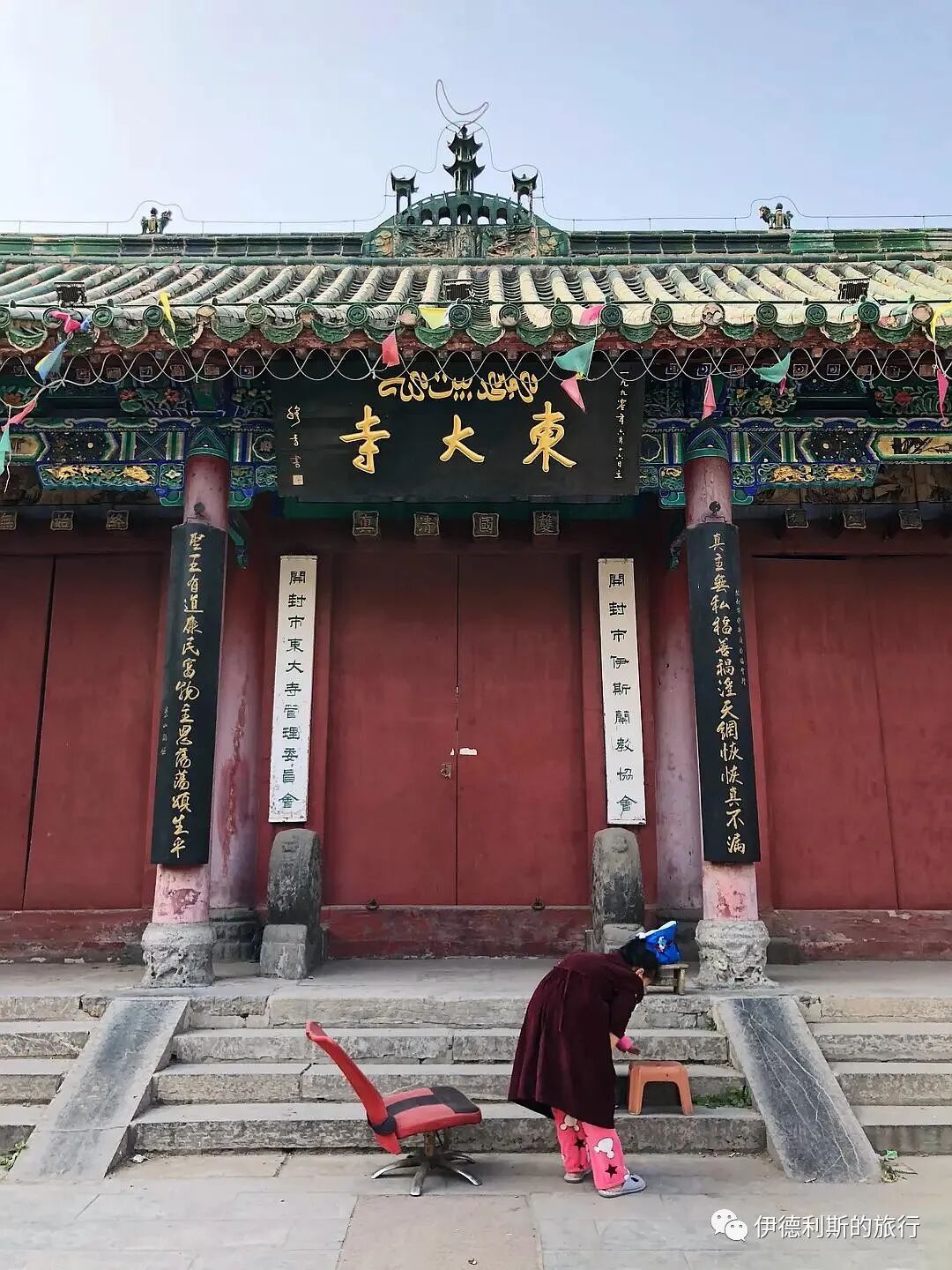
Kaifeng Dongdasi was originally called Daliang Mosque. In 1368 (the first year of the Hongwu reign), the youth of the mosque community followed Chang Yuchun on the northern expedition against the Yuan Dynasty. After the victory, Zhu Yuanzhang bestowed the name 'Imperial-built Daliang Mosque'. In 1407 (the fifth year of the Yongle reign), Ming Emperor Zhu Di 'imperially bestowed funds for expansion'. It was destroyed by Yellow River flooding at the end of the Ming Dynasty. It was rebuilt in 1655 (the twelfth year of the Kangxi reign), expanded in 1689 (the twenty-eighth year of the Kangxi reign), and destroyed again by Yellow River flooding in 1841 (the twenty-first year of the Daoguang reign). In 1846 (the twenty-sixth year of the Daoguang reign), because the Hui Muslims had contributed to flood prevention, the Governor of Henan petitioned the imperial court to rebuild it.
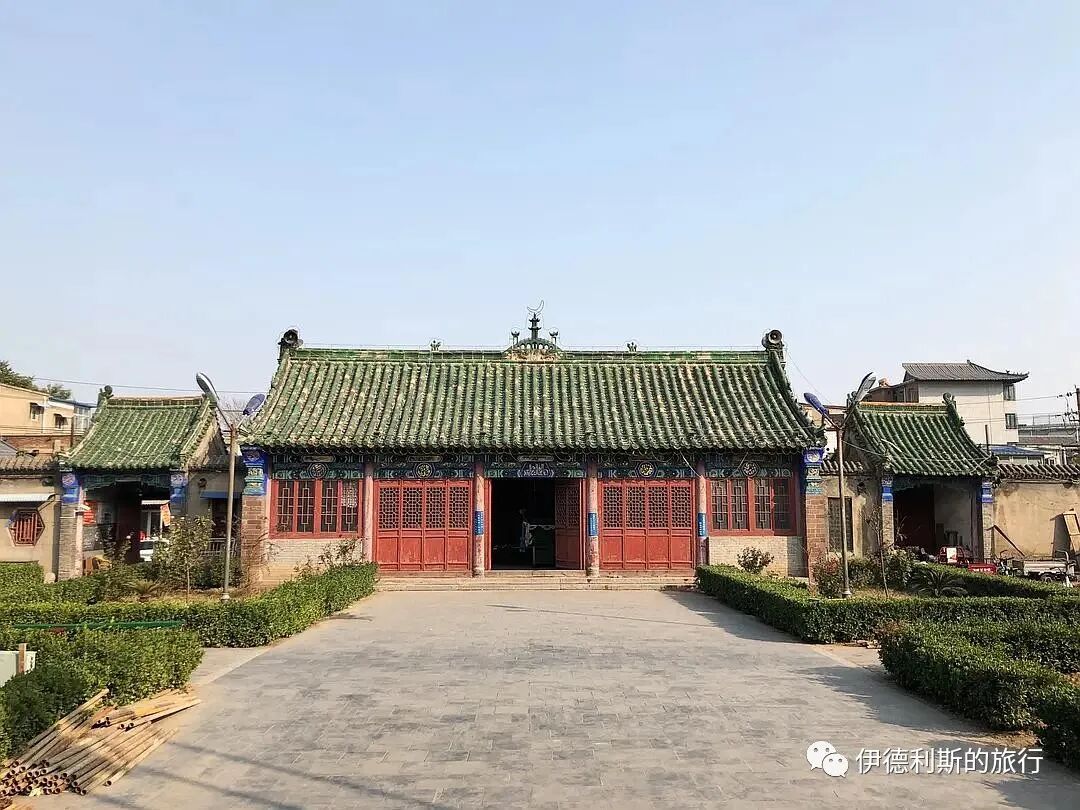
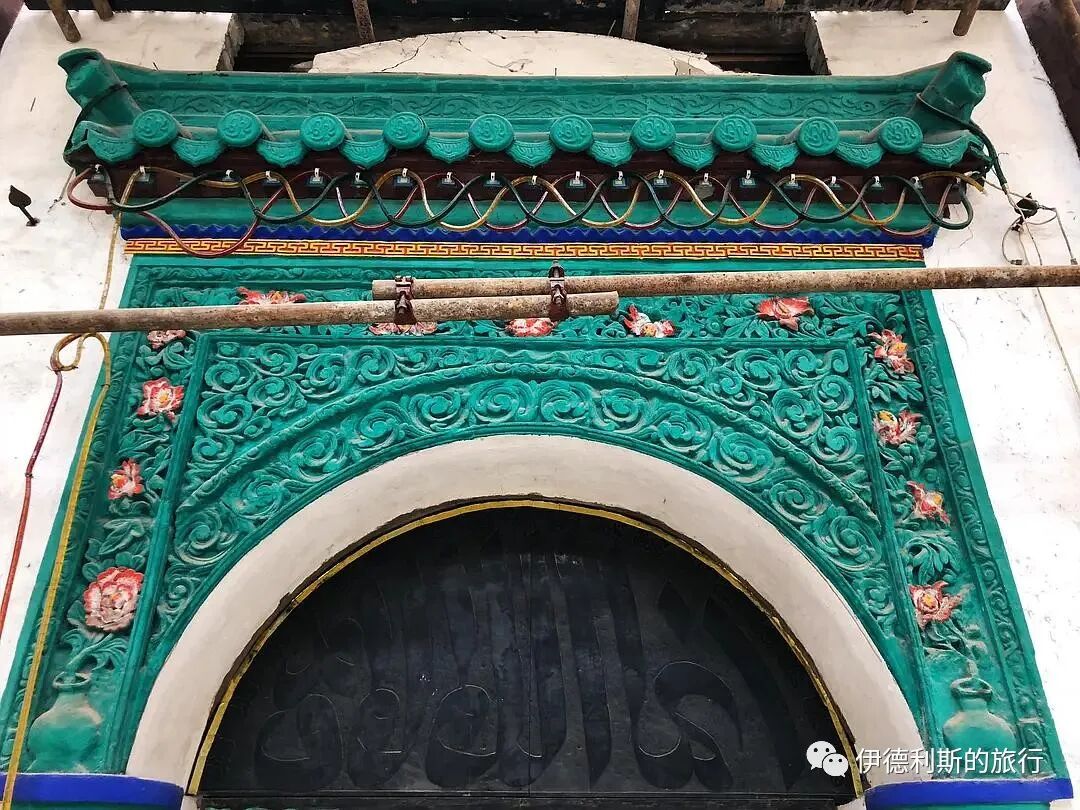
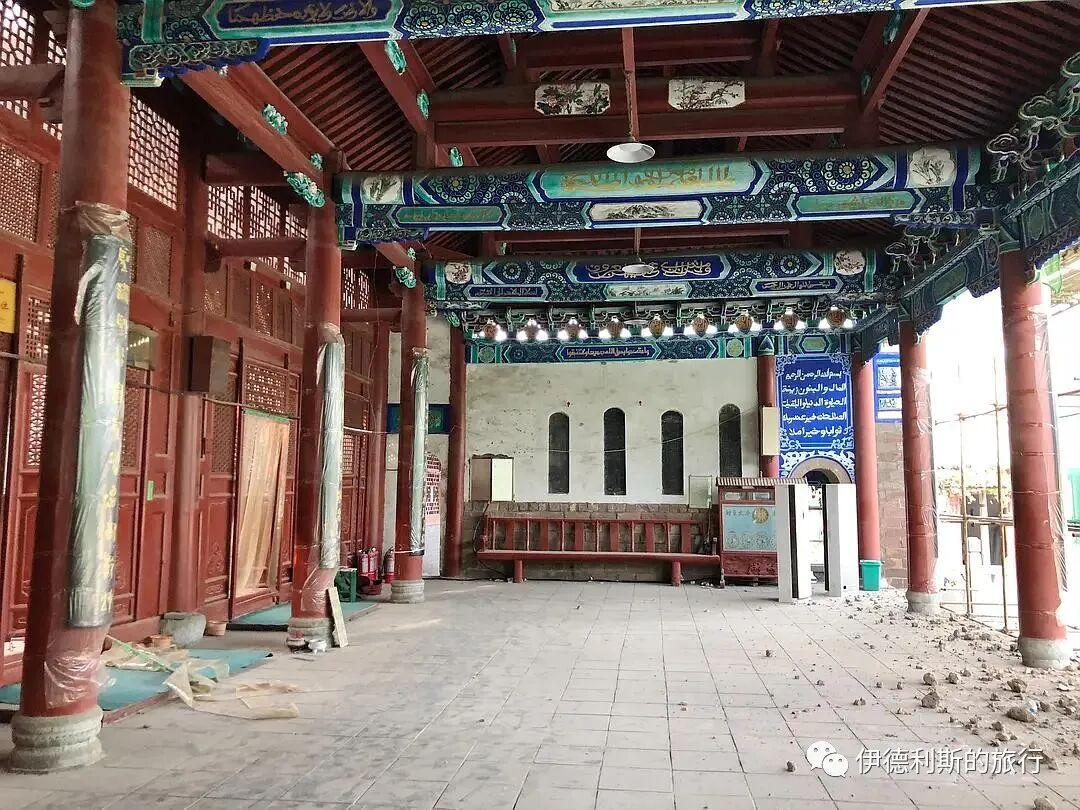
Currently, Dongdasi has three courtyards, featuring a main gate, a second gate, a prayer hall, north and south lecture halls, and side rooms.
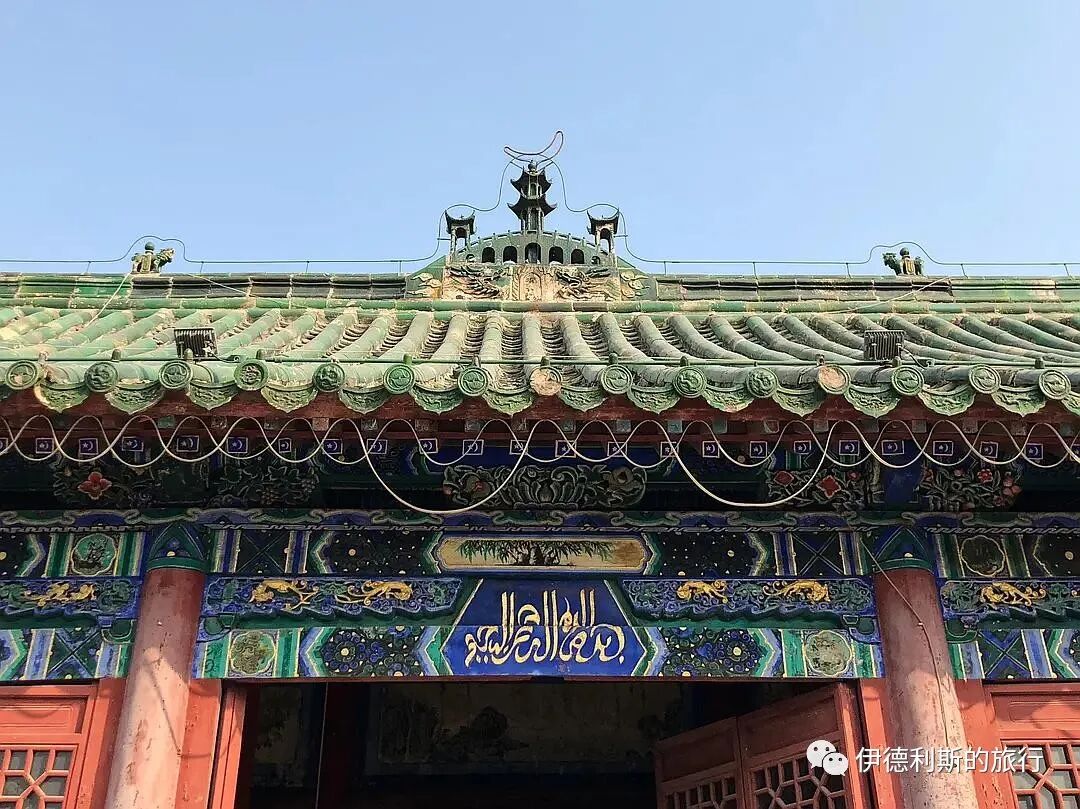
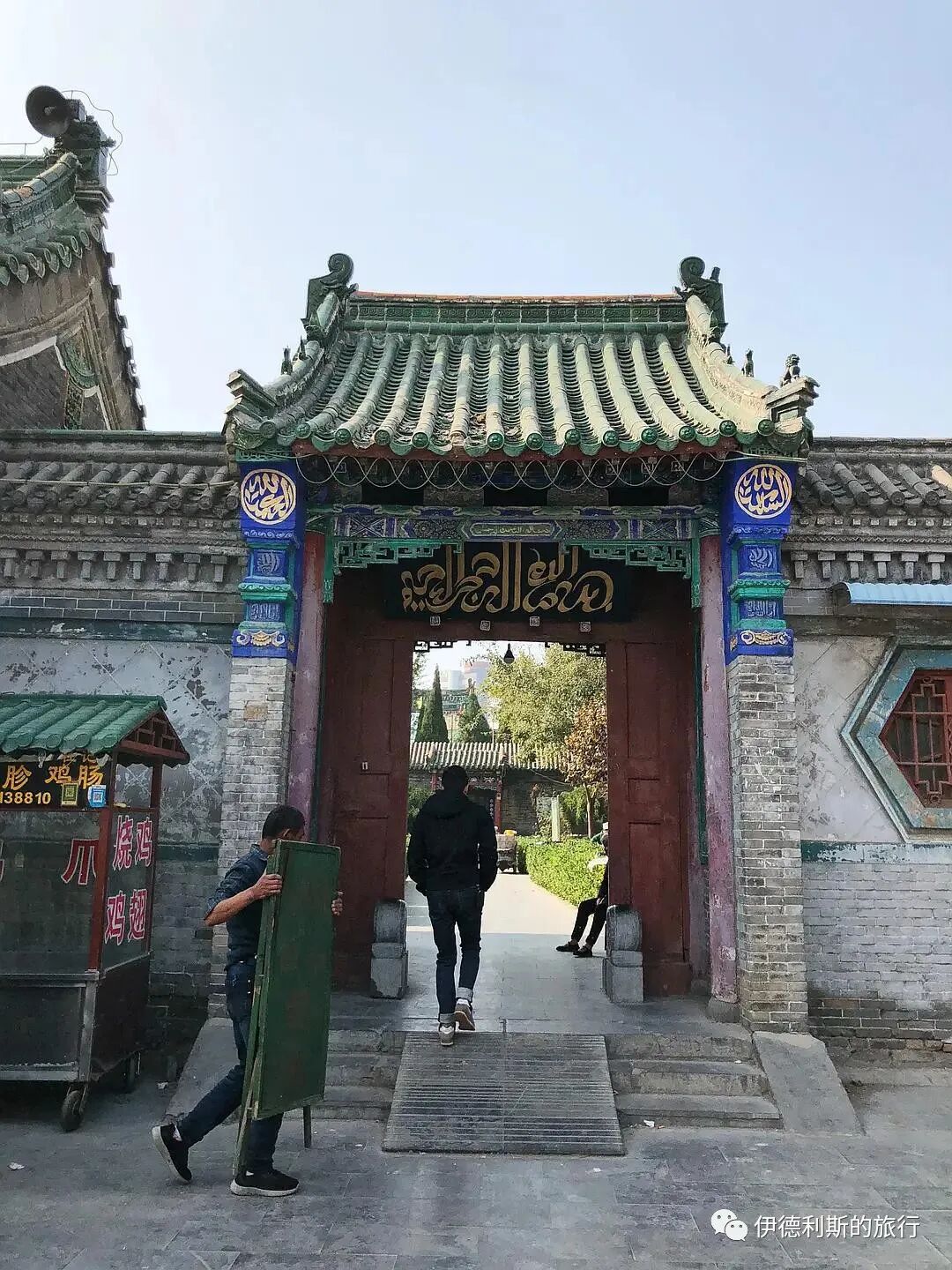
The main gate has a single-eave, ridge-roofed hard-mountain style, decorated with Suzhou-style gold-leaf paintings.
Inside the main gate, a traditional maiti (coffin) box is kept.
Entering through the main gate leads to the second gate.
Next to the second gate is a chuihuamen (hanging flower gate).
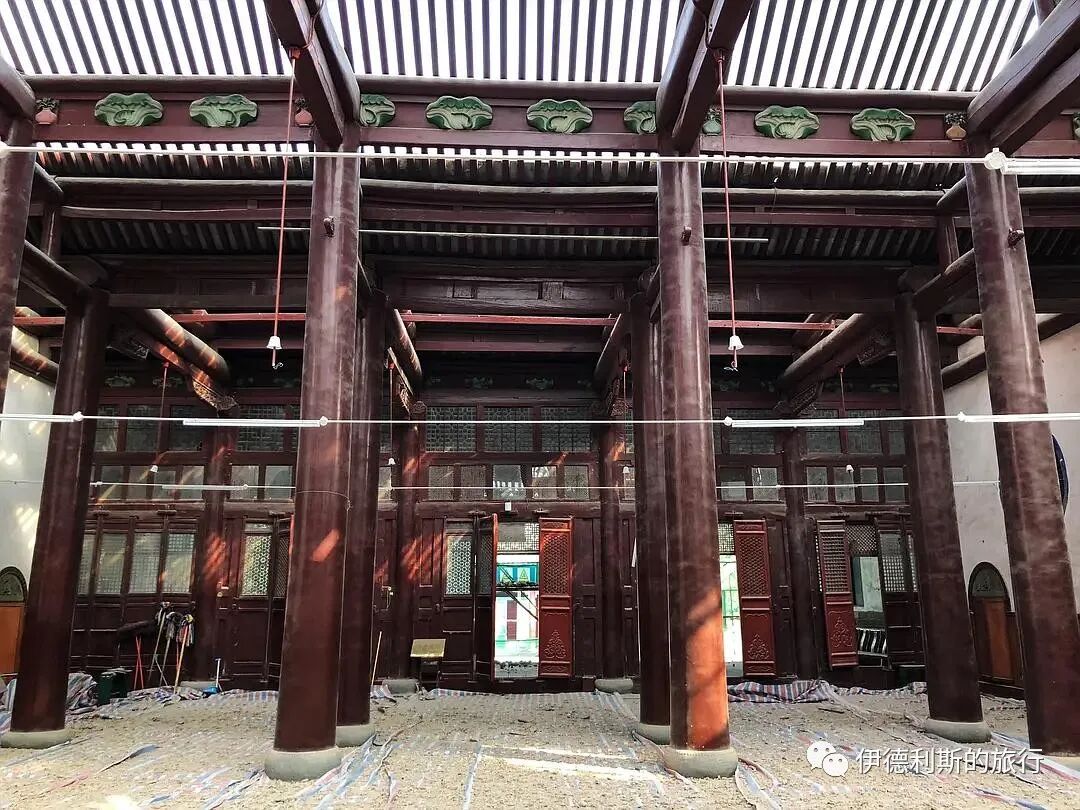
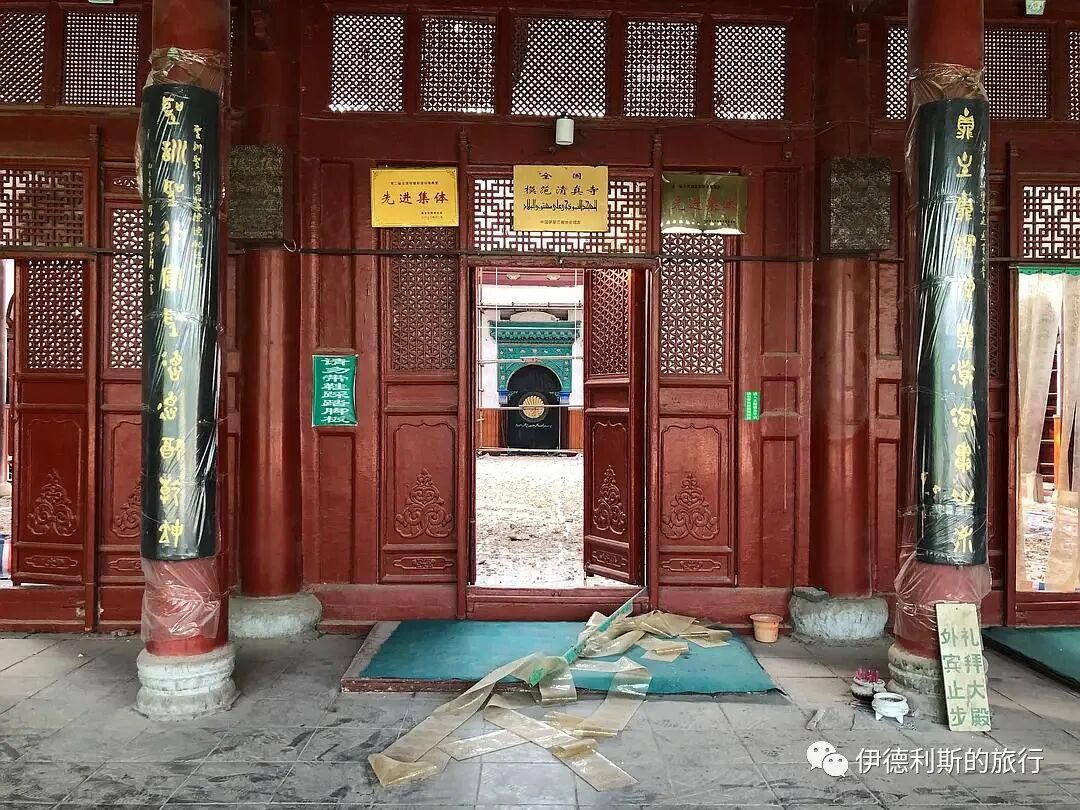
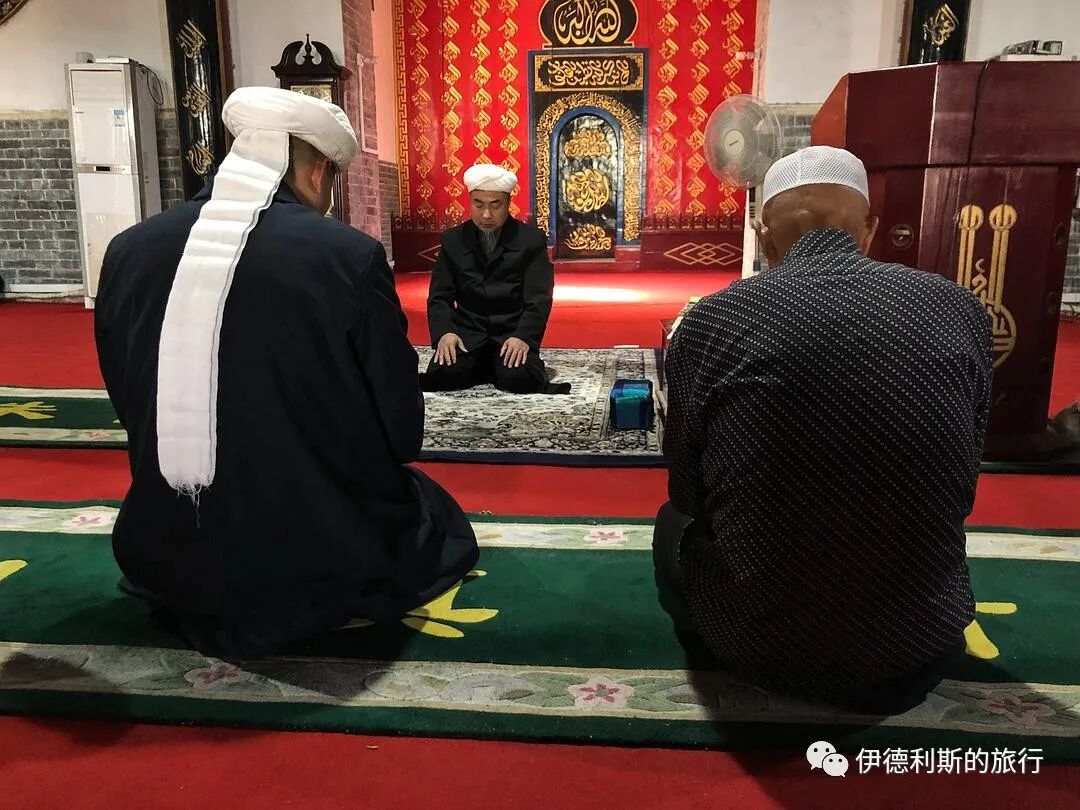
Because the main hall is under renovation, Jumu (Friday prayer) is held in the north lecture hall.
The main hall consists of a juanpeng (arched roof structure), a front hall, and a rear hall. It was under renovation when I visited.
2. Kaifeng Dongdasi Women's School
The Kaifeng Dongdasi Women's School is opposite Dongdasi, first built in 1933 and rebuilt in 1993. The term 'women's school' first appeared in the 'Jingxue Xichuan Pu' (Genealogy of Classical Studies) written during the Kangxi reign of the Qing Dynasty. During the mid-to-late Qing period, women's schools gradually evolved into women's mosques, but the name 'women's school' continued to be used, especially in places like Zhengzhou, Kaifeng, and Zhoukou.
3. Kaifeng Shanyitang Mosque: 1874
Shanyitang Mosque is one of the ancient mosque buildings in Kaifeng city, located southwest of the Drum Tower. It was built in 1874 (the thirteenth year of the Tongzhi reign) by Hui Muslims from Shaanxi who settled in Kaifeng. It was originally a 'Shanyitang' (Benevolence and Righteousness Hall) guild hall for performing good deeds. In 1901, when Empress Dowager Cixi passed through Kaifeng on her way back to Beijing from Xi'an, the vanguard officer, a Hui Muslim named Ma Anliang, petitioned for a plaque inscribed with 'Mosque', and thus it was renamed Shanyitang Mosque. I met the hospitable Zhao Baba (an affectionate term for an elder) at the mosque, who told me a lot about the history of the mosque and the stories of the Muslims in Kaifeng.
The famous Arabic calligrapher, Master Mi Guangjiang, wrote the 99 Beautiful Names of Allah for the mosque's yaodian (rear prayer hall).
4. Kaifeng Wangjia Hutong Women's Mosque School: 1810s
The Kaifeng Wangjia Hutong Women's Mosque School is the oldest existing women's mosque in China, first built in the 1810s (during the Jiaqing reign of the Qing Dynasty). Two stone tablets from 1878 (the fourth year of the Guangxu reign) currently in the mosque record its history. The founder of the women's mosque was known as 'Li-family Yuan-woman Ahong'. After Yuan Ahong returned to Allah, her disciple 'Wu-family Zhang-woman Ahong' continued to serve as Ahong. During this period, a man surnamed Zheng donated funds to purchase the building, and an elderly woman named Zhao Yang donated two storefront rooms. This is also the first time in history that the terms 'female Ahong' and 'women's mosque' appeared.
5. Kaifeng Beidasi (North Great Mosque): Rebuilt in 1662
Kaifeng Beidasi was destroyed by Yellow River flooding in 1645 and rebuilt at a new site in 1662 (the first year of the Kangxi reign). Because Beidasi is far from the city center, it is very quiet, and the courtyard is planted with many beautiful flowers and plants. During Dhuhr (noon prayer), there were only four of us, including the Ahong, the Mu'adhdhin, the mosque master, and myself. We chatted very happily. Several Babas told me about the history of Kaifeng Beidasi and the changes in the mosque community, and also told me what good food there is at the night market at the west gate of Henan University nearby.
Guided by an old master, I discovered a stone tablet in the mosque inscribed by Bao Zheng himself, titled 'The Place Where the Dragon Horse Carried the Map', with the inscription 'March of the second year of the Jiayou reign (1057), by Bao Zheng, Scholar of the Longtu Pavilion and Prefect of Kaifeng'. This stone tablet was excavated in 1785 (the fiftieth year of the Qianlong reign) by Jiang Lan, the Henan Provincial Administration Commissioner, under the Yellow River levee at Heigangkou in the suburbs of Kaifeng. After it was unearthed, a shrine and pavilion were built specifically for the tablet. Later, the shrine and pavilion fell into ruin, and the tablet was kept in Beidasi.
6. Kaifeng Wenshusi Mosque Qing Dynasty screen wall
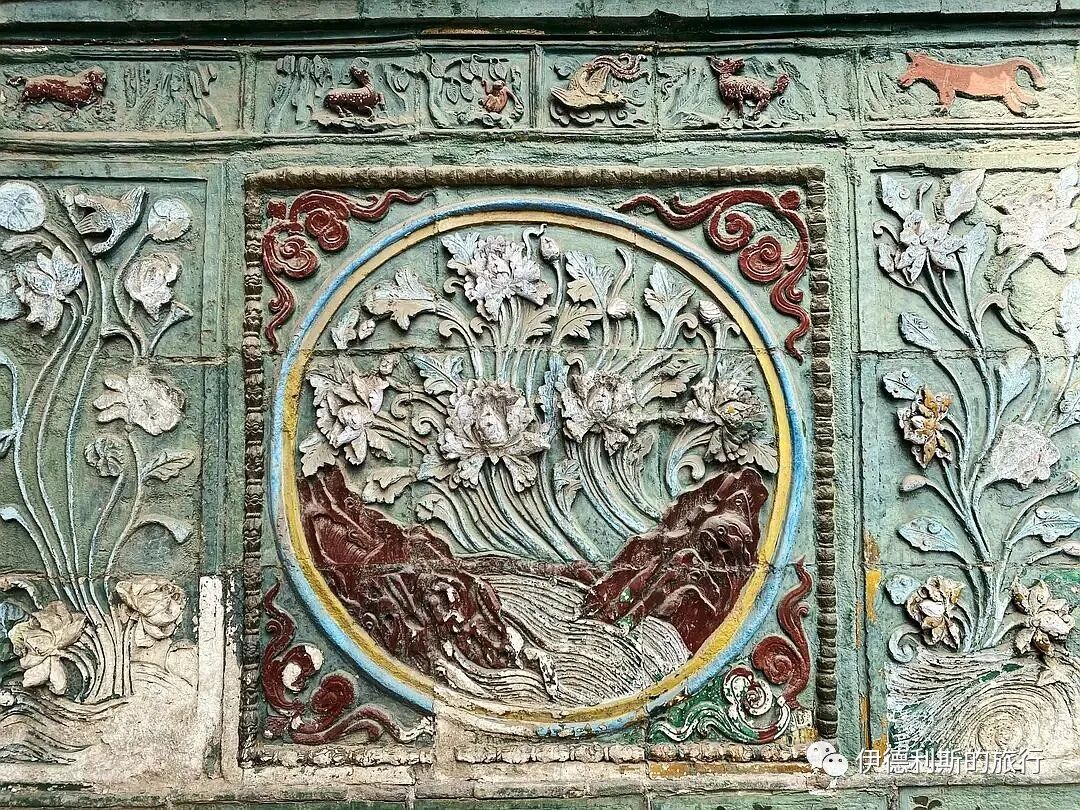
Kaifeng Wenshusi Mosque was first built in the Ming Dynasty, destroyed by floods at the end of the Chongzhen reign, rebuilt in 1649 (the sixth year of the Shunzhi reign), renovated in 1791 (the fifty-sixth year of the Qianlong reign), and rebuilt as a modern building in the 1990s. Currently, a Qing Dynasty screen wall is preserved opposite the mosque's main gate, featuring exquisite brick carvings.
7. Kaifeng Zhuxian Town North Mosque: Rebuilt in 1738
Zhuxian Town North Mosque is the largest mosque in Zhuxian Town. It was first built during the Taiping Xingguo reign of the Northern Song Dynasty, rebuilt in 1531 (the tenth year of the Jiajing reign of the Ming Dynasty), destroyed by Yellow River flooding in 1641 (the fourteenth year of the Chongzhen reign), rebuilt in 1738 (the third year of the Qianlong reign of the Qing Dynasty), and expanded twice in 1744 (the ninth year of the Qianlong reign) and 1839 (the nineteenth year of the Daoguang reign).
The mosque's main gate has a single-eave hip-and-gable roof, with very exquisite wood carvings on the lintels and vivid glazed roof beasts. Inside the gate hang the plaques 'Zhi Fa Zhen Yuan' (Reaching the True Source) inscribed by Zhu Yukun, the Henan Governor during the Qianlong reign, and 'Zhen Yi Huan Zhen' (True Unity Returns to Truth) inscribed by Yulu, the Viceroy of Huguang during the Guangxu reign.
The prayer hall of Zhuxian Town Mosque consists of a juanpeng, a main hall, and a yaodian. The juanpeng is a beam-lifting wooden structure, open at the front and back, not connected to the main hall, with a stone drainage ditch in between and a stone arch bridge over the ditch.
The path in front of the main hall is inscribed with 'Xiantian' (Pre-heaven), 'Zhongtian' (Mid-heaven), and 'Datian Junlu' (The Great Path to Heaven).
The beams and lintels of the prayer hall have exquisite wood carvings and colorful paintings.
The windows are inlaid with 'fish scales' measuring 8 centimeters square each, totaling about 720 pieces.
Inside the main hall.
A traditional tabu (coffin) box.
Arabic calligraphy collected by the mosque.
Selected verses from the Quran by the famous young calligrapher Wang Qifei.
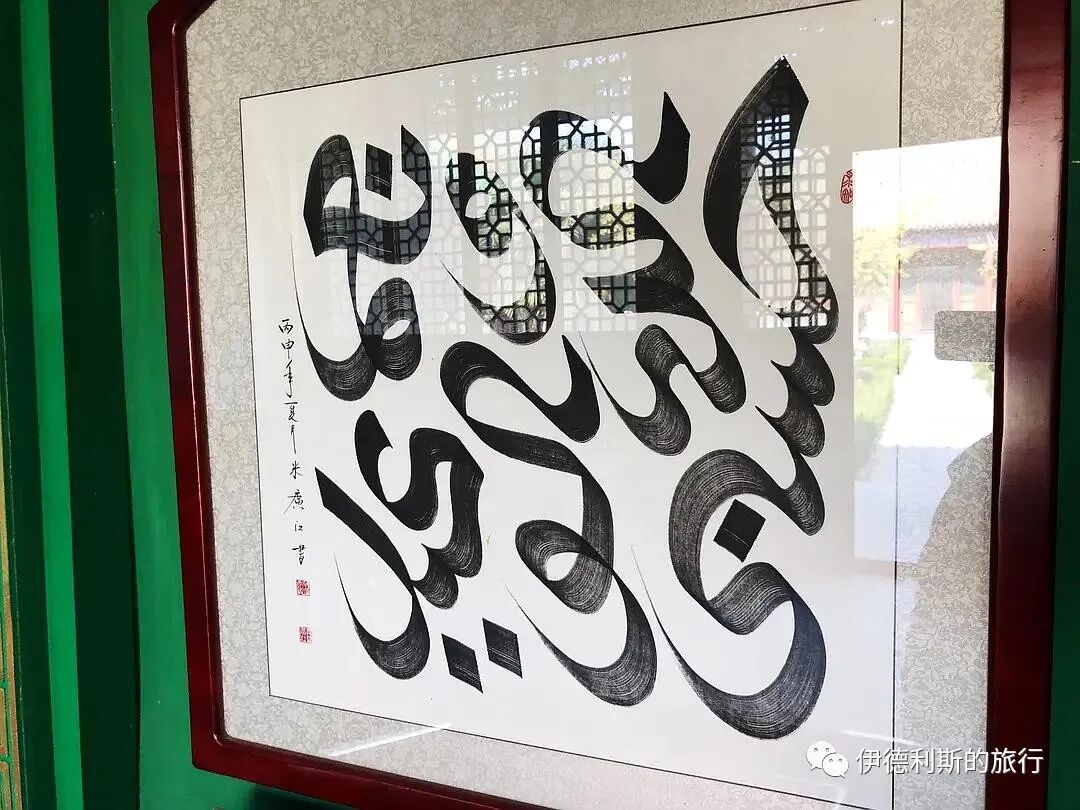
Selected verses from the Quran by the famous calligrapher Mi Guangjiang.
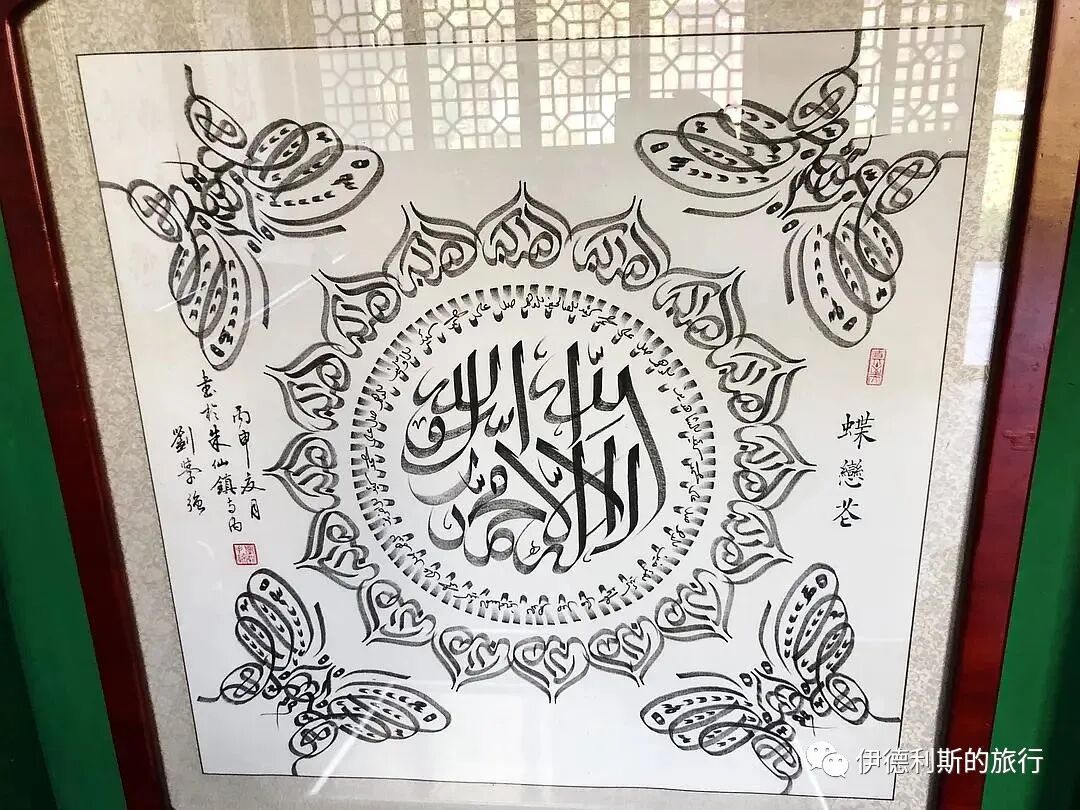
The work 'Die Lian Hua' (Butterflies Love Flowers) by Liu Xueqiang, the then-Imam of Zhuxian Town Mosque, with the Shahada (testimony of faith) in the center, surrounded by praises to the Prophet and Takbir, with flower and butterfly patterns around the edges.
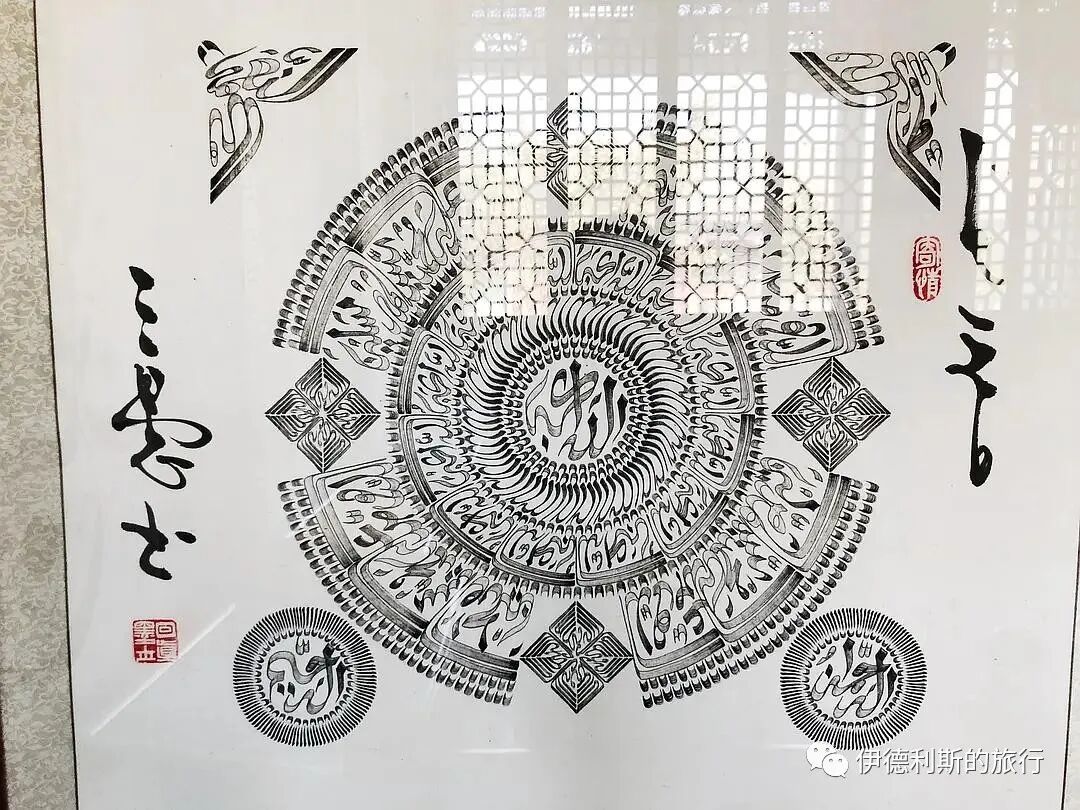
Praises to the Prophet and the declaration of oneness by the famous calligrapher and lecturer at Zhengzhou Beidasi, Wang Guo'an.
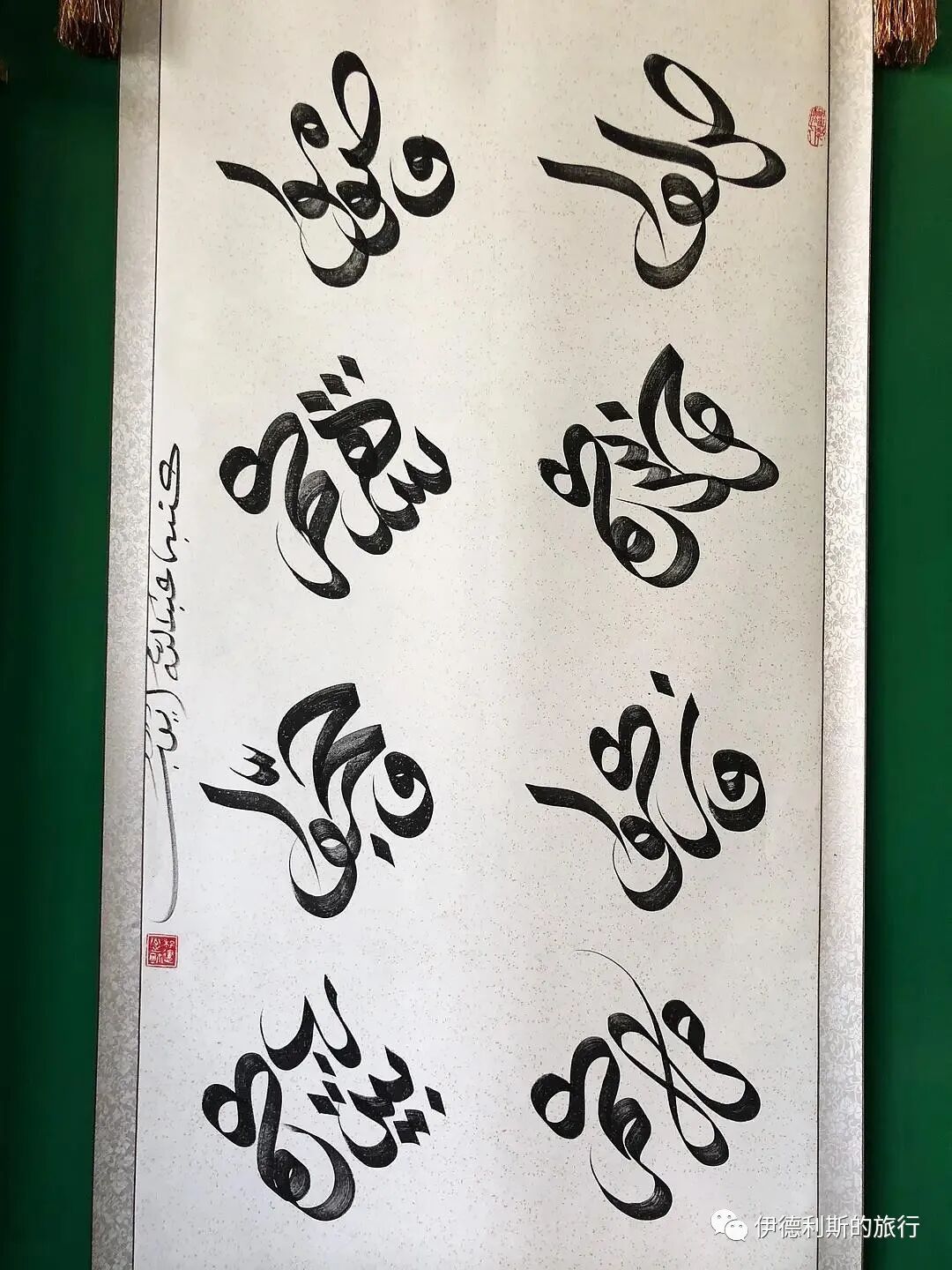
Arabic couplets by Imam Li Jianzhou of Zhengzhou Beidasi.
Collections in the mosque's exhibition hall. Qing Dynasty classics donated by Imam Liu Xueqiang.
Xiaojing (Arabic-script Chinese) donated by the late student of scripture, the Yang family.
Republic of China era classics donated by Liu Zhenzhong and Ma Guoxiang.
Old-fashioned tangping (kettle for ritual washing) tags.
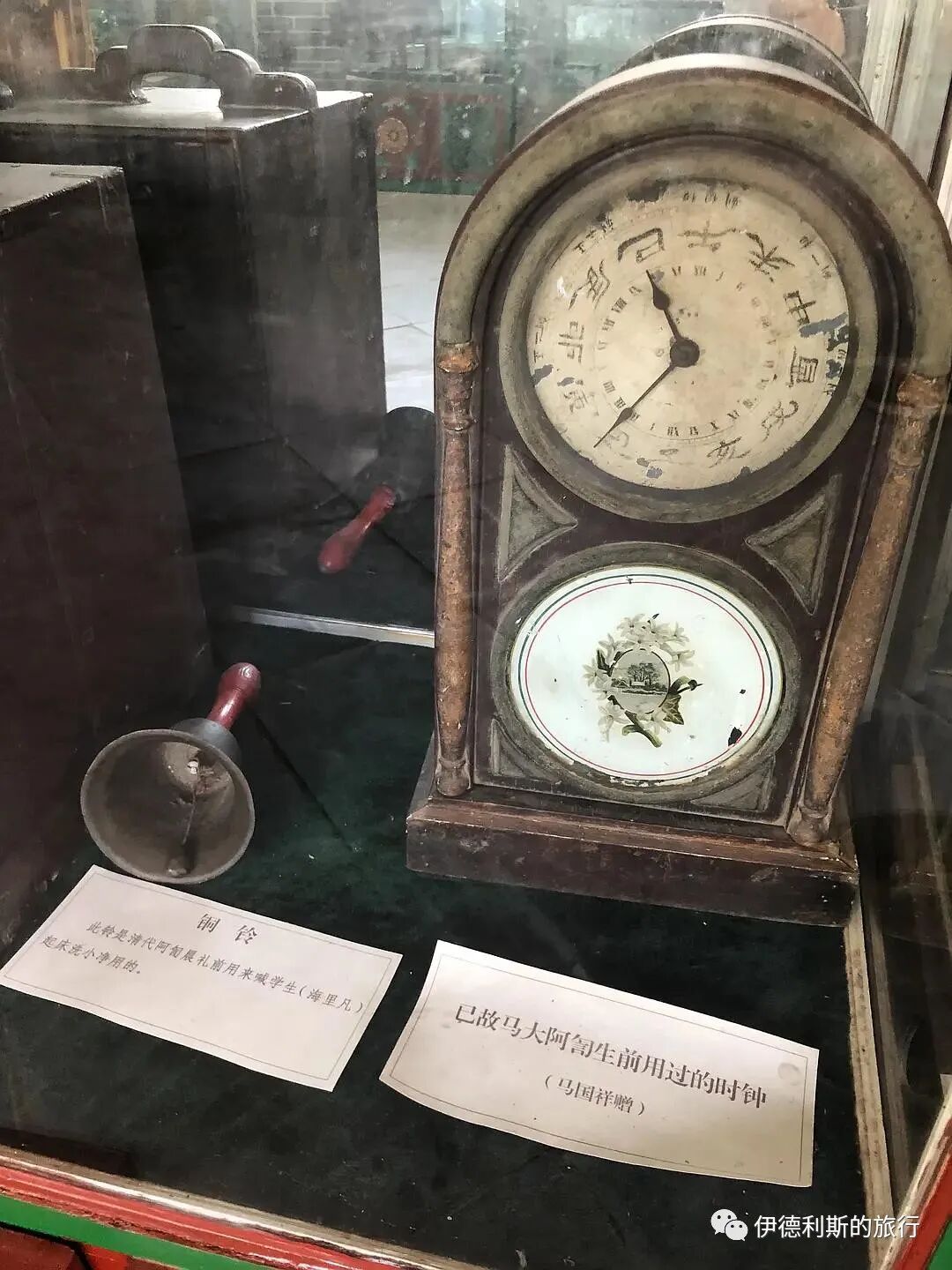
A clock used by the late Ma Da Ahong donated by Ma Guoxiang, and a copper bell used by Qing Dynasty Ahongs to call the Hailifan (students of scripture) for Wudu (ritual washing) before the Adhan.
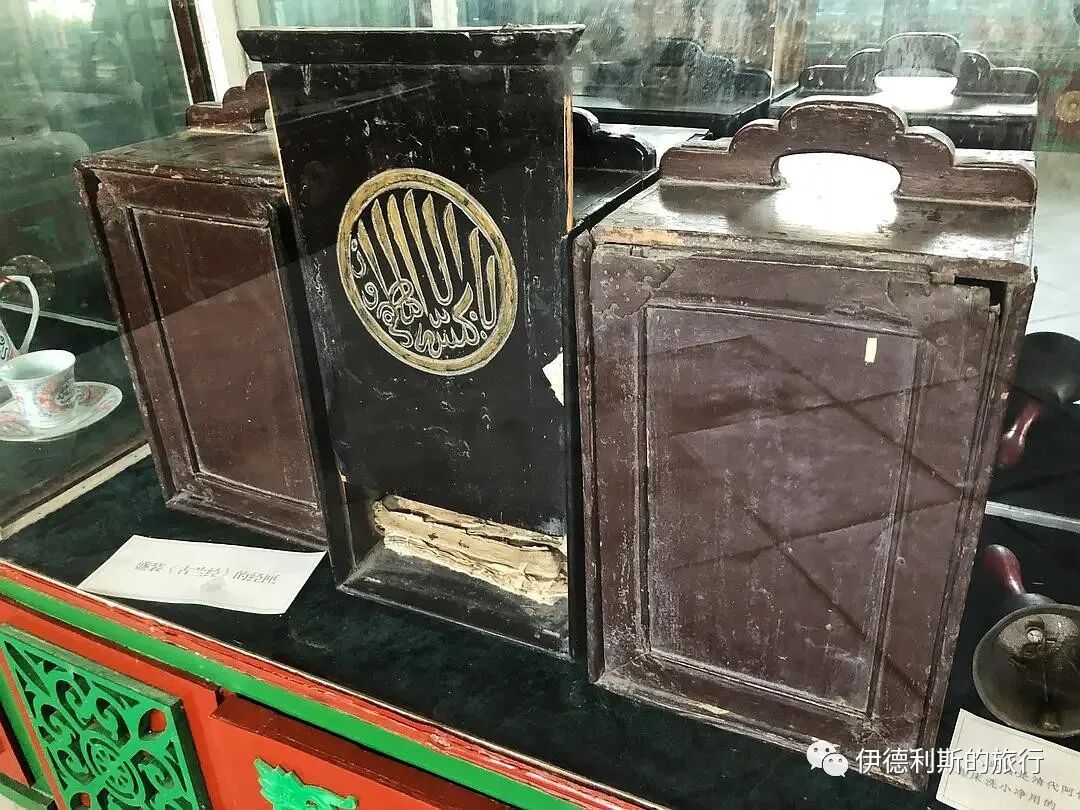
Scripture box.
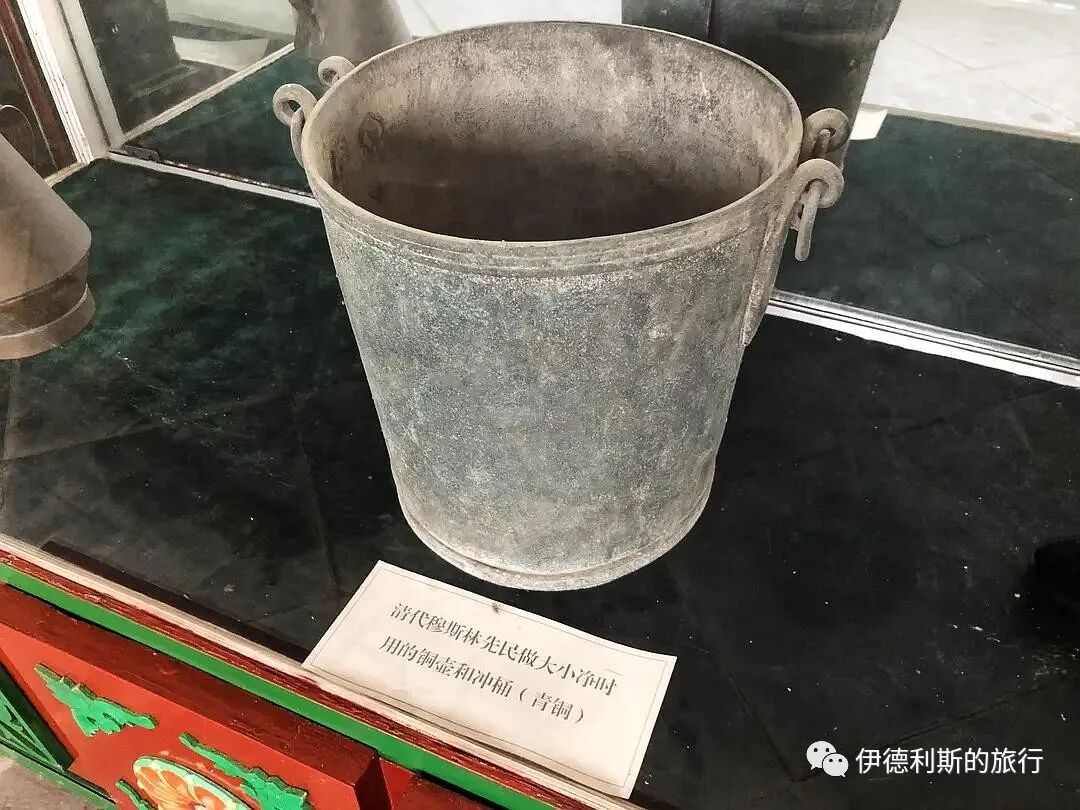
Chongtong (water-pouring bucket) used for changing water in the Qing Dynasty.
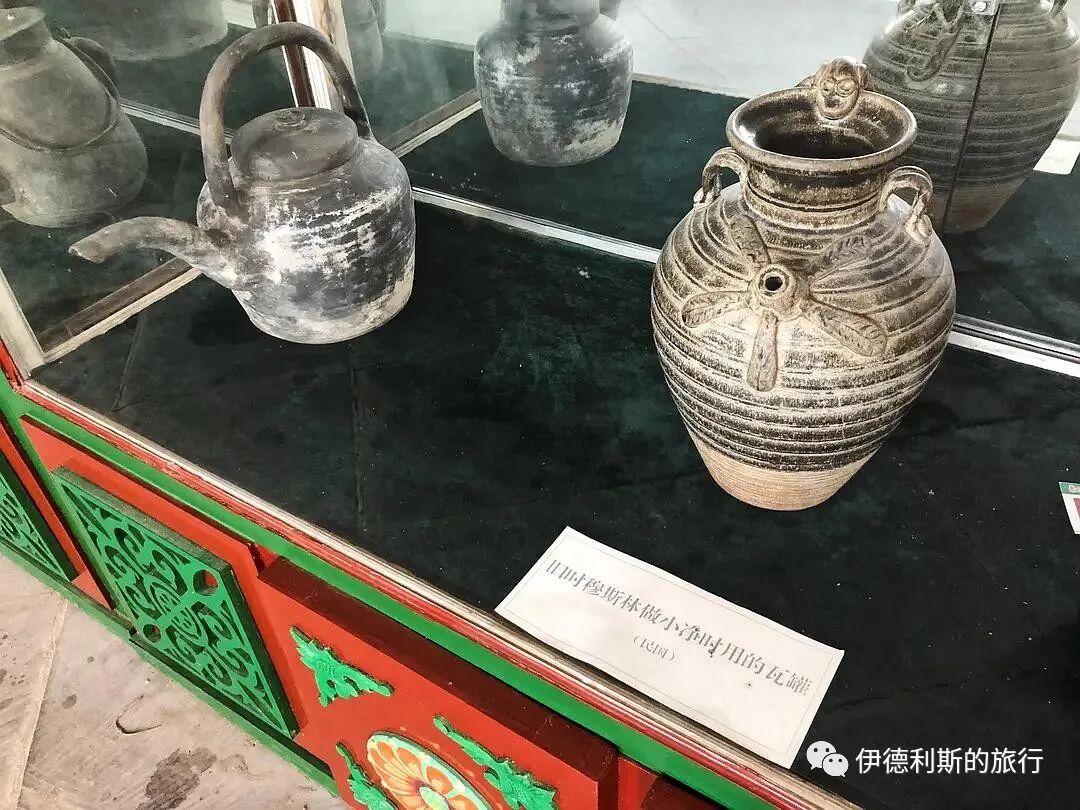
Earthenware jar for Wudu from the Republic of China era.
The ancient well in the mosque, which was used until 2002. This exhibition hall was originally a water room. Every day, the mosque master used a windlass to draw water from the well into a pot to boil it, then poured it into tangping and water jars for ritual washing.
8. Zhuxian Town Women's Mosque School
The most touching moment of this Kaifeng trip was the very warm reception I received from Grandma Wang at the Zhuxian Town Women's Mosque School. Grandma Wang insisted on cooking for me, and I couldn't refuse, so I had the warmest bowl of huimian (braised noodles) of this trip.
Grandma Wang is 83 years old and from Weinan, Shaanxi. After her husband passed away 40 years ago, she went out to make a living and eventually settled at the Zhuxian Town Women's Mosque School. Grandma Wang said that the flour and oil she eats every day are given by everyone, and she doesn't have to pay to live in the mosque. She gets up at three in the morning every day to clean and prepare for Fajr (morning prayer), and prays with everyone five times a day, feeling that her life is very fulfilling. I wanted to take a picture of Grandma, but she said she was old and didn't want to be photographed.
While chatting with Grandma, I met the female Ahong of the mosque. She is a local, in her thirties, and has been at the mosque for just one year. She usually has a shop near the Yue Fei Temple and comes to lead the prayers five times a day. The Ahong is also very kind and gave me two youxiang (fried dough) to eat on the road.
2. Zhengzhou Beidasi (North Great Mosque): Ming Dynasty
Beidasi is located on North Street in the old city of Zhengzhou. It is said to have been built in the Ming Dynasty. It was renovated twice during the Qianlong reign and has the typical architectural style of Central Plains mosques. It is a major historical and cultural site protected at the national level.
The main gate was built in 1725 (the third year of the Yongzheng reign).
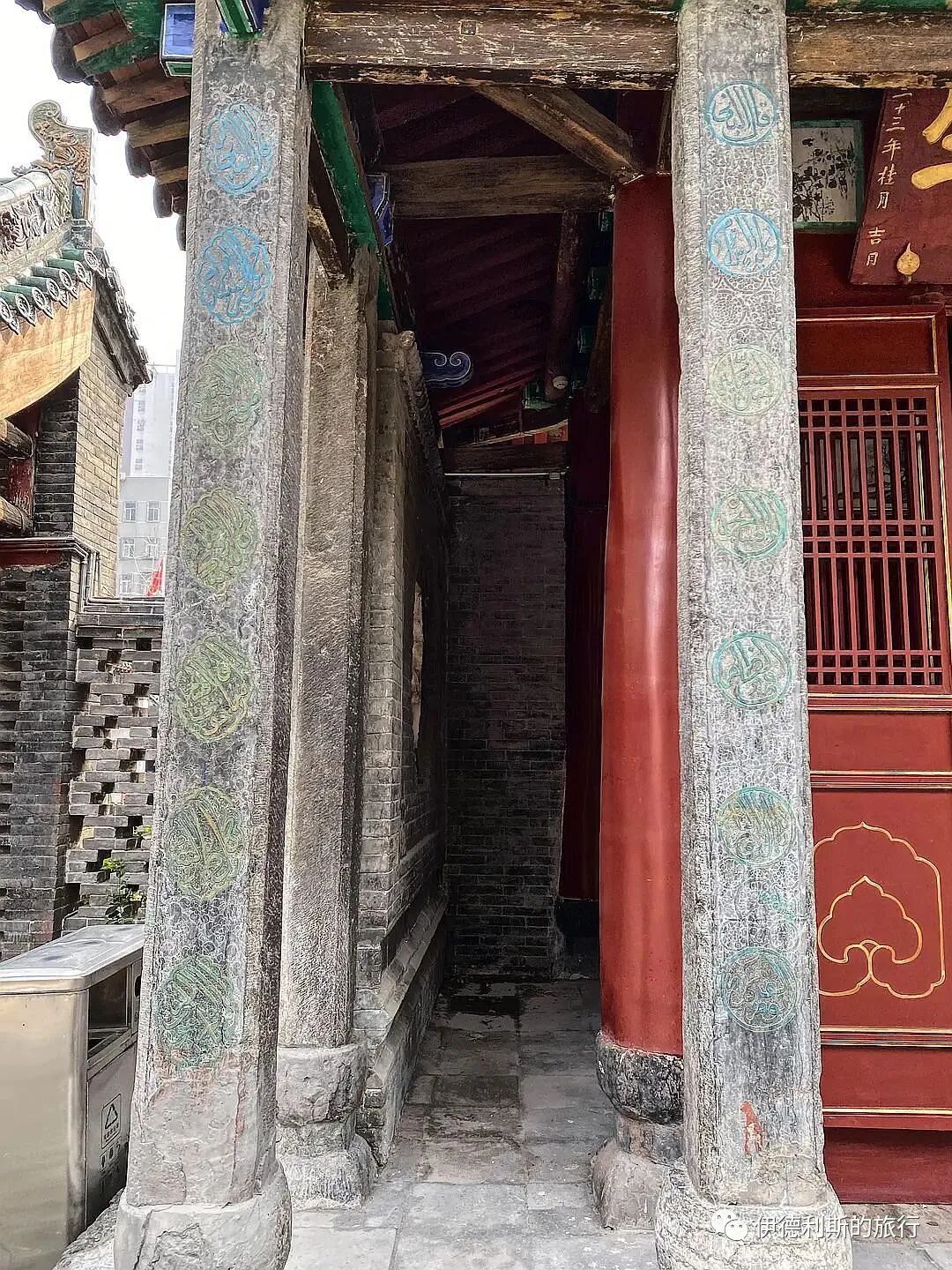
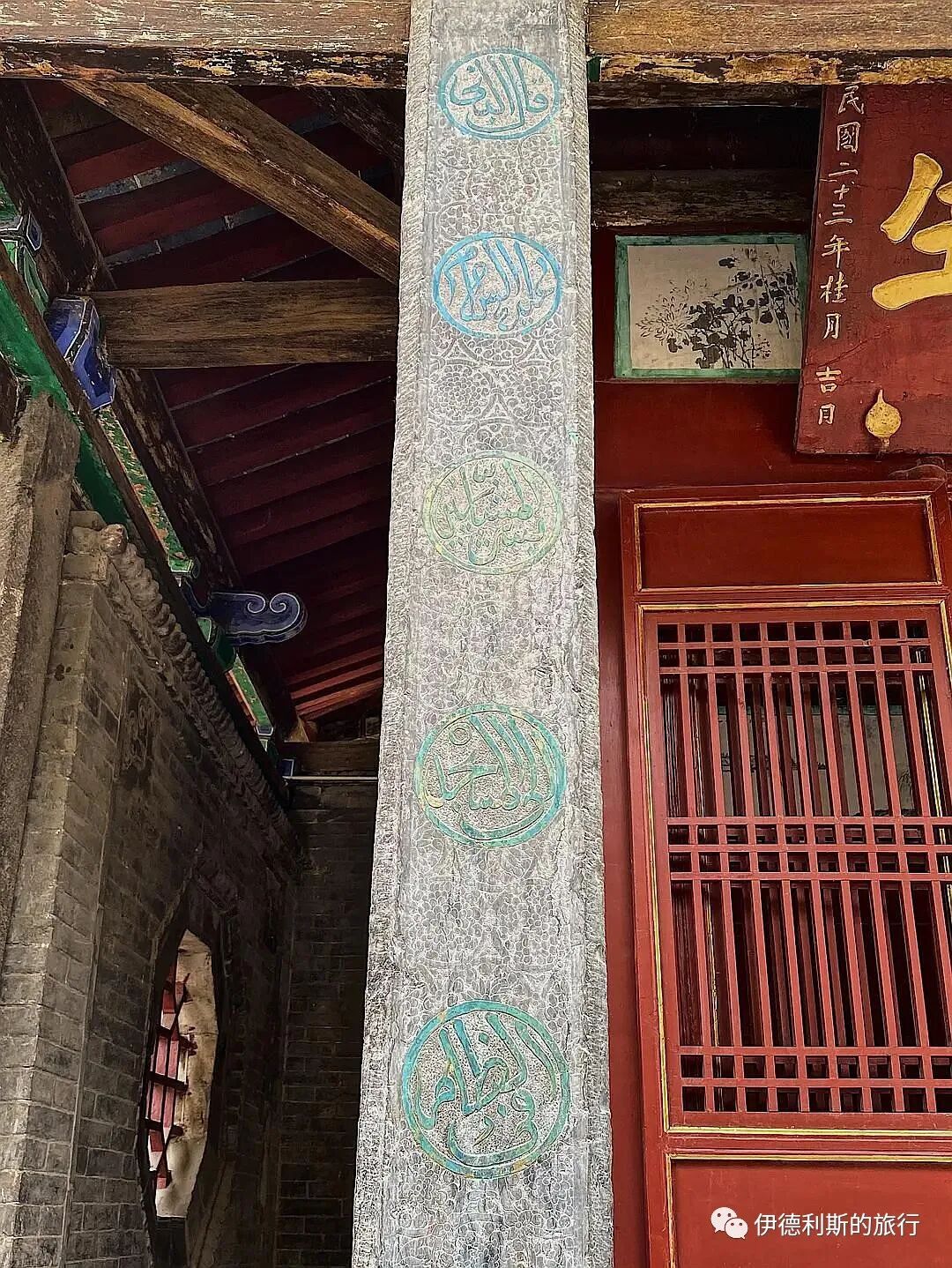
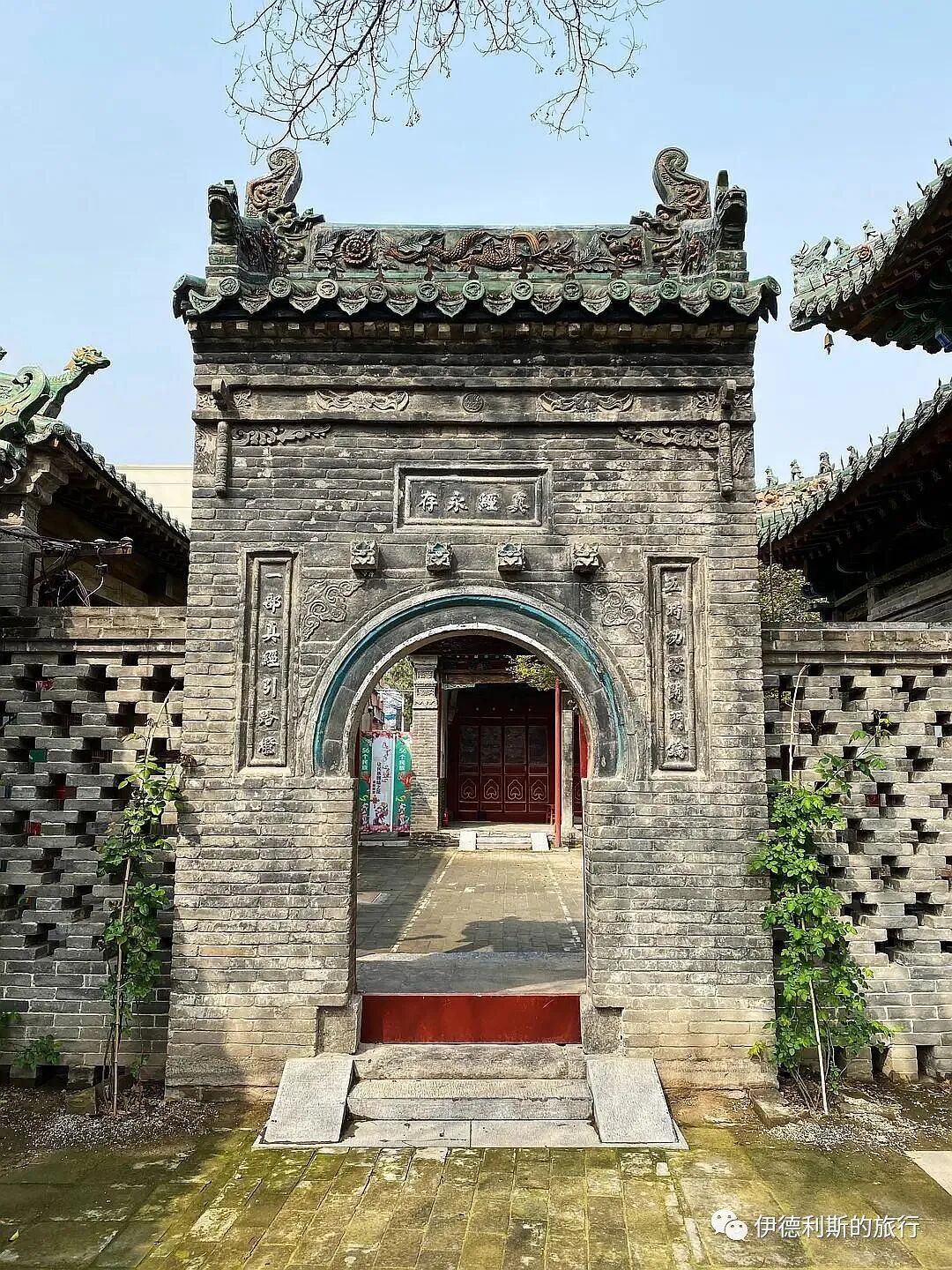
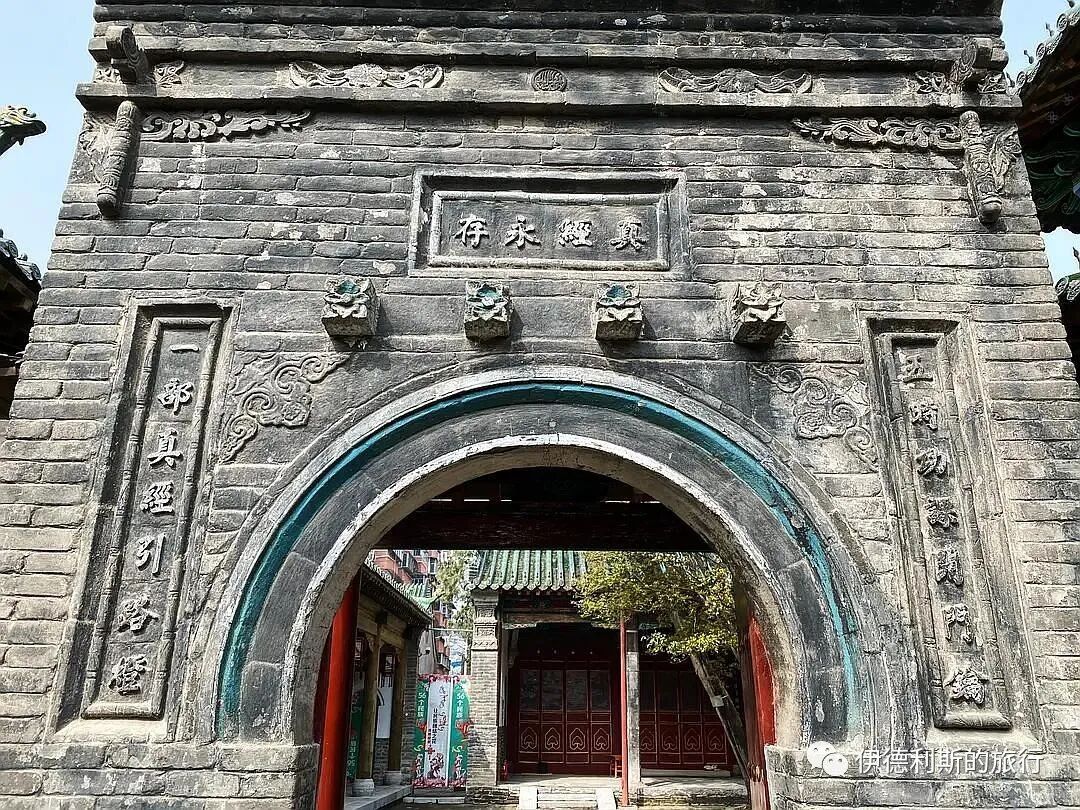
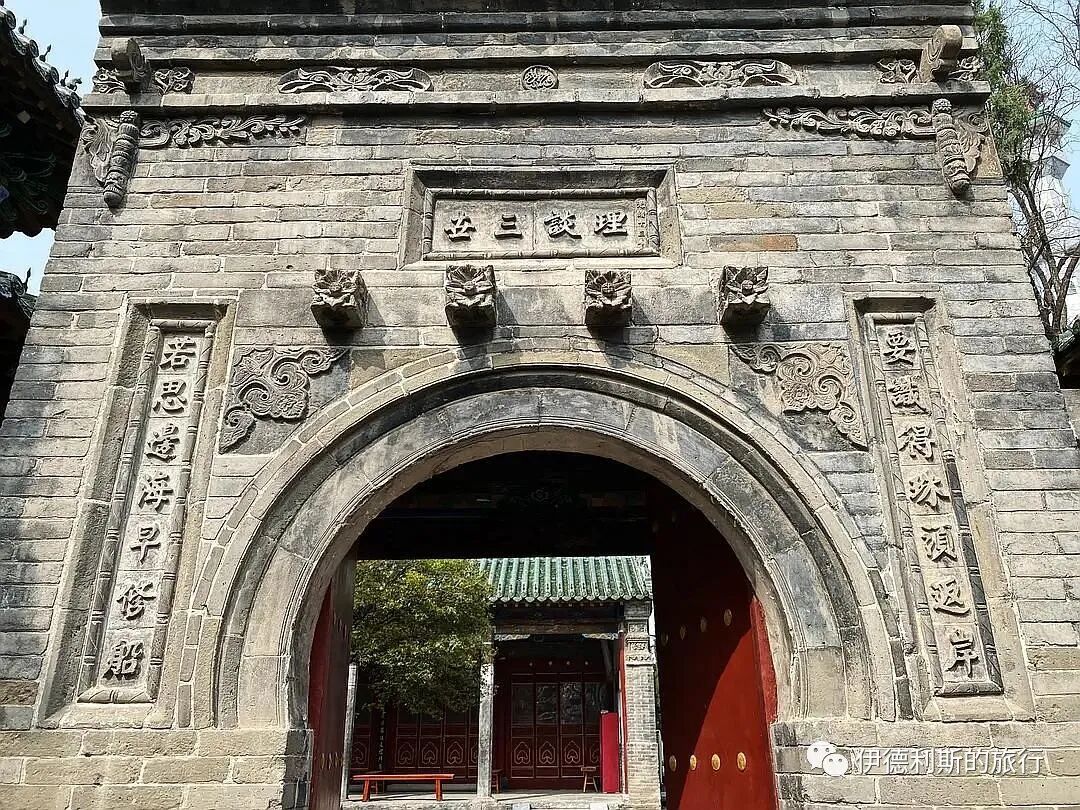
The Wangyuelou (Moon-Watching Tower) also serves as the Bangkelou (minaret). The first floor is a passageway. Judging from the architectural structure, it is very likely an original Ming Dynasty structure, but the dougong (bracket sets) and eaves rafters should have been replaced in the Qing Dynasty. According to records, it was renovated in 1887 (the thirteenth year of the Guangxu reign).
Wangyuelou has three pairs of Chinese couplets:
Observe, listen, and hear the words; understand the message of the body, and you will understand all creation.
In prosperity and adversity, honor and disgrace, realize the subtle use of the turning point, and you will realize the mystery within.
The hustle and bustle of the world, even if you are proud and happy, is just a moment of distraction.
Whether good or bad in body and mind, when you close your eyes at the end, only two things will follow you closely.
Follow the Quran to promote the right path.
Follow the Sunnah so that the truth will last forever.
On the other side are Arabic couplets.
There are also couplets on the doors on both sides of Wangyuelou:
The five daily prayers are the key to opening the door.
The true scripture is the lamp that guides the way.
To recognize the pearl, you must return to the shore.
If you think of the sea, repair the boat early. view all
Summary: This travel note introduces Halal Travel Guide to Henan: 14 Traditional Mosques (Part 1). 1. Kaifeng Dongdasi (East Great Mosque): Rebuilt in 1655. It is useful for readers interested in Henan Mosques, Chinese Muslims, Islamic Heritage.
1. Kaifeng
1. Kaifeng Dongdasi (East Great Mosque): Rebuilt in 1655
2. Kaifeng Dongdasi Women's School
3. Kaifeng Shanyitang Mosque: 1874
4. Kaifeng Wangjia Hutong Women's Mosque School: 1810s
5. Kaifeng Beidasi (North Great Mosque): Rebuilt in 1662
6. Kaifeng Wenshusi Mosque Qing Dynasty screen wall
7. Kaifeng Zhuxian Town North Mosque: Rebuilt in 1738
8. Zhuxian Town Women's Mosque School
2. Zhengzhou Beidasi (North Great Mosque): Ming Dynasty
3. Jiaozuo
1. Bo'ai Xiguan Mosque: Expanded in 1405.
2. Bo'ai Erxianmiao Mosque: Qing Dynasty architecture
3. Bo'ai Daxinzhuang Dongdasi (Great Eastern Mosque): Expanded in the Ming Dynasty.
4. Bo'ai Daxinzhuang Qingzhen Xisi (Western Mosque): Qing Jiaqing reign.
5. Qinyang Beidasi (Northern Mosque): Rebuilt in 1631.
1. Kaifeng
1. Kaifeng Dongdasi (East Great Mosque): Rebuilt in 1655
Kaifeng Dongdasi was originally called Daliang Mosque. In 1368 (the first year of the Hongwu reign), the youth of the mosque community followed Chang Yuchun on the northern expedition against the Yuan Dynasty. After the victory, Zhu Yuanzhang bestowed the name 'Imperial-built Daliang Mosque'. In 1407 (the fifth year of the Yongle reign), Ming Emperor Zhu Di 'imperially bestowed funds for expansion'. It was destroyed by Yellow River flooding at the end of the Ming Dynasty. It was rebuilt in 1655 (the twelfth year of the Kangxi reign), expanded in 1689 (the twenty-eighth year of the Kangxi reign), and destroyed again by Yellow River flooding in 1841 (the twenty-first year of the Daoguang reign). In 1846 (the twenty-sixth year of the Daoguang reign), because the Hui Muslims had contributed to flood prevention, the Governor of Henan petitioned the imperial court to rebuild it.
Currently, Dongdasi has three courtyards, featuring a main gate, a second gate, a prayer hall, north and south lecture halls, and side rooms.
The main gate has a single-eave, ridge-roofed hard-mountain style, decorated with Suzhou-style gold-leaf paintings.
Inside the main gate, a traditional maiti (coffin) box is kept.
Entering through the main gate leads to the second gate.
Next to the second gate is a chuihuamen (hanging flower gate).
Because the main hall is under renovation, Jumu (Friday prayer) is held in the north lecture hall.
The main hall consists of a juanpeng (arched roof structure), a front hall, and a rear hall. It was under renovation when I visited.
2. Kaifeng Dongdasi Women's School
The Kaifeng Dongdasi Women's School is opposite Dongdasi, first built in 1933 and rebuilt in 1993. The term 'women's school' first appeared in the 'Jingxue Xichuan Pu' (Genealogy of Classical Studies) written during the Kangxi reign of the Qing Dynasty. During the mid-to-late Qing period, women's schools gradually evolved into women's mosques, but the name 'women's school' continued to be used, especially in places like Zhengzhou, Kaifeng, and Zhoukou.
3. Kaifeng Shanyitang Mosque: 1874
Shanyitang Mosque is one of the ancient mosque buildings in Kaifeng city, located southwest of the Drum Tower. It was built in 1874 (the thirteenth year of the Tongzhi reign) by Hui Muslims from Shaanxi who settled in Kaifeng. It was originally a 'Shanyitang' (Benevolence and Righteousness Hall) guild hall for performing good deeds. In 1901, when Empress Dowager Cixi passed through Kaifeng on her way back to Beijing from Xi'an, the vanguard officer, a Hui Muslim named Ma Anliang, petitioned for a plaque inscribed with 'Mosque', and thus it was renamed Shanyitang Mosque. I met the hospitable Zhao Baba (an affectionate term for an elder) at the mosque, who told me a lot about the history of the mosque and the stories of the Muslims in Kaifeng.
The famous Arabic calligrapher, Master Mi Guangjiang, wrote the 99 Beautiful Names of Allah for the mosque's yaodian (rear prayer hall).
4. Kaifeng Wangjia Hutong Women's Mosque School: 1810s
The Kaifeng Wangjia Hutong Women's Mosque School is the oldest existing women's mosque in China, first built in the 1810s (during the Jiaqing reign of the Qing Dynasty). Two stone tablets from 1878 (the fourth year of the Guangxu reign) currently in the mosque record its history. The founder of the women's mosque was known as 'Li-family Yuan-woman Ahong'. After Yuan Ahong returned to Allah, her disciple 'Wu-family Zhang-woman Ahong' continued to serve as Ahong. During this period, a man surnamed Zheng donated funds to purchase the building, and an elderly woman named Zhao Yang donated two storefront rooms. This is also the first time in history that the terms 'female Ahong' and 'women's mosque' appeared.
5. Kaifeng Beidasi (North Great Mosque): Rebuilt in 1662
Kaifeng Beidasi was destroyed by Yellow River flooding in 1645 and rebuilt at a new site in 1662 (the first year of the Kangxi reign). Because Beidasi is far from the city center, it is very quiet, and the courtyard is planted with many beautiful flowers and plants. During Dhuhr (noon prayer), there were only four of us, including the Ahong, the Mu'adhdhin, the mosque master, and myself. We chatted very happily. Several Babas told me about the history of Kaifeng Beidasi and the changes in the mosque community, and also told me what good food there is at the night market at the west gate of Henan University nearby.
Guided by an old master, I discovered a stone tablet in the mosque inscribed by Bao Zheng himself, titled 'The Place Where the Dragon Horse Carried the Map', with the inscription 'March of the second year of the Jiayou reign (1057), by Bao Zheng, Scholar of the Longtu Pavilion and Prefect of Kaifeng'. This stone tablet was excavated in 1785 (the fiftieth year of the Qianlong reign) by Jiang Lan, the Henan Provincial Administration Commissioner, under the Yellow River levee at Heigangkou in the suburbs of Kaifeng. After it was unearthed, a shrine and pavilion were built specifically for the tablet. Later, the shrine and pavilion fell into ruin, and the tablet was kept in Beidasi.
6. Kaifeng Wenshusi Mosque Qing Dynasty screen wall
Kaifeng Wenshusi Mosque was first built in the Ming Dynasty, destroyed by floods at the end of the Chongzhen reign, rebuilt in 1649 (the sixth year of the Shunzhi reign), renovated in 1791 (the fifty-sixth year of the Qianlong reign), and rebuilt as a modern building in the 1990s. Currently, a Qing Dynasty screen wall is preserved opposite the mosque's main gate, featuring exquisite brick carvings.
7. Kaifeng Zhuxian Town North Mosque: Rebuilt in 1738
Zhuxian Town North Mosque is the largest mosque in Zhuxian Town. It was first built during the Taiping Xingguo reign of the Northern Song Dynasty, rebuilt in 1531 (the tenth year of the Jiajing reign of the Ming Dynasty), destroyed by Yellow River flooding in 1641 (the fourteenth year of the Chongzhen reign), rebuilt in 1738 (the third year of the Qianlong reign of the Qing Dynasty), and expanded twice in 1744 (the ninth year of the Qianlong reign) and 1839 (the nineteenth year of the Daoguang reign).
The mosque's main gate has a single-eave hip-and-gable roof, with very exquisite wood carvings on the lintels and vivid glazed roof beasts. Inside the gate hang the plaques 'Zhi Fa Zhen Yuan' (Reaching the True Source) inscribed by Zhu Yukun, the Henan Governor during the Qianlong reign, and 'Zhen Yi Huan Zhen' (True Unity Returns to Truth) inscribed by Yulu, the Viceroy of Huguang during the Guangxu reign.
The prayer hall of Zhuxian Town Mosque consists of a juanpeng, a main hall, and a yaodian. The juanpeng is a beam-lifting wooden structure, open at the front and back, not connected to the main hall, with a stone drainage ditch in between and a stone arch bridge over the ditch.
The path in front of the main hall is inscribed with 'Xiantian' (Pre-heaven), 'Zhongtian' (Mid-heaven), and 'Datian Junlu' (The Great Path to Heaven).
The beams and lintels of the prayer hall have exquisite wood carvings and colorful paintings.
The windows are inlaid with 'fish scales' measuring 8 centimeters square each, totaling about 720 pieces.
Inside the main hall.
A traditional tabu (coffin) box.
Arabic calligraphy collected by the mosque.
Selected verses from the Quran by the famous young calligrapher Wang Qifei.
Selected verses from the Quran by the famous calligrapher Mi Guangjiang.
The work 'Die Lian Hua' (Butterflies Love Flowers) by Liu Xueqiang, the then-Imam of Zhuxian Town Mosque, with the Shahada (testimony of faith) in the center, surrounded by praises to the Prophet and Takbir, with flower and butterfly patterns around the edges.
Praises to the Prophet and the declaration of oneness by the famous calligrapher and lecturer at Zhengzhou Beidasi, Wang Guo'an.
Arabic couplets by Imam Li Jianzhou of Zhengzhou Beidasi.
Collections in the mosque's exhibition hall. Qing Dynasty classics donated by Imam Liu Xueqiang.
Xiaojing (Arabic-script Chinese) donated by the late student of scripture, the Yang family.
Republic of China era classics donated by Liu Zhenzhong and Ma Guoxiang.
Old-fashioned tangping (kettle for ritual washing) tags.
A clock used by the late Ma Da Ahong donated by Ma Guoxiang, and a copper bell used by Qing Dynasty Ahongs to call the Hailifan (students of scripture) for Wudu (ritual washing) before the Adhan.
Scripture box.
Chongtong (water-pouring bucket) used for changing water in the Qing Dynasty.
Earthenware jar for Wudu from the Republic of China era.
The ancient well in the mosque, which was used until 2002. This exhibition hall was originally a water room. Every day, the mosque master used a windlass to draw water from the well into a pot to boil it, then poured it into tangping and water jars for ritual washing.
8. Zhuxian Town Women's Mosque School
The most touching moment of this Kaifeng trip was the very warm reception I received from Grandma Wang at the Zhuxian Town Women's Mosque School. Grandma Wang insisted on cooking for me, and I couldn't refuse, so I had the warmest bowl of huimian (braised noodles) of this trip.
Grandma Wang is 83 years old and from Weinan, Shaanxi. After her husband passed away 40 years ago, she went out to make a living and eventually settled at the Zhuxian Town Women's Mosque School. Grandma Wang said that the flour and oil she eats every day are given by everyone, and she doesn't have to pay to live in the mosque. She gets up at three in the morning every day to clean and prepare for Fajr (morning prayer), and prays with everyone five times a day, feeling that her life is very fulfilling. I wanted to take a picture of Grandma, but she said she was old and didn't want to be photographed.
While chatting with Grandma, I met the female Ahong of the mosque. She is a local, in her thirties, and has been at the mosque for just one year. She usually has a shop near the Yue Fei Temple and comes to lead the prayers five times a day. The Ahong is also very kind and gave me two youxiang (fried dough) to eat on the road.
2. Zhengzhou Beidasi (North Great Mosque): Ming Dynasty
Beidasi is located on North Street in the old city of Zhengzhou. It is said to have been built in the Ming Dynasty. It was renovated twice during the Qianlong reign and has the typical architectural style of Central Plains mosques. It is a major historical and cultural site protected at the national level.
The main gate was built in 1725 (the third year of the Yongzheng reign).
The Wangyuelou (Moon-Watching Tower) also serves as the Bangkelou (minaret). The first floor is a passageway. Judging from the architectural structure, it is very likely an original Ming Dynasty structure, but the dougong (bracket sets) and eaves rafters should have been replaced in the Qing Dynasty. According to records, it was renovated in 1887 (the thirteenth year of the Guangxu reign).
Wangyuelou has three pairs of Chinese couplets:
Observe, listen, and hear the words; understand the message of the body, and you will understand all creation.
In prosperity and adversity, honor and disgrace, realize the subtle use of the turning point, and you will realize the mystery within.
The hustle and bustle of the world, even if you are proud and happy, is just a moment of distraction.
Whether good or bad in body and mind, when you close your eyes at the end, only two things will follow you closely.
Follow the Quran to promote the right path.
Follow the Sunnah so that the truth will last forever.
On the other side are Arabic couplets.
There are also couplets on the doors on both sides of Wangyuelou:
The five daily prayers are the key to opening the door.
The true scripture is the lamp that guides the way.
To recognize the pearl, you must return to the shore.
If you think of the sea, repair the boat early. view all
Reposted from the web
Summary: This travel note introduces Halal Travel Guide to Henan: 14 Traditional Mosques (Part 1). 1. Kaifeng Dongdasi (East Great Mosque): Rebuilt in 1655. It is useful for readers interested in Henan Mosques, Chinese Muslims, Islamic Heritage.
1. Kaifeng
1. Kaifeng Dongdasi (East Great Mosque): Rebuilt in 1655
2. Kaifeng Dongdasi Women's School
3. Kaifeng Shanyitang Mosque: 1874
4. Kaifeng Wangjia Hutong Women's Mosque School: 1810s
5. Kaifeng Beidasi (North Great Mosque): Rebuilt in 1662
6. Kaifeng Wenshusi Mosque Qing Dynasty screen wall
7. Kaifeng Zhuxian Town North Mosque: Rebuilt in 1738
8. Zhuxian Town Women's Mosque School
2. Zhengzhou Beidasi (North Great Mosque): Ming Dynasty
3. Jiaozuo
1. Bo'ai Xiguan Mosque: Expanded in 1405.
2. Bo'ai Erxianmiao Mosque: Qing Dynasty architecture
3. Bo'ai Daxinzhuang Dongdasi (Great Eastern Mosque): Expanded in the Ming Dynasty.
4. Bo'ai Daxinzhuang Qingzhen Xisi (Western Mosque): Qing Jiaqing reign.
5. Qinyang Beidasi (Northern Mosque): Rebuilt in 1631.
1. Kaifeng
1. Kaifeng Dongdasi (East Great Mosque): Rebuilt in 1655
Kaifeng Dongdasi was originally called Daliang Mosque. In 1368 (the first year of the Hongwu reign), the youth of the mosque community followed Chang Yuchun on the northern expedition against the Yuan Dynasty. After the victory, Zhu Yuanzhang bestowed the name 'Imperial-built Daliang Mosque'. In 1407 (the fifth year of the Yongle reign), Ming Emperor Zhu Di 'imperially bestowed funds for expansion'. It was destroyed by Yellow River flooding at the end of the Ming Dynasty. It was rebuilt in 1655 (the twelfth year of the Kangxi reign), expanded in 1689 (the twenty-eighth year of the Kangxi reign), and destroyed again by Yellow River flooding in 1841 (the twenty-first year of the Daoguang reign). In 1846 (the twenty-sixth year of the Daoguang reign), because the Hui Muslims had contributed to flood prevention, the Governor of Henan petitioned the imperial court to rebuild it.
Currently, Dongdasi has three courtyards, featuring a main gate, a second gate, a prayer hall, north and south lecture halls, and side rooms.
The main gate has a single-eave, ridge-roofed hard-mountain style, decorated with Suzhou-style gold-leaf paintings.
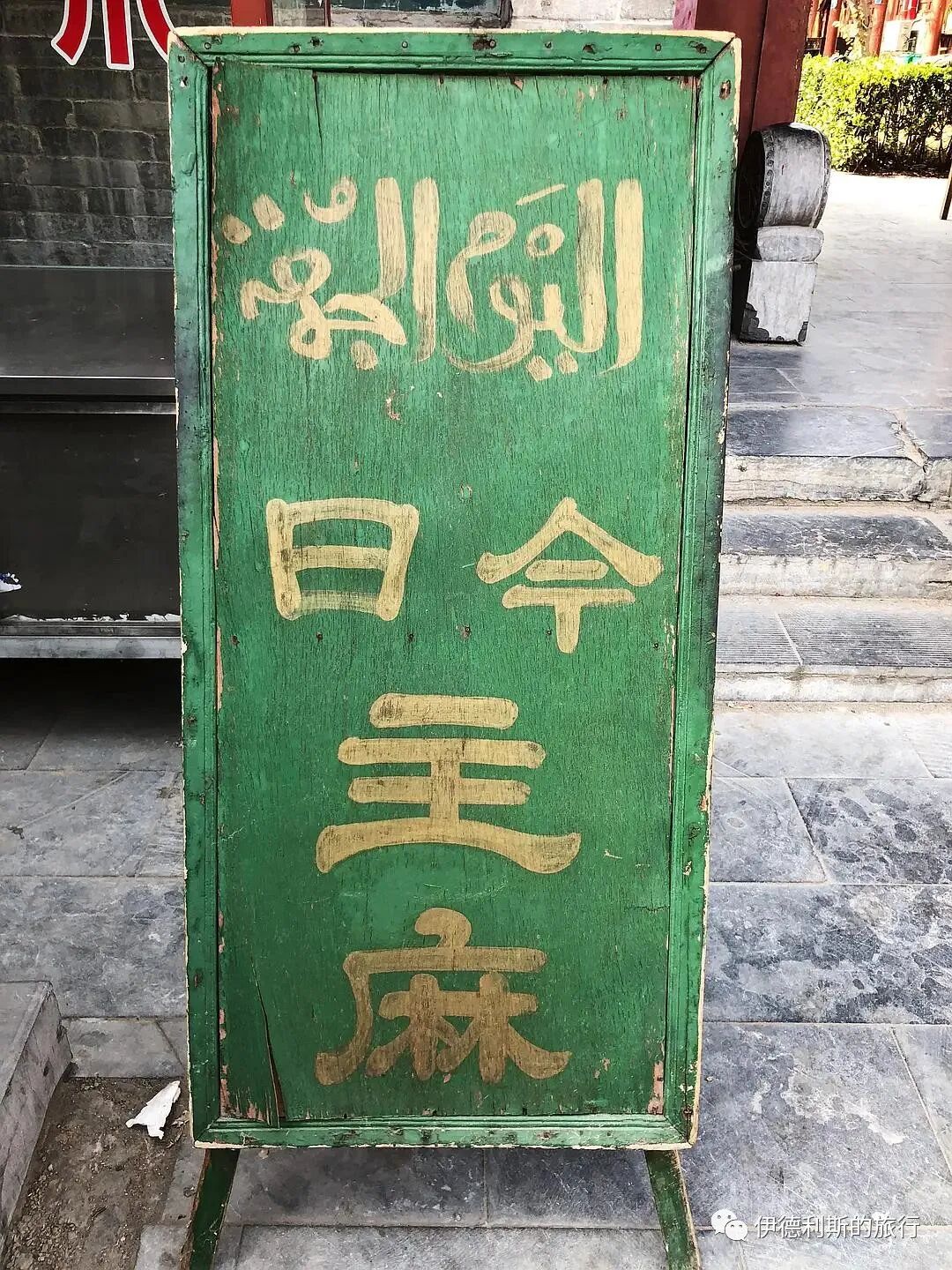
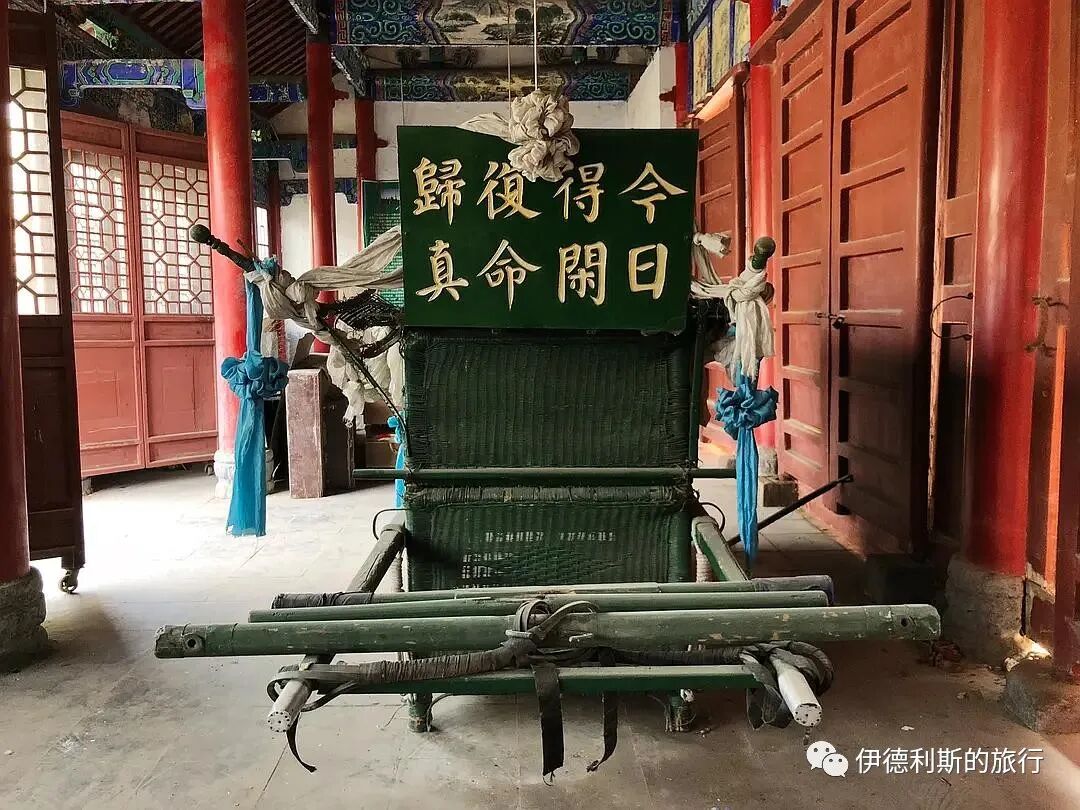
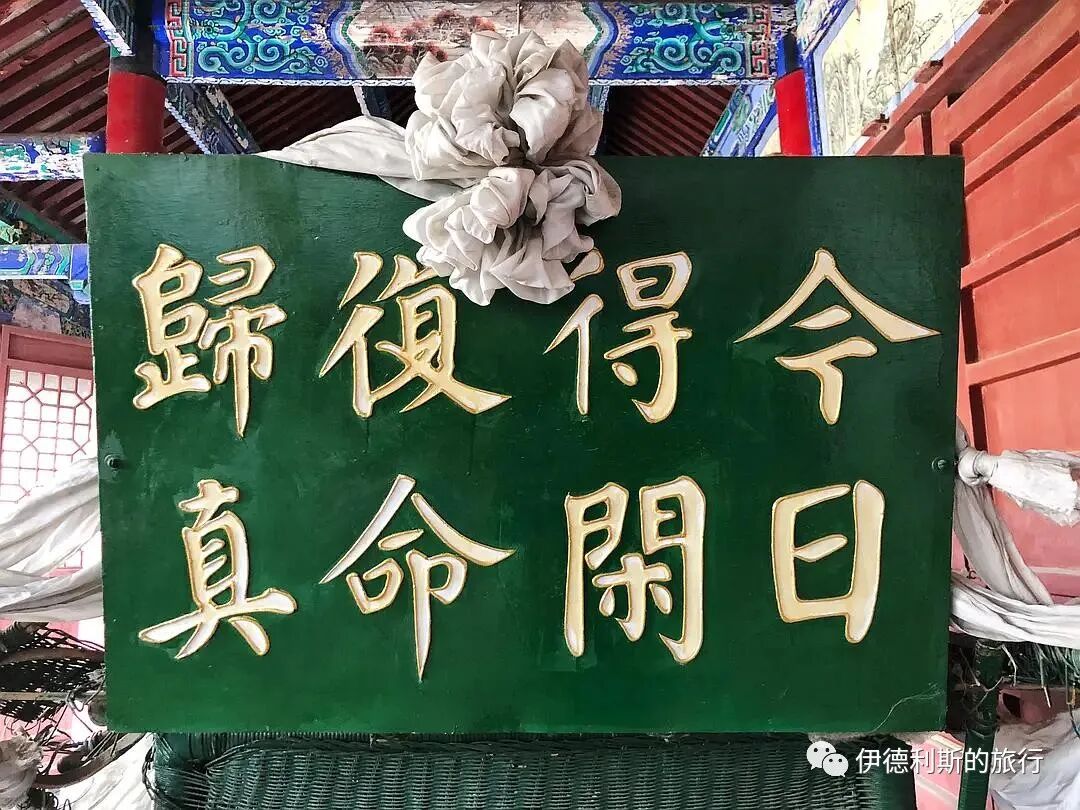
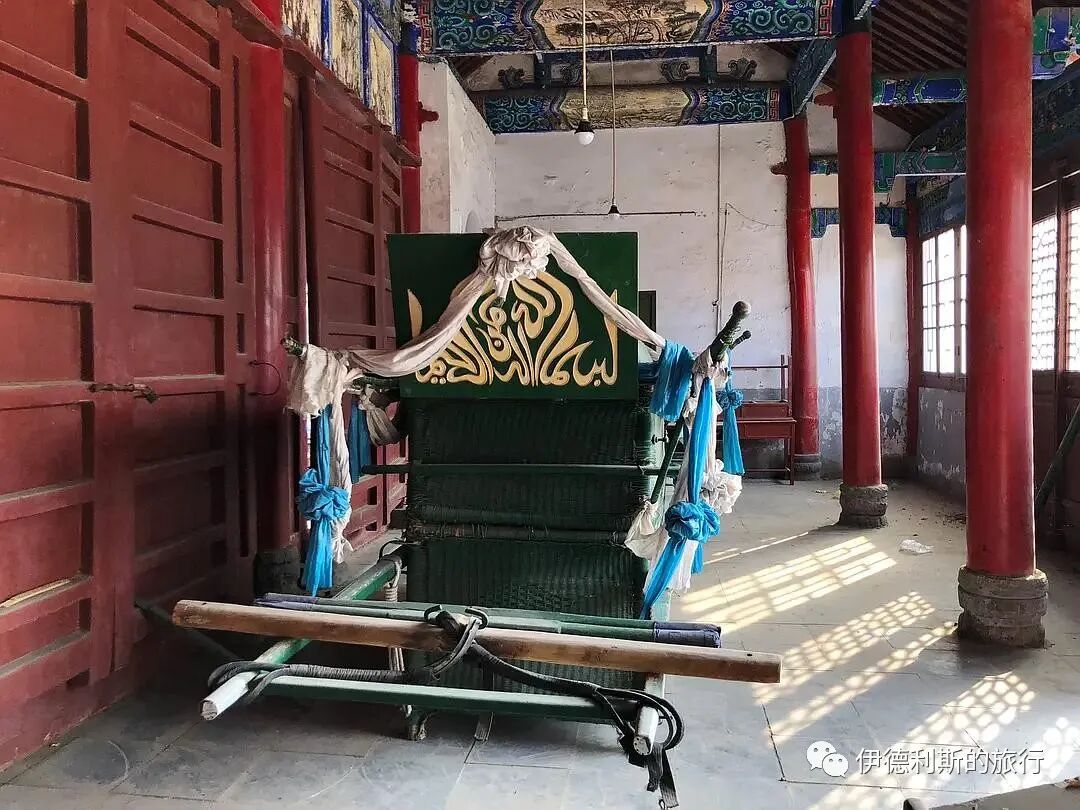
Inside the main gate, a traditional maiti (coffin) box is kept.
Entering through the main gate leads to the second gate.
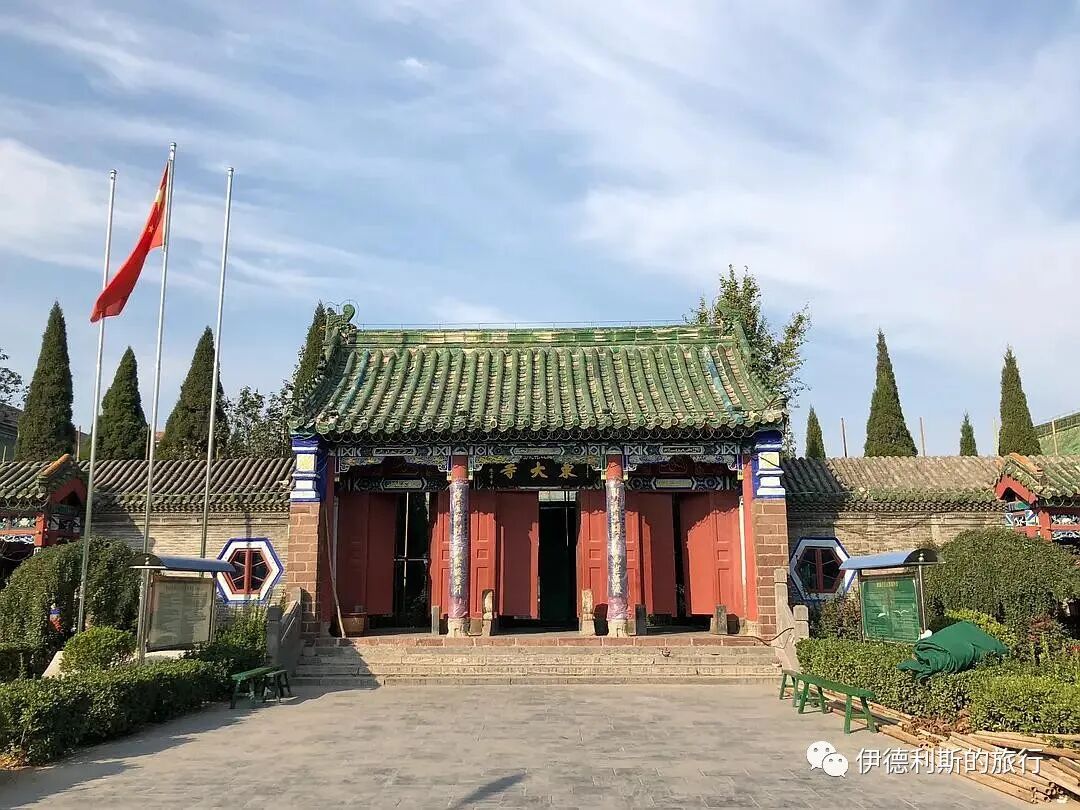
Next to the second gate is a chuihuamen (hanging flower gate).
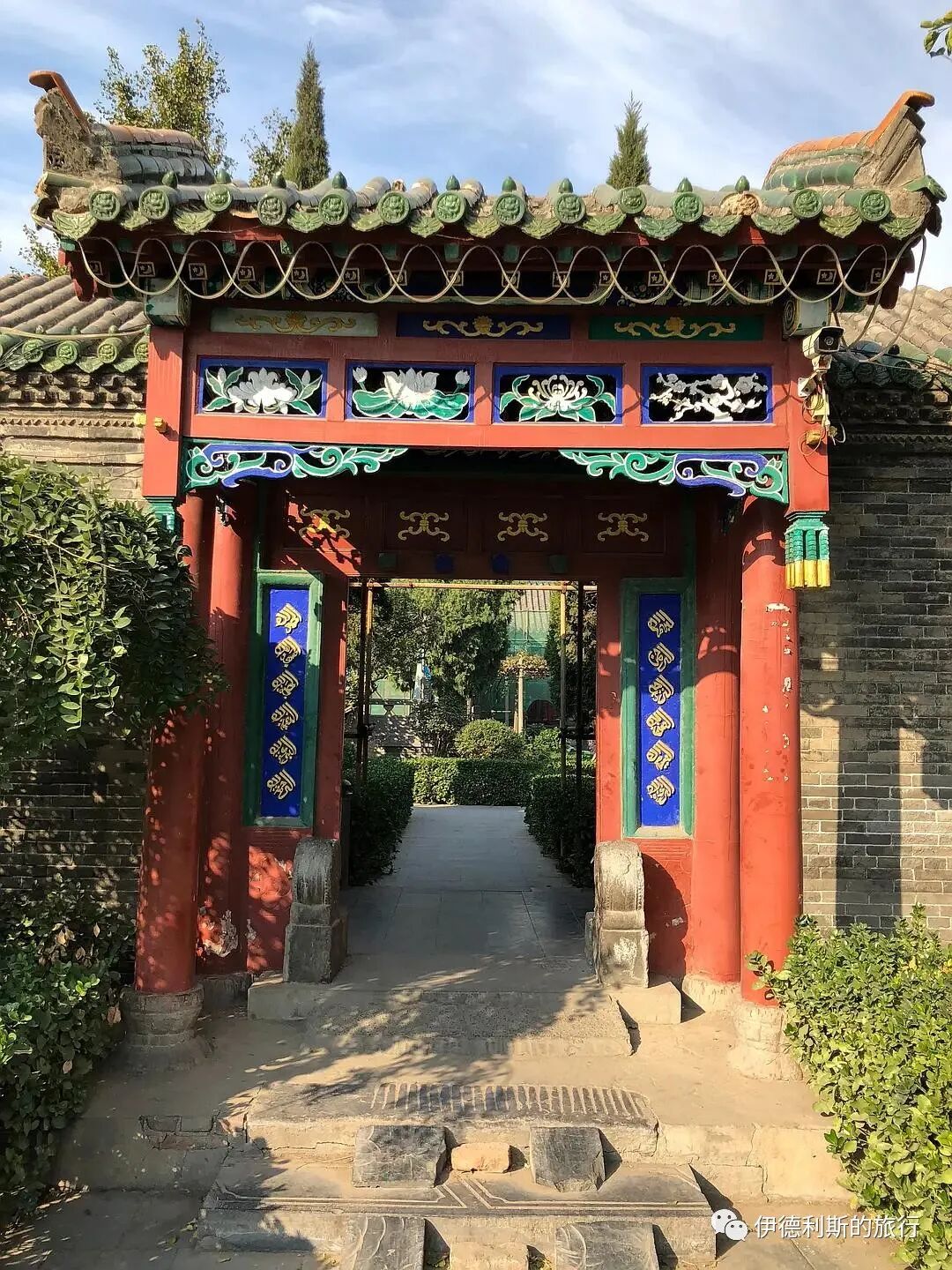
Because the main hall is under renovation, Jumu (Friday prayer) is held in the north lecture hall.
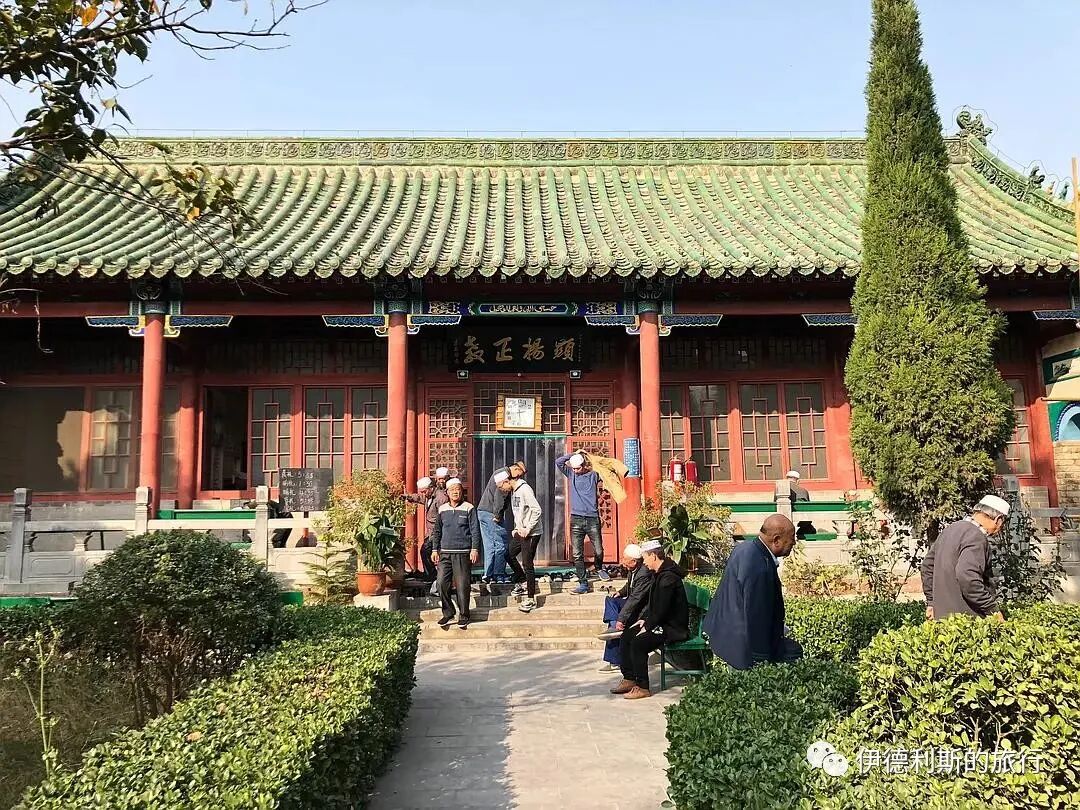
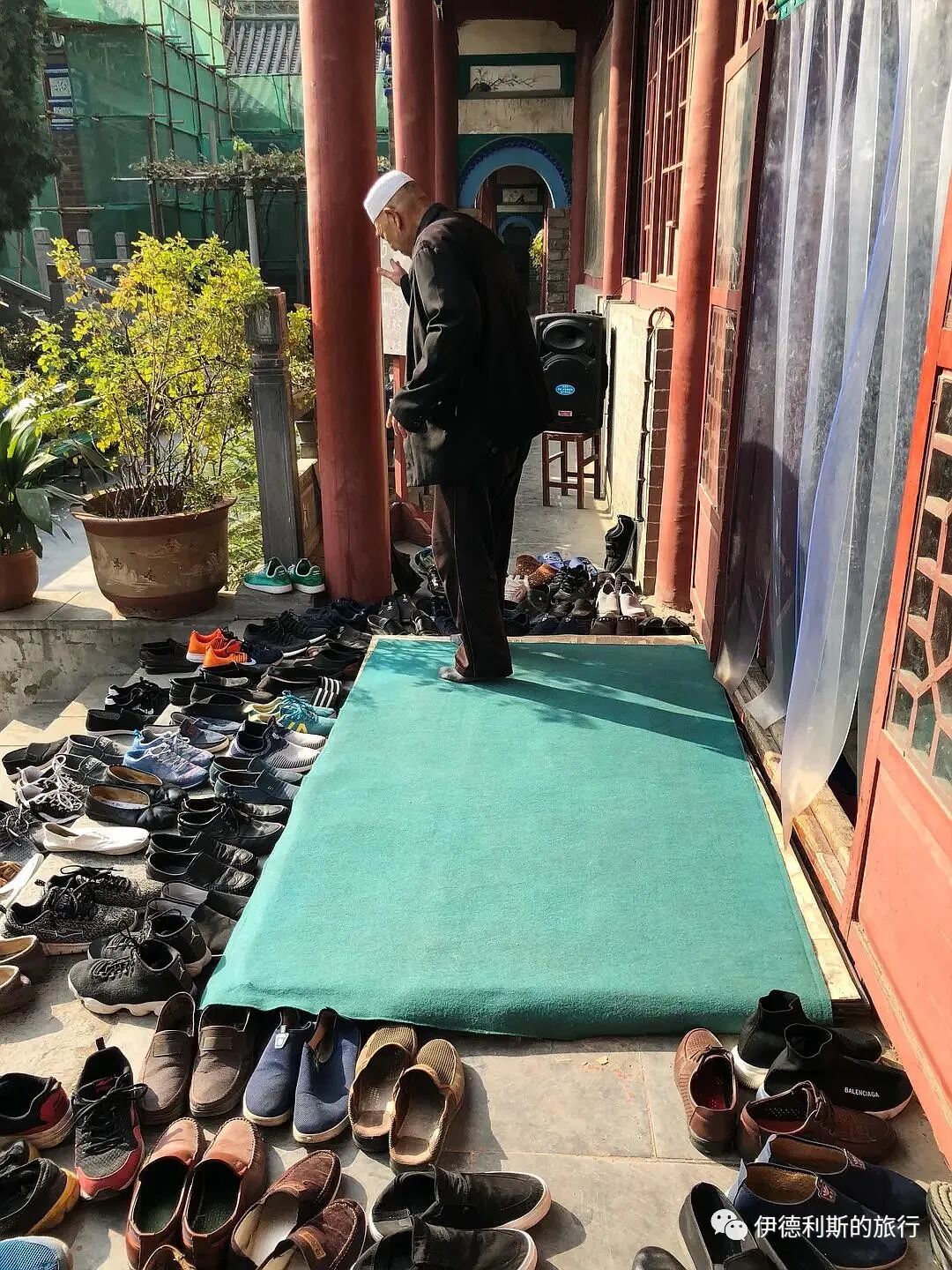
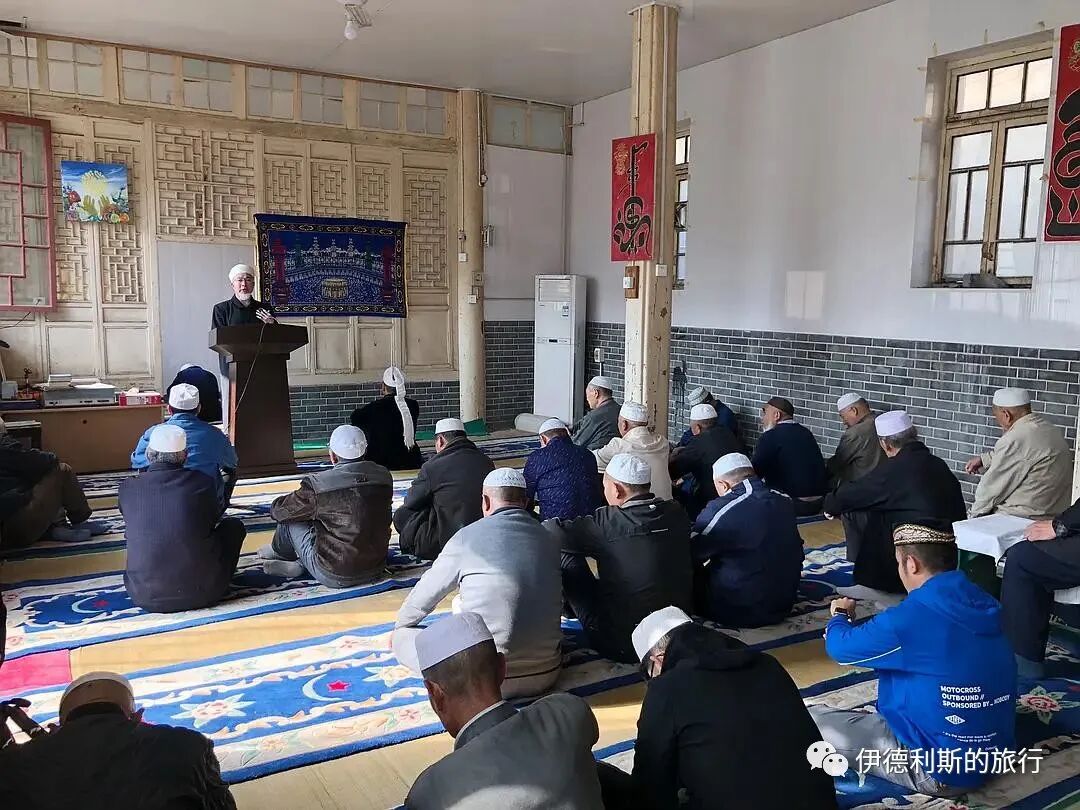
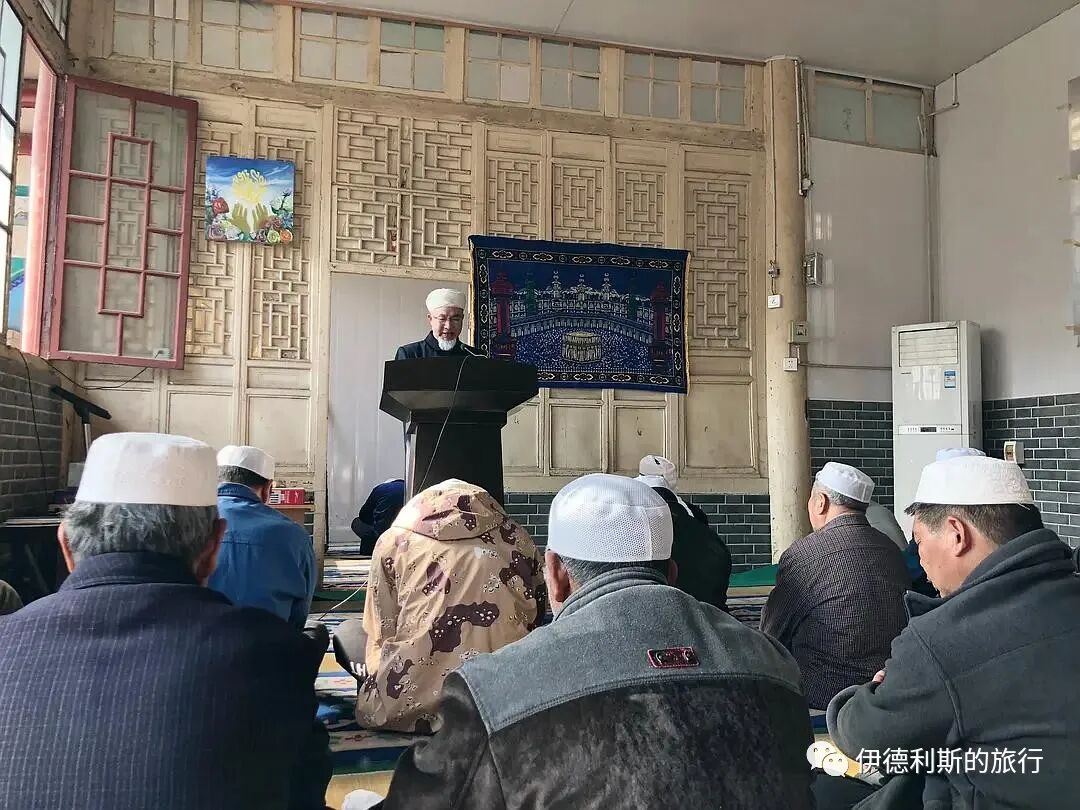
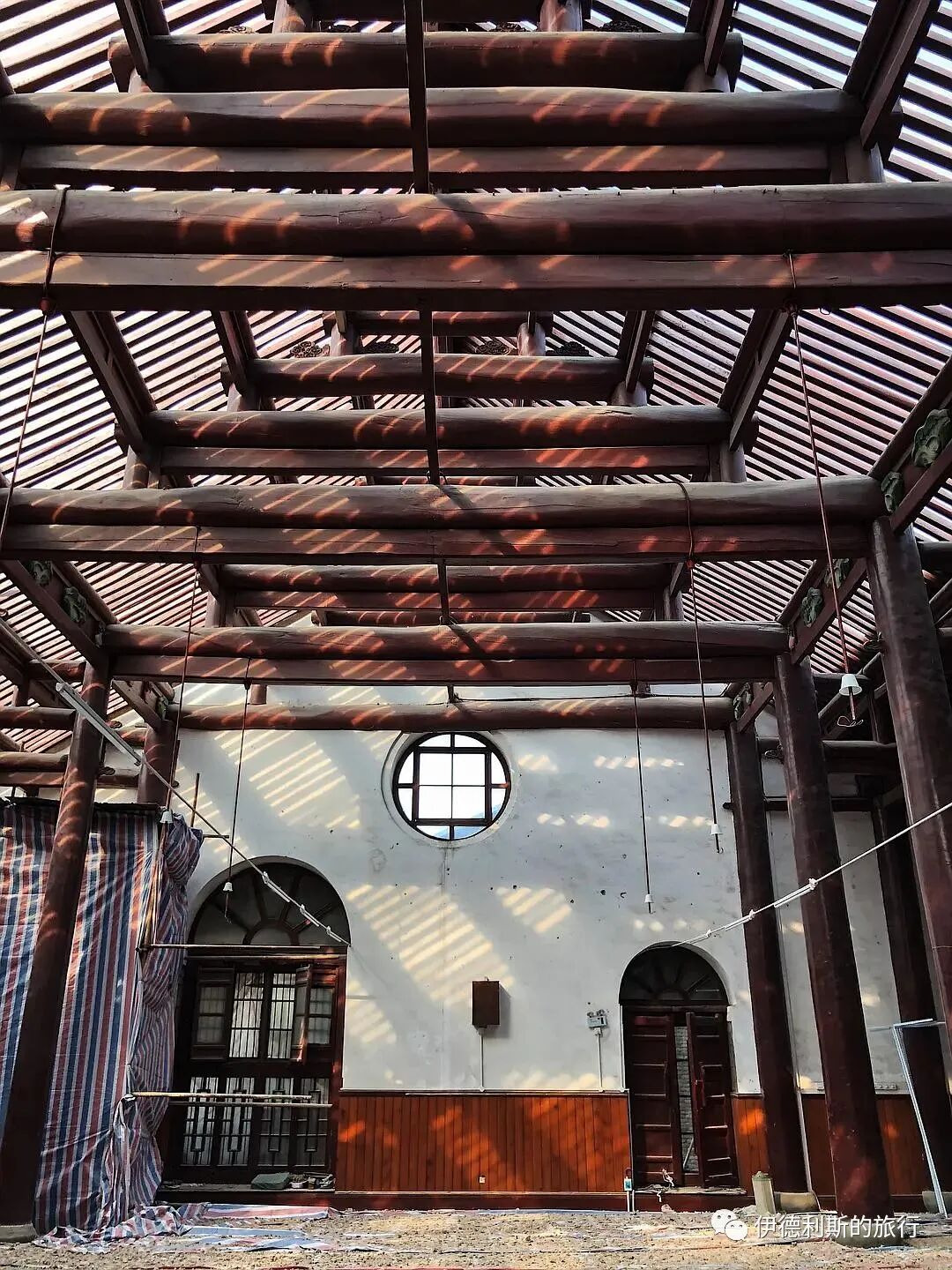
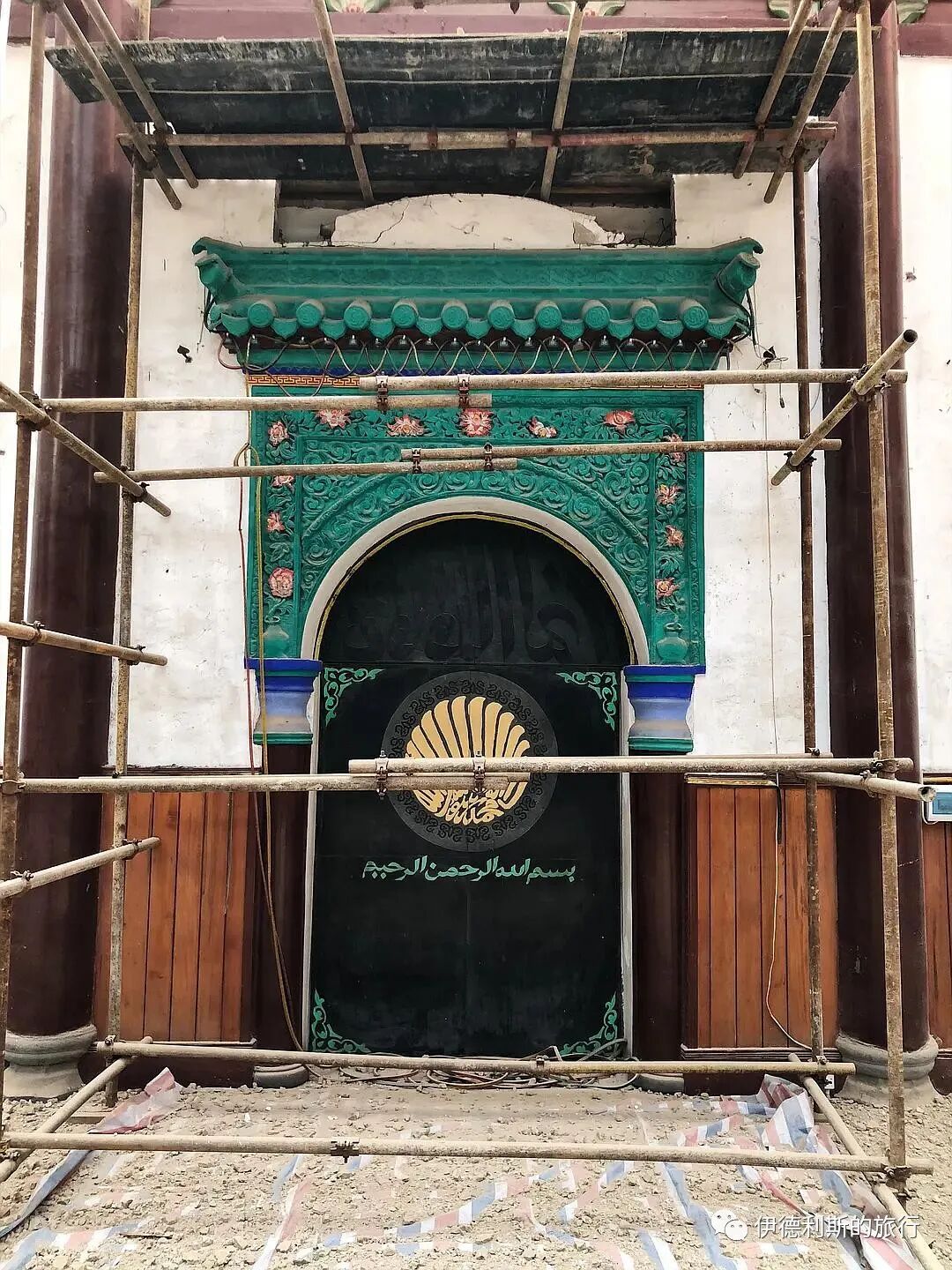
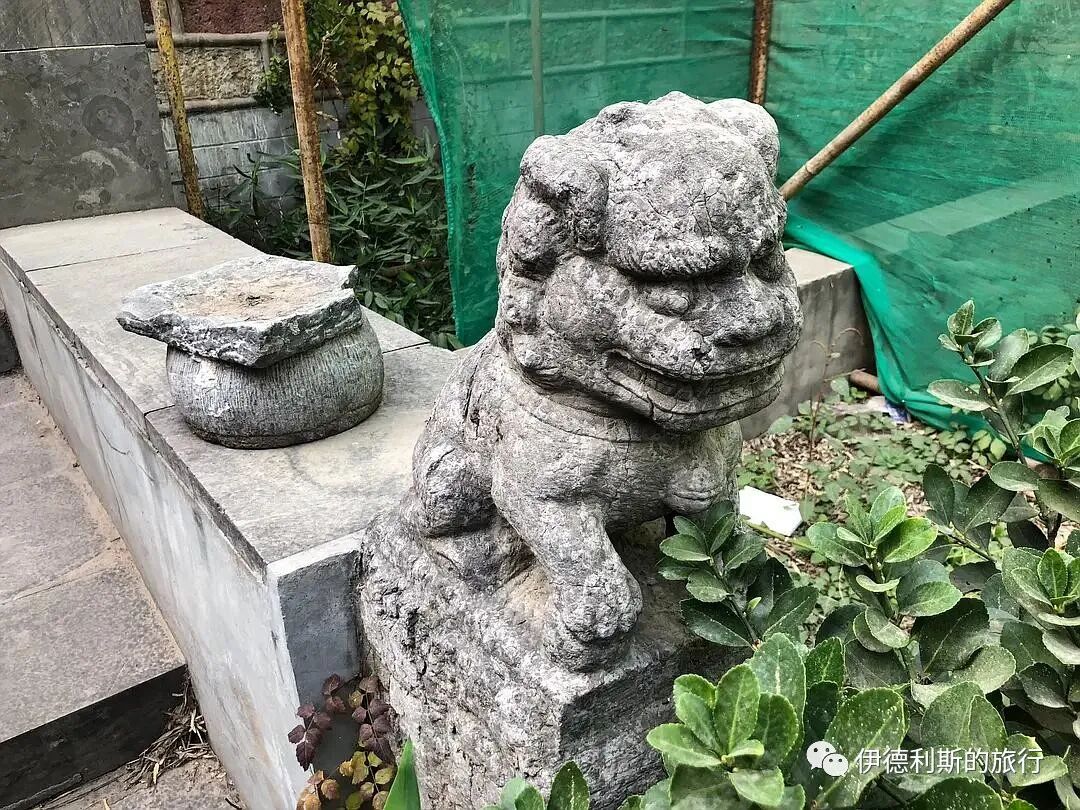
The main hall consists of a juanpeng (arched roof structure), a front hall, and a rear hall. It was under renovation when I visited.
2. Kaifeng Dongdasi Women's School
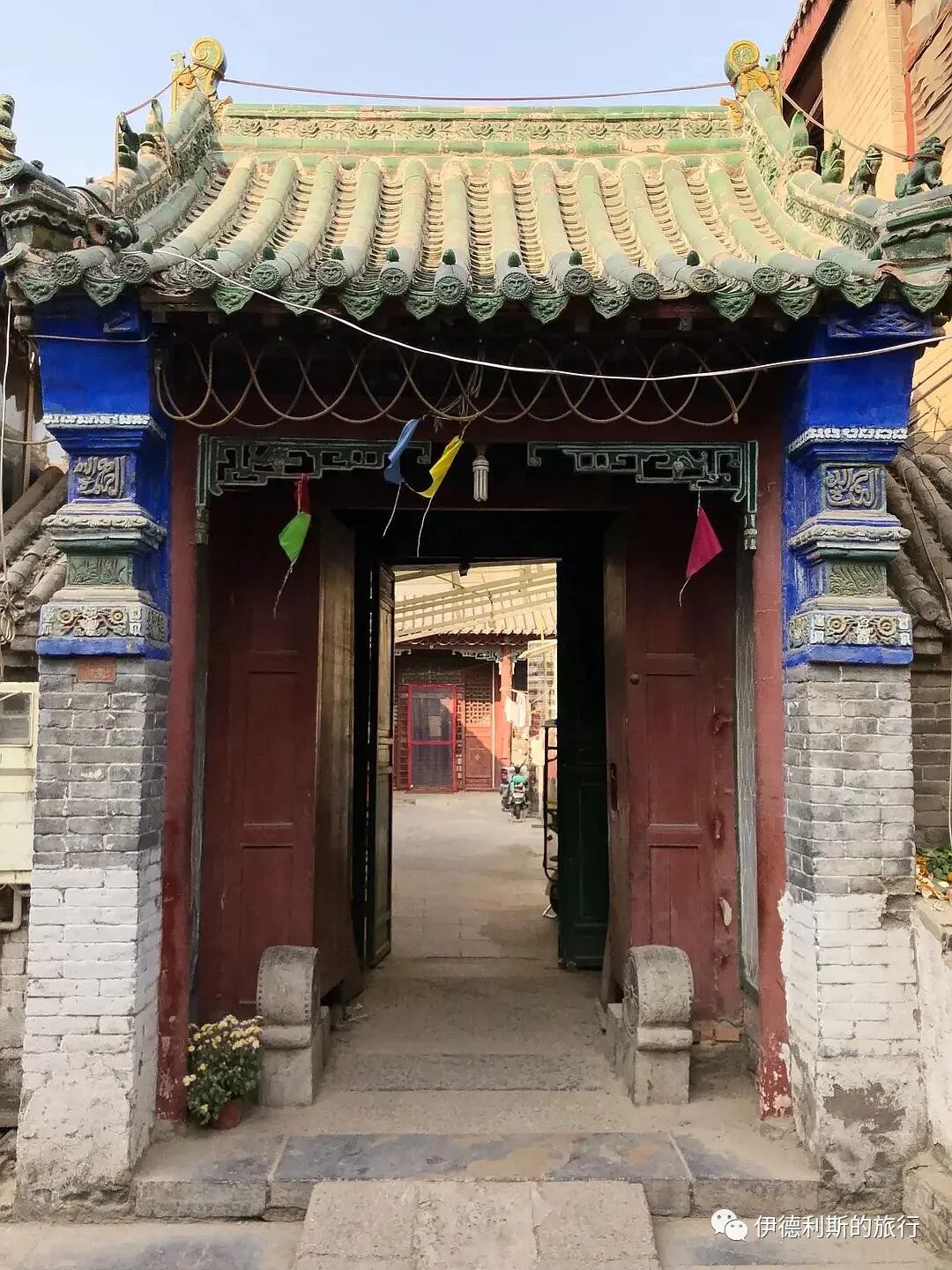
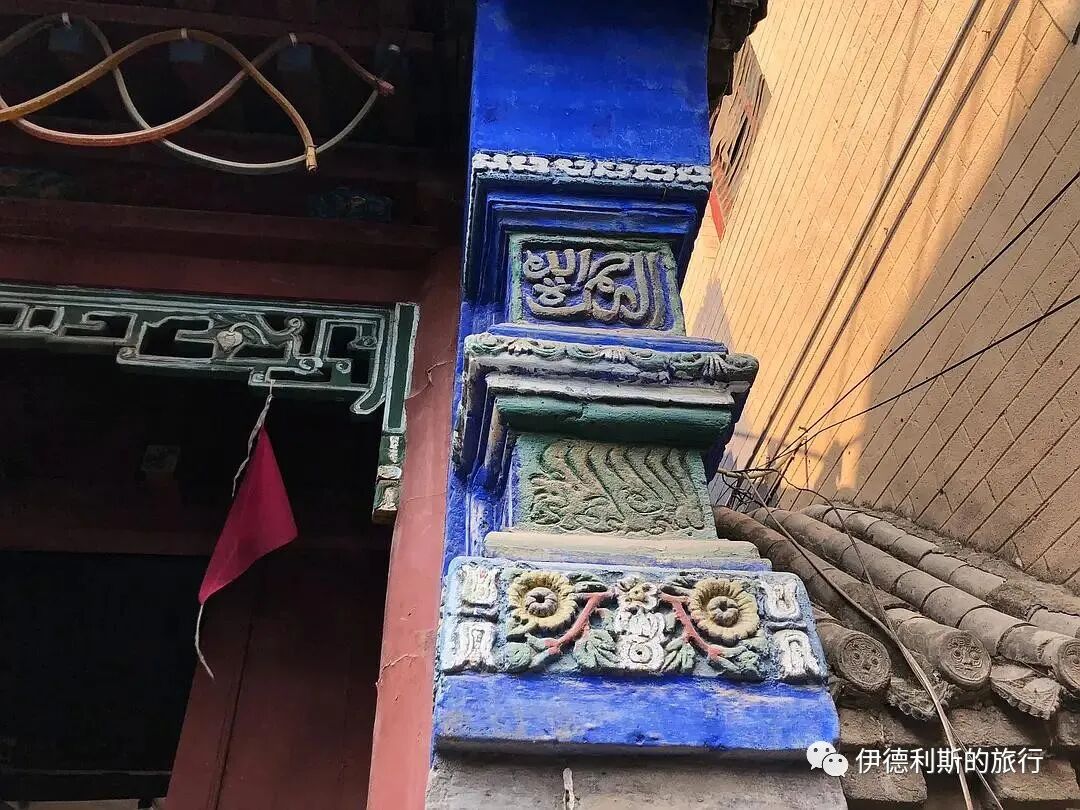
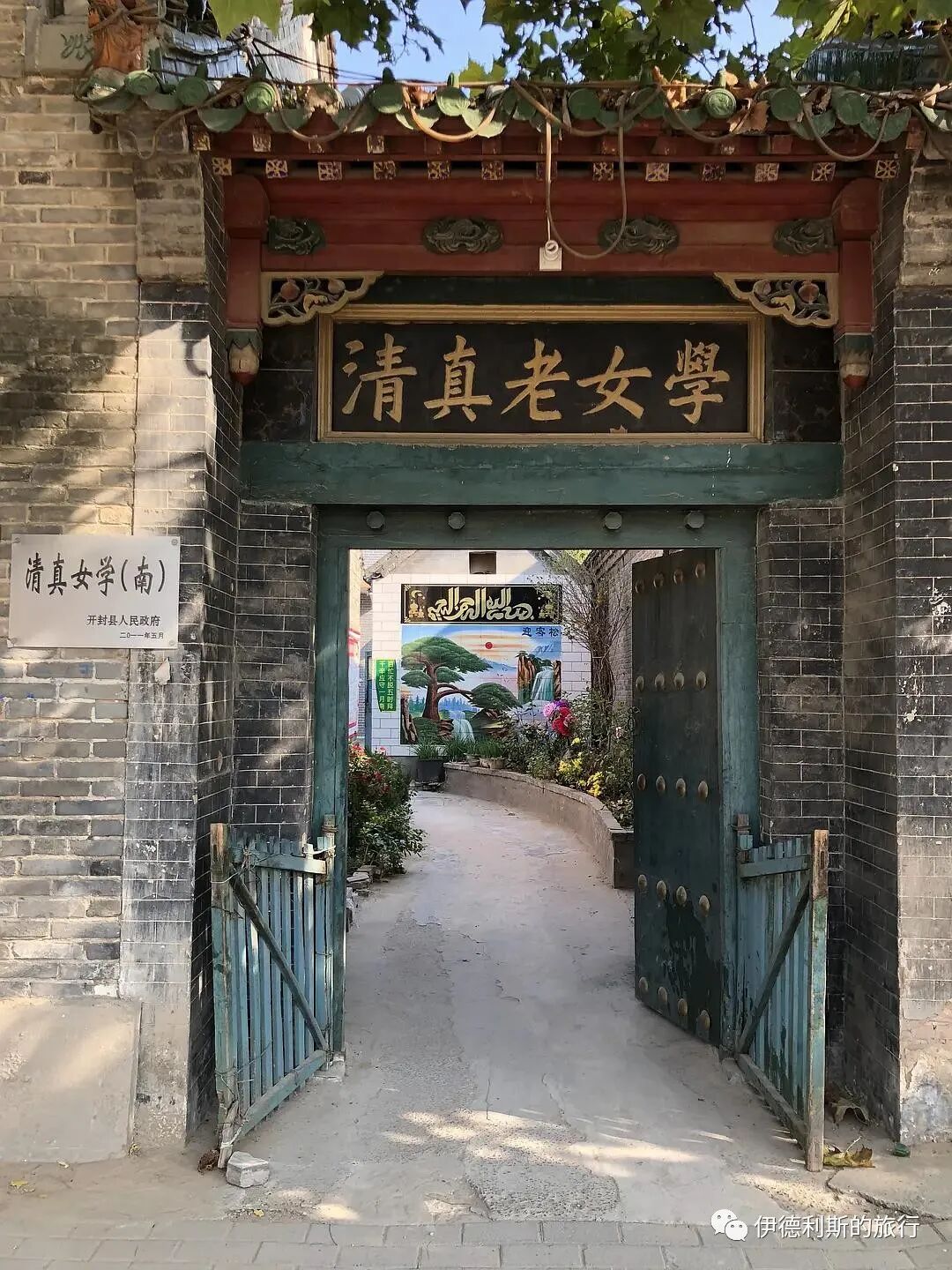
The Kaifeng Dongdasi Women's School is opposite Dongdasi, first built in 1933 and rebuilt in 1993. The term 'women's school' first appeared in the 'Jingxue Xichuan Pu' (Genealogy of Classical Studies) written during the Kangxi reign of the Qing Dynasty. During the mid-to-late Qing period, women's schools gradually evolved into women's mosques, but the name 'women's school' continued to be used, especially in places like Zhengzhou, Kaifeng, and Zhoukou.
3. Kaifeng Shanyitang Mosque: 1874
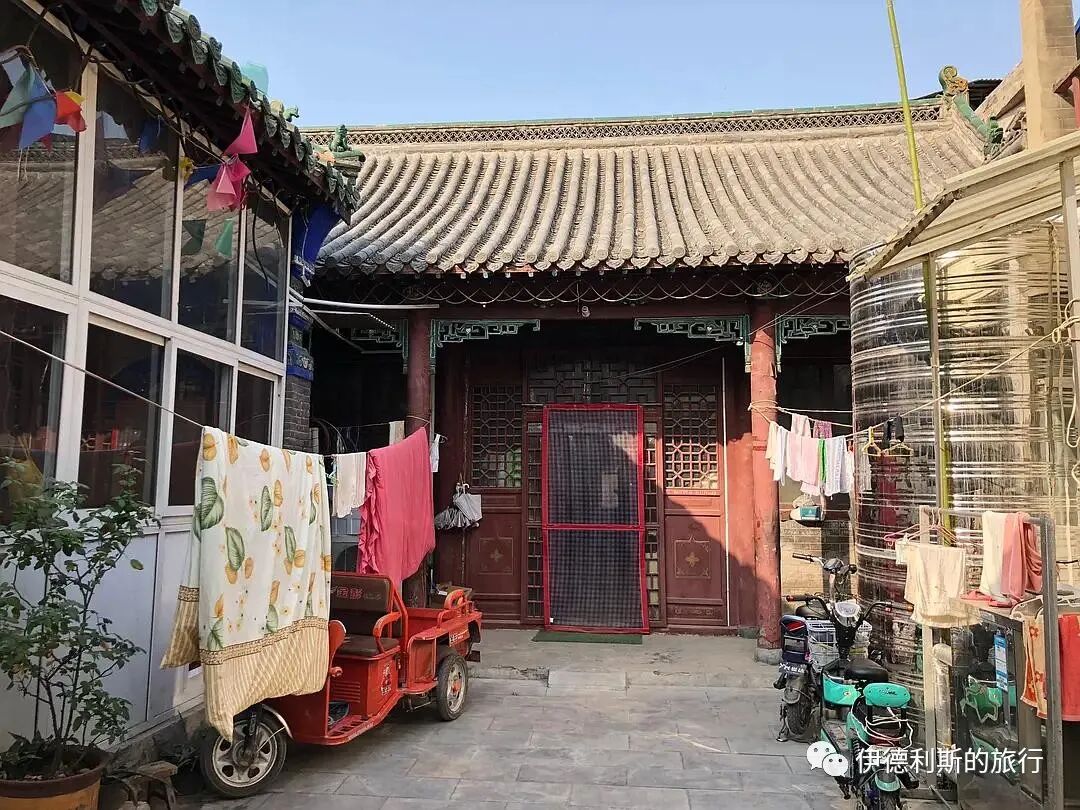
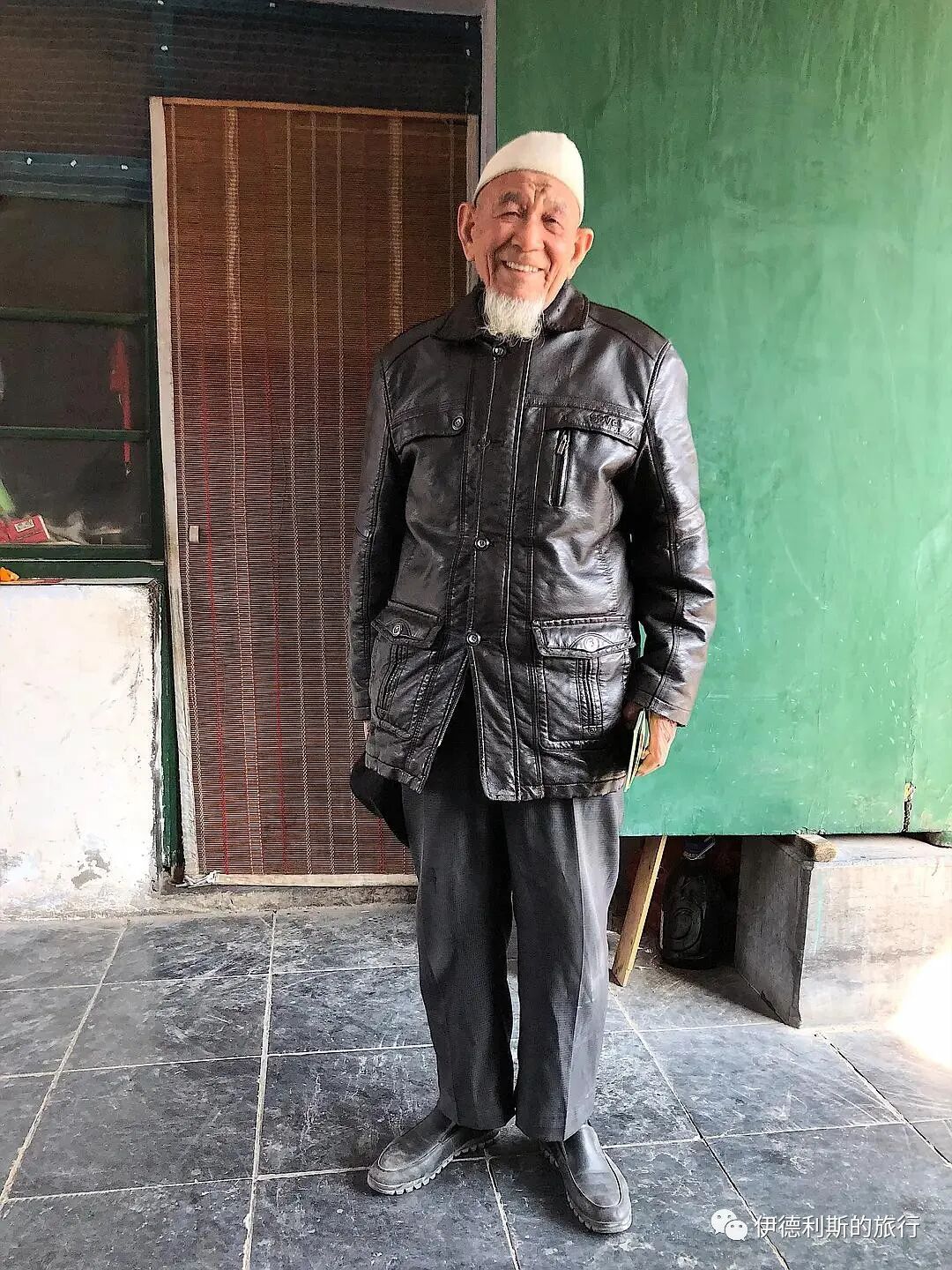
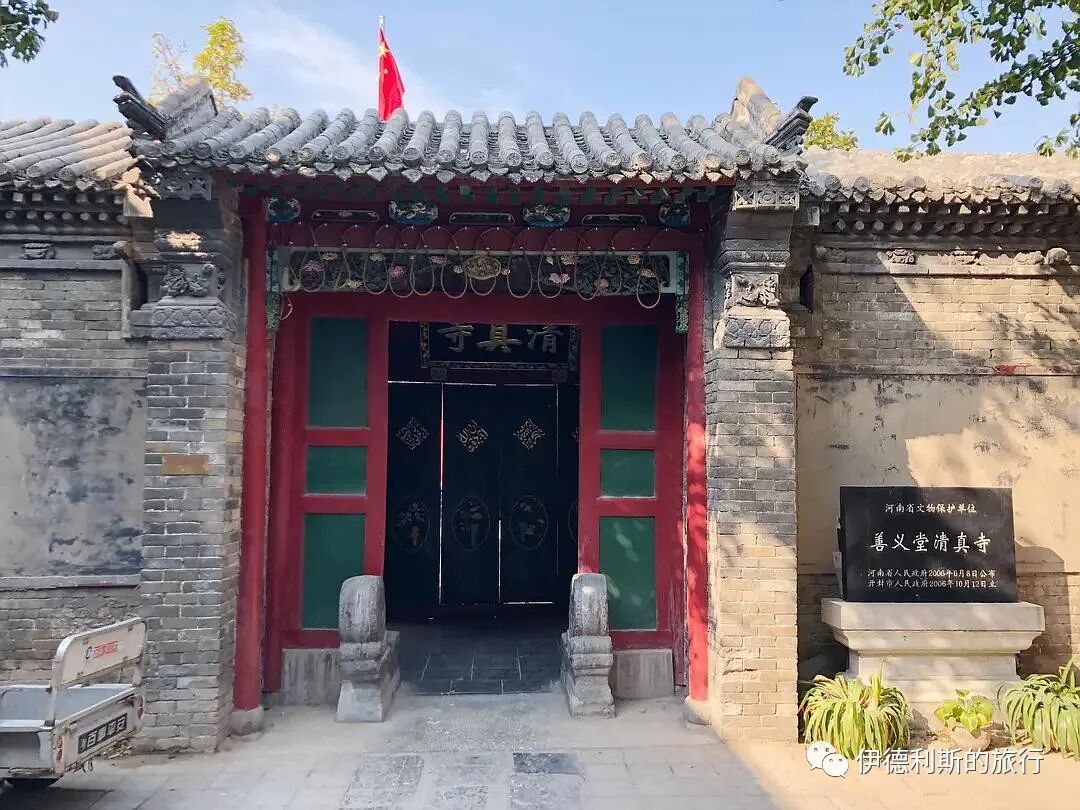
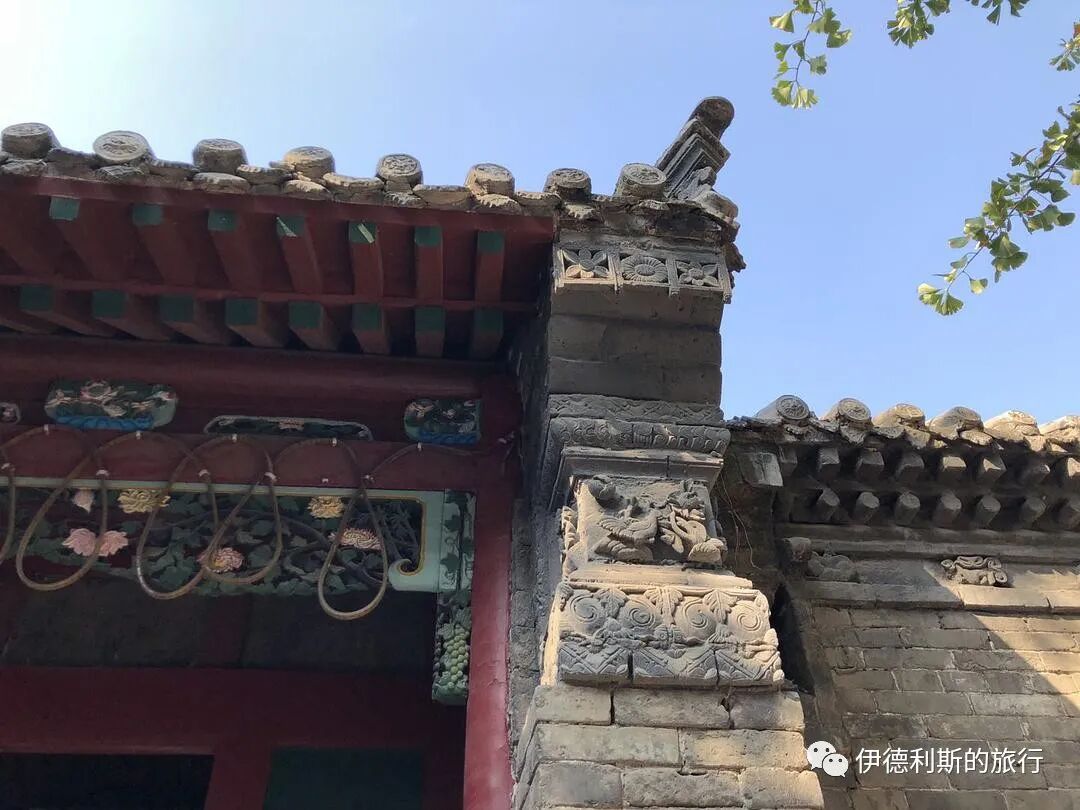
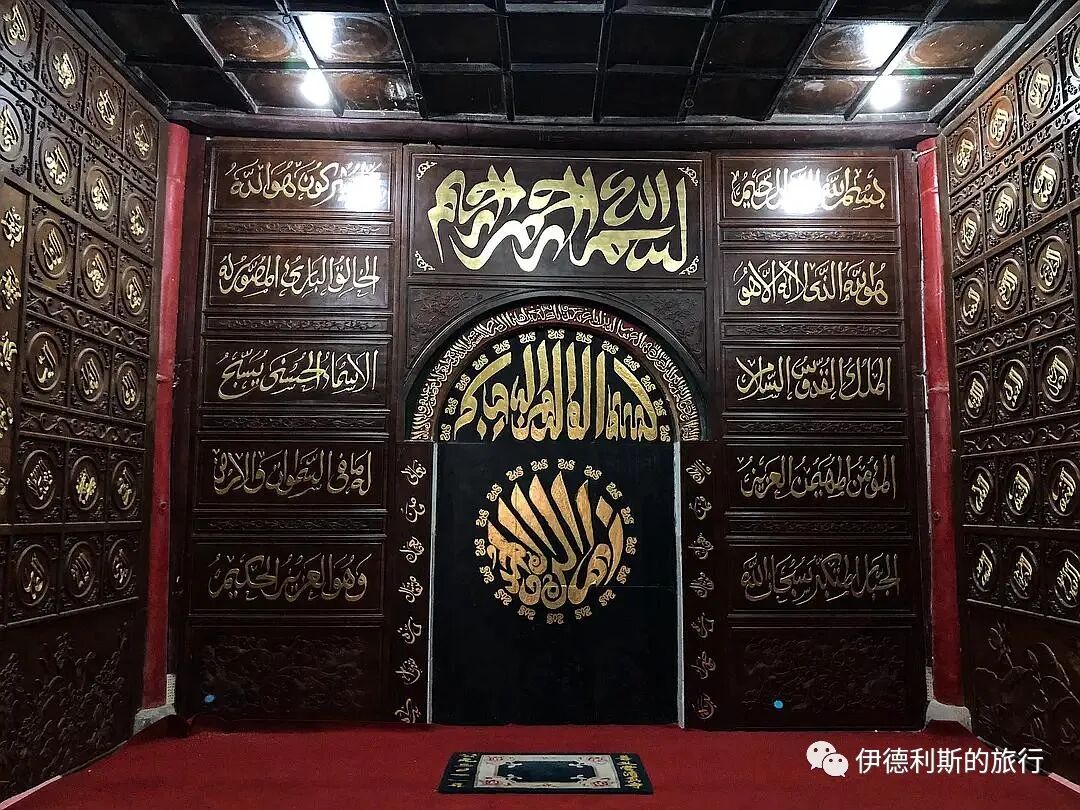
Shanyitang Mosque is one of the ancient mosque buildings in Kaifeng city, located southwest of the Drum Tower. It was built in 1874 (the thirteenth year of the Tongzhi reign) by Hui Muslims from Shaanxi who settled in Kaifeng. It was originally a 'Shanyitang' (Benevolence and Righteousness Hall) guild hall for performing good deeds. In 1901, when Empress Dowager Cixi passed through Kaifeng on her way back to Beijing from Xi'an, the vanguard officer, a Hui Muslim named Ma Anliang, petitioned for a plaque inscribed with 'Mosque', and thus it was renamed Shanyitang Mosque. I met the hospitable Zhao Baba (an affectionate term for an elder) at the mosque, who told me a lot about the history of the mosque and the stories of the Muslims in Kaifeng.
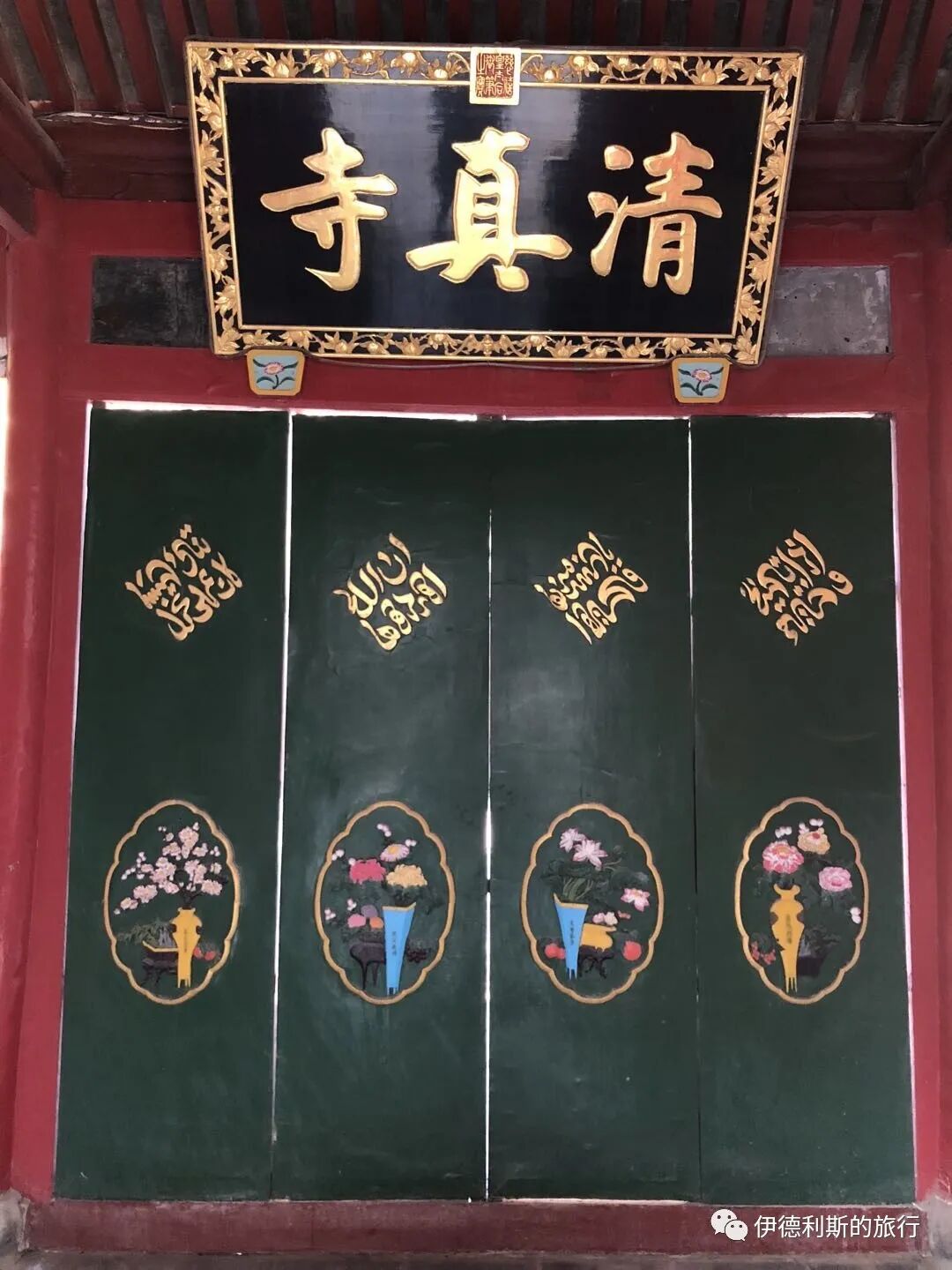
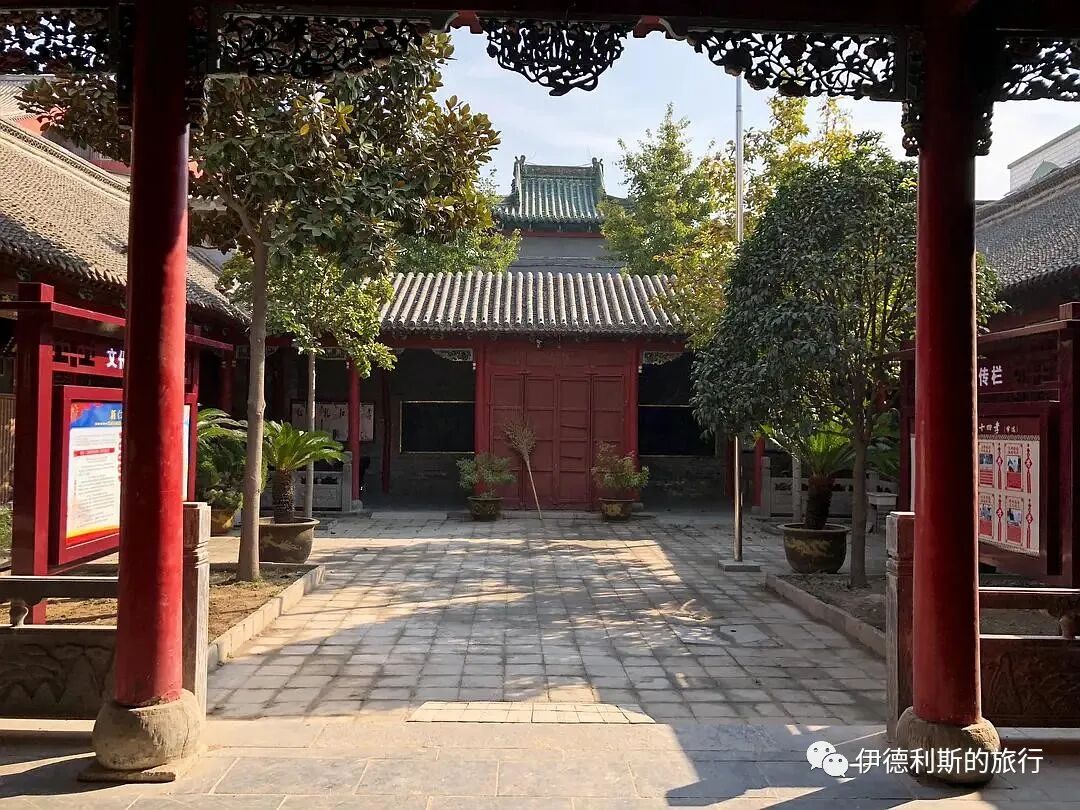
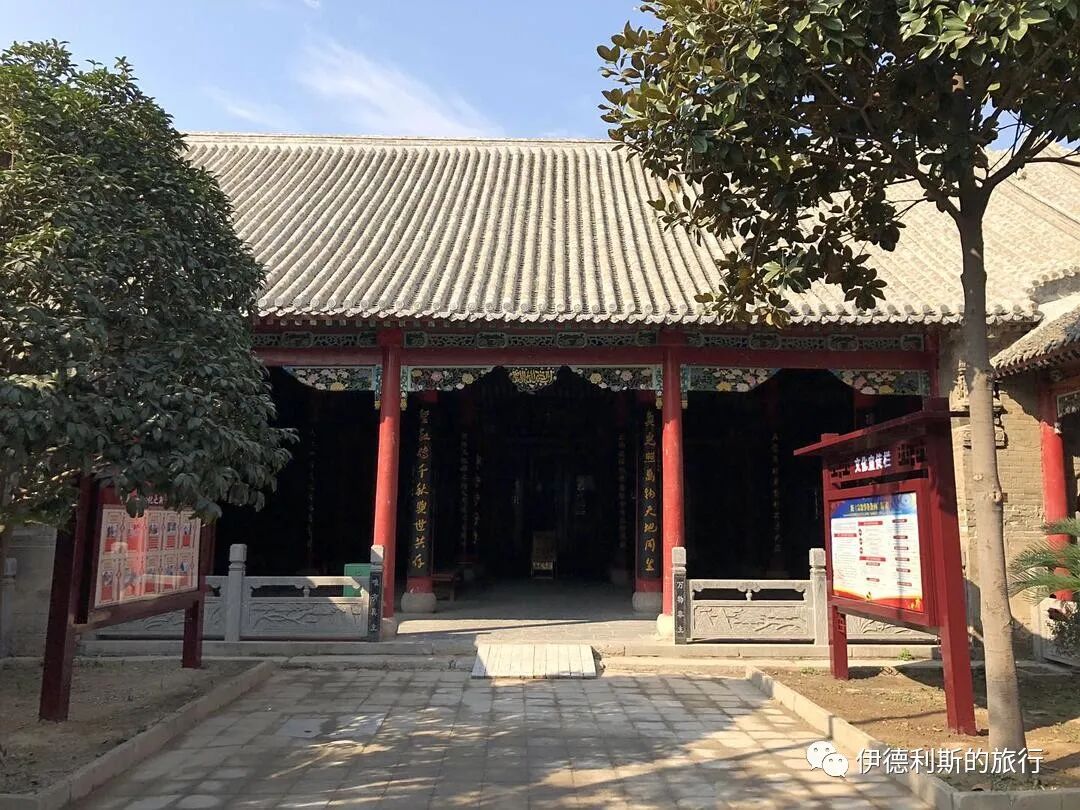
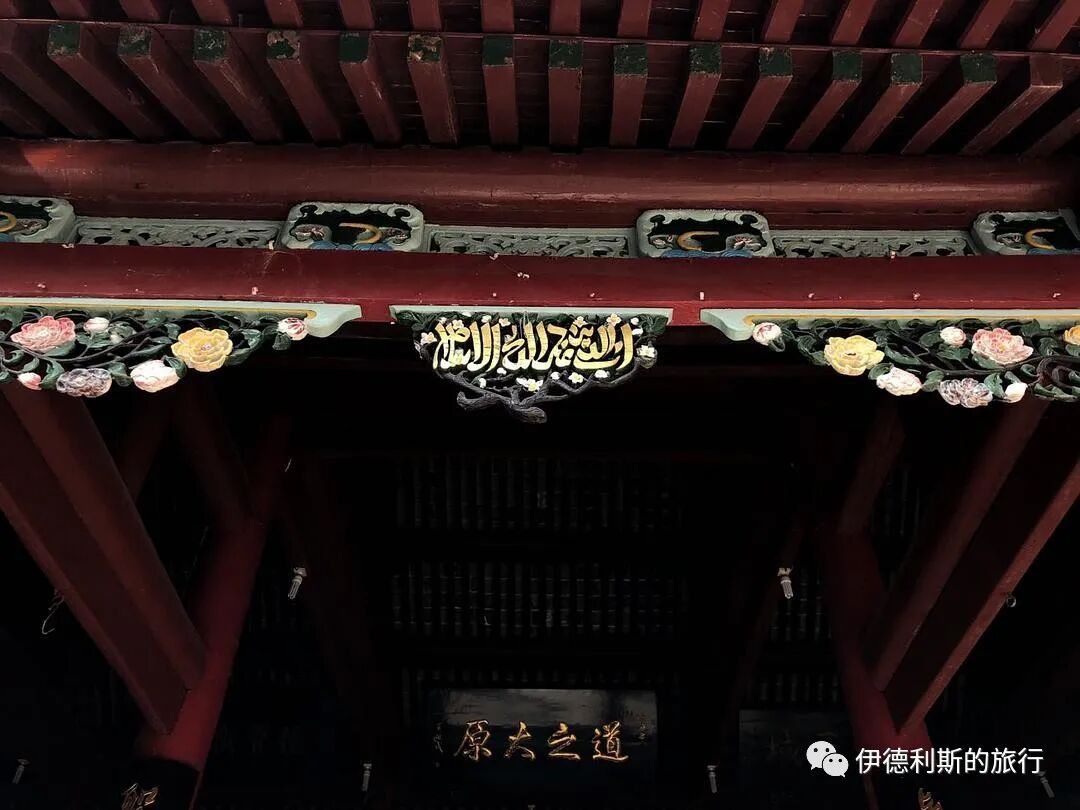
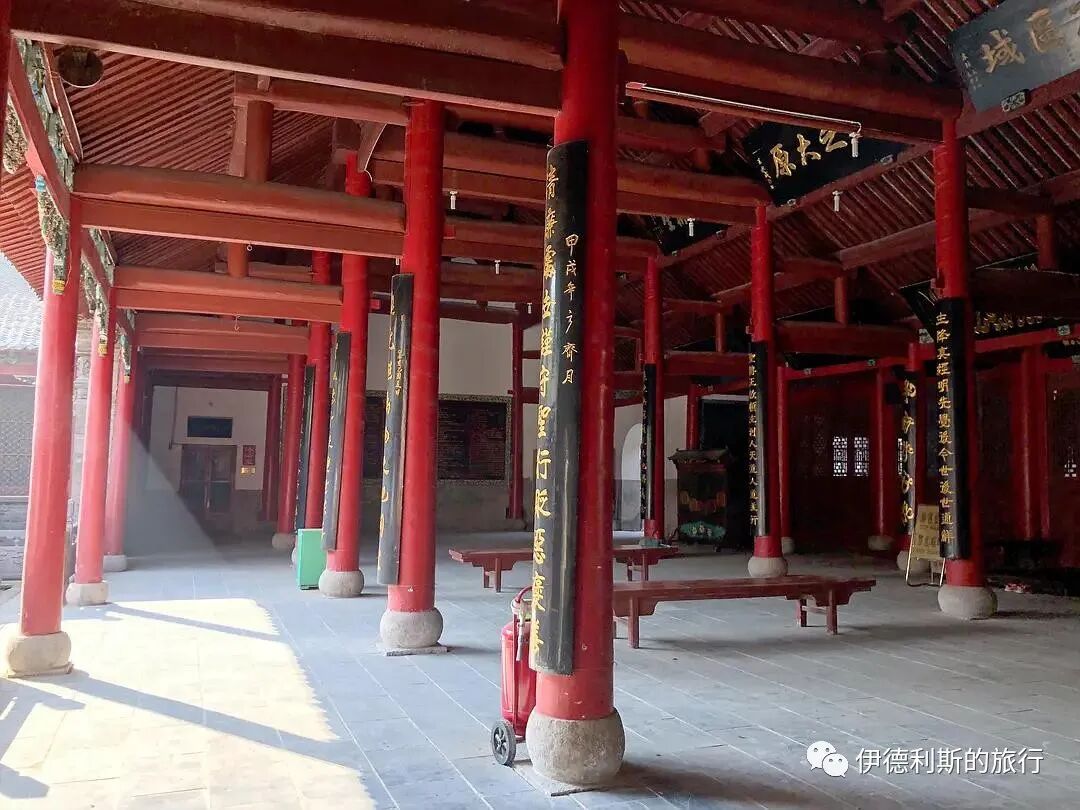
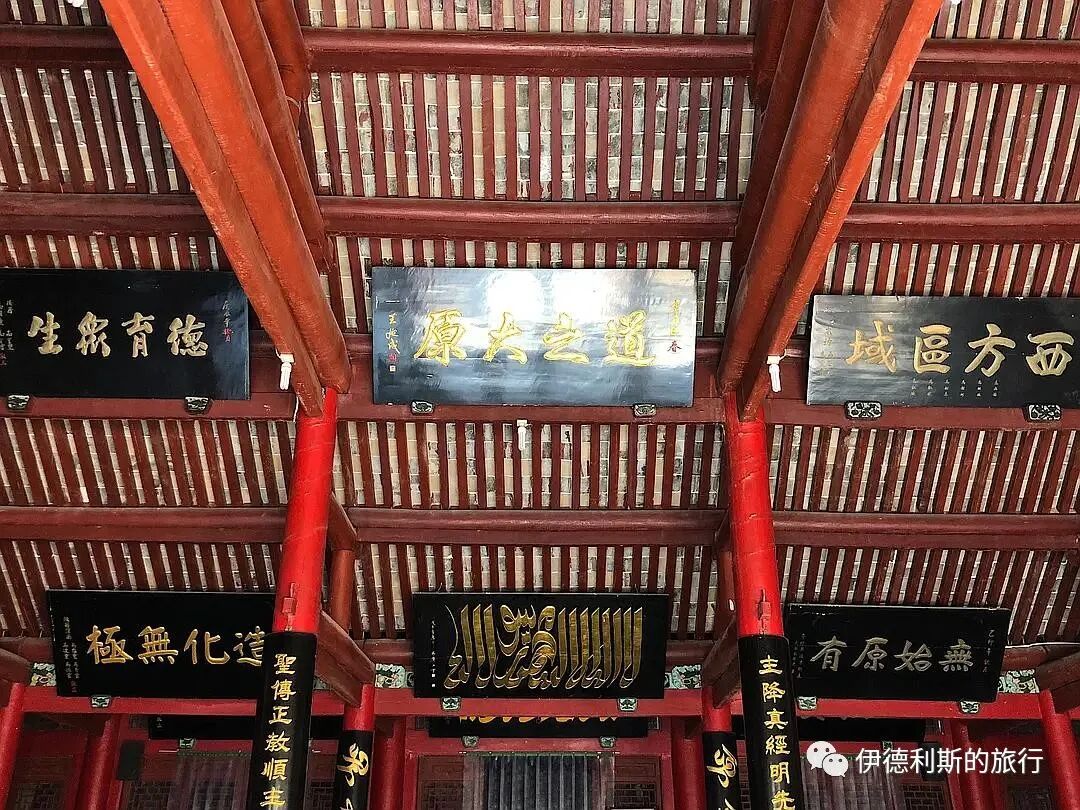
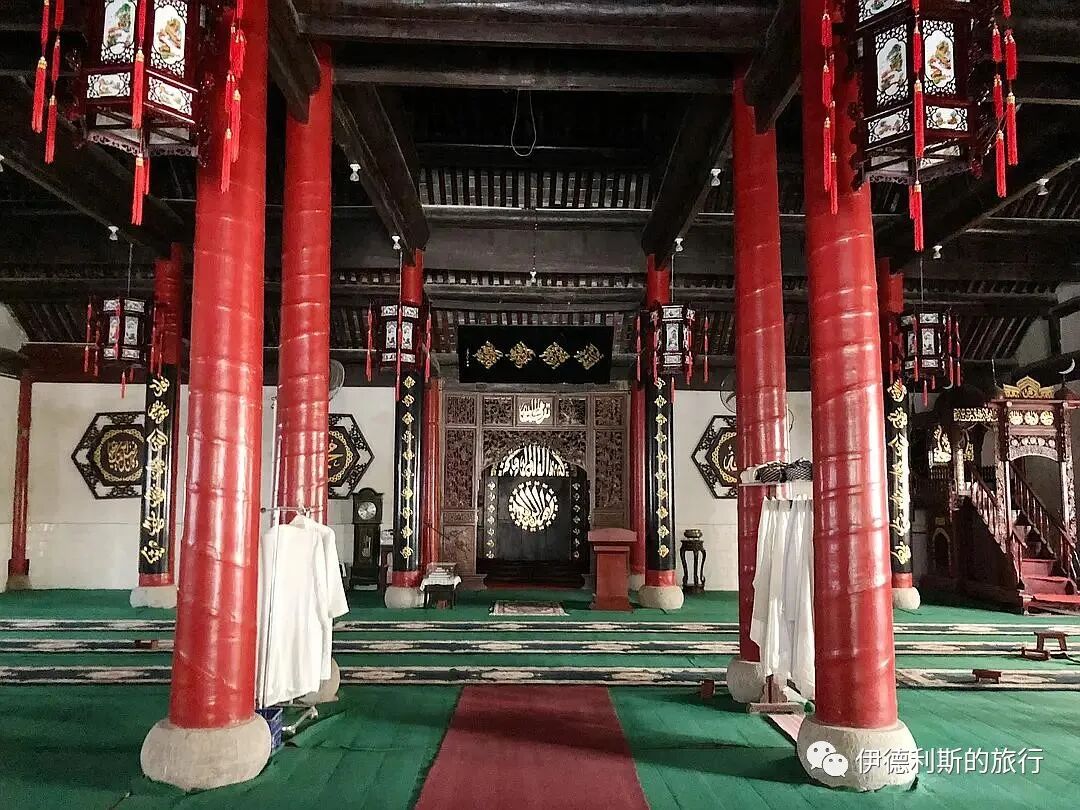
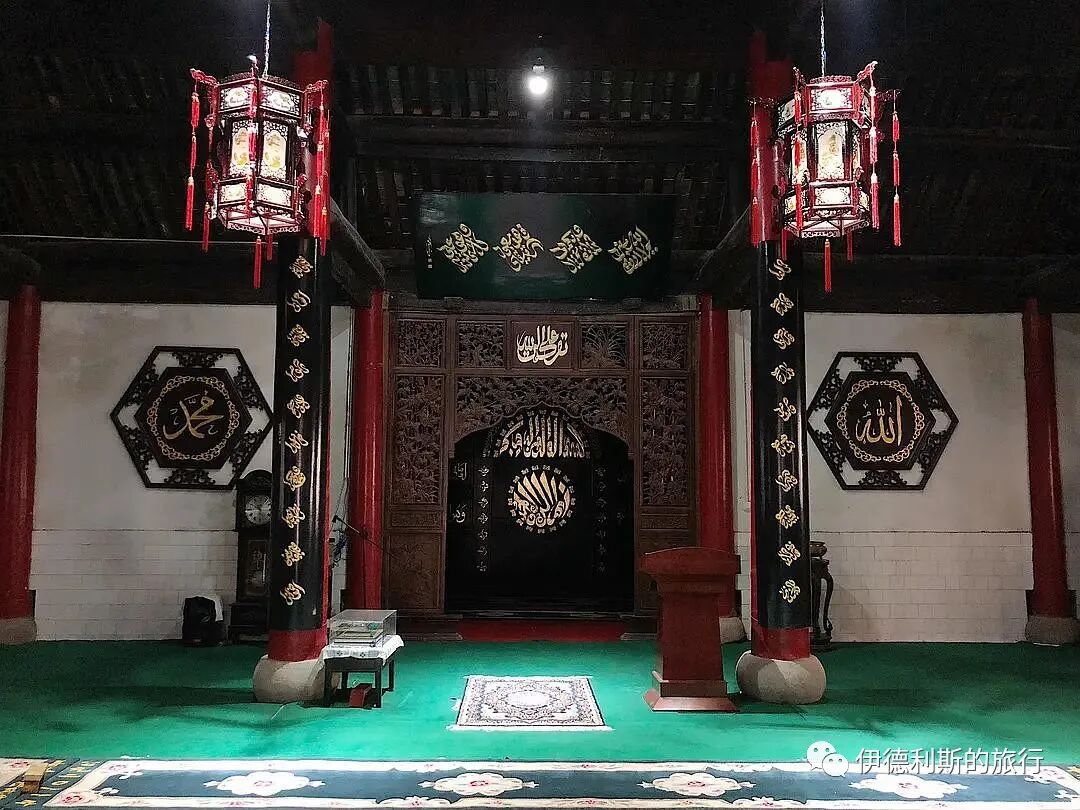
The famous Arabic calligrapher, Master Mi Guangjiang, wrote the 99 Beautiful Names of Allah for the mosque's yaodian (rear prayer hall).
4. Kaifeng Wangjia Hutong Women's Mosque School: 1810s
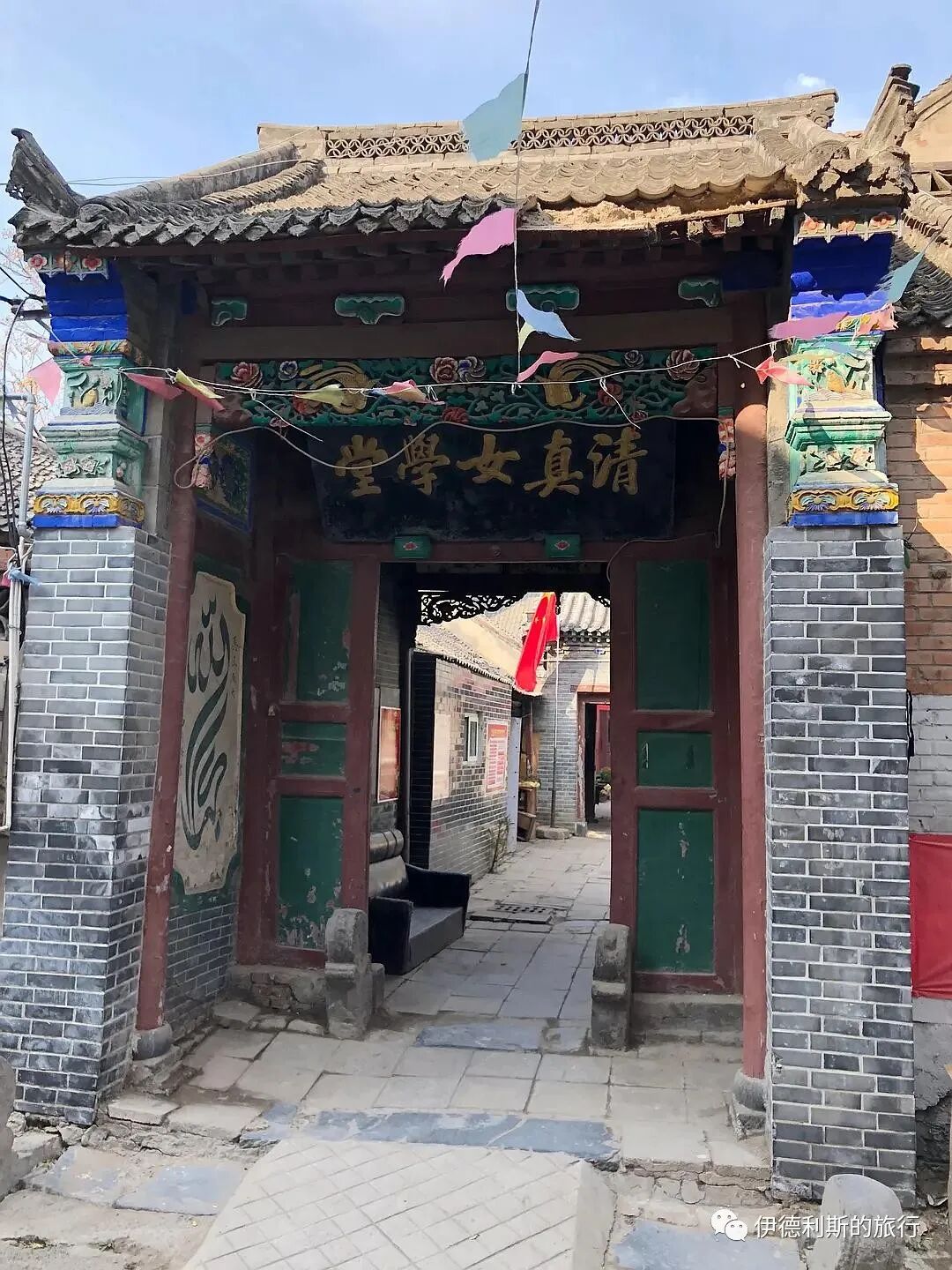
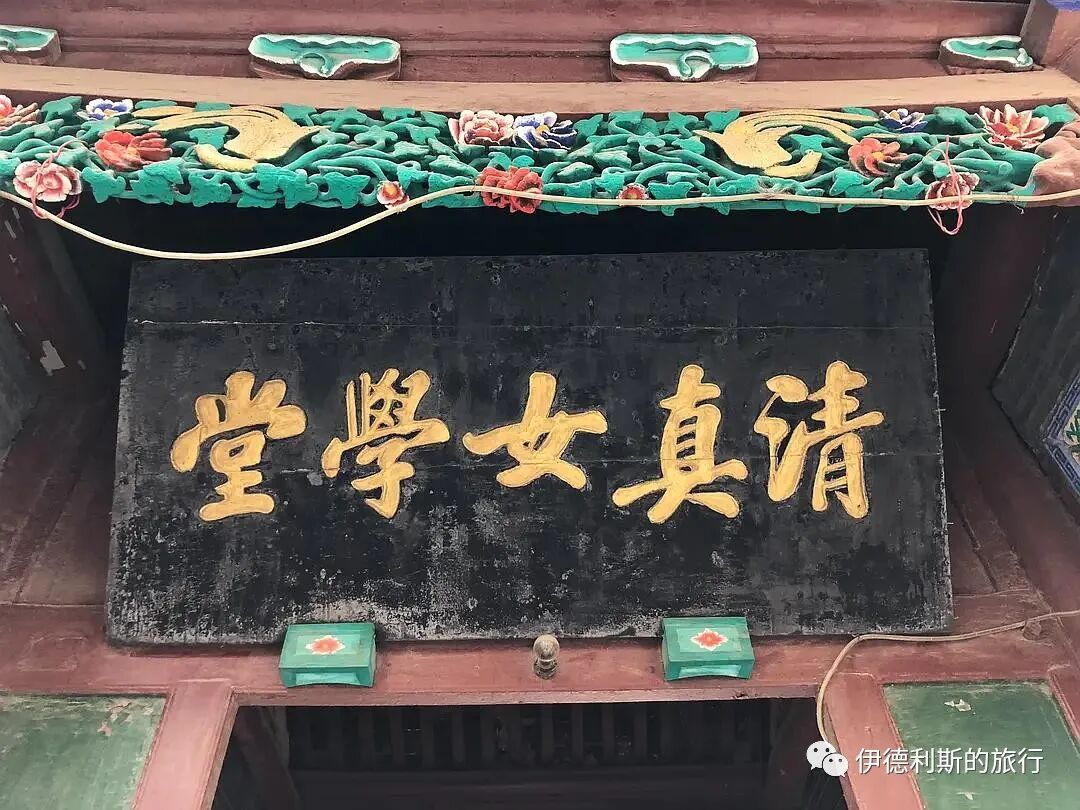
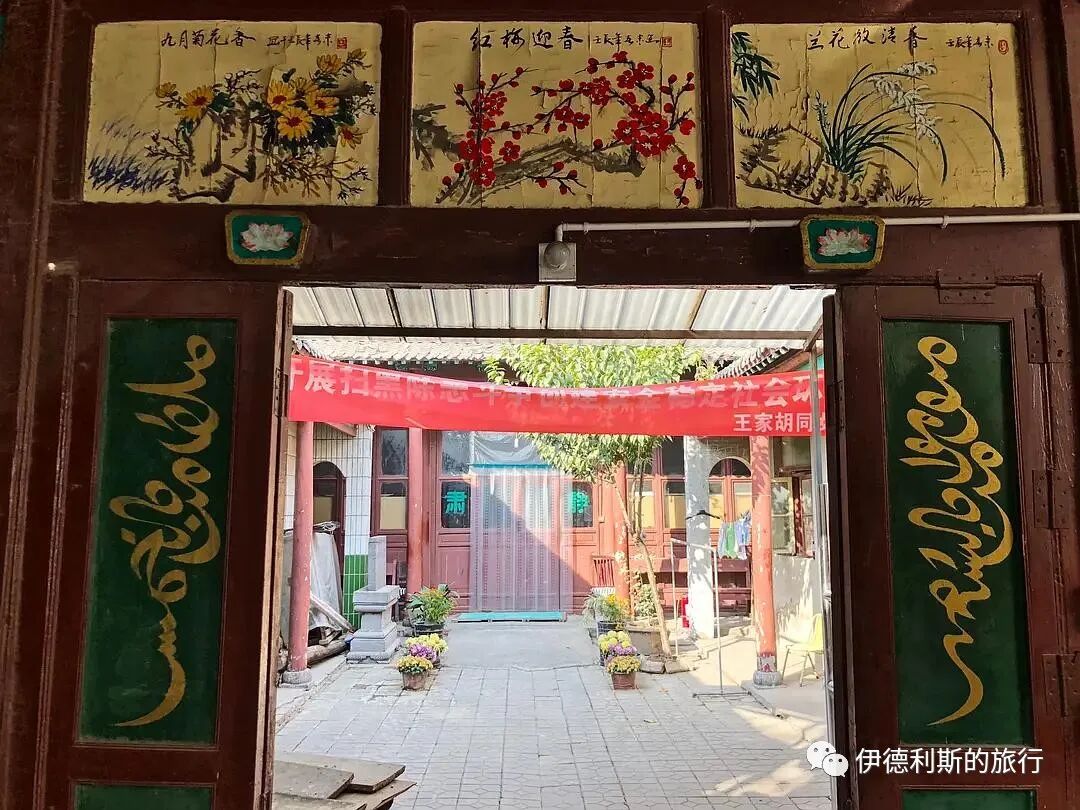
The Kaifeng Wangjia Hutong Women's Mosque School is the oldest existing women's mosque in China, first built in the 1810s (during the Jiaqing reign of the Qing Dynasty). Two stone tablets from 1878 (the fourth year of the Guangxu reign) currently in the mosque record its history. The founder of the women's mosque was known as 'Li-family Yuan-woman Ahong'. After Yuan Ahong returned to Allah, her disciple 'Wu-family Zhang-woman Ahong' continued to serve as Ahong. During this period, a man surnamed Zheng donated funds to purchase the building, and an elderly woman named Zhao Yang donated two storefront rooms. This is also the first time in history that the terms 'female Ahong' and 'women's mosque' appeared.
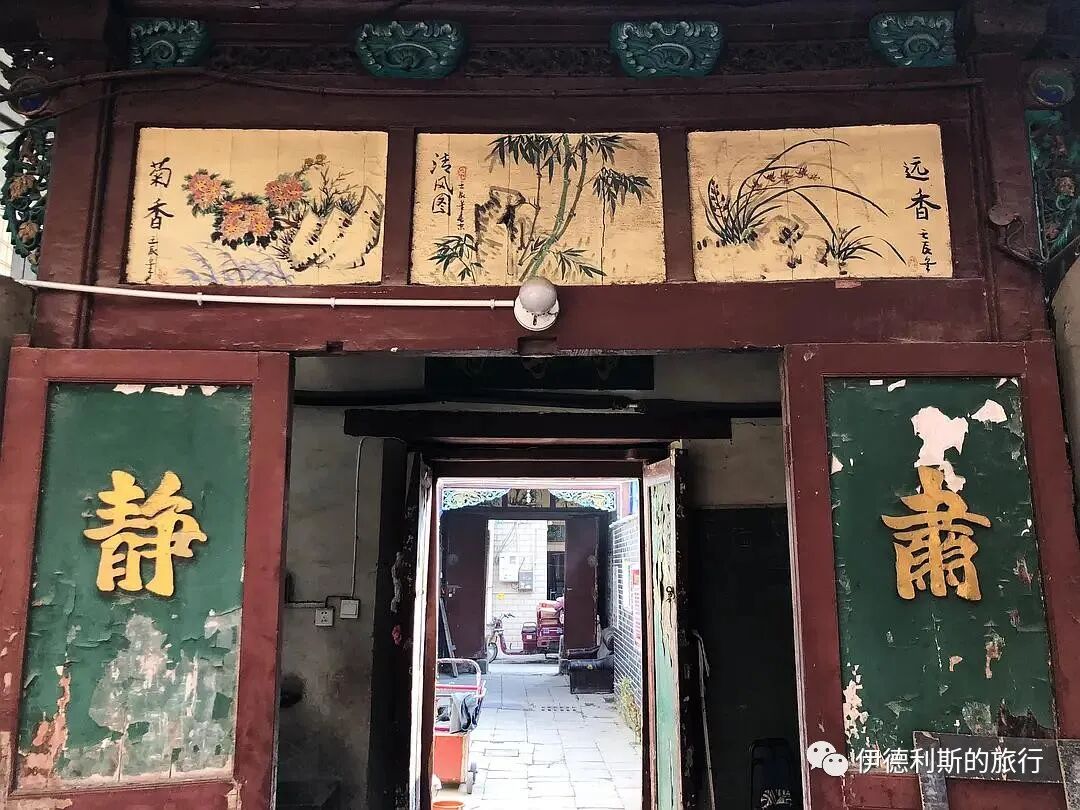
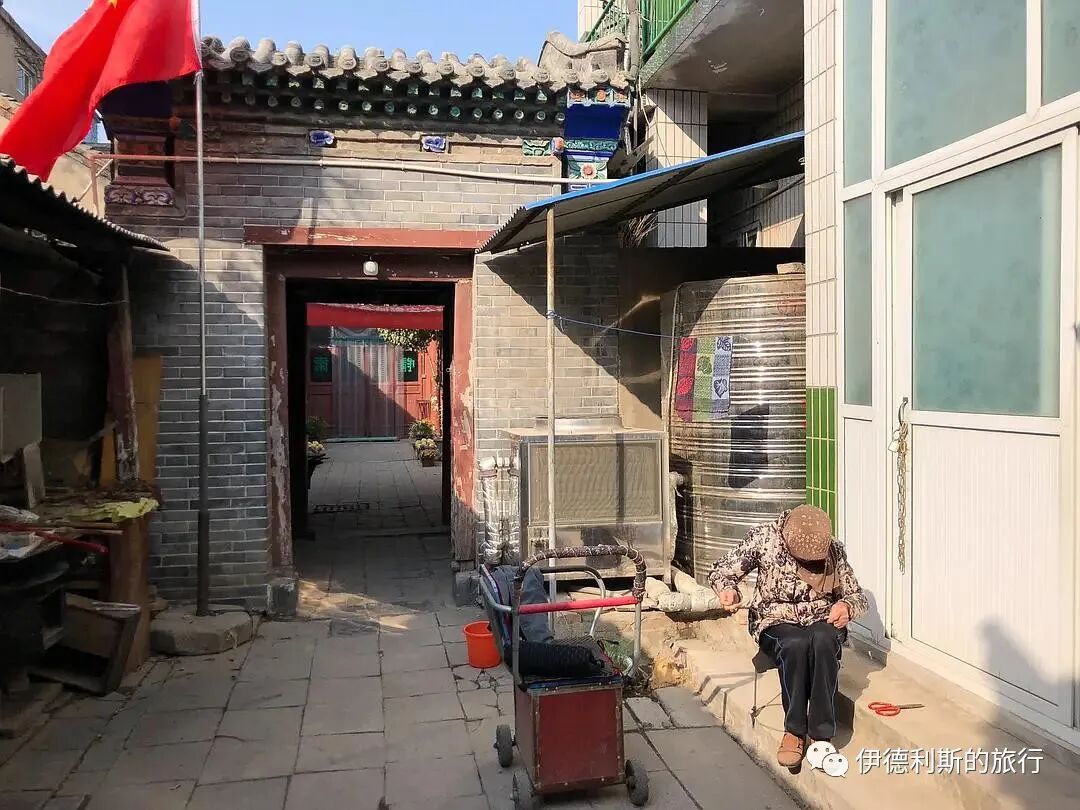
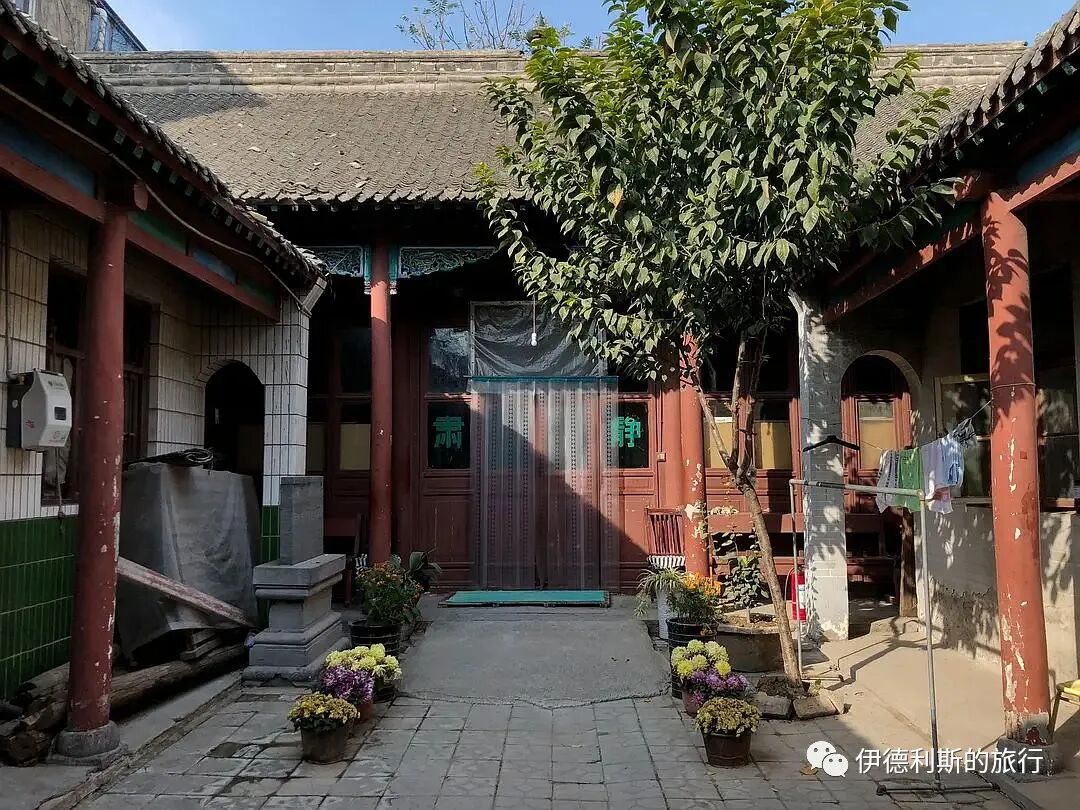
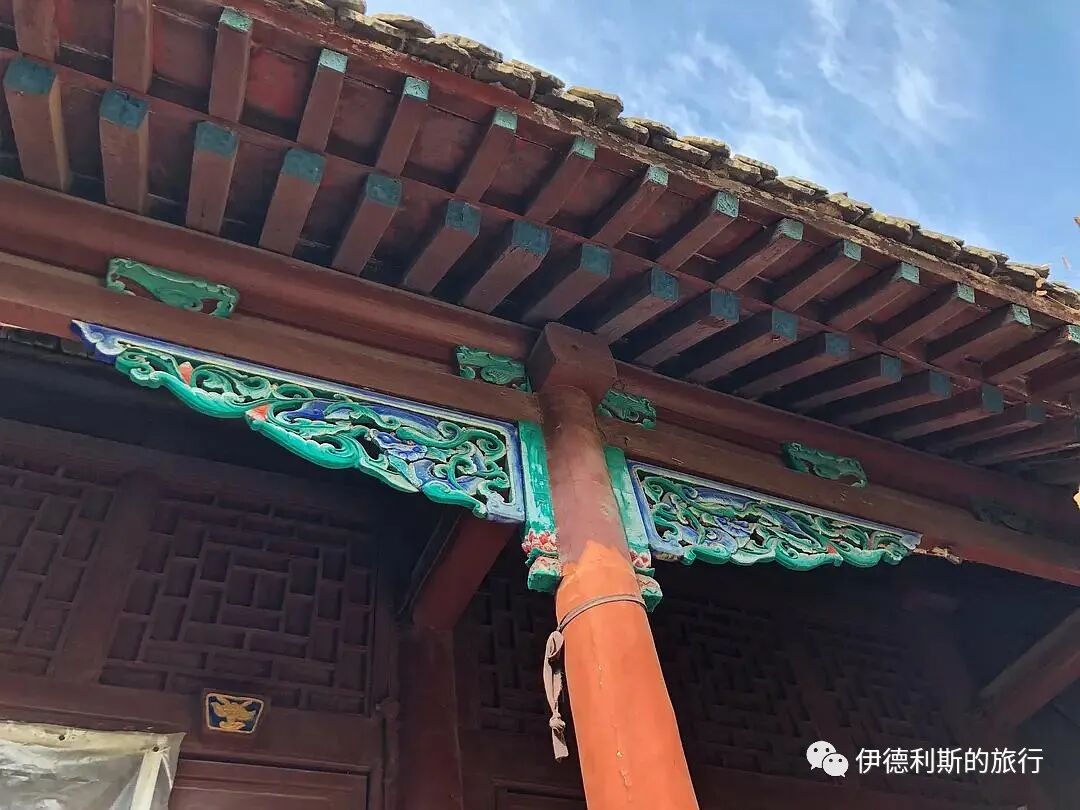
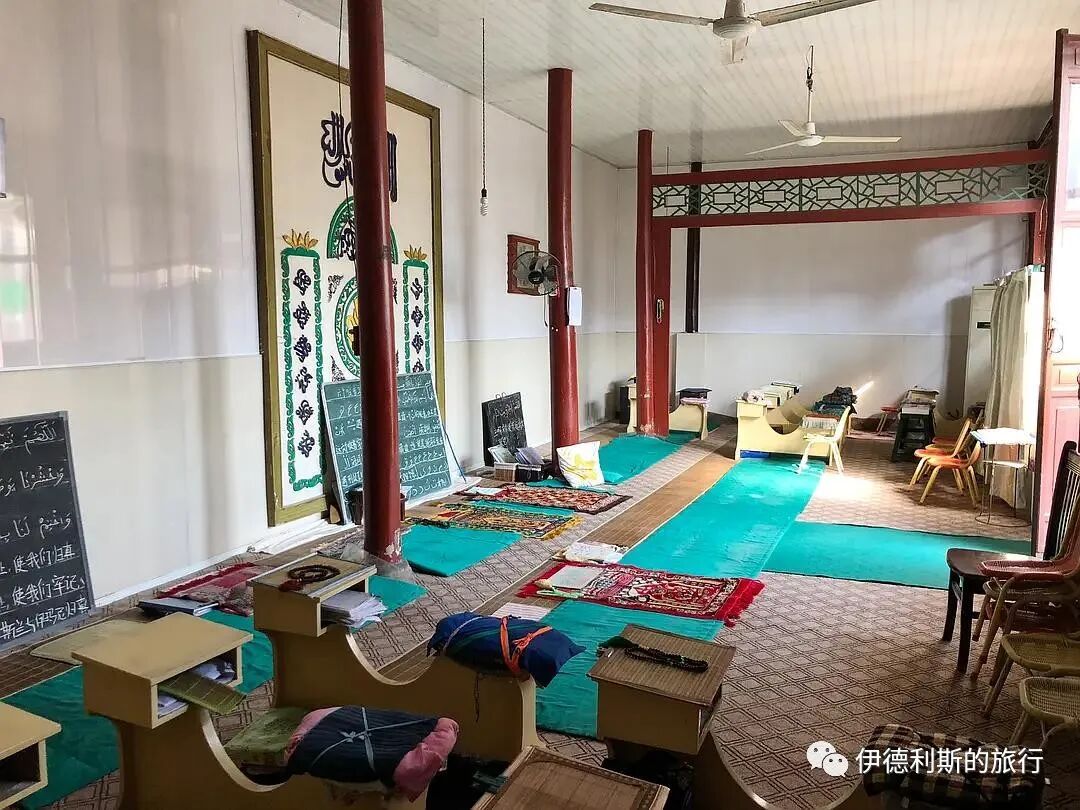
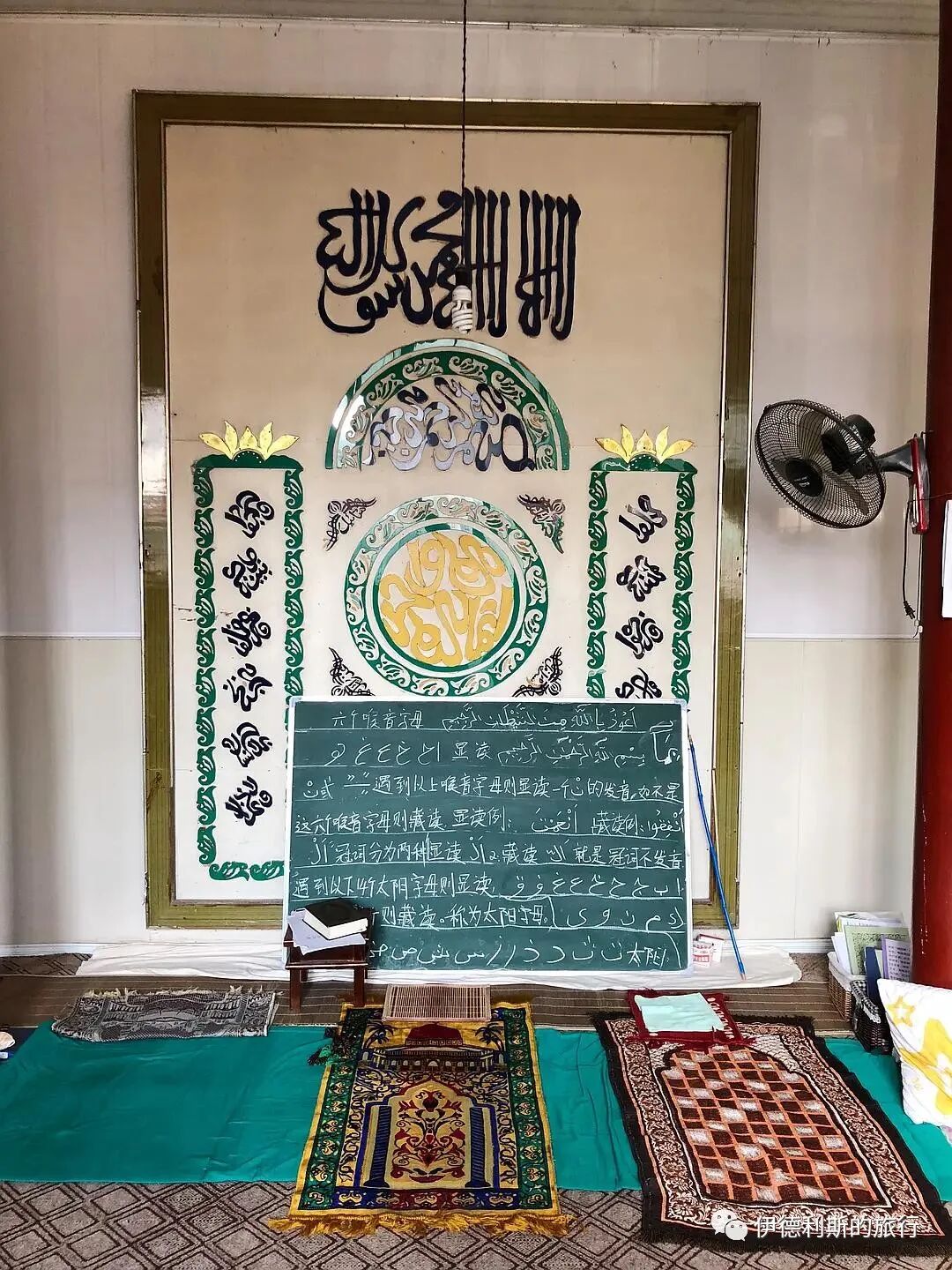
5. Kaifeng Beidasi (North Great Mosque): Rebuilt in 1662
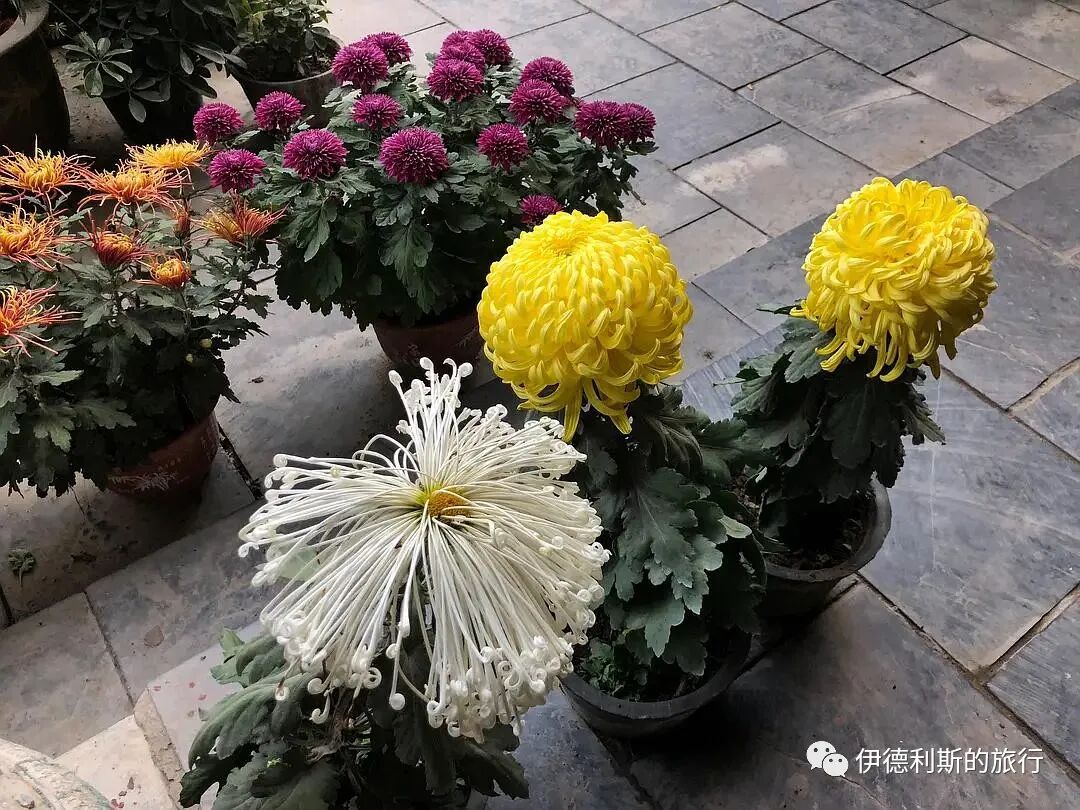
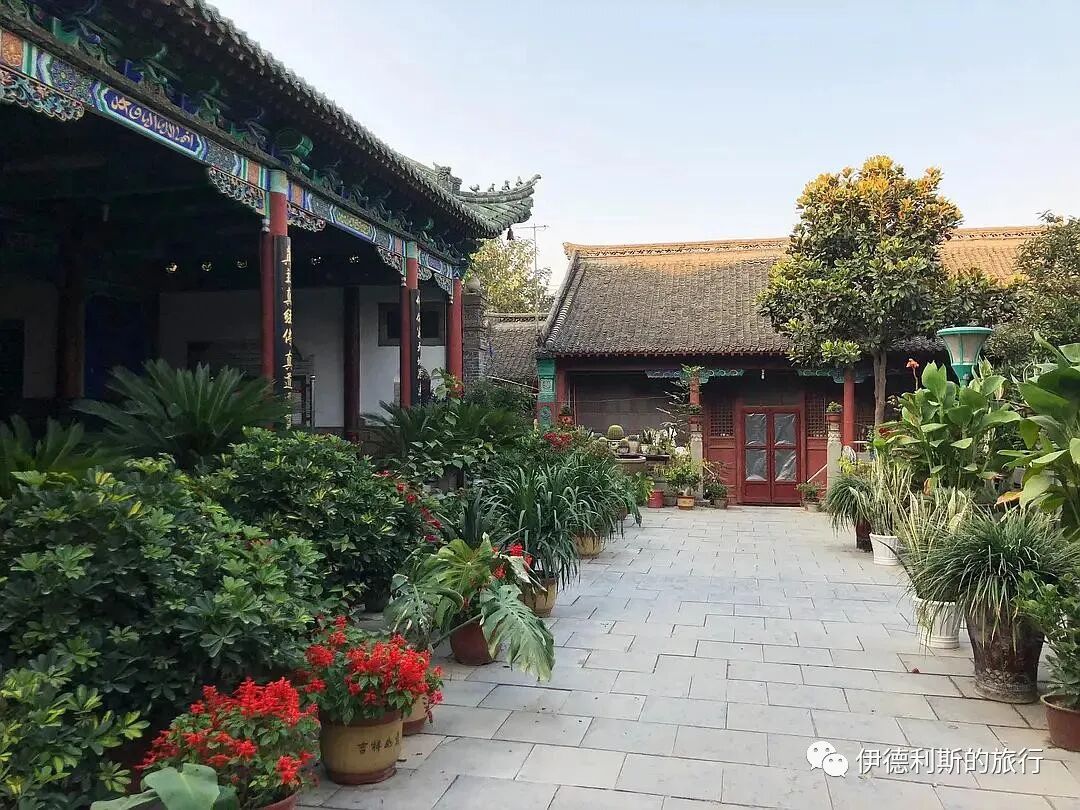
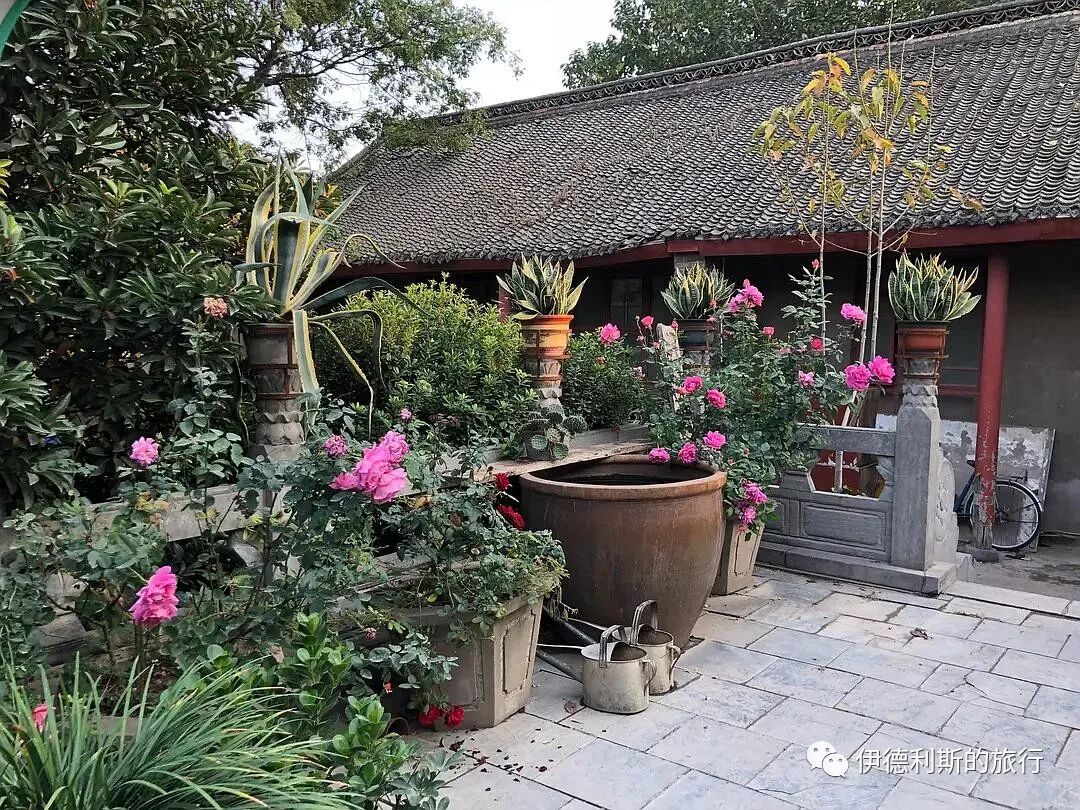
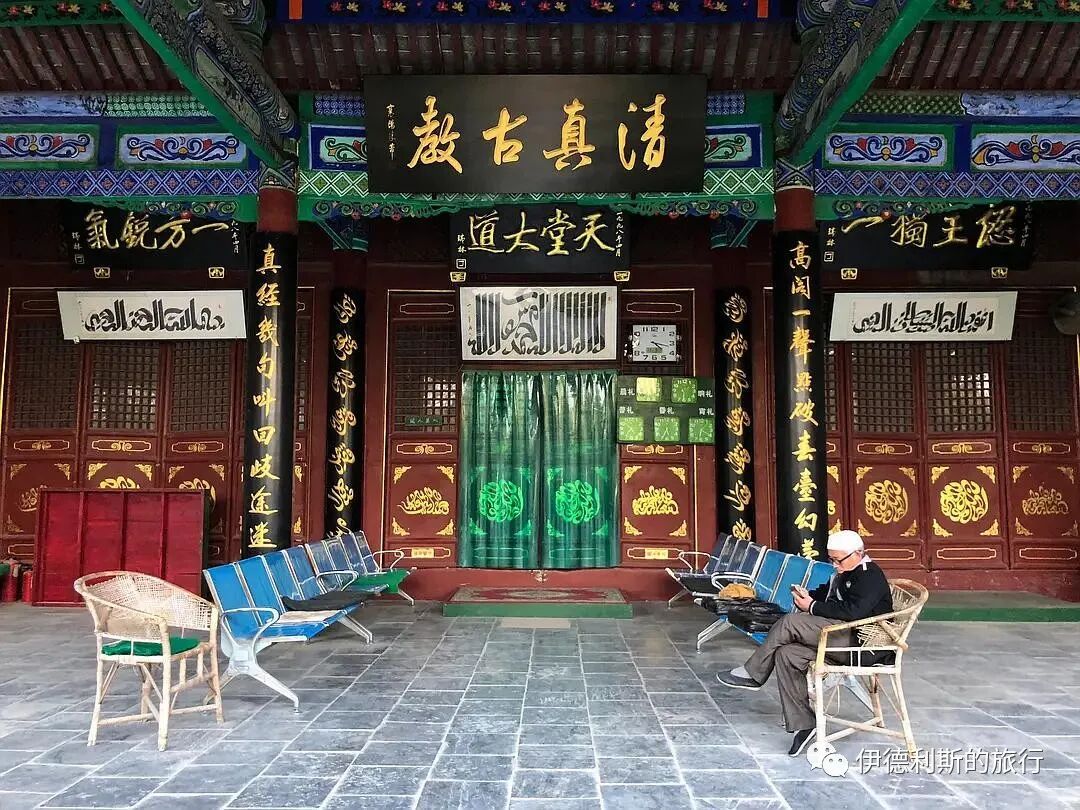
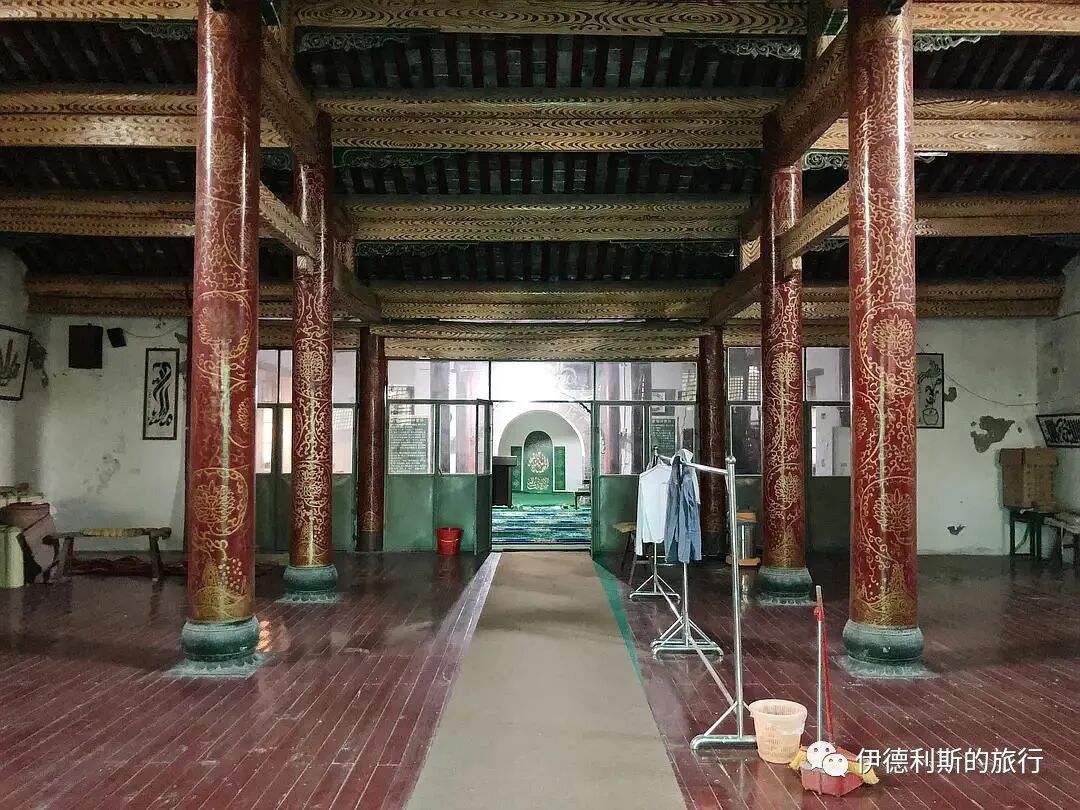
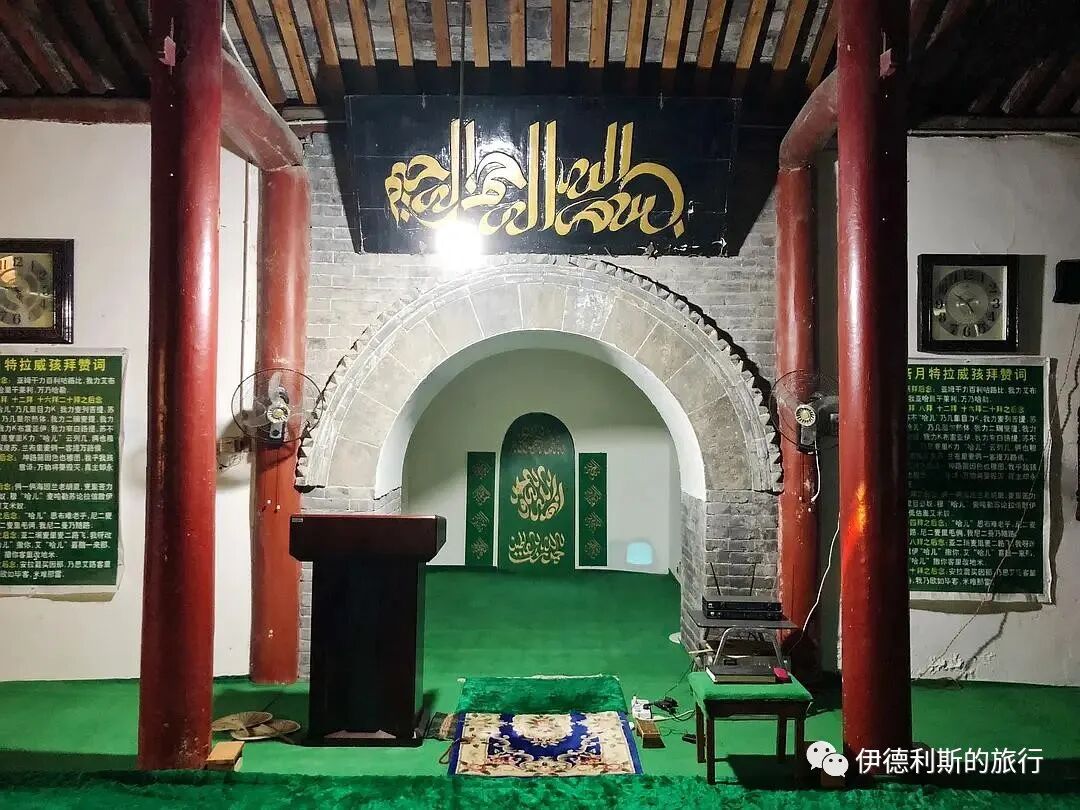
Kaifeng Beidasi was destroyed by Yellow River flooding in 1645 and rebuilt at a new site in 1662 (the first year of the Kangxi reign). Because Beidasi is far from the city center, it is very quiet, and the courtyard is planted with many beautiful flowers and plants. During Dhuhr (noon prayer), there were only four of us, including the Ahong, the Mu'adhdhin, the mosque master, and myself. We chatted very happily. Several Babas told me about the history of Kaifeng Beidasi and the changes in the mosque community, and also told me what good food there is at the night market at the west gate of Henan University nearby.
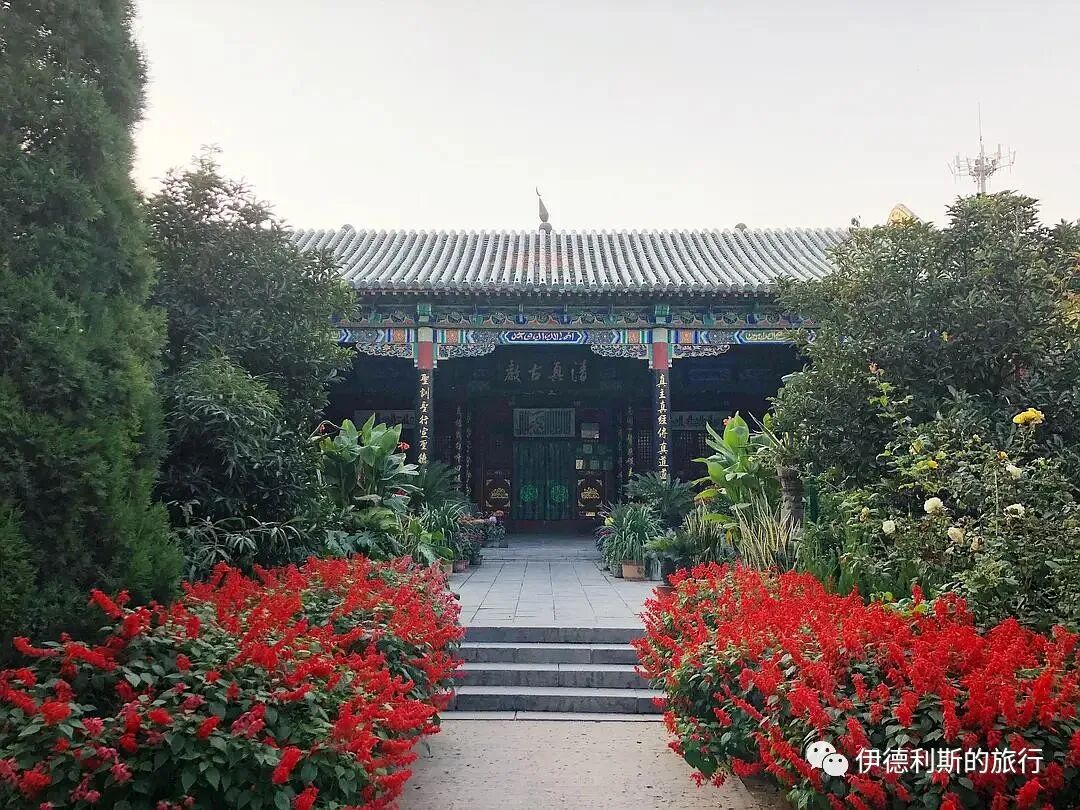
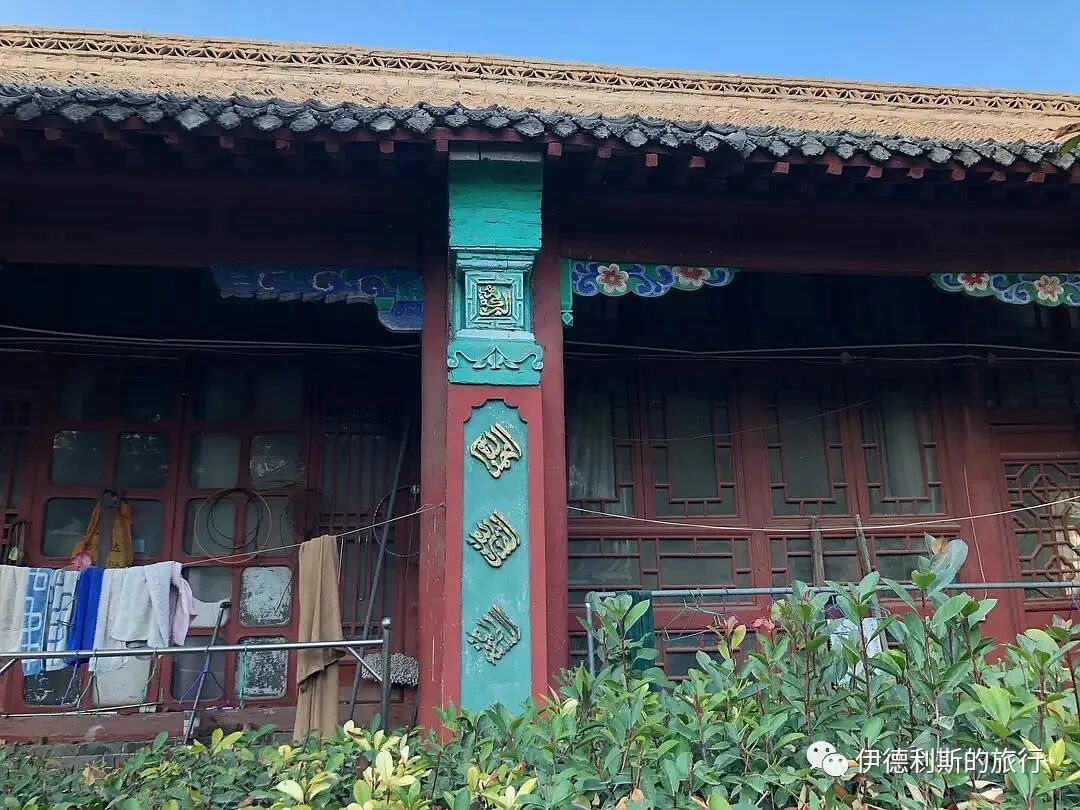
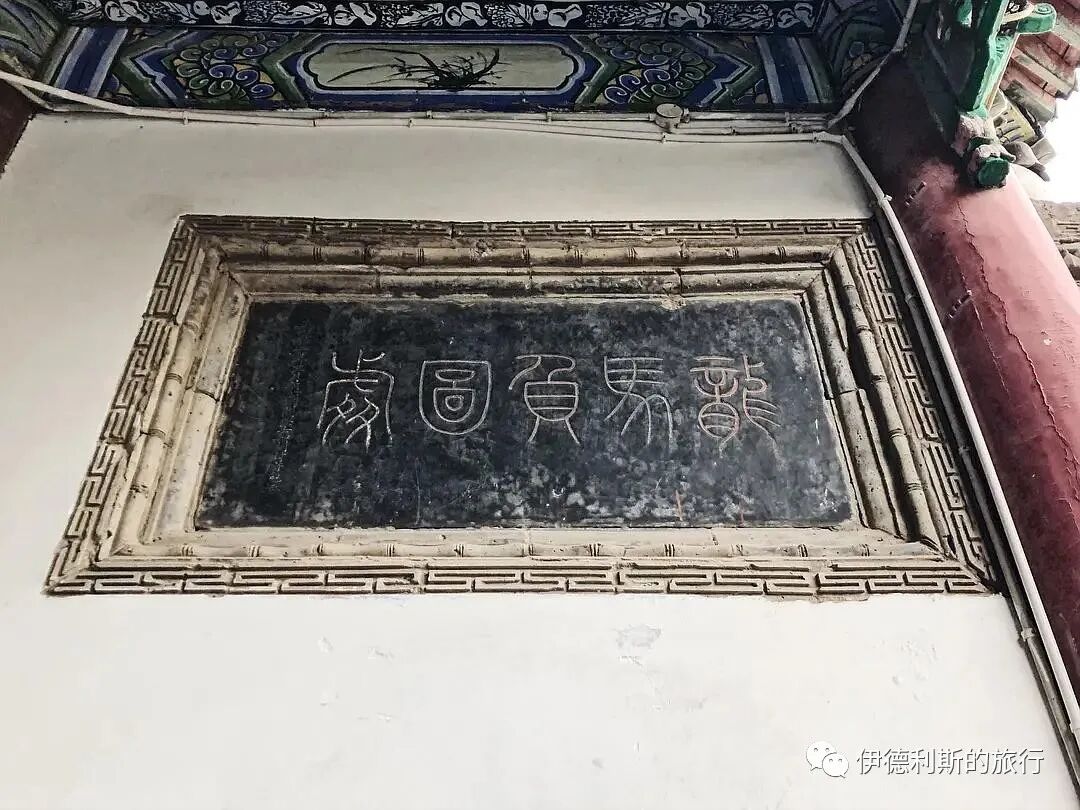
Guided by an old master, I discovered a stone tablet in the mosque inscribed by Bao Zheng himself, titled 'The Place Where the Dragon Horse Carried the Map', with the inscription 'March of the second year of the Jiayou reign (1057), by Bao Zheng, Scholar of the Longtu Pavilion and Prefect of Kaifeng'. This stone tablet was excavated in 1785 (the fiftieth year of the Qianlong reign) by Jiang Lan, the Henan Provincial Administration Commissioner, under the Yellow River levee at Heigangkou in the suburbs of Kaifeng. After it was unearthed, a shrine and pavilion were built specifically for the tablet. Later, the shrine and pavilion fell into ruin, and the tablet was kept in Beidasi.
6. Kaifeng Wenshusi Mosque Qing Dynasty screen wall
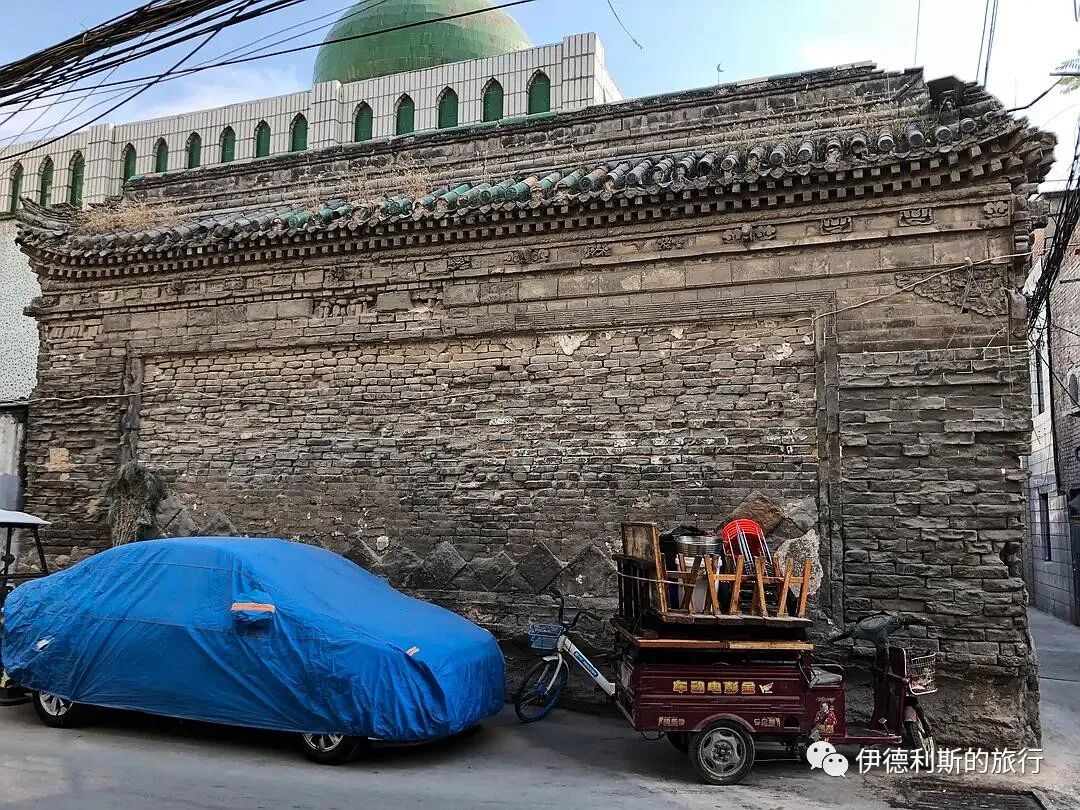
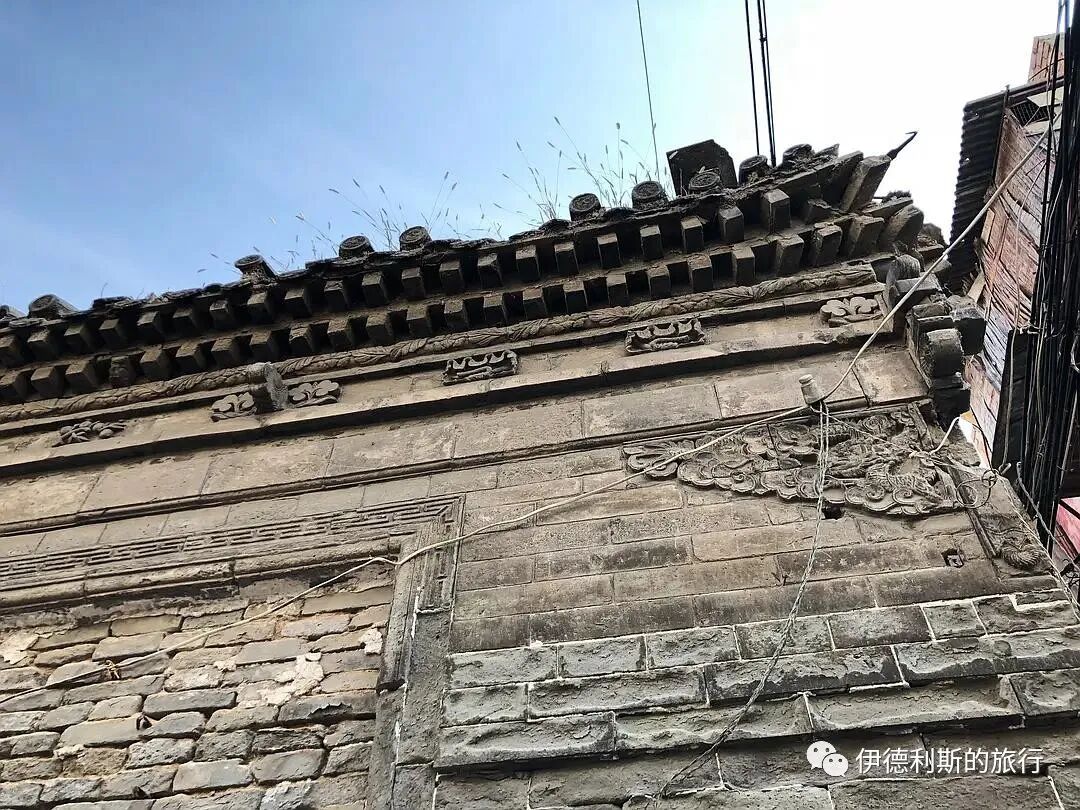
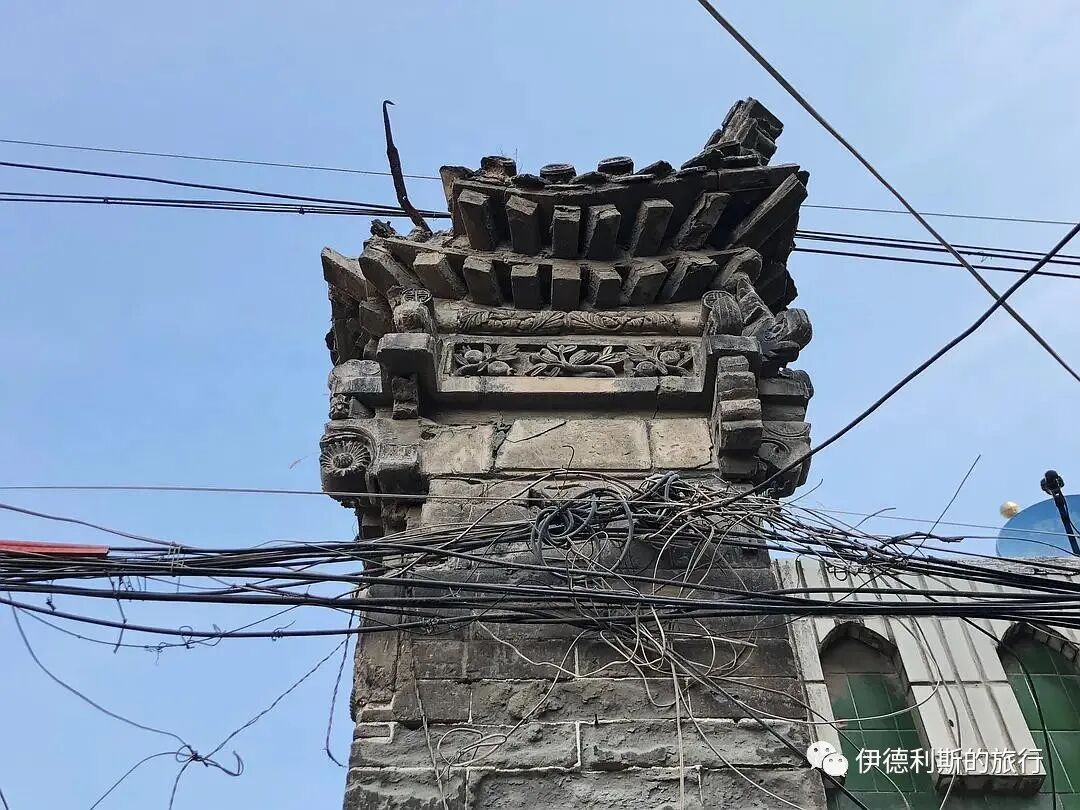
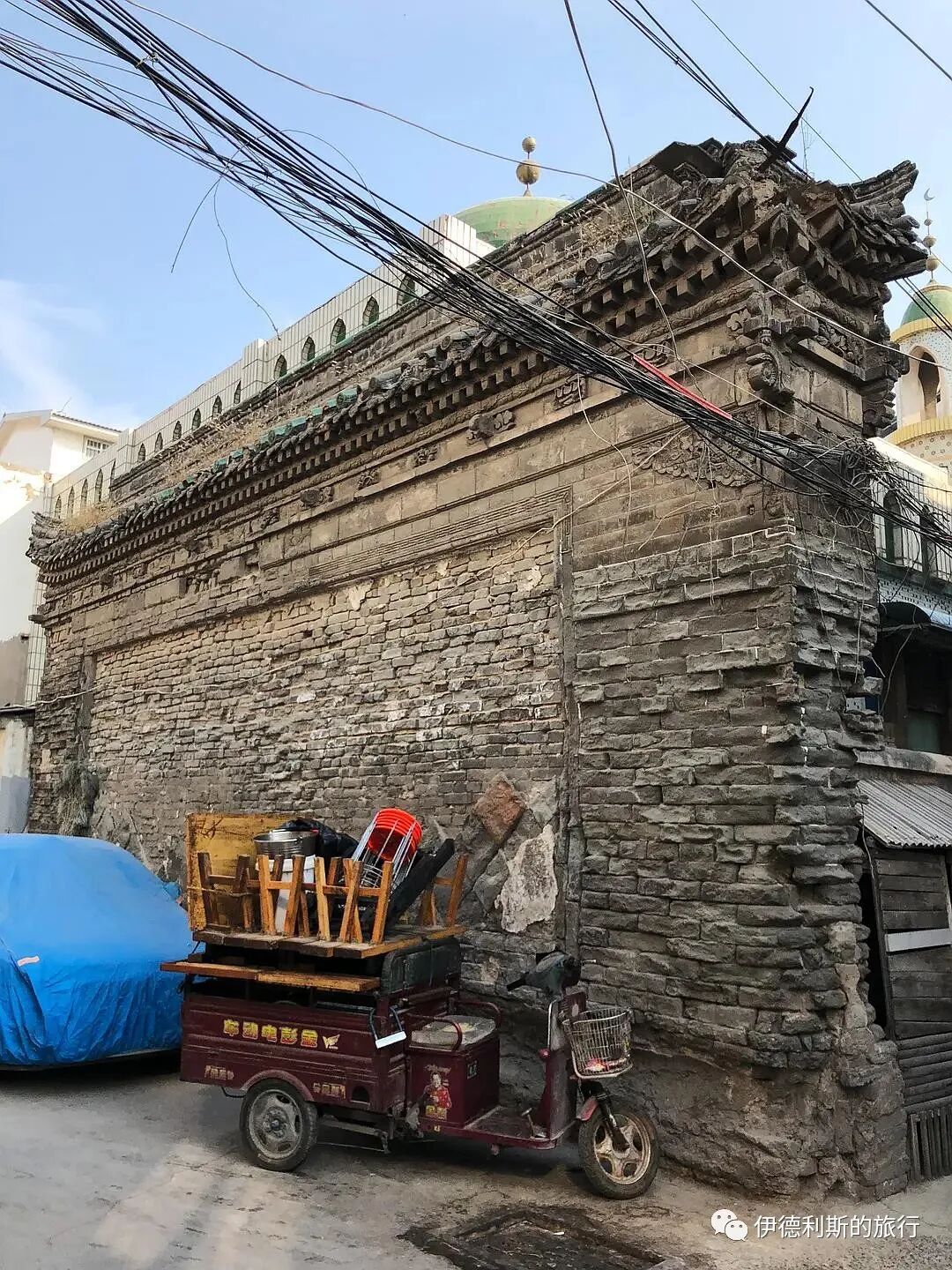
Kaifeng Wenshusi Mosque was first built in the Ming Dynasty, destroyed by floods at the end of the Chongzhen reign, rebuilt in 1649 (the sixth year of the Shunzhi reign), renovated in 1791 (the fifty-sixth year of the Qianlong reign), and rebuilt as a modern building in the 1990s. Currently, a Qing Dynasty screen wall is preserved opposite the mosque's main gate, featuring exquisite brick carvings.
7. Kaifeng Zhuxian Town North Mosque: Rebuilt in 1738
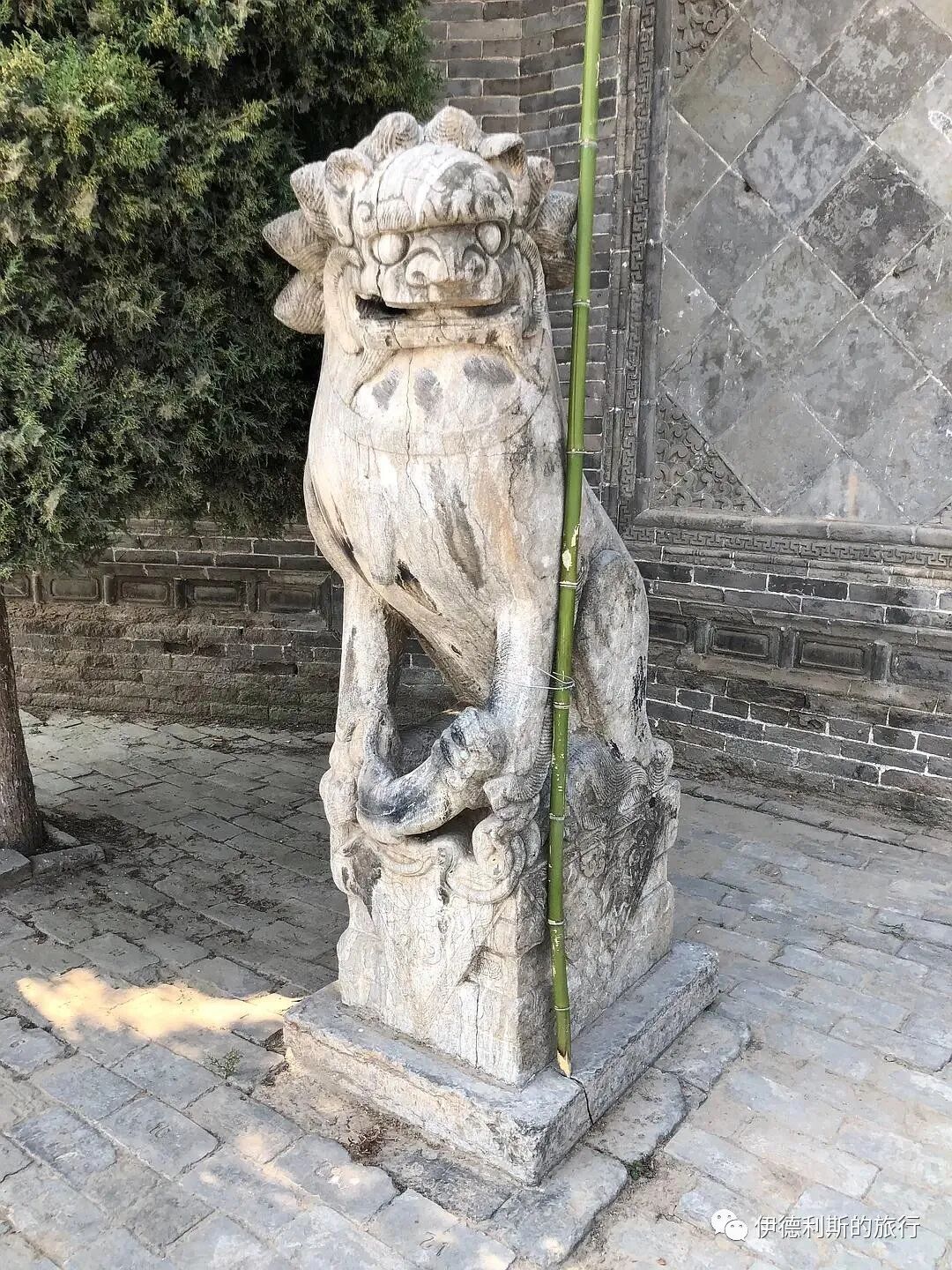
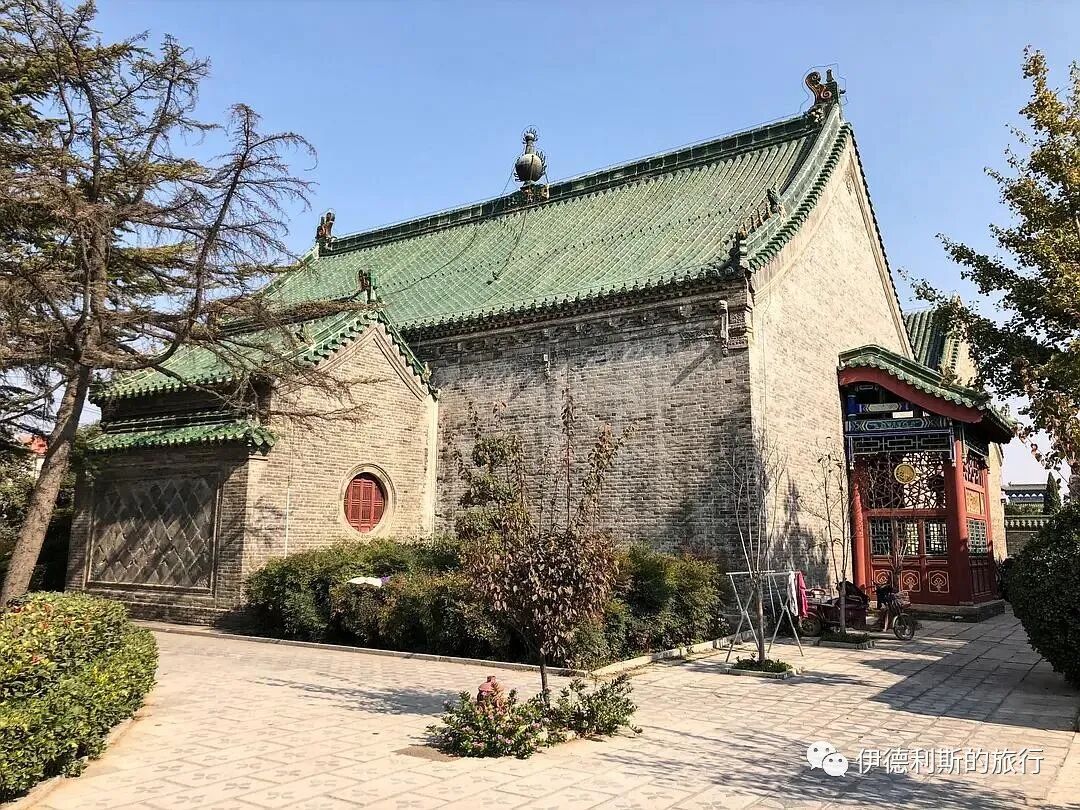
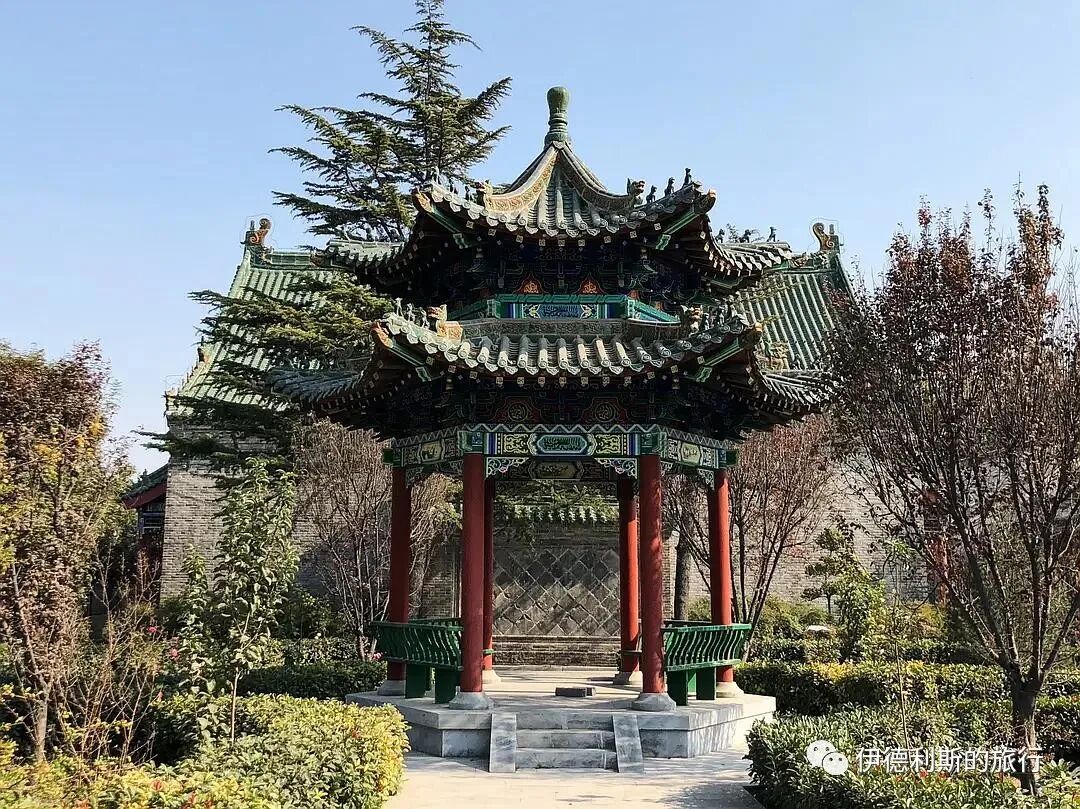
Zhuxian Town North Mosque is the largest mosque in Zhuxian Town. It was first built during the Taiping Xingguo reign of the Northern Song Dynasty, rebuilt in 1531 (the tenth year of the Jiajing reign of the Ming Dynasty), destroyed by Yellow River flooding in 1641 (the fourteenth year of the Chongzhen reign), rebuilt in 1738 (the third year of the Qianlong reign of the Qing Dynasty), and expanded twice in 1744 (the ninth year of the Qianlong reign) and 1839 (the nineteenth year of the Daoguang reign).
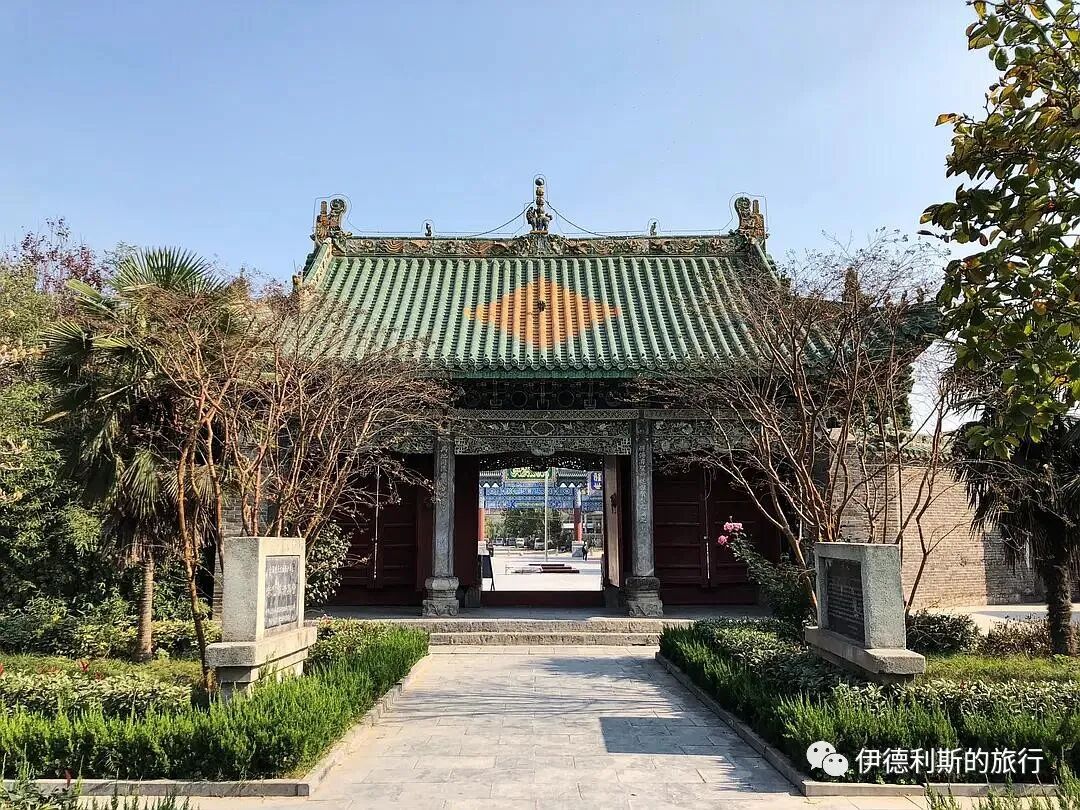
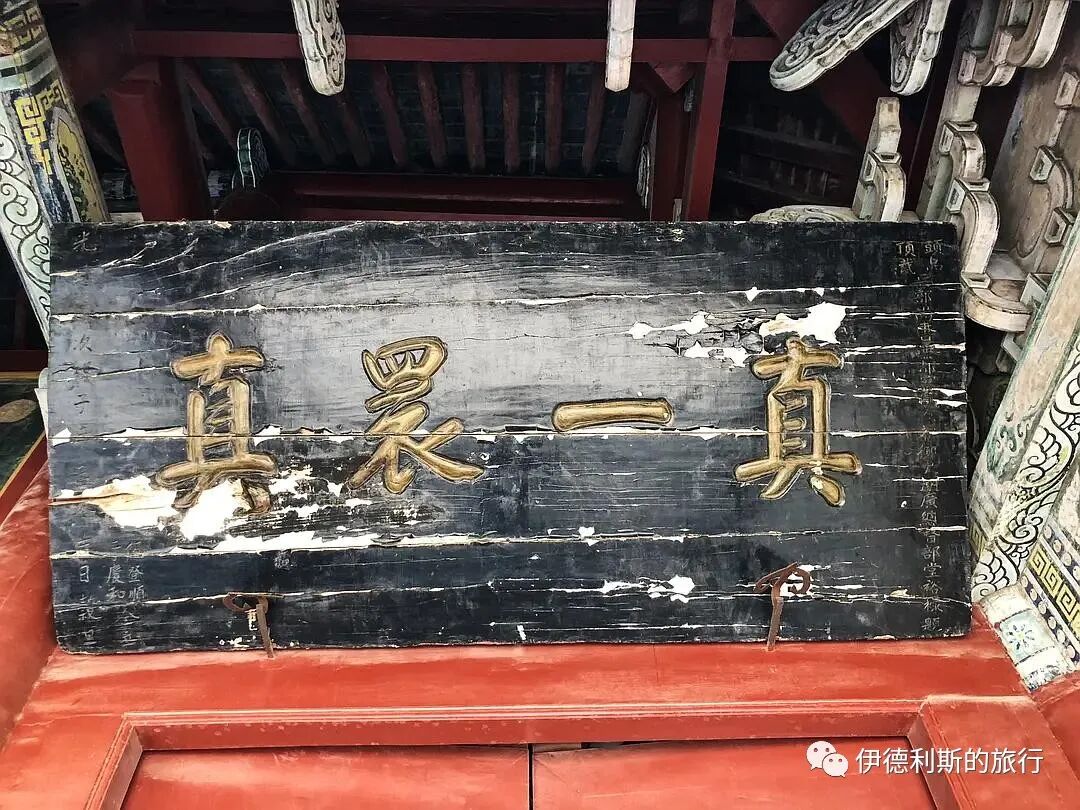
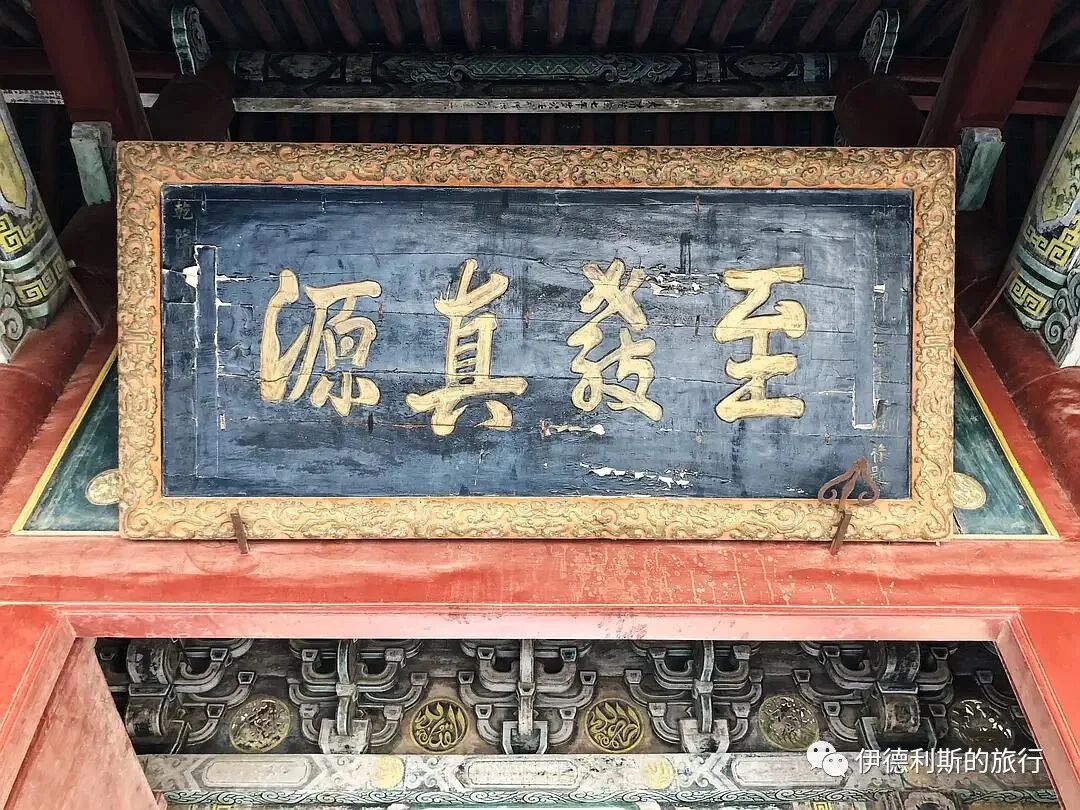
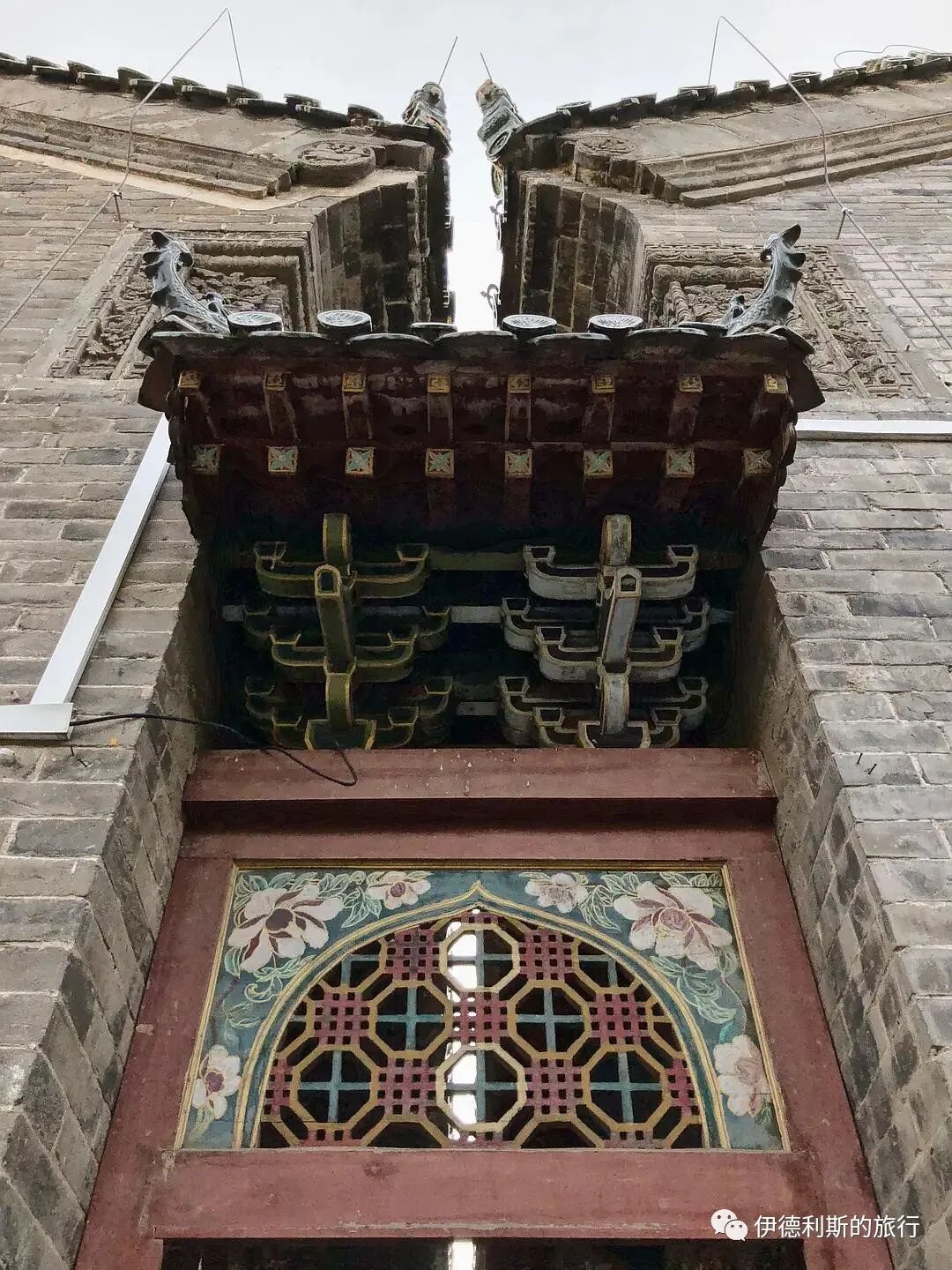
The mosque's main gate has a single-eave hip-and-gable roof, with very exquisite wood carvings on the lintels and vivid glazed roof beasts. Inside the gate hang the plaques 'Zhi Fa Zhen Yuan' (Reaching the True Source) inscribed by Zhu Yukun, the Henan Governor during the Qianlong reign, and 'Zhen Yi Huan Zhen' (True Unity Returns to Truth) inscribed by Yulu, the Viceroy of Huguang during the Guangxu reign.
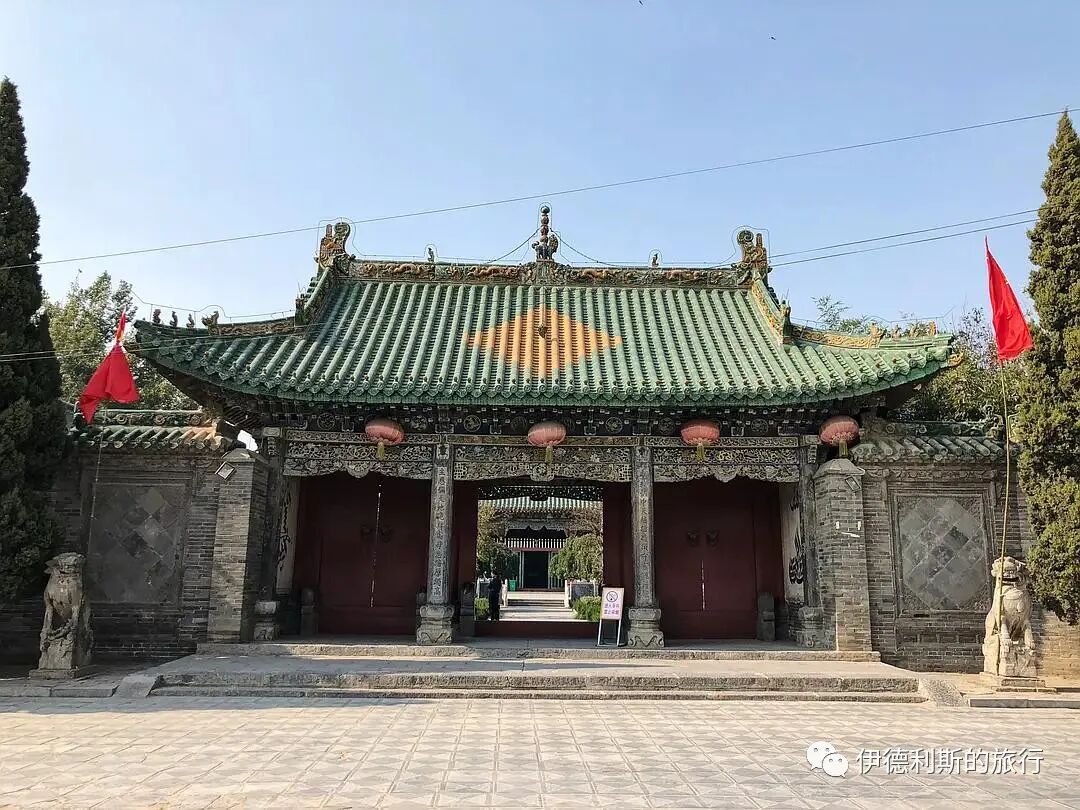
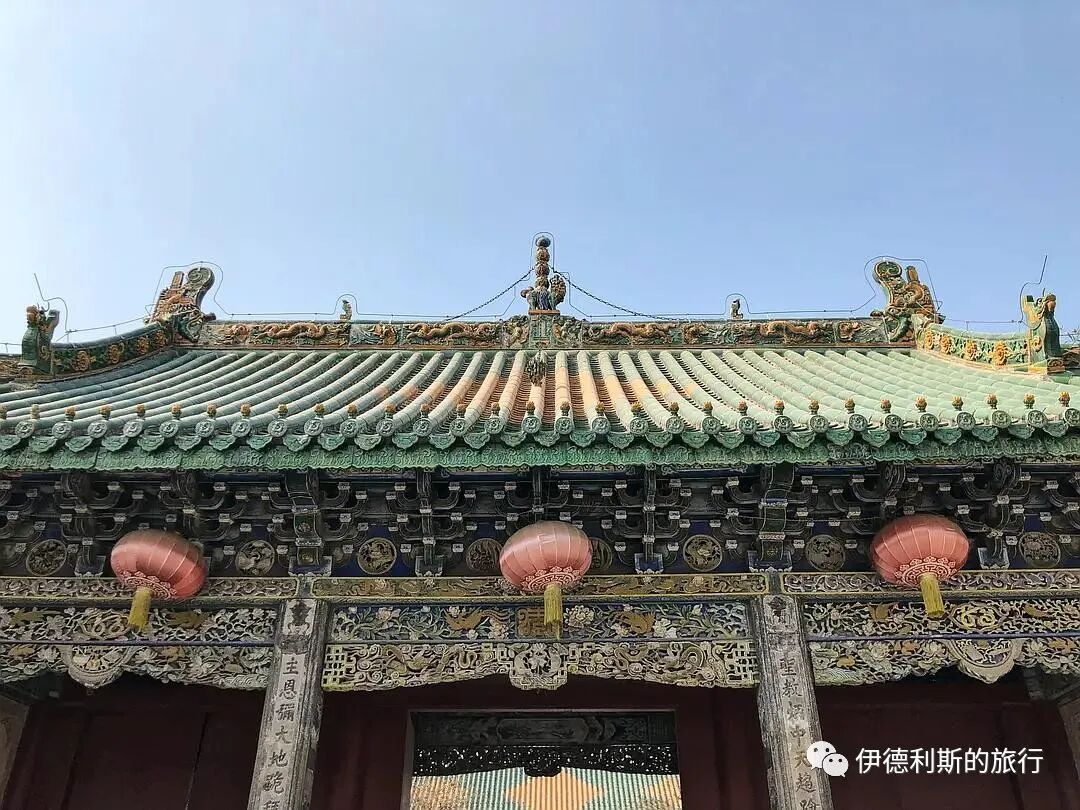
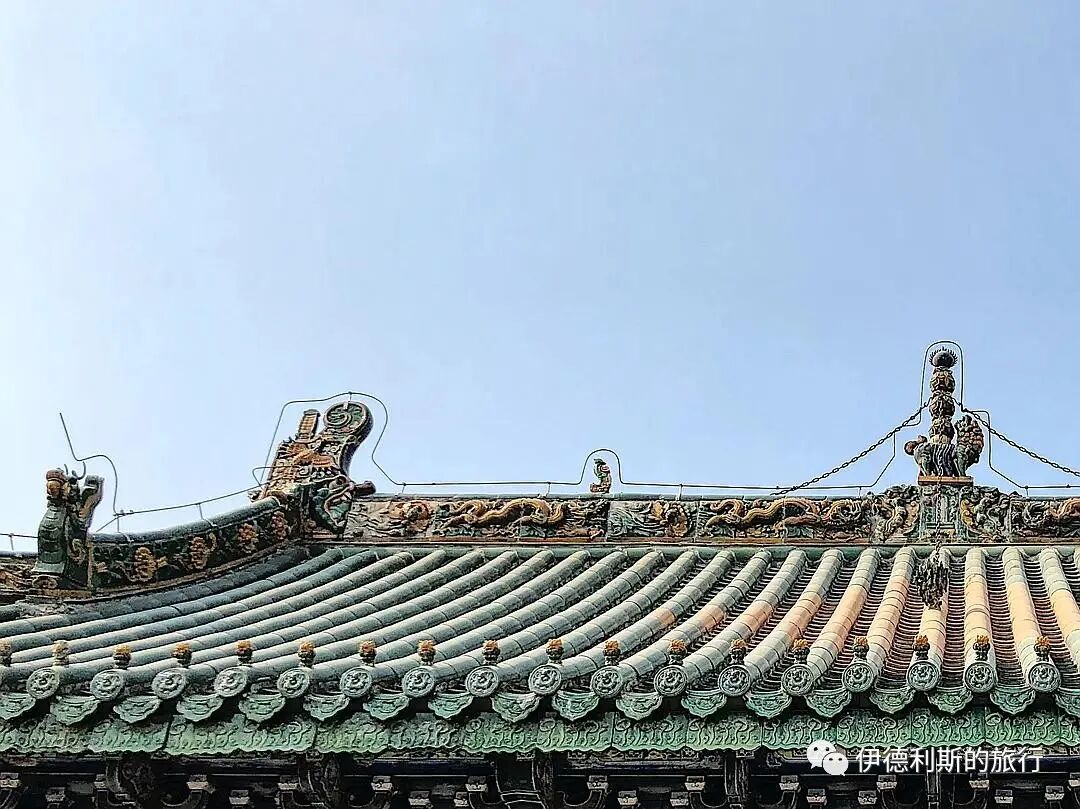
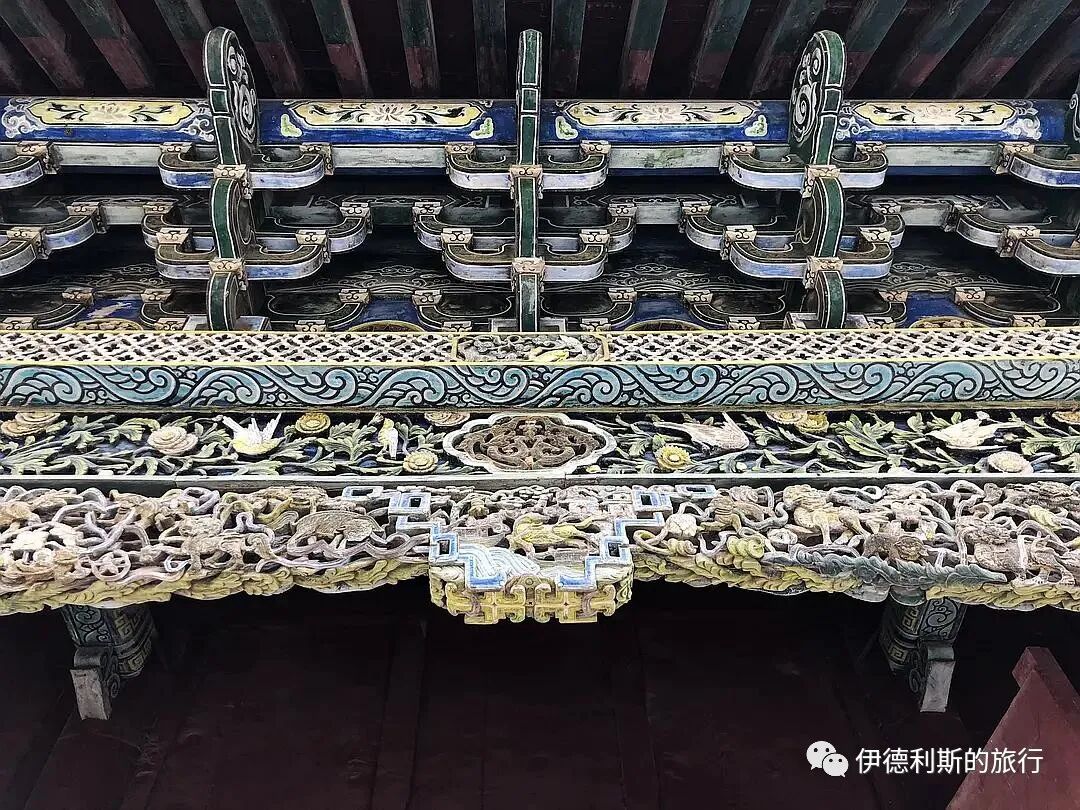
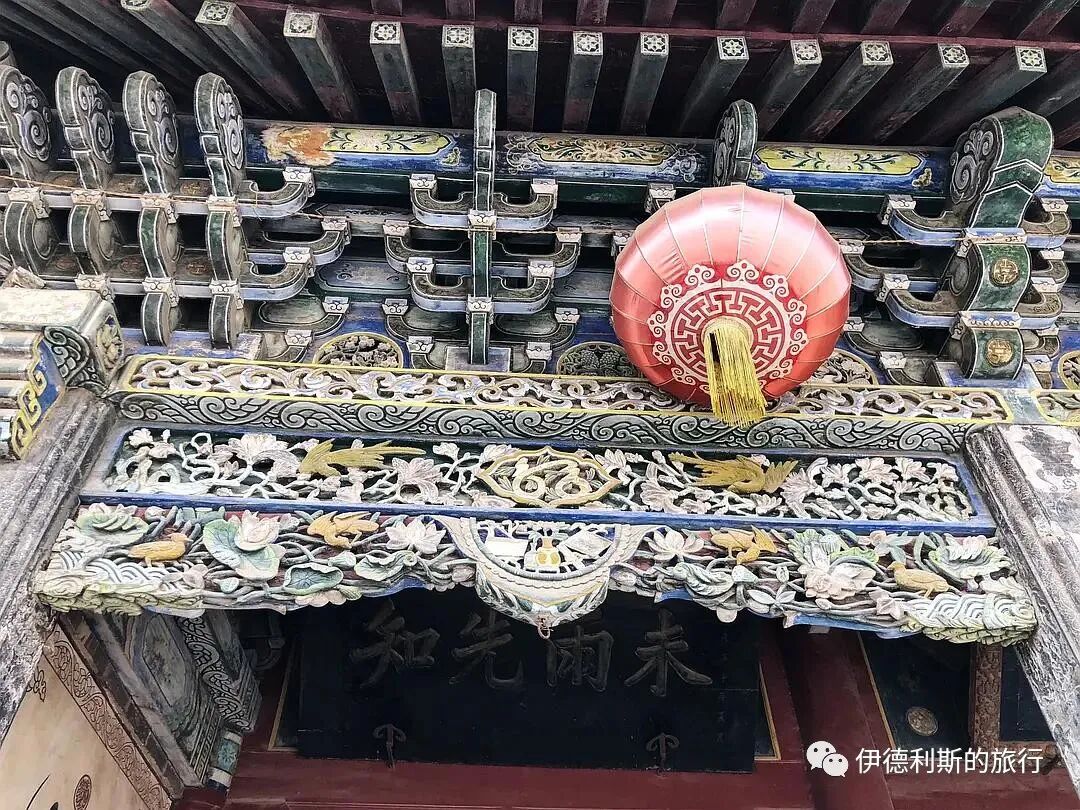
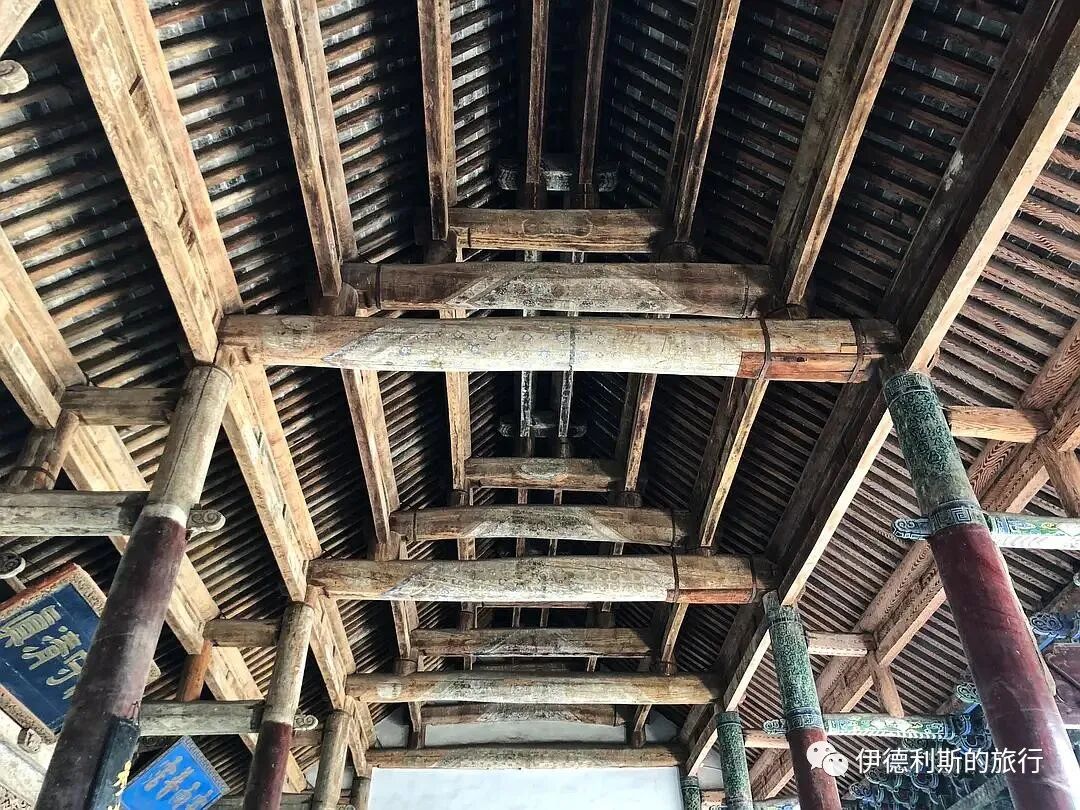
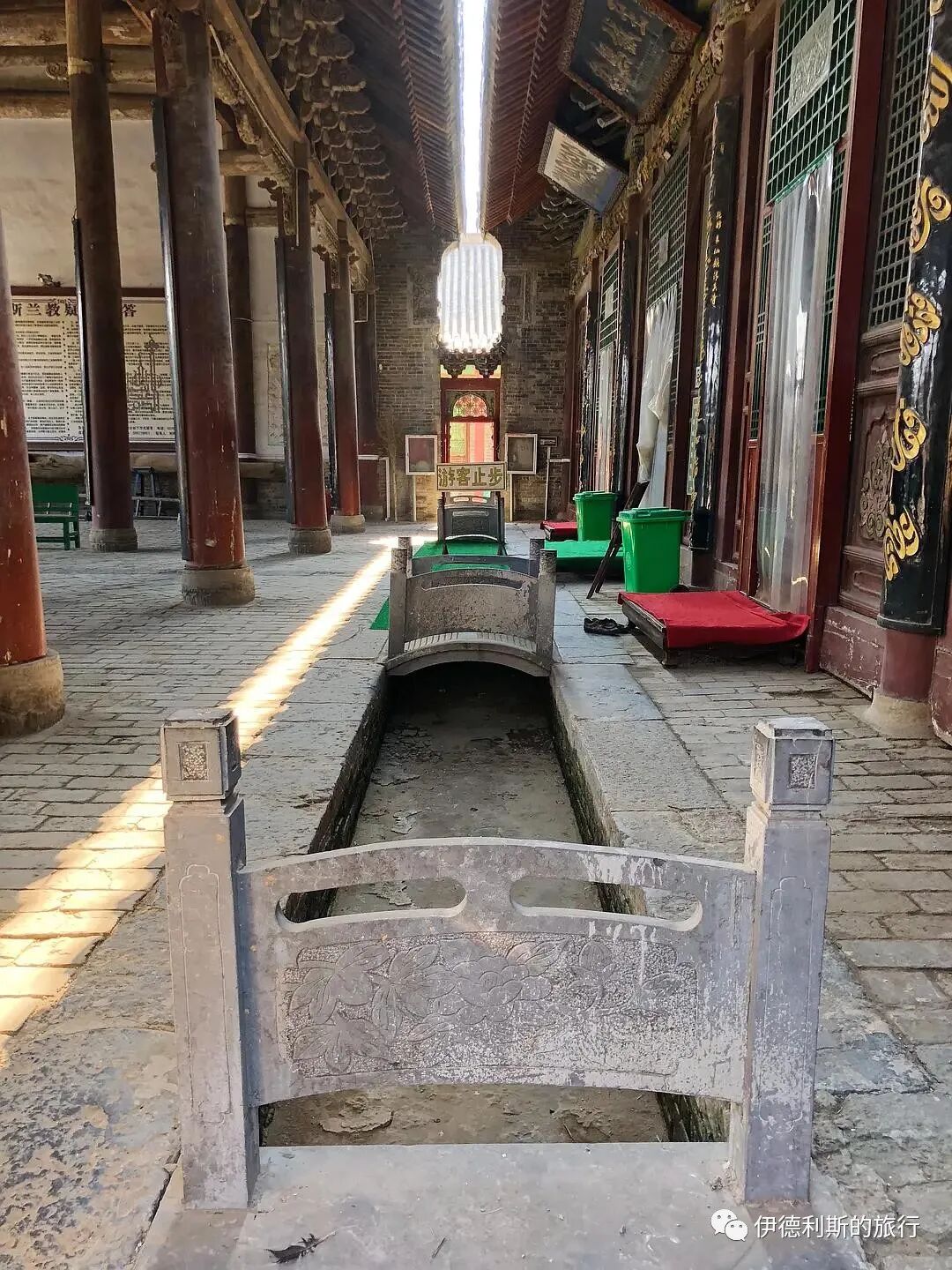
The prayer hall of Zhuxian Town Mosque consists of a juanpeng, a main hall, and a yaodian. The juanpeng is a beam-lifting wooden structure, open at the front and back, not connected to the main hall, with a stone drainage ditch in between and a stone arch bridge over the ditch.
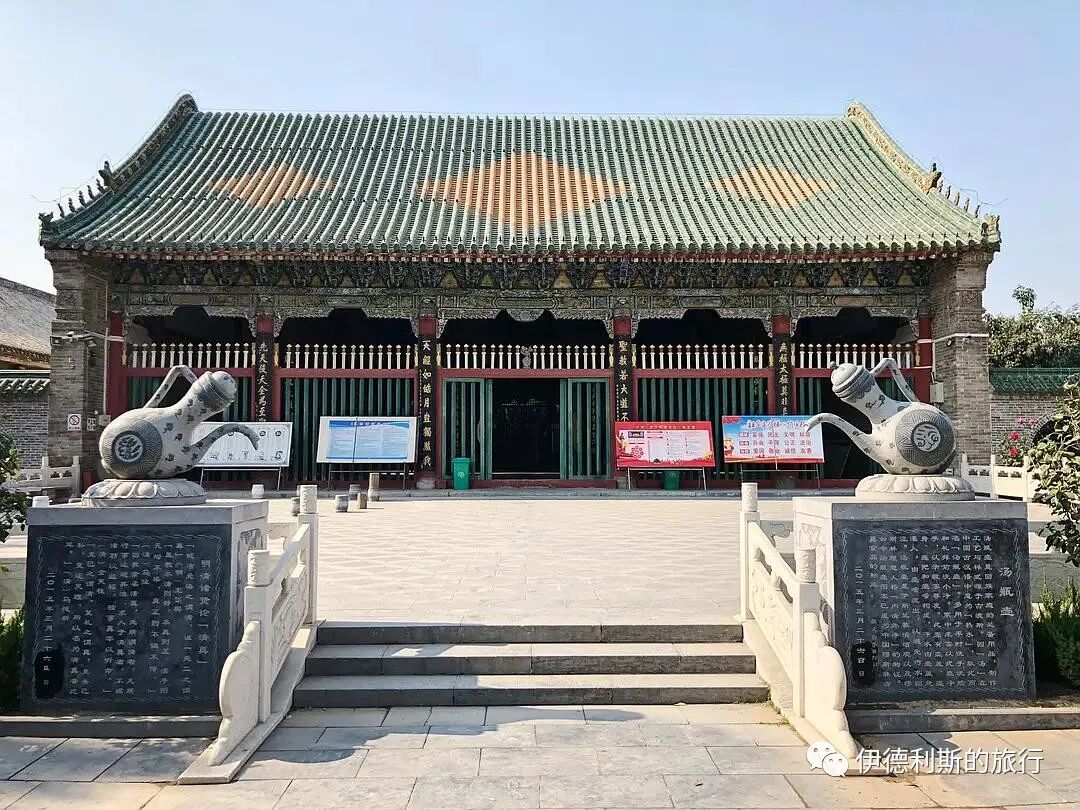
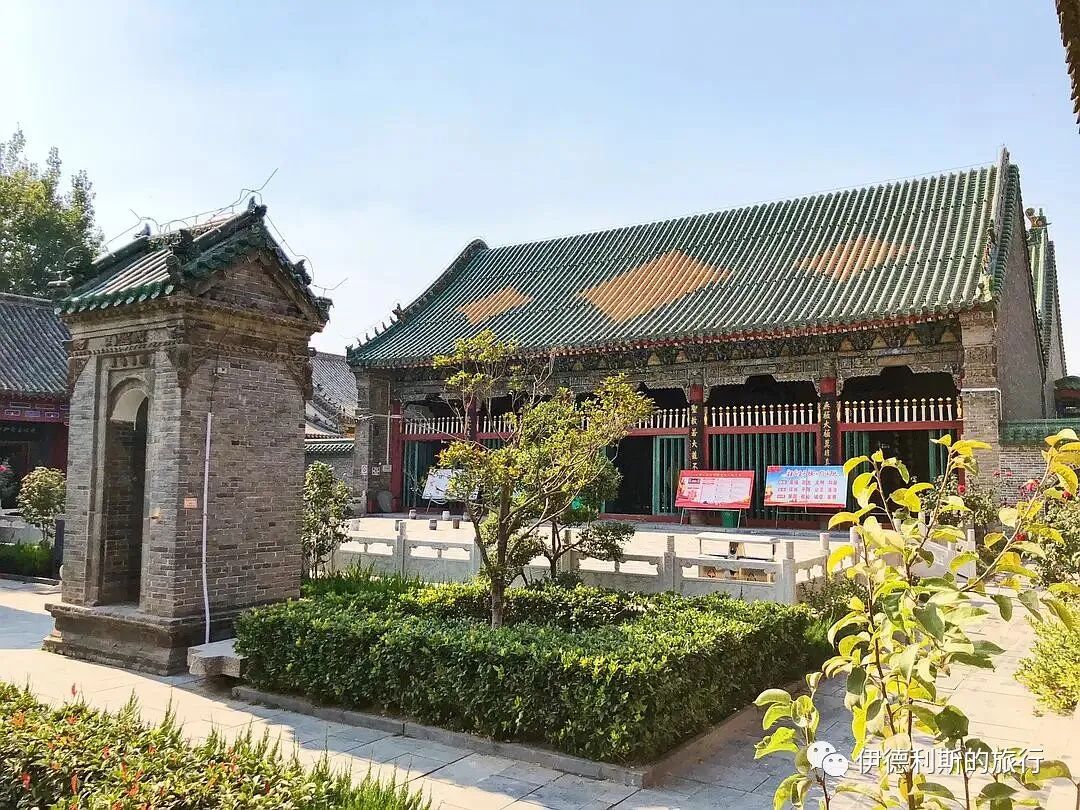
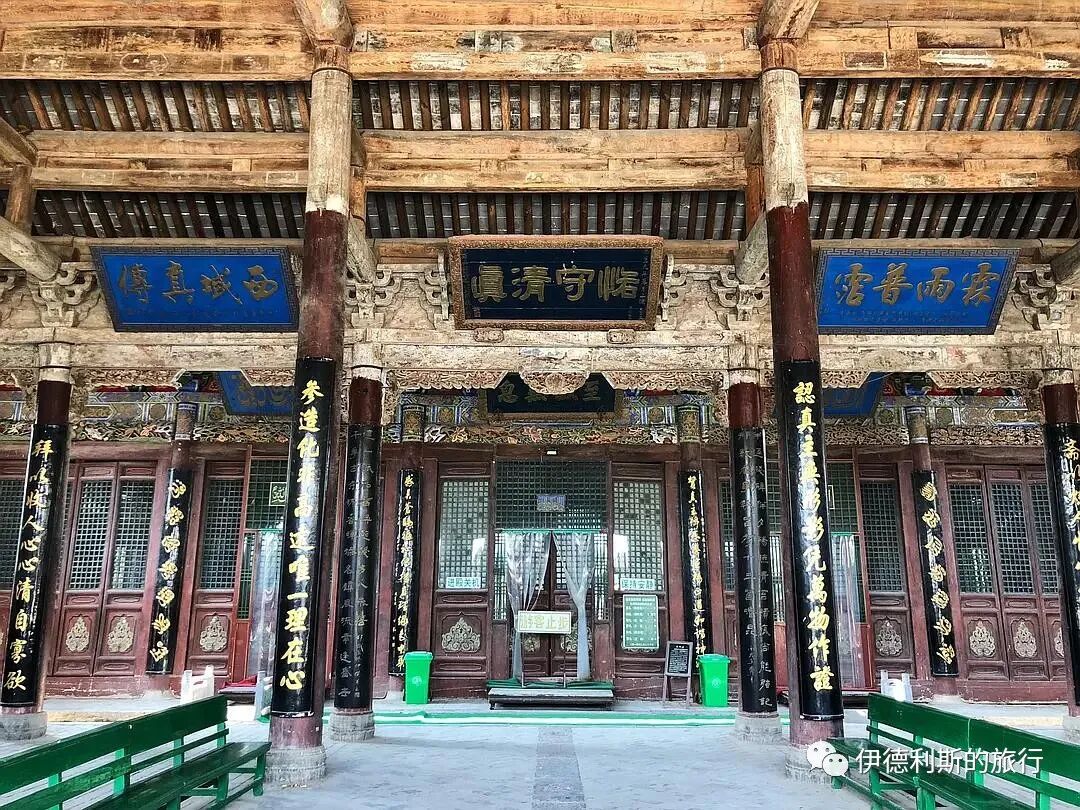
The path in front of the main hall is inscribed with 'Xiantian' (Pre-heaven), 'Zhongtian' (Mid-heaven), and 'Datian Junlu' (The Great Path to Heaven).
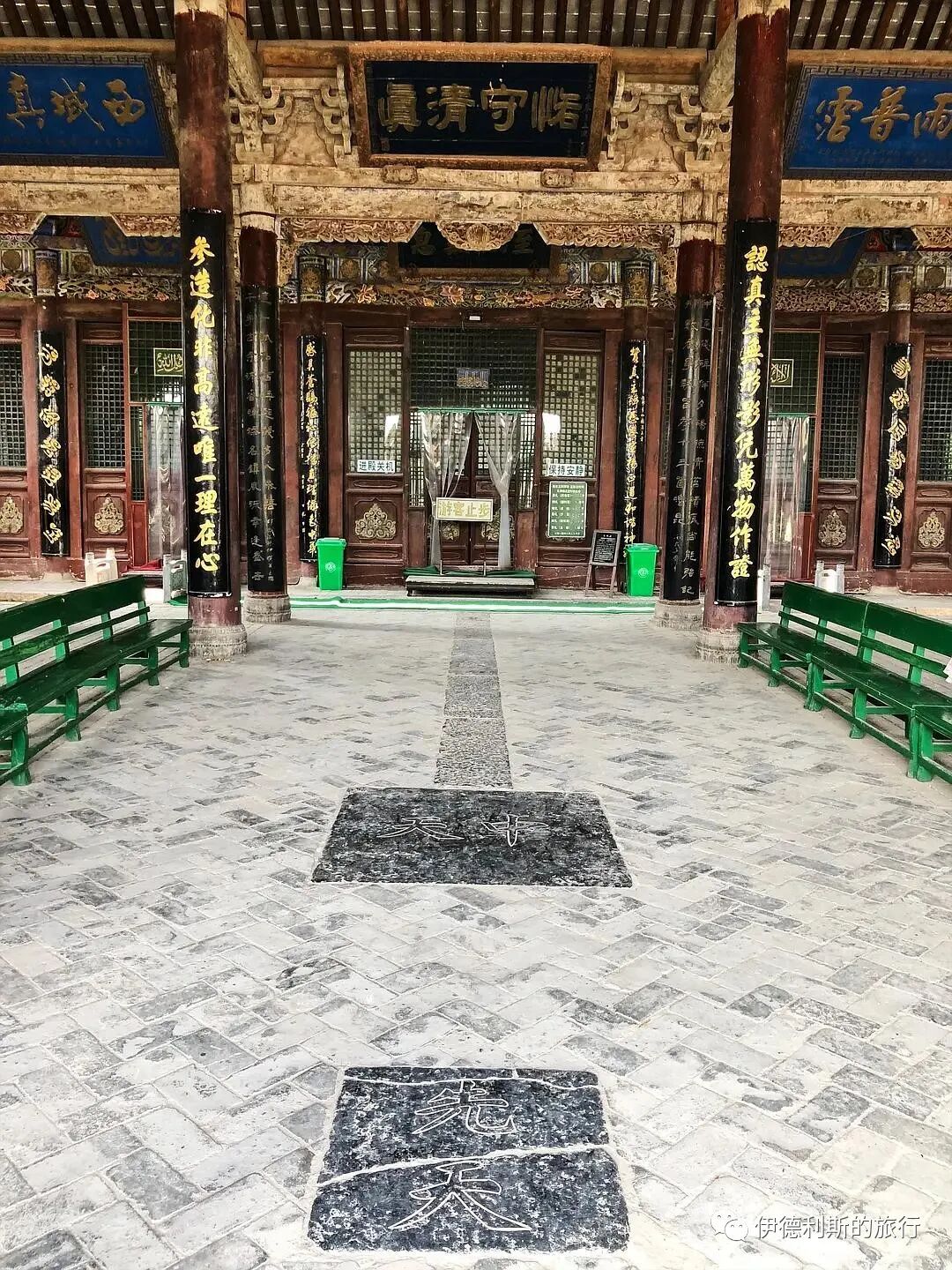
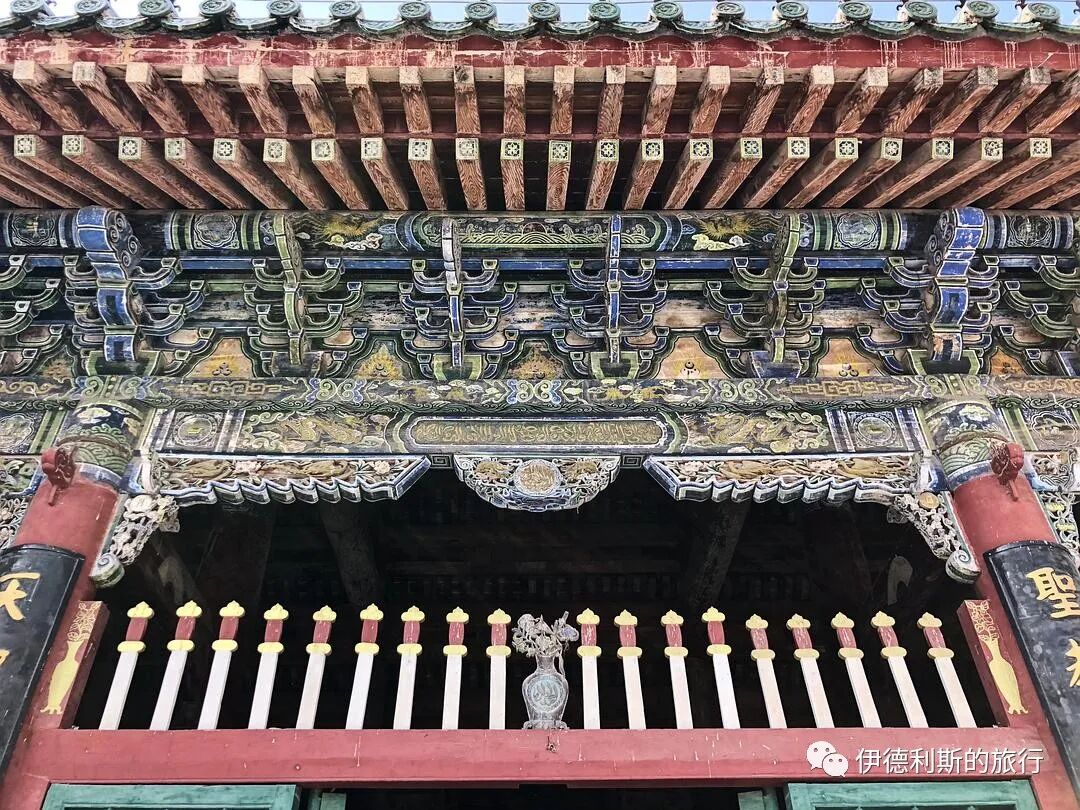
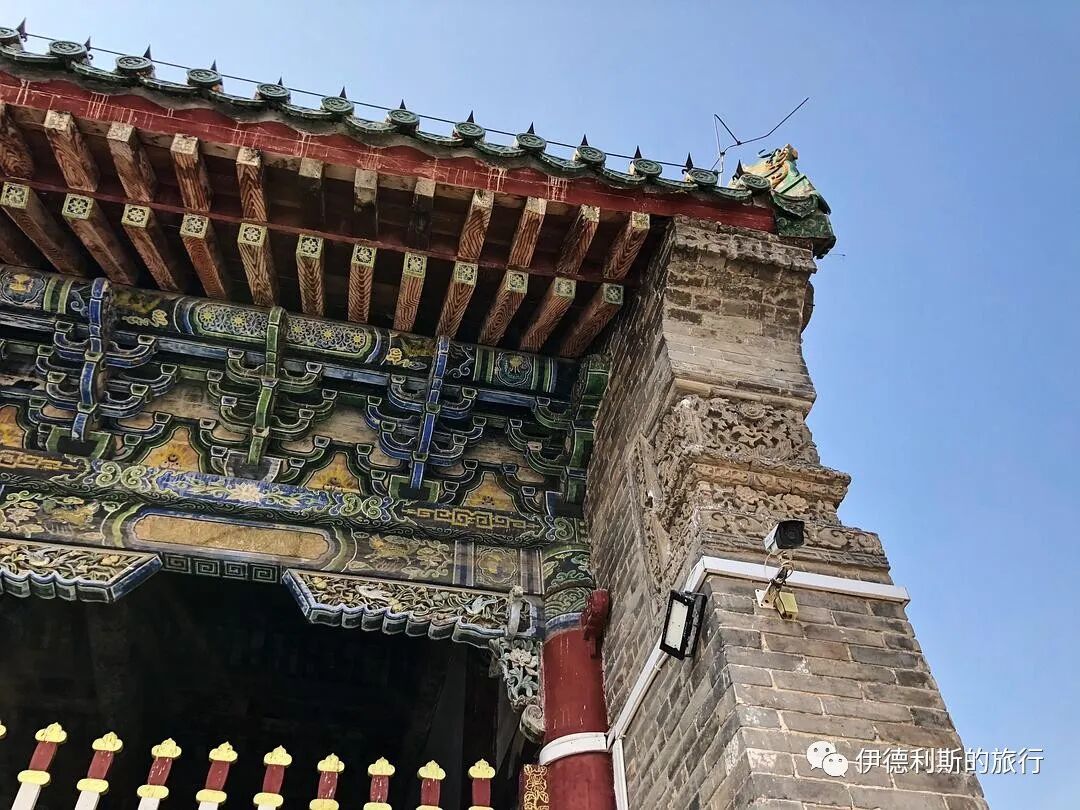
The beams and lintels of the prayer hall have exquisite wood carvings and colorful paintings.
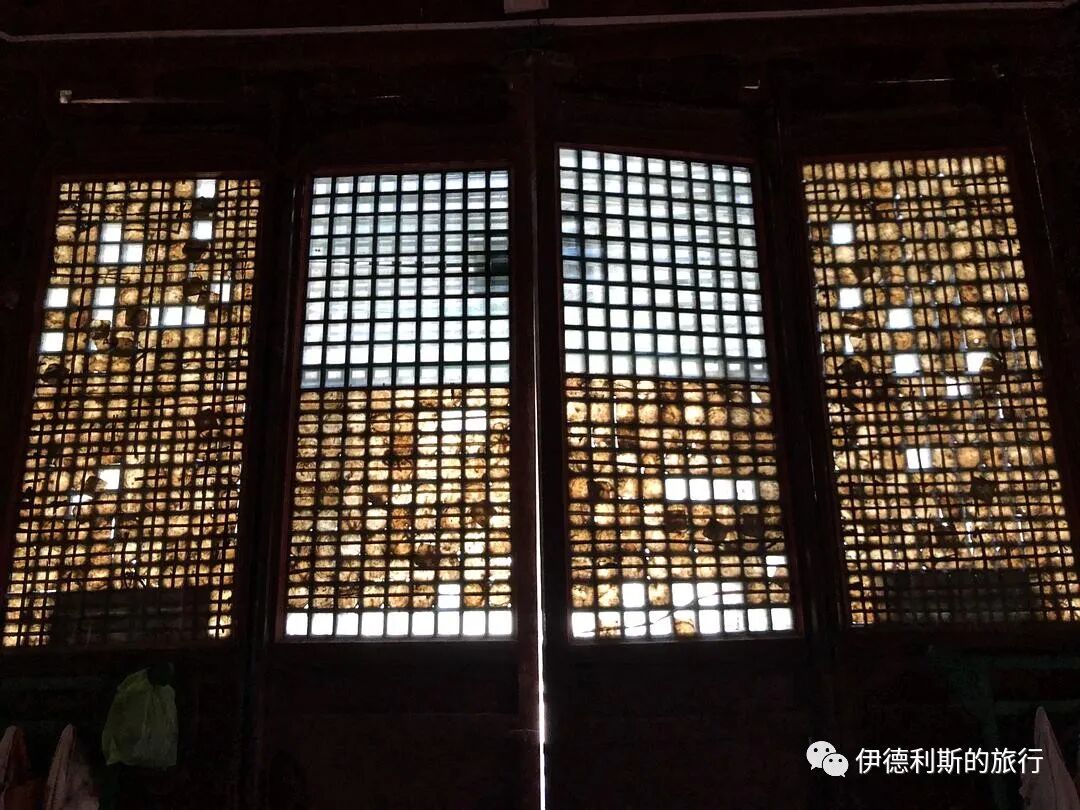
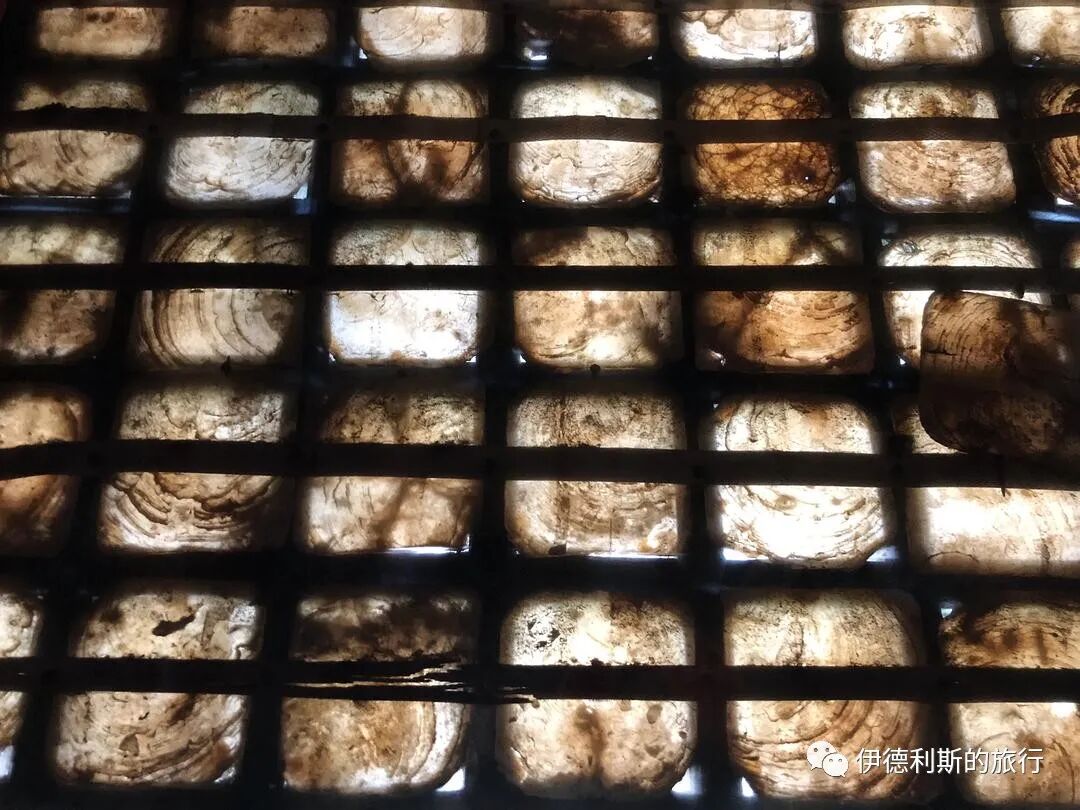
The windows are inlaid with 'fish scales' measuring 8 centimeters square each, totaling about 720 pieces.
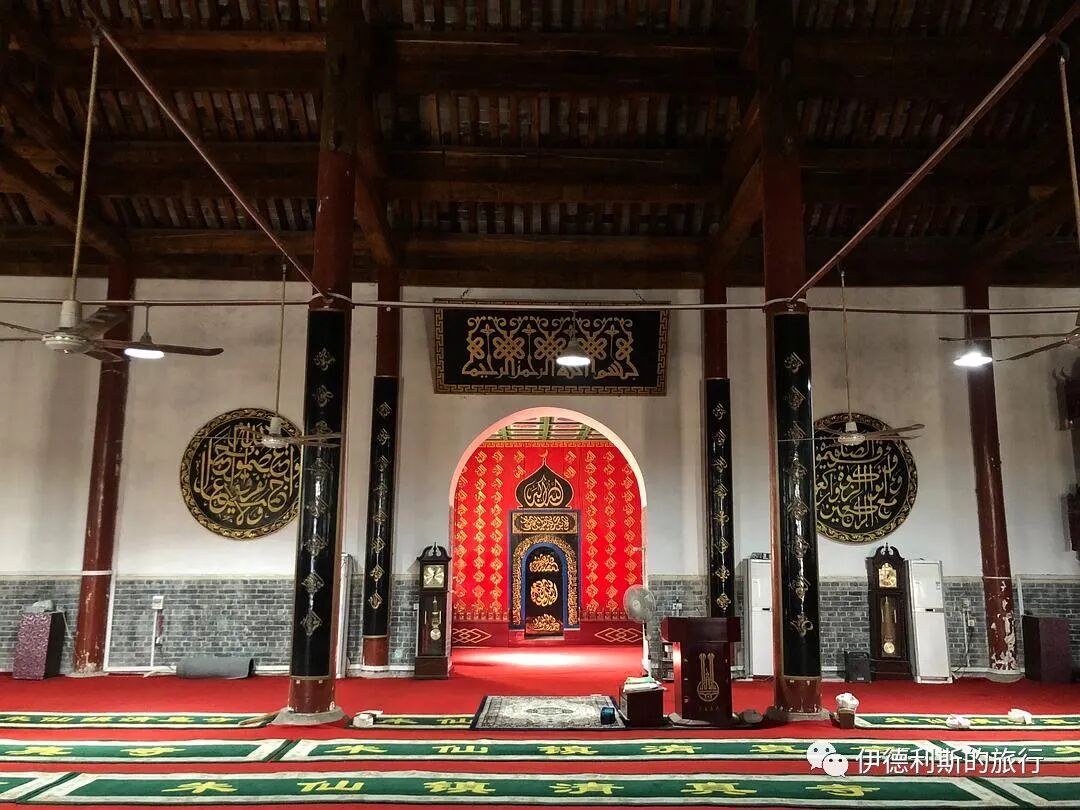
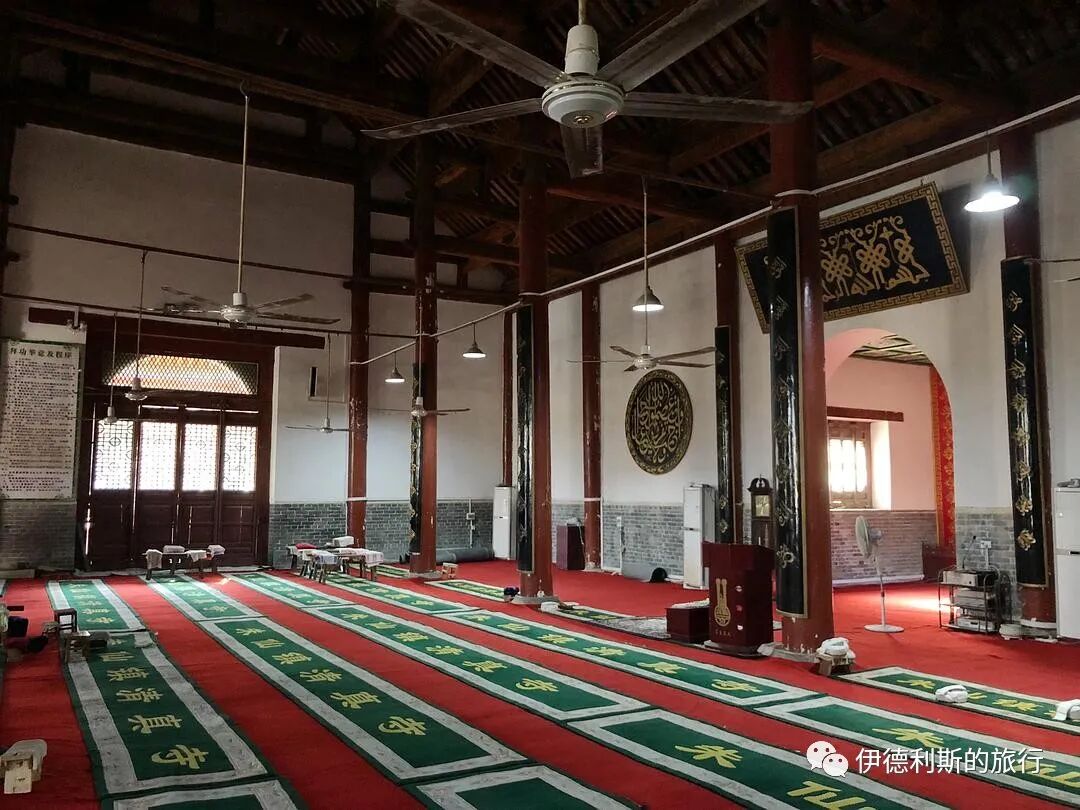
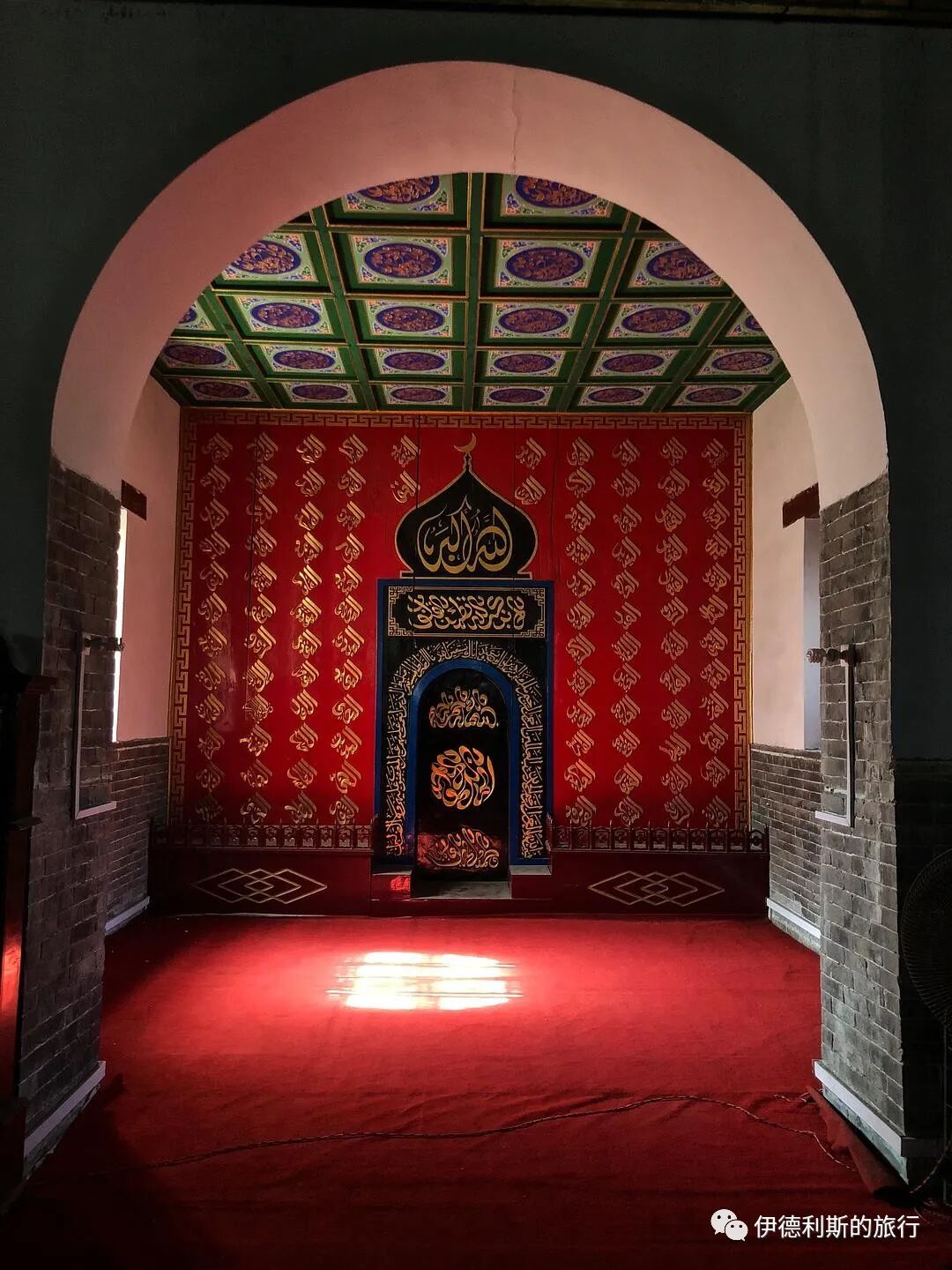
Inside the main hall.
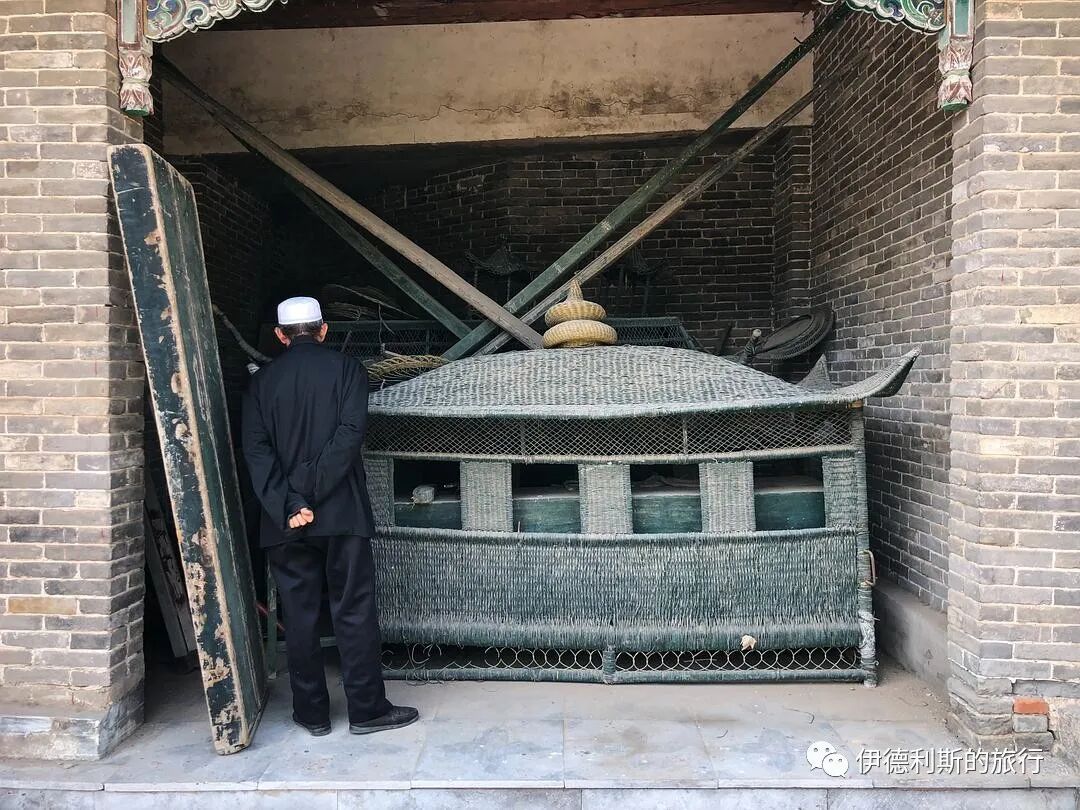
A traditional tabu (coffin) box.
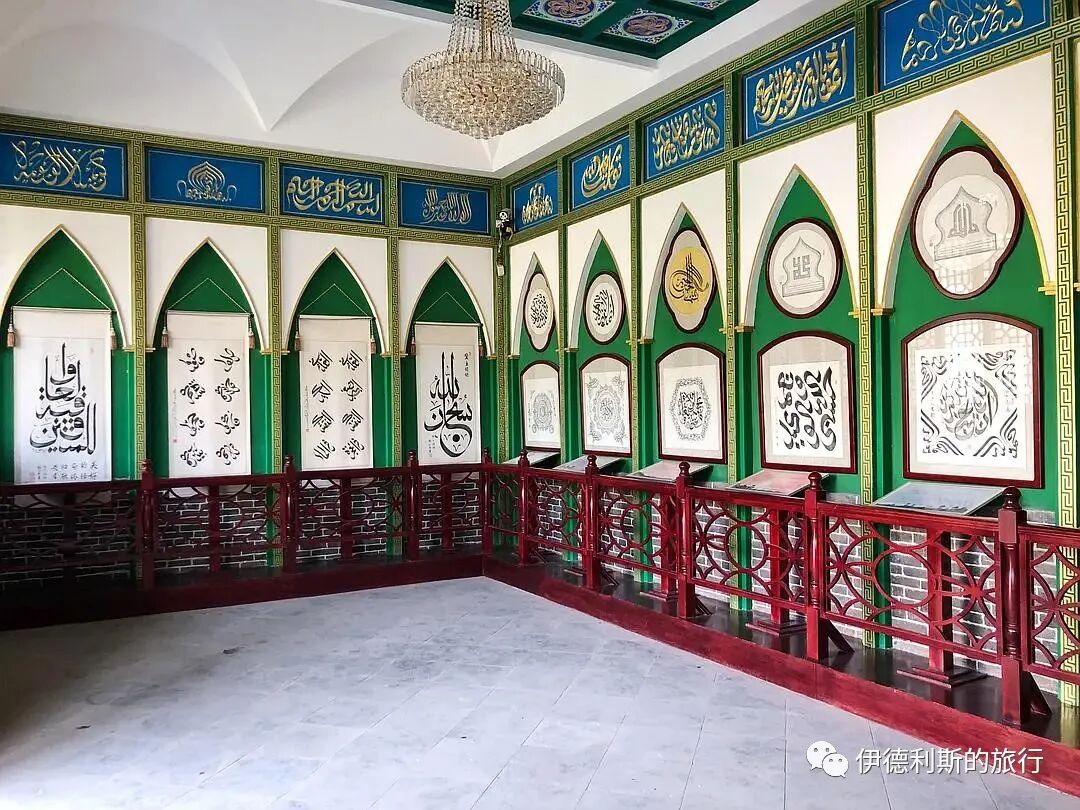
Arabic calligraphy collected by the mosque.
Selected verses from the Quran by the famous young calligrapher Wang Qifei.
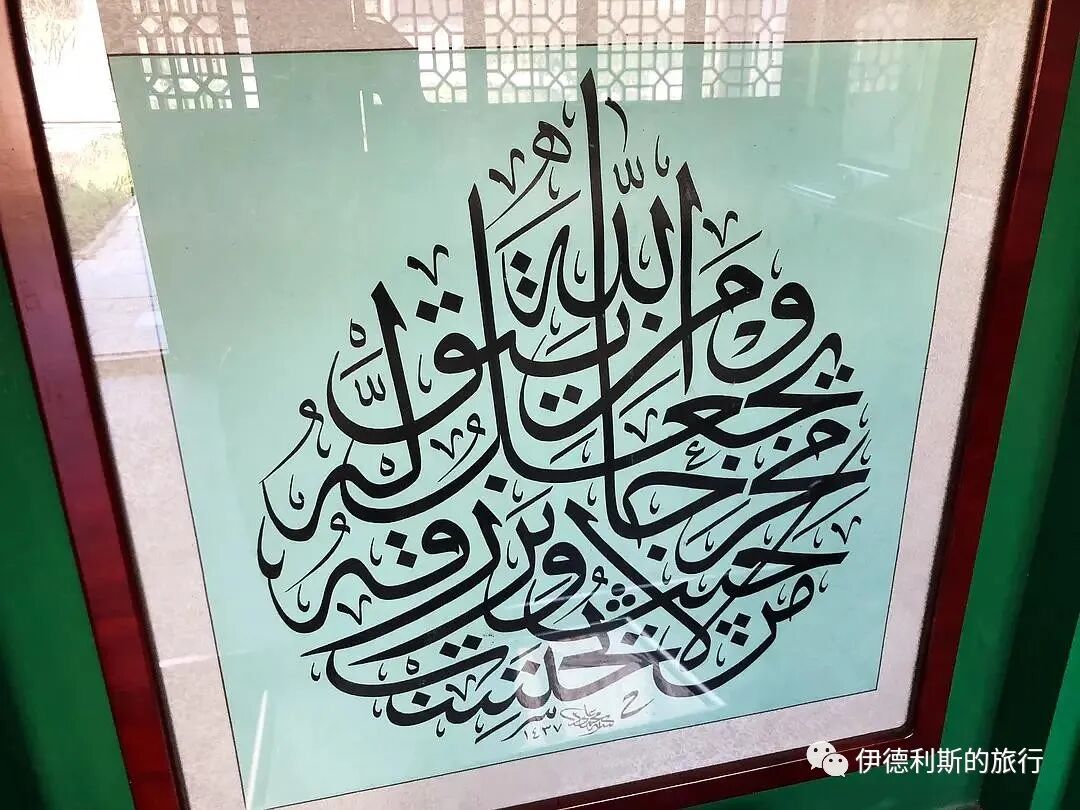
Selected verses from the Quran by the famous calligrapher Mi Guangjiang.
The work 'Die Lian Hua' (Butterflies Love Flowers) by Liu Xueqiang, the then-Imam of Zhuxian Town Mosque, with the Shahada (testimony of faith) in the center, surrounded by praises to the Prophet and Takbir, with flower and butterfly patterns around the edges.
Praises to the Prophet and the declaration of oneness by the famous calligrapher and lecturer at Zhengzhou Beidasi, Wang Guo'an.
Arabic couplets by Imam Li Jianzhou of Zhengzhou Beidasi.
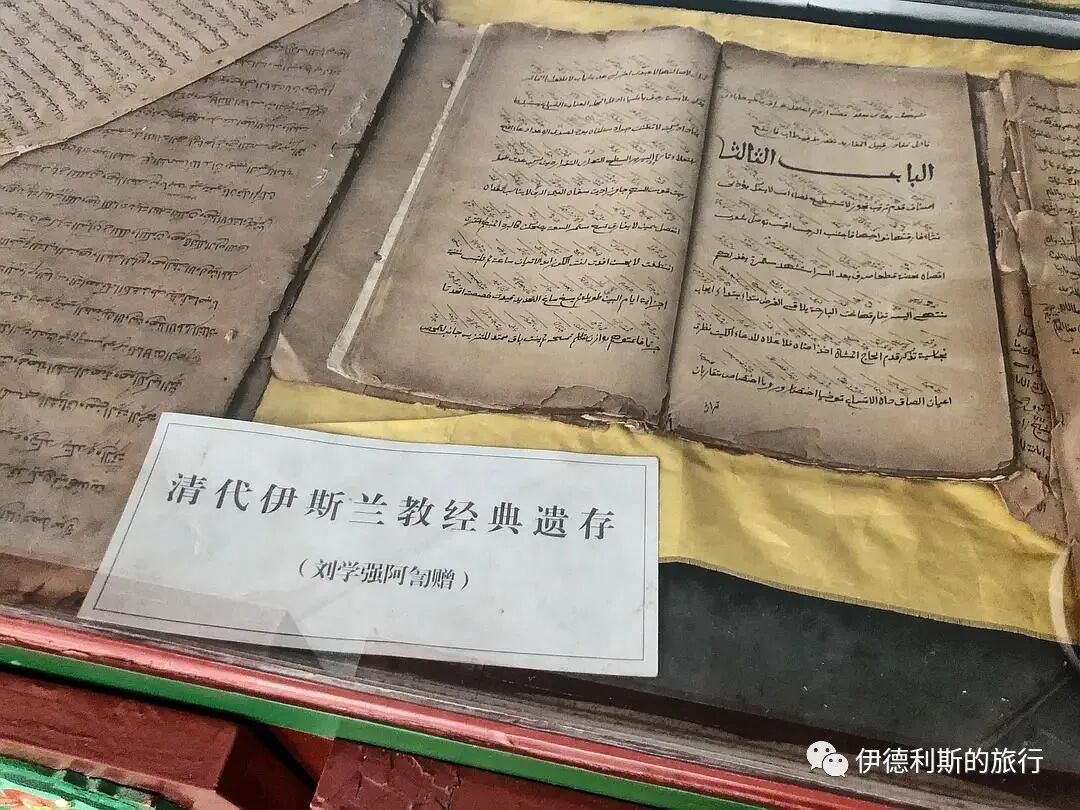
Collections in the mosque's exhibition hall. Qing Dynasty classics donated by Imam Liu Xueqiang.
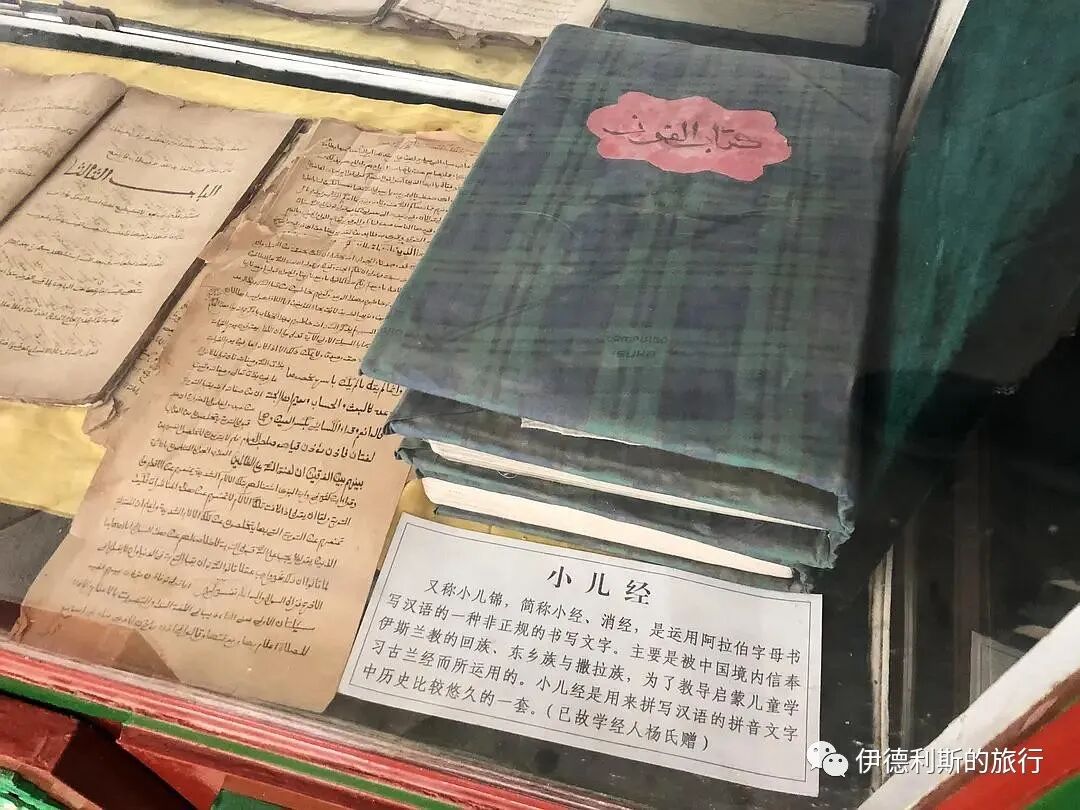
Xiaojing (Arabic-script Chinese) donated by the late student of scripture, the Yang family.
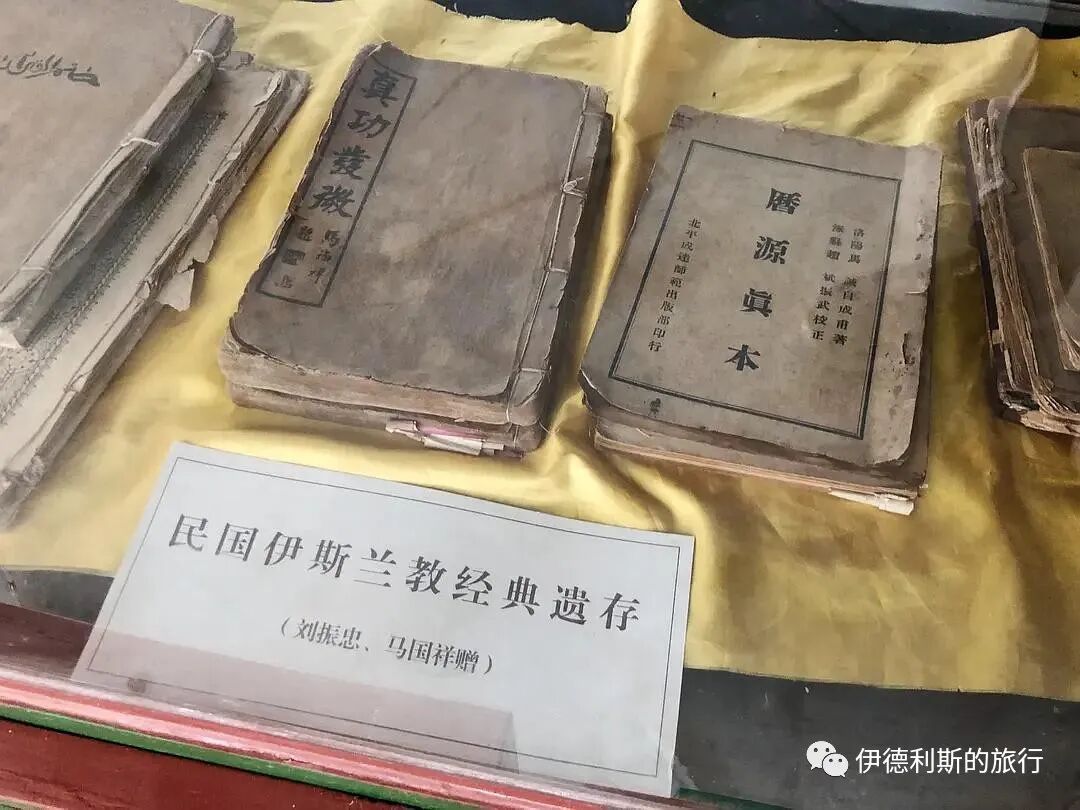
Republic of China era classics donated by Liu Zhenzhong and Ma Guoxiang.
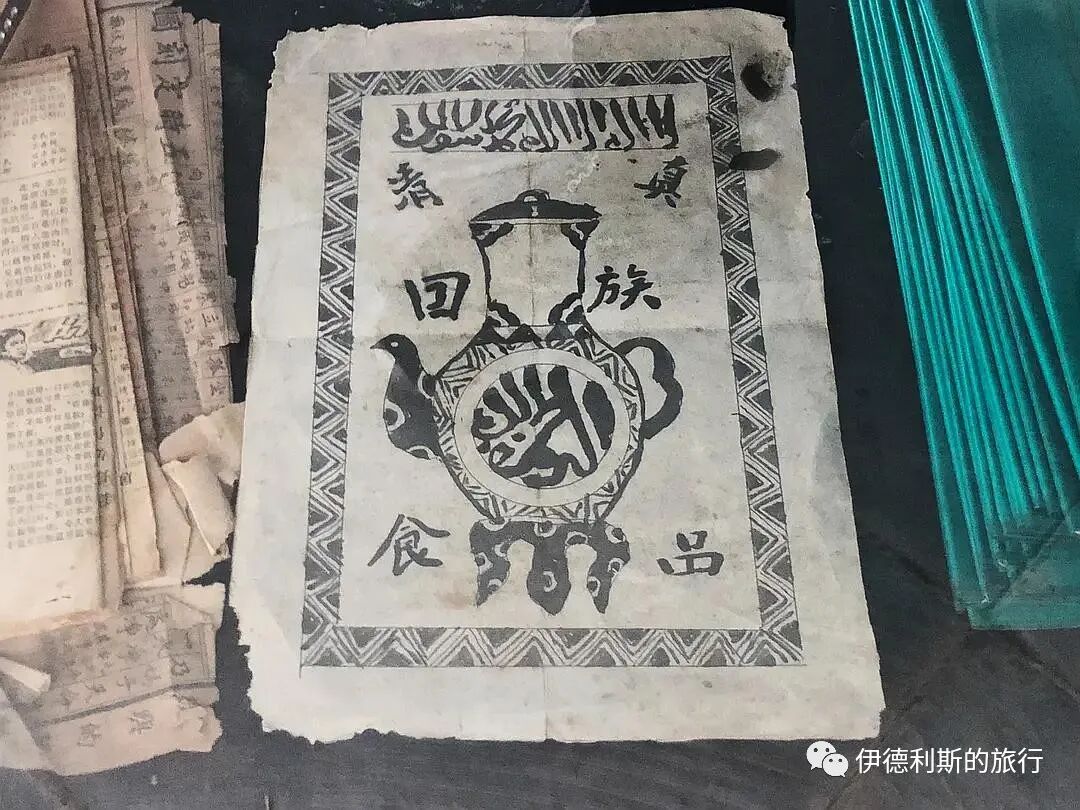
Old-fashioned tangping (kettle for ritual washing) tags.
A clock used by the late Ma Da Ahong donated by Ma Guoxiang, and a copper bell used by Qing Dynasty Ahongs to call the Hailifan (students of scripture) for Wudu (ritual washing) before the Adhan.
Scripture box.
Chongtong (water-pouring bucket) used for changing water in the Qing Dynasty.
Earthenware jar for Wudu from the Republic of China era.
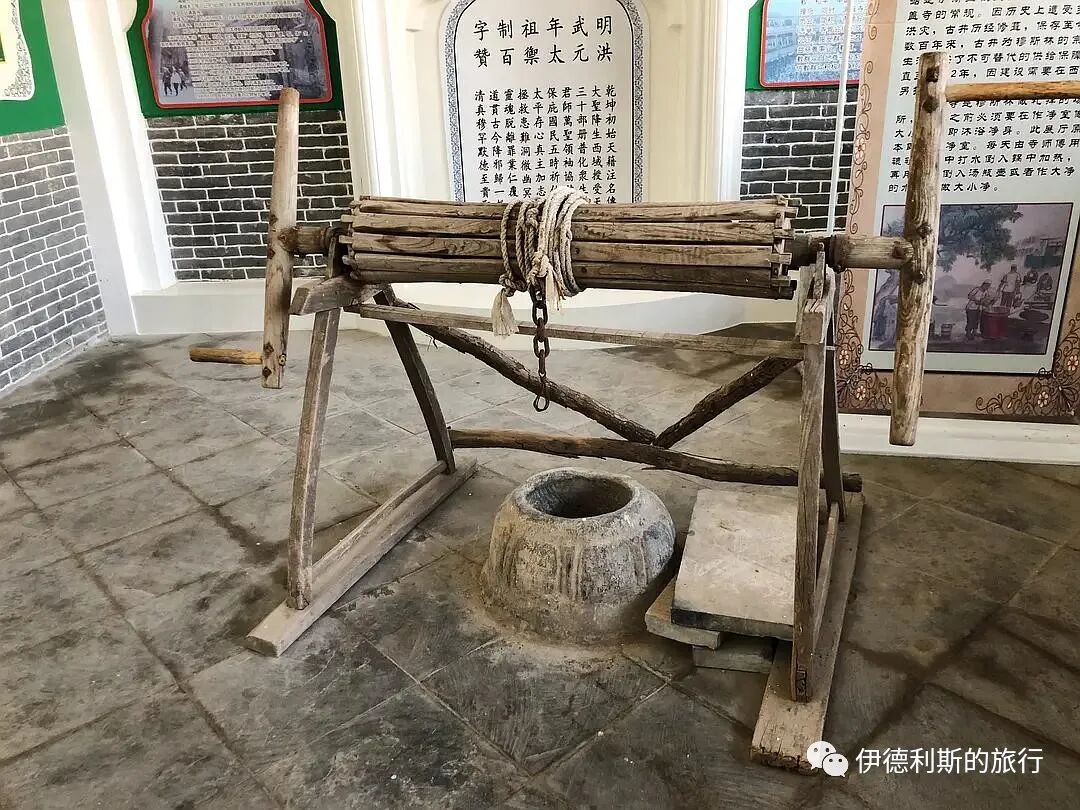
The ancient well in the mosque, which was used until 2002. This exhibition hall was originally a water room. Every day, the mosque master used a windlass to draw water from the well into a pot to boil it, then poured it into tangping and water jars for ritual washing.
8. Zhuxian Town Women's Mosque School
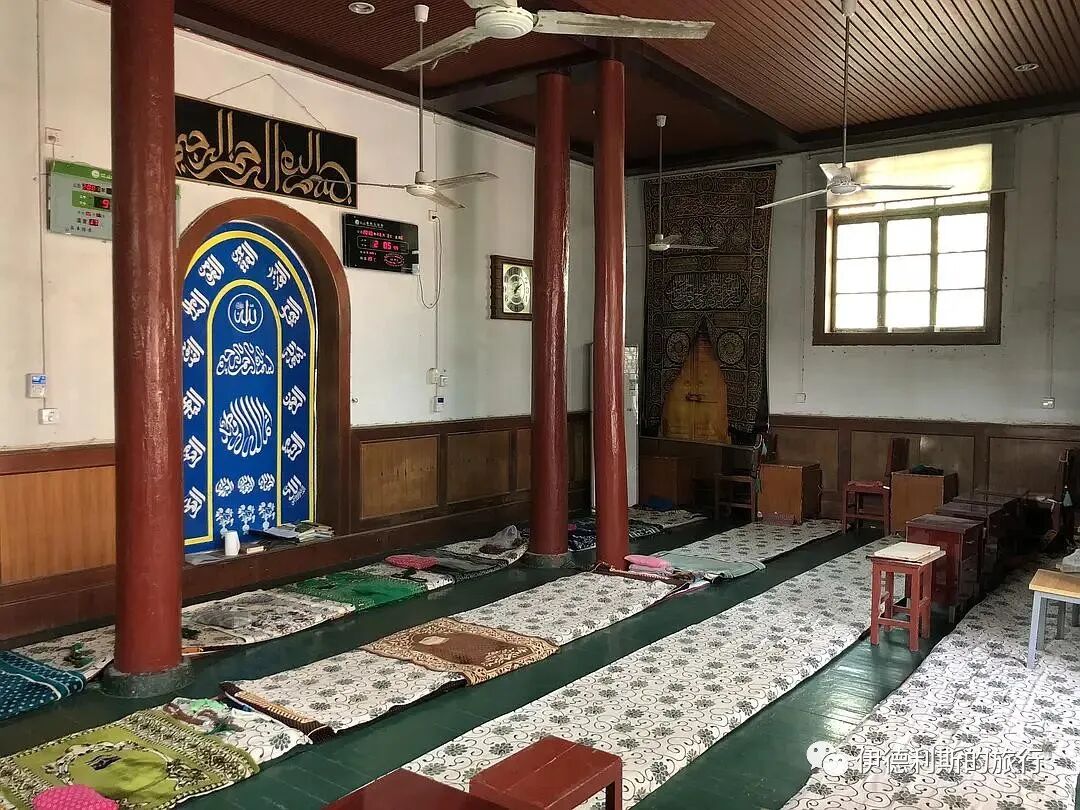
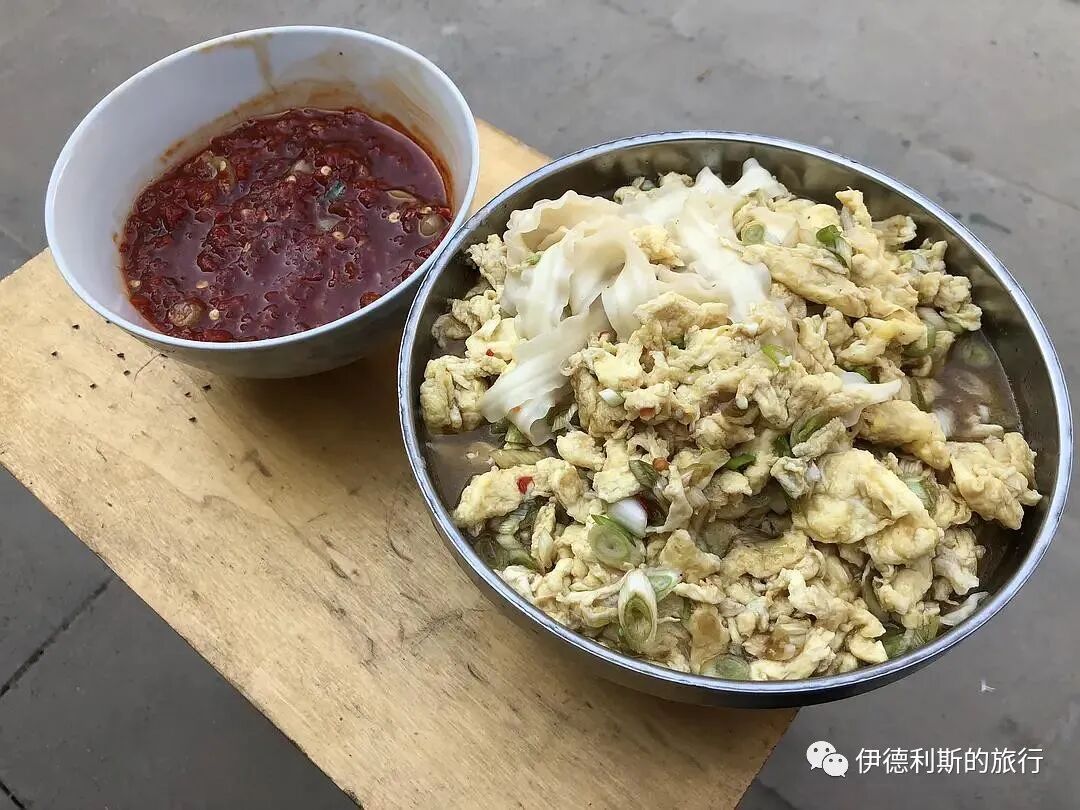
The most touching moment of this Kaifeng trip was the very warm reception I received from Grandma Wang at the Zhuxian Town Women's Mosque School. Grandma Wang insisted on cooking for me, and I couldn't refuse, so I had the warmest bowl of huimian (braised noodles) of this trip.
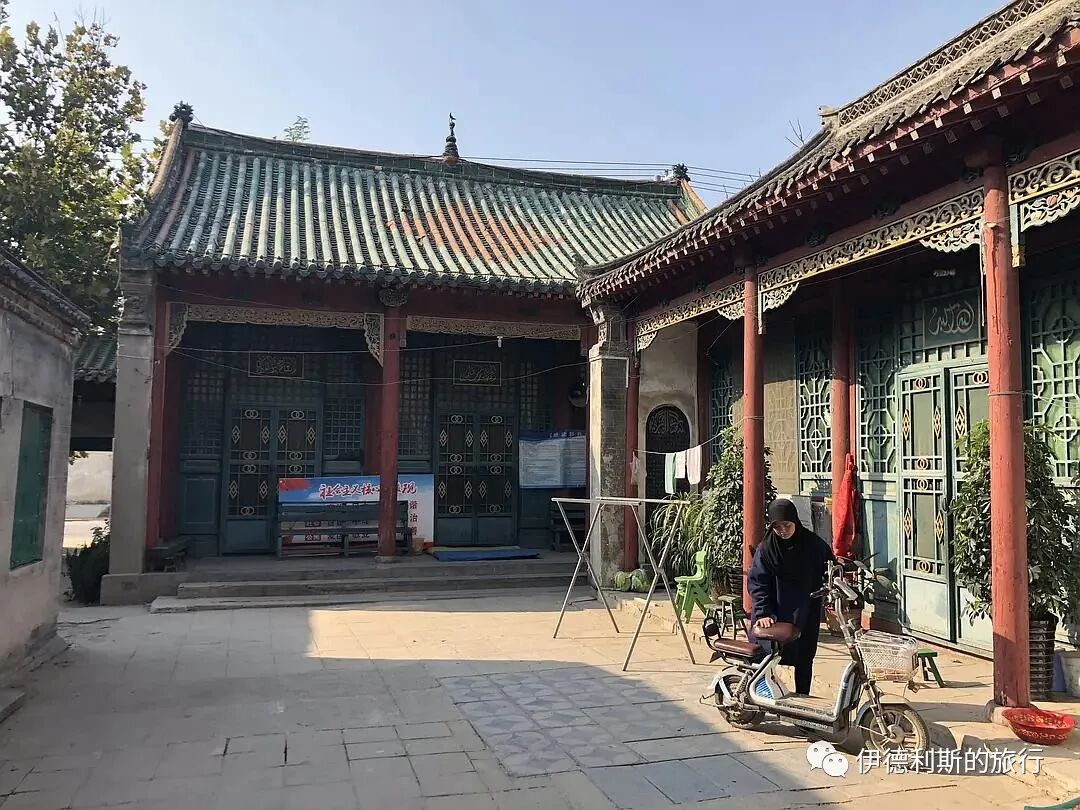
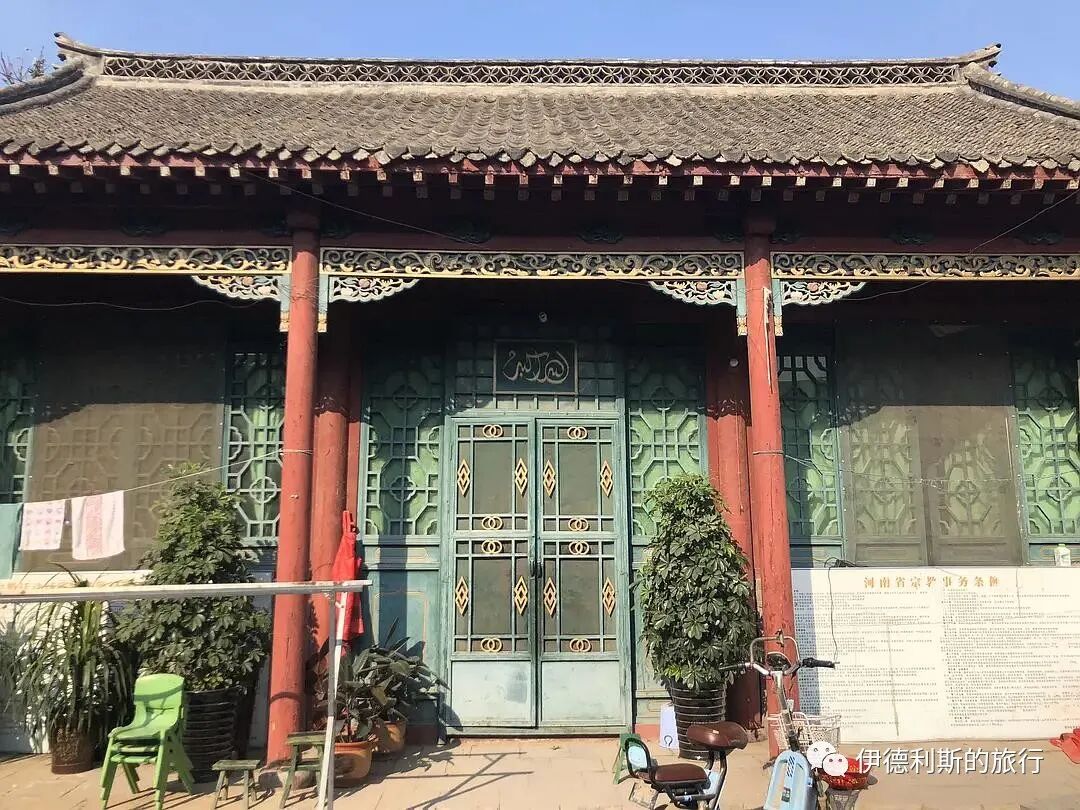
Grandma Wang is 83 years old and from Weinan, Shaanxi. After her husband passed away 40 years ago, she went out to make a living and eventually settled at the Zhuxian Town Women's Mosque School. Grandma Wang said that the flour and oil she eats every day are given by everyone, and she doesn't have to pay to live in the mosque. She gets up at three in the morning every day to clean and prepare for Fajr (morning prayer), and prays with everyone five times a day, feeling that her life is very fulfilling. I wanted to take a picture of Grandma, but she said she was old and didn't want to be photographed.
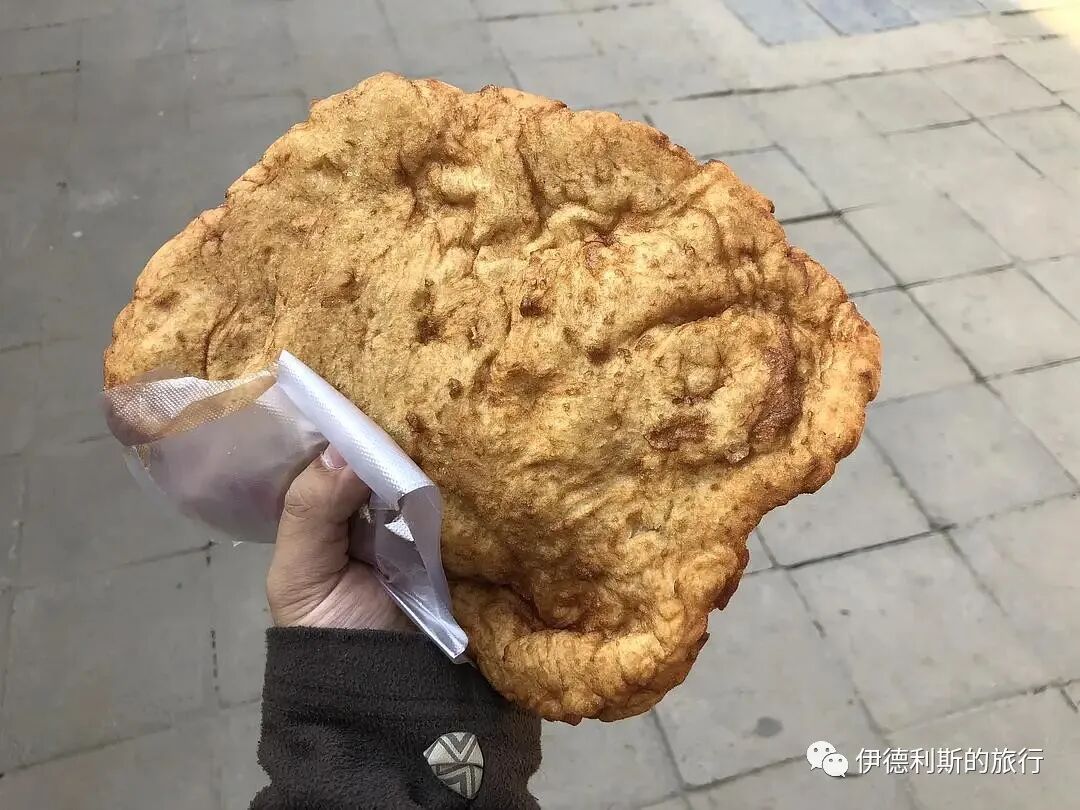
While chatting with Grandma, I met the female Ahong of the mosque. She is a local, in her thirties, and has been at the mosque for just one year. She usually has a shop near the Yue Fei Temple and comes to lead the prayers five times a day. The Ahong is also very kind and gave me two youxiang (fried dough) to eat on the road.
2. Zhengzhou Beidasi (North Great Mosque): Ming Dynasty
Beidasi is located on North Street in the old city of Zhengzhou. It is said to have been built in the Ming Dynasty. It was renovated twice during the Qianlong reign and has the typical architectural style of Central Plains mosques. It is a major historical and cultural site protected at the national level.
The main gate was built in 1725 (the third year of the Yongzheng reign).
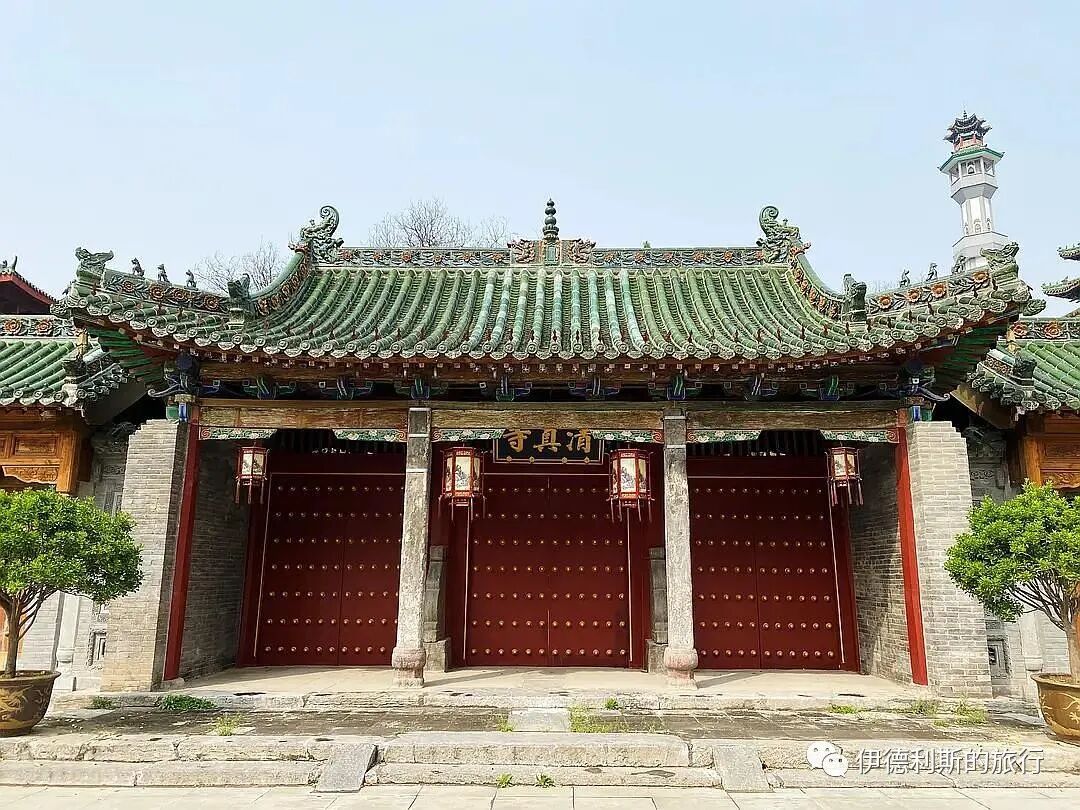
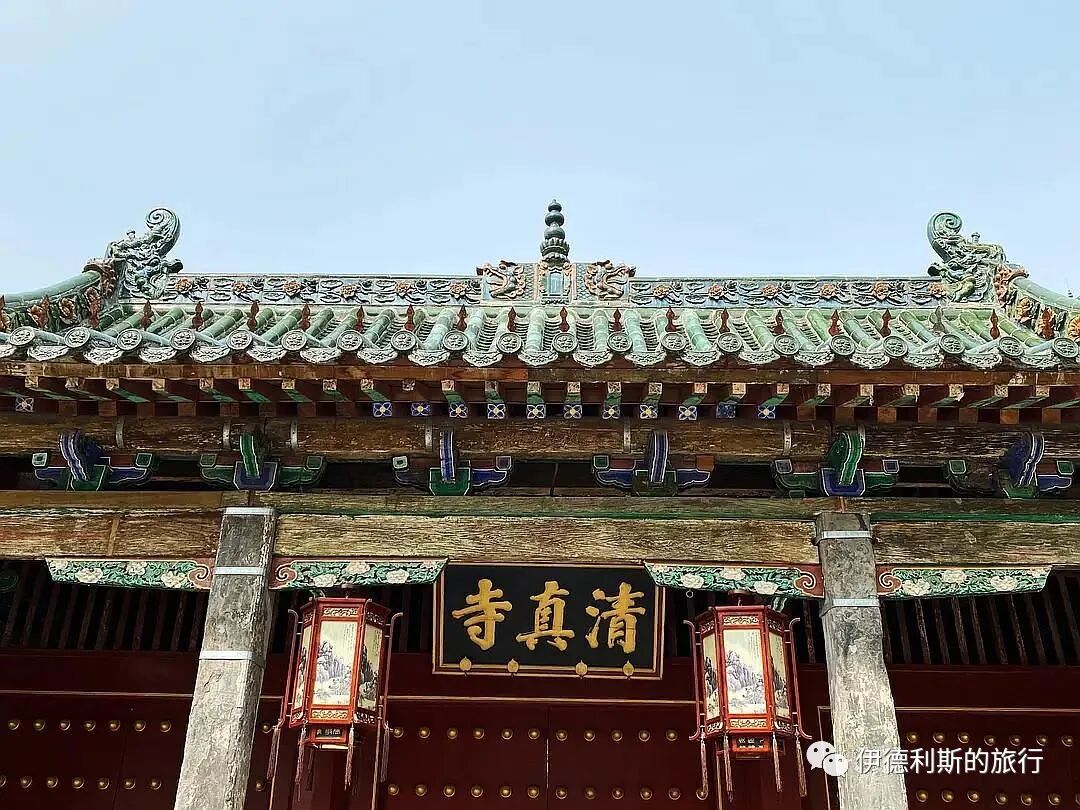
The Wangyuelou (Moon-Watching Tower) also serves as the Bangkelou (minaret). The first floor is a passageway. Judging from the architectural structure, it is very likely an original Ming Dynasty structure, but the dougong (bracket sets) and eaves rafters should have been replaced in the Qing Dynasty. According to records, it was renovated in 1887 (the thirteenth year of the Guangxu reign).
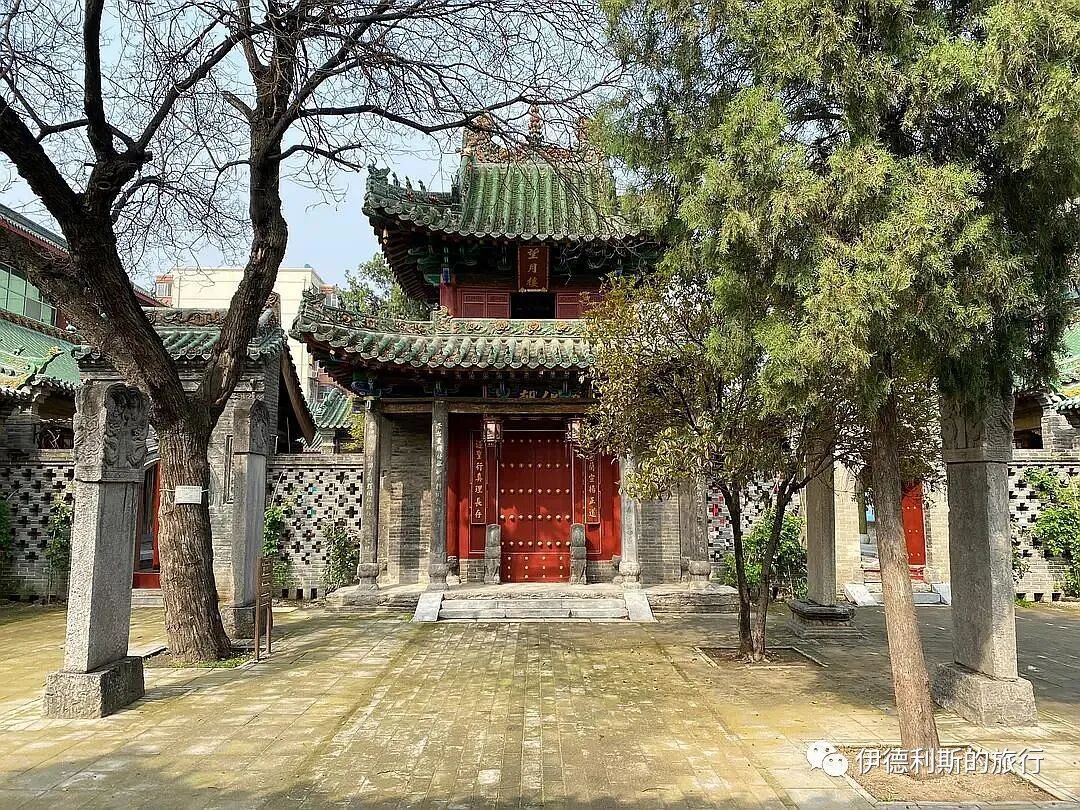
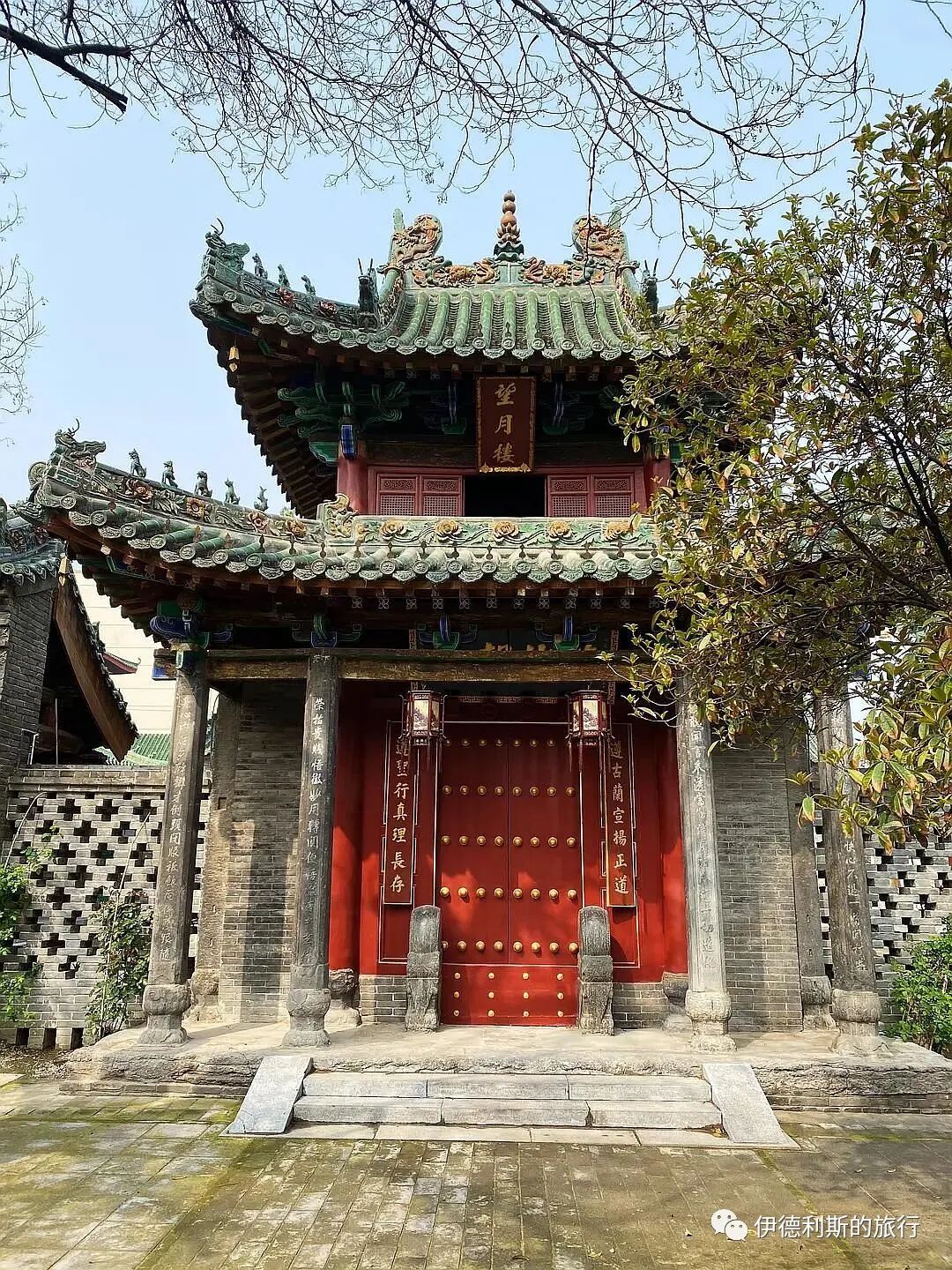
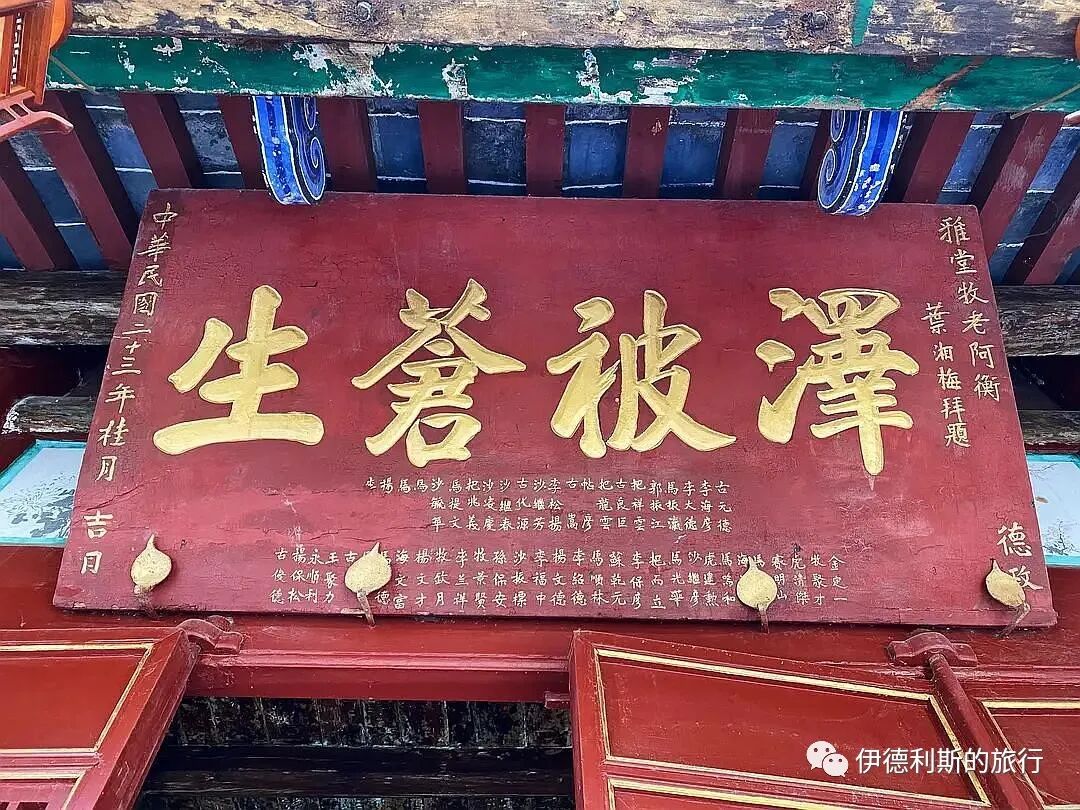
Wangyuelou has three pairs of Chinese couplets:
Observe, listen, and hear the words; understand the message of the body, and you will understand all creation.
In prosperity and adversity, honor and disgrace, realize the subtle use of the turning point, and you will realize the mystery within.
The hustle and bustle of the world, even if you are proud and happy, is just a moment of distraction.
Whether good or bad in body and mind, when you close your eyes at the end, only two things will follow you closely.
Follow the Quran to promote the right path.
Follow the Sunnah so that the truth will last forever.
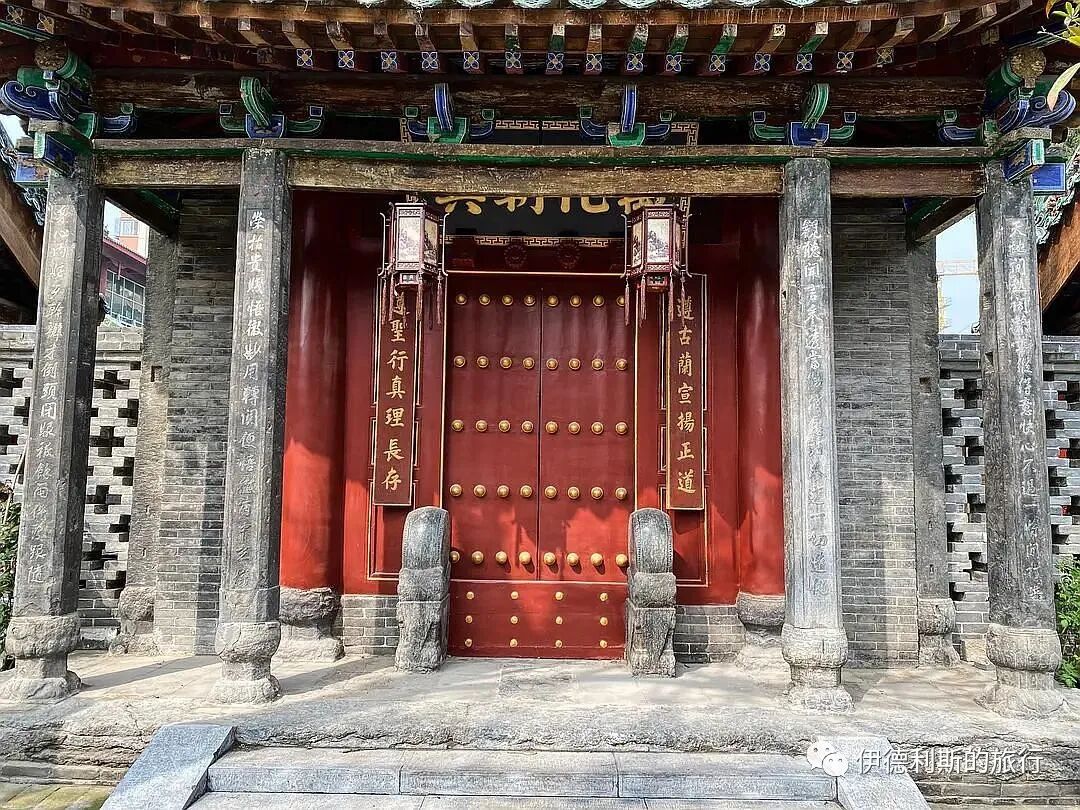
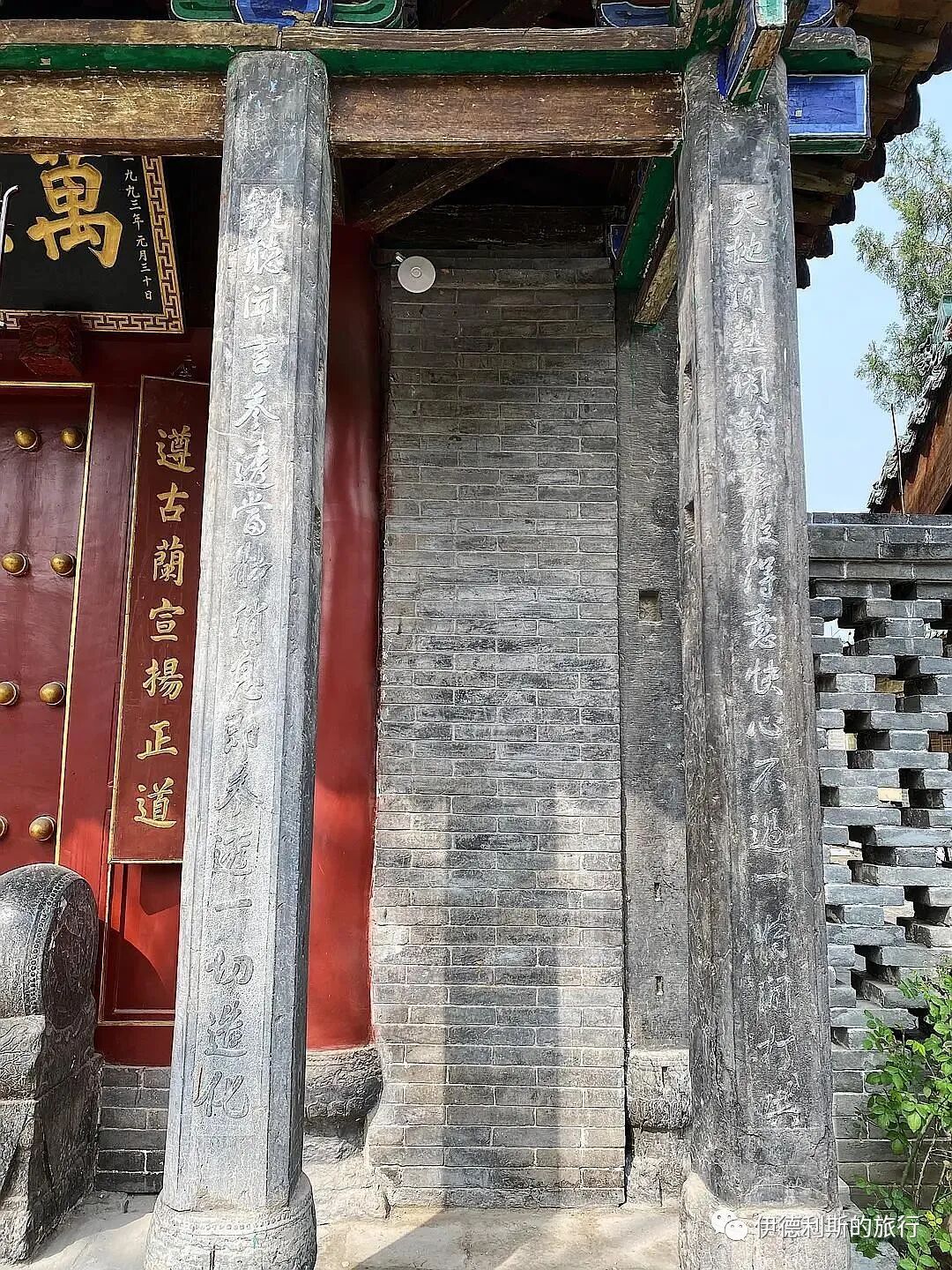
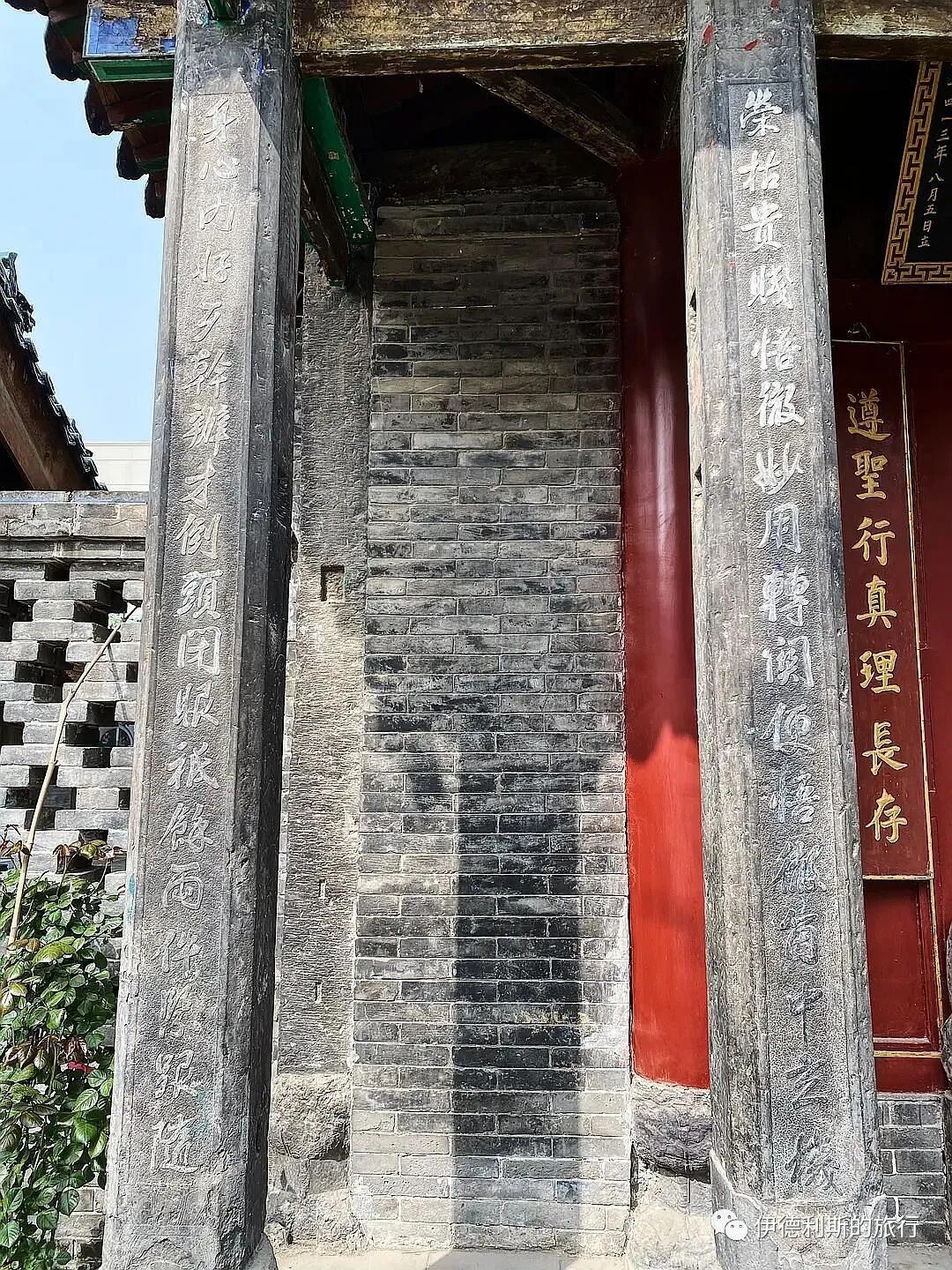
On the other side are Arabic couplets.
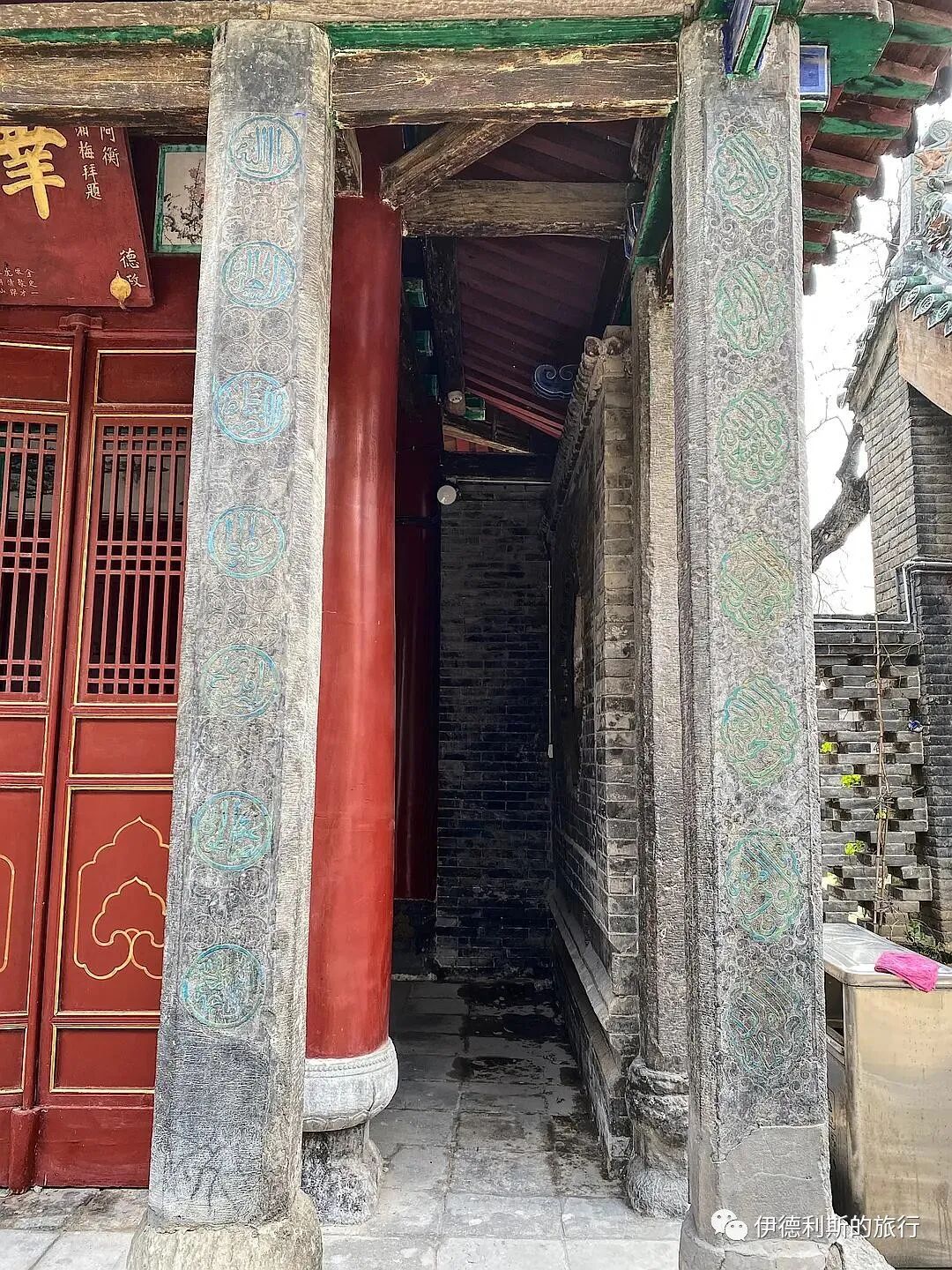
There are also couplets on the doors on both sides of Wangyuelou:
The five daily prayers are the key to opening the door.
The true scripture is the lamp that guides the way.
To recognize the pearl, you must return to the shore.
If you think of the sea, repair the boat early.
Summary: This travel note introduces Halal Travel Guide to Henan: 14 Traditional Mosques (Part 1). 1. Kaifeng Dongdasi (East Great Mosque): Rebuilt in 1655. It is useful for readers interested in Henan Mosques, Chinese Muslims, Islamic Heritage.
1. Kaifeng
1. Kaifeng Dongdasi (East Great Mosque): Rebuilt in 1655
2. Kaifeng Dongdasi Women's School
3. Kaifeng Shanyitang Mosque: 1874
4. Kaifeng Wangjia Hutong Women's Mosque School: 1810s
5. Kaifeng Beidasi (North Great Mosque): Rebuilt in 1662
6. Kaifeng Wenshusi Mosque Qing Dynasty screen wall
7. Kaifeng Zhuxian Town North Mosque: Rebuilt in 1738
8. Zhuxian Town Women's Mosque School
2. Zhengzhou Beidasi (North Great Mosque): Ming Dynasty
3. Jiaozuo
1. Bo'ai Xiguan Mosque: Expanded in 1405.
2. Bo'ai Erxianmiao Mosque: Qing Dynasty architecture
3. Bo'ai Daxinzhuang Dongdasi (Great Eastern Mosque): Expanded in the Ming Dynasty.
4. Bo'ai Daxinzhuang Qingzhen Xisi (Western Mosque): Qing Jiaqing reign.
5. Qinyang Beidasi (Northern Mosque): Rebuilt in 1631.
1. Kaifeng
1. Kaifeng Dongdasi (East Great Mosque): Rebuilt in 1655
Kaifeng Dongdasi was originally called Daliang Mosque. In 1368 (the first year of the Hongwu reign), the youth of the mosque community followed Chang Yuchun on the northern expedition against the Yuan Dynasty. After the victory, Zhu Yuanzhang bestowed the name 'Imperial-built Daliang Mosque'. In 1407 (the fifth year of the Yongle reign), Ming Emperor Zhu Di 'imperially bestowed funds for expansion'. It was destroyed by Yellow River flooding at the end of the Ming Dynasty. It was rebuilt in 1655 (the twelfth year of the Kangxi reign), expanded in 1689 (the twenty-eighth year of the Kangxi reign), and destroyed again by Yellow River flooding in 1841 (the twenty-first year of the Daoguang reign). In 1846 (the twenty-sixth year of the Daoguang reign), because the Hui Muslims had contributed to flood prevention, the Governor of Henan petitioned the imperial court to rebuild it.
Currently, Dongdasi has three courtyards, featuring a main gate, a second gate, a prayer hall, north and south lecture halls, and side rooms.
The main gate has a single-eave, ridge-roofed hard-mountain style, decorated with Suzhou-style gold-leaf paintings.
Inside the main gate, a traditional maiti (coffin) box is kept.
Entering through the main gate leads to the second gate.
Next to the second gate is a chuihuamen (hanging flower gate).
Because the main hall is under renovation, Jumu (Friday prayer) is held in the north lecture hall.
The main hall consists of a juanpeng (arched roof structure), a front hall, and a rear hall. It was under renovation when I visited.
2. Kaifeng Dongdasi Women's School
The Kaifeng Dongdasi Women's School is opposite Dongdasi, first built in 1933 and rebuilt in 1993. The term 'women's school' first appeared in the 'Jingxue Xichuan Pu' (Genealogy of Classical Studies) written during the Kangxi reign of the Qing Dynasty. During the mid-to-late Qing period, women's schools gradually evolved into women's mosques, but the name 'women's school' continued to be used, especially in places like Zhengzhou, Kaifeng, and Zhoukou.
3. Kaifeng Shanyitang Mosque: 1874
Shanyitang Mosque is one of the ancient mosque buildings in Kaifeng city, located southwest of the Drum Tower. It was built in 1874 (the thirteenth year of the Tongzhi reign) by Hui Muslims from Shaanxi who settled in Kaifeng. It was originally a 'Shanyitang' (Benevolence and Righteousness Hall) guild hall for performing good deeds. In 1901, when Empress Dowager Cixi passed through Kaifeng on her way back to Beijing from Xi'an, the vanguard officer, a Hui Muslim named Ma Anliang, petitioned for a plaque inscribed with 'Mosque', and thus it was renamed Shanyitang Mosque. I met the hospitable Zhao Baba (an affectionate term for an elder) at the mosque, who told me a lot about the history of the mosque and the stories of the Muslims in Kaifeng.
The famous Arabic calligrapher, Master Mi Guangjiang, wrote the 99 Beautiful Names of Allah for the mosque's yaodian (rear prayer hall).
4. Kaifeng Wangjia Hutong Women's Mosque School: 1810s
The Kaifeng Wangjia Hutong Women's Mosque School is the oldest existing women's mosque in China, first built in the 1810s (during the Jiaqing reign of the Qing Dynasty). Two stone tablets from 1878 (the fourth year of the Guangxu reign) currently in the mosque record its history. The founder of the women's mosque was known as 'Li-family Yuan-woman Ahong'. After Yuan Ahong returned to Allah, her disciple 'Wu-family Zhang-woman Ahong' continued to serve as Ahong. During this period, a man surnamed Zheng donated funds to purchase the building, and an elderly woman named Zhao Yang donated two storefront rooms. This is also the first time in history that the terms 'female Ahong' and 'women's mosque' appeared.
5. Kaifeng Beidasi (North Great Mosque): Rebuilt in 1662
Kaifeng Beidasi was destroyed by Yellow River flooding in 1645 and rebuilt at a new site in 1662 (the first year of the Kangxi reign). Because Beidasi is far from the city center, it is very quiet, and the courtyard is planted with many beautiful flowers and plants. During Dhuhr (noon prayer), there were only four of us, including the Ahong, the Mu'adhdhin, the mosque master, and myself. We chatted very happily. Several Babas told me about the history of Kaifeng Beidasi and the changes in the mosque community, and also told me what good food there is at the night market at the west gate of Henan University nearby.
Guided by an old master, I discovered a stone tablet in the mosque inscribed by Bao Zheng himself, titled 'The Place Where the Dragon Horse Carried the Map', with the inscription 'March of the second year of the Jiayou reign (1057), by Bao Zheng, Scholar of the Longtu Pavilion and Prefect of Kaifeng'. This stone tablet was excavated in 1785 (the fiftieth year of the Qianlong reign) by Jiang Lan, the Henan Provincial Administration Commissioner, under the Yellow River levee at Heigangkou in the suburbs of Kaifeng. After it was unearthed, a shrine and pavilion were built specifically for the tablet. Later, the shrine and pavilion fell into ruin, and the tablet was kept in Beidasi.
6. Kaifeng Wenshusi Mosque Qing Dynasty screen wall
Kaifeng Wenshusi Mosque was first built in the Ming Dynasty, destroyed by floods at the end of the Chongzhen reign, rebuilt in 1649 (the sixth year of the Shunzhi reign), renovated in 1791 (the fifty-sixth year of the Qianlong reign), and rebuilt as a modern building in the 1990s. Currently, a Qing Dynasty screen wall is preserved opposite the mosque's main gate, featuring exquisite brick carvings.
7. Kaifeng Zhuxian Town North Mosque: Rebuilt in 1738
Zhuxian Town North Mosque is the largest mosque in Zhuxian Town. It was first built during the Taiping Xingguo reign of the Northern Song Dynasty, rebuilt in 1531 (the tenth year of the Jiajing reign of the Ming Dynasty), destroyed by Yellow River flooding in 1641 (the fourteenth year of the Chongzhen reign), rebuilt in 1738 (the third year of the Qianlong reign of the Qing Dynasty), and expanded twice in 1744 (the ninth year of the Qianlong reign) and 1839 (the nineteenth year of the Daoguang reign).
The mosque's main gate has a single-eave hip-and-gable roof, with very exquisite wood carvings on the lintels and vivid glazed roof beasts. Inside the gate hang the plaques 'Zhi Fa Zhen Yuan' (Reaching the True Source) inscribed by Zhu Yukun, the Henan Governor during the Qianlong reign, and 'Zhen Yi Huan Zhen' (True Unity Returns to Truth) inscribed by Yulu, the Viceroy of Huguang during the Guangxu reign.
The prayer hall of Zhuxian Town Mosque consists of a juanpeng, a main hall, and a yaodian. The juanpeng is a beam-lifting wooden structure, open at the front and back, not connected to the main hall, with a stone drainage ditch in between and a stone arch bridge over the ditch.
The path in front of the main hall is inscribed with 'Xiantian' (Pre-heaven), 'Zhongtian' (Mid-heaven), and 'Datian Junlu' (The Great Path to Heaven).
The beams and lintels of the prayer hall have exquisite wood carvings and colorful paintings.
The windows are inlaid with 'fish scales' measuring 8 centimeters square each, totaling about 720 pieces.
Inside the main hall.
A traditional tabu (coffin) box.
Arabic calligraphy collected by the mosque.
Selected verses from the Quran by the famous young calligrapher Wang Qifei.
Selected verses from the Quran by the famous calligrapher Mi Guangjiang.
The work 'Die Lian Hua' (Butterflies Love Flowers) by Liu Xueqiang, the then-Imam of Zhuxian Town Mosque, with the Shahada (testimony of faith) in the center, surrounded by praises to the Prophet and Takbir, with flower and butterfly patterns around the edges.
Praises to the Prophet and the declaration of oneness by the famous calligrapher and lecturer at Zhengzhou Beidasi, Wang Guo'an.
Arabic couplets by Imam Li Jianzhou of Zhengzhou Beidasi.
Collections in the mosque's exhibition hall. Qing Dynasty classics donated by Imam Liu Xueqiang.
Xiaojing (Arabic-script Chinese) donated by the late student of scripture, the Yang family.
Republic of China era classics donated by Liu Zhenzhong and Ma Guoxiang.
Old-fashioned tangping (kettle for ritual washing) tags.
A clock used by the late Ma Da Ahong donated by Ma Guoxiang, and a copper bell used by Qing Dynasty Ahongs to call the Hailifan (students of scripture) for Wudu (ritual washing) before the Adhan.
Scripture box.
Chongtong (water-pouring bucket) used for changing water in the Qing Dynasty.
Earthenware jar for Wudu from the Republic of China era.
The ancient well in the mosque, which was used until 2002. This exhibition hall was originally a water room. Every day, the mosque master used a windlass to draw water from the well into a pot to boil it, then poured it into tangping and water jars for ritual washing.
8. Zhuxian Town Women's Mosque School
The most touching moment of this Kaifeng trip was the very warm reception I received from Grandma Wang at the Zhuxian Town Women's Mosque School. Grandma Wang insisted on cooking for me, and I couldn't refuse, so I had the warmest bowl of huimian (braised noodles) of this trip.
Grandma Wang is 83 years old and from Weinan, Shaanxi. After her husband passed away 40 years ago, she went out to make a living and eventually settled at the Zhuxian Town Women's Mosque School. Grandma Wang said that the flour and oil she eats every day are given by everyone, and she doesn't have to pay to live in the mosque. She gets up at three in the morning every day to clean and prepare for Fajr (morning prayer), and prays with everyone five times a day, feeling that her life is very fulfilling. I wanted to take a picture of Grandma, but she said she was old and didn't want to be photographed.
While chatting with Grandma, I met the female Ahong of the mosque. She is a local, in her thirties, and has been at the mosque for just one year. She usually has a shop near the Yue Fei Temple and comes to lead the prayers five times a day. The Ahong is also very kind and gave me two youxiang (fried dough) to eat on the road.
2. Zhengzhou Beidasi (North Great Mosque): Ming Dynasty
Beidasi is located on North Street in the old city of Zhengzhou. It is said to have been built in the Ming Dynasty. It was renovated twice during the Qianlong reign and has the typical architectural style of Central Plains mosques. It is a major historical and cultural site protected at the national level.
The main gate was built in 1725 (the third year of the Yongzheng reign).
The Wangyuelou (Moon-Watching Tower) also serves as the Bangkelou (minaret). The first floor is a passageway. Judging from the architectural structure, it is very likely an original Ming Dynasty structure, but the dougong (bracket sets) and eaves rafters should have been replaced in the Qing Dynasty. According to records, it was renovated in 1887 (the thirteenth year of the Guangxu reign).
Wangyuelou has three pairs of Chinese couplets:
Observe, listen, and hear the words; understand the message of the body, and you will understand all creation.
In prosperity and adversity, honor and disgrace, realize the subtle use of the turning point, and you will realize the mystery within.
The hustle and bustle of the world, even if you are proud and happy, is just a moment of distraction.
Whether good or bad in body and mind, when you close your eyes at the end, only two things will follow you closely.
Follow the Quran to promote the right path.
Follow the Sunnah so that the truth will last forever.
On the other side are Arabic couplets.
There are also couplets on the doors on both sides of Wangyuelou:
The five daily prayers are the key to opening the door.
The true scripture is the lamp that guides the way.
To recognize the pearl, you must return to the shore.
If you think of the sea, repair the boat early.
Halal Travel Guide to Henan: 14 Traditional Mosques (Part 2)
Articles • ali2007fr posted the article • 0 comments • 129 views • 2026-05-17 05:43
Reposted from the web
Summary: This travel note introduces Halal Travel Guide to Henan: 14 Traditional Mosques (Part 2). The main hall was renovated twice in 1802 (the 7th year of the Jiaqing reign) and 1907 (the 33rd year of the Guangxu reign), and consists of a juanpeng (open-fronted shed), the main hall, and a yaodian (niche hall). It is useful for readers interested in Henan Mosques, Chinese Muslims, Islamic Heritage.
Stone inscriptions in the courtyard.
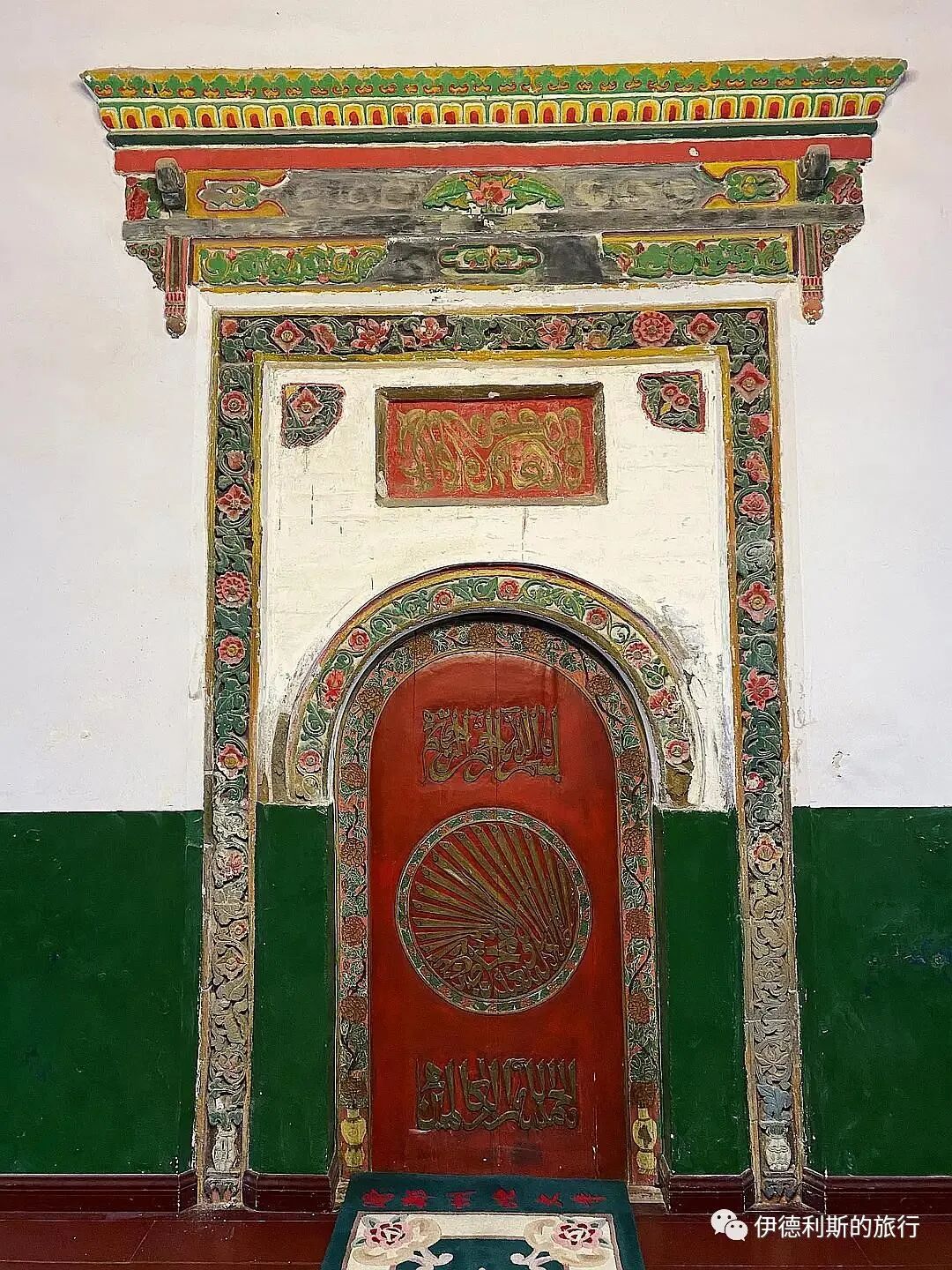
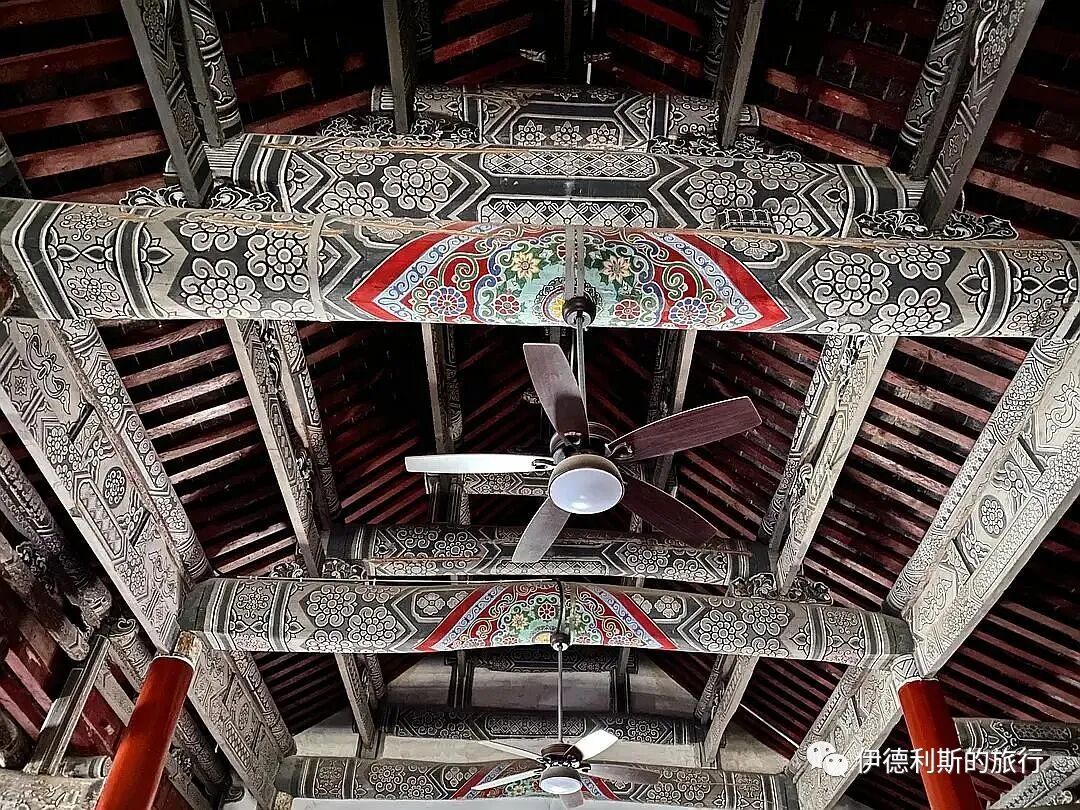
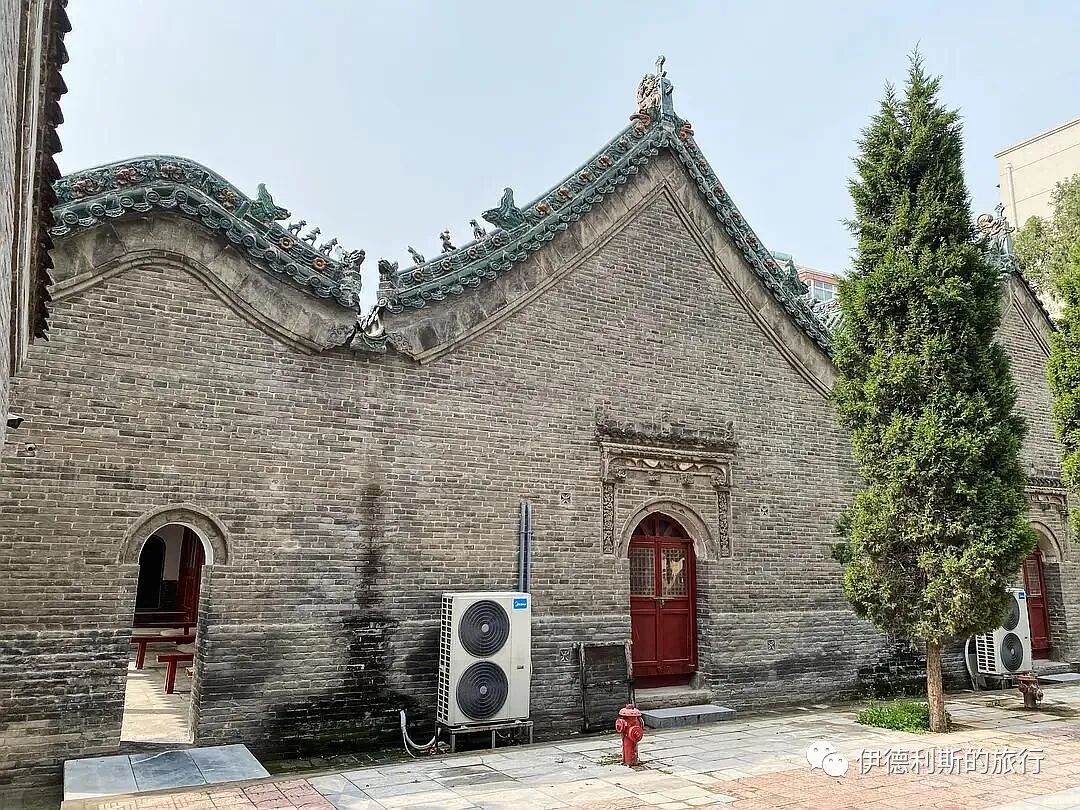
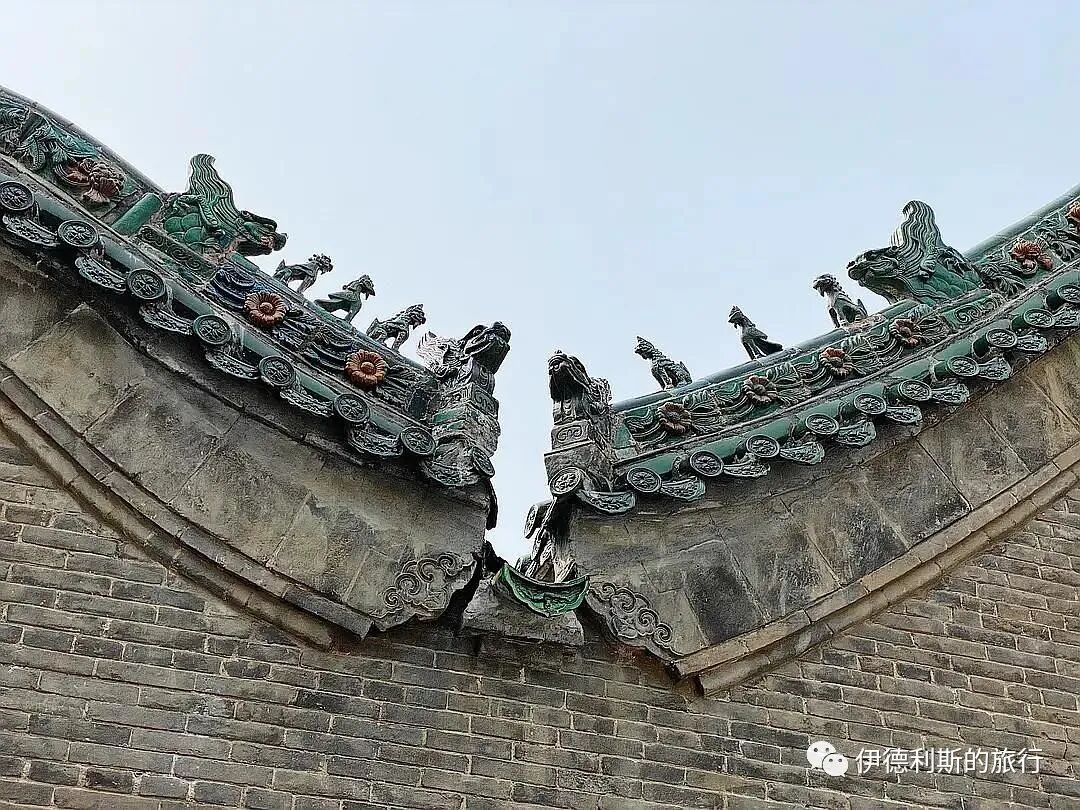
The main hall was renovated twice in 1802 (the 7th year of the Jiaqing reign) and 1907 (the 33rd year of the Guangxu reign), and consists of a juanpeng (open-fronted shed), the main hall, and a yaodian (niche hall). The main hall features a raised-beam timber frame with exposed rafters, and the beams and lintels are covered with cloud and floral patterns, making it unique and elegant. There is a huazhao (decorative floral screen) between the main hall and the yaodian, which is filled with openwork patterns; light shines from the bright yaodian through the screen into the main hall, creating an exquisite and translucent effect on the screen.
In front of the main hall are two century-old sweet osmanthus trees.
Couplets inside the main hall:
For the painting of the heavens, one must know there is no second artist.
For the scriptures covering the earth, one must ponder who holds the brush.
Recognize Allah, who has no form or shadow, and let all things serve as witness.
Contemplate creation, it is not high or distant, for the only truth lies within the heart.
Behind the main hall, next to the yaodian, stands a Chinese juniper tree over four hundred years old.
3. Jiaozuo
1. Bo'ai Xiguan Mosque: Expanded in 1405.
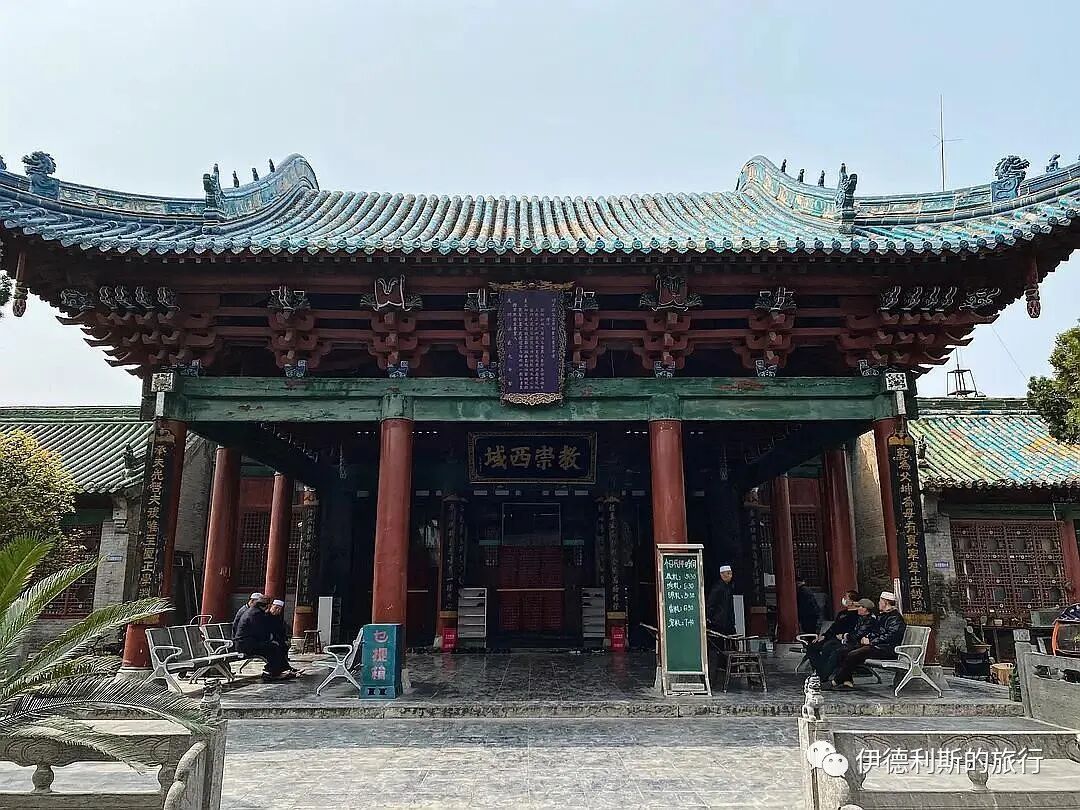
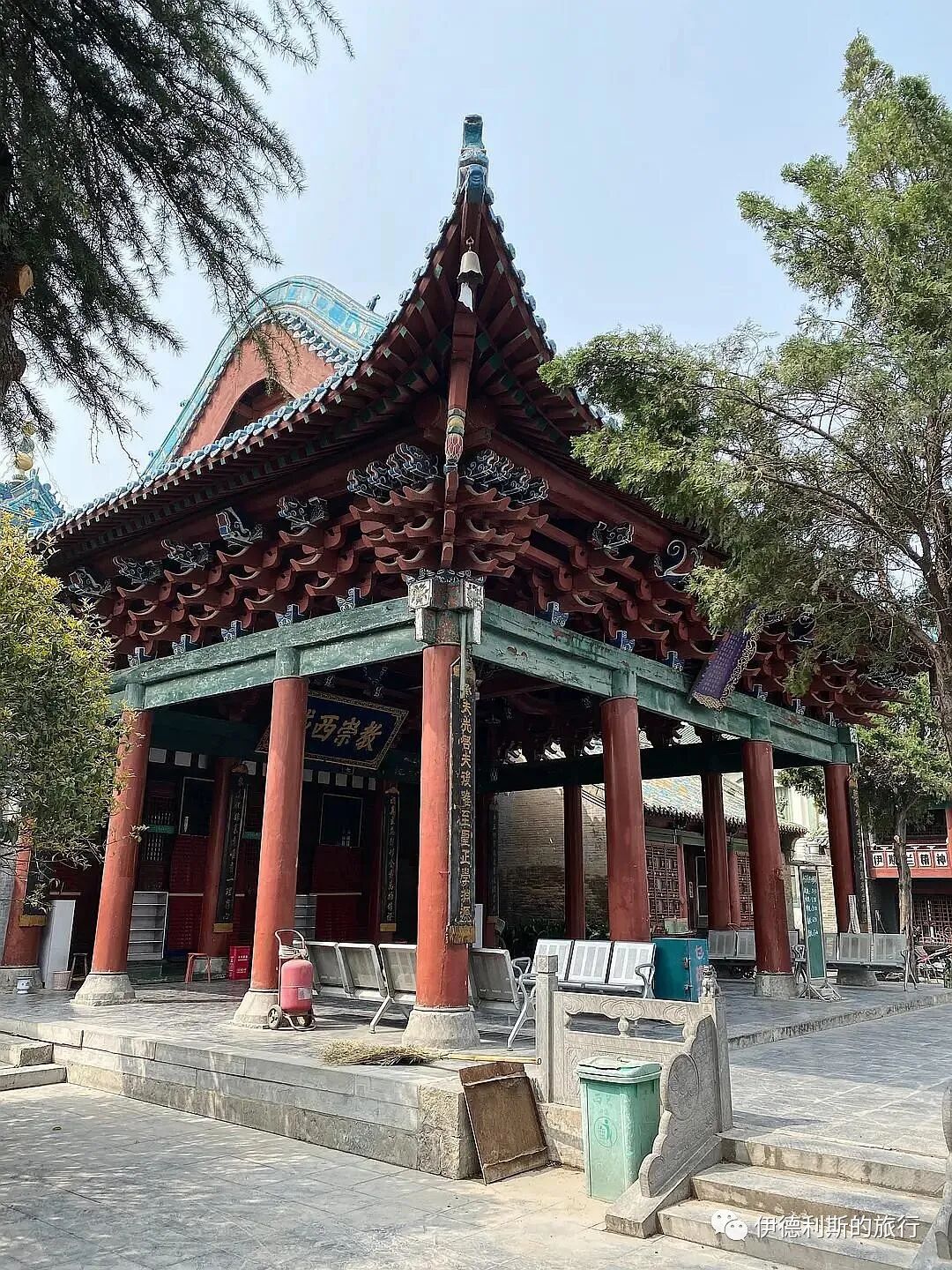
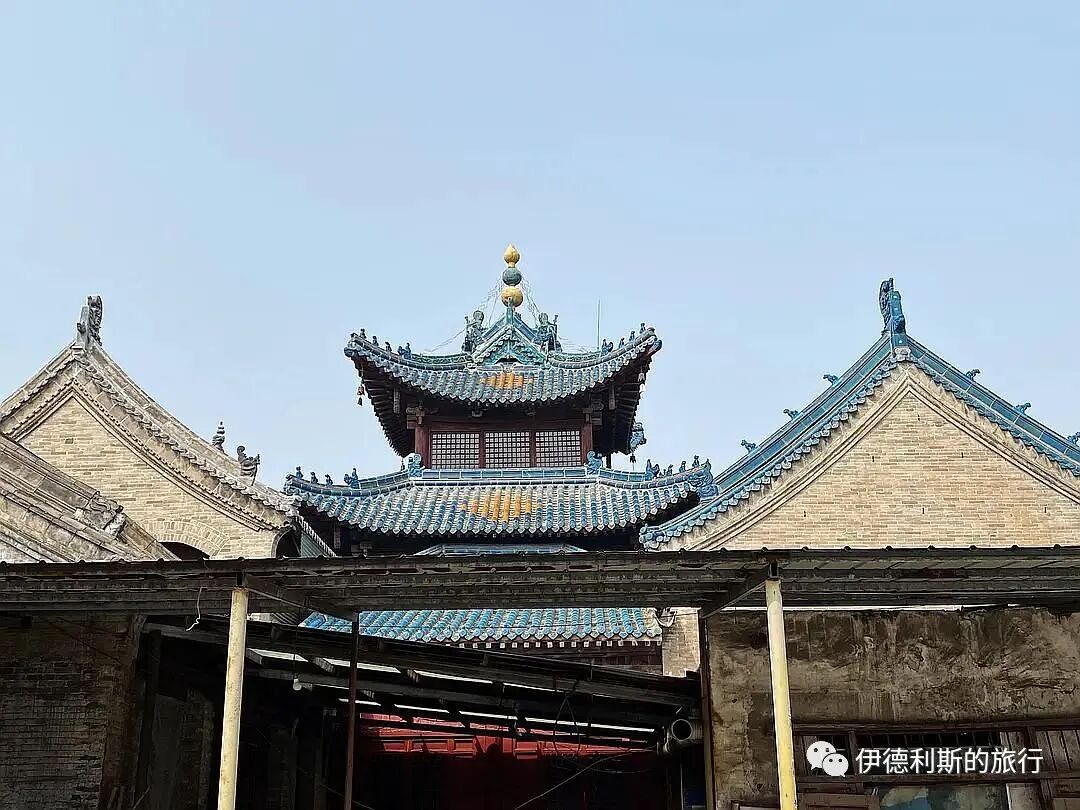
The Xiguan Mosque was first built in the Yuan Dynasty, and the main hall was expanded in 1405 (the 3rd year of the Yongle reign of the Ming Dynasty). It is currently a national cultural heritage site and is known as the 'First Mosque of Northern Henan'.
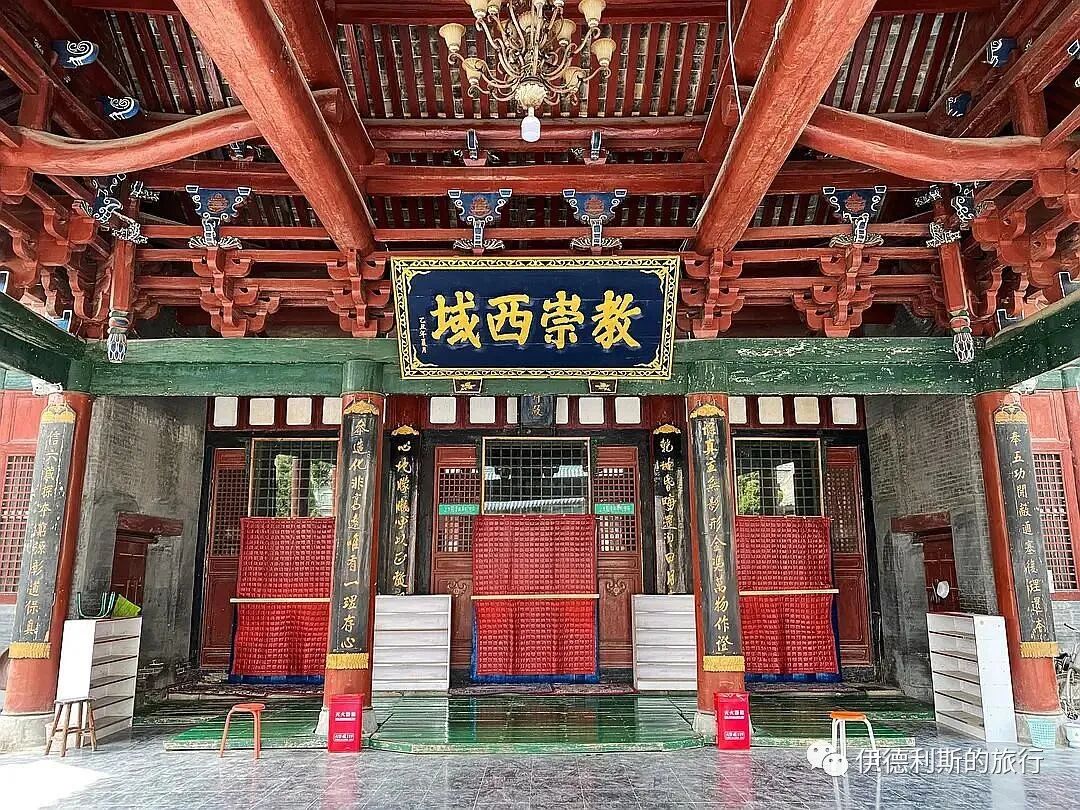
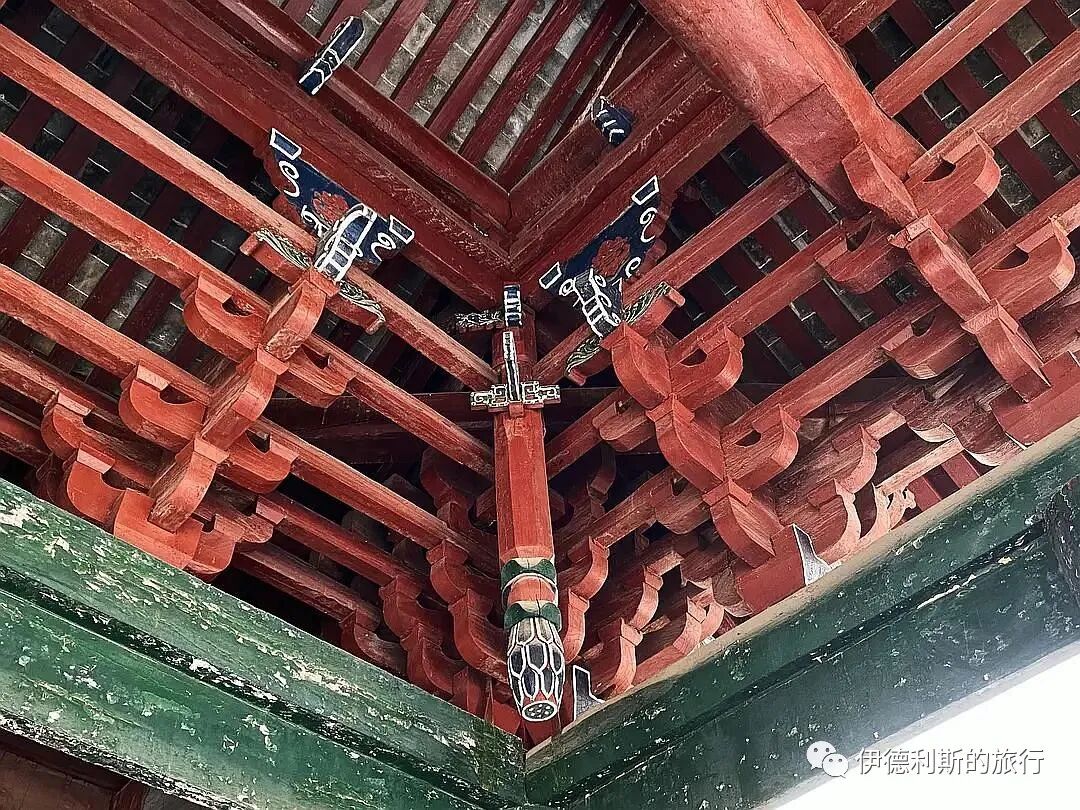
The main hall consists of a juanpeng, a front hall, a yaodian (middle hall), and a rear hall. In 1863 (the 2nd year of the Tongzhi reign), the yaodian was burned down by the Nian Army and later rebuilt to its original appearance. In 1941, a rear hall was added behind the yaodian, and the yaodian became the middle hall. The main hall is a raised-beam timber frame structure with 16 columns in 4 rows supporting the beam framework. The middle hall has 4 tall columns supporting the roof of the yaodian; inside the yaodian roof is a zaojing (caisson ceiling), and the exterior features a triple-eave, four-corner cross-ridge roof.
I performed the peshin (noon prayer) at the mosque and also caught the dhikr (remembrance of Allah) ceremony.
Main gate.
Glazed memorial archway.
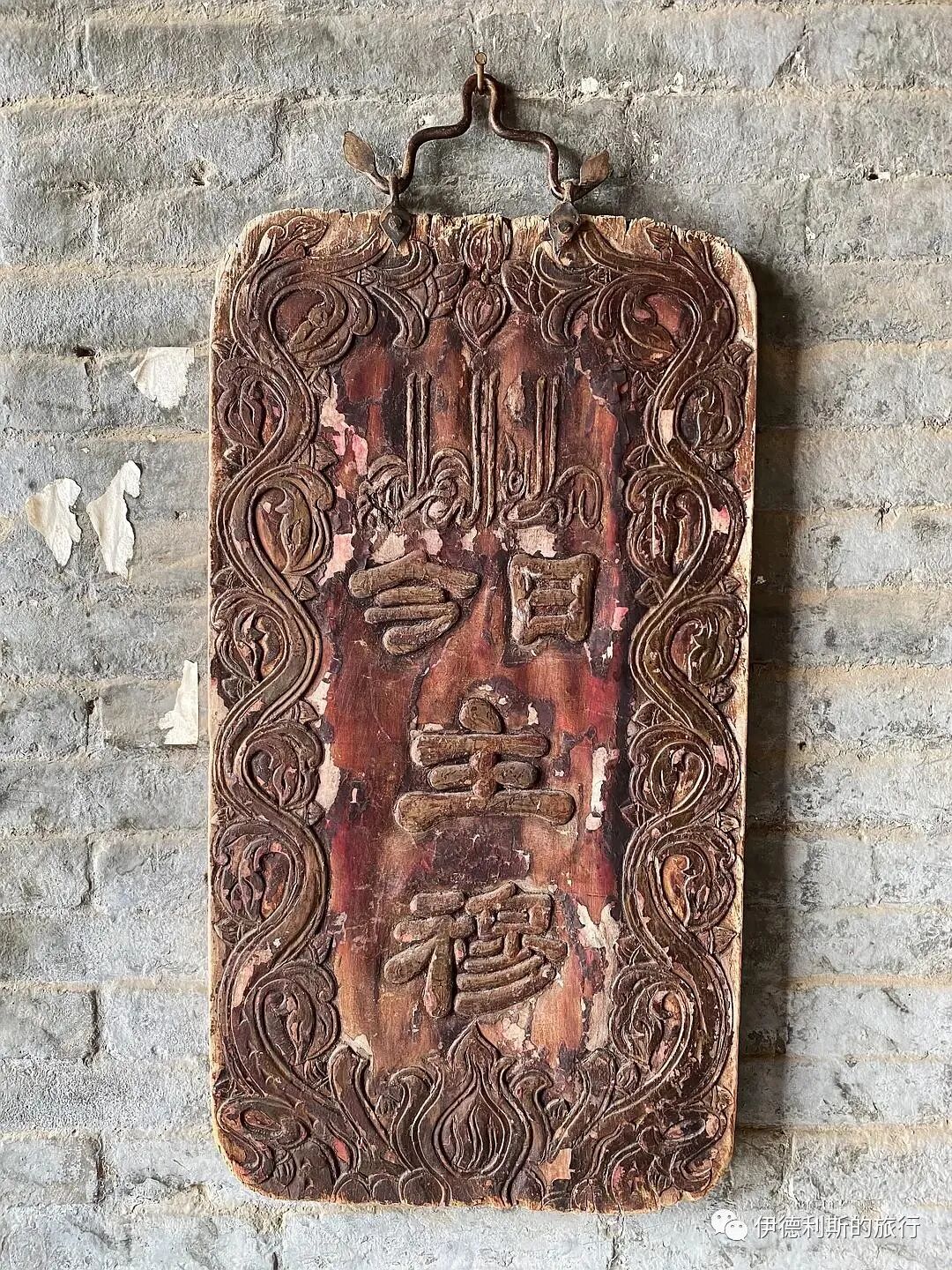
Jumu (Friday prayer) plaque.
2. Bo'ai Erxianmiao Mosque: Qing Dynasty.
The Erxianmiao Mosque was first built in the Yuan Dynasty, renovated in 1638 (the 11th year of the Chongzhen reign of the Ming Dynasty), and renovated again in 1731 (the 9th year of the Yongzheng reign of the Qing Dynasty). It is a cultural heritage site of Henan Province. The mosque's main hall consists of a juanpeng, a front hall, a rear hall, and a yaodian. The juanpeng and front hall are Qing Dynasty structures with hard-mountain roofs connected in a series, while the rear hall and yaodian were added in 1993.
3. Bo'ai Daxinzhuang Dongdasi (Great Eastern Mosque): Expanded in the Ming Dynasty.
The Daxinzhuang Dongdasi was first built in the Yuan Dynasty, expanded in the Ming Dynasty, and had a rear hall added during the Republic of China era. It is currently a cultural heritage site of Henan Province.
The main hall consists of a juanpeng, a front hall, a rear hall, and a yaodian. The juanpeng is an independent structure, with a drainage gutter installed where it connects to the front eaves of the main hall. In front of the main hall is a 365-year-old sweet osmanthus tree.
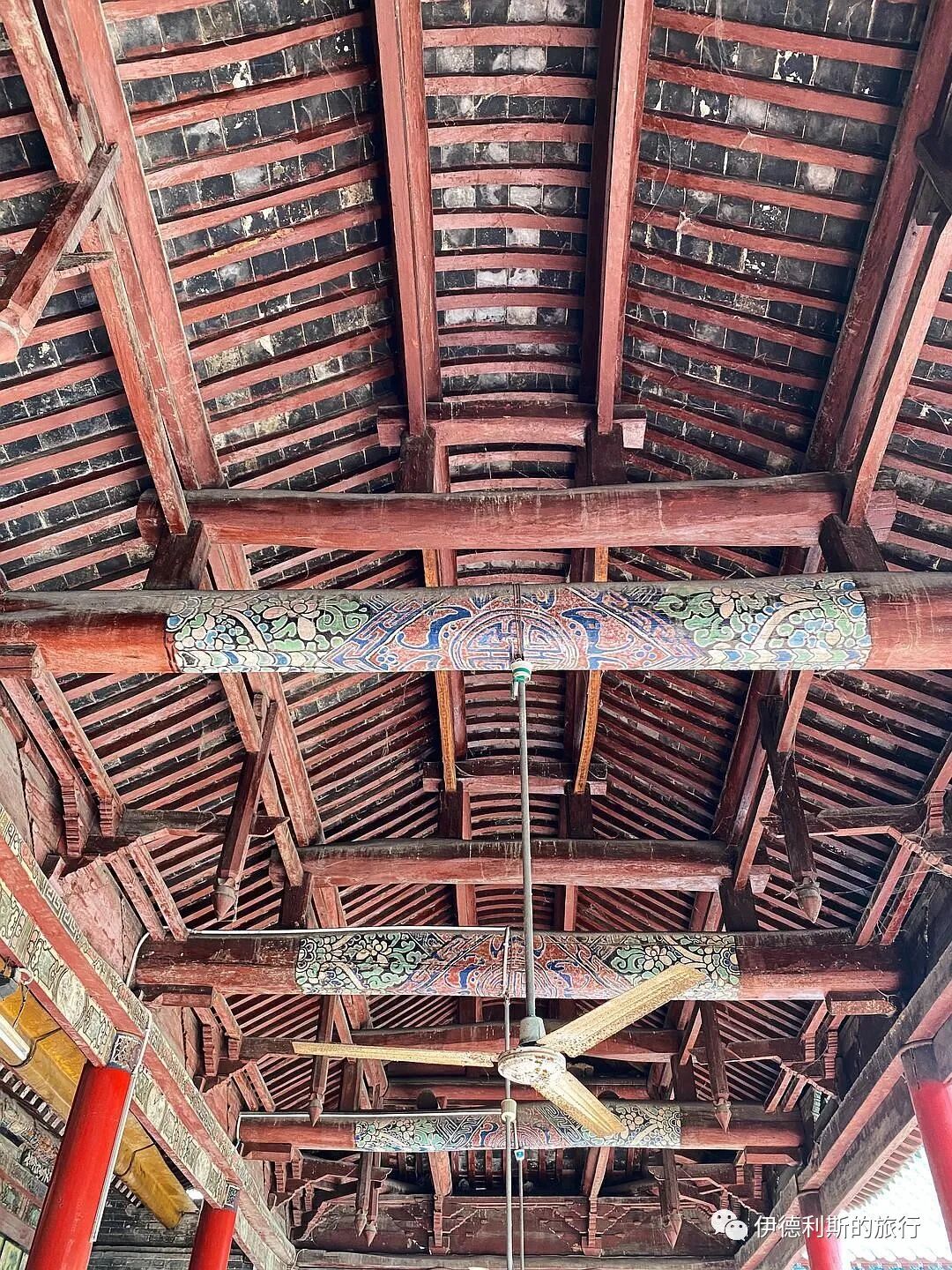
The front hall is seven bays wide, with a timber frame featuring exposed rafters, and the wood carvings on the beams and lintels are very beautiful. The rear hall was added during the Republic of China era and features five Roman-style arched doorways with exquisite cement decorations from that period.
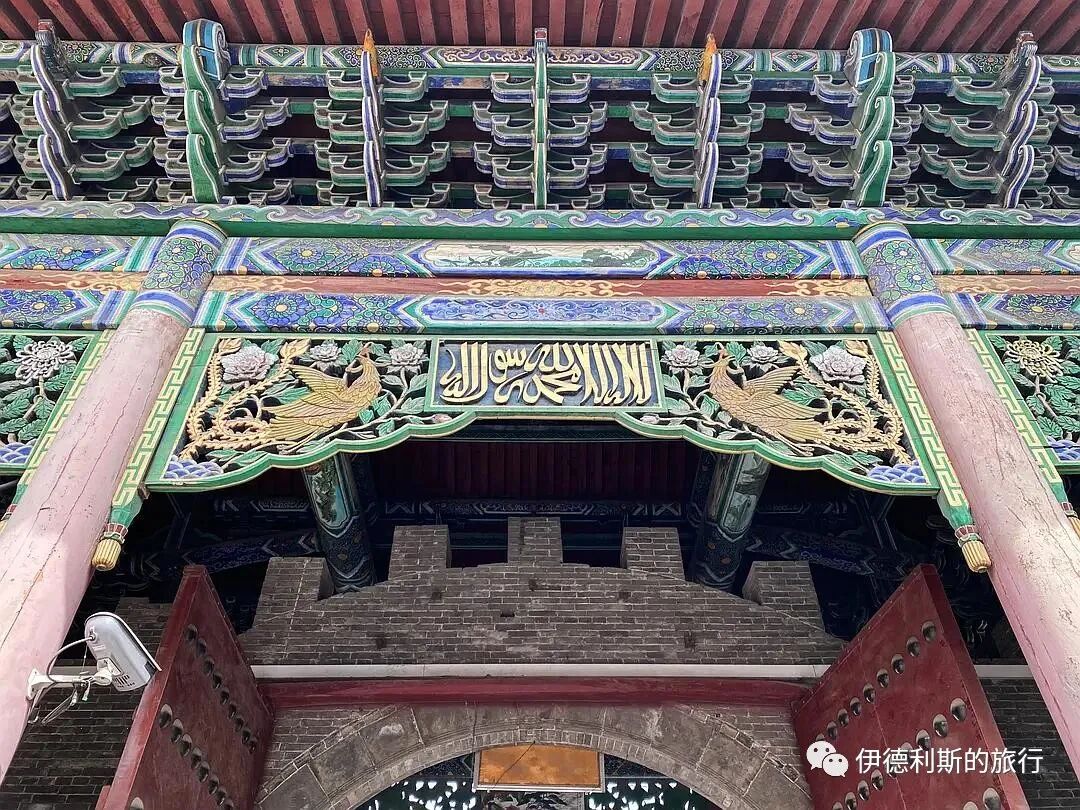
Wood carvings on the main gate.
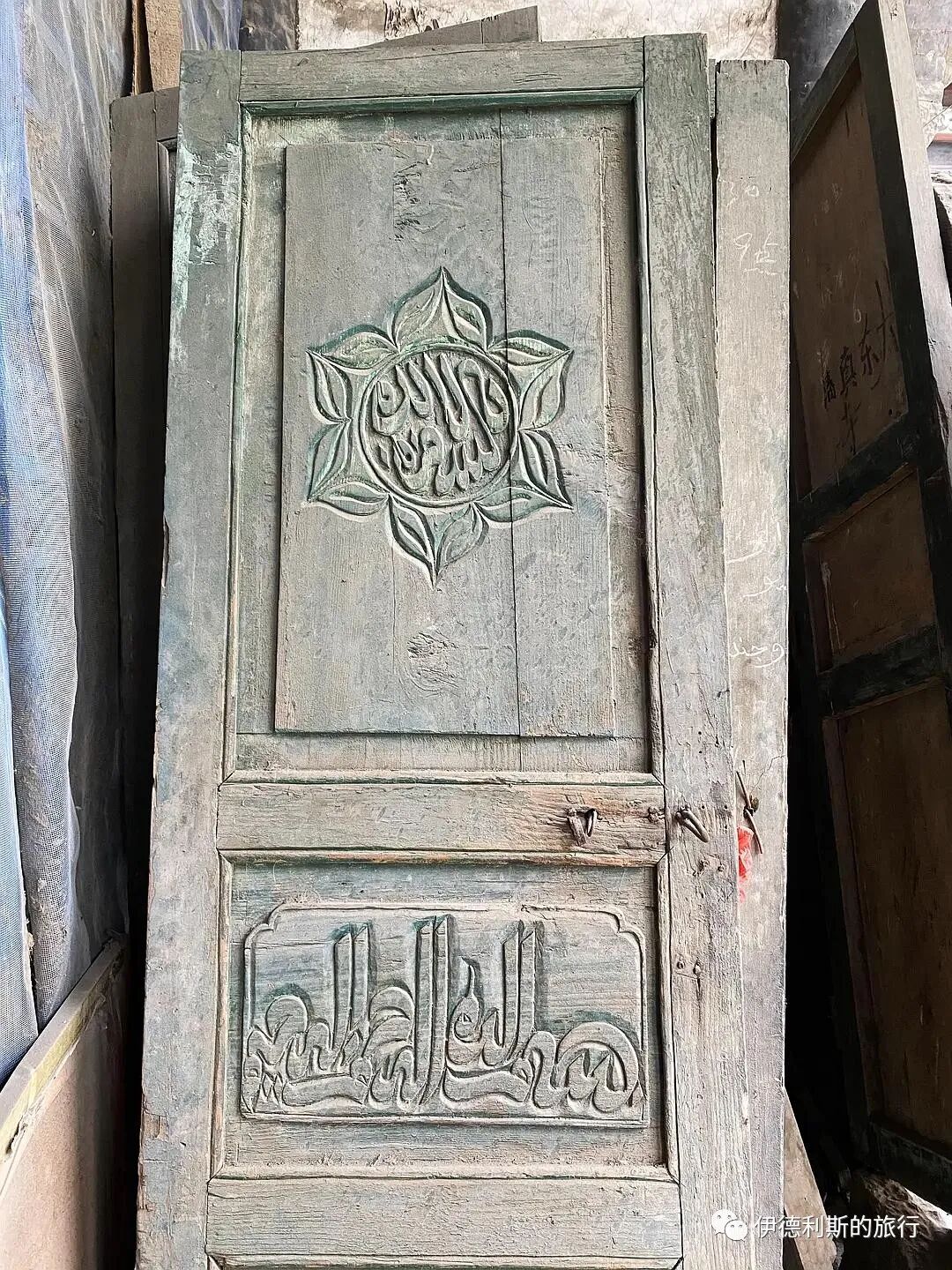
Old door panels.
4. Bo'ai Daxinzhuang Qingzhen Xisi (Western Mosque): Qing Jiaqing reign.
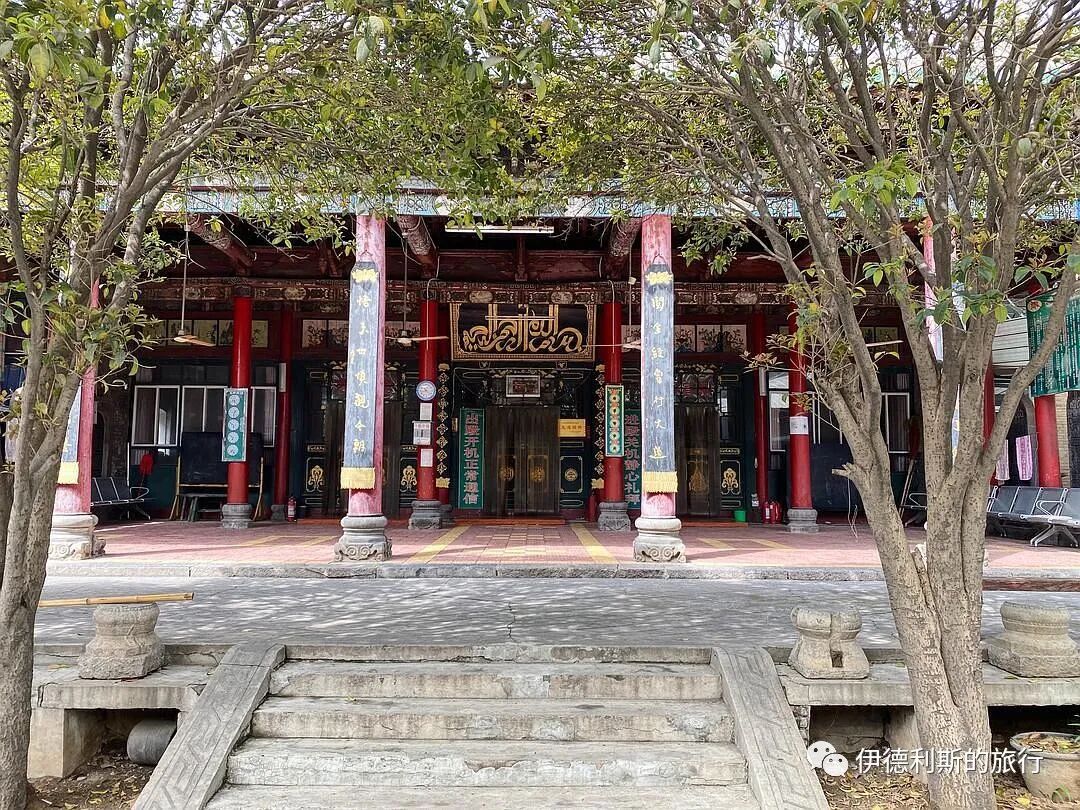
The Daxinzhuang Qingzhen Xisi is near the Dongdasi, but it is not as famous as the Dongdasi. The Xisi was first built during the Jiaqing reign of the Qing Dynasty. The main hall was originally three bays wide, expanded to five bays in the late Qing Dynasty, and expanded again to seven bays in the early Republic of China era. During this time, the elder Mai Anli funded the construction of a five-bay juanpeng.
5. Qinyang Beidasi (Northern Mosque): Rebuilt in 1631.
In my opinion, the Qinyang Beidasi definitely ranks in the top three for beauty among historical mosque buildings in Henan. The Beidasi was moved to its current site in 1561 (the 40th year of the Jiajing reign of the Ming Dynasty), burned down in 1628 (the 1st year of the Chongzhen reign), and rebuilt in 1631 (the 4th year of the Chongzhen reign). It is a major national historical and cultural site.
The overall layout of the Beidasi is quite classic, consisting mainly of the main gate, a hallway, lecture halls, and the main hall. I will share the details with you bit by bit. Because of the lighting, I photographed it twice, on Saturday afternoon and Sunday morning.
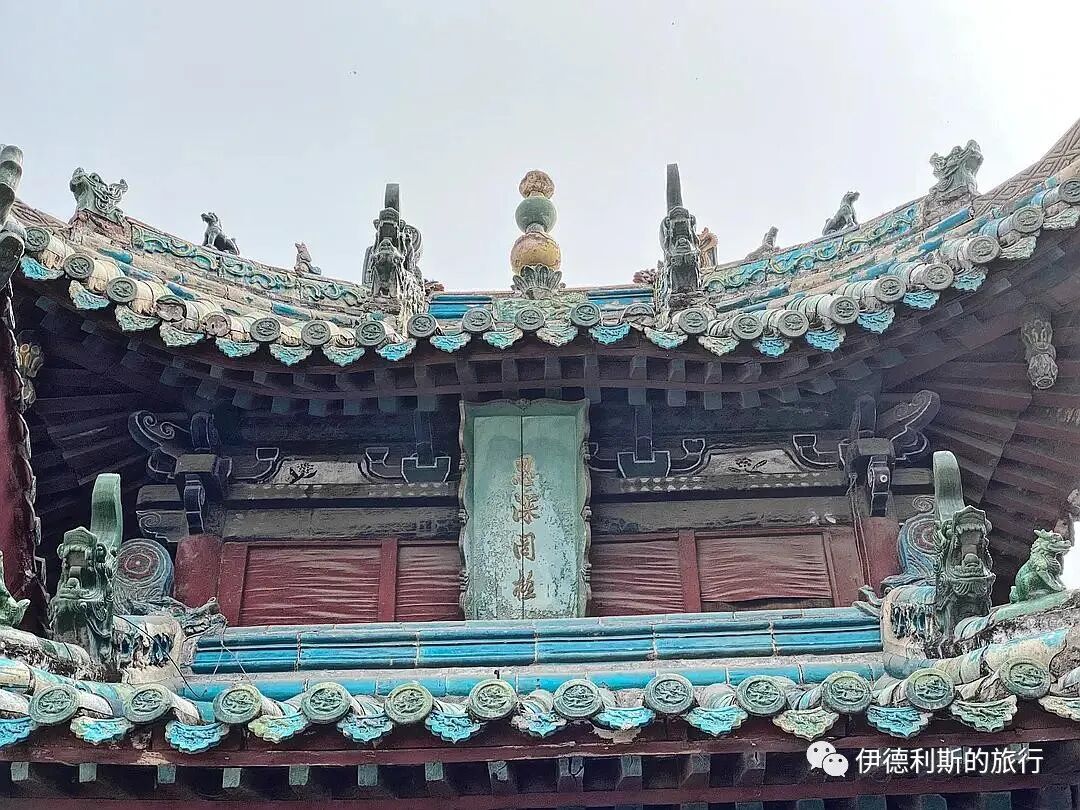
The main gate was built in 1799 (the 4th year of the Jiaqing reign) and uses peacock-blue glazed tiles, which are relatively rare in mosque architecture and look very refreshing.
The hallway built in 1631 (the 4th year of the Chongzhen reign of the Ming Dynasty).
The lecture hall built in 1909 (the 1st year of the Xuantong reign). The north and south lecture halls have hard-mountain roofs, with hanging floral columns under the eaves and diamond-patterned doors and windows, simple and elegant.
Scripture boxes in the Imam's office.
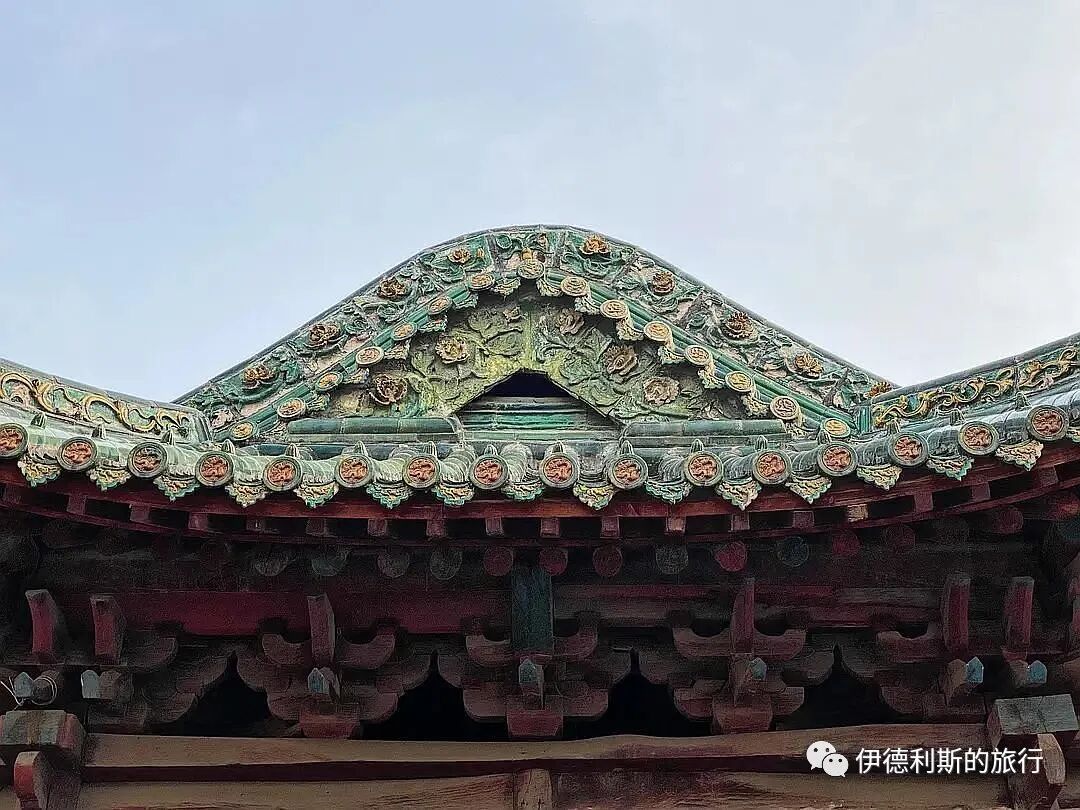
The main hall consists of a juanpeng, a front hall, a middle hall, and a yaodian. This architectural style, with a front hall featuring a hip-and-gable roof, a middle hall with a hanging-mountain roof, and a raised yaodian, is unique to the Qinyang area. First, I will share the exterior of the juanpeng and the front hall.
The beautiful Qing Dynasty paintings inside the main hall; thanks to Imam Ma Hongjie for the wonderful introduction. The main hall of the Beidasi was occupied by a factory in the 1960s and 70s, and the lower paintings all faded; only the paintings on the ceiling were luckily preserved.
The yaodian was renovated in 1887 (the 13th year of the Guangxu reign). The interior is a brick-vaulted structure, built with two semi-circular arches made of walls over 1 meter thick, with three layers of corbelled arches at the corners to form an octagonal well, topped by a corbelled dome. At the very top of the central dome is carved the Arabic word for 'Allah'.
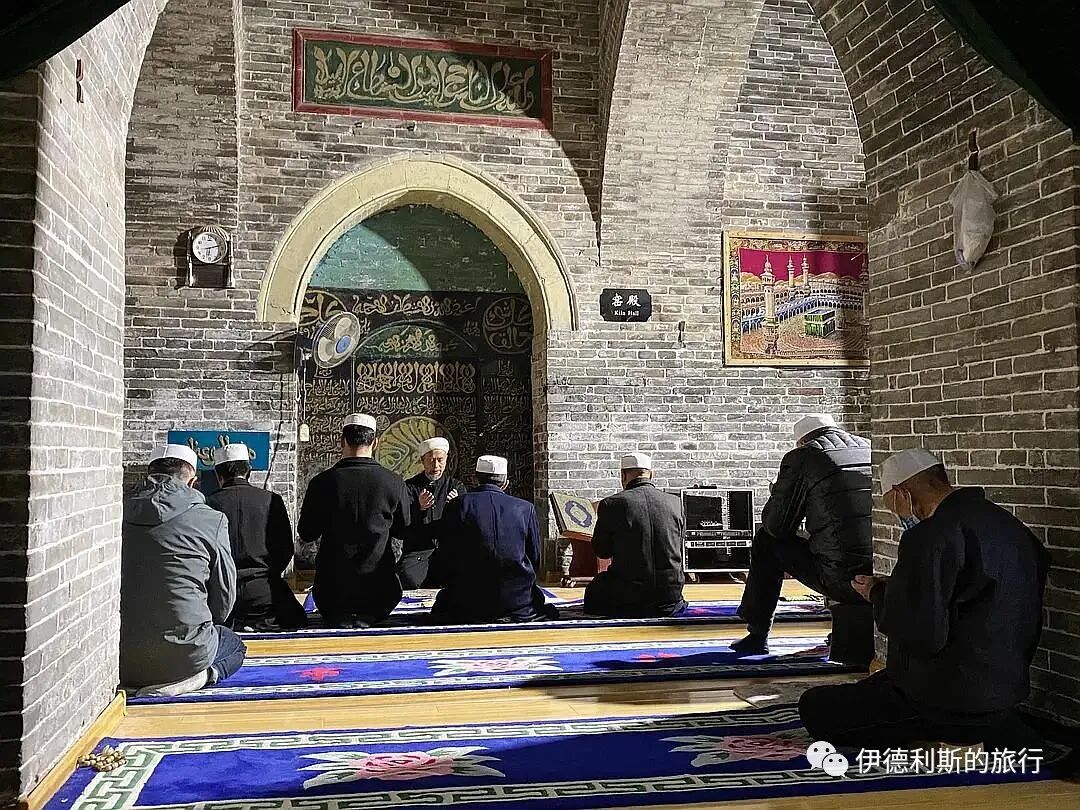
There is very beautiful calligraphy on the mihrab (niche indicating the direction of Mecca). Imam Ma Hongjie gave us a detailed introduction here, and I also caught the dhikr ceremony.
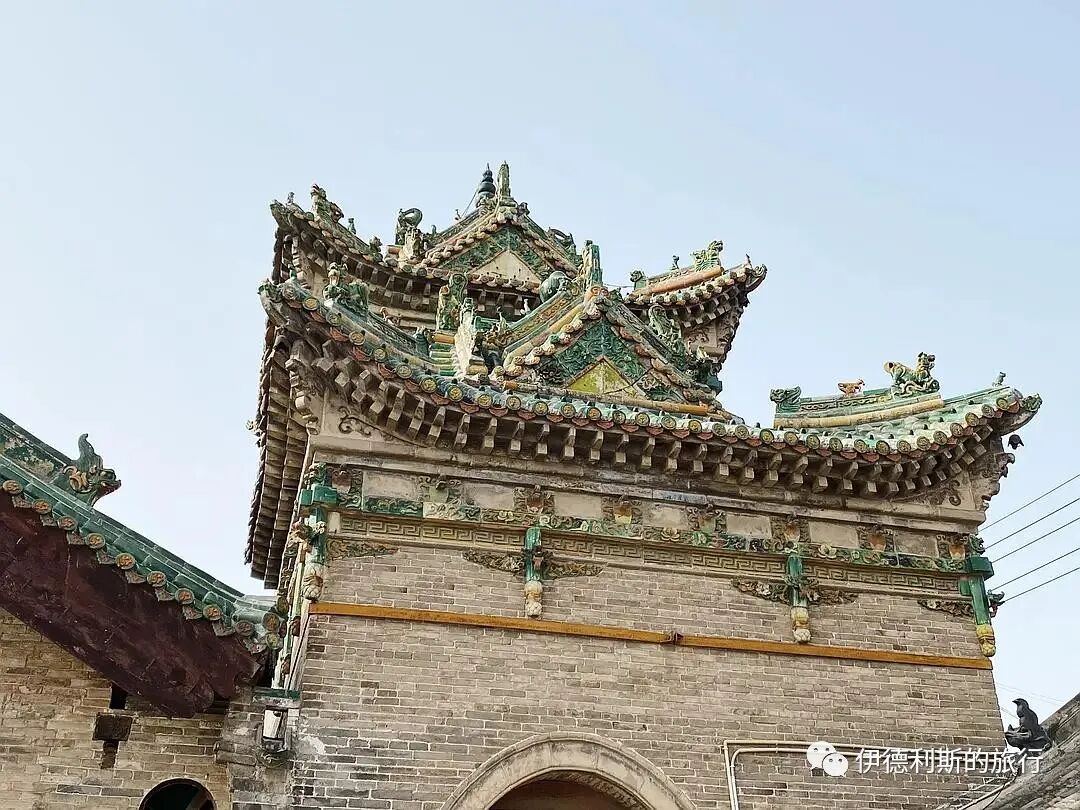
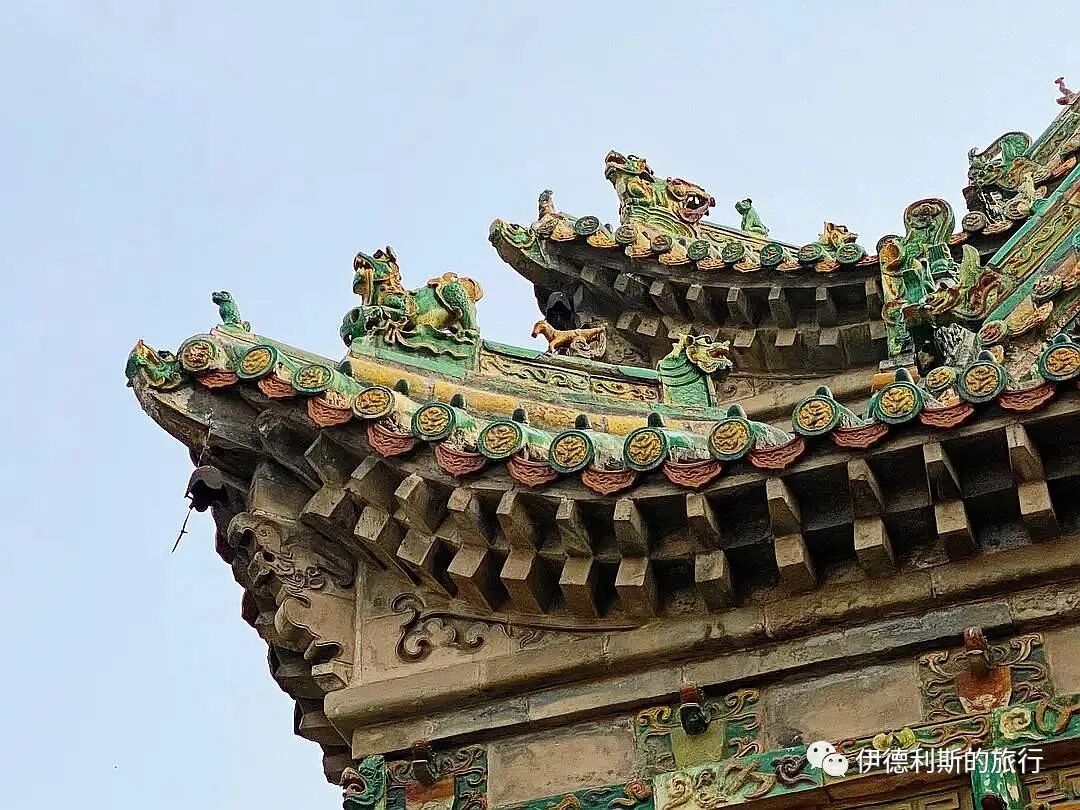
The exterior of the yaodian is a cross-ridge roof with over 70 glazed ridge beasts. Under the eaves are glazed lintels, brackets, and hanging floral columns, colorful and representing the highest standard of Qing Dynasty mosque yaodian roofs. view all
Summary: This travel note introduces Halal Travel Guide to Henan: 14 Traditional Mosques (Part 2). The main hall was renovated twice in 1802 (the 7th year of the Jiaqing reign) and 1907 (the 33rd year of the Guangxu reign), and consists of a juanpeng (open-fronted shed), the main hall, and a yaodian (niche hall). It is useful for readers interested in Henan Mosques, Chinese Muslims, Islamic Heritage.
Stone inscriptions in the courtyard.
The main hall was renovated twice in 1802 (the 7th year of the Jiaqing reign) and 1907 (the 33rd year of the Guangxu reign), and consists of a juanpeng (open-fronted shed), the main hall, and a yaodian (niche hall). The main hall features a raised-beam timber frame with exposed rafters, and the beams and lintels are covered with cloud and floral patterns, making it unique and elegant. There is a huazhao (decorative floral screen) between the main hall and the yaodian, which is filled with openwork patterns; light shines from the bright yaodian through the screen into the main hall, creating an exquisite and translucent effect on the screen.
In front of the main hall are two century-old sweet osmanthus trees.
Couplets inside the main hall:
For the painting of the heavens, one must know there is no second artist.
For the scriptures covering the earth, one must ponder who holds the brush.
Recognize Allah, who has no form or shadow, and let all things serve as witness.
Contemplate creation, it is not high or distant, for the only truth lies within the heart.
Behind the main hall, next to the yaodian, stands a Chinese juniper tree over four hundred years old.
3. Jiaozuo
1. Bo'ai Xiguan Mosque: Expanded in 1405.
The Xiguan Mosque was first built in the Yuan Dynasty, and the main hall was expanded in 1405 (the 3rd year of the Yongle reign of the Ming Dynasty). It is currently a national cultural heritage site and is known as the 'First Mosque of Northern Henan'.
The main hall consists of a juanpeng, a front hall, a yaodian (middle hall), and a rear hall. In 1863 (the 2nd year of the Tongzhi reign), the yaodian was burned down by the Nian Army and later rebuilt to its original appearance. In 1941, a rear hall was added behind the yaodian, and the yaodian became the middle hall. The main hall is a raised-beam timber frame structure with 16 columns in 4 rows supporting the beam framework. The middle hall has 4 tall columns supporting the roof of the yaodian; inside the yaodian roof is a zaojing (caisson ceiling), and the exterior features a triple-eave, four-corner cross-ridge roof.
I performed the peshin (noon prayer) at the mosque and also caught the dhikr (remembrance of Allah) ceremony.
Main gate.
Glazed memorial archway.
Jumu (Friday prayer) plaque.
2. Bo'ai Erxianmiao Mosque: Qing Dynasty.
The Erxianmiao Mosque was first built in the Yuan Dynasty, renovated in 1638 (the 11th year of the Chongzhen reign of the Ming Dynasty), and renovated again in 1731 (the 9th year of the Yongzheng reign of the Qing Dynasty). It is a cultural heritage site of Henan Province. The mosque's main hall consists of a juanpeng, a front hall, a rear hall, and a yaodian. The juanpeng and front hall are Qing Dynasty structures with hard-mountain roofs connected in a series, while the rear hall and yaodian were added in 1993.
3. Bo'ai Daxinzhuang Dongdasi (Great Eastern Mosque): Expanded in the Ming Dynasty.
The Daxinzhuang Dongdasi was first built in the Yuan Dynasty, expanded in the Ming Dynasty, and had a rear hall added during the Republic of China era. It is currently a cultural heritage site of Henan Province.
The main hall consists of a juanpeng, a front hall, a rear hall, and a yaodian. The juanpeng is an independent structure, with a drainage gutter installed where it connects to the front eaves of the main hall. In front of the main hall is a 365-year-old sweet osmanthus tree.
The front hall is seven bays wide, with a timber frame featuring exposed rafters, and the wood carvings on the beams and lintels are very beautiful. The rear hall was added during the Republic of China era and features five Roman-style arched doorways with exquisite cement decorations from that period.
Wood carvings on the main gate.
Old door panels.
4. Bo'ai Daxinzhuang Qingzhen Xisi (Western Mosque): Qing Jiaqing reign.
The Daxinzhuang Qingzhen Xisi is near the Dongdasi, but it is not as famous as the Dongdasi. The Xisi was first built during the Jiaqing reign of the Qing Dynasty. The main hall was originally three bays wide, expanded to five bays in the late Qing Dynasty, and expanded again to seven bays in the early Republic of China era. During this time, the elder Mai Anli funded the construction of a five-bay juanpeng.
5. Qinyang Beidasi (Northern Mosque): Rebuilt in 1631.
In my opinion, the Qinyang Beidasi definitely ranks in the top three for beauty among historical mosque buildings in Henan. The Beidasi was moved to its current site in 1561 (the 40th year of the Jiajing reign of the Ming Dynasty), burned down in 1628 (the 1st year of the Chongzhen reign), and rebuilt in 1631 (the 4th year of the Chongzhen reign). It is a major national historical and cultural site.
The overall layout of the Beidasi is quite classic, consisting mainly of the main gate, a hallway, lecture halls, and the main hall. I will share the details with you bit by bit. Because of the lighting, I photographed it twice, on Saturday afternoon and Sunday morning.
The main gate was built in 1799 (the 4th year of the Jiaqing reign) and uses peacock-blue glazed tiles, which are relatively rare in mosque architecture and look very refreshing.
The hallway built in 1631 (the 4th year of the Chongzhen reign of the Ming Dynasty).
The lecture hall built in 1909 (the 1st year of the Xuantong reign). The north and south lecture halls have hard-mountain roofs, with hanging floral columns under the eaves and diamond-patterned doors and windows, simple and elegant.
Scripture boxes in the Imam's office.
The main hall consists of a juanpeng, a front hall, a middle hall, and a yaodian. This architectural style, with a front hall featuring a hip-and-gable roof, a middle hall with a hanging-mountain roof, and a raised yaodian, is unique to the Qinyang area. First, I will share the exterior of the juanpeng and the front hall.
The beautiful Qing Dynasty paintings inside the main hall; thanks to Imam Ma Hongjie for the wonderful introduction. The main hall of the Beidasi was occupied by a factory in the 1960s and 70s, and the lower paintings all faded; only the paintings on the ceiling were luckily preserved.
The yaodian was renovated in 1887 (the 13th year of the Guangxu reign). The interior is a brick-vaulted structure, built with two semi-circular arches made of walls over 1 meter thick, with three layers of corbelled arches at the corners to form an octagonal well, topped by a corbelled dome. At the very top of the central dome is carved the Arabic word for 'Allah'.
There is very beautiful calligraphy on the mihrab (niche indicating the direction of Mecca). Imam Ma Hongjie gave us a detailed introduction here, and I also caught the dhikr ceremony.
The exterior of the yaodian is a cross-ridge roof with over 70 glazed ridge beasts. Under the eaves are glazed lintels, brackets, and hanging floral columns, colorful and representing the highest standard of Qing Dynasty mosque yaodian roofs. view all
Reposted from the web
Summary: This travel note introduces Halal Travel Guide to Henan: 14 Traditional Mosques (Part 2). The main hall was renovated twice in 1802 (the 7th year of the Jiaqing reign) and 1907 (the 33rd year of the Guangxu reign), and consists of a juanpeng (open-fronted shed), the main hall, and a yaodian (niche hall). It is useful for readers interested in Henan Mosques, Chinese Muslims, Islamic Heritage.
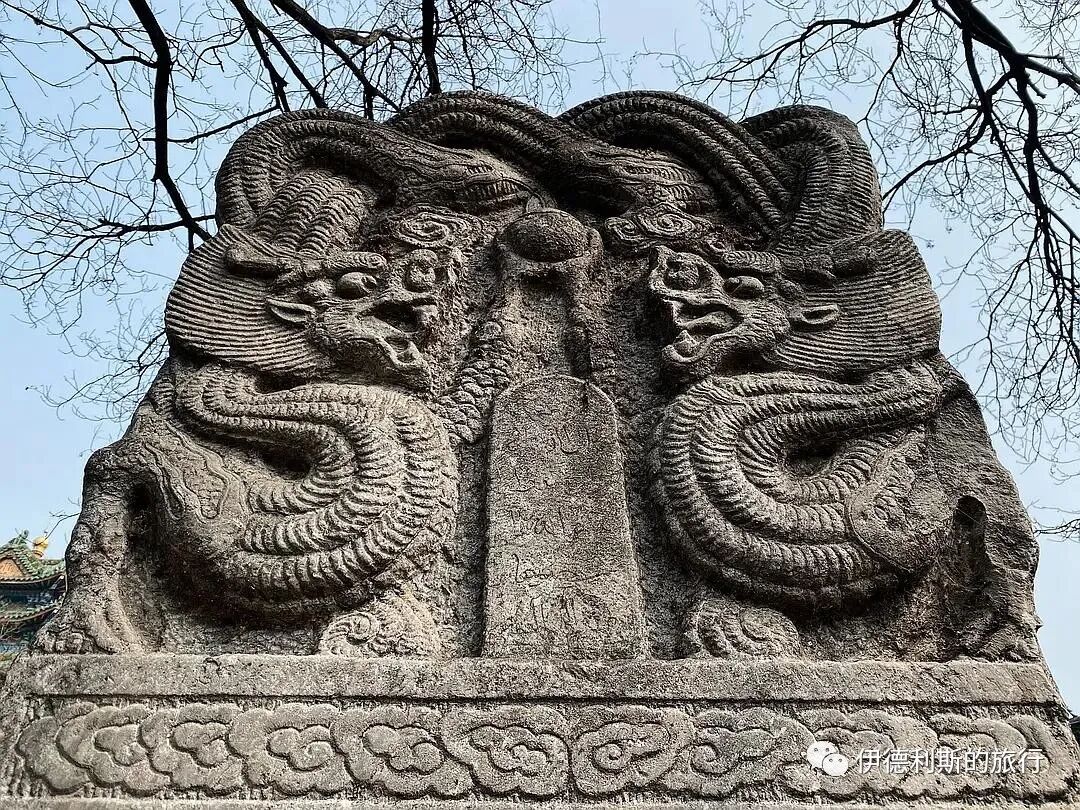
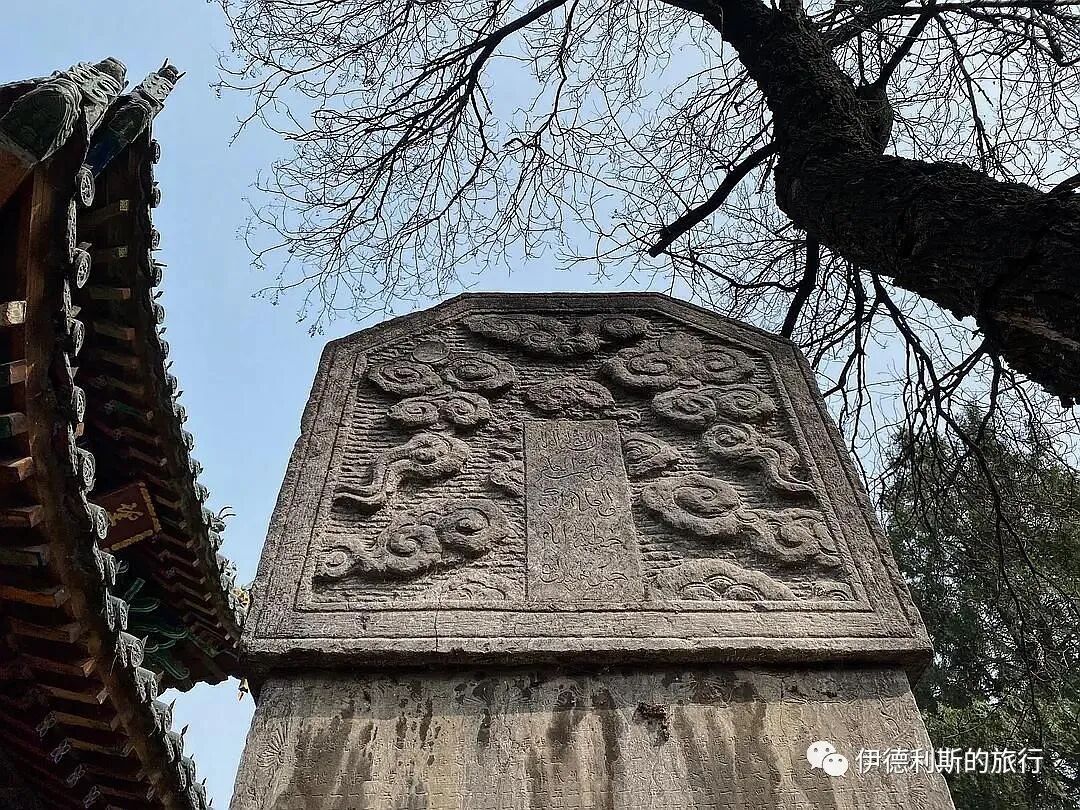
Stone inscriptions in the courtyard.
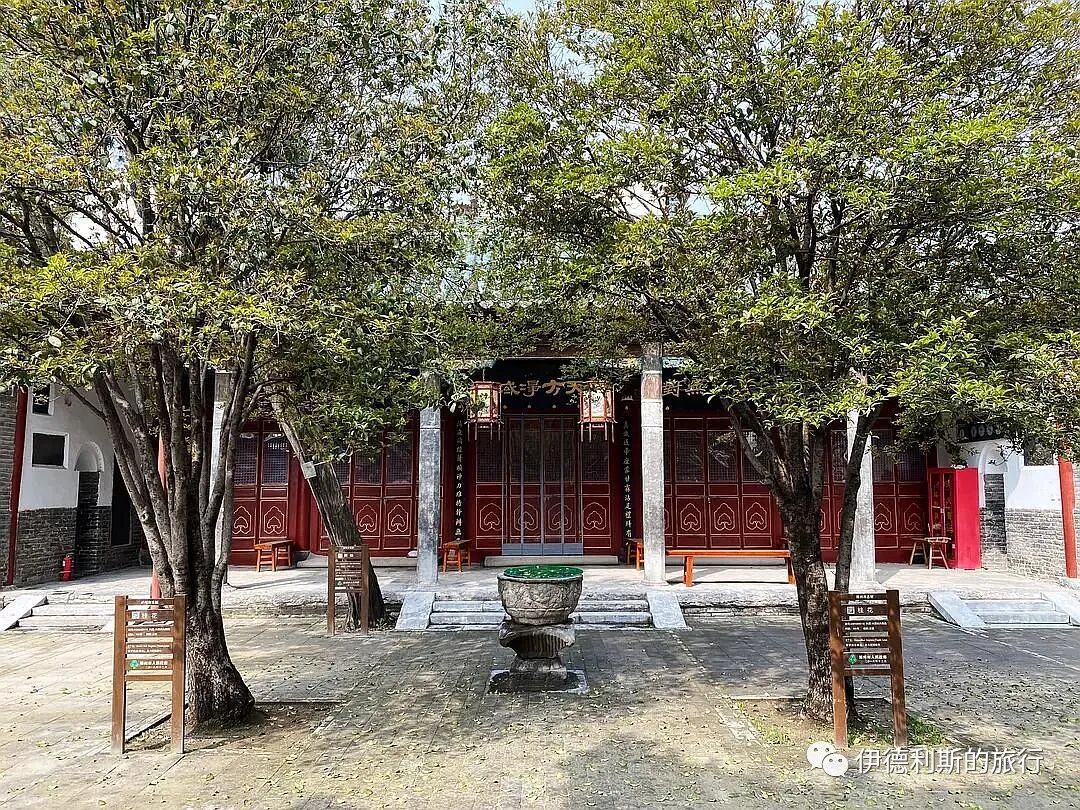
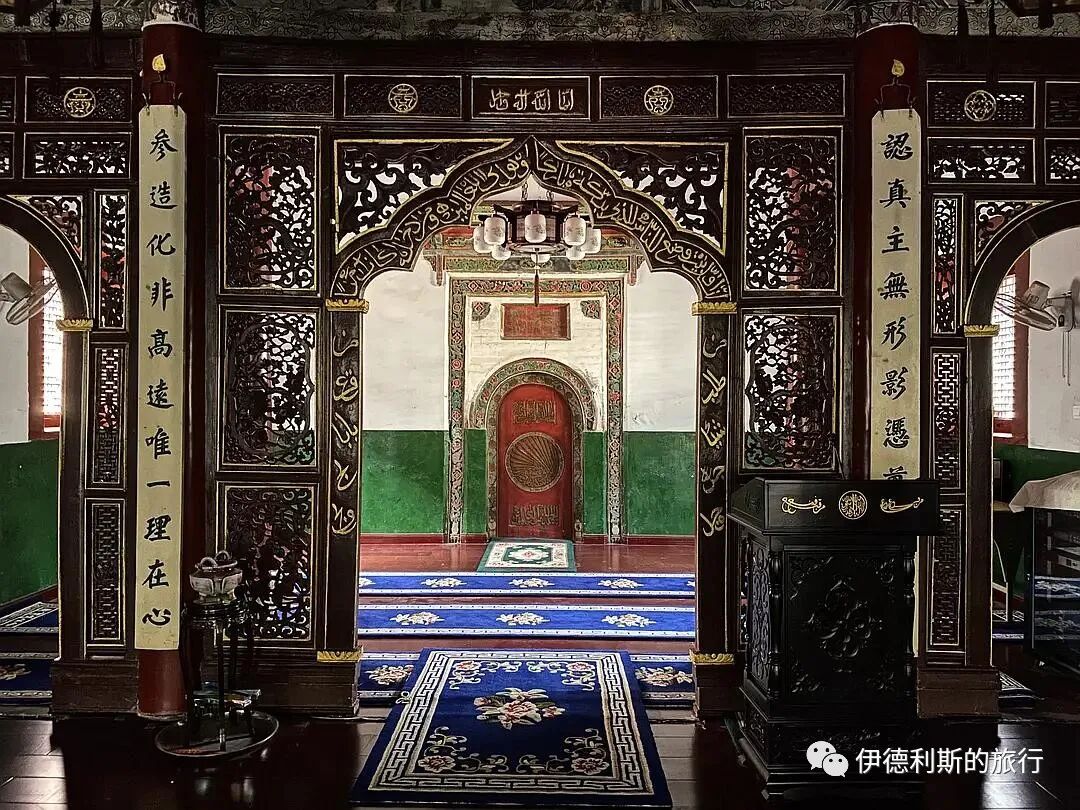
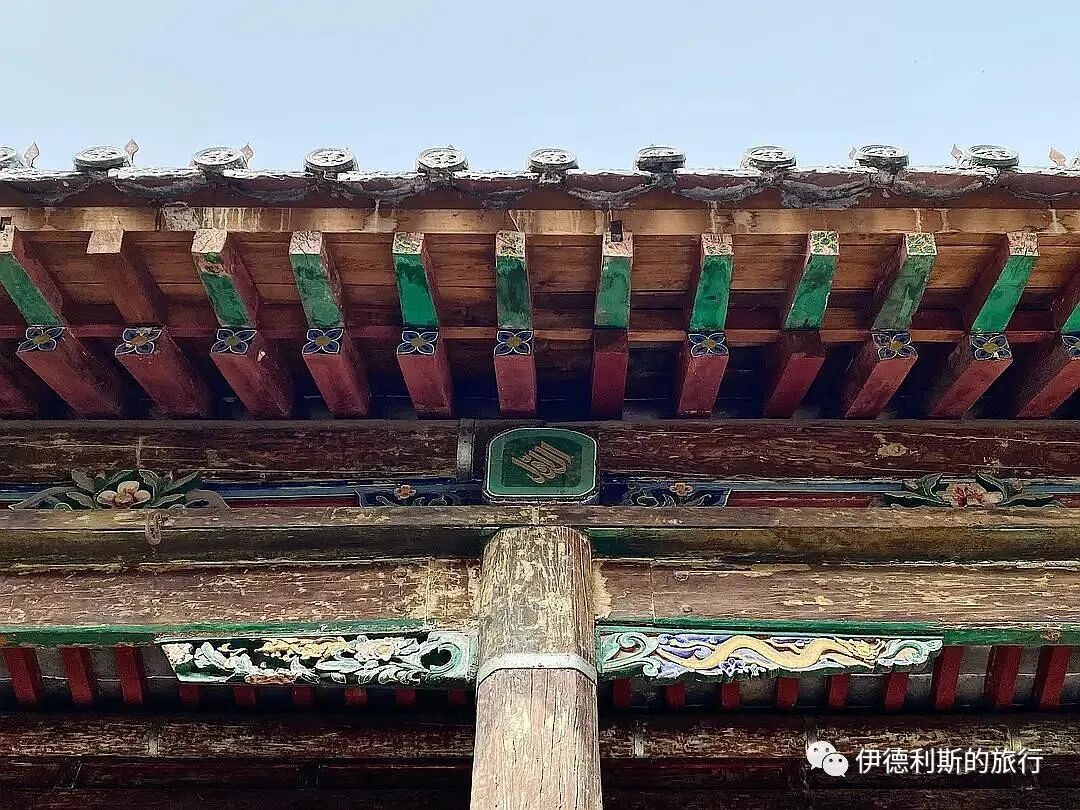
The main hall was renovated twice in 1802 (the 7th year of the Jiaqing reign) and 1907 (the 33rd year of the Guangxu reign), and consists of a juanpeng (open-fronted shed), the main hall, and a yaodian (niche hall). The main hall features a raised-beam timber frame with exposed rafters, and the beams and lintels are covered with cloud and floral patterns, making it unique and elegant. There is a huazhao (decorative floral screen) between the main hall and the yaodian, which is filled with openwork patterns; light shines from the bright yaodian through the screen into the main hall, creating an exquisite and translucent effect on the screen.
In front of the main hall are two century-old sweet osmanthus trees.
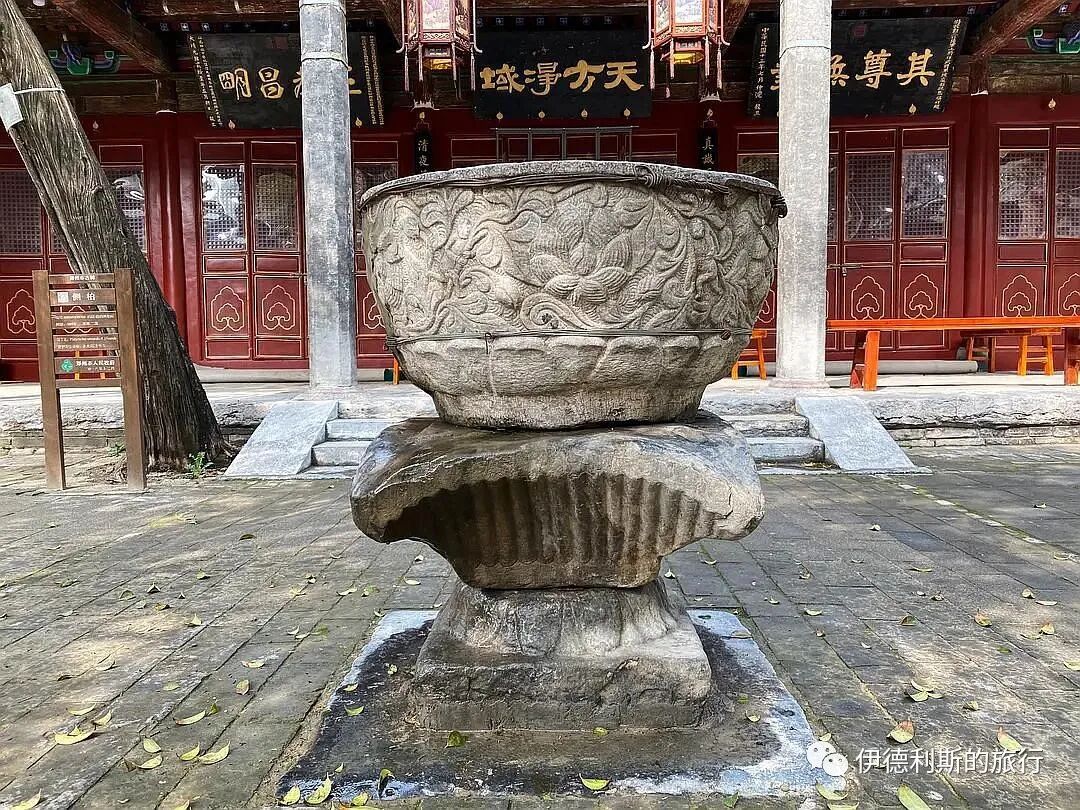
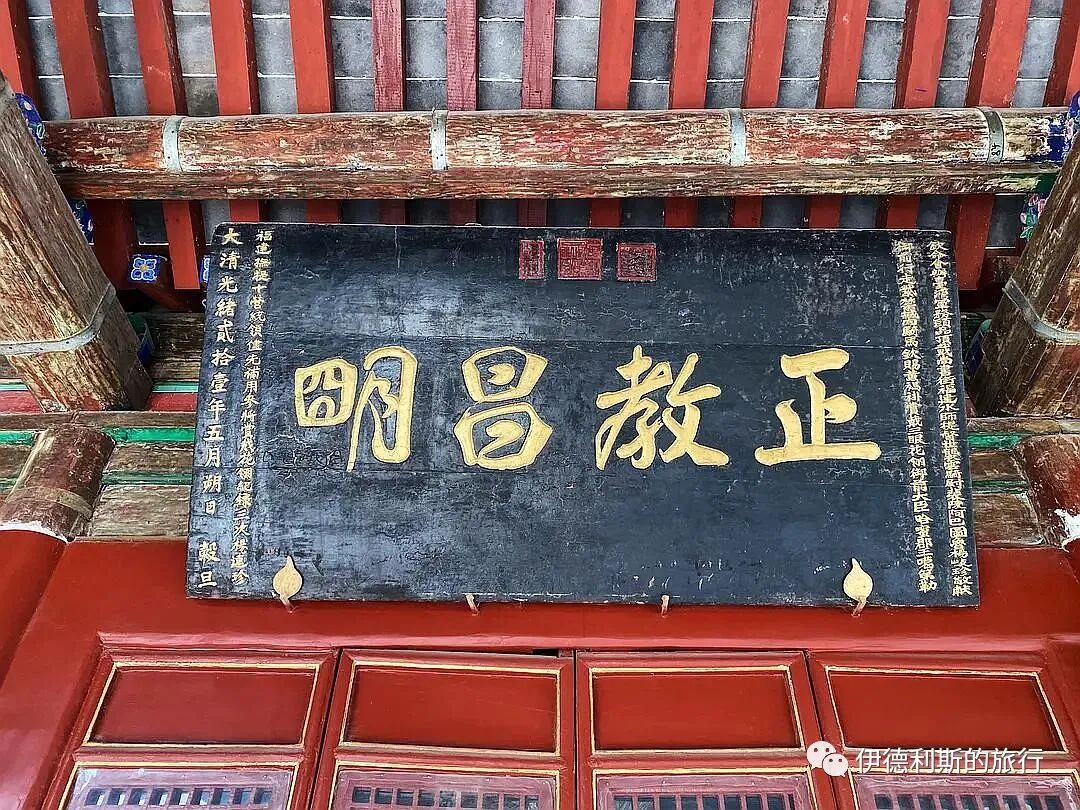
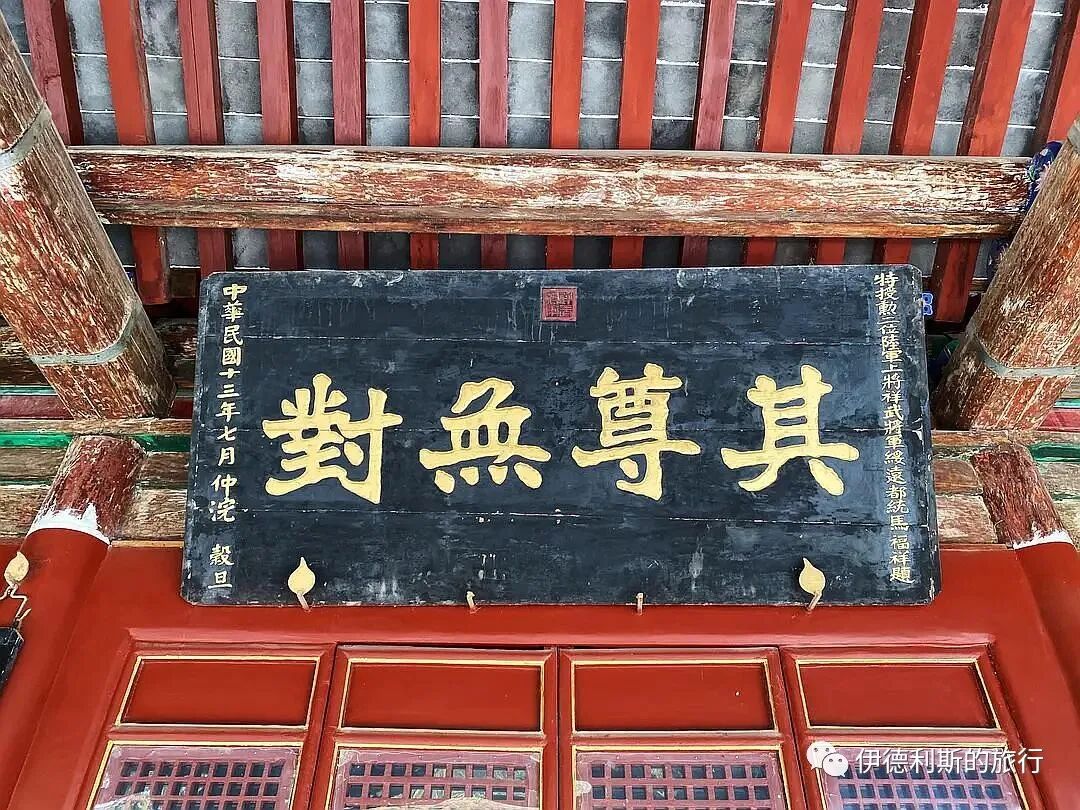
Couplets inside the main hall:
For the painting of the heavens, one must know there is no second artist.
For the scriptures covering the earth, one must ponder who holds the brush.
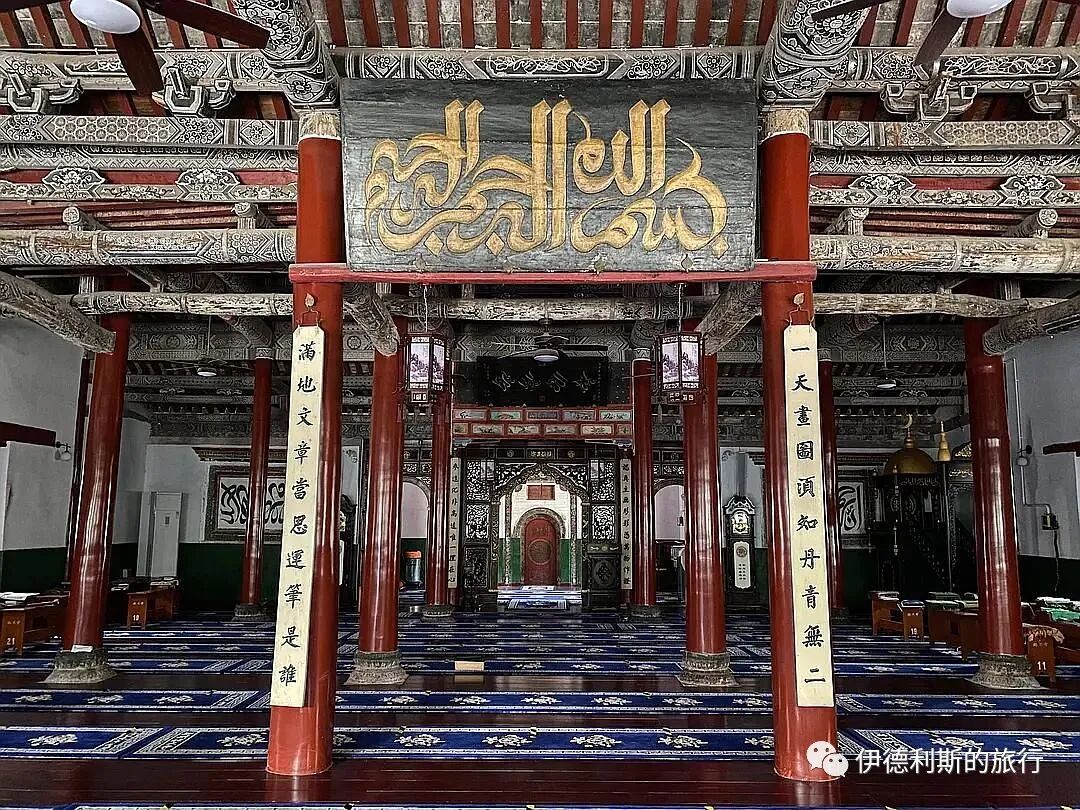
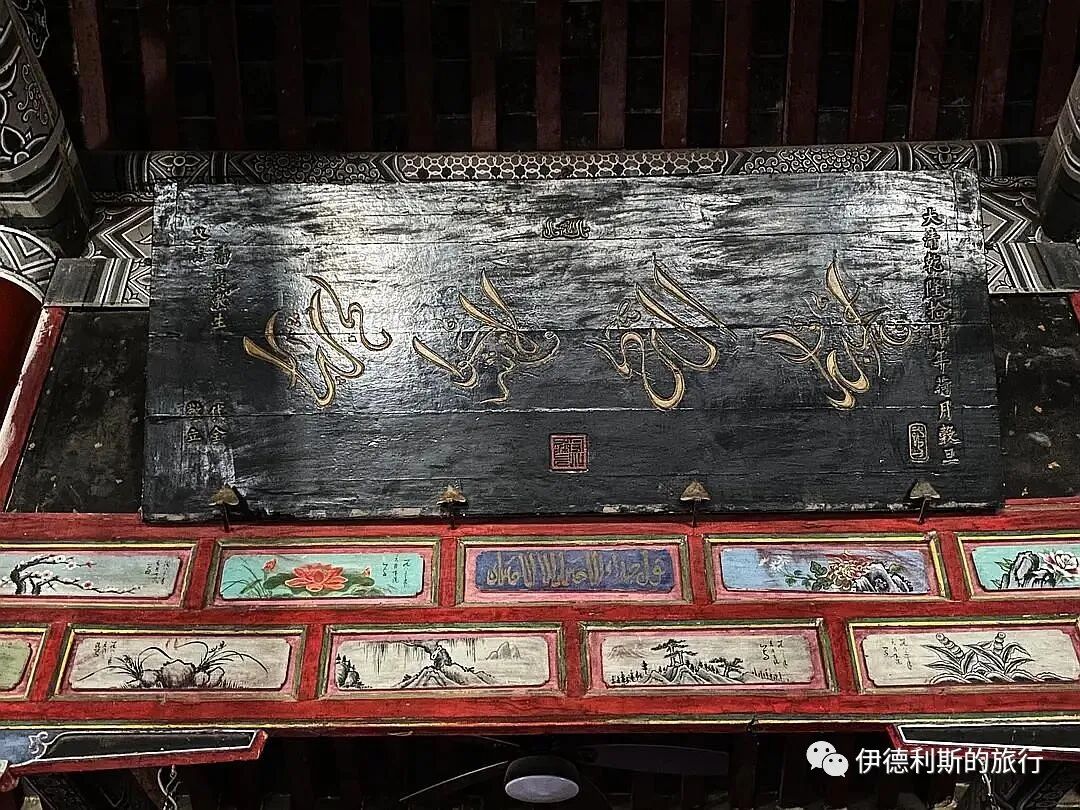
Recognize Allah, who has no form or shadow, and let all things serve as witness.
Contemplate creation, it is not high or distant, for the only truth lies within the heart.
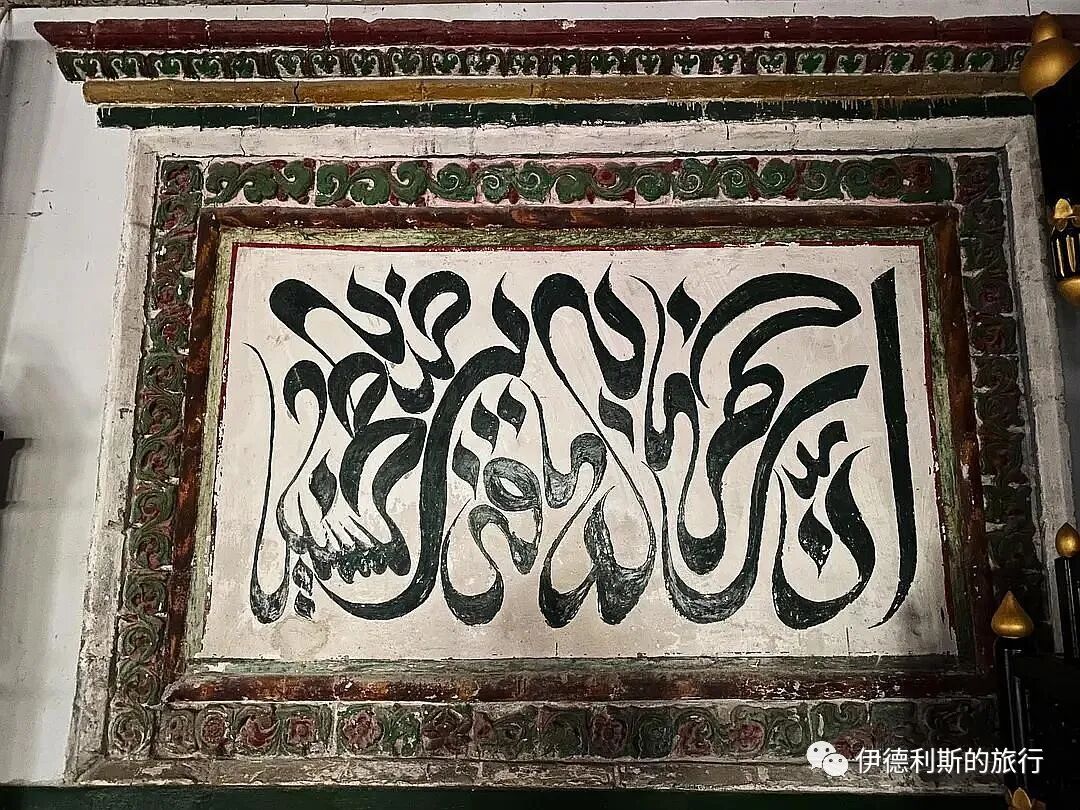
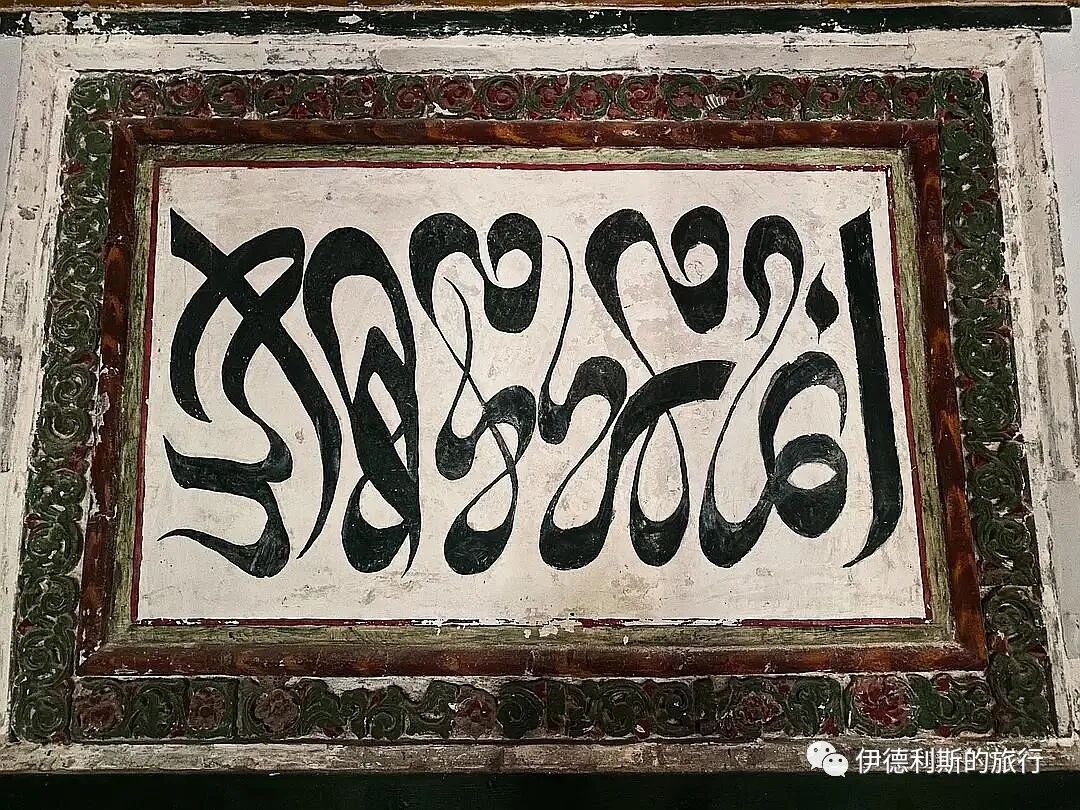
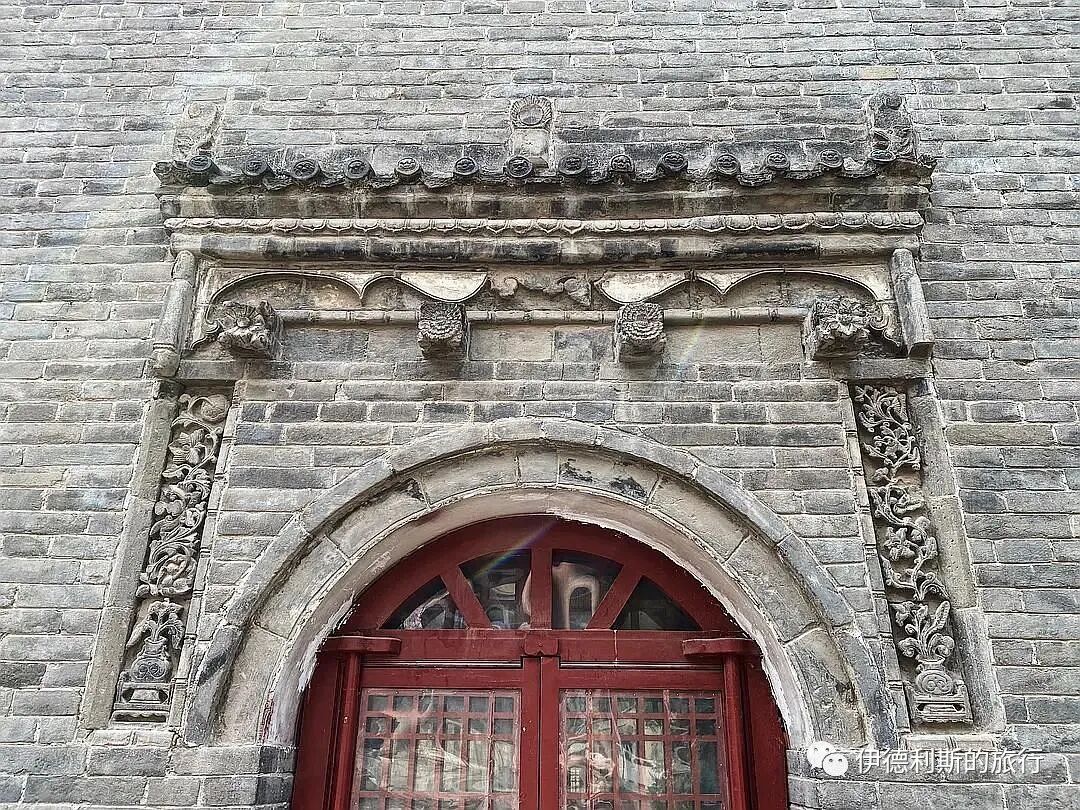
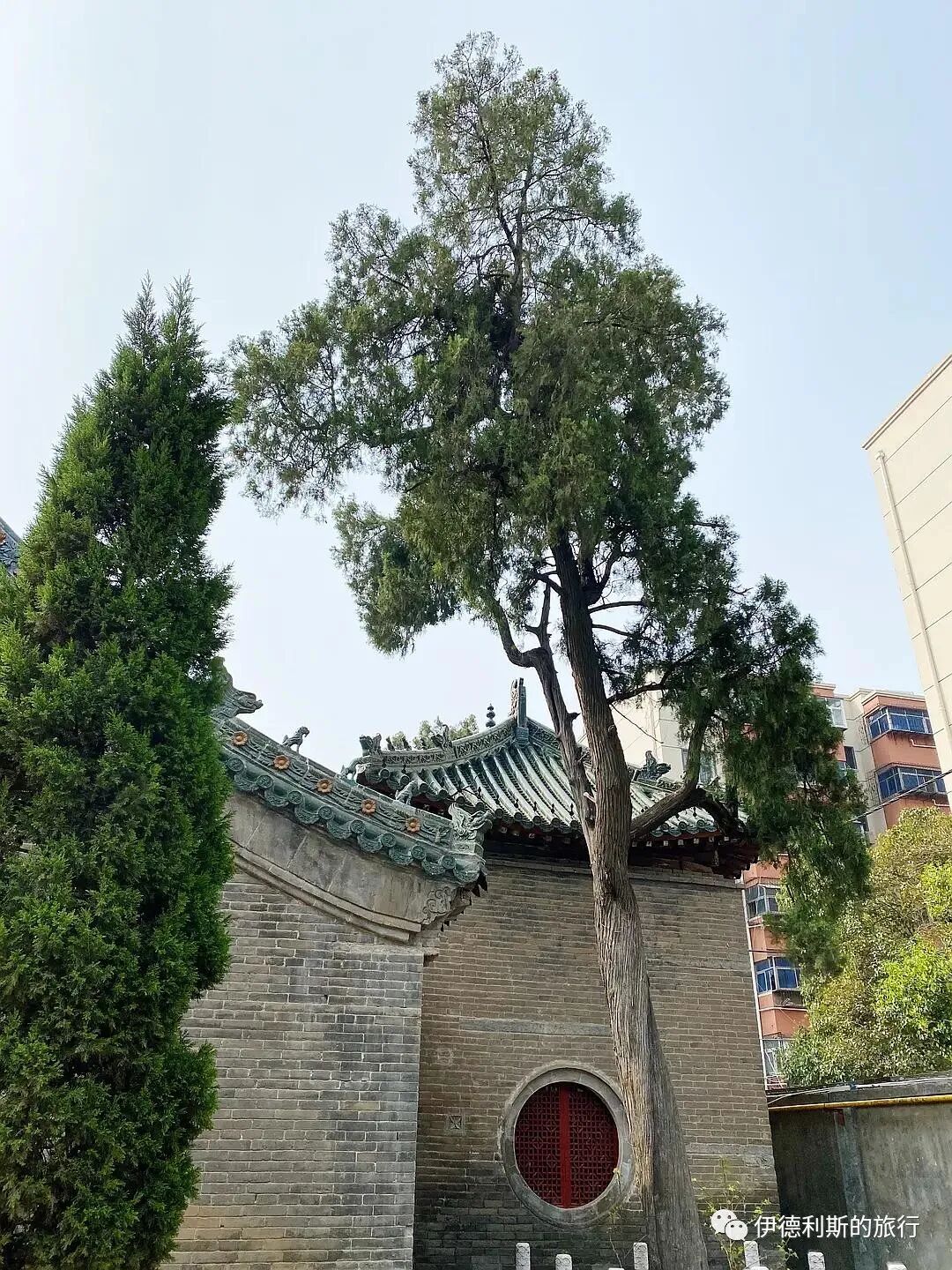
Behind the main hall, next to the yaodian, stands a Chinese juniper tree over four hundred years old.
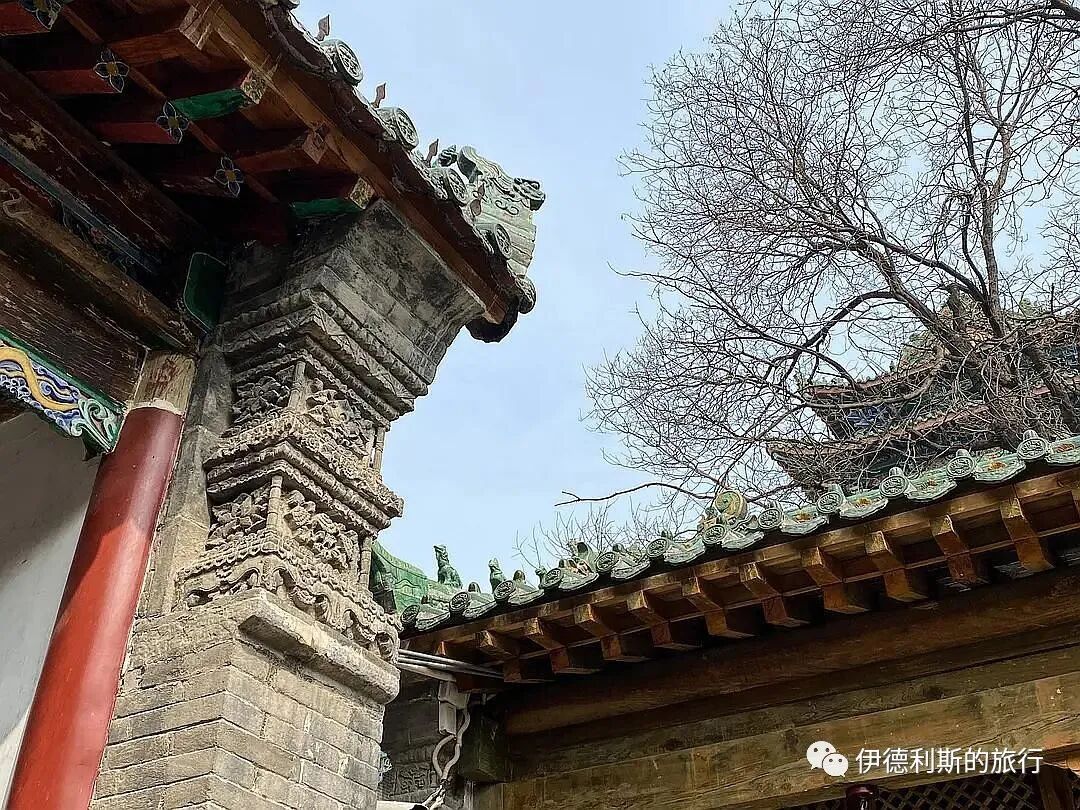
3. Jiaozuo
1. Bo'ai Xiguan Mosque: Expanded in 1405.
The Xiguan Mosque was first built in the Yuan Dynasty, and the main hall was expanded in 1405 (the 3rd year of the Yongle reign of the Ming Dynasty). It is currently a national cultural heritage site and is known as the 'First Mosque of Northern Henan'.
The main hall consists of a juanpeng, a front hall, a yaodian (middle hall), and a rear hall. In 1863 (the 2nd year of the Tongzhi reign), the yaodian was burned down by the Nian Army and later rebuilt to its original appearance. In 1941, a rear hall was added behind the yaodian, and the yaodian became the middle hall. The main hall is a raised-beam timber frame structure with 16 columns in 4 rows supporting the beam framework. The middle hall has 4 tall columns supporting the roof of the yaodian; inside the yaodian roof is a zaojing (caisson ceiling), and the exterior features a triple-eave, four-corner cross-ridge roof.
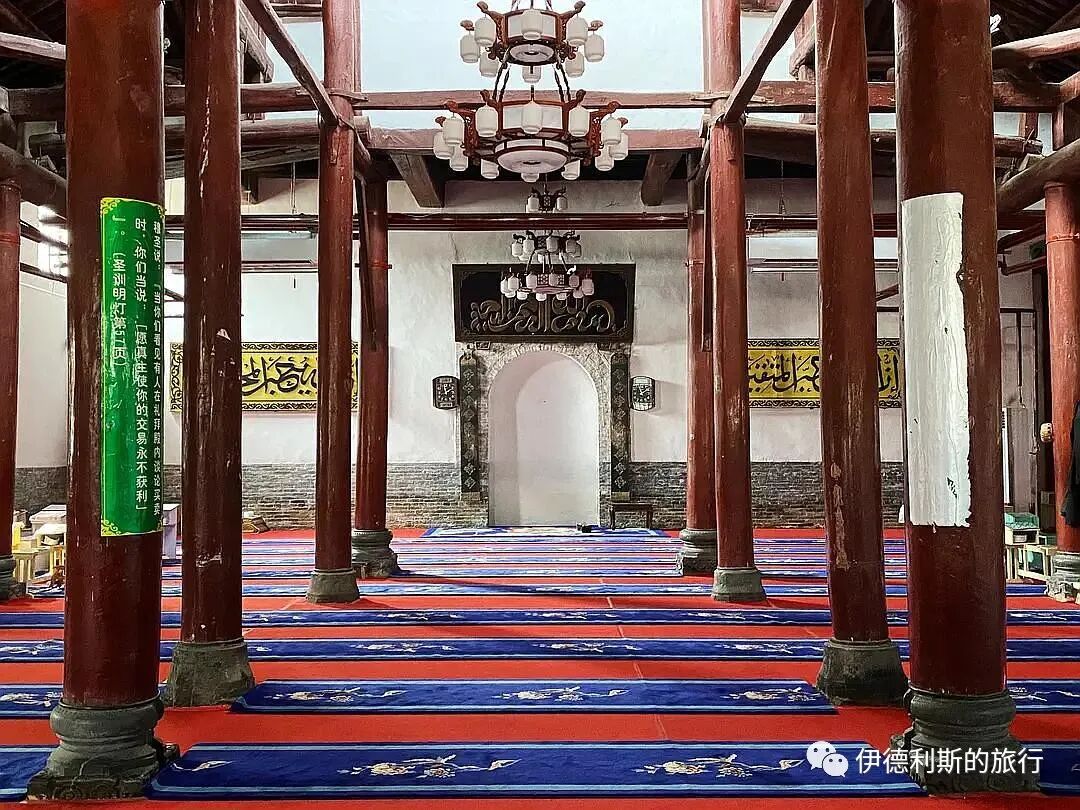
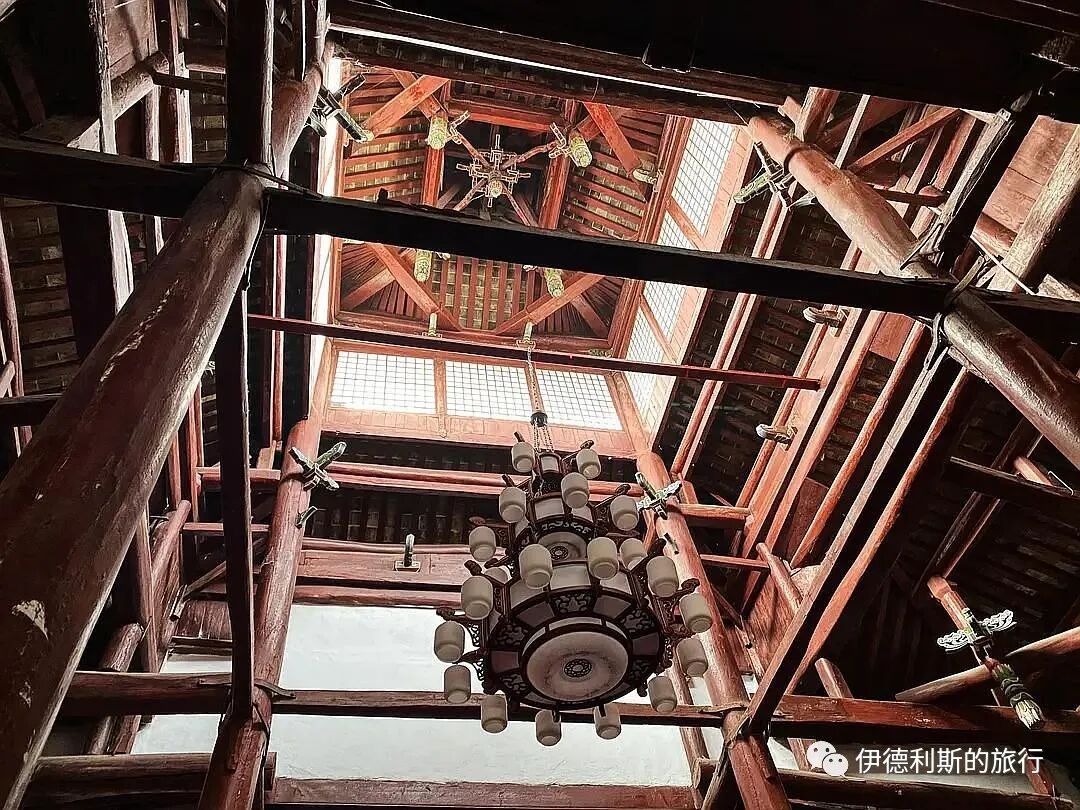
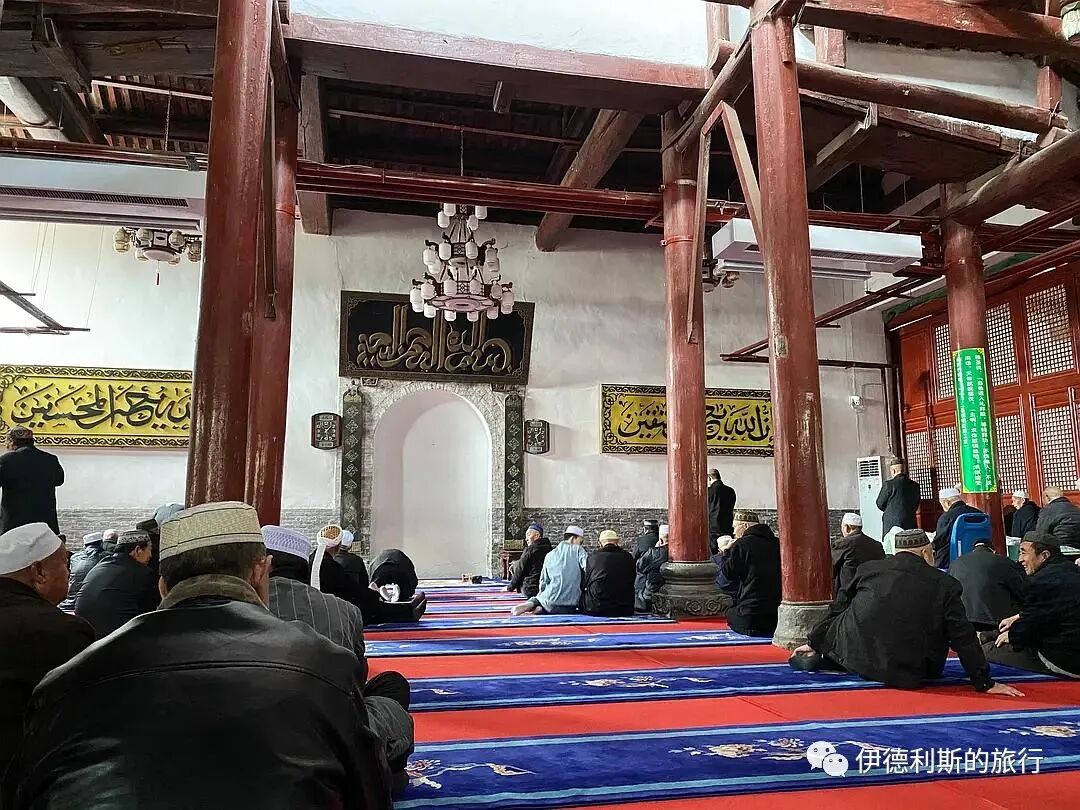
I performed the peshin (noon prayer) at the mosque and also caught the dhikr (remembrance of Allah) ceremony.
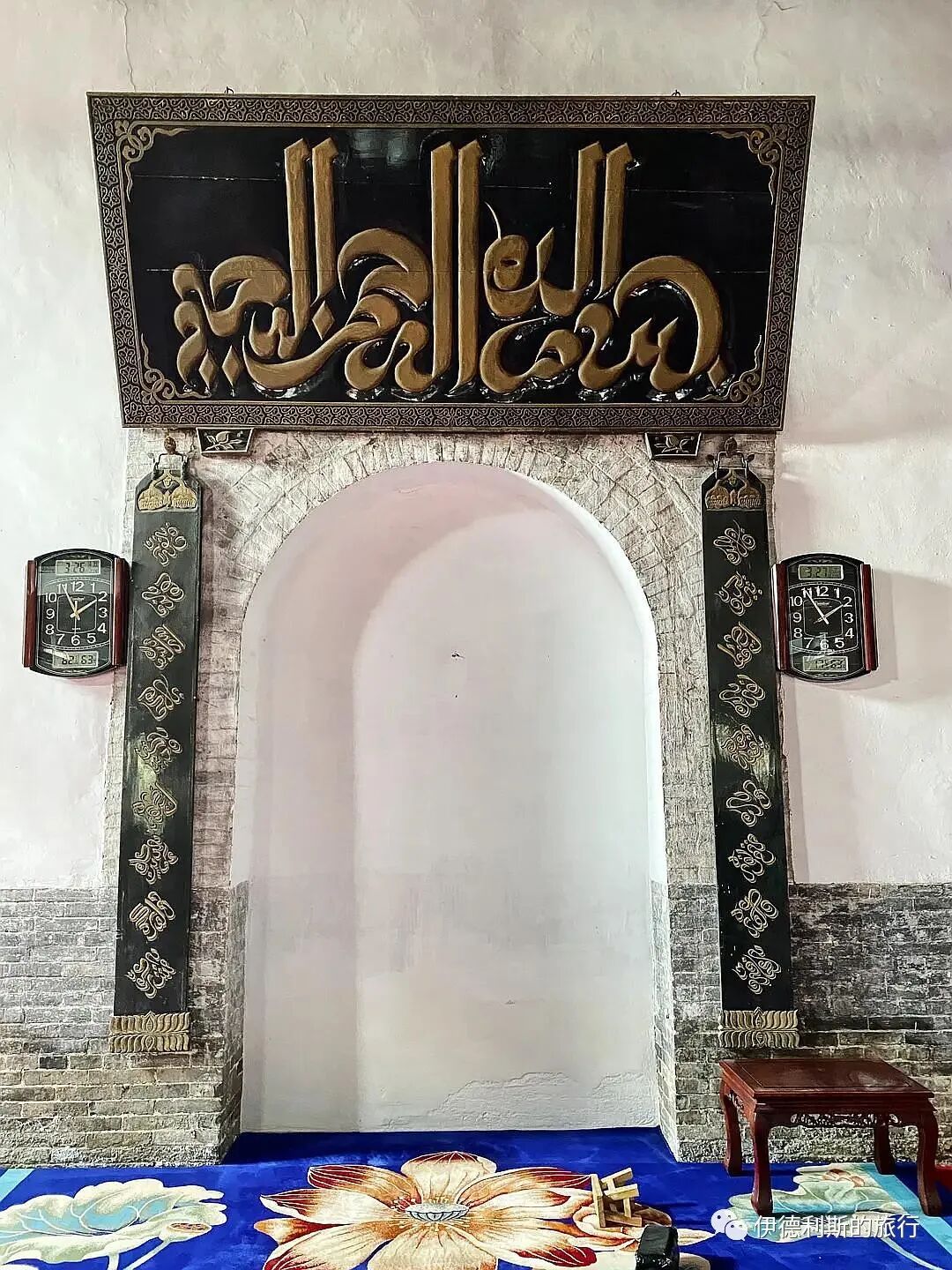
Main gate.
Glazed memorial archway.
Jumu (Friday prayer) plaque.
2. Bo'ai Erxianmiao Mosque: Qing Dynasty.
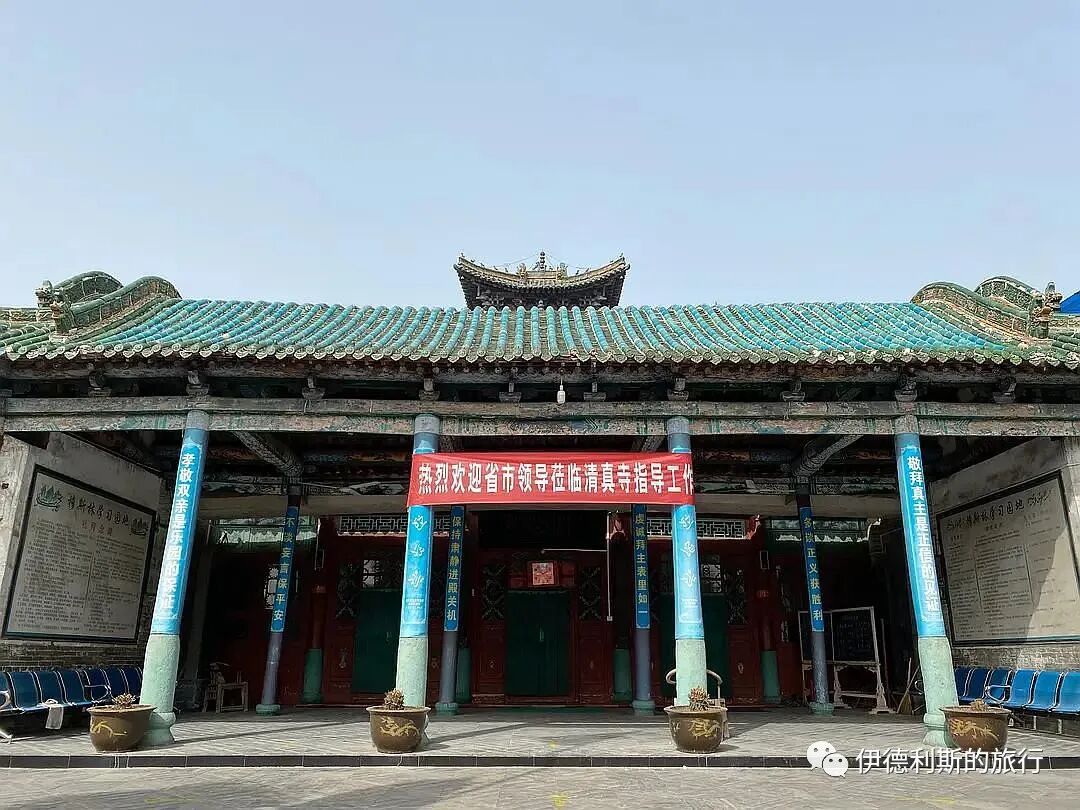
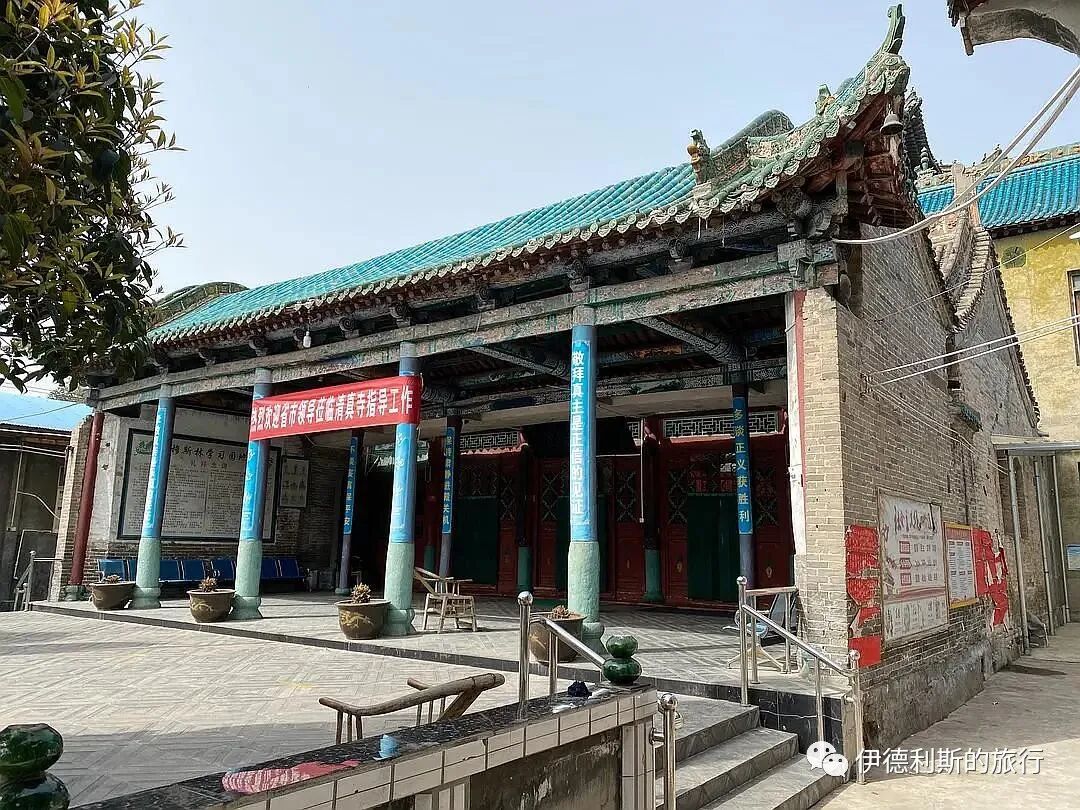
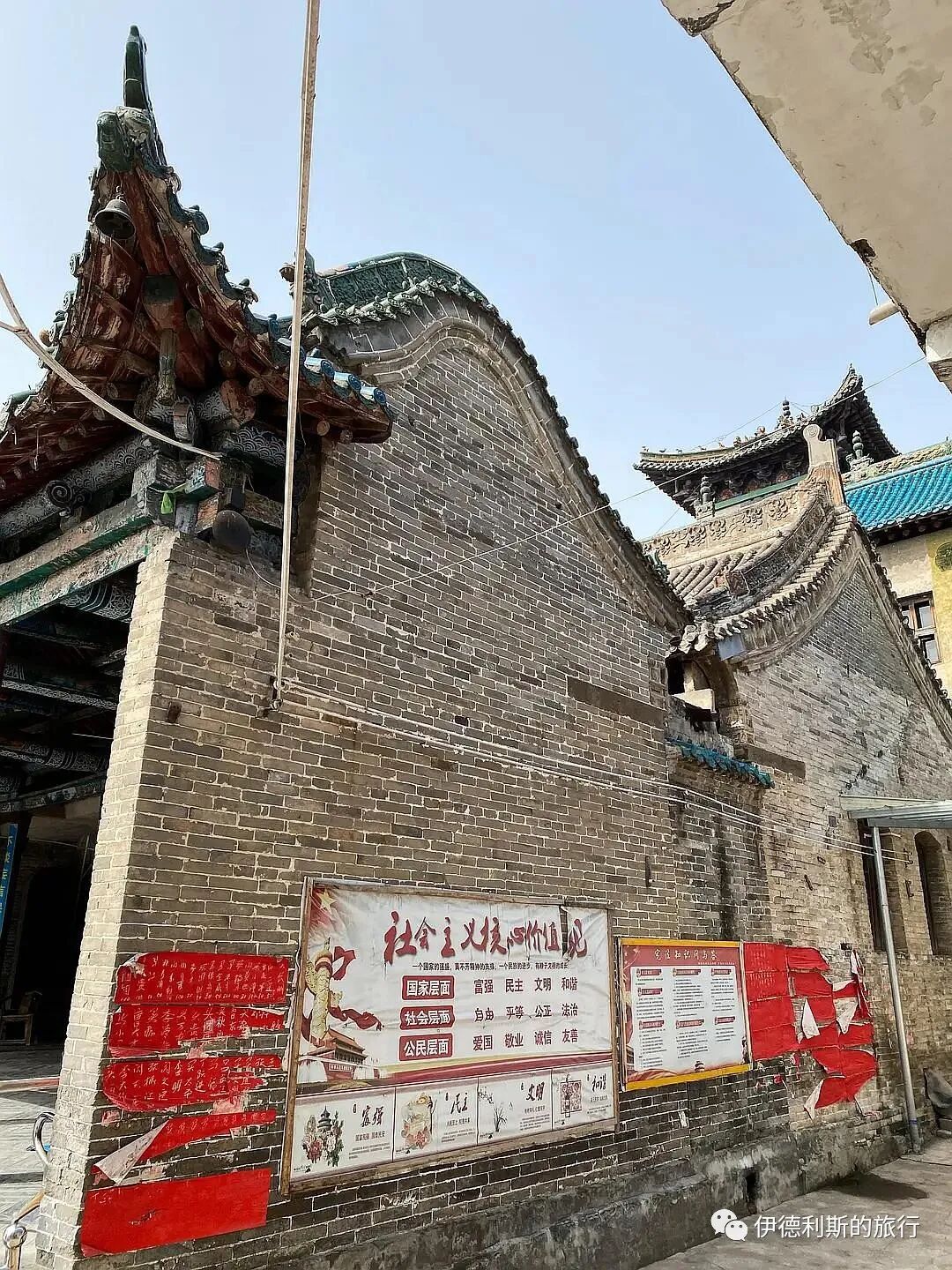
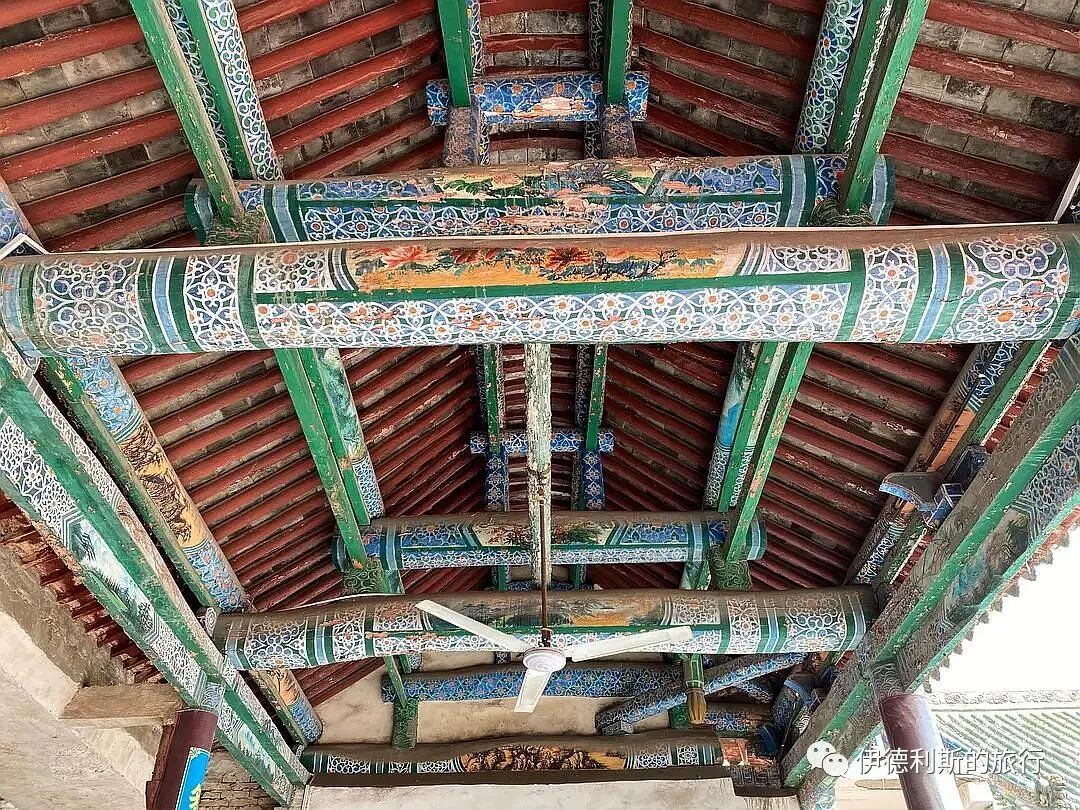
The Erxianmiao Mosque was first built in the Yuan Dynasty, renovated in 1638 (the 11th year of the Chongzhen reign of the Ming Dynasty), and renovated again in 1731 (the 9th year of the Yongzheng reign of the Qing Dynasty). It is a cultural heritage site of Henan Province. The mosque's main hall consists of a juanpeng, a front hall, a rear hall, and a yaodian. The juanpeng and front hall are Qing Dynasty structures with hard-mountain roofs connected in a series, while the rear hall and yaodian were added in 1993.
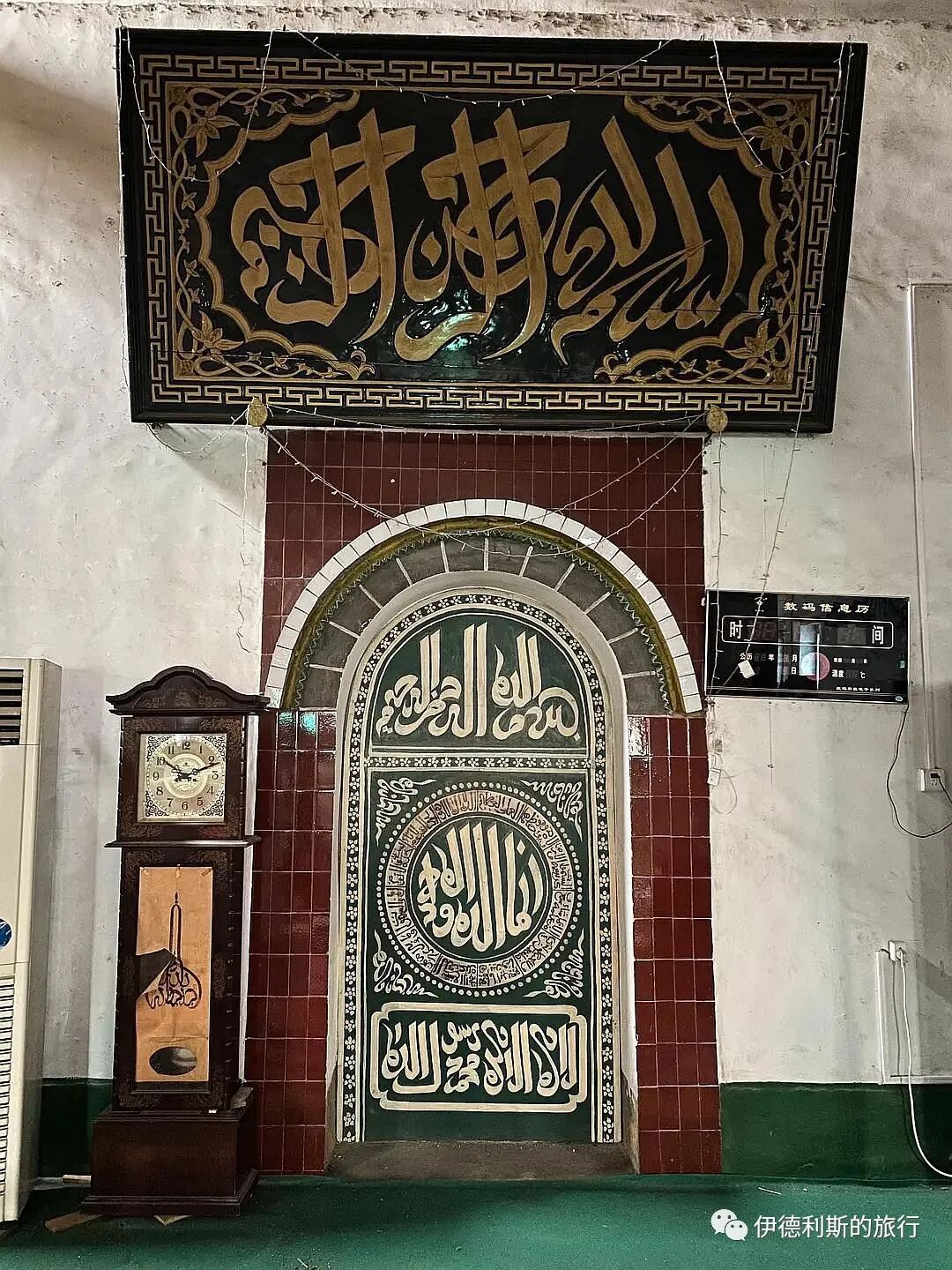
3. Bo'ai Daxinzhuang Dongdasi (Great Eastern Mosque): Expanded in the Ming Dynasty.
The Daxinzhuang Dongdasi was first built in the Yuan Dynasty, expanded in the Ming Dynasty, and had a rear hall added during the Republic of China era. It is currently a cultural heritage site of Henan Province.
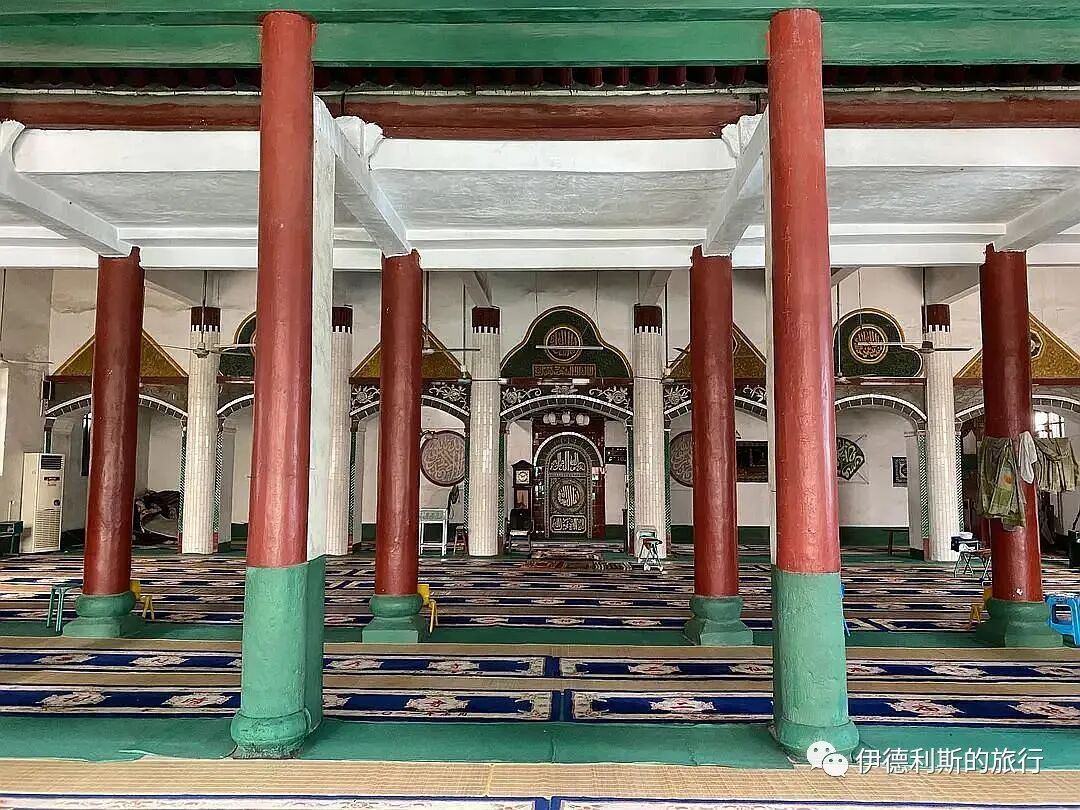
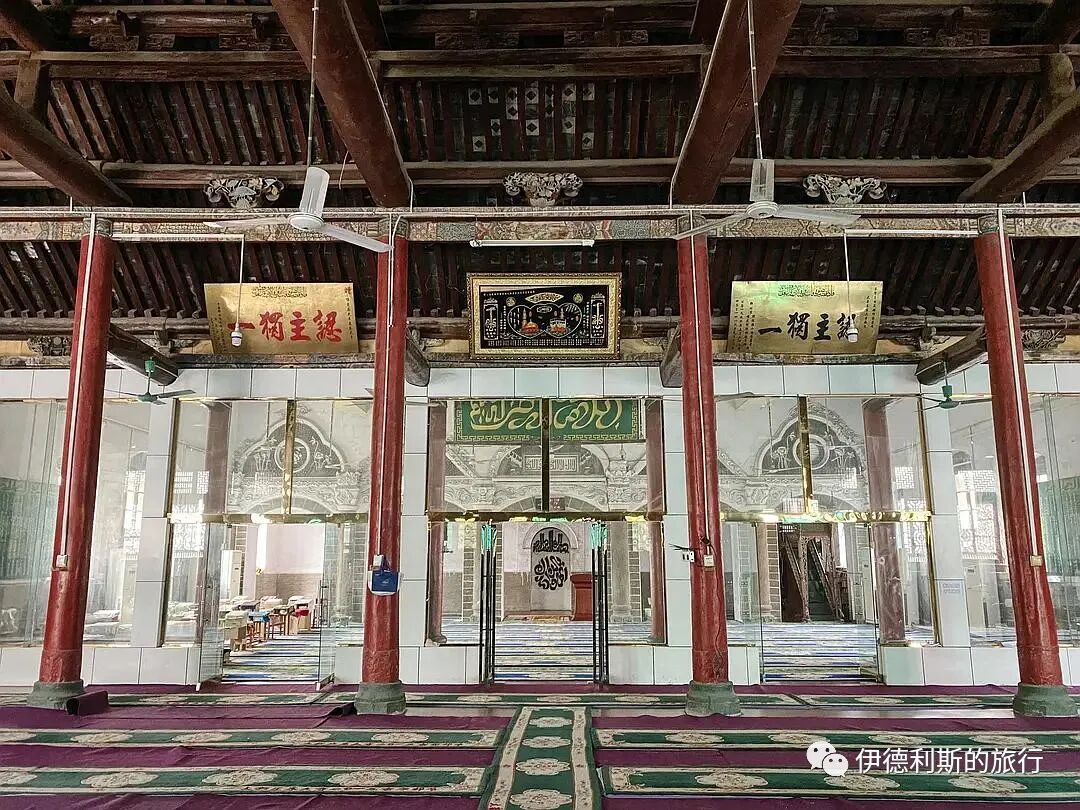
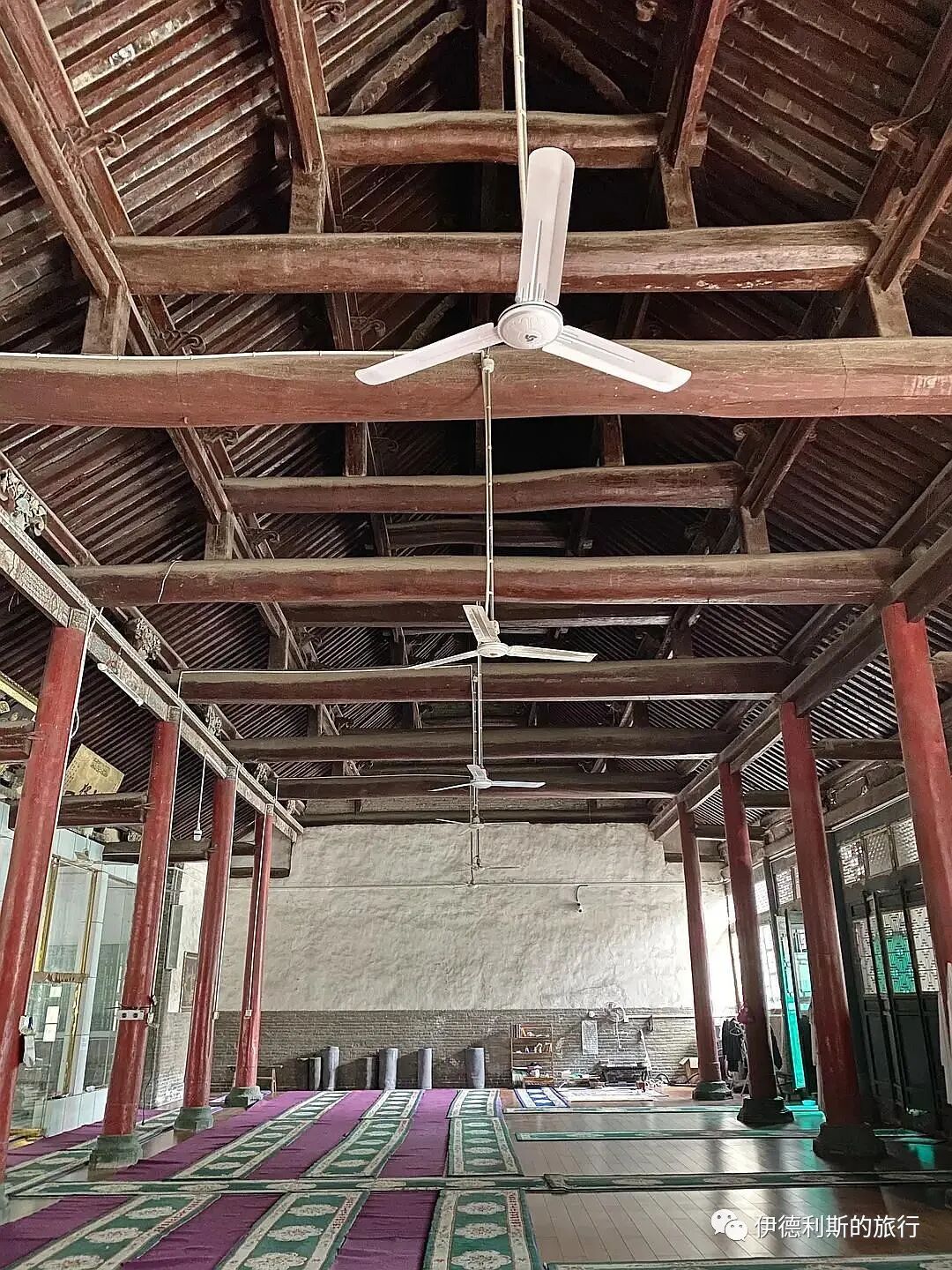
The main hall consists of a juanpeng, a front hall, a rear hall, and a yaodian. The juanpeng is an independent structure, with a drainage gutter installed where it connects to the front eaves of the main hall. In front of the main hall is a 365-year-old sweet osmanthus tree.
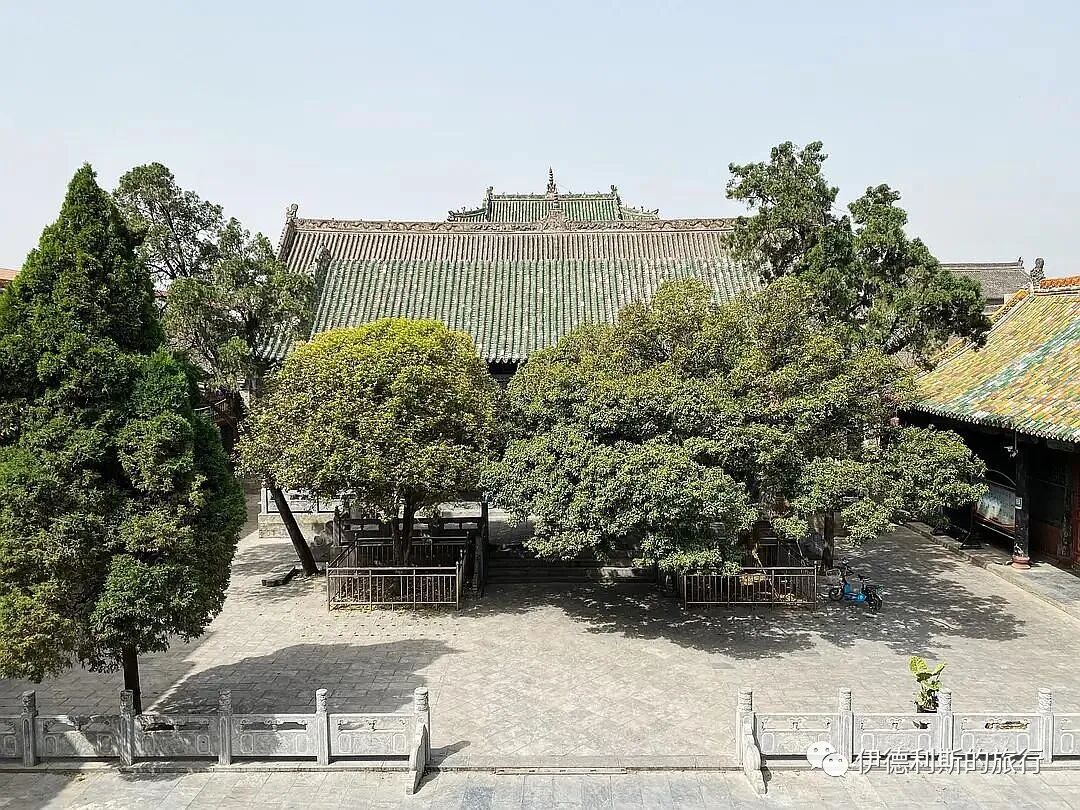
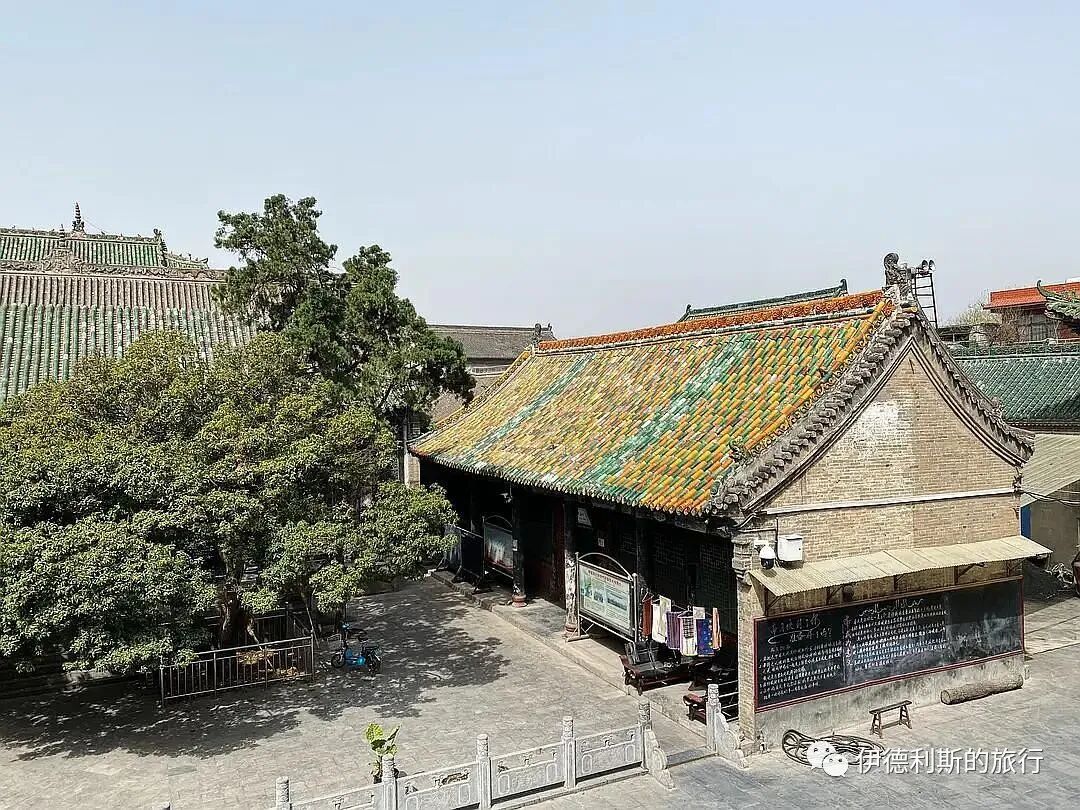
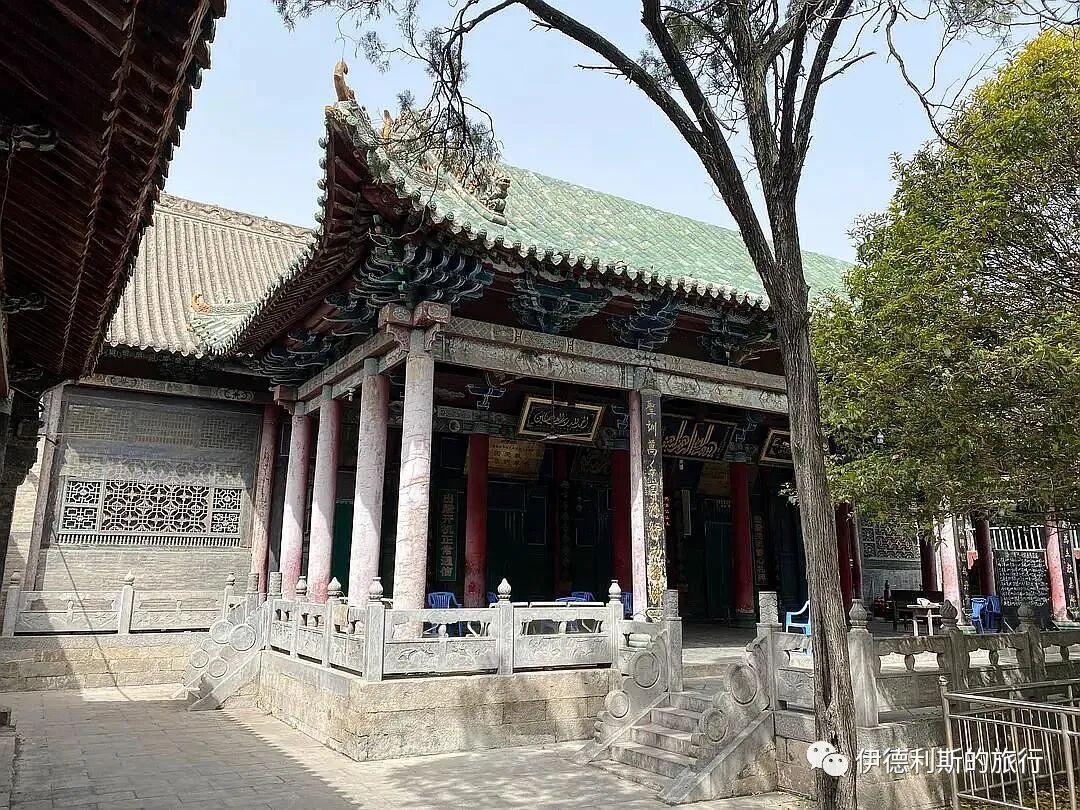
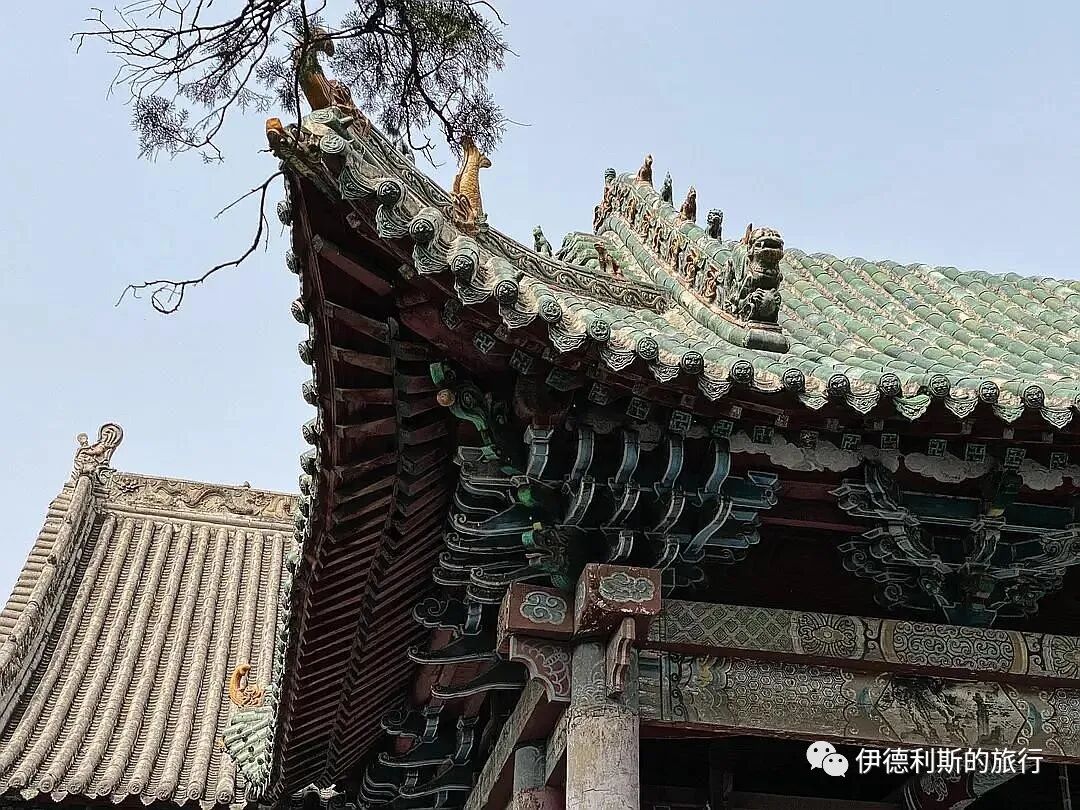
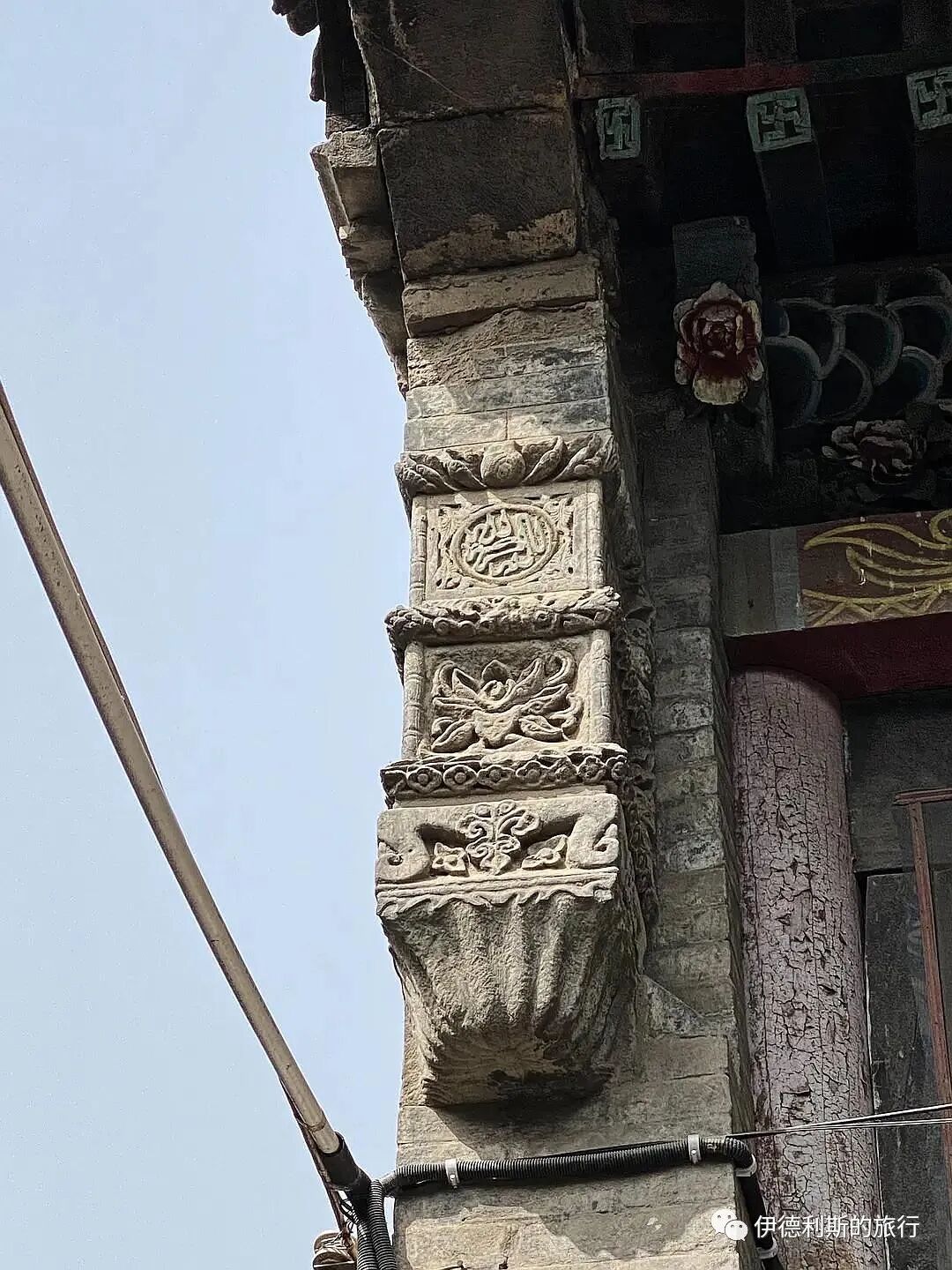
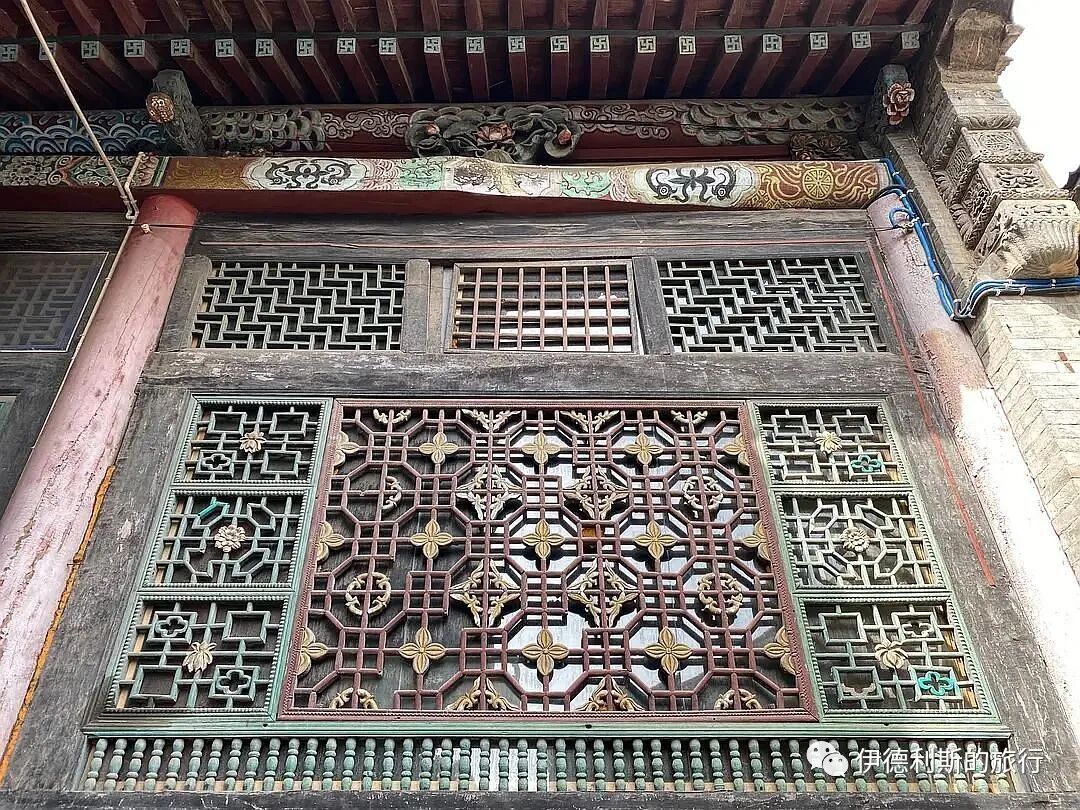
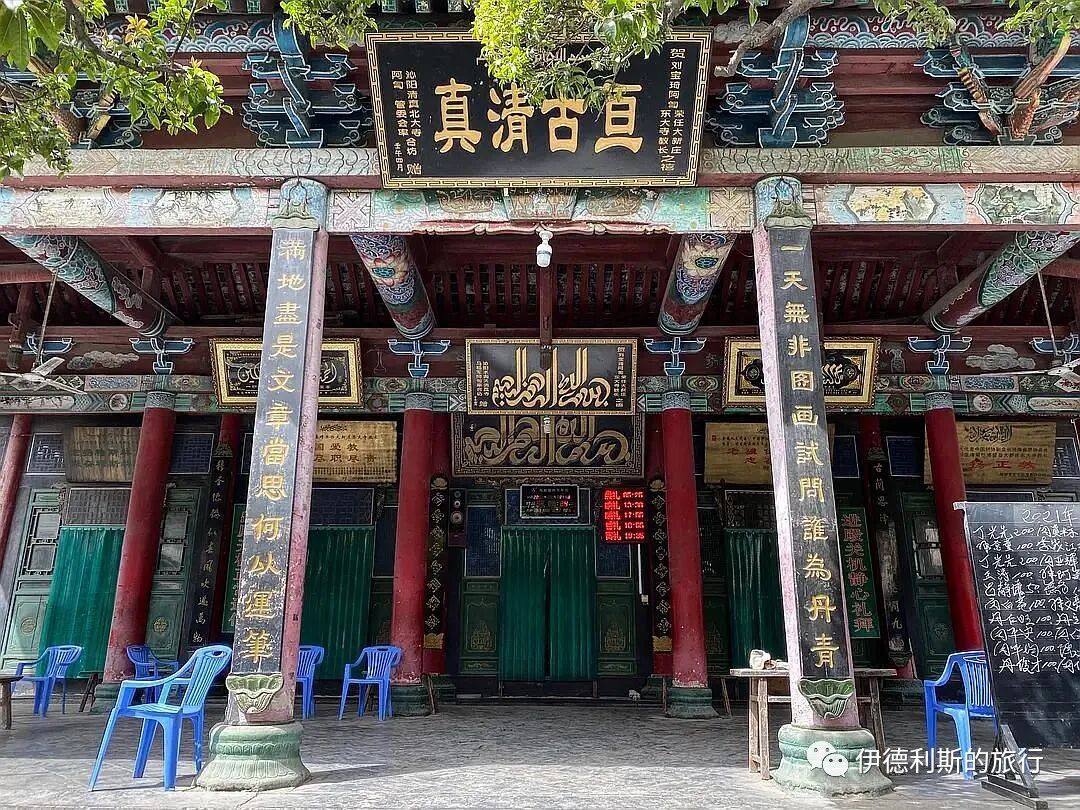
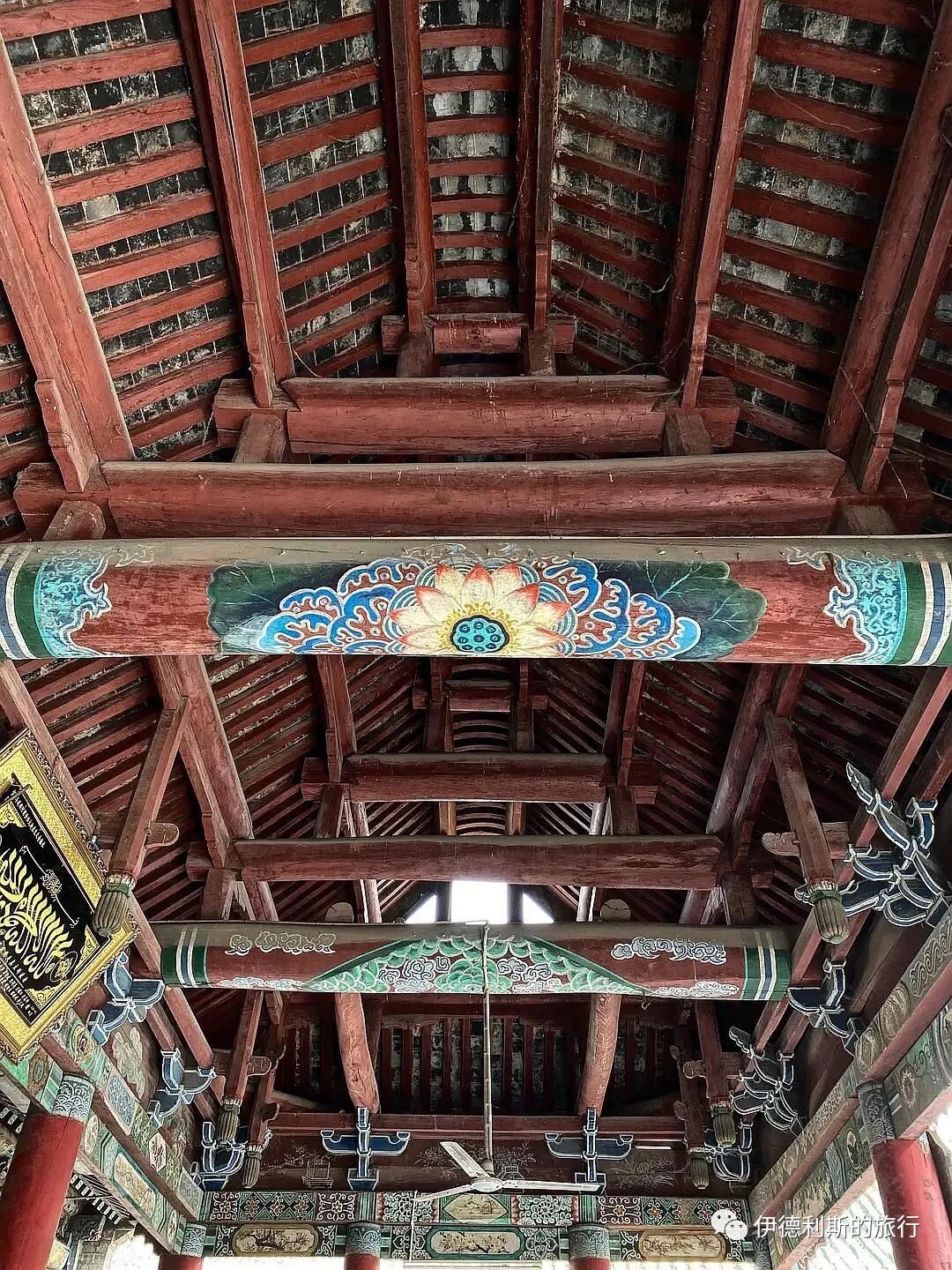
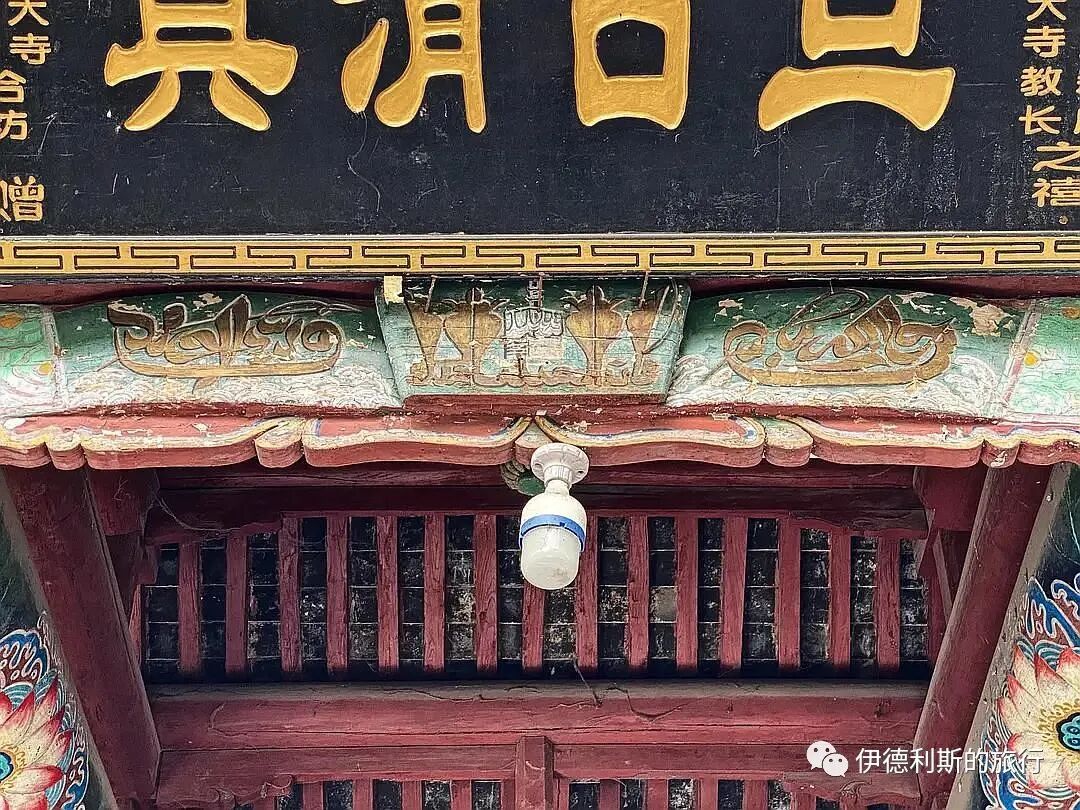
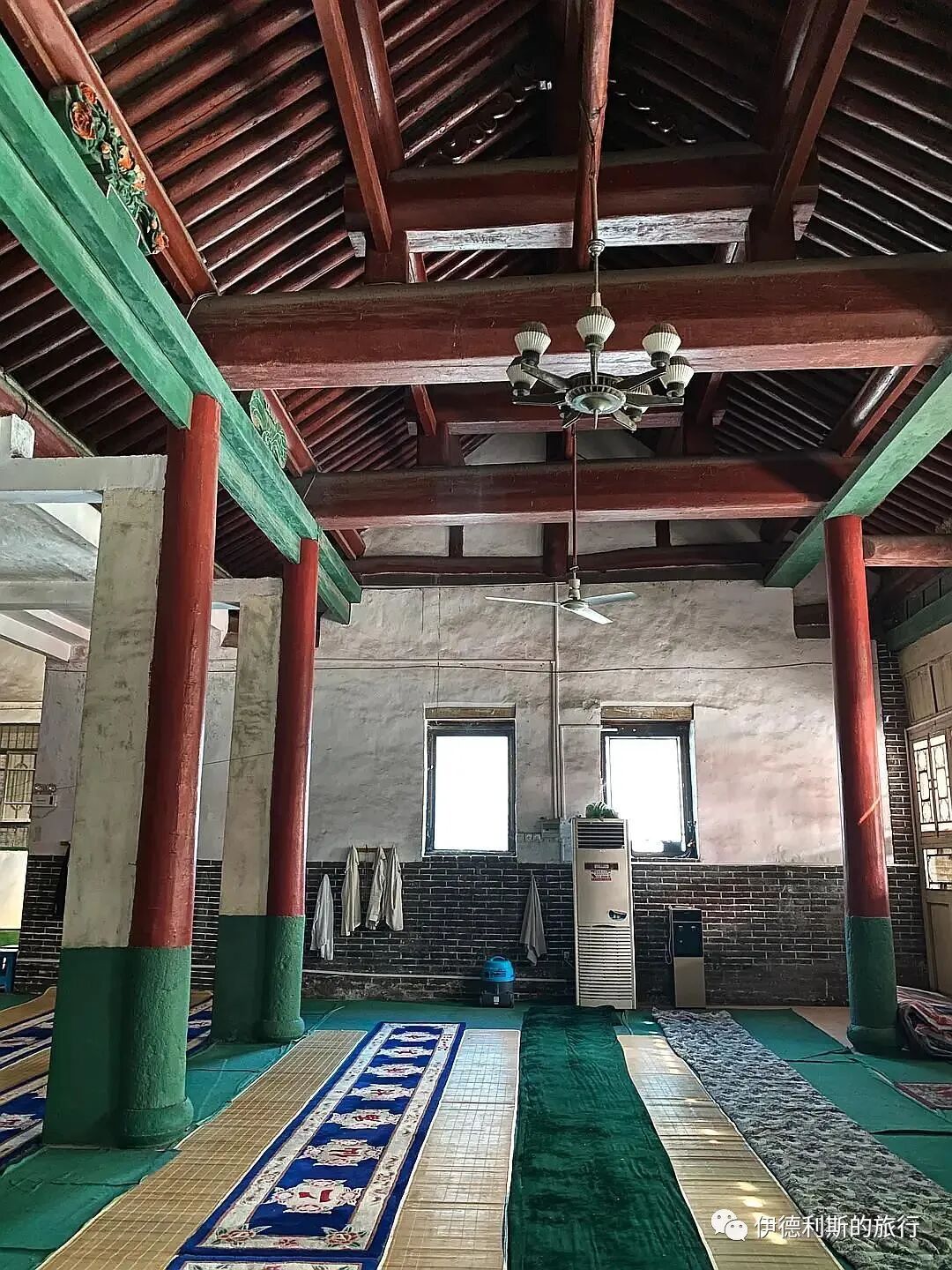
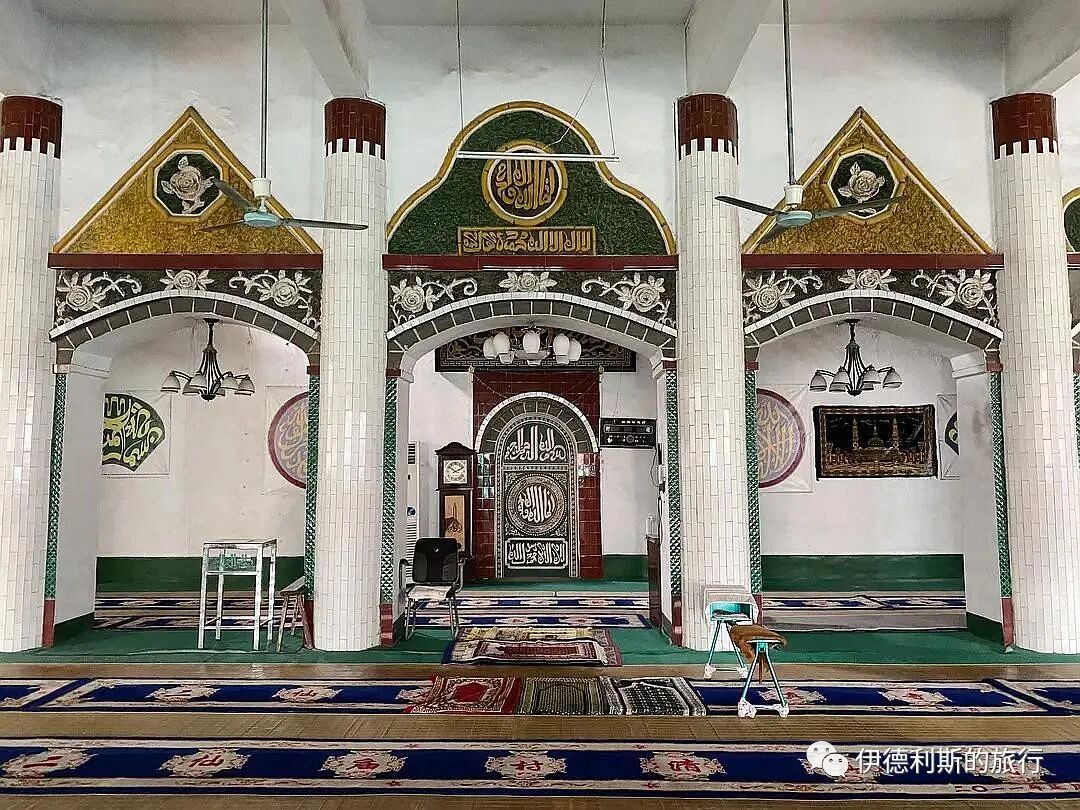
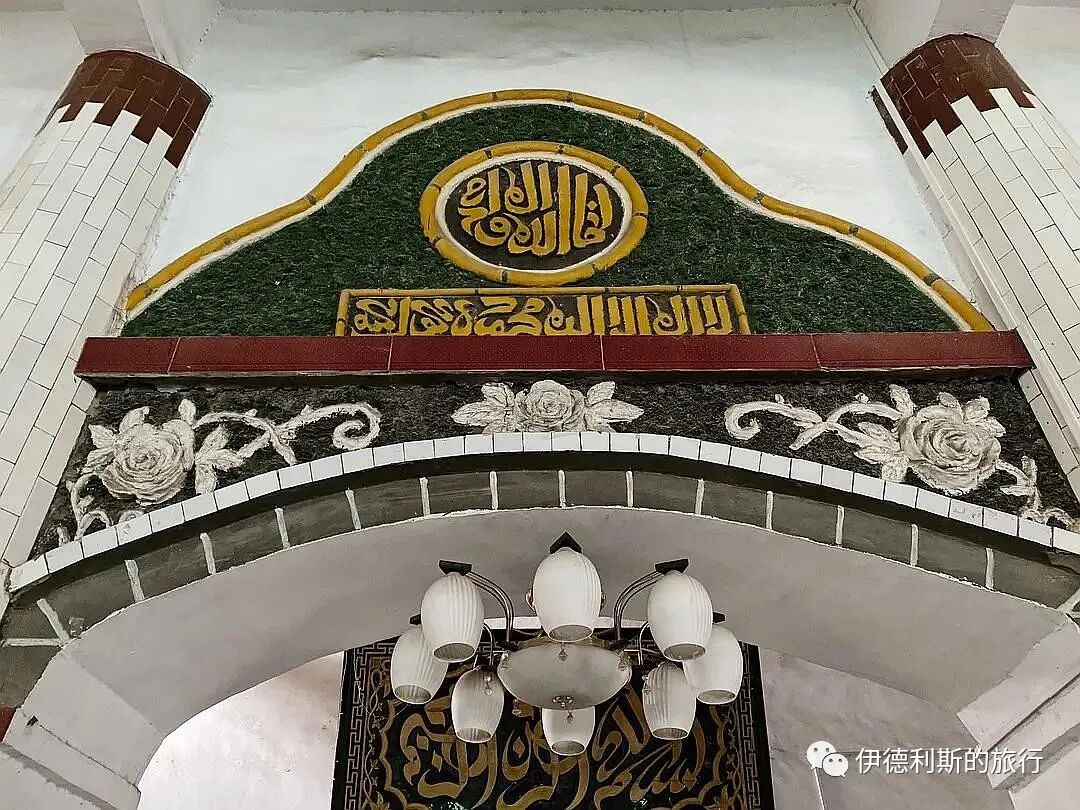
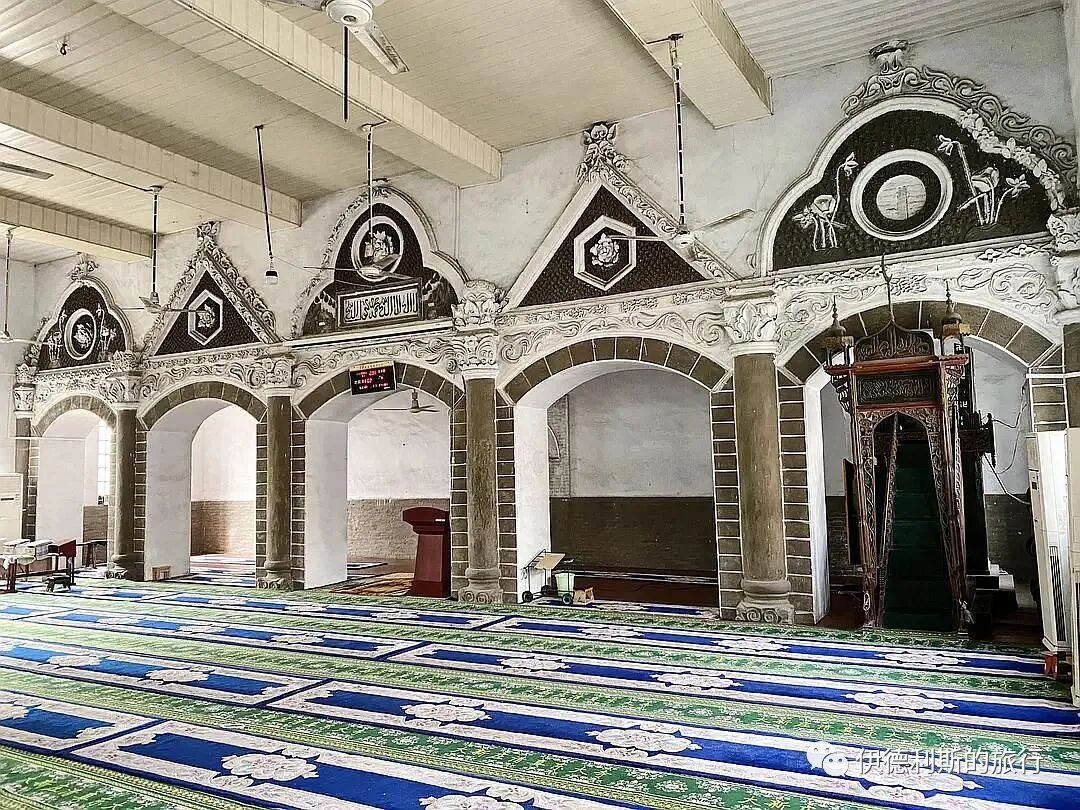
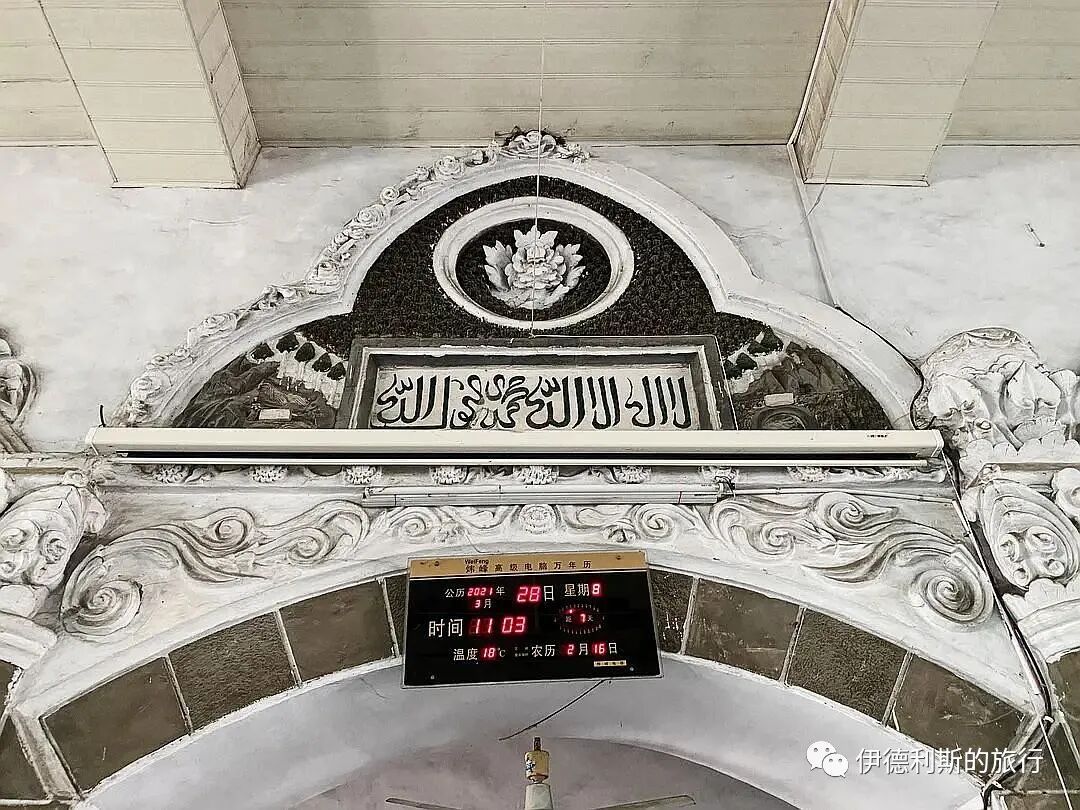
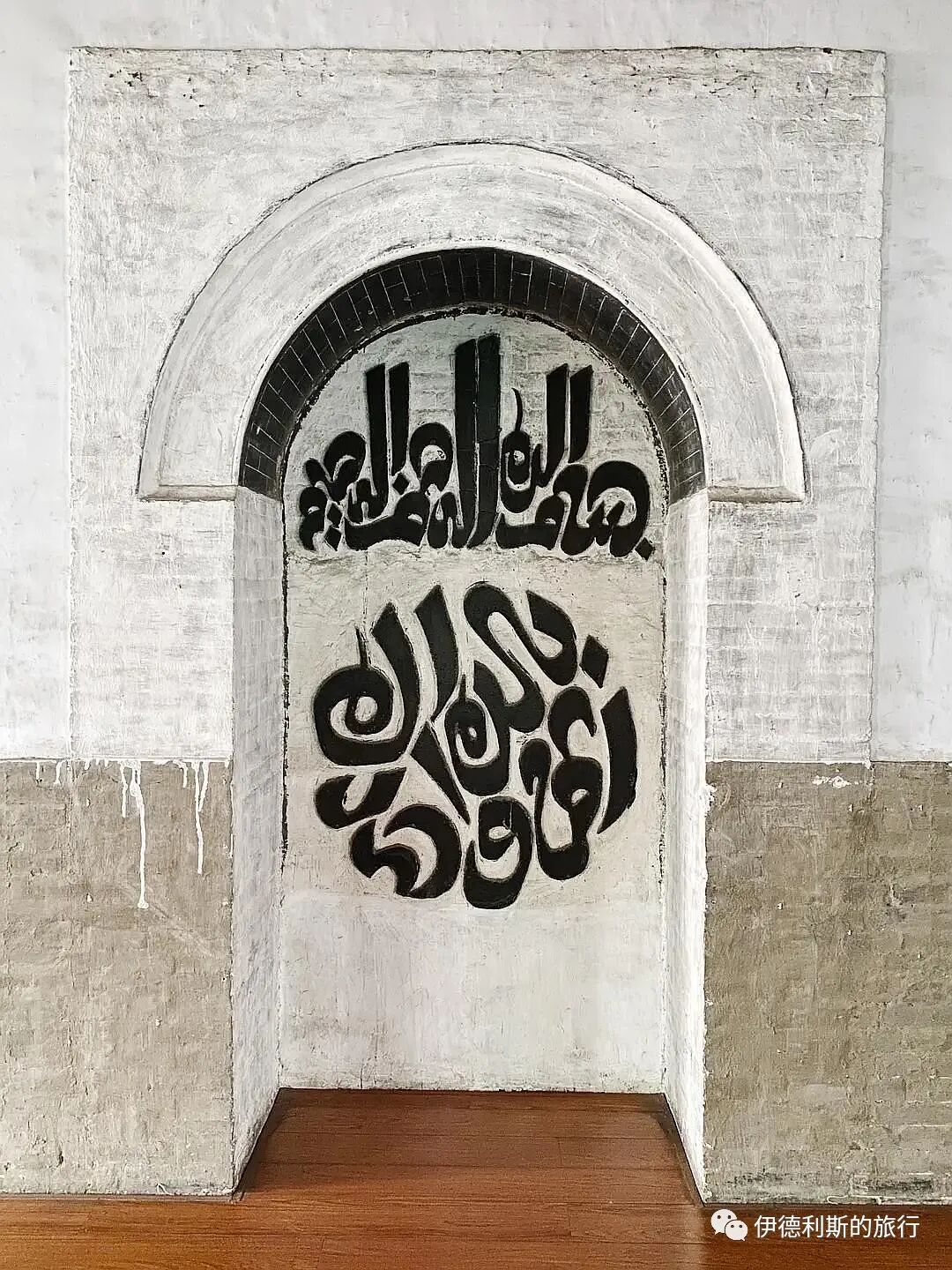
The front hall is seven bays wide, with a timber frame featuring exposed rafters, and the wood carvings on the beams and lintels are very beautiful. The rear hall was added during the Republic of China era and features five Roman-style arched doorways with exquisite cement decorations from that period.
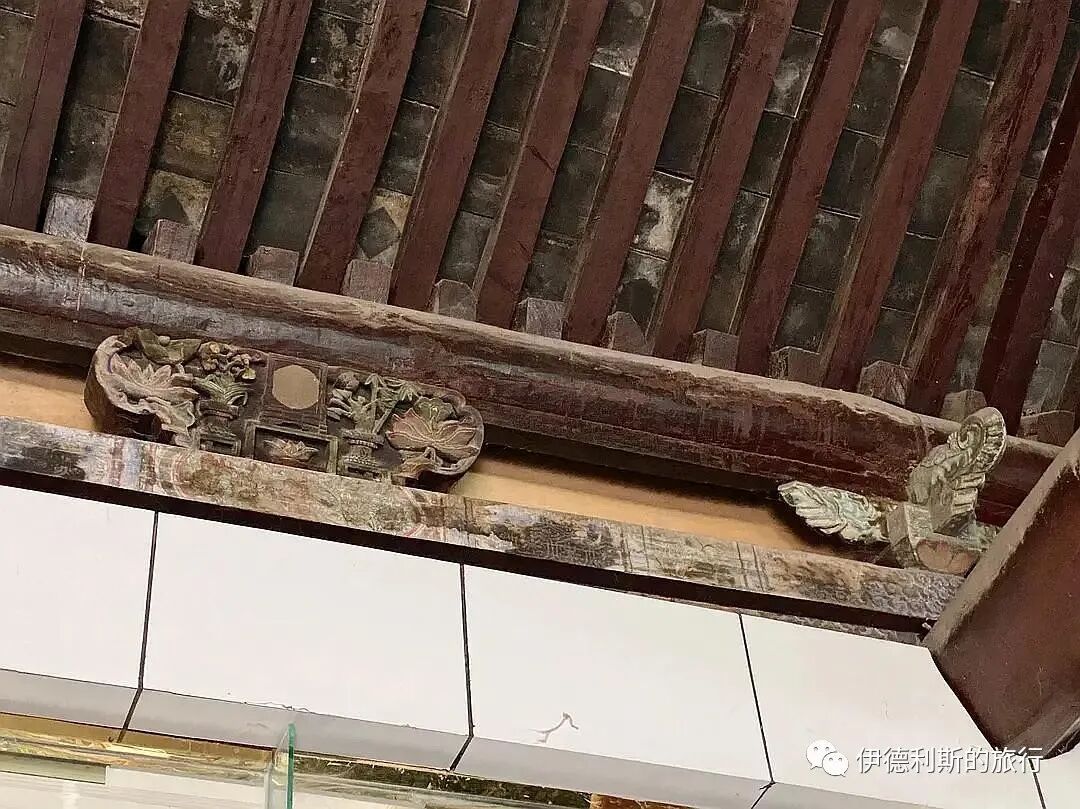
Wood carvings on the main gate.
Old door panels.
4. Bo'ai Daxinzhuang Qingzhen Xisi (Western Mosque): Qing Jiaqing reign.
The Daxinzhuang Qingzhen Xisi is near the Dongdasi, but it is not as famous as the Dongdasi. The Xisi was first built during the Jiaqing reign of the Qing Dynasty. The main hall was originally three bays wide, expanded to five bays in the late Qing Dynasty, and expanded again to seven bays in the early Republic of China era. During this time, the elder Mai Anli funded the construction of a five-bay juanpeng.
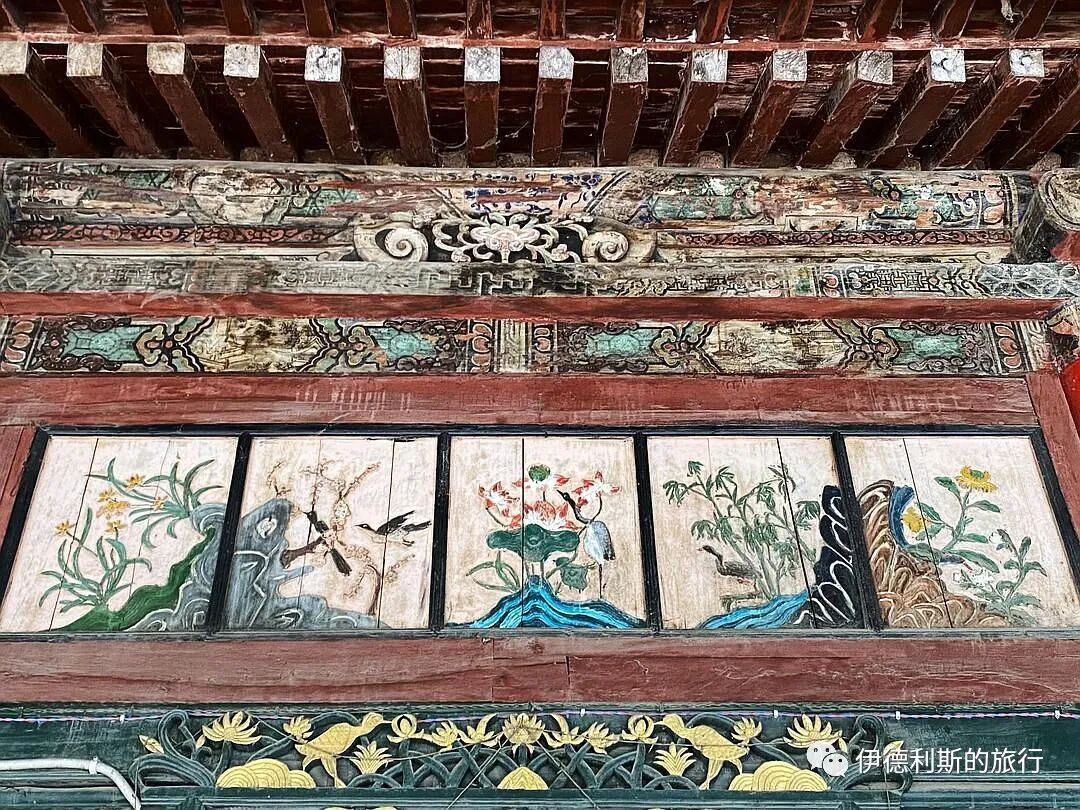
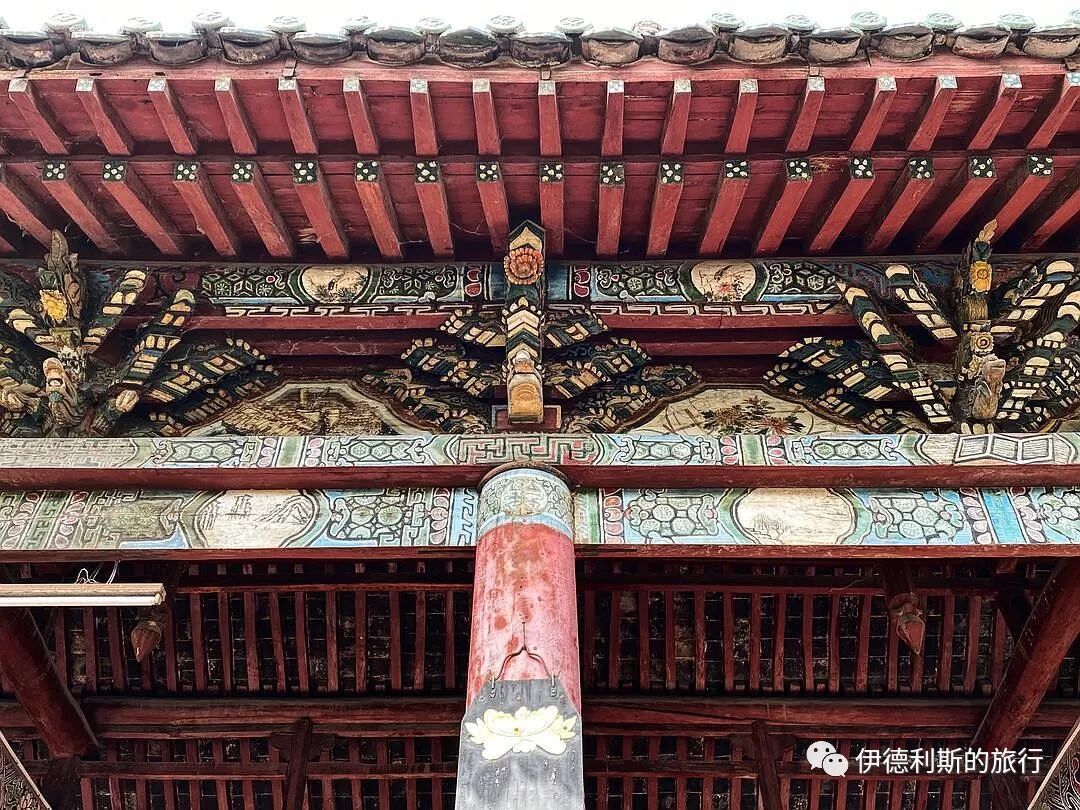
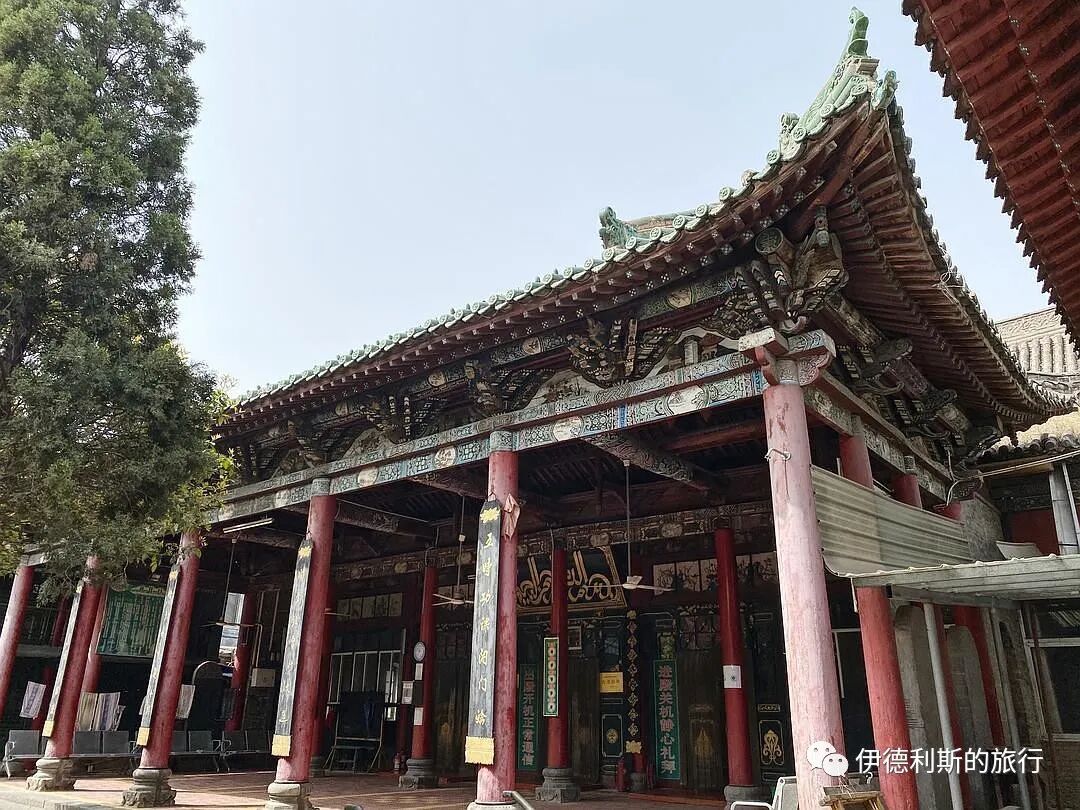
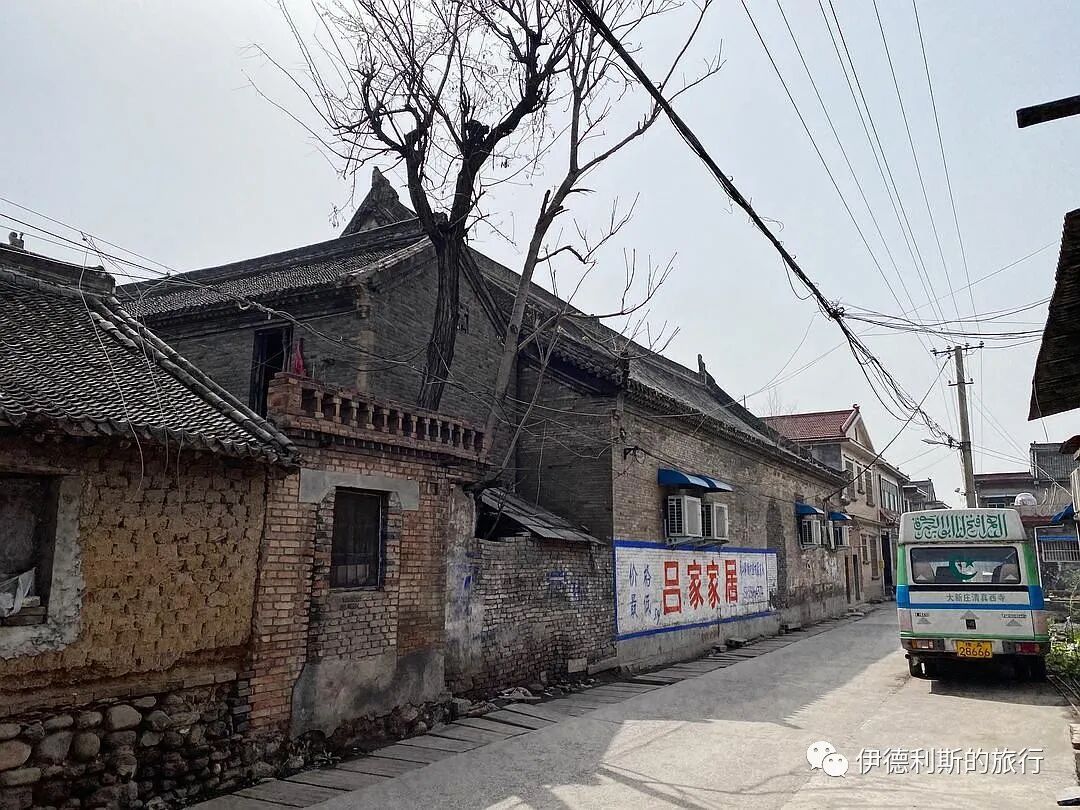
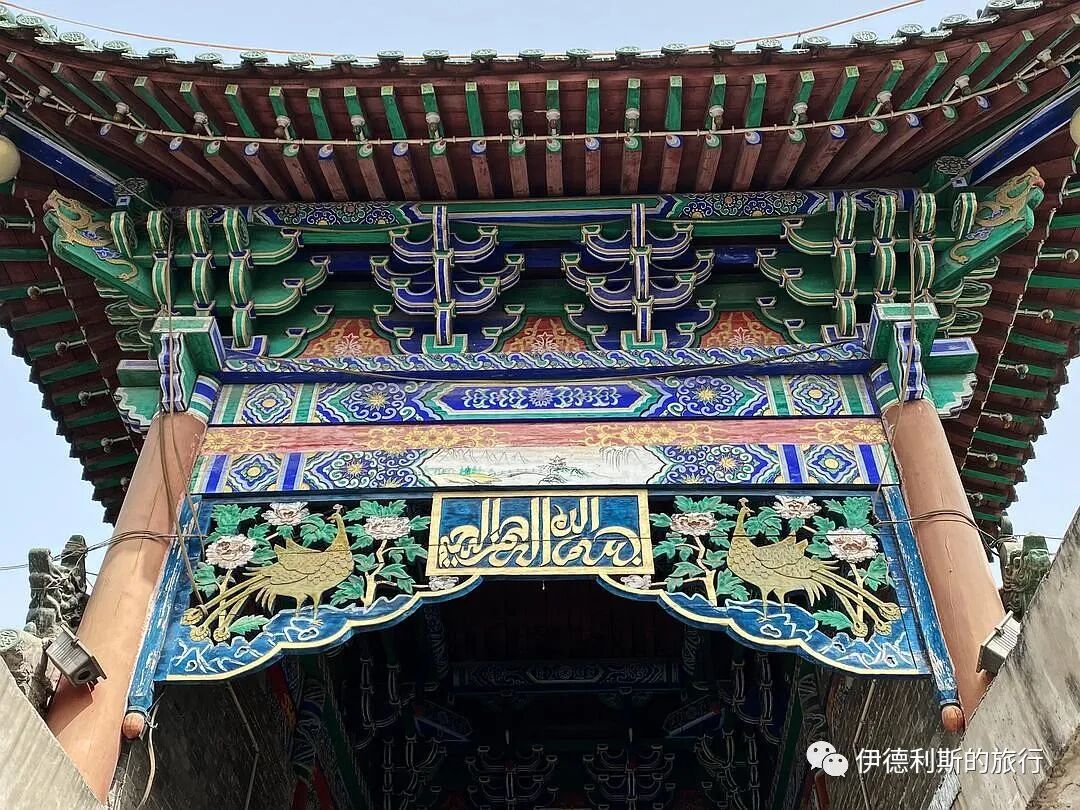
5. Qinyang Beidasi (Northern Mosque): Rebuilt in 1631.
In my opinion, the Qinyang Beidasi definitely ranks in the top three for beauty among historical mosque buildings in Henan. The Beidasi was moved to its current site in 1561 (the 40th year of the Jiajing reign of the Ming Dynasty), burned down in 1628 (the 1st year of the Chongzhen reign), and rebuilt in 1631 (the 4th year of the Chongzhen reign). It is a major national historical and cultural site.
The overall layout of the Beidasi is quite classic, consisting mainly of the main gate, a hallway, lecture halls, and the main hall. I will share the details with you bit by bit. Because of the lighting, I photographed it twice, on Saturday afternoon and Sunday morning.
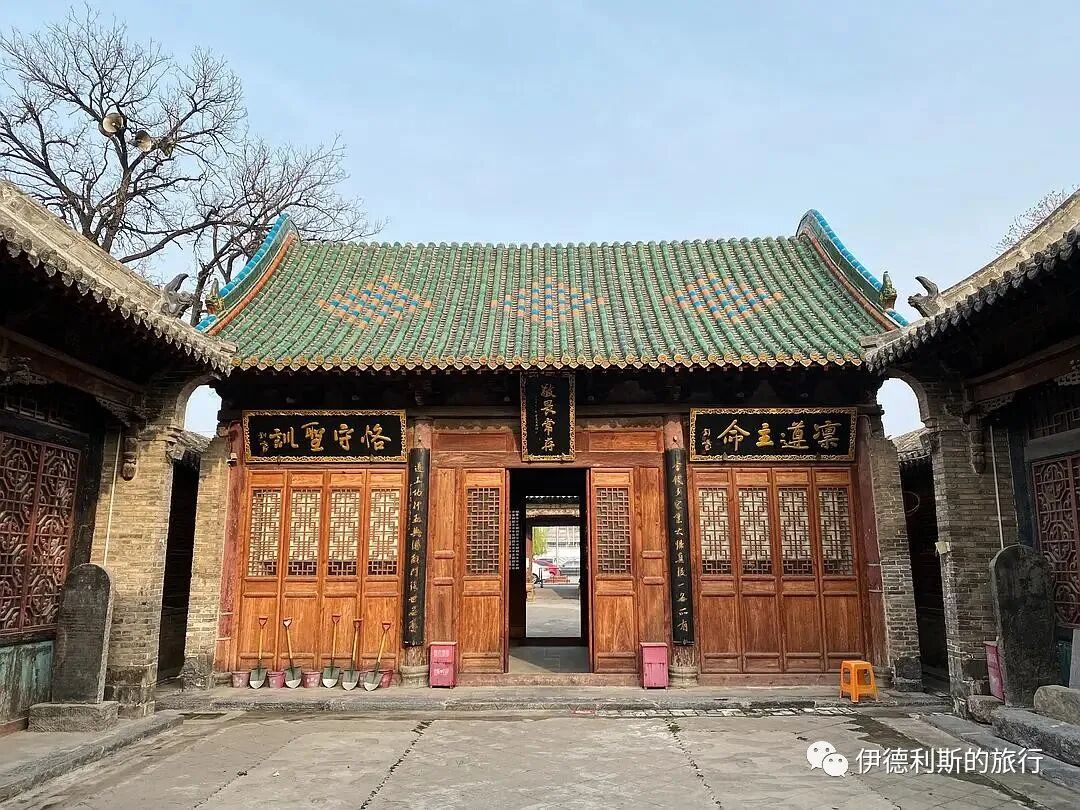
The main gate was built in 1799 (the 4th year of the Jiaqing reign) and uses peacock-blue glazed tiles, which are relatively rare in mosque architecture and look very refreshing.
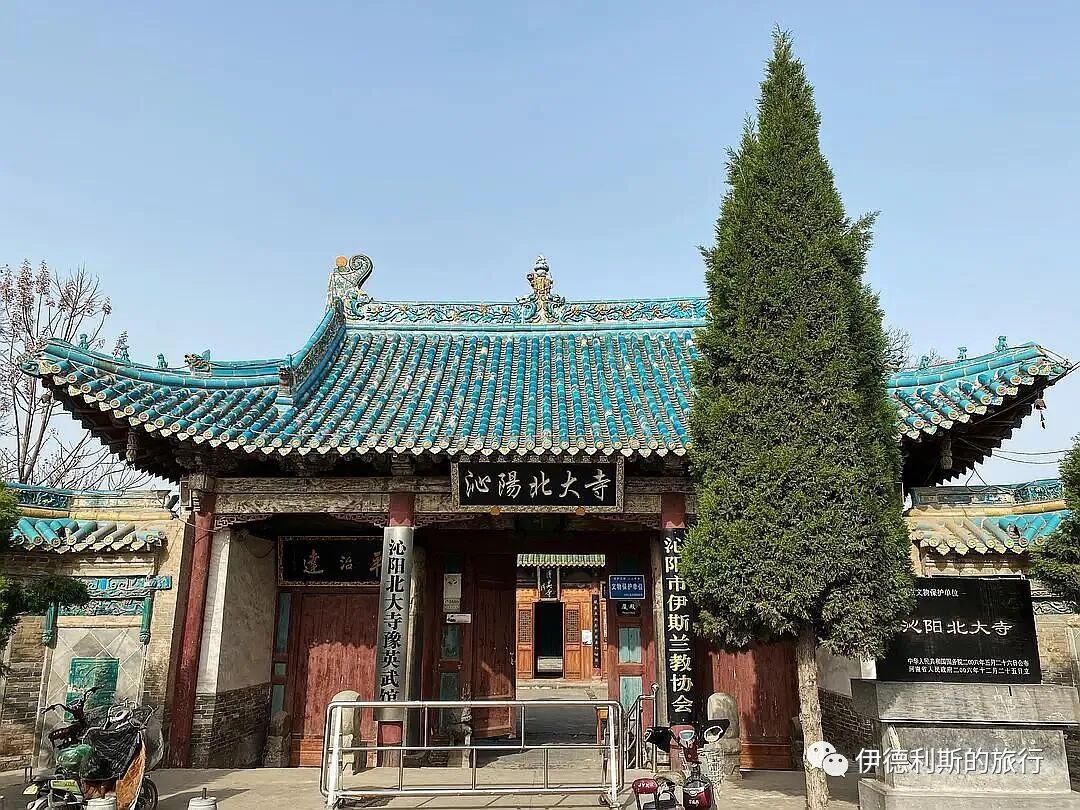
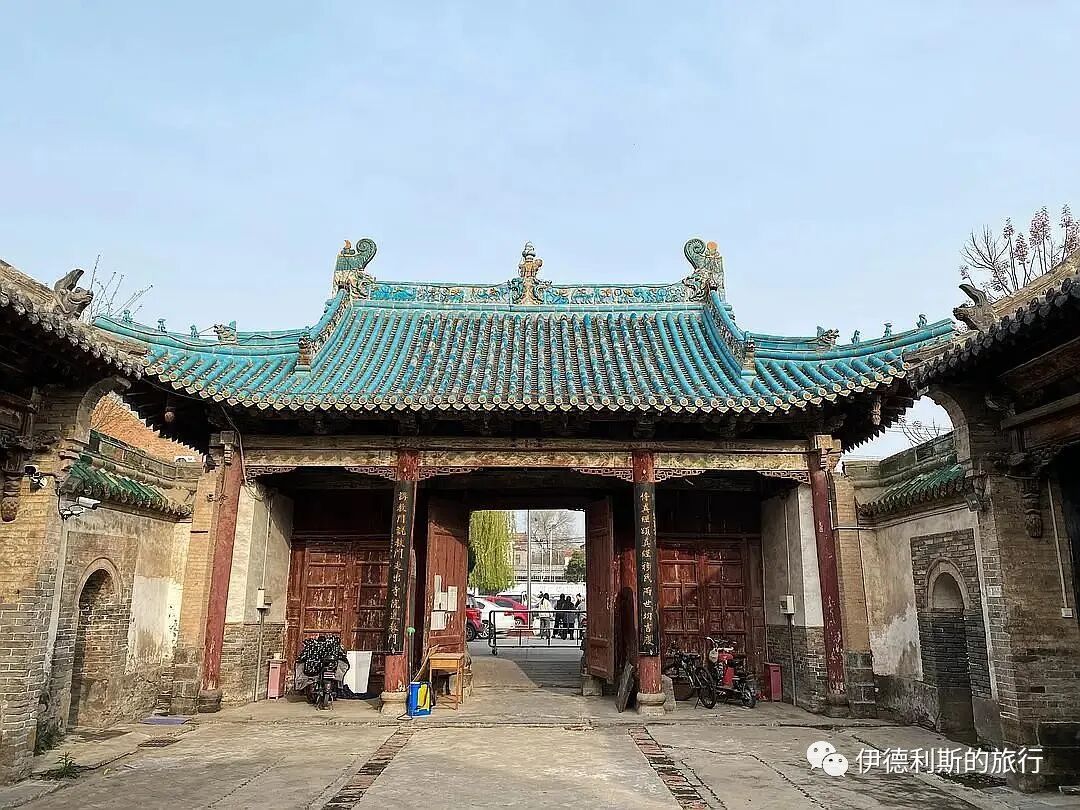
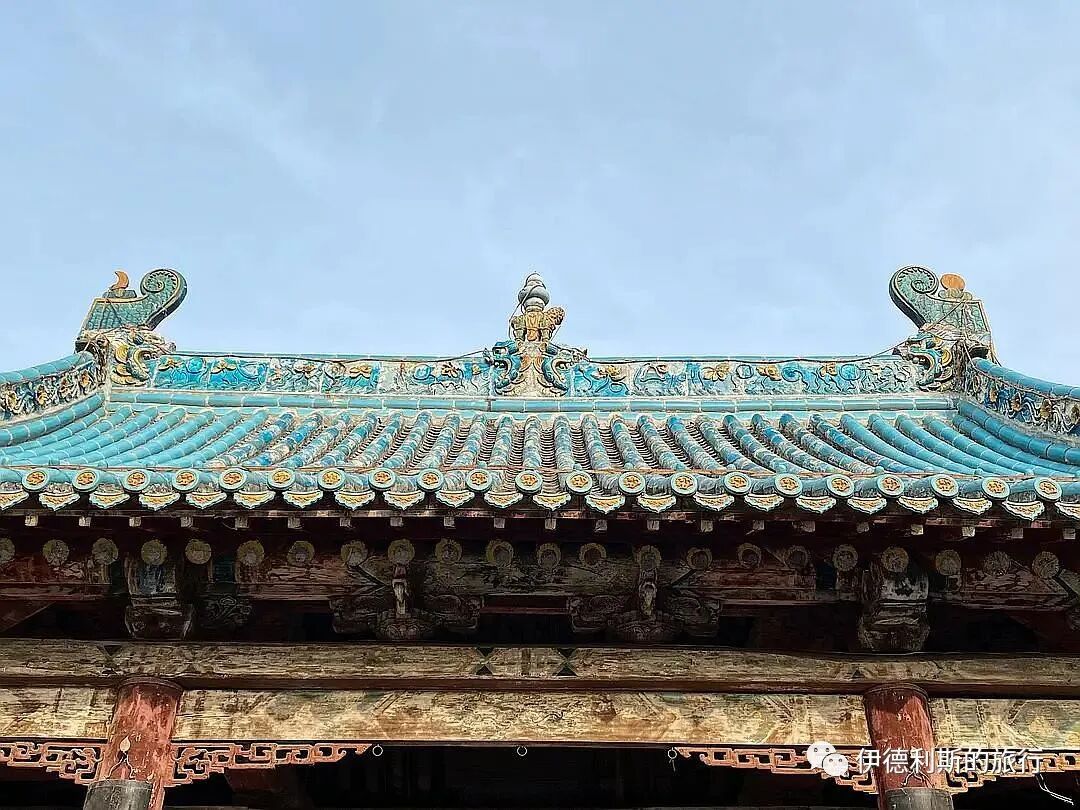
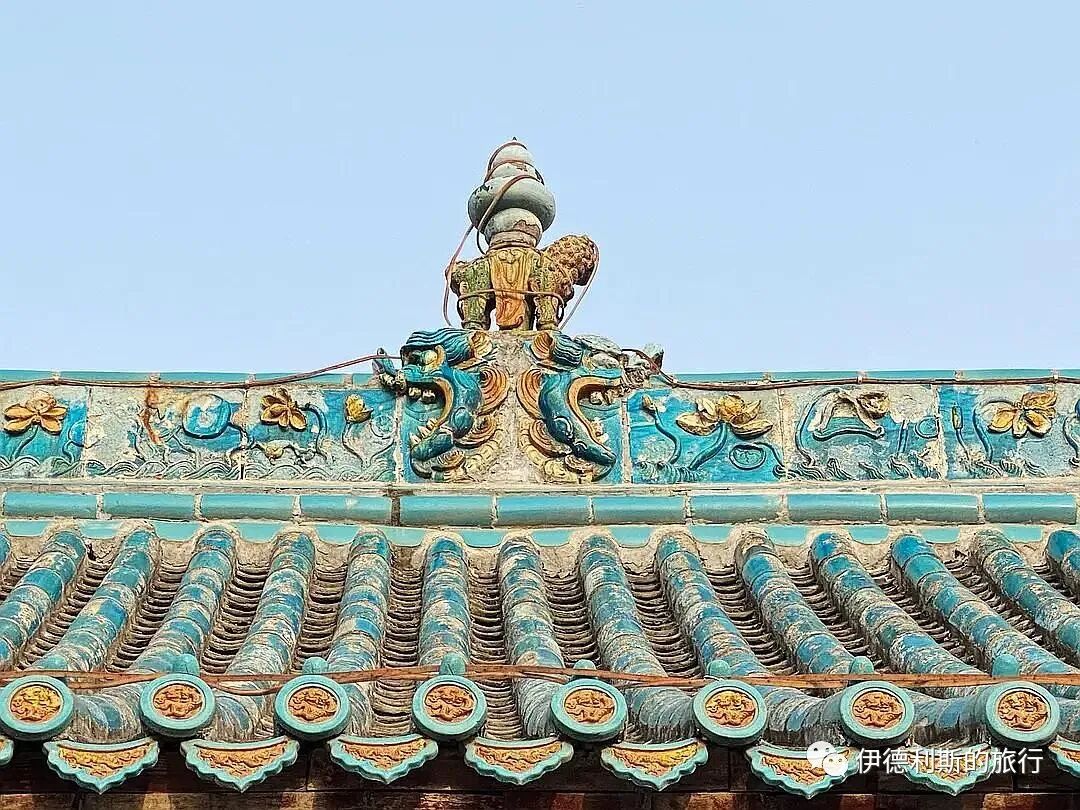
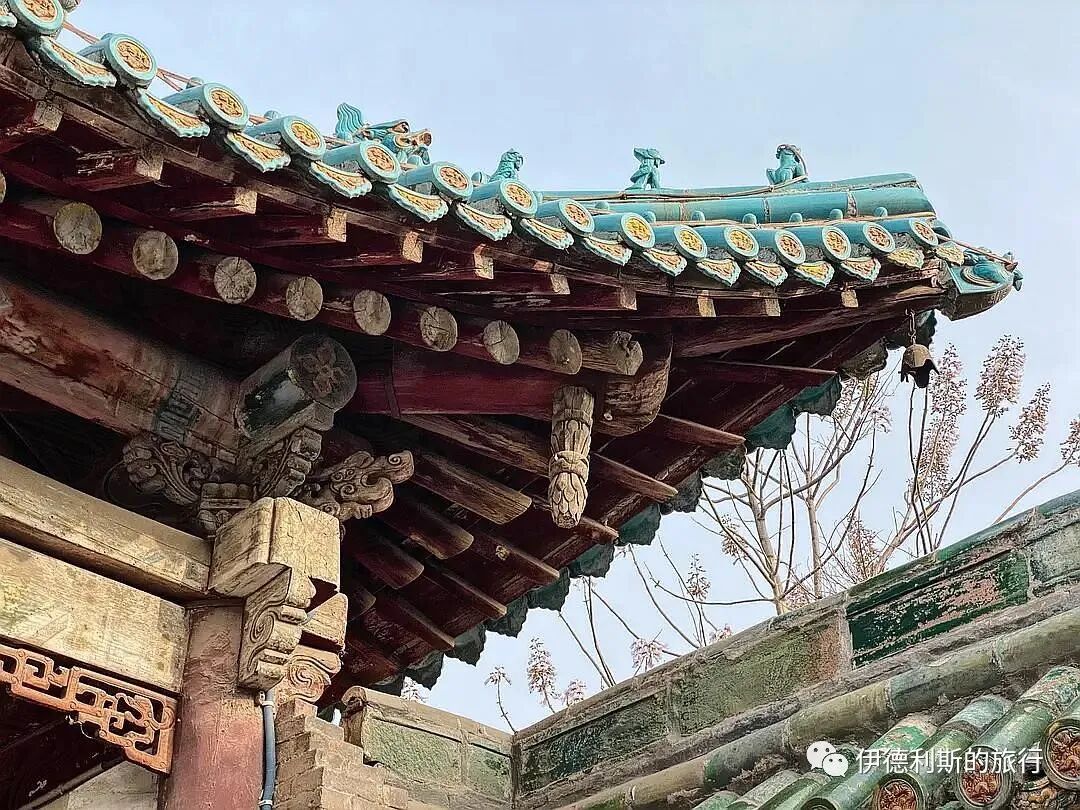
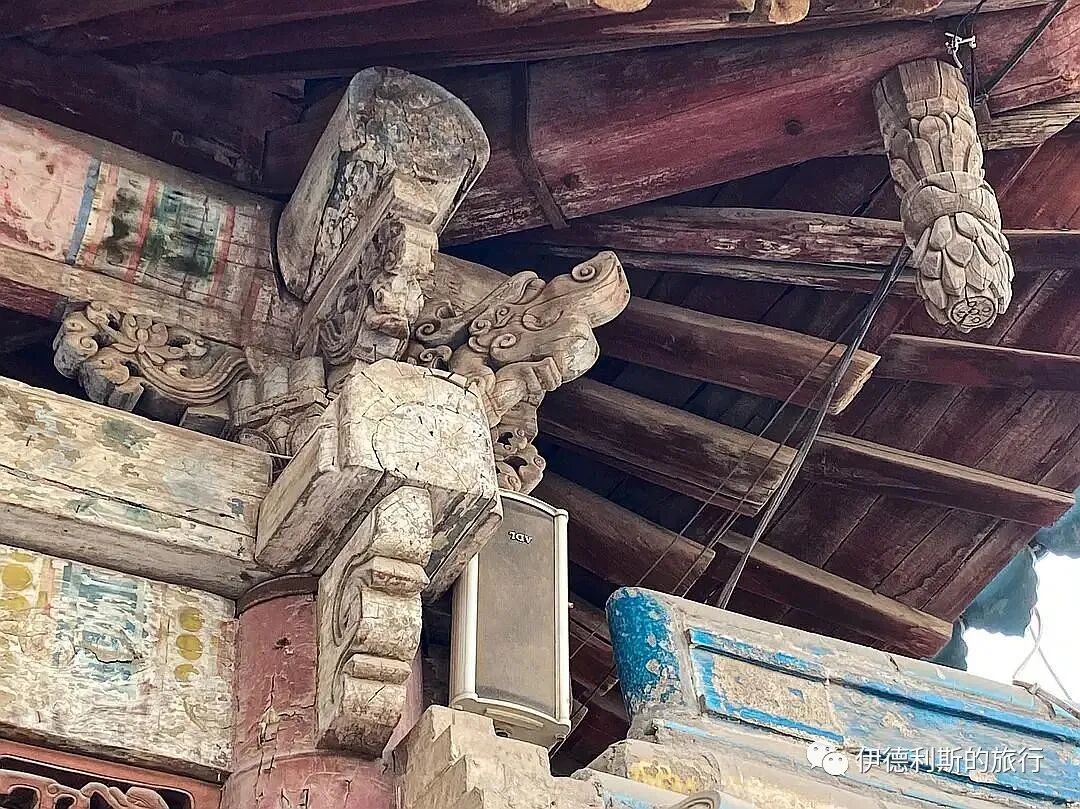
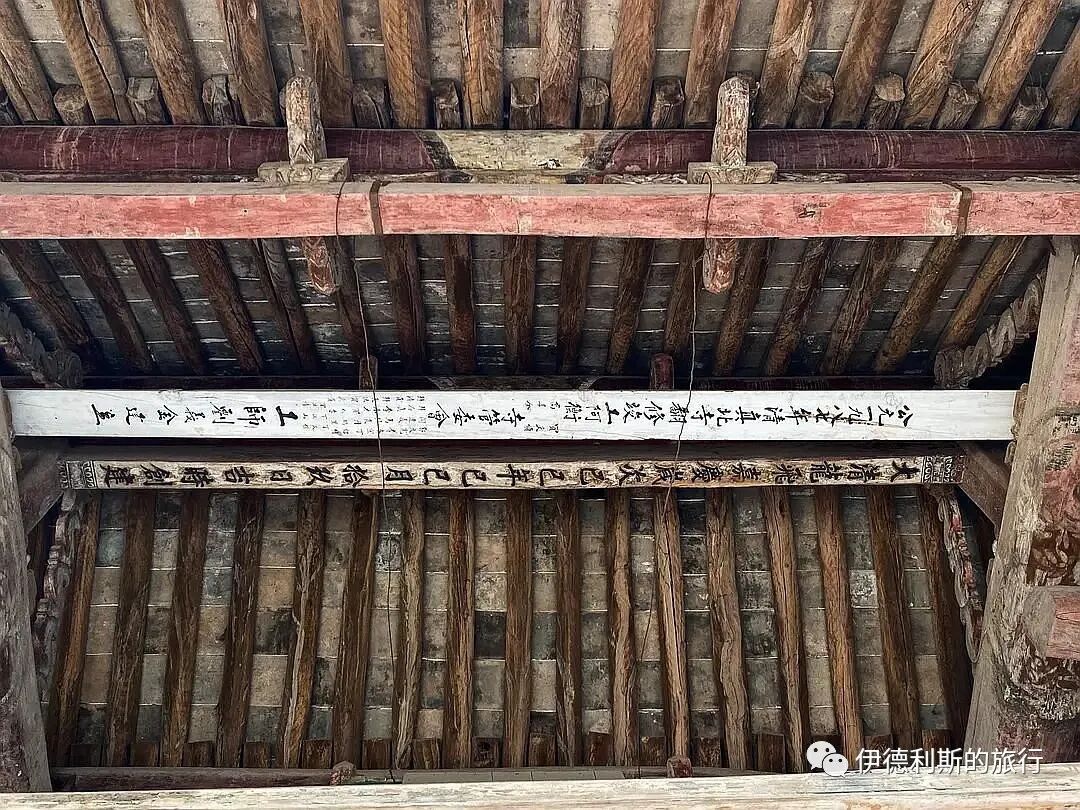
The hallway built in 1631 (the 4th year of the Chongzhen reign of the Ming Dynasty).
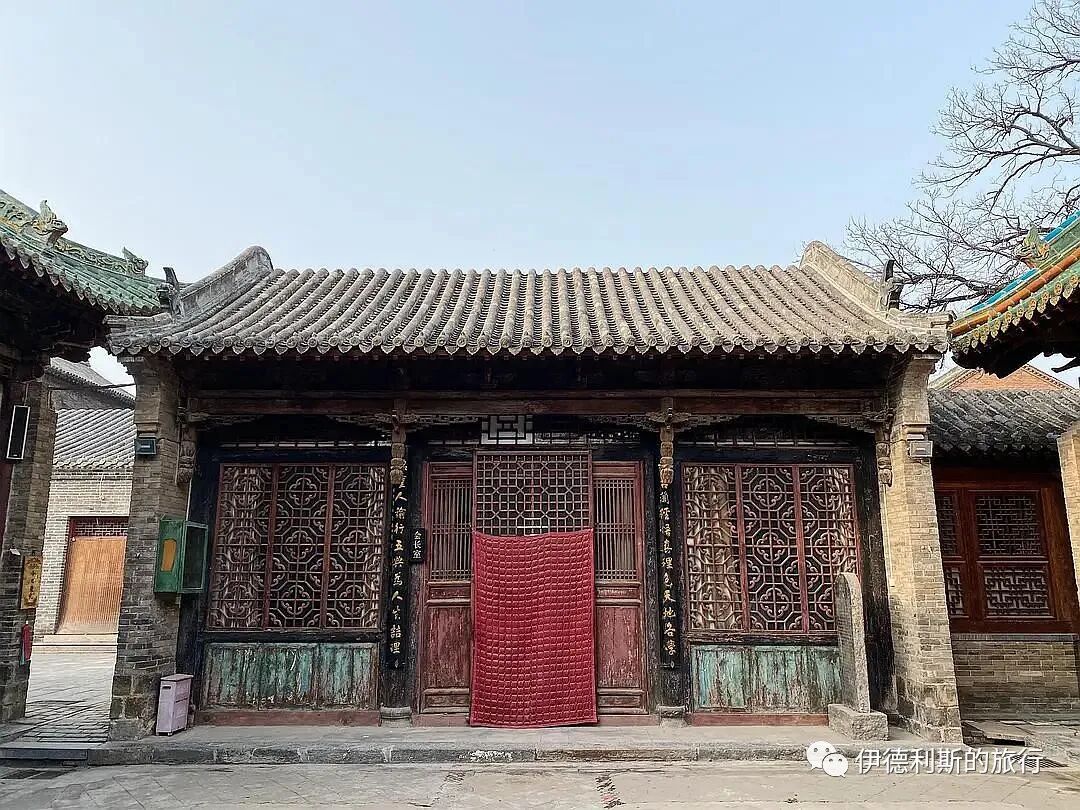
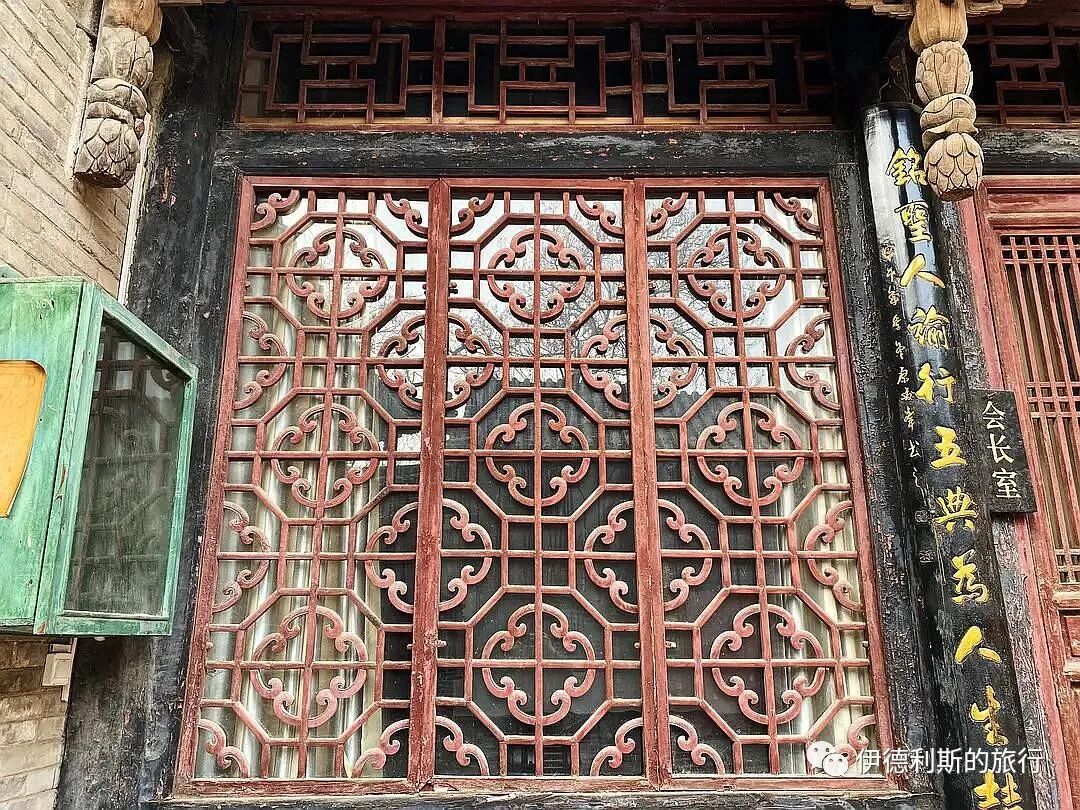
The lecture hall built in 1909 (the 1st year of the Xuantong reign). The north and south lecture halls have hard-mountain roofs, with hanging floral columns under the eaves and diamond-patterned doors and windows, simple and elegant.
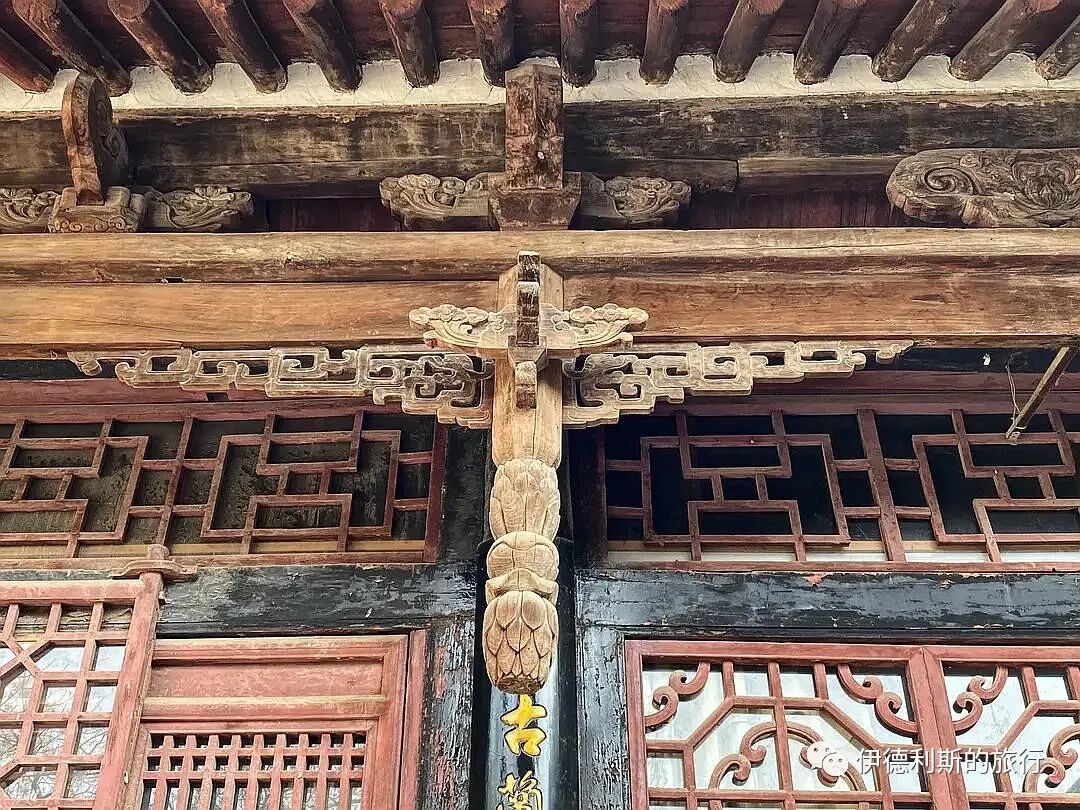
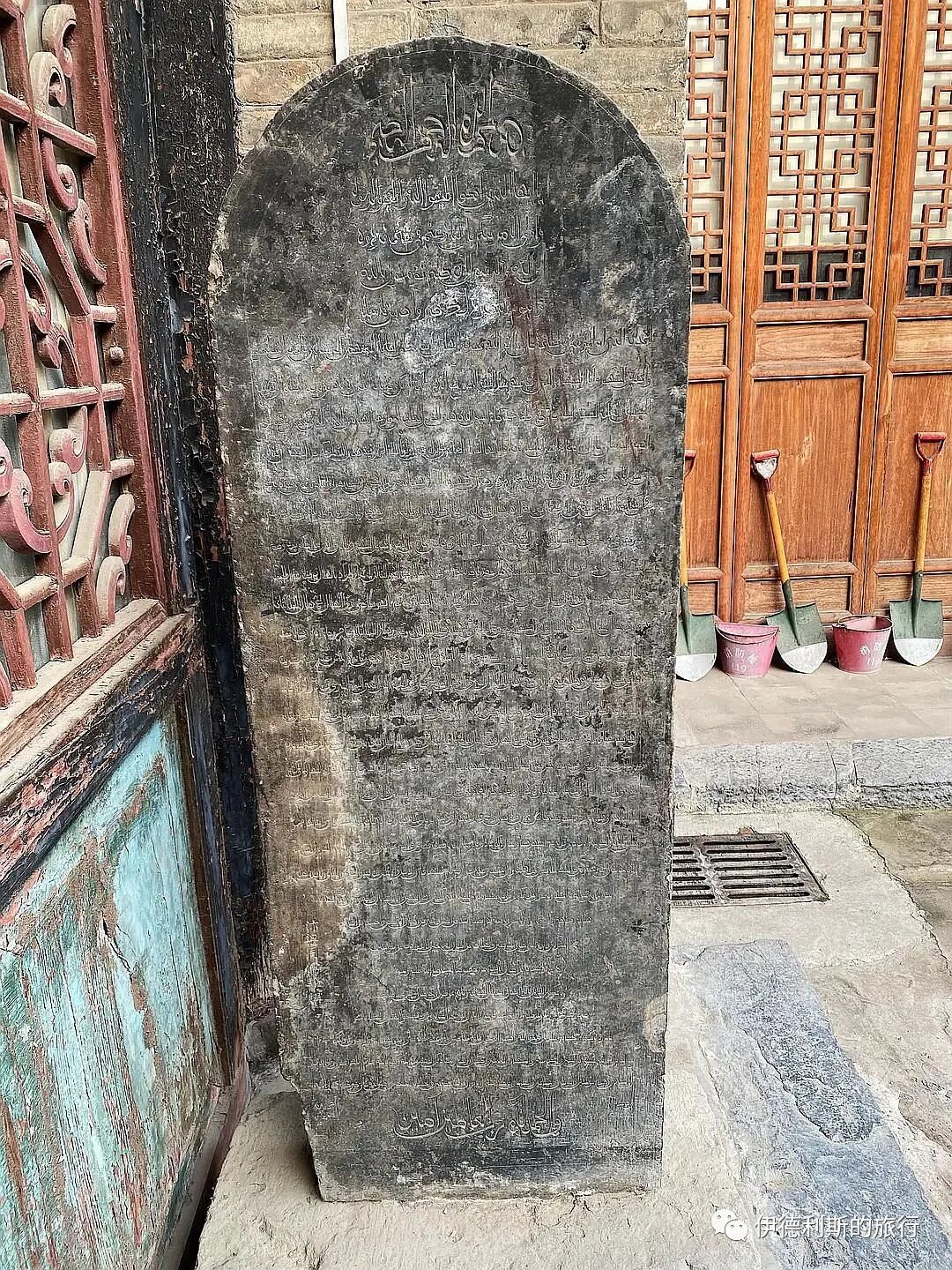
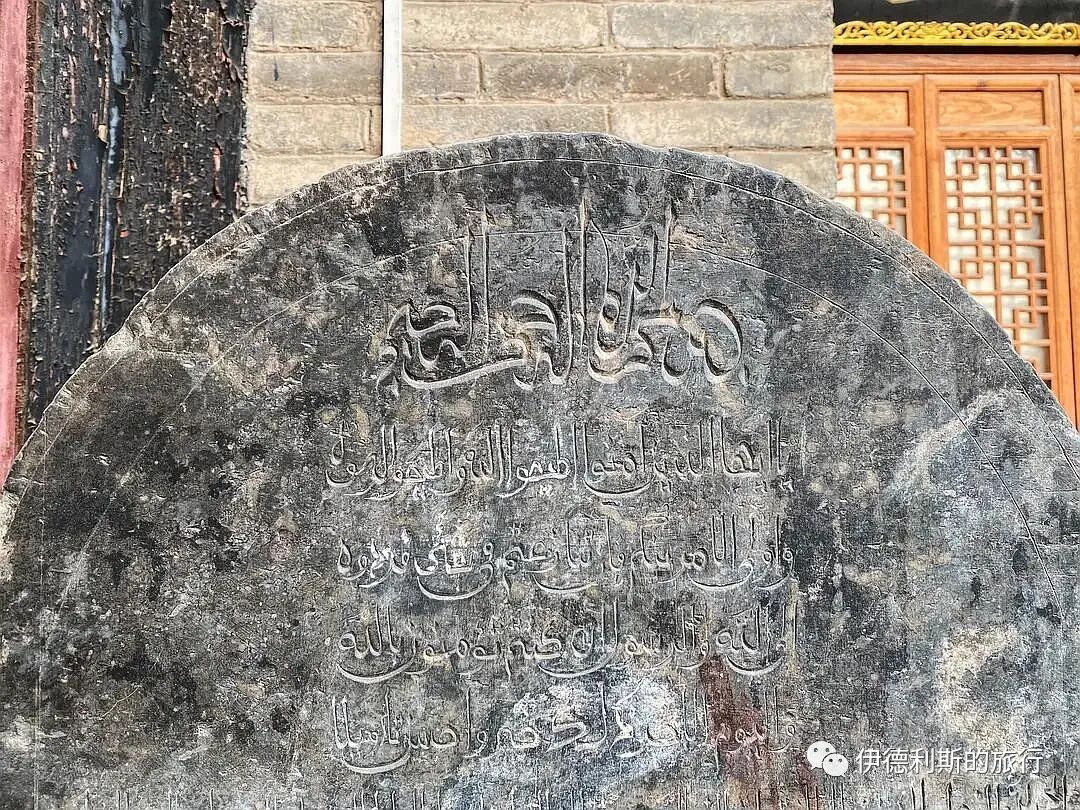
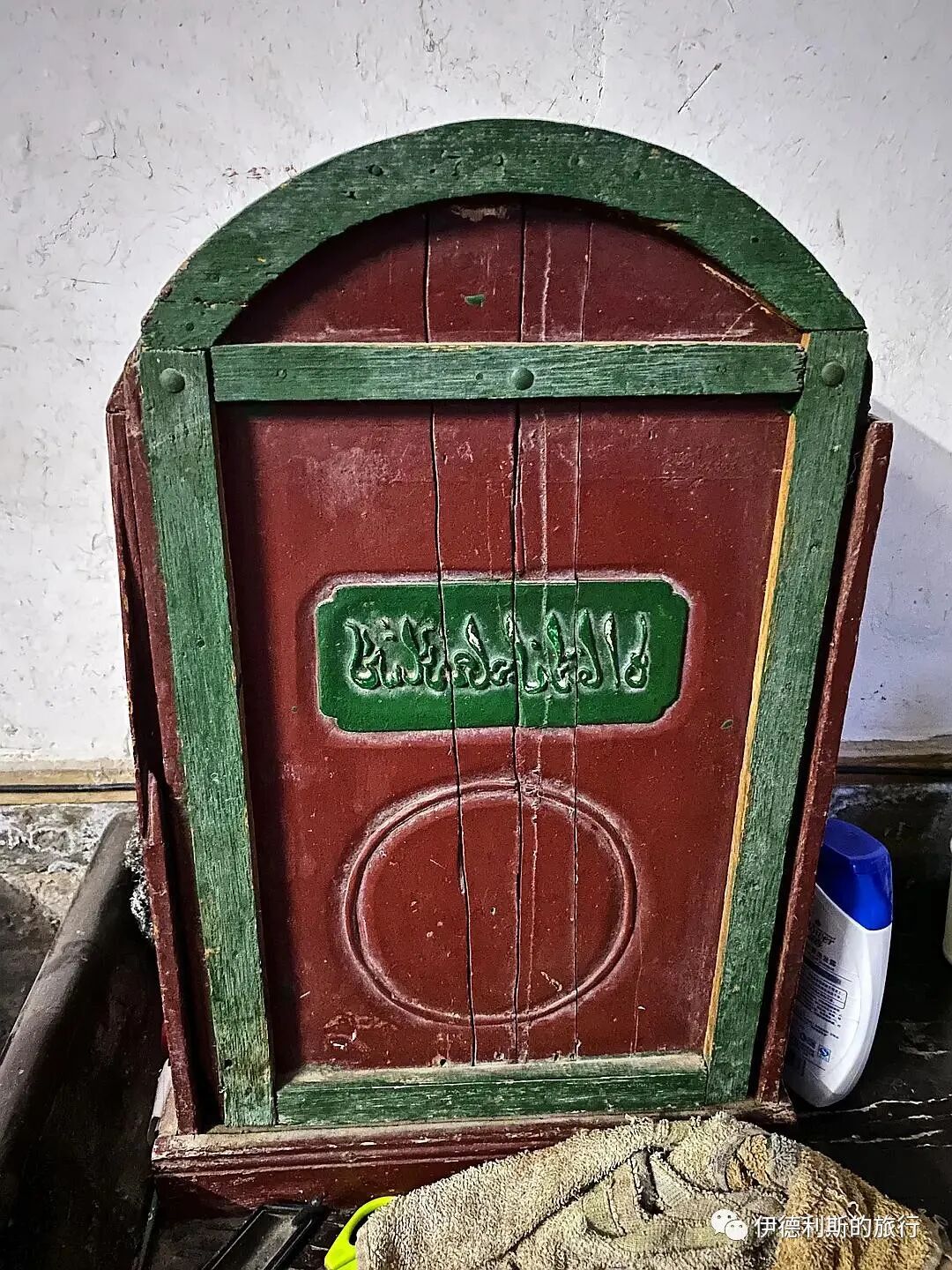
Scripture boxes in the Imam's office.
The main hall consists of a juanpeng, a front hall, a middle hall, and a yaodian. This architectural style, with a front hall featuring a hip-and-gable roof, a middle hall with a hanging-mountain roof, and a raised yaodian, is unique to the Qinyang area. First, I will share the exterior of the juanpeng and the front hall.
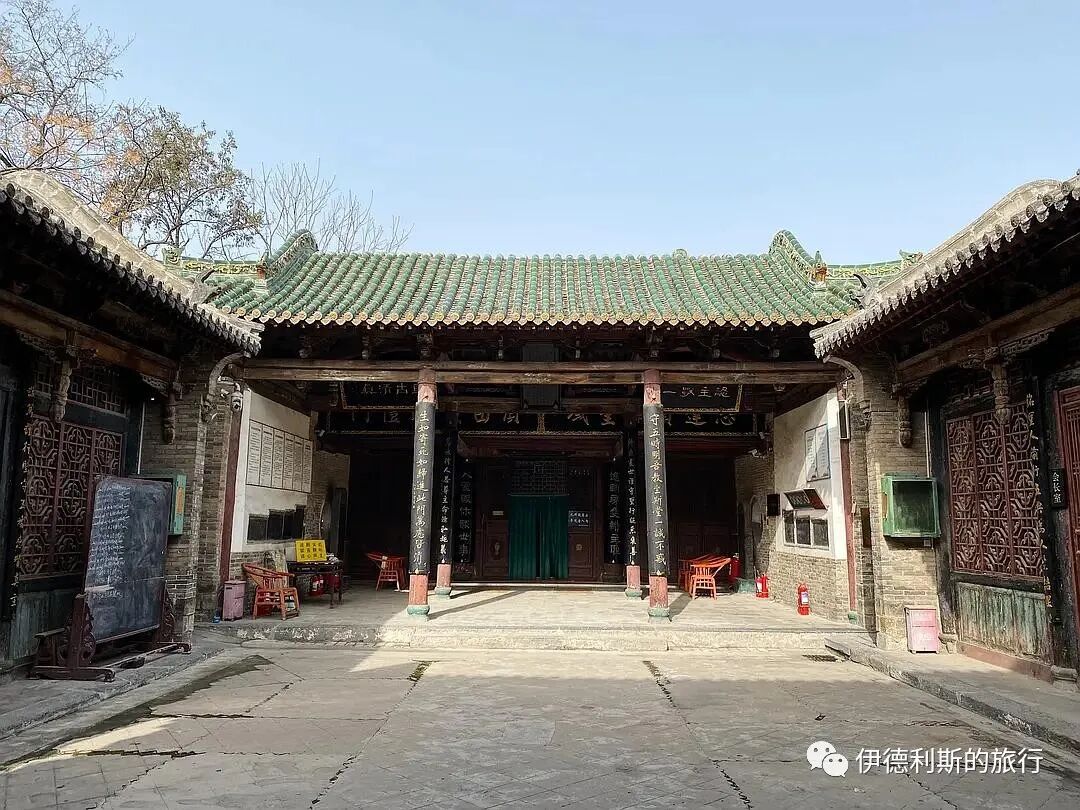
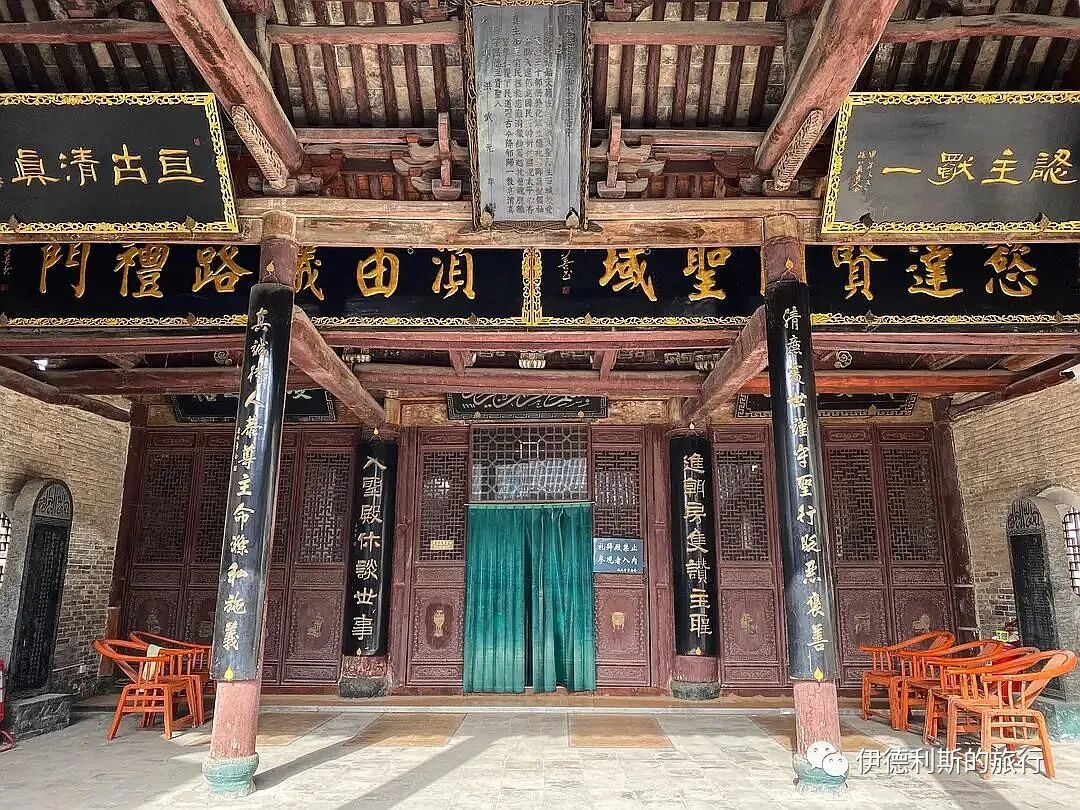
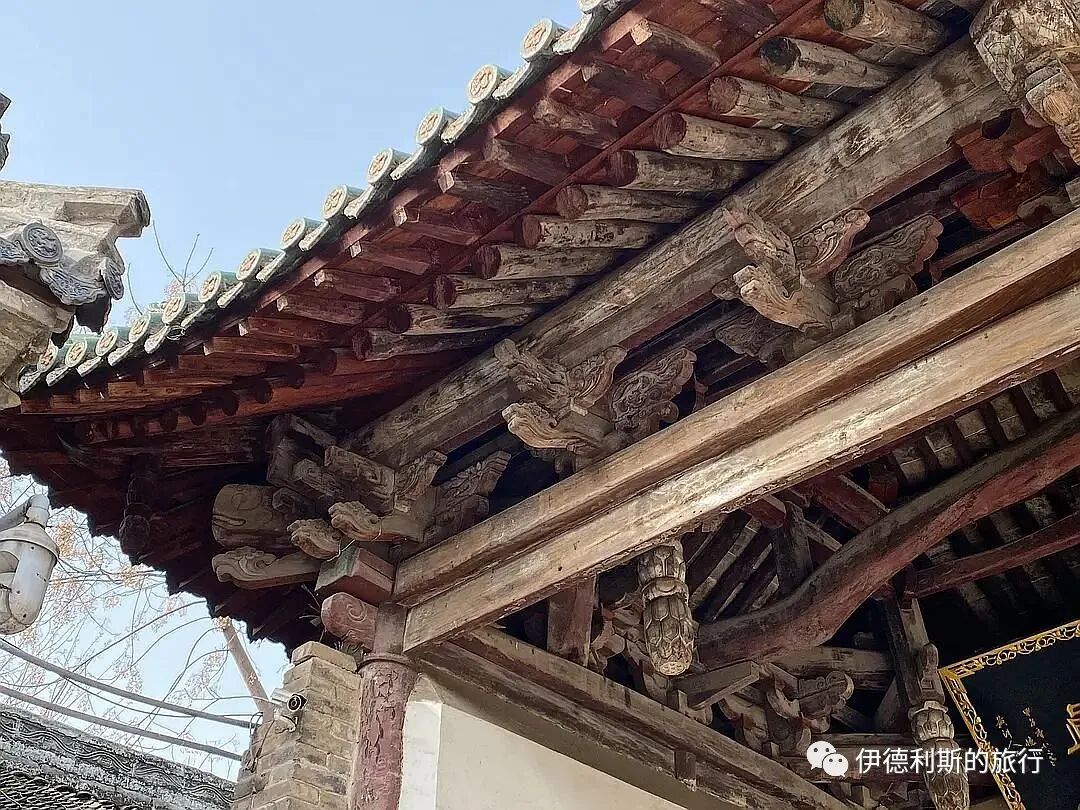
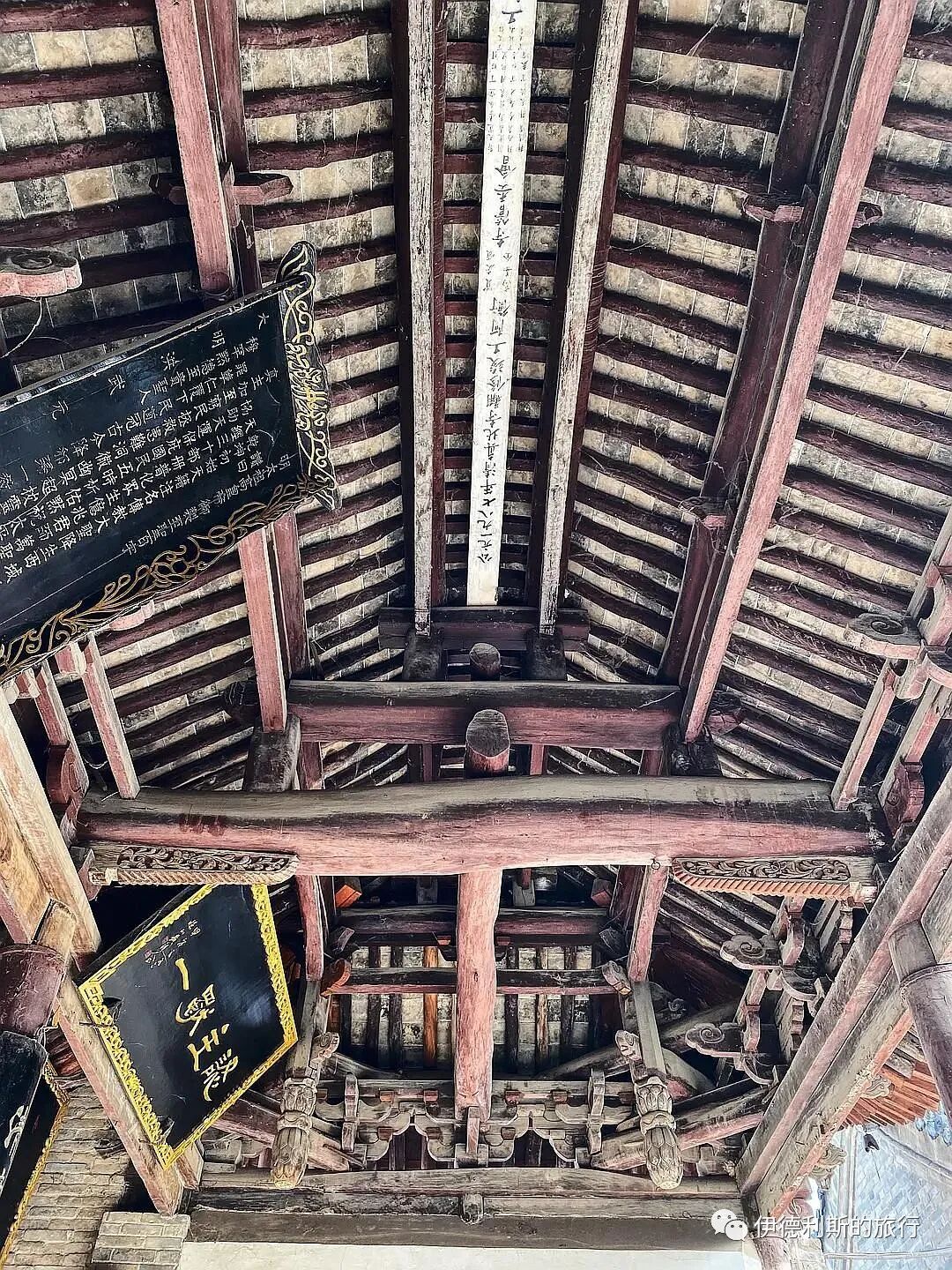
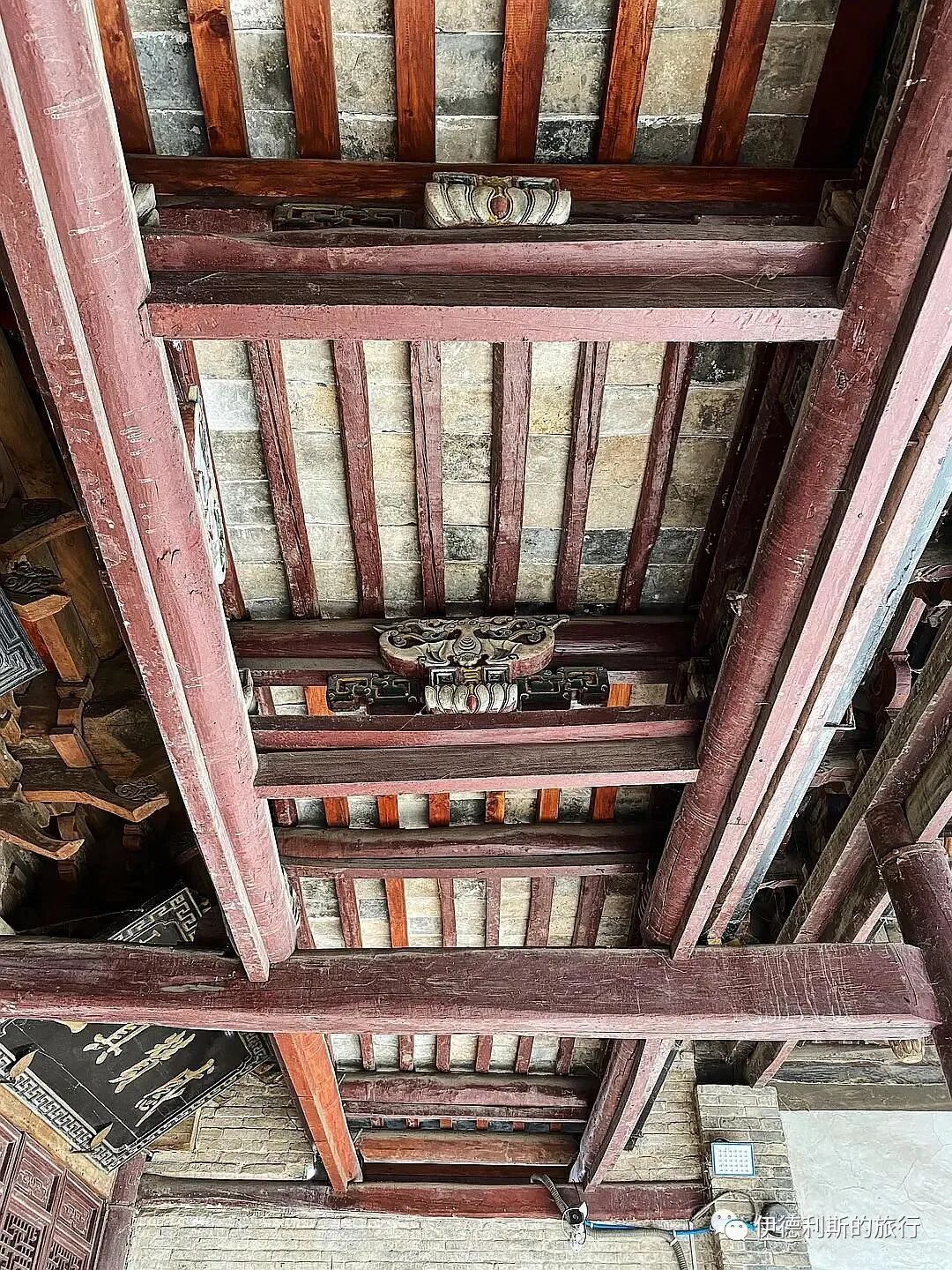
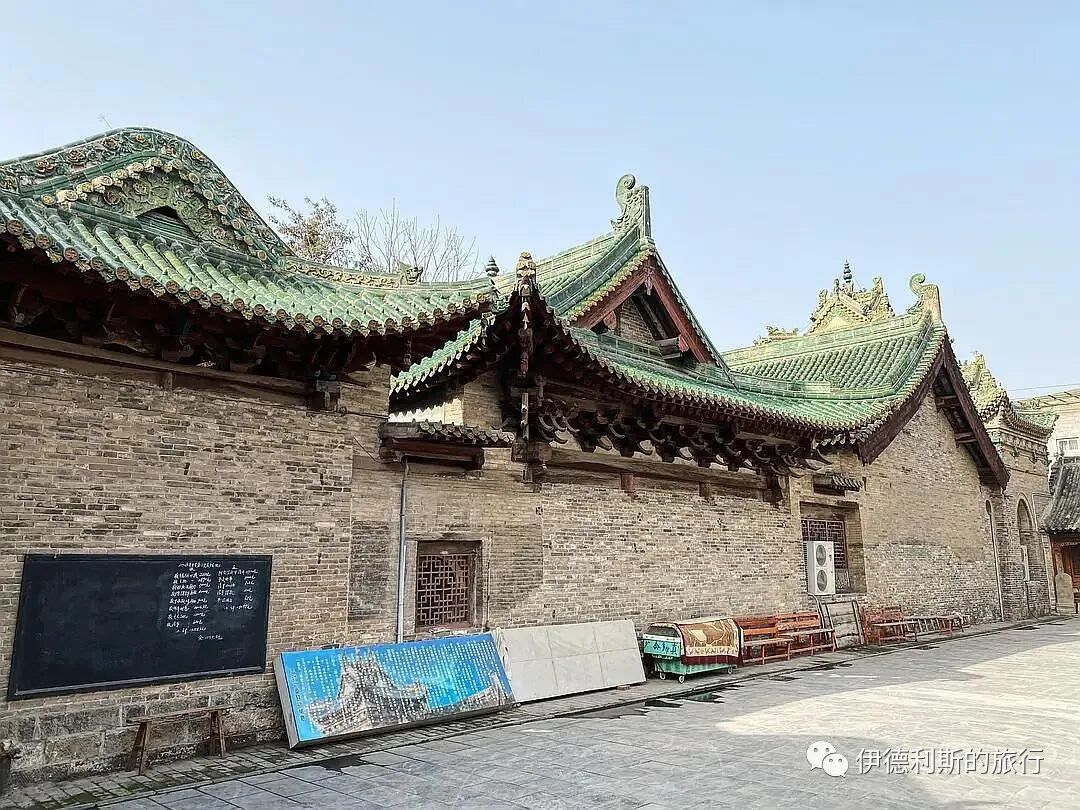
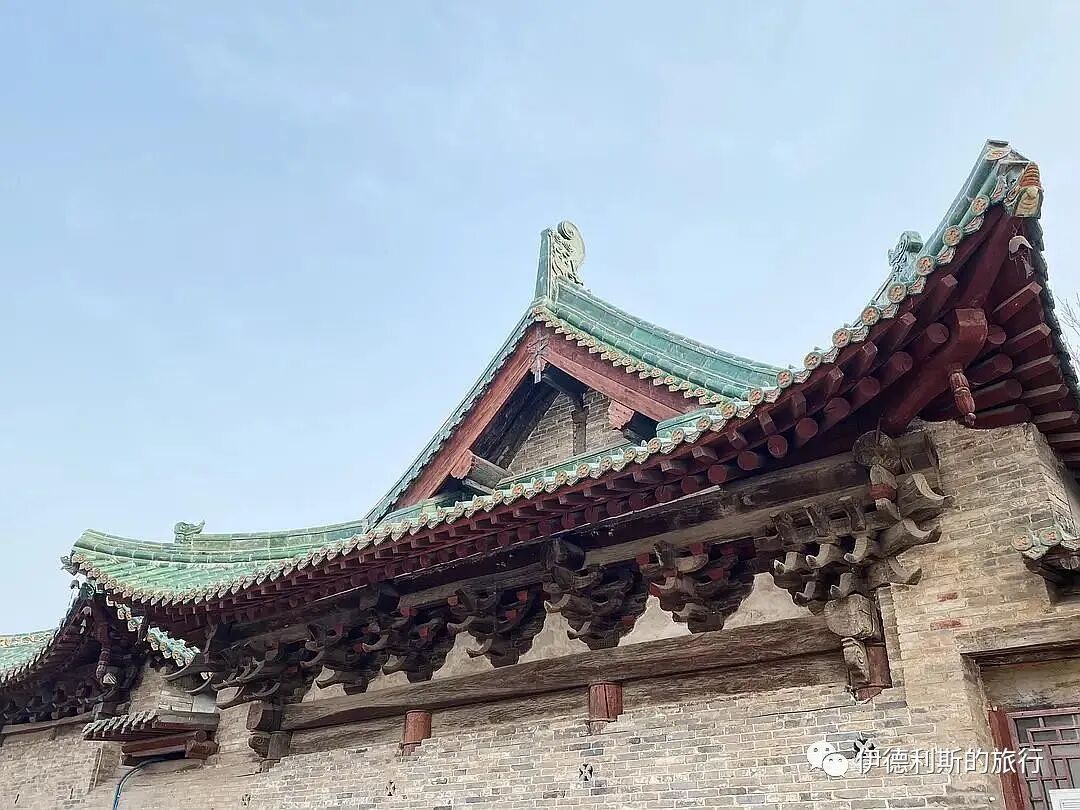
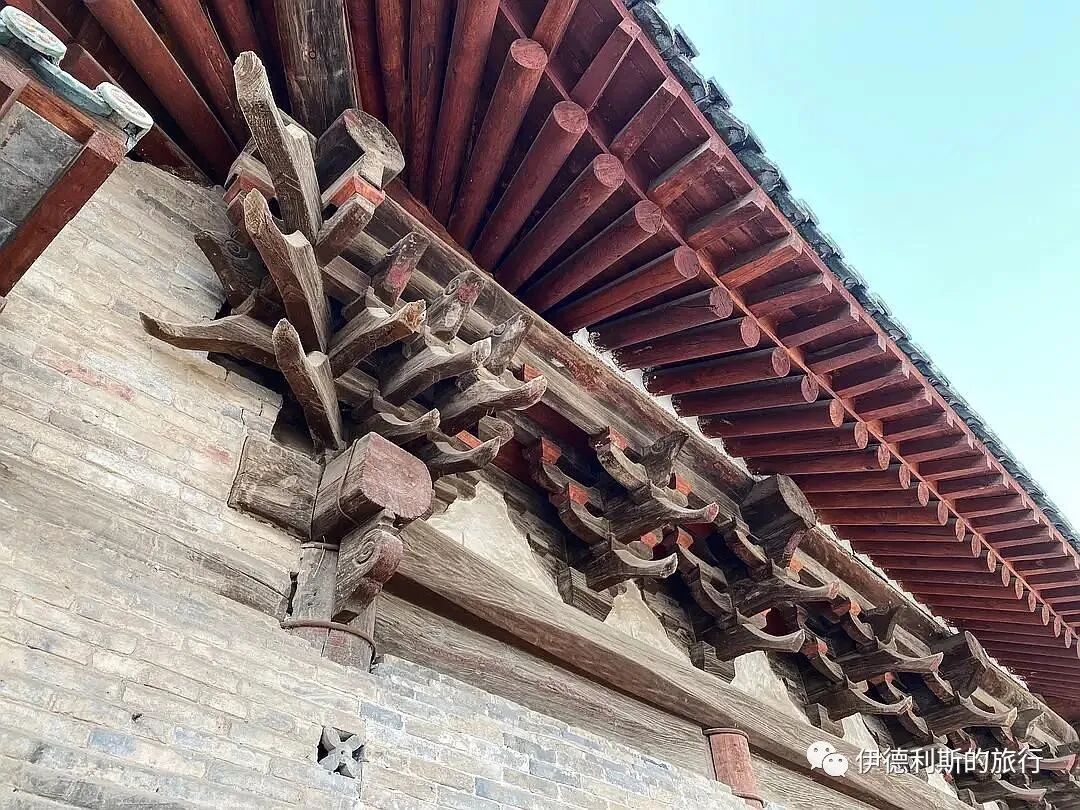
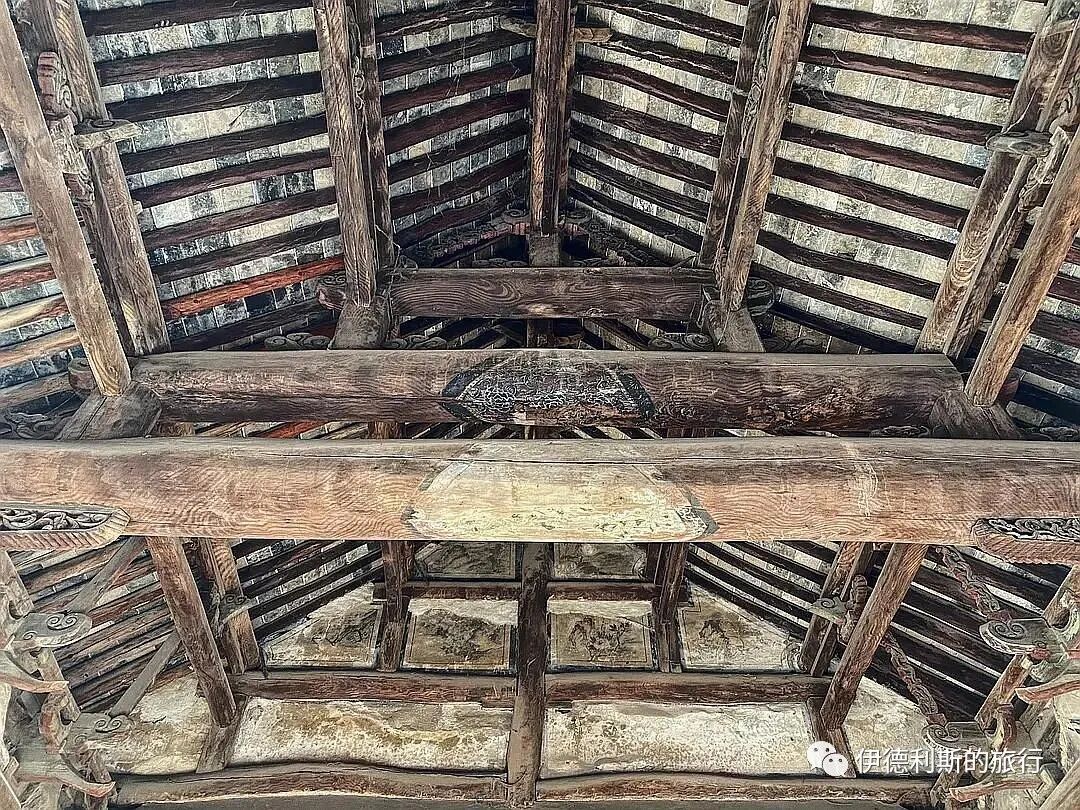
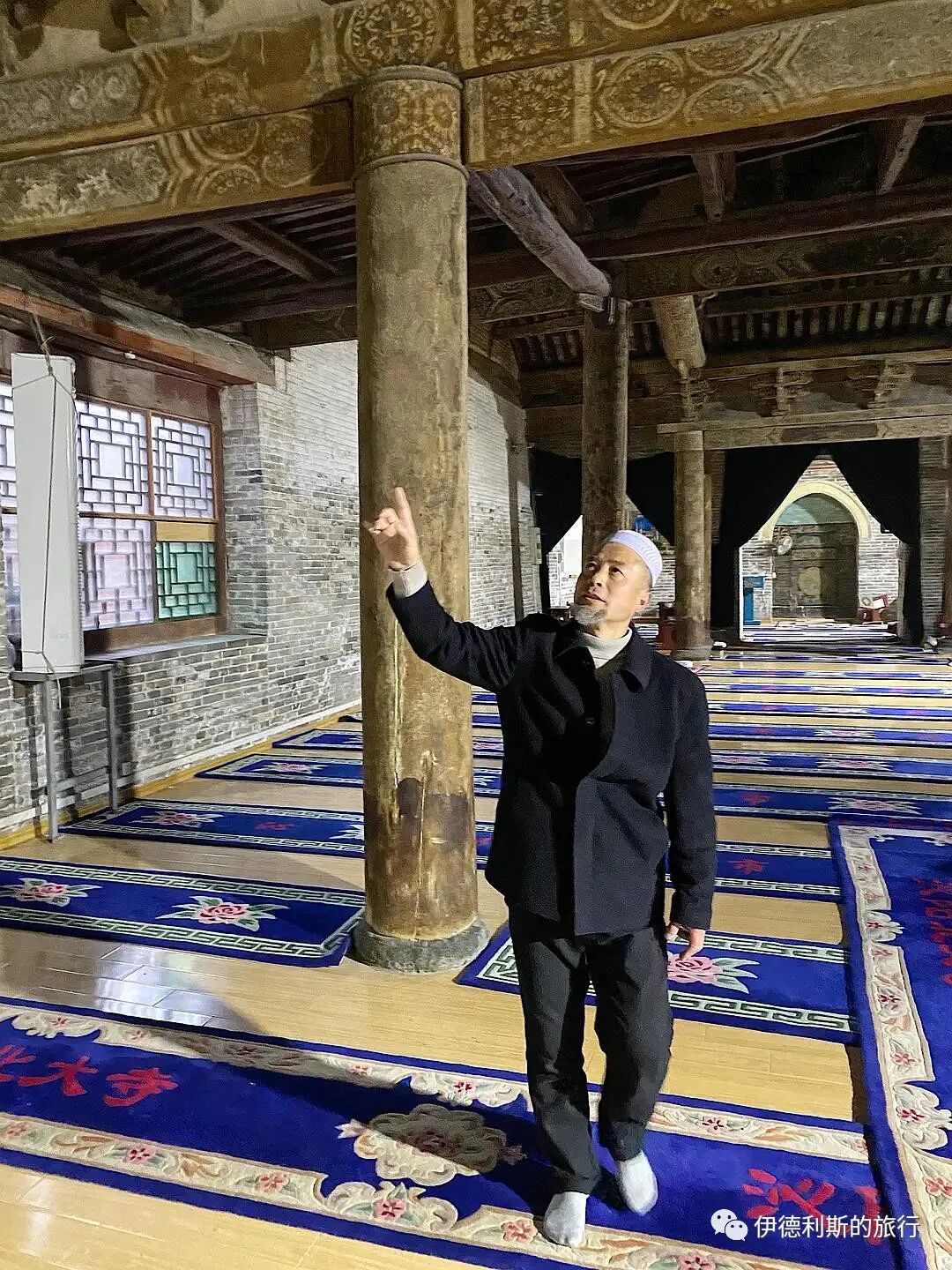
The beautiful Qing Dynasty paintings inside the main hall; thanks to Imam Ma Hongjie for the wonderful introduction. The main hall of the Beidasi was occupied by a factory in the 1960s and 70s, and the lower paintings all faded; only the paintings on the ceiling were luckily preserved.
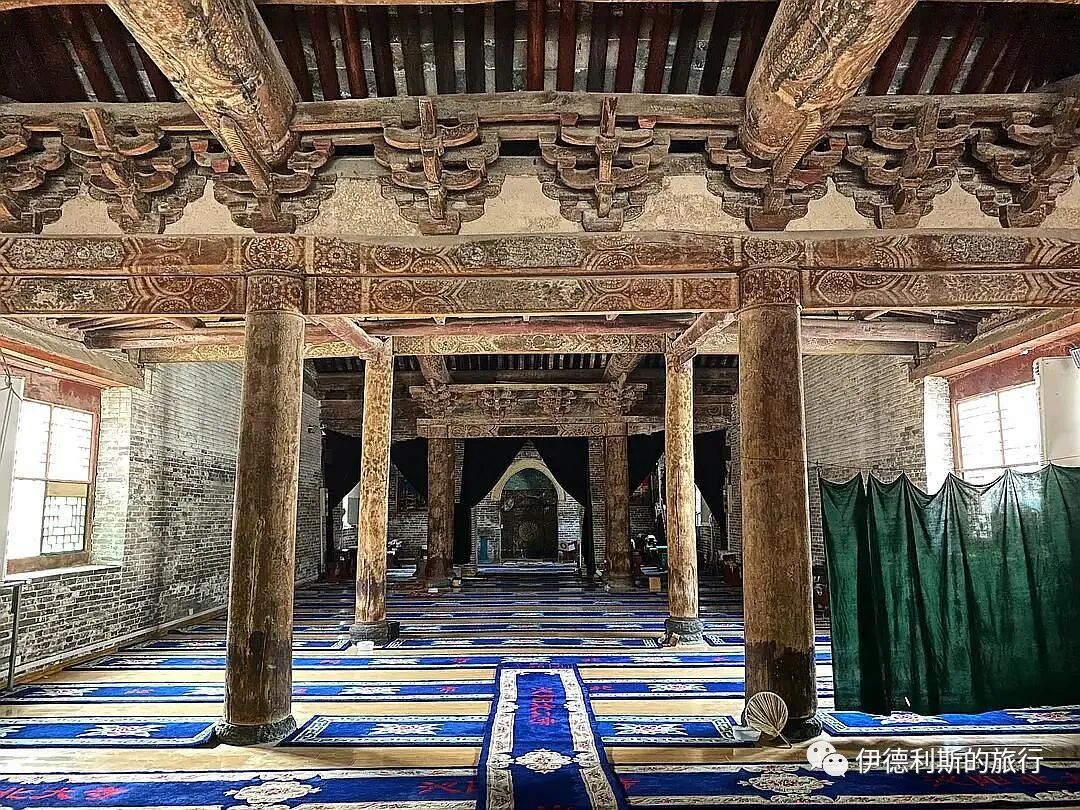
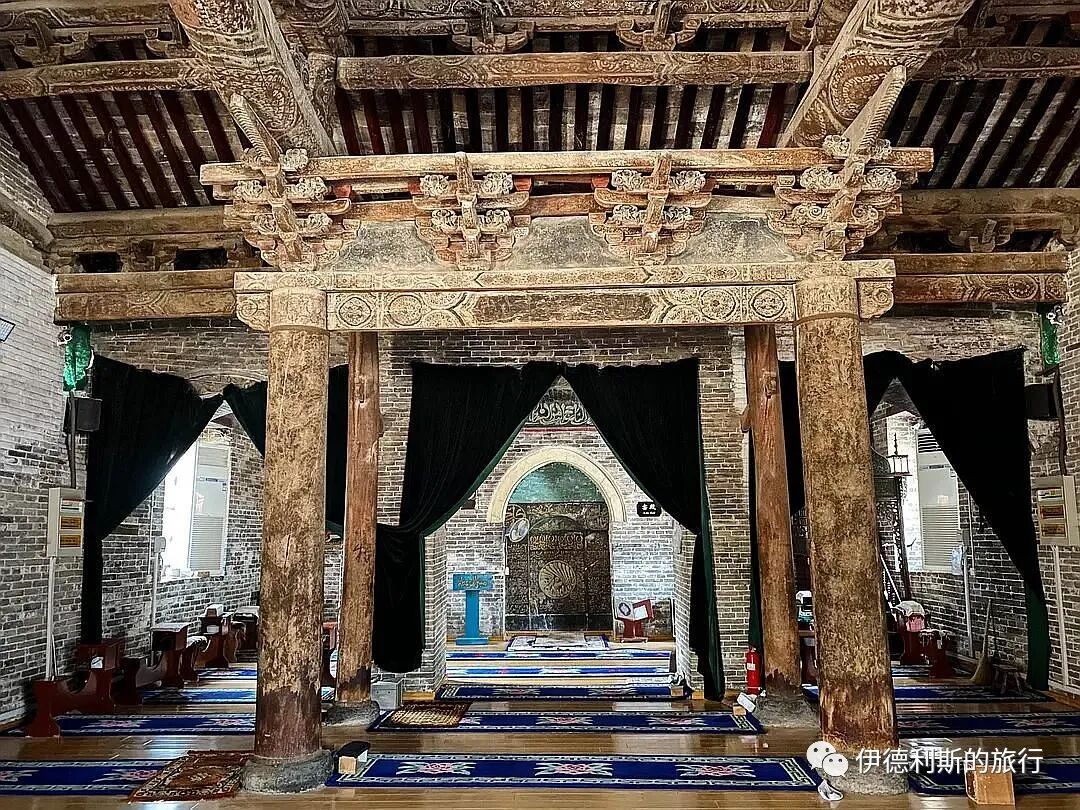
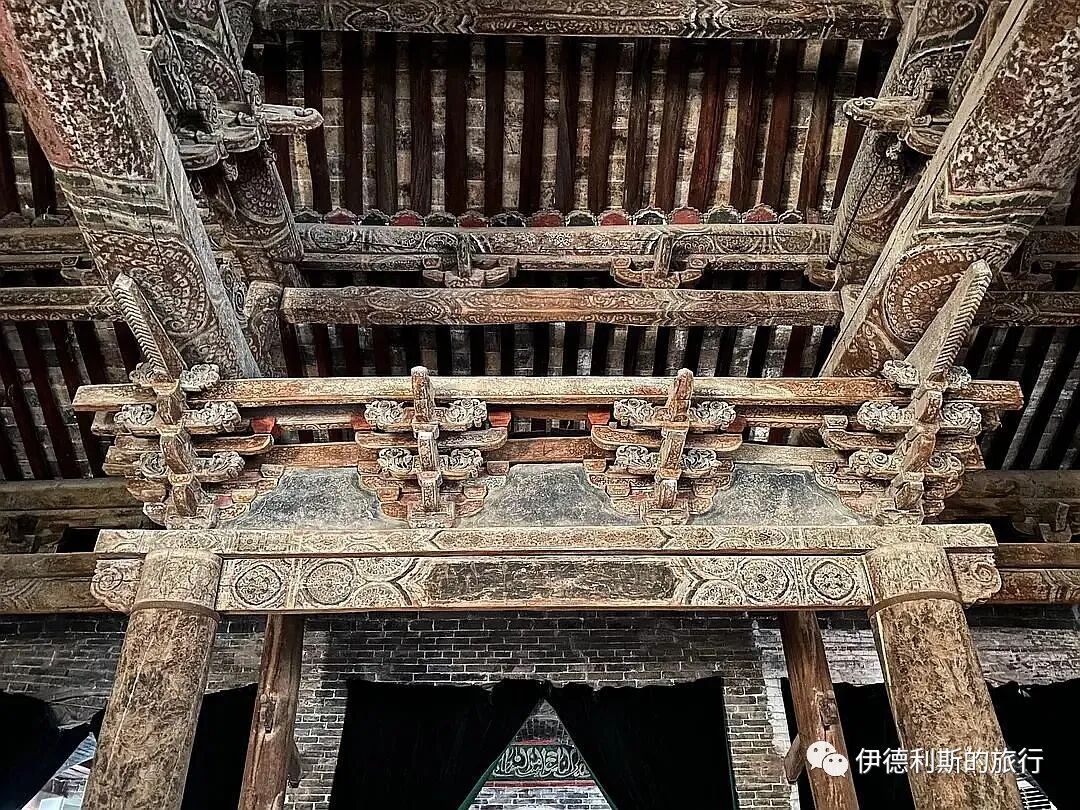
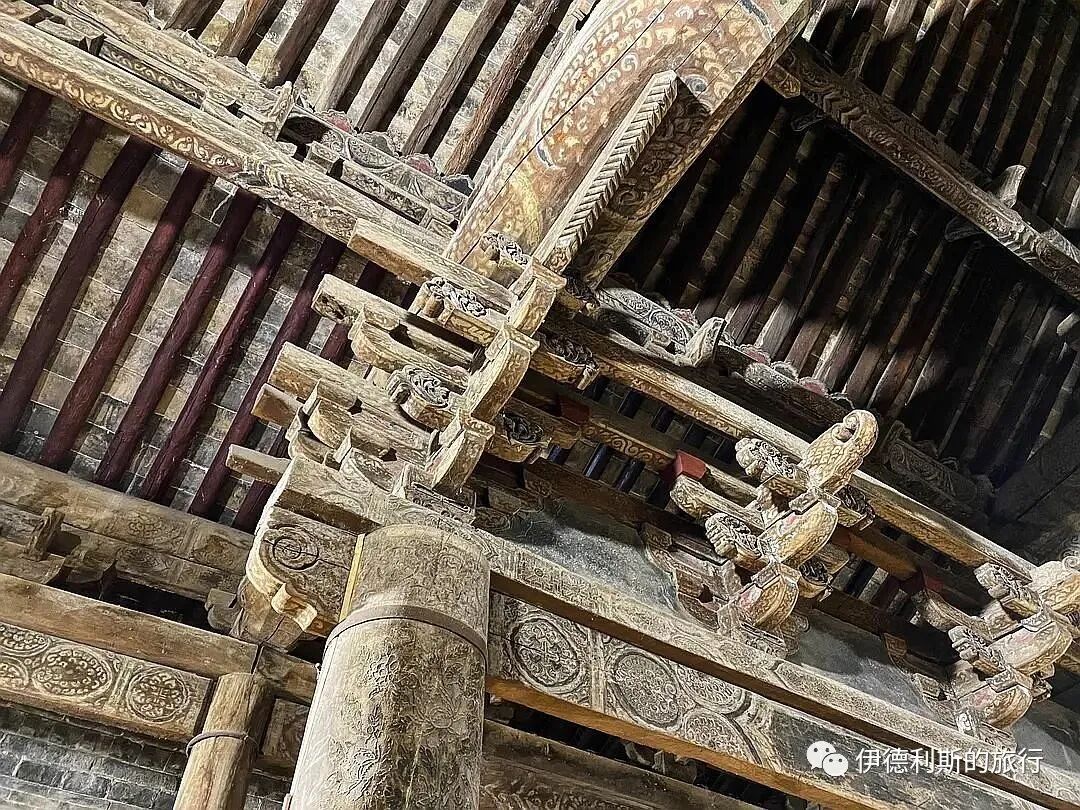
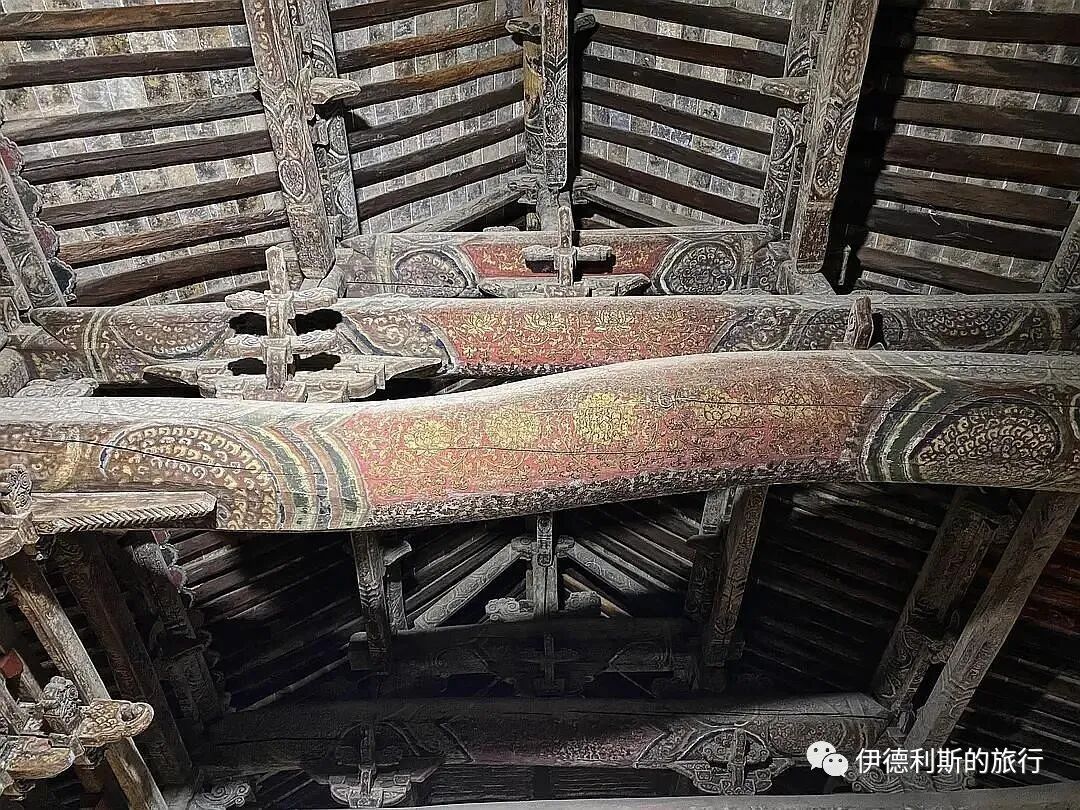
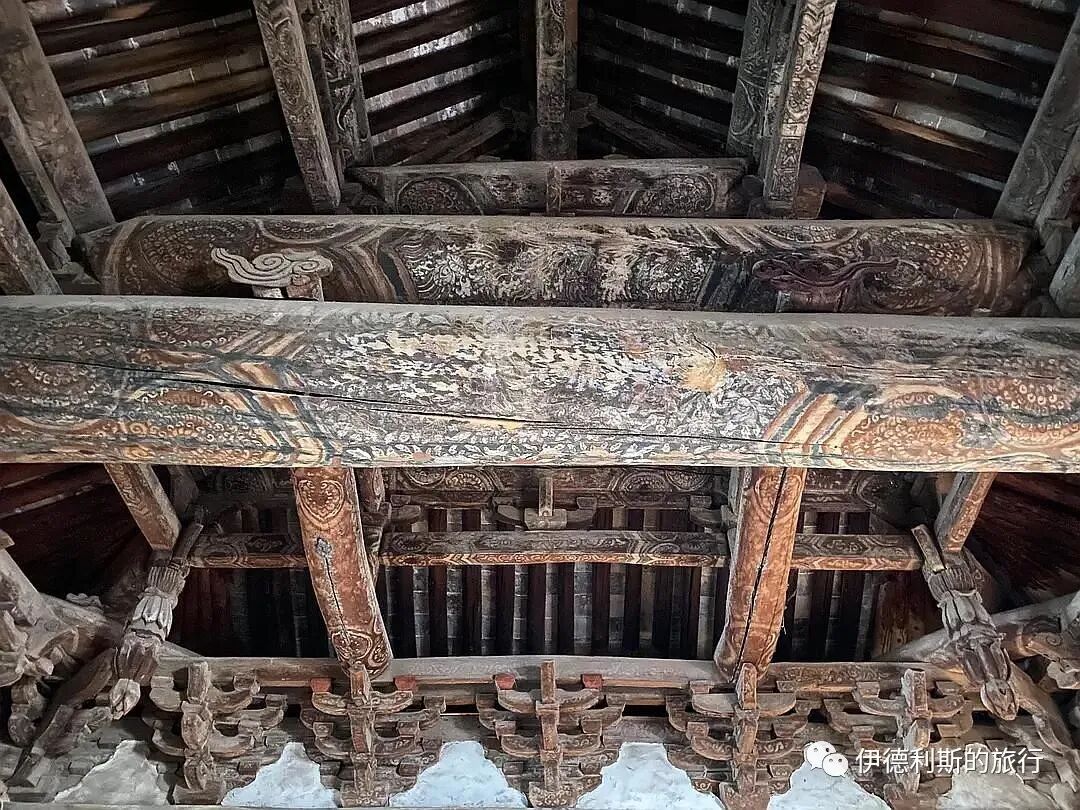
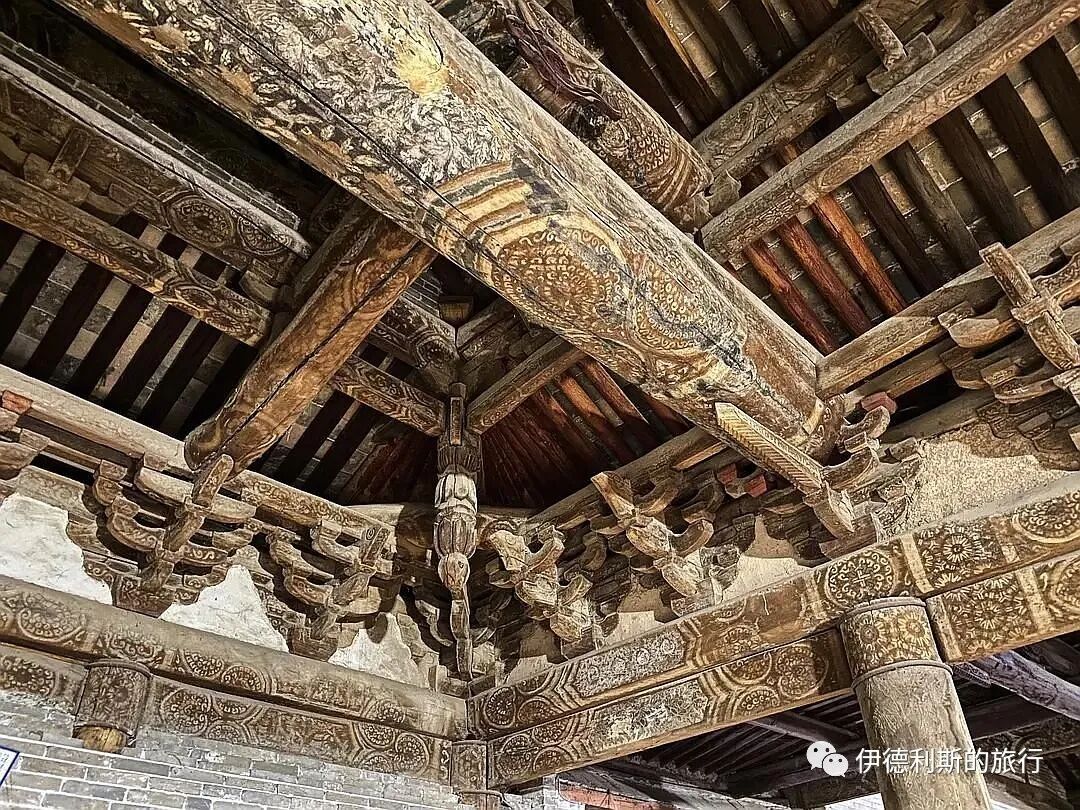
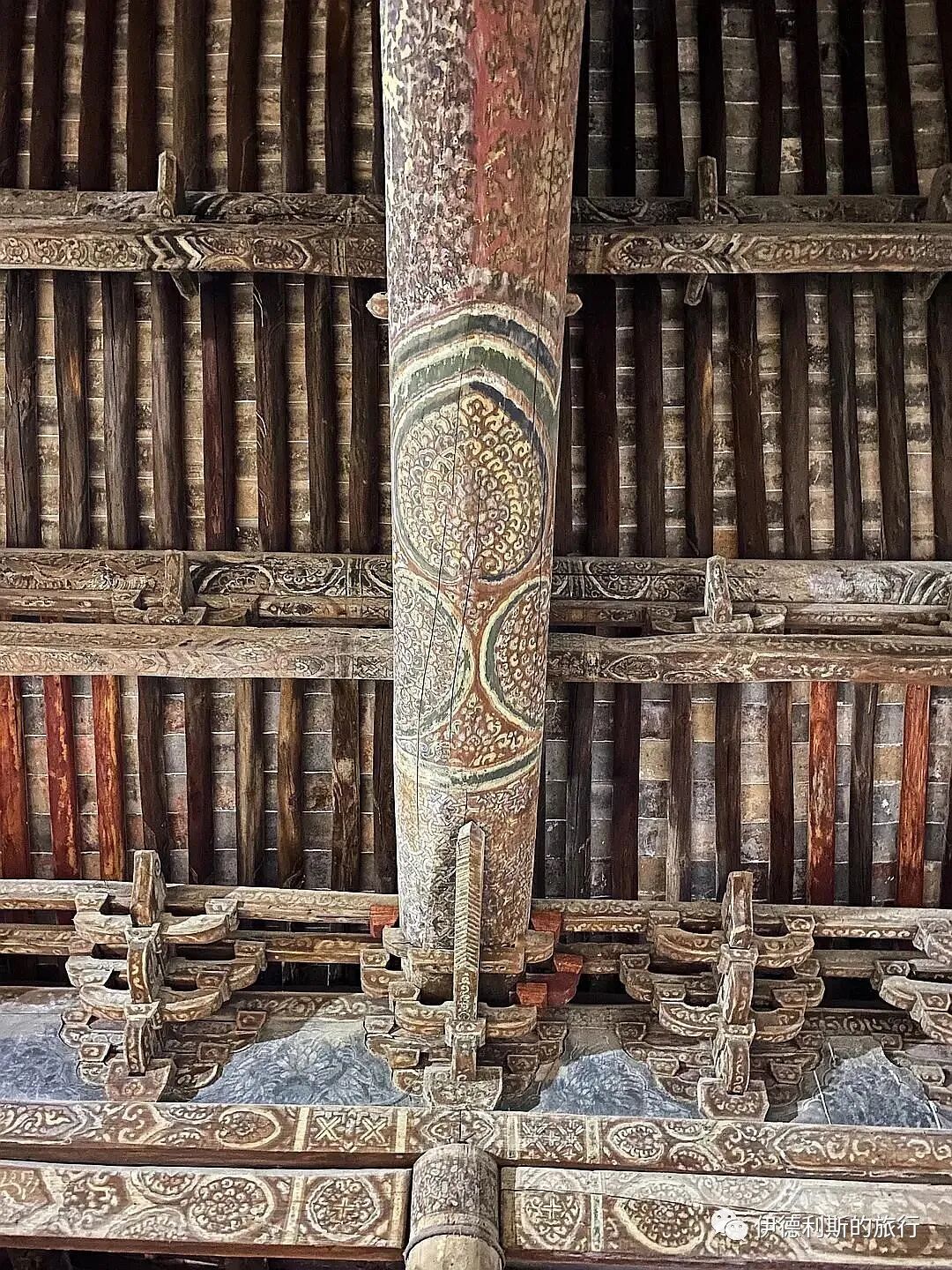
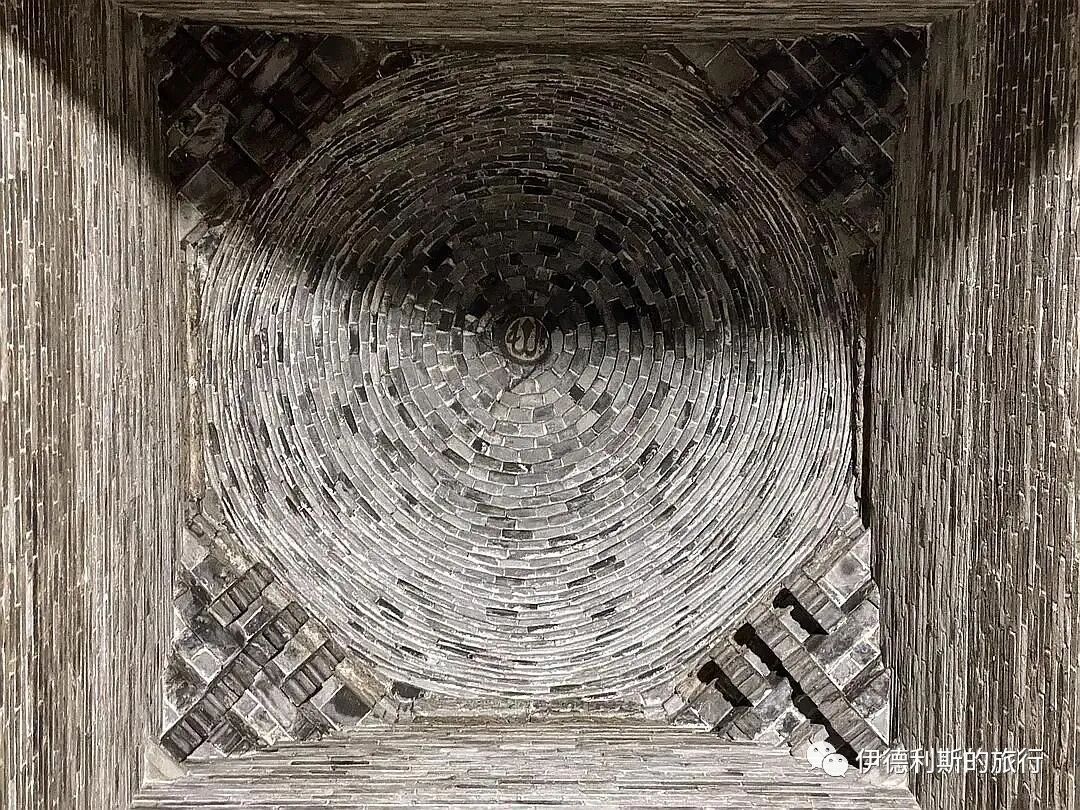
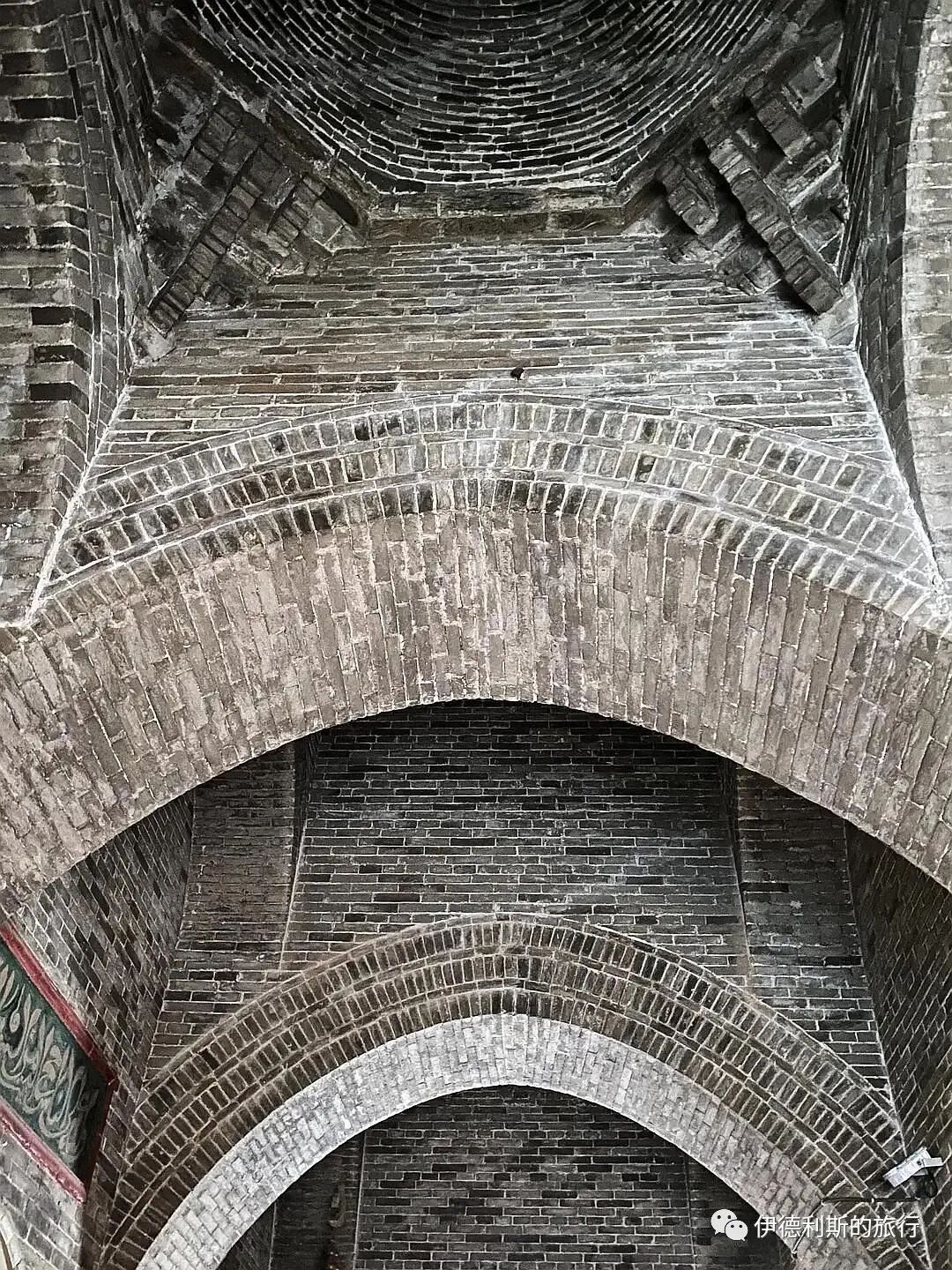
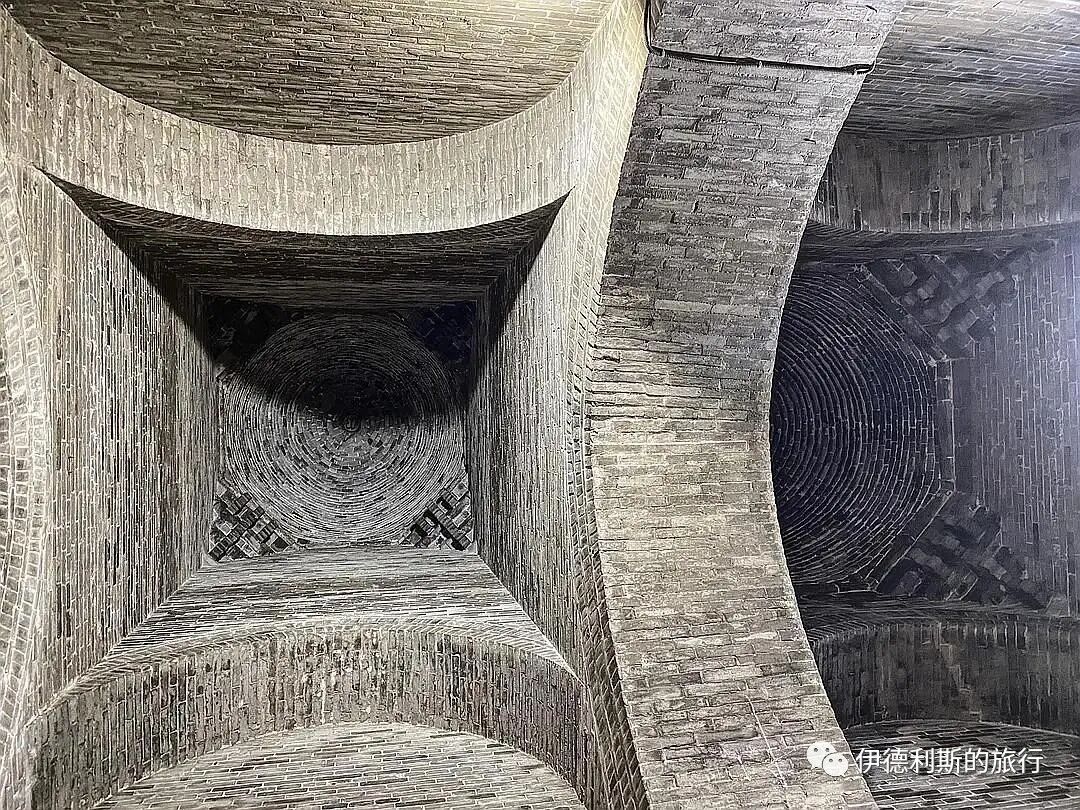
The yaodian was renovated in 1887 (the 13th year of the Guangxu reign). The interior is a brick-vaulted structure, built with two semi-circular arches made of walls over 1 meter thick, with three layers of corbelled arches at the corners to form an octagonal well, topped by a corbelled dome. At the very top of the central dome is carved the Arabic word for 'Allah'.
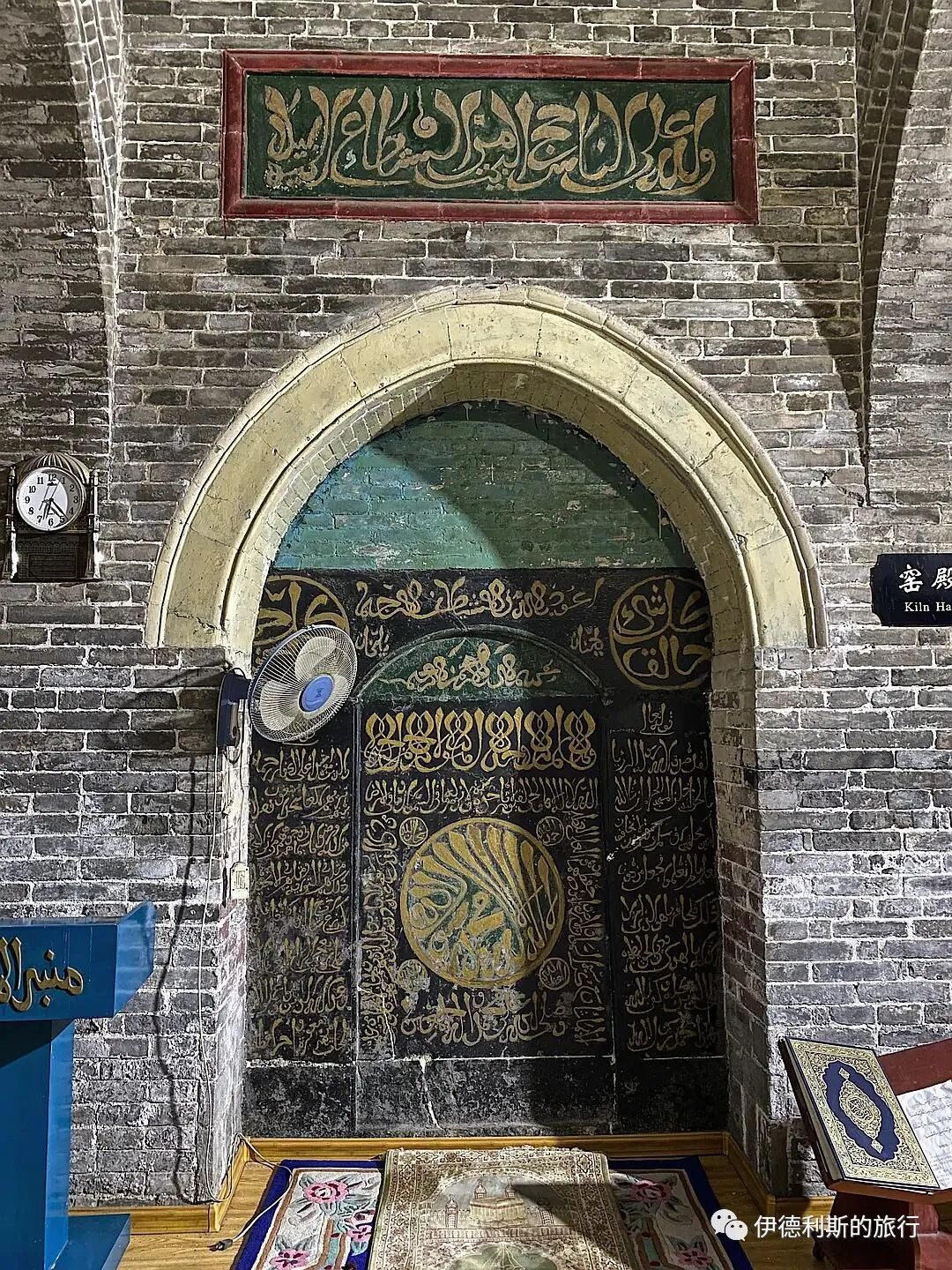
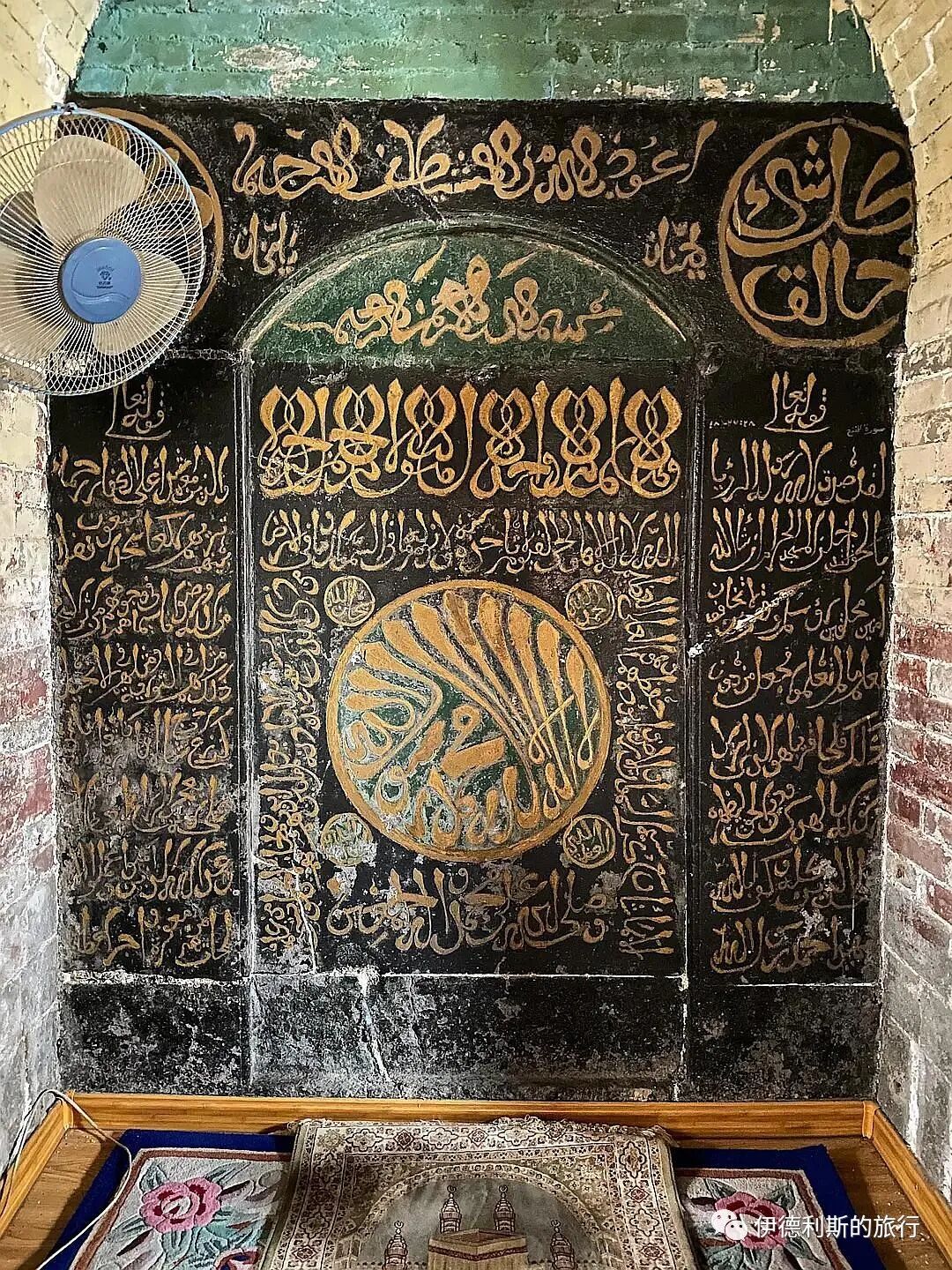
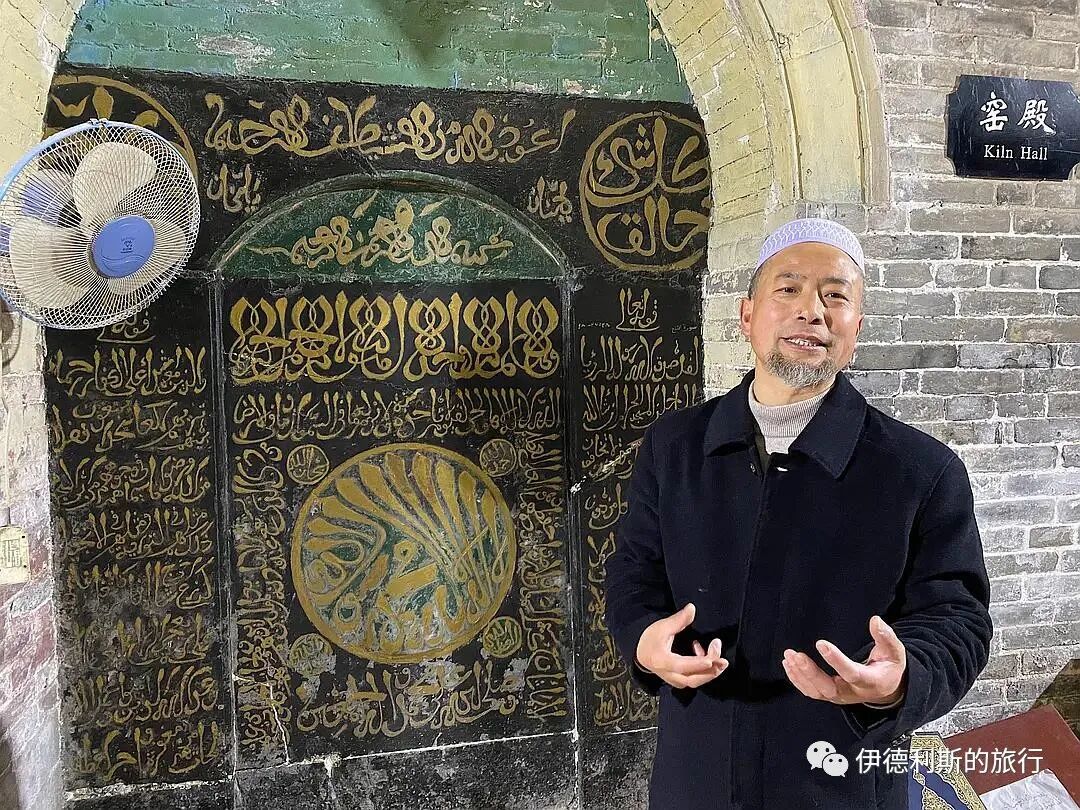
There is very beautiful calligraphy on the mihrab (niche indicating the direction of Mecca). Imam Ma Hongjie gave us a detailed introduction here, and I also caught the dhikr ceremony.
The exterior of the yaodian is a cross-ridge roof with over 70 glazed ridge beasts. Under the eaves are glazed lintels, brackets, and hanging floral columns, colorful and representing the highest standard of Qing Dynasty mosque yaodian roofs.
Summary: This travel note introduces Halal Travel Guide to Henan: 14 Traditional Mosques (Part 2). The main hall was renovated twice in 1802 (the 7th year of the Jiaqing reign) and 1907 (the 33rd year of the Guangxu reign), and consists of a juanpeng (open-fronted shed), the main hall, and a yaodian (niche hall). It is useful for readers interested in Henan Mosques, Chinese Muslims, Islamic Heritage.
Stone inscriptions in the courtyard.
The main hall was renovated twice in 1802 (the 7th year of the Jiaqing reign) and 1907 (the 33rd year of the Guangxu reign), and consists of a juanpeng (open-fronted shed), the main hall, and a yaodian (niche hall). The main hall features a raised-beam timber frame with exposed rafters, and the beams and lintels are covered with cloud and floral patterns, making it unique and elegant. There is a huazhao (decorative floral screen) between the main hall and the yaodian, which is filled with openwork patterns; light shines from the bright yaodian through the screen into the main hall, creating an exquisite and translucent effect on the screen.
In front of the main hall are two century-old sweet osmanthus trees.
Couplets inside the main hall:
For the painting of the heavens, one must know there is no second artist.
For the scriptures covering the earth, one must ponder who holds the brush.
Recognize Allah, who has no form or shadow, and let all things serve as witness.
Contemplate creation, it is not high or distant, for the only truth lies within the heart.
Behind the main hall, next to the yaodian, stands a Chinese juniper tree over four hundred years old.
3. Jiaozuo
1. Bo'ai Xiguan Mosque: Expanded in 1405.
The Xiguan Mosque was first built in the Yuan Dynasty, and the main hall was expanded in 1405 (the 3rd year of the Yongle reign of the Ming Dynasty). It is currently a national cultural heritage site and is known as the 'First Mosque of Northern Henan'.
The main hall consists of a juanpeng, a front hall, a yaodian (middle hall), and a rear hall. In 1863 (the 2nd year of the Tongzhi reign), the yaodian was burned down by the Nian Army and later rebuilt to its original appearance. In 1941, a rear hall was added behind the yaodian, and the yaodian became the middle hall. The main hall is a raised-beam timber frame structure with 16 columns in 4 rows supporting the beam framework. The middle hall has 4 tall columns supporting the roof of the yaodian; inside the yaodian roof is a zaojing (caisson ceiling), and the exterior features a triple-eave, four-corner cross-ridge roof.
I performed the peshin (noon prayer) at the mosque and also caught the dhikr (remembrance of Allah) ceremony.
Main gate.
Glazed memorial archway.
Jumu (Friday prayer) plaque.
2. Bo'ai Erxianmiao Mosque: Qing Dynasty.
The Erxianmiao Mosque was first built in the Yuan Dynasty, renovated in 1638 (the 11th year of the Chongzhen reign of the Ming Dynasty), and renovated again in 1731 (the 9th year of the Yongzheng reign of the Qing Dynasty). It is a cultural heritage site of Henan Province. The mosque's main hall consists of a juanpeng, a front hall, a rear hall, and a yaodian. The juanpeng and front hall are Qing Dynasty structures with hard-mountain roofs connected in a series, while the rear hall and yaodian were added in 1993.
3. Bo'ai Daxinzhuang Dongdasi (Great Eastern Mosque): Expanded in the Ming Dynasty.
The Daxinzhuang Dongdasi was first built in the Yuan Dynasty, expanded in the Ming Dynasty, and had a rear hall added during the Republic of China era. It is currently a cultural heritage site of Henan Province.
The main hall consists of a juanpeng, a front hall, a rear hall, and a yaodian. The juanpeng is an independent structure, with a drainage gutter installed where it connects to the front eaves of the main hall. In front of the main hall is a 365-year-old sweet osmanthus tree.
The front hall is seven bays wide, with a timber frame featuring exposed rafters, and the wood carvings on the beams and lintels are very beautiful. The rear hall was added during the Republic of China era and features five Roman-style arched doorways with exquisite cement decorations from that period.
Wood carvings on the main gate.
Old door panels.
4. Bo'ai Daxinzhuang Qingzhen Xisi (Western Mosque): Qing Jiaqing reign.
The Daxinzhuang Qingzhen Xisi is near the Dongdasi, but it is not as famous as the Dongdasi. The Xisi was first built during the Jiaqing reign of the Qing Dynasty. The main hall was originally three bays wide, expanded to five bays in the late Qing Dynasty, and expanded again to seven bays in the early Republic of China era. During this time, the elder Mai Anli funded the construction of a five-bay juanpeng.
5. Qinyang Beidasi (Northern Mosque): Rebuilt in 1631.
In my opinion, the Qinyang Beidasi definitely ranks in the top three for beauty among historical mosque buildings in Henan. The Beidasi was moved to its current site in 1561 (the 40th year of the Jiajing reign of the Ming Dynasty), burned down in 1628 (the 1st year of the Chongzhen reign), and rebuilt in 1631 (the 4th year of the Chongzhen reign). It is a major national historical and cultural site.
The overall layout of the Beidasi is quite classic, consisting mainly of the main gate, a hallway, lecture halls, and the main hall. I will share the details with you bit by bit. Because of the lighting, I photographed it twice, on Saturday afternoon and Sunday morning.
The main gate was built in 1799 (the 4th year of the Jiaqing reign) and uses peacock-blue glazed tiles, which are relatively rare in mosque architecture and look very refreshing.
The hallway built in 1631 (the 4th year of the Chongzhen reign of the Ming Dynasty).
The lecture hall built in 1909 (the 1st year of the Xuantong reign). The north and south lecture halls have hard-mountain roofs, with hanging floral columns under the eaves and diamond-patterned doors and windows, simple and elegant.
Scripture boxes in the Imam's office.
The main hall consists of a juanpeng, a front hall, a middle hall, and a yaodian. This architectural style, with a front hall featuring a hip-and-gable roof, a middle hall with a hanging-mountain roof, and a raised yaodian, is unique to the Qinyang area. First, I will share the exterior of the juanpeng and the front hall.
The beautiful Qing Dynasty paintings inside the main hall; thanks to Imam Ma Hongjie for the wonderful introduction. The main hall of the Beidasi was occupied by a factory in the 1960s and 70s, and the lower paintings all faded; only the paintings on the ceiling were luckily preserved.
The yaodian was renovated in 1887 (the 13th year of the Guangxu reign). The interior is a brick-vaulted structure, built with two semi-circular arches made of walls over 1 meter thick, with three layers of corbelled arches at the corners to form an octagonal well, topped by a corbelled dome. At the very top of the central dome is carved the Arabic word for 'Allah'.
There is very beautiful calligraphy on the mihrab (niche indicating the direction of Mecca). Imam Ma Hongjie gave us a detailed introduction here, and I also caught the dhikr ceremony.
The exterior of the yaodian is a cross-ridge roof with over 70 glazed ridge beasts. Under the eaves are glazed lintels, brackets, and hanging floral columns, colorful and representing the highest standard of Qing Dynasty mosque yaodian roofs.
Halal Travel Guide to Henan: 14 Traditional Mosques (Part 1)
Articles • ali2007fr posted the article • 0 comments • 155 views • 2026-05-17 05:43
Reposted from the web
Summary: This travel note introduces Halal Travel Guide to Henan: 14 Traditional Mosques (Part 1). 1. Kaifeng Dongdasi (East Great Mosque): Rebuilt in 1655. It is useful for readers interested in Henan Mosques, Chinese Muslims, Islamic Heritage.
1. Kaifeng
1. Kaifeng Dongdasi (East Great Mosque): Rebuilt in 1655
2. Kaifeng Dongdasi Women's School
3. Kaifeng Shanyitang Mosque: 1874
4. Kaifeng Wangjia Hutong Women's Mosque School: 1810s
5. Kaifeng Beidasi (North Great Mosque): Rebuilt in 1662
6. Kaifeng Wenshusi Mosque Qing Dynasty screen wall
7. Kaifeng Zhuxian Town North Mosque: Rebuilt in 1738
8. Zhuxian Town Women's Mosque School
2. Zhengzhou Beidasi (North Great Mosque): Ming Dynasty
3. Jiaozuo
1. Bo'ai Xiguan Mosque: Expanded in 1405.
2. Bo'ai Erxianmiao Mosque: Qing Dynasty architecture
3. Bo'ai Daxinzhuang Dongdasi (Great Eastern Mosque): Expanded in the Ming Dynasty.
4. Bo'ai Daxinzhuang Qingzhen Xisi (Western Mosque): Qing Jiaqing reign.
5. Qinyang Beidasi (Northern Mosque): Rebuilt in 1631.
1. Kaifeng
1. Kaifeng Dongdasi (East Great Mosque): Rebuilt in 1655
Kaifeng Dongdasi was originally called Daliang Mosque. In 1368 (the first year of the Hongwu reign), the youth of the mosque community followed Chang Yuchun on the northern expedition against the Yuan Dynasty. After the victory, Zhu Yuanzhang bestowed the name 'Imperial-built Daliang Mosque'. In 1407 (the fifth year of the Yongle reign), Ming Emperor Zhu Di 'imperially bestowed funds for expansion'. It was destroyed by Yellow River flooding at the end of the Ming Dynasty. It was rebuilt in 1655 (the twelfth year of the Kangxi reign), expanded in 1689 (the twenty-eighth year of the Kangxi reign), and destroyed again by Yellow River flooding in 1841 (the twenty-first year of the Daoguang reign). In 1846 (the twenty-sixth year of the Daoguang reign), because the Hui Muslims had contributed to flood prevention, the Governor of Henan petitioned the imperial court to rebuild it.
Currently, Dongdasi has three courtyards, featuring a main gate, a second gate, a prayer hall, north and south lecture halls, and side rooms.
The main gate has a single-eave, ridge-roofed hard-mountain style, decorated with Suzhou-style gold-leaf paintings.
Inside the main gate, a traditional maiti (coffin) box is kept.
Entering through the main gate leads to the second gate.
Next to the second gate is a chuihuamen (hanging flower gate).
Because the main hall is under renovation, Jumu (Friday prayer) is held in the north lecture hall.
The main hall consists of a juanpeng (arched roof structure), a front hall, and a rear hall. It was under renovation when I visited.
2. Kaifeng Dongdasi Women's School
The Kaifeng Dongdasi Women's School is opposite Dongdasi, first built in 1933 and rebuilt in 1993. The term 'women's school' first appeared in the 'Jingxue Xichuan Pu' (Genealogy of Classical Studies) written during the Kangxi reign of the Qing Dynasty. During the mid-to-late Qing period, women's schools gradually evolved into women's mosques, but the name 'women's school' continued to be used, especially in places like Zhengzhou, Kaifeng, and Zhoukou.
3. Kaifeng Shanyitang Mosque: 1874
Shanyitang Mosque is one of the ancient mosque buildings in Kaifeng city, located southwest of the Drum Tower. It was built in 1874 (the thirteenth year of the Tongzhi reign) by Hui Muslims from Shaanxi who settled in Kaifeng. It was originally a 'Shanyitang' (Benevolence and Righteousness Hall) guild hall for performing good deeds. In 1901, when Empress Dowager Cixi passed through Kaifeng on her way back to Beijing from Xi'an, the vanguard officer, a Hui Muslim named Ma Anliang, petitioned for a plaque inscribed with 'Mosque', and thus it was renamed Shanyitang Mosque. I met the hospitable Zhao Baba (an affectionate term for an elder) at the mosque, who told me a lot about the history of the mosque and the stories of the Muslims in Kaifeng.
The famous Arabic calligrapher, Master Mi Guangjiang, wrote the 99 Beautiful Names of Allah for the mosque's yaodian (rear prayer hall).
4. Kaifeng Wangjia Hutong Women's Mosque School: 1810s
The Kaifeng Wangjia Hutong Women's Mosque School is the oldest existing women's mosque in China, first built in the 1810s (during the Jiaqing reign of the Qing Dynasty). Two stone tablets from 1878 (the fourth year of the Guangxu reign) currently in the mosque record its history. The founder of the women's mosque was known as 'Li-family Yuan-woman Ahong'. After Yuan Ahong returned to Allah, her disciple 'Wu-family Zhang-woman Ahong' continued to serve as Ahong. During this period, a man surnamed Zheng donated funds to purchase the building, and an elderly woman named Zhao Yang donated two storefront rooms. This is also the first time in history that the terms 'female Ahong' and 'women's mosque' appeared.
5. Kaifeng Beidasi (North Great Mosque): Rebuilt in 1662
Kaifeng Beidasi was destroyed by Yellow River flooding in 1645 and rebuilt at a new site in 1662 (the first year of the Kangxi reign). Because Beidasi is far from the city center, it is very quiet, and the courtyard is planted with many beautiful flowers and plants. During Dhuhr (noon prayer), there were only four of us, including the Ahong, the Mu'adhdhin, the mosque master, and myself. We chatted very happily. Several Babas told me about the history of Kaifeng Beidasi and the changes in the mosque community, and also told me what good food there is at the night market at the west gate of Henan University nearby.
Guided by an old master, I discovered a stone tablet in the mosque inscribed by Bao Zheng himself, titled 'The Place Where the Dragon Horse Carried the Map', with the inscription 'March of the second year of the Jiayou reign (1057), by Bao Zheng, Scholar of the Longtu Pavilion and Prefect of Kaifeng'. This stone tablet was excavated in 1785 (the fiftieth year of the Qianlong reign) by Jiang Lan, the Henan Provincial Administration Commissioner, under the Yellow River levee at Heigangkou in the suburbs of Kaifeng. After it was unearthed, a shrine and pavilion were built specifically for the tablet. Later, the shrine and pavilion fell into ruin, and the tablet was kept in Beidasi.
6. Kaifeng Wenshusi Mosque Qing Dynasty screen wall
Kaifeng Wenshusi Mosque was first built in the Ming Dynasty, destroyed by floods at the end of the Chongzhen reign, rebuilt in 1649 (the sixth year of the Shunzhi reign), renovated in 1791 (the fifty-sixth year of the Qianlong reign), and rebuilt as a modern building in the 1990s. Currently, a Qing Dynasty screen wall is preserved opposite the mosque's main gate, featuring exquisite brick carvings.
7. Kaifeng Zhuxian Town North Mosque: Rebuilt in 1738
Zhuxian Town North Mosque is the largest mosque in Zhuxian Town. It was first built during the Taiping Xingguo reign of the Northern Song Dynasty, rebuilt in 1531 (the tenth year of the Jiajing reign of the Ming Dynasty), destroyed by Yellow River flooding in 1641 (the fourteenth year of the Chongzhen reign), rebuilt in 1738 (the third year of the Qianlong reign of the Qing Dynasty), and expanded twice in 1744 (the ninth year of the Qianlong reign) and 1839 (the nineteenth year of the Daoguang reign).
The mosque's main gate has a single-eave hip-and-gable roof, with very exquisite wood carvings on the lintels and vivid glazed roof beasts. Inside the gate hang the plaques 'Zhi Fa Zhen Yuan' (Reaching the True Source) inscribed by Zhu Yukun, the Henan Governor during the Qianlong reign, and 'Zhen Yi Huan Zhen' (True Unity Returns to Truth) inscribed by Yulu, the Viceroy of Huguang during the Guangxu reign.
The prayer hall of Zhuxian Town Mosque consists of a juanpeng, a main hall, and a yaodian. The juanpeng is a beam-lifting wooden structure, open at the front and back, not connected to the main hall, with a stone drainage ditch in between and a stone arch bridge over the ditch.
The path in front of the main hall is inscribed with 'Xiantian' (Pre-heaven), 'Zhongtian' (Mid-heaven), and 'Datian Junlu' (The Great Path to Heaven).
The beams and lintels of the prayer hall have exquisite wood carvings and colorful paintings.
The windows are inlaid with 'fish scales' measuring 8 centimeters square each, totaling about 720 pieces.
Inside the main hall.
A traditional tabu (coffin) box.
Arabic calligraphy collected by the mosque.
Selected verses from the Quran by the famous young calligrapher Wang Qifei.
Selected verses from the Quran by the famous calligrapher Mi Guangjiang.
The work 'Die Lian Hua' (Butterflies Love Flowers) by Liu Xueqiang, the then-Imam of Zhuxian Town Mosque, with the Shahada (testimony of faith) in the center, surrounded by praises to the Prophet and Takbir, with flower and butterfly patterns around the edges.
Praises to the Prophet and the declaration of oneness by the famous calligrapher and lecturer at Zhengzhou Beidasi, Wang Guo'an.
Arabic couplets by Imam Li Jianzhou of Zhengzhou Beidasi.
Collections in the mosque's exhibition hall. Qing Dynasty classics donated by Imam Liu Xueqiang.
Xiaojing (Arabic-script Chinese) donated by the late student of scripture, the Yang family.
Republic of China era classics donated by Liu Zhenzhong and Ma Guoxiang.
Old-fashioned tangping (kettle for ritual washing) tags.
A clock used by the late Ma Da Ahong donated by Ma Guoxiang, and a copper bell used by Qing Dynasty Ahongs to call the Hailifan (students of scripture) for Wudu (ritual washing) before the Adhan.
Scripture box.
Chongtong (water-pouring bucket) used for changing water in the Qing Dynasty.
Earthenware jar for Wudu from the Republic of China era.
The ancient well in the mosque, which was used until 2002. This exhibition hall was originally a water room. Every day, the mosque master used a windlass to draw water from the well into a pot to boil it, then poured it into tangping and water jars for ritual washing.
8. Zhuxian Town Women's Mosque School
The most touching moment of this Kaifeng trip was the very warm reception I received from Grandma Wang at the Zhuxian Town Women's Mosque School. Grandma Wang insisted on cooking for me, and I couldn't refuse, so I had the warmest bowl of huimian (braised noodles) of this trip.
Grandma Wang is 83 years old and from Weinan, Shaanxi. After her husband passed away 40 years ago, she went out to make a living and eventually settled at the Zhuxian Town Women's Mosque School. Grandma Wang said that the flour and oil she eats every day are given by everyone, and she doesn't have to pay to live in the mosque. She gets up at three in the morning every day to clean and prepare for Fajr (morning prayer), and prays with everyone five times a day, feeling that her life is very fulfilling. I wanted to take a picture of Grandma, but she said she was old and didn't want to be photographed.
While chatting with Grandma, I met the female Ahong of the mosque. She is a local, in her thirties, and has been at the mosque for just one year. She usually has a shop near the Yue Fei Temple and comes to lead the prayers five times a day. The Ahong is also very kind and gave me two youxiang (fried dough) to eat on the road.
2. Zhengzhou Beidasi (North Great Mosque): Ming Dynasty
Beidasi is located on North Street in the old city of Zhengzhou. It is said to have been built in the Ming Dynasty. It was renovated twice during the Qianlong reign and has the typical architectural style of Central Plains mosques. It is a major historical and cultural site protected at the national level.
The main gate was built in 1725 (the third year of the Yongzheng reign).
The Wangyuelou (Moon-Watching Tower) also serves as the Bangkelou (minaret). The first floor is a passageway. Judging from the architectural structure, it is very likely an original Ming Dynasty structure, but the dougong (bracket sets) and eaves rafters should have been replaced in the Qing Dynasty. According to records, it was renovated in 1887 (the thirteenth year of the Guangxu reign).
Wangyuelou has three pairs of Chinese couplets:
Observe, listen, and hear the words; understand the message of the body, and you will understand all creation.
In prosperity and adversity, honor and disgrace, realize the subtle use of the turning point, and you will realize the mystery within.
The hustle and bustle of the world, even if you are proud and happy, is just a moment of distraction.
Whether good or bad in body and mind, when you close your eyes at the end, only two things will follow you closely.
Follow the Quran to promote the right path.
Follow the Sunnah so that the truth will last forever.
On the other side are Arabic couplets.
There are also couplets on the doors on both sides of Wangyuelou:
The five daily prayers are the key to opening the door.
The true scripture is the lamp that guides the way.
To recognize the pearl, you must return to the shore.
If you think of the sea, repair the boat early. view all
Summary: This travel note introduces Halal Travel Guide to Henan: 14 Traditional Mosques (Part 1). 1. Kaifeng Dongdasi (East Great Mosque): Rebuilt in 1655. It is useful for readers interested in Henan Mosques, Chinese Muslims, Islamic Heritage.
1. Kaifeng
1. Kaifeng Dongdasi (East Great Mosque): Rebuilt in 1655
2. Kaifeng Dongdasi Women's School
3. Kaifeng Shanyitang Mosque: 1874
4. Kaifeng Wangjia Hutong Women's Mosque School: 1810s
5. Kaifeng Beidasi (North Great Mosque): Rebuilt in 1662
6. Kaifeng Wenshusi Mosque Qing Dynasty screen wall
7. Kaifeng Zhuxian Town North Mosque: Rebuilt in 1738
8. Zhuxian Town Women's Mosque School
2. Zhengzhou Beidasi (North Great Mosque): Ming Dynasty
3. Jiaozuo
1. Bo'ai Xiguan Mosque: Expanded in 1405.
2. Bo'ai Erxianmiao Mosque: Qing Dynasty architecture
3. Bo'ai Daxinzhuang Dongdasi (Great Eastern Mosque): Expanded in the Ming Dynasty.
4. Bo'ai Daxinzhuang Qingzhen Xisi (Western Mosque): Qing Jiaqing reign.
5. Qinyang Beidasi (Northern Mosque): Rebuilt in 1631.
1. Kaifeng
1. Kaifeng Dongdasi (East Great Mosque): Rebuilt in 1655
Kaifeng Dongdasi was originally called Daliang Mosque. In 1368 (the first year of the Hongwu reign), the youth of the mosque community followed Chang Yuchun on the northern expedition against the Yuan Dynasty. After the victory, Zhu Yuanzhang bestowed the name 'Imperial-built Daliang Mosque'. In 1407 (the fifth year of the Yongle reign), Ming Emperor Zhu Di 'imperially bestowed funds for expansion'. It was destroyed by Yellow River flooding at the end of the Ming Dynasty. It was rebuilt in 1655 (the twelfth year of the Kangxi reign), expanded in 1689 (the twenty-eighth year of the Kangxi reign), and destroyed again by Yellow River flooding in 1841 (the twenty-first year of the Daoguang reign). In 1846 (the twenty-sixth year of the Daoguang reign), because the Hui Muslims had contributed to flood prevention, the Governor of Henan petitioned the imperial court to rebuild it.
Currently, Dongdasi has three courtyards, featuring a main gate, a second gate, a prayer hall, north and south lecture halls, and side rooms.
The main gate has a single-eave, ridge-roofed hard-mountain style, decorated with Suzhou-style gold-leaf paintings.
Inside the main gate, a traditional maiti (coffin) box is kept.
Entering through the main gate leads to the second gate.
Next to the second gate is a chuihuamen (hanging flower gate).
Because the main hall is under renovation, Jumu (Friday prayer) is held in the north lecture hall.
The main hall consists of a juanpeng (arched roof structure), a front hall, and a rear hall. It was under renovation when I visited.
2. Kaifeng Dongdasi Women's School
The Kaifeng Dongdasi Women's School is opposite Dongdasi, first built in 1933 and rebuilt in 1993. The term 'women's school' first appeared in the 'Jingxue Xichuan Pu' (Genealogy of Classical Studies) written during the Kangxi reign of the Qing Dynasty. During the mid-to-late Qing period, women's schools gradually evolved into women's mosques, but the name 'women's school' continued to be used, especially in places like Zhengzhou, Kaifeng, and Zhoukou.
3. Kaifeng Shanyitang Mosque: 1874
Shanyitang Mosque is one of the ancient mosque buildings in Kaifeng city, located southwest of the Drum Tower. It was built in 1874 (the thirteenth year of the Tongzhi reign) by Hui Muslims from Shaanxi who settled in Kaifeng. It was originally a 'Shanyitang' (Benevolence and Righteousness Hall) guild hall for performing good deeds. In 1901, when Empress Dowager Cixi passed through Kaifeng on her way back to Beijing from Xi'an, the vanguard officer, a Hui Muslim named Ma Anliang, petitioned for a plaque inscribed with 'Mosque', and thus it was renamed Shanyitang Mosque. I met the hospitable Zhao Baba (an affectionate term for an elder) at the mosque, who told me a lot about the history of the mosque and the stories of the Muslims in Kaifeng.
The famous Arabic calligrapher, Master Mi Guangjiang, wrote the 99 Beautiful Names of Allah for the mosque's yaodian (rear prayer hall).
4. Kaifeng Wangjia Hutong Women's Mosque School: 1810s
The Kaifeng Wangjia Hutong Women's Mosque School is the oldest existing women's mosque in China, first built in the 1810s (during the Jiaqing reign of the Qing Dynasty). Two stone tablets from 1878 (the fourth year of the Guangxu reign) currently in the mosque record its history. The founder of the women's mosque was known as 'Li-family Yuan-woman Ahong'. After Yuan Ahong returned to Allah, her disciple 'Wu-family Zhang-woman Ahong' continued to serve as Ahong. During this period, a man surnamed Zheng donated funds to purchase the building, and an elderly woman named Zhao Yang donated two storefront rooms. This is also the first time in history that the terms 'female Ahong' and 'women's mosque' appeared.
5. Kaifeng Beidasi (North Great Mosque): Rebuilt in 1662
Kaifeng Beidasi was destroyed by Yellow River flooding in 1645 and rebuilt at a new site in 1662 (the first year of the Kangxi reign). Because Beidasi is far from the city center, it is very quiet, and the courtyard is planted with many beautiful flowers and plants. During Dhuhr (noon prayer), there were only four of us, including the Ahong, the Mu'adhdhin, the mosque master, and myself. We chatted very happily. Several Babas told me about the history of Kaifeng Beidasi and the changes in the mosque community, and also told me what good food there is at the night market at the west gate of Henan University nearby.
Guided by an old master, I discovered a stone tablet in the mosque inscribed by Bao Zheng himself, titled 'The Place Where the Dragon Horse Carried the Map', with the inscription 'March of the second year of the Jiayou reign (1057), by Bao Zheng, Scholar of the Longtu Pavilion and Prefect of Kaifeng'. This stone tablet was excavated in 1785 (the fiftieth year of the Qianlong reign) by Jiang Lan, the Henan Provincial Administration Commissioner, under the Yellow River levee at Heigangkou in the suburbs of Kaifeng. After it was unearthed, a shrine and pavilion were built specifically for the tablet. Later, the shrine and pavilion fell into ruin, and the tablet was kept in Beidasi.
6. Kaifeng Wenshusi Mosque Qing Dynasty screen wall
Kaifeng Wenshusi Mosque was first built in the Ming Dynasty, destroyed by floods at the end of the Chongzhen reign, rebuilt in 1649 (the sixth year of the Shunzhi reign), renovated in 1791 (the fifty-sixth year of the Qianlong reign), and rebuilt as a modern building in the 1990s. Currently, a Qing Dynasty screen wall is preserved opposite the mosque's main gate, featuring exquisite brick carvings.
7. Kaifeng Zhuxian Town North Mosque: Rebuilt in 1738
Zhuxian Town North Mosque is the largest mosque in Zhuxian Town. It was first built during the Taiping Xingguo reign of the Northern Song Dynasty, rebuilt in 1531 (the tenth year of the Jiajing reign of the Ming Dynasty), destroyed by Yellow River flooding in 1641 (the fourteenth year of the Chongzhen reign), rebuilt in 1738 (the third year of the Qianlong reign of the Qing Dynasty), and expanded twice in 1744 (the ninth year of the Qianlong reign) and 1839 (the nineteenth year of the Daoguang reign).
The mosque's main gate has a single-eave hip-and-gable roof, with very exquisite wood carvings on the lintels and vivid glazed roof beasts. Inside the gate hang the plaques 'Zhi Fa Zhen Yuan' (Reaching the True Source) inscribed by Zhu Yukun, the Henan Governor during the Qianlong reign, and 'Zhen Yi Huan Zhen' (True Unity Returns to Truth) inscribed by Yulu, the Viceroy of Huguang during the Guangxu reign.
The prayer hall of Zhuxian Town Mosque consists of a juanpeng, a main hall, and a yaodian. The juanpeng is a beam-lifting wooden structure, open at the front and back, not connected to the main hall, with a stone drainage ditch in between and a stone arch bridge over the ditch.
The path in front of the main hall is inscribed with 'Xiantian' (Pre-heaven), 'Zhongtian' (Mid-heaven), and 'Datian Junlu' (The Great Path to Heaven).
The beams and lintels of the prayer hall have exquisite wood carvings and colorful paintings.
The windows are inlaid with 'fish scales' measuring 8 centimeters square each, totaling about 720 pieces.
Inside the main hall.
A traditional tabu (coffin) box.
Arabic calligraphy collected by the mosque.
Selected verses from the Quran by the famous young calligrapher Wang Qifei.
Selected verses from the Quran by the famous calligrapher Mi Guangjiang.
The work 'Die Lian Hua' (Butterflies Love Flowers) by Liu Xueqiang, the then-Imam of Zhuxian Town Mosque, with the Shahada (testimony of faith) in the center, surrounded by praises to the Prophet and Takbir, with flower and butterfly patterns around the edges.
Praises to the Prophet and the declaration of oneness by the famous calligrapher and lecturer at Zhengzhou Beidasi, Wang Guo'an.
Arabic couplets by Imam Li Jianzhou of Zhengzhou Beidasi.
Collections in the mosque's exhibition hall. Qing Dynasty classics donated by Imam Liu Xueqiang.
Xiaojing (Arabic-script Chinese) donated by the late student of scripture, the Yang family.
Republic of China era classics donated by Liu Zhenzhong and Ma Guoxiang.
Old-fashioned tangping (kettle for ritual washing) tags.
A clock used by the late Ma Da Ahong donated by Ma Guoxiang, and a copper bell used by Qing Dynasty Ahongs to call the Hailifan (students of scripture) for Wudu (ritual washing) before the Adhan.
Scripture box.
Chongtong (water-pouring bucket) used for changing water in the Qing Dynasty.
Earthenware jar for Wudu from the Republic of China era.
The ancient well in the mosque, which was used until 2002. This exhibition hall was originally a water room. Every day, the mosque master used a windlass to draw water from the well into a pot to boil it, then poured it into tangping and water jars for ritual washing.
8. Zhuxian Town Women's Mosque School
The most touching moment of this Kaifeng trip was the very warm reception I received from Grandma Wang at the Zhuxian Town Women's Mosque School. Grandma Wang insisted on cooking for me, and I couldn't refuse, so I had the warmest bowl of huimian (braised noodles) of this trip.
Grandma Wang is 83 years old and from Weinan, Shaanxi. After her husband passed away 40 years ago, she went out to make a living and eventually settled at the Zhuxian Town Women's Mosque School. Grandma Wang said that the flour and oil she eats every day are given by everyone, and she doesn't have to pay to live in the mosque. She gets up at three in the morning every day to clean and prepare for Fajr (morning prayer), and prays with everyone five times a day, feeling that her life is very fulfilling. I wanted to take a picture of Grandma, but she said she was old and didn't want to be photographed.
While chatting with Grandma, I met the female Ahong of the mosque. She is a local, in her thirties, and has been at the mosque for just one year. She usually has a shop near the Yue Fei Temple and comes to lead the prayers five times a day. The Ahong is also very kind and gave me two youxiang (fried dough) to eat on the road.
2. Zhengzhou Beidasi (North Great Mosque): Ming Dynasty
Beidasi is located on North Street in the old city of Zhengzhou. It is said to have been built in the Ming Dynasty. It was renovated twice during the Qianlong reign and has the typical architectural style of Central Plains mosques. It is a major historical and cultural site protected at the national level.
The main gate was built in 1725 (the third year of the Yongzheng reign).
The Wangyuelou (Moon-Watching Tower) also serves as the Bangkelou (minaret). The first floor is a passageway. Judging from the architectural structure, it is very likely an original Ming Dynasty structure, but the dougong (bracket sets) and eaves rafters should have been replaced in the Qing Dynasty. According to records, it was renovated in 1887 (the thirteenth year of the Guangxu reign).
Wangyuelou has three pairs of Chinese couplets:
Observe, listen, and hear the words; understand the message of the body, and you will understand all creation.
In prosperity and adversity, honor and disgrace, realize the subtle use of the turning point, and you will realize the mystery within.
The hustle and bustle of the world, even if you are proud and happy, is just a moment of distraction.
Whether good or bad in body and mind, when you close your eyes at the end, only two things will follow you closely.
Follow the Quran to promote the right path.
Follow the Sunnah so that the truth will last forever.
On the other side are Arabic couplets.
There are also couplets on the doors on both sides of Wangyuelou:
The five daily prayers are the key to opening the door.
The true scripture is the lamp that guides the way.
To recognize the pearl, you must return to the shore.
If you think of the sea, repair the boat early. view all
Reposted from the web
Summary: This travel note introduces Halal Travel Guide to Henan: 14 Traditional Mosques (Part 1). 1. Kaifeng Dongdasi (East Great Mosque): Rebuilt in 1655. It is useful for readers interested in Henan Mosques, Chinese Muslims, Islamic Heritage.
1. Kaifeng
1. Kaifeng Dongdasi (East Great Mosque): Rebuilt in 1655
2. Kaifeng Dongdasi Women's School
3. Kaifeng Shanyitang Mosque: 1874
4. Kaifeng Wangjia Hutong Women's Mosque School: 1810s
5. Kaifeng Beidasi (North Great Mosque): Rebuilt in 1662
6. Kaifeng Wenshusi Mosque Qing Dynasty screen wall
7. Kaifeng Zhuxian Town North Mosque: Rebuilt in 1738
8. Zhuxian Town Women's Mosque School
2. Zhengzhou Beidasi (North Great Mosque): Ming Dynasty
3. Jiaozuo
1. Bo'ai Xiguan Mosque: Expanded in 1405.
2. Bo'ai Erxianmiao Mosque: Qing Dynasty architecture
3. Bo'ai Daxinzhuang Dongdasi (Great Eastern Mosque): Expanded in the Ming Dynasty.
4. Bo'ai Daxinzhuang Qingzhen Xisi (Western Mosque): Qing Jiaqing reign.
5. Qinyang Beidasi (Northern Mosque): Rebuilt in 1631.
1. Kaifeng
1. Kaifeng Dongdasi (East Great Mosque): Rebuilt in 1655
Kaifeng Dongdasi was originally called Daliang Mosque. In 1368 (the first year of the Hongwu reign), the youth of the mosque community followed Chang Yuchun on the northern expedition against the Yuan Dynasty. After the victory, Zhu Yuanzhang bestowed the name 'Imperial-built Daliang Mosque'. In 1407 (the fifth year of the Yongle reign), Ming Emperor Zhu Di 'imperially bestowed funds for expansion'. It was destroyed by Yellow River flooding at the end of the Ming Dynasty. It was rebuilt in 1655 (the twelfth year of the Kangxi reign), expanded in 1689 (the twenty-eighth year of the Kangxi reign), and destroyed again by Yellow River flooding in 1841 (the twenty-first year of the Daoguang reign). In 1846 (the twenty-sixth year of the Daoguang reign), because the Hui Muslims had contributed to flood prevention, the Governor of Henan petitioned the imperial court to rebuild it.
Currently, Dongdasi has three courtyards, featuring a main gate, a second gate, a prayer hall, north and south lecture halls, and side rooms.
The main gate has a single-eave, ridge-roofed hard-mountain style, decorated with Suzhou-style gold-leaf paintings.
Inside the main gate, a traditional maiti (coffin) box is kept.
Entering through the main gate leads to the second gate.
Next to the second gate is a chuihuamen (hanging flower gate).
Because the main hall is under renovation, Jumu (Friday prayer) is held in the north lecture hall.
The main hall consists of a juanpeng (arched roof structure), a front hall, and a rear hall. It was under renovation when I visited.
2. Kaifeng Dongdasi Women's School
The Kaifeng Dongdasi Women's School is opposite Dongdasi, first built in 1933 and rebuilt in 1993. The term 'women's school' first appeared in the 'Jingxue Xichuan Pu' (Genealogy of Classical Studies) written during the Kangxi reign of the Qing Dynasty. During the mid-to-late Qing period, women's schools gradually evolved into women's mosques, but the name 'women's school' continued to be used, especially in places like Zhengzhou, Kaifeng, and Zhoukou.
3. Kaifeng Shanyitang Mosque: 1874
Shanyitang Mosque is one of the ancient mosque buildings in Kaifeng city, located southwest of the Drum Tower. It was built in 1874 (the thirteenth year of the Tongzhi reign) by Hui Muslims from Shaanxi who settled in Kaifeng. It was originally a 'Shanyitang' (Benevolence and Righteousness Hall) guild hall for performing good deeds. In 1901, when Empress Dowager Cixi passed through Kaifeng on her way back to Beijing from Xi'an, the vanguard officer, a Hui Muslim named Ma Anliang, petitioned for a plaque inscribed with 'Mosque', and thus it was renamed Shanyitang Mosque. I met the hospitable Zhao Baba (an affectionate term for an elder) at the mosque, who told me a lot about the history of the mosque and the stories of the Muslims in Kaifeng.
The famous Arabic calligrapher, Master Mi Guangjiang, wrote the 99 Beautiful Names of Allah for the mosque's yaodian (rear prayer hall).
4. Kaifeng Wangjia Hutong Women's Mosque School: 1810s
The Kaifeng Wangjia Hutong Women's Mosque School is the oldest existing women's mosque in China, first built in the 1810s (during the Jiaqing reign of the Qing Dynasty). Two stone tablets from 1878 (the fourth year of the Guangxu reign) currently in the mosque record its history. The founder of the women's mosque was known as 'Li-family Yuan-woman Ahong'. After Yuan Ahong returned to Allah, her disciple 'Wu-family Zhang-woman Ahong' continued to serve as Ahong. During this period, a man surnamed Zheng donated funds to purchase the building, and an elderly woman named Zhao Yang donated two storefront rooms. This is also the first time in history that the terms 'female Ahong' and 'women's mosque' appeared.
5. Kaifeng Beidasi (North Great Mosque): Rebuilt in 1662
Kaifeng Beidasi was destroyed by Yellow River flooding in 1645 and rebuilt at a new site in 1662 (the first year of the Kangxi reign). Because Beidasi is far from the city center, it is very quiet, and the courtyard is planted with many beautiful flowers and plants. During Dhuhr (noon prayer), there were only four of us, including the Ahong, the Mu'adhdhin, the mosque master, and myself. We chatted very happily. Several Babas told me about the history of Kaifeng Beidasi and the changes in the mosque community, and also told me what good food there is at the night market at the west gate of Henan University nearby.
Guided by an old master, I discovered a stone tablet in the mosque inscribed by Bao Zheng himself, titled 'The Place Where the Dragon Horse Carried the Map', with the inscription 'March of the second year of the Jiayou reign (1057), by Bao Zheng, Scholar of the Longtu Pavilion and Prefect of Kaifeng'. This stone tablet was excavated in 1785 (the fiftieth year of the Qianlong reign) by Jiang Lan, the Henan Provincial Administration Commissioner, under the Yellow River levee at Heigangkou in the suburbs of Kaifeng. After it was unearthed, a shrine and pavilion were built specifically for the tablet. Later, the shrine and pavilion fell into ruin, and the tablet was kept in Beidasi.
6. Kaifeng Wenshusi Mosque Qing Dynasty screen wall
Kaifeng Wenshusi Mosque was first built in the Ming Dynasty, destroyed by floods at the end of the Chongzhen reign, rebuilt in 1649 (the sixth year of the Shunzhi reign), renovated in 1791 (the fifty-sixth year of the Qianlong reign), and rebuilt as a modern building in the 1990s. Currently, a Qing Dynasty screen wall is preserved opposite the mosque's main gate, featuring exquisite brick carvings.
7. Kaifeng Zhuxian Town North Mosque: Rebuilt in 1738
Zhuxian Town North Mosque is the largest mosque in Zhuxian Town. It was first built during the Taiping Xingguo reign of the Northern Song Dynasty, rebuilt in 1531 (the tenth year of the Jiajing reign of the Ming Dynasty), destroyed by Yellow River flooding in 1641 (the fourteenth year of the Chongzhen reign), rebuilt in 1738 (the third year of the Qianlong reign of the Qing Dynasty), and expanded twice in 1744 (the ninth year of the Qianlong reign) and 1839 (the nineteenth year of the Daoguang reign).
The mosque's main gate has a single-eave hip-and-gable roof, with very exquisite wood carvings on the lintels and vivid glazed roof beasts. Inside the gate hang the plaques 'Zhi Fa Zhen Yuan' (Reaching the True Source) inscribed by Zhu Yukun, the Henan Governor during the Qianlong reign, and 'Zhen Yi Huan Zhen' (True Unity Returns to Truth) inscribed by Yulu, the Viceroy of Huguang during the Guangxu reign.
The prayer hall of Zhuxian Town Mosque consists of a juanpeng, a main hall, and a yaodian. The juanpeng is a beam-lifting wooden structure, open at the front and back, not connected to the main hall, with a stone drainage ditch in between and a stone arch bridge over the ditch.
The path in front of the main hall is inscribed with 'Xiantian' (Pre-heaven), 'Zhongtian' (Mid-heaven), and 'Datian Junlu' (The Great Path to Heaven).
The beams and lintels of the prayer hall have exquisite wood carvings and colorful paintings.
The windows are inlaid with 'fish scales' measuring 8 centimeters square each, totaling about 720 pieces.
Inside the main hall.
A traditional tabu (coffin) box.
Arabic calligraphy collected by the mosque.
Selected verses from the Quran by the famous young calligrapher Wang Qifei.
Selected verses from the Quran by the famous calligrapher Mi Guangjiang.
The work 'Die Lian Hua' (Butterflies Love Flowers) by Liu Xueqiang, the then-Imam of Zhuxian Town Mosque, with the Shahada (testimony of faith) in the center, surrounded by praises to the Prophet and Takbir, with flower and butterfly patterns around the edges.
Praises to the Prophet and the declaration of oneness by the famous calligrapher and lecturer at Zhengzhou Beidasi, Wang Guo'an.
Arabic couplets by Imam Li Jianzhou of Zhengzhou Beidasi.
Collections in the mosque's exhibition hall. Qing Dynasty classics donated by Imam Liu Xueqiang.
Xiaojing (Arabic-script Chinese) donated by the late student of scripture, the Yang family.
Republic of China era classics donated by Liu Zhenzhong and Ma Guoxiang.
Old-fashioned tangping (kettle for ritual washing) tags.
A clock used by the late Ma Da Ahong donated by Ma Guoxiang, and a copper bell used by Qing Dynasty Ahongs to call the Hailifan (students of scripture) for Wudu (ritual washing) before the Adhan.
Scripture box.
Chongtong (water-pouring bucket) used for changing water in the Qing Dynasty.
Earthenware jar for Wudu from the Republic of China era.
The ancient well in the mosque, which was used until 2002. This exhibition hall was originally a water room. Every day, the mosque master used a windlass to draw water from the well into a pot to boil it, then poured it into tangping and water jars for ritual washing.
8. Zhuxian Town Women's Mosque School
The most touching moment of this Kaifeng trip was the very warm reception I received from Grandma Wang at the Zhuxian Town Women's Mosque School. Grandma Wang insisted on cooking for me, and I couldn't refuse, so I had the warmest bowl of huimian (braised noodles) of this trip.
Grandma Wang is 83 years old and from Weinan, Shaanxi. After her husband passed away 40 years ago, she went out to make a living and eventually settled at the Zhuxian Town Women's Mosque School. Grandma Wang said that the flour and oil she eats every day are given by everyone, and she doesn't have to pay to live in the mosque. She gets up at three in the morning every day to clean and prepare for Fajr (morning prayer), and prays with everyone five times a day, feeling that her life is very fulfilling. I wanted to take a picture of Grandma, but she said she was old and didn't want to be photographed.
While chatting with Grandma, I met the female Ahong of the mosque. She is a local, in her thirties, and has been at the mosque for just one year. She usually has a shop near the Yue Fei Temple and comes to lead the prayers five times a day. The Ahong is also very kind and gave me two youxiang (fried dough) to eat on the road.
2. Zhengzhou Beidasi (North Great Mosque): Ming Dynasty
Beidasi is located on North Street in the old city of Zhengzhou. It is said to have been built in the Ming Dynasty. It was renovated twice during the Qianlong reign and has the typical architectural style of Central Plains mosques. It is a major historical and cultural site protected at the national level.
The main gate was built in 1725 (the third year of the Yongzheng reign).
The Wangyuelou (Moon-Watching Tower) also serves as the Bangkelou (minaret). The first floor is a passageway. Judging from the architectural structure, it is very likely an original Ming Dynasty structure, but the dougong (bracket sets) and eaves rafters should have been replaced in the Qing Dynasty. According to records, it was renovated in 1887 (the thirteenth year of the Guangxu reign).
Wangyuelou has three pairs of Chinese couplets:
Observe, listen, and hear the words; understand the message of the body, and you will understand all creation.
In prosperity and adversity, honor and disgrace, realize the subtle use of the turning point, and you will realize the mystery within.
The hustle and bustle of the world, even if you are proud and happy, is just a moment of distraction.
Whether good or bad in body and mind, when you close your eyes at the end, only two things will follow you closely.
Follow the Quran to promote the right path.
Follow the Sunnah so that the truth will last forever.
On the other side are Arabic couplets.
There are also couplets on the doors on both sides of Wangyuelou:
The five daily prayers are the key to opening the door.
The true scripture is the lamp that guides the way.
To recognize the pearl, you must return to the shore.
If you think of the sea, repair the boat early.
Summary: This travel note introduces Halal Travel Guide to Henan: 14 Traditional Mosques (Part 1). 1. Kaifeng Dongdasi (East Great Mosque): Rebuilt in 1655. It is useful for readers interested in Henan Mosques, Chinese Muslims, Islamic Heritage.
1. Kaifeng
1. Kaifeng Dongdasi (East Great Mosque): Rebuilt in 1655
2. Kaifeng Dongdasi Women's School
3. Kaifeng Shanyitang Mosque: 1874
4. Kaifeng Wangjia Hutong Women's Mosque School: 1810s
5. Kaifeng Beidasi (North Great Mosque): Rebuilt in 1662
6. Kaifeng Wenshusi Mosque Qing Dynasty screen wall
7. Kaifeng Zhuxian Town North Mosque: Rebuilt in 1738
8. Zhuxian Town Women's Mosque School
2. Zhengzhou Beidasi (North Great Mosque): Ming Dynasty
3. Jiaozuo
1. Bo'ai Xiguan Mosque: Expanded in 1405.
2. Bo'ai Erxianmiao Mosque: Qing Dynasty architecture
3. Bo'ai Daxinzhuang Dongdasi (Great Eastern Mosque): Expanded in the Ming Dynasty.
4. Bo'ai Daxinzhuang Qingzhen Xisi (Western Mosque): Qing Jiaqing reign.
5. Qinyang Beidasi (Northern Mosque): Rebuilt in 1631.
1. Kaifeng
1. Kaifeng Dongdasi (East Great Mosque): Rebuilt in 1655
Kaifeng Dongdasi was originally called Daliang Mosque. In 1368 (the first year of the Hongwu reign), the youth of the mosque community followed Chang Yuchun on the northern expedition against the Yuan Dynasty. After the victory, Zhu Yuanzhang bestowed the name 'Imperial-built Daliang Mosque'. In 1407 (the fifth year of the Yongle reign), Ming Emperor Zhu Di 'imperially bestowed funds for expansion'. It was destroyed by Yellow River flooding at the end of the Ming Dynasty. It was rebuilt in 1655 (the twelfth year of the Kangxi reign), expanded in 1689 (the twenty-eighth year of the Kangxi reign), and destroyed again by Yellow River flooding in 1841 (the twenty-first year of the Daoguang reign). In 1846 (the twenty-sixth year of the Daoguang reign), because the Hui Muslims had contributed to flood prevention, the Governor of Henan petitioned the imperial court to rebuild it.
Currently, Dongdasi has three courtyards, featuring a main gate, a second gate, a prayer hall, north and south lecture halls, and side rooms.
The main gate has a single-eave, ridge-roofed hard-mountain style, decorated with Suzhou-style gold-leaf paintings.
Inside the main gate, a traditional maiti (coffin) box is kept.
Entering through the main gate leads to the second gate.
Next to the second gate is a chuihuamen (hanging flower gate).
Because the main hall is under renovation, Jumu (Friday prayer) is held in the north lecture hall.
The main hall consists of a juanpeng (arched roof structure), a front hall, and a rear hall. It was under renovation when I visited.
2. Kaifeng Dongdasi Women's School
The Kaifeng Dongdasi Women's School is opposite Dongdasi, first built in 1933 and rebuilt in 1993. The term 'women's school' first appeared in the 'Jingxue Xichuan Pu' (Genealogy of Classical Studies) written during the Kangxi reign of the Qing Dynasty. During the mid-to-late Qing period, women's schools gradually evolved into women's mosques, but the name 'women's school' continued to be used, especially in places like Zhengzhou, Kaifeng, and Zhoukou.
3. Kaifeng Shanyitang Mosque: 1874
Shanyitang Mosque is one of the ancient mosque buildings in Kaifeng city, located southwest of the Drum Tower. It was built in 1874 (the thirteenth year of the Tongzhi reign) by Hui Muslims from Shaanxi who settled in Kaifeng. It was originally a 'Shanyitang' (Benevolence and Righteousness Hall) guild hall for performing good deeds. In 1901, when Empress Dowager Cixi passed through Kaifeng on her way back to Beijing from Xi'an, the vanguard officer, a Hui Muslim named Ma Anliang, petitioned for a plaque inscribed with 'Mosque', and thus it was renamed Shanyitang Mosque. I met the hospitable Zhao Baba (an affectionate term for an elder) at the mosque, who told me a lot about the history of the mosque and the stories of the Muslims in Kaifeng.
The famous Arabic calligrapher, Master Mi Guangjiang, wrote the 99 Beautiful Names of Allah for the mosque's yaodian (rear prayer hall).
4. Kaifeng Wangjia Hutong Women's Mosque School: 1810s
The Kaifeng Wangjia Hutong Women's Mosque School is the oldest existing women's mosque in China, first built in the 1810s (during the Jiaqing reign of the Qing Dynasty). Two stone tablets from 1878 (the fourth year of the Guangxu reign) currently in the mosque record its history. The founder of the women's mosque was known as 'Li-family Yuan-woman Ahong'. After Yuan Ahong returned to Allah, her disciple 'Wu-family Zhang-woman Ahong' continued to serve as Ahong. During this period, a man surnamed Zheng donated funds to purchase the building, and an elderly woman named Zhao Yang donated two storefront rooms. This is also the first time in history that the terms 'female Ahong' and 'women's mosque' appeared.
5. Kaifeng Beidasi (North Great Mosque): Rebuilt in 1662
Kaifeng Beidasi was destroyed by Yellow River flooding in 1645 and rebuilt at a new site in 1662 (the first year of the Kangxi reign). Because Beidasi is far from the city center, it is very quiet, and the courtyard is planted with many beautiful flowers and plants. During Dhuhr (noon prayer), there were only four of us, including the Ahong, the Mu'adhdhin, the mosque master, and myself. We chatted very happily. Several Babas told me about the history of Kaifeng Beidasi and the changes in the mosque community, and also told me what good food there is at the night market at the west gate of Henan University nearby.
Guided by an old master, I discovered a stone tablet in the mosque inscribed by Bao Zheng himself, titled 'The Place Where the Dragon Horse Carried the Map', with the inscription 'March of the second year of the Jiayou reign (1057), by Bao Zheng, Scholar of the Longtu Pavilion and Prefect of Kaifeng'. This stone tablet was excavated in 1785 (the fiftieth year of the Qianlong reign) by Jiang Lan, the Henan Provincial Administration Commissioner, under the Yellow River levee at Heigangkou in the suburbs of Kaifeng. After it was unearthed, a shrine and pavilion were built specifically for the tablet. Later, the shrine and pavilion fell into ruin, and the tablet was kept in Beidasi.
6. Kaifeng Wenshusi Mosque Qing Dynasty screen wall
Kaifeng Wenshusi Mosque was first built in the Ming Dynasty, destroyed by floods at the end of the Chongzhen reign, rebuilt in 1649 (the sixth year of the Shunzhi reign), renovated in 1791 (the fifty-sixth year of the Qianlong reign), and rebuilt as a modern building in the 1990s. Currently, a Qing Dynasty screen wall is preserved opposite the mosque's main gate, featuring exquisite brick carvings.
7. Kaifeng Zhuxian Town North Mosque: Rebuilt in 1738
Zhuxian Town North Mosque is the largest mosque in Zhuxian Town. It was first built during the Taiping Xingguo reign of the Northern Song Dynasty, rebuilt in 1531 (the tenth year of the Jiajing reign of the Ming Dynasty), destroyed by Yellow River flooding in 1641 (the fourteenth year of the Chongzhen reign), rebuilt in 1738 (the third year of the Qianlong reign of the Qing Dynasty), and expanded twice in 1744 (the ninth year of the Qianlong reign) and 1839 (the nineteenth year of the Daoguang reign).
The mosque's main gate has a single-eave hip-and-gable roof, with very exquisite wood carvings on the lintels and vivid glazed roof beasts. Inside the gate hang the plaques 'Zhi Fa Zhen Yuan' (Reaching the True Source) inscribed by Zhu Yukun, the Henan Governor during the Qianlong reign, and 'Zhen Yi Huan Zhen' (True Unity Returns to Truth) inscribed by Yulu, the Viceroy of Huguang during the Guangxu reign.
The prayer hall of Zhuxian Town Mosque consists of a juanpeng, a main hall, and a yaodian. The juanpeng is a beam-lifting wooden structure, open at the front and back, not connected to the main hall, with a stone drainage ditch in between and a stone arch bridge over the ditch.
The path in front of the main hall is inscribed with 'Xiantian' (Pre-heaven), 'Zhongtian' (Mid-heaven), and 'Datian Junlu' (The Great Path to Heaven).
The beams and lintels of the prayer hall have exquisite wood carvings and colorful paintings.
The windows are inlaid with 'fish scales' measuring 8 centimeters square each, totaling about 720 pieces.
Inside the main hall.
A traditional tabu (coffin) box.
Arabic calligraphy collected by the mosque.
Selected verses from the Quran by the famous young calligrapher Wang Qifei.
Selected verses from the Quran by the famous calligrapher Mi Guangjiang.
The work 'Die Lian Hua' (Butterflies Love Flowers) by Liu Xueqiang, the then-Imam of Zhuxian Town Mosque, with the Shahada (testimony of faith) in the center, surrounded by praises to the Prophet and Takbir, with flower and butterfly patterns around the edges.
Praises to the Prophet and the declaration of oneness by the famous calligrapher and lecturer at Zhengzhou Beidasi, Wang Guo'an.
Arabic couplets by Imam Li Jianzhou of Zhengzhou Beidasi.
Collections in the mosque's exhibition hall. Qing Dynasty classics donated by Imam Liu Xueqiang.
Xiaojing (Arabic-script Chinese) donated by the late student of scripture, the Yang family.
Republic of China era classics donated by Liu Zhenzhong and Ma Guoxiang.
Old-fashioned tangping (kettle for ritual washing) tags.
A clock used by the late Ma Da Ahong donated by Ma Guoxiang, and a copper bell used by Qing Dynasty Ahongs to call the Hailifan (students of scripture) for Wudu (ritual washing) before the Adhan.
Scripture box.
Chongtong (water-pouring bucket) used for changing water in the Qing Dynasty.
Earthenware jar for Wudu from the Republic of China era.
The ancient well in the mosque, which was used until 2002. This exhibition hall was originally a water room. Every day, the mosque master used a windlass to draw water from the well into a pot to boil it, then poured it into tangping and water jars for ritual washing.
8. Zhuxian Town Women's Mosque School
The most touching moment of this Kaifeng trip was the very warm reception I received from Grandma Wang at the Zhuxian Town Women's Mosque School. Grandma Wang insisted on cooking for me, and I couldn't refuse, so I had the warmest bowl of huimian (braised noodles) of this trip.
Grandma Wang is 83 years old and from Weinan, Shaanxi. After her husband passed away 40 years ago, she went out to make a living and eventually settled at the Zhuxian Town Women's Mosque School. Grandma Wang said that the flour and oil she eats every day are given by everyone, and she doesn't have to pay to live in the mosque. She gets up at three in the morning every day to clean and prepare for Fajr (morning prayer), and prays with everyone five times a day, feeling that her life is very fulfilling. I wanted to take a picture of Grandma, but she said she was old and didn't want to be photographed.
While chatting with Grandma, I met the female Ahong of the mosque. She is a local, in her thirties, and has been at the mosque for just one year. She usually has a shop near the Yue Fei Temple and comes to lead the prayers five times a day. The Ahong is also very kind and gave me two youxiang (fried dough) to eat on the road.
2. Zhengzhou Beidasi (North Great Mosque): Ming Dynasty
Beidasi is located on North Street in the old city of Zhengzhou. It is said to have been built in the Ming Dynasty. It was renovated twice during the Qianlong reign and has the typical architectural style of Central Plains mosques. It is a major historical and cultural site protected at the national level.
The main gate was built in 1725 (the third year of the Yongzheng reign).
The Wangyuelou (Moon-Watching Tower) also serves as the Bangkelou (minaret). The first floor is a passageway. Judging from the architectural structure, it is very likely an original Ming Dynasty structure, but the dougong (bracket sets) and eaves rafters should have been replaced in the Qing Dynasty. According to records, it was renovated in 1887 (the thirteenth year of the Guangxu reign).
Wangyuelou has three pairs of Chinese couplets:
Observe, listen, and hear the words; understand the message of the body, and you will understand all creation.
In prosperity and adversity, honor and disgrace, realize the subtle use of the turning point, and you will realize the mystery within.
The hustle and bustle of the world, even if you are proud and happy, is just a moment of distraction.
Whether good or bad in body and mind, when you close your eyes at the end, only two things will follow you closely.
Follow the Quran to promote the right path.
Follow the Sunnah so that the truth will last forever.
On the other side are Arabic couplets.
There are also couplets on the doors on both sides of Wangyuelou:
The five daily prayers are the key to opening the door.
The true scripture is the lamp that guides the way.
To recognize the pearl, you must return to the shore.
If you think of the sea, repair the boat early.
Halal Travel Guide to Henan: 14 Traditional Mosques (Part 2)
Articles • ali2007fr posted the article • 0 comments • 129 views • 2026-05-17 05:43
Reposted from the web
Summary: This travel note introduces Halal Travel Guide to Henan: 14 Traditional Mosques (Part 2). The main hall was renovated twice in 1802 (the 7th year of the Jiaqing reign) and 1907 (the 33rd year of the Guangxu reign), and consists of a juanpeng (open-fronted shed), the main hall, and a yaodian (niche hall). It is useful for readers interested in Henan Mosques, Chinese Muslims, Islamic Heritage.
Stone inscriptions in the courtyard.
The main hall was renovated twice in 1802 (the 7th year of the Jiaqing reign) and 1907 (the 33rd year of the Guangxu reign), and consists of a juanpeng (open-fronted shed), the main hall, and a yaodian (niche hall). The main hall features a raised-beam timber frame with exposed rafters, and the beams and lintels are covered with cloud and floral patterns, making it unique and elegant. There is a huazhao (decorative floral screen) between the main hall and the yaodian, which is filled with openwork patterns; light shines from the bright yaodian through the screen into the main hall, creating an exquisite and translucent effect on the screen.
In front of the main hall are two century-old sweet osmanthus trees.
Couplets inside the main hall:
For the painting of the heavens, one must know there is no second artist.
For the scriptures covering the earth, one must ponder who holds the brush.
Recognize Allah, who has no form or shadow, and let all things serve as witness.
Contemplate creation, it is not high or distant, for the only truth lies within the heart.
Behind the main hall, next to the yaodian, stands a Chinese juniper tree over four hundred years old.
3. Jiaozuo
1. Bo'ai Xiguan Mosque: Expanded in 1405.
The Xiguan Mosque was first built in the Yuan Dynasty, and the main hall was expanded in 1405 (the 3rd year of the Yongle reign of the Ming Dynasty). It is currently a national cultural heritage site and is known as the 'First Mosque of Northern Henan'.
The main hall consists of a juanpeng, a front hall, a yaodian (middle hall), and a rear hall. In 1863 (the 2nd year of the Tongzhi reign), the yaodian was burned down by the Nian Army and later rebuilt to its original appearance. In 1941, a rear hall was added behind the yaodian, and the yaodian became the middle hall. The main hall is a raised-beam timber frame structure with 16 columns in 4 rows supporting the beam framework. The middle hall has 4 tall columns supporting the roof of the yaodian; inside the yaodian roof is a zaojing (caisson ceiling), and the exterior features a triple-eave, four-corner cross-ridge roof.
I performed the peshin (noon prayer) at the mosque and also caught the dhikr (remembrance of Allah) ceremony.
Main gate.
Glazed memorial archway.
Jumu (Friday prayer) plaque.
2. Bo'ai Erxianmiao Mosque: Qing Dynasty.
The Erxianmiao Mosque was first built in the Yuan Dynasty, renovated in 1638 (the 11th year of the Chongzhen reign of the Ming Dynasty), and renovated again in 1731 (the 9th year of the Yongzheng reign of the Qing Dynasty). It is a cultural heritage site of Henan Province. The mosque's main hall consists of a juanpeng, a front hall, a rear hall, and a yaodian. The juanpeng and front hall are Qing Dynasty structures with hard-mountain roofs connected in a series, while the rear hall and yaodian were added in 1993.
3. Bo'ai Daxinzhuang Dongdasi (Great Eastern Mosque): Expanded in the Ming Dynasty.
The Daxinzhuang Dongdasi was first built in the Yuan Dynasty, expanded in the Ming Dynasty, and had a rear hall added during the Republic of China era. It is currently a cultural heritage site of Henan Province.
The main hall consists of a juanpeng, a front hall, a rear hall, and a yaodian. The juanpeng is an independent structure, with a drainage gutter installed where it connects to the front eaves of the main hall. In front of the main hall is a 365-year-old sweet osmanthus tree.
The front hall is seven bays wide, with a timber frame featuring exposed rafters, and the wood carvings on the beams and lintels are very beautiful. The rear hall was added during the Republic of China era and features five Roman-style arched doorways with exquisite cement decorations from that period.
Wood carvings on the main gate.
Old door panels.
4. Bo'ai Daxinzhuang Qingzhen Xisi (Western Mosque): Qing Jiaqing reign.
The Daxinzhuang Qingzhen Xisi is near the Dongdasi, but it is not as famous as the Dongdasi. The Xisi was first built during the Jiaqing reign of the Qing Dynasty. The main hall was originally three bays wide, expanded to five bays in the late Qing Dynasty, and expanded again to seven bays in the early Republic of China era. During this time, the elder Mai Anli funded the construction of a five-bay juanpeng.
5. Qinyang Beidasi (Northern Mosque): Rebuilt in 1631.
In my opinion, the Qinyang Beidasi definitely ranks in the top three for beauty among historical mosque buildings in Henan. The Beidasi was moved to its current site in 1561 (the 40th year of the Jiajing reign of the Ming Dynasty), burned down in 1628 (the 1st year of the Chongzhen reign), and rebuilt in 1631 (the 4th year of the Chongzhen reign). It is a major national historical and cultural site.
The overall layout of the Beidasi is quite classic, consisting mainly of the main gate, a hallway, lecture halls, and the main hall. I will share the details with you bit by bit. Because of the lighting, I photographed it twice, on Saturday afternoon and Sunday morning.
The main gate was built in 1799 (the 4th year of the Jiaqing reign) and uses peacock-blue glazed tiles, which are relatively rare in mosque architecture and look very refreshing.
The hallway built in 1631 (the 4th year of the Chongzhen reign of the Ming Dynasty).
The lecture hall built in 1909 (the 1st year of the Xuantong reign). The north and south lecture halls have hard-mountain roofs, with hanging floral columns under the eaves and diamond-patterned doors and windows, simple and elegant.
Scripture boxes in the Imam's office.
The main hall consists of a juanpeng, a front hall, a middle hall, and a yaodian. This architectural style, with a front hall featuring a hip-and-gable roof, a middle hall with a hanging-mountain roof, and a raised yaodian, is unique to the Qinyang area. First, I will share the exterior of the juanpeng and the front hall.
The beautiful Qing Dynasty paintings inside the main hall; thanks to Imam Ma Hongjie for the wonderful introduction. The main hall of the Beidasi was occupied by a factory in the 1960s and 70s, and the lower paintings all faded; only the paintings on the ceiling were luckily preserved.
The yaodian was renovated in 1887 (the 13th year of the Guangxu reign). The interior is a brick-vaulted structure, built with two semi-circular arches made of walls over 1 meter thick, with three layers of corbelled arches at the corners to form an octagonal well, topped by a corbelled dome. At the very top of the central dome is carved the Arabic word for 'Allah'.
There is very beautiful calligraphy on the mihrab (niche indicating the direction of Mecca). Imam Ma Hongjie gave us a detailed introduction here, and I also caught the dhikr ceremony.
The exterior of the yaodian is a cross-ridge roof with over 70 glazed ridge beasts. Under the eaves are glazed lintels, brackets, and hanging floral columns, colorful and representing the highest standard of Qing Dynasty mosque yaodian roofs. view all
Summary: This travel note introduces Halal Travel Guide to Henan: 14 Traditional Mosques (Part 2). The main hall was renovated twice in 1802 (the 7th year of the Jiaqing reign) and 1907 (the 33rd year of the Guangxu reign), and consists of a juanpeng (open-fronted shed), the main hall, and a yaodian (niche hall). It is useful for readers interested in Henan Mosques, Chinese Muslims, Islamic Heritage.
Stone inscriptions in the courtyard.
The main hall was renovated twice in 1802 (the 7th year of the Jiaqing reign) and 1907 (the 33rd year of the Guangxu reign), and consists of a juanpeng (open-fronted shed), the main hall, and a yaodian (niche hall). The main hall features a raised-beam timber frame with exposed rafters, and the beams and lintels are covered with cloud and floral patterns, making it unique and elegant. There is a huazhao (decorative floral screen) between the main hall and the yaodian, which is filled with openwork patterns; light shines from the bright yaodian through the screen into the main hall, creating an exquisite and translucent effect on the screen.
In front of the main hall are two century-old sweet osmanthus trees.
Couplets inside the main hall:
For the painting of the heavens, one must know there is no second artist.
For the scriptures covering the earth, one must ponder who holds the brush.
Recognize Allah, who has no form or shadow, and let all things serve as witness.
Contemplate creation, it is not high or distant, for the only truth lies within the heart.
Behind the main hall, next to the yaodian, stands a Chinese juniper tree over four hundred years old.
3. Jiaozuo
1. Bo'ai Xiguan Mosque: Expanded in 1405.
The Xiguan Mosque was first built in the Yuan Dynasty, and the main hall was expanded in 1405 (the 3rd year of the Yongle reign of the Ming Dynasty). It is currently a national cultural heritage site and is known as the 'First Mosque of Northern Henan'.
The main hall consists of a juanpeng, a front hall, a yaodian (middle hall), and a rear hall. In 1863 (the 2nd year of the Tongzhi reign), the yaodian was burned down by the Nian Army and later rebuilt to its original appearance. In 1941, a rear hall was added behind the yaodian, and the yaodian became the middle hall. The main hall is a raised-beam timber frame structure with 16 columns in 4 rows supporting the beam framework. The middle hall has 4 tall columns supporting the roof of the yaodian; inside the yaodian roof is a zaojing (caisson ceiling), and the exterior features a triple-eave, four-corner cross-ridge roof.
I performed the peshin (noon prayer) at the mosque and also caught the dhikr (remembrance of Allah) ceremony.
Main gate.
Glazed memorial archway.
Jumu (Friday prayer) plaque.
2. Bo'ai Erxianmiao Mosque: Qing Dynasty.
The Erxianmiao Mosque was first built in the Yuan Dynasty, renovated in 1638 (the 11th year of the Chongzhen reign of the Ming Dynasty), and renovated again in 1731 (the 9th year of the Yongzheng reign of the Qing Dynasty). It is a cultural heritage site of Henan Province. The mosque's main hall consists of a juanpeng, a front hall, a rear hall, and a yaodian. The juanpeng and front hall are Qing Dynasty structures with hard-mountain roofs connected in a series, while the rear hall and yaodian were added in 1993.
3. Bo'ai Daxinzhuang Dongdasi (Great Eastern Mosque): Expanded in the Ming Dynasty.
The Daxinzhuang Dongdasi was first built in the Yuan Dynasty, expanded in the Ming Dynasty, and had a rear hall added during the Republic of China era. It is currently a cultural heritage site of Henan Province.
The main hall consists of a juanpeng, a front hall, a rear hall, and a yaodian. The juanpeng is an independent structure, with a drainage gutter installed where it connects to the front eaves of the main hall. In front of the main hall is a 365-year-old sweet osmanthus tree.
The front hall is seven bays wide, with a timber frame featuring exposed rafters, and the wood carvings on the beams and lintels are very beautiful. The rear hall was added during the Republic of China era and features five Roman-style arched doorways with exquisite cement decorations from that period.
Wood carvings on the main gate.
Old door panels.
4. Bo'ai Daxinzhuang Qingzhen Xisi (Western Mosque): Qing Jiaqing reign.
The Daxinzhuang Qingzhen Xisi is near the Dongdasi, but it is not as famous as the Dongdasi. The Xisi was first built during the Jiaqing reign of the Qing Dynasty. The main hall was originally three bays wide, expanded to five bays in the late Qing Dynasty, and expanded again to seven bays in the early Republic of China era. During this time, the elder Mai Anli funded the construction of a five-bay juanpeng.
5. Qinyang Beidasi (Northern Mosque): Rebuilt in 1631.
In my opinion, the Qinyang Beidasi definitely ranks in the top three for beauty among historical mosque buildings in Henan. The Beidasi was moved to its current site in 1561 (the 40th year of the Jiajing reign of the Ming Dynasty), burned down in 1628 (the 1st year of the Chongzhen reign), and rebuilt in 1631 (the 4th year of the Chongzhen reign). It is a major national historical and cultural site.
The overall layout of the Beidasi is quite classic, consisting mainly of the main gate, a hallway, lecture halls, and the main hall. I will share the details with you bit by bit. Because of the lighting, I photographed it twice, on Saturday afternoon and Sunday morning.
The main gate was built in 1799 (the 4th year of the Jiaqing reign) and uses peacock-blue glazed tiles, which are relatively rare in mosque architecture and look very refreshing.
The hallway built in 1631 (the 4th year of the Chongzhen reign of the Ming Dynasty).
The lecture hall built in 1909 (the 1st year of the Xuantong reign). The north and south lecture halls have hard-mountain roofs, with hanging floral columns under the eaves and diamond-patterned doors and windows, simple and elegant.
Scripture boxes in the Imam's office.
The main hall consists of a juanpeng, a front hall, a middle hall, and a yaodian. This architectural style, with a front hall featuring a hip-and-gable roof, a middle hall with a hanging-mountain roof, and a raised yaodian, is unique to the Qinyang area. First, I will share the exterior of the juanpeng and the front hall.
The beautiful Qing Dynasty paintings inside the main hall; thanks to Imam Ma Hongjie for the wonderful introduction. The main hall of the Beidasi was occupied by a factory in the 1960s and 70s, and the lower paintings all faded; only the paintings on the ceiling were luckily preserved.
The yaodian was renovated in 1887 (the 13th year of the Guangxu reign). The interior is a brick-vaulted structure, built with two semi-circular arches made of walls over 1 meter thick, with three layers of corbelled arches at the corners to form an octagonal well, topped by a corbelled dome. At the very top of the central dome is carved the Arabic word for 'Allah'.
There is very beautiful calligraphy on the mihrab (niche indicating the direction of Mecca). Imam Ma Hongjie gave us a detailed introduction here, and I also caught the dhikr ceremony.
The exterior of the yaodian is a cross-ridge roof with over 70 glazed ridge beasts. Under the eaves are glazed lintels, brackets, and hanging floral columns, colorful and representing the highest standard of Qing Dynasty mosque yaodian roofs. view all
Reposted from the web
Summary: This travel note introduces Halal Travel Guide to Henan: 14 Traditional Mosques (Part 2). The main hall was renovated twice in 1802 (the 7th year of the Jiaqing reign) and 1907 (the 33rd year of the Guangxu reign), and consists of a juanpeng (open-fronted shed), the main hall, and a yaodian (niche hall). It is useful for readers interested in Henan Mosques, Chinese Muslims, Islamic Heritage.
Stone inscriptions in the courtyard.
The main hall was renovated twice in 1802 (the 7th year of the Jiaqing reign) and 1907 (the 33rd year of the Guangxu reign), and consists of a juanpeng (open-fronted shed), the main hall, and a yaodian (niche hall). The main hall features a raised-beam timber frame with exposed rafters, and the beams and lintels are covered with cloud and floral patterns, making it unique and elegant. There is a huazhao (decorative floral screen) between the main hall and the yaodian, which is filled with openwork patterns; light shines from the bright yaodian through the screen into the main hall, creating an exquisite and translucent effect on the screen.
In front of the main hall are two century-old sweet osmanthus trees.
Couplets inside the main hall:
For the painting of the heavens, one must know there is no second artist.
For the scriptures covering the earth, one must ponder who holds the brush.
Recognize Allah, who has no form or shadow, and let all things serve as witness.
Contemplate creation, it is not high or distant, for the only truth lies within the heart.
Behind the main hall, next to the yaodian, stands a Chinese juniper tree over four hundred years old.
3. Jiaozuo
1. Bo'ai Xiguan Mosque: Expanded in 1405.
The Xiguan Mosque was first built in the Yuan Dynasty, and the main hall was expanded in 1405 (the 3rd year of the Yongle reign of the Ming Dynasty). It is currently a national cultural heritage site and is known as the 'First Mosque of Northern Henan'.
The main hall consists of a juanpeng, a front hall, a yaodian (middle hall), and a rear hall. In 1863 (the 2nd year of the Tongzhi reign), the yaodian was burned down by the Nian Army and later rebuilt to its original appearance. In 1941, a rear hall was added behind the yaodian, and the yaodian became the middle hall. The main hall is a raised-beam timber frame structure with 16 columns in 4 rows supporting the beam framework. The middle hall has 4 tall columns supporting the roof of the yaodian; inside the yaodian roof is a zaojing (caisson ceiling), and the exterior features a triple-eave, four-corner cross-ridge roof.
I performed the peshin (noon prayer) at the mosque and also caught the dhikr (remembrance of Allah) ceremony.
Main gate.
Glazed memorial archway.
Jumu (Friday prayer) plaque.
2. Bo'ai Erxianmiao Mosque: Qing Dynasty.
The Erxianmiao Mosque was first built in the Yuan Dynasty, renovated in 1638 (the 11th year of the Chongzhen reign of the Ming Dynasty), and renovated again in 1731 (the 9th year of the Yongzheng reign of the Qing Dynasty). It is a cultural heritage site of Henan Province. The mosque's main hall consists of a juanpeng, a front hall, a rear hall, and a yaodian. The juanpeng and front hall are Qing Dynasty structures with hard-mountain roofs connected in a series, while the rear hall and yaodian were added in 1993.
3. Bo'ai Daxinzhuang Dongdasi (Great Eastern Mosque): Expanded in the Ming Dynasty.
The Daxinzhuang Dongdasi was first built in the Yuan Dynasty, expanded in the Ming Dynasty, and had a rear hall added during the Republic of China era. It is currently a cultural heritage site of Henan Province.
The main hall consists of a juanpeng, a front hall, a rear hall, and a yaodian. The juanpeng is an independent structure, with a drainage gutter installed where it connects to the front eaves of the main hall. In front of the main hall is a 365-year-old sweet osmanthus tree.
The front hall is seven bays wide, with a timber frame featuring exposed rafters, and the wood carvings on the beams and lintels are very beautiful. The rear hall was added during the Republic of China era and features five Roman-style arched doorways with exquisite cement decorations from that period.
Wood carvings on the main gate.
Old door panels.
4. Bo'ai Daxinzhuang Qingzhen Xisi (Western Mosque): Qing Jiaqing reign.
The Daxinzhuang Qingzhen Xisi is near the Dongdasi, but it is not as famous as the Dongdasi. The Xisi was first built during the Jiaqing reign of the Qing Dynasty. The main hall was originally three bays wide, expanded to five bays in the late Qing Dynasty, and expanded again to seven bays in the early Republic of China era. During this time, the elder Mai Anli funded the construction of a five-bay juanpeng.
5. Qinyang Beidasi (Northern Mosque): Rebuilt in 1631.
In my opinion, the Qinyang Beidasi definitely ranks in the top three for beauty among historical mosque buildings in Henan. The Beidasi was moved to its current site in 1561 (the 40th year of the Jiajing reign of the Ming Dynasty), burned down in 1628 (the 1st year of the Chongzhen reign), and rebuilt in 1631 (the 4th year of the Chongzhen reign). It is a major national historical and cultural site.
The overall layout of the Beidasi is quite classic, consisting mainly of the main gate, a hallway, lecture halls, and the main hall. I will share the details with you bit by bit. Because of the lighting, I photographed it twice, on Saturday afternoon and Sunday morning.
The main gate was built in 1799 (the 4th year of the Jiaqing reign) and uses peacock-blue glazed tiles, which are relatively rare in mosque architecture and look very refreshing.
The hallway built in 1631 (the 4th year of the Chongzhen reign of the Ming Dynasty).
The lecture hall built in 1909 (the 1st year of the Xuantong reign). The north and south lecture halls have hard-mountain roofs, with hanging floral columns under the eaves and diamond-patterned doors and windows, simple and elegant.
Scripture boxes in the Imam's office.
The main hall consists of a juanpeng, a front hall, a middle hall, and a yaodian. This architectural style, with a front hall featuring a hip-and-gable roof, a middle hall with a hanging-mountain roof, and a raised yaodian, is unique to the Qinyang area. First, I will share the exterior of the juanpeng and the front hall.
The beautiful Qing Dynasty paintings inside the main hall; thanks to Imam Ma Hongjie for the wonderful introduction. The main hall of the Beidasi was occupied by a factory in the 1960s and 70s, and the lower paintings all faded; only the paintings on the ceiling were luckily preserved.
The yaodian was renovated in 1887 (the 13th year of the Guangxu reign). The interior is a brick-vaulted structure, built with two semi-circular arches made of walls over 1 meter thick, with three layers of corbelled arches at the corners to form an octagonal well, topped by a corbelled dome. At the very top of the central dome is carved the Arabic word for 'Allah'.
There is very beautiful calligraphy on the mihrab (niche indicating the direction of Mecca). Imam Ma Hongjie gave us a detailed introduction here, and I also caught the dhikr ceremony.
The exterior of the yaodian is a cross-ridge roof with over 70 glazed ridge beasts. Under the eaves are glazed lintels, brackets, and hanging floral columns, colorful and representing the highest standard of Qing Dynasty mosque yaodian roofs.
Summary: This travel note introduces Halal Travel Guide to Henan: 14 Traditional Mosques (Part 2). The main hall was renovated twice in 1802 (the 7th year of the Jiaqing reign) and 1907 (the 33rd year of the Guangxu reign), and consists of a juanpeng (open-fronted shed), the main hall, and a yaodian (niche hall). It is useful for readers interested in Henan Mosques, Chinese Muslims, Islamic Heritage.
Stone inscriptions in the courtyard.
The main hall was renovated twice in 1802 (the 7th year of the Jiaqing reign) and 1907 (the 33rd year of the Guangxu reign), and consists of a juanpeng (open-fronted shed), the main hall, and a yaodian (niche hall). The main hall features a raised-beam timber frame with exposed rafters, and the beams and lintels are covered with cloud and floral patterns, making it unique and elegant. There is a huazhao (decorative floral screen) between the main hall and the yaodian, which is filled with openwork patterns; light shines from the bright yaodian through the screen into the main hall, creating an exquisite and translucent effect on the screen.
In front of the main hall are two century-old sweet osmanthus trees.
Couplets inside the main hall:
For the painting of the heavens, one must know there is no second artist.
For the scriptures covering the earth, one must ponder who holds the brush.
Recognize Allah, who has no form or shadow, and let all things serve as witness.
Contemplate creation, it is not high or distant, for the only truth lies within the heart.
Behind the main hall, next to the yaodian, stands a Chinese juniper tree over four hundred years old.
3. Jiaozuo
1. Bo'ai Xiguan Mosque: Expanded in 1405.
The Xiguan Mosque was first built in the Yuan Dynasty, and the main hall was expanded in 1405 (the 3rd year of the Yongle reign of the Ming Dynasty). It is currently a national cultural heritage site and is known as the 'First Mosque of Northern Henan'.
The main hall consists of a juanpeng, a front hall, a yaodian (middle hall), and a rear hall. In 1863 (the 2nd year of the Tongzhi reign), the yaodian was burned down by the Nian Army and later rebuilt to its original appearance. In 1941, a rear hall was added behind the yaodian, and the yaodian became the middle hall. The main hall is a raised-beam timber frame structure with 16 columns in 4 rows supporting the beam framework. The middle hall has 4 tall columns supporting the roof of the yaodian; inside the yaodian roof is a zaojing (caisson ceiling), and the exterior features a triple-eave, four-corner cross-ridge roof.
I performed the peshin (noon prayer) at the mosque and also caught the dhikr (remembrance of Allah) ceremony.
Main gate.
Glazed memorial archway.
Jumu (Friday prayer) plaque.
2. Bo'ai Erxianmiao Mosque: Qing Dynasty.
The Erxianmiao Mosque was first built in the Yuan Dynasty, renovated in 1638 (the 11th year of the Chongzhen reign of the Ming Dynasty), and renovated again in 1731 (the 9th year of the Yongzheng reign of the Qing Dynasty). It is a cultural heritage site of Henan Province. The mosque's main hall consists of a juanpeng, a front hall, a rear hall, and a yaodian. The juanpeng and front hall are Qing Dynasty structures with hard-mountain roofs connected in a series, while the rear hall and yaodian were added in 1993.
3. Bo'ai Daxinzhuang Dongdasi (Great Eastern Mosque): Expanded in the Ming Dynasty.
The Daxinzhuang Dongdasi was first built in the Yuan Dynasty, expanded in the Ming Dynasty, and had a rear hall added during the Republic of China era. It is currently a cultural heritage site of Henan Province.
The main hall consists of a juanpeng, a front hall, a rear hall, and a yaodian. The juanpeng is an independent structure, with a drainage gutter installed where it connects to the front eaves of the main hall. In front of the main hall is a 365-year-old sweet osmanthus tree.
The front hall is seven bays wide, with a timber frame featuring exposed rafters, and the wood carvings on the beams and lintels are very beautiful. The rear hall was added during the Republic of China era and features five Roman-style arched doorways with exquisite cement decorations from that period.
Wood carvings on the main gate.
Old door panels.
4. Bo'ai Daxinzhuang Qingzhen Xisi (Western Mosque): Qing Jiaqing reign.
The Daxinzhuang Qingzhen Xisi is near the Dongdasi, but it is not as famous as the Dongdasi. The Xisi was first built during the Jiaqing reign of the Qing Dynasty. The main hall was originally three bays wide, expanded to five bays in the late Qing Dynasty, and expanded again to seven bays in the early Republic of China era. During this time, the elder Mai Anli funded the construction of a five-bay juanpeng.
5. Qinyang Beidasi (Northern Mosque): Rebuilt in 1631.
In my opinion, the Qinyang Beidasi definitely ranks in the top three for beauty among historical mosque buildings in Henan. The Beidasi was moved to its current site in 1561 (the 40th year of the Jiajing reign of the Ming Dynasty), burned down in 1628 (the 1st year of the Chongzhen reign), and rebuilt in 1631 (the 4th year of the Chongzhen reign). It is a major national historical and cultural site.
The overall layout of the Beidasi is quite classic, consisting mainly of the main gate, a hallway, lecture halls, and the main hall. I will share the details with you bit by bit. Because of the lighting, I photographed it twice, on Saturday afternoon and Sunday morning.
The main gate was built in 1799 (the 4th year of the Jiaqing reign) and uses peacock-blue glazed tiles, which are relatively rare in mosque architecture and look very refreshing.
The hallway built in 1631 (the 4th year of the Chongzhen reign of the Ming Dynasty).
The lecture hall built in 1909 (the 1st year of the Xuantong reign). The north and south lecture halls have hard-mountain roofs, with hanging floral columns under the eaves and diamond-patterned doors and windows, simple and elegant.
Scripture boxes in the Imam's office.
The main hall consists of a juanpeng, a front hall, a middle hall, and a yaodian. This architectural style, with a front hall featuring a hip-and-gable roof, a middle hall with a hanging-mountain roof, and a raised yaodian, is unique to the Qinyang area. First, I will share the exterior of the juanpeng and the front hall.
The beautiful Qing Dynasty paintings inside the main hall; thanks to Imam Ma Hongjie for the wonderful introduction. The main hall of the Beidasi was occupied by a factory in the 1960s and 70s, and the lower paintings all faded; only the paintings on the ceiling were luckily preserved.
The yaodian was renovated in 1887 (the 13th year of the Guangxu reign). The interior is a brick-vaulted structure, built with two semi-circular arches made of walls over 1 meter thick, with three layers of corbelled arches at the corners to form an octagonal well, topped by a corbelled dome. At the very top of the central dome is carved the Arabic word for 'Allah'.
There is very beautiful calligraphy on the mihrab (niche indicating the direction of Mecca). Imam Ma Hongjie gave us a detailed introduction here, and I also caught the dhikr ceremony.
The exterior of the yaodian is a cross-ridge roof with over 70 glazed ridge beasts. Under the eaves are glazed lintels, brackets, and hanging floral columns, colorful and representing the highest standard of Qing Dynasty mosque yaodian roofs.