

Henan Travel
Zhengzhou, Bo'ai and Qinyang Spring Halal Travel Guide (Part 1)
Articles • ali2007fr posted the article • 0 comments • 141 views • 2026-05-17 07:12
Reposted from the web
Summary: This travel note introduces Zhengzhou, Bo'ai and Qinyang Spring Halal Travel Guide (Part 1). In mid-March 2021, Beijing lifted travel restrictions, and Zainab and I went to Henan for a trip on the last weekend of March, visiting Zhengzhou, Bo'ai, and Qinyang. It is useful for readers interested in Henan Travel, China Mosques, Halal Food.
In mid-March 2021, Beijing lifted travel restrictions, and Zainab and I went to Henan for a trip on the last weekend of March, visiting Zhengzhou, Bo'ai, and Qinyang.
We took a high-speed train to Zhengzhou on Friday night, got off, transferred to the subway, and headed straight to the North Mosque. We ate Laoshuncheng Xiaolong Guantangbao (steamed soup dumplings) on Mosque Street. The soup dumplings were very fresh and delicious. Zainab was very satisfied with Zhengzhou's cold dish culture, where you can mix and match dishes as you like.
After finishing the soup dumplings, we went to the nearby Lu Laoda Mutton Soup on Shangcheng Road. Their shop is open 24 hours, so you can drink mutton soup even late at night. We ordered mutton soup and Xiaosuru (crispy stir-fried meat). It was Zainab's first time drinking milky-white mutton soup, and she was very surprised. We also ordered bean products and gluten stewed with chicken frames, but it was a bit salty.
Early Saturday morning, we went to Mashan Doumo Shop on Shuncheng Street to drink doumo (millet flour porridge) and eat caijiao (vegetable-filled fried dough pockets). Mashan Doumo Shop was founded in Huayuankou in 1938 and moved to Shuncheng Street in the 1950s. It is the oldest doumo shop in Zhengzhou. Doumo is popular in Henan, Hebei, and Shandong. I have had it before in Kaifeng and Jinan. It is made of millet flour, soybeans, and peanuts, seasoned with various spices.
Then we had breakfast at a nearby shop on Old Shuncheng Street, eating hulatang (spicy pepper soup) with shuijianbao (pan-fried buns). I really liked the lively atmosphere of Shuncheng Street when I visited Zhengzhou before. It has become much quieter after renovations, but the breakfast shops are still as busy as ever. It is said that Zhengzhou's hulatang used to be less spicy, but later some shops followed Fang Zhongshan's style and added more chili powder.
Visiting the Zhengzhou North Mosque. The North Mosque is located on North Street in the old city of Zhengzhou. It is said to have been built in the Ming Dynasty, features the typical architectural style of Central Plains mosques, and is a Major Historical and Cultural Site Protected at the National Level.
The main gate was built in 1725 (the third year of the Yongzheng reign).
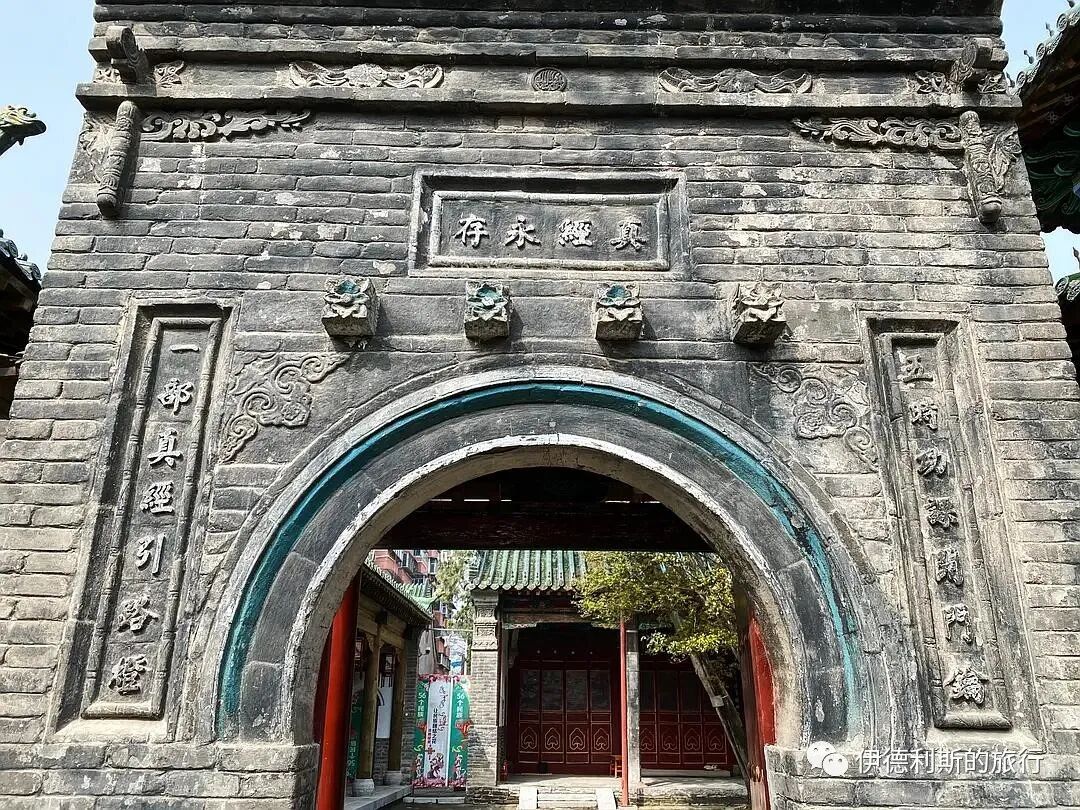
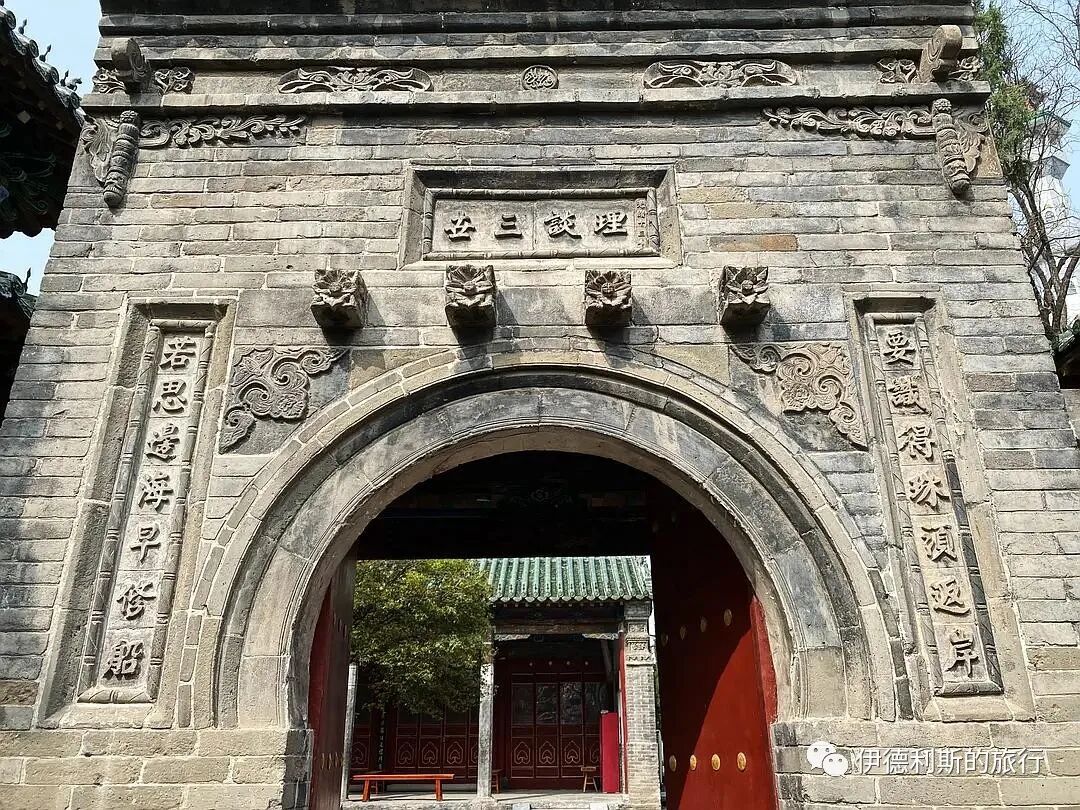
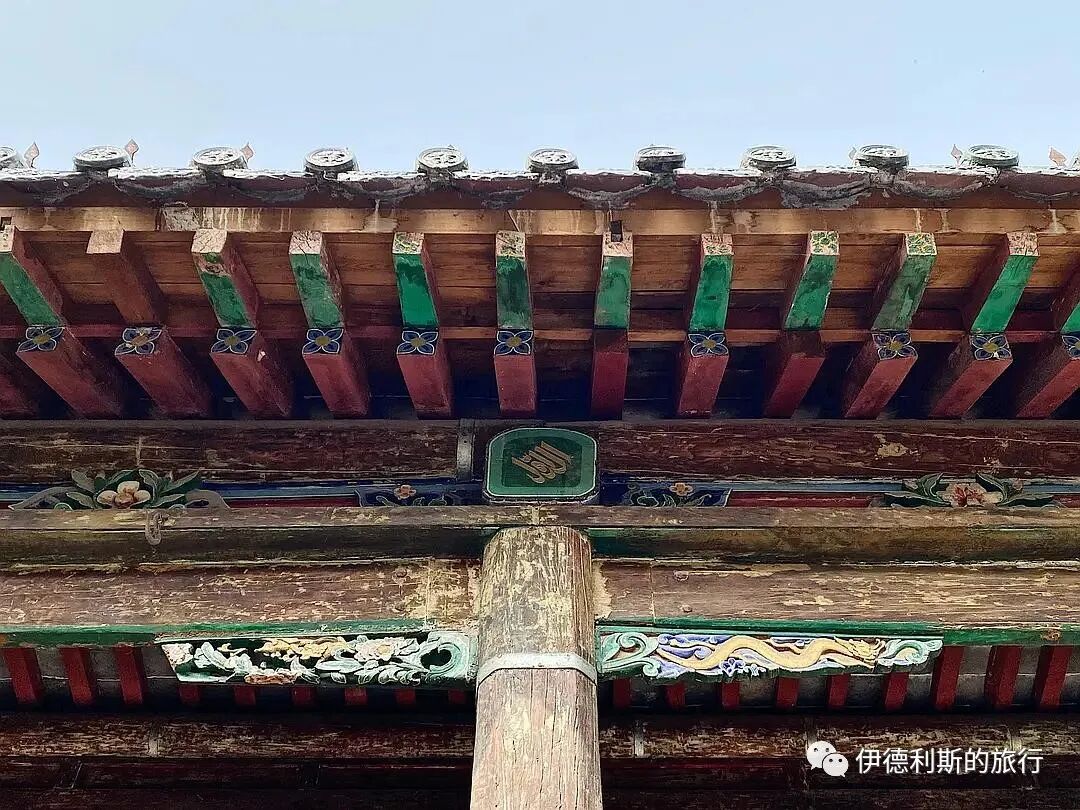
The Moon-Watching Tower also serves as the minaret. The first floor is a hallway. Judging by the architectural structure, it is very likely an original Ming Dynasty piece, but the dougong (bracket sets) and eaves rafters were likely replaced during the Qing Dynasty. According to records, it was renovated in 1887 (the thirteenth year of the Guangxu reign).
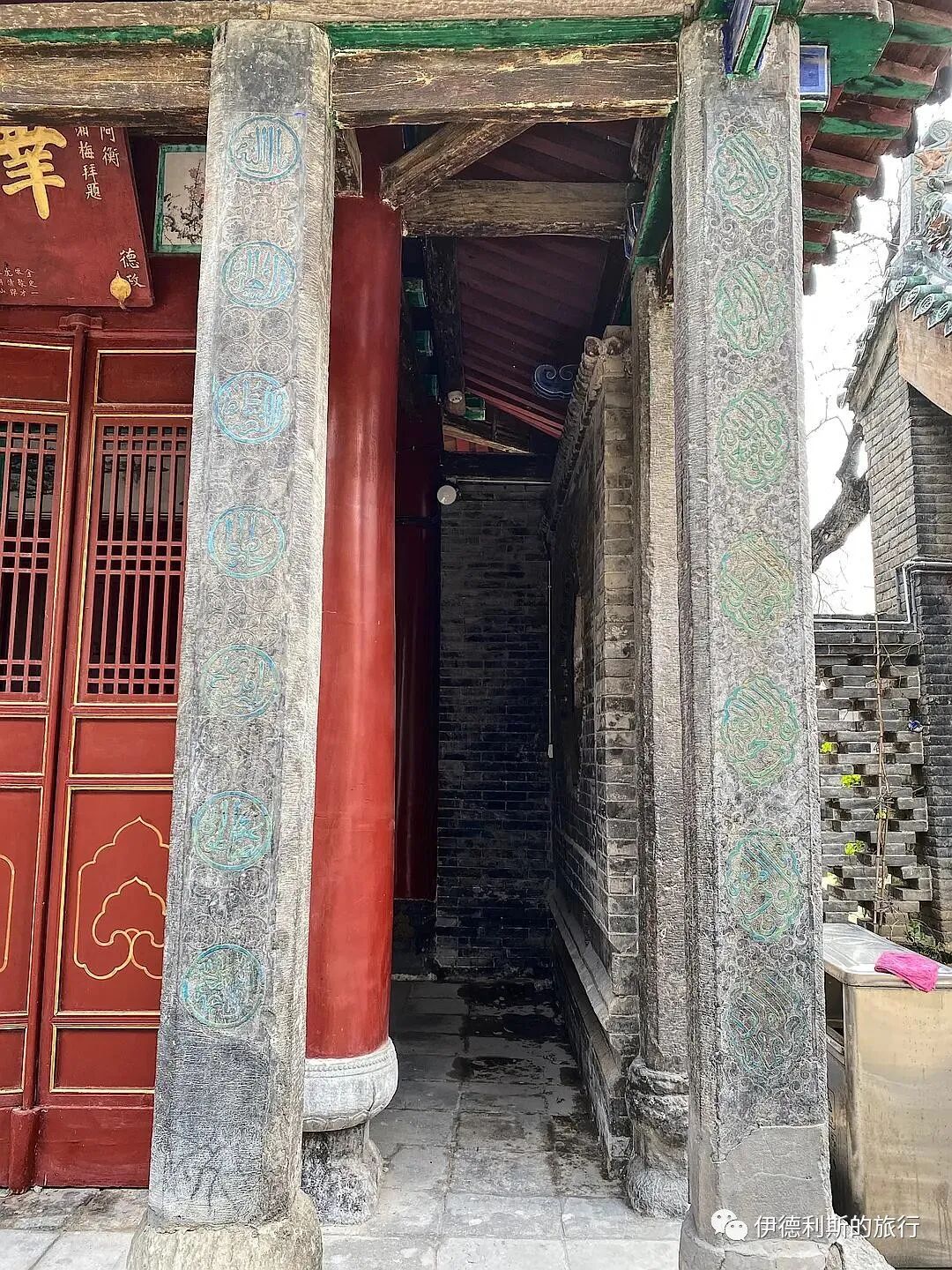
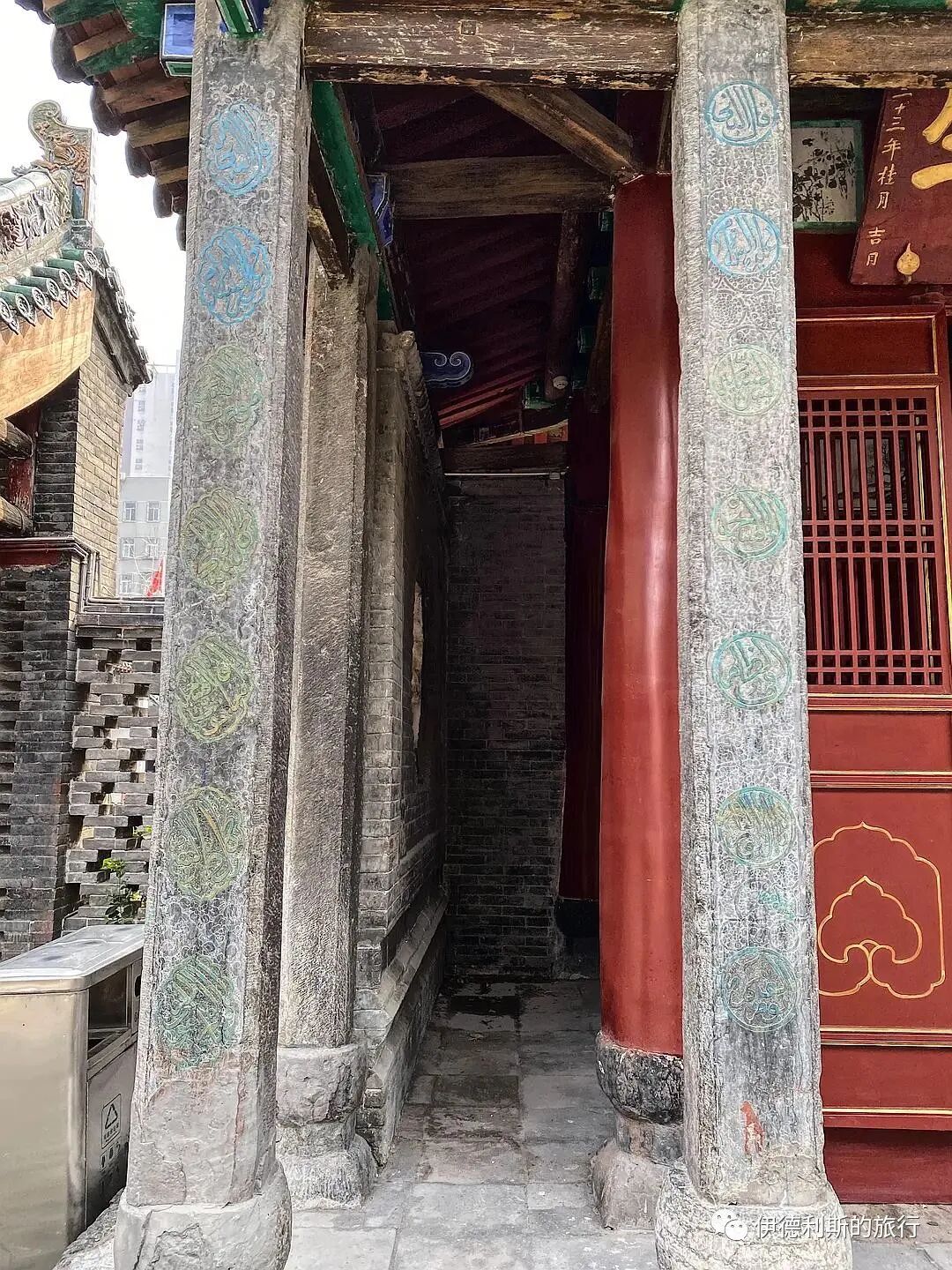
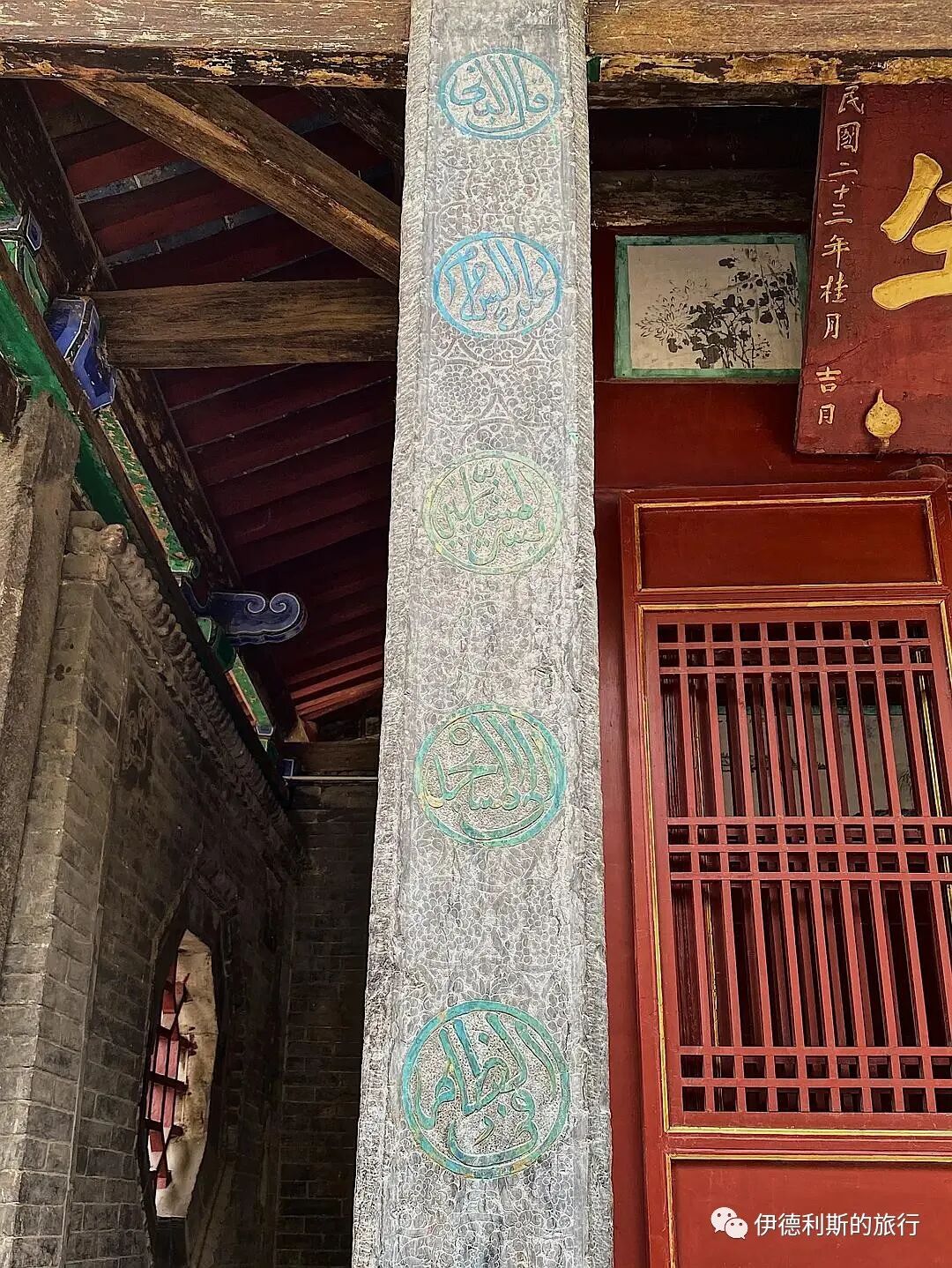
The Moon-Watching Tower has three pairs of Chinese couplets:
Observe, listen, and hear the words; to fully understand the essence of the present is to understand all of creation.
Whether in prosperity or decline, honor or disgrace, to realize the subtle turning point is to realize the mystery within.
The hustle and bustle of the world, even if you are proud and happy, is but a fleeting distraction.
Within the body and mind, no matter what you do, when you finally close your eyes, only two things will follow you closely.
Follow the Quran to promote the righteous path.
Follow the Sunnah so the truth lasts forever.
The other side has Arabic couplets.
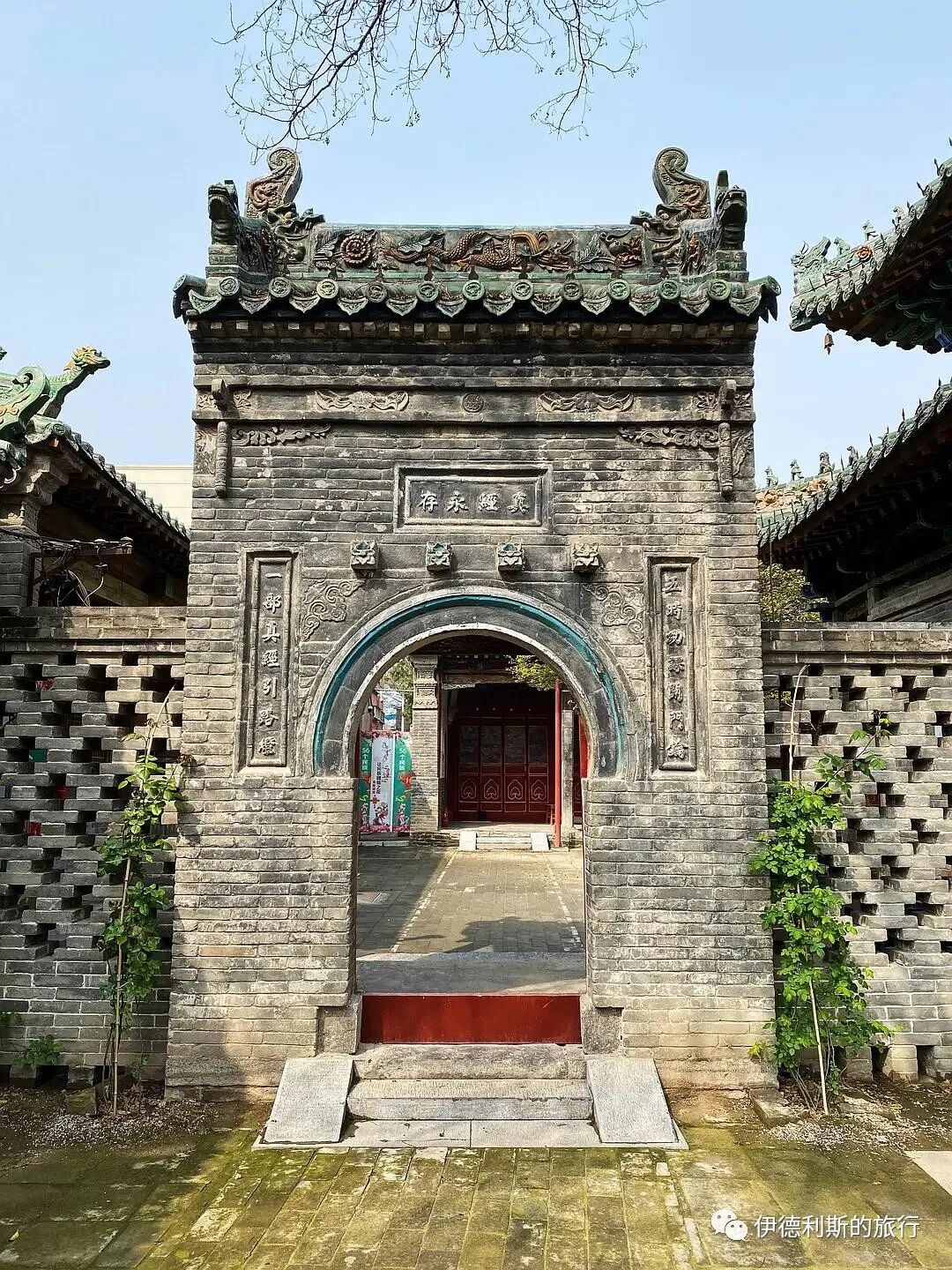
There are also couplets on the doors on both sides of the Moon-Watching Tower:
The five daily prayers are the key to opening the door.
The holy scripture is the lamp that guides the way.
To recognize the pearl, one must return to the shore.
If you think of the sea, repair your boat early.
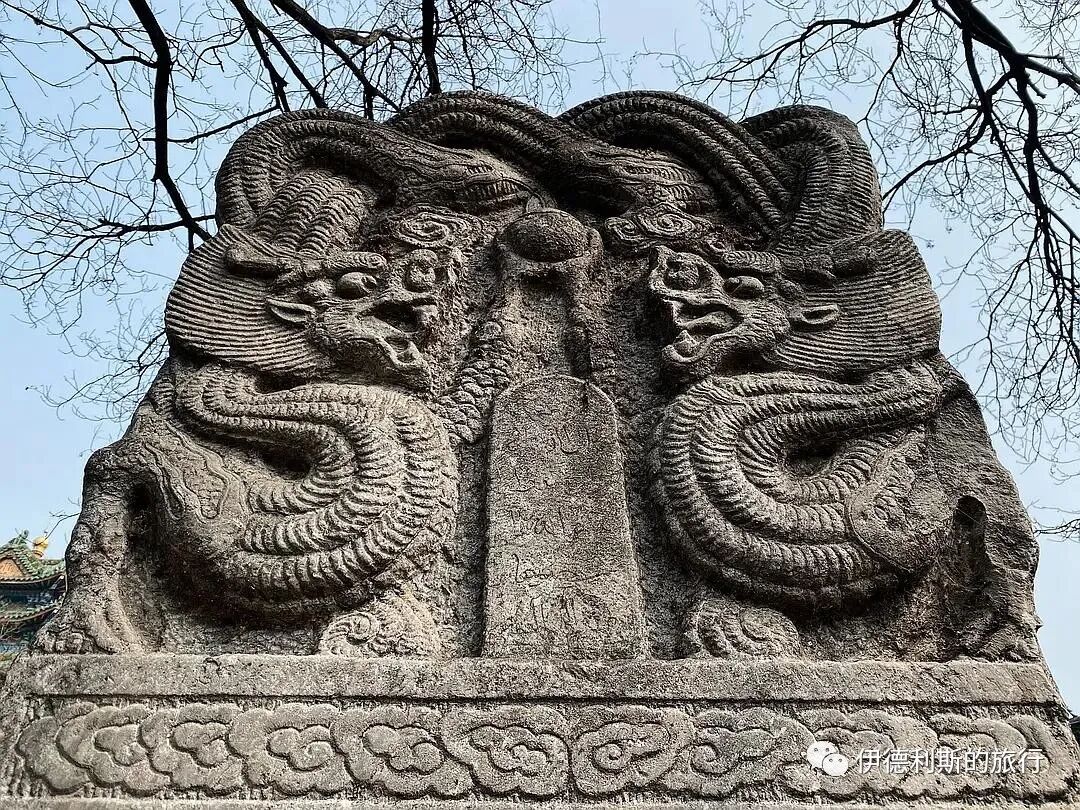
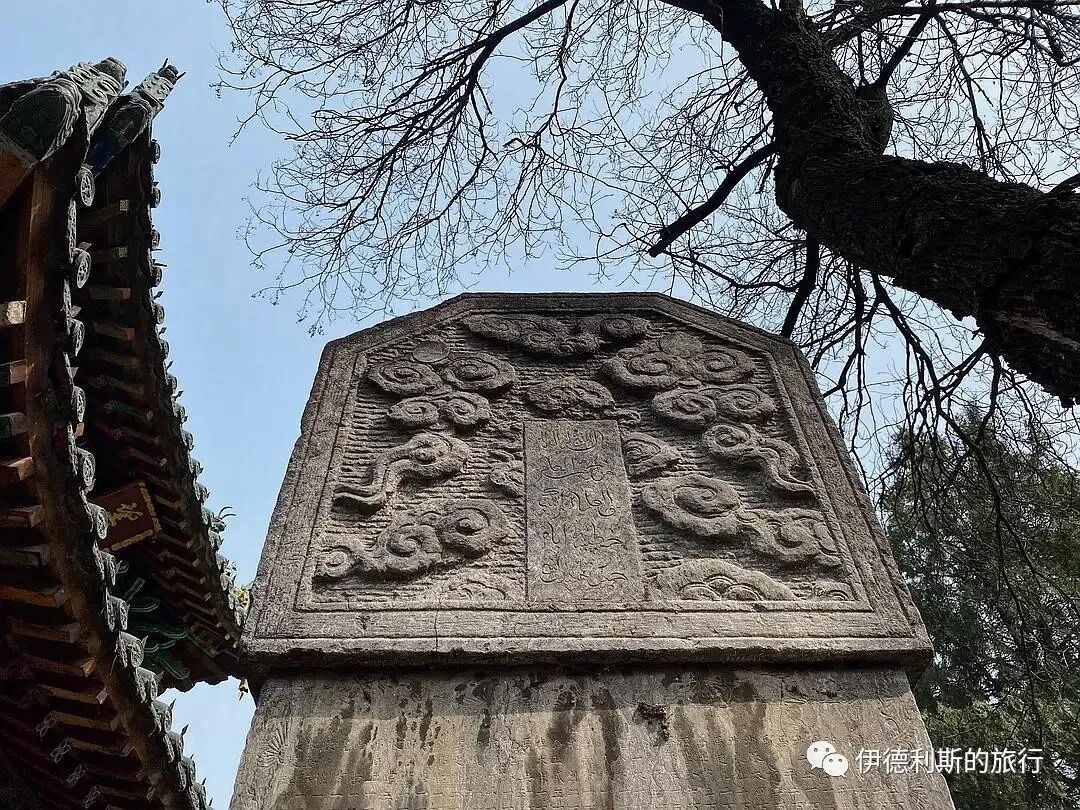
Stone inscriptions in the courtyard.
The main prayer hall was renovated twice, in 1802 (the seventh year of the Jiaqing reign) and 1907 (the thirty-third year of the Guangxu reign), and consists of a porch, the main hall, and the rear dome hall. The main hall features a lift-beam wooden frame with exposed rafters. The beams and rafters are covered with cloud and floral patterns, making it unique and elegant. There is a floral screen between the main hall and the dome hall, filled with openwork patterns. Light shines from the bright dome hall through the screen into the main hall, creating a delicate and translucent effect on the screen.
There are two century-old osmanthus trees in front of the main hall.
Couplets inside the main hall:
The painting of the heavens, know that there is no second artist.
The writings across the earth, one must ponder who holds the brush.
Recognize the True Lord, who has no form or shadow, and let all things serve as proof.
To contemplate creation is not to seek the high and distant, but to keep the one truth in your heart.
Behind the main hall, next to the dome hall, there is a Chinese juniper tree over 400 years old.
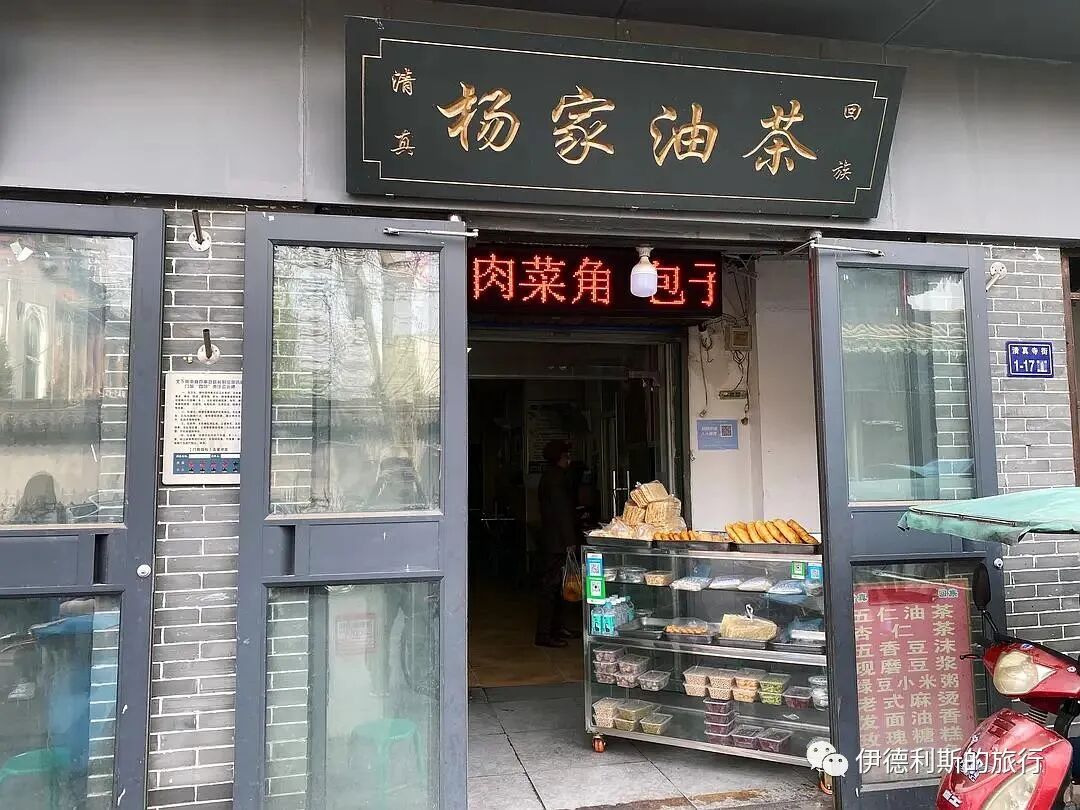
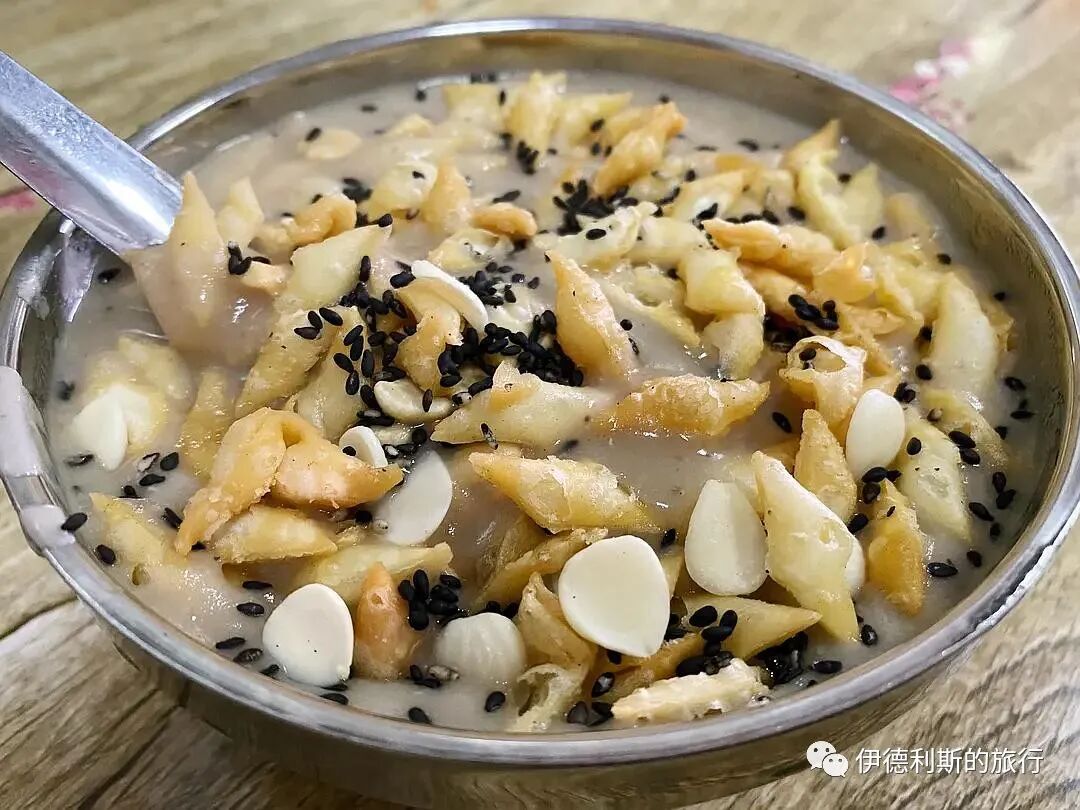
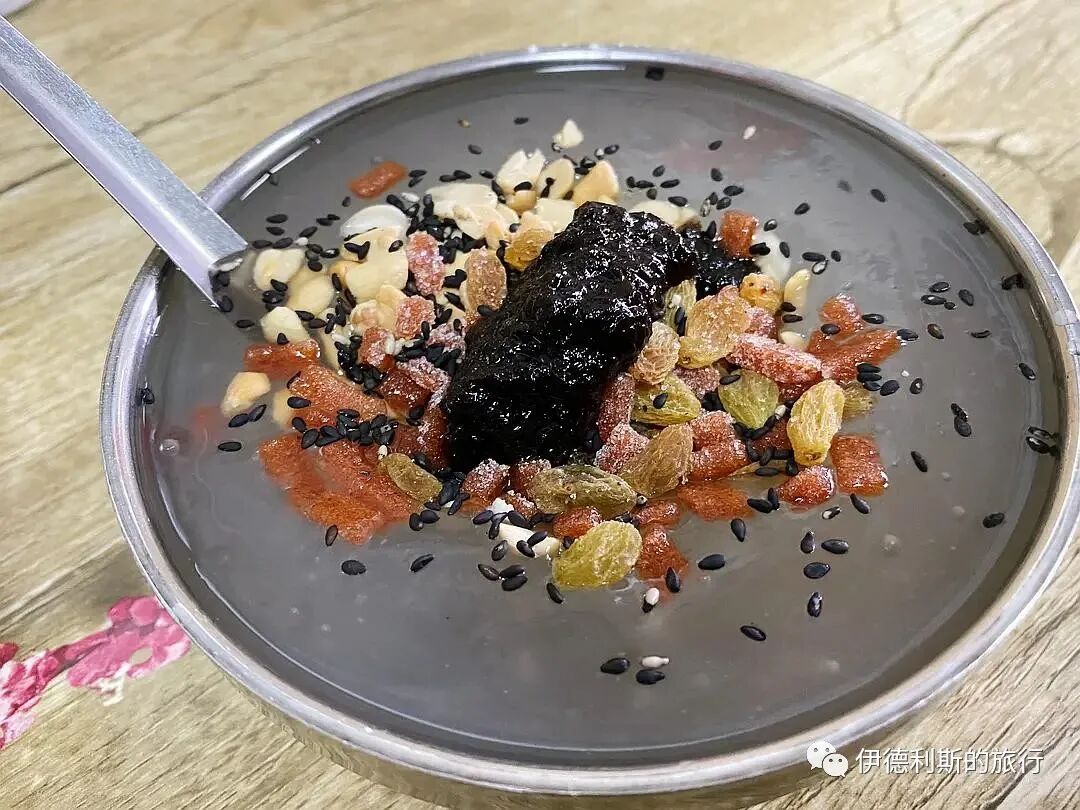
After visiting the North Mosque, we had youcha (oil tea) and almond tea at Yang's Youcha across the street. I drank youcha at their place last time I visited Zhengzhou and even bought youcha powder to take home. Their almond tea is also very good and includes rose jam.
Bo'ai Xiguan.
At noon, we took a train from Zhengzhou to Jiaozuo, then took a taxi to Bo'ai to visit the famous Bo'ai Xiguan Mosque. The Xiguan Mosque was founded in the Yuan Dynasty, and the main hall was expanded in 1405 (the third year of the Yongle reign of the Ming Dynasty). It is currently a national cultural heritage site and is known as the "First Mosque of Northern Henan."
The main hall consists of a porch, a front hall, a dome hall (middle hall), and a rear hall. In 1863 (the second year of the Tongzhi reign), the dome hall was burned down by the Nian Army and later rebuilt to its original appearance. In 1941, a rear hall was added behind the dome hall, making the dome hall the middle hall. The main hall has a lift-beam wooden frame supported by 16 pillars in 4 rows. The middle hall has 4 tall pillars supporting the dome roof. Inside the dome roof is a caisson ceiling, and the exterior is a triple-eave, four-corner cross-ridge roof.
I performed salah in the mosque and also caught the dhikr.
Main gate.
Glazed archway.
Jumu'ah plaque.
After the prayer, many restaurants were closed, so we ate zaban (mixed meat stew) and chicken diced heluo noodles at Linji Kouwan Shaguoju (casserole restaurant). Bo'ai zaban is a specialty dish from traditional Bo'ai water banquets. It is made by braising various ingredients such as wood ear mushrooms, white fungus, bamboo shoots, crispy meatballs, boiled meatballs, white meatballs, and beef slices. It is very satisfying to eat.
On Sunday afternoon, we came back to Bo'ai Xiguan to eat and explore, and had the local specialty, jiangmiantiao (fermented bean paste noodles). It is made by boiling the liquid squeezed out when making tofu into a paste, served with soybeans, peanuts, celery, and crushed sesame sauce. It tastes sour and fragrant, and I feel it would be even better in the summer.
Then we ate the specialty cai-tuanzi (vegetable dumplings). They are made by rolling celery, peanuts, soybeans, carrots, and corn grits into balls, wrapping them in corn flour, and deep-frying them. The texture is very rich, and as a corn lover, I was very satisfied.
We bought Liji crispy chicken. The stewed chicken is fried again and sprinkled with secret seasonings, making it very fragrant. However, it is a bit salty to eat on its own, so it was perfect to eat with the flatbread we bought in Xiguan on the train back to Beijing.
We also bought Xiaoche Beef (cart beef) at the Xiguan intersection. This is a delicacy popular in the Taihang Mountains area at the junction of Henan, Shaanxi, Shanxi, and Hebei. After the beef is braised, it is wrapped in rich meat broth, cooled, and pressed into meat jelly, then sold from a cart in the market. Because the meat jelly melts when the temperature rises, Xiaoche Beef is traditionally unavailable in the summer.
Some door couplets on Xiguan Street.
Qinyang.
On Saturday afternoon, we took a taxi from Bo'ai to Qinyang to visit the Qinyang North Mosque, which I had been longing to see for a long time. In my mind, it definitely ranks in the top three among historical mosque buildings in Henan. The North Mosque was moved to its current location in 1561 (the fortieth year of the Jiajing reign of the Ming Dynasty), burned down in 1628 (the first year of the Chongzhen reign of the Ming Dynasty), and rebuilt in 1631. It is a Major Historical and Cultural Site Protected at the National Level.
The overall layout of the North Mosque is quite classic, consisting mainly of the main gate, a hallway, a lecture hall, and the main prayer hall. Next, I will share it with you bit by bit. Because of the lighting, I took photos twice, on Saturday afternoon and Sunday morning.
The main gate was built in 1799 (the fourth year of the Jiaqing reign) and uses peacock blue glazed tiles, which are relatively rare in mosque architecture and look very refreshing.
The hallway was built in 1631 (the fourth year of the Chongzhen reign of the Ming Dynasty).
The lecture hall was built in 1909 (the first year of the Xuantong reign). The north and south lecture halls have hard-gabled roofs, with hanging flower columns under the eaves and diamond-patterned doors and windows, simple and elegant.
Scripture boxes in the Imam's office.
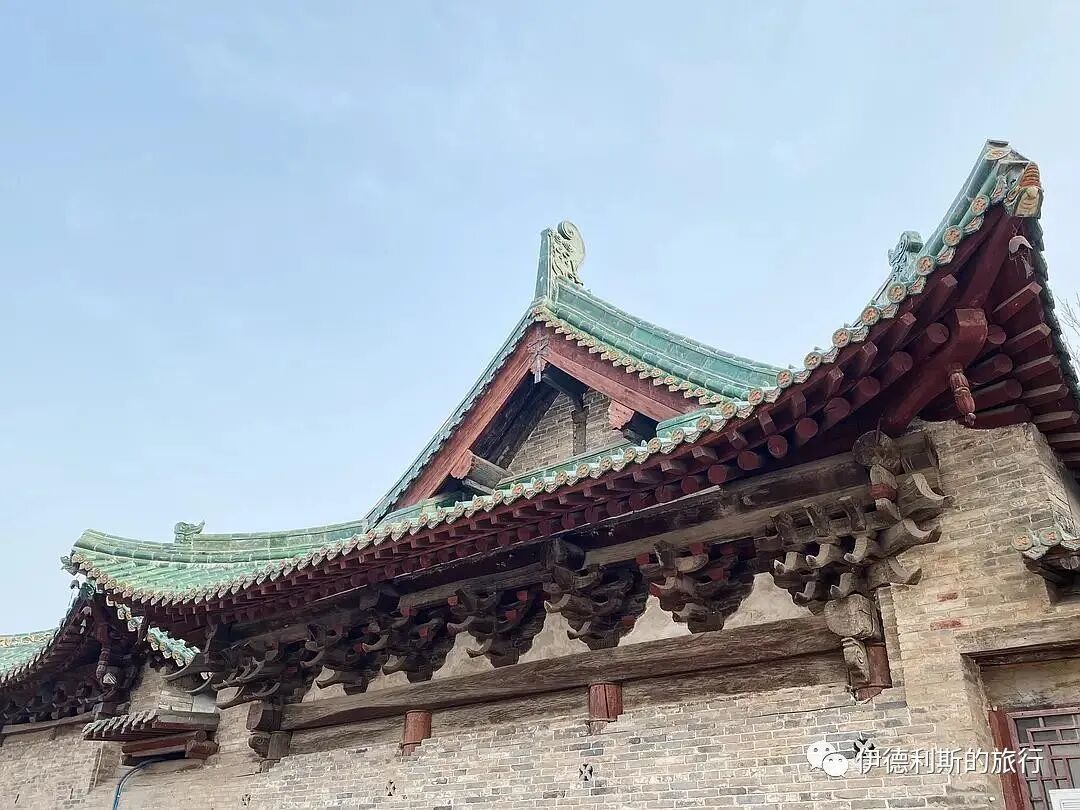
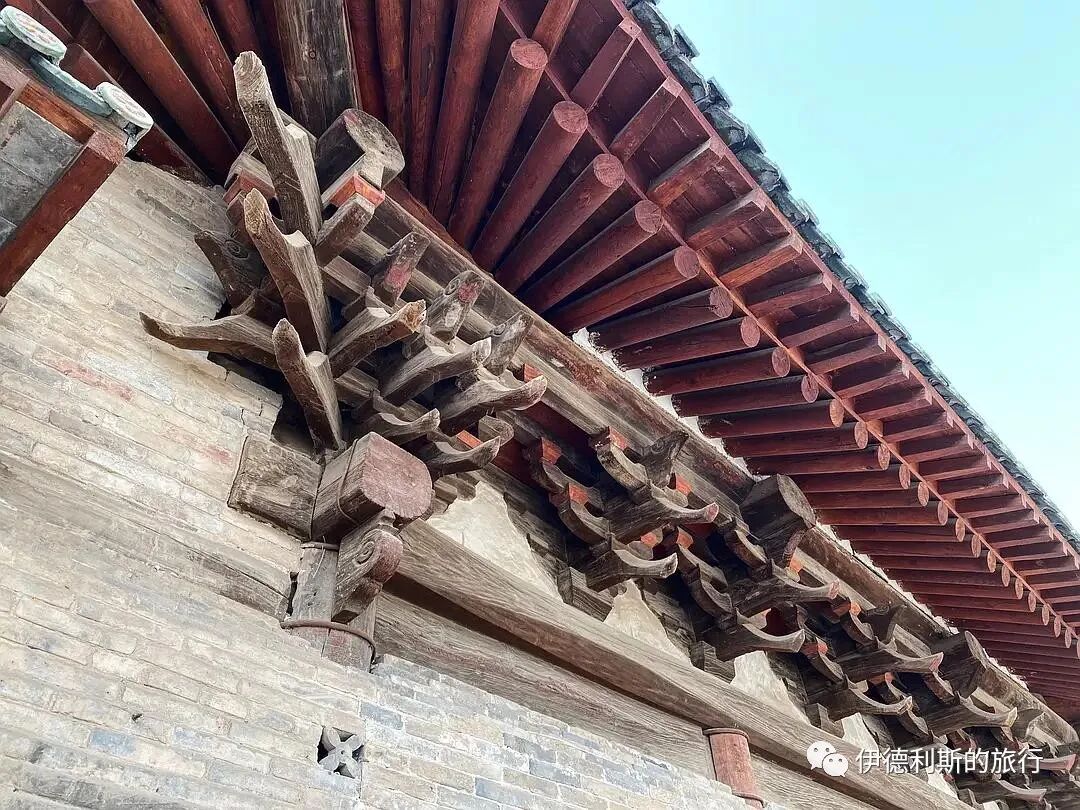
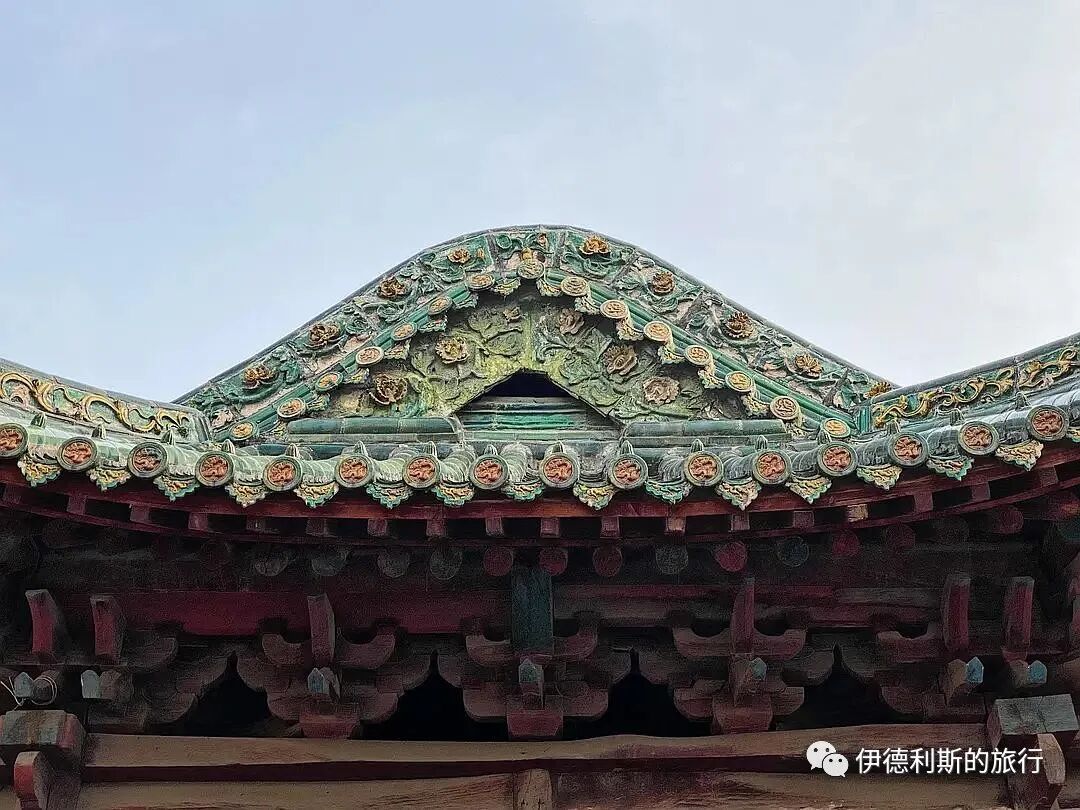
The main prayer hall consists of a porch, a front hall, a middle hall, and a dome hall. This style, with a hip-and-gable roof for the front hall, a gabled roof for the middle hall, and a raised dome hall, is unique to the Qinyang area. First, I will share the exterior of the porch and the front hall.
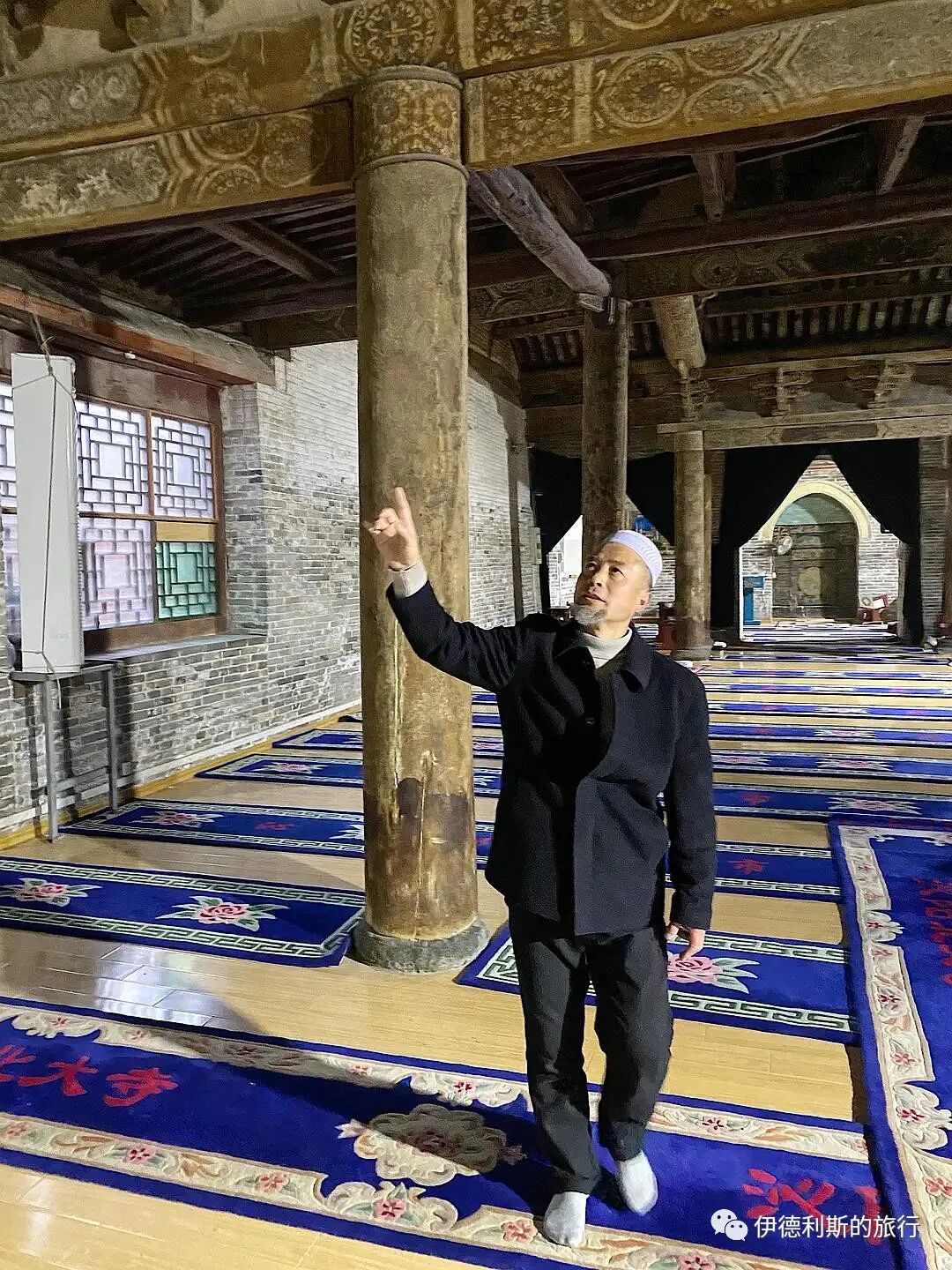
The beautiful Qing Dynasty paintings inside the main hall. Thanks to Imam Ma Hongjie for the wonderful introduction. The main hall of the North Mosque was occupied by a factory in the 1960s and 1970s. The lower paintings all faded, and only the paintings on the top were luckily preserved. view all
Summary: This travel note introduces Zhengzhou, Bo'ai and Qinyang Spring Halal Travel Guide (Part 1). In mid-March 2021, Beijing lifted travel restrictions, and Zainab and I went to Henan for a trip on the last weekend of March, visiting Zhengzhou, Bo'ai, and Qinyang. It is useful for readers interested in Henan Travel, China Mosques, Halal Food.
In mid-March 2021, Beijing lifted travel restrictions, and Zainab and I went to Henan for a trip on the last weekend of March, visiting Zhengzhou, Bo'ai, and Qinyang.
We took a high-speed train to Zhengzhou on Friday night, got off, transferred to the subway, and headed straight to the North Mosque. We ate Laoshuncheng Xiaolong Guantangbao (steamed soup dumplings) on Mosque Street. The soup dumplings were very fresh and delicious. Zainab was very satisfied with Zhengzhou's cold dish culture, where you can mix and match dishes as you like.
After finishing the soup dumplings, we went to the nearby Lu Laoda Mutton Soup on Shangcheng Road. Their shop is open 24 hours, so you can drink mutton soup even late at night. We ordered mutton soup and Xiaosuru (crispy stir-fried meat). It was Zainab's first time drinking milky-white mutton soup, and she was very surprised. We also ordered bean products and gluten stewed with chicken frames, but it was a bit salty.
Early Saturday morning, we went to Mashan Doumo Shop on Shuncheng Street to drink doumo (millet flour porridge) and eat caijiao (vegetable-filled fried dough pockets). Mashan Doumo Shop was founded in Huayuankou in 1938 and moved to Shuncheng Street in the 1950s. It is the oldest doumo shop in Zhengzhou. Doumo is popular in Henan, Hebei, and Shandong. I have had it before in Kaifeng and Jinan. It is made of millet flour, soybeans, and peanuts, seasoned with various spices.
Then we had breakfast at a nearby shop on Old Shuncheng Street, eating hulatang (spicy pepper soup) with shuijianbao (pan-fried buns). I really liked the lively atmosphere of Shuncheng Street when I visited Zhengzhou before. It has become much quieter after renovations, but the breakfast shops are still as busy as ever. It is said that Zhengzhou's hulatang used to be less spicy, but later some shops followed Fang Zhongshan's style and added more chili powder.
Visiting the Zhengzhou North Mosque. The North Mosque is located on North Street in the old city of Zhengzhou. It is said to have been built in the Ming Dynasty, features the typical architectural style of Central Plains mosques, and is a Major Historical and Cultural Site Protected at the National Level.
The main gate was built in 1725 (the third year of the Yongzheng reign).
The Moon-Watching Tower also serves as the minaret. The first floor is a hallway. Judging by the architectural structure, it is very likely an original Ming Dynasty piece, but the dougong (bracket sets) and eaves rafters were likely replaced during the Qing Dynasty. According to records, it was renovated in 1887 (the thirteenth year of the Guangxu reign).
The Moon-Watching Tower has three pairs of Chinese couplets:
Observe, listen, and hear the words; to fully understand the essence of the present is to understand all of creation.
Whether in prosperity or decline, honor or disgrace, to realize the subtle turning point is to realize the mystery within.
The hustle and bustle of the world, even if you are proud and happy, is but a fleeting distraction.
Within the body and mind, no matter what you do, when you finally close your eyes, only two things will follow you closely.
Follow the Quran to promote the righteous path.
Follow the Sunnah so the truth lasts forever.
The other side has Arabic couplets.
There are also couplets on the doors on both sides of the Moon-Watching Tower:
The five daily prayers are the key to opening the door.
The holy scripture is the lamp that guides the way.
To recognize the pearl, one must return to the shore.
If you think of the sea, repair your boat early.
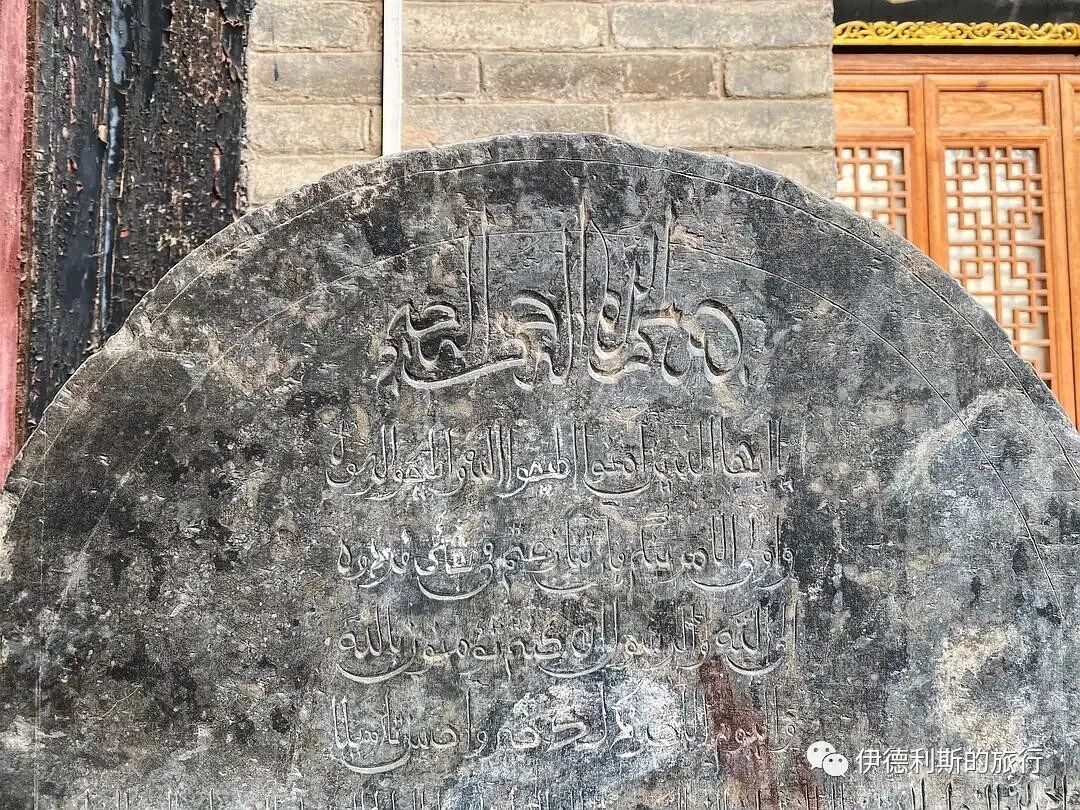
Stone inscriptions in the courtyard.
The main prayer hall was renovated twice, in 1802 (the seventh year of the Jiaqing reign) and 1907 (the thirty-third year of the Guangxu reign), and consists of a porch, the main hall, and the rear dome hall. The main hall features a lift-beam wooden frame with exposed rafters. The beams and rafters are covered with cloud and floral patterns, making it unique and elegant. There is a floral screen between the main hall and the dome hall, filled with openwork patterns. Light shines from the bright dome hall through the screen into the main hall, creating a delicate and translucent effect on the screen.
There are two century-old osmanthus trees in front of the main hall.
Couplets inside the main hall:
The painting of the heavens, know that there is no second artist.
The writings across the earth, one must ponder who holds the brush.
Recognize the True Lord, who has no form or shadow, and let all things serve as proof.
To contemplate creation is not to seek the high and distant, but to keep the one truth in your heart.
Behind the main hall, next to the dome hall, there is a Chinese juniper tree over 400 years old.
After visiting the North Mosque, we had youcha (oil tea) and almond tea at Yang's Youcha across the street. I drank youcha at their place last time I visited Zhengzhou and even bought youcha powder to take home. Their almond tea is also very good and includes rose jam.
Bo'ai Xiguan.
At noon, we took a train from Zhengzhou to Jiaozuo, then took a taxi to Bo'ai to visit the famous Bo'ai Xiguan Mosque. The Xiguan Mosque was founded in the Yuan Dynasty, and the main hall was expanded in 1405 (the third year of the Yongle reign of the Ming Dynasty). It is currently a national cultural heritage site and is known as the "First Mosque of Northern Henan."
The main hall consists of a porch, a front hall, a dome hall (middle hall), and a rear hall. In 1863 (the second year of the Tongzhi reign), the dome hall was burned down by the Nian Army and later rebuilt to its original appearance. In 1941, a rear hall was added behind the dome hall, making the dome hall the middle hall. The main hall has a lift-beam wooden frame supported by 16 pillars in 4 rows. The middle hall has 4 tall pillars supporting the dome roof. Inside the dome roof is a caisson ceiling, and the exterior is a triple-eave, four-corner cross-ridge roof.
I performed salah in the mosque and also caught the dhikr.
Main gate.
Glazed archway.
Jumu'ah plaque.
After the prayer, many restaurants were closed, so we ate zaban (mixed meat stew) and chicken diced heluo noodles at Linji Kouwan Shaguoju (casserole restaurant). Bo'ai zaban is a specialty dish from traditional Bo'ai water banquets. It is made by braising various ingredients such as wood ear mushrooms, white fungus, bamboo shoots, crispy meatballs, boiled meatballs, white meatballs, and beef slices. It is very satisfying to eat.
On Sunday afternoon, we came back to Bo'ai Xiguan to eat and explore, and had the local specialty, jiangmiantiao (fermented bean paste noodles). It is made by boiling the liquid squeezed out when making tofu into a paste, served with soybeans, peanuts, celery, and crushed sesame sauce. It tastes sour and fragrant, and I feel it would be even better in the summer.
Then we ate the specialty cai-tuanzi (vegetable dumplings). They are made by rolling celery, peanuts, soybeans, carrots, and corn grits into balls, wrapping them in corn flour, and deep-frying them. The texture is very rich, and as a corn lover, I was very satisfied.
We bought Liji crispy chicken. The stewed chicken is fried again and sprinkled with secret seasonings, making it very fragrant. However, it is a bit salty to eat on its own, so it was perfect to eat with the flatbread we bought in Xiguan on the train back to Beijing.
We also bought Xiaoche Beef (cart beef) at the Xiguan intersection. This is a delicacy popular in the Taihang Mountains area at the junction of Henan, Shaanxi, Shanxi, and Hebei. After the beef is braised, it is wrapped in rich meat broth, cooled, and pressed into meat jelly, then sold from a cart in the market. Because the meat jelly melts when the temperature rises, Xiaoche Beef is traditionally unavailable in the summer.
Some door couplets on Xiguan Street.
Qinyang.
On Saturday afternoon, we took a taxi from Bo'ai to Qinyang to visit the Qinyang North Mosque, which I had been longing to see for a long time. In my mind, it definitely ranks in the top three among historical mosque buildings in Henan. The North Mosque was moved to its current location in 1561 (the fortieth year of the Jiajing reign of the Ming Dynasty), burned down in 1628 (the first year of the Chongzhen reign of the Ming Dynasty), and rebuilt in 1631. It is a Major Historical and Cultural Site Protected at the National Level.
The overall layout of the North Mosque is quite classic, consisting mainly of the main gate, a hallway, a lecture hall, and the main prayer hall. Next, I will share it with you bit by bit. Because of the lighting, I took photos twice, on Saturday afternoon and Sunday morning.
The main gate was built in 1799 (the fourth year of the Jiaqing reign) and uses peacock blue glazed tiles, which are relatively rare in mosque architecture and look very refreshing.
The hallway was built in 1631 (the fourth year of the Chongzhen reign of the Ming Dynasty).
The lecture hall was built in 1909 (the first year of the Xuantong reign). The north and south lecture halls have hard-gabled roofs, with hanging flower columns under the eaves and diamond-patterned doors and windows, simple and elegant.
Scripture boxes in the Imam's office.
The main prayer hall consists of a porch, a front hall, a middle hall, and a dome hall. This style, with a hip-and-gable roof for the front hall, a gabled roof for the middle hall, and a raised dome hall, is unique to the Qinyang area. First, I will share the exterior of the porch and the front hall.
The beautiful Qing Dynasty paintings inside the main hall. Thanks to Imam Ma Hongjie for the wonderful introduction. The main hall of the North Mosque was occupied by a factory in the 1960s and 1970s. The lower paintings all faded, and only the paintings on the top were luckily preserved. view all
Reposted from the web
Summary: This travel note introduces Zhengzhou, Bo'ai and Qinyang Spring Halal Travel Guide (Part 1). In mid-March 2021, Beijing lifted travel restrictions, and Zainab and I went to Henan for a trip on the last weekend of March, visiting Zhengzhou, Bo'ai, and Qinyang. It is useful for readers interested in Henan Travel, China Mosques, Halal Food.
In mid-March 2021, Beijing lifted travel restrictions, and Zainab and I went to Henan for a trip on the last weekend of March, visiting Zhengzhou, Bo'ai, and Qinyang.
We took a high-speed train to Zhengzhou on Friday night, got off, transferred to the subway, and headed straight to the North Mosque. We ate Laoshuncheng Xiaolong Guantangbao (steamed soup dumplings) on Mosque Street. The soup dumplings were very fresh and delicious. Zainab was very satisfied with Zhengzhou's cold dish culture, where you can mix and match dishes as you like.
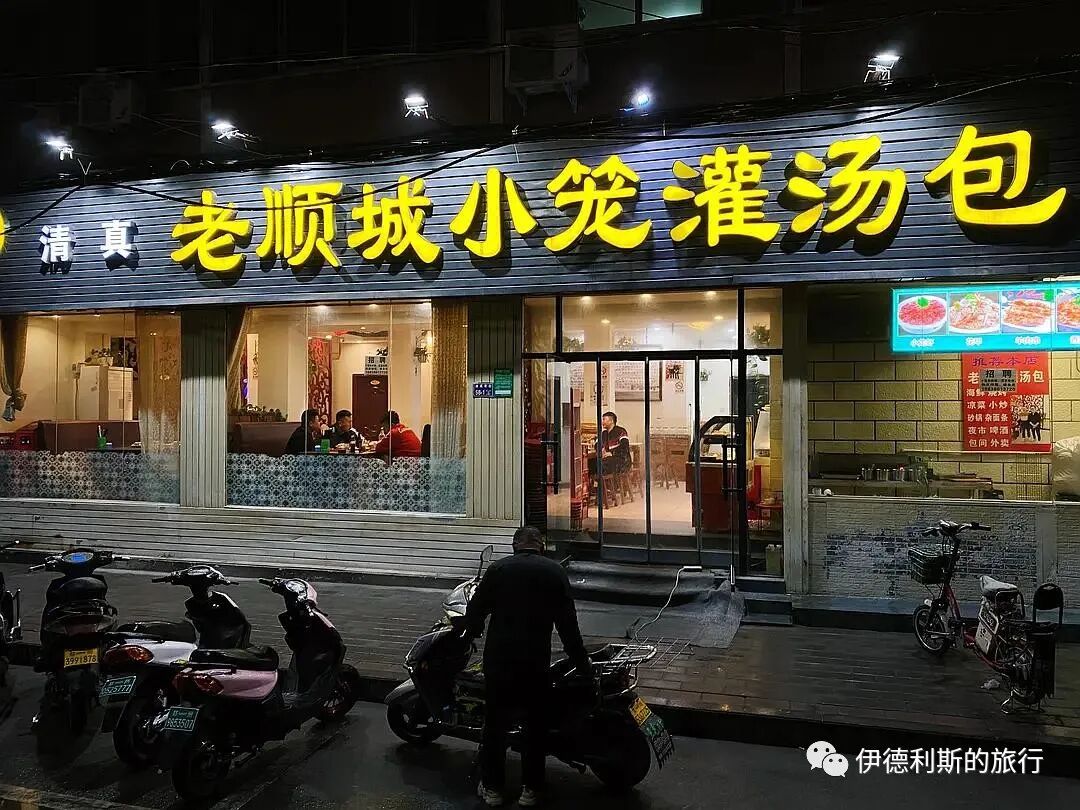
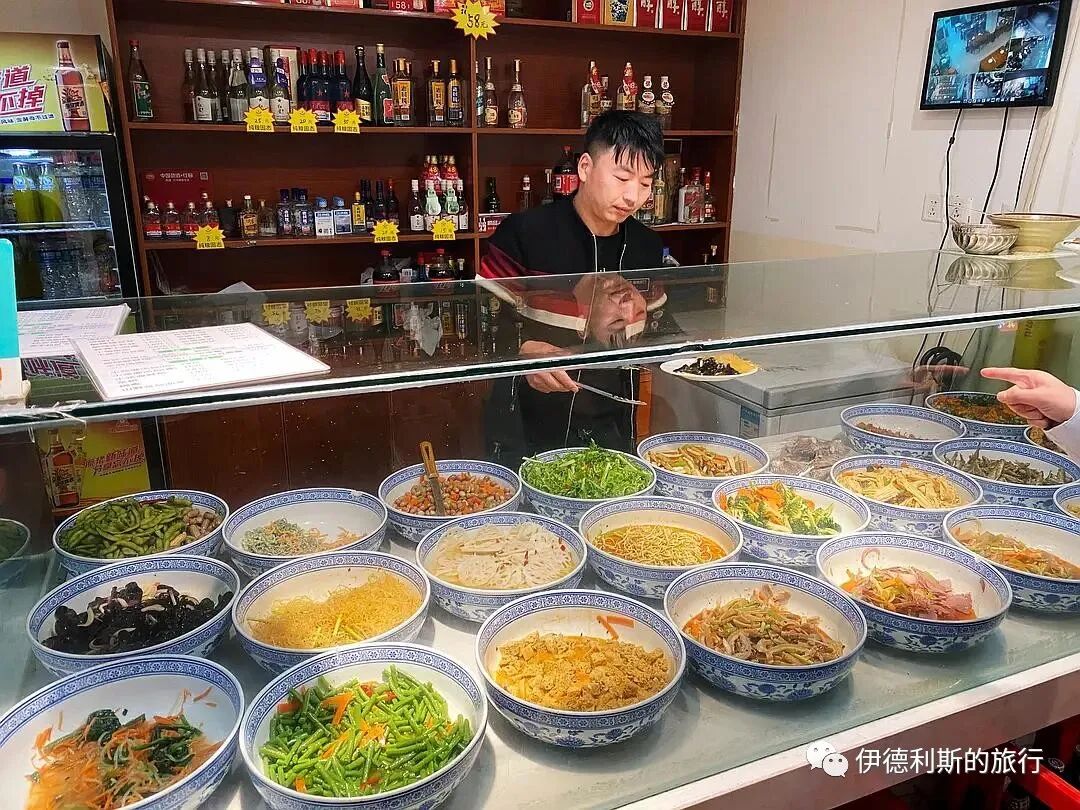
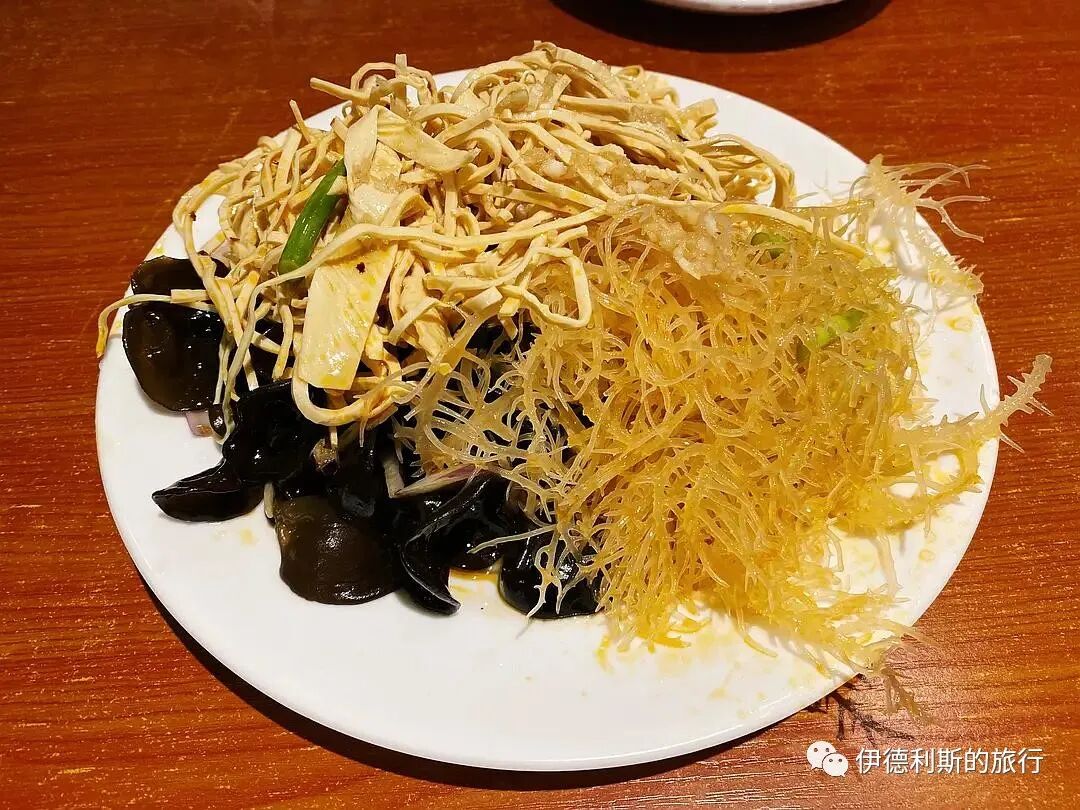
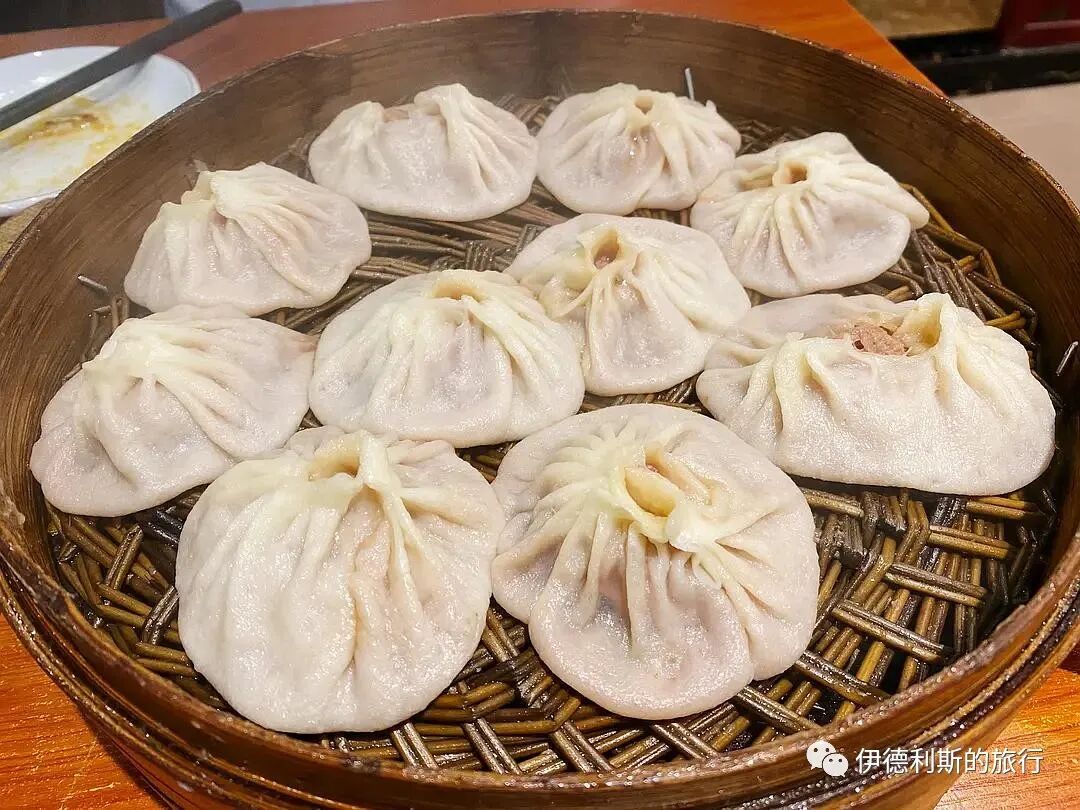
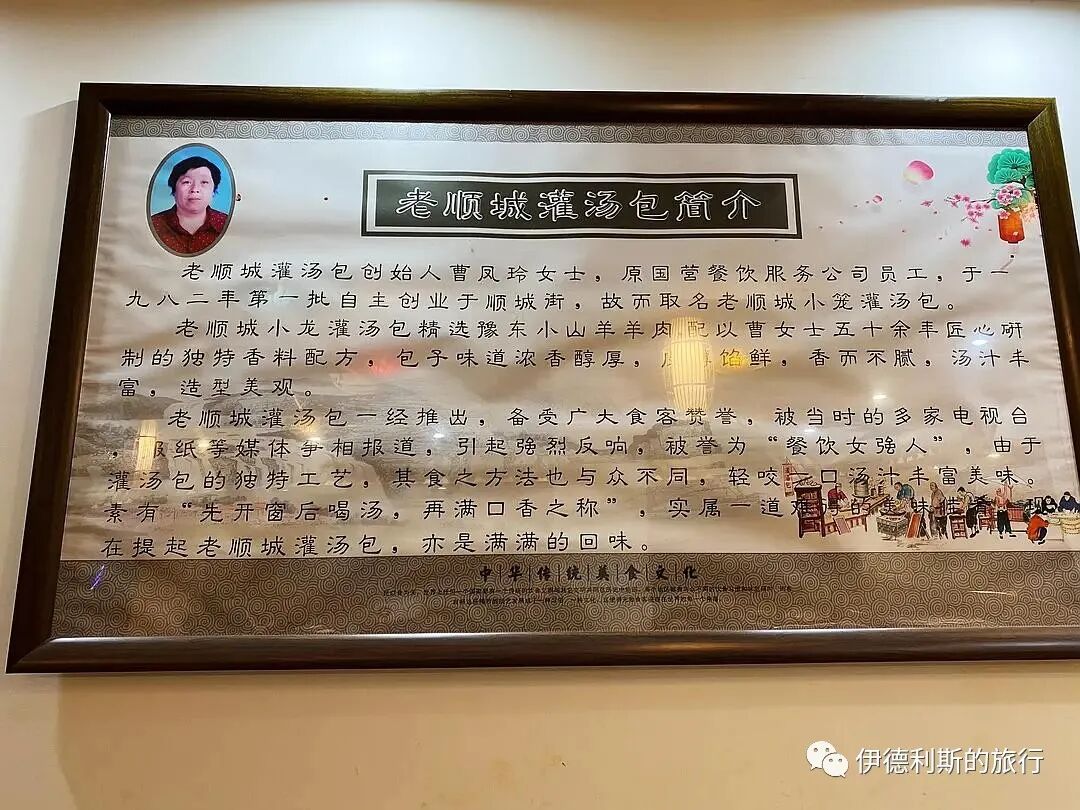
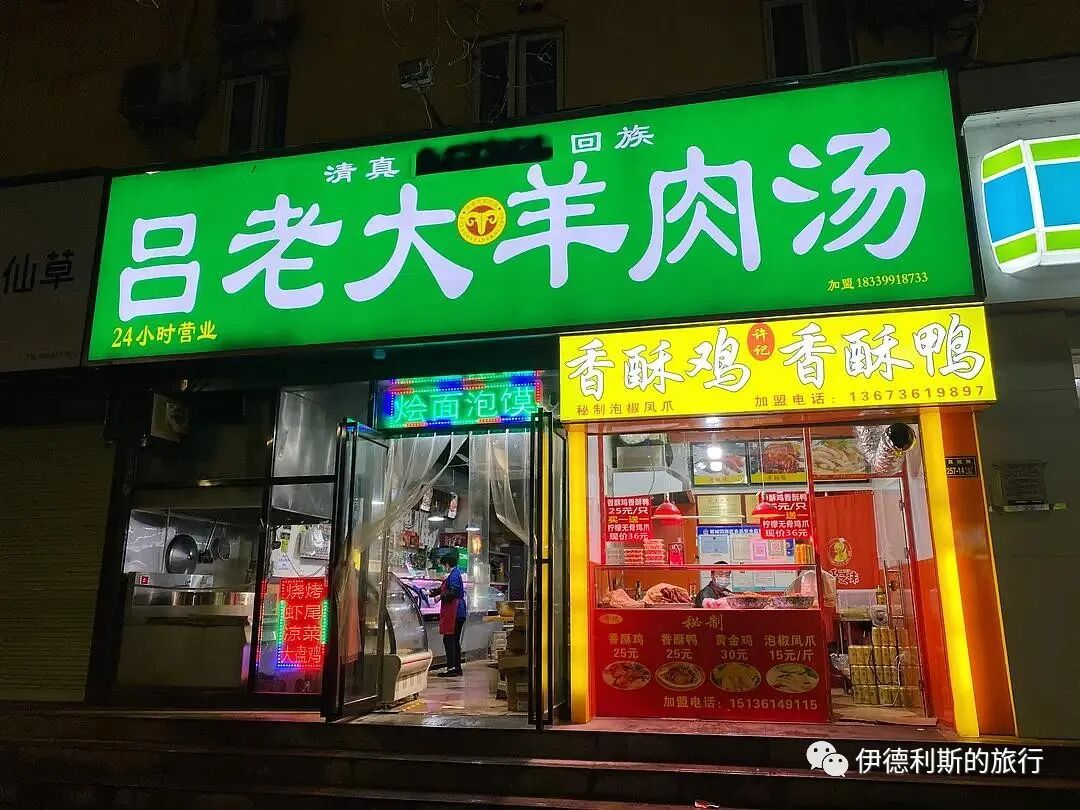
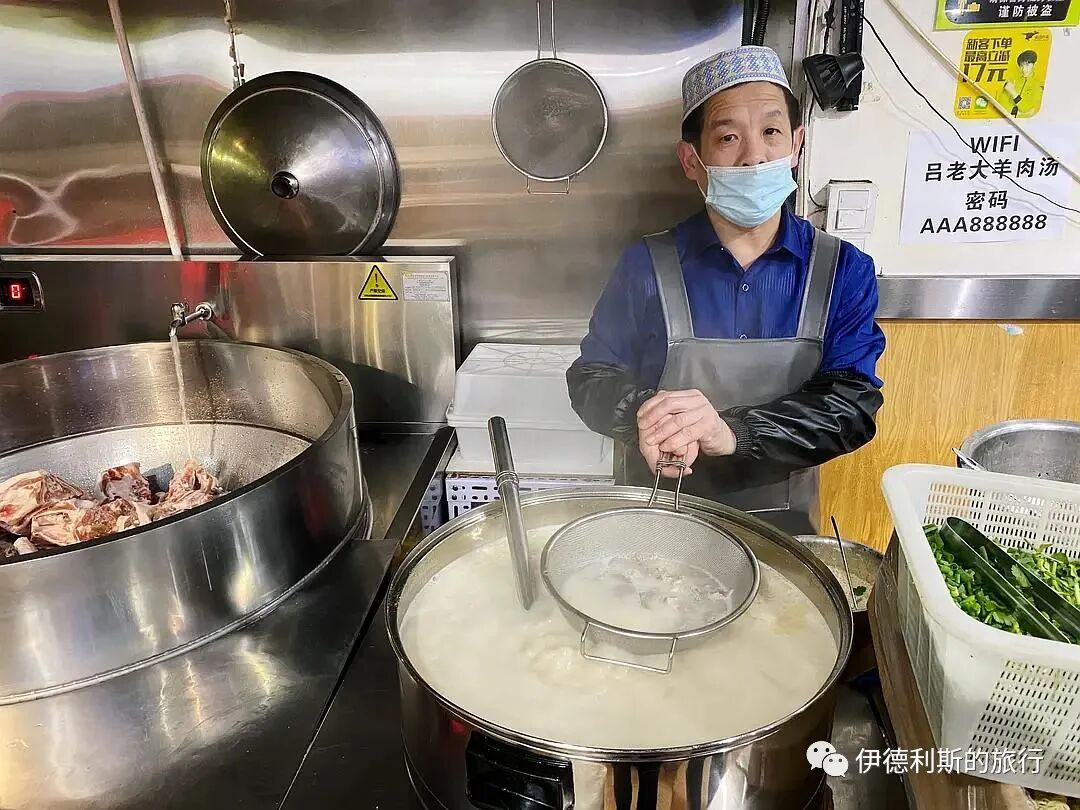
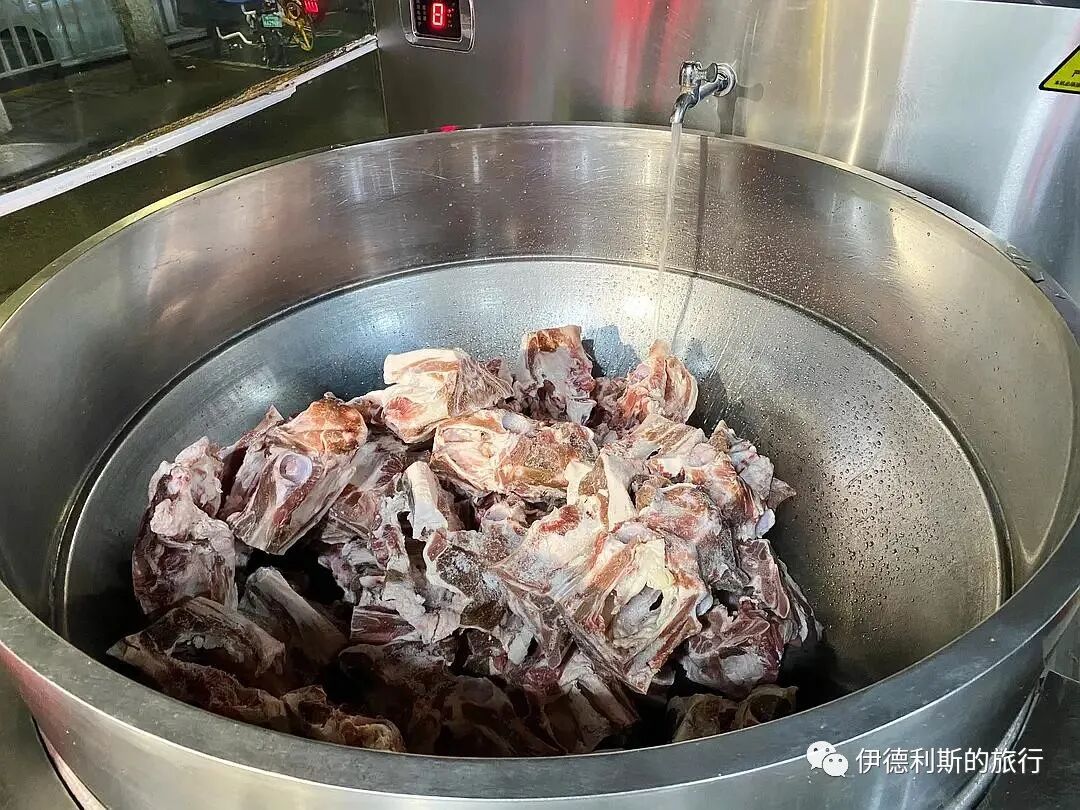
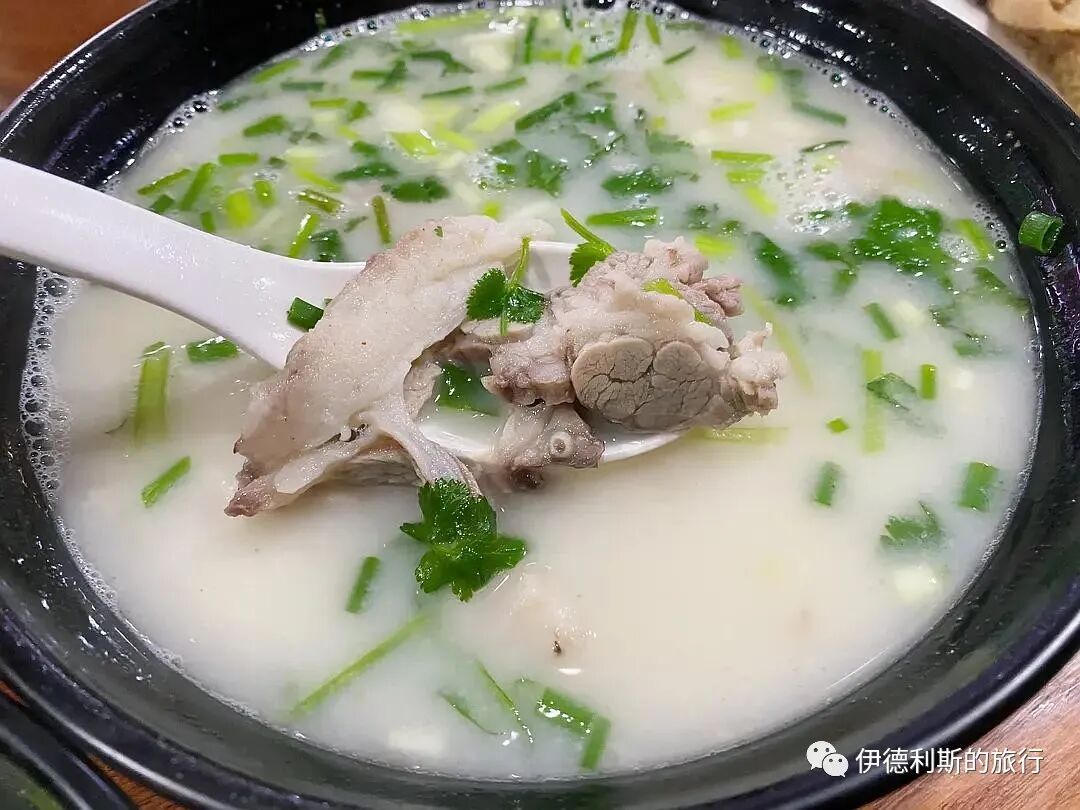
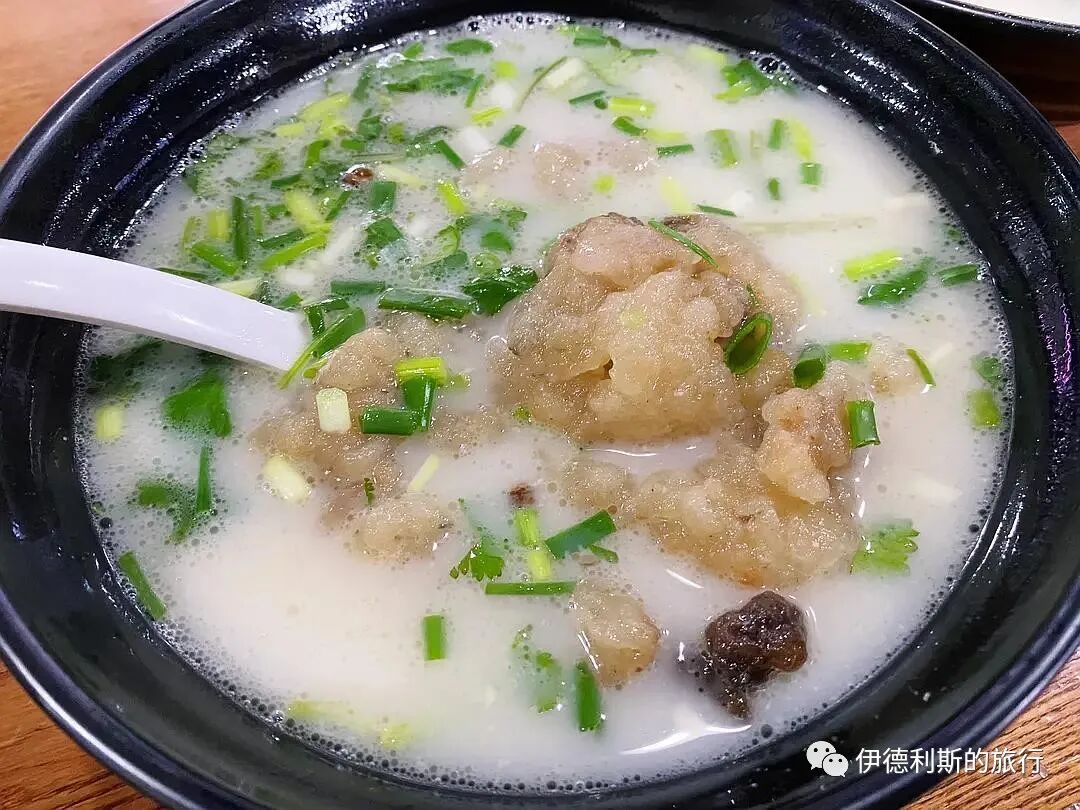
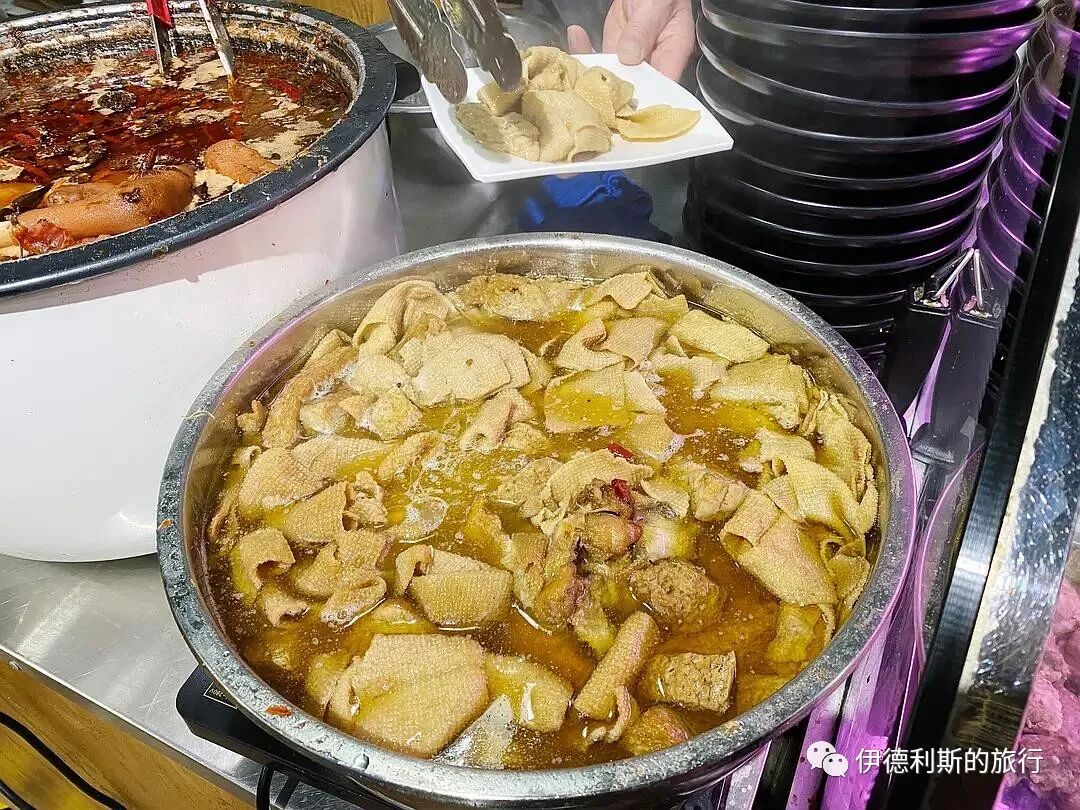
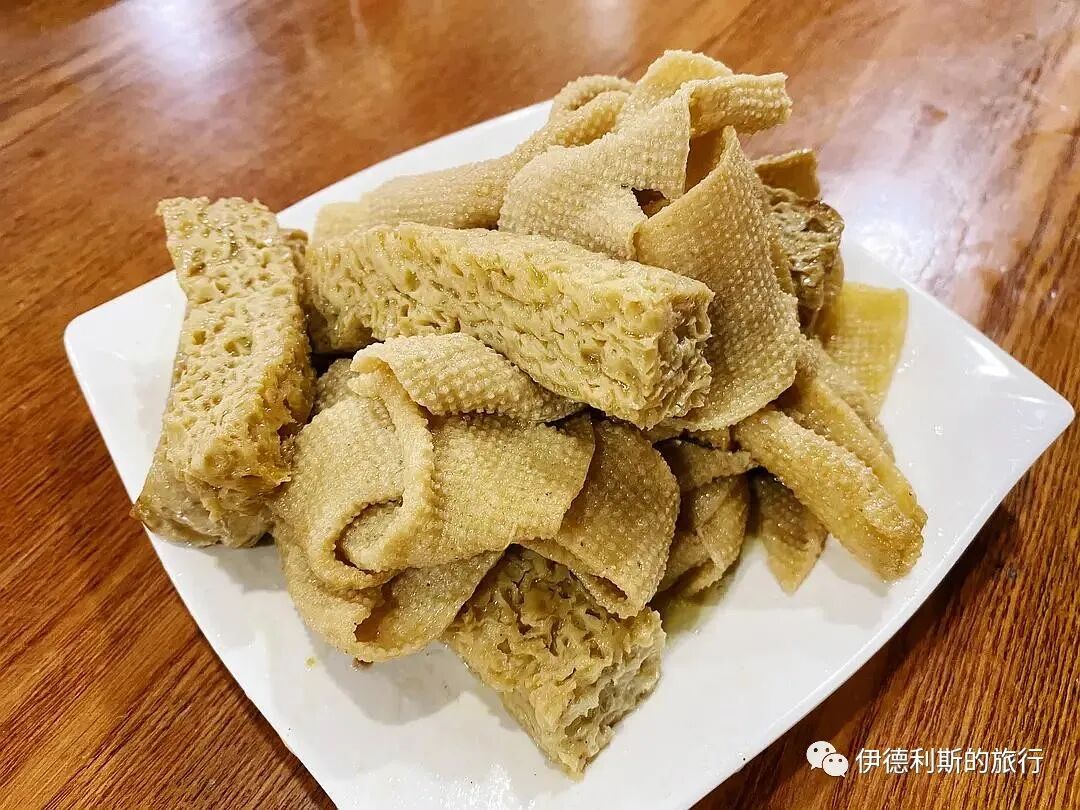
After finishing the soup dumplings, we went to the nearby Lu Laoda Mutton Soup on Shangcheng Road. Their shop is open 24 hours, so you can drink mutton soup even late at night. We ordered mutton soup and Xiaosuru (crispy stir-fried meat). It was Zainab's first time drinking milky-white mutton soup, and she was very surprised. We also ordered bean products and gluten stewed with chicken frames, but it was a bit salty.
Early Saturday morning, we went to Mashan Doumo Shop on Shuncheng Street to drink doumo (millet flour porridge) and eat caijiao (vegetable-filled fried dough pockets). Mashan Doumo Shop was founded in Huayuankou in 1938 and moved to Shuncheng Street in the 1950s. It is the oldest doumo shop in Zhengzhou. Doumo is popular in Henan, Hebei, and Shandong. I have had it before in Kaifeng and Jinan. It is made of millet flour, soybeans, and peanuts, seasoned with various spices.
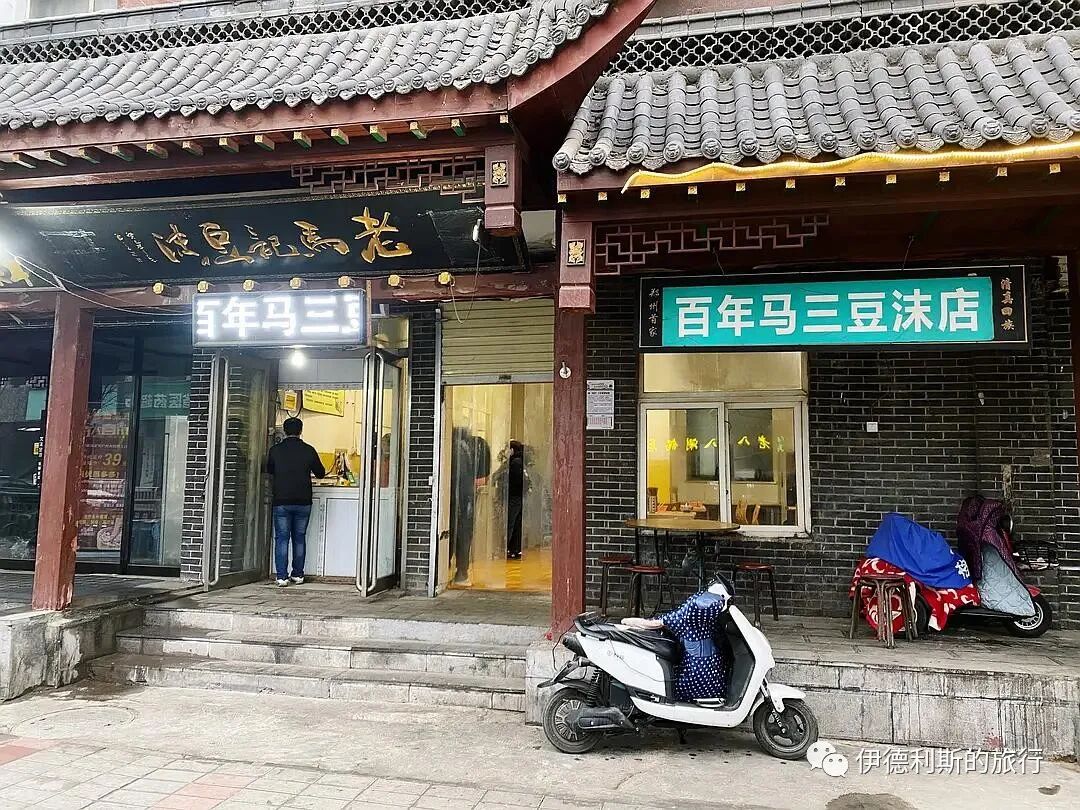
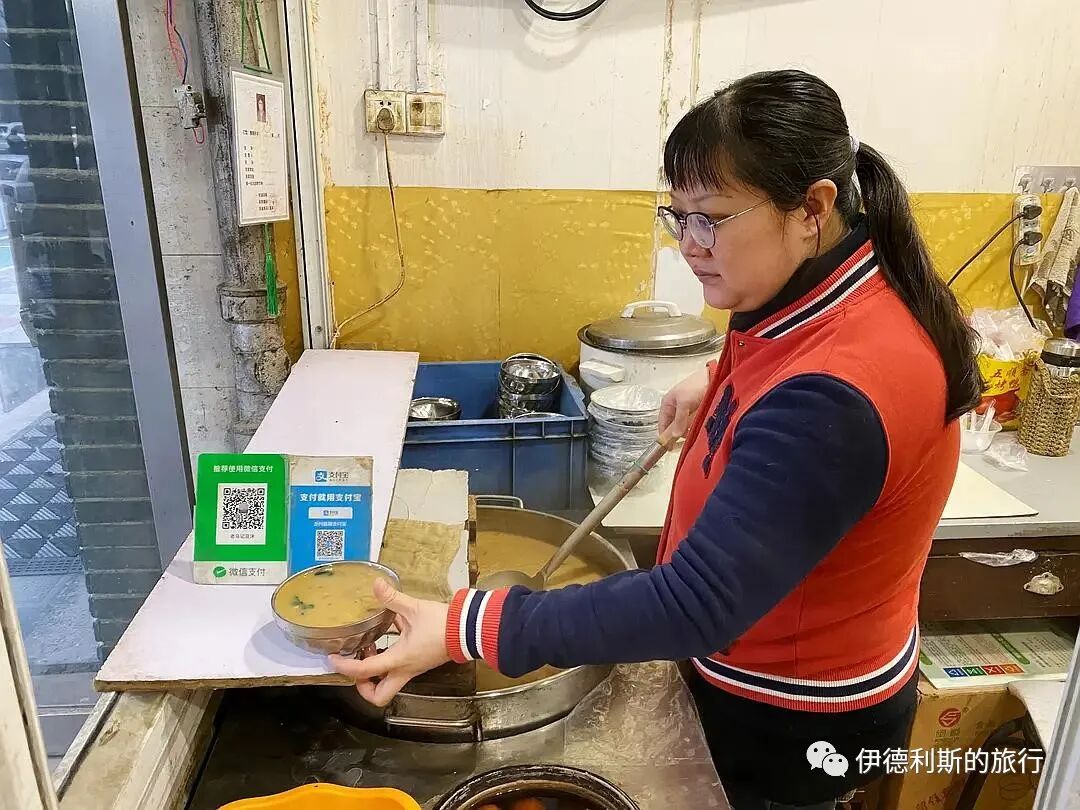
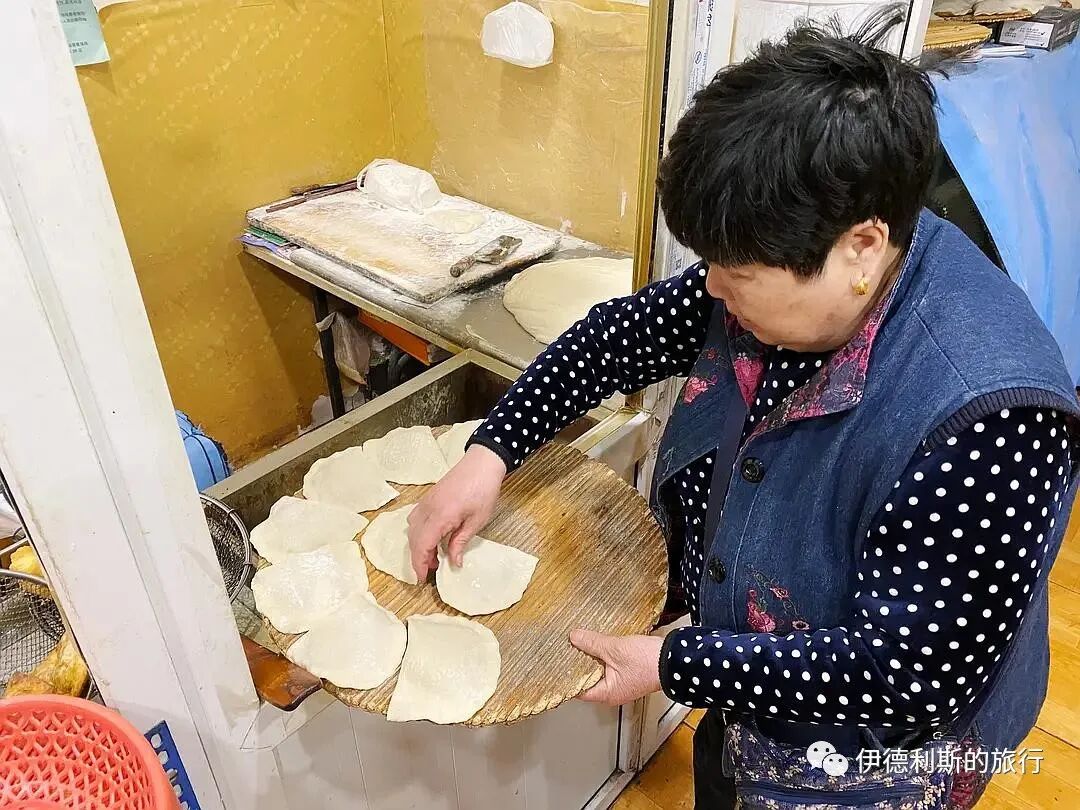
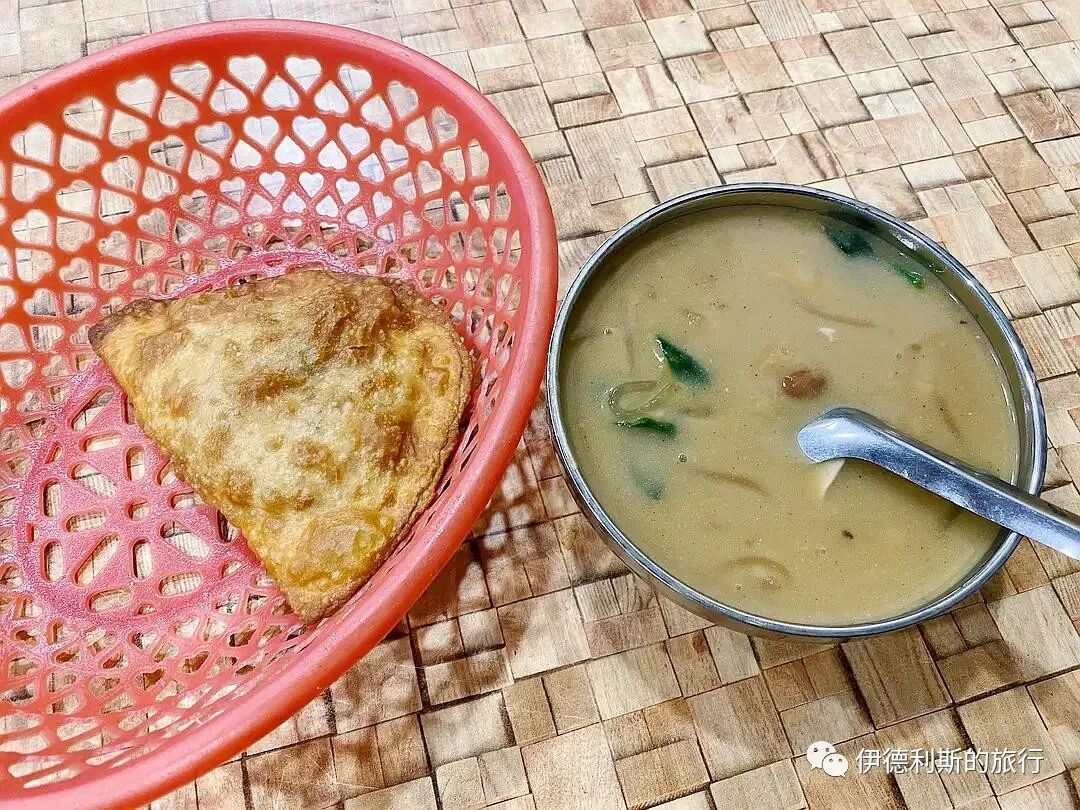
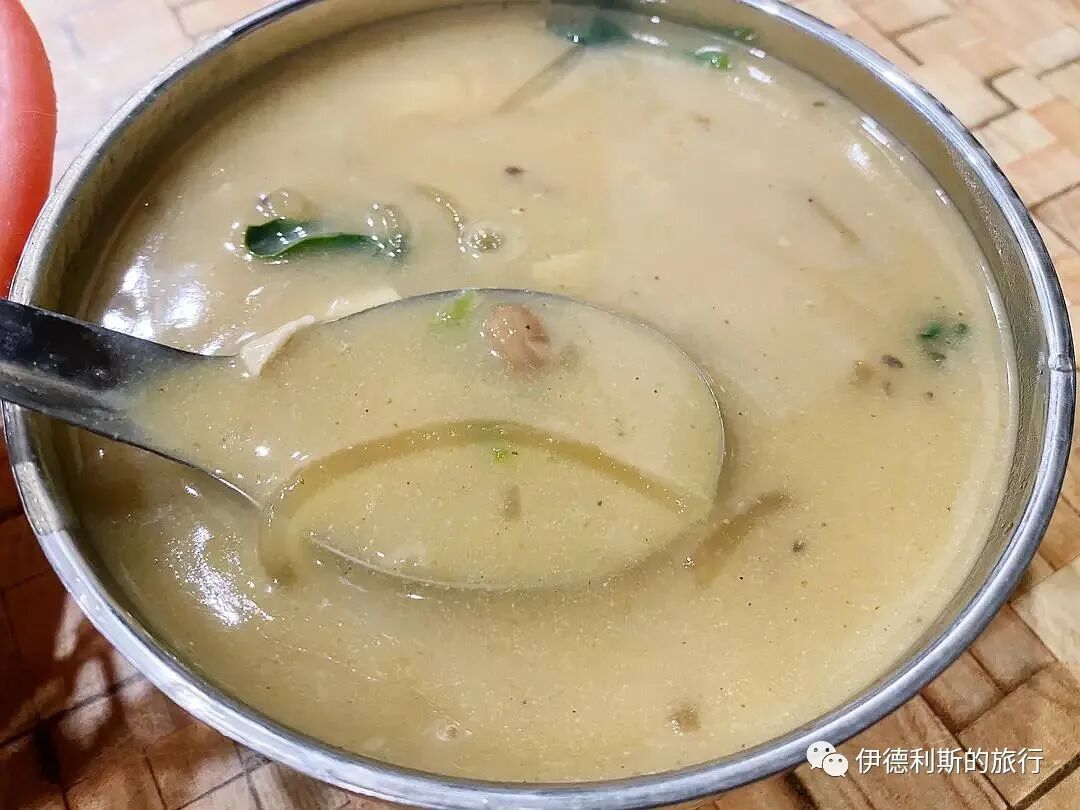
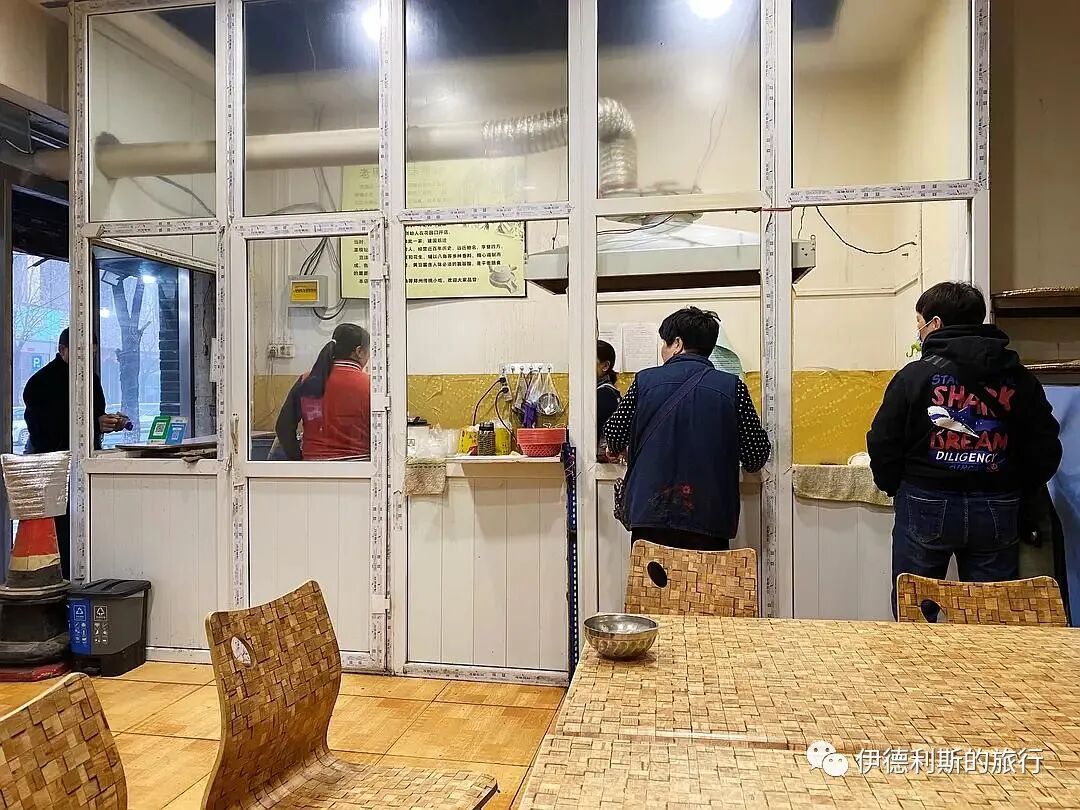
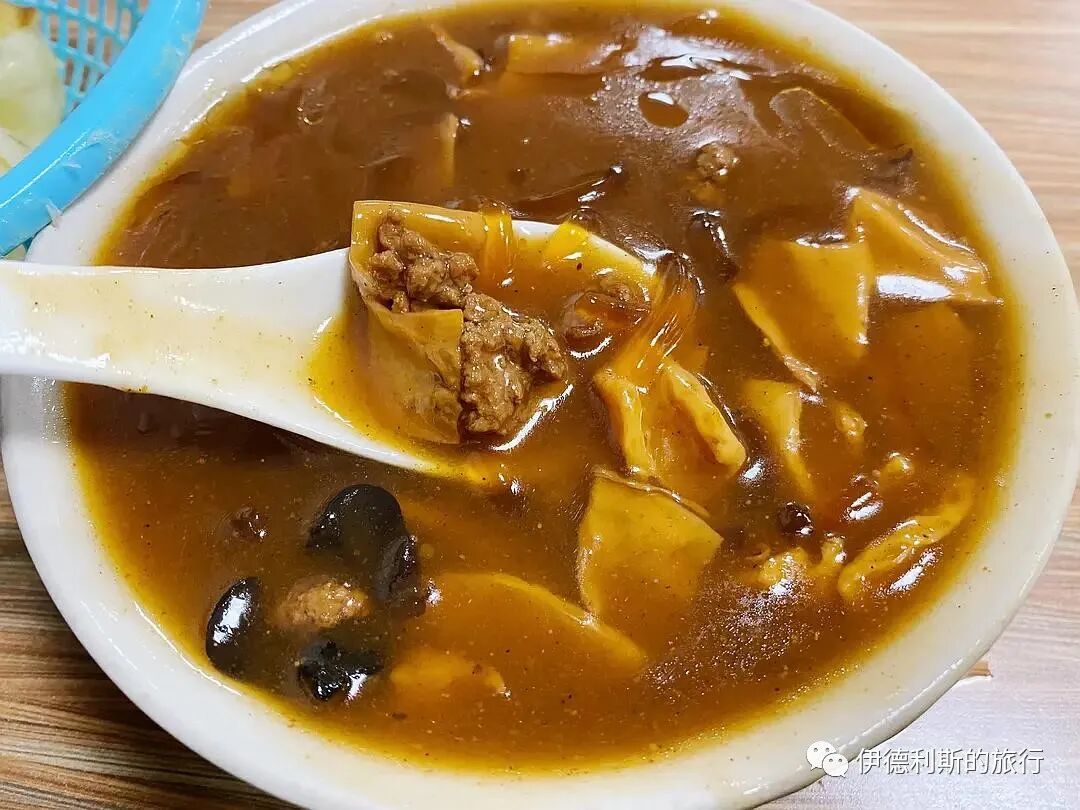
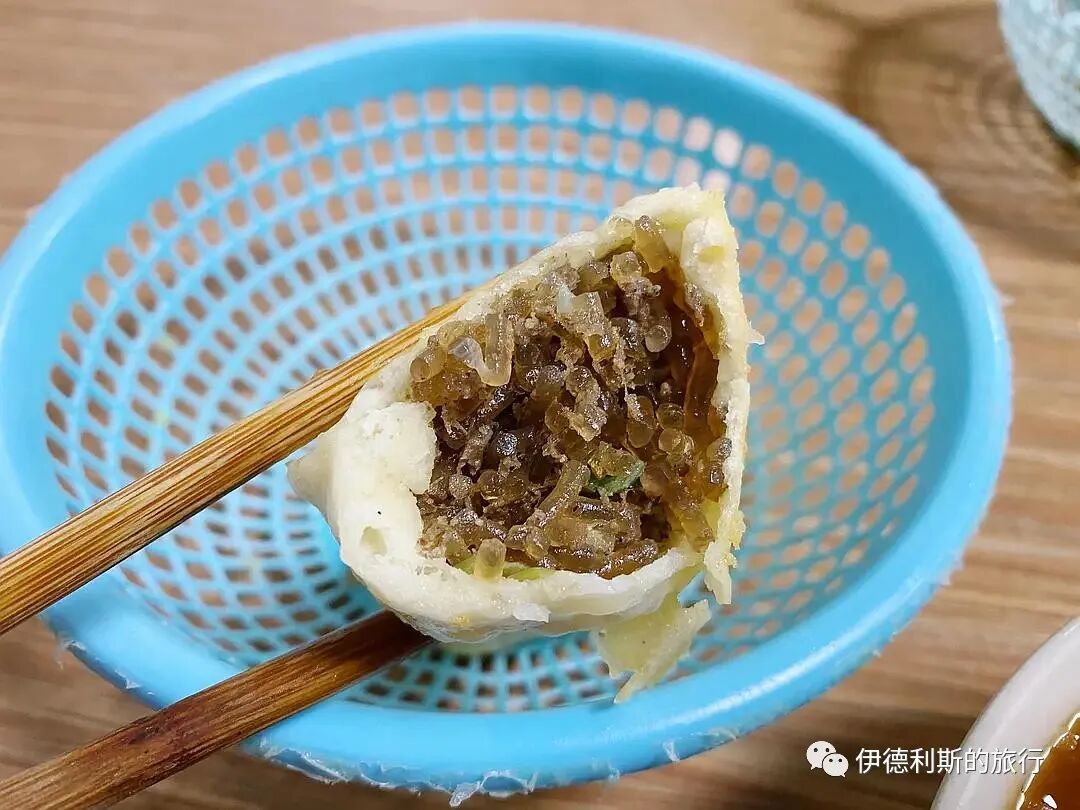
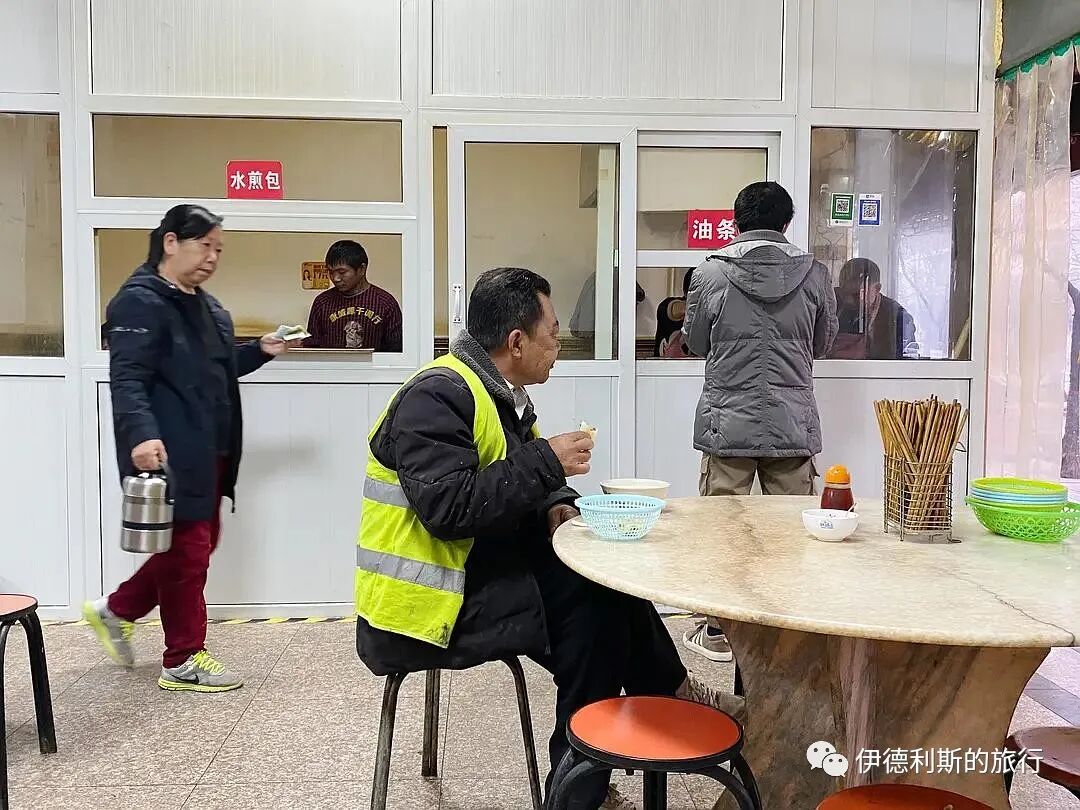
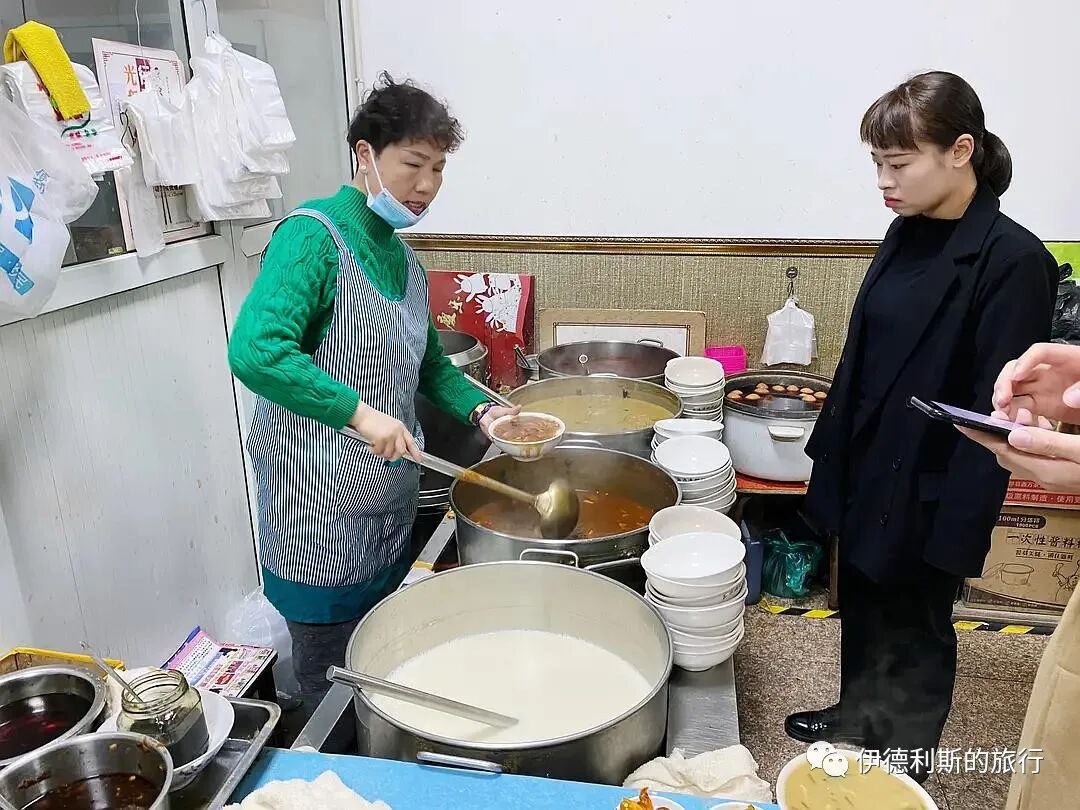
Then we had breakfast at a nearby shop on Old Shuncheng Street, eating hulatang (spicy pepper soup) with shuijianbao (pan-fried buns). I really liked the lively atmosphere of Shuncheng Street when I visited Zhengzhou before. It has become much quieter after renovations, but the breakfast shops are still as busy as ever. It is said that Zhengzhou's hulatang used to be less spicy, but later some shops followed Fang Zhongshan's style and added more chili powder.
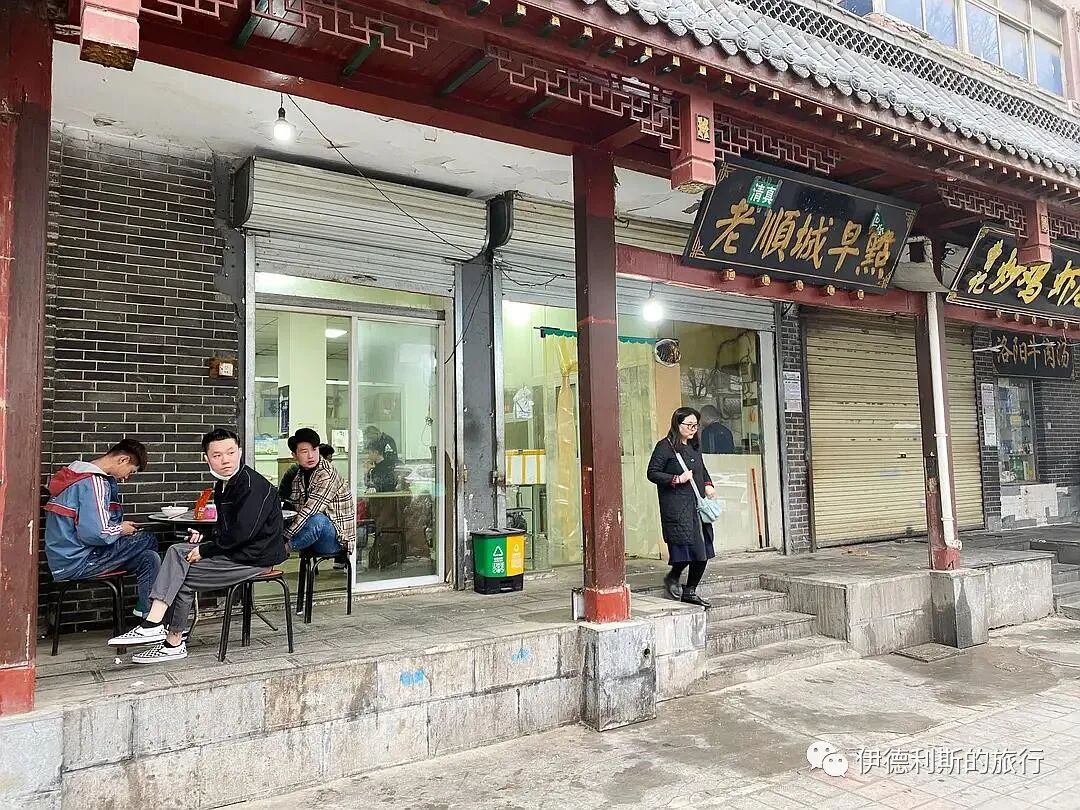
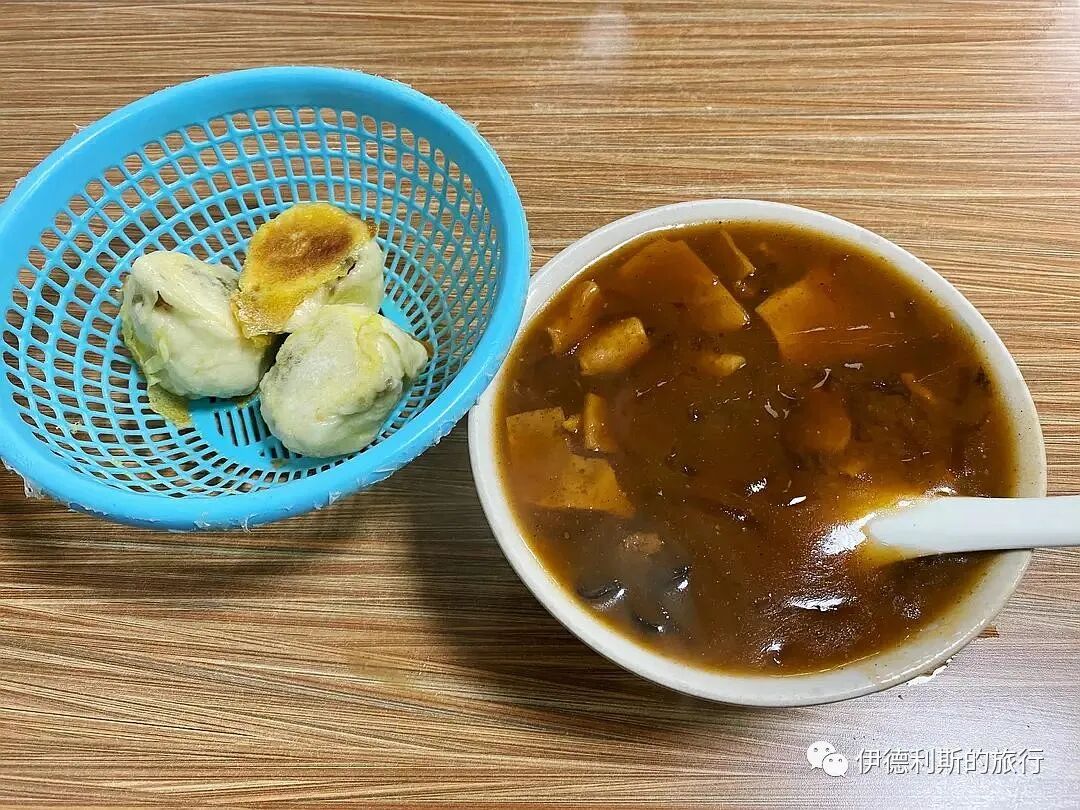
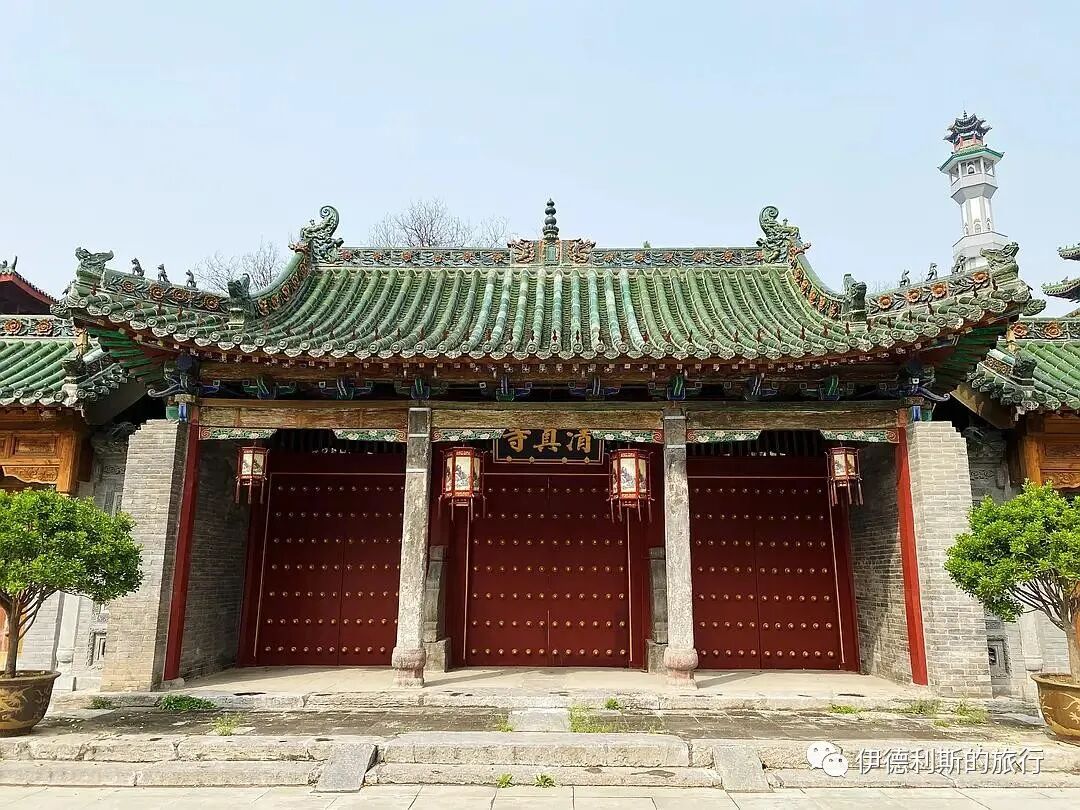
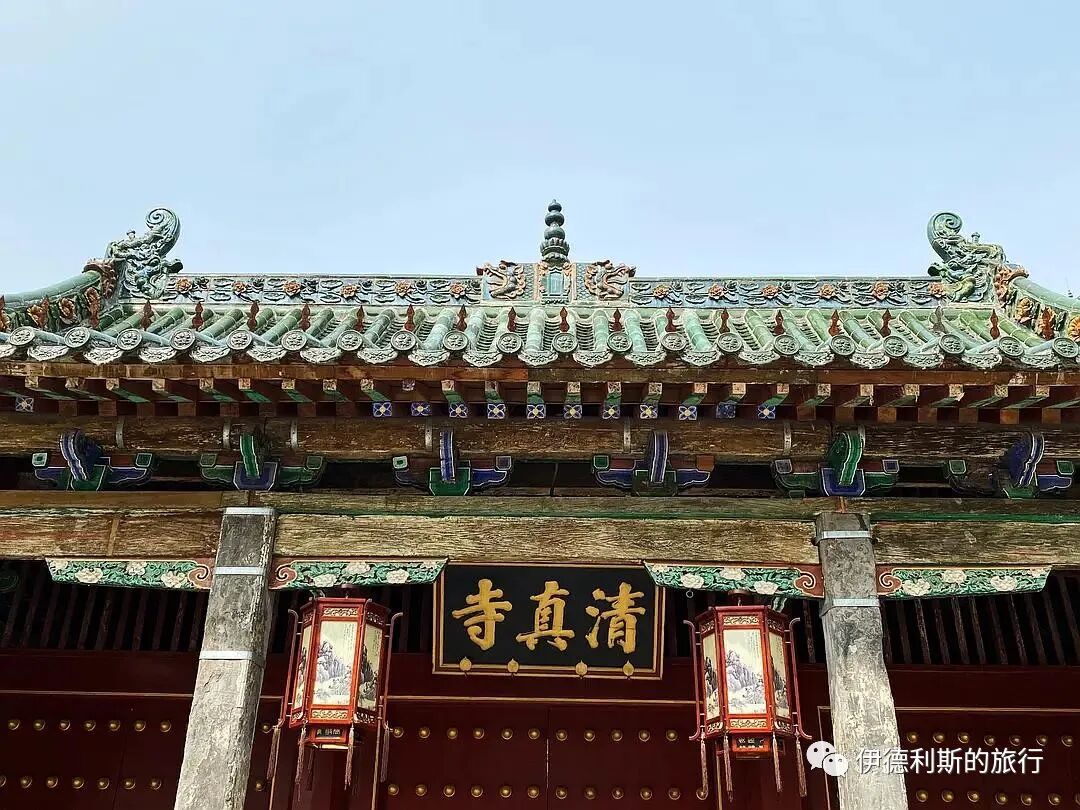
Visiting the Zhengzhou North Mosque. The North Mosque is located on North Street in the old city of Zhengzhou. It is said to have been built in the Ming Dynasty, features the typical architectural style of Central Plains mosques, and is a Major Historical and Cultural Site Protected at the National Level.
The main gate was built in 1725 (the third year of the Yongzheng reign).
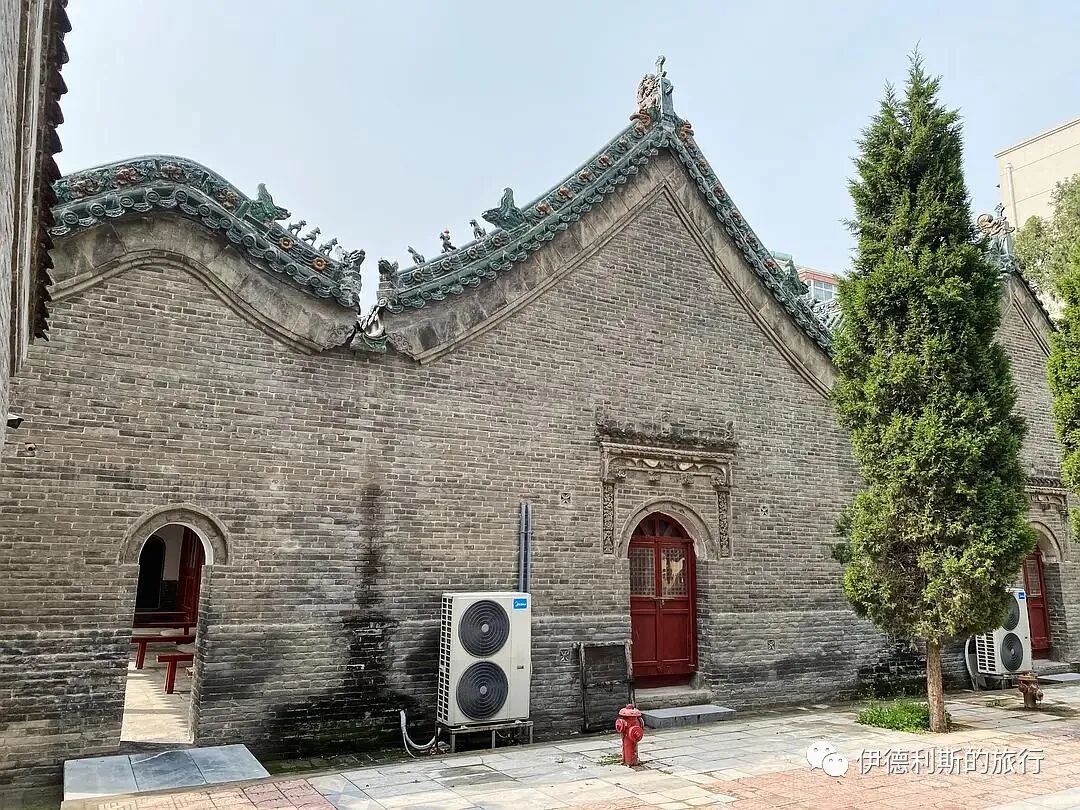
The Moon-Watching Tower also serves as the minaret. The first floor is a hallway. Judging by the architectural structure, it is very likely an original Ming Dynasty piece, but the dougong (bracket sets) and eaves rafters were likely replaced during the Qing Dynasty. According to records, it was renovated in 1887 (the thirteenth year of the Guangxu reign).
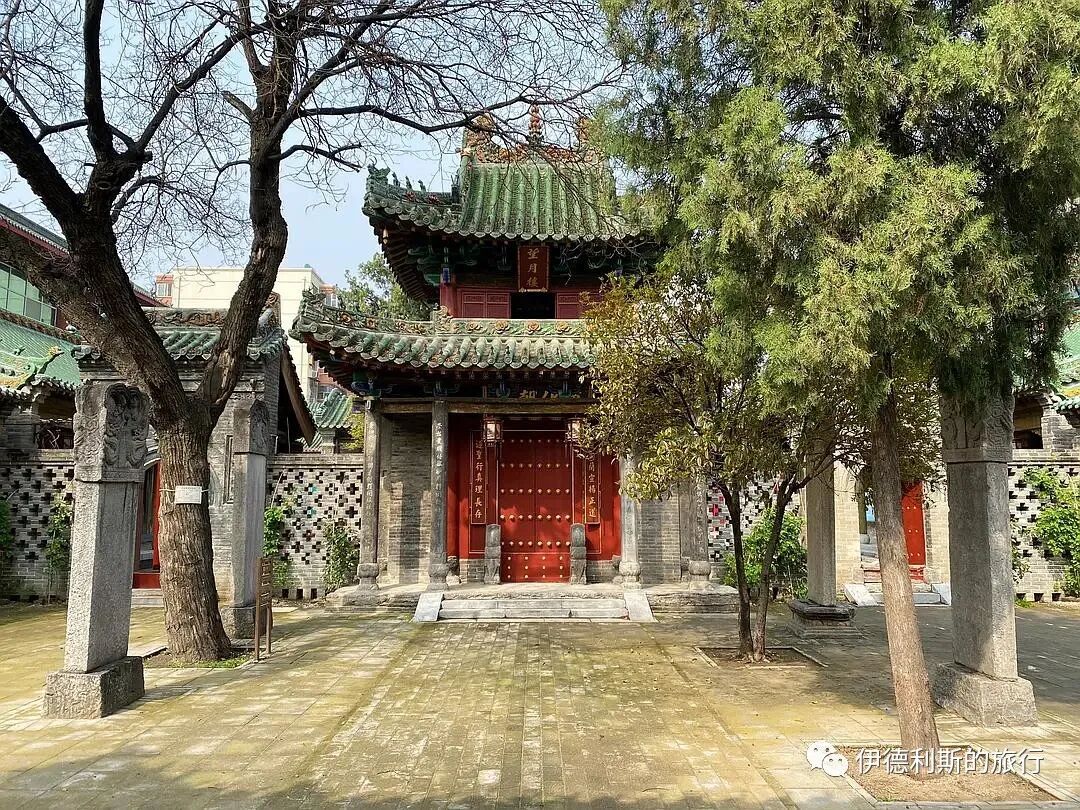
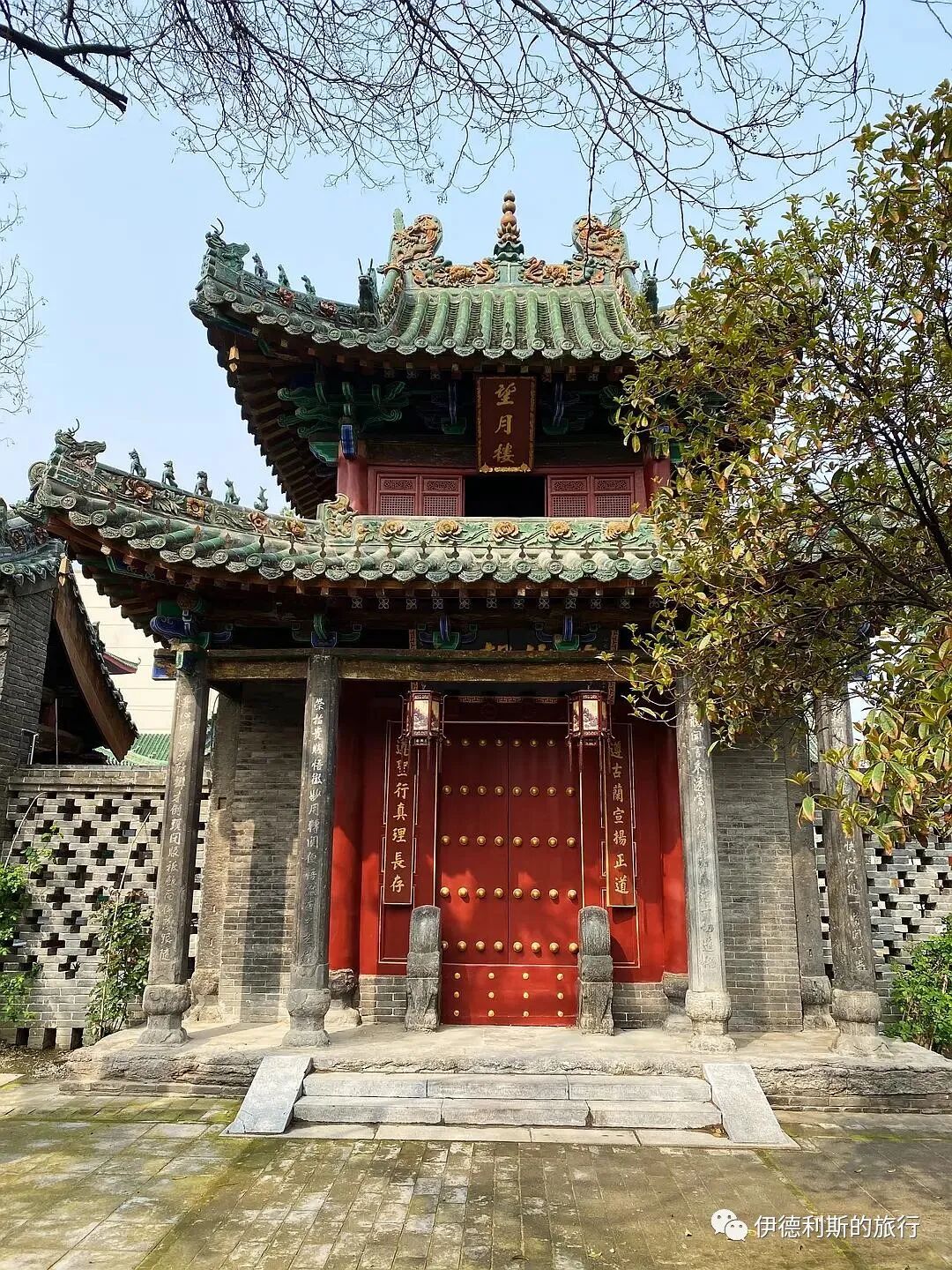
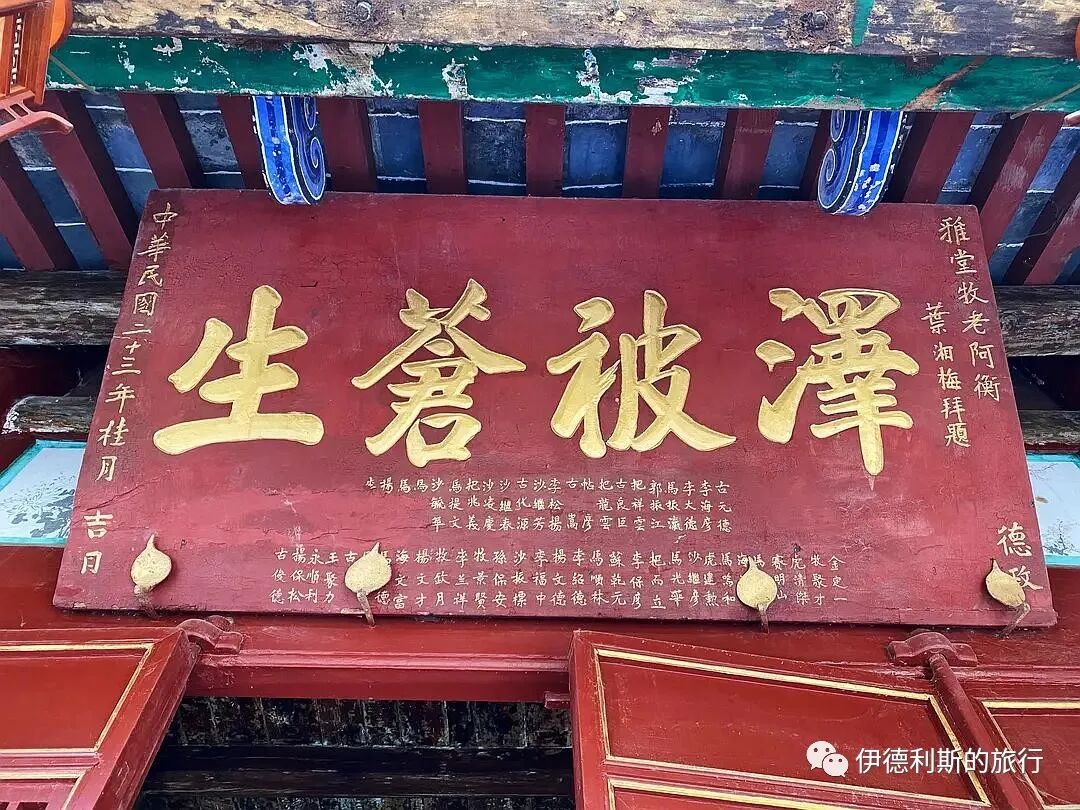
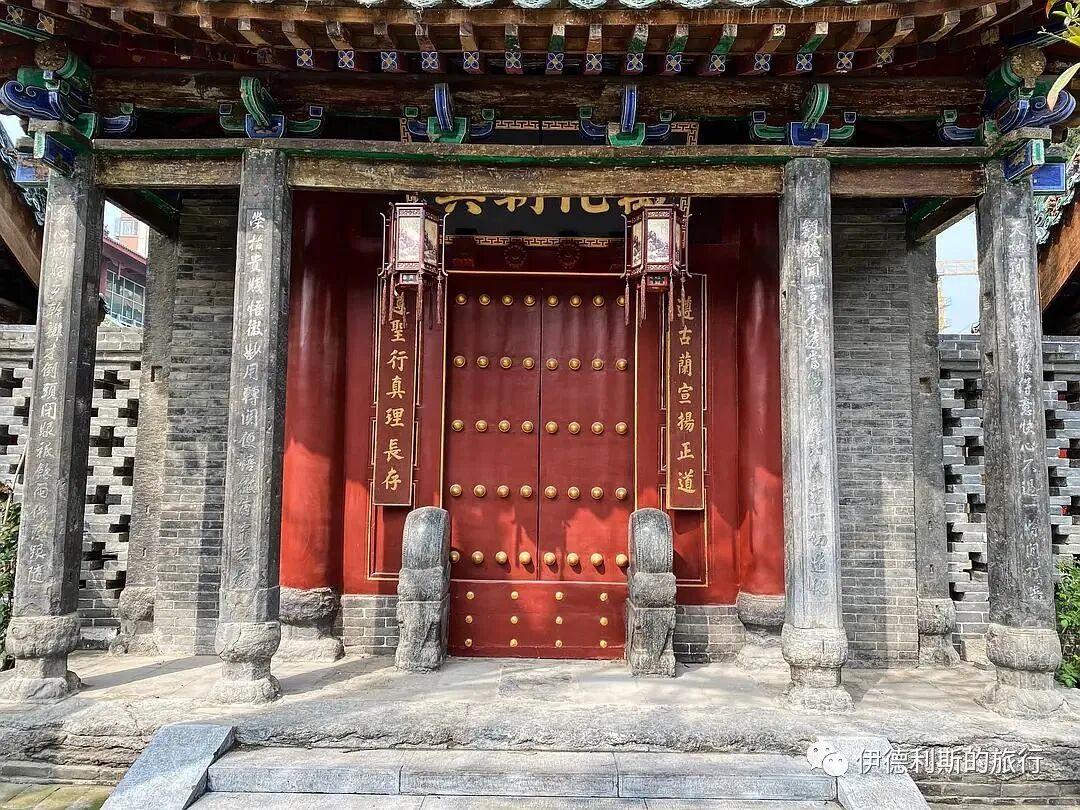
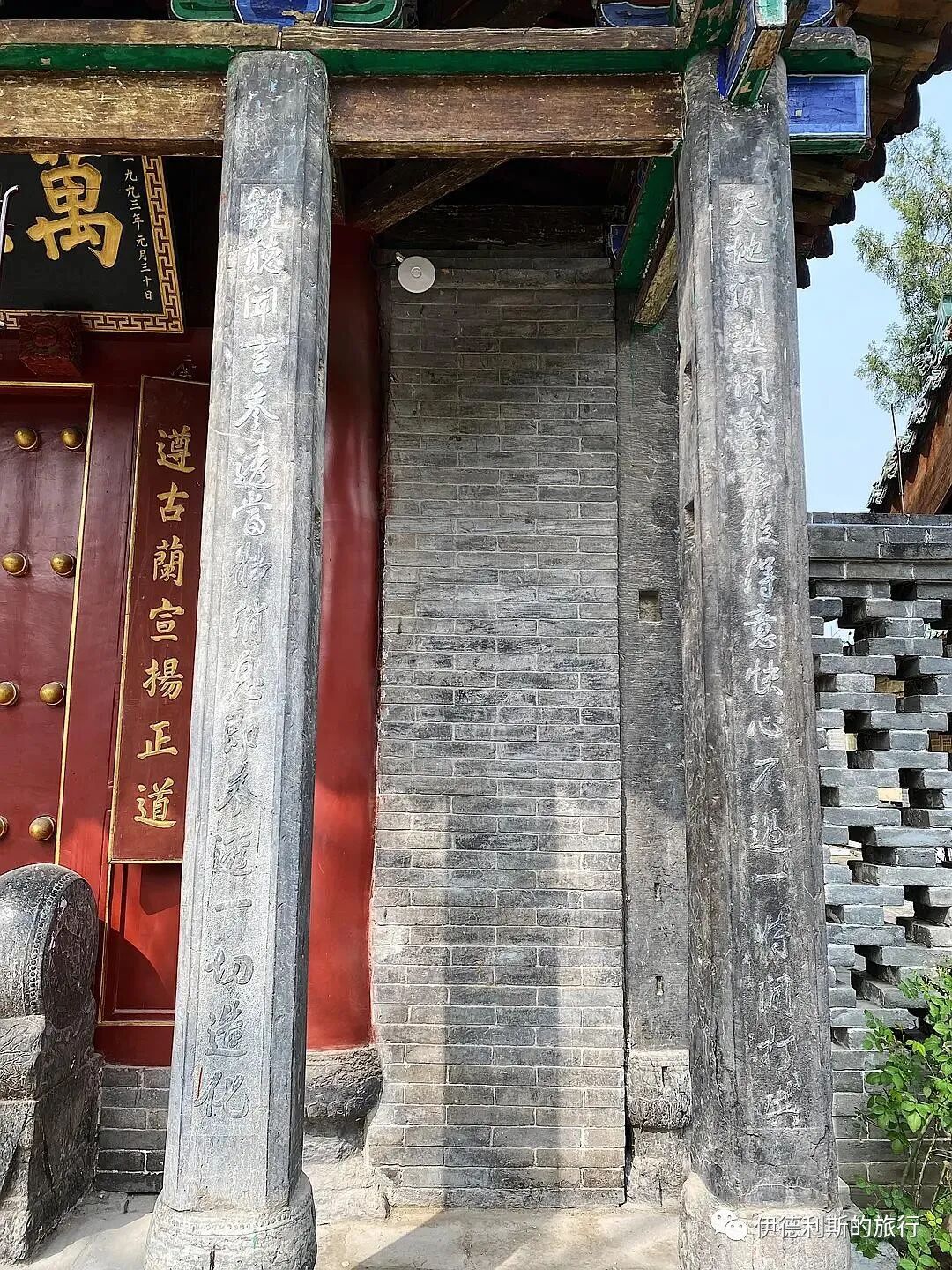
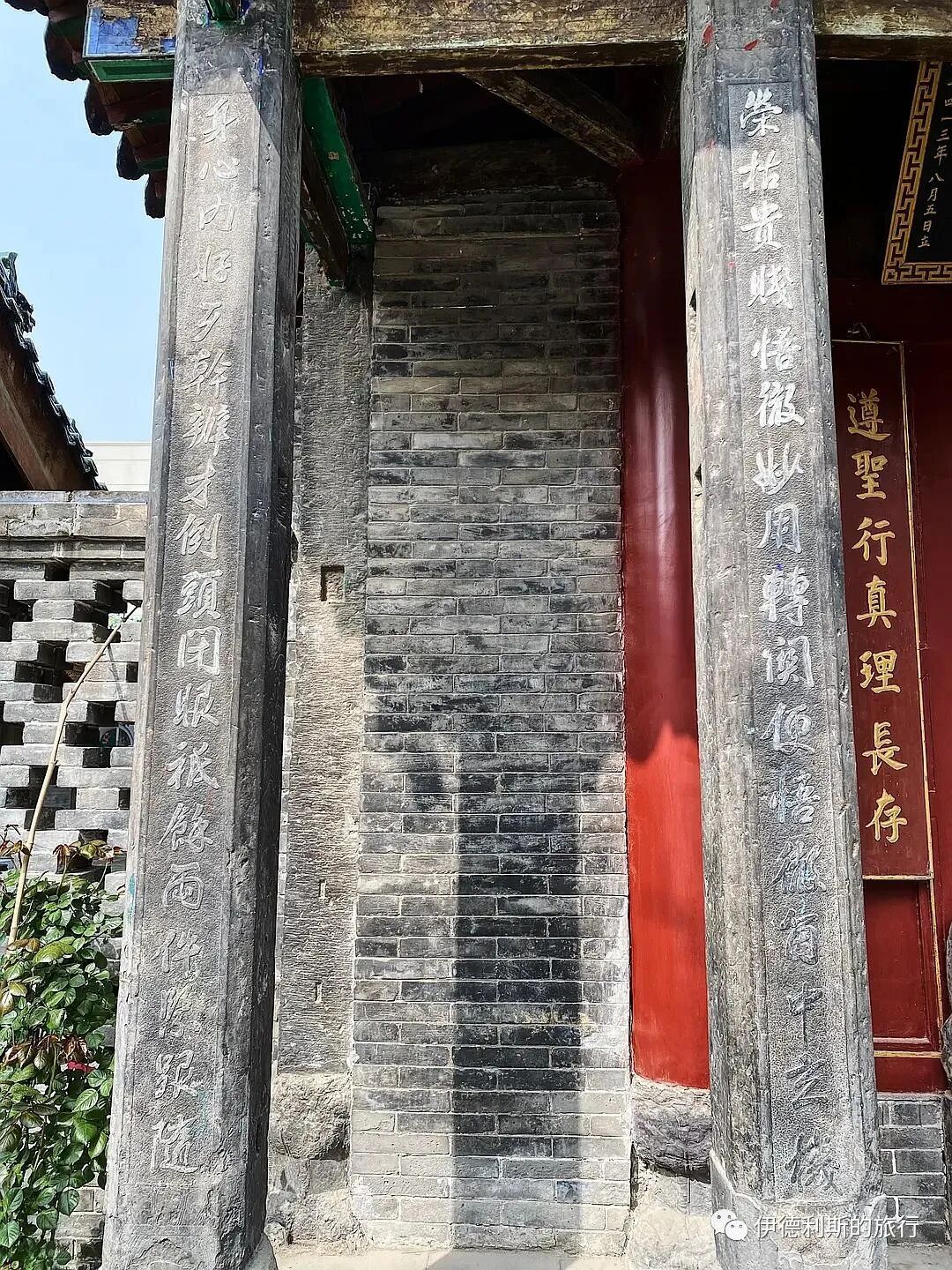
The Moon-Watching Tower has three pairs of Chinese couplets:
Observe, listen, and hear the words; to fully understand the essence of the present is to understand all of creation.
Whether in prosperity or decline, honor or disgrace, to realize the subtle turning point is to realize the mystery within.
The hustle and bustle of the world, even if you are proud and happy, is but a fleeting distraction.
Within the body and mind, no matter what you do, when you finally close your eyes, only two things will follow you closely.
Follow the Quran to promote the righteous path.
Follow the Sunnah so the truth lasts forever.
The other side has Arabic couplets.
There are also couplets on the doors on both sides of the Moon-Watching Tower:
The five daily prayers are the key to opening the door.
The holy scripture is the lamp that guides the way.
To recognize the pearl, one must return to the shore.
If you think of the sea, repair your boat early.
Stone inscriptions in the courtyard.
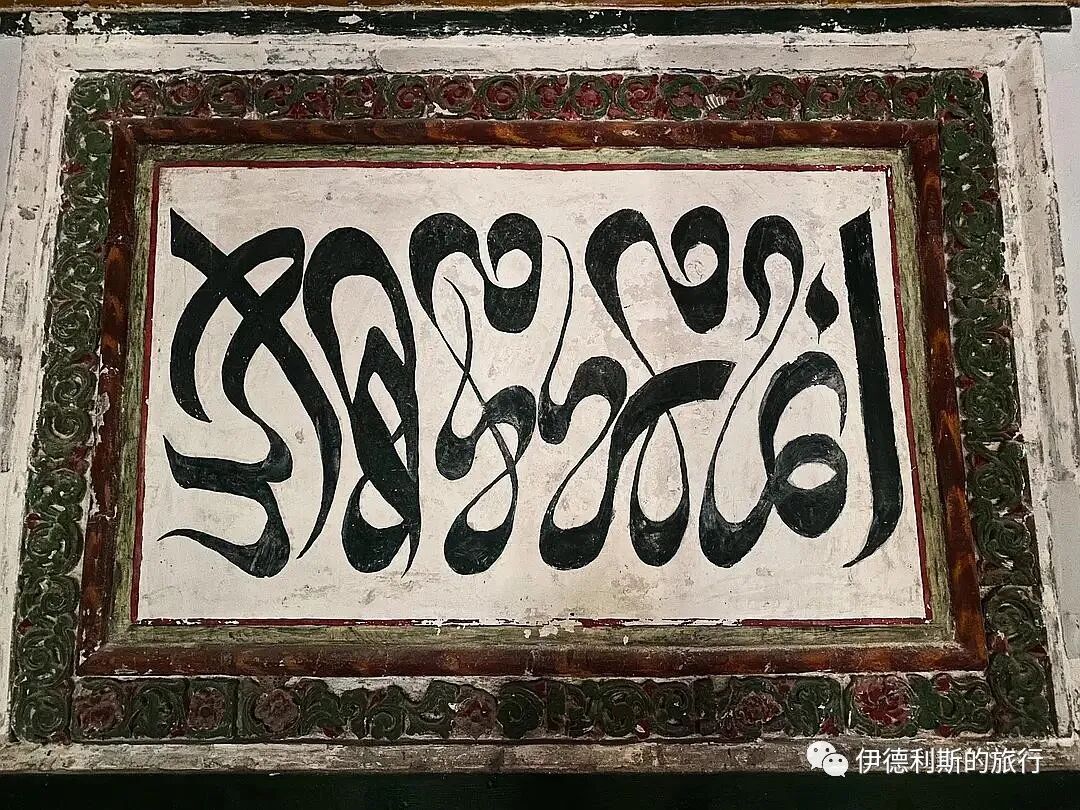
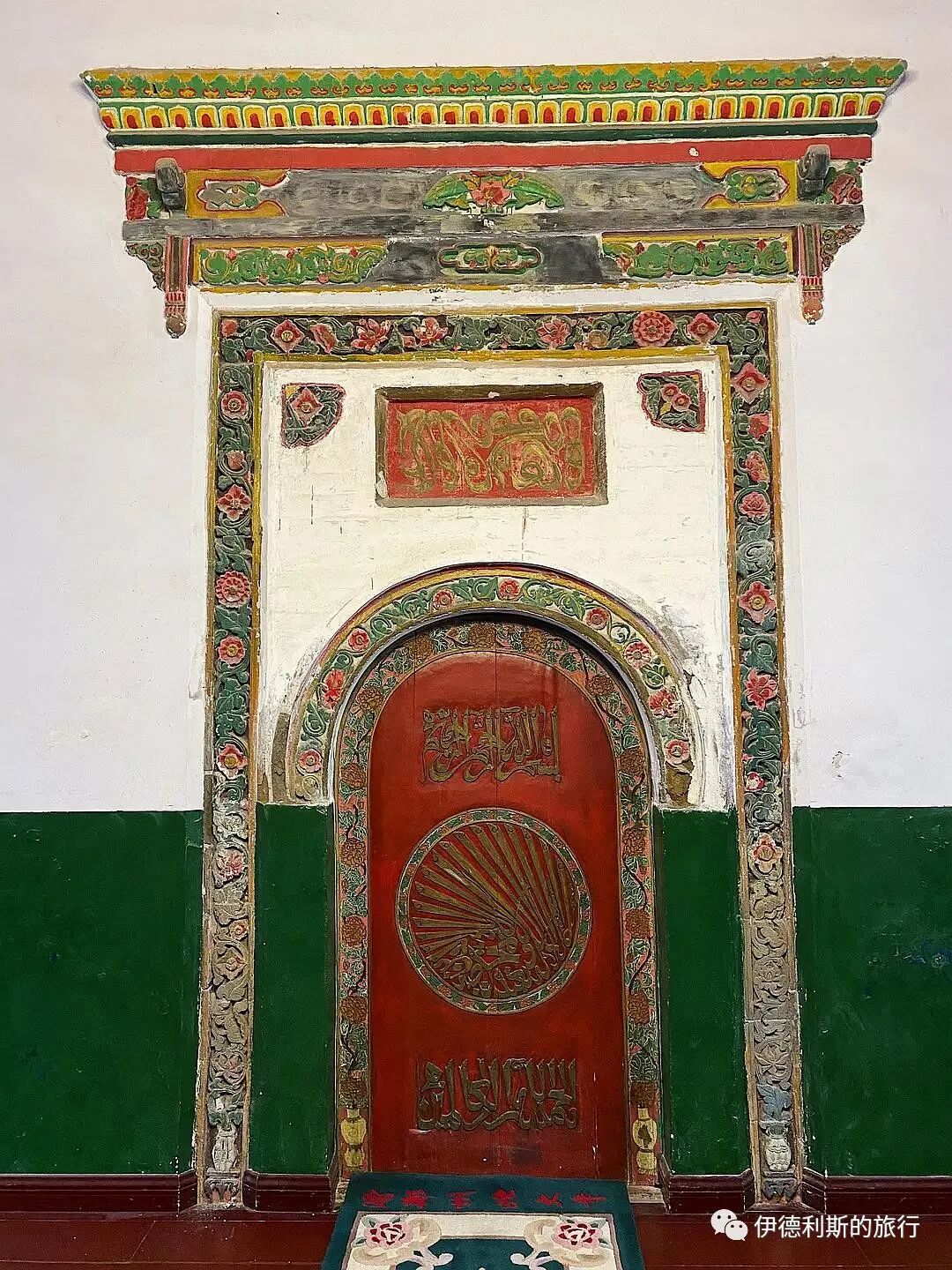
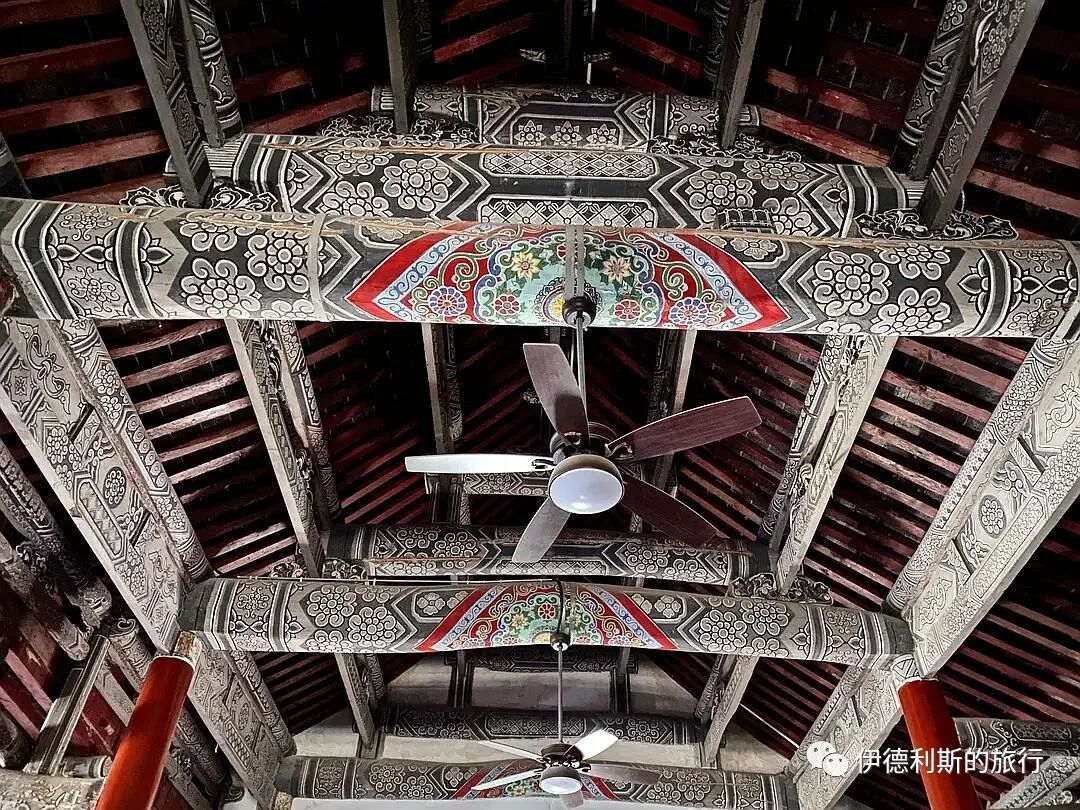
The main prayer hall was renovated twice, in 1802 (the seventh year of the Jiaqing reign) and 1907 (the thirty-third year of the Guangxu reign), and consists of a porch, the main hall, and the rear dome hall. The main hall features a lift-beam wooden frame with exposed rafters. The beams and rafters are covered with cloud and floral patterns, making it unique and elegant. There is a floral screen between the main hall and the dome hall, filled with openwork patterns. Light shines from the bright dome hall through the screen into the main hall, creating a delicate and translucent effect on the screen.
There are two century-old osmanthus trees in front of the main hall.
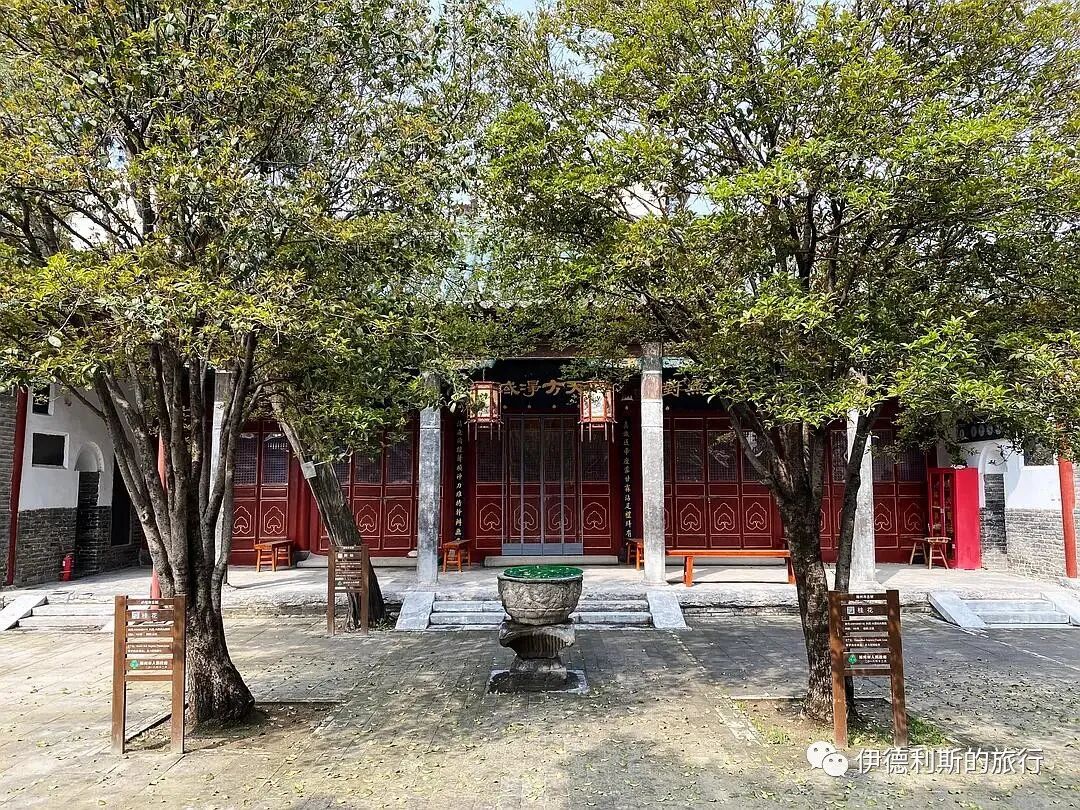
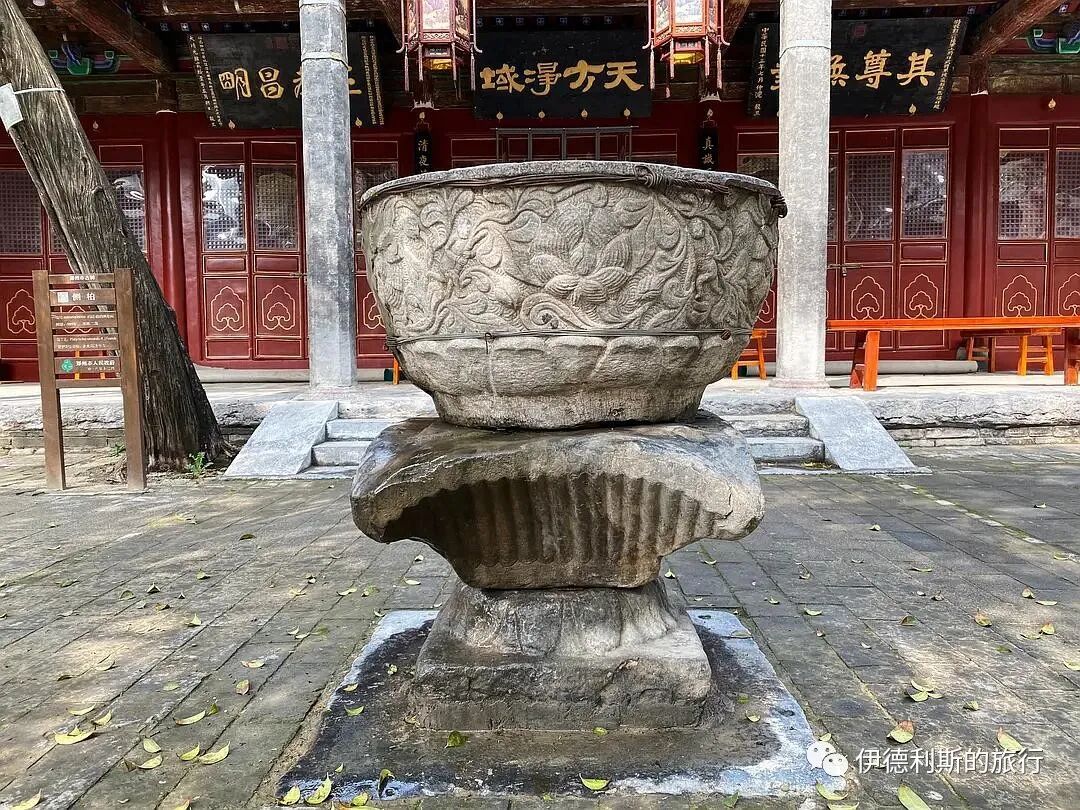
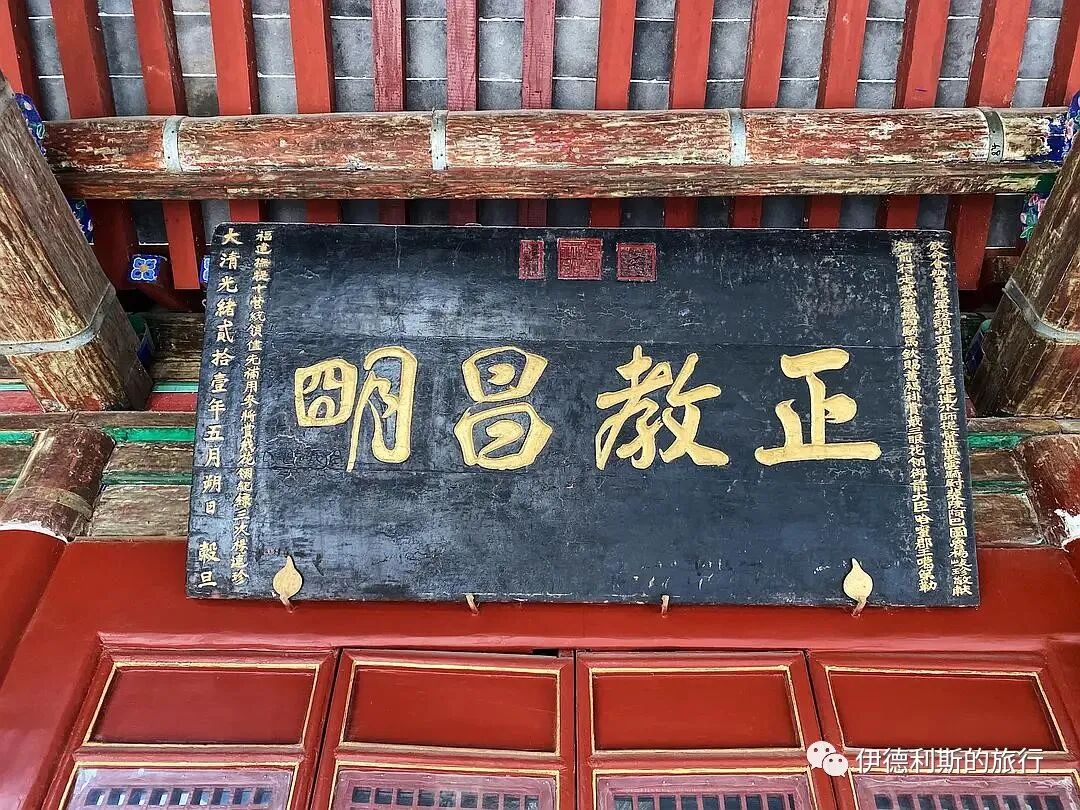
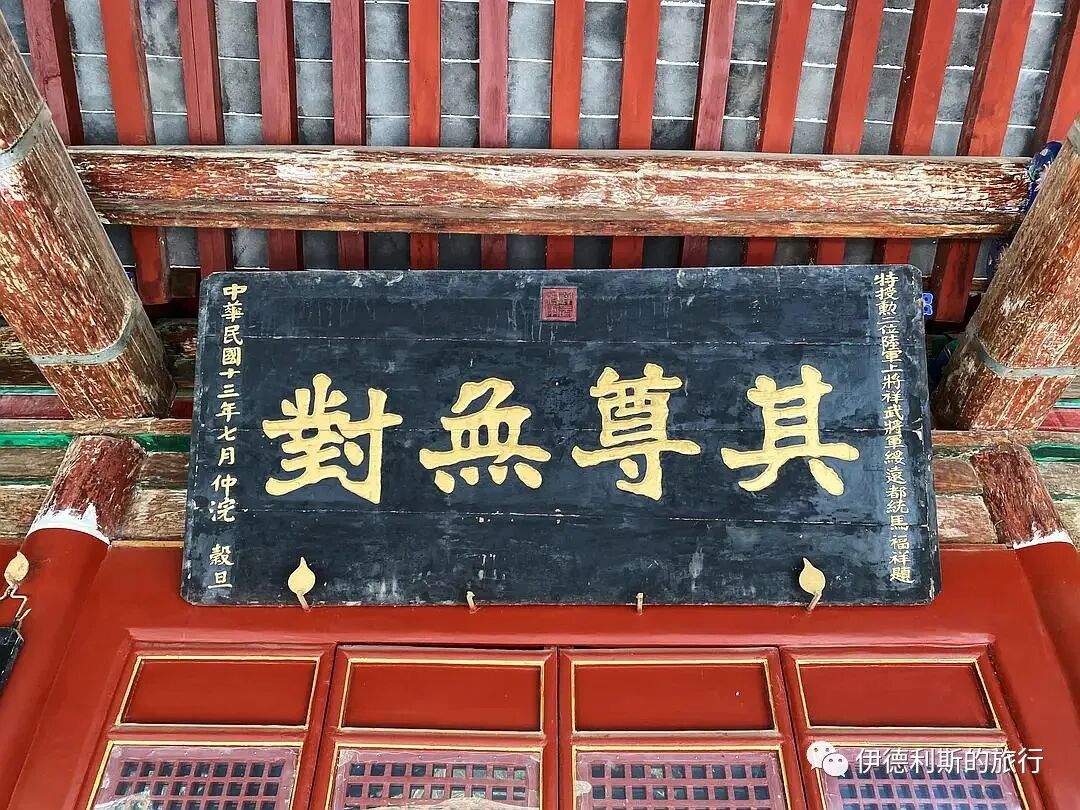
Couplets inside the main hall:
The painting of the heavens, know that there is no second artist.
The writings across the earth, one must ponder who holds the brush.
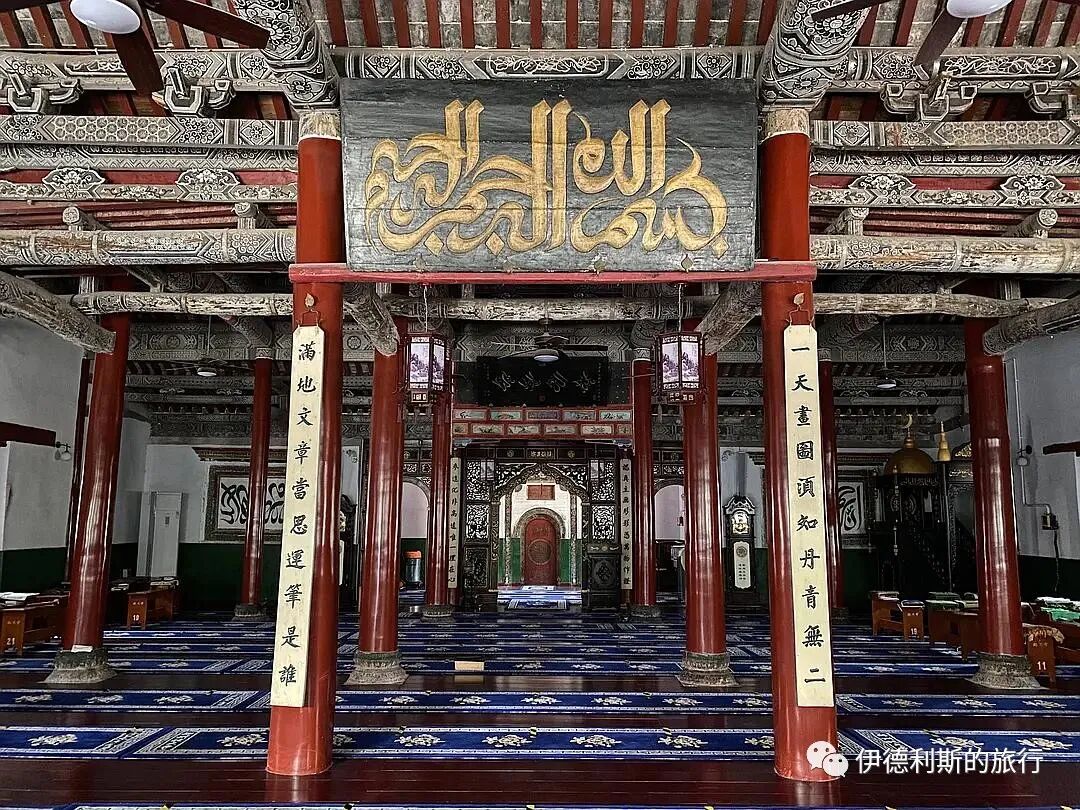
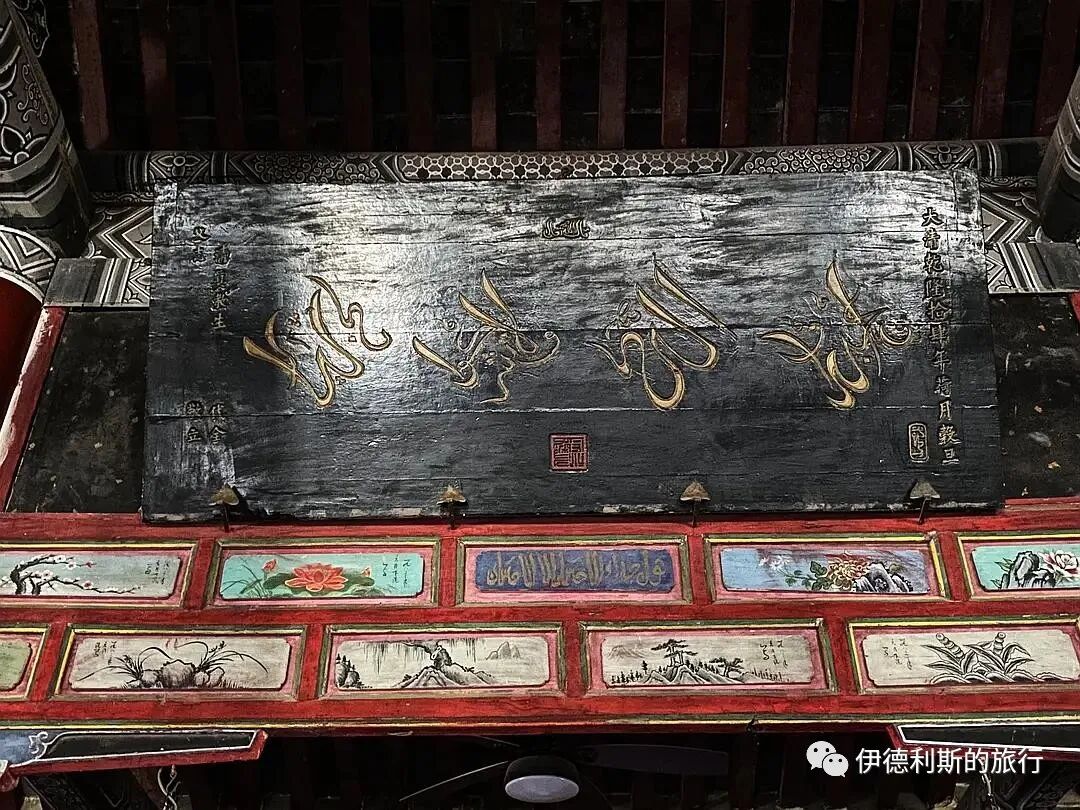
Recognize the True Lord, who has no form or shadow, and let all things serve as proof.
To contemplate creation is not to seek the high and distant, but to keep the one truth in your heart.
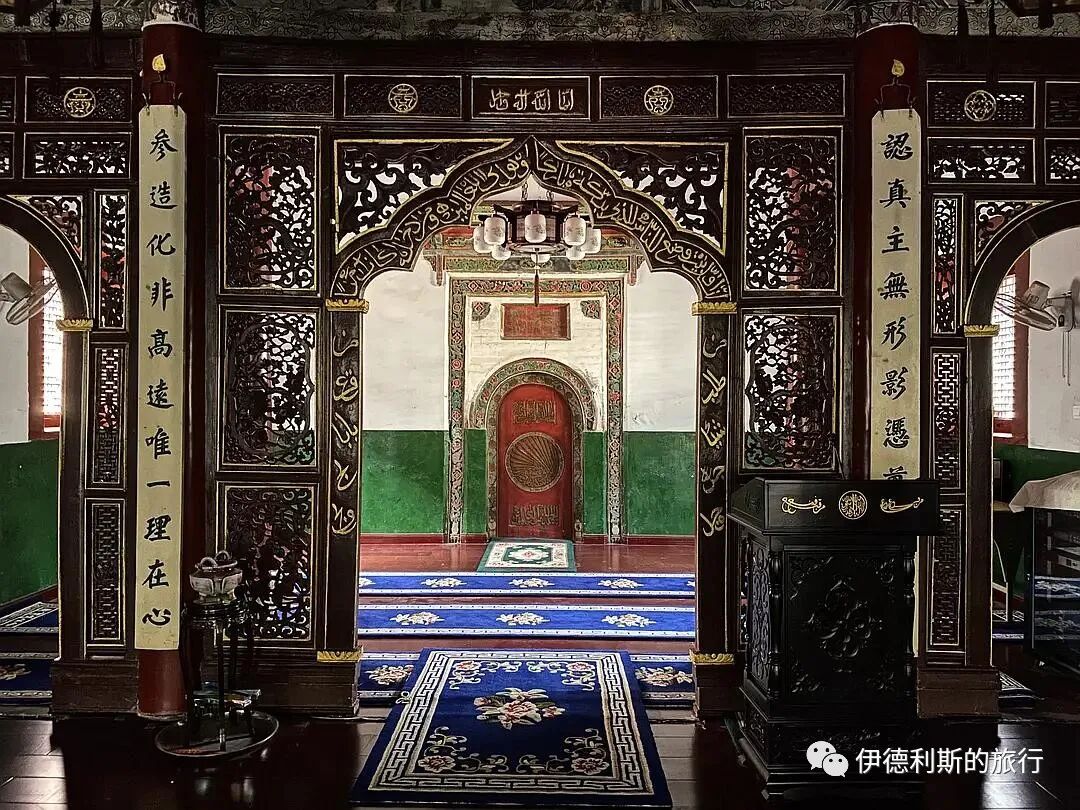
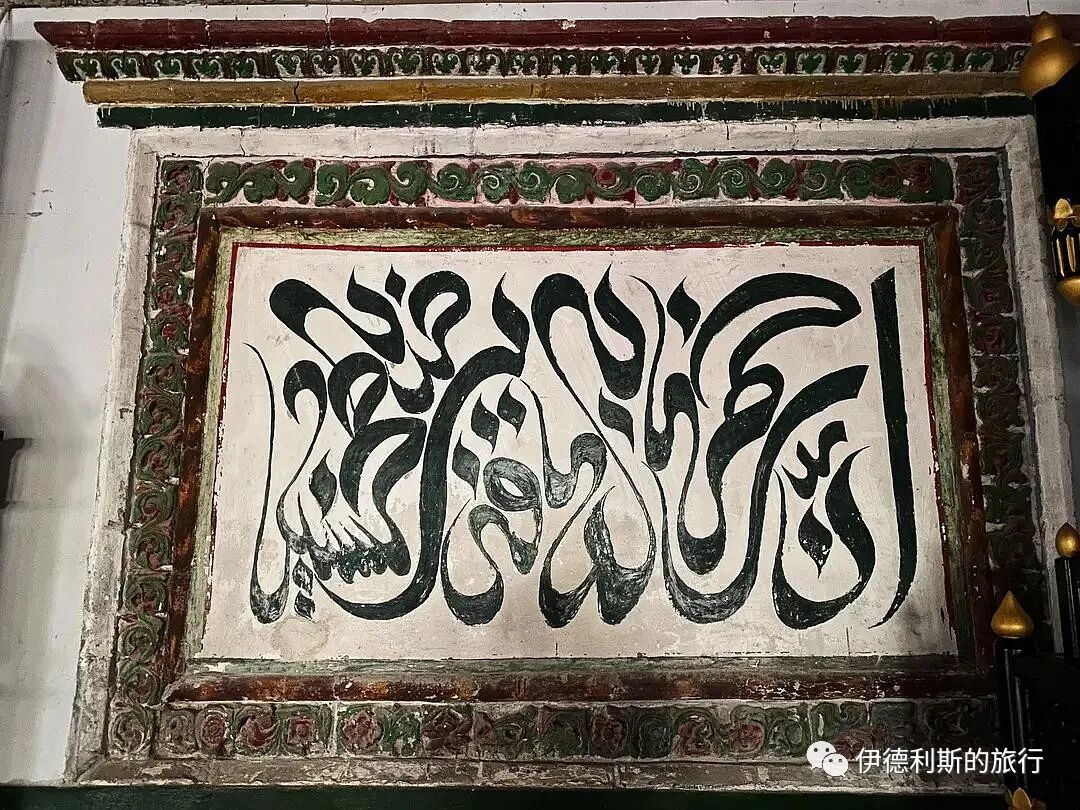
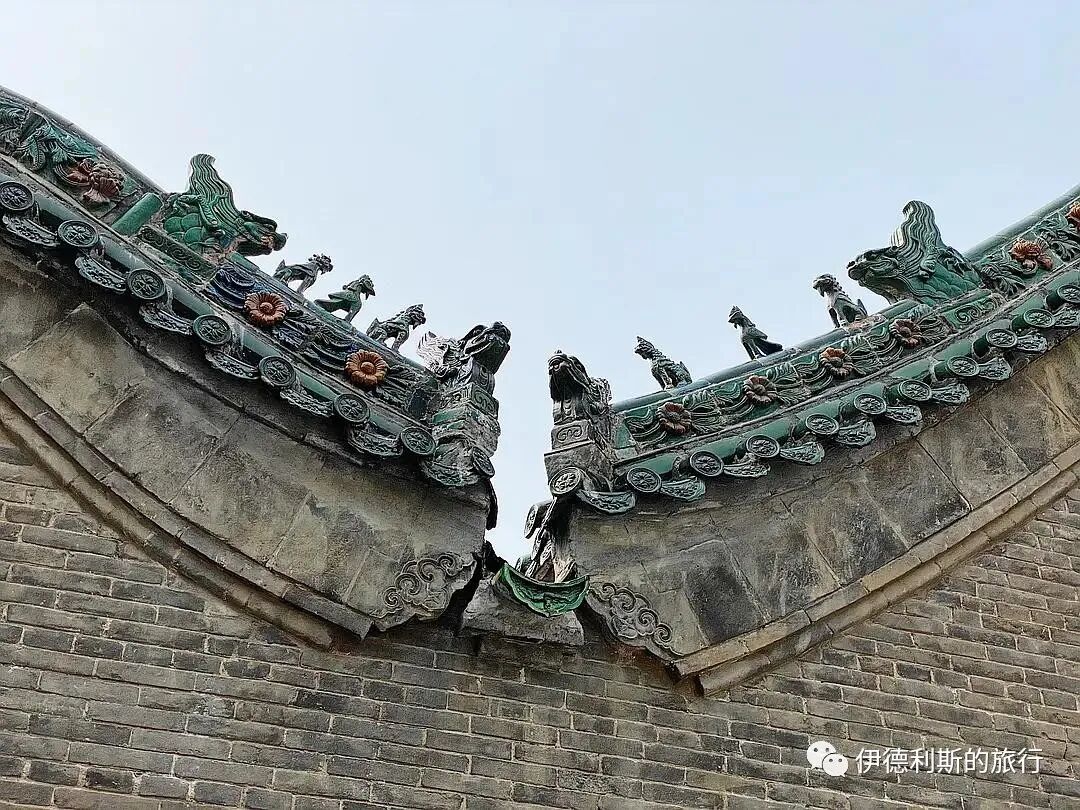
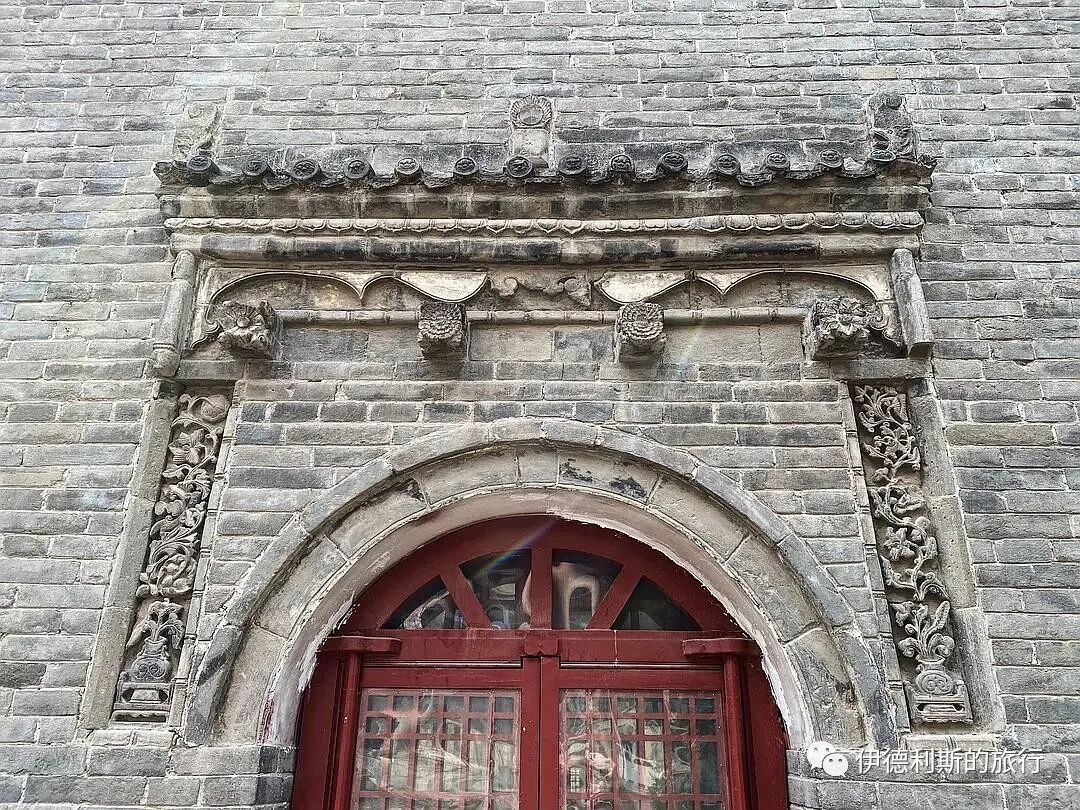
Behind the main hall, next to the dome hall, there is a Chinese juniper tree over 400 years old.
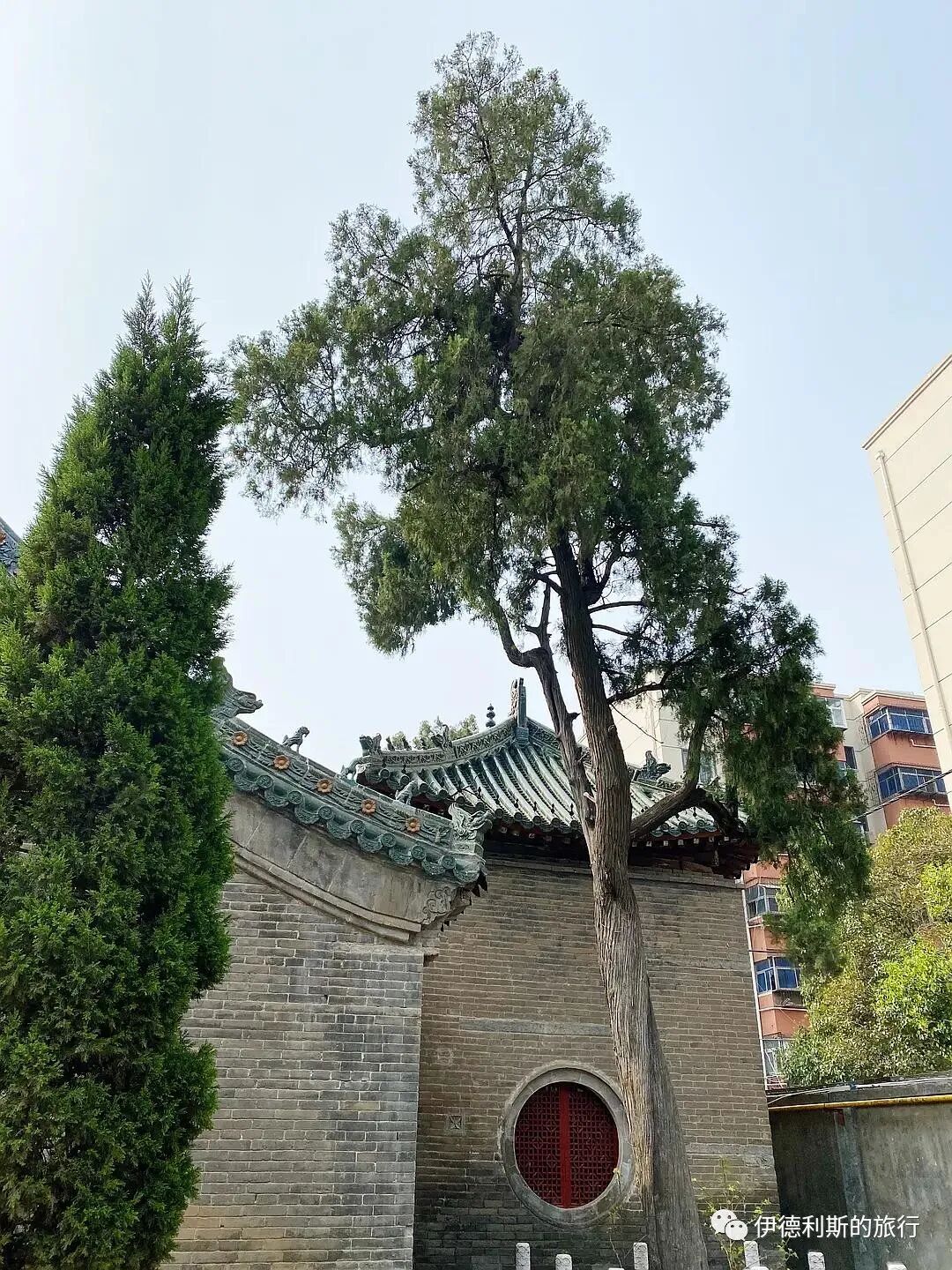
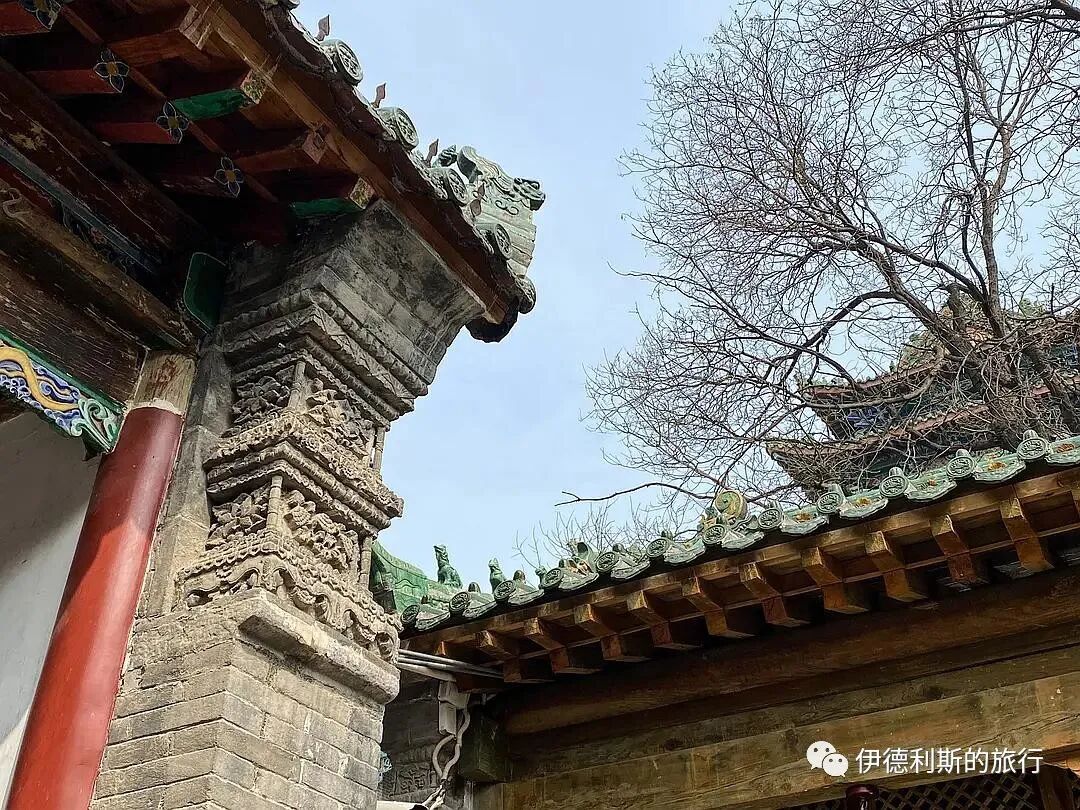
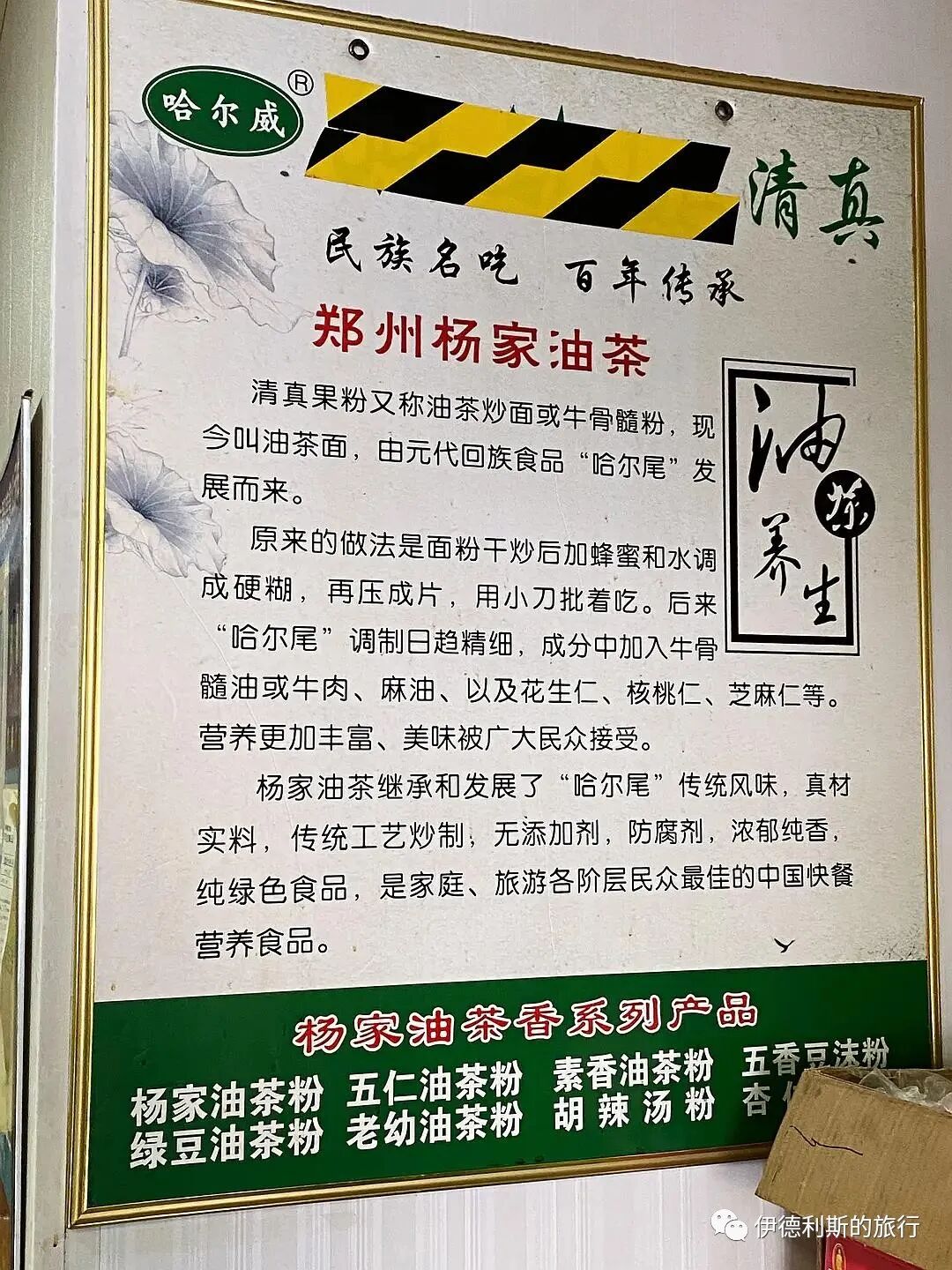
After visiting the North Mosque, we had youcha (oil tea) and almond tea at Yang's Youcha across the street. I drank youcha at their place last time I visited Zhengzhou and even bought youcha powder to take home. Their almond tea is also very good and includes rose jam.
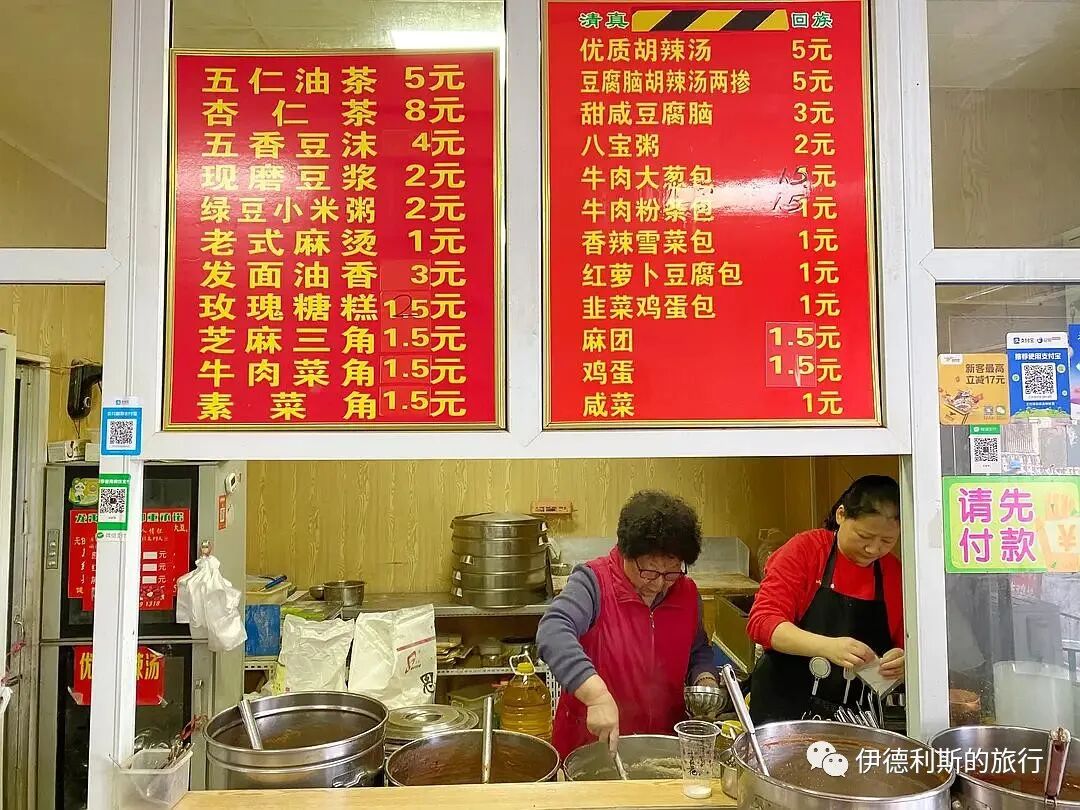
Bo'ai Xiguan.
At noon, we took a train from Zhengzhou to Jiaozuo, then took a taxi to Bo'ai to visit the famous Bo'ai Xiguan Mosque. The Xiguan Mosque was founded in the Yuan Dynasty, and the main hall was expanded in 1405 (the third year of the Yongle reign of the Ming Dynasty). It is currently a national cultural heritage site and is known as the "First Mosque of Northern Henan."
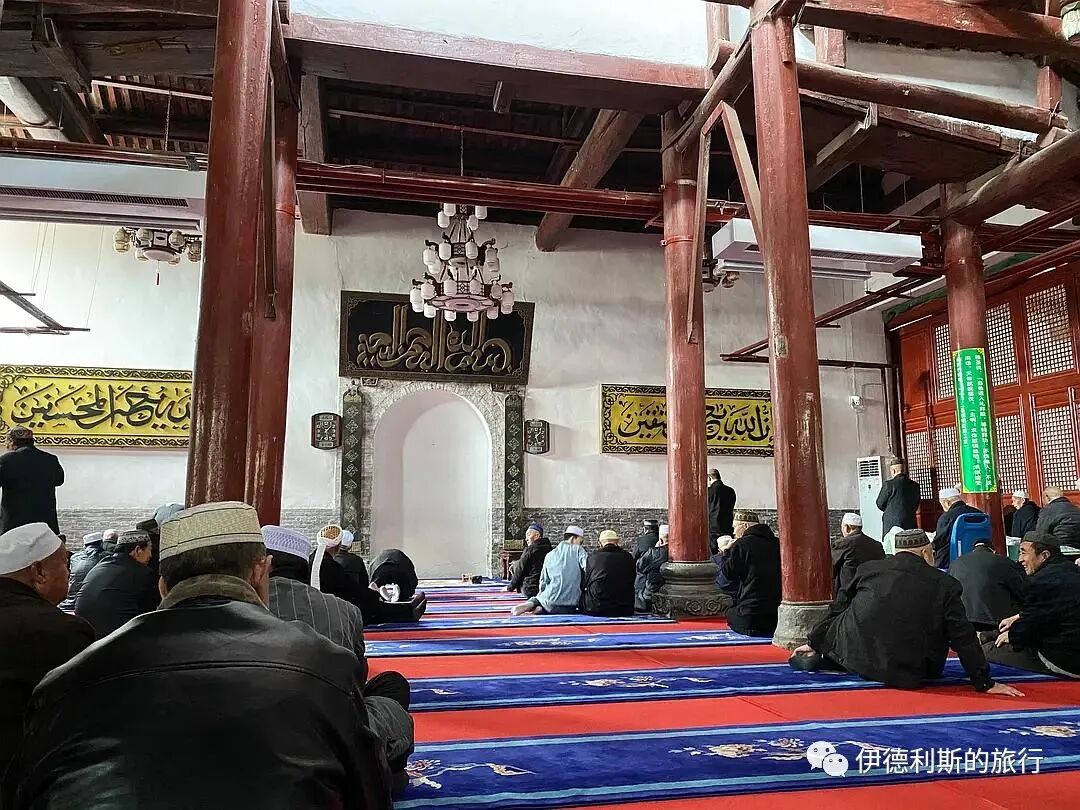
The main hall consists of a porch, a front hall, a dome hall (middle hall), and a rear hall. In 1863 (the second year of the Tongzhi reign), the dome hall was burned down by the Nian Army and later rebuilt to its original appearance. In 1941, a rear hall was added behind the dome hall, making the dome hall the middle hall. The main hall has a lift-beam wooden frame supported by 16 pillars in 4 rows. The middle hall has 4 tall pillars supporting the dome roof. Inside the dome roof is a caisson ceiling, and the exterior is a triple-eave, four-corner cross-ridge roof.
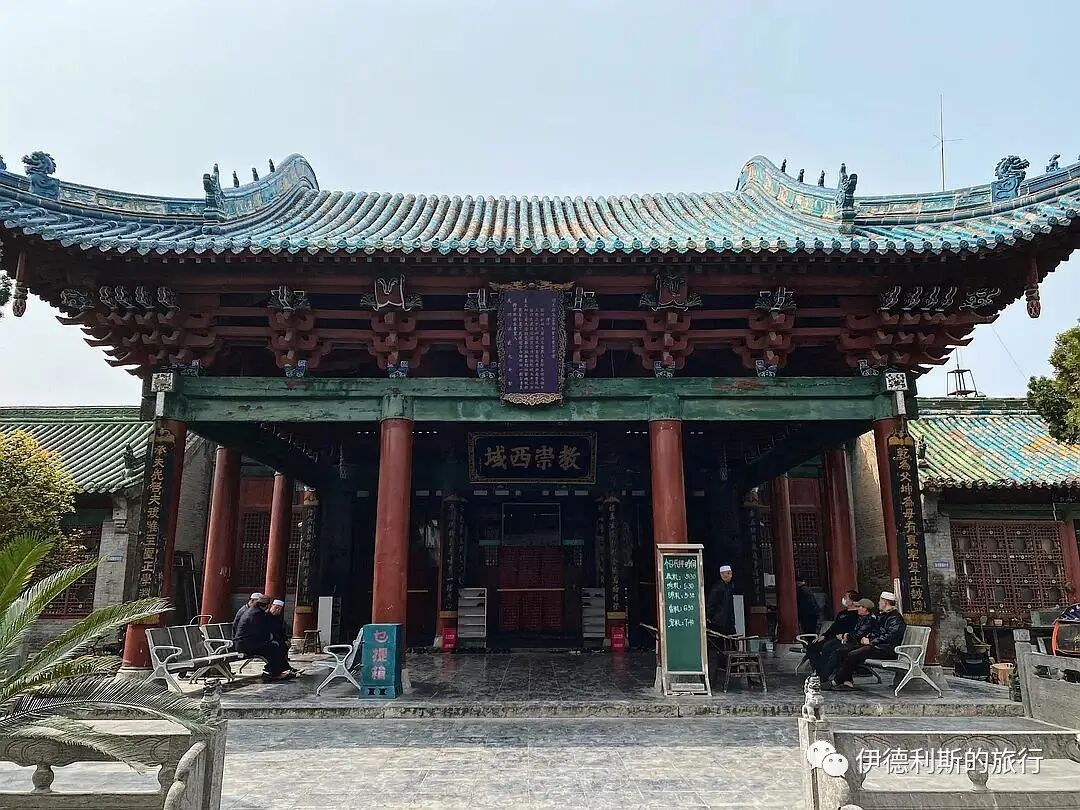
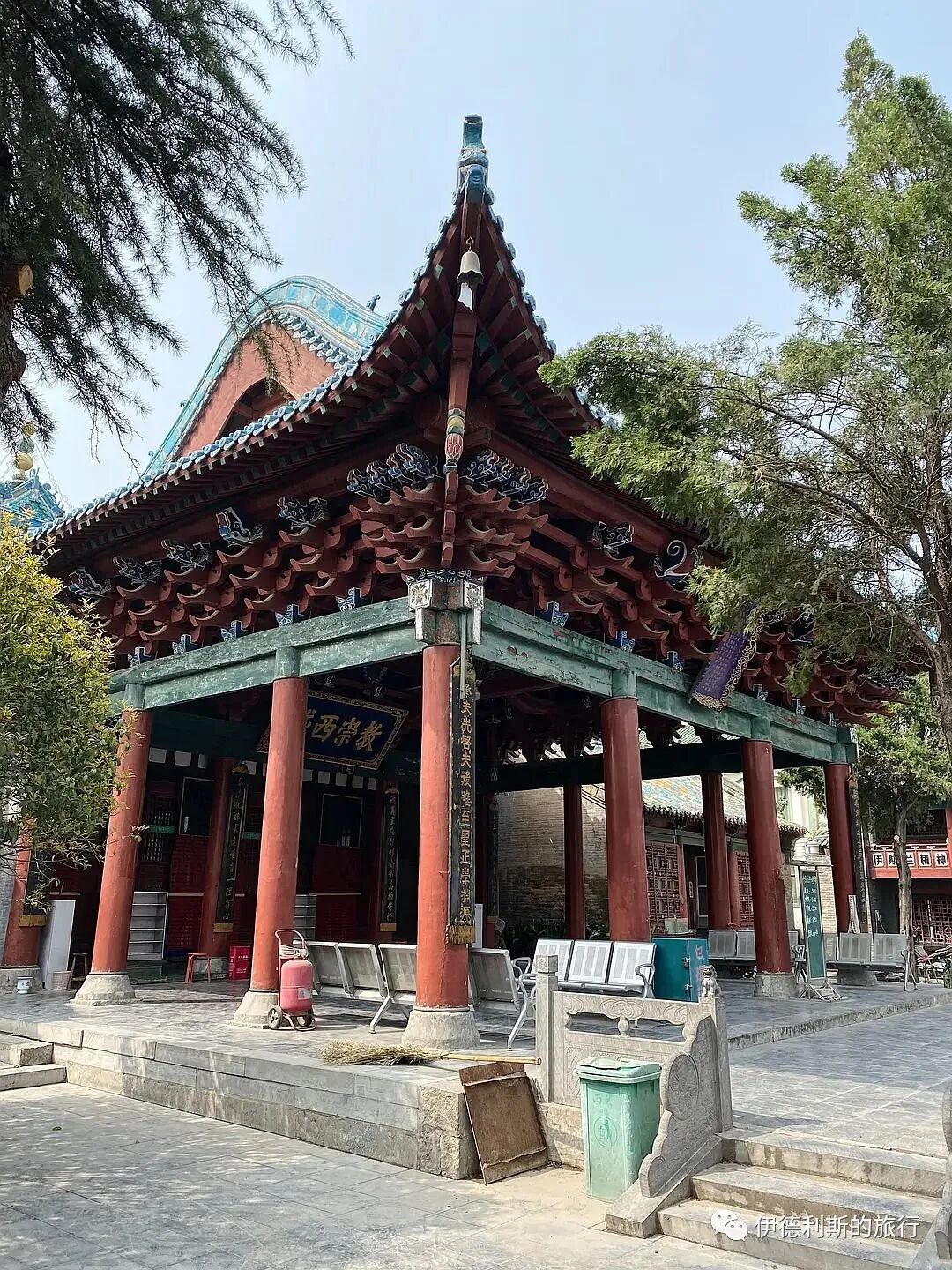
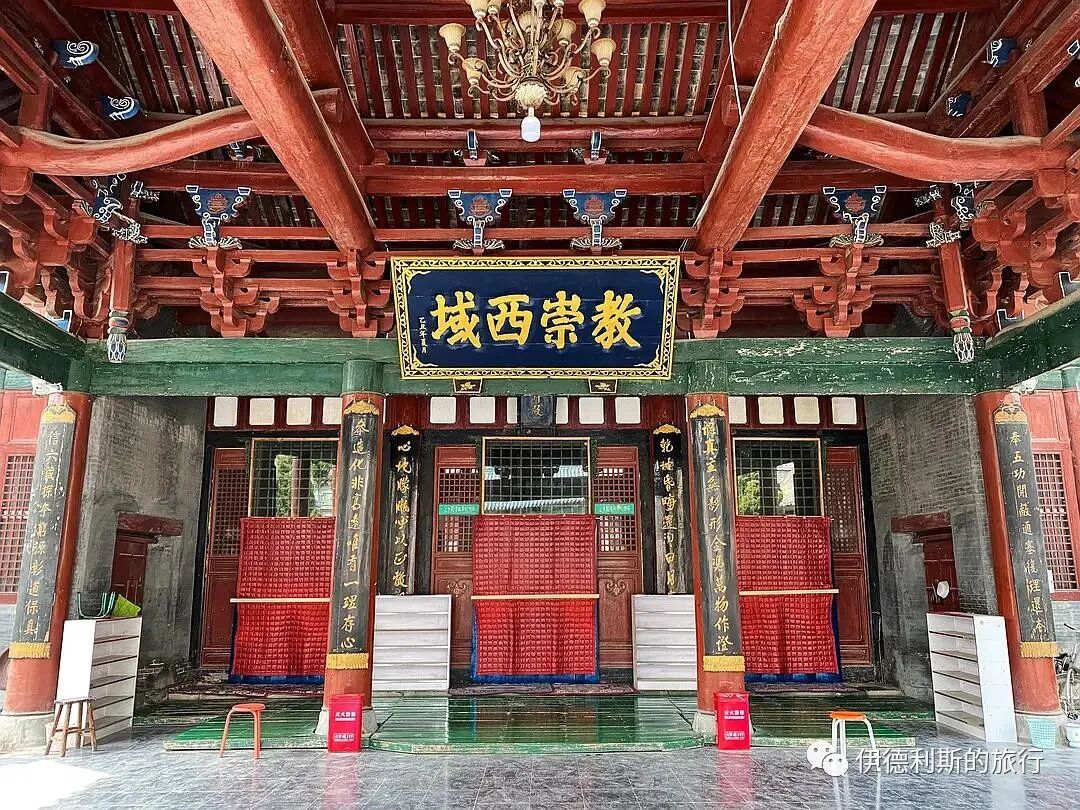
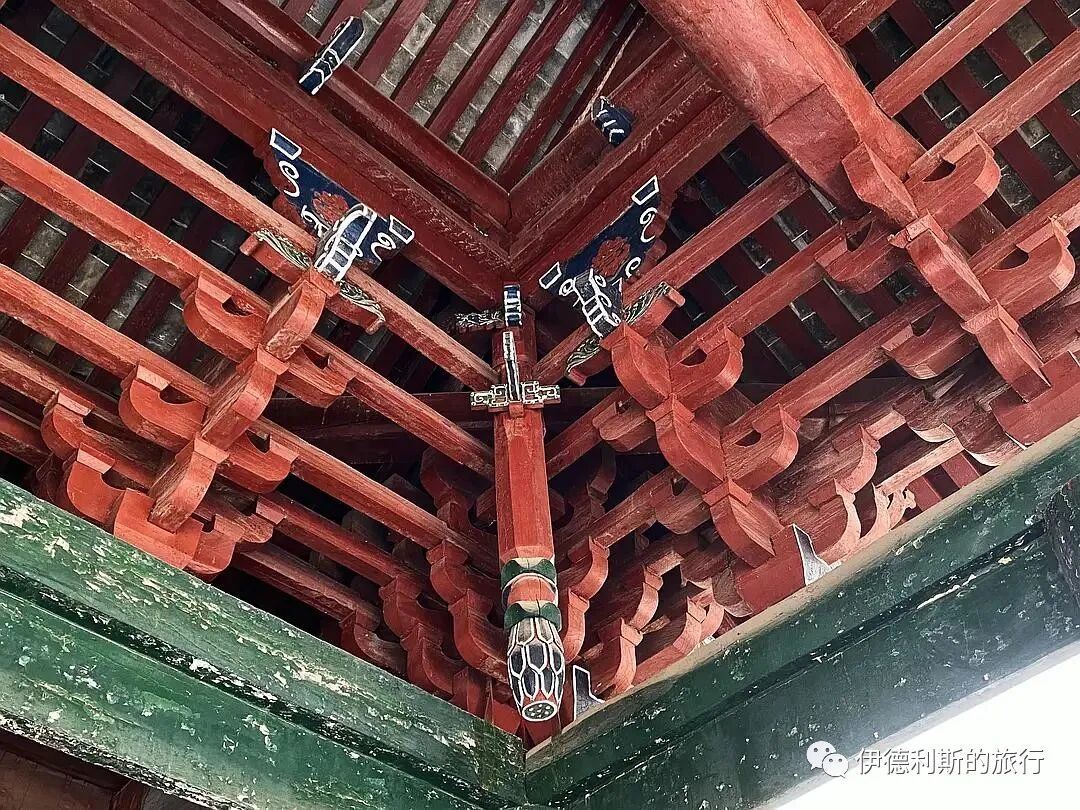
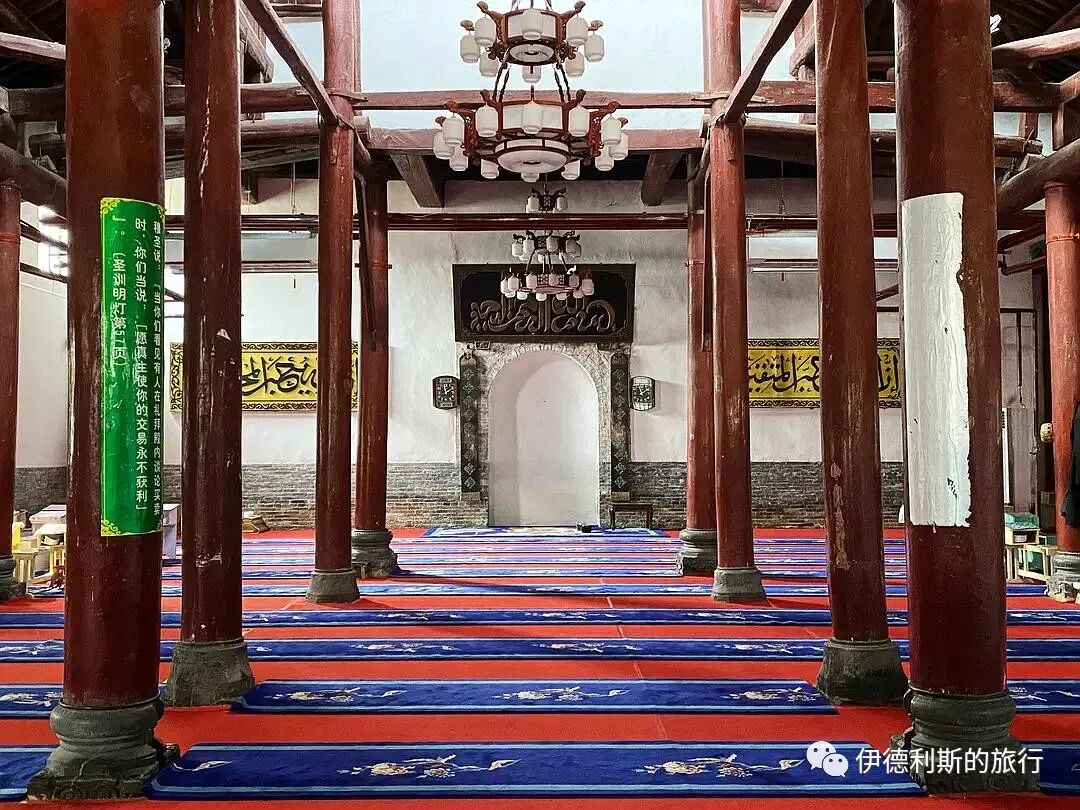
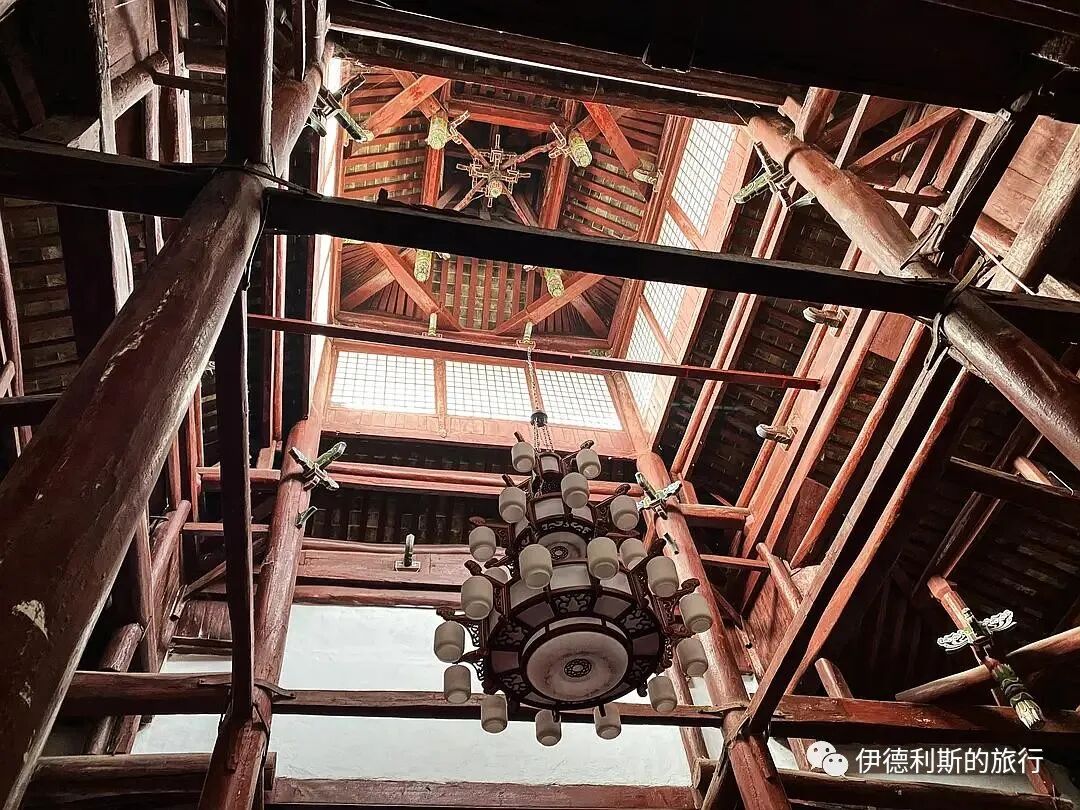
I performed salah in the mosque and also caught the dhikr.
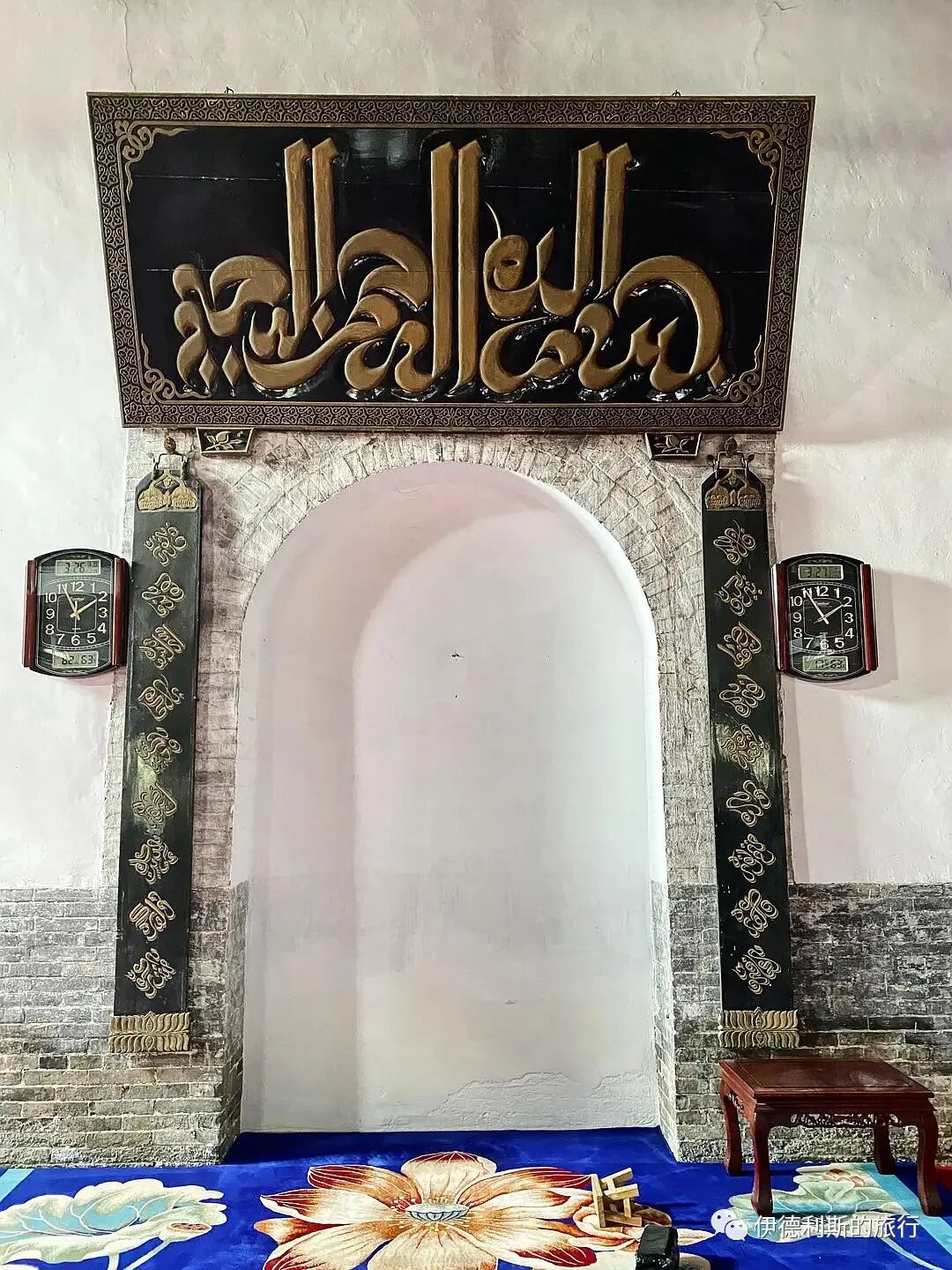
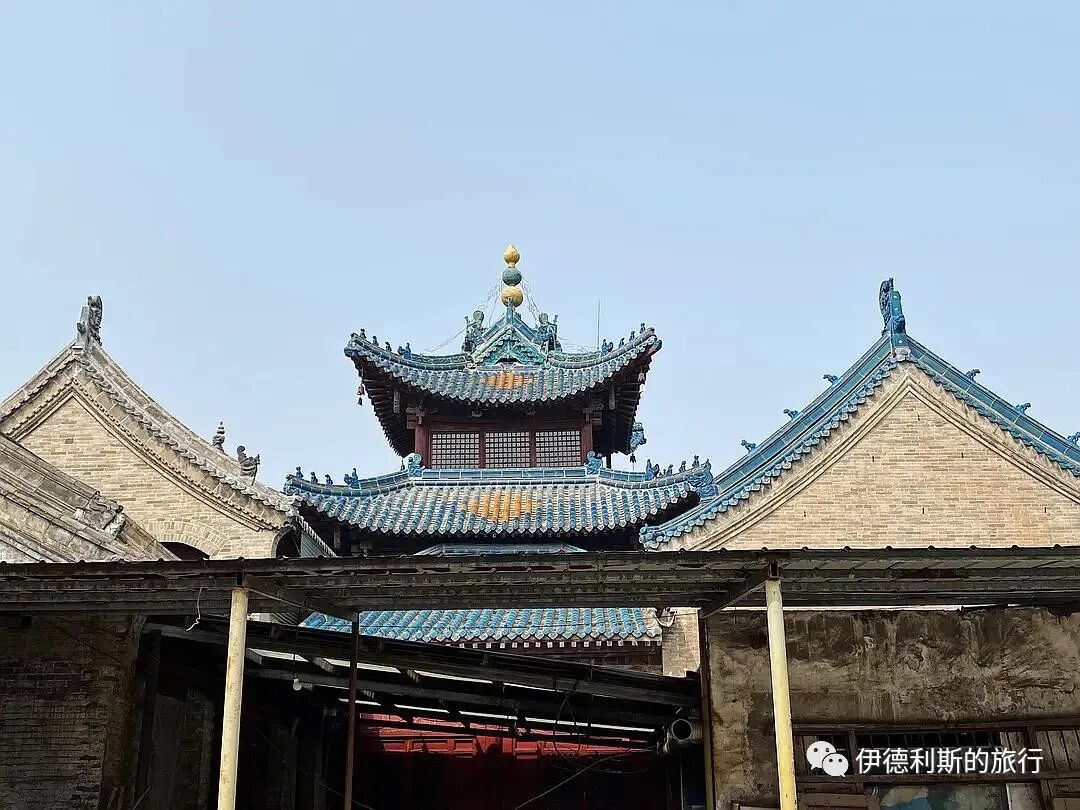
Main gate.
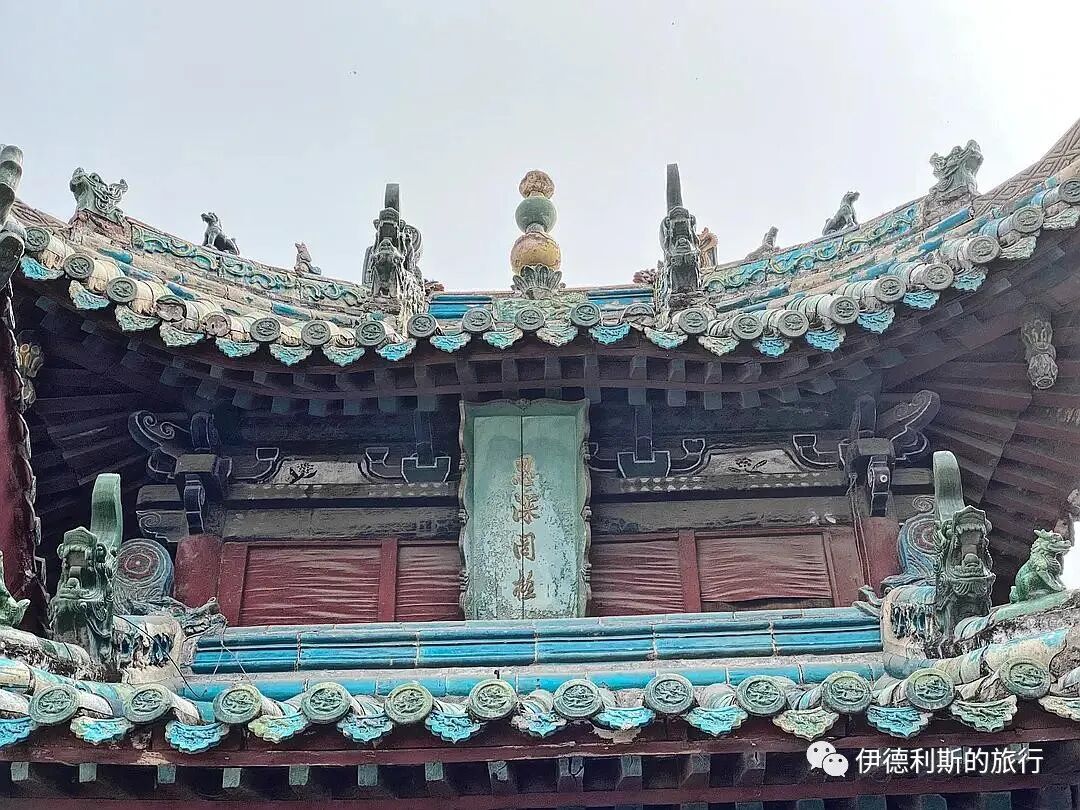
Glazed archway.
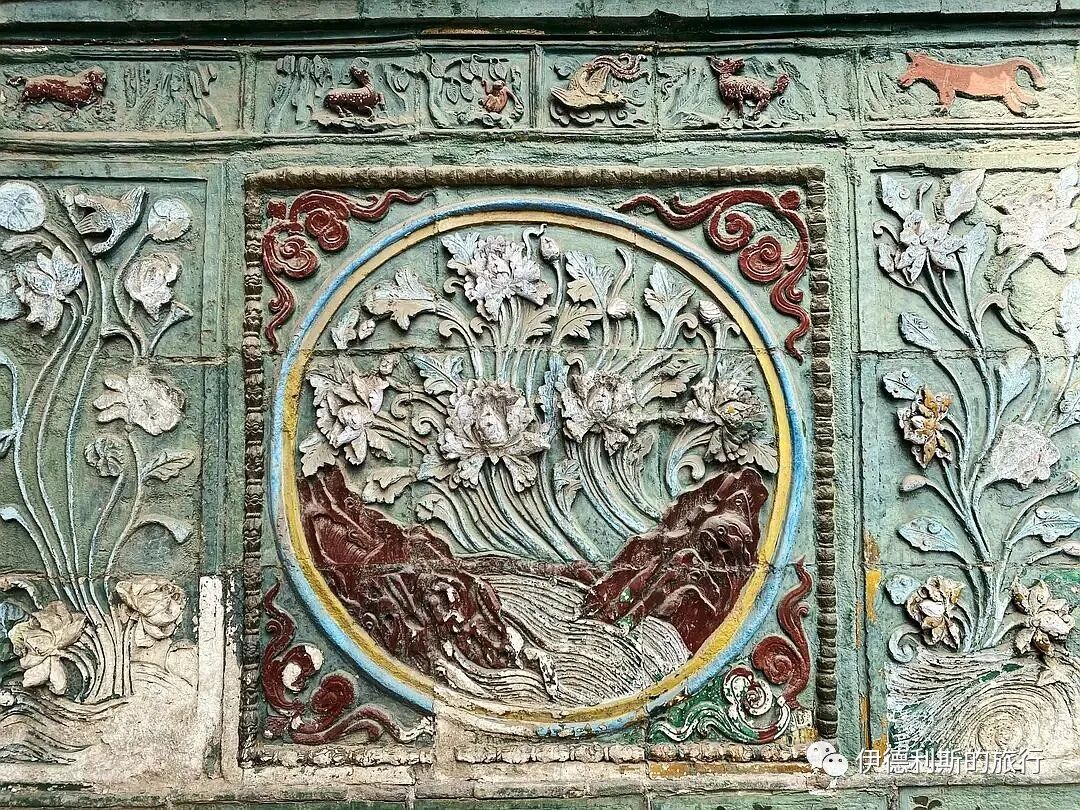
Jumu'ah plaque.
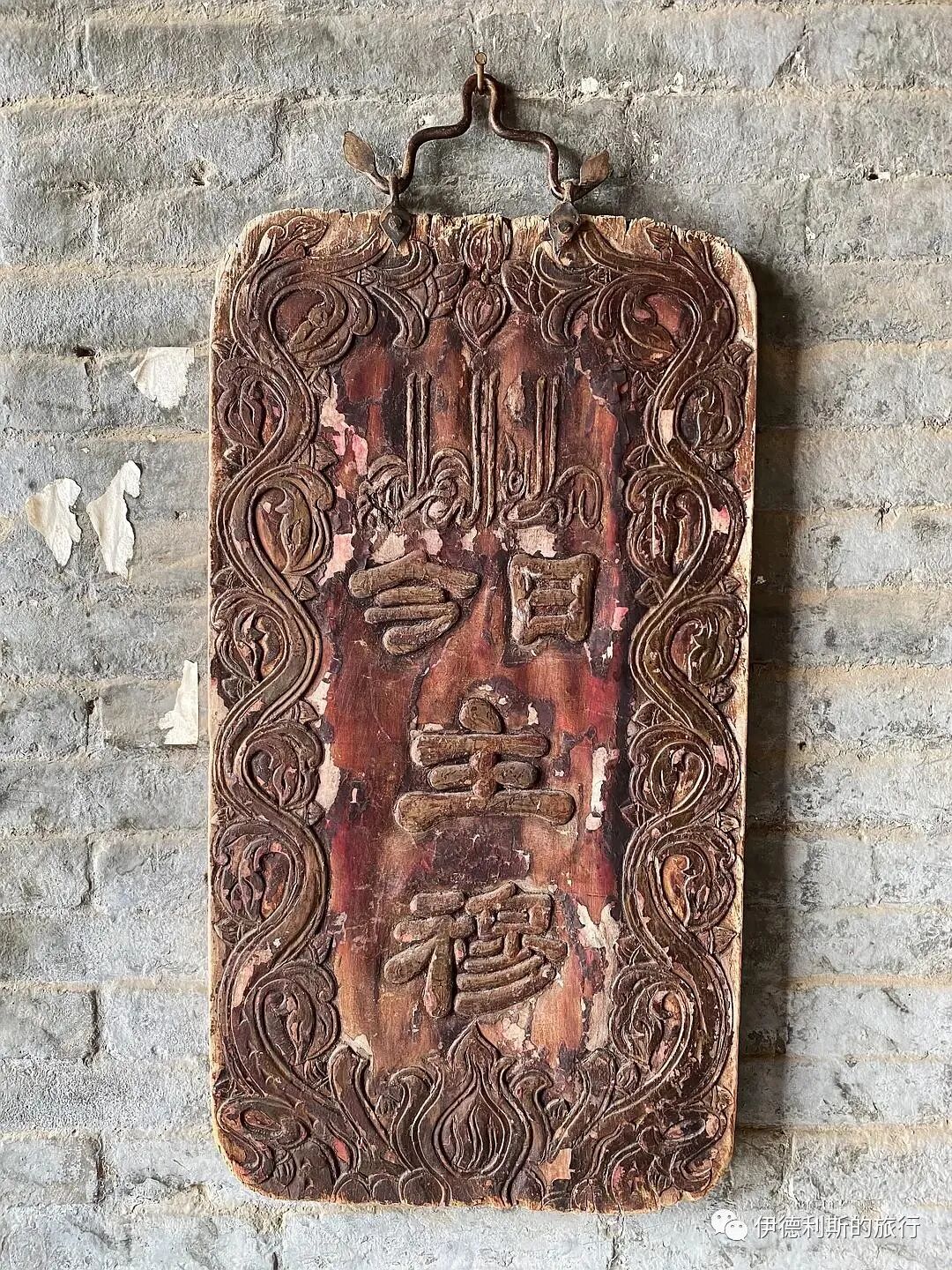
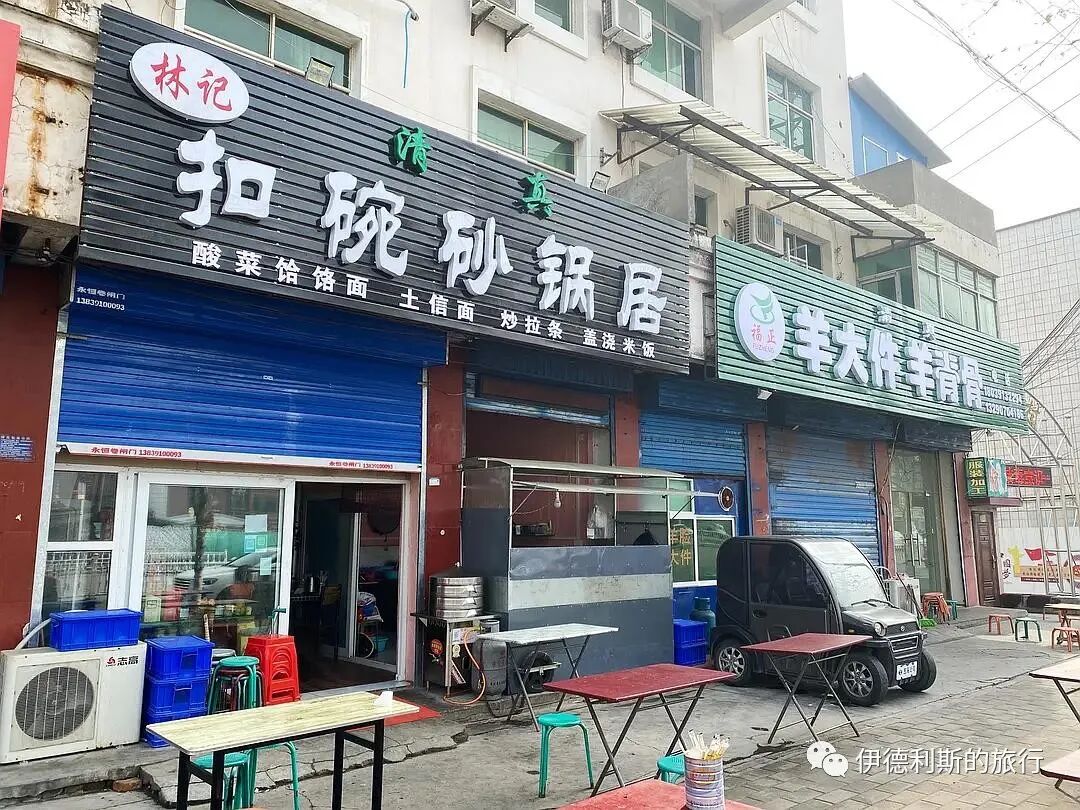
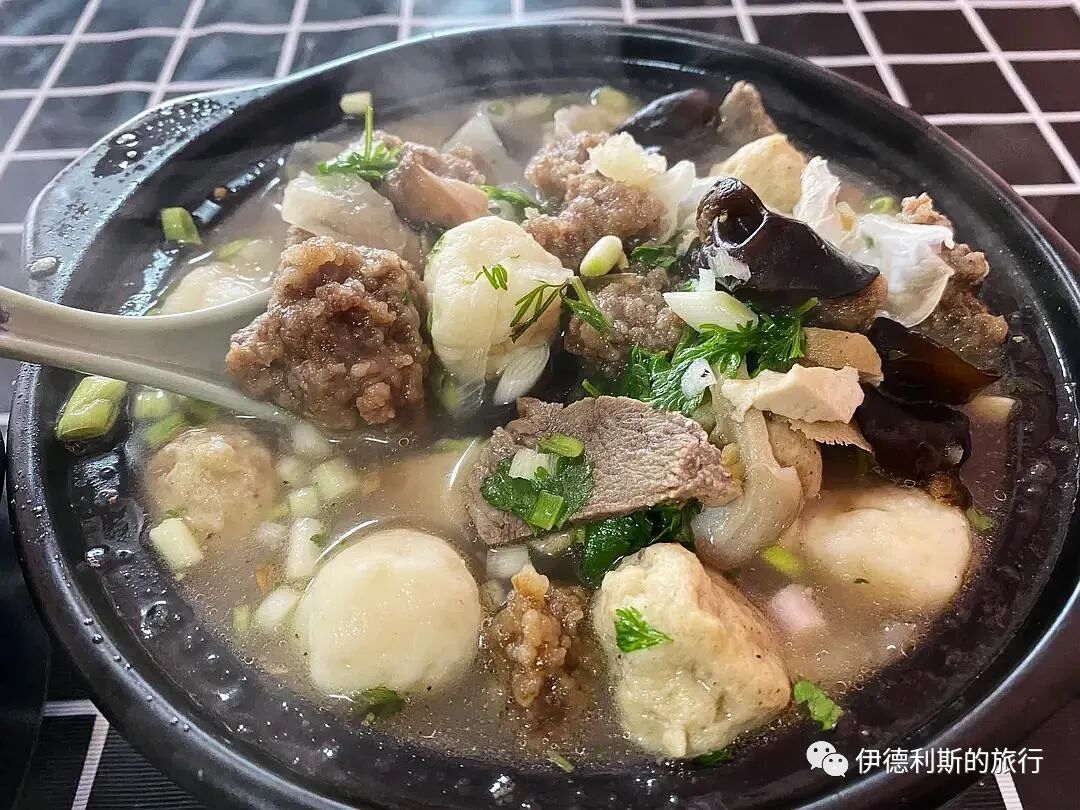
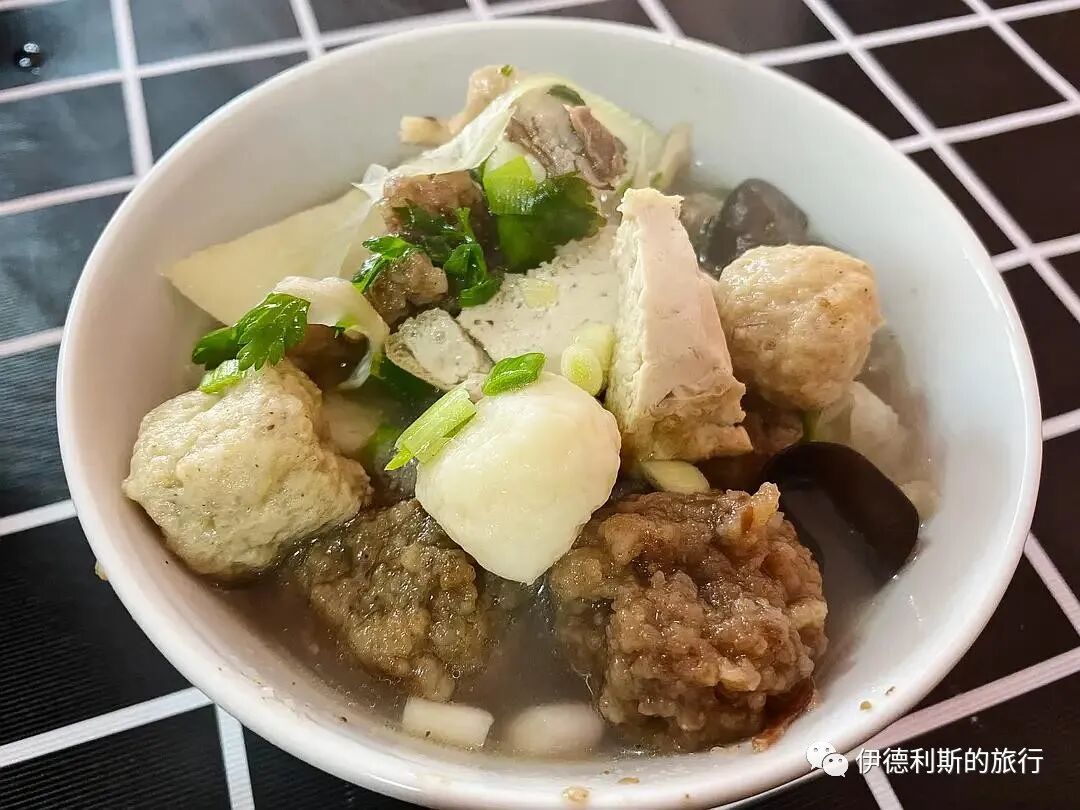
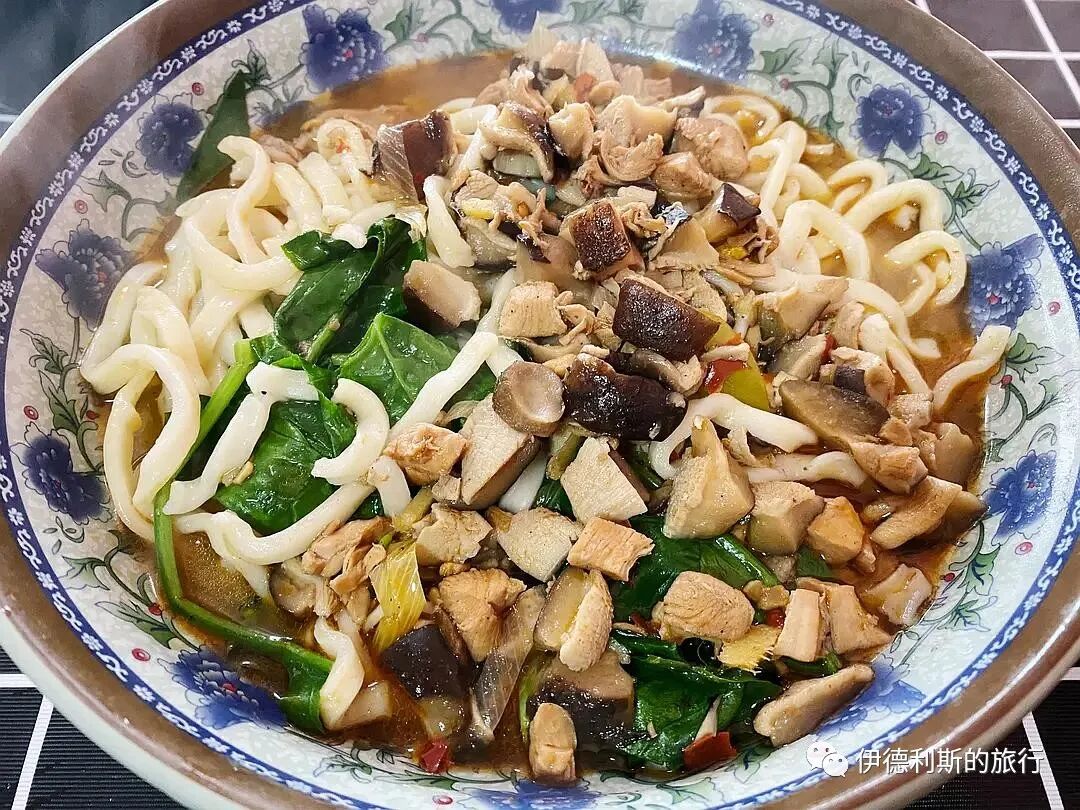
After the prayer, many restaurants were closed, so we ate zaban (mixed meat stew) and chicken diced heluo noodles at Linji Kouwan Shaguoju (casserole restaurant). Bo'ai zaban is a specialty dish from traditional Bo'ai water banquets. It is made by braising various ingredients such as wood ear mushrooms, white fungus, bamboo shoots, crispy meatballs, boiled meatballs, white meatballs, and beef slices. It is very satisfying to eat.
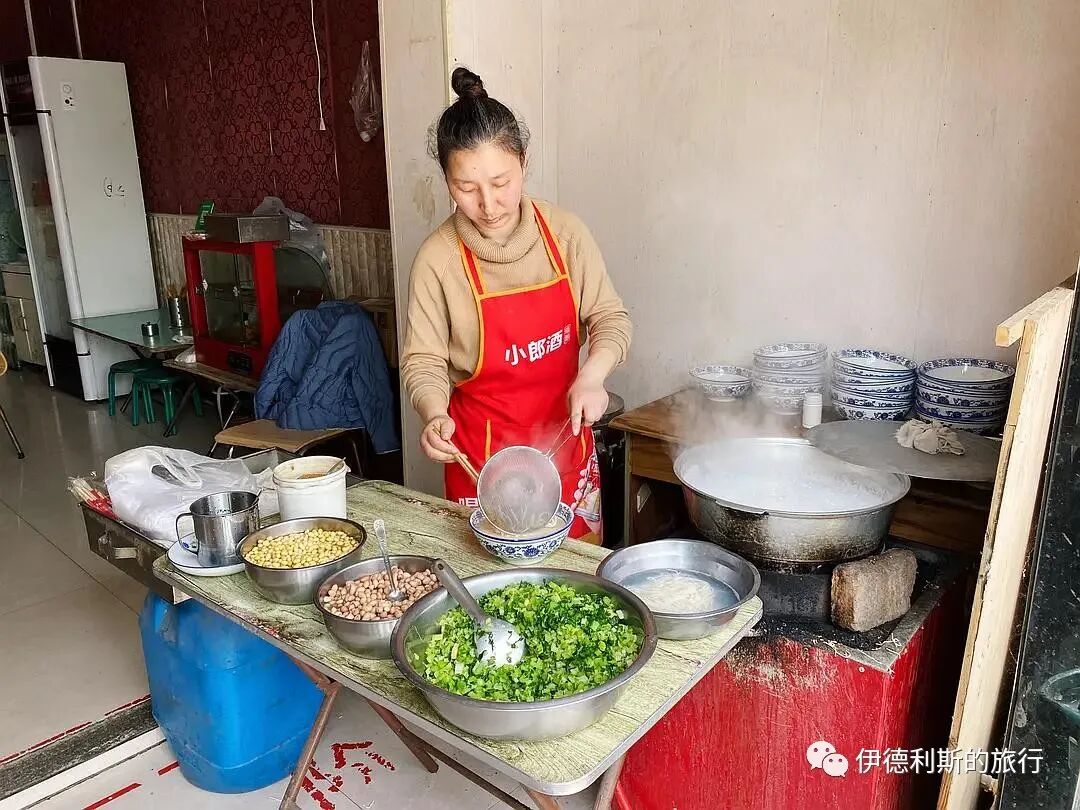
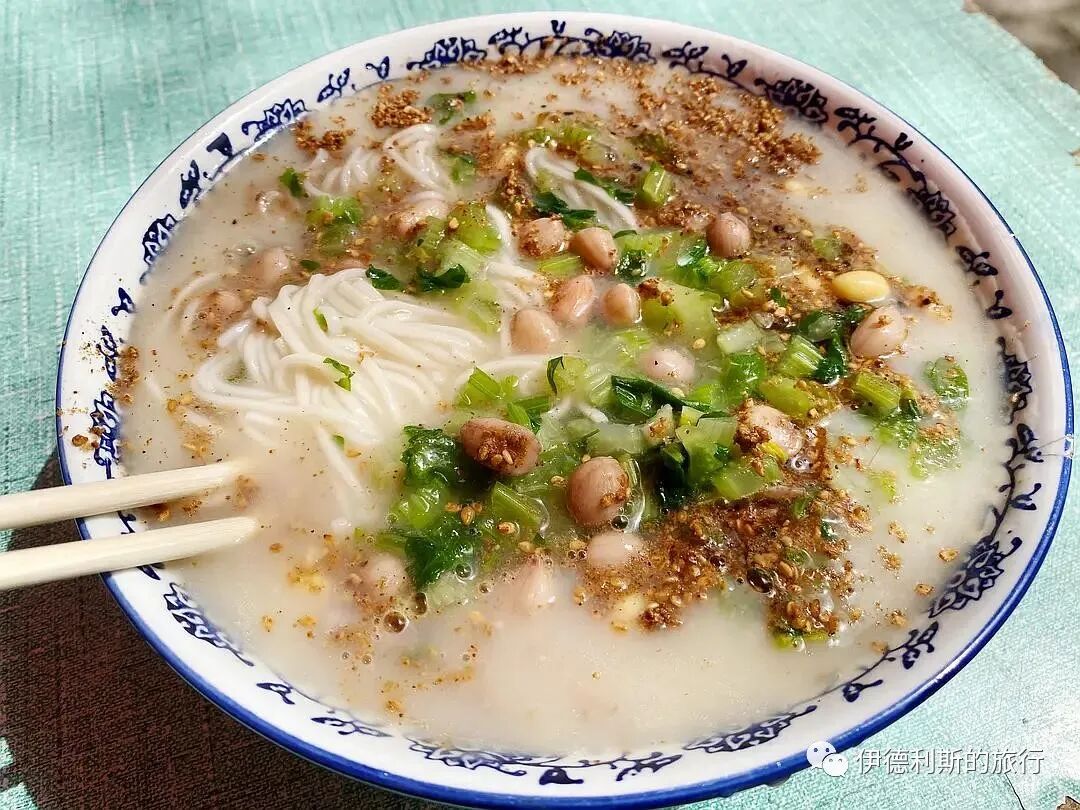
On Sunday afternoon, we came back to Bo'ai Xiguan to eat and explore, and had the local specialty, jiangmiantiao (fermented bean paste noodles). It is made by boiling the liquid squeezed out when making tofu into a paste, served with soybeans, peanuts, celery, and crushed sesame sauce. It tastes sour and fragrant, and I feel it would be even better in the summer.
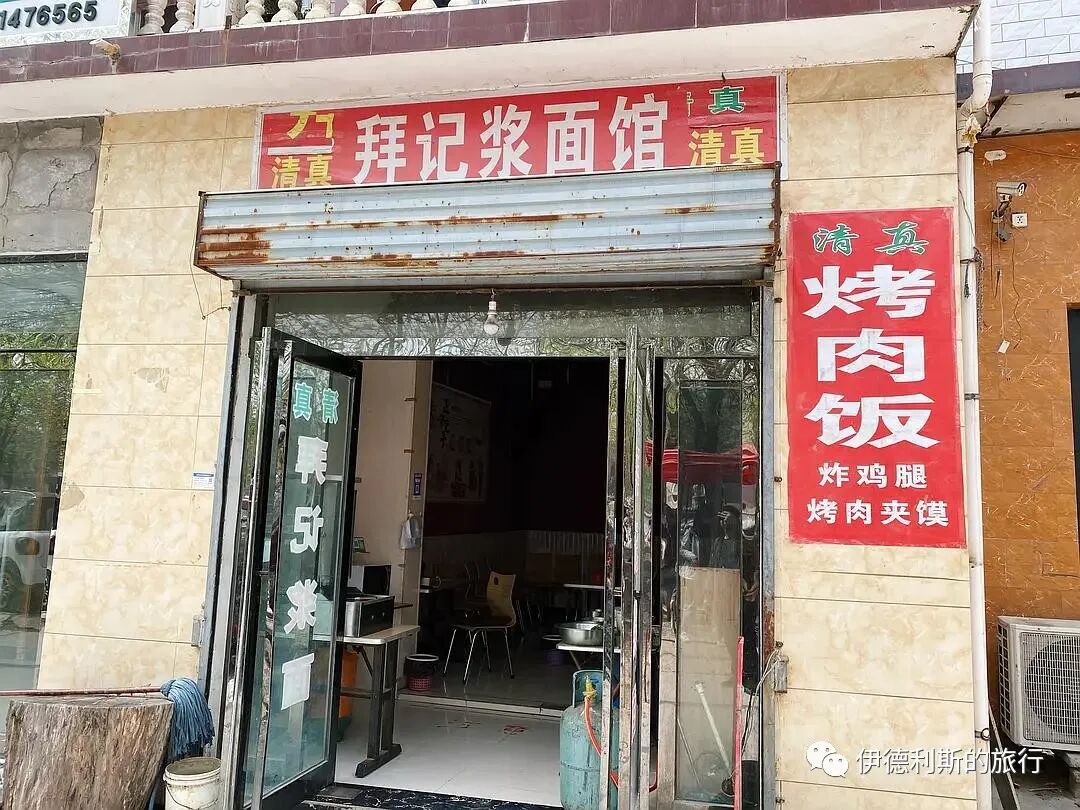
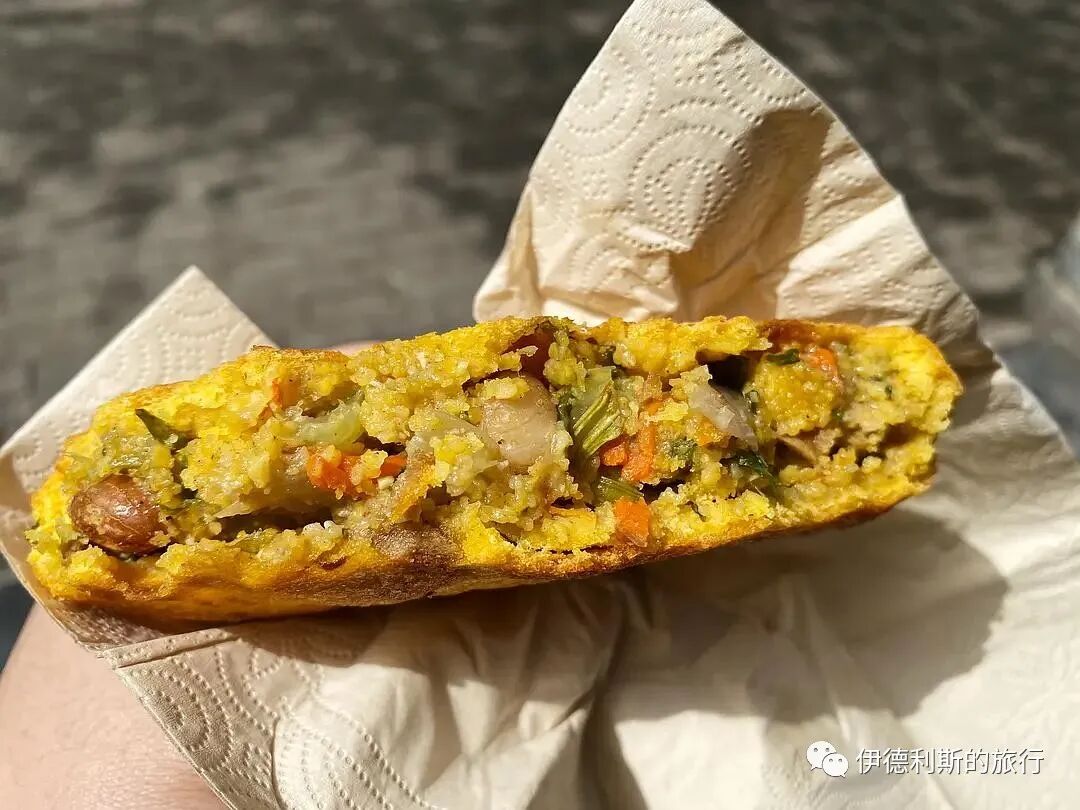
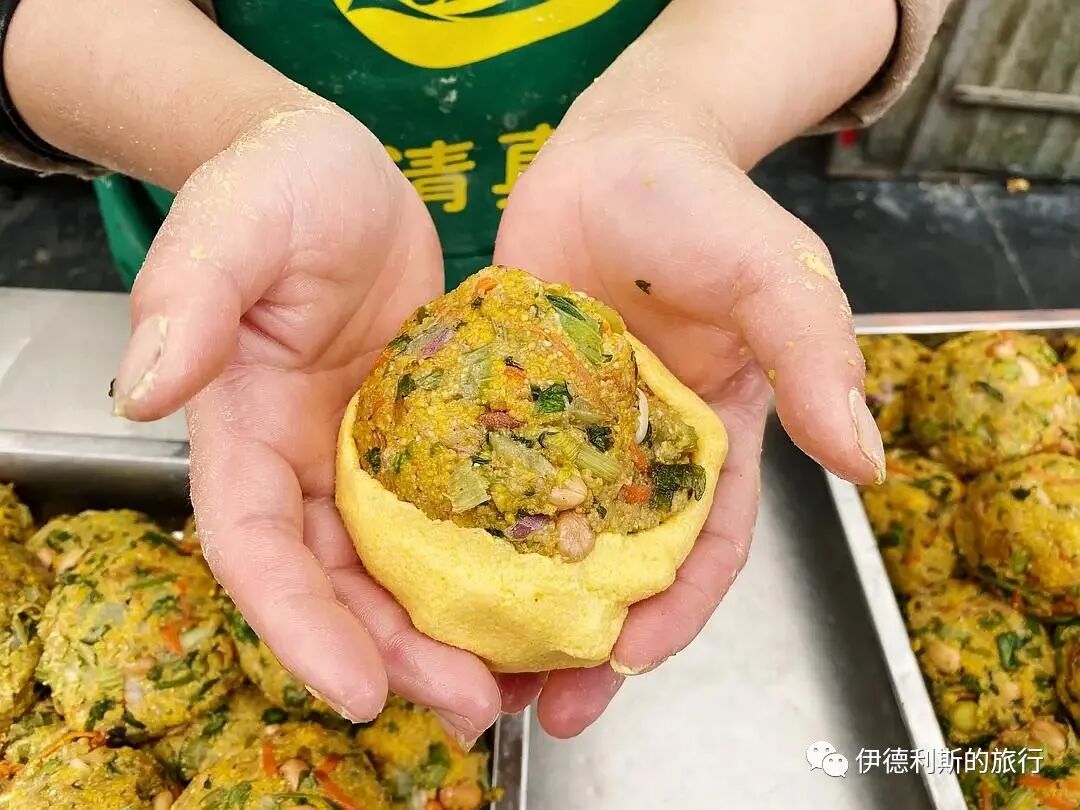
Then we ate the specialty cai-tuanzi (vegetable dumplings). They are made by rolling celery, peanuts, soybeans, carrots, and corn grits into balls, wrapping them in corn flour, and deep-frying them. The texture is very rich, and as a corn lover, I was very satisfied.
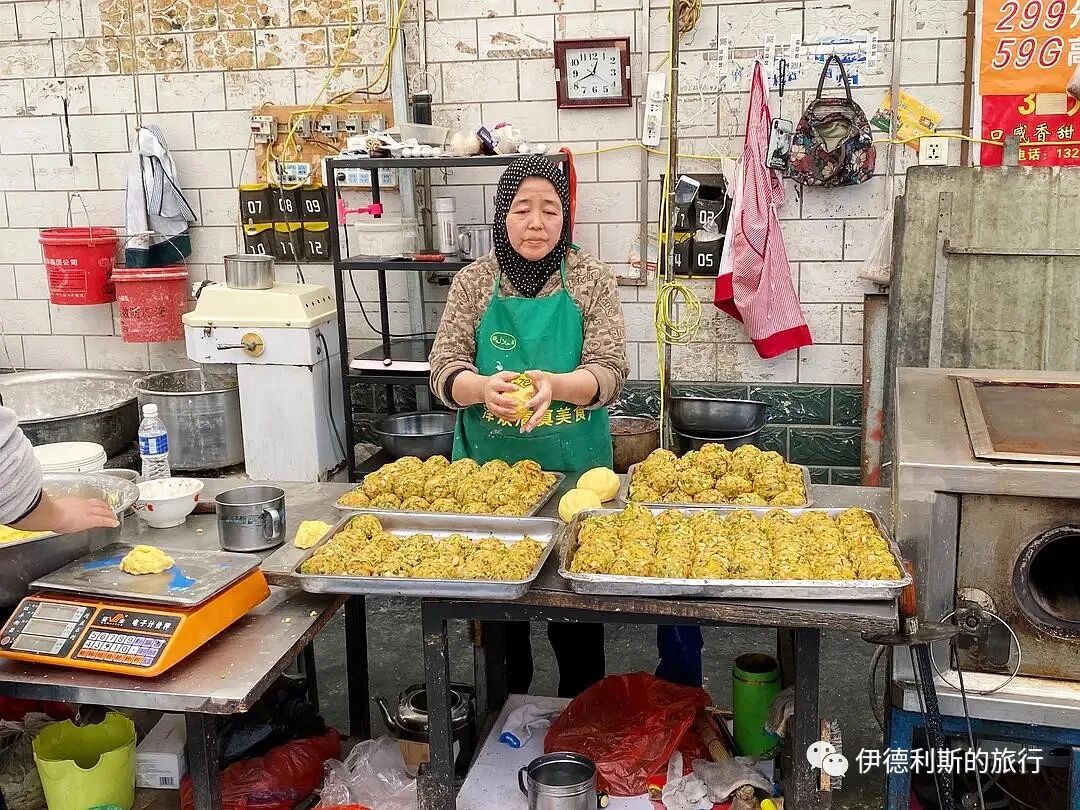
We bought Liji crispy chicken. The stewed chicken is fried again and sprinkled with secret seasonings, making it very fragrant. However, it is a bit salty to eat on its own, so it was perfect to eat with the flatbread we bought in Xiguan on the train back to Beijing.
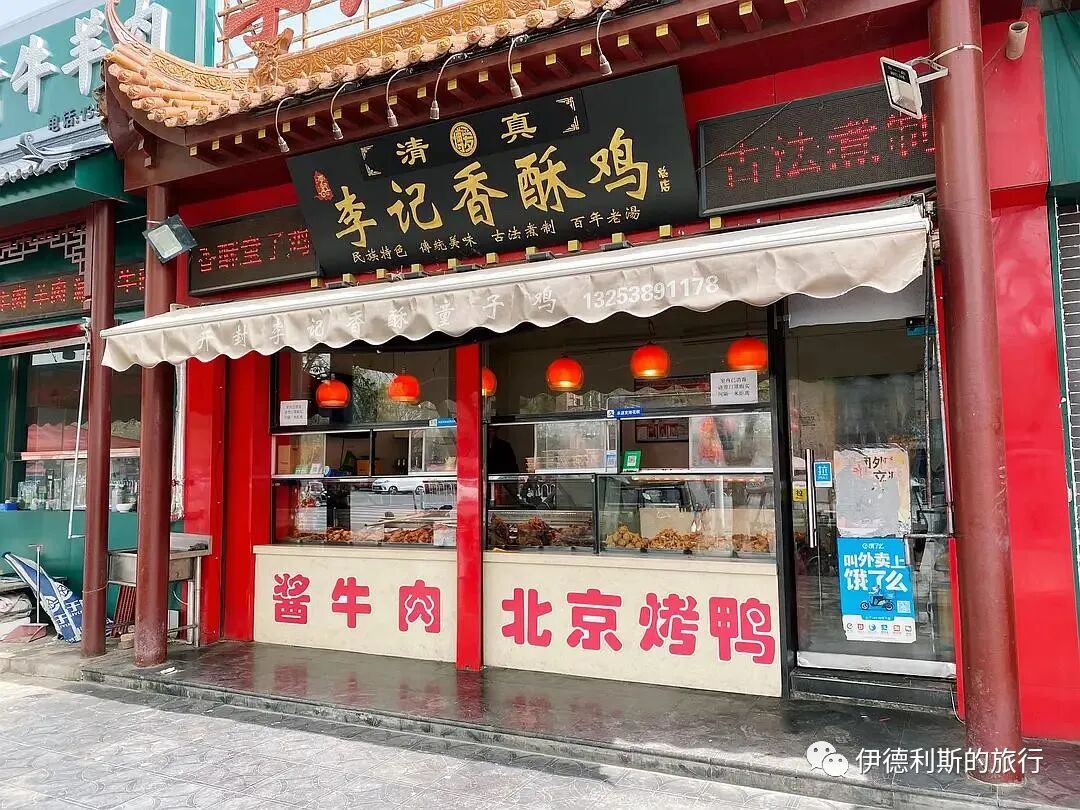
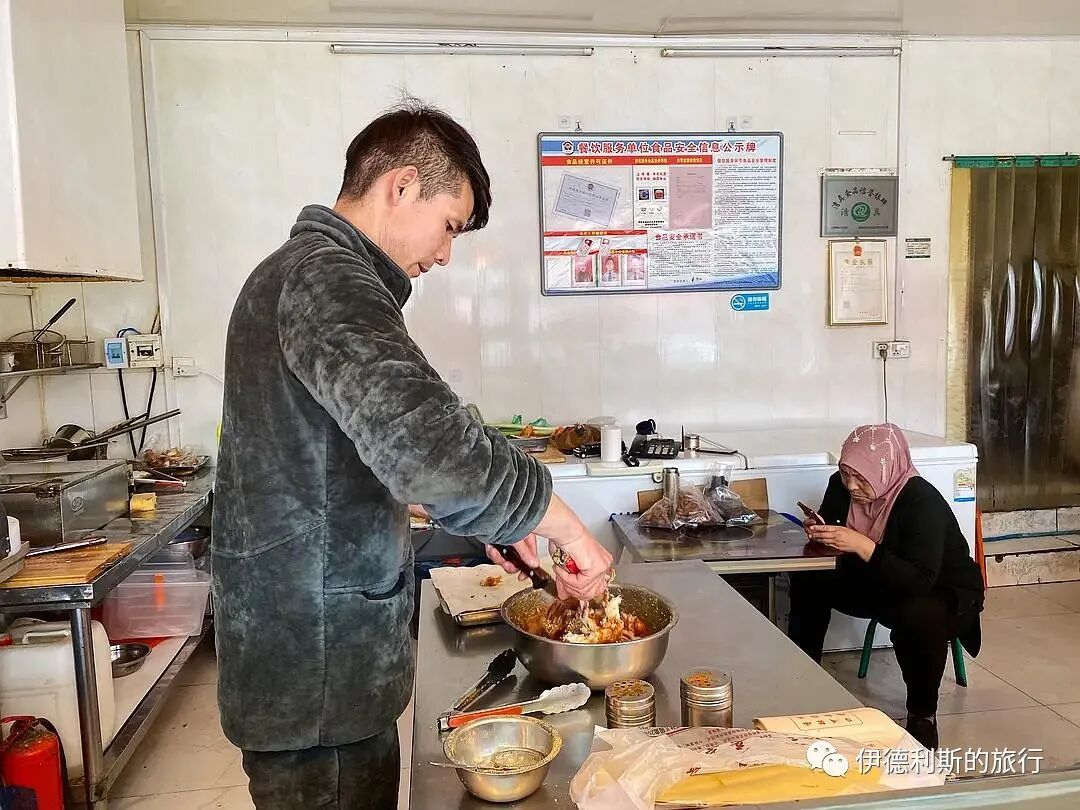
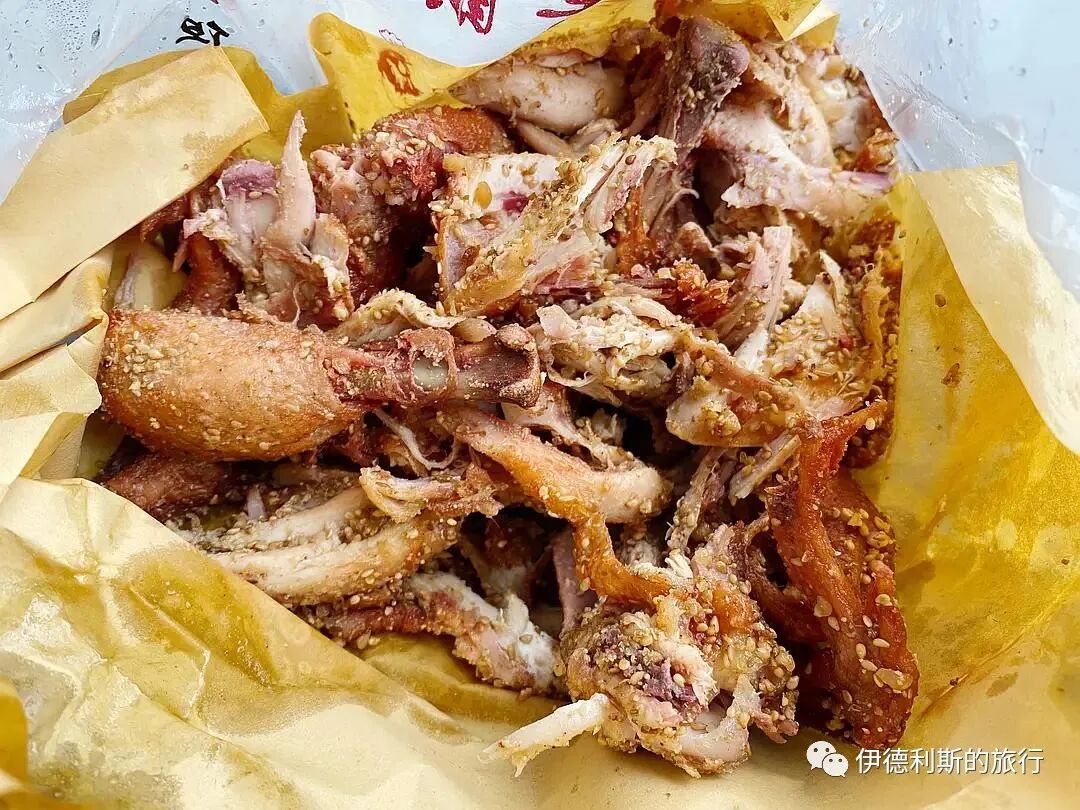
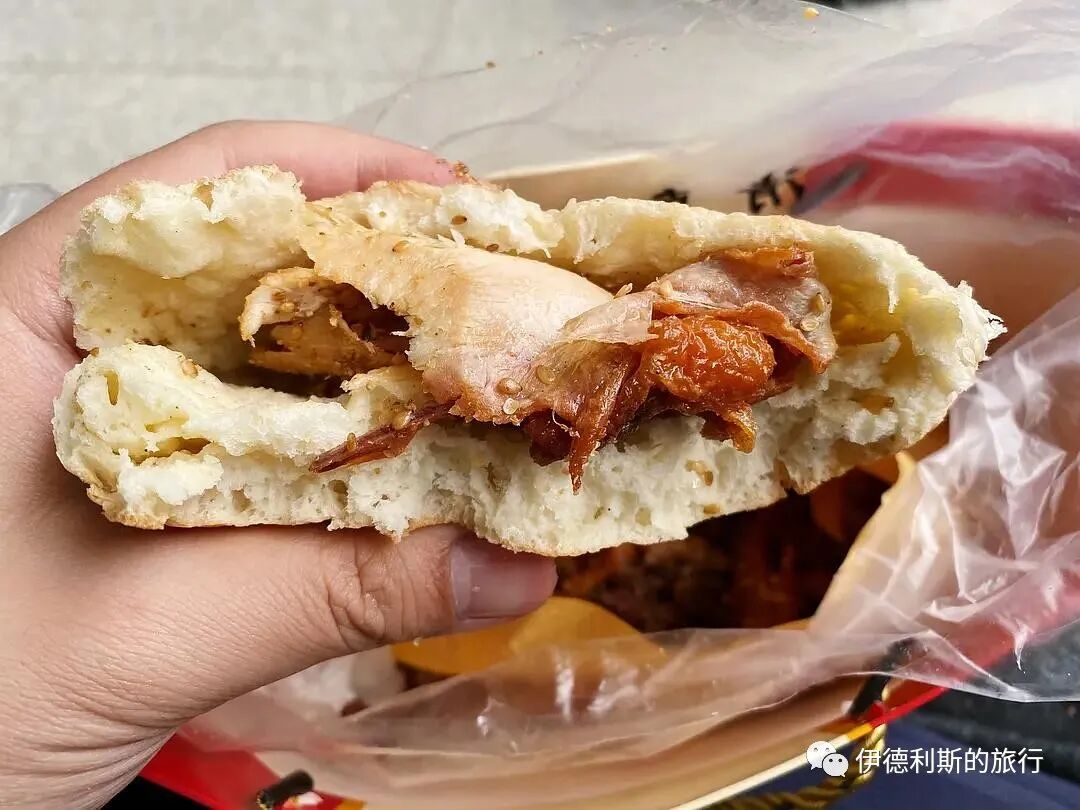
We also bought Xiaoche Beef (cart beef) at the Xiguan intersection. This is a delicacy popular in the Taihang Mountains area at the junction of Henan, Shaanxi, Shanxi, and Hebei. After the beef is braised, it is wrapped in rich meat broth, cooled, and pressed into meat jelly, then sold from a cart in the market. Because the meat jelly melts when the temperature rises, Xiaoche Beef is traditionally unavailable in the summer.
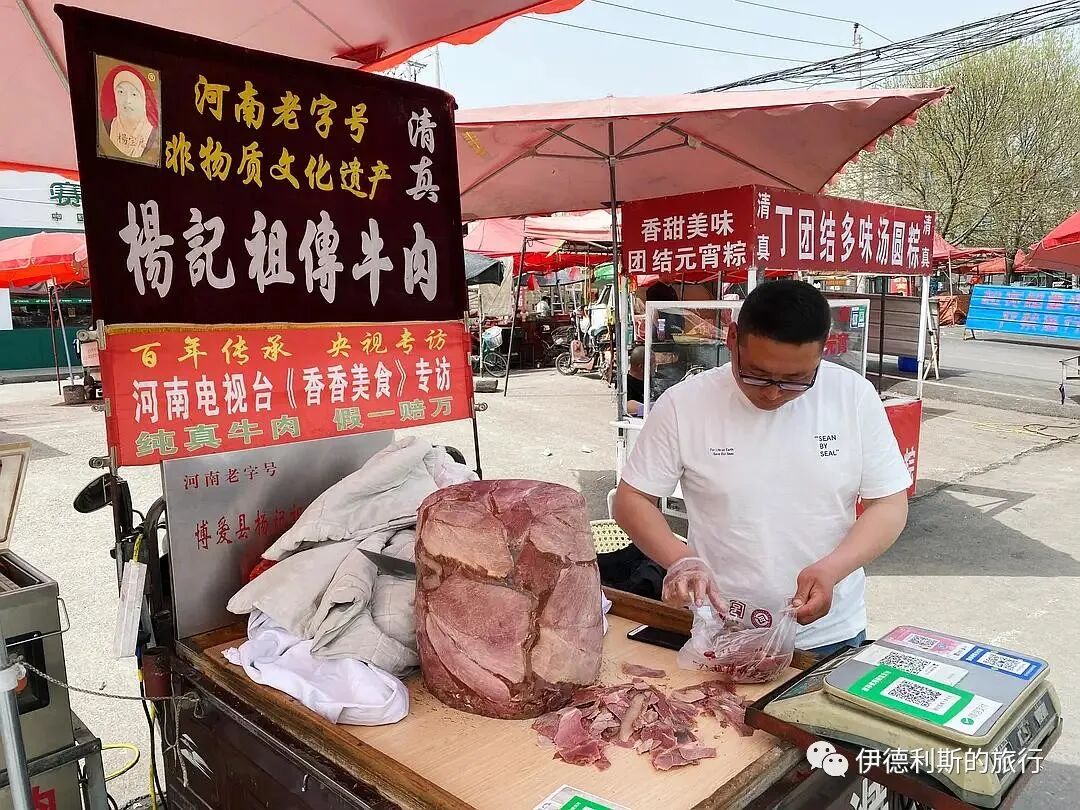
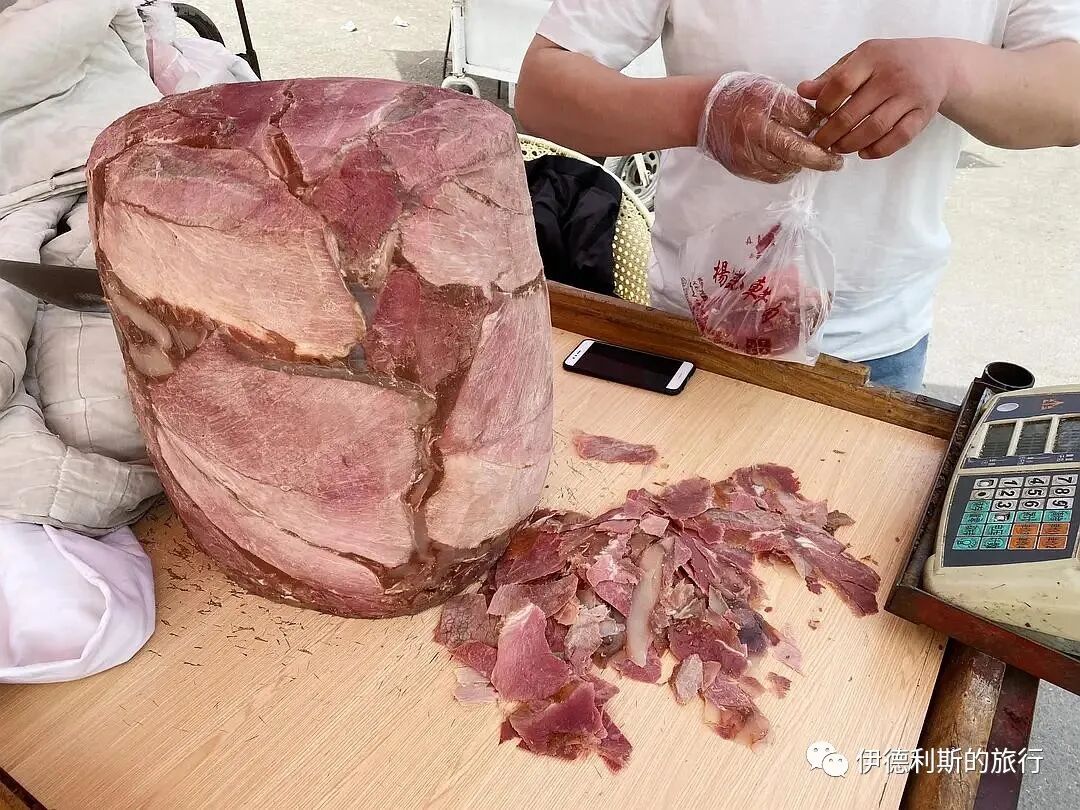
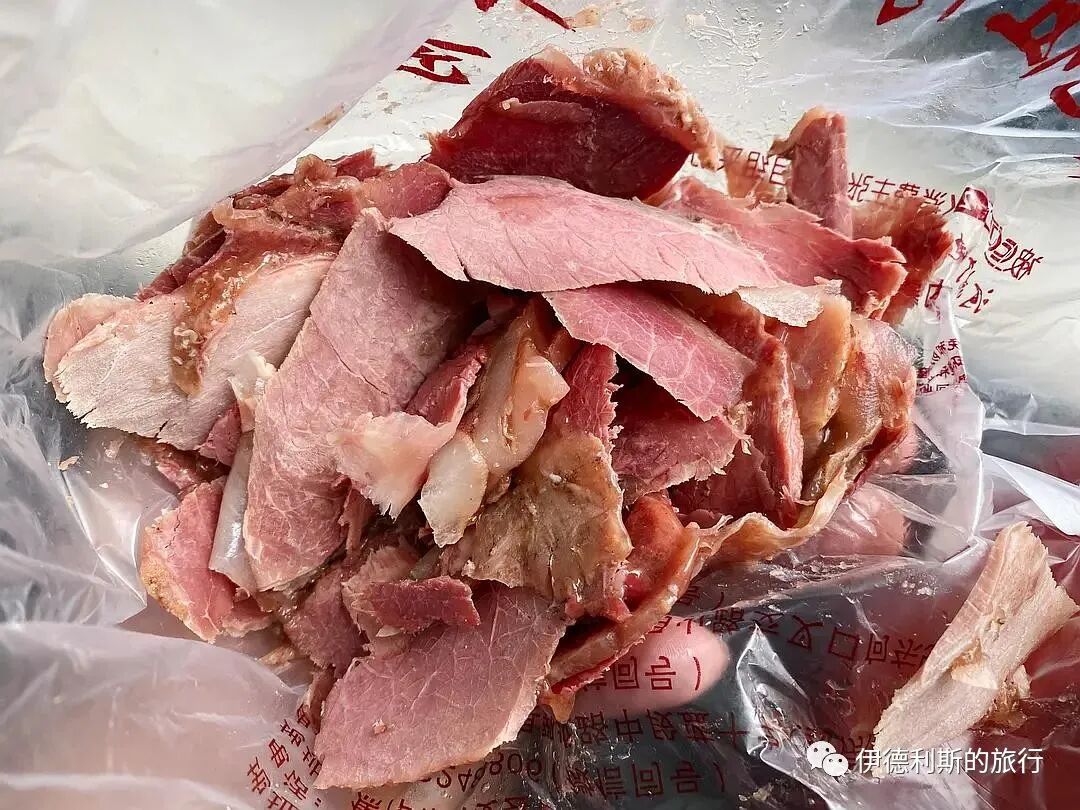
Some door couplets on Xiguan Street.
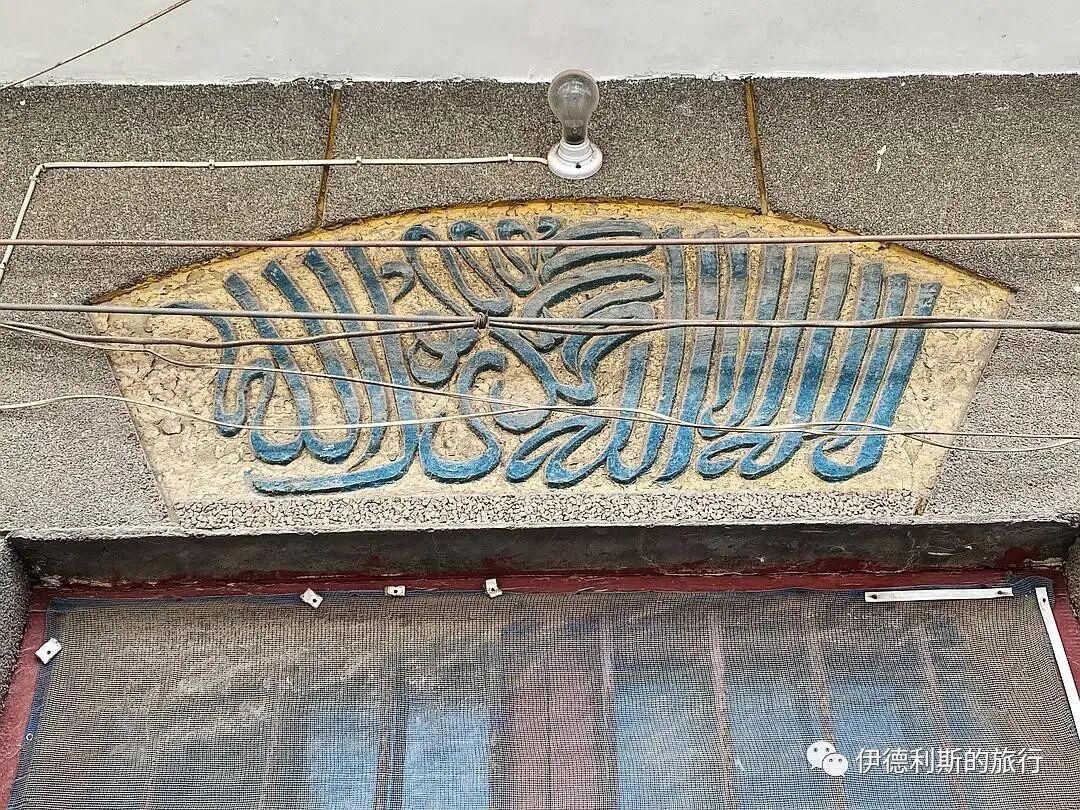
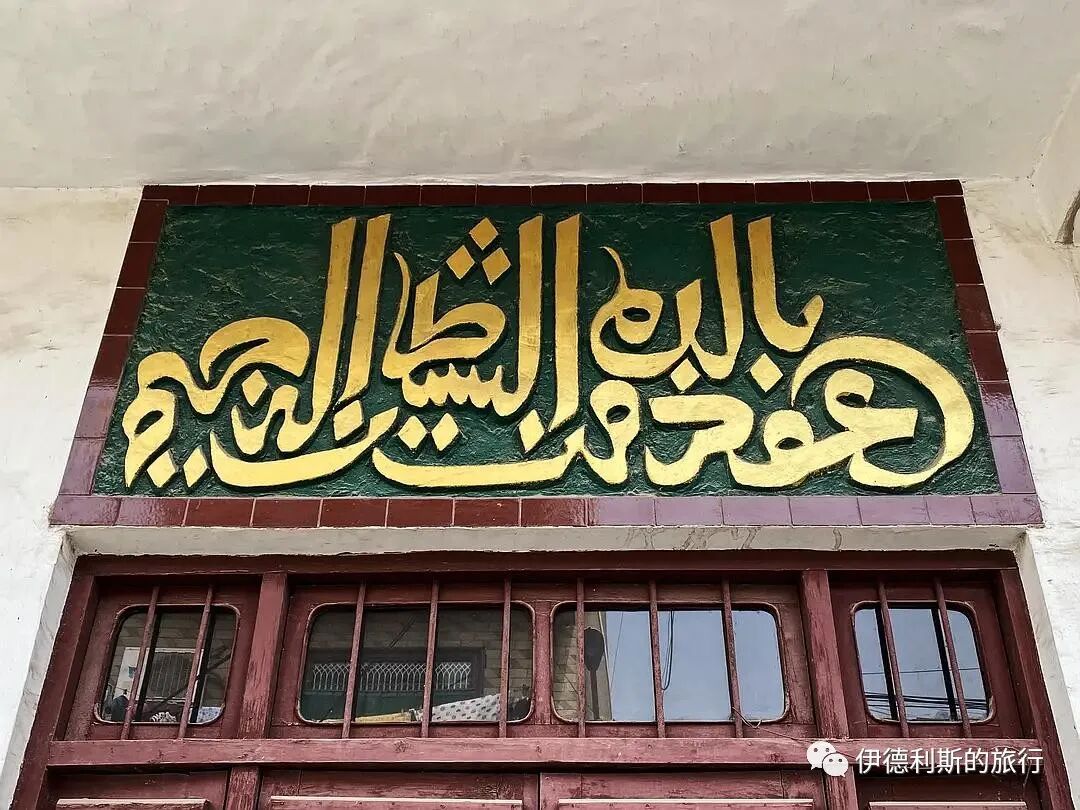
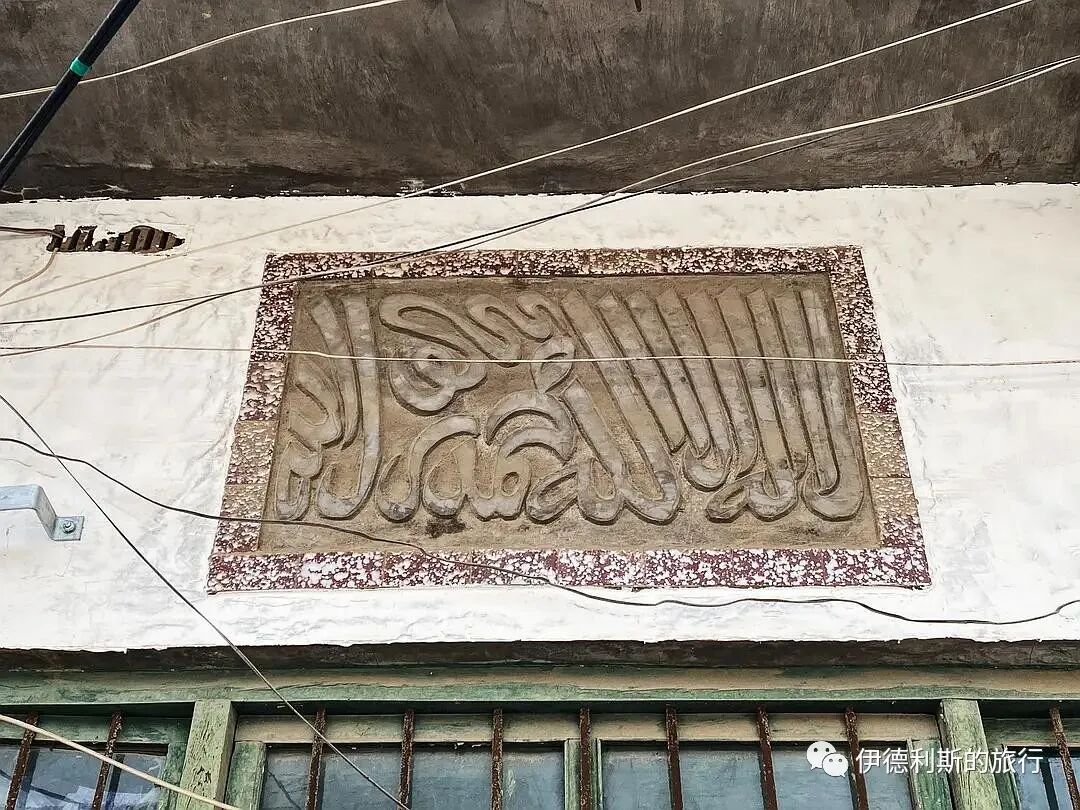
Qinyang.
On Saturday afternoon, we took a taxi from Bo'ai to Qinyang to visit the Qinyang North Mosque, which I had been longing to see for a long time. In my mind, it definitely ranks in the top three among historical mosque buildings in Henan. The North Mosque was moved to its current location in 1561 (the fortieth year of the Jiajing reign of the Ming Dynasty), burned down in 1628 (the first year of the Chongzhen reign of the Ming Dynasty), and rebuilt in 1631. It is a Major Historical and Cultural Site Protected at the National Level.
The overall layout of the North Mosque is quite classic, consisting mainly of the main gate, a hallway, a lecture hall, and the main prayer hall. Next, I will share it with you bit by bit. Because of the lighting, I took photos twice, on Saturday afternoon and Sunday morning.
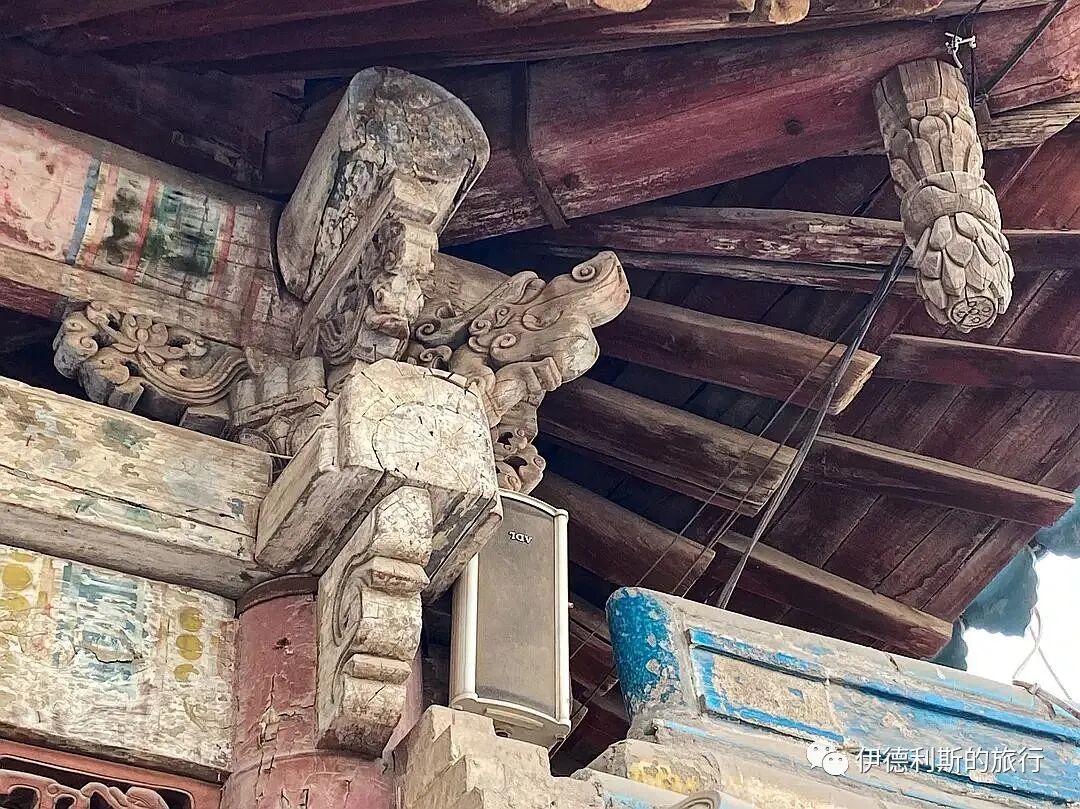
The main gate was built in 1799 (the fourth year of the Jiaqing reign) and uses peacock blue glazed tiles, which are relatively rare in mosque architecture and look very refreshing.
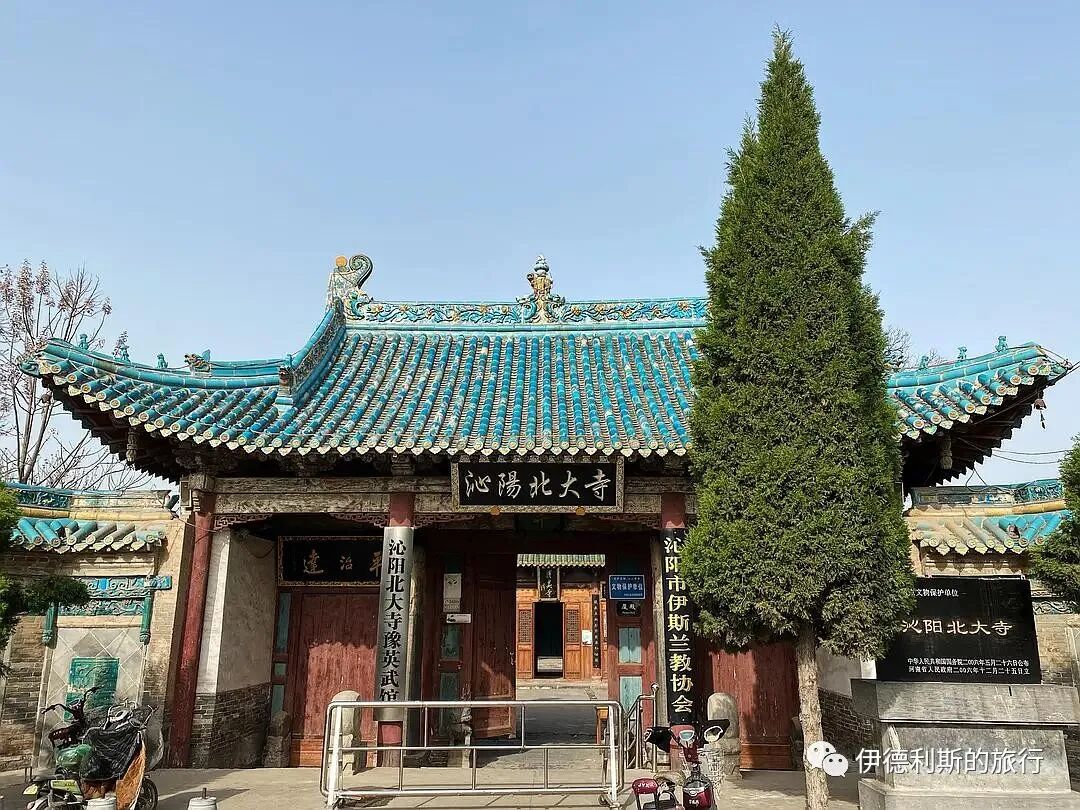
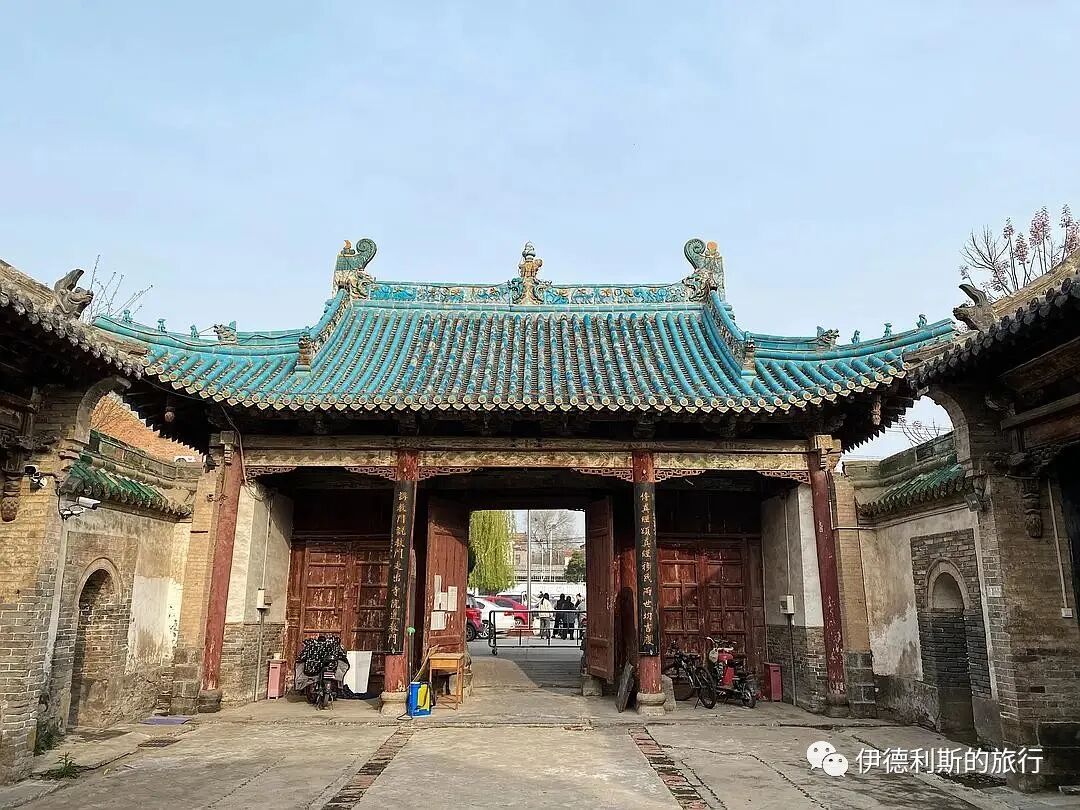
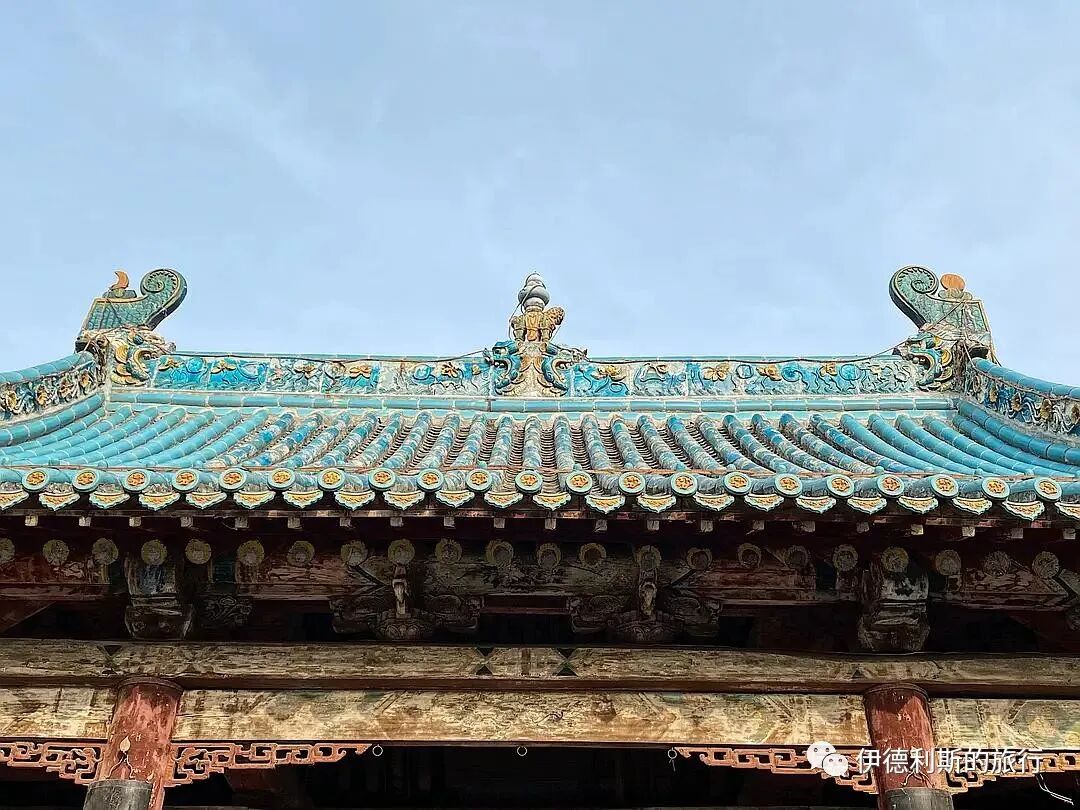
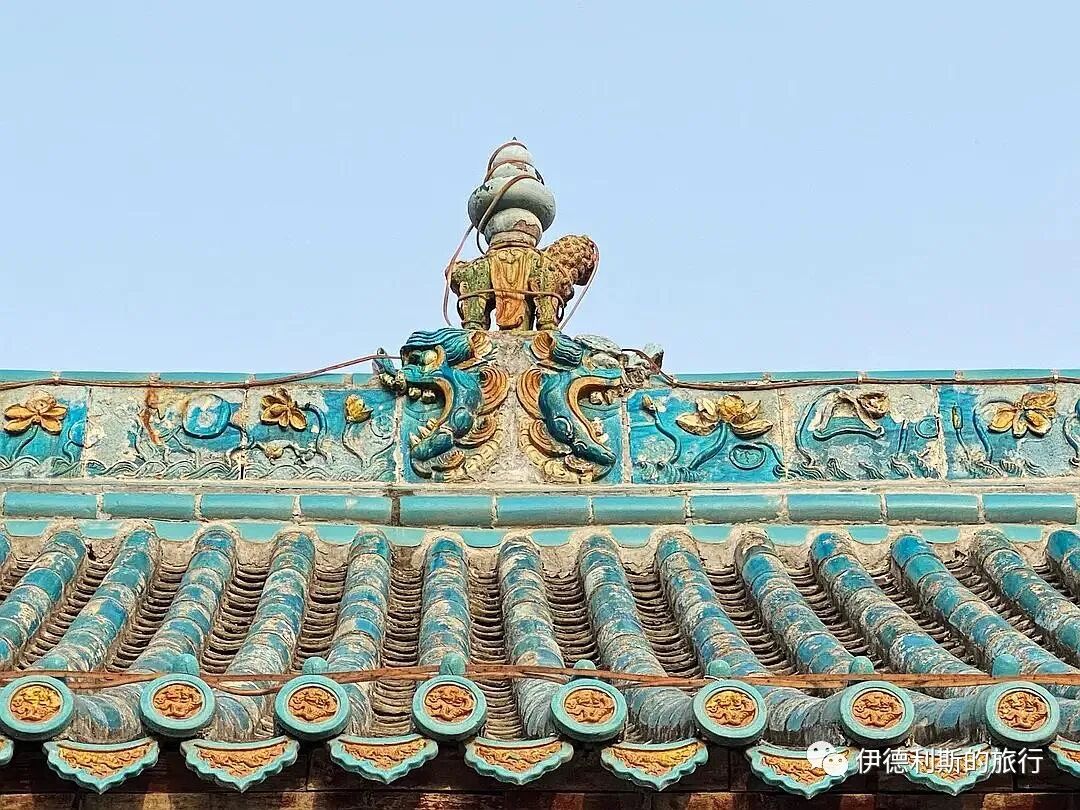
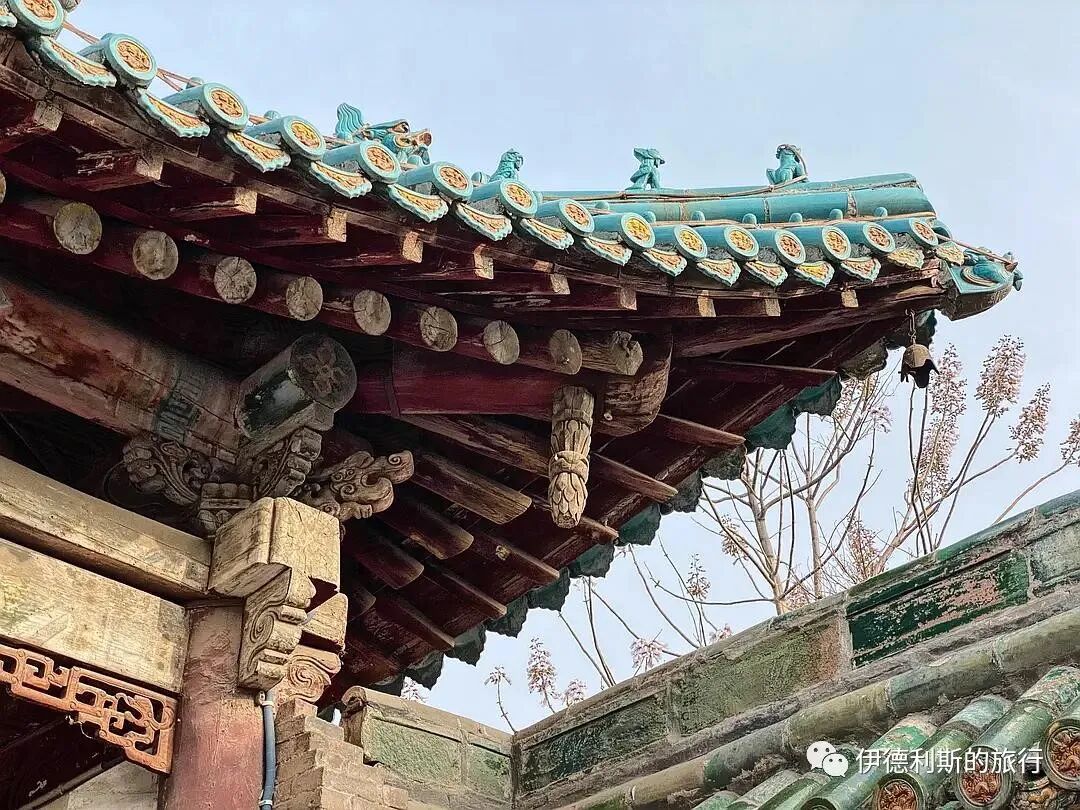
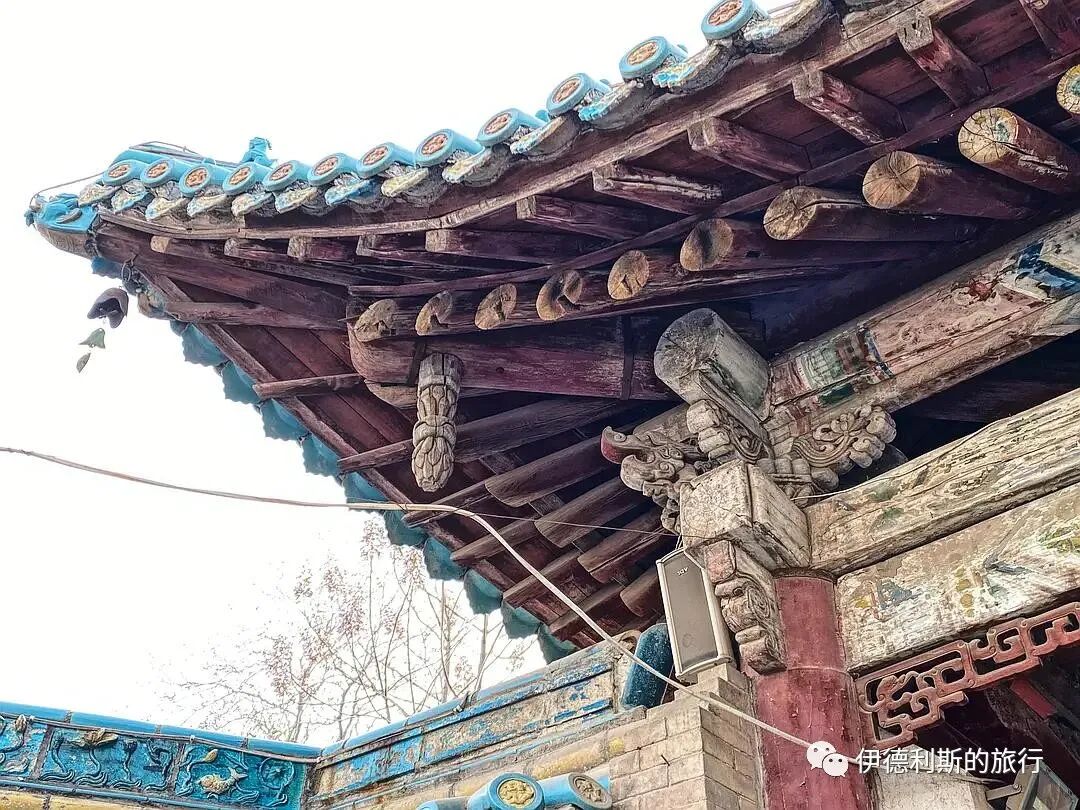
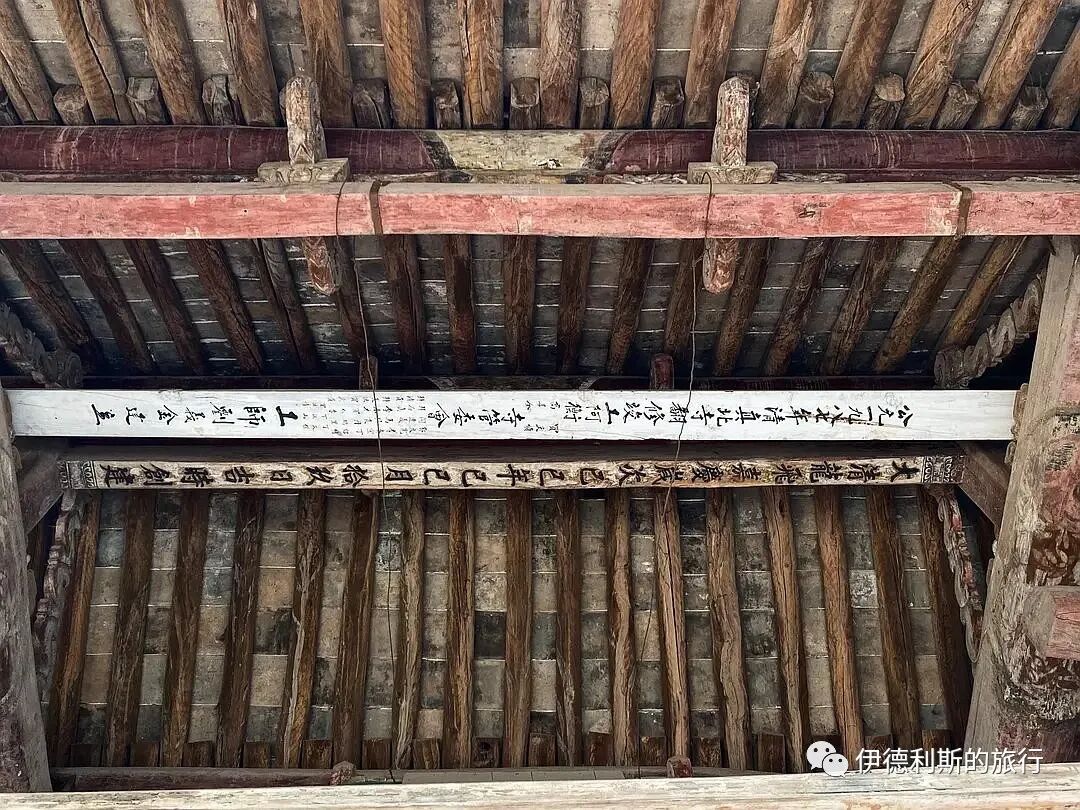
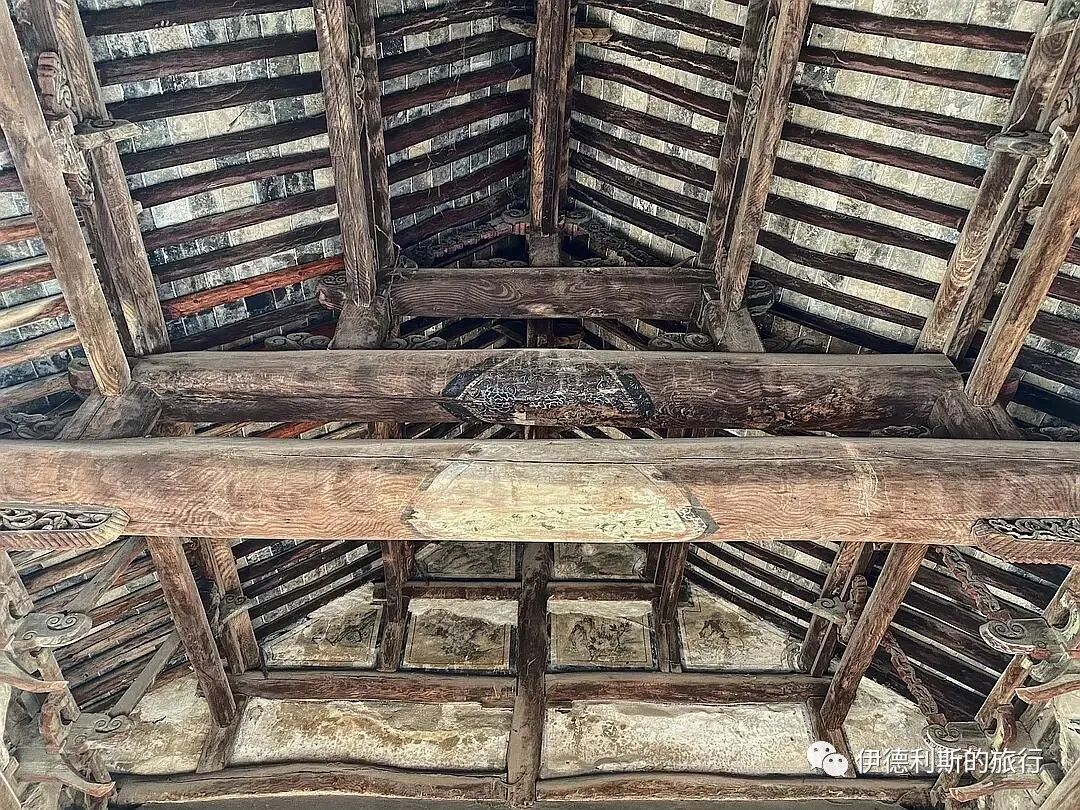
The hallway was built in 1631 (the fourth year of the Chongzhen reign of the Ming Dynasty).
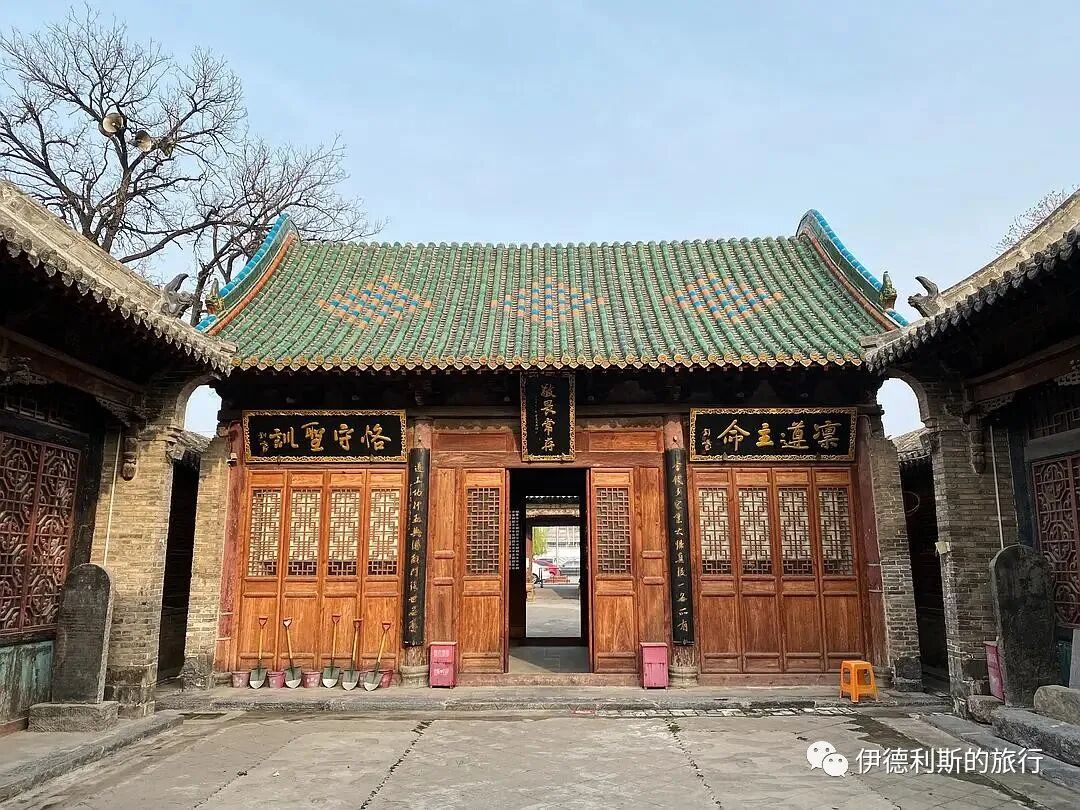
The lecture hall was built in 1909 (the first year of the Xuantong reign). The north and south lecture halls have hard-gabled roofs, with hanging flower columns under the eaves and diamond-patterned doors and windows, simple and elegant.
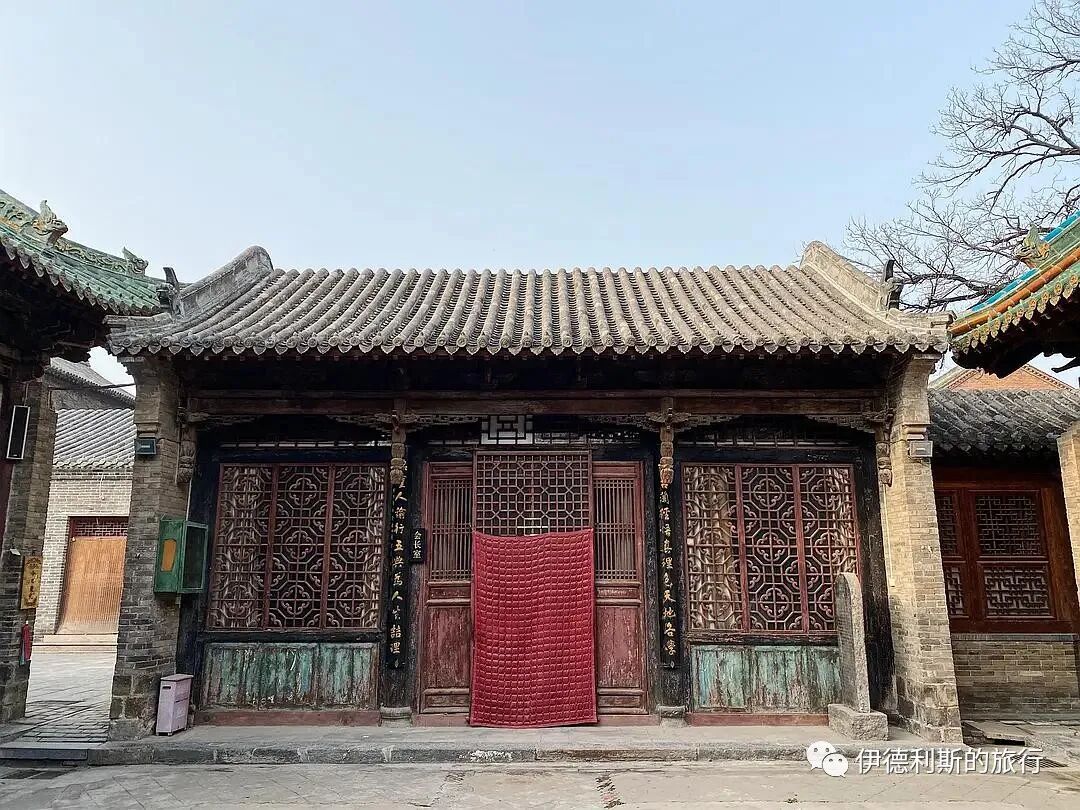
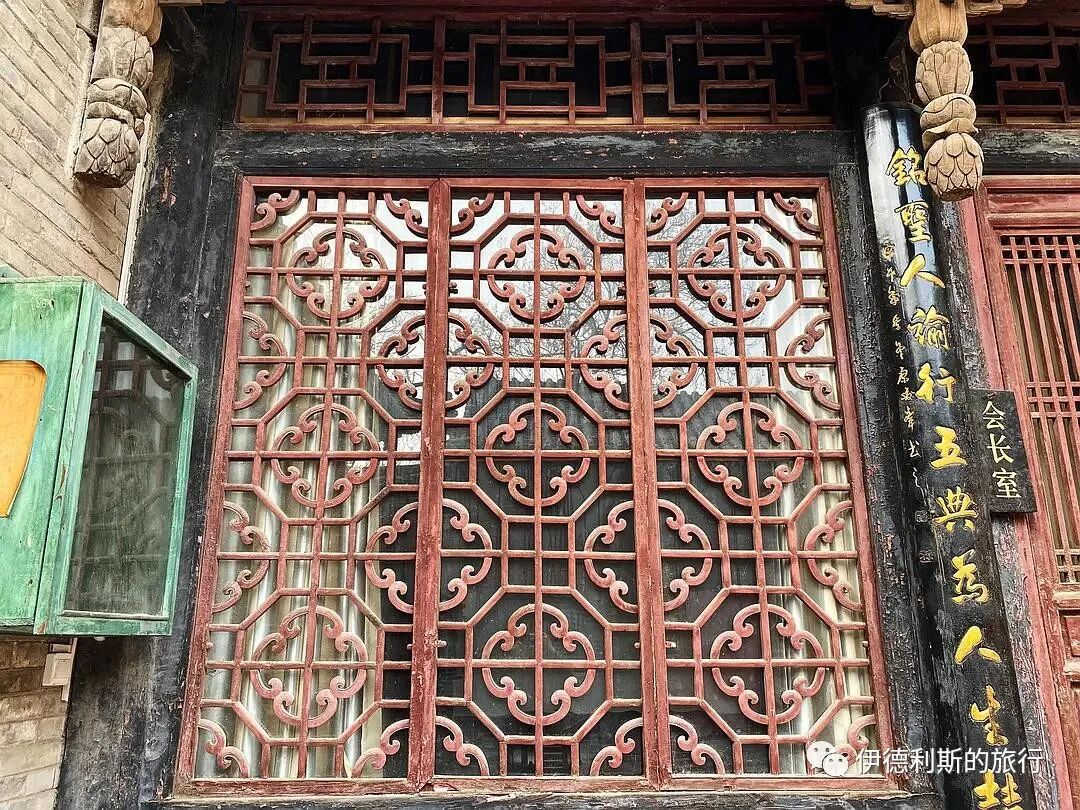
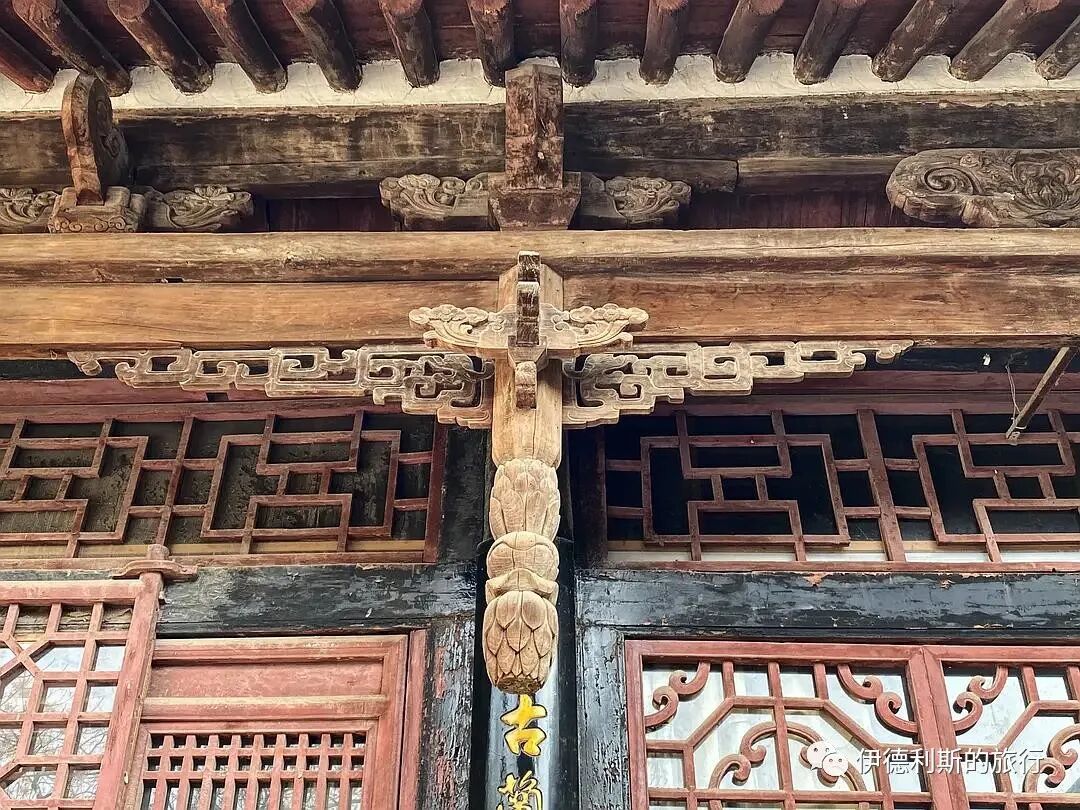
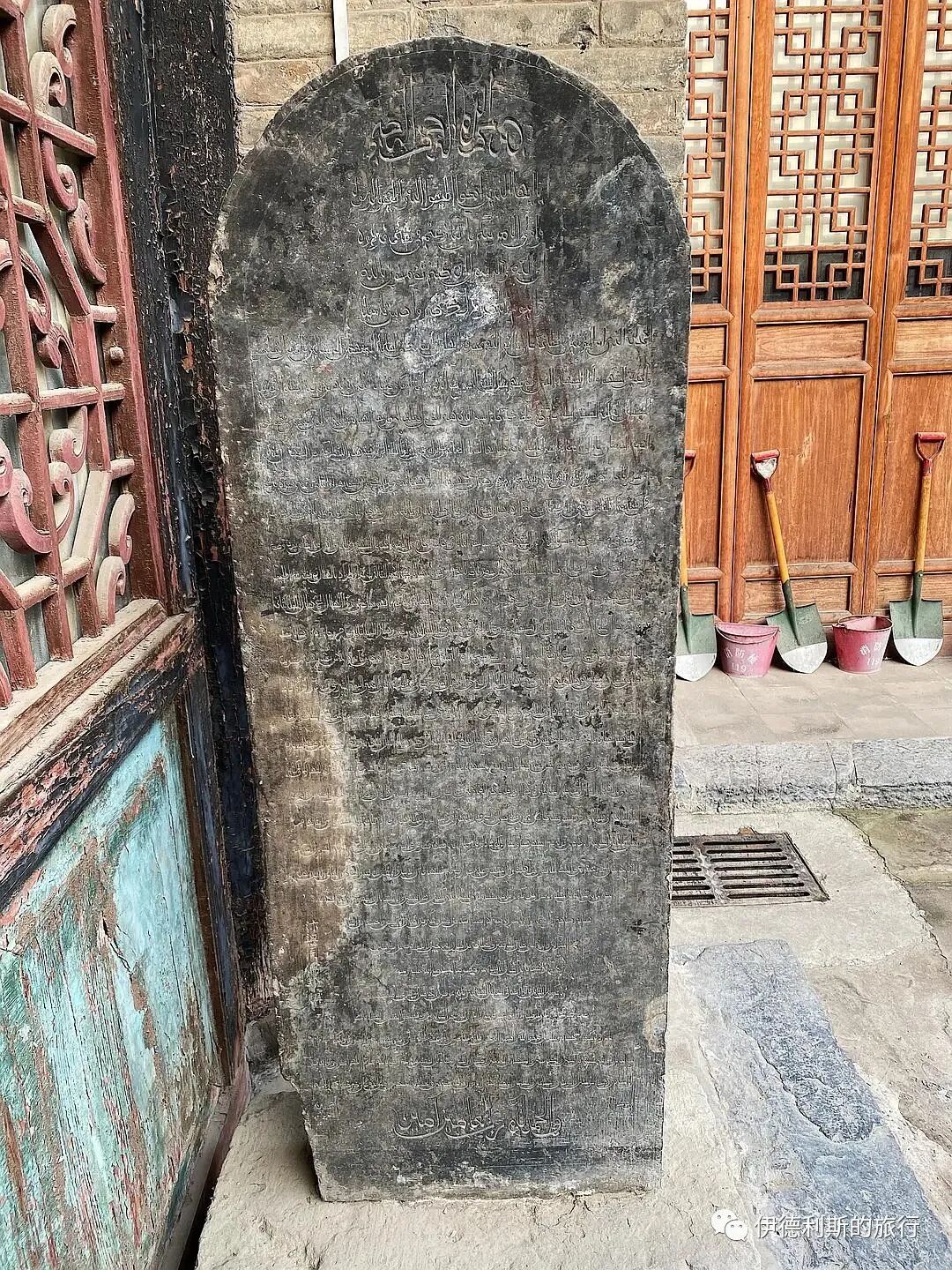
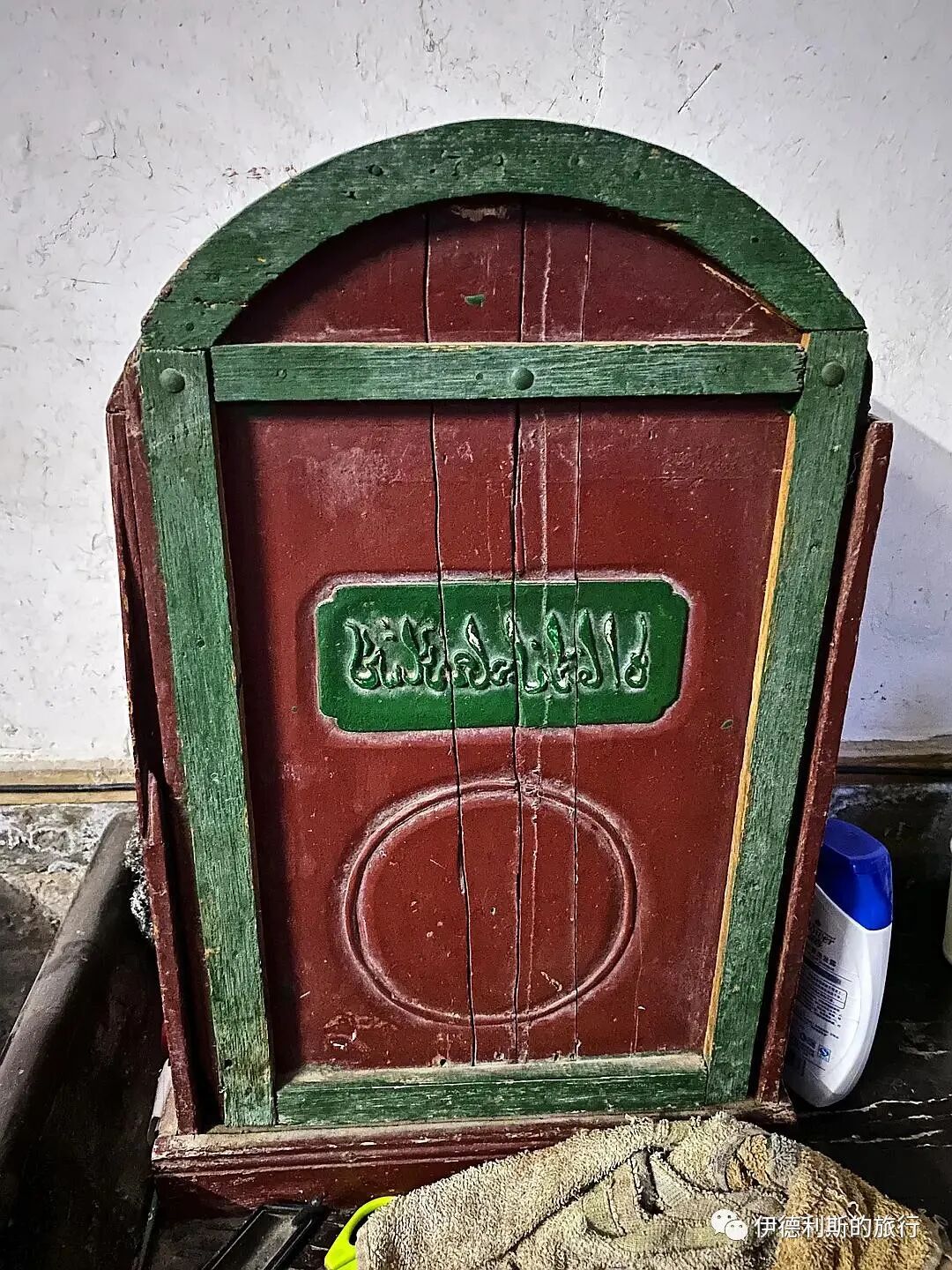
Scripture boxes in the Imam's office.
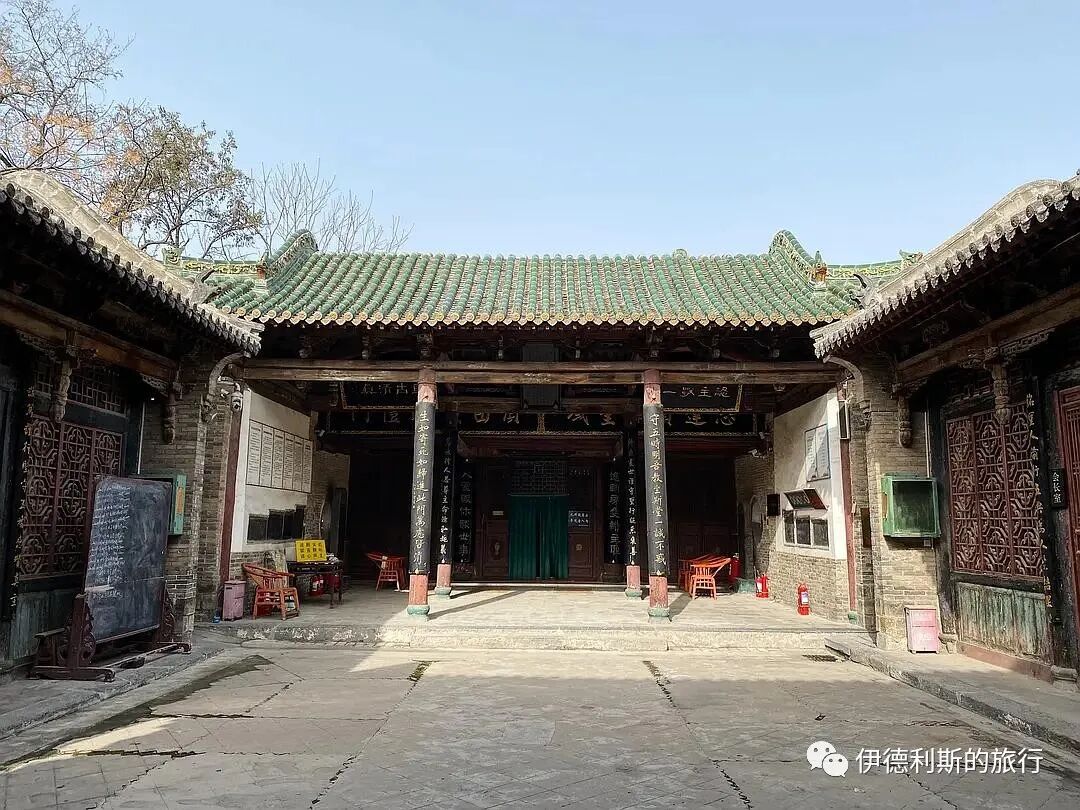
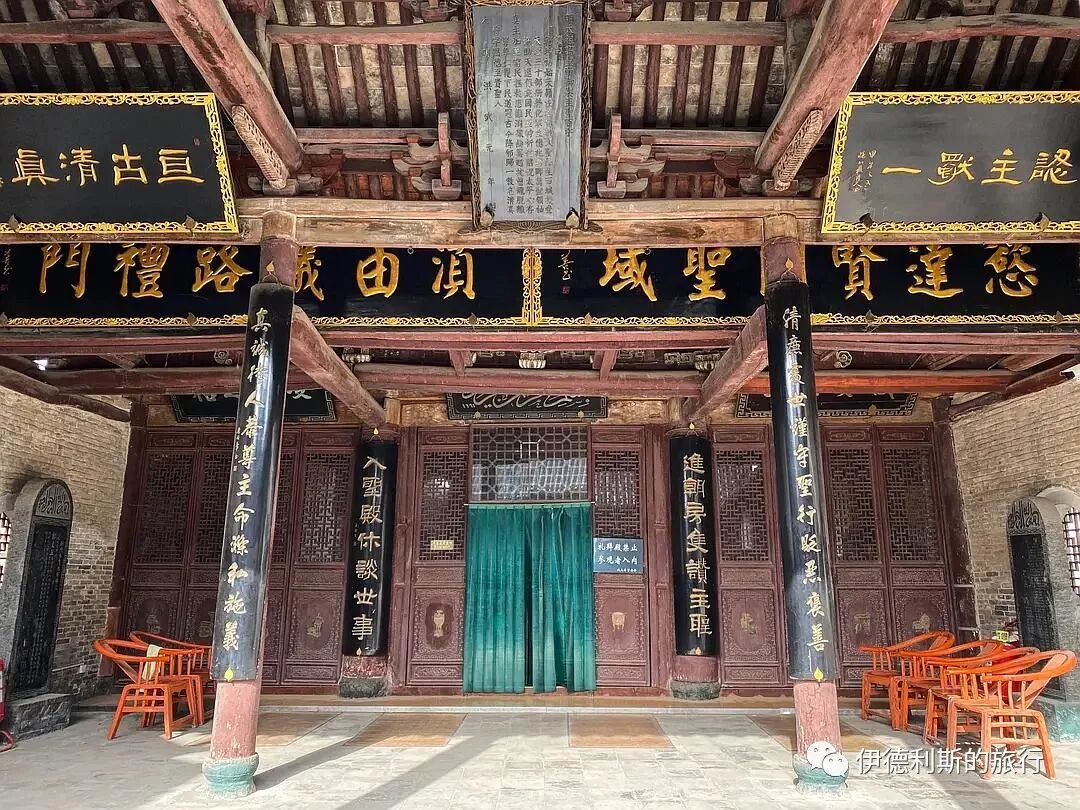
The main prayer hall consists of a porch, a front hall, a middle hall, and a dome hall. This style, with a hip-and-gable roof for the front hall, a gabled roof for the middle hall, and a raised dome hall, is unique to the Qinyang area. First, I will share the exterior of the porch and the front hall.
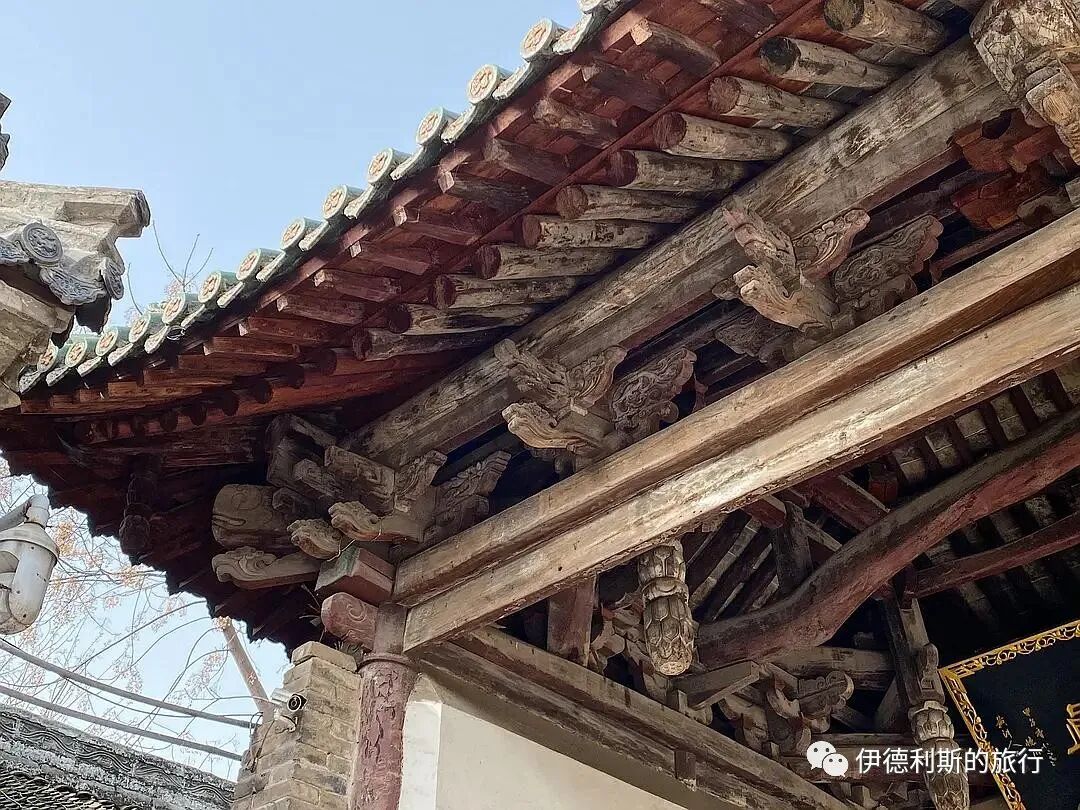
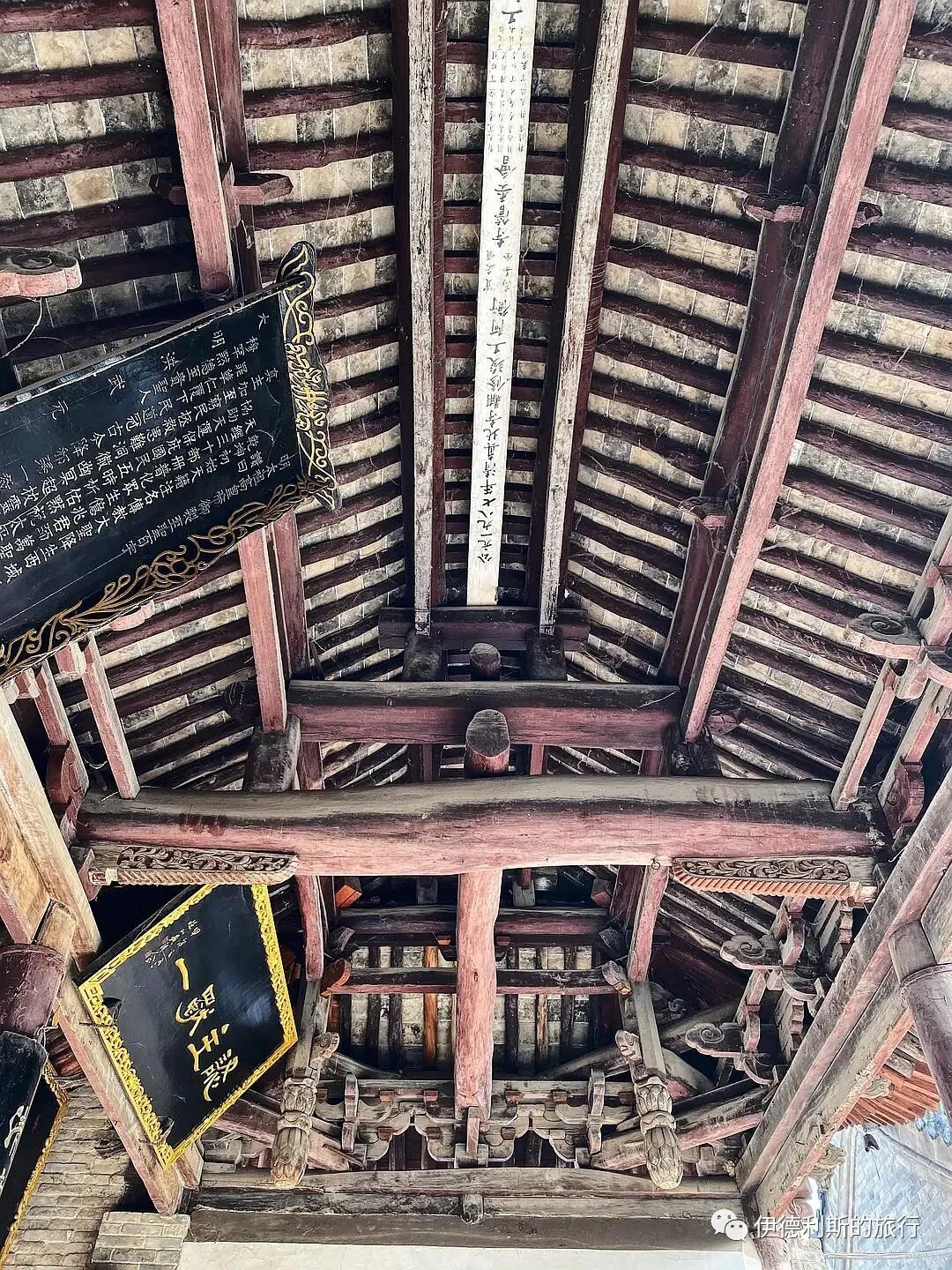
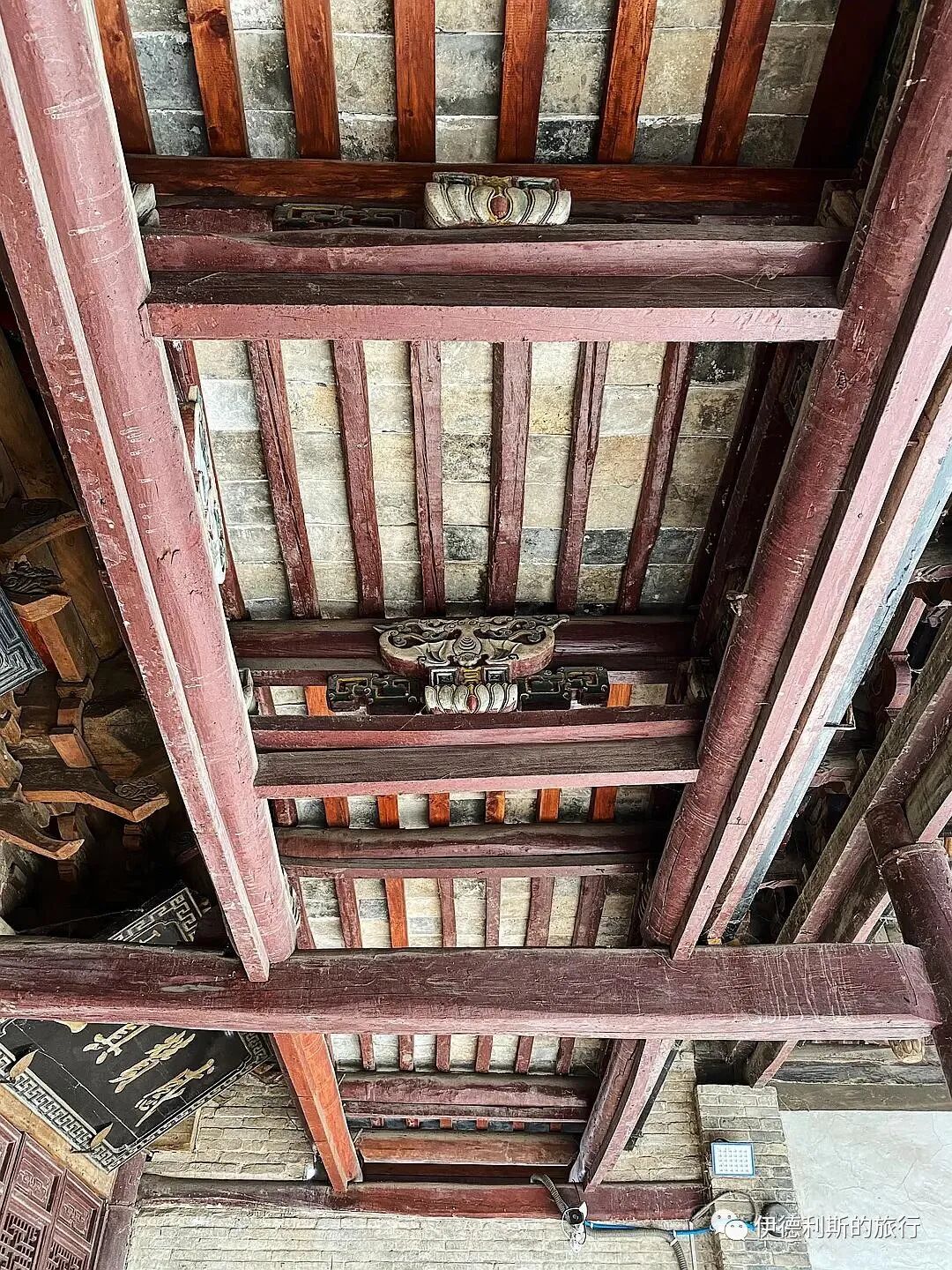
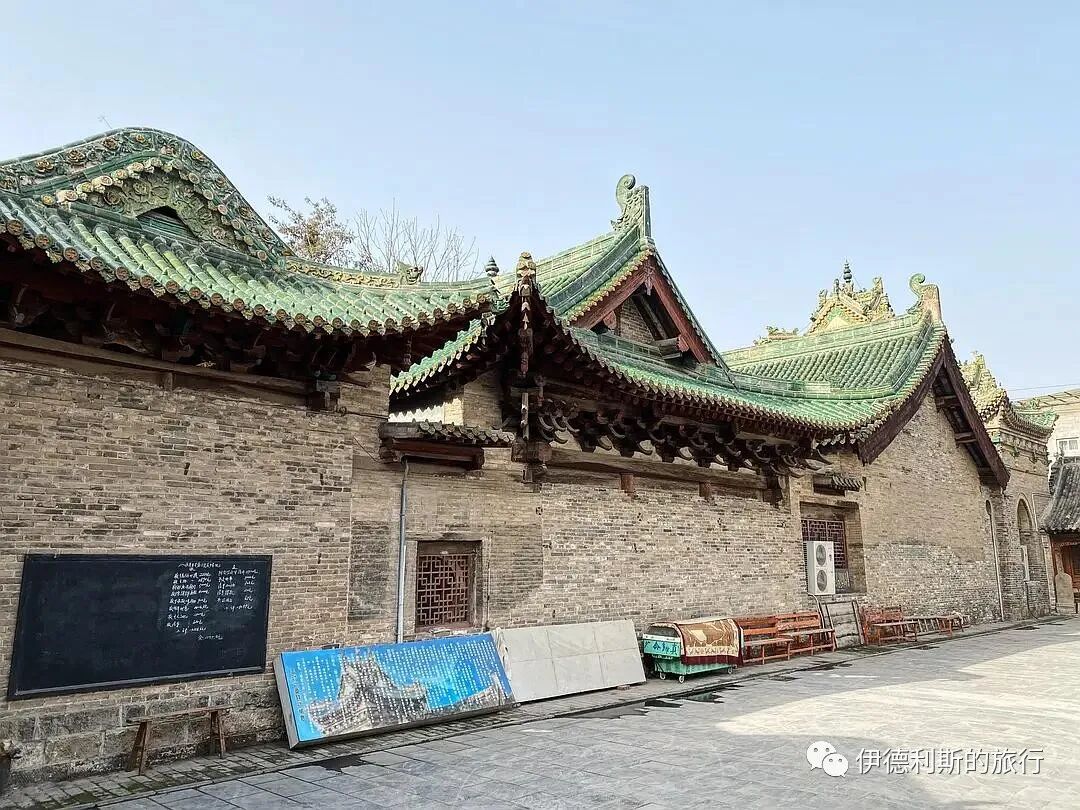
The beautiful Qing Dynasty paintings inside the main hall. Thanks to Imam Ma Hongjie for the wonderful introduction. The main hall of the North Mosque was occupied by a factory in the 1960s and 1970s. The lower paintings all faded, and only the paintings on the top were luckily preserved.
Summary: This travel note introduces Zhengzhou, Bo'ai and Qinyang Spring Halal Travel Guide (Part 1). In mid-March 2021, Beijing lifted travel restrictions, and Zainab and I went to Henan for a trip on the last weekend of March, visiting Zhengzhou, Bo'ai, and Qinyang. It is useful for readers interested in Henan Travel, China Mosques, Halal Food.
In mid-March 2021, Beijing lifted travel restrictions, and Zainab and I went to Henan for a trip on the last weekend of March, visiting Zhengzhou, Bo'ai, and Qinyang.
We took a high-speed train to Zhengzhou on Friday night, got off, transferred to the subway, and headed straight to the North Mosque. We ate Laoshuncheng Xiaolong Guantangbao (steamed soup dumplings) on Mosque Street. The soup dumplings were very fresh and delicious. Zainab was very satisfied with Zhengzhou's cold dish culture, where you can mix and match dishes as you like.
After finishing the soup dumplings, we went to the nearby Lu Laoda Mutton Soup on Shangcheng Road. Their shop is open 24 hours, so you can drink mutton soup even late at night. We ordered mutton soup and Xiaosuru (crispy stir-fried meat). It was Zainab's first time drinking milky-white mutton soup, and she was very surprised. We also ordered bean products and gluten stewed with chicken frames, but it was a bit salty.
Early Saturday morning, we went to Mashan Doumo Shop on Shuncheng Street to drink doumo (millet flour porridge) and eat caijiao (vegetable-filled fried dough pockets). Mashan Doumo Shop was founded in Huayuankou in 1938 and moved to Shuncheng Street in the 1950s. It is the oldest doumo shop in Zhengzhou. Doumo is popular in Henan, Hebei, and Shandong. I have had it before in Kaifeng and Jinan. It is made of millet flour, soybeans, and peanuts, seasoned with various spices.
Then we had breakfast at a nearby shop on Old Shuncheng Street, eating hulatang (spicy pepper soup) with shuijianbao (pan-fried buns). I really liked the lively atmosphere of Shuncheng Street when I visited Zhengzhou before. It has become much quieter after renovations, but the breakfast shops are still as busy as ever. It is said that Zhengzhou's hulatang used to be less spicy, but later some shops followed Fang Zhongshan's style and added more chili powder.
Visiting the Zhengzhou North Mosque. The North Mosque is located on North Street in the old city of Zhengzhou. It is said to have been built in the Ming Dynasty, features the typical architectural style of Central Plains mosques, and is a Major Historical and Cultural Site Protected at the National Level.
The main gate was built in 1725 (the third year of the Yongzheng reign).
The Moon-Watching Tower also serves as the minaret. The first floor is a hallway. Judging by the architectural structure, it is very likely an original Ming Dynasty piece, but the dougong (bracket sets) and eaves rafters were likely replaced during the Qing Dynasty. According to records, it was renovated in 1887 (the thirteenth year of the Guangxu reign).
The Moon-Watching Tower has three pairs of Chinese couplets:
Observe, listen, and hear the words; to fully understand the essence of the present is to understand all of creation.
Whether in prosperity or decline, honor or disgrace, to realize the subtle turning point is to realize the mystery within.
The hustle and bustle of the world, even if you are proud and happy, is but a fleeting distraction.
Within the body and mind, no matter what you do, when you finally close your eyes, only two things will follow you closely.
Follow the Quran to promote the righteous path.
Follow the Sunnah so the truth lasts forever.
The other side has Arabic couplets.
There are also couplets on the doors on both sides of the Moon-Watching Tower:
The five daily prayers are the key to opening the door.
The holy scripture is the lamp that guides the way.
To recognize the pearl, one must return to the shore.
If you think of the sea, repair your boat early.
Stone inscriptions in the courtyard.
The main prayer hall was renovated twice, in 1802 (the seventh year of the Jiaqing reign) and 1907 (the thirty-third year of the Guangxu reign), and consists of a porch, the main hall, and the rear dome hall. The main hall features a lift-beam wooden frame with exposed rafters. The beams and rafters are covered with cloud and floral patterns, making it unique and elegant. There is a floral screen between the main hall and the dome hall, filled with openwork patterns. Light shines from the bright dome hall through the screen into the main hall, creating a delicate and translucent effect on the screen.
There are two century-old osmanthus trees in front of the main hall.
Couplets inside the main hall:
The painting of the heavens, know that there is no second artist.
The writings across the earth, one must ponder who holds the brush.
Recognize the True Lord, who has no form or shadow, and let all things serve as proof.
To contemplate creation is not to seek the high and distant, but to keep the one truth in your heart.
Behind the main hall, next to the dome hall, there is a Chinese juniper tree over 400 years old.
After visiting the North Mosque, we had youcha (oil tea) and almond tea at Yang's Youcha across the street. I drank youcha at their place last time I visited Zhengzhou and even bought youcha powder to take home. Their almond tea is also very good and includes rose jam.
Bo'ai Xiguan.
At noon, we took a train from Zhengzhou to Jiaozuo, then took a taxi to Bo'ai to visit the famous Bo'ai Xiguan Mosque. The Xiguan Mosque was founded in the Yuan Dynasty, and the main hall was expanded in 1405 (the third year of the Yongle reign of the Ming Dynasty). It is currently a national cultural heritage site and is known as the "First Mosque of Northern Henan."
The main hall consists of a porch, a front hall, a dome hall (middle hall), and a rear hall. In 1863 (the second year of the Tongzhi reign), the dome hall was burned down by the Nian Army and later rebuilt to its original appearance. In 1941, a rear hall was added behind the dome hall, making the dome hall the middle hall. The main hall has a lift-beam wooden frame supported by 16 pillars in 4 rows. The middle hall has 4 tall pillars supporting the dome roof. Inside the dome roof is a caisson ceiling, and the exterior is a triple-eave, four-corner cross-ridge roof.
I performed salah in the mosque and also caught the dhikr.
Main gate.
Glazed archway.
Jumu'ah plaque.
After the prayer, many restaurants were closed, so we ate zaban (mixed meat stew) and chicken diced heluo noodles at Linji Kouwan Shaguoju (casserole restaurant). Bo'ai zaban is a specialty dish from traditional Bo'ai water banquets. It is made by braising various ingredients such as wood ear mushrooms, white fungus, bamboo shoots, crispy meatballs, boiled meatballs, white meatballs, and beef slices. It is very satisfying to eat.
On Sunday afternoon, we came back to Bo'ai Xiguan to eat and explore, and had the local specialty, jiangmiantiao (fermented bean paste noodles). It is made by boiling the liquid squeezed out when making tofu into a paste, served with soybeans, peanuts, celery, and crushed sesame sauce. It tastes sour and fragrant, and I feel it would be even better in the summer.
Then we ate the specialty cai-tuanzi (vegetable dumplings). They are made by rolling celery, peanuts, soybeans, carrots, and corn grits into balls, wrapping them in corn flour, and deep-frying them. The texture is very rich, and as a corn lover, I was very satisfied.
We bought Liji crispy chicken. The stewed chicken is fried again and sprinkled with secret seasonings, making it very fragrant. However, it is a bit salty to eat on its own, so it was perfect to eat with the flatbread we bought in Xiguan on the train back to Beijing.
We also bought Xiaoche Beef (cart beef) at the Xiguan intersection. This is a delicacy popular in the Taihang Mountains area at the junction of Henan, Shaanxi, Shanxi, and Hebei. After the beef is braised, it is wrapped in rich meat broth, cooled, and pressed into meat jelly, then sold from a cart in the market. Because the meat jelly melts when the temperature rises, Xiaoche Beef is traditionally unavailable in the summer.
Some door couplets on Xiguan Street.
Qinyang.
On Saturday afternoon, we took a taxi from Bo'ai to Qinyang to visit the Qinyang North Mosque, which I had been longing to see for a long time. In my mind, it definitely ranks in the top three among historical mosque buildings in Henan. The North Mosque was moved to its current location in 1561 (the fortieth year of the Jiajing reign of the Ming Dynasty), burned down in 1628 (the first year of the Chongzhen reign of the Ming Dynasty), and rebuilt in 1631. It is a Major Historical and Cultural Site Protected at the National Level.
The overall layout of the North Mosque is quite classic, consisting mainly of the main gate, a hallway, a lecture hall, and the main prayer hall. Next, I will share it with you bit by bit. Because of the lighting, I took photos twice, on Saturday afternoon and Sunday morning.
The main gate was built in 1799 (the fourth year of the Jiaqing reign) and uses peacock blue glazed tiles, which are relatively rare in mosque architecture and look very refreshing.
The hallway was built in 1631 (the fourth year of the Chongzhen reign of the Ming Dynasty).
The lecture hall was built in 1909 (the first year of the Xuantong reign). The north and south lecture halls have hard-gabled roofs, with hanging flower columns under the eaves and diamond-patterned doors and windows, simple and elegant.
Scripture boxes in the Imam's office.
The main prayer hall consists of a porch, a front hall, a middle hall, and a dome hall. This style, with a hip-and-gable roof for the front hall, a gabled roof for the middle hall, and a raised dome hall, is unique to the Qinyang area. First, I will share the exterior of the porch and the front hall.
The beautiful Qing Dynasty paintings inside the main hall. Thanks to Imam Ma Hongjie for the wonderful introduction. The main hall of the North Mosque was occupied by a factory in the 1960s and 1970s. The lower paintings all faded, and only the paintings on the top were luckily preserved.
Zhengzhou, Bo'ai and Qinyang Spring Halal Travel Guide (Part 2)
Articles • ali2007fr posted the article • 0 comments • 152 views • 2026-05-17 06:46
Reposted from the web
Summary: This travel note introduces Zhengzhou, Bo'ai and Qinyang Spring Halal Travel Guide (Part 2). The yaodian (kiln-style prayer hall) was renovated in 1887 (the 13th year of the Guangxu reign). It is useful for readers interested in Henan Travel, China Mosques, Halal Food.
The yaodian (kiln-style prayer hall) was renovated in 1887 (the 13th year of the Guangxu reign). Its interior features a brick dome structure, built with two partition walls over 1 meter thick to form a semicircular arch. At the concave corners, three layers of arches are extended to create an octagonal skylight, topped with a corbelled dome. The very top of the central dome is inscribed with the Arabic word for Allah.
There is beautiful calligraphy on the mihrab (prayer niche). Imam Ma Hongjie gave us a detailed introduction here, and I also happened to catch the dhikr (remembrance of Allah).
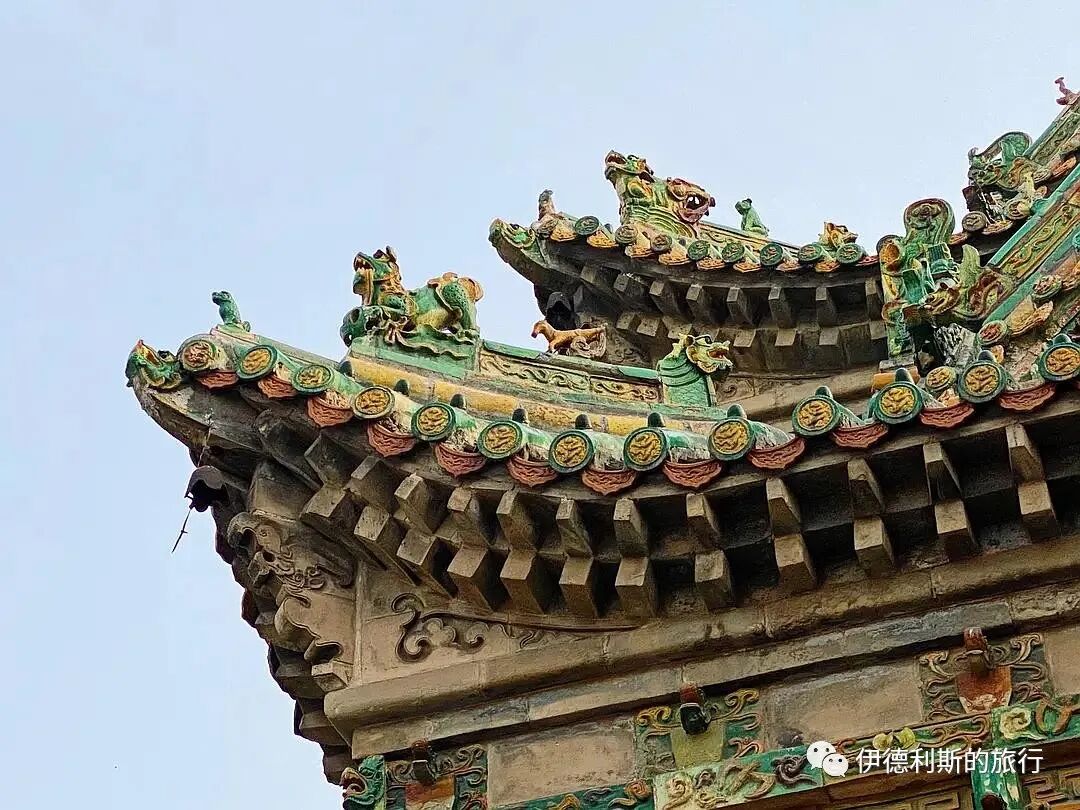
The exterior of the yaodian has a cross-shaped roof with over 70 glazed roof beasts. Under the eaves are glazed beams, brackets, and hanging flower columns. The colorful design represents the highest standard of Qing Dynasty mosque yaodian roofs.
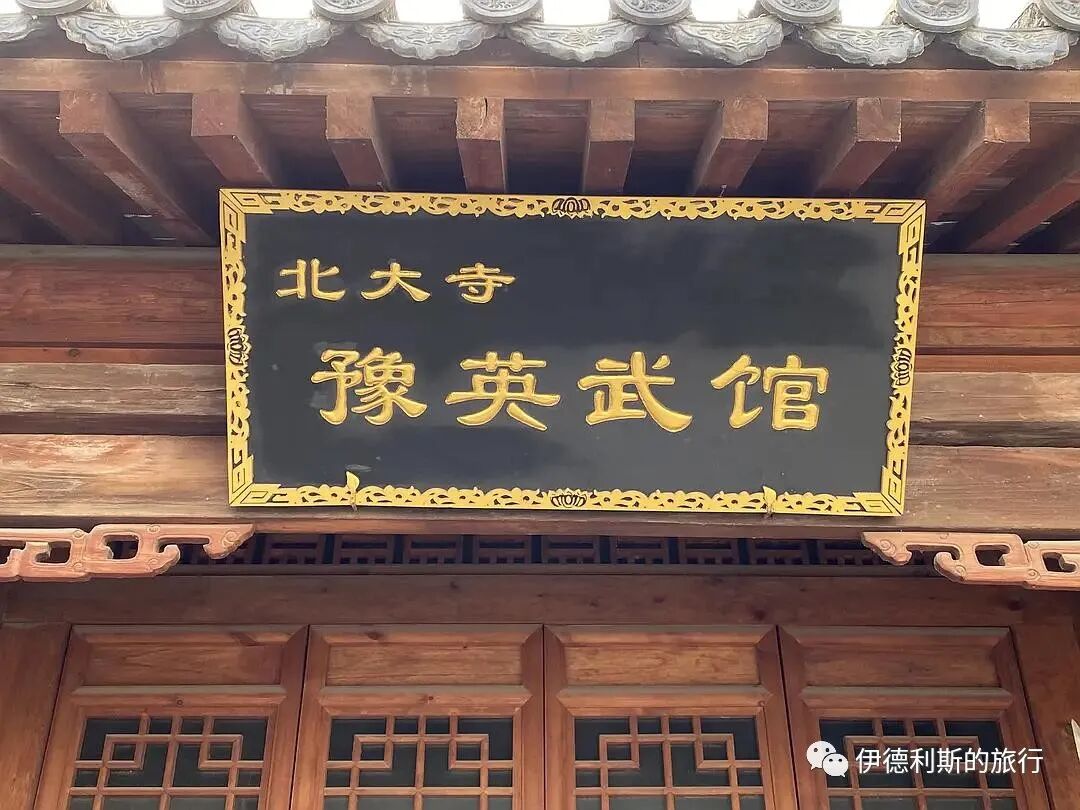
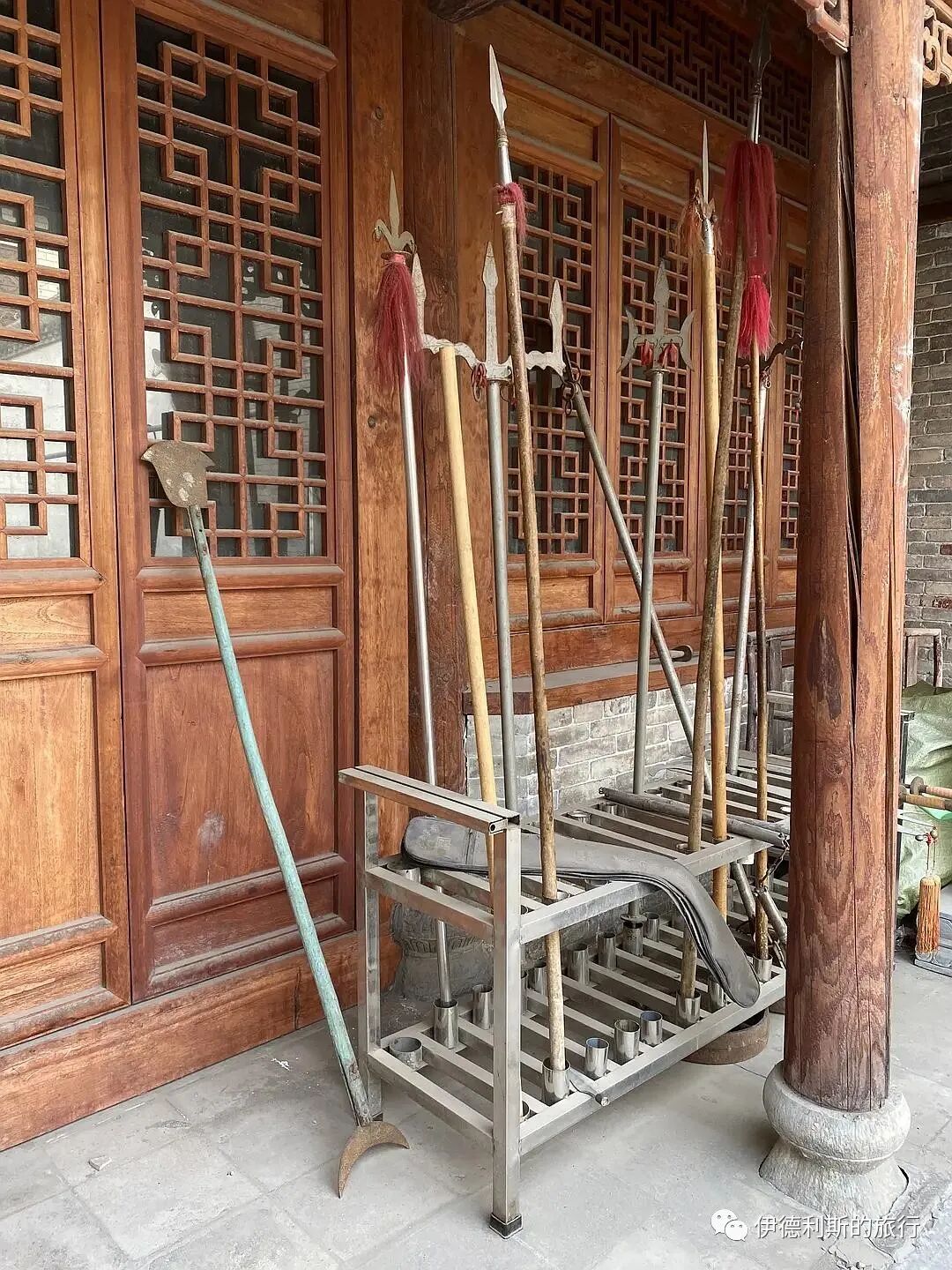
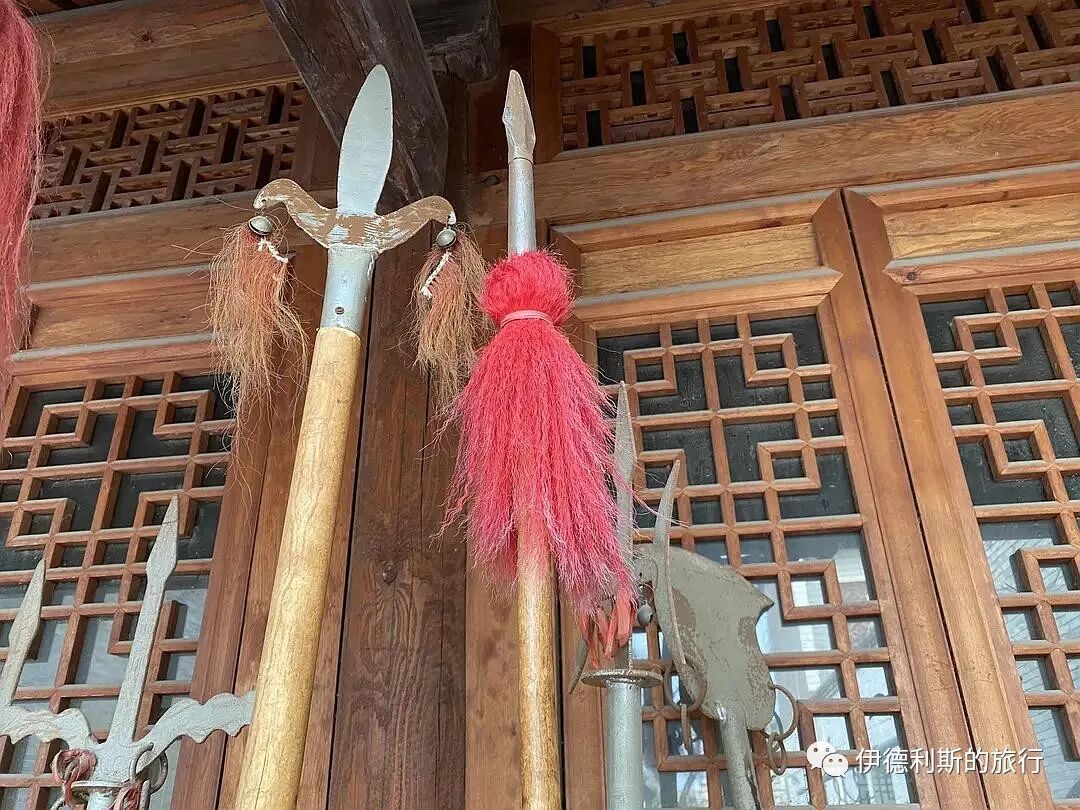
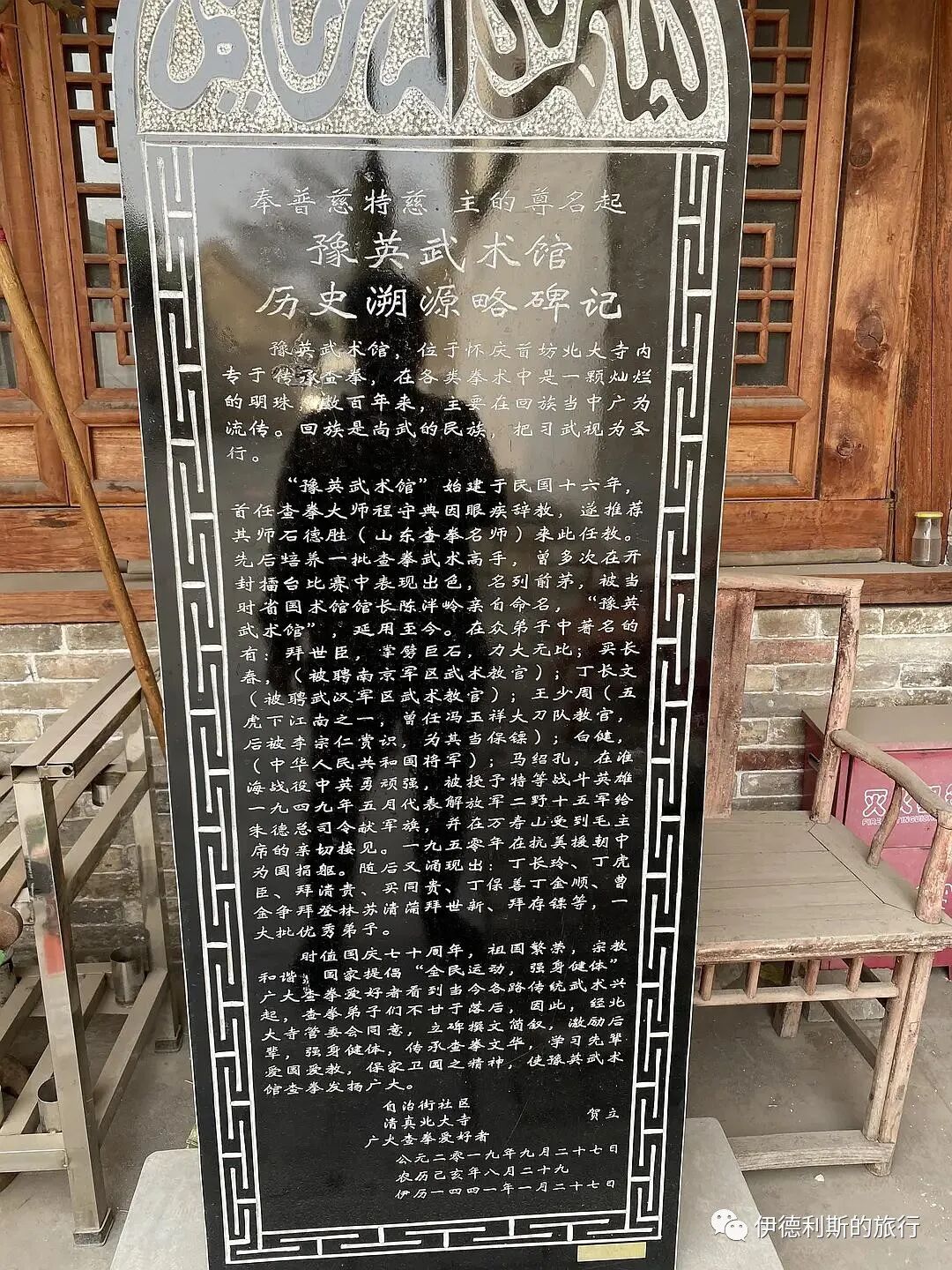
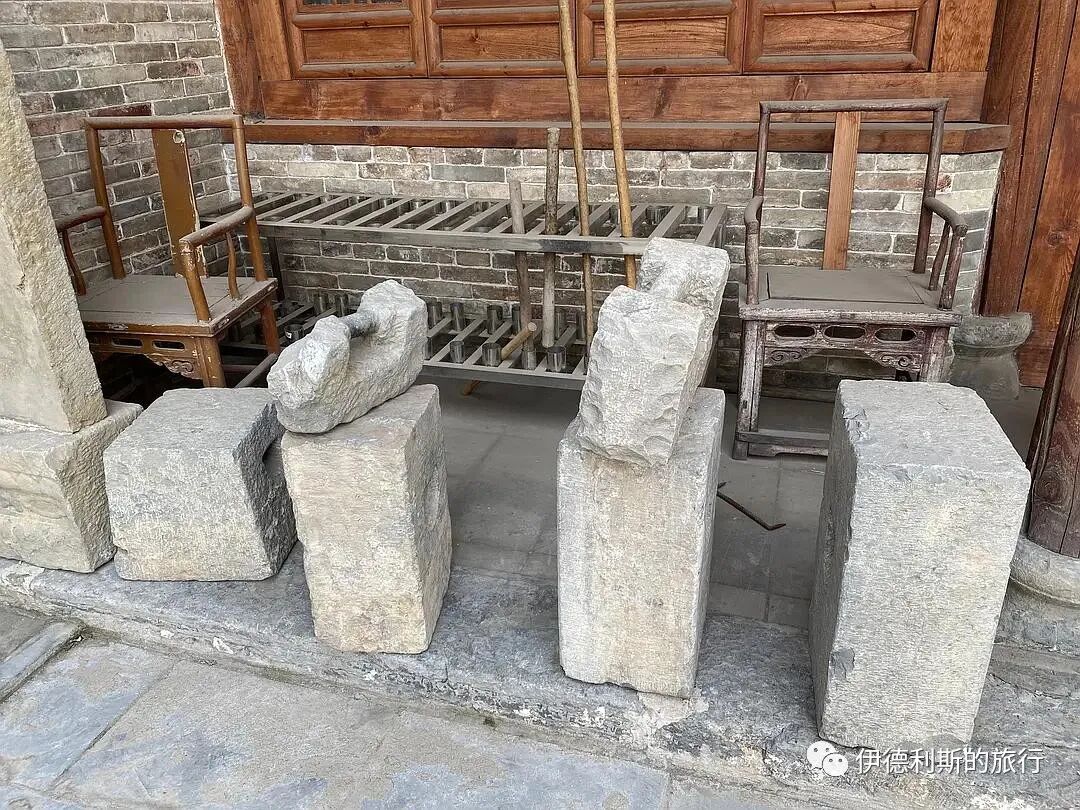
Inside the North Mosque is the Yuying Martial Arts School, founded in 1928, which specializes in Chaquan (a style of Chinese martial arts). The second master of Chaquan, Shi Desheng, trained many excellent disciples, including Nanjing Military Region martial arts instructor Mai Changchun, Wuhan Military Region martial arts instructor Ding Changwen, Feng Yuxiang's Big Sword Team instructor Wang Shaozhou, and the martyr of the War to Resist US Aggression and Aid Korea, Ma Shaokong.
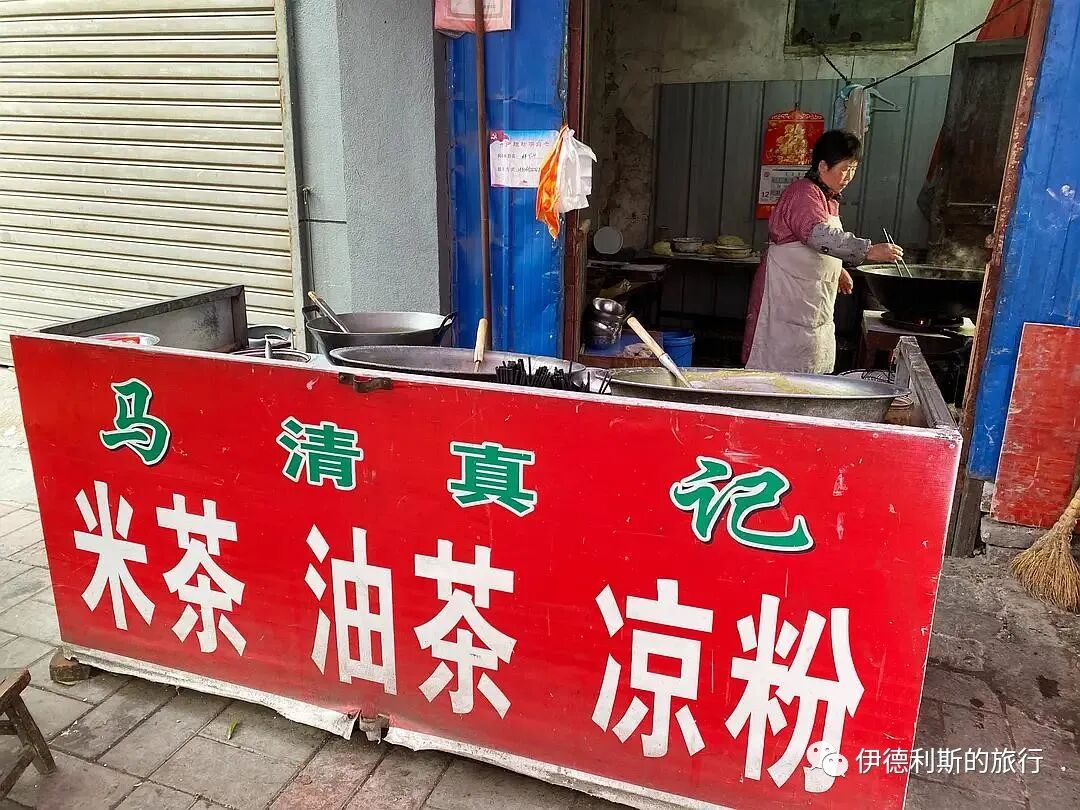
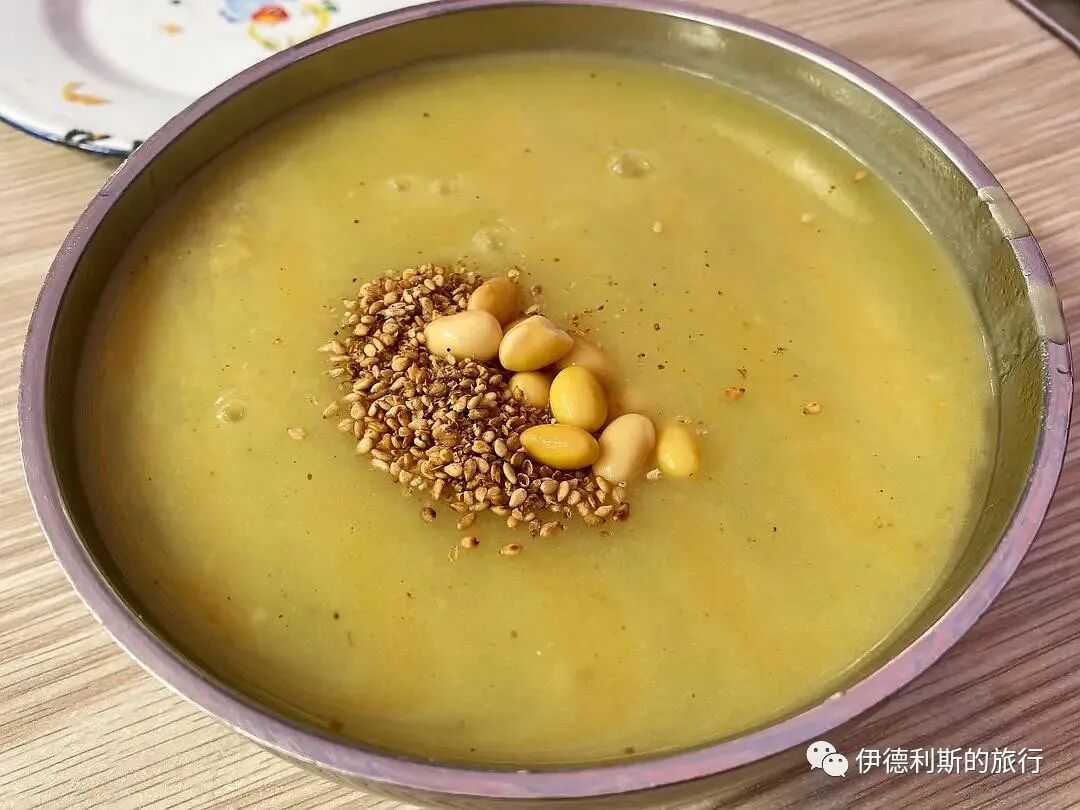
Eating breakfast on Beisi Street in Qinyang, Henan, on a Sunday morning. First, I had rice tea with youguozi (fried dough fritters) at Ma's. Rice tea is made from boiled roasted rice, with white sesame seeds and soybeans added; it is very refreshing. Then, I had a mix of beef offal and suwan (crispy meatballs) at Bai's next door. The portions were generous, the soup was very fragrant, and it was a very satisfying meal.
The Qinyang Shuinanguan Mosque was rebuilt between 1990 and 1995. It still maintains the traditional architectural style with flying eaves, bracket sets, and blue-green glazed tiles, though the new building, no matter how beautiful, lacks historical value.
The most valuable part of Shuinanguan is the mihrab yaodian prayer niche excavated during the 1990s reconstruction. It has been designated as a national cultural relic and is stored inside the main hall. Unfortunately, it was not time for namaz (prayer) when I visited, so there was no one at the mosque, and the main hall was locked, so I could not see it.
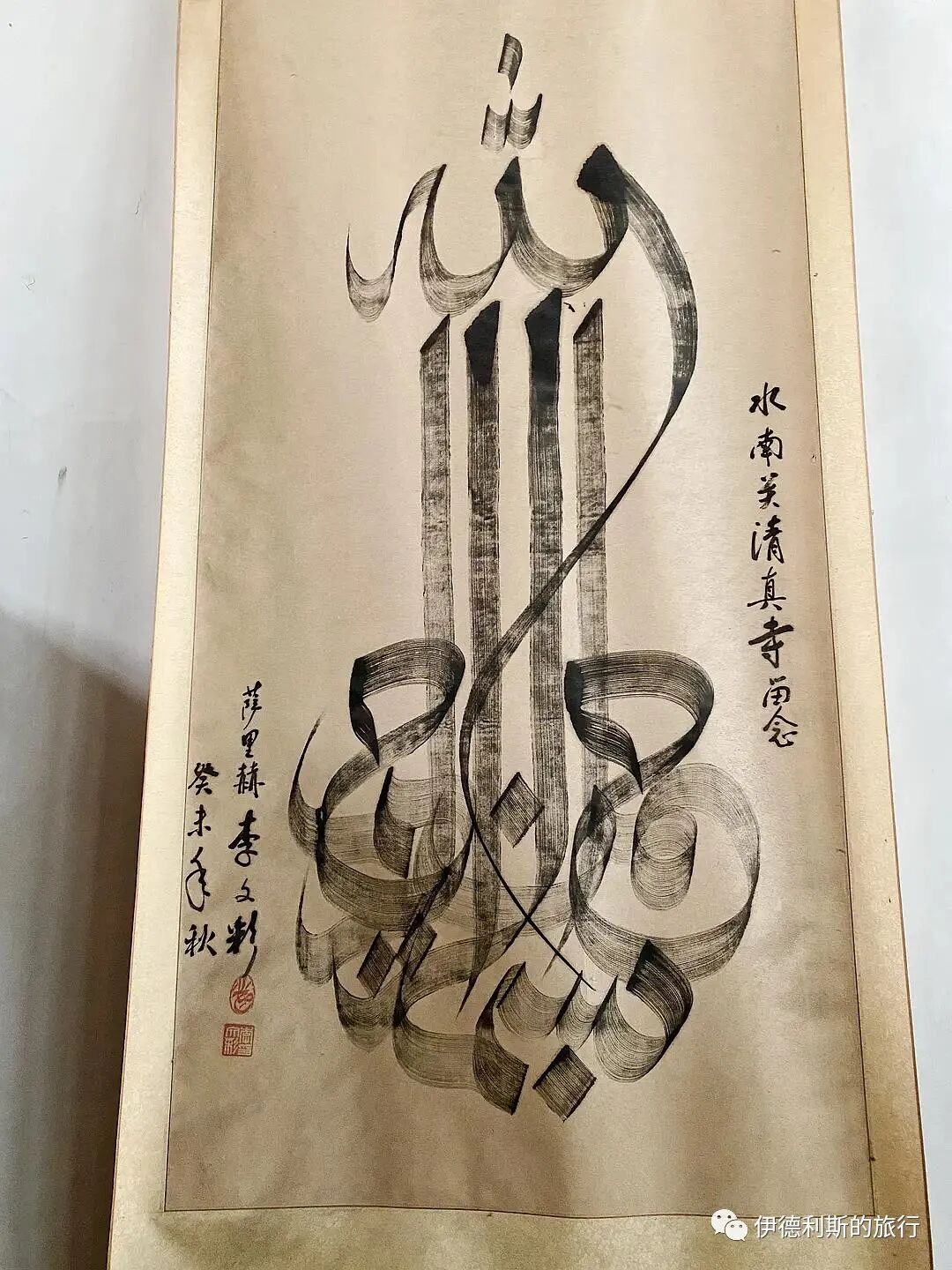
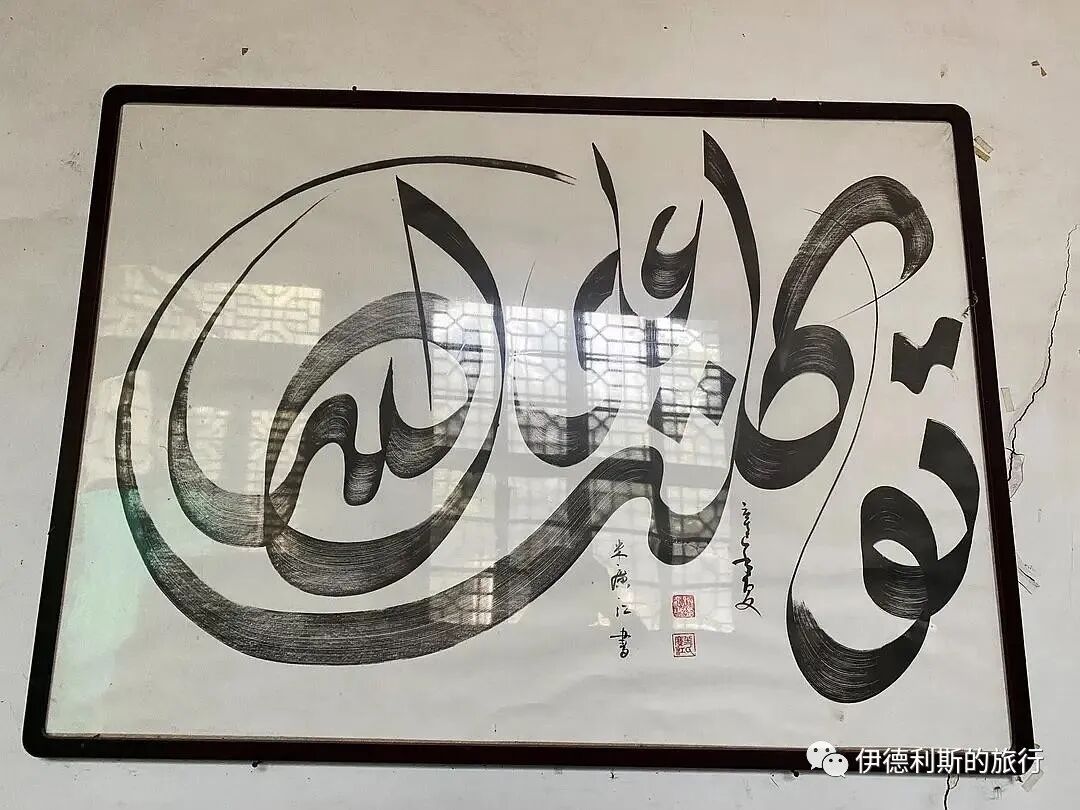
The mosque houses works by the famous Beijing Arabic calligrapher Li Wencai and the famous Henan Arabic calligrapher Mi Guangjiang.
Bo'ai Erxian Temple and Daxinzhuang
Took a taxi from Qinyang, Henan, to the Erxian Mosque Mosque in Bo'ai. The Erxian Mosque Mosque was first built in the Yuan Dynasty, renovated in 1638 (the 11th year of the Ming Chongzhen reign), and renovated again in 1731 (the 9th year of the Qing Yongzheng reign). It is a cultural relic protection unit of Henan Province. The main hall of the mosque consists of a juanpeng (shed-style roof), front hall, rear hall, and yaodian. The juanpeng and front hall were built in the Qing Dynasty with a hard mountain roof and connected structure, while the rear hall and yaodian were added in 1993.
Continued by taxi from Erxian Mosque to the East Mosque in Daxinzhuang, Bo'ai. The Daxinzhuang East Mosque was first built in the Yuan Dynasty, expanded in the Ming Dynasty, and the rear hall was added during the Republic of China era. It is currently a cultural relic protection unit of Henan Province.
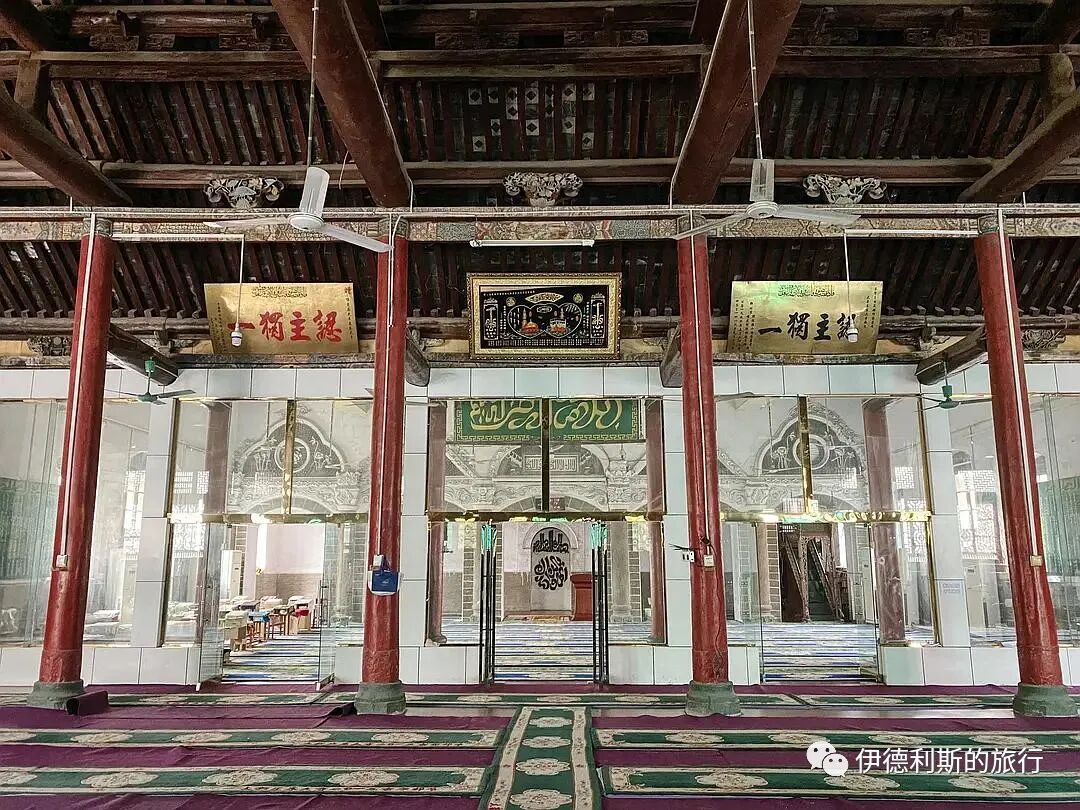
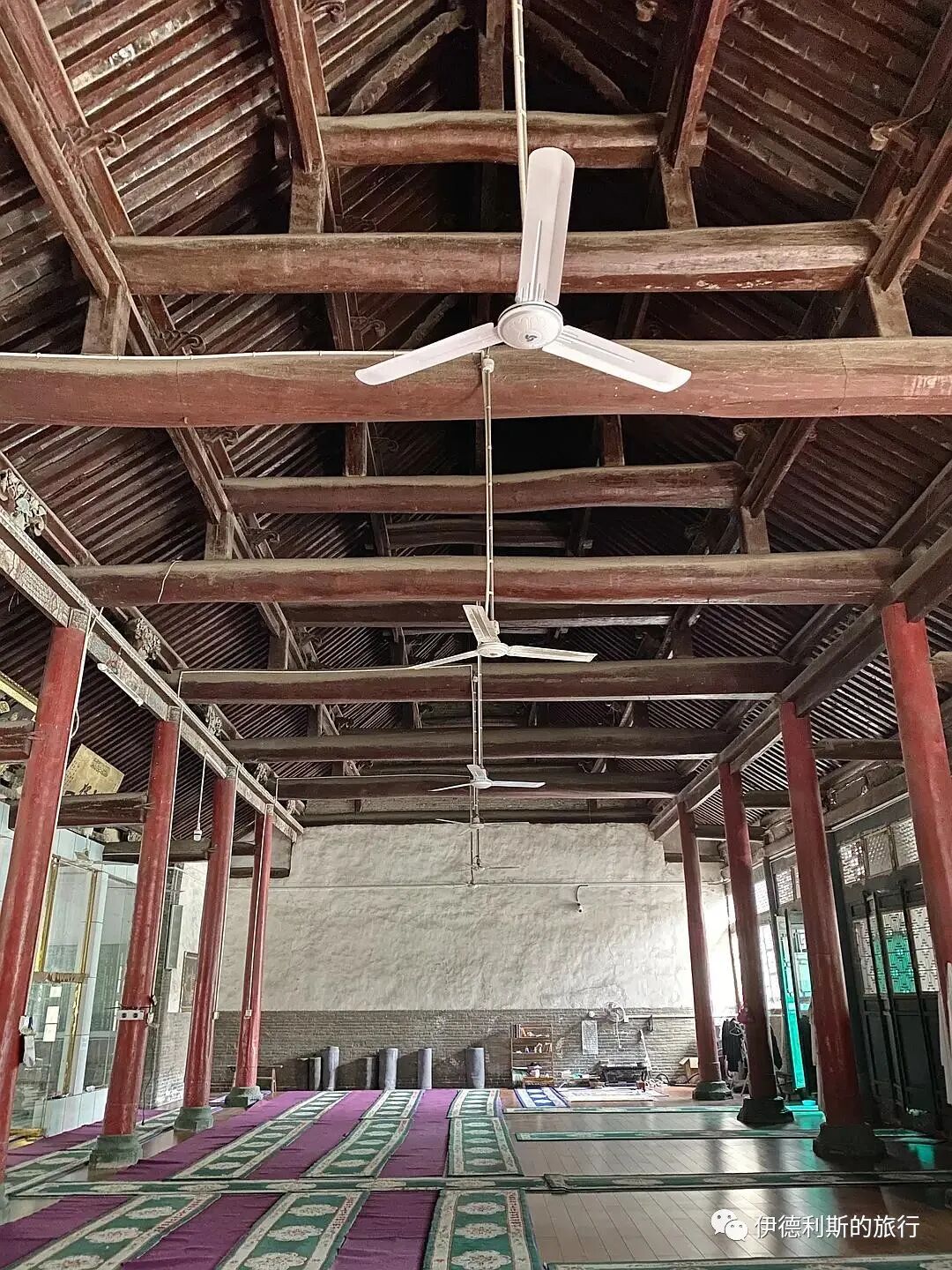
The main hall consists of a juanpeng, front hall, rear hall, and yaodian. The juanpeng is an independent structure, with a drainage gutter installed where it connects to the front eaves of the main hall. There is a 365-year-old osmanthus tree in front of the main hall.
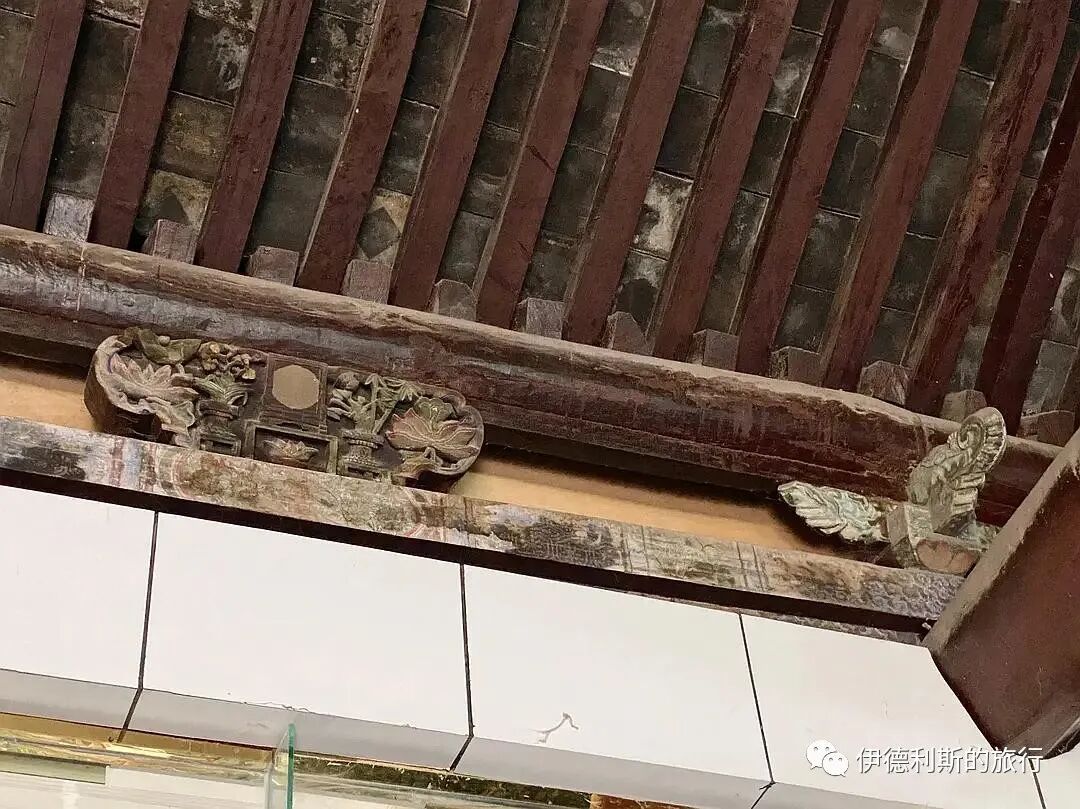
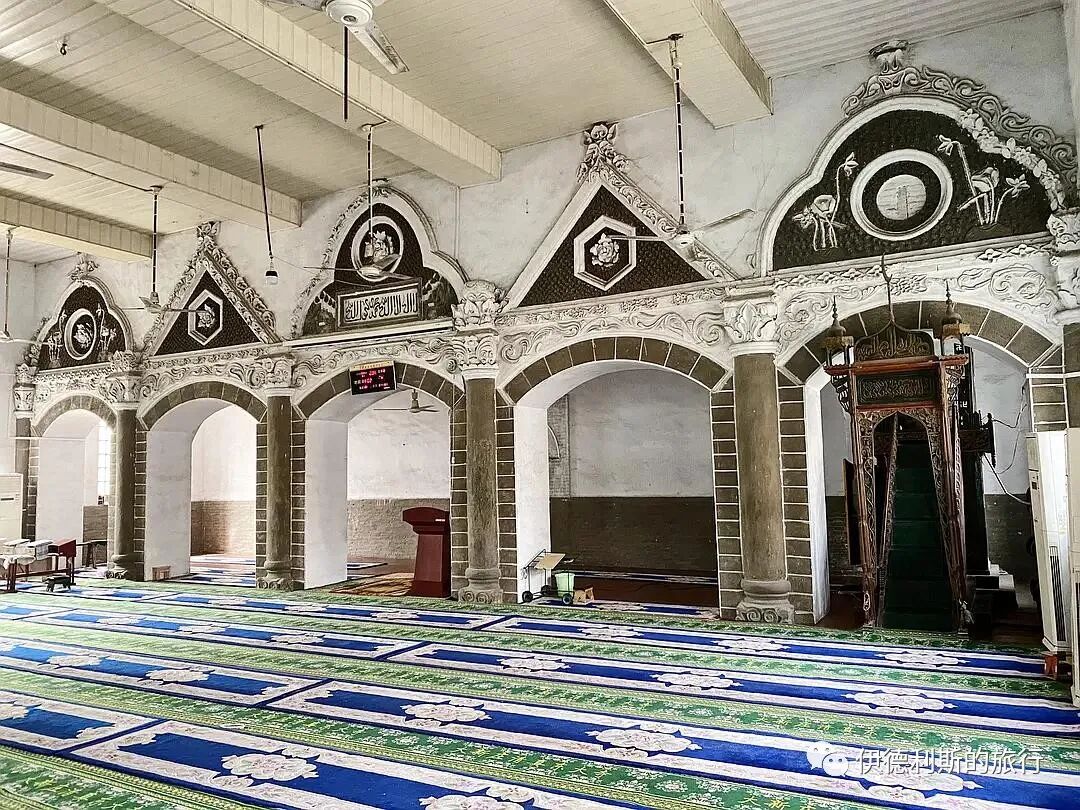
The front hall is seven bays wide, with exposed wooden beams and rafters. The wood carvings on the two beams are very beautiful. The rear hall was added during the Republic of China era and features five Roman-style arched doors with exquisite Republic-era cement decorations.
Wood carvings on the main gate
Old door panels
Calligraphy by the famous Henan Arabic calligrapher Bai Lifeng, collected in the mosque.
Blackboard newspaper
The Daxinzhuang West Mosque is near the East Mosque, but it is not as famous as the East Mosque. The West Mosque was first built during the Jiaqing reign. The main hall originally had three bays, was expanded to five bays in the late Qing Dynasty, and expanded to seven bays in the early Republic of China era. During this period, the old community leader Mai Anli funded the construction of a five-bay juanpeng.
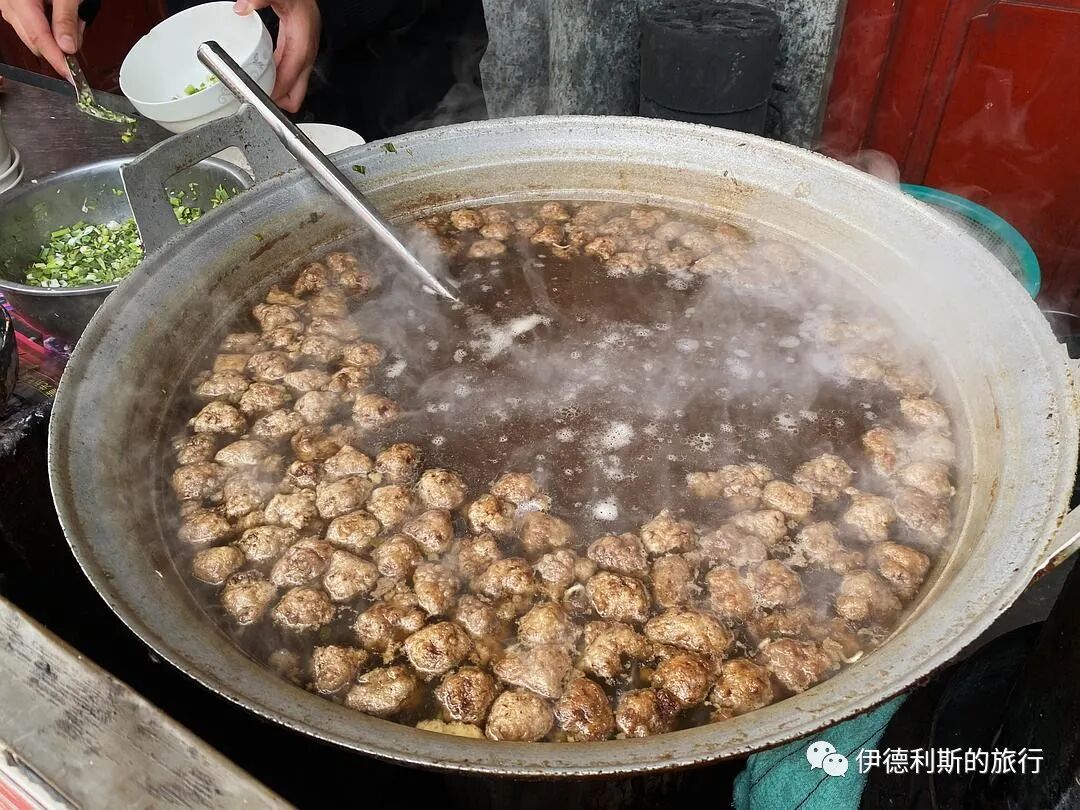
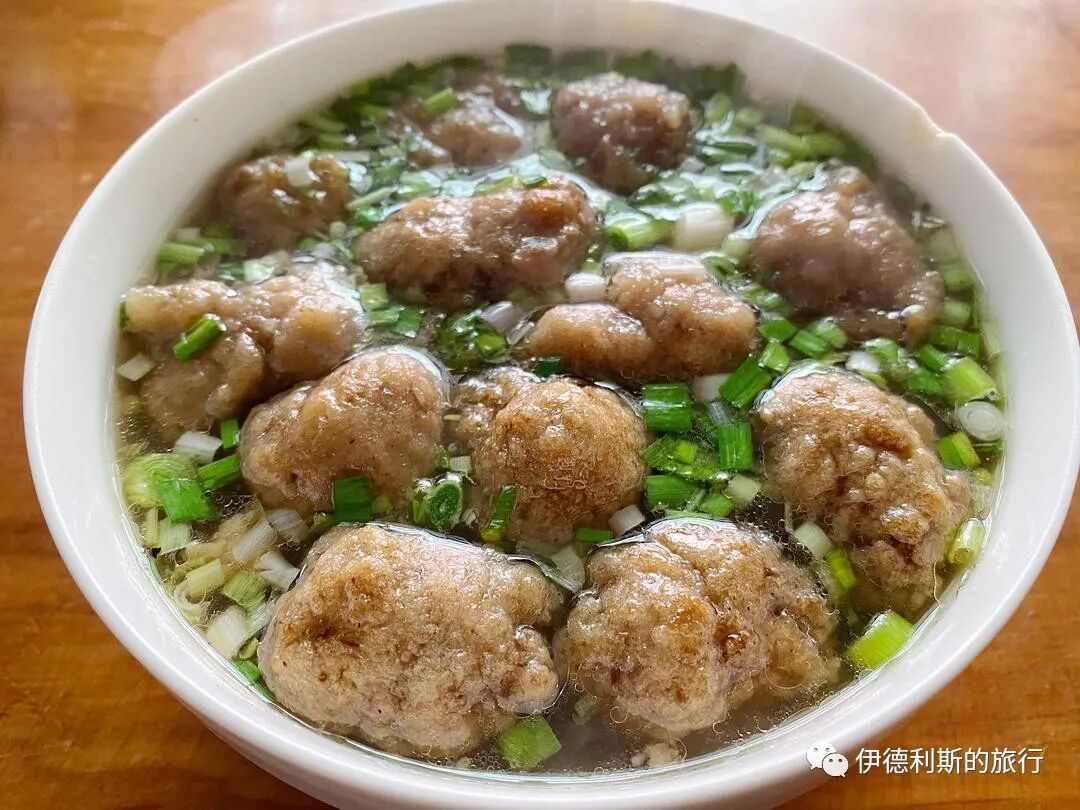
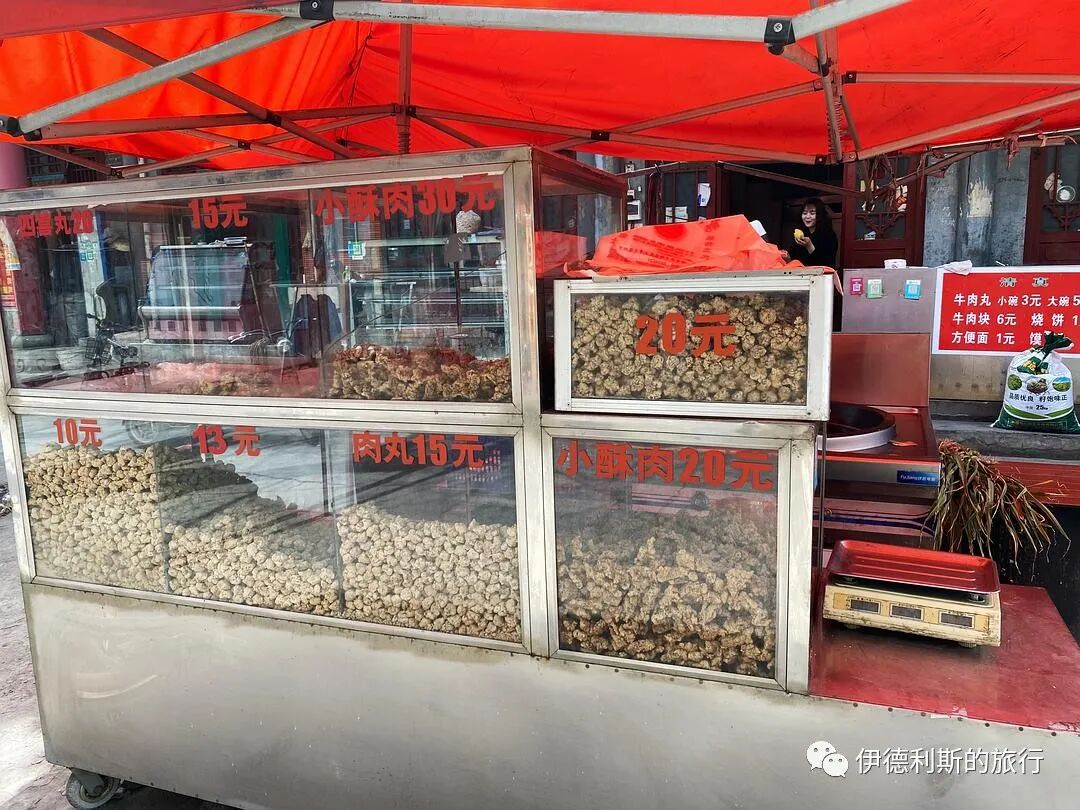
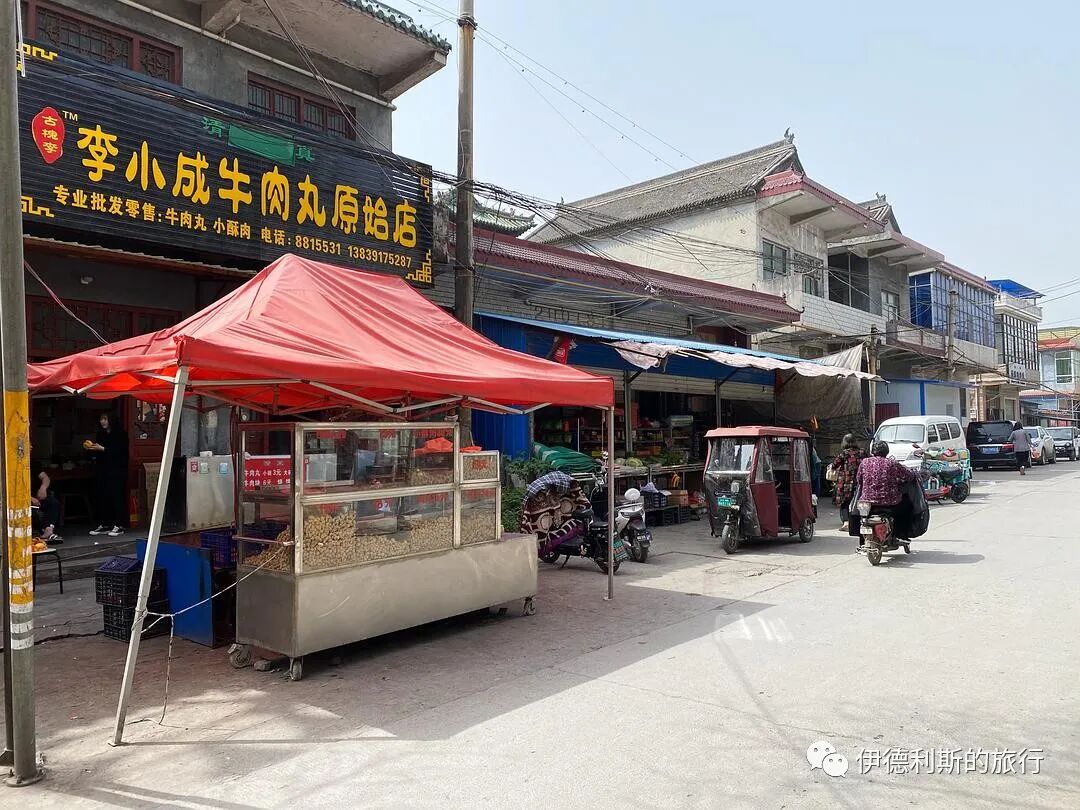
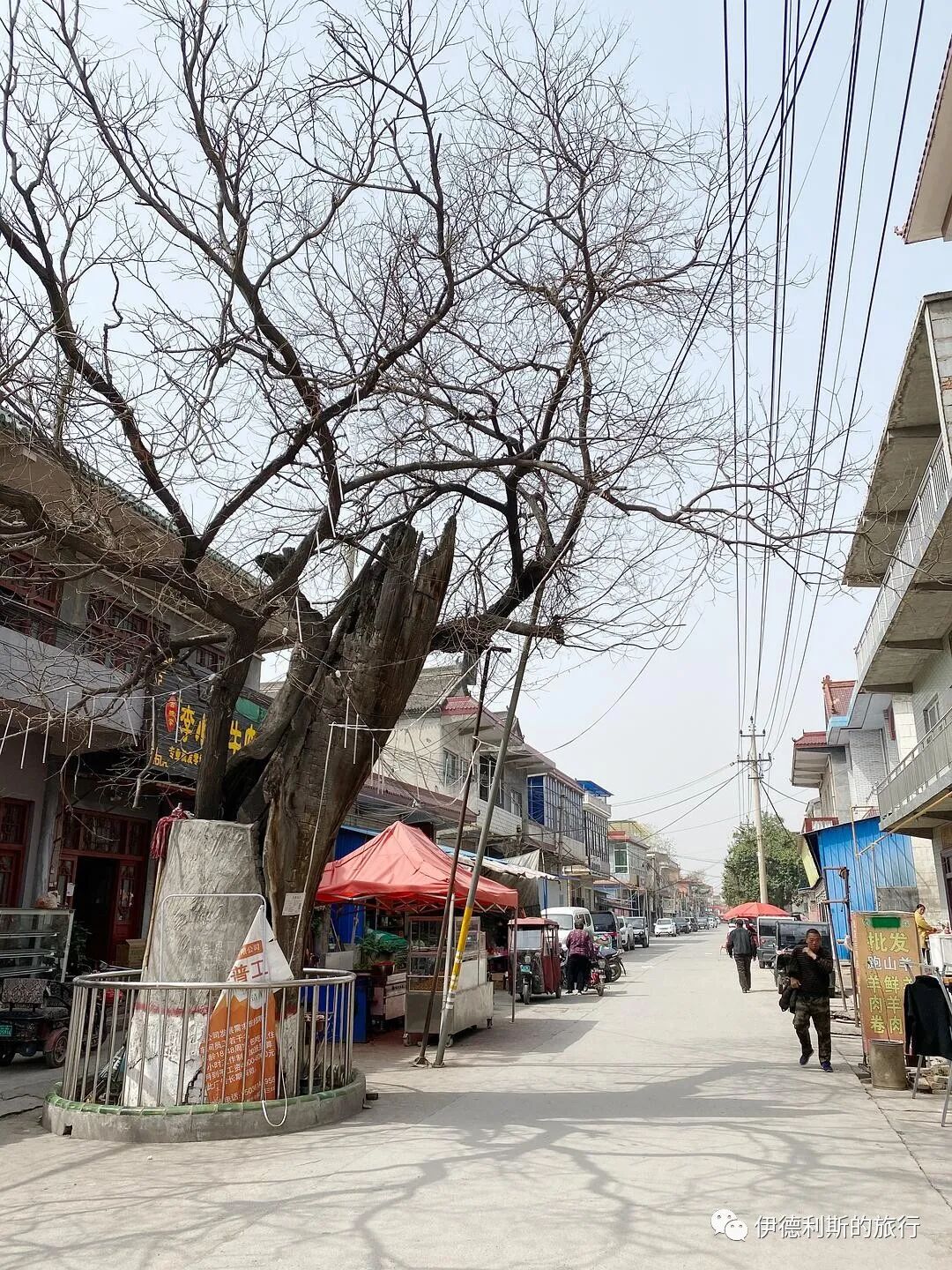
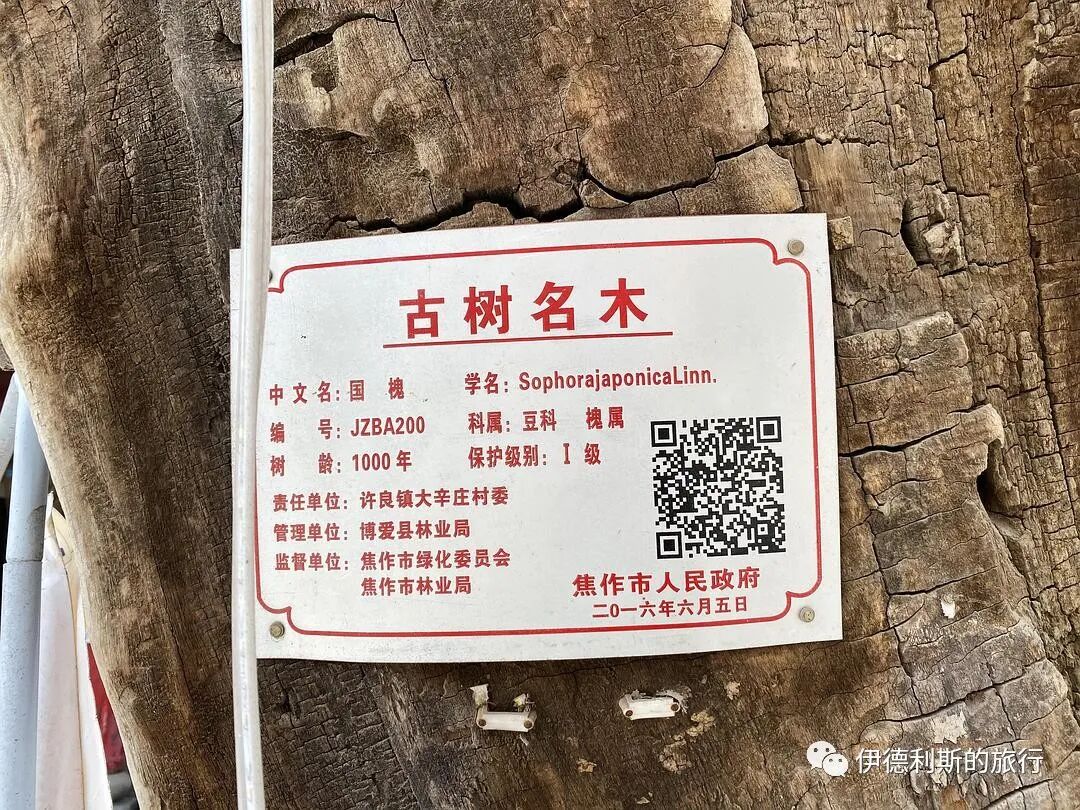
Eating beef meatballs at the original 'Guhuai Li' (Ancient Locust Tree Li) Li Xiaocheng Beef Meatball shop at the entrance of the Daxinzhuang East Mosque. Bo'ai's beef meatballs are quite famous. I saw several shops in Zhengzhou, but I resisted eating them there so I could come to Bo'ai to eat them locally. They are indeed very delicious! There are beef meatballs at various price points, mainly depending on the amount of meat used. There are sixi balls (four-delight meatballs), regular meatballs, and crispy meat. There is a 1,000-year-old locust tree in front of their shop, which looks quite ancient.
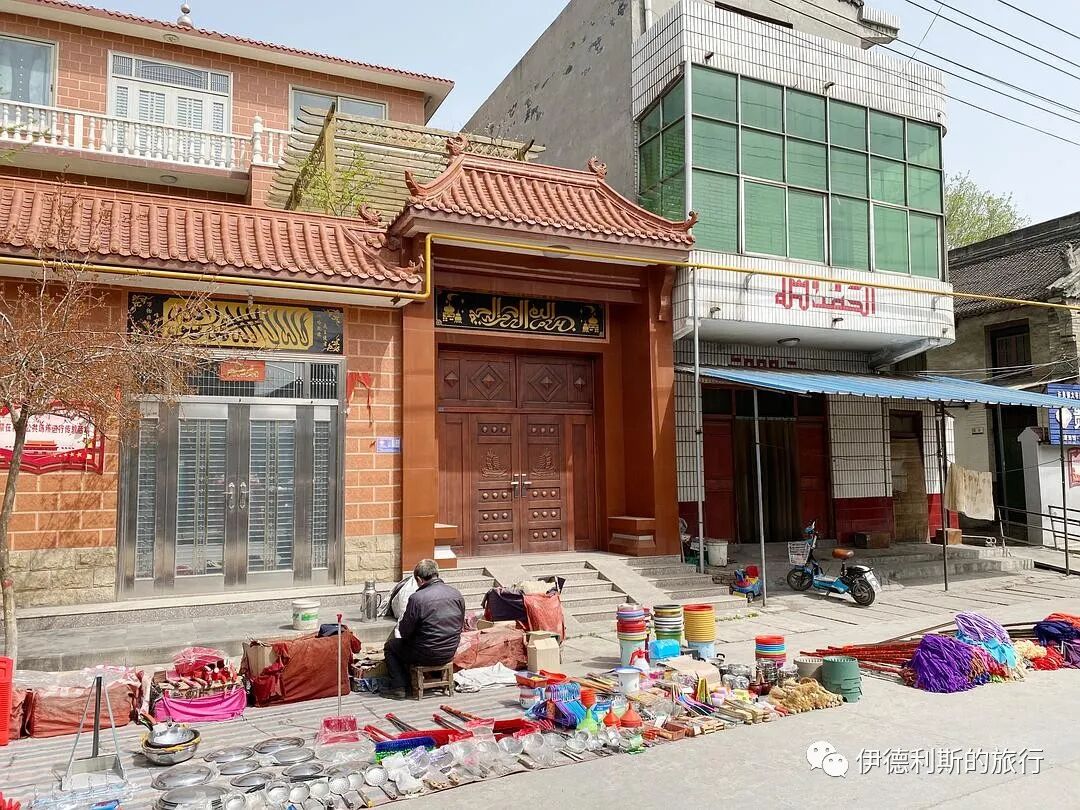
Mendu (door plaques) on the street. view all
Summary: This travel note introduces Zhengzhou, Bo'ai and Qinyang Spring Halal Travel Guide (Part 2). The yaodian (kiln-style prayer hall) was renovated in 1887 (the 13th year of the Guangxu reign). It is useful for readers interested in Henan Travel, China Mosques, Halal Food.
The yaodian (kiln-style prayer hall) was renovated in 1887 (the 13th year of the Guangxu reign). Its interior features a brick dome structure, built with two partition walls over 1 meter thick to form a semicircular arch. At the concave corners, three layers of arches are extended to create an octagonal skylight, topped with a corbelled dome. The very top of the central dome is inscribed with the Arabic word for Allah.
There is beautiful calligraphy on the mihrab (prayer niche). Imam Ma Hongjie gave us a detailed introduction here, and I also happened to catch the dhikr (remembrance of Allah).
The exterior of the yaodian has a cross-shaped roof with over 70 glazed roof beasts. Under the eaves are glazed beams, brackets, and hanging flower columns. The colorful design represents the highest standard of Qing Dynasty mosque yaodian roofs.
Inside the North Mosque is the Yuying Martial Arts School, founded in 1928, which specializes in Chaquan (a style of Chinese martial arts). The second master of Chaquan, Shi Desheng, trained many excellent disciples, including Nanjing Military Region martial arts instructor Mai Changchun, Wuhan Military Region martial arts instructor Ding Changwen, Feng Yuxiang's Big Sword Team instructor Wang Shaozhou, and the martyr of the War to Resist US Aggression and Aid Korea, Ma Shaokong.
Eating breakfast on Beisi Street in Qinyang, Henan, on a Sunday morning. First, I had rice tea with youguozi (fried dough fritters) at Ma's. Rice tea is made from boiled roasted rice, with white sesame seeds and soybeans added; it is very refreshing. Then, I had a mix of beef offal and suwan (crispy meatballs) at Bai's next door. The portions were generous, the soup was very fragrant, and it was a very satisfying meal.
The Qinyang Shuinanguan Mosque was rebuilt between 1990 and 1995. It still maintains the traditional architectural style with flying eaves, bracket sets, and blue-green glazed tiles, though the new building, no matter how beautiful, lacks historical value.
The most valuable part of Shuinanguan is the mihrab yaodian prayer niche excavated during the 1990s reconstruction. It has been designated as a national cultural relic and is stored inside the main hall. Unfortunately, it was not time for namaz (prayer) when I visited, so there was no one at the mosque, and the main hall was locked, so I could not see it.
The mosque houses works by the famous Beijing Arabic calligrapher Li Wencai and the famous Henan Arabic calligrapher Mi Guangjiang.
Bo'ai Erxian Temple and Daxinzhuang
Took a taxi from Qinyang, Henan, to the Erxian Mosque Mosque in Bo'ai. The Erxian Mosque Mosque was first built in the Yuan Dynasty, renovated in 1638 (the 11th year of the Ming Chongzhen reign), and renovated again in 1731 (the 9th year of the Qing Yongzheng reign). It is a cultural relic protection unit of Henan Province. The main hall of the mosque consists of a juanpeng (shed-style roof), front hall, rear hall, and yaodian. The juanpeng and front hall were built in the Qing Dynasty with a hard mountain roof and connected structure, while the rear hall and yaodian were added in 1993.
Continued by taxi from Erxian Mosque to the East Mosque in Daxinzhuang, Bo'ai. The Daxinzhuang East Mosque was first built in the Yuan Dynasty, expanded in the Ming Dynasty, and the rear hall was added during the Republic of China era. It is currently a cultural relic protection unit of Henan Province.
The main hall consists of a juanpeng, front hall, rear hall, and yaodian. The juanpeng is an independent structure, with a drainage gutter installed where it connects to the front eaves of the main hall. There is a 365-year-old osmanthus tree in front of the main hall.
The front hall is seven bays wide, with exposed wooden beams and rafters. The wood carvings on the two beams are very beautiful. The rear hall was added during the Republic of China era and features five Roman-style arched doors with exquisite Republic-era cement decorations.
Wood carvings on the main gate
Old door panels
Calligraphy by the famous Henan Arabic calligrapher Bai Lifeng, collected in the mosque.
Blackboard newspaper
The Daxinzhuang West Mosque is near the East Mosque, but it is not as famous as the East Mosque. The West Mosque was first built during the Jiaqing reign. The main hall originally had three bays, was expanded to five bays in the late Qing Dynasty, and expanded to seven bays in the early Republic of China era. During this period, the old community leader Mai Anli funded the construction of a five-bay juanpeng.
Eating beef meatballs at the original 'Guhuai Li' (Ancient Locust Tree Li) Li Xiaocheng Beef Meatball shop at the entrance of the Daxinzhuang East Mosque. Bo'ai's beef meatballs are quite famous. I saw several shops in Zhengzhou, but I resisted eating them there so I could come to Bo'ai to eat them locally. They are indeed very delicious! There are beef meatballs at various price points, mainly depending on the amount of meat used. There are sixi balls (four-delight meatballs), regular meatballs, and crispy meat. There is a 1,000-year-old locust tree in front of their shop, which looks quite ancient.
Mendu (door plaques) on the street. view all
Reposted from the web
Summary: This travel note introduces Zhengzhou, Bo'ai and Qinyang Spring Halal Travel Guide (Part 2). The yaodian (kiln-style prayer hall) was renovated in 1887 (the 13th year of the Guangxu reign). It is useful for readers interested in Henan Travel, China Mosques, Halal Food.
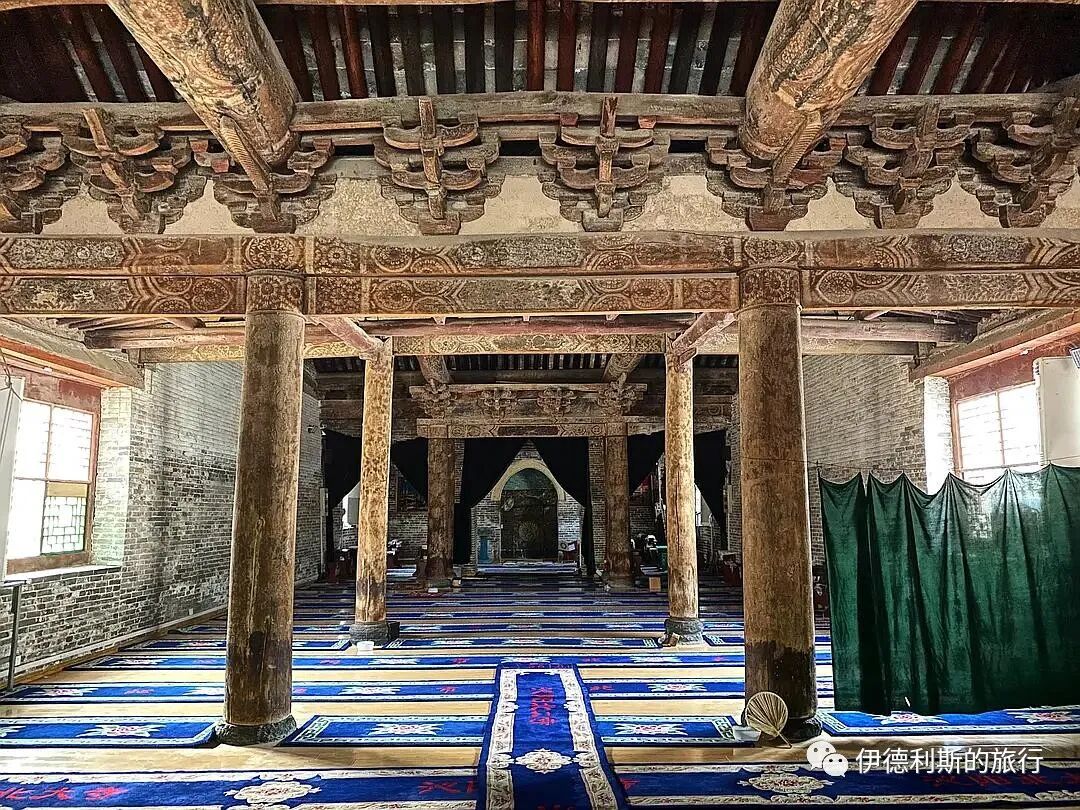
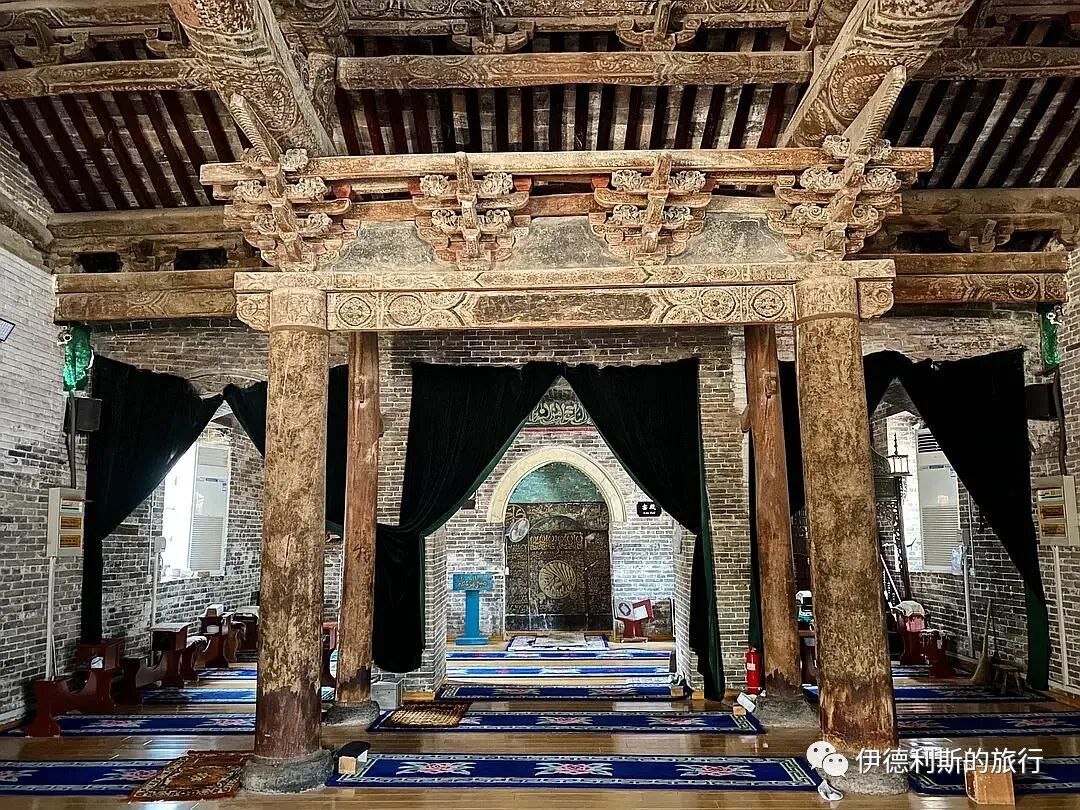
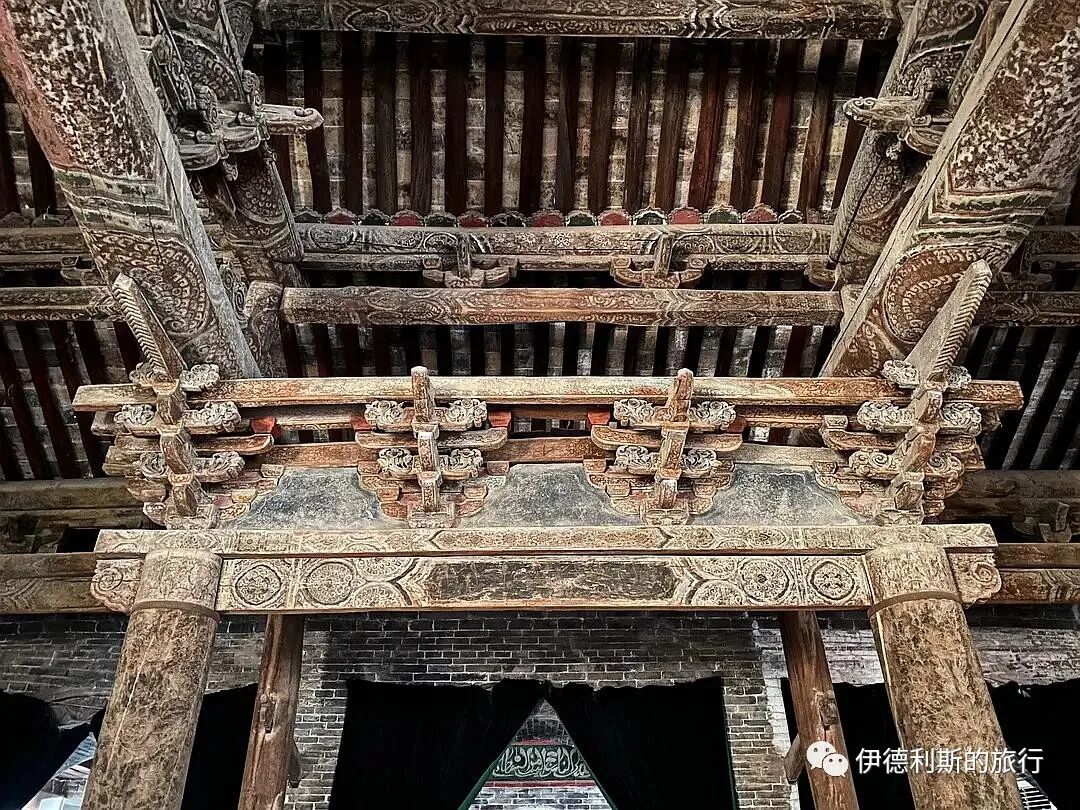
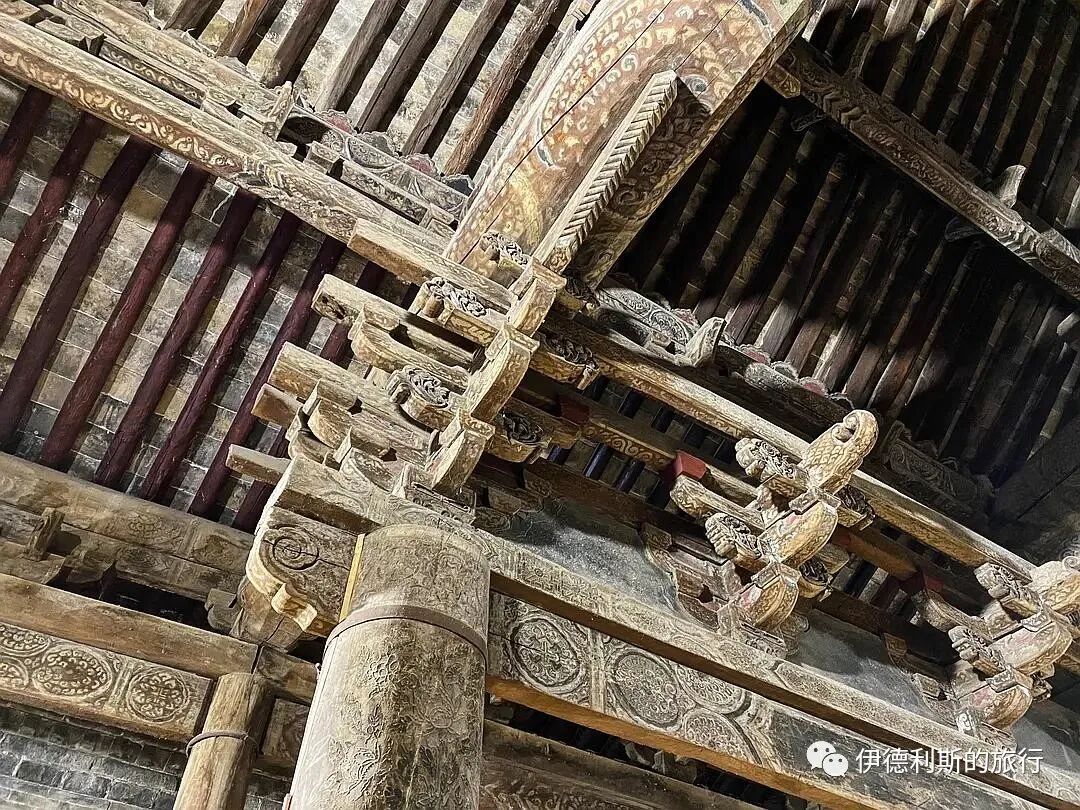
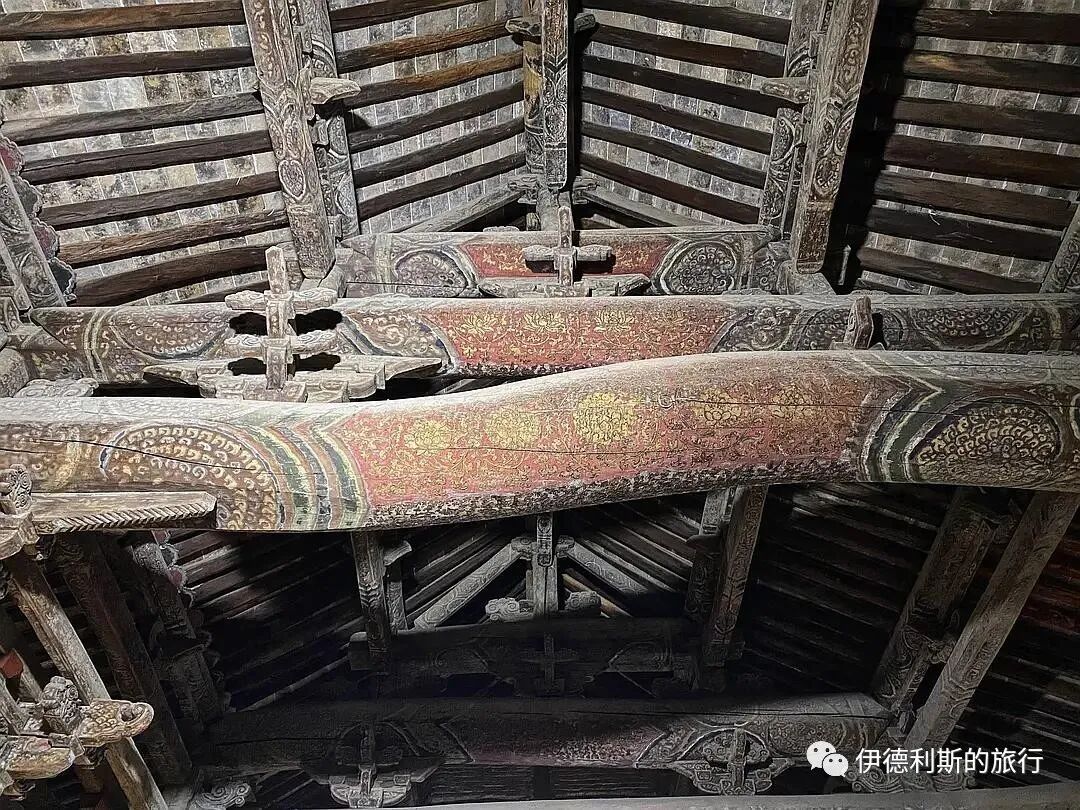
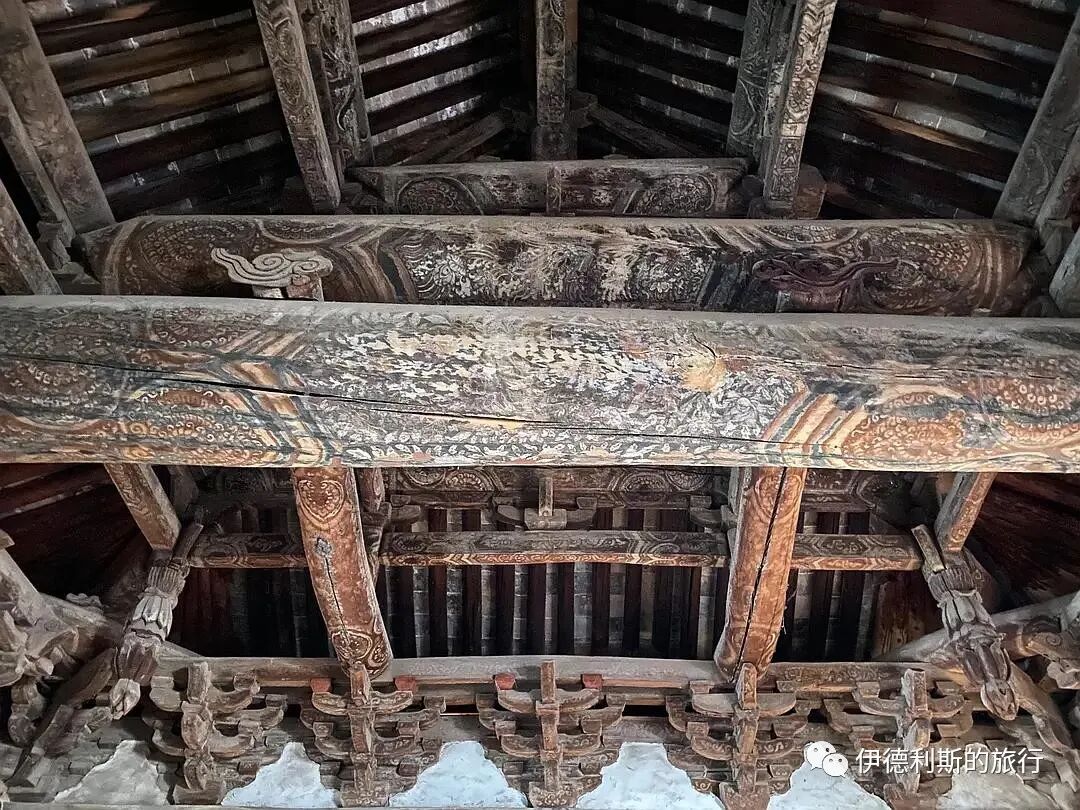
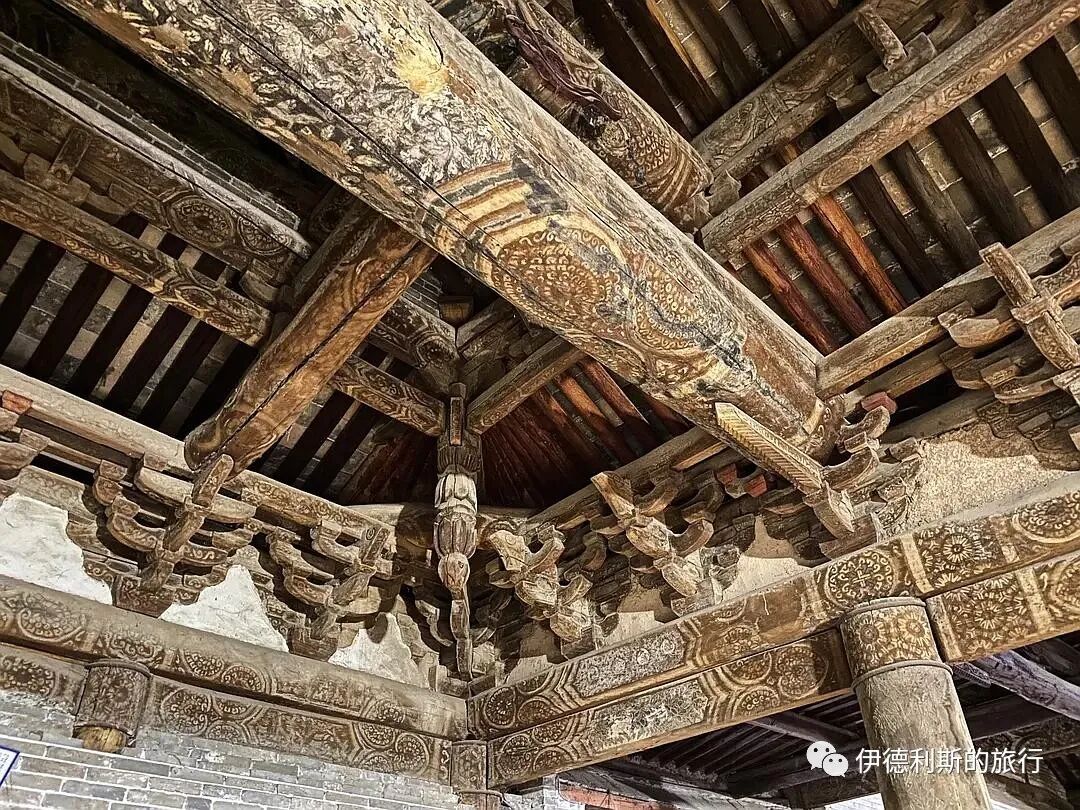
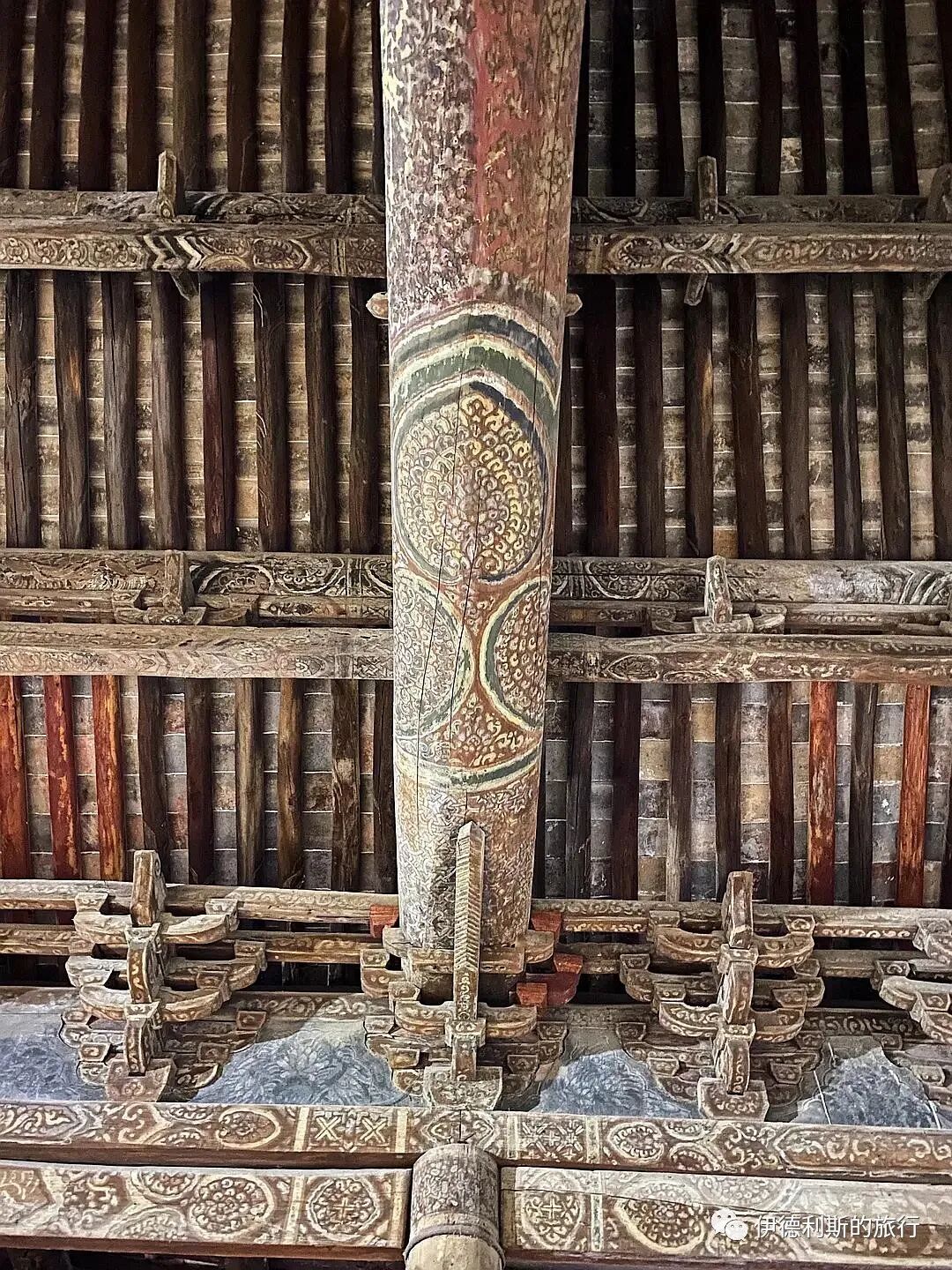
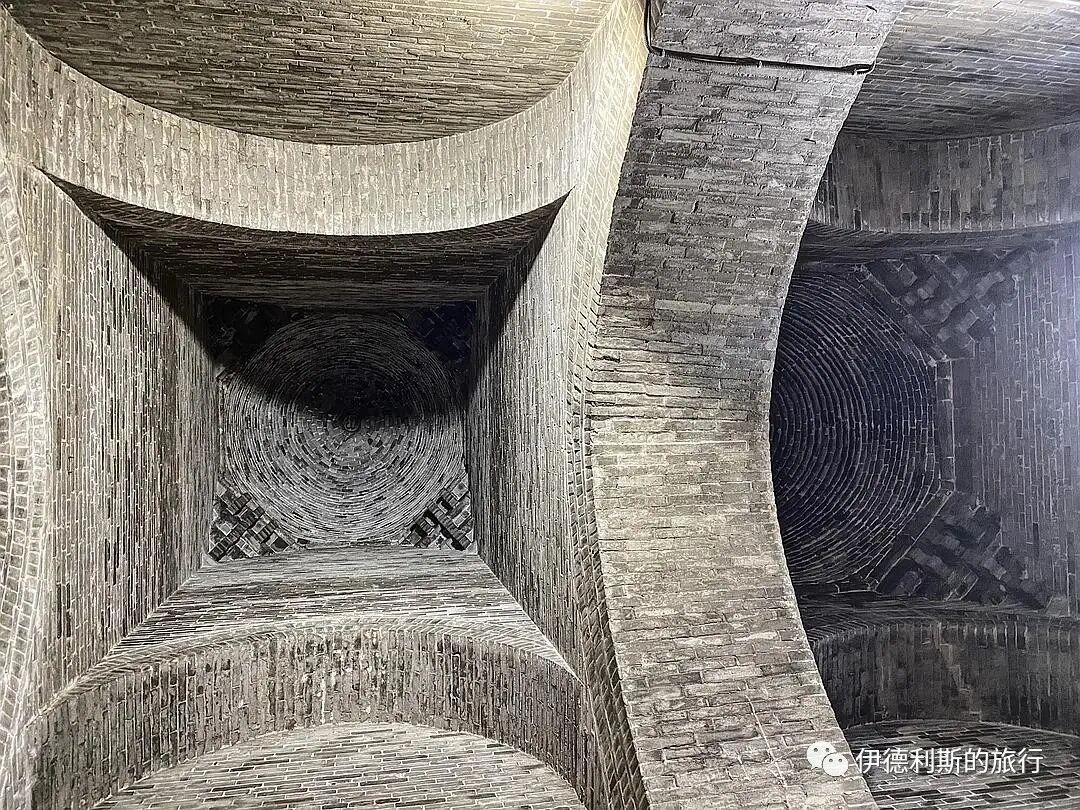
The yaodian (kiln-style prayer hall) was renovated in 1887 (the 13th year of the Guangxu reign). Its interior features a brick dome structure, built with two partition walls over 1 meter thick to form a semicircular arch. At the concave corners, three layers of arches are extended to create an octagonal skylight, topped with a corbelled dome. The very top of the central dome is inscribed with the Arabic word for Allah.
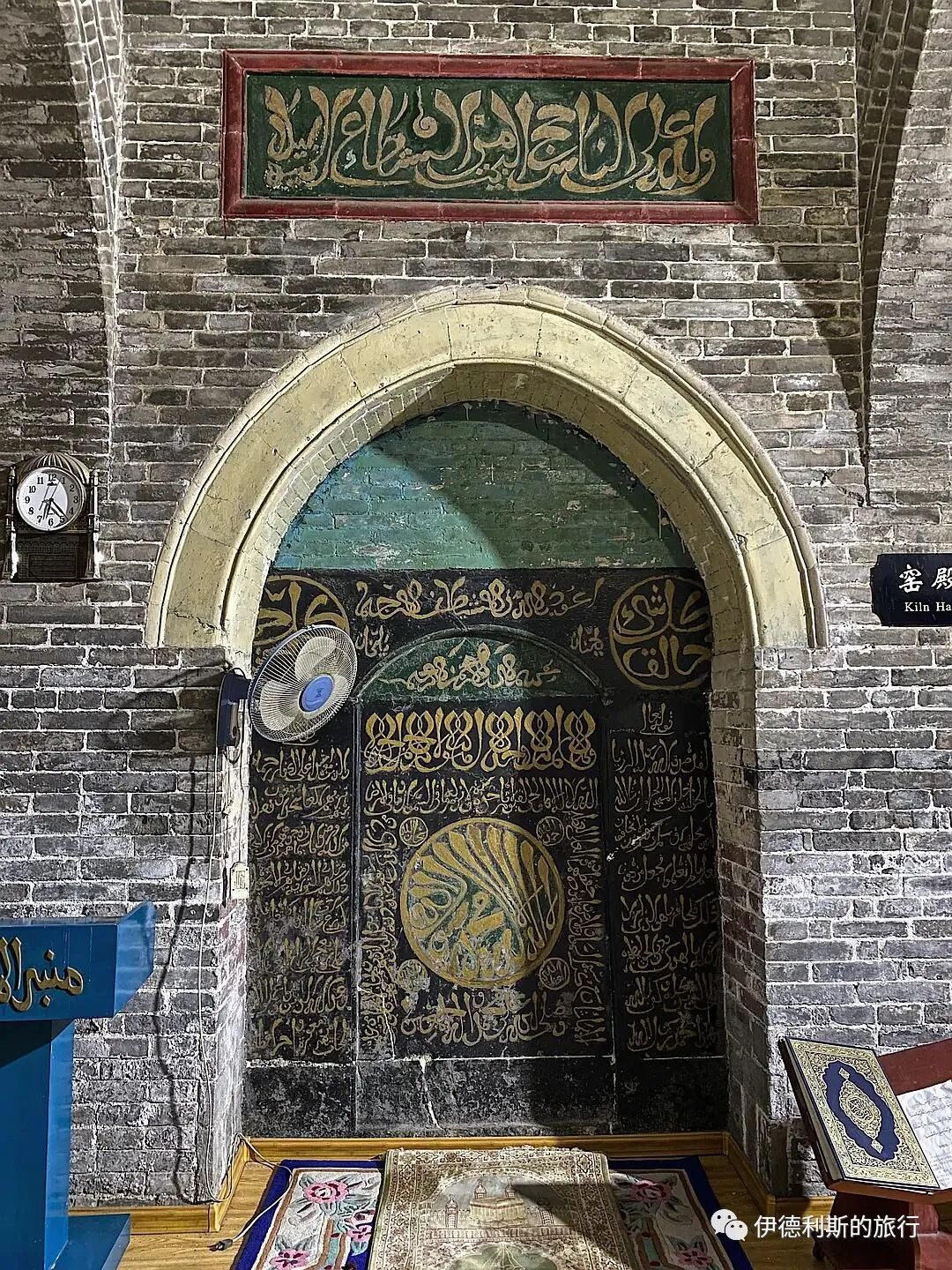
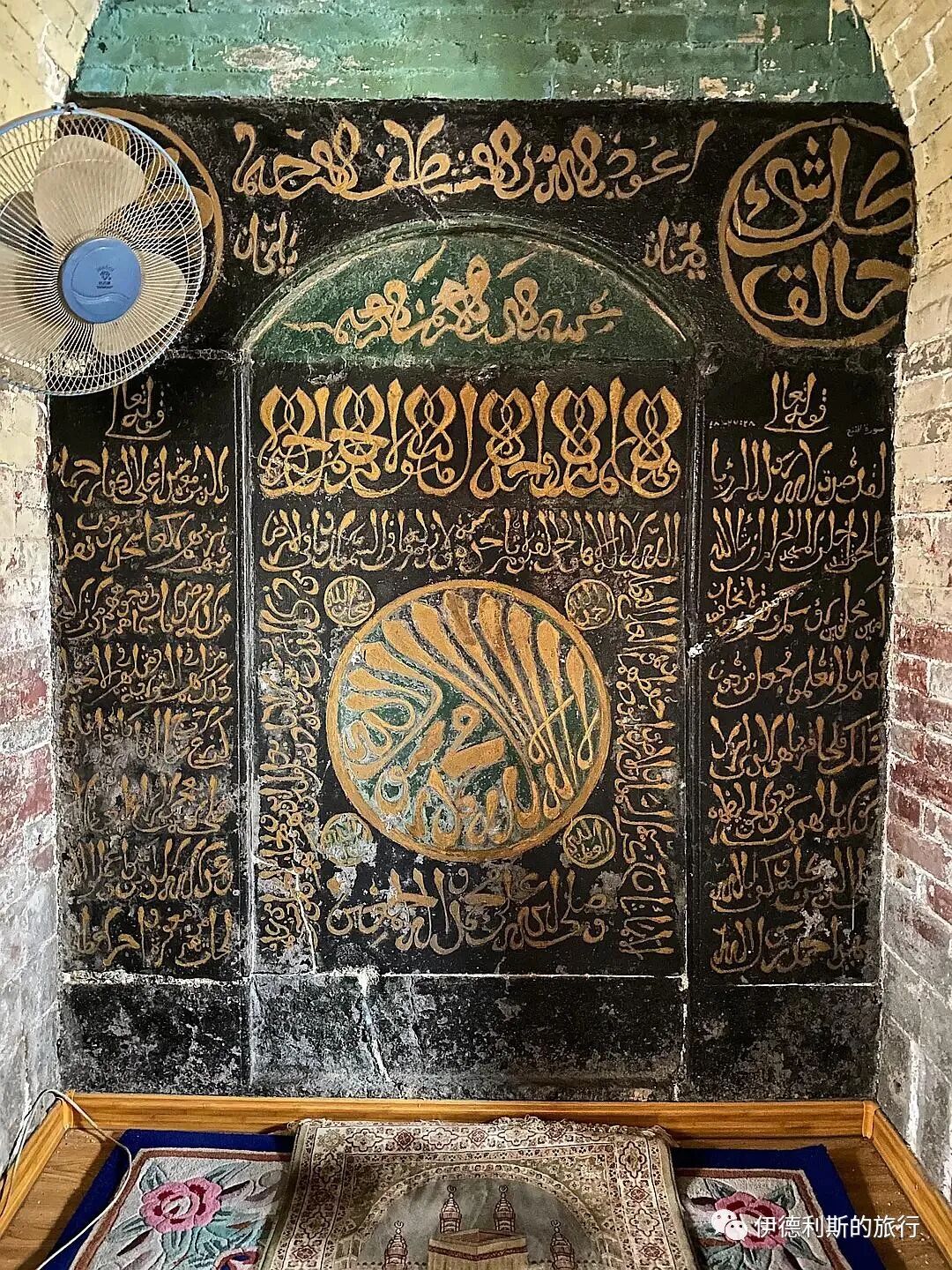
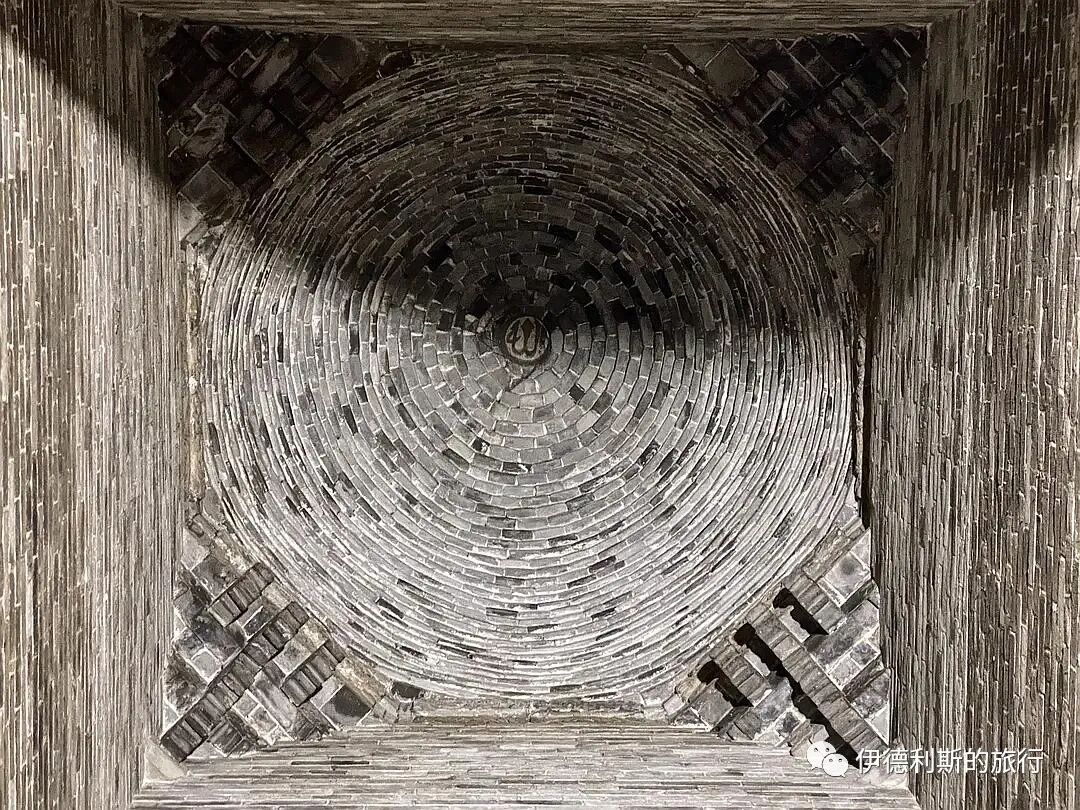
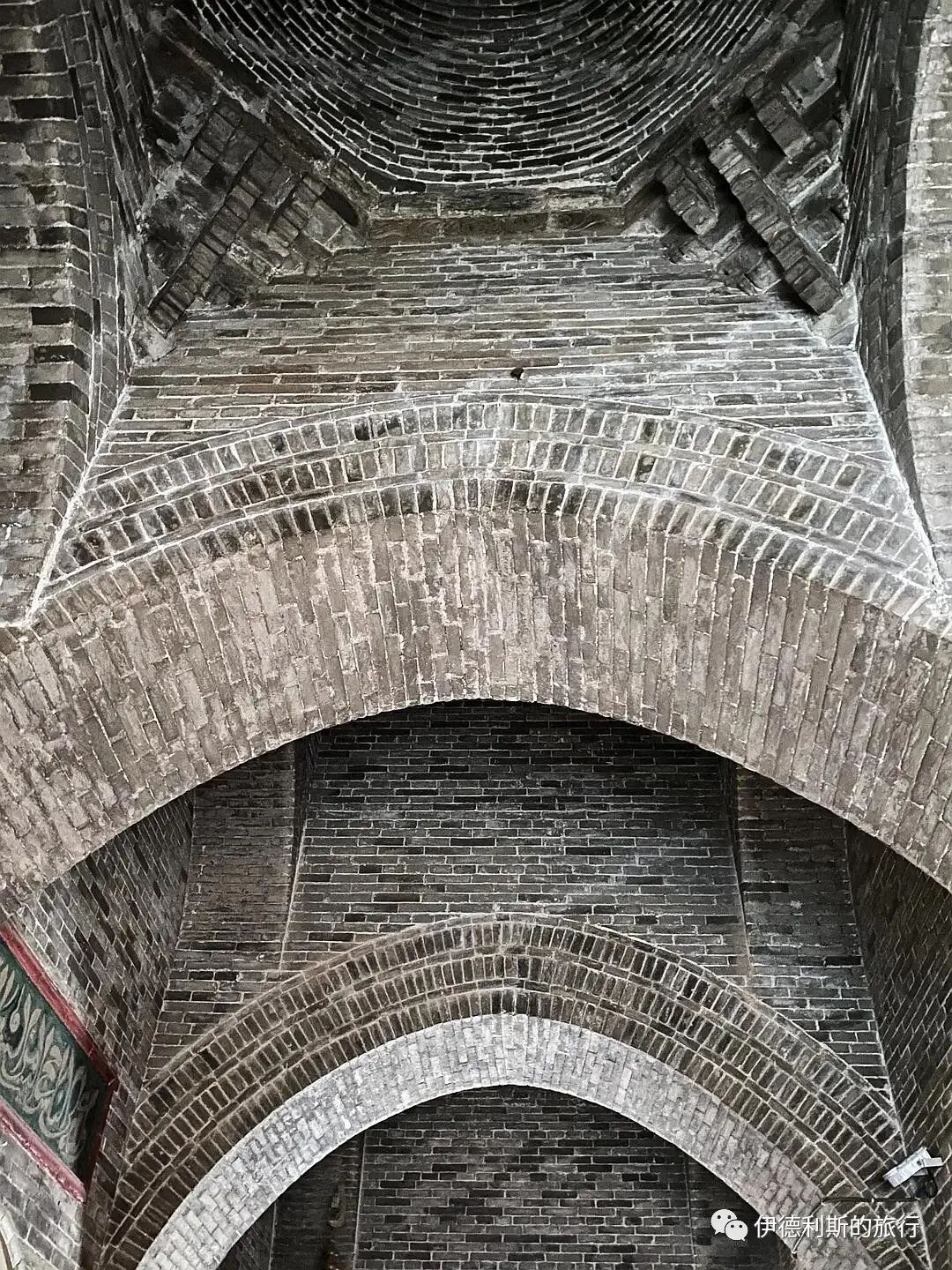
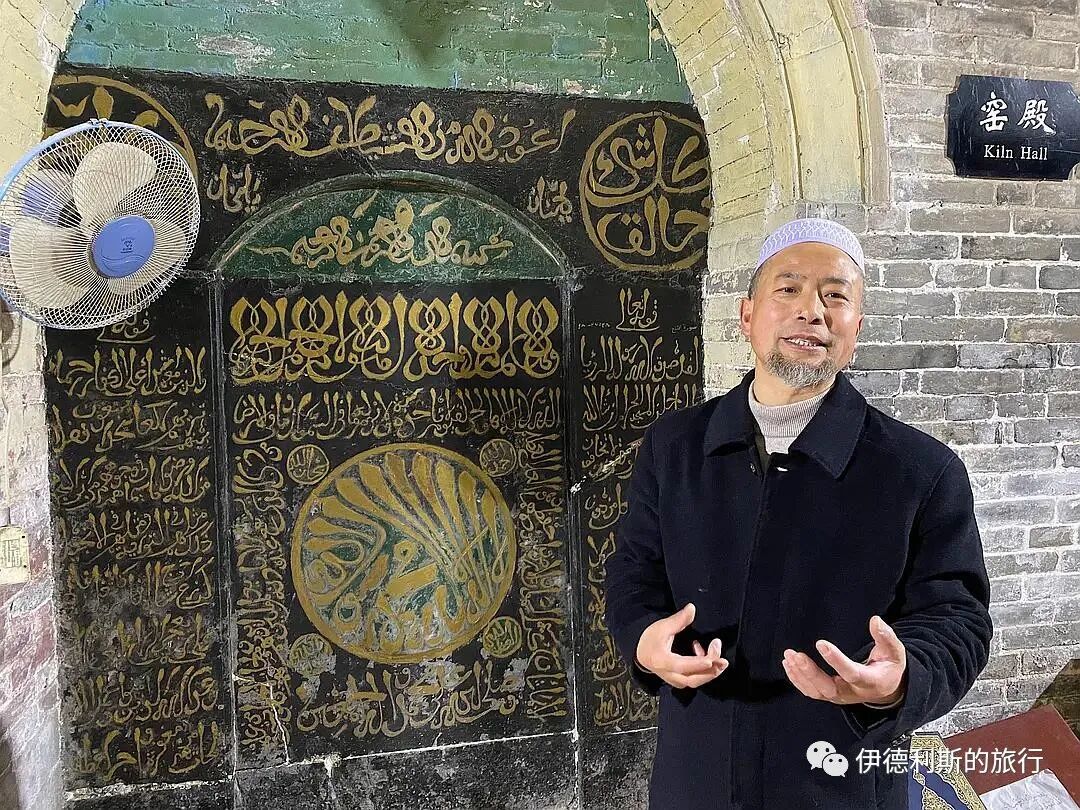
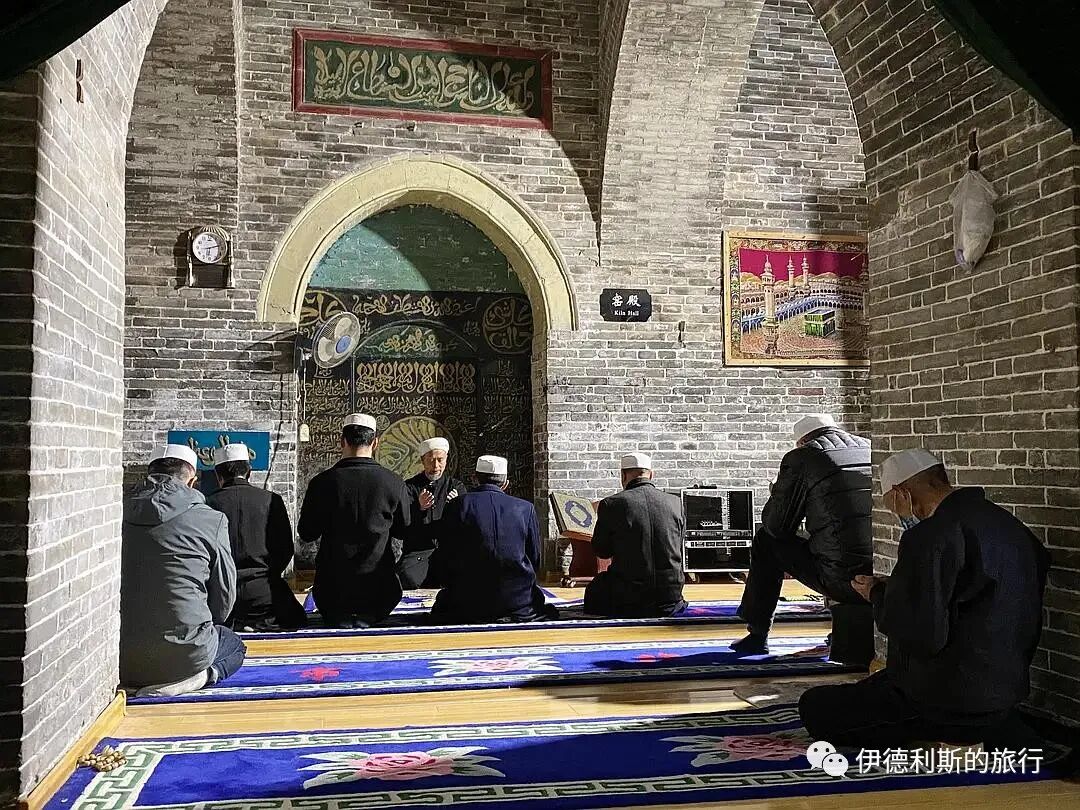
There is beautiful calligraphy on the mihrab (prayer niche). Imam Ma Hongjie gave us a detailed introduction here, and I also happened to catch the dhikr (remembrance of Allah).
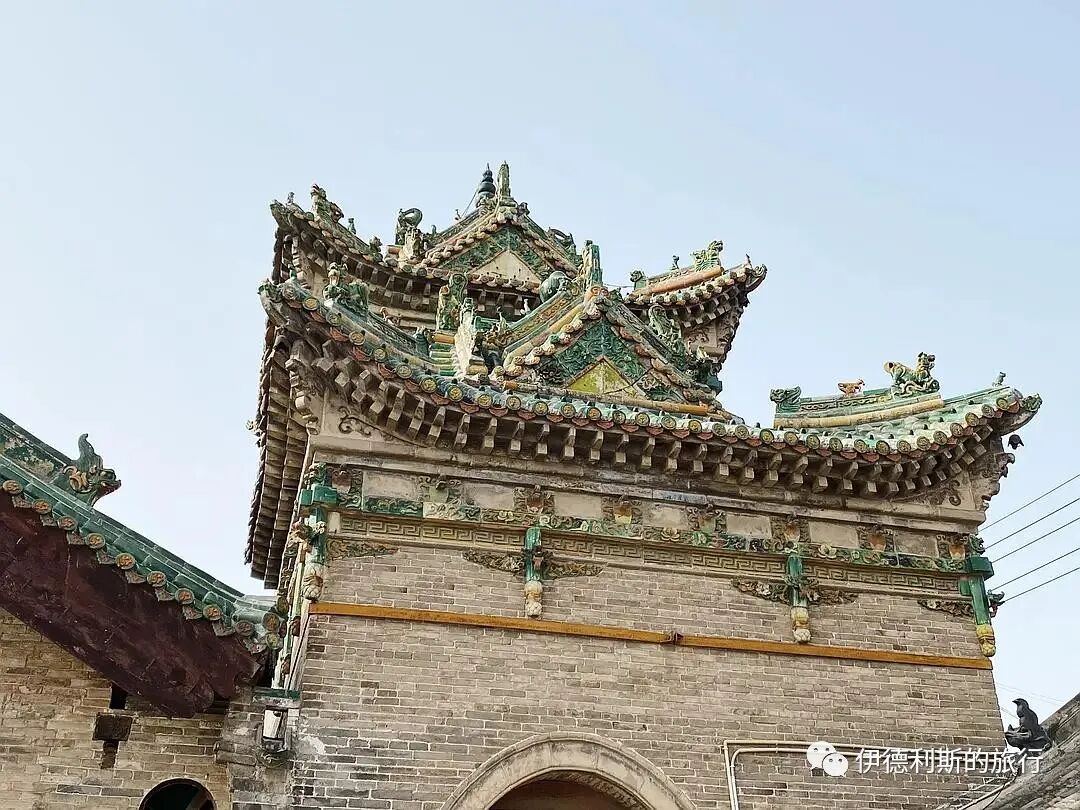
The exterior of the yaodian has a cross-shaped roof with over 70 glazed roof beasts. Under the eaves are glazed beams, brackets, and hanging flower columns. The colorful design represents the highest standard of Qing Dynasty mosque yaodian roofs.
Inside the North Mosque is the Yuying Martial Arts School, founded in 1928, which specializes in Chaquan (a style of Chinese martial arts). The second master of Chaquan, Shi Desheng, trained many excellent disciples, including Nanjing Military Region martial arts instructor Mai Changchun, Wuhan Military Region martial arts instructor Ding Changwen, Feng Yuxiang's Big Sword Team instructor Wang Shaozhou, and the martyr of the War to Resist US Aggression and Aid Korea, Ma Shaokong.
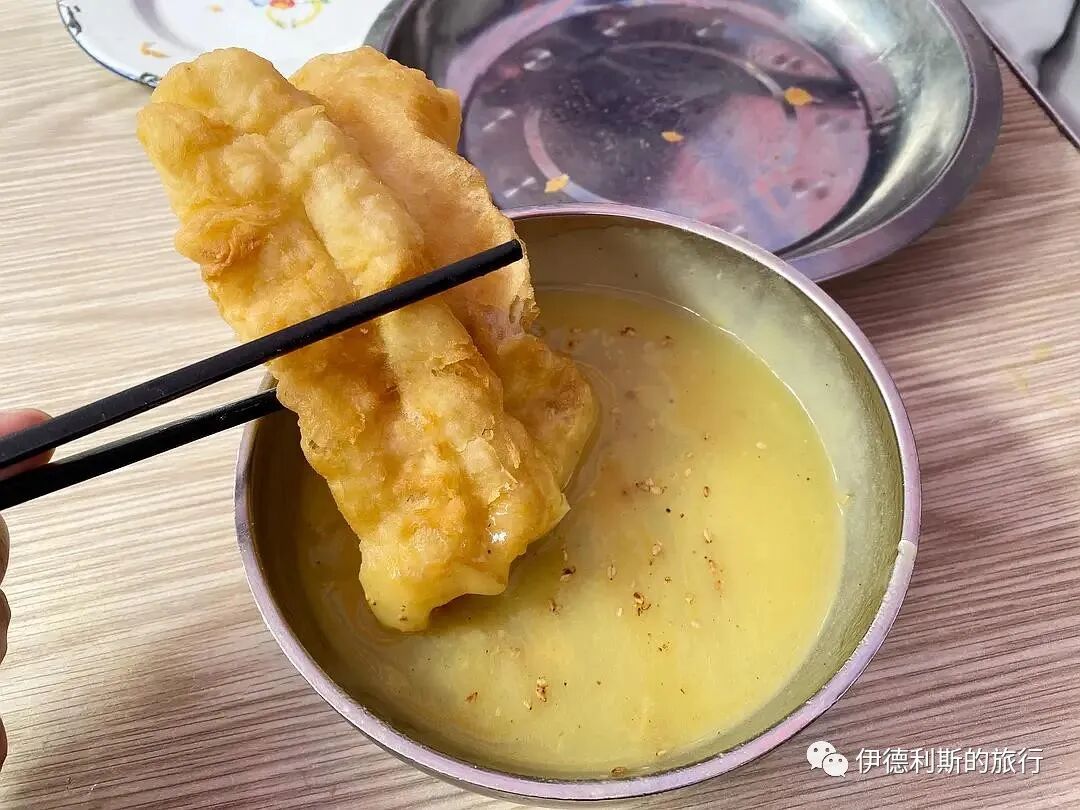
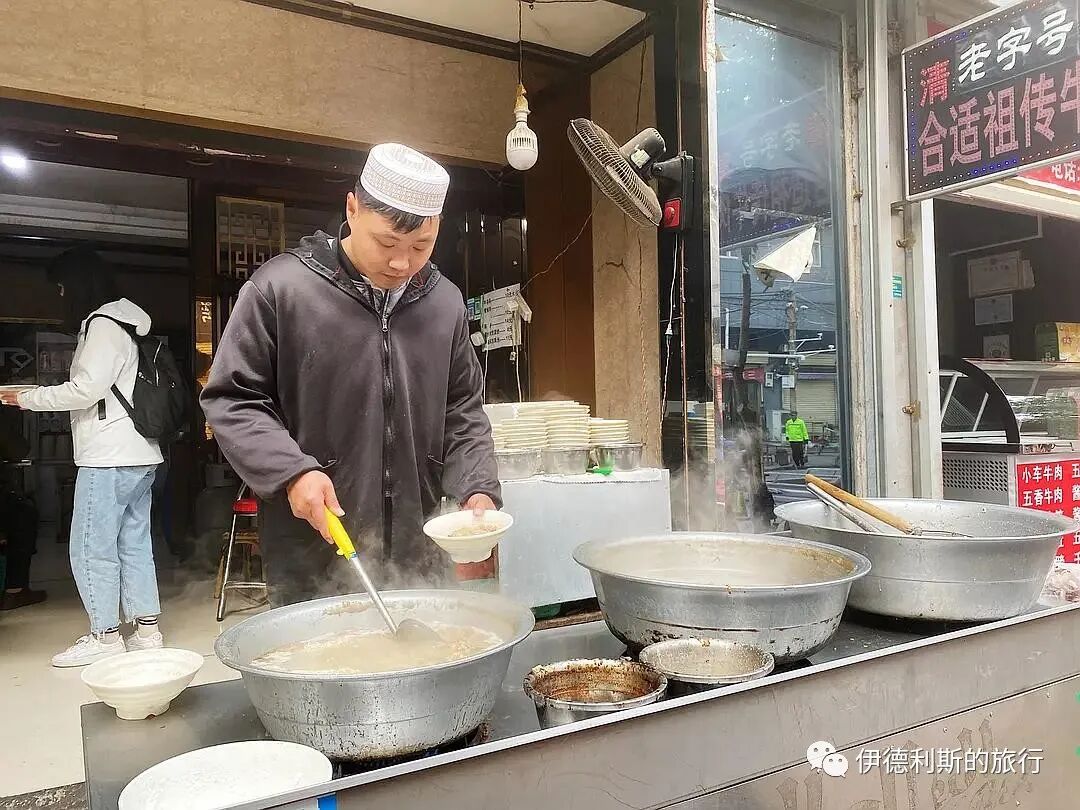
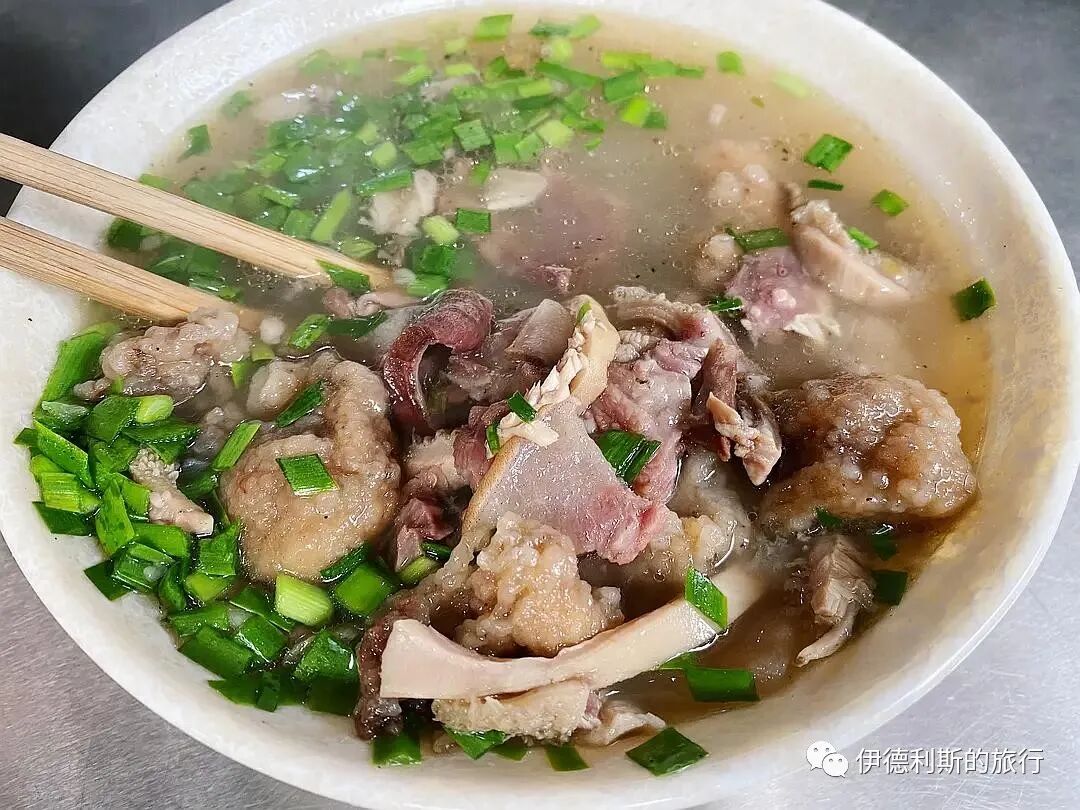
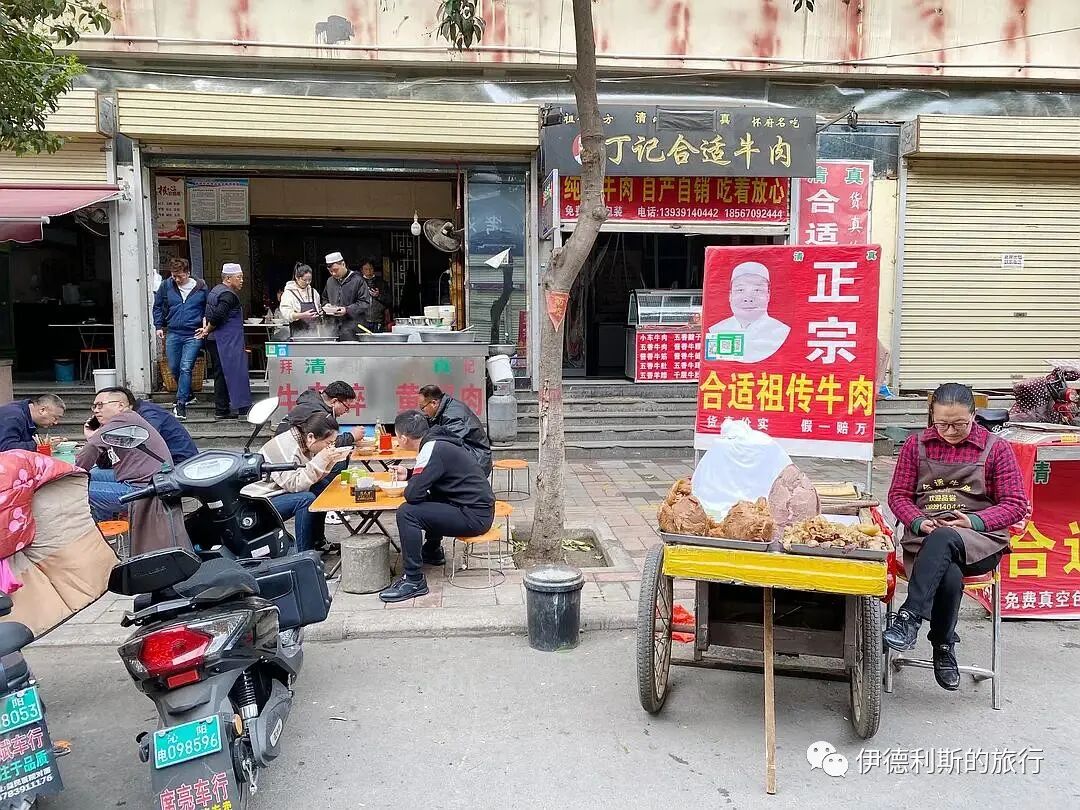
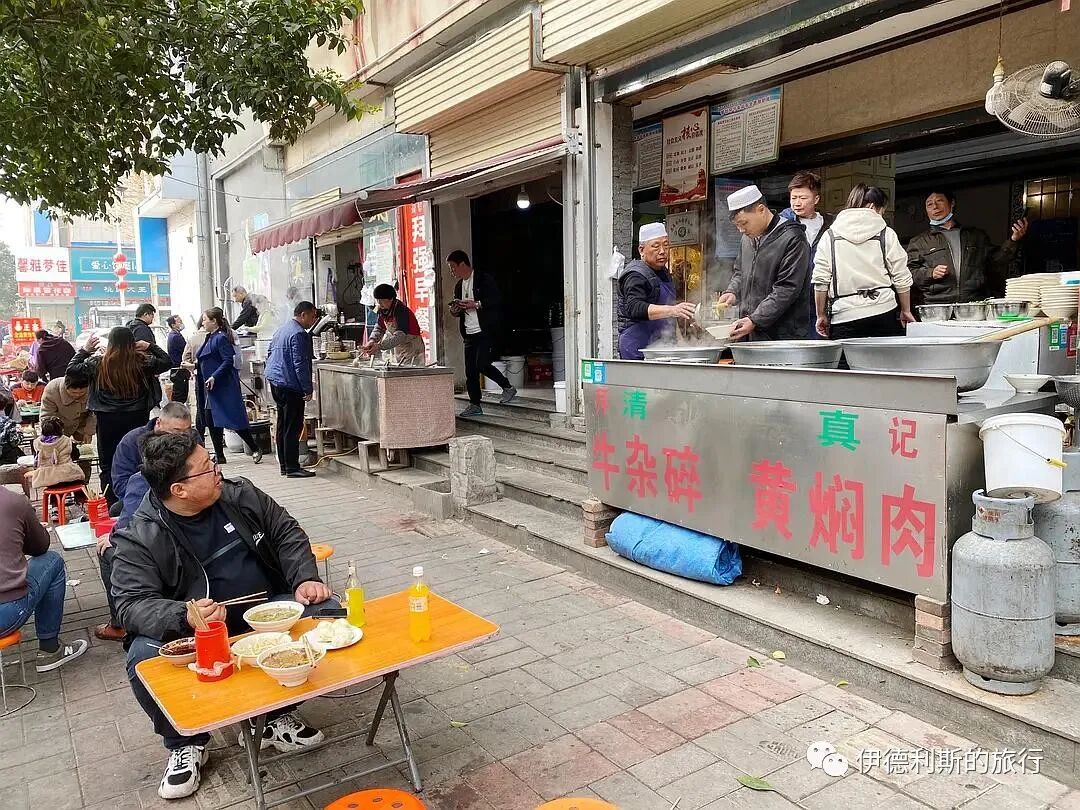
Eating breakfast on Beisi Street in Qinyang, Henan, on a Sunday morning. First, I had rice tea with youguozi (fried dough fritters) at Ma's. Rice tea is made from boiled roasted rice, with white sesame seeds and soybeans added; it is very refreshing. Then, I had a mix of beef offal and suwan (crispy meatballs) at Bai's next door. The portions were generous, the soup was very fragrant, and it was a very satisfying meal.
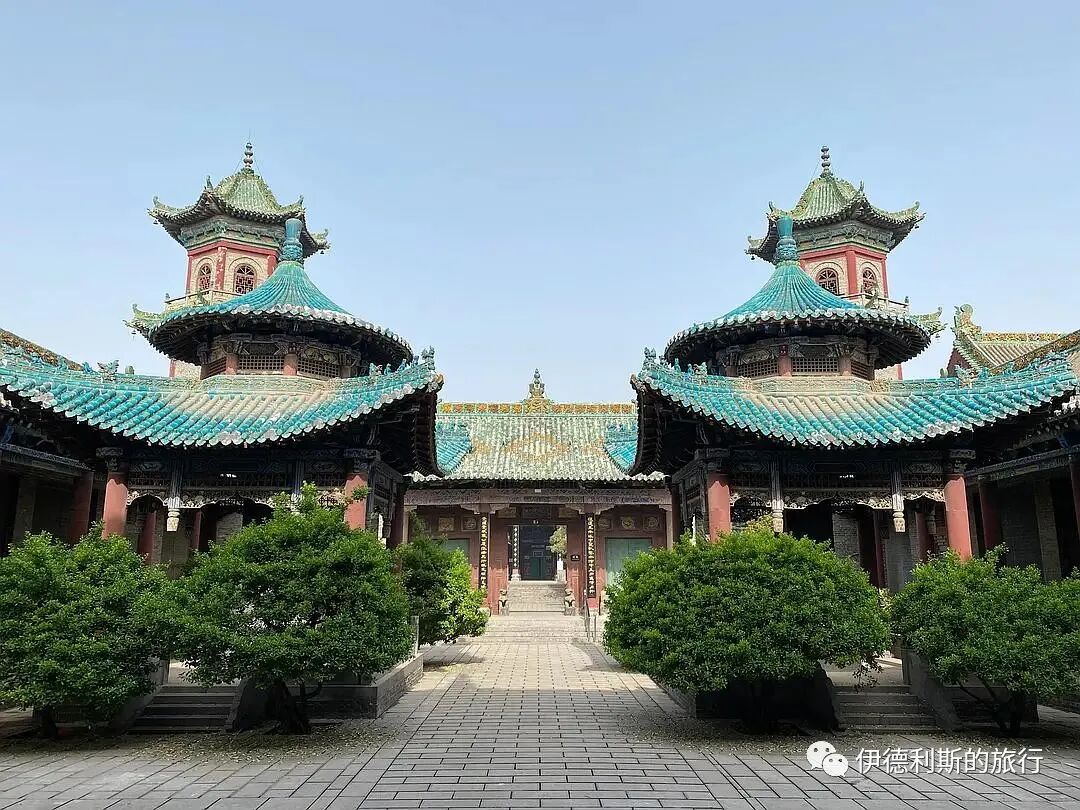
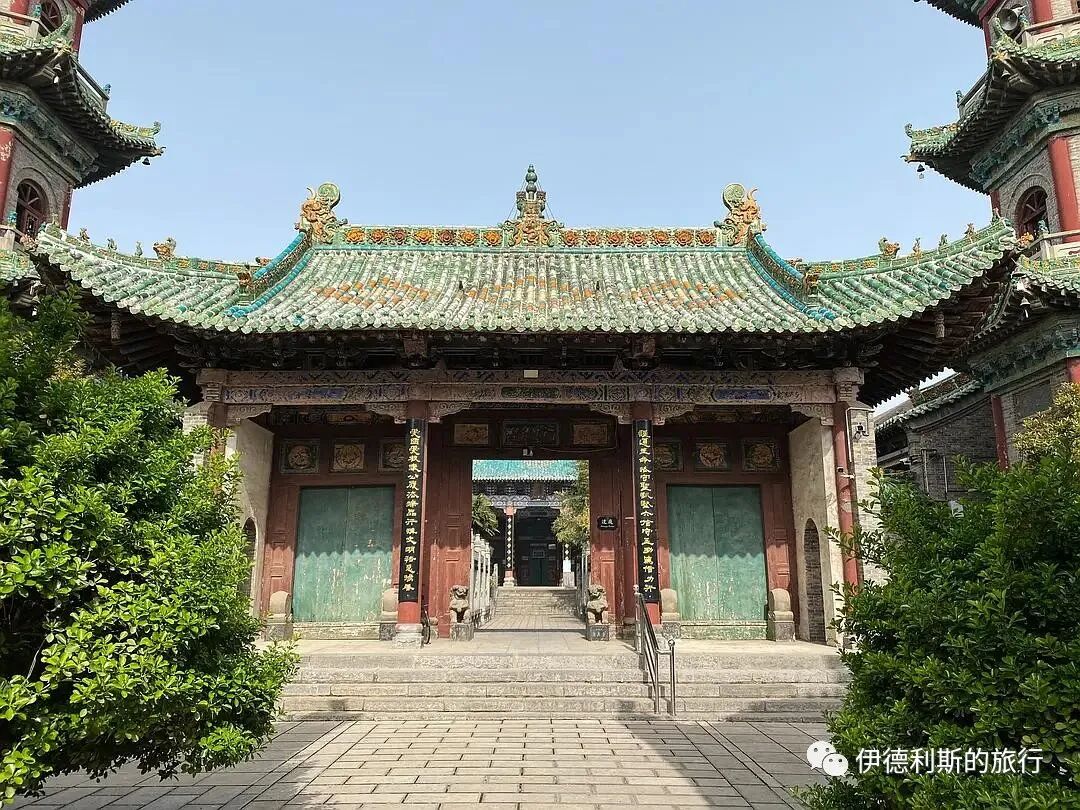
The Qinyang Shuinanguan Mosque was rebuilt between 1990 and 1995. It still maintains the traditional architectural style with flying eaves, bracket sets, and blue-green glazed tiles, though the new building, no matter how beautiful, lacks historical value.
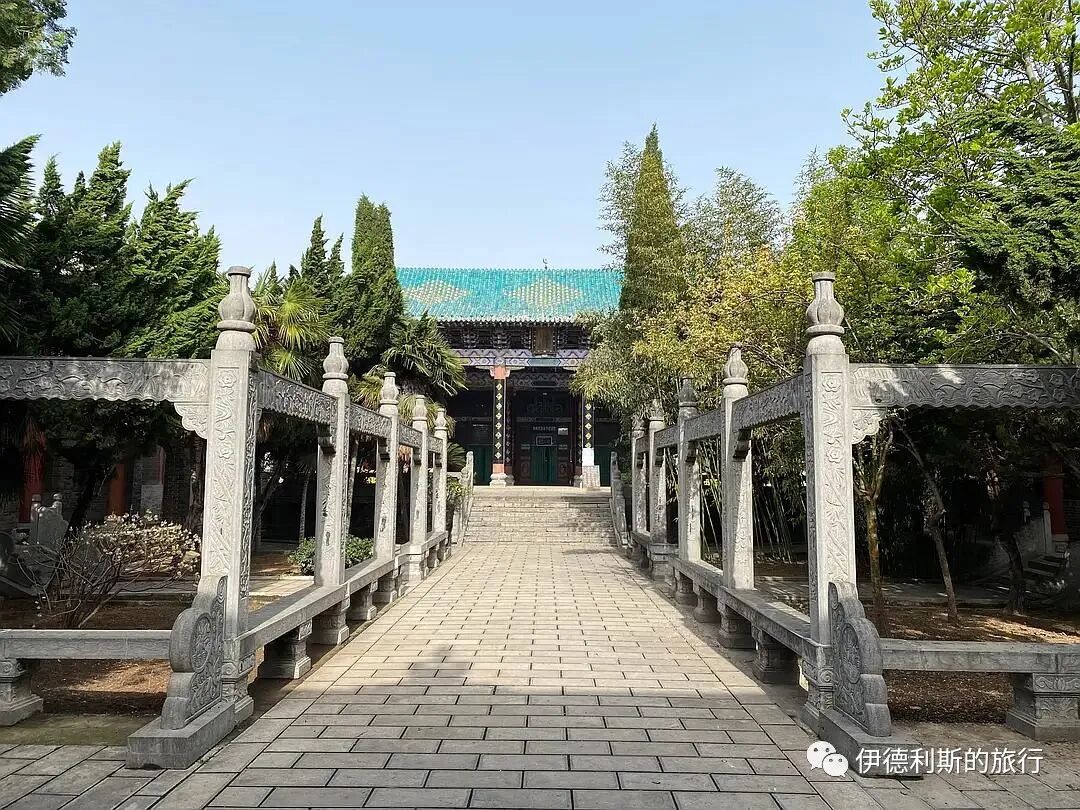
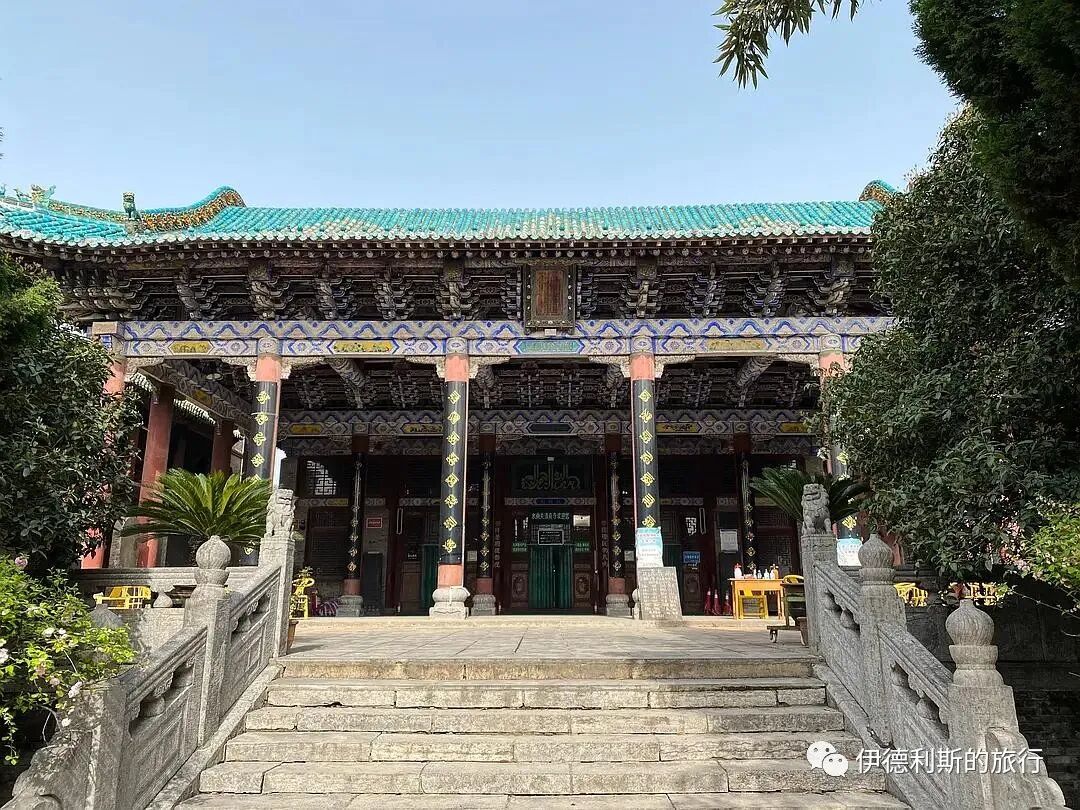
The most valuable part of Shuinanguan is the mihrab yaodian prayer niche excavated during the 1990s reconstruction. It has been designated as a national cultural relic and is stored inside the main hall. Unfortunately, it was not time for namaz (prayer) when I visited, so there was no one at the mosque, and the main hall was locked, so I could not see it.
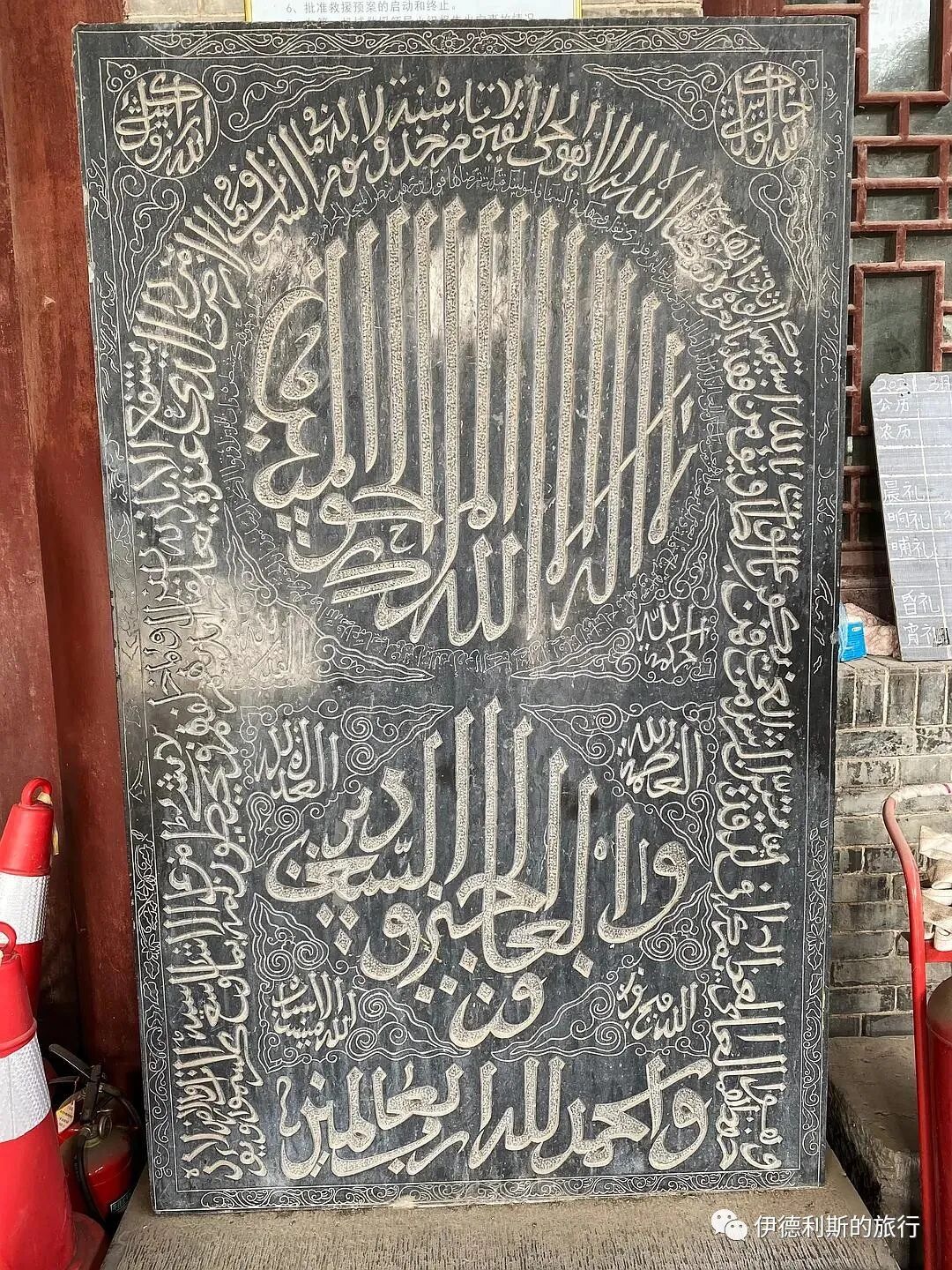
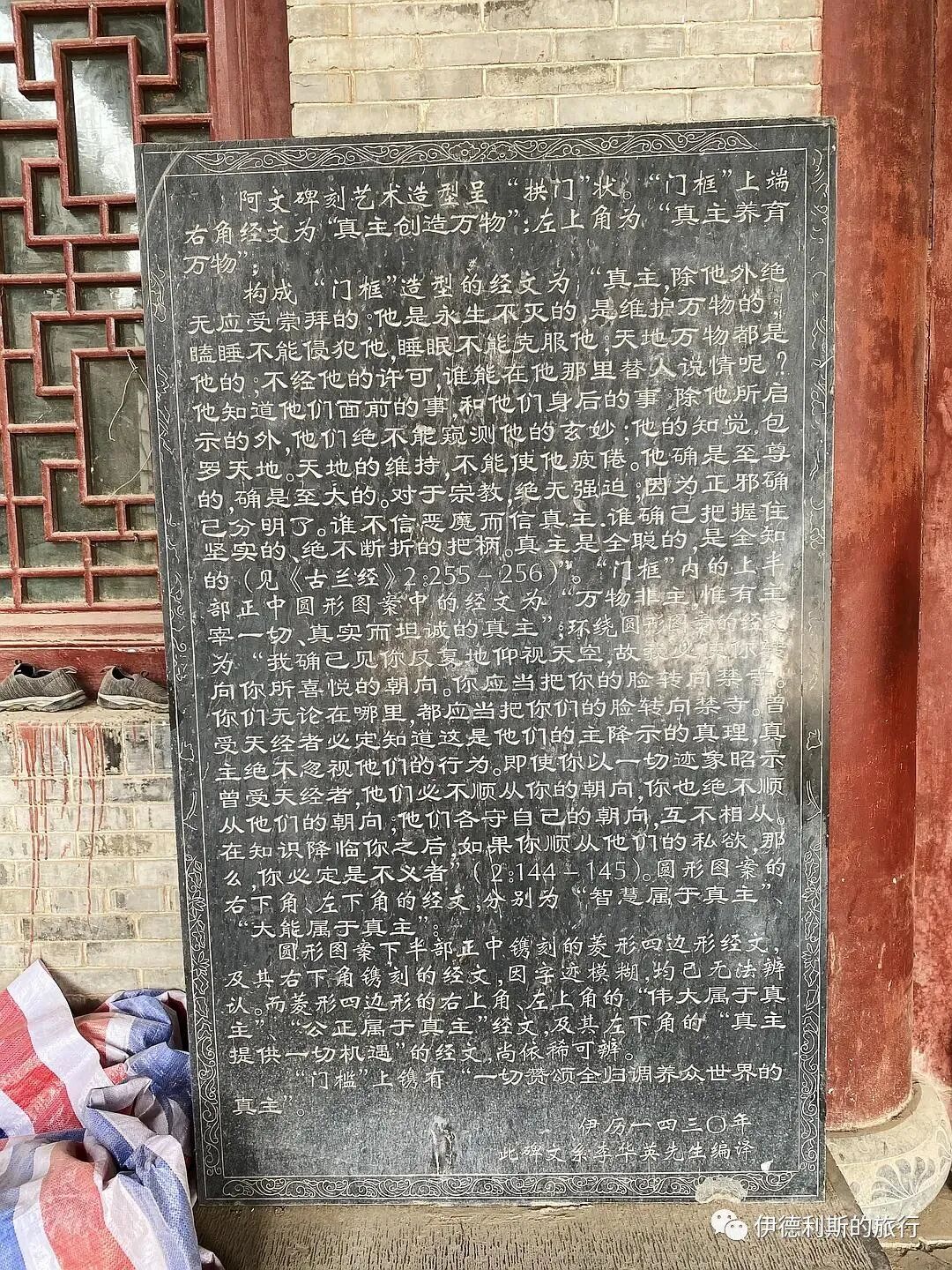
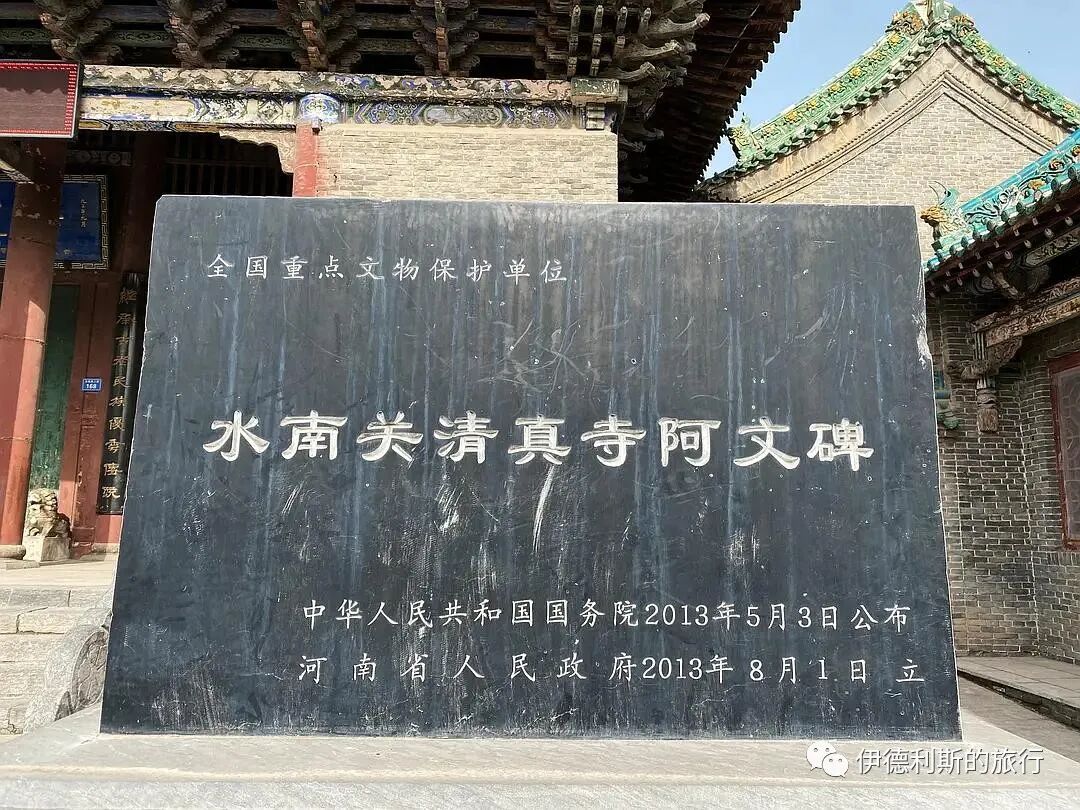
The mosque houses works by the famous Beijing Arabic calligrapher Li Wencai and the famous Henan Arabic calligrapher Mi Guangjiang.
Bo'ai Erxian Temple and Daxinzhuang
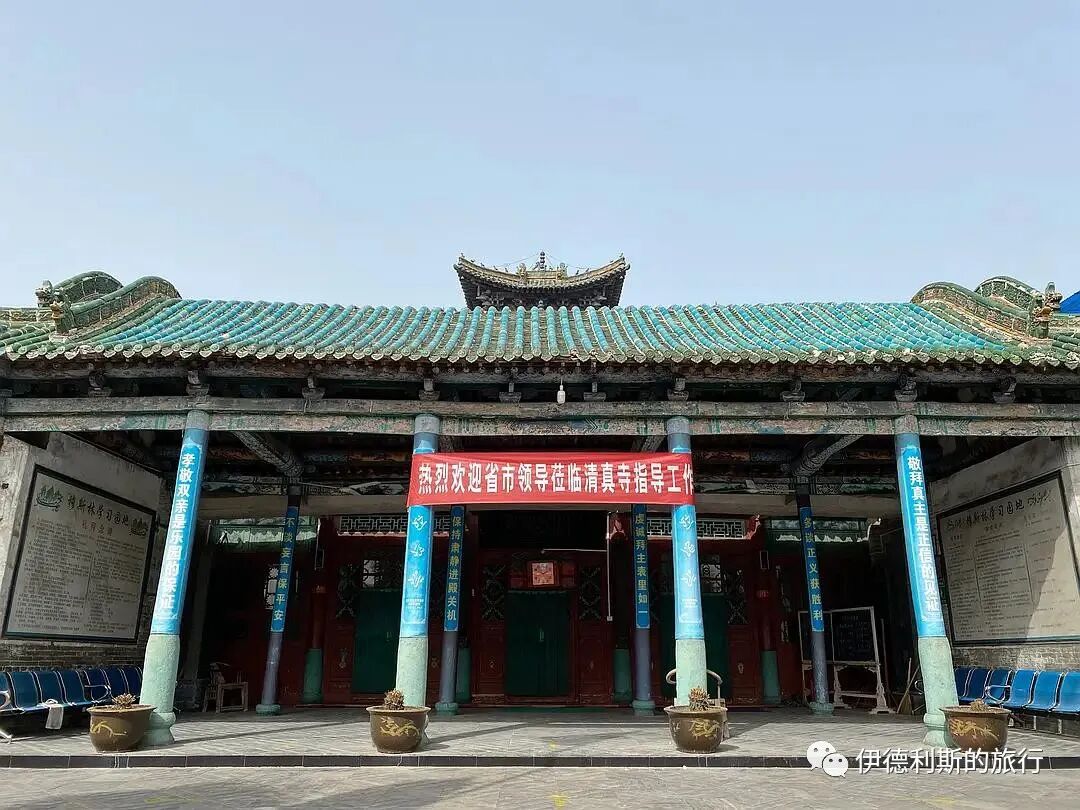
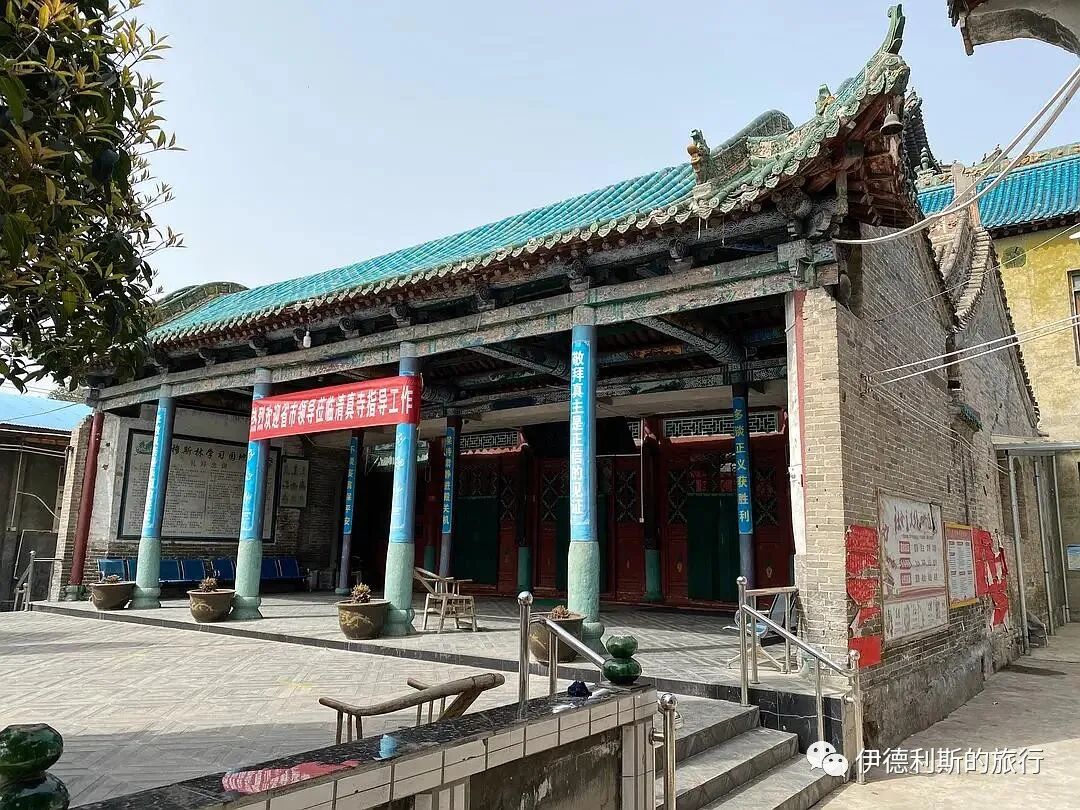
Took a taxi from Qinyang, Henan, to the Erxian Mosque Mosque in Bo'ai. The Erxian Mosque Mosque was first built in the Yuan Dynasty, renovated in 1638 (the 11th year of the Ming Chongzhen reign), and renovated again in 1731 (the 9th year of the Qing Yongzheng reign). It is a cultural relic protection unit of Henan Province. The main hall of the mosque consists of a juanpeng (shed-style roof), front hall, rear hall, and yaodian. The juanpeng and front hall were built in the Qing Dynasty with a hard mountain roof and connected structure, while the rear hall and yaodian were added in 1993.
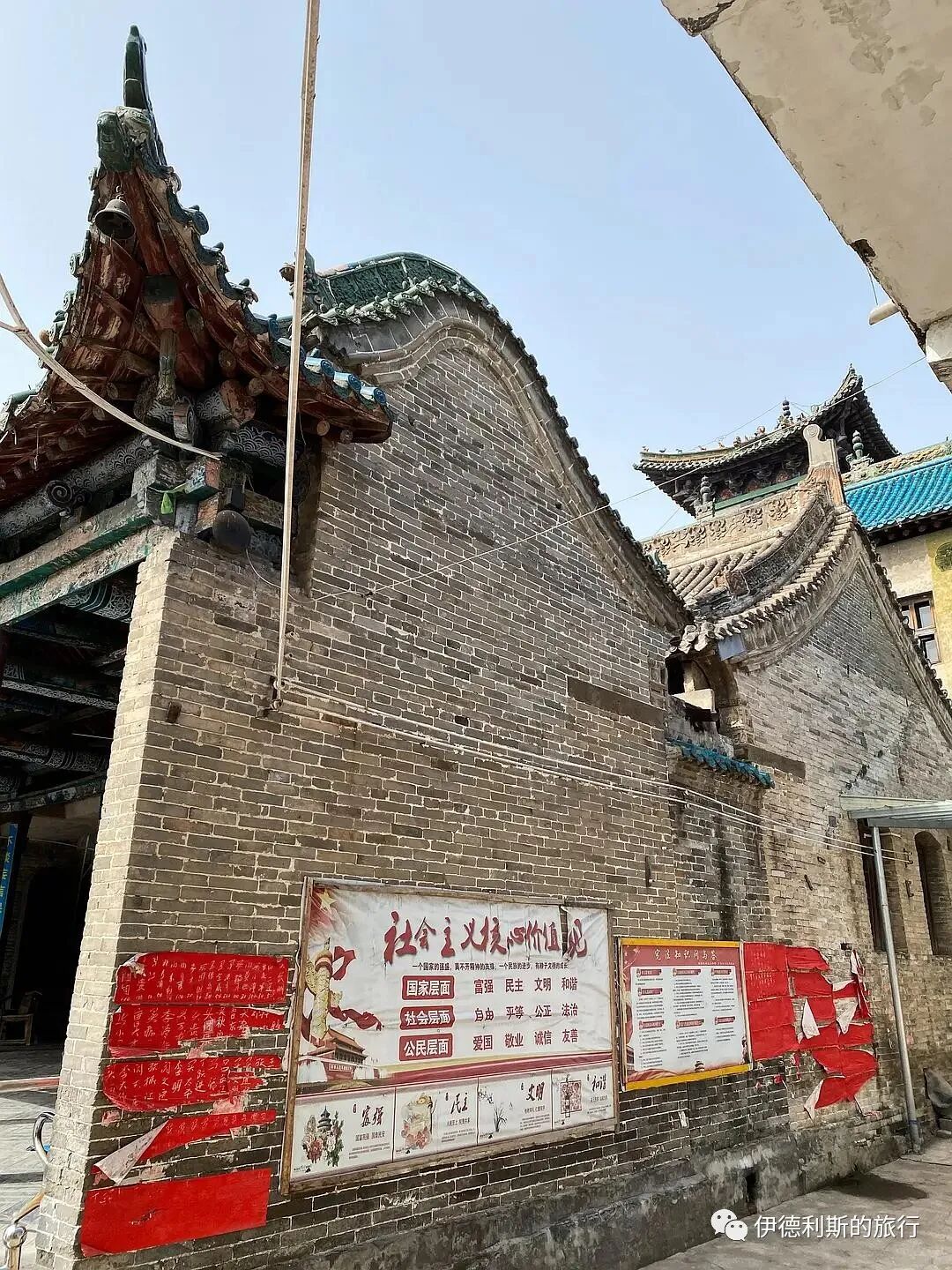
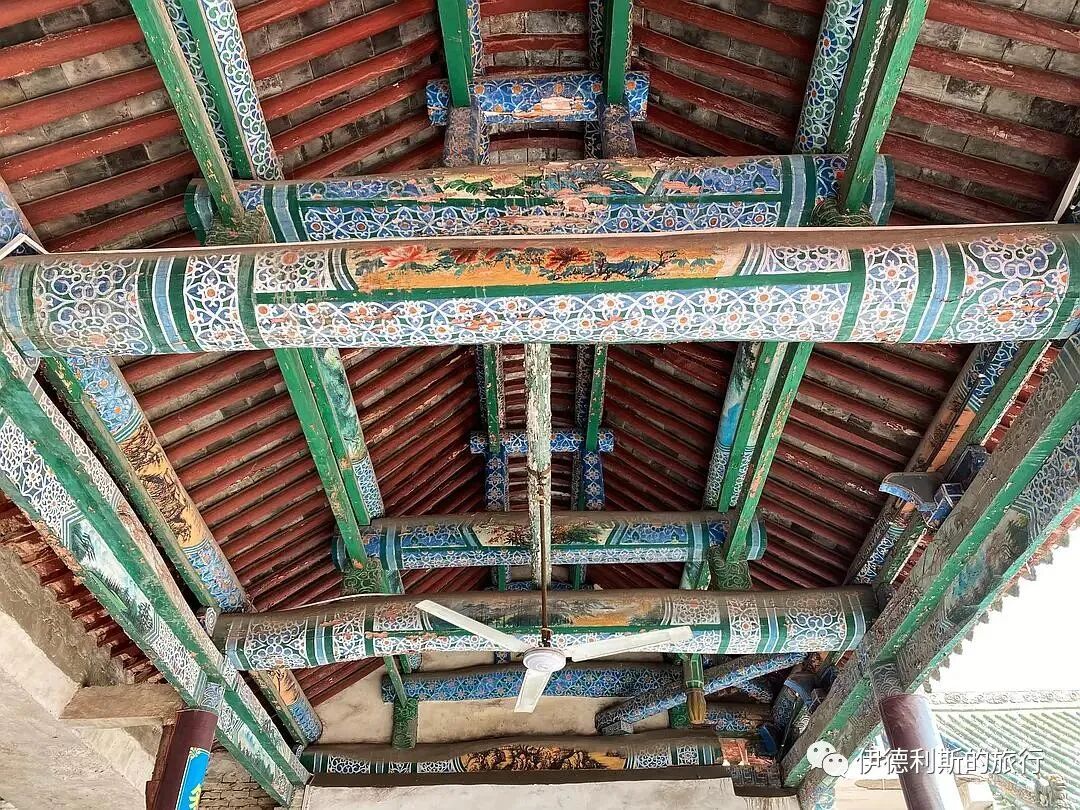
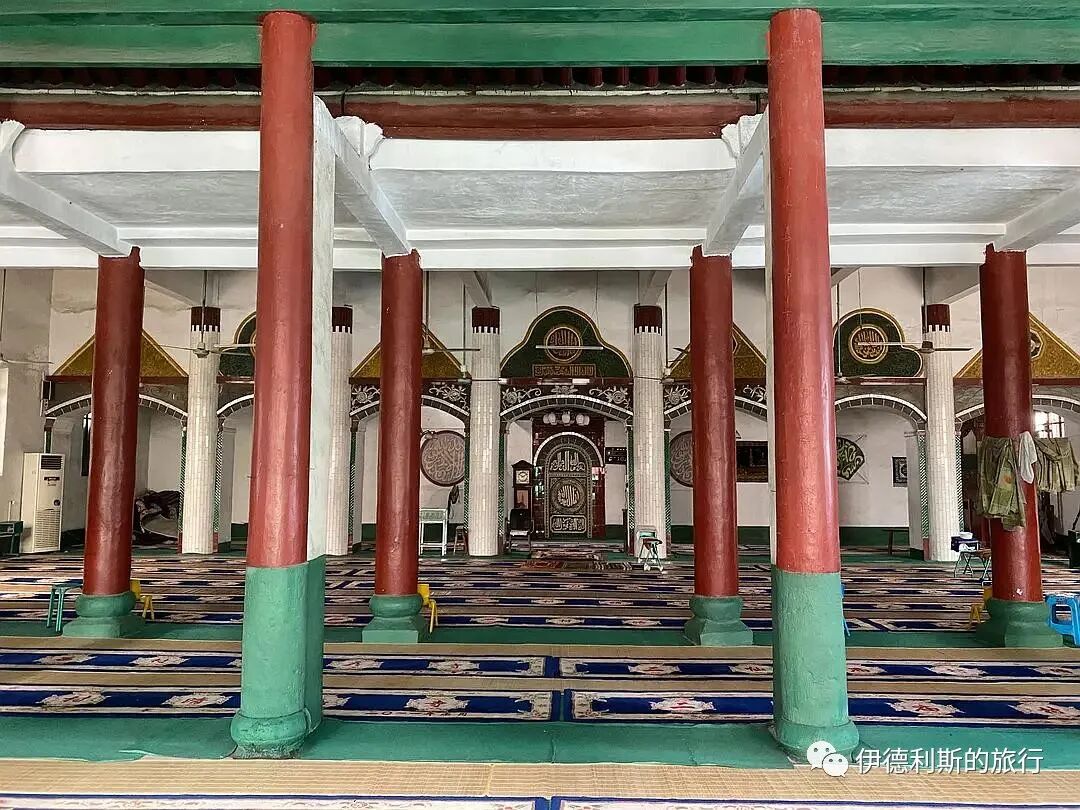
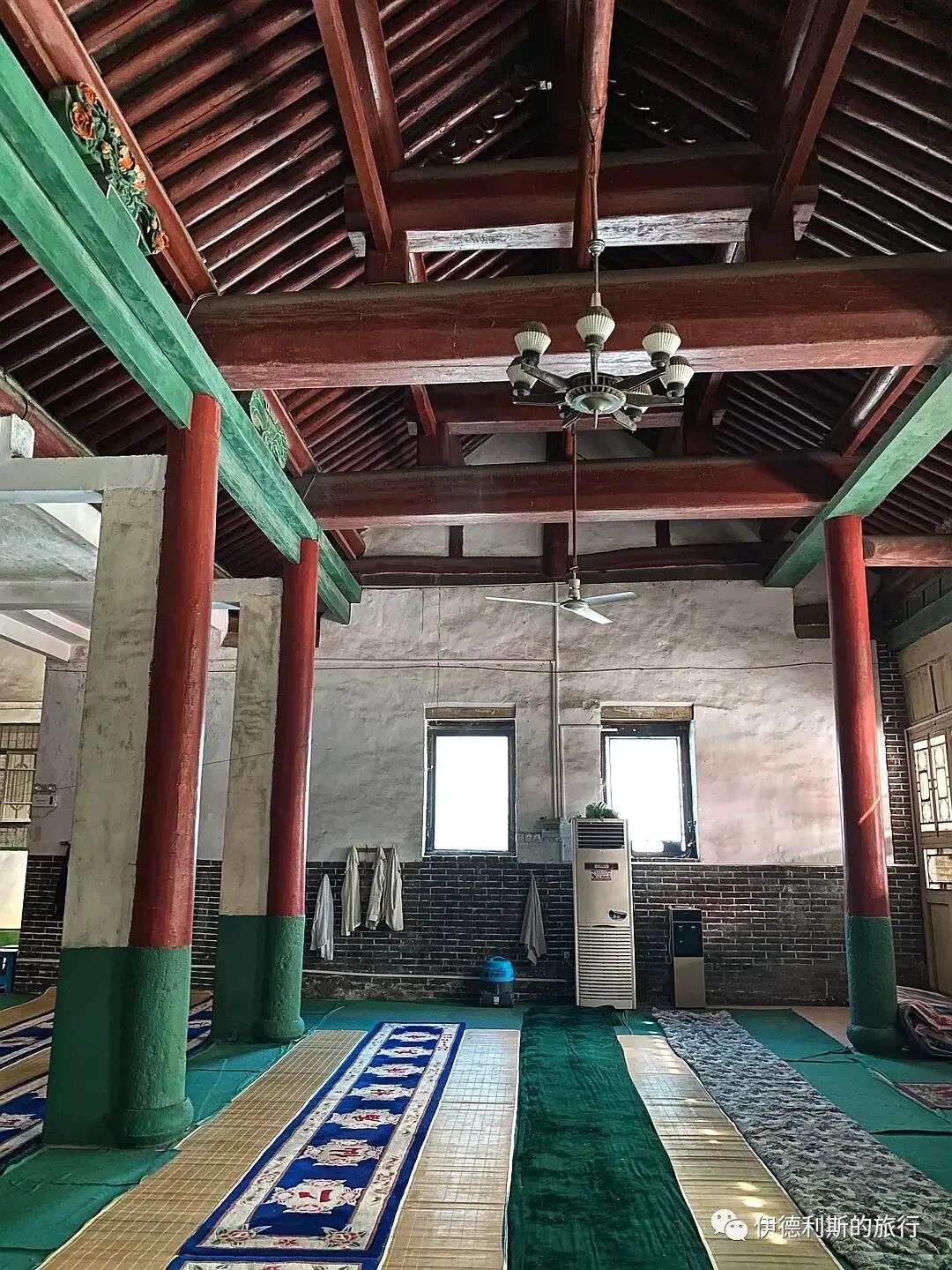
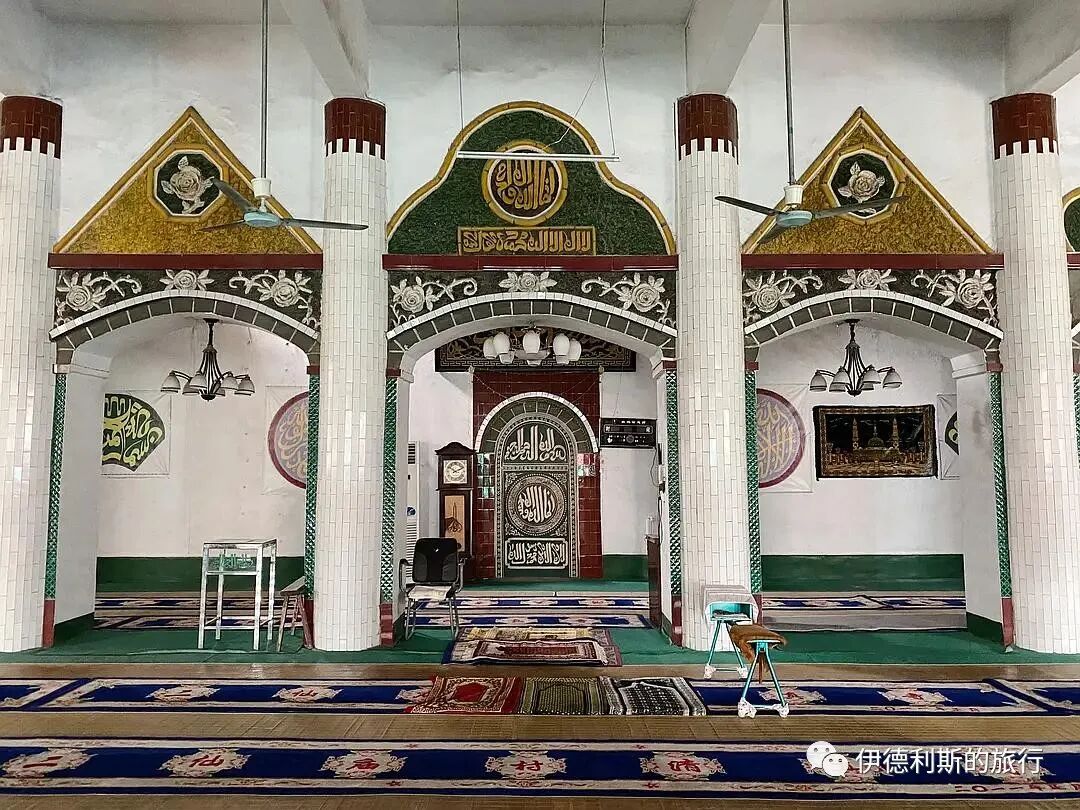
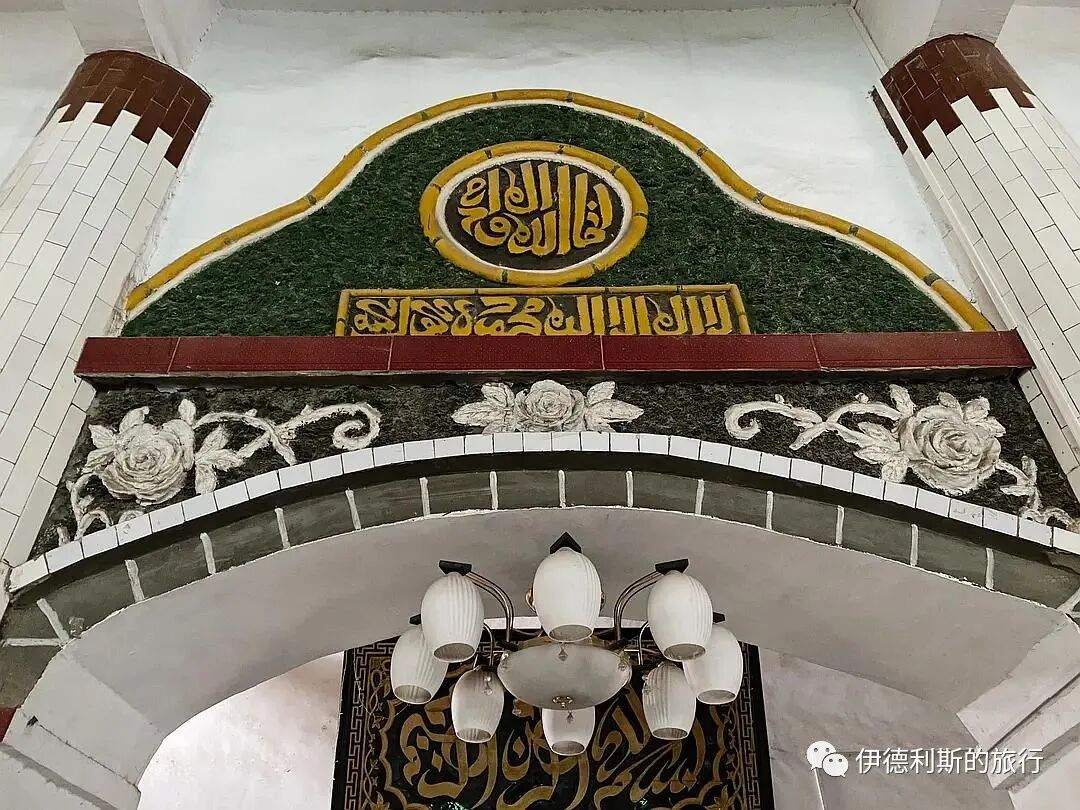
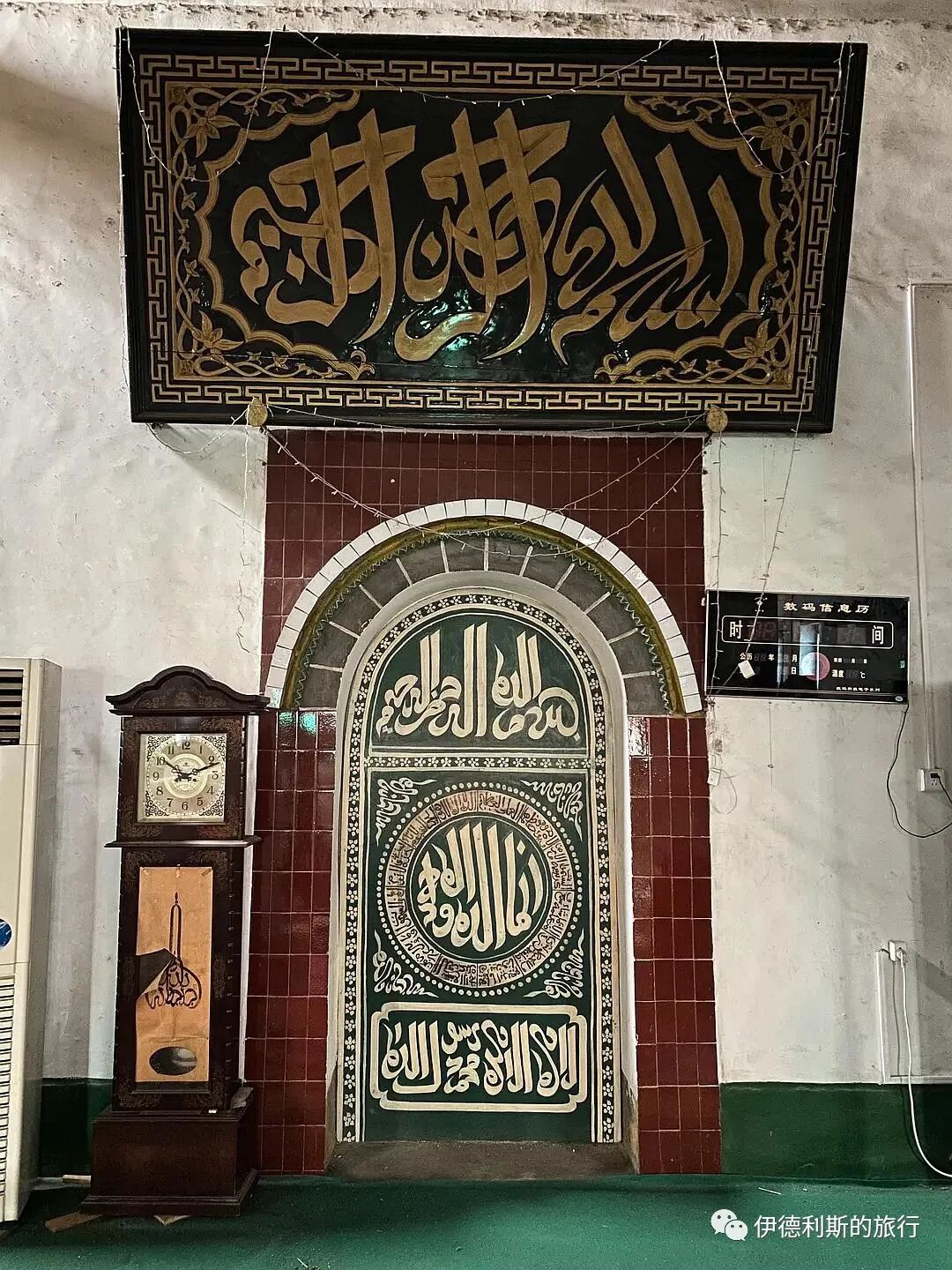
Continued by taxi from Erxian Mosque to the East Mosque in Daxinzhuang, Bo'ai. The Daxinzhuang East Mosque was first built in the Yuan Dynasty, expanded in the Ming Dynasty, and the rear hall was added during the Republic of China era. It is currently a cultural relic protection unit of Henan Province.
The main hall consists of a juanpeng, front hall, rear hall, and yaodian. The juanpeng is an independent structure, with a drainage gutter installed where it connects to the front eaves of the main hall. There is a 365-year-old osmanthus tree in front of the main hall.
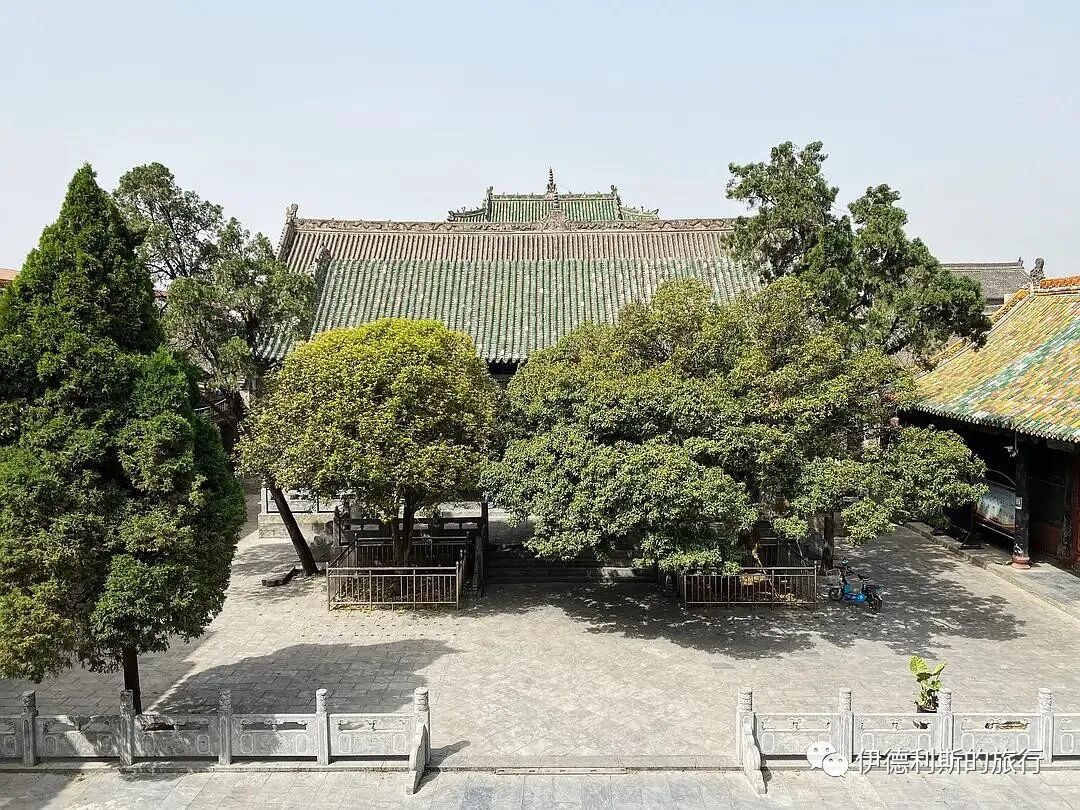
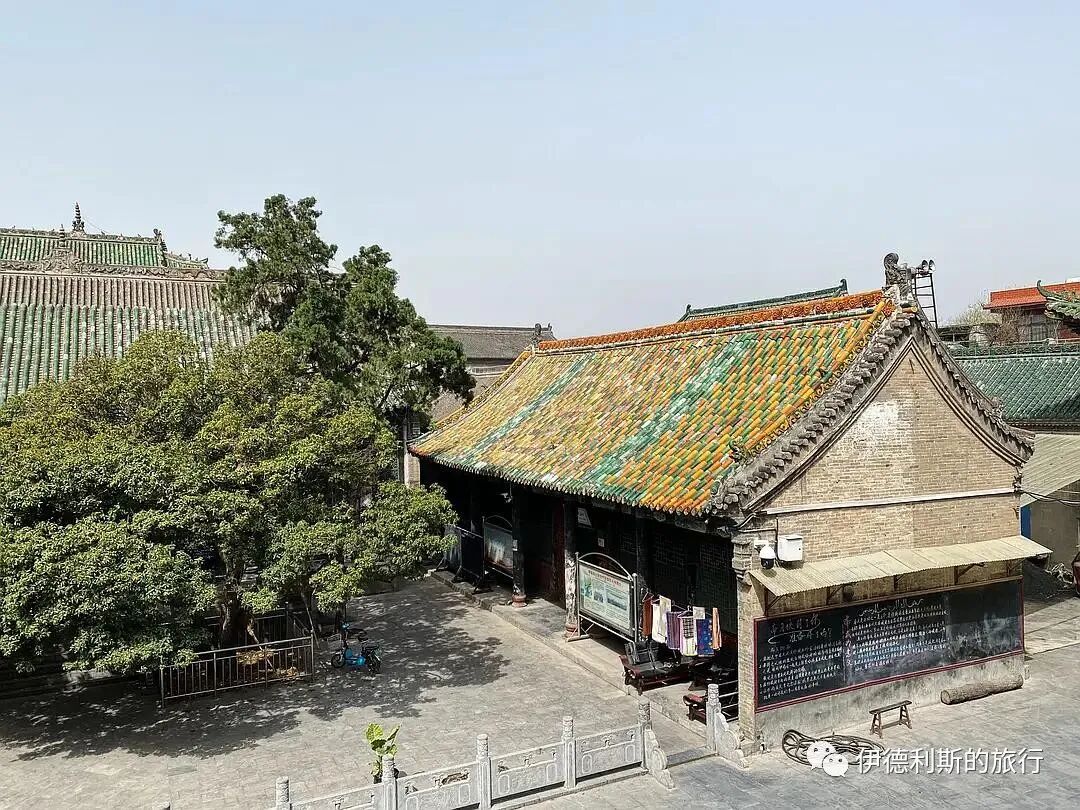
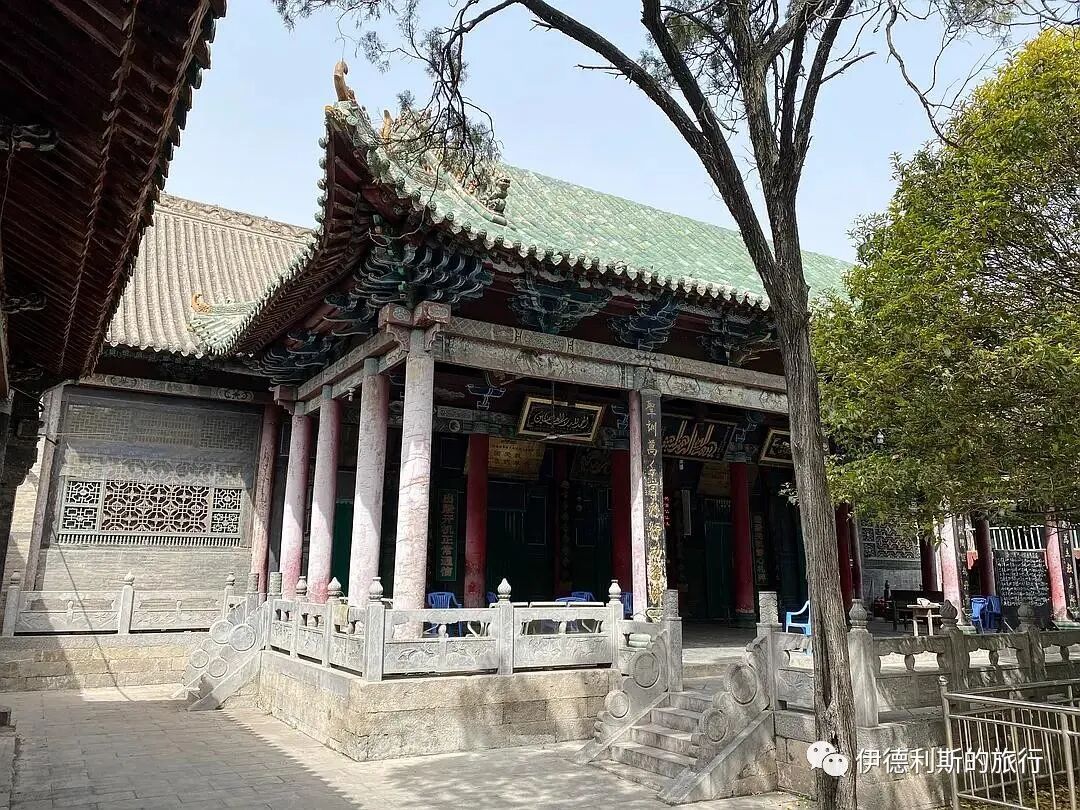
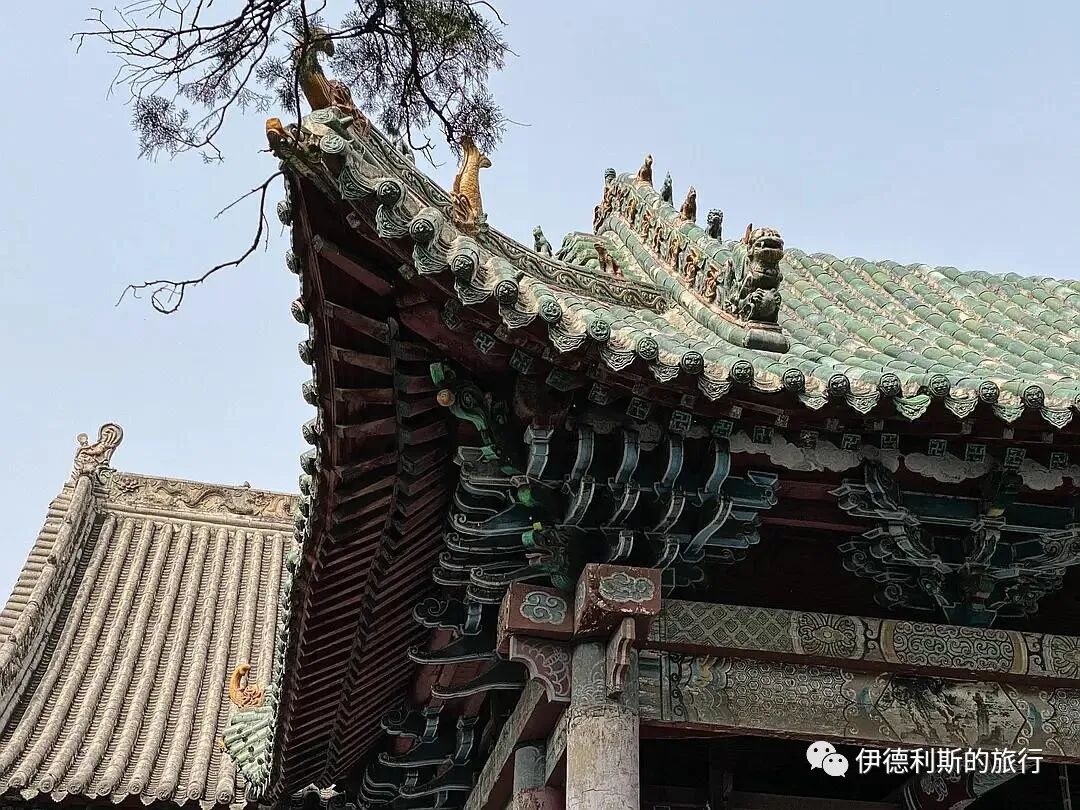
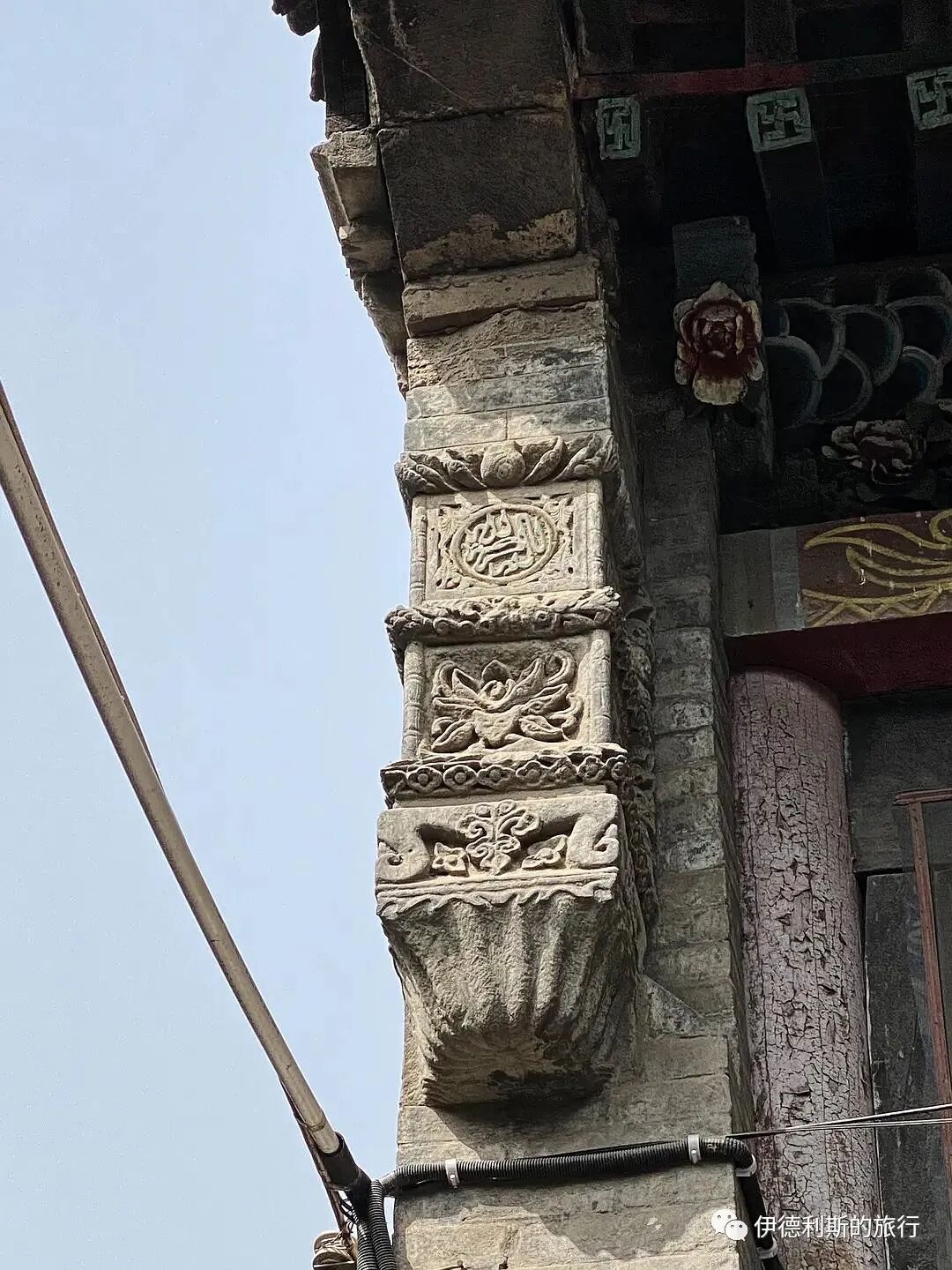
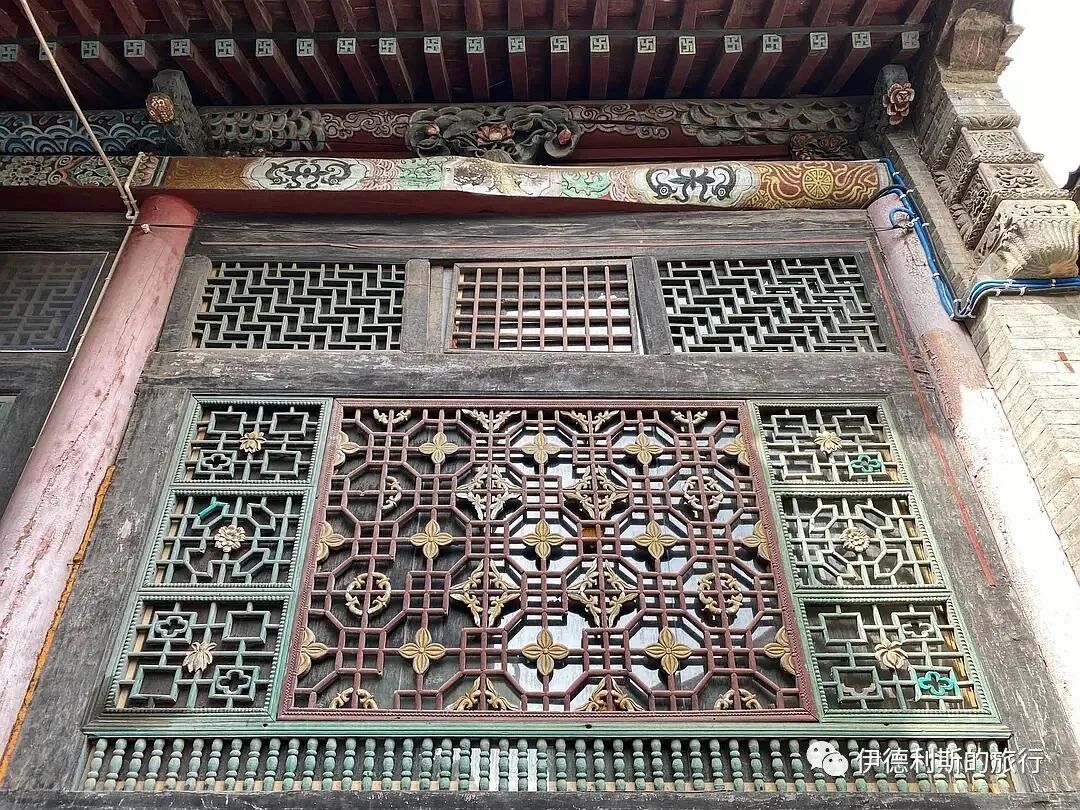
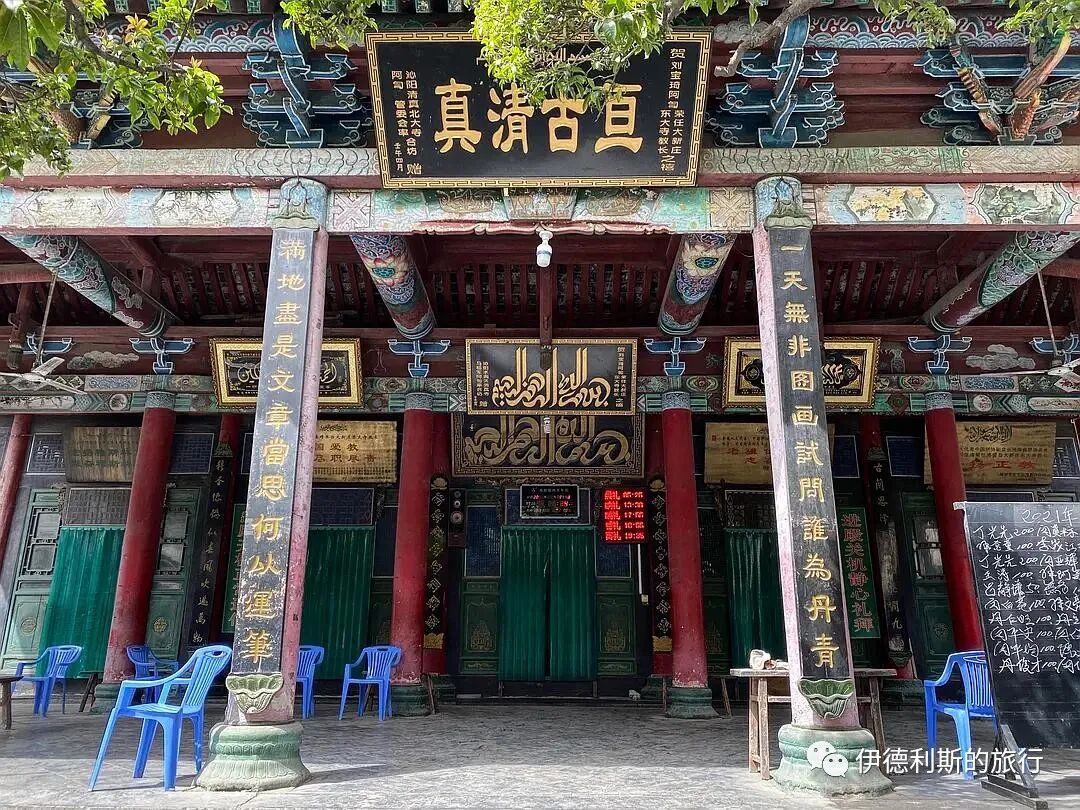
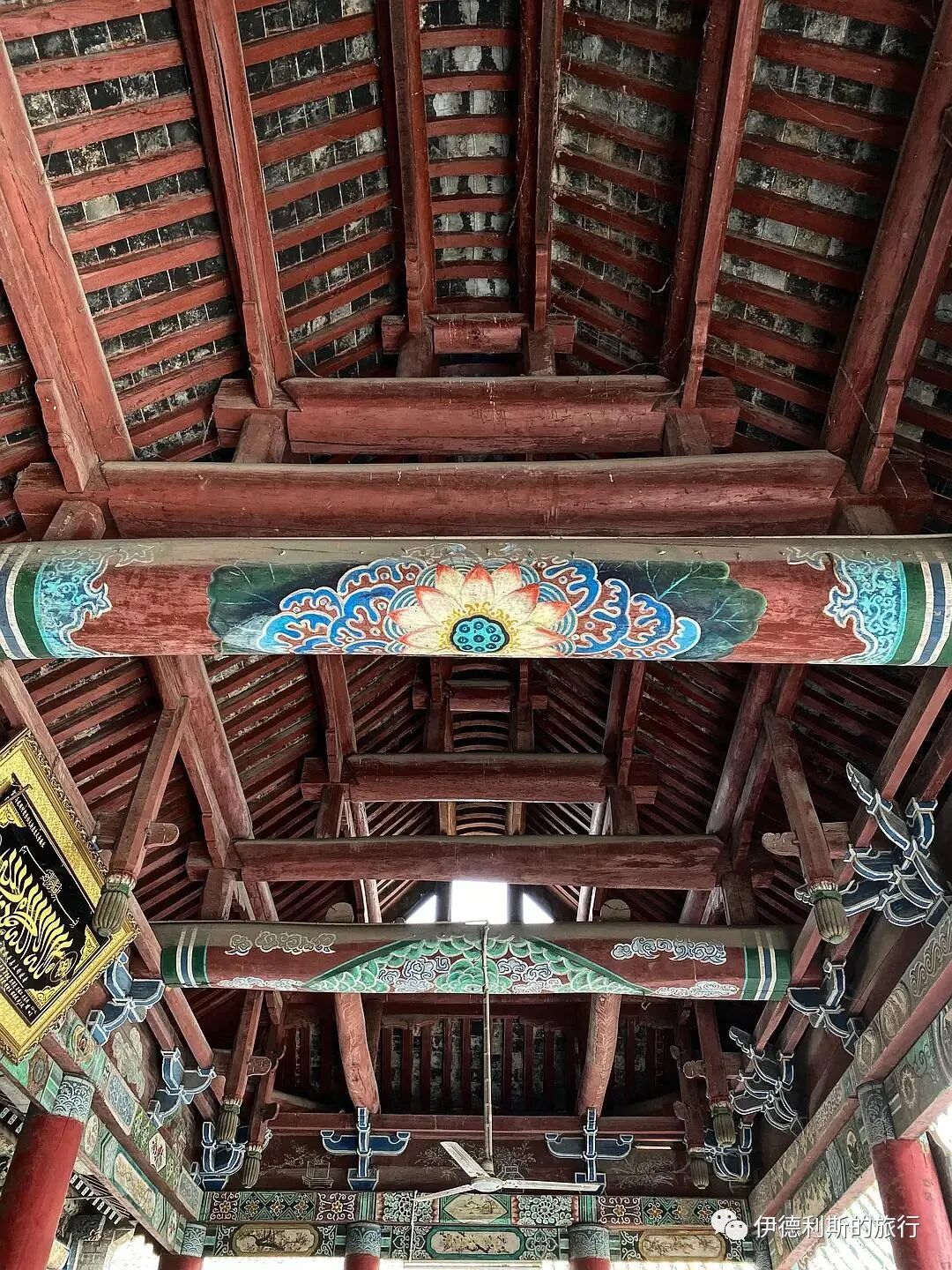
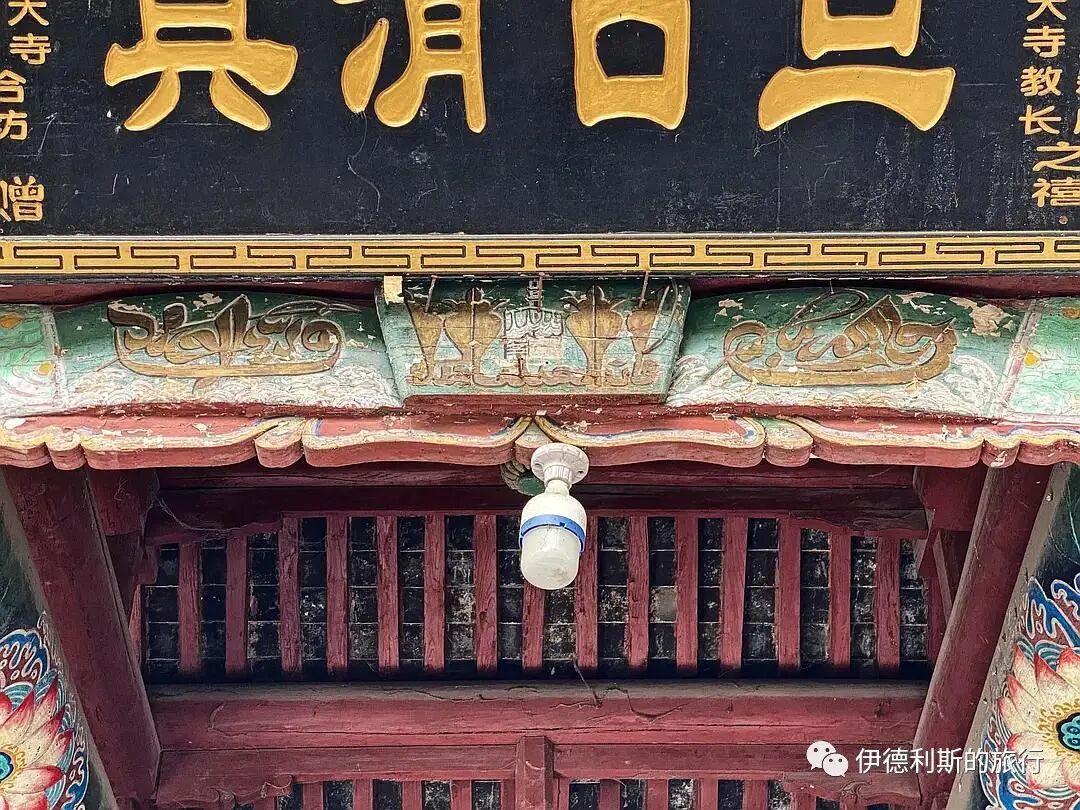
The front hall is seven bays wide, with exposed wooden beams and rafters. The wood carvings on the two beams are very beautiful. The rear hall was added during the Republic of China era and features five Roman-style arched doors with exquisite Republic-era cement decorations.
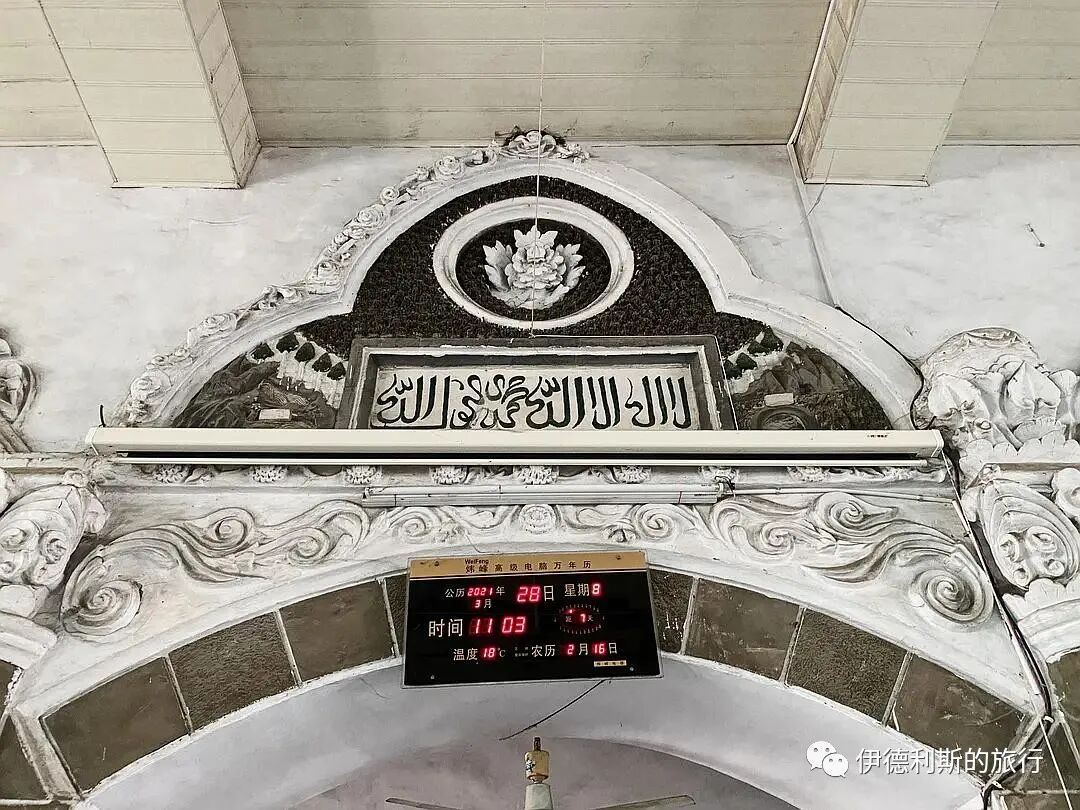
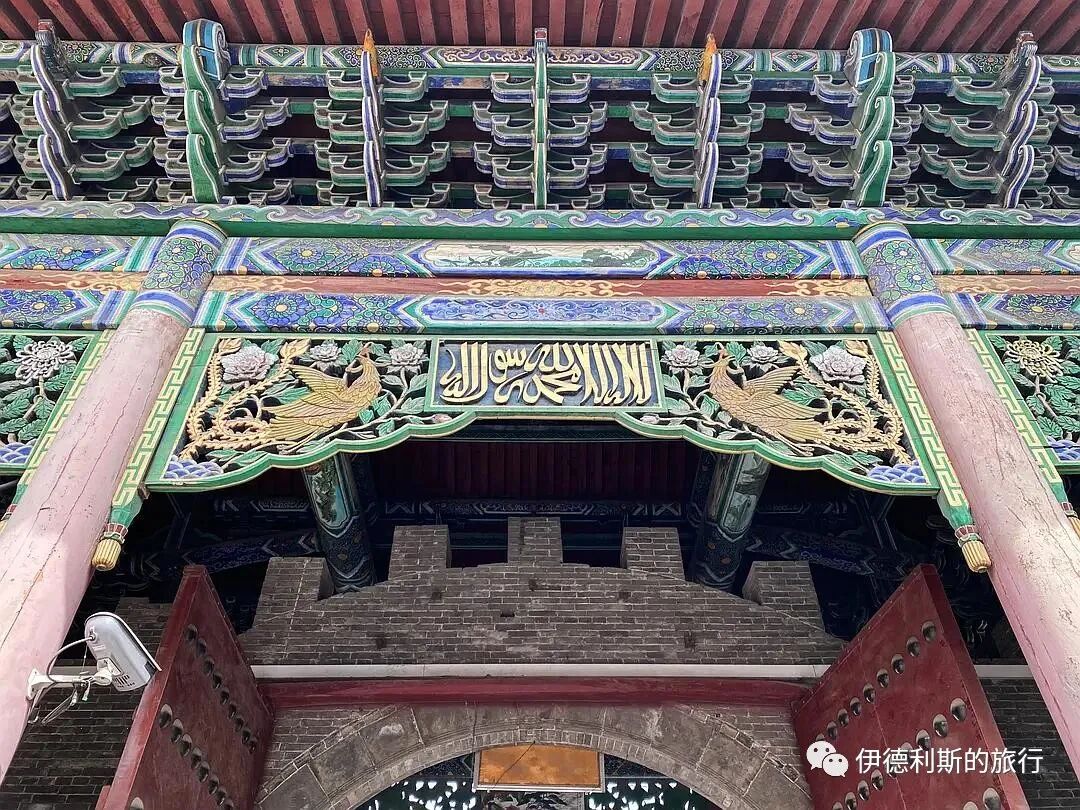
Wood carvings on the main gate
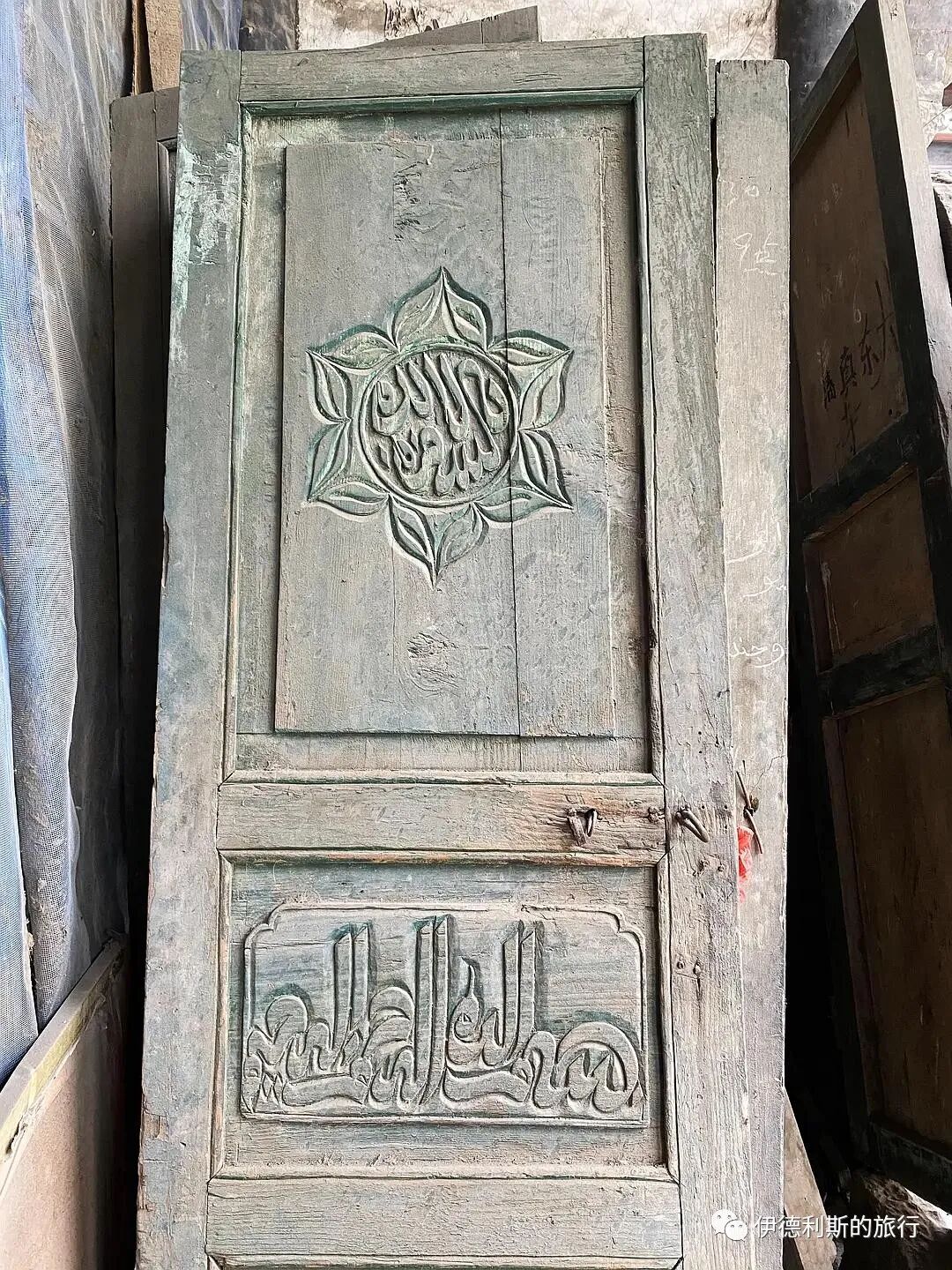
Old door panels
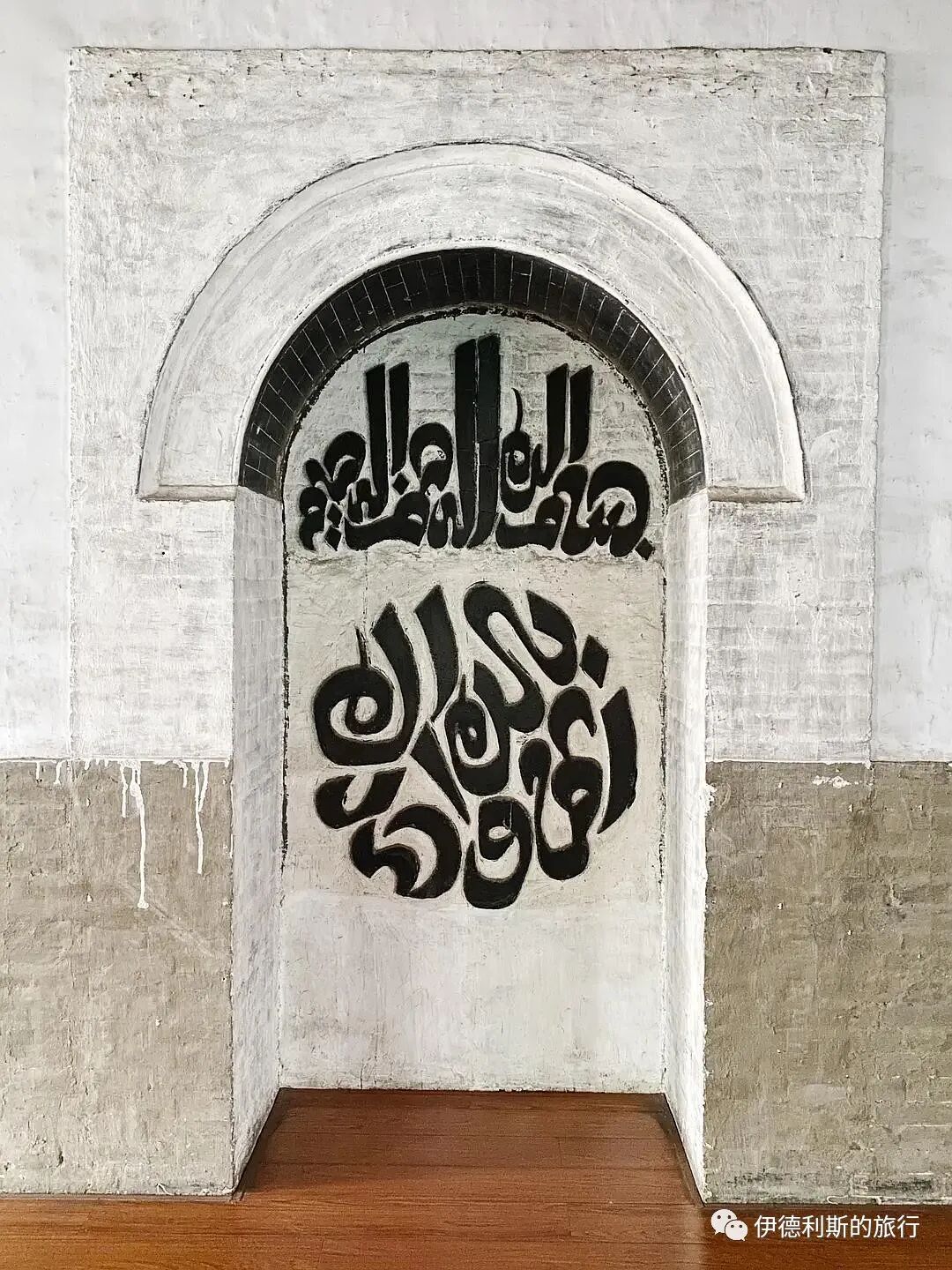
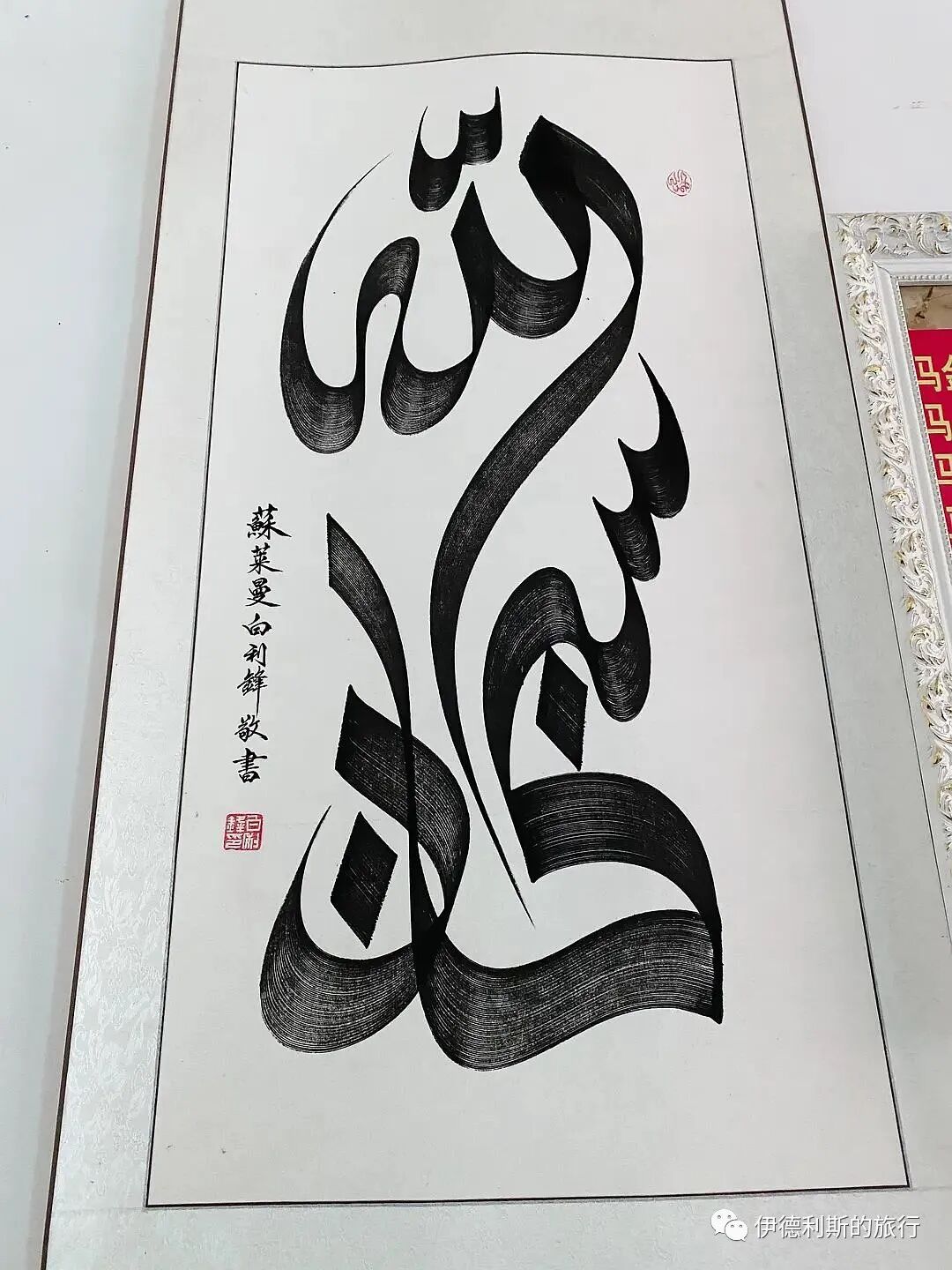
Calligraphy by the famous Henan Arabic calligrapher Bai Lifeng, collected in the mosque.
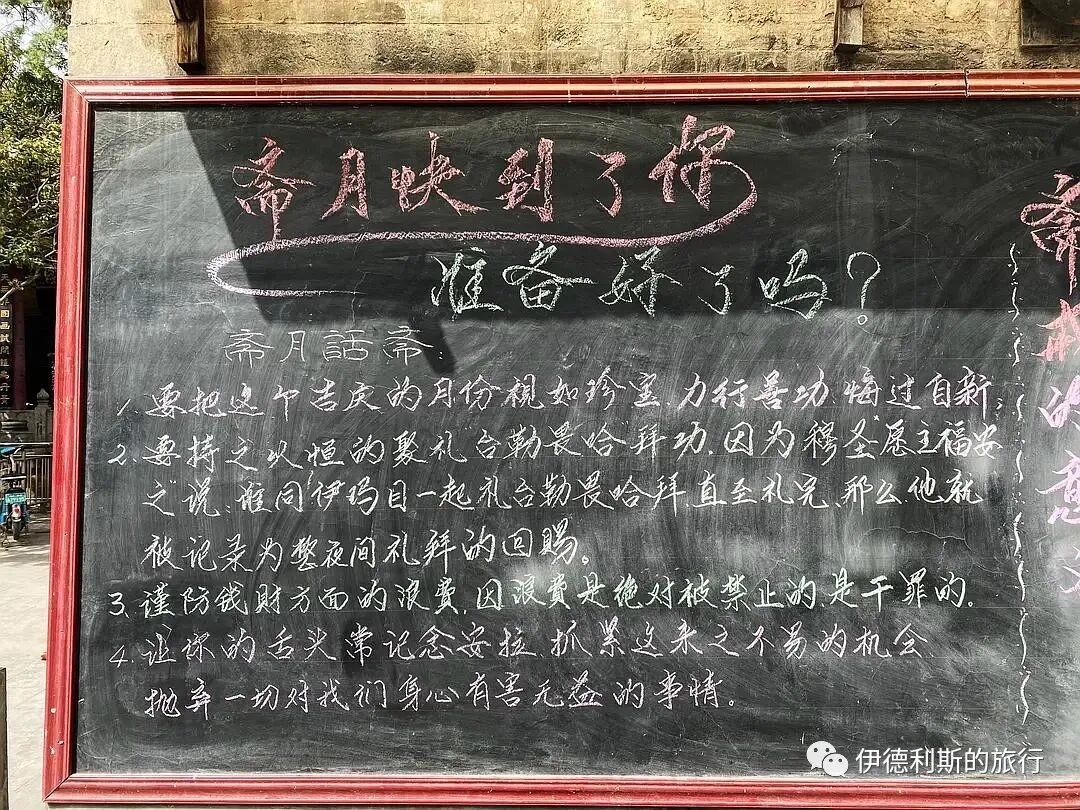
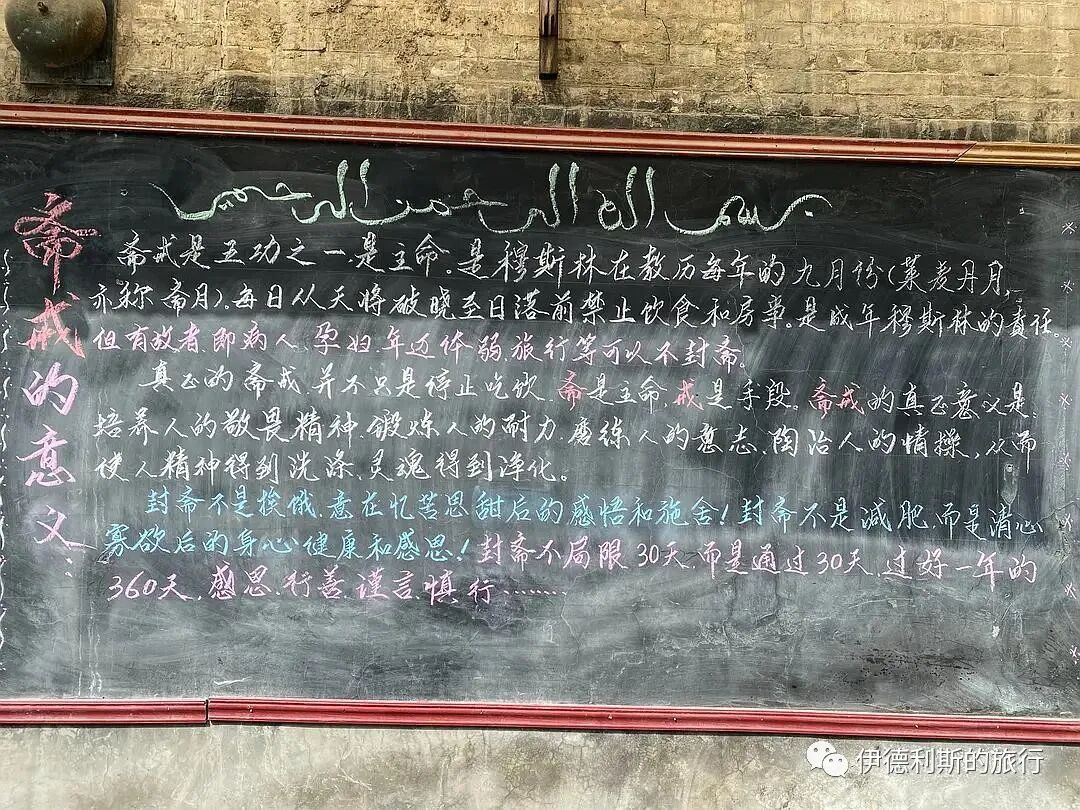
Blackboard newspaper
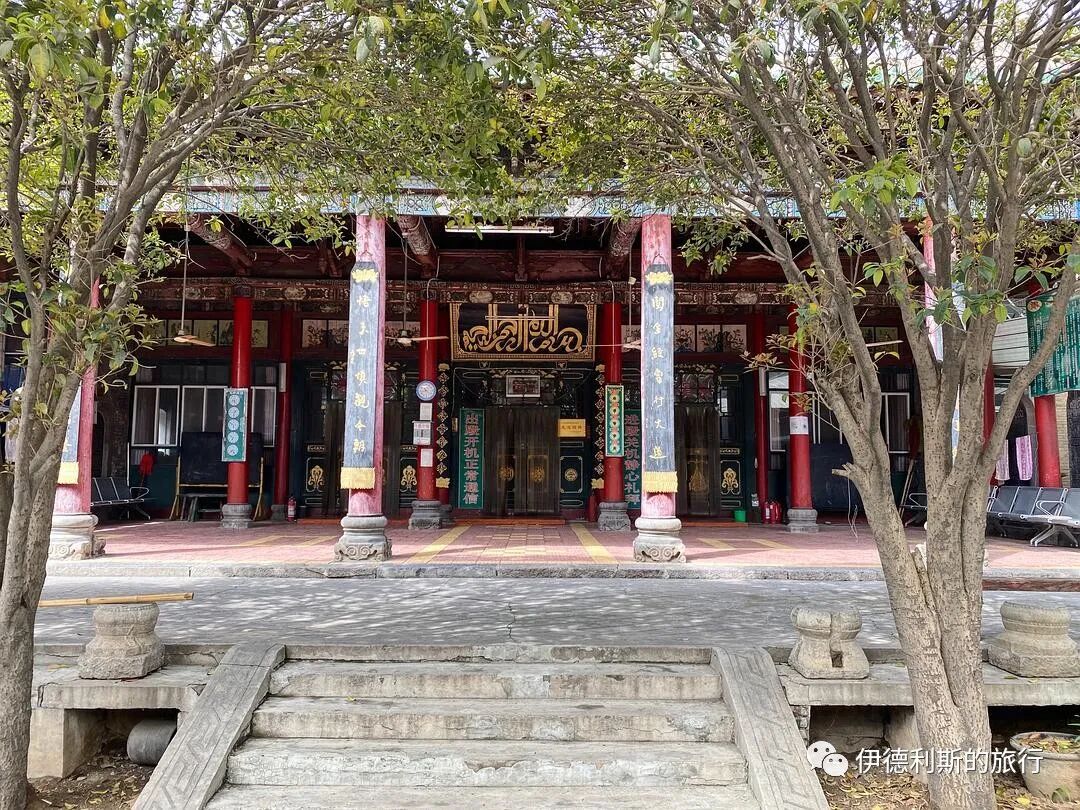
The Daxinzhuang West Mosque is near the East Mosque, but it is not as famous as the East Mosque. The West Mosque was first built during the Jiaqing reign. The main hall originally had three bays, was expanded to five bays in the late Qing Dynasty, and expanded to seven bays in the early Republic of China era. During this period, the old community leader Mai Anli funded the construction of a five-bay juanpeng.
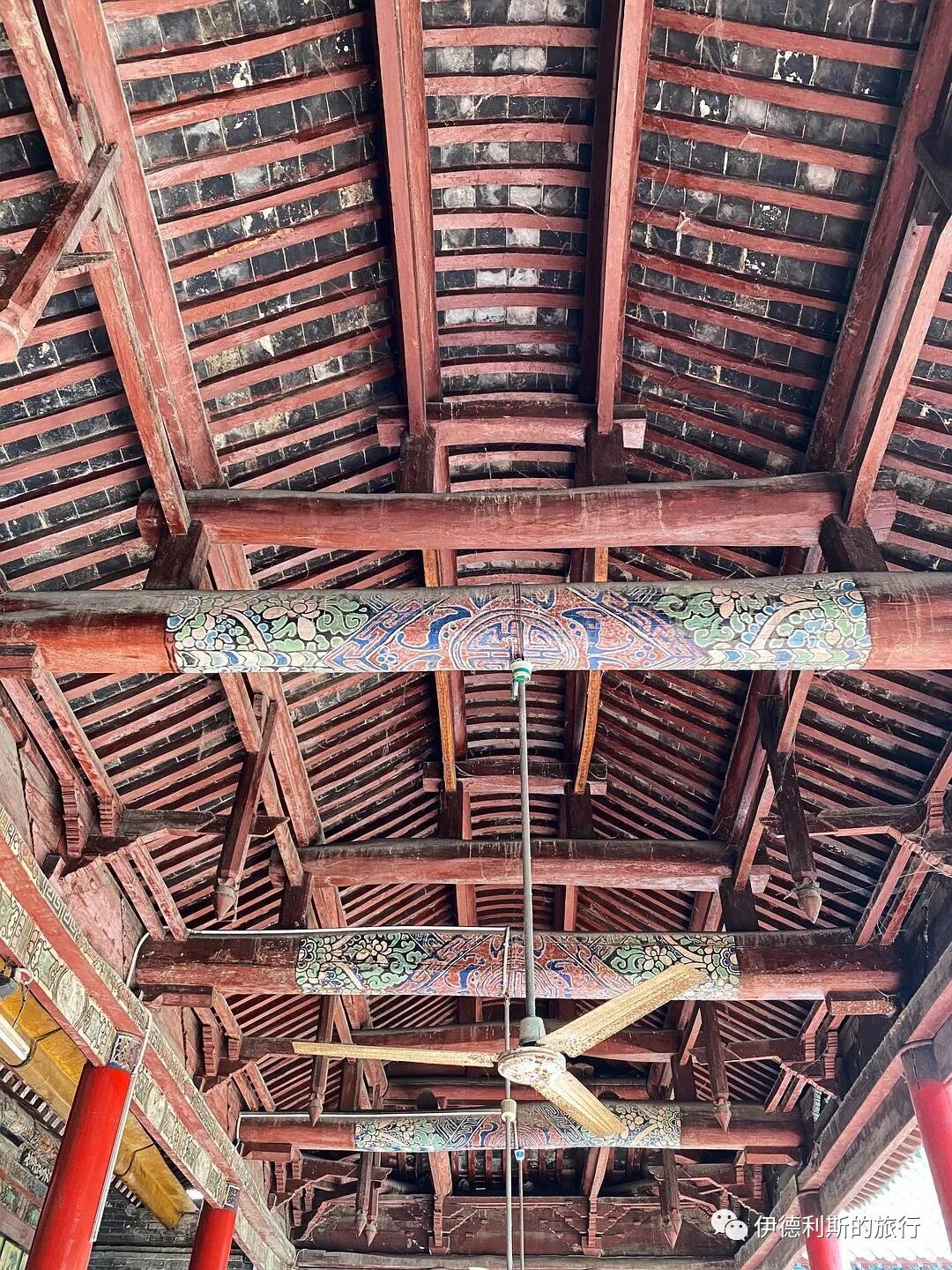
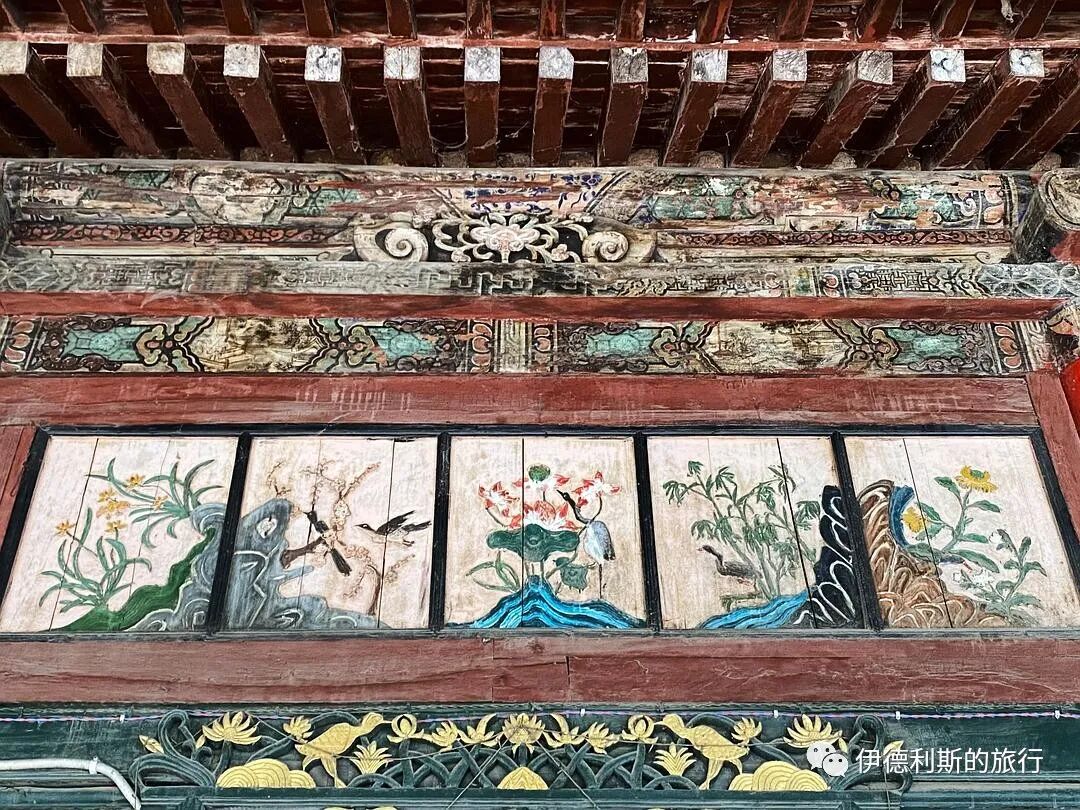
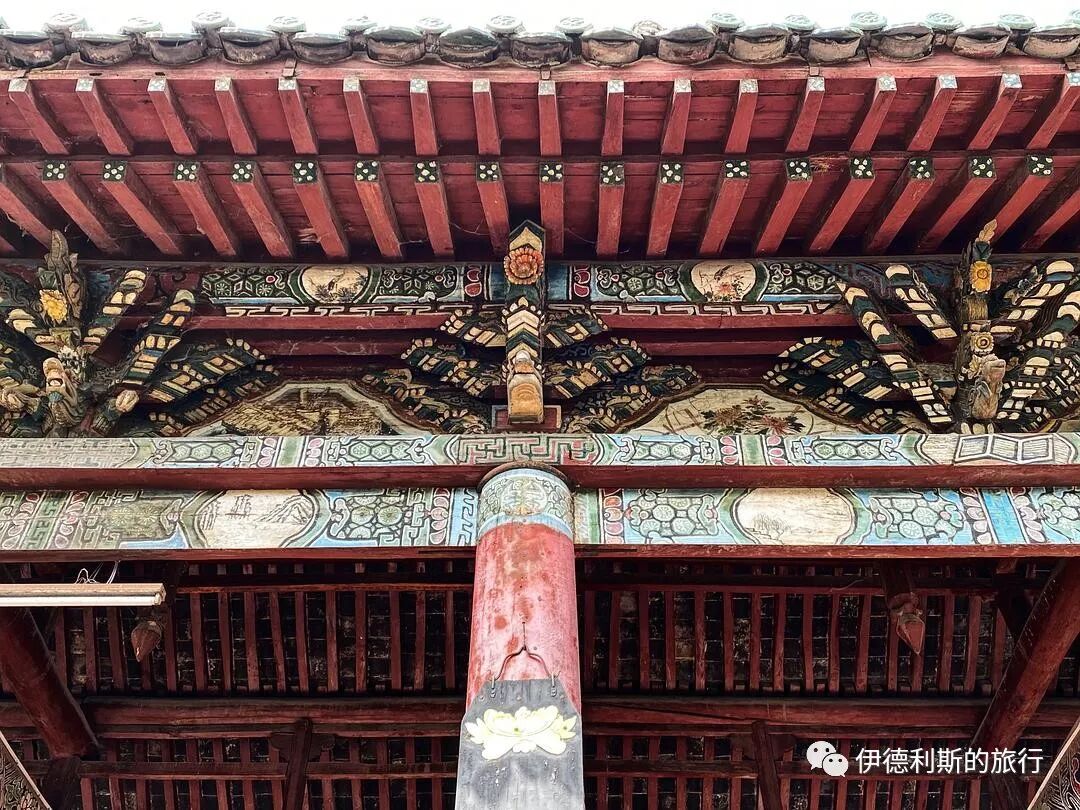
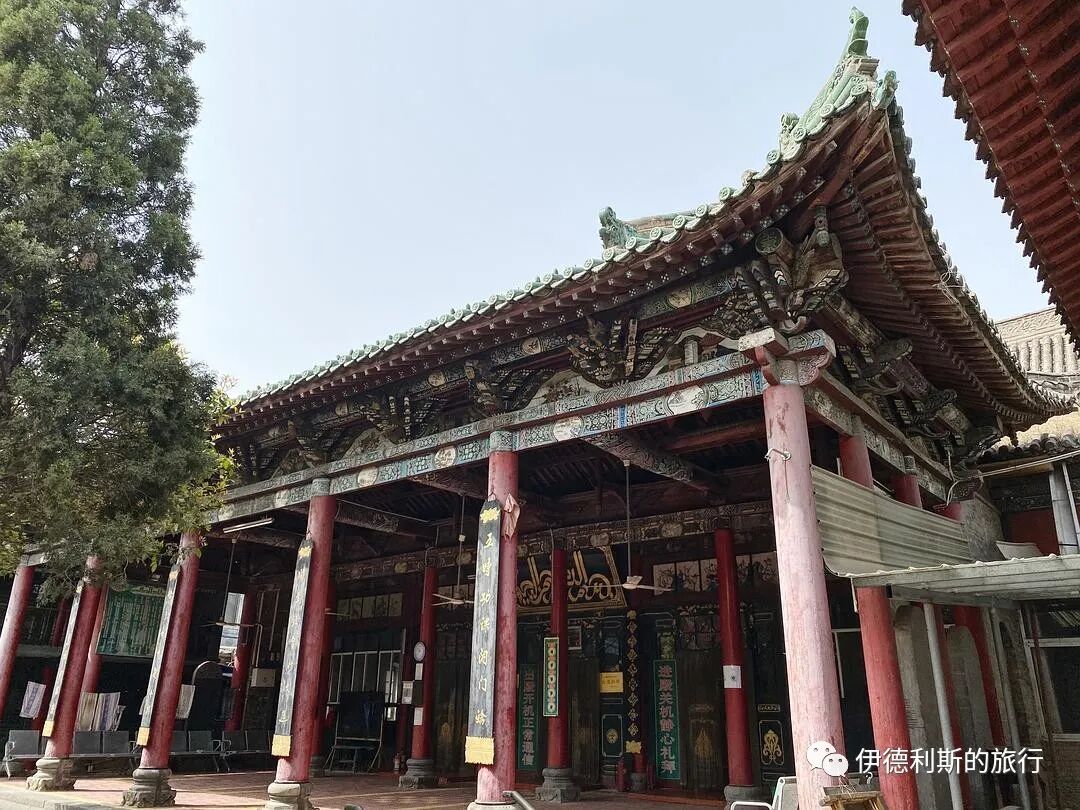
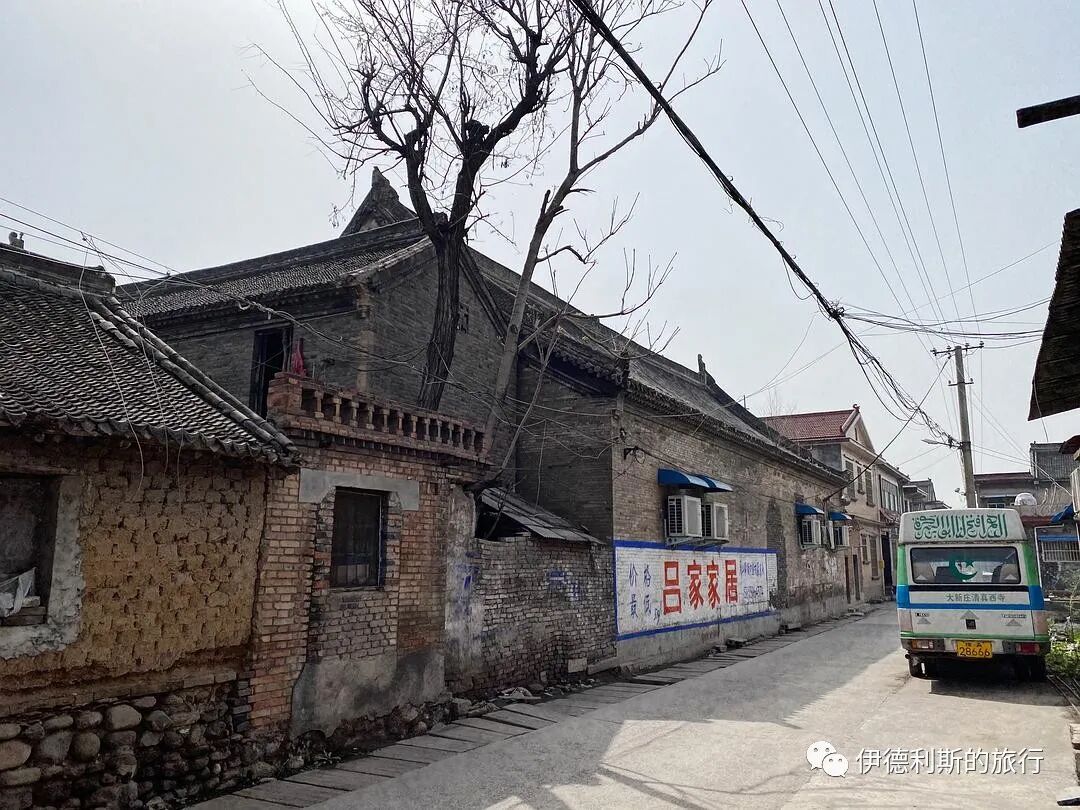
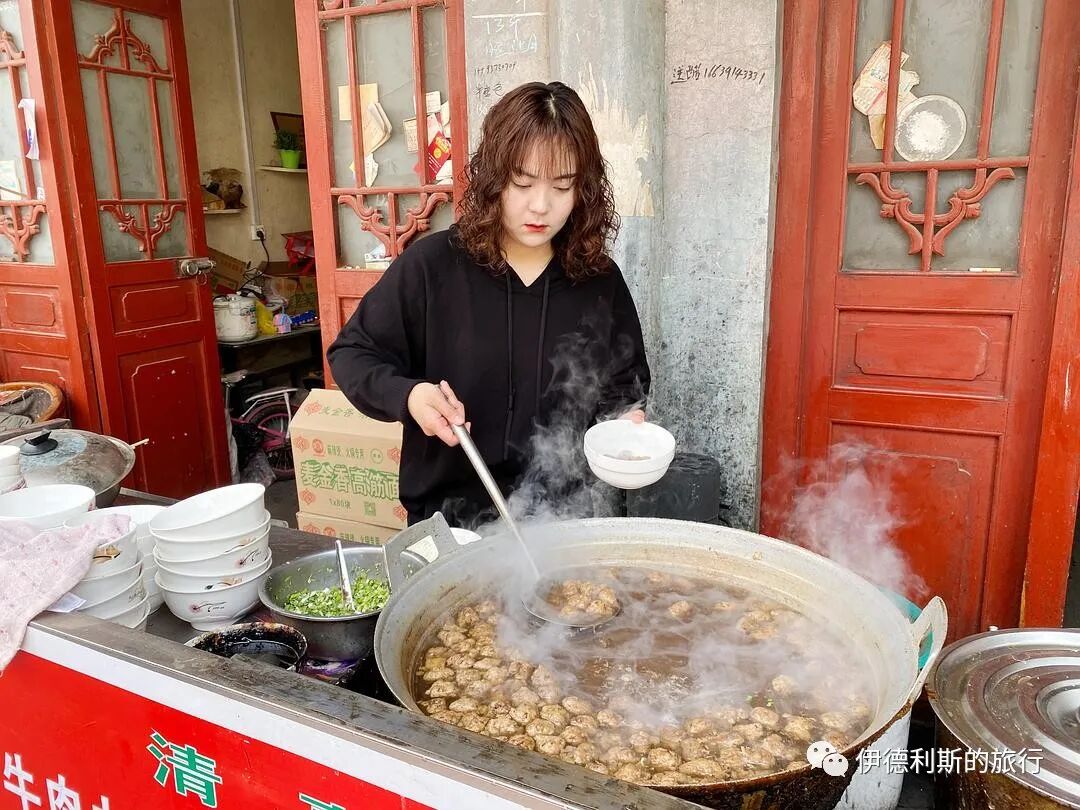
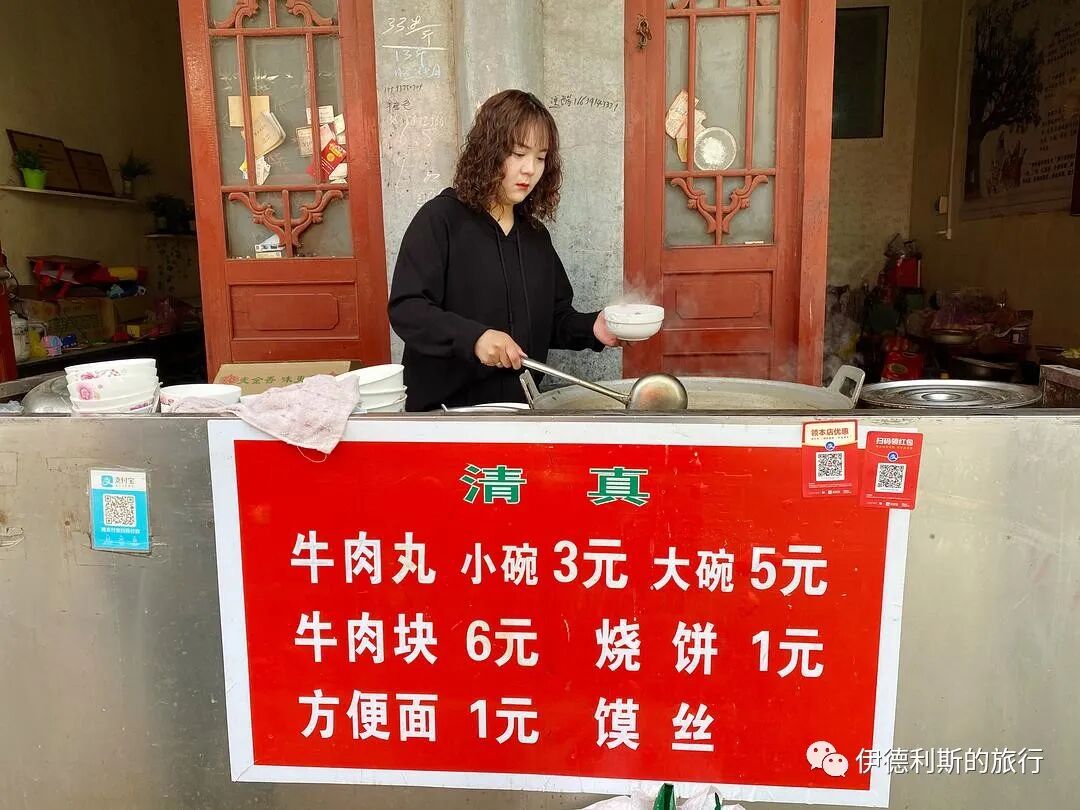
Eating beef meatballs at the original 'Guhuai Li' (Ancient Locust Tree Li) Li Xiaocheng Beef Meatball shop at the entrance of the Daxinzhuang East Mosque. Bo'ai's beef meatballs are quite famous. I saw several shops in Zhengzhou, but I resisted eating them there so I could come to Bo'ai to eat them locally. They are indeed very delicious! There are beef meatballs at various price points, mainly depending on the amount of meat used. There are sixi balls (four-delight meatballs), regular meatballs, and crispy meat. There is a 1,000-year-old locust tree in front of their shop, which looks quite ancient.
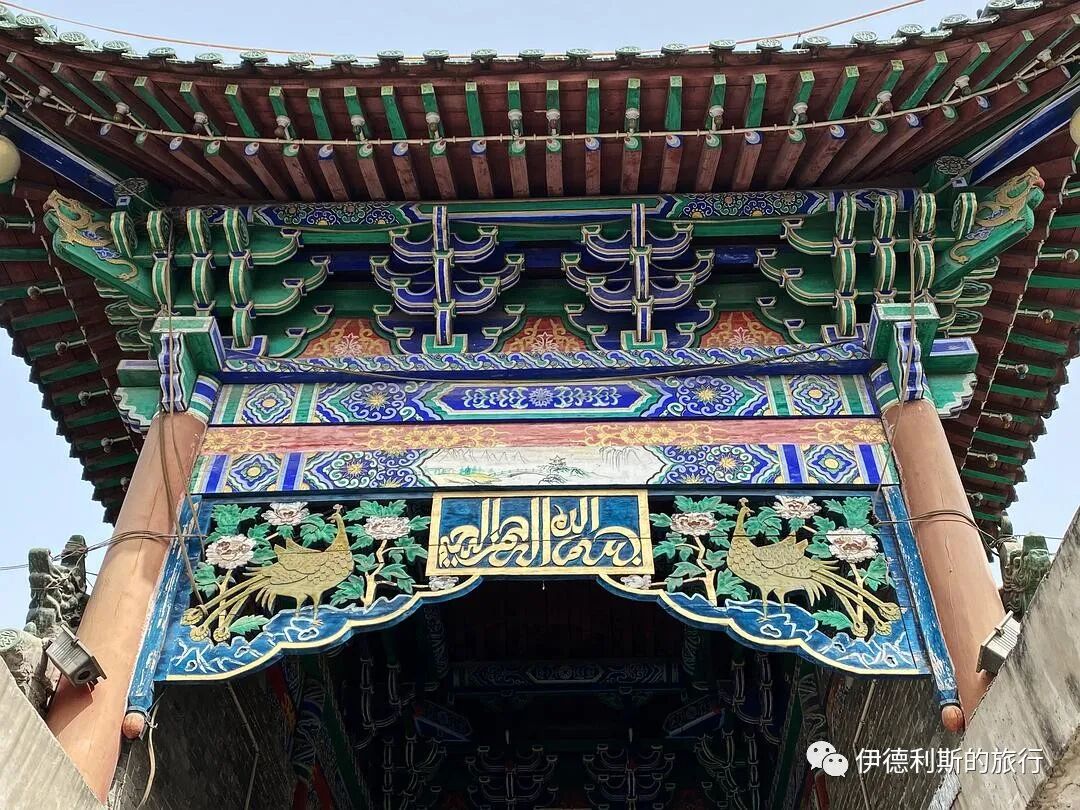
Mendu (door plaques) on the street.
Summary: This travel note introduces Zhengzhou, Bo'ai and Qinyang Spring Halal Travel Guide (Part 2). The yaodian (kiln-style prayer hall) was renovated in 1887 (the 13th year of the Guangxu reign). It is useful for readers interested in Henan Travel, China Mosques, Halal Food.
The yaodian (kiln-style prayer hall) was renovated in 1887 (the 13th year of the Guangxu reign). Its interior features a brick dome structure, built with two partition walls over 1 meter thick to form a semicircular arch. At the concave corners, three layers of arches are extended to create an octagonal skylight, topped with a corbelled dome. The very top of the central dome is inscribed with the Arabic word for Allah.
There is beautiful calligraphy on the mihrab (prayer niche). Imam Ma Hongjie gave us a detailed introduction here, and I also happened to catch the dhikr (remembrance of Allah).
The exterior of the yaodian has a cross-shaped roof with over 70 glazed roof beasts. Under the eaves are glazed beams, brackets, and hanging flower columns. The colorful design represents the highest standard of Qing Dynasty mosque yaodian roofs.
Inside the North Mosque is the Yuying Martial Arts School, founded in 1928, which specializes in Chaquan (a style of Chinese martial arts). The second master of Chaquan, Shi Desheng, trained many excellent disciples, including Nanjing Military Region martial arts instructor Mai Changchun, Wuhan Military Region martial arts instructor Ding Changwen, Feng Yuxiang's Big Sword Team instructor Wang Shaozhou, and the martyr of the War to Resist US Aggression and Aid Korea, Ma Shaokong.
Eating breakfast on Beisi Street in Qinyang, Henan, on a Sunday morning. First, I had rice tea with youguozi (fried dough fritters) at Ma's. Rice tea is made from boiled roasted rice, with white sesame seeds and soybeans added; it is very refreshing. Then, I had a mix of beef offal and suwan (crispy meatballs) at Bai's next door. The portions were generous, the soup was very fragrant, and it was a very satisfying meal.
The Qinyang Shuinanguan Mosque was rebuilt between 1990 and 1995. It still maintains the traditional architectural style with flying eaves, bracket sets, and blue-green glazed tiles, though the new building, no matter how beautiful, lacks historical value.
The most valuable part of Shuinanguan is the mihrab yaodian prayer niche excavated during the 1990s reconstruction. It has been designated as a national cultural relic and is stored inside the main hall. Unfortunately, it was not time for namaz (prayer) when I visited, so there was no one at the mosque, and the main hall was locked, so I could not see it.
The mosque houses works by the famous Beijing Arabic calligrapher Li Wencai and the famous Henan Arabic calligrapher Mi Guangjiang.
Bo'ai Erxian Temple and Daxinzhuang
Took a taxi from Qinyang, Henan, to the Erxian Mosque Mosque in Bo'ai. The Erxian Mosque Mosque was first built in the Yuan Dynasty, renovated in 1638 (the 11th year of the Ming Chongzhen reign), and renovated again in 1731 (the 9th year of the Qing Yongzheng reign). It is a cultural relic protection unit of Henan Province. The main hall of the mosque consists of a juanpeng (shed-style roof), front hall, rear hall, and yaodian. The juanpeng and front hall were built in the Qing Dynasty with a hard mountain roof and connected structure, while the rear hall and yaodian were added in 1993.
Continued by taxi from Erxian Mosque to the East Mosque in Daxinzhuang, Bo'ai. The Daxinzhuang East Mosque was first built in the Yuan Dynasty, expanded in the Ming Dynasty, and the rear hall was added during the Republic of China era. It is currently a cultural relic protection unit of Henan Province.
The main hall consists of a juanpeng, front hall, rear hall, and yaodian. The juanpeng is an independent structure, with a drainage gutter installed where it connects to the front eaves of the main hall. There is a 365-year-old osmanthus tree in front of the main hall.
The front hall is seven bays wide, with exposed wooden beams and rafters. The wood carvings on the two beams are very beautiful. The rear hall was added during the Republic of China era and features five Roman-style arched doors with exquisite Republic-era cement decorations.
Wood carvings on the main gate
Old door panels
Calligraphy by the famous Henan Arabic calligrapher Bai Lifeng, collected in the mosque.
Blackboard newspaper
The Daxinzhuang West Mosque is near the East Mosque, but it is not as famous as the East Mosque. The West Mosque was first built during the Jiaqing reign. The main hall originally had three bays, was expanded to five bays in the late Qing Dynasty, and expanded to seven bays in the early Republic of China era. During this period, the old community leader Mai Anli funded the construction of a five-bay juanpeng.
Eating beef meatballs at the original 'Guhuai Li' (Ancient Locust Tree Li) Li Xiaocheng Beef Meatball shop at the entrance of the Daxinzhuang East Mosque. Bo'ai's beef meatballs are quite famous. I saw several shops in Zhengzhou, but I resisted eating them there so I could come to Bo'ai to eat them locally. They are indeed very delicious! There are beef meatballs at various price points, mainly depending on the amount of meat used. There are sixi balls (four-delight meatballs), regular meatballs, and crispy meat. There is a 1,000-year-old locust tree in front of their shop, which looks quite ancient.
Mendu (door plaques) on the street.
Zhengzhou, Bo'ai and Qinyang Spring Halal Travel Guide (Part 1)
Articles • ali2007fr posted the article • 0 comments • 141 views • 2026-05-17 07:12
Reposted from the web
Summary: This travel note introduces Zhengzhou, Bo'ai and Qinyang Spring Halal Travel Guide (Part 1). In mid-March 2021, Beijing lifted travel restrictions, and Zainab and I went to Henan for a trip on the last weekend of March, visiting Zhengzhou, Bo'ai, and Qinyang. It is useful for readers interested in Henan Travel, China Mosques, Halal Food.
In mid-March 2021, Beijing lifted travel restrictions, and Zainab and I went to Henan for a trip on the last weekend of March, visiting Zhengzhou, Bo'ai, and Qinyang.
We took a high-speed train to Zhengzhou on Friday night, got off, transferred to the subway, and headed straight to the North Mosque. We ate Laoshuncheng Xiaolong Guantangbao (steamed soup dumplings) on Mosque Street. The soup dumplings were very fresh and delicious. Zainab was very satisfied with Zhengzhou's cold dish culture, where you can mix and match dishes as you like.
After finishing the soup dumplings, we went to the nearby Lu Laoda Mutton Soup on Shangcheng Road. Their shop is open 24 hours, so you can drink mutton soup even late at night. We ordered mutton soup and Xiaosuru (crispy stir-fried meat). It was Zainab's first time drinking milky-white mutton soup, and she was very surprised. We also ordered bean products and gluten stewed with chicken frames, but it was a bit salty.
Early Saturday morning, we went to Mashan Doumo Shop on Shuncheng Street to drink doumo (millet flour porridge) and eat caijiao (vegetable-filled fried dough pockets). Mashan Doumo Shop was founded in Huayuankou in 1938 and moved to Shuncheng Street in the 1950s. It is the oldest doumo shop in Zhengzhou. Doumo is popular in Henan, Hebei, and Shandong. I have had it before in Kaifeng and Jinan. It is made of millet flour, soybeans, and peanuts, seasoned with various spices.
Then we had breakfast at a nearby shop on Old Shuncheng Street, eating hulatang (spicy pepper soup) with shuijianbao (pan-fried buns). I really liked the lively atmosphere of Shuncheng Street when I visited Zhengzhou before. It has become much quieter after renovations, but the breakfast shops are still as busy as ever. It is said that Zhengzhou's hulatang used to be less spicy, but later some shops followed Fang Zhongshan's style and added more chili powder.
Visiting the Zhengzhou North Mosque. The North Mosque is located on North Street in the old city of Zhengzhou. It is said to have been built in the Ming Dynasty, features the typical architectural style of Central Plains mosques, and is a Major Historical and Cultural Site Protected at the National Level.
The main gate was built in 1725 (the third year of the Yongzheng reign).
The Moon-Watching Tower also serves as the minaret. The first floor is a hallway. Judging by the architectural structure, it is very likely an original Ming Dynasty piece, but the dougong (bracket sets) and eaves rafters were likely replaced during the Qing Dynasty. According to records, it was renovated in 1887 (the thirteenth year of the Guangxu reign).
The Moon-Watching Tower has three pairs of Chinese couplets:
Observe, listen, and hear the words; to fully understand the essence of the present is to understand all of creation.
Whether in prosperity or decline, honor or disgrace, to realize the subtle turning point is to realize the mystery within.
The hustle and bustle of the world, even if you are proud and happy, is but a fleeting distraction.
Within the body and mind, no matter what you do, when you finally close your eyes, only two things will follow you closely.
Follow the Quran to promote the righteous path.
Follow the Sunnah so the truth lasts forever.
The other side has Arabic couplets.
There are also couplets on the doors on both sides of the Moon-Watching Tower:
The five daily prayers are the key to opening the door.
The holy scripture is the lamp that guides the way.
To recognize the pearl, one must return to the shore.
If you think of the sea, repair your boat early.
Stone inscriptions in the courtyard.
The main prayer hall was renovated twice, in 1802 (the seventh year of the Jiaqing reign) and 1907 (the thirty-third year of the Guangxu reign), and consists of a porch, the main hall, and the rear dome hall. The main hall features a lift-beam wooden frame with exposed rafters. The beams and rafters are covered with cloud and floral patterns, making it unique and elegant. There is a floral screen between the main hall and the dome hall, filled with openwork patterns. Light shines from the bright dome hall through the screen into the main hall, creating a delicate and translucent effect on the screen.
There are two century-old osmanthus trees in front of the main hall.
Couplets inside the main hall:
The painting of the heavens, know that there is no second artist.
The writings across the earth, one must ponder who holds the brush.
Recognize the True Lord, who has no form or shadow, and let all things serve as proof.
To contemplate creation is not to seek the high and distant, but to keep the one truth in your heart.
Behind the main hall, next to the dome hall, there is a Chinese juniper tree over 400 years old.
After visiting the North Mosque, we had youcha (oil tea) and almond tea at Yang's Youcha across the street. I drank youcha at their place last time I visited Zhengzhou and even bought youcha powder to take home. Their almond tea is also very good and includes rose jam.
Bo'ai Xiguan.
At noon, we took a train from Zhengzhou to Jiaozuo, then took a taxi to Bo'ai to visit the famous Bo'ai Xiguan Mosque. The Xiguan Mosque was founded in the Yuan Dynasty, and the main hall was expanded in 1405 (the third year of the Yongle reign of the Ming Dynasty). It is currently a national cultural heritage site and is known as the "First Mosque of Northern Henan."
The main hall consists of a porch, a front hall, a dome hall (middle hall), and a rear hall. In 1863 (the second year of the Tongzhi reign), the dome hall was burned down by the Nian Army and later rebuilt to its original appearance. In 1941, a rear hall was added behind the dome hall, making the dome hall the middle hall. The main hall has a lift-beam wooden frame supported by 16 pillars in 4 rows. The middle hall has 4 tall pillars supporting the dome roof. Inside the dome roof is a caisson ceiling, and the exterior is a triple-eave, four-corner cross-ridge roof.
I performed salah in the mosque and also caught the dhikr.
Main gate.
Glazed archway.
Jumu'ah plaque.
After the prayer, many restaurants were closed, so we ate zaban (mixed meat stew) and chicken diced heluo noodles at Linji Kouwan Shaguoju (casserole restaurant). Bo'ai zaban is a specialty dish from traditional Bo'ai water banquets. It is made by braising various ingredients such as wood ear mushrooms, white fungus, bamboo shoots, crispy meatballs, boiled meatballs, white meatballs, and beef slices. It is very satisfying to eat.
On Sunday afternoon, we came back to Bo'ai Xiguan to eat and explore, and had the local specialty, jiangmiantiao (fermented bean paste noodles). It is made by boiling the liquid squeezed out when making tofu into a paste, served with soybeans, peanuts, celery, and crushed sesame sauce. It tastes sour and fragrant, and I feel it would be even better in the summer.
Then we ate the specialty cai-tuanzi (vegetable dumplings). They are made by rolling celery, peanuts, soybeans, carrots, and corn grits into balls, wrapping them in corn flour, and deep-frying them. The texture is very rich, and as a corn lover, I was very satisfied.
We bought Liji crispy chicken. The stewed chicken is fried again and sprinkled with secret seasonings, making it very fragrant. However, it is a bit salty to eat on its own, so it was perfect to eat with the flatbread we bought in Xiguan on the train back to Beijing.
We also bought Xiaoche Beef (cart beef) at the Xiguan intersection. This is a delicacy popular in the Taihang Mountains area at the junction of Henan, Shaanxi, Shanxi, and Hebei. After the beef is braised, it is wrapped in rich meat broth, cooled, and pressed into meat jelly, then sold from a cart in the market. Because the meat jelly melts when the temperature rises, Xiaoche Beef is traditionally unavailable in the summer.
Some door couplets on Xiguan Street.
Qinyang.
On Saturday afternoon, we took a taxi from Bo'ai to Qinyang to visit the Qinyang North Mosque, which I had been longing to see for a long time. In my mind, it definitely ranks in the top three among historical mosque buildings in Henan. The North Mosque was moved to its current location in 1561 (the fortieth year of the Jiajing reign of the Ming Dynasty), burned down in 1628 (the first year of the Chongzhen reign of the Ming Dynasty), and rebuilt in 1631. It is a Major Historical and Cultural Site Protected at the National Level.
The overall layout of the North Mosque is quite classic, consisting mainly of the main gate, a hallway, a lecture hall, and the main prayer hall. Next, I will share it with you bit by bit. Because of the lighting, I took photos twice, on Saturday afternoon and Sunday morning.
The main gate was built in 1799 (the fourth year of the Jiaqing reign) and uses peacock blue glazed tiles, which are relatively rare in mosque architecture and look very refreshing.
The hallway was built in 1631 (the fourth year of the Chongzhen reign of the Ming Dynasty).
The lecture hall was built in 1909 (the first year of the Xuantong reign). The north and south lecture halls have hard-gabled roofs, with hanging flower columns under the eaves and diamond-patterned doors and windows, simple and elegant.
Scripture boxes in the Imam's office.
The main prayer hall consists of a porch, a front hall, a middle hall, and a dome hall. This style, with a hip-and-gable roof for the front hall, a gabled roof for the middle hall, and a raised dome hall, is unique to the Qinyang area. First, I will share the exterior of the porch and the front hall.
The beautiful Qing Dynasty paintings inside the main hall. Thanks to Imam Ma Hongjie for the wonderful introduction. The main hall of the North Mosque was occupied by a factory in the 1960s and 1970s. The lower paintings all faded, and only the paintings on the top were luckily preserved. view all
Summary: This travel note introduces Zhengzhou, Bo'ai and Qinyang Spring Halal Travel Guide (Part 1). In mid-March 2021, Beijing lifted travel restrictions, and Zainab and I went to Henan for a trip on the last weekend of March, visiting Zhengzhou, Bo'ai, and Qinyang. It is useful for readers interested in Henan Travel, China Mosques, Halal Food.
In mid-March 2021, Beijing lifted travel restrictions, and Zainab and I went to Henan for a trip on the last weekend of March, visiting Zhengzhou, Bo'ai, and Qinyang.
We took a high-speed train to Zhengzhou on Friday night, got off, transferred to the subway, and headed straight to the North Mosque. We ate Laoshuncheng Xiaolong Guantangbao (steamed soup dumplings) on Mosque Street. The soup dumplings were very fresh and delicious. Zainab was very satisfied with Zhengzhou's cold dish culture, where you can mix and match dishes as you like.
After finishing the soup dumplings, we went to the nearby Lu Laoda Mutton Soup on Shangcheng Road. Their shop is open 24 hours, so you can drink mutton soup even late at night. We ordered mutton soup and Xiaosuru (crispy stir-fried meat). It was Zainab's first time drinking milky-white mutton soup, and she was very surprised. We also ordered bean products and gluten stewed with chicken frames, but it was a bit salty.
Early Saturday morning, we went to Mashan Doumo Shop on Shuncheng Street to drink doumo (millet flour porridge) and eat caijiao (vegetable-filled fried dough pockets). Mashan Doumo Shop was founded in Huayuankou in 1938 and moved to Shuncheng Street in the 1950s. It is the oldest doumo shop in Zhengzhou. Doumo is popular in Henan, Hebei, and Shandong. I have had it before in Kaifeng and Jinan. It is made of millet flour, soybeans, and peanuts, seasoned with various spices.
Then we had breakfast at a nearby shop on Old Shuncheng Street, eating hulatang (spicy pepper soup) with shuijianbao (pan-fried buns). I really liked the lively atmosphere of Shuncheng Street when I visited Zhengzhou before. It has become much quieter after renovations, but the breakfast shops are still as busy as ever. It is said that Zhengzhou's hulatang used to be less spicy, but later some shops followed Fang Zhongshan's style and added more chili powder.
Visiting the Zhengzhou North Mosque. The North Mosque is located on North Street in the old city of Zhengzhou. It is said to have been built in the Ming Dynasty, features the typical architectural style of Central Plains mosques, and is a Major Historical and Cultural Site Protected at the National Level.
The main gate was built in 1725 (the third year of the Yongzheng reign).
The Moon-Watching Tower also serves as the minaret. The first floor is a hallway. Judging by the architectural structure, it is very likely an original Ming Dynasty piece, but the dougong (bracket sets) and eaves rafters were likely replaced during the Qing Dynasty. According to records, it was renovated in 1887 (the thirteenth year of the Guangxu reign).
The Moon-Watching Tower has three pairs of Chinese couplets:
Observe, listen, and hear the words; to fully understand the essence of the present is to understand all of creation.
Whether in prosperity or decline, honor or disgrace, to realize the subtle turning point is to realize the mystery within.
The hustle and bustle of the world, even if you are proud and happy, is but a fleeting distraction.
Within the body and mind, no matter what you do, when you finally close your eyes, only two things will follow you closely.
Follow the Quran to promote the righteous path.
Follow the Sunnah so the truth lasts forever.
The other side has Arabic couplets.
There are also couplets on the doors on both sides of the Moon-Watching Tower:
The five daily prayers are the key to opening the door.
The holy scripture is the lamp that guides the way.
To recognize the pearl, one must return to the shore.
If you think of the sea, repair your boat early.
Stone inscriptions in the courtyard.
The main prayer hall was renovated twice, in 1802 (the seventh year of the Jiaqing reign) and 1907 (the thirty-third year of the Guangxu reign), and consists of a porch, the main hall, and the rear dome hall. The main hall features a lift-beam wooden frame with exposed rafters. The beams and rafters are covered with cloud and floral patterns, making it unique and elegant. There is a floral screen between the main hall and the dome hall, filled with openwork patterns. Light shines from the bright dome hall through the screen into the main hall, creating a delicate and translucent effect on the screen.
There are two century-old osmanthus trees in front of the main hall.
Couplets inside the main hall:
The painting of the heavens, know that there is no second artist.
The writings across the earth, one must ponder who holds the brush.
Recognize the True Lord, who has no form or shadow, and let all things serve as proof.
To contemplate creation is not to seek the high and distant, but to keep the one truth in your heart.
Behind the main hall, next to the dome hall, there is a Chinese juniper tree over 400 years old.
After visiting the North Mosque, we had youcha (oil tea) and almond tea at Yang's Youcha across the street. I drank youcha at their place last time I visited Zhengzhou and even bought youcha powder to take home. Their almond tea is also very good and includes rose jam.
Bo'ai Xiguan.
At noon, we took a train from Zhengzhou to Jiaozuo, then took a taxi to Bo'ai to visit the famous Bo'ai Xiguan Mosque. The Xiguan Mosque was founded in the Yuan Dynasty, and the main hall was expanded in 1405 (the third year of the Yongle reign of the Ming Dynasty). It is currently a national cultural heritage site and is known as the "First Mosque of Northern Henan."
The main hall consists of a porch, a front hall, a dome hall (middle hall), and a rear hall. In 1863 (the second year of the Tongzhi reign), the dome hall was burned down by the Nian Army and later rebuilt to its original appearance. In 1941, a rear hall was added behind the dome hall, making the dome hall the middle hall. The main hall has a lift-beam wooden frame supported by 16 pillars in 4 rows. The middle hall has 4 tall pillars supporting the dome roof. Inside the dome roof is a caisson ceiling, and the exterior is a triple-eave, four-corner cross-ridge roof.
I performed salah in the mosque and also caught the dhikr.
Main gate.
Glazed archway.
Jumu'ah plaque.
After the prayer, many restaurants were closed, so we ate zaban (mixed meat stew) and chicken diced heluo noodles at Linji Kouwan Shaguoju (casserole restaurant). Bo'ai zaban is a specialty dish from traditional Bo'ai water banquets. It is made by braising various ingredients such as wood ear mushrooms, white fungus, bamboo shoots, crispy meatballs, boiled meatballs, white meatballs, and beef slices. It is very satisfying to eat.
On Sunday afternoon, we came back to Bo'ai Xiguan to eat and explore, and had the local specialty, jiangmiantiao (fermented bean paste noodles). It is made by boiling the liquid squeezed out when making tofu into a paste, served with soybeans, peanuts, celery, and crushed sesame sauce. It tastes sour and fragrant, and I feel it would be even better in the summer.
Then we ate the specialty cai-tuanzi (vegetable dumplings). They are made by rolling celery, peanuts, soybeans, carrots, and corn grits into balls, wrapping them in corn flour, and deep-frying them. The texture is very rich, and as a corn lover, I was very satisfied.
We bought Liji crispy chicken. The stewed chicken is fried again and sprinkled with secret seasonings, making it very fragrant. However, it is a bit salty to eat on its own, so it was perfect to eat with the flatbread we bought in Xiguan on the train back to Beijing.
We also bought Xiaoche Beef (cart beef) at the Xiguan intersection. This is a delicacy popular in the Taihang Mountains area at the junction of Henan, Shaanxi, Shanxi, and Hebei. After the beef is braised, it is wrapped in rich meat broth, cooled, and pressed into meat jelly, then sold from a cart in the market. Because the meat jelly melts when the temperature rises, Xiaoche Beef is traditionally unavailable in the summer.
Some door couplets on Xiguan Street.
Qinyang.
On Saturday afternoon, we took a taxi from Bo'ai to Qinyang to visit the Qinyang North Mosque, which I had been longing to see for a long time. In my mind, it definitely ranks in the top three among historical mosque buildings in Henan. The North Mosque was moved to its current location in 1561 (the fortieth year of the Jiajing reign of the Ming Dynasty), burned down in 1628 (the first year of the Chongzhen reign of the Ming Dynasty), and rebuilt in 1631. It is a Major Historical and Cultural Site Protected at the National Level.
The overall layout of the North Mosque is quite classic, consisting mainly of the main gate, a hallway, a lecture hall, and the main prayer hall. Next, I will share it with you bit by bit. Because of the lighting, I took photos twice, on Saturday afternoon and Sunday morning.
The main gate was built in 1799 (the fourth year of the Jiaqing reign) and uses peacock blue glazed tiles, which are relatively rare in mosque architecture and look very refreshing.
The hallway was built in 1631 (the fourth year of the Chongzhen reign of the Ming Dynasty).
The lecture hall was built in 1909 (the first year of the Xuantong reign). The north and south lecture halls have hard-gabled roofs, with hanging flower columns under the eaves and diamond-patterned doors and windows, simple and elegant.
Scripture boxes in the Imam's office.
The main prayer hall consists of a porch, a front hall, a middle hall, and a dome hall. This style, with a hip-and-gable roof for the front hall, a gabled roof for the middle hall, and a raised dome hall, is unique to the Qinyang area. First, I will share the exterior of the porch and the front hall.
The beautiful Qing Dynasty paintings inside the main hall. Thanks to Imam Ma Hongjie for the wonderful introduction. The main hall of the North Mosque was occupied by a factory in the 1960s and 1970s. The lower paintings all faded, and only the paintings on the top were luckily preserved. view all
Reposted from the web
Summary: This travel note introduces Zhengzhou, Bo'ai and Qinyang Spring Halal Travel Guide (Part 1). In mid-March 2021, Beijing lifted travel restrictions, and Zainab and I went to Henan for a trip on the last weekend of March, visiting Zhengzhou, Bo'ai, and Qinyang. It is useful for readers interested in Henan Travel, China Mosques, Halal Food.
In mid-March 2021, Beijing lifted travel restrictions, and Zainab and I went to Henan for a trip on the last weekend of March, visiting Zhengzhou, Bo'ai, and Qinyang.
We took a high-speed train to Zhengzhou on Friday night, got off, transferred to the subway, and headed straight to the North Mosque. We ate Laoshuncheng Xiaolong Guantangbao (steamed soup dumplings) on Mosque Street. The soup dumplings were very fresh and delicious. Zainab was very satisfied with Zhengzhou's cold dish culture, where you can mix and match dishes as you like.
After finishing the soup dumplings, we went to the nearby Lu Laoda Mutton Soup on Shangcheng Road. Their shop is open 24 hours, so you can drink mutton soup even late at night. We ordered mutton soup and Xiaosuru (crispy stir-fried meat). It was Zainab's first time drinking milky-white mutton soup, and she was very surprised. We also ordered bean products and gluten stewed with chicken frames, but it was a bit salty.
Early Saturday morning, we went to Mashan Doumo Shop on Shuncheng Street to drink doumo (millet flour porridge) and eat caijiao (vegetable-filled fried dough pockets). Mashan Doumo Shop was founded in Huayuankou in 1938 and moved to Shuncheng Street in the 1950s. It is the oldest doumo shop in Zhengzhou. Doumo is popular in Henan, Hebei, and Shandong. I have had it before in Kaifeng and Jinan. It is made of millet flour, soybeans, and peanuts, seasoned with various spices.
Then we had breakfast at a nearby shop on Old Shuncheng Street, eating hulatang (spicy pepper soup) with shuijianbao (pan-fried buns). I really liked the lively atmosphere of Shuncheng Street when I visited Zhengzhou before. It has become much quieter after renovations, but the breakfast shops are still as busy as ever. It is said that Zhengzhou's hulatang used to be less spicy, but later some shops followed Fang Zhongshan's style and added more chili powder.
Visiting the Zhengzhou North Mosque. The North Mosque is located on North Street in the old city of Zhengzhou. It is said to have been built in the Ming Dynasty, features the typical architectural style of Central Plains mosques, and is a Major Historical and Cultural Site Protected at the National Level.
The main gate was built in 1725 (the third year of the Yongzheng reign).
The Moon-Watching Tower also serves as the minaret. The first floor is a hallway. Judging by the architectural structure, it is very likely an original Ming Dynasty piece, but the dougong (bracket sets) and eaves rafters were likely replaced during the Qing Dynasty. According to records, it was renovated in 1887 (the thirteenth year of the Guangxu reign).
The Moon-Watching Tower has three pairs of Chinese couplets:
Observe, listen, and hear the words; to fully understand the essence of the present is to understand all of creation.
Whether in prosperity or decline, honor or disgrace, to realize the subtle turning point is to realize the mystery within.
The hustle and bustle of the world, even if you are proud and happy, is but a fleeting distraction.
Within the body and mind, no matter what you do, when you finally close your eyes, only two things will follow you closely.
Follow the Quran to promote the righteous path.
Follow the Sunnah so the truth lasts forever.
The other side has Arabic couplets.
There are also couplets on the doors on both sides of the Moon-Watching Tower:
The five daily prayers are the key to opening the door.
The holy scripture is the lamp that guides the way.
To recognize the pearl, one must return to the shore.
If you think of the sea, repair your boat early.
Stone inscriptions in the courtyard.
The main prayer hall was renovated twice, in 1802 (the seventh year of the Jiaqing reign) and 1907 (the thirty-third year of the Guangxu reign), and consists of a porch, the main hall, and the rear dome hall. The main hall features a lift-beam wooden frame with exposed rafters. The beams and rafters are covered with cloud and floral patterns, making it unique and elegant. There is a floral screen between the main hall and the dome hall, filled with openwork patterns. Light shines from the bright dome hall through the screen into the main hall, creating a delicate and translucent effect on the screen.
There are two century-old osmanthus trees in front of the main hall.
Couplets inside the main hall:
The painting of the heavens, know that there is no second artist.
The writings across the earth, one must ponder who holds the brush.
Recognize the True Lord, who has no form or shadow, and let all things serve as proof.
To contemplate creation is not to seek the high and distant, but to keep the one truth in your heart.
Behind the main hall, next to the dome hall, there is a Chinese juniper tree over 400 years old.
After visiting the North Mosque, we had youcha (oil tea) and almond tea at Yang's Youcha across the street. I drank youcha at their place last time I visited Zhengzhou and even bought youcha powder to take home. Their almond tea is also very good and includes rose jam.
Bo'ai Xiguan.
At noon, we took a train from Zhengzhou to Jiaozuo, then took a taxi to Bo'ai to visit the famous Bo'ai Xiguan Mosque. The Xiguan Mosque was founded in the Yuan Dynasty, and the main hall was expanded in 1405 (the third year of the Yongle reign of the Ming Dynasty). It is currently a national cultural heritage site and is known as the "First Mosque of Northern Henan."
The main hall consists of a porch, a front hall, a dome hall (middle hall), and a rear hall. In 1863 (the second year of the Tongzhi reign), the dome hall was burned down by the Nian Army and later rebuilt to its original appearance. In 1941, a rear hall was added behind the dome hall, making the dome hall the middle hall. The main hall has a lift-beam wooden frame supported by 16 pillars in 4 rows. The middle hall has 4 tall pillars supporting the dome roof. Inside the dome roof is a caisson ceiling, and the exterior is a triple-eave, four-corner cross-ridge roof.
I performed salah in the mosque and also caught the dhikr.
Main gate.
Glazed archway.
Jumu'ah plaque.
After the prayer, many restaurants were closed, so we ate zaban (mixed meat stew) and chicken diced heluo noodles at Linji Kouwan Shaguoju (casserole restaurant). Bo'ai zaban is a specialty dish from traditional Bo'ai water banquets. It is made by braising various ingredients such as wood ear mushrooms, white fungus, bamboo shoots, crispy meatballs, boiled meatballs, white meatballs, and beef slices. It is very satisfying to eat.
On Sunday afternoon, we came back to Bo'ai Xiguan to eat and explore, and had the local specialty, jiangmiantiao (fermented bean paste noodles). It is made by boiling the liquid squeezed out when making tofu into a paste, served with soybeans, peanuts, celery, and crushed sesame sauce. It tastes sour and fragrant, and I feel it would be even better in the summer.
Then we ate the specialty cai-tuanzi (vegetable dumplings). They are made by rolling celery, peanuts, soybeans, carrots, and corn grits into balls, wrapping them in corn flour, and deep-frying them. The texture is very rich, and as a corn lover, I was very satisfied.
We bought Liji crispy chicken. The stewed chicken is fried again and sprinkled with secret seasonings, making it very fragrant. However, it is a bit salty to eat on its own, so it was perfect to eat with the flatbread we bought in Xiguan on the train back to Beijing.
We also bought Xiaoche Beef (cart beef) at the Xiguan intersection. This is a delicacy popular in the Taihang Mountains area at the junction of Henan, Shaanxi, Shanxi, and Hebei. After the beef is braised, it is wrapped in rich meat broth, cooled, and pressed into meat jelly, then sold from a cart in the market. Because the meat jelly melts when the temperature rises, Xiaoche Beef is traditionally unavailable in the summer.
Some door couplets on Xiguan Street.
Qinyang.
On Saturday afternoon, we took a taxi from Bo'ai to Qinyang to visit the Qinyang North Mosque, which I had been longing to see for a long time. In my mind, it definitely ranks in the top three among historical mosque buildings in Henan. The North Mosque was moved to its current location in 1561 (the fortieth year of the Jiajing reign of the Ming Dynasty), burned down in 1628 (the first year of the Chongzhen reign of the Ming Dynasty), and rebuilt in 1631. It is a Major Historical and Cultural Site Protected at the National Level.
The overall layout of the North Mosque is quite classic, consisting mainly of the main gate, a hallway, a lecture hall, and the main prayer hall. Next, I will share it with you bit by bit. Because of the lighting, I took photos twice, on Saturday afternoon and Sunday morning.
The main gate was built in 1799 (the fourth year of the Jiaqing reign) and uses peacock blue glazed tiles, which are relatively rare in mosque architecture and look very refreshing.
The hallway was built in 1631 (the fourth year of the Chongzhen reign of the Ming Dynasty).
The lecture hall was built in 1909 (the first year of the Xuantong reign). The north and south lecture halls have hard-gabled roofs, with hanging flower columns under the eaves and diamond-patterned doors and windows, simple and elegant.
Scripture boxes in the Imam's office.
The main prayer hall consists of a porch, a front hall, a middle hall, and a dome hall. This style, with a hip-and-gable roof for the front hall, a gabled roof for the middle hall, and a raised dome hall, is unique to the Qinyang area. First, I will share the exterior of the porch and the front hall.
The beautiful Qing Dynasty paintings inside the main hall. Thanks to Imam Ma Hongjie for the wonderful introduction. The main hall of the North Mosque was occupied by a factory in the 1960s and 1970s. The lower paintings all faded, and only the paintings on the top were luckily preserved.
Summary: This travel note introduces Zhengzhou, Bo'ai and Qinyang Spring Halal Travel Guide (Part 1). In mid-March 2021, Beijing lifted travel restrictions, and Zainab and I went to Henan for a trip on the last weekend of March, visiting Zhengzhou, Bo'ai, and Qinyang. It is useful for readers interested in Henan Travel, China Mosques, Halal Food.
In mid-March 2021, Beijing lifted travel restrictions, and Zainab and I went to Henan for a trip on the last weekend of March, visiting Zhengzhou, Bo'ai, and Qinyang.
We took a high-speed train to Zhengzhou on Friday night, got off, transferred to the subway, and headed straight to the North Mosque. We ate Laoshuncheng Xiaolong Guantangbao (steamed soup dumplings) on Mosque Street. The soup dumplings were very fresh and delicious. Zainab was very satisfied with Zhengzhou's cold dish culture, where you can mix and match dishes as you like.
After finishing the soup dumplings, we went to the nearby Lu Laoda Mutton Soup on Shangcheng Road. Their shop is open 24 hours, so you can drink mutton soup even late at night. We ordered mutton soup and Xiaosuru (crispy stir-fried meat). It was Zainab's first time drinking milky-white mutton soup, and she was very surprised. We also ordered bean products and gluten stewed with chicken frames, but it was a bit salty.
Early Saturday morning, we went to Mashan Doumo Shop on Shuncheng Street to drink doumo (millet flour porridge) and eat caijiao (vegetable-filled fried dough pockets). Mashan Doumo Shop was founded in Huayuankou in 1938 and moved to Shuncheng Street in the 1950s. It is the oldest doumo shop in Zhengzhou. Doumo is popular in Henan, Hebei, and Shandong. I have had it before in Kaifeng and Jinan. It is made of millet flour, soybeans, and peanuts, seasoned with various spices.
Then we had breakfast at a nearby shop on Old Shuncheng Street, eating hulatang (spicy pepper soup) with shuijianbao (pan-fried buns). I really liked the lively atmosphere of Shuncheng Street when I visited Zhengzhou before. It has become much quieter after renovations, but the breakfast shops are still as busy as ever. It is said that Zhengzhou's hulatang used to be less spicy, but later some shops followed Fang Zhongshan's style and added more chili powder.
Visiting the Zhengzhou North Mosque. The North Mosque is located on North Street in the old city of Zhengzhou. It is said to have been built in the Ming Dynasty, features the typical architectural style of Central Plains mosques, and is a Major Historical and Cultural Site Protected at the National Level.
The main gate was built in 1725 (the third year of the Yongzheng reign).
The Moon-Watching Tower also serves as the minaret. The first floor is a hallway. Judging by the architectural structure, it is very likely an original Ming Dynasty piece, but the dougong (bracket sets) and eaves rafters were likely replaced during the Qing Dynasty. According to records, it was renovated in 1887 (the thirteenth year of the Guangxu reign).
The Moon-Watching Tower has three pairs of Chinese couplets:
Observe, listen, and hear the words; to fully understand the essence of the present is to understand all of creation.
Whether in prosperity or decline, honor or disgrace, to realize the subtle turning point is to realize the mystery within.
The hustle and bustle of the world, even if you are proud and happy, is but a fleeting distraction.
Within the body and mind, no matter what you do, when you finally close your eyes, only two things will follow you closely.
Follow the Quran to promote the righteous path.
Follow the Sunnah so the truth lasts forever.
The other side has Arabic couplets.
There are also couplets on the doors on both sides of the Moon-Watching Tower:
The five daily prayers are the key to opening the door.
The holy scripture is the lamp that guides the way.
To recognize the pearl, one must return to the shore.
If you think of the sea, repair your boat early.
Stone inscriptions in the courtyard.
The main prayer hall was renovated twice, in 1802 (the seventh year of the Jiaqing reign) and 1907 (the thirty-third year of the Guangxu reign), and consists of a porch, the main hall, and the rear dome hall. The main hall features a lift-beam wooden frame with exposed rafters. The beams and rafters are covered with cloud and floral patterns, making it unique and elegant. There is a floral screen between the main hall and the dome hall, filled with openwork patterns. Light shines from the bright dome hall through the screen into the main hall, creating a delicate and translucent effect on the screen.
There are two century-old osmanthus trees in front of the main hall.
Couplets inside the main hall:
The painting of the heavens, know that there is no second artist.
The writings across the earth, one must ponder who holds the brush.
Recognize the True Lord, who has no form or shadow, and let all things serve as proof.
To contemplate creation is not to seek the high and distant, but to keep the one truth in your heart.
Behind the main hall, next to the dome hall, there is a Chinese juniper tree over 400 years old.
After visiting the North Mosque, we had youcha (oil tea) and almond tea at Yang's Youcha across the street. I drank youcha at their place last time I visited Zhengzhou and even bought youcha powder to take home. Their almond tea is also very good and includes rose jam.
Bo'ai Xiguan.
At noon, we took a train from Zhengzhou to Jiaozuo, then took a taxi to Bo'ai to visit the famous Bo'ai Xiguan Mosque. The Xiguan Mosque was founded in the Yuan Dynasty, and the main hall was expanded in 1405 (the third year of the Yongle reign of the Ming Dynasty). It is currently a national cultural heritage site and is known as the "First Mosque of Northern Henan."
The main hall consists of a porch, a front hall, a dome hall (middle hall), and a rear hall. In 1863 (the second year of the Tongzhi reign), the dome hall was burned down by the Nian Army and later rebuilt to its original appearance. In 1941, a rear hall was added behind the dome hall, making the dome hall the middle hall. The main hall has a lift-beam wooden frame supported by 16 pillars in 4 rows. The middle hall has 4 tall pillars supporting the dome roof. Inside the dome roof is a caisson ceiling, and the exterior is a triple-eave, four-corner cross-ridge roof.
I performed salah in the mosque and also caught the dhikr.
Main gate.
Glazed archway.
Jumu'ah plaque.
After the prayer, many restaurants were closed, so we ate zaban (mixed meat stew) and chicken diced heluo noodles at Linji Kouwan Shaguoju (casserole restaurant). Bo'ai zaban is a specialty dish from traditional Bo'ai water banquets. It is made by braising various ingredients such as wood ear mushrooms, white fungus, bamboo shoots, crispy meatballs, boiled meatballs, white meatballs, and beef slices. It is very satisfying to eat.
On Sunday afternoon, we came back to Bo'ai Xiguan to eat and explore, and had the local specialty, jiangmiantiao (fermented bean paste noodles). It is made by boiling the liquid squeezed out when making tofu into a paste, served with soybeans, peanuts, celery, and crushed sesame sauce. It tastes sour and fragrant, and I feel it would be even better in the summer.
Then we ate the specialty cai-tuanzi (vegetable dumplings). They are made by rolling celery, peanuts, soybeans, carrots, and corn grits into balls, wrapping them in corn flour, and deep-frying them. The texture is very rich, and as a corn lover, I was very satisfied.
We bought Liji crispy chicken. The stewed chicken is fried again and sprinkled with secret seasonings, making it very fragrant. However, it is a bit salty to eat on its own, so it was perfect to eat with the flatbread we bought in Xiguan on the train back to Beijing.
We also bought Xiaoche Beef (cart beef) at the Xiguan intersection. This is a delicacy popular in the Taihang Mountains area at the junction of Henan, Shaanxi, Shanxi, and Hebei. After the beef is braised, it is wrapped in rich meat broth, cooled, and pressed into meat jelly, then sold from a cart in the market. Because the meat jelly melts when the temperature rises, Xiaoche Beef is traditionally unavailable in the summer.
Some door couplets on Xiguan Street.
Qinyang.
On Saturday afternoon, we took a taxi from Bo'ai to Qinyang to visit the Qinyang North Mosque, which I had been longing to see for a long time. In my mind, it definitely ranks in the top three among historical mosque buildings in Henan. The North Mosque was moved to its current location in 1561 (the fortieth year of the Jiajing reign of the Ming Dynasty), burned down in 1628 (the first year of the Chongzhen reign of the Ming Dynasty), and rebuilt in 1631. It is a Major Historical and Cultural Site Protected at the National Level.
The overall layout of the North Mosque is quite classic, consisting mainly of the main gate, a hallway, a lecture hall, and the main prayer hall. Next, I will share it with you bit by bit. Because of the lighting, I took photos twice, on Saturday afternoon and Sunday morning.
The main gate was built in 1799 (the fourth year of the Jiaqing reign) and uses peacock blue glazed tiles, which are relatively rare in mosque architecture and look very refreshing.
The hallway was built in 1631 (the fourth year of the Chongzhen reign of the Ming Dynasty).
The lecture hall was built in 1909 (the first year of the Xuantong reign). The north and south lecture halls have hard-gabled roofs, with hanging flower columns under the eaves and diamond-patterned doors and windows, simple and elegant.
Scripture boxes in the Imam's office.
The main prayer hall consists of a porch, a front hall, a middle hall, and a dome hall. This style, with a hip-and-gable roof for the front hall, a gabled roof for the middle hall, and a raised dome hall, is unique to the Qinyang area. First, I will share the exterior of the porch and the front hall.
The beautiful Qing Dynasty paintings inside the main hall. Thanks to Imam Ma Hongjie for the wonderful introduction. The main hall of the North Mosque was occupied by a factory in the 1960s and 1970s. The lower paintings all faded, and only the paintings on the top were luckily preserved.
Zhengzhou, Bo'ai and Qinyang Spring Halal Travel Guide (Part 2)
Articles • ali2007fr posted the article • 0 comments • 152 views • 2026-05-17 06:46
Reposted from the web
Summary: This travel note introduces Zhengzhou, Bo'ai and Qinyang Spring Halal Travel Guide (Part 2). The yaodian (kiln-style prayer hall) was renovated in 1887 (the 13th year of the Guangxu reign). It is useful for readers interested in Henan Travel, China Mosques, Halal Food.
The yaodian (kiln-style prayer hall) was renovated in 1887 (the 13th year of the Guangxu reign). Its interior features a brick dome structure, built with two partition walls over 1 meter thick to form a semicircular arch. At the concave corners, three layers of arches are extended to create an octagonal skylight, topped with a corbelled dome. The very top of the central dome is inscribed with the Arabic word for Allah.
There is beautiful calligraphy on the mihrab (prayer niche). Imam Ma Hongjie gave us a detailed introduction here, and I also happened to catch the dhikr (remembrance of Allah).
The exterior of the yaodian has a cross-shaped roof with over 70 glazed roof beasts. Under the eaves are glazed beams, brackets, and hanging flower columns. The colorful design represents the highest standard of Qing Dynasty mosque yaodian roofs.
Inside the North Mosque is the Yuying Martial Arts School, founded in 1928, which specializes in Chaquan (a style of Chinese martial arts). The second master of Chaquan, Shi Desheng, trained many excellent disciples, including Nanjing Military Region martial arts instructor Mai Changchun, Wuhan Military Region martial arts instructor Ding Changwen, Feng Yuxiang's Big Sword Team instructor Wang Shaozhou, and the martyr of the War to Resist US Aggression and Aid Korea, Ma Shaokong.
Eating breakfast on Beisi Street in Qinyang, Henan, on a Sunday morning. First, I had rice tea with youguozi (fried dough fritters) at Ma's. Rice tea is made from boiled roasted rice, with white sesame seeds and soybeans added; it is very refreshing. Then, I had a mix of beef offal and suwan (crispy meatballs) at Bai's next door. The portions were generous, the soup was very fragrant, and it was a very satisfying meal.
The Qinyang Shuinanguan Mosque was rebuilt between 1990 and 1995. It still maintains the traditional architectural style with flying eaves, bracket sets, and blue-green glazed tiles, though the new building, no matter how beautiful, lacks historical value.
The most valuable part of Shuinanguan is the mihrab yaodian prayer niche excavated during the 1990s reconstruction. It has been designated as a national cultural relic and is stored inside the main hall. Unfortunately, it was not time for namaz (prayer) when I visited, so there was no one at the mosque, and the main hall was locked, so I could not see it.
The mosque houses works by the famous Beijing Arabic calligrapher Li Wencai and the famous Henan Arabic calligrapher Mi Guangjiang.
Bo'ai Erxian Temple and Daxinzhuang
Took a taxi from Qinyang, Henan, to the Erxian Mosque Mosque in Bo'ai. The Erxian Mosque Mosque was first built in the Yuan Dynasty, renovated in 1638 (the 11th year of the Ming Chongzhen reign), and renovated again in 1731 (the 9th year of the Qing Yongzheng reign). It is a cultural relic protection unit of Henan Province. The main hall of the mosque consists of a juanpeng (shed-style roof), front hall, rear hall, and yaodian. The juanpeng and front hall were built in the Qing Dynasty with a hard mountain roof and connected structure, while the rear hall and yaodian were added in 1993.
Continued by taxi from Erxian Mosque to the East Mosque in Daxinzhuang, Bo'ai. The Daxinzhuang East Mosque was first built in the Yuan Dynasty, expanded in the Ming Dynasty, and the rear hall was added during the Republic of China era. It is currently a cultural relic protection unit of Henan Province.
The main hall consists of a juanpeng, front hall, rear hall, and yaodian. The juanpeng is an independent structure, with a drainage gutter installed where it connects to the front eaves of the main hall. There is a 365-year-old osmanthus tree in front of the main hall.
The front hall is seven bays wide, with exposed wooden beams and rafters. The wood carvings on the two beams are very beautiful. The rear hall was added during the Republic of China era and features five Roman-style arched doors with exquisite Republic-era cement decorations.
Wood carvings on the main gate
Old door panels
Calligraphy by the famous Henan Arabic calligrapher Bai Lifeng, collected in the mosque.
Blackboard newspaper
The Daxinzhuang West Mosque is near the East Mosque, but it is not as famous as the East Mosque. The West Mosque was first built during the Jiaqing reign. The main hall originally had three bays, was expanded to five bays in the late Qing Dynasty, and expanded to seven bays in the early Republic of China era. During this period, the old community leader Mai Anli funded the construction of a five-bay juanpeng.
Eating beef meatballs at the original 'Guhuai Li' (Ancient Locust Tree Li) Li Xiaocheng Beef Meatball shop at the entrance of the Daxinzhuang East Mosque. Bo'ai's beef meatballs are quite famous. I saw several shops in Zhengzhou, but I resisted eating them there so I could come to Bo'ai to eat them locally. They are indeed very delicious! There are beef meatballs at various price points, mainly depending on the amount of meat used. There are sixi balls (four-delight meatballs), regular meatballs, and crispy meat. There is a 1,000-year-old locust tree in front of their shop, which looks quite ancient.
Mendu (door plaques) on the street. view all
Summary: This travel note introduces Zhengzhou, Bo'ai and Qinyang Spring Halal Travel Guide (Part 2). The yaodian (kiln-style prayer hall) was renovated in 1887 (the 13th year of the Guangxu reign). It is useful for readers interested in Henan Travel, China Mosques, Halal Food.
The yaodian (kiln-style prayer hall) was renovated in 1887 (the 13th year of the Guangxu reign). Its interior features a brick dome structure, built with two partition walls over 1 meter thick to form a semicircular arch. At the concave corners, three layers of arches are extended to create an octagonal skylight, topped with a corbelled dome. The very top of the central dome is inscribed with the Arabic word for Allah.
There is beautiful calligraphy on the mihrab (prayer niche). Imam Ma Hongjie gave us a detailed introduction here, and I also happened to catch the dhikr (remembrance of Allah).
The exterior of the yaodian has a cross-shaped roof with over 70 glazed roof beasts. Under the eaves are glazed beams, brackets, and hanging flower columns. The colorful design represents the highest standard of Qing Dynasty mosque yaodian roofs.
Inside the North Mosque is the Yuying Martial Arts School, founded in 1928, which specializes in Chaquan (a style of Chinese martial arts). The second master of Chaquan, Shi Desheng, trained many excellent disciples, including Nanjing Military Region martial arts instructor Mai Changchun, Wuhan Military Region martial arts instructor Ding Changwen, Feng Yuxiang's Big Sword Team instructor Wang Shaozhou, and the martyr of the War to Resist US Aggression and Aid Korea, Ma Shaokong.
Eating breakfast on Beisi Street in Qinyang, Henan, on a Sunday morning. First, I had rice tea with youguozi (fried dough fritters) at Ma's. Rice tea is made from boiled roasted rice, with white sesame seeds and soybeans added; it is very refreshing. Then, I had a mix of beef offal and suwan (crispy meatballs) at Bai's next door. The portions were generous, the soup was very fragrant, and it was a very satisfying meal.
The Qinyang Shuinanguan Mosque was rebuilt between 1990 and 1995. It still maintains the traditional architectural style with flying eaves, bracket sets, and blue-green glazed tiles, though the new building, no matter how beautiful, lacks historical value.
The most valuable part of Shuinanguan is the mihrab yaodian prayer niche excavated during the 1990s reconstruction. It has been designated as a national cultural relic and is stored inside the main hall. Unfortunately, it was not time for namaz (prayer) when I visited, so there was no one at the mosque, and the main hall was locked, so I could not see it.
The mosque houses works by the famous Beijing Arabic calligrapher Li Wencai and the famous Henan Arabic calligrapher Mi Guangjiang.
Bo'ai Erxian Temple and Daxinzhuang
Took a taxi from Qinyang, Henan, to the Erxian Mosque Mosque in Bo'ai. The Erxian Mosque Mosque was first built in the Yuan Dynasty, renovated in 1638 (the 11th year of the Ming Chongzhen reign), and renovated again in 1731 (the 9th year of the Qing Yongzheng reign). It is a cultural relic protection unit of Henan Province. The main hall of the mosque consists of a juanpeng (shed-style roof), front hall, rear hall, and yaodian. The juanpeng and front hall were built in the Qing Dynasty with a hard mountain roof and connected structure, while the rear hall and yaodian were added in 1993.
Continued by taxi from Erxian Mosque to the East Mosque in Daxinzhuang, Bo'ai. The Daxinzhuang East Mosque was first built in the Yuan Dynasty, expanded in the Ming Dynasty, and the rear hall was added during the Republic of China era. It is currently a cultural relic protection unit of Henan Province.
The main hall consists of a juanpeng, front hall, rear hall, and yaodian. The juanpeng is an independent structure, with a drainage gutter installed where it connects to the front eaves of the main hall. There is a 365-year-old osmanthus tree in front of the main hall.
The front hall is seven bays wide, with exposed wooden beams and rafters. The wood carvings on the two beams are very beautiful. The rear hall was added during the Republic of China era and features five Roman-style arched doors with exquisite Republic-era cement decorations.
Wood carvings on the main gate
Old door panels
Calligraphy by the famous Henan Arabic calligrapher Bai Lifeng, collected in the mosque.
Blackboard newspaper
The Daxinzhuang West Mosque is near the East Mosque, but it is not as famous as the East Mosque. The West Mosque was first built during the Jiaqing reign. The main hall originally had three bays, was expanded to five bays in the late Qing Dynasty, and expanded to seven bays in the early Republic of China era. During this period, the old community leader Mai Anli funded the construction of a five-bay juanpeng.
Eating beef meatballs at the original 'Guhuai Li' (Ancient Locust Tree Li) Li Xiaocheng Beef Meatball shop at the entrance of the Daxinzhuang East Mosque. Bo'ai's beef meatballs are quite famous. I saw several shops in Zhengzhou, but I resisted eating them there so I could come to Bo'ai to eat them locally. They are indeed very delicious! There are beef meatballs at various price points, mainly depending on the amount of meat used. There are sixi balls (four-delight meatballs), regular meatballs, and crispy meat. There is a 1,000-year-old locust tree in front of their shop, which looks quite ancient.
Mendu (door plaques) on the street. view all
Reposted from the web
Summary: This travel note introduces Zhengzhou, Bo'ai and Qinyang Spring Halal Travel Guide (Part 2). The yaodian (kiln-style prayer hall) was renovated in 1887 (the 13th year of the Guangxu reign). It is useful for readers interested in Henan Travel, China Mosques, Halal Food.
The yaodian (kiln-style prayer hall) was renovated in 1887 (the 13th year of the Guangxu reign). Its interior features a brick dome structure, built with two partition walls over 1 meter thick to form a semicircular arch. At the concave corners, three layers of arches are extended to create an octagonal skylight, topped with a corbelled dome. The very top of the central dome is inscribed with the Arabic word for Allah.
There is beautiful calligraphy on the mihrab (prayer niche). Imam Ma Hongjie gave us a detailed introduction here, and I also happened to catch the dhikr (remembrance of Allah).
The exterior of the yaodian has a cross-shaped roof with over 70 glazed roof beasts. Under the eaves are glazed beams, brackets, and hanging flower columns. The colorful design represents the highest standard of Qing Dynasty mosque yaodian roofs.
Inside the North Mosque is the Yuying Martial Arts School, founded in 1928, which specializes in Chaquan (a style of Chinese martial arts). The second master of Chaquan, Shi Desheng, trained many excellent disciples, including Nanjing Military Region martial arts instructor Mai Changchun, Wuhan Military Region martial arts instructor Ding Changwen, Feng Yuxiang's Big Sword Team instructor Wang Shaozhou, and the martyr of the War to Resist US Aggression and Aid Korea, Ma Shaokong.
Eating breakfast on Beisi Street in Qinyang, Henan, on a Sunday morning. First, I had rice tea with youguozi (fried dough fritters) at Ma's. Rice tea is made from boiled roasted rice, with white sesame seeds and soybeans added; it is very refreshing. Then, I had a mix of beef offal and suwan (crispy meatballs) at Bai's next door. The portions were generous, the soup was very fragrant, and it was a very satisfying meal.
The Qinyang Shuinanguan Mosque was rebuilt between 1990 and 1995. It still maintains the traditional architectural style with flying eaves, bracket sets, and blue-green glazed tiles, though the new building, no matter how beautiful, lacks historical value.
The most valuable part of Shuinanguan is the mihrab yaodian prayer niche excavated during the 1990s reconstruction. It has been designated as a national cultural relic and is stored inside the main hall. Unfortunately, it was not time for namaz (prayer) when I visited, so there was no one at the mosque, and the main hall was locked, so I could not see it.
The mosque houses works by the famous Beijing Arabic calligrapher Li Wencai and the famous Henan Arabic calligrapher Mi Guangjiang.
Bo'ai Erxian Temple and Daxinzhuang
Took a taxi from Qinyang, Henan, to the Erxian Mosque Mosque in Bo'ai. The Erxian Mosque Mosque was first built in the Yuan Dynasty, renovated in 1638 (the 11th year of the Ming Chongzhen reign), and renovated again in 1731 (the 9th year of the Qing Yongzheng reign). It is a cultural relic protection unit of Henan Province. The main hall of the mosque consists of a juanpeng (shed-style roof), front hall, rear hall, and yaodian. The juanpeng and front hall were built in the Qing Dynasty with a hard mountain roof and connected structure, while the rear hall and yaodian were added in 1993.
Continued by taxi from Erxian Mosque to the East Mosque in Daxinzhuang, Bo'ai. The Daxinzhuang East Mosque was first built in the Yuan Dynasty, expanded in the Ming Dynasty, and the rear hall was added during the Republic of China era. It is currently a cultural relic protection unit of Henan Province.
The main hall consists of a juanpeng, front hall, rear hall, and yaodian. The juanpeng is an independent structure, with a drainage gutter installed where it connects to the front eaves of the main hall. There is a 365-year-old osmanthus tree in front of the main hall.
The front hall is seven bays wide, with exposed wooden beams and rafters. The wood carvings on the two beams are very beautiful. The rear hall was added during the Republic of China era and features five Roman-style arched doors with exquisite Republic-era cement decorations.
Wood carvings on the main gate
Old door panels
Calligraphy by the famous Henan Arabic calligrapher Bai Lifeng, collected in the mosque.
Blackboard newspaper
The Daxinzhuang West Mosque is near the East Mosque, but it is not as famous as the East Mosque. The West Mosque was first built during the Jiaqing reign. The main hall originally had three bays, was expanded to five bays in the late Qing Dynasty, and expanded to seven bays in the early Republic of China era. During this period, the old community leader Mai Anli funded the construction of a five-bay juanpeng.
Eating beef meatballs at the original 'Guhuai Li' (Ancient Locust Tree Li) Li Xiaocheng Beef Meatball shop at the entrance of the Daxinzhuang East Mosque. Bo'ai's beef meatballs are quite famous. I saw several shops in Zhengzhou, but I resisted eating them there so I could come to Bo'ai to eat them locally. They are indeed very delicious! There are beef meatballs at various price points, mainly depending on the amount of meat used. There are sixi balls (four-delight meatballs), regular meatballs, and crispy meat. There is a 1,000-year-old locust tree in front of their shop, which looks quite ancient.
Mendu (door plaques) on the street.
Summary: This travel note introduces Zhengzhou, Bo'ai and Qinyang Spring Halal Travel Guide (Part 2). The yaodian (kiln-style prayer hall) was renovated in 1887 (the 13th year of the Guangxu reign). It is useful for readers interested in Henan Travel, China Mosques, Halal Food.
The yaodian (kiln-style prayer hall) was renovated in 1887 (the 13th year of the Guangxu reign). Its interior features a brick dome structure, built with two partition walls over 1 meter thick to form a semicircular arch. At the concave corners, three layers of arches are extended to create an octagonal skylight, topped with a corbelled dome. The very top of the central dome is inscribed with the Arabic word for Allah.
There is beautiful calligraphy on the mihrab (prayer niche). Imam Ma Hongjie gave us a detailed introduction here, and I also happened to catch the dhikr (remembrance of Allah).
The exterior of the yaodian has a cross-shaped roof with over 70 glazed roof beasts. Under the eaves are glazed beams, brackets, and hanging flower columns. The colorful design represents the highest standard of Qing Dynasty mosque yaodian roofs.
Inside the North Mosque is the Yuying Martial Arts School, founded in 1928, which specializes in Chaquan (a style of Chinese martial arts). The second master of Chaquan, Shi Desheng, trained many excellent disciples, including Nanjing Military Region martial arts instructor Mai Changchun, Wuhan Military Region martial arts instructor Ding Changwen, Feng Yuxiang's Big Sword Team instructor Wang Shaozhou, and the martyr of the War to Resist US Aggression and Aid Korea, Ma Shaokong.
Eating breakfast on Beisi Street in Qinyang, Henan, on a Sunday morning. First, I had rice tea with youguozi (fried dough fritters) at Ma's. Rice tea is made from boiled roasted rice, with white sesame seeds and soybeans added; it is very refreshing. Then, I had a mix of beef offal and suwan (crispy meatballs) at Bai's next door. The portions were generous, the soup was very fragrant, and it was a very satisfying meal.
The Qinyang Shuinanguan Mosque was rebuilt between 1990 and 1995. It still maintains the traditional architectural style with flying eaves, bracket sets, and blue-green glazed tiles, though the new building, no matter how beautiful, lacks historical value.
The most valuable part of Shuinanguan is the mihrab yaodian prayer niche excavated during the 1990s reconstruction. It has been designated as a national cultural relic and is stored inside the main hall. Unfortunately, it was not time for namaz (prayer) when I visited, so there was no one at the mosque, and the main hall was locked, so I could not see it.
The mosque houses works by the famous Beijing Arabic calligrapher Li Wencai and the famous Henan Arabic calligrapher Mi Guangjiang.
Bo'ai Erxian Temple and Daxinzhuang
Took a taxi from Qinyang, Henan, to the Erxian Mosque Mosque in Bo'ai. The Erxian Mosque Mosque was first built in the Yuan Dynasty, renovated in 1638 (the 11th year of the Ming Chongzhen reign), and renovated again in 1731 (the 9th year of the Qing Yongzheng reign). It is a cultural relic protection unit of Henan Province. The main hall of the mosque consists of a juanpeng (shed-style roof), front hall, rear hall, and yaodian. The juanpeng and front hall were built in the Qing Dynasty with a hard mountain roof and connected structure, while the rear hall and yaodian were added in 1993.
Continued by taxi from Erxian Mosque to the East Mosque in Daxinzhuang, Bo'ai. The Daxinzhuang East Mosque was first built in the Yuan Dynasty, expanded in the Ming Dynasty, and the rear hall was added during the Republic of China era. It is currently a cultural relic protection unit of Henan Province.
The main hall consists of a juanpeng, front hall, rear hall, and yaodian. The juanpeng is an independent structure, with a drainage gutter installed where it connects to the front eaves of the main hall. There is a 365-year-old osmanthus tree in front of the main hall.
The front hall is seven bays wide, with exposed wooden beams and rafters. The wood carvings on the two beams are very beautiful. The rear hall was added during the Republic of China era and features five Roman-style arched doors with exquisite Republic-era cement decorations.
Wood carvings on the main gate
Old door panels
Calligraphy by the famous Henan Arabic calligrapher Bai Lifeng, collected in the mosque.
Blackboard newspaper
The Daxinzhuang West Mosque is near the East Mosque, but it is not as famous as the East Mosque. The West Mosque was first built during the Jiaqing reign. The main hall originally had three bays, was expanded to five bays in the late Qing Dynasty, and expanded to seven bays in the early Republic of China era. During this period, the old community leader Mai Anli funded the construction of a five-bay juanpeng.
Eating beef meatballs at the original 'Guhuai Li' (Ancient Locust Tree Li) Li Xiaocheng Beef Meatball shop at the entrance of the Daxinzhuang East Mosque. Bo'ai's beef meatballs are quite famous. I saw several shops in Zhengzhou, but I resisted eating them there so I could come to Bo'ai to eat them locally. They are indeed very delicious! There are beef meatballs at various price points, mainly depending on the amount of meat used. There are sixi balls (four-delight meatballs), regular meatballs, and crispy meat. There is a 1,000-year-old locust tree in front of their shop, which looks quite ancient.
Mendu (door plaques) on the street.