

Heritage Sites
Travel Guide: Malacca Malay Wooden Houses and Historic Sites (Part 1)
Articles • ali2007fr posted the article • 0 comments • 249 views • 2026-05-19 22:20
Reposted from the web
Summary: This first part introduces Malay wooden houses and historic sites in Malacca, with attention to old homes, local architecture, and neighborhood history. It keeps the original place names, photographs, building details, and travel notes for readers interested in Malaysian heritage.
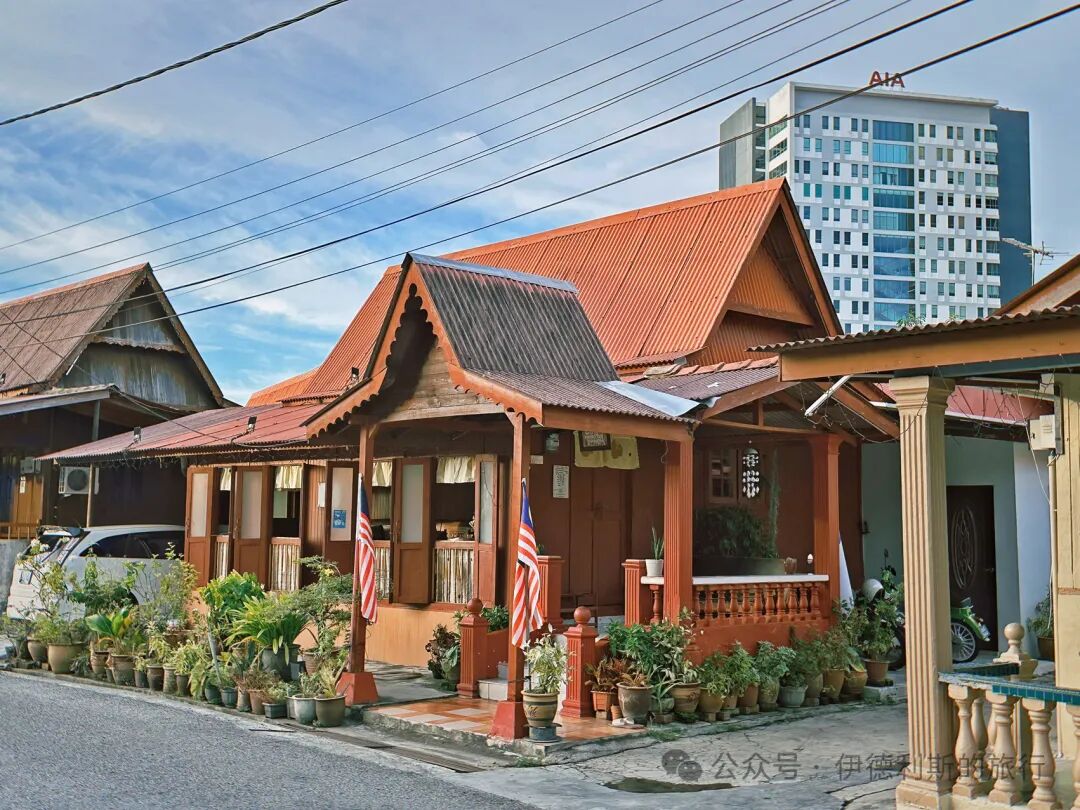
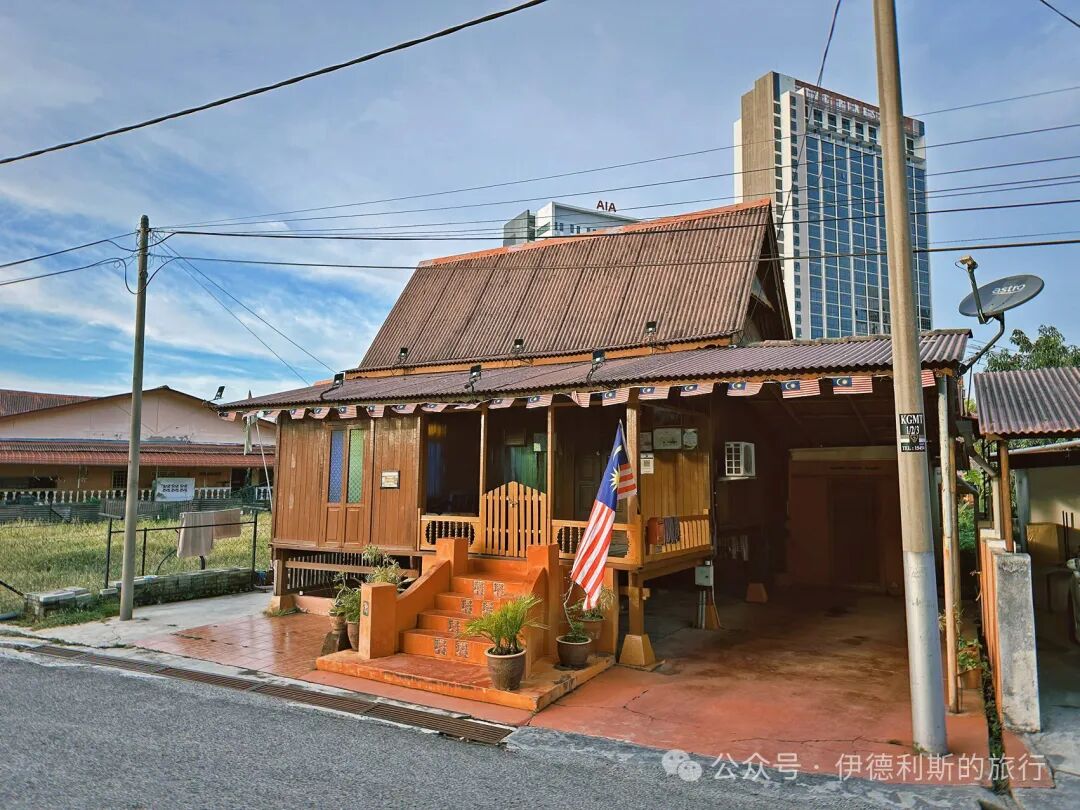
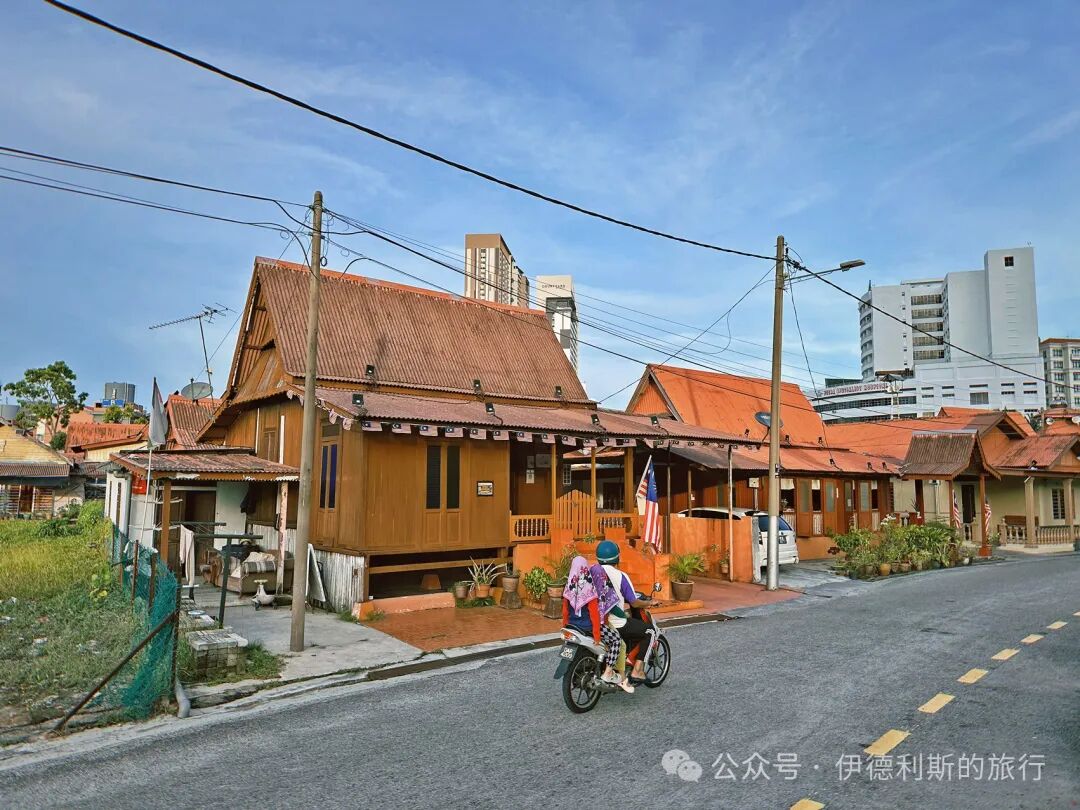
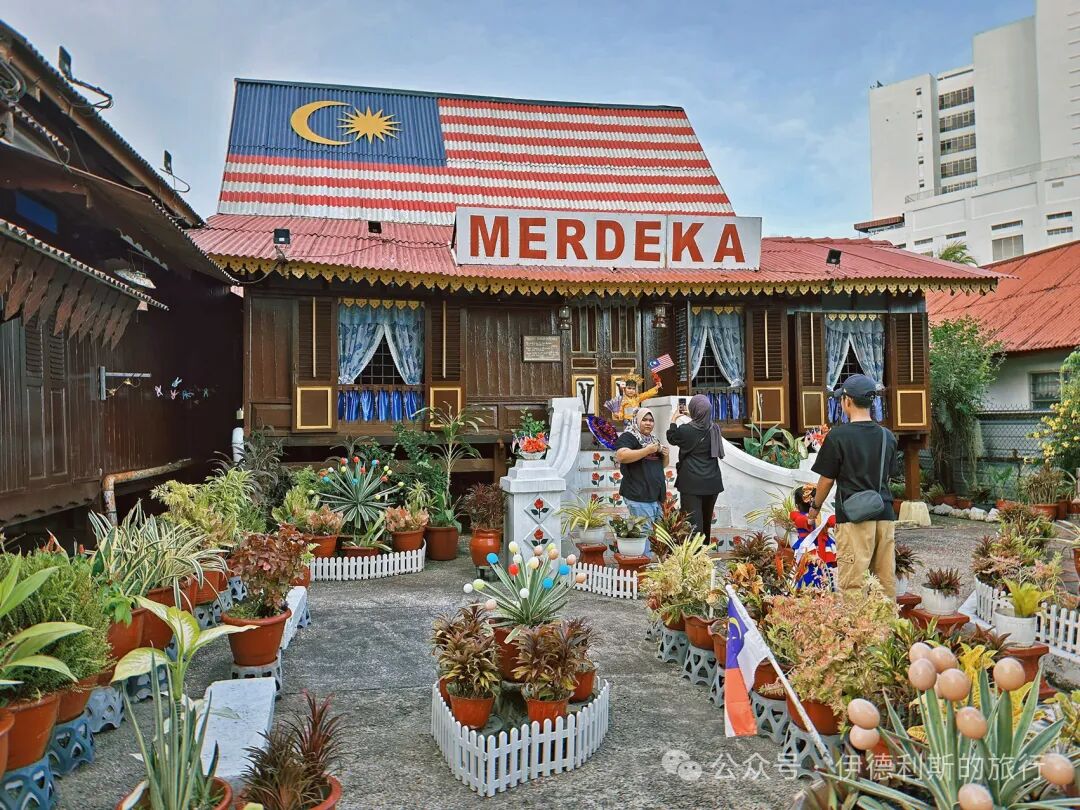
The beautiful and peaceful Malay village of Kampung Morten.
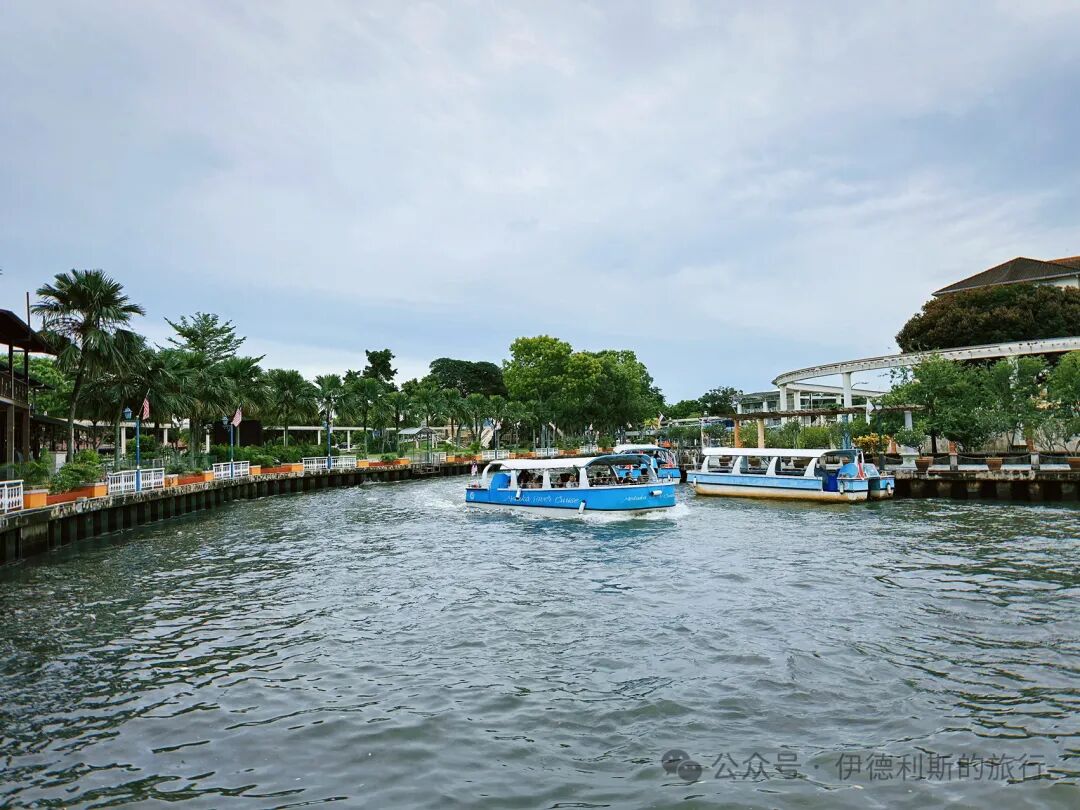
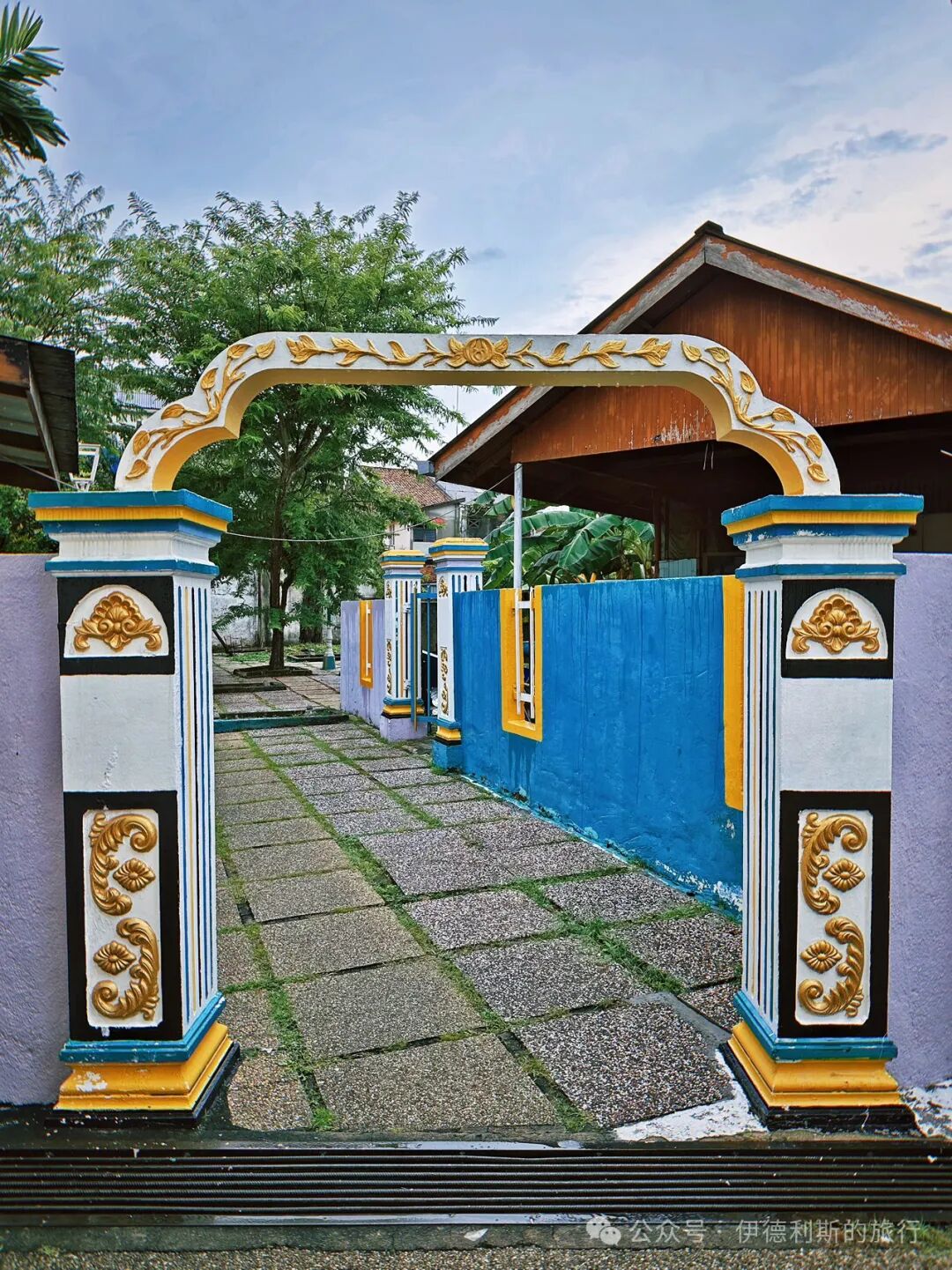
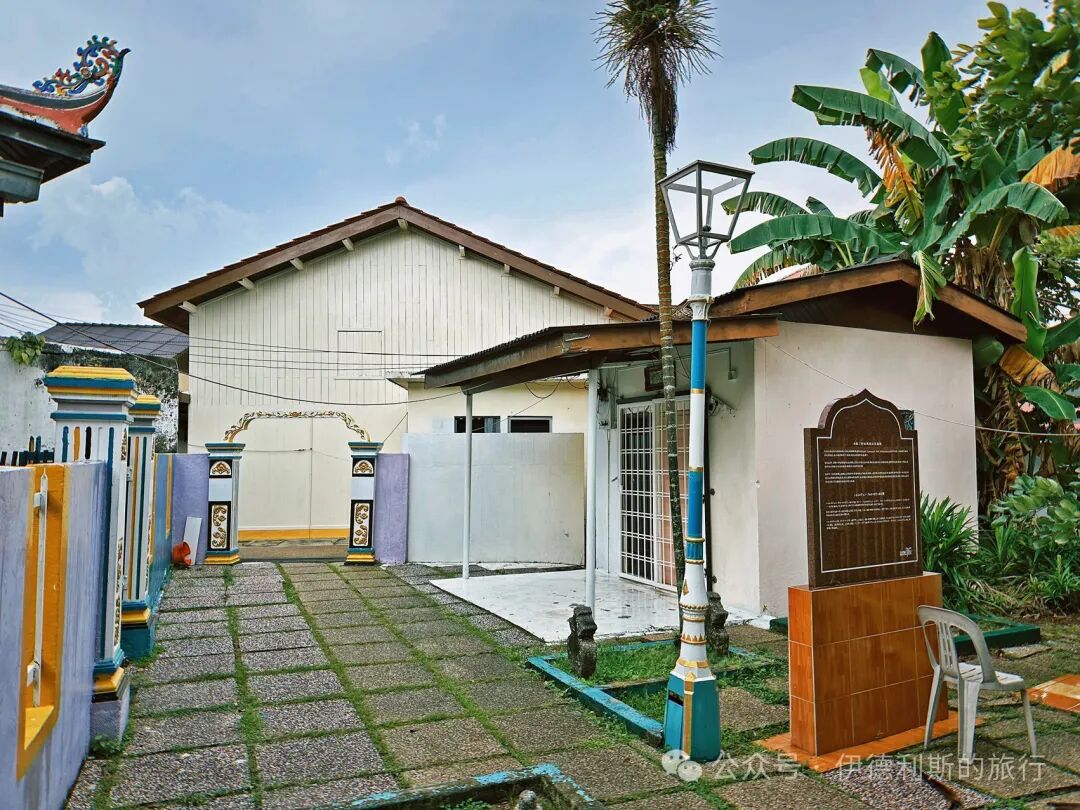
In the northern part of Malacca city sits a beautiful and peaceful Malay village called Kampung Morten. This area was once a mangrove swamp on a bend of the Malacca River, filled with mud crabs. In 1920, the nearby Kampung Jawa was forced to relocate due to land development. The village head, Dato' Othman Mohd Noh, asked the British Land Commissioner at the time, Frederick Joseph Morten, for help. Morten applied for a 10,000 Straits dollar loan from the government that same year, which was then used under Dato' Othman's leadership to buy land and build the village. The village was officially completed in 1922, and the villagers voted to name it Kampung Morten.
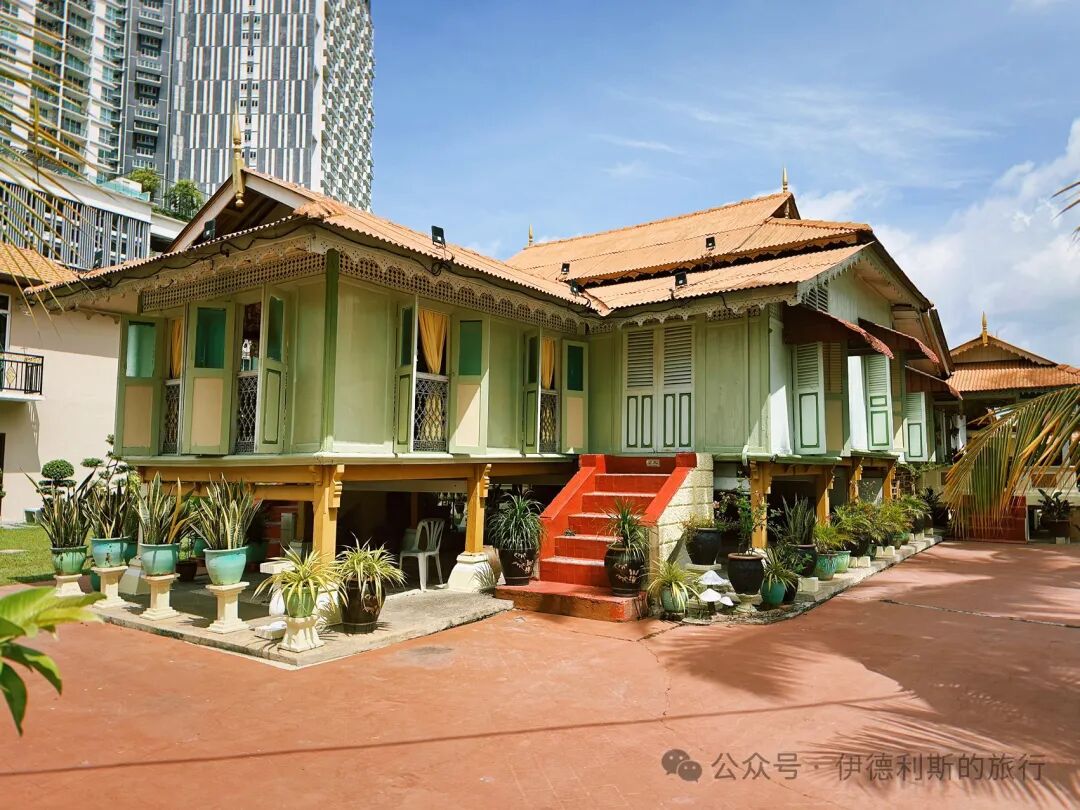
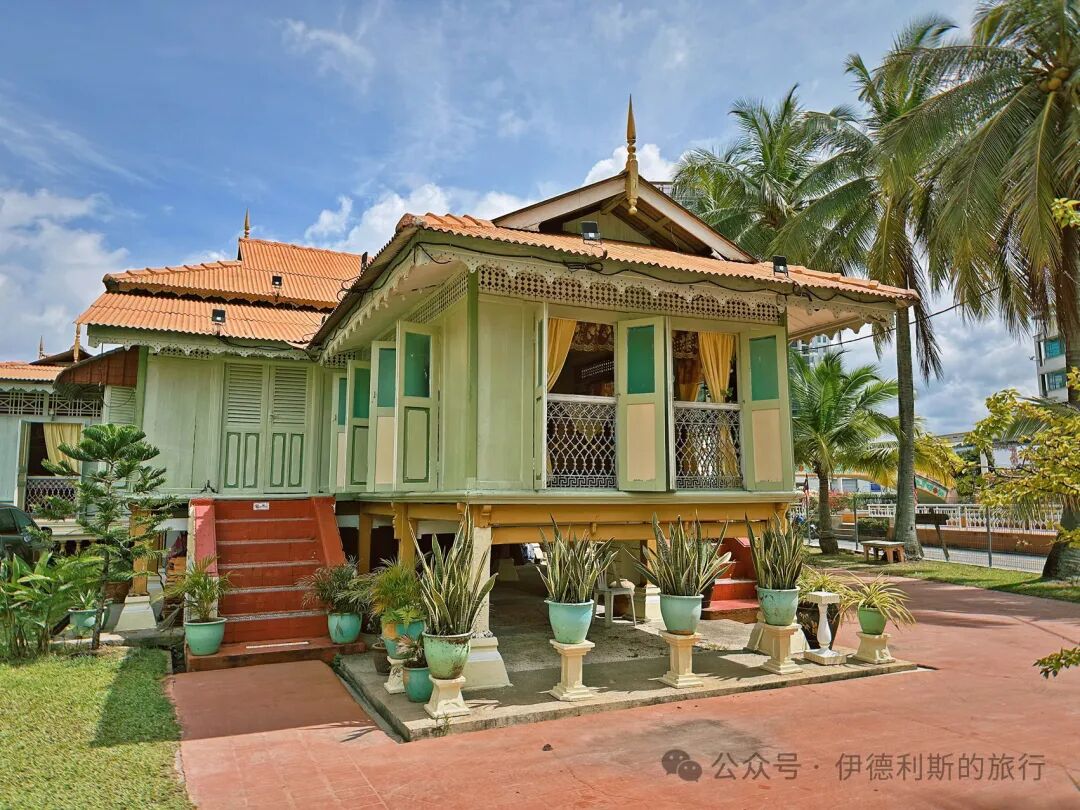
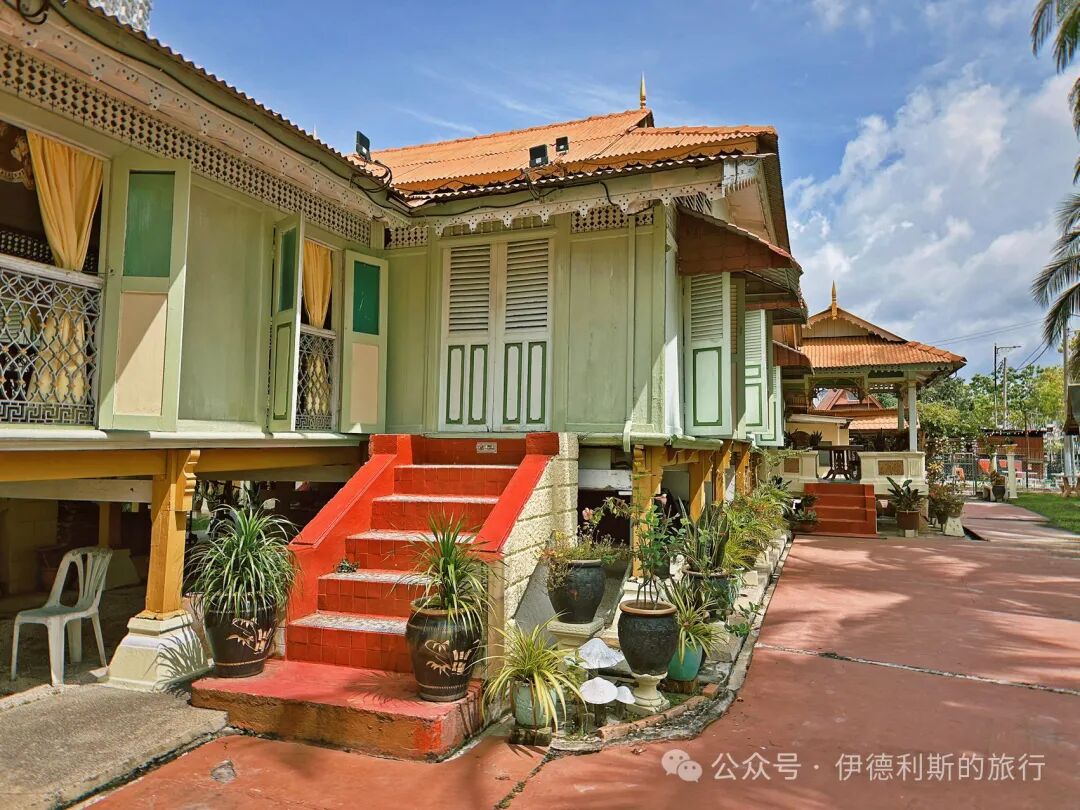
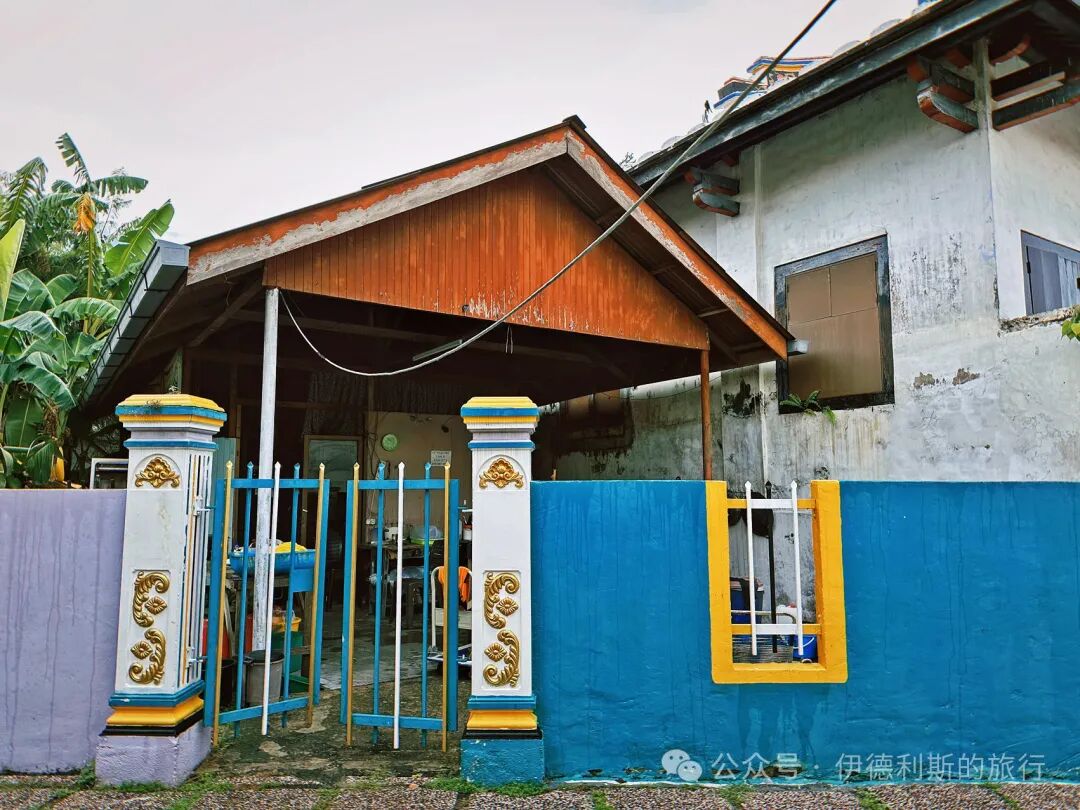
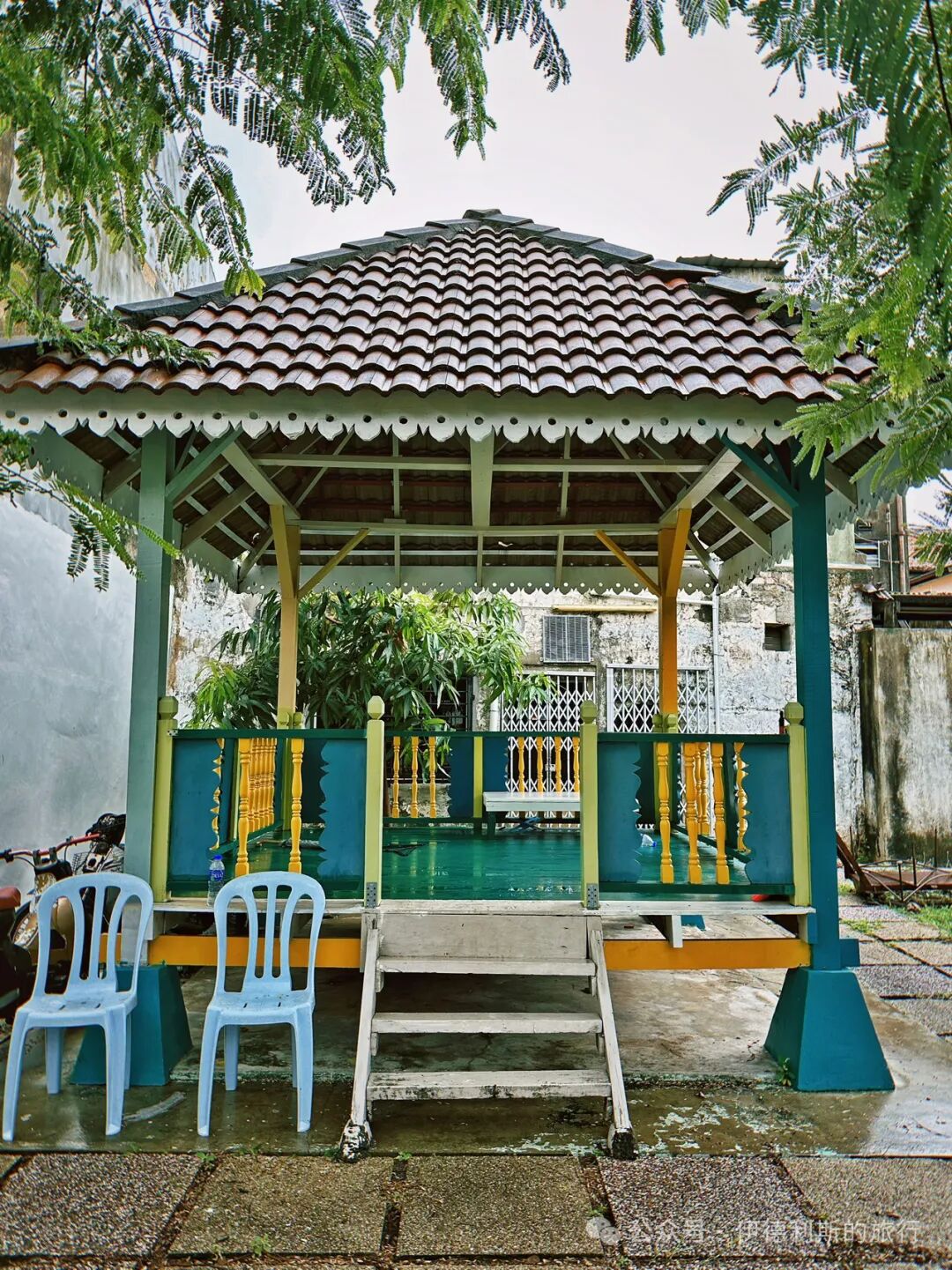
Today, Kampung Morten preserves 56 traditional Malay stilt houses and was listed as a heritage village in 1998. After a century of urban growth, the area is now part of downtown Malacca, making it the most convenient place in the city to experience the atmosphere of a Malay kampung.
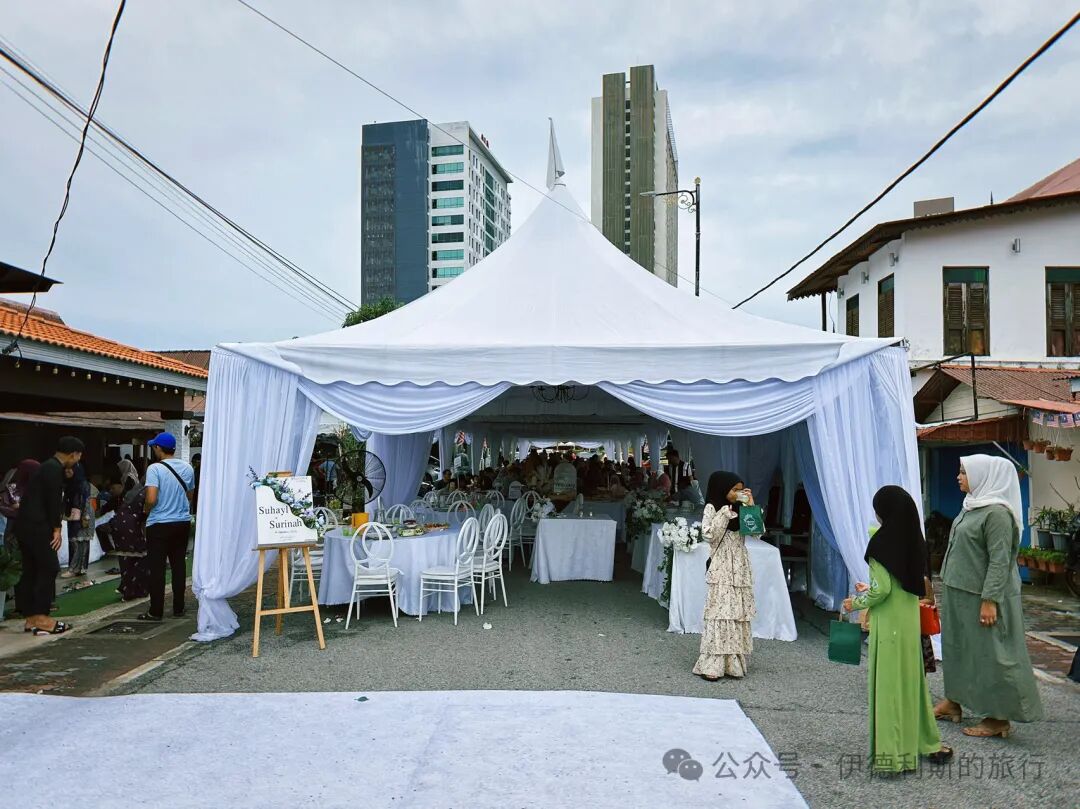
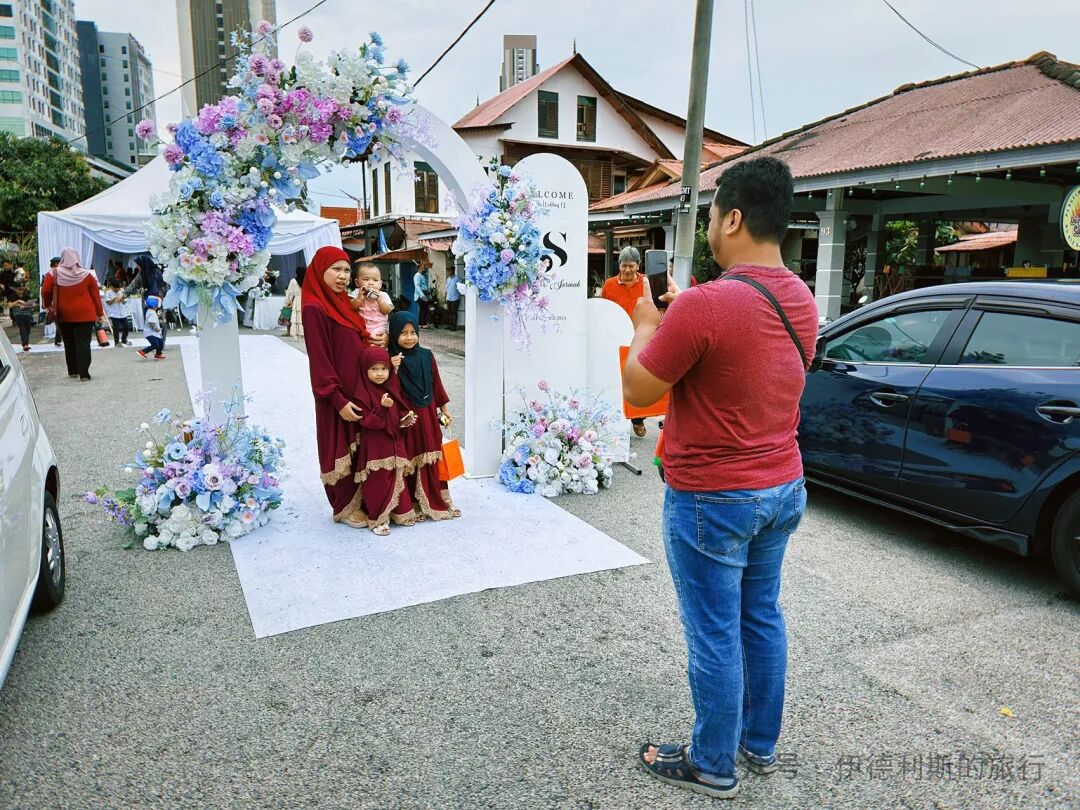
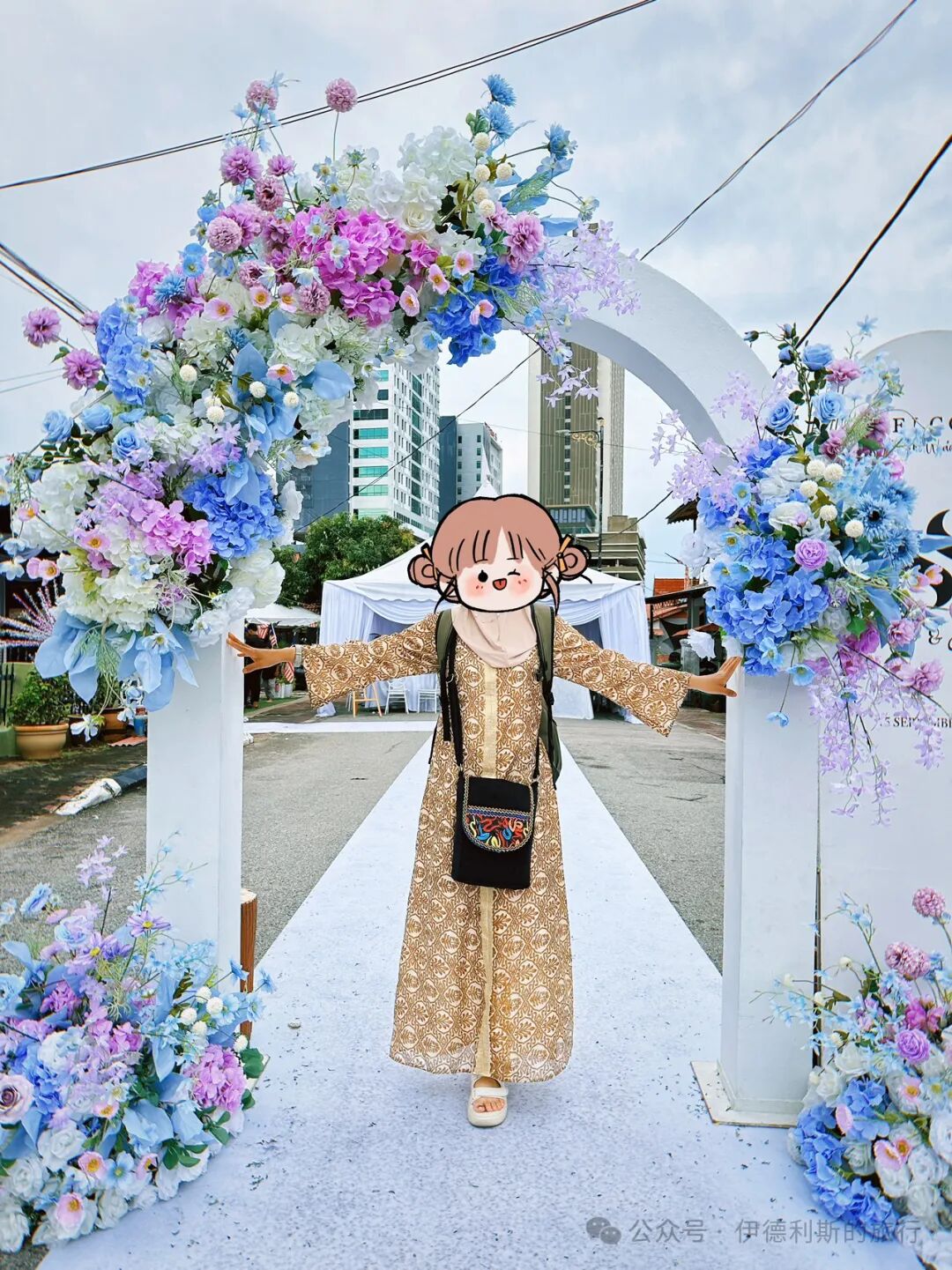
I encountered a Malay wedding in Kampung Morten where whole families came to eat together, which was very lively.
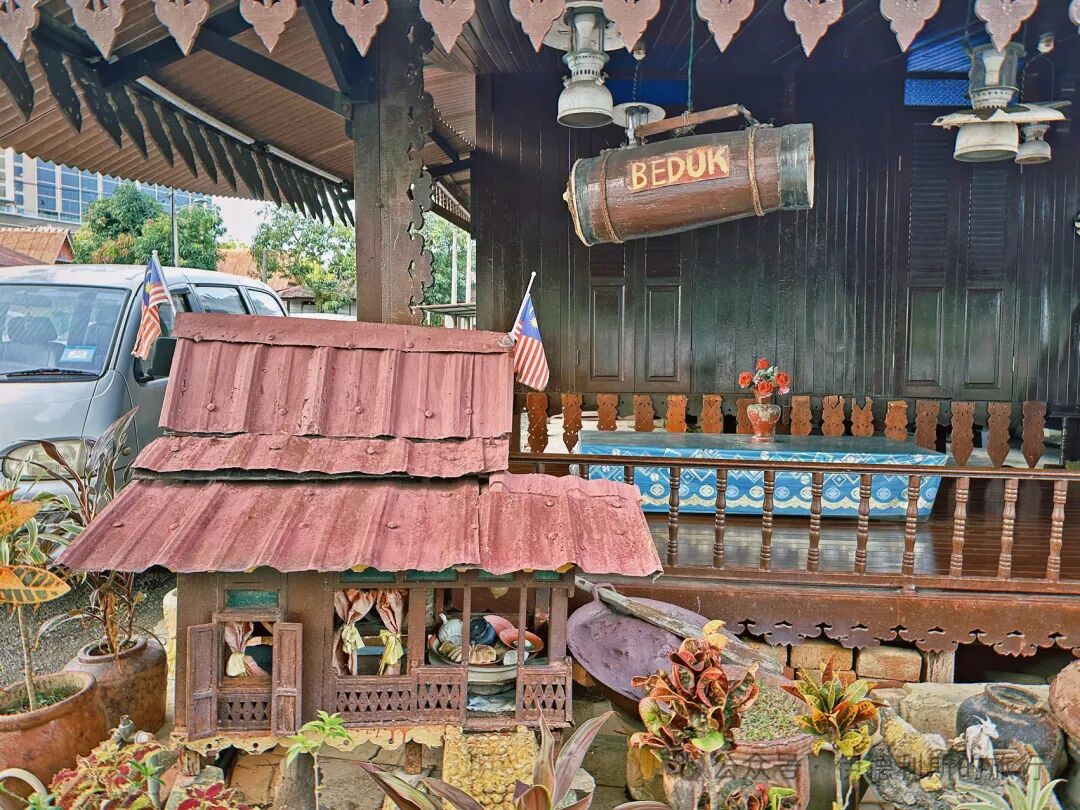
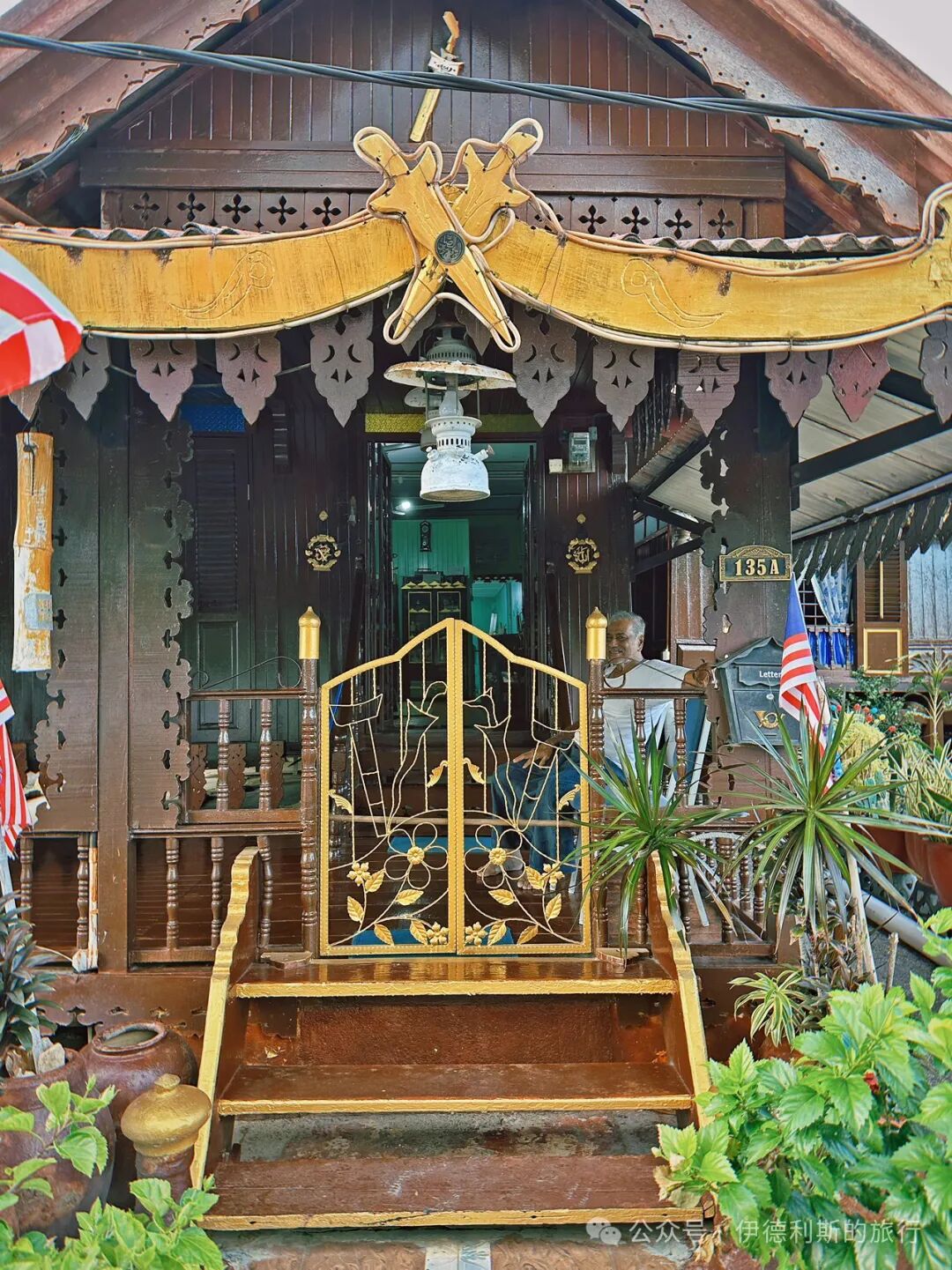
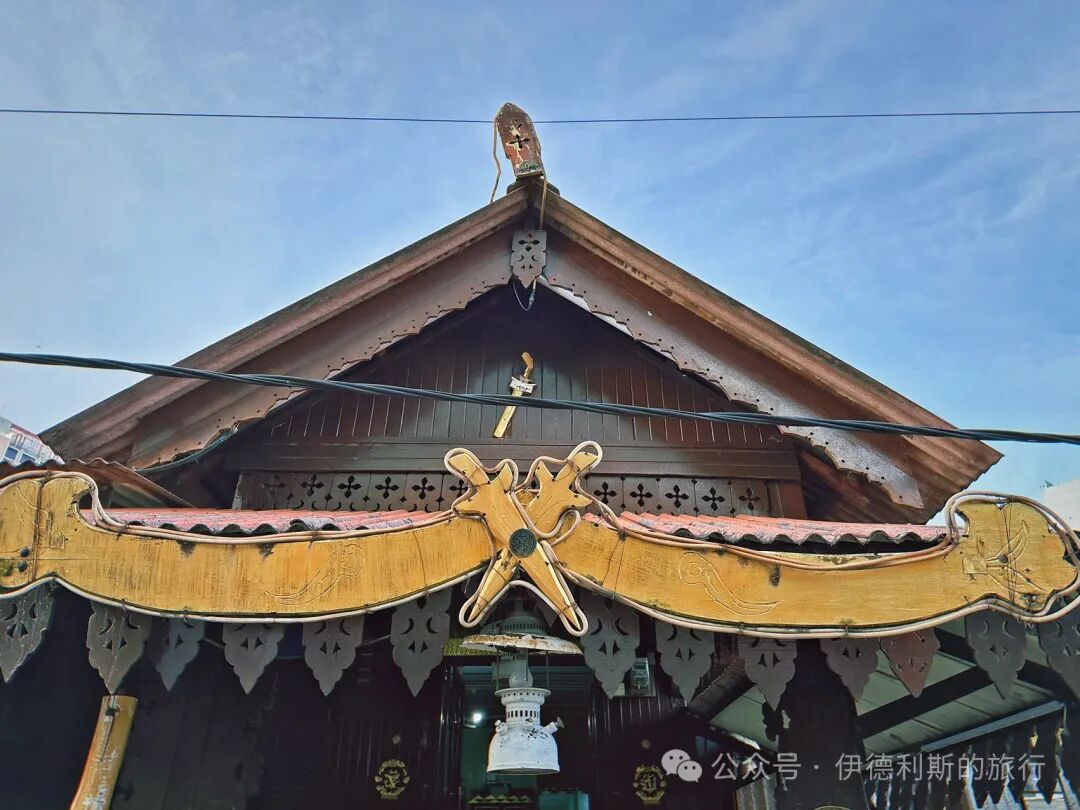
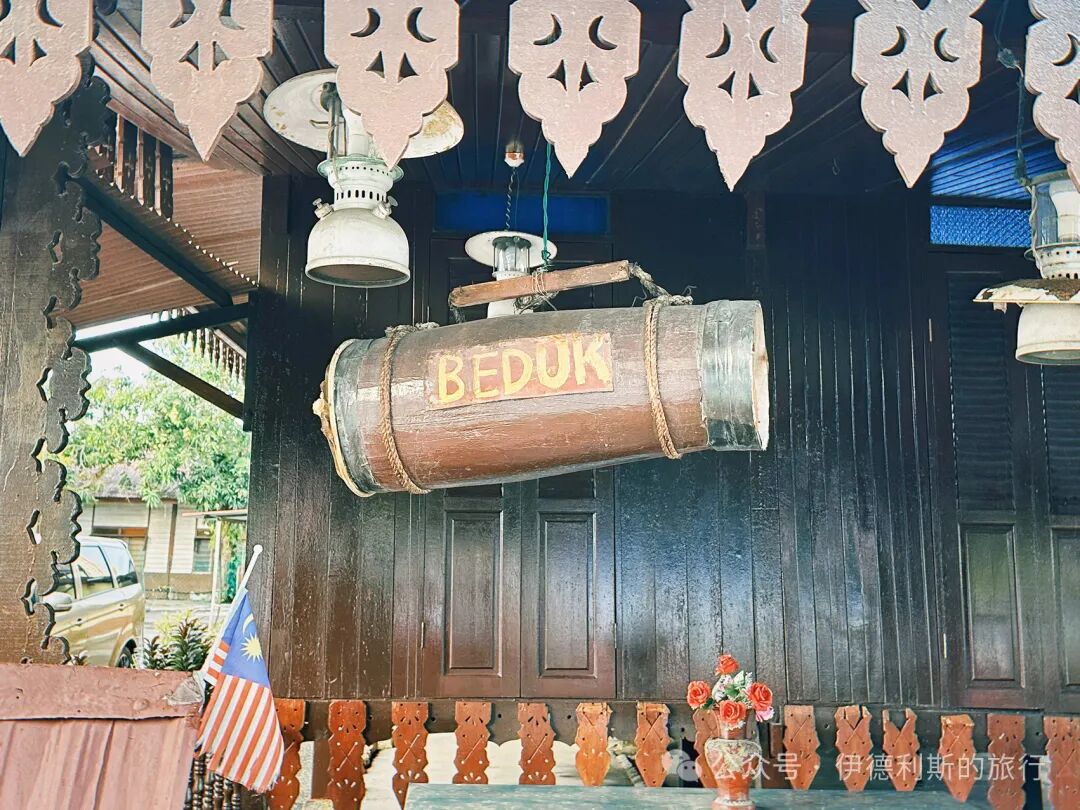
At a beautiful Malay house in Kampung Morten, the grandfather who owns the home chatted with us very warmly.
The village has a small mosque called Surau Al Abidin with a cute pink exterior.
Several shops in the village serve traditional Malay kampung food, but they do not open until 5:30 in the evening. Some shops set their tables and chairs along the Malacca River, which is very pleasant.
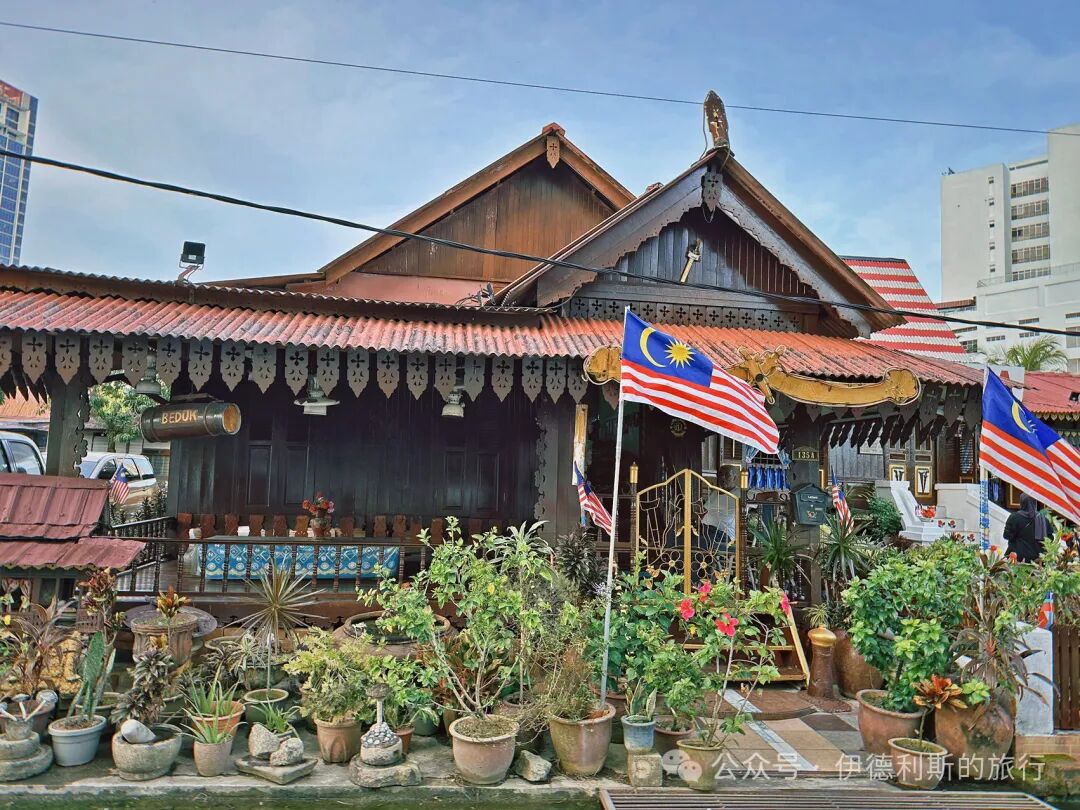
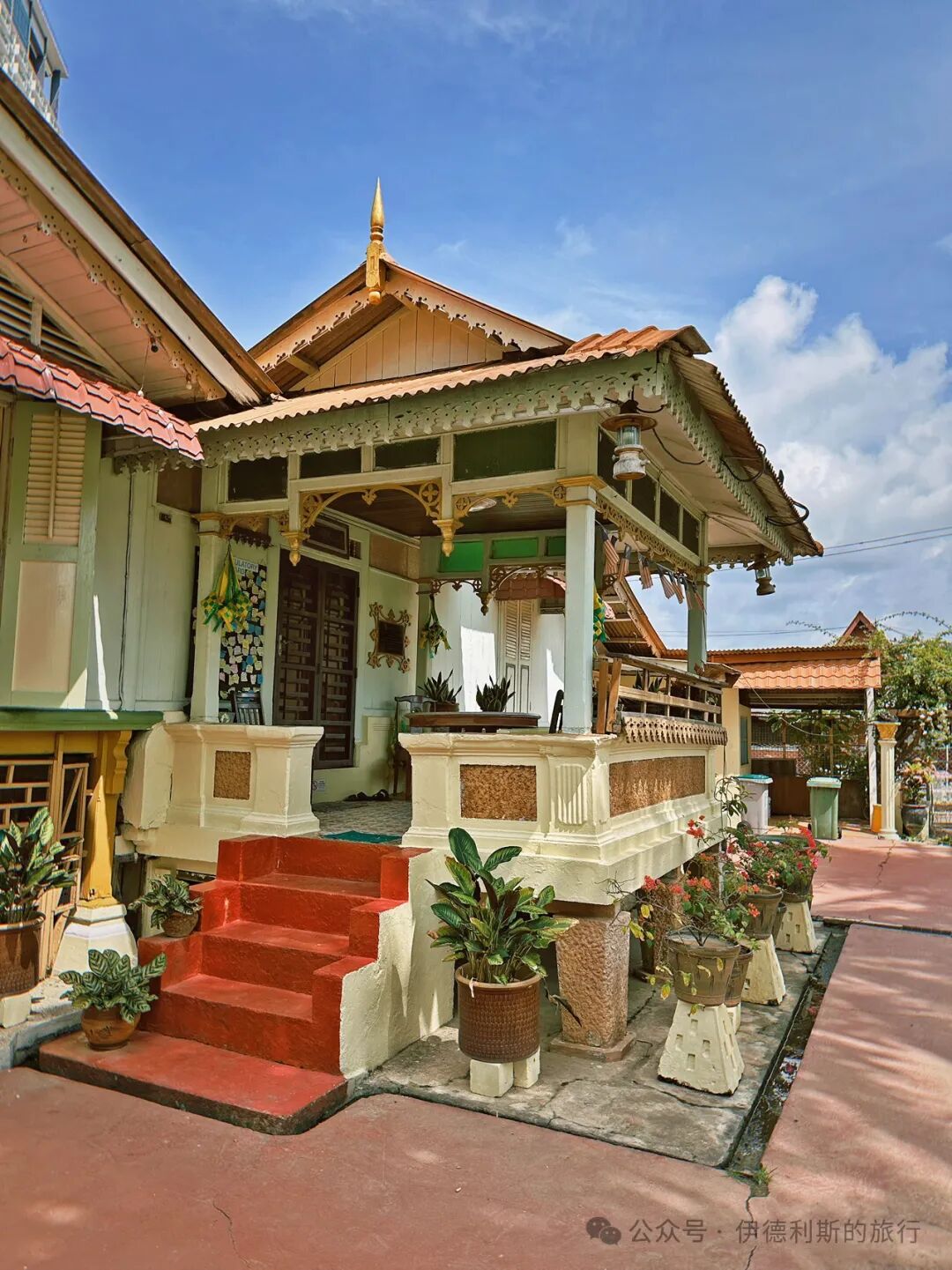
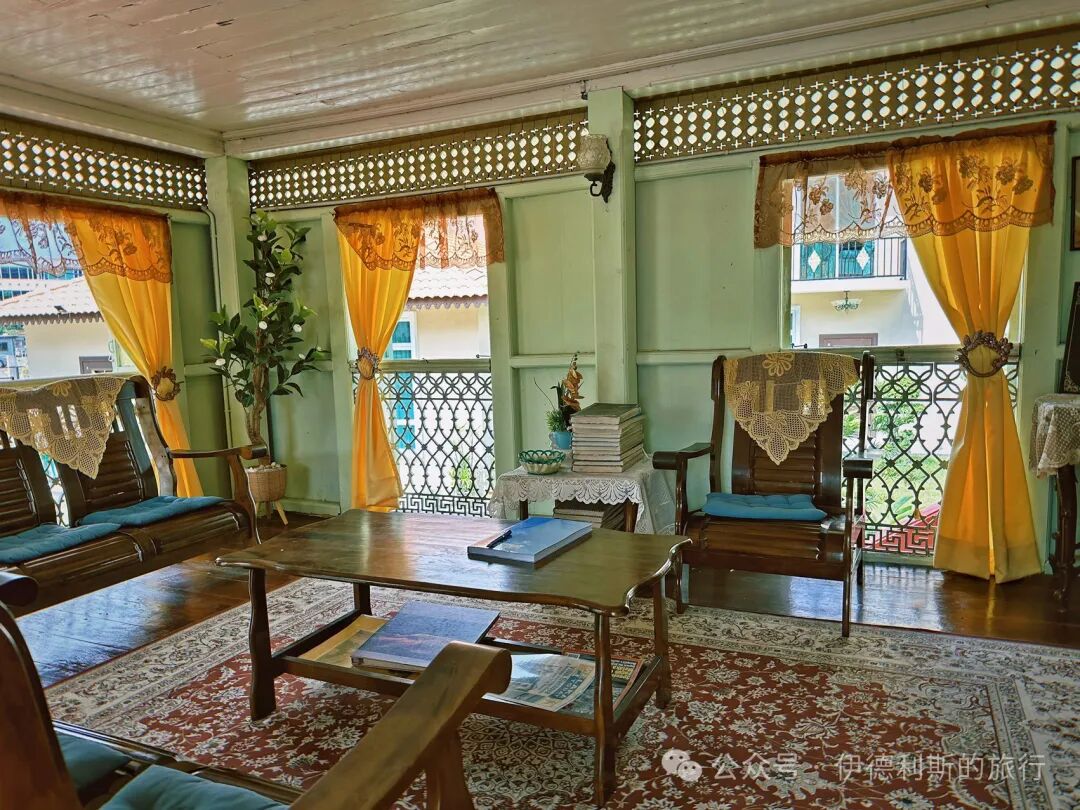
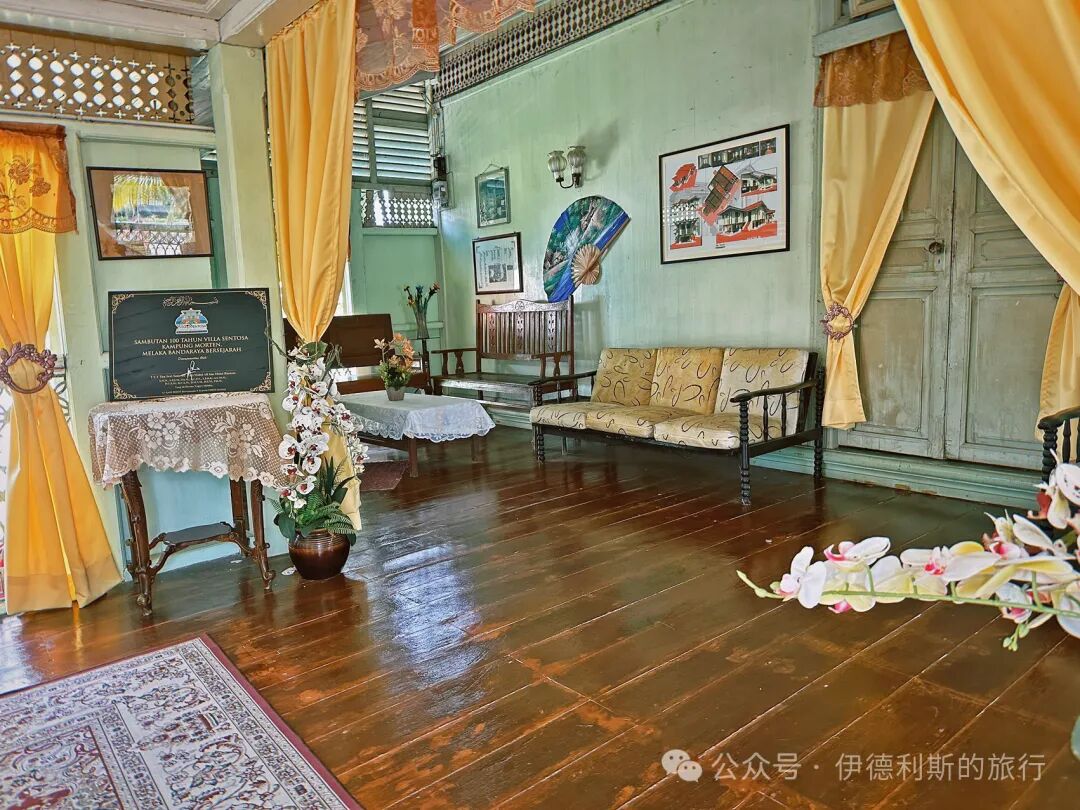
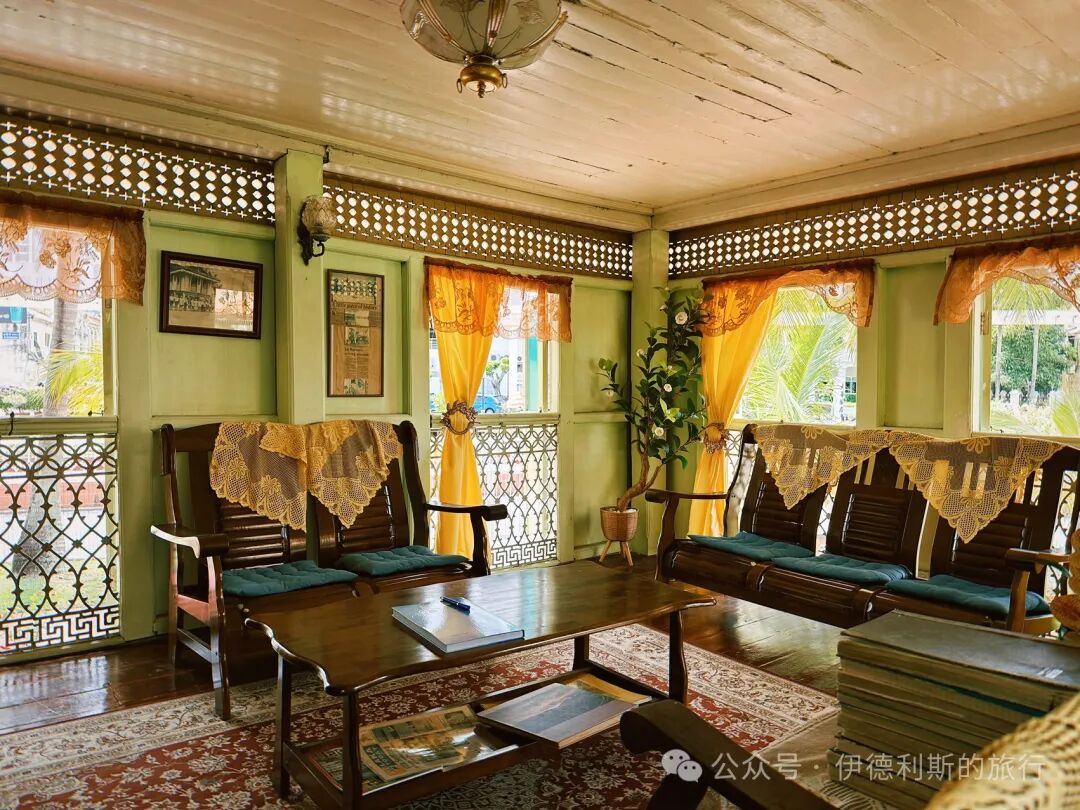
The most worth-visiting Malay wooden house in Kampung Morten is Villa Sentosa, built in 1922 by Haji Hashim Abdul Ghani, who helped build the village. Haji Hashim's descendants still live here today, and they have kept many pieces of furniture and household items that are decades or even a century old. However, the opening hours are not fixed. If the owner is out, at prayer, or taking a nap, the house is closed. We were sorry to find the owner away when we visited, so we could only look around from the outside.
The ancient Malay village of Kampung Ketek.
Behind the Cheng Hoon Teng Temple, the oldest Chinese temple in the old town of Malacca, lies the equally ancient Malay village of Kampung Ketek. Kampung Ketek formed during the Dutch era in the 17th century. Although Malay villages within the old city of Malacca shrank rapidly after the 19th century due to the construction of shophouses, you can still see several well-preserved traditional Malay stilt houses in Kampung Ketek today. Abdullah bin Abdul al Kadir (1796-1854), known as the Father of Modern Malay Literature, was born here.
Inside Kampung Ketek, you can see the tomb of Syed Syamsuddin Ibni Al Sumatrani, a famous scholar and national hero from the Aceh Sultanate in the 16th and 17th centuries.
Syamsuddin was a mufti (legal judge) and advisor to Sultan Iskandar Muda (reigned 1607-36) of the Aceh Sultanate in northern Sumatra. He was well-versed in religious knowledge and held a high position in the Sultan's court.
After the Portuguese occupied Malacca in 1511, the Aceh Sultanate kept attacking the Portuguese in an attempt to capture the city. During the reign of Sultan Iskandar Muda, the Aceh Sultanate was strong and powerful, with a fleet of heavy galleys, cavalry riding Persian horses, elephant corps, and thousands of cannons. In 1629, Sultan Iskandar sent a massive force of 236 warships and 19,000 men to Malacca, but they suffered a total defeat, with all soldiers killed or captured. Sang Sutin also died heroically in this battle and was eventually buried in Kampung Kuli in the old city of Malacca.
Two tombs of heroes from the Malacca Sultanate
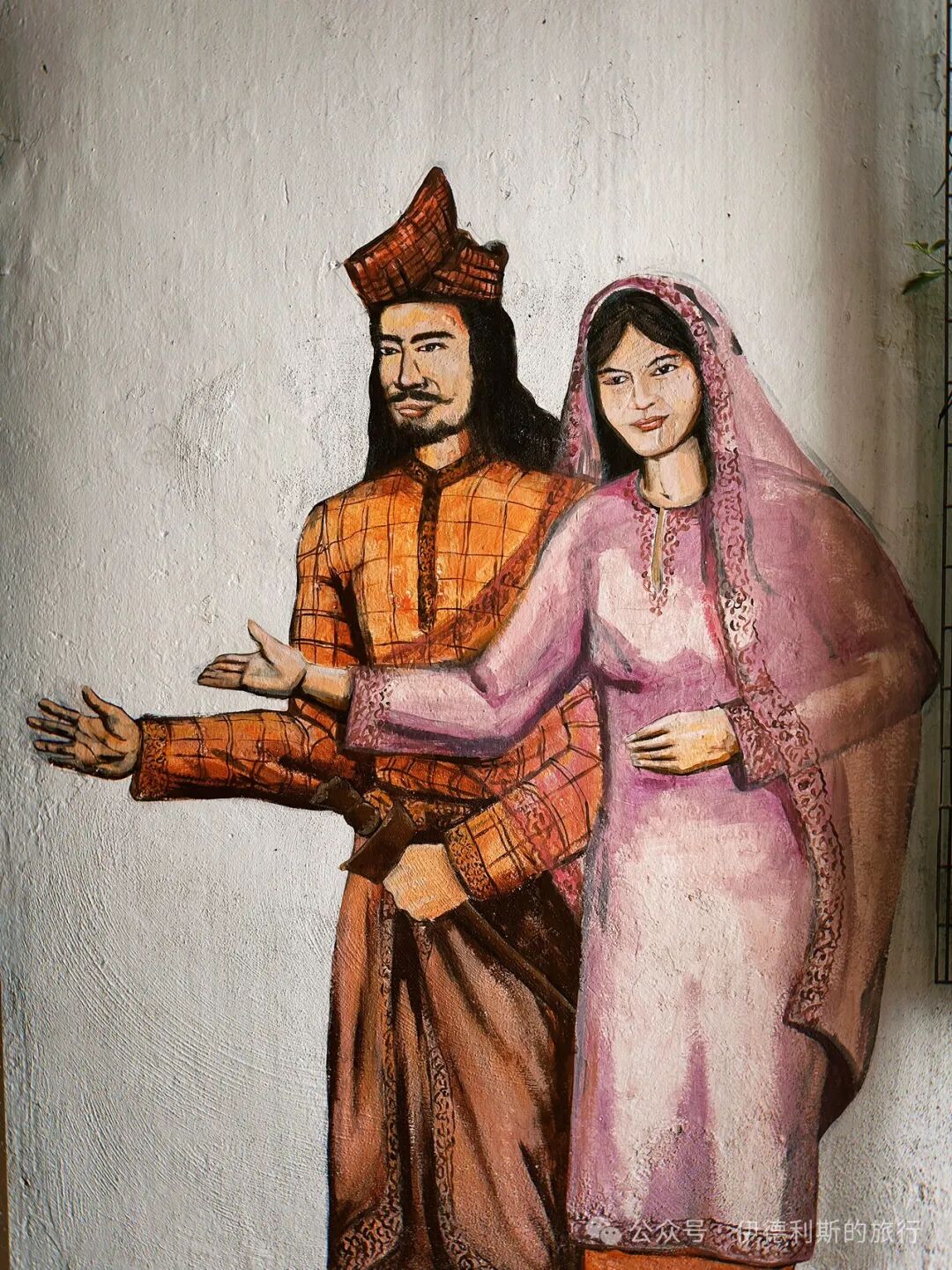
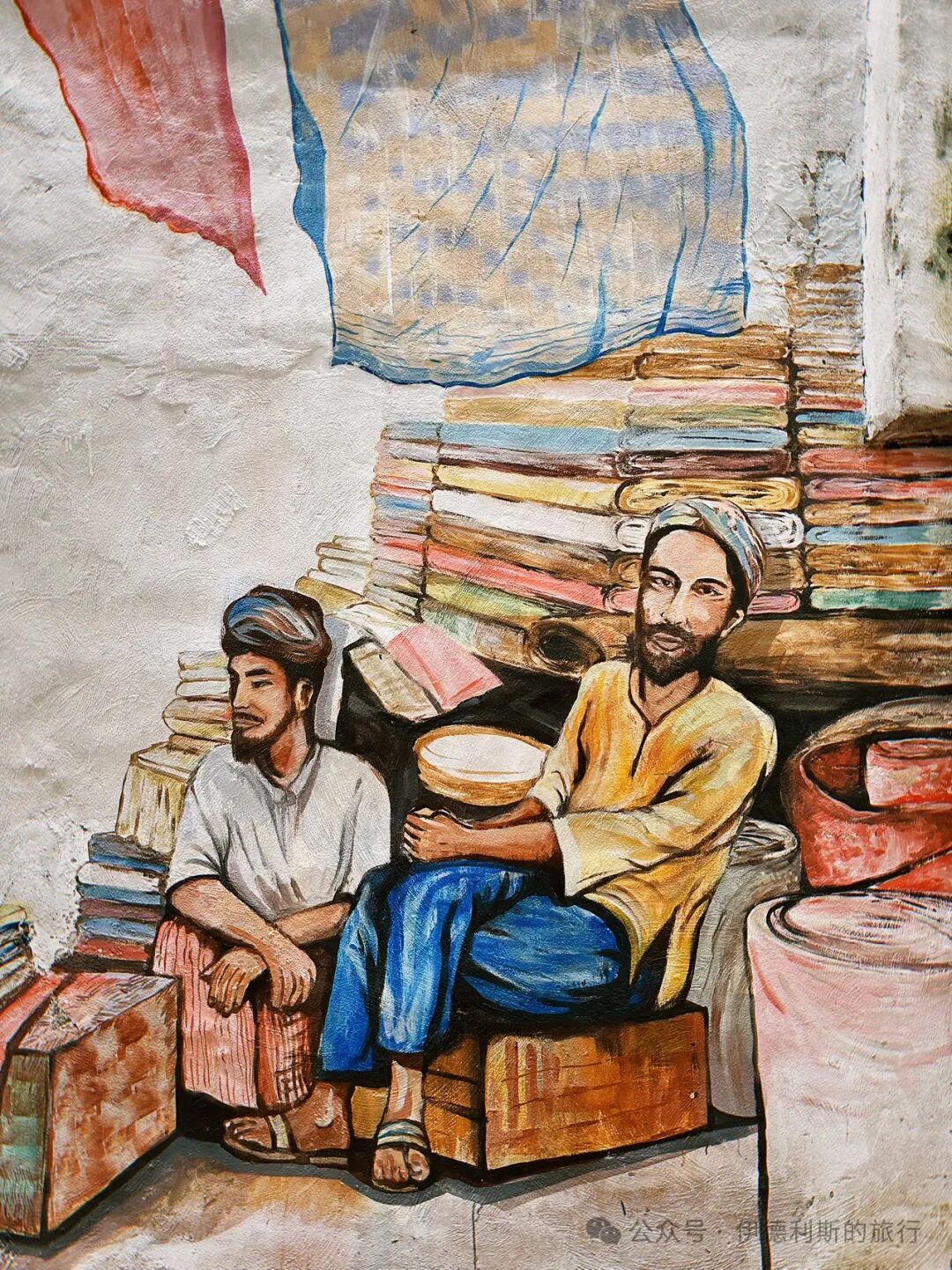
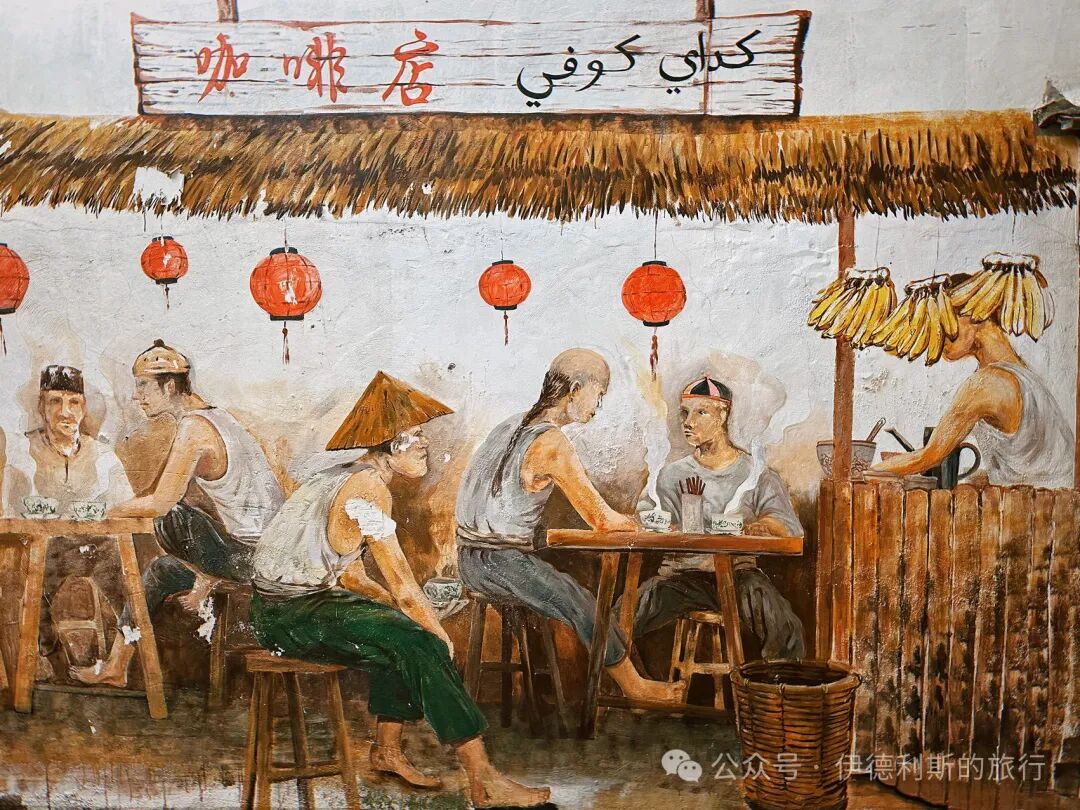
Continuing south from Kampung Hulu Road, you enter the core area of the Malacca old city, a World Heritage site where the alleys are filled with murals related to the city's history.
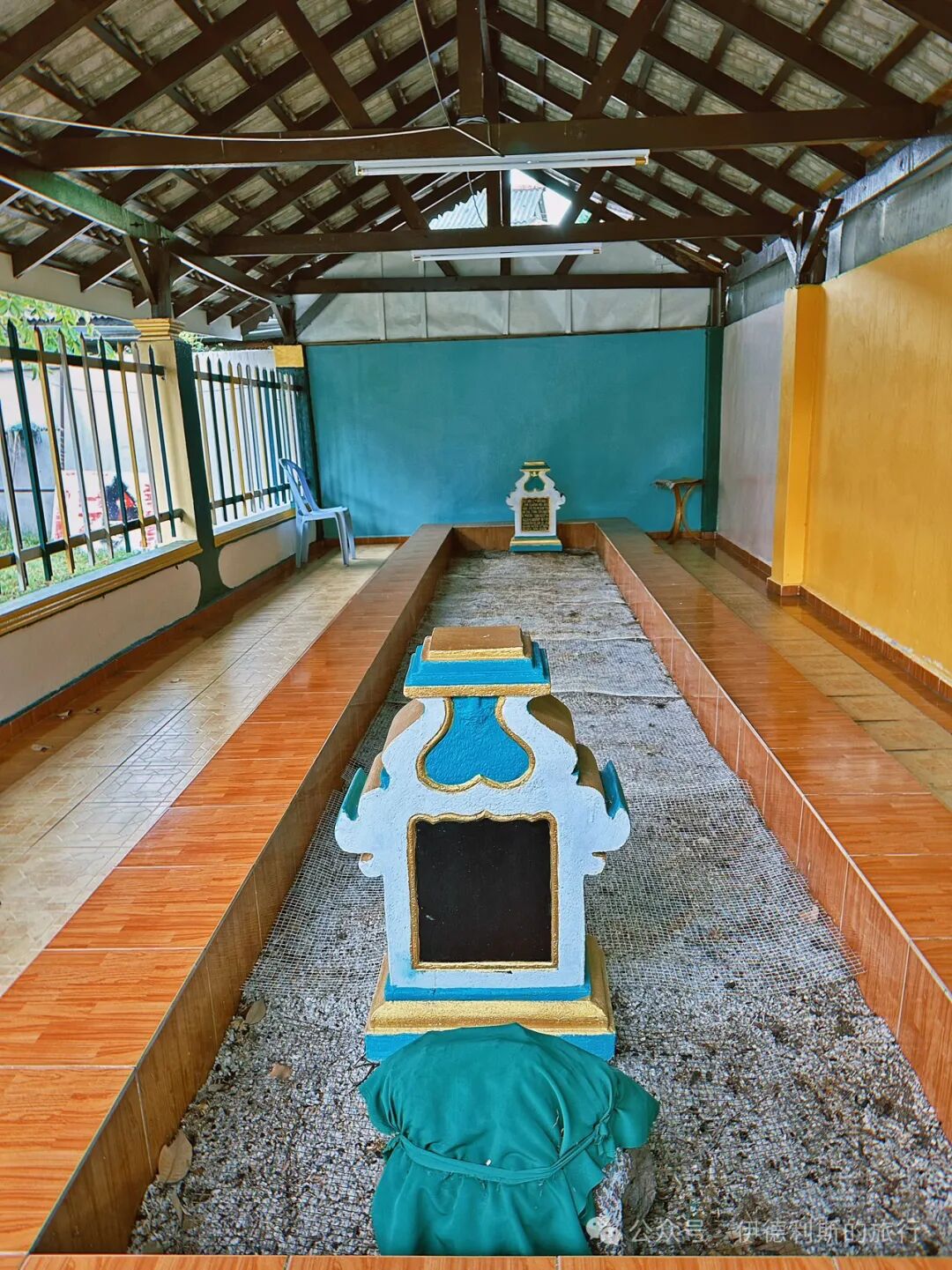
The Tomb of Hang Jebat (Makam Hang Jebat) in the old city of Malacca features the Aceh style from northern Sumatra, which was the common high-status architectural style for tombs during the Malacca Sultanate.
Hang Jebat was a famous Malay hero during the 15th-century Malacca Sultanate and one of the five heroes in the classic Malay novel Hikayat Hang Tuah. In the novel, the five heroes study martial arts together, serve the Malacca Sultan together, and earn his favor. Later, the Sultan of Malacca listens to slander and wants to kill Hang Tuah, so his brother Hang Jebat rebels against the Sultan to seek revenge. Eventually, the Sultan pardons Hang Tuah and sends him to fight a duel with Hang Jebat. After seven days of fighting, Hang Jebat dies in the arms of his former brother.
Since the 1960s, Hang Jebat has been portrayed in various plays and novels as a folk hero who resists tyranny and yearns for freedom, and many roads and buildings in Malaysia and Singapore are named after him.
Walking further west, you can see the tomb of Hang Kasturi, another of the five heroes of the Malacca Sultanate. In the Malay Annals (Sejarah Melayu), it is Hang Kasturi, not Hang Tuah, who ultimately kills Hang Jebat. This tomb has an Indian style and was likely built by later generations to commemorate Hang Kasturi.
Tomb of Sultan Hussein Shah of Johor
In the backyard of the Kampung Kling Mosque (Masjid Kampung Kling) lies the tomb of Sultan Hussein Shah of Johor (reigned 1819–1835), who played a key role in the founding of Singapore.
After the Portuguese occupied Malacca in 1511, the Sultan of Malacca fled to Johor to continue his rule. After the last Sultan of Malacca died in 1528, his son Alauddin Riayat Shah II officially established the Johor Sultanate, considering it the legitimate continuation of the Malacca Sultanate.
Hussein Shah was born in 1776 and was the eldest son of Sultan Mahmud Shah III of Johor. When Mahmud Shah III passed away in 1812, Hussein Shah was not in the capital, so his younger brother quickly took the throne with the support of ministers, forcing Hussein Shah into exile in the Riau Islands.
In 1819, the British East India Company decided to establish a new base in Southeast Asia. They found the exiled Hussein Shah and named him Sultan of Johor and Singapore in exchange for the right to establish a trading post in Singapore. Hussein Shah then came to Singapore and became a Sultan under British control.
In 1824, the British bought Singapore for 33,200 dollars, and Sultan Hussein Shah received a monthly payment of 1,300 dollars. He held no real power in Singapore and served only a symbolic role.
Sultan Hussein Shah lived in Singapore until 1834, then moved to Malacca with his family. He passed away in Malacca in 1835 and was buried at the Kampung Hulu Mosque (Dongjiena Si).
The Sultan's Well in Malacca
Travel east from the old town of Malacca to the foot of Bukit Cina, and you will find the Sultan's Well (Perigi Raja). Legend says it was built in 1459 by the sixth Sultan of Malacca, Mansur Shah, who reigned from 1459 to 1477.
According to the classic Malay text Sejarah Melayu, Sultan Mansur Shah built a palace at the foot of Bukit Cina to welcome a Ming Dynasty princess named Hang Li Po. He had this well dug specifically for her, which is why it is also called Hang Li Po's Well. However, there are no records of Princess Hang Li Po in Ming Dynasty or Portuguese documents, so her true identity remains a mystery.
Another theory suggests the well was dug by Zheng He's troops when they were stationed in Malacca during his voyages to the Western Ocean. Legend says Zheng He's troops dug seven wells at the foot of Bukit Cina. Five were destroyed by road construction in the 1950s and 1960s. Only two remain today: the Sultan's Well and the Sam Po Well (Sanbao Jing) in the backyard of the Poh San Teng Temple.
Legend has it that when the Portuguese invaded the Malacca Sultanate in 1511, Malay warriors poisoned the well to kill many Portuguese soldiers. In the early 17th century, both the Dutch and the Acehnese used the tactic of poisoning the well to eliminate their enemies.
After the Dutch occupied Malacca in 1641, they built a fortress-style wall around the Sultan's Well to protect the water source, complete with guard posts and cannons. The well was abandoned during the British colonial period, and the guard posts fell into disrepair.
On the western slope of Bukit Cina lies a Malay village called Kampung Bukit Cina, where some traditional Malay stilt houses are still preserved.
The Hero's Well in Malacca
Hang Tuah's Well (Perigi Hang Tuah) is located in Kampung Duyong in eastern Malacca. It is said to have been dug by the Malacca Sultanate hero Hang Tuah and has never run dry. Malay people believe the well water has magical properties and can cure illnesses and ward off misfortune, making it a famous attraction in Malacca.
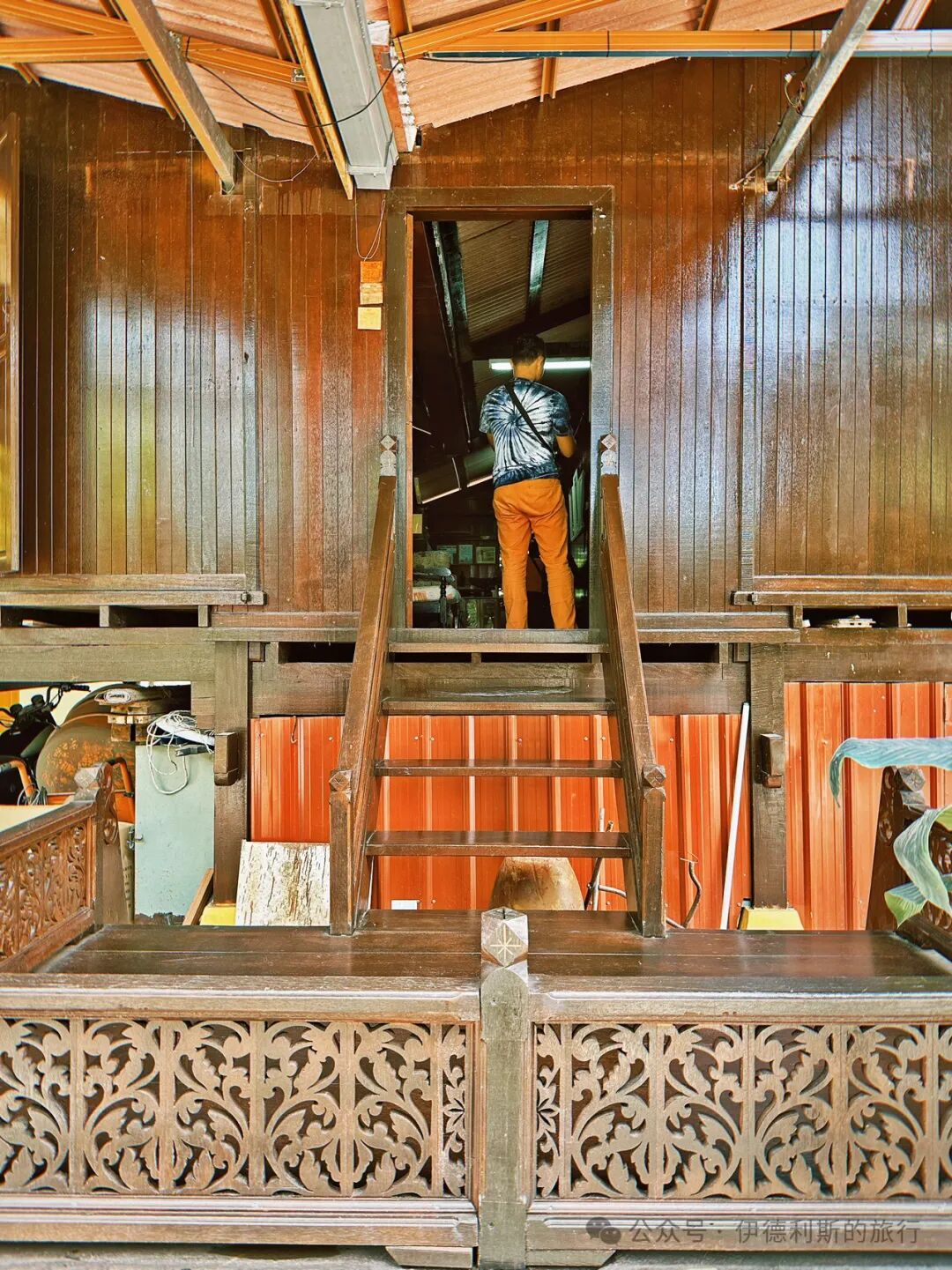
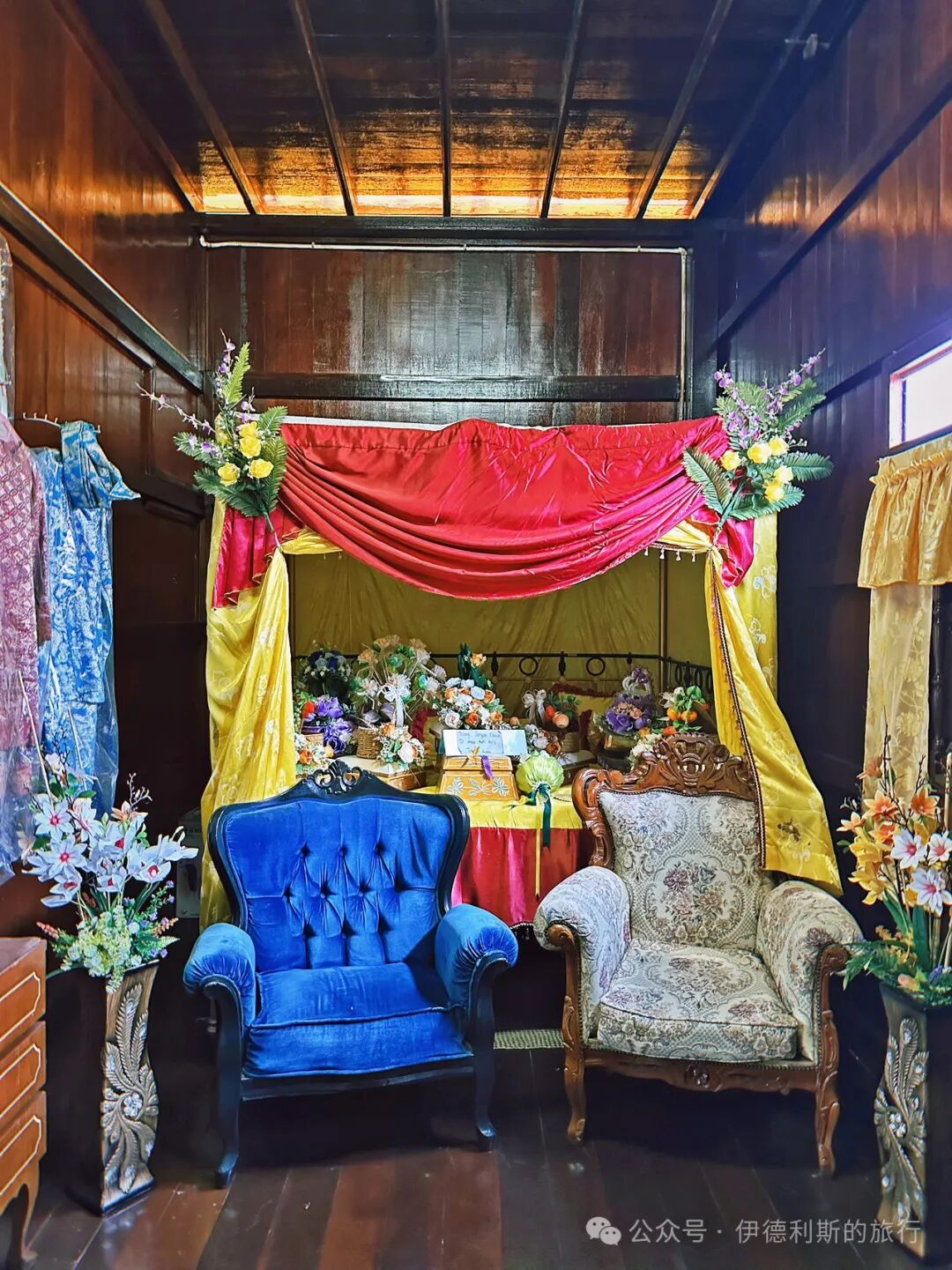
The traditional Malay wooden house next to Hang Tuah's Well was first built in 1946. It was moved to its current site in 2001 after the original land was acquired. The owner, Samad Nordin, was originally a woodcarver, so he is skilled at maintaining wood. He performs maintenance on the house every five years.
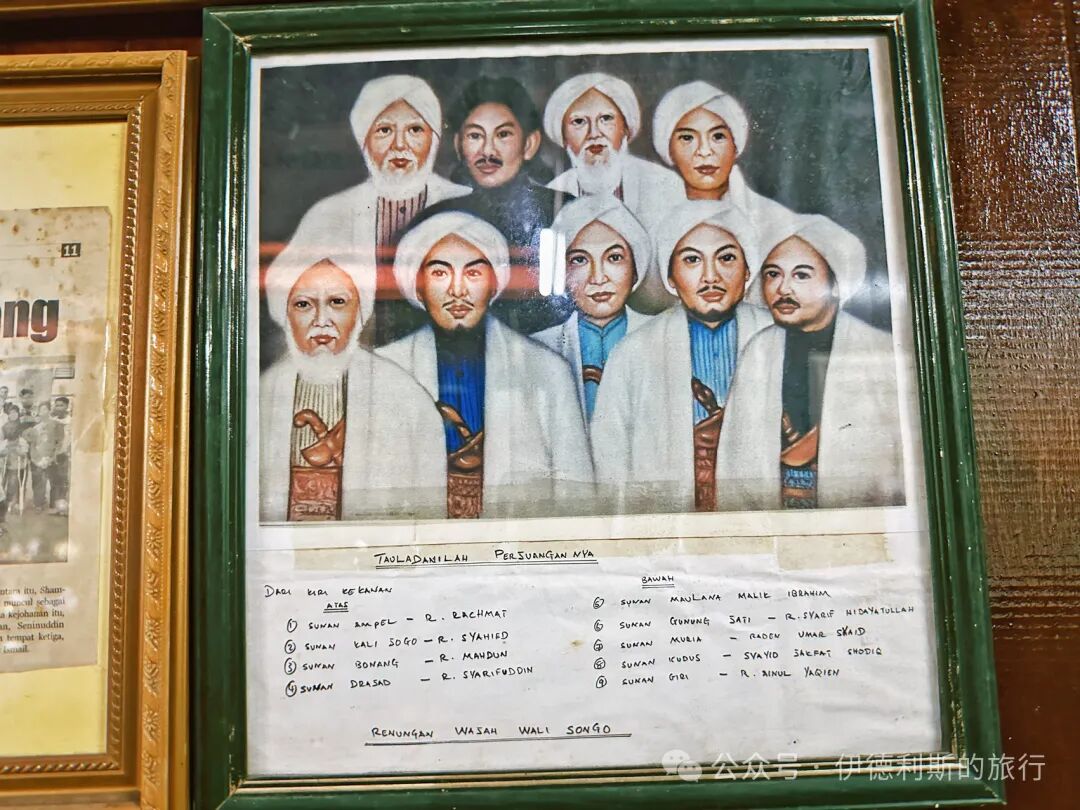
Inside the house hang portraits of the Nuh ship and the Nine Saints (Wali Sanga) who brought the faith to Southeast Asia. Wali refers to the Sufi saints. These nine figures came to Java 500 years ago to preach, which helped the faith gradually spread across Southeast Asia.
Small Mosque in the Center of Malacca's Old Town
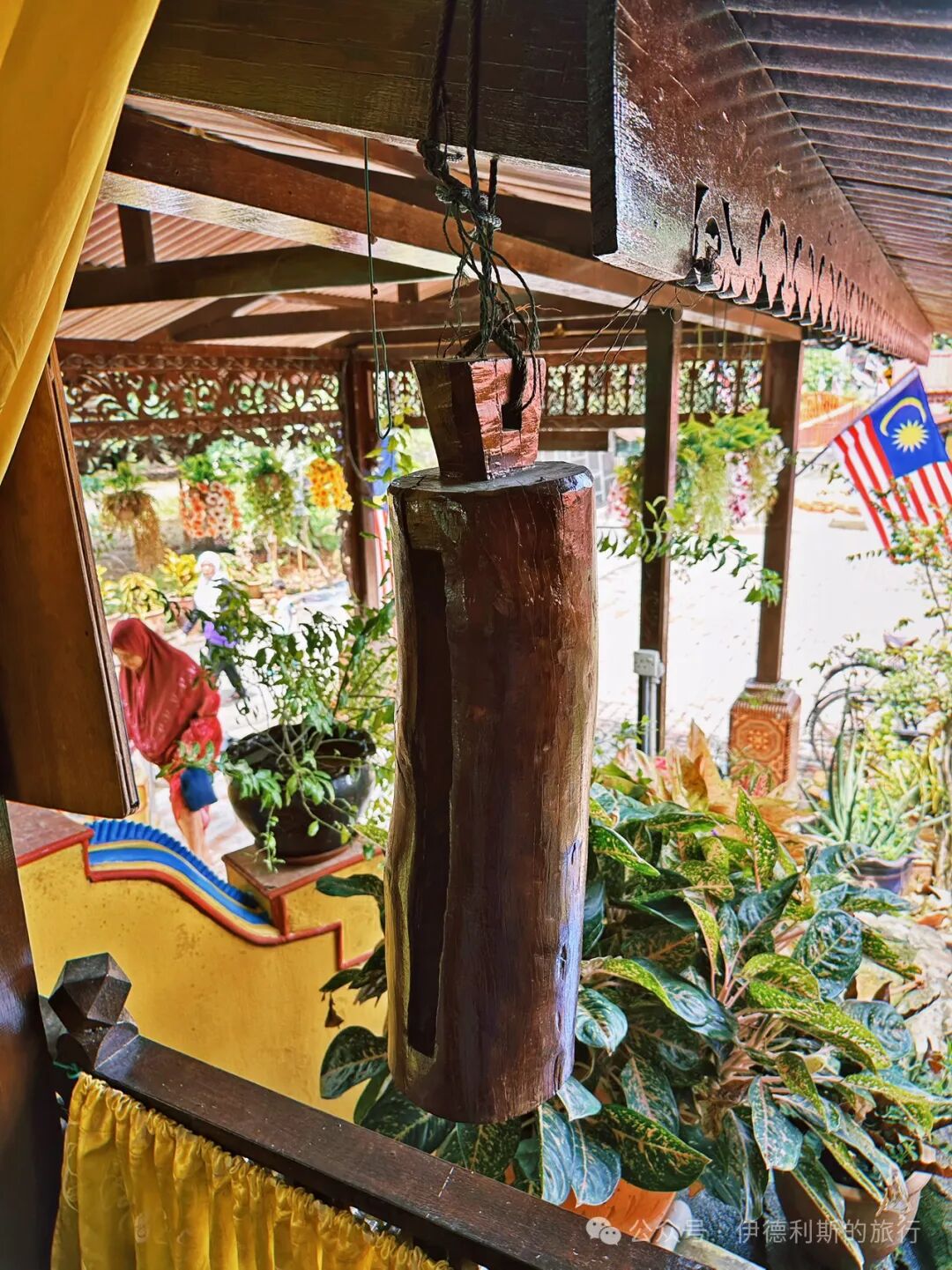
This small, newly built mosque in the center of Malacca's old town faces the Dutch Square and backs onto the Malacca River. The roof retains a traditional Javanese style. Inside the main hall, there are displays introducing various ancient mosques in Malacca, and a traditional drum used for the call to prayer sits in the center. Performing namaz in the mosque while feeling the breeze from the Malacca River brings a sense of calm, as if the noise outside no longer matters.
Malacca History Museum
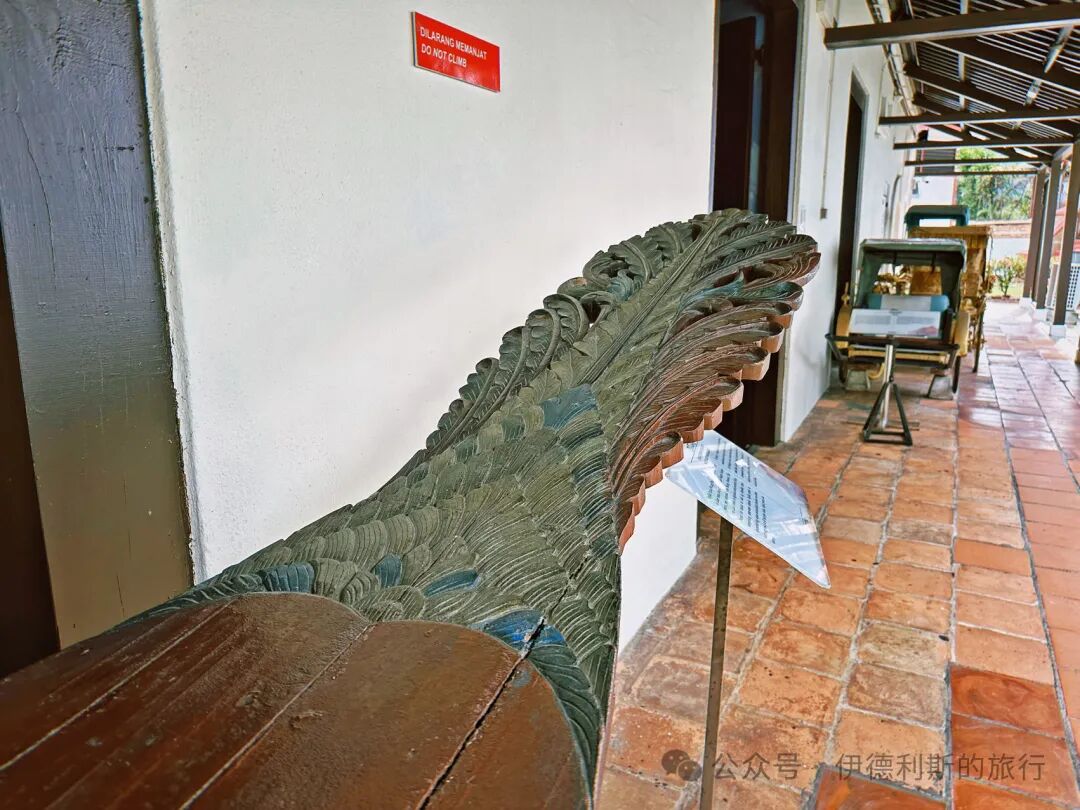
A replica of the mythical bird boat (Perahu Burung Petalawati) is kept in the Malacca History Museum. The Perahu Burung Petalawati was a mythical bird boat used by Kelantan nobles for parades during circumcision ceremonies. After 1933, all of them were destroyed because they were seen as straying from the faith. Later, the tradition was preserved by the Malay community in Pattani, Thailand, though the celebrations are much smaller now.
The origins of this mythical bird go back to ancient Malay legends and Indian culture. It was likely influenced by the giant bird in the Malay epic Isma Dewa and the mythical bird Garuda from Indian mythology. view all
Summary: This first part introduces Malay wooden houses and historic sites in Malacca, with attention to old homes, local architecture, and neighborhood history. It keeps the original place names, photographs, building details, and travel notes for readers interested in Malaysian heritage.
The beautiful and peaceful Malay village of Kampung Morten.
In the northern part of Malacca city sits a beautiful and peaceful Malay village called Kampung Morten. This area was once a mangrove swamp on a bend of the Malacca River, filled with mud crabs. In 1920, the nearby Kampung Jawa was forced to relocate due to land development. The village head, Dato' Othman Mohd Noh, asked the British Land Commissioner at the time, Frederick Joseph Morten, for help. Morten applied for a 10,000 Straits dollar loan from the government that same year, which was then used under Dato' Othman's leadership to buy land and build the village. The village was officially completed in 1922, and the villagers voted to name it Kampung Morten.
Today, Kampung Morten preserves 56 traditional Malay stilt houses and was listed as a heritage village in 1998. After a century of urban growth, the area is now part of downtown Malacca, making it the most convenient place in the city to experience the atmosphere of a Malay kampung.
I encountered a Malay wedding in Kampung Morten where whole families came to eat together, which was very lively.
At a beautiful Malay house in Kampung Morten, the grandfather who owns the home chatted with us very warmly.
The village has a small mosque called Surau Al Abidin with a cute pink exterior.
Several shops in the village serve traditional Malay kampung food, but they do not open until 5:30 in the evening. Some shops set their tables and chairs along the Malacca River, which is very pleasant.
The most worth-visiting Malay wooden house in Kampung Morten is Villa Sentosa, built in 1922 by Haji Hashim Abdul Ghani, who helped build the village. Haji Hashim's descendants still live here today, and they have kept many pieces of furniture and household items that are decades or even a century old. However, the opening hours are not fixed. If the owner is out, at prayer, or taking a nap, the house is closed. We were sorry to find the owner away when we visited, so we could only look around from the outside.
The ancient Malay village of Kampung Ketek.
Behind the Cheng Hoon Teng Temple, the oldest Chinese temple in the old town of Malacca, lies the equally ancient Malay village of Kampung Ketek. Kampung Ketek formed during the Dutch era in the 17th century. Although Malay villages within the old city of Malacca shrank rapidly after the 19th century due to the construction of shophouses, you can still see several well-preserved traditional Malay stilt houses in Kampung Ketek today. Abdullah bin Abdul al Kadir (1796-1854), known as the Father of Modern Malay Literature, was born here.
Inside Kampung Ketek, you can see the tomb of Syed Syamsuddin Ibni Al Sumatrani, a famous scholar and national hero from the Aceh Sultanate in the 16th and 17th centuries.
Syamsuddin was a mufti (legal judge) and advisor to Sultan Iskandar Muda (reigned 1607-36) of the Aceh Sultanate in northern Sumatra. He was well-versed in religious knowledge and held a high position in the Sultan's court.
After the Portuguese occupied Malacca in 1511, the Aceh Sultanate kept attacking the Portuguese in an attempt to capture the city. During the reign of Sultan Iskandar Muda, the Aceh Sultanate was strong and powerful, with a fleet of heavy galleys, cavalry riding Persian horses, elephant corps, and thousands of cannons. In 1629, Sultan Iskandar sent a massive force of 236 warships and 19,000 men to Malacca, but they suffered a total defeat, with all soldiers killed or captured. Sang Sutin also died heroically in this battle and was eventually buried in Kampung Kuli in the old city of Malacca.
Two tombs of heroes from the Malacca Sultanate
Continuing south from Kampung Hulu Road, you enter the core area of the Malacca old city, a World Heritage site where the alleys are filled with murals related to the city's history.
The Tomb of Hang Jebat (Makam Hang Jebat) in the old city of Malacca features the Aceh style from northern Sumatra, which was the common high-status architectural style for tombs during the Malacca Sultanate.
Hang Jebat was a famous Malay hero during the 15th-century Malacca Sultanate and one of the five heroes in the classic Malay novel Hikayat Hang Tuah. In the novel, the five heroes study martial arts together, serve the Malacca Sultan together, and earn his favor. Later, the Sultan of Malacca listens to slander and wants to kill Hang Tuah, so his brother Hang Jebat rebels against the Sultan to seek revenge. Eventually, the Sultan pardons Hang Tuah and sends him to fight a duel with Hang Jebat. After seven days of fighting, Hang Jebat dies in the arms of his former brother.
Since the 1960s, Hang Jebat has been portrayed in various plays and novels as a folk hero who resists tyranny and yearns for freedom, and many roads and buildings in Malaysia and Singapore are named after him.
Walking further west, you can see the tomb of Hang Kasturi, another of the five heroes of the Malacca Sultanate. In the Malay Annals (Sejarah Melayu), it is Hang Kasturi, not Hang Tuah, who ultimately kills Hang Jebat. This tomb has an Indian style and was likely built by later generations to commemorate Hang Kasturi.
Tomb of Sultan Hussein Shah of Johor
In the backyard of the Kampung Kling Mosque (Masjid Kampung Kling) lies the tomb of Sultan Hussein Shah of Johor (reigned 1819–1835), who played a key role in the founding of Singapore.
After the Portuguese occupied Malacca in 1511, the Sultan of Malacca fled to Johor to continue his rule. After the last Sultan of Malacca died in 1528, his son Alauddin Riayat Shah II officially established the Johor Sultanate, considering it the legitimate continuation of the Malacca Sultanate.
Hussein Shah was born in 1776 and was the eldest son of Sultan Mahmud Shah III of Johor. When Mahmud Shah III passed away in 1812, Hussein Shah was not in the capital, so his younger brother quickly took the throne with the support of ministers, forcing Hussein Shah into exile in the Riau Islands.
In 1819, the British East India Company decided to establish a new base in Southeast Asia. They found the exiled Hussein Shah and named him Sultan of Johor and Singapore in exchange for the right to establish a trading post in Singapore. Hussein Shah then came to Singapore and became a Sultan under British control.
In 1824, the British bought Singapore for 33,200 dollars, and Sultan Hussein Shah received a monthly payment of 1,300 dollars. He held no real power in Singapore and served only a symbolic role.
Sultan Hussein Shah lived in Singapore until 1834, then moved to Malacca with his family. He passed away in Malacca in 1835 and was buried at the Kampung Hulu Mosque (Dongjiena Si).
The Sultan's Well in Malacca
Travel east from the old town of Malacca to the foot of Bukit Cina, and you will find the Sultan's Well (Perigi Raja). Legend says it was built in 1459 by the sixth Sultan of Malacca, Mansur Shah, who reigned from 1459 to 1477.
According to the classic Malay text Sejarah Melayu, Sultan Mansur Shah built a palace at the foot of Bukit Cina to welcome a Ming Dynasty princess named Hang Li Po. He had this well dug specifically for her, which is why it is also called Hang Li Po's Well. However, there are no records of Princess Hang Li Po in Ming Dynasty or Portuguese documents, so her true identity remains a mystery.
Another theory suggests the well was dug by Zheng He's troops when they were stationed in Malacca during his voyages to the Western Ocean. Legend says Zheng He's troops dug seven wells at the foot of Bukit Cina. Five were destroyed by road construction in the 1950s and 1960s. Only two remain today: the Sultan's Well and the Sam Po Well (Sanbao Jing) in the backyard of the Poh San Teng Temple.
Legend has it that when the Portuguese invaded the Malacca Sultanate in 1511, Malay warriors poisoned the well to kill many Portuguese soldiers. In the early 17th century, both the Dutch and the Acehnese used the tactic of poisoning the well to eliminate their enemies.
After the Dutch occupied Malacca in 1641, they built a fortress-style wall around the Sultan's Well to protect the water source, complete with guard posts and cannons. The well was abandoned during the British colonial period, and the guard posts fell into disrepair.
On the western slope of Bukit Cina lies a Malay village called Kampung Bukit Cina, where some traditional Malay stilt houses are still preserved.
The Hero's Well in Malacca
Hang Tuah's Well (Perigi Hang Tuah) is located in Kampung Duyong in eastern Malacca. It is said to have been dug by the Malacca Sultanate hero Hang Tuah and has never run dry. Malay people believe the well water has magical properties and can cure illnesses and ward off misfortune, making it a famous attraction in Malacca.
The traditional Malay wooden house next to Hang Tuah's Well was first built in 1946. It was moved to its current site in 2001 after the original land was acquired. The owner, Samad Nordin, was originally a woodcarver, so he is skilled at maintaining wood. He performs maintenance on the house every five years.
Inside the house hang portraits of the Nuh ship and the Nine Saints (Wali Sanga) who brought the faith to Southeast Asia. Wali refers to the Sufi saints. These nine figures came to Java 500 years ago to preach, which helped the faith gradually spread across Southeast Asia.
Small Mosque in the Center of Malacca's Old Town
This small, newly built mosque in the center of Malacca's old town faces the Dutch Square and backs onto the Malacca River. The roof retains a traditional Javanese style. Inside the main hall, there are displays introducing various ancient mosques in Malacca, and a traditional drum used for the call to prayer sits in the center. Performing namaz in the mosque while feeling the breeze from the Malacca River brings a sense of calm, as if the noise outside no longer matters.
Malacca History Museum
A replica of the mythical bird boat (Perahu Burung Petalawati) is kept in the Malacca History Museum. The Perahu Burung Petalawati was a mythical bird boat used by Kelantan nobles for parades during circumcision ceremonies. After 1933, all of them were destroyed because they were seen as straying from the faith. Later, the tradition was preserved by the Malay community in Pattani, Thailand, though the celebrations are much smaller now.
The origins of this mythical bird go back to ancient Malay legends and Indian culture. It was likely influenced by the giant bird in the Malay epic Isma Dewa and the mythical bird Garuda from Indian mythology. view all
Reposted from the web
Summary: This first part introduces Malay wooden houses and historic sites in Malacca, with attention to old homes, local architecture, and neighborhood history. It keeps the original place names, photographs, building details, and travel notes for readers interested in Malaysian heritage.
The beautiful and peaceful Malay village of Kampung Morten.
In the northern part of Malacca city sits a beautiful and peaceful Malay village called Kampung Morten. This area was once a mangrove swamp on a bend of the Malacca River, filled with mud crabs. In 1920, the nearby Kampung Jawa was forced to relocate due to land development. The village head, Dato' Othman Mohd Noh, asked the British Land Commissioner at the time, Frederick Joseph Morten, for help. Morten applied for a 10,000 Straits dollar loan from the government that same year, which was then used under Dato' Othman's leadership to buy land and build the village. The village was officially completed in 1922, and the villagers voted to name it Kampung Morten.
Today, Kampung Morten preserves 56 traditional Malay stilt houses and was listed as a heritage village in 1998. After a century of urban growth, the area is now part of downtown Malacca, making it the most convenient place in the city to experience the atmosphere of a Malay kampung.
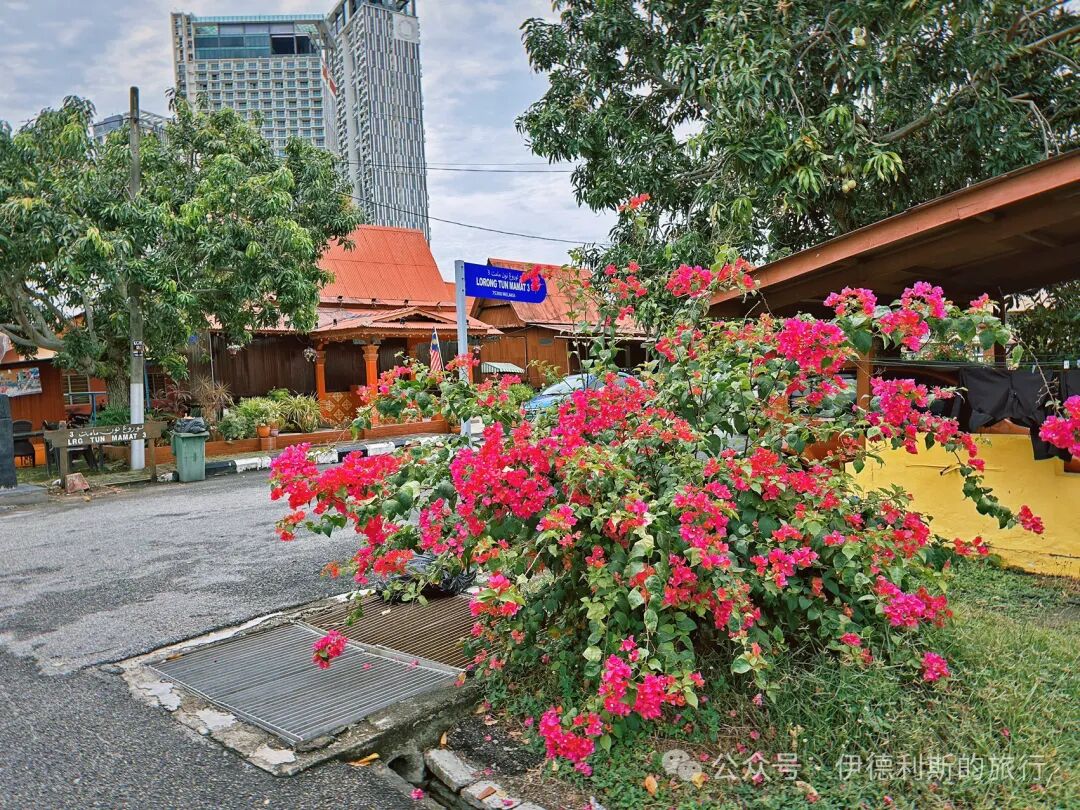
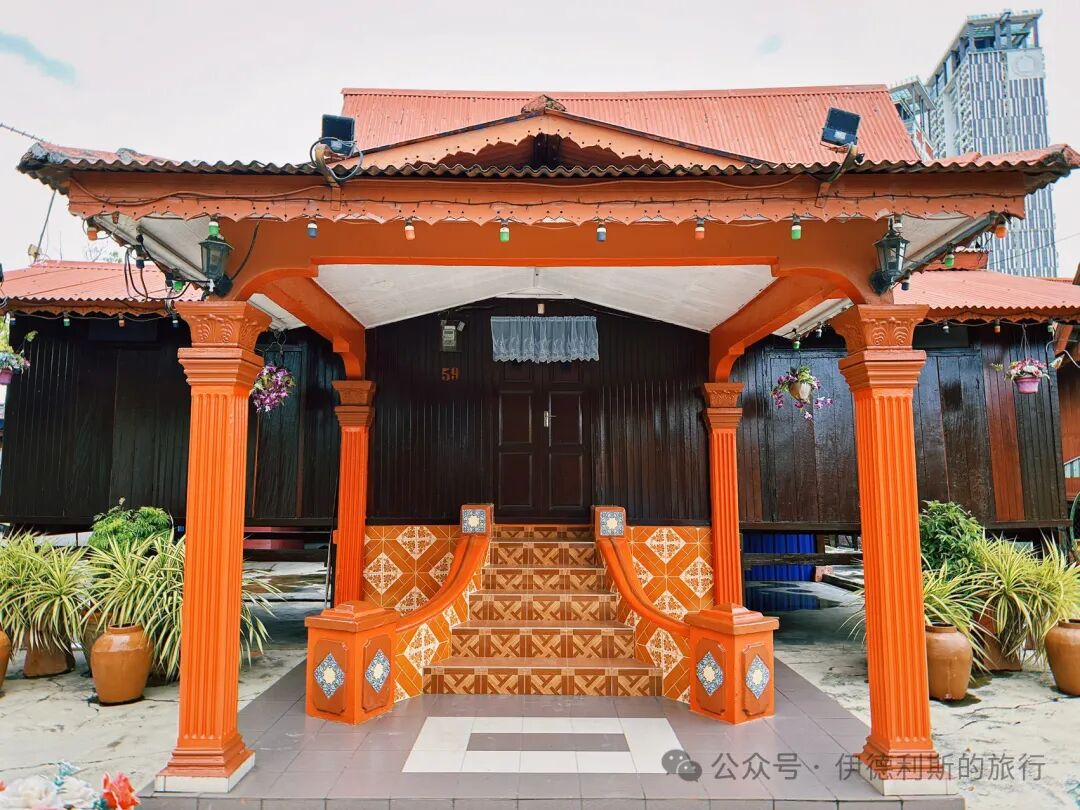
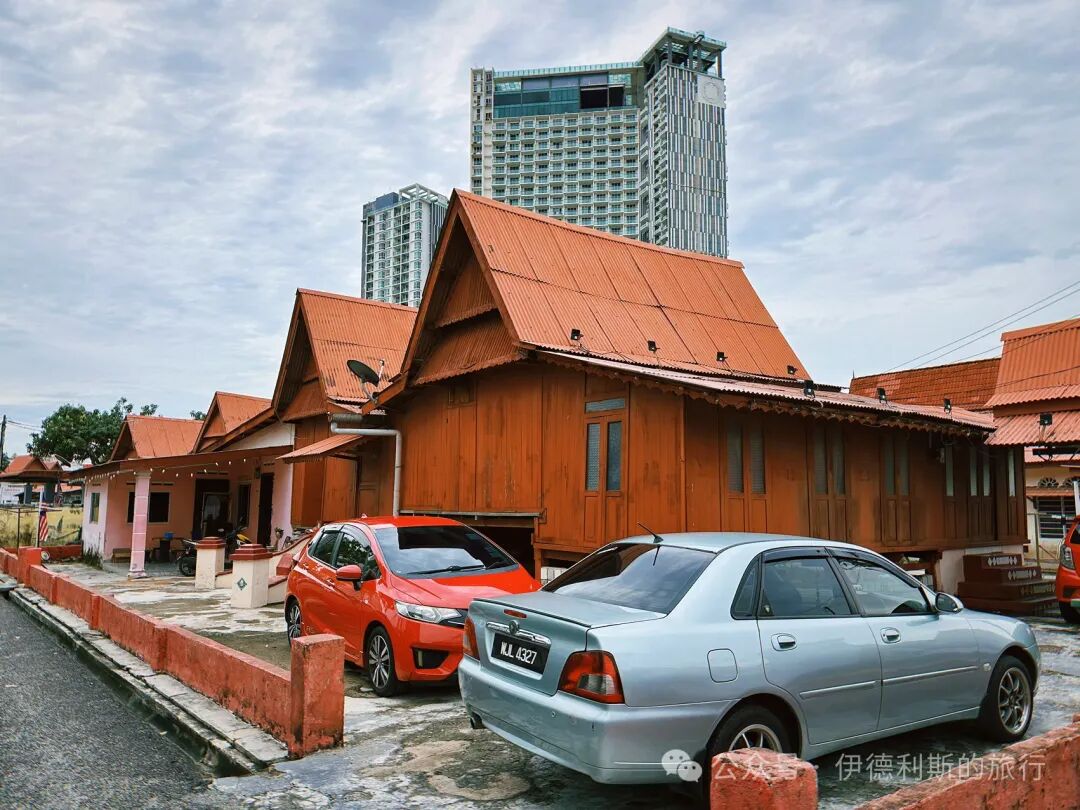
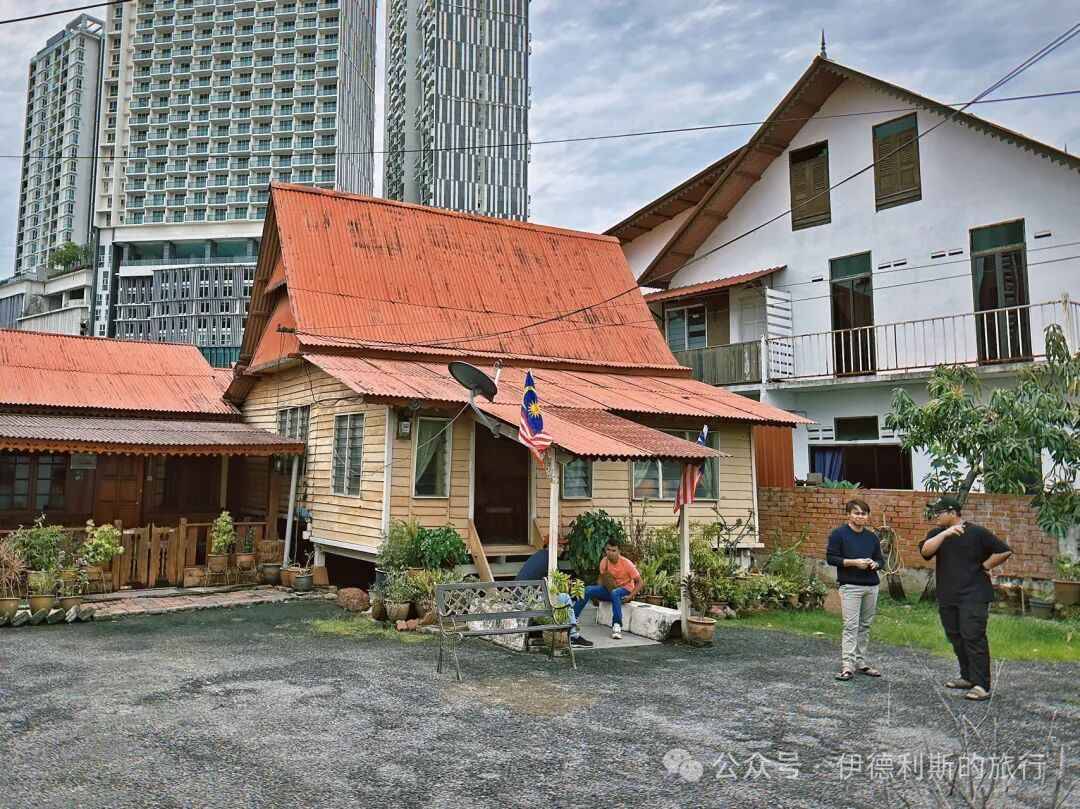
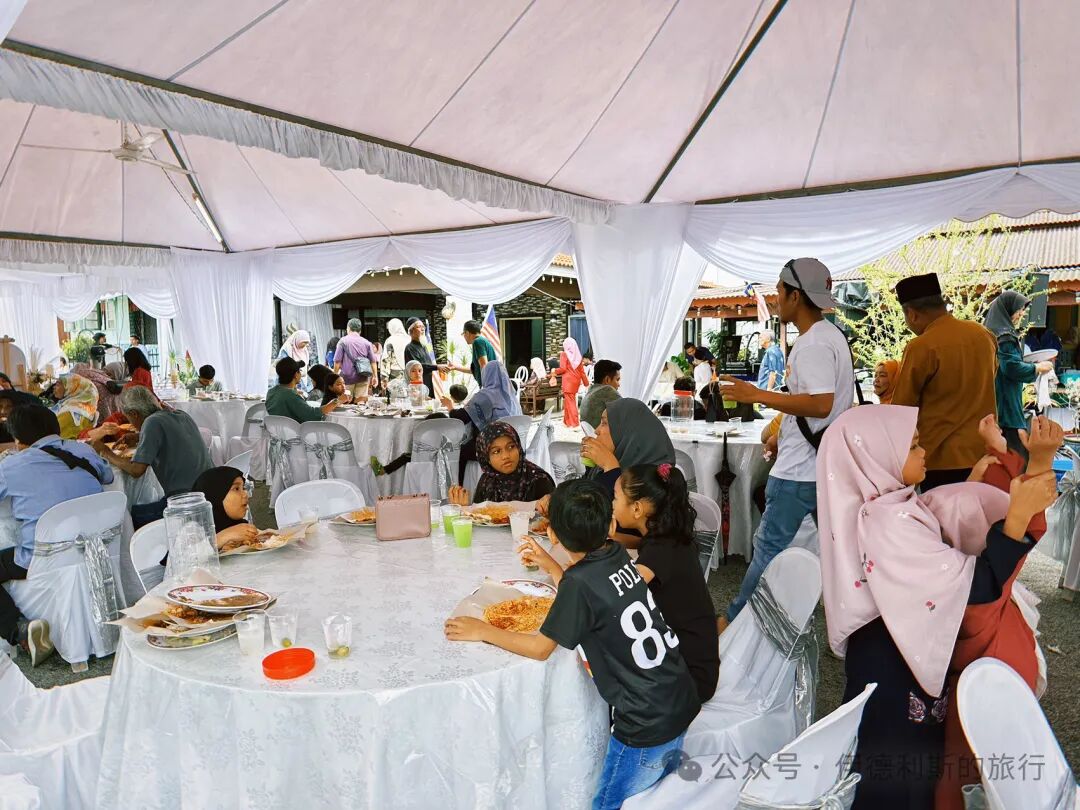
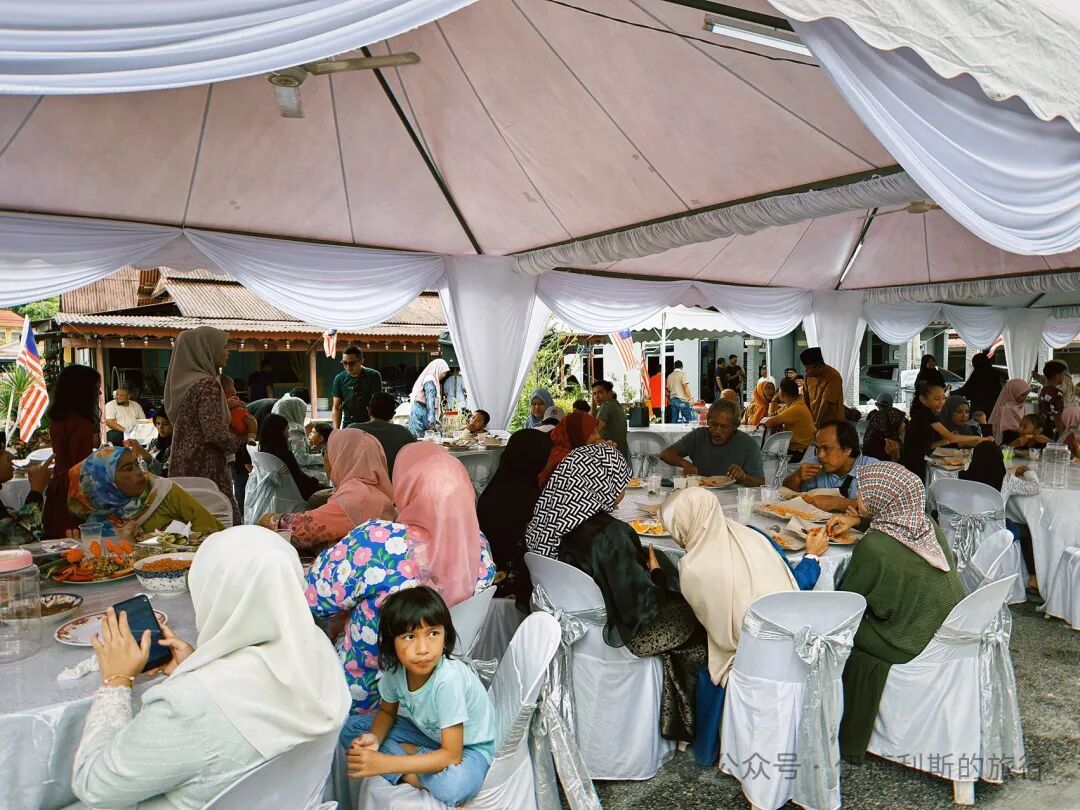
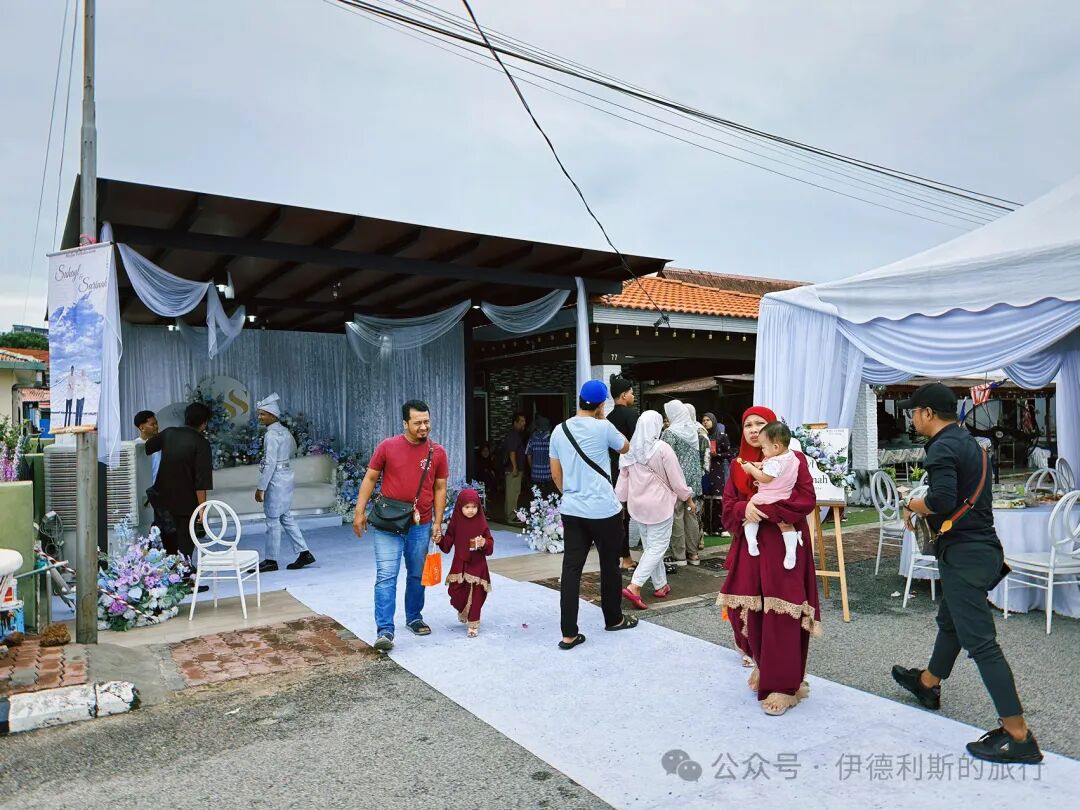
I encountered a Malay wedding in Kampung Morten where whole families came to eat together, which was very lively.
At a beautiful Malay house in Kampung Morten, the grandfather who owns the home chatted with us very warmly.
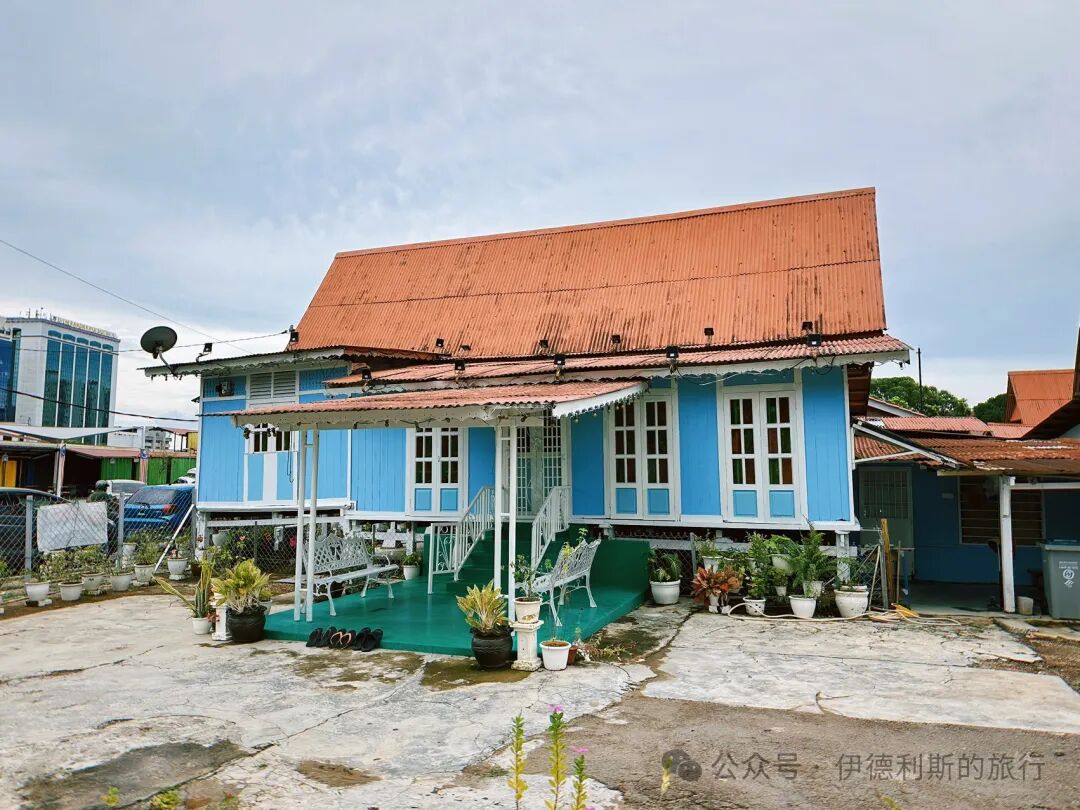
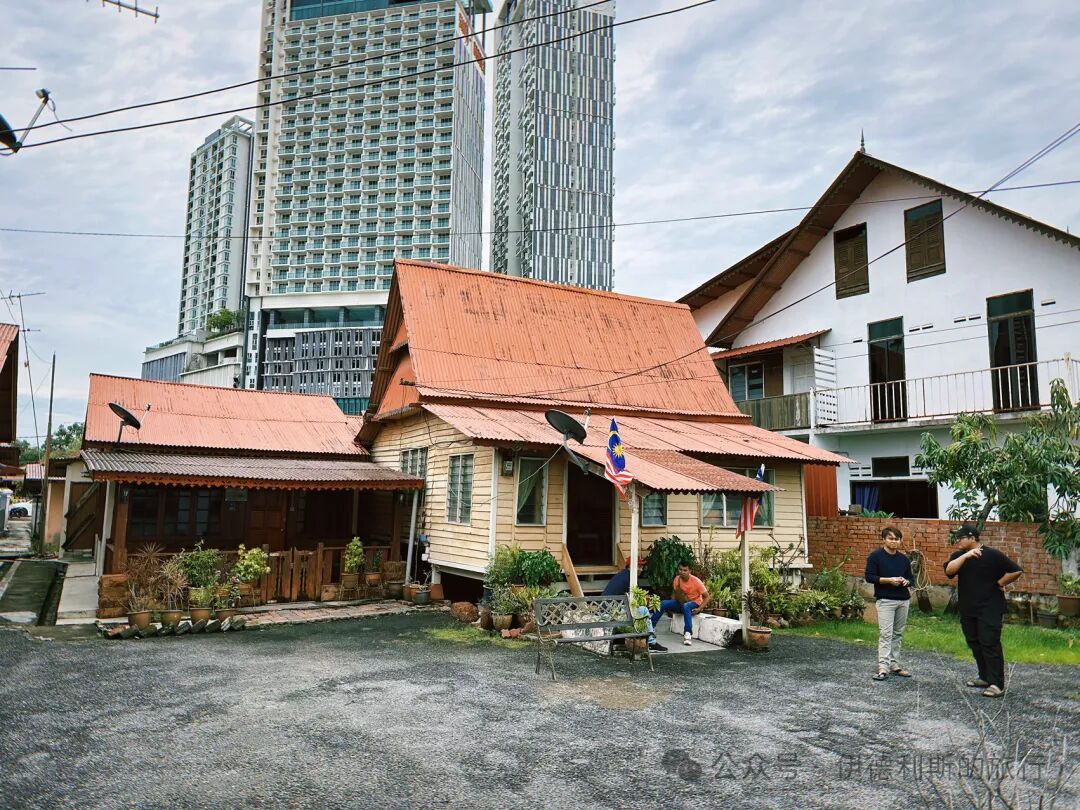
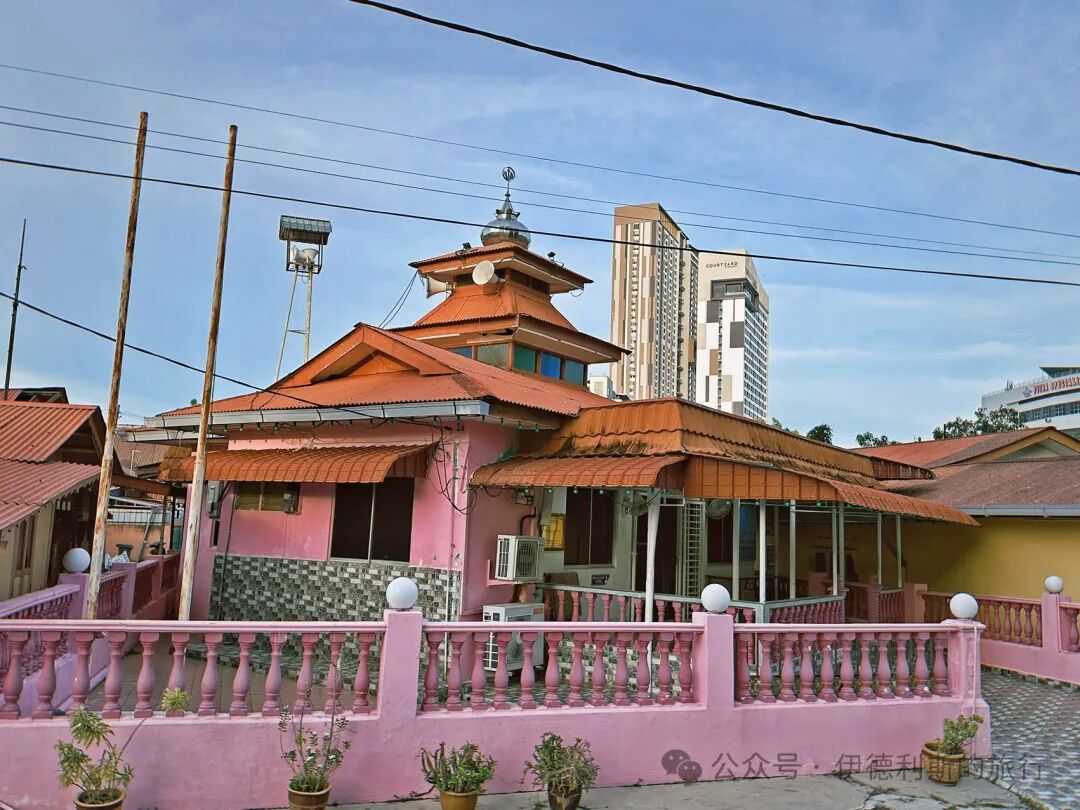
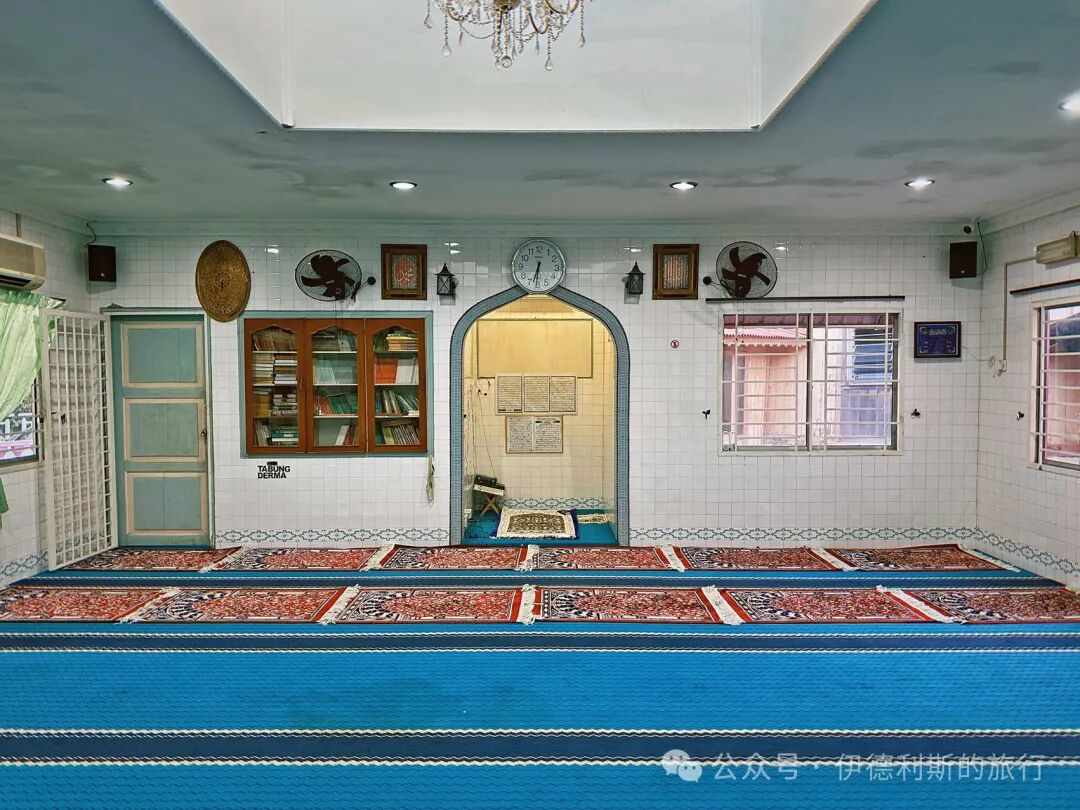
The village has a small mosque called Surau Al Abidin with a cute pink exterior.
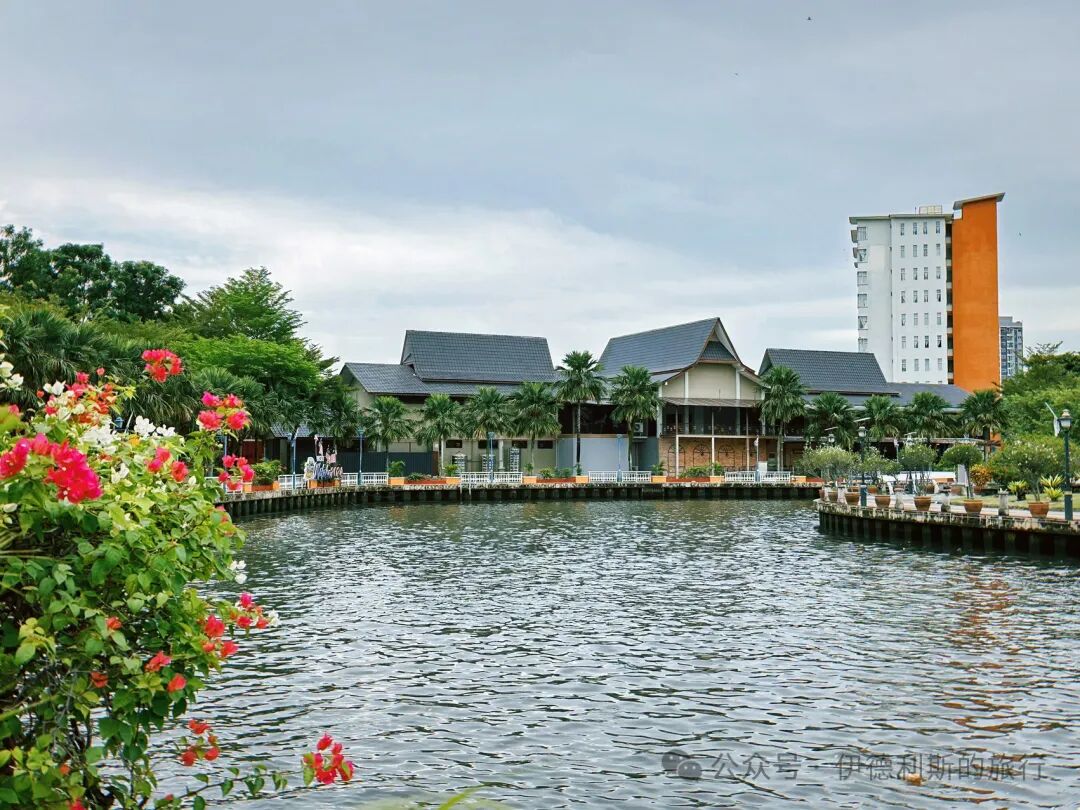
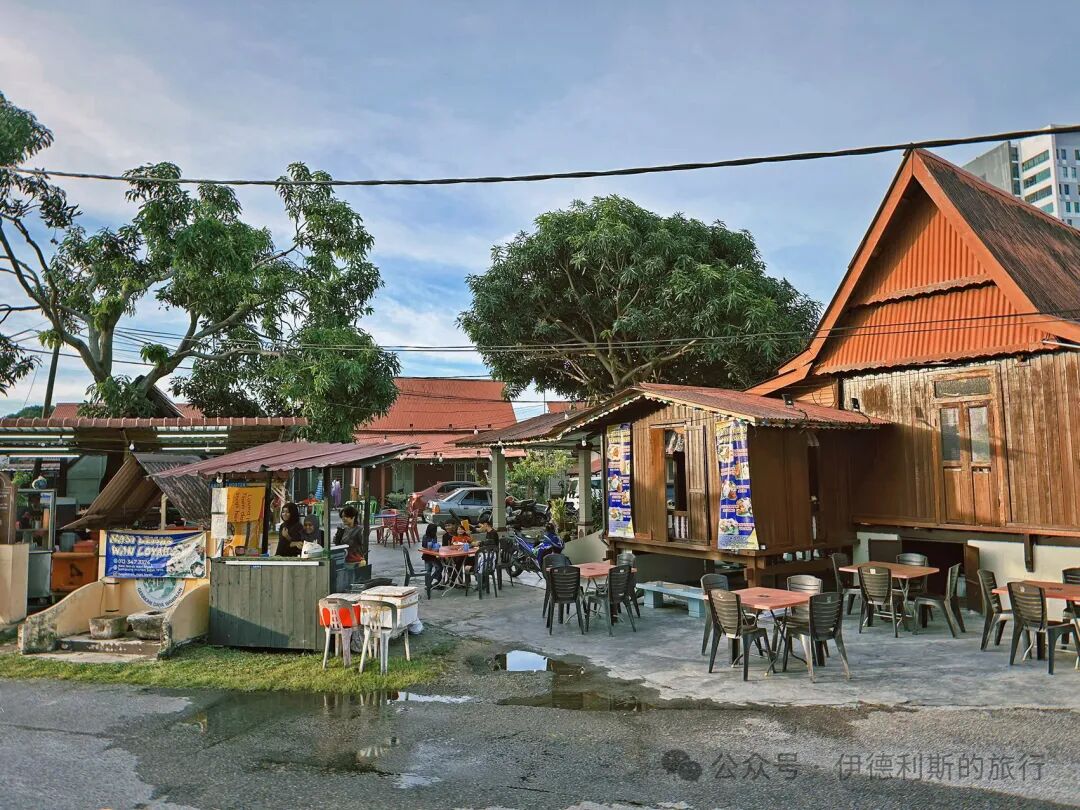
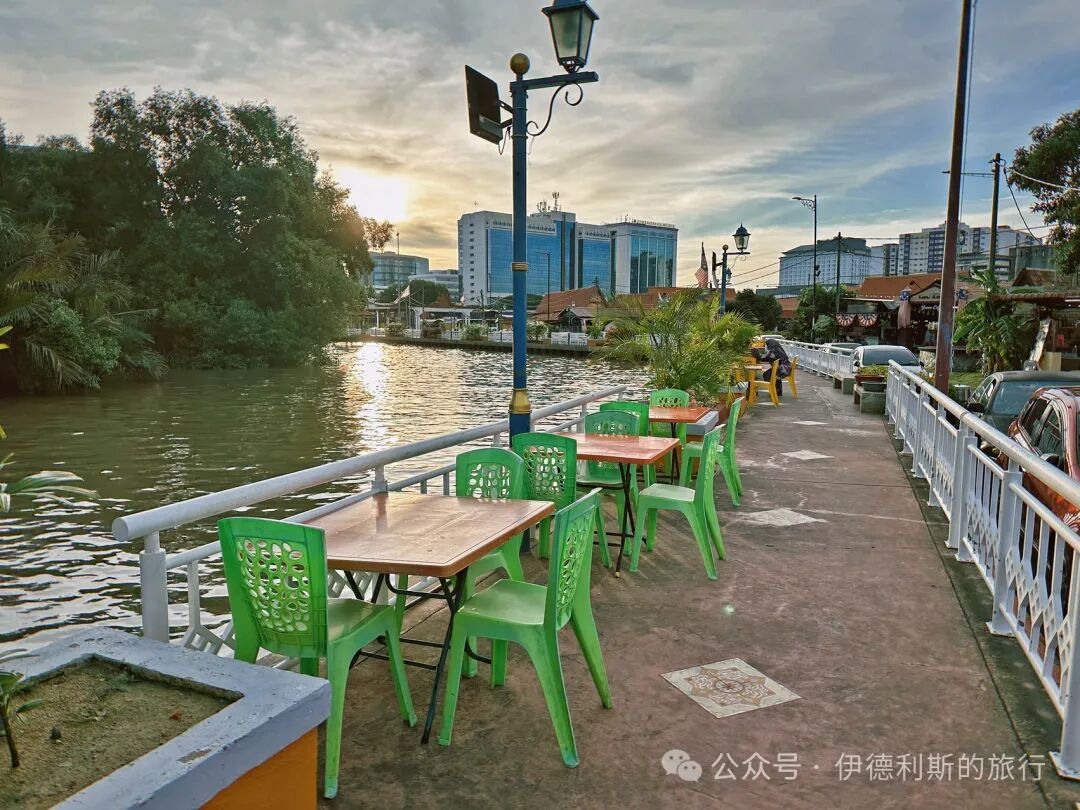
Several shops in the village serve traditional Malay kampung food, but they do not open until 5:30 in the evening. Some shops set their tables and chairs along the Malacca River, which is very pleasant.
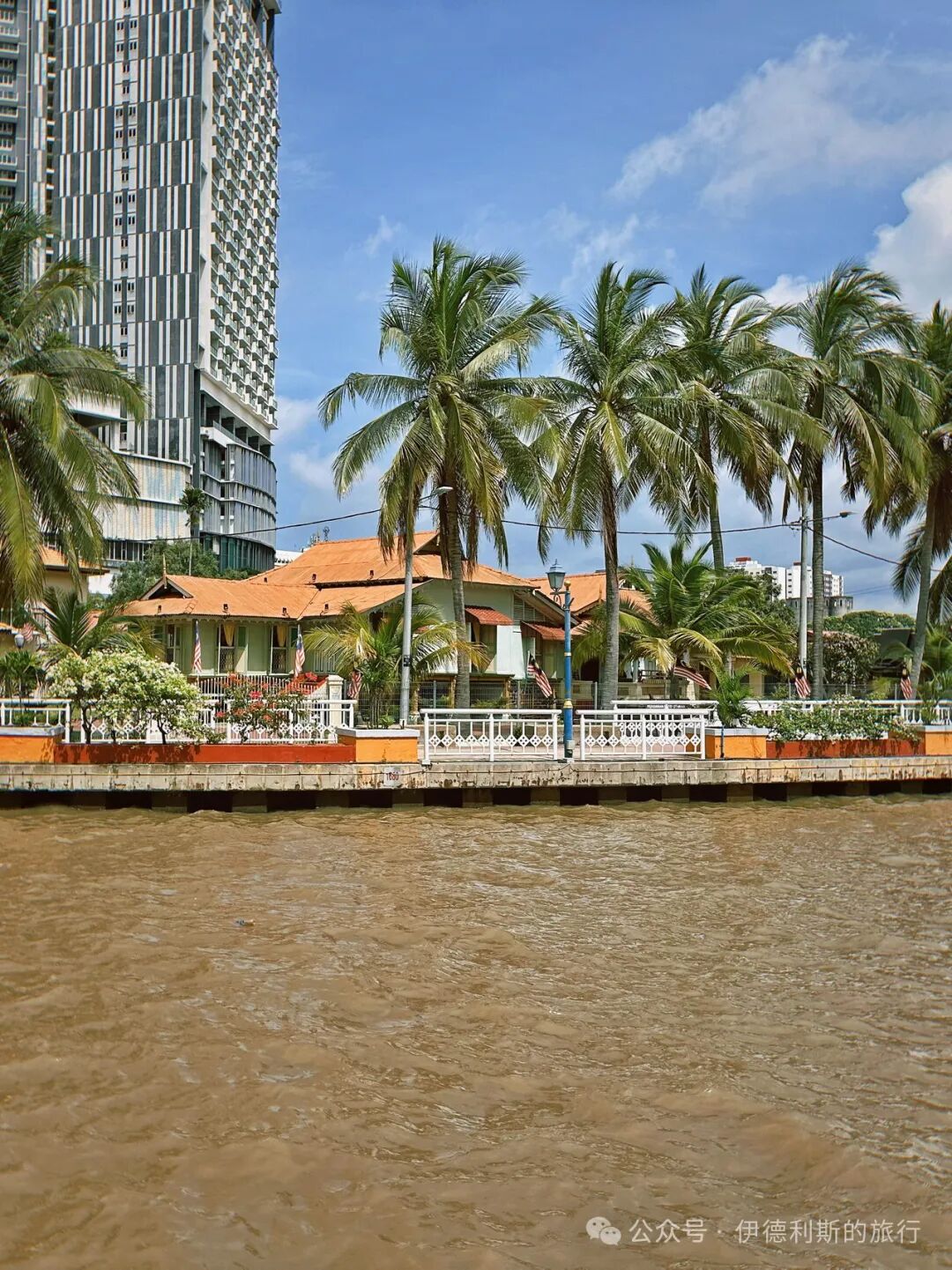
The most worth-visiting Malay wooden house in Kampung Morten is Villa Sentosa, built in 1922 by Haji Hashim Abdul Ghani, who helped build the village. Haji Hashim's descendants still live here today, and they have kept many pieces of furniture and household items that are decades or even a century old. However, the opening hours are not fixed. If the owner is out, at prayer, or taking a nap, the house is closed. We were sorry to find the owner away when we visited, so we could only look around from the outside.
The ancient Malay village of Kampung Ketek.
Behind the Cheng Hoon Teng Temple, the oldest Chinese temple in the old town of Malacca, lies the equally ancient Malay village of Kampung Ketek. Kampung Ketek formed during the Dutch era in the 17th century. Although Malay villages within the old city of Malacca shrank rapidly after the 19th century due to the construction of shophouses, you can still see several well-preserved traditional Malay stilt houses in Kampung Ketek today. Abdullah bin Abdul al Kadir (1796-1854), known as the Father of Modern Malay Literature, was born here.
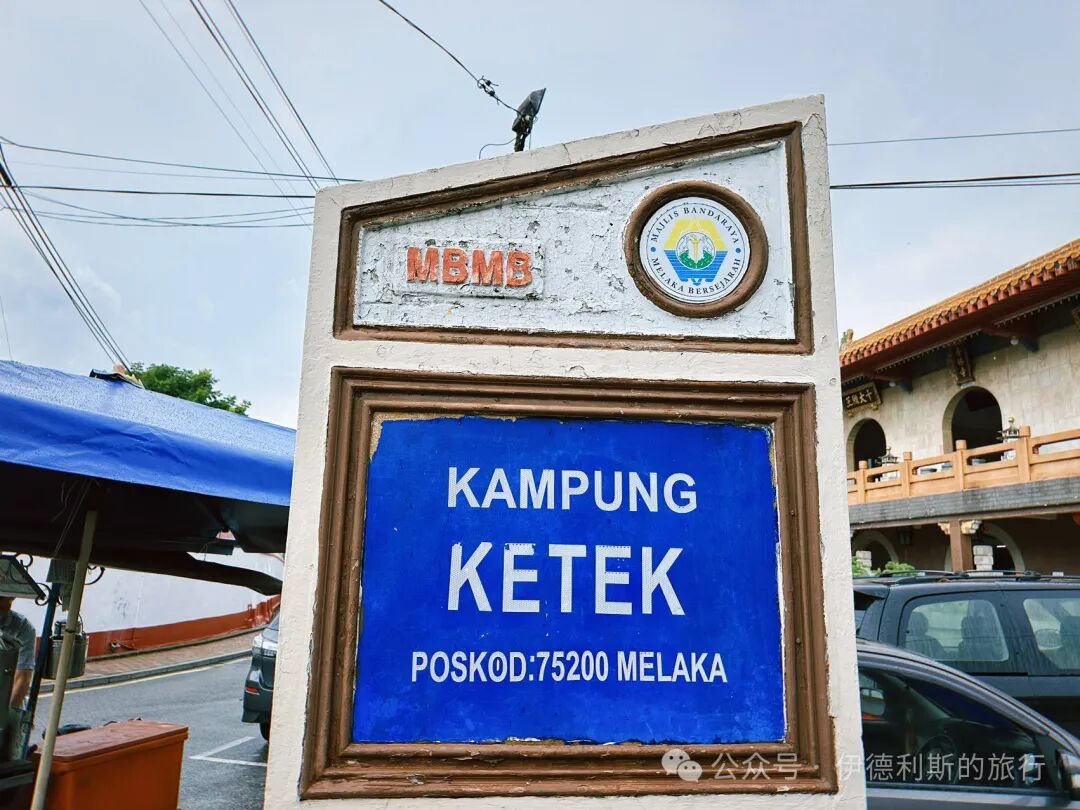
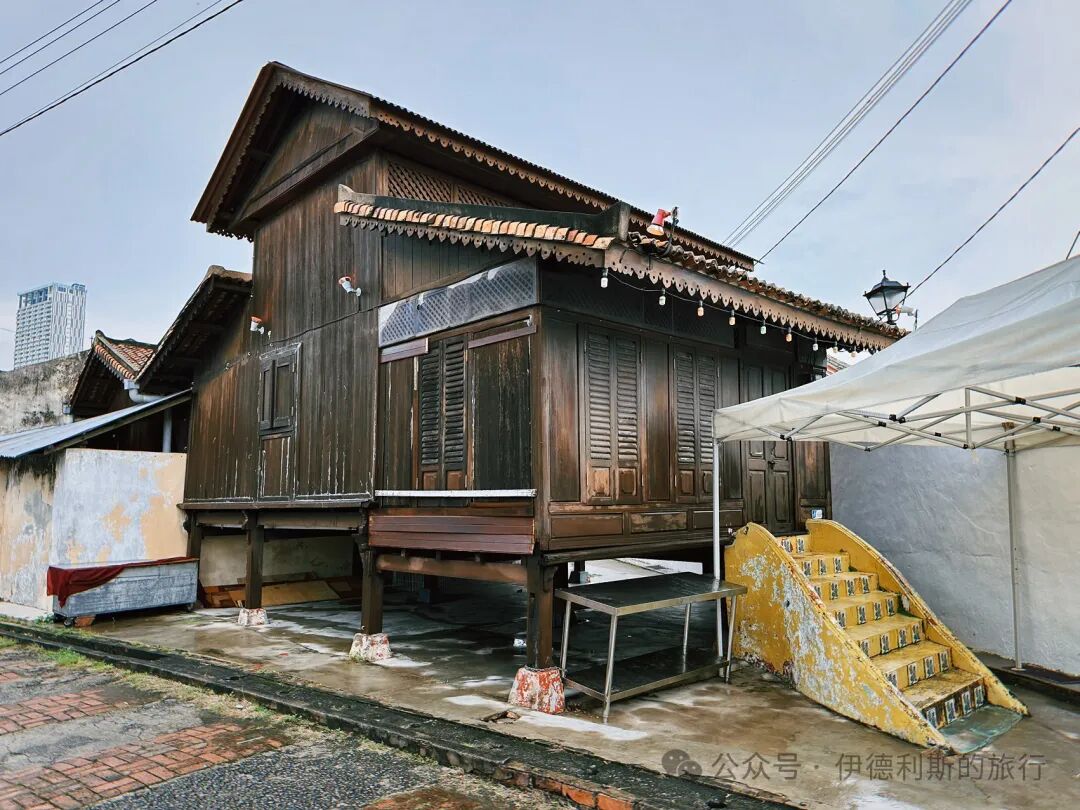
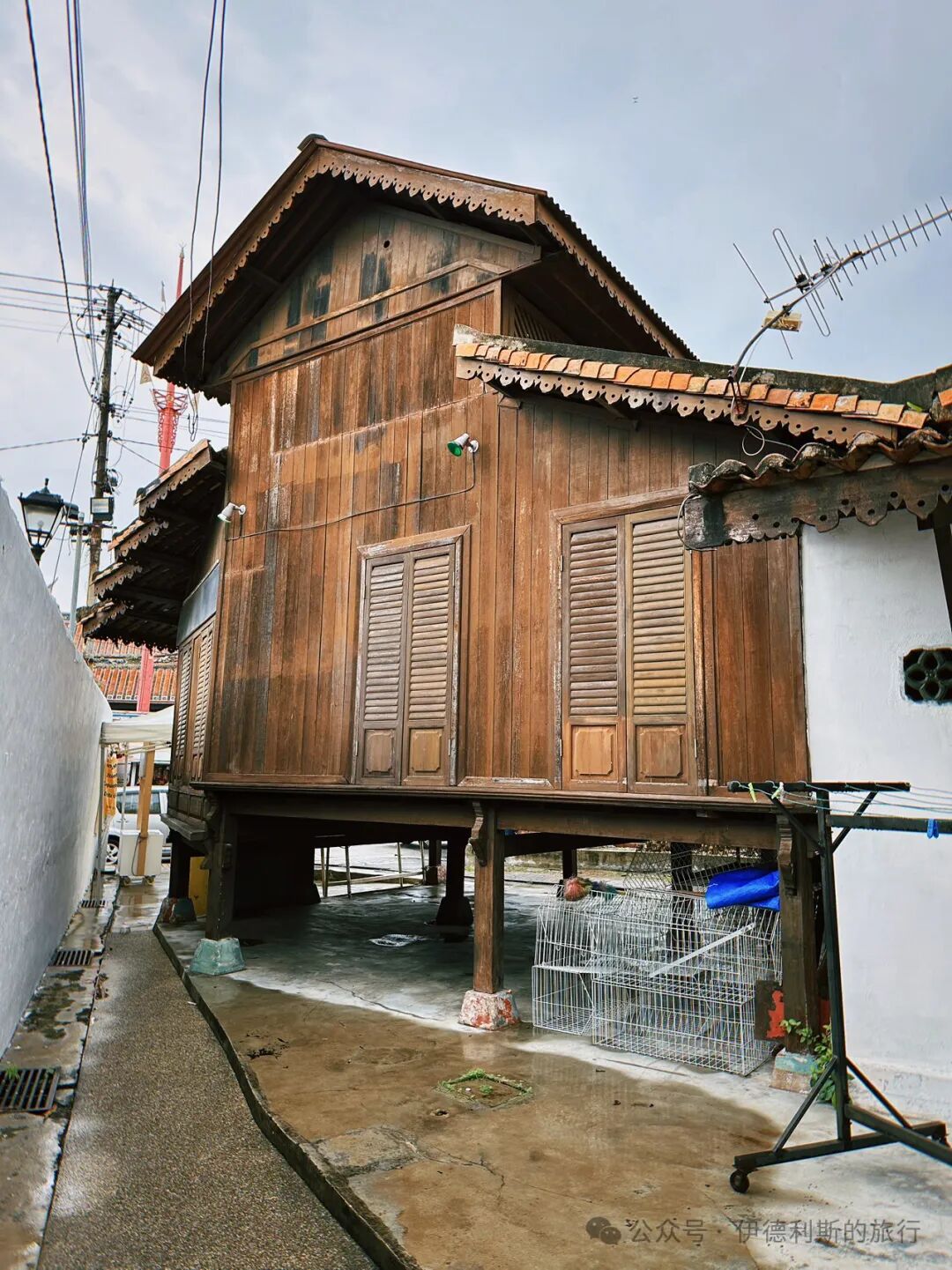
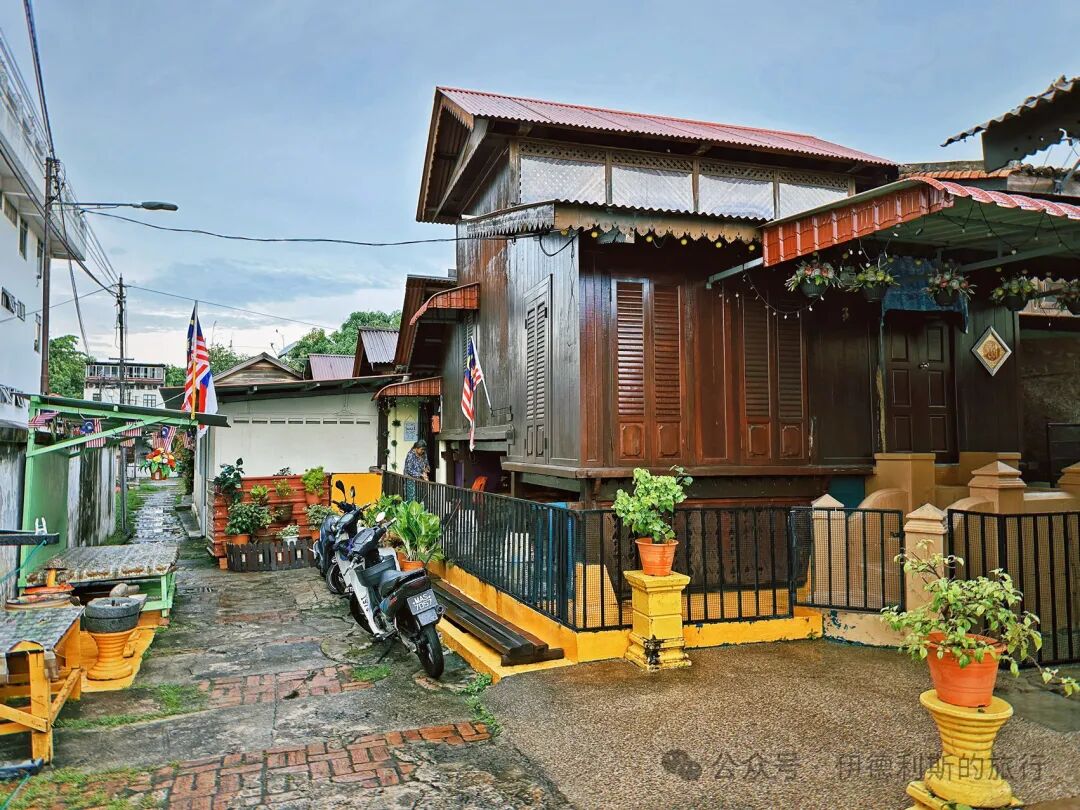
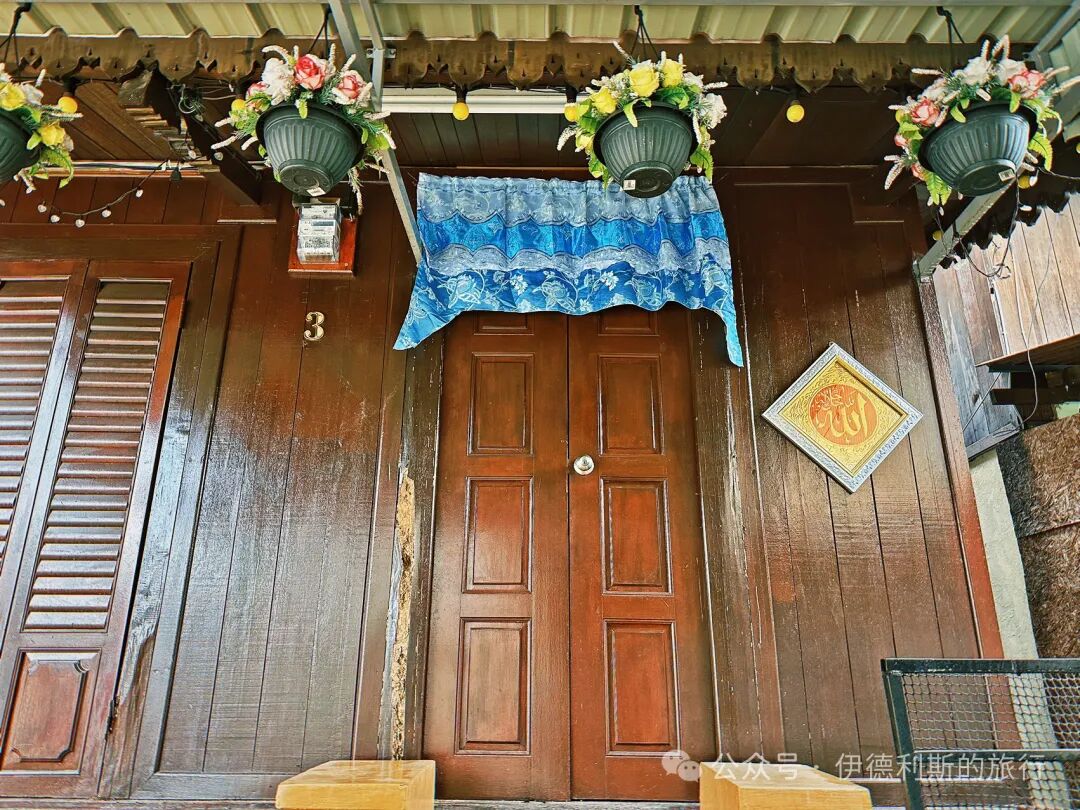
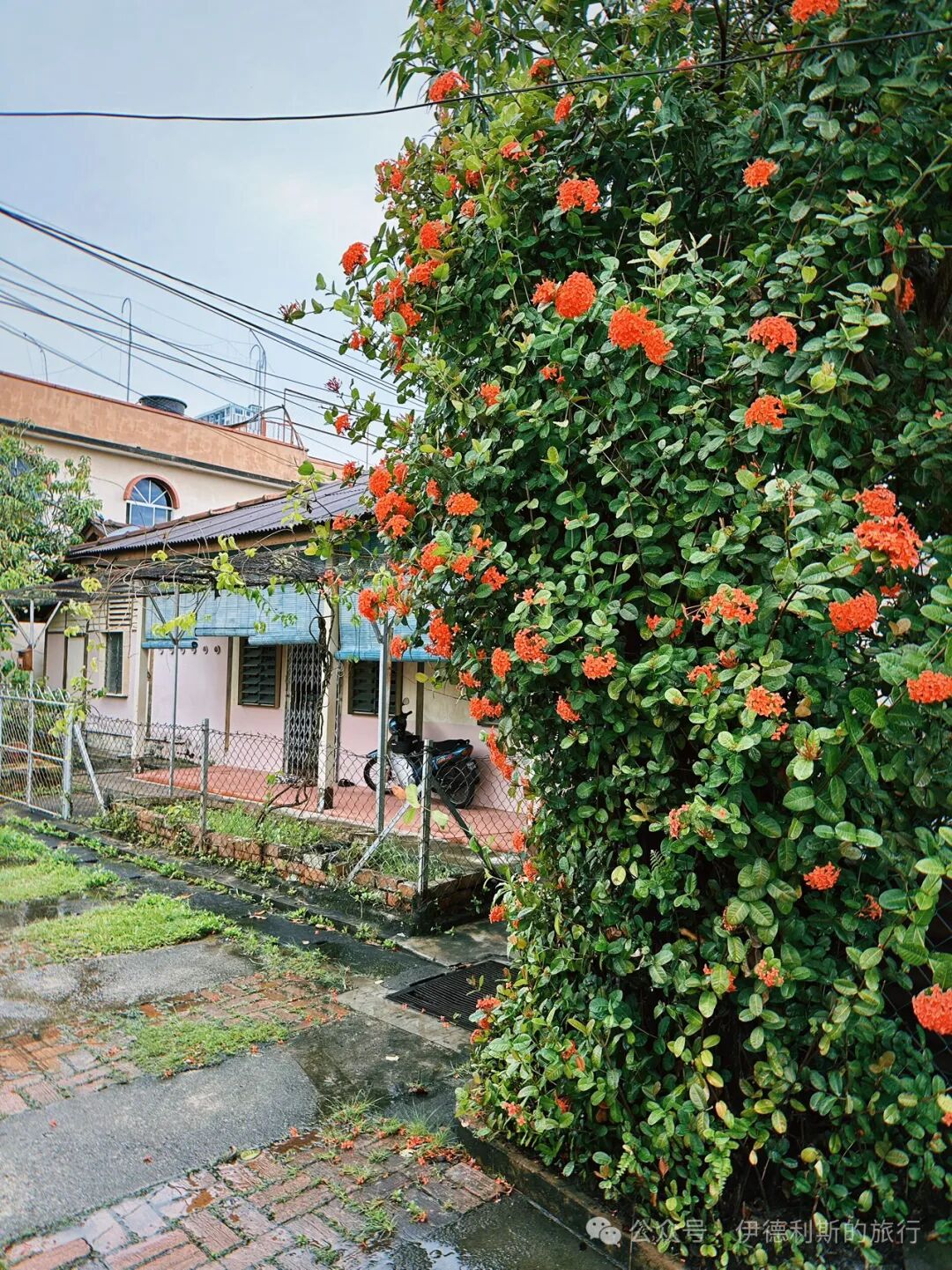
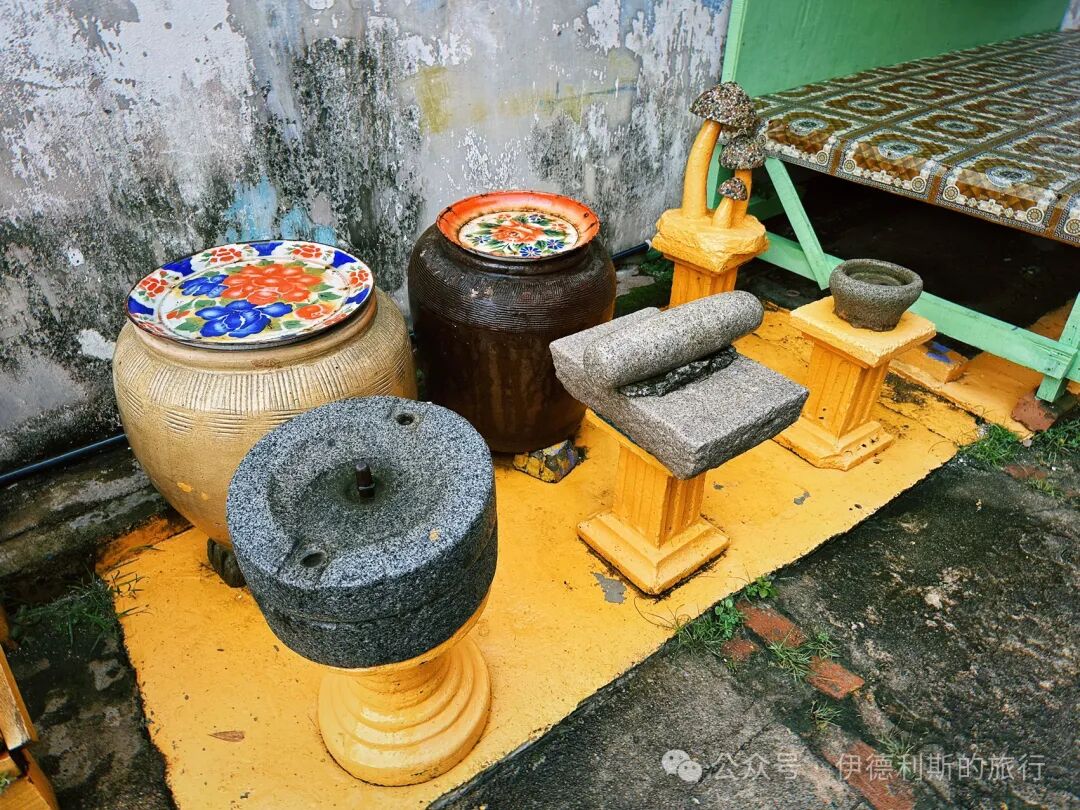
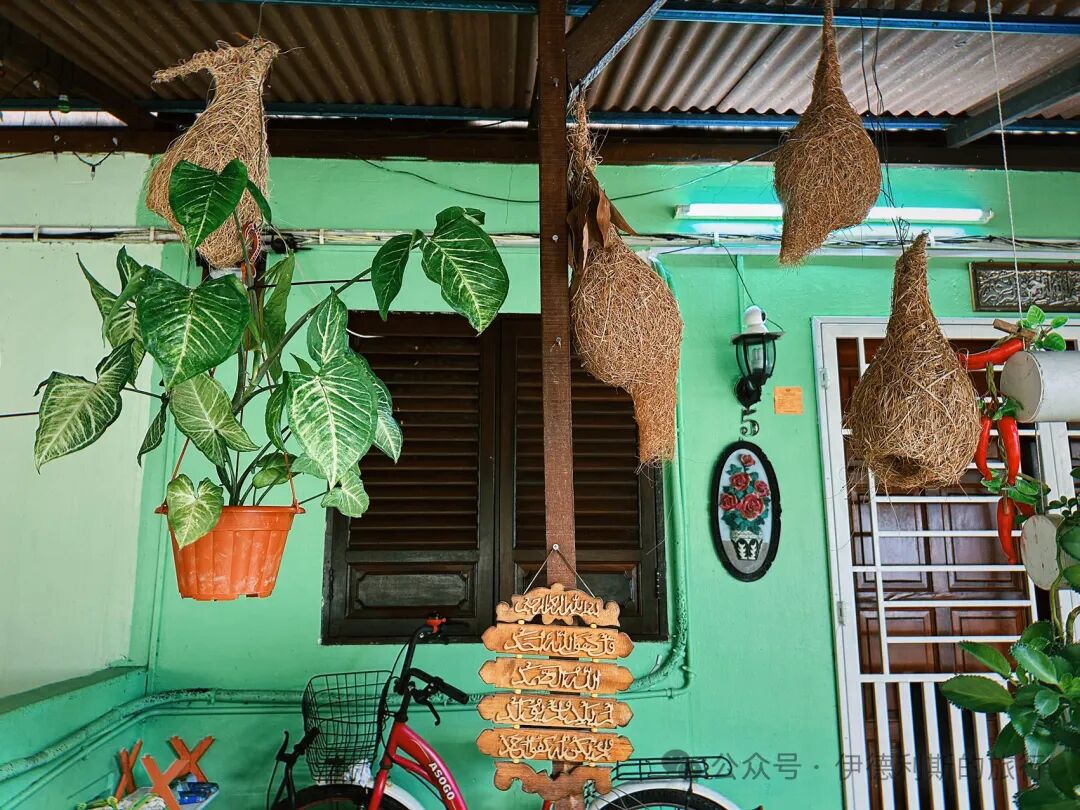
Inside Kampung Ketek, you can see the tomb of Syed Syamsuddin Ibni Al Sumatrani, a famous scholar and national hero from the Aceh Sultanate in the 16th and 17th centuries.
Syamsuddin was a mufti (legal judge) and advisor to Sultan Iskandar Muda (reigned 1607-36) of the Aceh Sultanate in northern Sumatra. He was well-versed in religious knowledge and held a high position in the Sultan's court.
After the Portuguese occupied Malacca in 1511, the Aceh Sultanate kept attacking the Portuguese in an attempt to capture the city. During the reign of Sultan Iskandar Muda, the Aceh Sultanate was strong and powerful, with a fleet of heavy galleys, cavalry riding Persian horses, elephant corps, and thousands of cannons. In 1629, Sultan Iskandar sent a massive force of 236 warships and 19,000 men to Malacca, but they suffered a total defeat, with all soldiers killed or captured. Sang Sutin also died heroically in this battle and was eventually buried in Kampung Kuli in the old city of Malacca.
Two tombs of heroes from the Malacca Sultanate
Continuing south from Kampung Hulu Road, you enter the core area of the Malacca old city, a World Heritage site where the alleys are filled with murals related to the city's history.
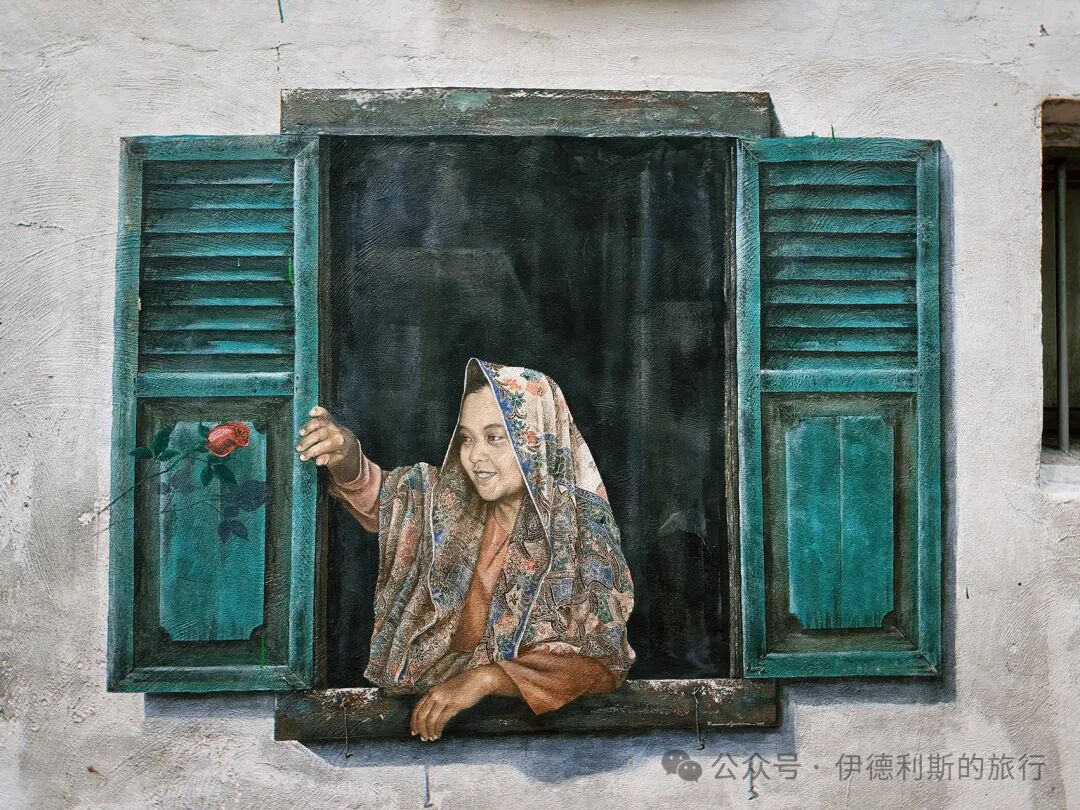
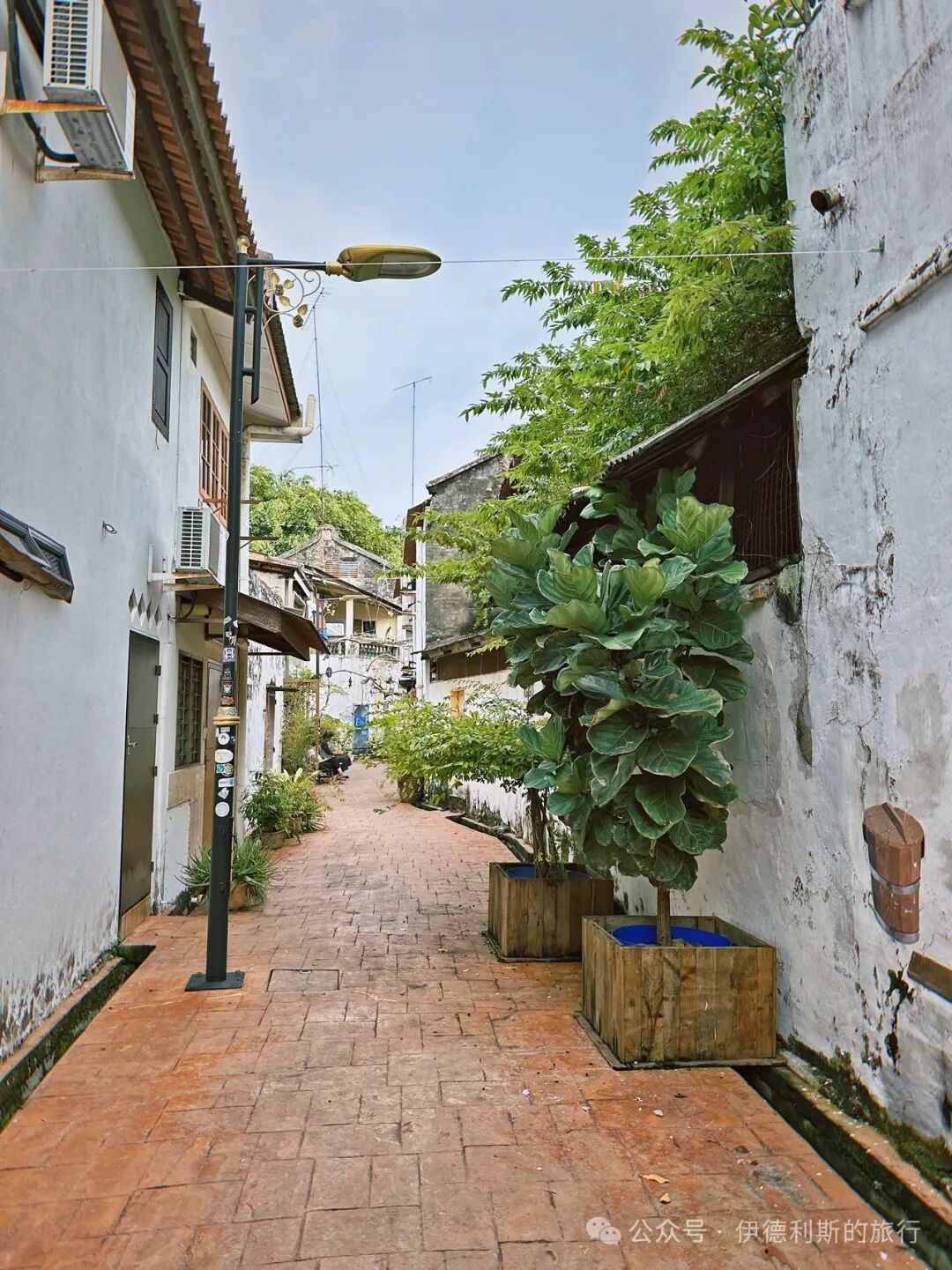
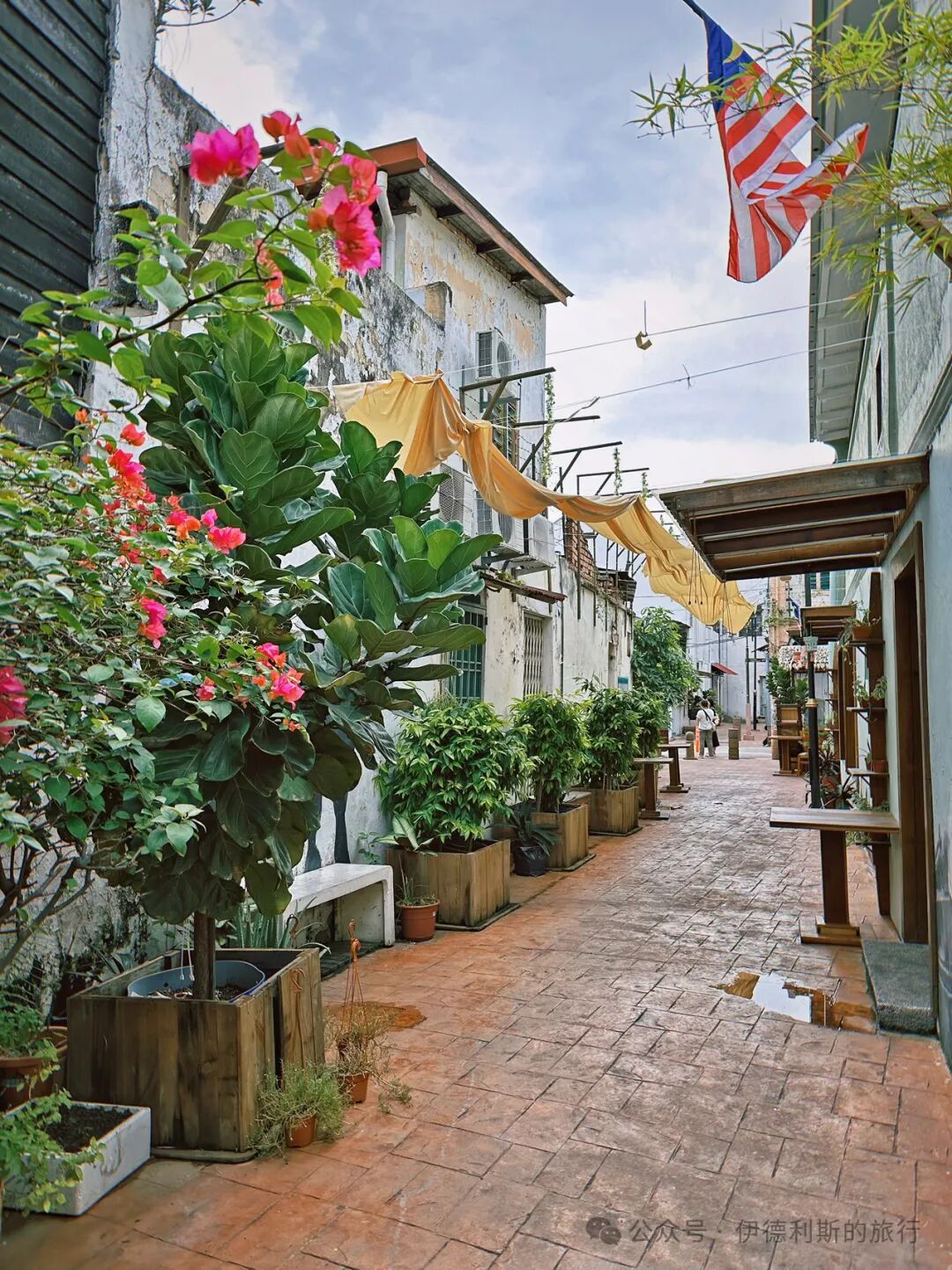
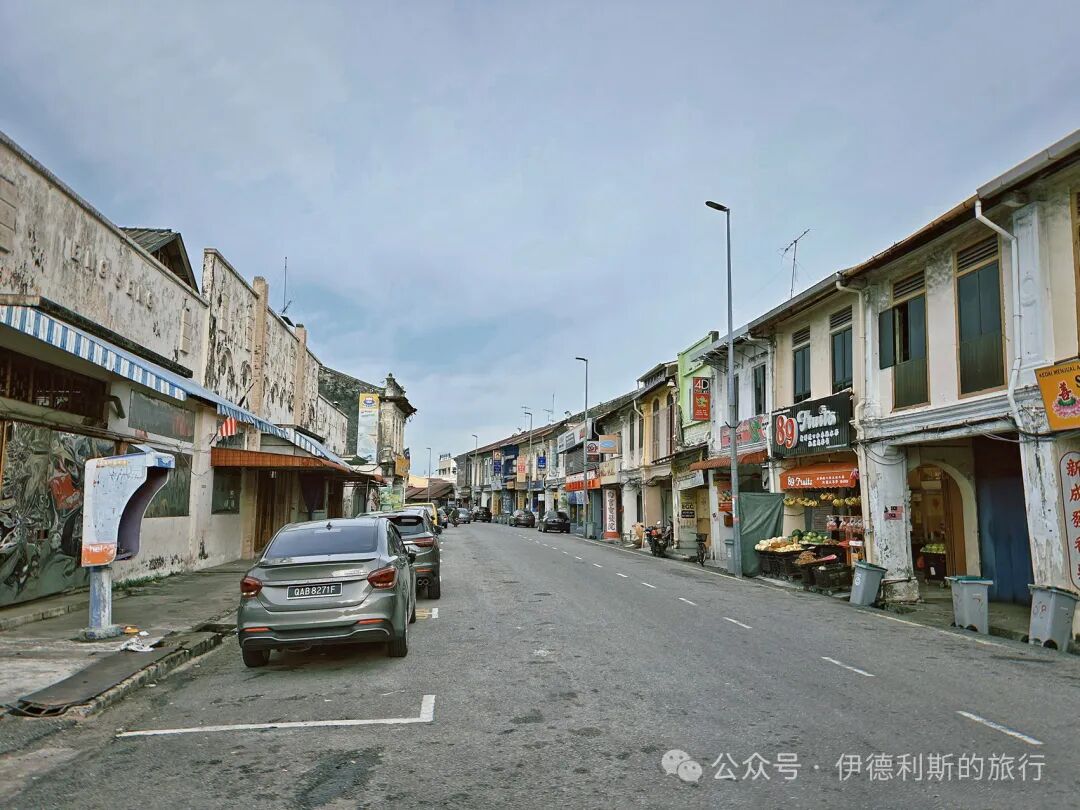
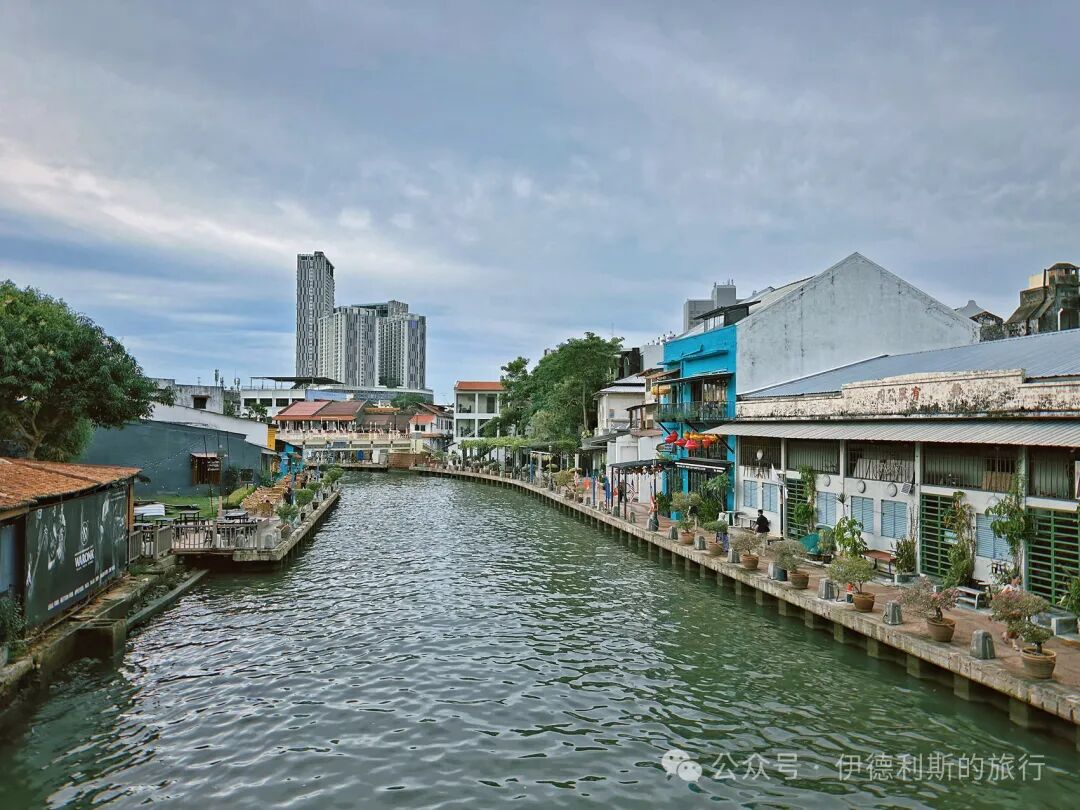
The Tomb of Hang Jebat (Makam Hang Jebat) in the old city of Malacca features the Aceh style from northern Sumatra, which was the common high-status architectural style for tombs during the Malacca Sultanate.
Hang Jebat was a famous Malay hero during the 15th-century Malacca Sultanate and one of the five heroes in the classic Malay novel Hikayat Hang Tuah. In the novel, the five heroes study martial arts together, serve the Malacca Sultan together, and earn his favor. Later, the Sultan of Malacca listens to slander and wants to kill Hang Tuah, so his brother Hang Jebat rebels against the Sultan to seek revenge. Eventually, the Sultan pardons Hang Tuah and sends him to fight a duel with Hang Jebat. After seven days of fighting, Hang Jebat dies in the arms of his former brother.
Since the 1960s, Hang Jebat has been portrayed in various plays and novels as a folk hero who resists tyranny and yearns for freedom, and many roads and buildings in Malaysia and Singapore are named after him.
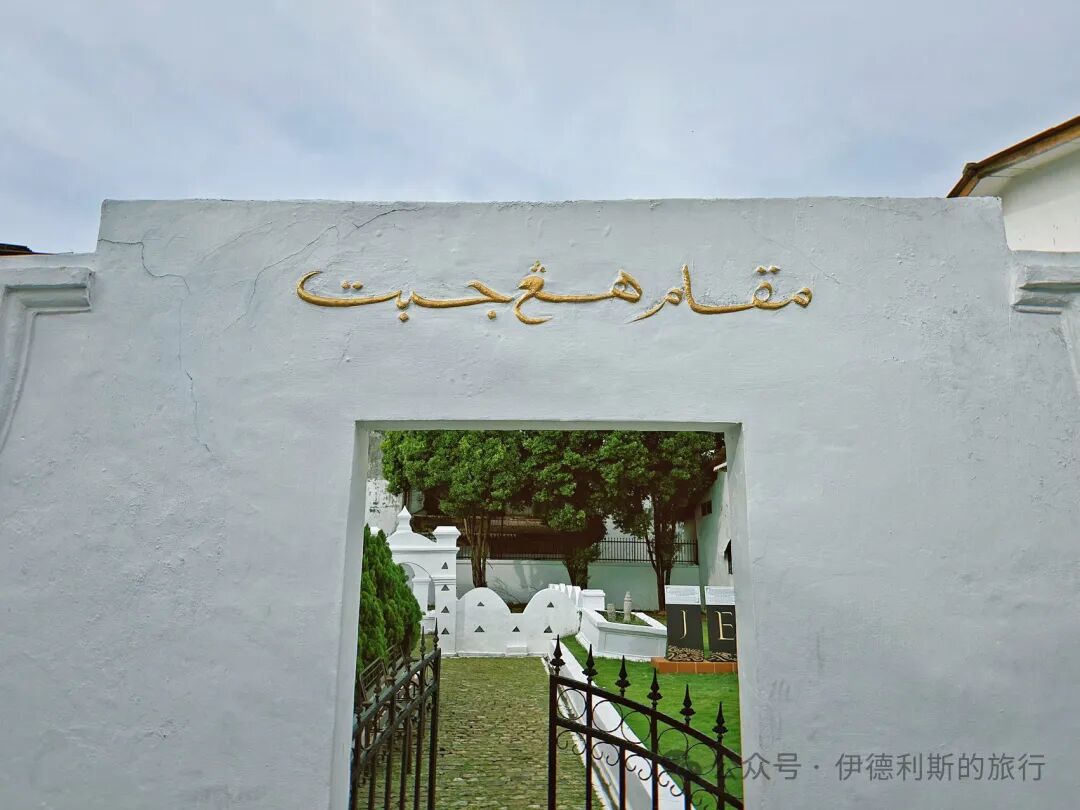
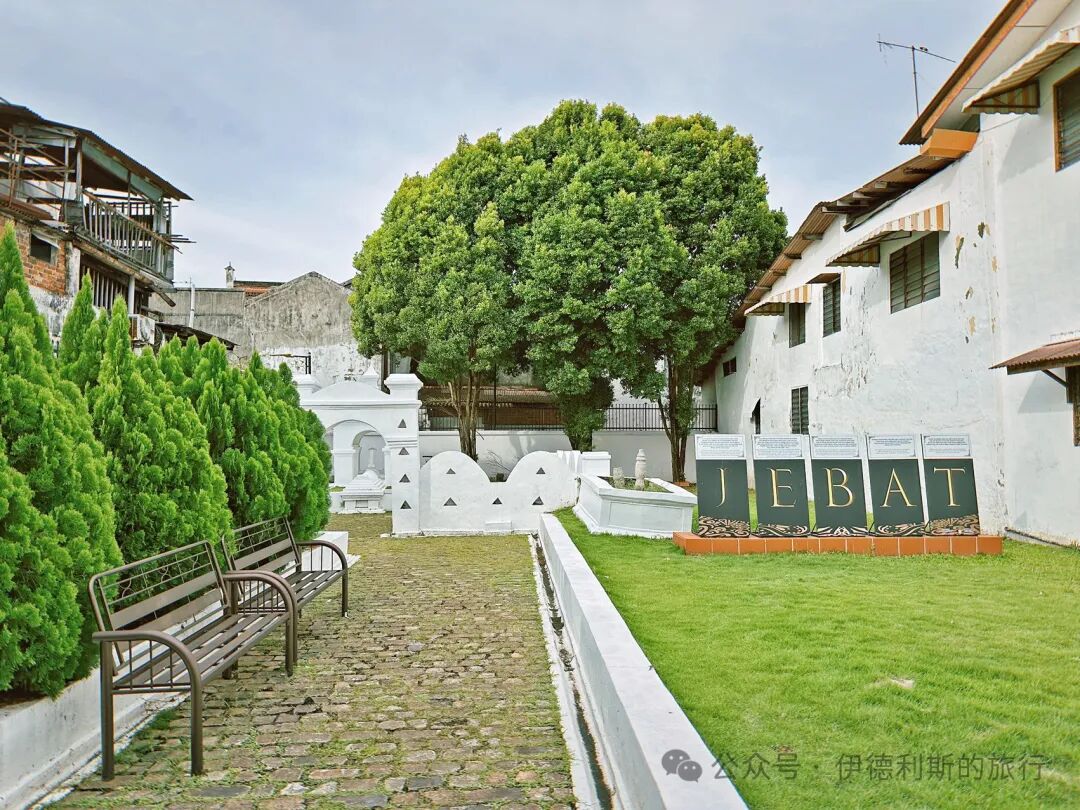
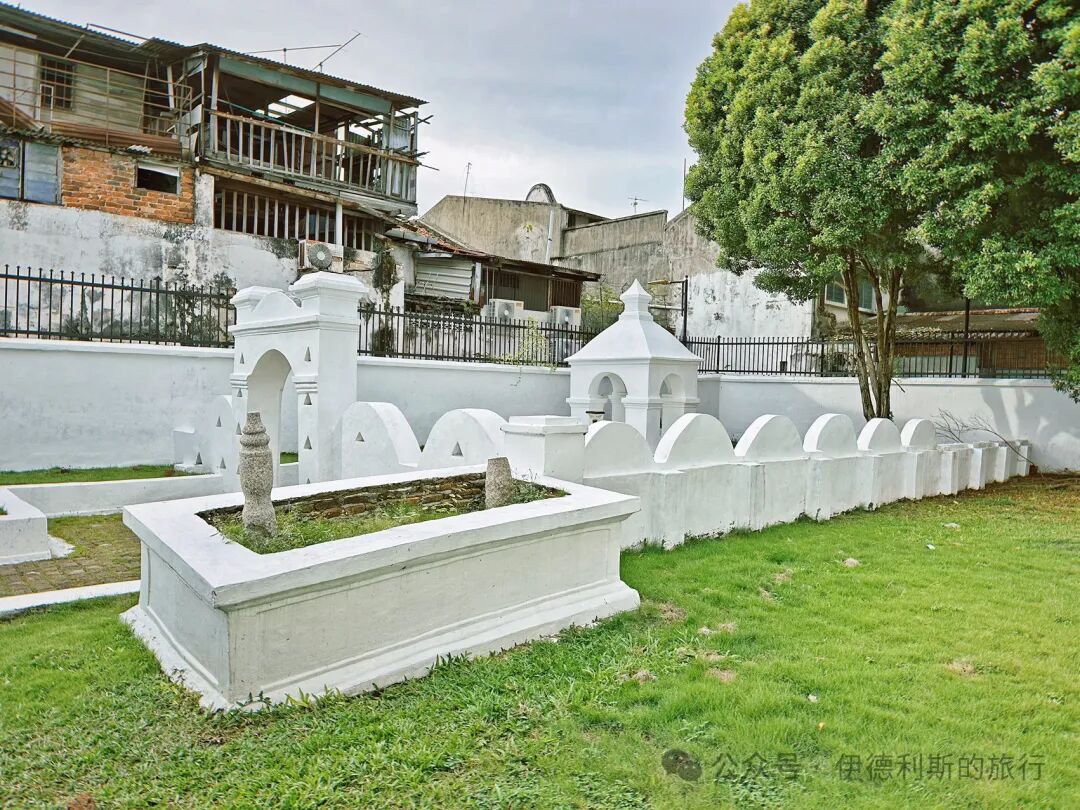
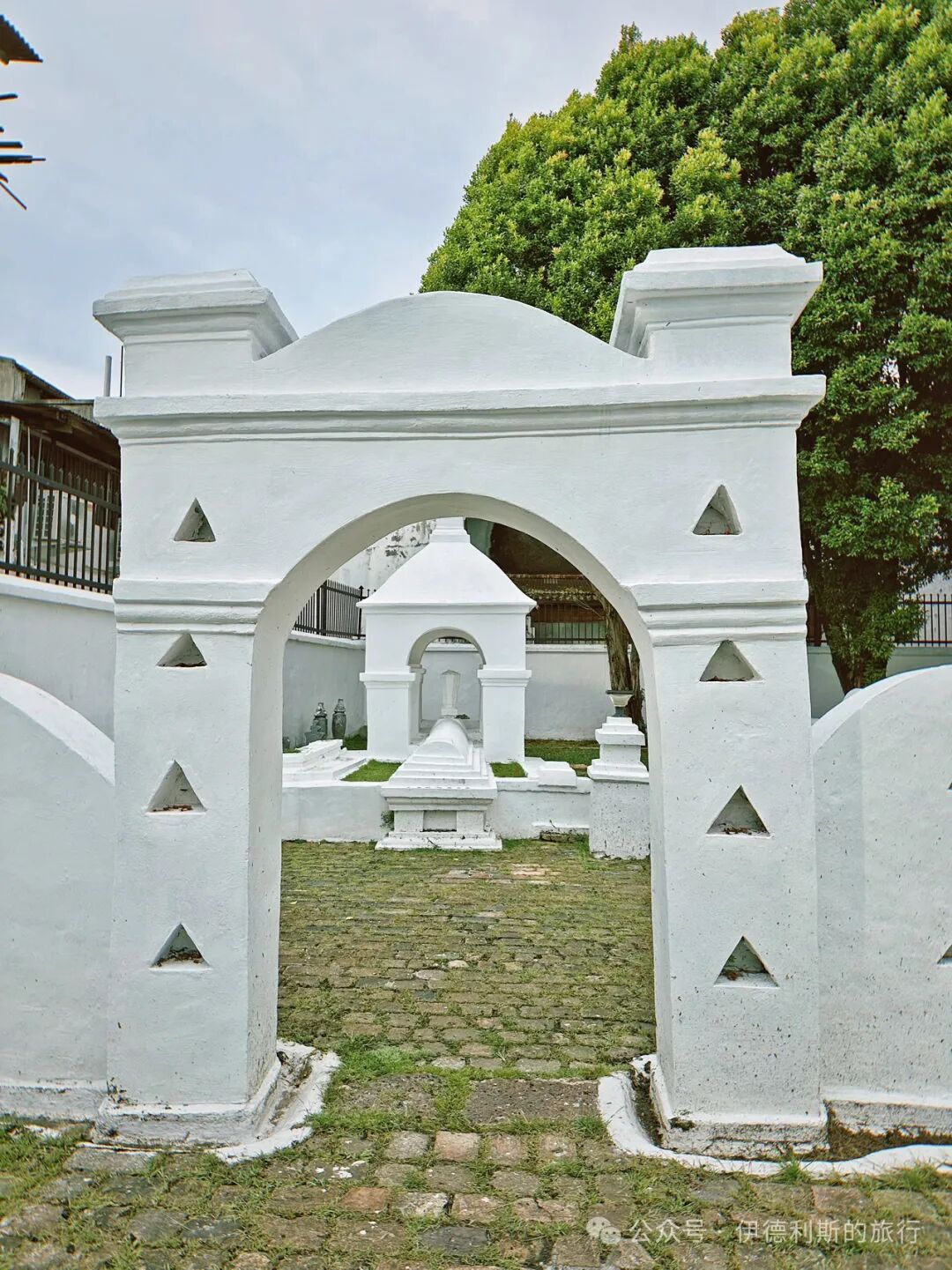
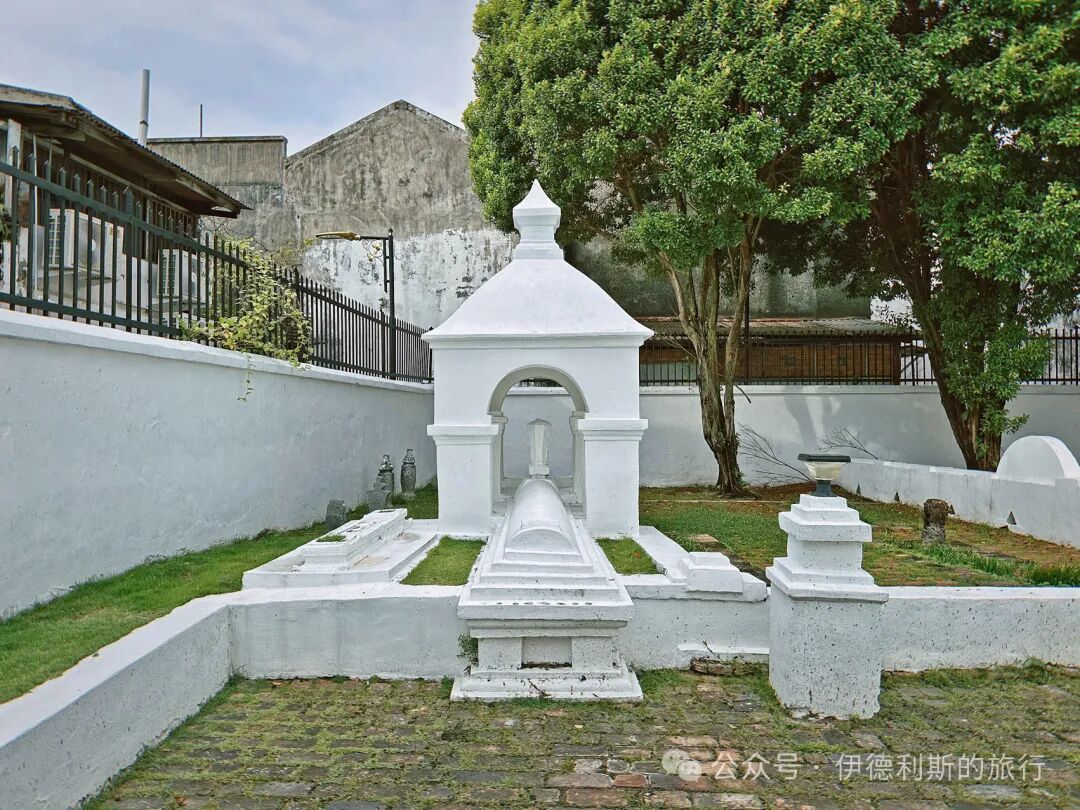
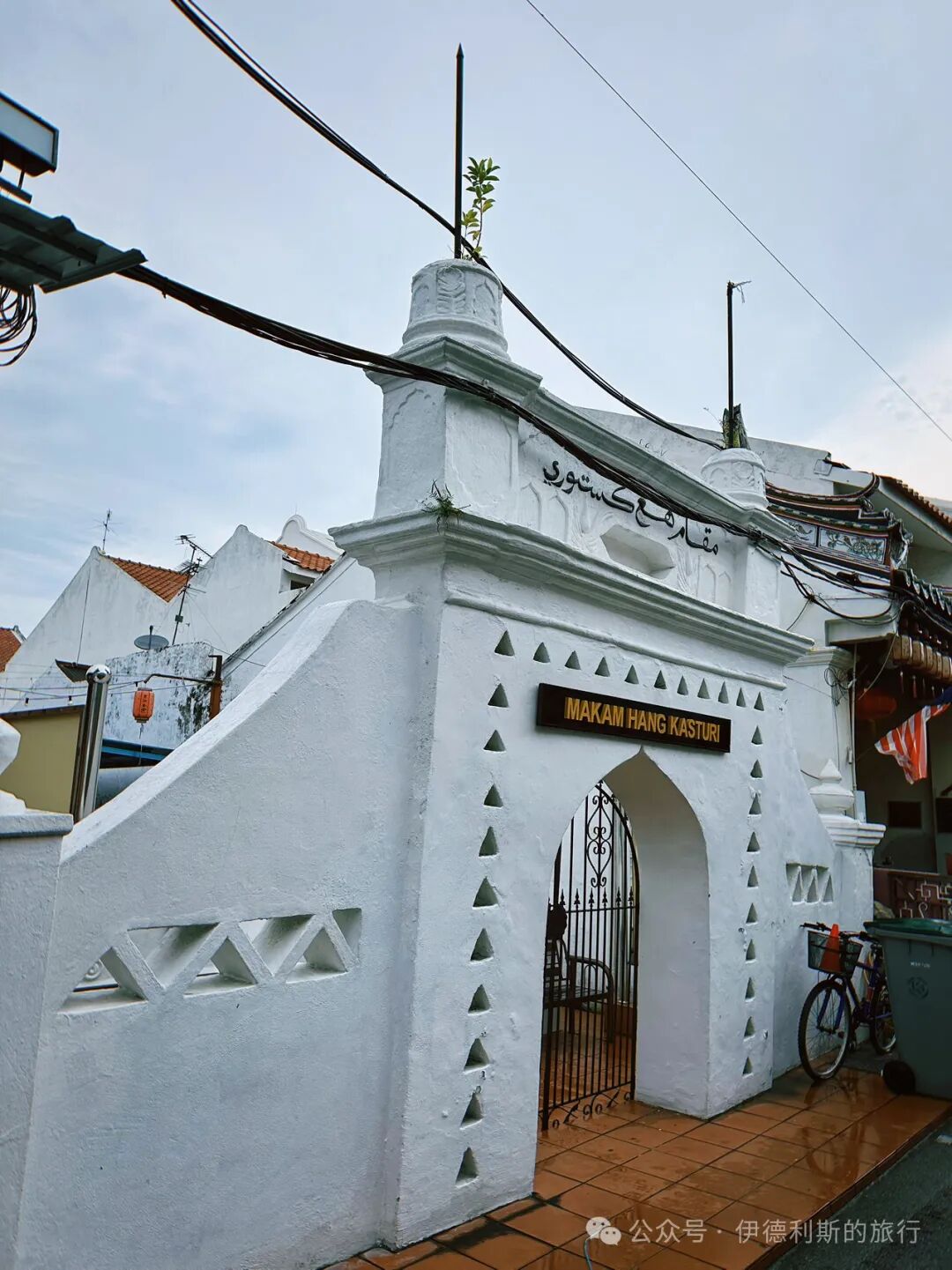
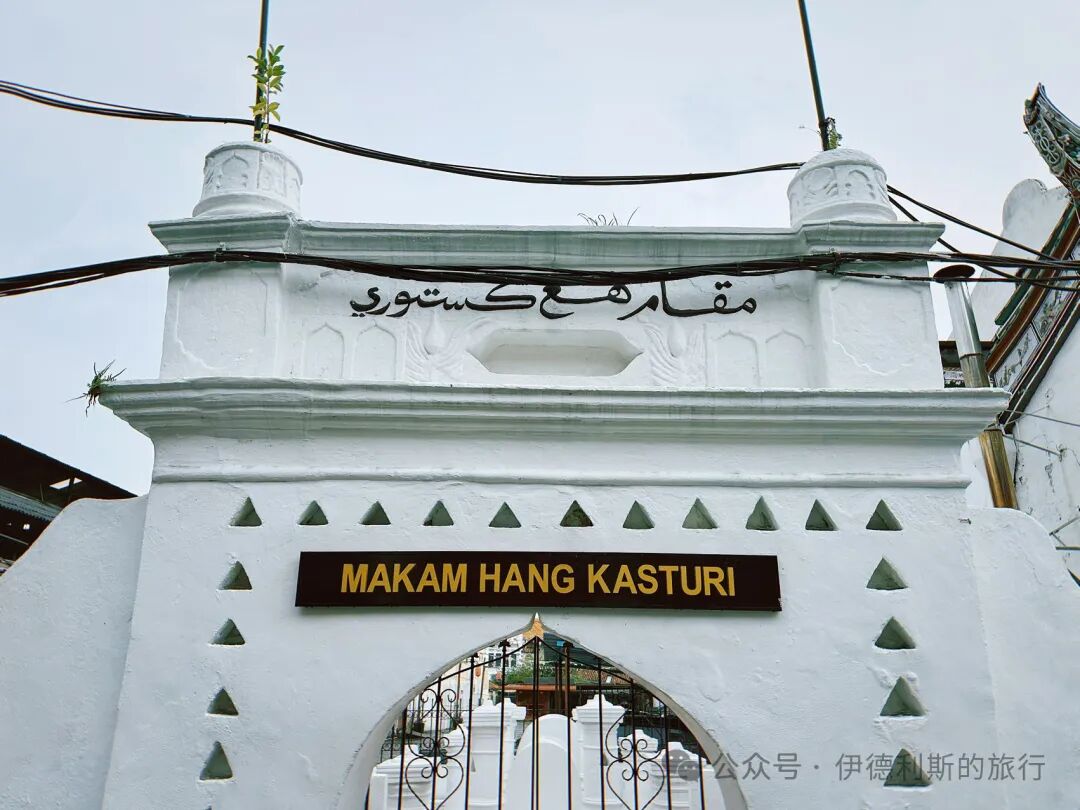
Walking further west, you can see the tomb of Hang Kasturi, another of the five heroes of the Malacca Sultanate. In the Malay Annals (Sejarah Melayu), it is Hang Kasturi, not Hang Tuah, who ultimately kills Hang Jebat. This tomb has an Indian style and was likely built by later generations to commemorate Hang Kasturi.
Tomb of Sultan Hussein Shah of Johor
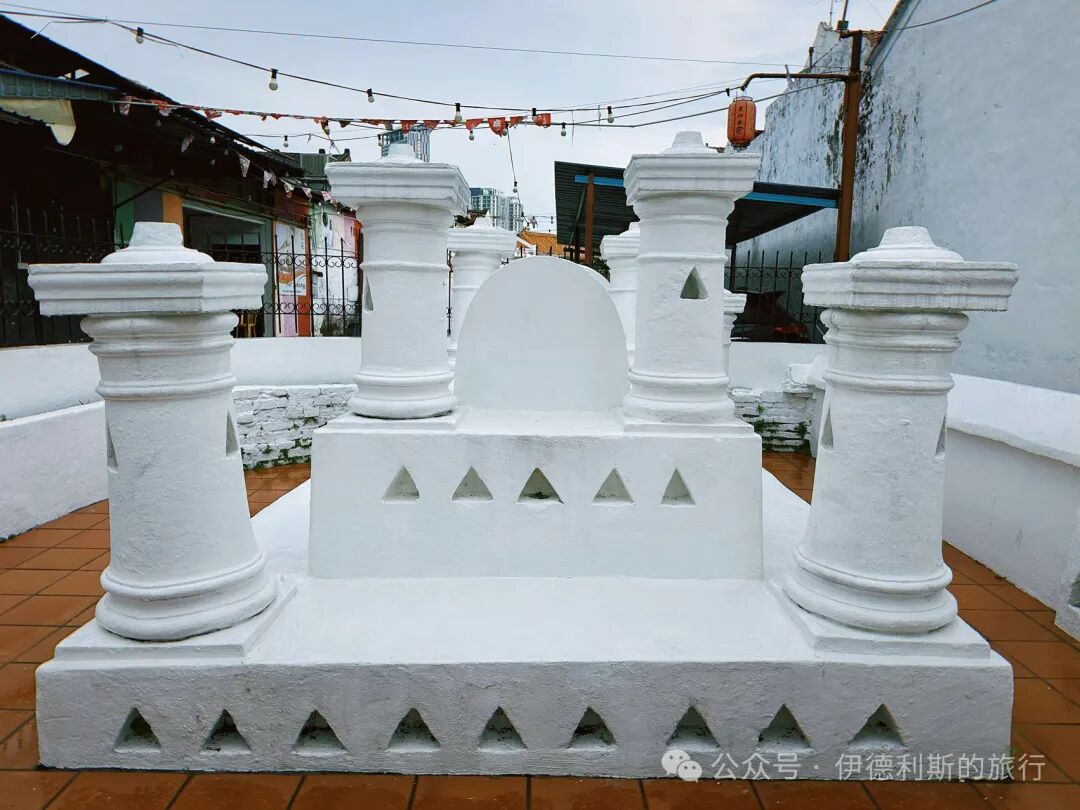
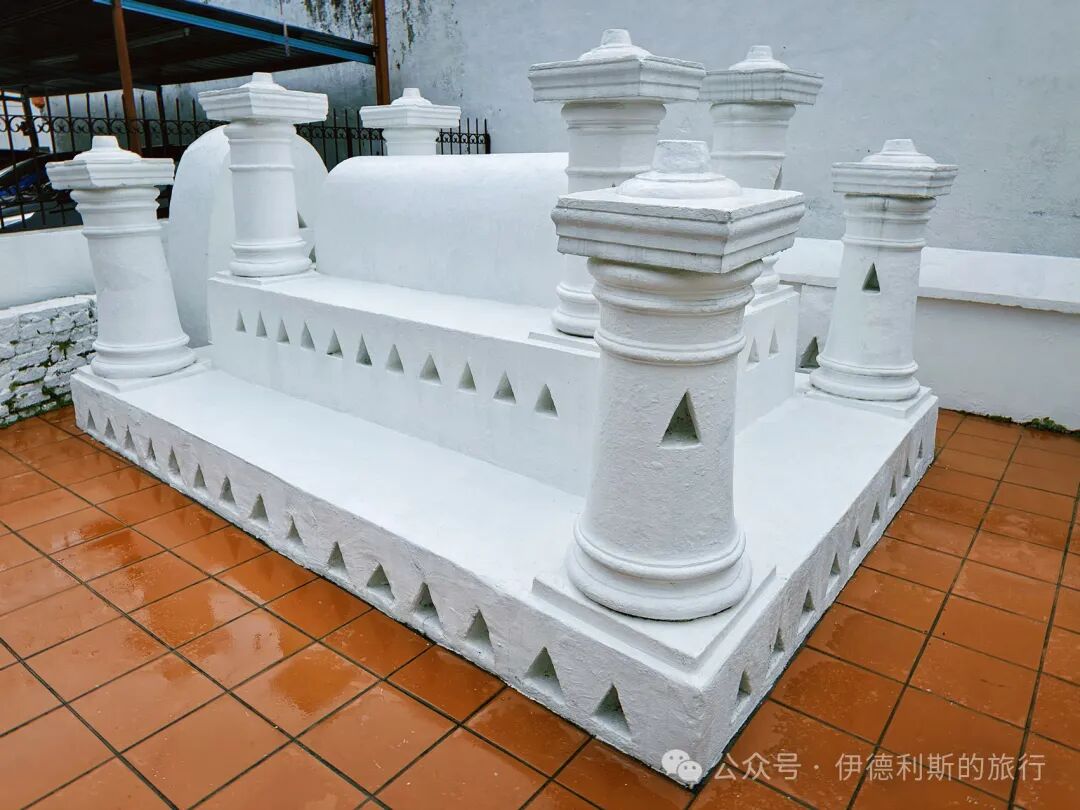
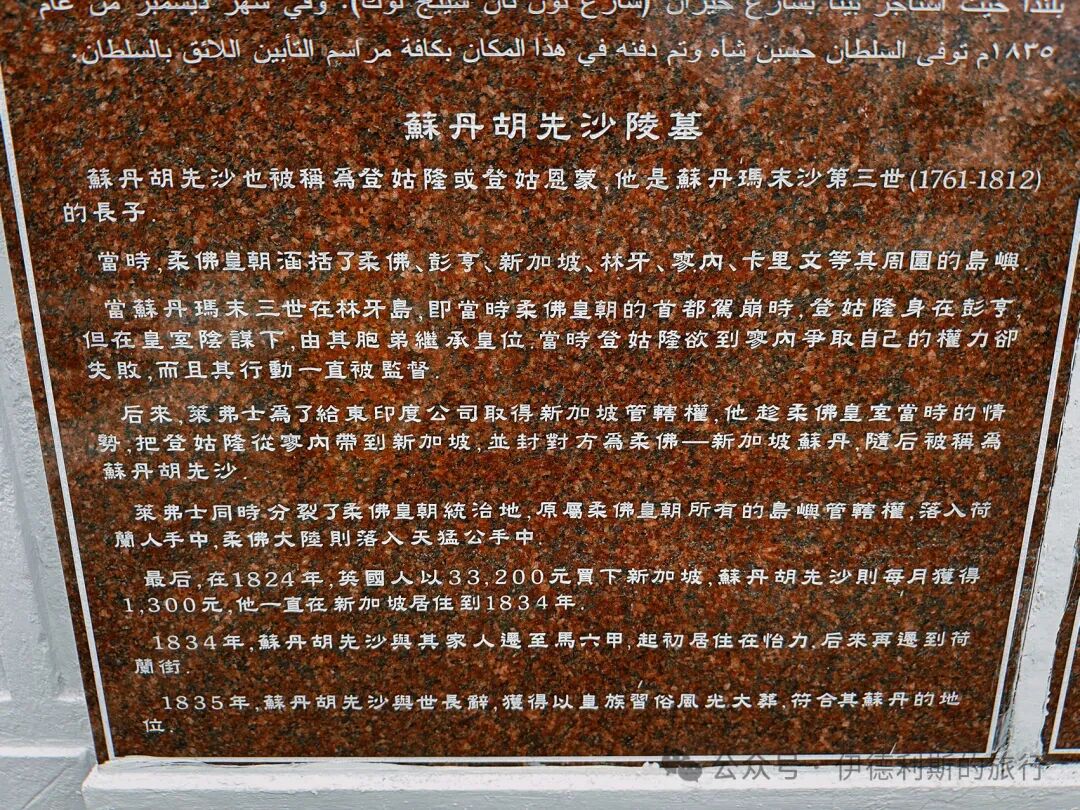
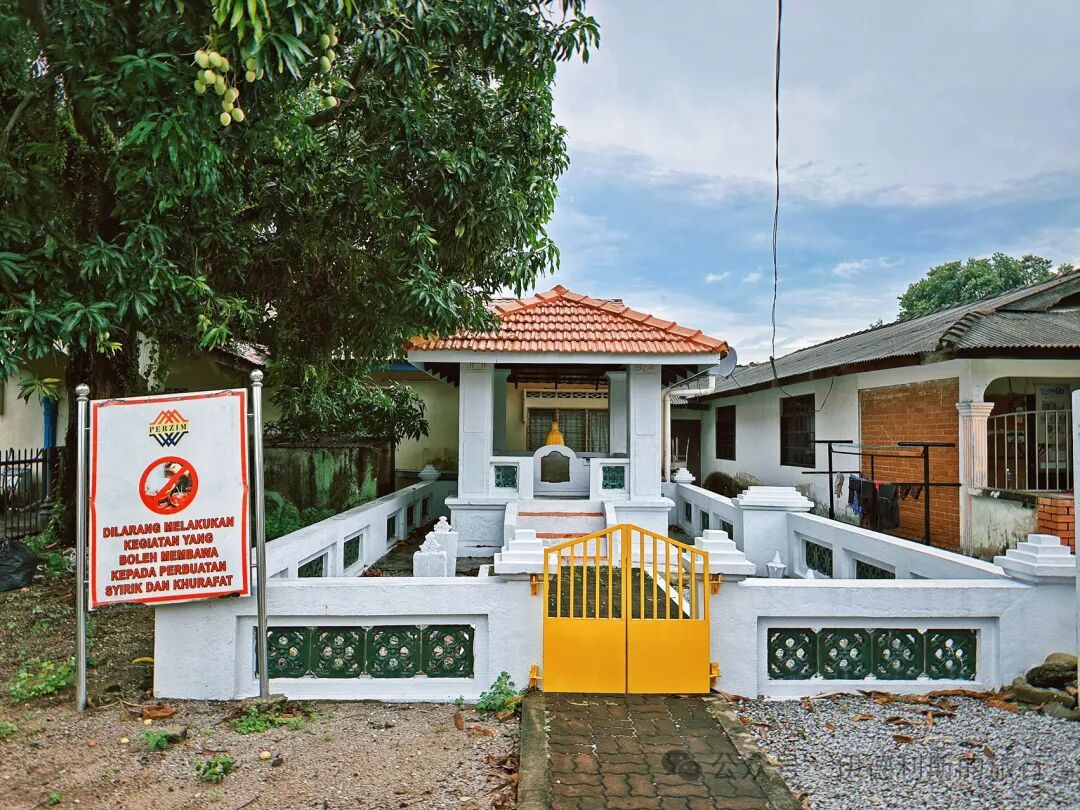
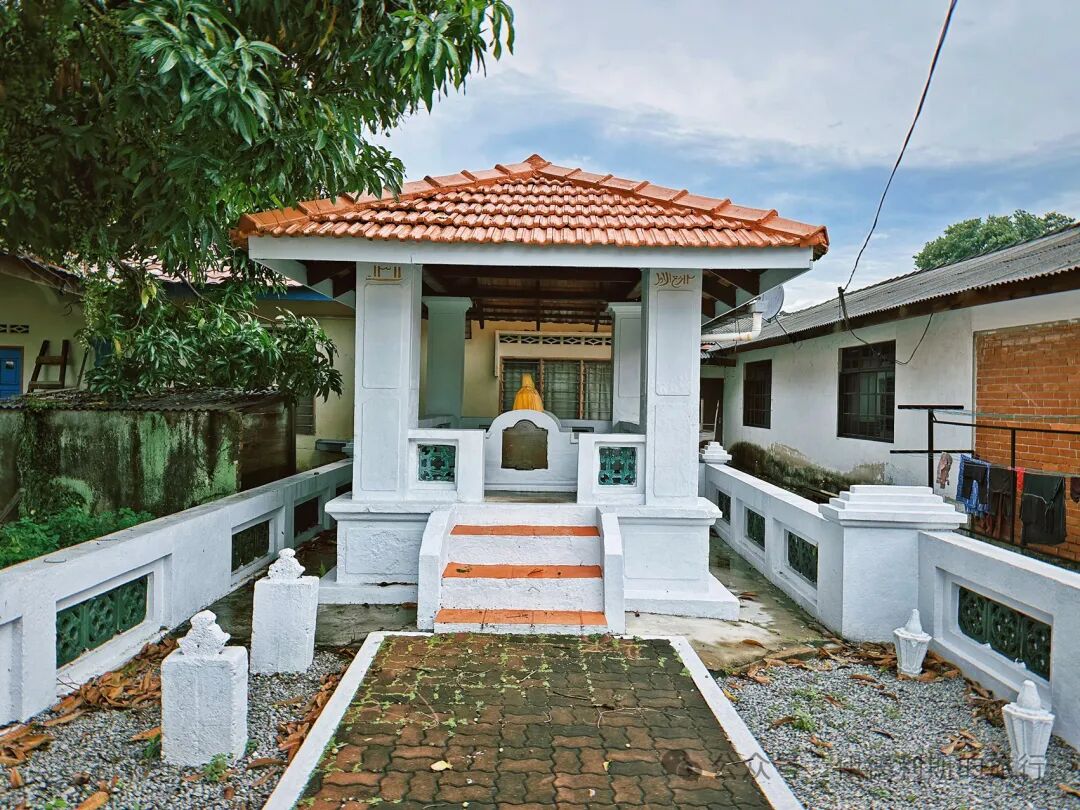
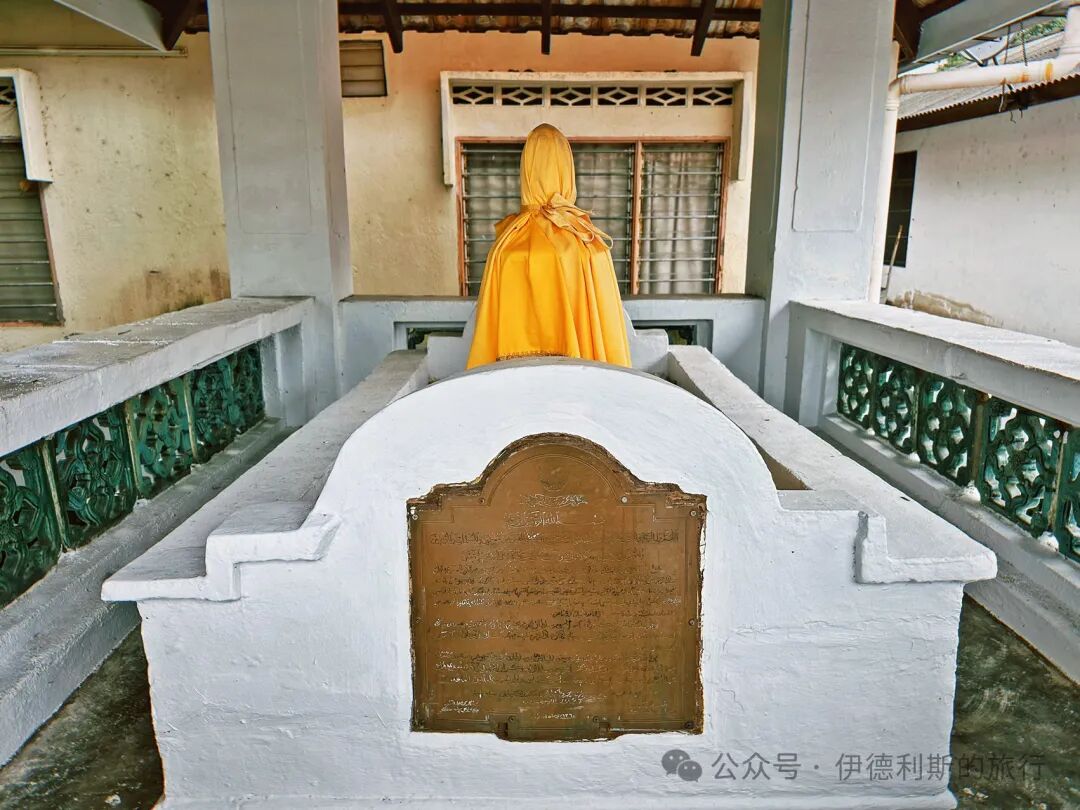
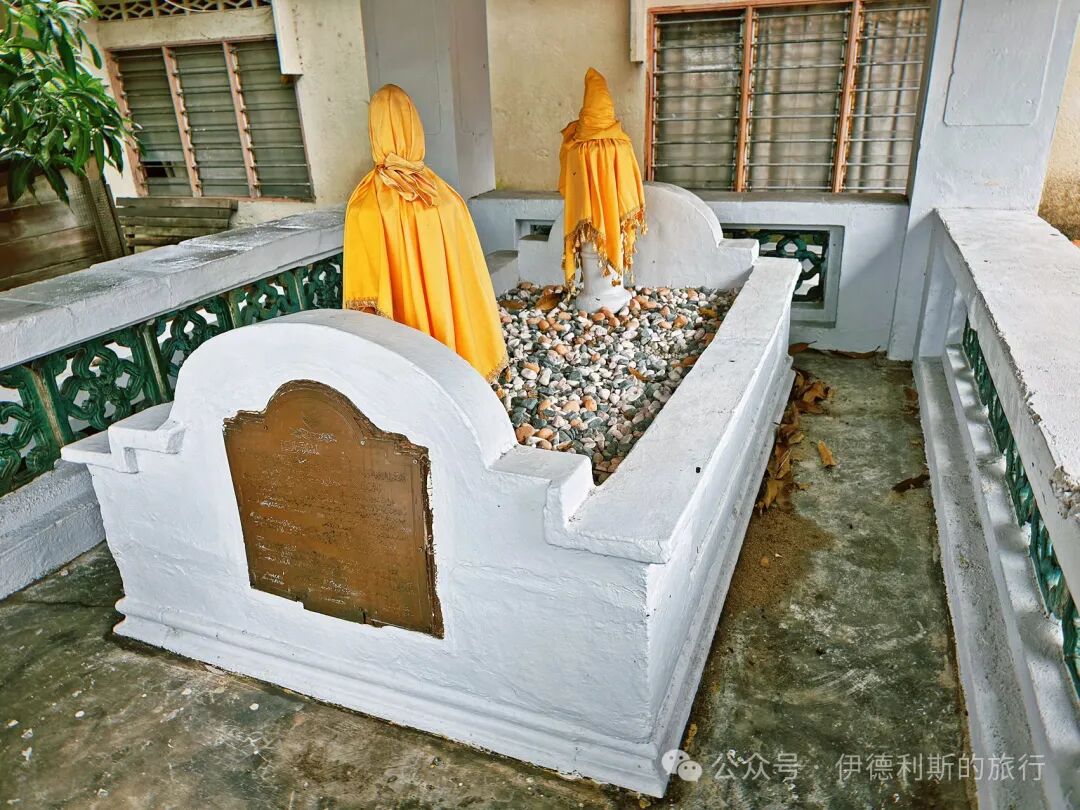
In the backyard of the Kampung Kling Mosque (Masjid Kampung Kling) lies the tomb of Sultan Hussein Shah of Johor (reigned 1819–1835), who played a key role in the founding of Singapore.
After the Portuguese occupied Malacca in 1511, the Sultan of Malacca fled to Johor to continue his rule. After the last Sultan of Malacca died in 1528, his son Alauddin Riayat Shah II officially established the Johor Sultanate, considering it the legitimate continuation of the Malacca Sultanate.
Hussein Shah was born in 1776 and was the eldest son of Sultan Mahmud Shah III of Johor. When Mahmud Shah III passed away in 1812, Hussein Shah was not in the capital, so his younger brother quickly took the throne with the support of ministers, forcing Hussein Shah into exile in the Riau Islands.
In 1819, the British East India Company decided to establish a new base in Southeast Asia. They found the exiled Hussein Shah and named him Sultan of Johor and Singapore in exchange for the right to establish a trading post in Singapore. Hussein Shah then came to Singapore and became a Sultan under British control.
In 1824, the British bought Singapore for 33,200 dollars, and Sultan Hussein Shah received a monthly payment of 1,300 dollars. He held no real power in Singapore and served only a symbolic role.
Sultan Hussein Shah lived in Singapore until 1834, then moved to Malacca with his family. He passed away in Malacca in 1835 and was buried at the Kampung Hulu Mosque (Dongjiena Si).
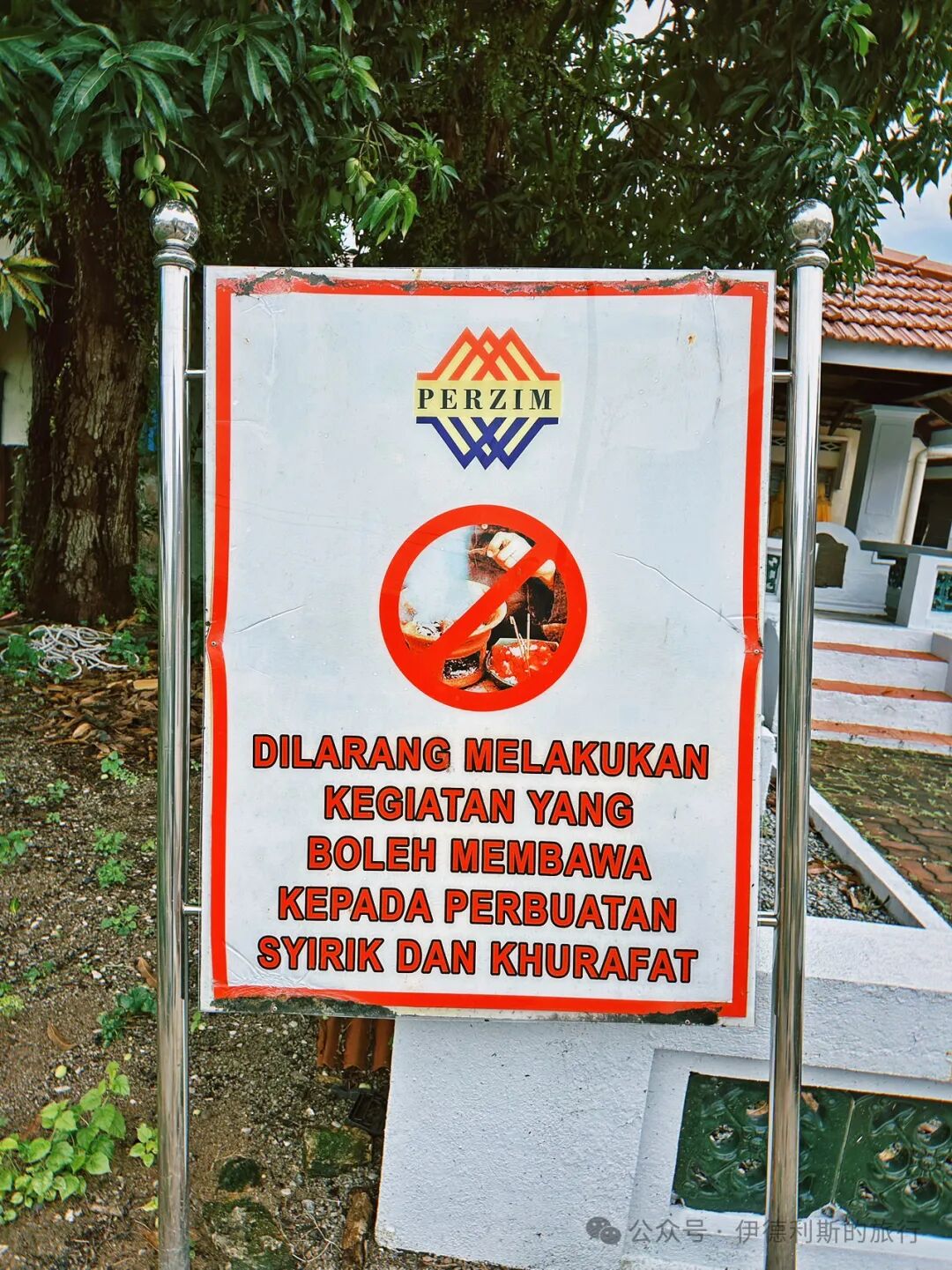
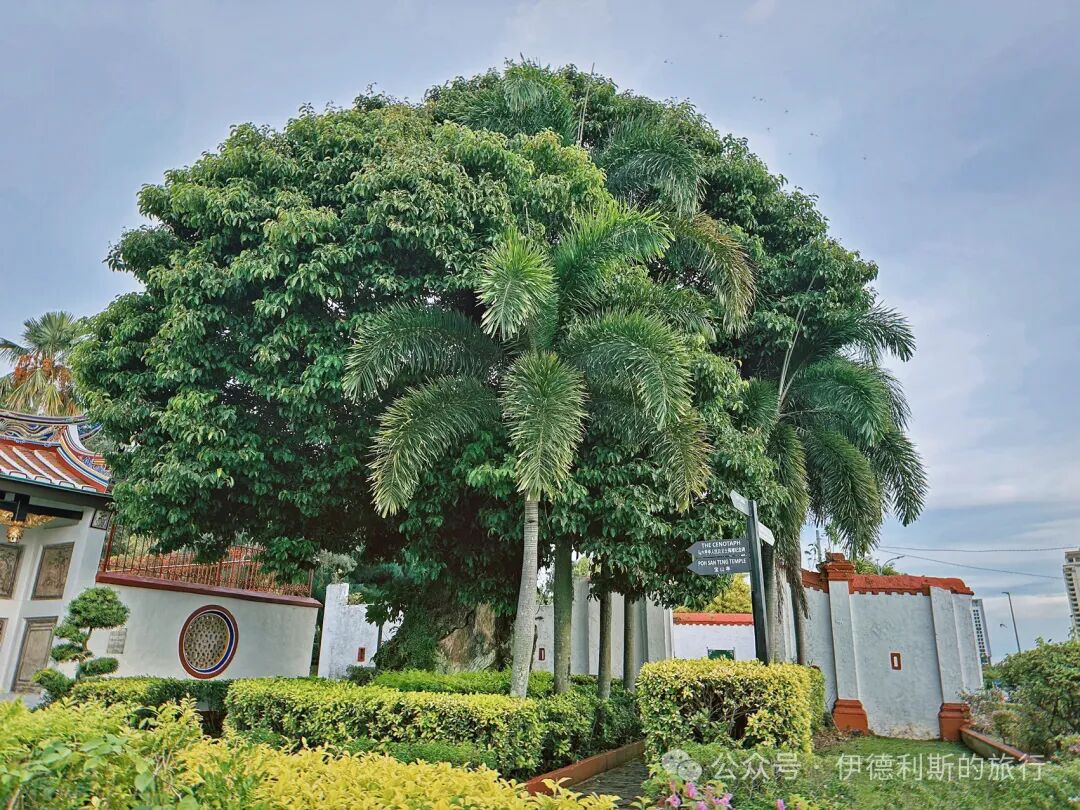
The Sultan's Well in Malacca
Travel east from the old town of Malacca to the foot of Bukit Cina, and you will find the Sultan's Well (Perigi Raja). Legend says it was built in 1459 by the sixth Sultan of Malacca, Mansur Shah, who reigned from 1459 to 1477.
According to the classic Malay text Sejarah Melayu, Sultan Mansur Shah built a palace at the foot of Bukit Cina to welcome a Ming Dynasty princess named Hang Li Po. He had this well dug specifically for her, which is why it is also called Hang Li Po's Well. However, there are no records of Princess Hang Li Po in Ming Dynasty or Portuguese documents, so her true identity remains a mystery.
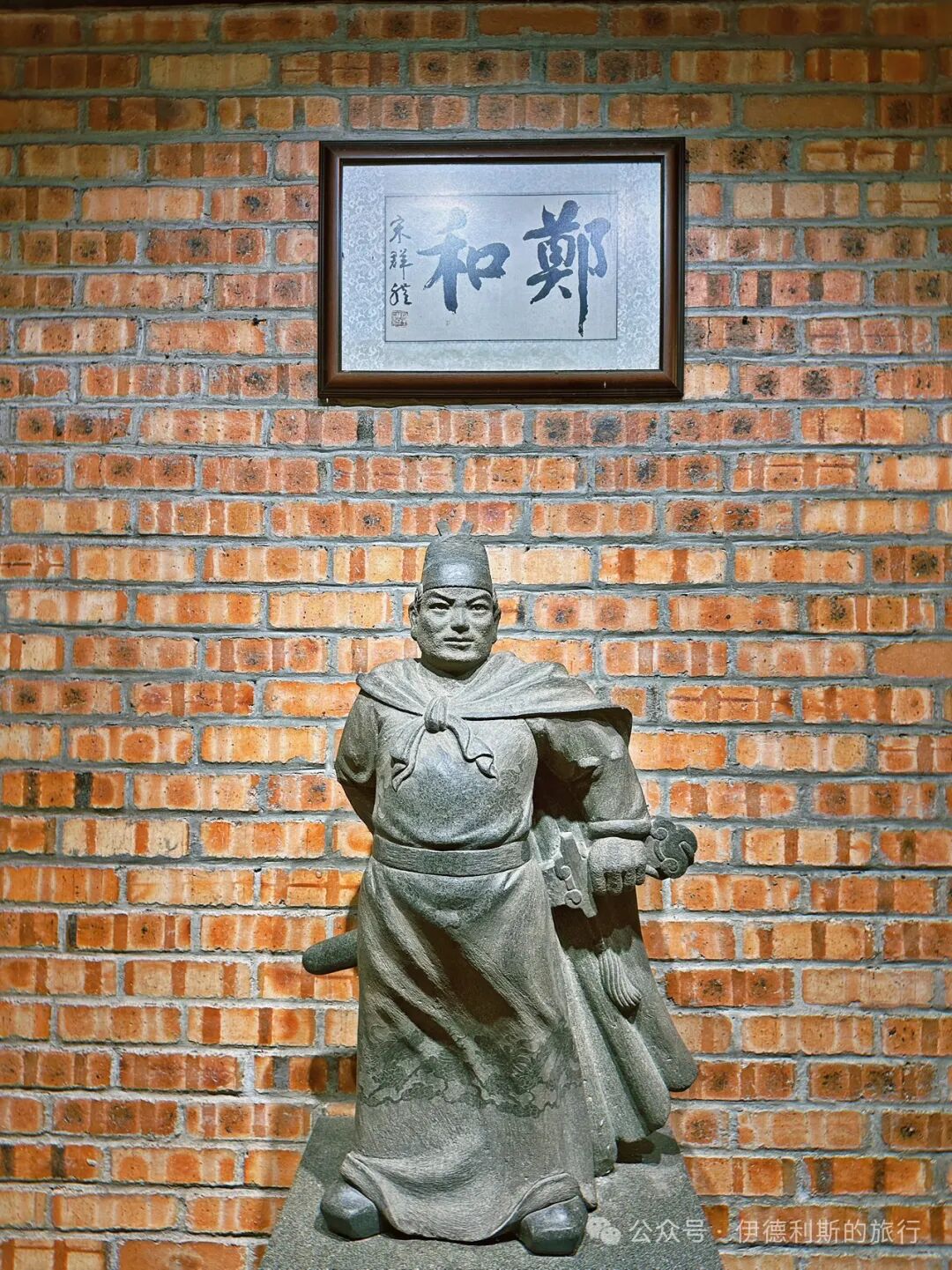
Another theory suggests the well was dug by Zheng He's troops when they were stationed in Malacca during his voyages to the Western Ocean. Legend says Zheng He's troops dug seven wells at the foot of Bukit Cina. Five were destroyed by road construction in the 1950s and 1960s. Only two remain today: the Sultan's Well and the Sam Po Well (Sanbao Jing) in the backyard of the Poh San Teng Temple.
Legend has it that when the Portuguese invaded the Malacca Sultanate in 1511, Malay warriors poisoned the well to kill many Portuguese soldiers. In the early 17th century, both the Dutch and the Acehnese used the tactic of poisoning the well to eliminate their enemies.
After the Dutch occupied Malacca in 1641, they built a fortress-style wall around the Sultan's Well to protect the water source, complete with guard posts and cannons. The well was abandoned during the British colonial period, and the guard posts fell into disrepair.
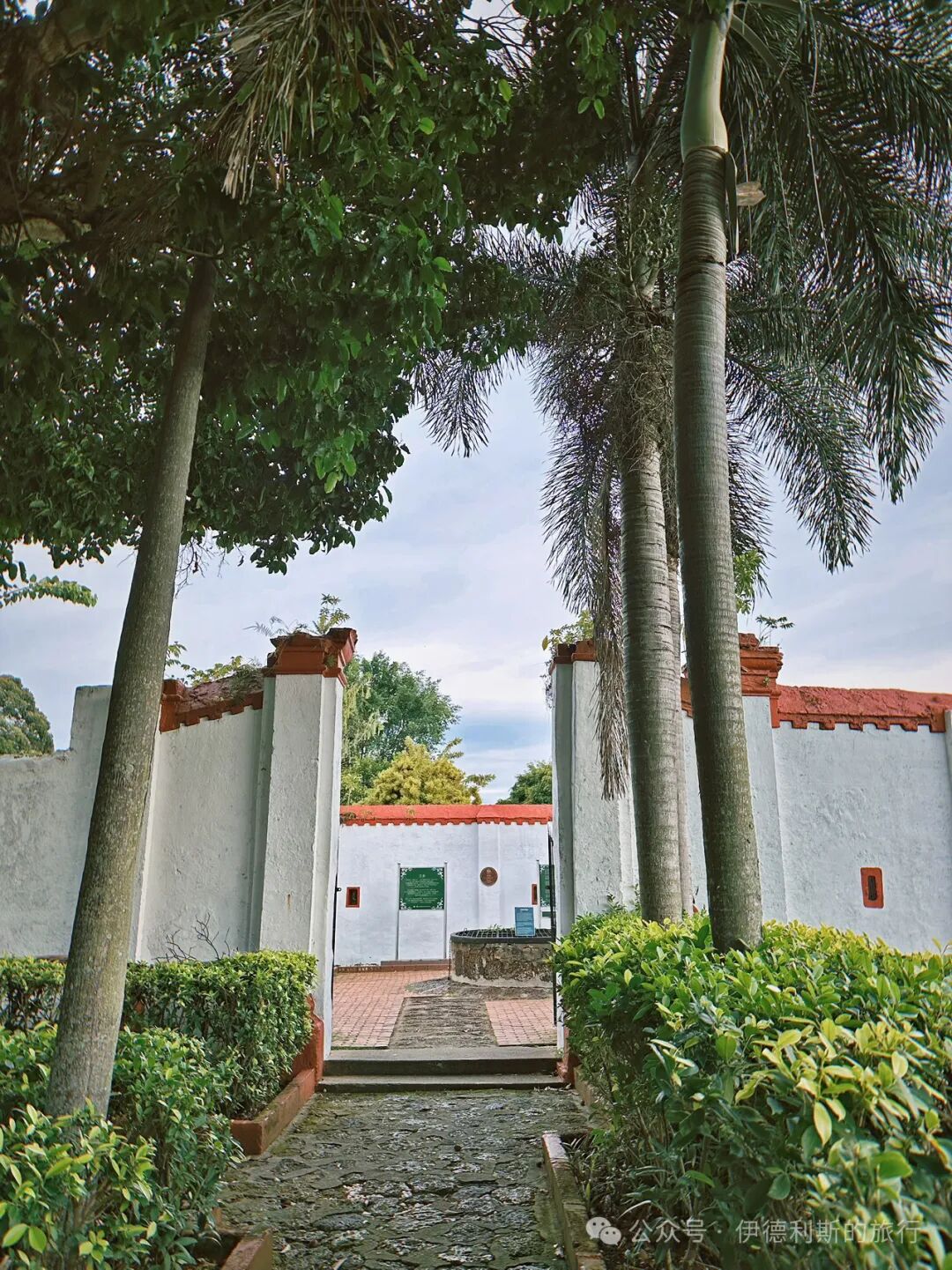
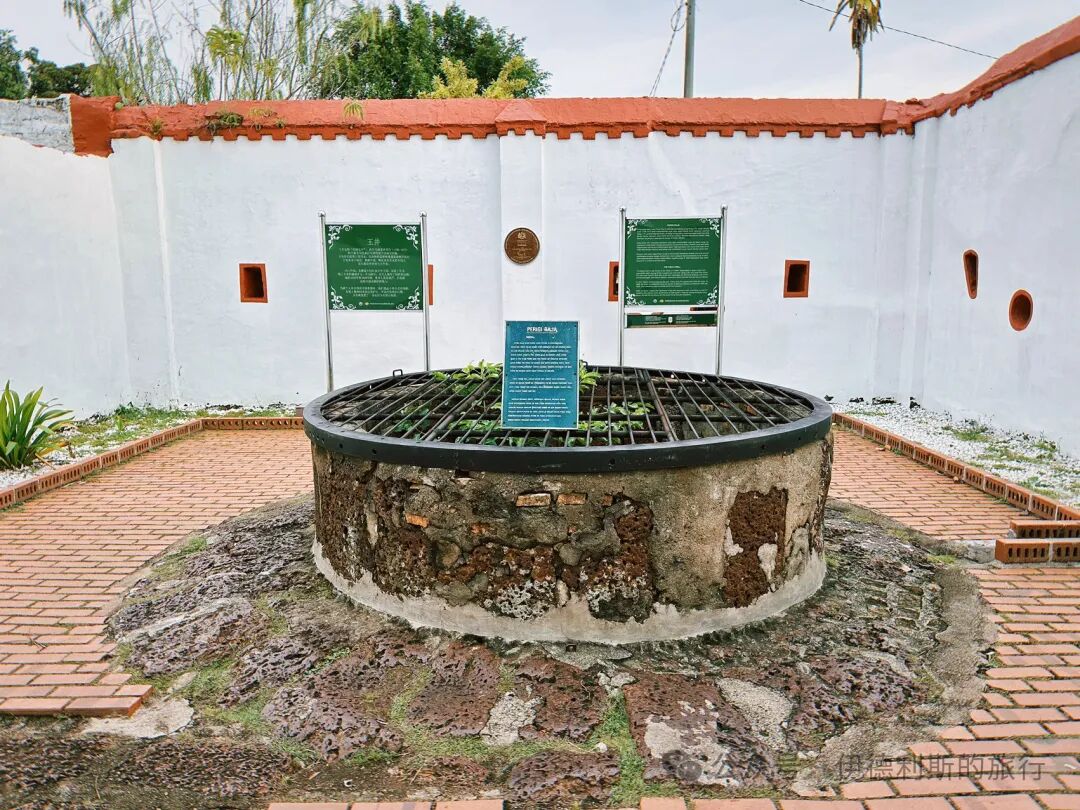
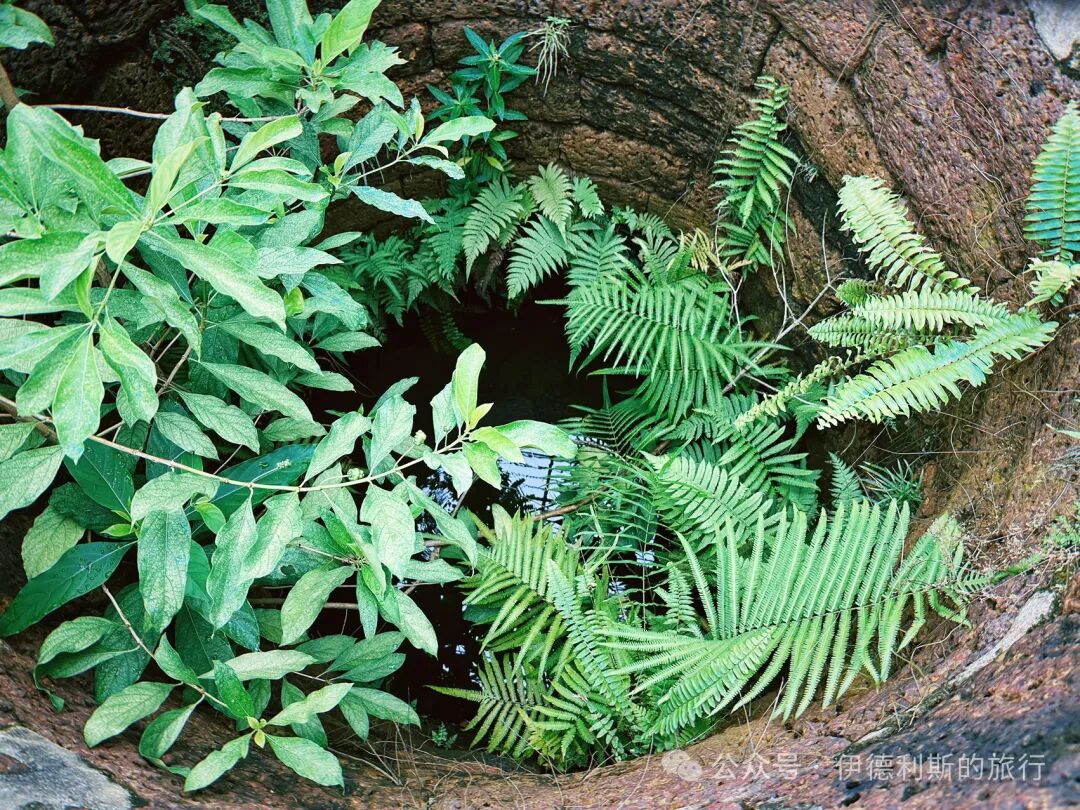
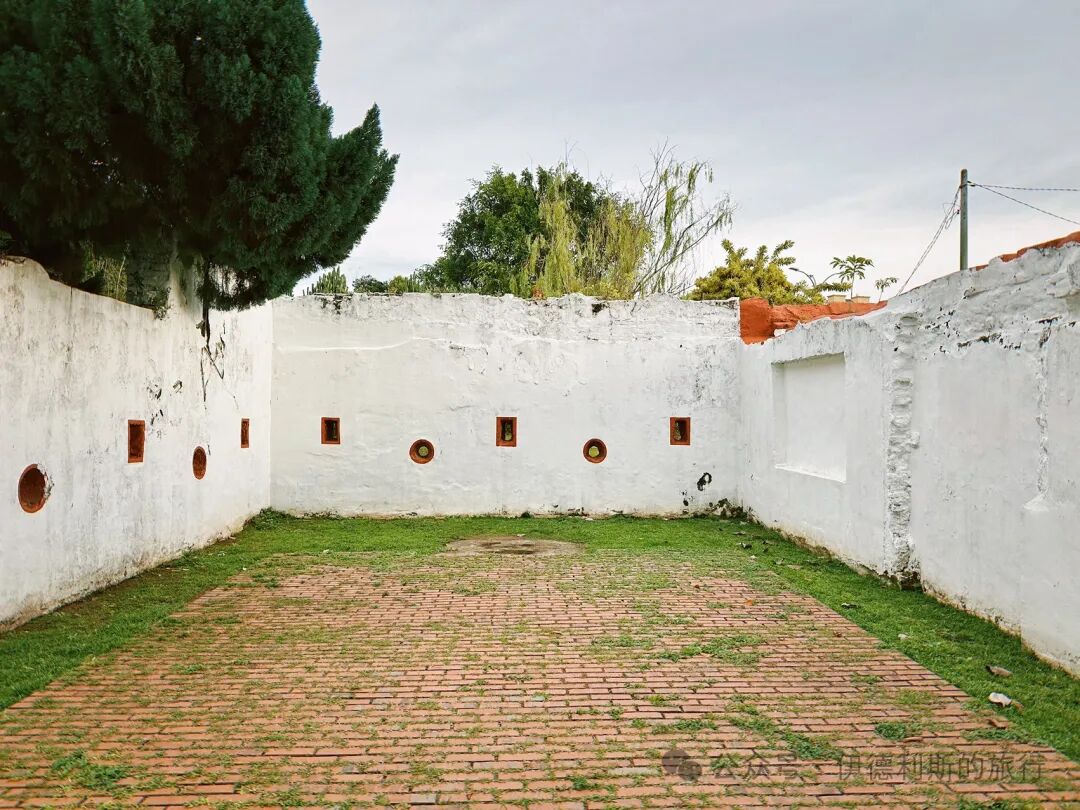
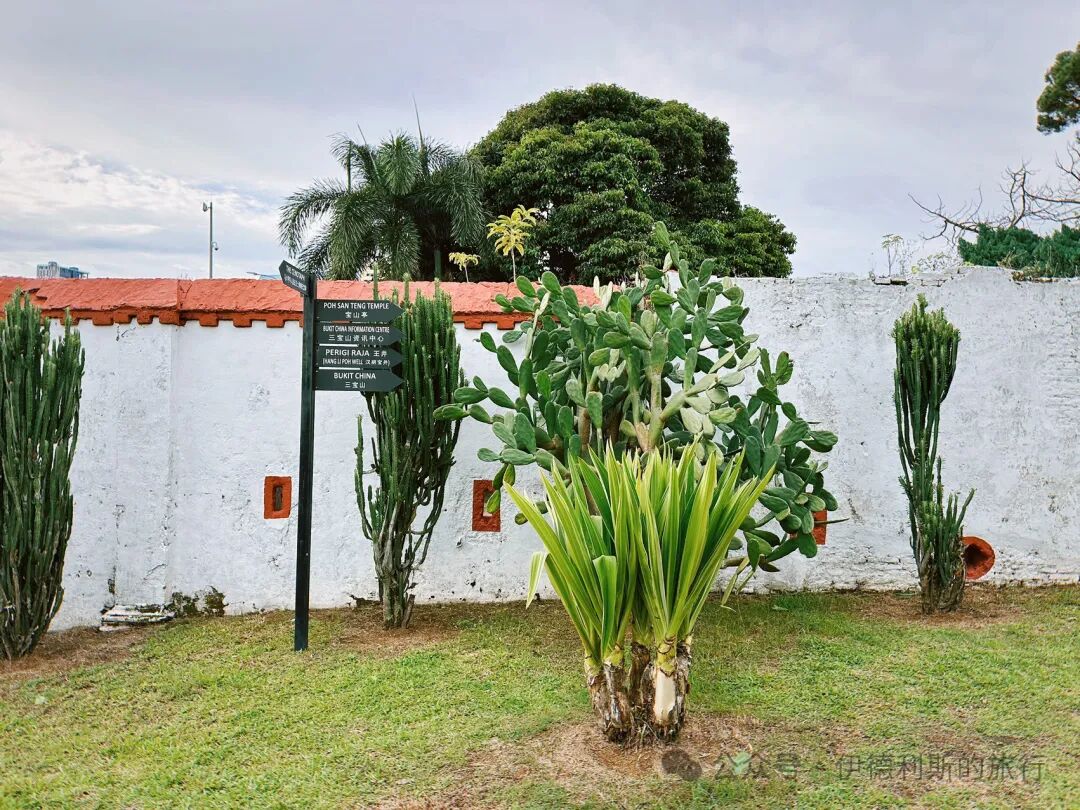
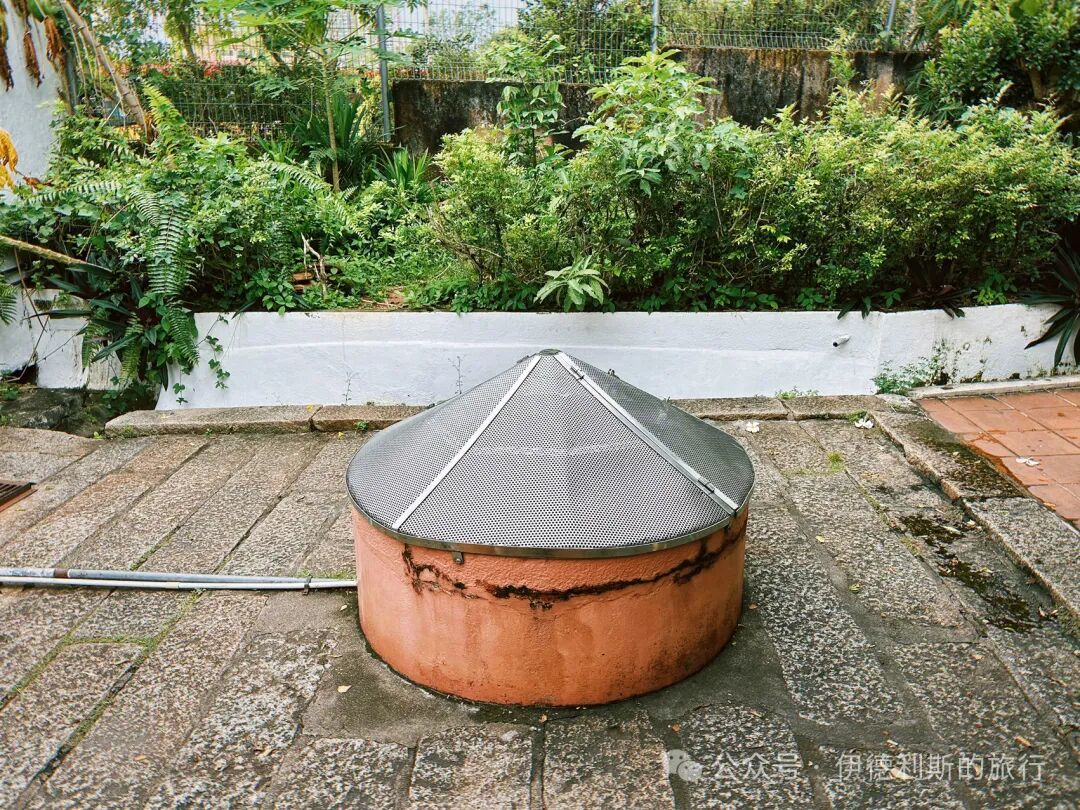
On the western slope of Bukit Cina lies a Malay village called Kampung Bukit Cina, where some traditional Malay stilt houses are still preserved.
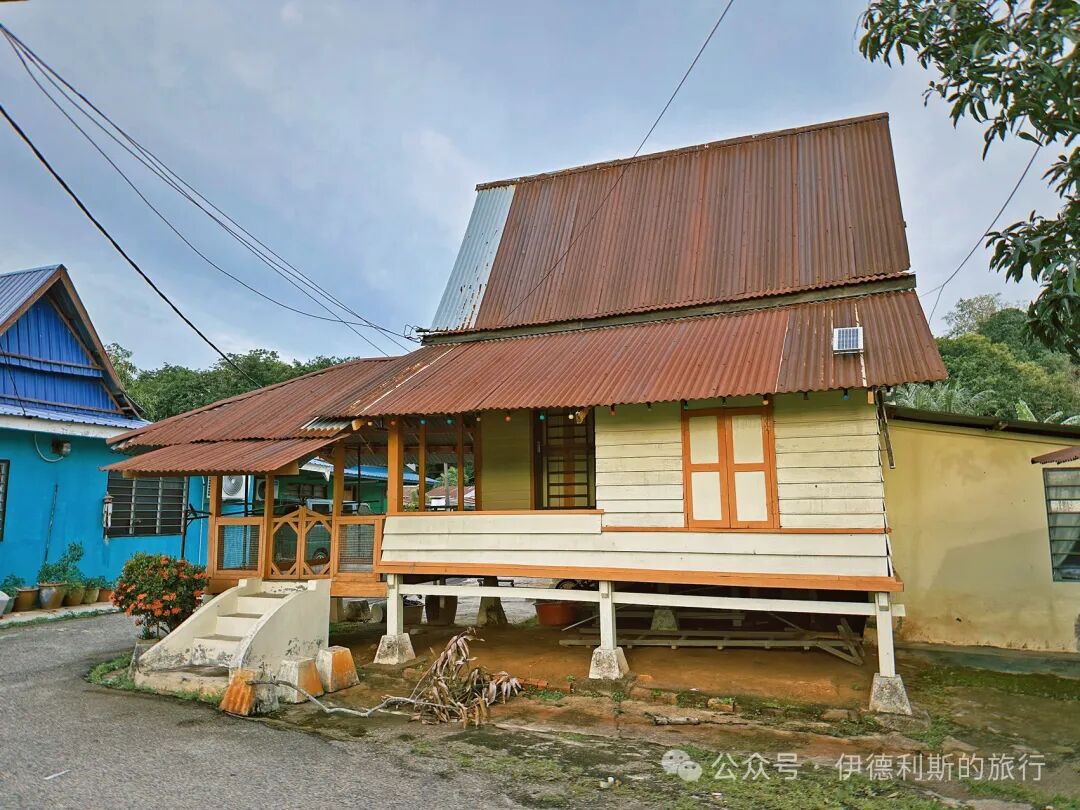
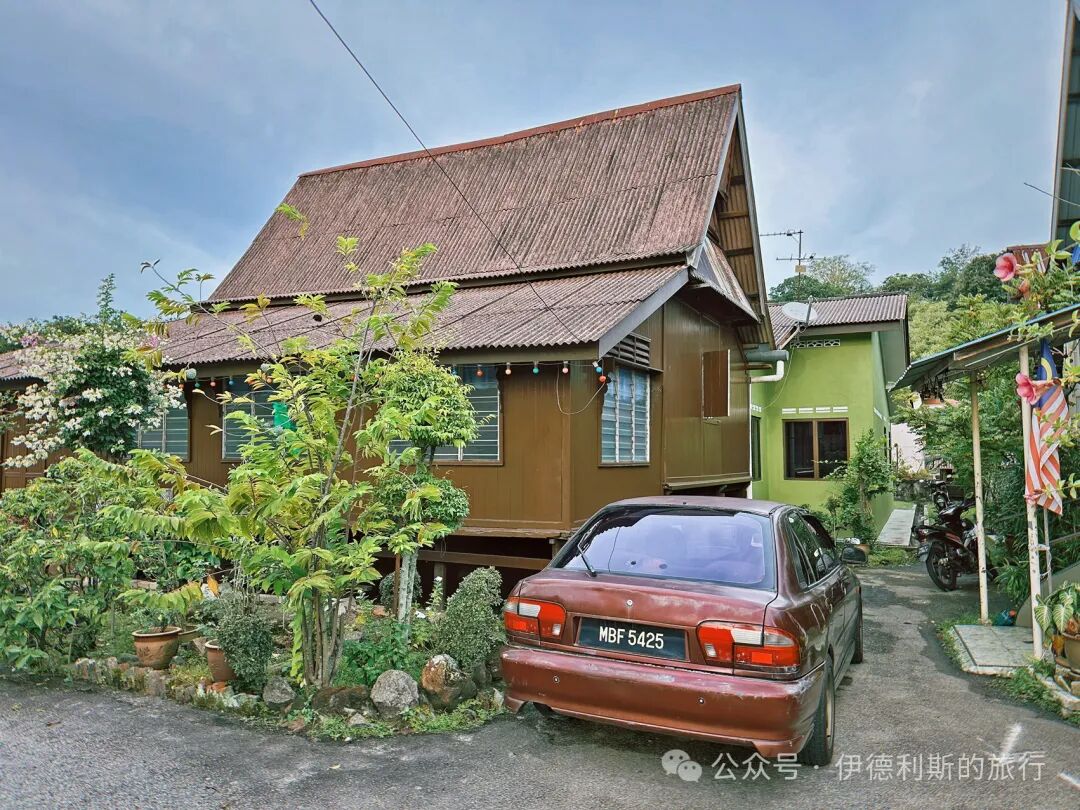
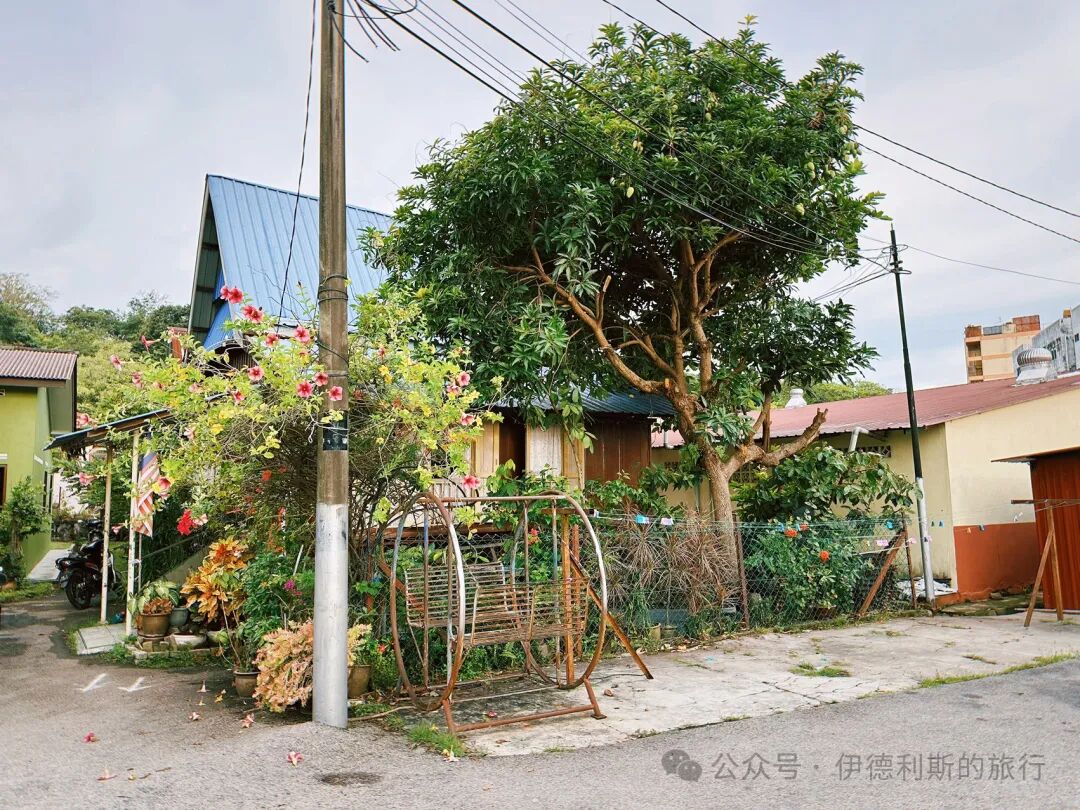
The Hero's Well in Malacca
Hang Tuah's Well (Perigi Hang Tuah) is located in Kampung Duyong in eastern Malacca. It is said to have been dug by the Malacca Sultanate hero Hang Tuah and has never run dry. Malay people believe the well water has magical properties and can cure illnesses and ward off misfortune, making it a famous attraction in Malacca.
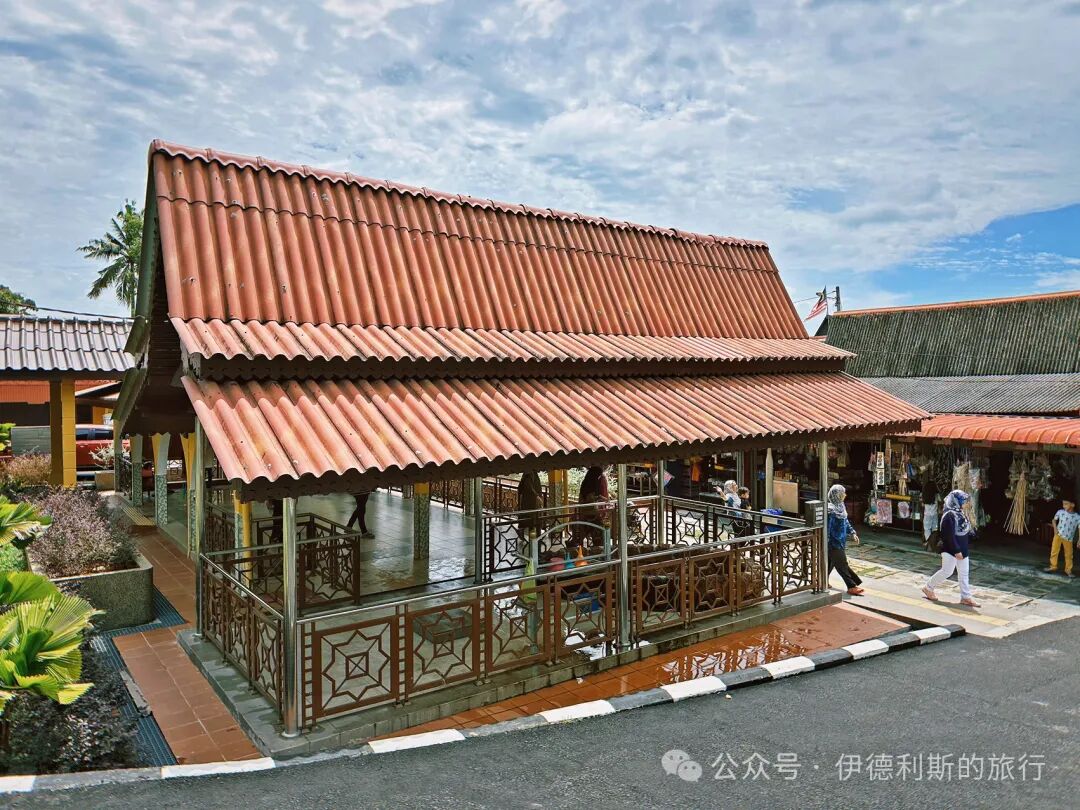
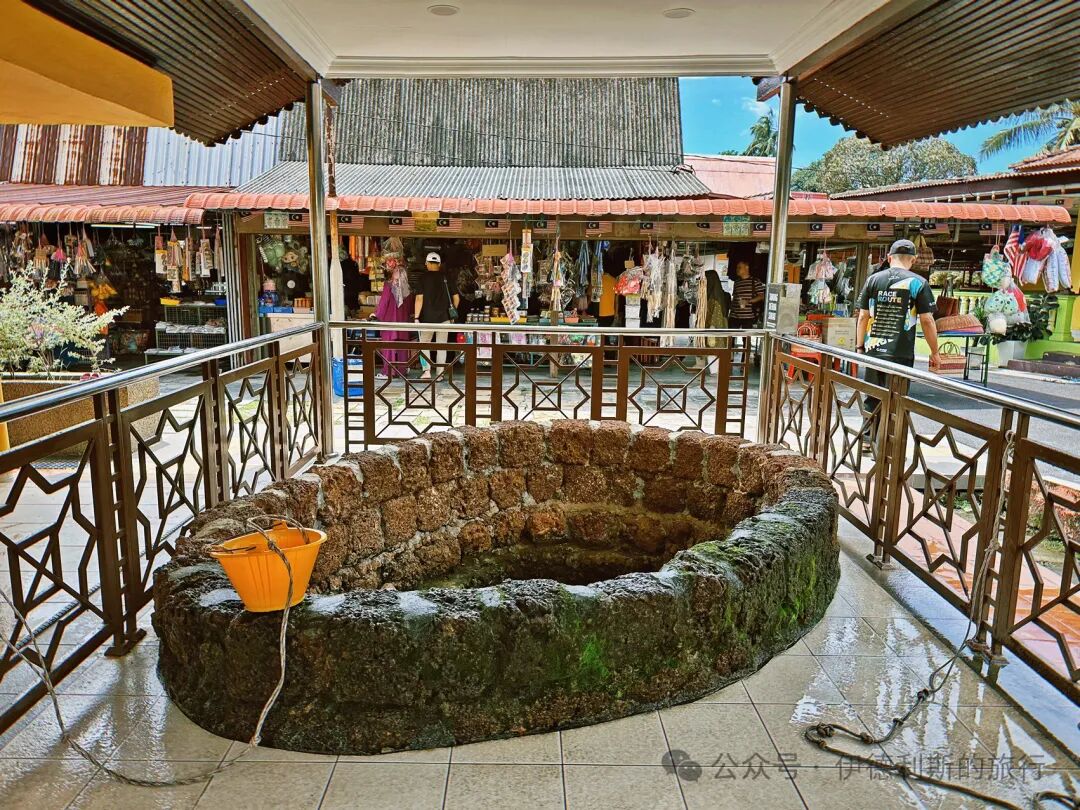
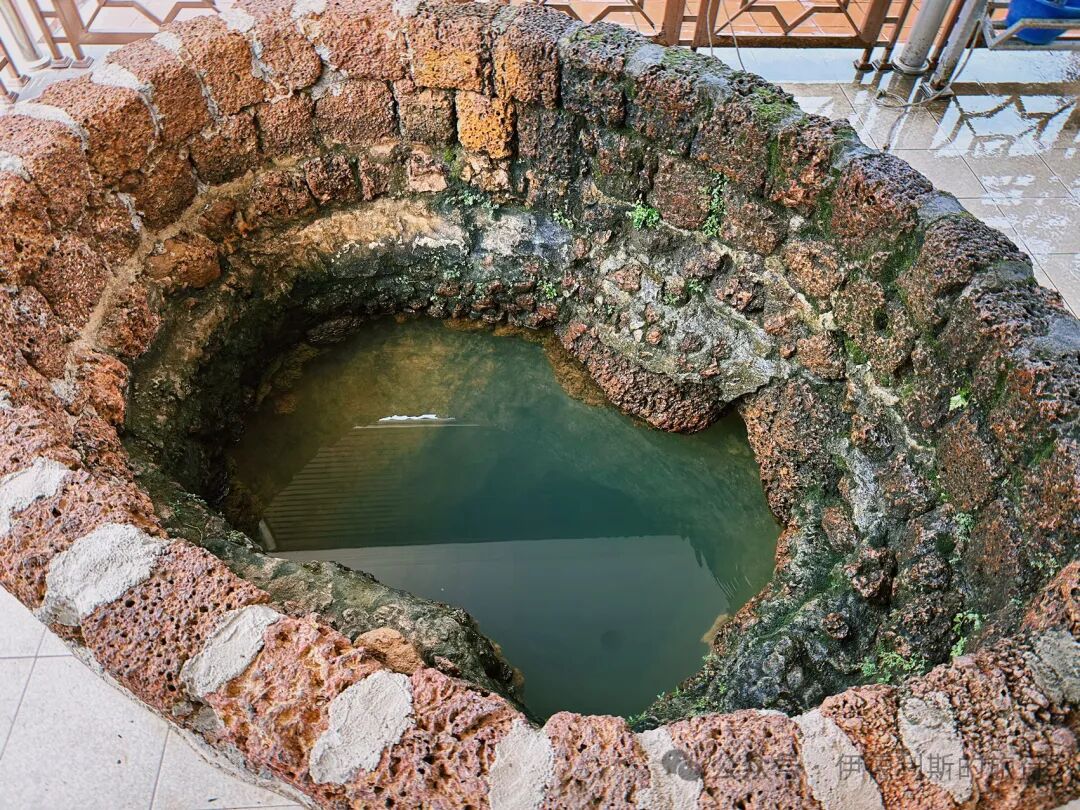
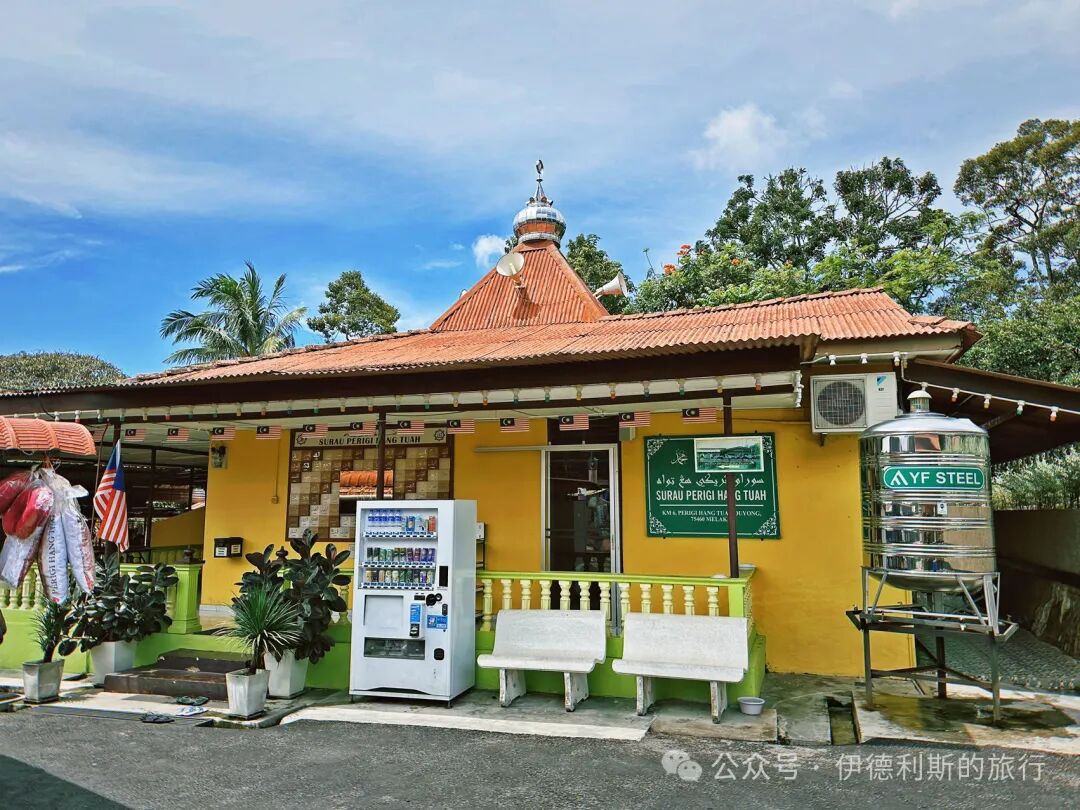
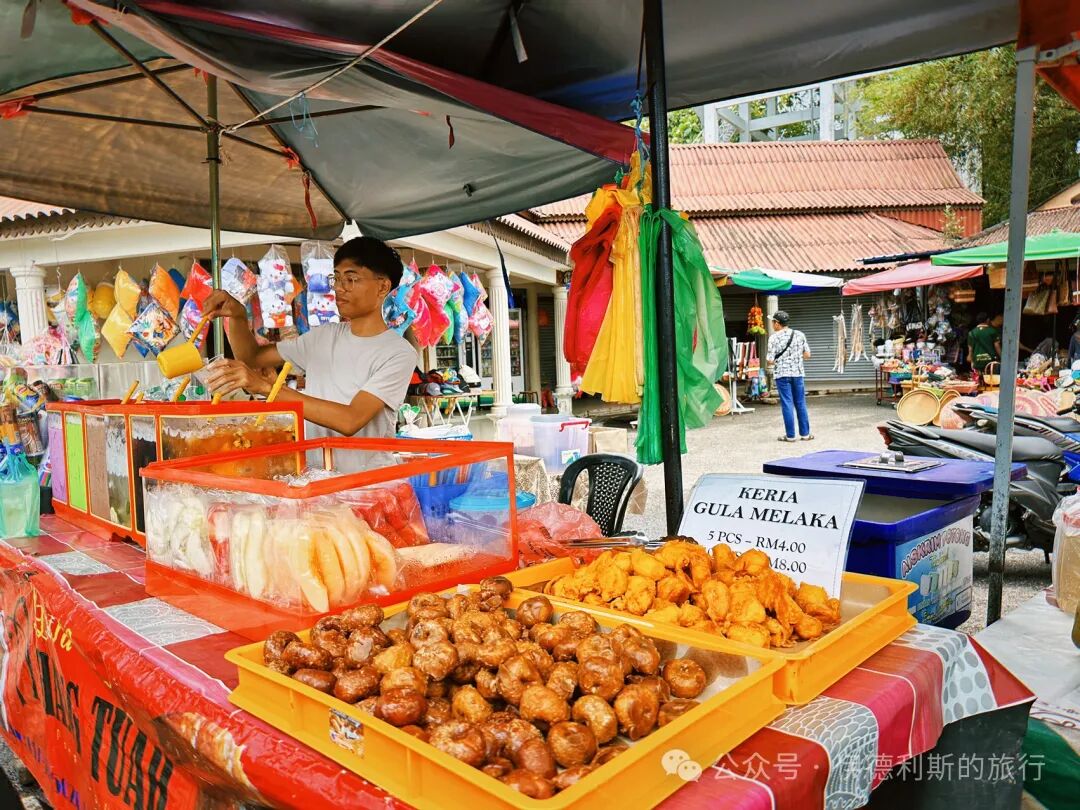
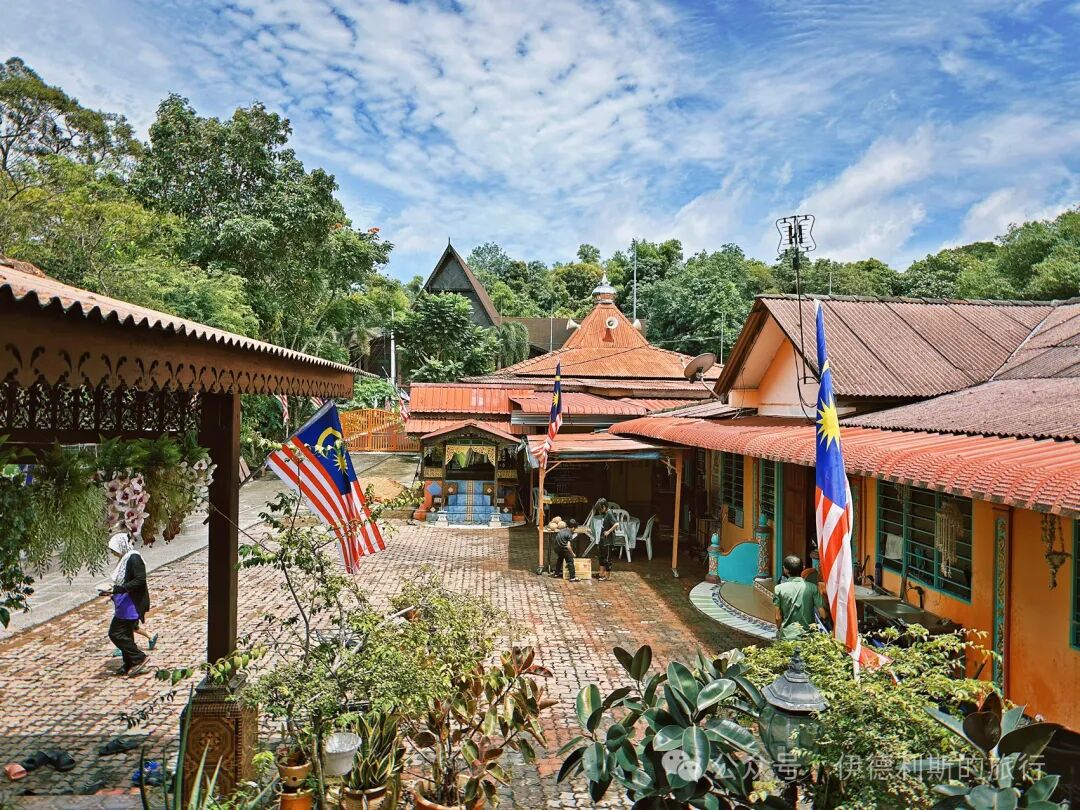
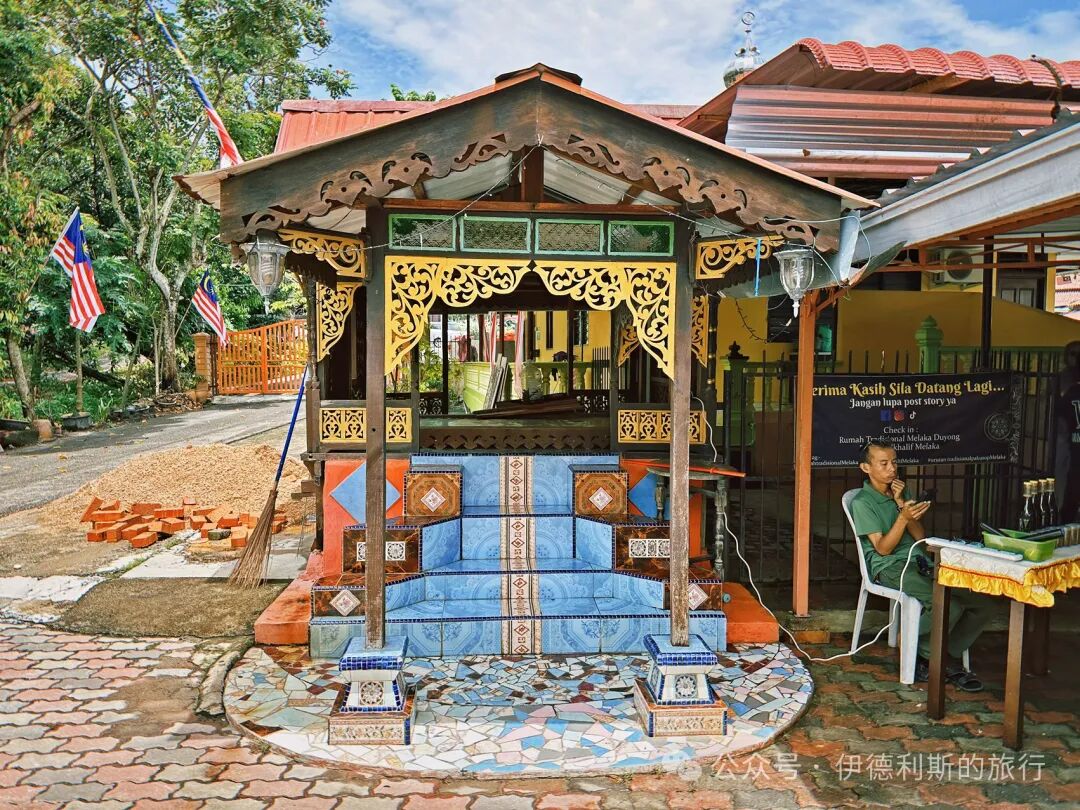
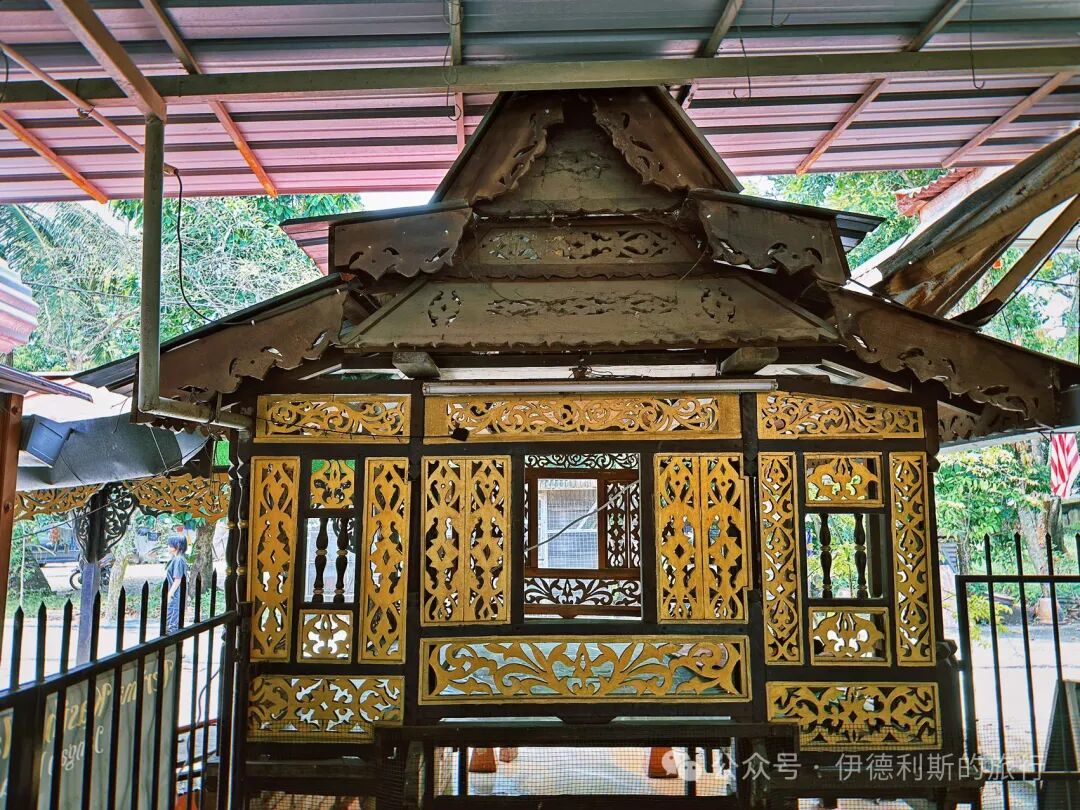
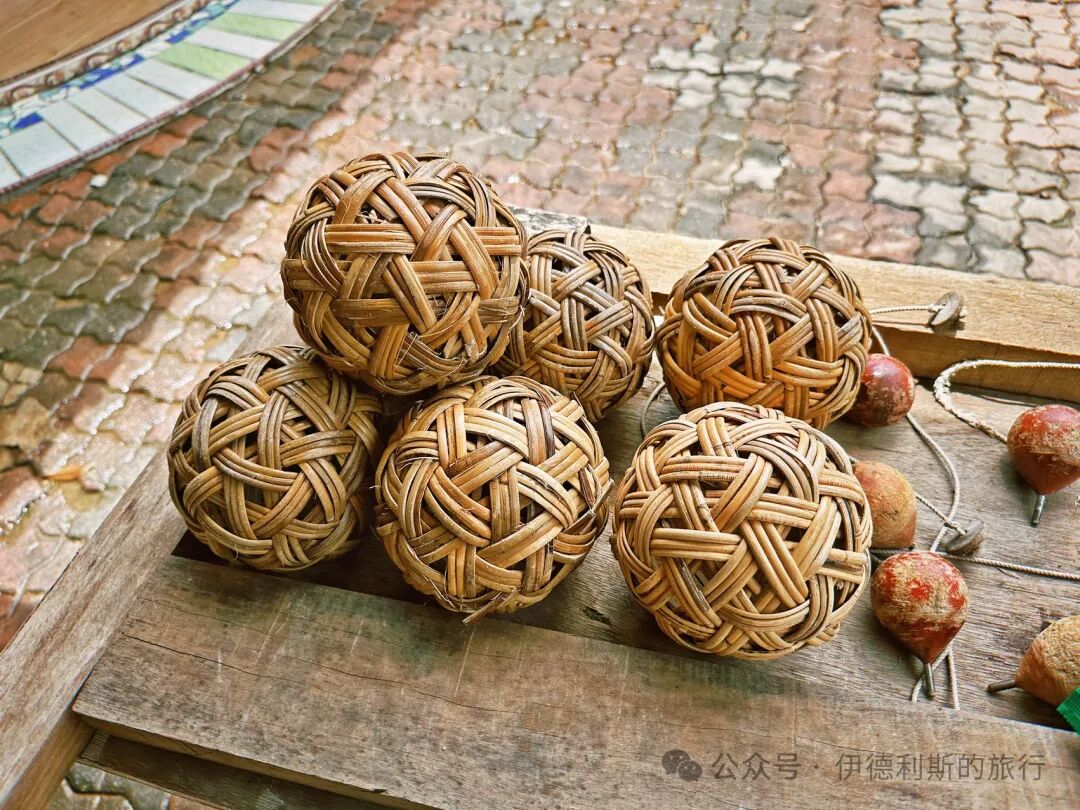
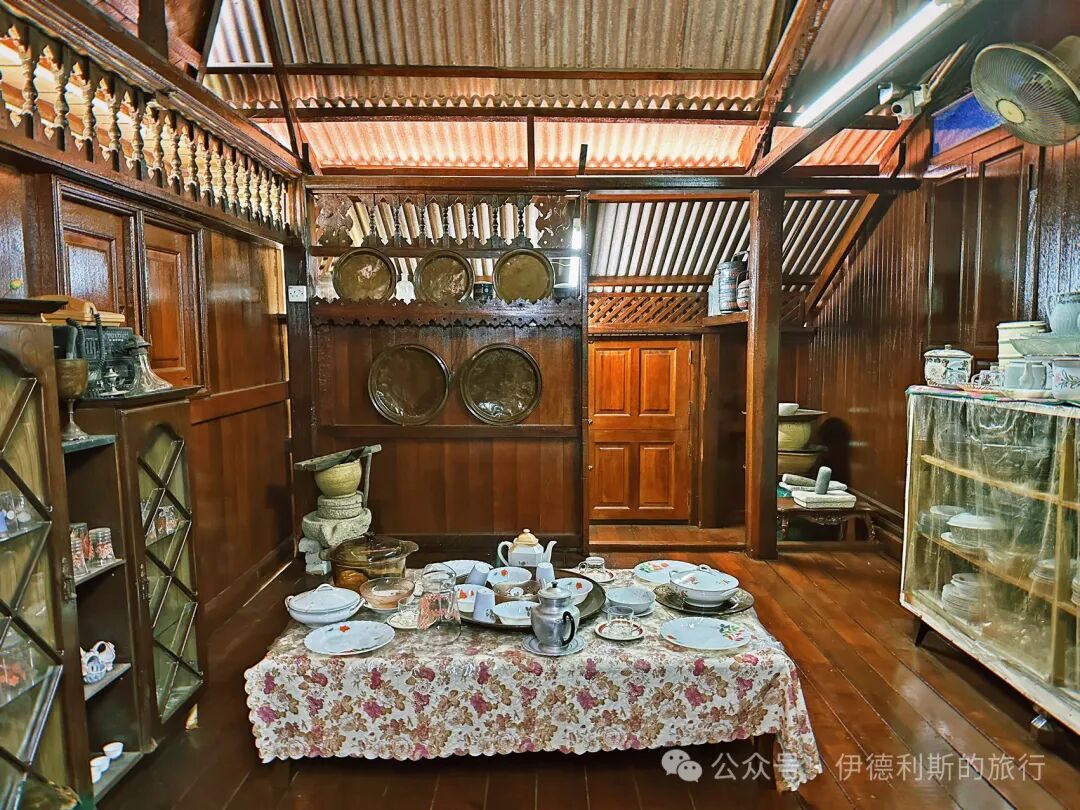
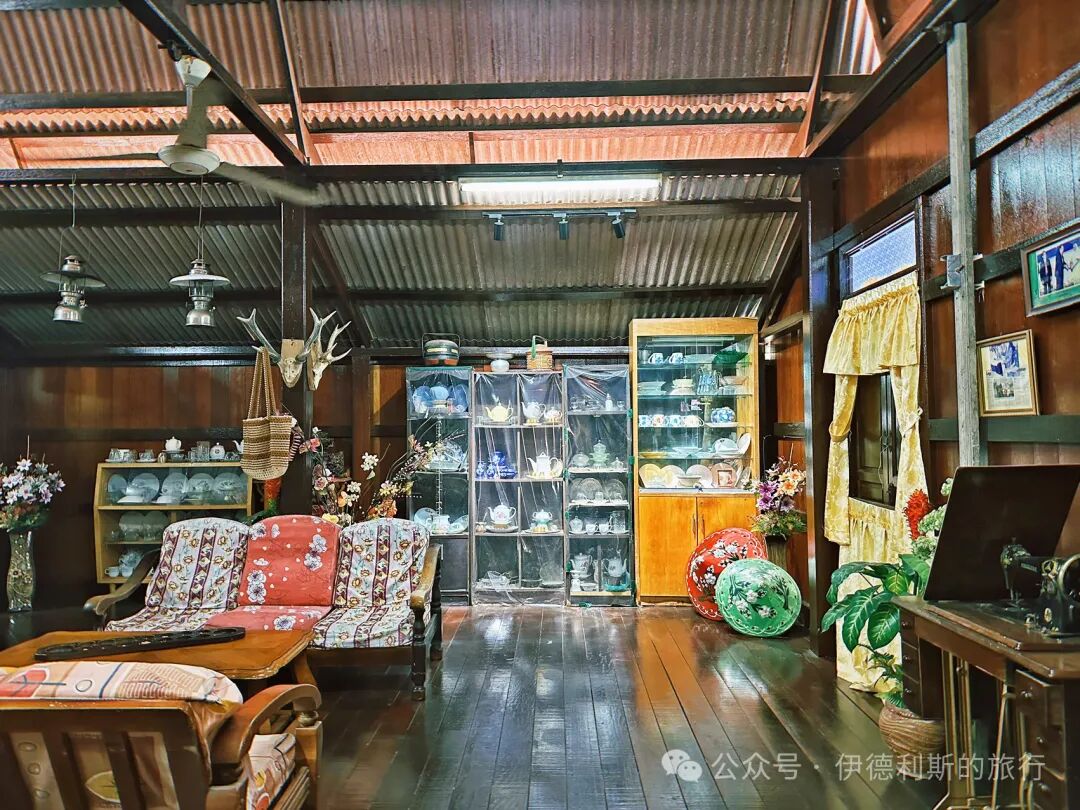
The traditional Malay wooden house next to Hang Tuah's Well was first built in 1946. It was moved to its current site in 2001 after the original land was acquired. The owner, Samad Nordin, was originally a woodcarver, so he is skilled at maintaining wood. He performs maintenance on the house every five years.
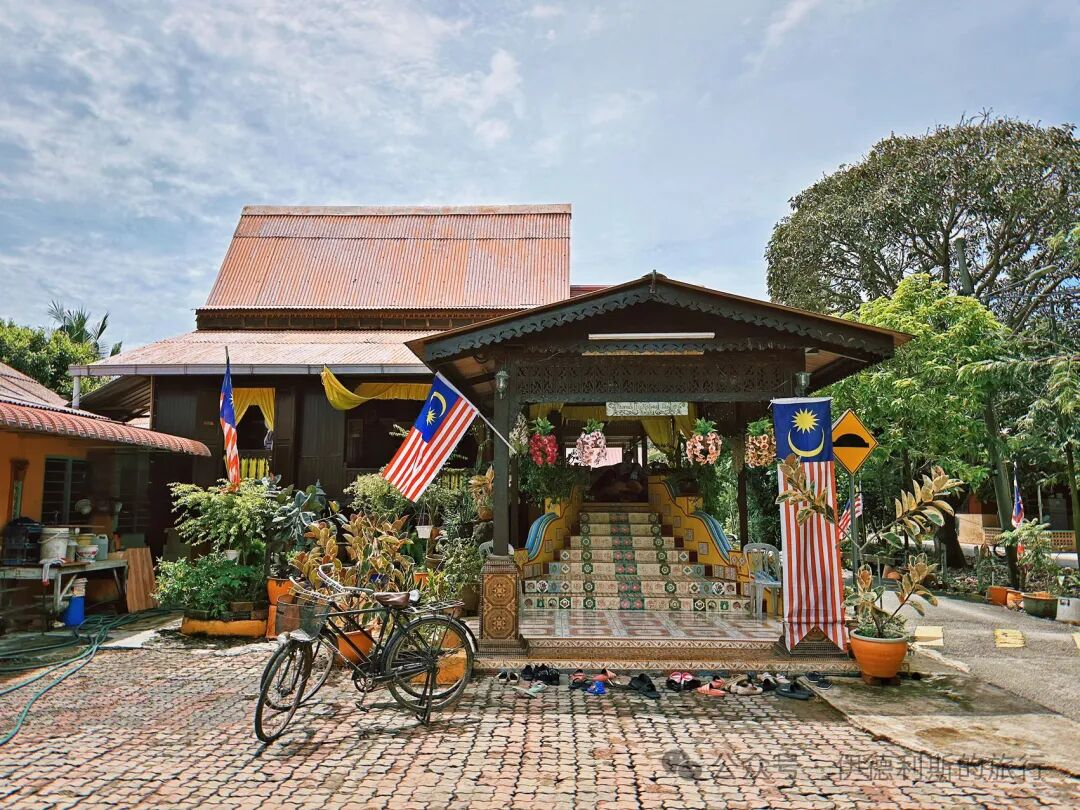
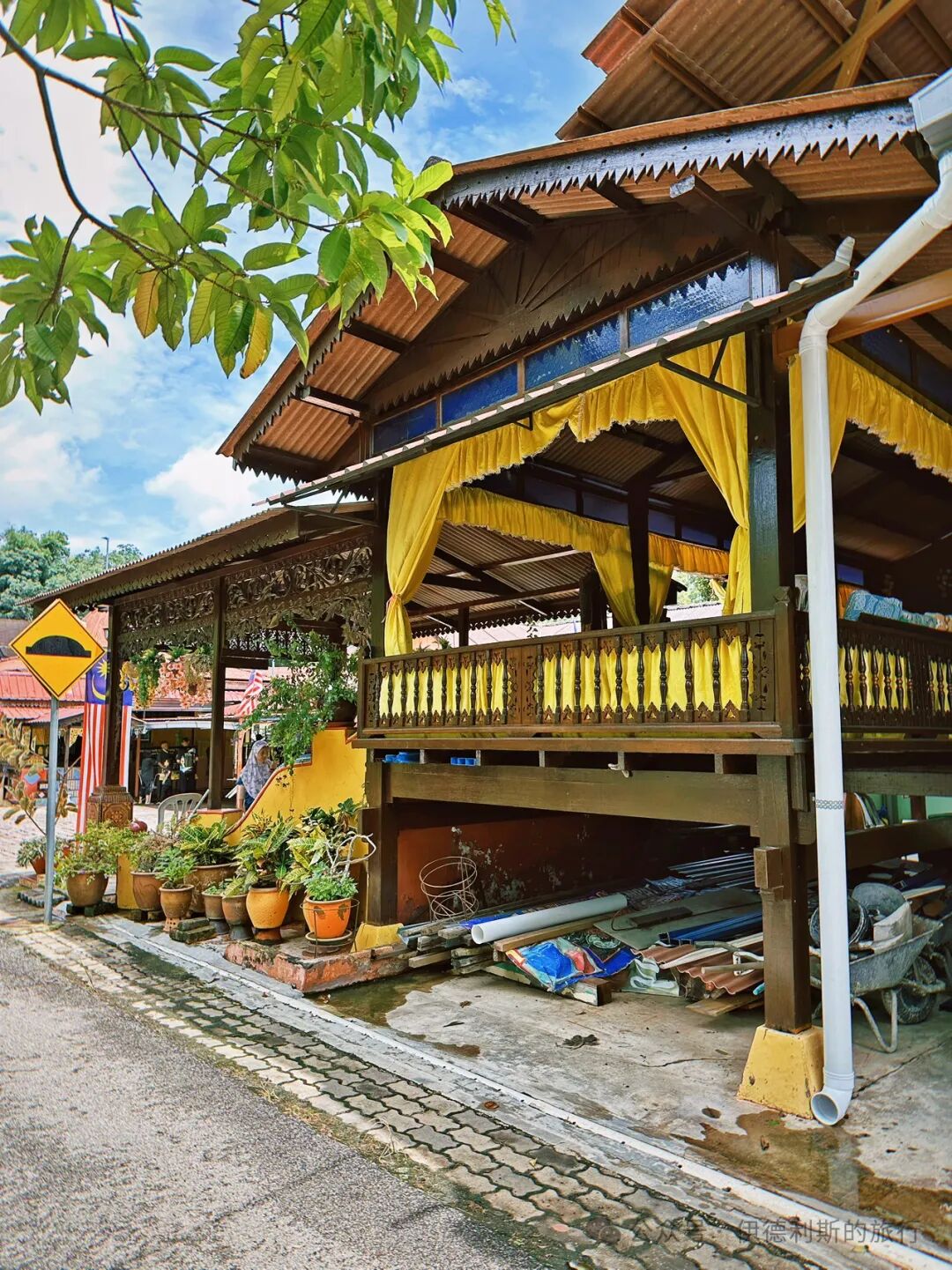
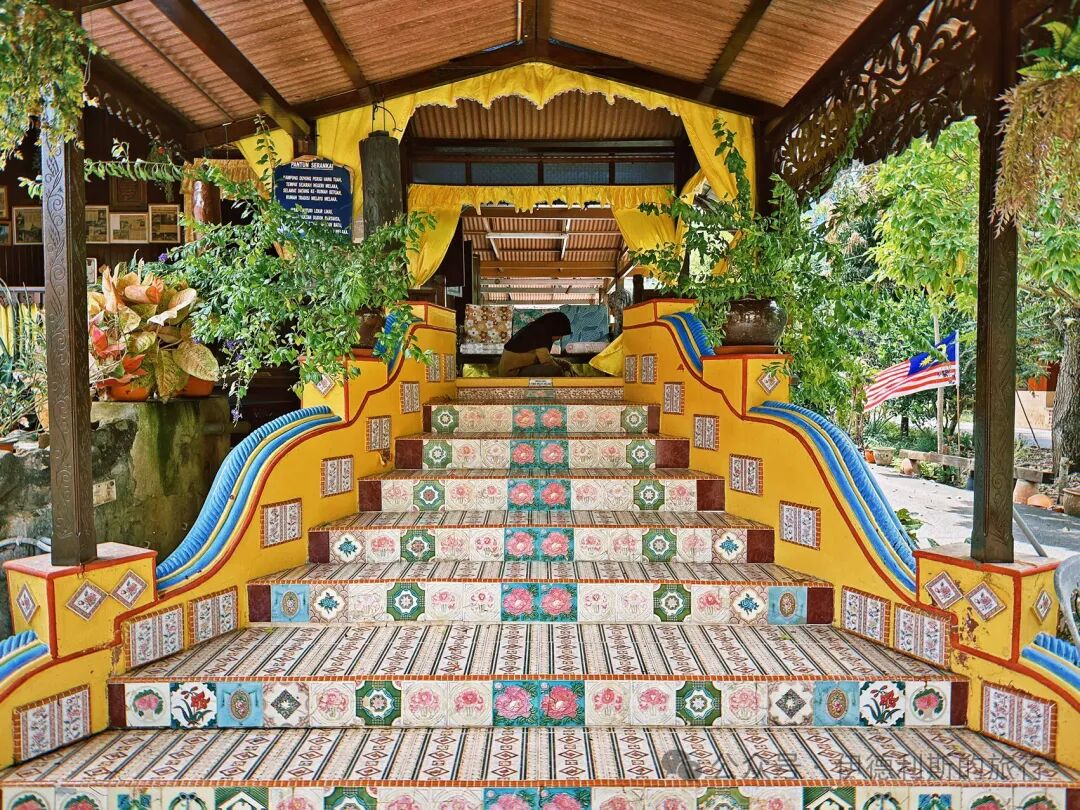
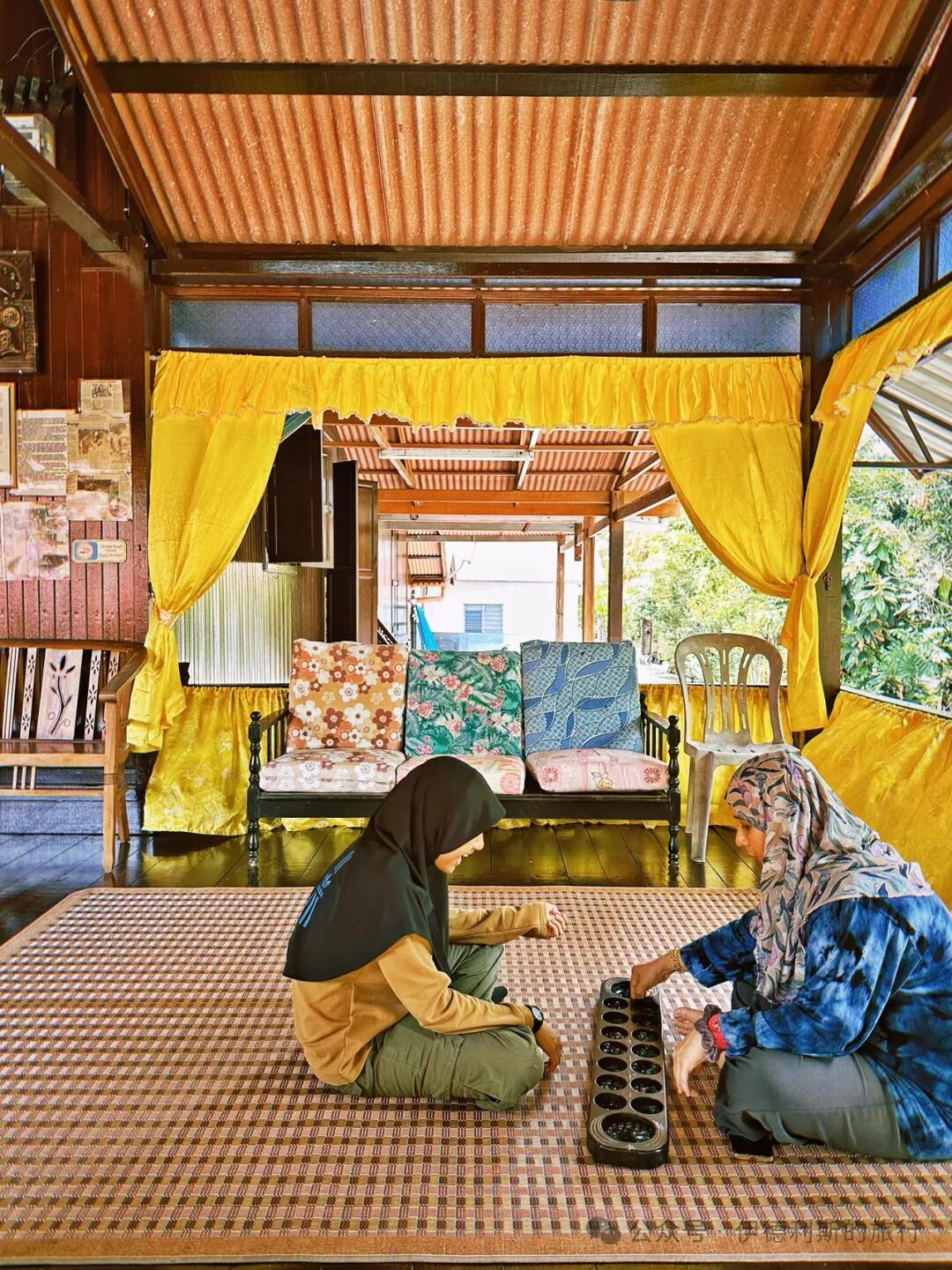
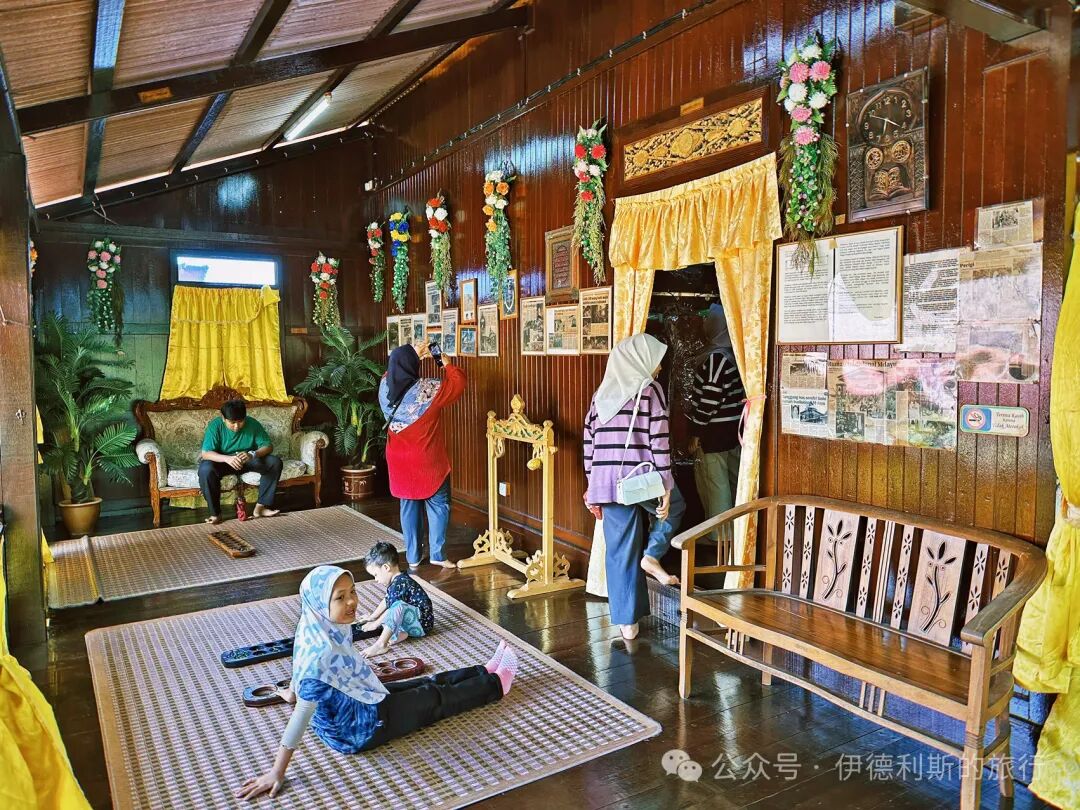
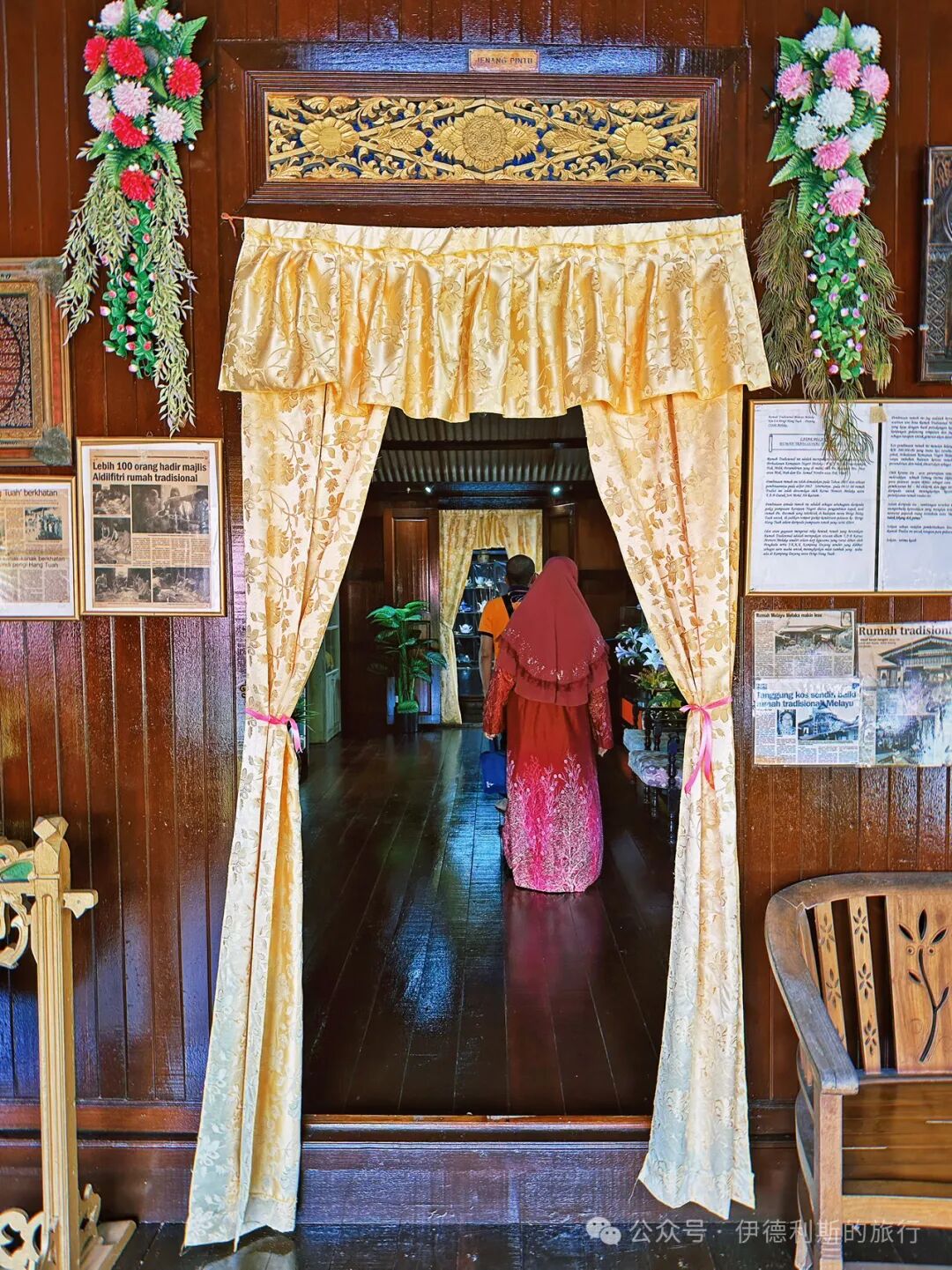
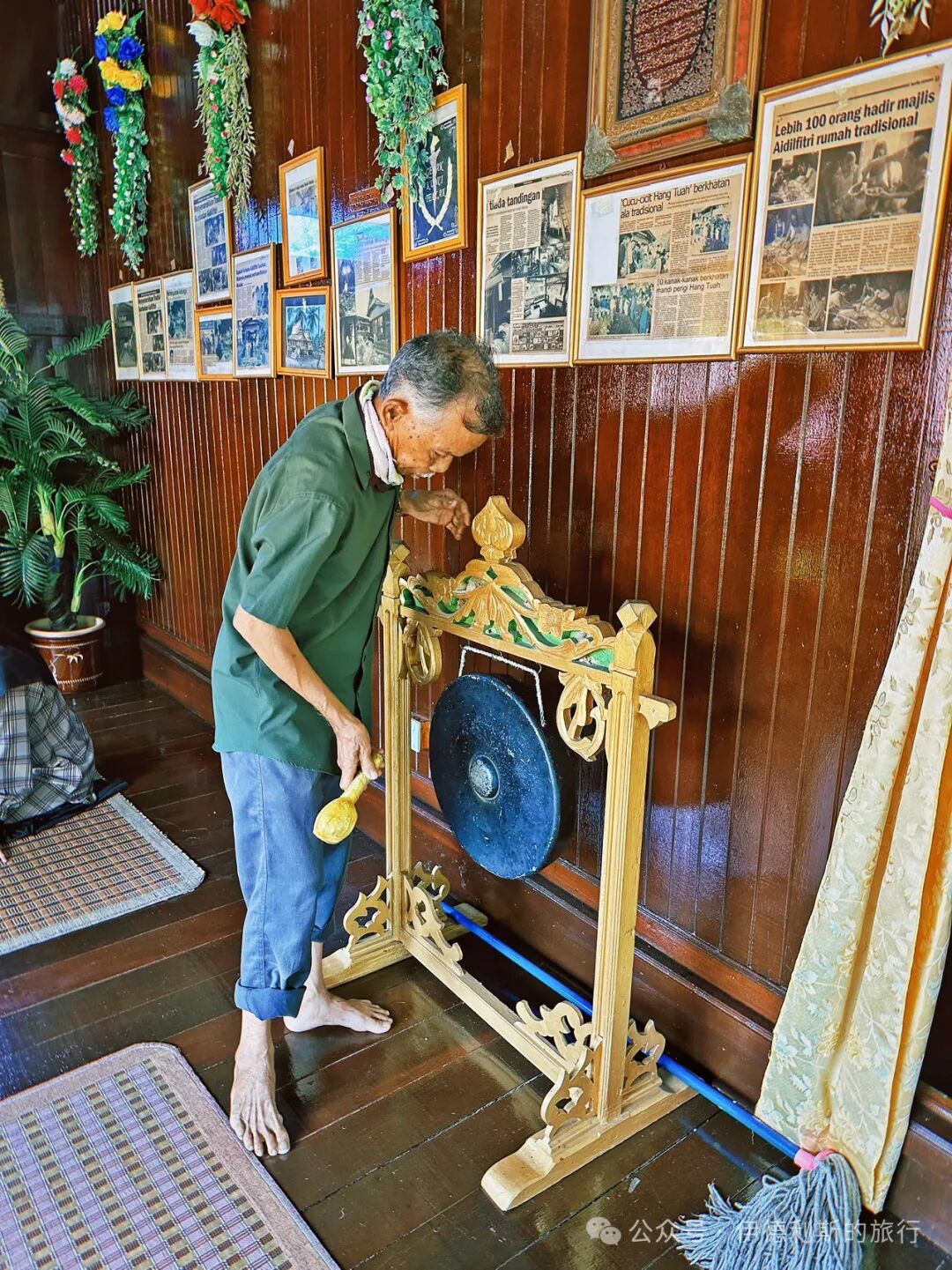
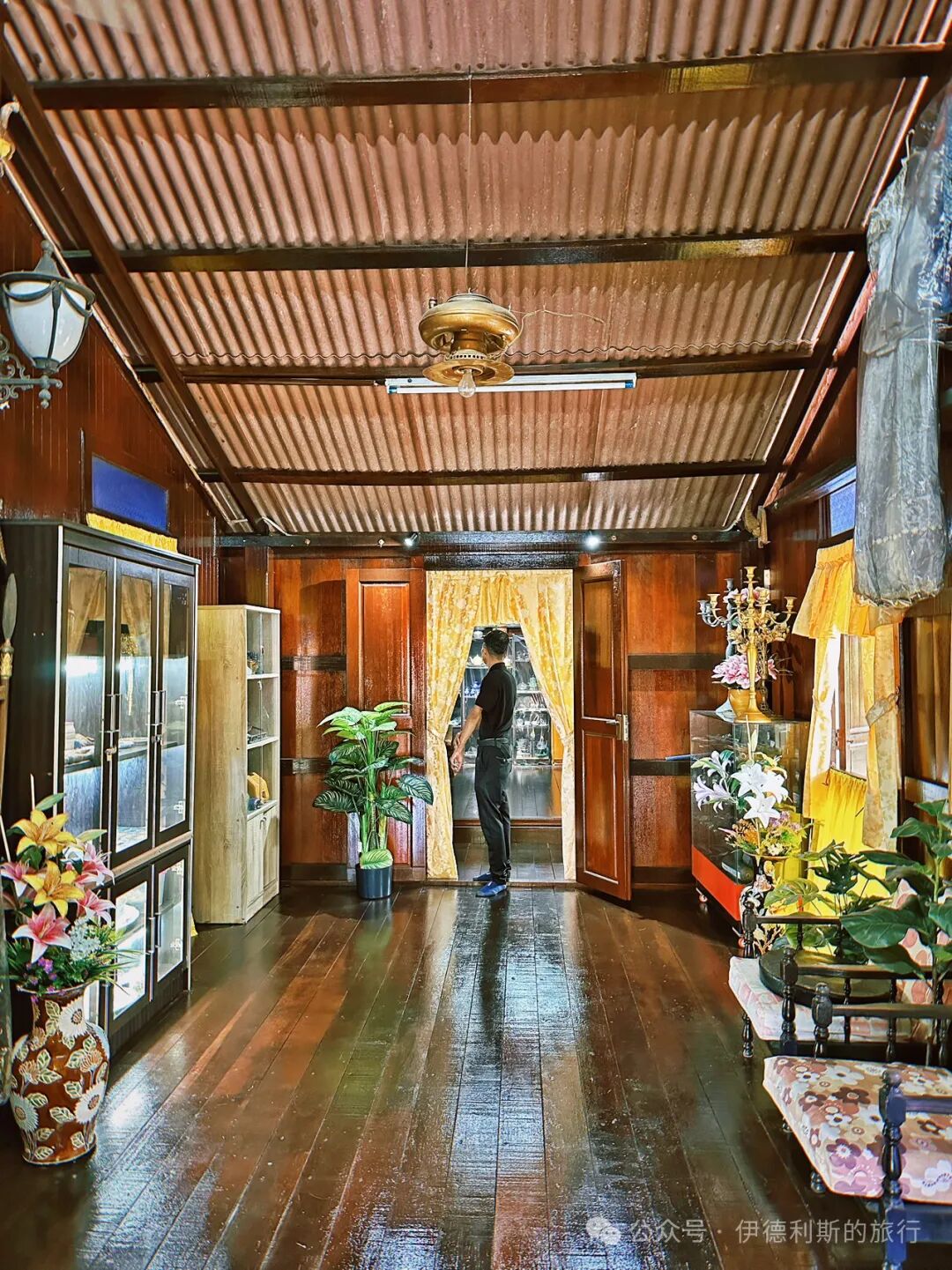
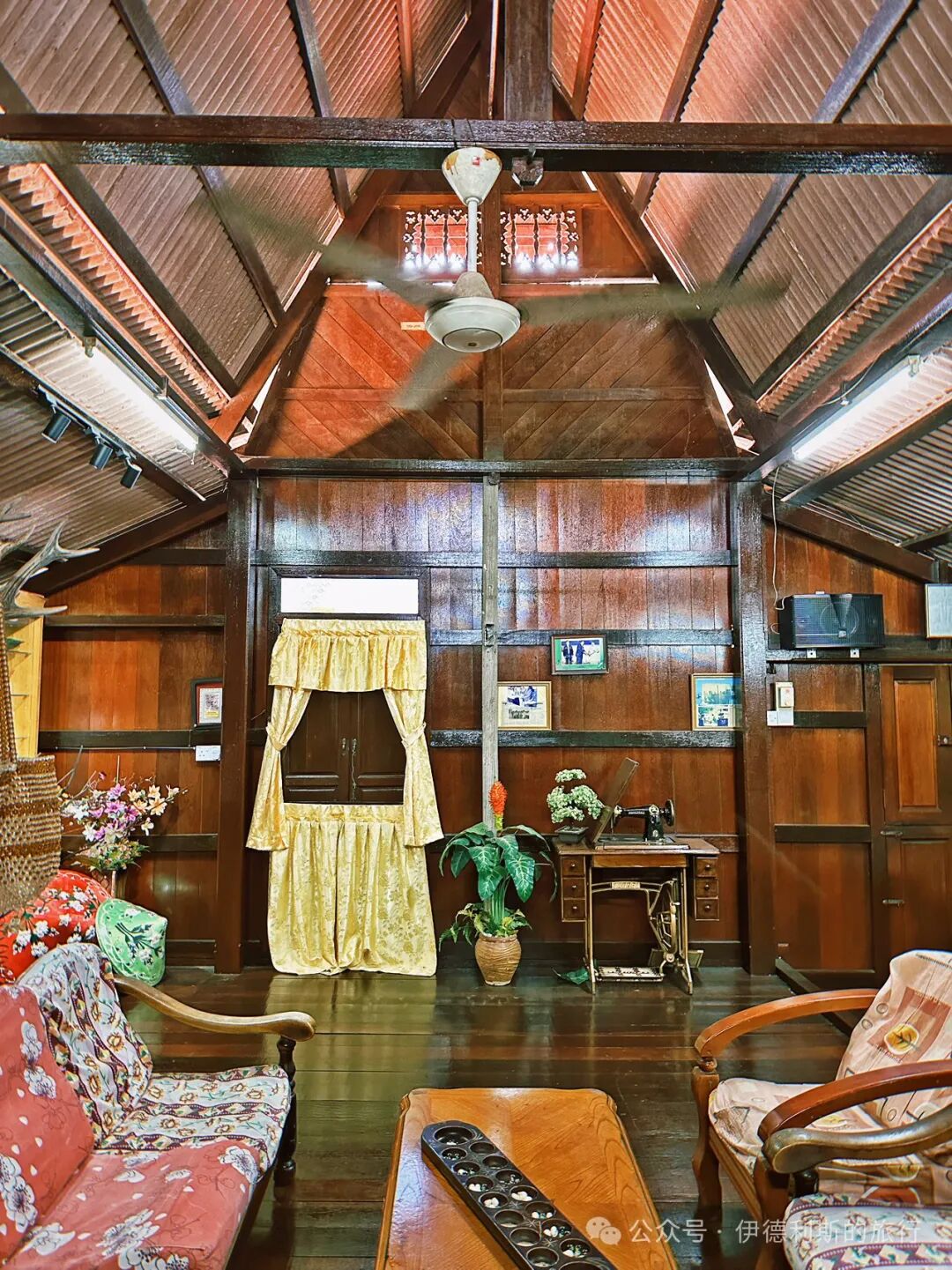
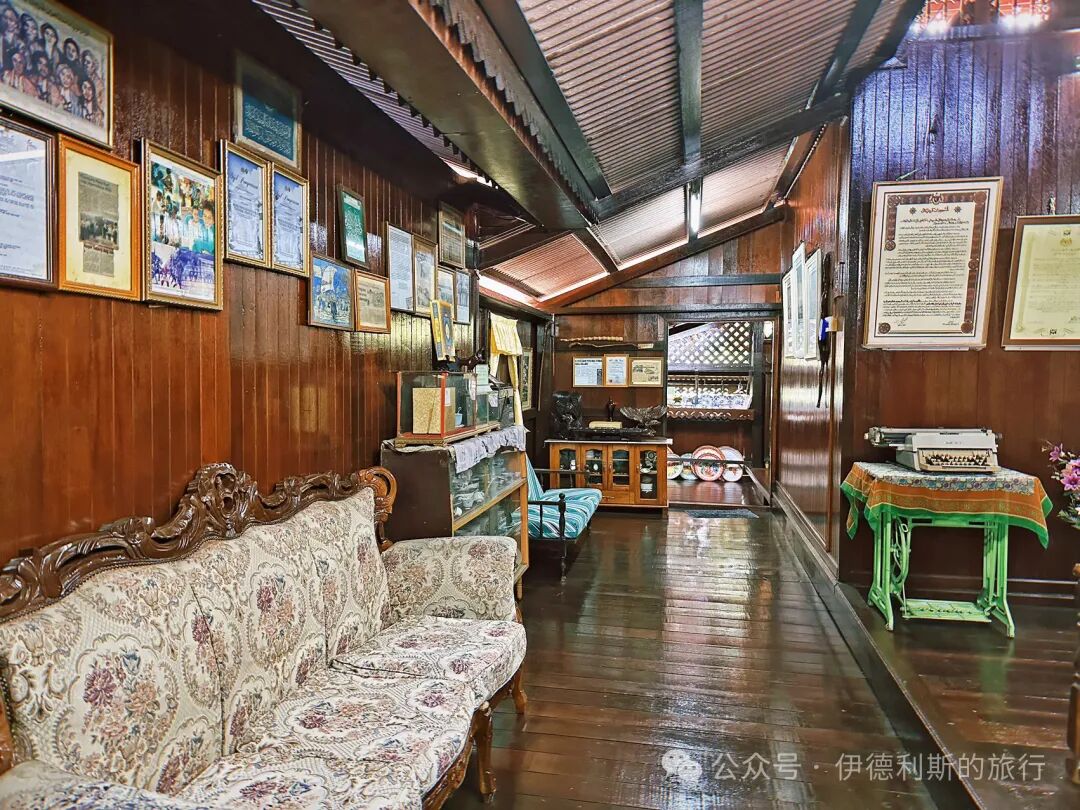
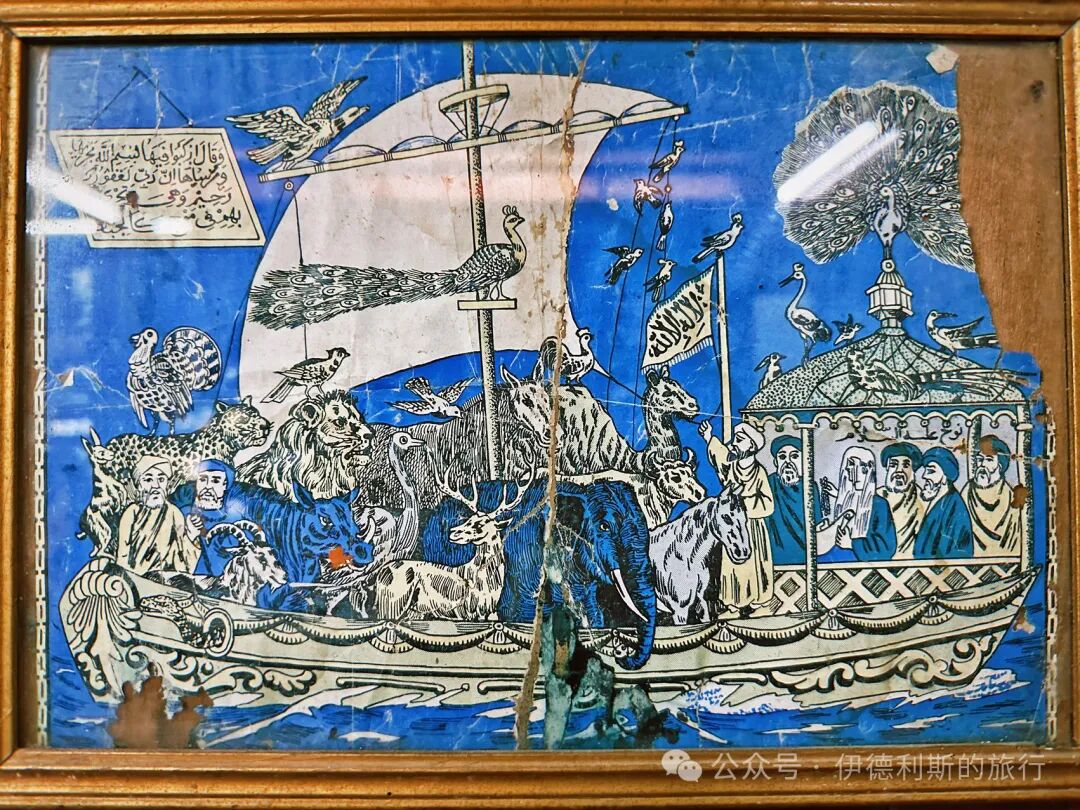
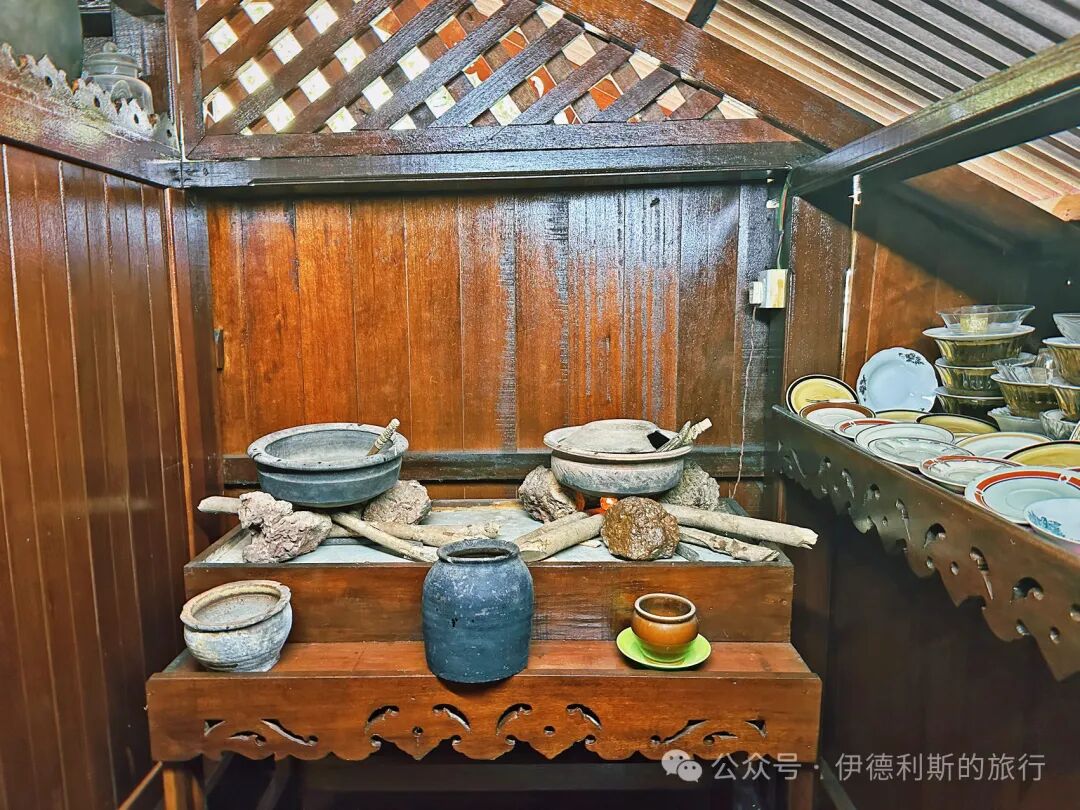
Inside the house hang portraits of the Nuh ship and the Nine Saints (Wali Sanga) who brought the faith to Southeast Asia. Wali refers to the Sufi saints. These nine figures came to Java 500 years ago to preach, which helped the faith gradually spread across Southeast Asia.
Small Mosque in the Center of Malacca's Old Town
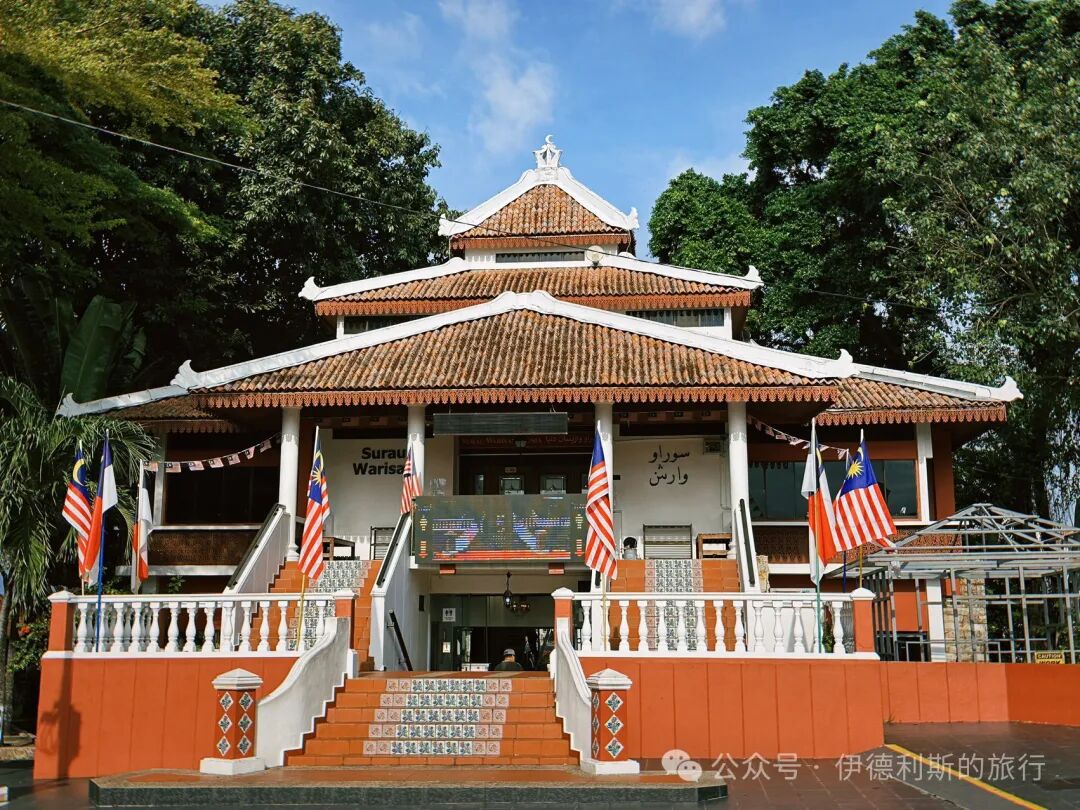
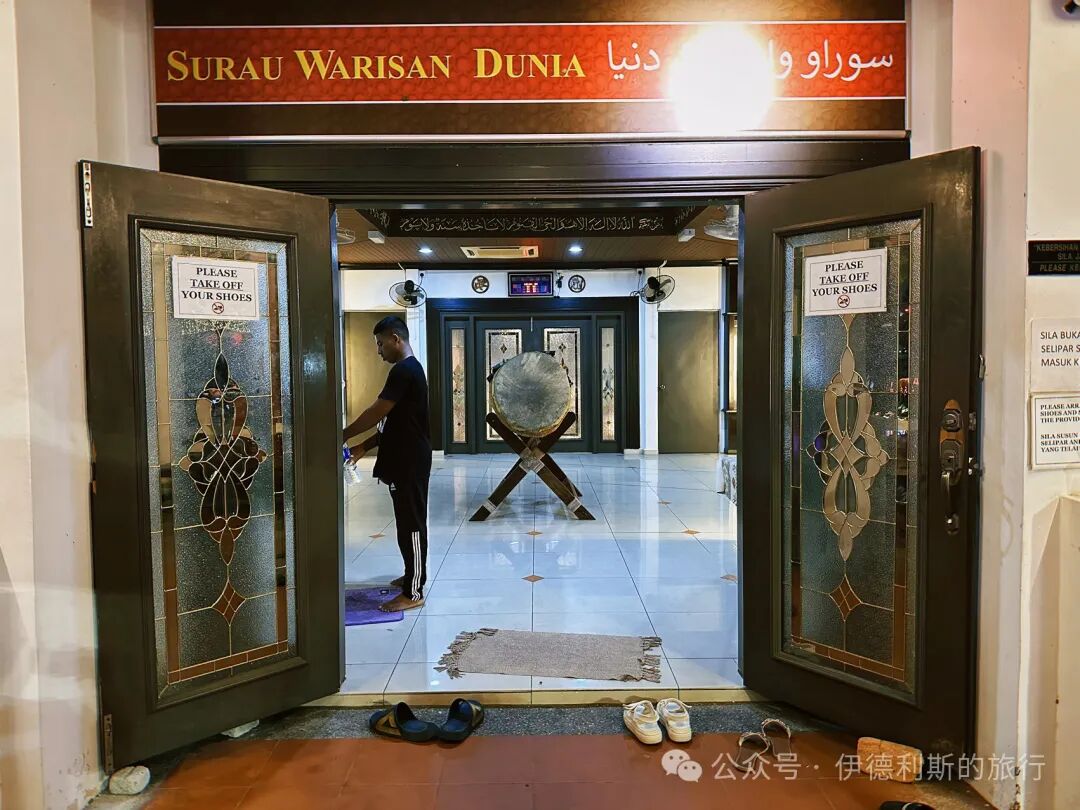
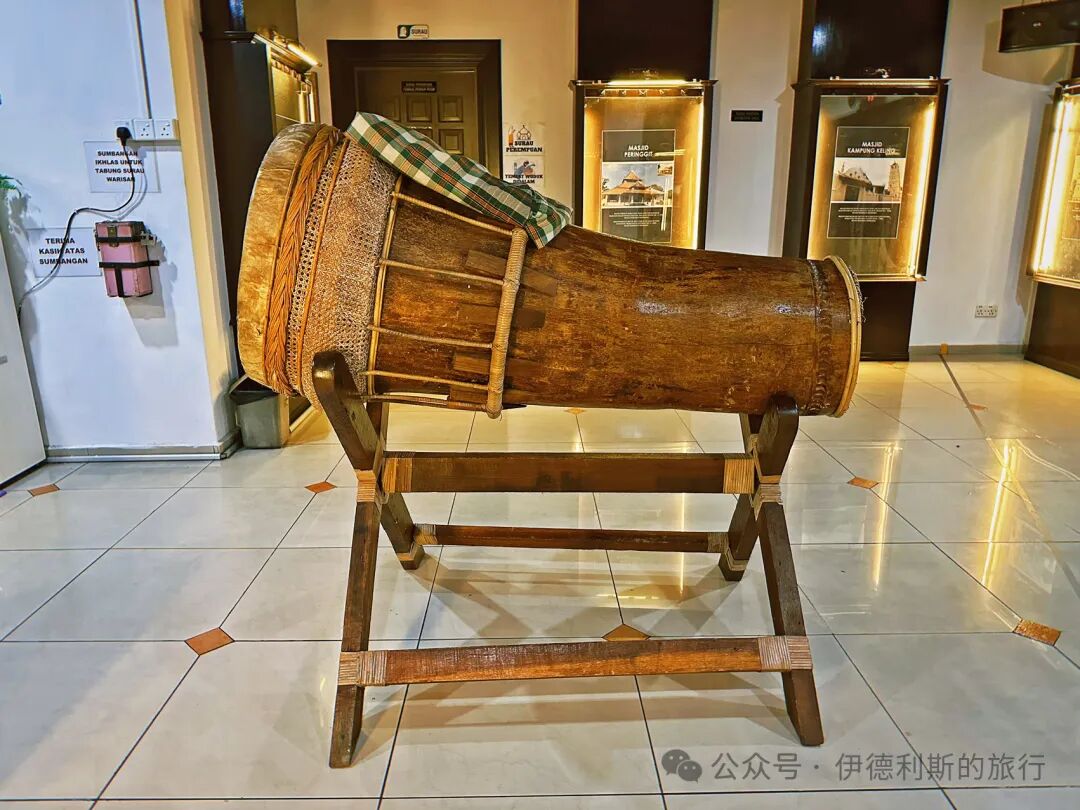
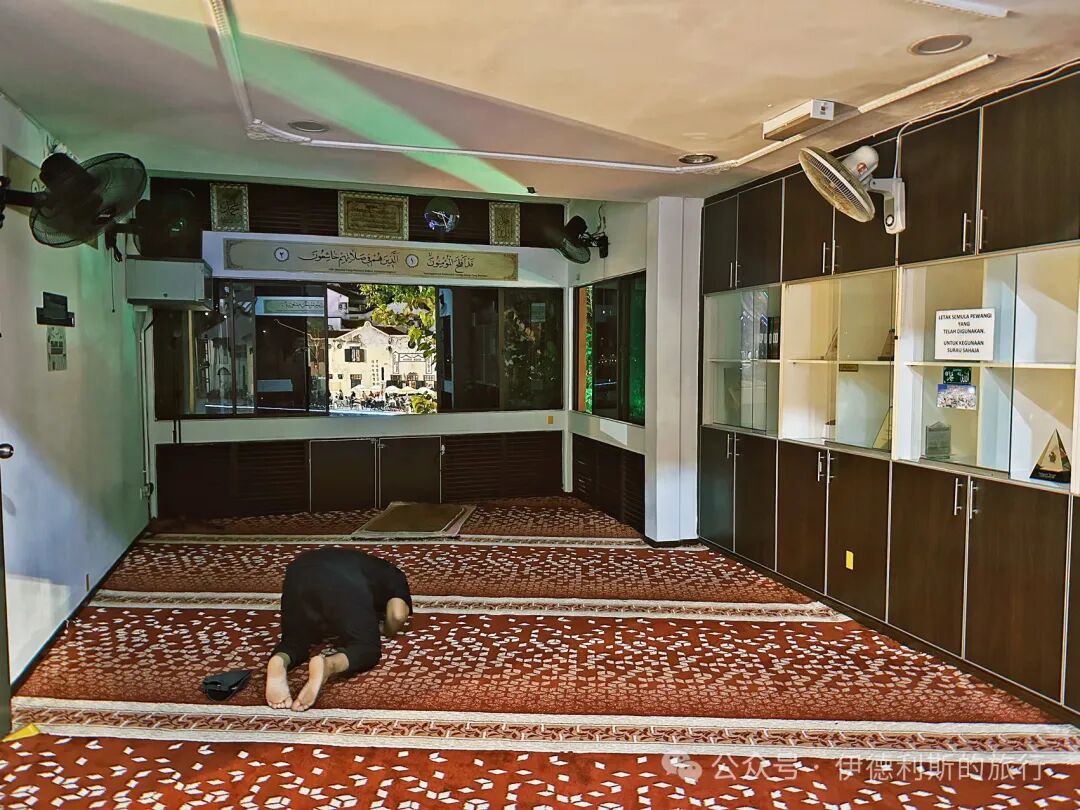
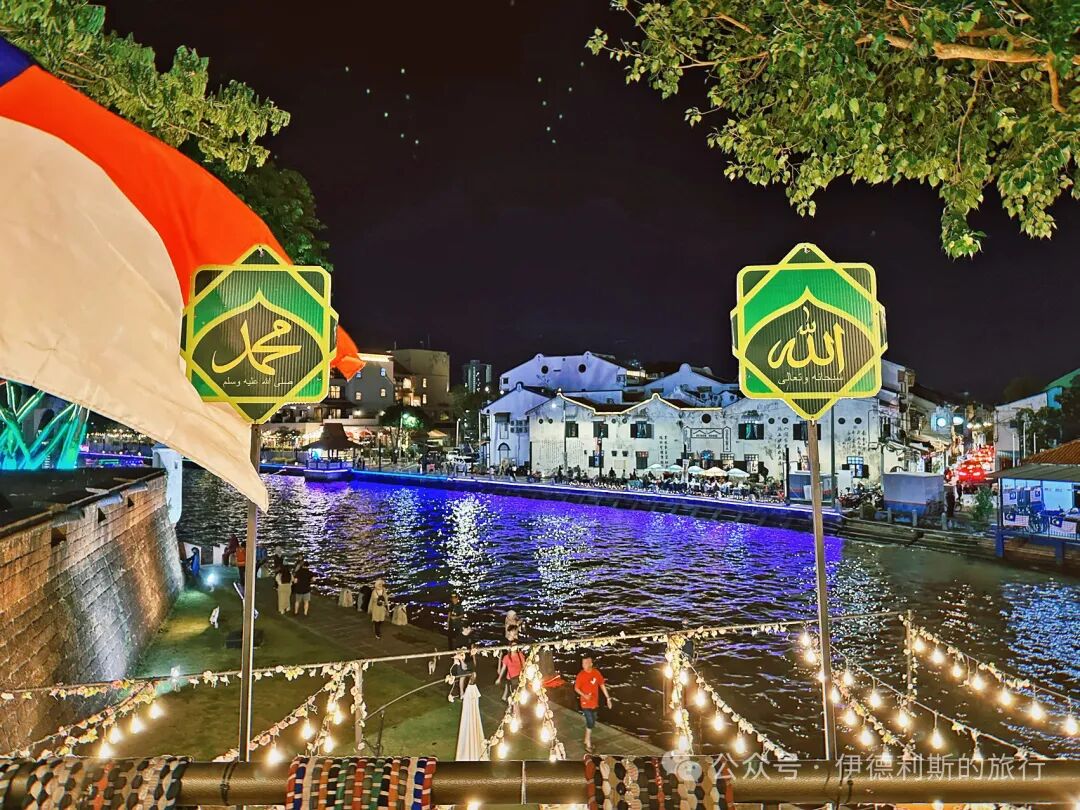
This small, newly built mosque in the center of Malacca's old town faces the Dutch Square and backs onto the Malacca River. The roof retains a traditional Javanese style. Inside the main hall, there are displays introducing various ancient mosques in Malacca, and a traditional drum used for the call to prayer sits in the center. Performing namaz in the mosque while feeling the breeze from the Malacca River brings a sense of calm, as if the noise outside no longer matters.
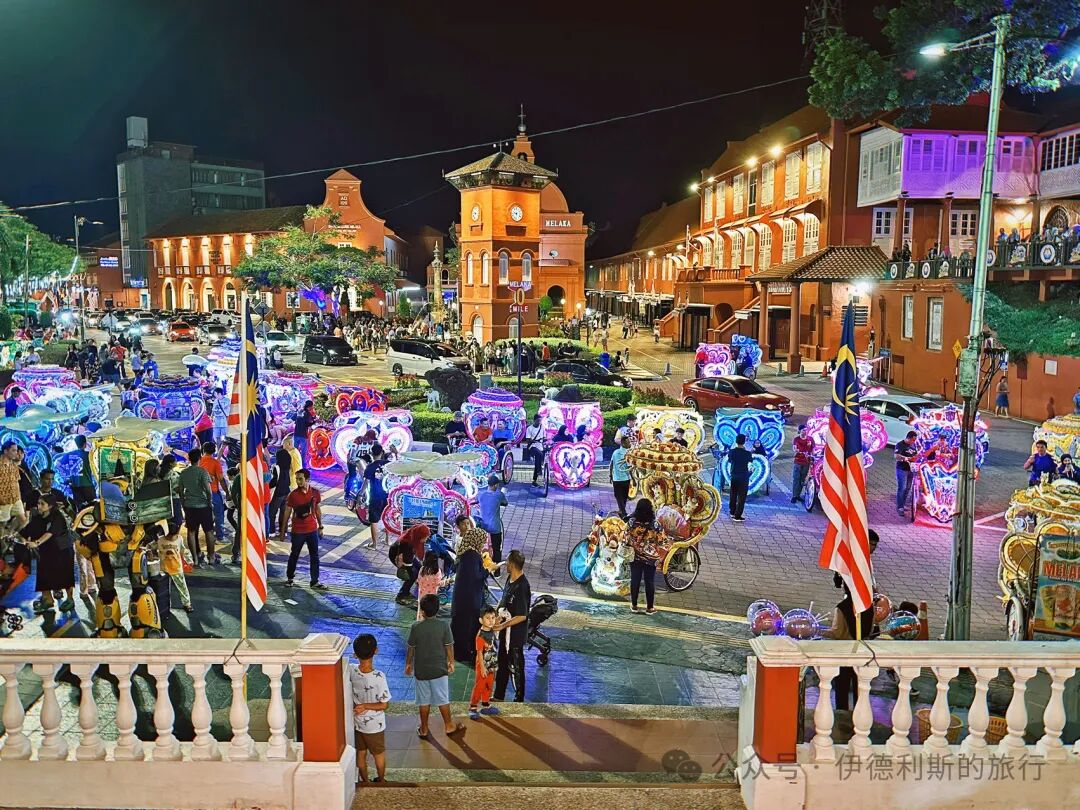
Malacca History Museum
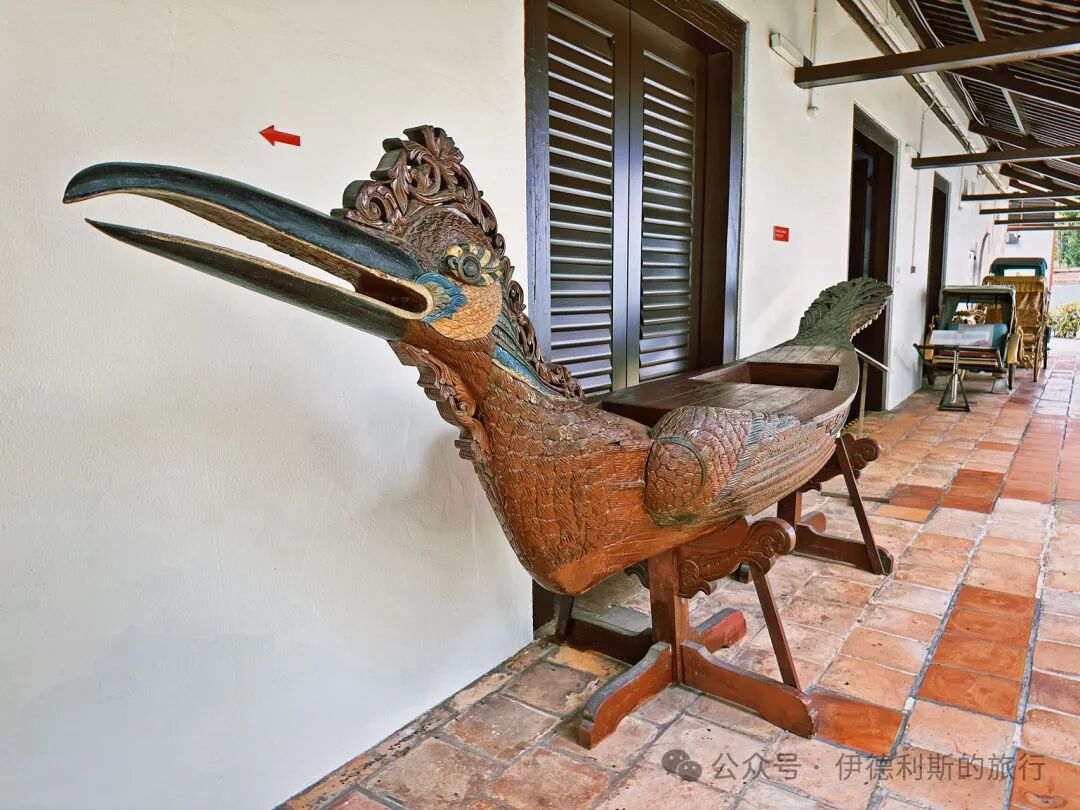
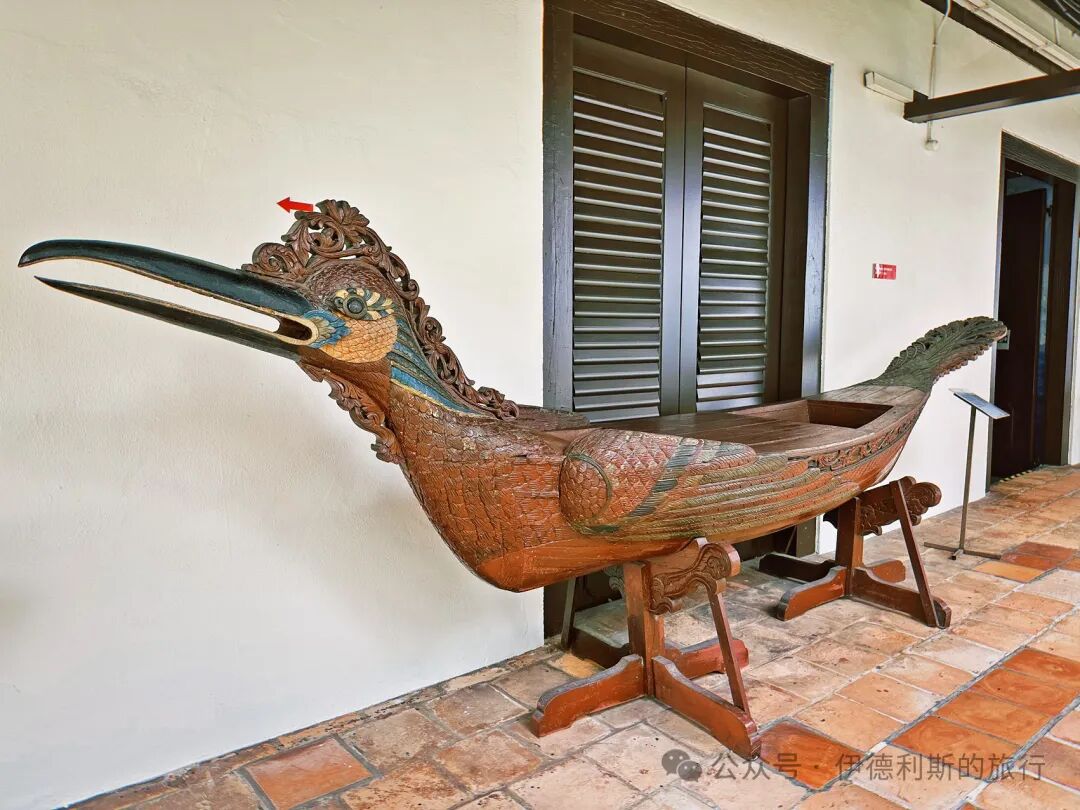
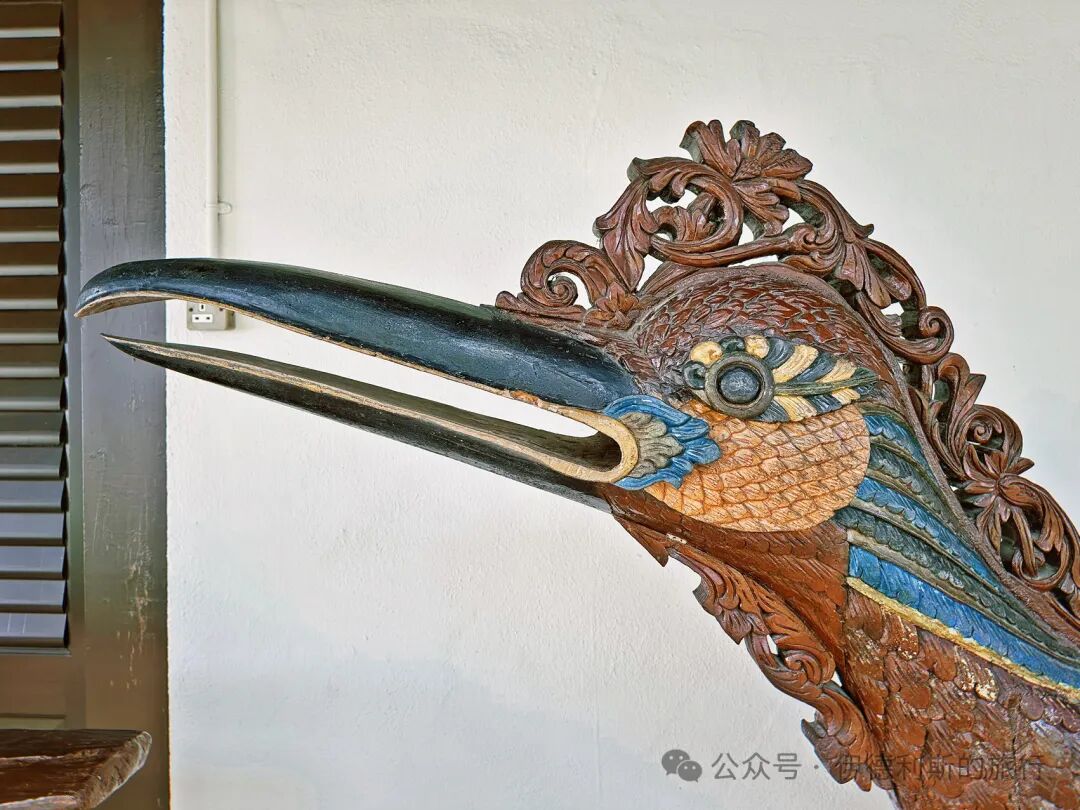
A replica of the mythical bird boat (Perahu Burung Petalawati) is kept in the Malacca History Museum. The Perahu Burung Petalawati was a mythical bird boat used by Kelantan nobles for parades during circumcision ceremonies. After 1933, all of them were destroyed because they were seen as straying from the faith. Later, the tradition was preserved by the Malay community in Pattani, Thailand, though the celebrations are much smaller now.
The origins of this mythical bird go back to ancient Malay legends and Indian culture. It was likely influenced by the giant bird in the Malay epic Isma Dewa and the mythical bird Garuda from Indian mythology.
Summary: This first part introduces Malay wooden houses and historic sites in Malacca, with attention to old homes, local architecture, and neighborhood history. It keeps the original place names, photographs, building details, and travel notes for readers interested in Malaysian heritage.
The beautiful and peaceful Malay village of Kampung Morten.
In the northern part of Malacca city sits a beautiful and peaceful Malay village called Kampung Morten. This area was once a mangrove swamp on a bend of the Malacca River, filled with mud crabs. In 1920, the nearby Kampung Jawa was forced to relocate due to land development. The village head, Dato' Othman Mohd Noh, asked the British Land Commissioner at the time, Frederick Joseph Morten, for help. Morten applied for a 10,000 Straits dollar loan from the government that same year, which was then used under Dato' Othman's leadership to buy land and build the village. The village was officially completed in 1922, and the villagers voted to name it Kampung Morten.
Today, Kampung Morten preserves 56 traditional Malay stilt houses and was listed as a heritage village in 1998. After a century of urban growth, the area is now part of downtown Malacca, making it the most convenient place in the city to experience the atmosphere of a Malay kampung.
I encountered a Malay wedding in Kampung Morten where whole families came to eat together, which was very lively.
At a beautiful Malay house in Kampung Morten, the grandfather who owns the home chatted with us very warmly.
The village has a small mosque called Surau Al Abidin with a cute pink exterior.
Several shops in the village serve traditional Malay kampung food, but they do not open until 5:30 in the evening. Some shops set their tables and chairs along the Malacca River, which is very pleasant.
The most worth-visiting Malay wooden house in Kampung Morten is Villa Sentosa, built in 1922 by Haji Hashim Abdul Ghani, who helped build the village. Haji Hashim's descendants still live here today, and they have kept many pieces of furniture and household items that are decades or even a century old. However, the opening hours are not fixed. If the owner is out, at prayer, or taking a nap, the house is closed. We were sorry to find the owner away when we visited, so we could only look around from the outside.
The ancient Malay village of Kampung Ketek.
Behind the Cheng Hoon Teng Temple, the oldest Chinese temple in the old town of Malacca, lies the equally ancient Malay village of Kampung Ketek. Kampung Ketek formed during the Dutch era in the 17th century. Although Malay villages within the old city of Malacca shrank rapidly after the 19th century due to the construction of shophouses, you can still see several well-preserved traditional Malay stilt houses in Kampung Ketek today. Abdullah bin Abdul al Kadir (1796-1854), known as the Father of Modern Malay Literature, was born here.
Inside Kampung Ketek, you can see the tomb of Syed Syamsuddin Ibni Al Sumatrani, a famous scholar and national hero from the Aceh Sultanate in the 16th and 17th centuries.
Syamsuddin was a mufti (legal judge) and advisor to Sultan Iskandar Muda (reigned 1607-36) of the Aceh Sultanate in northern Sumatra. He was well-versed in religious knowledge and held a high position in the Sultan's court.
After the Portuguese occupied Malacca in 1511, the Aceh Sultanate kept attacking the Portuguese in an attempt to capture the city. During the reign of Sultan Iskandar Muda, the Aceh Sultanate was strong and powerful, with a fleet of heavy galleys, cavalry riding Persian horses, elephant corps, and thousands of cannons. In 1629, Sultan Iskandar sent a massive force of 236 warships and 19,000 men to Malacca, but they suffered a total defeat, with all soldiers killed or captured. Sang Sutin also died heroically in this battle and was eventually buried in Kampung Kuli in the old city of Malacca.
Two tombs of heroes from the Malacca Sultanate
Continuing south from Kampung Hulu Road, you enter the core area of the Malacca old city, a World Heritage site where the alleys are filled with murals related to the city's history.
The Tomb of Hang Jebat (Makam Hang Jebat) in the old city of Malacca features the Aceh style from northern Sumatra, which was the common high-status architectural style for tombs during the Malacca Sultanate.
Hang Jebat was a famous Malay hero during the 15th-century Malacca Sultanate and one of the five heroes in the classic Malay novel Hikayat Hang Tuah. In the novel, the five heroes study martial arts together, serve the Malacca Sultan together, and earn his favor. Later, the Sultan of Malacca listens to slander and wants to kill Hang Tuah, so his brother Hang Jebat rebels against the Sultan to seek revenge. Eventually, the Sultan pardons Hang Tuah and sends him to fight a duel with Hang Jebat. After seven days of fighting, Hang Jebat dies in the arms of his former brother.
Since the 1960s, Hang Jebat has been portrayed in various plays and novels as a folk hero who resists tyranny and yearns for freedom, and many roads and buildings in Malaysia and Singapore are named after him.
Walking further west, you can see the tomb of Hang Kasturi, another of the five heroes of the Malacca Sultanate. In the Malay Annals (Sejarah Melayu), it is Hang Kasturi, not Hang Tuah, who ultimately kills Hang Jebat. This tomb has an Indian style and was likely built by later generations to commemorate Hang Kasturi.
Tomb of Sultan Hussein Shah of Johor
In the backyard of the Kampung Kling Mosque (Masjid Kampung Kling) lies the tomb of Sultan Hussein Shah of Johor (reigned 1819–1835), who played a key role in the founding of Singapore.
After the Portuguese occupied Malacca in 1511, the Sultan of Malacca fled to Johor to continue his rule. After the last Sultan of Malacca died in 1528, his son Alauddin Riayat Shah II officially established the Johor Sultanate, considering it the legitimate continuation of the Malacca Sultanate.
Hussein Shah was born in 1776 and was the eldest son of Sultan Mahmud Shah III of Johor. When Mahmud Shah III passed away in 1812, Hussein Shah was not in the capital, so his younger brother quickly took the throne with the support of ministers, forcing Hussein Shah into exile in the Riau Islands.
In 1819, the British East India Company decided to establish a new base in Southeast Asia. They found the exiled Hussein Shah and named him Sultan of Johor and Singapore in exchange for the right to establish a trading post in Singapore. Hussein Shah then came to Singapore and became a Sultan under British control.
In 1824, the British bought Singapore for 33,200 dollars, and Sultan Hussein Shah received a monthly payment of 1,300 dollars. He held no real power in Singapore and served only a symbolic role.
Sultan Hussein Shah lived in Singapore until 1834, then moved to Malacca with his family. He passed away in Malacca in 1835 and was buried at the Kampung Hulu Mosque (Dongjiena Si).
The Sultan's Well in Malacca
Travel east from the old town of Malacca to the foot of Bukit Cina, and you will find the Sultan's Well (Perigi Raja). Legend says it was built in 1459 by the sixth Sultan of Malacca, Mansur Shah, who reigned from 1459 to 1477.
According to the classic Malay text Sejarah Melayu, Sultan Mansur Shah built a palace at the foot of Bukit Cina to welcome a Ming Dynasty princess named Hang Li Po. He had this well dug specifically for her, which is why it is also called Hang Li Po's Well. However, there are no records of Princess Hang Li Po in Ming Dynasty or Portuguese documents, so her true identity remains a mystery.
Another theory suggests the well was dug by Zheng He's troops when they were stationed in Malacca during his voyages to the Western Ocean. Legend says Zheng He's troops dug seven wells at the foot of Bukit Cina. Five were destroyed by road construction in the 1950s and 1960s. Only two remain today: the Sultan's Well and the Sam Po Well (Sanbao Jing) in the backyard of the Poh San Teng Temple.
Legend has it that when the Portuguese invaded the Malacca Sultanate in 1511, Malay warriors poisoned the well to kill many Portuguese soldiers. In the early 17th century, both the Dutch and the Acehnese used the tactic of poisoning the well to eliminate their enemies.
After the Dutch occupied Malacca in 1641, they built a fortress-style wall around the Sultan's Well to protect the water source, complete with guard posts and cannons. The well was abandoned during the British colonial period, and the guard posts fell into disrepair.
On the western slope of Bukit Cina lies a Malay village called Kampung Bukit Cina, where some traditional Malay stilt houses are still preserved.
The Hero's Well in Malacca
Hang Tuah's Well (Perigi Hang Tuah) is located in Kampung Duyong in eastern Malacca. It is said to have been dug by the Malacca Sultanate hero Hang Tuah and has never run dry. Malay people believe the well water has magical properties and can cure illnesses and ward off misfortune, making it a famous attraction in Malacca.
The traditional Malay wooden house next to Hang Tuah's Well was first built in 1946. It was moved to its current site in 2001 after the original land was acquired. The owner, Samad Nordin, was originally a woodcarver, so he is skilled at maintaining wood. He performs maintenance on the house every five years.
Inside the house hang portraits of the Nuh ship and the Nine Saints (Wali Sanga) who brought the faith to Southeast Asia. Wali refers to the Sufi saints. These nine figures came to Java 500 years ago to preach, which helped the faith gradually spread across Southeast Asia.
Small Mosque in the Center of Malacca's Old Town
This small, newly built mosque in the center of Malacca's old town faces the Dutch Square and backs onto the Malacca River. The roof retains a traditional Javanese style. Inside the main hall, there are displays introducing various ancient mosques in Malacca, and a traditional drum used for the call to prayer sits in the center. Performing namaz in the mosque while feeling the breeze from the Malacca River brings a sense of calm, as if the noise outside no longer matters.
Malacca History Museum
A replica of the mythical bird boat (Perahu Burung Petalawati) is kept in the Malacca History Museum. The Perahu Burung Petalawati was a mythical bird boat used by Kelantan nobles for parades during circumcision ceremonies. After 1933, all of them were destroyed because they were seen as straying from the faith. Later, the tradition was preserved by the Malay community in Pattani, Thailand, though the celebrations are much smaller now.
The origins of this mythical bird go back to ancient Malay legends and Indian culture. It was likely influenced by the giant bird in the Malay epic Isma Dewa and the mythical bird Garuda from Indian mythology.
Travel Guide: Malacca Malay Wooden Houses and Historic Sites (Part 2)
Articles • ali2007fr posted the article • 0 comments • 199 views • 2026-05-19 22:20
Reposted from the web
Summary: This second part continues through Malay wooden houses and historic sites in Malacca, focusing on house forms, museum displays, and old neighborhood details. It keeps the original place names, photographs, architectural notes, and cultural context for readers exploring Malacca heritage.
A traditional wooden box used by the Malays in Malacca to open coconuts.
Attire worn during traditional Malay wedding ceremonies in Malacca from the 1940s to the 1960s.
The tombstone of Mansur Shah, the sixth Sultan of Malacca (reigned 1459-77), held in the collection of the Malacca History Museum.
Sultan Mansur Shah began the golden age of the Malacca Sultanate, and he was known as a knowledgeable, fair, and pious ruler. He followed an expansionist policy, occupying many areas including the Malay Peninsula, eastern Sumatra, Singapore, and Bintan Island, and he helped spread the faith widely across the Malay Peninsula through marriage alliances.
During his reign, Sultan Mansur Shah lowered trade taxes, charging 6% to Arab and Indian merchants from the west, 3% to local merchants, and exempting merchants from China, Japan, and Java, which made trade in Malacca more prosperous.
Sultan Mansur Shah was passionate about the faith and encouraged Sufi studies, personally studying under Maulana Abu Bakr and translating the famous commentary Ad Darrul Manzum into Malay.
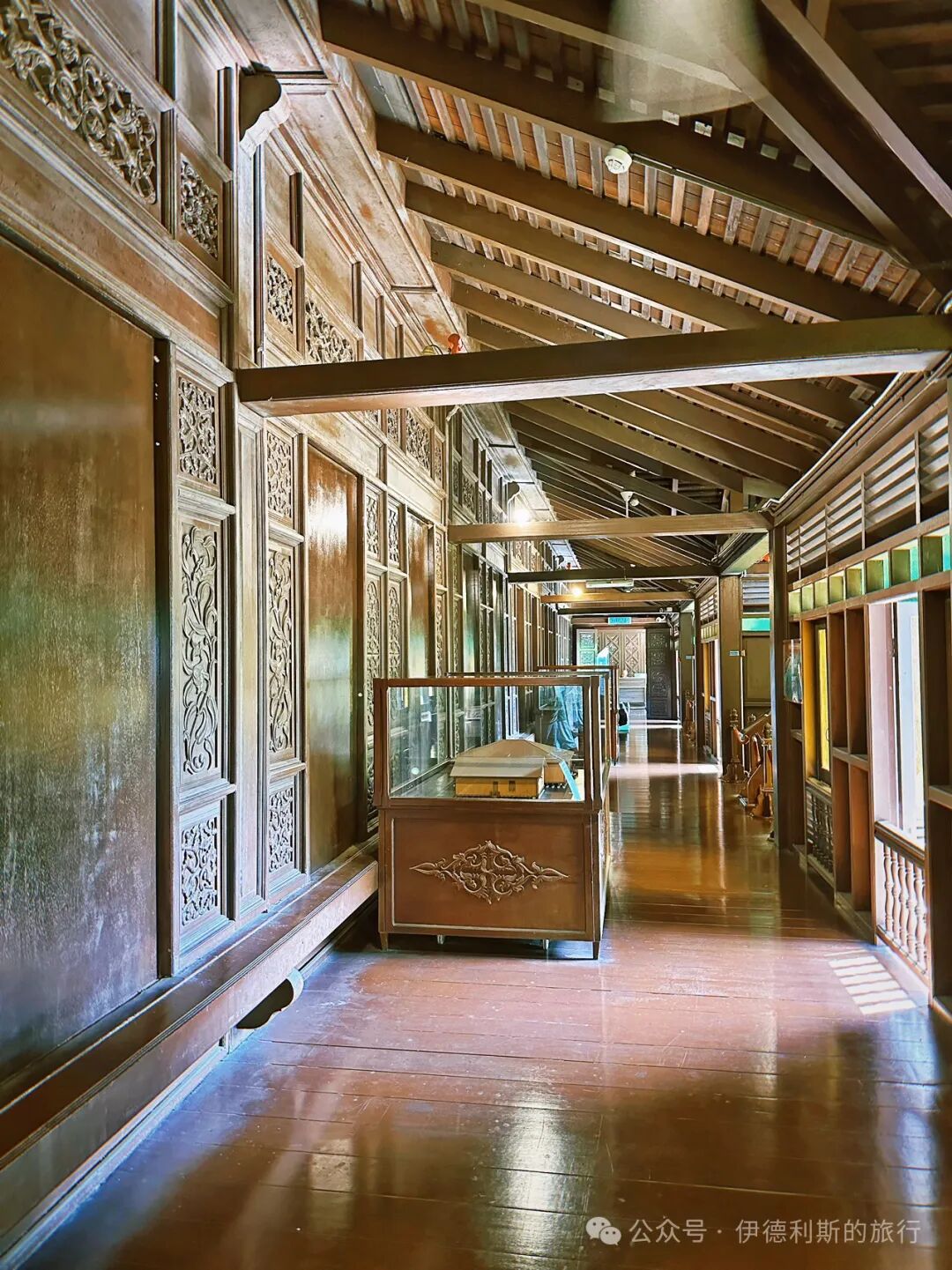
The interior layout of a traditional Malay wooden house recreated at the Malacca History Museum feels quite authentic. The exhibition hall also has a map showing the locations of typical Malay wooden houses in Malacca, so interested friends (dosti) can follow the map to visit them in person.
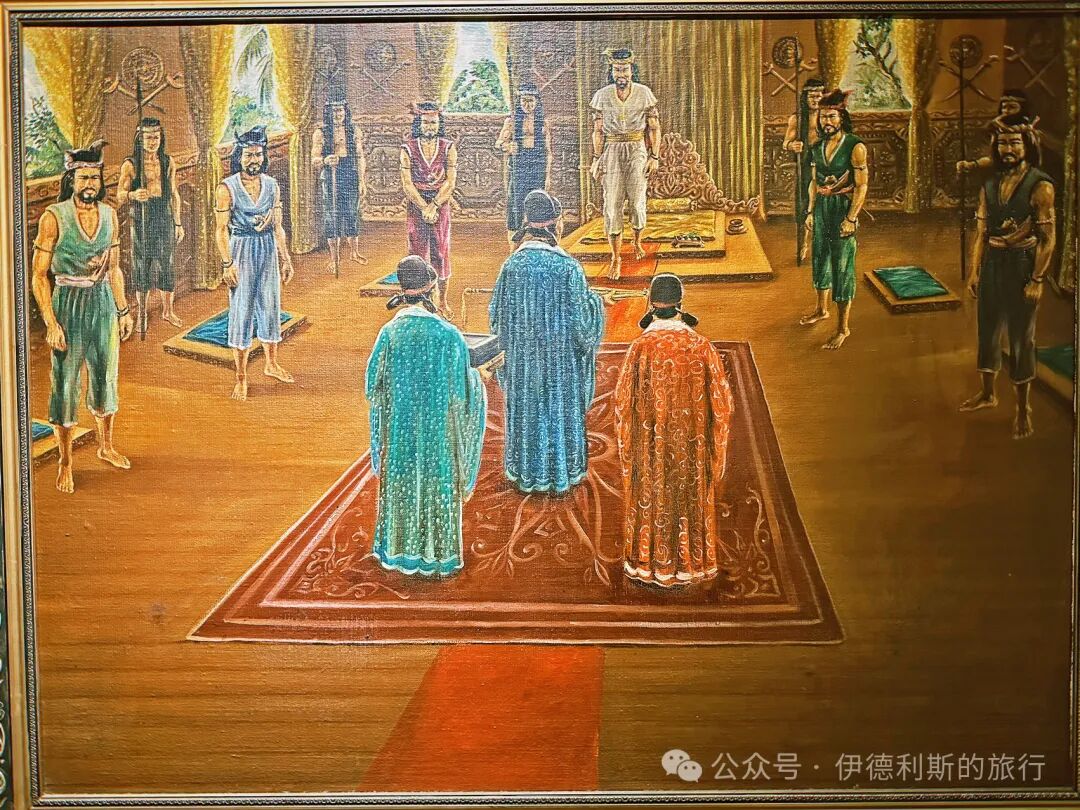
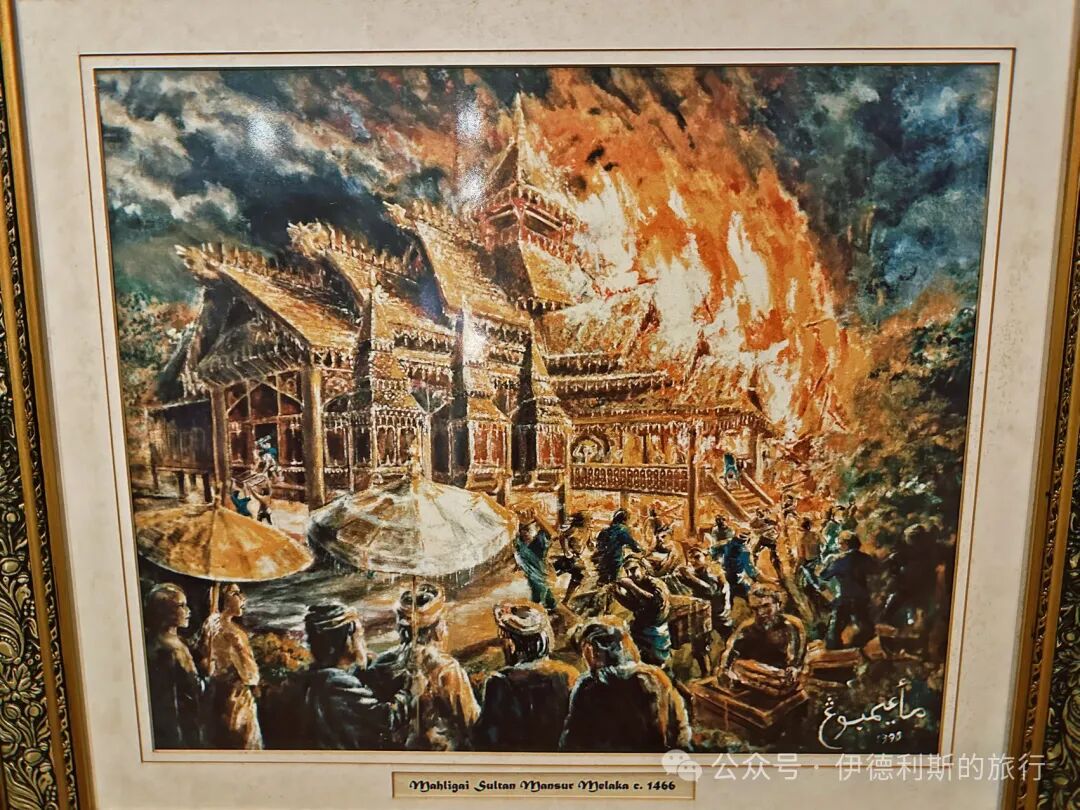
The Malacca History Museum houses a set of three enamel incense burners and vases, and there is a statue of Zheng He in the museum courtyard. The museum also features a painting of the Ming Emperor Chengzu sending his envoy Yin Qing to issue an imperial decree to the Sultan of Malacca in 1403 (the first year of the Yongle era).
Muzium Budaya Melayu dan Islam Melaka (Malacca Malay and Islamic World Museum).
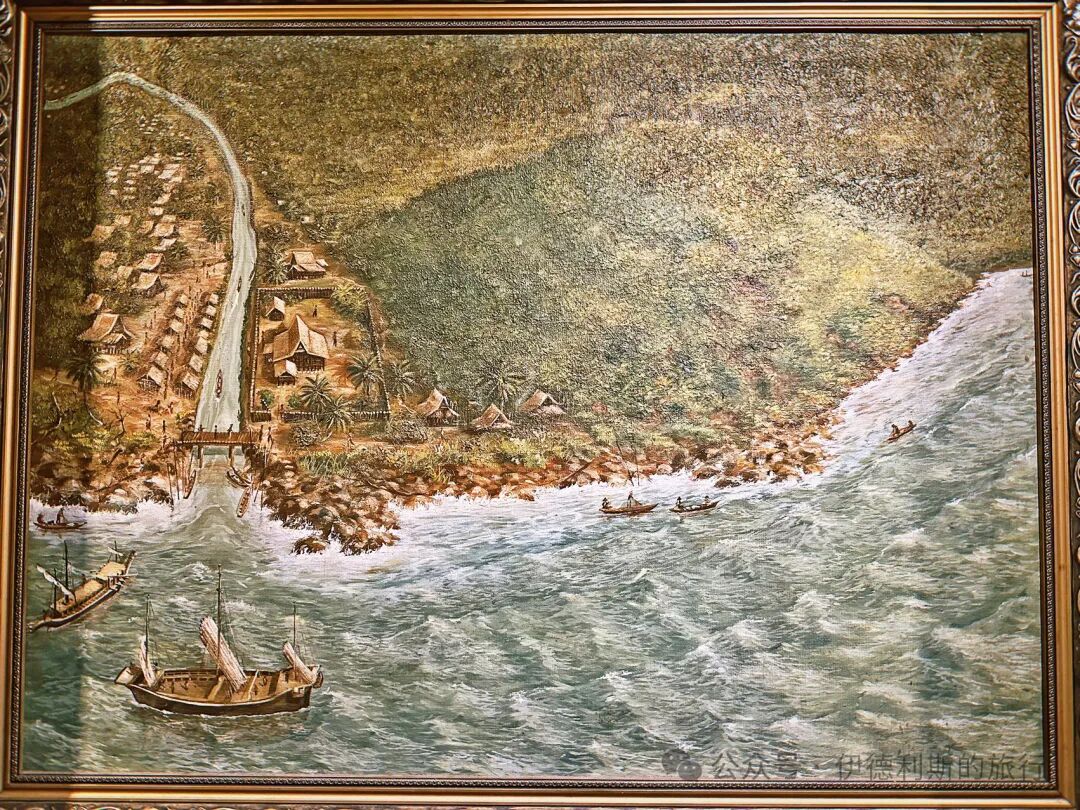
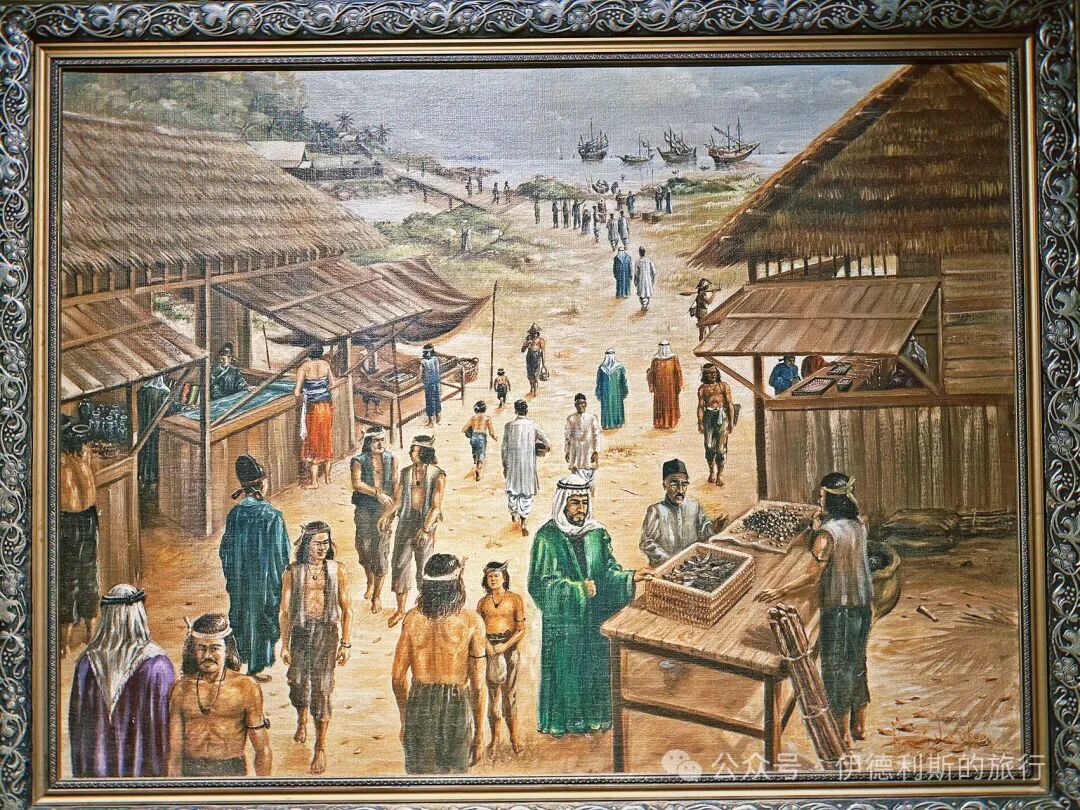
A glimpse into what life looked like during the Malacca Sultanate era.
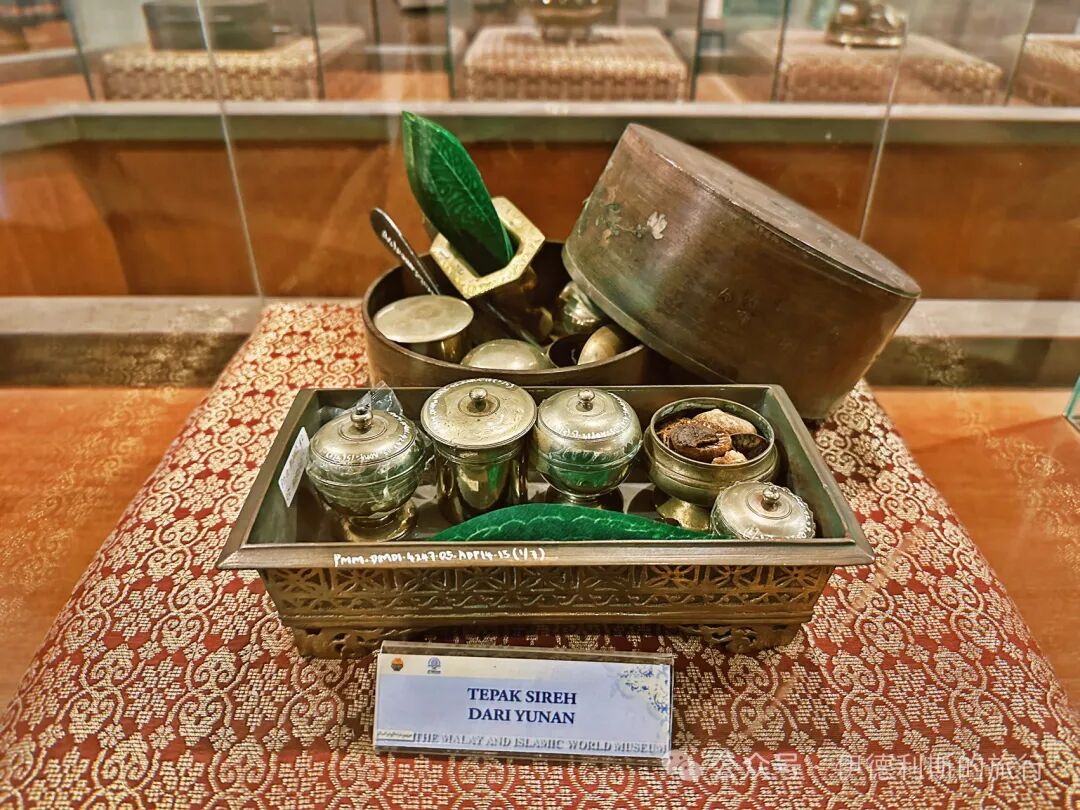
Tepak Sireh is a metal container for storing betel nut, used when welcoming guests, during traditional dances, and in royal ceremonies.
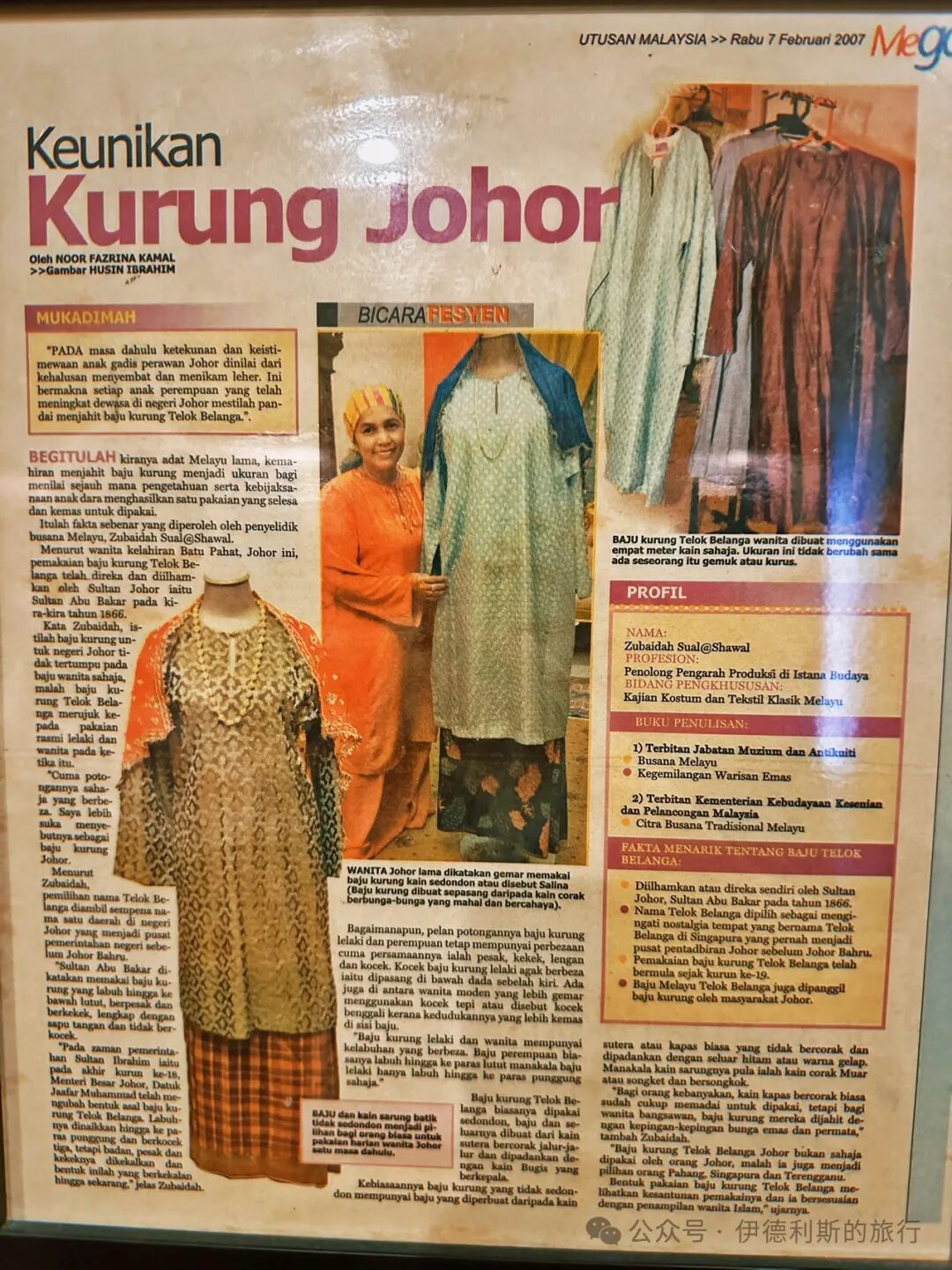
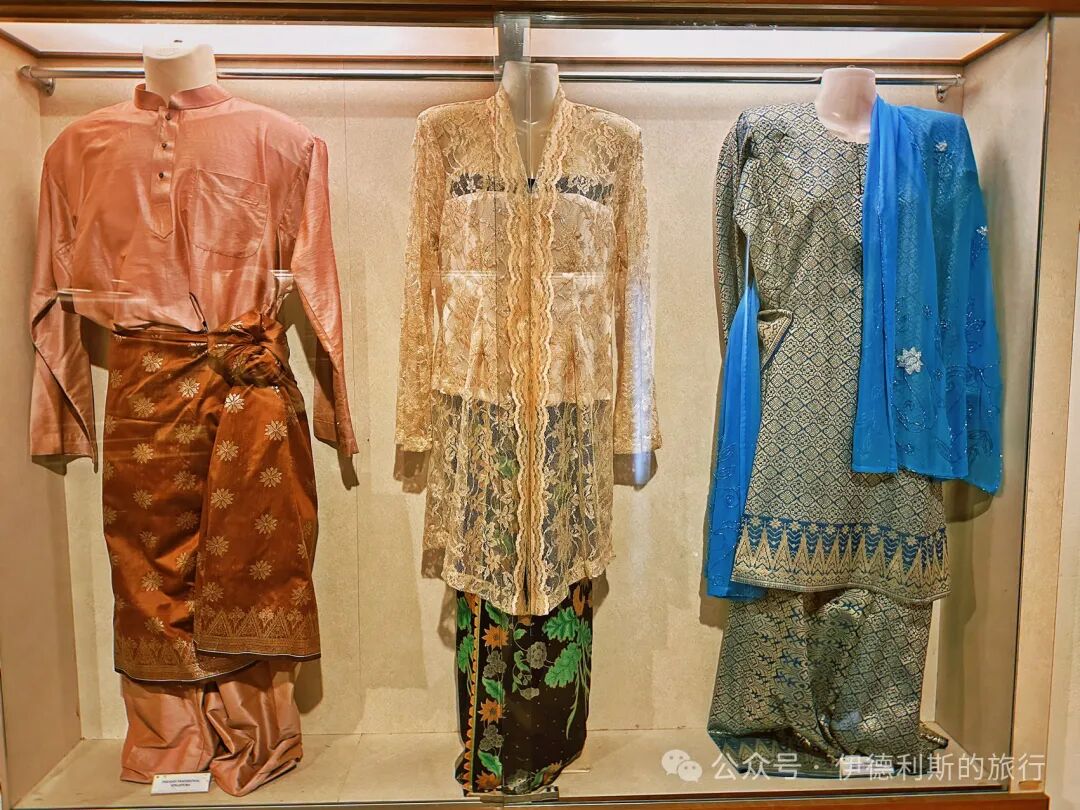
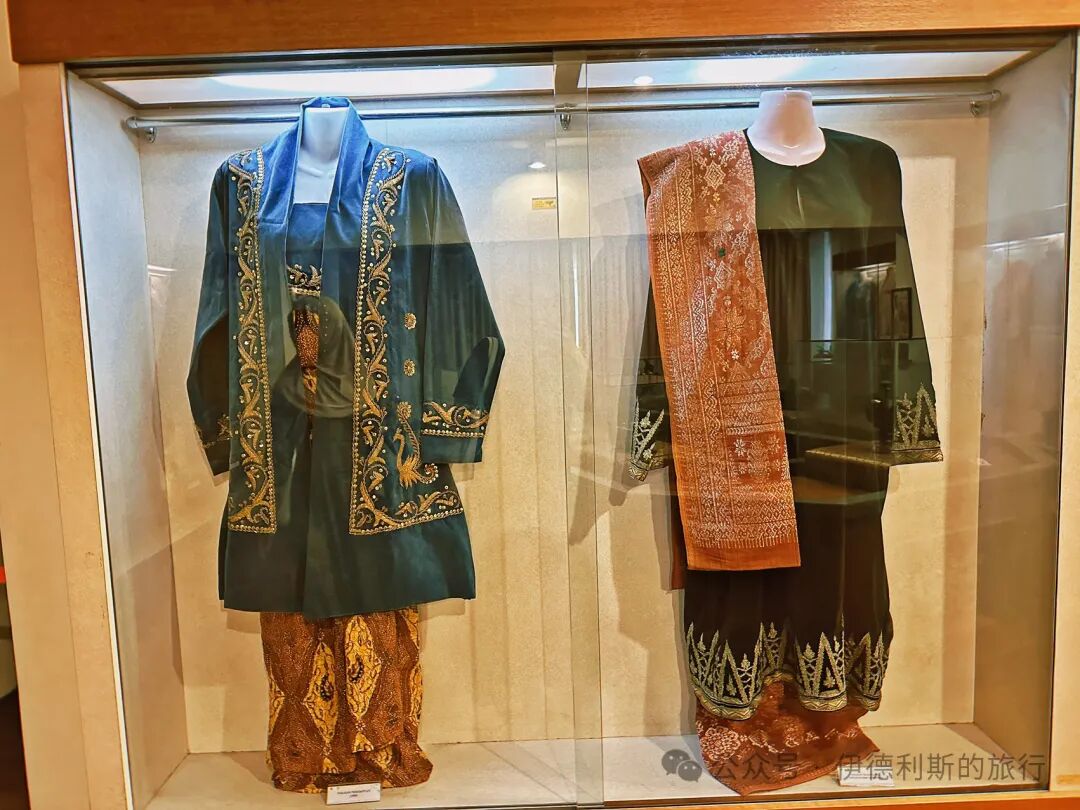
Traditional Malay clothing.
Traditional Malay manuscripts.
Malacca Sultanate Palace Museum.
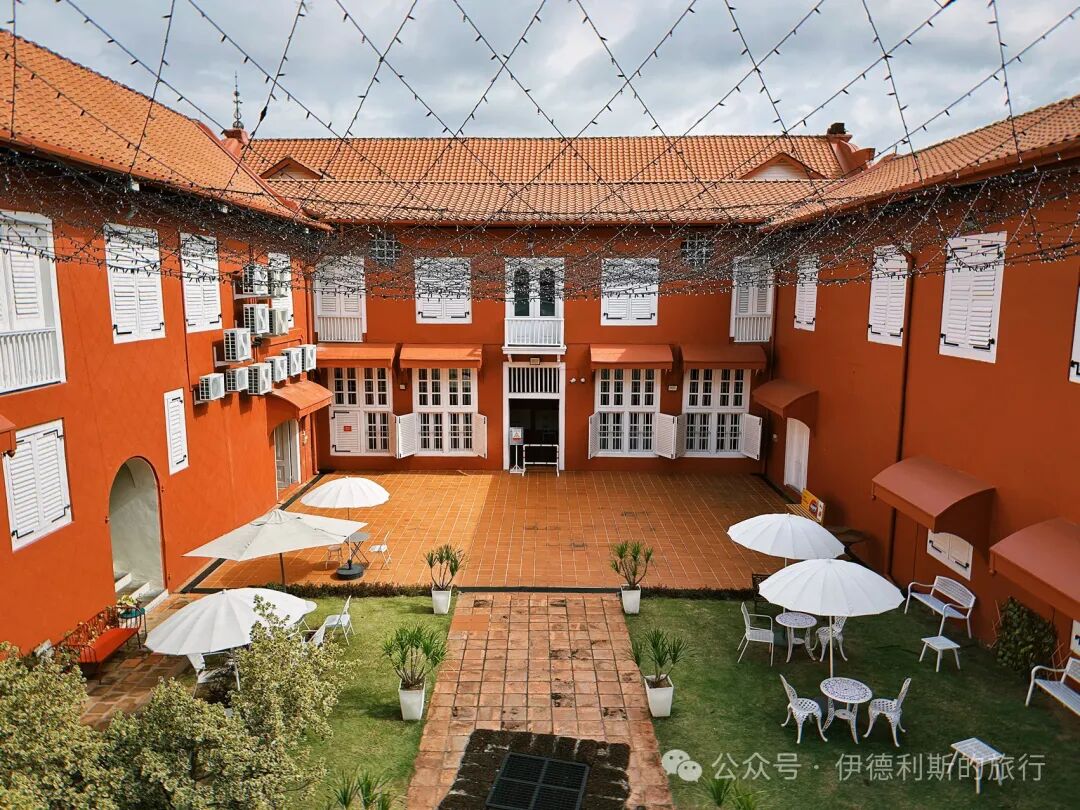
The Malacca Sultanate Palace Museum, a reconstruction of the palace from the reign of Sultan Mansur Shah (1459-77) built in 1984 based on records in the Malay Annals. view all
Summary: This second part continues through Malay wooden houses and historic sites in Malacca, focusing on house forms, museum displays, and old neighborhood details. It keeps the original place names, photographs, architectural notes, and cultural context for readers exploring Malacca heritage.
A traditional wooden box used by the Malays in Malacca to open coconuts.
Attire worn during traditional Malay wedding ceremonies in Malacca from the 1940s to the 1960s.
The tombstone of Mansur Shah, the sixth Sultan of Malacca (reigned 1459-77), held in the collection of the Malacca History Museum.
Sultan Mansur Shah began the golden age of the Malacca Sultanate, and he was known as a knowledgeable, fair, and pious ruler. He followed an expansionist policy, occupying many areas including the Malay Peninsula, eastern Sumatra, Singapore, and Bintan Island, and he helped spread the faith widely across the Malay Peninsula through marriage alliances.
During his reign, Sultan Mansur Shah lowered trade taxes, charging 6% to Arab and Indian merchants from the west, 3% to local merchants, and exempting merchants from China, Japan, and Java, which made trade in Malacca more prosperous.
Sultan Mansur Shah was passionate about the faith and encouraged Sufi studies, personally studying under Maulana Abu Bakr and translating the famous commentary Ad Darrul Manzum into Malay.
The interior layout of a traditional Malay wooden house recreated at the Malacca History Museum feels quite authentic. The exhibition hall also has a map showing the locations of typical Malay wooden houses in Malacca, so interested friends (dosti) can follow the map to visit them in person.
The Malacca History Museum houses a set of three enamel incense burners and vases, and there is a statue of Zheng He in the museum courtyard. The museum also features a painting of the Ming Emperor Chengzu sending his envoy Yin Qing to issue an imperial decree to the Sultan of Malacca in 1403 (the first year of the Yongle era).
Muzium Budaya Melayu dan Islam Melaka (Malacca Malay and Islamic World Museum).
A glimpse into what life looked like during the Malacca Sultanate era.
Tepak Sireh is a metal container for storing betel nut, used when welcoming guests, during traditional dances, and in royal ceremonies.
Traditional Malay clothing.
Traditional Malay manuscripts.
Malacca Sultanate Palace Museum.
The Malacca Sultanate Palace Museum, a reconstruction of the palace from the reign of Sultan Mansur Shah (1459-77) built in 1984 based on records in the Malay Annals. view all
Reposted from the web
Summary: This second part continues through Malay wooden houses and historic sites in Malacca, focusing on house forms, museum displays, and old neighborhood details. It keeps the original place names, photographs, architectural notes, and cultural context for readers exploring Malacca heritage.
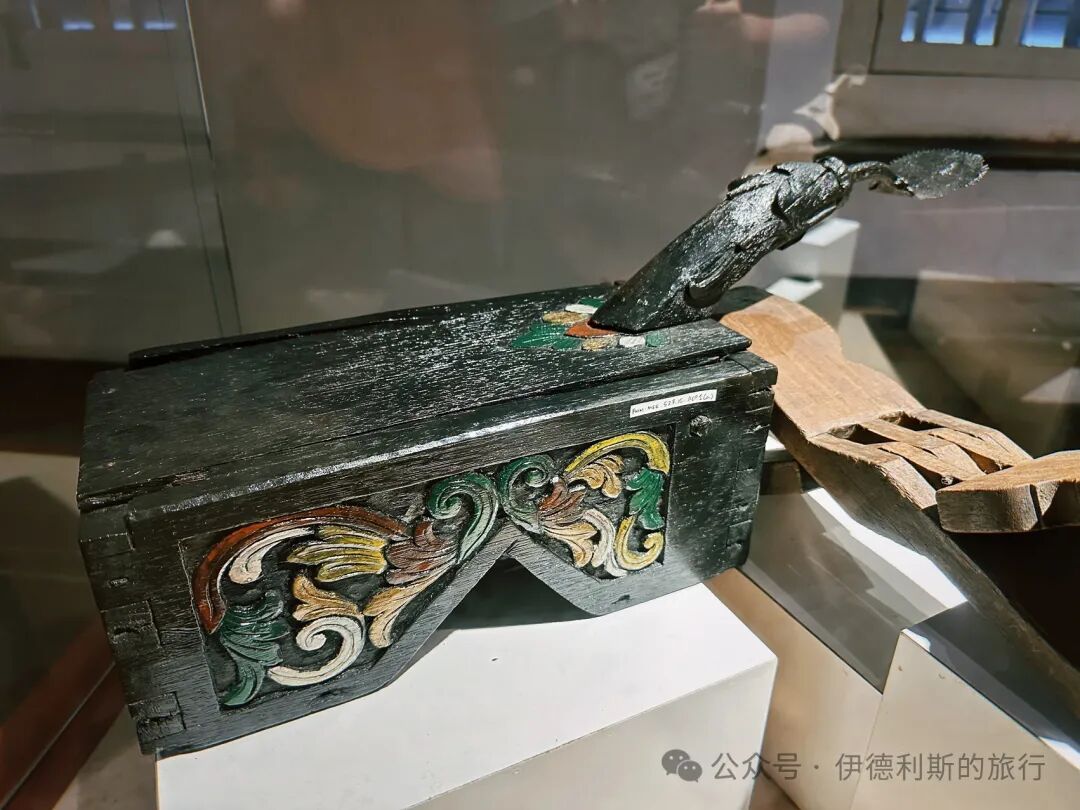
A traditional wooden box used by the Malays in Malacca to open coconuts.
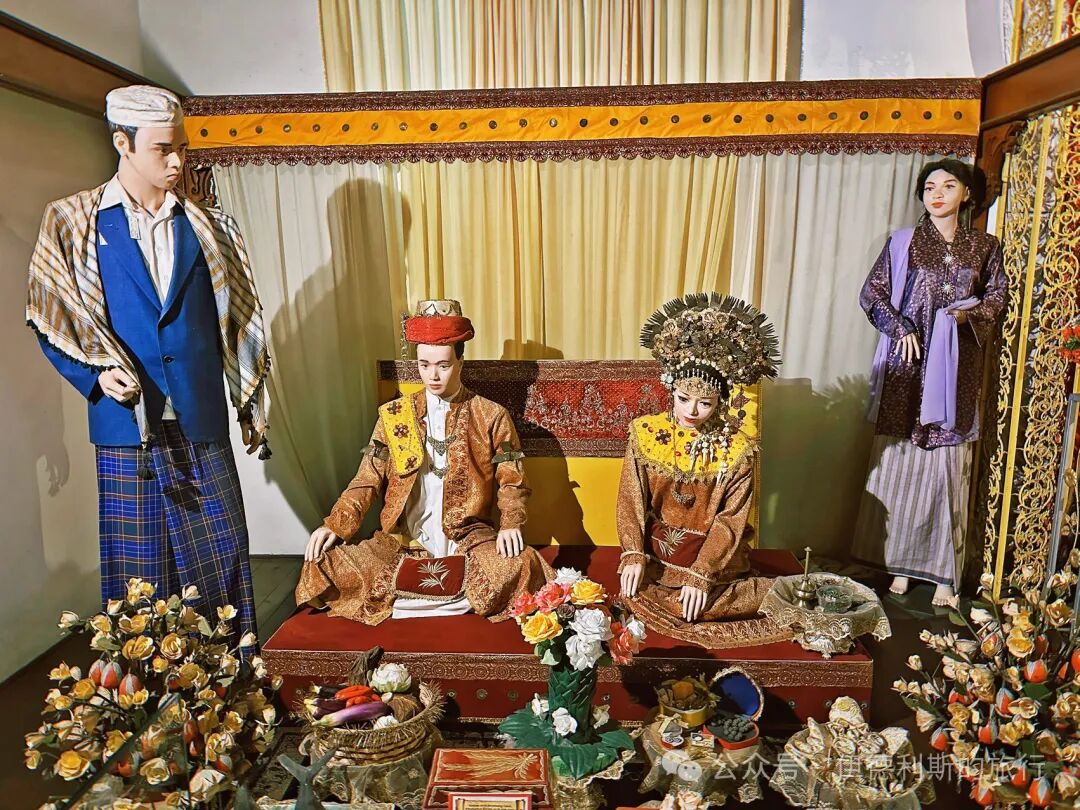
Attire worn during traditional Malay wedding ceremonies in Malacca from the 1940s to the 1960s.
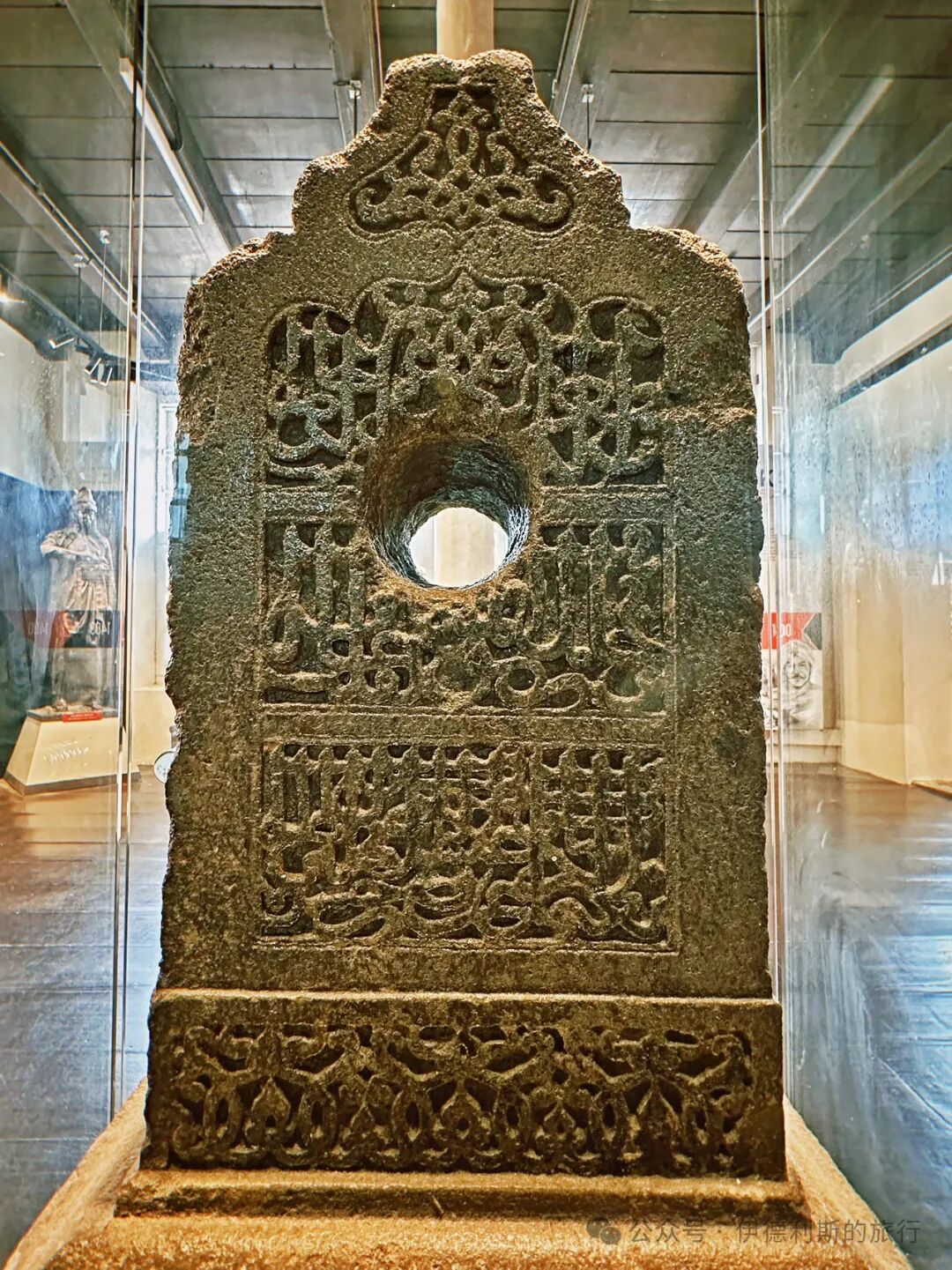
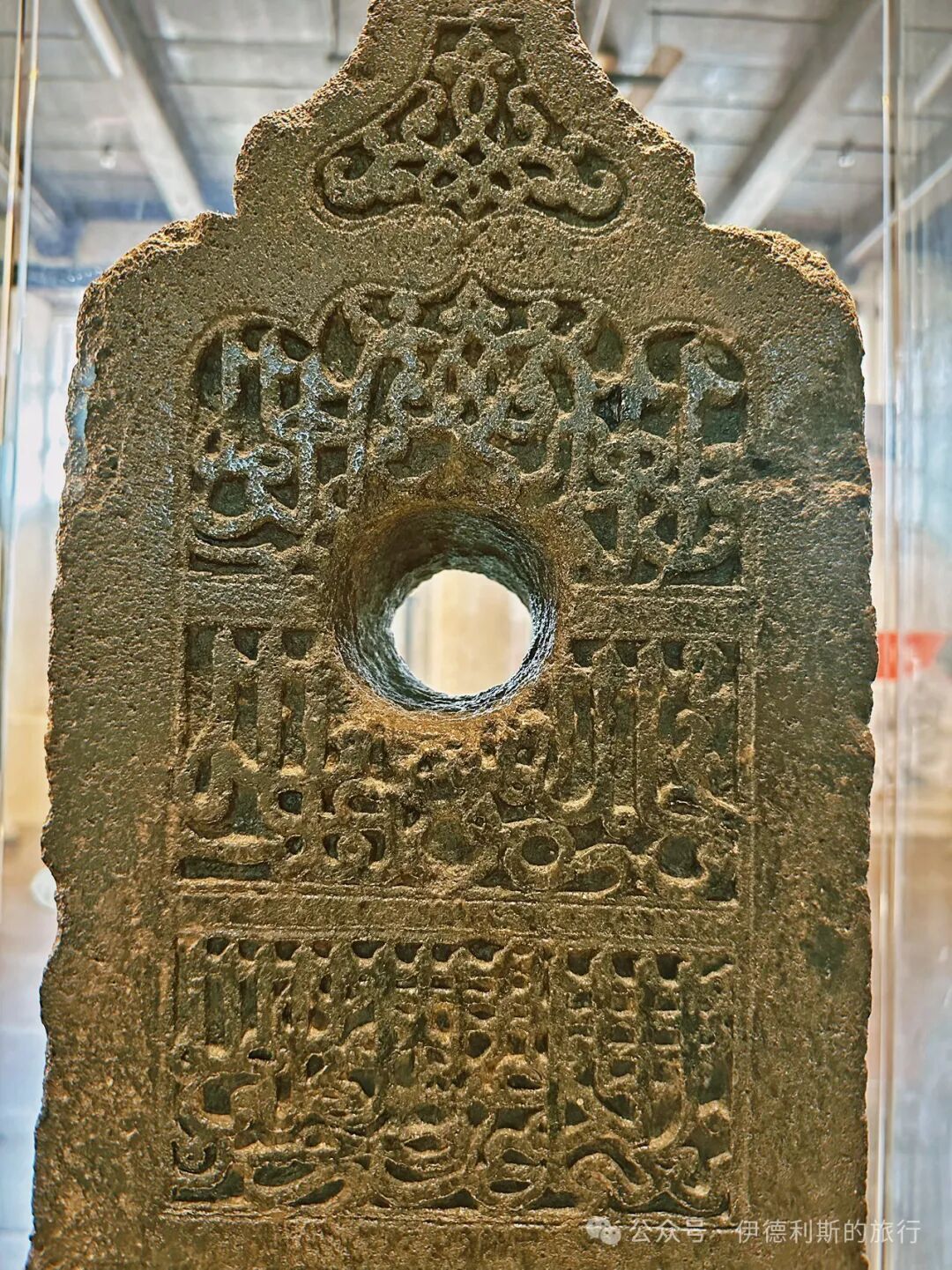
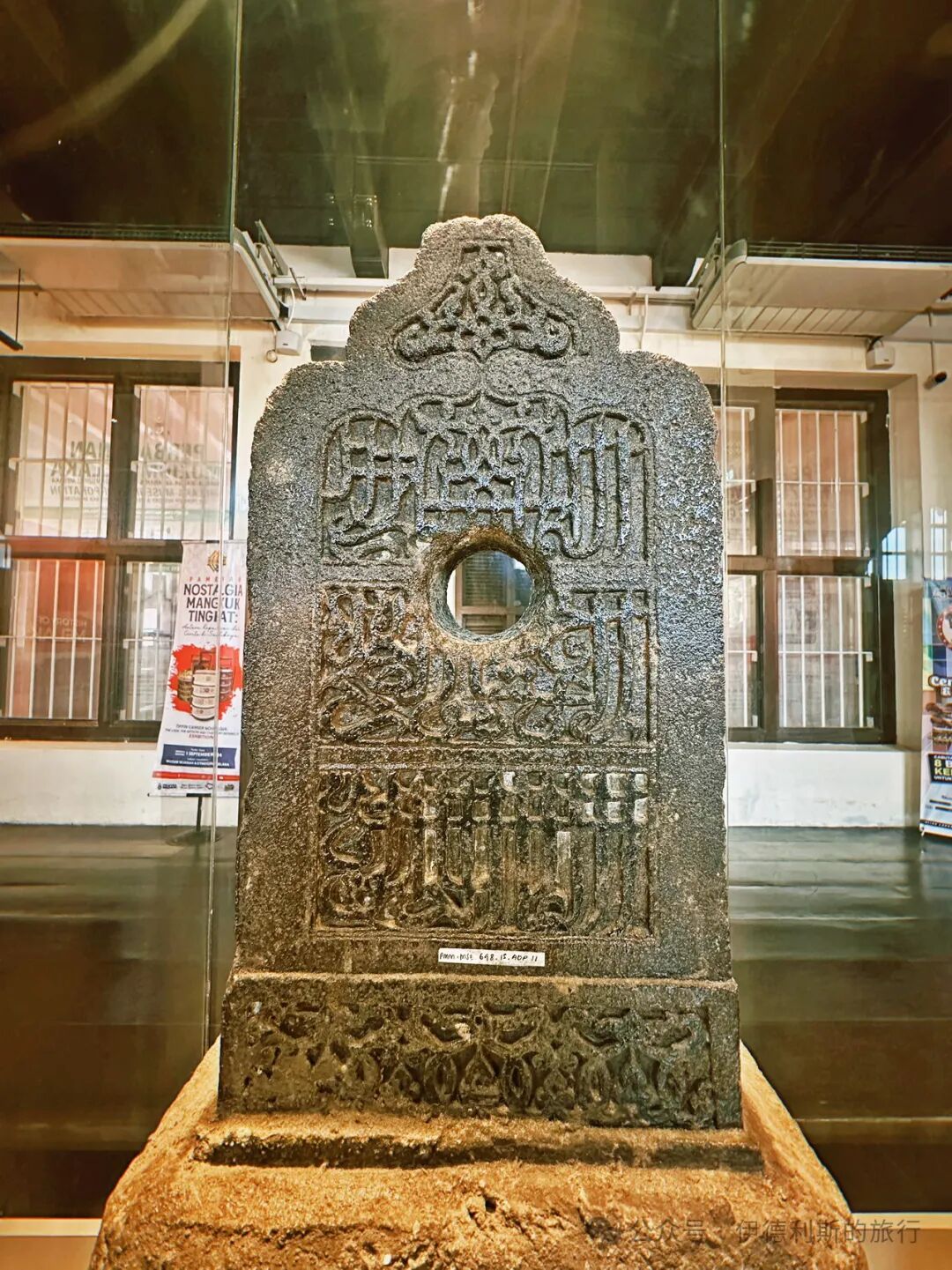
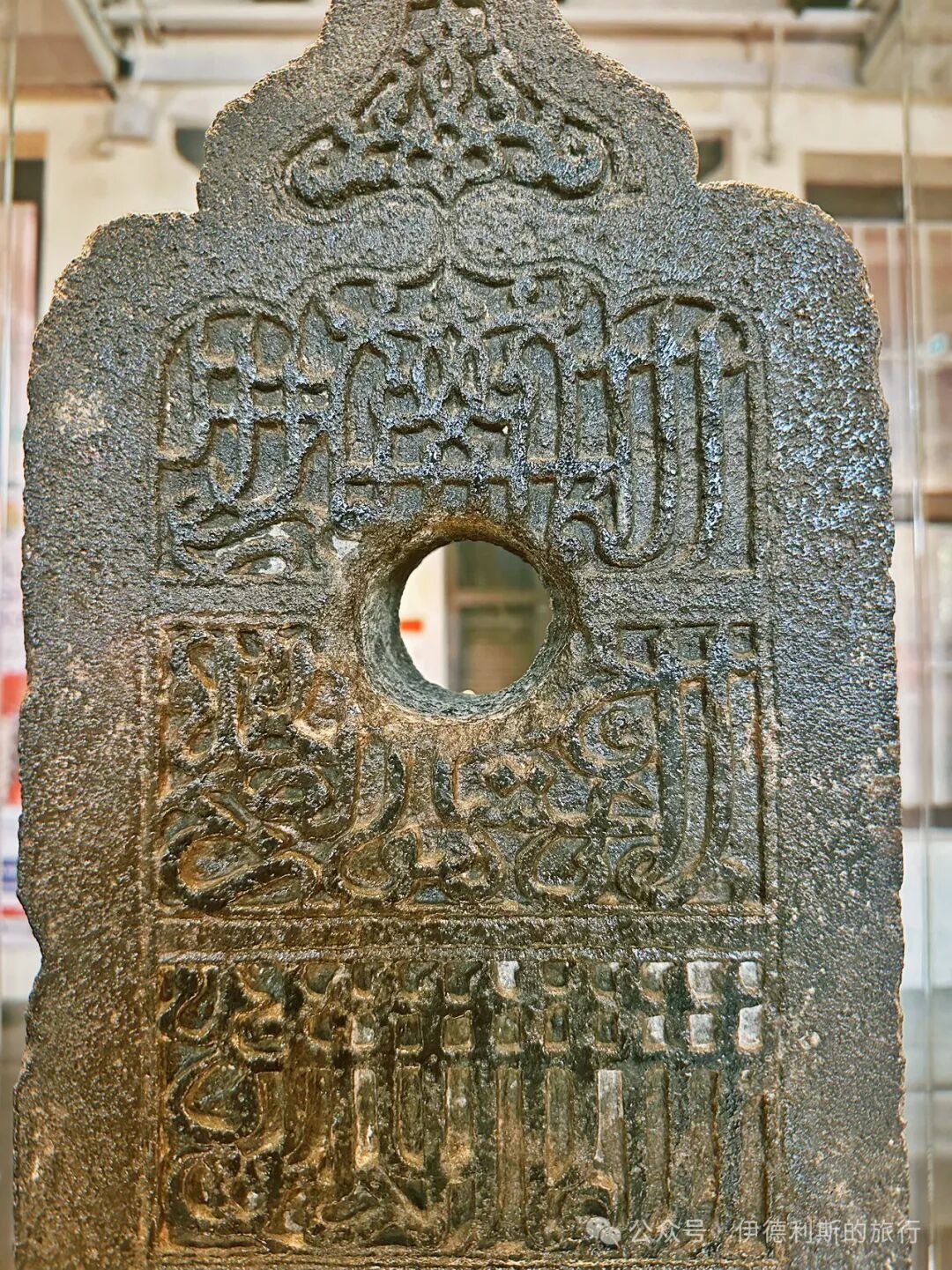
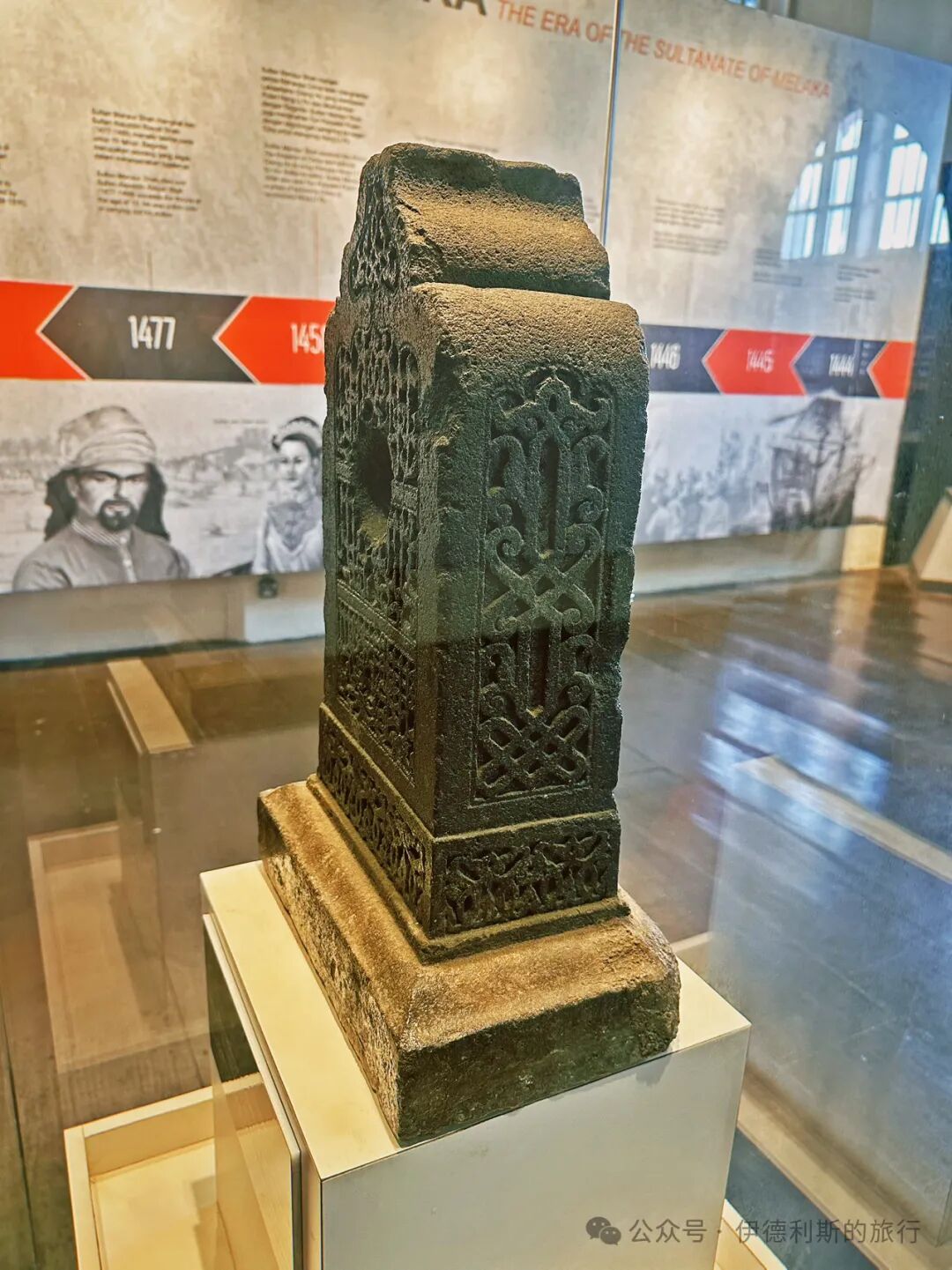
The tombstone of Mansur Shah, the sixth Sultan of Malacca (reigned 1459-77), held in the collection of the Malacca History Museum.
Sultan Mansur Shah began the golden age of the Malacca Sultanate, and he was known as a knowledgeable, fair, and pious ruler. He followed an expansionist policy, occupying many areas including the Malay Peninsula, eastern Sumatra, Singapore, and Bintan Island, and he helped spread the faith widely across the Malay Peninsula through marriage alliances.
During his reign, Sultan Mansur Shah lowered trade taxes, charging 6% to Arab and Indian merchants from the west, 3% to local merchants, and exempting merchants from China, Japan, and Java, which made trade in Malacca more prosperous.
Sultan Mansur Shah was passionate about the faith and encouraged Sufi studies, personally studying under Maulana Abu Bakr and translating the famous commentary Ad Darrul Manzum into Malay.
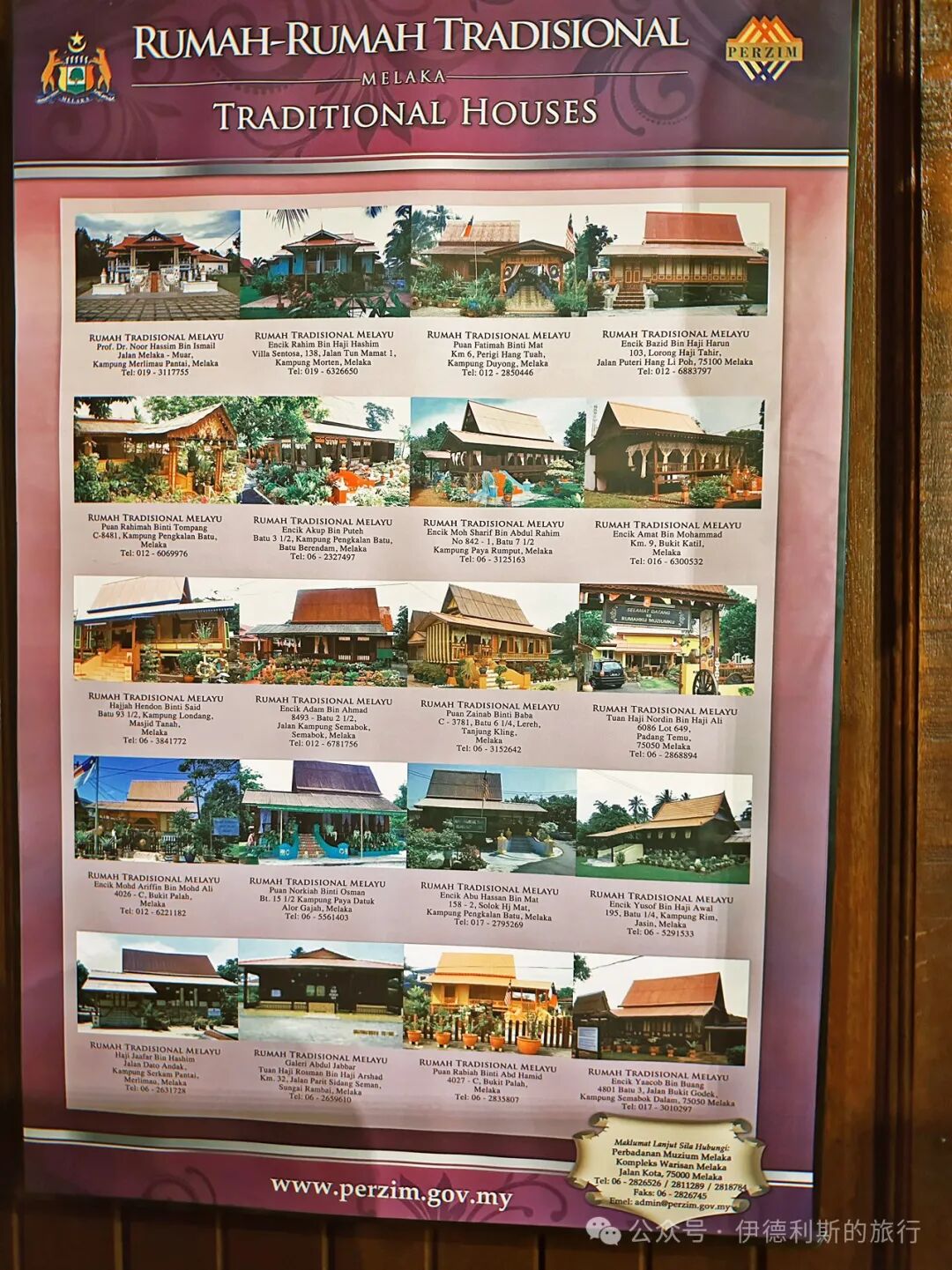
The interior layout of a traditional Malay wooden house recreated at the Malacca History Museum feels quite authentic. The exhibition hall also has a map showing the locations of typical Malay wooden houses in Malacca, so interested friends (dosti) can follow the map to visit them in person.
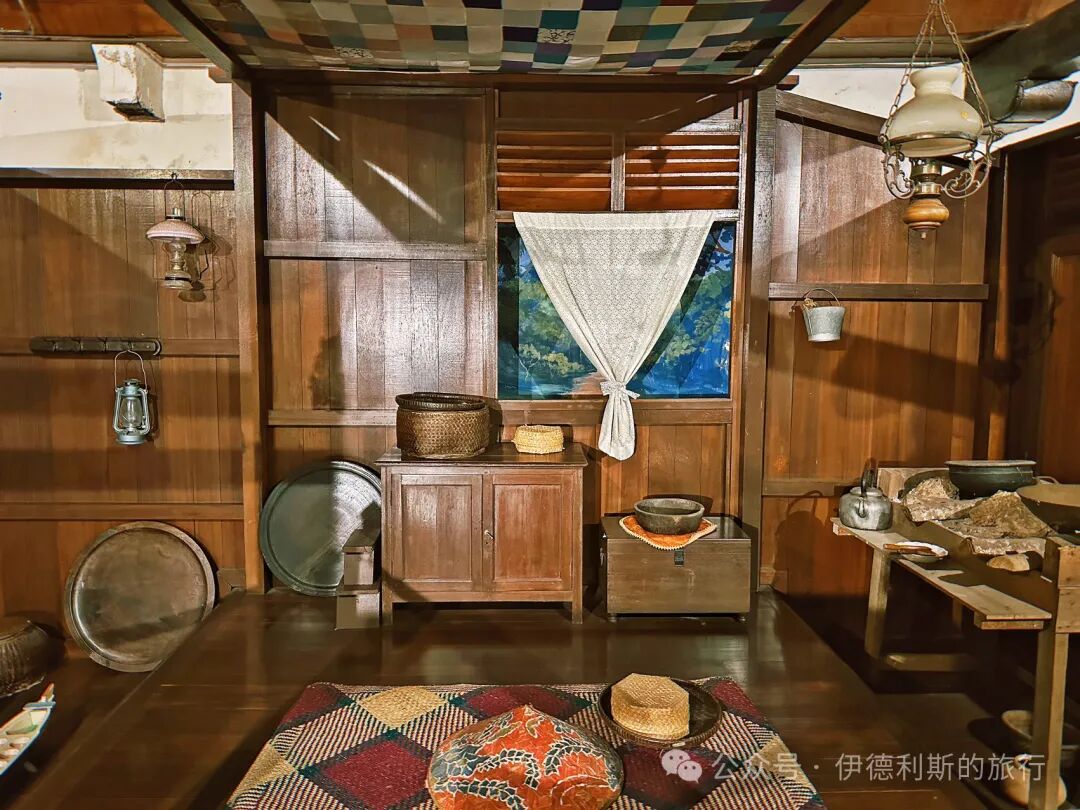
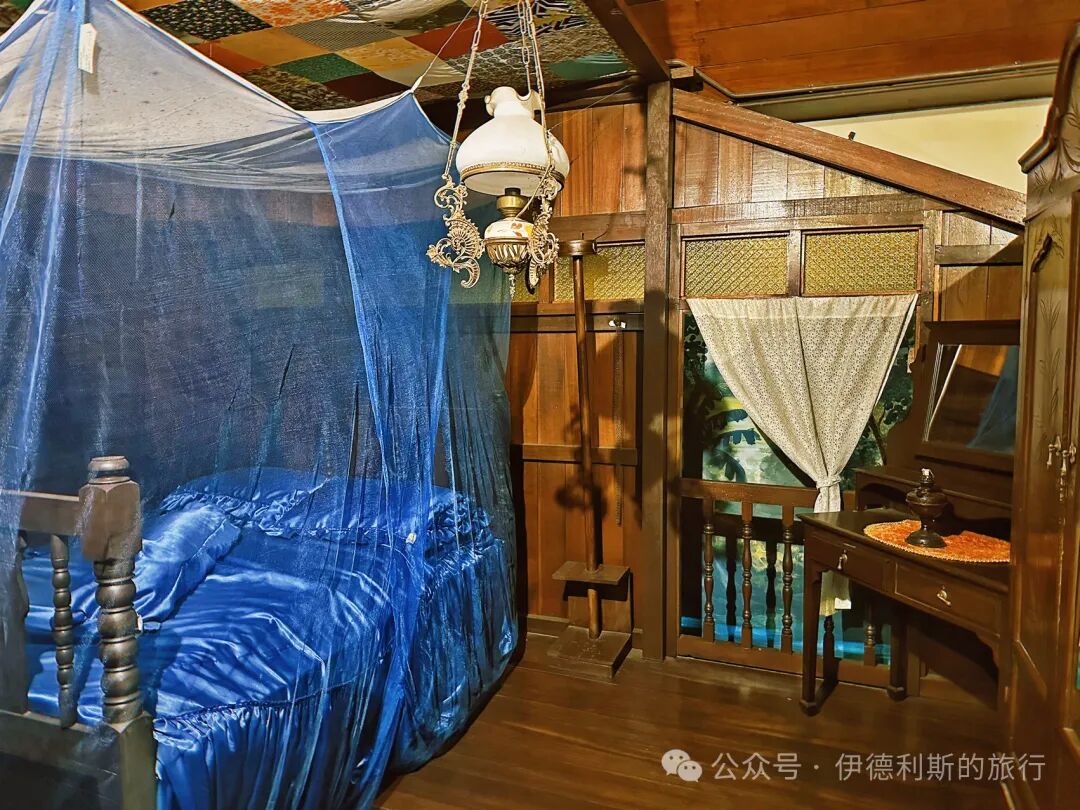
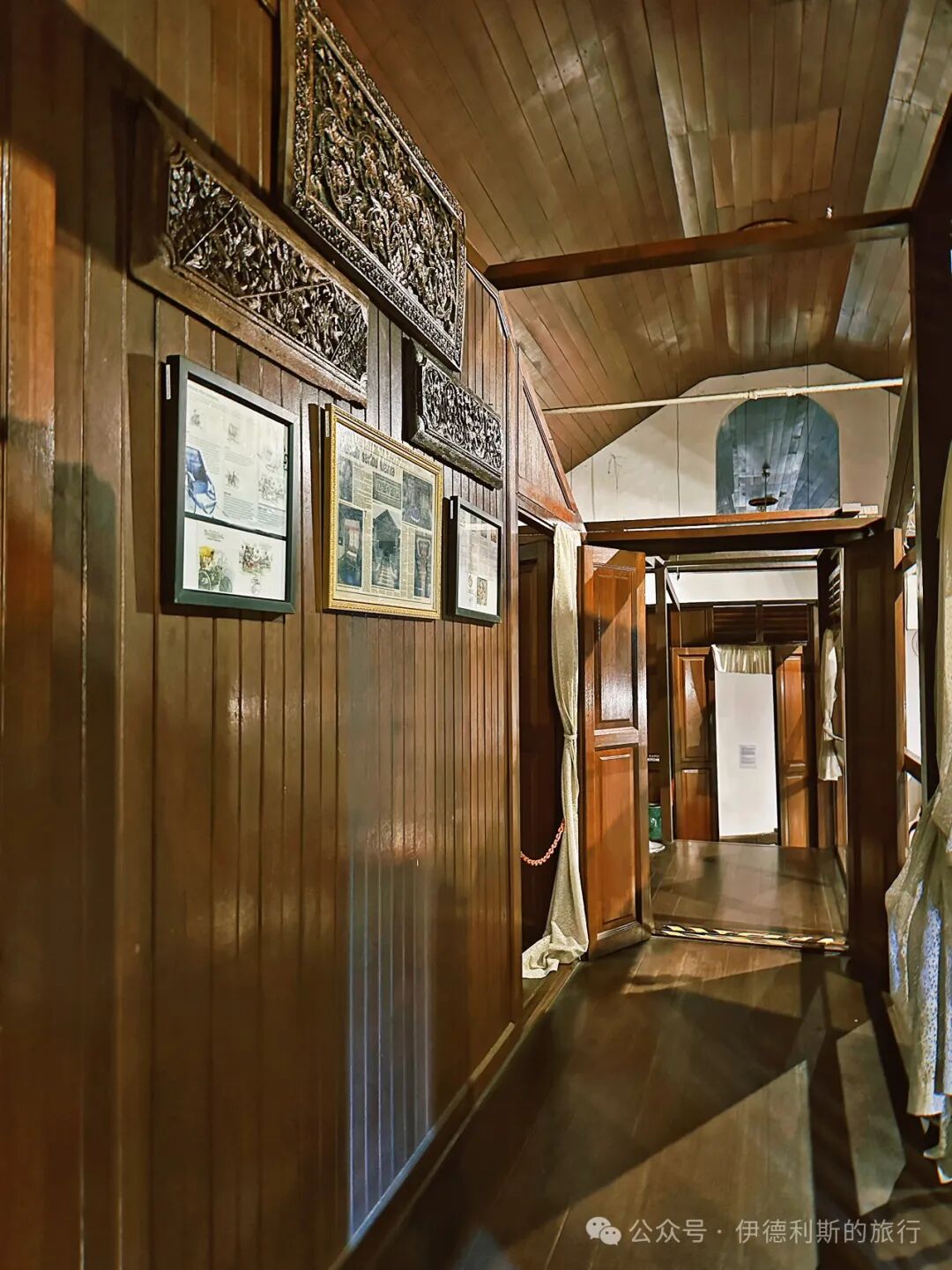
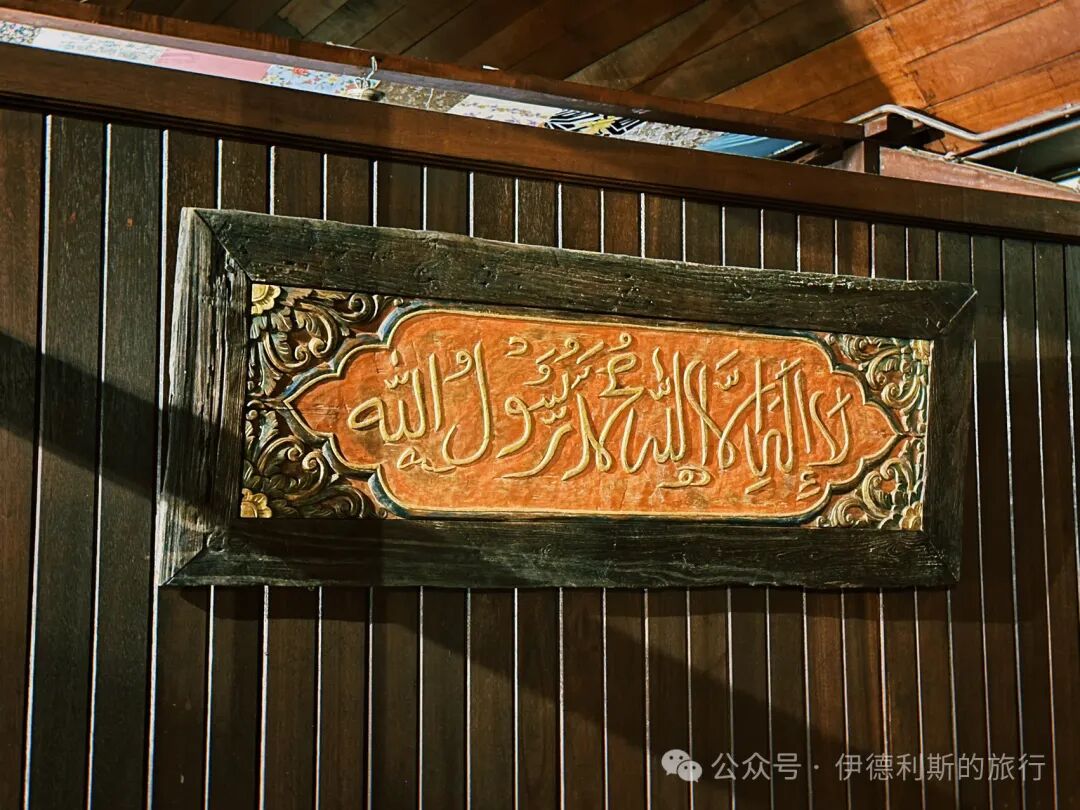
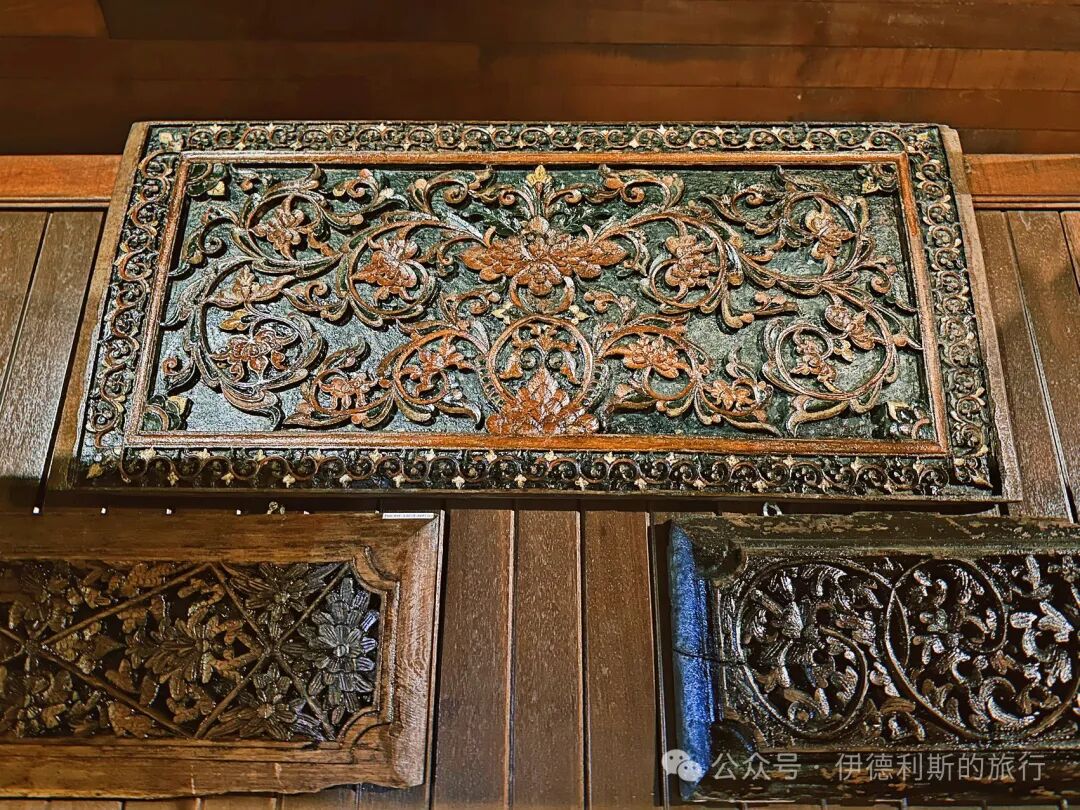
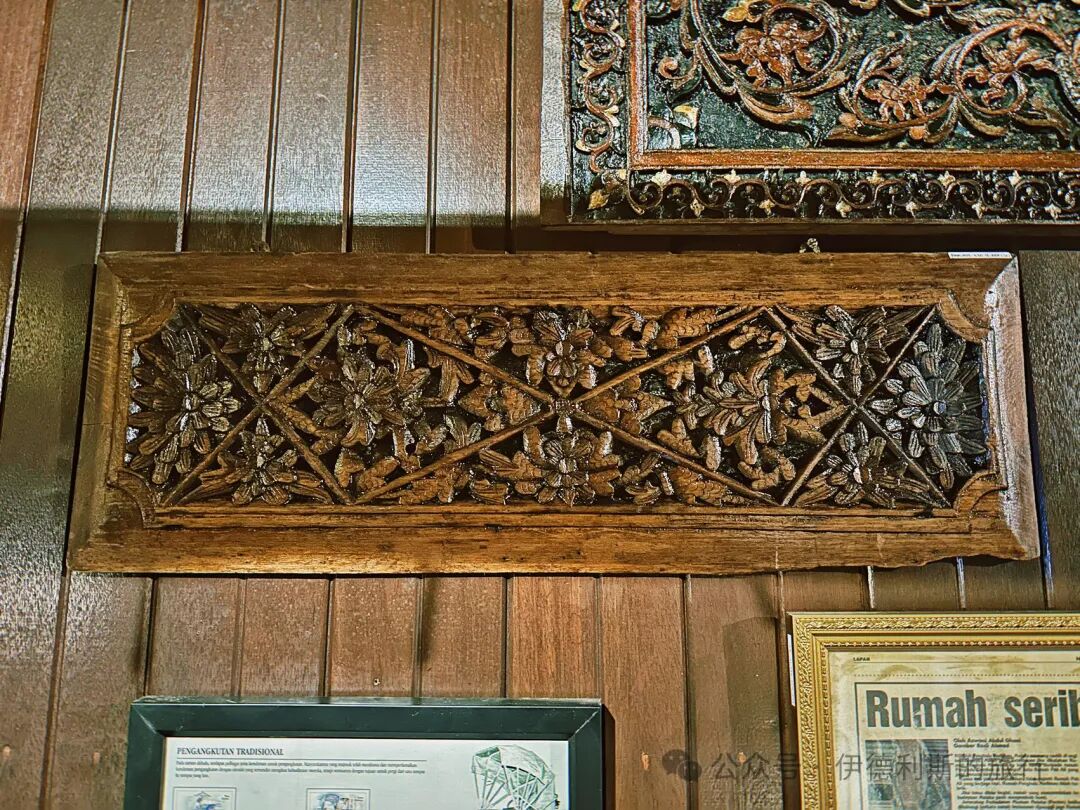
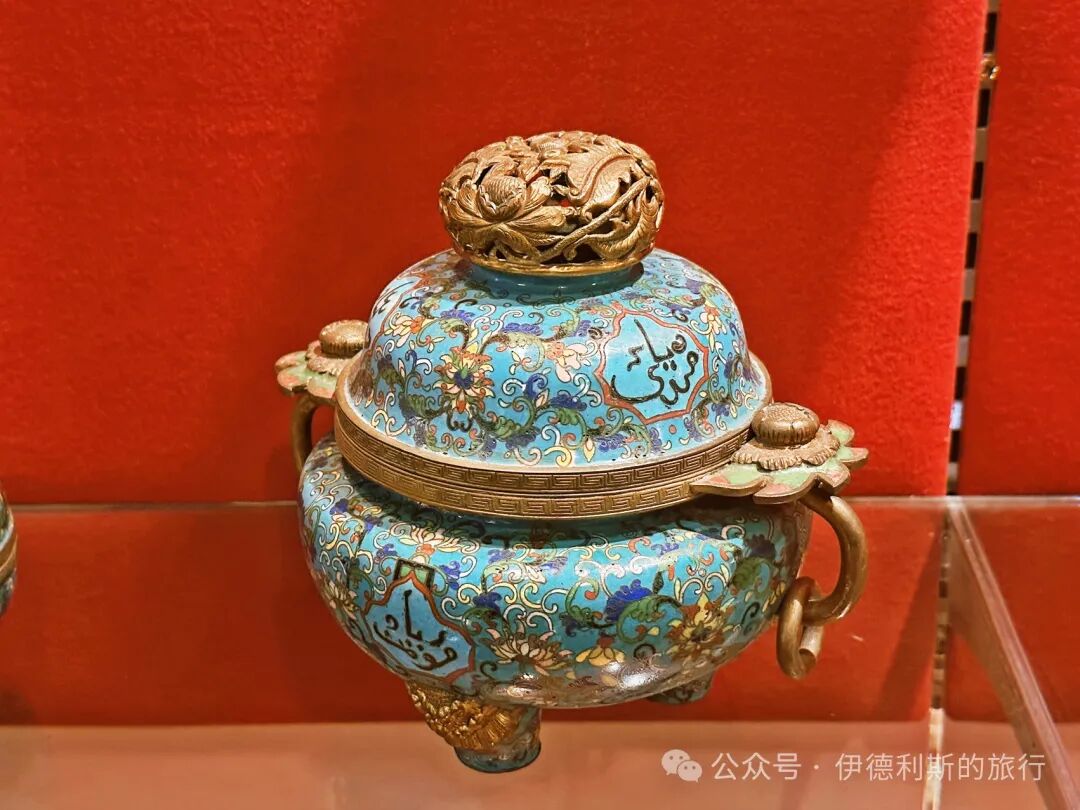
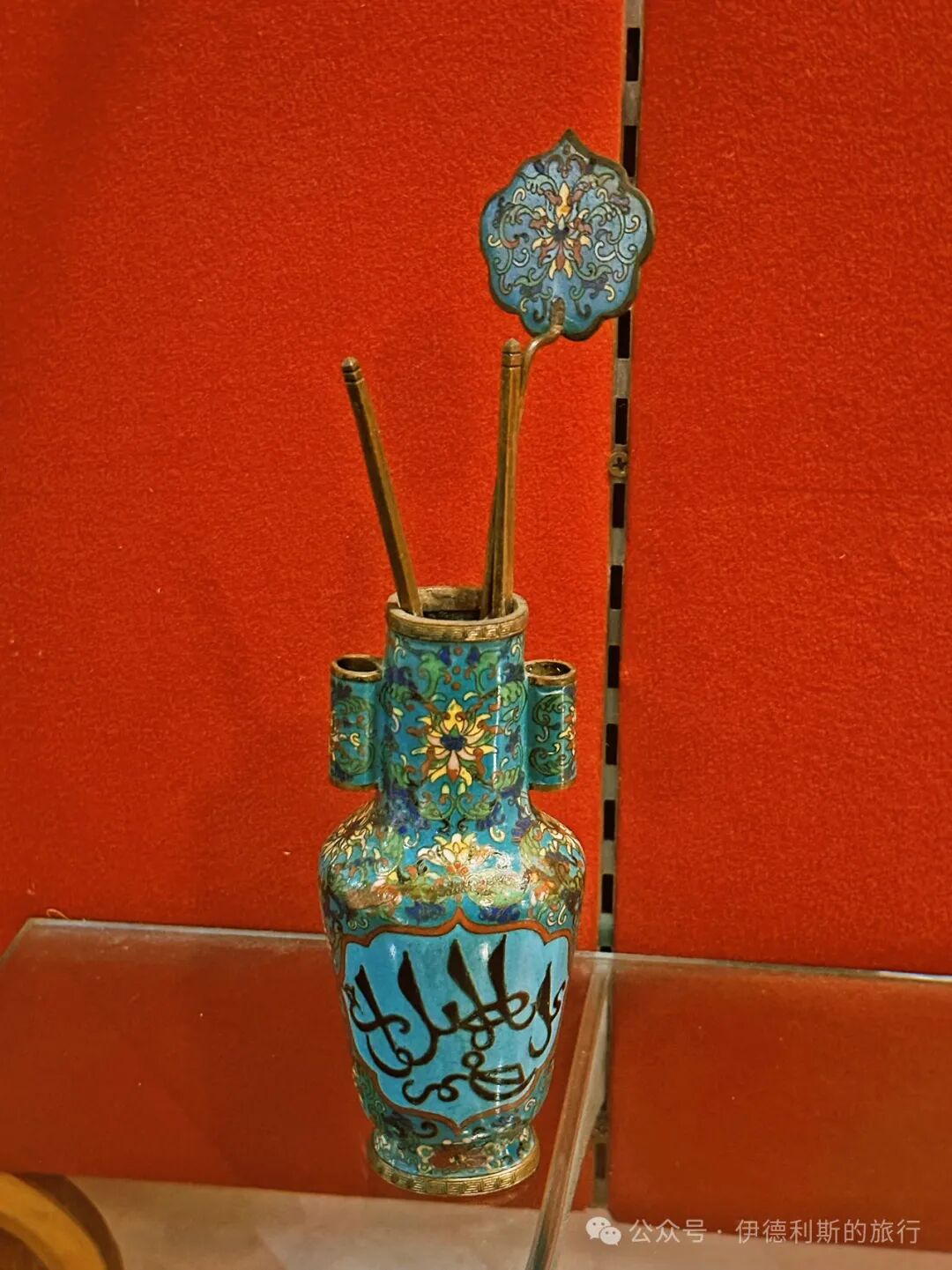
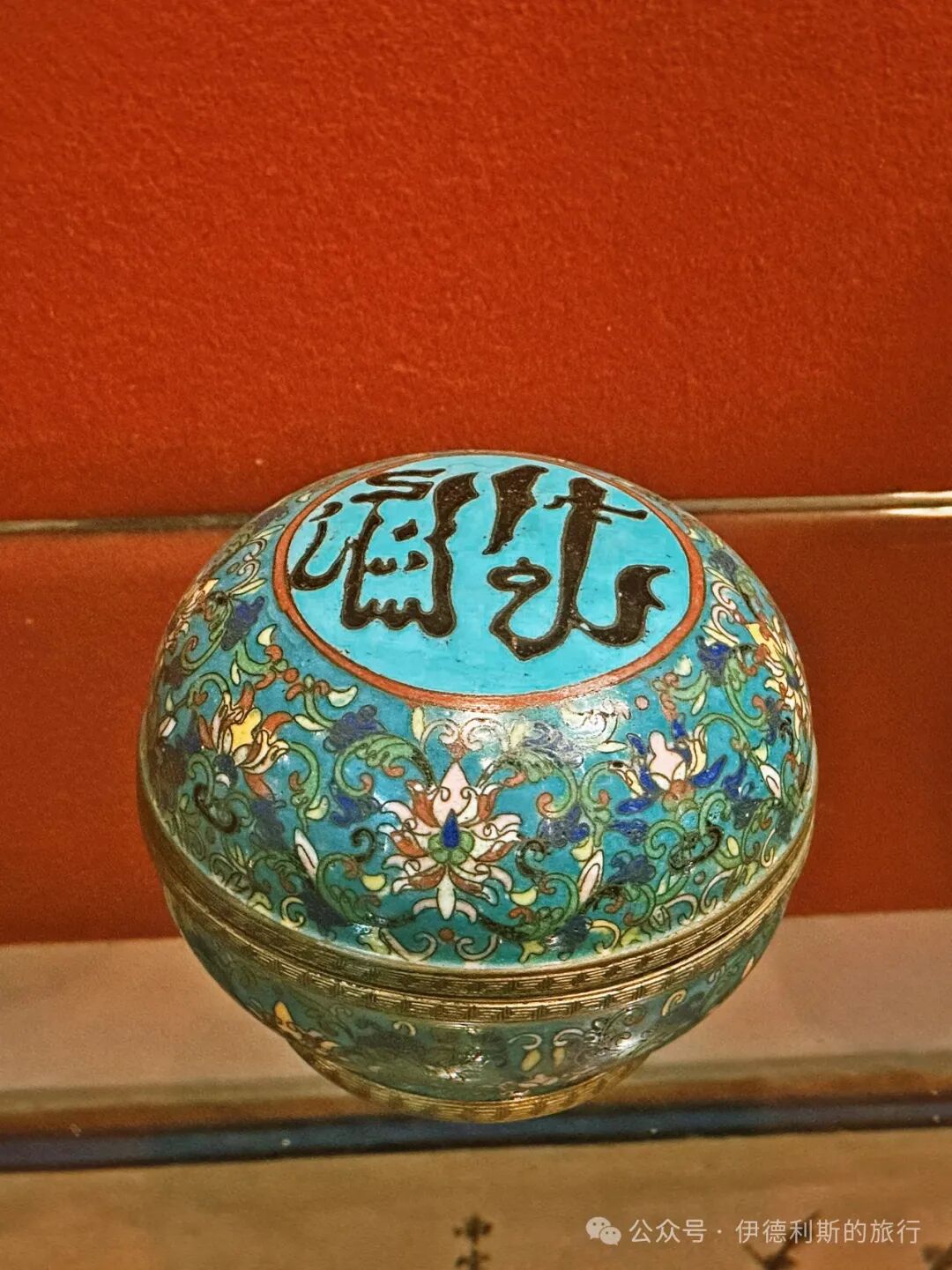
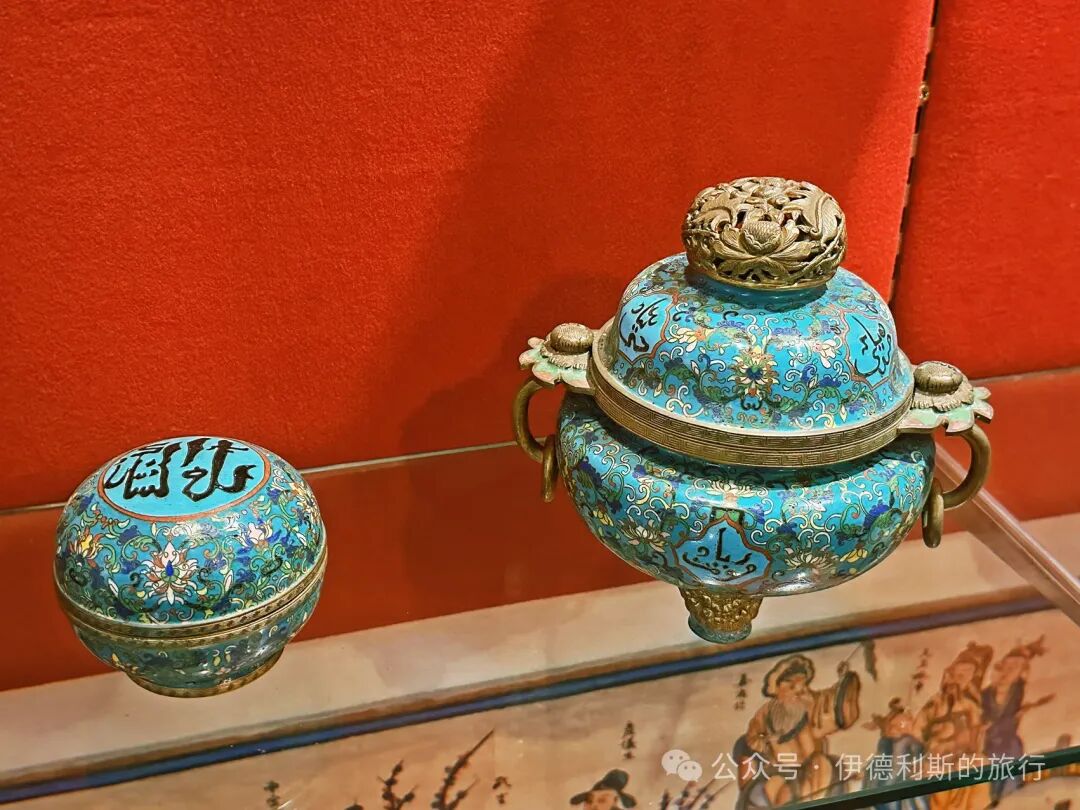
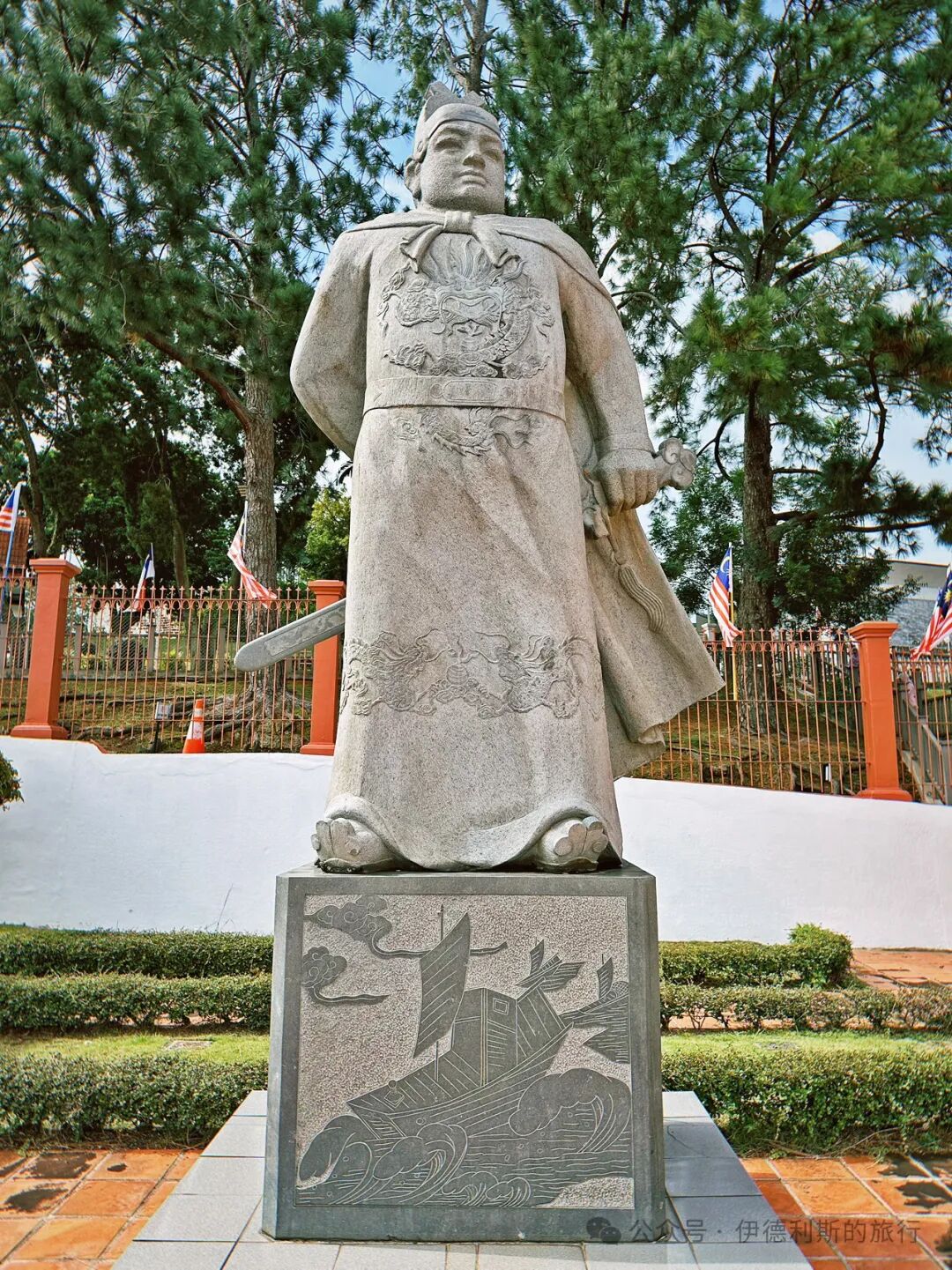
The Malacca History Museum houses a set of three enamel incense burners and vases, and there is a statue of Zheng He in the museum courtyard. The museum also features a painting of the Ming Emperor Chengzu sending his envoy Yin Qing to issue an imperial decree to the Sultan of Malacca in 1403 (the first year of the Yongle era).
Muzium Budaya Melayu dan Islam Melaka (Malacca Malay and Islamic World Museum).
A glimpse into what life looked like during the Malacca Sultanate era.
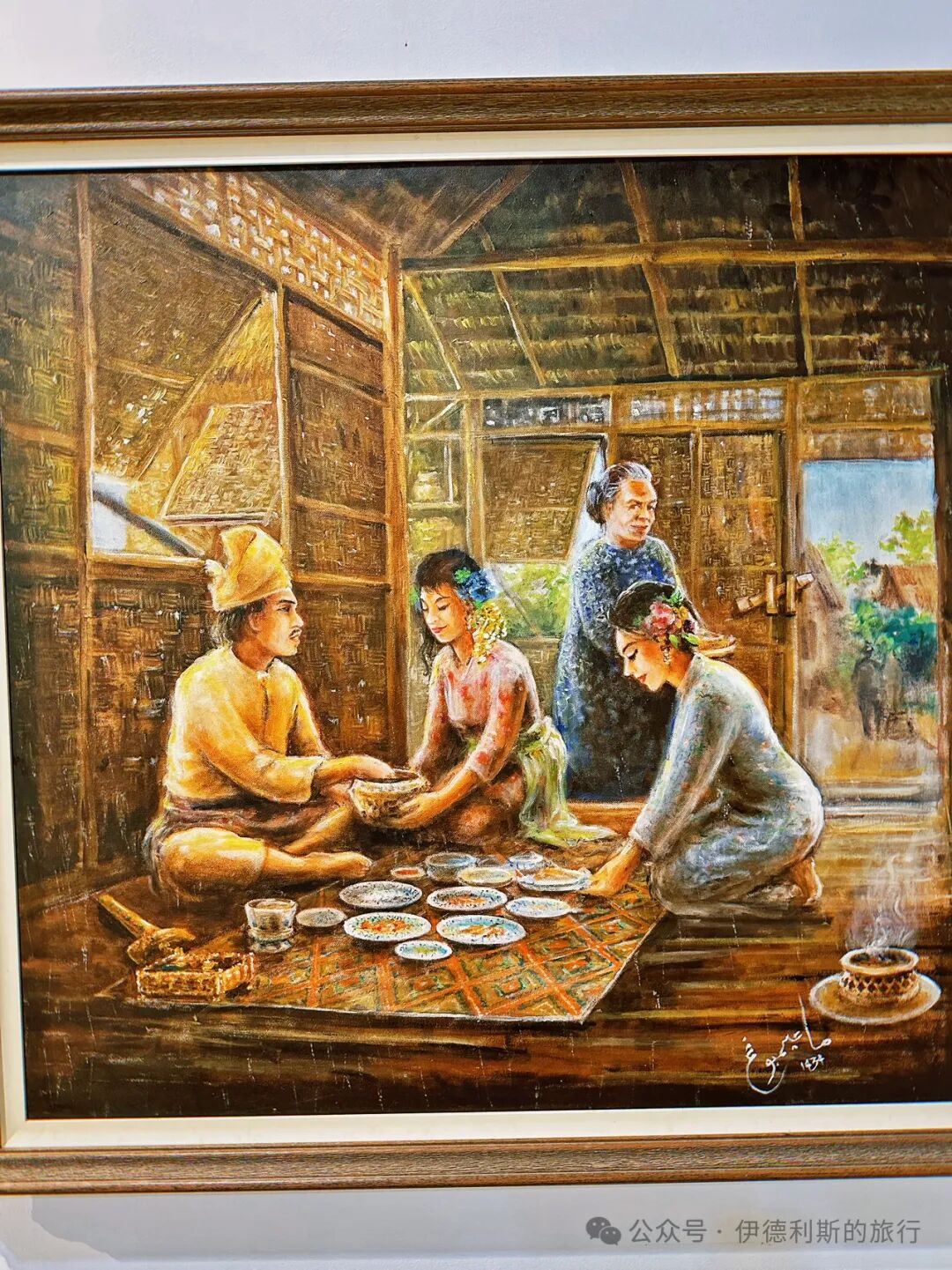
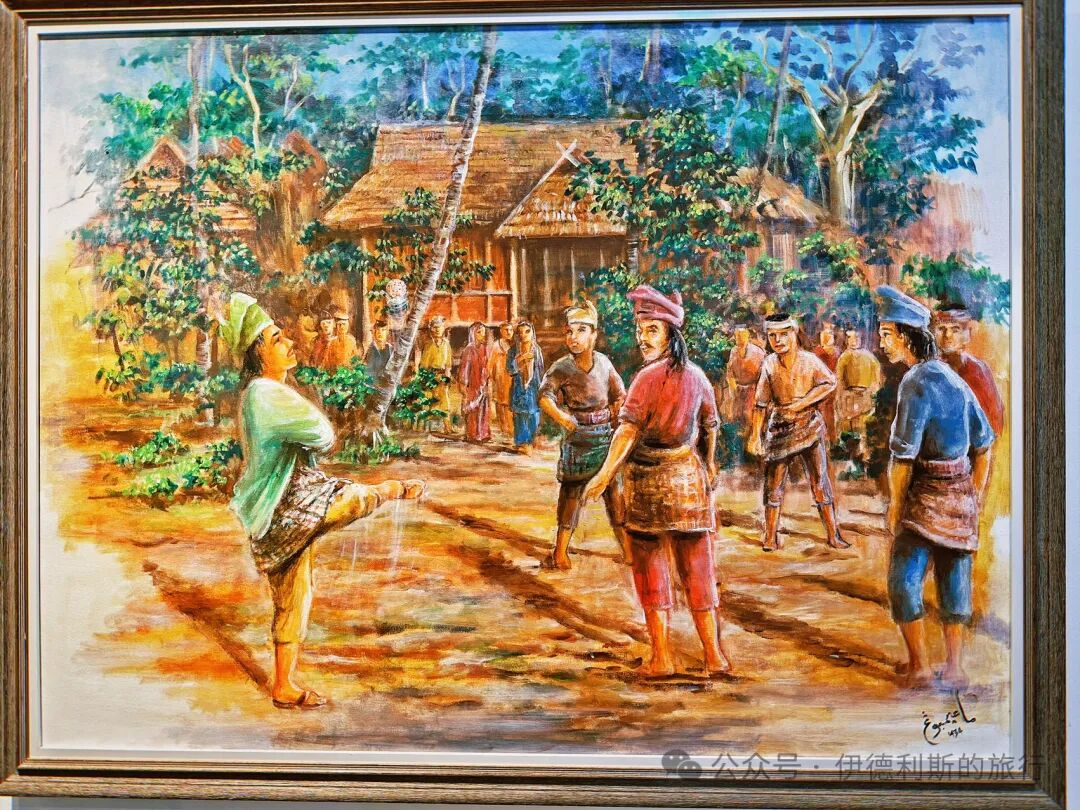
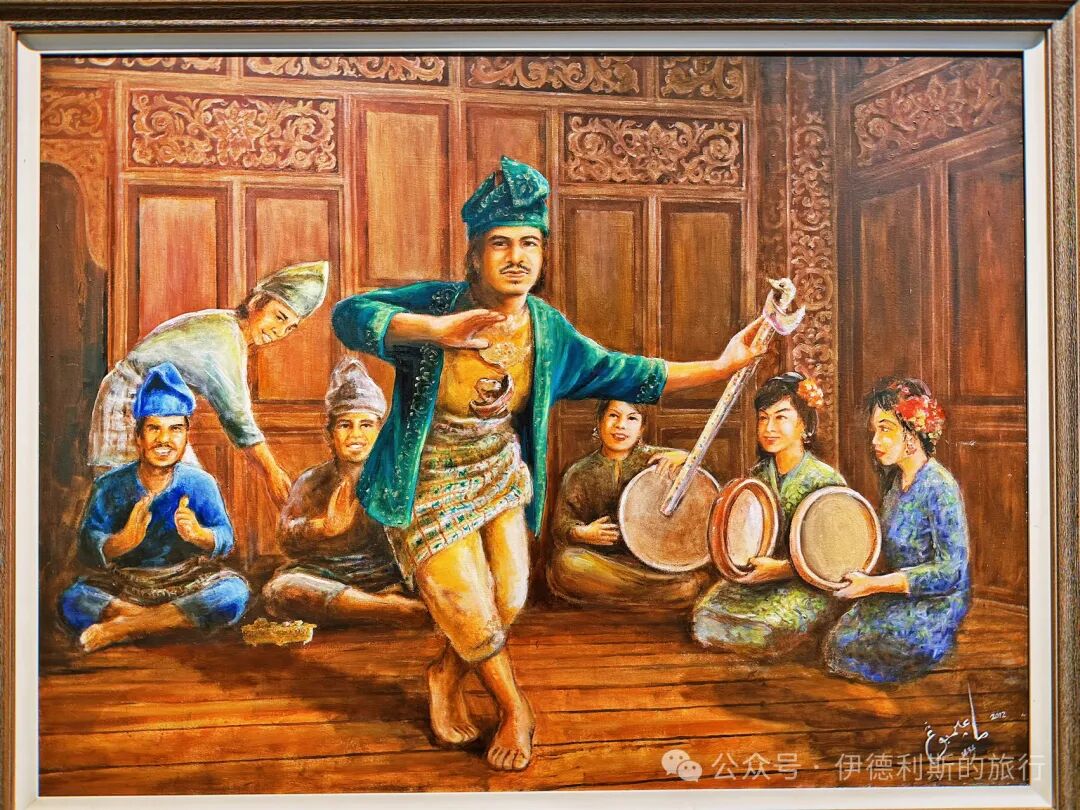
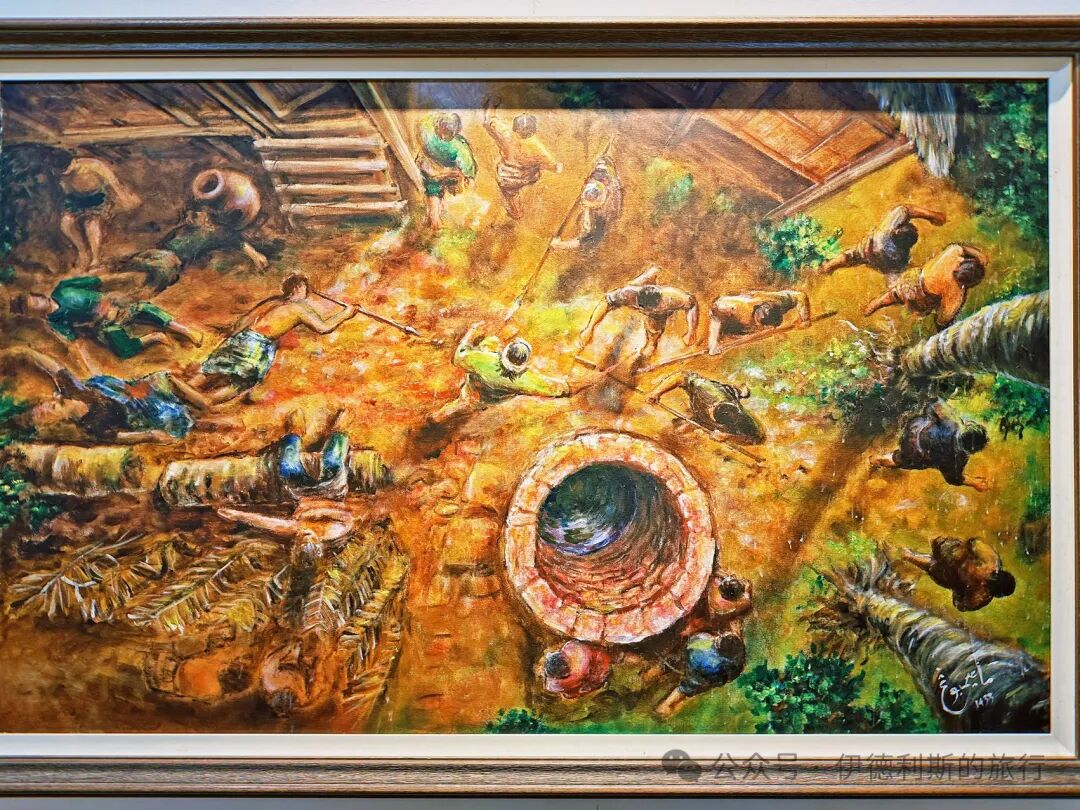
Tepak Sireh is a metal container for storing betel nut, used when welcoming guests, during traditional dances, and in royal ceremonies.
Traditional Malay clothing.
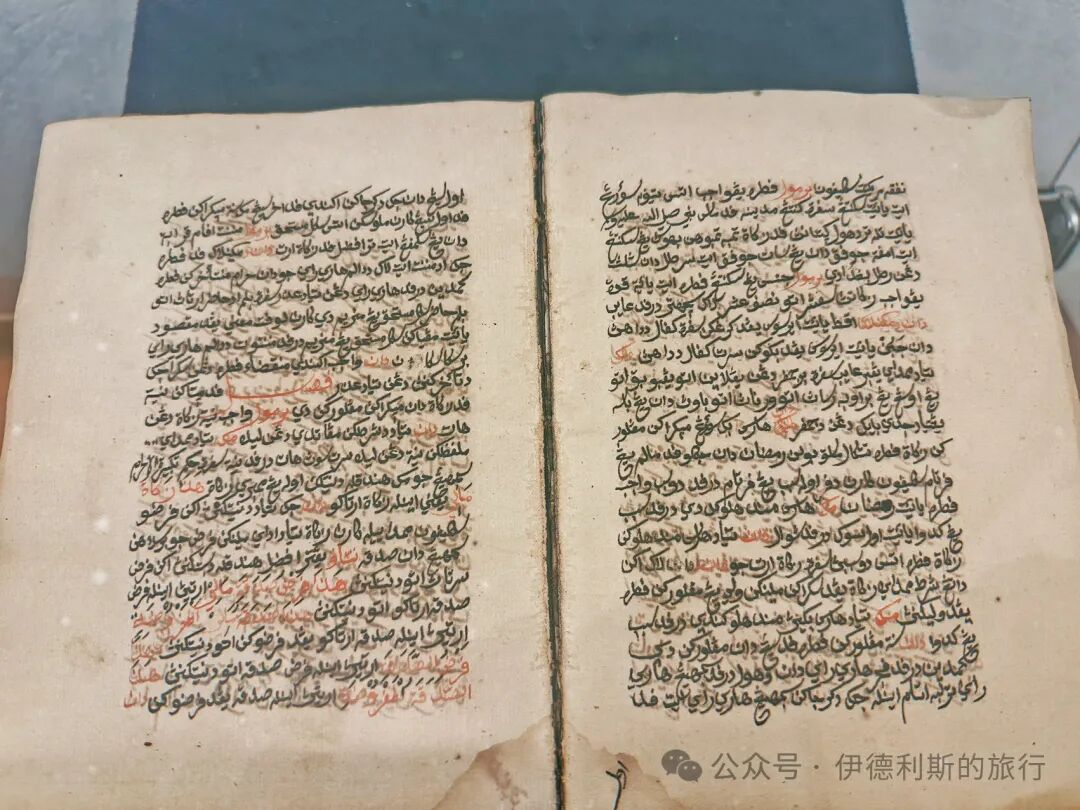
Traditional Malay manuscripts.
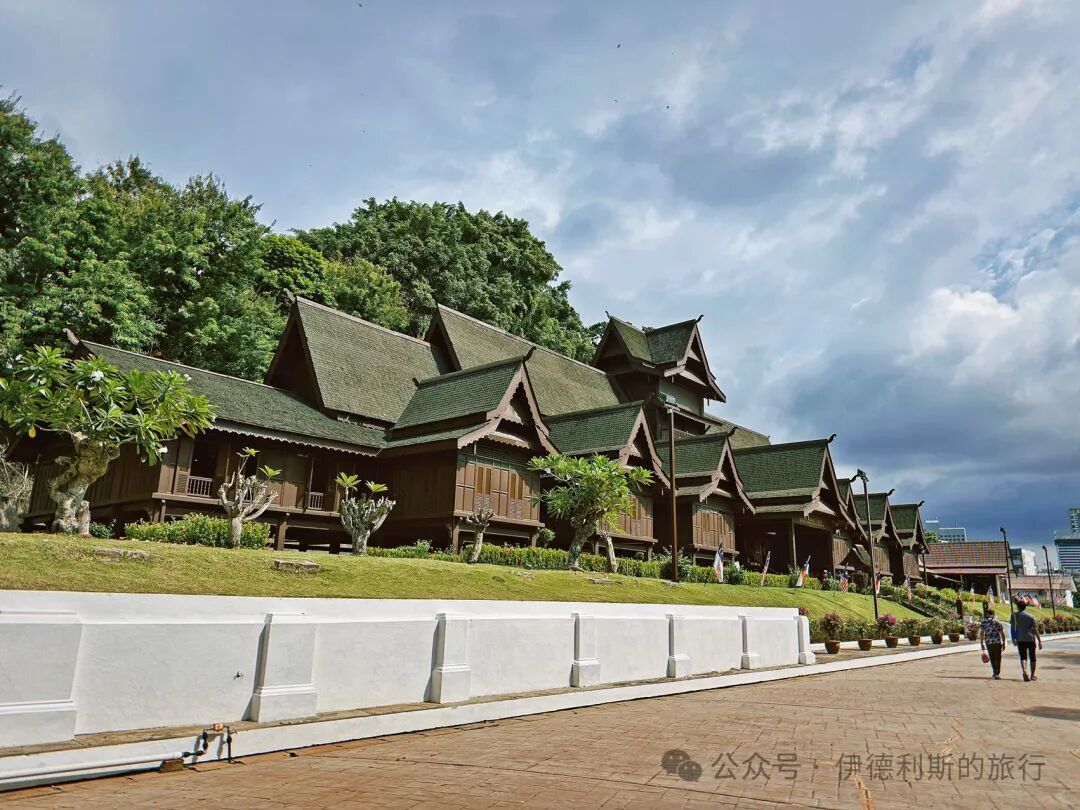
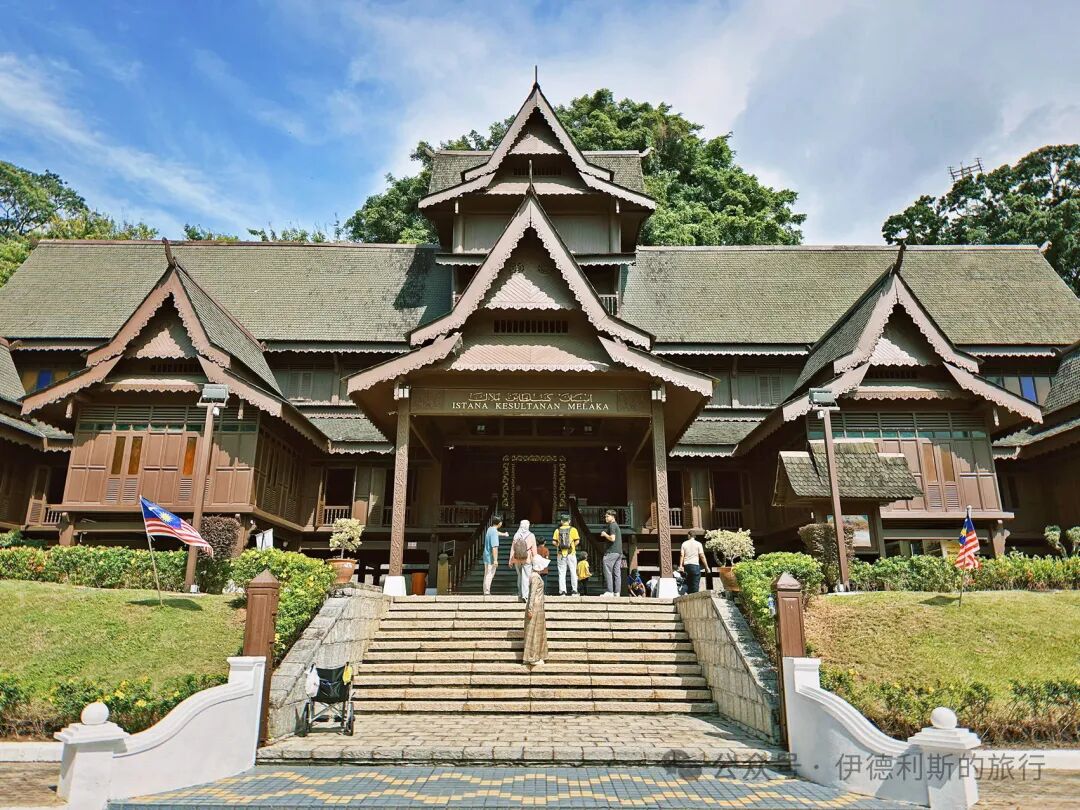
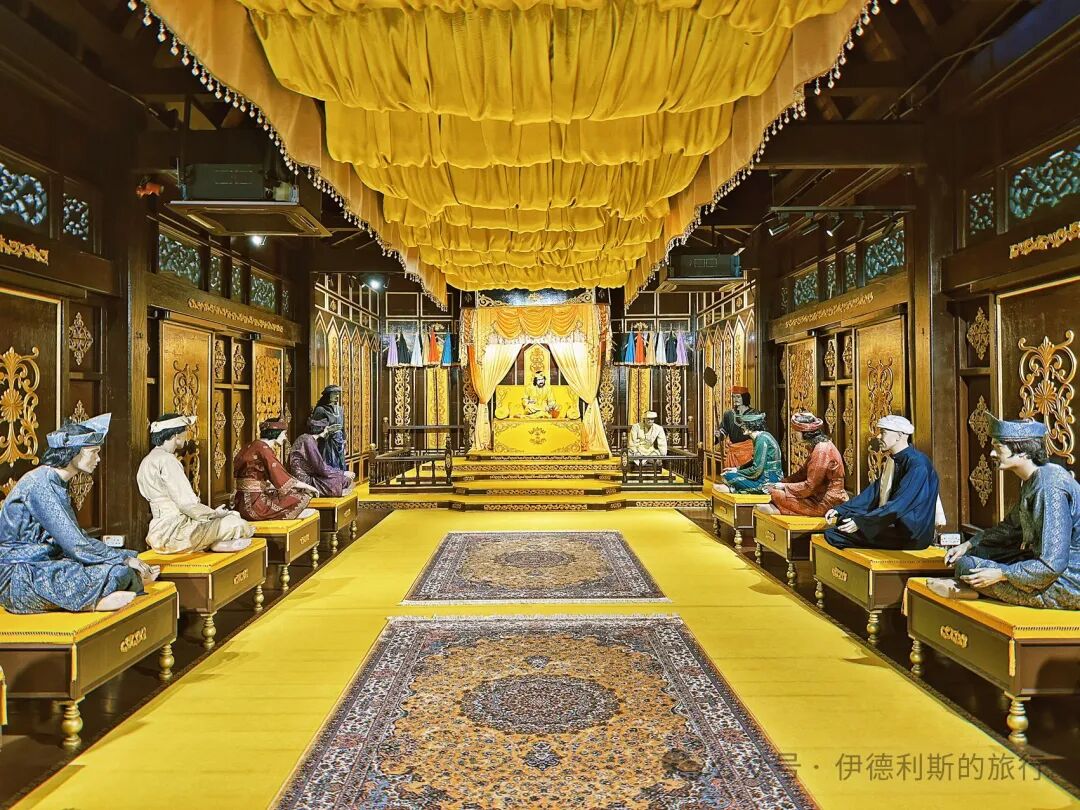
Malacca Sultanate Palace Museum.
The Malacca Sultanate Palace Museum, a reconstruction of the palace from the reign of Sultan Mansur Shah (1459-77) built in 1984 based on records in the Malay Annals.
Summary: This second part continues through Malay wooden houses and historic sites in Malacca, focusing on house forms, museum displays, and old neighborhood details. It keeps the original place names, photographs, architectural notes, and cultural context for readers exploring Malacca heritage.
A traditional wooden box used by the Malays in Malacca to open coconuts.
Attire worn during traditional Malay wedding ceremonies in Malacca from the 1940s to the 1960s.
The tombstone of Mansur Shah, the sixth Sultan of Malacca (reigned 1459-77), held in the collection of the Malacca History Museum.
Sultan Mansur Shah began the golden age of the Malacca Sultanate, and he was known as a knowledgeable, fair, and pious ruler. He followed an expansionist policy, occupying many areas including the Malay Peninsula, eastern Sumatra, Singapore, and Bintan Island, and he helped spread the faith widely across the Malay Peninsula through marriage alliances.
During his reign, Sultan Mansur Shah lowered trade taxes, charging 6% to Arab and Indian merchants from the west, 3% to local merchants, and exempting merchants from China, Japan, and Java, which made trade in Malacca more prosperous.
Sultan Mansur Shah was passionate about the faith and encouraged Sufi studies, personally studying under Maulana Abu Bakr and translating the famous commentary Ad Darrul Manzum into Malay.
The interior layout of a traditional Malay wooden house recreated at the Malacca History Museum feels quite authentic. The exhibition hall also has a map showing the locations of typical Malay wooden houses in Malacca, so interested friends (dosti) can follow the map to visit them in person.
The Malacca History Museum houses a set of three enamel incense burners and vases, and there is a statue of Zheng He in the museum courtyard. The museum also features a painting of the Ming Emperor Chengzu sending his envoy Yin Qing to issue an imperial decree to the Sultan of Malacca in 1403 (the first year of the Yongle era).
Muzium Budaya Melayu dan Islam Melaka (Malacca Malay and Islamic World Museum).
A glimpse into what life looked like during the Malacca Sultanate era.
Tepak Sireh is a metal container for storing betel nut, used when welcoming guests, during traditional dances, and in royal ceremonies.
Traditional Malay clothing.
Traditional Malay manuscripts.
Malacca Sultanate Palace Museum.
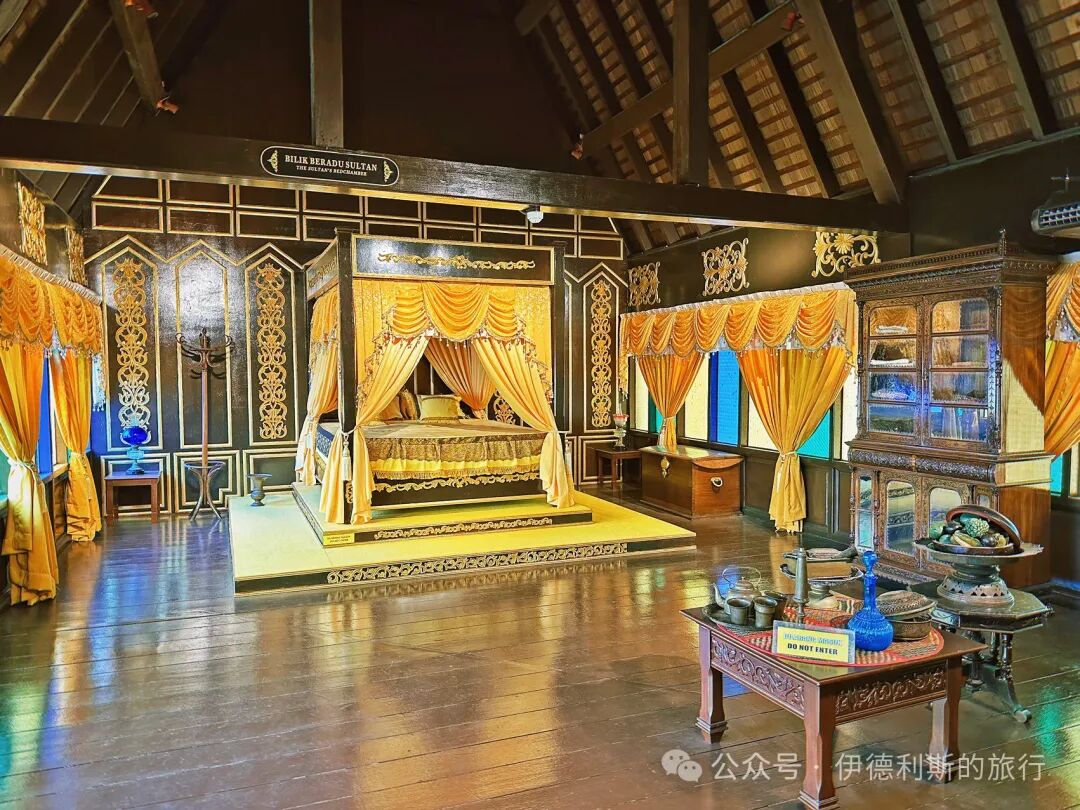
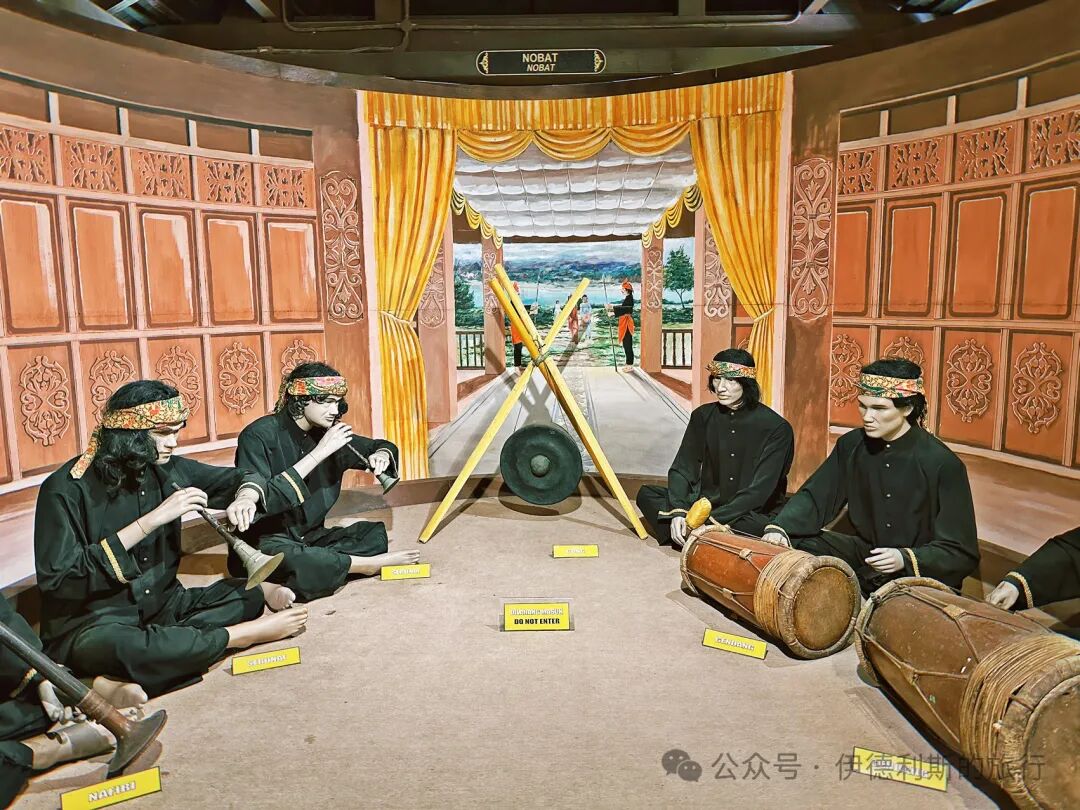
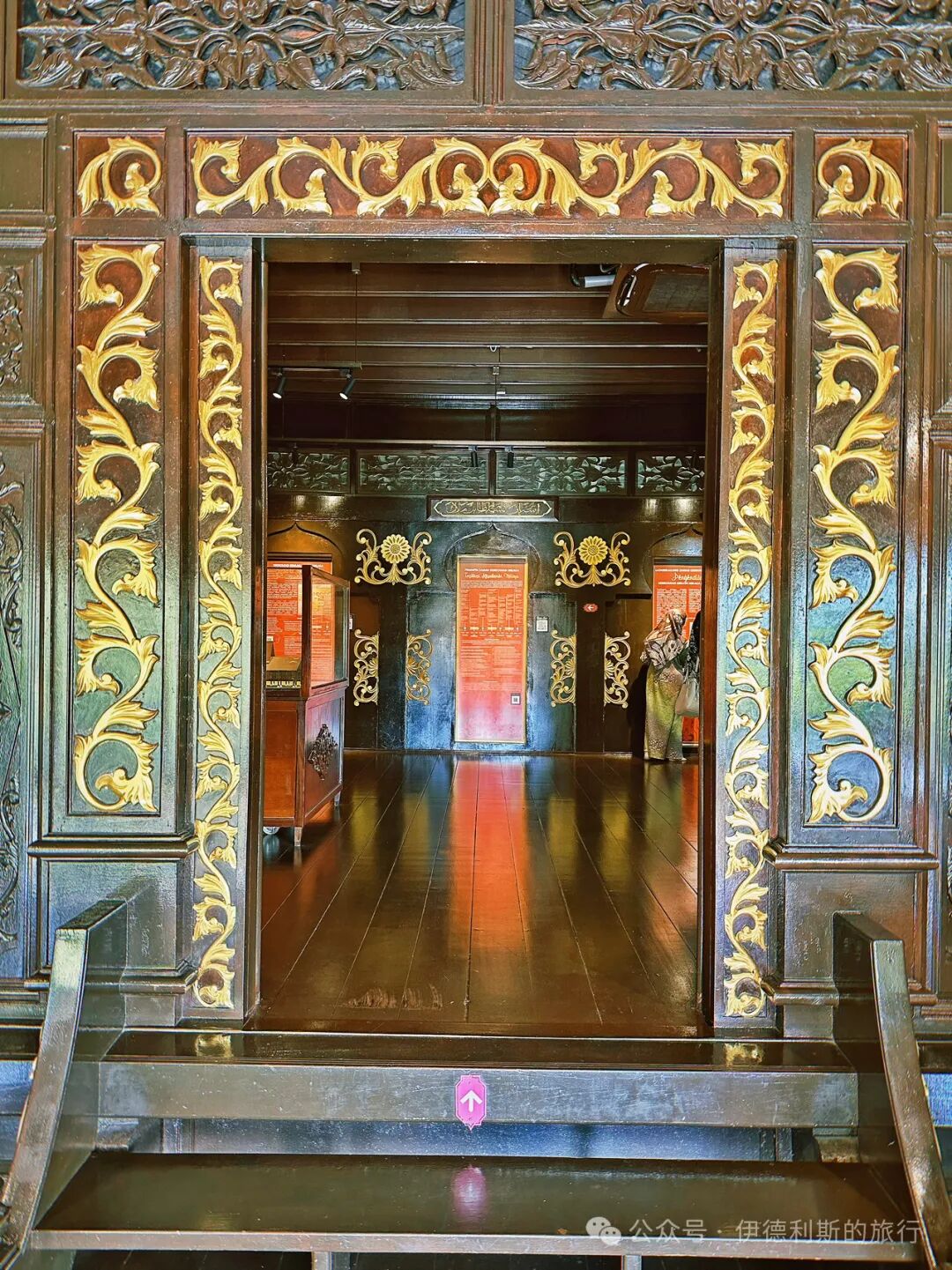
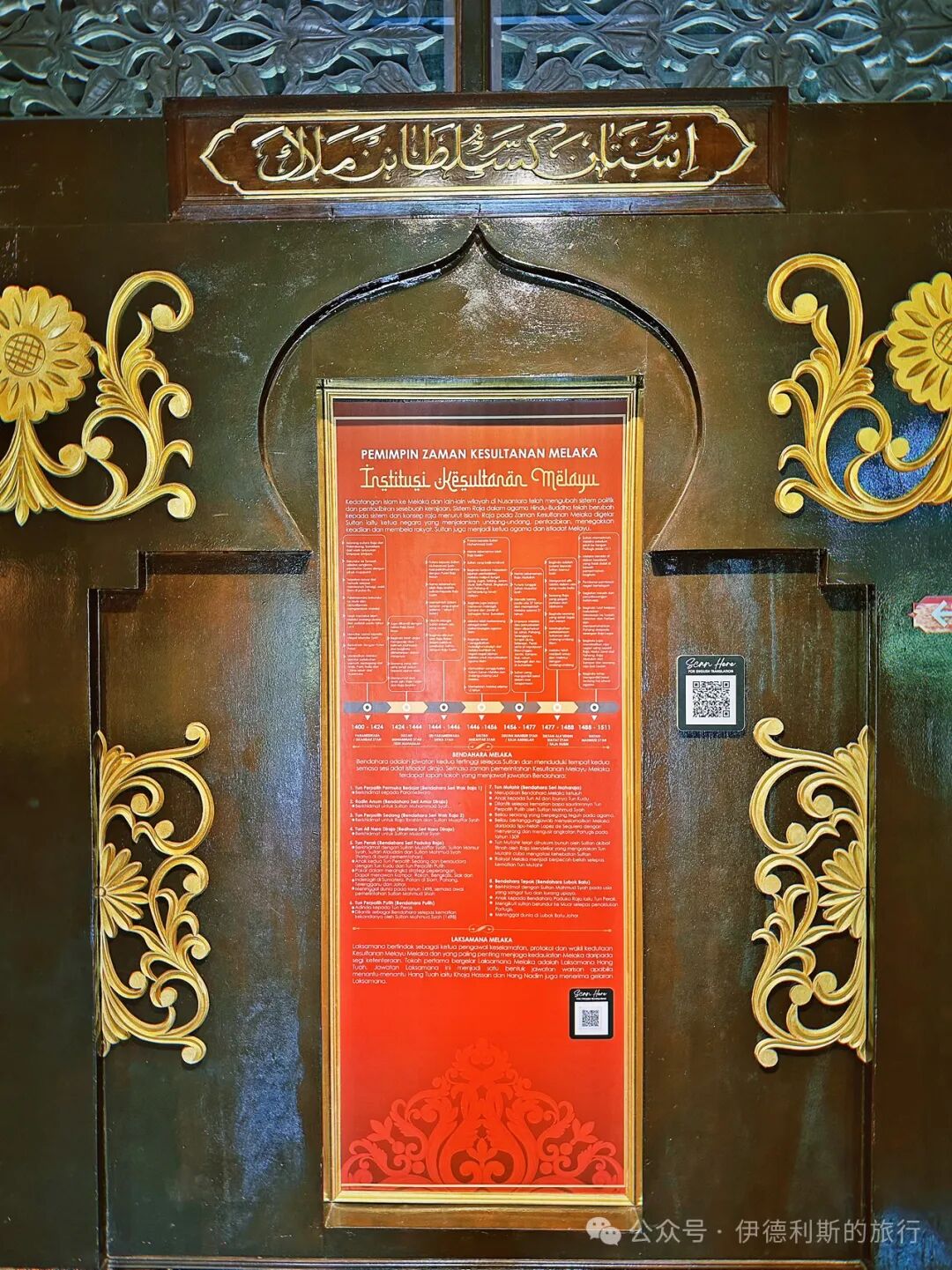
The Malacca Sultanate Palace Museum, a reconstruction of the palace from the reign of Sultan Mansur Shah (1459-77) built in 1984 based on records in the Malay Annals.
Travel Guide: Malacca Malay Wooden Houses and Historic Sites (Part 1)
Articles • ali2007fr posted the article • 0 comments • 249 views • 2026-05-19 22:20
Reposted from the web
Summary: This first part introduces Malay wooden houses and historic sites in Malacca, with attention to old homes, local architecture, and neighborhood history. It keeps the original place names, photographs, building details, and travel notes for readers interested in Malaysian heritage.
The beautiful and peaceful Malay village of Kampung Morten.
In the northern part of Malacca city sits a beautiful and peaceful Malay village called Kampung Morten. This area was once a mangrove swamp on a bend of the Malacca River, filled with mud crabs. In 1920, the nearby Kampung Jawa was forced to relocate due to land development. The village head, Dato' Othman Mohd Noh, asked the British Land Commissioner at the time, Frederick Joseph Morten, for help. Morten applied for a 10,000 Straits dollar loan from the government that same year, which was then used under Dato' Othman's leadership to buy land and build the village. The village was officially completed in 1922, and the villagers voted to name it Kampung Morten.
Today, Kampung Morten preserves 56 traditional Malay stilt houses and was listed as a heritage village in 1998. After a century of urban growth, the area is now part of downtown Malacca, making it the most convenient place in the city to experience the atmosphere of a Malay kampung.
I encountered a Malay wedding in Kampung Morten where whole families came to eat together, which was very lively.
At a beautiful Malay house in Kampung Morten, the grandfather who owns the home chatted with us very warmly.
The village has a small mosque called Surau Al Abidin with a cute pink exterior.
Several shops in the village serve traditional Malay kampung food, but they do not open until 5:30 in the evening. Some shops set their tables and chairs along the Malacca River, which is very pleasant.
The most worth-visiting Malay wooden house in Kampung Morten is Villa Sentosa, built in 1922 by Haji Hashim Abdul Ghani, who helped build the village. Haji Hashim's descendants still live here today, and they have kept many pieces of furniture and household items that are decades or even a century old. However, the opening hours are not fixed. If the owner is out, at prayer, or taking a nap, the house is closed. We were sorry to find the owner away when we visited, so we could only look around from the outside.
The ancient Malay village of Kampung Ketek.
Behind the Cheng Hoon Teng Temple, the oldest Chinese temple in the old town of Malacca, lies the equally ancient Malay village of Kampung Ketek. Kampung Ketek formed during the Dutch era in the 17th century. Although Malay villages within the old city of Malacca shrank rapidly after the 19th century due to the construction of shophouses, you can still see several well-preserved traditional Malay stilt houses in Kampung Ketek today. Abdullah bin Abdul al Kadir (1796-1854), known as the Father of Modern Malay Literature, was born here.
Inside Kampung Ketek, you can see the tomb of Syed Syamsuddin Ibni Al Sumatrani, a famous scholar and national hero from the Aceh Sultanate in the 16th and 17th centuries.
Syamsuddin was a mufti (legal judge) and advisor to Sultan Iskandar Muda (reigned 1607-36) of the Aceh Sultanate in northern Sumatra. He was well-versed in religious knowledge and held a high position in the Sultan's court.
After the Portuguese occupied Malacca in 1511, the Aceh Sultanate kept attacking the Portuguese in an attempt to capture the city. During the reign of Sultan Iskandar Muda, the Aceh Sultanate was strong and powerful, with a fleet of heavy galleys, cavalry riding Persian horses, elephant corps, and thousands of cannons. In 1629, Sultan Iskandar sent a massive force of 236 warships and 19,000 men to Malacca, but they suffered a total defeat, with all soldiers killed or captured. Sang Sutin also died heroically in this battle and was eventually buried in Kampung Kuli in the old city of Malacca.
Two tombs of heroes from the Malacca Sultanate
Continuing south from Kampung Hulu Road, you enter the core area of the Malacca old city, a World Heritage site where the alleys are filled with murals related to the city's history.
The Tomb of Hang Jebat (Makam Hang Jebat) in the old city of Malacca features the Aceh style from northern Sumatra, which was the common high-status architectural style for tombs during the Malacca Sultanate.
Hang Jebat was a famous Malay hero during the 15th-century Malacca Sultanate and one of the five heroes in the classic Malay novel Hikayat Hang Tuah. In the novel, the five heroes study martial arts together, serve the Malacca Sultan together, and earn his favor. Later, the Sultan of Malacca listens to slander and wants to kill Hang Tuah, so his brother Hang Jebat rebels against the Sultan to seek revenge. Eventually, the Sultan pardons Hang Tuah and sends him to fight a duel with Hang Jebat. After seven days of fighting, Hang Jebat dies in the arms of his former brother.
Since the 1960s, Hang Jebat has been portrayed in various plays and novels as a folk hero who resists tyranny and yearns for freedom, and many roads and buildings in Malaysia and Singapore are named after him.
Walking further west, you can see the tomb of Hang Kasturi, another of the five heroes of the Malacca Sultanate. In the Malay Annals (Sejarah Melayu), it is Hang Kasturi, not Hang Tuah, who ultimately kills Hang Jebat. This tomb has an Indian style and was likely built by later generations to commemorate Hang Kasturi.
Tomb of Sultan Hussein Shah of Johor
In the backyard of the Kampung Kling Mosque (Masjid Kampung Kling) lies the tomb of Sultan Hussein Shah of Johor (reigned 1819–1835), who played a key role in the founding of Singapore.
After the Portuguese occupied Malacca in 1511, the Sultan of Malacca fled to Johor to continue his rule. After the last Sultan of Malacca died in 1528, his son Alauddin Riayat Shah II officially established the Johor Sultanate, considering it the legitimate continuation of the Malacca Sultanate.
Hussein Shah was born in 1776 and was the eldest son of Sultan Mahmud Shah III of Johor. When Mahmud Shah III passed away in 1812, Hussein Shah was not in the capital, so his younger brother quickly took the throne with the support of ministers, forcing Hussein Shah into exile in the Riau Islands.
In 1819, the British East India Company decided to establish a new base in Southeast Asia. They found the exiled Hussein Shah and named him Sultan of Johor and Singapore in exchange for the right to establish a trading post in Singapore. Hussein Shah then came to Singapore and became a Sultan under British control.
In 1824, the British bought Singapore for 33,200 dollars, and Sultan Hussein Shah received a monthly payment of 1,300 dollars. He held no real power in Singapore and served only a symbolic role.
Sultan Hussein Shah lived in Singapore until 1834, then moved to Malacca with his family. He passed away in Malacca in 1835 and was buried at the Kampung Hulu Mosque (Dongjiena Si).
The Sultan's Well in Malacca
Travel east from the old town of Malacca to the foot of Bukit Cina, and you will find the Sultan's Well (Perigi Raja). Legend says it was built in 1459 by the sixth Sultan of Malacca, Mansur Shah, who reigned from 1459 to 1477.
According to the classic Malay text Sejarah Melayu, Sultan Mansur Shah built a palace at the foot of Bukit Cina to welcome a Ming Dynasty princess named Hang Li Po. He had this well dug specifically for her, which is why it is also called Hang Li Po's Well. However, there are no records of Princess Hang Li Po in Ming Dynasty or Portuguese documents, so her true identity remains a mystery.
Another theory suggests the well was dug by Zheng He's troops when they were stationed in Malacca during his voyages to the Western Ocean. Legend says Zheng He's troops dug seven wells at the foot of Bukit Cina. Five were destroyed by road construction in the 1950s and 1960s. Only two remain today: the Sultan's Well and the Sam Po Well (Sanbao Jing) in the backyard of the Poh San Teng Temple.
Legend has it that when the Portuguese invaded the Malacca Sultanate in 1511, Malay warriors poisoned the well to kill many Portuguese soldiers. In the early 17th century, both the Dutch and the Acehnese used the tactic of poisoning the well to eliminate their enemies.
After the Dutch occupied Malacca in 1641, they built a fortress-style wall around the Sultan's Well to protect the water source, complete with guard posts and cannons. The well was abandoned during the British colonial period, and the guard posts fell into disrepair.
On the western slope of Bukit Cina lies a Malay village called Kampung Bukit Cina, where some traditional Malay stilt houses are still preserved.
The Hero's Well in Malacca
Hang Tuah's Well (Perigi Hang Tuah) is located in Kampung Duyong in eastern Malacca. It is said to have been dug by the Malacca Sultanate hero Hang Tuah and has never run dry. Malay people believe the well water has magical properties and can cure illnesses and ward off misfortune, making it a famous attraction in Malacca.
The traditional Malay wooden house next to Hang Tuah's Well was first built in 1946. It was moved to its current site in 2001 after the original land was acquired. The owner, Samad Nordin, was originally a woodcarver, so he is skilled at maintaining wood. He performs maintenance on the house every five years.
Inside the house hang portraits of the Nuh ship and the Nine Saints (Wali Sanga) who brought the faith to Southeast Asia. Wali refers to the Sufi saints. These nine figures came to Java 500 years ago to preach, which helped the faith gradually spread across Southeast Asia.
Small Mosque in the Center of Malacca's Old Town
This small, newly built mosque in the center of Malacca's old town faces the Dutch Square and backs onto the Malacca River. The roof retains a traditional Javanese style. Inside the main hall, there are displays introducing various ancient mosques in Malacca, and a traditional drum used for the call to prayer sits in the center. Performing namaz in the mosque while feeling the breeze from the Malacca River brings a sense of calm, as if the noise outside no longer matters.
Malacca History Museum
A replica of the mythical bird boat (Perahu Burung Petalawati) is kept in the Malacca History Museum. The Perahu Burung Petalawati was a mythical bird boat used by Kelantan nobles for parades during circumcision ceremonies. After 1933, all of them were destroyed because they were seen as straying from the faith. Later, the tradition was preserved by the Malay community in Pattani, Thailand, though the celebrations are much smaller now.
The origins of this mythical bird go back to ancient Malay legends and Indian culture. It was likely influenced by the giant bird in the Malay epic Isma Dewa and the mythical bird Garuda from Indian mythology. view all
Summary: This first part introduces Malay wooden houses and historic sites in Malacca, with attention to old homes, local architecture, and neighborhood history. It keeps the original place names, photographs, building details, and travel notes for readers interested in Malaysian heritage.
The beautiful and peaceful Malay village of Kampung Morten.
In the northern part of Malacca city sits a beautiful and peaceful Malay village called Kampung Morten. This area was once a mangrove swamp on a bend of the Malacca River, filled with mud crabs. In 1920, the nearby Kampung Jawa was forced to relocate due to land development. The village head, Dato' Othman Mohd Noh, asked the British Land Commissioner at the time, Frederick Joseph Morten, for help. Morten applied for a 10,000 Straits dollar loan from the government that same year, which was then used under Dato' Othman's leadership to buy land and build the village. The village was officially completed in 1922, and the villagers voted to name it Kampung Morten.
Today, Kampung Morten preserves 56 traditional Malay stilt houses and was listed as a heritage village in 1998. After a century of urban growth, the area is now part of downtown Malacca, making it the most convenient place in the city to experience the atmosphere of a Malay kampung.
I encountered a Malay wedding in Kampung Morten where whole families came to eat together, which was very lively.
At a beautiful Malay house in Kampung Morten, the grandfather who owns the home chatted with us very warmly.
The village has a small mosque called Surau Al Abidin with a cute pink exterior.
Several shops in the village serve traditional Malay kampung food, but they do not open until 5:30 in the evening. Some shops set their tables and chairs along the Malacca River, which is very pleasant.
The most worth-visiting Malay wooden house in Kampung Morten is Villa Sentosa, built in 1922 by Haji Hashim Abdul Ghani, who helped build the village. Haji Hashim's descendants still live here today, and they have kept many pieces of furniture and household items that are decades or even a century old. However, the opening hours are not fixed. If the owner is out, at prayer, or taking a nap, the house is closed. We were sorry to find the owner away when we visited, so we could only look around from the outside.
The ancient Malay village of Kampung Ketek.
Behind the Cheng Hoon Teng Temple, the oldest Chinese temple in the old town of Malacca, lies the equally ancient Malay village of Kampung Ketek. Kampung Ketek formed during the Dutch era in the 17th century. Although Malay villages within the old city of Malacca shrank rapidly after the 19th century due to the construction of shophouses, you can still see several well-preserved traditional Malay stilt houses in Kampung Ketek today. Abdullah bin Abdul al Kadir (1796-1854), known as the Father of Modern Malay Literature, was born here.
Inside Kampung Ketek, you can see the tomb of Syed Syamsuddin Ibni Al Sumatrani, a famous scholar and national hero from the Aceh Sultanate in the 16th and 17th centuries.
Syamsuddin was a mufti (legal judge) and advisor to Sultan Iskandar Muda (reigned 1607-36) of the Aceh Sultanate in northern Sumatra. He was well-versed in religious knowledge and held a high position in the Sultan's court.
After the Portuguese occupied Malacca in 1511, the Aceh Sultanate kept attacking the Portuguese in an attempt to capture the city. During the reign of Sultan Iskandar Muda, the Aceh Sultanate was strong and powerful, with a fleet of heavy galleys, cavalry riding Persian horses, elephant corps, and thousands of cannons. In 1629, Sultan Iskandar sent a massive force of 236 warships and 19,000 men to Malacca, but they suffered a total defeat, with all soldiers killed or captured. Sang Sutin also died heroically in this battle and was eventually buried in Kampung Kuli in the old city of Malacca.
Two tombs of heroes from the Malacca Sultanate
Continuing south from Kampung Hulu Road, you enter the core area of the Malacca old city, a World Heritage site where the alleys are filled with murals related to the city's history.
The Tomb of Hang Jebat (Makam Hang Jebat) in the old city of Malacca features the Aceh style from northern Sumatra, which was the common high-status architectural style for tombs during the Malacca Sultanate.
Hang Jebat was a famous Malay hero during the 15th-century Malacca Sultanate and one of the five heroes in the classic Malay novel Hikayat Hang Tuah. In the novel, the five heroes study martial arts together, serve the Malacca Sultan together, and earn his favor. Later, the Sultan of Malacca listens to slander and wants to kill Hang Tuah, so his brother Hang Jebat rebels against the Sultan to seek revenge. Eventually, the Sultan pardons Hang Tuah and sends him to fight a duel with Hang Jebat. After seven days of fighting, Hang Jebat dies in the arms of his former brother.
Since the 1960s, Hang Jebat has been portrayed in various plays and novels as a folk hero who resists tyranny and yearns for freedom, and many roads and buildings in Malaysia and Singapore are named after him.
Walking further west, you can see the tomb of Hang Kasturi, another of the five heroes of the Malacca Sultanate. In the Malay Annals (Sejarah Melayu), it is Hang Kasturi, not Hang Tuah, who ultimately kills Hang Jebat. This tomb has an Indian style and was likely built by later generations to commemorate Hang Kasturi.
Tomb of Sultan Hussein Shah of Johor
In the backyard of the Kampung Kling Mosque (Masjid Kampung Kling) lies the tomb of Sultan Hussein Shah of Johor (reigned 1819–1835), who played a key role in the founding of Singapore.
After the Portuguese occupied Malacca in 1511, the Sultan of Malacca fled to Johor to continue his rule. After the last Sultan of Malacca died in 1528, his son Alauddin Riayat Shah II officially established the Johor Sultanate, considering it the legitimate continuation of the Malacca Sultanate.
Hussein Shah was born in 1776 and was the eldest son of Sultan Mahmud Shah III of Johor. When Mahmud Shah III passed away in 1812, Hussein Shah was not in the capital, so his younger brother quickly took the throne with the support of ministers, forcing Hussein Shah into exile in the Riau Islands.
In 1819, the British East India Company decided to establish a new base in Southeast Asia. They found the exiled Hussein Shah and named him Sultan of Johor and Singapore in exchange for the right to establish a trading post in Singapore. Hussein Shah then came to Singapore and became a Sultan under British control.
In 1824, the British bought Singapore for 33,200 dollars, and Sultan Hussein Shah received a monthly payment of 1,300 dollars. He held no real power in Singapore and served only a symbolic role.
Sultan Hussein Shah lived in Singapore until 1834, then moved to Malacca with his family. He passed away in Malacca in 1835 and was buried at the Kampung Hulu Mosque (Dongjiena Si).
The Sultan's Well in Malacca
Travel east from the old town of Malacca to the foot of Bukit Cina, and you will find the Sultan's Well (Perigi Raja). Legend says it was built in 1459 by the sixth Sultan of Malacca, Mansur Shah, who reigned from 1459 to 1477.
According to the classic Malay text Sejarah Melayu, Sultan Mansur Shah built a palace at the foot of Bukit Cina to welcome a Ming Dynasty princess named Hang Li Po. He had this well dug specifically for her, which is why it is also called Hang Li Po's Well. However, there are no records of Princess Hang Li Po in Ming Dynasty or Portuguese documents, so her true identity remains a mystery.
Another theory suggests the well was dug by Zheng He's troops when they were stationed in Malacca during his voyages to the Western Ocean. Legend says Zheng He's troops dug seven wells at the foot of Bukit Cina. Five were destroyed by road construction in the 1950s and 1960s. Only two remain today: the Sultan's Well and the Sam Po Well (Sanbao Jing) in the backyard of the Poh San Teng Temple.
Legend has it that when the Portuguese invaded the Malacca Sultanate in 1511, Malay warriors poisoned the well to kill many Portuguese soldiers. In the early 17th century, both the Dutch and the Acehnese used the tactic of poisoning the well to eliminate their enemies.
After the Dutch occupied Malacca in 1641, they built a fortress-style wall around the Sultan's Well to protect the water source, complete with guard posts and cannons. The well was abandoned during the British colonial period, and the guard posts fell into disrepair.
On the western slope of Bukit Cina lies a Malay village called Kampung Bukit Cina, where some traditional Malay stilt houses are still preserved.
The Hero's Well in Malacca
Hang Tuah's Well (Perigi Hang Tuah) is located in Kampung Duyong in eastern Malacca. It is said to have been dug by the Malacca Sultanate hero Hang Tuah and has never run dry. Malay people believe the well water has magical properties and can cure illnesses and ward off misfortune, making it a famous attraction in Malacca.
The traditional Malay wooden house next to Hang Tuah's Well was first built in 1946. It was moved to its current site in 2001 after the original land was acquired. The owner, Samad Nordin, was originally a woodcarver, so he is skilled at maintaining wood. He performs maintenance on the house every five years.
Inside the house hang portraits of the Nuh ship and the Nine Saints (Wali Sanga) who brought the faith to Southeast Asia. Wali refers to the Sufi saints. These nine figures came to Java 500 years ago to preach, which helped the faith gradually spread across Southeast Asia.
Small Mosque in the Center of Malacca's Old Town
This small, newly built mosque in the center of Malacca's old town faces the Dutch Square and backs onto the Malacca River. The roof retains a traditional Javanese style. Inside the main hall, there are displays introducing various ancient mosques in Malacca, and a traditional drum used for the call to prayer sits in the center. Performing namaz in the mosque while feeling the breeze from the Malacca River brings a sense of calm, as if the noise outside no longer matters.
Malacca History Museum
A replica of the mythical bird boat (Perahu Burung Petalawati) is kept in the Malacca History Museum. The Perahu Burung Petalawati was a mythical bird boat used by Kelantan nobles for parades during circumcision ceremonies. After 1933, all of them were destroyed because they were seen as straying from the faith. Later, the tradition was preserved by the Malay community in Pattani, Thailand, though the celebrations are much smaller now.
The origins of this mythical bird go back to ancient Malay legends and Indian culture. It was likely influenced by the giant bird in the Malay epic Isma Dewa and the mythical bird Garuda from Indian mythology. view all
Reposted from the web
Summary: This first part introduces Malay wooden houses and historic sites in Malacca, with attention to old homes, local architecture, and neighborhood history. It keeps the original place names, photographs, building details, and travel notes for readers interested in Malaysian heritage.
The beautiful and peaceful Malay village of Kampung Morten.
In the northern part of Malacca city sits a beautiful and peaceful Malay village called Kampung Morten. This area was once a mangrove swamp on a bend of the Malacca River, filled with mud crabs. In 1920, the nearby Kampung Jawa was forced to relocate due to land development. The village head, Dato' Othman Mohd Noh, asked the British Land Commissioner at the time, Frederick Joseph Morten, for help. Morten applied for a 10,000 Straits dollar loan from the government that same year, which was then used under Dato' Othman's leadership to buy land and build the village. The village was officially completed in 1922, and the villagers voted to name it Kampung Morten.
Today, Kampung Morten preserves 56 traditional Malay stilt houses and was listed as a heritage village in 1998. After a century of urban growth, the area is now part of downtown Malacca, making it the most convenient place in the city to experience the atmosphere of a Malay kampung.
I encountered a Malay wedding in Kampung Morten where whole families came to eat together, which was very lively.
At a beautiful Malay house in Kampung Morten, the grandfather who owns the home chatted with us very warmly.
The village has a small mosque called Surau Al Abidin with a cute pink exterior.
Several shops in the village serve traditional Malay kampung food, but they do not open until 5:30 in the evening. Some shops set their tables and chairs along the Malacca River, which is very pleasant.
The most worth-visiting Malay wooden house in Kampung Morten is Villa Sentosa, built in 1922 by Haji Hashim Abdul Ghani, who helped build the village. Haji Hashim's descendants still live here today, and they have kept many pieces of furniture and household items that are decades or even a century old. However, the opening hours are not fixed. If the owner is out, at prayer, or taking a nap, the house is closed. We were sorry to find the owner away when we visited, so we could only look around from the outside.
The ancient Malay village of Kampung Ketek.
Behind the Cheng Hoon Teng Temple, the oldest Chinese temple in the old town of Malacca, lies the equally ancient Malay village of Kampung Ketek. Kampung Ketek formed during the Dutch era in the 17th century. Although Malay villages within the old city of Malacca shrank rapidly after the 19th century due to the construction of shophouses, you can still see several well-preserved traditional Malay stilt houses in Kampung Ketek today. Abdullah bin Abdul al Kadir (1796-1854), known as the Father of Modern Malay Literature, was born here.
Inside Kampung Ketek, you can see the tomb of Syed Syamsuddin Ibni Al Sumatrani, a famous scholar and national hero from the Aceh Sultanate in the 16th and 17th centuries.
Syamsuddin was a mufti (legal judge) and advisor to Sultan Iskandar Muda (reigned 1607-36) of the Aceh Sultanate in northern Sumatra. He was well-versed in religious knowledge and held a high position in the Sultan's court.
After the Portuguese occupied Malacca in 1511, the Aceh Sultanate kept attacking the Portuguese in an attempt to capture the city. During the reign of Sultan Iskandar Muda, the Aceh Sultanate was strong and powerful, with a fleet of heavy galleys, cavalry riding Persian horses, elephant corps, and thousands of cannons. In 1629, Sultan Iskandar sent a massive force of 236 warships and 19,000 men to Malacca, but they suffered a total defeat, with all soldiers killed or captured. Sang Sutin also died heroically in this battle and was eventually buried in Kampung Kuli in the old city of Malacca.
Two tombs of heroes from the Malacca Sultanate
Continuing south from Kampung Hulu Road, you enter the core area of the Malacca old city, a World Heritage site where the alleys are filled with murals related to the city's history.
The Tomb of Hang Jebat (Makam Hang Jebat) in the old city of Malacca features the Aceh style from northern Sumatra, which was the common high-status architectural style for tombs during the Malacca Sultanate.
Hang Jebat was a famous Malay hero during the 15th-century Malacca Sultanate and one of the five heroes in the classic Malay novel Hikayat Hang Tuah. In the novel, the five heroes study martial arts together, serve the Malacca Sultan together, and earn his favor. Later, the Sultan of Malacca listens to slander and wants to kill Hang Tuah, so his brother Hang Jebat rebels against the Sultan to seek revenge. Eventually, the Sultan pardons Hang Tuah and sends him to fight a duel with Hang Jebat. After seven days of fighting, Hang Jebat dies in the arms of his former brother.
Since the 1960s, Hang Jebat has been portrayed in various plays and novels as a folk hero who resists tyranny and yearns for freedom, and many roads and buildings in Malaysia and Singapore are named after him.
Walking further west, you can see the tomb of Hang Kasturi, another of the five heroes of the Malacca Sultanate. In the Malay Annals (Sejarah Melayu), it is Hang Kasturi, not Hang Tuah, who ultimately kills Hang Jebat. This tomb has an Indian style and was likely built by later generations to commemorate Hang Kasturi.
Tomb of Sultan Hussein Shah of Johor
In the backyard of the Kampung Kling Mosque (Masjid Kampung Kling) lies the tomb of Sultan Hussein Shah of Johor (reigned 1819–1835), who played a key role in the founding of Singapore.
After the Portuguese occupied Malacca in 1511, the Sultan of Malacca fled to Johor to continue his rule. After the last Sultan of Malacca died in 1528, his son Alauddin Riayat Shah II officially established the Johor Sultanate, considering it the legitimate continuation of the Malacca Sultanate.
Hussein Shah was born in 1776 and was the eldest son of Sultan Mahmud Shah III of Johor. When Mahmud Shah III passed away in 1812, Hussein Shah was not in the capital, so his younger brother quickly took the throne with the support of ministers, forcing Hussein Shah into exile in the Riau Islands.
In 1819, the British East India Company decided to establish a new base in Southeast Asia. They found the exiled Hussein Shah and named him Sultan of Johor and Singapore in exchange for the right to establish a trading post in Singapore. Hussein Shah then came to Singapore and became a Sultan under British control.
In 1824, the British bought Singapore for 33,200 dollars, and Sultan Hussein Shah received a monthly payment of 1,300 dollars. He held no real power in Singapore and served only a symbolic role.
Sultan Hussein Shah lived in Singapore until 1834, then moved to Malacca with his family. He passed away in Malacca in 1835 and was buried at the Kampung Hulu Mosque (Dongjiena Si).
The Sultan's Well in Malacca
Travel east from the old town of Malacca to the foot of Bukit Cina, and you will find the Sultan's Well (Perigi Raja). Legend says it was built in 1459 by the sixth Sultan of Malacca, Mansur Shah, who reigned from 1459 to 1477.
According to the classic Malay text Sejarah Melayu, Sultan Mansur Shah built a palace at the foot of Bukit Cina to welcome a Ming Dynasty princess named Hang Li Po. He had this well dug specifically for her, which is why it is also called Hang Li Po's Well. However, there are no records of Princess Hang Li Po in Ming Dynasty or Portuguese documents, so her true identity remains a mystery.
Another theory suggests the well was dug by Zheng He's troops when they were stationed in Malacca during his voyages to the Western Ocean. Legend says Zheng He's troops dug seven wells at the foot of Bukit Cina. Five were destroyed by road construction in the 1950s and 1960s. Only two remain today: the Sultan's Well and the Sam Po Well (Sanbao Jing) in the backyard of the Poh San Teng Temple.
Legend has it that when the Portuguese invaded the Malacca Sultanate in 1511, Malay warriors poisoned the well to kill many Portuguese soldiers. In the early 17th century, both the Dutch and the Acehnese used the tactic of poisoning the well to eliminate their enemies.
After the Dutch occupied Malacca in 1641, they built a fortress-style wall around the Sultan's Well to protect the water source, complete with guard posts and cannons. The well was abandoned during the British colonial period, and the guard posts fell into disrepair.
On the western slope of Bukit Cina lies a Malay village called Kampung Bukit Cina, where some traditional Malay stilt houses are still preserved.
The Hero's Well in Malacca
Hang Tuah's Well (Perigi Hang Tuah) is located in Kampung Duyong in eastern Malacca. It is said to have been dug by the Malacca Sultanate hero Hang Tuah and has never run dry. Malay people believe the well water has magical properties and can cure illnesses and ward off misfortune, making it a famous attraction in Malacca.
The traditional Malay wooden house next to Hang Tuah's Well was first built in 1946. It was moved to its current site in 2001 after the original land was acquired. The owner, Samad Nordin, was originally a woodcarver, so he is skilled at maintaining wood. He performs maintenance on the house every five years.
Inside the house hang portraits of the Nuh ship and the Nine Saints (Wali Sanga) who brought the faith to Southeast Asia. Wali refers to the Sufi saints. These nine figures came to Java 500 years ago to preach, which helped the faith gradually spread across Southeast Asia.
Small Mosque in the Center of Malacca's Old Town
This small, newly built mosque in the center of Malacca's old town faces the Dutch Square and backs onto the Malacca River. The roof retains a traditional Javanese style. Inside the main hall, there are displays introducing various ancient mosques in Malacca, and a traditional drum used for the call to prayer sits in the center. Performing namaz in the mosque while feeling the breeze from the Malacca River brings a sense of calm, as if the noise outside no longer matters.
Malacca History Museum
A replica of the mythical bird boat (Perahu Burung Petalawati) is kept in the Malacca History Museum. The Perahu Burung Petalawati was a mythical bird boat used by Kelantan nobles for parades during circumcision ceremonies. After 1933, all of them were destroyed because they were seen as straying from the faith. Later, the tradition was preserved by the Malay community in Pattani, Thailand, though the celebrations are much smaller now.
The origins of this mythical bird go back to ancient Malay legends and Indian culture. It was likely influenced by the giant bird in the Malay epic Isma Dewa and the mythical bird Garuda from Indian mythology.
Summary: This first part introduces Malay wooden houses and historic sites in Malacca, with attention to old homes, local architecture, and neighborhood history. It keeps the original place names, photographs, building details, and travel notes for readers interested in Malaysian heritage.
The beautiful and peaceful Malay village of Kampung Morten.
In the northern part of Malacca city sits a beautiful and peaceful Malay village called Kampung Morten. This area was once a mangrove swamp on a bend of the Malacca River, filled with mud crabs. In 1920, the nearby Kampung Jawa was forced to relocate due to land development. The village head, Dato' Othman Mohd Noh, asked the British Land Commissioner at the time, Frederick Joseph Morten, for help. Morten applied for a 10,000 Straits dollar loan from the government that same year, which was then used under Dato' Othman's leadership to buy land and build the village. The village was officially completed in 1922, and the villagers voted to name it Kampung Morten.
Today, Kampung Morten preserves 56 traditional Malay stilt houses and was listed as a heritage village in 1998. After a century of urban growth, the area is now part of downtown Malacca, making it the most convenient place in the city to experience the atmosphere of a Malay kampung.
I encountered a Malay wedding in Kampung Morten where whole families came to eat together, which was very lively.
At a beautiful Malay house in Kampung Morten, the grandfather who owns the home chatted with us very warmly.
The village has a small mosque called Surau Al Abidin with a cute pink exterior.
Several shops in the village serve traditional Malay kampung food, but they do not open until 5:30 in the evening. Some shops set their tables and chairs along the Malacca River, which is very pleasant.
The most worth-visiting Malay wooden house in Kampung Morten is Villa Sentosa, built in 1922 by Haji Hashim Abdul Ghani, who helped build the village. Haji Hashim's descendants still live here today, and they have kept many pieces of furniture and household items that are decades or even a century old. However, the opening hours are not fixed. If the owner is out, at prayer, or taking a nap, the house is closed. We were sorry to find the owner away when we visited, so we could only look around from the outside.
The ancient Malay village of Kampung Ketek.
Behind the Cheng Hoon Teng Temple, the oldest Chinese temple in the old town of Malacca, lies the equally ancient Malay village of Kampung Ketek. Kampung Ketek formed during the Dutch era in the 17th century. Although Malay villages within the old city of Malacca shrank rapidly after the 19th century due to the construction of shophouses, you can still see several well-preserved traditional Malay stilt houses in Kampung Ketek today. Abdullah bin Abdul al Kadir (1796-1854), known as the Father of Modern Malay Literature, was born here.
Inside Kampung Ketek, you can see the tomb of Syed Syamsuddin Ibni Al Sumatrani, a famous scholar and national hero from the Aceh Sultanate in the 16th and 17th centuries.
Syamsuddin was a mufti (legal judge) and advisor to Sultan Iskandar Muda (reigned 1607-36) of the Aceh Sultanate in northern Sumatra. He was well-versed in religious knowledge and held a high position in the Sultan's court.
After the Portuguese occupied Malacca in 1511, the Aceh Sultanate kept attacking the Portuguese in an attempt to capture the city. During the reign of Sultan Iskandar Muda, the Aceh Sultanate was strong and powerful, with a fleet of heavy galleys, cavalry riding Persian horses, elephant corps, and thousands of cannons. In 1629, Sultan Iskandar sent a massive force of 236 warships and 19,000 men to Malacca, but they suffered a total defeat, with all soldiers killed or captured. Sang Sutin also died heroically in this battle and was eventually buried in Kampung Kuli in the old city of Malacca.
Two tombs of heroes from the Malacca Sultanate
Continuing south from Kampung Hulu Road, you enter the core area of the Malacca old city, a World Heritage site where the alleys are filled with murals related to the city's history.
The Tomb of Hang Jebat (Makam Hang Jebat) in the old city of Malacca features the Aceh style from northern Sumatra, which was the common high-status architectural style for tombs during the Malacca Sultanate.
Hang Jebat was a famous Malay hero during the 15th-century Malacca Sultanate and one of the five heroes in the classic Malay novel Hikayat Hang Tuah. In the novel, the five heroes study martial arts together, serve the Malacca Sultan together, and earn his favor. Later, the Sultan of Malacca listens to slander and wants to kill Hang Tuah, so his brother Hang Jebat rebels against the Sultan to seek revenge. Eventually, the Sultan pardons Hang Tuah and sends him to fight a duel with Hang Jebat. After seven days of fighting, Hang Jebat dies in the arms of his former brother.
Since the 1960s, Hang Jebat has been portrayed in various plays and novels as a folk hero who resists tyranny and yearns for freedom, and many roads and buildings in Malaysia and Singapore are named after him.
Walking further west, you can see the tomb of Hang Kasturi, another of the five heroes of the Malacca Sultanate. In the Malay Annals (Sejarah Melayu), it is Hang Kasturi, not Hang Tuah, who ultimately kills Hang Jebat. This tomb has an Indian style and was likely built by later generations to commemorate Hang Kasturi.
Tomb of Sultan Hussein Shah of Johor
In the backyard of the Kampung Kling Mosque (Masjid Kampung Kling) lies the tomb of Sultan Hussein Shah of Johor (reigned 1819–1835), who played a key role in the founding of Singapore.
After the Portuguese occupied Malacca in 1511, the Sultan of Malacca fled to Johor to continue his rule. After the last Sultan of Malacca died in 1528, his son Alauddin Riayat Shah II officially established the Johor Sultanate, considering it the legitimate continuation of the Malacca Sultanate.
Hussein Shah was born in 1776 and was the eldest son of Sultan Mahmud Shah III of Johor. When Mahmud Shah III passed away in 1812, Hussein Shah was not in the capital, so his younger brother quickly took the throne with the support of ministers, forcing Hussein Shah into exile in the Riau Islands.
In 1819, the British East India Company decided to establish a new base in Southeast Asia. They found the exiled Hussein Shah and named him Sultan of Johor and Singapore in exchange for the right to establish a trading post in Singapore. Hussein Shah then came to Singapore and became a Sultan under British control.
In 1824, the British bought Singapore for 33,200 dollars, and Sultan Hussein Shah received a monthly payment of 1,300 dollars. He held no real power in Singapore and served only a symbolic role.
Sultan Hussein Shah lived in Singapore until 1834, then moved to Malacca with his family. He passed away in Malacca in 1835 and was buried at the Kampung Hulu Mosque (Dongjiena Si).
The Sultan's Well in Malacca
Travel east from the old town of Malacca to the foot of Bukit Cina, and you will find the Sultan's Well (Perigi Raja). Legend says it was built in 1459 by the sixth Sultan of Malacca, Mansur Shah, who reigned from 1459 to 1477.
According to the classic Malay text Sejarah Melayu, Sultan Mansur Shah built a palace at the foot of Bukit Cina to welcome a Ming Dynasty princess named Hang Li Po. He had this well dug specifically for her, which is why it is also called Hang Li Po's Well. However, there are no records of Princess Hang Li Po in Ming Dynasty or Portuguese documents, so her true identity remains a mystery.
Another theory suggests the well was dug by Zheng He's troops when they were stationed in Malacca during his voyages to the Western Ocean. Legend says Zheng He's troops dug seven wells at the foot of Bukit Cina. Five were destroyed by road construction in the 1950s and 1960s. Only two remain today: the Sultan's Well and the Sam Po Well (Sanbao Jing) in the backyard of the Poh San Teng Temple.
Legend has it that when the Portuguese invaded the Malacca Sultanate in 1511, Malay warriors poisoned the well to kill many Portuguese soldiers. In the early 17th century, both the Dutch and the Acehnese used the tactic of poisoning the well to eliminate their enemies.
After the Dutch occupied Malacca in 1641, they built a fortress-style wall around the Sultan's Well to protect the water source, complete with guard posts and cannons. The well was abandoned during the British colonial period, and the guard posts fell into disrepair.
On the western slope of Bukit Cina lies a Malay village called Kampung Bukit Cina, where some traditional Malay stilt houses are still preserved.
The Hero's Well in Malacca
Hang Tuah's Well (Perigi Hang Tuah) is located in Kampung Duyong in eastern Malacca. It is said to have been dug by the Malacca Sultanate hero Hang Tuah and has never run dry. Malay people believe the well water has magical properties and can cure illnesses and ward off misfortune, making it a famous attraction in Malacca.
The traditional Malay wooden house next to Hang Tuah's Well was first built in 1946. It was moved to its current site in 2001 after the original land was acquired. The owner, Samad Nordin, was originally a woodcarver, so he is skilled at maintaining wood. He performs maintenance on the house every five years.
Inside the house hang portraits of the Nuh ship and the Nine Saints (Wali Sanga) who brought the faith to Southeast Asia. Wali refers to the Sufi saints. These nine figures came to Java 500 years ago to preach, which helped the faith gradually spread across Southeast Asia.
Small Mosque in the Center of Malacca's Old Town
This small, newly built mosque in the center of Malacca's old town faces the Dutch Square and backs onto the Malacca River. The roof retains a traditional Javanese style. Inside the main hall, there are displays introducing various ancient mosques in Malacca, and a traditional drum used for the call to prayer sits in the center. Performing namaz in the mosque while feeling the breeze from the Malacca River brings a sense of calm, as if the noise outside no longer matters.
Malacca History Museum
A replica of the mythical bird boat (Perahu Burung Petalawati) is kept in the Malacca History Museum. The Perahu Burung Petalawati was a mythical bird boat used by Kelantan nobles for parades during circumcision ceremonies. After 1933, all of them were destroyed because they were seen as straying from the faith. Later, the tradition was preserved by the Malay community in Pattani, Thailand, though the celebrations are much smaller now.
The origins of this mythical bird go back to ancient Malay legends and Indian culture. It was likely influenced by the giant bird in the Malay epic Isma Dewa and the mythical bird Garuda from Indian mythology.
Travel Guide: Malacca Malay Wooden Houses and Historic Sites (Part 2)
Articles • ali2007fr posted the article • 0 comments • 199 views • 2026-05-19 22:20
Reposted from the web
Summary: This second part continues through Malay wooden houses and historic sites in Malacca, focusing on house forms, museum displays, and old neighborhood details. It keeps the original place names, photographs, architectural notes, and cultural context for readers exploring Malacca heritage.
A traditional wooden box used by the Malays in Malacca to open coconuts.
Attire worn during traditional Malay wedding ceremonies in Malacca from the 1940s to the 1960s.
The tombstone of Mansur Shah, the sixth Sultan of Malacca (reigned 1459-77), held in the collection of the Malacca History Museum.
Sultan Mansur Shah began the golden age of the Malacca Sultanate, and he was known as a knowledgeable, fair, and pious ruler. He followed an expansionist policy, occupying many areas including the Malay Peninsula, eastern Sumatra, Singapore, and Bintan Island, and he helped spread the faith widely across the Malay Peninsula through marriage alliances.
During his reign, Sultan Mansur Shah lowered trade taxes, charging 6% to Arab and Indian merchants from the west, 3% to local merchants, and exempting merchants from China, Japan, and Java, which made trade in Malacca more prosperous.
Sultan Mansur Shah was passionate about the faith and encouraged Sufi studies, personally studying under Maulana Abu Bakr and translating the famous commentary Ad Darrul Manzum into Malay.
The interior layout of a traditional Malay wooden house recreated at the Malacca History Museum feels quite authentic. The exhibition hall also has a map showing the locations of typical Malay wooden houses in Malacca, so interested friends (dosti) can follow the map to visit them in person.
The Malacca History Museum houses a set of three enamel incense burners and vases, and there is a statue of Zheng He in the museum courtyard. The museum also features a painting of the Ming Emperor Chengzu sending his envoy Yin Qing to issue an imperial decree to the Sultan of Malacca in 1403 (the first year of the Yongle era).
Muzium Budaya Melayu dan Islam Melaka (Malacca Malay and Islamic World Museum).
A glimpse into what life looked like during the Malacca Sultanate era.
Tepak Sireh is a metal container for storing betel nut, used when welcoming guests, during traditional dances, and in royal ceremonies.
Traditional Malay clothing.
Traditional Malay manuscripts.
Malacca Sultanate Palace Museum.
The Malacca Sultanate Palace Museum, a reconstruction of the palace from the reign of Sultan Mansur Shah (1459-77) built in 1984 based on records in the Malay Annals. view all
Summary: This second part continues through Malay wooden houses and historic sites in Malacca, focusing on house forms, museum displays, and old neighborhood details. It keeps the original place names, photographs, architectural notes, and cultural context for readers exploring Malacca heritage.
A traditional wooden box used by the Malays in Malacca to open coconuts.
Attire worn during traditional Malay wedding ceremonies in Malacca from the 1940s to the 1960s.
The tombstone of Mansur Shah, the sixth Sultan of Malacca (reigned 1459-77), held in the collection of the Malacca History Museum.
Sultan Mansur Shah began the golden age of the Malacca Sultanate, and he was known as a knowledgeable, fair, and pious ruler. He followed an expansionist policy, occupying many areas including the Malay Peninsula, eastern Sumatra, Singapore, and Bintan Island, and he helped spread the faith widely across the Malay Peninsula through marriage alliances.
During his reign, Sultan Mansur Shah lowered trade taxes, charging 6% to Arab and Indian merchants from the west, 3% to local merchants, and exempting merchants from China, Japan, and Java, which made trade in Malacca more prosperous.
Sultan Mansur Shah was passionate about the faith and encouraged Sufi studies, personally studying under Maulana Abu Bakr and translating the famous commentary Ad Darrul Manzum into Malay.
The interior layout of a traditional Malay wooden house recreated at the Malacca History Museum feels quite authentic. The exhibition hall also has a map showing the locations of typical Malay wooden houses in Malacca, so interested friends (dosti) can follow the map to visit them in person.
The Malacca History Museum houses a set of three enamel incense burners and vases, and there is a statue of Zheng He in the museum courtyard. The museum also features a painting of the Ming Emperor Chengzu sending his envoy Yin Qing to issue an imperial decree to the Sultan of Malacca in 1403 (the first year of the Yongle era).
Muzium Budaya Melayu dan Islam Melaka (Malacca Malay and Islamic World Museum).
A glimpse into what life looked like during the Malacca Sultanate era.
Tepak Sireh is a metal container for storing betel nut, used when welcoming guests, during traditional dances, and in royal ceremonies.
Traditional Malay clothing.
Traditional Malay manuscripts.
Malacca Sultanate Palace Museum.
The Malacca Sultanate Palace Museum, a reconstruction of the palace from the reign of Sultan Mansur Shah (1459-77) built in 1984 based on records in the Malay Annals. view all
Reposted from the web
Summary: This second part continues through Malay wooden houses and historic sites in Malacca, focusing on house forms, museum displays, and old neighborhood details. It keeps the original place names, photographs, architectural notes, and cultural context for readers exploring Malacca heritage.
A traditional wooden box used by the Malays in Malacca to open coconuts.
Attire worn during traditional Malay wedding ceremonies in Malacca from the 1940s to the 1960s.
The tombstone of Mansur Shah, the sixth Sultan of Malacca (reigned 1459-77), held in the collection of the Malacca History Museum.
Sultan Mansur Shah began the golden age of the Malacca Sultanate, and he was known as a knowledgeable, fair, and pious ruler. He followed an expansionist policy, occupying many areas including the Malay Peninsula, eastern Sumatra, Singapore, and Bintan Island, and he helped spread the faith widely across the Malay Peninsula through marriage alliances.
During his reign, Sultan Mansur Shah lowered trade taxes, charging 6% to Arab and Indian merchants from the west, 3% to local merchants, and exempting merchants from China, Japan, and Java, which made trade in Malacca more prosperous.
Sultan Mansur Shah was passionate about the faith and encouraged Sufi studies, personally studying under Maulana Abu Bakr and translating the famous commentary Ad Darrul Manzum into Malay.
The interior layout of a traditional Malay wooden house recreated at the Malacca History Museum feels quite authentic. The exhibition hall also has a map showing the locations of typical Malay wooden houses in Malacca, so interested friends (dosti) can follow the map to visit them in person.
The Malacca History Museum houses a set of three enamel incense burners and vases, and there is a statue of Zheng He in the museum courtyard. The museum also features a painting of the Ming Emperor Chengzu sending his envoy Yin Qing to issue an imperial decree to the Sultan of Malacca in 1403 (the first year of the Yongle era).
Muzium Budaya Melayu dan Islam Melaka (Malacca Malay and Islamic World Museum).
A glimpse into what life looked like during the Malacca Sultanate era.
Tepak Sireh is a metal container for storing betel nut, used when welcoming guests, during traditional dances, and in royal ceremonies.
Traditional Malay clothing.
Traditional Malay manuscripts.
Malacca Sultanate Palace Museum.
The Malacca Sultanate Palace Museum, a reconstruction of the palace from the reign of Sultan Mansur Shah (1459-77) built in 1984 based on records in the Malay Annals.
Summary: This second part continues through Malay wooden houses and historic sites in Malacca, focusing on house forms, museum displays, and old neighborhood details. It keeps the original place names, photographs, architectural notes, and cultural context for readers exploring Malacca heritage.
A traditional wooden box used by the Malays in Malacca to open coconuts.
Attire worn during traditional Malay wedding ceremonies in Malacca from the 1940s to the 1960s.
The tombstone of Mansur Shah, the sixth Sultan of Malacca (reigned 1459-77), held in the collection of the Malacca History Museum.
Sultan Mansur Shah began the golden age of the Malacca Sultanate, and he was known as a knowledgeable, fair, and pious ruler. He followed an expansionist policy, occupying many areas including the Malay Peninsula, eastern Sumatra, Singapore, and Bintan Island, and he helped spread the faith widely across the Malay Peninsula through marriage alliances.
During his reign, Sultan Mansur Shah lowered trade taxes, charging 6% to Arab and Indian merchants from the west, 3% to local merchants, and exempting merchants from China, Japan, and Java, which made trade in Malacca more prosperous.
Sultan Mansur Shah was passionate about the faith and encouraged Sufi studies, personally studying under Maulana Abu Bakr and translating the famous commentary Ad Darrul Manzum into Malay.
The interior layout of a traditional Malay wooden house recreated at the Malacca History Museum feels quite authentic. The exhibition hall also has a map showing the locations of typical Malay wooden houses in Malacca, so interested friends (dosti) can follow the map to visit them in person.
The Malacca History Museum houses a set of three enamel incense burners and vases, and there is a statue of Zheng He in the museum courtyard. The museum also features a painting of the Ming Emperor Chengzu sending his envoy Yin Qing to issue an imperial decree to the Sultan of Malacca in 1403 (the first year of the Yongle era).
Muzium Budaya Melayu dan Islam Melaka (Malacca Malay and Islamic World Museum).
A glimpse into what life looked like during the Malacca Sultanate era.
Tepak Sireh is a metal container for storing betel nut, used when welcoming guests, during traditional dances, and in royal ceremonies.
Traditional Malay clothing.
Traditional Malay manuscripts.
Malacca Sultanate Palace Museum.
The Malacca Sultanate Palace Museum, a reconstruction of the palace from the reign of Sultan Mansur Shah (1459-77) built in 1984 based on records in the Malay Annals.