

Hidden Gems
Exploring Jingpeng Mosque in Inner Mongolia: A Hidden Cultural Gem for Authentic Hui Muslim Heritage
Articles • Hasan09 posted the article • 0 comments • 44 views • 2026-11-09 10:41
Check out these nine photos from our visit to the Jingpeng Mosque, located in the Jingpeng township of Hexigten Banner, Chifeng City, Inner Mongolia. The mosque beautifully blends traditional Chinese feiyan dougong (flying eaves and brackets) with local Northern frontier architectural styles, creating a serene and solemn atmosphere tucked away in the greenery that highlights the long history of Hui Muslims settling and thriving on the Inner Mongolian grasslands.
Visiting the Hexigten Banner Mosque.
When you're traveling through Hexigten Banner, don't just stick to the epic grasslands and stone forests—make sure you don't miss the Jingpeng Mosque. This historic brick-and-tile structure is laid out with precision, featuring a clean, peaceful courtyard and a spacious, grand prayer hall. Standing out here on the northern plains, it serves as a lasting mark of a rich, diverse history. It’s the perfect low-key spot without the tourist crowds, full of character and depth. If you drop by, please be respectful, keep things quiet, and follow all religious etiquette. Come soak up the slow-paced vibes of this small town and discover a unique cultural landmark in Hexigten. view all
Check out these nine photos from our visit to the Jingpeng Mosque, located in the Jingpeng township of Hexigten Banner, Chifeng City, Inner Mongolia. The mosque beautifully blends traditional Chinese feiyan dougong (flying eaves and brackets) with local Northern frontier architectural styles, creating a serene and solemn atmosphere tucked away in the greenery that highlights the long history of Hui Muslims settling and thriving on the Inner Mongolian grasslands.
Visiting the Hexigten Banner Mosque.

When you're traveling through Hexigten Banner, don't just stick to the epic grasslands and stone forests—make sure you don't miss the Jingpeng Mosque. This historic brick-and-tile structure is laid out with precision, featuring a clean, peaceful courtyard and a spacious, grand prayer hall. Standing out here on the northern plains, it serves as a lasting mark of a rich, diverse history. It’s the perfect low-key spot without the tourist crowds, full of character and depth. If you drop by, please be respectful, keep things quiet, and follow all religious etiquette. Come soak up the slow-paced vibes of this small town and discover a unique cultural landmark in Hexigten.
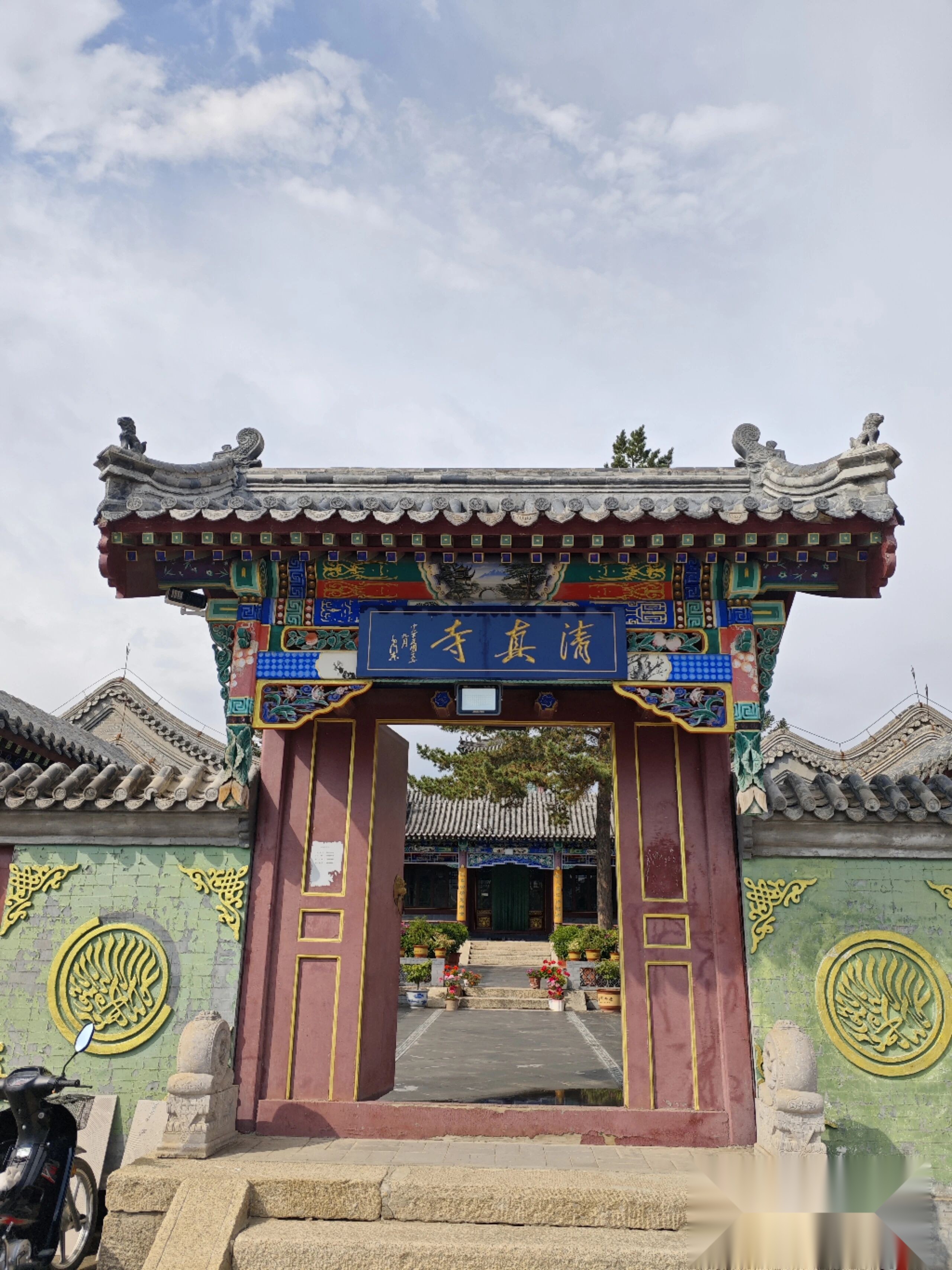


Visiting the Hexigten Banner Mosque.
When you're traveling through Hexigten Banner, don't just stick to the epic grasslands and stone forests—make sure you don't miss the Jingpeng Mosque. This historic brick-and-tile structure is laid out with precision, featuring a clean, peaceful courtyard and a spacious, grand prayer hall. Standing out here on the northern plains, it serves as a lasting mark of a rich, diverse history. It’s the perfect low-key spot without the tourist crowds, full of character and depth. If you drop by, please be respectful, keep things quiet, and follow all religious etiquette. Come soak up the slow-paced vibes of this small town and discover a unique cultural landmark in Hexigten.
Fuyou Road Mosque Shanghai: Hidden Islamic Heritage and Historic Hui Muslim Culture in Old Town
Articles • Hasan09 posted the article • 0 comments • 36 views • 2026-11-09 10:39
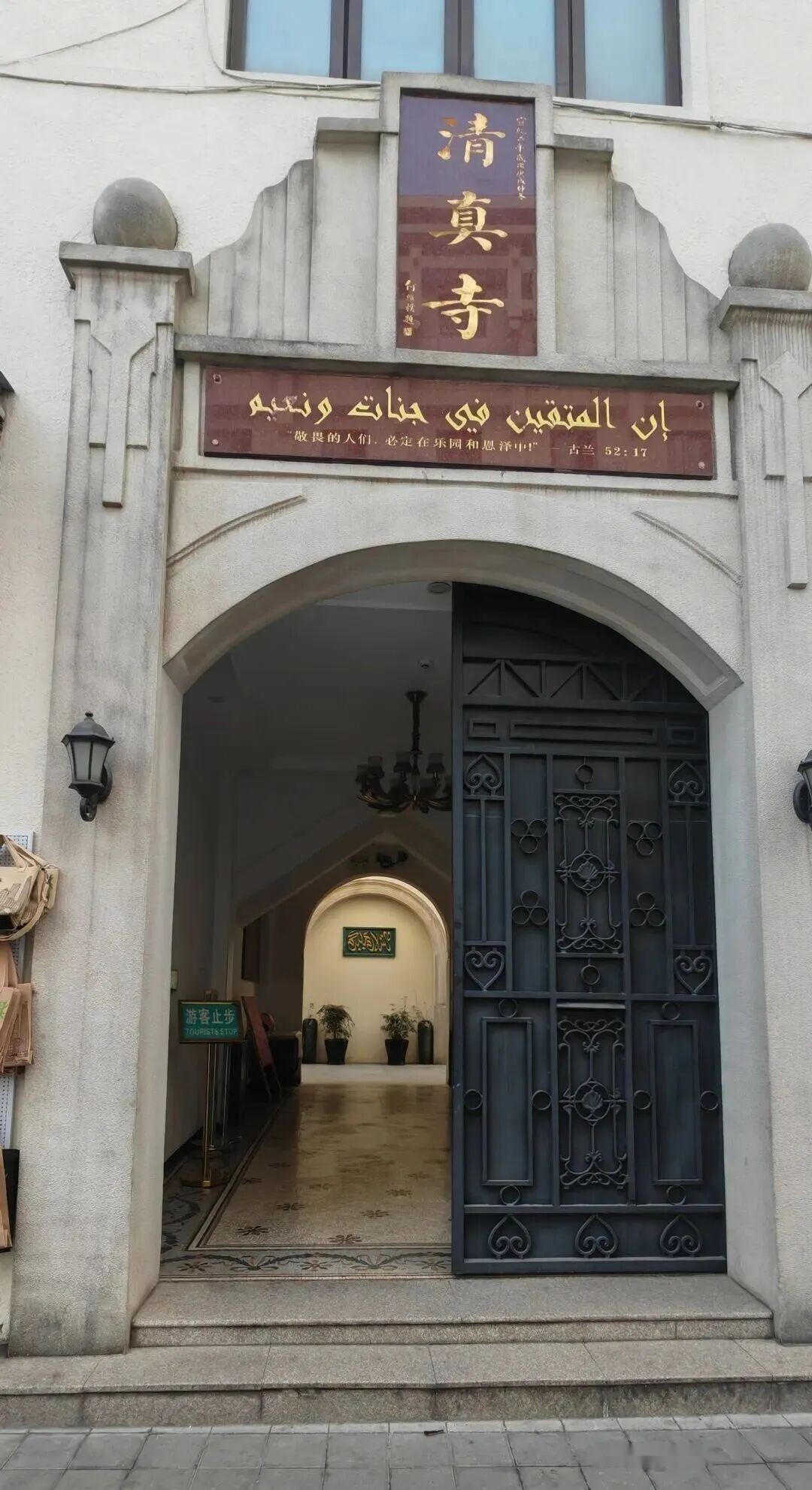
Here are eight photos to take you inside the century-old Fuyou Road Mosque, tucked right next to Shanghai’s bustling Yuyuan Garden. Built in 1870, the mosque is a unique architectural mashup, blending a traditional Jiangnan-style Shikumen (stone-gate house) facade with the prayer hall of a mosque—a true testament to the history and ambition of the Hui Muslims who settled in modern Shanghai.
The crowds at Yuyuan Garden never really thin out, no matter the season. The sweet scent of pear syrup candies, the neon lights of the silk shops, and the little flags held up by tour guides turn Fuyou Road into a literal river of people.
At number 378, you’ll find a Shikumen gate that’s actually narrower than the storefronts next to it. Nobody is waiting in line, and nobody is stopping to take pictures. Most tourists walk past it a hundred times without ever giving it a second look.
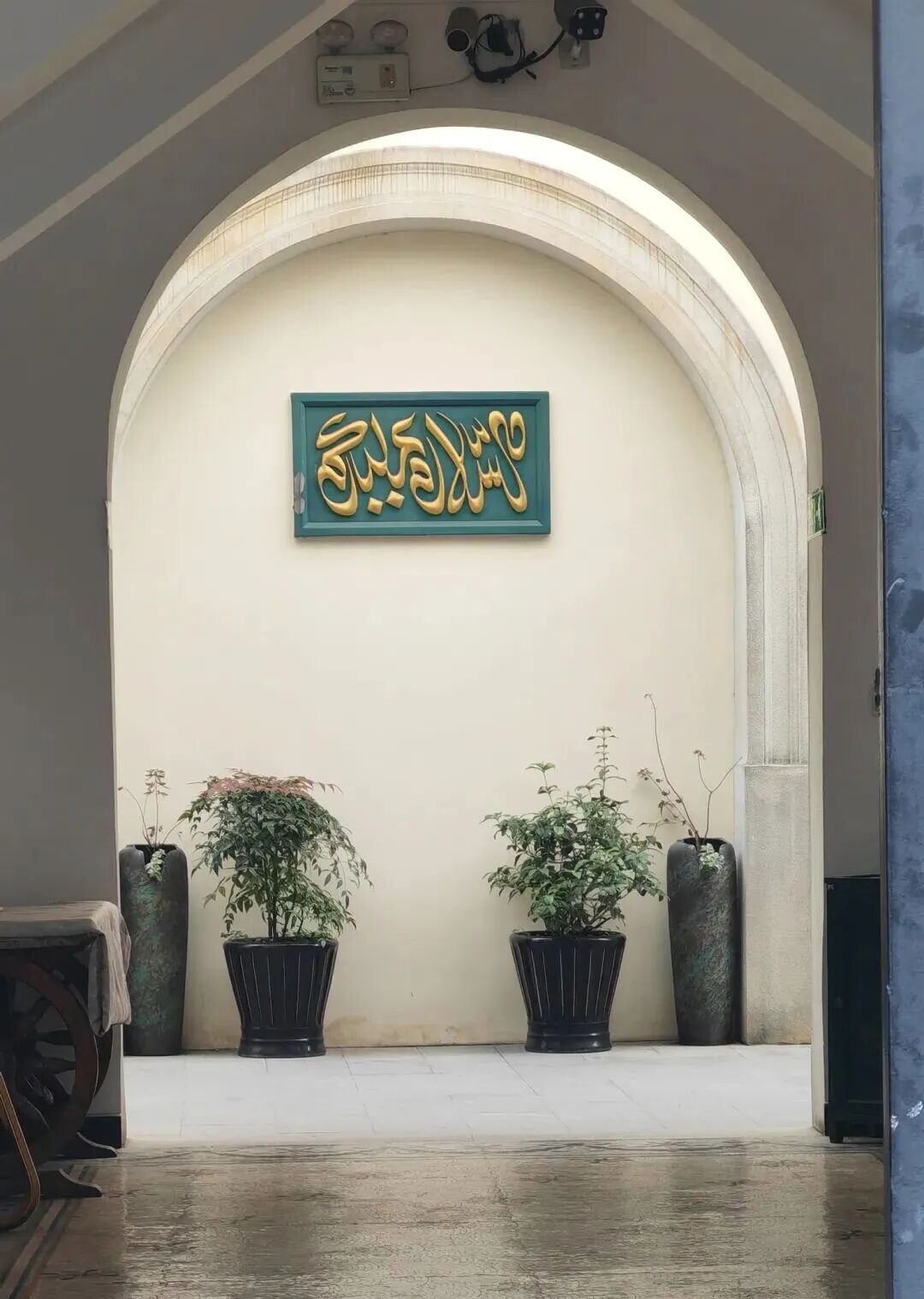
But push the door open, and the noise of the city just fades away.
There are no onion domes here, and no minarets reaching for the sky. Instead, you’re greeted by a traditional Jiangnan wooden hall complete with flying eaves, carved beams, and lattice windows. On the west wall, there's a niche featuring a kiln door made of green ceramic tiles. Out-of-towners are often confused: Is this really a mosque? Locals don't find it strange at all—this is just the Shanghai way. When a faith moves into the city, it picks out a local outfit that fits right in.
The story of this mosque starts with an alley that doesn't even exist anymore.
In the early years of the Tongzhi reign, after the flames of the Taiping Rebellion swept through Nanjing, a group of Hui Muslims from Nanjing escaped to Shanghai by water. They first settled in Caoxiewan, then gradually gathered around Chuanxin Street outside the old North Gate. In 1863, they rented two single-story shops on Xiaopi Nong (Leather Processing Alley) to serve as a place for dua (prayer). As the name suggests, Xiaopi Nong was where people traded furs and leathers. These newcomers mostly made a living in the City God Temple commercial district, selling goods from across the country, furs, and a trade they were most famous for—jewelry and antiques. There was an old Shanghai saying about the "knowledgeable Hui traders," referring to their sharp eye for spotting the age of jade and the quality of pearls.
In 1870, thirty-one elders—including Ma Hanzhang, Ha Qingtang, and Jin Lanpo—pooled together 2,700 silver dollars to buy a plot of land on Chuanxin Street and built the first main hall. Later expansions were funded by the community time and time again. The original land deed monument is still embedded in the south wall of the main hall today—because for a mosque, the most solid foundation isn't just incense, it's the property deed.
If you look closely inside the main hall, you can read a list of donors carved right into the wood. The dragon-claw lacquered rafters in the second hall were donated by Zheng Chunting alone; the minaret tower was paid for by Xu Wanqing; and the brass lotus-shaped showerheads in the ablution room came from Ma Rongxuan. A hundred years ago, there wasn't a fancy stone plaque for show; whoever donated something simply became a part of the building itself.
The elders still tell a story about the old days. One wealthy elder was never seen without a cigar, even in the prayer hall, which led to a heated disagreement with the imam. Ha Shaofu stepped in to mediate, called a meeting of all the elders, and cleared the air. He settled the dispute fairly and established the rules that still govern the mosque’s religious and administrative affairs today.
The mosque’s handling of a dispute outside its walls really shows off the typical Shanghai approach to problem-solving.
There used to be a 'Shazhu Nong' (Pig Slaughtering Alley) near Chuanxin Street. The dirty water from the workshops would flow into the gutters, and the smell would waft down the street. On one side, you had families who had been butchering pigs for generations; on the other, the new Hui neighbors who consider pork forbidden. Anywhere else, this would've meant a feud. But in the Old City, they talked it out: the mosque stepped in to negotiate with the meat traders' association. Eventually, the workshops were moved outside the city to the western end of Xiao Jiuhua Street, which we now call Wangjia Matou Road. The cleared alley was renamed 'Sazhu Nong' (using a phonetic play on words in the Shanghai dialect to make it sound more refined). Local gazetteers only left a nine-word note: "Originally named Pig Slaughtering Alley, butchery moved and name changed." A compromise move became a permanent part of the local history.
In 1909, the Shanghai Muslim Board was established within the mosque. It was the first modern Muslim organization in the city, handling religious affairs, disaster relief, charity, and education. By 1911, local Muslim merchants had formed a Muslim Business Corps based right here in the mosque, which later participated in the liberation of Shanghai. The mosque had officially become the backbone of the community.
In 1928, a new imam named Da Pusheng arrived at Chuanxin Street. A native of Liuhe, Jiangsu, he started studying scriptures at seven, traveled through Southeast Asia, and had seen the world. He founded the Wuben Elementary School at the mosque and served as the principal of the Shanghai Islamic Normal School, offering room, board, and tuition to students from all over the country. Between 1931 and 1934, two groups of students were sent to Al-Azhar University in Egypt for advanced studies.
Then, the war broke out.
After the Battle of Shanghai, the sixty-something-year-old Da Pusheng left the courtyard alone, traveling through South Asia and the Middle East. Japanese agents were spreading rumors across the Arab world, calling their invasion a 'liberation.' At the World Muslim Conference in Mecca, this Chinese imam stood up in his long gown and publicly refuted the Japanese representatives, stunning the whole room. His 'Letter to the Muslims of the World' was serialized in Cairo’s Al-Ahram newspaper and translated into English, Persian, and Hindi to be sent back home. Muslims in India donated hundreds of thousands of banknotes and medicine to China. A community that started in a small leather-processing alley had made its voice heard all the way to the banks of the Nile.
In 1936, the old stone Shikumen gate facing the street was rebuilt into a three-story building, and a 'Moon-Sighting Pavilion' was added to the roof. From up there, you could see the flying eaves of Yuyuan Garden, the waves of tiled roofs in the Old City, then the neon lights, and later, the skyscrapers of Lujiazui. Every year near the ninth month of the Islamic calendar, the imam and elders would climb up to watch for the crescent moon—the only way to know for sure that Ramadan had begun.
Over 150 years later, Chuanxin Street has been renamed Fuyou Road, Sazhu Nong disappeared during the road renovations, but the mosque is still standing.
Outside the gate, the antique market is as busy as ever, with stalls filled with beads, jade pieces, and old silver—it’s the same business as the 'knowledgeable Hui traders' of the past. The director of the mosque management committee is a merchant from Gansu who used to sell Tibetan-style crafts in Yuyuan. When customers come to pick out beads, he’ll spend hours with them, even for a six-yuan sale. When asked why he does it, he can’t explain it with big words; he just feels that business is about people, and you can't be in a rush.
Mr. Zhang, from the Guangfu neighborhood committee, was born and raised nearby. He’s spent his whole life watching the mosque open, close, get repaired, and reopen. During Ramadan and other holidays, the neighborhood committee and the mosque always help each other out; if something happens in a family, the neighbors are always the first to know.
At night, the lights of Yuyuan Garden turn on one by one, and the silhouette of the Moon-Sighting Pavilion is etched against the skyline. Downstairs, the antique stalls close up, metal shutters roll down with a rattle, and steam from the beef noodle shop escapes through the door cracks.
For over 150 years—from the bead-trading Hui merchants of the old leather-processing alley to the newcomers who patiently browse for beads today—the mosque has quietly held a spot for outsiders to rest their feet in the folds of the Old City.
#FuyouRoadMosque #ChuanxinStreet #SazhuNong #XiaopiNong #HuiMuslimTraders #DaPusheng #ShanghaiMuslimBoard #OldCity #YuyuanGarden #MoonSightingPavilion view all
Here are eight photos to take you inside the century-old Fuyou Road Mosque, tucked right next to Shanghai’s bustling Yuyuan Garden. Built in 1870, the mosque is a unique architectural mashup, blending a traditional Jiangnan-style Shikumen (stone-gate house) facade with the prayer hall of a mosque—a true testament to the history and ambition of the Hui Muslims who settled in modern Shanghai.
The crowds at Yuyuan Garden never really thin out, no matter the season. The sweet scent of pear syrup candies, the neon lights of the silk shops, and the little flags held up by tour guides turn Fuyou Road into a literal river of people.

At number 378, you’ll find a Shikumen gate that’s actually narrower than the storefronts next to it. Nobody is waiting in line, and nobody is stopping to take pictures. Most tourists walk past it a hundred times without ever giving it a second look.
But push the door open, and the noise of the city just fades away.
There are no onion domes here, and no minarets reaching for the sky. Instead, you’re greeted by a traditional Jiangnan wooden hall complete with flying eaves, carved beams, and lattice windows. On the west wall, there's a niche featuring a kiln door made of green ceramic tiles. Out-of-towners are often confused: Is this really a mosque? Locals don't find it strange at all—this is just the Shanghai way. When a faith moves into the city, it picks out a local outfit that fits right in.

The story of this mosque starts with an alley that doesn't even exist anymore.
In the early years of the Tongzhi reign, after the flames of the Taiping Rebellion swept through Nanjing, a group of Hui Muslims from Nanjing escaped to Shanghai by water. They first settled in Caoxiewan, then gradually gathered around Chuanxin Street outside the old North Gate. In 1863, they rented two single-story shops on Xiaopi Nong (Leather Processing Alley) to serve as a place for dua (prayer). As the name suggests, Xiaopi Nong was where people traded furs and leathers. These newcomers mostly made a living in the City God Temple commercial district, selling goods from across the country, furs, and a trade they were most famous for—jewelry and antiques. There was an old Shanghai saying about the "knowledgeable Hui traders," referring to their sharp eye for spotting the age of jade and the quality of pearls.
In 1870, thirty-one elders—including Ma Hanzhang, Ha Qingtang, and Jin Lanpo—pooled together 2,700 silver dollars to buy a plot of land on Chuanxin Street and built the first main hall. Later expansions were funded by the community time and time again. The original land deed monument is still embedded in the south wall of the main hall today—because for a mosque, the most solid foundation isn't just incense, it's the property deed.
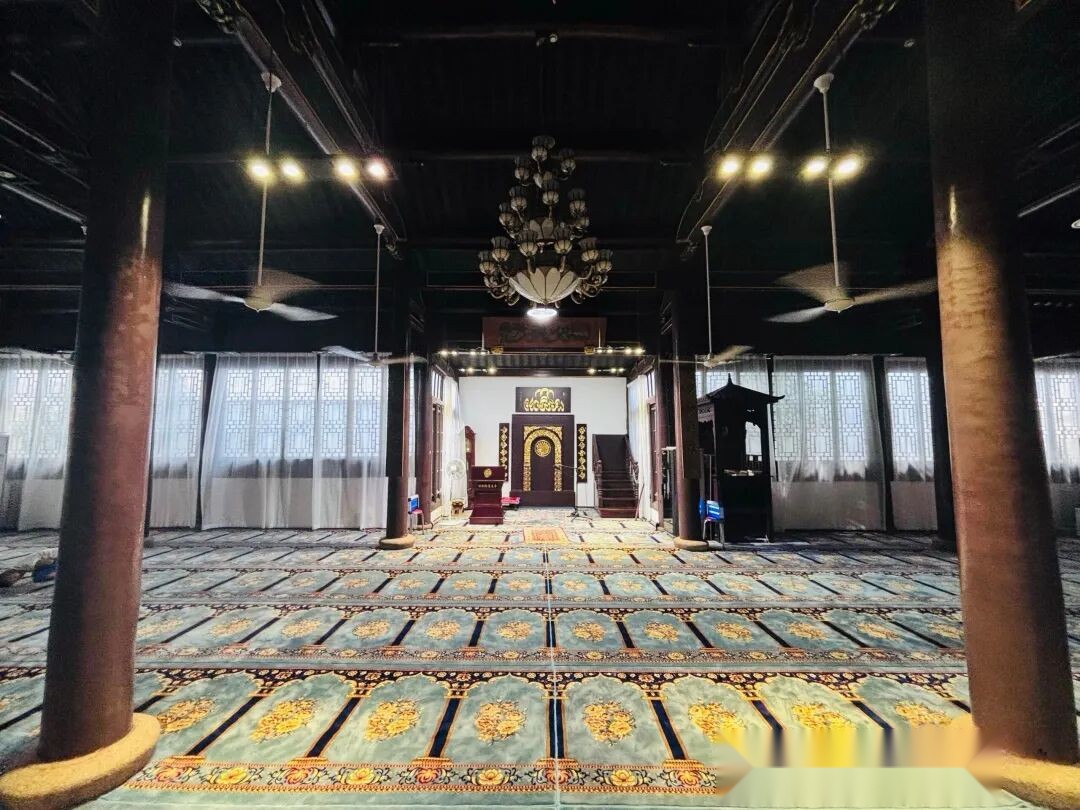
If you look closely inside the main hall, you can read a list of donors carved right into the wood. The dragon-claw lacquered rafters in the second hall were donated by Zheng Chunting alone; the minaret tower was paid for by Xu Wanqing; and the brass lotus-shaped showerheads in the ablution room came from Ma Rongxuan. A hundred years ago, there wasn't a fancy stone plaque for show; whoever donated something simply became a part of the building itself.
The elders still tell a story about the old days. One wealthy elder was never seen without a cigar, even in the prayer hall, which led to a heated disagreement with the imam. Ha Shaofu stepped in to mediate, called a meeting of all the elders, and cleared the air. He settled the dispute fairly and established the rules that still govern the mosque’s religious and administrative affairs today.
The mosque’s handling of a dispute outside its walls really shows off the typical Shanghai approach to problem-solving.
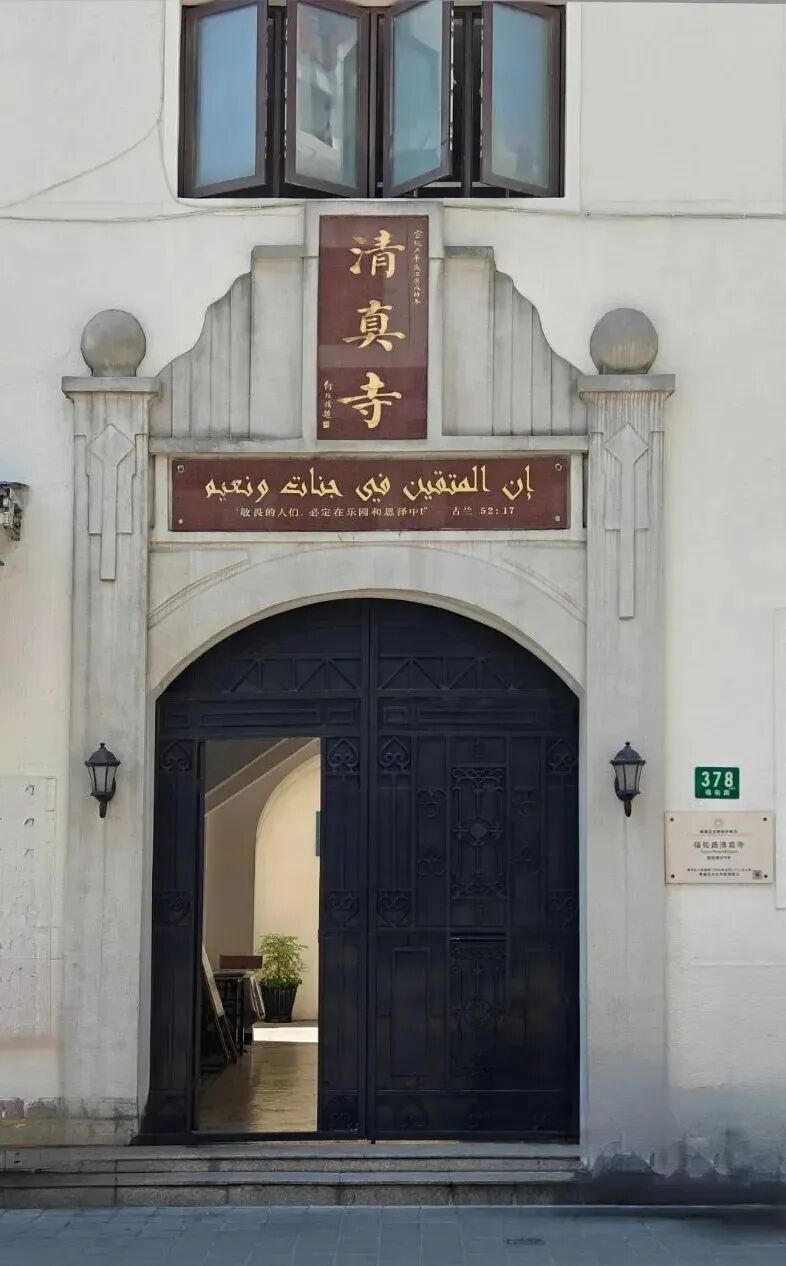
There used to be a 'Shazhu Nong' (Pig Slaughtering Alley) near Chuanxin Street. The dirty water from the workshops would flow into the gutters, and the smell would waft down the street. On one side, you had families who had been butchering pigs for generations; on the other, the new Hui neighbors who consider pork forbidden. Anywhere else, this would've meant a feud. But in the Old City, they talked it out: the mosque stepped in to negotiate with the meat traders' association. Eventually, the workshops were moved outside the city to the western end of Xiao Jiuhua Street, which we now call Wangjia Matou Road. The cleared alley was renamed 'Sazhu Nong' (using a phonetic play on words in the Shanghai dialect to make it sound more refined). Local gazetteers only left a nine-word note: "Originally named Pig Slaughtering Alley, butchery moved and name changed." A compromise move became a permanent part of the local history.

In 1909, the Shanghai Muslim Board was established within the mosque. It was the first modern Muslim organization in the city, handling religious affairs, disaster relief, charity, and education. By 1911, local Muslim merchants had formed a Muslim Business Corps based right here in the mosque, which later participated in the liberation of Shanghai. The mosque had officially become the backbone of the community.
In 1928, a new imam named Da Pusheng arrived at Chuanxin Street. A native of Liuhe, Jiangsu, he started studying scriptures at seven, traveled through Southeast Asia, and had seen the world. He founded the Wuben Elementary School at the mosque and served as the principal of the Shanghai Islamic Normal School, offering room, board, and tuition to students from all over the country. Between 1931 and 1934, two groups of students were sent to Al-Azhar University in Egypt for advanced studies.
Then, the war broke out.
After the Battle of Shanghai, the sixty-something-year-old Da Pusheng left the courtyard alone, traveling through South Asia and the Middle East. Japanese agents were spreading rumors across the Arab world, calling their invasion a 'liberation.' At the World Muslim Conference in Mecca, this Chinese imam stood up in his long gown and publicly refuted the Japanese representatives, stunning the whole room. His 'Letter to the Muslims of the World' was serialized in Cairo’s Al-Ahram newspaper and translated into English, Persian, and Hindi to be sent back home. Muslims in India donated hundreds of thousands of banknotes and medicine to China. A community that started in a small leather-processing alley had made its voice heard all the way to the banks of the Nile.
In 1936, the old stone Shikumen gate facing the street was rebuilt into a three-story building, and a 'Moon-Sighting Pavilion' was added to the roof. From up there, you could see the flying eaves of Yuyuan Garden, the waves of tiled roofs in the Old City, then the neon lights, and later, the skyscrapers of Lujiazui. Every year near the ninth month of the Islamic calendar, the imam and elders would climb up to watch for the crescent moon—the only way to know for sure that Ramadan had begun.
Over 150 years later, Chuanxin Street has been renamed Fuyou Road, Sazhu Nong disappeared during the road renovations, but the mosque is still standing.
Outside the gate, the antique market is as busy as ever, with stalls filled with beads, jade pieces, and old silver—it’s the same business as the 'knowledgeable Hui traders' of the past. The director of the mosque management committee is a merchant from Gansu who used to sell Tibetan-style crafts in Yuyuan. When customers come to pick out beads, he’ll spend hours with them, even for a six-yuan sale. When asked why he does it, he can’t explain it with big words; he just feels that business is about people, and you can't be in a rush.
Mr. Zhang, from the Guangfu neighborhood committee, was born and raised nearby. He’s spent his whole life watching the mosque open, close, get repaired, and reopen. During Ramadan and other holidays, the neighborhood committee and the mosque always help each other out; if something happens in a family, the neighbors are always the first to know.
At night, the lights of Yuyuan Garden turn on one by one, and the silhouette of the Moon-Sighting Pavilion is etched against the skyline. Downstairs, the antique stalls close up, metal shutters roll down with a rattle, and steam from the beef noodle shop escapes through the door cracks.

For over 150 years—from the bead-trading Hui merchants of the old leather-processing alley to the newcomers who patiently browse for beads today—the mosque has quietly held a spot for outsiders to rest their feet in the folds of the Old City.
#FuyouRoadMosque #ChuanxinStreet #SazhuNong #XiaopiNong #HuiMuslimTraders #DaPusheng #ShanghaiMuslimBoard #OldCity #YuyuanGarden #MoonSightingPavilion
The crowds at Yuyuan Garden never really thin out, no matter the season. The sweet scent of pear syrup candies, the neon lights of the silk shops, and the little flags held up by tour guides turn Fuyou Road into a literal river of people.
At number 378, you’ll find a Shikumen gate that’s actually narrower than the storefronts next to it. Nobody is waiting in line, and nobody is stopping to take pictures. Most tourists walk past it a hundred times without ever giving it a second look.
But push the door open, and the noise of the city just fades away.
There are no onion domes here, and no minarets reaching for the sky. Instead, you’re greeted by a traditional Jiangnan wooden hall complete with flying eaves, carved beams, and lattice windows. On the west wall, there's a niche featuring a kiln door made of green ceramic tiles. Out-of-towners are often confused: Is this really a mosque? Locals don't find it strange at all—this is just the Shanghai way. When a faith moves into the city, it picks out a local outfit that fits right in.
The story of this mosque starts with an alley that doesn't even exist anymore.
In the early years of the Tongzhi reign, after the flames of the Taiping Rebellion swept through Nanjing, a group of Hui Muslims from Nanjing escaped to Shanghai by water. They first settled in Caoxiewan, then gradually gathered around Chuanxin Street outside the old North Gate. In 1863, they rented two single-story shops on Xiaopi Nong (Leather Processing Alley) to serve as a place for dua (prayer). As the name suggests, Xiaopi Nong was where people traded furs and leathers. These newcomers mostly made a living in the City God Temple commercial district, selling goods from across the country, furs, and a trade they were most famous for—jewelry and antiques. There was an old Shanghai saying about the "knowledgeable Hui traders," referring to their sharp eye for spotting the age of jade and the quality of pearls.
In 1870, thirty-one elders—including Ma Hanzhang, Ha Qingtang, and Jin Lanpo—pooled together 2,700 silver dollars to buy a plot of land on Chuanxin Street and built the first main hall. Later expansions were funded by the community time and time again. The original land deed monument is still embedded in the south wall of the main hall today—because for a mosque, the most solid foundation isn't just incense, it's the property deed.
If you look closely inside the main hall, you can read a list of donors carved right into the wood. The dragon-claw lacquered rafters in the second hall were donated by Zheng Chunting alone; the minaret tower was paid for by Xu Wanqing; and the brass lotus-shaped showerheads in the ablution room came from Ma Rongxuan. A hundred years ago, there wasn't a fancy stone plaque for show; whoever donated something simply became a part of the building itself.
The elders still tell a story about the old days. One wealthy elder was never seen without a cigar, even in the prayer hall, which led to a heated disagreement with the imam. Ha Shaofu stepped in to mediate, called a meeting of all the elders, and cleared the air. He settled the dispute fairly and established the rules that still govern the mosque’s religious and administrative affairs today.
The mosque’s handling of a dispute outside its walls really shows off the typical Shanghai approach to problem-solving.
There used to be a 'Shazhu Nong' (Pig Slaughtering Alley) near Chuanxin Street. The dirty water from the workshops would flow into the gutters, and the smell would waft down the street. On one side, you had families who had been butchering pigs for generations; on the other, the new Hui neighbors who consider pork forbidden. Anywhere else, this would've meant a feud. But in the Old City, they talked it out: the mosque stepped in to negotiate with the meat traders' association. Eventually, the workshops were moved outside the city to the western end of Xiao Jiuhua Street, which we now call Wangjia Matou Road. The cleared alley was renamed 'Sazhu Nong' (using a phonetic play on words in the Shanghai dialect to make it sound more refined). Local gazetteers only left a nine-word note: "Originally named Pig Slaughtering Alley, butchery moved and name changed." A compromise move became a permanent part of the local history.
In 1909, the Shanghai Muslim Board was established within the mosque. It was the first modern Muslim organization in the city, handling religious affairs, disaster relief, charity, and education. By 1911, local Muslim merchants had formed a Muslim Business Corps based right here in the mosque, which later participated in the liberation of Shanghai. The mosque had officially become the backbone of the community.
In 1928, a new imam named Da Pusheng arrived at Chuanxin Street. A native of Liuhe, Jiangsu, he started studying scriptures at seven, traveled through Southeast Asia, and had seen the world. He founded the Wuben Elementary School at the mosque and served as the principal of the Shanghai Islamic Normal School, offering room, board, and tuition to students from all over the country. Between 1931 and 1934, two groups of students were sent to Al-Azhar University in Egypt for advanced studies.
Then, the war broke out.
After the Battle of Shanghai, the sixty-something-year-old Da Pusheng left the courtyard alone, traveling through South Asia and the Middle East. Japanese agents were spreading rumors across the Arab world, calling their invasion a 'liberation.' At the World Muslim Conference in Mecca, this Chinese imam stood up in his long gown and publicly refuted the Japanese representatives, stunning the whole room. His 'Letter to the Muslims of the World' was serialized in Cairo’s Al-Ahram newspaper and translated into English, Persian, and Hindi to be sent back home. Muslims in India donated hundreds of thousands of banknotes and medicine to China. A community that started in a small leather-processing alley had made its voice heard all the way to the banks of the Nile.
In 1936, the old stone Shikumen gate facing the street was rebuilt into a three-story building, and a 'Moon-Sighting Pavilion' was added to the roof. From up there, you could see the flying eaves of Yuyuan Garden, the waves of tiled roofs in the Old City, then the neon lights, and later, the skyscrapers of Lujiazui. Every year near the ninth month of the Islamic calendar, the imam and elders would climb up to watch for the crescent moon—the only way to know for sure that Ramadan had begun.
Over 150 years later, Chuanxin Street has been renamed Fuyou Road, Sazhu Nong disappeared during the road renovations, but the mosque is still standing.
Outside the gate, the antique market is as busy as ever, with stalls filled with beads, jade pieces, and old silver—it’s the same business as the 'knowledgeable Hui traders' of the past. The director of the mosque management committee is a merchant from Gansu who used to sell Tibetan-style crafts in Yuyuan. When customers come to pick out beads, he’ll spend hours with them, even for a six-yuan sale. When asked why he does it, he can’t explain it with big words; he just feels that business is about people, and you can't be in a rush.
Mr. Zhang, from the Guangfu neighborhood committee, was born and raised nearby. He’s spent his whole life watching the mosque open, close, get repaired, and reopen. During Ramadan and other holidays, the neighborhood committee and the mosque always help each other out; if something happens in a family, the neighbors are always the first to know.
At night, the lights of Yuyuan Garden turn on one by one, and the silhouette of the Moon-Sighting Pavilion is etched against the skyline. Downstairs, the antique stalls close up, metal shutters roll down with a rattle, and steam from the beef noodle shop escapes through the door cracks.
For over 150 years—from the bead-trading Hui merchants of the old leather-processing alley to the newcomers who patiently browse for beads today—the mosque has quietly held a spot for outsiders to rest their feet in the folds of the Old City.
#FuyouRoadMosque #ChuanxinStreet #SazhuNong #XiaopiNong #HuiMuslimTraders #DaPusheng #ShanghaiMuslimBoard #OldCity #YuyuanGarden #MoonSightingPavilion
Exploring Shijiazhuang East Mosque: A Hidden Islamic Heritage Site in Hebei's Busy City Center
Articles • Hasan09 posted the article • 0 comments • 41 views • 2026-11-09 10:36
Join me as I head into the heart of Shijiazhuang’s Chang'an District on Heping East Road to explore the hidden site of the old Shijiazhuang East Mosque. We’re diving into the history of how the city evolved from a small village into a bustling hub where Hui Muslims settled and established their places of worship, while highlighting the importance of preserving these ethnic cultural heritage sites during modern urban development.
Standing right there by the heavy traffic on Heping East Road, I honestly felt a bit surreal—who would have guessed that tucked away in the narrow gaps of this busy city center lies the old Shijiazhuang East Mosque?
To give you the backstory, this mosque was built in 1946 after local Muslims pooled their money to buy the land. Their first Imam was Yang Baozhai, and back then, it was pretty modest, with only a dozen rooms and a lecture hall used as a prayer space. After it merged with the Qiaoxi Mosque in 1959, the site was repurposed as a food factory, a paper product plant, and even a warehouse for a motorcycle shop, essentially staying 'asleep' for decades. It wasn't until 2006 that local elders like Chu Qiulai and Imam Bai Endian donated funds for restoration, essentially 'rescuing' the courtyard from being a warehouse. Interestingly, until just a few years ago, even the people living in the high-rise apartments right next door had no idea that this quiet spiritual home for the Muslim community was hiding right under their noses.
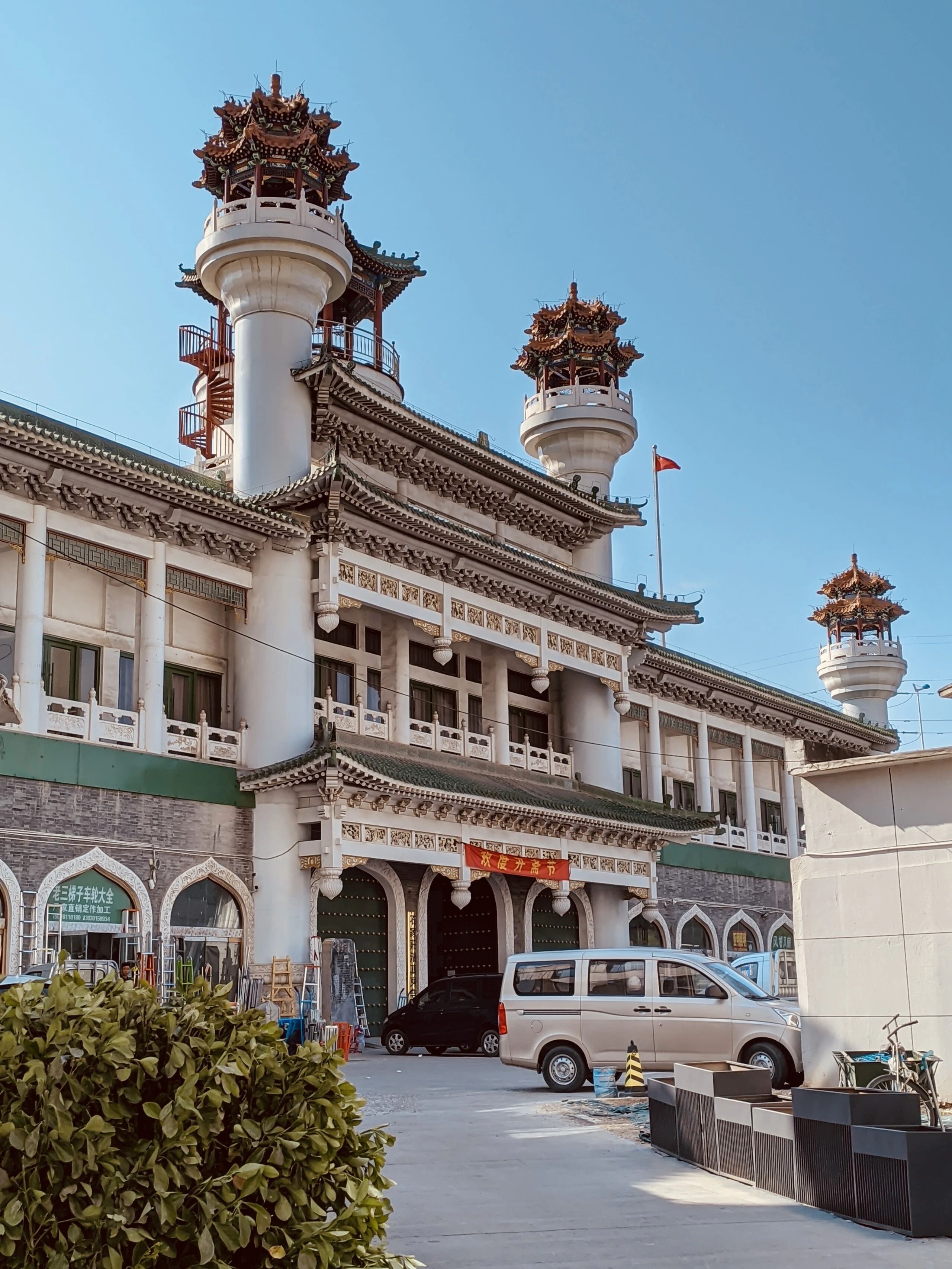
Looking at the new mosque building completed in 2015, I find it fascinating: the designer, An Changzhong, blended Islamic domes with traditional Chinese feiyan (flying eaves and brackets). The dome is perfectly rounded and carries that sense of solemnity you'd expect from Western regions, but then you look up and see the eaves lightly curving upward, with green glazed tiles shimmering softly in the sunlight. The octagonal Moon-Sighting Tower looks just like a classic Chinese pavilion, yet it clearly holds an Islamic soul. For such a small mosque that has seen so many ups and downs, it really understands what it means to be 'living history' much better than many of the more massive, grand-scale buildings out there. view all
Join me as I head into the heart of Shijiazhuang’s Chang'an District on Heping East Road to explore the hidden site of the old Shijiazhuang East Mosque. We’re diving into the history of how the city evolved from a small village into a bustling hub where Hui Muslims settled and established their places of worship, while highlighting the importance of preserving these ethnic cultural heritage sites during modern urban development.
Standing right there by the heavy traffic on Heping East Road, I honestly felt a bit surreal—who would have guessed that tucked away in the narrow gaps of this busy city center lies the old Shijiazhuang East Mosque?
To give you the backstory, this mosque was built in 1946 after local Muslims pooled their money to buy the land. Their first Imam was Yang Baozhai, and back then, it was pretty modest, with only a dozen rooms and a lecture hall used as a prayer space. After it merged with the Qiaoxi Mosque in 1959, the site was repurposed as a food factory, a paper product plant, and even a warehouse for a motorcycle shop, essentially staying 'asleep' for decades. It wasn't until 2006 that local elders like Chu Qiulai and Imam Bai Endian donated funds for restoration, essentially 'rescuing' the courtyard from being a warehouse. Interestingly, until just a few years ago, even the people living in the high-rise apartments right next door had no idea that this quiet spiritual home for the Muslim community was hiding right under their noses.
Looking at the new mosque building completed in 2015, I find it fascinating: the designer, An Changzhong, blended Islamic domes with traditional Chinese feiyan (flying eaves and brackets). The dome is perfectly rounded and carries that sense of solemnity you'd expect from Western regions, but then you look up and see the eaves lightly curving upward, with green glazed tiles shimmering softly in the sunlight. The octagonal Moon-Sighting Tower looks just like a classic Chinese pavilion, yet it clearly holds an Islamic soul. For such a small mosque that has seen so many ups and downs, it really understands what it means to be 'living history' much better than many of the more massive, grand-scale buildings out there.
Standing right there by the heavy traffic on Heping East Road, I honestly felt a bit surreal—who would have guessed that tucked away in the narrow gaps of this busy city center lies the old Shijiazhuang East Mosque?
To give you the backstory, this mosque was built in 1946 after local Muslims pooled their money to buy the land. Their first Imam was Yang Baozhai, and back then, it was pretty modest, with only a dozen rooms and a lecture hall used as a prayer space. After it merged with the Qiaoxi Mosque in 1959, the site was repurposed as a food factory, a paper product plant, and even a warehouse for a motorcycle shop, essentially staying 'asleep' for decades. It wasn't until 2006 that local elders like Chu Qiulai and Imam Bai Endian donated funds for restoration, essentially 'rescuing' the courtyard from being a warehouse. Interestingly, until just a few years ago, even the people living in the high-rise apartments right next door had no idea that this quiet spiritual home for the Muslim community was hiding right under their noses.
Looking at the new mosque building completed in 2015, I find it fascinating: the designer, An Changzhong, blended Islamic domes with traditional Chinese feiyan (flying eaves and brackets). The dome is perfectly rounded and carries that sense of solemnity you'd expect from Western regions, but then you look up and see the eaves lightly curving upward, with green glazed tiles shimmering softly in the sunlight. The octagonal Moon-Sighting Tower looks just like a classic Chinese pavilion, yet it clearly holds an Islamic soul. For such a small mosque that has seen so many ups and downs, it really understands what it means to be 'living history' much better than many of the more massive, grand-scale buildings out there.
Exploring Jingpeng Mosque in Inner Mongolia: A Hidden Cultural Gem for Authentic Hui Muslim Heritage
Articles • Hasan09 posted the article • 0 comments • 44 views • 2026-11-09 10:41
Check out these nine photos from our visit to the Jingpeng Mosque, located in the Jingpeng township of Hexigten Banner, Chifeng City, Inner Mongolia. The mosque beautifully blends traditional Chinese feiyan dougong (flying eaves and brackets) with local Northern frontier architectural styles, creating a serene and solemn atmosphere tucked away in the greenery that highlights the long history of Hui Muslims settling and thriving on the Inner Mongolian grasslands.
Visiting the Hexigten Banner Mosque.
When you're traveling through Hexigten Banner, don't just stick to the epic grasslands and stone forests—make sure you don't miss the Jingpeng Mosque. This historic brick-and-tile structure is laid out with precision, featuring a clean, peaceful courtyard and a spacious, grand prayer hall. Standing out here on the northern plains, it serves as a lasting mark of a rich, diverse history. It’s the perfect low-key spot without the tourist crowds, full of character and depth. If you drop by, please be respectful, keep things quiet, and follow all religious etiquette. Come soak up the slow-paced vibes of this small town and discover a unique cultural landmark in Hexigten. view all
Visiting the Hexigten Banner Mosque.
When you're traveling through Hexigten Banner, don't just stick to the epic grasslands and stone forests—make sure you don't miss the Jingpeng Mosque. This historic brick-and-tile structure is laid out with precision, featuring a clean, peaceful courtyard and a spacious, grand prayer hall. Standing out here on the northern plains, it serves as a lasting mark of a rich, diverse history. It’s the perfect low-key spot without the tourist crowds, full of character and depth. If you drop by, please be respectful, keep things quiet, and follow all religious etiquette. Come soak up the slow-paced vibes of this small town and discover a unique cultural landmark in Hexigten. view all
Check out these nine photos from our visit to the Jingpeng Mosque, located in the Jingpeng township of Hexigten Banner, Chifeng City, Inner Mongolia. The mosque beautifully blends traditional Chinese feiyan dougong (flying eaves and brackets) with local Northern frontier architectural styles, creating a serene and solemn atmosphere tucked away in the greenery that highlights the long history of Hui Muslims settling and thriving on the Inner Mongolian grasslands.
Visiting the Hexigten Banner Mosque.
When you're traveling through Hexigten Banner, don't just stick to the epic grasslands and stone forests—make sure you don't miss the Jingpeng Mosque. This historic brick-and-tile structure is laid out with precision, featuring a clean, peaceful courtyard and a spacious, grand prayer hall. Standing out here on the northern plains, it serves as a lasting mark of a rich, diverse history. It’s the perfect low-key spot without the tourist crowds, full of character and depth. If you drop by, please be respectful, keep things quiet, and follow all religious etiquette. Come soak up the slow-paced vibes of this small town and discover a unique cultural landmark in Hexigten.
Fuyou Road Mosque Shanghai: Hidden Islamic Heritage and Historic Hui Muslim Culture in Old Town
Articles • Hasan09 posted the article • 0 comments • 36 views • 2026-11-09 10:39
Here are eight photos to take you inside the century-old Fuyou Road Mosque, tucked right next to Shanghai’s bustling Yuyuan Garden. Built in 1870, the mosque is a unique architectural mashup, blending a traditional Jiangnan-style Shikumen (stone-gate house) facade with the prayer hall of a mosque—a true testament to the history and ambition of the Hui Muslims who settled in modern Shanghai.
The crowds at Yuyuan Garden never really thin out, no matter the season. The sweet scent of pear syrup candies, the neon lights of the silk shops, and the little flags held up by tour guides turn Fuyou Road into a literal river of people.
At number 378, you’ll find a Shikumen gate that’s actually narrower than the storefronts next to it. Nobody is waiting in line, and nobody is stopping to take pictures. Most tourists walk past it a hundred times without ever giving it a second look.
But push the door open, and the noise of the city just fades away.
There are no onion domes here, and no minarets reaching for the sky. Instead, you’re greeted by a traditional Jiangnan wooden hall complete with flying eaves, carved beams, and lattice windows. On the west wall, there's a niche featuring a kiln door made of green ceramic tiles. Out-of-towners are often confused: Is this really a mosque? Locals don't find it strange at all—this is just the Shanghai way. When a faith moves into the city, it picks out a local outfit that fits right in.
The story of this mosque starts with an alley that doesn't even exist anymore.
In the early years of the Tongzhi reign, after the flames of the Taiping Rebellion swept through Nanjing, a group of Hui Muslims from Nanjing escaped to Shanghai by water. They first settled in Caoxiewan, then gradually gathered around Chuanxin Street outside the old North Gate. In 1863, they rented two single-story shops on Xiaopi Nong (Leather Processing Alley) to serve as a place for dua (prayer). As the name suggests, Xiaopi Nong was where people traded furs and leathers. These newcomers mostly made a living in the City God Temple commercial district, selling goods from across the country, furs, and a trade they were most famous for—jewelry and antiques. There was an old Shanghai saying about the "knowledgeable Hui traders," referring to their sharp eye for spotting the age of jade and the quality of pearls.
In 1870, thirty-one elders—including Ma Hanzhang, Ha Qingtang, and Jin Lanpo—pooled together 2,700 silver dollars to buy a plot of land on Chuanxin Street and built the first main hall. Later expansions were funded by the community time and time again. The original land deed monument is still embedded in the south wall of the main hall today—because for a mosque, the most solid foundation isn't just incense, it's the property deed.
If you look closely inside the main hall, you can read a list of donors carved right into the wood. The dragon-claw lacquered rafters in the second hall were donated by Zheng Chunting alone; the minaret tower was paid for by Xu Wanqing; and the brass lotus-shaped showerheads in the ablution room came from Ma Rongxuan. A hundred years ago, there wasn't a fancy stone plaque for show; whoever donated something simply became a part of the building itself.
The elders still tell a story about the old days. One wealthy elder was never seen without a cigar, even in the prayer hall, which led to a heated disagreement with the imam. Ha Shaofu stepped in to mediate, called a meeting of all the elders, and cleared the air. He settled the dispute fairly and established the rules that still govern the mosque’s religious and administrative affairs today.
The mosque’s handling of a dispute outside its walls really shows off the typical Shanghai approach to problem-solving.
There used to be a 'Shazhu Nong' (Pig Slaughtering Alley) near Chuanxin Street. The dirty water from the workshops would flow into the gutters, and the smell would waft down the street. On one side, you had families who had been butchering pigs for generations; on the other, the new Hui neighbors who consider pork forbidden. Anywhere else, this would've meant a feud. But in the Old City, they talked it out: the mosque stepped in to negotiate with the meat traders' association. Eventually, the workshops were moved outside the city to the western end of Xiao Jiuhua Street, which we now call Wangjia Matou Road. The cleared alley was renamed 'Sazhu Nong' (using a phonetic play on words in the Shanghai dialect to make it sound more refined). Local gazetteers only left a nine-word note: "Originally named Pig Slaughtering Alley, butchery moved and name changed." A compromise move became a permanent part of the local history.
In 1909, the Shanghai Muslim Board was established within the mosque. It was the first modern Muslim organization in the city, handling religious affairs, disaster relief, charity, and education. By 1911, local Muslim merchants had formed a Muslim Business Corps based right here in the mosque, which later participated in the liberation of Shanghai. The mosque had officially become the backbone of the community.
In 1928, a new imam named Da Pusheng arrived at Chuanxin Street. A native of Liuhe, Jiangsu, he started studying scriptures at seven, traveled through Southeast Asia, and had seen the world. He founded the Wuben Elementary School at the mosque and served as the principal of the Shanghai Islamic Normal School, offering room, board, and tuition to students from all over the country. Between 1931 and 1934, two groups of students were sent to Al-Azhar University in Egypt for advanced studies.
Then, the war broke out.
After the Battle of Shanghai, the sixty-something-year-old Da Pusheng left the courtyard alone, traveling through South Asia and the Middle East. Japanese agents were spreading rumors across the Arab world, calling their invasion a 'liberation.' At the World Muslim Conference in Mecca, this Chinese imam stood up in his long gown and publicly refuted the Japanese representatives, stunning the whole room. His 'Letter to the Muslims of the World' was serialized in Cairo’s Al-Ahram newspaper and translated into English, Persian, and Hindi to be sent back home. Muslims in India donated hundreds of thousands of banknotes and medicine to China. A community that started in a small leather-processing alley had made its voice heard all the way to the banks of the Nile.
In 1936, the old stone Shikumen gate facing the street was rebuilt into a three-story building, and a 'Moon-Sighting Pavilion' was added to the roof. From up there, you could see the flying eaves of Yuyuan Garden, the waves of tiled roofs in the Old City, then the neon lights, and later, the skyscrapers of Lujiazui. Every year near the ninth month of the Islamic calendar, the imam and elders would climb up to watch for the crescent moon—the only way to know for sure that Ramadan had begun.
Over 150 years later, Chuanxin Street has been renamed Fuyou Road, Sazhu Nong disappeared during the road renovations, but the mosque is still standing.
Outside the gate, the antique market is as busy as ever, with stalls filled with beads, jade pieces, and old silver—it’s the same business as the 'knowledgeable Hui traders' of the past. The director of the mosque management committee is a merchant from Gansu who used to sell Tibetan-style crafts in Yuyuan. When customers come to pick out beads, he’ll spend hours with them, even for a six-yuan sale. When asked why he does it, he can’t explain it with big words; he just feels that business is about people, and you can't be in a rush.
Mr. Zhang, from the Guangfu neighborhood committee, was born and raised nearby. He’s spent his whole life watching the mosque open, close, get repaired, and reopen. During Ramadan and other holidays, the neighborhood committee and the mosque always help each other out; if something happens in a family, the neighbors are always the first to know.
At night, the lights of Yuyuan Garden turn on one by one, and the silhouette of the Moon-Sighting Pavilion is etched against the skyline. Downstairs, the antique stalls close up, metal shutters roll down with a rattle, and steam from the beef noodle shop escapes through the door cracks.
For over 150 years—from the bead-trading Hui merchants of the old leather-processing alley to the newcomers who patiently browse for beads today—the mosque has quietly held a spot for outsiders to rest their feet in the folds of the Old City.
#FuyouRoadMosque #ChuanxinStreet #SazhuNong #XiaopiNong #HuiMuslimTraders #DaPusheng #ShanghaiMuslimBoard #OldCity #YuyuanGarden #MoonSightingPavilion view all
The crowds at Yuyuan Garden never really thin out, no matter the season. The sweet scent of pear syrup candies, the neon lights of the silk shops, and the little flags held up by tour guides turn Fuyou Road into a literal river of people.
At number 378, you’ll find a Shikumen gate that’s actually narrower than the storefronts next to it. Nobody is waiting in line, and nobody is stopping to take pictures. Most tourists walk past it a hundred times without ever giving it a second look.
But push the door open, and the noise of the city just fades away.
There are no onion domes here, and no minarets reaching for the sky. Instead, you’re greeted by a traditional Jiangnan wooden hall complete with flying eaves, carved beams, and lattice windows. On the west wall, there's a niche featuring a kiln door made of green ceramic tiles. Out-of-towners are often confused: Is this really a mosque? Locals don't find it strange at all—this is just the Shanghai way. When a faith moves into the city, it picks out a local outfit that fits right in.
The story of this mosque starts with an alley that doesn't even exist anymore.
In the early years of the Tongzhi reign, after the flames of the Taiping Rebellion swept through Nanjing, a group of Hui Muslims from Nanjing escaped to Shanghai by water. They first settled in Caoxiewan, then gradually gathered around Chuanxin Street outside the old North Gate. In 1863, they rented two single-story shops on Xiaopi Nong (Leather Processing Alley) to serve as a place for dua (prayer). As the name suggests, Xiaopi Nong was where people traded furs and leathers. These newcomers mostly made a living in the City God Temple commercial district, selling goods from across the country, furs, and a trade they were most famous for—jewelry and antiques. There was an old Shanghai saying about the "knowledgeable Hui traders," referring to their sharp eye for spotting the age of jade and the quality of pearls.
In 1870, thirty-one elders—including Ma Hanzhang, Ha Qingtang, and Jin Lanpo—pooled together 2,700 silver dollars to buy a plot of land on Chuanxin Street and built the first main hall. Later expansions were funded by the community time and time again. The original land deed monument is still embedded in the south wall of the main hall today—because for a mosque, the most solid foundation isn't just incense, it's the property deed.
If you look closely inside the main hall, you can read a list of donors carved right into the wood. The dragon-claw lacquered rafters in the second hall were donated by Zheng Chunting alone; the minaret tower was paid for by Xu Wanqing; and the brass lotus-shaped showerheads in the ablution room came from Ma Rongxuan. A hundred years ago, there wasn't a fancy stone plaque for show; whoever donated something simply became a part of the building itself.
The elders still tell a story about the old days. One wealthy elder was never seen without a cigar, even in the prayer hall, which led to a heated disagreement with the imam. Ha Shaofu stepped in to mediate, called a meeting of all the elders, and cleared the air. He settled the dispute fairly and established the rules that still govern the mosque’s religious and administrative affairs today.
The mosque’s handling of a dispute outside its walls really shows off the typical Shanghai approach to problem-solving.
There used to be a 'Shazhu Nong' (Pig Slaughtering Alley) near Chuanxin Street. The dirty water from the workshops would flow into the gutters, and the smell would waft down the street. On one side, you had families who had been butchering pigs for generations; on the other, the new Hui neighbors who consider pork forbidden. Anywhere else, this would've meant a feud. But in the Old City, they talked it out: the mosque stepped in to negotiate with the meat traders' association. Eventually, the workshops were moved outside the city to the western end of Xiao Jiuhua Street, which we now call Wangjia Matou Road. The cleared alley was renamed 'Sazhu Nong' (using a phonetic play on words in the Shanghai dialect to make it sound more refined). Local gazetteers only left a nine-word note: "Originally named Pig Slaughtering Alley, butchery moved and name changed." A compromise move became a permanent part of the local history.
In 1909, the Shanghai Muslim Board was established within the mosque. It was the first modern Muslim organization in the city, handling religious affairs, disaster relief, charity, and education. By 1911, local Muslim merchants had formed a Muslim Business Corps based right here in the mosque, which later participated in the liberation of Shanghai. The mosque had officially become the backbone of the community.
In 1928, a new imam named Da Pusheng arrived at Chuanxin Street. A native of Liuhe, Jiangsu, he started studying scriptures at seven, traveled through Southeast Asia, and had seen the world. He founded the Wuben Elementary School at the mosque and served as the principal of the Shanghai Islamic Normal School, offering room, board, and tuition to students from all over the country. Between 1931 and 1934, two groups of students were sent to Al-Azhar University in Egypt for advanced studies.
Then, the war broke out.
After the Battle of Shanghai, the sixty-something-year-old Da Pusheng left the courtyard alone, traveling through South Asia and the Middle East. Japanese agents were spreading rumors across the Arab world, calling their invasion a 'liberation.' At the World Muslim Conference in Mecca, this Chinese imam stood up in his long gown and publicly refuted the Japanese representatives, stunning the whole room. His 'Letter to the Muslims of the World' was serialized in Cairo’s Al-Ahram newspaper and translated into English, Persian, and Hindi to be sent back home. Muslims in India donated hundreds of thousands of banknotes and medicine to China. A community that started in a small leather-processing alley had made its voice heard all the way to the banks of the Nile.
In 1936, the old stone Shikumen gate facing the street was rebuilt into a three-story building, and a 'Moon-Sighting Pavilion' was added to the roof. From up there, you could see the flying eaves of Yuyuan Garden, the waves of tiled roofs in the Old City, then the neon lights, and later, the skyscrapers of Lujiazui. Every year near the ninth month of the Islamic calendar, the imam and elders would climb up to watch for the crescent moon—the only way to know for sure that Ramadan had begun.
Over 150 years later, Chuanxin Street has been renamed Fuyou Road, Sazhu Nong disappeared during the road renovations, but the mosque is still standing.
Outside the gate, the antique market is as busy as ever, with stalls filled with beads, jade pieces, and old silver—it’s the same business as the 'knowledgeable Hui traders' of the past. The director of the mosque management committee is a merchant from Gansu who used to sell Tibetan-style crafts in Yuyuan. When customers come to pick out beads, he’ll spend hours with them, even for a six-yuan sale. When asked why he does it, he can’t explain it with big words; he just feels that business is about people, and you can't be in a rush.
Mr. Zhang, from the Guangfu neighborhood committee, was born and raised nearby. He’s spent his whole life watching the mosque open, close, get repaired, and reopen. During Ramadan and other holidays, the neighborhood committee and the mosque always help each other out; if something happens in a family, the neighbors are always the first to know.
At night, the lights of Yuyuan Garden turn on one by one, and the silhouette of the Moon-Sighting Pavilion is etched against the skyline. Downstairs, the antique stalls close up, metal shutters roll down with a rattle, and steam from the beef noodle shop escapes through the door cracks.
For over 150 years—from the bead-trading Hui merchants of the old leather-processing alley to the newcomers who patiently browse for beads today—the mosque has quietly held a spot for outsiders to rest their feet in the folds of the Old City.
#FuyouRoadMosque #ChuanxinStreet #SazhuNong #XiaopiNong #HuiMuslimTraders #DaPusheng #ShanghaiMuslimBoard #OldCity #YuyuanGarden #MoonSightingPavilion view all
Here are eight photos to take you inside the century-old Fuyou Road Mosque, tucked right next to Shanghai’s bustling Yuyuan Garden. Built in 1870, the mosque is a unique architectural mashup, blending a traditional Jiangnan-style Shikumen (stone-gate house) facade with the prayer hall of a mosque—a true testament to the history and ambition of the Hui Muslims who settled in modern Shanghai.
The crowds at Yuyuan Garden never really thin out, no matter the season. The sweet scent of pear syrup candies, the neon lights of the silk shops, and the little flags held up by tour guides turn Fuyou Road into a literal river of people.
At number 378, you’ll find a Shikumen gate that’s actually narrower than the storefronts next to it. Nobody is waiting in line, and nobody is stopping to take pictures. Most tourists walk past it a hundred times without ever giving it a second look.
But push the door open, and the noise of the city just fades away.
There are no onion domes here, and no minarets reaching for the sky. Instead, you’re greeted by a traditional Jiangnan wooden hall complete with flying eaves, carved beams, and lattice windows. On the west wall, there's a niche featuring a kiln door made of green ceramic tiles. Out-of-towners are often confused: Is this really a mosque? Locals don't find it strange at all—this is just the Shanghai way. When a faith moves into the city, it picks out a local outfit that fits right in.
The story of this mosque starts with an alley that doesn't even exist anymore.
In the early years of the Tongzhi reign, after the flames of the Taiping Rebellion swept through Nanjing, a group of Hui Muslims from Nanjing escaped to Shanghai by water. They first settled in Caoxiewan, then gradually gathered around Chuanxin Street outside the old North Gate. In 1863, they rented two single-story shops on Xiaopi Nong (Leather Processing Alley) to serve as a place for dua (prayer). As the name suggests, Xiaopi Nong was where people traded furs and leathers. These newcomers mostly made a living in the City God Temple commercial district, selling goods from across the country, furs, and a trade they were most famous for—jewelry and antiques. There was an old Shanghai saying about the "knowledgeable Hui traders," referring to their sharp eye for spotting the age of jade and the quality of pearls.
In 1870, thirty-one elders—including Ma Hanzhang, Ha Qingtang, and Jin Lanpo—pooled together 2,700 silver dollars to buy a plot of land on Chuanxin Street and built the first main hall. Later expansions were funded by the community time and time again. The original land deed monument is still embedded in the south wall of the main hall today—because for a mosque, the most solid foundation isn't just incense, it's the property deed.
If you look closely inside the main hall, you can read a list of donors carved right into the wood. The dragon-claw lacquered rafters in the second hall were donated by Zheng Chunting alone; the minaret tower was paid for by Xu Wanqing; and the brass lotus-shaped showerheads in the ablution room came from Ma Rongxuan. A hundred years ago, there wasn't a fancy stone plaque for show; whoever donated something simply became a part of the building itself.
The elders still tell a story about the old days. One wealthy elder was never seen without a cigar, even in the prayer hall, which led to a heated disagreement with the imam. Ha Shaofu stepped in to mediate, called a meeting of all the elders, and cleared the air. He settled the dispute fairly and established the rules that still govern the mosque’s religious and administrative affairs today.
The mosque’s handling of a dispute outside its walls really shows off the typical Shanghai approach to problem-solving.
There used to be a 'Shazhu Nong' (Pig Slaughtering Alley) near Chuanxin Street. The dirty water from the workshops would flow into the gutters, and the smell would waft down the street. On one side, you had families who had been butchering pigs for generations; on the other, the new Hui neighbors who consider pork forbidden. Anywhere else, this would've meant a feud. But in the Old City, they talked it out: the mosque stepped in to negotiate with the meat traders' association. Eventually, the workshops were moved outside the city to the western end of Xiao Jiuhua Street, which we now call Wangjia Matou Road. The cleared alley was renamed 'Sazhu Nong' (using a phonetic play on words in the Shanghai dialect to make it sound more refined). Local gazetteers only left a nine-word note: "Originally named Pig Slaughtering Alley, butchery moved and name changed." A compromise move became a permanent part of the local history.
In 1909, the Shanghai Muslim Board was established within the mosque. It was the first modern Muslim organization in the city, handling religious affairs, disaster relief, charity, and education. By 1911, local Muslim merchants had formed a Muslim Business Corps based right here in the mosque, which later participated in the liberation of Shanghai. The mosque had officially become the backbone of the community.
In 1928, a new imam named Da Pusheng arrived at Chuanxin Street. A native of Liuhe, Jiangsu, he started studying scriptures at seven, traveled through Southeast Asia, and had seen the world. He founded the Wuben Elementary School at the mosque and served as the principal of the Shanghai Islamic Normal School, offering room, board, and tuition to students from all over the country. Between 1931 and 1934, two groups of students were sent to Al-Azhar University in Egypt for advanced studies.
Then, the war broke out.
After the Battle of Shanghai, the sixty-something-year-old Da Pusheng left the courtyard alone, traveling through South Asia and the Middle East. Japanese agents were spreading rumors across the Arab world, calling their invasion a 'liberation.' At the World Muslim Conference in Mecca, this Chinese imam stood up in his long gown and publicly refuted the Japanese representatives, stunning the whole room. His 'Letter to the Muslims of the World' was serialized in Cairo’s Al-Ahram newspaper and translated into English, Persian, and Hindi to be sent back home. Muslims in India donated hundreds of thousands of banknotes and medicine to China. A community that started in a small leather-processing alley had made its voice heard all the way to the banks of the Nile.
In 1936, the old stone Shikumen gate facing the street was rebuilt into a three-story building, and a 'Moon-Sighting Pavilion' was added to the roof. From up there, you could see the flying eaves of Yuyuan Garden, the waves of tiled roofs in the Old City, then the neon lights, and later, the skyscrapers of Lujiazui. Every year near the ninth month of the Islamic calendar, the imam and elders would climb up to watch for the crescent moon—the only way to know for sure that Ramadan had begun.
Over 150 years later, Chuanxin Street has been renamed Fuyou Road, Sazhu Nong disappeared during the road renovations, but the mosque is still standing.
Outside the gate, the antique market is as busy as ever, with stalls filled with beads, jade pieces, and old silver—it’s the same business as the 'knowledgeable Hui traders' of the past. The director of the mosque management committee is a merchant from Gansu who used to sell Tibetan-style crafts in Yuyuan. When customers come to pick out beads, he’ll spend hours with them, even for a six-yuan sale. When asked why he does it, he can’t explain it with big words; he just feels that business is about people, and you can't be in a rush.
Mr. Zhang, from the Guangfu neighborhood committee, was born and raised nearby. He’s spent his whole life watching the mosque open, close, get repaired, and reopen. During Ramadan and other holidays, the neighborhood committee and the mosque always help each other out; if something happens in a family, the neighbors are always the first to know.
At night, the lights of Yuyuan Garden turn on one by one, and the silhouette of the Moon-Sighting Pavilion is etched against the skyline. Downstairs, the antique stalls close up, metal shutters roll down with a rattle, and steam from the beef noodle shop escapes through the door cracks.
For over 150 years—from the bead-trading Hui merchants of the old leather-processing alley to the newcomers who patiently browse for beads today—the mosque has quietly held a spot for outsiders to rest their feet in the folds of the Old City.
#FuyouRoadMosque #ChuanxinStreet #SazhuNong #XiaopiNong #HuiMuslimTraders #DaPusheng #ShanghaiMuslimBoard #OldCity #YuyuanGarden #MoonSightingPavilion
Exploring Shijiazhuang East Mosque: A Hidden Islamic Heritage Site in Hebei's Busy City Center
Articles • Hasan09 posted the article • 0 comments • 41 views • 2026-11-09 10:36
Join me as I head into the heart of Shijiazhuang’s Chang'an District on Heping East Road to explore the hidden site of the old Shijiazhuang East Mosque. We’re diving into the history of how the city evolved from a small village into a bustling hub where Hui Muslims settled and established their places of worship, while highlighting the importance of preserving these ethnic cultural heritage sites during modern urban development.
Standing right there by the heavy traffic on Heping East Road, I honestly felt a bit surreal—who would have guessed that tucked away in the narrow gaps of this busy city center lies the old Shijiazhuang East Mosque?
To give you the backstory, this mosque was built in 1946 after local Muslims pooled their money to buy the land. Their first Imam was Yang Baozhai, and back then, it was pretty modest, with only a dozen rooms and a lecture hall used as a prayer space. After it merged with the Qiaoxi Mosque in 1959, the site was repurposed as a food factory, a paper product plant, and even a warehouse for a motorcycle shop, essentially staying 'asleep' for decades. It wasn't until 2006 that local elders like Chu Qiulai and Imam Bai Endian donated funds for restoration, essentially 'rescuing' the courtyard from being a warehouse. Interestingly, until just a few years ago, even the people living in the high-rise apartments right next door had no idea that this quiet spiritual home for the Muslim community was hiding right under their noses.
Looking at the new mosque building completed in 2015, I find it fascinating: the designer, An Changzhong, blended Islamic domes with traditional Chinese feiyan (flying eaves and brackets). The dome is perfectly rounded and carries that sense of solemnity you'd expect from Western regions, but then you look up and see the eaves lightly curving upward, with green glazed tiles shimmering softly in the sunlight. The octagonal Moon-Sighting Tower looks just like a classic Chinese pavilion, yet it clearly holds an Islamic soul. For such a small mosque that has seen so many ups and downs, it really understands what it means to be 'living history' much better than many of the more massive, grand-scale buildings out there. view all
Standing right there by the heavy traffic on Heping East Road, I honestly felt a bit surreal—who would have guessed that tucked away in the narrow gaps of this busy city center lies the old Shijiazhuang East Mosque?
To give you the backstory, this mosque was built in 1946 after local Muslims pooled their money to buy the land. Their first Imam was Yang Baozhai, and back then, it was pretty modest, with only a dozen rooms and a lecture hall used as a prayer space. After it merged with the Qiaoxi Mosque in 1959, the site was repurposed as a food factory, a paper product plant, and even a warehouse for a motorcycle shop, essentially staying 'asleep' for decades. It wasn't until 2006 that local elders like Chu Qiulai and Imam Bai Endian donated funds for restoration, essentially 'rescuing' the courtyard from being a warehouse. Interestingly, until just a few years ago, even the people living in the high-rise apartments right next door had no idea that this quiet spiritual home for the Muslim community was hiding right under their noses.
Looking at the new mosque building completed in 2015, I find it fascinating: the designer, An Changzhong, blended Islamic domes with traditional Chinese feiyan (flying eaves and brackets). The dome is perfectly rounded and carries that sense of solemnity you'd expect from Western regions, but then you look up and see the eaves lightly curving upward, with green glazed tiles shimmering softly in the sunlight. The octagonal Moon-Sighting Tower looks just like a classic Chinese pavilion, yet it clearly holds an Islamic soul. For such a small mosque that has seen so many ups and downs, it really understands what it means to be 'living history' much better than many of the more massive, grand-scale buildings out there. view all
Join me as I head into the heart of Shijiazhuang’s Chang'an District on Heping East Road to explore the hidden site of the old Shijiazhuang East Mosque. We’re diving into the history of how the city evolved from a small village into a bustling hub where Hui Muslims settled and established their places of worship, while highlighting the importance of preserving these ethnic cultural heritage sites during modern urban development.
Standing right there by the heavy traffic on Heping East Road, I honestly felt a bit surreal—who would have guessed that tucked away in the narrow gaps of this busy city center lies the old Shijiazhuang East Mosque?
To give you the backstory, this mosque was built in 1946 after local Muslims pooled their money to buy the land. Their first Imam was Yang Baozhai, and back then, it was pretty modest, with only a dozen rooms and a lecture hall used as a prayer space. After it merged with the Qiaoxi Mosque in 1959, the site was repurposed as a food factory, a paper product plant, and even a warehouse for a motorcycle shop, essentially staying 'asleep' for decades. It wasn't until 2006 that local elders like Chu Qiulai and Imam Bai Endian donated funds for restoration, essentially 'rescuing' the courtyard from being a warehouse. Interestingly, until just a few years ago, even the people living in the high-rise apartments right next door had no idea that this quiet spiritual home for the Muslim community was hiding right under their noses.
Looking at the new mosque building completed in 2015, I find it fascinating: the designer, An Changzhong, blended Islamic domes with traditional Chinese feiyan (flying eaves and brackets). The dome is perfectly rounded and carries that sense of solemnity you'd expect from Western regions, but then you look up and see the eaves lightly curving upward, with green glazed tiles shimmering softly in the sunlight. The octagonal Moon-Sighting Tower looks just like a classic Chinese pavilion, yet it clearly holds an Islamic soul. For such a small mosque that has seen so many ups and downs, it really understands what it means to be 'living history' much better than many of the more massive, grand-scale buildings out there.