

Historic Buildings
Halal Travel Guide: Baku Old City — Historic Buildings (Part 1)
Articles • ali2007fr posted the article • 0 comments • 132 views • 2026-05-17 10:55
Reposted from the web
Summary: Baku Old City — Historic Buildings is presented here as a firsthand travel account in clear English, beginning with this scene: Baku's Old City, also known as İçərişəhər, is the oldest part of Azerbaijan's capital. UNESCO listed it as a World Heritage site in 2000. The account keeps its focus on Baku Old City, Azerbaijan Travel, Historic Buildings while preserving the names, places, food, and historical details from the Chinese source.
Baku's Old City, also known as İçərişəhər, is the oldest part of Azerbaijan's capital. UNESCO listed it as a World Heritage site in 2000.
In the 8th century, the Abbasid Caliph appointed Arab general Yazid ibn Mazyad al-Shaybani as the governor of the Arminiya region, which covered most of the Caucasus. The Abbasid Caliphate fell into civil war in 861. Yazid's grandson, Haytham ibn Khalid, declared independence. He used the ancient Persian title Shirvanshah, and the state he founded became known as the Shirvanshah Dynasty.
In 1191, an earthquake destroyed Shamakhi, the original capital of the Shirvanshah Dynasty. The 21st Shirvanshah king, Akhsitan I, moved the capital to Baku. From then on, Baku became the capital of the Shirvanshah Dynasty.
The Shirvanshah Dynasty suffered a devastating blow from the Mongol cavalry in 1235. It then became a vassal state of the Mongol and Timurid dynasties during the 13th and 14th centuries. After Timur the Great died in 1405, the Shirvanshah Dynasty became independent again. It reached its peak during the reign of the 34th king, Khalilullah I (1418-1465). The Palace of the Shirvanshahs in Baku's Old City was built during this time.
In 1501, the Persian Safavid Dynasty invaded the Shirvanshah Dynasty and eventually captured Baku. After this, the Shirvanshah Dynasty became a vassal of the Safavid Dynasty until it was officially annexed in 1538.
Baku was then briefly controlled by the Ottomans and Imperial Russia, but Iran quickly took it back. In the 18th century, local tribal leaders established the Baku Khanate (1747-1806). Russia eventually occupied it in 1806.
Baku held an important place in ancient Eurasian trade. It was a key hub in the Eurasian trade network, and many merchants and travelers from India and Central Asia stopped here. Today, this ancient city has a palace complex from the Shirvanshah Dynasty, relatively complete ancient city walls, over a dozen old mosques built between the 11th and 18th centuries, four large caravanserais (ancient inns) that saw ancient trade, and several traditional bathhouses. It is well worth a visit.
1. The Palace of the Shirvanshahs: Mostly 15th Century
The Palace of the Shirvanshahs (Şirvanşahlar sarayı) was built after the Shirvanshah Dynasty (Şirvanşah) moved its capital to Baku in 1191. Most of the existing buildings were constructed in the 15th century by the 34th ruler, I Xəlilullah (Khalilullah I, who reigned from 1418-1465). In 2000, it was added to the UNESCO World Heritage list under the name
This complex is a prime example of the Şirvan-Abşeron architectural school. This school started in the 8th century and was popular from the 11th to the 15th centuries. It is Azerbaijan's most important traditional architectural school. This school is known for combining smooth stone facades with delicate decorative carvings. It specialized in building heavy, defensive structures.
1. The Palace Building
The palace building (Şirvanşahların saray binası) is the oldest and most important part of the Shirvanshahs' Palace. The exact start date of the palace's construction is still unknown. We only know that it was looted in 1500 during the invasion by the Persian Safavid Dynasty. After Russia occupied Baku in 1828, the palace became the Russian army headquarters. During repairs, the Russians destroyed many valuable structures. They even planned to build a cathedral here, but this never happened.
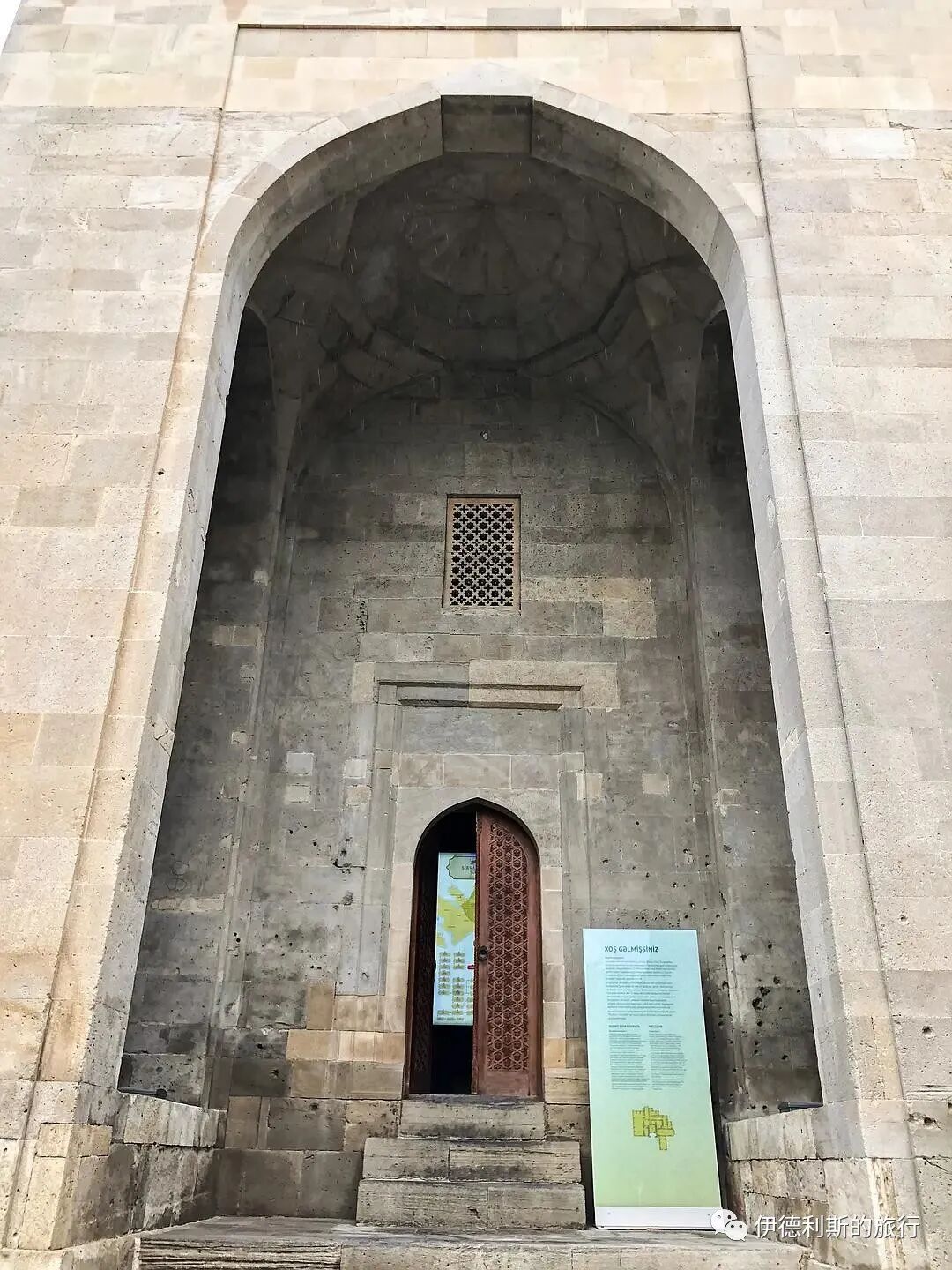
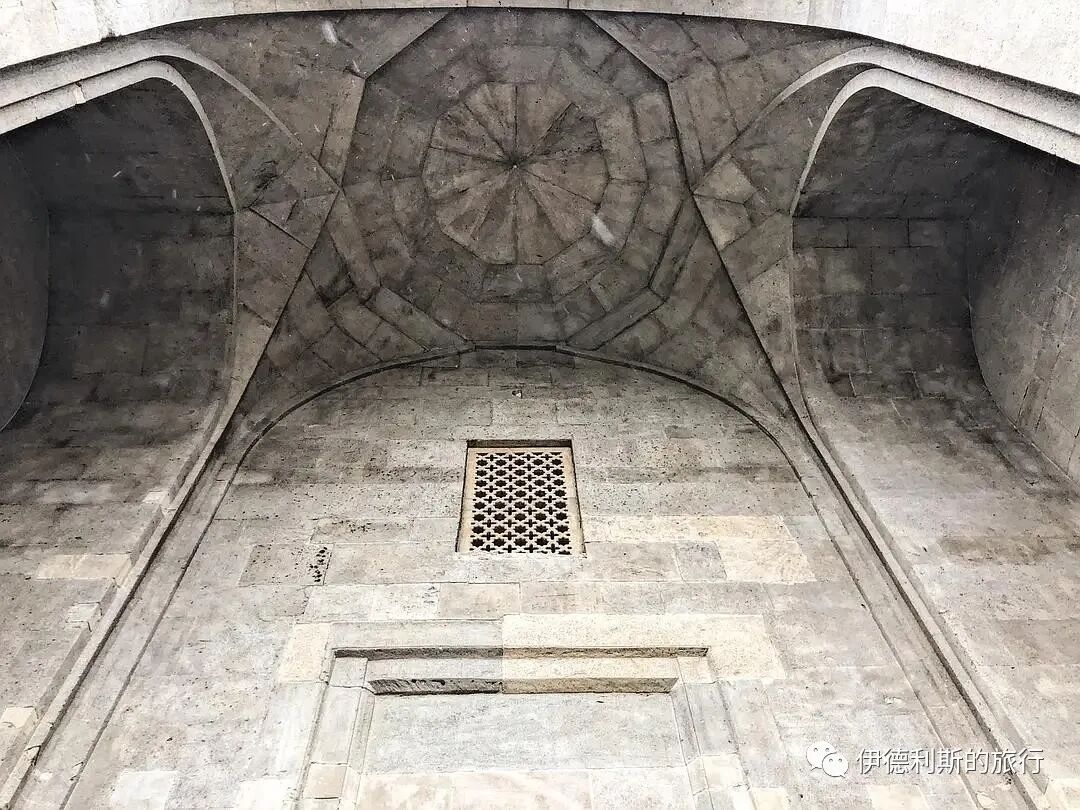
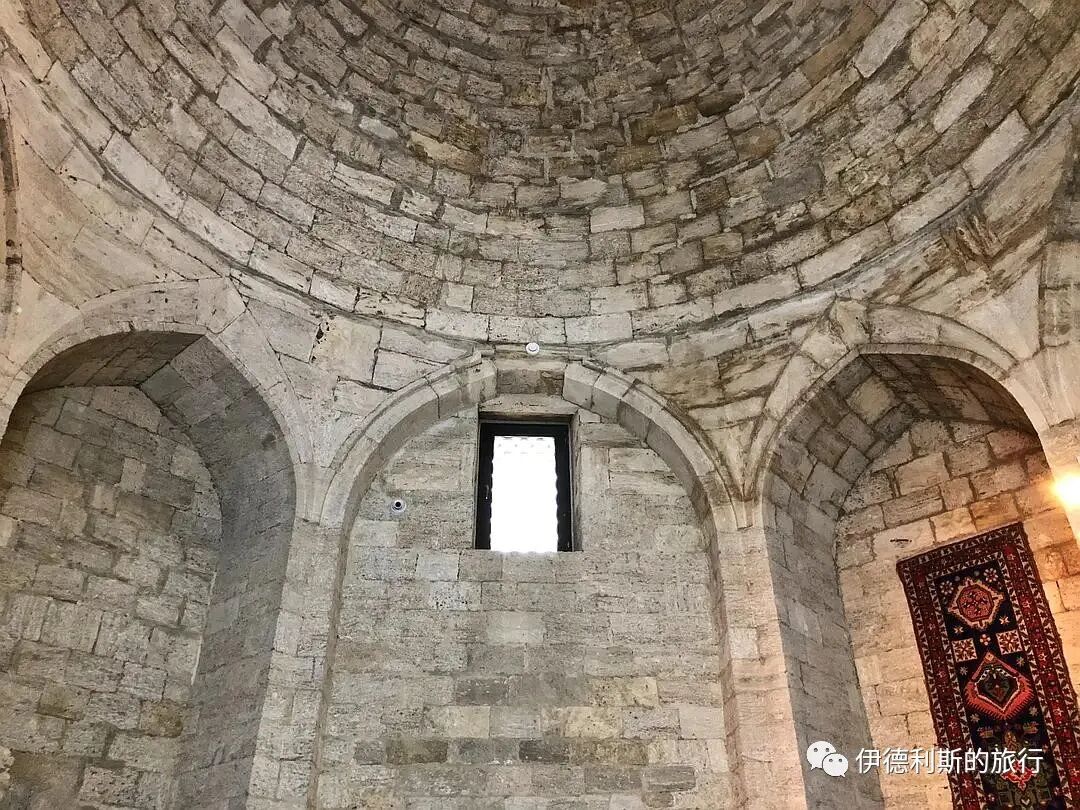
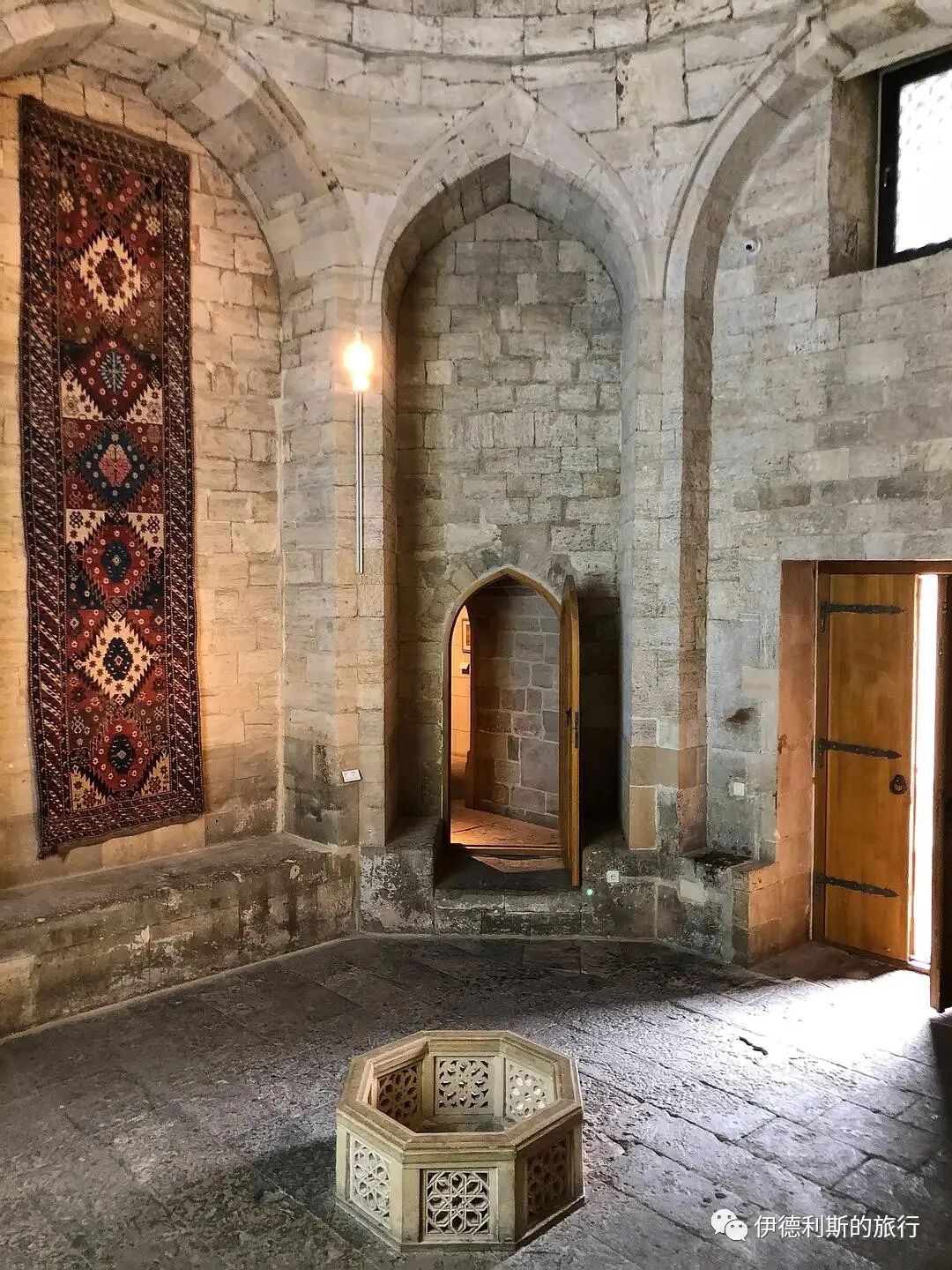
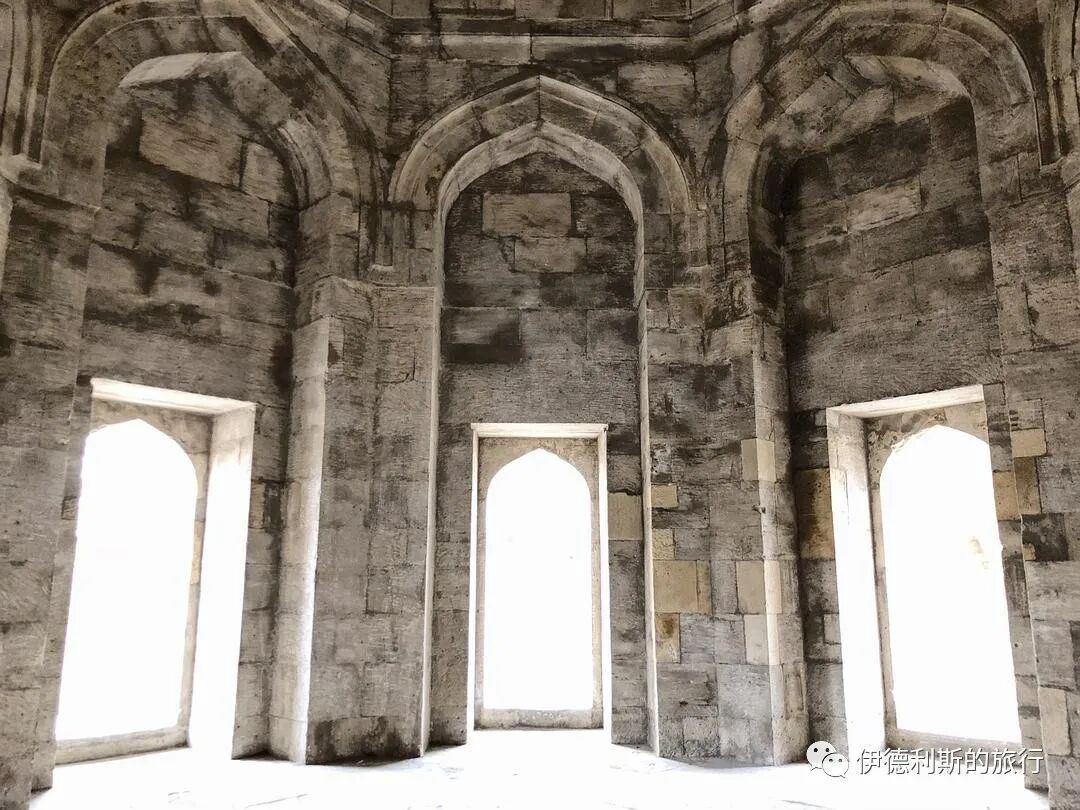
The palace entrance is very simple. Inside, there are no stone inscriptions or complex decorations. This is a sharp contrast to the grand palaces of other Muslim dynasties from the same period. The palace has two floors and originally had 52 rooms. The most important room on the second floor is the central octagonal hall. This is also the oldest part of the palace and was likely the king's reception hall. The second floor also has the sleeping quarters for the king and his family. From the windows, you can see beautiful sea views of Baku Bay.
Postcards related to Baku's Old City are on display in the palace.
The palace displays 18th-century stained-glass windowpanes from Sheki, a city in northwestern Azerbaijan. They were made precisely to size, so they did not use nails or glue.
Photos from the palace's renovation in 2013 show the building before and after the work.
2. Bayil Stones
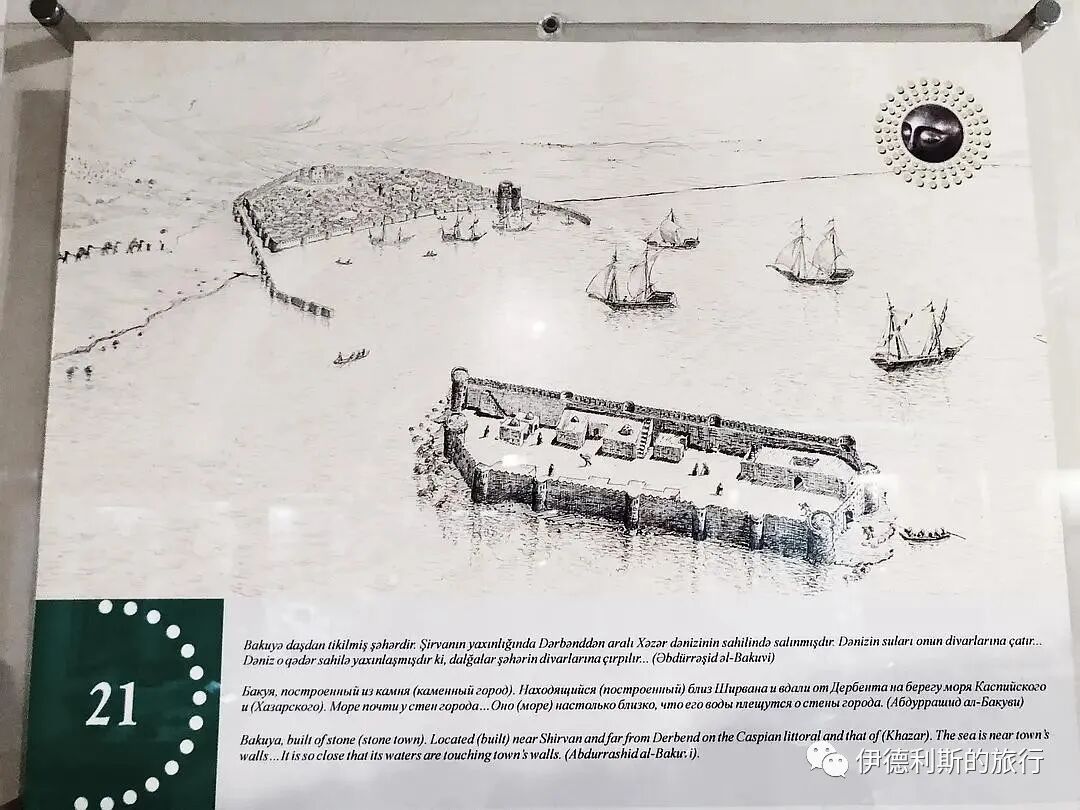
Bayil Castle, known as the The Great Baku Earthquake of 1306 submerged Bayil Castle in the Caspian Sea. It only resurfaced in the early 18th century when the Caspian Sea receded.
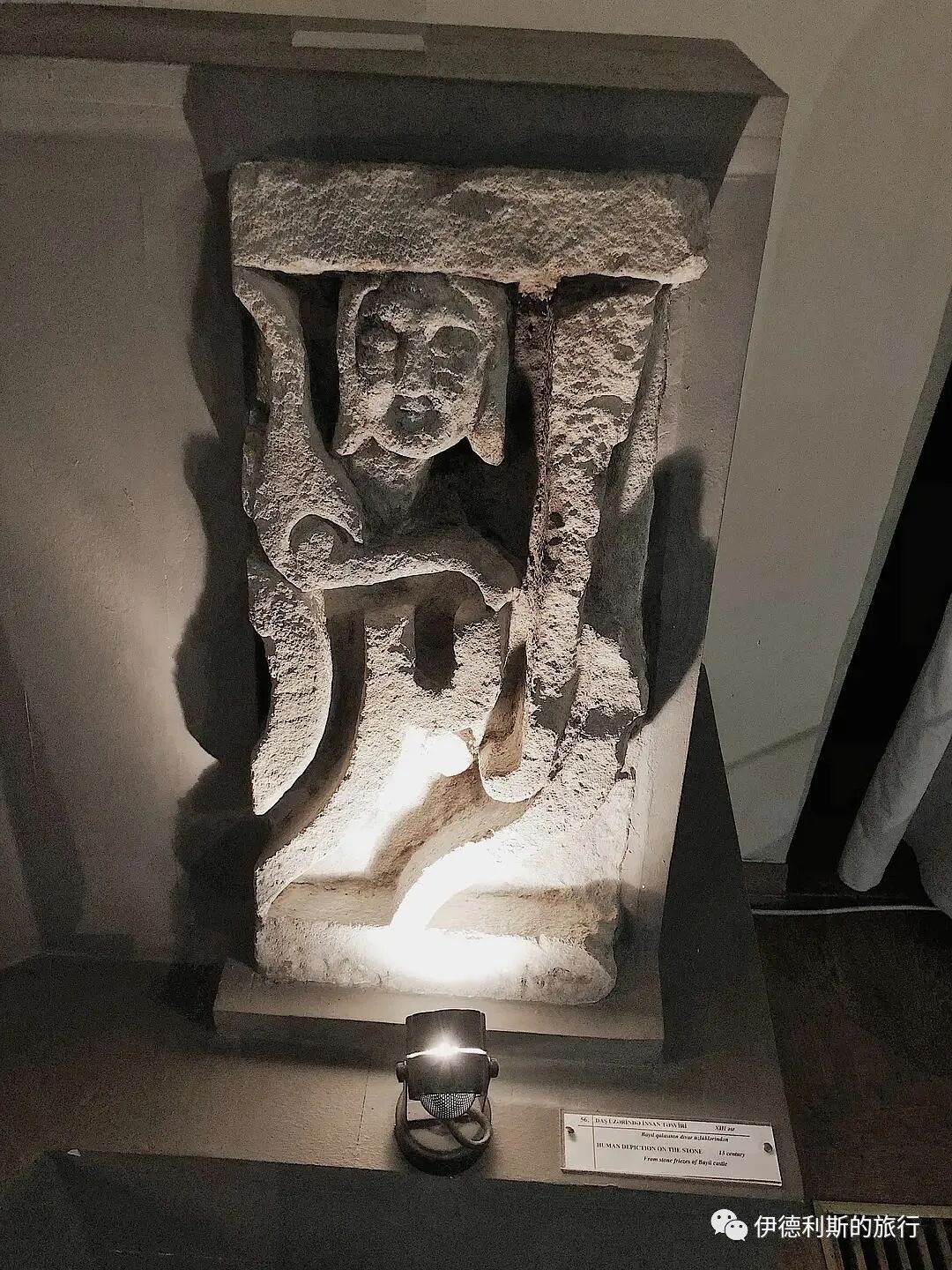
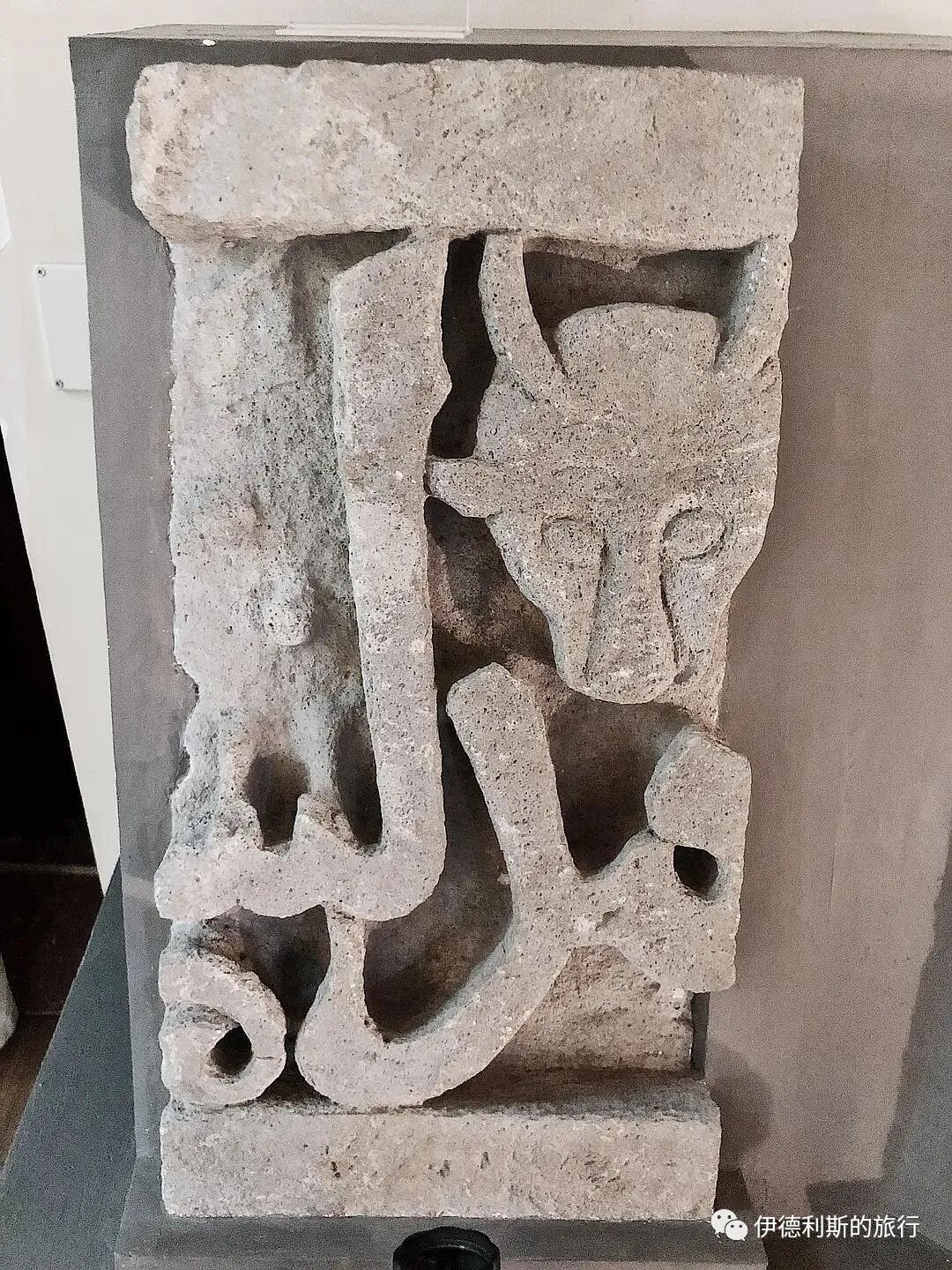
Between 1939 and 1969, the Institute of History of the Azerbaijan Academy of Sciences excavated over 700 inscribed stones from Bayil Castle. These are now kept in the courtyard of the Shirvanshahs' Palace. These stones are important for studying the history and culture of the Shirvanshah Dynasty. Historians found the names of 15 Shirvanshah kings on them, along with a portrait of one king.
The inscriptions also show that the castle was called
The National Museum of History of Azerbaijan displays Bayil stones with animal and human figures.
3. Divankhana
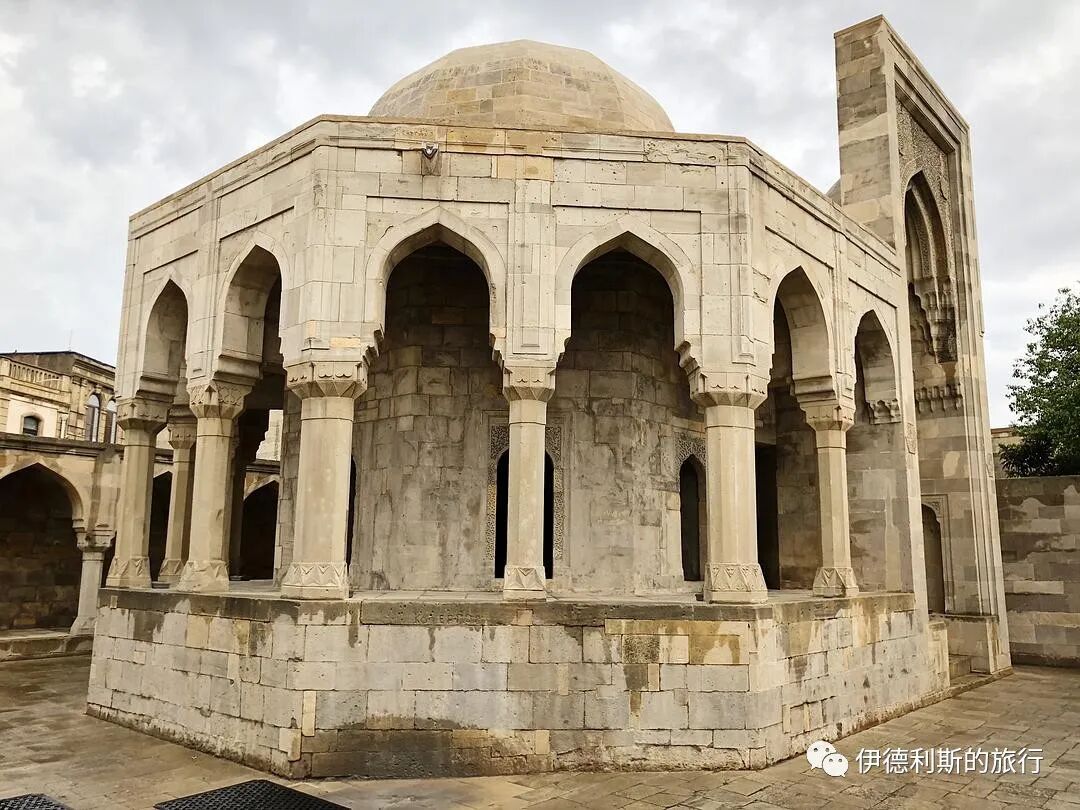
The Divankhana is in a separate courtyard on the north side of the palace. It has arcades on three sides and a pavilion-style building in the center. Shirvanshah King Farrukh Yasar (who reigned from 1465-1500) ordered the construction of the Divankhana. People say it was used as a court, a reception hall, or a mausoleum, but there is no definite proof.
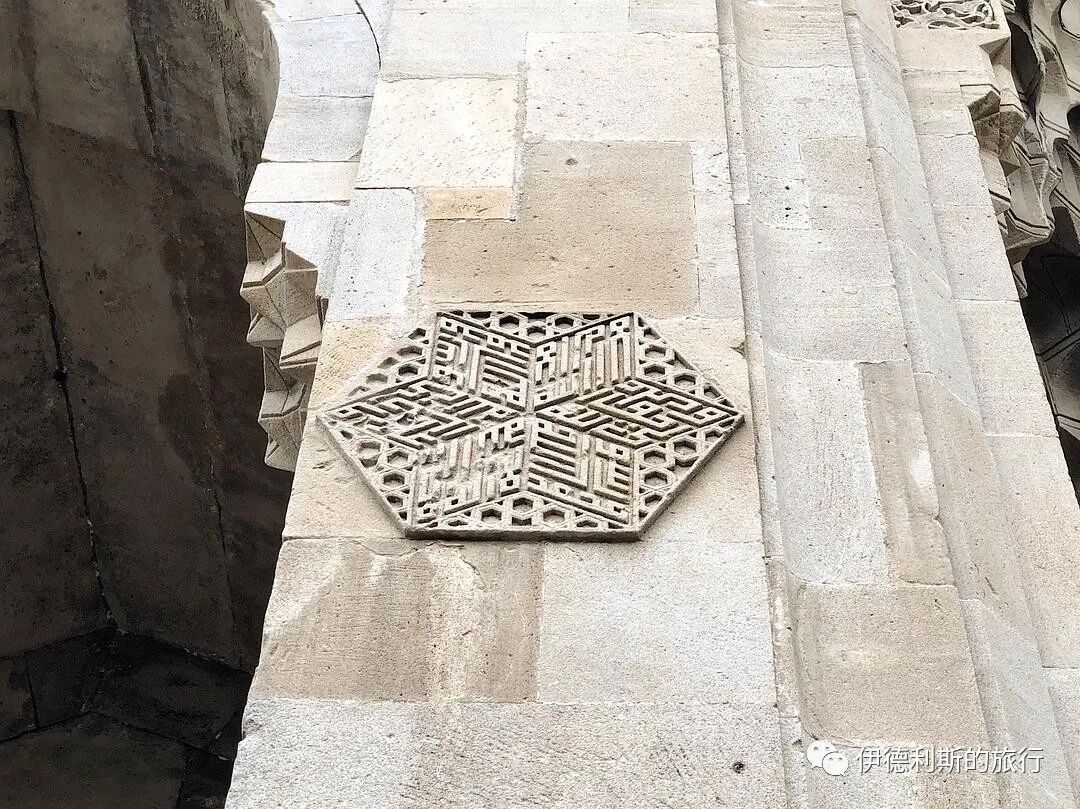
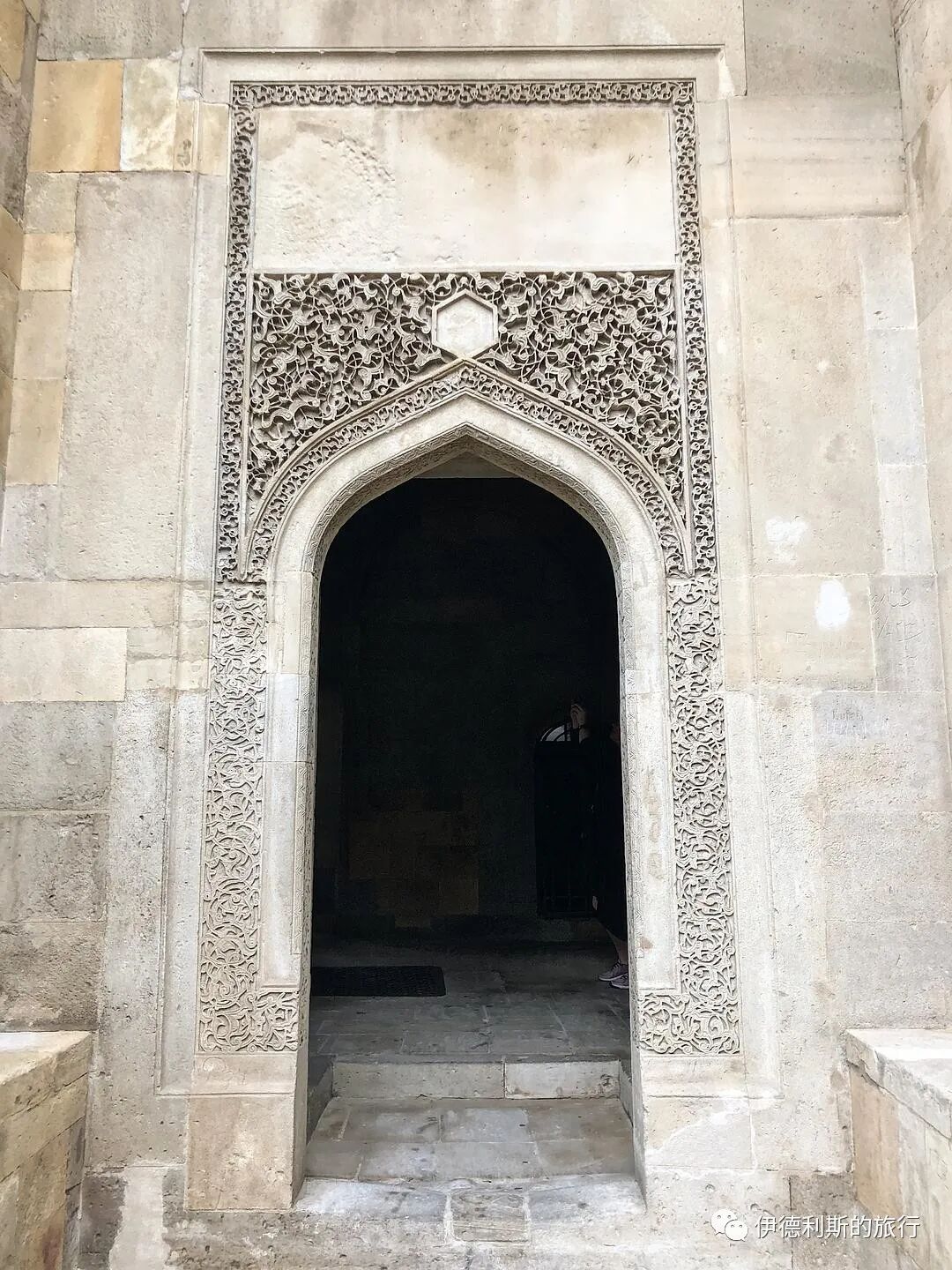
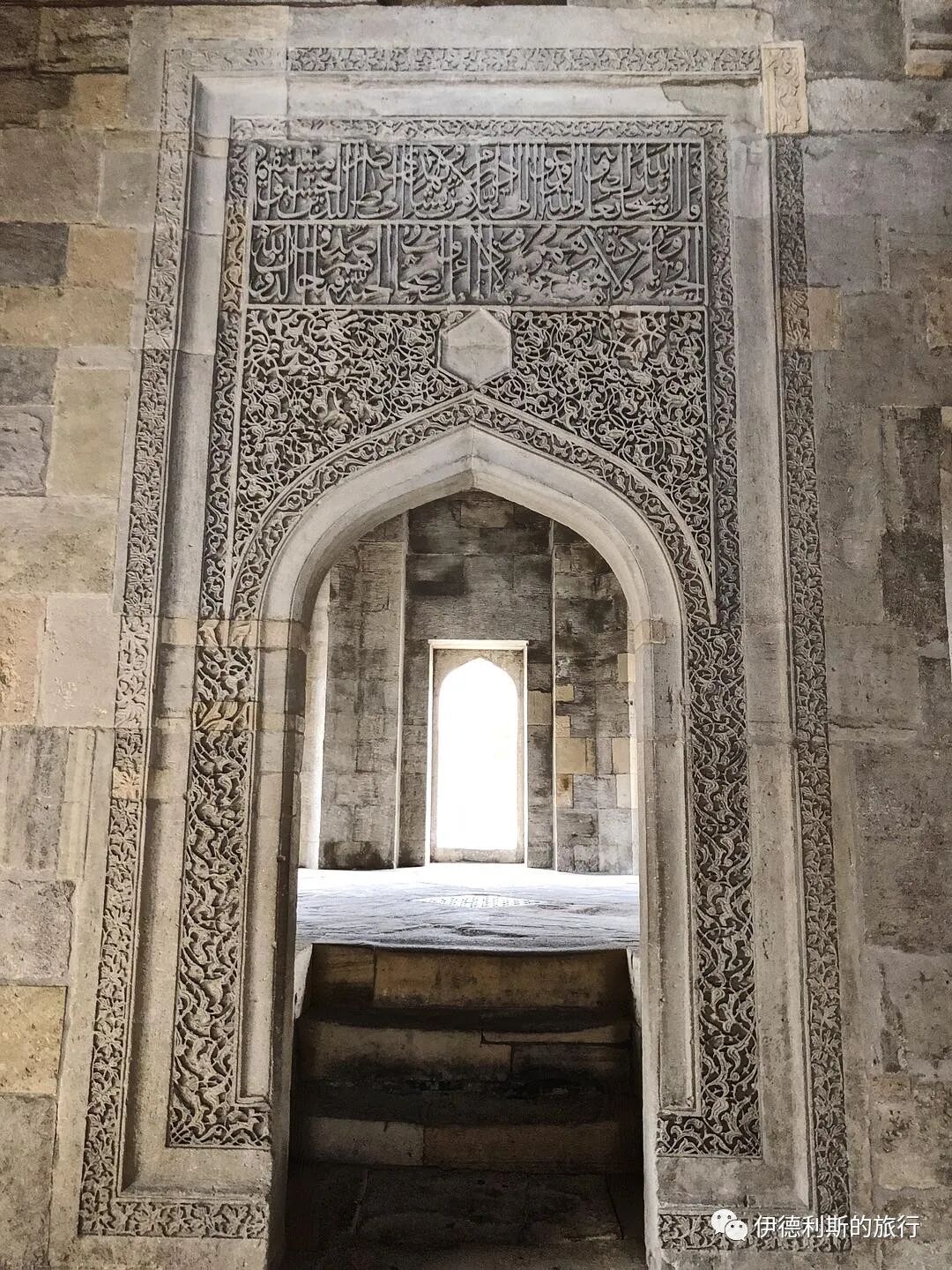
The Divankhana's gate is a classic example of Azerbaijan's Şirvan-Abşeron architectural school. The gate is decorated with fig and grape leaf carvings. On each side, a hexagonal geometric Arabic carving shows the Shahada (Islamic creed). Inside, the walls have carvings of Quranic verses.
4. Seyid Yahya Bakuvi Mausoleum
The Seyid Yahya Bakuvi Mausoleum (Türbəsi) was built between 1457 and 1458. Seyid Yahya Bakuvi (1403-1462), the person buried there, was a court scholar of the Shirvanshah Dynasty. He was also the second spiritual leader and a key promoter of the famous Sufi Khalwati order. He was a descendant of Musa al-Kadhim, the seventh Shia Imam.
Yahya practiced Sufism in Shamakhi, Azerbaijan, in his early years. He later came to the Shirvanshah court in Baku. In Baku, he had tens of thousands of followers. Fifteen of Yahya's works are now kept in Istanbul, Manisa, and Konya, Turkey. These works are valuable for Sufi philosophy and important for astronomy and mathematics.
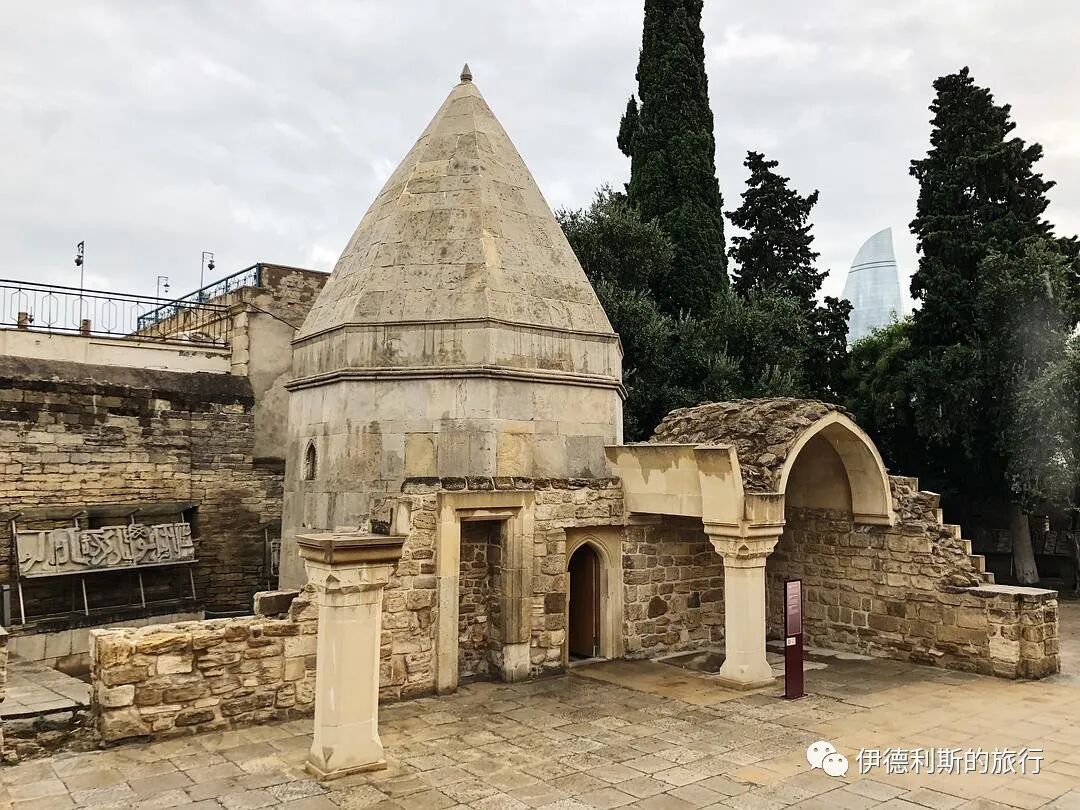
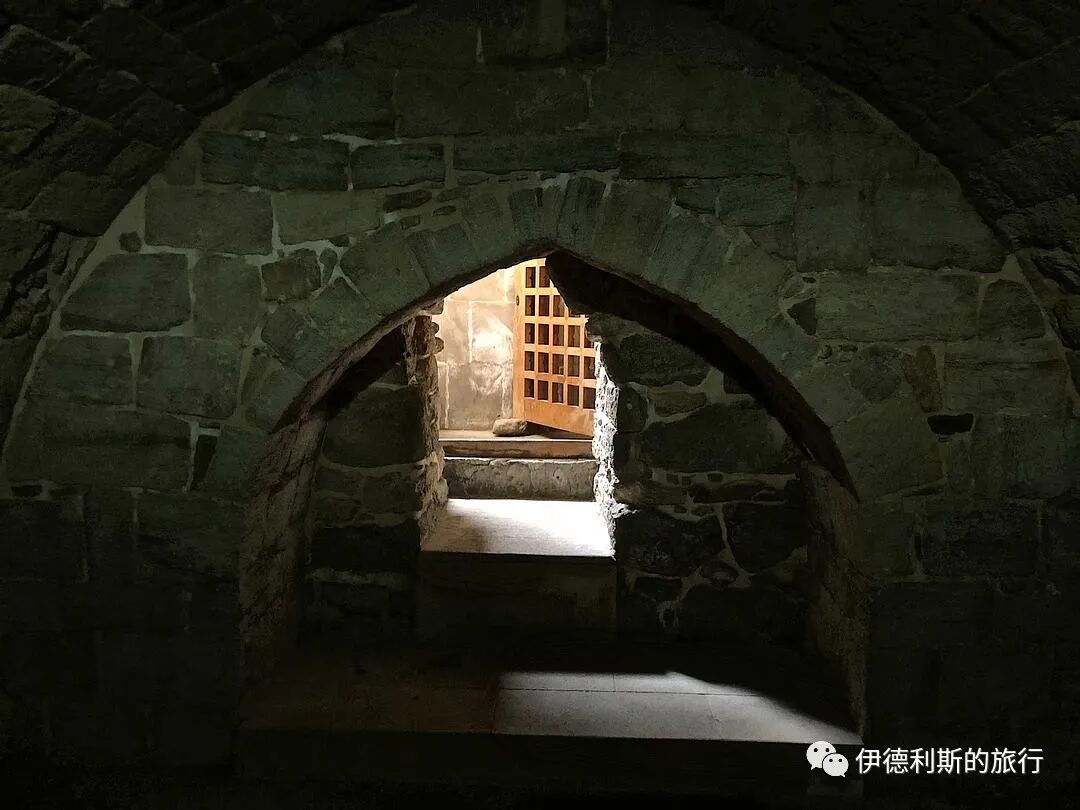
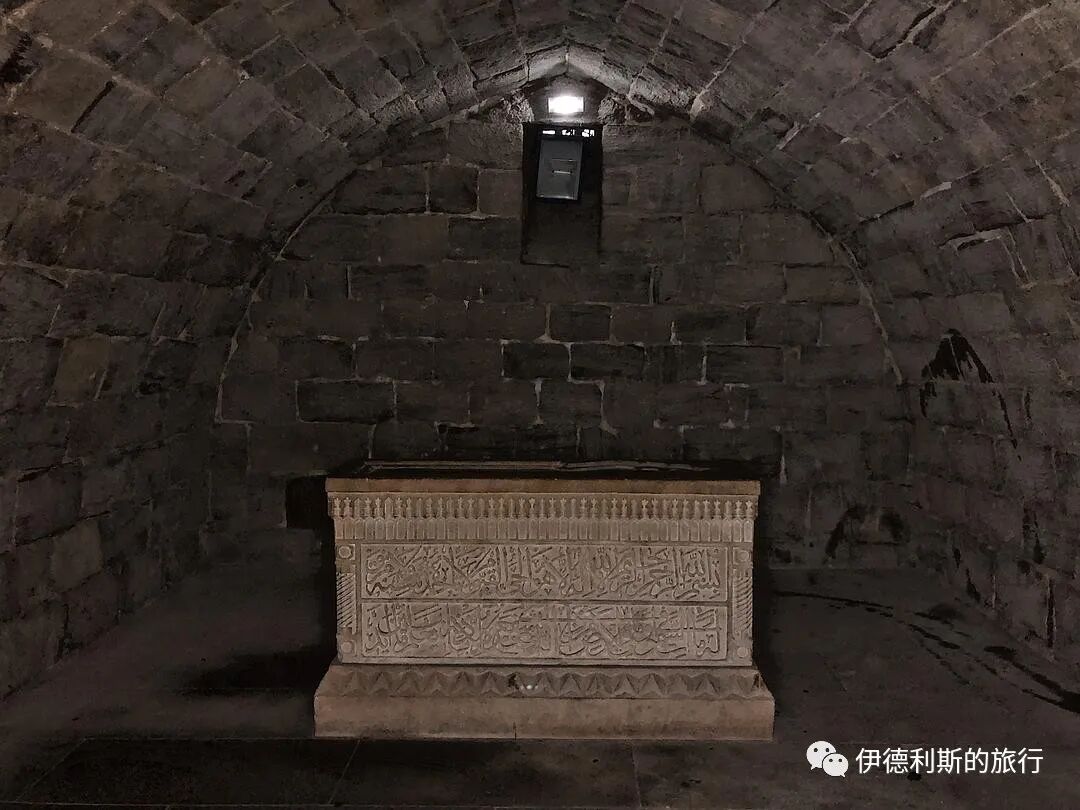
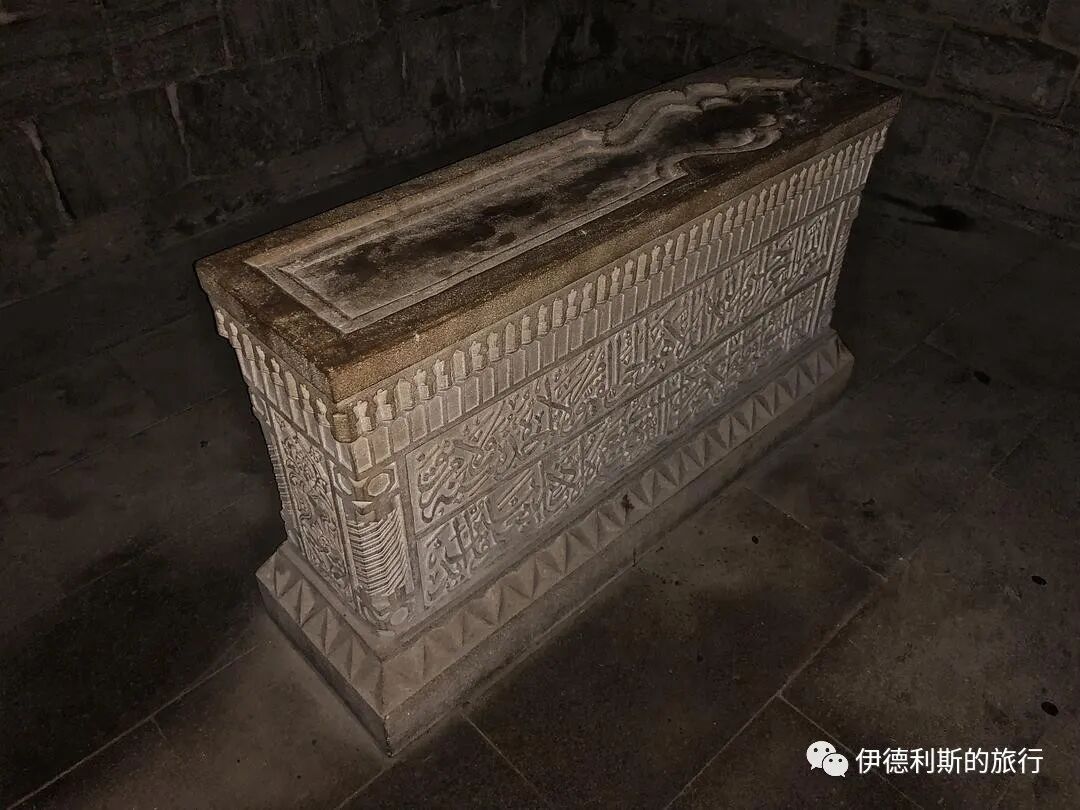
Yahya's mausoleum has octagonal walls and a conical roof. This is the only example of its kind in the Şirvan-Abşeron architectural school; other mausoleums in this school have domes. The mausoleum has two levels: an upper level for visiting the shrine and a lower level for the burial chamber. The plaster on the walls and the mausoleum roof is the only surviving architectural coating in the Shirvanshahs' Palace.
A mosque called Keyqubad once stood in front of the mausoleum. Yahya served as a religious teacher there. The mosque was first built in the 14th century. However, Armenian forces burned it down in 1918. Only its foundations remain today.
5. Shirvanshahs' Palace Mausoleum
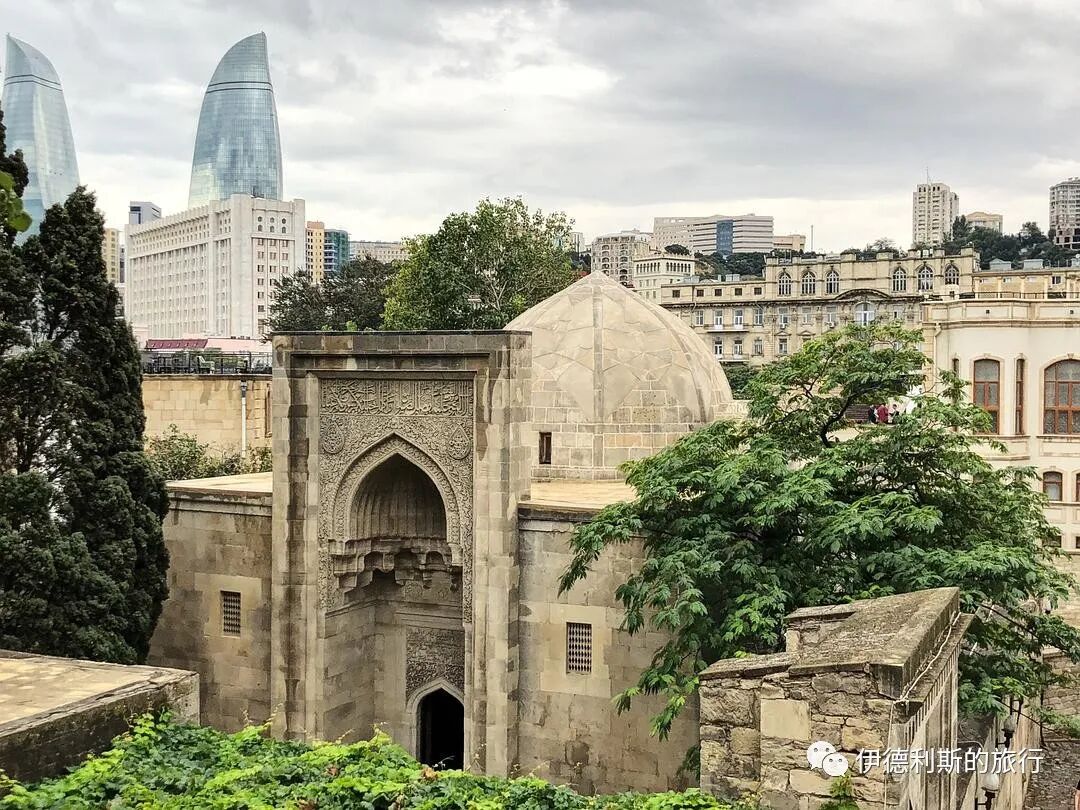
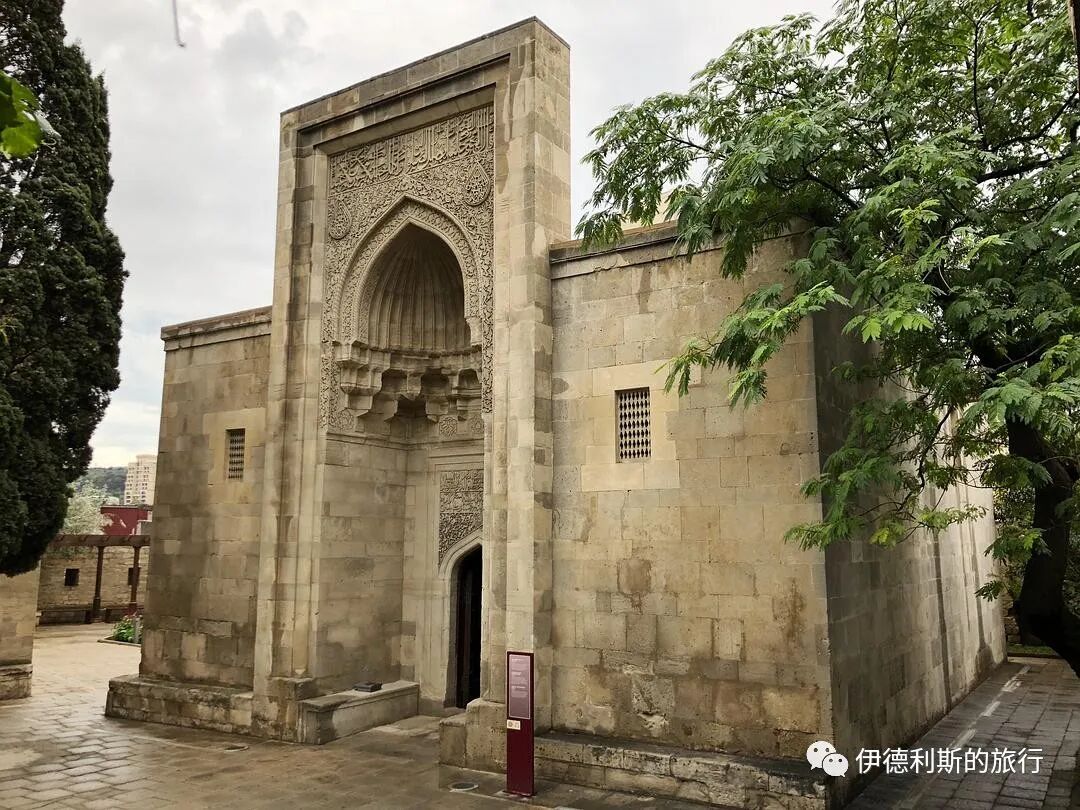
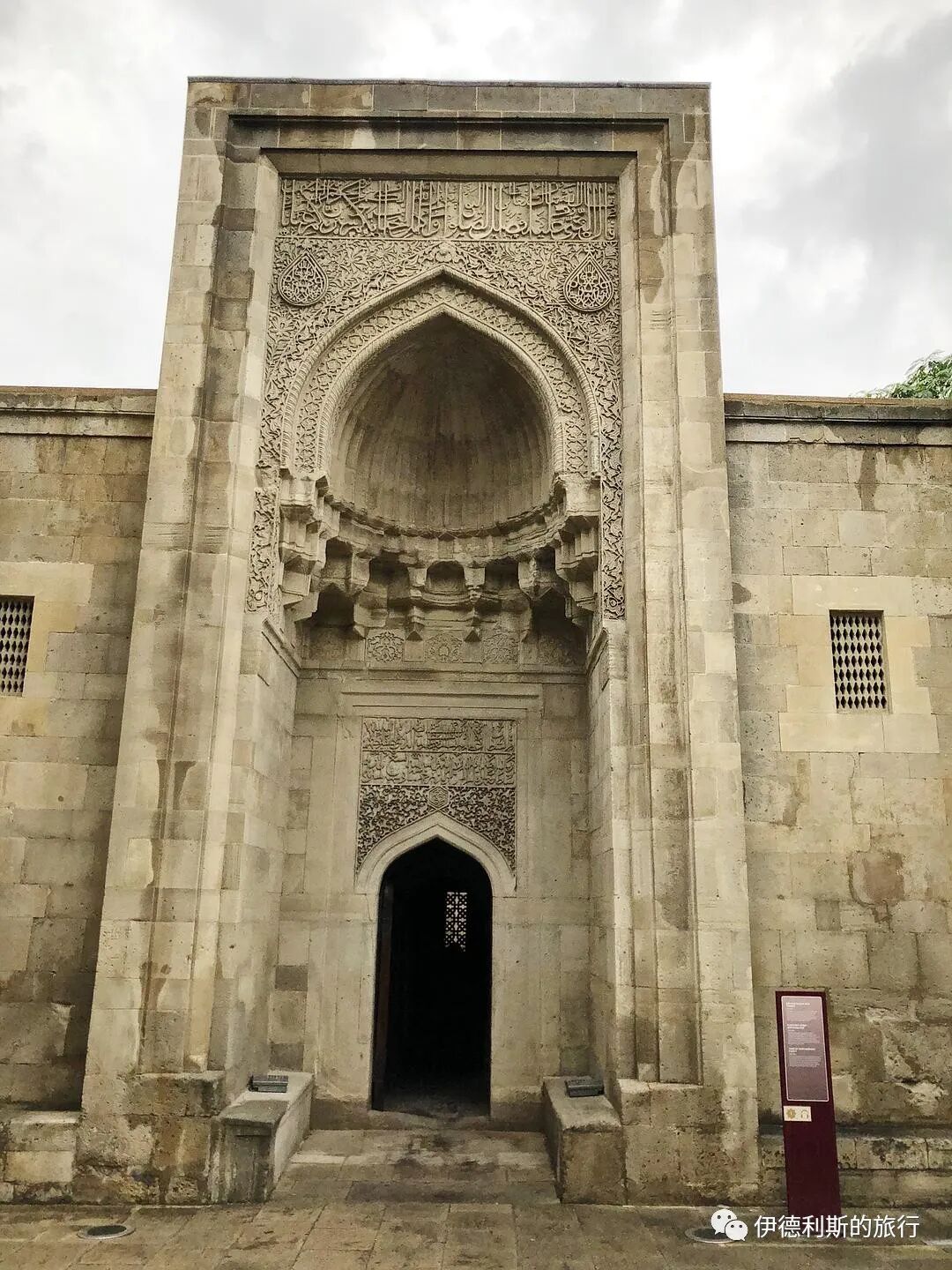
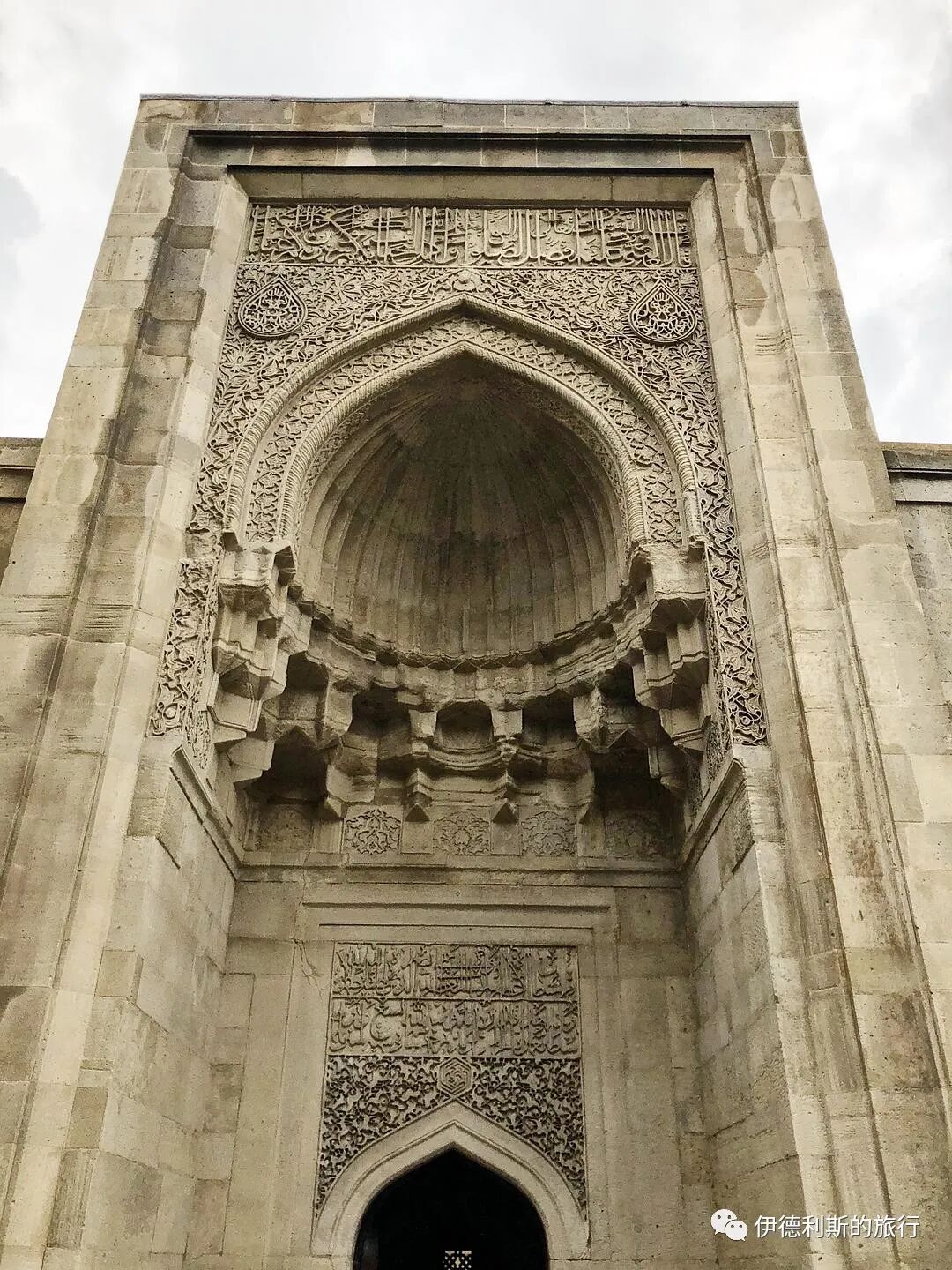
An inscription on the gate of the Shirvanshahs' Palace Mausoleum (Şirvanşahlar sarayı türbəsi) states that Shirvanshah King Khalilullah I (who reigned from 1418-1465) ordered its construction for his mother and 7-year-old son between 1435 and 1436. The mausoleum building is similar to the Divankhana, another palace structure. Its gate also has complex carvings. One hexagonal carving cleverly repeats the word
Archaeological excavations in 1947 uncovered burial chambers by removing the floor. Five of these contained skeletons, while two were empty. The famous Persian scholar Muhammad Khwandamir (1475-1537) wrote in his work
Badr Shirvani (1387-1450), a famous Persian poet of the Shirvanshah Dynasty, recorded the names of the tomb occupants in his writings:
The first was King Khalilullah I's 6-7-year-old son, who died in 1432.
The second was King Khalilullah I's mother, Bika, who died between 1435 and 1436.
The third was Khanika khanim, the wife of Shahrukh of Shirvan (who reigned from 1535-1538), the last Shirvanshah king.
The fourth was King Khalilullah I's two-year-old son, Sheikh Salah, who died in 1445. Porcelain and a large candelabra were found in his tomb.
The fifth was 19-year-old Ibrahim II, who died in 1432. The tomb contained silk remnants, blue beads, and a gold needle with turquoise and six sapphires.
On the other side of the entrance is the two-meter-high tomb of Khalilullah I himself. A comb and a gold earring were found inside.
6. Palace Mosque
Shirvanshah King Khalilullah I ordered the construction of the Palace Mosque between 1441 and 1442. In 1723, Tsar Peter I's army shelled Baku from the Caspian Sea, damaging the mosque's northeast facade. In 1918, artillery shelled the mosque's minaret.
The mosque's main prayer hall is small, only 70 square meters. This means it could not hold large congregational prayers. It was generally used only by people from the palace or nearby. The mosque has two main gates. One faces the palace mausoleum directly. The other is a side gate, used only by the Shirvanshah king and his family.
The cylindrical minaret in the mosque's northeast corner has a balcony supported by a stalactite cornice. You can reach it by a spiral stone staircase inside the tower.
7. Palace Bathhouse
The palace bathhouse is underground, at the lowest part of the palace. This kept the temperature stable. Over time, it was completely forgotten until it was accidentally discovered in 1939. It was partly cleaned in 1953, and some of the pools were later restored.
Water entering the baths flowed from a reservoir near the walls to the boiler room. Then, it went through special pipes to each room. In one corner of the bathhouse is a large domed room and two smaller rooms. These tiled rooms were likely reserved for the king.
2. Maiden Tower
The Maiden Tower (Qız qalası) is one of Baku Old City's landmarks. Like the Shirvanshahs' Palace, it is on the UNESCO World Heritage list.
There is no final conclusion about the Maiden Tower's construction. Most people believe the lower part was built between the 4th and 6th centuries, and the upper part in the 12th century. People guess that the Maiden Tower was first a Zoroastrian mosque during the Sasanian period. It was rebuilt in the 12th century. One view is that the rebuilt Maiden Tower was used for astronomical observations. Another view is that, based on its design, the Maiden Tower should be a defensive tower. Its walls are up to 5 meters thick, its internal staircase is easy to defend, and a well goes straight to the third floor. Russia reinforced the tower during its rule in 1806. Archaeological excavations in 1962-1963 showed that the Maiden Tower was built on a huge rock sloping towards the Caspian Sea. They also found a 14-meter-long wooden beam at its base.
Up to 20 legends surround the Maiden Tower. The most famous tells of a maiden who saved the people of Baku from slave owners. This epic shows Azerbaijan's Zoroastrian beliefs and cultural roots. In 1940, composer Afrasiyab Badalbeyli created Azerbaijan's first ballet,
3. Baku City Walls
Shirvanshah King Manuchohr III (who reigned from 1120-1160) ordered the construction of the Baku City Walls (Bakı qalası) between 1138 and 1139. Shirvanshah King Akhsitan I (who reigned from 1160-1197) later added outer walls. In 1865, Russia ordered the demolition of the city walls along the Caspian Sea. Between 1883 and 1888, all outer walls were also torn down. In 1910, the mayor at the time banned the demolition of ancient castle remains. He also partly restored the Baku City Walls.
The Double Gates (Qoşa Qala Qapısıdır) are the main city gates of Baku Old City. They are 8-10 meters high and 3-3.5 meters wide. The gates have carvings of a bull's head and a lion, symbols of the city. Historians believe the bull represents a leader, and the lion is a protector.
In 1954, one of the towers on Baku's north wall collapsed. Inside, a 12th-century Arabic inscription written in Kufic script was found. It is now kept in the Azerbaijan History Museum. The inscription states that Shirvanshah King Manuchohr III ordered the construction of the Baku City Walls.
North of the Baku City Walls is a rectangular tower, the Donjon, which served as an armory. The tower is 16 meters high and 2 meters thick. An underground passage leads directly to the Double Gates.
4. Mosques
1. Muhammad Mosque: 1079
The Muhammad Mosque was built between 1078 and 1079. It is the oldest surviving Islamic building in Azerbaijan. An Arabic inscription in Kufic script on the mosque's north wall shows that Muhammad ibn Abu Bakr built the mosque. Research shows that the Muhammad Mosque was built on the site of a Zoroastrian fire mosque. Muhammad was the mayor of Baku at that time.
During the Russian-Persian War in 1723, the Imperial Russian fleet shelled Baku. A cannonball hit the minaret of the Muhammad Mosque. At the same time, a strong wind suddenly blew the Russian fleet away from the city. The people of Baku believed this was Allah's protection. So, the minaret was not repaired until the mid-19th century, serving as a symbol of Baku's resistance to invasion. After this, the mosque was also called the
2. Takyeh: 13th Century
The Takyeh is a Sufi mosque built in the 13th century. It was also a place for Sufi practitioners to study and rest. Archaeological excavations took place here in 1967, and it was renovated in the 1970s.
3. Khidir Mosque: 1301
The Khidir Mosque was built in 1301. Archaeological excavations in 1988 found that this mosque was built on the site of a Zoroastrian mosque.
4. Mirza Ahmad Mosque: 1345
The Mirza Ahmad Mosque was built in 1345. The wall at its entrance has carvings of the Quran and the architect's name. It is currently out of use due to its poor condition.
5. Chin Mosque: 1376
An inscription above the entrance shows that the Chin Mosque was built between 1375 and 1376. It was repaired between 1772 and 1773. The Old City State Historical Architectural Reserve Department repaired it again in 2012.
6. Molla Ahmad Mosque: Early 14th Century
The Molla Ahmad Mosque was built in the early 14th century by Mahmud ibn Sad, a famous architect of the Şirvan-Abşeron architectural school. It is a typical example of a small community mosque from the Shirvanshah Dynasty.
7. Sheikh Ibrahim Mosque: 1416
Haji Amirshah ibn Yagub built the Sheikh Ibrahim Mosque between 1415 and 1416. Ibrahim I (who reigned from 1382-1417), the 33rd king of the Shirvanshah Dynasty, ruled Baku at that time. Because of this, the mosque is also called the Sheikh Ibrahim Mosque. In the 19th century, the mosque's facade was divided into three sections, and windows were added.
Today, it is a madrasa (Islamic school) for women.
8. Juma Mosque
The Juma Mosque is the main mosque in Baku's Old City. An inscription on the mosque wall shows that Amir Sharaf al-Din Mahmud rebuilt the mosque in 1309. The current main prayer hall was built in 1899 with donations from Baku merchant Haji Shikhlali Dadashov. It blends traditional and European architectural styles.
The clay tablet at the entrance of the main hall is called a Turbah. It symbolizes the earth. Shia Muslims place their foreheads on it during namaz (prayer).
The minaret on the north side of the main hall was built in 1437. It has a balcony supported by stalactite structures.
During the Soviet era, the Juma Mosque became a carpet museum. It resumed religious activities only in the 1990s and underwent major renovations in 2008.
A madrasa from the 15th century once stood next to the Juma Mosque. However, it was torn down in the mid-19th century for road expansion. Only one classroom remains today, which is now a souvenir shop.
9. Sayyid Yahya Murtuza Mosque: Early 17th Century
Sayyid Yahya Murtuza himself built the Sayyid Yahya Murtuza Mosque in the early 17th century. He was a well-known local imam and was buried here after his death. During the Soviet era, it became a carpentry workshop. After the 1990s, it resumed religious activities and is now part of the Juma Mosque. view all
Summary: Baku Old City — Historic Buildings is presented here as a firsthand travel account in clear English, beginning with this scene: Baku's Old City, also known as İçərişəhər, is the oldest part of Azerbaijan's capital. UNESCO listed it as a World Heritage site in 2000. The account keeps its focus on Baku Old City, Azerbaijan Travel, Historic Buildings while preserving the names, places, food, and historical details from the Chinese source.
Baku's Old City, also known as İçərişəhər, is the oldest part of Azerbaijan's capital. UNESCO listed it as a World Heritage site in 2000.
In the 8th century, the Abbasid Caliph appointed Arab general Yazid ibn Mazyad al-Shaybani as the governor of the Arminiya region, which covered most of the Caucasus. The Abbasid Caliphate fell into civil war in 861. Yazid's grandson, Haytham ibn Khalid, declared independence. He used the ancient Persian title Shirvanshah, and the state he founded became known as the Shirvanshah Dynasty.
In 1191, an earthquake destroyed Shamakhi, the original capital of the Shirvanshah Dynasty. The 21st Shirvanshah king, Akhsitan I, moved the capital to Baku. From then on, Baku became the capital of the Shirvanshah Dynasty.
The Shirvanshah Dynasty suffered a devastating blow from the Mongol cavalry in 1235. It then became a vassal state of the Mongol and Timurid dynasties during the 13th and 14th centuries. After Timur the Great died in 1405, the Shirvanshah Dynasty became independent again. It reached its peak during the reign of the 34th king, Khalilullah I (1418-1465). The Palace of the Shirvanshahs in Baku's Old City was built during this time.
In 1501, the Persian Safavid Dynasty invaded the Shirvanshah Dynasty and eventually captured Baku. After this, the Shirvanshah Dynasty became a vassal of the Safavid Dynasty until it was officially annexed in 1538.
Baku was then briefly controlled by the Ottomans and Imperial Russia, but Iran quickly took it back. In the 18th century, local tribal leaders established the Baku Khanate (1747-1806). Russia eventually occupied it in 1806.
Baku held an important place in ancient Eurasian trade. It was a key hub in the Eurasian trade network, and many merchants and travelers from India and Central Asia stopped here. Today, this ancient city has a palace complex from the Shirvanshah Dynasty, relatively complete ancient city walls, over a dozen old mosques built between the 11th and 18th centuries, four large caravanserais (ancient inns) that saw ancient trade, and several traditional bathhouses. It is well worth a visit.
1. The Palace of the Shirvanshahs: Mostly 15th Century
The Palace of the Shirvanshahs (Şirvanşahlar sarayı) was built after the Shirvanshah Dynasty (Şirvanşah) moved its capital to Baku in 1191. Most of the existing buildings were constructed in the 15th century by the 34th ruler, I Xəlilullah (Khalilullah I, who reigned from 1418-1465). In 2000, it was added to the UNESCO World Heritage list under the name
This complex is a prime example of the Şirvan-Abşeron architectural school. This school started in the 8th century and was popular from the 11th to the 15th centuries. It is Azerbaijan's most important traditional architectural school. This school is known for combining smooth stone facades with delicate decorative carvings. It specialized in building heavy, defensive structures.
1. The Palace Building
The palace building (Şirvanşahların saray binası) is the oldest and most important part of the Shirvanshahs' Palace. The exact start date of the palace's construction is still unknown. We only know that it was looted in 1500 during the invasion by the Persian Safavid Dynasty. After Russia occupied Baku in 1828, the palace became the Russian army headquarters. During repairs, the Russians destroyed many valuable structures. They even planned to build a cathedral here, but this never happened.
The palace entrance is very simple. Inside, there are no stone inscriptions or complex decorations. This is a sharp contrast to the grand palaces of other Muslim dynasties from the same period. The palace has two floors and originally had 52 rooms. The most important room on the second floor is the central octagonal hall. This is also the oldest part of the palace and was likely the king's reception hall. The second floor also has the sleeping quarters for the king and his family. From the windows, you can see beautiful sea views of Baku Bay.
Postcards related to Baku's Old City are on display in the palace.
The palace displays 18th-century stained-glass windowpanes from Sheki, a city in northwestern Azerbaijan. They were made precisely to size, so they did not use nails or glue.
Photos from the palace's renovation in 2013 show the building before and after the work.
2. Bayil Stones
Bayil Castle, known as the The Great Baku Earthquake of 1306 submerged Bayil Castle in the Caspian Sea. It only resurfaced in the early 18th century when the Caspian Sea receded.
Between 1939 and 1969, the Institute of History of the Azerbaijan Academy of Sciences excavated over 700 inscribed stones from Bayil Castle. These are now kept in the courtyard of the Shirvanshahs' Palace. These stones are important for studying the history and culture of the Shirvanshah Dynasty. Historians found the names of 15 Shirvanshah kings on them, along with a portrait of one king.
The inscriptions also show that the castle was called
The National Museum of History of Azerbaijan displays Bayil stones with animal and human figures.
3. Divankhana
The Divankhana is in a separate courtyard on the north side of the palace. It has arcades on three sides and a pavilion-style building in the center. Shirvanshah King Farrukh Yasar (who reigned from 1465-1500) ordered the construction of the Divankhana. People say it was used as a court, a reception hall, or a mausoleum, but there is no definite proof.
The Divankhana's gate is a classic example of Azerbaijan's Şirvan-Abşeron architectural school. The gate is decorated with fig and grape leaf carvings. On each side, a hexagonal geometric Arabic carving shows the Shahada (Islamic creed). Inside, the walls have carvings of Quranic verses.
4. Seyid Yahya Bakuvi Mausoleum
The Seyid Yahya Bakuvi Mausoleum (Türbəsi) was built between 1457 and 1458. Seyid Yahya Bakuvi (1403-1462), the person buried there, was a court scholar of the Shirvanshah Dynasty. He was also the second spiritual leader and a key promoter of the famous Sufi Khalwati order. He was a descendant of Musa al-Kadhim, the seventh Shia Imam.
Yahya practiced Sufism in Shamakhi, Azerbaijan, in his early years. He later came to the Shirvanshah court in Baku. In Baku, he had tens of thousands of followers. Fifteen of Yahya's works are now kept in Istanbul, Manisa, and Konya, Turkey. These works are valuable for Sufi philosophy and important for astronomy and mathematics.
Yahya's mausoleum has octagonal walls and a conical roof. This is the only example of its kind in the Şirvan-Abşeron architectural school; other mausoleums in this school have domes. The mausoleum has two levels: an upper level for visiting the shrine and a lower level for the burial chamber. The plaster on the walls and the mausoleum roof is the only surviving architectural coating in the Shirvanshahs' Palace.
A mosque called Keyqubad once stood in front of the mausoleum. Yahya served as a religious teacher there. The mosque was first built in the 14th century. However, Armenian forces burned it down in 1918. Only its foundations remain today.
5. Shirvanshahs' Palace Mausoleum
An inscription on the gate of the Shirvanshahs' Palace Mausoleum (Şirvanşahlar sarayı türbəsi) states that Shirvanshah King Khalilullah I (who reigned from 1418-1465) ordered its construction for his mother and 7-year-old son between 1435 and 1436. The mausoleum building is similar to the Divankhana, another palace structure. Its gate also has complex carvings. One hexagonal carving cleverly repeats the word
Archaeological excavations in 1947 uncovered burial chambers by removing the floor. Five of these contained skeletons, while two were empty. The famous Persian scholar Muhammad Khwandamir (1475-1537) wrote in his work
Badr Shirvani (1387-1450), a famous Persian poet of the Shirvanshah Dynasty, recorded the names of the tomb occupants in his writings:
The first was King Khalilullah I's 6-7-year-old son, who died in 1432.
The second was King Khalilullah I's mother, Bika, who died between 1435 and 1436.
The third was Khanika khanim, the wife of Shahrukh of Shirvan (who reigned from 1535-1538), the last Shirvanshah king.
The fourth was King Khalilullah I's two-year-old son, Sheikh Salah, who died in 1445. Porcelain and a large candelabra were found in his tomb.
The fifth was 19-year-old Ibrahim II, who died in 1432. The tomb contained silk remnants, blue beads, and a gold needle with turquoise and six sapphires.
On the other side of the entrance is the two-meter-high tomb of Khalilullah I himself. A comb and a gold earring were found inside.
6. Palace Mosque
Shirvanshah King Khalilullah I ordered the construction of the Palace Mosque between 1441 and 1442. In 1723, Tsar Peter I's army shelled Baku from the Caspian Sea, damaging the mosque's northeast facade. In 1918, artillery shelled the mosque's minaret.
The mosque's main prayer hall is small, only 70 square meters. This means it could not hold large congregational prayers. It was generally used only by people from the palace or nearby. The mosque has two main gates. One faces the palace mausoleum directly. The other is a side gate, used only by the Shirvanshah king and his family.
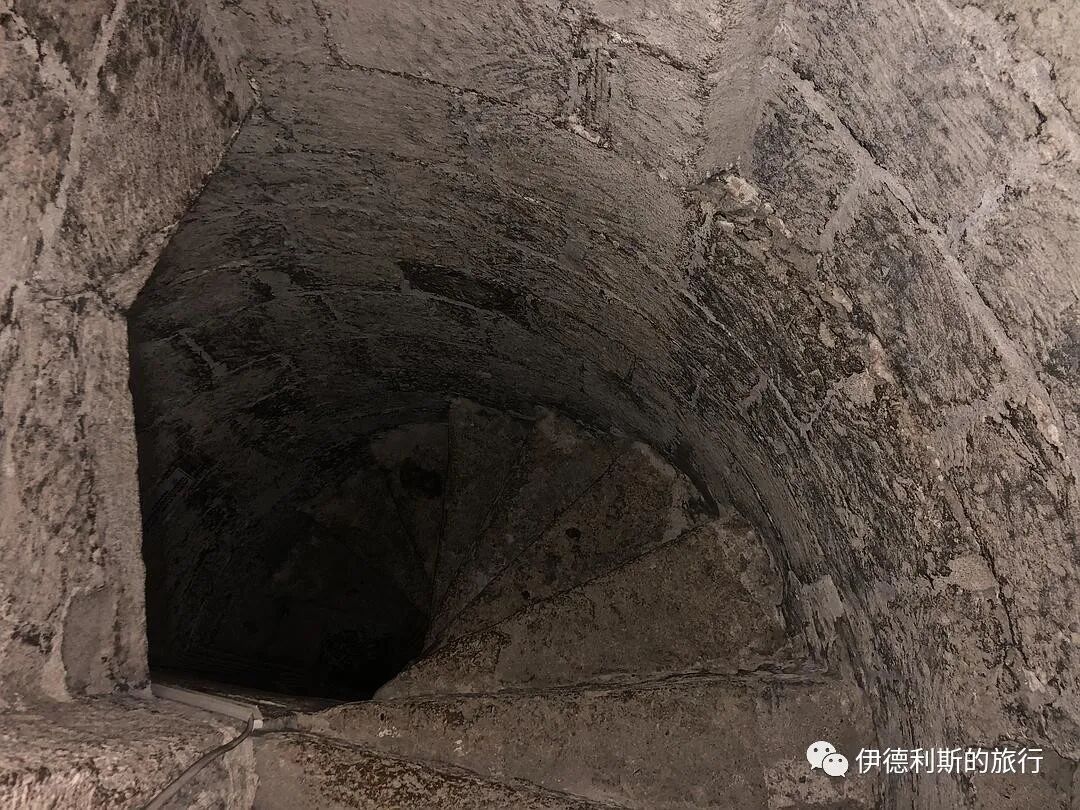
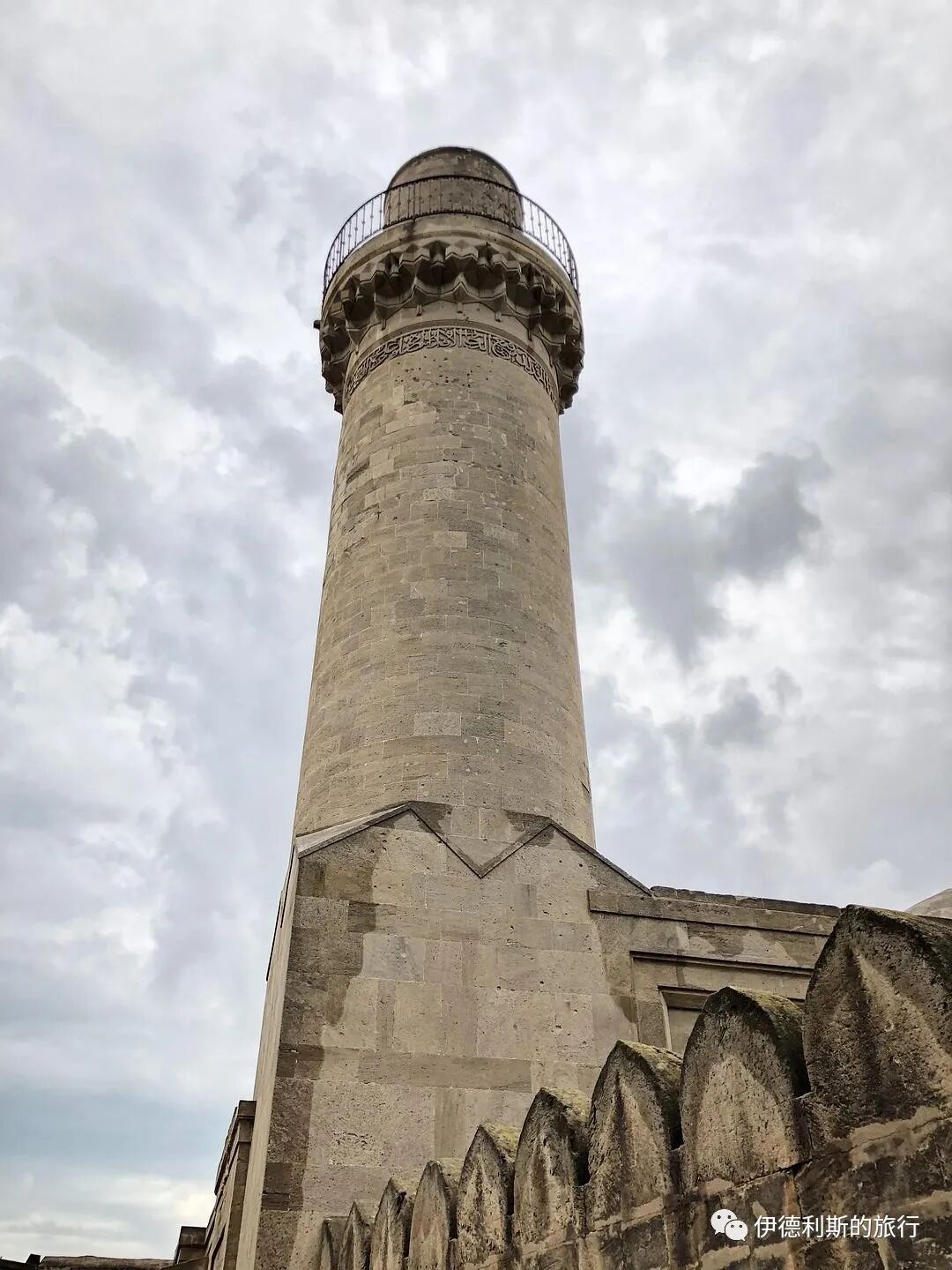
The cylindrical minaret in the mosque's northeast corner has a balcony supported by a stalactite cornice. You can reach it by a spiral stone staircase inside the tower.
7. Palace Bathhouse
The palace bathhouse is underground, at the lowest part of the palace. This kept the temperature stable. Over time, it was completely forgotten until it was accidentally discovered in 1939. It was partly cleaned in 1953, and some of the pools were later restored.
Water entering the baths flowed from a reservoir near the walls to the boiler room. Then, it went through special pipes to each room. In one corner of the bathhouse is a large domed room and two smaller rooms. These tiled rooms were likely reserved for the king.
2. Maiden Tower
The Maiden Tower (Qız qalası) is one of Baku Old City's landmarks. Like the Shirvanshahs' Palace, it is on the UNESCO World Heritage list.
There is no final conclusion about the Maiden Tower's construction. Most people believe the lower part was built between the 4th and 6th centuries, and the upper part in the 12th century. People guess that the Maiden Tower was first a Zoroastrian mosque during the Sasanian period. It was rebuilt in the 12th century. One view is that the rebuilt Maiden Tower was used for astronomical observations. Another view is that, based on its design, the Maiden Tower should be a defensive tower. Its walls are up to 5 meters thick, its internal staircase is easy to defend, and a well goes straight to the third floor. Russia reinforced the tower during its rule in 1806. Archaeological excavations in 1962-1963 showed that the Maiden Tower was built on a huge rock sloping towards the Caspian Sea. They also found a 14-meter-long wooden beam at its base.
Up to 20 legends surround the Maiden Tower. The most famous tells of a maiden who saved the people of Baku from slave owners. This epic shows Azerbaijan's Zoroastrian beliefs and cultural roots. In 1940, composer Afrasiyab Badalbeyli created Azerbaijan's first ballet,
3. Baku City Walls
Shirvanshah King Manuchohr III (who reigned from 1120-1160) ordered the construction of the Baku City Walls (Bakı qalası) between 1138 and 1139. Shirvanshah King Akhsitan I (who reigned from 1160-1197) later added outer walls. In 1865, Russia ordered the demolition of the city walls along the Caspian Sea. Between 1883 and 1888, all outer walls were also torn down. In 1910, the mayor at the time banned the demolition of ancient castle remains. He also partly restored the Baku City Walls.
The Double Gates (Qoşa Qala Qapısıdır) are the main city gates of Baku Old City. They are 8-10 meters high and 3-3.5 meters wide. The gates have carvings of a bull's head and a lion, symbols of the city. Historians believe the bull represents a leader, and the lion is a protector.
In 1954, one of the towers on Baku's north wall collapsed. Inside, a 12th-century Arabic inscription written in Kufic script was found. It is now kept in the Azerbaijan History Museum. The inscription states that Shirvanshah King Manuchohr III ordered the construction of the Baku City Walls.
North of the Baku City Walls is a rectangular tower, the Donjon, which served as an armory. The tower is 16 meters high and 2 meters thick. An underground passage leads directly to the Double Gates.
4. Mosques
1. Muhammad Mosque: 1079
The Muhammad Mosque was built between 1078 and 1079. It is the oldest surviving Islamic building in Azerbaijan. An Arabic inscription in Kufic script on the mosque's north wall shows that Muhammad ibn Abu Bakr built the mosque. Research shows that the Muhammad Mosque was built on the site of a Zoroastrian fire mosque. Muhammad was the mayor of Baku at that time.
During the Russian-Persian War in 1723, the Imperial Russian fleet shelled Baku. A cannonball hit the minaret of the Muhammad Mosque. At the same time, a strong wind suddenly blew the Russian fleet away from the city. The people of Baku believed this was Allah's protection. So, the minaret was not repaired until the mid-19th century, serving as a symbol of Baku's resistance to invasion. After this, the mosque was also called the
2. Takyeh: 13th Century
The Takyeh is a Sufi mosque built in the 13th century. It was also a place for Sufi practitioners to study and rest. Archaeological excavations took place here in 1967, and it was renovated in the 1970s.
3. Khidir Mosque: 1301
The Khidir Mosque was built in 1301. Archaeological excavations in 1988 found that this mosque was built on the site of a Zoroastrian mosque.
4. Mirza Ahmad Mosque: 1345
The Mirza Ahmad Mosque was built in 1345. The wall at its entrance has carvings of the Quran and the architect's name. It is currently out of use due to its poor condition.
5. Chin Mosque: 1376
An inscription above the entrance shows that the Chin Mosque was built between 1375 and 1376. It was repaired between 1772 and 1773. The Old City State Historical Architectural Reserve Department repaired it again in 2012.
6. Molla Ahmad Mosque: Early 14th Century
The Molla Ahmad Mosque was built in the early 14th century by Mahmud ibn Sad, a famous architect of the Şirvan-Abşeron architectural school. It is a typical example of a small community mosque from the Shirvanshah Dynasty.
7. Sheikh Ibrahim Mosque: 1416
Haji Amirshah ibn Yagub built the Sheikh Ibrahim Mosque between 1415 and 1416. Ibrahim I (who reigned from 1382-1417), the 33rd king of the Shirvanshah Dynasty, ruled Baku at that time. Because of this, the mosque is also called the Sheikh Ibrahim Mosque. In the 19th century, the mosque's facade was divided into three sections, and windows were added.
Today, it is a madrasa (Islamic school) for women.
8. Juma Mosque
The Juma Mosque is the main mosque in Baku's Old City. An inscription on the mosque wall shows that Amir Sharaf al-Din Mahmud rebuilt the mosque in 1309. The current main prayer hall was built in 1899 with donations from Baku merchant Haji Shikhlali Dadashov. It blends traditional and European architectural styles.
The clay tablet at the entrance of the main hall is called a Turbah. It symbolizes the earth. Shia Muslims place their foreheads on it during namaz (prayer).
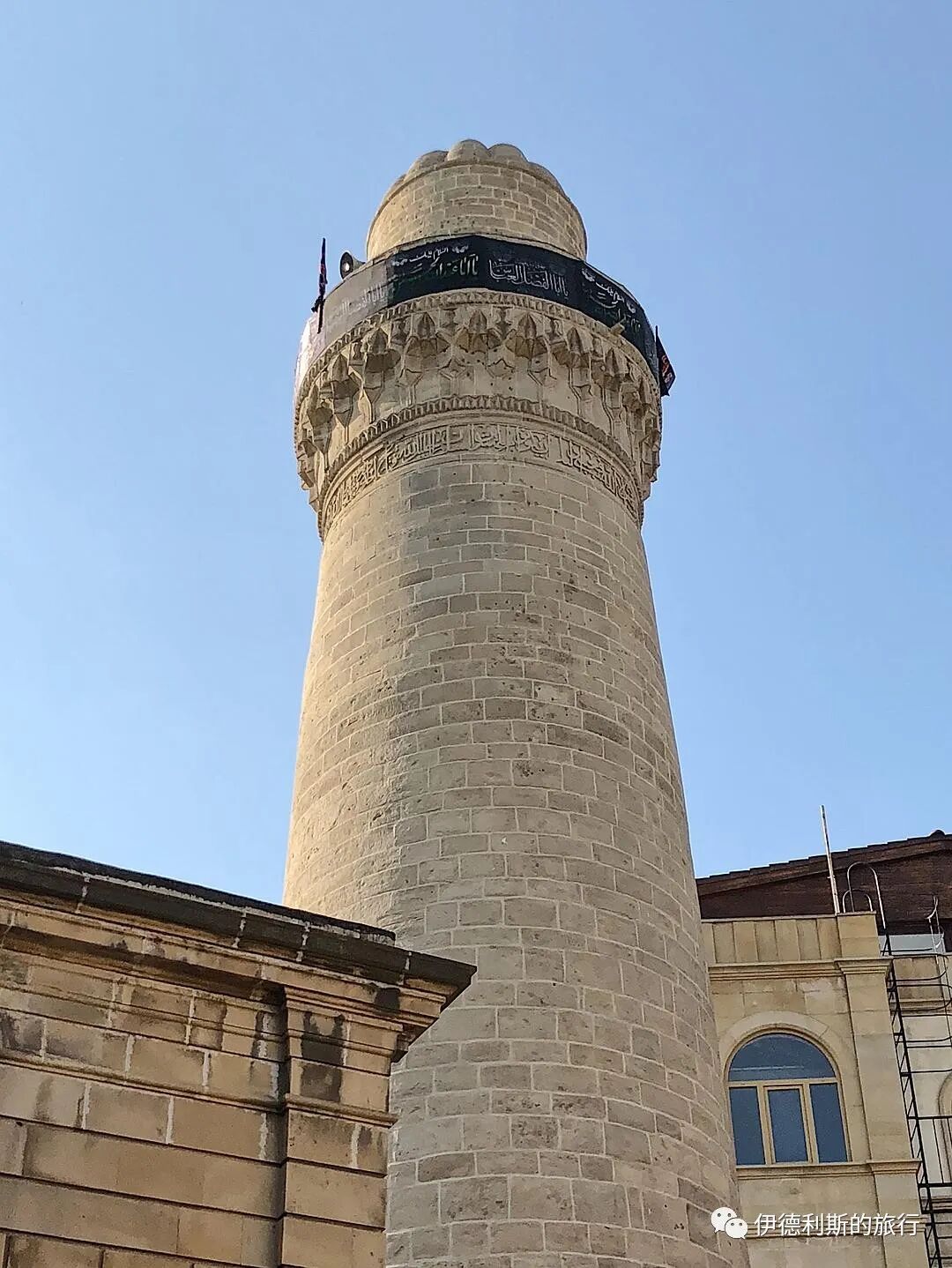
The minaret on the north side of the main hall was built in 1437. It has a balcony supported by stalactite structures.
During the Soviet era, the Juma Mosque became a carpet museum. It resumed religious activities only in the 1990s and underwent major renovations in 2008.
A madrasa from the 15th century once stood next to the Juma Mosque. However, it was torn down in the mid-19th century for road expansion. Only one classroom remains today, which is now a souvenir shop.
9. Sayyid Yahya Murtuza Mosque: Early 17th Century
Sayyid Yahya Murtuza himself built the Sayyid Yahya Murtuza Mosque in the early 17th century. He was a well-known local imam and was buried here after his death. During the Soviet era, it became a carpentry workshop. After the 1990s, it resumed religious activities and is now part of the Juma Mosque. view all
Reposted from the web
Summary: Baku Old City — Historic Buildings is presented here as a firsthand travel account in clear English, beginning with this scene: Baku's Old City, also known as İçərişəhər, is the oldest part of Azerbaijan's capital. UNESCO listed it as a World Heritage site in 2000. The account keeps its focus on Baku Old City, Azerbaijan Travel, Historic Buildings while preserving the names, places, food, and historical details from the Chinese source.
Baku's Old City, also known as İçərişəhər, is the oldest part of Azerbaijan's capital. UNESCO listed it as a World Heritage site in 2000.
In the 8th century, the Abbasid Caliph appointed Arab general Yazid ibn Mazyad al-Shaybani as the governor of the Arminiya region, which covered most of the Caucasus. The Abbasid Caliphate fell into civil war in 861. Yazid's grandson, Haytham ibn Khalid, declared independence. He used the ancient Persian title Shirvanshah, and the state he founded became known as the Shirvanshah Dynasty.
In 1191, an earthquake destroyed Shamakhi, the original capital of the Shirvanshah Dynasty. The 21st Shirvanshah king, Akhsitan I, moved the capital to Baku. From then on, Baku became the capital of the Shirvanshah Dynasty.
The Shirvanshah Dynasty suffered a devastating blow from the Mongol cavalry in 1235. It then became a vassal state of the Mongol and Timurid dynasties during the 13th and 14th centuries. After Timur the Great died in 1405, the Shirvanshah Dynasty became independent again. It reached its peak during the reign of the 34th king, Khalilullah I (1418-1465). The Palace of the Shirvanshahs in Baku's Old City was built during this time.
In 1501, the Persian Safavid Dynasty invaded the Shirvanshah Dynasty and eventually captured Baku. After this, the Shirvanshah Dynasty became a vassal of the Safavid Dynasty until it was officially annexed in 1538.
Baku was then briefly controlled by the Ottomans and Imperial Russia, but Iran quickly took it back. In the 18th century, local tribal leaders established the Baku Khanate (1747-1806). Russia eventually occupied it in 1806.
Baku held an important place in ancient Eurasian trade. It was a key hub in the Eurasian trade network, and many merchants and travelers from India and Central Asia stopped here. Today, this ancient city has a palace complex from the Shirvanshah Dynasty, relatively complete ancient city walls, over a dozen old mosques built between the 11th and 18th centuries, four large caravanserais (ancient inns) that saw ancient trade, and several traditional bathhouses. It is well worth a visit.
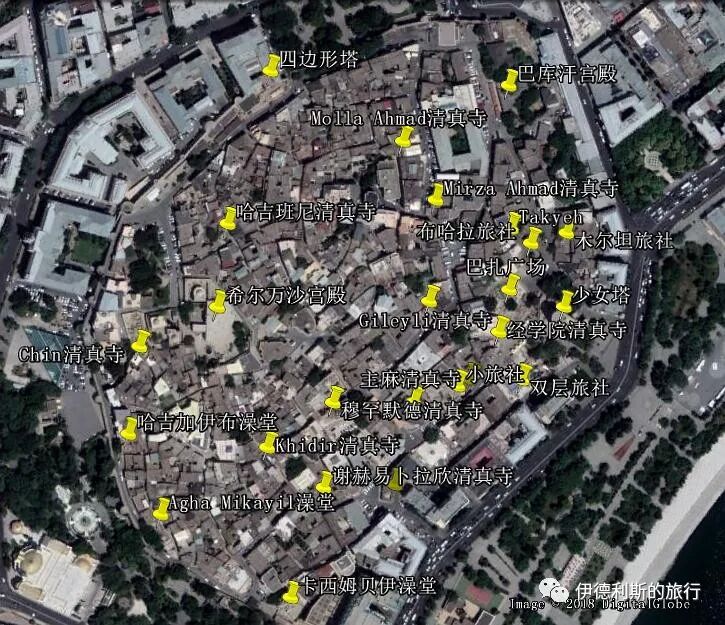
1. The Palace of the Shirvanshahs: Mostly 15th Century
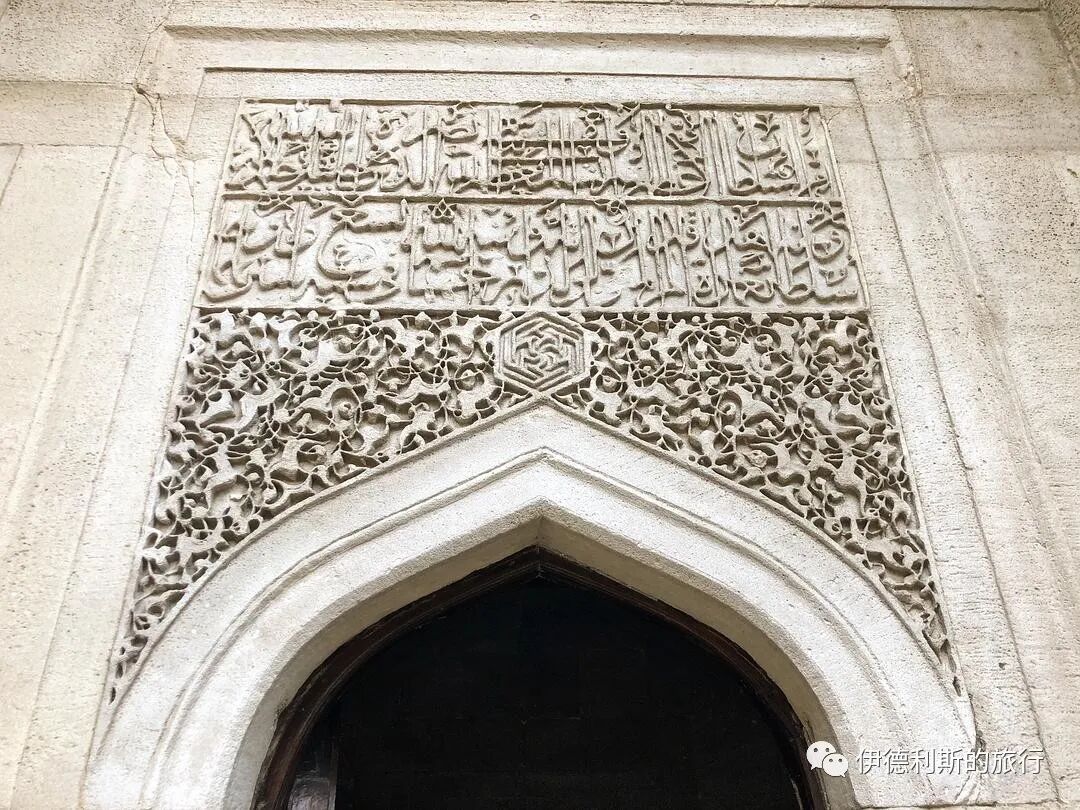
The Palace of the Shirvanshahs (Şirvanşahlar sarayı) was built after the Shirvanshah Dynasty (Şirvanşah) moved its capital to Baku in 1191. Most of the existing buildings were constructed in the 15th century by the 34th ruler, I Xəlilullah (Khalilullah I, who reigned from 1418-1465). In 2000, it was added to the UNESCO World Heritage list under the name
This complex is a prime example of the Şirvan-Abşeron architectural school. This school started in the 8th century and was popular from the 11th to the 15th centuries. It is Azerbaijan's most important traditional architectural school. This school is known for combining smooth stone facades with delicate decorative carvings. It specialized in building heavy, defensive structures.
1. The Palace Building
The palace building (Şirvanşahların saray binası) is the oldest and most important part of the Shirvanshahs' Palace. The exact start date of the palace's construction is still unknown. We only know that it was looted in 1500 during the invasion by the Persian Safavid Dynasty. After Russia occupied Baku in 1828, the palace became the Russian army headquarters. During repairs, the Russians destroyed many valuable structures. They even planned to build a cathedral here, but this never happened.
The palace entrance is very simple. Inside, there are no stone inscriptions or complex decorations. This is a sharp contrast to the grand palaces of other Muslim dynasties from the same period. The palace has two floors and originally had 52 rooms. The most important room on the second floor is the central octagonal hall. This is also the oldest part of the palace and was likely the king's reception hall. The second floor also has the sleeping quarters for the king and his family. From the windows, you can see beautiful sea views of Baku Bay.
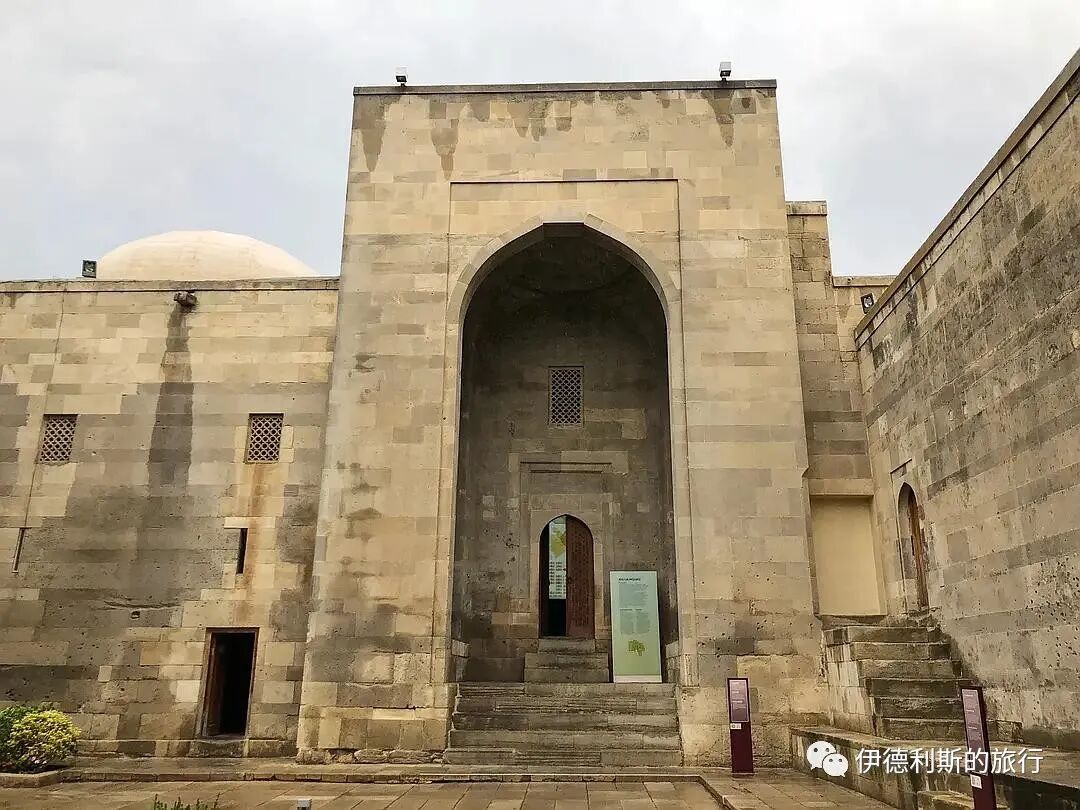
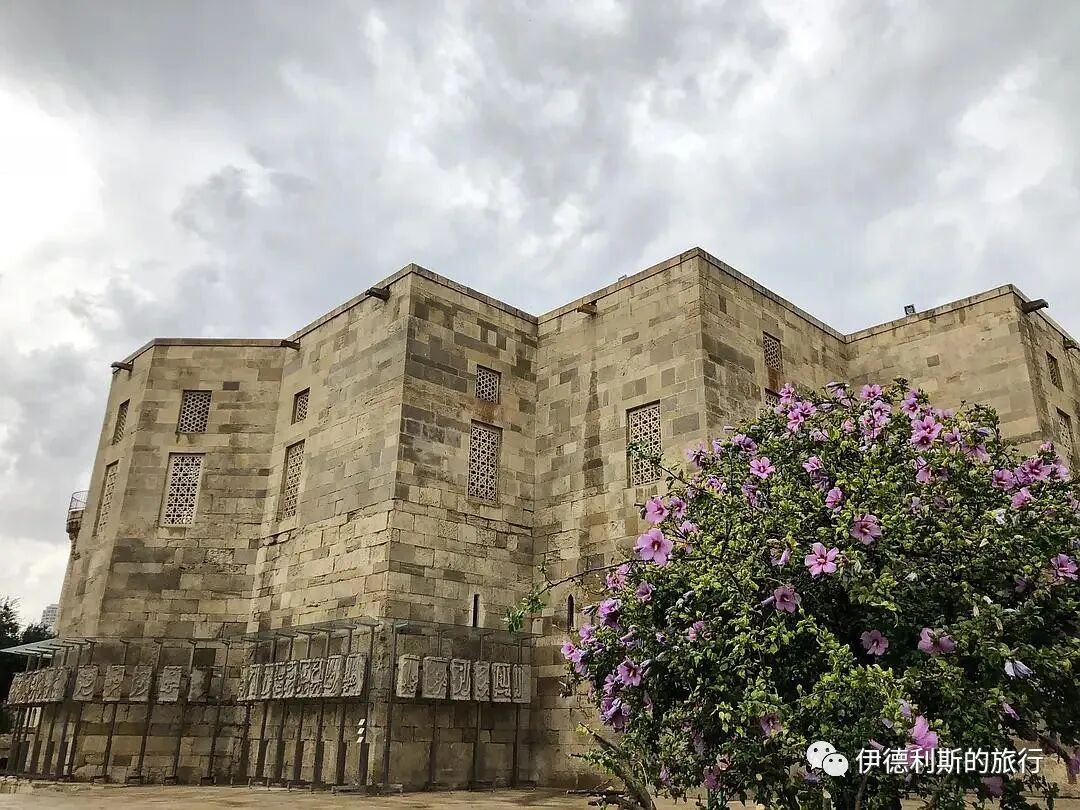
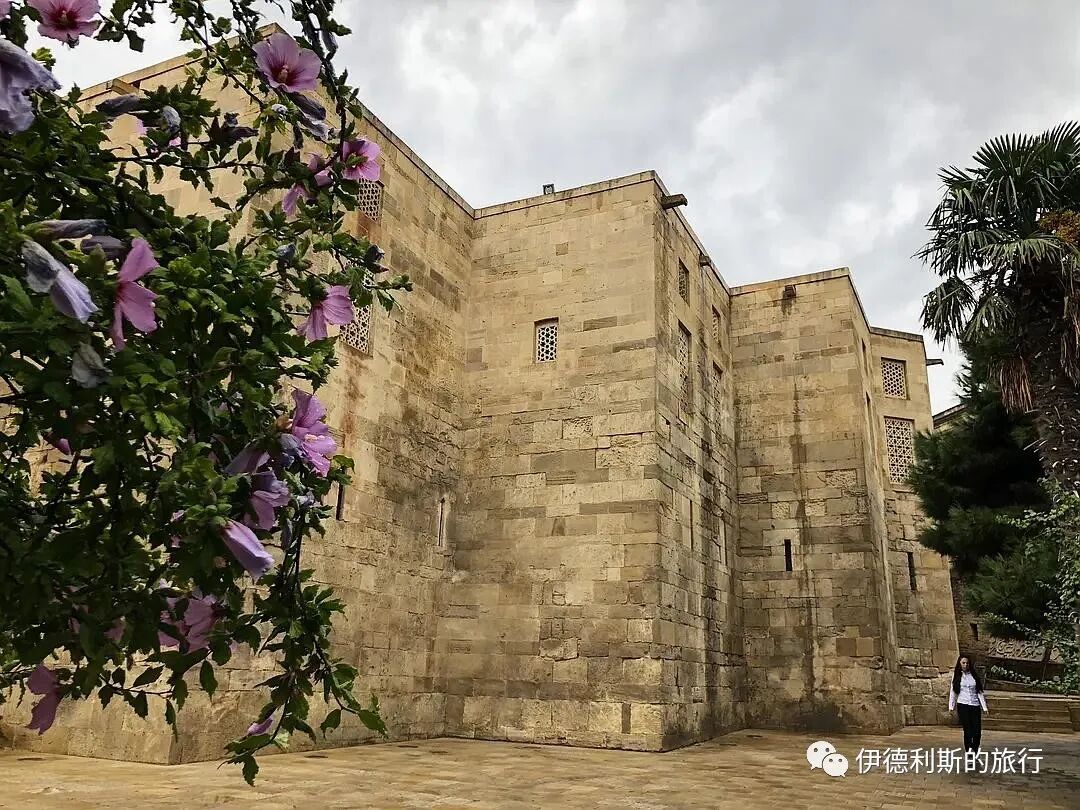
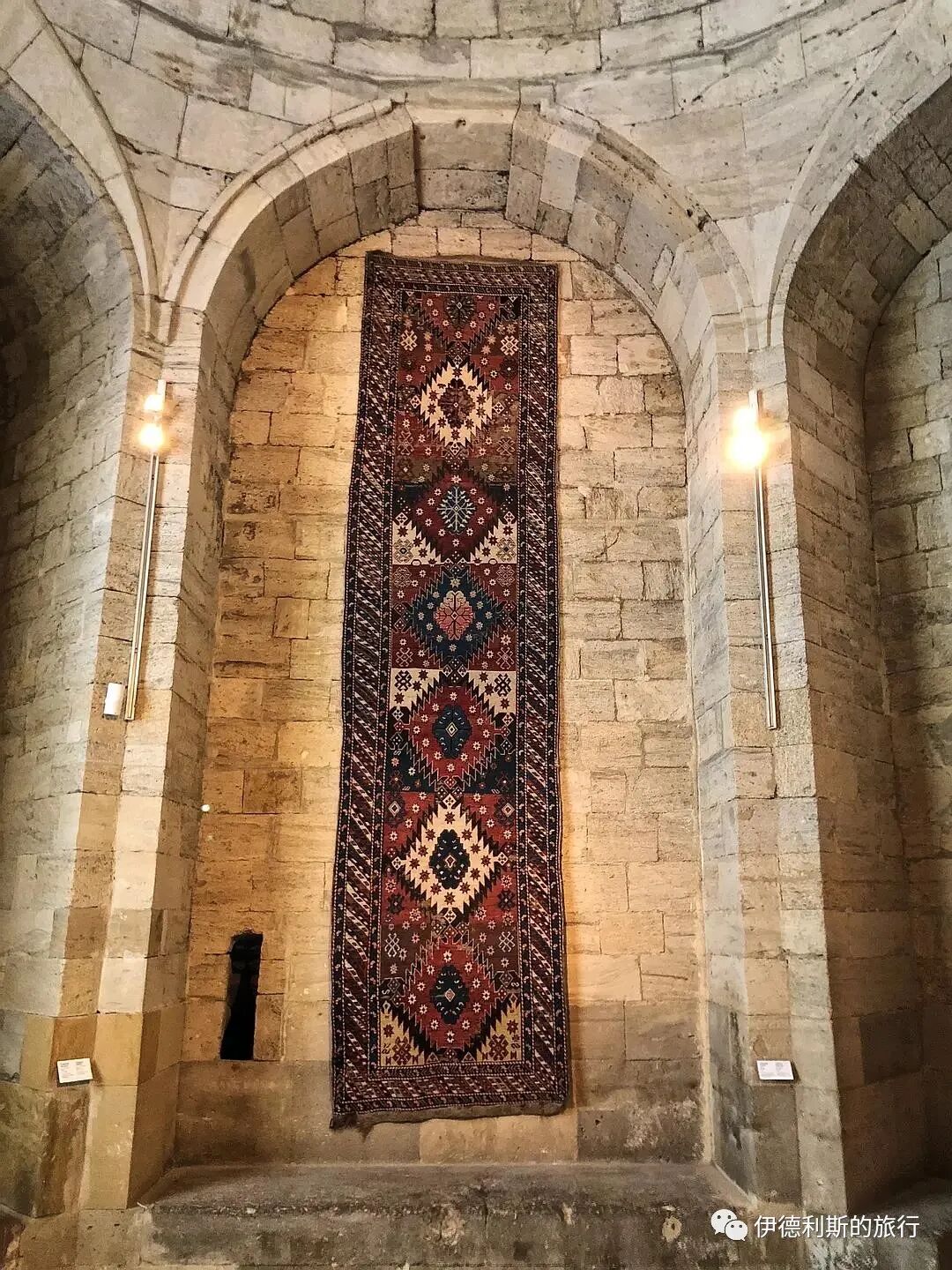
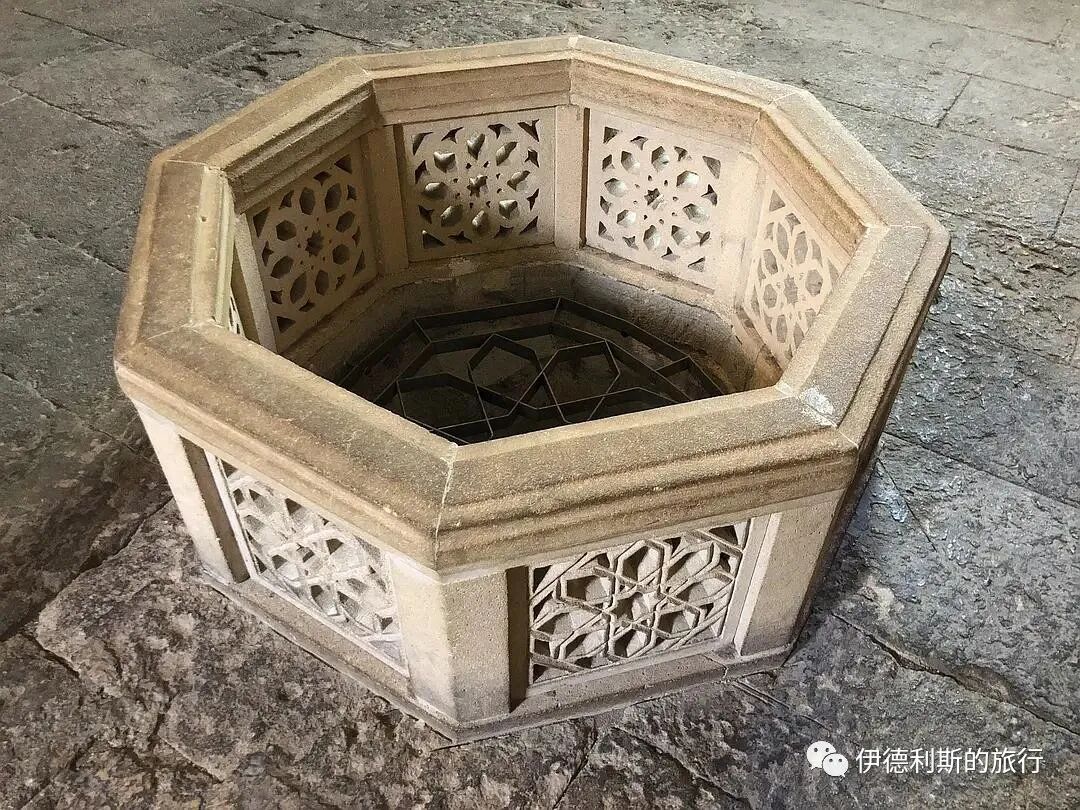
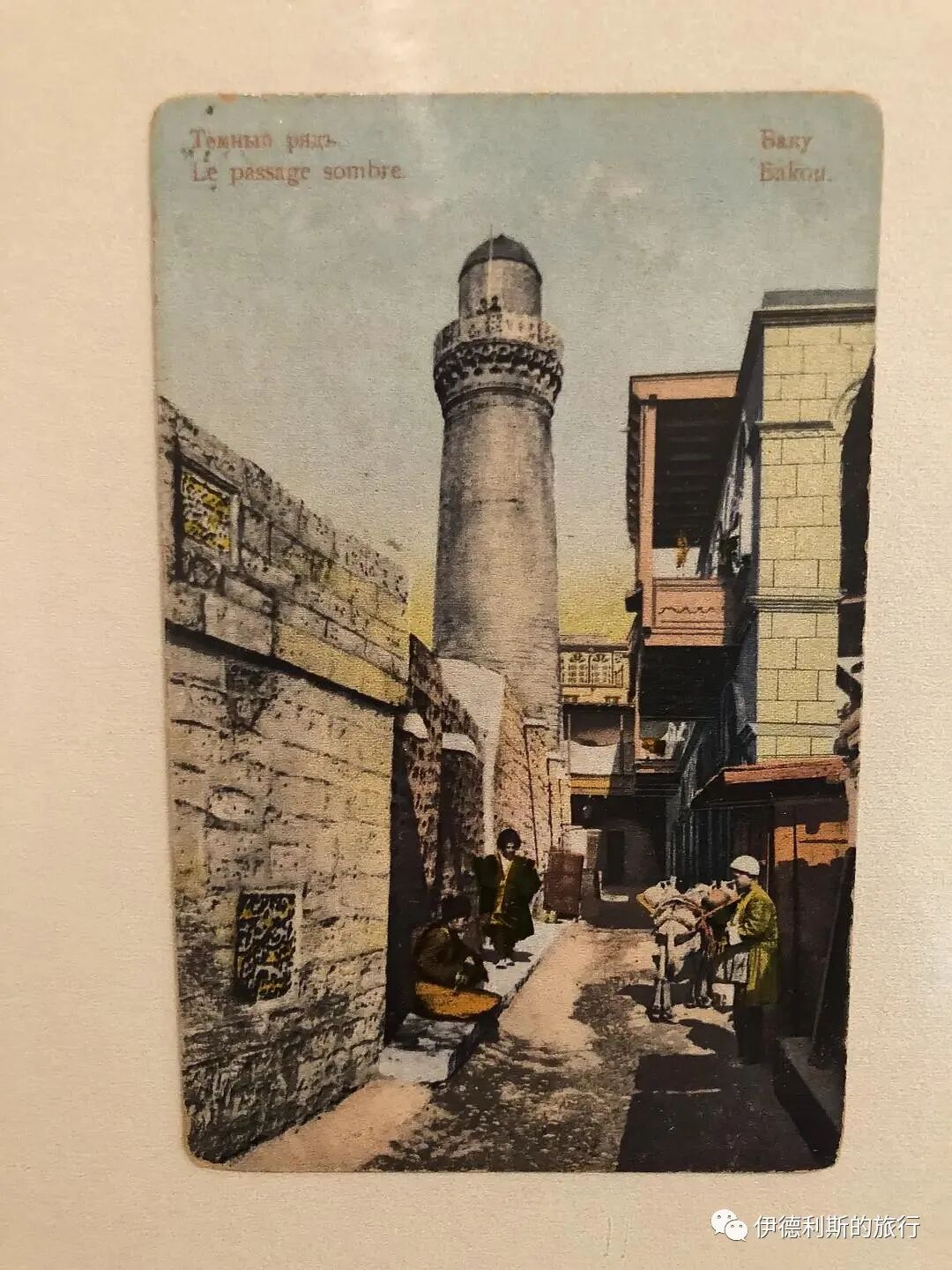
Postcards related to Baku's Old City are on display in the palace.
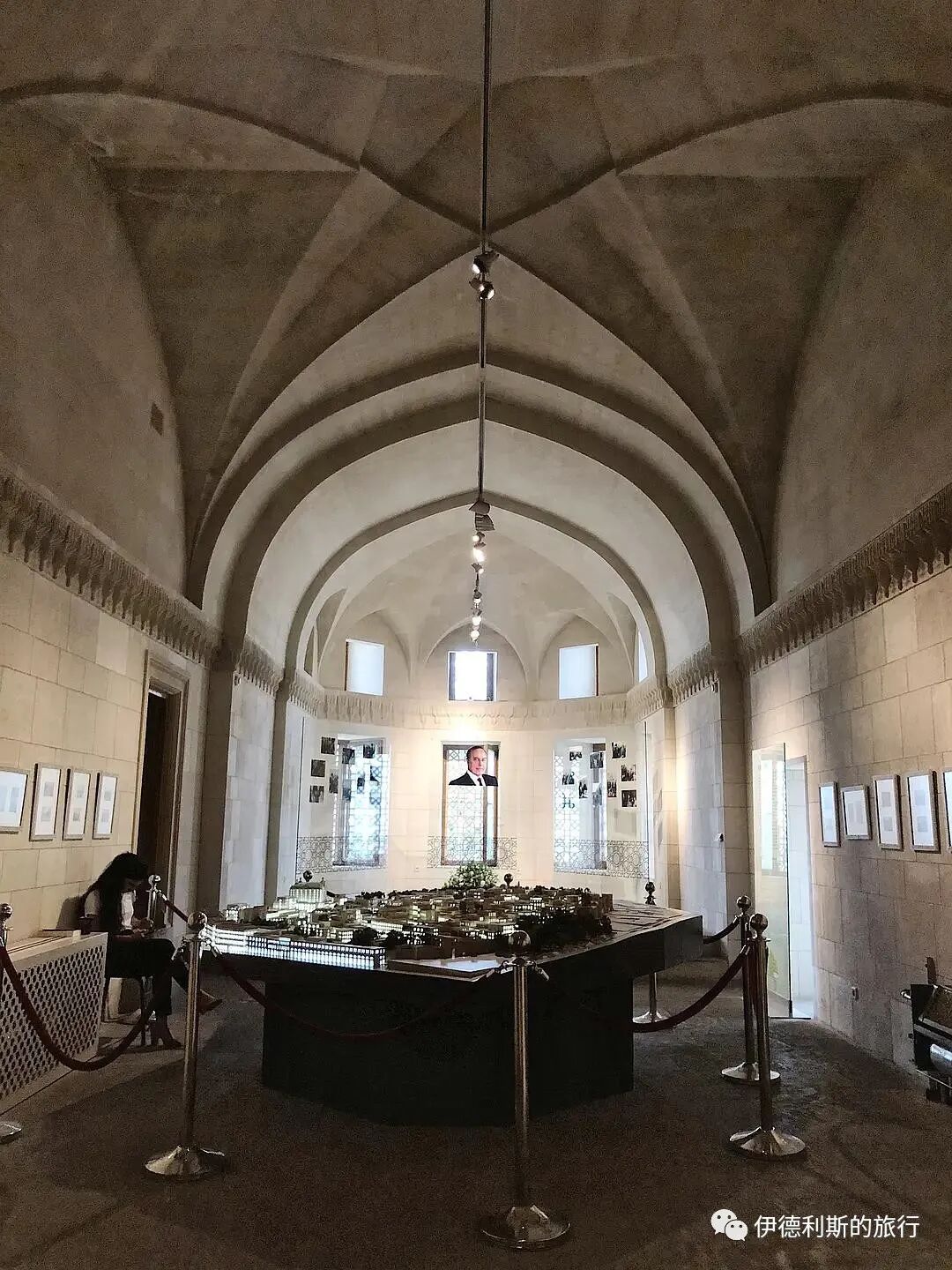
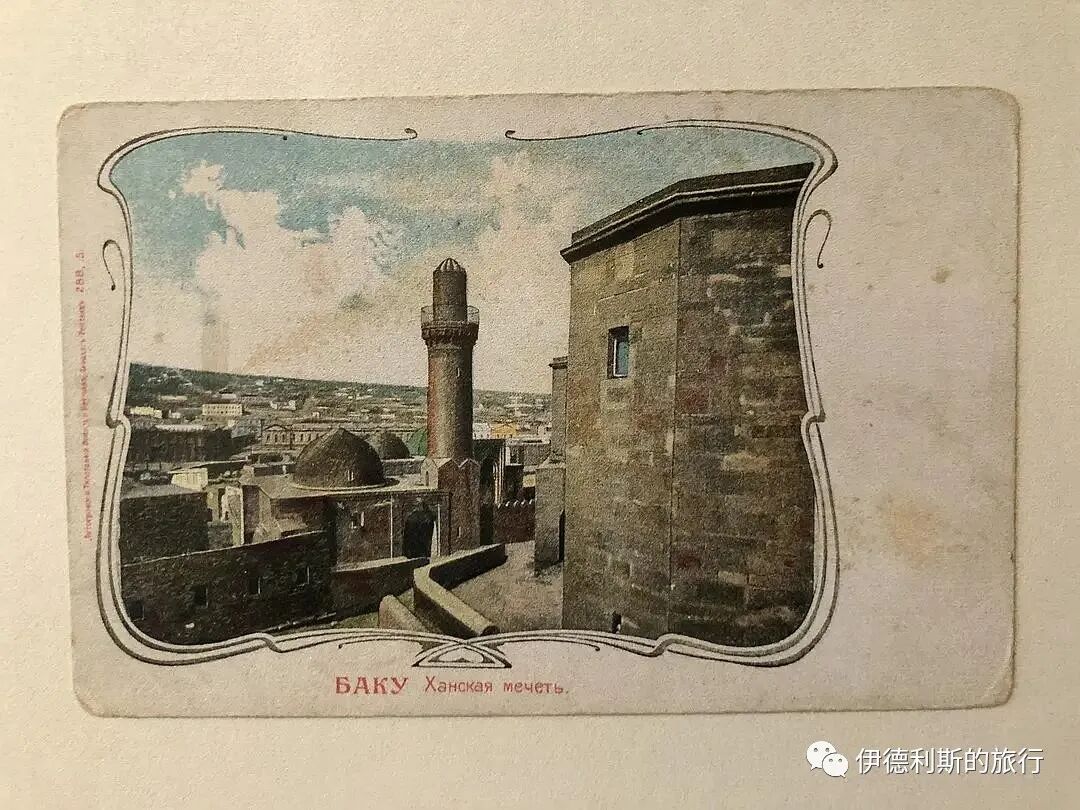
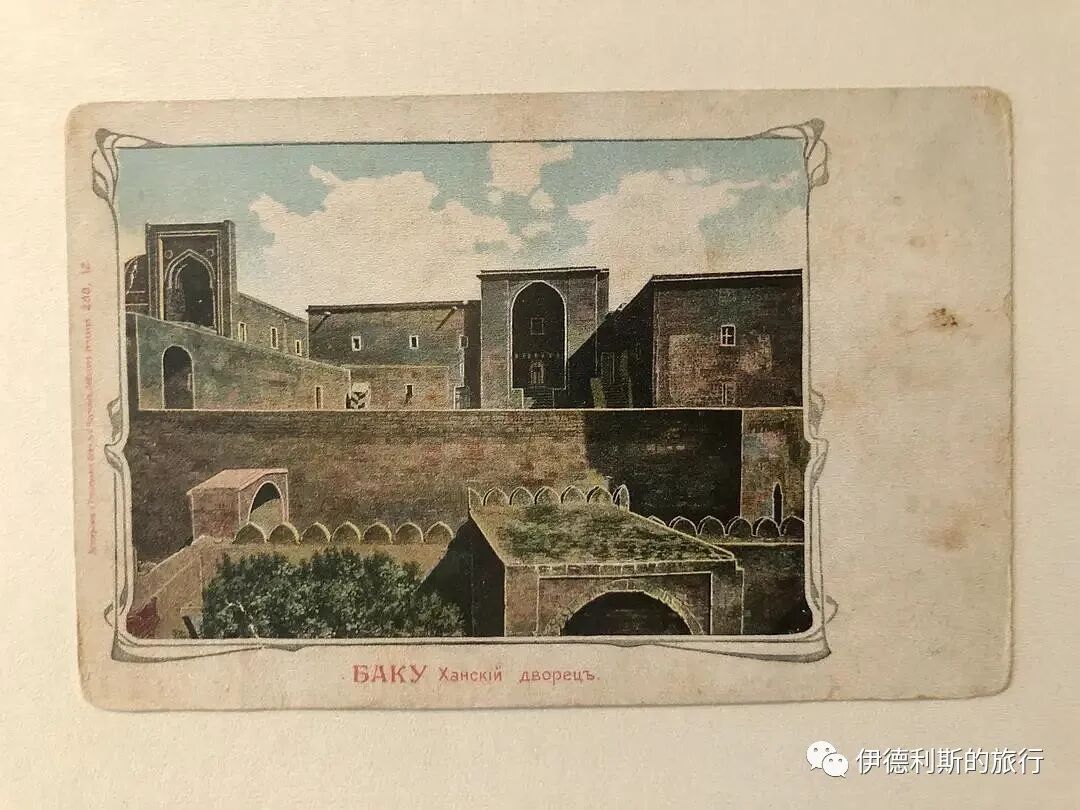
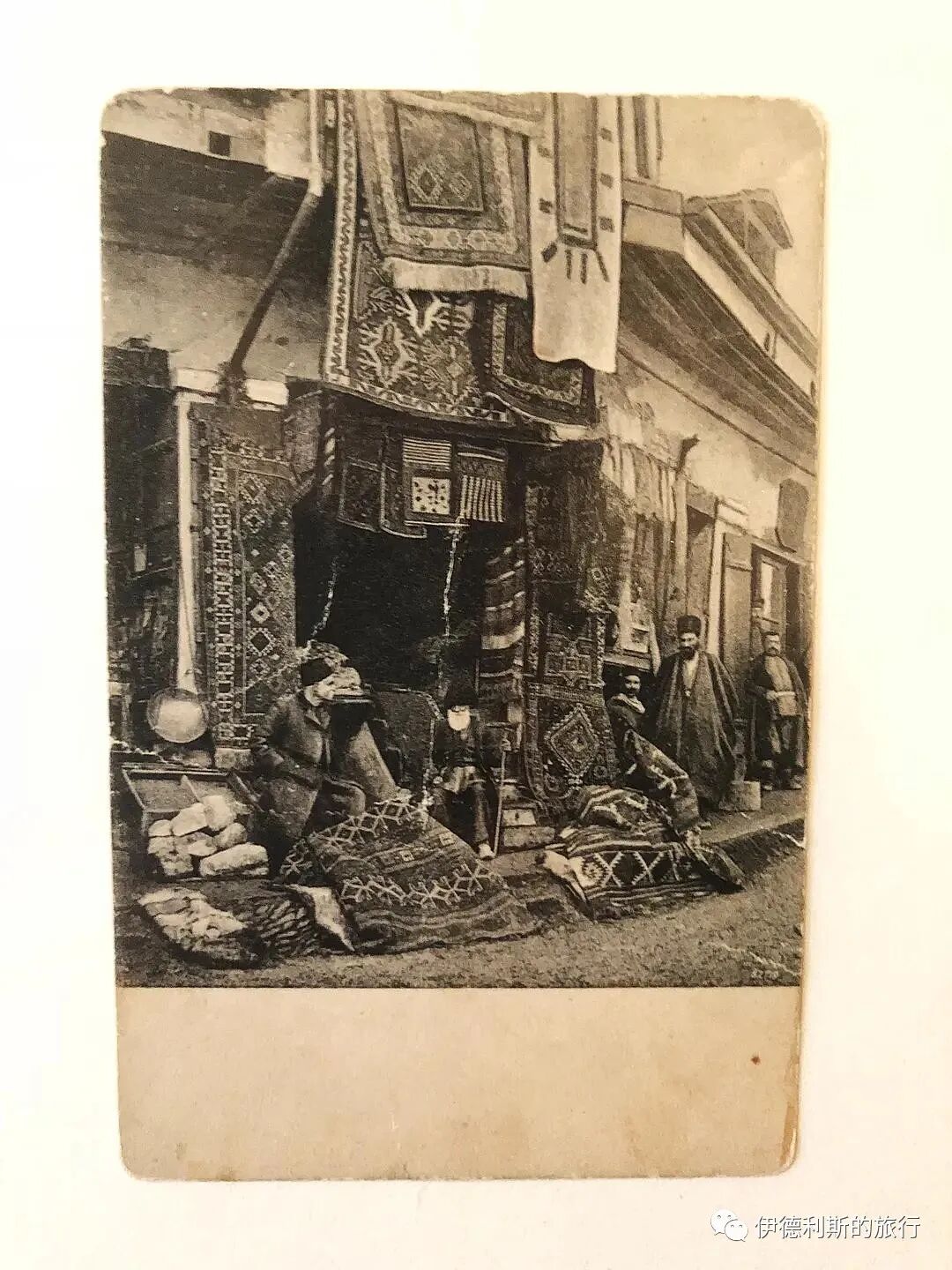
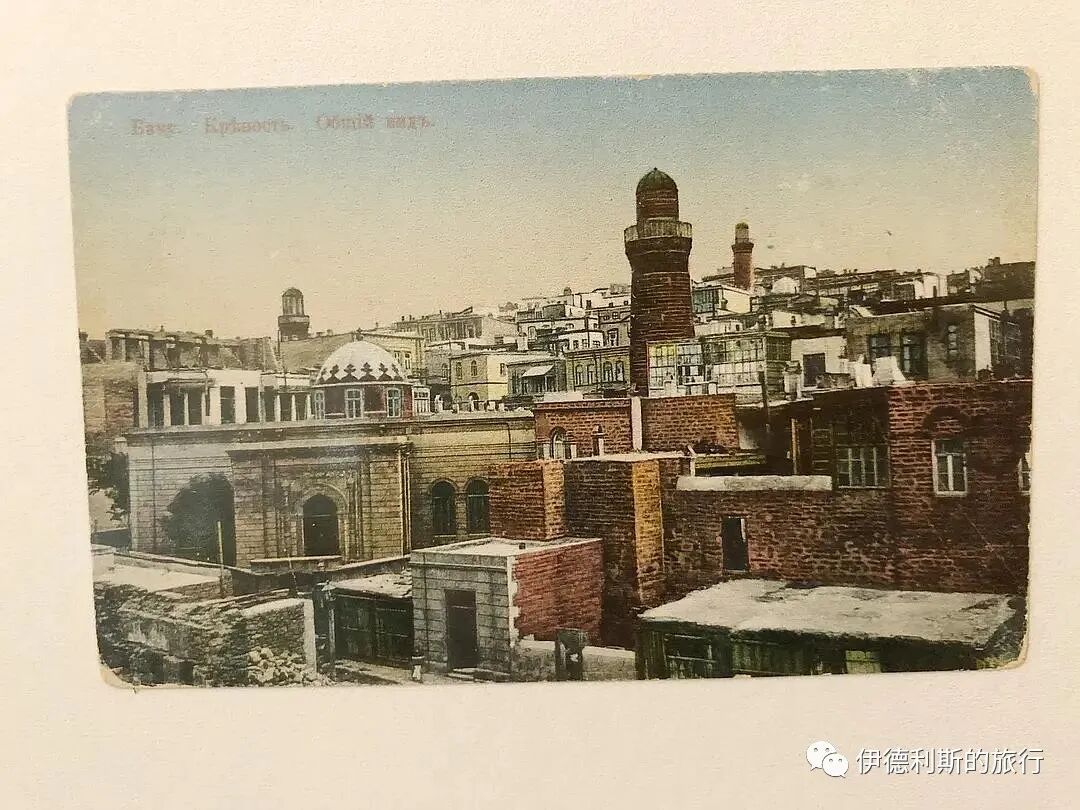
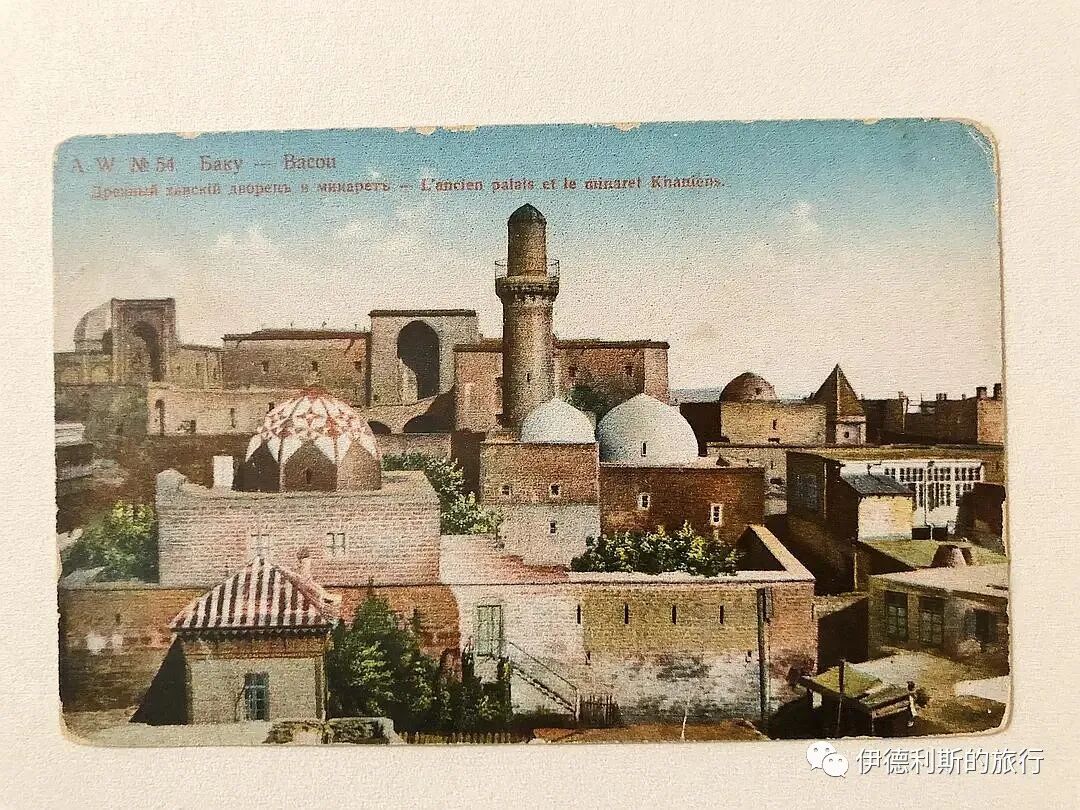
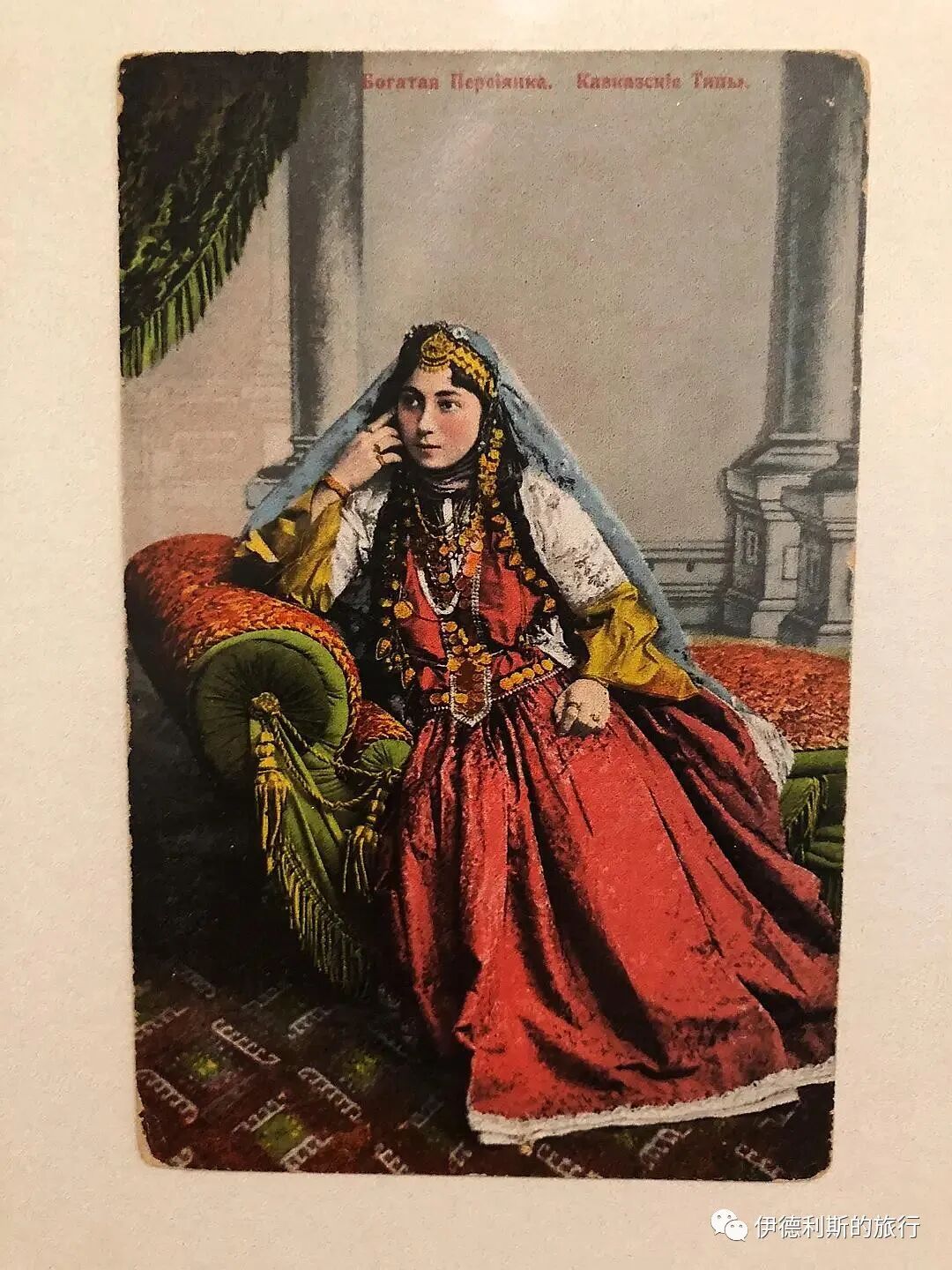
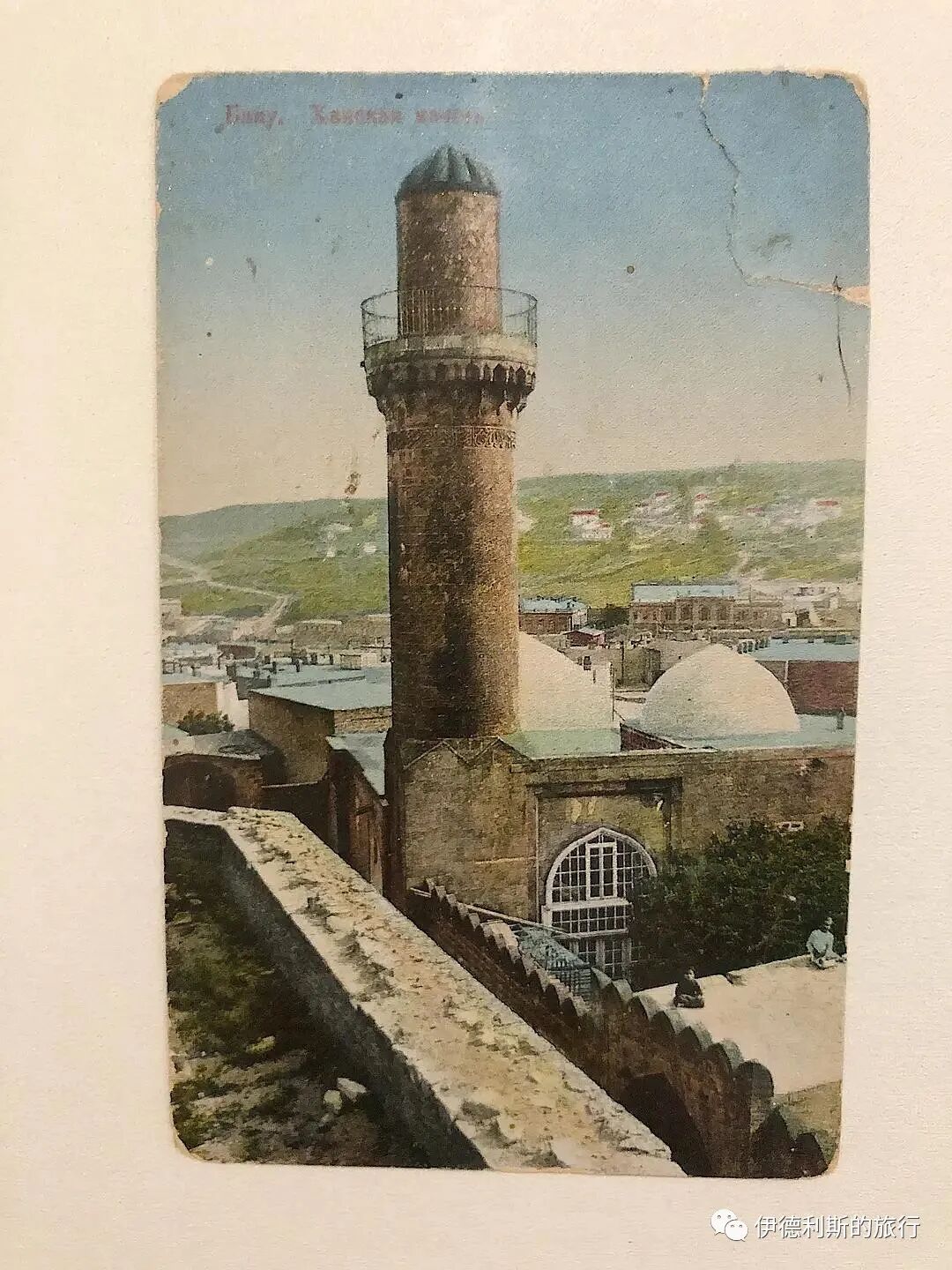
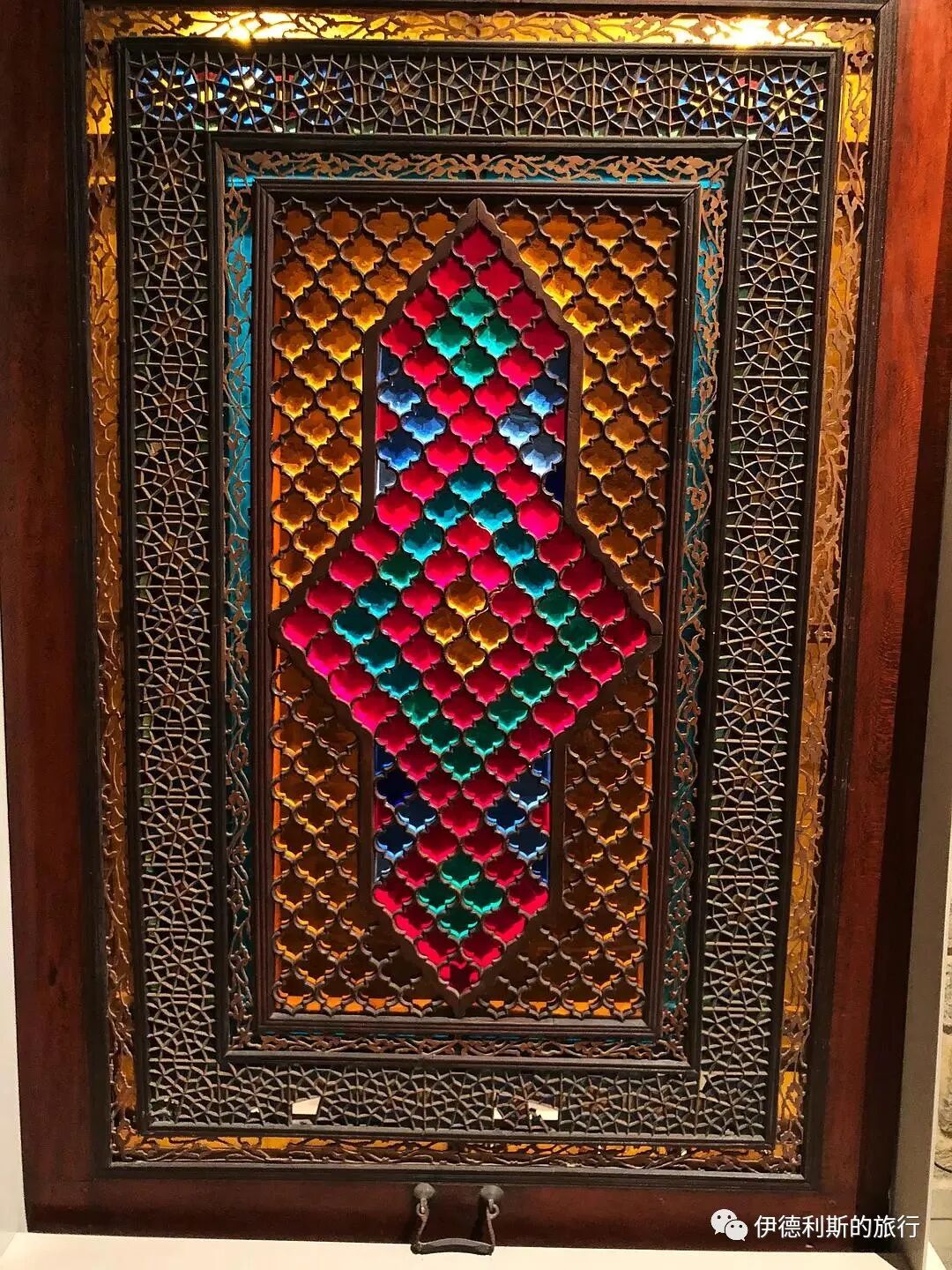
The palace displays 18th-century stained-glass windowpanes from Sheki, a city in northwestern Azerbaijan. They were made precisely to size, so they did not use nails or glue.
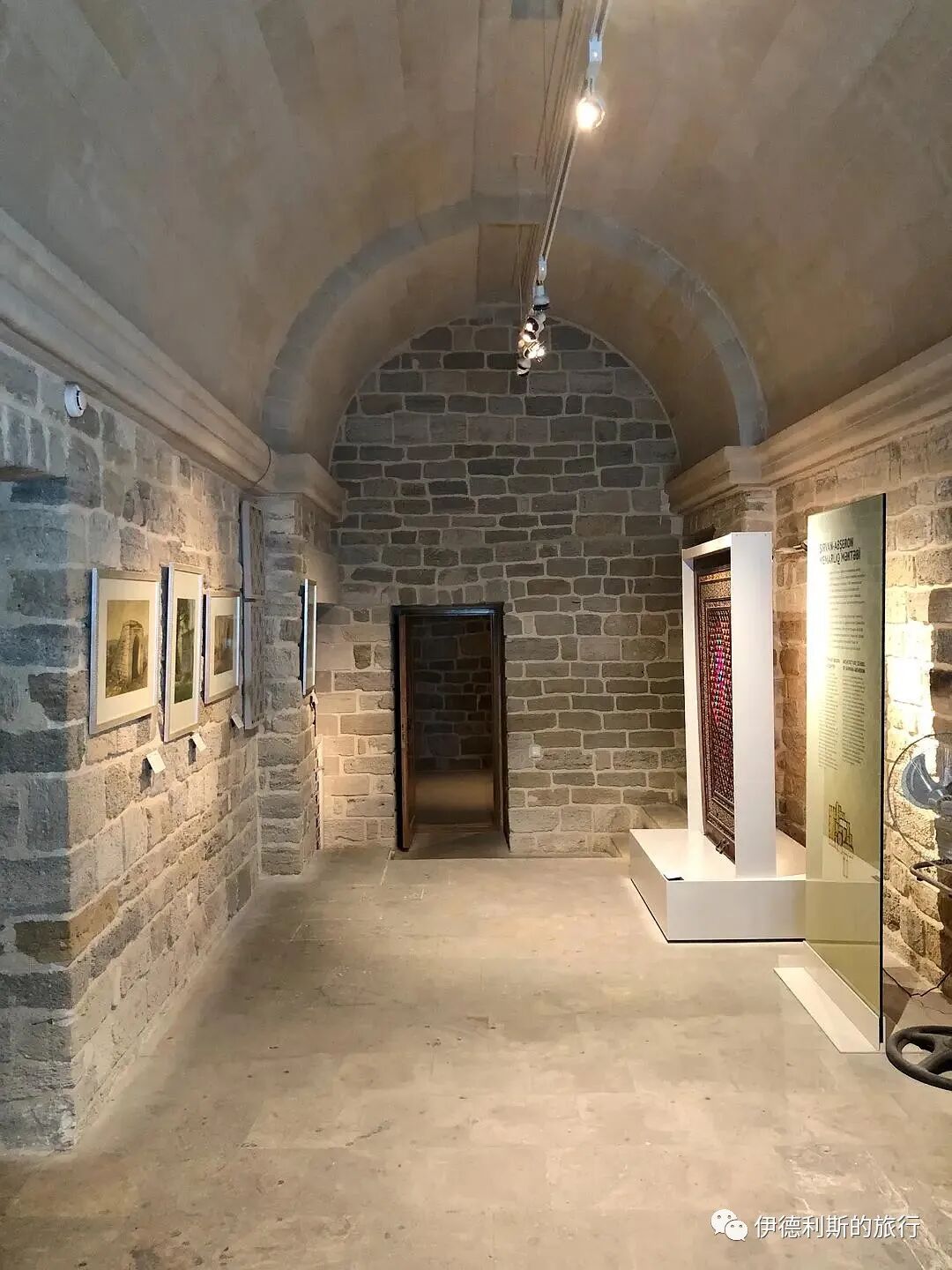
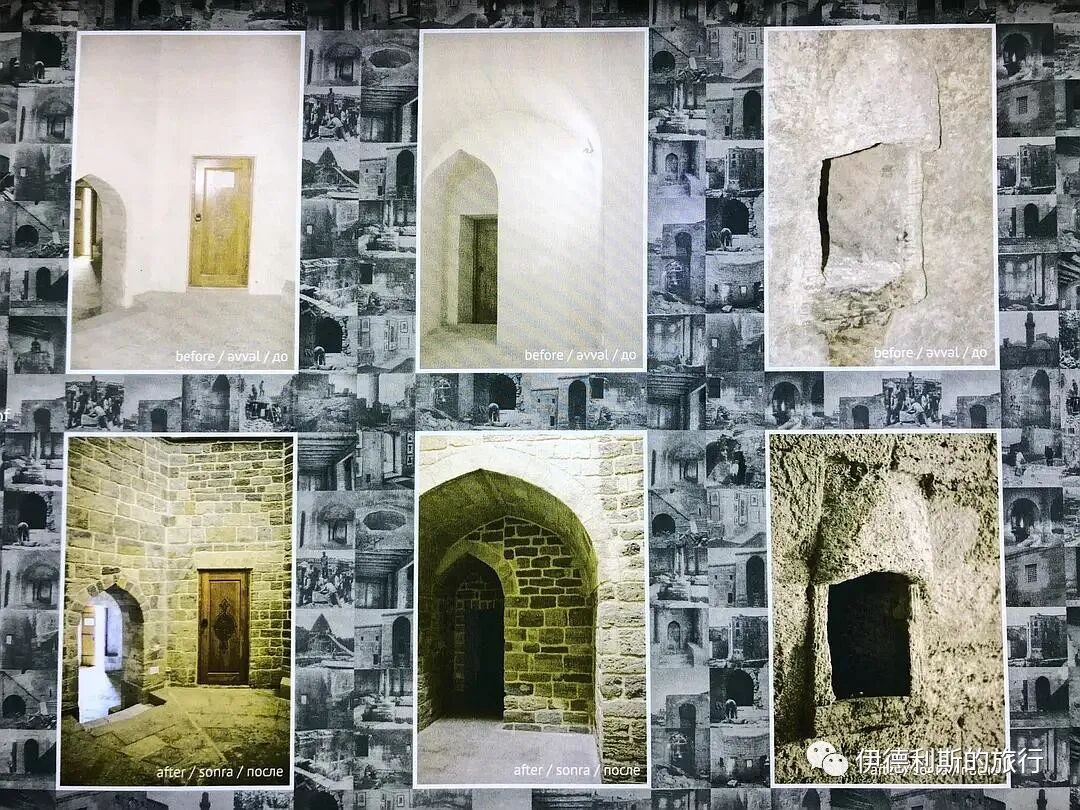
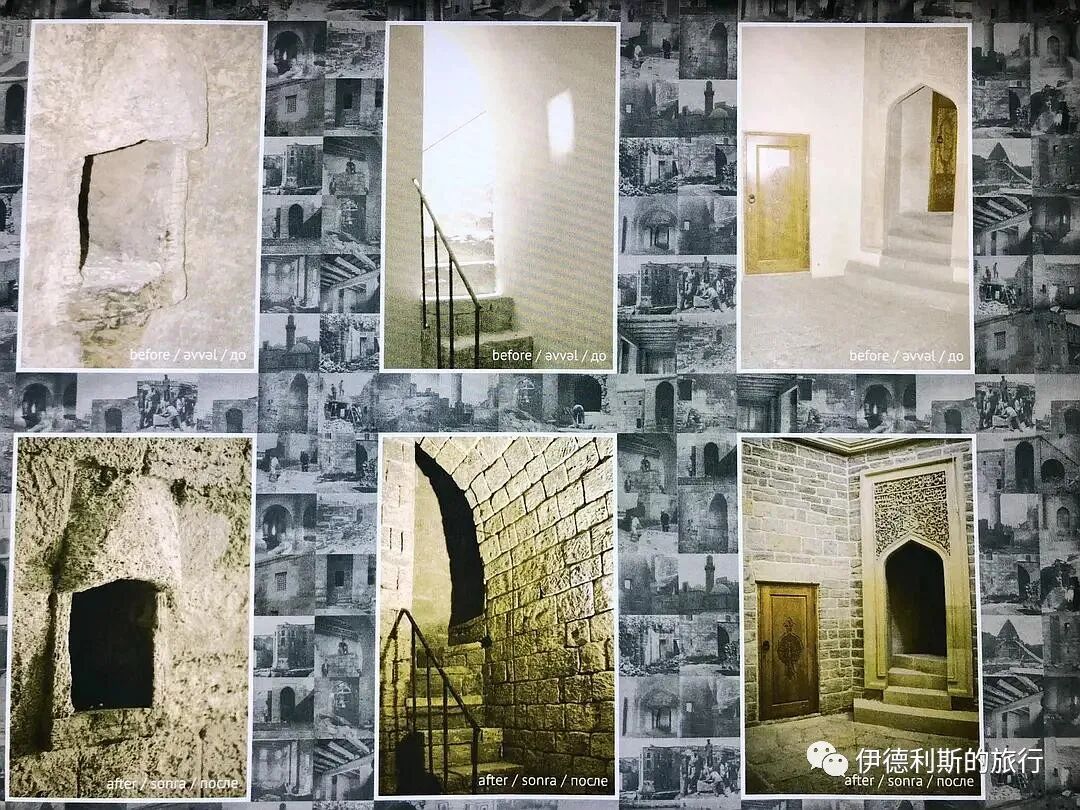
Photos from the palace's renovation in 2013 show the building before and after the work.
2. Bayil Stones
Bayil Castle, known as the The Great Baku Earthquake of 1306 submerged Bayil Castle in the Caspian Sea. It only resurfaced in the early 18th century when the Caspian Sea receded.
Between 1939 and 1969, the Institute of History of the Azerbaijan Academy of Sciences excavated over 700 inscribed stones from Bayil Castle. These are now kept in the courtyard of the Shirvanshahs' Palace. These stones are important for studying the history and culture of the Shirvanshah Dynasty. Historians found the names of 15 Shirvanshah kings on them, along with a portrait of one king.
The inscriptions also show that the castle was called
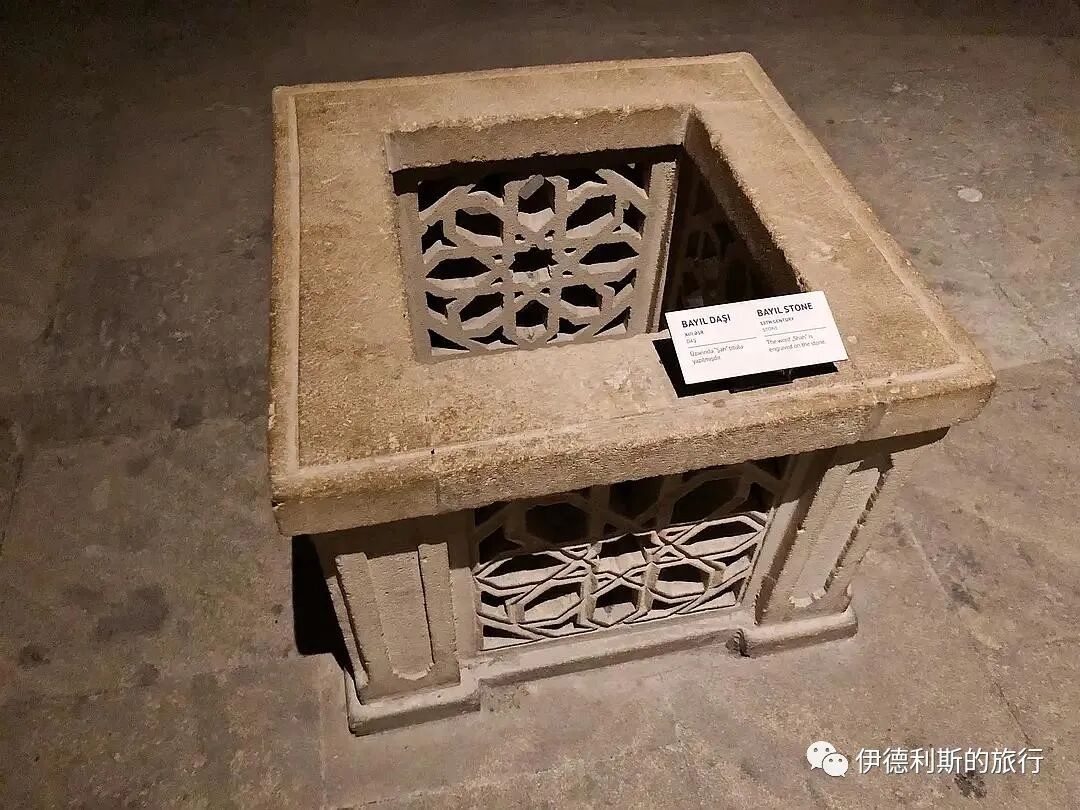
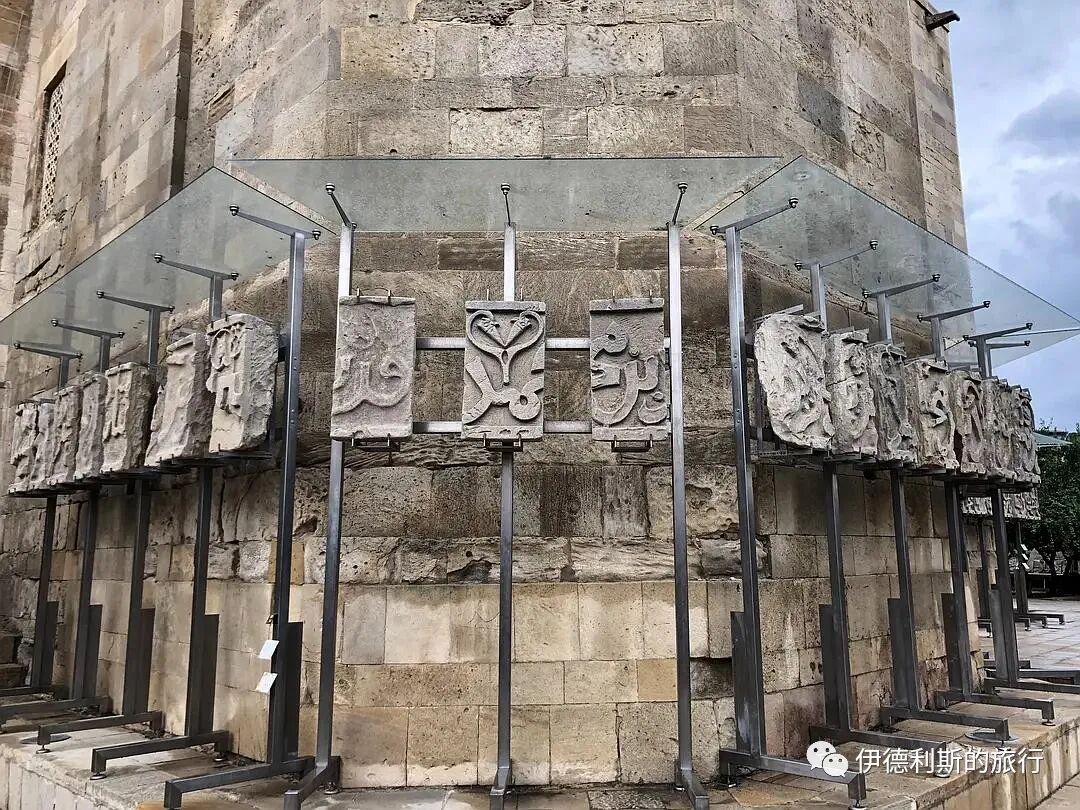
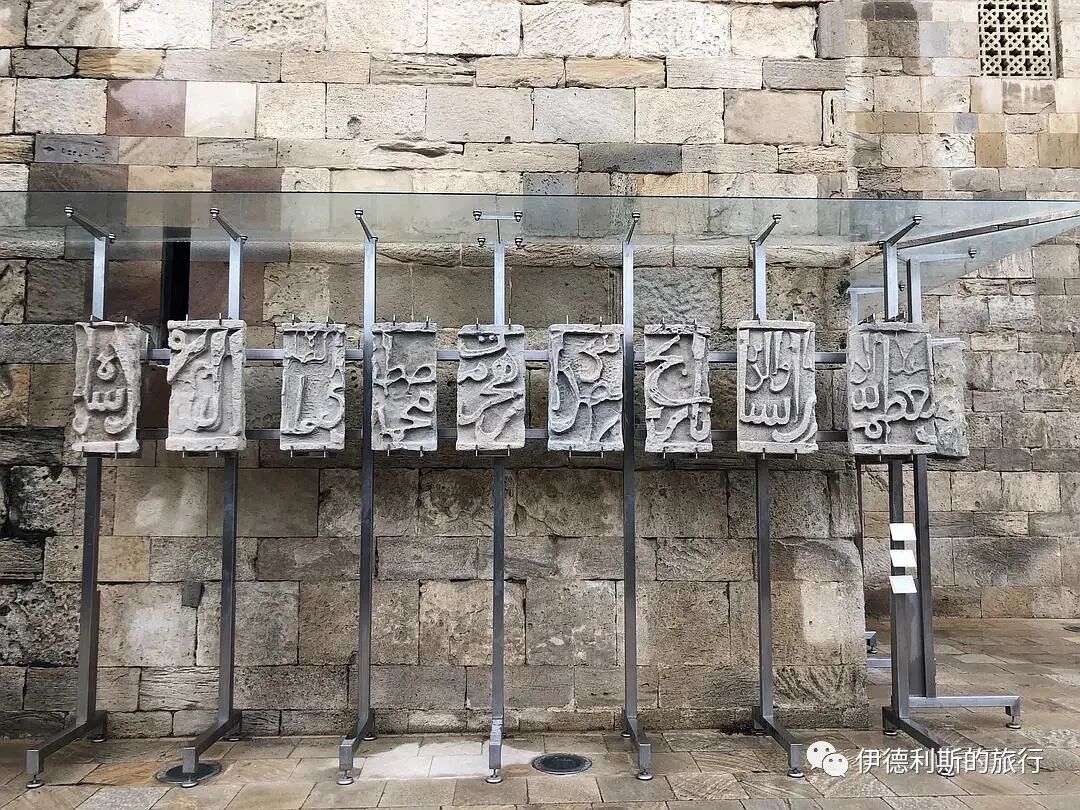
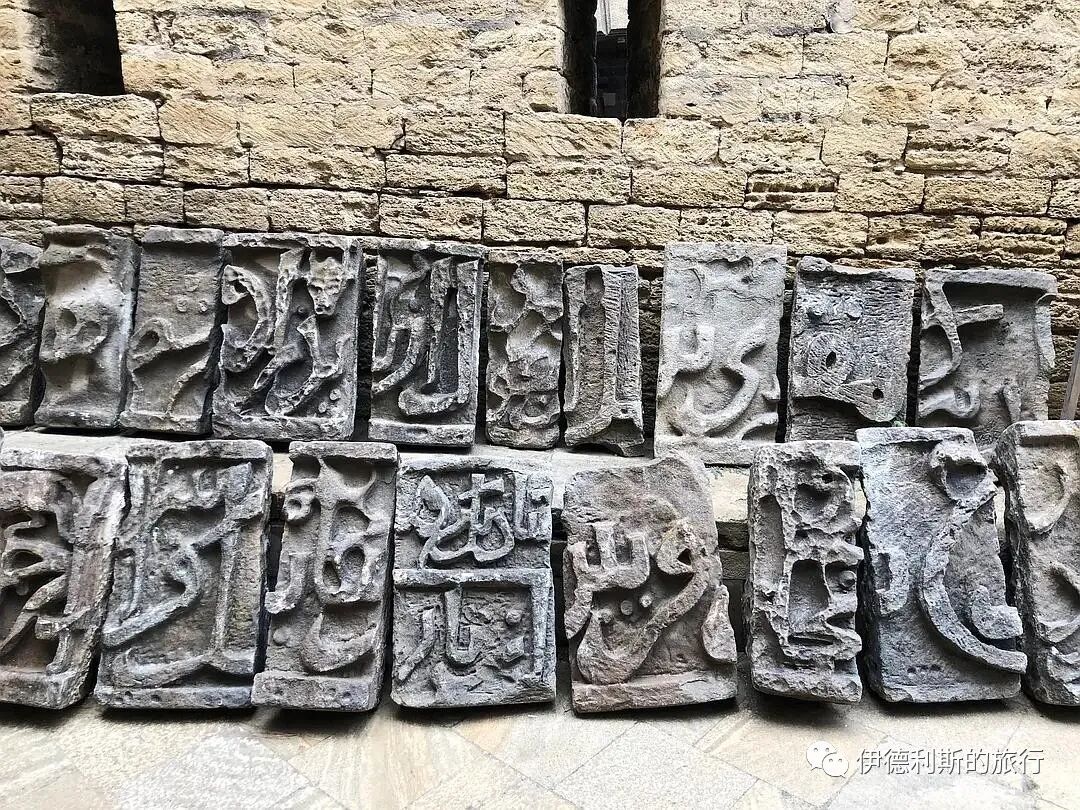
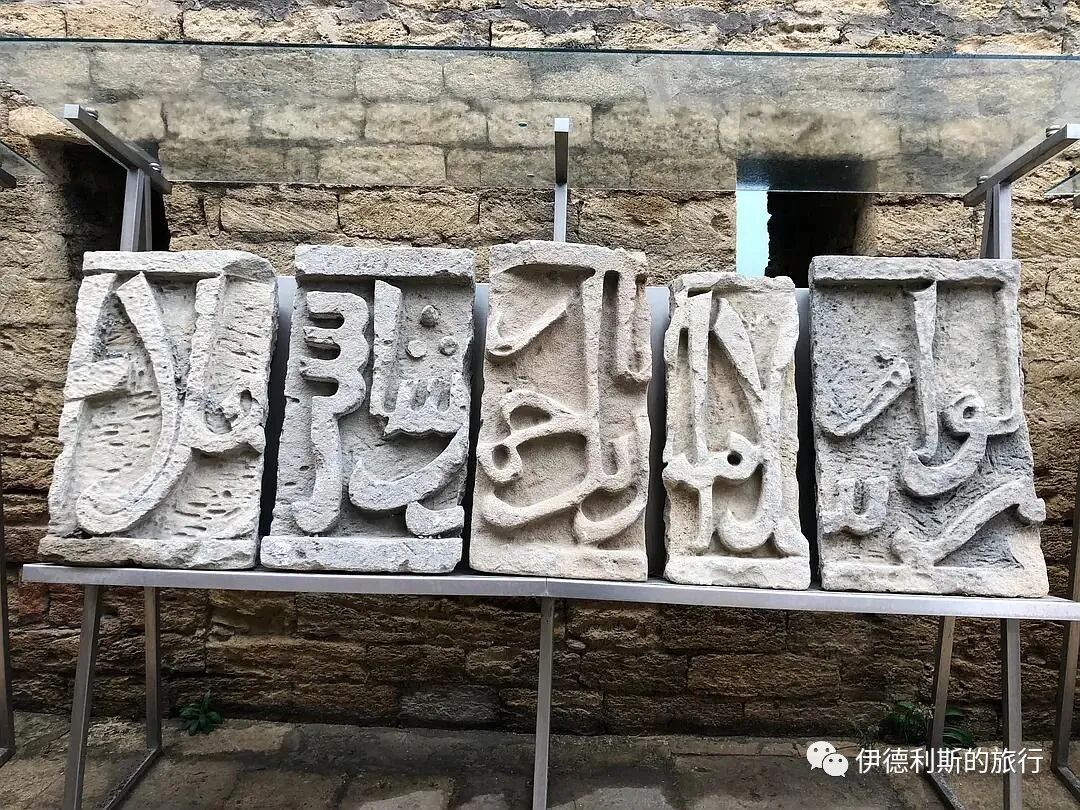
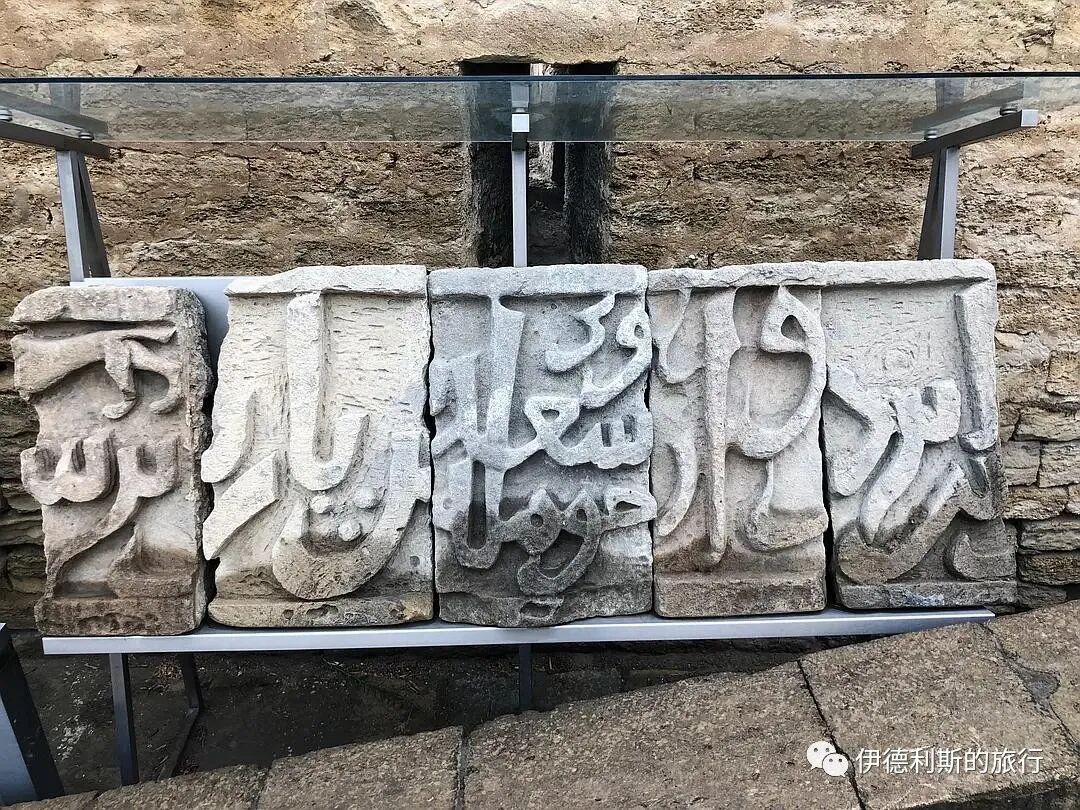
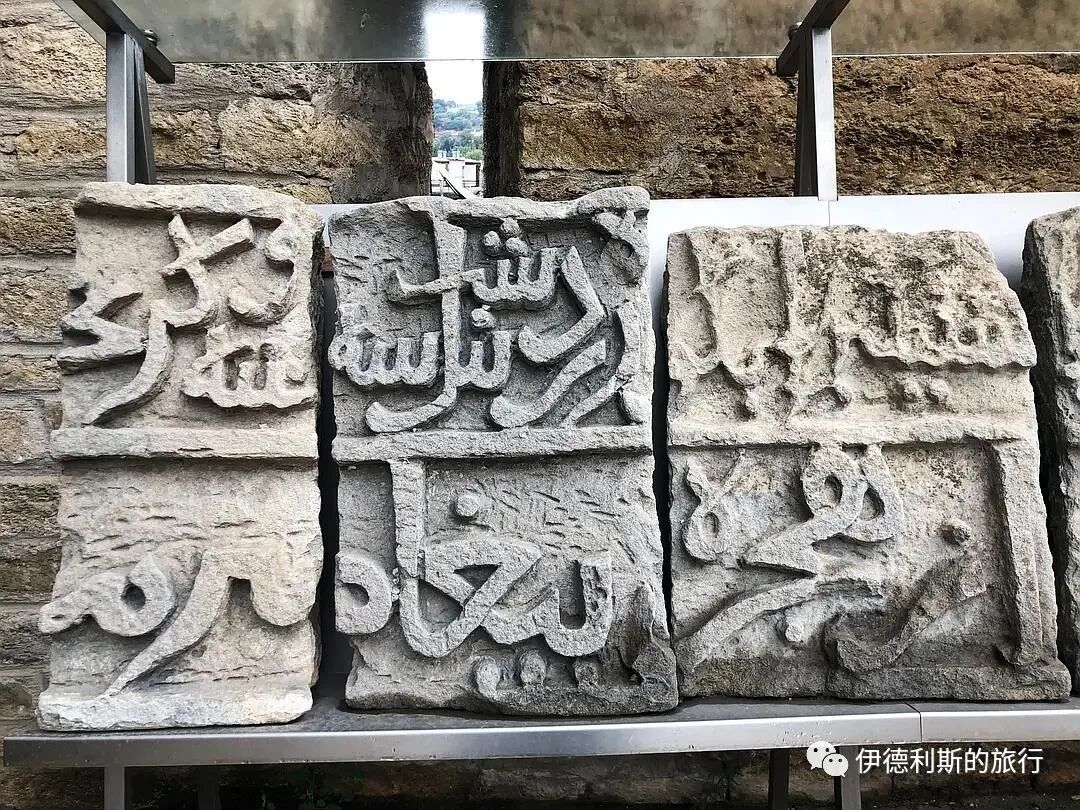
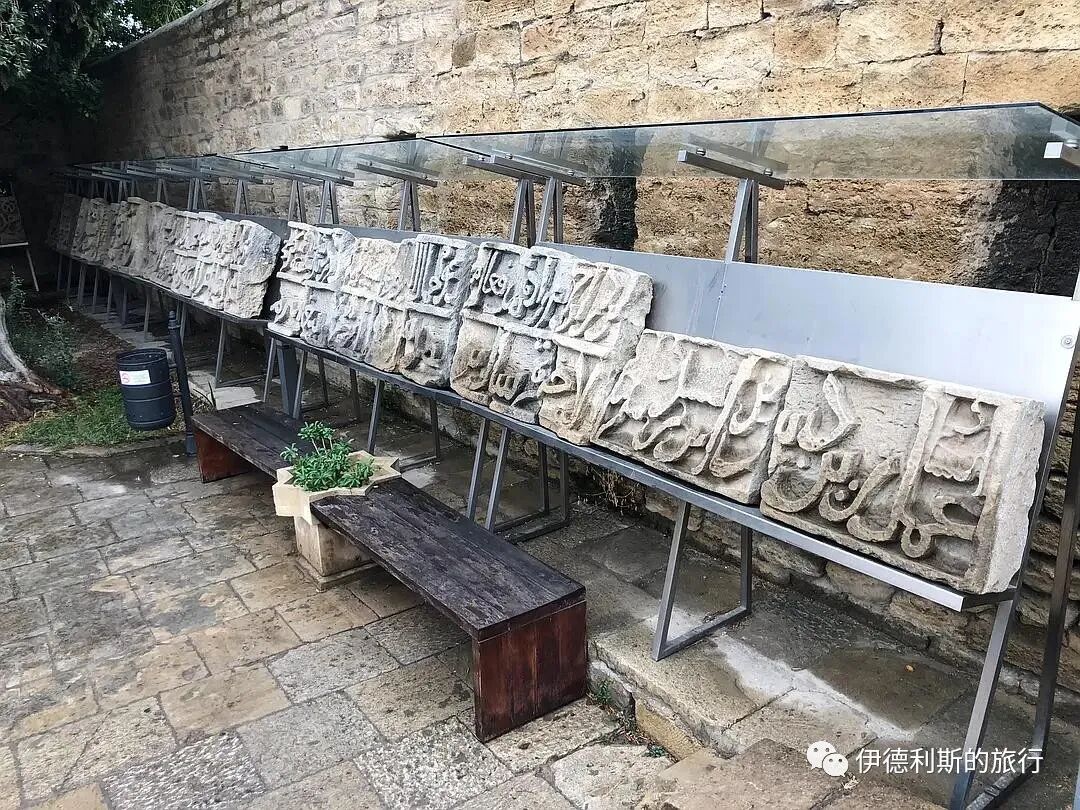
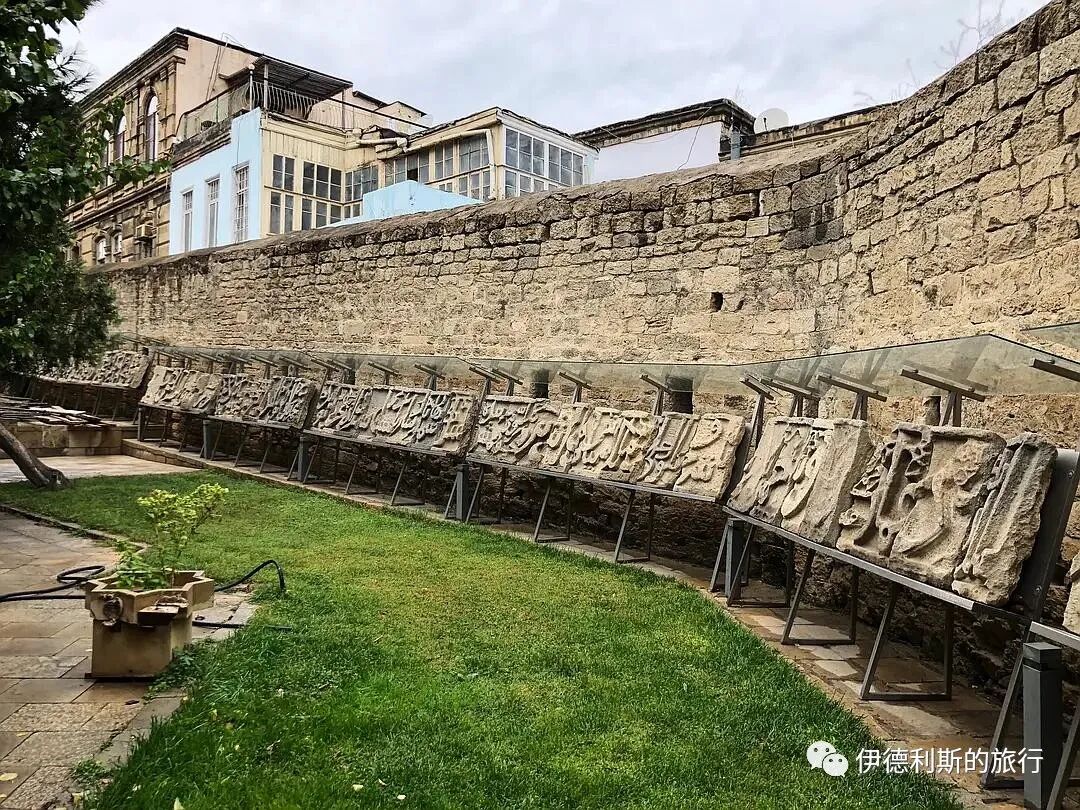
The National Museum of History of Azerbaijan displays Bayil stones with animal and human figures.
3. Divankhana
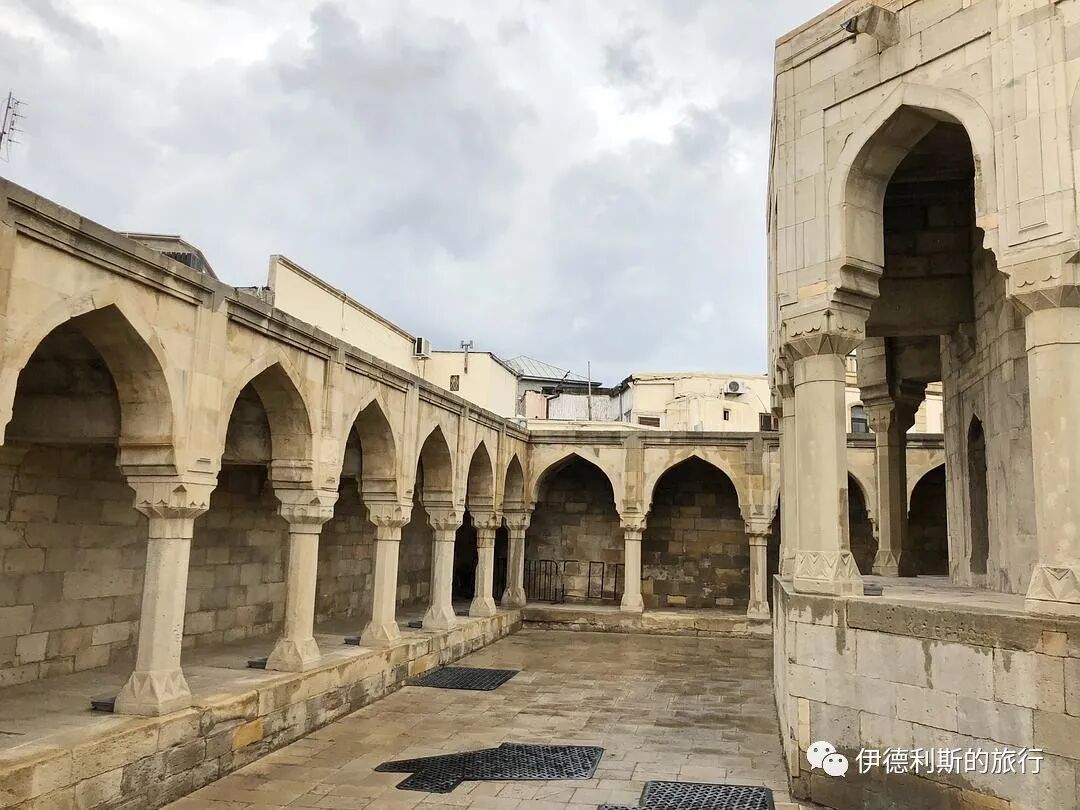
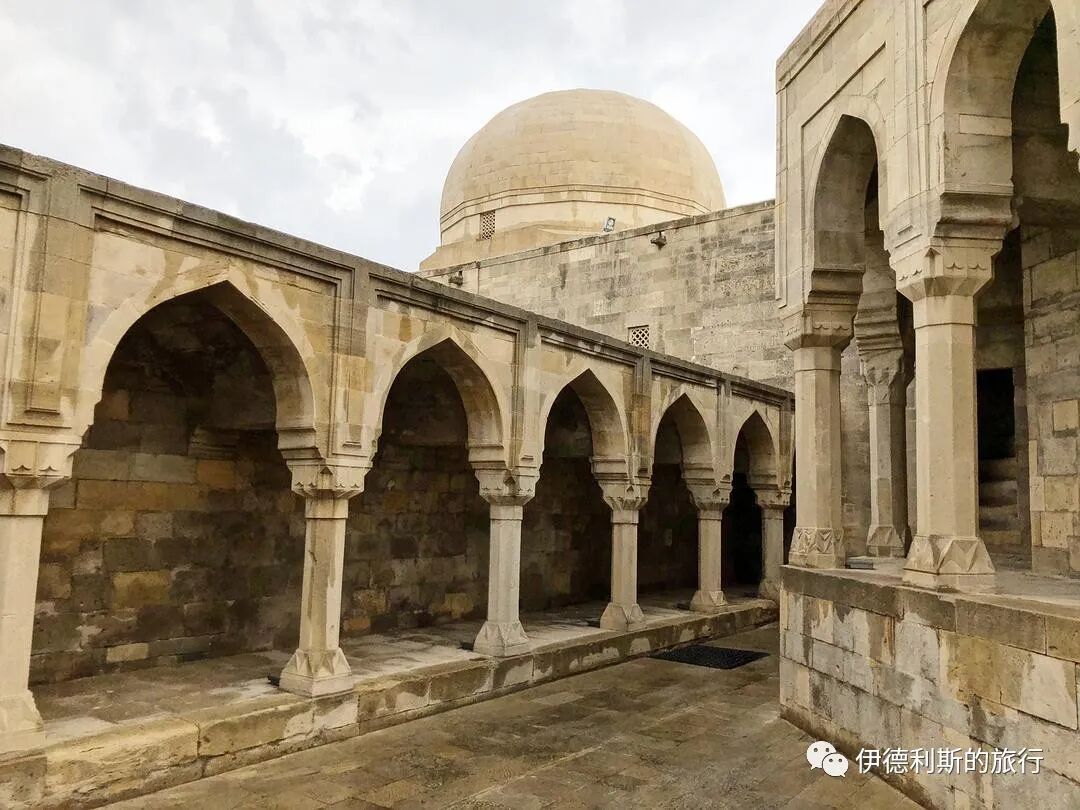
The Divankhana is in a separate courtyard on the north side of the palace. It has arcades on three sides and a pavilion-style building in the center. Shirvanshah King Farrukh Yasar (who reigned from 1465-1500) ordered the construction of the Divankhana. People say it was used as a court, a reception hall, or a mausoleum, but there is no definite proof.
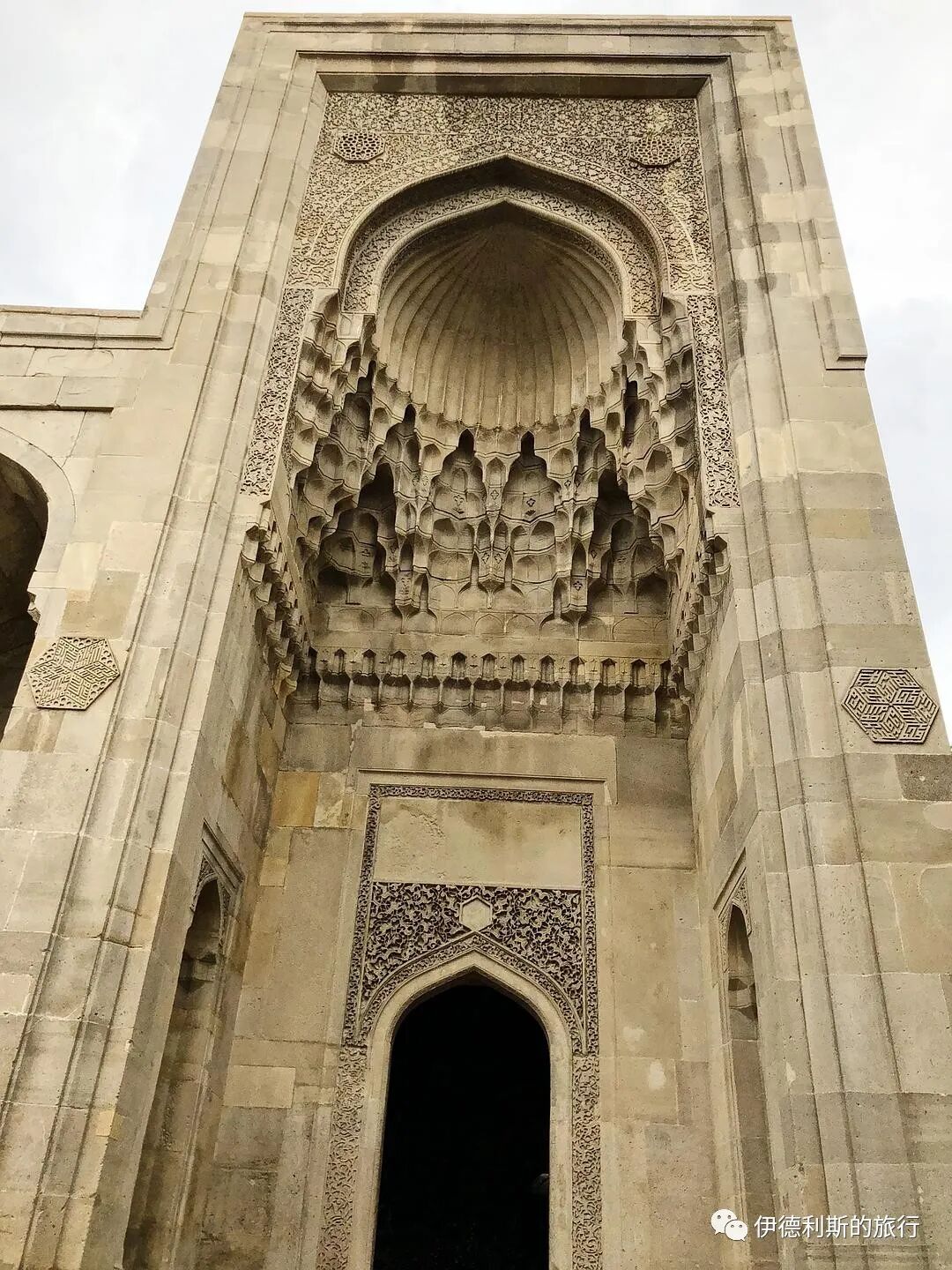
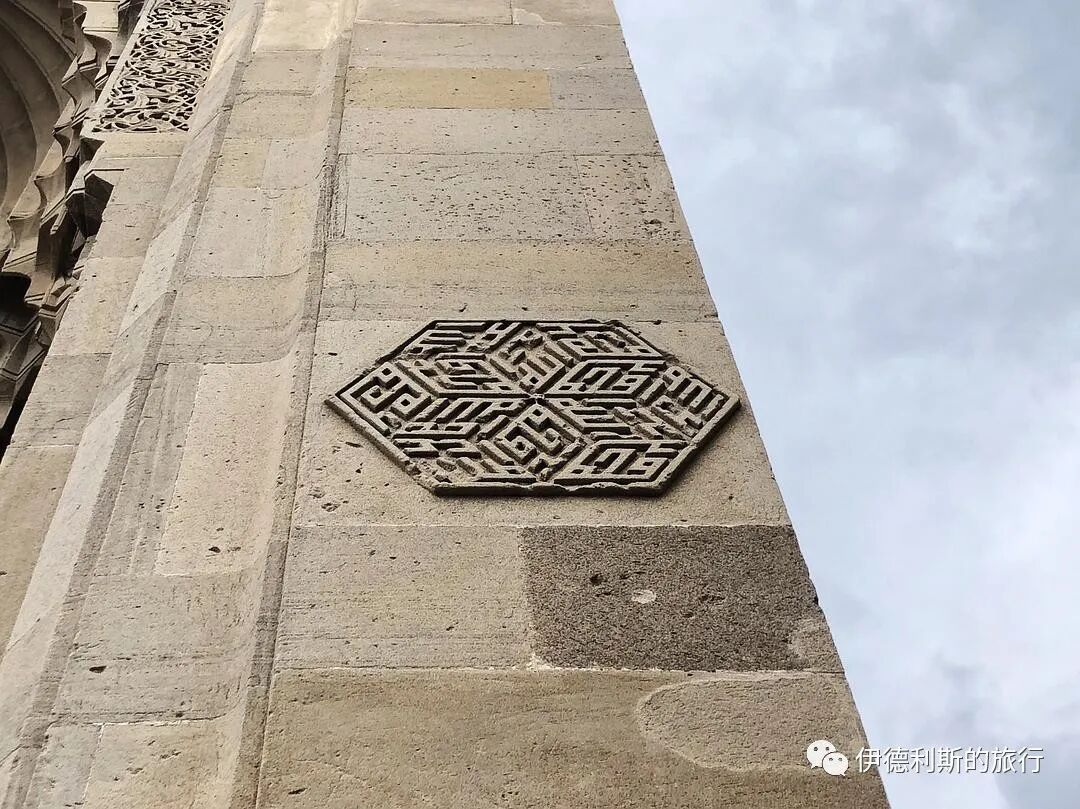
The Divankhana's gate is a classic example of Azerbaijan's Şirvan-Abşeron architectural school. The gate is decorated with fig and grape leaf carvings. On each side, a hexagonal geometric Arabic carving shows the Shahada (Islamic creed). Inside, the walls have carvings of Quranic verses.
4. Seyid Yahya Bakuvi Mausoleum
The Seyid Yahya Bakuvi Mausoleum (Türbəsi) was built between 1457 and 1458. Seyid Yahya Bakuvi (1403-1462), the person buried there, was a court scholar of the Shirvanshah Dynasty. He was also the second spiritual leader and a key promoter of the famous Sufi Khalwati order. He was a descendant of Musa al-Kadhim, the seventh Shia Imam.
Yahya practiced Sufism in Shamakhi, Azerbaijan, in his early years. He later came to the Shirvanshah court in Baku. In Baku, he had tens of thousands of followers. Fifteen of Yahya's works are now kept in Istanbul, Manisa, and Konya, Turkey. These works are valuable for Sufi philosophy and important for astronomy and mathematics.
Yahya's mausoleum has octagonal walls and a conical roof. This is the only example of its kind in the Şirvan-Abşeron architectural school; other mausoleums in this school have domes. The mausoleum has two levels: an upper level for visiting the shrine and a lower level for the burial chamber. The plaster on the walls and the mausoleum roof is the only surviving architectural coating in the Shirvanshahs' Palace.
A mosque called Keyqubad once stood in front of the mausoleum. Yahya served as a religious teacher there. The mosque was first built in the 14th century. However, Armenian forces burned it down in 1918. Only its foundations remain today.
5. Shirvanshahs' Palace Mausoleum
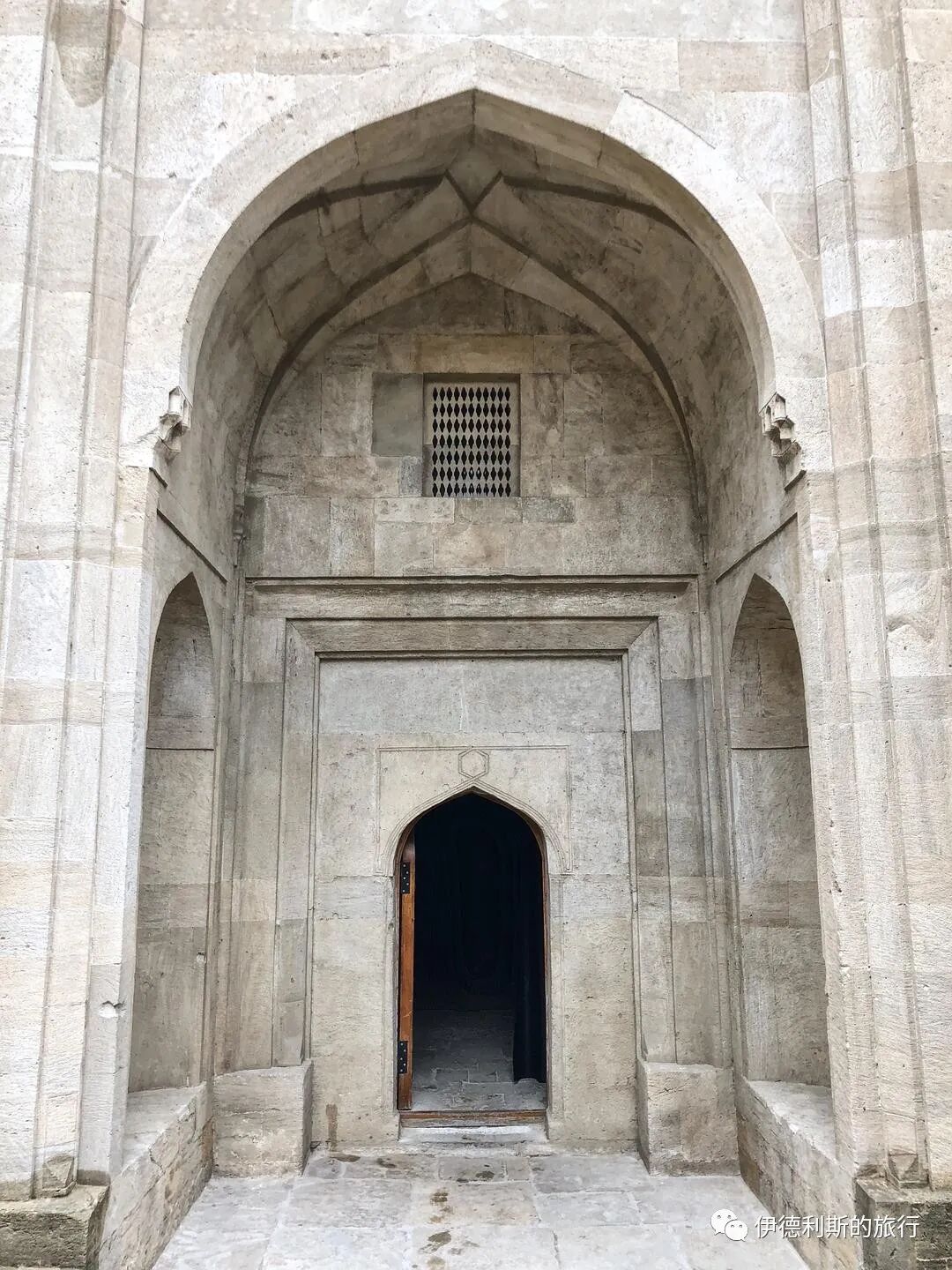
An inscription on the gate of the Shirvanshahs' Palace Mausoleum (Şirvanşahlar sarayı türbəsi) states that Shirvanshah King Khalilullah I (who reigned from 1418-1465) ordered its construction for his mother and 7-year-old son between 1435 and 1436. The mausoleum building is similar to the Divankhana, another palace structure. Its gate also has complex carvings. One hexagonal carving cleverly repeats the word
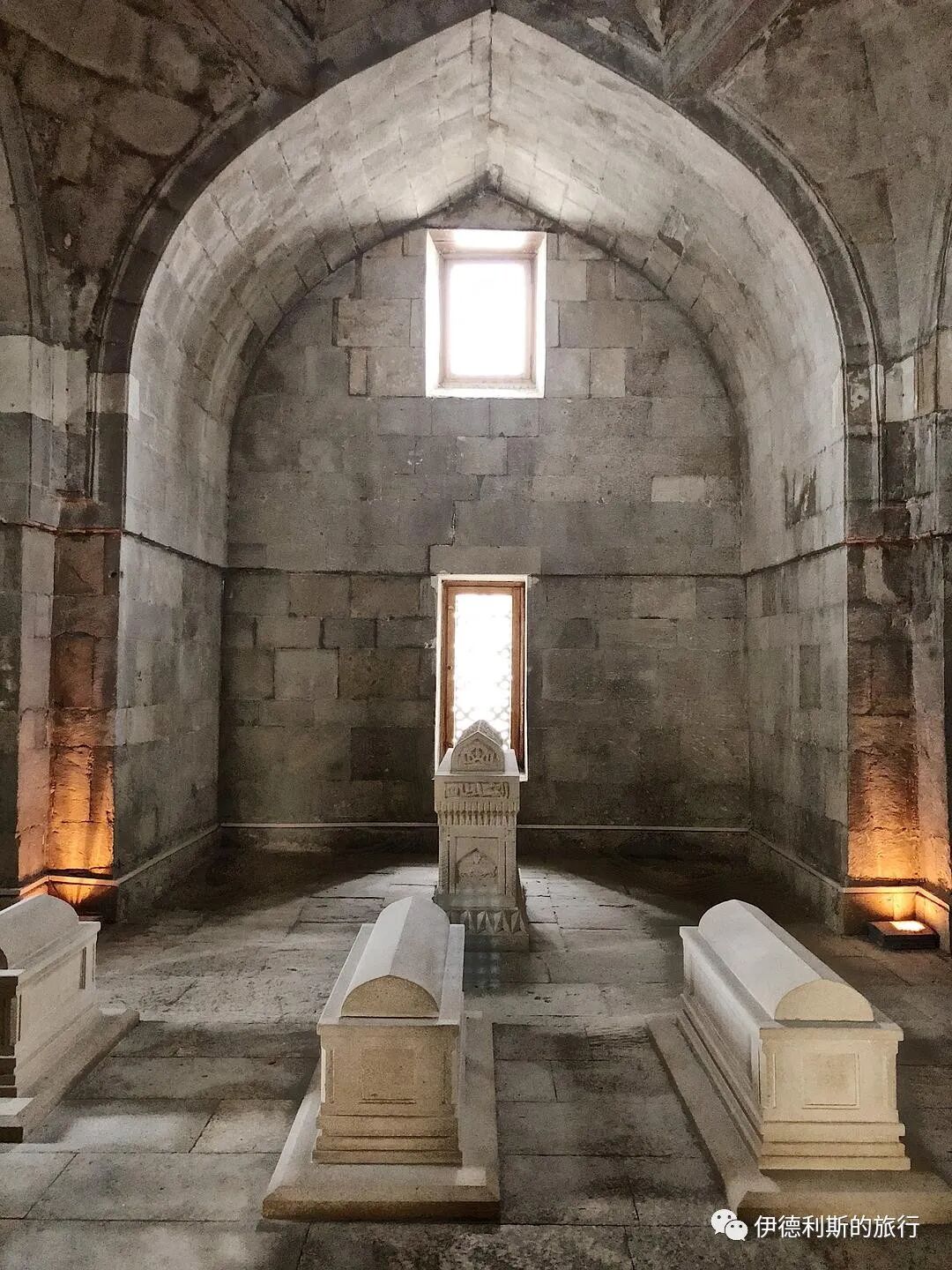
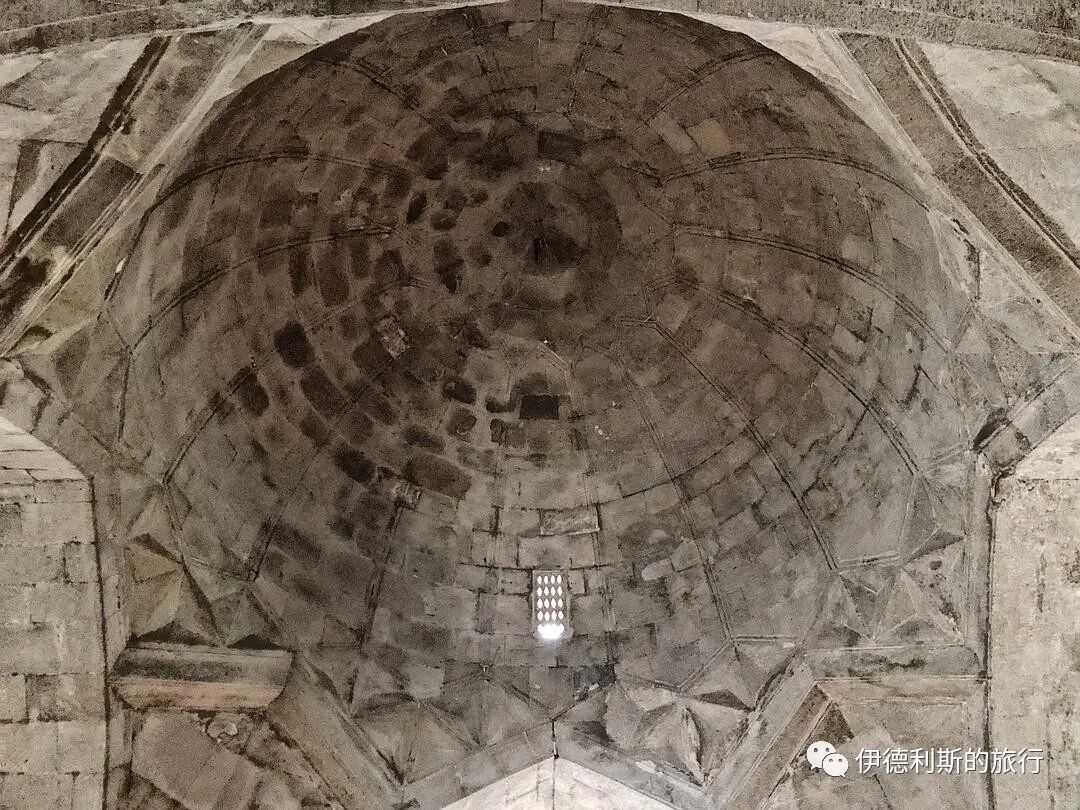
Archaeological excavations in 1947 uncovered burial chambers by removing the floor. Five of these contained skeletons, while two were empty. The famous Persian scholar Muhammad Khwandamir (1475-1537) wrote in his work
Badr Shirvani (1387-1450), a famous Persian poet of the Shirvanshah Dynasty, recorded the names of the tomb occupants in his writings:
The first was King Khalilullah I's 6-7-year-old son, who died in 1432.
The second was King Khalilullah I's mother, Bika, who died between 1435 and 1436.
The third was Khanika khanim, the wife of Shahrukh of Shirvan (who reigned from 1535-1538), the last Shirvanshah king.
The fourth was King Khalilullah I's two-year-old son, Sheikh Salah, who died in 1445. Porcelain and a large candelabra were found in his tomb.
The fifth was 19-year-old Ibrahim II, who died in 1432. The tomb contained silk remnants, blue beads, and a gold needle with turquoise and six sapphires.
On the other side of the entrance is the two-meter-high tomb of Khalilullah I himself. A comb and a gold earring were found inside.
6. Palace Mosque
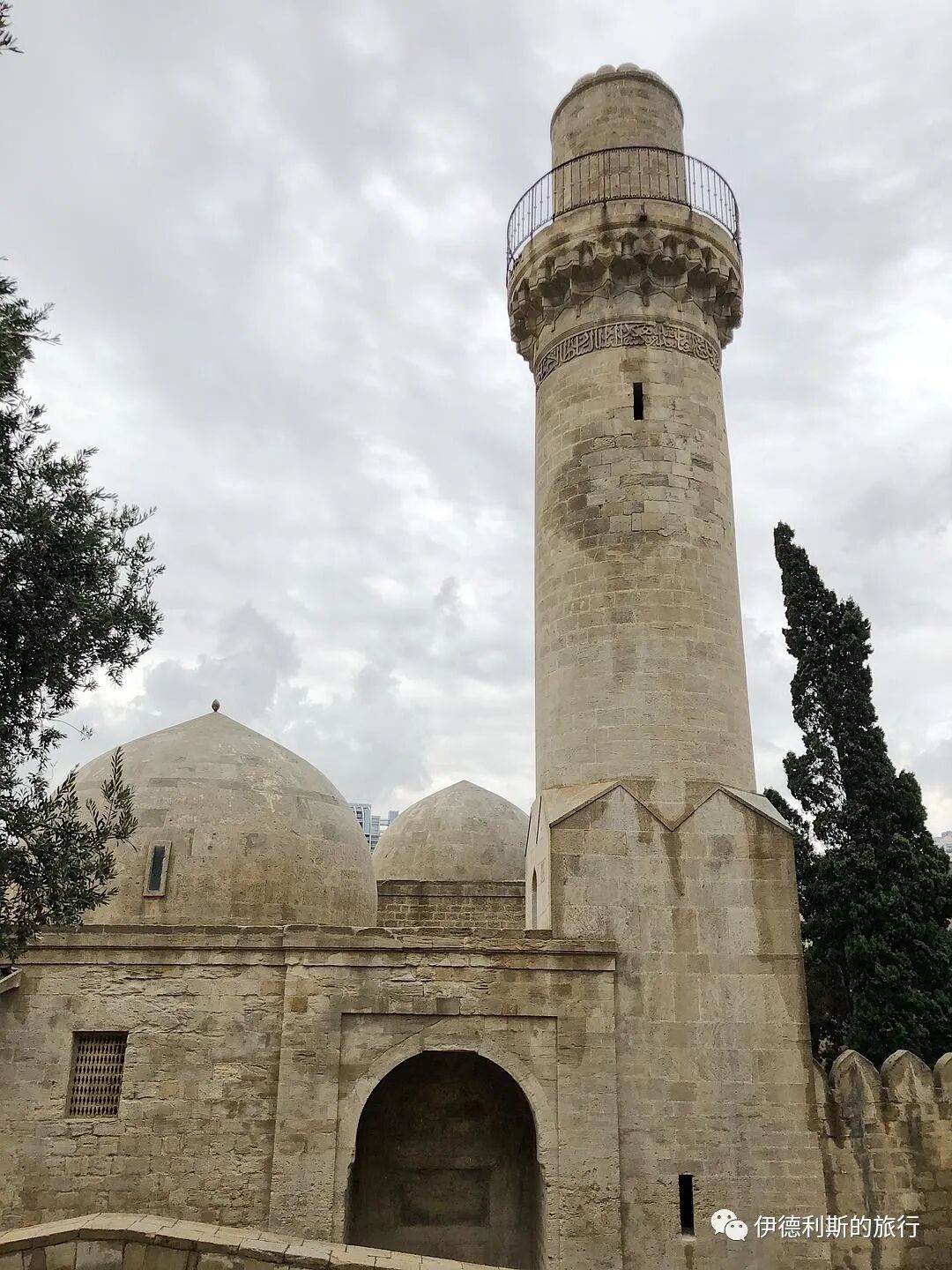
Shirvanshah King Khalilullah I ordered the construction of the Palace Mosque between 1441 and 1442. In 1723, Tsar Peter I's army shelled Baku from the Caspian Sea, damaging the mosque's northeast facade. In 1918, artillery shelled the mosque's minaret.
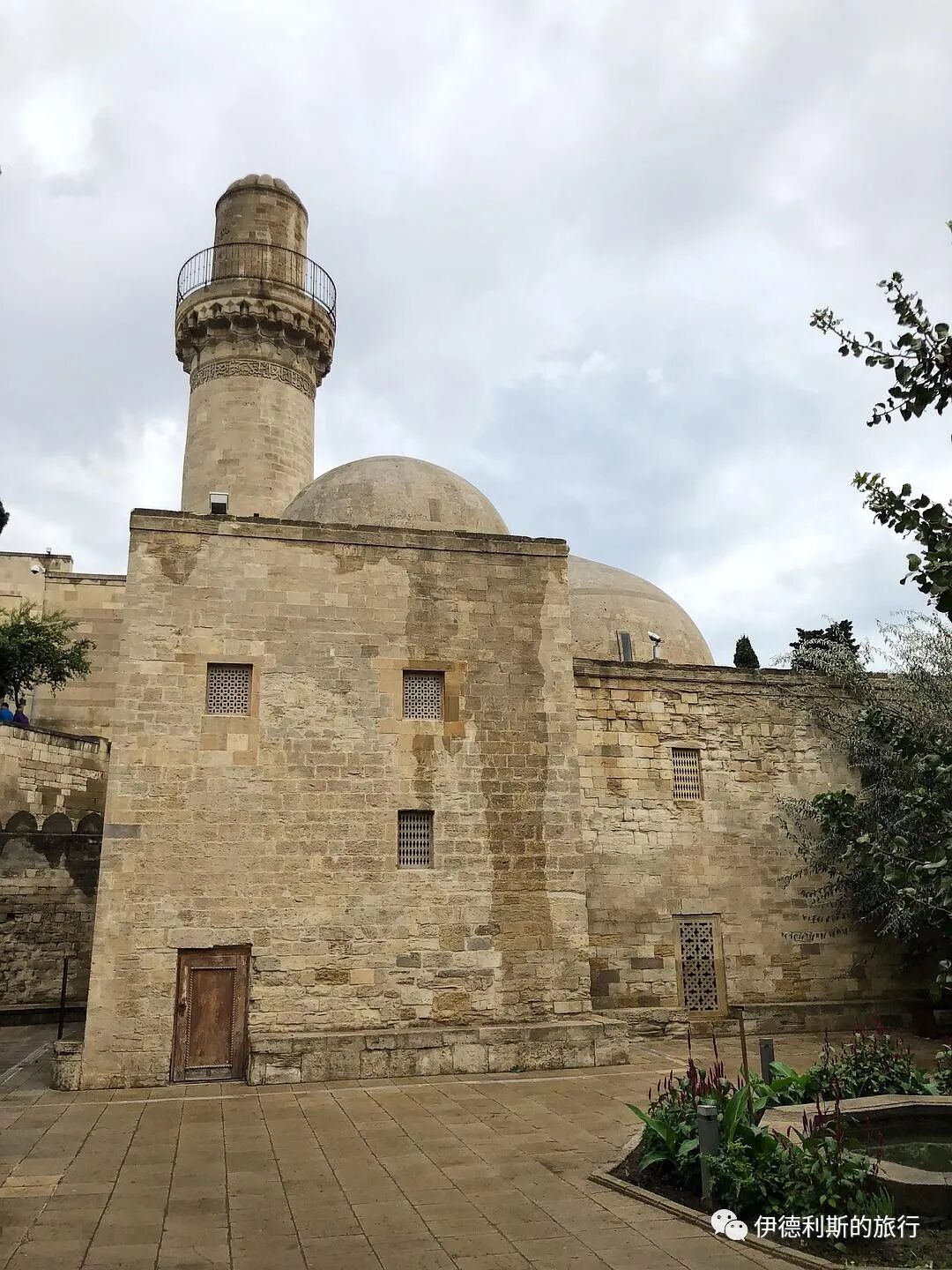
The mosque's main prayer hall is small, only 70 square meters. This means it could not hold large congregational prayers. It was generally used only by people from the palace or nearby. The mosque has two main gates. One faces the palace mausoleum directly. The other is a side gate, used only by the Shirvanshah king and his family.
The cylindrical minaret in the mosque's northeast corner has a balcony supported by a stalactite cornice. You can reach it by a spiral stone staircase inside the tower.
7. Palace Bathhouse
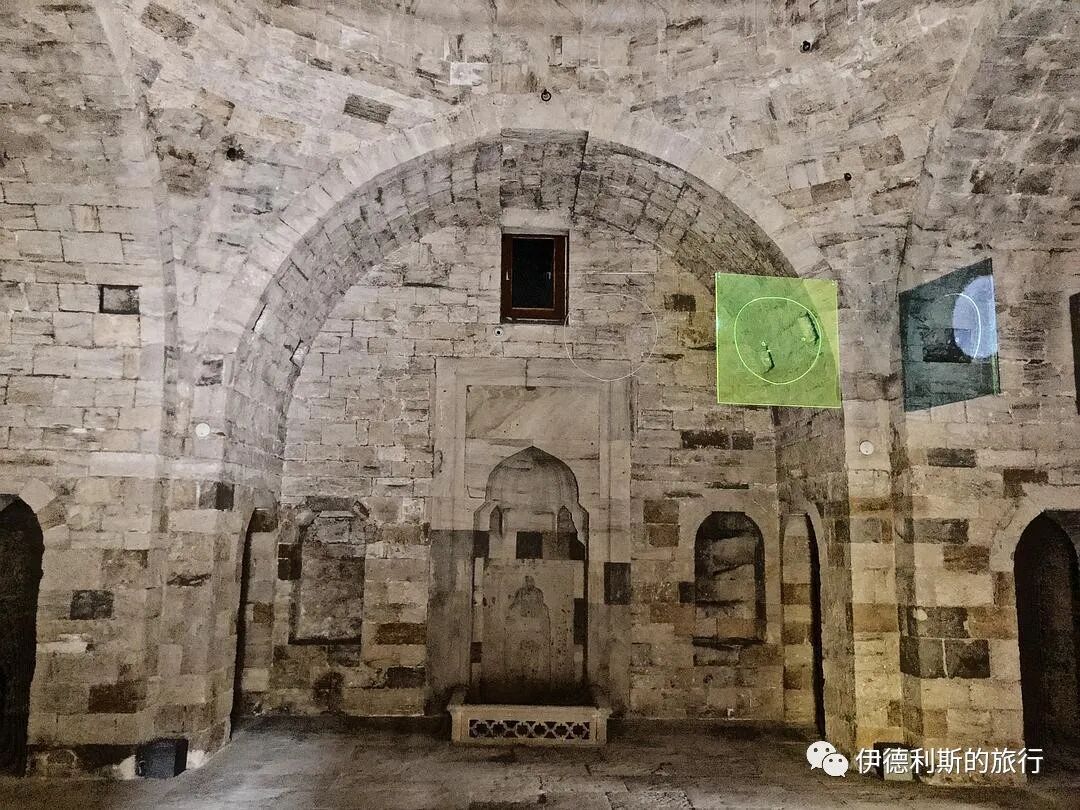
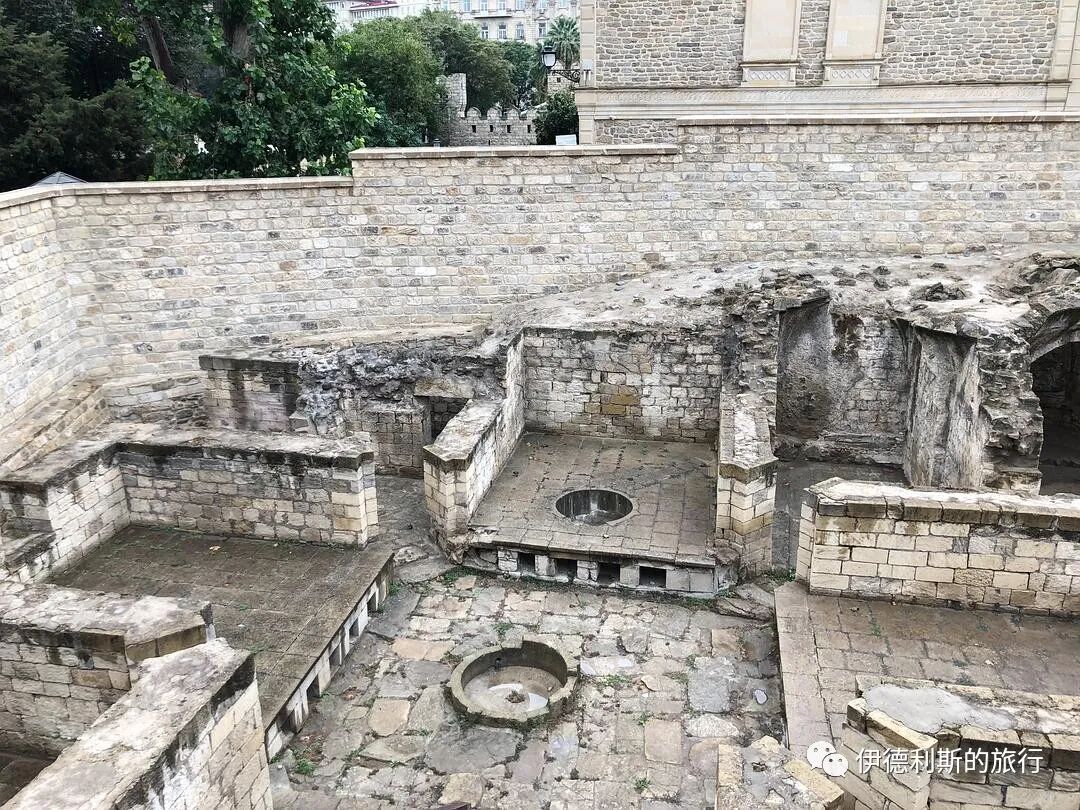
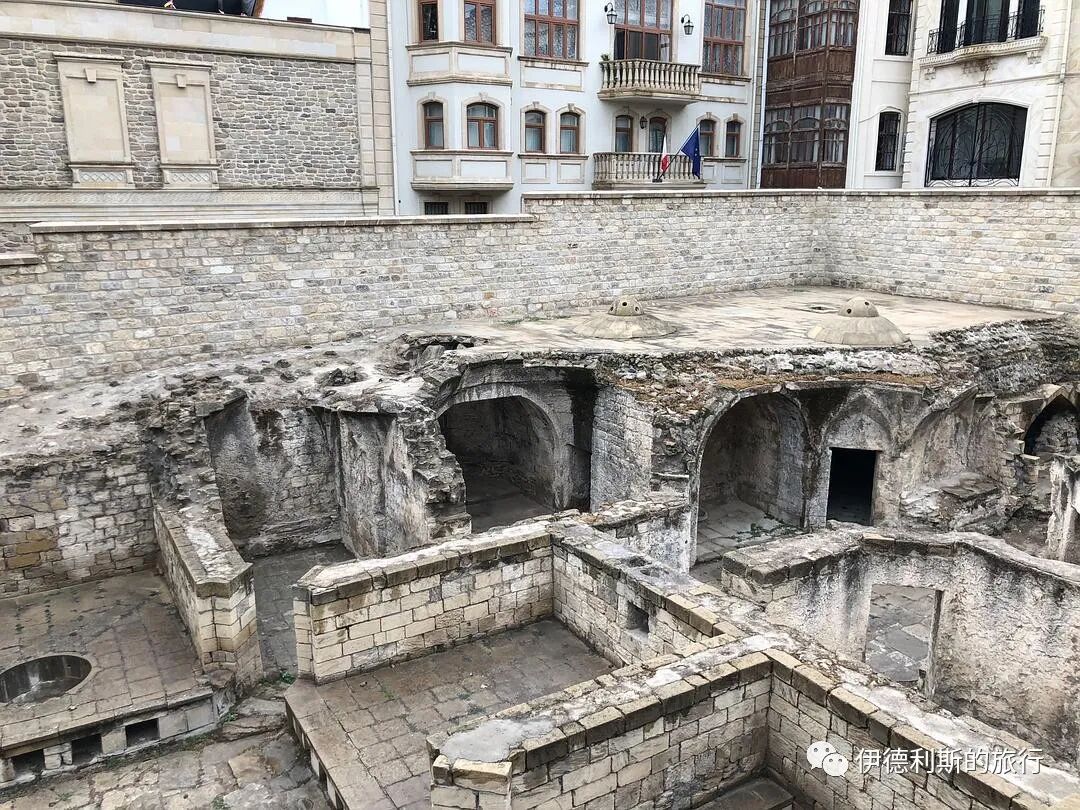
The palace bathhouse is underground, at the lowest part of the palace. This kept the temperature stable. Over time, it was completely forgotten until it was accidentally discovered in 1939. It was partly cleaned in 1953, and some of the pools were later restored.
Water entering the baths flowed from a reservoir near the walls to the boiler room. Then, it went through special pipes to each room. In one corner of the bathhouse is a large domed room and two smaller rooms. These tiled rooms were likely reserved for the king.
2. Maiden Tower
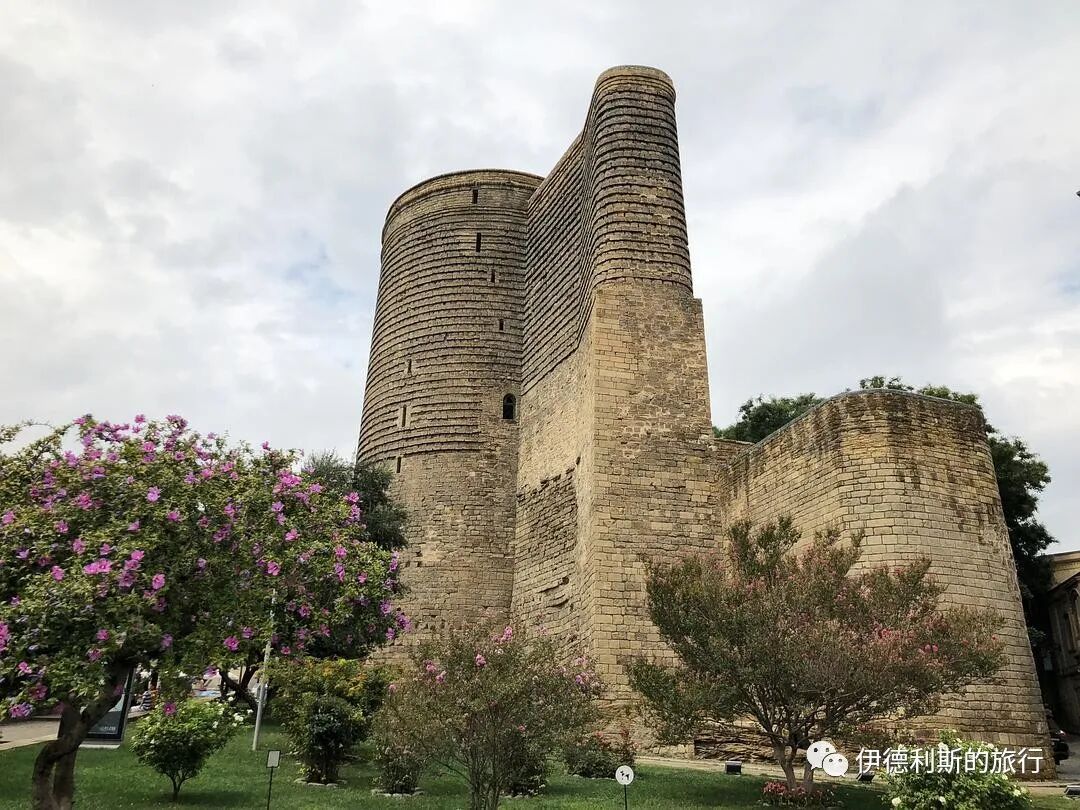
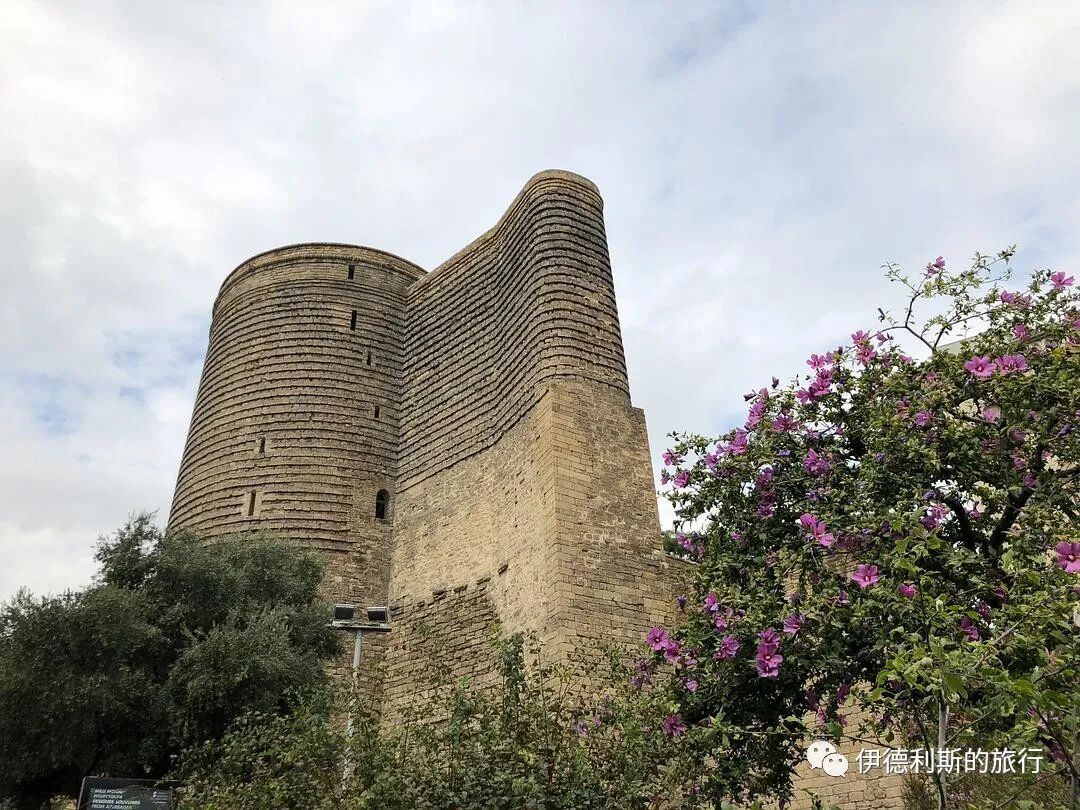
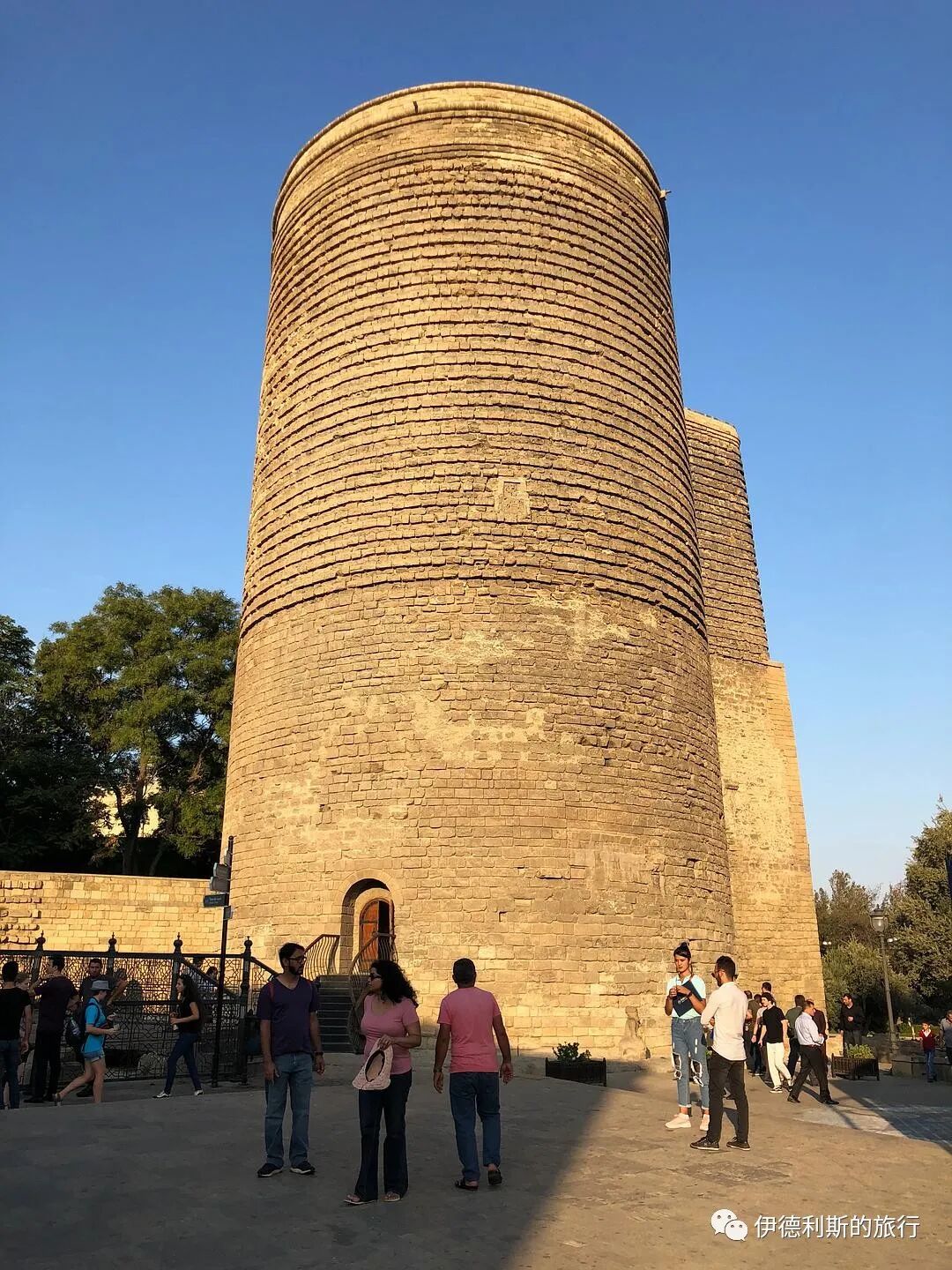
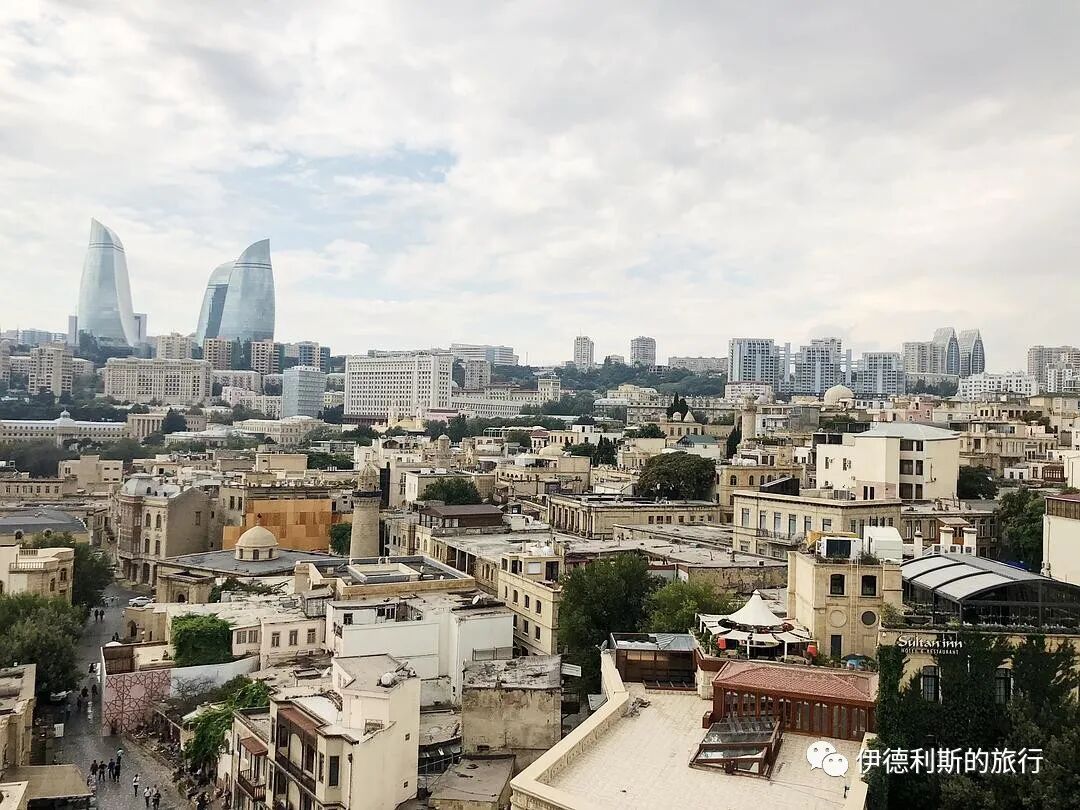
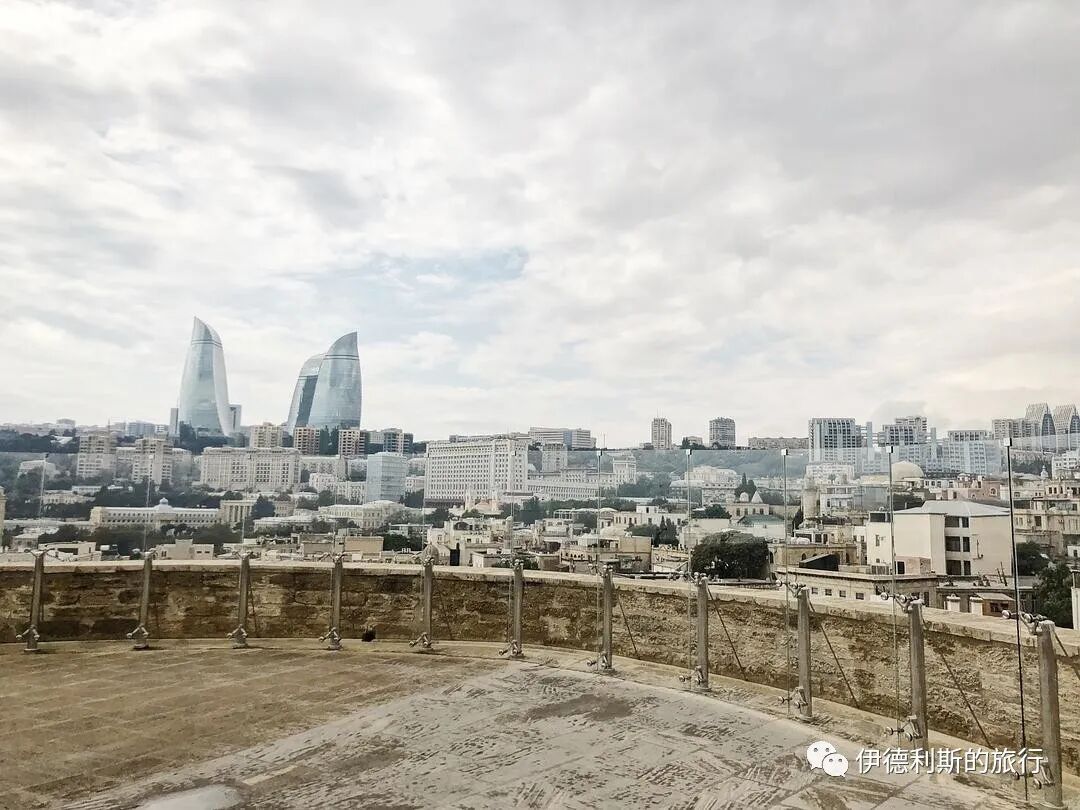
The Maiden Tower (Qız qalası) is one of Baku Old City's landmarks. Like the Shirvanshahs' Palace, it is on the UNESCO World Heritage list.
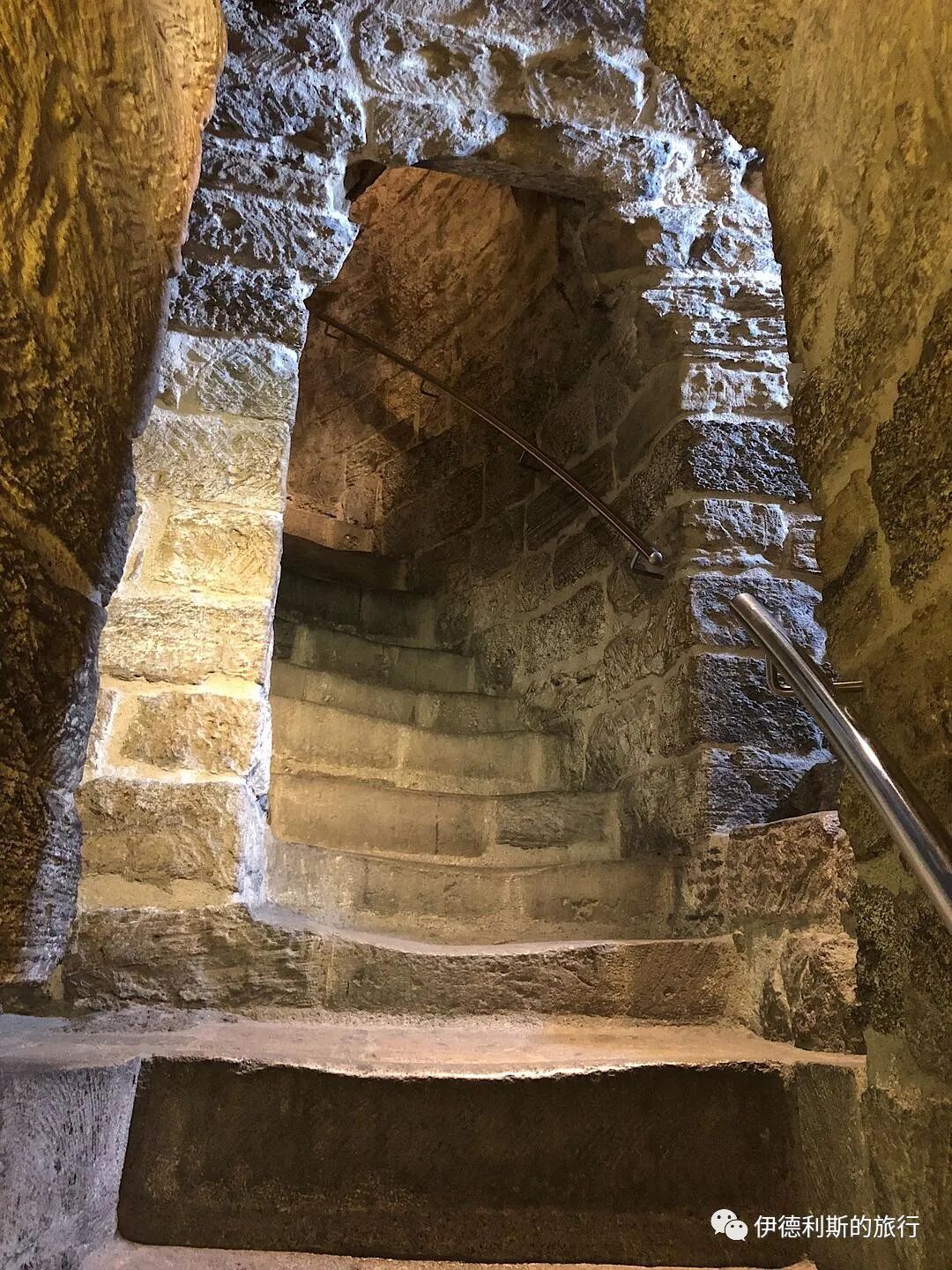
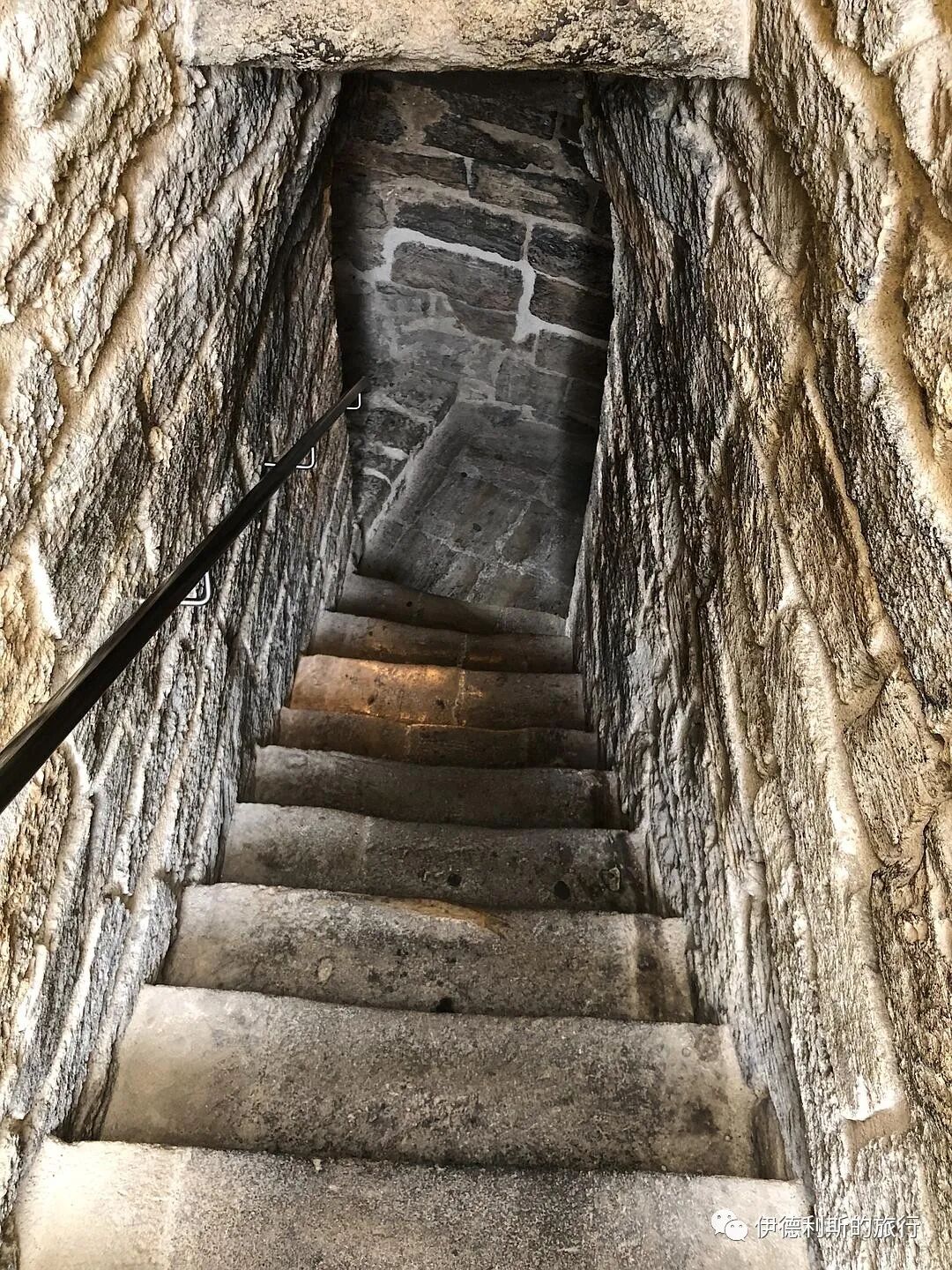
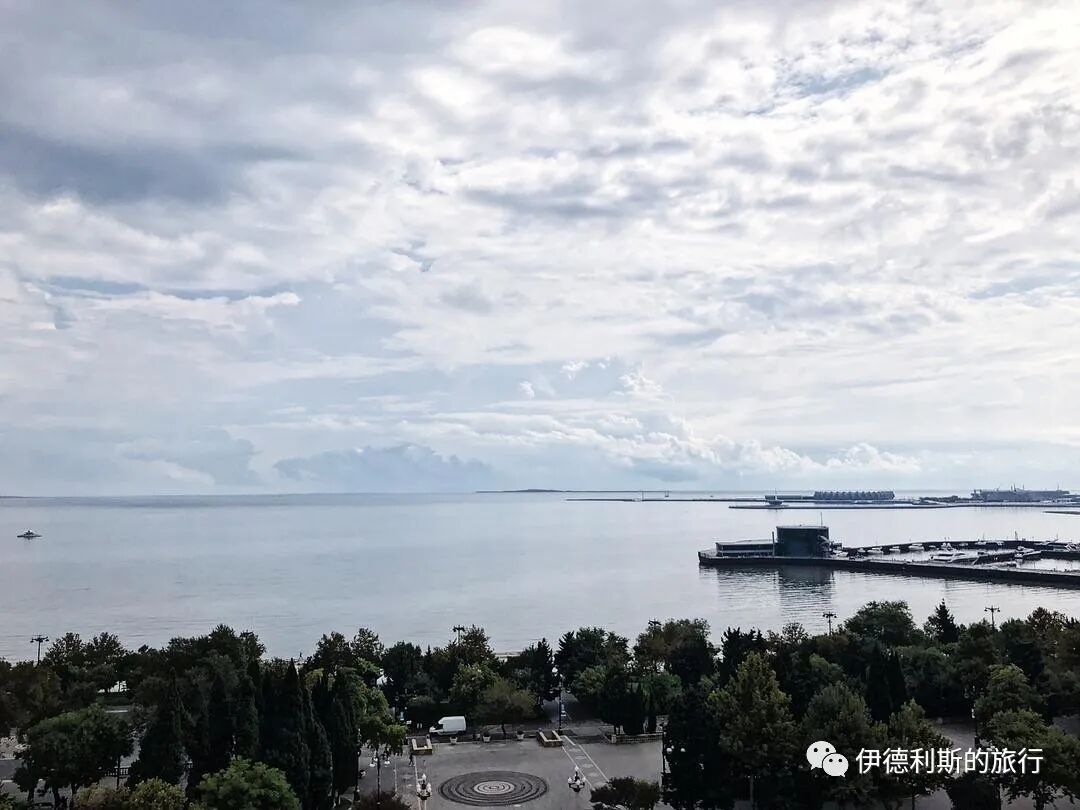
There is no final conclusion about the Maiden Tower's construction. Most people believe the lower part was built between the 4th and 6th centuries, and the upper part in the 12th century. People guess that the Maiden Tower was first a Zoroastrian mosque during the Sasanian period. It was rebuilt in the 12th century. One view is that the rebuilt Maiden Tower was used for astronomical observations. Another view is that, based on its design, the Maiden Tower should be a defensive tower. Its walls are up to 5 meters thick, its internal staircase is easy to defend, and a well goes straight to the third floor. Russia reinforced the tower during its rule in 1806. Archaeological excavations in 1962-1963 showed that the Maiden Tower was built on a huge rock sloping towards the Caspian Sea. They also found a 14-meter-long wooden beam at its base.
Up to 20 legends surround the Maiden Tower. The most famous tells of a maiden who saved the people of Baku from slave owners. This epic shows Azerbaijan's Zoroastrian beliefs and cultural roots. In 1940, composer Afrasiyab Badalbeyli created Azerbaijan's first ballet,
3. Baku City Walls
Shirvanshah King Manuchohr III (who reigned from 1120-1160) ordered the construction of the Baku City Walls (Bakı qalası) between 1138 and 1139. Shirvanshah King Akhsitan I (who reigned from 1160-1197) later added outer walls. In 1865, Russia ordered the demolition of the city walls along the Caspian Sea. Between 1883 and 1888, all outer walls were also torn down. In 1910, the mayor at the time banned the demolition of ancient castle remains. He also partly restored the Baku City Walls.
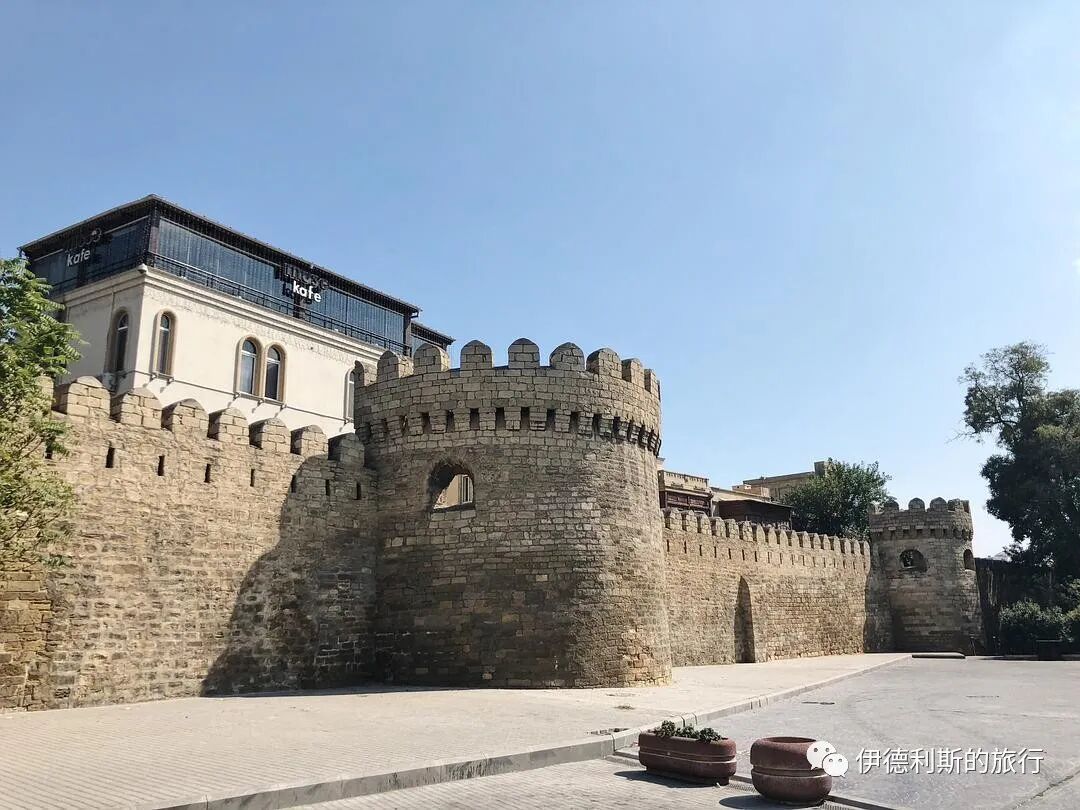
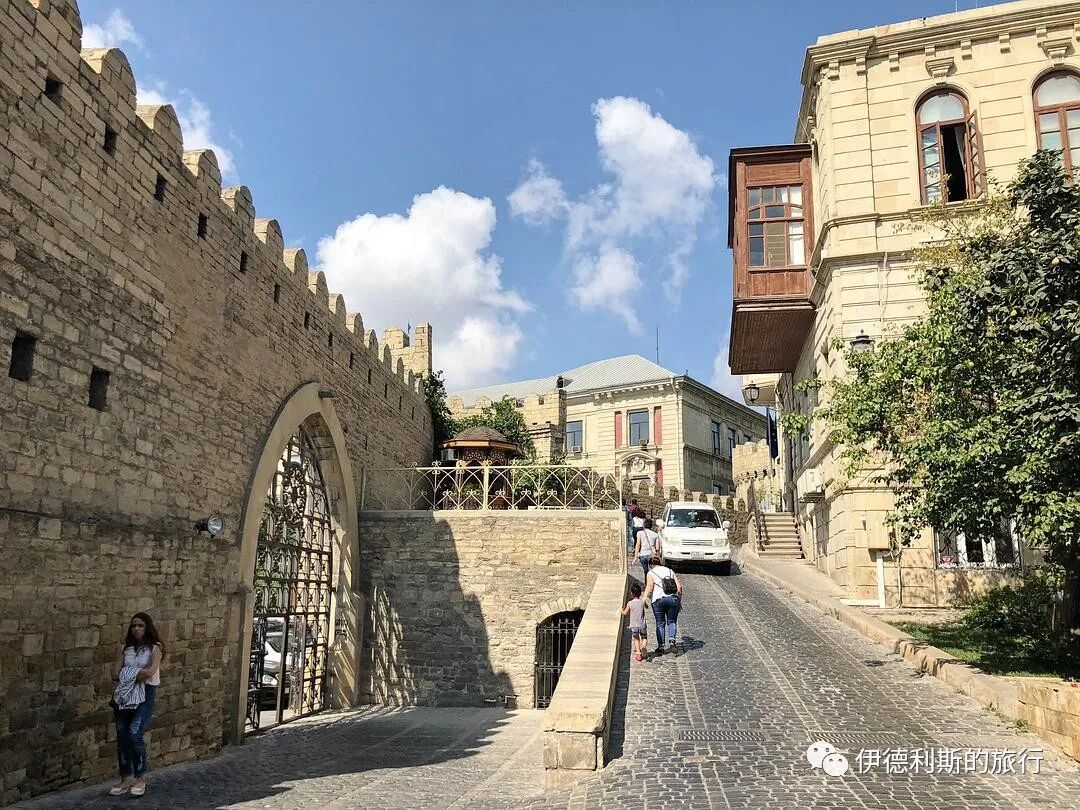
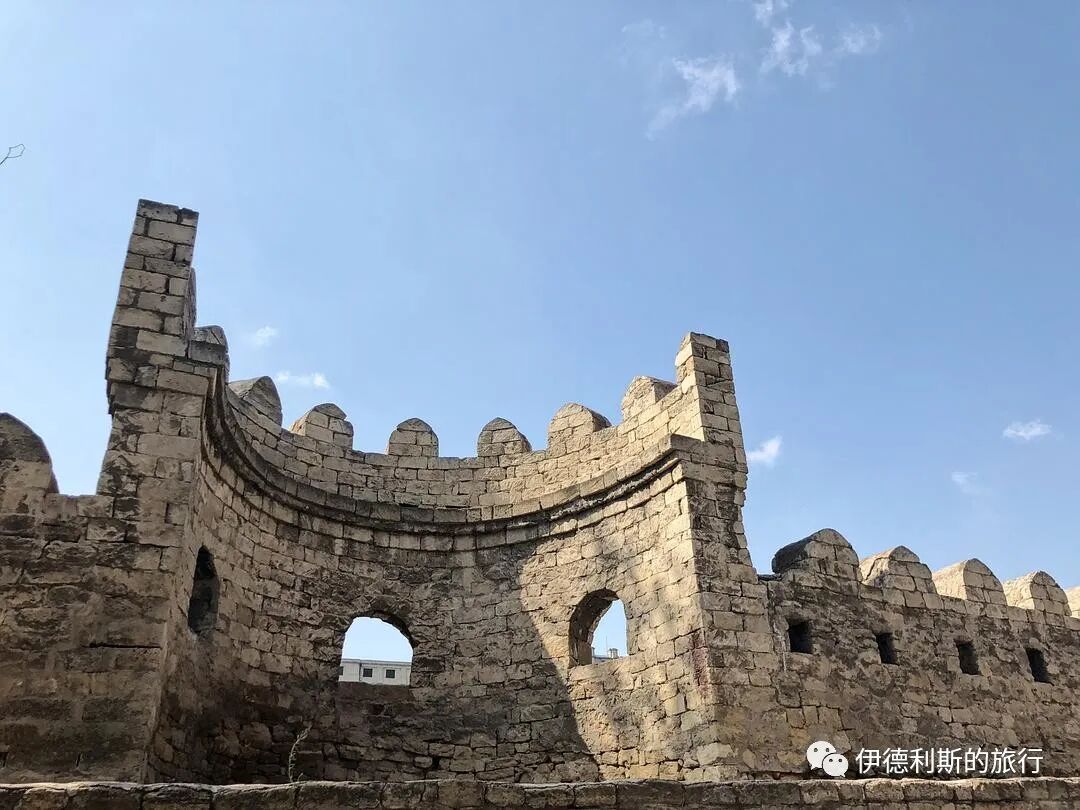
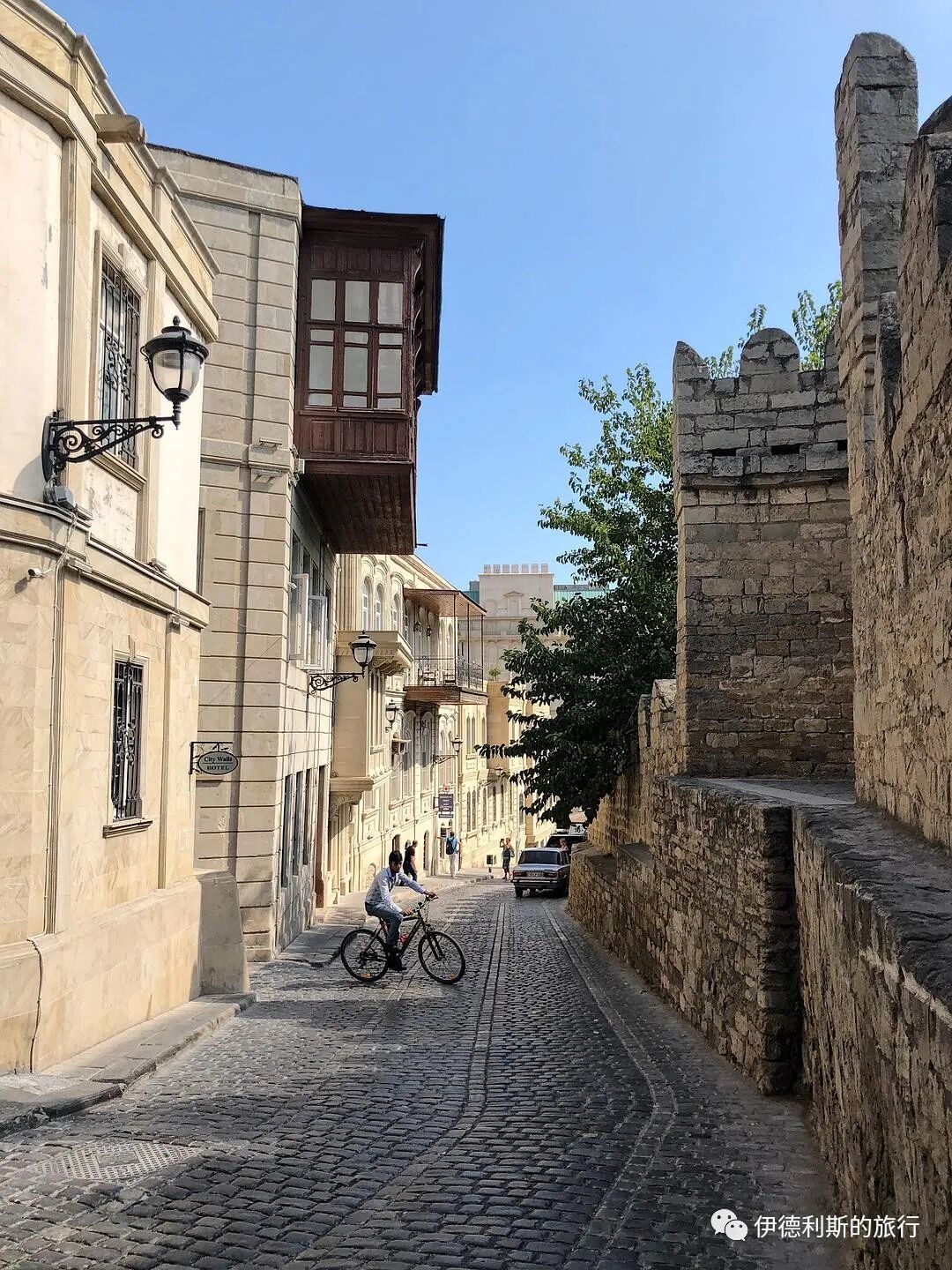
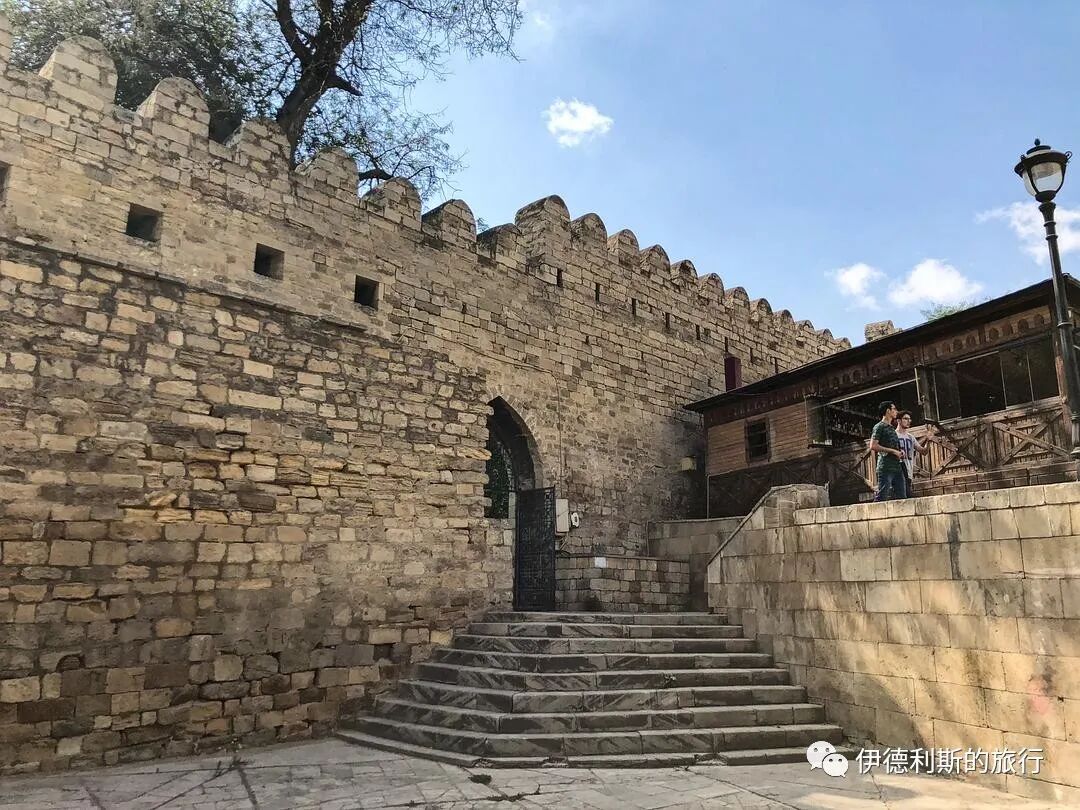
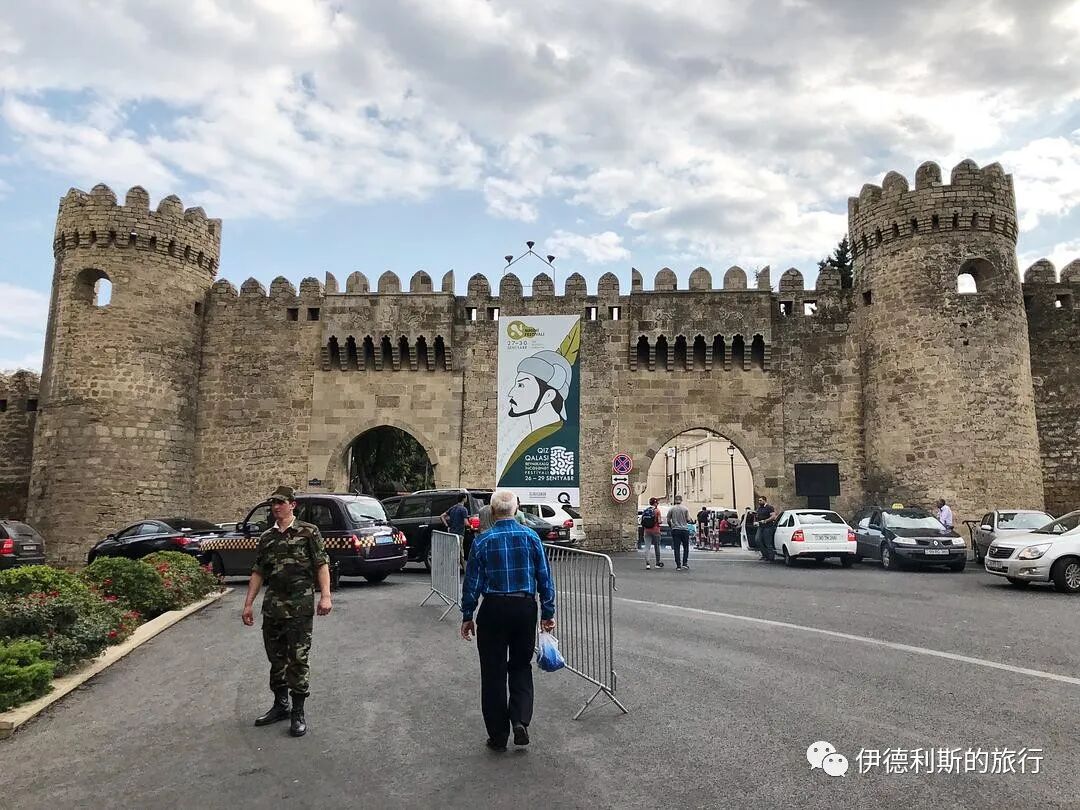
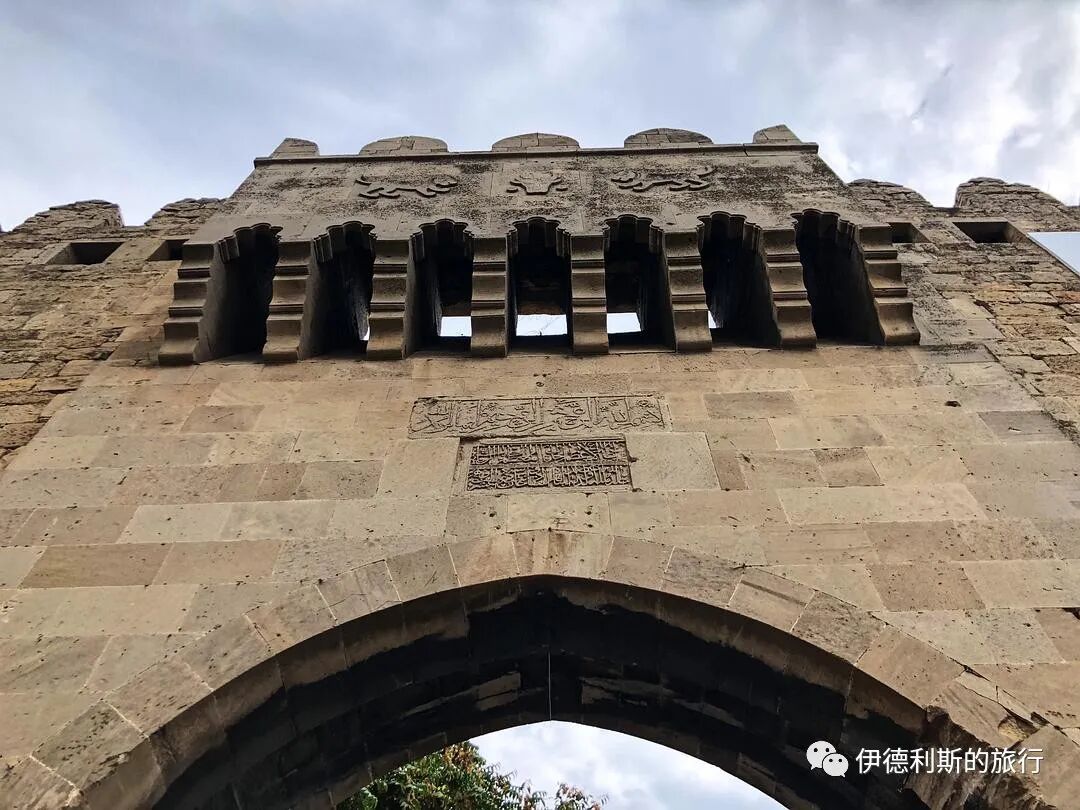
The Double Gates (Qoşa Qala Qapısıdır) are the main city gates of Baku Old City. They are 8-10 meters high and 3-3.5 meters wide. The gates have carvings of a bull's head and a lion, symbols of the city. Historians believe the bull represents a leader, and the lion is a protector.
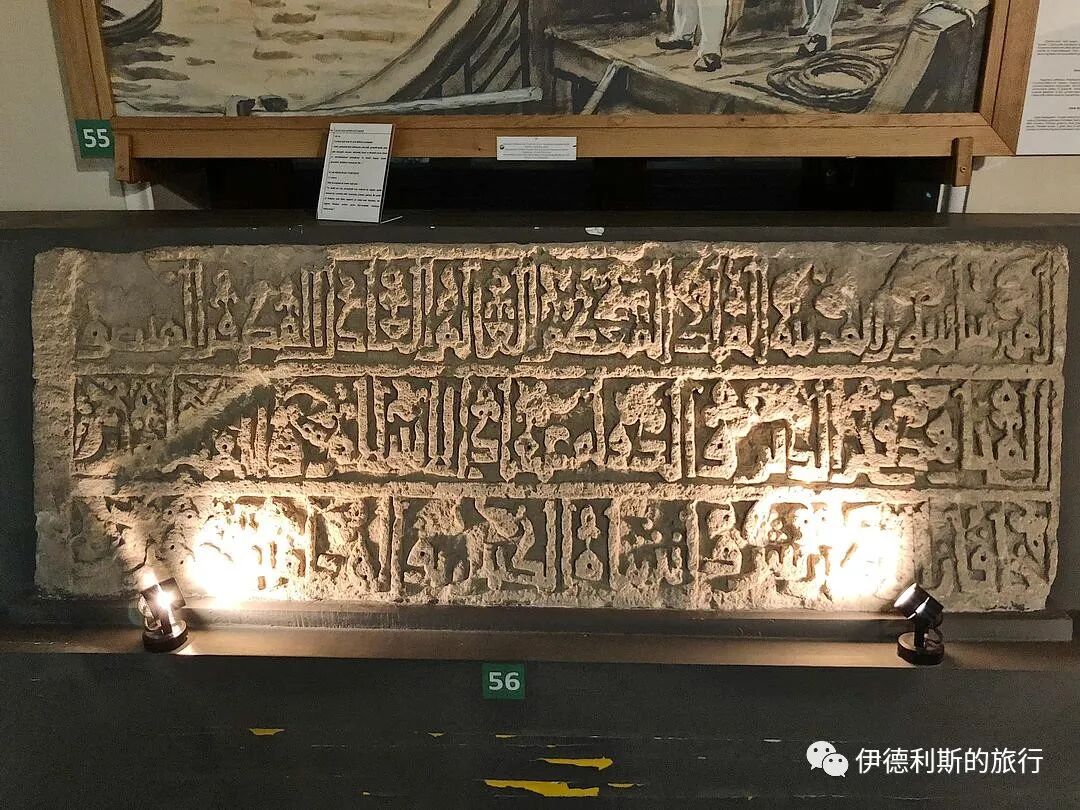
In 1954, one of the towers on Baku's north wall collapsed. Inside, a 12th-century Arabic inscription written in Kufic script was found. It is now kept in the Azerbaijan History Museum. The inscription states that Shirvanshah King Manuchohr III ordered the construction of the Baku City Walls.
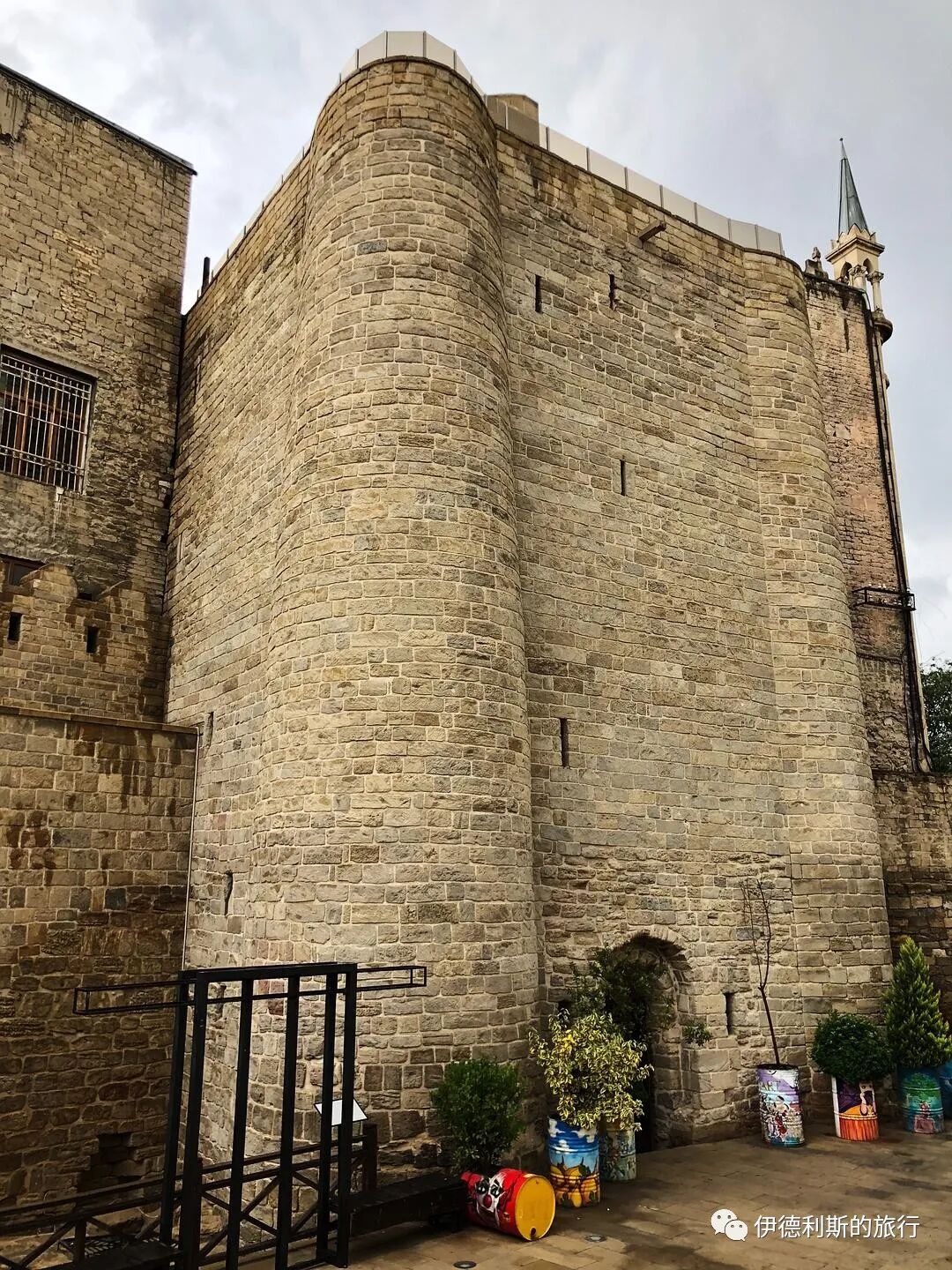
North of the Baku City Walls is a rectangular tower, the Donjon, which served as an armory. The tower is 16 meters high and 2 meters thick. An underground passage leads directly to the Double Gates.
4. Mosques
1. Muhammad Mosque: 1079
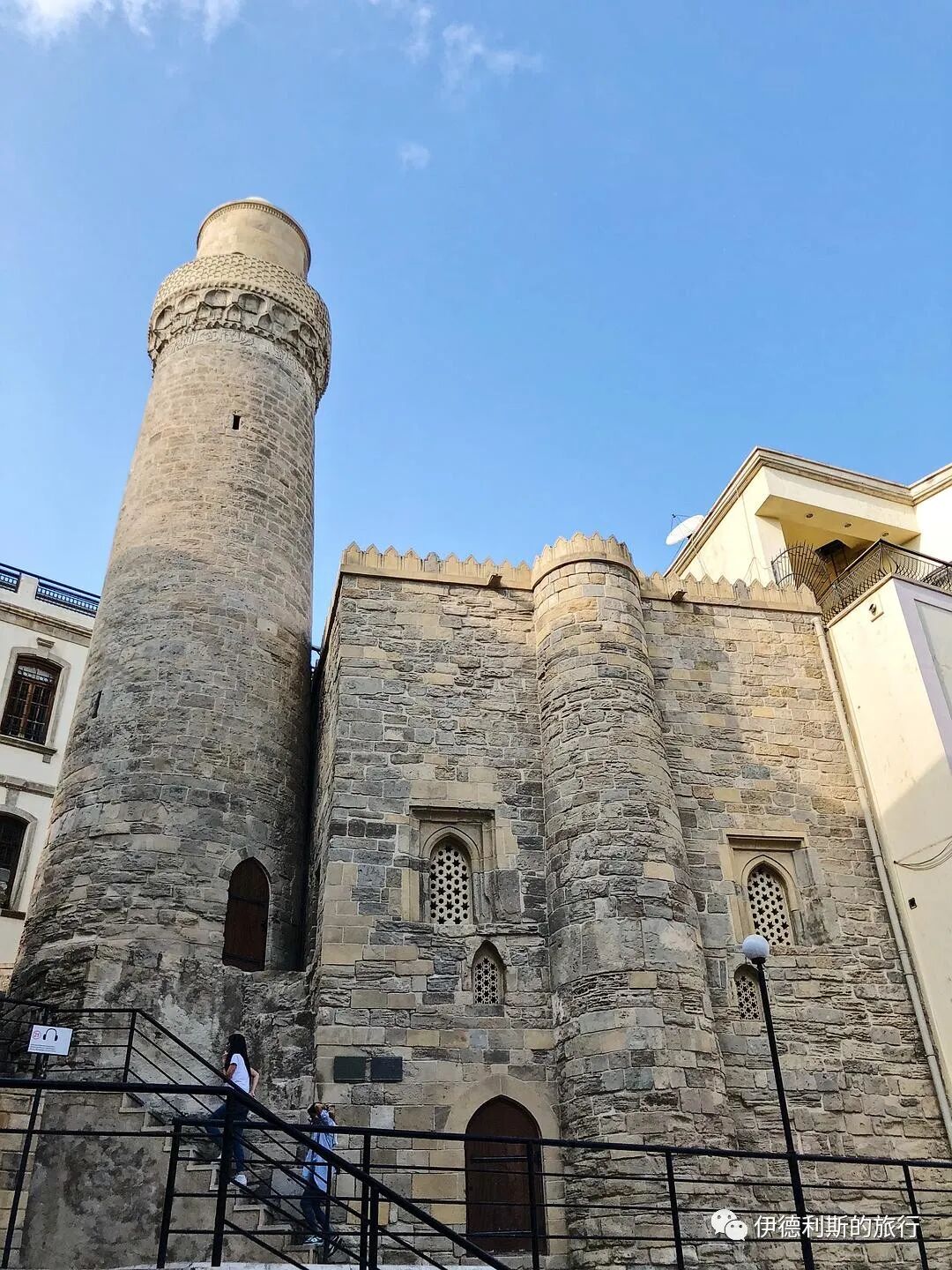
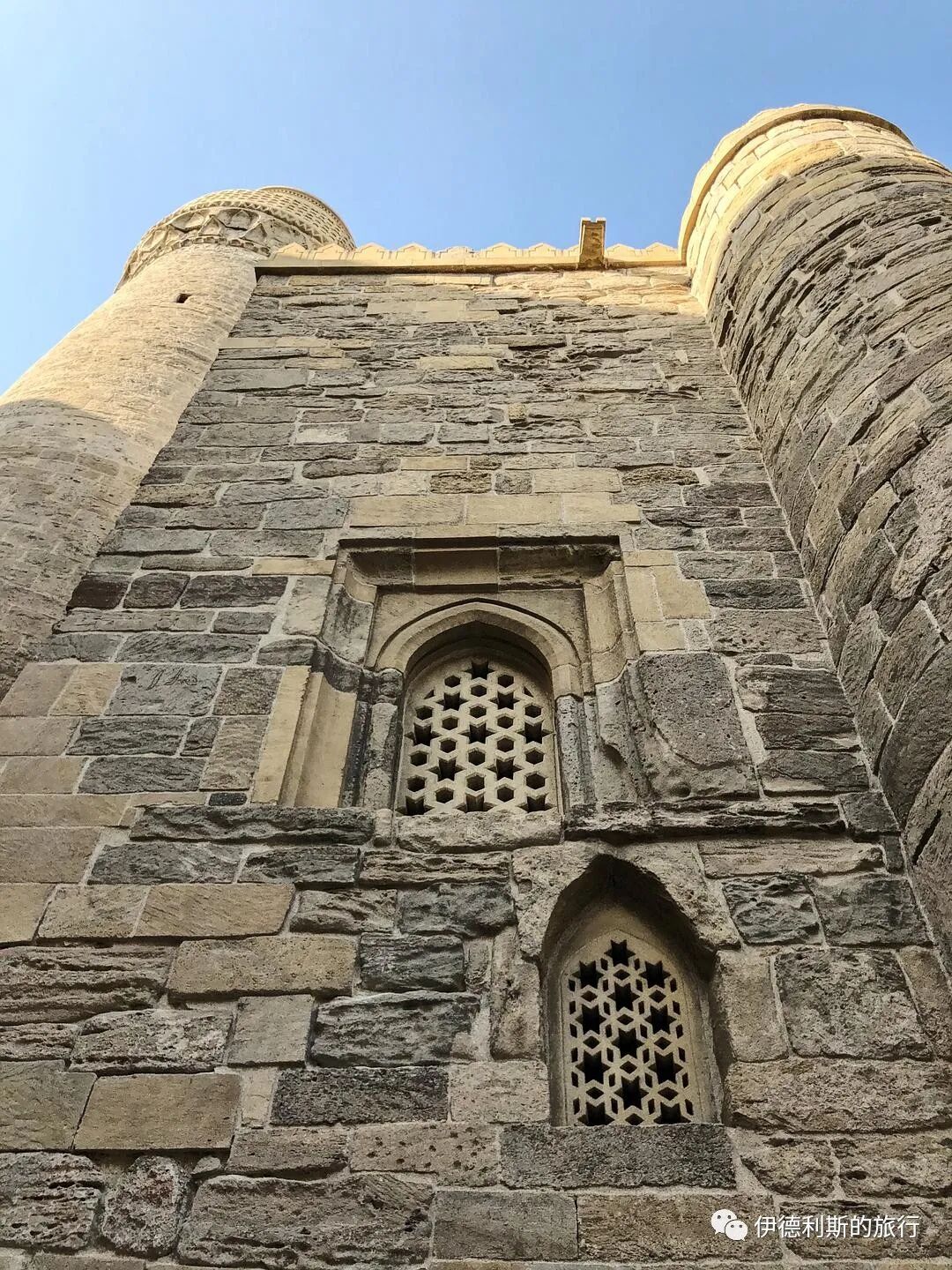
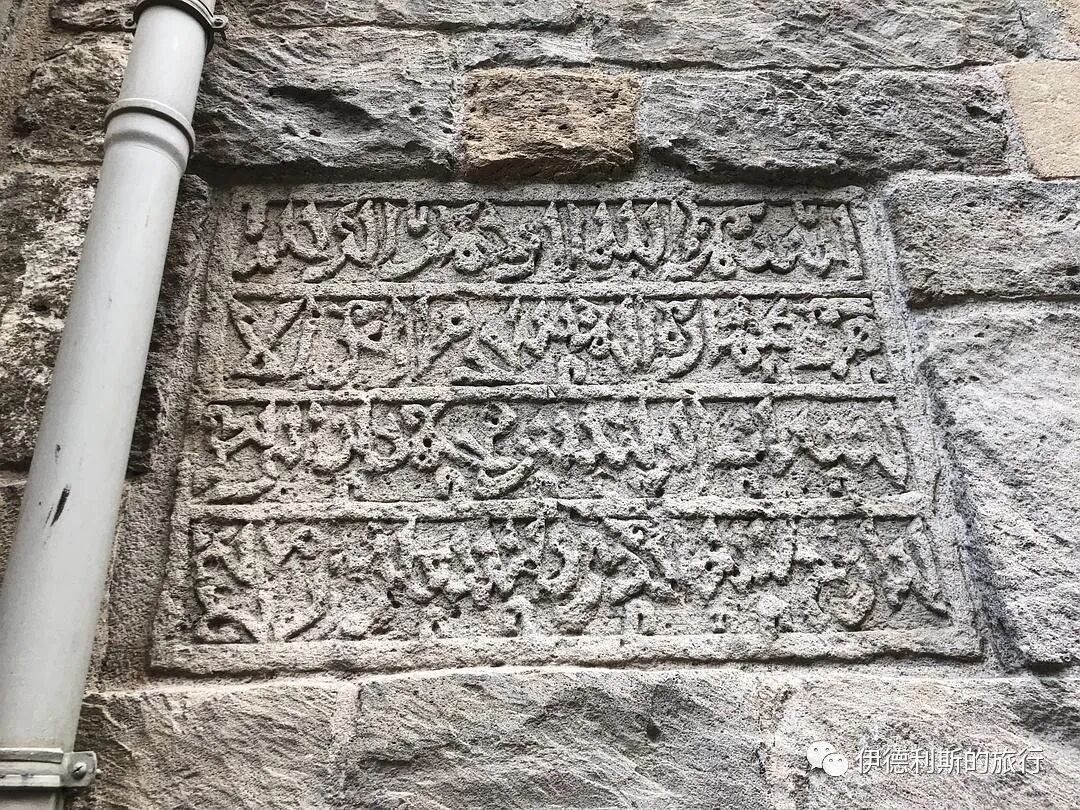
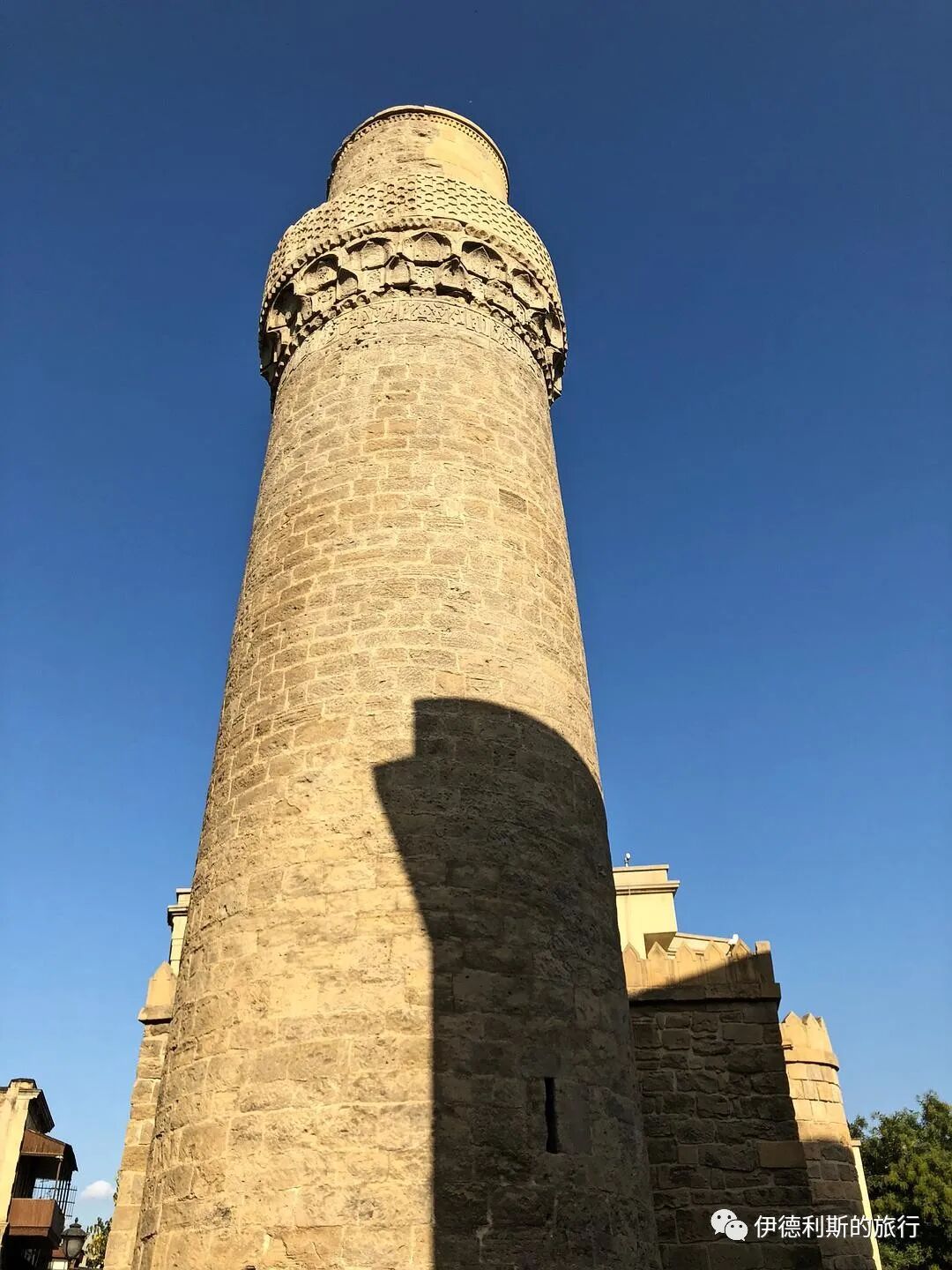
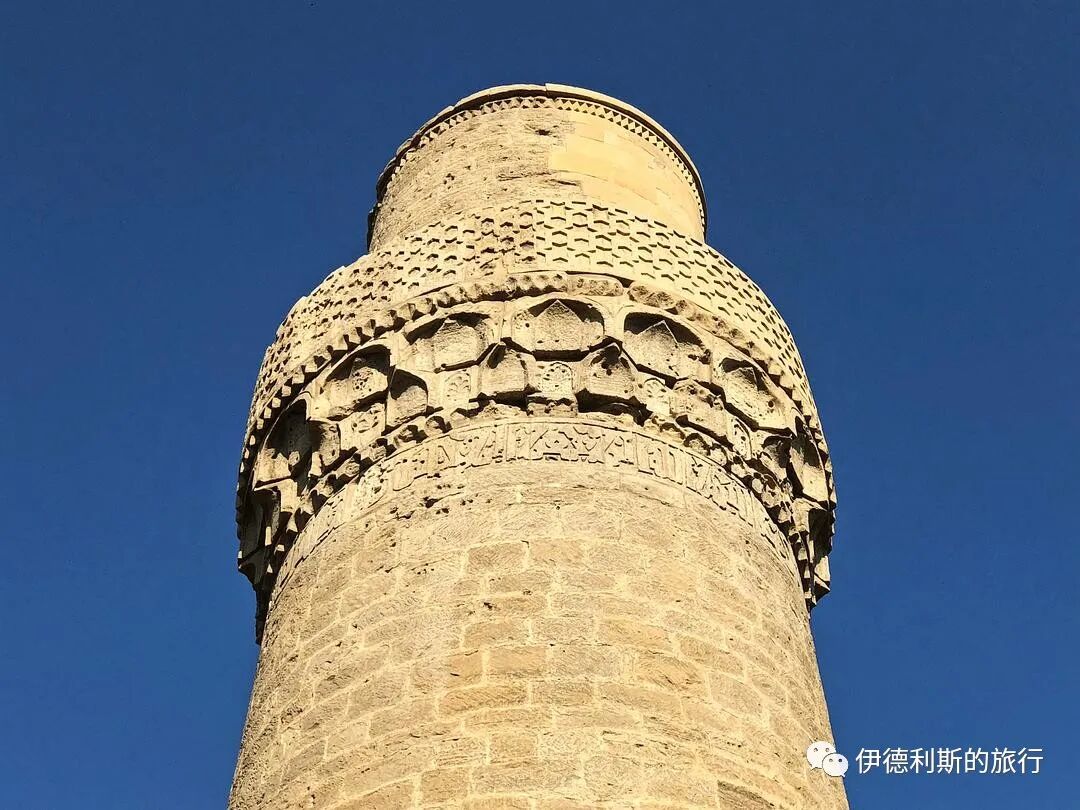
The Muhammad Mosque was built between 1078 and 1079. It is the oldest surviving Islamic building in Azerbaijan. An Arabic inscription in Kufic script on the mosque's north wall shows that Muhammad ibn Abu Bakr built the mosque. Research shows that the Muhammad Mosque was built on the site of a Zoroastrian fire mosque. Muhammad was the mayor of Baku at that time.
During the Russian-Persian War in 1723, the Imperial Russian fleet shelled Baku. A cannonball hit the minaret of the Muhammad Mosque. At the same time, a strong wind suddenly blew the Russian fleet away from the city. The people of Baku believed this was Allah's protection. So, the minaret was not repaired until the mid-19th century, serving as a symbol of Baku's resistance to invasion. After this, the mosque was also called the
2. Takyeh: 13th Century
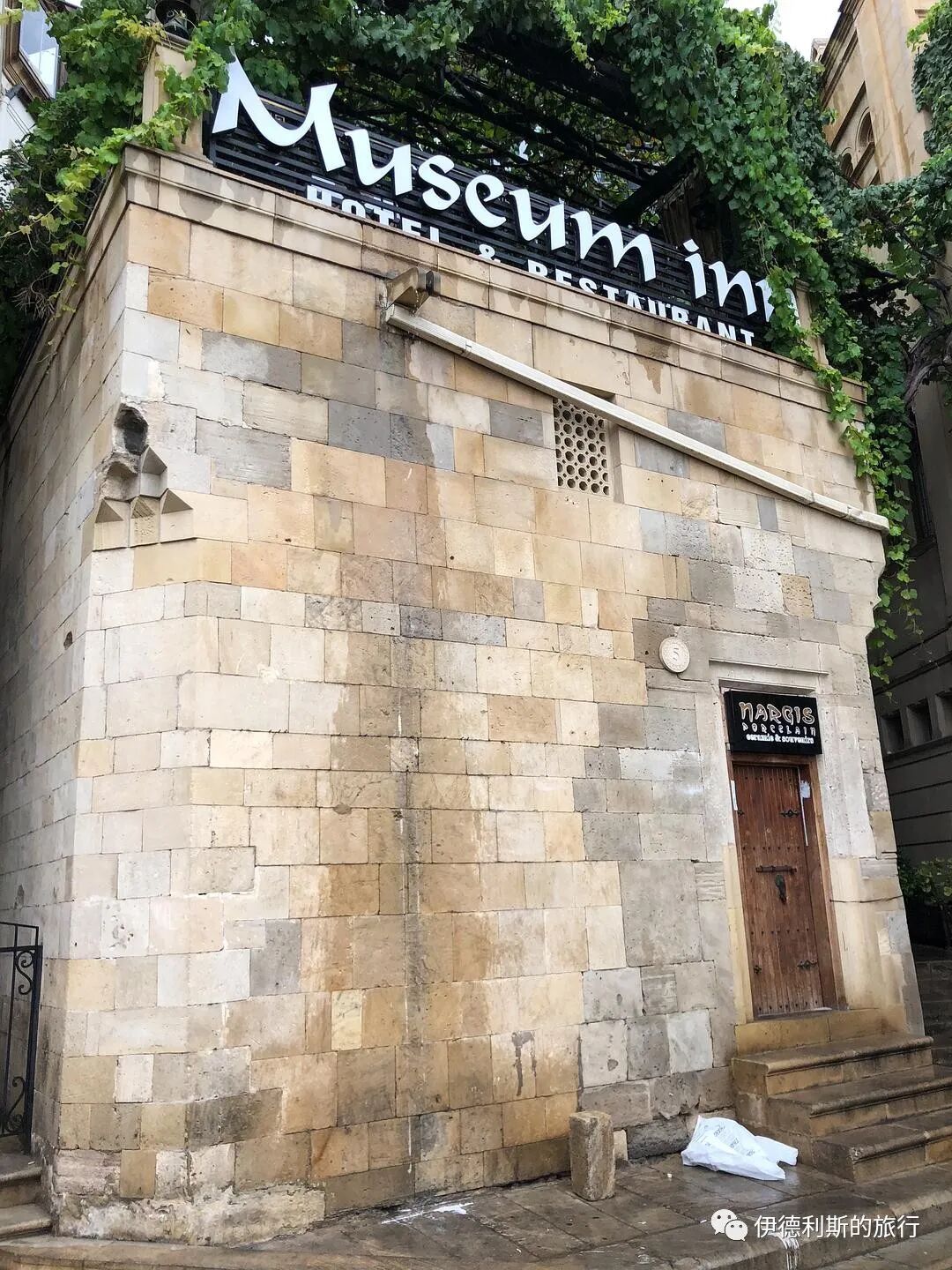
The Takyeh is a Sufi mosque built in the 13th century. It was also a place for Sufi practitioners to study and rest. Archaeological excavations took place here in 1967, and it was renovated in the 1970s.
3. Khidir Mosque: 1301
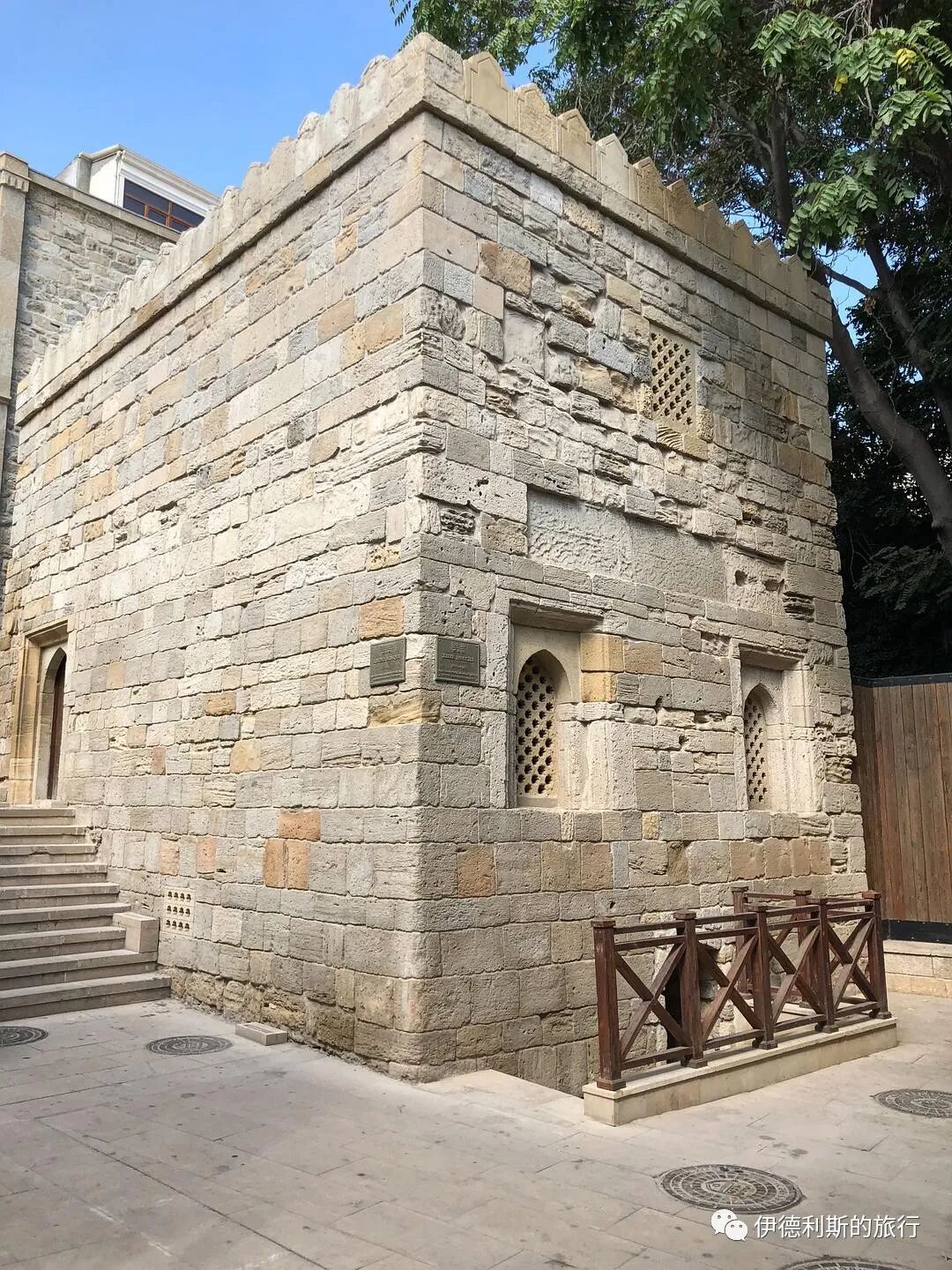
The Khidir Mosque was built in 1301. Archaeological excavations in 1988 found that this mosque was built on the site of a Zoroastrian mosque.
4. Mirza Ahmad Mosque: 1345
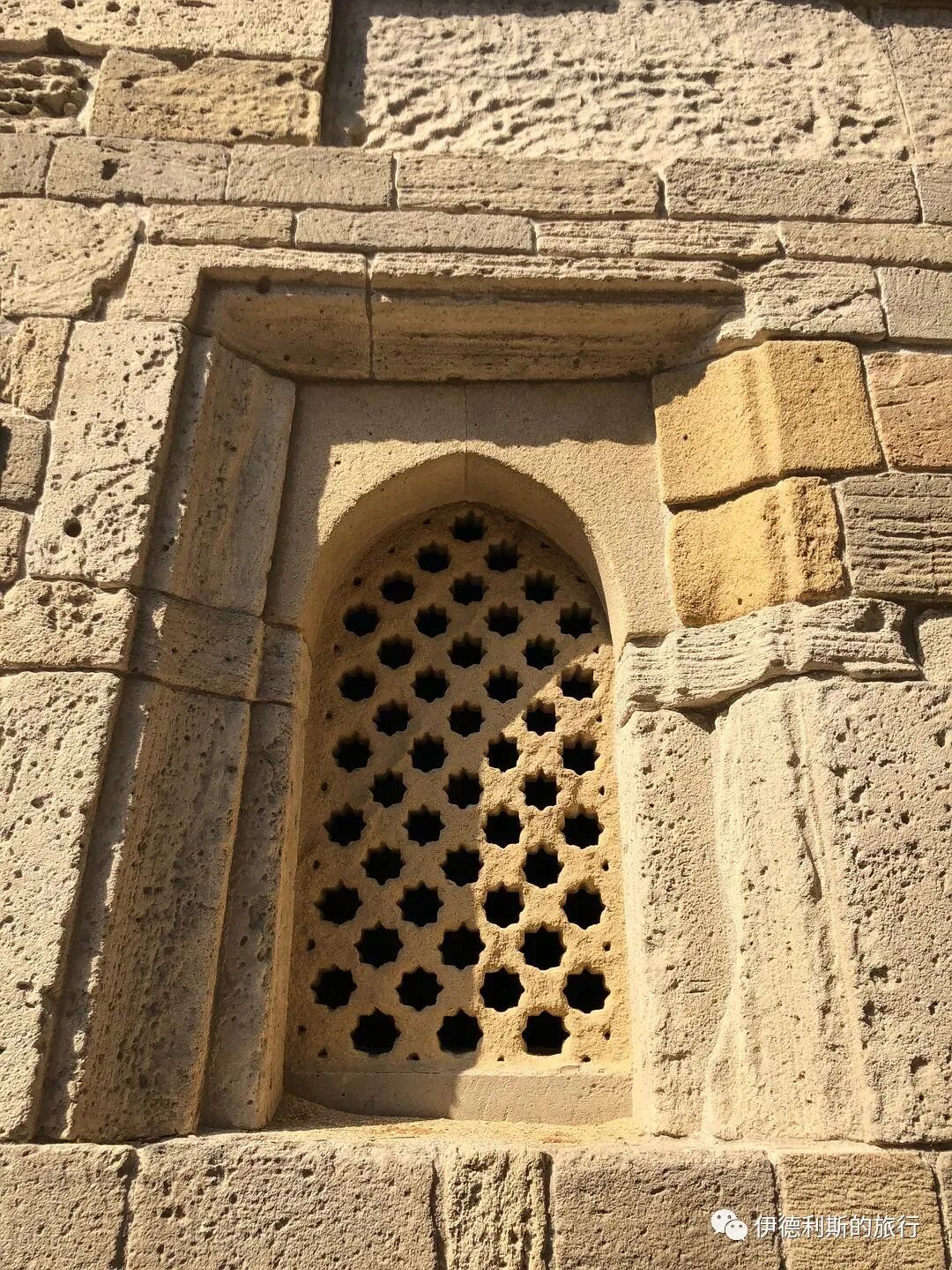
The Mirza Ahmad Mosque was built in 1345. The wall at its entrance has carvings of the Quran and the architect's name. It is currently out of use due to its poor condition.
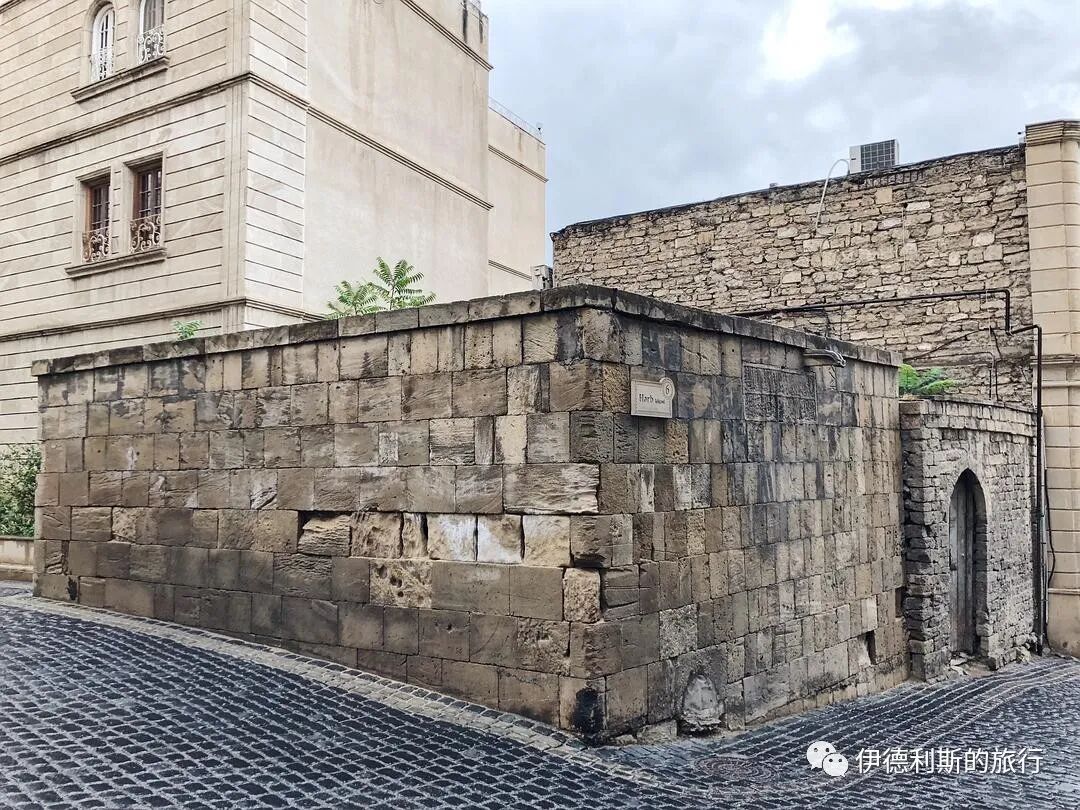
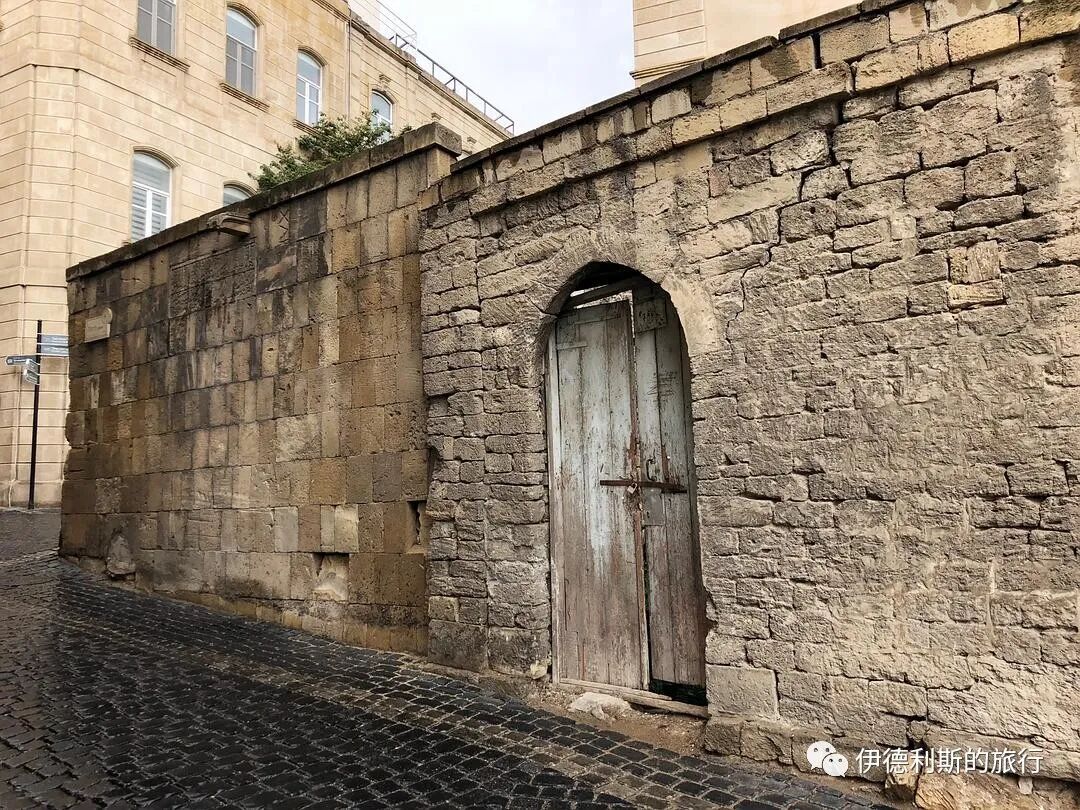
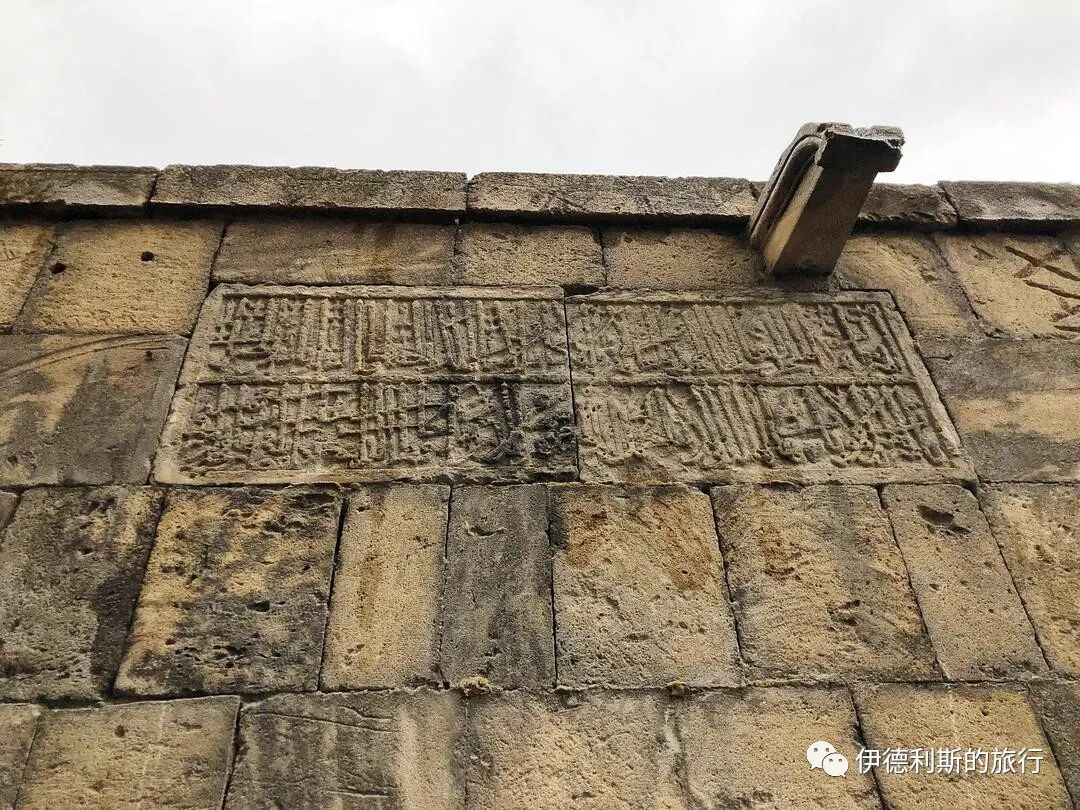
5. Chin Mosque: 1376
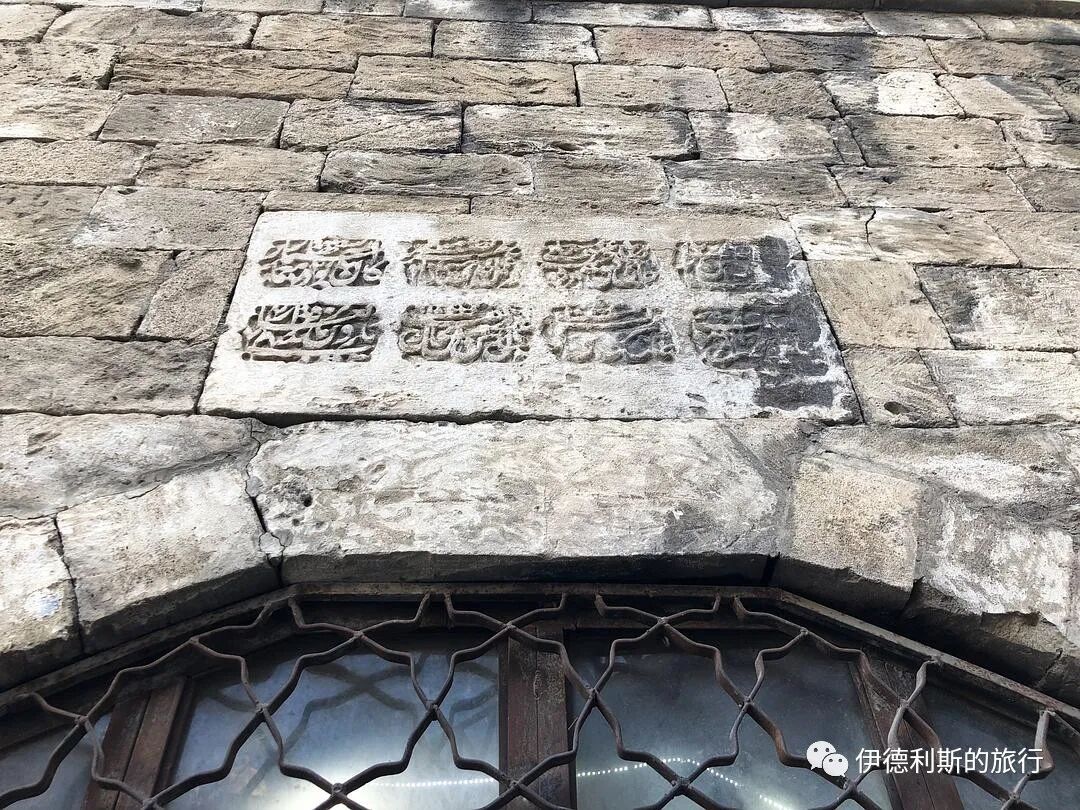
An inscription above the entrance shows that the Chin Mosque was built between 1375 and 1376. It was repaired between 1772 and 1773. The Old City State Historical Architectural Reserve Department repaired it again in 2012.
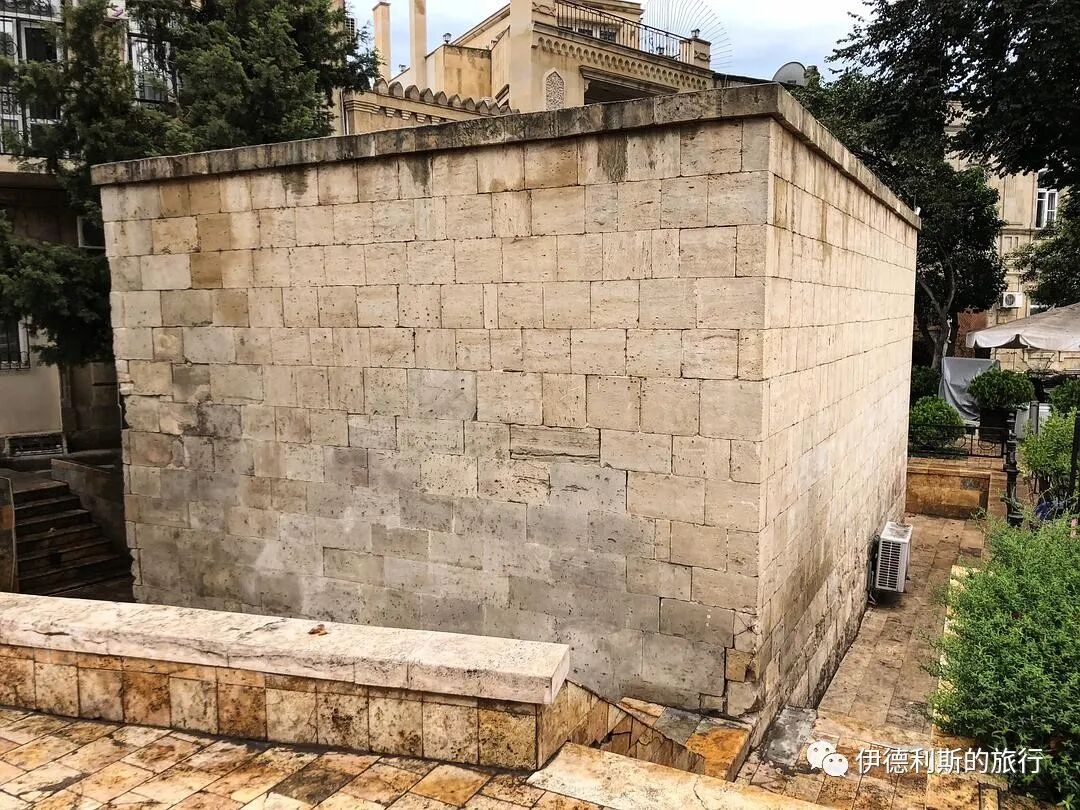
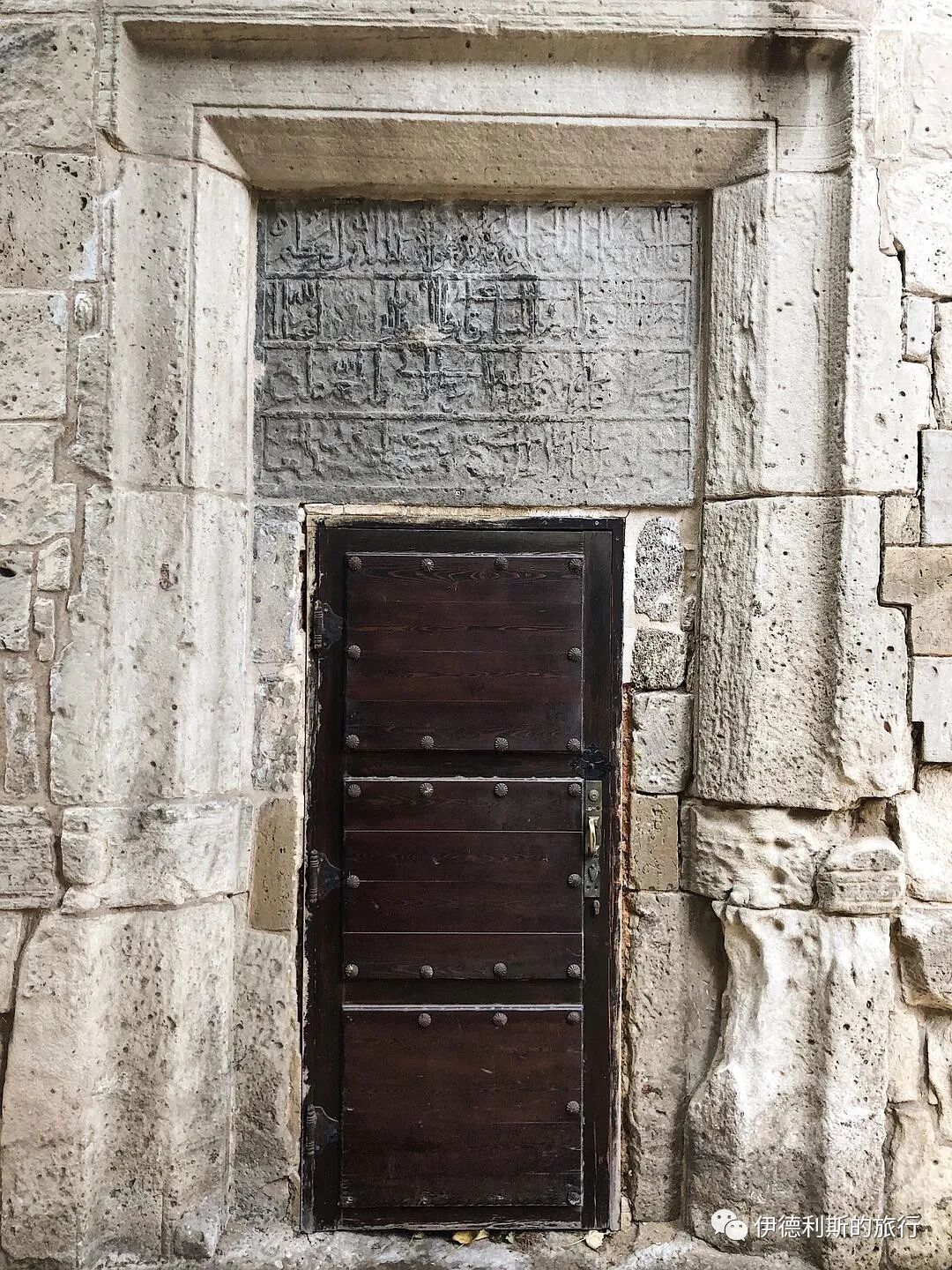
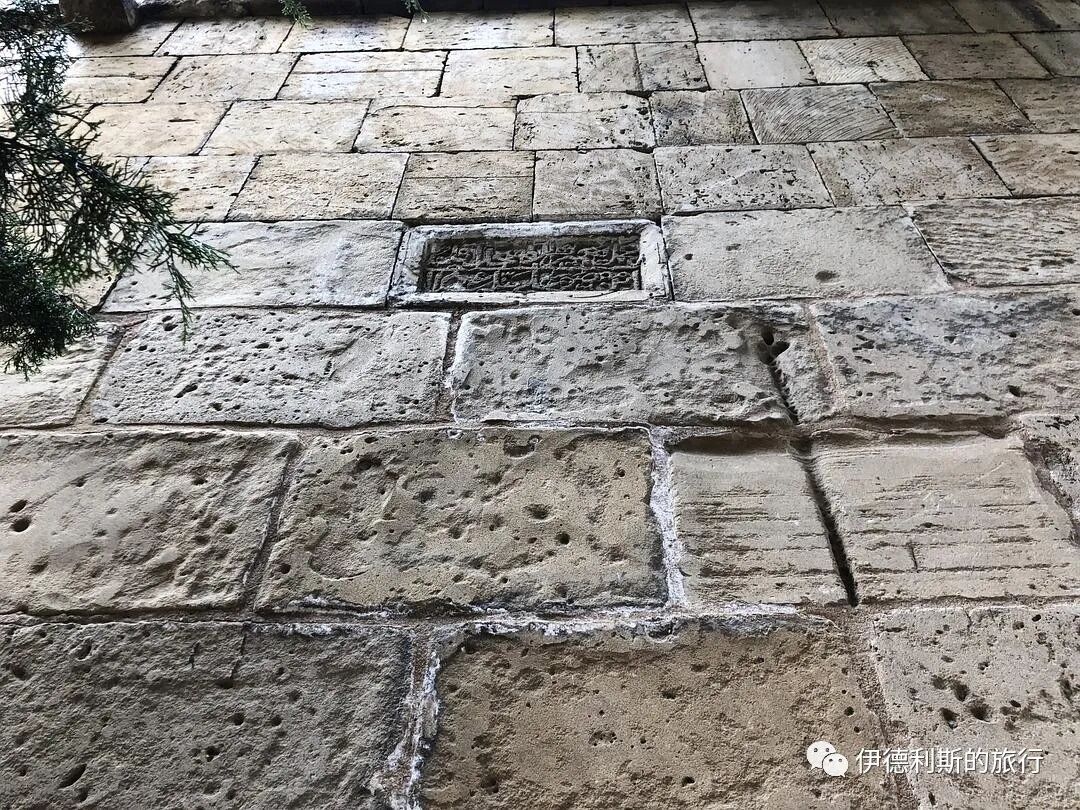
6. Molla Ahmad Mosque: Early 14th Century
The Molla Ahmad Mosque was built in the early 14th century by Mahmud ibn Sad, a famous architect of the Şirvan-Abşeron architectural school. It is a typical example of a small community mosque from the Shirvanshah Dynasty.
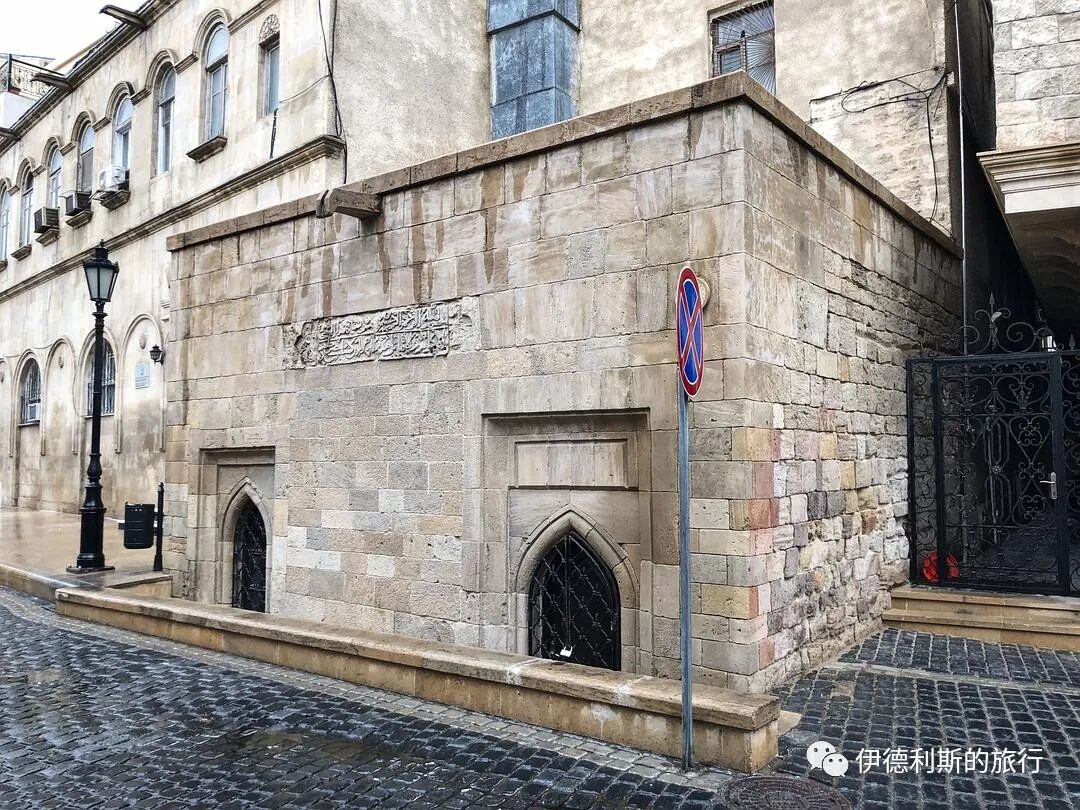
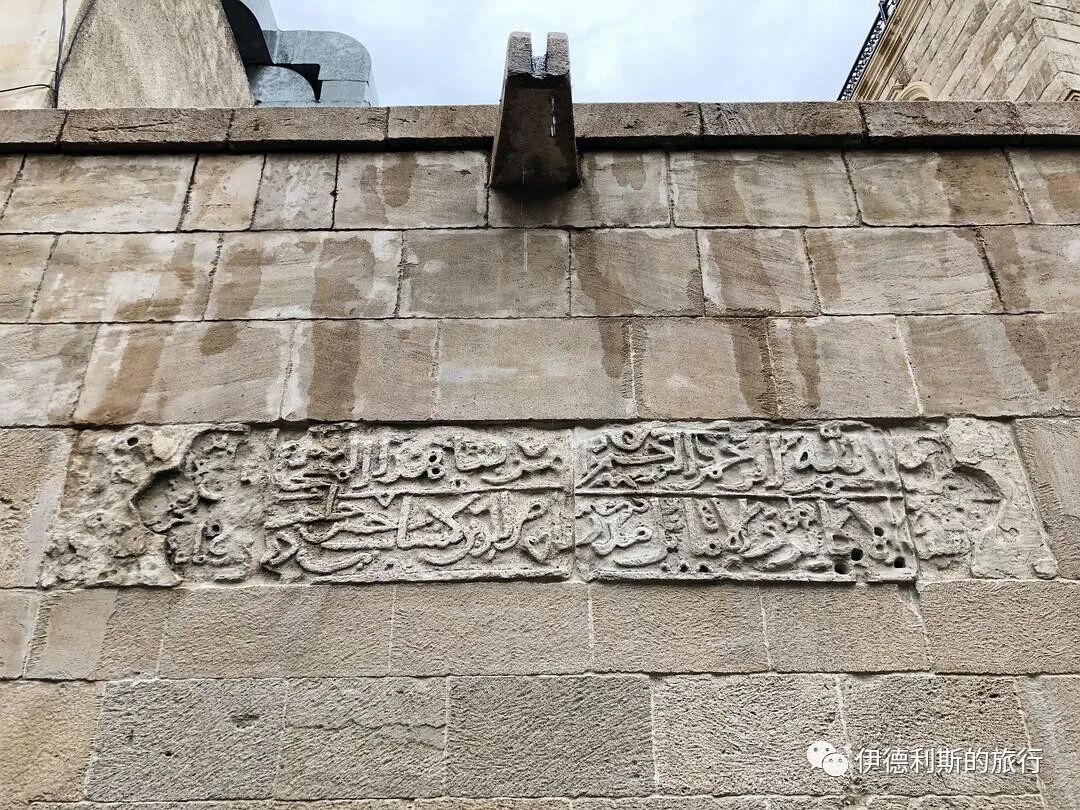
7. Sheikh Ibrahim Mosque: 1416
Haji Amirshah ibn Yagub built the Sheikh Ibrahim Mosque between 1415 and 1416. Ibrahim I (who reigned from 1382-1417), the 33rd king of the Shirvanshah Dynasty, ruled Baku at that time. Because of this, the mosque is also called the Sheikh Ibrahim Mosque. In the 19th century, the mosque's facade was divided into three sections, and windows were added.
Today, it is a madrasa (Islamic school) for women.
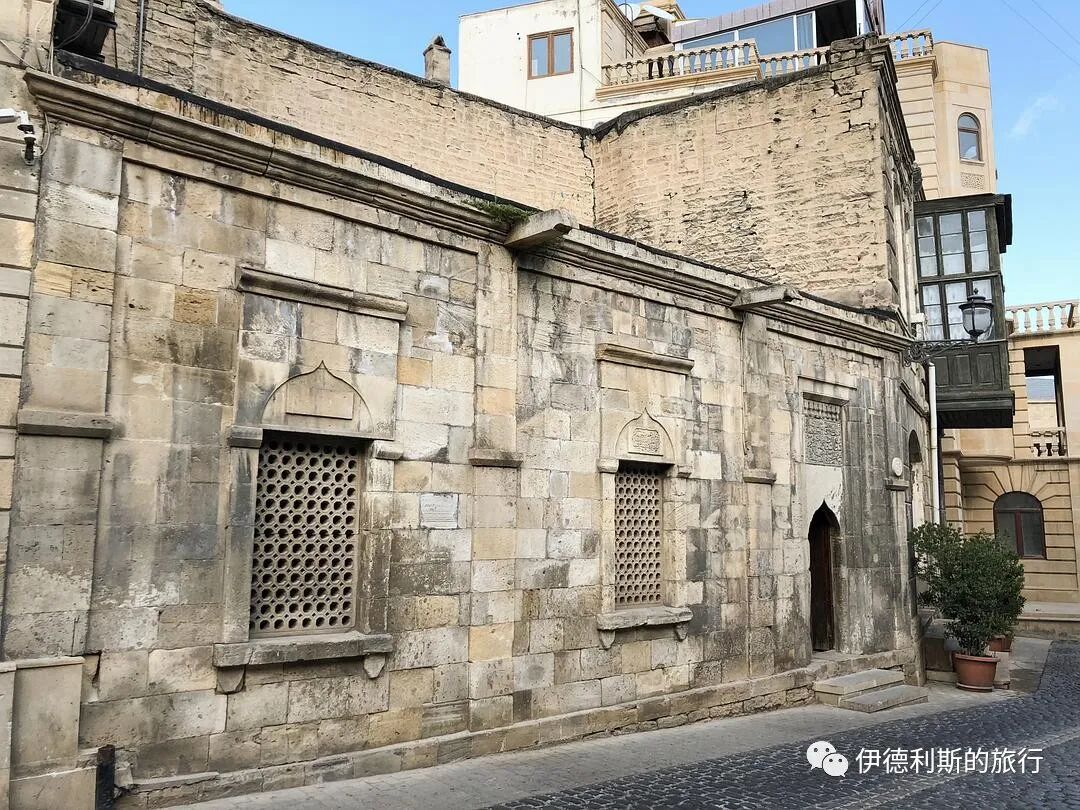
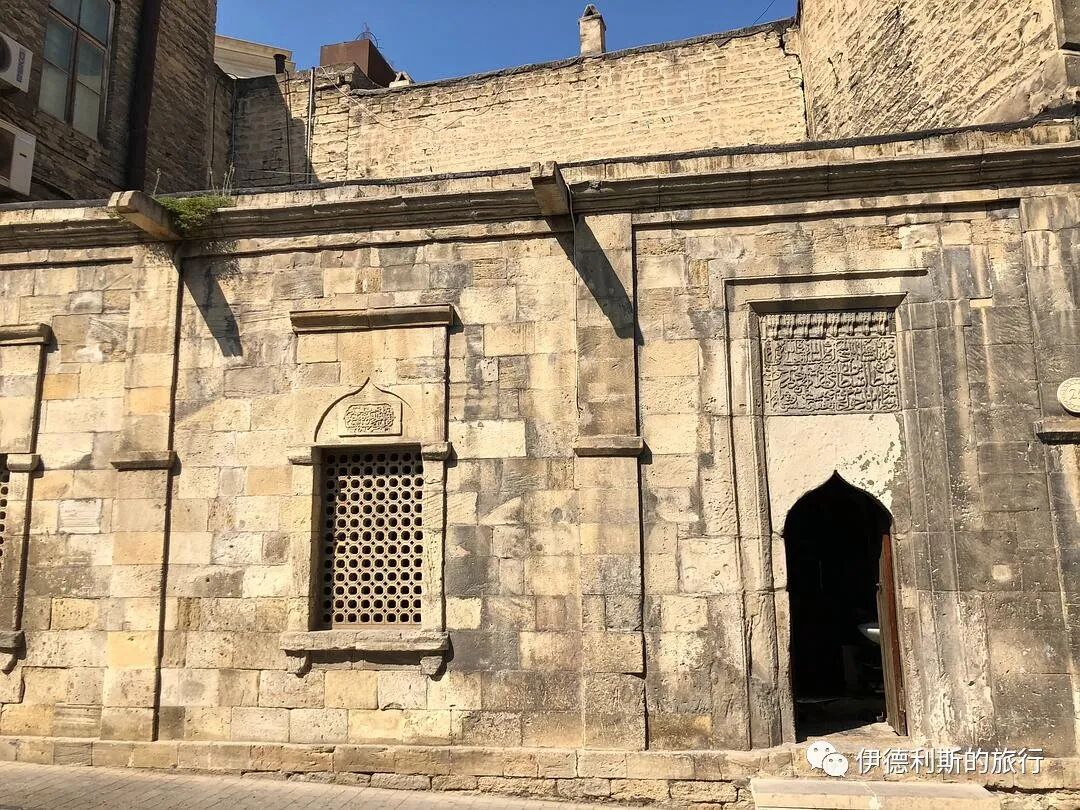
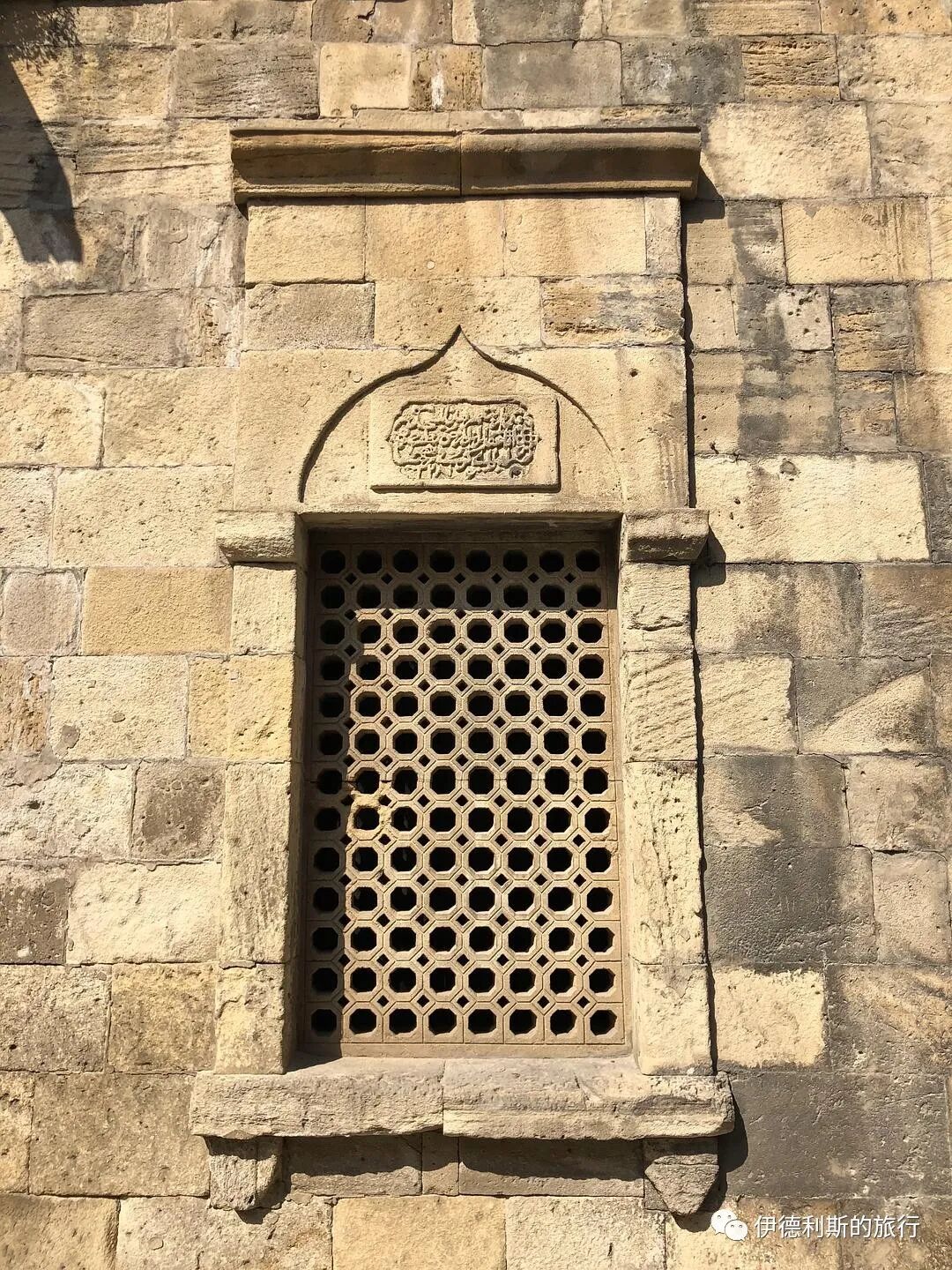
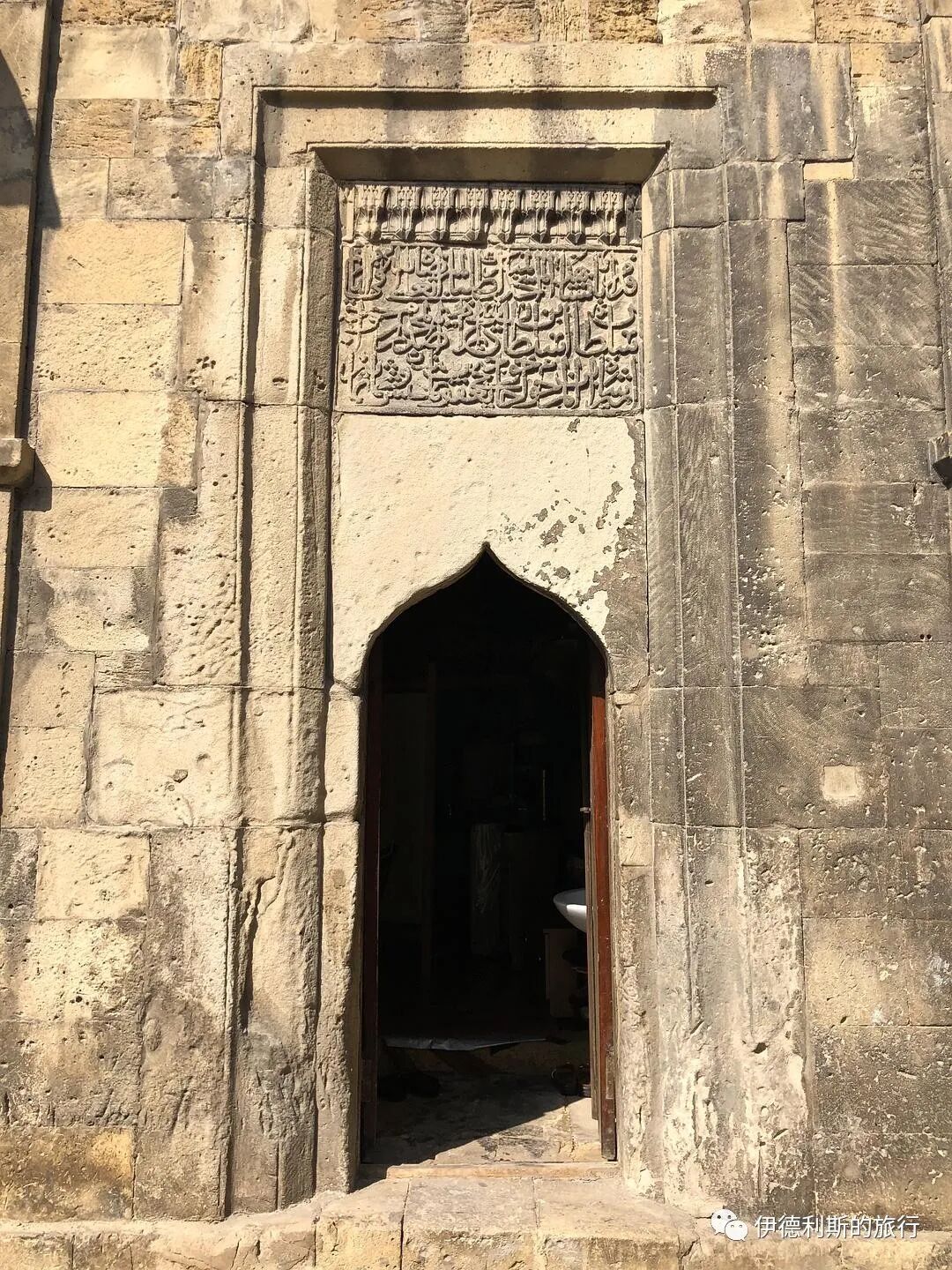
8. Juma Mosque
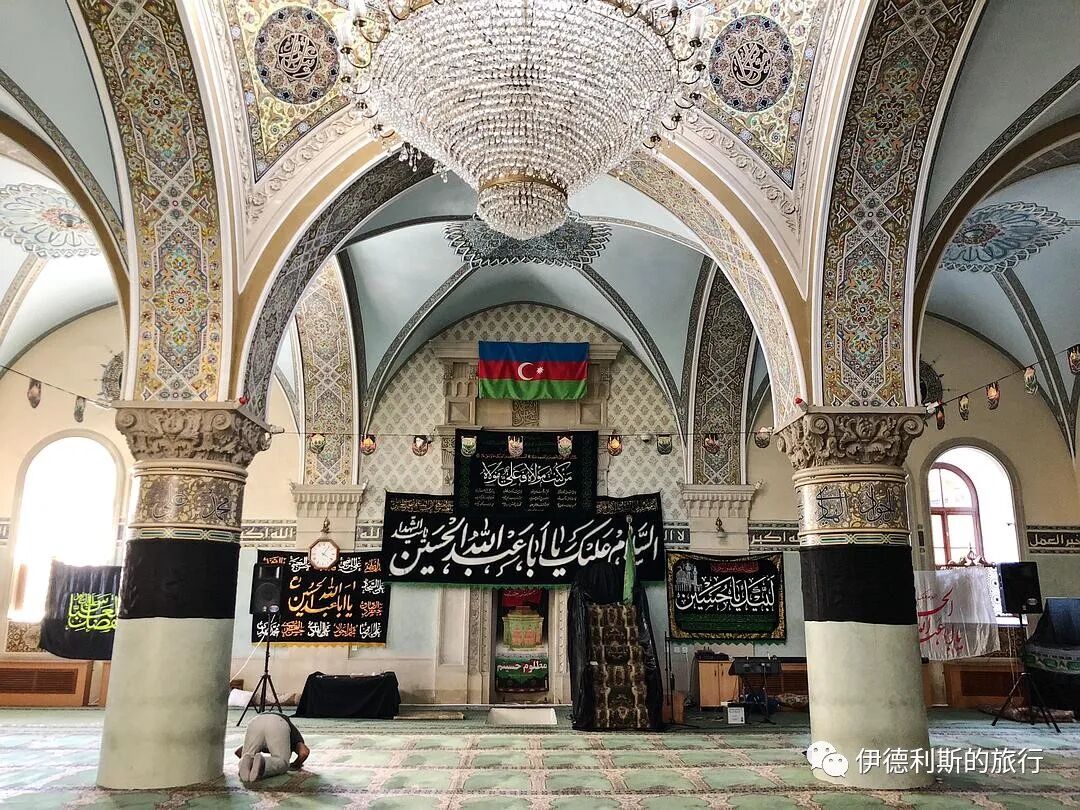
The Juma Mosque is the main mosque in Baku's Old City. An inscription on the mosque wall shows that Amir Sharaf al-Din Mahmud rebuilt the mosque in 1309. The current main prayer hall was built in 1899 with donations from Baku merchant Haji Shikhlali Dadashov. It blends traditional and European architectural styles.
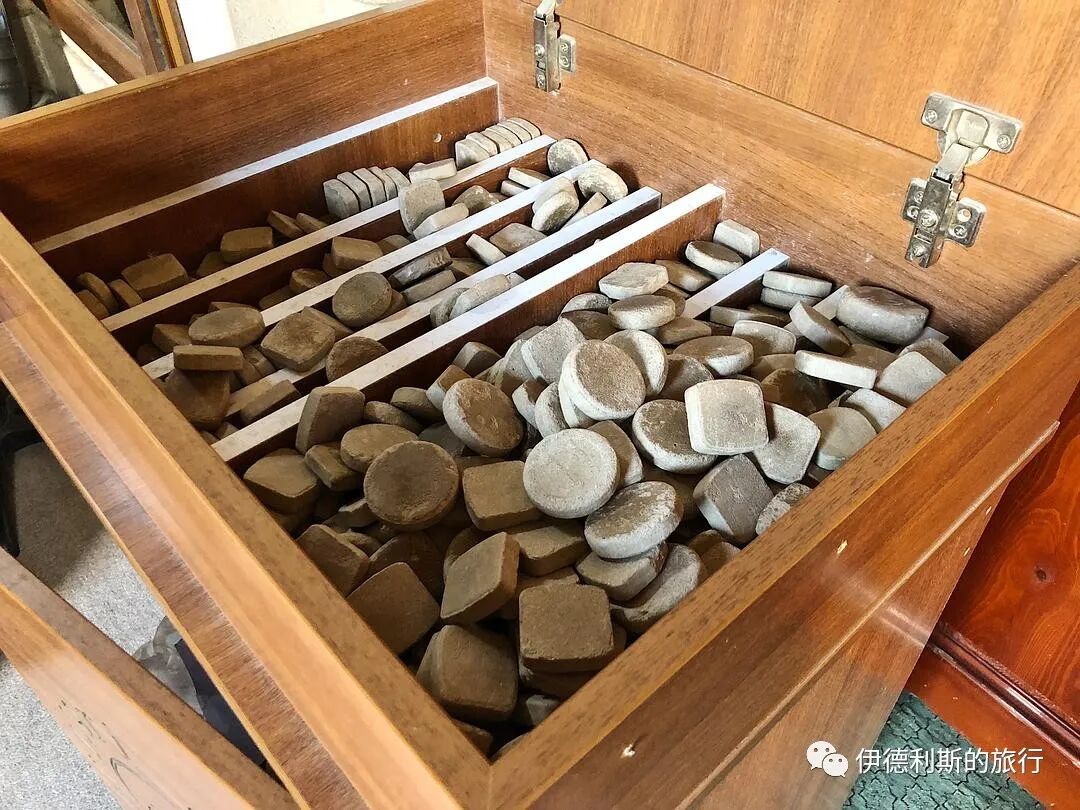
The clay tablet at the entrance of the main hall is called a Turbah. It symbolizes the earth. Shia Muslims place their foreheads on it during namaz (prayer).
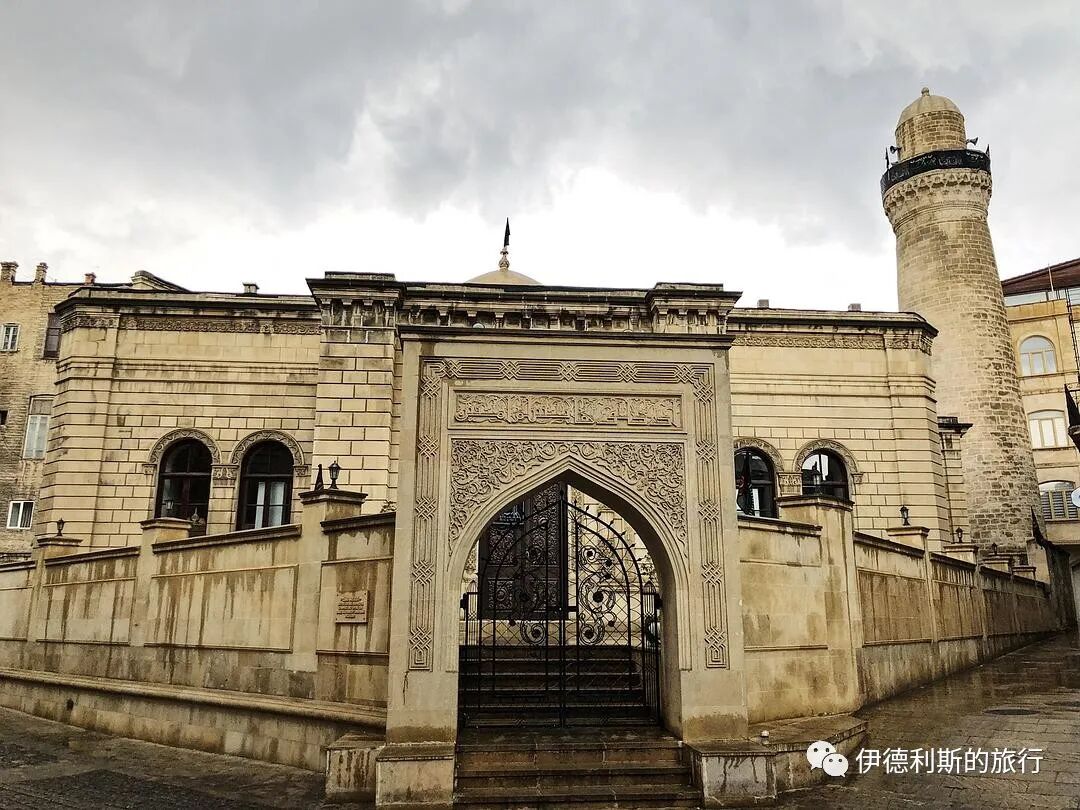
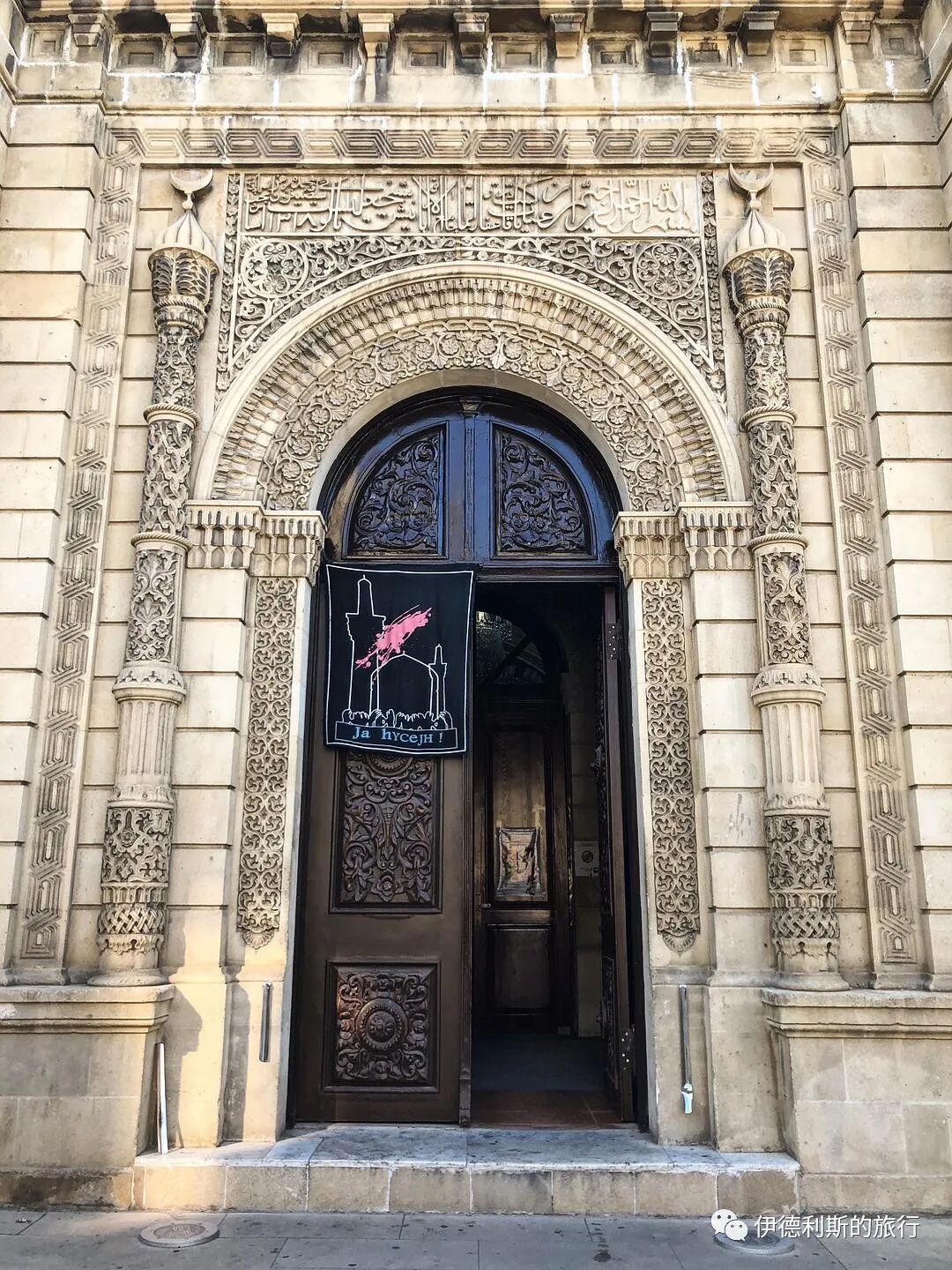
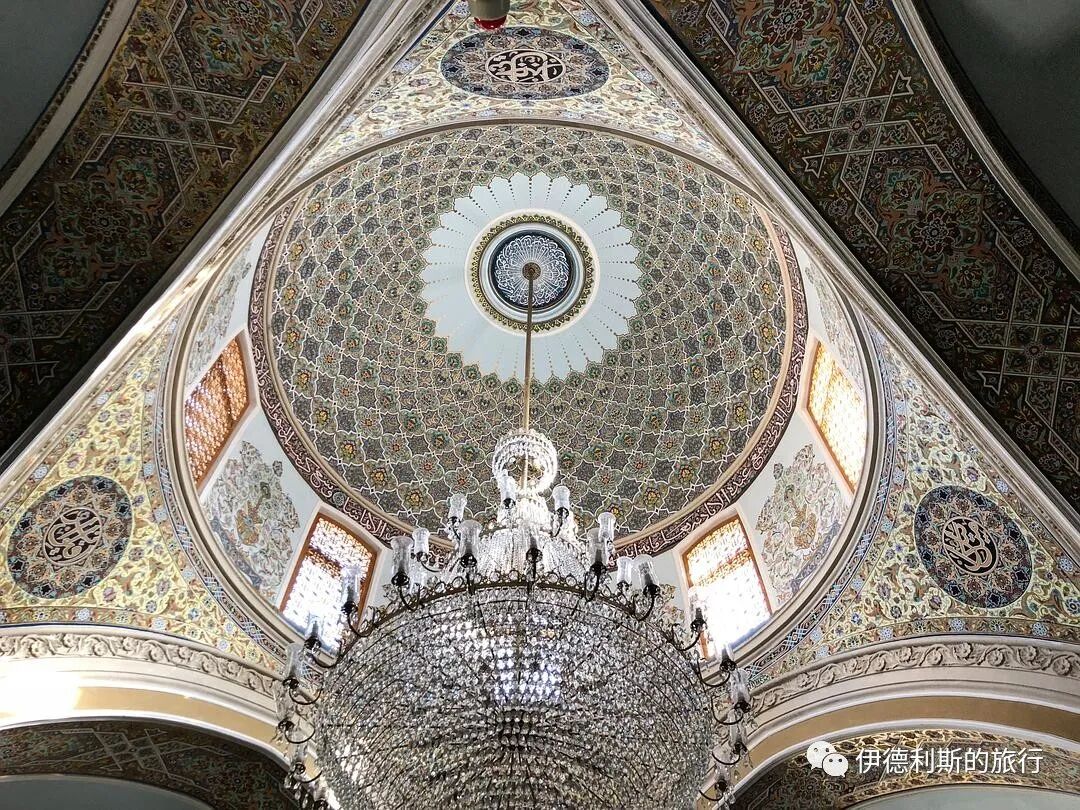
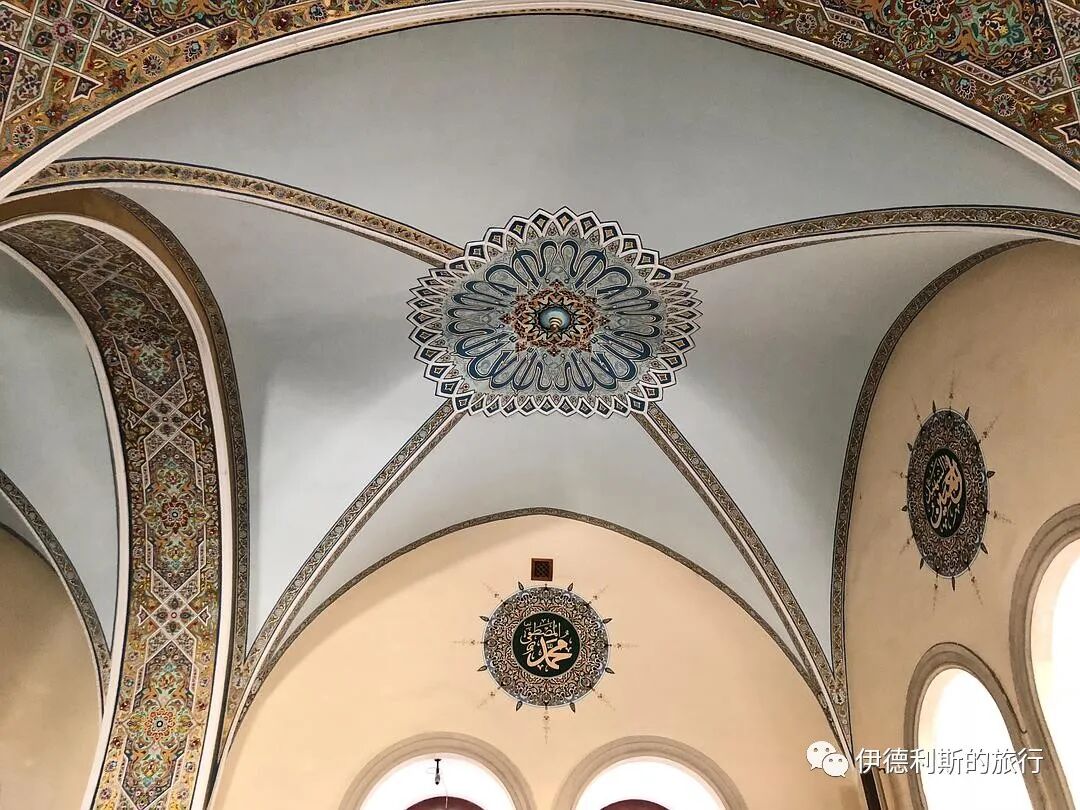
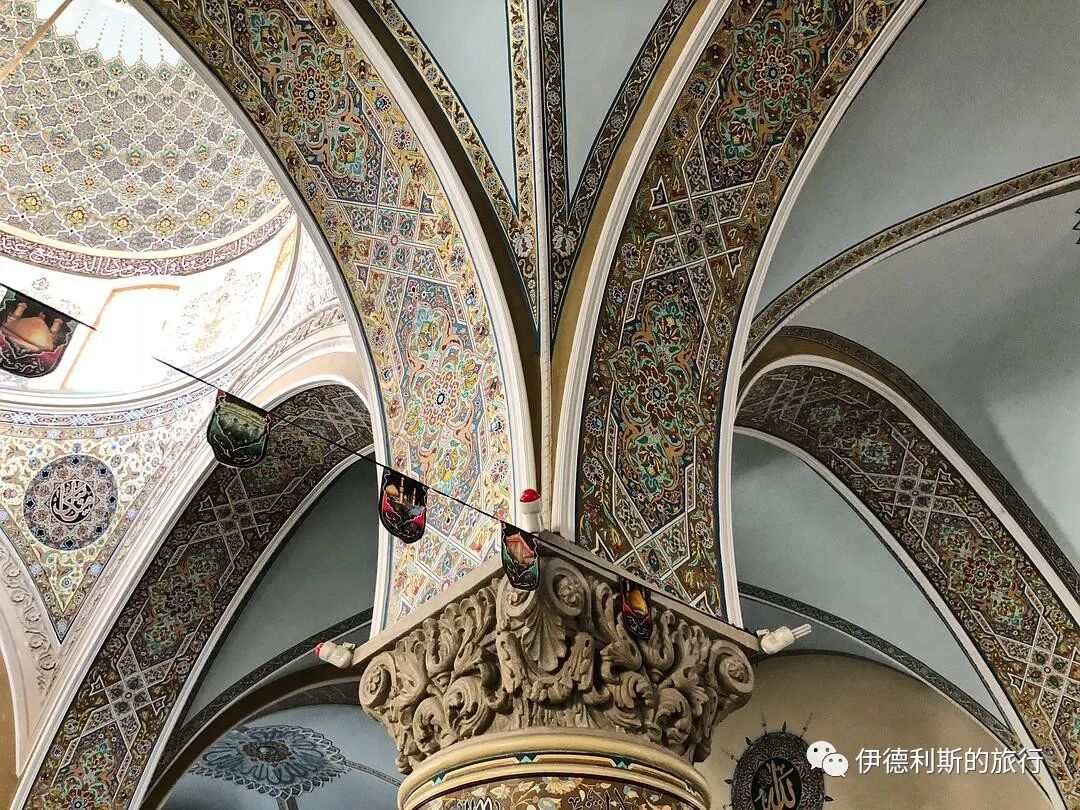
The minaret on the north side of the main hall was built in 1437. It has a balcony supported by stalactite structures.
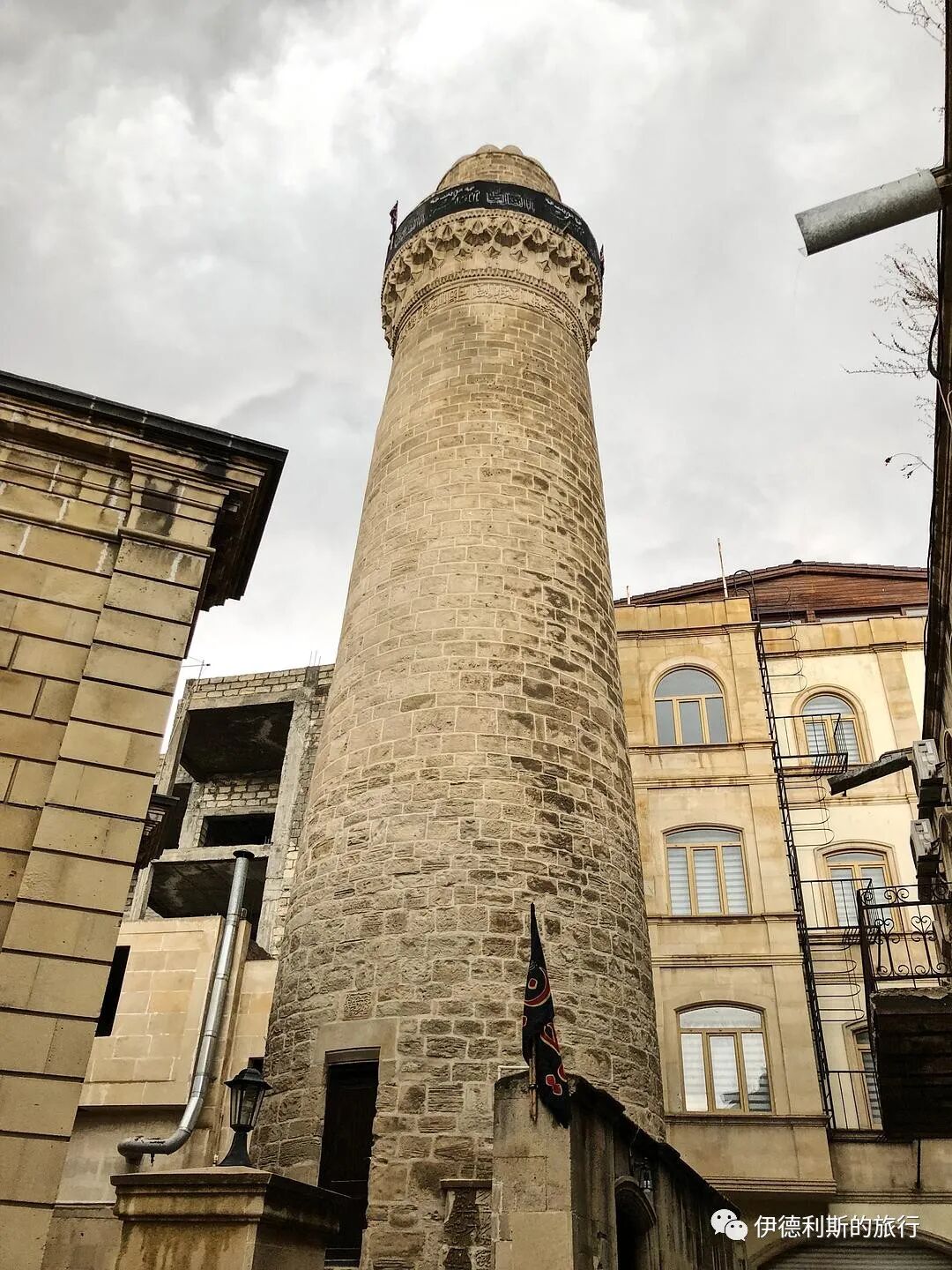
During the Soviet era, the Juma Mosque became a carpet museum. It resumed religious activities only in the 1990s and underwent major renovations in 2008.
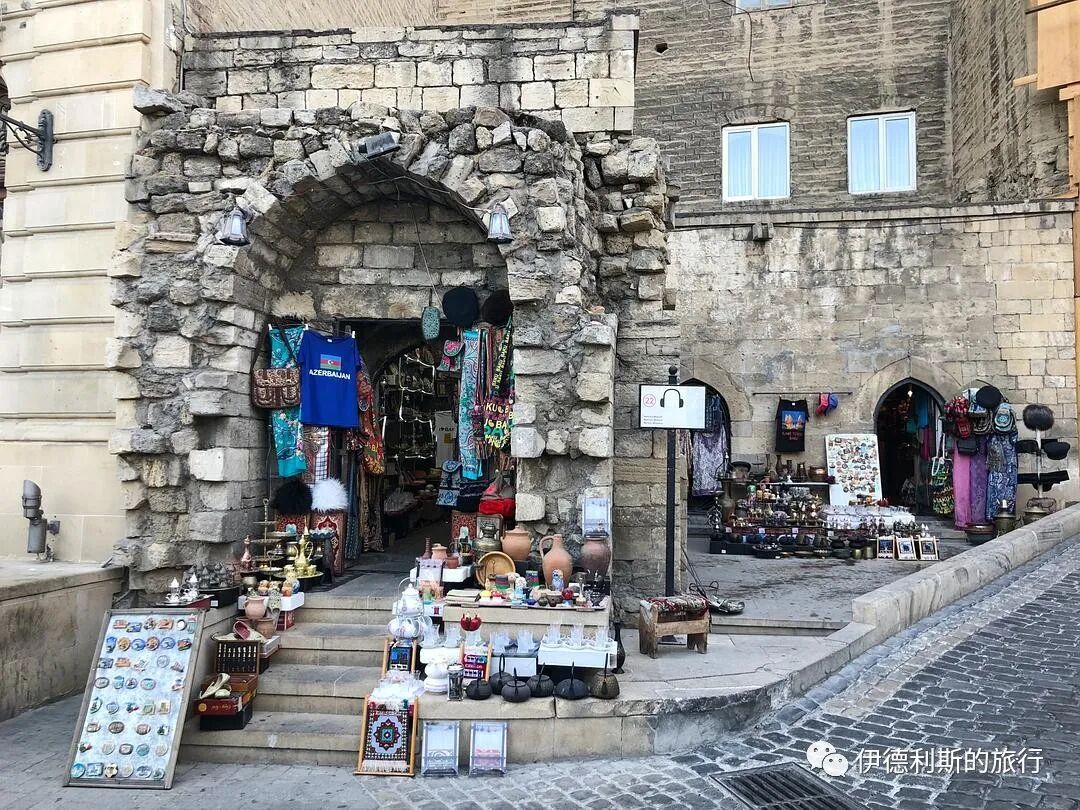
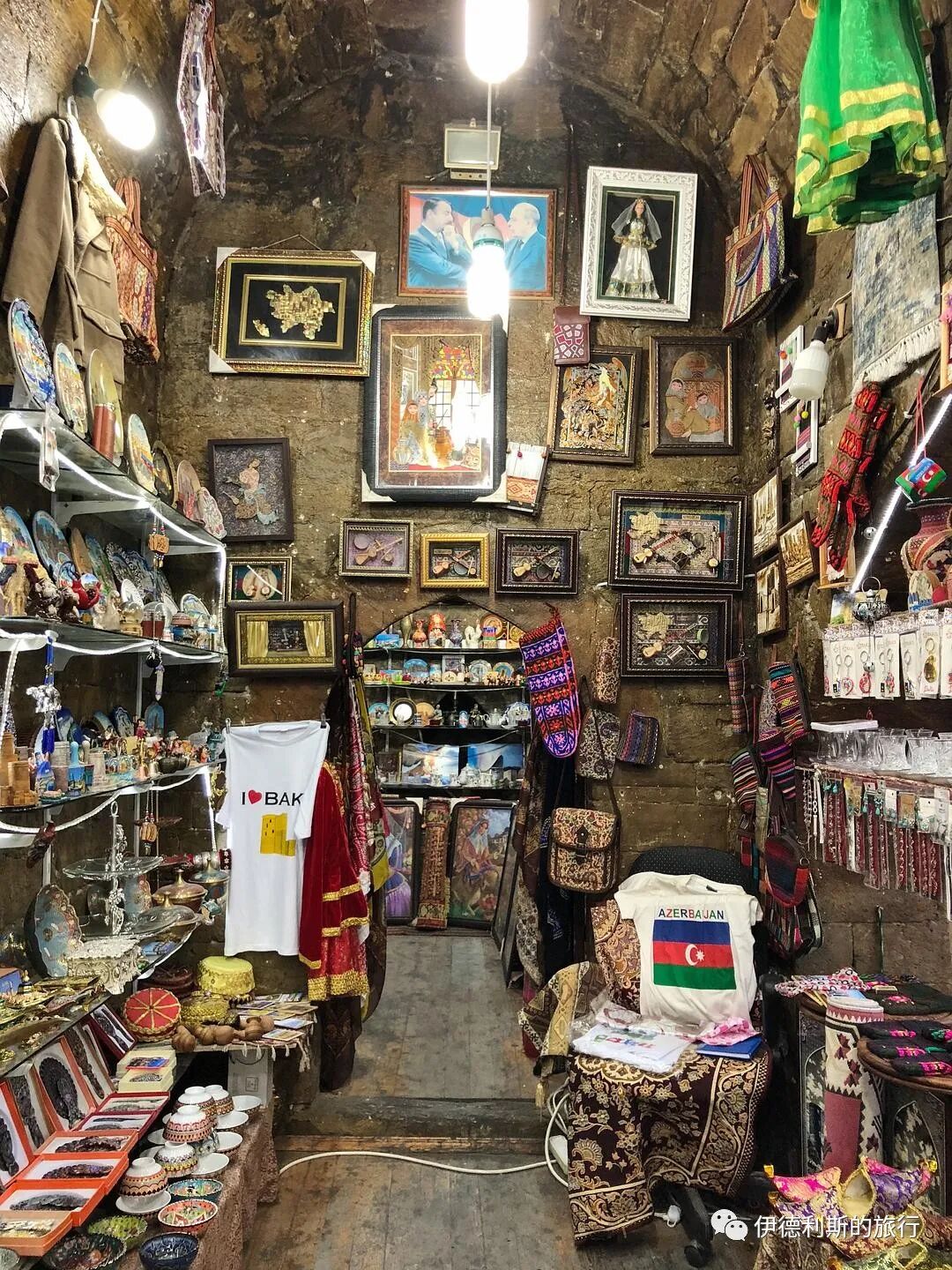
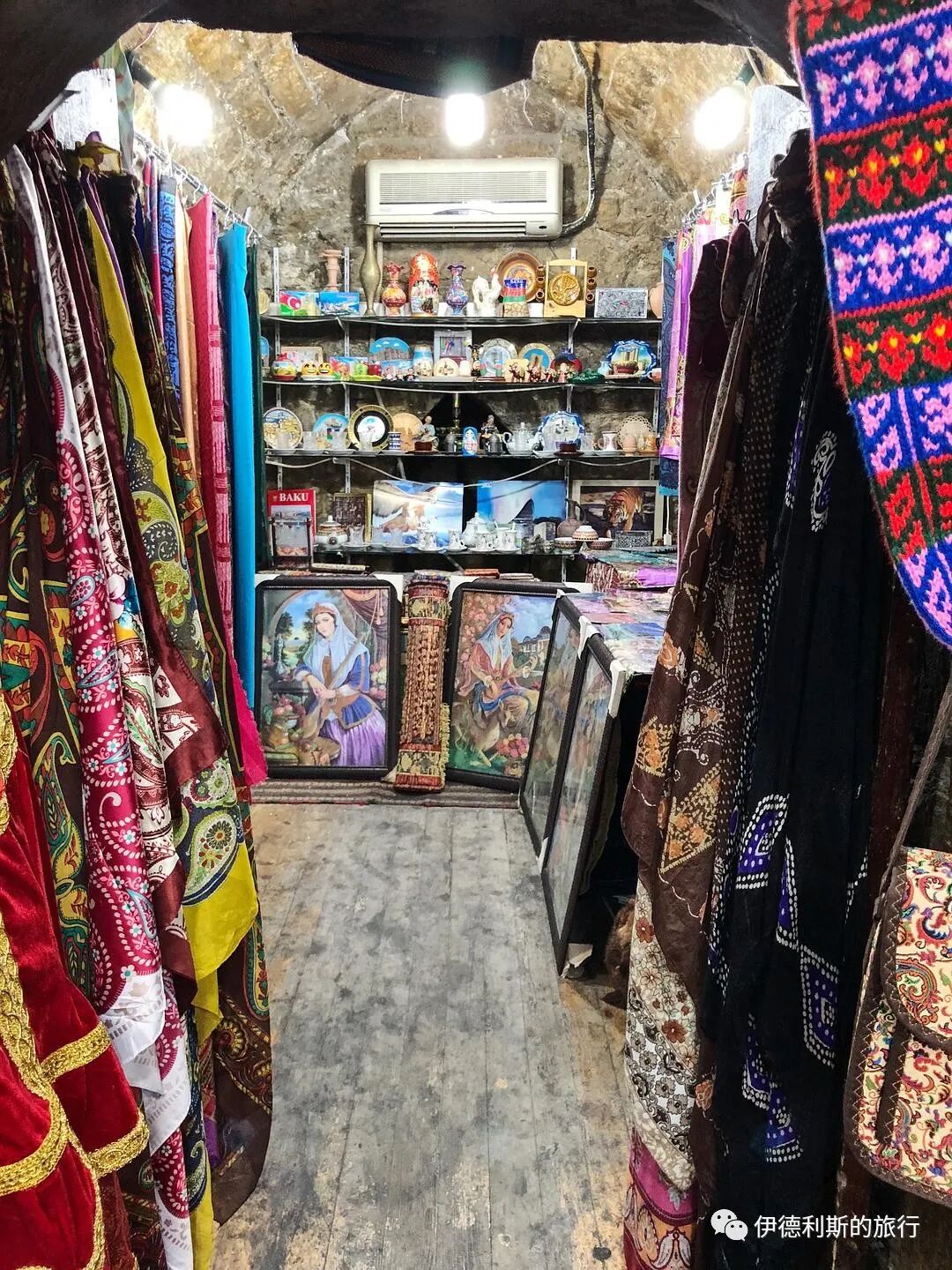
A madrasa from the 15th century once stood next to the Juma Mosque. However, it was torn down in the mid-19th century for road expansion. Only one classroom remains today, which is now a souvenir shop.
9. Sayyid Yahya Murtuza Mosque: Early 17th Century
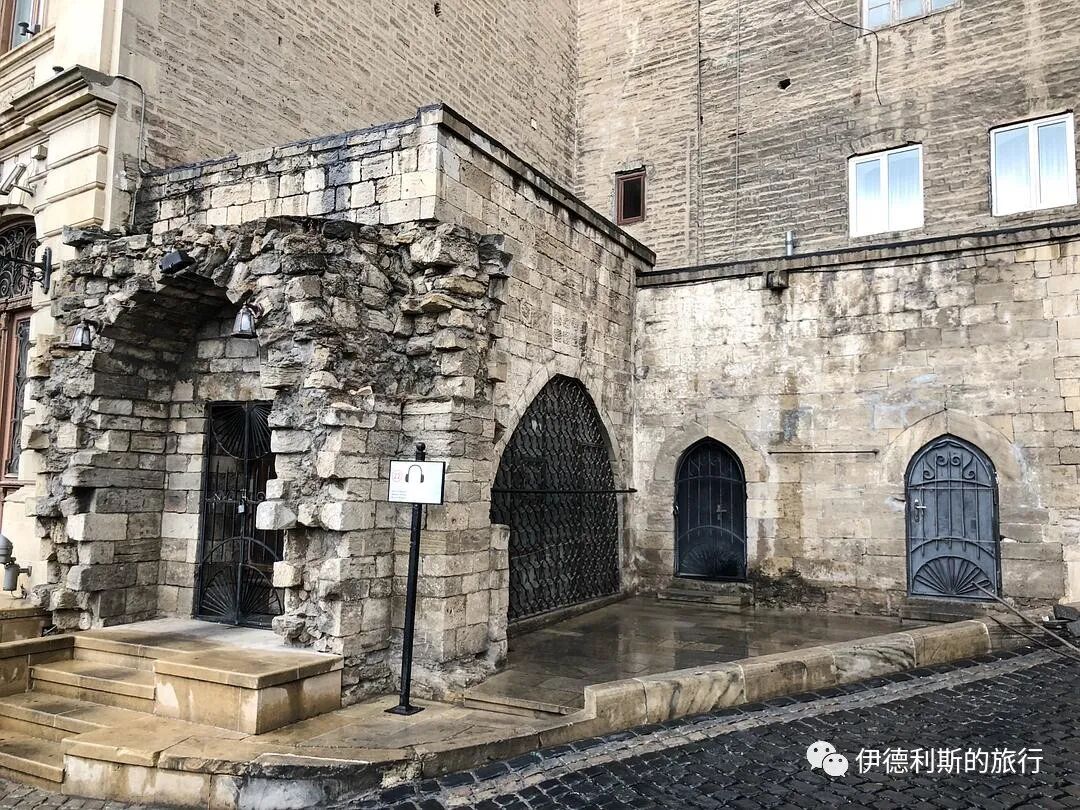
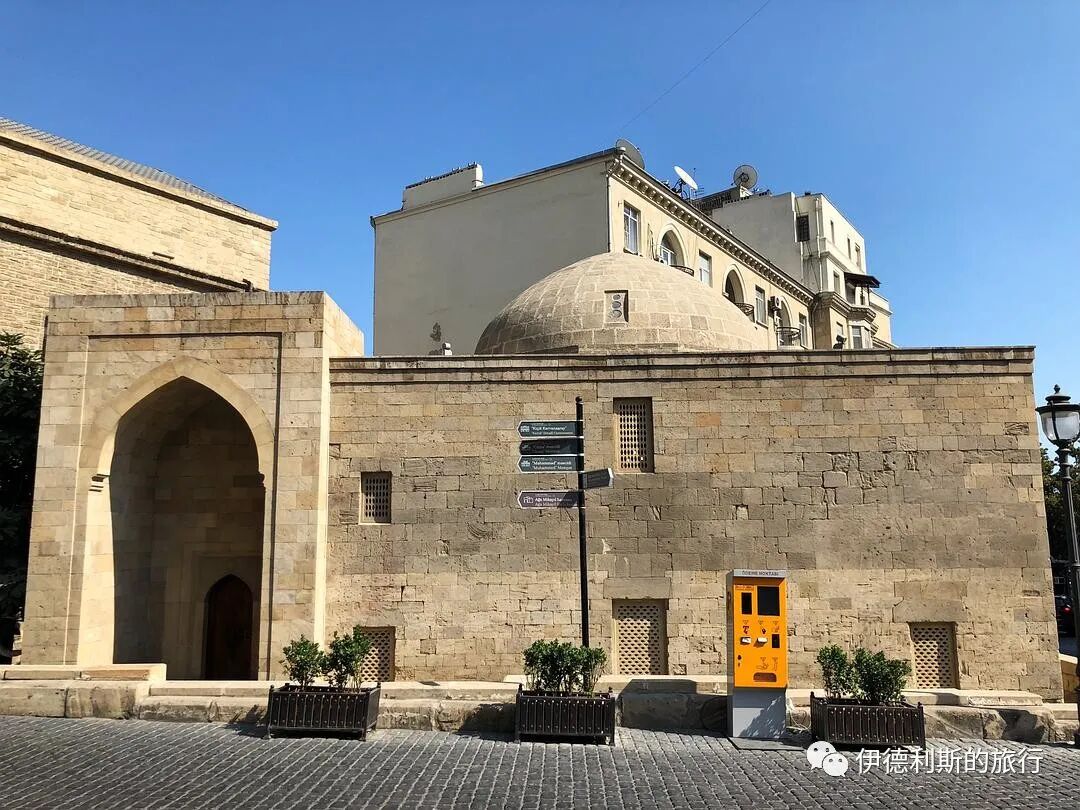
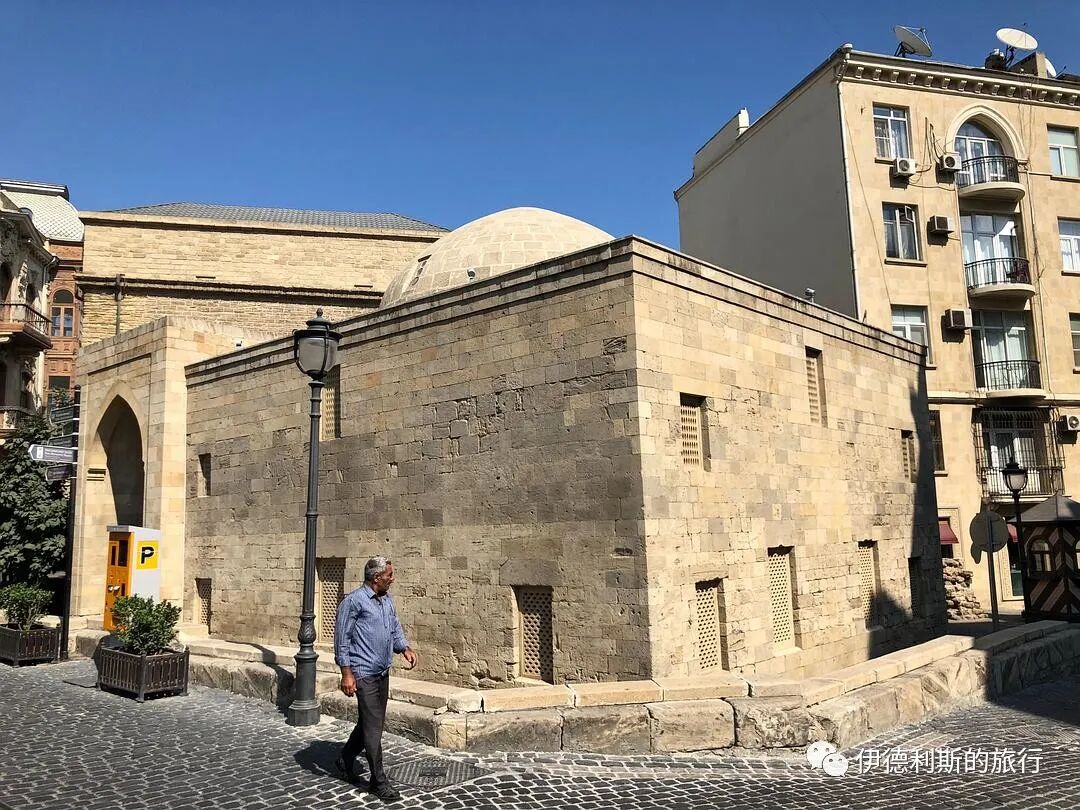
Sayyid Yahya Murtuza himself built the Sayyid Yahya Murtuza Mosque in the early 17th century. He was a well-known local imam and was buried here after his death. During the Soviet era, it became a carpentry workshop. After the 1990s, it resumed religious activities and is now part of the Juma Mosque.
Summary: Baku Old City — Historic Buildings is presented here as a firsthand travel account in clear English, beginning with this scene: Baku's Old City, also known as İçərişəhər, is the oldest part of Azerbaijan's capital. UNESCO listed it as a World Heritage site in 2000. The account keeps its focus on Baku Old City, Azerbaijan Travel, Historic Buildings while preserving the names, places, food, and historical details from the Chinese source.
Baku's Old City, also known as İçərişəhər, is the oldest part of Azerbaijan's capital. UNESCO listed it as a World Heritage site in 2000.
In the 8th century, the Abbasid Caliph appointed Arab general Yazid ibn Mazyad al-Shaybani as the governor of the Arminiya region, which covered most of the Caucasus. The Abbasid Caliphate fell into civil war in 861. Yazid's grandson, Haytham ibn Khalid, declared independence. He used the ancient Persian title Shirvanshah, and the state he founded became known as the Shirvanshah Dynasty.
In 1191, an earthquake destroyed Shamakhi, the original capital of the Shirvanshah Dynasty. The 21st Shirvanshah king, Akhsitan I, moved the capital to Baku. From then on, Baku became the capital of the Shirvanshah Dynasty.
The Shirvanshah Dynasty suffered a devastating blow from the Mongol cavalry in 1235. It then became a vassal state of the Mongol and Timurid dynasties during the 13th and 14th centuries. After Timur the Great died in 1405, the Shirvanshah Dynasty became independent again. It reached its peak during the reign of the 34th king, Khalilullah I (1418-1465). The Palace of the Shirvanshahs in Baku's Old City was built during this time.
In 1501, the Persian Safavid Dynasty invaded the Shirvanshah Dynasty and eventually captured Baku. After this, the Shirvanshah Dynasty became a vassal of the Safavid Dynasty until it was officially annexed in 1538.
Baku was then briefly controlled by the Ottomans and Imperial Russia, but Iran quickly took it back. In the 18th century, local tribal leaders established the Baku Khanate (1747-1806). Russia eventually occupied it in 1806.
Baku held an important place in ancient Eurasian trade. It was a key hub in the Eurasian trade network, and many merchants and travelers from India and Central Asia stopped here. Today, this ancient city has a palace complex from the Shirvanshah Dynasty, relatively complete ancient city walls, over a dozen old mosques built between the 11th and 18th centuries, four large caravanserais (ancient inns) that saw ancient trade, and several traditional bathhouses. It is well worth a visit.
1. The Palace of the Shirvanshahs: Mostly 15th Century
The Palace of the Shirvanshahs (Şirvanşahlar sarayı) was built after the Shirvanshah Dynasty (Şirvanşah) moved its capital to Baku in 1191. Most of the existing buildings were constructed in the 15th century by the 34th ruler, I Xəlilullah (Khalilullah I, who reigned from 1418-1465). In 2000, it was added to the UNESCO World Heritage list under the name
This complex is a prime example of the Şirvan-Abşeron architectural school. This school started in the 8th century and was popular from the 11th to the 15th centuries. It is Azerbaijan's most important traditional architectural school. This school is known for combining smooth stone facades with delicate decorative carvings. It specialized in building heavy, defensive structures.
1. The Palace Building
The palace building (Şirvanşahların saray binası) is the oldest and most important part of the Shirvanshahs' Palace. The exact start date of the palace's construction is still unknown. We only know that it was looted in 1500 during the invasion by the Persian Safavid Dynasty. After Russia occupied Baku in 1828, the palace became the Russian army headquarters. During repairs, the Russians destroyed many valuable structures. They even planned to build a cathedral here, but this never happened.
The palace entrance is very simple. Inside, there are no stone inscriptions or complex decorations. This is a sharp contrast to the grand palaces of other Muslim dynasties from the same period. The palace has two floors and originally had 52 rooms. The most important room on the second floor is the central octagonal hall. This is also the oldest part of the palace and was likely the king's reception hall. The second floor also has the sleeping quarters for the king and his family. From the windows, you can see beautiful sea views of Baku Bay.
Postcards related to Baku's Old City are on display in the palace.
The palace displays 18th-century stained-glass windowpanes from Sheki, a city in northwestern Azerbaijan. They were made precisely to size, so they did not use nails or glue.
Photos from the palace's renovation in 2013 show the building before and after the work.
2. Bayil Stones
Bayil Castle, known as the The Great Baku Earthquake of 1306 submerged Bayil Castle in the Caspian Sea. It only resurfaced in the early 18th century when the Caspian Sea receded.
Between 1939 and 1969, the Institute of History of the Azerbaijan Academy of Sciences excavated over 700 inscribed stones from Bayil Castle. These are now kept in the courtyard of the Shirvanshahs' Palace. These stones are important for studying the history and culture of the Shirvanshah Dynasty. Historians found the names of 15 Shirvanshah kings on them, along with a portrait of one king.
The inscriptions also show that the castle was called
The National Museum of History of Azerbaijan displays Bayil stones with animal and human figures.
3. Divankhana
The Divankhana is in a separate courtyard on the north side of the palace. It has arcades on three sides and a pavilion-style building in the center. Shirvanshah King Farrukh Yasar (who reigned from 1465-1500) ordered the construction of the Divankhana. People say it was used as a court, a reception hall, or a mausoleum, but there is no definite proof.
The Divankhana's gate is a classic example of Azerbaijan's Şirvan-Abşeron architectural school. The gate is decorated with fig and grape leaf carvings. On each side, a hexagonal geometric Arabic carving shows the Shahada (Islamic creed). Inside, the walls have carvings of Quranic verses.
4. Seyid Yahya Bakuvi Mausoleum
The Seyid Yahya Bakuvi Mausoleum (Türbəsi) was built between 1457 and 1458. Seyid Yahya Bakuvi (1403-1462), the person buried there, was a court scholar of the Shirvanshah Dynasty. He was also the second spiritual leader and a key promoter of the famous Sufi Khalwati order. He was a descendant of Musa al-Kadhim, the seventh Shia Imam.
Yahya practiced Sufism in Shamakhi, Azerbaijan, in his early years. He later came to the Shirvanshah court in Baku. In Baku, he had tens of thousands of followers. Fifteen of Yahya's works are now kept in Istanbul, Manisa, and Konya, Turkey. These works are valuable for Sufi philosophy and important for astronomy and mathematics.
Yahya's mausoleum has octagonal walls and a conical roof. This is the only example of its kind in the Şirvan-Abşeron architectural school; other mausoleums in this school have domes. The mausoleum has two levels: an upper level for visiting the shrine and a lower level for the burial chamber. The plaster on the walls and the mausoleum roof is the only surviving architectural coating in the Shirvanshahs' Palace.
A mosque called Keyqubad once stood in front of the mausoleum. Yahya served as a religious teacher there. The mosque was first built in the 14th century. However, Armenian forces burned it down in 1918. Only its foundations remain today.
5. Shirvanshahs' Palace Mausoleum
An inscription on the gate of the Shirvanshahs' Palace Mausoleum (Şirvanşahlar sarayı türbəsi) states that Shirvanshah King Khalilullah I (who reigned from 1418-1465) ordered its construction for his mother and 7-year-old son between 1435 and 1436. The mausoleum building is similar to the Divankhana, another palace structure. Its gate also has complex carvings. One hexagonal carving cleverly repeats the word
Archaeological excavations in 1947 uncovered burial chambers by removing the floor. Five of these contained skeletons, while two were empty. The famous Persian scholar Muhammad Khwandamir (1475-1537) wrote in his work
Badr Shirvani (1387-1450), a famous Persian poet of the Shirvanshah Dynasty, recorded the names of the tomb occupants in his writings:
The first was King Khalilullah I's 6-7-year-old son, who died in 1432.
The second was King Khalilullah I's mother, Bika, who died between 1435 and 1436.
The third was Khanika khanim, the wife of Shahrukh of Shirvan (who reigned from 1535-1538), the last Shirvanshah king.
The fourth was King Khalilullah I's two-year-old son, Sheikh Salah, who died in 1445. Porcelain and a large candelabra were found in his tomb.
The fifth was 19-year-old Ibrahim II, who died in 1432. The tomb contained silk remnants, blue beads, and a gold needle with turquoise and six sapphires.
On the other side of the entrance is the two-meter-high tomb of Khalilullah I himself. A comb and a gold earring were found inside.
6. Palace Mosque
Shirvanshah King Khalilullah I ordered the construction of the Palace Mosque between 1441 and 1442. In 1723, Tsar Peter I's army shelled Baku from the Caspian Sea, damaging the mosque's northeast facade. In 1918, artillery shelled the mosque's minaret.
The mosque's main prayer hall is small, only 70 square meters. This means it could not hold large congregational prayers. It was generally used only by people from the palace or nearby. The mosque has two main gates. One faces the palace mausoleum directly. The other is a side gate, used only by the Shirvanshah king and his family.
The cylindrical minaret in the mosque's northeast corner has a balcony supported by a stalactite cornice. You can reach it by a spiral stone staircase inside the tower.
7. Palace Bathhouse
The palace bathhouse is underground, at the lowest part of the palace. This kept the temperature stable. Over time, it was completely forgotten until it was accidentally discovered in 1939. It was partly cleaned in 1953, and some of the pools were later restored.
Water entering the baths flowed from a reservoir near the walls to the boiler room. Then, it went through special pipes to each room. In one corner of the bathhouse is a large domed room and two smaller rooms. These tiled rooms were likely reserved for the king.
2. Maiden Tower
The Maiden Tower (Qız qalası) is one of Baku Old City's landmarks. Like the Shirvanshahs' Palace, it is on the UNESCO World Heritage list.
There is no final conclusion about the Maiden Tower's construction. Most people believe the lower part was built between the 4th and 6th centuries, and the upper part in the 12th century. People guess that the Maiden Tower was first a Zoroastrian mosque during the Sasanian period. It was rebuilt in the 12th century. One view is that the rebuilt Maiden Tower was used for astronomical observations. Another view is that, based on its design, the Maiden Tower should be a defensive tower. Its walls are up to 5 meters thick, its internal staircase is easy to defend, and a well goes straight to the third floor. Russia reinforced the tower during its rule in 1806. Archaeological excavations in 1962-1963 showed that the Maiden Tower was built on a huge rock sloping towards the Caspian Sea. They also found a 14-meter-long wooden beam at its base.
Up to 20 legends surround the Maiden Tower. The most famous tells of a maiden who saved the people of Baku from slave owners. This epic shows Azerbaijan's Zoroastrian beliefs and cultural roots. In 1940, composer Afrasiyab Badalbeyli created Azerbaijan's first ballet,
3. Baku City Walls
Shirvanshah King Manuchohr III (who reigned from 1120-1160) ordered the construction of the Baku City Walls (Bakı qalası) between 1138 and 1139. Shirvanshah King Akhsitan I (who reigned from 1160-1197) later added outer walls. In 1865, Russia ordered the demolition of the city walls along the Caspian Sea. Between 1883 and 1888, all outer walls were also torn down. In 1910, the mayor at the time banned the demolition of ancient castle remains. He also partly restored the Baku City Walls.
The Double Gates (Qoşa Qala Qapısıdır) are the main city gates of Baku Old City. They are 8-10 meters high and 3-3.5 meters wide. The gates have carvings of a bull's head and a lion, symbols of the city. Historians believe the bull represents a leader, and the lion is a protector.
In 1954, one of the towers on Baku's north wall collapsed. Inside, a 12th-century Arabic inscription written in Kufic script was found. It is now kept in the Azerbaijan History Museum. The inscription states that Shirvanshah King Manuchohr III ordered the construction of the Baku City Walls.
North of the Baku City Walls is a rectangular tower, the Donjon, which served as an armory. The tower is 16 meters high and 2 meters thick. An underground passage leads directly to the Double Gates.
4. Mosques
1. Muhammad Mosque: 1079
The Muhammad Mosque was built between 1078 and 1079. It is the oldest surviving Islamic building in Azerbaijan. An Arabic inscription in Kufic script on the mosque's north wall shows that Muhammad ibn Abu Bakr built the mosque. Research shows that the Muhammad Mosque was built on the site of a Zoroastrian fire mosque. Muhammad was the mayor of Baku at that time.
During the Russian-Persian War in 1723, the Imperial Russian fleet shelled Baku. A cannonball hit the minaret of the Muhammad Mosque. At the same time, a strong wind suddenly blew the Russian fleet away from the city. The people of Baku believed this was Allah's protection. So, the minaret was not repaired until the mid-19th century, serving as a symbol of Baku's resistance to invasion. After this, the mosque was also called the
2. Takyeh: 13th Century
The Takyeh is a Sufi mosque built in the 13th century. It was also a place for Sufi practitioners to study and rest. Archaeological excavations took place here in 1967, and it was renovated in the 1970s.
3. Khidir Mosque: 1301
The Khidir Mosque was built in 1301. Archaeological excavations in 1988 found that this mosque was built on the site of a Zoroastrian mosque.
4. Mirza Ahmad Mosque: 1345
The Mirza Ahmad Mosque was built in 1345. The wall at its entrance has carvings of the Quran and the architect's name. It is currently out of use due to its poor condition.
5. Chin Mosque: 1376
An inscription above the entrance shows that the Chin Mosque was built between 1375 and 1376. It was repaired between 1772 and 1773. The Old City State Historical Architectural Reserve Department repaired it again in 2012.
6. Molla Ahmad Mosque: Early 14th Century
The Molla Ahmad Mosque was built in the early 14th century by Mahmud ibn Sad, a famous architect of the Şirvan-Abşeron architectural school. It is a typical example of a small community mosque from the Shirvanshah Dynasty.
7. Sheikh Ibrahim Mosque: 1416
Haji Amirshah ibn Yagub built the Sheikh Ibrahim Mosque between 1415 and 1416. Ibrahim I (who reigned from 1382-1417), the 33rd king of the Shirvanshah Dynasty, ruled Baku at that time. Because of this, the mosque is also called the Sheikh Ibrahim Mosque. In the 19th century, the mosque's facade was divided into three sections, and windows were added.
Today, it is a madrasa (Islamic school) for women.
8. Juma Mosque
The Juma Mosque is the main mosque in Baku's Old City. An inscription on the mosque wall shows that Amir Sharaf al-Din Mahmud rebuilt the mosque in 1309. The current main prayer hall was built in 1899 with donations from Baku merchant Haji Shikhlali Dadashov. It blends traditional and European architectural styles.
The clay tablet at the entrance of the main hall is called a Turbah. It symbolizes the earth. Shia Muslims place their foreheads on it during namaz (prayer).
The minaret on the north side of the main hall was built in 1437. It has a balcony supported by stalactite structures.
During the Soviet era, the Juma Mosque became a carpet museum. It resumed religious activities only in the 1990s and underwent major renovations in 2008.
A madrasa from the 15th century once stood next to the Juma Mosque. However, it was torn down in the mid-19th century for road expansion. Only one classroom remains today, which is now a souvenir shop.
9. Sayyid Yahya Murtuza Mosque: Early 17th Century
Sayyid Yahya Murtuza himself built the Sayyid Yahya Murtuza Mosque in the early 17th century. He was a well-known local imam and was buried here after his death. During the Soviet era, it became a carpentry workshop. After the 1990s, it resumed religious activities and is now part of the Juma Mosque.
Old Hui Muslim Architecture Outside Qianmen, Beijing
Articles • ali2007fr posted the article • 0 comments • 131 views • 2026-05-17 05:44
Reposted from the web
Summary: This travel note introduces Old Hui Muslim Architecture Outside Qianmen, Beijing. Qianmen Mosque was originally named Tiaozhou Hutong Mosque. It was first built in the late Ming Dynasty (early 17th century) and renovated in 1680 (the 19th year of the Kangxi reign of the Qing Dynasty) and 1795 (the. It is useful for readers interested in Beijing Hui Muslims, Historic Buildings, Muslim Heritage.
1. Qianmen Mosque
Qianmen Mosque was originally named Tiaozhou Hutong Mosque. It was first built in the late Ming Dynasty (early 17th century) and renovated in 1680 (the 19th year of the Kangxi reign of the Qing Dynasty) and 1795 (the 60th year of the Qianlong reign). It features the typical architectural style of North China mosques from the Qing Dynasty and is very well preserved. From the Qing Dynasty to the Republican era, many Hui Muslims outside Qianmen worked in the jade, jewelry, and antique calligraphy and painting industries. At that time, Qianmen Mosque was very lively, but with the changing times, the old mosque has returned to tranquility.
Chatting with Imam Wang of Qianmen Mosque. Imam Wang is a Hui Muslim from Niujie. With his authentic Xuannan Beijing accent, he talks about the history and culture of the old Beijing Hui Muslims in a very thorough and vivid way.
The beautiful goulianda (interlocking roof structure) of Qianmen Mosque, where you can still see the chiwen (roof ridge ornaments) replaced by scroll patterns.
2. Ji'antang Wang Hui Muslim Plaster Shop storefront
Ji'antang Wang Hui Muslim Plaster Shop is located on Yangmeizhu Xiejie outside Qianmen. The Wang family has been running a plaster shop since the Wanli reign of the Ming Dynasty. It has been over 400 years now and is a district-level intangible cultural heritage. In the old days, Ji'antang had the shop in the front and the workshop in the back, where several generations lived and worked. Now, various cultural relics of the old Ji'antang shop are displayed in the street-facing storefront. The most precious item is the original wooden plaque preserved on the second-floor terrace.
After the public-private partnership in 1956, Ji'antang was merged into Tongrentang. The plaster shop on Yangmeizhu Xiejie was closed and converted into staff dormitories, and the Wang family also became employees of Tongrentang. After the 1960s, the Ji'antang storefront was reclaimed. Through unremitting efforts, the Wang family successfully retrieved it in 1997. After renovation, the Wang family reopened the old storefront as a bookstore in 2004, naming it Ji'anzhai. In 2014, Yangmeizhu Xiejie became a pilot project for the Beijing Design Week. Ji'anzhai took this opportunity to upgrade into a coffee bookstore, which is still in operation today. The landlady is the 21st-generation descendant of Ji'antang.
The original shop sign (huozi) of the plaster shop, which is of great historical significance.
On December 5, 2020, our Dostani (friends/companions) had a dinner party in the small siheyuan (courtyard house) behind Ji'anzhai. We ate crab roe noodles, beef rice, chicken curry, fried chicken with fries, and salad. The environment of the small courtyard is very good and very suitable for gatherings. It was my first time eating crab roe noodles, and the portion was very generous. The landlady said it was made by manually extracting the roe and meat from 8 full-roe zha crabs.
After the Eid al-Fitr prayer in 2021, our Dostani gathered at Ji'anzhai for a buffet. The descendants of Ji'antang Wang Hui Muslim Plaster Shop fried youxiang (deep-fried flour dough) for us personally. It was super delicious, with a chewy texture and not hard at all. We also ate the old Beijing Hui Muslim specialty stewed beef and tangjuanguo (candied yam and date rolls). The beef is bought from Niujie every morning and stewed fresh, never kept overnight. Tangjuanguo is made by steaming yams with dates and raisins, then stir-frying them in sugar, which is very time-consuming to make. In addition to old Beijing specialties, there were also chicken curry, tomato pasta, fried cod fillets, fruit salad, and small cream cakes. It was a very satisfying meal!
3. Gate tower of the Halal Yipinxiang Bathhouse
The Halal Yipinxiang Bathhouse is located on Zongshu Xiejie outside Qianmen. Zongshu Xiejie was originally called Wang Guafu Xiejie and Wang Guangfu Xiejie. It belongs to the 'Eight Great Hutongs' and was famous for its 'qingyin xiaoban' (high-class singing girl houses) during the Republican era. There were also various restaurants and bathhouses, and Yipinxiang was the most famous one among them.
Peking Opera master Ma Lianliang loved to soak in Yipinxiang. Zhang Aiyi wrote in 'Lingren Wangshi' (Past Stories of Actors): 'Ma Lianliang liked to soak in baths.' As long as there was a performance in the evening, he would definitely go to the bathhouse in the afternoon. First it was 'Yipinxiang' outside Qianmen, and later he switched to 'Qinghuachi' at Xizhushikou. Later on, he often went to 'Qinghuayuan' at Bamiancao. After soaking, he would ask a professional master to give him a pedicure. This was because he wore boots all year round for performing, which caused corns. Every time he went to the bathhouse, Ma Lianliang would bring some cigarettes and tea to give to the masters and workers. "
Besides going alone, Ma Lianliang often went to Yipinxiang with the 'King of Drum Singing' Liu Baoquan. Ma Lianliang wrote about this in 'Reminiscing about Mr. Liu Baoquan', around the 1920s: 'After some time, introduced by the late famous Peking Opera actor Mr. Wang Yaoqing, I met Mr. Liu Baoquan.' We hit it off immediately and soon became close friends. For more than five years after that, we were together day and night, inseparable. Every day I would go to his home at Mianhua Jiutiao to find him. We would stroll around together, take a walk, and then go to the 'Yipinxiang' bathhouse to bathe. In the afternoon, we would go to Liangyixuan to eat together. After eating, we would go to the theater together to watch the performances of Yu Shuyan and Yang Xiaolou. This was almost our daily routine. "
Yipinxiang Bathhouse also continued to develop during the Republican era. This can be seen by comparing the 'Revised Practical Beijing Guide' published by the Commercial Press in the 12th year of the Republic of China and the 'Beijing Travel Guide' published by Xinhua Bookstore in the 30th year of the Republic of China.
In the 12th year of the Republic of China, Yipinxiang was not yet a first-class bathhouse and could only be ranked as a 'slightly inferior' second-class one, using cement basins and vat basins: 'The slightly inferior ones are Yipinxiang, Huayuan, Wenyayuan, Yuqing, Qingquan, Dongxing, Yuhua, Qihua, Xinhuachi, Baoquan, Yihe, etc.' Most of their equipment consisted of cement basins and vat basins, with some enamel basins. The bathing price varied from four jiao, three jiao, two jiao, to one jiao. Fees for back scrubbing and haircuts were two jiao or one jiao. "
By the 30th year of the Republic of China, Yipinxiang was already one of the most famous bathhouses in Beijing, on par with the Qinghuachi we are familiar with. At that time, the downstairs of the bathhouse was built with white ceramic tiles into 'warm five pools', while upstairs there were individual enamel bathtubs. At the same time, Yipinxiang had the most popular pedicure master in Beijing at the time, who specialized in treating athlete's foot: 'There are currently 123 bathhouses in the city.' In recent years, it has developed day by day with the progress of the times. Because human evolution has made everyone aware of cleanliness, those in this industry also know how to adapt to the times and make improvements. Most of the pools have been changed to warm five pools, built with white ceramic tiles. The pools are wide and deep, actually surpassing those in Shanghai, Wuhan, and Nanjing. Bathtubs have also been changed from wooden to enamel, which is much cleaner and more beautiful than before. Those with the most perfect equipment, such as Qinghuayuan and Yiheyuan in the East City, Huabaoyuan and Yuhuayuan in the West City, and Qinghuachi and Yipinxiang in the Outer City, are all very prosperous. The prices are divided into official basins, elegant seats, upstairs, downstairs... The pedicure master at Yipinxiang is named Wei Wenxi, who has long been famous in this field, and all bathhouses compete to hire him. Southerners in Beijing suffering from athlete's foot all seek out Little Wei, because once he scrapes it, it feels like a heavy burden has been lifted. For this reason, Little Wei is often too busy to attend to everyone. "
In addition, according to the 'Beijing Industrial and Commercial Guide' edited by Zhengfeng Economic Society in the 28th year of the Republic of China, the owner of Yipinxiang was named Wang Houqi, a native of Wanping, Hebei (which includes the western part of Beijing, including today's Xicheng District). However, I have not been able to find more information about Wang Houqi, and I hope there will be new discoveries in the future.
4. Ma Yinglong Eye Medicine Shop storefront
In 1875 (the first year of the Guangxu reign of the Qing Dynasty), Ma Wanxing, a Hui Muslim from Dingzhou, Hebei, moved the Ma's Eye Medicine Shop from Dingzhou to Beijing and opened the 'Beijing Ma Yinglong Eye Medicine Shop' at Xiheyan, Qianmen. 'Ma Yinglong' was his father's name.
In 1923, Ma Wanxing's third son, Ma Liting, inherited the medicine shop and officially built the current Republican-style storefront at Xiheyan, Qianmen. There is a 'Ma Yinglong' plaque on the storefront, and the words 'Eye Medicine' can also be seen on the right, covered by an air conditioner. The plaque was inscribed by Ma Liang, a Beiyang warlord and a Hui Muslim from Qingyuan, Hebei (now Qingyuan District, Baoding).
After the 1930s, Ma Yinglong successively set up branches across the country and expanded sales through mail order, even exporting to Europe. After the public-private partnership in 1957, Ma Liting served as the deputy section chief of the processing department of the Beijing Medicinal Materials Company. In 1966, the whole family was sent back to their ancestral home in Dingzhou, and Beijing Ma Yinglong gradually withdrew from the historical stage.
In 1919, Ma Qishan, a cousin's grandson of Ma Wanxing, opened a Ma Yinglong branch on Hanzheng Street in Hankou, and later established the Ma Yinglong Shengji Pharmaceutical Factory. After the 1980s, it began to focus on hemorrhoid ointment, continuing the Ma Yinglong brand to this day. view all
Summary: This travel note introduces Old Hui Muslim Architecture Outside Qianmen, Beijing. Qianmen Mosque was originally named Tiaozhou Hutong Mosque. It was first built in the late Ming Dynasty (early 17th century) and renovated in 1680 (the 19th year of the Kangxi reign of the Qing Dynasty) and 1795 (the. It is useful for readers interested in Beijing Hui Muslims, Historic Buildings, Muslim Heritage.
1. Qianmen Mosque
Qianmen Mosque was originally named Tiaozhou Hutong Mosque. It was first built in the late Ming Dynasty (early 17th century) and renovated in 1680 (the 19th year of the Kangxi reign of the Qing Dynasty) and 1795 (the 60th year of the Qianlong reign). It features the typical architectural style of North China mosques from the Qing Dynasty and is very well preserved. From the Qing Dynasty to the Republican era, many Hui Muslims outside Qianmen worked in the jade, jewelry, and antique calligraphy and painting industries. At that time, Qianmen Mosque was very lively, but with the changing times, the old mosque has returned to tranquility.
Chatting with Imam Wang of Qianmen Mosque. Imam Wang is a Hui Muslim from Niujie. With his authentic Xuannan Beijing accent, he talks about the history and culture of the old Beijing Hui Muslims in a very thorough and vivid way.
The beautiful goulianda (interlocking roof structure) of Qianmen Mosque, where you can still see the chiwen (roof ridge ornaments) replaced by scroll patterns.
2. Ji'antang Wang Hui Muslim Plaster Shop storefront
Ji'antang Wang Hui Muslim Plaster Shop is located on Yangmeizhu Xiejie outside Qianmen. The Wang family has been running a plaster shop since the Wanli reign of the Ming Dynasty. It has been over 400 years now and is a district-level intangible cultural heritage. In the old days, Ji'antang had the shop in the front and the workshop in the back, where several generations lived and worked. Now, various cultural relics of the old Ji'antang shop are displayed in the street-facing storefront. The most precious item is the original wooden plaque preserved on the second-floor terrace.
After the public-private partnership in 1956, Ji'antang was merged into Tongrentang. The plaster shop on Yangmeizhu Xiejie was closed and converted into staff dormitories, and the Wang family also became employees of Tongrentang. After the 1960s, the Ji'antang storefront was reclaimed. Through unremitting efforts, the Wang family successfully retrieved it in 1997. After renovation, the Wang family reopened the old storefront as a bookstore in 2004, naming it Ji'anzhai. In 2014, Yangmeizhu Xiejie became a pilot project for the Beijing Design Week. Ji'anzhai took this opportunity to upgrade into a coffee bookstore, which is still in operation today. The landlady is the 21st-generation descendant of Ji'antang.
The original shop sign (huozi) of the plaster shop, which is of great historical significance.
On December 5, 2020, our Dostani (friends/companions) had a dinner party in the small siheyuan (courtyard house) behind Ji'anzhai. We ate crab roe noodles, beef rice, chicken curry, fried chicken with fries, and salad. The environment of the small courtyard is very good and very suitable for gatherings. It was my first time eating crab roe noodles, and the portion was very generous. The landlady said it was made by manually extracting the roe and meat from 8 full-roe zha crabs.
After the Eid al-Fitr prayer in 2021, our Dostani gathered at Ji'anzhai for a buffet. The descendants of Ji'antang Wang Hui Muslim Plaster Shop fried youxiang (deep-fried flour dough) for us personally. It was super delicious, with a chewy texture and not hard at all. We also ate the old Beijing Hui Muslim specialty stewed beef and tangjuanguo (candied yam and date rolls). The beef is bought from Niujie every morning and stewed fresh, never kept overnight. Tangjuanguo is made by steaming yams with dates and raisins, then stir-frying them in sugar, which is very time-consuming to make. In addition to old Beijing specialties, there were also chicken curry, tomato pasta, fried cod fillets, fruit salad, and small cream cakes. It was a very satisfying meal!
3. Gate tower of the Halal Yipinxiang Bathhouse
The Halal Yipinxiang Bathhouse is located on Zongshu Xiejie outside Qianmen. Zongshu Xiejie was originally called Wang Guafu Xiejie and Wang Guangfu Xiejie. It belongs to the 'Eight Great Hutongs' and was famous for its 'qingyin xiaoban' (high-class singing girl houses) during the Republican era. There were also various restaurants and bathhouses, and Yipinxiang was the most famous one among them.
Peking Opera master Ma Lianliang loved to soak in Yipinxiang. Zhang Aiyi wrote in 'Lingren Wangshi' (Past Stories of Actors): 'Ma Lianliang liked to soak in baths.' As long as there was a performance in the evening, he would definitely go to the bathhouse in the afternoon. First it was 'Yipinxiang' outside Qianmen, and later he switched to 'Qinghuachi' at Xizhushikou. Later on, he often went to 'Qinghuayuan' at Bamiancao. After soaking, he would ask a professional master to give him a pedicure. This was because he wore boots all year round for performing, which caused corns. Every time he went to the bathhouse, Ma Lianliang would bring some cigarettes and tea to give to the masters and workers. "
Besides going alone, Ma Lianliang often went to Yipinxiang with the 'King of Drum Singing' Liu Baoquan. Ma Lianliang wrote about this in 'Reminiscing about Mr. Liu Baoquan', around the 1920s: 'After some time, introduced by the late famous Peking Opera actor Mr. Wang Yaoqing, I met Mr. Liu Baoquan.' We hit it off immediately and soon became close friends. For more than five years after that, we were together day and night, inseparable. Every day I would go to his home at Mianhua Jiutiao to find him. We would stroll around together, take a walk, and then go to the 'Yipinxiang' bathhouse to bathe. In the afternoon, we would go to Liangyixuan to eat together. After eating, we would go to the theater together to watch the performances of Yu Shuyan and Yang Xiaolou. This was almost our daily routine. "
Yipinxiang Bathhouse also continued to develop during the Republican era. This can be seen by comparing the 'Revised Practical Beijing Guide' published by the Commercial Press in the 12th year of the Republic of China and the 'Beijing Travel Guide' published by Xinhua Bookstore in the 30th year of the Republic of China.
In the 12th year of the Republic of China, Yipinxiang was not yet a first-class bathhouse and could only be ranked as a 'slightly inferior' second-class one, using cement basins and vat basins: 'The slightly inferior ones are Yipinxiang, Huayuan, Wenyayuan, Yuqing, Qingquan, Dongxing, Yuhua, Qihua, Xinhuachi, Baoquan, Yihe, etc.' Most of their equipment consisted of cement basins and vat basins, with some enamel basins. The bathing price varied from four jiao, three jiao, two jiao, to one jiao. Fees for back scrubbing and haircuts were two jiao or one jiao. "
By the 30th year of the Republic of China, Yipinxiang was already one of the most famous bathhouses in Beijing, on par with the Qinghuachi we are familiar with. At that time, the downstairs of the bathhouse was built with white ceramic tiles into 'warm five pools', while upstairs there were individual enamel bathtubs. At the same time, Yipinxiang had the most popular pedicure master in Beijing at the time, who specialized in treating athlete's foot: 'There are currently 123 bathhouses in the city.' In recent years, it has developed day by day with the progress of the times. Because human evolution has made everyone aware of cleanliness, those in this industry also know how to adapt to the times and make improvements. Most of the pools have been changed to warm five pools, built with white ceramic tiles. The pools are wide and deep, actually surpassing those in Shanghai, Wuhan, and Nanjing. Bathtubs have also been changed from wooden to enamel, which is much cleaner and more beautiful than before. Those with the most perfect equipment, such as Qinghuayuan and Yiheyuan in the East City, Huabaoyuan and Yuhuayuan in the West City, and Qinghuachi and Yipinxiang in the Outer City, are all very prosperous. The prices are divided into official basins, elegant seats, upstairs, downstairs... The pedicure master at Yipinxiang is named Wei Wenxi, who has long been famous in this field, and all bathhouses compete to hire him. Southerners in Beijing suffering from athlete's foot all seek out Little Wei, because once he scrapes it, it feels like a heavy burden has been lifted. For this reason, Little Wei is often too busy to attend to everyone. "
In addition, according to the 'Beijing Industrial and Commercial Guide' edited by Zhengfeng Economic Society in the 28th year of the Republic of China, the owner of Yipinxiang was named Wang Houqi, a native of Wanping, Hebei (which includes the western part of Beijing, including today's Xicheng District). However, I have not been able to find more information about Wang Houqi, and I hope there will be new discoveries in the future.
4. Ma Yinglong Eye Medicine Shop storefront
In 1875 (the first year of the Guangxu reign of the Qing Dynasty), Ma Wanxing, a Hui Muslim from Dingzhou, Hebei, moved the Ma's Eye Medicine Shop from Dingzhou to Beijing and opened the 'Beijing Ma Yinglong Eye Medicine Shop' at Xiheyan, Qianmen. 'Ma Yinglong' was his father's name.
In 1923, Ma Wanxing's third son, Ma Liting, inherited the medicine shop and officially built the current Republican-style storefront at Xiheyan, Qianmen. There is a 'Ma Yinglong' plaque on the storefront, and the words 'Eye Medicine' can also be seen on the right, covered by an air conditioner. The plaque was inscribed by Ma Liang, a Beiyang warlord and a Hui Muslim from Qingyuan, Hebei (now Qingyuan District, Baoding).
After the 1930s, Ma Yinglong successively set up branches across the country and expanded sales through mail order, even exporting to Europe. After the public-private partnership in 1957, Ma Liting served as the deputy section chief of the processing department of the Beijing Medicinal Materials Company. In 1966, the whole family was sent back to their ancestral home in Dingzhou, and Beijing Ma Yinglong gradually withdrew from the historical stage.
In 1919, Ma Qishan, a cousin's grandson of Ma Wanxing, opened a Ma Yinglong branch on Hanzheng Street in Hankou, and later established the Ma Yinglong Shengji Pharmaceutical Factory. After the 1980s, it began to focus on hemorrhoid ointment, continuing the Ma Yinglong brand to this day. view all
Reposted from the web
Summary: This travel note introduces Old Hui Muslim Architecture Outside Qianmen, Beijing. Qianmen Mosque was originally named Tiaozhou Hutong Mosque. It was first built in the late Ming Dynasty (early 17th century) and renovated in 1680 (the 19th year of the Kangxi reign of the Qing Dynasty) and 1795 (the. It is useful for readers interested in Beijing Hui Muslims, Historic Buildings, Muslim Heritage.
1. Qianmen Mosque
Qianmen Mosque was originally named Tiaozhou Hutong Mosque. It was first built in the late Ming Dynasty (early 17th century) and renovated in 1680 (the 19th year of the Kangxi reign of the Qing Dynasty) and 1795 (the 60th year of the Qianlong reign). It features the typical architectural style of North China mosques from the Qing Dynasty and is very well preserved. From the Qing Dynasty to the Republican era, many Hui Muslims outside Qianmen worked in the jade, jewelry, and antique calligraphy and painting industries. At that time, Qianmen Mosque was very lively, but with the changing times, the old mosque has returned to tranquility.
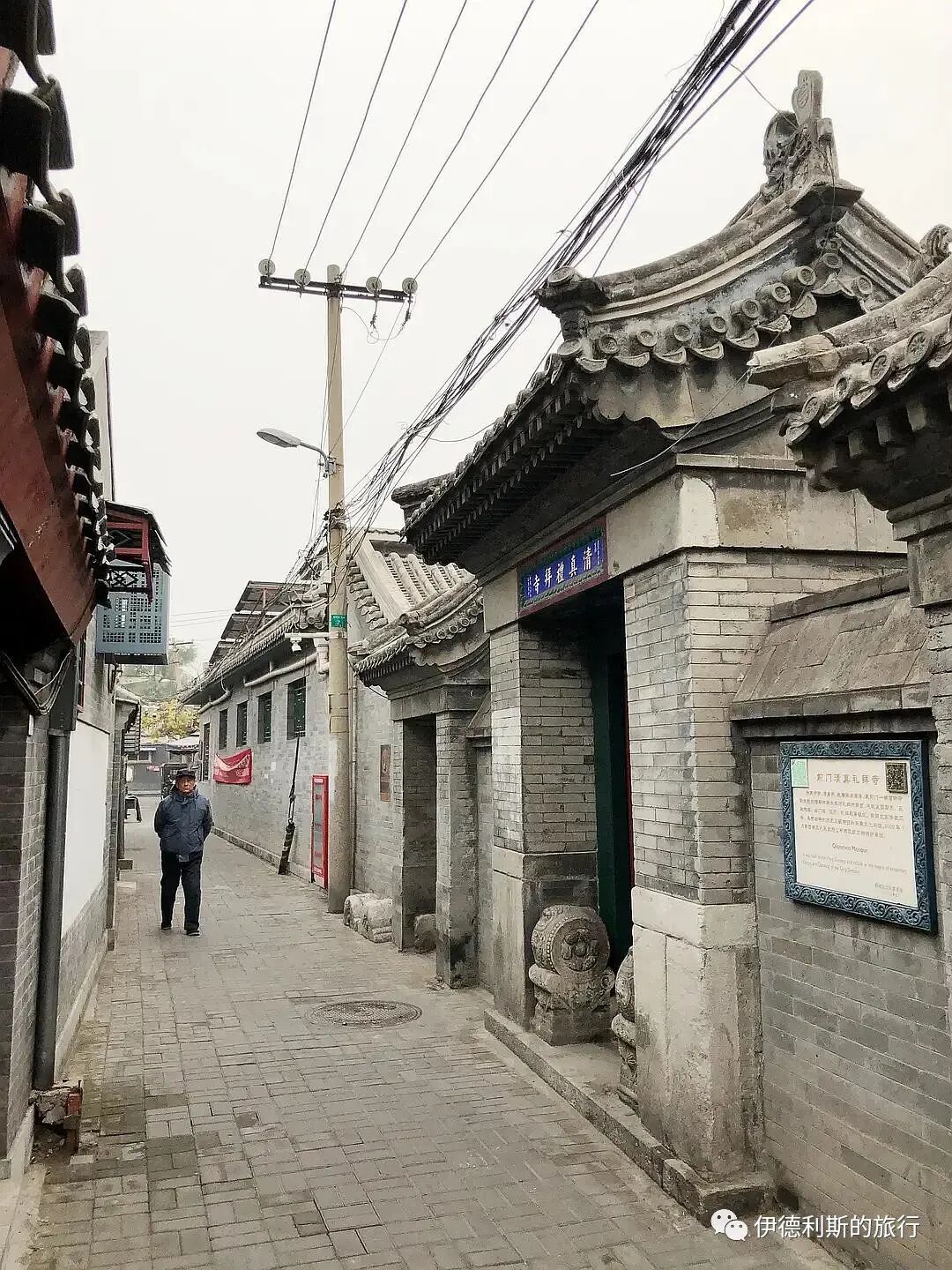
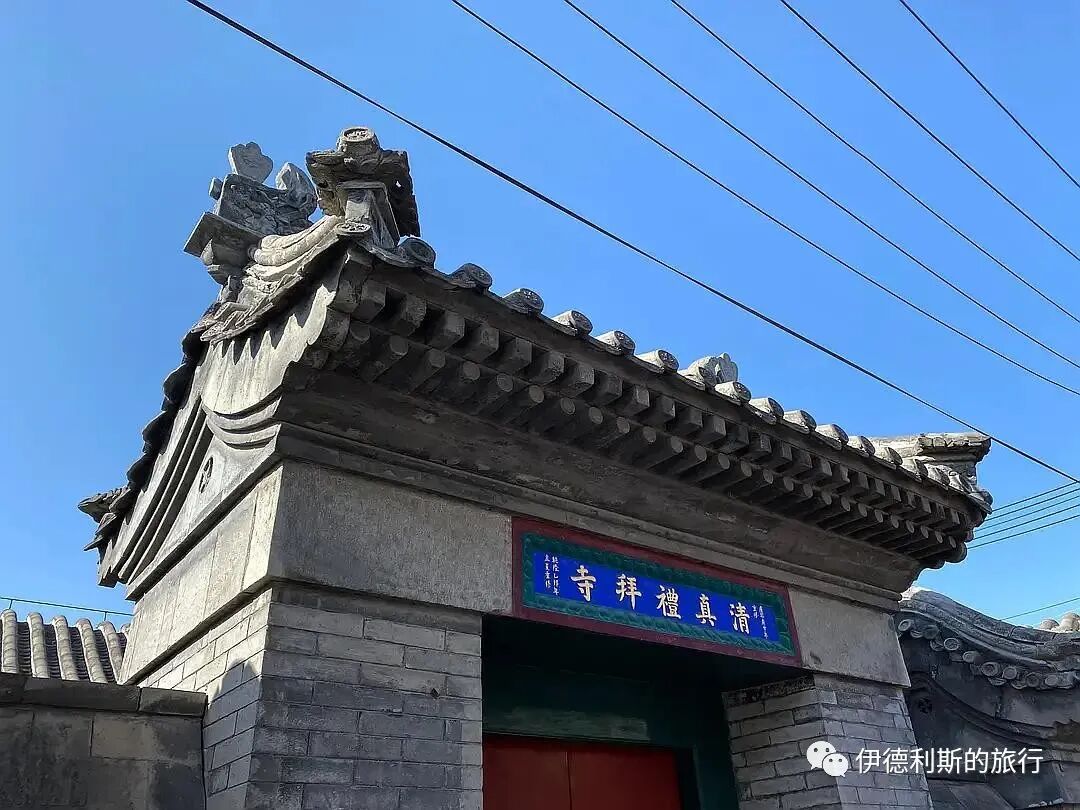
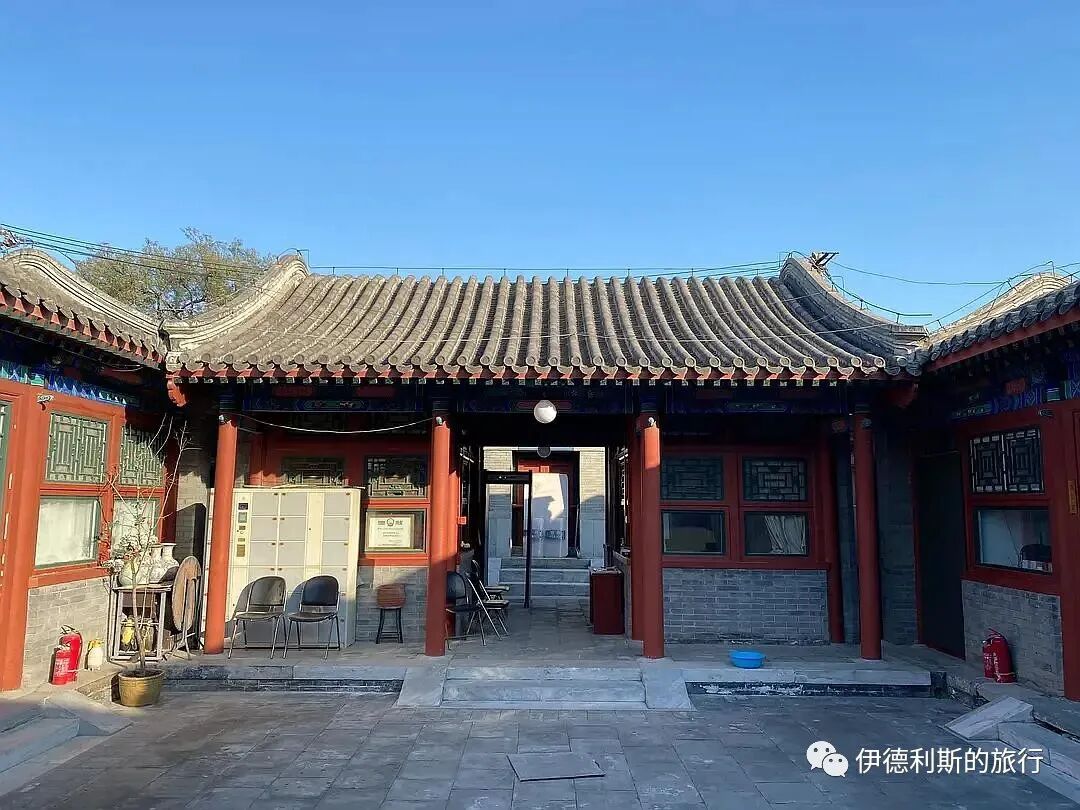
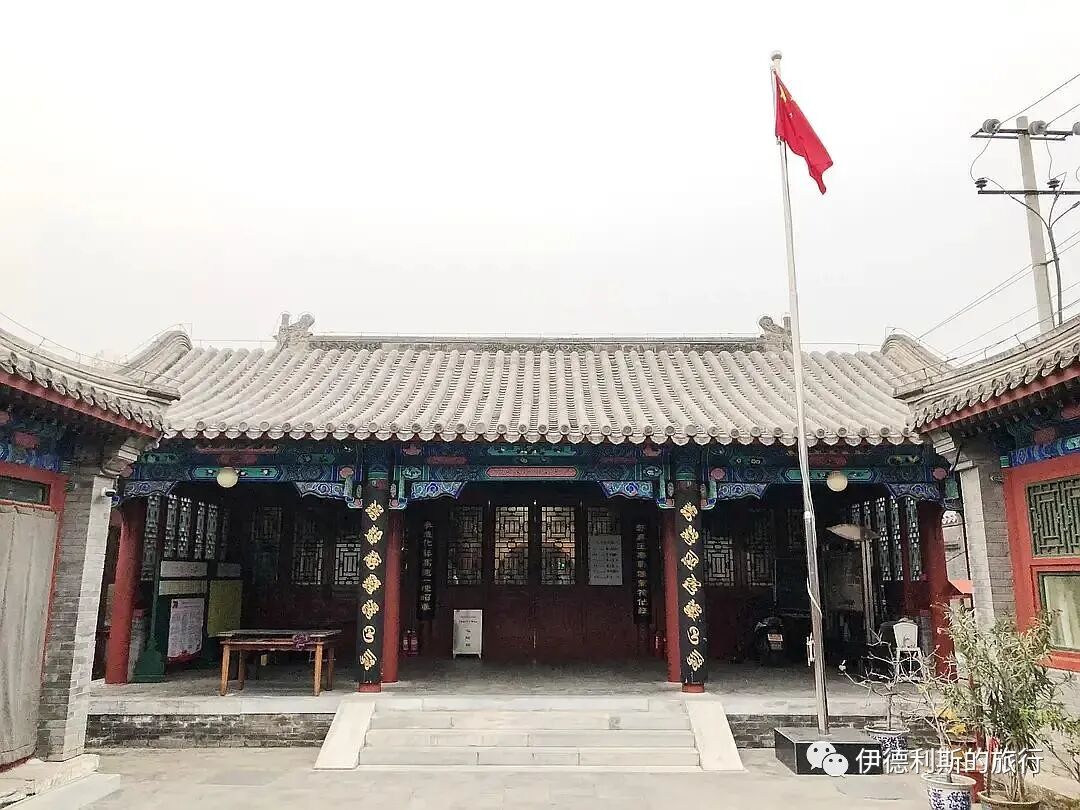
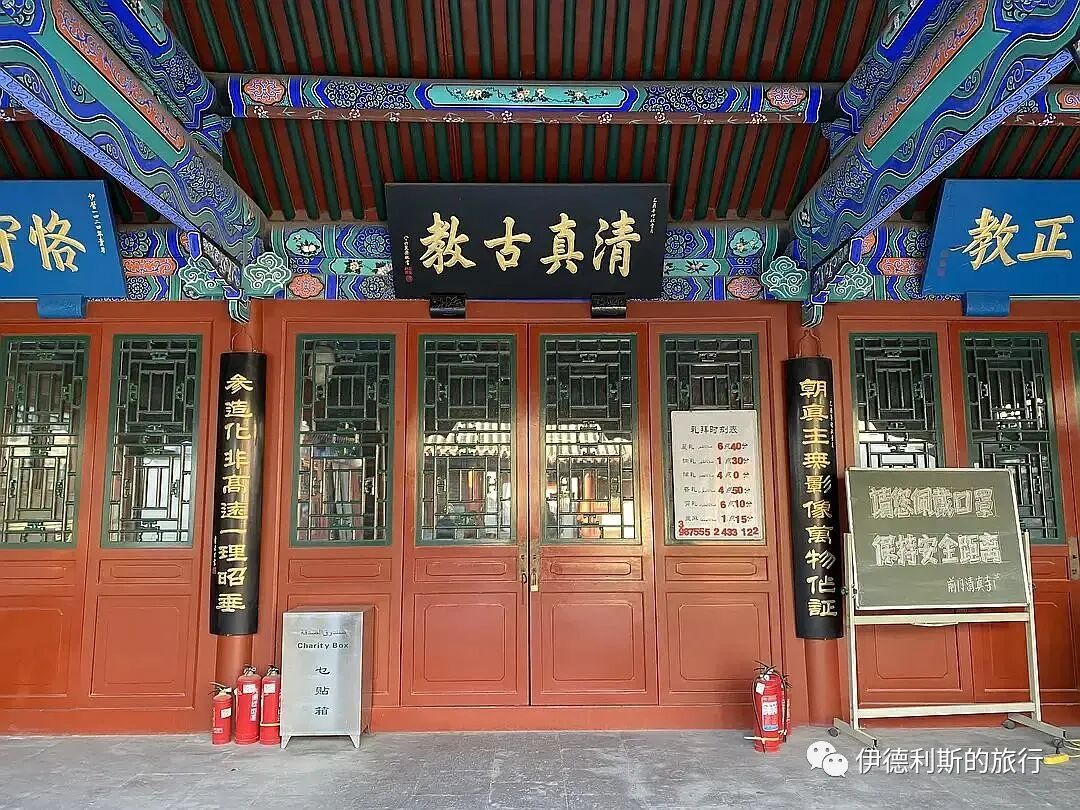
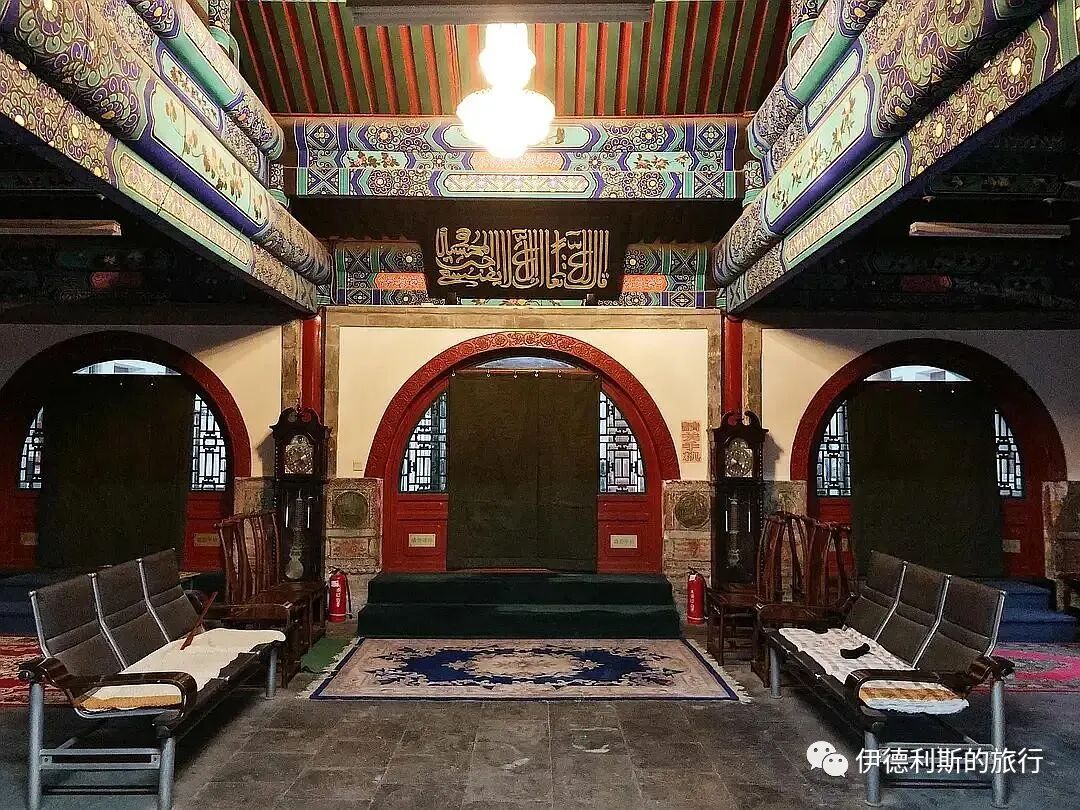
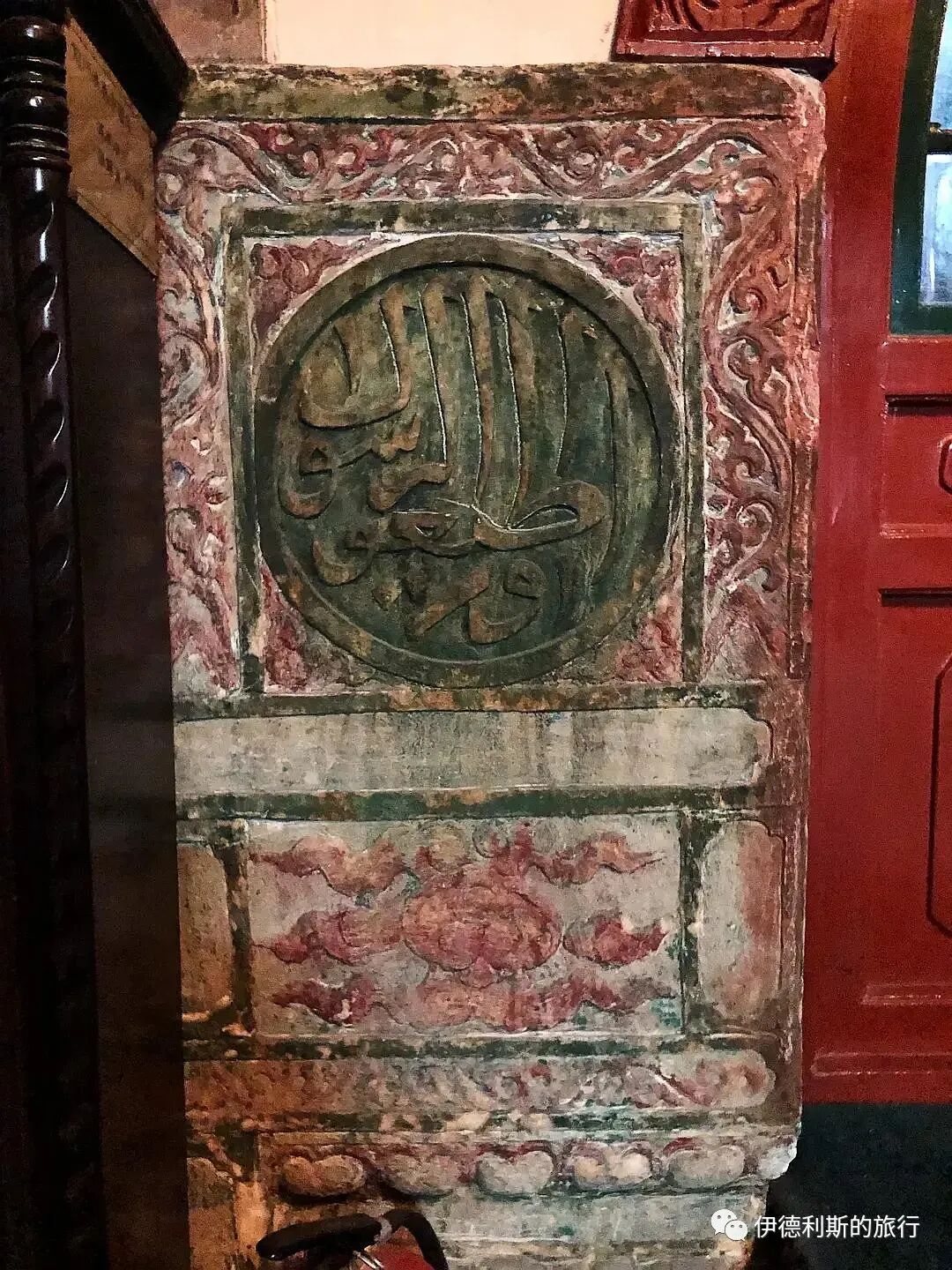
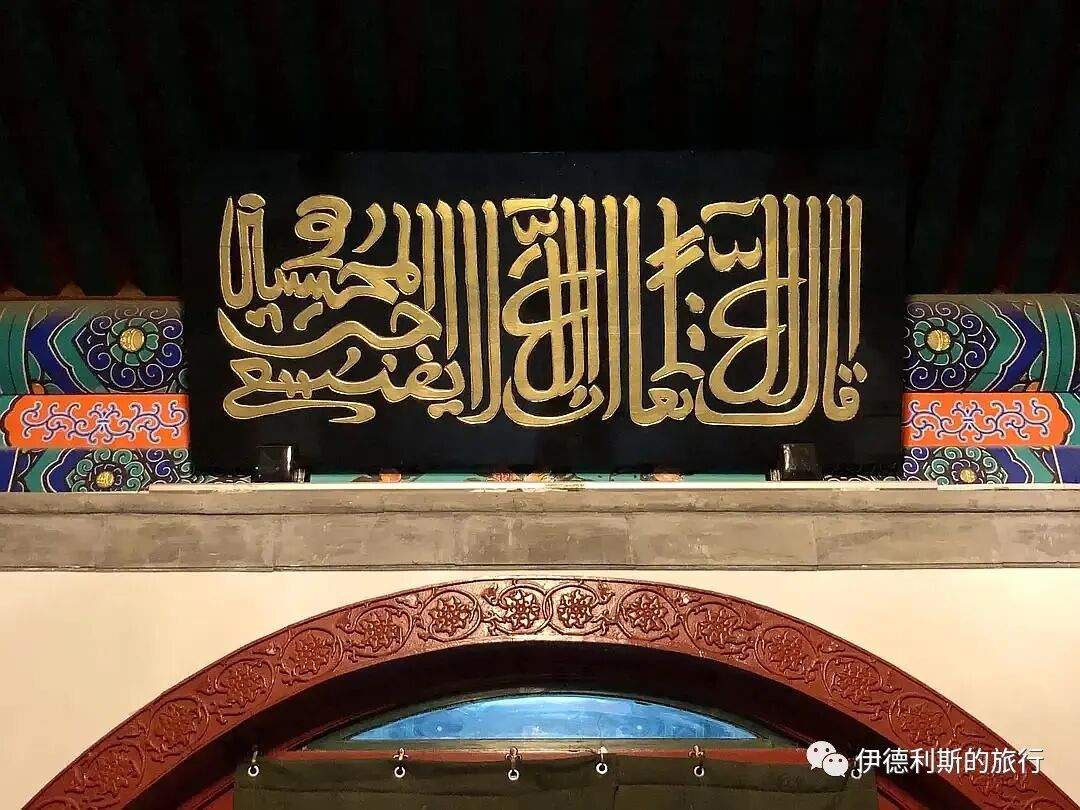
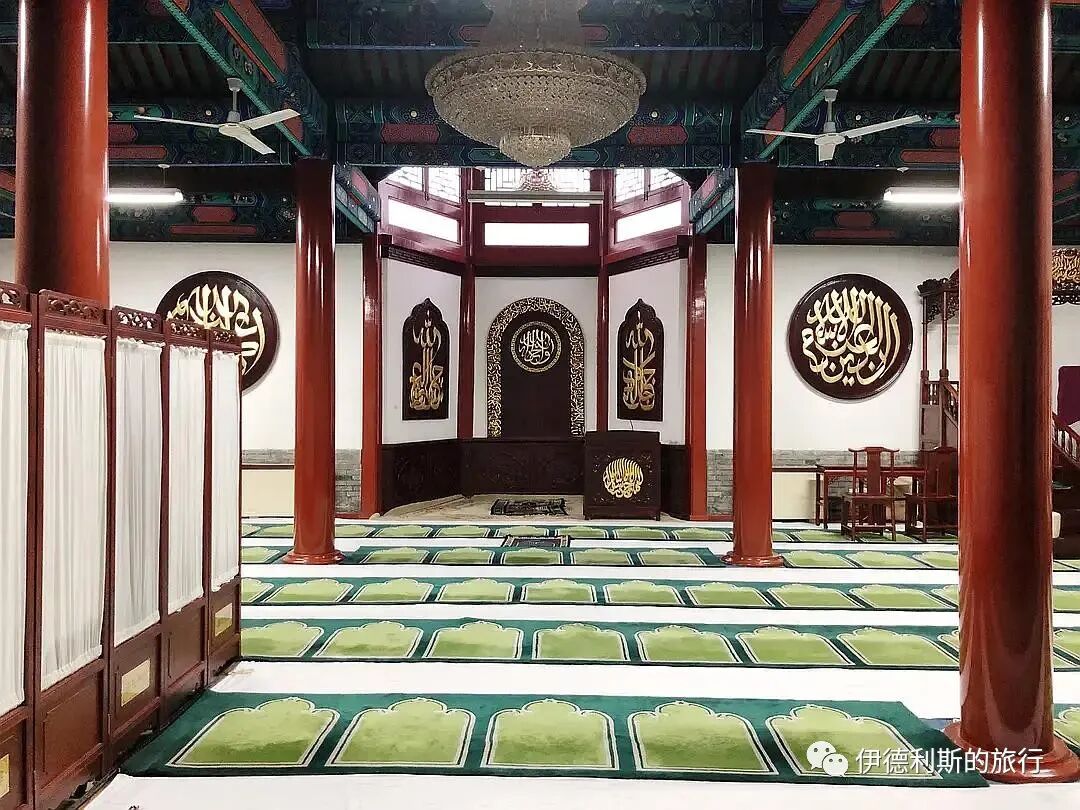
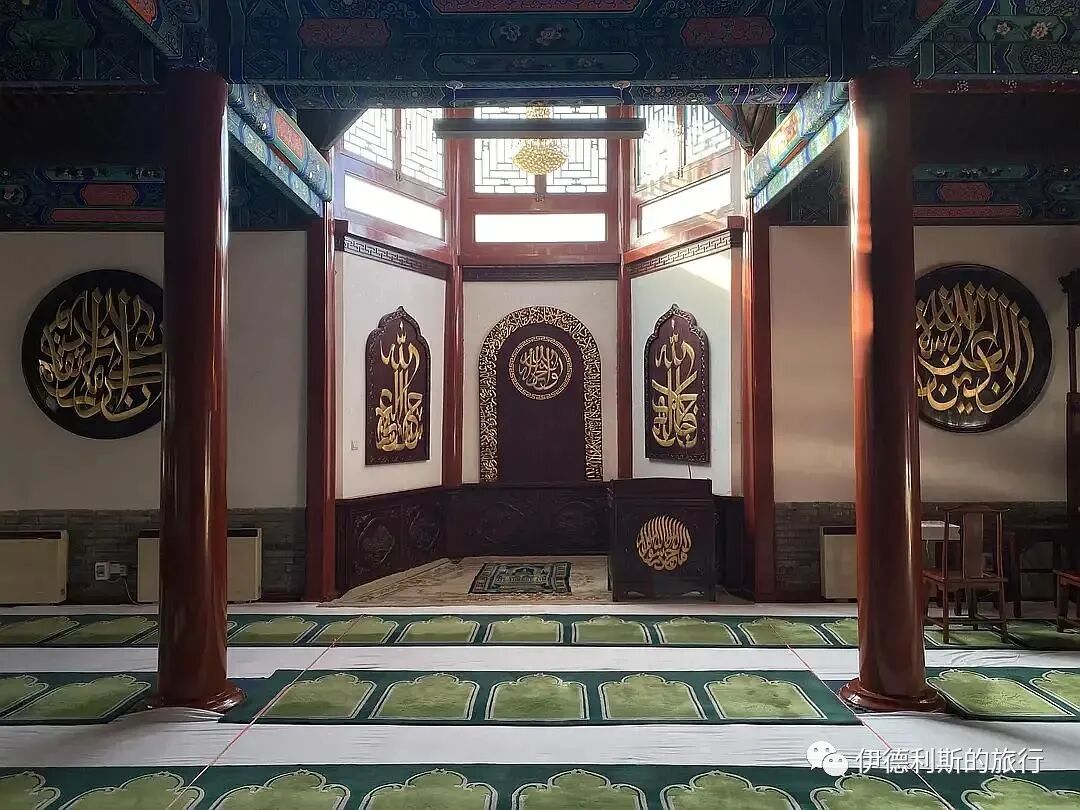
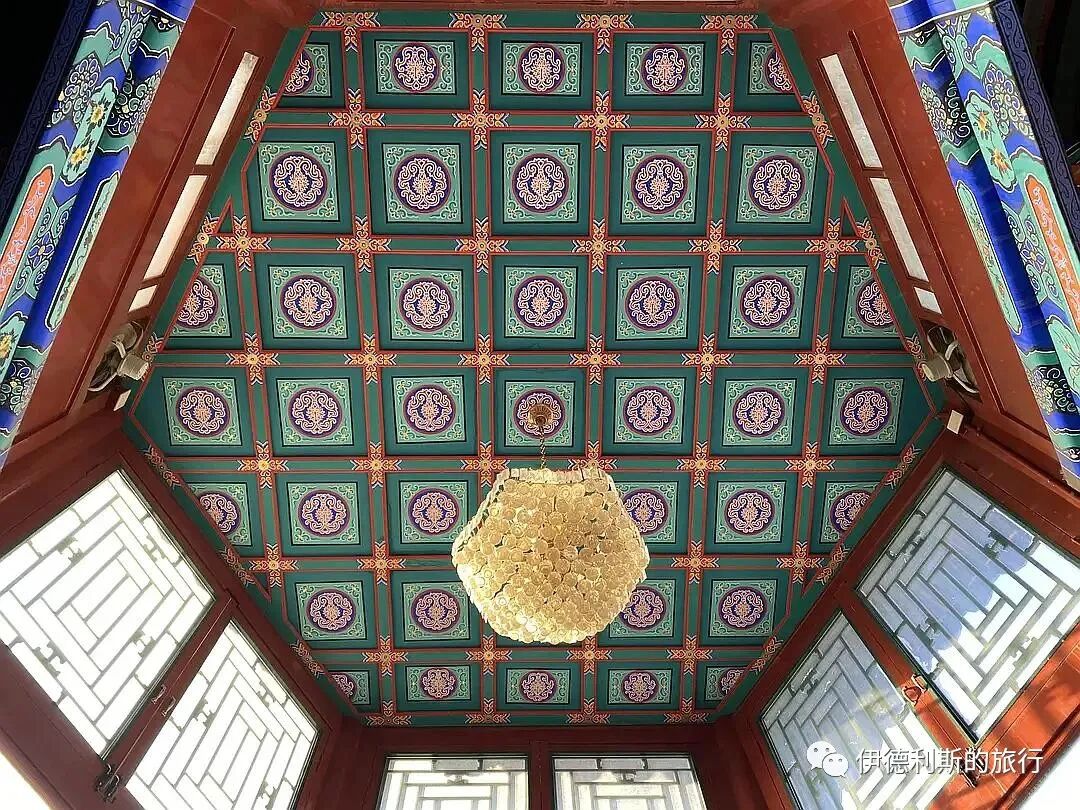
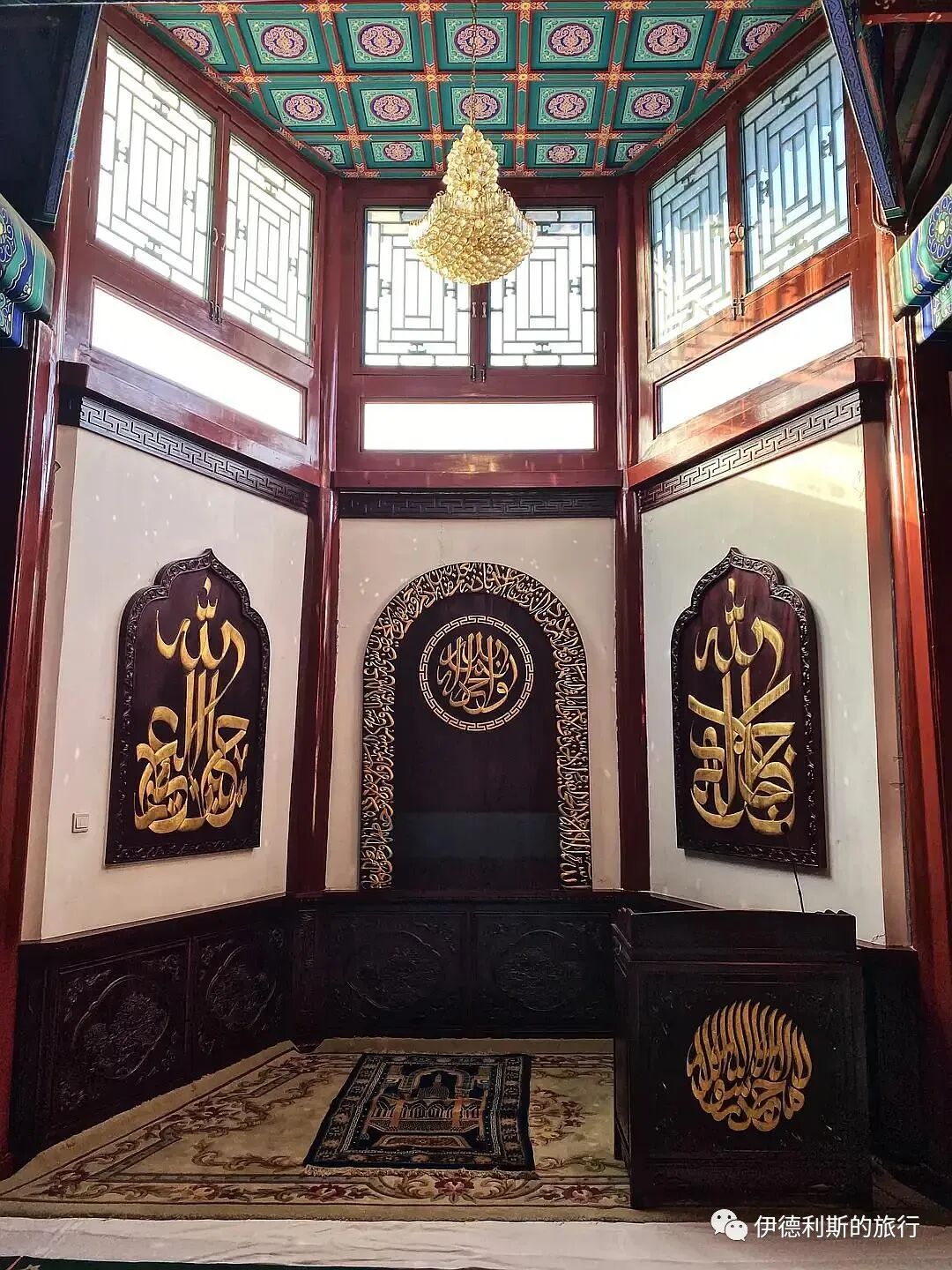
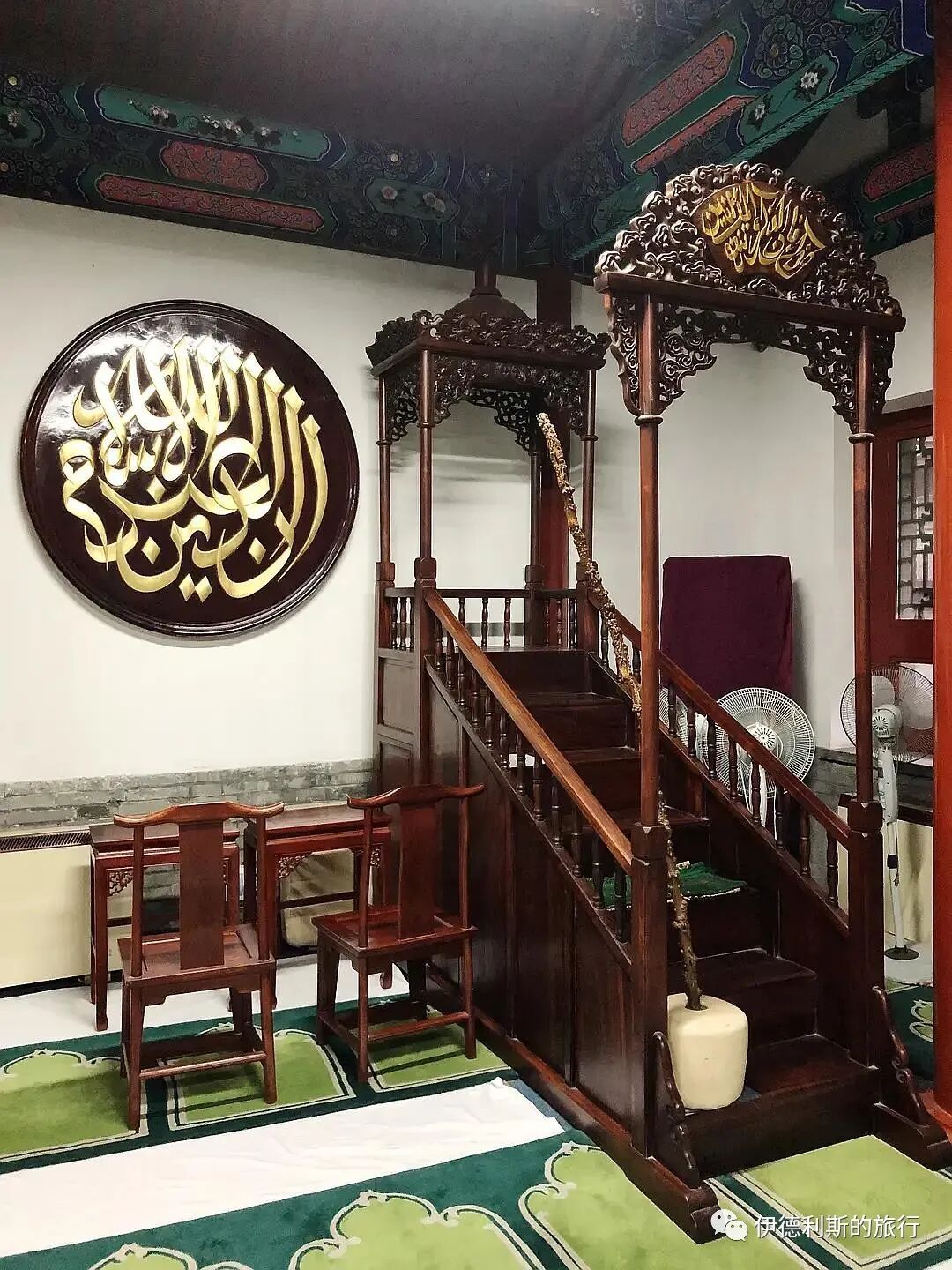
Chatting with Imam Wang of Qianmen Mosque. Imam Wang is a Hui Muslim from Niujie. With his authentic Xuannan Beijing accent, he talks about the history and culture of the old Beijing Hui Muslims in a very thorough and vivid way.
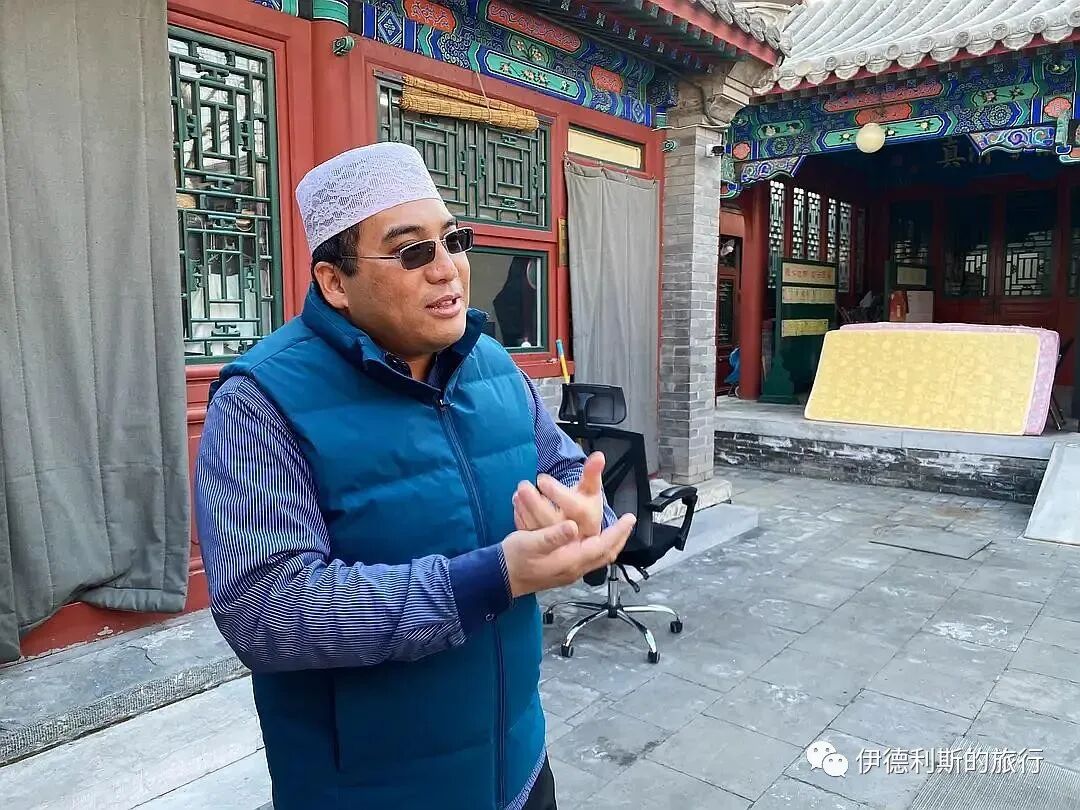
The beautiful goulianda (interlocking roof structure) of Qianmen Mosque, where you can still see the chiwen (roof ridge ornaments) replaced by scroll patterns.
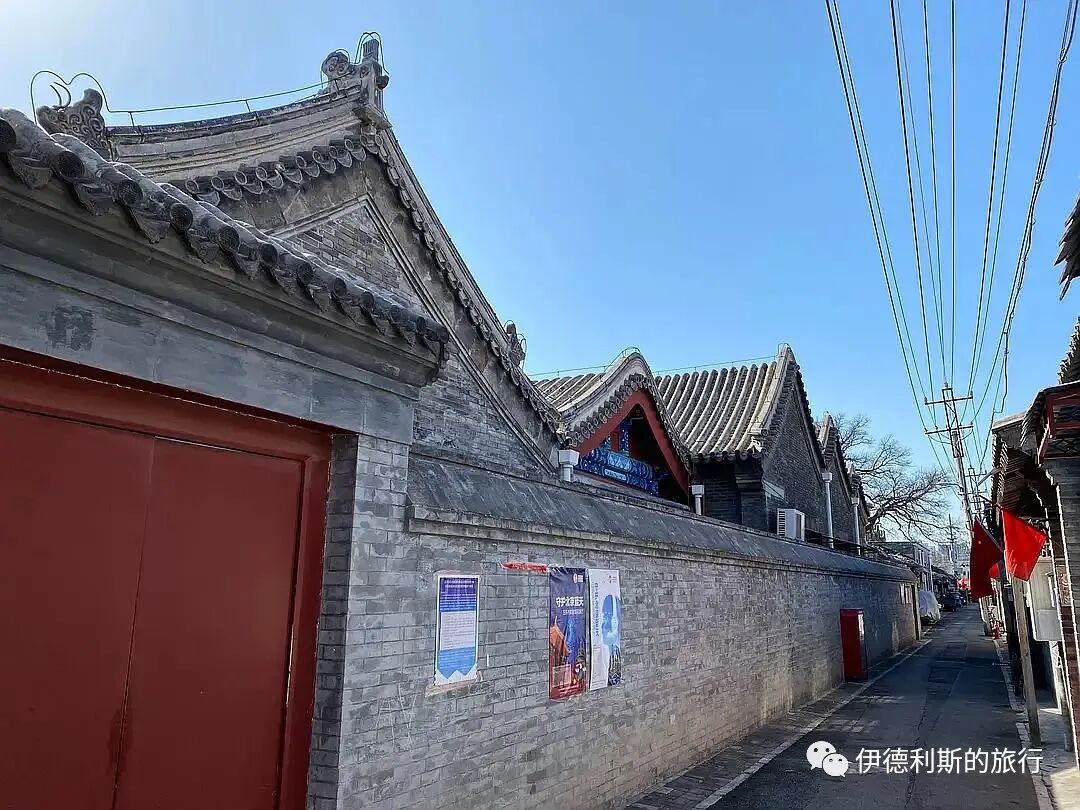
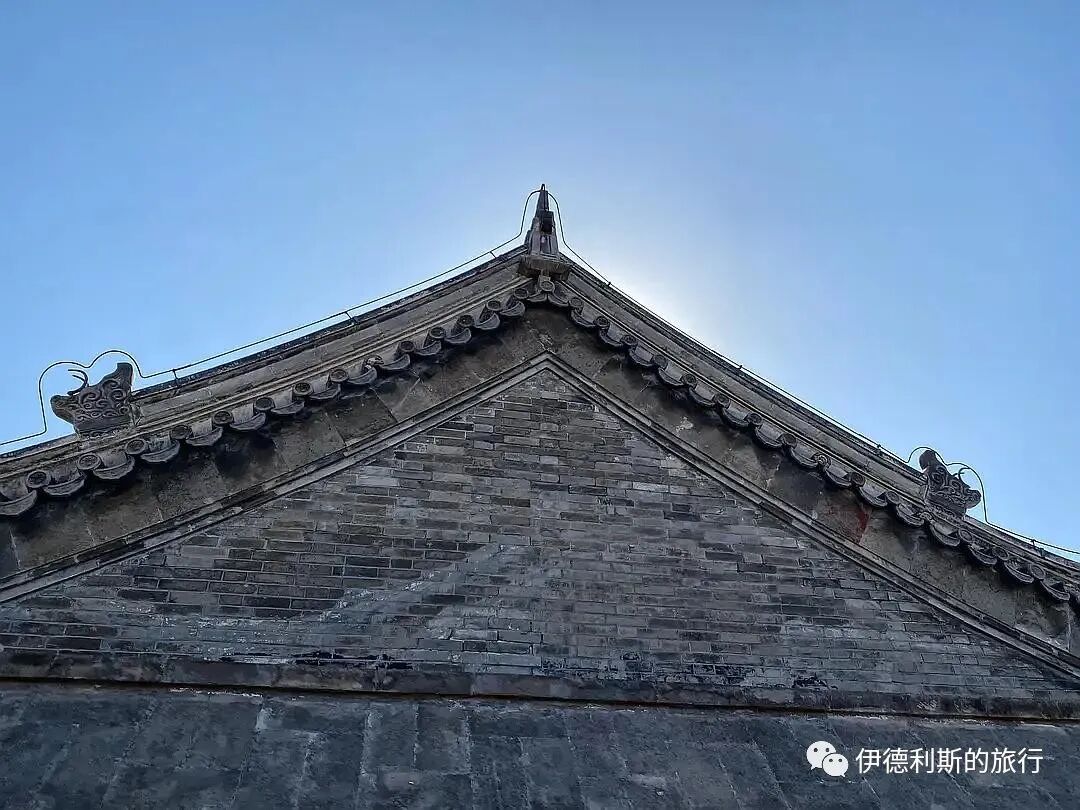
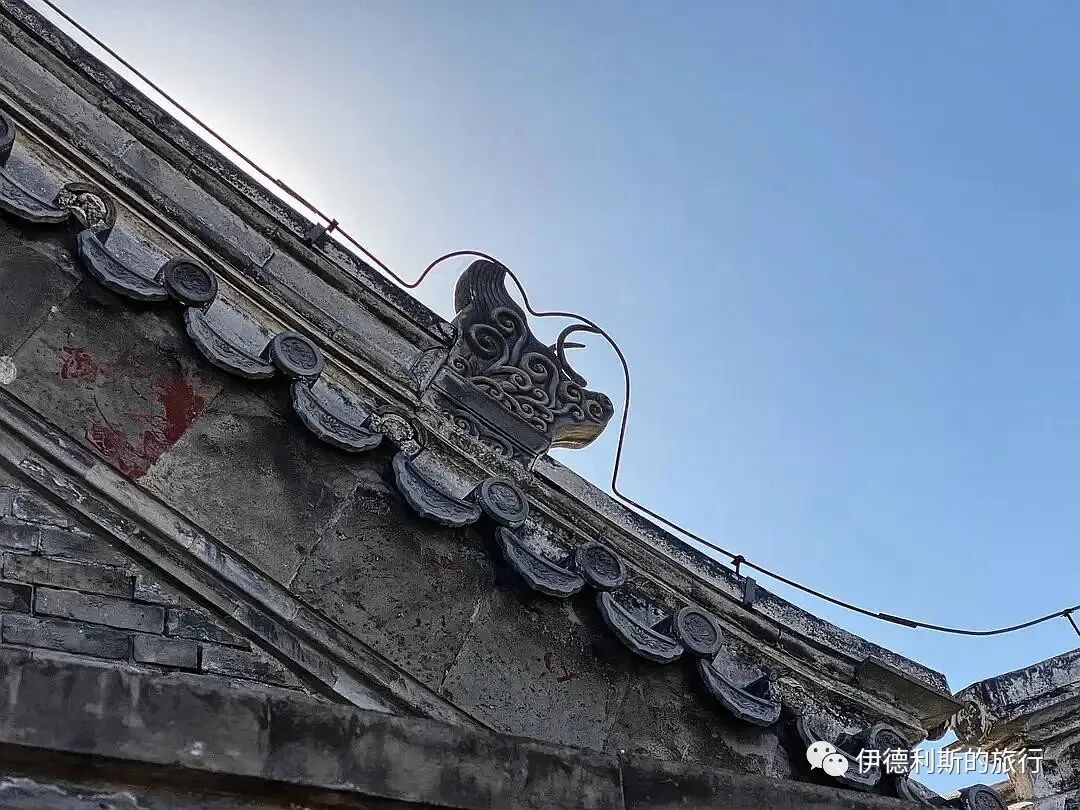
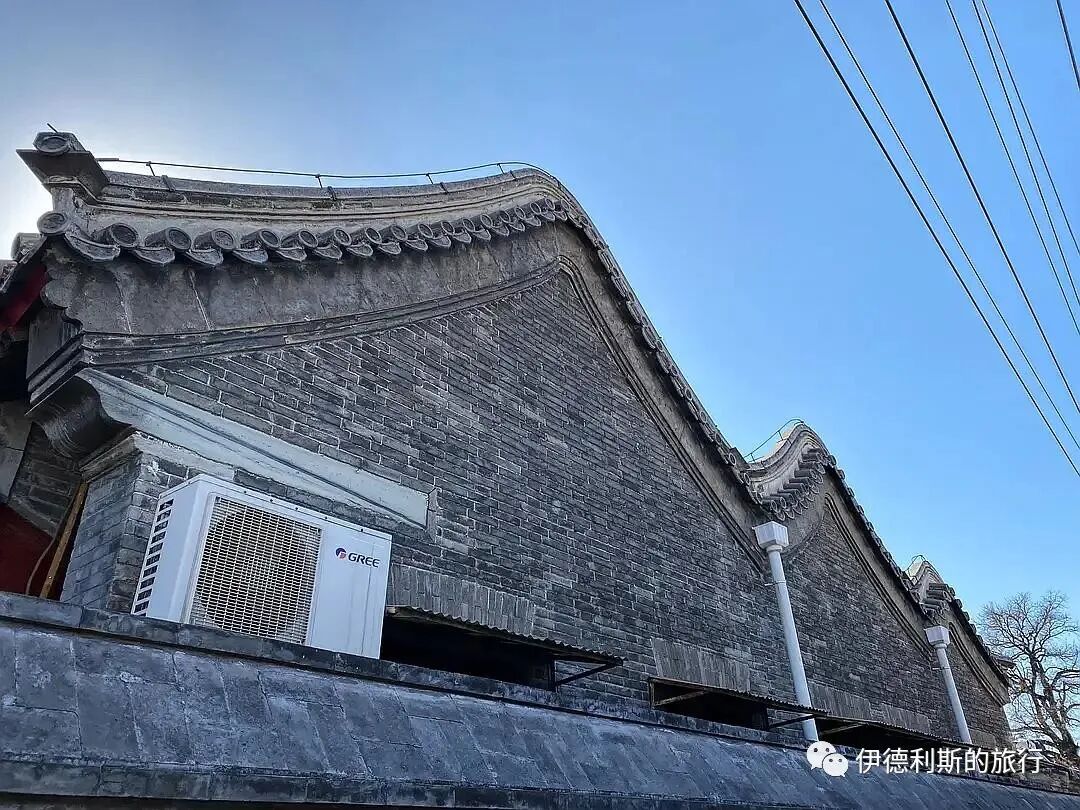
2. Ji'antang Wang Hui Muslim Plaster Shop storefront
Ji'antang Wang Hui Muslim Plaster Shop is located on Yangmeizhu Xiejie outside Qianmen. The Wang family has been running a plaster shop since the Wanli reign of the Ming Dynasty. It has been over 400 years now and is a district-level intangible cultural heritage. In the old days, Ji'antang had the shop in the front and the workshop in the back, where several generations lived and worked. Now, various cultural relics of the old Ji'antang shop are displayed in the street-facing storefront. The most precious item is the original wooden plaque preserved on the second-floor terrace.
After the public-private partnership in 1956, Ji'antang was merged into Tongrentang. The plaster shop on Yangmeizhu Xiejie was closed and converted into staff dormitories, and the Wang family also became employees of Tongrentang. After the 1960s, the Ji'antang storefront was reclaimed. Through unremitting efforts, the Wang family successfully retrieved it in 1997. After renovation, the Wang family reopened the old storefront as a bookstore in 2004, naming it Ji'anzhai. In 2014, Yangmeizhu Xiejie became a pilot project for the Beijing Design Week. Ji'anzhai took this opportunity to upgrade into a coffee bookstore, which is still in operation today. The landlady is the 21st-generation descendant of Ji'antang.
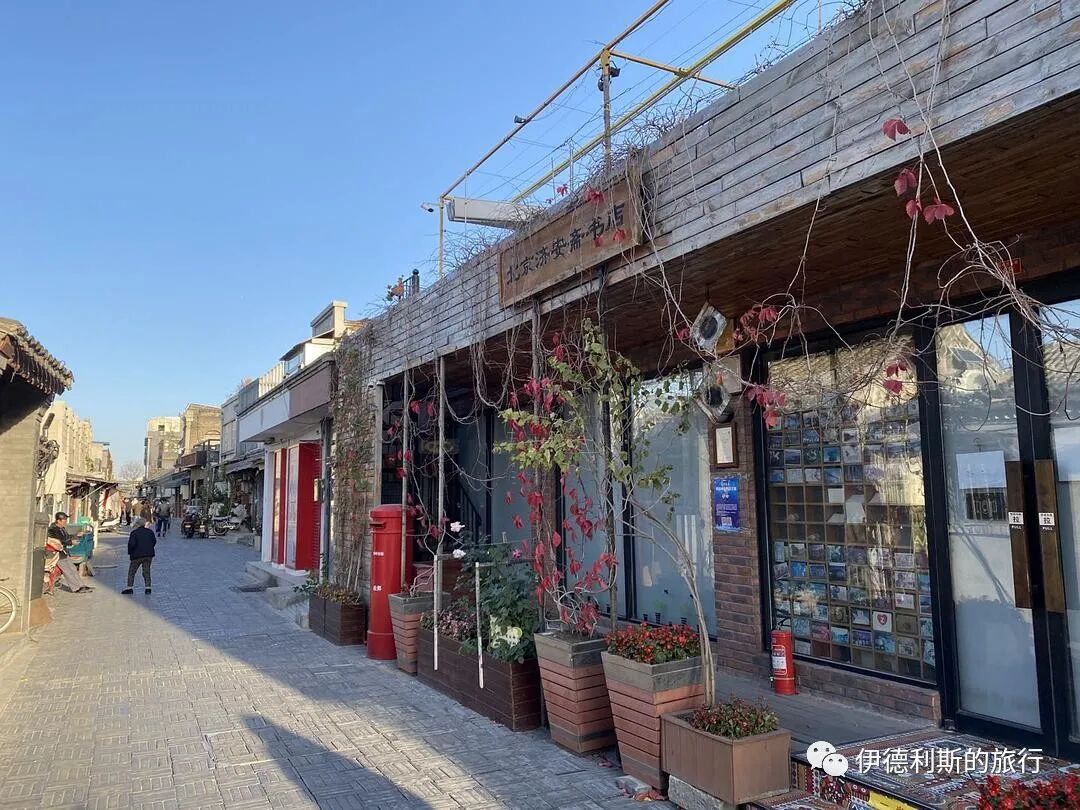
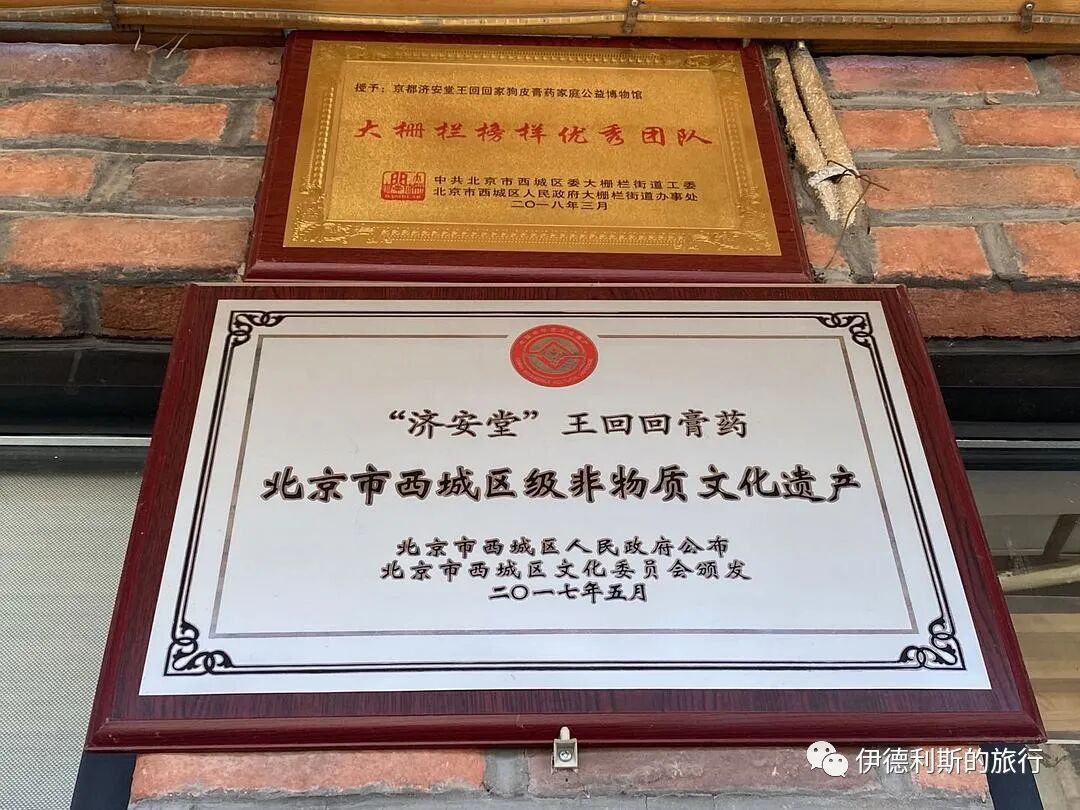
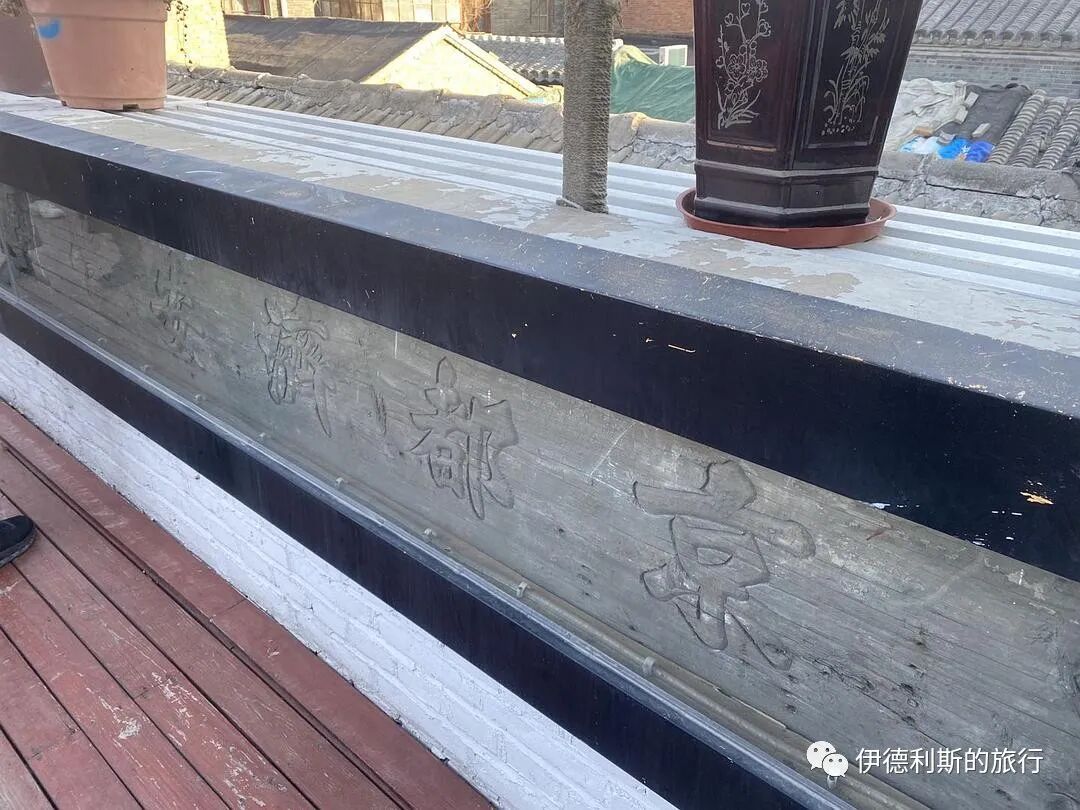
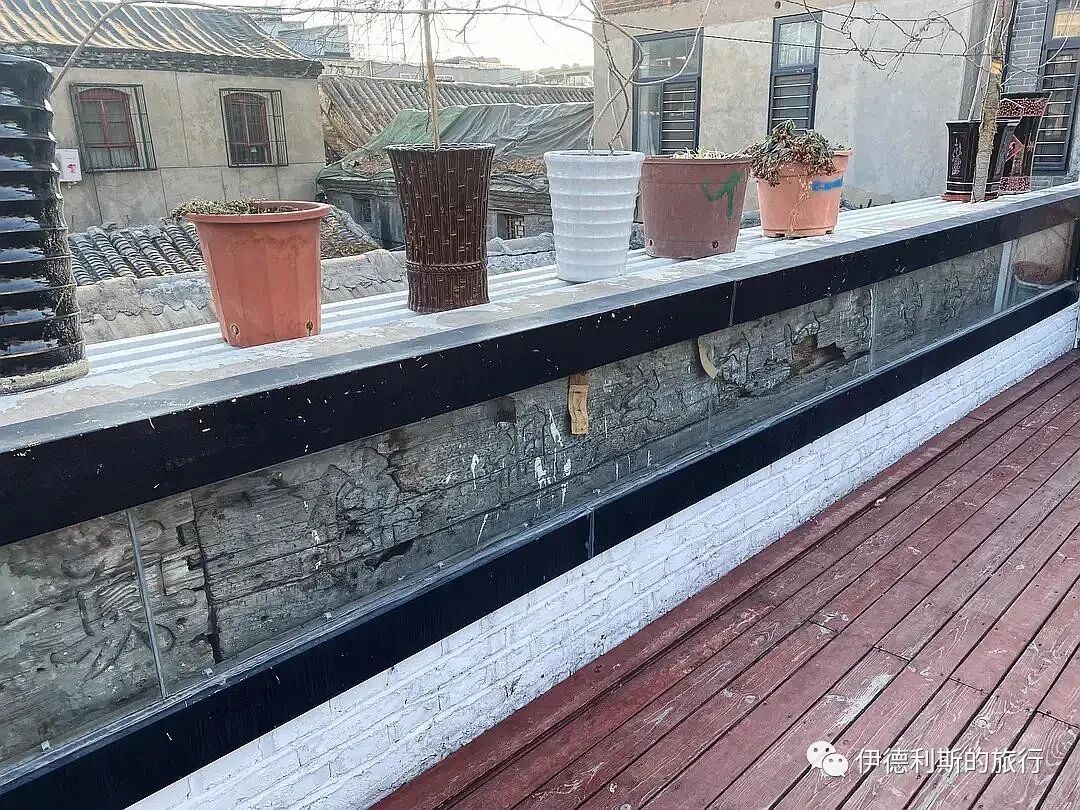
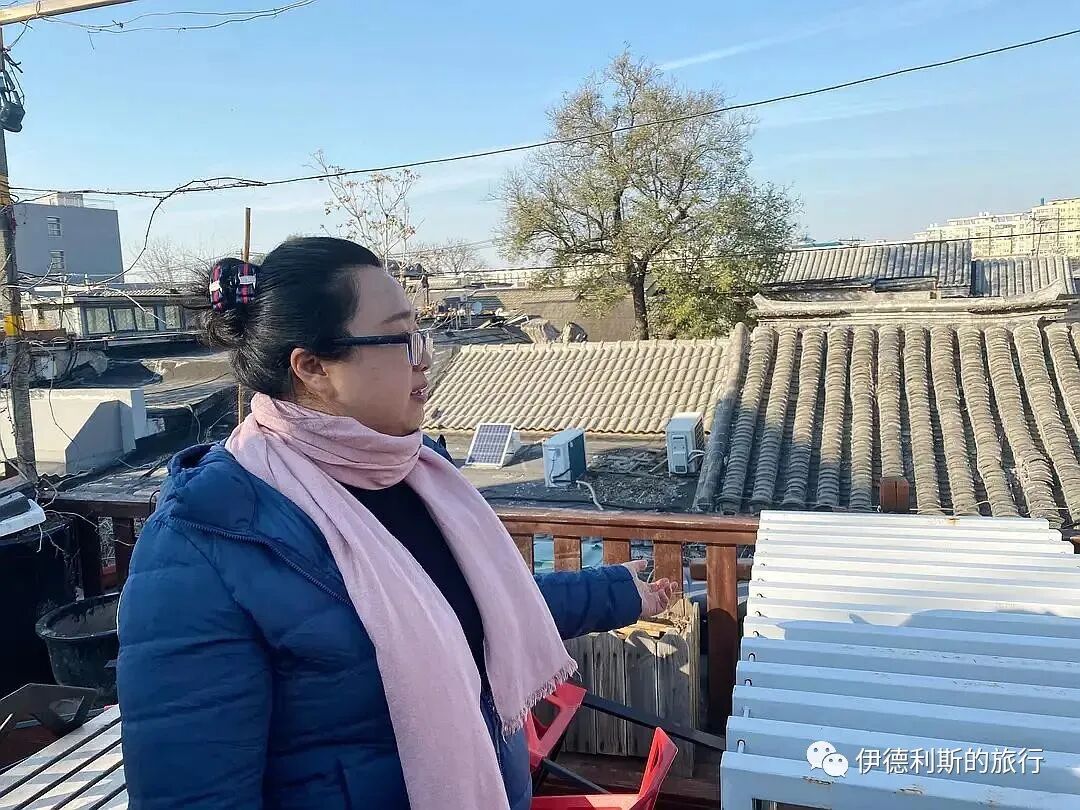
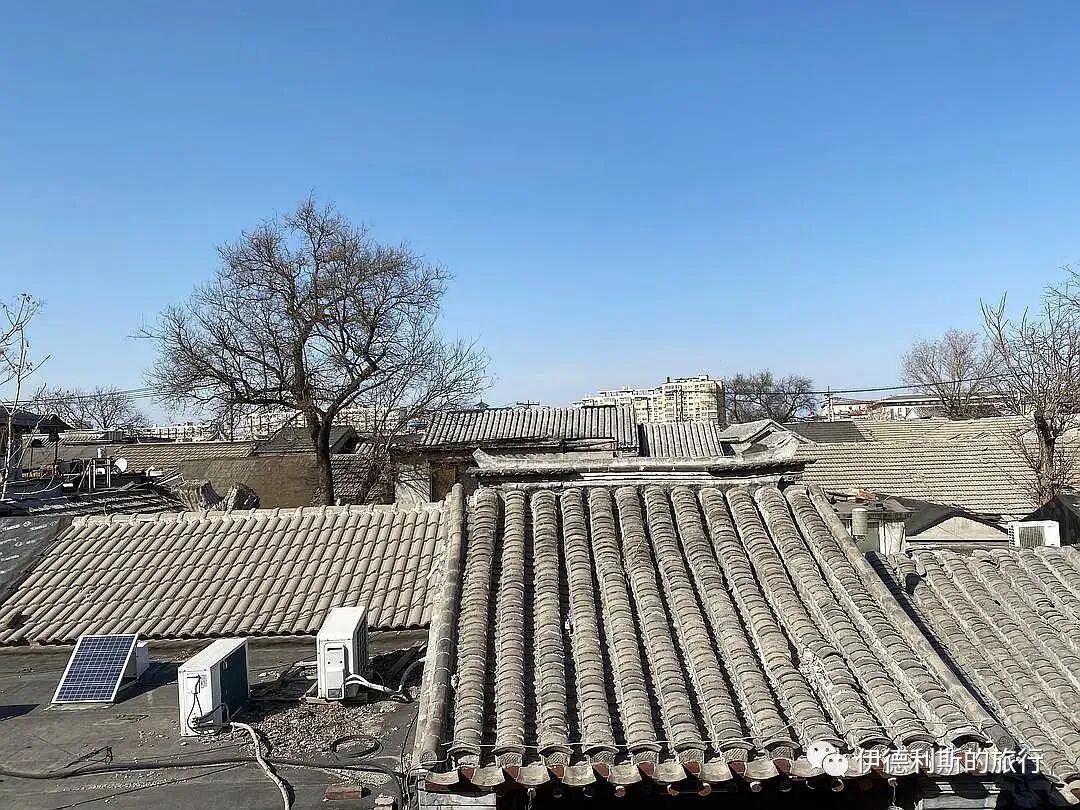
The original shop sign (huozi) of the plaster shop, which is of great historical significance.
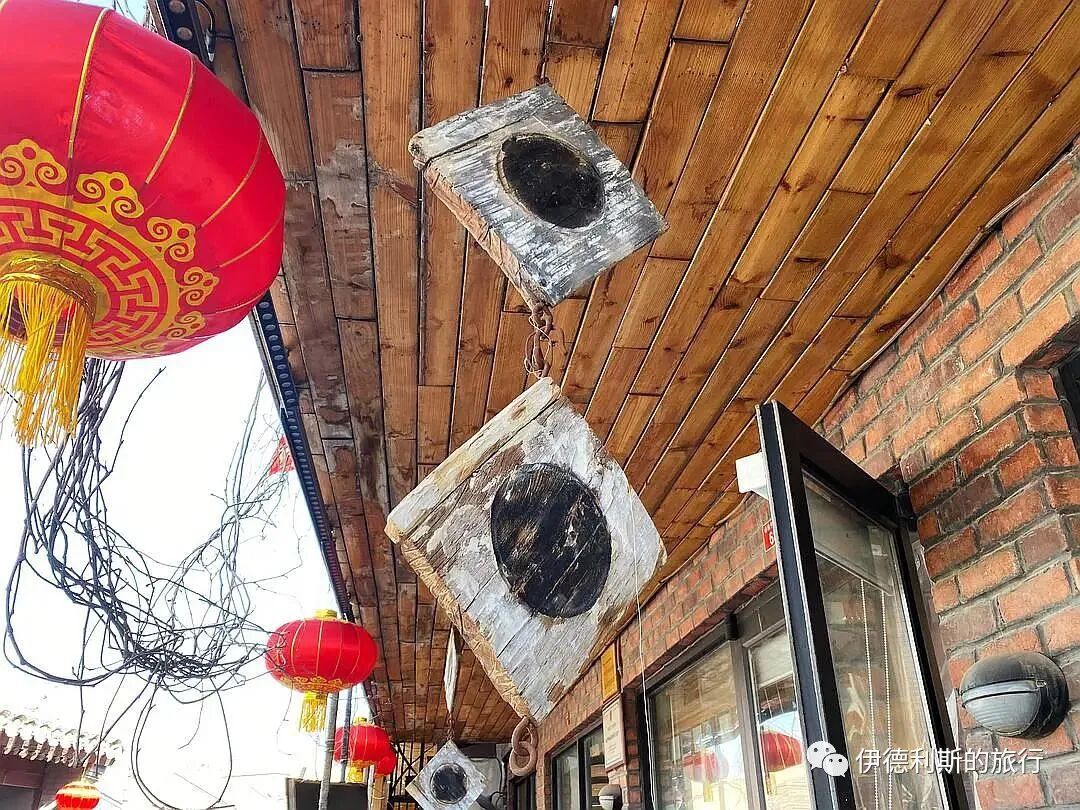
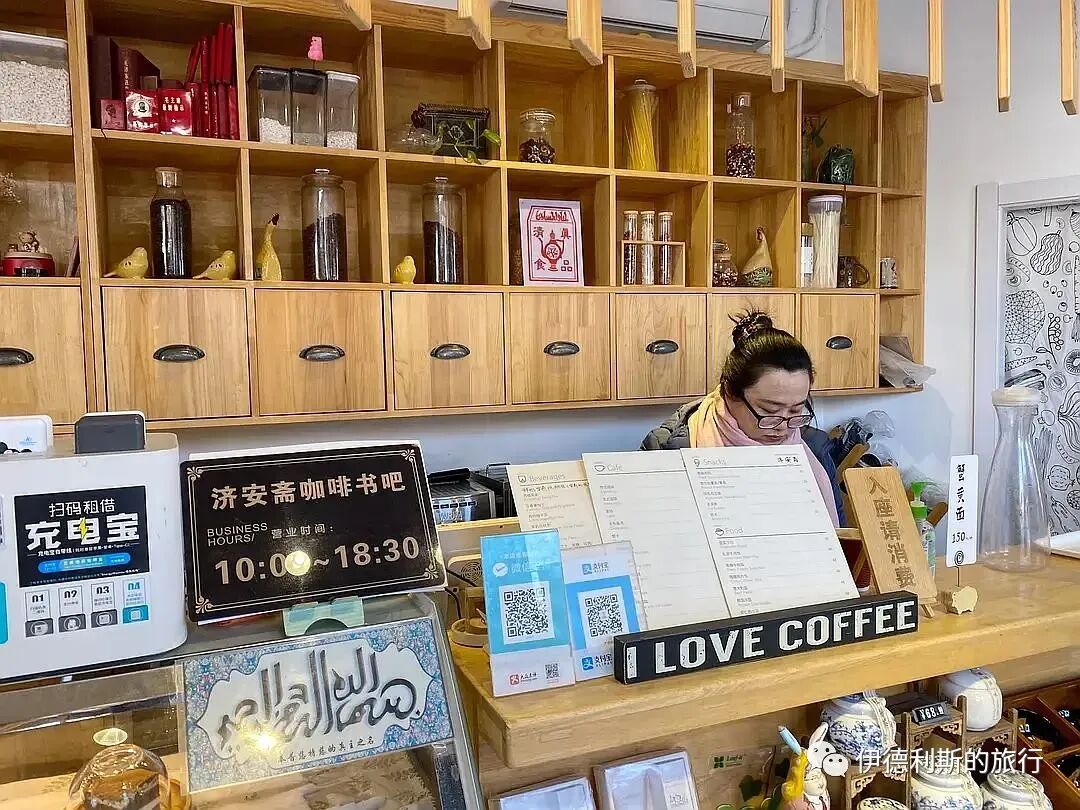
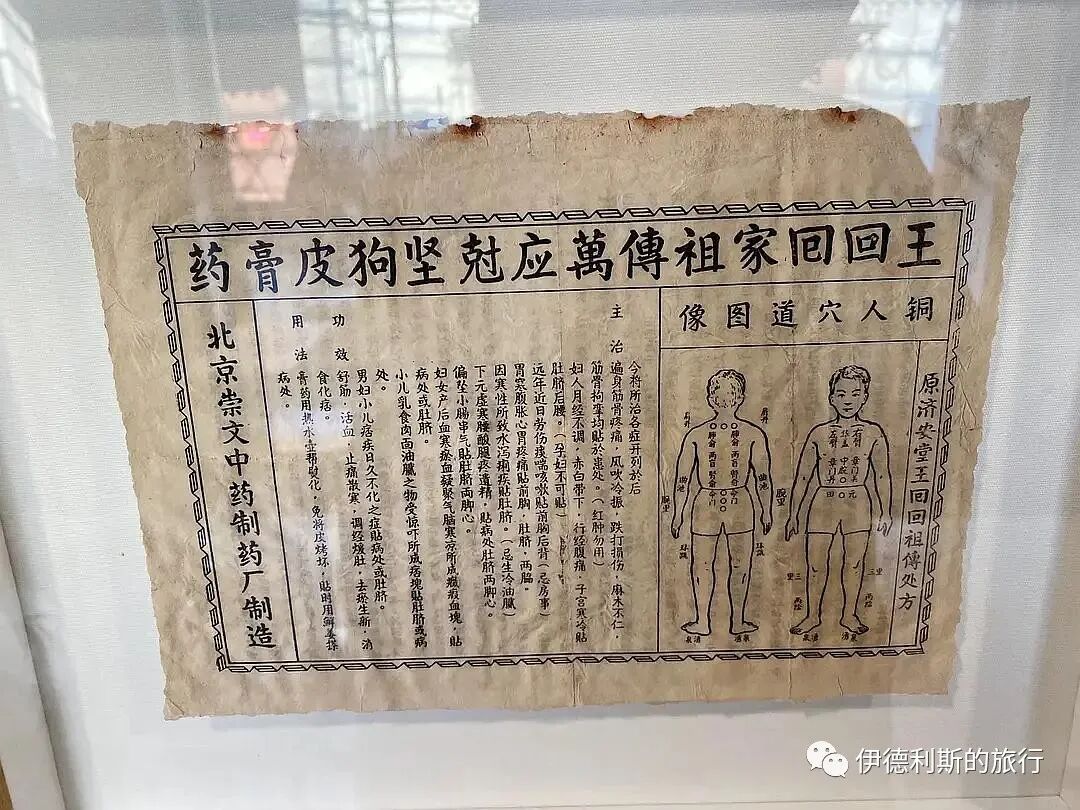
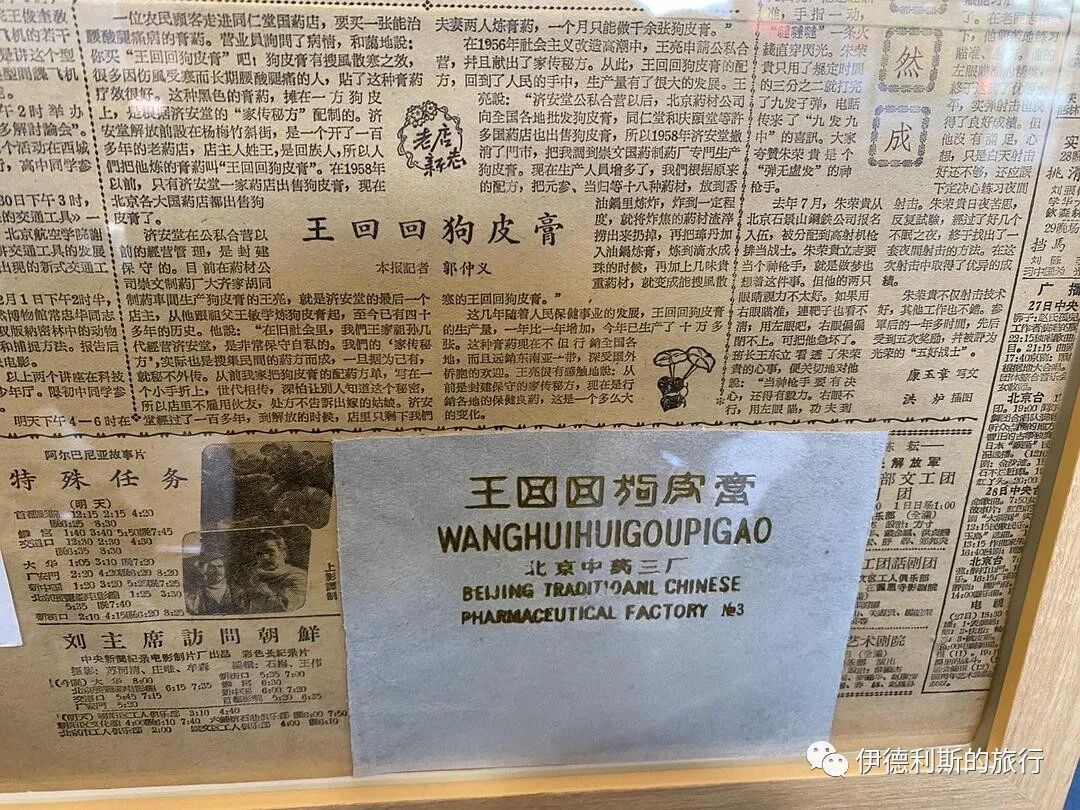
On December 5, 2020, our Dostani (friends/companions) had a dinner party in the small siheyuan (courtyard house) behind Ji'anzhai. We ate crab roe noodles, beef rice, chicken curry, fried chicken with fries, and salad. The environment of the small courtyard is very good and very suitable for gatherings. It was my first time eating crab roe noodles, and the portion was very generous. The landlady said it was made by manually extracting the roe and meat from 8 full-roe zha crabs.
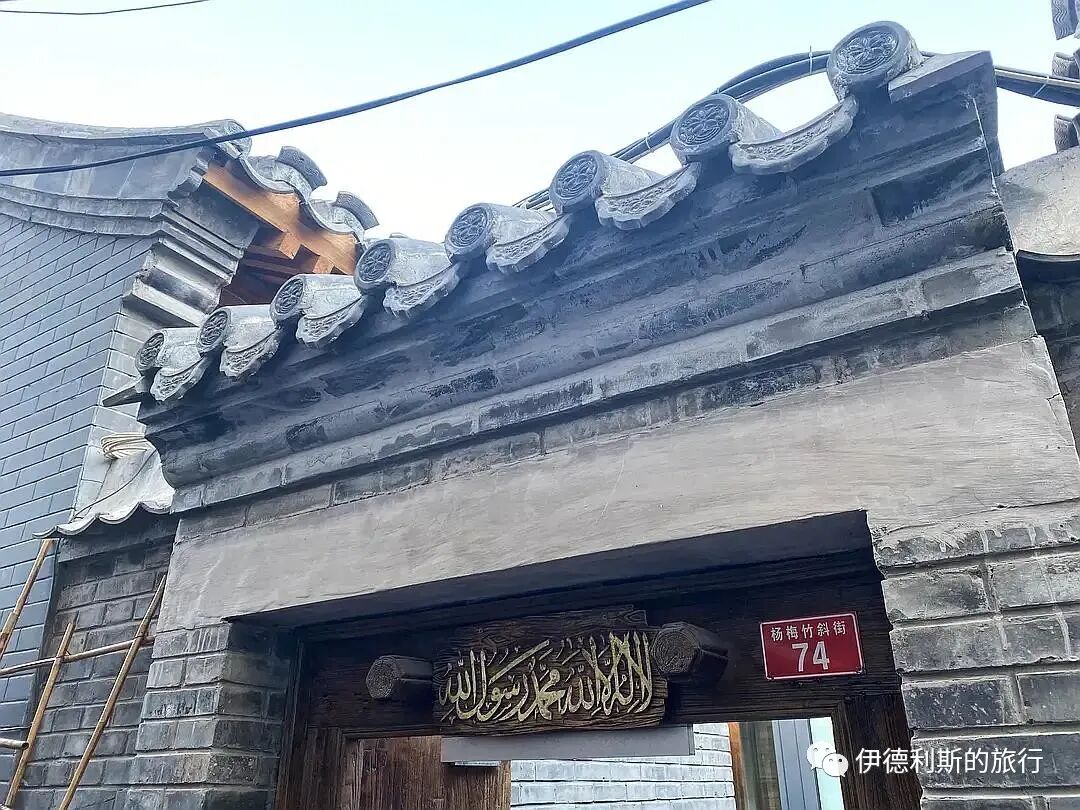
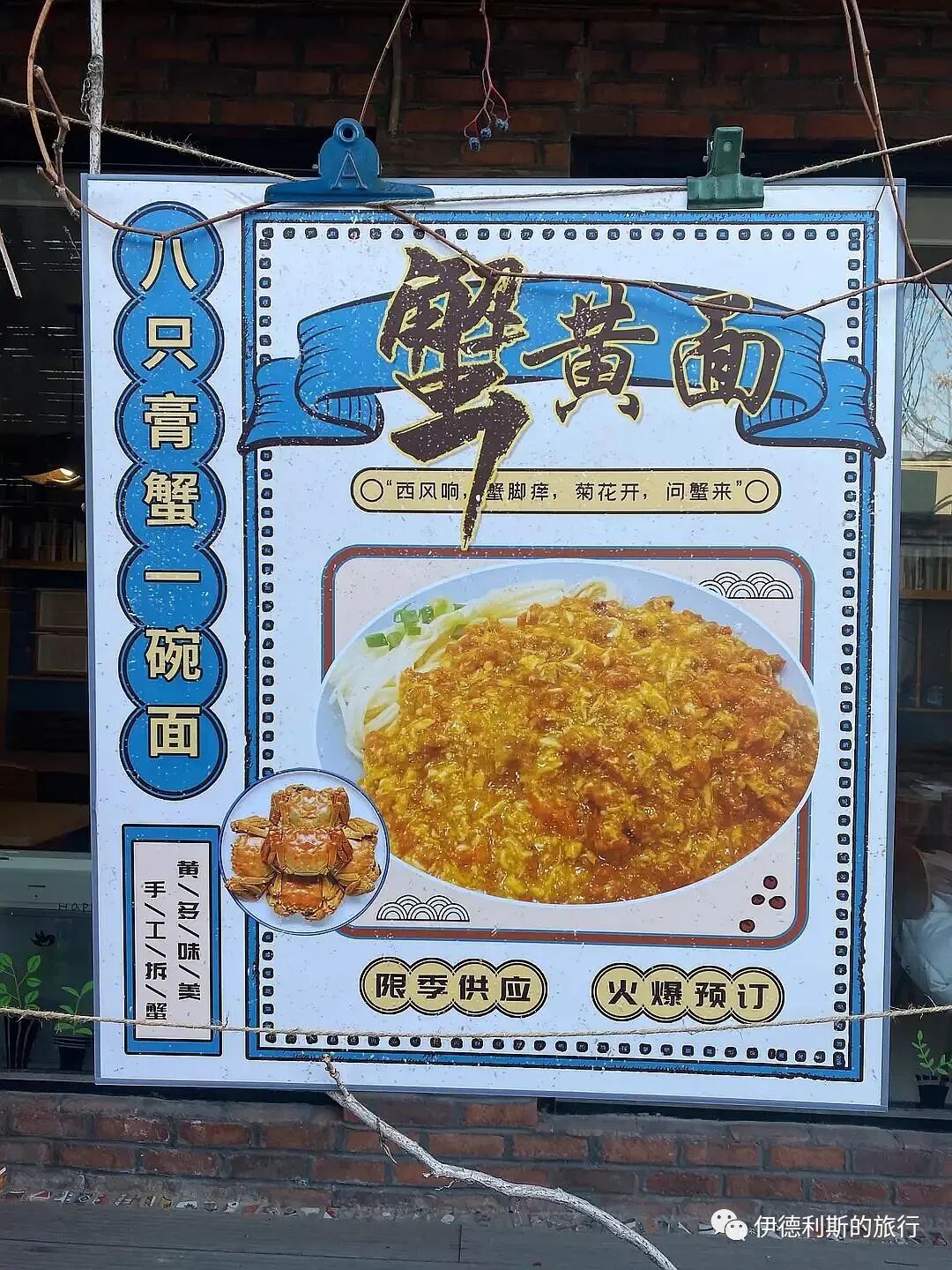
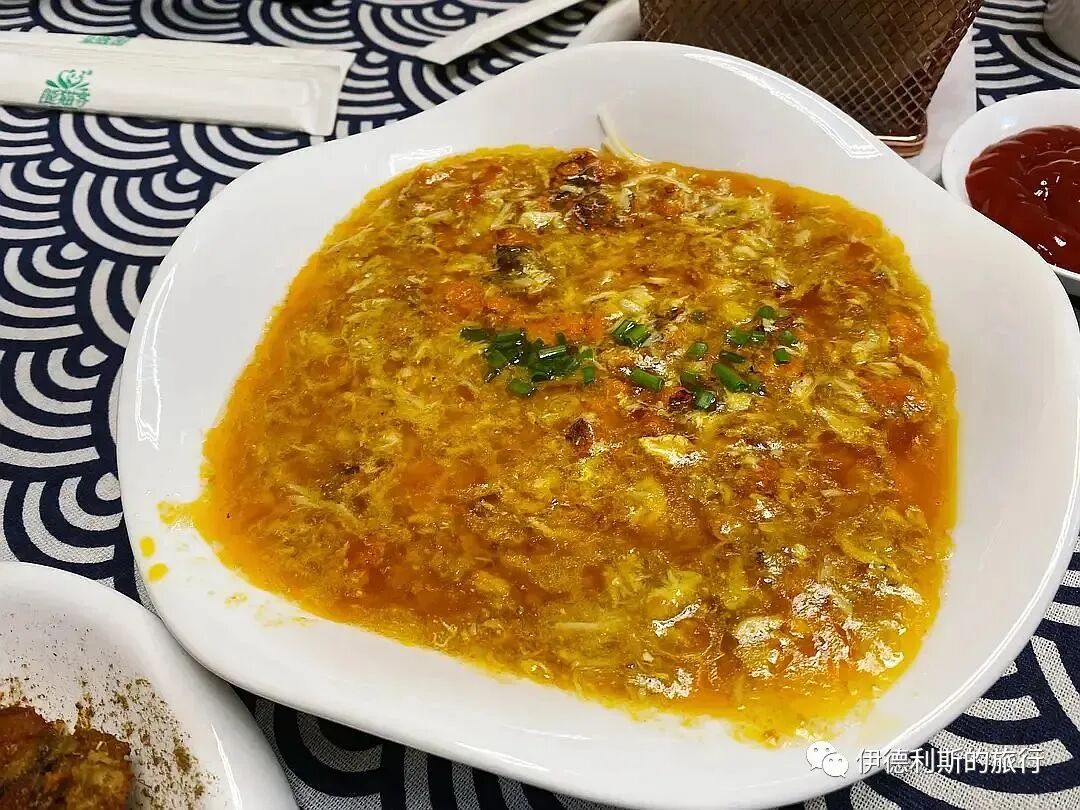
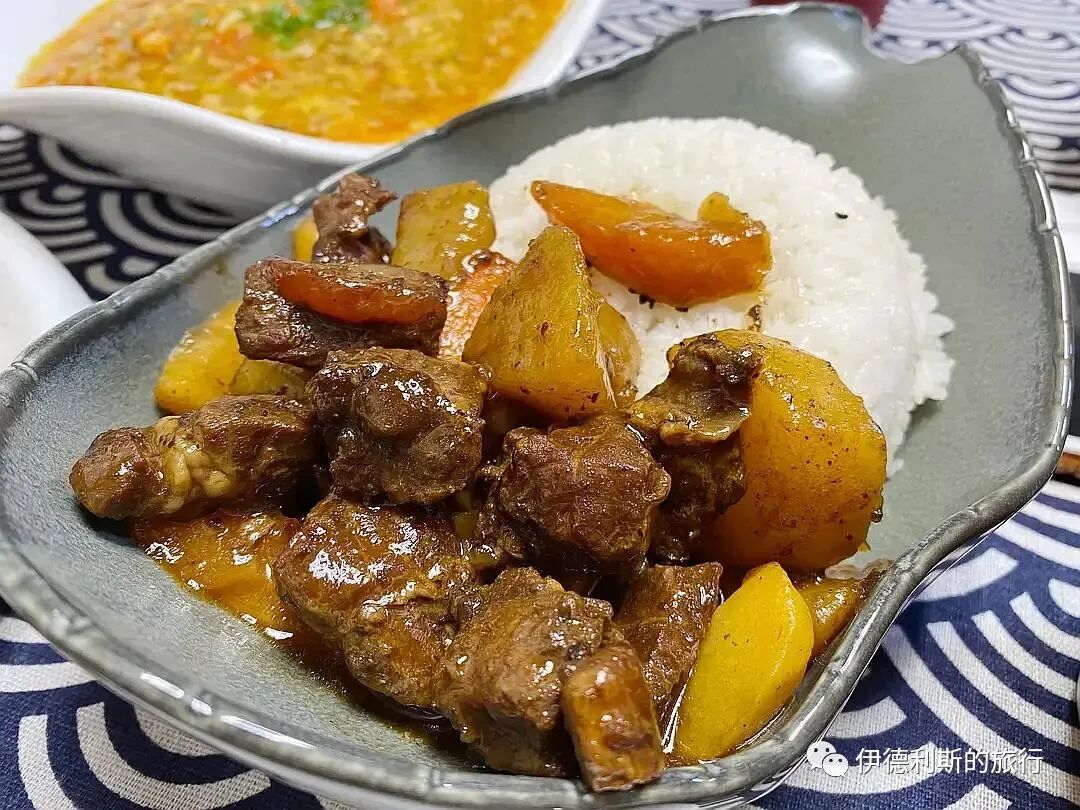
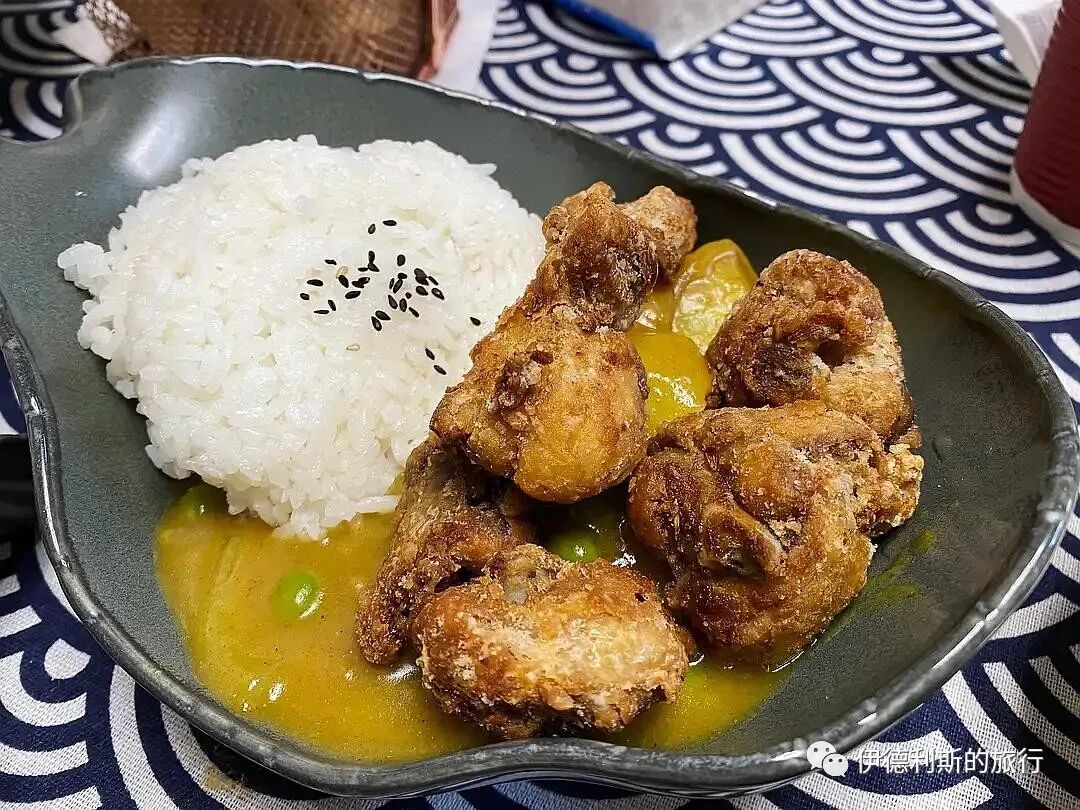
After the Eid al-Fitr prayer in 2021, our Dostani gathered at Ji'anzhai for a buffet. The descendants of Ji'antang Wang Hui Muslim Plaster Shop fried youxiang (deep-fried flour dough) for us personally. It was super delicious, with a chewy texture and not hard at all. We also ate the old Beijing Hui Muslim specialty stewed beef and tangjuanguo (candied yam and date rolls). The beef is bought from Niujie every morning and stewed fresh, never kept overnight. Tangjuanguo is made by steaming yams with dates and raisins, then stir-frying them in sugar, which is very time-consuming to make. In addition to old Beijing specialties, there were also chicken curry, tomato pasta, fried cod fillets, fruit salad, and small cream cakes. It was a very satisfying meal!
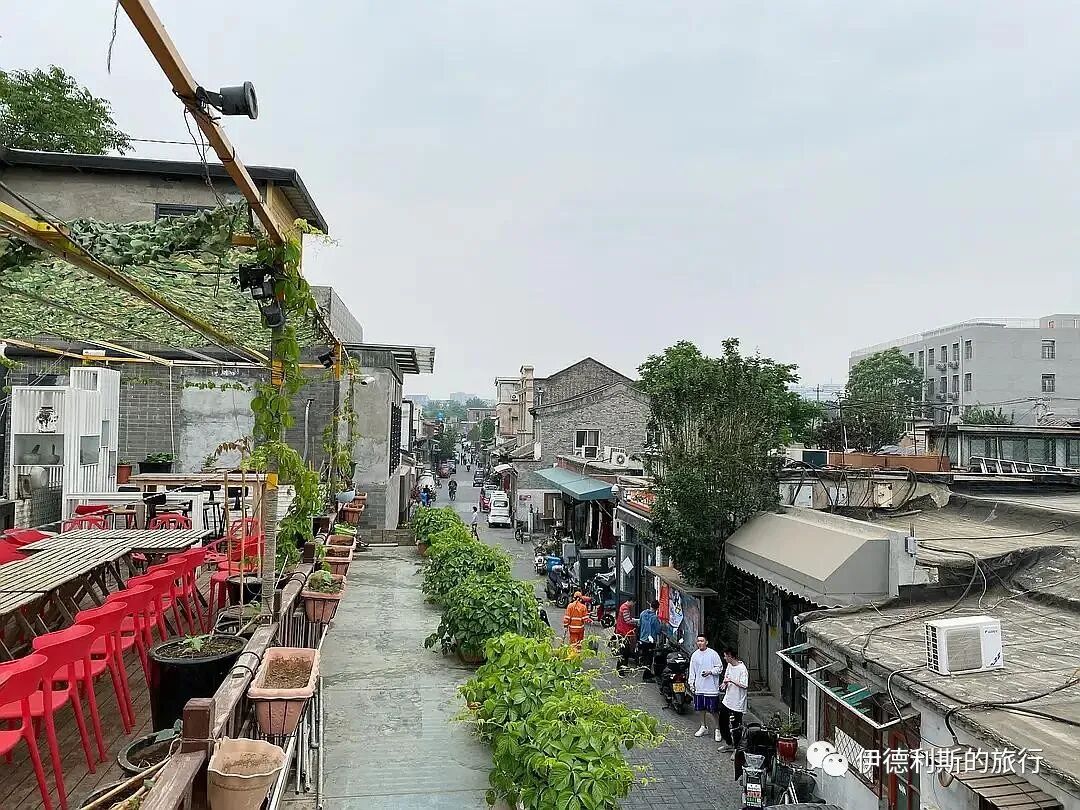
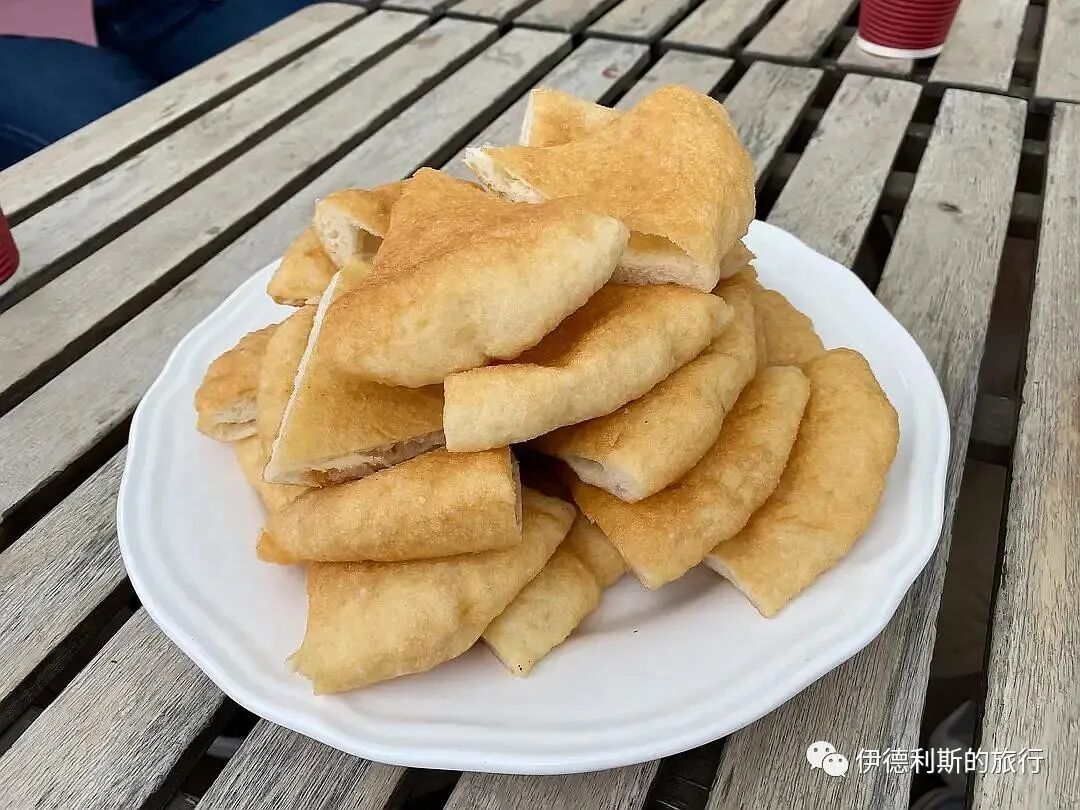
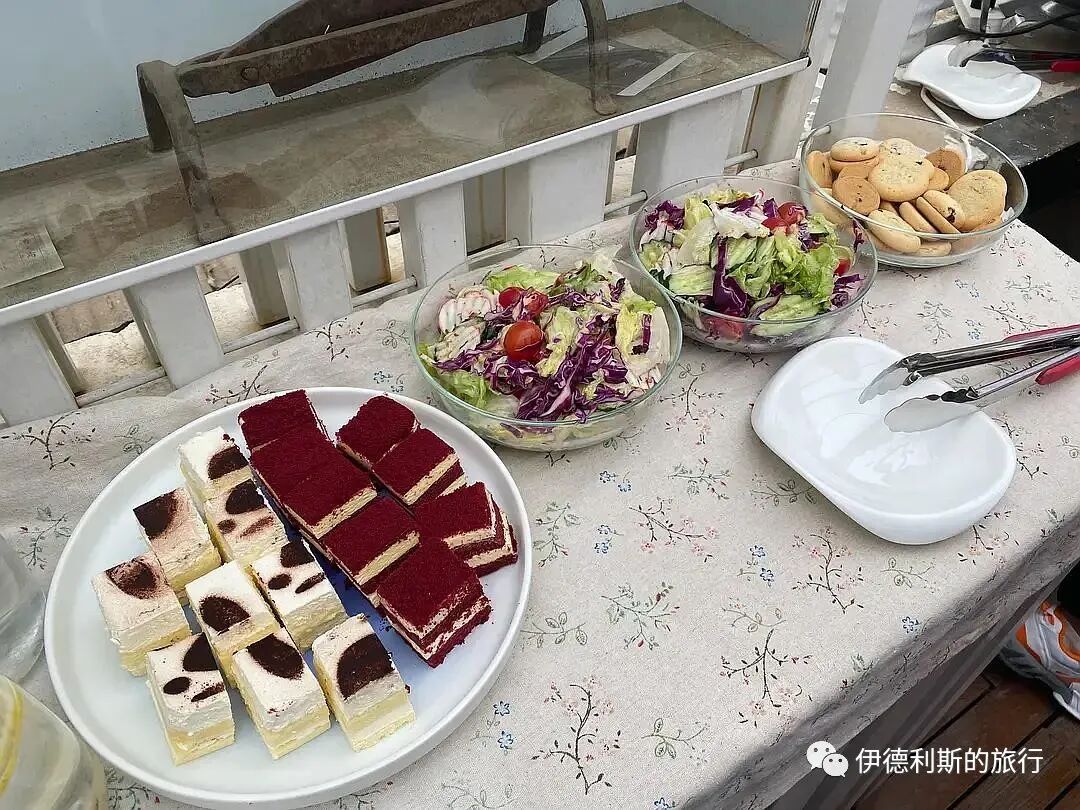
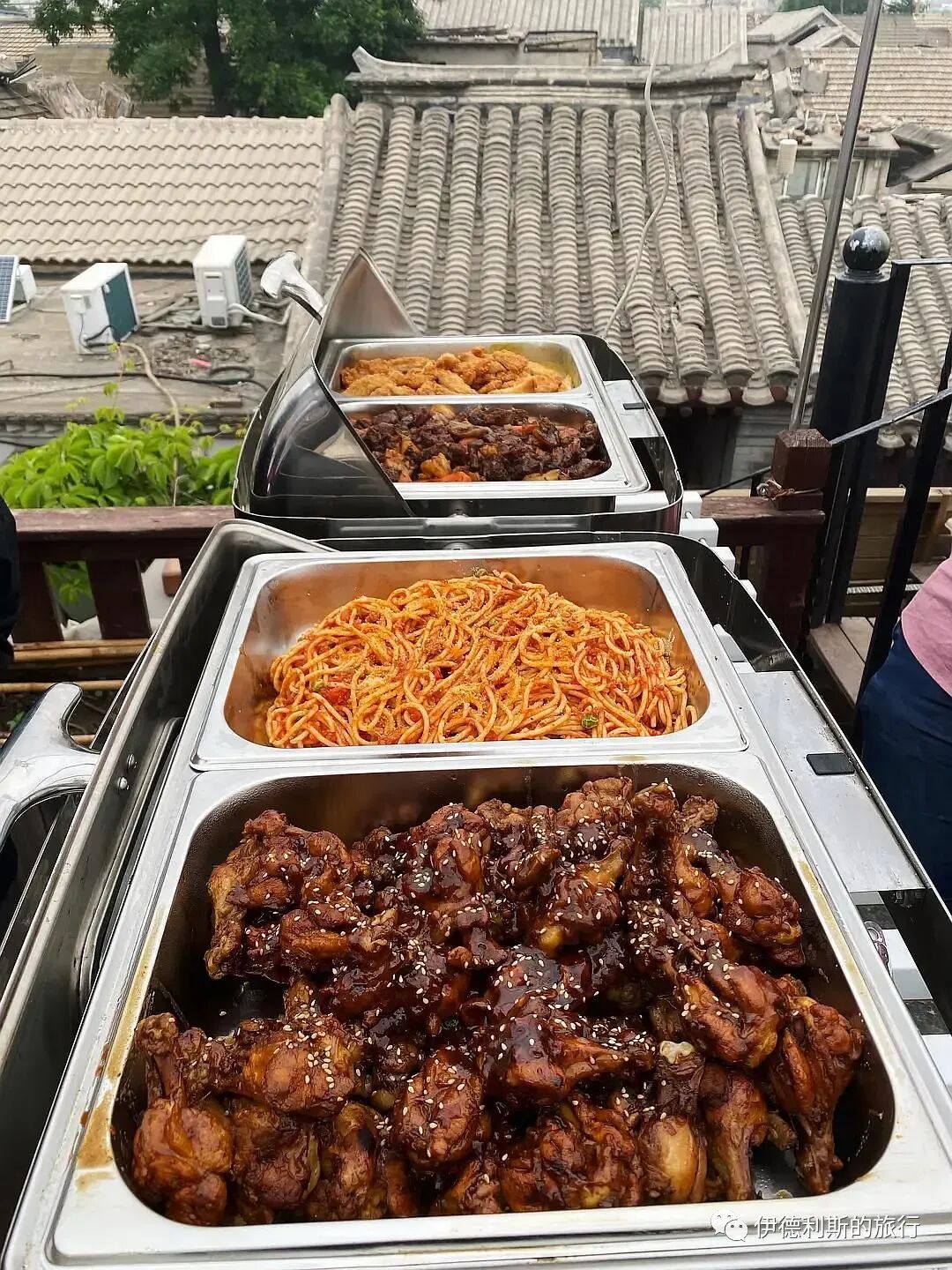
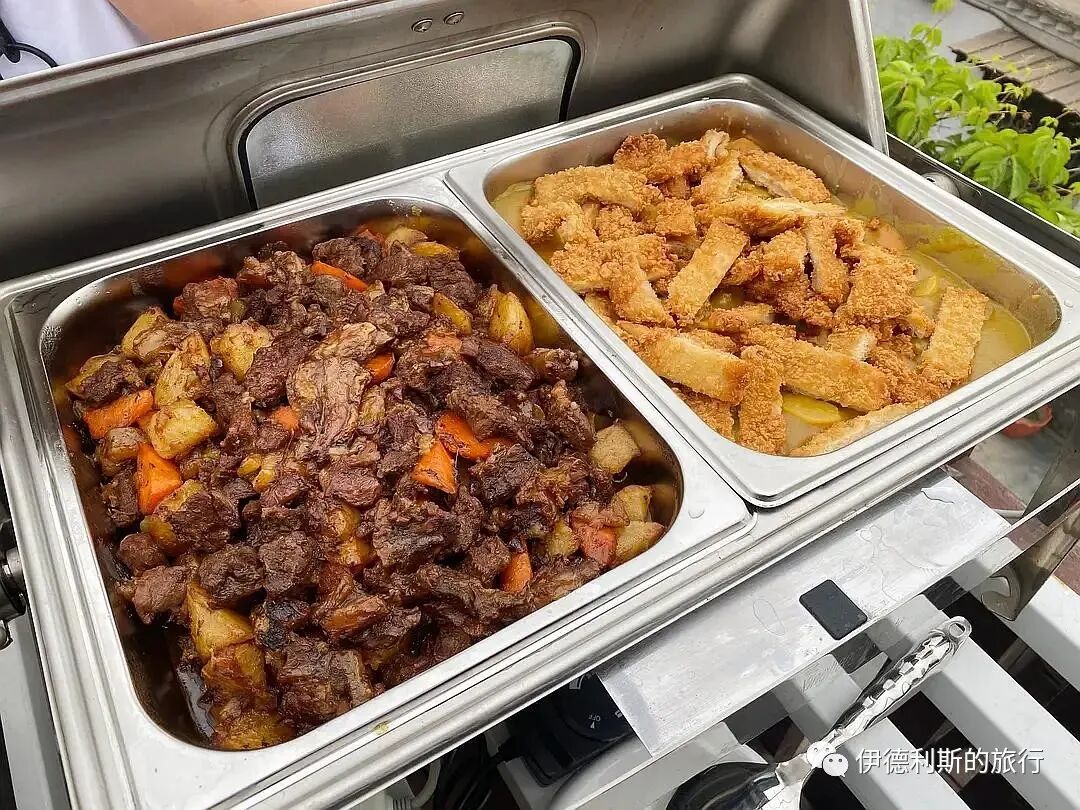
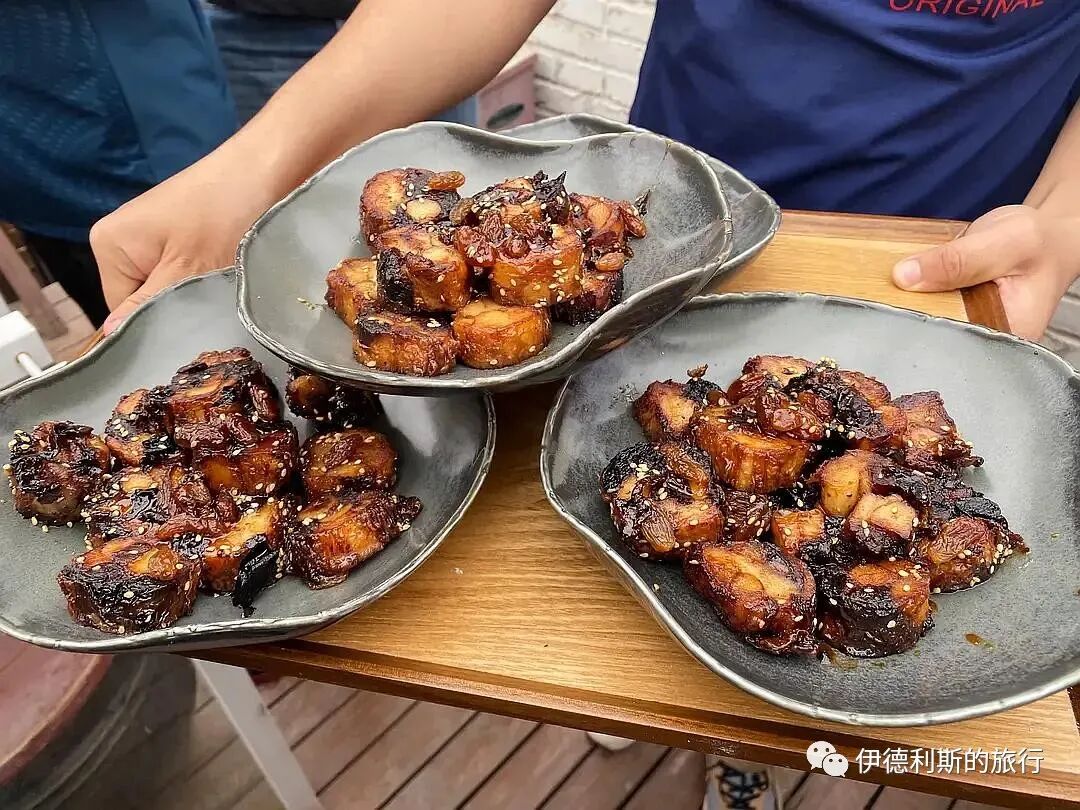
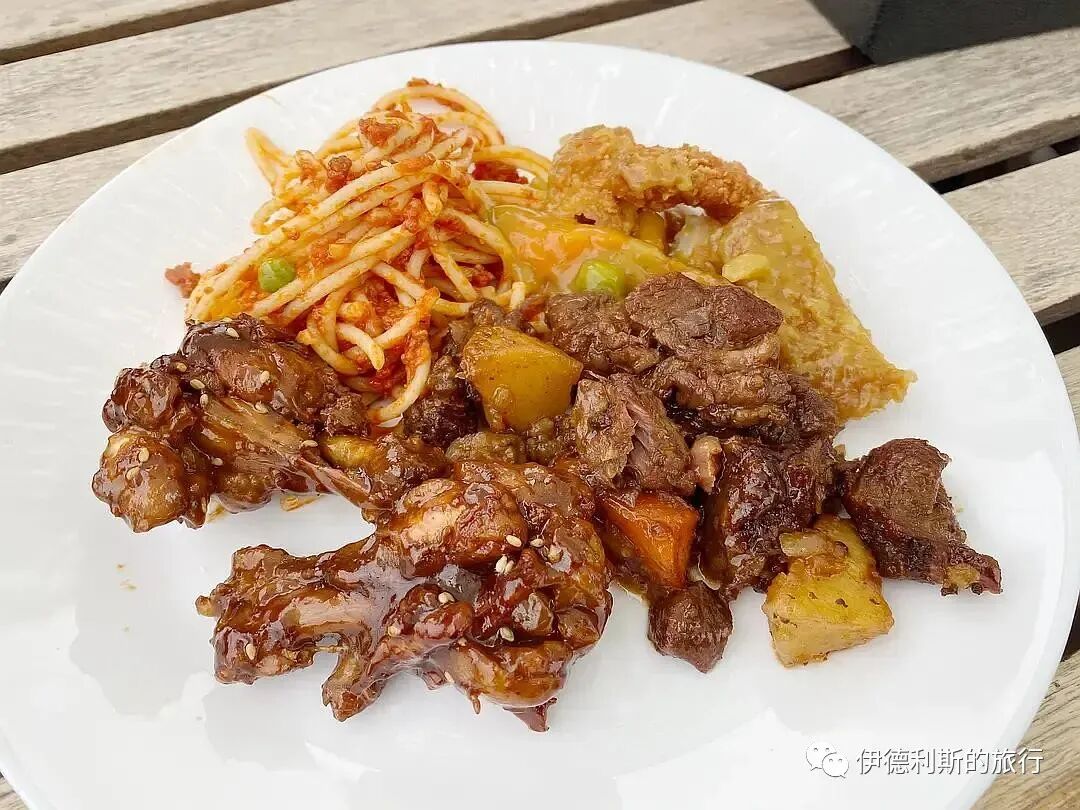
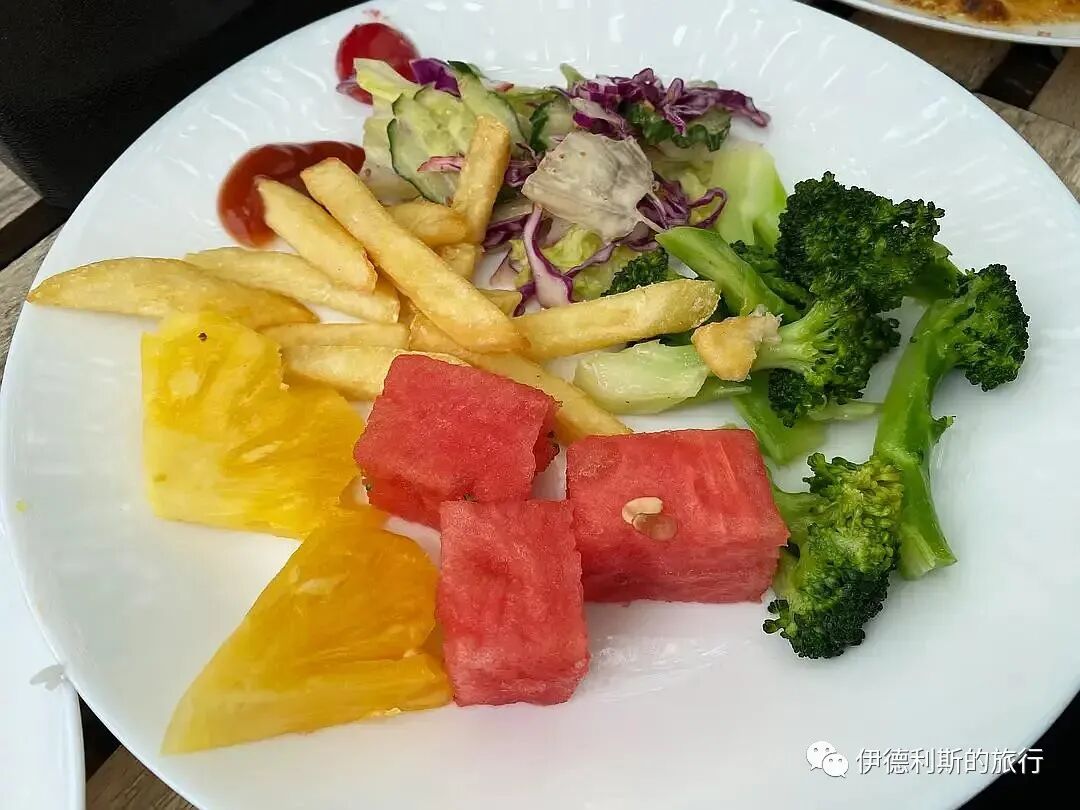
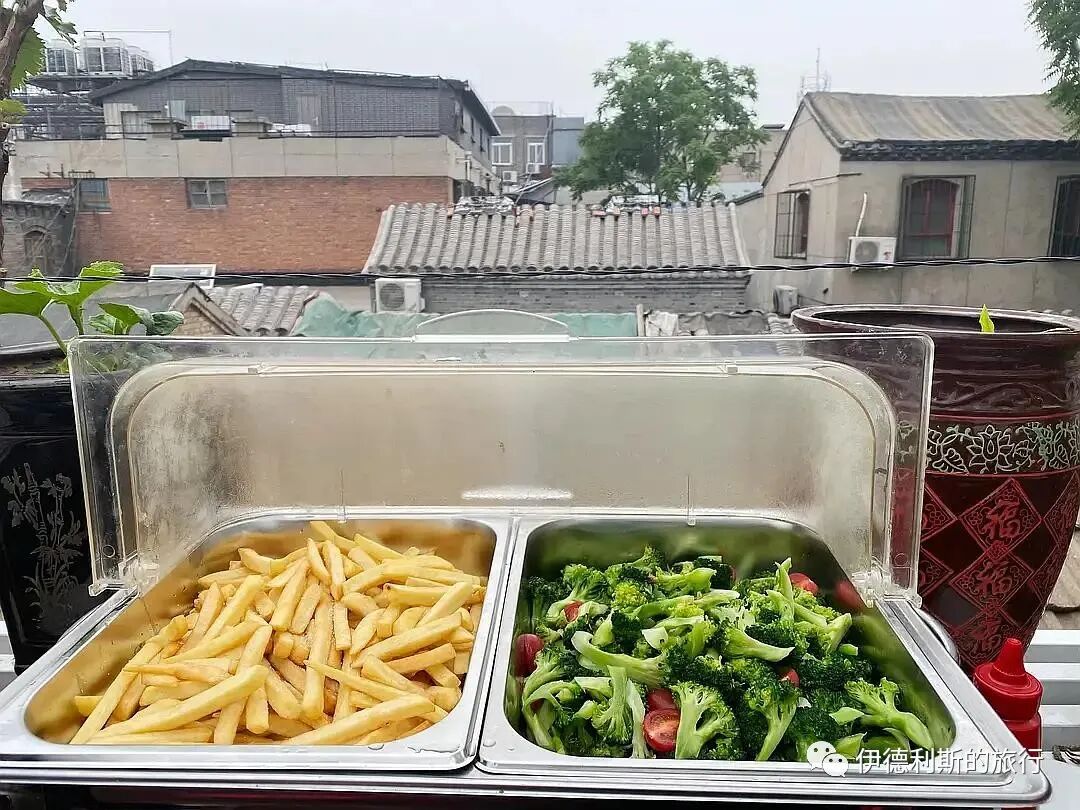
3. Gate tower of the Halal Yipinxiang Bathhouse
The Halal Yipinxiang Bathhouse is located on Zongshu Xiejie outside Qianmen. Zongshu Xiejie was originally called Wang Guafu Xiejie and Wang Guangfu Xiejie. It belongs to the 'Eight Great Hutongs' and was famous for its 'qingyin xiaoban' (high-class singing girl houses) during the Republican era. There were also various restaurants and bathhouses, and Yipinxiang was the most famous one among them.
Peking Opera master Ma Lianliang loved to soak in Yipinxiang. Zhang Aiyi wrote in 'Lingren Wangshi' (Past Stories of Actors): 'Ma Lianliang liked to soak in baths.' As long as there was a performance in the evening, he would definitely go to the bathhouse in the afternoon. First it was 'Yipinxiang' outside Qianmen, and later he switched to 'Qinghuachi' at Xizhushikou. Later on, he often went to 'Qinghuayuan' at Bamiancao. After soaking, he would ask a professional master to give him a pedicure. This was because he wore boots all year round for performing, which caused corns. Every time he went to the bathhouse, Ma Lianliang would bring some cigarettes and tea to give to the masters and workers. "
Besides going alone, Ma Lianliang often went to Yipinxiang with the 'King of Drum Singing' Liu Baoquan. Ma Lianliang wrote about this in 'Reminiscing about Mr. Liu Baoquan', around the 1920s: 'After some time, introduced by the late famous Peking Opera actor Mr. Wang Yaoqing, I met Mr. Liu Baoquan.' We hit it off immediately and soon became close friends. For more than five years after that, we were together day and night, inseparable. Every day I would go to his home at Mianhua Jiutiao to find him. We would stroll around together, take a walk, and then go to the 'Yipinxiang' bathhouse to bathe. In the afternoon, we would go to Liangyixuan to eat together. After eating, we would go to the theater together to watch the performances of Yu Shuyan and Yang Xiaolou. This was almost our daily routine. "
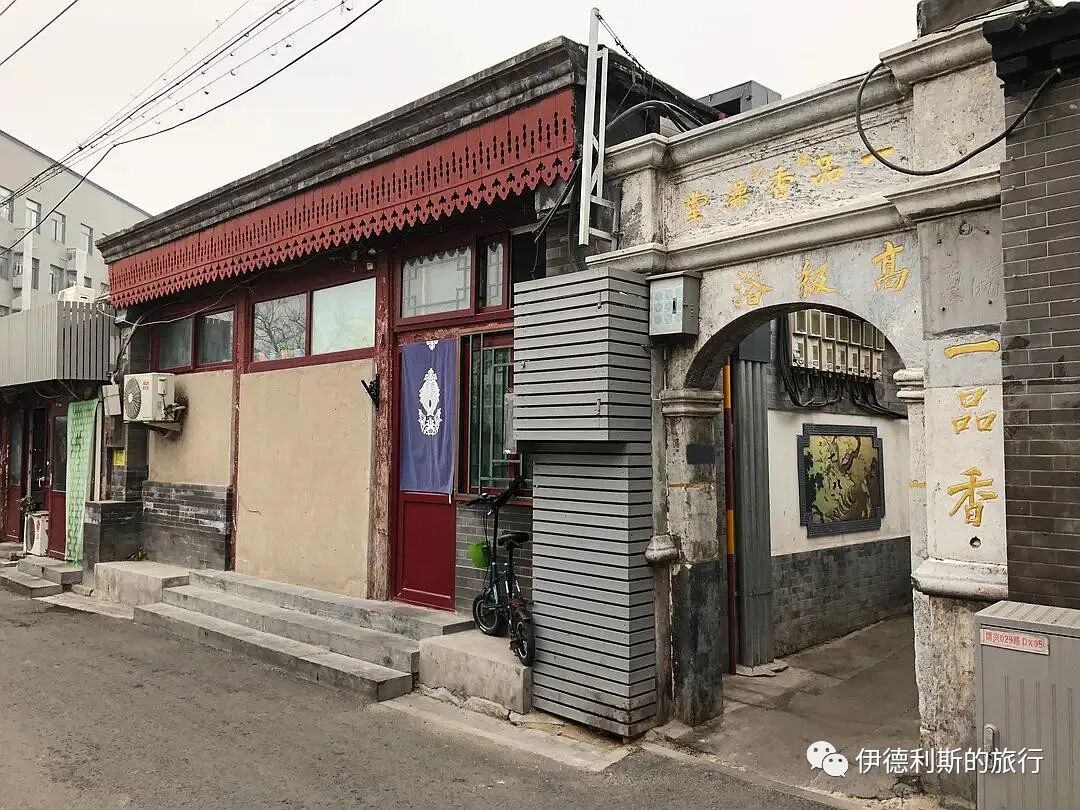
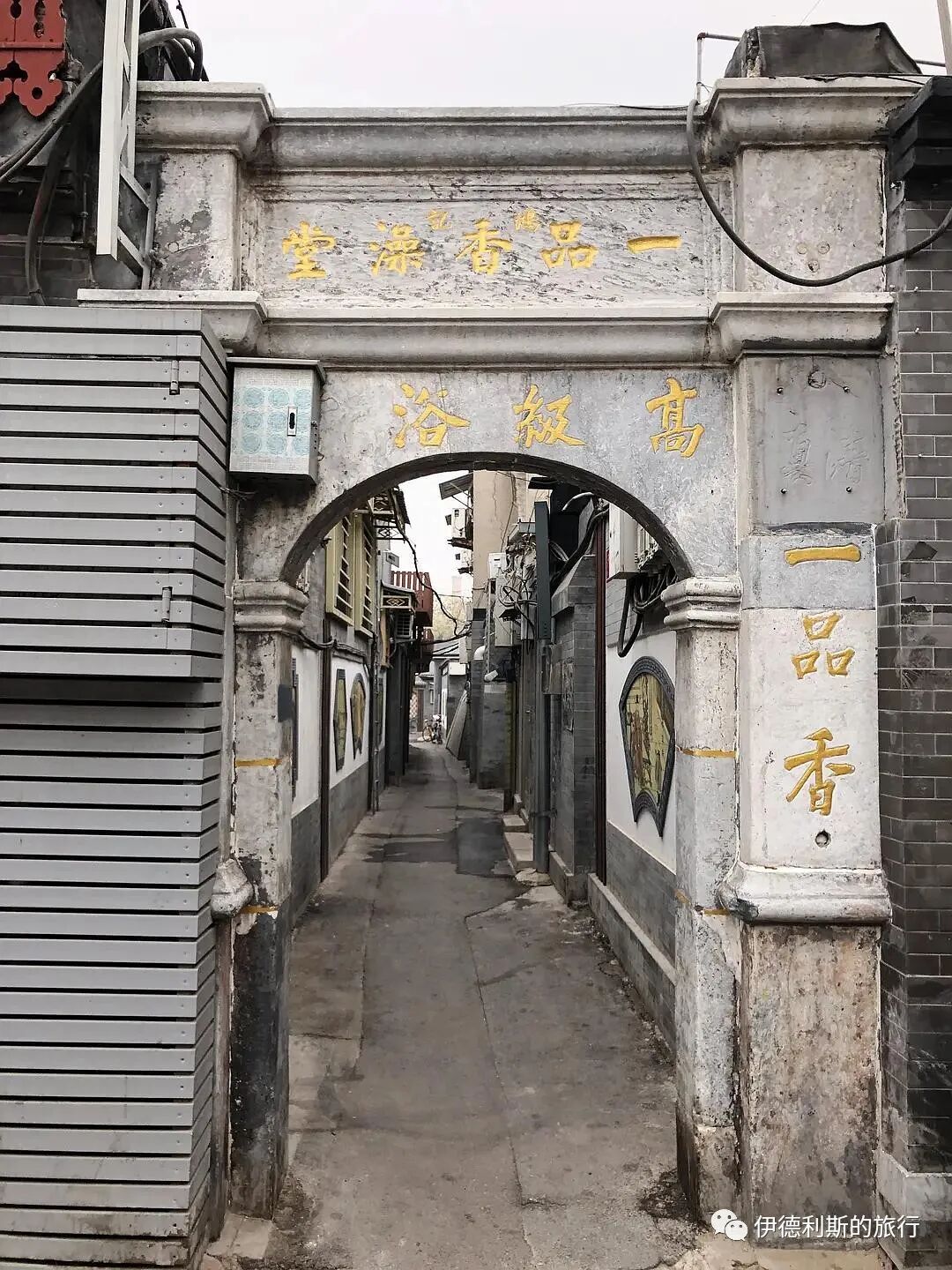
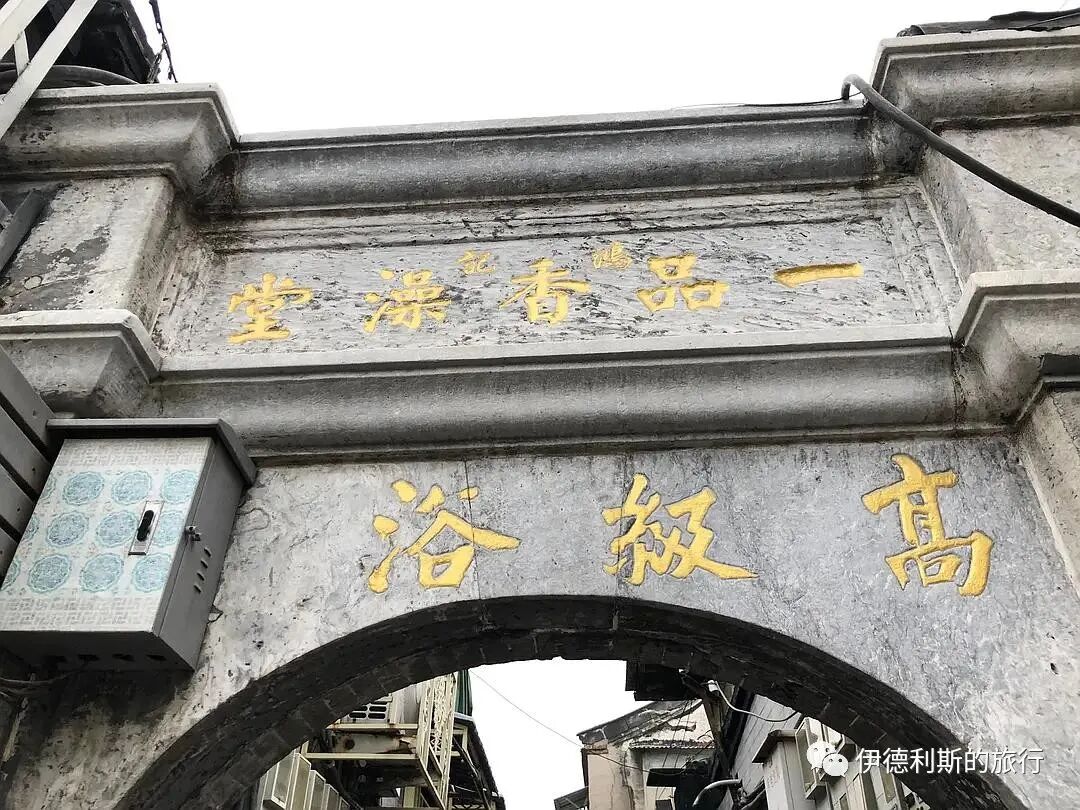
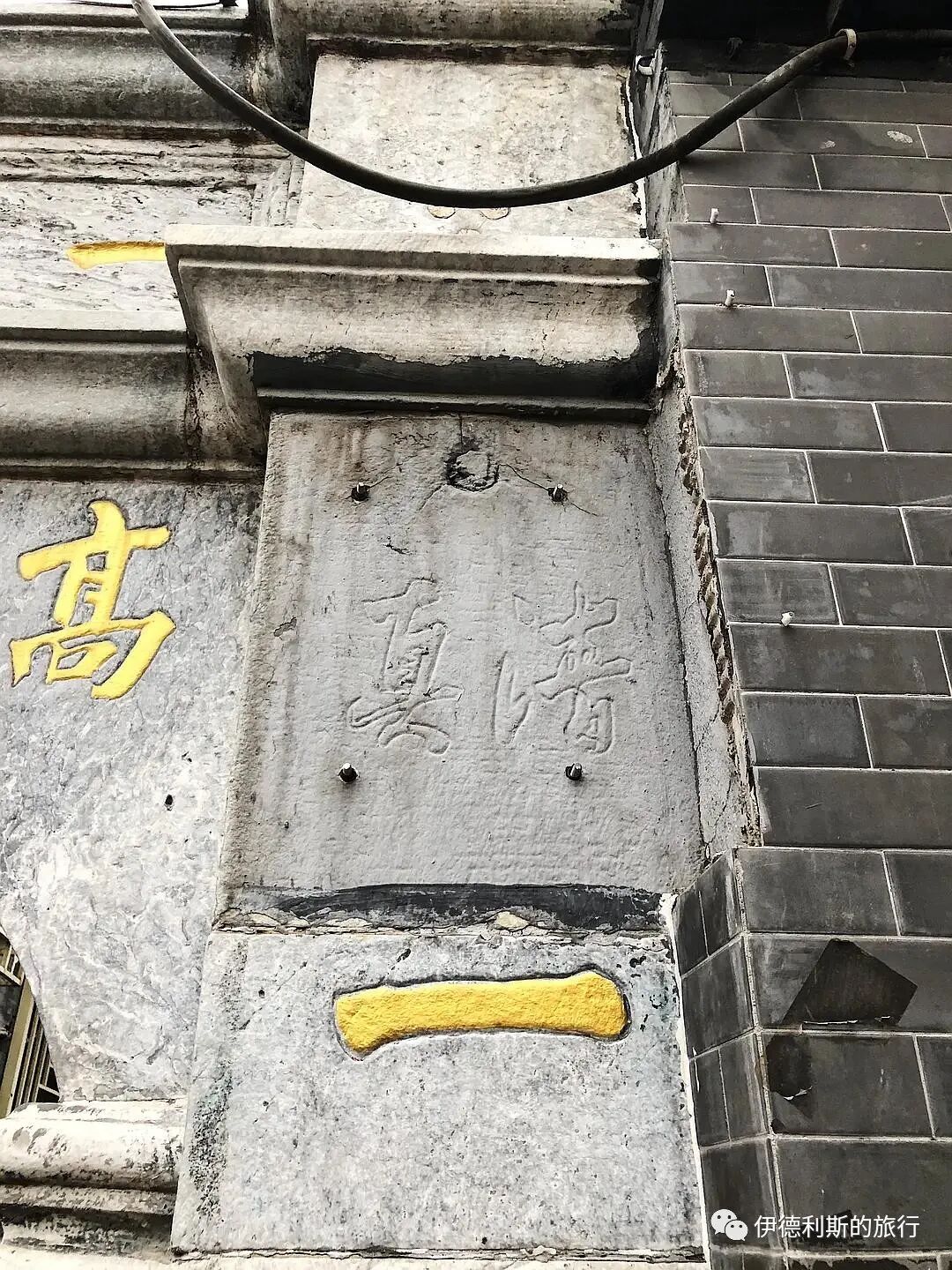
Yipinxiang Bathhouse also continued to develop during the Republican era. This can be seen by comparing the 'Revised Practical Beijing Guide' published by the Commercial Press in the 12th year of the Republic of China and the 'Beijing Travel Guide' published by Xinhua Bookstore in the 30th year of the Republic of China.
In the 12th year of the Republic of China, Yipinxiang was not yet a first-class bathhouse and could only be ranked as a 'slightly inferior' second-class one, using cement basins and vat basins: 'The slightly inferior ones are Yipinxiang, Huayuan, Wenyayuan, Yuqing, Qingquan, Dongxing, Yuhua, Qihua, Xinhuachi, Baoquan, Yihe, etc.' Most of their equipment consisted of cement basins and vat basins, with some enamel basins. The bathing price varied from four jiao, three jiao, two jiao, to one jiao. Fees for back scrubbing and haircuts were two jiao or one jiao. "
By the 30th year of the Republic of China, Yipinxiang was already one of the most famous bathhouses in Beijing, on par with the Qinghuachi we are familiar with. At that time, the downstairs of the bathhouse was built with white ceramic tiles into 'warm five pools', while upstairs there were individual enamel bathtubs. At the same time, Yipinxiang had the most popular pedicure master in Beijing at the time, who specialized in treating athlete's foot: 'There are currently 123 bathhouses in the city.' In recent years, it has developed day by day with the progress of the times. Because human evolution has made everyone aware of cleanliness, those in this industry also know how to adapt to the times and make improvements. Most of the pools have been changed to warm five pools, built with white ceramic tiles. The pools are wide and deep, actually surpassing those in Shanghai, Wuhan, and Nanjing. Bathtubs have also been changed from wooden to enamel, which is much cleaner and more beautiful than before. Those with the most perfect equipment, such as Qinghuayuan and Yiheyuan in the East City, Huabaoyuan and Yuhuayuan in the West City, and Qinghuachi and Yipinxiang in the Outer City, are all very prosperous. The prices are divided into official basins, elegant seats, upstairs, downstairs... The pedicure master at Yipinxiang is named Wei Wenxi, who has long been famous in this field, and all bathhouses compete to hire him. Southerners in Beijing suffering from athlete's foot all seek out Little Wei, because once he scrapes it, it feels like a heavy burden has been lifted. For this reason, Little Wei is often too busy to attend to everyone. "
In addition, according to the 'Beijing Industrial and Commercial Guide' edited by Zhengfeng Economic Society in the 28th year of the Republic of China, the owner of Yipinxiang was named Wang Houqi, a native of Wanping, Hebei (which includes the western part of Beijing, including today's Xicheng District). However, I have not been able to find more information about Wang Houqi, and I hope there will be new discoveries in the future.
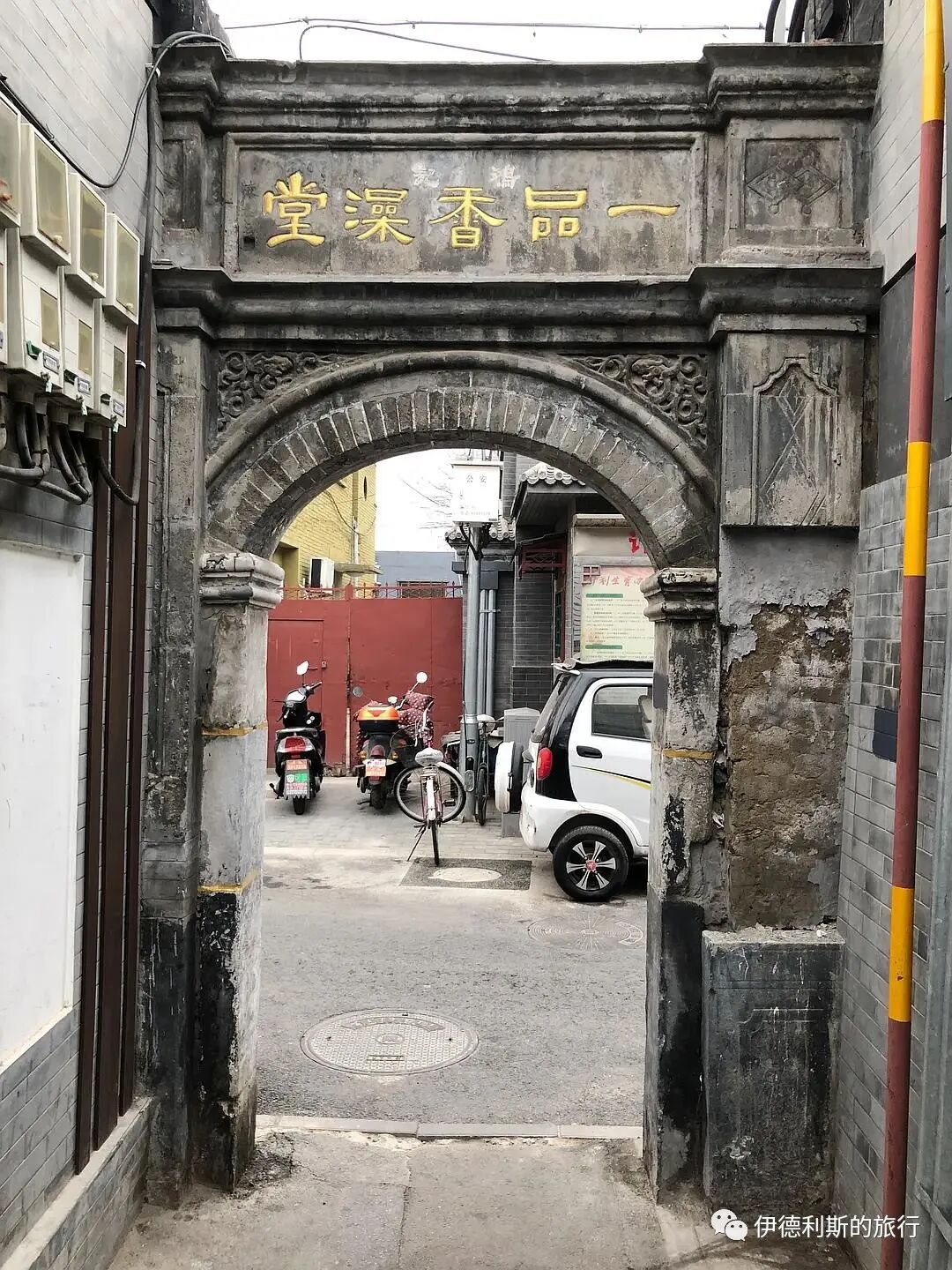
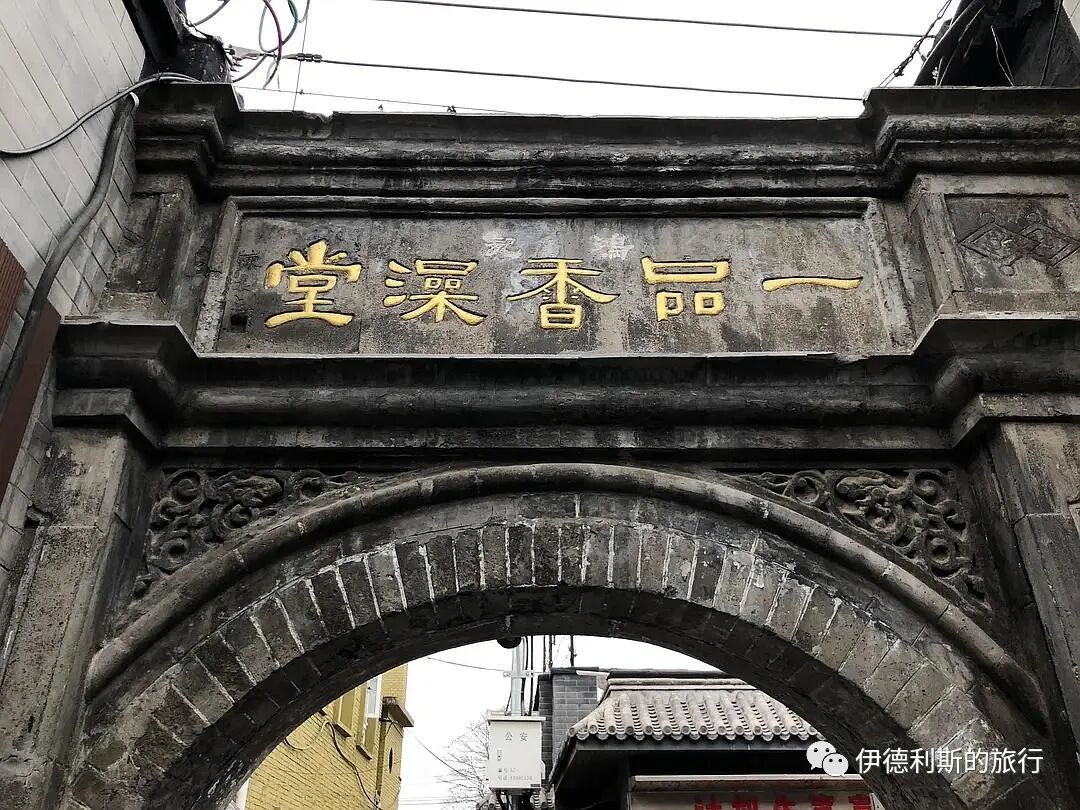
4. Ma Yinglong Eye Medicine Shop storefront
In 1875 (the first year of the Guangxu reign of the Qing Dynasty), Ma Wanxing, a Hui Muslim from Dingzhou, Hebei, moved the Ma's Eye Medicine Shop from Dingzhou to Beijing and opened the 'Beijing Ma Yinglong Eye Medicine Shop' at Xiheyan, Qianmen. 'Ma Yinglong' was his father's name.
In 1923, Ma Wanxing's third son, Ma Liting, inherited the medicine shop and officially built the current Republican-style storefront at Xiheyan, Qianmen. There is a 'Ma Yinglong' plaque on the storefront, and the words 'Eye Medicine' can also be seen on the right, covered by an air conditioner. The plaque was inscribed by Ma Liang, a Beiyang warlord and a Hui Muslim from Qingyuan, Hebei (now Qingyuan District, Baoding).
After the 1930s, Ma Yinglong successively set up branches across the country and expanded sales through mail order, even exporting to Europe. After the public-private partnership in 1957, Ma Liting served as the deputy section chief of the processing department of the Beijing Medicinal Materials Company. In 1966, the whole family was sent back to their ancestral home in Dingzhou, and Beijing Ma Yinglong gradually withdrew from the historical stage.
In 1919, Ma Qishan, a cousin's grandson of Ma Wanxing, opened a Ma Yinglong branch on Hanzheng Street in Hankou, and later established the Ma Yinglong Shengji Pharmaceutical Factory. After the 1980s, it began to focus on hemorrhoid ointment, continuing the Ma Yinglong brand to this day.
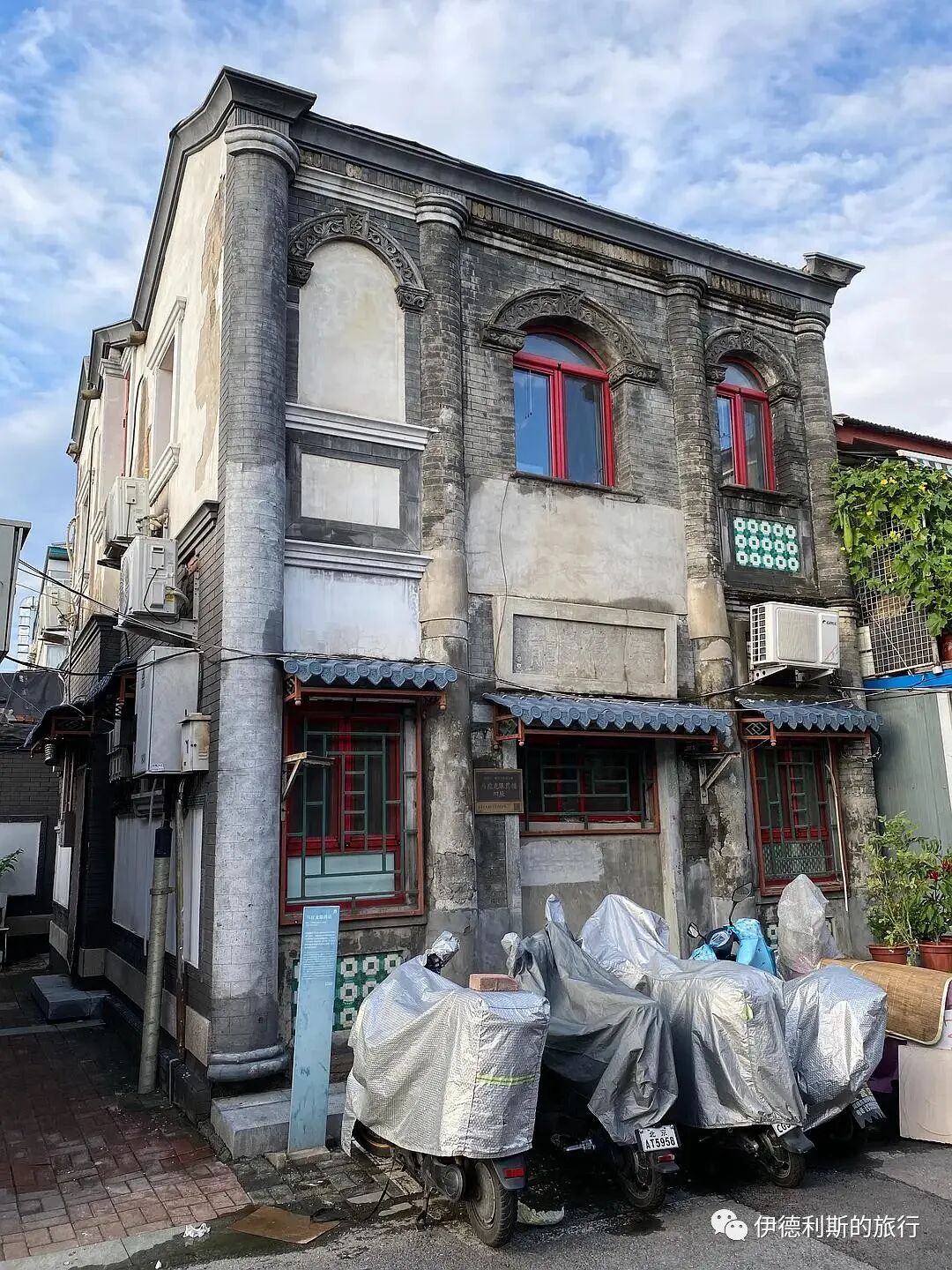
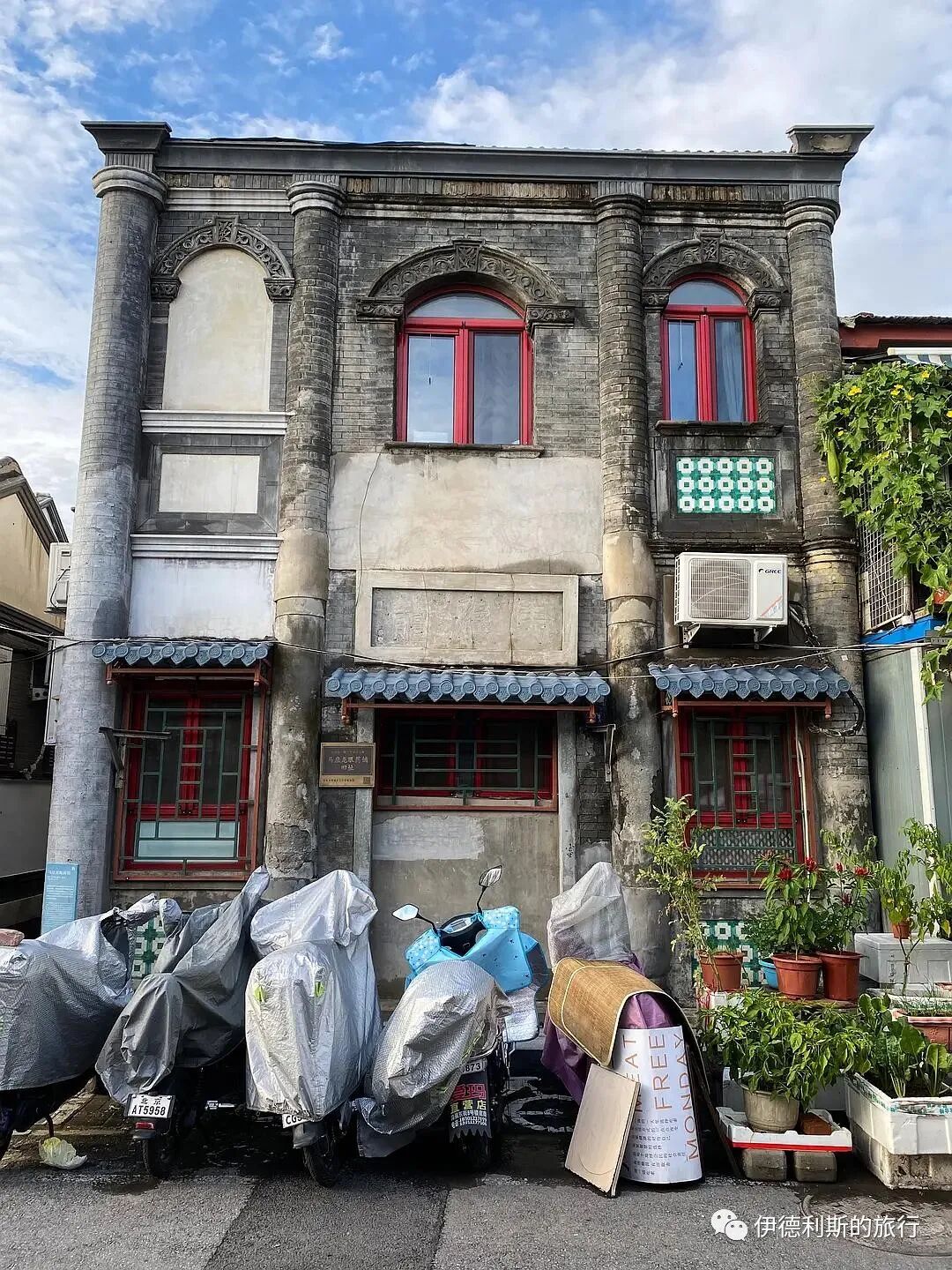
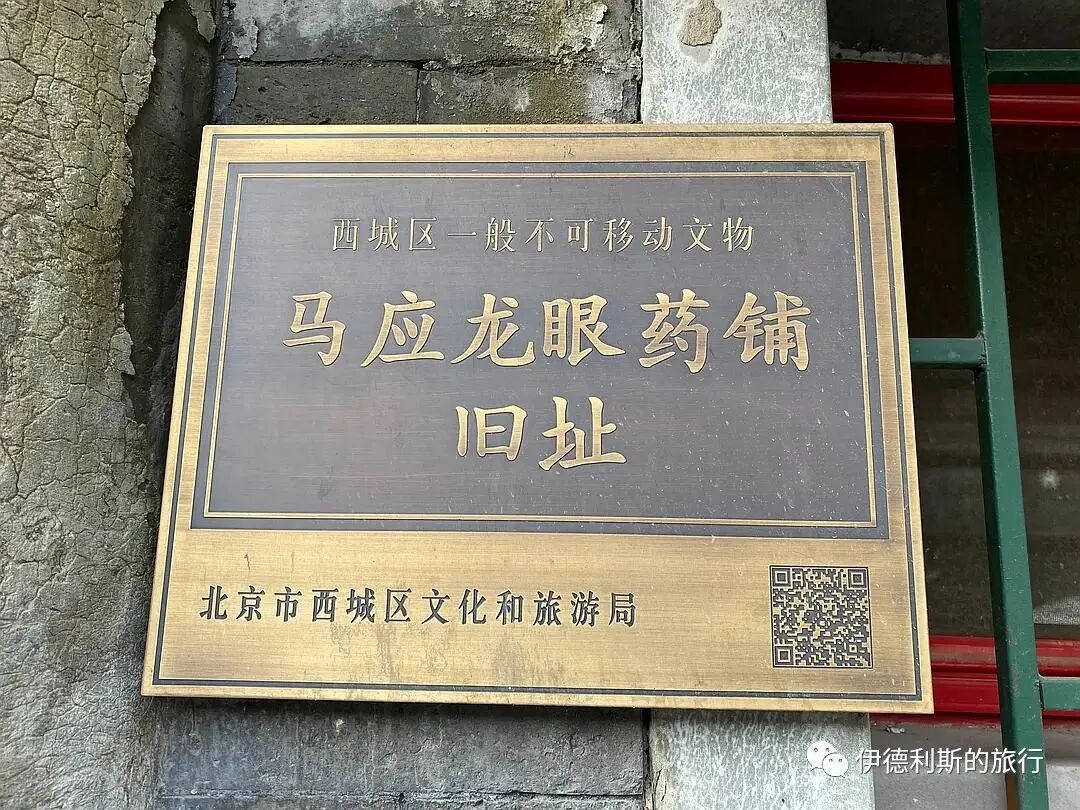
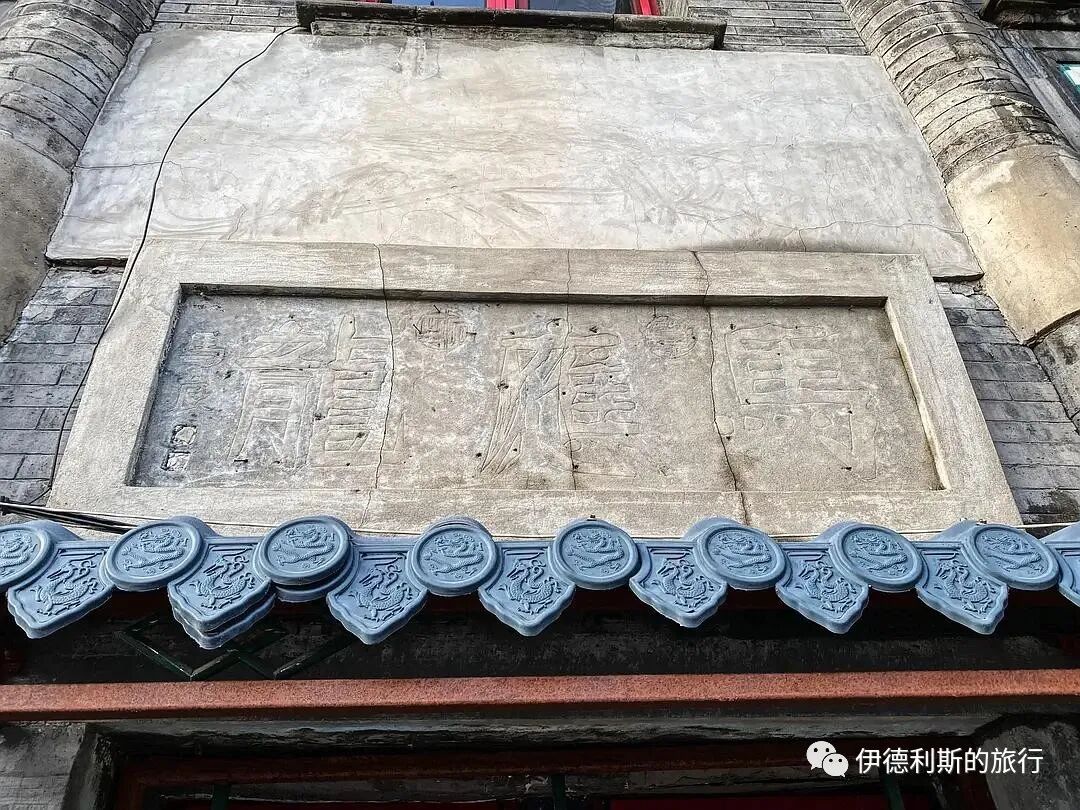
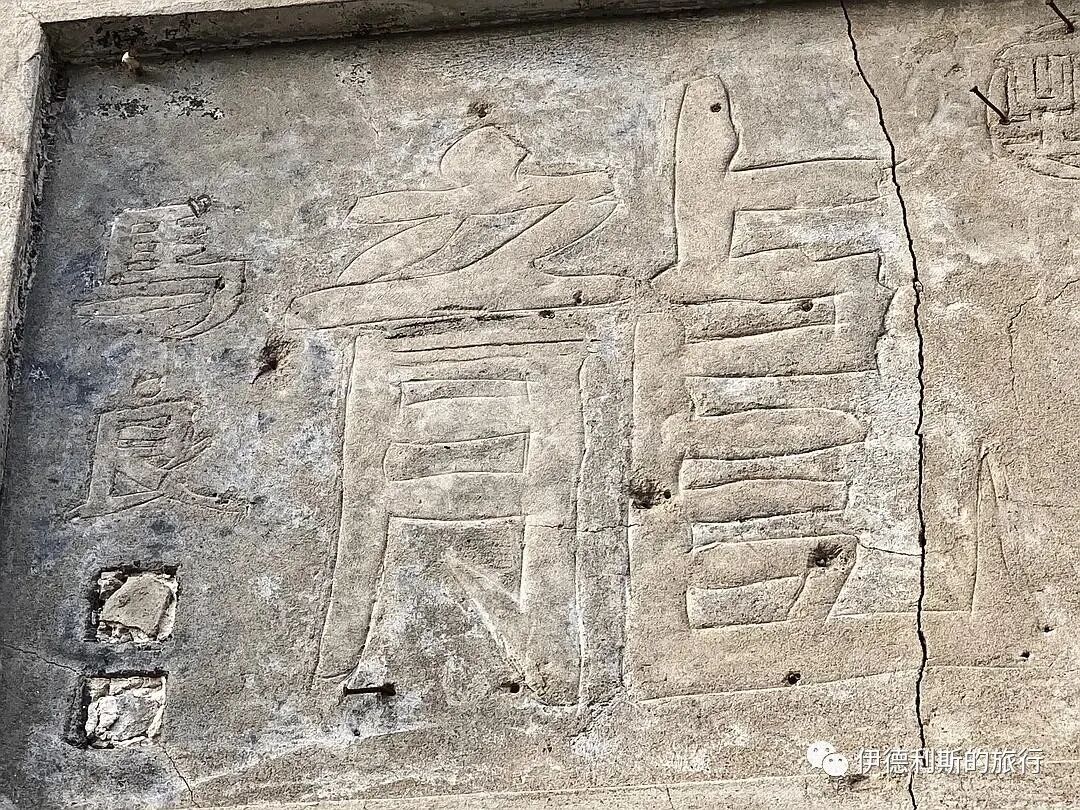
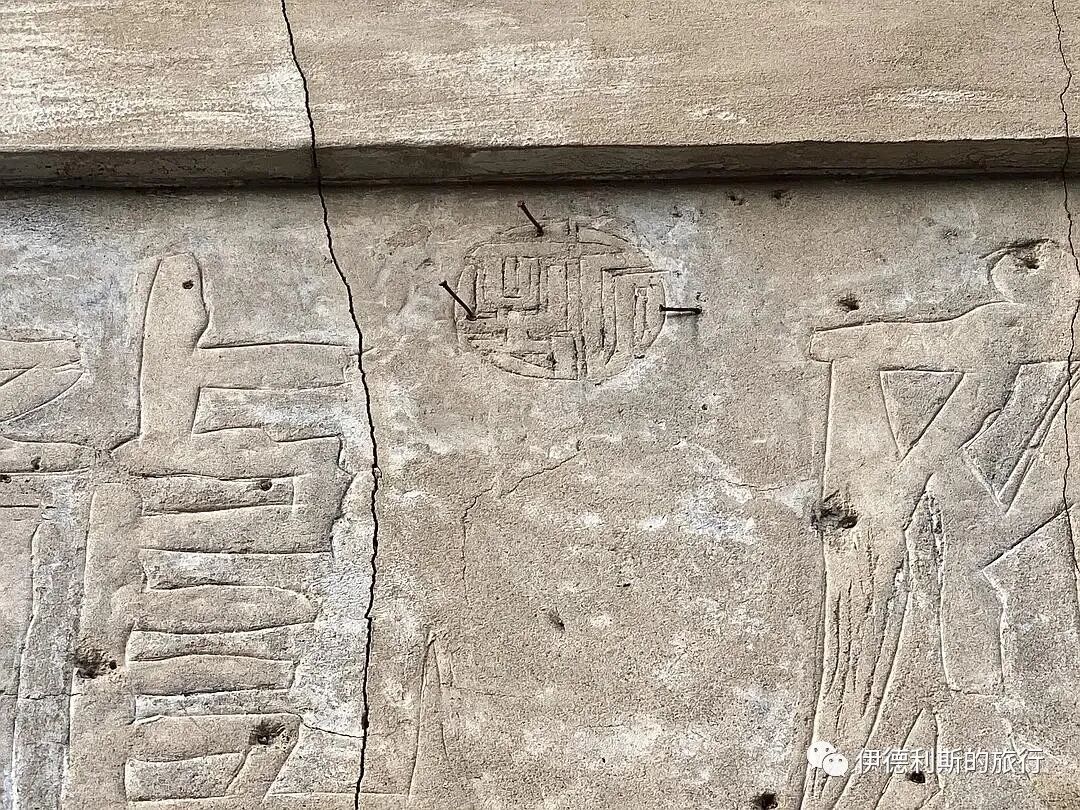
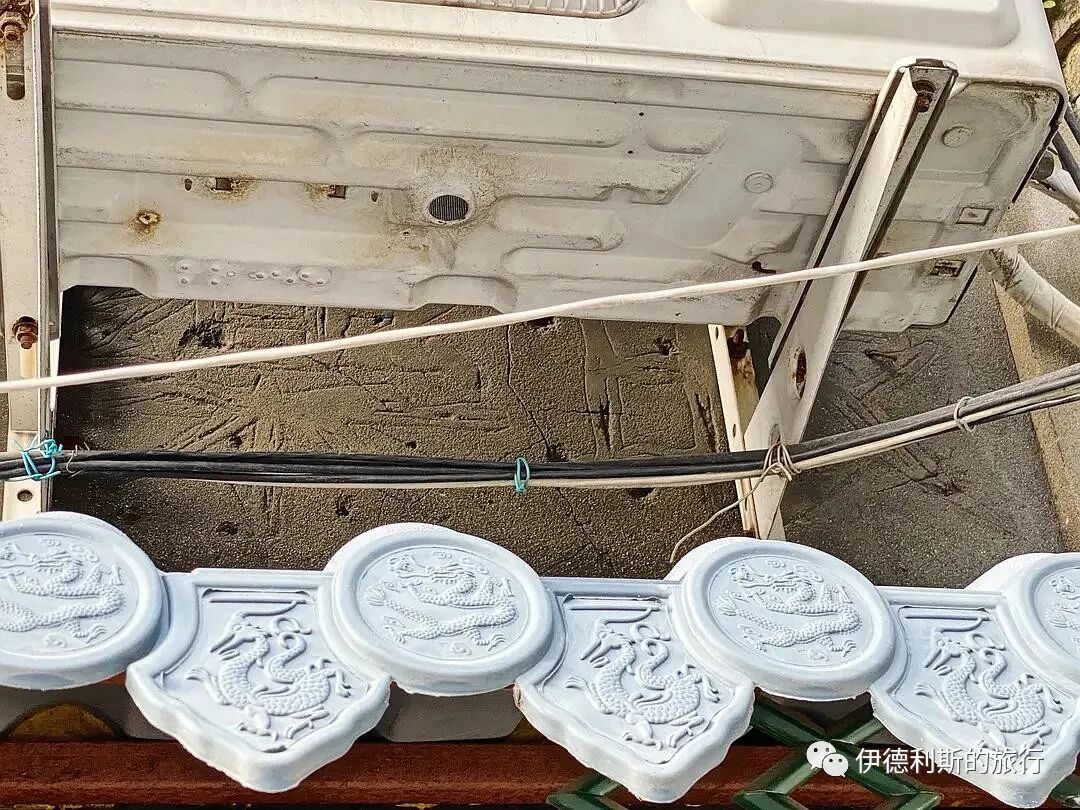
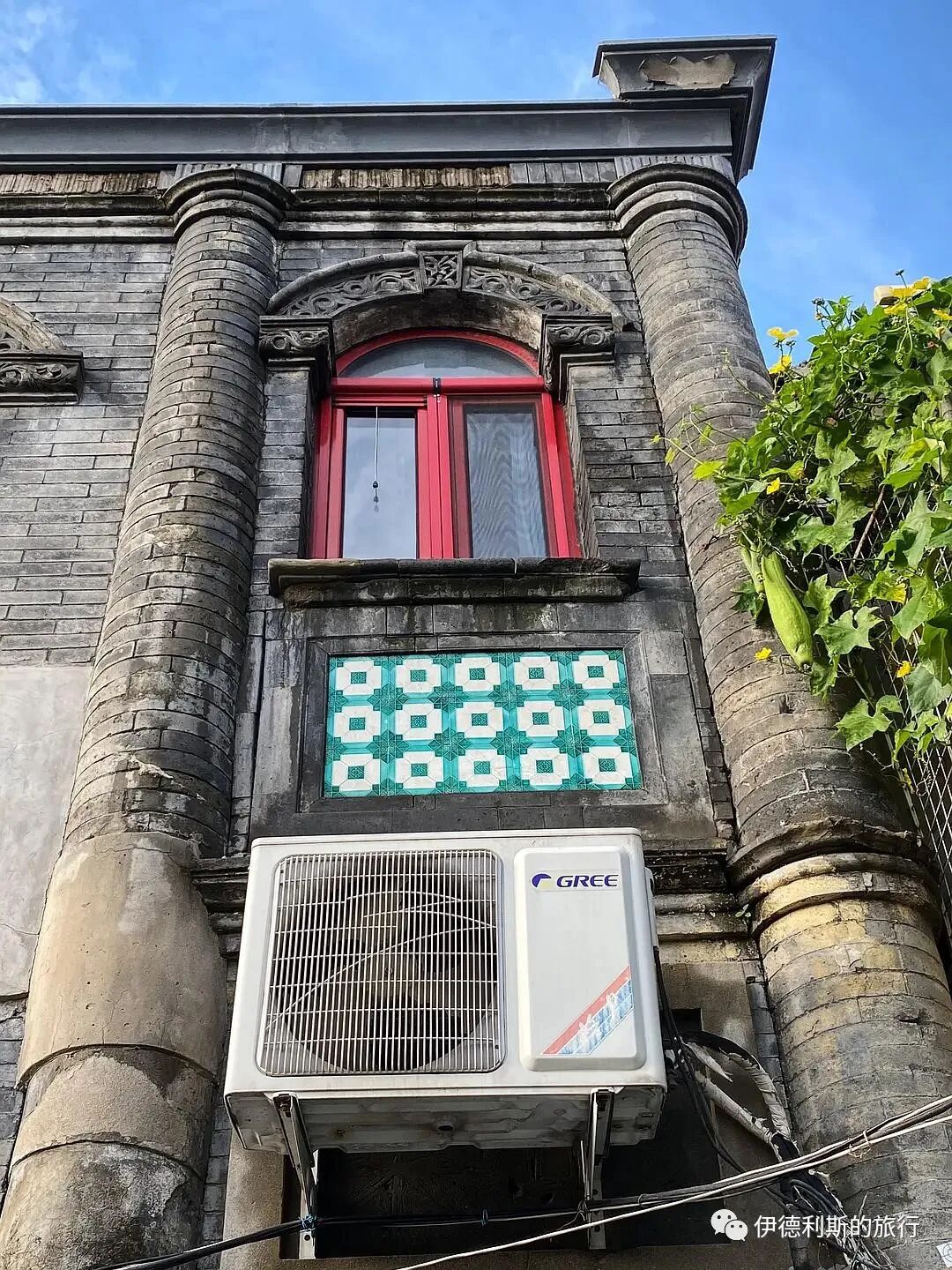
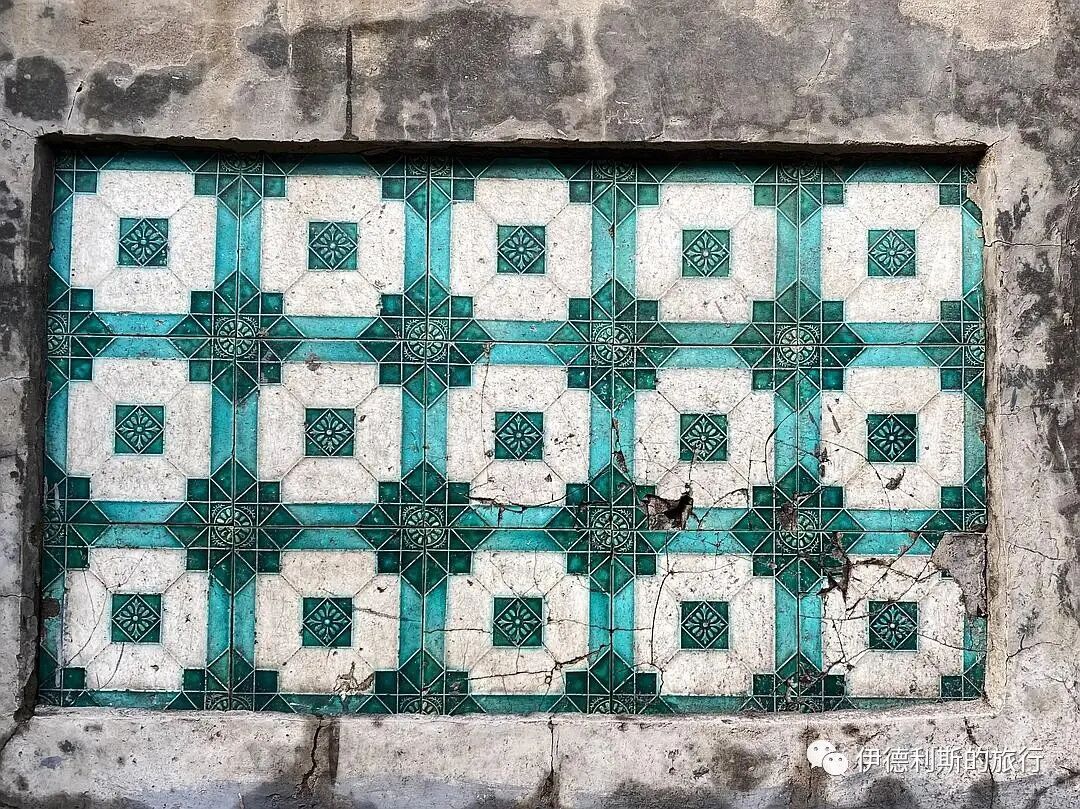
Summary: This travel note introduces Old Hui Muslim Architecture Outside Qianmen, Beijing. Qianmen Mosque was originally named Tiaozhou Hutong Mosque. It was first built in the late Ming Dynasty (early 17th century) and renovated in 1680 (the 19th year of the Kangxi reign of the Qing Dynasty) and 1795 (the. It is useful for readers interested in Beijing Hui Muslims, Historic Buildings, Muslim Heritage.
1. Qianmen Mosque
Qianmen Mosque was originally named Tiaozhou Hutong Mosque. It was first built in the late Ming Dynasty (early 17th century) and renovated in 1680 (the 19th year of the Kangxi reign of the Qing Dynasty) and 1795 (the 60th year of the Qianlong reign). It features the typical architectural style of North China mosques from the Qing Dynasty and is very well preserved. From the Qing Dynasty to the Republican era, many Hui Muslims outside Qianmen worked in the jade, jewelry, and antique calligraphy and painting industries. At that time, Qianmen Mosque was very lively, but with the changing times, the old mosque has returned to tranquility.
Chatting with Imam Wang of Qianmen Mosque. Imam Wang is a Hui Muslim from Niujie. With his authentic Xuannan Beijing accent, he talks about the history and culture of the old Beijing Hui Muslims in a very thorough and vivid way.
The beautiful goulianda (interlocking roof structure) of Qianmen Mosque, where you can still see the chiwen (roof ridge ornaments) replaced by scroll patterns.
2. Ji'antang Wang Hui Muslim Plaster Shop storefront
Ji'antang Wang Hui Muslim Plaster Shop is located on Yangmeizhu Xiejie outside Qianmen. The Wang family has been running a plaster shop since the Wanli reign of the Ming Dynasty. It has been over 400 years now and is a district-level intangible cultural heritage. In the old days, Ji'antang had the shop in the front and the workshop in the back, where several generations lived and worked. Now, various cultural relics of the old Ji'antang shop are displayed in the street-facing storefront. The most precious item is the original wooden plaque preserved on the second-floor terrace.
After the public-private partnership in 1956, Ji'antang was merged into Tongrentang. The plaster shop on Yangmeizhu Xiejie was closed and converted into staff dormitories, and the Wang family also became employees of Tongrentang. After the 1960s, the Ji'antang storefront was reclaimed. Through unremitting efforts, the Wang family successfully retrieved it in 1997. After renovation, the Wang family reopened the old storefront as a bookstore in 2004, naming it Ji'anzhai. In 2014, Yangmeizhu Xiejie became a pilot project for the Beijing Design Week. Ji'anzhai took this opportunity to upgrade into a coffee bookstore, which is still in operation today. The landlady is the 21st-generation descendant of Ji'antang.
The original shop sign (huozi) of the plaster shop, which is of great historical significance.
On December 5, 2020, our Dostani (friends/companions) had a dinner party in the small siheyuan (courtyard house) behind Ji'anzhai. We ate crab roe noodles, beef rice, chicken curry, fried chicken with fries, and salad. The environment of the small courtyard is very good and very suitable for gatherings. It was my first time eating crab roe noodles, and the portion was very generous. The landlady said it was made by manually extracting the roe and meat from 8 full-roe zha crabs.
After the Eid al-Fitr prayer in 2021, our Dostani gathered at Ji'anzhai for a buffet. The descendants of Ji'antang Wang Hui Muslim Plaster Shop fried youxiang (deep-fried flour dough) for us personally. It was super delicious, with a chewy texture and not hard at all. We also ate the old Beijing Hui Muslim specialty stewed beef and tangjuanguo (candied yam and date rolls). The beef is bought from Niujie every morning and stewed fresh, never kept overnight. Tangjuanguo is made by steaming yams with dates and raisins, then stir-frying them in sugar, which is very time-consuming to make. In addition to old Beijing specialties, there were also chicken curry, tomato pasta, fried cod fillets, fruit salad, and small cream cakes. It was a very satisfying meal!
3. Gate tower of the Halal Yipinxiang Bathhouse
The Halal Yipinxiang Bathhouse is located on Zongshu Xiejie outside Qianmen. Zongshu Xiejie was originally called Wang Guafu Xiejie and Wang Guangfu Xiejie. It belongs to the 'Eight Great Hutongs' and was famous for its 'qingyin xiaoban' (high-class singing girl houses) during the Republican era. There were also various restaurants and bathhouses, and Yipinxiang was the most famous one among them.
Peking Opera master Ma Lianliang loved to soak in Yipinxiang. Zhang Aiyi wrote in 'Lingren Wangshi' (Past Stories of Actors): 'Ma Lianliang liked to soak in baths.' As long as there was a performance in the evening, he would definitely go to the bathhouse in the afternoon. First it was 'Yipinxiang' outside Qianmen, and later he switched to 'Qinghuachi' at Xizhushikou. Later on, he often went to 'Qinghuayuan' at Bamiancao. After soaking, he would ask a professional master to give him a pedicure. This was because he wore boots all year round for performing, which caused corns. Every time he went to the bathhouse, Ma Lianliang would bring some cigarettes and tea to give to the masters and workers. "
Besides going alone, Ma Lianliang often went to Yipinxiang with the 'King of Drum Singing' Liu Baoquan. Ma Lianliang wrote about this in 'Reminiscing about Mr. Liu Baoquan', around the 1920s: 'After some time, introduced by the late famous Peking Opera actor Mr. Wang Yaoqing, I met Mr. Liu Baoquan.' We hit it off immediately and soon became close friends. For more than five years after that, we were together day and night, inseparable. Every day I would go to his home at Mianhua Jiutiao to find him. We would stroll around together, take a walk, and then go to the 'Yipinxiang' bathhouse to bathe. In the afternoon, we would go to Liangyixuan to eat together. After eating, we would go to the theater together to watch the performances of Yu Shuyan and Yang Xiaolou. This was almost our daily routine. "
Yipinxiang Bathhouse also continued to develop during the Republican era. This can be seen by comparing the 'Revised Practical Beijing Guide' published by the Commercial Press in the 12th year of the Republic of China and the 'Beijing Travel Guide' published by Xinhua Bookstore in the 30th year of the Republic of China.
In the 12th year of the Republic of China, Yipinxiang was not yet a first-class bathhouse and could only be ranked as a 'slightly inferior' second-class one, using cement basins and vat basins: 'The slightly inferior ones are Yipinxiang, Huayuan, Wenyayuan, Yuqing, Qingquan, Dongxing, Yuhua, Qihua, Xinhuachi, Baoquan, Yihe, etc.' Most of their equipment consisted of cement basins and vat basins, with some enamel basins. The bathing price varied from four jiao, three jiao, two jiao, to one jiao. Fees for back scrubbing and haircuts were two jiao or one jiao. "
By the 30th year of the Republic of China, Yipinxiang was already one of the most famous bathhouses in Beijing, on par with the Qinghuachi we are familiar with. At that time, the downstairs of the bathhouse was built with white ceramic tiles into 'warm five pools', while upstairs there were individual enamel bathtubs. At the same time, Yipinxiang had the most popular pedicure master in Beijing at the time, who specialized in treating athlete's foot: 'There are currently 123 bathhouses in the city.' In recent years, it has developed day by day with the progress of the times. Because human evolution has made everyone aware of cleanliness, those in this industry also know how to adapt to the times and make improvements. Most of the pools have been changed to warm five pools, built with white ceramic tiles. The pools are wide and deep, actually surpassing those in Shanghai, Wuhan, and Nanjing. Bathtubs have also been changed from wooden to enamel, which is much cleaner and more beautiful than before. Those with the most perfect equipment, such as Qinghuayuan and Yiheyuan in the East City, Huabaoyuan and Yuhuayuan in the West City, and Qinghuachi and Yipinxiang in the Outer City, are all very prosperous. The prices are divided into official basins, elegant seats, upstairs, downstairs... The pedicure master at Yipinxiang is named Wei Wenxi, who has long been famous in this field, and all bathhouses compete to hire him. Southerners in Beijing suffering from athlete's foot all seek out Little Wei, because once he scrapes it, it feels like a heavy burden has been lifted. For this reason, Little Wei is often too busy to attend to everyone. "
In addition, according to the 'Beijing Industrial and Commercial Guide' edited by Zhengfeng Economic Society in the 28th year of the Republic of China, the owner of Yipinxiang was named Wang Houqi, a native of Wanping, Hebei (which includes the western part of Beijing, including today's Xicheng District). However, I have not been able to find more information about Wang Houqi, and I hope there will be new discoveries in the future.
4. Ma Yinglong Eye Medicine Shop storefront
In 1875 (the first year of the Guangxu reign of the Qing Dynasty), Ma Wanxing, a Hui Muslim from Dingzhou, Hebei, moved the Ma's Eye Medicine Shop from Dingzhou to Beijing and opened the 'Beijing Ma Yinglong Eye Medicine Shop' at Xiheyan, Qianmen. 'Ma Yinglong' was his father's name.
In 1923, Ma Wanxing's third son, Ma Liting, inherited the medicine shop and officially built the current Republican-style storefront at Xiheyan, Qianmen. There is a 'Ma Yinglong' plaque on the storefront, and the words 'Eye Medicine' can also be seen on the right, covered by an air conditioner. The plaque was inscribed by Ma Liang, a Beiyang warlord and a Hui Muslim from Qingyuan, Hebei (now Qingyuan District, Baoding).
After the 1930s, Ma Yinglong successively set up branches across the country and expanded sales through mail order, even exporting to Europe. After the public-private partnership in 1957, Ma Liting served as the deputy section chief of the processing department of the Beijing Medicinal Materials Company. In 1966, the whole family was sent back to their ancestral home in Dingzhou, and Beijing Ma Yinglong gradually withdrew from the historical stage.
In 1919, Ma Qishan, a cousin's grandson of Ma Wanxing, opened a Ma Yinglong branch on Hanzheng Street in Hankou, and later established the Ma Yinglong Shengji Pharmaceutical Factory. After the 1980s, it began to focus on hemorrhoid ointment, continuing the Ma Yinglong brand to this day.
Halal Travel Guide: Baku Old City — Historic Buildings (Part 1)
Articles • ali2007fr posted the article • 0 comments • 132 views • 2026-05-17 10:55
Reposted from the web
Summary: Baku Old City — Historic Buildings is presented here as a firsthand travel account in clear English, beginning with this scene: Baku's Old City, also known as İçərişəhər, is the oldest part of Azerbaijan's capital. UNESCO listed it as a World Heritage site in 2000. The account keeps its focus on Baku Old City, Azerbaijan Travel, Historic Buildings while preserving the names, places, food, and historical details from the Chinese source.
Baku's Old City, also known as İçərişəhər, is the oldest part of Azerbaijan's capital. UNESCO listed it as a World Heritage site in 2000.
In the 8th century, the Abbasid Caliph appointed Arab general Yazid ibn Mazyad al-Shaybani as the governor of the Arminiya region, which covered most of the Caucasus. The Abbasid Caliphate fell into civil war in 861. Yazid's grandson, Haytham ibn Khalid, declared independence. He used the ancient Persian title Shirvanshah, and the state he founded became known as the Shirvanshah Dynasty.
In 1191, an earthquake destroyed Shamakhi, the original capital of the Shirvanshah Dynasty. The 21st Shirvanshah king, Akhsitan I, moved the capital to Baku. From then on, Baku became the capital of the Shirvanshah Dynasty.
The Shirvanshah Dynasty suffered a devastating blow from the Mongol cavalry in 1235. It then became a vassal state of the Mongol and Timurid dynasties during the 13th and 14th centuries. After Timur the Great died in 1405, the Shirvanshah Dynasty became independent again. It reached its peak during the reign of the 34th king, Khalilullah I (1418-1465). The Palace of the Shirvanshahs in Baku's Old City was built during this time.
In 1501, the Persian Safavid Dynasty invaded the Shirvanshah Dynasty and eventually captured Baku. After this, the Shirvanshah Dynasty became a vassal of the Safavid Dynasty until it was officially annexed in 1538.
Baku was then briefly controlled by the Ottomans and Imperial Russia, but Iran quickly took it back. In the 18th century, local tribal leaders established the Baku Khanate (1747-1806). Russia eventually occupied it in 1806.
Baku held an important place in ancient Eurasian trade. It was a key hub in the Eurasian trade network, and many merchants and travelers from India and Central Asia stopped here. Today, this ancient city has a palace complex from the Shirvanshah Dynasty, relatively complete ancient city walls, over a dozen old mosques built between the 11th and 18th centuries, four large caravanserais (ancient inns) that saw ancient trade, and several traditional bathhouses. It is well worth a visit.
1. The Palace of the Shirvanshahs: Mostly 15th Century
The Palace of the Shirvanshahs (Şirvanşahlar sarayı) was built after the Shirvanshah Dynasty (Şirvanşah) moved its capital to Baku in 1191. Most of the existing buildings were constructed in the 15th century by the 34th ruler, I Xəlilullah (Khalilullah I, who reigned from 1418-1465). In 2000, it was added to the UNESCO World Heritage list under the name
This complex is a prime example of the Şirvan-Abşeron architectural school. This school started in the 8th century and was popular from the 11th to the 15th centuries. It is Azerbaijan's most important traditional architectural school. This school is known for combining smooth stone facades with delicate decorative carvings. It specialized in building heavy, defensive structures.
1. The Palace Building
The palace building (Şirvanşahların saray binası) is the oldest and most important part of the Shirvanshahs' Palace. The exact start date of the palace's construction is still unknown. We only know that it was looted in 1500 during the invasion by the Persian Safavid Dynasty. After Russia occupied Baku in 1828, the palace became the Russian army headquarters. During repairs, the Russians destroyed many valuable structures. They even planned to build a cathedral here, but this never happened.
The palace entrance is very simple. Inside, there are no stone inscriptions or complex decorations. This is a sharp contrast to the grand palaces of other Muslim dynasties from the same period. The palace has two floors and originally had 52 rooms. The most important room on the second floor is the central octagonal hall. This is also the oldest part of the palace and was likely the king's reception hall. The second floor also has the sleeping quarters for the king and his family. From the windows, you can see beautiful sea views of Baku Bay.
Postcards related to Baku's Old City are on display in the palace.
The palace displays 18th-century stained-glass windowpanes from Sheki, a city in northwestern Azerbaijan. They were made precisely to size, so they did not use nails or glue.
Photos from the palace's renovation in 2013 show the building before and after the work.
2. Bayil Stones
Bayil Castle, known as the The Great Baku Earthquake of 1306 submerged Bayil Castle in the Caspian Sea. It only resurfaced in the early 18th century when the Caspian Sea receded.
Between 1939 and 1969, the Institute of History of the Azerbaijan Academy of Sciences excavated over 700 inscribed stones from Bayil Castle. These are now kept in the courtyard of the Shirvanshahs' Palace. These stones are important for studying the history and culture of the Shirvanshah Dynasty. Historians found the names of 15 Shirvanshah kings on them, along with a portrait of one king.
The inscriptions also show that the castle was called
The National Museum of History of Azerbaijan displays Bayil stones with animal and human figures.
3. Divankhana
The Divankhana is in a separate courtyard on the north side of the palace. It has arcades on three sides and a pavilion-style building in the center. Shirvanshah King Farrukh Yasar (who reigned from 1465-1500) ordered the construction of the Divankhana. People say it was used as a court, a reception hall, or a mausoleum, but there is no definite proof.
The Divankhana's gate is a classic example of Azerbaijan's Şirvan-Abşeron architectural school. The gate is decorated with fig and grape leaf carvings. On each side, a hexagonal geometric Arabic carving shows the Shahada (Islamic creed). Inside, the walls have carvings of Quranic verses.
4. Seyid Yahya Bakuvi Mausoleum
The Seyid Yahya Bakuvi Mausoleum (Türbəsi) was built between 1457 and 1458. Seyid Yahya Bakuvi (1403-1462), the person buried there, was a court scholar of the Shirvanshah Dynasty. He was also the second spiritual leader and a key promoter of the famous Sufi Khalwati order. He was a descendant of Musa al-Kadhim, the seventh Shia Imam.
Yahya practiced Sufism in Shamakhi, Azerbaijan, in his early years. He later came to the Shirvanshah court in Baku. In Baku, he had tens of thousands of followers. Fifteen of Yahya's works are now kept in Istanbul, Manisa, and Konya, Turkey. These works are valuable for Sufi philosophy and important for astronomy and mathematics.
Yahya's mausoleum has octagonal walls and a conical roof. This is the only example of its kind in the Şirvan-Abşeron architectural school; other mausoleums in this school have domes. The mausoleum has two levels: an upper level for visiting the shrine and a lower level for the burial chamber. The plaster on the walls and the mausoleum roof is the only surviving architectural coating in the Shirvanshahs' Palace.
A mosque called Keyqubad once stood in front of the mausoleum. Yahya served as a religious teacher there. The mosque was first built in the 14th century. However, Armenian forces burned it down in 1918. Only its foundations remain today.
5. Shirvanshahs' Palace Mausoleum
An inscription on the gate of the Shirvanshahs' Palace Mausoleum (Şirvanşahlar sarayı türbəsi) states that Shirvanshah King Khalilullah I (who reigned from 1418-1465) ordered its construction for his mother and 7-year-old son between 1435 and 1436. The mausoleum building is similar to the Divankhana, another palace structure. Its gate also has complex carvings. One hexagonal carving cleverly repeats the word
Archaeological excavations in 1947 uncovered burial chambers by removing the floor. Five of these contained skeletons, while two were empty. The famous Persian scholar Muhammad Khwandamir (1475-1537) wrote in his work
Badr Shirvani (1387-1450), a famous Persian poet of the Shirvanshah Dynasty, recorded the names of the tomb occupants in his writings:
The first was King Khalilullah I's 6-7-year-old son, who died in 1432.
The second was King Khalilullah I's mother, Bika, who died between 1435 and 1436.
The third was Khanika khanim, the wife of Shahrukh of Shirvan (who reigned from 1535-1538), the last Shirvanshah king.
The fourth was King Khalilullah I's two-year-old son, Sheikh Salah, who died in 1445. Porcelain and a large candelabra were found in his tomb.
The fifth was 19-year-old Ibrahim II, who died in 1432. The tomb contained silk remnants, blue beads, and a gold needle with turquoise and six sapphires.
On the other side of the entrance is the two-meter-high tomb of Khalilullah I himself. A comb and a gold earring were found inside.
6. Palace Mosque
Shirvanshah King Khalilullah I ordered the construction of the Palace Mosque between 1441 and 1442. In 1723, Tsar Peter I's army shelled Baku from the Caspian Sea, damaging the mosque's northeast facade. In 1918, artillery shelled the mosque's minaret.
The mosque's main prayer hall is small, only 70 square meters. This means it could not hold large congregational prayers. It was generally used only by people from the palace or nearby. The mosque has two main gates. One faces the palace mausoleum directly. The other is a side gate, used only by the Shirvanshah king and his family.
The cylindrical minaret in the mosque's northeast corner has a balcony supported by a stalactite cornice. You can reach it by a spiral stone staircase inside the tower.
7. Palace Bathhouse
The palace bathhouse is underground, at the lowest part of the palace. This kept the temperature stable. Over time, it was completely forgotten until it was accidentally discovered in 1939. It was partly cleaned in 1953, and some of the pools were later restored.
Water entering the baths flowed from a reservoir near the walls to the boiler room. Then, it went through special pipes to each room. In one corner of the bathhouse is a large domed room and two smaller rooms. These tiled rooms were likely reserved for the king.
2. Maiden Tower
The Maiden Tower (Qız qalası) is one of Baku Old City's landmarks. Like the Shirvanshahs' Palace, it is on the UNESCO World Heritage list.
There is no final conclusion about the Maiden Tower's construction. Most people believe the lower part was built between the 4th and 6th centuries, and the upper part in the 12th century. People guess that the Maiden Tower was first a Zoroastrian mosque during the Sasanian period. It was rebuilt in the 12th century. One view is that the rebuilt Maiden Tower was used for astronomical observations. Another view is that, based on its design, the Maiden Tower should be a defensive tower. Its walls are up to 5 meters thick, its internal staircase is easy to defend, and a well goes straight to the third floor. Russia reinforced the tower during its rule in 1806. Archaeological excavations in 1962-1963 showed that the Maiden Tower was built on a huge rock sloping towards the Caspian Sea. They also found a 14-meter-long wooden beam at its base.
Up to 20 legends surround the Maiden Tower. The most famous tells of a maiden who saved the people of Baku from slave owners. This epic shows Azerbaijan's Zoroastrian beliefs and cultural roots. In 1940, composer Afrasiyab Badalbeyli created Azerbaijan's first ballet,
3. Baku City Walls
Shirvanshah King Manuchohr III (who reigned from 1120-1160) ordered the construction of the Baku City Walls (Bakı qalası) between 1138 and 1139. Shirvanshah King Akhsitan I (who reigned from 1160-1197) later added outer walls. In 1865, Russia ordered the demolition of the city walls along the Caspian Sea. Between 1883 and 1888, all outer walls were also torn down. In 1910, the mayor at the time banned the demolition of ancient castle remains. He also partly restored the Baku City Walls.
The Double Gates (Qoşa Qala Qapısıdır) are the main city gates of Baku Old City. They are 8-10 meters high and 3-3.5 meters wide. The gates have carvings of a bull's head and a lion, symbols of the city. Historians believe the bull represents a leader, and the lion is a protector.
In 1954, one of the towers on Baku's north wall collapsed. Inside, a 12th-century Arabic inscription written in Kufic script was found. It is now kept in the Azerbaijan History Museum. The inscription states that Shirvanshah King Manuchohr III ordered the construction of the Baku City Walls.
North of the Baku City Walls is a rectangular tower, the Donjon, which served as an armory. The tower is 16 meters high and 2 meters thick. An underground passage leads directly to the Double Gates.
4. Mosques
1. Muhammad Mosque: 1079
The Muhammad Mosque was built between 1078 and 1079. It is the oldest surviving Islamic building in Azerbaijan. An Arabic inscription in Kufic script on the mosque's north wall shows that Muhammad ibn Abu Bakr built the mosque. Research shows that the Muhammad Mosque was built on the site of a Zoroastrian fire mosque. Muhammad was the mayor of Baku at that time.
During the Russian-Persian War in 1723, the Imperial Russian fleet shelled Baku. A cannonball hit the minaret of the Muhammad Mosque. At the same time, a strong wind suddenly blew the Russian fleet away from the city. The people of Baku believed this was Allah's protection. So, the minaret was not repaired until the mid-19th century, serving as a symbol of Baku's resistance to invasion. After this, the mosque was also called the
2. Takyeh: 13th Century
The Takyeh is a Sufi mosque built in the 13th century. It was also a place for Sufi practitioners to study and rest. Archaeological excavations took place here in 1967, and it was renovated in the 1970s.
3. Khidir Mosque: 1301
The Khidir Mosque was built in 1301. Archaeological excavations in 1988 found that this mosque was built on the site of a Zoroastrian mosque.
4. Mirza Ahmad Mosque: 1345
The Mirza Ahmad Mosque was built in 1345. The wall at its entrance has carvings of the Quran and the architect's name. It is currently out of use due to its poor condition.
5. Chin Mosque: 1376
An inscription above the entrance shows that the Chin Mosque was built between 1375 and 1376. It was repaired between 1772 and 1773. The Old City State Historical Architectural Reserve Department repaired it again in 2012.
6. Molla Ahmad Mosque: Early 14th Century
The Molla Ahmad Mosque was built in the early 14th century by Mahmud ibn Sad, a famous architect of the Şirvan-Abşeron architectural school. It is a typical example of a small community mosque from the Shirvanshah Dynasty.
7. Sheikh Ibrahim Mosque: 1416
Haji Amirshah ibn Yagub built the Sheikh Ibrahim Mosque between 1415 and 1416. Ibrahim I (who reigned from 1382-1417), the 33rd king of the Shirvanshah Dynasty, ruled Baku at that time. Because of this, the mosque is also called the Sheikh Ibrahim Mosque. In the 19th century, the mosque's facade was divided into three sections, and windows were added.
Today, it is a madrasa (Islamic school) for women.
8. Juma Mosque
The Juma Mosque is the main mosque in Baku's Old City. An inscription on the mosque wall shows that Amir Sharaf al-Din Mahmud rebuilt the mosque in 1309. The current main prayer hall was built in 1899 with donations from Baku merchant Haji Shikhlali Dadashov. It blends traditional and European architectural styles.
The clay tablet at the entrance of the main hall is called a Turbah. It symbolizes the earth. Shia Muslims place their foreheads on it during namaz (prayer).
The minaret on the north side of the main hall was built in 1437. It has a balcony supported by stalactite structures.
During the Soviet era, the Juma Mosque became a carpet museum. It resumed religious activities only in the 1990s and underwent major renovations in 2008.
A madrasa from the 15th century once stood next to the Juma Mosque. However, it was torn down in the mid-19th century for road expansion. Only one classroom remains today, which is now a souvenir shop.
9. Sayyid Yahya Murtuza Mosque: Early 17th Century
Sayyid Yahya Murtuza himself built the Sayyid Yahya Murtuza Mosque in the early 17th century. He was a well-known local imam and was buried here after his death. During the Soviet era, it became a carpentry workshop. After the 1990s, it resumed religious activities and is now part of the Juma Mosque. view all
Summary: Baku Old City — Historic Buildings is presented here as a firsthand travel account in clear English, beginning with this scene: Baku's Old City, also known as İçərişəhər, is the oldest part of Azerbaijan's capital. UNESCO listed it as a World Heritage site in 2000. The account keeps its focus on Baku Old City, Azerbaijan Travel, Historic Buildings while preserving the names, places, food, and historical details from the Chinese source.
Baku's Old City, also known as İçərişəhər, is the oldest part of Azerbaijan's capital. UNESCO listed it as a World Heritage site in 2000.
In the 8th century, the Abbasid Caliph appointed Arab general Yazid ibn Mazyad al-Shaybani as the governor of the Arminiya region, which covered most of the Caucasus. The Abbasid Caliphate fell into civil war in 861. Yazid's grandson, Haytham ibn Khalid, declared independence. He used the ancient Persian title Shirvanshah, and the state he founded became known as the Shirvanshah Dynasty.
In 1191, an earthquake destroyed Shamakhi, the original capital of the Shirvanshah Dynasty. The 21st Shirvanshah king, Akhsitan I, moved the capital to Baku. From then on, Baku became the capital of the Shirvanshah Dynasty.
The Shirvanshah Dynasty suffered a devastating blow from the Mongol cavalry in 1235. It then became a vassal state of the Mongol and Timurid dynasties during the 13th and 14th centuries. After Timur the Great died in 1405, the Shirvanshah Dynasty became independent again. It reached its peak during the reign of the 34th king, Khalilullah I (1418-1465). The Palace of the Shirvanshahs in Baku's Old City was built during this time.
In 1501, the Persian Safavid Dynasty invaded the Shirvanshah Dynasty and eventually captured Baku. After this, the Shirvanshah Dynasty became a vassal of the Safavid Dynasty until it was officially annexed in 1538.
Baku was then briefly controlled by the Ottomans and Imperial Russia, but Iran quickly took it back. In the 18th century, local tribal leaders established the Baku Khanate (1747-1806). Russia eventually occupied it in 1806.
Baku held an important place in ancient Eurasian trade. It was a key hub in the Eurasian trade network, and many merchants and travelers from India and Central Asia stopped here. Today, this ancient city has a palace complex from the Shirvanshah Dynasty, relatively complete ancient city walls, over a dozen old mosques built between the 11th and 18th centuries, four large caravanserais (ancient inns) that saw ancient trade, and several traditional bathhouses. It is well worth a visit.
1. The Palace of the Shirvanshahs: Mostly 15th Century
The Palace of the Shirvanshahs (Şirvanşahlar sarayı) was built after the Shirvanshah Dynasty (Şirvanşah) moved its capital to Baku in 1191. Most of the existing buildings were constructed in the 15th century by the 34th ruler, I Xəlilullah (Khalilullah I, who reigned from 1418-1465). In 2000, it was added to the UNESCO World Heritage list under the name
This complex is a prime example of the Şirvan-Abşeron architectural school. This school started in the 8th century and was popular from the 11th to the 15th centuries. It is Azerbaijan's most important traditional architectural school. This school is known for combining smooth stone facades with delicate decorative carvings. It specialized in building heavy, defensive structures.
1. The Palace Building
The palace building (Şirvanşahların saray binası) is the oldest and most important part of the Shirvanshahs' Palace. The exact start date of the palace's construction is still unknown. We only know that it was looted in 1500 during the invasion by the Persian Safavid Dynasty. After Russia occupied Baku in 1828, the palace became the Russian army headquarters. During repairs, the Russians destroyed many valuable structures. They even planned to build a cathedral here, but this never happened.
The palace entrance is very simple. Inside, there are no stone inscriptions or complex decorations. This is a sharp contrast to the grand palaces of other Muslim dynasties from the same period. The palace has two floors and originally had 52 rooms. The most important room on the second floor is the central octagonal hall. This is also the oldest part of the palace and was likely the king's reception hall. The second floor also has the sleeping quarters for the king and his family. From the windows, you can see beautiful sea views of Baku Bay.
Postcards related to Baku's Old City are on display in the palace.
The palace displays 18th-century stained-glass windowpanes from Sheki, a city in northwestern Azerbaijan. They were made precisely to size, so they did not use nails or glue.
Photos from the palace's renovation in 2013 show the building before and after the work.
2. Bayil Stones
Bayil Castle, known as the The Great Baku Earthquake of 1306 submerged Bayil Castle in the Caspian Sea. It only resurfaced in the early 18th century when the Caspian Sea receded.
Between 1939 and 1969, the Institute of History of the Azerbaijan Academy of Sciences excavated over 700 inscribed stones from Bayil Castle. These are now kept in the courtyard of the Shirvanshahs' Palace. These stones are important for studying the history and culture of the Shirvanshah Dynasty. Historians found the names of 15 Shirvanshah kings on them, along with a portrait of one king.
The inscriptions also show that the castle was called
The National Museum of History of Azerbaijan displays Bayil stones with animal and human figures.
3. Divankhana
The Divankhana is in a separate courtyard on the north side of the palace. It has arcades on three sides and a pavilion-style building in the center. Shirvanshah King Farrukh Yasar (who reigned from 1465-1500) ordered the construction of the Divankhana. People say it was used as a court, a reception hall, or a mausoleum, but there is no definite proof.
The Divankhana's gate is a classic example of Azerbaijan's Şirvan-Abşeron architectural school. The gate is decorated with fig and grape leaf carvings. On each side, a hexagonal geometric Arabic carving shows the Shahada (Islamic creed). Inside, the walls have carvings of Quranic verses.
4. Seyid Yahya Bakuvi Mausoleum
The Seyid Yahya Bakuvi Mausoleum (Türbəsi) was built between 1457 and 1458. Seyid Yahya Bakuvi (1403-1462), the person buried there, was a court scholar of the Shirvanshah Dynasty. He was also the second spiritual leader and a key promoter of the famous Sufi Khalwati order. He was a descendant of Musa al-Kadhim, the seventh Shia Imam.
Yahya practiced Sufism in Shamakhi, Azerbaijan, in his early years. He later came to the Shirvanshah court in Baku. In Baku, he had tens of thousands of followers. Fifteen of Yahya's works are now kept in Istanbul, Manisa, and Konya, Turkey. These works are valuable for Sufi philosophy and important for astronomy and mathematics.
Yahya's mausoleum has octagonal walls and a conical roof. This is the only example of its kind in the Şirvan-Abşeron architectural school; other mausoleums in this school have domes. The mausoleum has two levels: an upper level for visiting the shrine and a lower level for the burial chamber. The plaster on the walls and the mausoleum roof is the only surviving architectural coating in the Shirvanshahs' Palace.
A mosque called Keyqubad once stood in front of the mausoleum. Yahya served as a religious teacher there. The mosque was first built in the 14th century. However, Armenian forces burned it down in 1918. Only its foundations remain today.
5. Shirvanshahs' Palace Mausoleum
An inscription on the gate of the Shirvanshahs' Palace Mausoleum (Şirvanşahlar sarayı türbəsi) states that Shirvanshah King Khalilullah I (who reigned from 1418-1465) ordered its construction for his mother and 7-year-old son between 1435 and 1436. The mausoleum building is similar to the Divankhana, another palace structure. Its gate also has complex carvings. One hexagonal carving cleverly repeats the word
Archaeological excavations in 1947 uncovered burial chambers by removing the floor. Five of these contained skeletons, while two were empty. The famous Persian scholar Muhammad Khwandamir (1475-1537) wrote in his work
Badr Shirvani (1387-1450), a famous Persian poet of the Shirvanshah Dynasty, recorded the names of the tomb occupants in his writings:
The first was King Khalilullah I's 6-7-year-old son, who died in 1432.
The second was King Khalilullah I's mother, Bika, who died between 1435 and 1436.
The third was Khanika khanim, the wife of Shahrukh of Shirvan (who reigned from 1535-1538), the last Shirvanshah king.
The fourth was King Khalilullah I's two-year-old son, Sheikh Salah, who died in 1445. Porcelain and a large candelabra were found in his tomb.
The fifth was 19-year-old Ibrahim II, who died in 1432. The tomb contained silk remnants, blue beads, and a gold needle with turquoise and six sapphires.
On the other side of the entrance is the two-meter-high tomb of Khalilullah I himself. A comb and a gold earring were found inside.
6. Palace Mosque
Shirvanshah King Khalilullah I ordered the construction of the Palace Mosque between 1441 and 1442. In 1723, Tsar Peter I's army shelled Baku from the Caspian Sea, damaging the mosque's northeast facade. In 1918, artillery shelled the mosque's minaret.
The mosque's main prayer hall is small, only 70 square meters. This means it could not hold large congregational prayers. It was generally used only by people from the palace or nearby. The mosque has two main gates. One faces the palace mausoleum directly. The other is a side gate, used only by the Shirvanshah king and his family.
The cylindrical minaret in the mosque's northeast corner has a balcony supported by a stalactite cornice. You can reach it by a spiral stone staircase inside the tower.
7. Palace Bathhouse
The palace bathhouse is underground, at the lowest part of the palace. This kept the temperature stable. Over time, it was completely forgotten until it was accidentally discovered in 1939. It was partly cleaned in 1953, and some of the pools were later restored.
Water entering the baths flowed from a reservoir near the walls to the boiler room. Then, it went through special pipes to each room. In one corner of the bathhouse is a large domed room and two smaller rooms. These tiled rooms were likely reserved for the king.
2. Maiden Tower
The Maiden Tower (Qız qalası) is one of Baku Old City's landmarks. Like the Shirvanshahs' Palace, it is on the UNESCO World Heritage list.
There is no final conclusion about the Maiden Tower's construction. Most people believe the lower part was built between the 4th and 6th centuries, and the upper part in the 12th century. People guess that the Maiden Tower was first a Zoroastrian mosque during the Sasanian period. It was rebuilt in the 12th century. One view is that the rebuilt Maiden Tower was used for astronomical observations. Another view is that, based on its design, the Maiden Tower should be a defensive tower. Its walls are up to 5 meters thick, its internal staircase is easy to defend, and a well goes straight to the third floor. Russia reinforced the tower during its rule in 1806. Archaeological excavations in 1962-1963 showed that the Maiden Tower was built on a huge rock sloping towards the Caspian Sea. They also found a 14-meter-long wooden beam at its base.
Up to 20 legends surround the Maiden Tower. The most famous tells of a maiden who saved the people of Baku from slave owners. This epic shows Azerbaijan's Zoroastrian beliefs and cultural roots. In 1940, composer Afrasiyab Badalbeyli created Azerbaijan's first ballet,
3. Baku City Walls
Shirvanshah King Manuchohr III (who reigned from 1120-1160) ordered the construction of the Baku City Walls (Bakı qalası) between 1138 and 1139. Shirvanshah King Akhsitan I (who reigned from 1160-1197) later added outer walls. In 1865, Russia ordered the demolition of the city walls along the Caspian Sea. Between 1883 and 1888, all outer walls were also torn down. In 1910, the mayor at the time banned the demolition of ancient castle remains. He also partly restored the Baku City Walls.
The Double Gates (Qoşa Qala Qapısıdır) are the main city gates of Baku Old City. They are 8-10 meters high and 3-3.5 meters wide. The gates have carvings of a bull's head and a lion, symbols of the city. Historians believe the bull represents a leader, and the lion is a protector.
In 1954, one of the towers on Baku's north wall collapsed. Inside, a 12th-century Arabic inscription written in Kufic script was found. It is now kept in the Azerbaijan History Museum. The inscription states that Shirvanshah King Manuchohr III ordered the construction of the Baku City Walls.
North of the Baku City Walls is a rectangular tower, the Donjon, which served as an armory. The tower is 16 meters high and 2 meters thick. An underground passage leads directly to the Double Gates.
4. Mosques
1. Muhammad Mosque: 1079
The Muhammad Mosque was built between 1078 and 1079. It is the oldest surviving Islamic building in Azerbaijan. An Arabic inscription in Kufic script on the mosque's north wall shows that Muhammad ibn Abu Bakr built the mosque. Research shows that the Muhammad Mosque was built on the site of a Zoroastrian fire mosque. Muhammad was the mayor of Baku at that time.
During the Russian-Persian War in 1723, the Imperial Russian fleet shelled Baku. A cannonball hit the minaret of the Muhammad Mosque. At the same time, a strong wind suddenly blew the Russian fleet away from the city. The people of Baku believed this was Allah's protection. So, the minaret was not repaired until the mid-19th century, serving as a symbol of Baku's resistance to invasion. After this, the mosque was also called the
2. Takyeh: 13th Century
The Takyeh is a Sufi mosque built in the 13th century. It was also a place for Sufi practitioners to study and rest. Archaeological excavations took place here in 1967, and it was renovated in the 1970s.
3. Khidir Mosque: 1301
The Khidir Mosque was built in 1301. Archaeological excavations in 1988 found that this mosque was built on the site of a Zoroastrian mosque.
4. Mirza Ahmad Mosque: 1345
The Mirza Ahmad Mosque was built in 1345. The wall at its entrance has carvings of the Quran and the architect's name. It is currently out of use due to its poor condition.
5. Chin Mosque: 1376
An inscription above the entrance shows that the Chin Mosque was built between 1375 and 1376. It was repaired between 1772 and 1773. The Old City State Historical Architectural Reserve Department repaired it again in 2012.
6. Molla Ahmad Mosque: Early 14th Century
The Molla Ahmad Mosque was built in the early 14th century by Mahmud ibn Sad, a famous architect of the Şirvan-Abşeron architectural school. It is a typical example of a small community mosque from the Shirvanshah Dynasty.
7. Sheikh Ibrahim Mosque: 1416
Haji Amirshah ibn Yagub built the Sheikh Ibrahim Mosque between 1415 and 1416. Ibrahim I (who reigned from 1382-1417), the 33rd king of the Shirvanshah Dynasty, ruled Baku at that time. Because of this, the mosque is also called the Sheikh Ibrahim Mosque. In the 19th century, the mosque's facade was divided into three sections, and windows were added.
Today, it is a madrasa (Islamic school) for women.
8. Juma Mosque
The Juma Mosque is the main mosque in Baku's Old City. An inscription on the mosque wall shows that Amir Sharaf al-Din Mahmud rebuilt the mosque in 1309. The current main prayer hall was built in 1899 with donations from Baku merchant Haji Shikhlali Dadashov. It blends traditional and European architectural styles.
The clay tablet at the entrance of the main hall is called a Turbah. It symbolizes the earth. Shia Muslims place their foreheads on it during namaz (prayer).
The minaret on the north side of the main hall was built in 1437. It has a balcony supported by stalactite structures.
During the Soviet era, the Juma Mosque became a carpet museum. It resumed religious activities only in the 1990s and underwent major renovations in 2008.
A madrasa from the 15th century once stood next to the Juma Mosque. However, it was torn down in the mid-19th century for road expansion. Only one classroom remains today, which is now a souvenir shop.
9. Sayyid Yahya Murtuza Mosque: Early 17th Century
Sayyid Yahya Murtuza himself built the Sayyid Yahya Murtuza Mosque in the early 17th century. He was a well-known local imam and was buried here after his death. During the Soviet era, it became a carpentry workshop. After the 1990s, it resumed religious activities and is now part of the Juma Mosque. view all
Reposted from the web
Summary: Baku Old City — Historic Buildings is presented here as a firsthand travel account in clear English, beginning with this scene: Baku's Old City, also known as İçərişəhər, is the oldest part of Azerbaijan's capital. UNESCO listed it as a World Heritage site in 2000. The account keeps its focus on Baku Old City, Azerbaijan Travel, Historic Buildings while preserving the names, places, food, and historical details from the Chinese source.
Baku's Old City, also known as İçərişəhər, is the oldest part of Azerbaijan's capital. UNESCO listed it as a World Heritage site in 2000.
In the 8th century, the Abbasid Caliph appointed Arab general Yazid ibn Mazyad al-Shaybani as the governor of the Arminiya region, which covered most of the Caucasus. The Abbasid Caliphate fell into civil war in 861. Yazid's grandson, Haytham ibn Khalid, declared independence. He used the ancient Persian title Shirvanshah, and the state he founded became known as the Shirvanshah Dynasty.
In 1191, an earthquake destroyed Shamakhi, the original capital of the Shirvanshah Dynasty. The 21st Shirvanshah king, Akhsitan I, moved the capital to Baku. From then on, Baku became the capital of the Shirvanshah Dynasty.
The Shirvanshah Dynasty suffered a devastating blow from the Mongol cavalry in 1235. It then became a vassal state of the Mongol and Timurid dynasties during the 13th and 14th centuries. After Timur the Great died in 1405, the Shirvanshah Dynasty became independent again. It reached its peak during the reign of the 34th king, Khalilullah I (1418-1465). The Palace of the Shirvanshahs in Baku's Old City was built during this time.
In 1501, the Persian Safavid Dynasty invaded the Shirvanshah Dynasty and eventually captured Baku. After this, the Shirvanshah Dynasty became a vassal of the Safavid Dynasty until it was officially annexed in 1538.
Baku was then briefly controlled by the Ottomans and Imperial Russia, but Iran quickly took it back. In the 18th century, local tribal leaders established the Baku Khanate (1747-1806). Russia eventually occupied it in 1806.
Baku held an important place in ancient Eurasian trade. It was a key hub in the Eurasian trade network, and many merchants and travelers from India and Central Asia stopped here. Today, this ancient city has a palace complex from the Shirvanshah Dynasty, relatively complete ancient city walls, over a dozen old mosques built between the 11th and 18th centuries, four large caravanserais (ancient inns) that saw ancient trade, and several traditional bathhouses. It is well worth a visit.
1. The Palace of the Shirvanshahs: Mostly 15th Century
The Palace of the Shirvanshahs (Şirvanşahlar sarayı) was built after the Shirvanshah Dynasty (Şirvanşah) moved its capital to Baku in 1191. Most of the existing buildings were constructed in the 15th century by the 34th ruler, I Xəlilullah (Khalilullah I, who reigned from 1418-1465). In 2000, it was added to the UNESCO World Heritage list under the name
This complex is a prime example of the Şirvan-Abşeron architectural school. This school started in the 8th century and was popular from the 11th to the 15th centuries. It is Azerbaijan's most important traditional architectural school. This school is known for combining smooth stone facades with delicate decorative carvings. It specialized in building heavy, defensive structures.
1. The Palace Building
The palace building (Şirvanşahların saray binası) is the oldest and most important part of the Shirvanshahs' Palace. The exact start date of the palace's construction is still unknown. We only know that it was looted in 1500 during the invasion by the Persian Safavid Dynasty. After Russia occupied Baku in 1828, the palace became the Russian army headquarters. During repairs, the Russians destroyed many valuable structures. They even planned to build a cathedral here, but this never happened.
The palace entrance is very simple. Inside, there are no stone inscriptions or complex decorations. This is a sharp contrast to the grand palaces of other Muslim dynasties from the same period. The palace has two floors and originally had 52 rooms. The most important room on the second floor is the central octagonal hall. This is also the oldest part of the palace and was likely the king's reception hall. The second floor also has the sleeping quarters for the king and his family. From the windows, you can see beautiful sea views of Baku Bay.
Postcards related to Baku's Old City are on display in the palace.
The palace displays 18th-century stained-glass windowpanes from Sheki, a city in northwestern Azerbaijan. They were made precisely to size, so they did not use nails or glue.
Photos from the palace's renovation in 2013 show the building before and after the work.
2. Bayil Stones
Bayil Castle, known as the The Great Baku Earthquake of 1306 submerged Bayil Castle in the Caspian Sea. It only resurfaced in the early 18th century when the Caspian Sea receded.
Between 1939 and 1969, the Institute of History of the Azerbaijan Academy of Sciences excavated over 700 inscribed stones from Bayil Castle. These are now kept in the courtyard of the Shirvanshahs' Palace. These stones are important for studying the history and culture of the Shirvanshah Dynasty. Historians found the names of 15 Shirvanshah kings on them, along with a portrait of one king.
The inscriptions also show that the castle was called
The National Museum of History of Azerbaijan displays Bayil stones with animal and human figures.
3. Divankhana
The Divankhana is in a separate courtyard on the north side of the palace. It has arcades on three sides and a pavilion-style building in the center. Shirvanshah King Farrukh Yasar (who reigned from 1465-1500) ordered the construction of the Divankhana. People say it was used as a court, a reception hall, or a mausoleum, but there is no definite proof.
The Divankhana's gate is a classic example of Azerbaijan's Şirvan-Abşeron architectural school. The gate is decorated with fig and grape leaf carvings. On each side, a hexagonal geometric Arabic carving shows the Shahada (Islamic creed). Inside, the walls have carvings of Quranic verses.
4. Seyid Yahya Bakuvi Mausoleum
The Seyid Yahya Bakuvi Mausoleum (Türbəsi) was built between 1457 and 1458. Seyid Yahya Bakuvi (1403-1462), the person buried there, was a court scholar of the Shirvanshah Dynasty. He was also the second spiritual leader and a key promoter of the famous Sufi Khalwati order. He was a descendant of Musa al-Kadhim, the seventh Shia Imam.
Yahya practiced Sufism in Shamakhi, Azerbaijan, in his early years. He later came to the Shirvanshah court in Baku. In Baku, he had tens of thousands of followers. Fifteen of Yahya's works are now kept in Istanbul, Manisa, and Konya, Turkey. These works are valuable for Sufi philosophy and important for astronomy and mathematics.
Yahya's mausoleum has octagonal walls and a conical roof. This is the only example of its kind in the Şirvan-Abşeron architectural school; other mausoleums in this school have domes. The mausoleum has two levels: an upper level for visiting the shrine and a lower level for the burial chamber. The plaster on the walls and the mausoleum roof is the only surviving architectural coating in the Shirvanshahs' Palace.
A mosque called Keyqubad once stood in front of the mausoleum. Yahya served as a religious teacher there. The mosque was first built in the 14th century. However, Armenian forces burned it down in 1918. Only its foundations remain today.
5. Shirvanshahs' Palace Mausoleum
An inscription on the gate of the Shirvanshahs' Palace Mausoleum (Şirvanşahlar sarayı türbəsi) states that Shirvanshah King Khalilullah I (who reigned from 1418-1465) ordered its construction for his mother and 7-year-old son between 1435 and 1436. The mausoleum building is similar to the Divankhana, another palace structure. Its gate also has complex carvings. One hexagonal carving cleverly repeats the word
Archaeological excavations in 1947 uncovered burial chambers by removing the floor. Five of these contained skeletons, while two were empty. The famous Persian scholar Muhammad Khwandamir (1475-1537) wrote in his work
Badr Shirvani (1387-1450), a famous Persian poet of the Shirvanshah Dynasty, recorded the names of the tomb occupants in his writings:
The first was King Khalilullah I's 6-7-year-old son, who died in 1432.
The second was King Khalilullah I's mother, Bika, who died between 1435 and 1436.
The third was Khanika khanim, the wife of Shahrukh of Shirvan (who reigned from 1535-1538), the last Shirvanshah king.
The fourth was King Khalilullah I's two-year-old son, Sheikh Salah, who died in 1445. Porcelain and a large candelabra were found in his tomb.
The fifth was 19-year-old Ibrahim II, who died in 1432. The tomb contained silk remnants, blue beads, and a gold needle with turquoise and six sapphires.
On the other side of the entrance is the two-meter-high tomb of Khalilullah I himself. A comb and a gold earring were found inside.
6. Palace Mosque
Shirvanshah King Khalilullah I ordered the construction of the Palace Mosque between 1441 and 1442. In 1723, Tsar Peter I's army shelled Baku from the Caspian Sea, damaging the mosque's northeast facade. In 1918, artillery shelled the mosque's minaret.
The mosque's main prayer hall is small, only 70 square meters. This means it could not hold large congregational prayers. It was generally used only by people from the palace or nearby. The mosque has two main gates. One faces the palace mausoleum directly. The other is a side gate, used only by the Shirvanshah king and his family.
The cylindrical minaret in the mosque's northeast corner has a balcony supported by a stalactite cornice. You can reach it by a spiral stone staircase inside the tower.
7. Palace Bathhouse
The palace bathhouse is underground, at the lowest part of the palace. This kept the temperature stable. Over time, it was completely forgotten until it was accidentally discovered in 1939. It was partly cleaned in 1953, and some of the pools were later restored.
Water entering the baths flowed from a reservoir near the walls to the boiler room. Then, it went through special pipes to each room. In one corner of the bathhouse is a large domed room and two smaller rooms. These tiled rooms were likely reserved for the king.
2. Maiden Tower
The Maiden Tower (Qız qalası) is one of Baku Old City's landmarks. Like the Shirvanshahs' Palace, it is on the UNESCO World Heritage list.
There is no final conclusion about the Maiden Tower's construction. Most people believe the lower part was built between the 4th and 6th centuries, and the upper part in the 12th century. People guess that the Maiden Tower was first a Zoroastrian mosque during the Sasanian period. It was rebuilt in the 12th century. One view is that the rebuilt Maiden Tower was used for astronomical observations. Another view is that, based on its design, the Maiden Tower should be a defensive tower. Its walls are up to 5 meters thick, its internal staircase is easy to defend, and a well goes straight to the third floor. Russia reinforced the tower during its rule in 1806. Archaeological excavations in 1962-1963 showed that the Maiden Tower was built on a huge rock sloping towards the Caspian Sea. They also found a 14-meter-long wooden beam at its base.
Up to 20 legends surround the Maiden Tower. The most famous tells of a maiden who saved the people of Baku from slave owners. This epic shows Azerbaijan's Zoroastrian beliefs and cultural roots. In 1940, composer Afrasiyab Badalbeyli created Azerbaijan's first ballet,
3. Baku City Walls
Shirvanshah King Manuchohr III (who reigned from 1120-1160) ordered the construction of the Baku City Walls (Bakı qalası) between 1138 and 1139. Shirvanshah King Akhsitan I (who reigned from 1160-1197) later added outer walls. In 1865, Russia ordered the demolition of the city walls along the Caspian Sea. Between 1883 and 1888, all outer walls were also torn down. In 1910, the mayor at the time banned the demolition of ancient castle remains. He also partly restored the Baku City Walls.
The Double Gates (Qoşa Qala Qapısıdır) are the main city gates of Baku Old City. They are 8-10 meters high and 3-3.5 meters wide. The gates have carvings of a bull's head and a lion, symbols of the city. Historians believe the bull represents a leader, and the lion is a protector.
In 1954, one of the towers on Baku's north wall collapsed. Inside, a 12th-century Arabic inscription written in Kufic script was found. It is now kept in the Azerbaijan History Museum. The inscription states that Shirvanshah King Manuchohr III ordered the construction of the Baku City Walls.
North of the Baku City Walls is a rectangular tower, the Donjon, which served as an armory. The tower is 16 meters high and 2 meters thick. An underground passage leads directly to the Double Gates.
4. Mosques
1. Muhammad Mosque: 1079
The Muhammad Mosque was built between 1078 and 1079. It is the oldest surviving Islamic building in Azerbaijan. An Arabic inscription in Kufic script on the mosque's north wall shows that Muhammad ibn Abu Bakr built the mosque. Research shows that the Muhammad Mosque was built on the site of a Zoroastrian fire mosque. Muhammad was the mayor of Baku at that time.
During the Russian-Persian War in 1723, the Imperial Russian fleet shelled Baku. A cannonball hit the minaret of the Muhammad Mosque. At the same time, a strong wind suddenly blew the Russian fleet away from the city. The people of Baku believed this was Allah's protection. So, the minaret was not repaired until the mid-19th century, serving as a symbol of Baku's resistance to invasion. After this, the mosque was also called the
2. Takyeh: 13th Century
The Takyeh is a Sufi mosque built in the 13th century. It was also a place for Sufi practitioners to study and rest. Archaeological excavations took place here in 1967, and it was renovated in the 1970s.
3. Khidir Mosque: 1301
The Khidir Mosque was built in 1301. Archaeological excavations in 1988 found that this mosque was built on the site of a Zoroastrian mosque.
4. Mirza Ahmad Mosque: 1345
The Mirza Ahmad Mosque was built in 1345. The wall at its entrance has carvings of the Quran and the architect's name. It is currently out of use due to its poor condition.
5. Chin Mosque: 1376
An inscription above the entrance shows that the Chin Mosque was built between 1375 and 1376. It was repaired between 1772 and 1773. The Old City State Historical Architectural Reserve Department repaired it again in 2012.
6. Molla Ahmad Mosque: Early 14th Century
The Molla Ahmad Mosque was built in the early 14th century by Mahmud ibn Sad, a famous architect of the Şirvan-Abşeron architectural school. It is a typical example of a small community mosque from the Shirvanshah Dynasty.
7. Sheikh Ibrahim Mosque: 1416
Haji Amirshah ibn Yagub built the Sheikh Ibrahim Mosque between 1415 and 1416. Ibrahim I (who reigned from 1382-1417), the 33rd king of the Shirvanshah Dynasty, ruled Baku at that time. Because of this, the mosque is also called the Sheikh Ibrahim Mosque. In the 19th century, the mosque's facade was divided into three sections, and windows were added.
Today, it is a madrasa (Islamic school) for women.
8. Juma Mosque
The Juma Mosque is the main mosque in Baku's Old City. An inscription on the mosque wall shows that Amir Sharaf al-Din Mahmud rebuilt the mosque in 1309. The current main prayer hall was built in 1899 with donations from Baku merchant Haji Shikhlali Dadashov. It blends traditional and European architectural styles.
The clay tablet at the entrance of the main hall is called a Turbah. It symbolizes the earth. Shia Muslims place their foreheads on it during namaz (prayer).
The minaret on the north side of the main hall was built in 1437. It has a balcony supported by stalactite structures.
During the Soviet era, the Juma Mosque became a carpet museum. It resumed religious activities only in the 1990s and underwent major renovations in 2008.
A madrasa from the 15th century once stood next to the Juma Mosque. However, it was torn down in the mid-19th century for road expansion. Only one classroom remains today, which is now a souvenir shop.
9. Sayyid Yahya Murtuza Mosque: Early 17th Century
Sayyid Yahya Murtuza himself built the Sayyid Yahya Murtuza Mosque in the early 17th century. He was a well-known local imam and was buried here after his death. During the Soviet era, it became a carpentry workshop. After the 1990s, it resumed religious activities and is now part of the Juma Mosque.
Summary: Baku Old City — Historic Buildings is presented here as a firsthand travel account in clear English, beginning with this scene: Baku's Old City, also known as İçərişəhər, is the oldest part of Azerbaijan's capital. UNESCO listed it as a World Heritage site in 2000. The account keeps its focus on Baku Old City, Azerbaijan Travel, Historic Buildings while preserving the names, places, food, and historical details from the Chinese source.
Baku's Old City, also known as İçərişəhər, is the oldest part of Azerbaijan's capital. UNESCO listed it as a World Heritage site in 2000.
In the 8th century, the Abbasid Caliph appointed Arab general Yazid ibn Mazyad al-Shaybani as the governor of the Arminiya region, which covered most of the Caucasus. The Abbasid Caliphate fell into civil war in 861. Yazid's grandson, Haytham ibn Khalid, declared independence. He used the ancient Persian title Shirvanshah, and the state he founded became known as the Shirvanshah Dynasty.
In 1191, an earthquake destroyed Shamakhi, the original capital of the Shirvanshah Dynasty. The 21st Shirvanshah king, Akhsitan I, moved the capital to Baku. From then on, Baku became the capital of the Shirvanshah Dynasty.
The Shirvanshah Dynasty suffered a devastating blow from the Mongol cavalry in 1235. It then became a vassal state of the Mongol and Timurid dynasties during the 13th and 14th centuries. After Timur the Great died in 1405, the Shirvanshah Dynasty became independent again. It reached its peak during the reign of the 34th king, Khalilullah I (1418-1465). The Palace of the Shirvanshahs in Baku's Old City was built during this time.
In 1501, the Persian Safavid Dynasty invaded the Shirvanshah Dynasty and eventually captured Baku. After this, the Shirvanshah Dynasty became a vassal of the Safavid Dynasty until it was officially annexed in 1538.
Baku was then briefly controlled by the Ottomans and Imperial Russia, but Iran quickly took it back. In the 18th century, local tribal leaders established the Baku Khanate (1747-1806). Russia eventually occupied it in 1806.
Baku held an important place in ancient Eurasian trade. It was a key hub in the Eurasian trade network, and many merchants and travelers from India and Central Asia stopped here. Today, this ancient city has a palace complex from the Shirvanshah Dynasty, relatively complete ancient city walls, over a dozen old mosques built between the 11th and 18th centuries, four large caravanserais (ancient inns) that saw ancient trade, and several traditional bathhouses. It is well worth a visit.
1. The Palace of the Shirvanshahs: Mostly 15th Century
The Palace of the Shirvanshahs (Şirvanşahlar sarayı) was built after the Shirvanshah Dynasty (Şirvanşah) moved its capital to Baku in 1191. Most of the existing buildings were constructed in the 15th century by the 34th ruler, I Xəlilullah (Khalilullah I, who reigned from 1418-1465). In 2000, it was added to the UNESCO World Heritage list under the name
This complex is a prime example of the Şirvan-Abşeron architectural school. This school started in the 8th century and was popular from the 11th to the 15th centuries. It is Azerbaijan's most important traditional architectural school. This school is known for combining smooth stone facades with delicate decorative carvings. It specialized in building heavy, defensive structures.
1. The Palace Building
The palace building (Şirvanşahların saray binası) is the oldest and most important part of the Shirvanshahs' Palace. The exact start date of the palace's construction is still unknown. We only know that it was looted in 1500 during the invasion by the Persian Safavid Dynasty. After Russia occupied Baku in 1828, the palace became the Russian army headquarters. During repairs, the Russians destroyed many valuable structures. They even planned to build a cathedral here, but this never happened.
The palace entrance is very simple. Inside, there are no stone inscriptions or complex decorations. This is a sharp contrast to the grand palaces of other Muslim dynasties from the same period. The palace has two floors and originally had 52 rooms. The most important room on the second floor is the central octagonal hall. This is also the oldest part of the palace and was likely the king's reception hall. The second floor also has the sleeping quarters for the king and his family. From the windows, you can see beautiful sea views of Baku Bay.
Postcards related to Baku's Old City are on display in the palace.
The palace displays 18th-century stained-glass windowpanes from Sheki, a city in northwestern Azerbaijan. They were made precisely to size, so they did not use nails or glue.
Photos from the palace's renovation in 2013 show the building before and after the work.
2. Bayil Stones
Bayil Castle, known as the The Great Baku Earthquake of 1306 submerged Bayil Castle in the Caspian Sea. It only resurfaced in the early 18th century when the Caspian Sea receded.
Between 1939 and 1969, the Institute of History of the Azerbaijan Academy of Sciences excavated over 700 inscribed stones from Bayil Castle. These are now kept in the courtyard of the Shirvanshahs' Palace. These stones are important for studying the history and culture of the Shirvanshah Dynasty. Historians found the names of 15 Shirvanshah kings on them, along with a portrait of one king.
The inscriptions also show that the castle was called
The National Museum of History of Azerbaijan displays Bayil stones with animal and human figures.
3. Divankhana
The Divankhana is in a separate courtyard on the north side of the palace. It has arcades on three sides and a pavilion-style building in the center. Shirvanshah King Farrukh Yasar (who reigned from 1465-1500) ordered the construction of the Divankhana. People say it was used as a court, a reception hall, or a mausoleum, but there is no definite proof.
The Divankhana's gate is a classic example of Azerbaijan's Şirvan-Abşeron architectural school. The gate is decorated with fig and grape leaf carvings. On each side, a hexagonal geometric Arabic carving shows the Shahada (Islamic creed). Inside, the walls have carvings of Quranic verses.
4. Seyid Yahya Bakuvi Mausoleum
The Seyid Yahya Bakuvi Mausoleum (Türbəsi) was built between 1457 and 1458. Seyid Yahya Bakuvi (1403-1462), the person buried there, was a court scholar of the Shirvanshah Dynasty. He was also the second spiritual leader and a key promoter of the famous Sufi Khalwati order. He was a descendant of Musa al-Kadhim, the seventh Shia Imam.
Yahya practiced Sufism in Shamakhi, Azerbaijan, in his early years. He later came to the Shirvanshah court in Baku. In Baku, he had tens of thousands of followers. Fifteen of Yahya's works are now kept in Istanbul, Manisa, and Konya, Turkey. These works are valuable for Sufi philosophy and important for astronomy and mathematics.
Yahya's mausoleum has octagonal walls and a conical roof. This is the only example of its kind in the Şirvan-Abşeron architectural school; other mausoleums in this school have domes. The mausoleum has two levels: an upper level for visiting the shrine and a lower level for the burial chamber. The plaster on the walls and the mausoleum roof is the only surviving architectural coating in the Shirvanshahs' Palace.
A mosque called Keyqubad once stood in front of the mausoleum. Yahya served as a religious teacher there. The mosque was first built in the 14th century. However, Armenian forces burned it down in 1918. Only its foundations remain today.
5. Shirvanshahs' Palace Mausoleum
An inscription on the gate of the Shirvanshahs' Palace Mausoleum (Şirvanşahlar sarayı türbəsi) states that Shirvanshah King Khalilullah I (who reigned from 1418-1465) ordered its construction for his mother and 7-year-old son between 1435 and 1436. The mausoleum building is similar to the Divankhana, another palace structure. Its gate also has complex carvings. One hexagonal carving cleverly repeats the word
Archaeological excavations in 1947 uncovered burial chambers by removing the floor. Five of these contained skeletons, while two were empty. The famous Persian scholar Muhammad Khwandamir (1475-1537) wrote in his work
Badr Shirvani (1387-1450), a famous Persian poet of the Shirvanshah Dynasty, recorded the names of the tomb occupants in his writings:
The first was King Khalilullah I's 6-7-year-old son, who died in 1432.
The second was King Khalilullah I's mother, Bika, who died between 1435 and 1436.
The third was Khanika khanim, the wife of Shahrukh of Shirvan (who reigned from 1535-1538), the last Shirvanshah king.
The fourth was King Khalilullah I's two-year-old son, Sheikh Salah, who died in 1445. Porcelain and a large candelabra were found in his tomb.
The fifth was 19-year-old Ibrahim II, who died in 1432. The tomb contained silk remnants, blue beads, and a gold needle with turquoise and six sapphires.
On the other side of the entrance is the two-meter-high tomb of Khalilullah I himself. A comb and a gold earring were found inside.
6. Palace Mosque
Shirvanshah King Khalilullah I ordered the construction of the Palace Mosque between 1441 and 1442. In 1723, Tsar Peter I's army shelled Baku from the Caspian Sea, damaging the mosque's northeast facade. In 1918, artillery shelled the mosque's minaret.
The mosque's main prayer hall is small, only 70 square meters. This means it could not hold large congregational prayers. It was generally used only by people from the palace or nearby. The mosque has two main gates. One faces the palace mausoleum directly. The other is a side gate, used only by the Shirvanshah king and his family.
The cylindrical minaret in the mosque's northeast corner has a balcony supported by a stalactite cornice. You can reach it by a spiral stone staircase inside the tower.
7. Palace Bathhouse
The palace bathhouse is underground, at the lowest part of the palace. This kept the temperature stable. Over time, it was completely forgotten until it was accidentally discovered in 1939. It was partly cleaned in 1953, and some of the pools were later restored.
Water entering the baths flowed from a reservoir near the walls to the boiler room. Then, it went through special pipes to each room. In one corner of the bathhouse is a large domed room and two smaller rooms. These tiled rooms were likely reserved for the king.
2. Maiden Tower
The Maiden Tower (Qız qalası) is one of Baku Old City's landmarks. Like the Shirvanshahs' Palace, it is on the UNESCO World Heritage list.
There is no final conclusion about the Maiden Tower's construction. Most people believe the lower part was built between the 4th and 6th centuries, and the upper part in the 12th century. People guess that the Maiden Tower was first a Zoroastrian mosque during the Sasanian period. It was rebuilt in the 12th century. One view is that the rebuilt Maiden Tower was used for astronomical observations. Another view is that, based on its design, the Maiden Tower should be a defensive tower. Its walls are up to 5 meters thick, its internal staircase is easy to defend, and a well goes straight to the third floor. Russia reinforced the tower during its rule in 1806. Archaeological excavations in 1962-1963 showed that the Maiden Tower was built on a huge rock sloping towards the Caspian Sea. They also found a 14-meter-long wooden beam at its base.
Up to 20 legends surround the Maiden Tower. The most famous tells of a maiden who saved the people of Baku from slave owners. This epic shows Azerbaijan's Zoroastrian beliefs and cultural roots. In 1940, composer Afrasiyab Badalbeyli created Azerbaijan's first ballet,
3. Baku City Walls
Shirvanshah King Manuchohr III (who reigned from 1120-1160) ordered the construction of the Baku City Walls (Bakı qalası) between 1138 and 1139. Shirvanshah King Akhsitan I (who reigned from 1160-1197) later added outer walls. In 1865, Russia ordered the demolition of the city walls along the Caspian Sea. Between 1883 and 1888, all outer walls were also torn down. In 1910, the mayor at the time banned the demolition of ancient castle remains. He also partly restored the Baku City Walls.
The Double Gates (Qoşa Qala Qapısıdır) are the main city gates of Baku Old City. They are 8-10 meters high and 3-3.5 meters wide. The gates have carvings of a bull's head and a lion, symbols of the city. Historians believe the bull represents a leader, and the lion is a protector.
In 1954, one of the towers on Baku's north wall collapsed. Inside, a 12th-century Arabic inscription written in Kufic script was found. It is now kept in the Azerbaijan History Museum. The inscription states that Shirvanshah King Manuchohr III ordered the construction of the Baku City Walls.
North of the Baku City Walls is a rectangular tower, the Donjon, which served as an armory. The tower is 16 meters high and 2 meters thick. An underground passage leads directly to the Double Gates.
4. Mosques
1. Muhammad Mosque: 1079
The Muhammad Mosque was built between 1078 and 1079. It is the oldest surviving Islamic building in Azerbaijan. An Arabic inscription in Kufic script on the mosque's north wall shows that Muhammad ibn Abu Bakr built the mosque. Research shows that the Muhammad Mosque was built on the site of a Zoroastrian fire mosque. Muhammad was the mayor of Baku at that time.
During the Russian-Persian War in 1723, the Imperial Russian fleet shelled Baku. A cannonball hit the minaret of the Muhammad Mosque. At the same time, a strong wind suddenly blew the Russian fleet away from the city. The people of Baku believed this was Allah's protection. So, the minaret was not repaired until the mid-19th century, serving as a symbol of Baku's resistance to invasion. After this, the mosque was also called the
2. Takyeh: 13th Century
The Takyeh is a Sufi mosque built in the 13th century. It was also a place for Sufi practitioners to study and rest. Archaeological excavations took place here in 1967, and it was renovated in the 1970s.
3. Khidir Mosque: 1301
The Khidir Mosque was built in 1301. Archaeological excavations in 1988 found that this mosque was built on the site of a Zoroastrian mosque.
4. Mirza Ahmad Mosque: 1345
The Mirza Ahmad Mosque was built in 1345. The wall at its entrance has carvings of the Quran and the architect's name. It is currently out of use due to its poor condition.
5. Chin Mosque: 1376
An inscription above the entrance shows that the Chin Mosque was built between 1375 and 1376. It was repaired between 1772 and 1773. The Old City State Historical Architectural Reserve Department repaired it again in 2012.
6. Molla Ahmad Mosque: Early 14th Century
The Molla Ahmad Mosque was built in the early 14th century by Mahmud ibn Sad, a famous architect of the Şirvan-Abşeron architectural school. It is a typical example of a small community mosque from the Shirvanshah Dynasty.
7. Sheikh Ibrahim Mosque: 1416
Haji Amirshah ibn Yagub built the Sheikh Ibrahim Mosque between 1415 and 1416. Ibrahim I (who reigned from 1382-1417), the 33rd king of the Shirvanshah Dynasty, ruled Baku at that time. Because of this, the mosque is also called the Sheikh Ibrahim Mosque. In the 19th century, the mosque's facade was divided into three sections, and windows were added.
Today, it is a madrasa (Islamic school) for women.
8. Juma Mosque
The Juma Mosque is the main mosque in Baku's Old City. An inscription on the mosque wall shows that Amir Sharaf al-Din Mahmud rebuilt the mosque in 1309. The current main prayer hall was built in 1899 with donations from Baku merchant Haji Shikhlali Dadashov. It blends traditional and European architectural styles.
The clay tablet at the entrance of the main hall is called a Turbah. It symbolizes the earth. Shia Muslims place their foreheads on it during namaz (prayer).
The minaret on the north side of the main hall was built in 1437. It has a balcony supported by stalactite structures.
During the Soviet era, the Juma Mosque became a carpet museum. It resumed religious activities only in the 1990s and underwent major renovations in 2008.
A madrasa from the 15th century once stood next to the Juma Mosque. However, it was torn down in the mid-19th century for road expansion. Only one classroom remains today, which is now a souvenir shop.
9. Sayyid Yahya Murtuza Mosque: Early 17th Century
Sayyid Yahya Murtuza himself built the Sayyid Yahya Murtuza Mosque in the early 17th century. He was a well-known local imam and was buried here after his death. During the Soviet era, it became a carpentry workshop. After the 1990s, it resumed religious activities and is now part of the Juma Mosque.
Old Hui Muslim Architecture Outside Qianmen, Beijing
Articles • ali2007fr posted the article • 0 comments • 131 views • 2026-05-17 05:44
Reposted from the web
Summary: This travel note introduces Old Hui Muslim Architecture Outside Qianmen, Beijing. Qianmen Mosque was originally named Tiaozhou Hutong Mosque. It was first built in the late Ming Dynasty (early 17th century) and renovated in 1680 (the 19th year of the Kangxi reign of the Qing Dynasty) and 1795 (the. It is useful for readers interested in Beijing Hui Muslims, Historic Buildings, Muslim Heritage.
1. Qianmen Mosque
Qianmen Mosque was originally named Tiaozhou Hutong Mosque. It was first built in the late Ming Dynasty (early 17th century) and renovated in 1680 (the 19th year of the Kangxi reign of the Qing Dynasty) and 1795 (the 60th year of the Qianlong reign). It features the typical architectural style of North China mosques from the Qing Dynasty and is very well preserved. From the Qing Dynasty to the Republican era, many Hui Muslims outside Qianmen worked in the jade, jewelry, and antique calligraphy and painting industries. At that time, Qianmen Mosque was very lively, but with the changing times, the old mosque has returned to tranquility.
Chatting with Imam Wang of Qianmen Mosque. Imam Wang is a Hui Muslim from Niujie. With his authentic Xuannan Beijing accent, he talks about the history and culture of the old Beijing Hui Muslims in a very thorough and vivid way.
The beautiful goulianda (interlocking roof structure) of Qianmen Mosque, where you can still see the chiwen (roof ridge ornaments) replaced by scroll patterns.
2. Ji'antang Wang Hui Muslim Plaster Shop storefront
Ji'antang Wang Hui Muslim Plaster Shop is located on Yangmeizhu Xiejie outside Qianmen. The Wang family has been running a plaster shop since the Wanli reign of the Ming Dynasty. It has been over 400 years now and is a district-level intangible cultural heritage. In the old days, Ji'antang had the shop in the front and the workshop in the back, where several generations lived and worked. Now, various cultural relics of the old Ji'antang shop are displayed in the street-facing storefront. The most precious item is the original wooden plaque preserved on the second-floor terrace.
After the public-private partnership in 1956, Ji'antang was merged into Tongrentang. The plaster shop on Yangmeizhu Xiejie was closed and converted into staff dormitories, and the Wang family also became employees of Tongrentang. After the 1960s, the Ji'antang storefront was reclaimed. Through unremitting efforts, the Wang family successfully retrieved it in 1997. After renovation, the Wang family reopened the old storefront as a bookstore in 2004, naming it Ji'anzhai. In 2014, Yangmeizhu Xiejie became a pilot project for the Beijing Design Week. Ji'anzhai took this opportunity to upgrade into a coffee bookstore, which is still in operation today. The landlady is the 21st-generation descendant of Ji'antang.
The original shop sign (huozi) of the plaster shop, which is of great historical significance.
On December 5, 2020, our Dostani (friends/companions) had a dinner party in the small siheyuan (courtyard house) behind Ji'anzhai. We ate crab roe noodles, beef rice, chicken curry, fried chicken with fries, and salad. The environment of the small courtyard is very good and very suitable for gatherings. It was my first time eating crab roe noodles, and the portion was very generous. The landlady said it was made by manually extracting the roe and meat from 8 full-roe zha crabs.
After the Eid al-Fitr prayer in 2021, our Dostani gathered at Ji'anzhai for a buffet. The descendants of Ji'antang Wang Hui Muslim Plaster Shop fried youxiang (deep-fried flour dough) for us personally. It was super delicious, with a chewy texture and not hard at all. We also ate the old Beijing Hui Muslim specialty stewed beef and tangjuanguo (candied yam and date rolls). The beef is bought from Niujie every morning and stewed fresh, never kept overnight. Tangjuanguo is made by steaming yams with dates and raisins, then stir-frying them in sugar, which is very time-consuming to make. In addition to old Beijing specialties, there were also chicken curry, tomato pasta, fried cod fillets, fruit salad, and small cream cakes. It was a very satisfying meal!
3. Gate tower of the Halal Yipinxiang Bathhouse
The Halal Yipinxiang Bathhouse is located on Zongshu Xiejie outside Qianmen. Zongshu Xiejie was originally called Wang Guafu Xiejie and Wang Guangfu Xiejie. It belongs to the 'Eight Great Hutongs' and was famous for its 'qingyin xiaoban' (high-class singing girl houses) during the Republican era. There were also various restaurants and bathhouses, and Yipinxiang was the most famous one among them.
Peking Opera master Ma Lianliang loved to soak in Yipinxiang. Zhang Aiyi wrote in 'Lingren Wangshi' (Past Stories of Actors): 'Ma Lianliang liked to soak in baths.' As long as there was a performance in the evening, he would definitely go to the bathhouse in the afternoon. First it was 'Yipinxiang' outside Qianmen, and later he switched to 'Qinghuachi' at Xizhushikou. Later on, he often went to 'Qinghuayuan' at Bamiancao. After soaking, he would ask a professional master to give him a pedicure. This was because he wore boots all year round for performing, which caused corns. Every time he went to the bathhouse, Ma Lianliang would bring some cigarettes and tea to give to the masters and workers. "
Besides going alone, Ma Lianliang often went to Yipinxiang with the 'King of Drum Singing' Liu Baoquan. Ma Lianliang wrote about this in 'Reminiscing about Mr. Liu Baoquan', around the 1920s: 'After some time, introduced by the late famous Peking Opera actor Mr. Wang Yaoqing, I met Mr. Liu Baoquan.' We hit it off immediately and soon became close friends. For more than five years after that, we were together day and night, inseparable. Every day I would go to his home at Mianhua Jiutiao to find him. We would stroll around together, take a walk, and then go to the 'Yipinxiang' bathhouse to bathe. In the afternoon, we would go to Liangyixuan to eat together. After eating, we would go to the theater together to watch the performances of Yu Shuyan and Yang Xiaolou. This was almost our daily routine. "
Yipinxiang Bathhouse also continued to develop during the Republican era. This can be seen by comparing the 'Revised Practical Beijing Guide' published by the Commercial Press in the 12th year of the Republic of China and the 'Beijing Travel Guide' published by Xinhua Bookstore in the 30th year of the Republic of China.
In the 12th year of the Republic of China, Yipinxiang was not yet a first-class bathhouse and could only be ranked as a 'slightly inferior' second-class one, using cement basins and vat basins: 'The slightly inferior ones are Yipinxiang, Huayuan, Wenyayuan, Yuqing, Qingquan, Dongxing, Yuhua, Qihua, Xinhuachi, Baoquan, Yihe, etc.' Most of their equipment consisted of cement basins and vat basins, with some enamel basins. The bathing price varied from four jiao, three jiao, two jiao, to one jiao. Fees for back scrubbing and haircuts were two jiao or one jiao. "
By the 30th year of the Republic of China, Yipinxiang was already one of the most famous bathhouses in Beijing, on par with the Qinghuachi we are familiar with. At that time, the downstairs of the bathhouse was built with white ceramic tiles into 'warm five pools', while upstairs there were individual enamel bathtubs. At the same time, Yipinxiang had the most popular pedicure master in Beijing at the time, who specialized in treating athlete's foot: 'There are currently 123 bathhouses in the city.' In recent years, it has developed day by day with the progress of the times. Because human evolution has made everyone aware of cleanliness, those in this industry also know how to adapt to the times and make improvements. Most of the pools have been changed to warm five pools, built with white ceramic tiles. The pools are wide and deep, actually surpassing those in Shanghai, Wuhan, and Nanjing. Bathtubs have also been changed from wooden to enamel, which is much cleaner and more beautiful than before. Those with the most perfect equipment, such as Qinghuayuan and Yiheyuan in the East City, Huabaoyuan and Yuhuayuan in the West City, and Qinghuachi and Yipinxiang in the Outer City, are all very prosperous. The prices are divided into official basins, elegant seats, upstairs, downstairs... The pedicure master at Yipinxiang is named Wei Wenxi, who has long been famous in this field, and all bathhouses compete to hire him. Southerners in Beijing suffering from athlete's foot all seek out Little Wei, because once he scrapes it, it feels like a heavy burden has been lifted. For this reason, Little Wei is often too busy to attend to everyone. "
In addition, according to the 'Beijing Industrial and Commercial Guide' edited by Zhengfeng Economic Society in the 28th year of the Republic of China, the owner of Yipinxiang was named Wang Houqi, a native of Wanping, Hebei (which includes the western part of Beijing, including today's Xicheng District). However, I have not been able to find more information about Wang Houqi, and I hope there will be new discoveries in the future.
4. Ma Yinglong Eye Medicine Shop storefront
In 1875 (the first year of the Guangxu reign of the Qing Dynasty), Ma Wanxing, a Hui Muslim from Dingzhou, Hebei, moved the Ma's Eye Medicine Shop from Dingzhou to Beijing and opened the 'Beijing Ma Yinglong Eye Medicine Shop' at Xiheyan, Qianmen. 'Ma Yinglong' was his father's name.
In 1923, Ma Wanxing's third son, Ma Liting, inherited the medicine shop and officially built the current Republican-style storefront at Xiheyan, Qianmen. There is a 'Ma Yinglong' plaque on the storefront, and the words 'Eye Medicine' can also be seen on the right, covered by an air conditioner. The plaque was inscribed by Ma Liang, a Beiyang warlord and a Hui Muslim from Qingyuan, Hebei (now Qingyuan District, Baoding).
After the 1930s, Ma Yinglong successively set up branches across the country and expanded sales through mail order, even exporting to Europe. After the public-private partnership in 1957, Ma Liting served as the deputy section chief of the processing department of the Beijing Medicinal Materials Company. In 1966, the whole family was sent back to their ancestral home in Dingzhou, and Beijing Ma Yinglong gradually withdrew from the historical stage.
In 1919, Ma Qishan, a cousin's grandson of Ma Wanxing, opened a Ma Yinglong branch on Hanzheng Street in Hankou, and later established the Ma Yinglong Shengji Pharmaceutical Factory. After the 1980s, it began to focus on hemorrhoid ointment, continuing the Ma Yinglong brand to this day. view all
Summary: This travel note introduces Old Hui Muslim Architecture Outside Qianmen, Beijing. Qianmen Mosque was originally named Tiaozhou Hutong Mosque. It was first built in the late Ming Dynasty (early 17th century) and renovated in 1680 (the 19th year of the Kangxi reign of the Qing Dynasty) and 1795 (the. It is useful for readers interested in Beijing Hui Muslims, Historic Buildings, Muslim Heritage.
1. Qianmen Mosque
Qianmen Mosque was originally named Tiaozhou Hutong Mosque. It was first built in the late Ming Dynasty (early 17th century) and renovated in 1680 (the 19th year of the Kangxi reign of the Qing Dynasty) and 1795 (the 60th year of the Qianlong reign). It features the typical architectural style of North China mosques from the Qing Dynasty and is very well preserved. From the Qing Dynasty to the Republican era, many Hui Muslims outside Qianmen worked in the jade, jewelry, and antique calligraphy and painting industries. At that time, Qianmen Mosque was very lively, but with the changing times, the old mosque has returned to tranquility.
Chatting with Imam Wang of Qianmen Mosque. Imam Wang is a Hui Muslim from Niujie. With his authentic Xuannan Beijing accent, he talks about the history and culture of the old Beijing Hui Muslims in a very thorough and vivid way.
The beautiful goulianda (interlocking roof structure) of Qianmen Mosque, where you can still see the chiwen (roof ridge ornaments) replaced by scroll patterns.
2. Ji'antang Wang Hui Muslim Plaster Shop storefront
Ji'antang Wang Hui Muslim Plaster Shop is located on Yangmeizhu Xiejie outside Qianmen. The Wang family has been running a plaster shop since the Wanli reign of the Ming Dynasty. It has been over 400 years now and is a district-level intangible cultural heritage. In the old days, Ji'antang had the shop in the front and the workshop in the back, where several generations lived and worked. Now, various cultural relics of the old Ji'antang shop are displayed in the street-facing storefront. The most precious item is the original wooden plaque preserved on the second-floor terrace.
After the public-private partnership in 1956, Ji'antang was merged into Tongrentang. The plaster shop on Yangmeizhu Xiejie was closed and converted into staff dormitories, and the Wang family also became employees of Tongrentang. After the 1960s, the Ji'antang storefront was reclaimed. Through unremitting efforts, the Wang family successfully retrieved it in 1997. After renovation, the Wang family reopened the old storefront as a bookstore in 2004, naming it Ji'anzhai. In 2014, Yangmeizhu Xiejie became a pilot project for the Beijing Design Week. Ji'anzhai took this opportunity to upgrade into a coffee bookstore, which is still in operation today. The landlady is the 21st-generation descendant of Ji'antang.
The original shop sign (huozi) of the plaster shop, which is of great historical significance.
On December 5, 2020, our Dostani (friends/companions) had a dinner party in the small siheyuan (courtyard house) behind Ji'anzhai. We ate crab roe noodles, beef rice, chicken curry, fried chicken with fries, and salad. The environment of the small courtyard is very good and very suitable for gatherings. It was my first time eating crab roe noodles, and the portion was very generous. The landlady said it was made by manually extracting the roe and meat from 8 full-roe zha crabs.
After the Eid al-Fitr prayer in 2021, our Dostani gathered at Ji'anzhai for a buffet. The descendants of Ji'antang Wang Hui Muslim Plaster Shop fried youxiang (deep-fried flour dough) for us personally. It was super delicious, with a chewy texture and not hard at all. We also ate the old Beijing Hui Muslim specialty stewed beef and tangjuanguo (candied yam and date rolls). The beef is bought from Niujie every morning and stewed fresh, never kept overnight. Tangjuanguo is made by steaming yams with dates and raisins, then stir-frying them in sugar, which is very time-consuming to make. In addition to old Beijing specialties, there were also chicken curry, tomato pasta, fried cod fillets, fruit salad, and small cream cakes. It was a very satisfying meal!
3. Gate tower of the Halal Yipinxiang Bathhouse
The Halal Yipinxiang Bathhouse is located on Zongshu Xiejie outside Qianmen. Zongshu Xiejie was originally called Wang Guafu Xiejie and Wang Guangfu Xiejie. It belongs to the 'Eight Great Hutongs' and was famous for its 'qingyin xiaoban' (high-class singing girl houses) during the Republican era. There were also various restaurants and bathhouses, and Yipinxiang was the most famous one among them.
Peking Opera master Ma Lianliang loved to soak in Yipinxiang. Zhang Aiyi wrote in 'Lingren Wangshi' (Past Stories of Actors): 'Ma Lianliang liked to soak in baths.' As long as there was a performance in the evening, he would definitely go to the bathhouse in the afternoon. First it was 'Yipinxiang' outside Qianmen, and later he switched to 'Qinghuachi' at Xizhushikou. Later on, he often went to 'Qinghuayuan' at Bamiancao. After soaking, he would ask a professional master to give him a pedicure. This was because he wore boots all year round for performing, which caused corns. Every time he went to the bathhouse, Ma Lianliang would bring some cigarettes and tea to give to the masters and workers. "
Besides going alone, Ma Lianliang often went to Yipinxiang with the 'King of Drum Singing' Liu Baoquan. Ma Lianliang wrote about this in 'Reminiscing about Mr. Liu Baoquan', around the 1920s: 'After some time, introduced by the late famous Peking Opera actor Mr. Wang Yaoqing, I met Mr. Liu Baoquan.' We hit it off immediately and soon became close friends. For more than five years after that, we were together day and night, inseparable. Every day I would go to his home at Mianhua Jiutiao to find him. We would stroll around together, take a walk, and then go to the 'Yipinxiang' bathhouse to bathe. In the afternoon, we would go to Liangyixuan to eat together. After eating, we would go to the theater together to watch the performances of Yu Shuyan and Yang Xiaolou. This was almost our daily routine. "
Yipinxiang Bathhouse also continued to develop during the Republican era. This can be seen by comparing the 'Revised Practical Beijing Guide' published by the Commercial Press in the 12th year of the Republic of China and the 'Beijing Travel Guide' published by Xinhua Bookstore in the 30th year of the Republic of China.
In the 12th year of the Republic of China, Yipinxiang was not yet a first-class bathhouse and could only be ranked as a 'slightly inferior' second-class one, using cement basins and vat basins: 'The slightly inferior ones are Yipinxiang, Huayuan, Wenyayuan, Yuqing, Qingquan, Dongxing, Yuhua, Qihua, Xinhuachi, Baoquan, Yihe, etc.' Most of their equipment consisted of cement basins and vat basins, with some enamel basins. The bathing price varied from four jiao, three jiao, two jiao, to one jiao. Fees for back scrubbing and haircuts were two jiao or one jiao. "
By the 30th year of the Republic of China, Yipinxiang was already one of the most famous bathhouses in Beijing, on par with the Qinghuachi we are familiar with. At that time, the downstairs of the bathhouse was built with white ceramic tiles into 'warm five pools', while upstairs there were individual enamel bathtubs. At the same time, Yipinxiang had the most popular pedicure master in Beijing at the time, who specialized in treating athlete's foot: 'There are currently 123 bathhouses in the city.' In recent years, it has developed day by day with the progress of the times. Because human evolution has made everyone aware of cleanliness, those in this industry also know how to adapt to the times and make improvements. Most of the pools have been changed to warm five pools, built with white ceramic tiles. The pools are wide and deep, actually surpassing those in Shanghai, Wuhan, and Nanjing. Bathtubs have also been changed from wooden to enamel, which is much cleaner and more beautiful than before. Those with the most perfect equipment, such as Qinghuayuan and Yiheyuan in the East City, Huabaoyuan and Yuhuayuan in the West City, and Qinghuachi and Yipinxiang in the Outer City, are all very prosperous. The prices are divided into official basins, elegant seats, upstairs, downstairs... The pedicure master at Yipinxiang is named Wei Wenxi, who has long been famous in this field, and all bathhouses compete to hire him. Southerners in Beijing suffering from athlete's foot all seek out Little Wei, because once he scrapes it, it feels like a heavy burden has been lifted. For this reason, Little Wei is often too busy to attend to everyone. "
In addition, according to the 'Beijing Industrial and Commercial Guide' edited by Zhengfeng Economic Society in the 28th year of the Republic of China, the owner of Yipinxiang was named Wang Houqi, a native of Wanping, Hebei (which includes the western part of Beijing, including today's Xicheng District). However, I have not been able to find more information about Wang Houqi, and I hope there will be new discoveries in the future.
4. Ma Yinglong Eye Medicine Shop storefront
In 1875 (the first year of the Guangxu reign of the Qing Dynasty), Ma Wanxing, a Hui Muslim from Dingzhou, Hebei, moved the Ma's Eye Medicine Shop from Dingzhou to Beijing and opened the 'Beijing Ma Yinglong Eye Medicine Shop' at Xiheyan, Qianmen. 'Ma Yinglong' was his father's name.
In 1923, Ma Wanxing's third son, Ma Liting, inherited the medicine shop and officially built the current Republican-style storefront at Xiheyan, Qianmen. There is a 'Ma Yinglong' plaque on the storefront, and the words 'Eye Medicine' can also be seen on the right, covered by an air conditioner. The plaque was inscribed by Ma Liang, a Beiyang warlord and a Hui Muslim from Qingyuan, Hebei (now Qingyuan District, Baoding).
After the 1930s, Ma Yinglong successively set up branches across the country and expanded sales through mail order, even exporting to Europe. After the public-private partnership in 1957, Ma Liting served as the deputy section chief of the processing department of the Beijing Medicinal Materials Company. In 1966, the whole family was sent back to their ancestral home in Dingzhou, and Beijing Ma Yinglong gradually withdrew from the historical stage.
In 1919, Ma Qishan, a cousin's grandson of Ma Wanxing, opened a Ma Yinglong branch on Hanzheng Street in Hankou, and later established the Ma Yinglong Shengji Pharmaceutical Factory. After the 1980s, it began to focus on hemorrhoid ointment, continuing the Ma Yinglong brand to this day. view all
Reposted from the web
Summary: This travel note introduces Old Hui Muslim Architecture Outside Qianmen, Beijing. Qianmen Mosque was originally named Tiaozhou Hutong Mosque. It was first built in the late Ming Dynasty (early 17th century) and renovated in 1680 (the 19th year of the Kangxi reign of the Qing Dynasty) and 1795 (the. It is useful for readers interested in Beijing Hui Muslims, Historic Buildings, Muslim Heritage.
1. Qianmen Mosque
Qianmen Mosque was originally named Tiaozhou Hutong Mosque. It was first built in the late Ming Dynasty (early 17th century) and renovated in 1680 (the 19th year of the Kangxi reign of the Qing Dynasty) and 1795 (the 60th year of the Qianlong reign). It features the typical architectural style of North China mosques from the Qing Dynasty and is very well preserved. From the Qing Dynasty to the Republican era, many Hui Muslims outside Qianmen worked in the jade, jewelry, and antique calligraphy and painting industries. At that time, Qianmen Mosque was very lively, but with the changing times, the old mosque has returned to tranquility.
Chatting with Imam Wang of Qianmen Mosque. Imam Wang is a Hui Muslim from Niujie. With his authentic Xuannan Beijing accent, he talks about the history and culture of the old Beijing Hui Muslims in a very thorough and vivid way.
The beautiful goulianda (interlocking roof structure) of Qianmen Mosque, where you can still see the chiwen (roof ridge ornaments) replaced by scroll patterns.
2. Ji'antang Wang Hui Muslim Plaster Shop storefront
Ji'antang Wang Hui Muslim Plaster Shop is located on Yangmeizhu Xiejie outside Qianmen. The Wang family has been running a plaster shop since the Wanli reign of the Ming Dynasty. It has been over 400 years now and is a district-level intangible cultural heritage. In the old days, Ji'antang had the shop in the front and the workshop in the back, where several generations lived and worked. Now, various cultural relics of the old Ji'antang shop are displayed in the street-facing storefront. The most precious item is the original wooden plaque preserved on the second-floor terrace.
After the public-private partnership in 1956, Ji'antang was merged into Tongrentang. The plaster shop on Yangmeizhu Xiejie was closed and converted into staff dormitories, and the Wang family also became employees of Tongrentang. After the 1960s, the Ji'antang storefront was reclaimed. Through unremitting efforts, the Wang family successfully retrieved it in 1997. After renovation, the Wang family reopened the old storefront as a bookstore in 2004, naming it Ji'anzhai. In 2014, Yangmeizhu Xiejie became a pilot project for the Beijing Design Week. Ji'anzhai took this opportunity to upgrade into a coffee bookstore, which is still in operation today. The landlady is the 21st-generation descendant of Ji'antang.
The original shop sign (huozi) of the plaster shop, which is of great historical significance.
On December 5, 2020, our Dostani (friends/companions) had a dinner party in the small siheyuan (courtyard house) behind Ji'anzhai. We ate crab roe noodles, beef rice, chicken curry, fried chicken with fries, and salad. The environment of the small courtyard is very good and very suitable for gatherings. It was my first time eating crab roe noodles, and the portion was very generous. The landlady said it was made by manually extracting the roe and meat from 8 full-roe zha crabs.
After the Eid al-Fitr prayer in 2021, our Dostani gathered at Ji'anzhai for a buffet. The descendants of Ji'antang Wang Hui Muslim Plaster Shop fried youxiang (deep-fried flour dough) for us personally. It was super delicious, with a chewy texture and not hard at all. We also ate the old Beijing Hui Muslim specialty stewed beef and tangjuanguo (candied yam and date rolls). The beef is bought from Niujie every morning and stewed fresh, never kept overnight. Tangjuanguo is made by steaming yams with dates and raisins, then stir-frying them in sugar, which is very time-consuming to make. In addition to old Beijing specialties, there were also chicken curry, tomato pasta, fried cod fillets, fruit salad, and small cream cakes. It was a very satisfying meal!
3. Gate tower of the Halal Yipinxiang Bathhouse
The Halal Yipinxiang Bathhouse is located on Zongshu Xiejie outside Qianmen. Zongshu Xiejie was originally called Wang Guafu Xiejie and Wang Guangfu Xiejie. It belongs to the 'Eight Great Hutongs' and was famous for its 'qingyin xiaoban' (high-class singing girl houses) during the Republican era. There were also various restaurants and bathhouses, and Yipinxiang was the most famous one among them.
Peking Opera master Ma Lianliang loved to soak in Yipinxiang. Zhang Aiyi wrote in 'Lingren Wangshi' (Past Stories of Actors): 'Ma Lianliang liked to soak in baths.' As long as there was a performance in the evening, he would definitely go to the bathhouse in the afternoon. First it was 'Yipinxiang' outside Qianmen, and later he switched to 'Qinghuachi' at Xizhushikou. Later on, he often went to 'Qinghuayuan' at Bamiancao. After soaking, he would ask a professional master to give him a pedicure. This was because he wore boots all year round for performing, which caused corns. Every time he went to the bathhouse, Ma Lianliang would bring some cigarettes and tea to give to the masters and workers. "
Besides going alone, Ma Lianliang often went to Yipinxiang with the 'King of Drum Singing' Liu Baoquan. Ma Lianliang wrote about this in 'Reminiscing about Mr. Liu Baoquan', around the 1920s: 'After some time, introduced by the late famous Peking Opera actor Mr. Wang Yaoqing, I met Mr. Liu Baoquan.' We hit it off immediately and soon became close friends. For more than five years after that, we were together day and night, inseparable. Every day I would go to his home at Mianhua Jiutiao to find him. We would stroll around together, take a walk, and then go to the 'Yipinxiang' bathhouse to bathe. In the afternoon, we would go to Liangyixuan to eat together. After eating, we would go to the theater together to watch the performances of Yu Shuyan and Yang Xiaolou. This was almost our daily routine. "
Yipinxiang Bathhouse also continued to develop during the Republican era. This can be seen by comparing the 'Revised Practical Beijing Guide' published by the Commercial Press in the 12th year of the Republic of China and the 'Beijing Travel Guide' published by Xinhua Bookstore in the 30th year of the Republic of China.
In the 12th year of the Republic of China, Yipinxiang was not yet a first-class bathhouse and could only be ranked as a 'slightly inferior' second-class one, using cement basins and vat basins: 'The slightly inferior ones are Yipinxiang, Huayuan, Wenyayuan, Yuqing, Qingquan, Dongxing, Yuhua, Qihua, Xinhuachi, Baoquan, Yihe, etc.' Most of their equipment consisted of cement basins and vat basins, with some enamel basins. The bathing price varied from four jiao, three jiao, two jiao, to one jiao. Fees for back scrubbing and haircuts were two jiao or one jiao. "
By the 30th year of the Republic of China, Yipinxiang was already one of the most famous bathhouses in Beijing, on par with the Qinghuachi we are familiar with. At that time, the downstairs of the bathhouse was built with white ceramic tiles into 'warm five pools', while upstairs there were individual enamel bathtubs. At the same time, Yipinxiang had the most popular pedicure master in Beijing at the time, who specialized in treating athlete's foot: 'There are currently 123 bathhouses in the city.' In recent years, it has developed day by day with the progress of the times. Because human evolution has made everyone aware of cleanliness, those in this industry also know how to adapt to the times and make improvements. Most of the pools have been changed to warm five pools, built with white ceramic tiles. The pools are wide and deep, actually surpassing those in Shanghai, Wuhan, and Nanjing. Bathtubs have also been changed from wooden to enamel, which is much cleaner and more beautiful than before. Those with the most perfect equipment, such as Qinghuayuan and Yiheyuan in the East City, Huabaoyuan and Yuhuayuan in the West City, and Qinghuachi and Yipinxiang in the Outer City, are all very prosperous. The prices are divided into official basins, elegant seats, upstairs, downstairs... The pedicure master at Yipinxiang is named Wei Wenxi, who has long been famous in this field, and all bathhouses compete to hire him. Southerners in Beijing suffering from athlete's foot all seek out Little Wei, because once he scrapes it, it feels like a heavy burden has been lifted. For this reason, Little Wei is often too busy to attend to everyone. "
In addition, according to the 'Beijing Industrial and Commercial Guide' edited by Zhengfeng Economic Society in the 28th year of the Republic of China, the owner of Yipinxiang was named Wang Houqi, a native of Wanping, Hebei (which includes the western part of Beijing, including today's Xicheng District). However, I have not been able to find more information about Wang Houqi, and I hope there will be new discoveries in the future.
4. Ma Yinglong Eye Medicine Shop storefront
In 1875 (the first year of the Guangxu reign of the Qing Dynasty), Ma Wanxing, a Hui Muslim from Dingzhou, Hebei, moved the Ma's Eye Medicine Shop from Dingzhou to Beijing and opened the 'Beijing Ma Yinglong Eye Medicine Shop' at Xiheyan, Qianmen. 'Ma Yinglong' was his father's name.
In 1923, Ma Wanxing's third son, Ma Liting, inherited the medicine shop and officially built the current Republican-style storefront at Xiheyan, Qianmen. There is a 'Ma Yinglong' plaque on the storefront, and the words 'Eye Medicine' can also be seen on the right, covered by an air conditioner. The plaque was inscribed by Ma Liang, a Beiyang warlord and a Hui Muslim from Qingyuan, Hebei (now Qingyuan District, Baoding).
After the 1930s, Ma Yinglong successively set up branches across the country and expanded sales through mail order, even exporting to Europe. After the public-private partnership in 1957, Ma Liting served as the deputy section chief of the processing department of the Beijing Medicinal Materials Company. In 1966, the whole family was sent back to their ancestral home in Dingzhou, and Beijing Ma Yinglong gradually withdrew from the historical stage.
In 1919, Ma Qishan, a cousin's grandson of Ma Wanxing, opened a Ma Yinglong branch on Hanzheng Street in Hankou, and later established the Ma Yinglong Shengji Pharmaceutical Factory. After the 1980s, it began to focus on hemorrhoid ointment, continuing the Ma Yinglong brand to this day.
Summary: This travel note introduces Old Hui Muslim Architecture Outside Qianmen, Beijing. Qianmen Mosque was originally named Tiaozhou Hutong Mosque. It was first built in the late Ming Dynasty (early 17th century) and renovated in 1680 (the 19th year of the Kangxi reign of the Qing Dynasty) and 1795 (the. It is useful for readers interested in Beijing Hui Muslims, Historic Buildings, Muslim Heritage.
1. Qianmen Mosque
Qianmen Mosque was originally named Tiaozhou Hutong Mosque. It was first built in the late Ming Dynasty (early 17th century) and renovated in 1680 (the 19th year of the Kangxi reign of the Qing Dynasty) and 1795 (the 60th year of the Qianlong reign). It features the typical architectural style of North China mosques from the Qing Dynasty and is very well preserved. From the Qing Dynasty to the Republican era, many Hui Muslims outside Qianmen worked in the jade, jewelry, and antique calligraphy and painting industries. At that time, Qianmen Mosque was very lively, but with the changing times, the old mosque has returned to tranquility.
Chatting with Imam Wang of Qianmen Mosque. Imam Wang is a Hui Muslim from Niujie. With his authentic Xuannan Beijing accent, he talks about the history and culture of the old Beijing Hui Muslims in a very thorough and vivid way.
The beautiful goulianda (interlocking roof structure) of Qianmen Mosque, where you can still see the chiwen (roof ridge ornaments) replaced by scroll patterns.
2. Ji'antang Wang Hui Muslim Plaster Shop storefront
Ji'antang Wang Hui Muslim Plaster Shop is located on Yangmeizhu Xiejie outside Qianmen. The Wang family has been running a plaster shop since the Wanli reign of the Ming Dynasty. It has been over 400 years now and is a district-level intangible cultural heritage. In the old days, Ji'antang had the shop in the front and the workshop in the back, where several generations lived and worked. Now, various cultural relics of the old Ji'antang shop are displayed in the street-facing storefront. The most precious item is the original wooden plaque preserved on the second-floor terrace.
After the public-private partnership in 1956, Ji'antang was merged into Tongrentang. The plaster shop on Yangmeizhu Xiejie was closed and converted into staff dormitories, and the Wang family also became employees of Tongrentang. After the 1960s, the Ji'antang storefront was reclaimed. Through unremitting efforts, the Wang family successfully retrieved it in 1997. After renovation, the Wang family reopened the old storefront as a bookstore in 2004, naming it Ji'anzhai. In 2014, Yangmeizhu Xiejie became a pilot project for the Beijing Design Week. Ji'anzhai took this opportunity to upgrade into a coffee bookstore, which is still in operation today. The landlady is the 21st-generation descendant of Ji'antang.
The original shop sign (huozi) of the plaster shop, which is of great historical significance.
On December 5, 2020, our Dostani (friends/companions) had a dinner party in the small siheyuan (courtyard house) behind Ji'anzhai. We ate crab roe noodles, beef rice, chicken curry, fried chicken with fries, and salad. The environment of the small courtyard is very good and very suitable for gatherings. It was my first time eating crab roe noodles, and the portion was very generous. The landlady said it was made by manually extracting the roe and meat from 8 full-roe zha crabs.
After the Eid al-Fitr prayer in 2021, our Dostani gathered at Ji'anzhai for a buffet. The descendants of Ji'antang Wang Hui Muslim Plaster Shop fried youxiang (deep-fried flour dough) for us personally. It was super delicious, with a chewy texture and not hard at all. We also ate the old Beijing Hui Muslim specialty stewed beef and tangjuanguo (candied yam and date rolls). The beef is bought from Niujie every morning and stewed fresh, never kept overnight. Tangjuanguo is made by steaming yams with dates and raisins, then stir-frying them in sugar, which is very time-consuming to make. In addition to old Beijing specialties, there were also chicken curry, tomato pasta, fried cod fillets, fruit salad, and small cream cakes. It was a very satisfying meal!
3. Gate tower of the Halal Yipinxiang Bathhouse
The Halal Yipinxiang Bathhouse is located on Zongshu Xiejie outside Qianmen. Zongshu Xiejie was originally called Wang Guafu Xiejie and Wang Guangfu Xiejie. It belongs to the 'Eight Great Hutongs' and was famous for its 'qingyin xiaoban' (high-class singing girl houses) during the Republican era. There were also various restaurants and bathhouses, and Yipinxiang was the most famous one among them.
Peking Opera master Ma Lianliang loved to soak in Yipinxiang. Zhang Aiyi wrote in 'Lingren Wangshi' (Past Stories of Actors): 'Ma Lianliang liked to soak in baths.' As long as there was a performance in the evening, he would definitely go to the bathhouse in the afternoon. First it was 'Yipinxiang' outside Qianmen, and later he switched to 'Qinghuachi' at Xizhushikou. Later on, he often went to 'Qinghuayuan' at Bamiancao. After soaking, he would ask a professional master to give him a pedicure. This was because he wore boots all year round for performing, which caused corns. Every time he went to the bathhouse, Ma Lianliang would bring some cigarettes and tea to give to the masters and workers. "
Besides going alone, Ma Lianliang often went to Yipinxiang with the 'King of Drum Singing' Liu Baoquan. Ma Lianliang wrote about this in 'Reminiscing about Mr. Liu Baoquan', around the 1920s: 'After some time, introduced by the late famous Peking Opera actor Mr. Wang Yaoqing, I met Mr. Liu Baoquan.' We hit it off immediately and soon became close friends. For more than five years after that, we were together day and night, inseparable. Every day I would go to his home at Mianhua Jiutiao to find him. We would stroll around together, take a walk, and then go to the 'Yipinxiang' bathhouse to bathe. In the afternoon, we would go to Liangyixuan to eat together. After eating, we would go to the theater together to watch the performances of Yu Shuyan and Yang Xiaolou. This was almost our daily routine. "
Yipinxiang Bathhouse also continued to develop during the Republican era. This can be seen by comparing the 'Revised Practical Beijing Guide' published by the Commercial Press in the 12th year of the Republic of China and the 'Beijing Travel Guide' published by Xinhua Bookstore in the 30th year of the Republic of China.
In the 12th year of the Republic of China, Yipinxiang was not yet a first-class bathhouse and could only be ranked as a 'slightly inferior' second-class one, using cement basins and vat basins: 'The slightly inferior ones are Yipinxiang, Huayuan, Wenyayuan, Yuqing, Qingquan, Dongxing, Yuhua, Qihua, Xinhuachi, Baoquan, Yihe, etc.' Most of their equipment consisted of cement basins and vat basins, with some enamel basins. The bathing price varied from four jiao, three jiao, two jiao, to one jiao. Fees for back scrubbing and haircuts were two jiao or one jiao. "
By the 30th year of the Republic of China, Yipinxiang was already one of the most famous bathhouses in Beijing, on par with the Qinghuachi we are familiar with. At that time, the downstairs of the bathhouse was built with white ceramic tiles into 'warm five pools', while upstairs there were individual enamel bathtubs. At the same time, Yipinxiang had the most popular pedicure master in Beijing at the time, who specialized in treating athlete's foot: 'There are currently 123 bathhouses in the city.' In recent years, it has developed day by day with the progress of the times. Because human evolution has made everyone aware of cleanliness, those in this industry also know how to adapt to the times and make improvements. Most of the pools have been changed to warm five pools, built with white ceramic tiles. The pools are wide and deep, actually surpassing those in Shanghai, Wuhan, and Nanjing. Bathtubs have also been changed from wooden to enamel, which is much cleaner and more beautiful than before. Those with the most perfect equipment, such as Qinghuayuan and Yiheyuan in the East City, Huabaoyuan and Yuhuayuan in the West City, and Qinghuachi and Yipinxiang in the Outer City, are all very prosperous. The prices are divided into official basins, elegant seats, upstairs, downstairs... The pedicure master at Yipinxiang is named Wei Wenxi, who has long been famous in this field, and all bathhouses compete to hire him. Southerners in Beijing suffering from athlete's foot all seek out Little Wei, because once he scrapes it, it feels like a heavy burden has been lifted. For this reason, Little Wei is often too busy to attend to everyone. "
In addition, according to the 'Beijing Industrial and Commercial Guide' edited by Zhengfeng Economic Society in the 28th year of the Republic of China, the owner of Yipinxiang was named Wang Houqi, a native of Wanping, Hebei (which includes the western part of Beijing, including today's Xicheng District). However, I have not been able to find more information about Wang Houqi, and I hope there will be new discoveries in the future.
4. Ma Yinglong Eye Medicine Shop storefront
In 1875 (the first year of the Guangxu reign of the Qing Dynasty), Ma Wanxing, a Hui Muslim from Dingzhou, Hebei, moved the Ma's Eye Medicine Shop from Dingzhou to Beijing and opened the 'Beijing Ma Yinglong Eye Medicine Shop' at Xiheyan, Qianmen. 'Ma Yinglong' was his father's name.
In 1923, Ma Wanxing's third son, Ma Liting, inherited the medicine shop and officially built the current Republican-style storefront at Xiheyan, Qianmen. There is a 'Ma Yinglong' plaque on the storefront, and the words 'Eye Medicine' can also be seen on the right, covered by an air conditioner. The plaque was inscribed by Ma Liang, a Beiyang warlord and a Hui Muslim from Qingyuan, Hebei (now Qingyuan District, Baoding).
After the 1930s, Ma Yinglong successively set up branches across the country and expanded sales through mail order, even exporting to Europe. After the public-private partnership in 1957, Ma Liting served as the deputy section chief of the processing department of the Beijing Medicinal Materials Company. In 1966, the whole family was sent back to their ancestral home in Dingzhou, and Beijing Ma Yinglong gradually withdrew from the historical stage.
In 1919, Ma Qishan, a cousin's grandson of Ma Wanxing, opened a Ma Yinglong branch on Hanzheng Street in Hankou, and later established the Ma Yinglong Shengji Pharmaceutical Factory. After the 1980s, it began to focus on hemorrhoid ointment, continuing the Ma Yinglong brand to this day.