

Hubei Muslims
Halal Travel Guide: Hankou Hui Muslim Community — Mosques, Food and Lost Streets
Articles • ali2007fr posted the article • 0 comments • 151 views • 2026-05-18 02:27
Summary: Hankou Hui Muslim Community — Mosques, Food and Lost Streets is presented here as a firsthand travel account in clear English, beginning with this scene: After the middle of the Ming Dynasty, Hankou town began to grow. Hui Muslims from the Jiangsu and Zhejiang regions traveled up the Yangtze River, while those from the Shaanxi and Gansu regions traveled down the Han. The account keeps its focus on Hankou Muslims, Hubei Muslims, China Mosques while preserving the names, places, food, and historical details from the Chinese source.
The formation of the Muslim community in Hankou.
After the middle of the Ming Dynasty, Hankou town began to grow. Hui Muslims from the Jiangsu and Zhejiang regions traveled up the Yangtze River, while those from the Shaanxi and Gansu regions traveled down the Han River, all gathering in Hankou for trade and business. By the end of the Ming Dynasty, the number of Hui Muslims settling in Hankou grew, forming the earliest residential area for the community.
Guangyi Bridge Mosque (Guangyiqiao Qingzhensi).
Guangyi Bridge Mosque was first built in 1723 (the first year of the Yongzheng reign). It was burned down in 1900 (the 26th year of the Guangxu reign) and rebuilt in 1905 with funds raised by community elders like Jin Shihe and Jin Dinghe. During the Wuchang Uprising in 1911, the mosque was burned down again. It was repaired in 1916 with donations from the Shaanxi horse caravan group and the Hubei beef butcher guild (Choubang). The main prayer hall was funded entirely by a famous Hui merchant from Shanghai named Jiang Xingjie. It could hold a thousand people for namaz and featured beautiful bracket sets, curved eaves, and carved beams, making it very spectacular.
In 1905, Ma Ganghou, Yu Jingzhai, and others opened a school for Hui children inside the Wanshou Palace Mosque in Hankou. It was later renamed the Hankou Muslim Primary School and moved into the Guangyi Bridge Mosque, offering free enrollment to Hui children. The curriculum focused on religion, supplemented by Chinese language and abacus math, until it closed after the Battle of Wuhan in 1938.
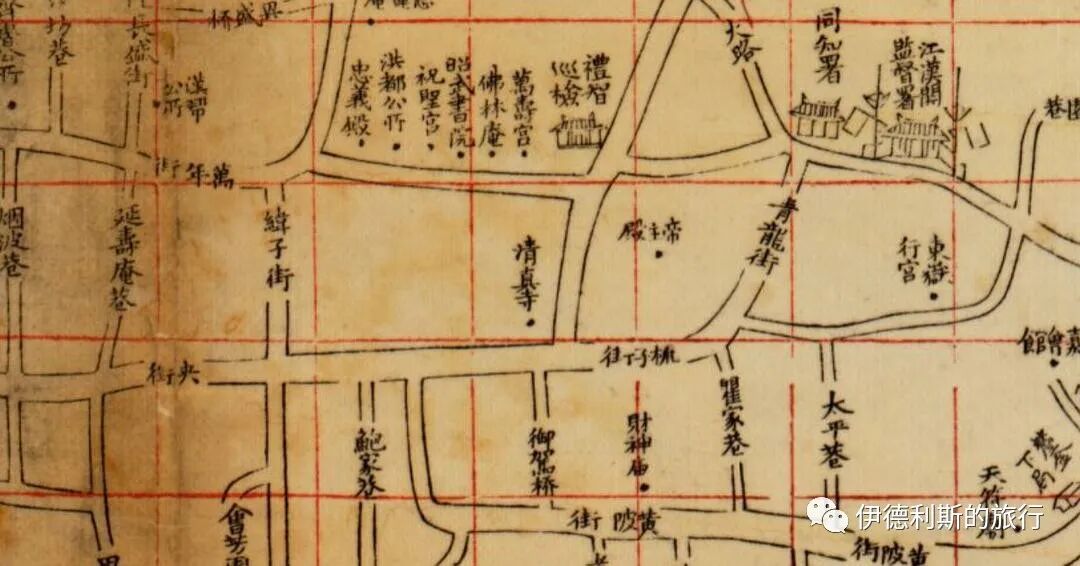
Guangyi Bridge Mosque in the 1864 Map of Wuhan Towns and Cities.
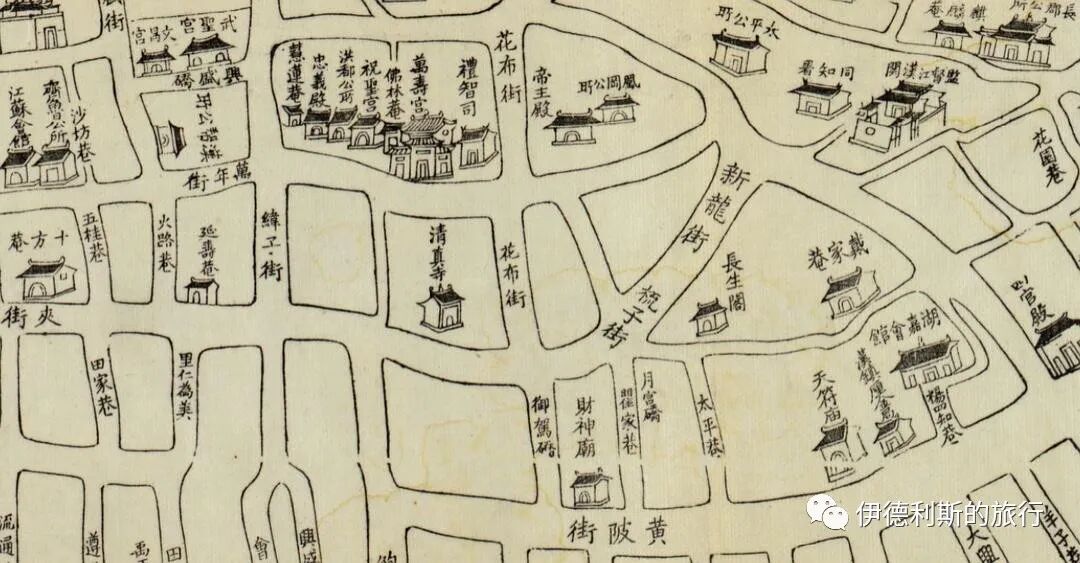
Guangyi Bridge Mosque in the 1877 Map of Streets in Hankou Town, Hubei.
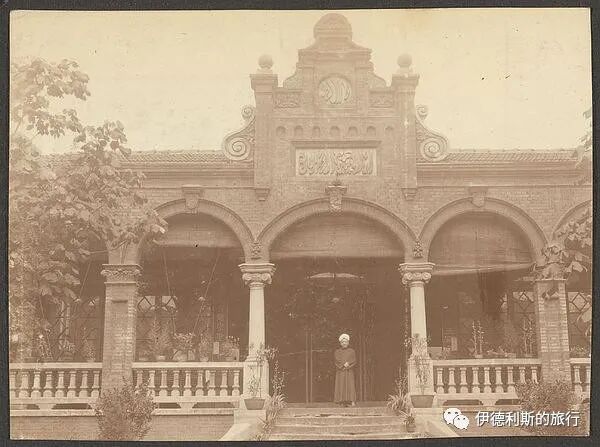
Guangyi Bridge Mosque before its demolition, photographed by Bi Jingshi before 1930. It is now in the collection of the Harvard-Yenching Library.
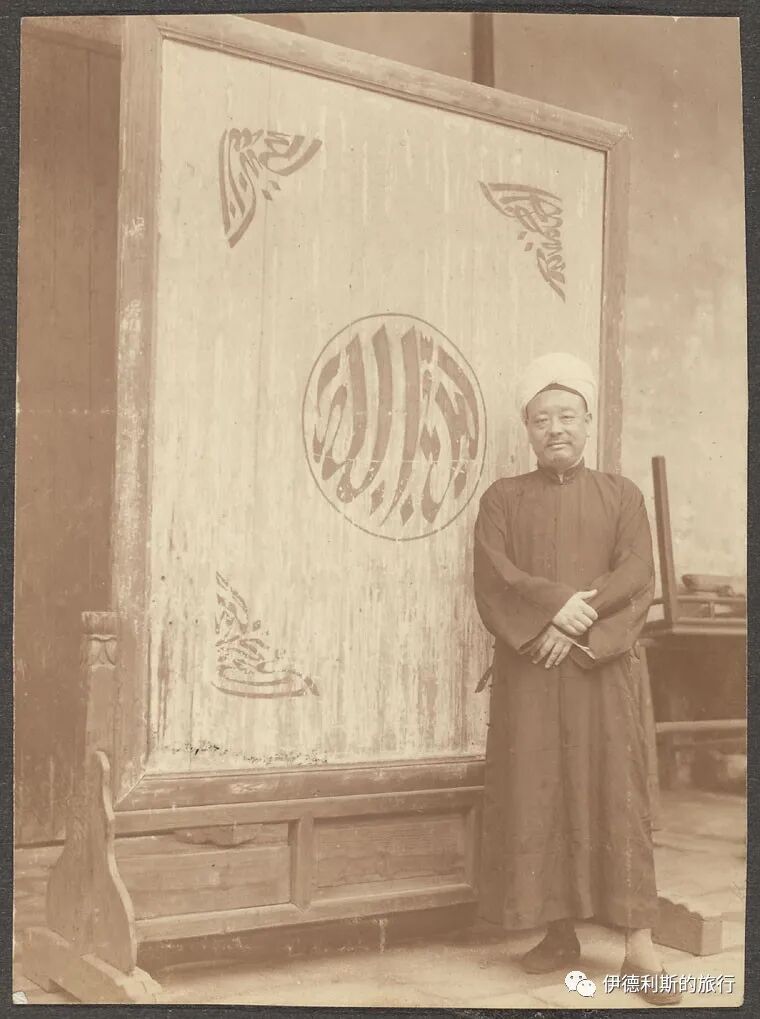
According to Wang Jianping in Old Photos of Islamic Culture in China's Interior and Frontier, this is Imam Wu Zhengming from Xi'an.
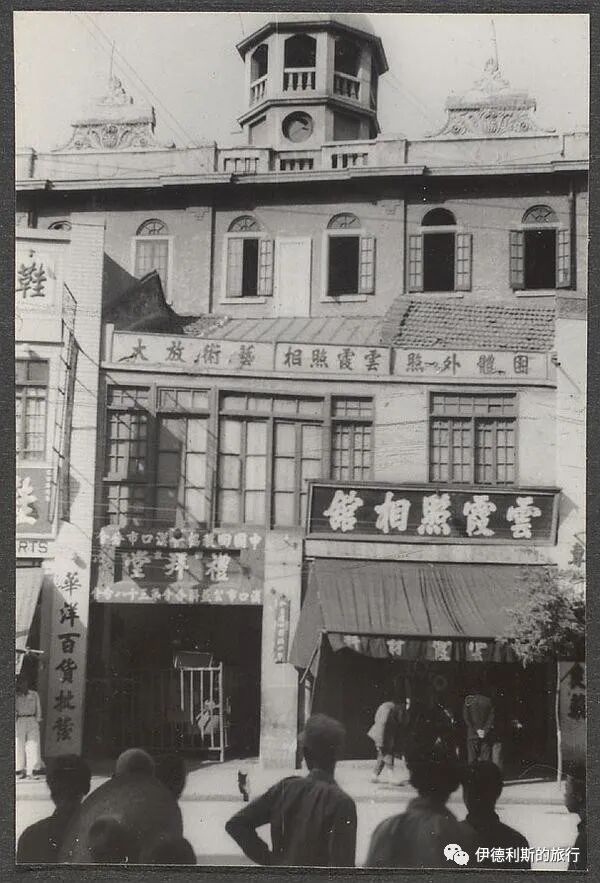
In 1930, the government renovated a large urban area from Wangjiaxiang to Liuduqiao in Hankou. They built new roads centered around the Sun Yat-sen bronze statue on Sanmin Road, which led to the demolition of the original Guangyi Bridge Mosque. Imam Ma Yiting and community elders like Tie Guoliang, Yu Jingzhai, Yang Shouting, and Ma Tingsheng traveled to Shanghai, Nanjing, and the Shaanxi-Gansu-Henan regions to raise funds. With these donations and contributions from local Hui Muslims, they raised 18,000 yuan. They built a three-story brick-and-concrete mosque on the newly constructed Minquan Road, modeled after the Xiaotaoyuan Mosque in Shanghai. Because it was on Minquan Road, it was also called the Minquan Road Mosque. The first floor of the new mosque held a reception room, a water room for washing, and a room for funeral preparations (maiti). The second floor had a room for reciting scriptures and a lecture hall, and the third floor was the main prayer hall.
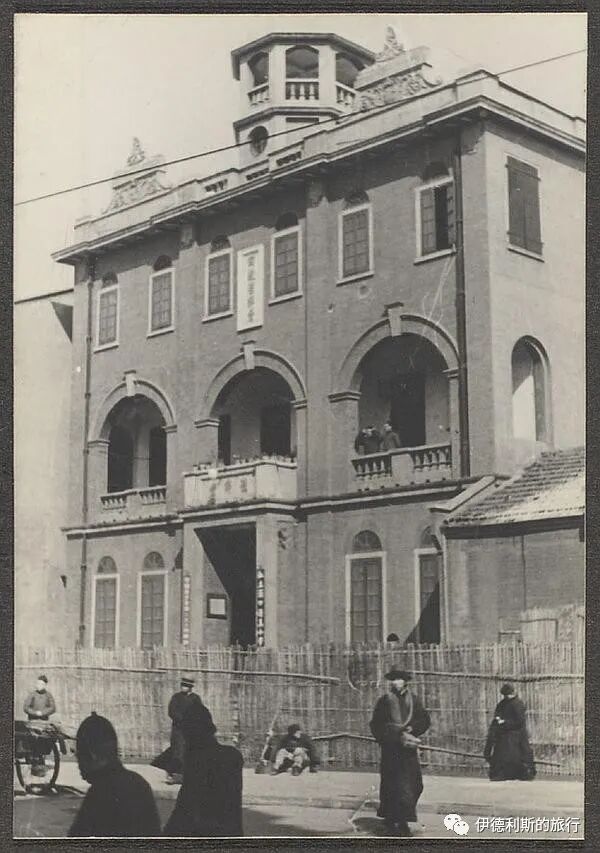
The Minquan Road Mosque photographed by Bi Jingshi between 1934 and 1935. You can see the sign on the gate that reads: Hankou Branch of the China Islamic Association, Islamic Prayer Hall.
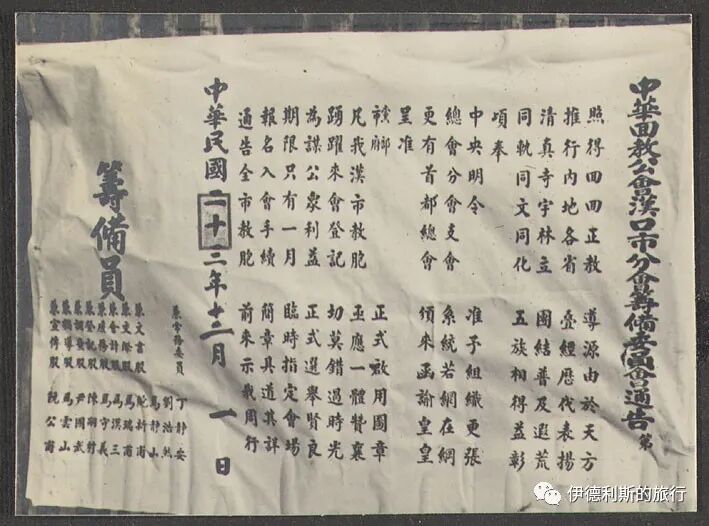
Notice from the Preparatory Committee of the Hankou Branch of the Chinese Islamic Association.
The true faith of the Hui people originated in Mecca (Tianfang).
It has spread to provinces in the interior, passed down through generations by representatives.
Mosques stand like a forest, bringing unity to even the most remote areas.
With the same path, same writing, and same assimilation, the five ethnic groups flourish together.
According to Wang Jianping in Old Photos of Islamic Culture in China's Interior and Frontier, this is the young Imam Ma from the Minquan Road Mosque. Ma Xiaoshun (born in 1924), the former director of the Minquan Road Mosque management committee, recalled that this was Ma Xun, the adopted son of the mosque's head Imam, Ma Yiting. He later followed Imam Ma Yiting to Shanghai and served as the head Imam at the Fuyou Road Mosque in Shanghai for many years during the 1980s.
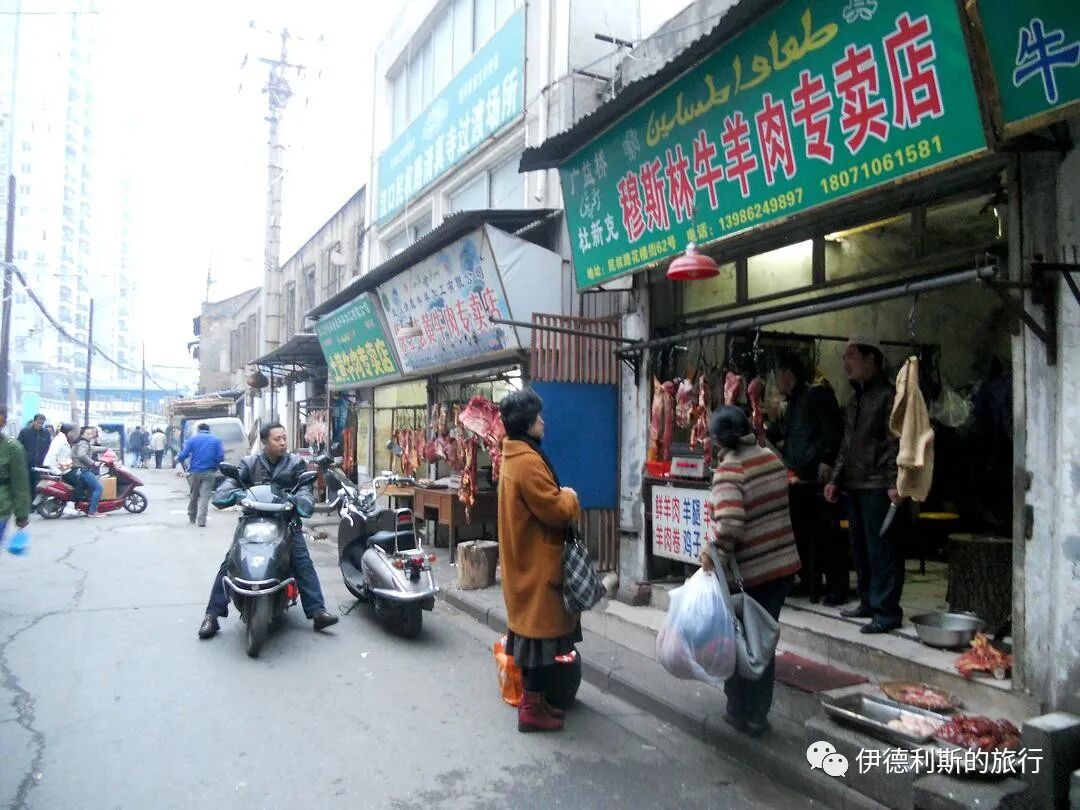
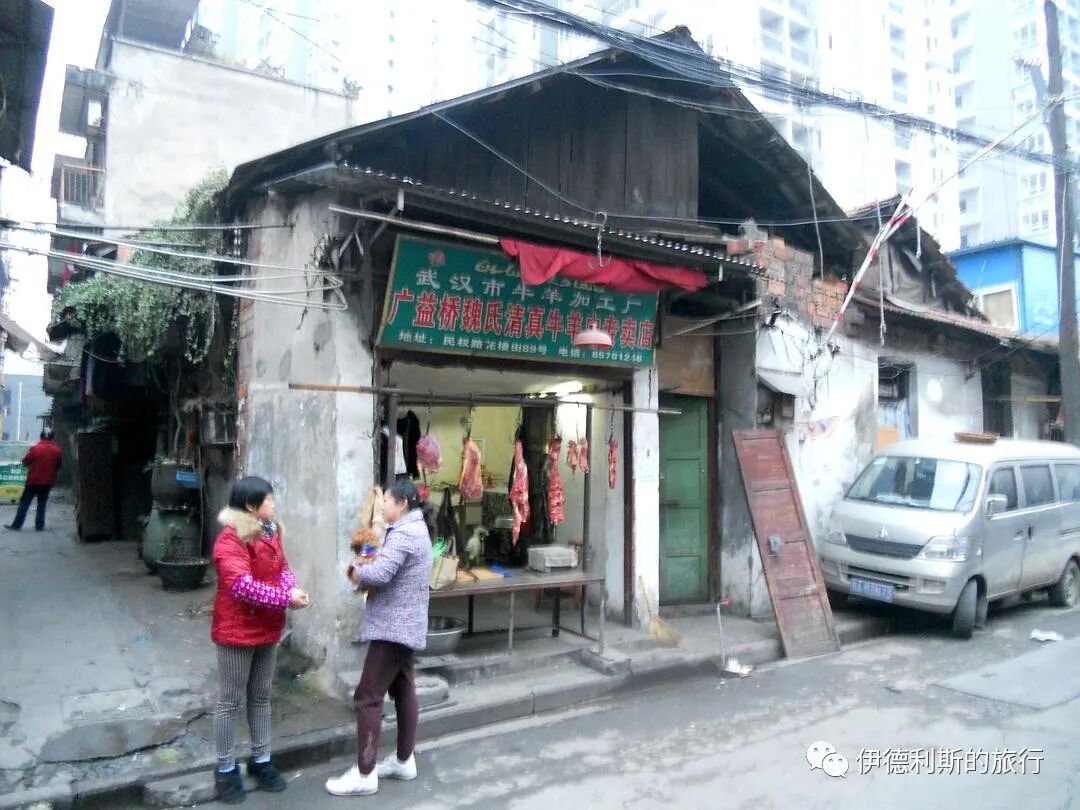
A small halal snack shop in Hankou.
In 1986, the mosque was renovated and expanded into a five-story building. The first floor is the washroom, the second floor has a living room and a room for reciting scriptures, the third floor is the main prayer hall, the fourth floor is the office for the Wuhan Islamic Association, and the fifth floor is a meeting hall and an additional prayer hall for holidays.
In 2013, the Minquan Road Mosque, which was a designated excellent historical building in Wuhan, was demolished, leaving behind a permanent regret.
The Minquan Road Mosque I photographed in 2012 before it was demolished.
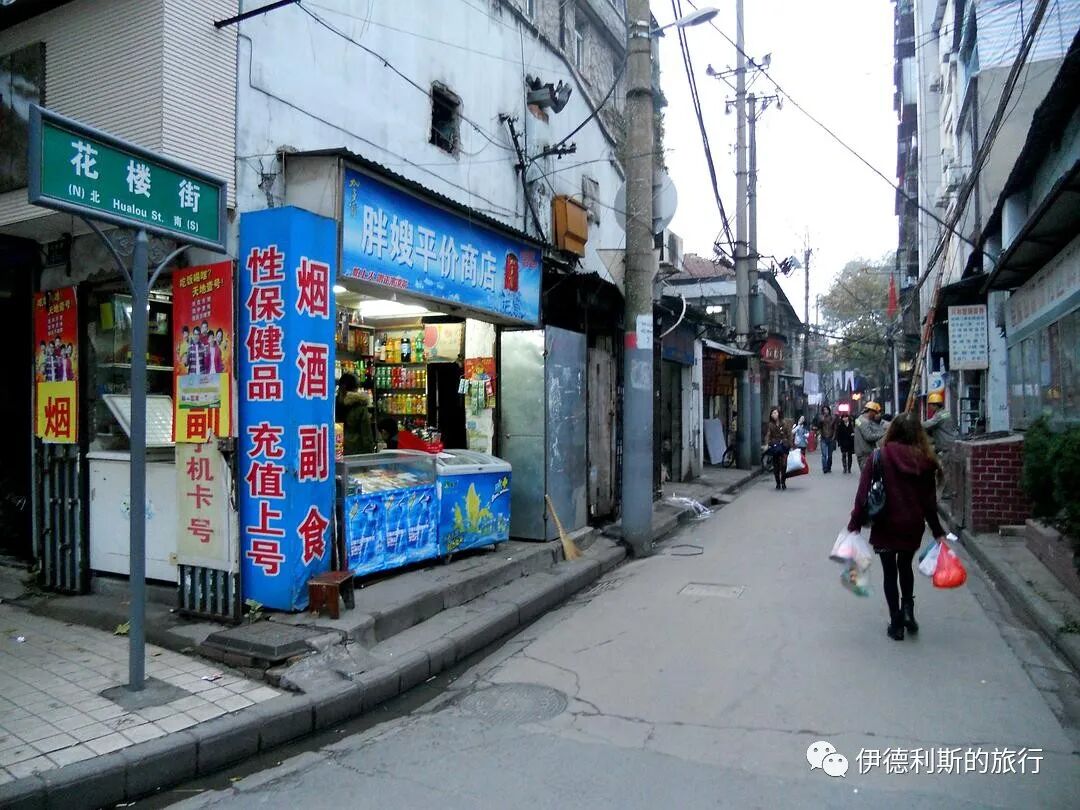
Hualou Street next to the Minquan Road Mosque, one year before the demolition.
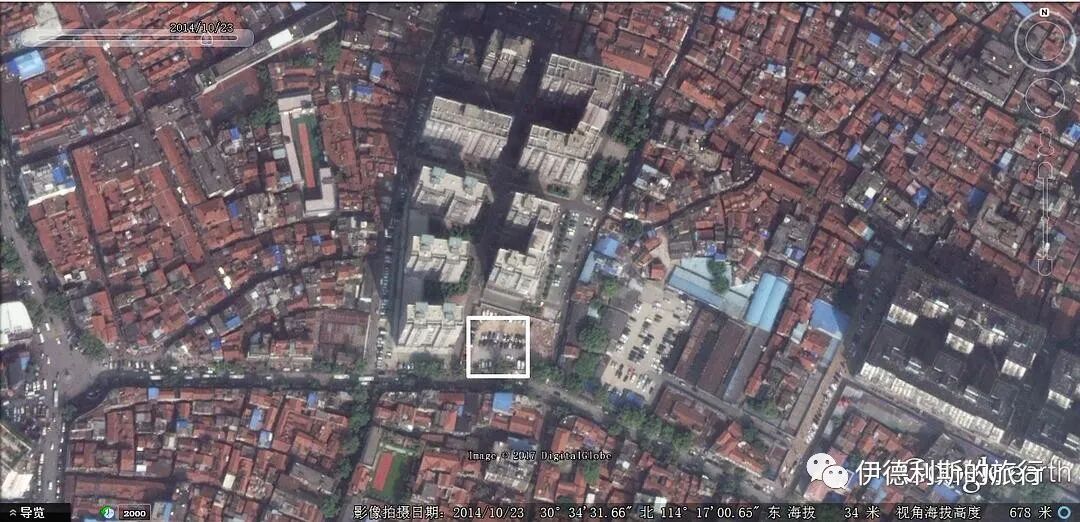
The Minquan Road Mosque in October 2014, which became a parking lot after being torn down.
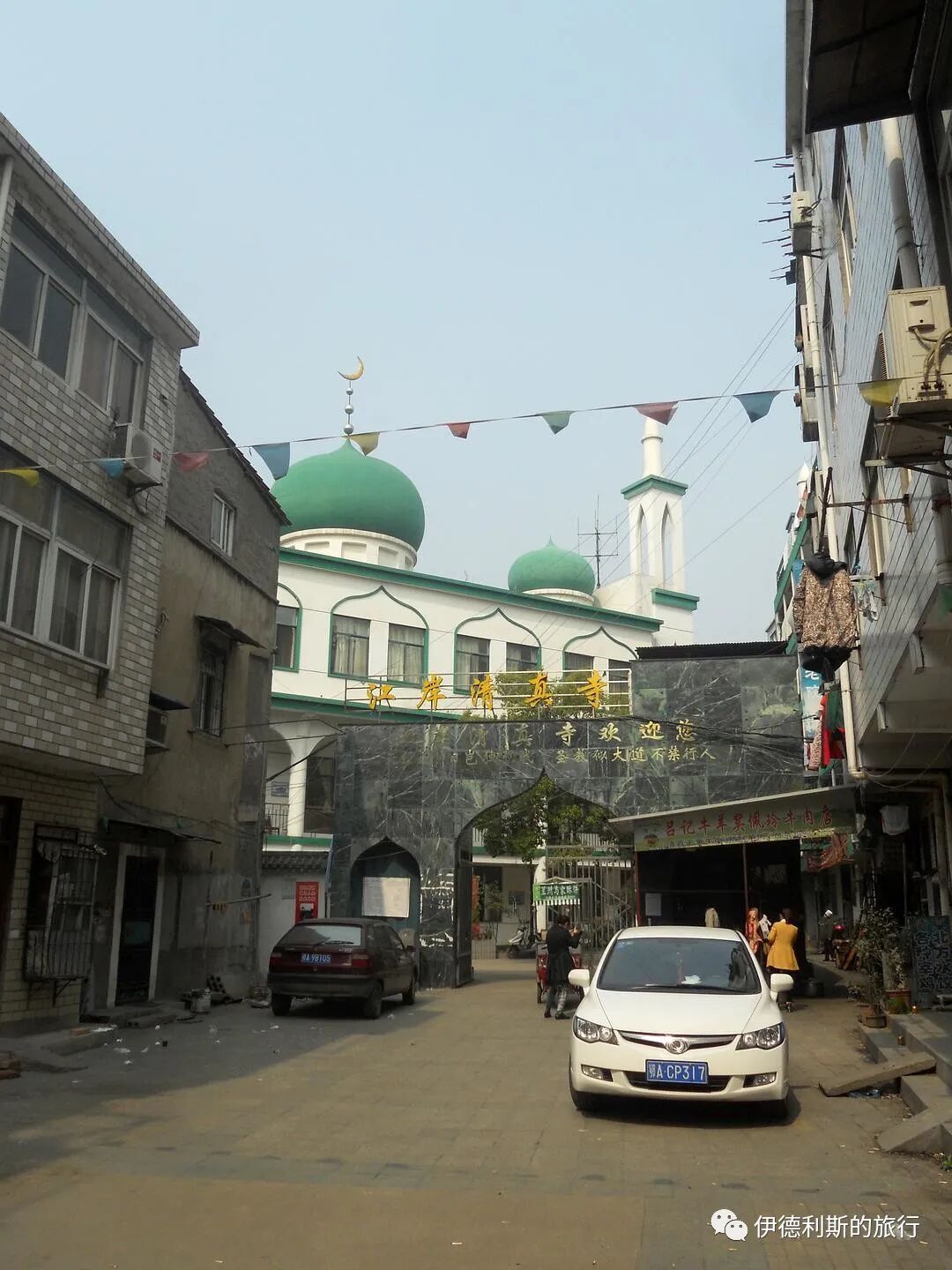
Jiang'an Mosque.
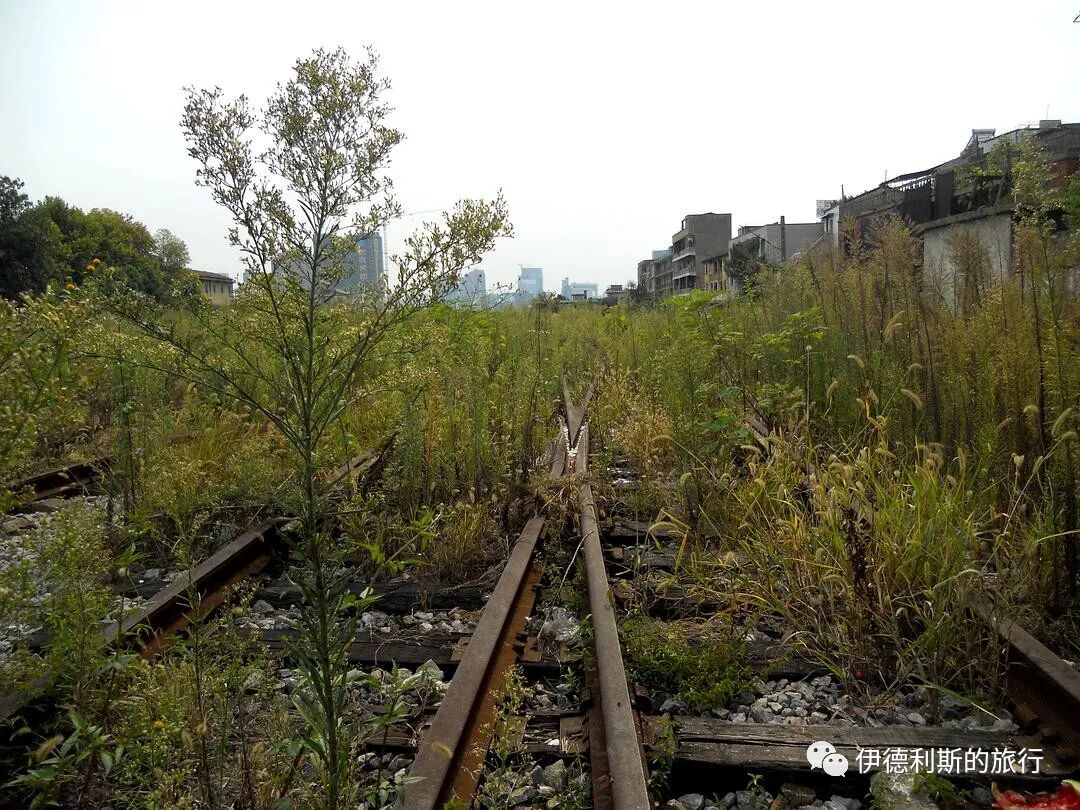
In 1906 (the 32nd year of the Guangxu reign), the Beijing-Hankou Railway officially opened. Many Hui Muslims from Zhoukou, Henan, traveled along the railway to Hankou to escape a drought, settling in the area around the Jiang'an Railway Station, the southernmost point of the line.
In 1918, the Henan Hui Muslims who settled in Liujiamiao built a simple mosque. This was the earliest Liujiamiao Mosque, also known as the Henan Mosque because it was mainly used by people from Henan. Later, when Wu Peifu's army was stationed there, they requisitioned the mosque to feed their horses, so in 1920, everyone had to raise money to buy a small building to use as a mosque.
Between 1934 and 1935, Bi Jingshi took photos of the Liujiamiao Mosque at that time.
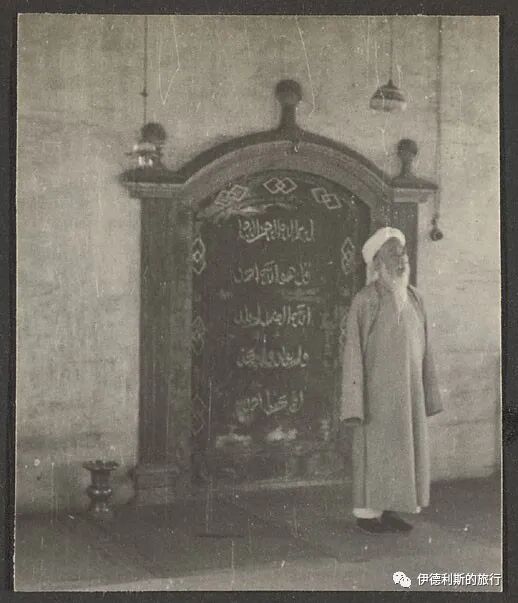
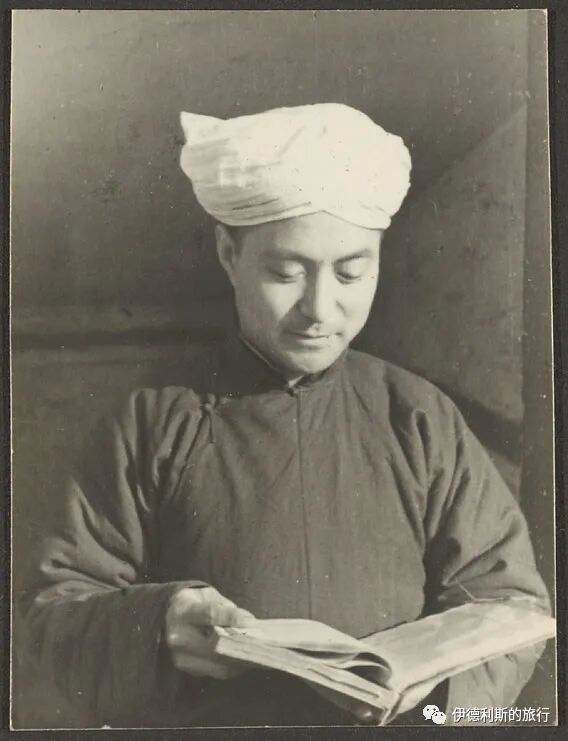
Inside the mosque, the person shown is the imam (ahong) at the time, Elder Chang.
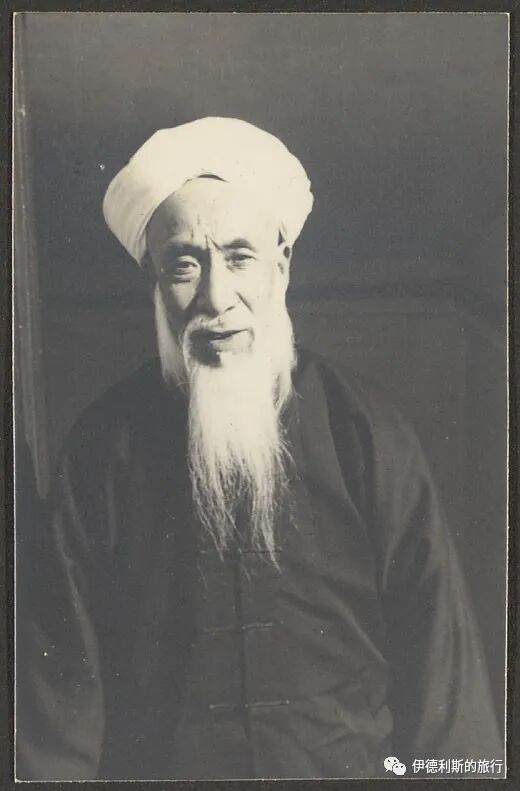
Elder Imam Chang.
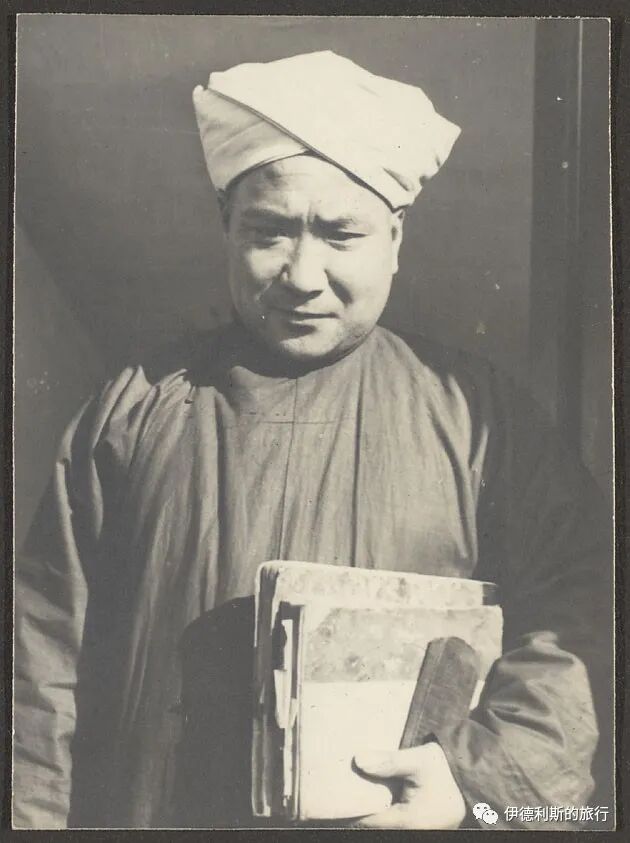
Elder Imam Chang's eldest son, Imam Chang.
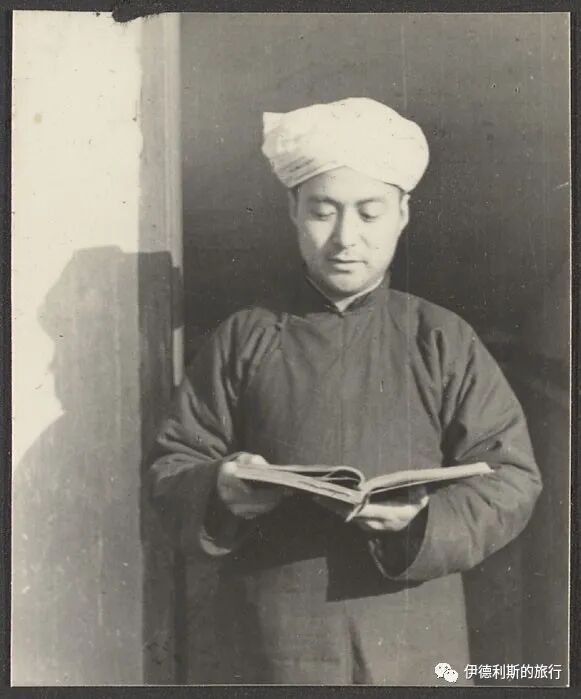
Elder Imam Chang's second son, Younger Imam Chang.
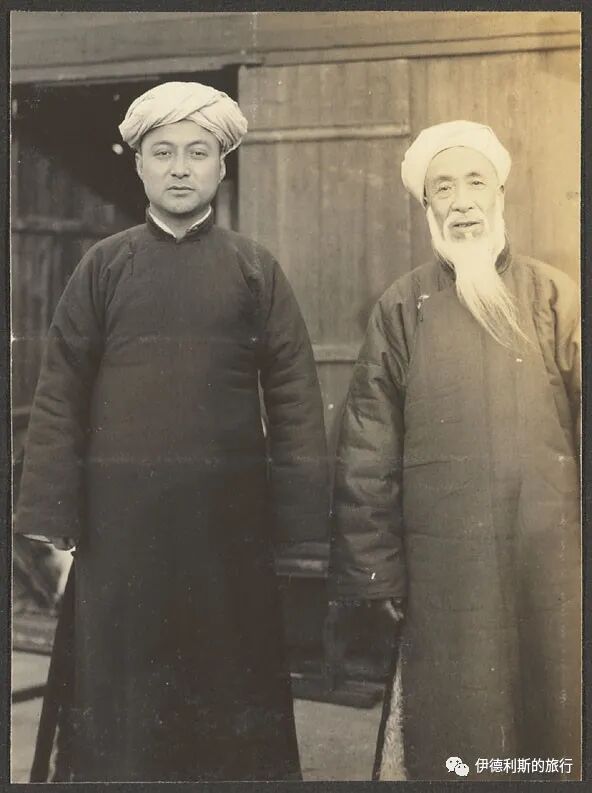
A photo of Elder Imam Chang and Younger Imam Chang together.
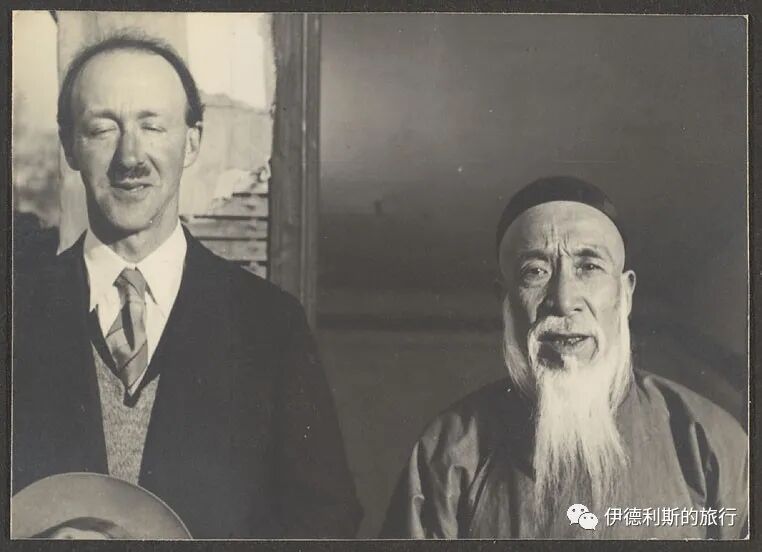
Elder Imam Chang and a foreign friend, Mr. G. K. Harris.
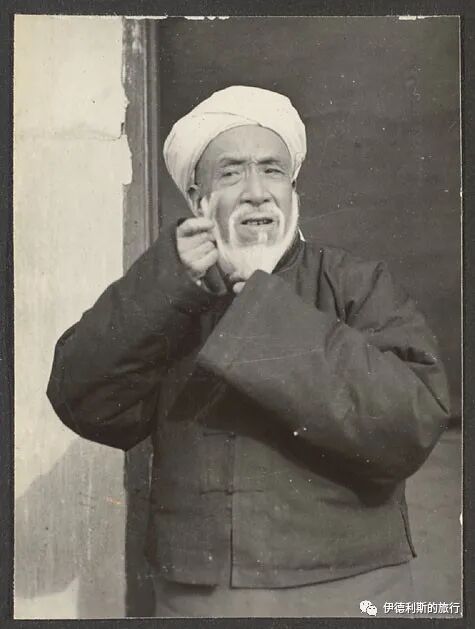
Elder Imam Chang shaving his beard.
Elder Imam Chang.
According to Wang Jianping in 'Old Photos of Islamic Culture in China's Inland and Frontier Regions,' an elderly resident named Wei Ruiyun, who lived near the Wuchang Uprising Street Mosque for over 60 years, recalled that this was Imam Ma Shanzhi, who had performed her nikah (marriage contract) when she got married.
Elder Imam Chang and some merchants who came to Hankou from Henan for business.
Merchants who came to do business in Henan at the Liujiamiao Mosque.
The imam of Liujiamiao Mosque.
The imam, community elders, and merchants from Henan on the roof of the mosque, preparing to perform namaz.
Performing namaz on the roof of Liujiamiao Mosque.
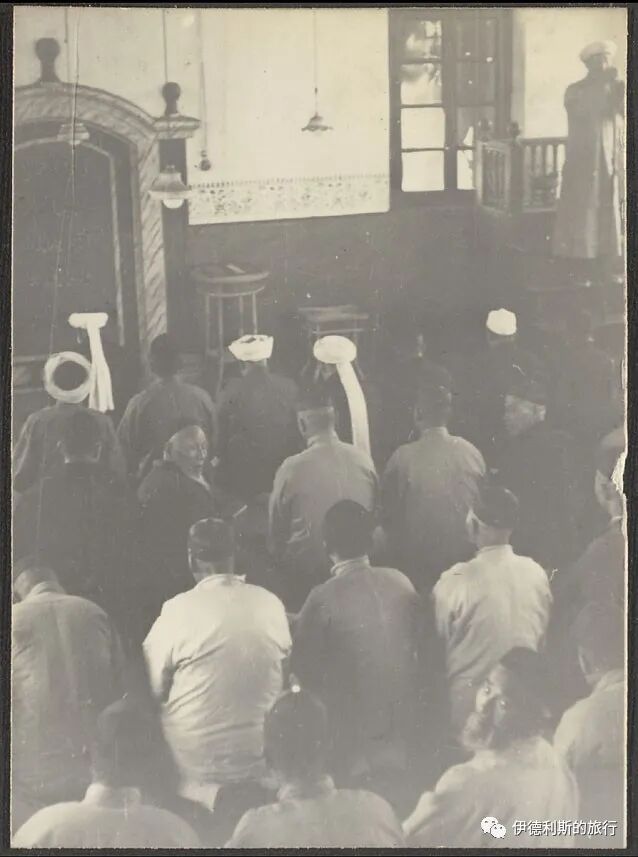
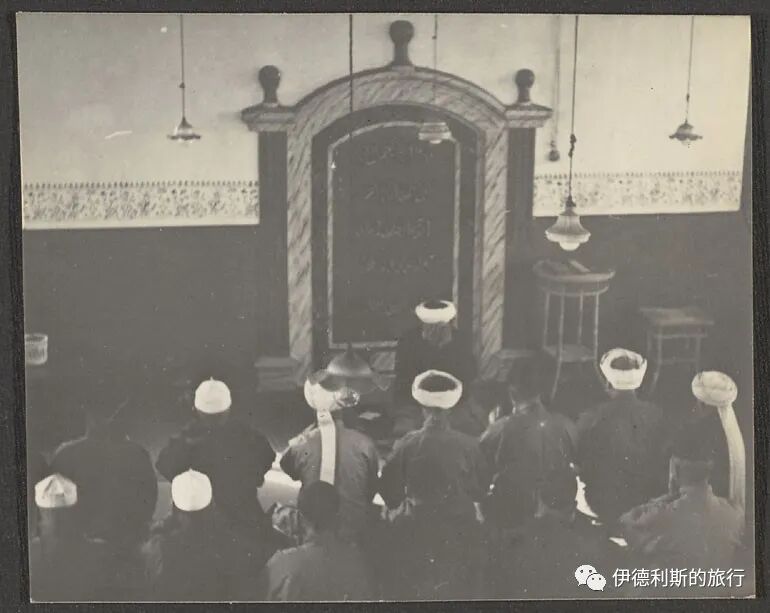
Old Imam Chang leads everyone in Jumu'ah prayer inside the main hall of Liujiamiao Mosque.
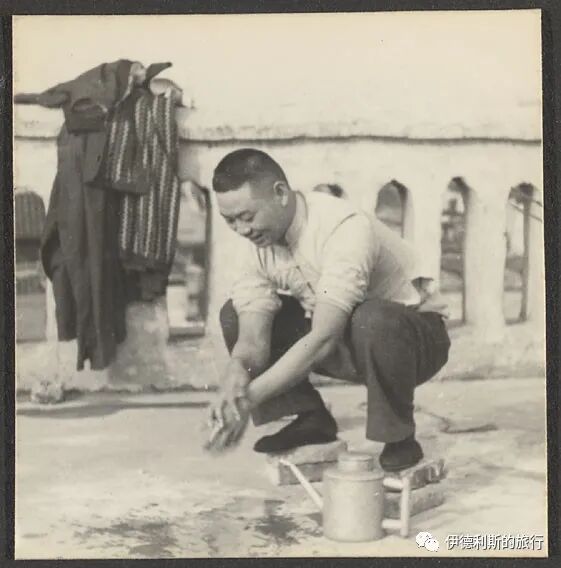
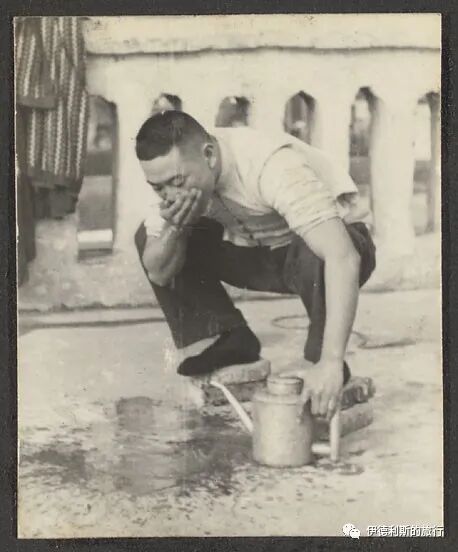
A friend (dosti) performs wudu (abdast) on the roof of Liujiamiao Mosque.
After the Battle of Wuhan in 1938, the mosque was damaged by war, and the land was taken for railway expansion, so local Hui Muslims raised money again to buy a new building for the mosque. Since then, the mosque has undergone several major renovations and was officially renamed Jiang'an Mosque. After a major renovation of the main hall in 1986, a second floor was added to the main hall and the north reception room, which caused the foundation to sink and cracks to appear in the walls. In 2005, the original Jiang'an Mosque was demolished to build a new one, and in 2007, a women's Islamic school (qingzhen nvxue) was built next to it.
Jiang'an Mosque as I photographed it in 2013.
A Jumu'ah prayer in 2013.
The study group for middle-aged and elderly people at that time.
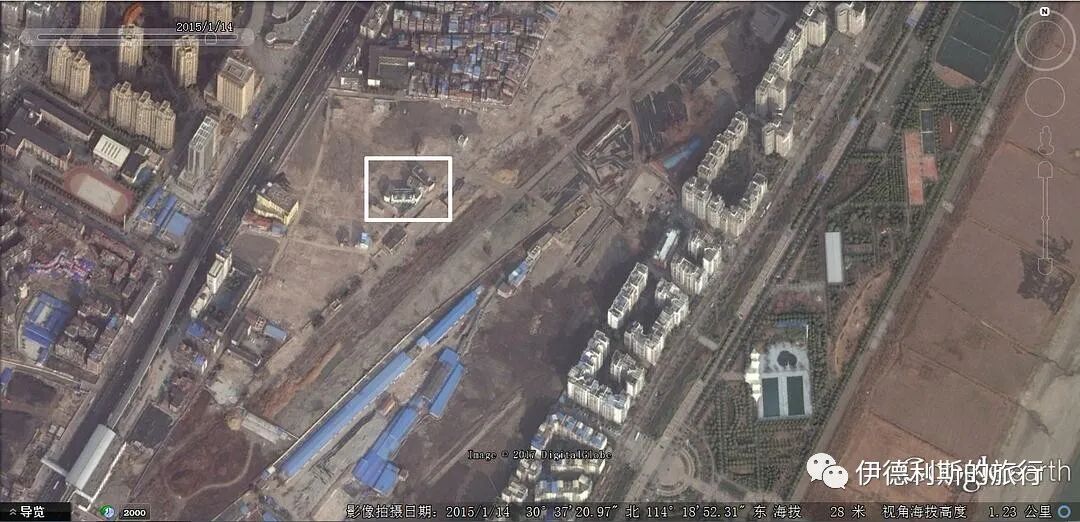
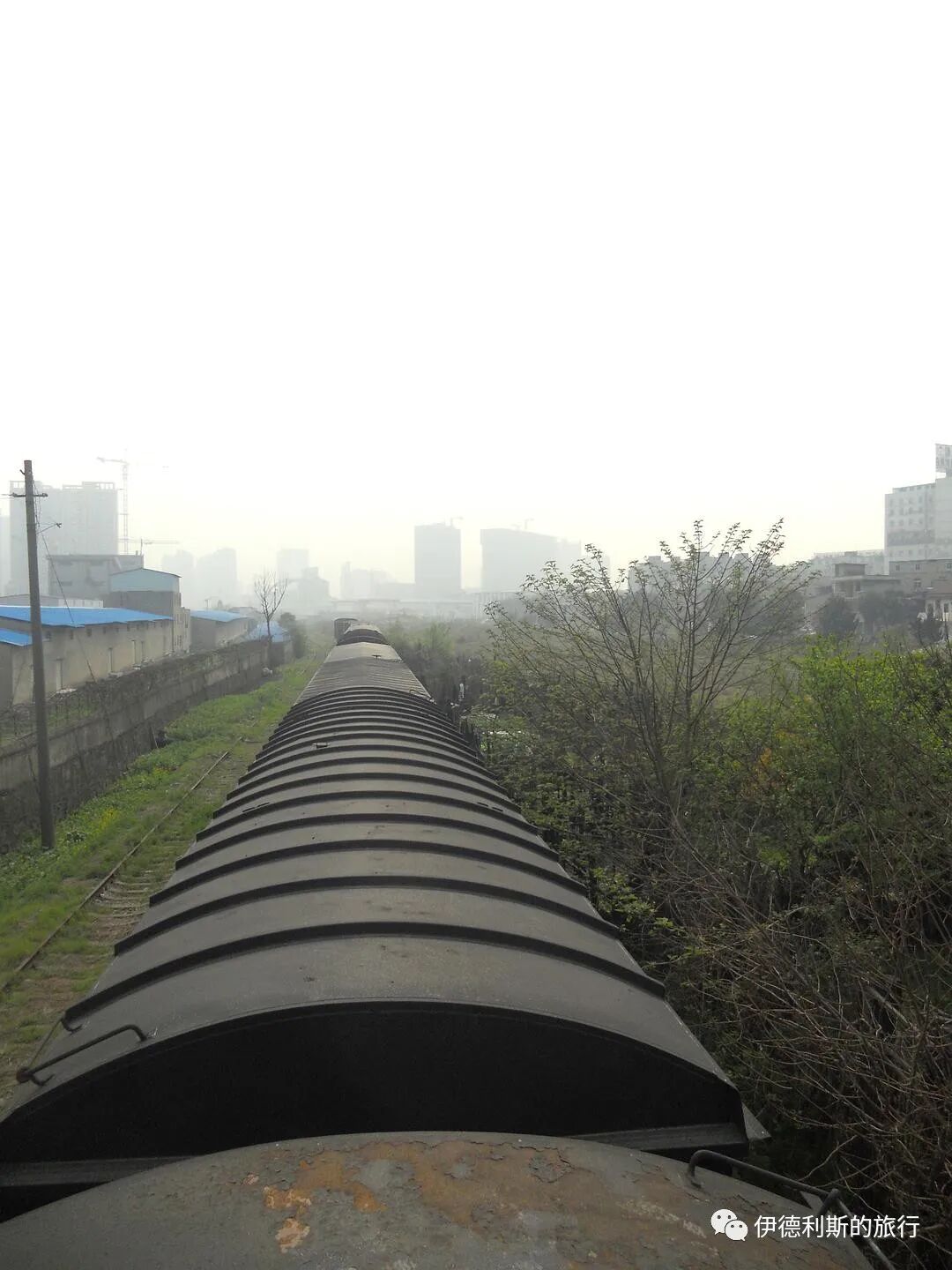
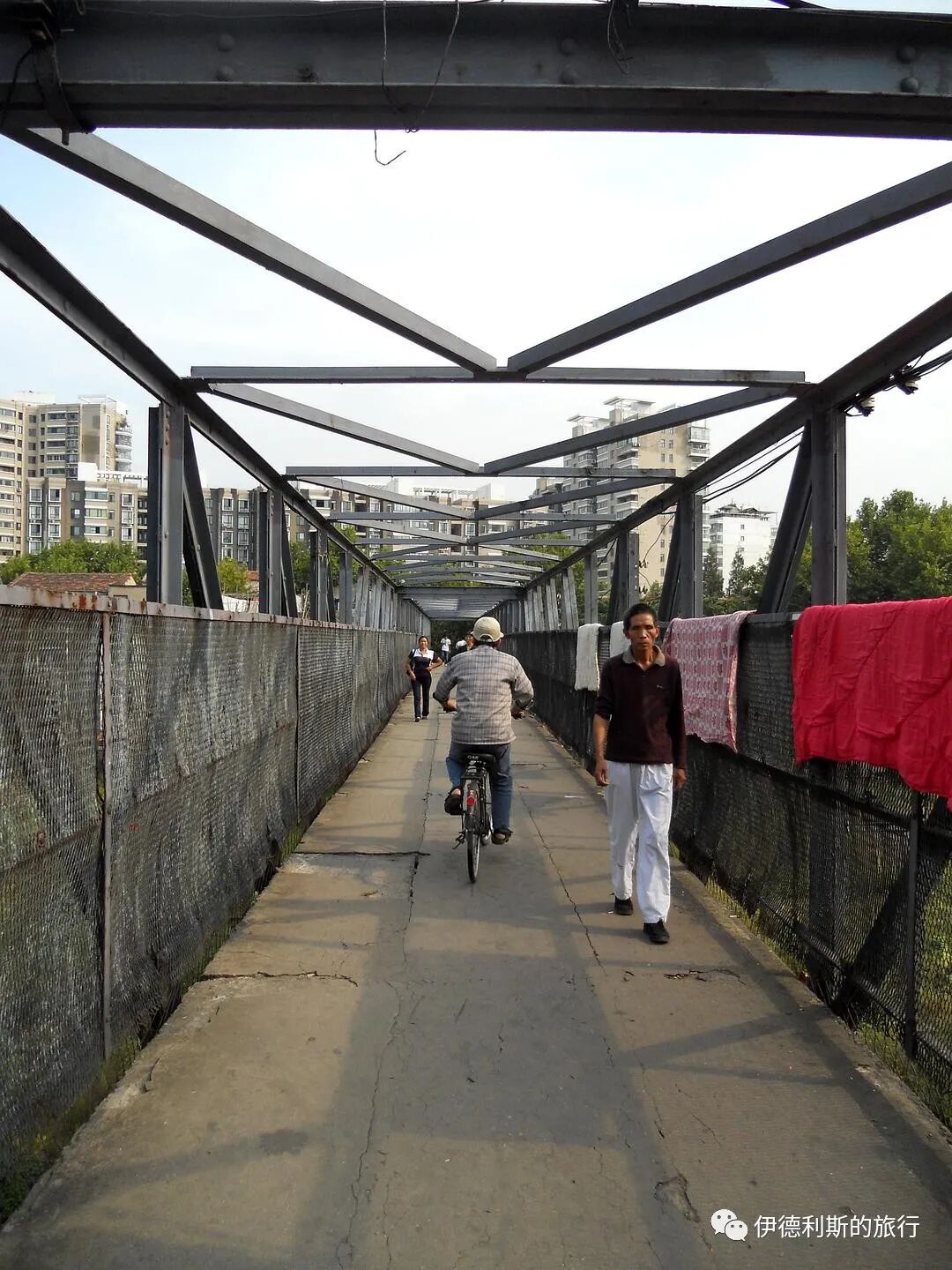
Jiang'an Station stopped operating in 2010, and demolition of the surrounding area began immediately. By 2014, the Muslim community around Jiang'an Mosque had been completely razed to the ground and now only exists in history.
In 2015, the community around the mosque was completely razed to the ground.
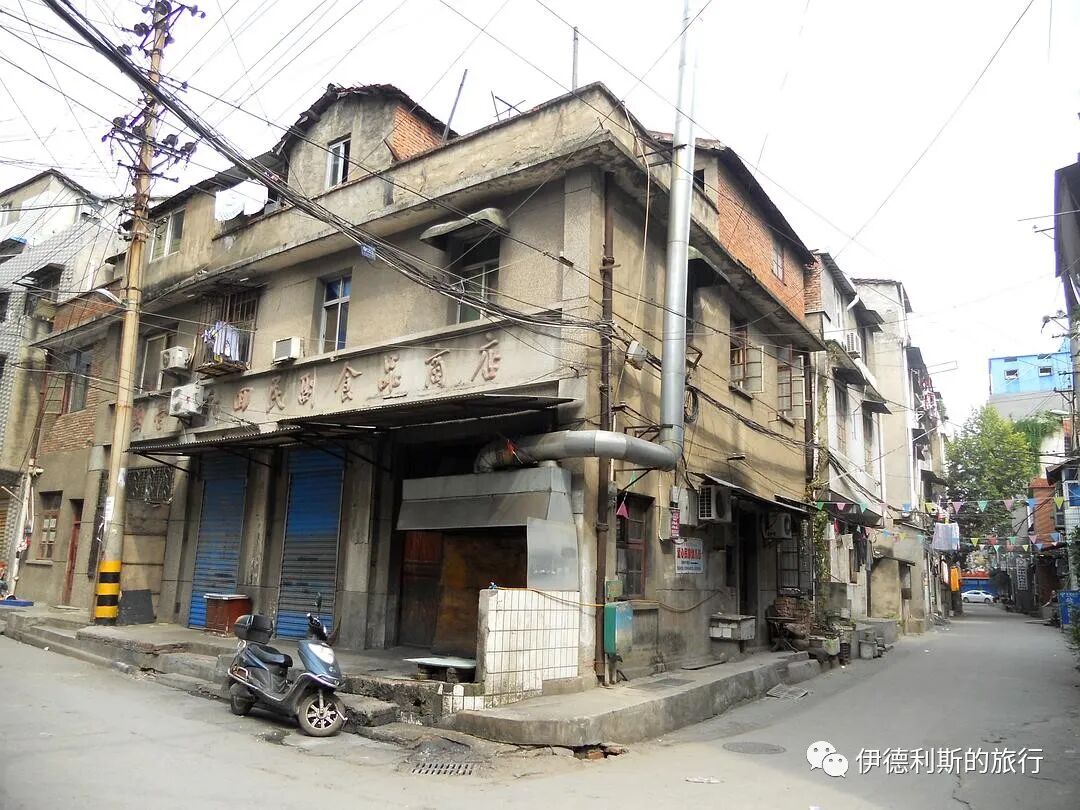
The former Hui Muslim grocery store has been closed for many years and is now razed to the ground.
The Jiang'an Station sign before it was demolished.
The abandoned station.
The building next to the station was about to be demolished when I photographed it in 2013, and it is now razed to the ground.
An even older century-old station.
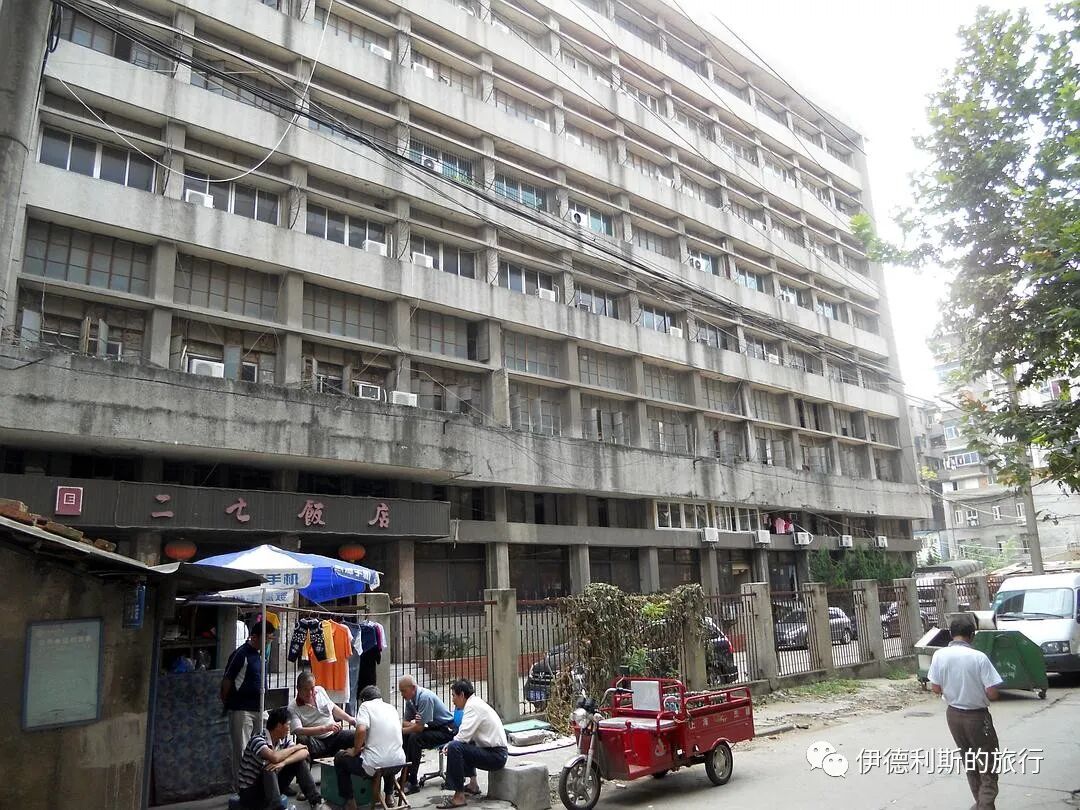
A once-luxurious hotel.
A halal restaurant (qingzhen guanzi).
Although the traditional Hui Muslim community in Jiang'an was razed to the ground, Jiang'an Hui Muslims still run halal restaurants in Wuhan.
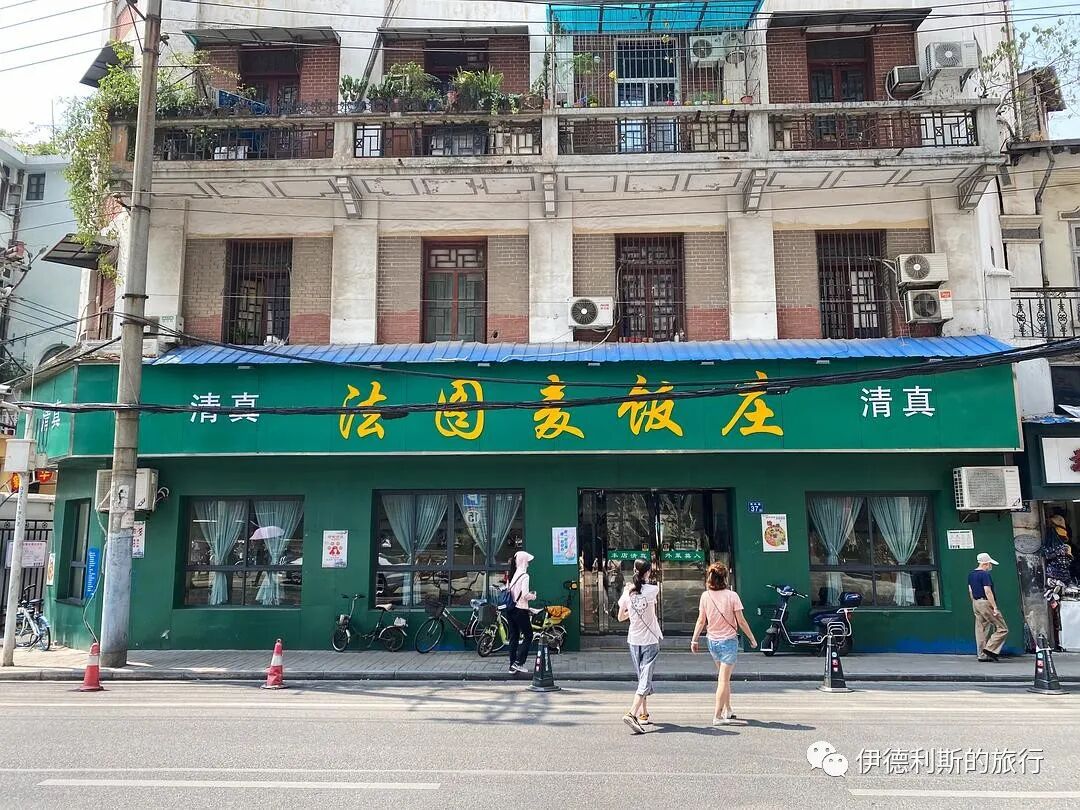
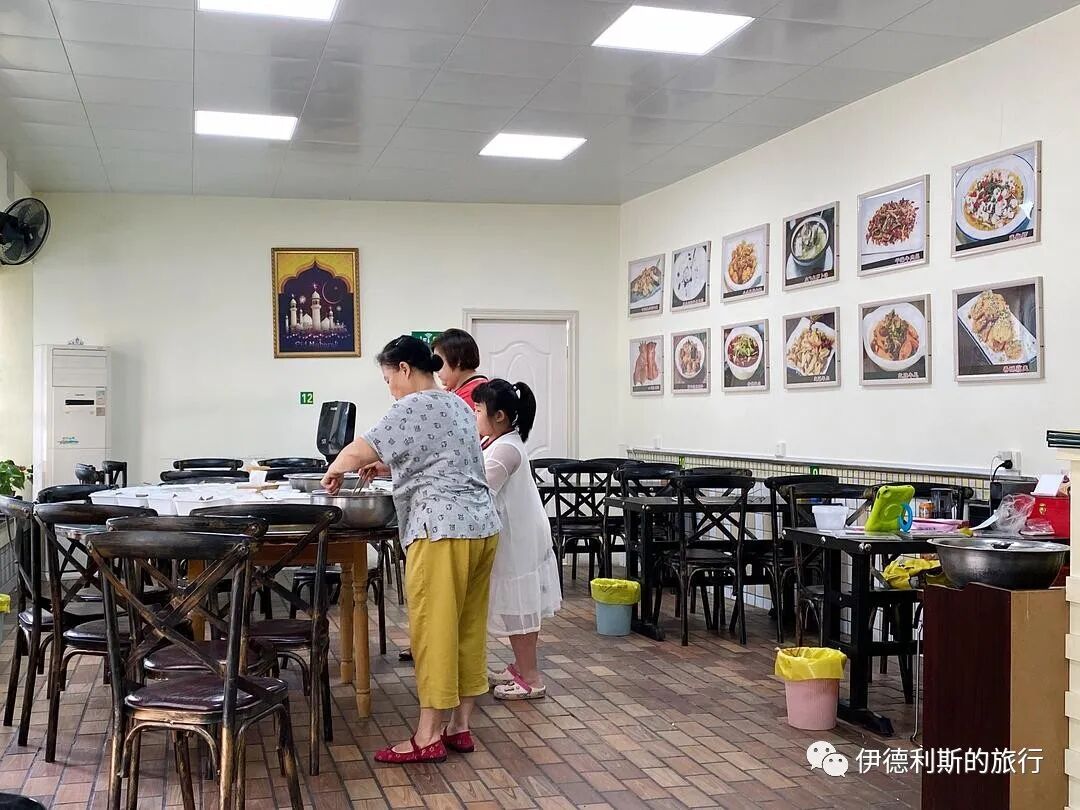
Fatumei Restaurant on Huangxing Road is a traditional local halal restaurant in Hankou. Owner Li's family are third-generation Hankou Hui Muslims who settled near the Dazhi Railway Station in Hankou during the Republic of China era.
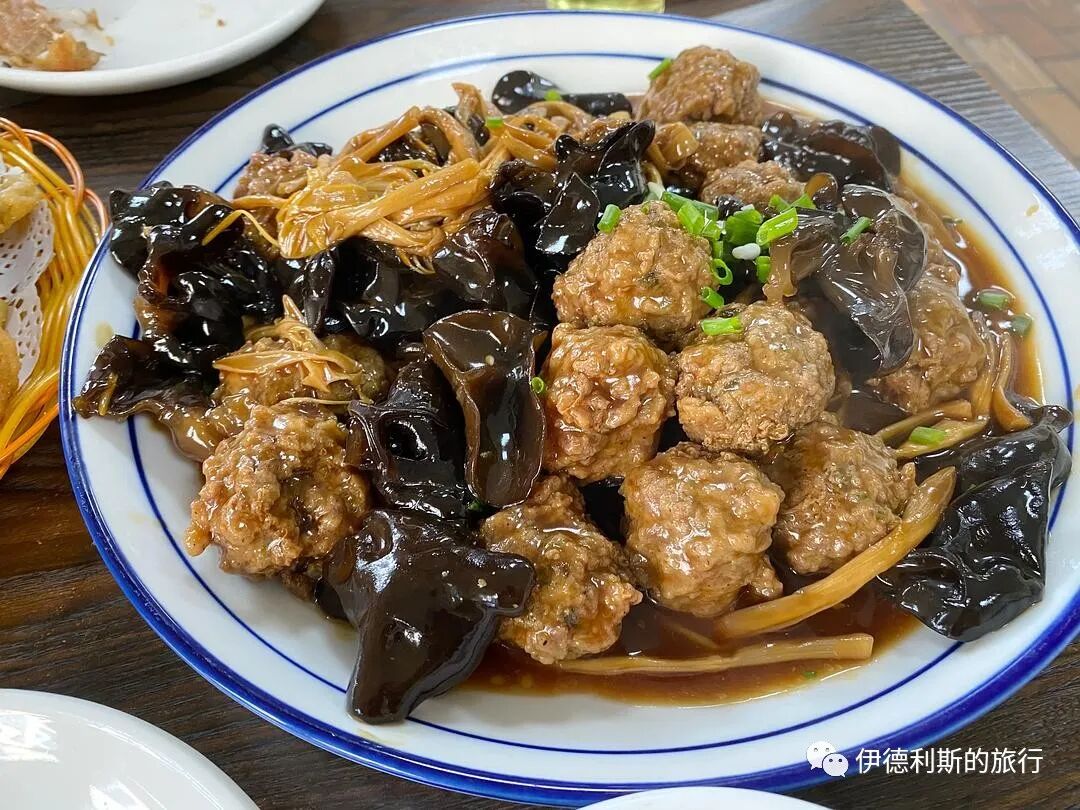
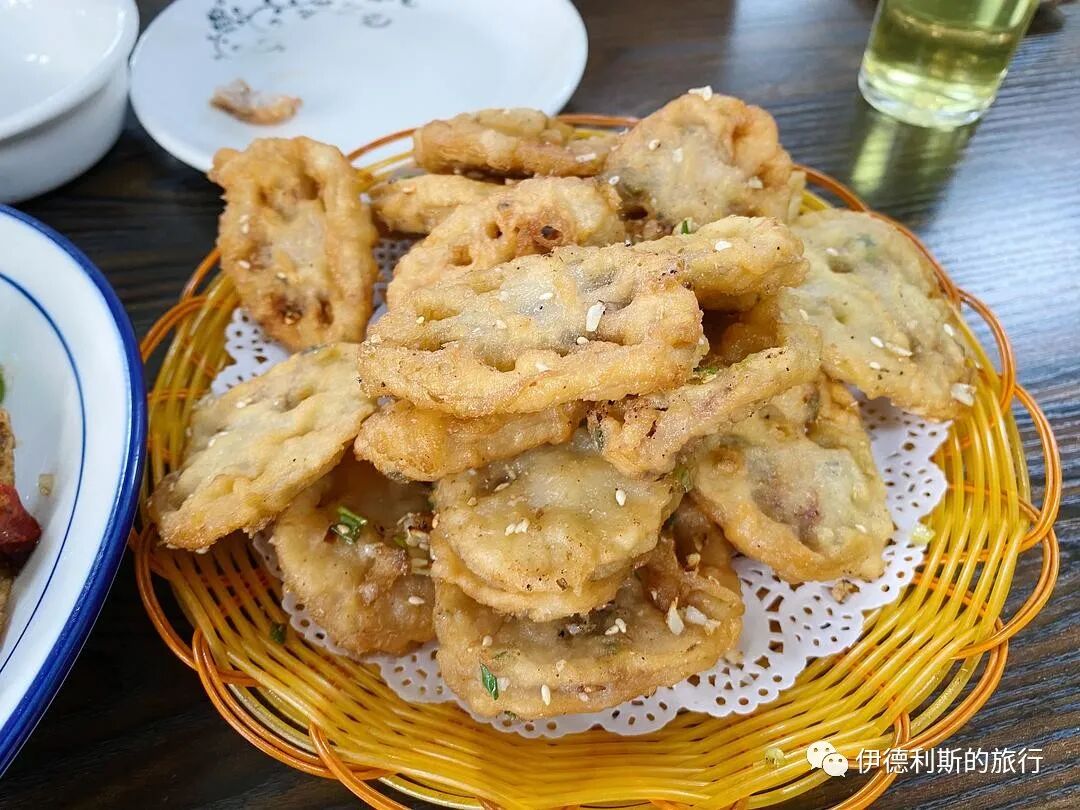
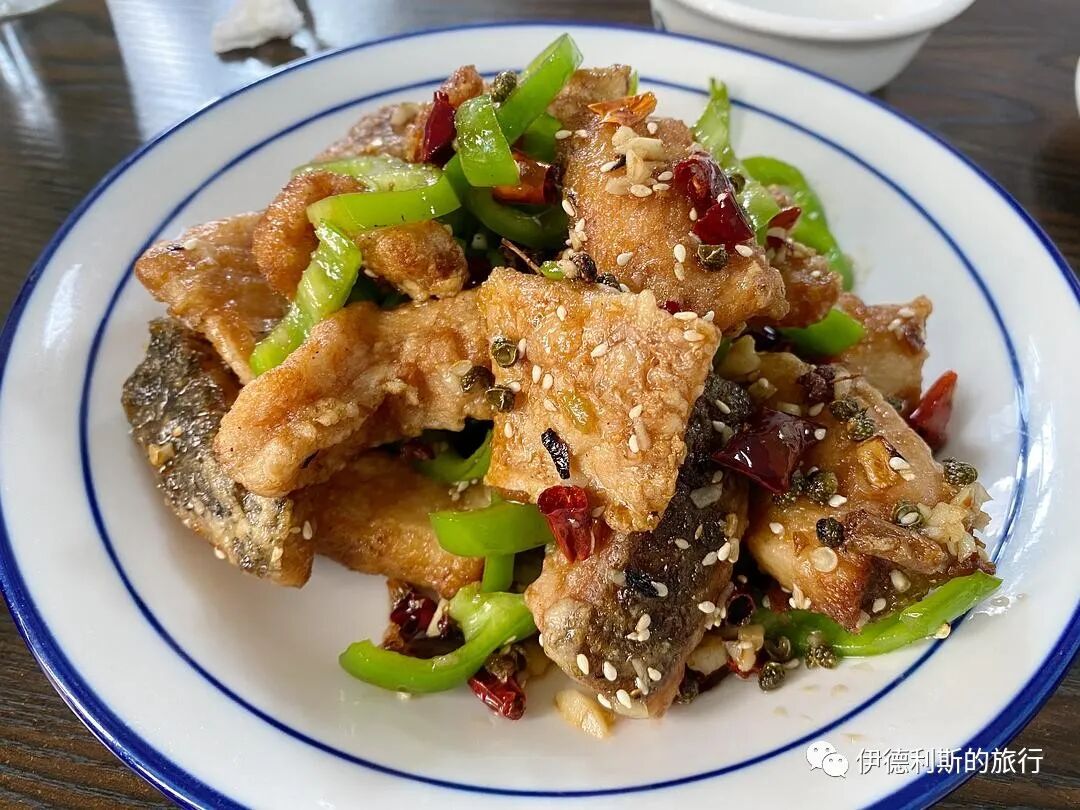
We ordered the most classic Hankou Hui Muslim dish, beef meatball soup (hui niurou yuanzi), as well as sticky rice fish (ciba yu) and fried lotus root sandwiches (zha oujia). Although they are only separated by a river, Hankou Hui Muslims and Wuchang Hui Muslims have different food cultures. Hui Muslims have lived in Wuchang for hundreds of years. While they focus on beef dishes, their diet has also been shaped by local Wuhan influences. Hui Muslims in Hankou mostly moved here from Henan over the last hundred years. Their food culture carries a Central Plains style, which is best seen when comparing the beef meatballs (niurou yuanzi) from both places. Hankou Hui Muslims make their beef meatballs (niurou yuanzi) with pure beef, and their method of stewing the meatballs is also more typical of the Central Plains. When we were eating, they were busy making boxed meals for community workers. The owner said 2020 was a very hard year. After reopening in May, business was very slow. There were few tourists, local Hui Muslims are not used to eating out, their shop is too small for banquets, and the university was locked down so students could not come out to eat. Luckily, their landlord waived three months of rent, and community members helped by often buying boxed meals from them, so they barely managed to keep going.
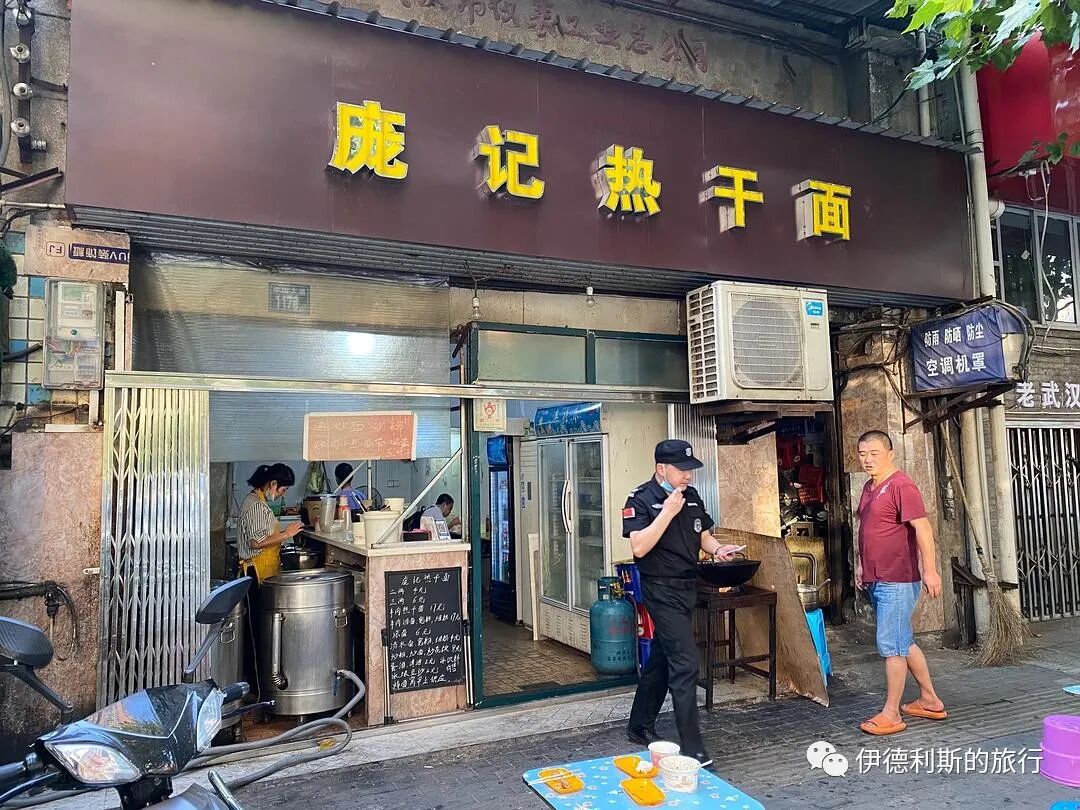
Pang's Hot Dry Noodles (Pangji reganmian)
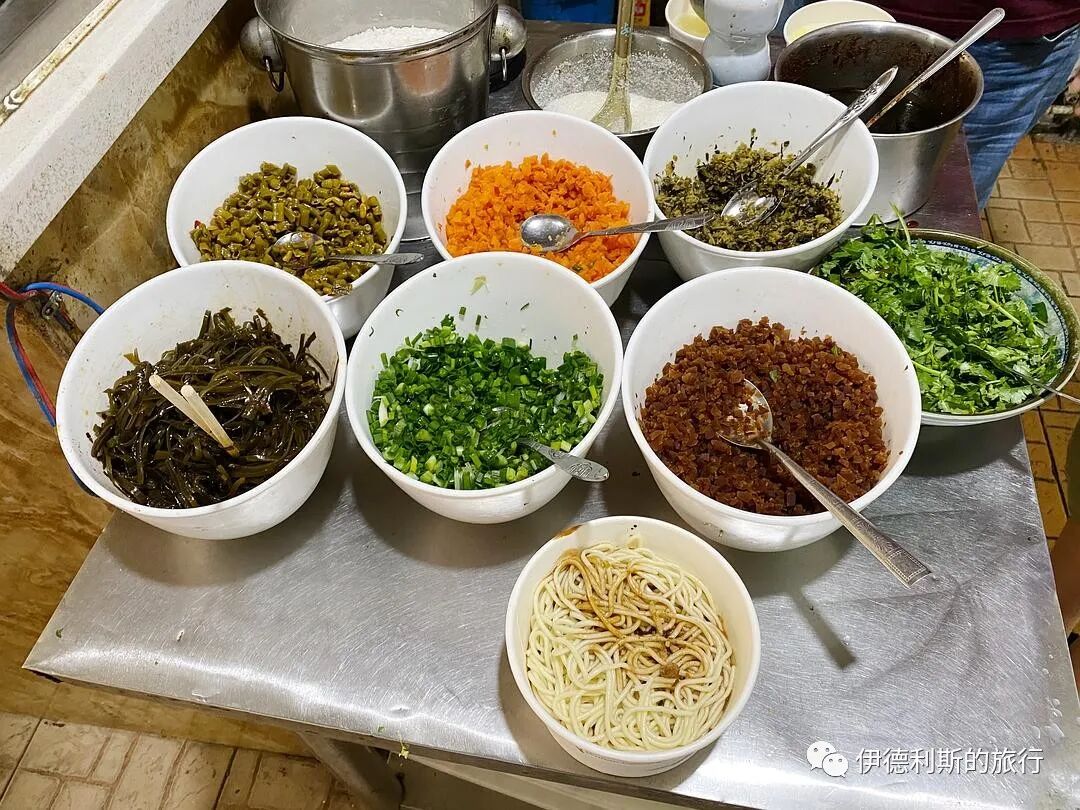
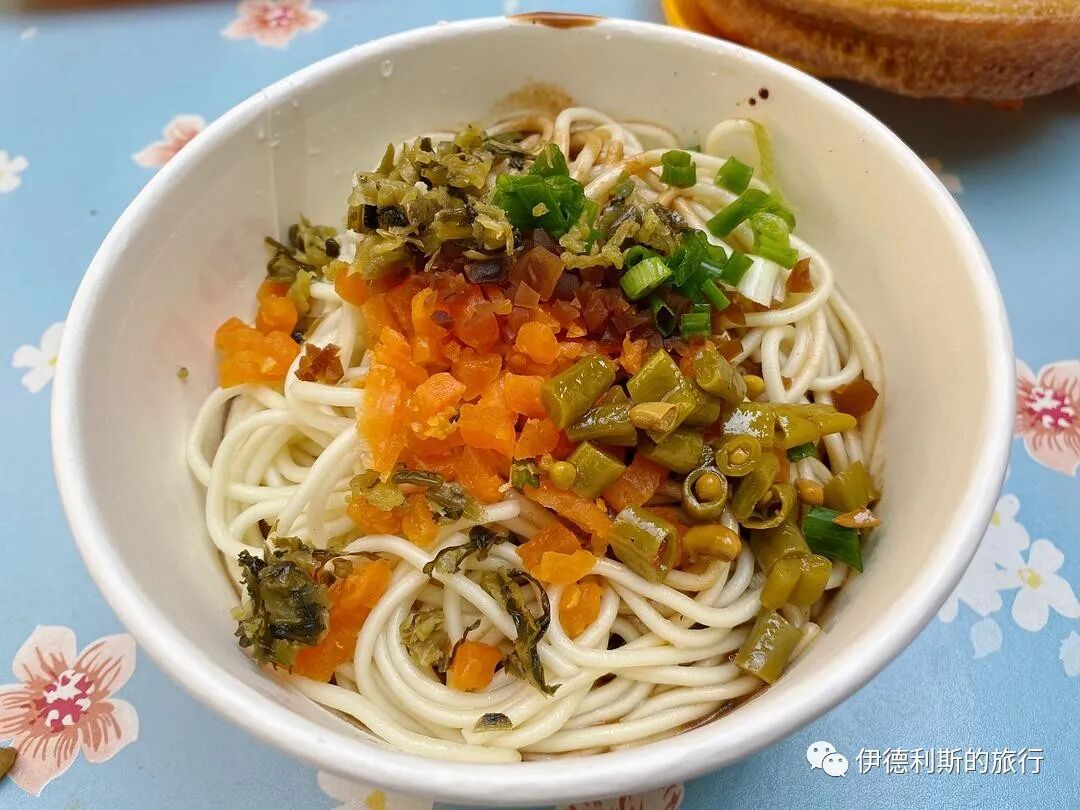
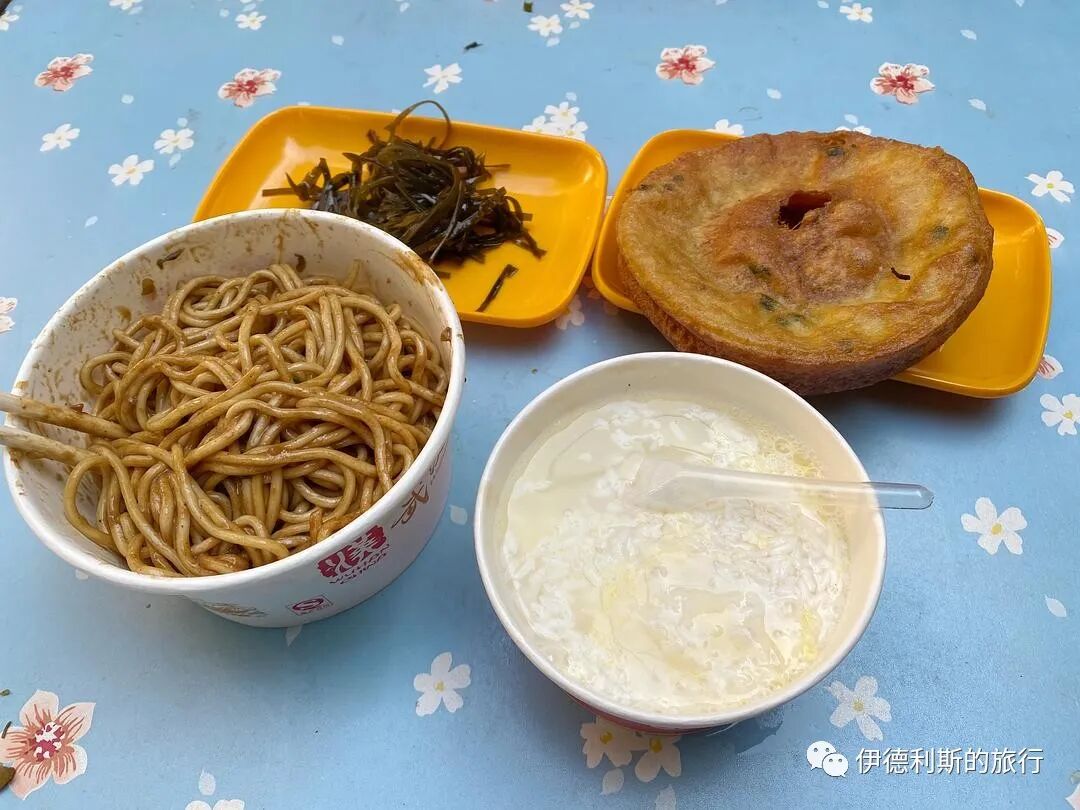
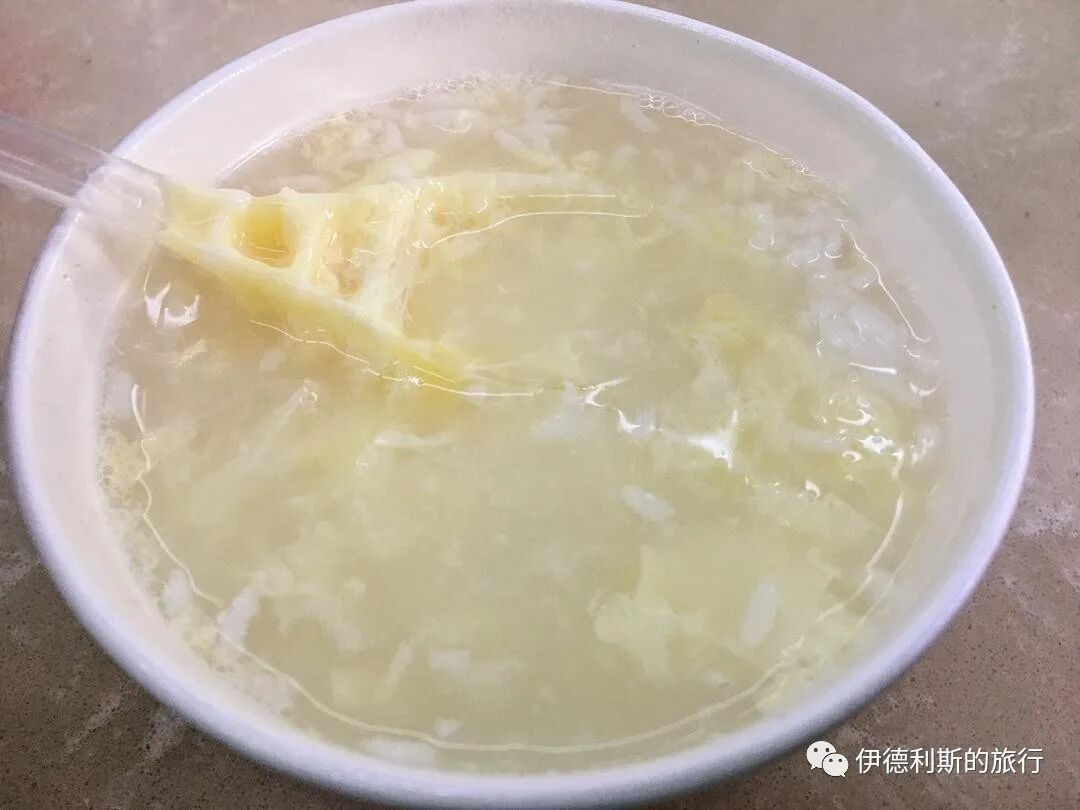
We ate hot dry noodles (reganmian), freshly fried savory donuts (mianwo), and egg fermented rice soup (jidan laozao) at Pang's Hot Dry Noodles on Yiyuan Road in Hankou. Pang's is the most famous halal hot dry noodle shop in Wuhan. It has been open for 46 years and is a must-visit spot for Muslims traveling in Wuhan. When I went in 2020, the owner said they would close in 2021 because the rent was high and business was bad that year, so they could no longer keep the business running. I heard a while ago that they reopened under the new name Pang Meiling Hot Dry Noodles.
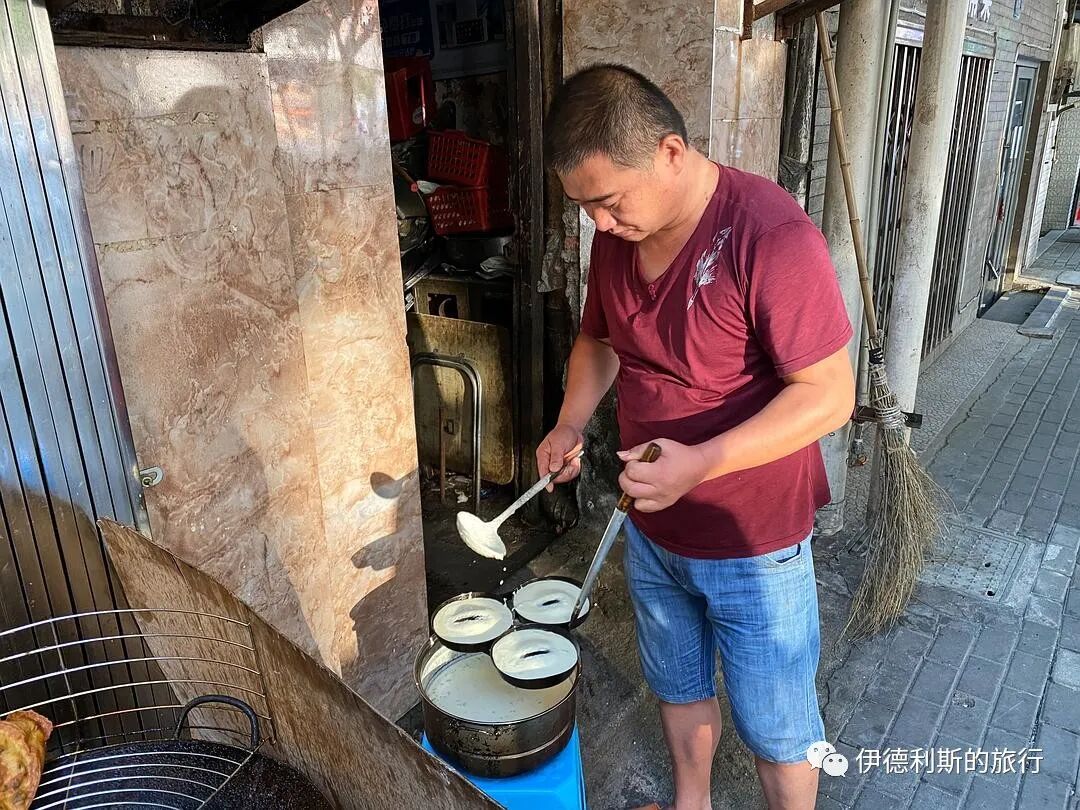
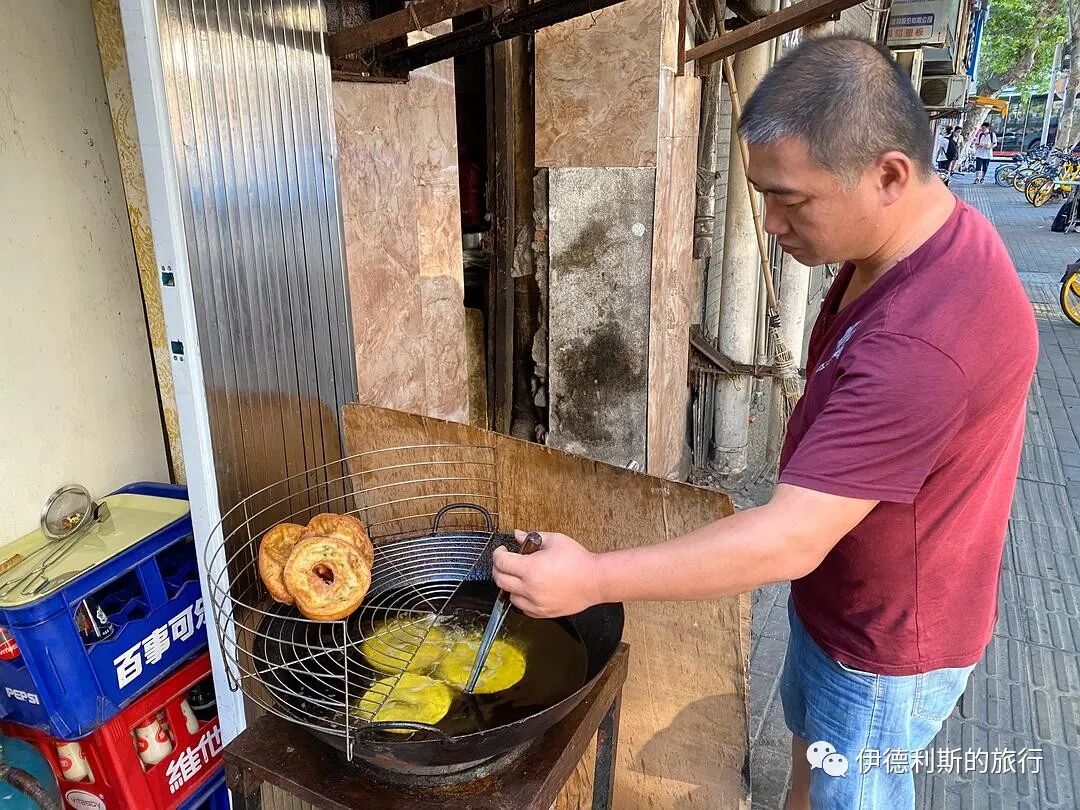
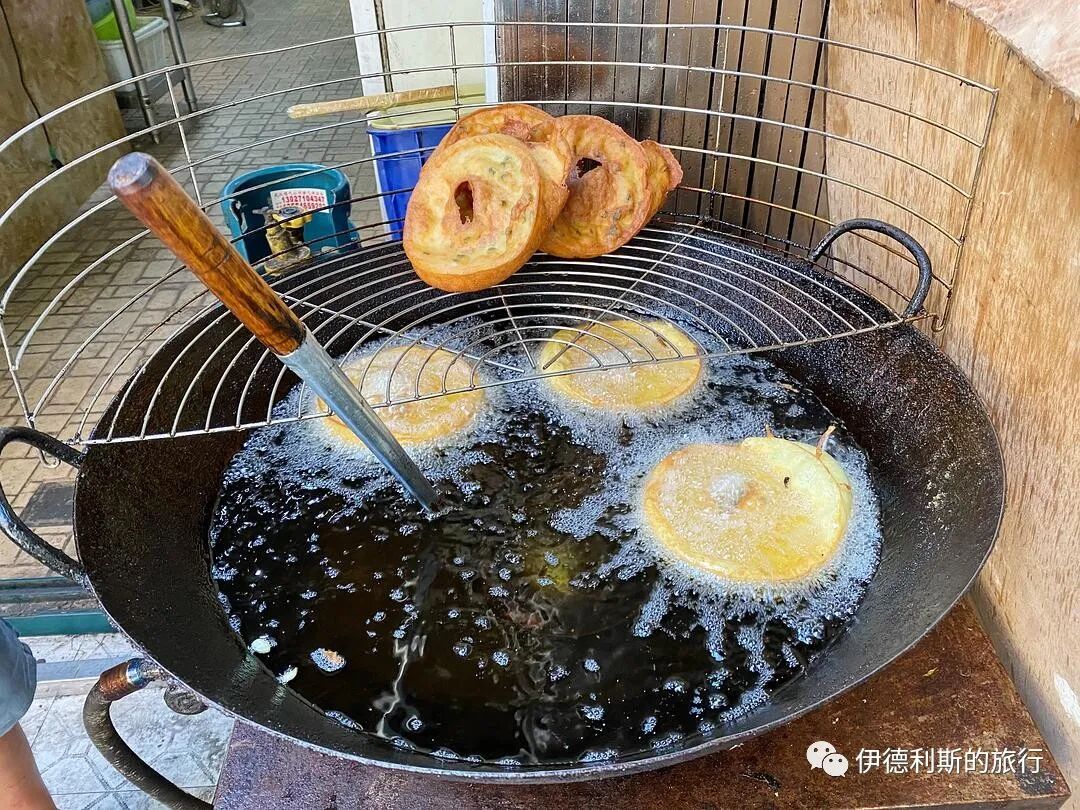
Freshly made savory donuts (mianwo)
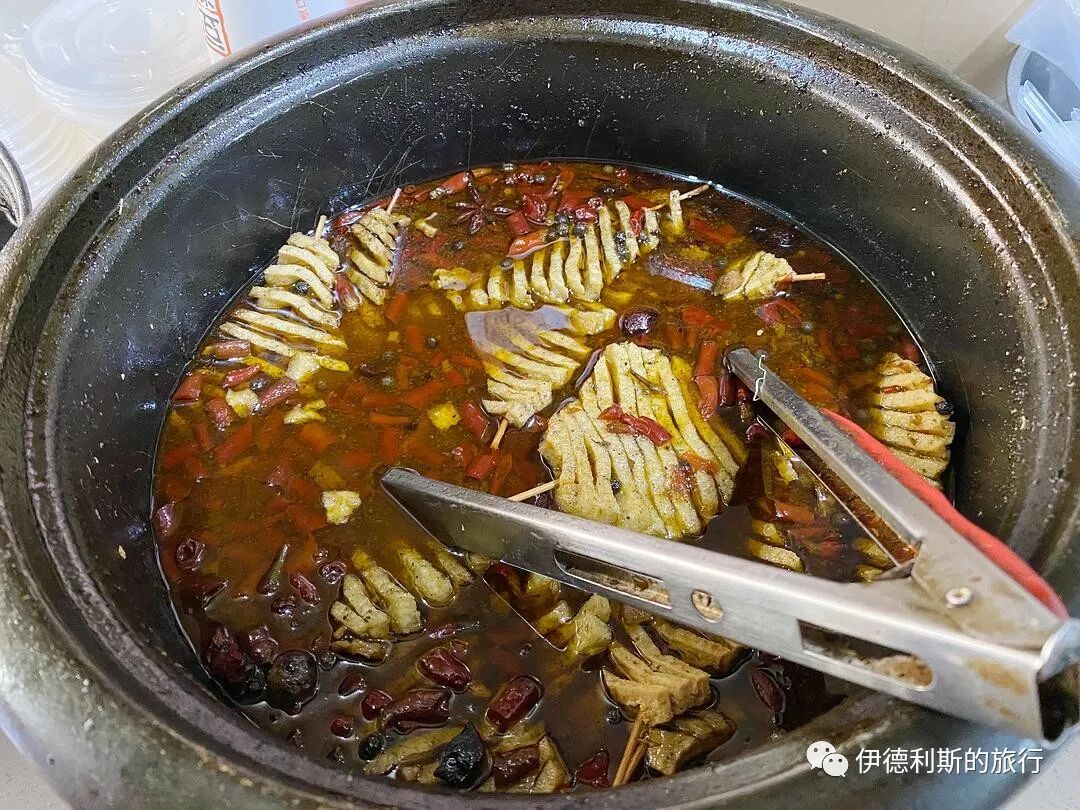
They also sell braised dried tofu (lu dougan), but it was super spicy so we did not dare to eat it.
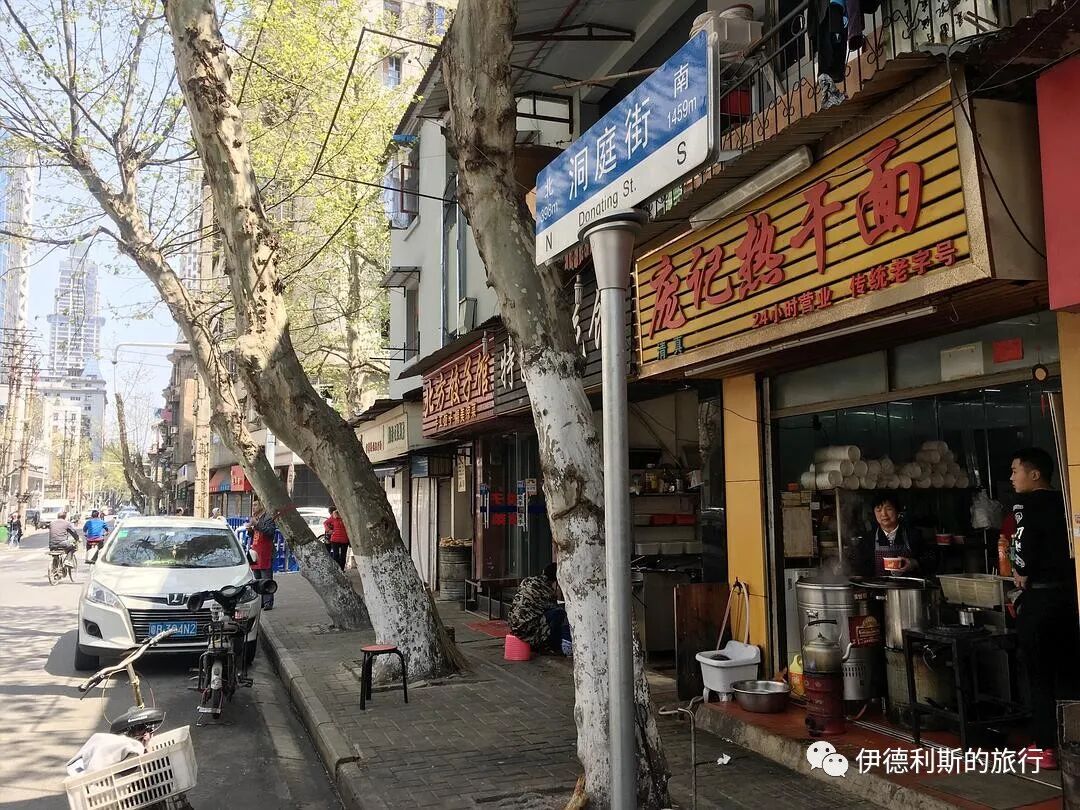
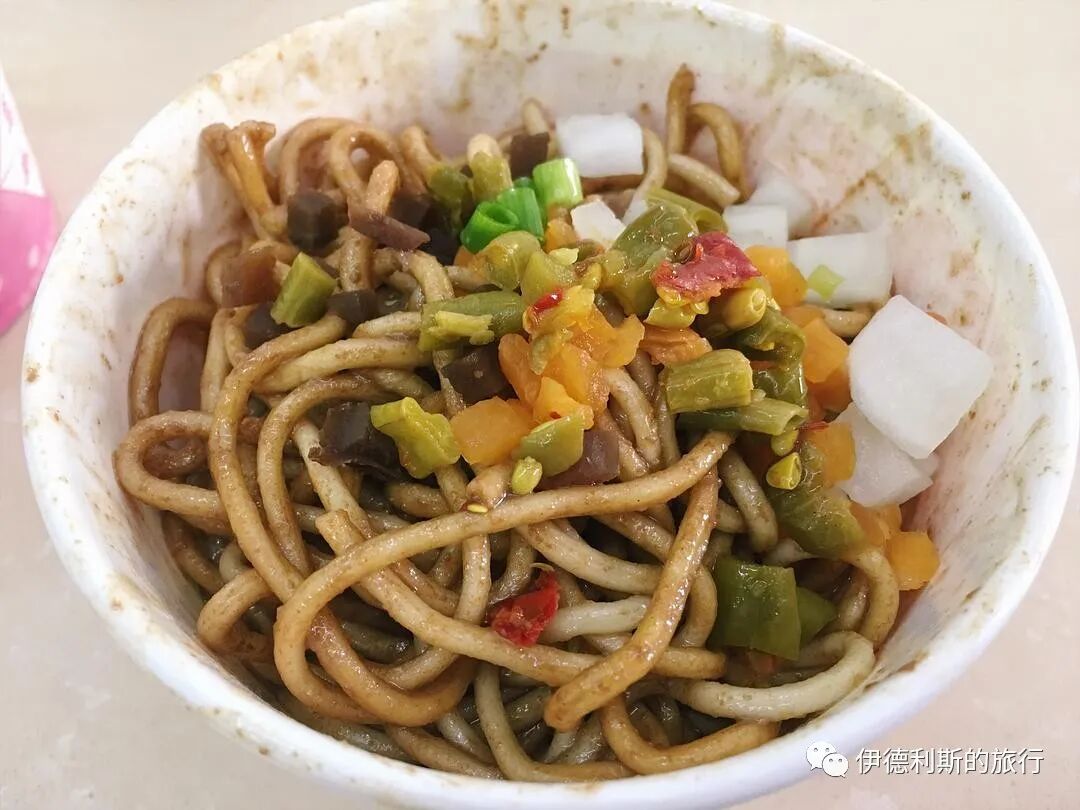
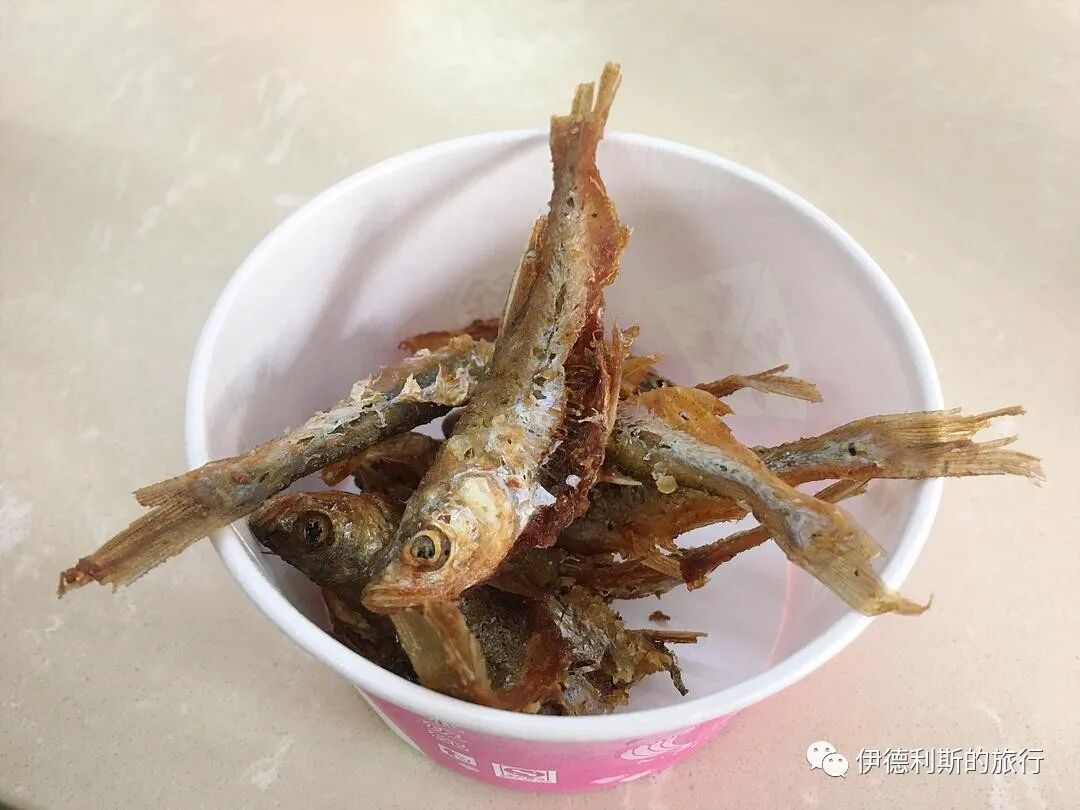
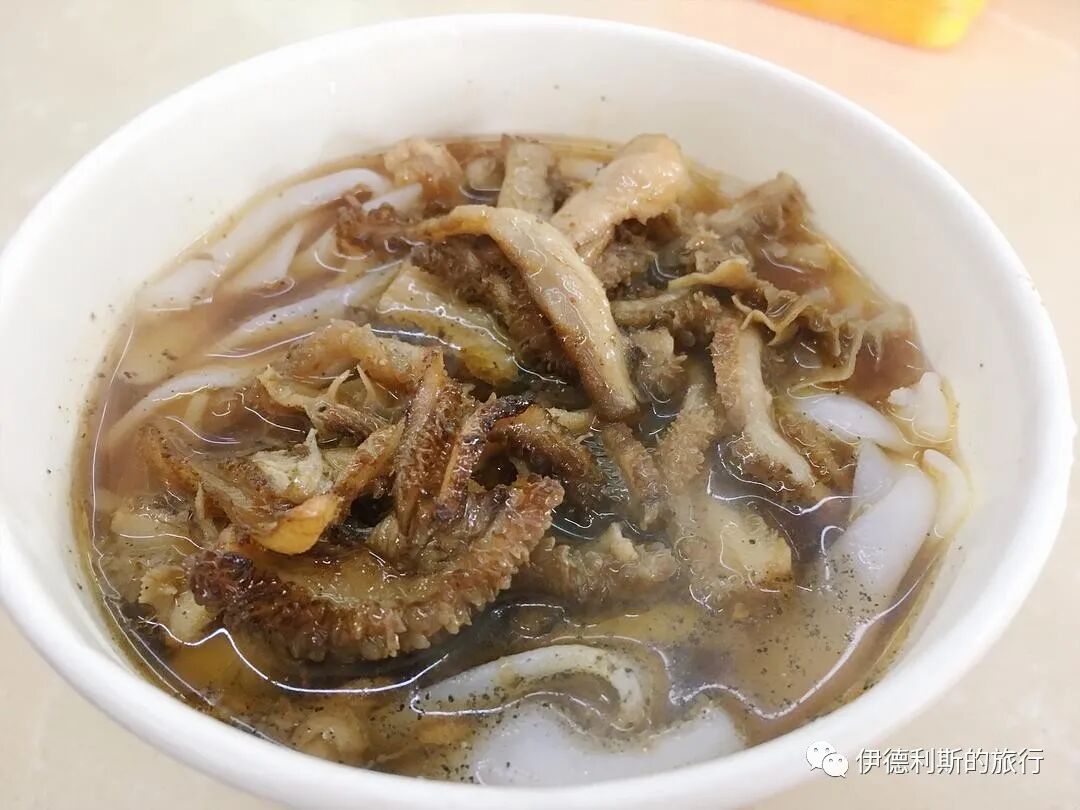
In 2017, I ate hot dry noodles (reganmian), small knife fish (xiaodaoyu), and beef tripe rice noodles (niudufen) at the Dongting Street shop. view all
Summary: Hankou Hui Muslim Community — Mosques, Food and Lost Streets is presented here as a firsthand travel account in clear English, beginning with this scene: After the middle of the Ming Dynasty, Hankou town began to grow. Hui Muslims from the Jiangsu and Zhejiang regions traveled up the Yangtze River, while those from the Shaanxi and Gansu regions traveled down the Han. The account keeps its focus on Hankou Muslims, Hubei Muslims, China Mosques while preserving the names, places, food, and historical details from the Chinese source.
The formation of the Muslim community in Hankou.
After the middle of the Ming Dynasty, Hankou town began to grow. Hui Muslims from the Jiangsu and Zhejiang regions traveled up the Yangtze River, while those from the Shaanxi and Gansu regions traveled down the Han River, all gathering in Hankou for trade and business. By the end of the Ming Dynasty, the number of Hui Muslims settling in Hankou grew, forming the earliest residential area for the community.
Guangyi Bridge Mosque (Guangyiqiao Qingzhensi).
Guangyi Bridge Mosque was first built in 1723 (the first year of the Yongzheng reign). It was burned down in 1900 (the 26th year of the Guangxu reign) and rebuilt in 1905 with funds raised by community elders like Jin Shihe and Jin Dinghe. During the Wuchang Uprising in 1911, the mosque was burned down again. It was repaired in 1916 with donations from the Shaanxi horse caravan group and the Hubei beef butcher guild (Choubang). The main prayer hall was funded entirely by a famous Hui merchant from Shanghai named Jiang Xingjie. It could hold a thousand people for namaz and featured beautiful bracket sets, curved eaves, and carved beams, making it very spectacular.
In 1905, Ma Ganghou, Yu Jingzhai, and others opened a school for Hui children inside the Wanshou Palace Mosque in Hankou. It was later renamed the Hankou Muslim Primary School and moved into the Guangyi Bridge Mosque, offering free enrollment to Hui children. The curriculum focused on religion, supplemented by Chinese language and abacus math, until it closed after the Battle of Wuhan in 1938.
Guangyi Bridge Mosque in the 1864 Map of Wuhan Towns and Cities.
Guangyi Bridge Mosque in the 1877 Map of Streets in Hankou Town, Hubei.
Guangyi Bridge Mosque before its demolition, photographed by Bi Jingshi before 1930. It is now in the collection of the Harvard-Yenching Library.
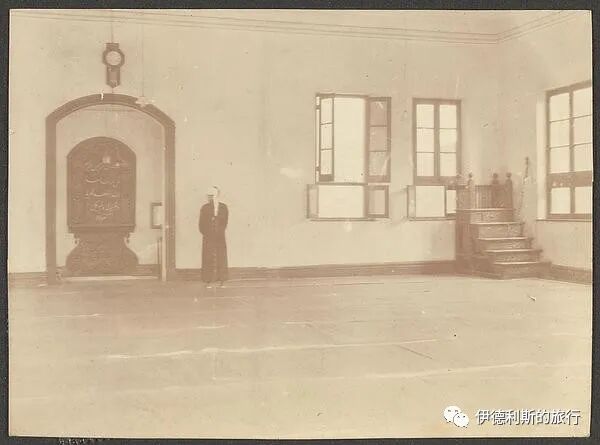
According to Wang Jianping in Old Photos of Islamic Culture in China's Interior and Frontier, this is Imam Wu Zhengming from Xi'an.
In 1930, the government renovated a large urban area from Wangjiaxiang to Liuduqiao in Hankou. They built new roads centered around the Sun Yat-sen bronze statue on Sanmin Road, which led to the demolition of the original Guangyi Bridge Mosque. Imam Ma Yiting and community elders like Tie Guoliang, Yu Jingzhai, Yang Shouting, and Ma Tingsheng traveled to Shanghai, Nanjing, and the Shaanxi-Gansu-Henan regions to raise funds. With these donations and contributions from local Hui Muslims, they raised 18,000 yuan. They built a three-story brick-and-concrete mosque on the newly constructed Minquan Road, modeled after the Xiaotaoyuan Mosque in Shanghai. Because it was on Minquan Road, it was also called the Minquan Road Mosque. The first floor of the new mosque held a reception room, a water room for washing, and a room for funeral preparations (maiti). The second floor had a room for reciting scriptures and a lecture hall, and the third floor was the main prayer hall.
The Minquan Road Mosque photographed by Bi Jingshi between 1934 and 1935. You can see the sign on the gate that reads: Hankou Branch of the China Islamic Association, Islamic Prayer Hall.
Notice from the Preparatory Committee of the Hankou Branch of the Chinese Islamic Association.
The true faith of the Hui people originated in Mecca (Tianfang).
It has spread to provinces in the interior, passed down through generations by representatives.
Mosques stand like a forest, bringing unity to even the most remote areas.
With the same path, same writing, and same assimilation, the five ethnic groups flourish together.
According to Wang Jianping in Old Photos of Islamic Culture in China's Interior and Frontier, this is the young Imam Ma from the Minquan Road Mosque. Ma Xiaoshun (born in 1924), the former director of the Minquan Road Mosque management committee, recalled that this was Ma Xun, the adopted son of the mosque's head Imam, Ma Yiting. He later followed Imam Ma Yiting to Shanghai and served as the head Imam at the Fuyou Road Mosque in Shanghai for many years during the 1980s.
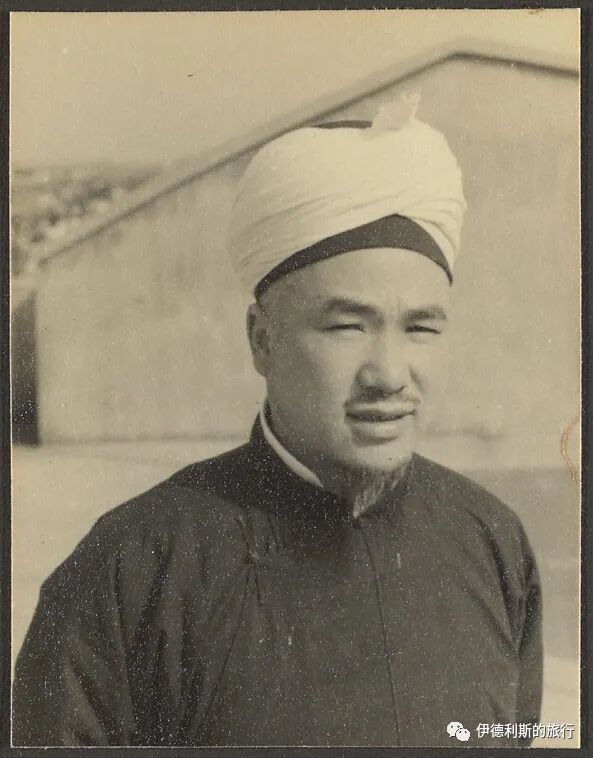
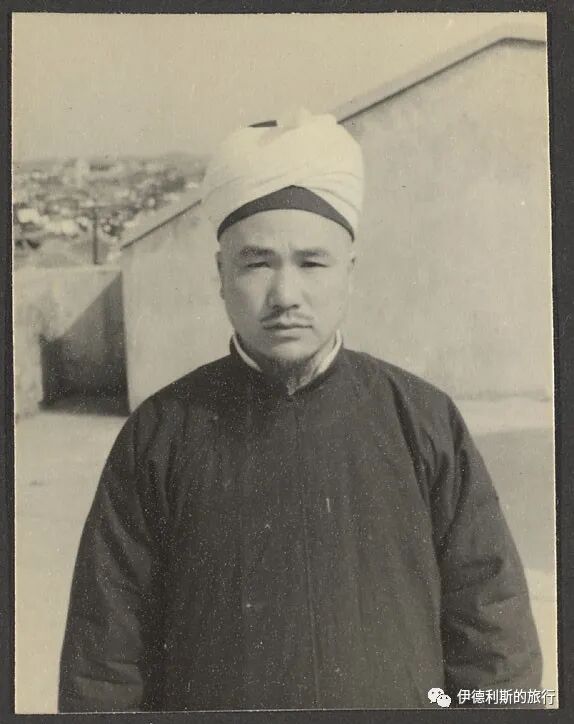
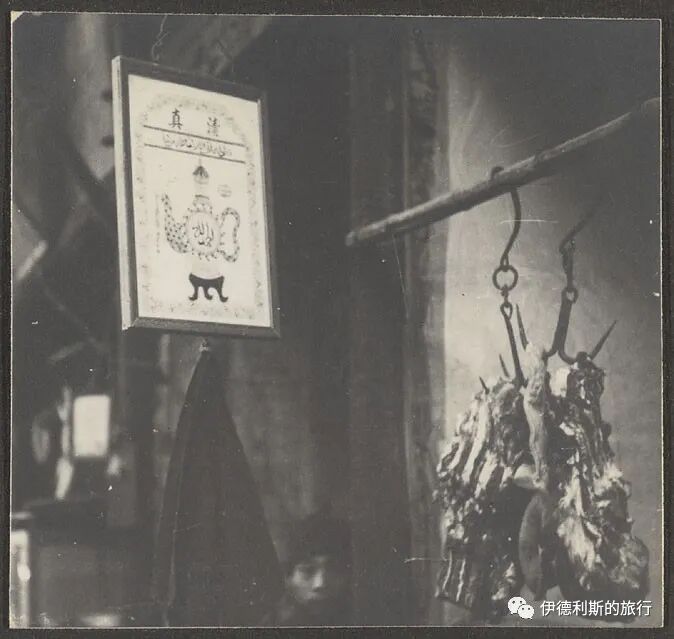
A small halal snack shop in Hankou.
In 1986, the mosque was renovated and expanded into a five-story building. The first floor is the washroom, the second floor has a living room and a room for reciting scriptures, the third floor is the main prayer hall, the fourth floor is the office for the Wuhan Islamic Association, and the fifth floor is a meeting hall and an additional prayer hall for holidays.
In 2013, the Minquan Road Mosque, which was a designated excellent historical building in Wuhan, was demolished, leaving behind a permanent regret.
The Minquan Road Mosque I photographed in 2012 before it was demolished.
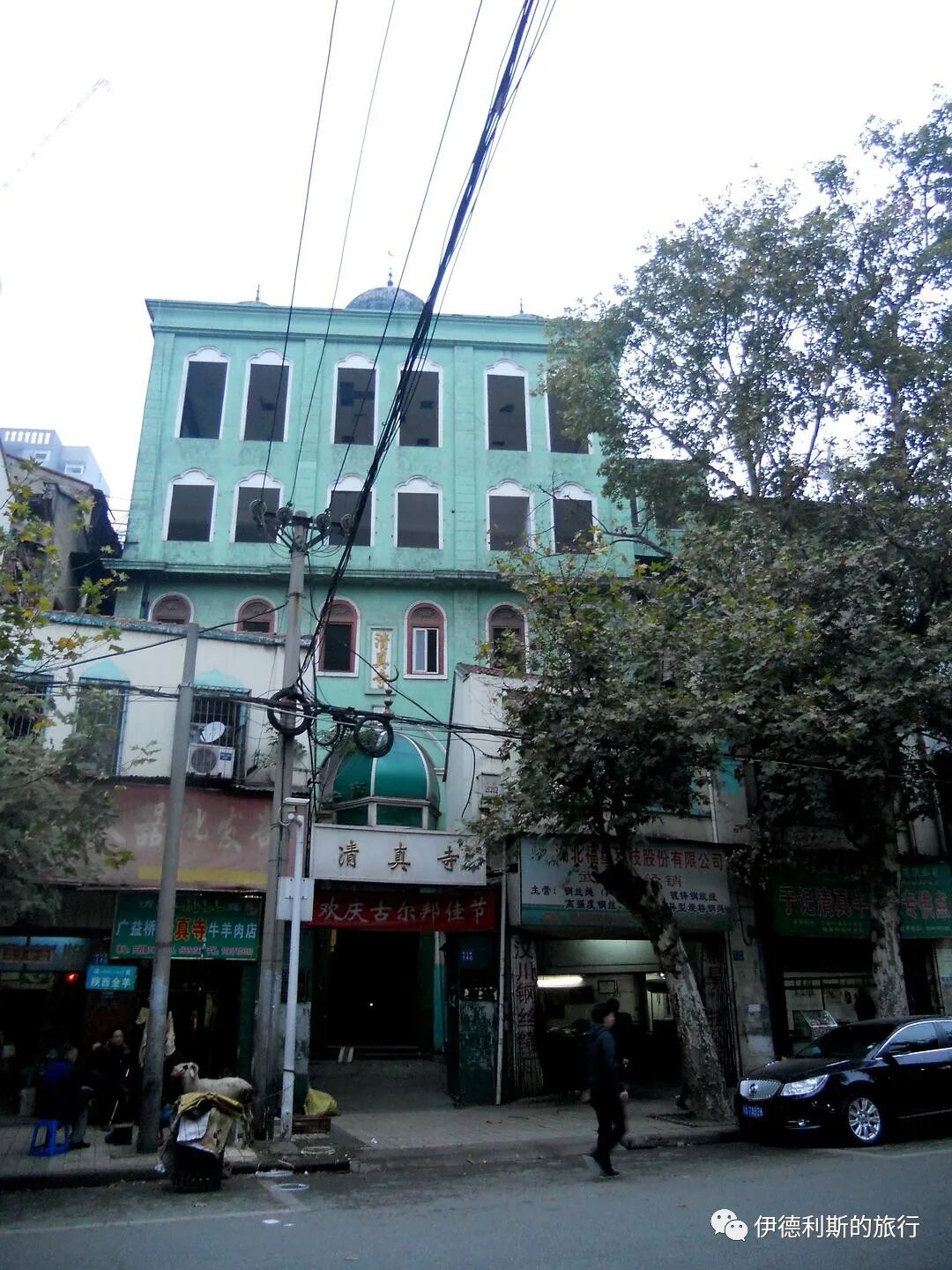
Hualou Street next to the Minquan Road Mosque, one year before the demolition.
The Minquan Road Mosque in October 2014, which became a parking lot after being torn down.
Jiang'an Mosque.
In 1906 (the 32nd year of the Guangxu reign), the Beijing-Hankou Railway officially opened. Many Hui Muslims from Zhoukou, Henan, traveled along the railway to Hankou to escape a drought, settling in the area around the Jiang'an Railway Station, the southernmost point of the line.
In 1918, the Henan Hui Muslims who settled in Liujiamiao built a simple mosque. This was the earliest Liujiamiao Mosque, also known as the Henan Mosque because it was mainly used by people from Henan. Later, when Wu Peifu's army was stationed there, they requisitioned the mosque to feed their horses, so in 1920, everyone had to raise money to buy a small building to use as a mosque.
Between 1934 and 1935, Bi Jingshi took photos of the Liujiamiao Mosque at that time.
Inside the mosque, the person shown is the imam (ahong) at the time, Elder Chang.
Elder Imam Chang.
Elder Imam Chang's eldest son, Imam Chang.
Elder Imam Chang's second son, Younger Imam Chang.
A photo of Elder Imam Chang and Younger Imam Chang together.
Elder Imam Chang and a foreign friend, Mr. G. K. Harris.
Elder Imam Chang shaving his beard.
Elder Imam Chang.
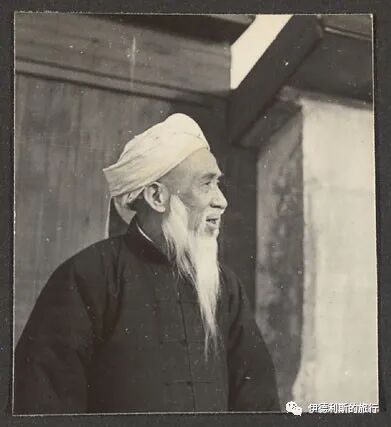
According to Wang Jianping in 'Old Photos of Islamic Culture in China's Inland and Frontier Regions,' an elderly resident named Wei Ruiyun, who lived near the Wuchang Uprising Street Mosque for over 60 years, recalled that this was Imam Ma Shanzhi, who had performed her nikah (marriage contract) when she got married.
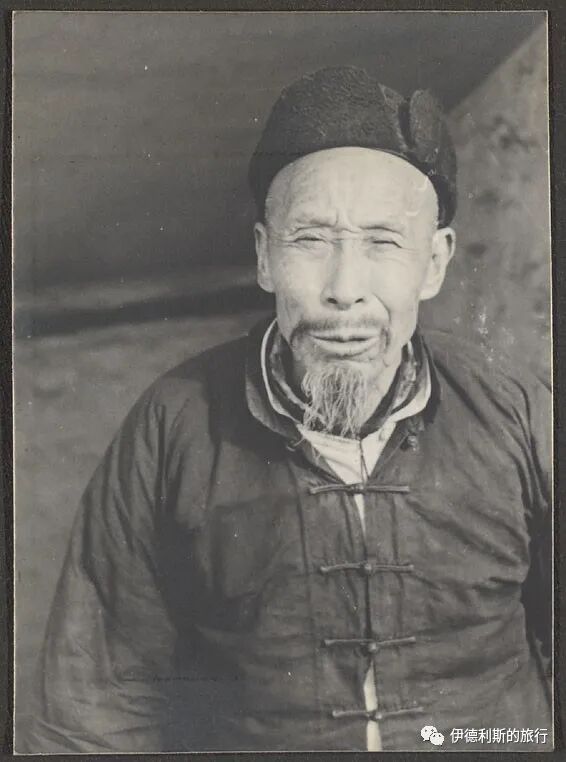
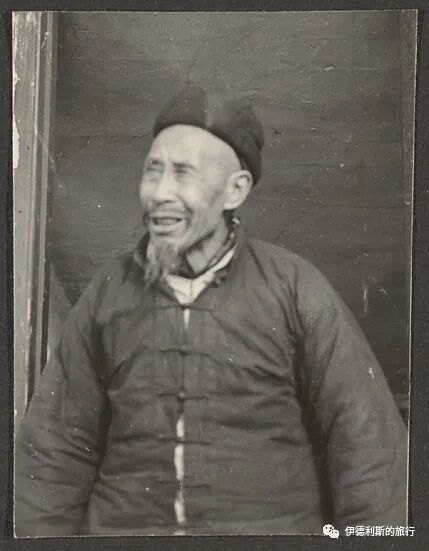
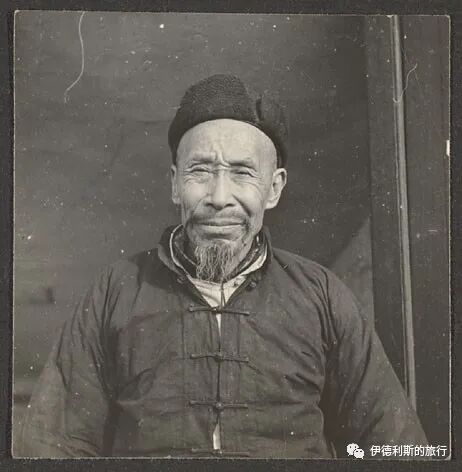
Elder Imam Chang and some merchants who came to Hankou from Henan for business.
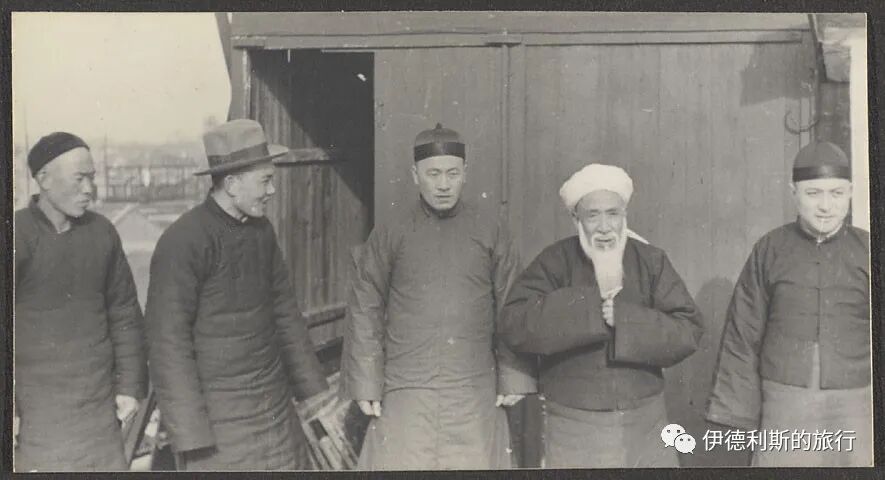
Merchants who came to do business in Henan at the Liujiamiao Mosque.
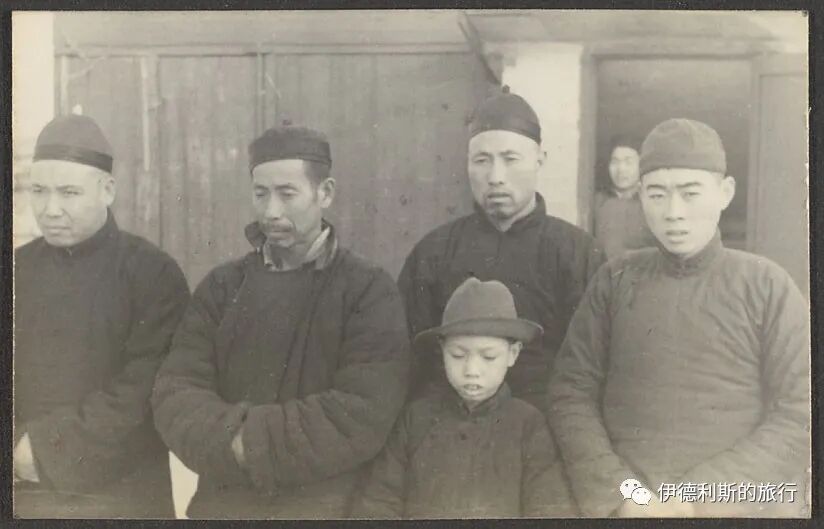
The imam of Liujiamiao Mosque.
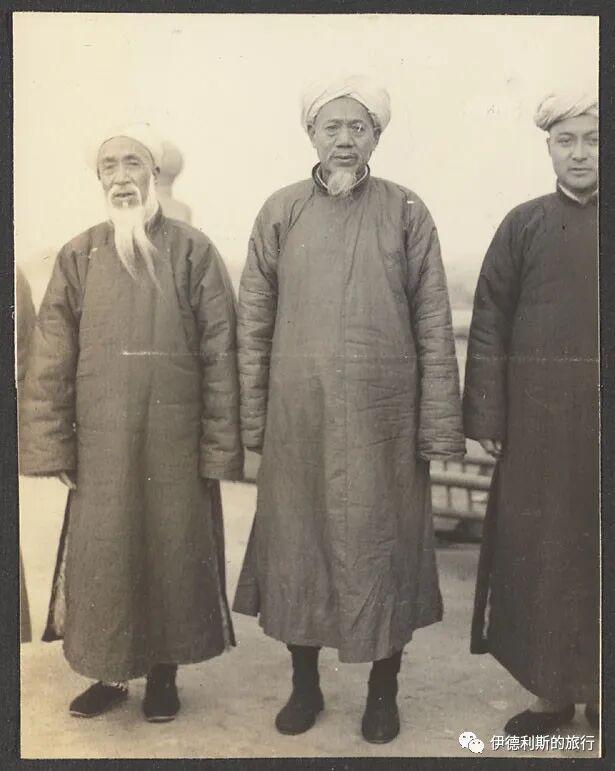
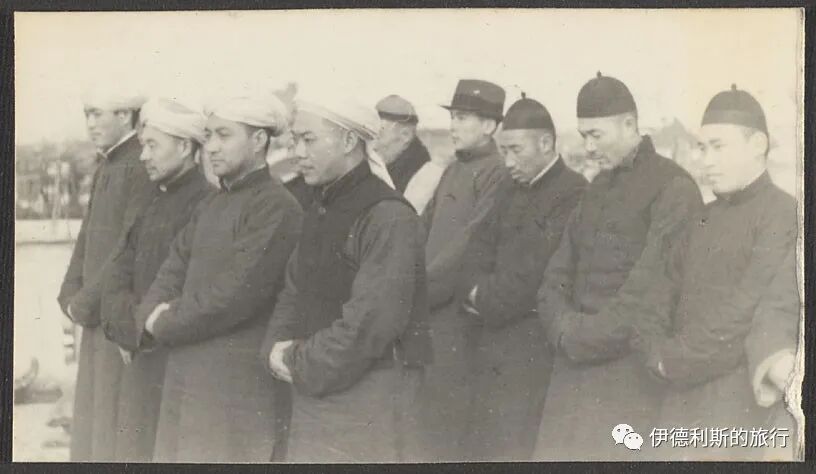
The imam, community elders, and merchants from Henan on the roof of the mosque, preparing to perform namaz.
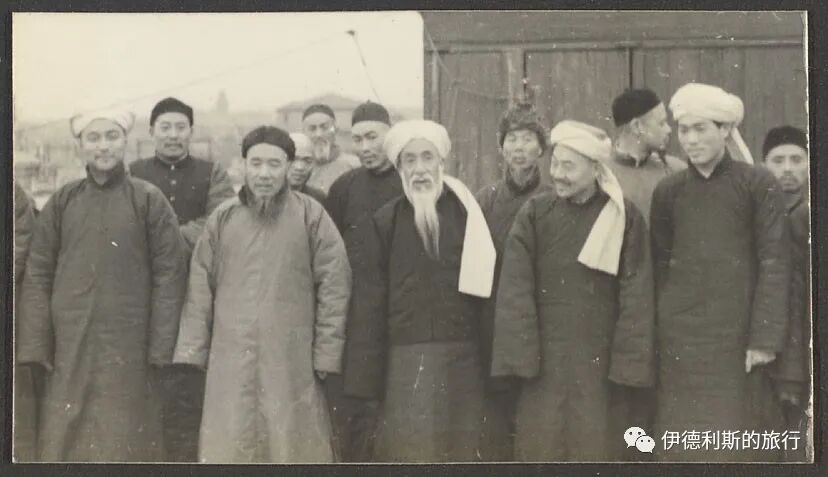
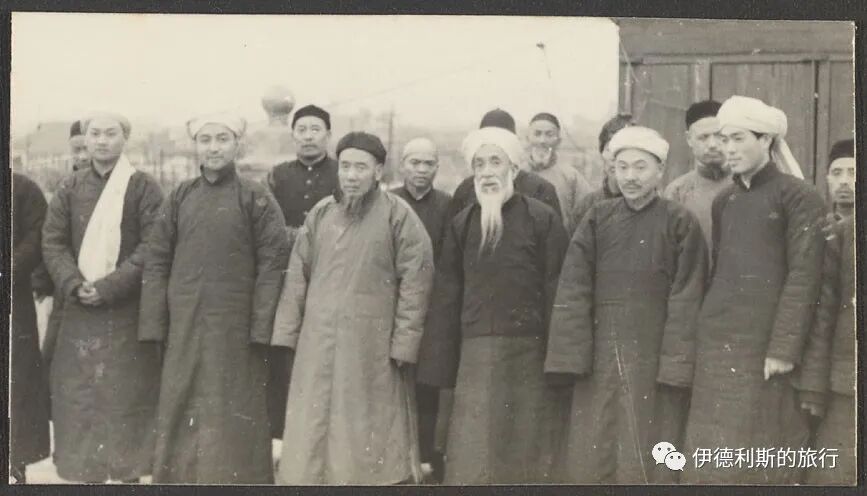
Performing namaz on the roof of Liujiamiao Mosque.
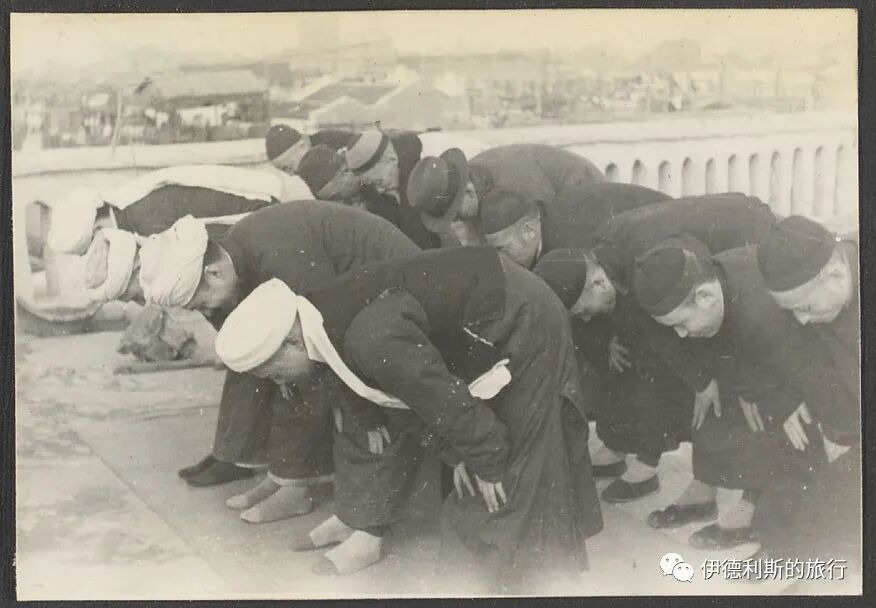
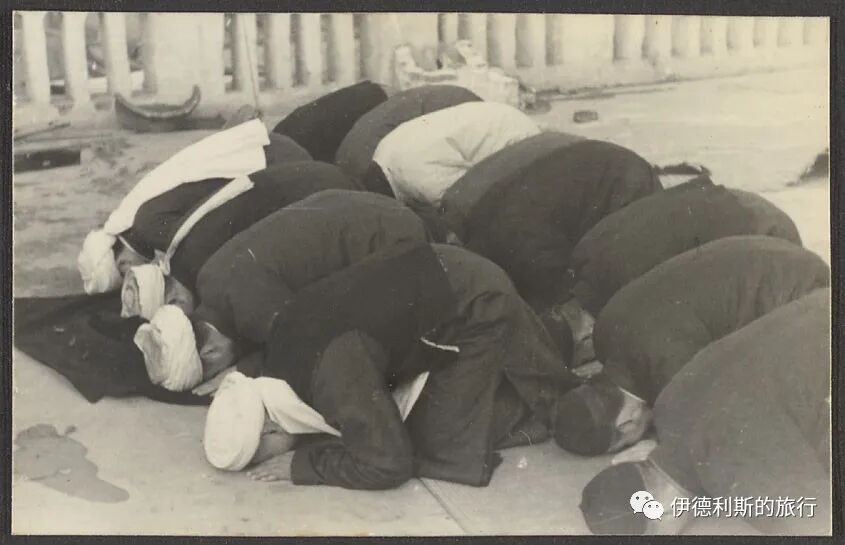
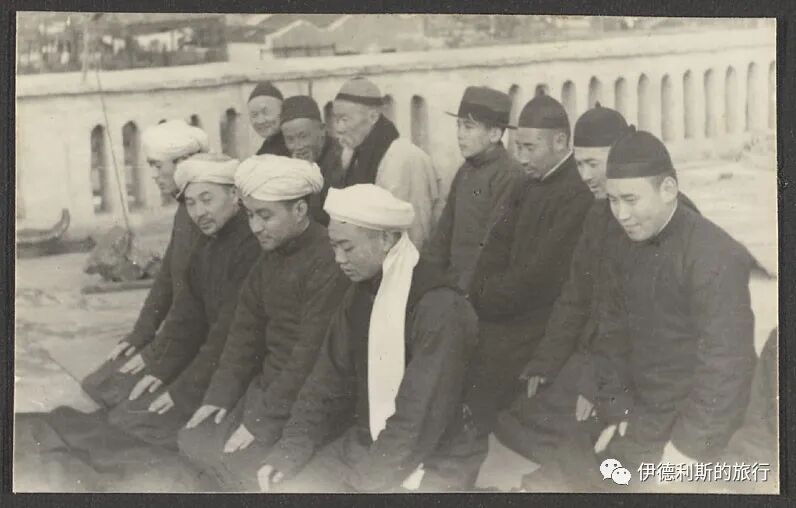
Old Imam Chang leads everyone in Jumu'ah prayer inside the main hall of Liujiamiao Mosque.
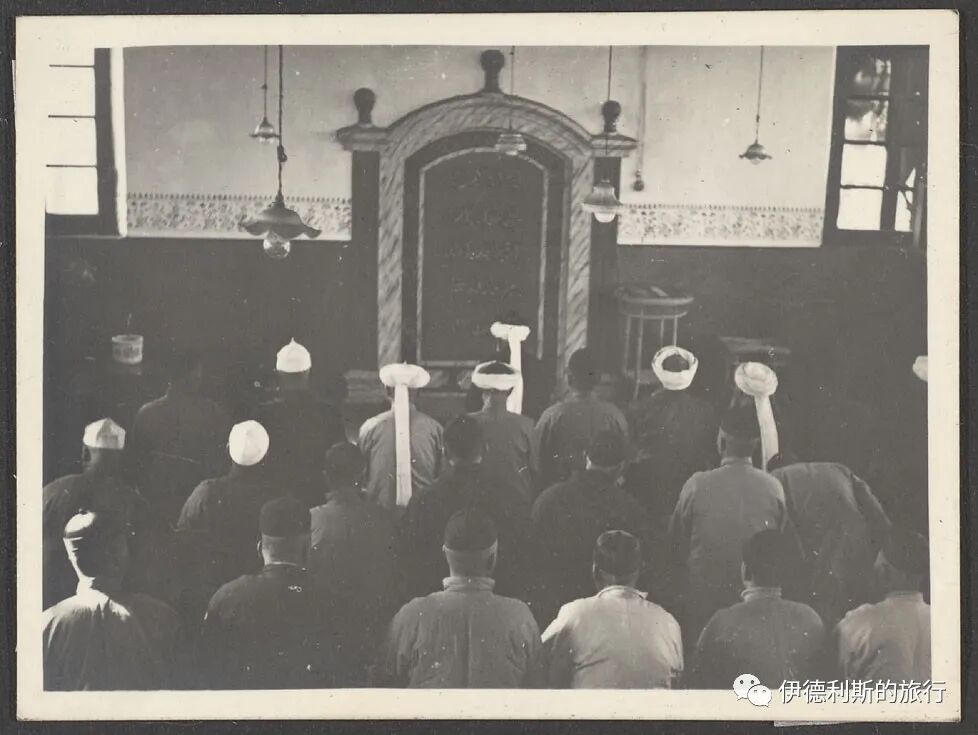
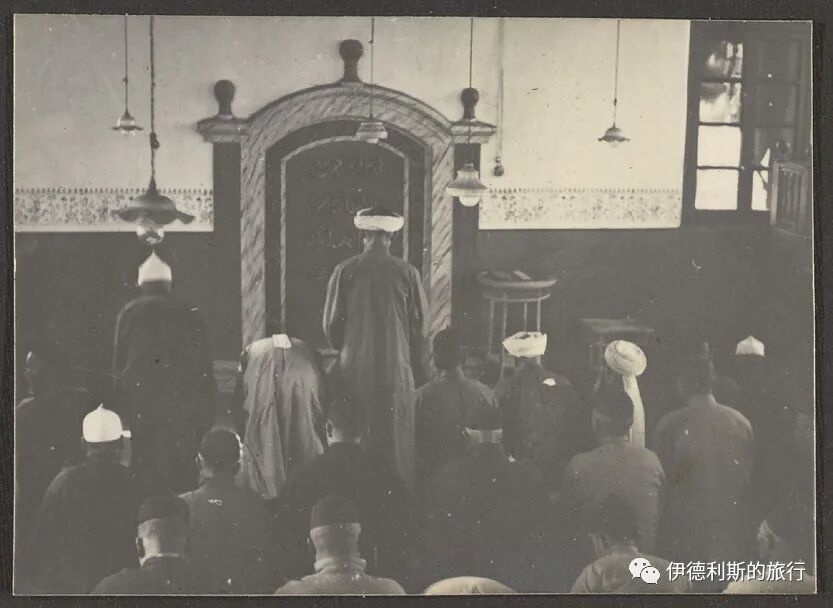
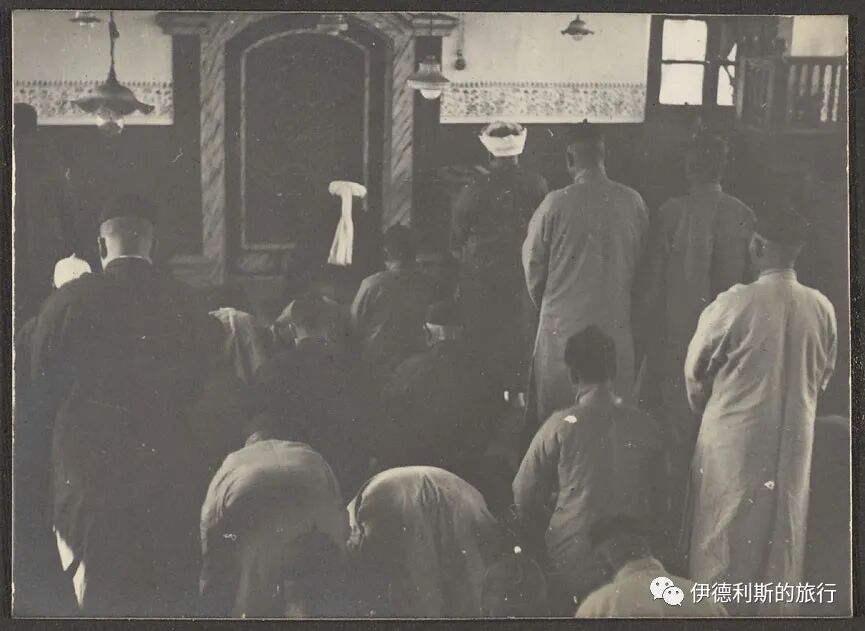
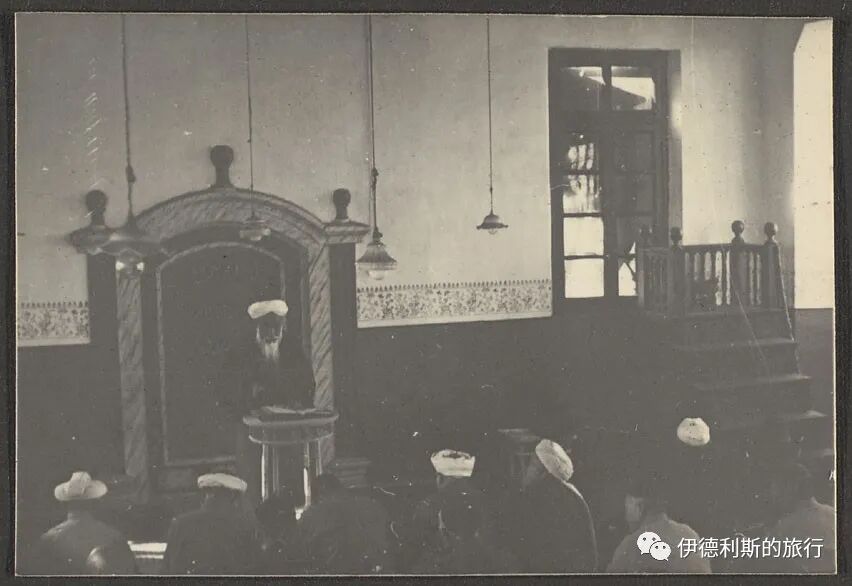
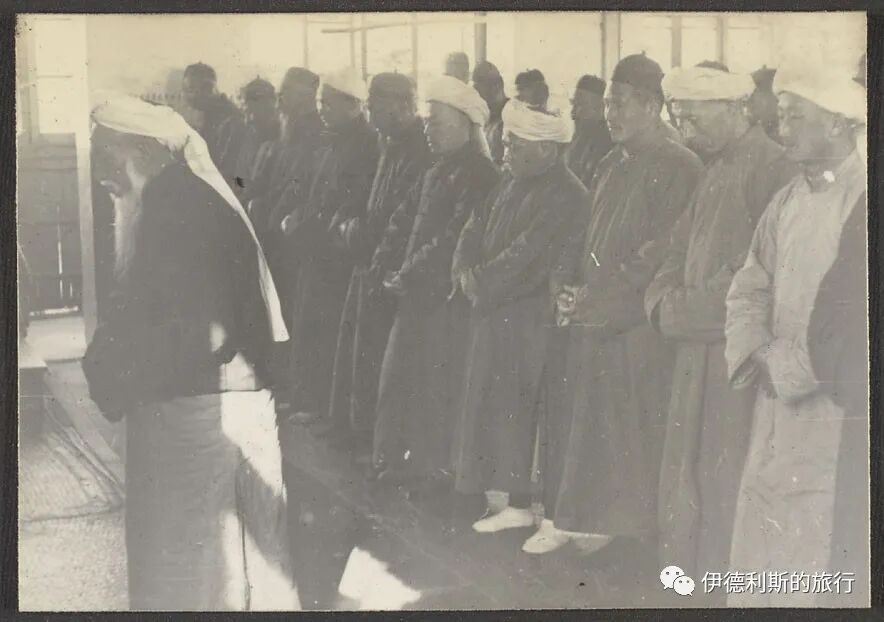
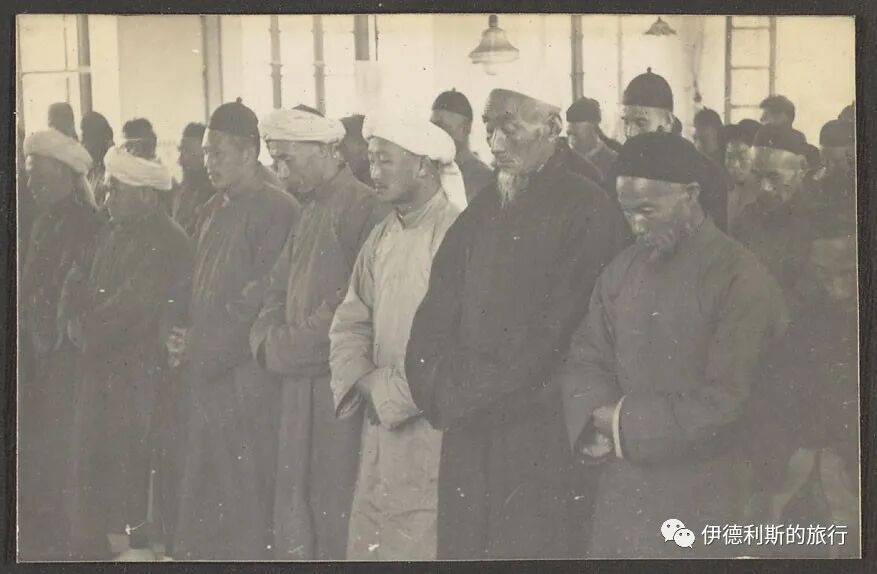
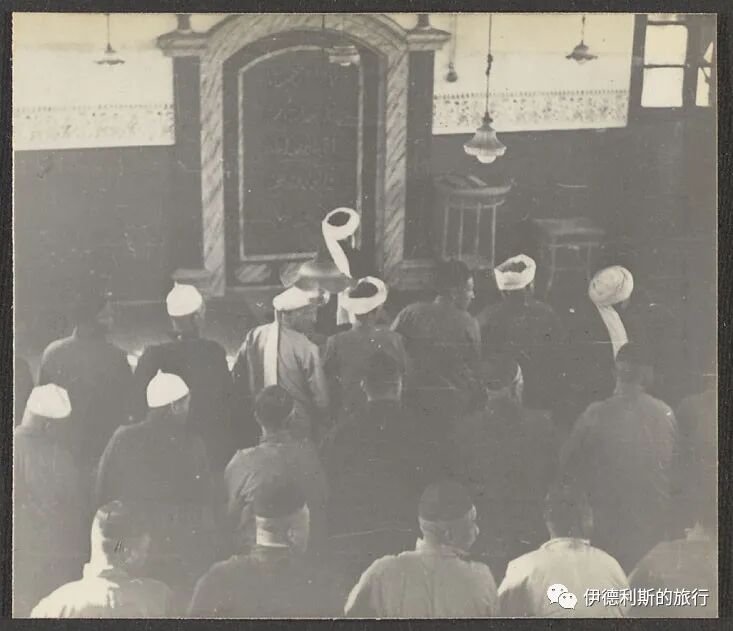
A friend (dosti) performs wudu (abdast) on the roof of Liujiamiao Mosque.
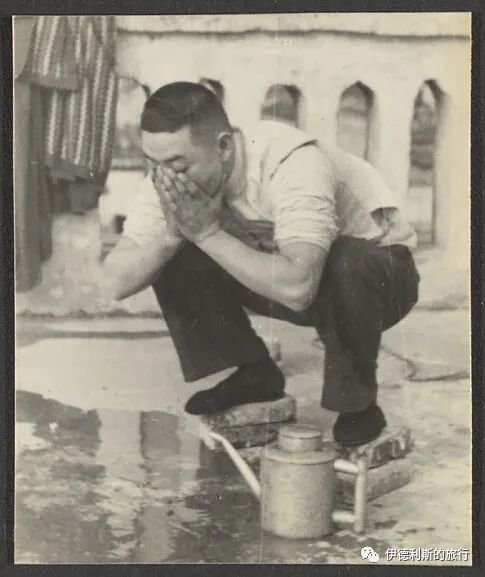
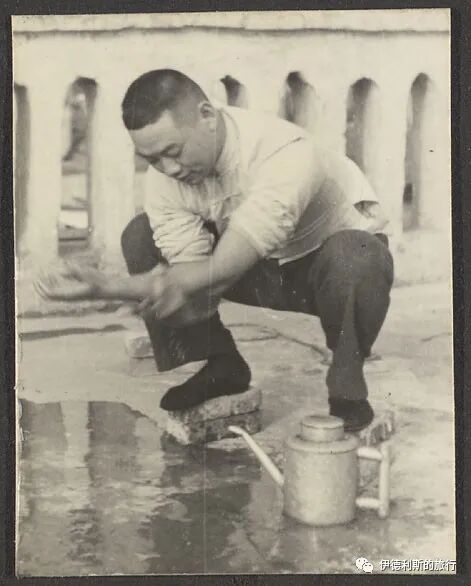
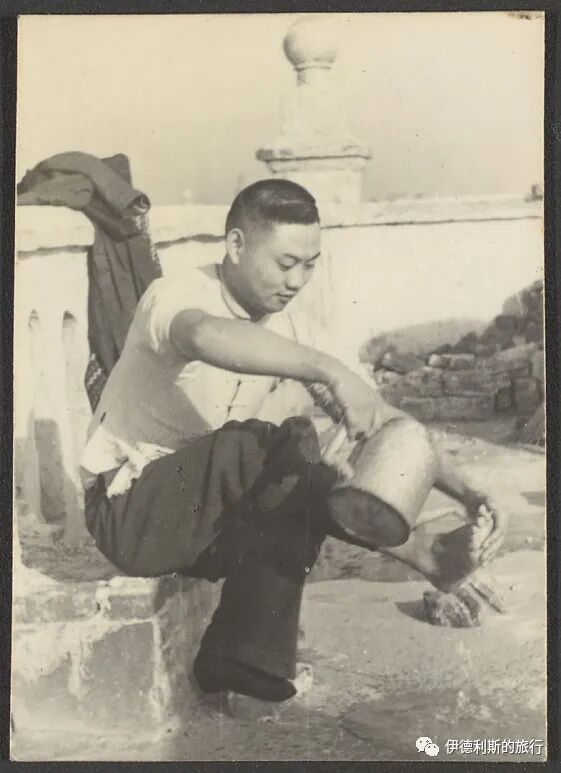
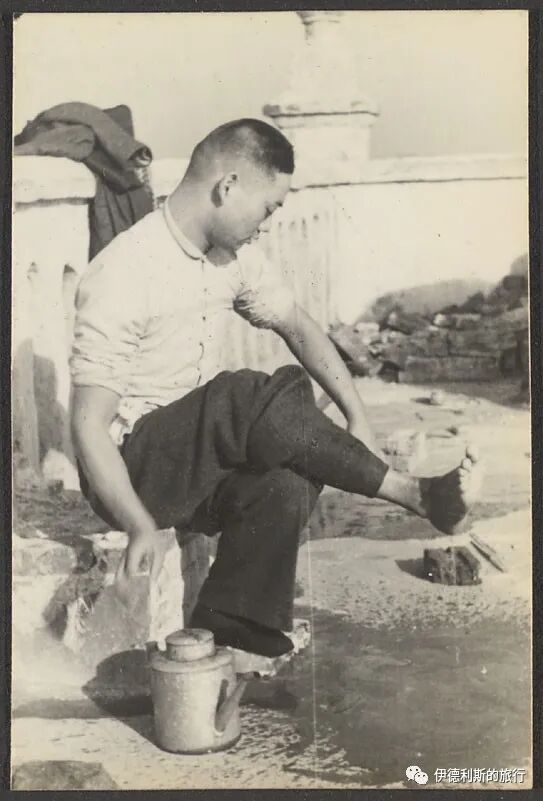
After the Battle of Wuhan in 1938, the mosque was damaged by war, and the land was taken for railway expansion, so local Hui Muslims raised money again to buy a new building for the mosque. Since then, the mosque has undergone several major renovations and was officially renamed Jiang'an Mosque. After a major renovation of the main hall in 1986, a second floor was added to the main hall and the north reception room, which caused the foundation to sink and cracks to appear in the walls. In 2005, the original Jiang'an Mosque was demolished to build a new one, and in 2007, a women's Islamic school (qingzhen nvxue) was built next to it.
Jiang'an Mosque as I photographed it in 2013.
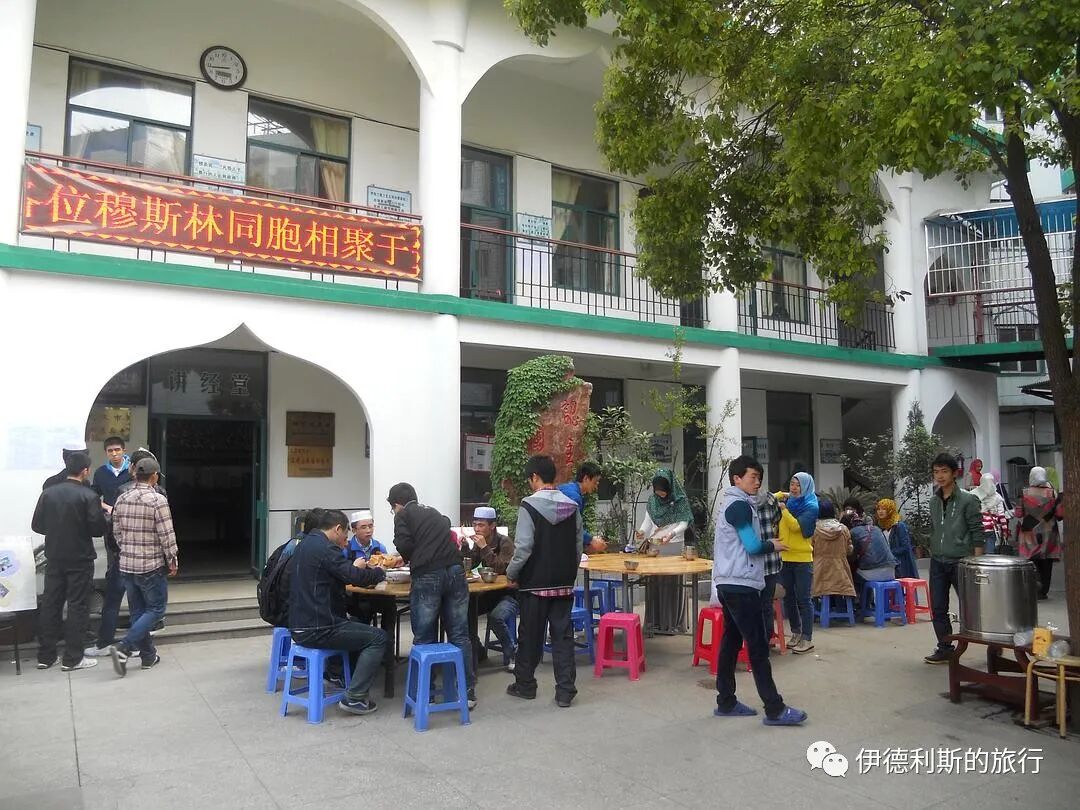
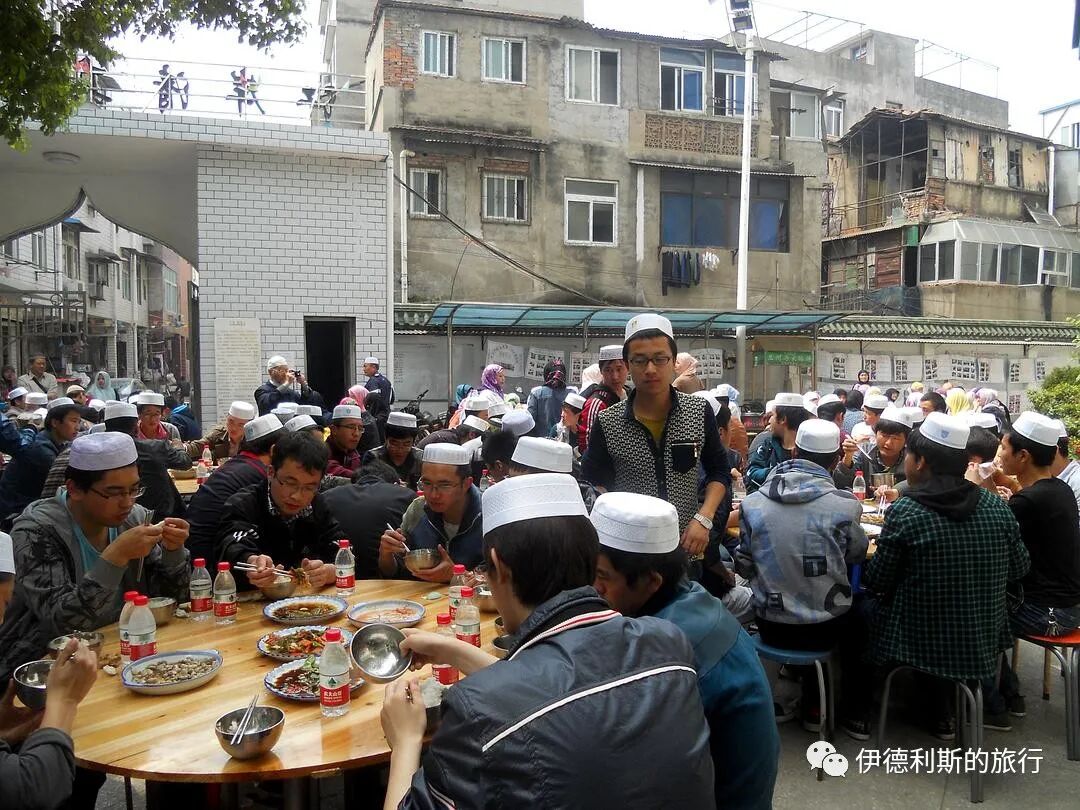
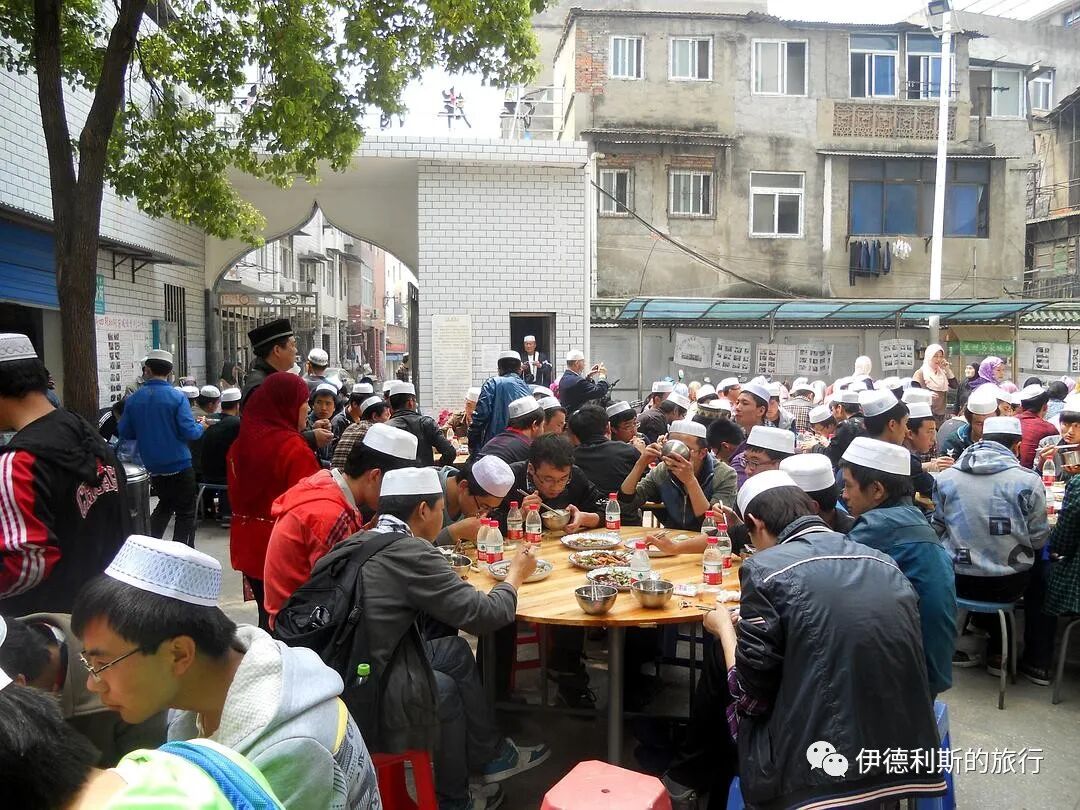
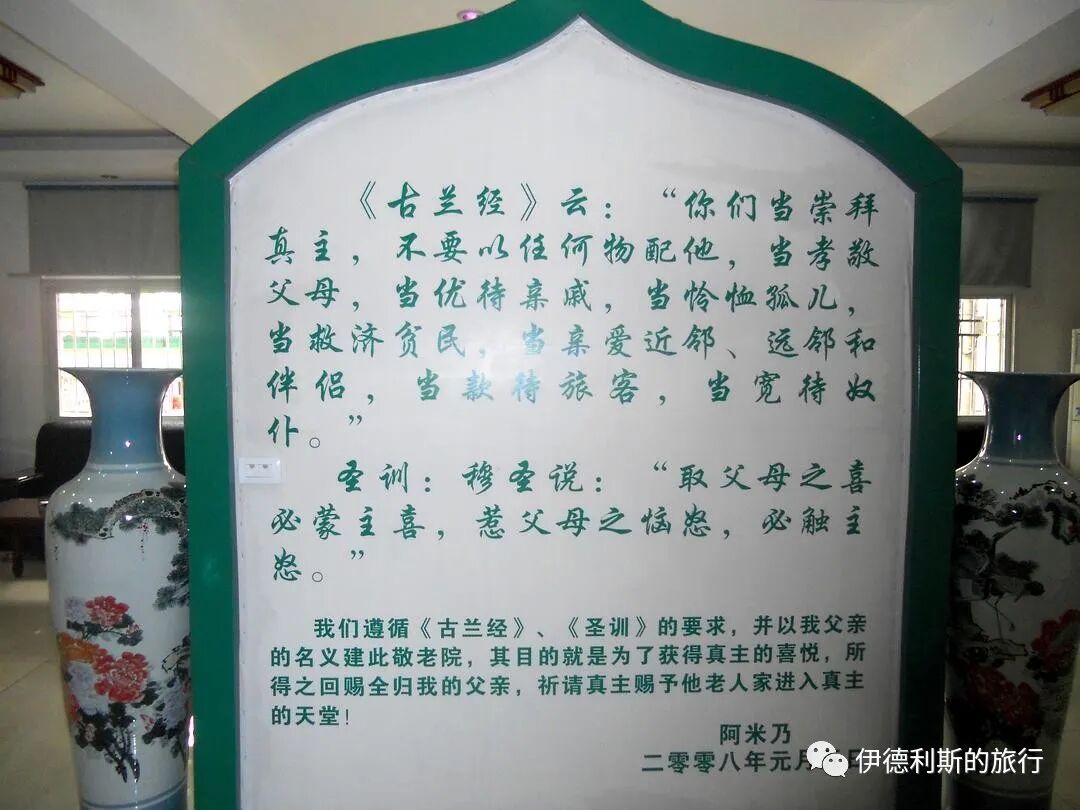
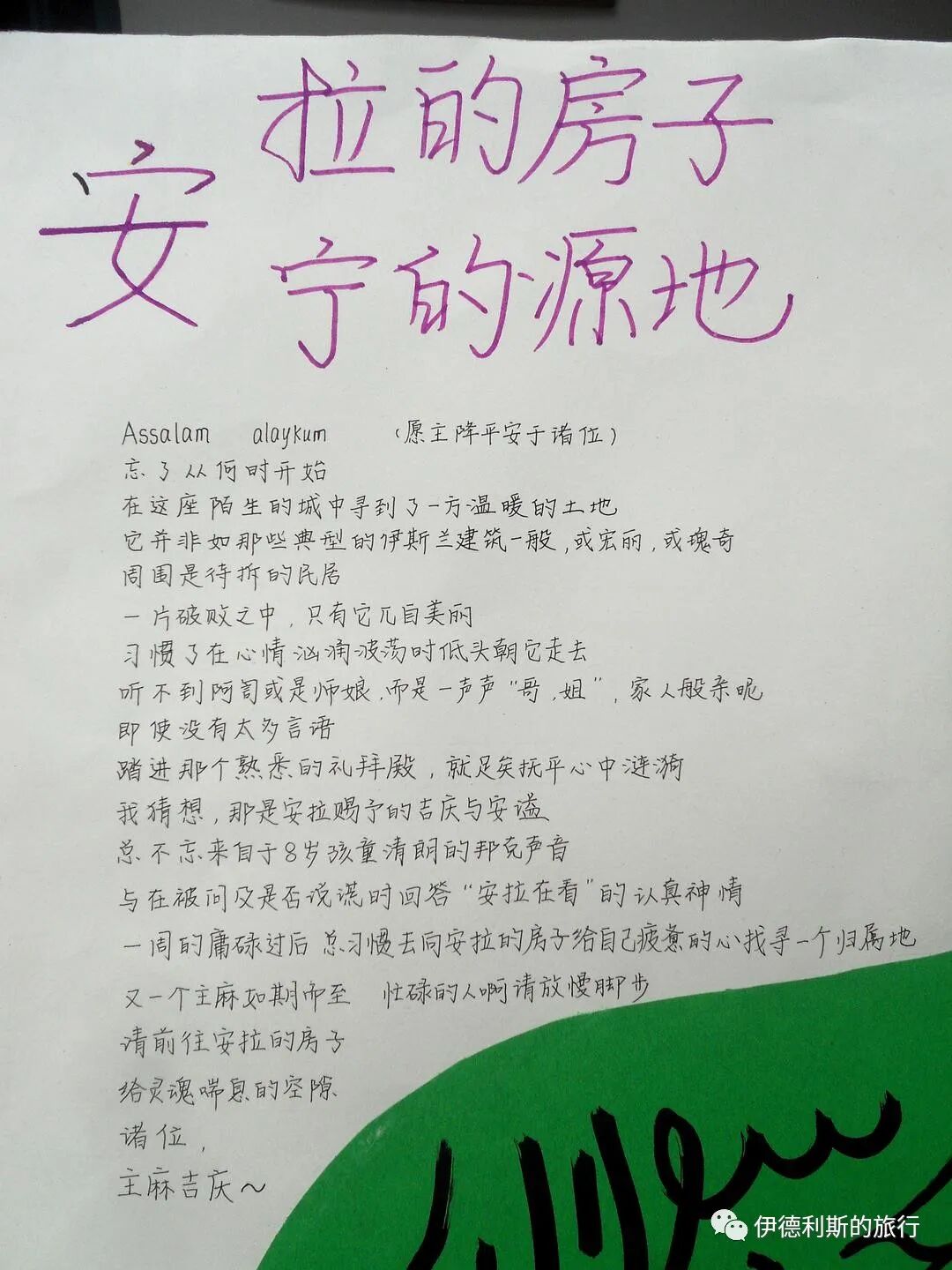
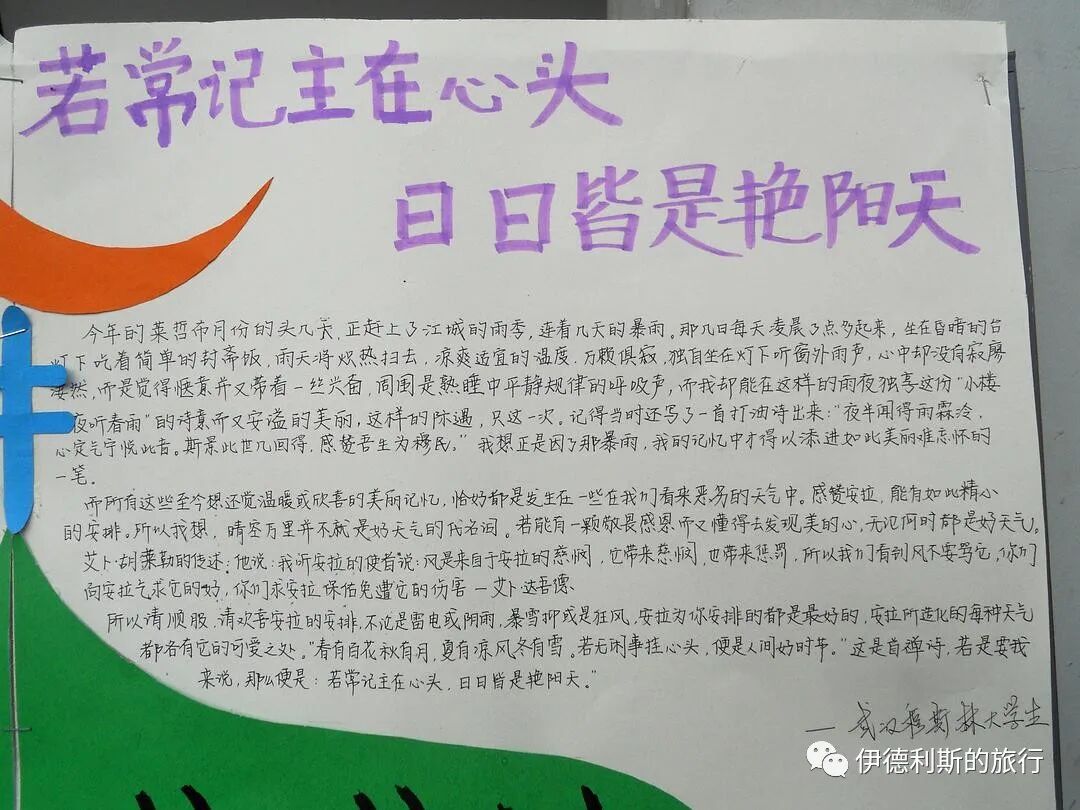
A Jumu'ah prayer in 2013.
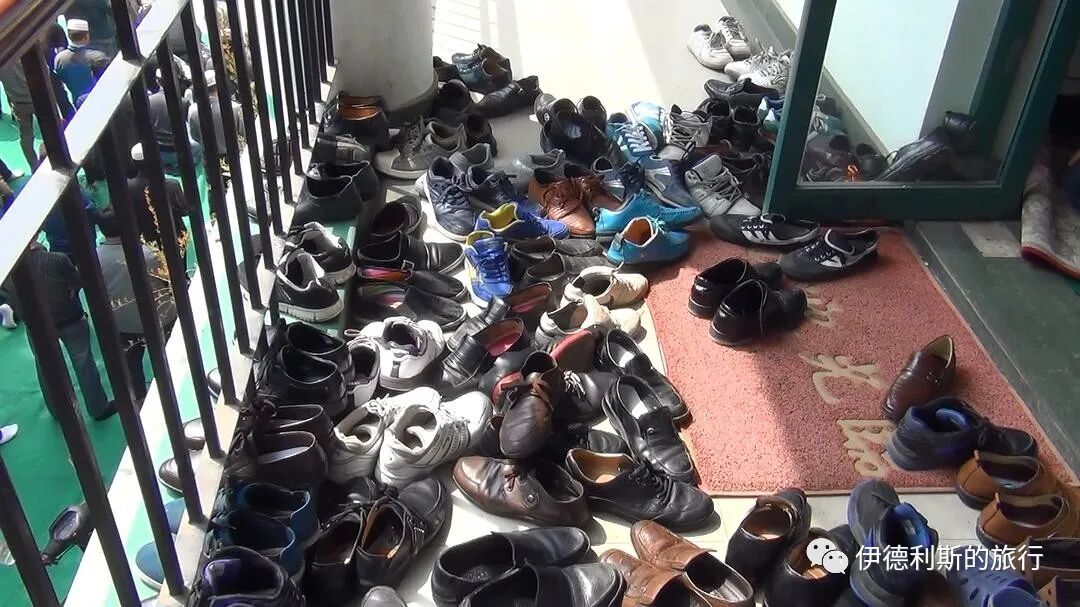
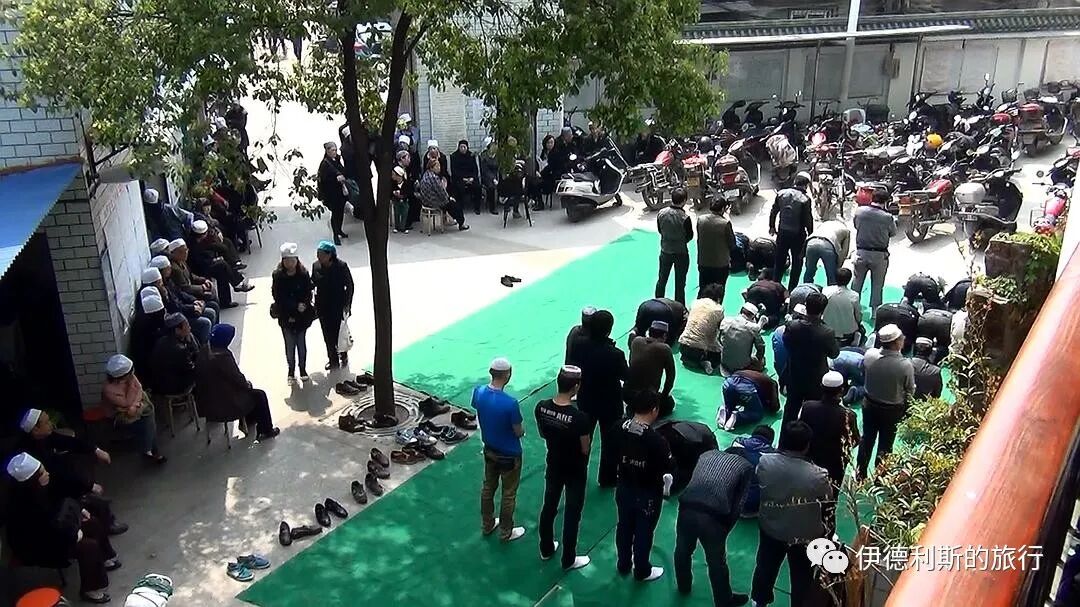
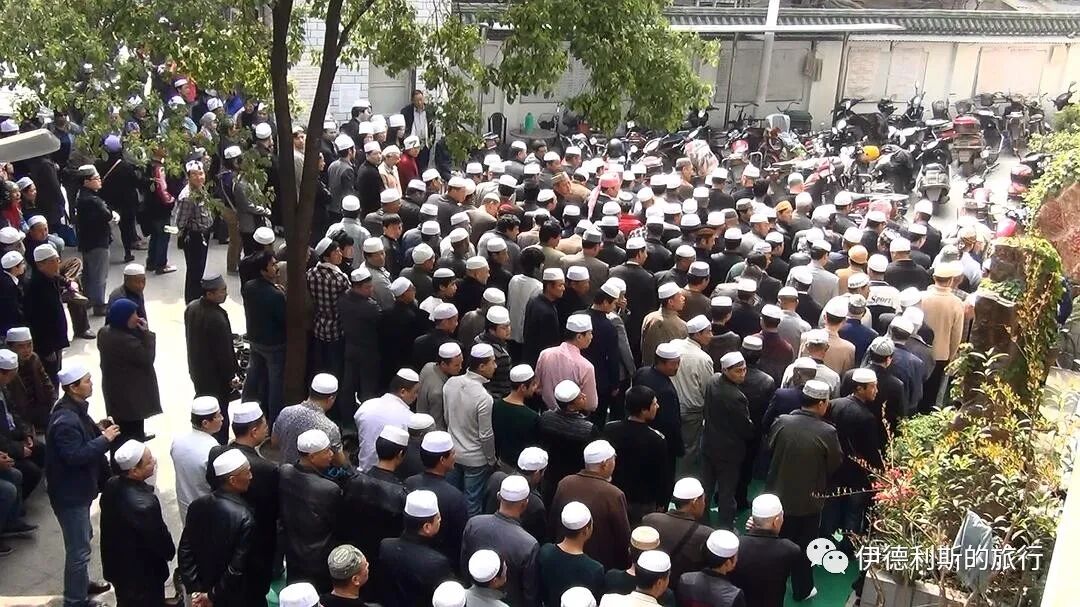
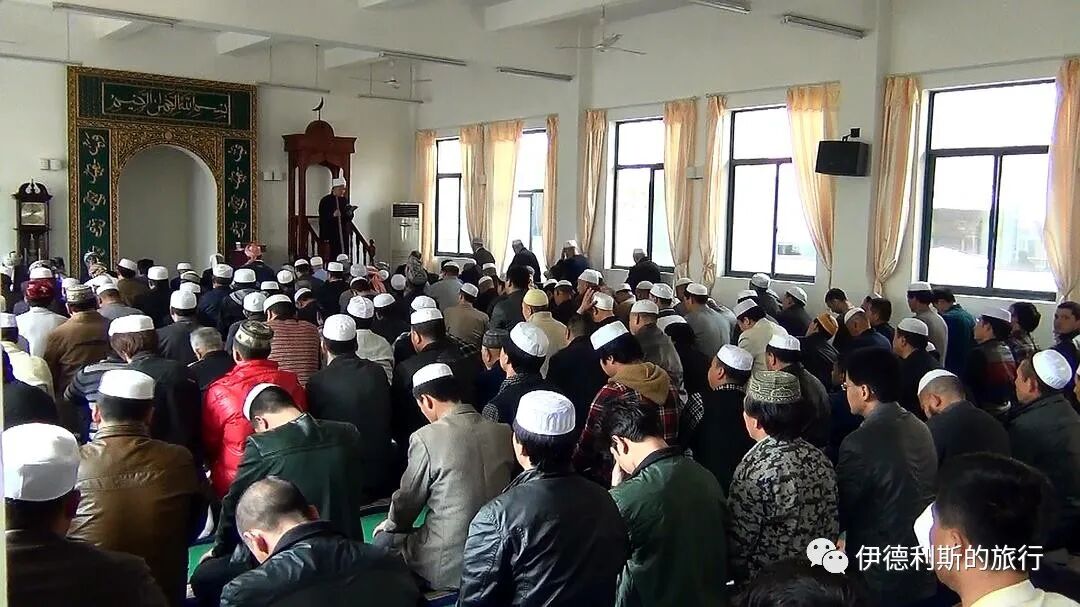
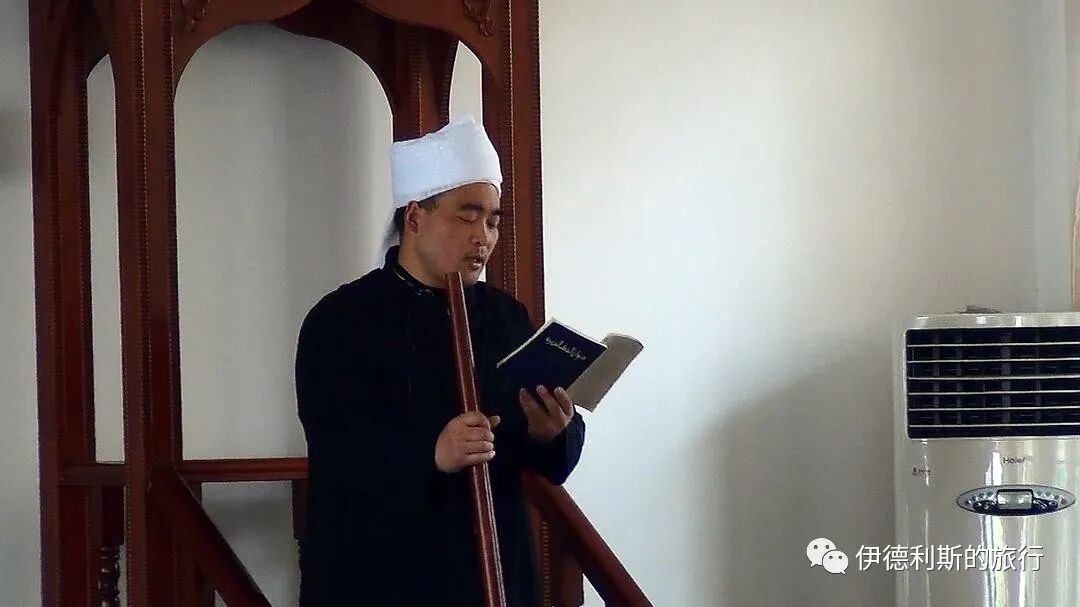
The study group for middle-aged and elderly people at that time.
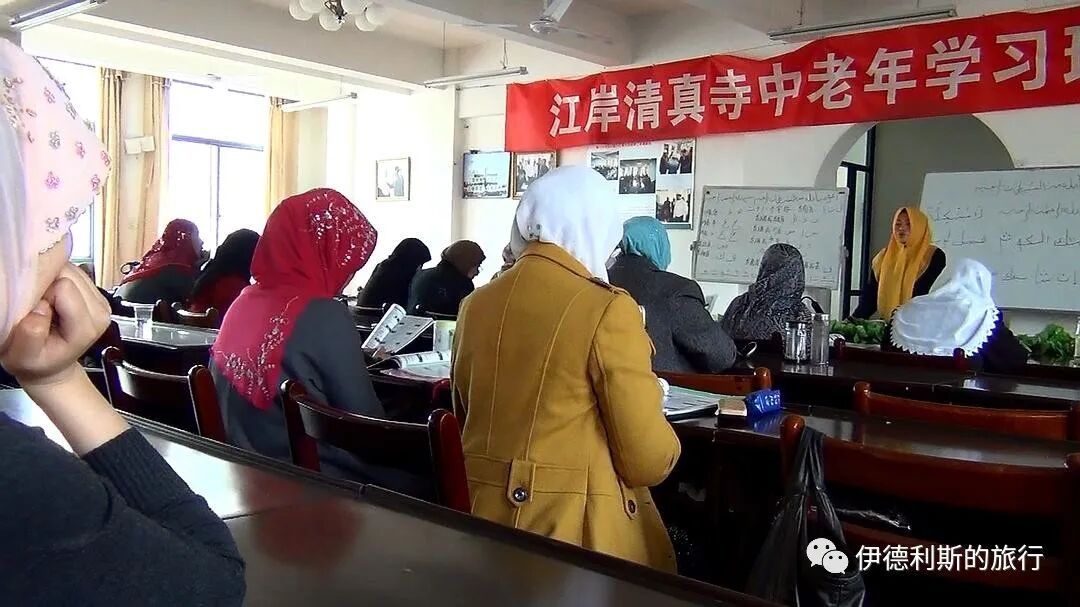
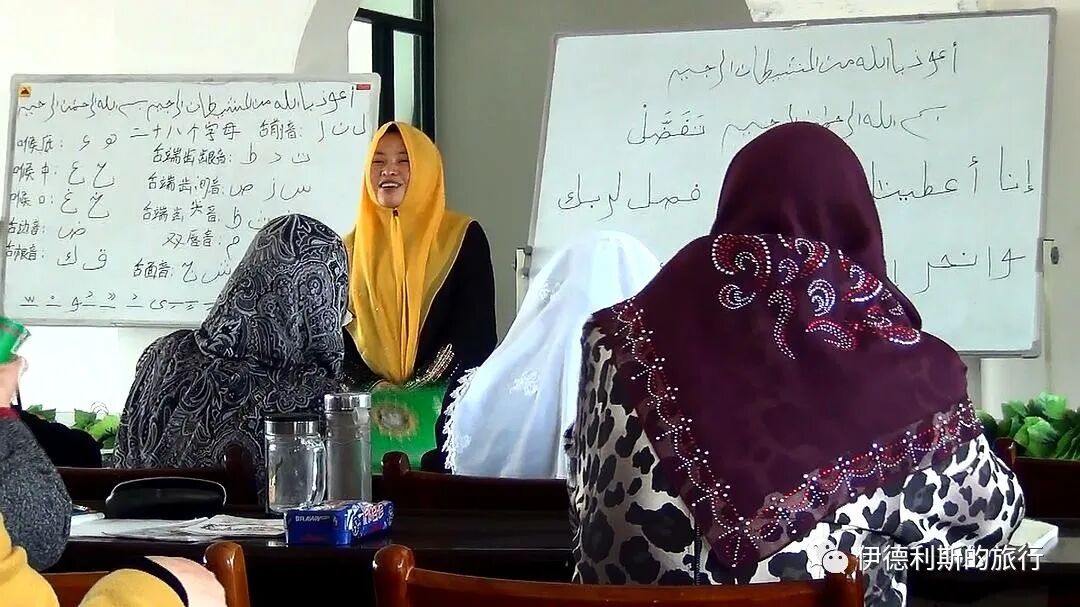
Jiang'an Station stopped operating in 2010, and demolition of the surrounding area began immediately. By 2014, the Muslim community around Jiang'an Mosque had been completely razed to the ground and now only exists in history.
In 2015, the community around the mosque was completely razed to the ground.
The former Hui Muslim grocery store has been closed for many years and is now razed to the ground.
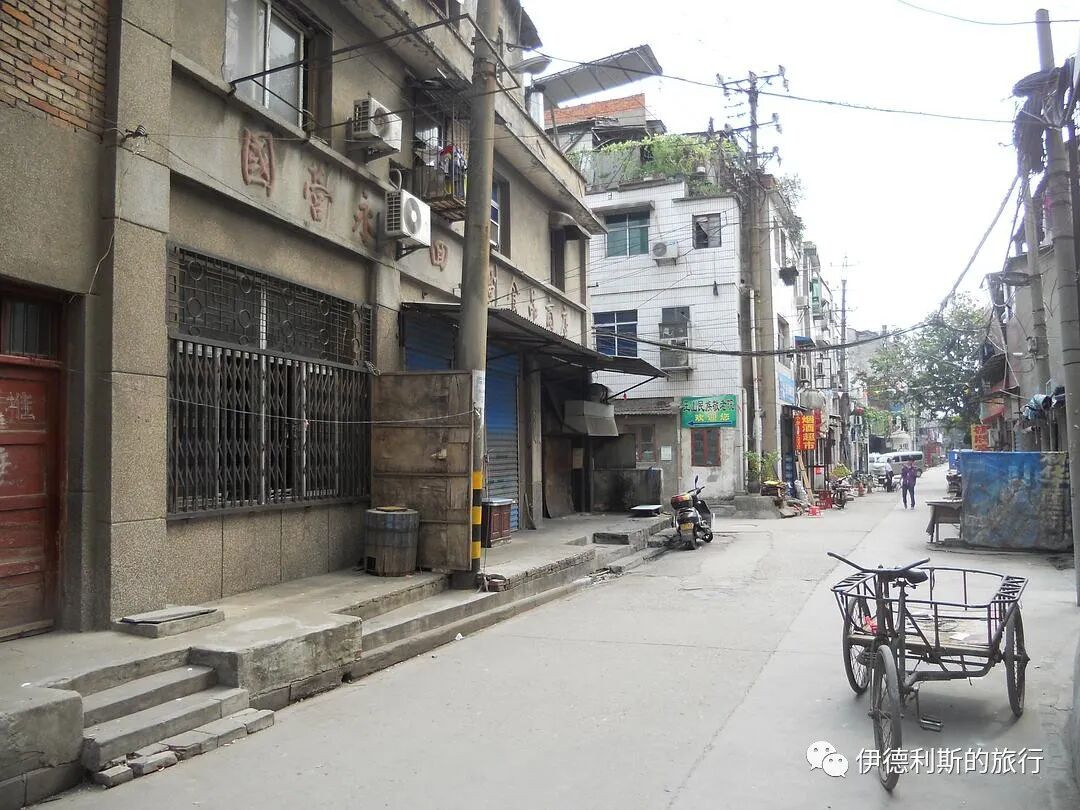
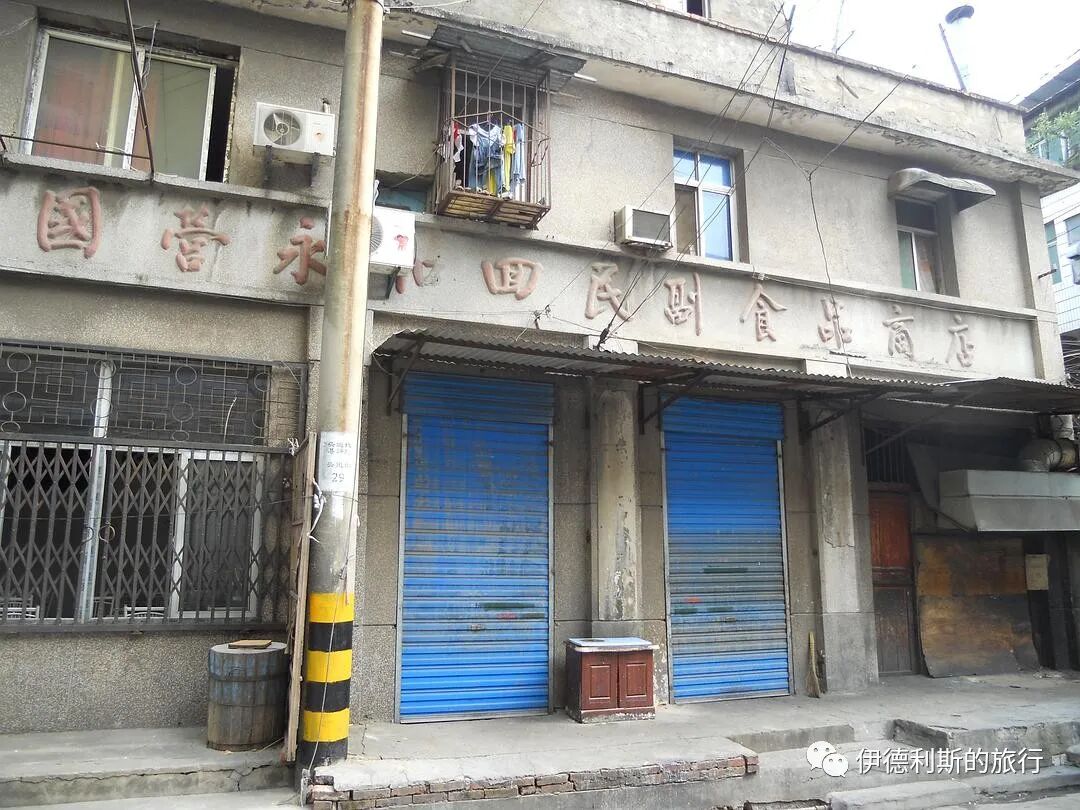
The Jiang'an Station sign before it was demolished.
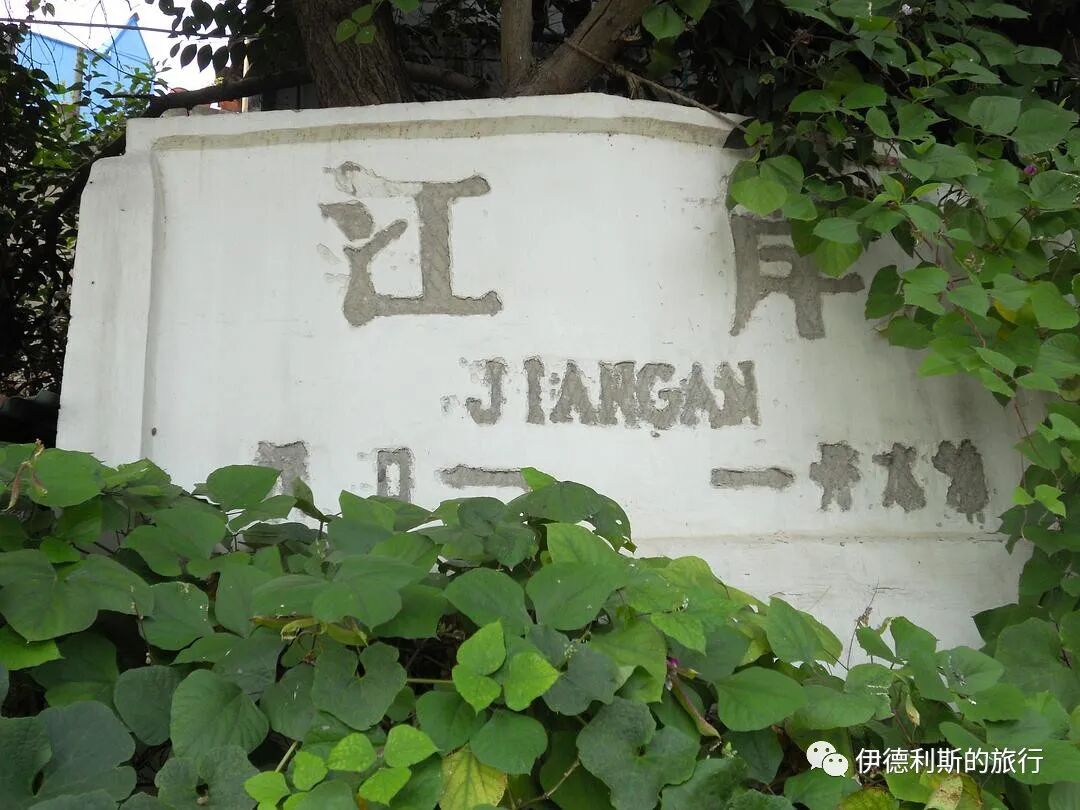
The abandoned station.
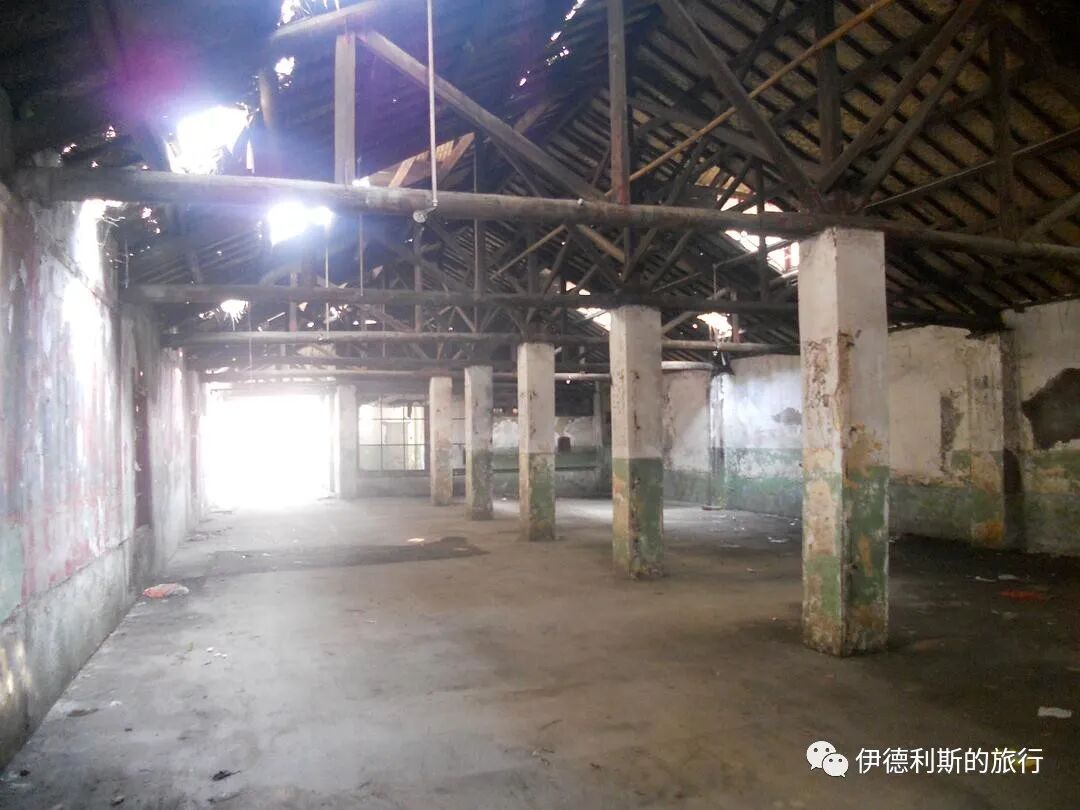
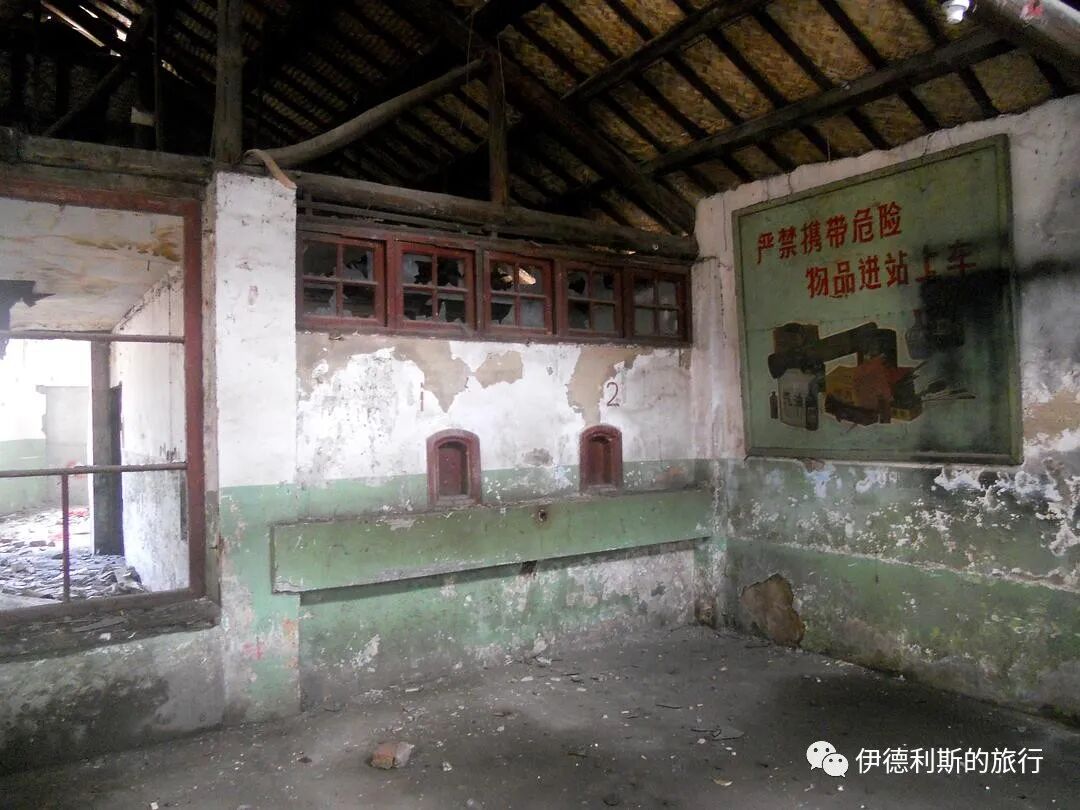
The building next to the station was about to be demolished when I photographed it in 2013, and it is now razed to the ground.
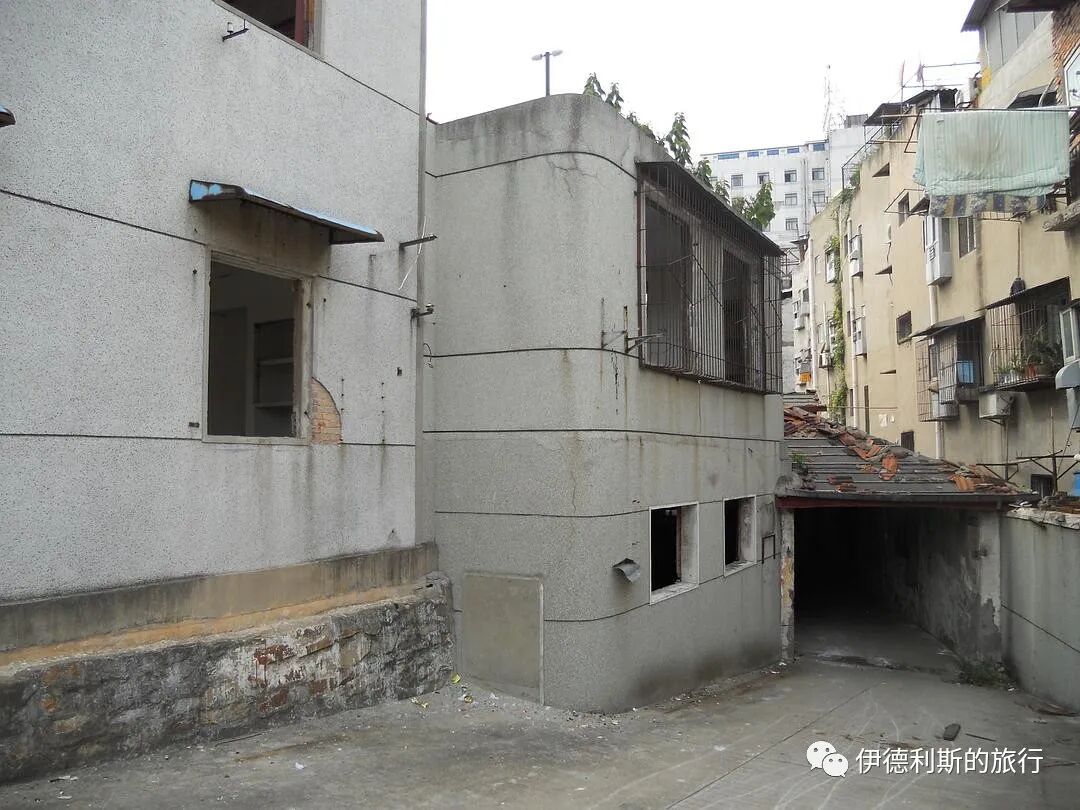
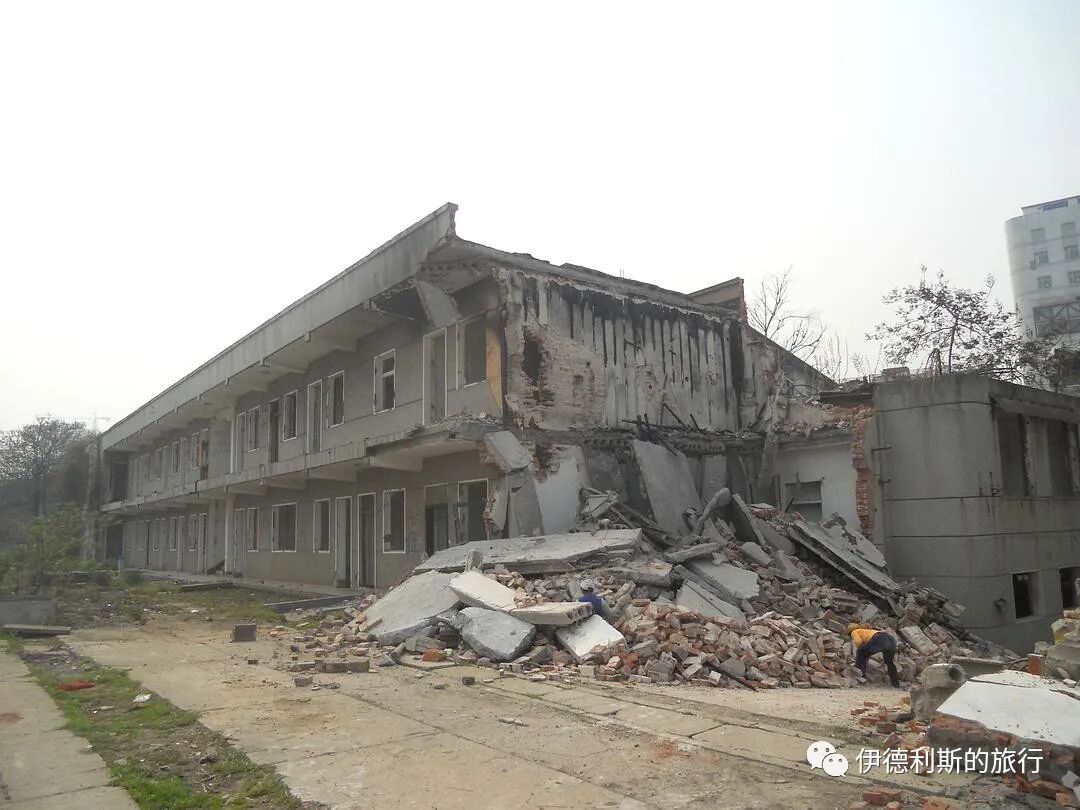
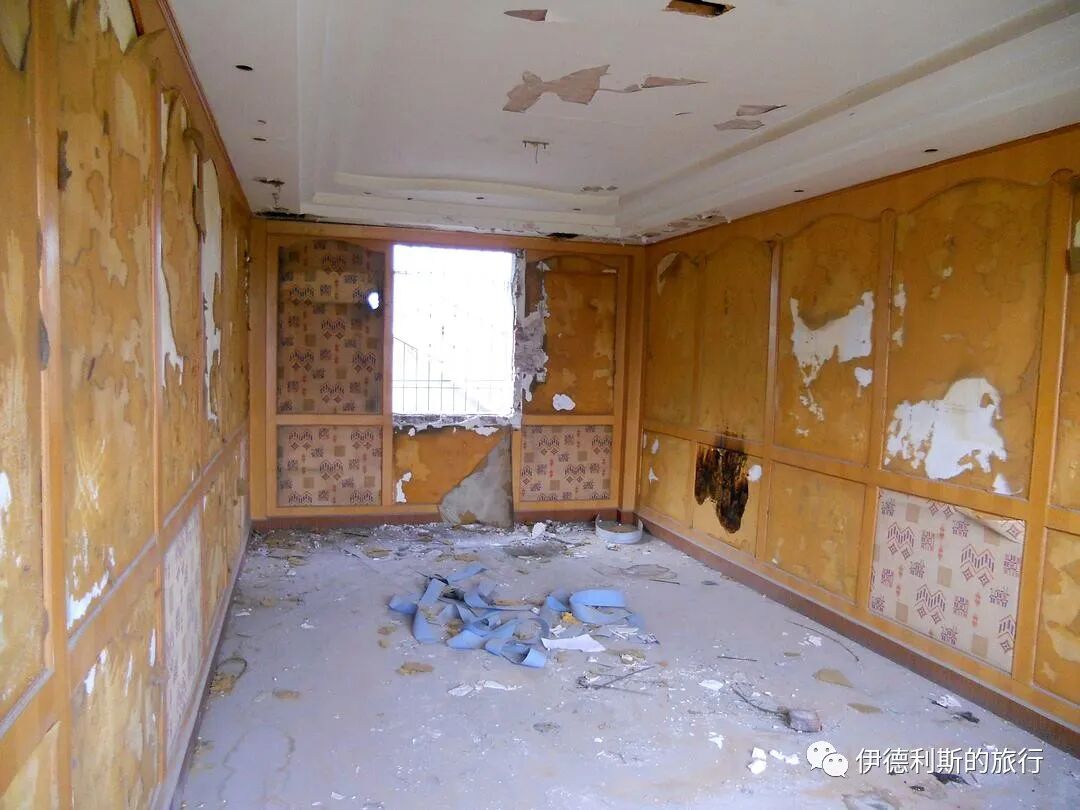
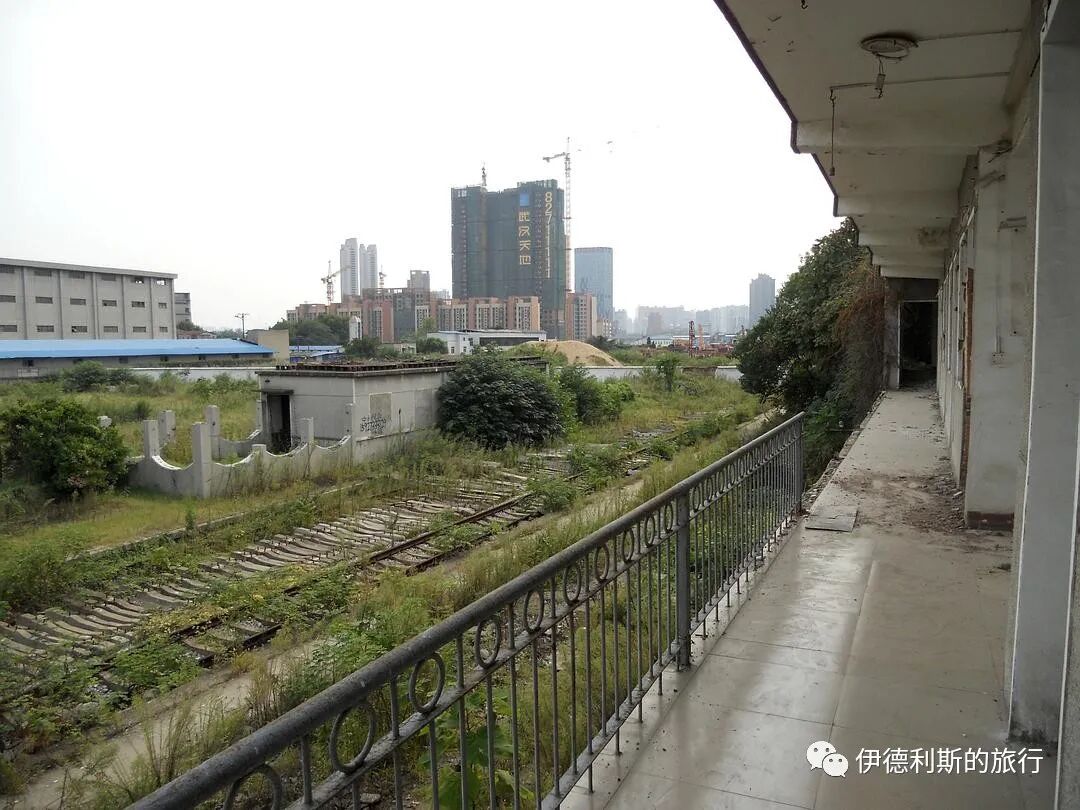
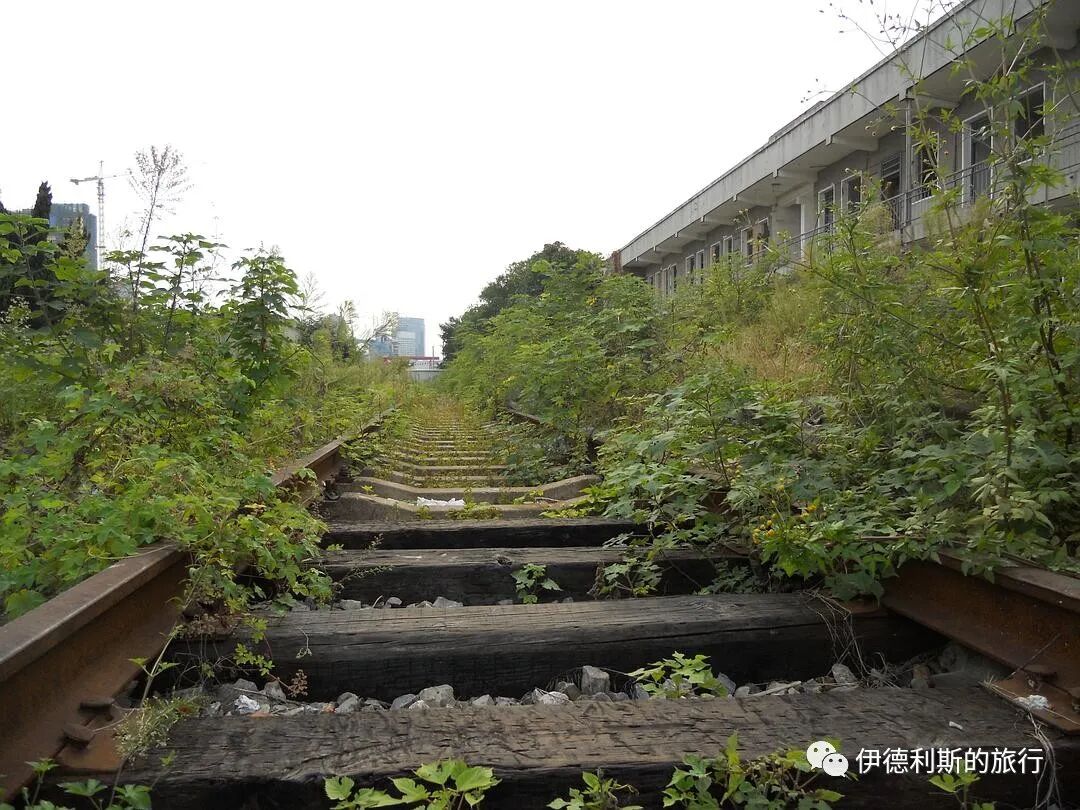
An even older century-old station.
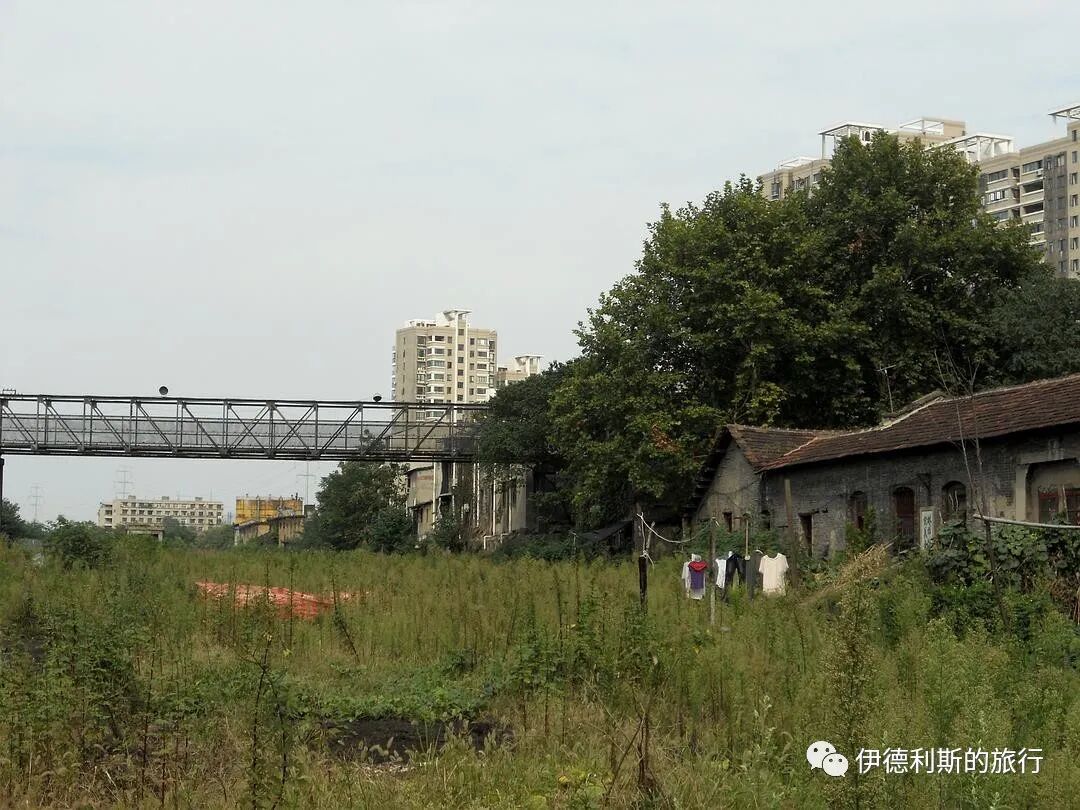
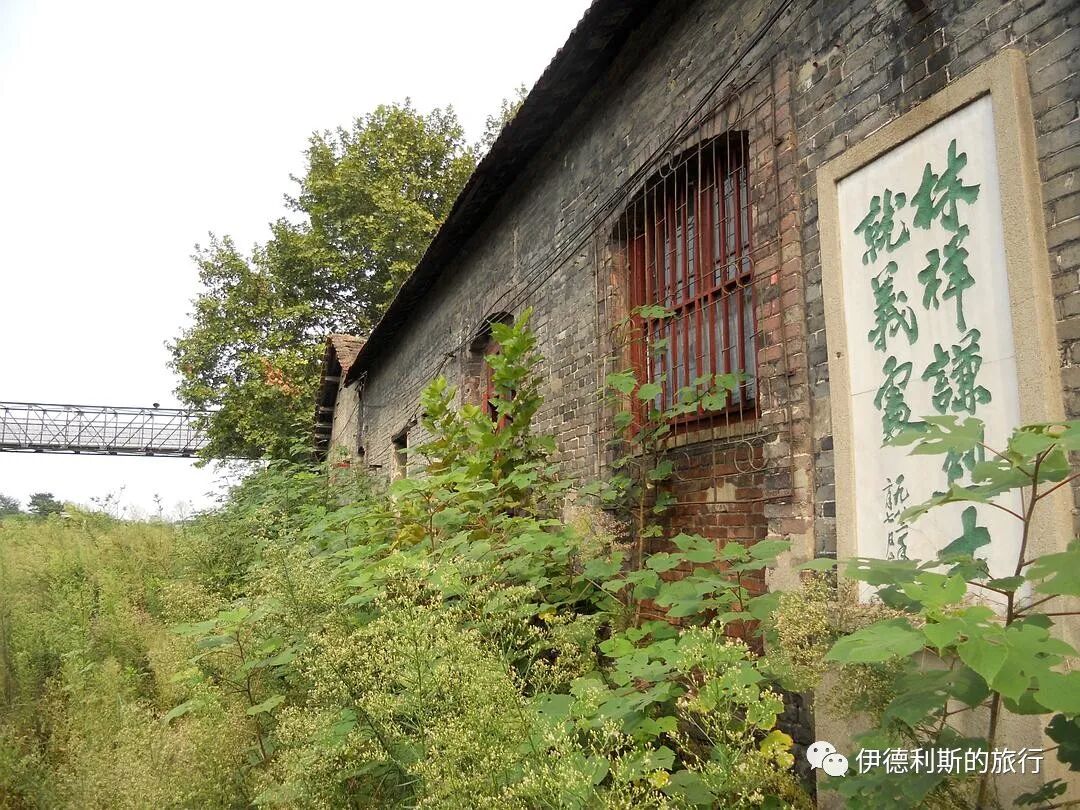
A once-luxurious hotel.
A halal restaurant (qingzhen guanzi).
Although the traditional Hui Muslim community in Jiang'an was razed to the ground, Jiang'an Hui Muslims still run halal restaurants in Wuhan.
Fatumei Restaurant on Huangxing Road is a traditional local halal restaurant in Hankou. Owner Li's family are third-generation Hankou Hui Muslims who settled near the Dazhi Railway Station in Hankou during the Republic of China era.
We ordered the most classic Hankou Hui Muslim dish, beef meatball soup (hui niurou yuanzi), as well as sticky rice fish (ciba yu) and fried lotus root sandwiches (zha oujia). Although they are only separated by a river, Hankou Hui Muslims and Wuchang Hui Muslims have different food cultures. Hui Muslims have lived in Wuchang for hundreds of years. While they focus on beef dishes, their diet has also been shaped by local Wuhan influences. Hui Muslims in Hankou mostly moved here from Henan over the last hundred years. Their food culture carries a Central Plains style, which is best seen when comparing the beef meatballs (niurou yuanzi) from both places. Hankou Hui Muslims make their beef meatballs (niurou yuanzi) with pure beef, and their method of stewing the meatballs is also more typical of the Central Plains. When we were eating, they were busy making boxed meals for community workers. The owner said 2020 was a very hard year. After reopening in May, business was very slow. There were few tourists, local Hui Muslims are not used to eating out, their shop is too small for banquets, and the university was locked down so students could not come out to eat. Luckily, their landlord waived three months of rent, and community members helped by often buying boxed meals from them, so they barely managed to keep going.
Pang's Hot Dry Noodles (Pangji reganmian)
We ate hot dry noodles (reganmian), freshly fried savory donuts (mianwo), and egg fermented rice soup (jidan laozao) at Pang's Hot Dry Noodles on Yiyuan Road in Hankou. Pang's is the most famous halal hot dry noodle shop in Wuhan. It has been open for 46 years and is a must-visit spot for Muslims traveling in Wuhan. When I went in 2020, the owner said they would close in 2021 because the rent was high and business was bad that year, so they could no longer keep the business running. I heard a while ago that they reopened under the new name Pang Meiling Hot Dry Noodles.
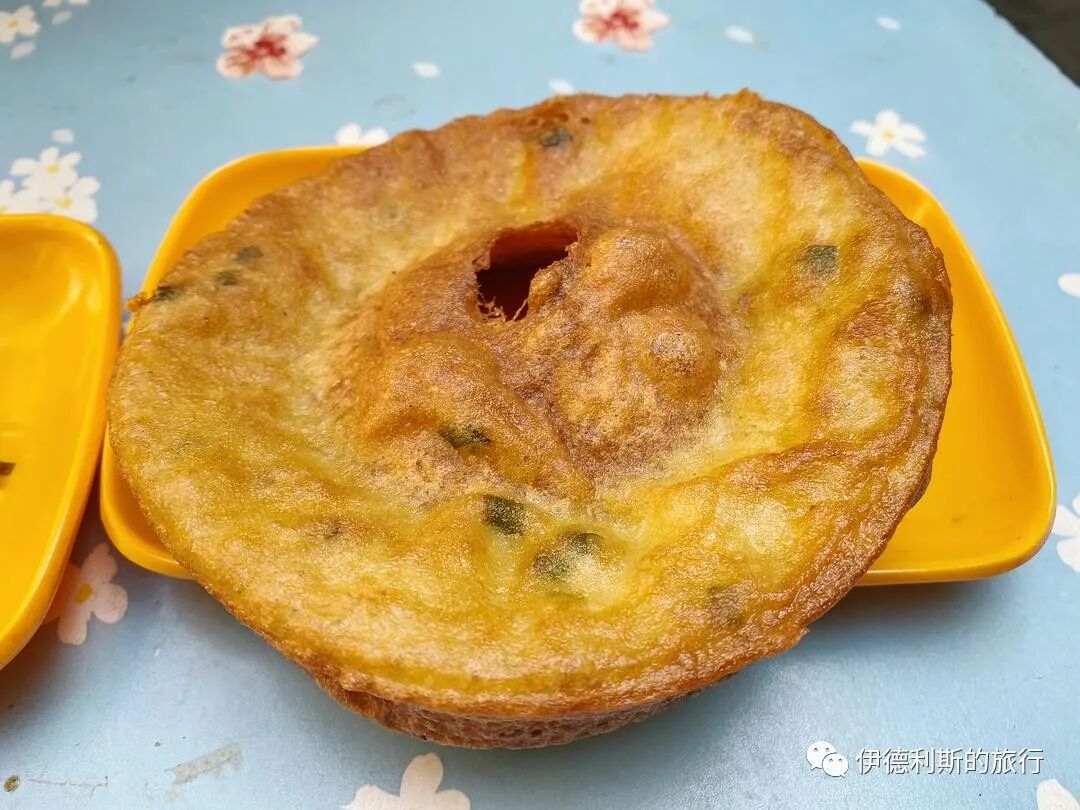
Freshly made savory donuts (mianwo)
They also sell braised dried tofu (lu dougan), but it was super spicy so we did not dare to eat it.
In 2017, I ate hot dry noodles (reganmian), small knife fish (xiaodaoyu), and beef tripe rice noodles (niudufen) at the Dongting Street shop.
Halal Travel Guide: Wuchang Hui Muslim Community — Qiyi Street, Mosques and History (Part 1)
Articles • ali2007fr posted the article • 0 comments • 144 views • 2026-05-18 02:26
Summary: Wuchang Hui Muslim Community — Qiyi Street, Mosques and History is presented here as a firsthand travel account in clear English, beginning with this scene: I went to school in Wuhan from 2010 to 2014 and often visited the Hui Muslim community on Qiyi Street in Wuchang, which left a deep impression on me. The account keeps its focus on Wuchang Muslims, Qiyi Street, Hubei Muslims while preserving the names, places, food, and historical details from the Chinese source.
I went to school in Wuhan from 2010 to 2014 and often visited the Hui Muslim community on Qiyi Street in Wuchang, which left a deep impression on me. After graduation, I returned to Wuhan a few times and took some photos of Qiyi Street. It was heartbreaking to return to Wuhan in September 2020 and find that Qiyi Street had been demolished. The historical fabric and cultural heritage that had existed for hundreds of years since the Ming Dynasty have vanished, and many things may never be seen again. Along with the traditional community, the traditional halal restaurants have also disappeared, and it may be hard to find the steamed dumplings (shaomei) and beef noodles made by Wuchang Hui Muslims from now on. This is the third century-old Hui Muslim community in Hubei I have seen disappear in the last decade, following the ones in Fancheng and on Yingxi Street in Shashi.
I want to take this opportunity to talk in detail about the 600-year history of the Wuchang Hui Muslim community from its birth to its end.
The formation of the Wuchang Hui Muslim community
First, let me introduce Wuchang City: the Wuchang Prefecture city of the Ming and Qing dynasties was expanded in 1371 (the fourth year of the Hongwu reign of the Ming Dynasty) from the Ezhou city of the Tang and Song dynasties. The prefecture city was divided into two by Snake Hill (Sheshan), with the area south of the hill called 'in front of the mountain' and the area to the north called 'behind the mountain'. The area behind the mountain inherited the layout of the Tang and Song Ezhou city, with dense streets and alleys. The western part had many government offices and was the political center, while the eastern part became a cultural center after churches and mission schools were built there starting in 1862 (the first year of the Tongzhi reign). The area in front of the mountain had many lakes and water systems, with only one main road called Long Street (now Jiefang Road). The Ming Prince Chu's Mansion was built in the north, which became a residential area after the Qing Dynasty. Except for the Huguang Governor's Office (now the Wuchang Shipyard) and the main street of Bao'an Gate, the southern part was sparsely populated. Outside Pinghu Gate and Wenchang Gate in the west of the city, the area had been a commercial center since the Tang and Song dynasties because it was near the Yangtze River. After the Self-Strengthening Movement, Zhang Zhidong built four textile bureaus there, making it an industrial center. Outside the three southern city gates—Zhonghe Gate, Wangshan Gate, and Bao'an Gate—the area was also a commercial center because it was near the Xunsi River.
The first Hui Muslims to settle in Wuchang Prefecture were the Ding, Wang, and Huaiyuan Tang Ma families. According to family records, the second-generation ancestor of the Ding family, Ding Baolu, came to Chu in 1380 (the 13th year of the Hongwu reign) to protect the fiefdom, settled in Wuchang, and lived at Changhong Bridge outside Zhonghe Gate. The first ancestor of the Wang family to move there, Wang Wu, was transferred to Wuchang in 1381 (the 14th year of the Hongwu reign) to serve as a commander of the prefecture's central battalion and handle military affairs. He settled in Wuchang and likely lived near the Prince Chu's Mansion in front of the mountain. The third-generation ancestor of the Huaiyuan Tang Ma family, Ma Jun, was transferred to Wuchang in 1413 (the sixth year of the Xuande reign) as a commander of the Wuchang Left Guard and settled in Wuchang. The famous Islamic scholar Ma Quan came from the Huaiyuan Tang Ma family, and the graves of their third to tenth-generation ancestors are all at Tianpingjia near Changhong Bridge in the south of Wuchang.
From this, we know that the area around Changhong Bridge outside Zhonghe Gate in the south of Wuchang was likely the earliest Hui Muslim settlement, which later became the Qiyi Street Hui Muslim community.
Yuanmenkou Mosque and the Hundred-Character Eulogy Stele
The first mosque in Wuchang with a recorded history was the Qingjing Mosque, built in the early Ming Dynasty. Because it was located at the East Yuanmenkou of the Huguang Governor's Office inside Wangshan Gate in the south of Wuchang, it was later called the Yuanmenkou Mosque, and because it was south of Snake Hill, it was commonly known as the 'Mountain Front Mosque'.
According to the Kangxi edition of the 'Huguang Wuchang Prefecture Gazetteer', the Yuanmenkou Mosque once held the famous 'Imperial Hundred-Character Eulogy of the Most Holy' stele by the Ming Taizu Emperor. The courtyard of the current Qiyi Street Mosque holds three Hundred-Character Eulogy steles. Besides one carved in the Qing Dynasty, the other two broken steles are very likely the originals from the Yuanmenkou Mosque.
The Hundred-Word Eulogy (Baizizan) stele inside the Qiyi Street Mosque in 2017.
The Hundred-Word Eulogy stele is an important document in Chinese Islam and is very widely known. Legend says it was written by the Ming Dynasty founder, Emperor Zhu Yuanzhang, in 1368 (the first year of the Hongwu era). Since the Ming and Qing dynasties, it has been copied and carved onto steles and plaques many times. In his work on the variations of the Emperor's Hundred-Word Eulogy, Professor Hu Yubing of Ningxia University divides the surviving documents into two systems: the 1375 (eighth year of Hongwu) stele at the Qiyi Street Mosque in Wuchang and the 1398 (thirty-first year of Hongwu) stele at the Jingjue Mosque in Nanjing. Although the Jingjue Mosque stele is more famous and influential, Professor Hu Yubing believes the Qiyi Street Mosque stele is closer to the original version, and the Jingjue Mosque version is a rewrite of the one at Qiyi Street.
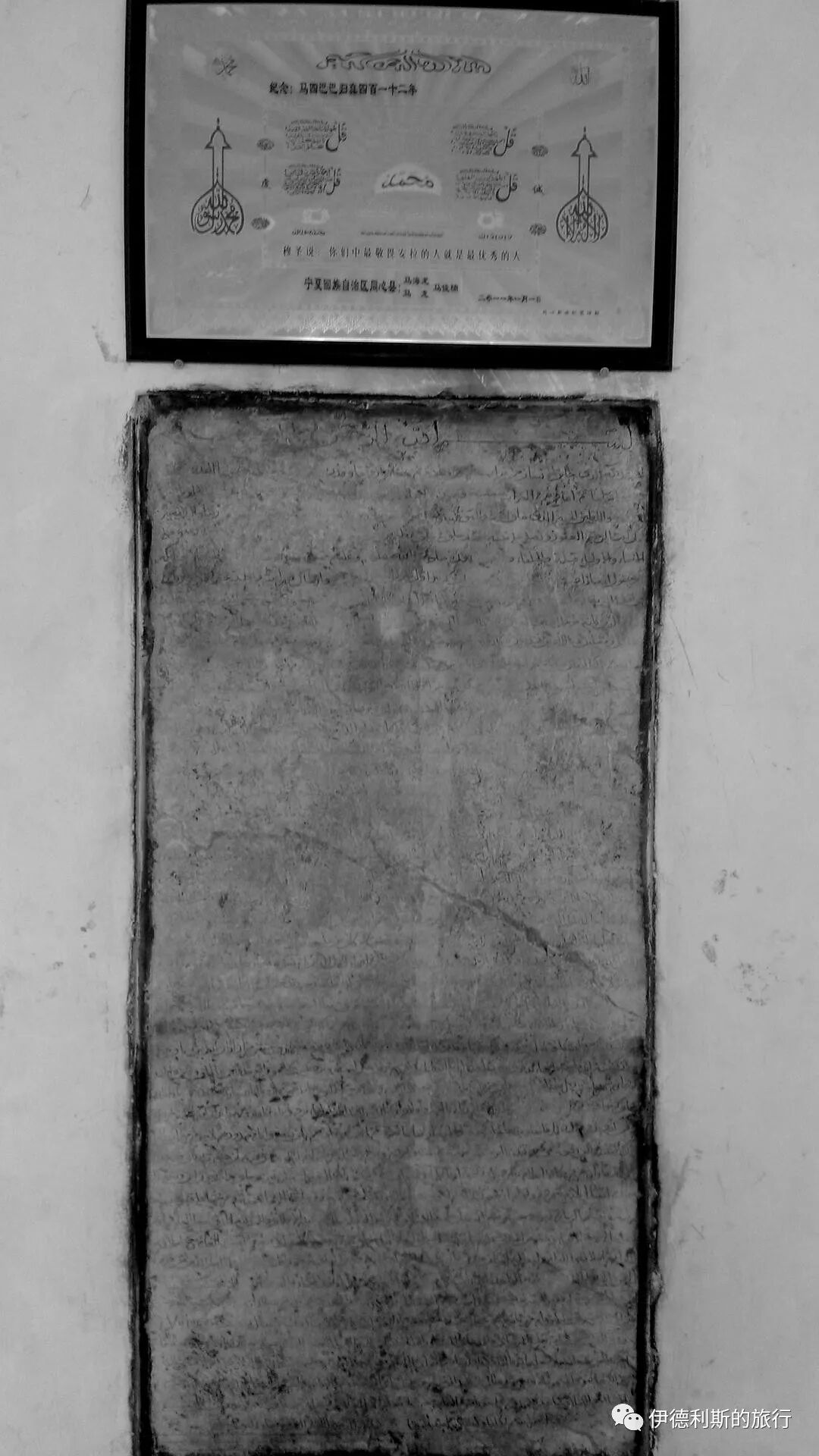
One of the three Hundred-Word Eulogy steles at the Qiyi Street Mosque is the best preserved. Because it includes the mosque name and posthumous title of the Ming founder, and the back features an imperial edict from the thirty-third year of the Kangxi era signed by the Wuchang Shanqian Mosque in the twentieth year of the Guangxu era (1894), we can conclude it was carved during the Qing Dynasty. According to Professor Hu Yubing's article, the text is as follows:
The Hundred-Word Holy Eulogy for the Hui Muslims, written by the Ming Emperor.
The origin of the universe, named by heaven, the leader who spread the faith in the Western Regions, teaching all living things, the great sage of supreme virtue, kind and righteous, spreading the heavenly scriptures, leader of all saints, assisting the destiny of heaven, protecting the king.
Just and selfless, the true lord of the white emperor, saving all those who are lost, praying to heaven for five dynasties, silently blessing.
Peace, the founder who explains the faith, bright and blessed, saving from suffering and hardship, transcending the underworld, the souls of the dead.
Free from sin, subduing evil and returning to the right path, the pure and simple elder, the Prophet Muhammad.
The Eulogy says:
The essence of the universe is pure, the holy wisdom is born, the way is passed down for ten thousand generations, teaching the true scriptures.
The twentieth day of the fifth month in the eighth year of the Hongwu era of the Great Ming Dynasty.
The Hundred-Word Eulogy re-carved in the Qing Dynasty.
The stele inscription from the Guangxu era on the back.
Between 1934 and 1935, the famous missionary Claude L. Pickens took a photo of this Hundred-Word Eulogy stele standing in the Qiyi Street Mosque. It is now kept in the Harvard-Yenching Library.
The contents of the other two fragments of the Hundred-Word Eulogy stele match the main text of the Qing Dynasty stele.
The Arabic inscription on the back of the second Hundred-Word Eulogy stele fragment.
The Gongbei of Ma Si Baba.
The most famous imam of the Yuanmenkou Mosque was the Islamic scholar Ma Quan. Ma Chao's article on the life of the master Ma Quan and the historical records of his Gongbei provides many details about his life.
Ma Quan, courtesy name Minglong, was born in 1597 (the twenty-fourth year of the Wanli era) and died in 1679 (the seventeenth year of the Kangxi era) at the age of 82. Because he was the fourth child in his family, everyone respectfully called him Ma Si Baba.
Ma Quan belongs to the Ma family of the Huaiyuan Hall. According to the Ma Family Genealogy (Huaiyuan Hall), the family's ancestral home was Xuyi County, Fengyang Prefecture. Their first ancestor, Ma Zhen, served under Zhu Yuanzhang in many battles and became a general flag officer of the Anyang Guard. The second ancestor, Ma Wang, served as a commander of the Taining Guard. The third ancestor, Ma Jun, was transferred to be a commander of the Wuchang Left Guard in the Huguang Regional Military Commission in 1432 (the sixth year of the Xuande reign of the Ming Dynasty), and the family settled in Wuchang Prefecture from then on.
Ma Quan studied Islamic and Chinese classics with his father, Ma Qiang, from a young age. At that time, Feng Bo'an, a second-generation student of Hu Dengzhou (the founder of the Chinese mosque education system) and the nephew of Hu's student Mr. Feng Er, was teaching in Tongxin, Ningxia. Ma Quan went there to study for over three years. On his way home, he passed through Feng Bo'an's hometown of Xingyuantou in Xianning, Shaanxi. He met Feng Bo'an's cousin, Feng Shaoquan, who was the son of Mr. Feng Er, and studied with him for another three years before returning to Wuchang. After returning home, Ma Quan studied hard and with an open mind, eventually becoming a master of Islamic scripture.
While serving as the imam at the Yuanmenkou Mosque, Ma Quan proposed the idea of cultivating one's nature. Cultivating one's nature is the way to self-improvement and social harmony. He used Confucian ideas to explain Islamic teachings, which was part of the historical trend of interpreting Islam through Confucianism at that time. At the same time, Ma Quan started the Islamic mosque education system in Hubei. He opened a school to teach the scriptures, and many students came to learn from him. In the early years of the Kangxi reign, Ma Quan accepted an invitation from Ma Xiong, the regional commander of Liuzhou, to serve as the imam of the mosque in Liuzhou. After leaving Liuzhou and returning home, Ma Quan used money donated by Ma Xiong to buy land for the school at the foot of Wohu Mountain, ten miles east of Wuchang. After he passed away, he was buried there.
After Ma Quan passed away, the Ma family from Huaiyuan Hall and Hui Muslims from the Ma family in Sichuan moved to settle near his grave, gradually forming the village of Majiazhuang. According to the Ma Family Genealogy (Huaiyuan Hall), a mosque had already been built in Majiazhuang by the Qianlong or Jiaqing reign periods at the latest.
Between 1934 and 1935, Bi Jingshi took photos of the Majiazhuang Mosque and Ma Quan's grave as they were then. These are now kept at the Harvard-Yenching Library.
The Gongbei of Ma Si Baba.
Majiazhuang Mosque.
The imam at the entrance of Majiazhuang Mosque.
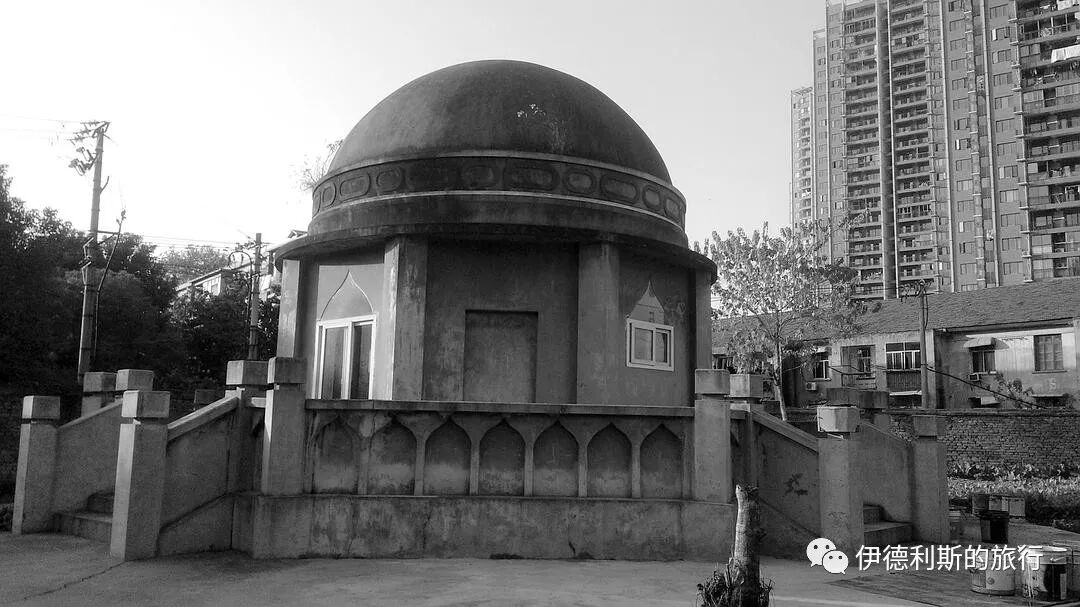
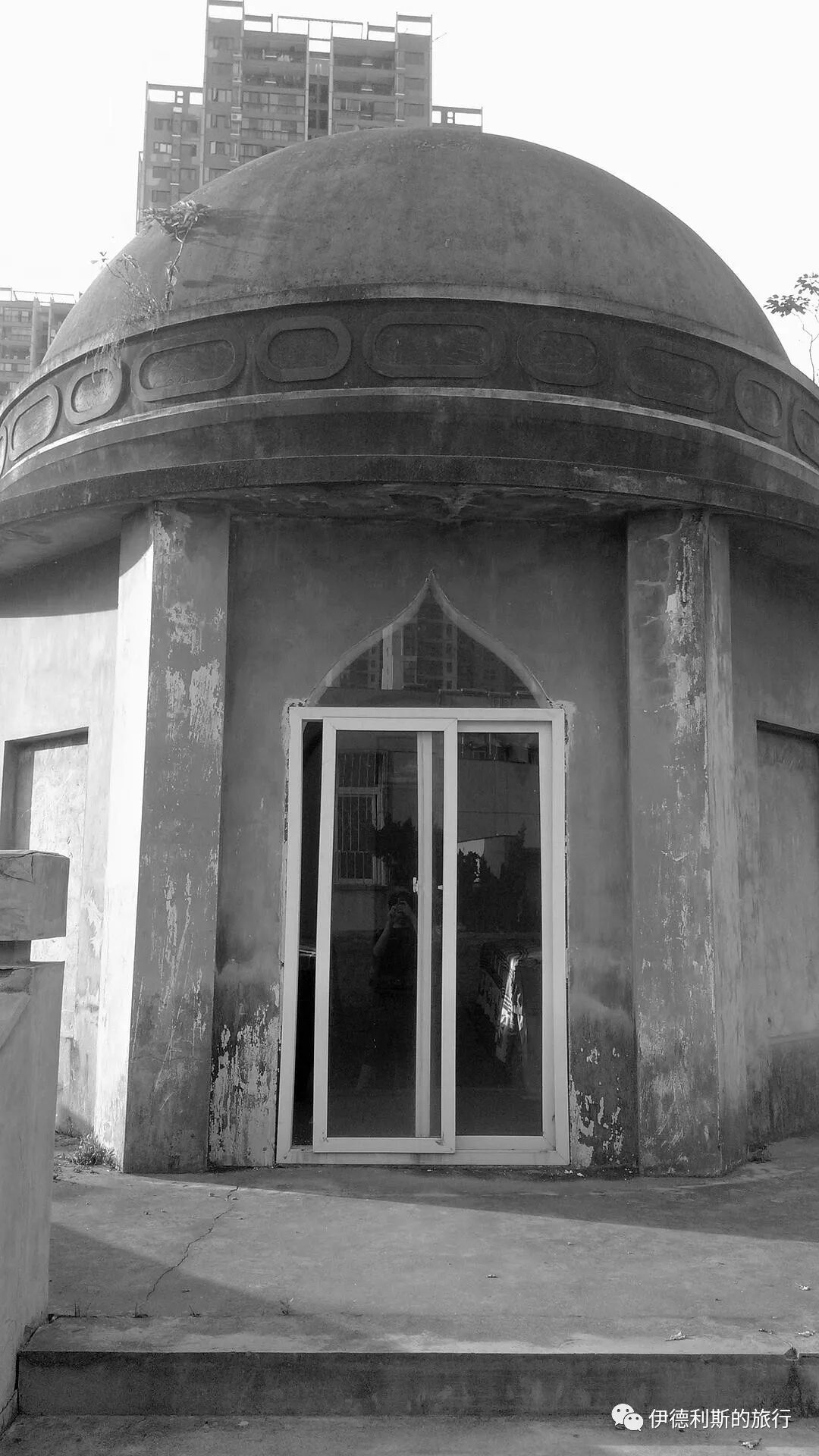
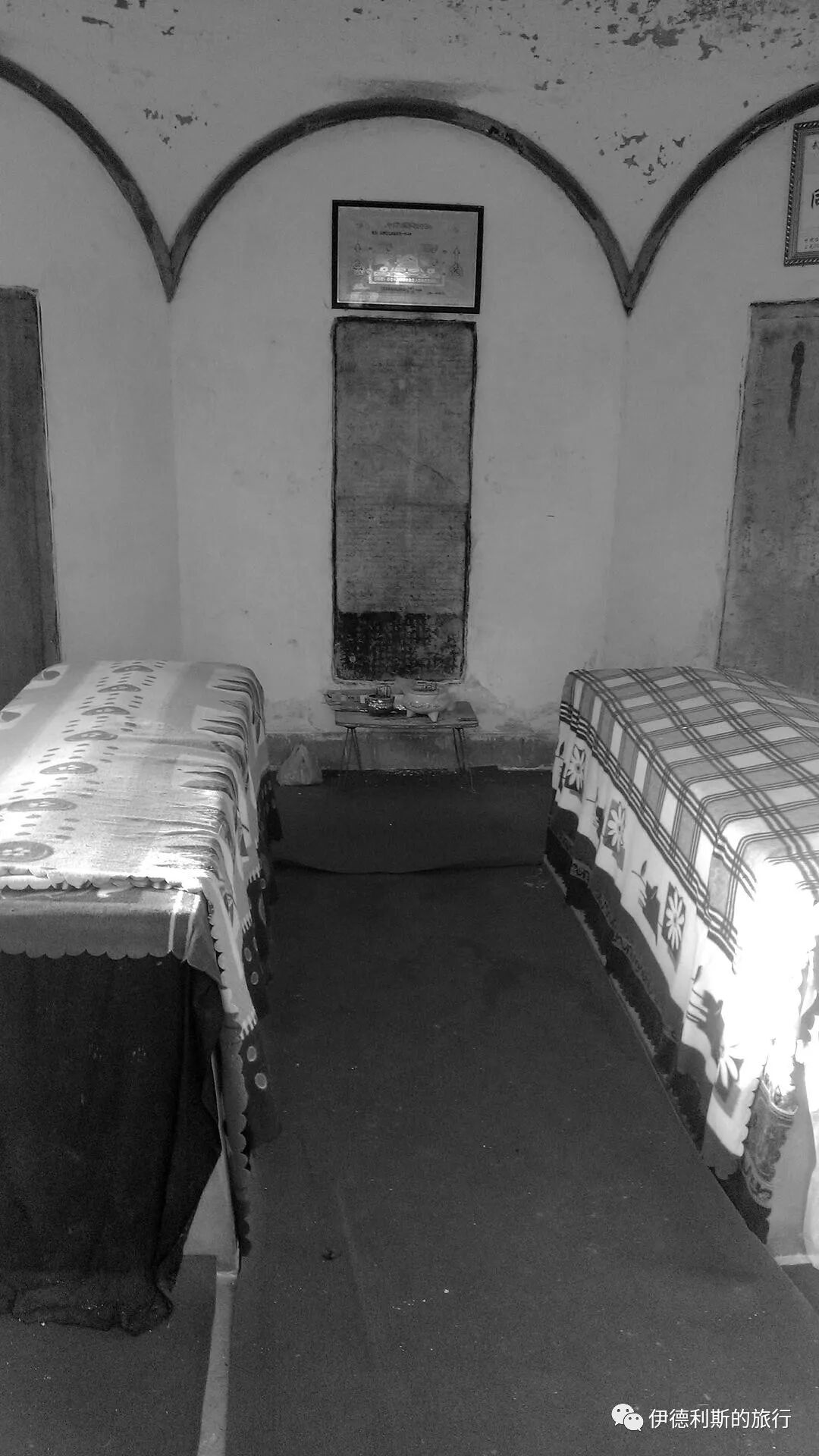
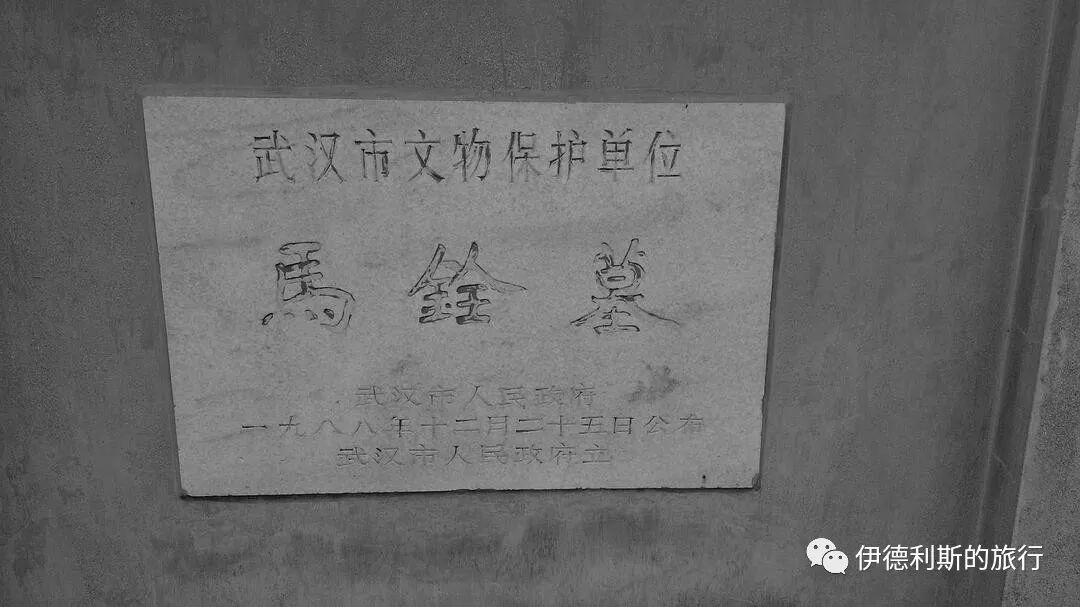
After the Battle of Wuhan in 1938, the mosque and Ma Quan's grave were damaged. In 1953, a brick and concrete pavilion was built over Ma Quan's grave on the original site, containing the coffins of Ma Quan and his wife. Directly in front inside the pavilion is a stone tablet with Arabic script. Below it is the Inscription on the Relocation of the Grand Master's Grave, written by Ma Quan in 1673 (the twelfth year of the Kangxi reign) for his teacher Hu Dengzhou, whose grave in Weicheng, Shaanxi, had been washed away by the flooding of the Wei River. To the front left inside the pavilion is the Huabiao Tablet, an inscription from 1684 (the twenty-second year of the Kangxi reign) by Ma Ziyun, the regional commander of northern Sichuan, praising Ma Quan. To the front right is the Record of Mosque School Land, an inscription from the same year by Ma Ziyun documenting the school land Ma Quan donated in Majiazhuang. On the left and right sides are the upper and lower parts of the Tablet of Rules and Donors for the Wuchang Majiazhuang School Land, which records the names of those who donated to the school land Ma Quan raised funds for during the Kangxi reign.
Below is a photo I took when I visited the Ma Si Baba gongbei in 2013.
Jinlong Lane Mosque.
After the Qing Dynasty, people had long wanted to move the Yuanmenkou Mosque because the nearby government office complained about the noise of the mosque's drums and the running of horses, while the office also felt the mosque building was too tall. It was not until 1751 (the sixteenth year of the Qianlong reign), when Aligun became the Viceroy of Liangguang, that he finally ordered funds to be allocated to buy land next to Jinlong Lane inside Wangshan Gate, east of the original Yuanmenkou Mosque, to build the Jinlong Lane Mosque in the original style. It is still commonly known as the Shanqian Mosque.
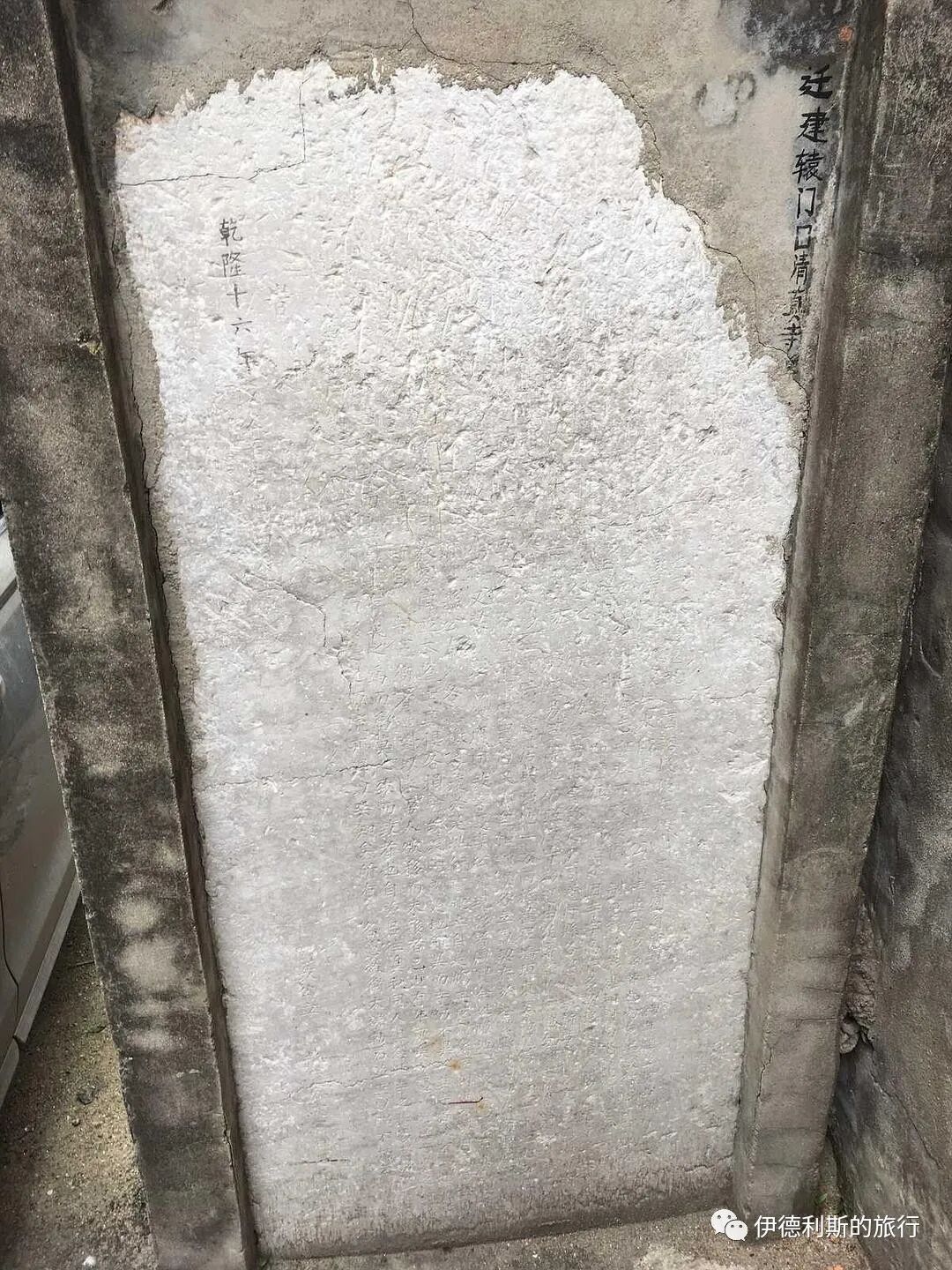
The Qiyi Street Mosque now houses the 1751 (16th year of the Qianlong reign) stele titled 'Stele of the Relocation of the Yuanmenkou Mosque,' which tells the full story of why the mosque was moved.
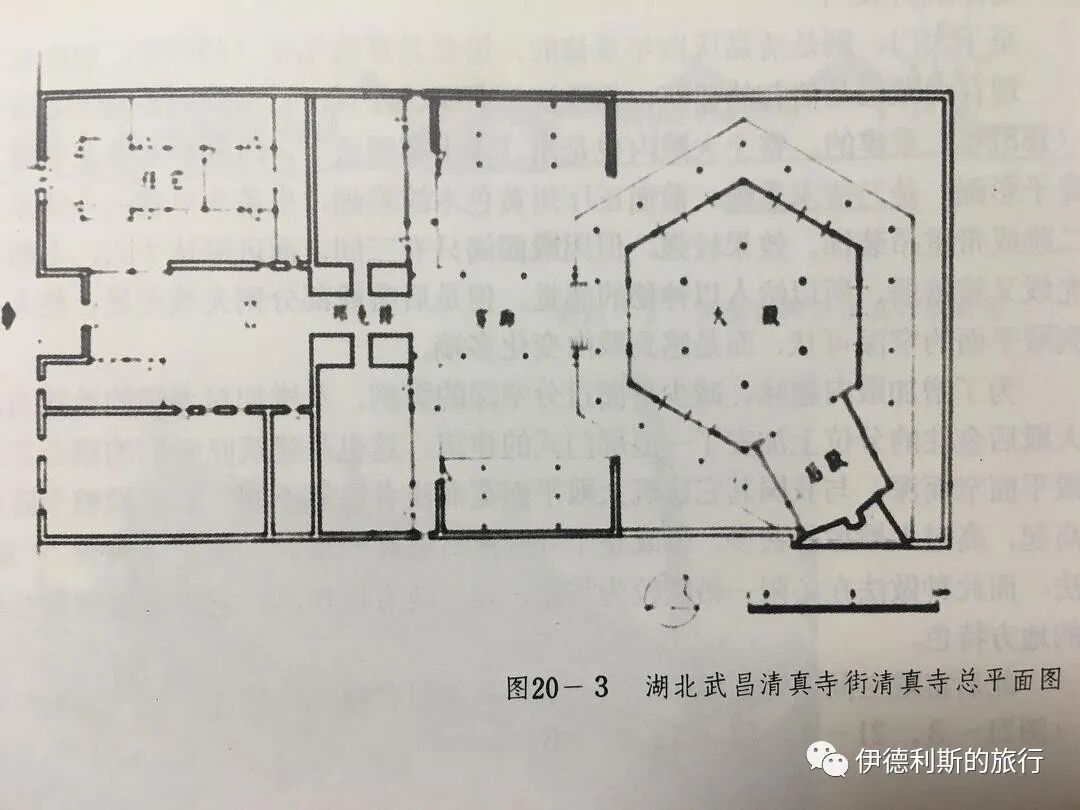
The most unique feature of the Jinlong Lane Mosque is its hexagonal main prayer hall with surrounding corridors and double eaves. Many mosques in China use hexagonal minarets, but the only two hexagonal main prayer halls discovered so far are in Wuchang's Jinlong Lane and Xiangyang. The reason for using a hexagonal shape is that the mosque's orientation was not perfectly aligned, but the mihrab must face west. A hexagonal shape allowed the main entrance of the prayer hall to sit exactly on the central axis of the courtyard.
The side lecture halls and the inverted entrance hall of the Jinlong Lane Mosque all feature front-facing corridors, creating a courtyard-style cloister. This was a common technique in the south to handle heavy rainfall.
The mosque was rebuilt in 1862 (the first year of the Tongzhi reign). A plaque with gold characters on a black background reading 'Ancient Mosque' (Qingzhen Gusi) hung high above the main gate, and a plaque reading 'Ancient Faith of Arabia' (Tianfang Gujiao) hung inside the hall. In front of the mosque stood a stele from 1894 (the 20th year of the Guangxu reign) inscribed with Emperor Kangxi's praise of Islam. During the 1938 Battle of Wuhan, the mosque was bombed by the Japanese army. After 1947, the building was rented to a school for children of the war effort (later renamed the Second Middle School). During the 1953 Wuhan floods, many victims moved to the open space in front of the mosque, forming a 'Muslim village.' In 1958, all mosque property was handed over to the housing department for management. After 1966, the Wuchang District Real Estate Company demolished the century-old mosque and built a three-story brick-concrete residential building on the site. It was returned to the Wuhan Islamic Association in 1985.
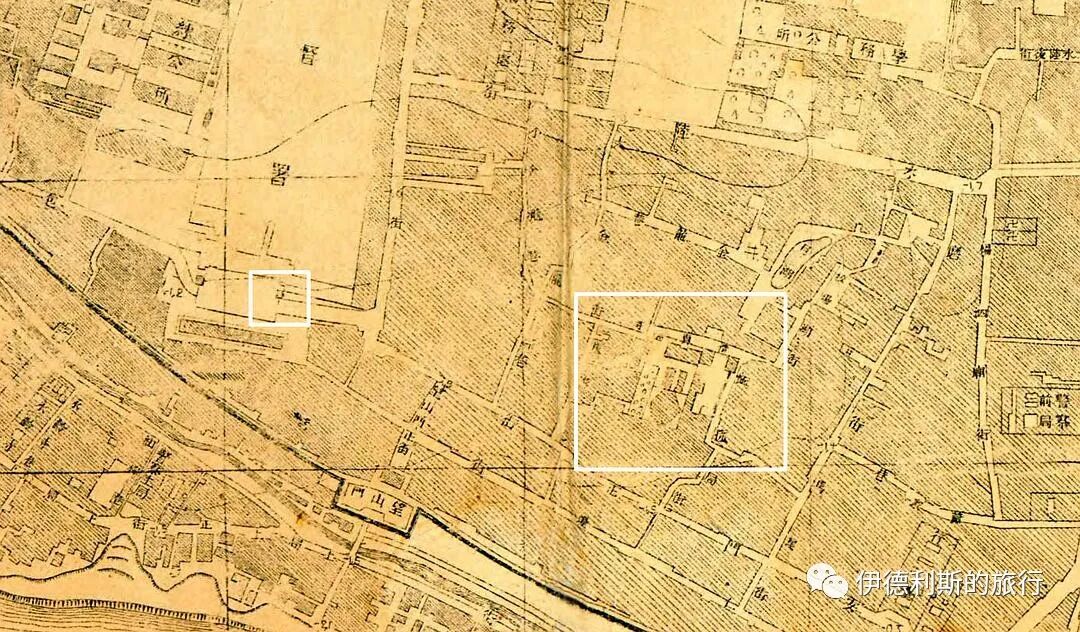
In the 1909 'Detailed Map of Hubei Provincial City and Suburbs,' the white box on the left is the East Yuanmen of the Huguang Governor's Office, and the one on the right is the Jinlong Lane Mosque. You can see the outline of the hexagonal prayer hall and the Mosque Street at the entrance.
Between 1961 and 1965, the famous architect Professor Liu Zhiping led the Chinese Islamic Architecture Research Group to draw the floor plan of the Jinlong Lane Mosque.
In 2010, Jinlong Lane and Mosque Street were completely leveled and disappeared into history.
Qiyi Street Mosque
Besides the Shanqian Mosque inside the city, there was another mosque outside the city at Cross Street (Shizi Jie) outside Zhonghe Gate in southern Wuchang.
After the Wuchang city wall was built during the Ming Dynasty's Hongwu reign, the area outside Zhonghe Gate in the south was originally a wasteland used for construction materials, with lime pits and the southern city moat forming a large lime marsh. In the late Ming Dynasty, a group of Hui Muslims who moved from Maguoyuan in Shaanxi began to settle here, working in beef butchery, general goods, and halal food. During the Qing Dynasty's Daoguang reign, another group of Hui Muslims from Mianyang, Hubei, moved here due to flooding, and the number of Hui Muslims outside Zhonghe Gate gradually increased. Because the road leading south from Zhonghe Gate to Kejia Wharf on the Xunsi River formed a crossroad with the main street outside Bao'an Gate, this area was also called Cross Street.
The mosque outside the city was built in the early Qing Dynasty and was originally called the Zhonghe Gate Mosque. After the Wuchang Uprising, Zhonghe Gate was renamed Qiyi Gate, the main street outside Zhonghe Gate was renamed Qiyi Street, and the Zhonghe Gate Mosque was renamed the Qiyi Street Mosque. In 1862 (the first year of the Tongzhi reign), the mosque outside the city was renovated, forming a two-courtyard complex. The first courtyard's main room was a large hall with side rooms and corridors. The second courtyard's main room was the prayer hall, with side rooms serving as the imam's living quarters and the water room. There was a well in the back courtyard of the prayer hall.
The mosque outside the city in the 1909 'Detailed Map of Hubei Provincial City and Suburbs'
The mosque was destroyed by bombing after the 1938 Battle of Wuhan. It was rebuilt in 1946, but on a much smaller scale. After 1966, the mosque was occupied and severely damaged. The Islamic Association reclaimed it in 1980, and in 1984, they built the current two-story building in the final courtyard where the original well was located. It is the only remaining mosque in Wuchang.
Between 1934 and 1935, Bi Jingshi took photos of the Qiyi Street Mosque as it looked then.
Between 1961 and 1965, the famous architect Professor Liu Zhiping led the Chinese Islamic Architecture Research Group to take photos of the Wuchang Qiyi Street Mosque.
Qiyi Gate and Cross Street
A 1981 census of Cross Street outside Zhonghe Gate recorded 316 Hui Muslim households with 999 people. They were most famous for making halal beef. The signature dishes of the Hui Muslims here included beef meatballs, five-spice braised beef (wuxiang lu niurou), stir-fried beef, glutinous rice steamed beef, seasoned beef offal, beef brisket soup (niu wagou aotang), and full-ingredient beef bone soup.
Shizi Street once had many halal businesses. Baoan Street used to have a busy cattle slaughterhouse, commonly known as the Cattle Killing Bay (Shaniuwan). It supplied all the beef for Hui Muslims in Wuchang until it closed after the public-private partnership reforms in 1956. Qiyi Street No. 52 was a breakfast shop for Hui Muslims. It was first run by Ma Jisu, then taken over by Ma Heqing, who was born in 1913. After the turn of the 21st century, the third-generation successor Ma Minglong, born in 1942, ran the shop under the name Ma Huaji. Baoan Street No. 352 was the Minglun Street Halal Hui Muslim Cooperative Canteen. Xiang Xian organized and opened the halal canteen in 1958. It later became a restaurant for Hui Muslims and closed in 1990. Baoan Street No. 341 was the Qiyi Hui Muslim Restaurant and Hostel. It was opened by the neighborhood committee in 1986 and closed in 1994.
In 2000, the layout of Shizi Street was mostly intact. The first round of demolition began in 2006 to build the road between Qiyi Gate and Shizi Street. Between 2013 and 2015, an elevated road was built after the demolition between Qiyi Gate and Shizi Street, which severely damaged the traditional layout.
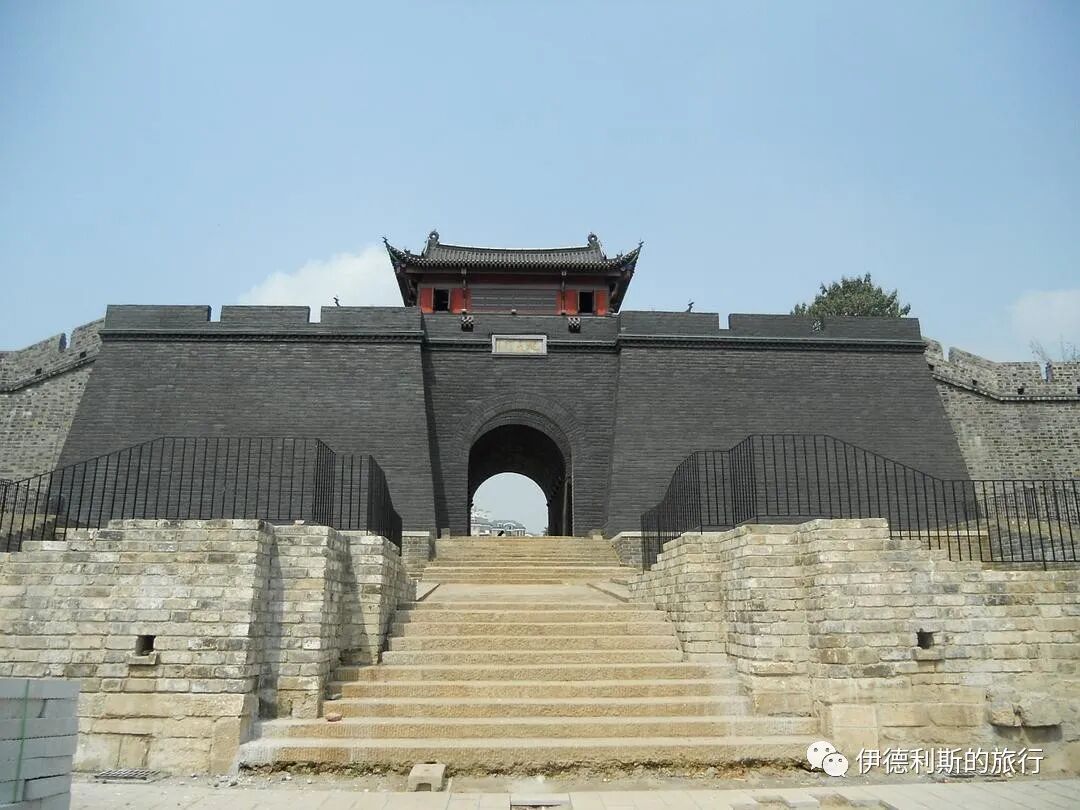
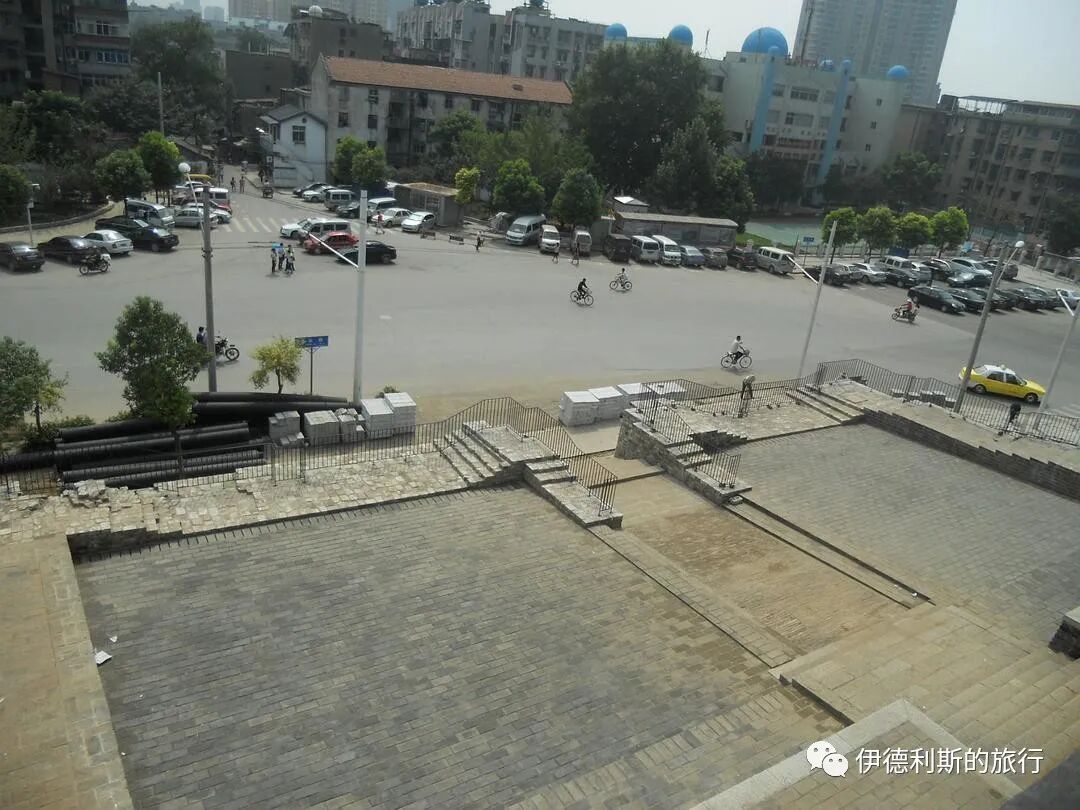
I visited Qiyi Gate for the first time in 2010. At that time, they were rebuilding the city walls on both sides and repairing the gate tower built in the 1980s to commemorate the 100th anniversary of the 1911 Revolution.
Qiyi Street in 2010.
When I visited again in 2011, the repairs to Qiyi Gate were finished.
Looking at the Hui Muslim Primary School from Qiyi Gate.
The largest building at the entrance of Qiyi Street is the Wuchang Hui Muslim Primary School. It was founded in 1912 by Ma Zuquan, a major contributor to the 1911 Revolution and an army major general, who also served as its first principal.
In 1907, Ma Zuquan joined the Liudong Halal Education Association, which was formed by Hui Muslim students studying in Japan, while he was studying artillery at the Imperial Japanese Army Academy. The Liudong Halal Education Association published a journal called Awakening the Hui (Xinghui Pian) at the time, which became an important symbol of the beginning of modern education for Hui Muslims.
During the Wuchang Uprising on October 10, 1911, Ma Zuquan was an instructor at the Hubei Training Institute and a supervisor at the Jiangwu Hall. He was elected as the temporary frontline commander and artillery commander. He directed the shelling of the Huguang Viceroy's Office and later participated in the battles to attack Hanyang and Hankou. After the Republic of China was established, he was awarded the rank of army major general and served as the principal of the Hubei Army Officers' School and as an advisor to the Ministry of War.
In 1912, Ma Zuquan, Li Jiahao, Ma Jishan, and Ma Decai donated money to establish the Wuchang Private Chongzhen Primary School inside the Qiyi Street mosque, with Ma Zuquan serving as principal. The Hui Muslim school taught Chinese, abacus, and Arabic at the time, and also had elementary and advanced classes for religious studies. At the beginning, it enrolled over 70 children of Hui Muslims and waived tuition and book fees. In 1922, there were four classes for boys and two elementary classes for girls, totaling over 200 students. In 1924, the Wuchang Hui Muslim Primary School participated in the National Games and won first place in the scout drill competition with Chaquan boxing, single broadsword, and staff techniques.
During the Northern Expedition army's siege of Wuchang in 1926, the school was bombed because it was located near the city wall outside Zhonghe Gate. It was also looted and destroyed by refugees, causing heavy losses and forcing it to shrink to two classes.
In 1937, provincial and county subsidies stopped, and the primary school was left with only one class of 58 students. The school closed completely after the Battle of Wuhan in 1938. After 1945, Sheng Longxuan donated two buildings, and with help from the Ma Yinglong Eye Medicine Shop and donations from the Hui Muslim community, the school reopened. A board of directors was formed by Ma Zuquan and others, with Sheng Longxuan as principal, and they enrolled over 100 students. After 1949, Kang Cheng served as principal. The school's funding came from the Choubang Union (the cattle slaughtering industry). For every cow slaughtered, 7 jiao was collected as a levy, with 5 jiao going to the school and 2 jiao going to the mosque.
The school became public in 1955. In 1962, there were 141 Hui Muslim students, making up 17% of the total.
Looking at Qiyi Street through the archway of Qiyi Gate.
Passing through Qiyi Gate to reach Shizi Street, where you can find all kinds of halal food.
A Hui Muslim family home on Bao'an Street.
The former site of the State-run Yihe Hui Muslim Grocery Store on Qiyi Street, photographed in 2011; it has since disappeared.
In November 2018
I went to Qiyi Gate again in May 2014, and construction on the elevated bridge had already started.
Shizi Street in May 2014
In June 2014, I visited Qiyi Street for the last time before graduation, and the elevated bridge had grown much higher.
Old houses near Shizi Street
No. 93 Zhuzichang
No. 35 Guanglidi
No. 35 Guanglidi
Shizi Street in May 2017; the elevated bridge between Qiyi Gate and Qiyi Street was already finished.
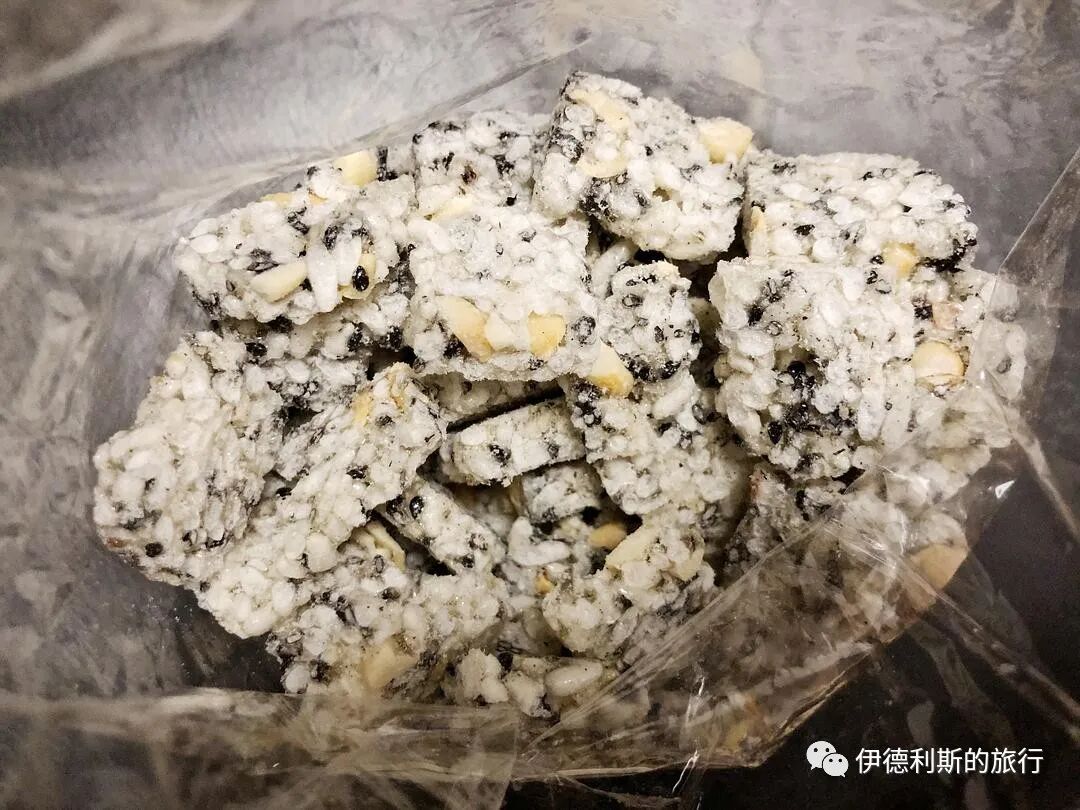
Peanut brittle (huasheng su) and sesame brittle (zhima sutang) bought at the entrance of the Qiyi Street mosque.
Qiyi Street in November 2018
An imam selling pastries at the mosque entrance
Mixed sugar candies (zatang)
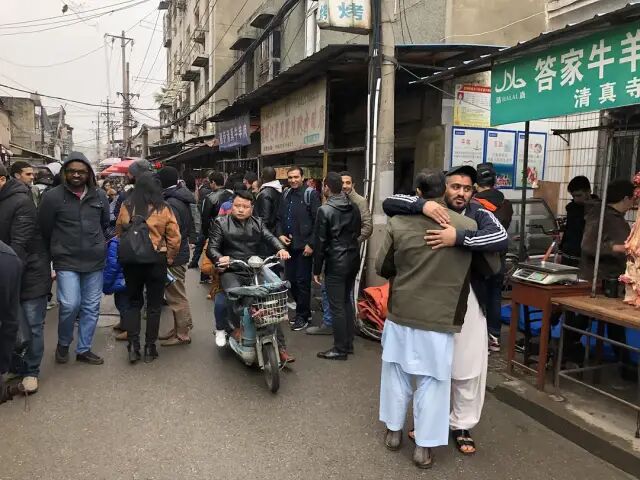
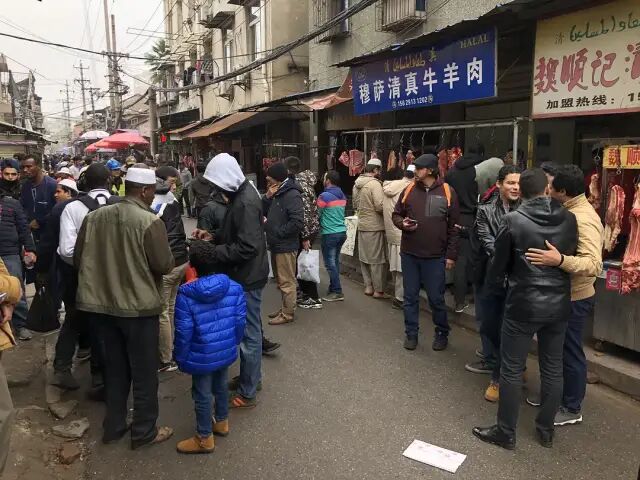
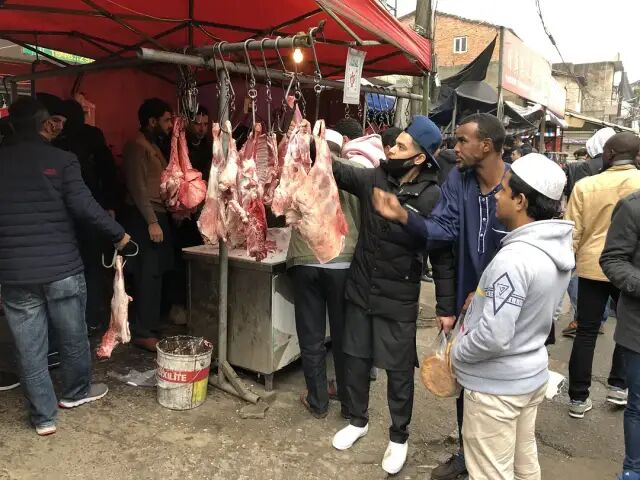
Qiyi Street after Friday prayers (Jumu'ah); Muslims from all over the world are shaking hands warmly, buying meat, and buying flatbread (nang).
Dajia Halal Chili Oil Beef Noodle Shop
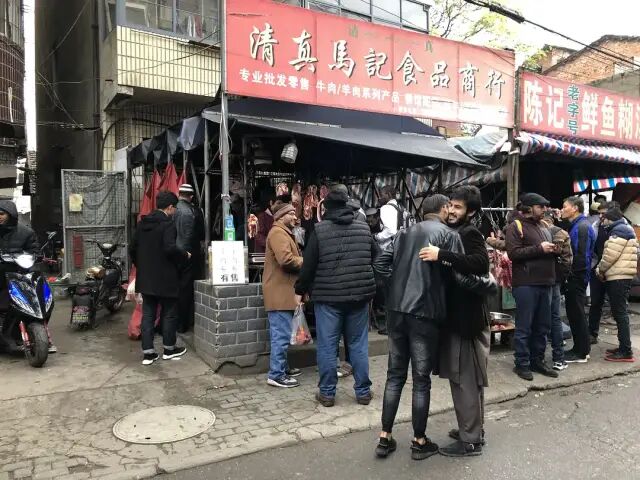
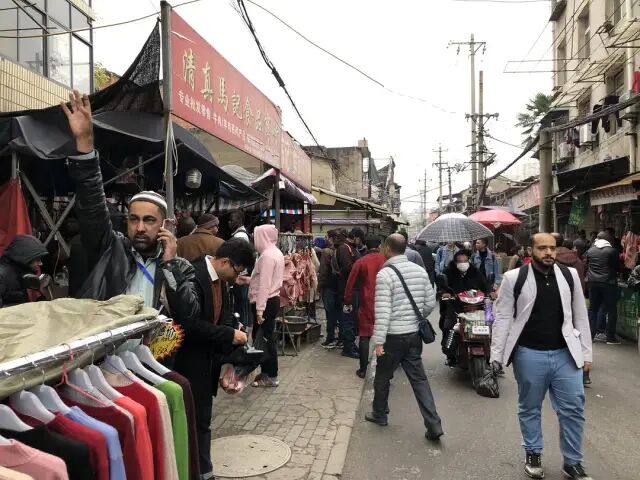
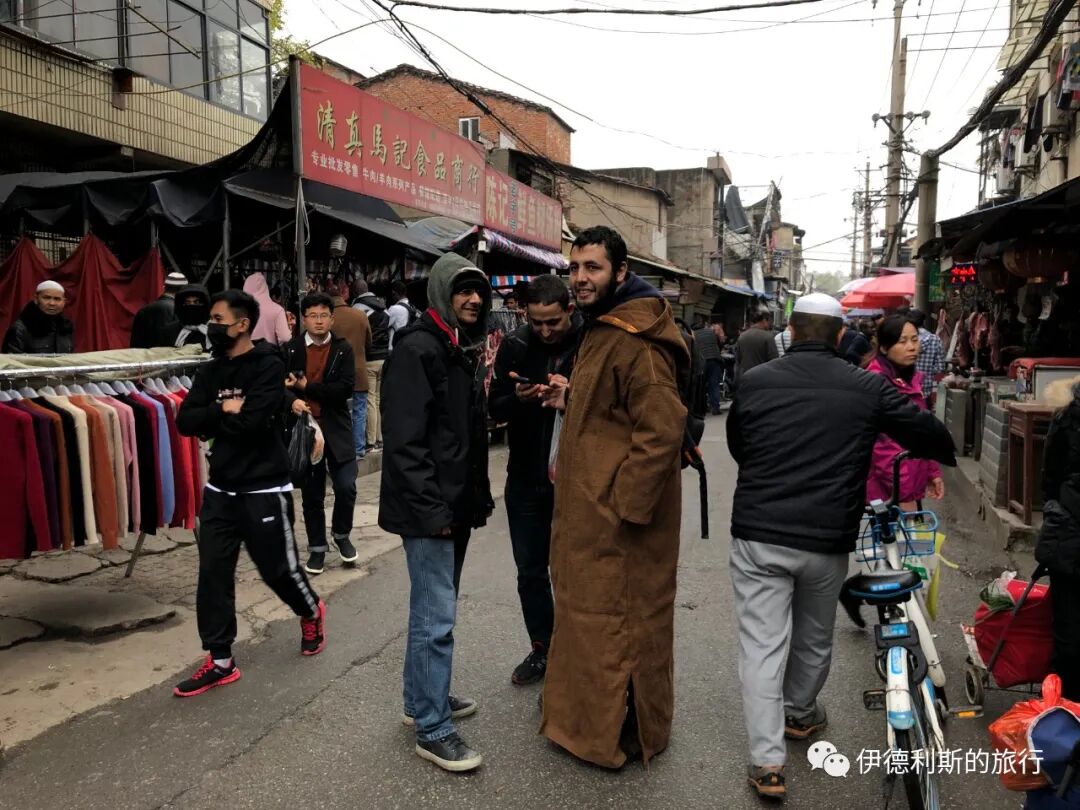
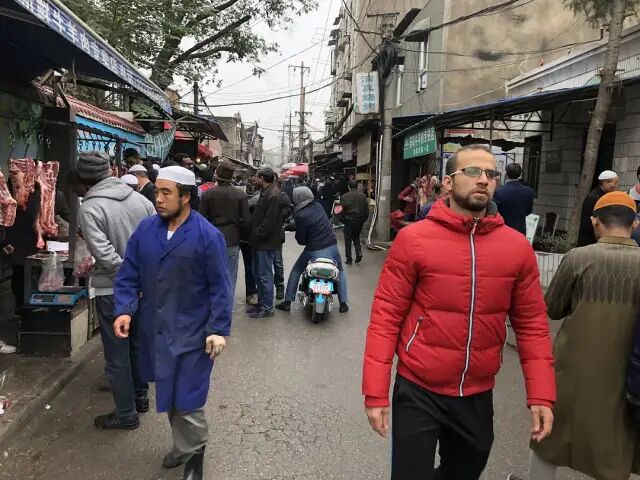
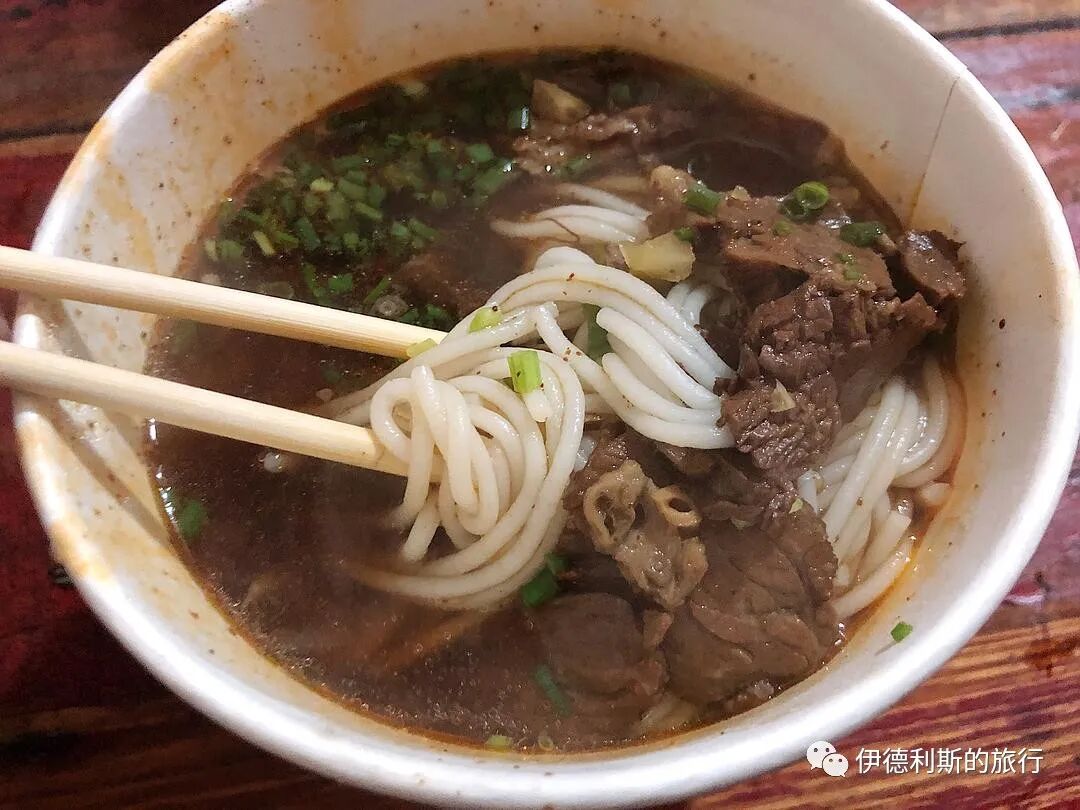
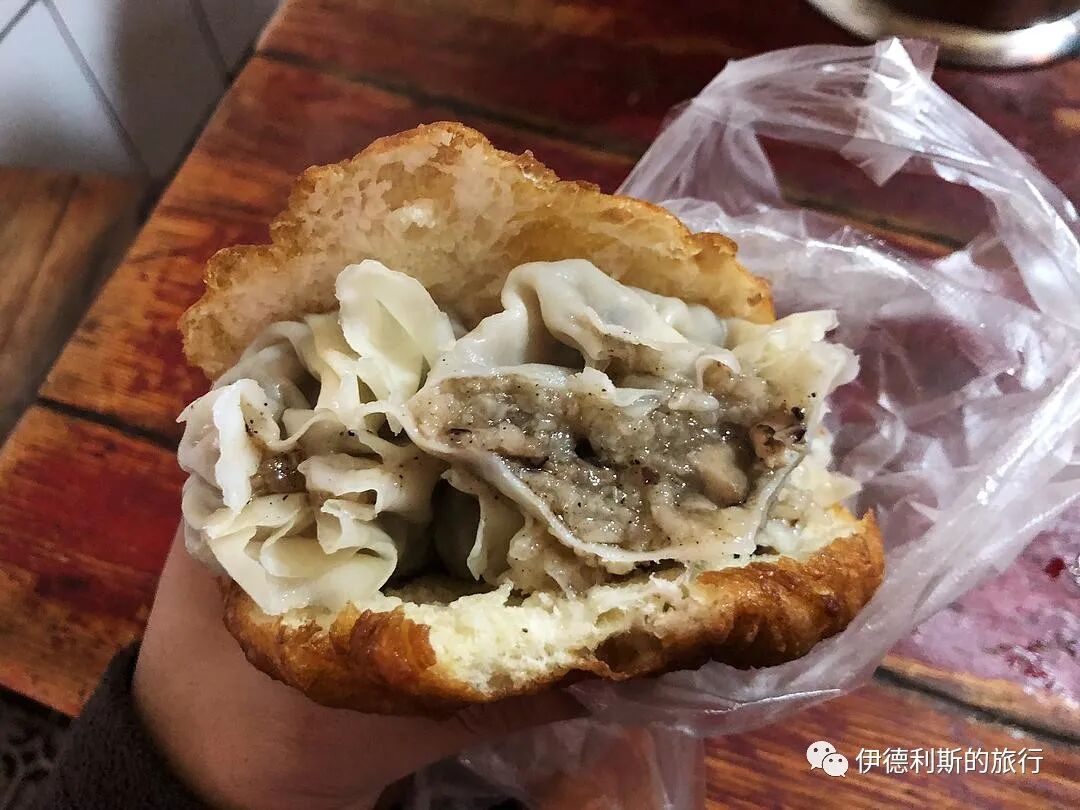
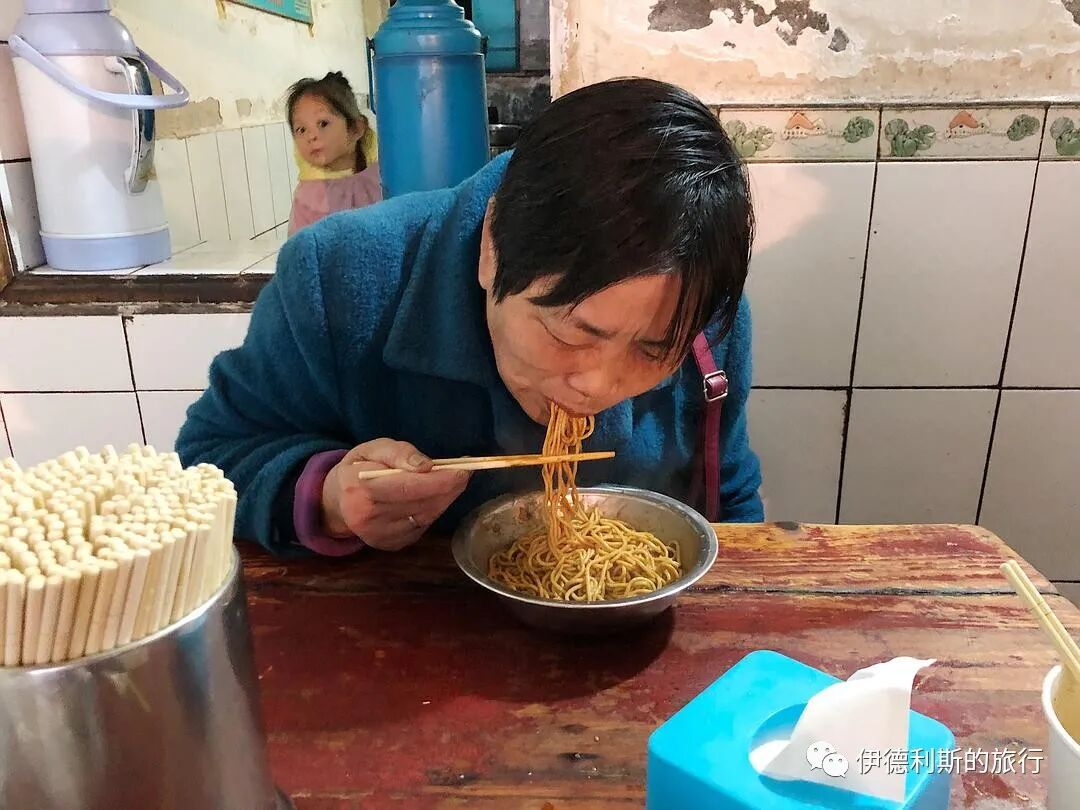
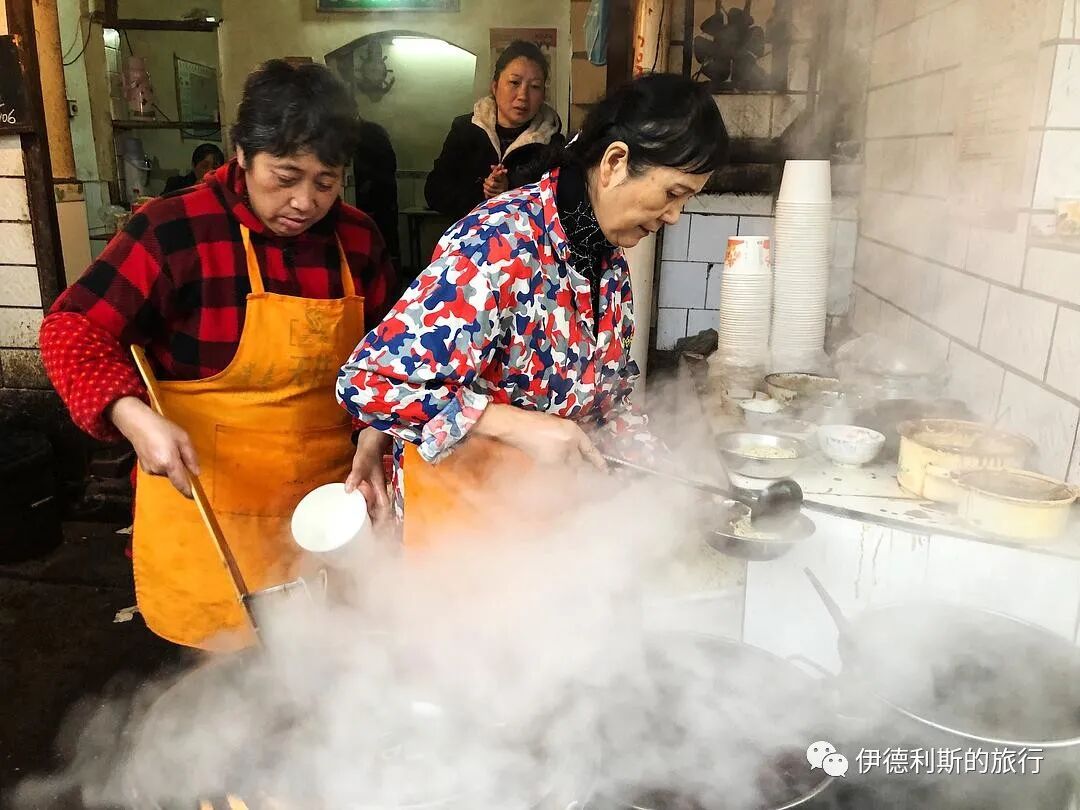
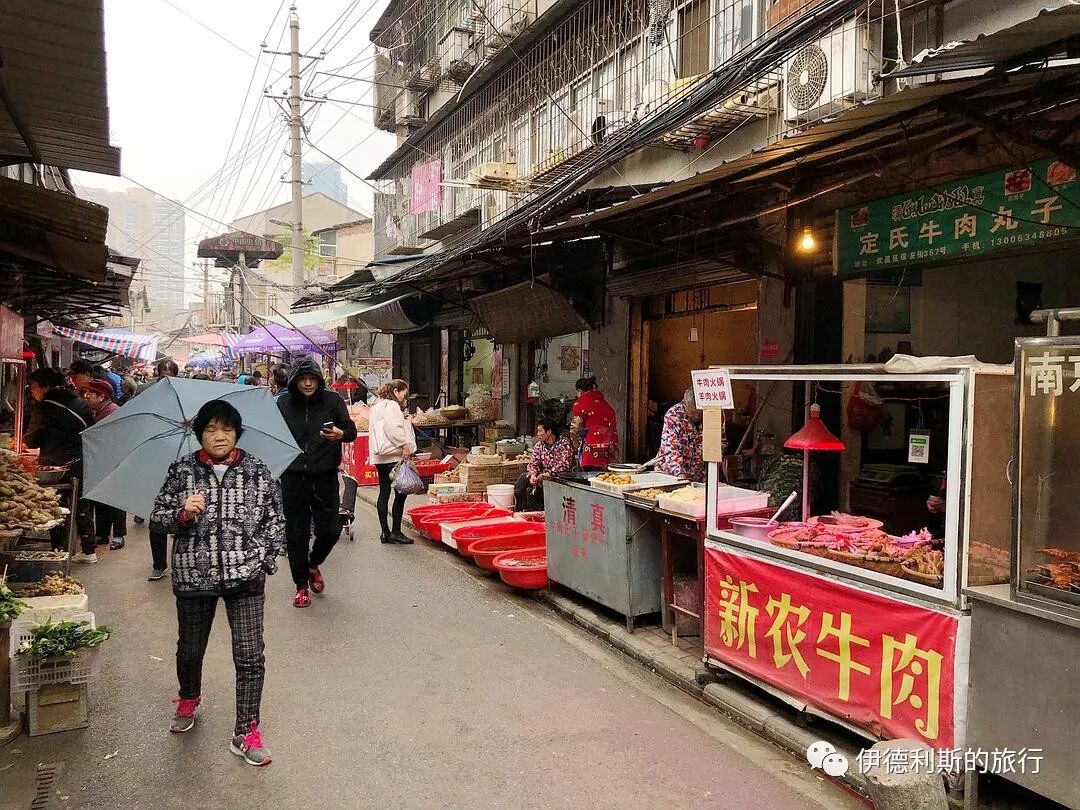
Every morning, Qiyi Street has a lively morning market, crowded and full of life. On Xiangbi Street (now the eastern section of Bao'an Street), which intersects with Qiyi Street, there is a halal breakfast spot called Dajia Halal Chili Oil Beef Noodle Shop. It is open daily from about 6:00 or 7:00 AM until 10:00 AM. I ate thin beef noodles in chili oil and a fried dough cake (youbing) stuffed with steamed dumplings (shaomei) here. The sticky rice inside the shaomei was very fragrant and sweet.
Ding's Beef Meatball Shop
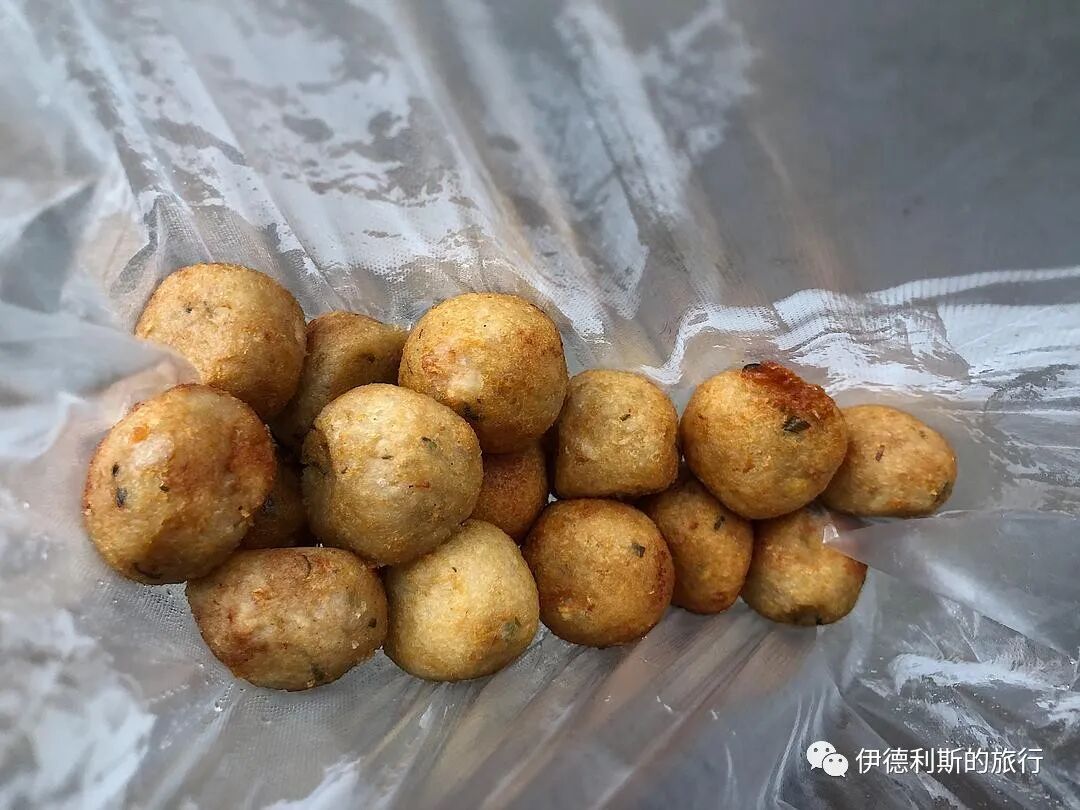
Walking further in from the chili oil noodle shop, you can see Ding's Beef Meatball Shop. They also only sell during morning market hours. This was my first time eating deep-fried lotus root balls (zha ou yuanzi), and they were truly delicious.
Niuchongchong Hui Muslim Snack Shop
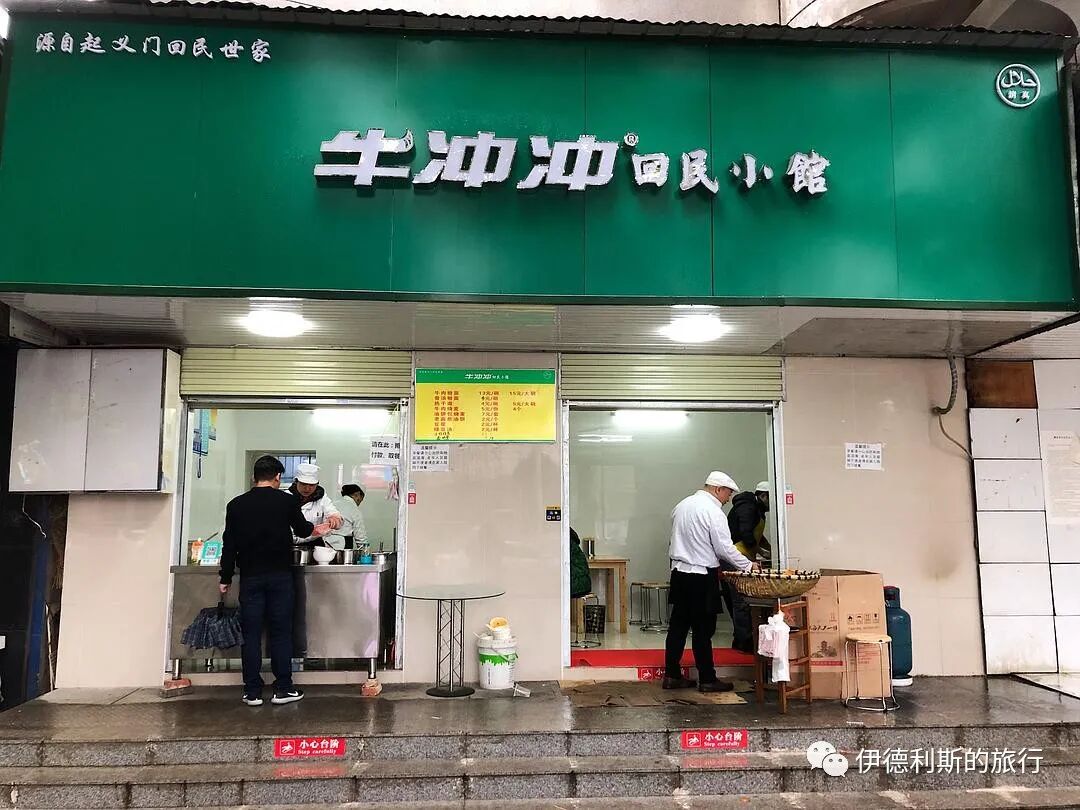
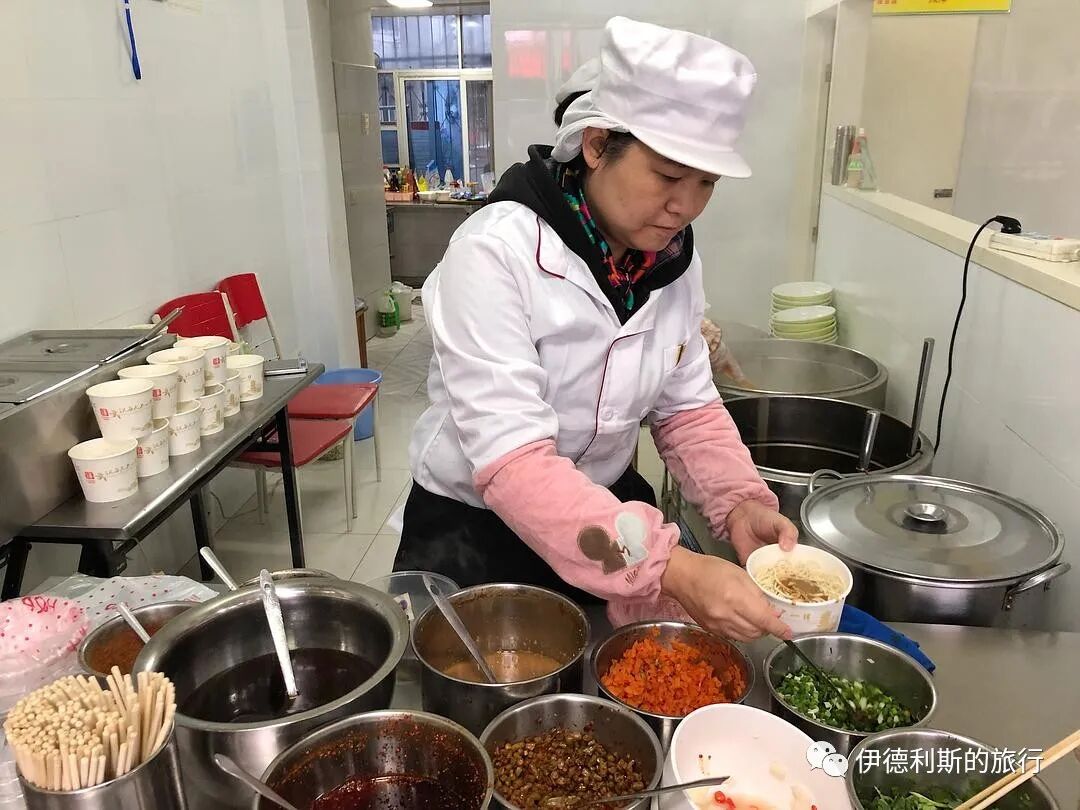
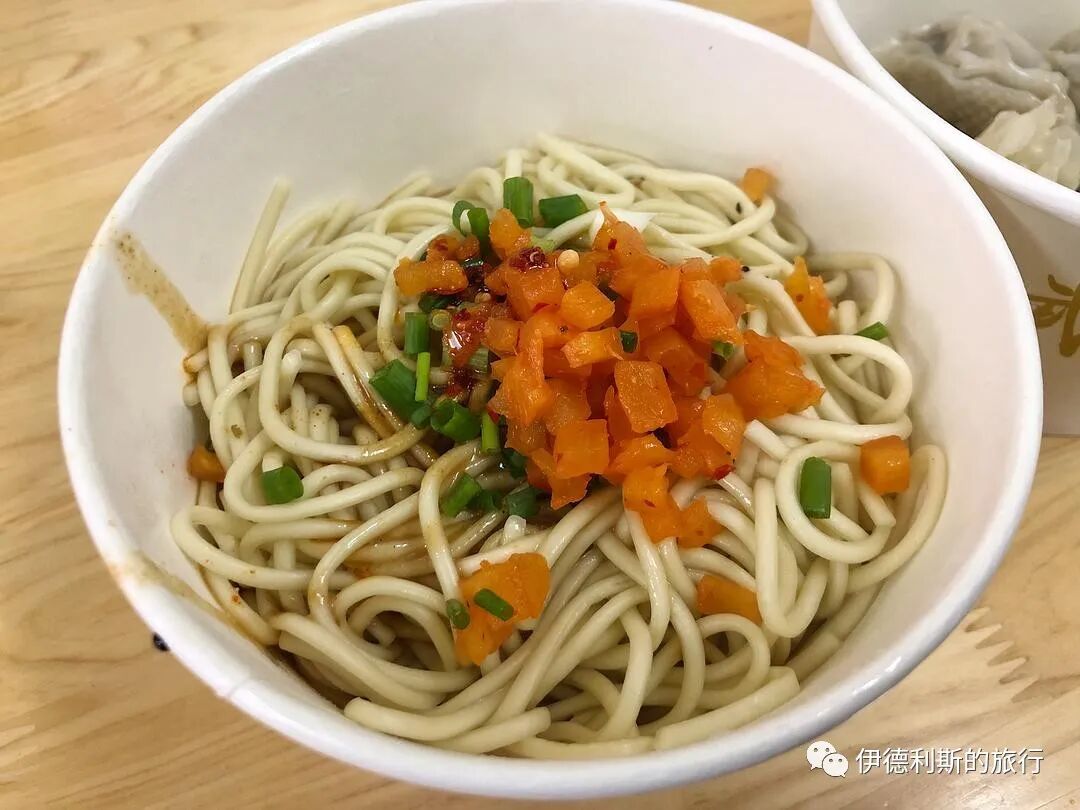
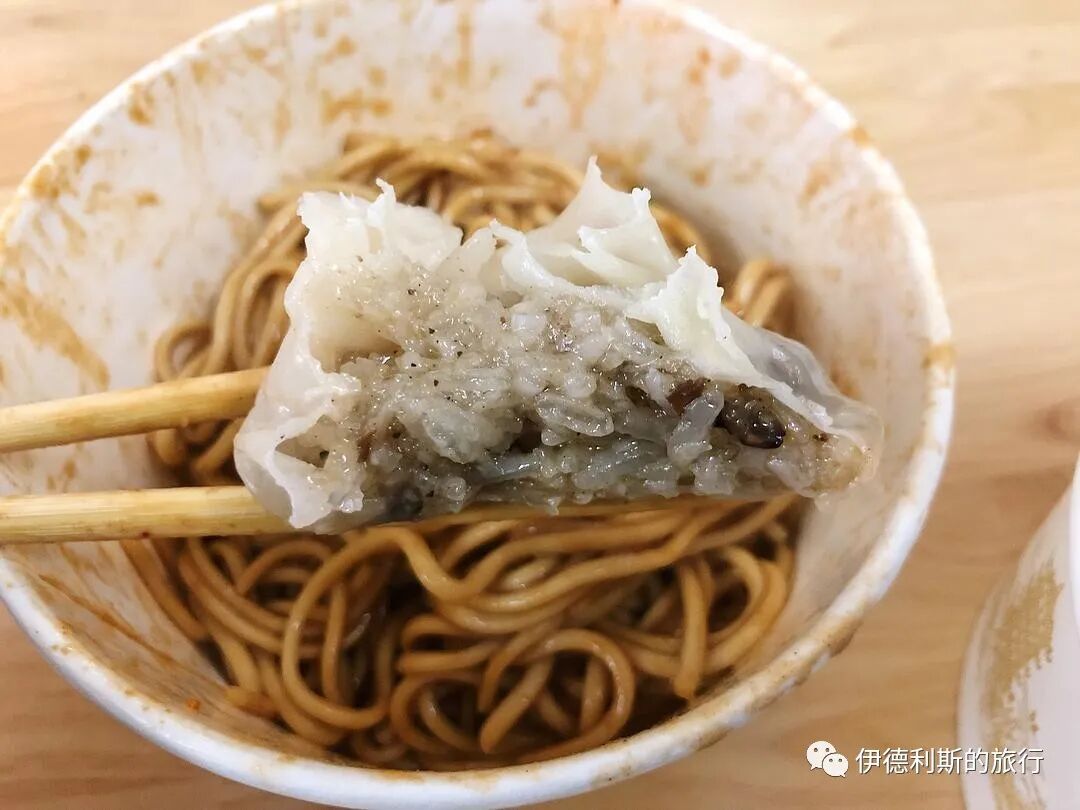
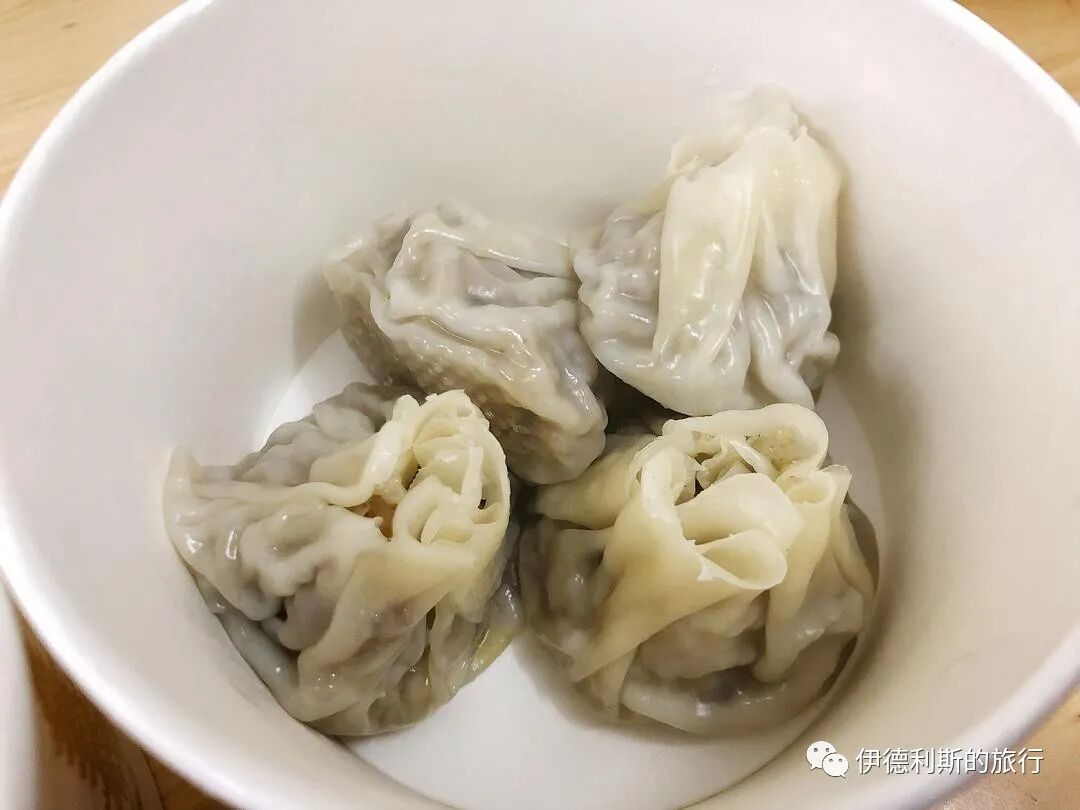
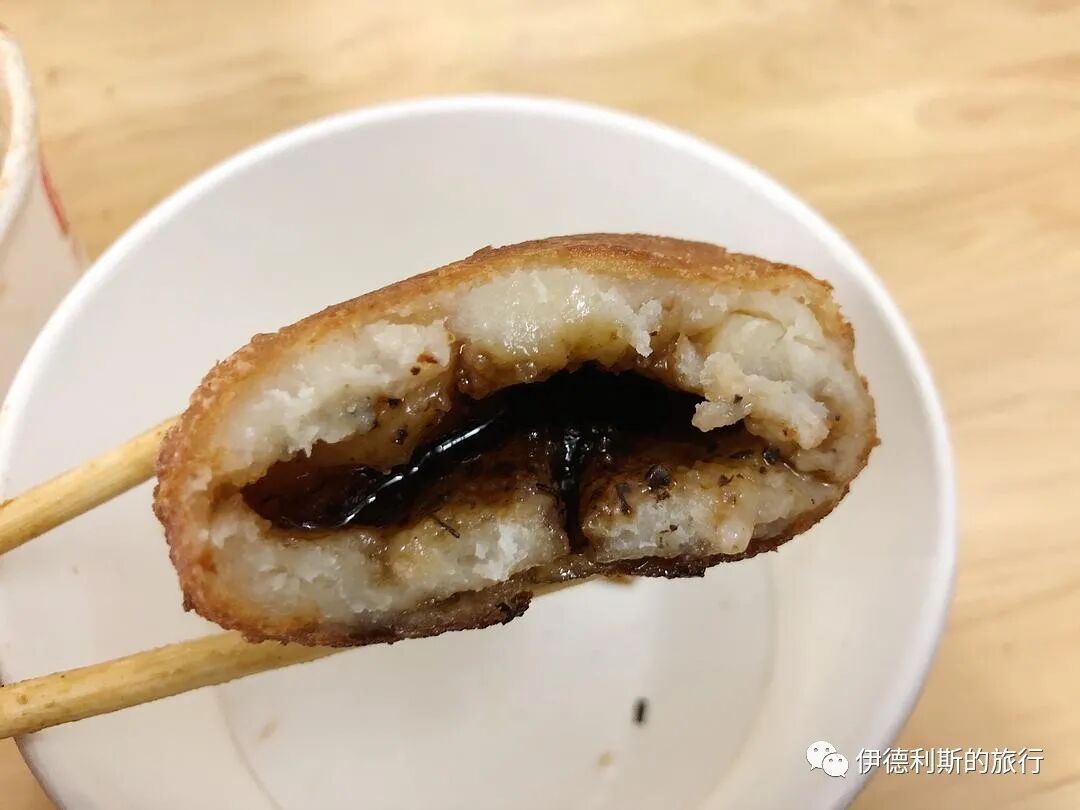
There is another local Wuchang halal breakfast spot called Niuchongchong Hui Muslim Snack Shop. It is located at the intersection of Ping'an Road and Hengping Road, not far southeast of Qiyi Street. The owner's family has lived on Qiyi Street for generations. I ate hot dry noodles (reganmian) and sticky rice, beef, and mushroom steamed dumplings (shaomei) here. The biggest surprise was finding deep-fried dough cakes (youxiang) made with brown sugar and sweet osmanthus by local Wuchang Hui Muslims. This was my first time hearing of such a thing. Besides that, their beef noodles and fried dough cakes stuffed with steamed dumplings (youbing bao shaomei) are also very authentic.
Balanyuan
After Qiyi Street was demolished and Niuchongchong Hui Muslim Snack Shop closed, Balanyuan is likely the only traditional Wuchang halal restaurant left.
The owner of Balanyuan, Mr. Li, and his family have been selling beef balls since 1995 right across from the Qiyi Street mosque. I remember them from when I was in college, though I never got the chance to try them back then. After the Qiyi Street demolition, Mr. Li bought a house in Qilimiao, Hanyang, and opened this traditional Wuchang halal restaurant in 2018. Even though they are in Hanyang now, Mr. Li still buys his beef from Qiyi Street. This shop is probably the only comforting thing to come out of the Qiyi Street demolition.
The must-try dish here is the beef brisket and radish ball soup (wagou luobo yuanzi tang). Since the Qing Dynasty and the Republic of China era, the Hui Muslims of Qiyi Street have been famous in Wuchang for their beef balls. The bubbly outer layer of a Qiyi Street beef ball is made of fish, while the inside uses beef tenderloin (meitiao). The beef brisket (wagou) is a specific cut used for simmering soup, and it tastes especially fragrant when paired with radish.
Also, the Hongshan vegetable stalks (Hongshan caitai) that just hit the market in November are a seasonal vegetable unique to Wuhan. Hongshan vegetable stalks originally came from the "nine ridges and eighteen hollows" area between Hongshan and Shipailing in Wuhan's Hongshan District. Production areas shrank significantly during the urban construction of the 1980s and 1990s, but they have gradually recovered in recent years. They are a green vegetable worth eating in Wuhan during the autumn and winter. Their main dishes also include vegetarian deep-fried spring rolls (zha chunjuan), which have a great texture and go very well with the soup.
We visited Balanyuan again in 2020. to the beef brisket and radish ball soup, we also ordered dry-fried beef (ganbian niurou) and stir-fried sweet potato leaves (suchao tiaojian). The dry-fried beef was a special recommendation from Mr. Li. The beef was fried until very crispy and sprinkled with white sesame seeds, cumin, and sugar. Zainabu couldn't stop praising it and kept thinking about the flavor.
Because Mr. Li owns his own building, his losses this year were not as severe. The shop reopened in June 2020 and has been recovering quite well since then. I sincerely hope Balanyuan can stay open forever, preserving the only remaining legacy of Wuchang's halal food culture. view all
Summary: Wuchang Hui Muslim Community — Qiyi Street, Mosques and History is presented here as a firsthand travel account in clear English, beginning with this scene: I went to school in Wuhan from 2010 to 2014 and often visited the Hui Muslim community on Qiyi Street in Wuchang, which left a deep impression on me. The account keeps its focus on Wuchang Muslims, Qiyi Street, Hubei Muslims while preserving the names, places, food, and historical details from the Chinese source.
I went to school in Wuhan from 2010 to 2014 and often visited the Hui Muslim community on Qiyi Street in Wuchang, which left a deep impression on me. After graduation, I returned to Wuhan a few times and took some photos of Qiyi Street. It was heartbreaking to return to Wuhan in September 2020 and find that Qiyi Street had been demolished. The historical fabric and cultural heritage that had existed for hundreds of years since the Ming Dynasty have vanished, and many things may never be seen again. Along with the traditional community, the traditional halal restaurants have also disappeared, and it may be hard to find the steamed dumplings (shaomei) and beef noodles made by Wuchang Hui Muslims from now on. This is the third century-old Hui Muslim community in Hubei I have seen disappear in the last decade, following the ones in Fancheng and on Yingxi Street in Shashi.
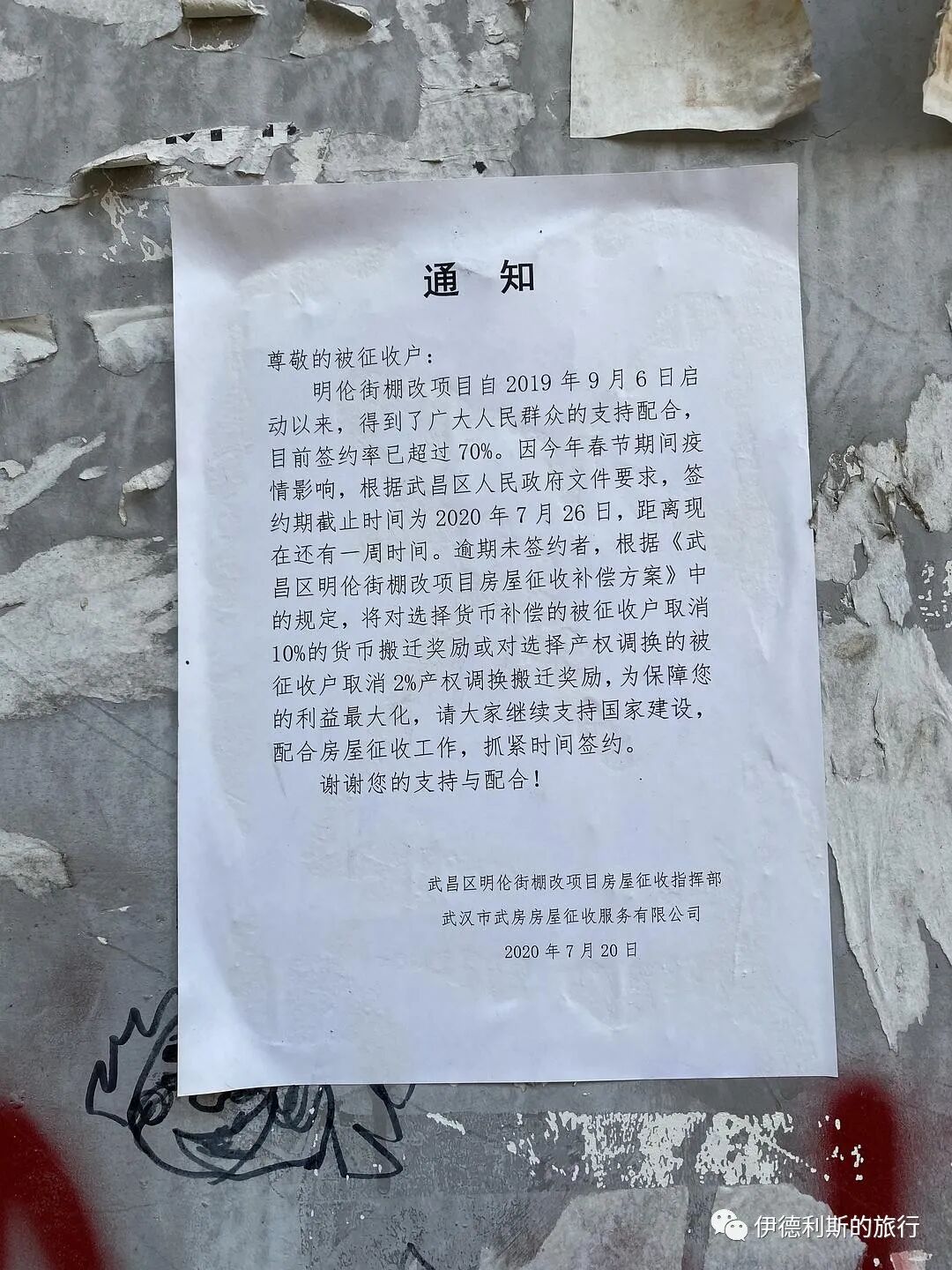
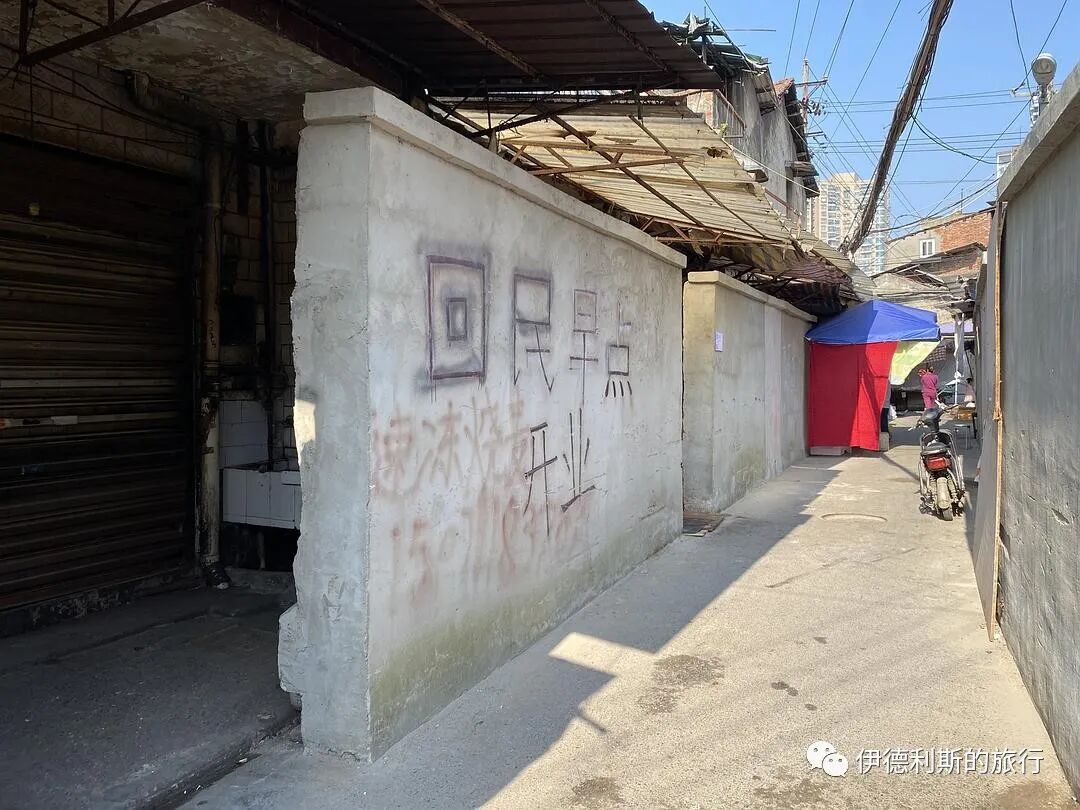
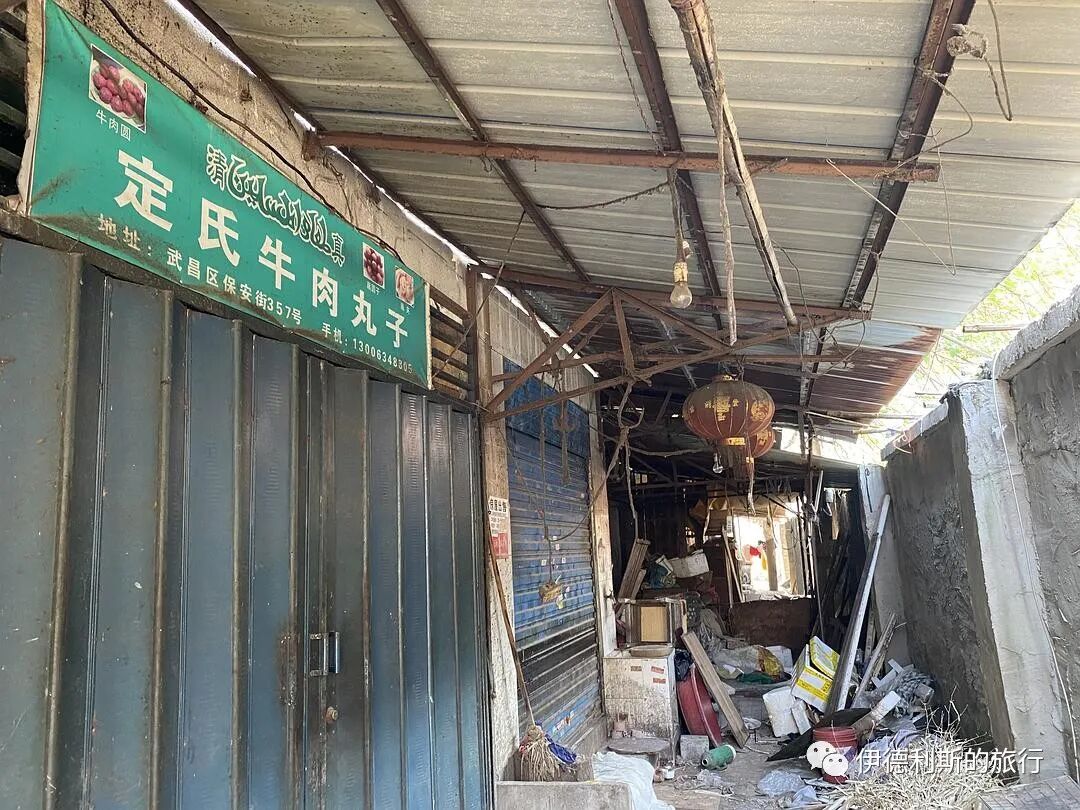
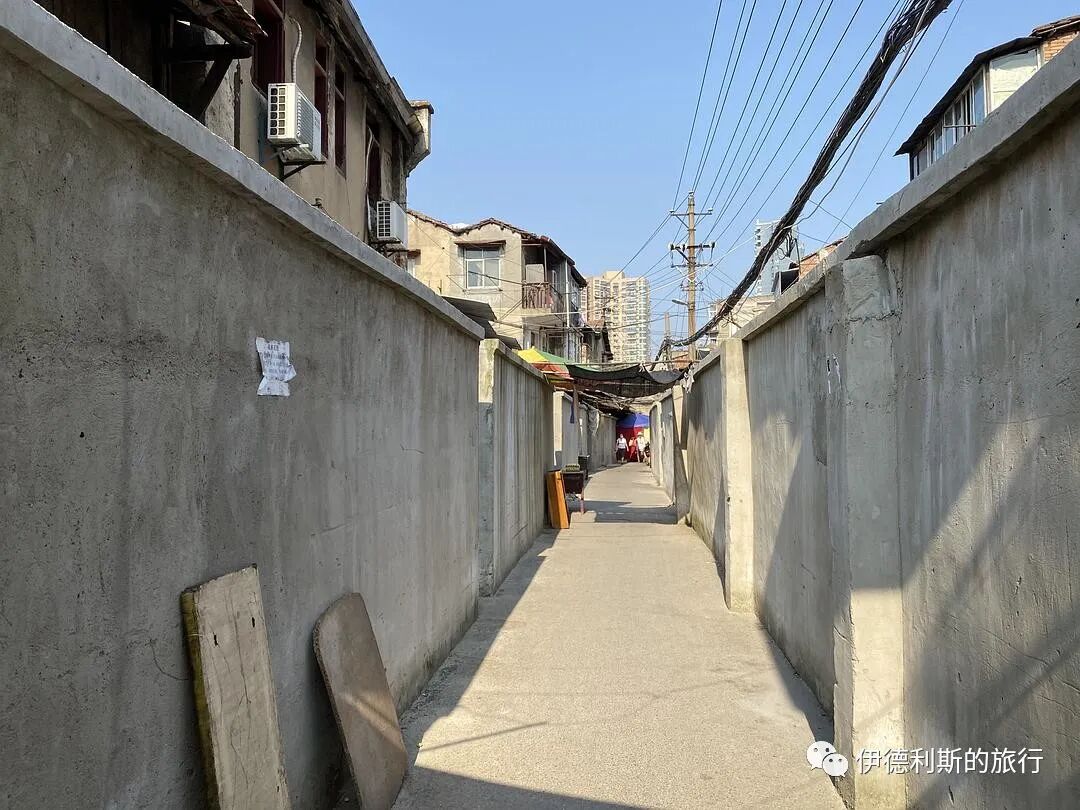
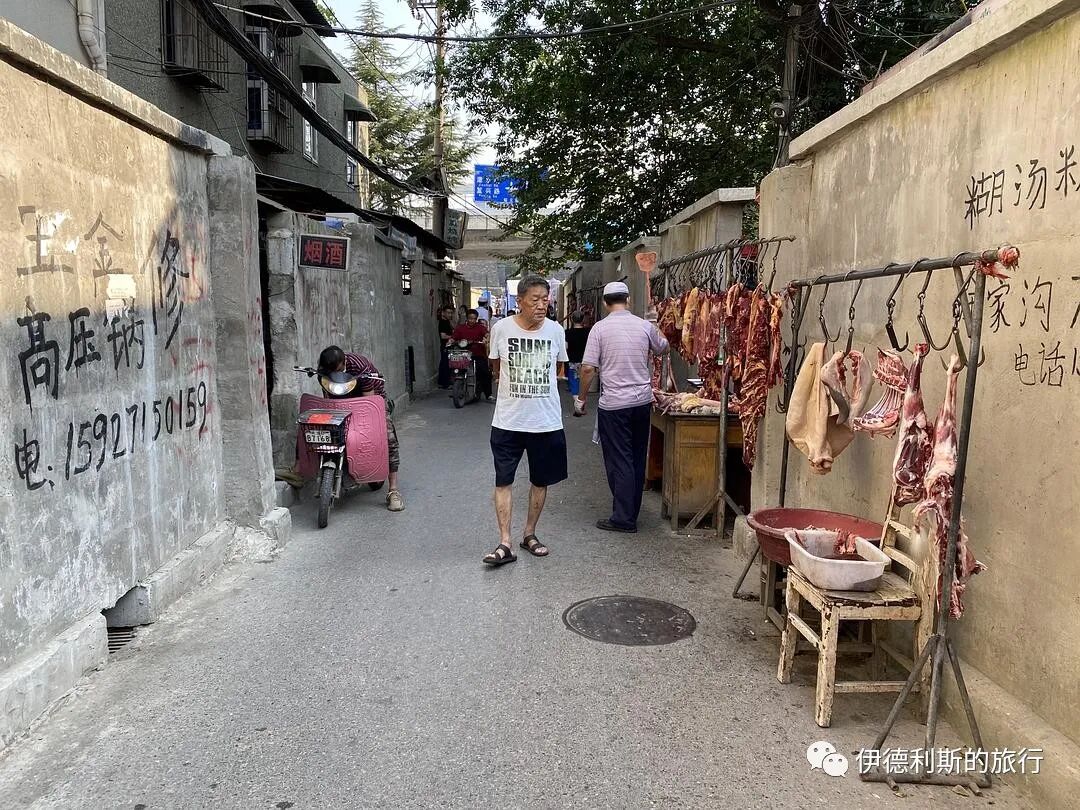
I want to take this opportunity to talk in detail about the 600-year history of the Wuchang Hui Muslim community from its birth to its end.
The formation of the Wuchang Hui Muslim community
First, let me introduce Wuchang City: the Wuchang Prefecture city of the Ming and Qing dynasties was expanded in 1371 (the fourth year of the Hongwu reign of the Ming Dynasty) from the Ezhou city of the Tang and Song dynasties. The prefecture city was divided into two by Snake Hill (Sheshan), with the area south of the hill called 'in front of the mountain' and the area to the north called 'behind the mountain'. The area behind the mountain inherited the layout of the Tang and Song Ezhou city, with dense streets and alleys. The western part had many government offices and was the political center, while the eastern part became a cultural center after churches and mission schools were built there starting in 1862 (the first year of the Tongzhi reign). The area in front of the mountain had many lakes and water systems, with only one main road called Long Street (now Jiefang Road). The Ming Prince Chu's Mansion was built in the north, which became a residential area after the Qing Dynasty. Except for the Huguang Governor's Office (now the Wuchang Shipyard) and the main street of Bao'an Gate, the southern part was sparsely populated. Outside Pinghu Gate and Wenchang Gate in the west of the city, the area had been a commercial center since the Tang and Song dynasties because it was near the Yangtze River. After the Self-Strengthening Movement, Zhang Zhidong built four textile bureaus there, making it an industrial center. Outside the three southern city gates—Zhonghe Gate, Wangshan Gate, and Bao'an Gate—the area was also a commercial center because it was near the Xunsi River.
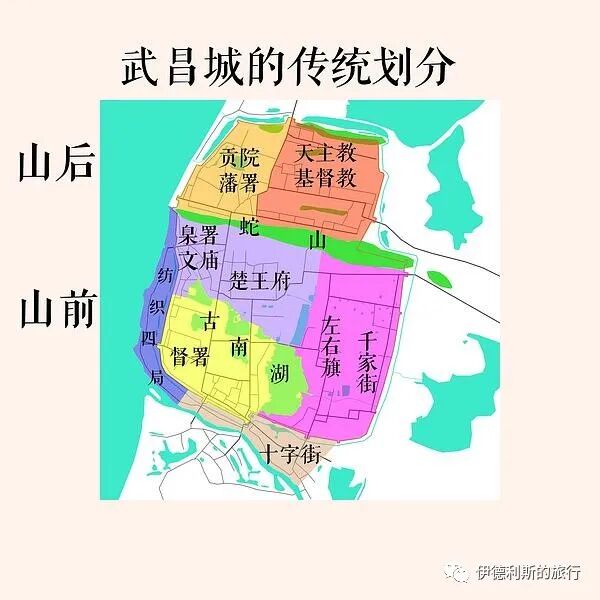
The first Hui Muslims to settle in Wuchang Prefecture were the Ding, Wang, and Huaiyuan Tang Ma families. According to family records, the second-generation ancestor of the Ding family, Ding Baolu, came to Chu in 1380 (the 13th year of the Hongwu reign) to protect the fiefdom, settled in Wuchang, and lived at Changhong Bridge outside Zhonghe Gate. The first ancestor of the Wang family to move there, Wang Wu, was transferred to Wuchang in 1381 (the 14th year of the Hongwu reign) to serve as a commander of the prefecture's central battalion and handle military affairs. He settled in Wuchang and likely lived near the Prince Chu's Mansion in front of the mountain. The third-generation ancestor of the Huaiyuan Tang Ma family, Ma Jun, was transferred to Wuchang in 1413 (the sixth year of the Xuande reign) as a commander of the Wuchang Left Guard and settled in Wuchang. The famous Islamic scholar Ma Quan came from the Huaiyuan Tang Ma family, and the graves of their third to tenth-generation ancestors are all at Tianpingjia near Changhong Bridge in the south of Wuchang.
From this, we know that the area around Changhong Bridge outside Zhonghe Gate in the south of Wuchang was likely the earliest Hui Muslim settlement, which later became the Qiyi Street Hui Muslim community.
Yuanmenkou Mosque and the Hundred-Character Eulogy Stele
The first mosque in Wuchang with a recorded history was the Qingjing Mosque, built in the early Ming Dynasty. Because it was located at the East Yuanmenkou of the Huguang Governor's Office inside Wangshan Gate in the south of Wuchang, it was later called the Yuanmenkou Mosque, and because it was south of Snake Hill, it was commonly known as the 'Mountain Front Mosque'.
According to the Kangxi edition of the 'Huguang Wuchang Prefecture Gazetteer', the Yuanmenkou Mosque once held the famous 'Imperial Hundred-Character Eulogy of the Most Holy' stele by the Ming Taizu Emperor. The courtyard of the current Qiyi Street Mosque holds three Hundred-Character Eulogy steles. Besides one carved in the Qing Dynasty, the other two broken steles are very likely the originals from the Yuanmenkou Mosque.
The Hundred-Word Eulogy (Baizizan) stele inside the Qiyi Street Mosque in 2017.
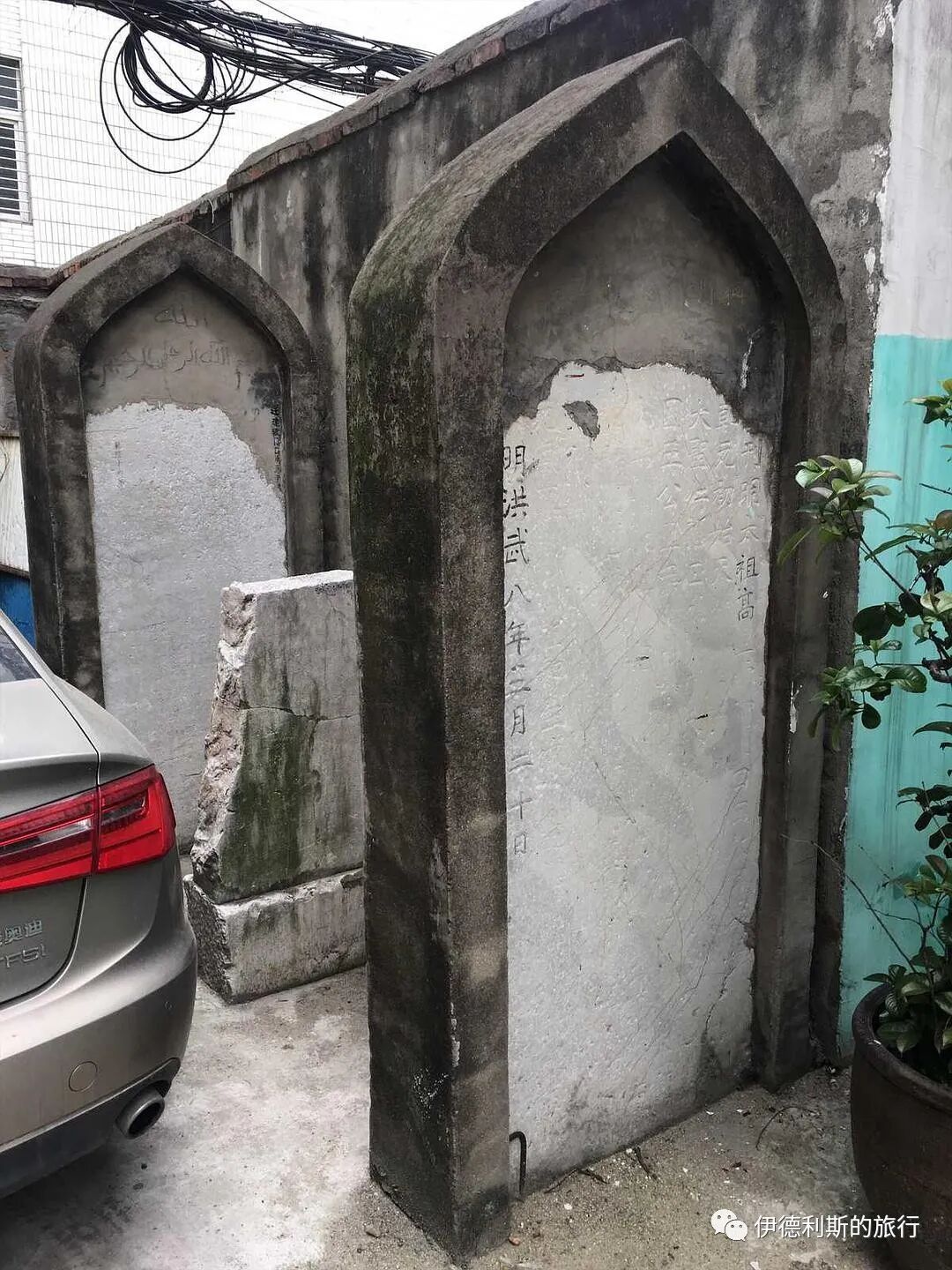
The Hundred-Word Eulogy stele is an important document in Chinese Islam and is very widely known. Legend says it was written by the Ming Dynasty founder, Emperor Zhu Yuanzhang, in 1368 (the first year of the Hongwu era). Since the Ming and Qing dynasties, it has been copied and carved onto steles and plaques many times. In his work on the variations of the Emperor's Hundred-Word Eulogy, Professor Hu Yubing of Ningxia University divides the surviving documents into two systems: the 1375 (eighth year of Hongwu) stele at the Qiyi Street Mosque in Wuchang and the 1398 (thirty-first year of Hongwu) stele at the Jingjue Mosque in Nanjing. Although the Jingjue Mosque stele is more famous and influential, Professor Hu Yubing believes the Qiyi Street Mosque stele is closer to the original version, and the Jingjue Mosque version is a rewrite of the one at Qiyi Street.
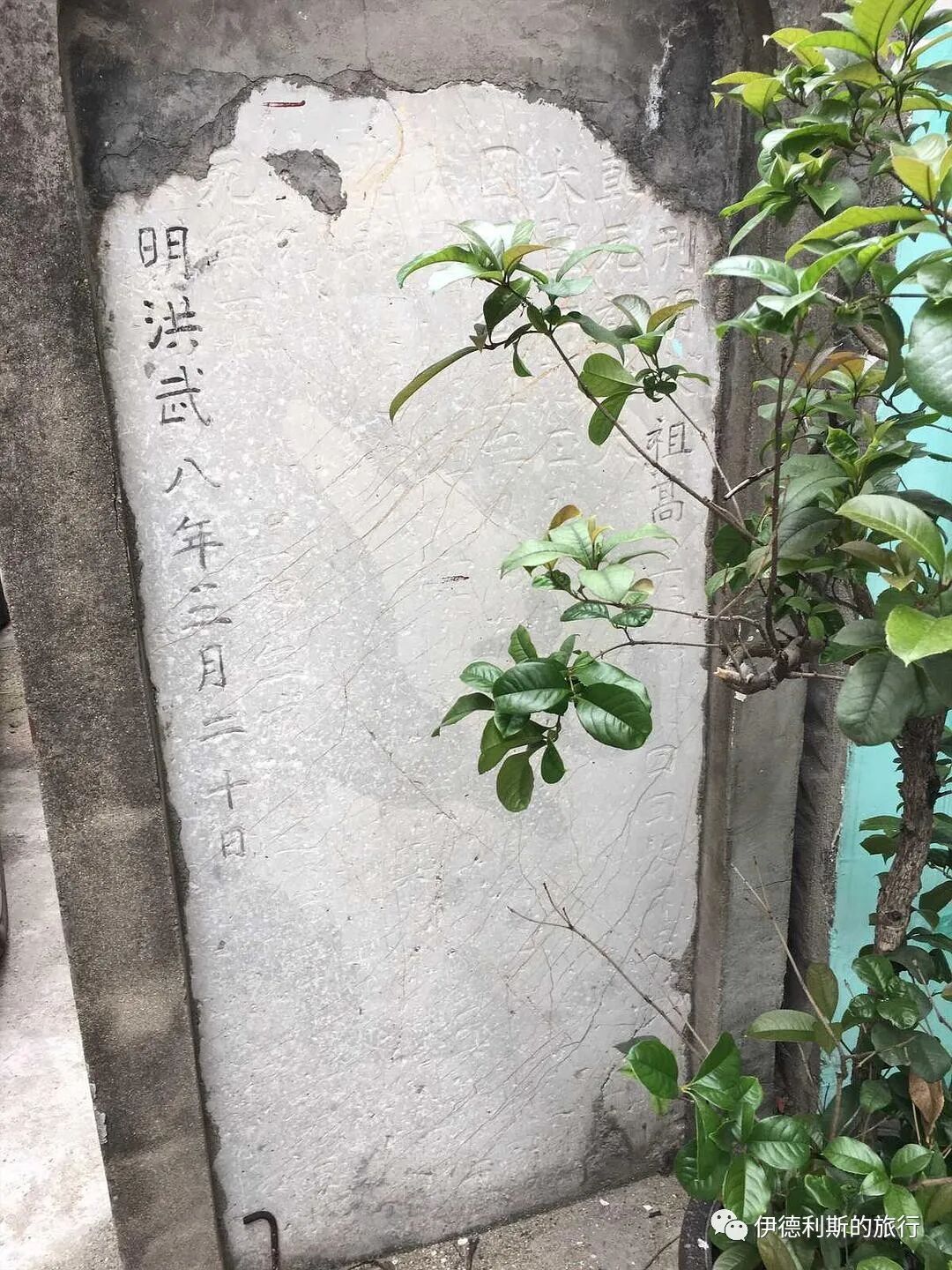
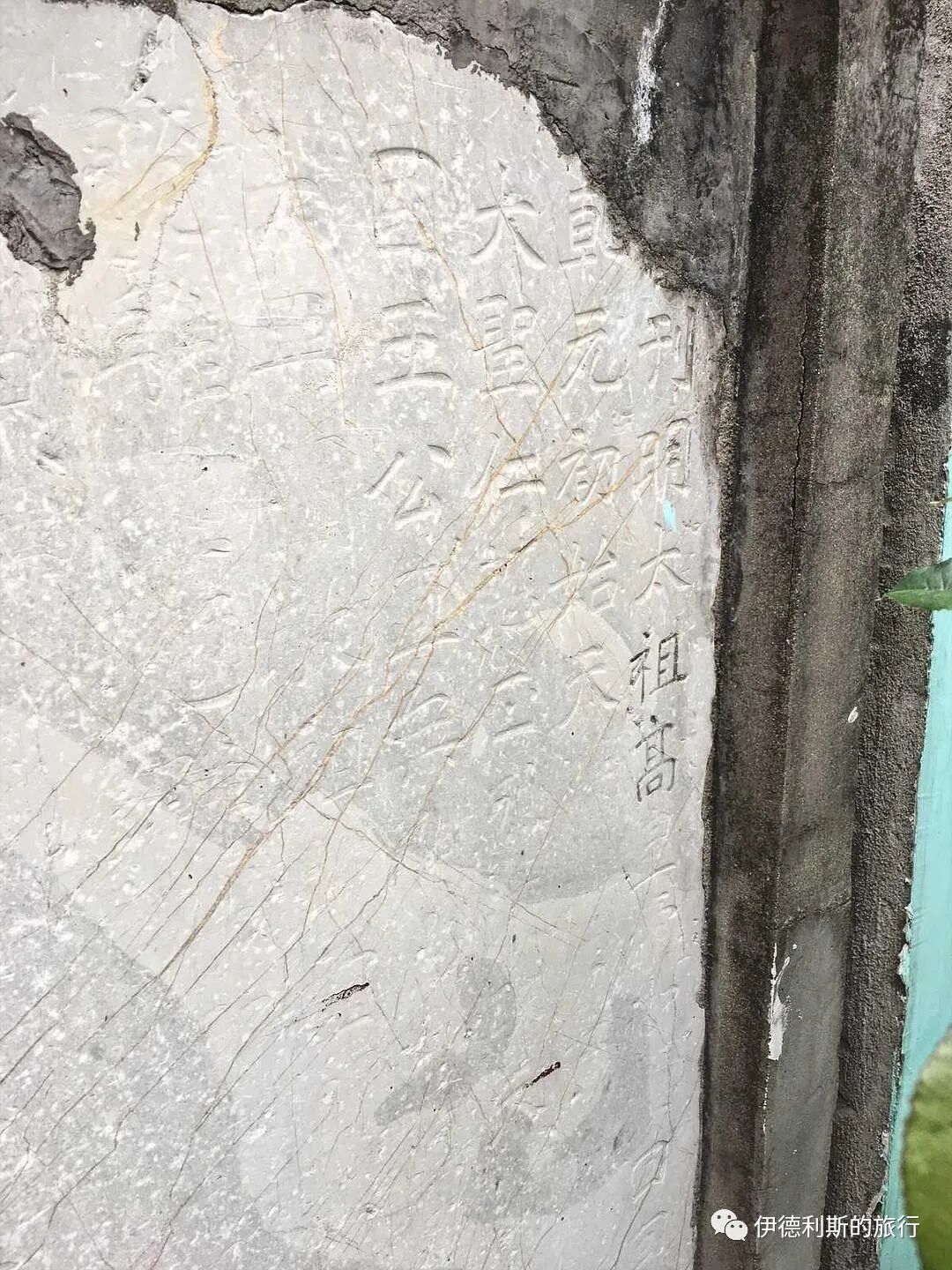
One of the three Hundred-Word Eulogy steles at the Qiyi Street Mosque is the best preserved. Because it includes the mosque name and posthumous title of the Ming founder, and the back features an imperial edict from the thirty-third year of the Kangxi era signed by the Wuchang Shanqian Mosque in the twentieth year of the Guangxu era (1894), we can conclude it was carved during the Qing Dynasty. According to Professor Hu Yubing's article, the text is as follows:
The Hundred-Word Holy Eulogy for the Hui Muslims, written by the Ming Emperor.
The origin of the universe, named by heaven, the leader who spread the faith in the Western Regions, teaching all living things, the great sage of supreme virtue, kind and righteous, spreading the heavenly scriptures, leader of all saints, assisting the destiny of heaven, protecting the king.
Just and selfless, the true lord of the white emperor, saving all those who are lost, praying to heaven for five dynasties, silently blessing.
Peace, the founder who explains the faith, bright and blessed, saving from suffering and hardship, transcending the underworld, the souls of the dead.
Free from sin, subduing evil and returning to the right path, the pure and simple elder, the Prophet Muhammad.
The Eulogy says:
The essence of the universe is pure, the holy wisdom is born, the way is passed down for ten thousand generations, teaching the true scriptures.
The twentieth day of the fifth month in the eighth year of the Hongwu era of the Great Ming Dynasty.
The Hundred-Word Eulogy re-carved in the Qing Dynasty.
The stele inscription from the Guangxu era on the back.
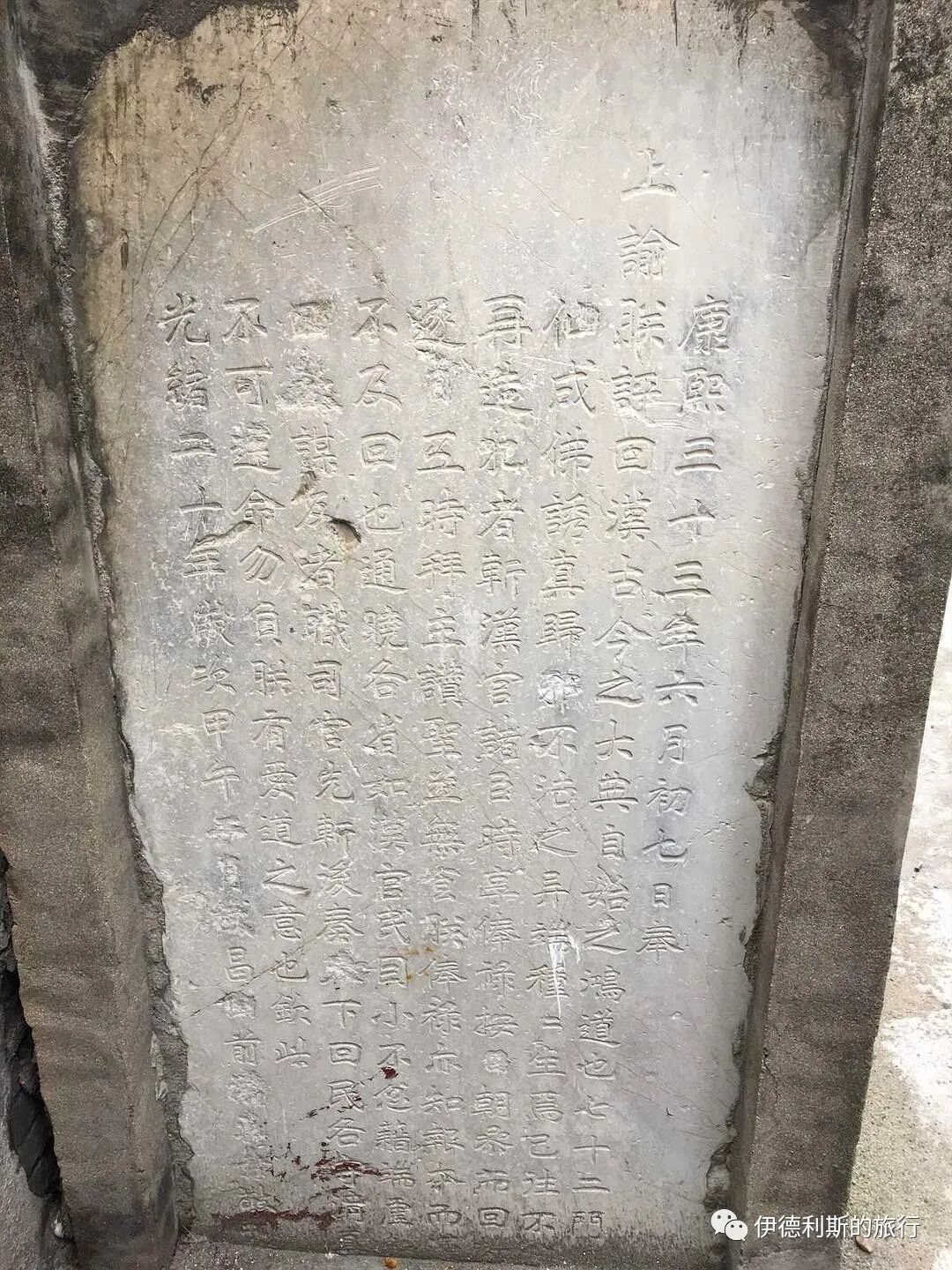
Between 1934 and 1935, the famous missionary Claude L. Pickens took a photo of this Hundred-Word Eulogy stele standing in the Qiyi Street Mosque. It is now kept in the Harvard-Yenching Library.
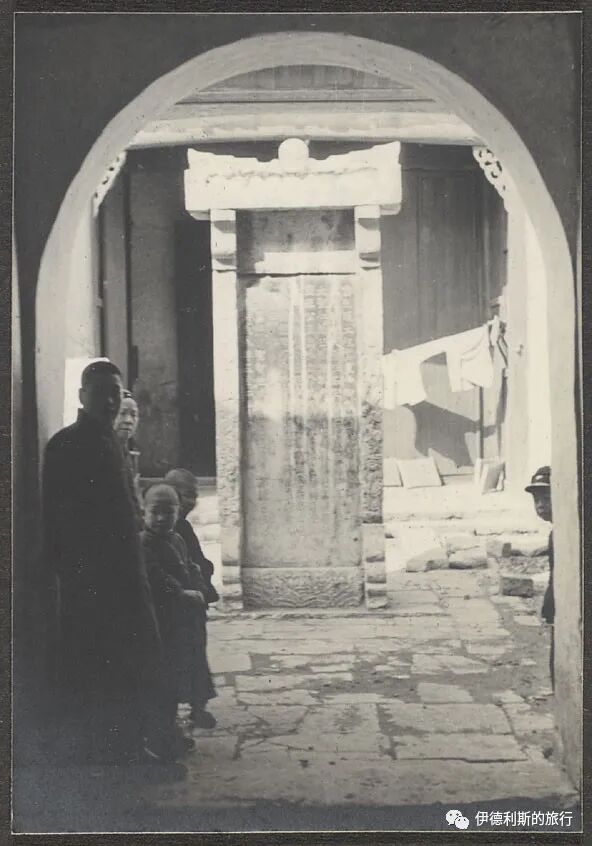
The contents of the other two fragments of the Hundred-Word Eulogy stele match the main text of the Qing Dynasty stele.
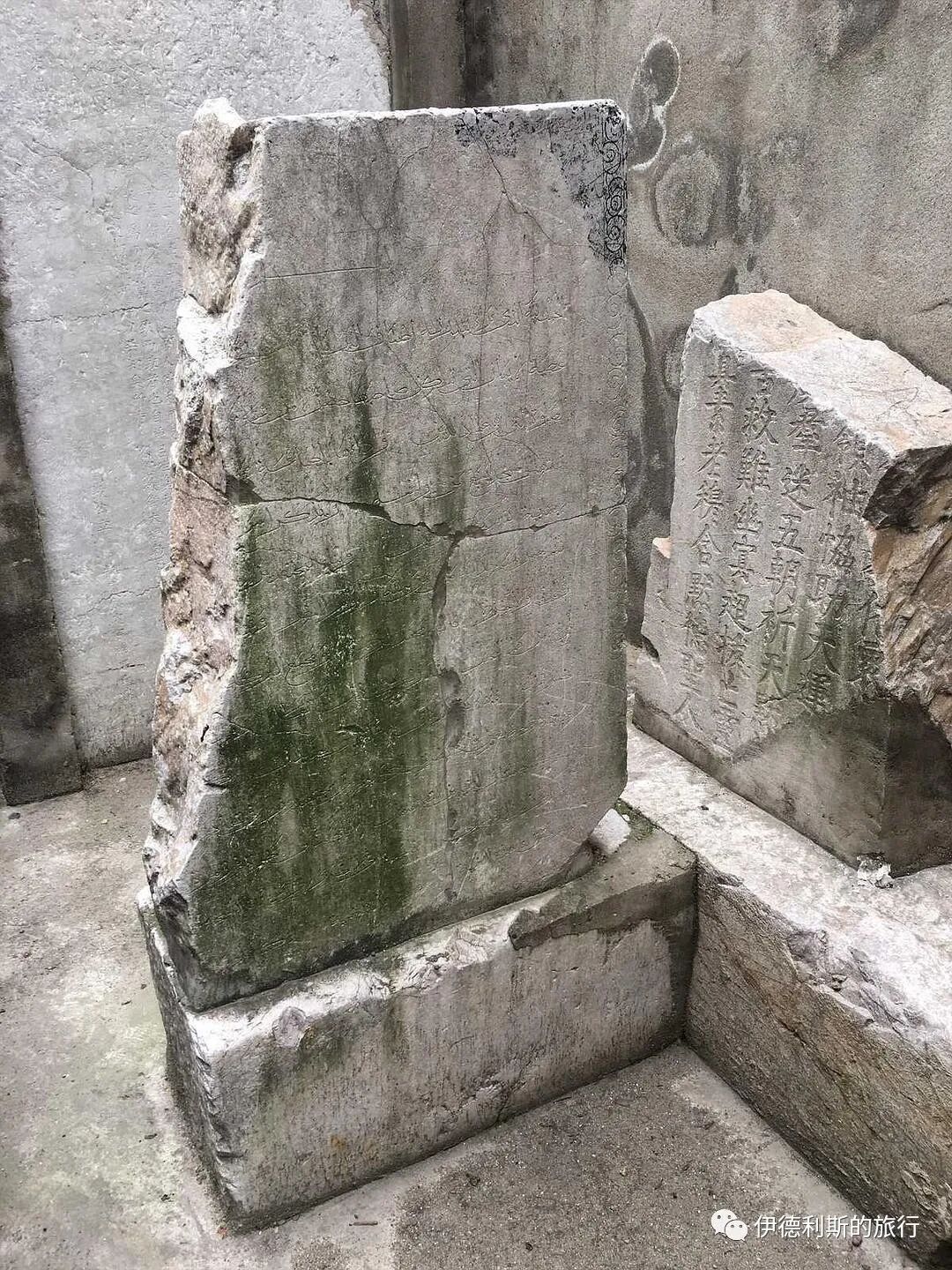
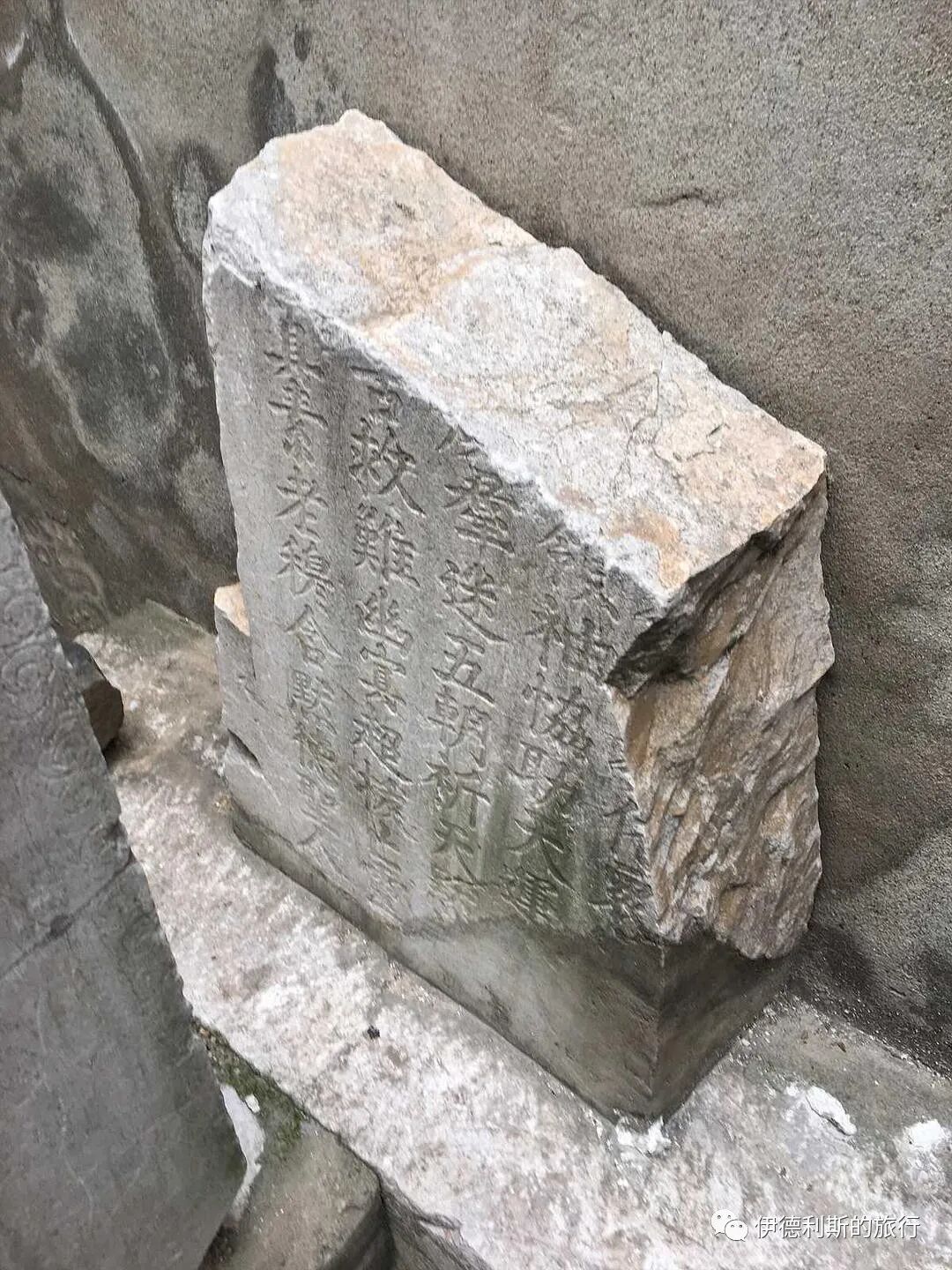
The Arabic inscription on the back of the second Hundred-Word Eulogy stele fragment.
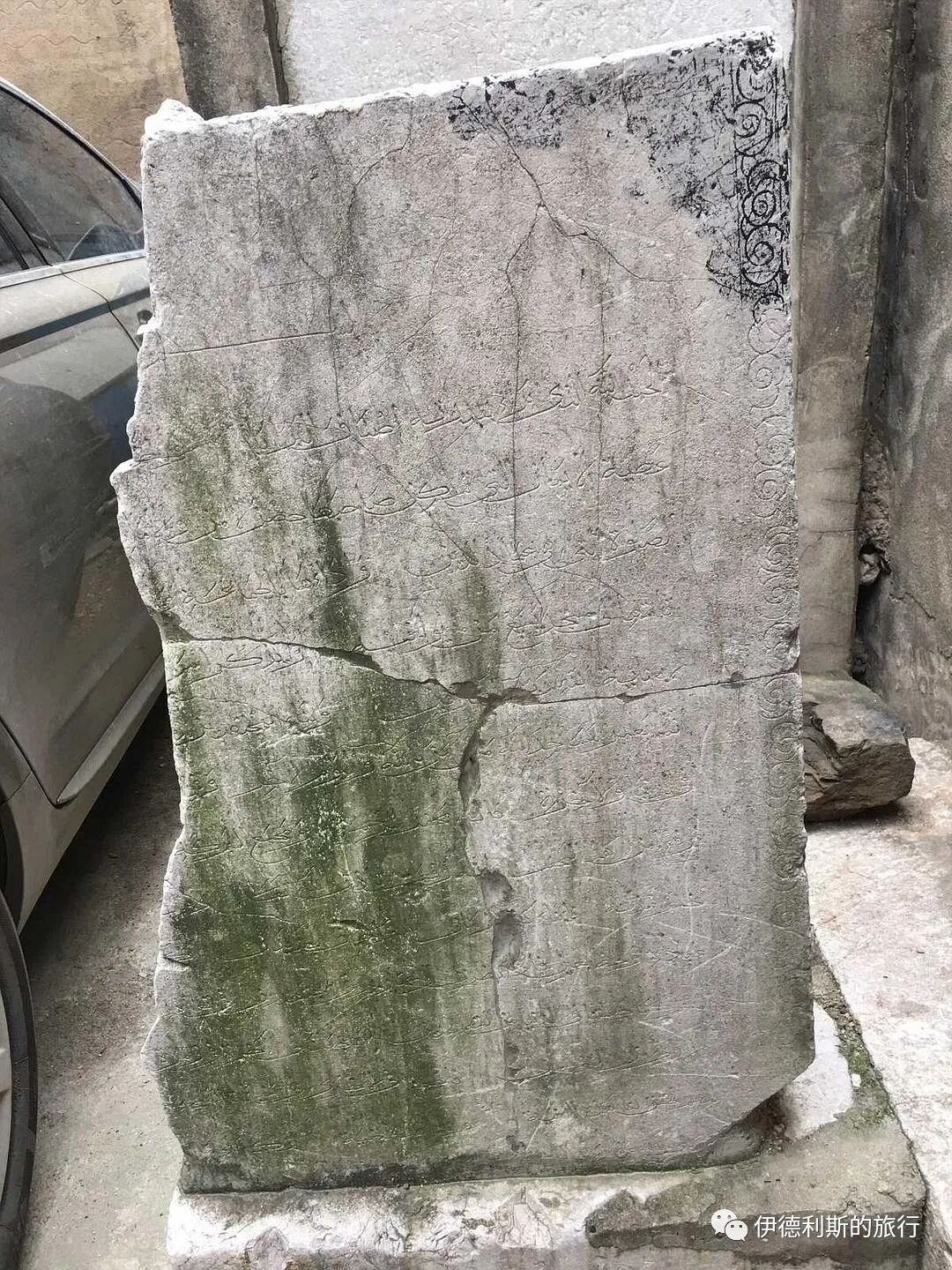
The Gongbei of Ma Si Baba.
The most famous imam of the Yuanmenkou Mosque was the Islamic scholar Ma Quan. Ma Chao's article on the life of the master Ma Quan and the historical records of his Gongbei provides many details about his life.
Ma Quan, courtesy name Minglong, was born in 1597 (the twenty-fourth year of the Wanli era) and died in 1679 (the seventeenth year of the Kangxi era) at the age of 82. Because he was the fourth child in his family, everyone respectfully called him Ma Si Baba.
Ma Quan belongs to the Ma family of the Huaiyuan Hall. According to the Ma Family Genealogy (Huaiyuan Hall), the family's ancestral home was Xuyi County, Fengyang Prefecture. Their first ancestor, Ma Zhen, served under Zhu Yuanzhang in many battles and became a general flag officer of the Anyang Guard. The second ancestor, Ma Wang, served as a commander of the Taining Guard. The third ancestor, Ma Jun, was transferred to be a commander of the Wuchang Left Guard in the Huguang Regional Military Commission in 1432 (the sixth year of the Xuande reign of the Ming Dynasty), and the family settled in Wuchang Prefecture from then on.
Ma Quan studied Islamic and Chinese classics with his father, Ma Qiang, from a young age. At that time, Feng Bo'an, a second-generation student of Hu Dengzhou (the founder of the Chinese mosque education system) and the nephew of Hu's student Mr. Feng Er, was teaching in Tongxin, Ningxia. Ma Quan went there to study for over three years. On his way home, he passed through Feng Bo'an's hometown of Xingyuantou in Xianning, Shaanxi. He met Feng Bo'an's cousin, Feng Shaoquan, who was the son of Mr. Feng Er, and studied with him for another three years before returning to Wuchang. After returning home, Ma Quan studied hard and with an open mind, eventually becoming a master of Islamic scripture.
While serving as the imam at the Yuanmenkou Mosque, Ma Quan proposed the idea of cultivating one's nature. Cultivating one's nature is the way to self-improvement and social harmony. He used Confucian ideas to explain Islamic teachings, which was part of the historical trend of interpreting Islam through Confucianism at that time. At the same time, Ma Quan started the Islamic mosque education system in Hubei. He opened a school to teach the scriptures, and many students came to learn from him. In the early years of the Kangxi reign, Ma Quan accepted an invitation from Ma Xiong, the regional commander of Liuzhou, to serve as the imam of the mosque in Liuzhou. After leaving Liuzhou and returning home, Ma Quan used money donated by Ma Xiong to buy land for the school at the foot of Wohu Mountain, ten miles east of Wuchang. After he passed away, he was buried there.
After Ma Quan passed away, the Ma family from Huaiyuan Hall and Hui Muslims from the Ma family in Sichuan moved to settle near his grave, gradually forming the village of Majiazhuang. According to the Ma Family Genealogy (Huaiyuan Hall), a mosque had already been built in Majiazhuang by the Qianlong or Jiaqing reign periods at the latest.
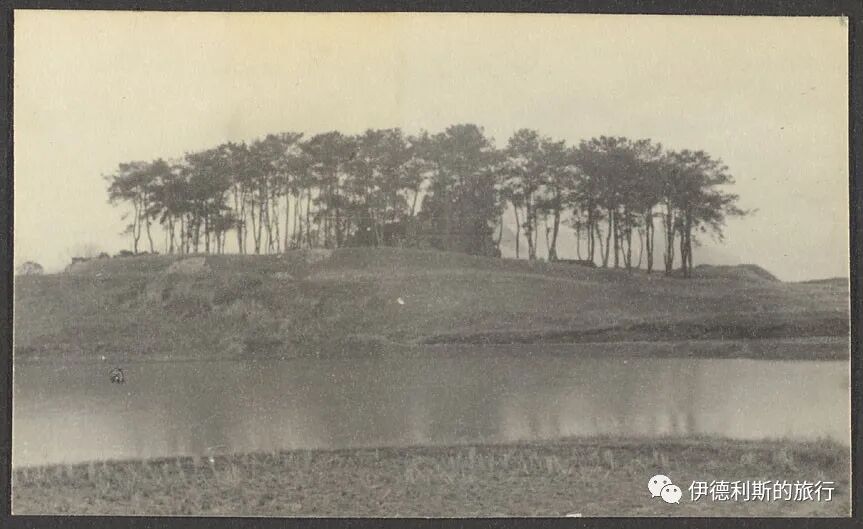
Between 1934 and 1935, Bi Jingshi took photos of the Majiazhuang Mosque and Ma Quan's grave as they were then. These are now kept at the Harvard-Yenching Library.
The Gongbei of Ma Si Baba.
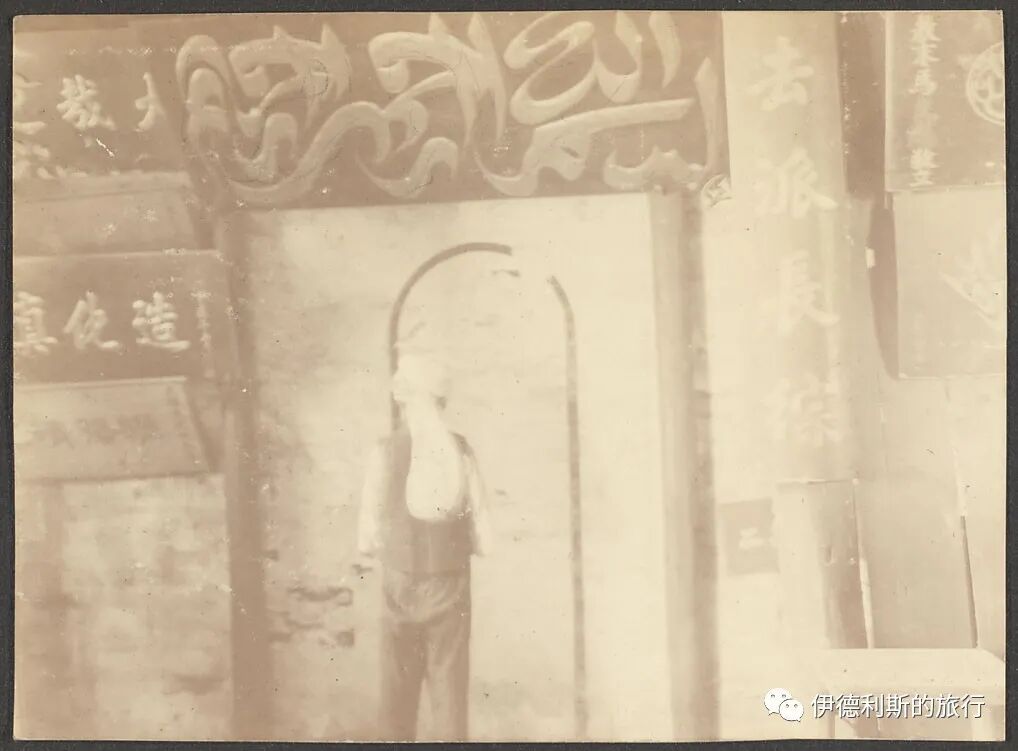
Majiazhuang Mosque.
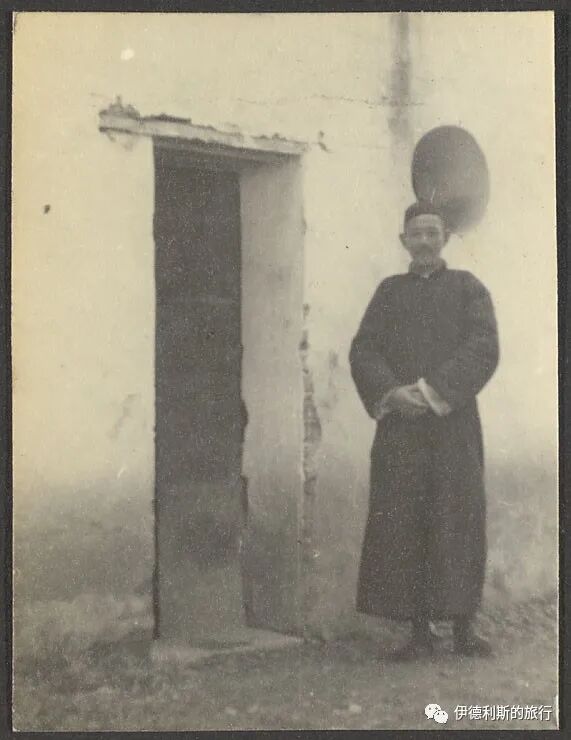
The imam at the entrance of Majiazhuang Mosque.
After the Battle of Wuhan in 1938, the mosque and Ma Quan's grave were damaged. In 1953, a brick and concrete pavilion was built over Ma Quan's grave on the original site, containing the coffins of Ma Quan and his wife. Directly in front inside the pavilion is a stone tablet with Arabic script. Below it is the Inscription on the Relocation of the Grand Master's Grave, written by Ma Quan in 1673 (the twelfth year of the Kangxi reign) for his teacher Hu Dengzhou, whose grave in Weicheng, Shaanxi, had been washed away by the flooding of the Wei River. To the front left inside the pavilion is the Huabiao Tablet, an inscription from 1684 (the twenty-second year of the Kangxi reign) by Ma Ziyun, the regional commander of northern Sichuan, praising Ma Quan. To the front right is the Record of Mosque School Land, an inscription from the same year by Ma Ziyun documenting the school land Ma Quan donated in Majiazhuang. On the left and right sides are the upper and lower parts of the Tablet of Rules and Donors for the Wuchang Majiazhuang School Land, which records the names of those who donated to the school land Ma Quan raised funds for during the Kangxi reign.
Below is a photo I took when I visited the Ma Si Baba gongbei in 2013.
Jinlong Lane Mosque.
After the Qing Dynasty, people had long wanted to move the Yuanmenkou Mosque because the nearby government office complained about the noise of the mosque's drums and the running of horses, while the office also felt the mosque building was too tall. It was not until 1751 (the sixteenth year of the Qianlong reign), when Aligun became the Viceroy of Liangguang, that he finally ordered funds to be allocated to buy land next to Jinlong Lane inside Wangshan Gate, east of the original Yuanmenkou Mosque, to build the Jinlong Lane Mosque in the original style. It is still commonly known as the Shanqian Mosque.
The Qiyi Street Mosque now houses the 1751 (16th year of the Qianlong reign) stele titled 'Stele of the Relocation of the Yuanmenkou Mosque,' which tells the full story of why the mosque was moved.
The most unique feature of the Jinlong Lane Mosque is its hexagonal main prayer hall with surrounding corridors and double eaves. Many mosques in China use hexagonal minarets, but the only two hexagonal main prayer halls discovered so far are in Wuchang's Jinlong Lane and Xiangyang. The reason for using a hexagonal shape is that the mosque's orientation was not perfectly aligned, but the mihrab must face west. A hexagonal shape allowed the main entrance of the prayer hall to sit exactly on the central axis of the courtyard.
The side lecture halls and the inverted entrance hall of the Jinlong Lane Mosque all feature front-facing corridors, creating a courtyard-style cloister. This was a common technique in the south to handle heavy rainfall.
The mosque was rebuilt in 1862 (the first year of the Tongzhi reign). A plaque with gold characters on a black background reading 'Ancient Mosque' (Qingzhen Gusi) hung high above the main gate, and a plaque reading 'Ancient Faith of Arabia' (Tianfang Gujiao) hung inside the hall. In front of the mosque stood a stele from 1894 (the 20th year of the Guangxu reign) inscribed with Emperor Kangxi's praise of Islam. During the 1938 Battle of Wuhan, the mosque was bombed by the Japanese army. After 1947, the building was rented to a school for children of the war effort (later renamed the Second Middle School). During the 1953 Wuhan floods, many victims moved to the open space in front of the mosque, forming a 'Muslim village.' In 1958, all mosque property was handed over to the housing department for management. After 1966, the Wuchang District Real Estate Company demolished the century-old mosque and built a three-story brick-concrete residential building on the site. It was returned to the Wuhan Islamic Association in 1985.
In the 1909 'Detailed Map of Hubei Provincial City and Suburbs,' the white box on the left is the East Yuanmen of the Huguang Governor's Office, and the one on the right is the Jinlong Lane Mosque. You can see the outline of the hexagonal prayer hall and the Mosque Street at the entrance.
Between 1961 and 1965, the famous architect Professor Liu Zhiping led the Chinese Islamic Architecture Research Group to draw the floor plan of the Jinlong Lane Mosque.
In 2010, Jinlong Lane and Mosque Street were completely leveled and disappeared into history.
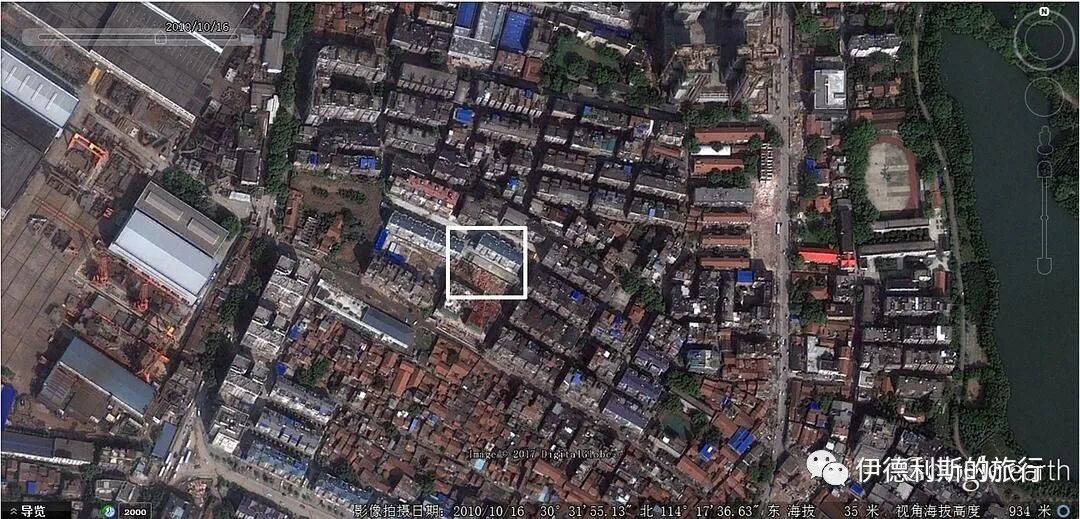
Qiyi Street Mosque
Besides the Shanqian Mosque inside the city, there was another mosque outside the city at Cross Street (Shizi Jie) outside Zhonghe Gate in southern Wuchang.
After the Wuchang city wall was built during the Ming Dynasty's Hongwu reign, the area outside Zhonghe Gate in the south was originally a wasteland used for construction materials, with lime pits and the southern city moat forming a large lime marsh. In the late Ming Dynasty, a group of Hui Muslims who moved from Maguoyuan in Shaanxi began to settle here, working in beef butchery, general goods, and halal food. During the Qing Dynasty's Daoguang reign, another group of Hui Muslims from Mianyang, Hubei, moved here due to flooding, and the number of Hui Muslims outside Zhonghe Gate gradually increased. Because the road leading south from Zhonghe Gate to Kejia Wharf on the Xunsi River formed a crossroad with the main street outside Bao'an Gate, this area was also called Cross Street.
The mosque outside the city was built in the early Qing Dynasty and was originally called the Zhonghe Gate Mosque. After the Wuchang Uprising, Zhonghe Gate was renamed Qiyi Gate, the main street outside Zhonghe Gate was renamed Qiyi Street, and the Zhonghe Gate Mosque was renamed the Qiyi Street Mosque. In 1862 (the first year of the Tongzhi reign), the mosque outside the city was renovated, forming a two-courtyard complex. The first courtyard's main room was a large hall with side rooms and corridors. The second courtyard's main room was the prayer hall, with side rooms serving as the imam's living quarters and the water room. There was a well in the back courtyard of the prayer hall.
The mosque outside the city in the 1909 'Detailed Map of Hubei Provincial City and Suburbs'
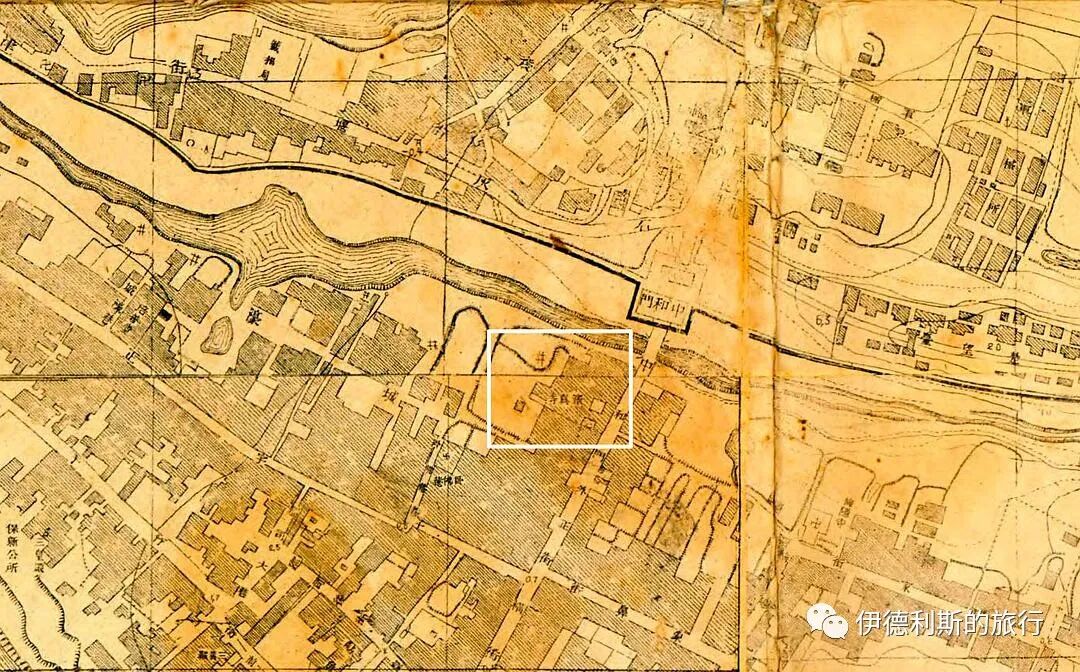
The mosque was destroyed by bombing after the 1938 Battle of Wuhan. It was rebuilt in 1946, but on a much smaller scale. After 1966, the mosque was occupied and severely damaged. The Islamic Association reclaimed it in 1980, and in 1984, they built the current two-story building in the final courtyard where the original well was located. It is the only remaining mosque in Wuchang.
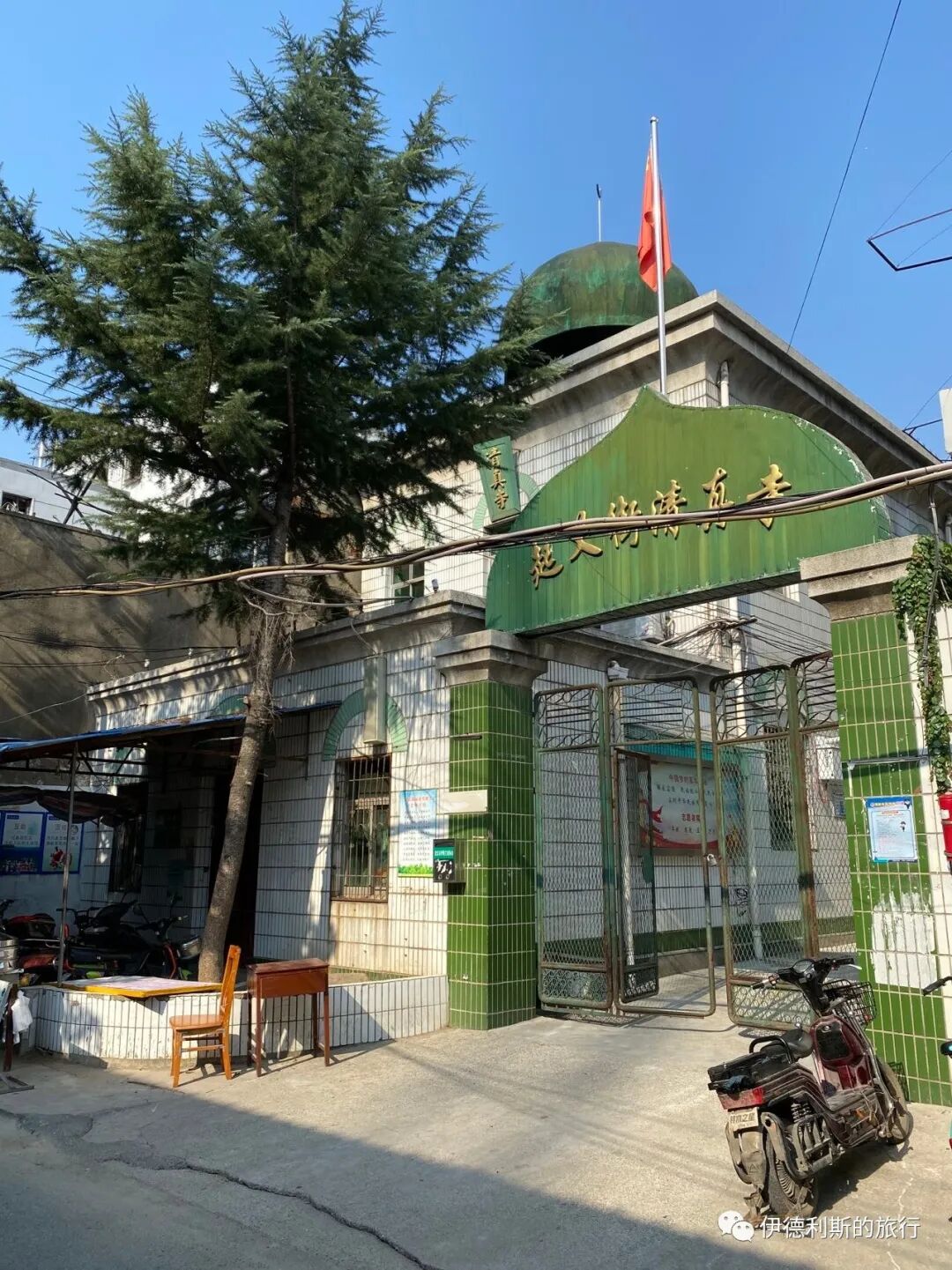
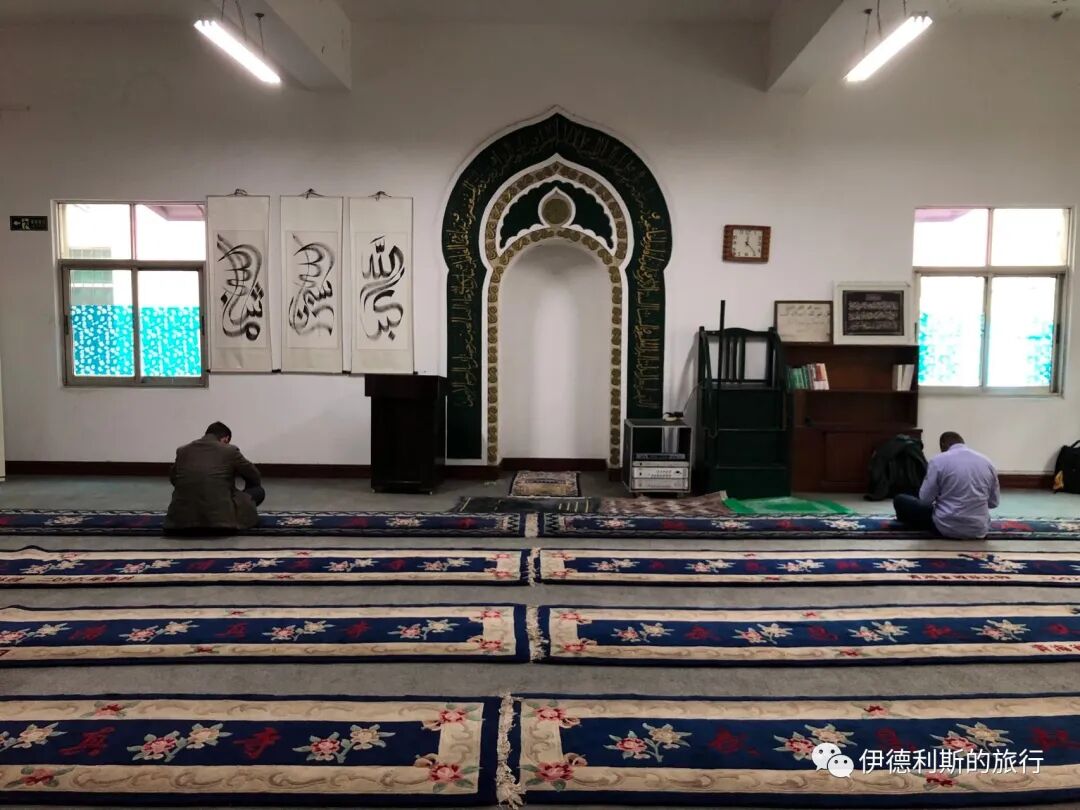
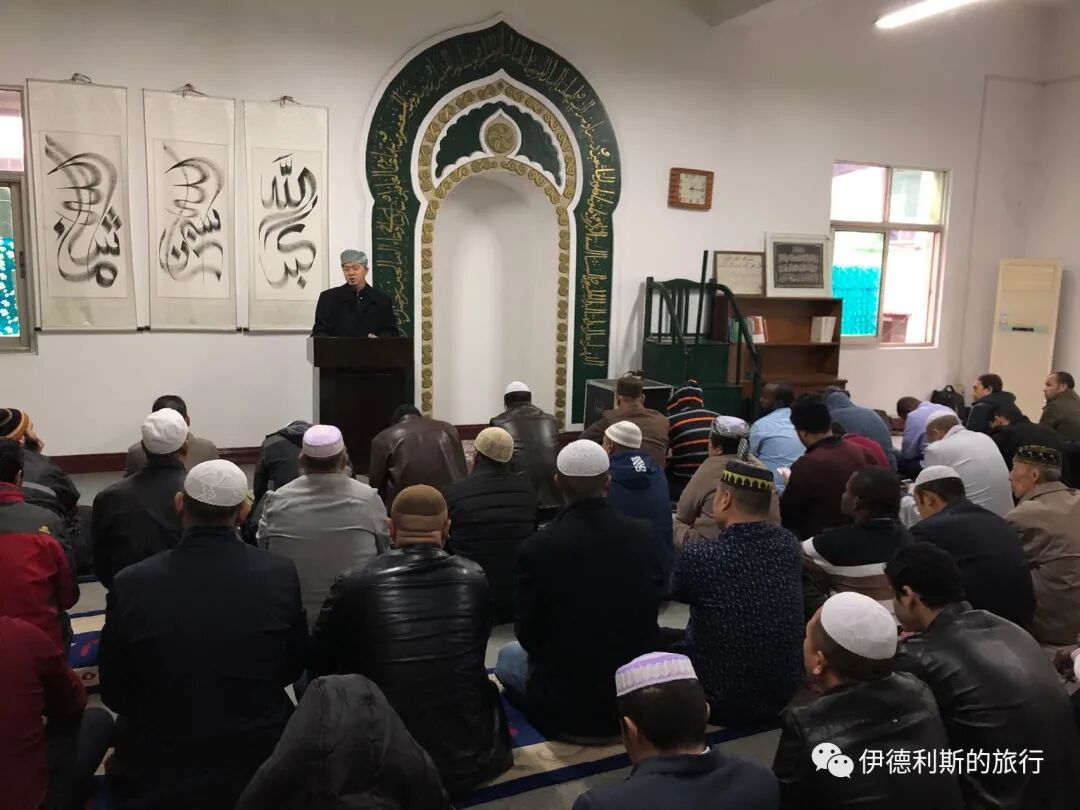
Between 1934 and 1935, Bi Jingshi took photos of the Qiyi Street Mosque as it looked then.
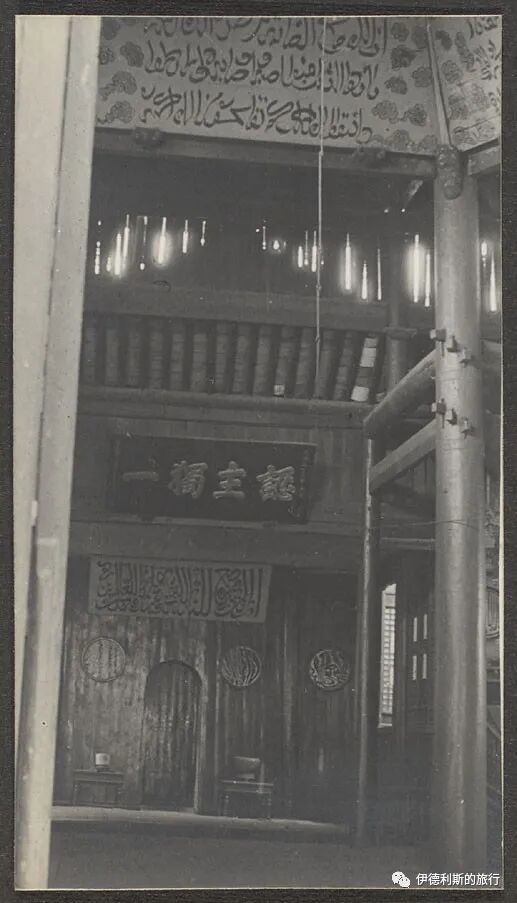
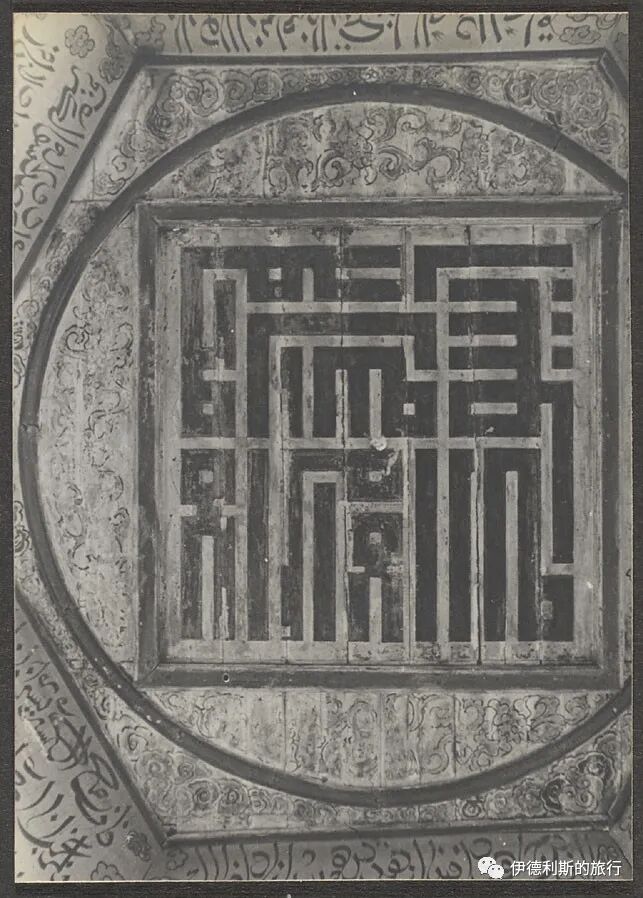
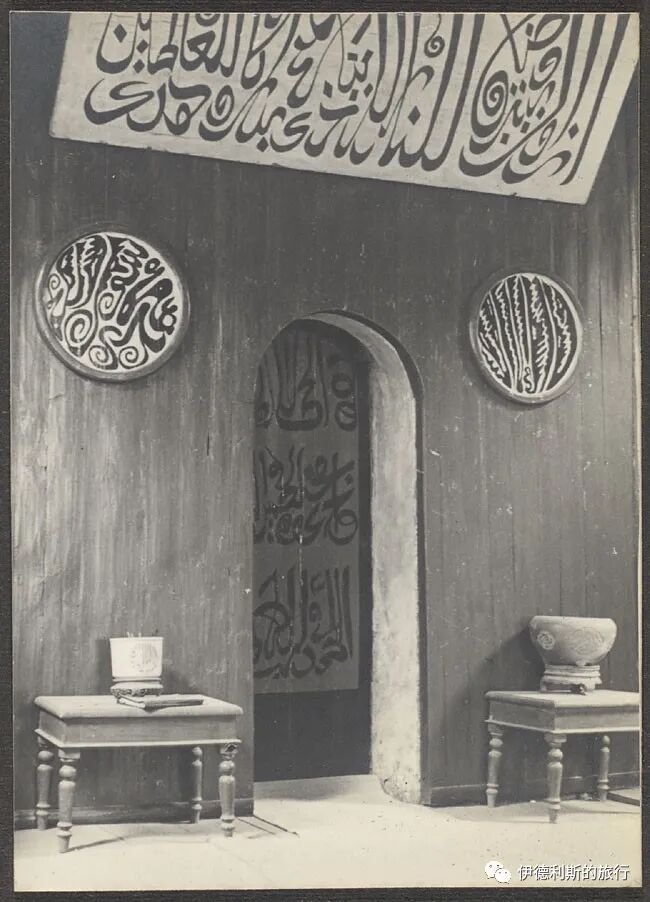
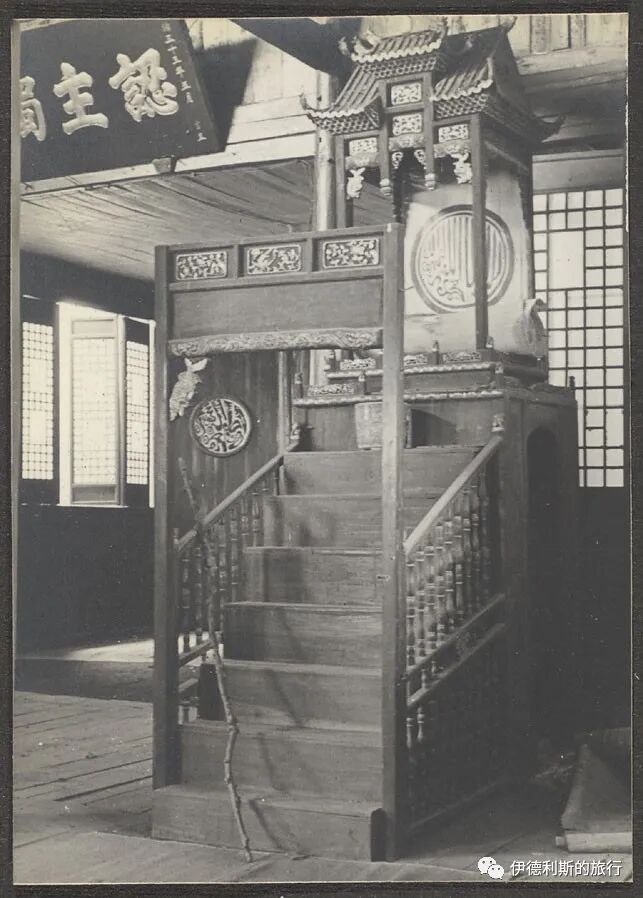
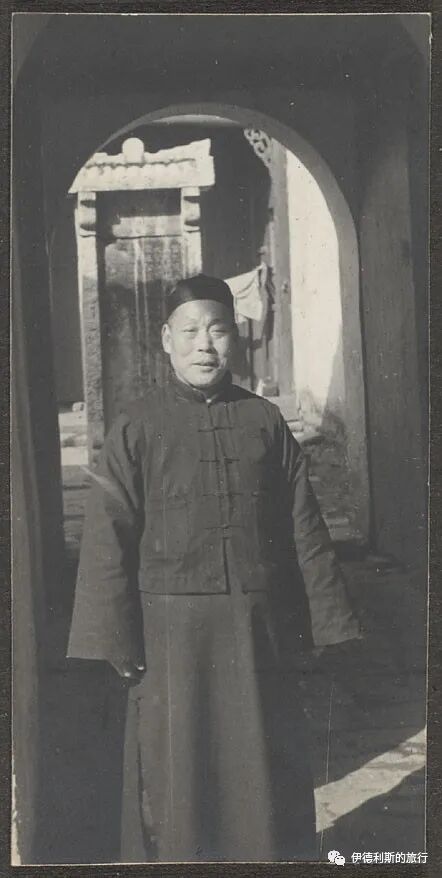
Between 1961 and 1965, the famous architect Professor Liu Zhiping led the Chinese Islamic Architecture Research Group to take photos of the Wuchang Qiyi Street Mosque.
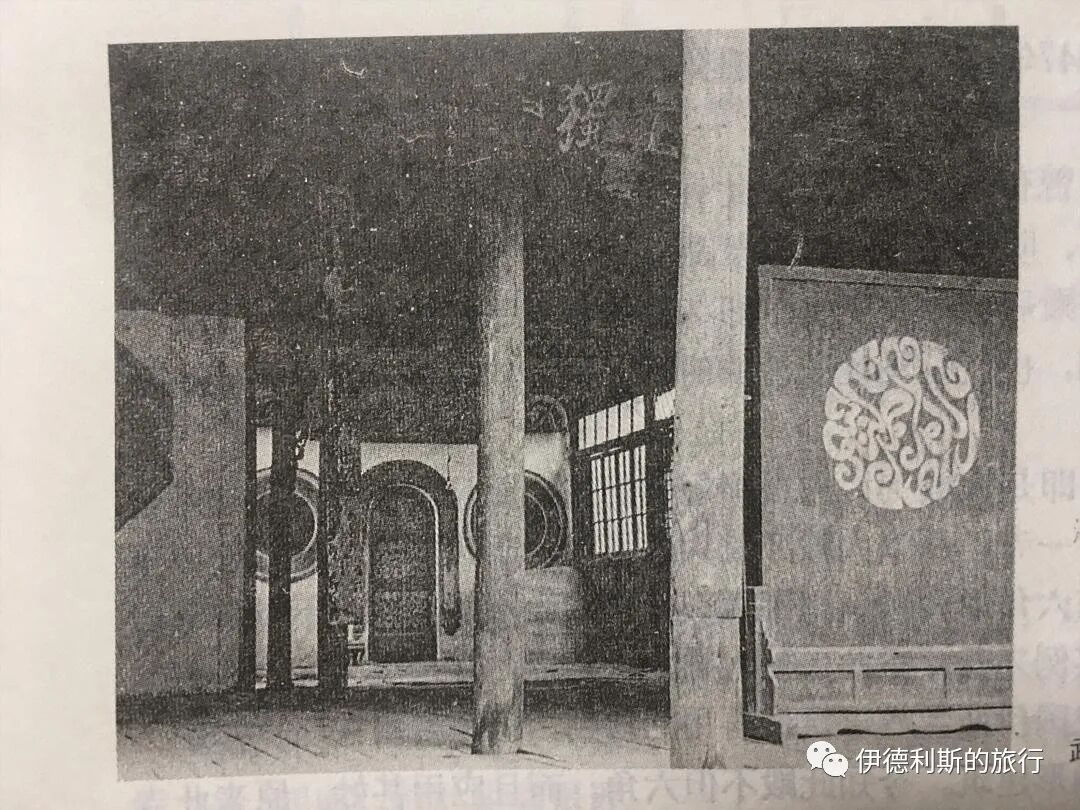
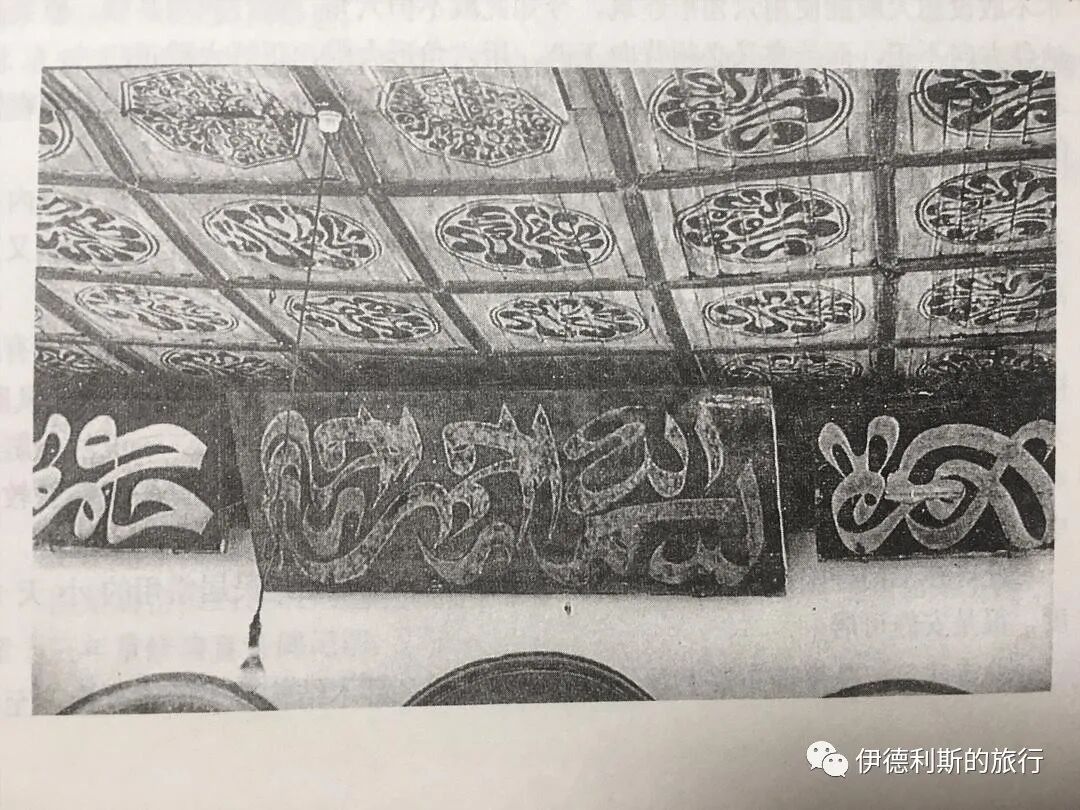
Qiyi Gate and Cross Street
A 1981 census of Cross Street outside Zhonghe Gate recorded 316 Hui Muslim households with 999 people. They were most famous for making halal beef. The signature dishes of the Hui Muslims here included beef meatballs, five-spice braised beef (wuxiang lu niurou), stir-fried beef, glutinous rice steamed beef, seasoned beef offal, beef brisket soup (niu wagou aotang), and full-ingredient beef bone soup.
Shizi Street once had many halal businesses. Baoan Street used to have a busy cattle slaughterhouse, commonly known as the Cattle Killing Bay (Shaniuwan). It supplied all the beef for Hui Muslims in Wuchang until it closed after the public-private partnership reforms in 1956. Qiyi Street No. 52 was a breakfast shop for Hui Muslims. It was first run by Ma Jisu, then taken over by Ma Heqing, who was born in 1913. After the turn of the 21st century, the third-generation successor Ma Minglong, born in 1942, ran the shop under the name Ma Huaji. Baoan Street No. 352 was the Minglun Street Halal Hui Muslim Cooperative Canteen. Xiang Xian organized and opened the halal canteen in 1958. It later became a restaurant for Hui Muslims and closed in 1990. Baoan Street No. 341 was the Qiyi Hui Muslim Restaurant and Hostel. It was opened by the neighborhood committee in 1986 and closed in 1994.
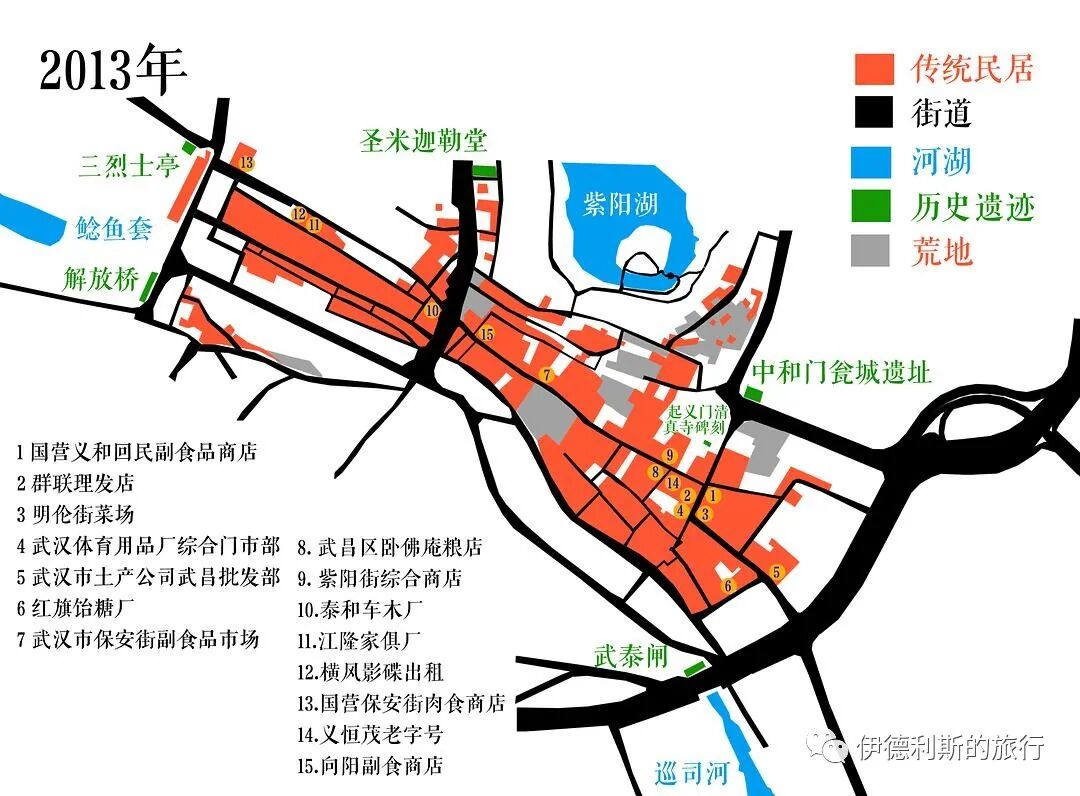
In 2000, the layout of Shizi Street was mostly intact. The first round of demolition began in 2006 to build the road between Qiyi Gate and Shizi Street. Between 2013 and 2015, an elevated road was built after the demolition between Qiyi Gate and Shizi Street, which severely damaged the traditional layout.
I visited Qiyi Gate for the first time in 2010. At that time, they were rebuilding the city walls on both sides and repairing the gate tower built in the 1980s to commemorate the 100th anniversary of the 1911 Revolution.
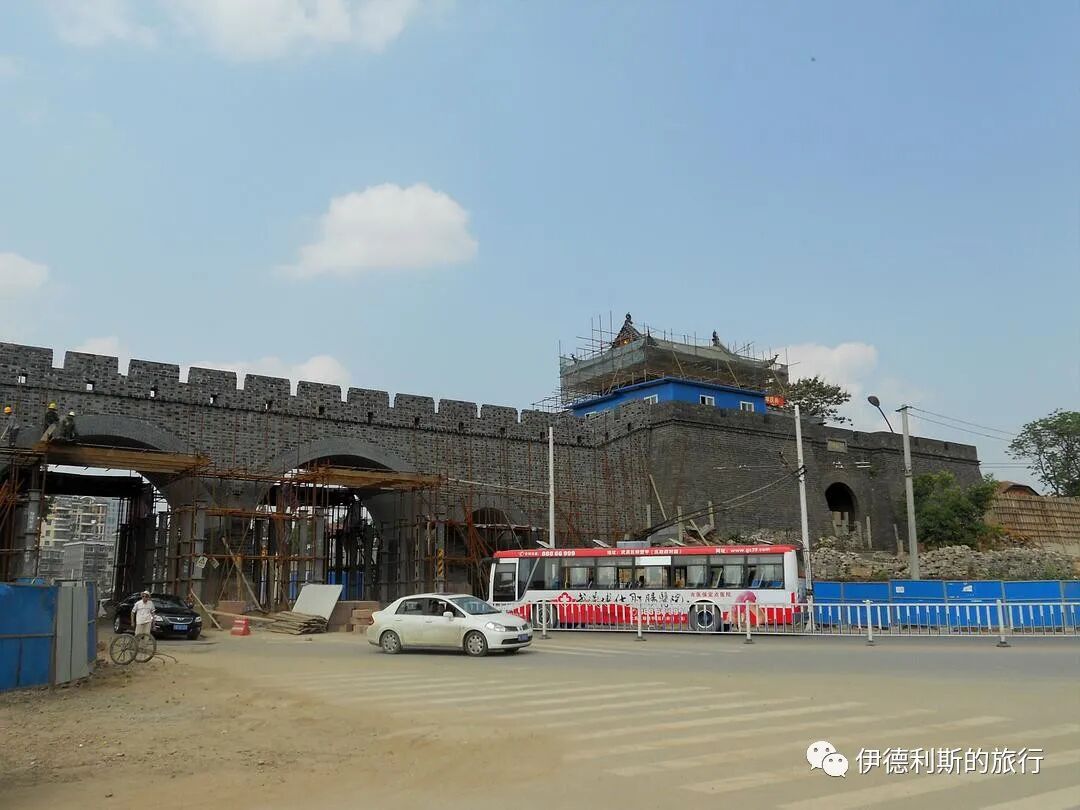
Qiyi Street in 2010.
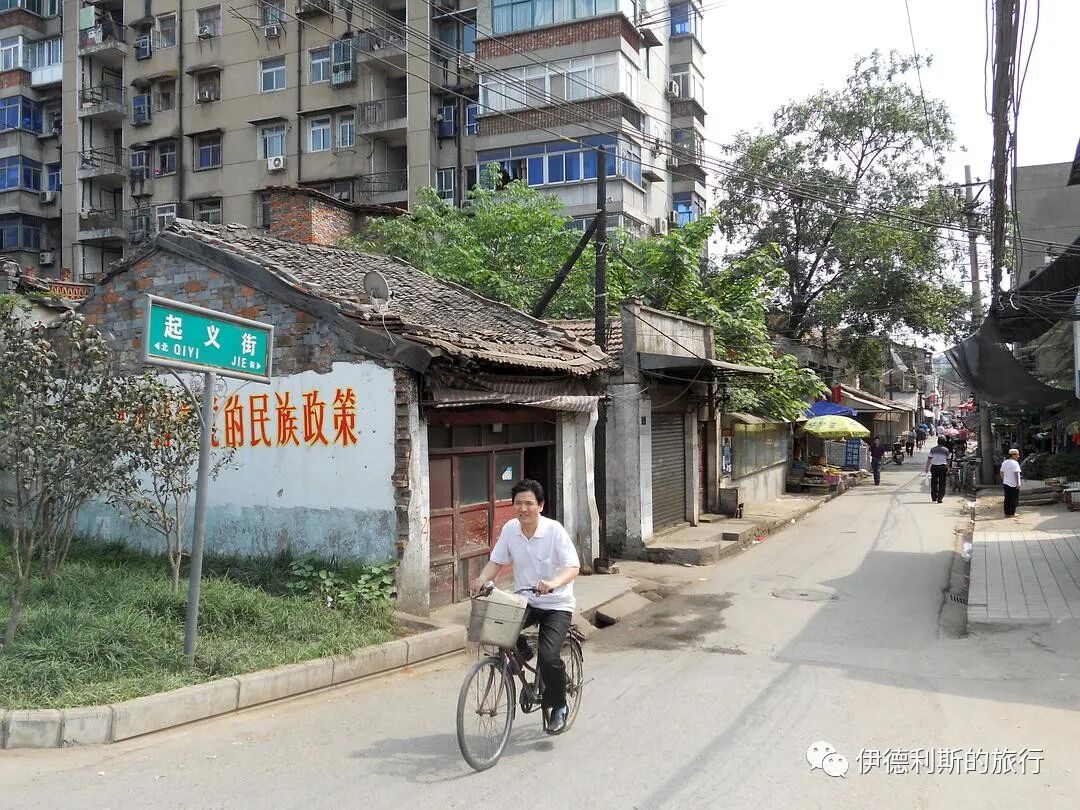
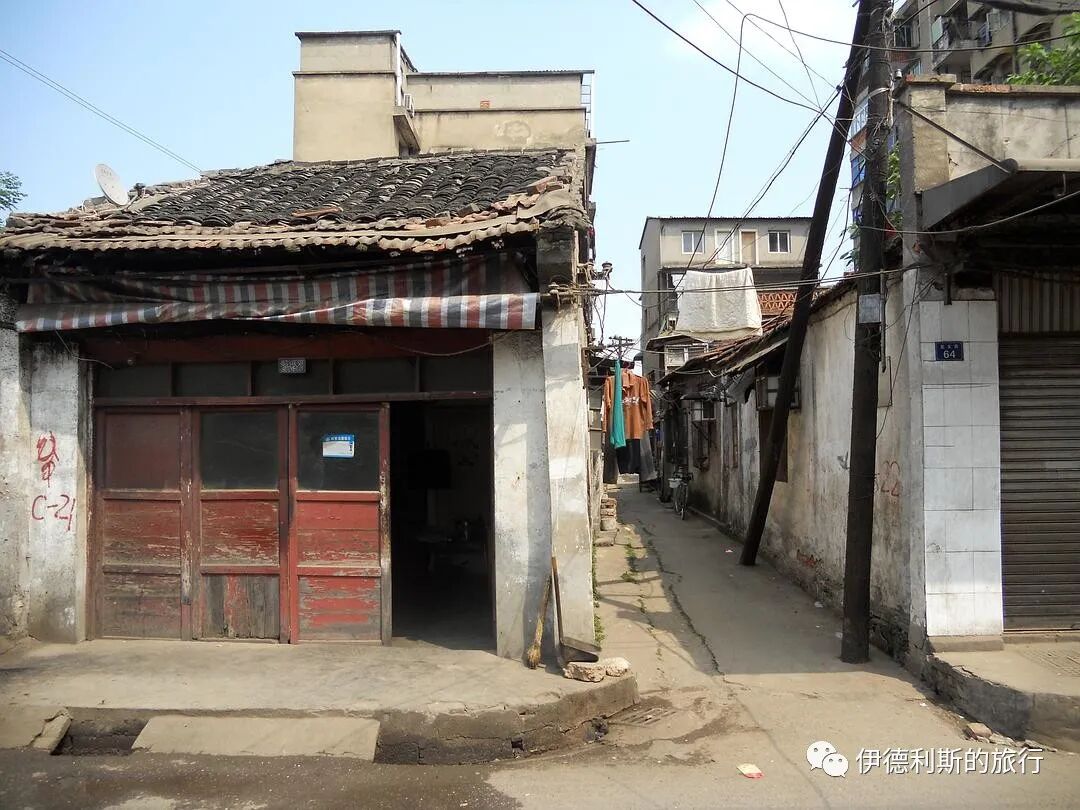
When I visited again in 2011, the repairs to Qiyi Gate were finished.
Looking at the Hui Muslim Primary School from Qiyi Gate.
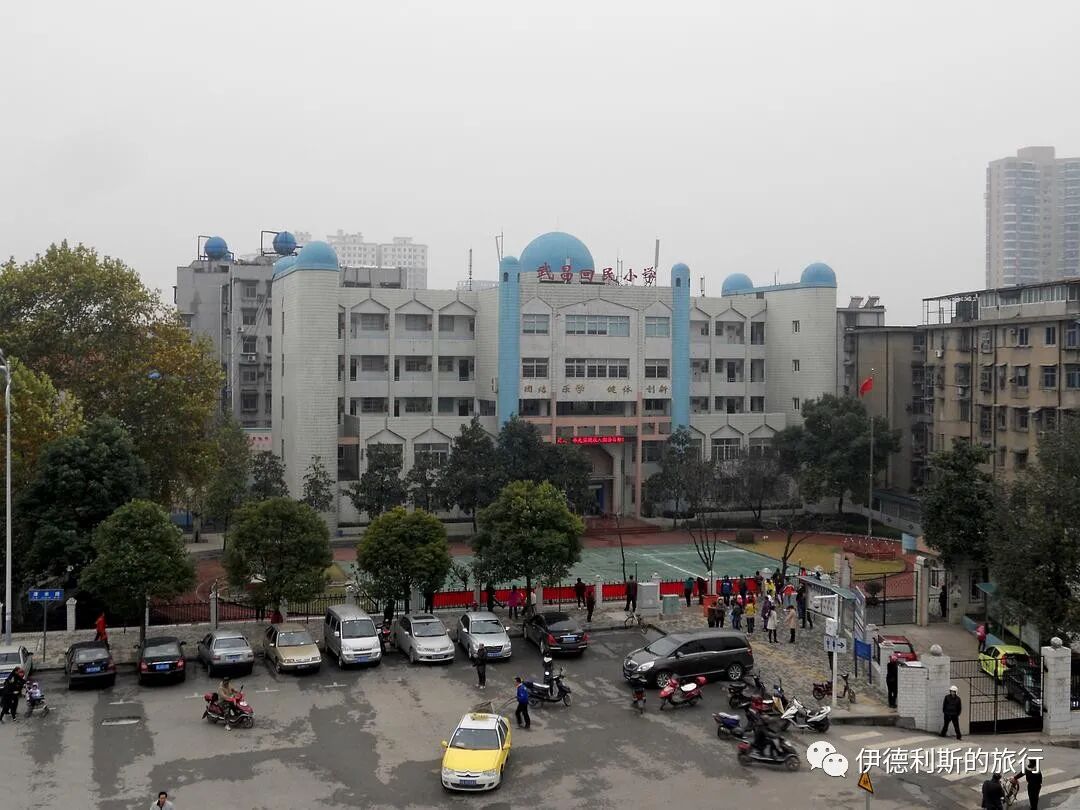
The largest building at the entrance of Qiyi Street is the Wuchang Hui Muslim Primary School. It was founded in 1912 by Ma Zuquan, a major contributor to the 1911 Revolution and an army major general, who also served as its first principal.
In 1907, Ma Zuquan joined the Liudong Halal Education Association, which was formed by Hui Muslim students studying in Japan, while he was studying artillery at the Imperial Japanese Army Academy. The Liudong Halal Education Association published a journal called Awakening the Hui (Xinghui Pian) at the time, which became an important symbol of the beginning of modern education for Hui Muslims.
During the Wuchang Uprising on October 10, 1911, Ma Zuquan was an instructor at the Hubei Training Institute and a supervisor at the Jiangwu Hall. He was elected as the temporary frontline commander and artillery commander. He directed the shelling of the Huguang Viceroy's Office and later participated in the battles to attack Hanyang and Hankou. After the Republic of China was established, he was awarded the rank of army major general and served as the principal of the Hubei Army Officers' School and as an advisor to the Ministry of War.
In 1912, Ma Zuquan, Li Jiahao, Ma Jishan, and Ma Decai donated money to establish the Wuchang Private Chongzhen Primary School inside the Qiyi Street mosque, with Ma Zuquan serving as principal. The Hui Muslim school taught Chinese, abacus, and Arabic at the time, and also had elementary and advanced classes for religious studies. At the beginning, it enrolled over 70 children of Hui Muslims and waived tuition and book fees. In 1922, there were four classes for boys and two elementary classes for girls, totaling over 200 students. In 1924, the Wuchang Hui Muslim Primary School participated in the National Games and won first place in the scout drill competition with Chaquan boxing, single broadsword, and staff techniques.
During the Northern Expedition army's siege of Wuchang in 1926, the school was bombed because it was located near the city wall outside Zhonghe Gate. It was also looted and destroyed by refugees, causing heavy losses and forcing it to shrink to two classes.
In 1937, provincial and county subsidies stopped, and the primary school was left with only one class of 58 students. The school closed completely after the Battle of Wuhan in 1938. After 1945, Sheng Longxuan donated two buildings, and with help from the Ma Yinglong Eye Medicine Shop and donations from the Hui Muslim community, the school reopened. A board of directors was formed by Ma Zuquan and others, with Sheng Longxuan as principal, and they enrolled over 100 students. After 1949, Kang Cheng served as principal. The school's funding came from the Choubang Union (the cattle slaughtering industry). For every cow slaughtered, 7 jiao was collected as a levy, with 5 jiao going to the school and 2 jiao going to the mosque.
The school became public in 1955. In 1962, there were 141 Hui Muslim students, making up 17% of the total.
Looking at Qiyi Street through the archway of Qiyi Gate.
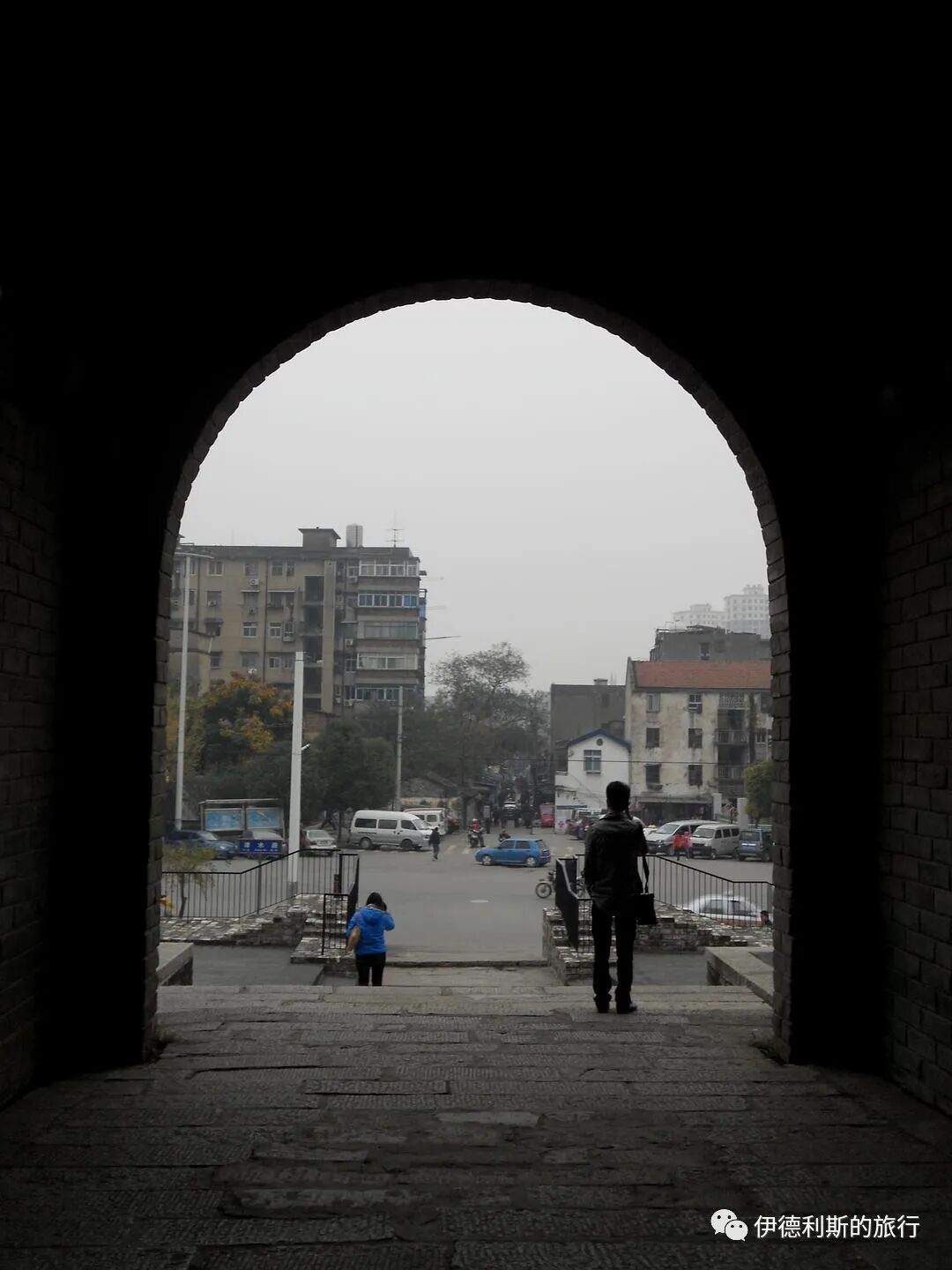
Passing through Qiyi Gate to reach Shizi Street, where you can find all kinds of halal food.
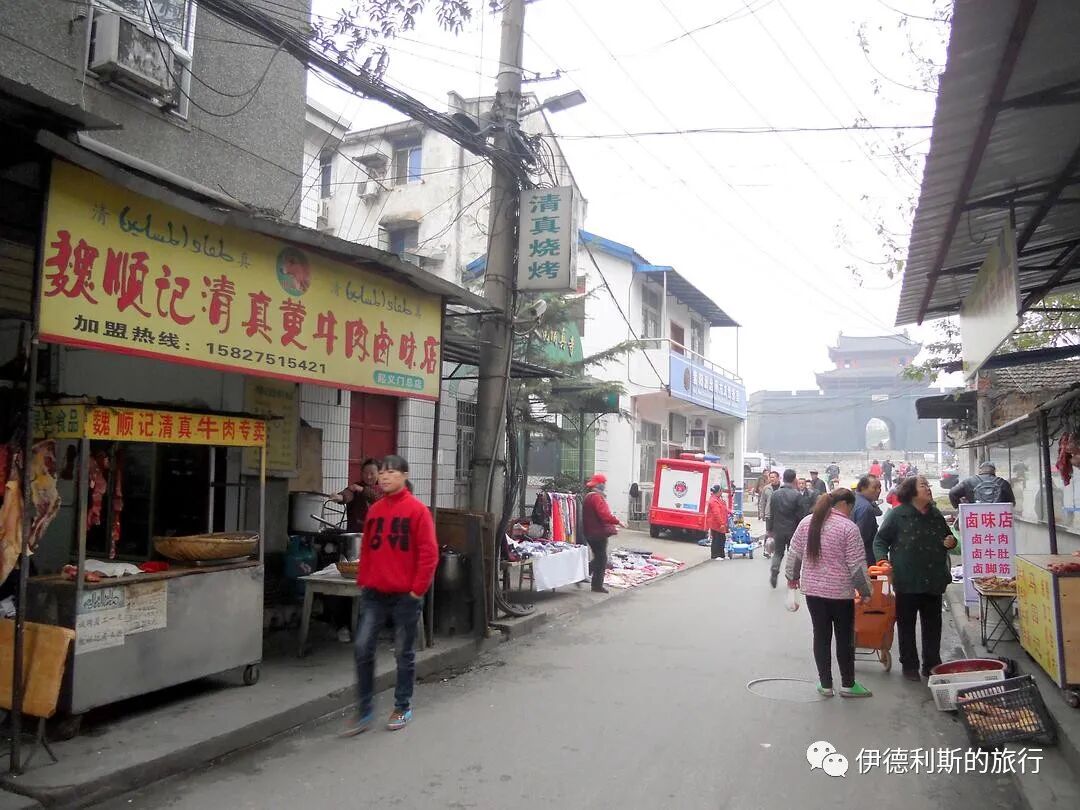
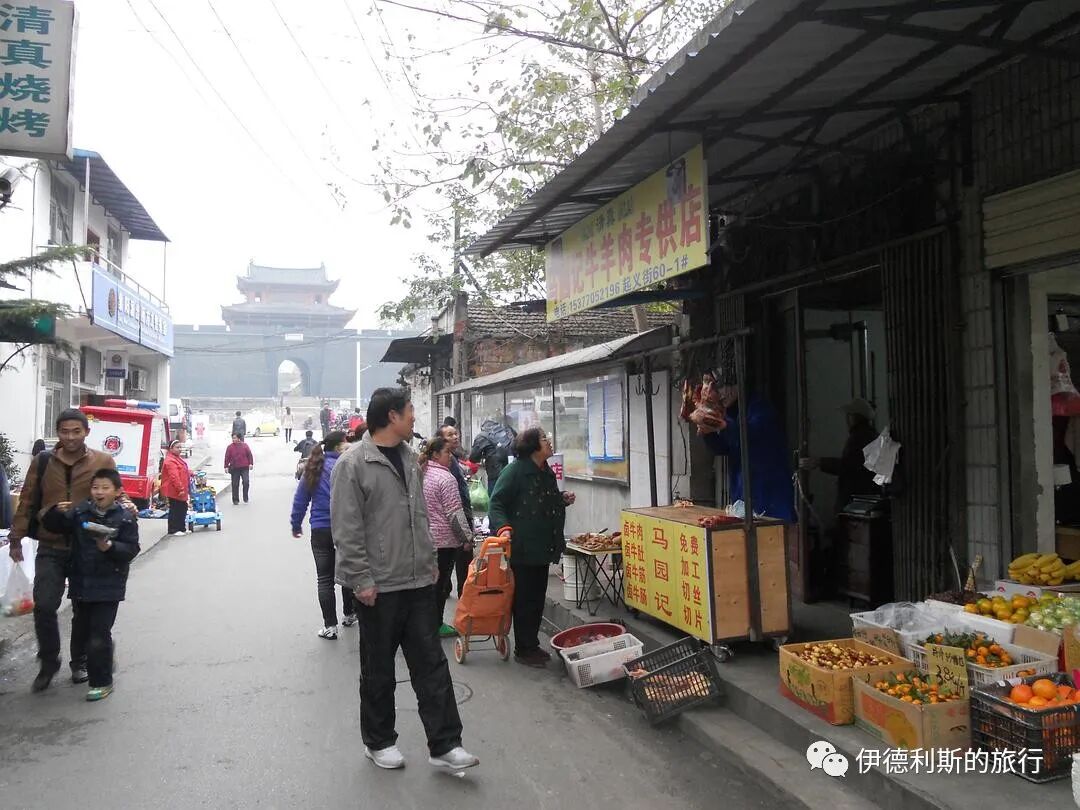
A Hui Muslim family home on Bao'an Street.
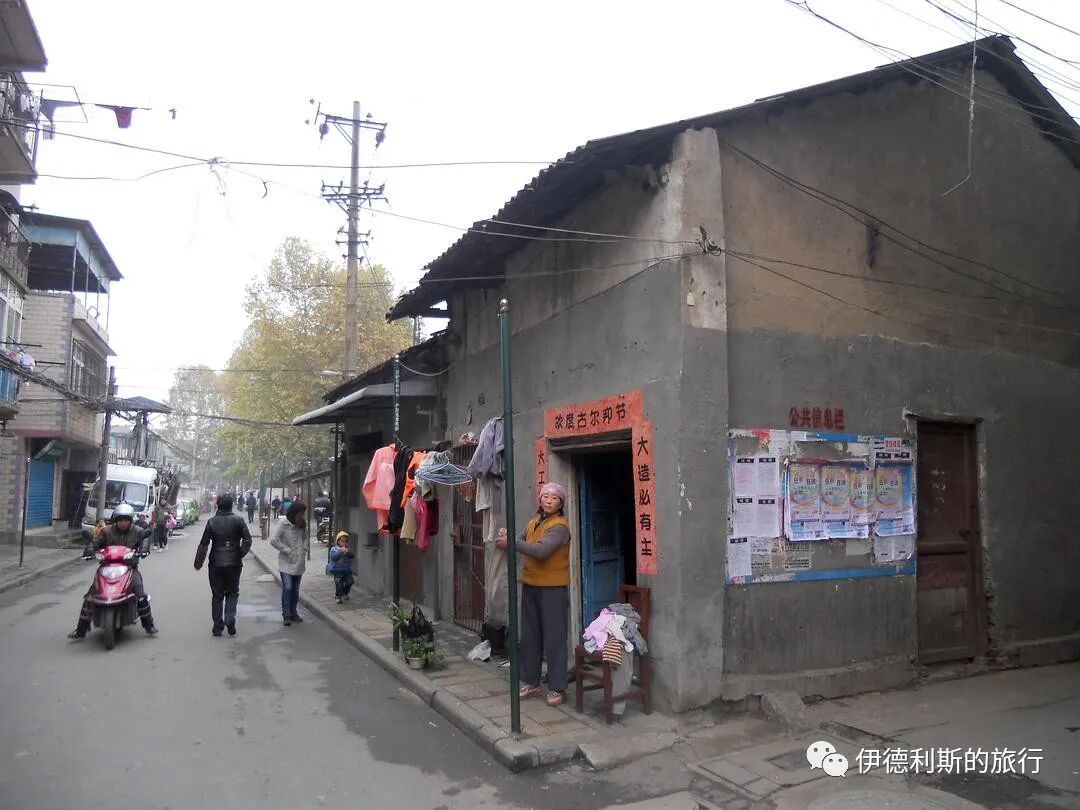
The former site of the State-run Yihe Hui Muslim Grocery Store on Qiyi Street, photographed in 2011; it has since disappeared.
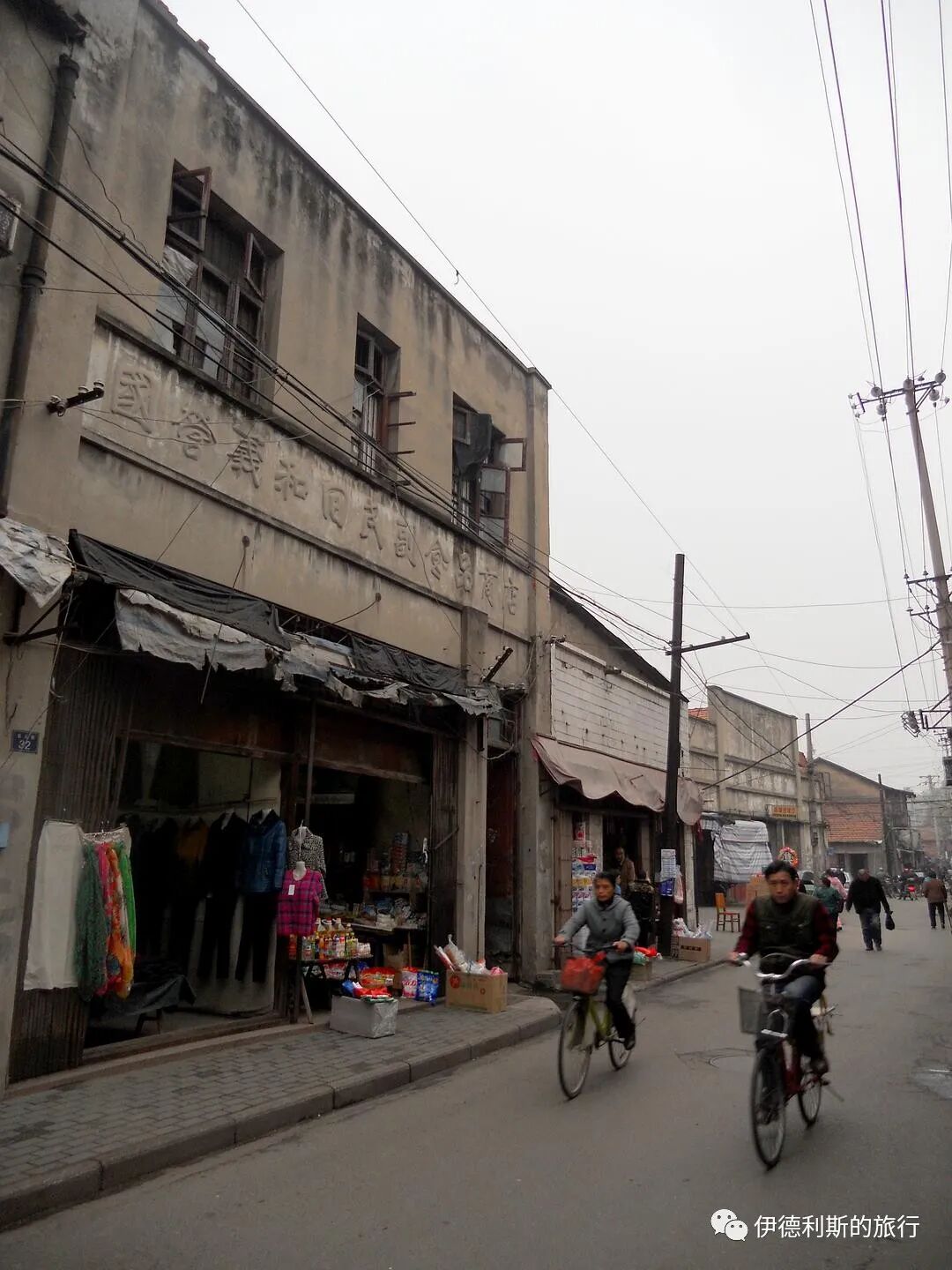
In November 2018
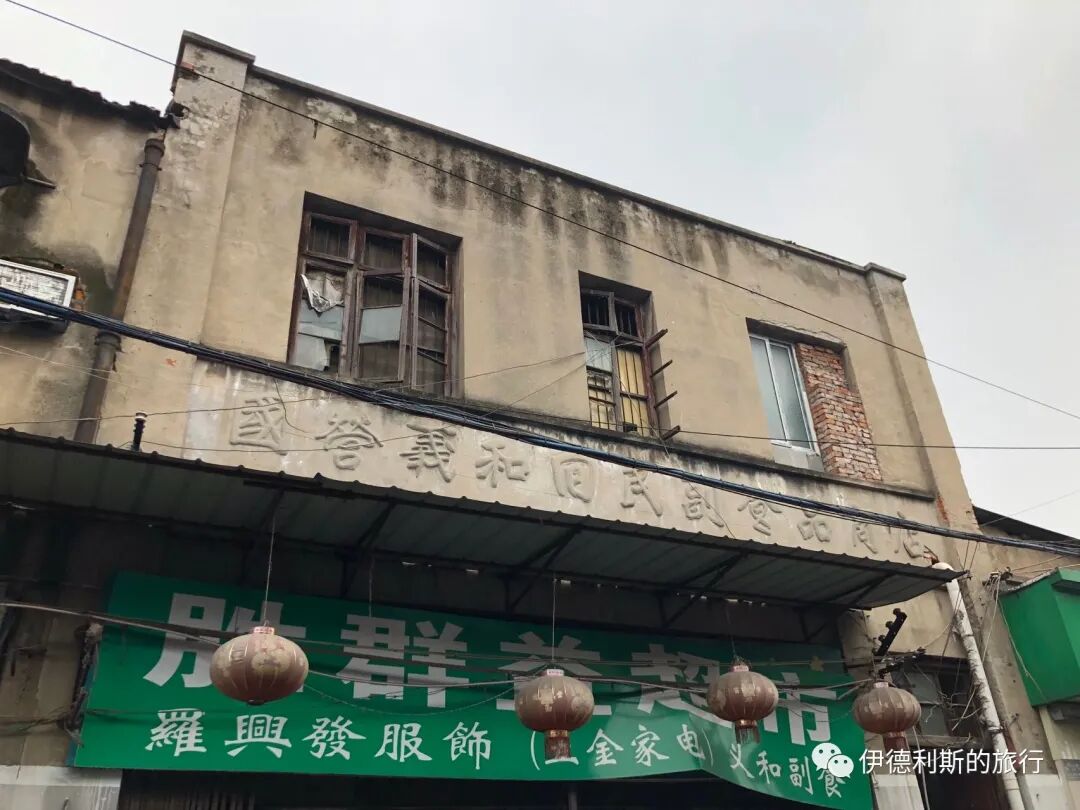
I went to Qiyi Gate again in May 2014, and construction on the elevated bridge had already started.
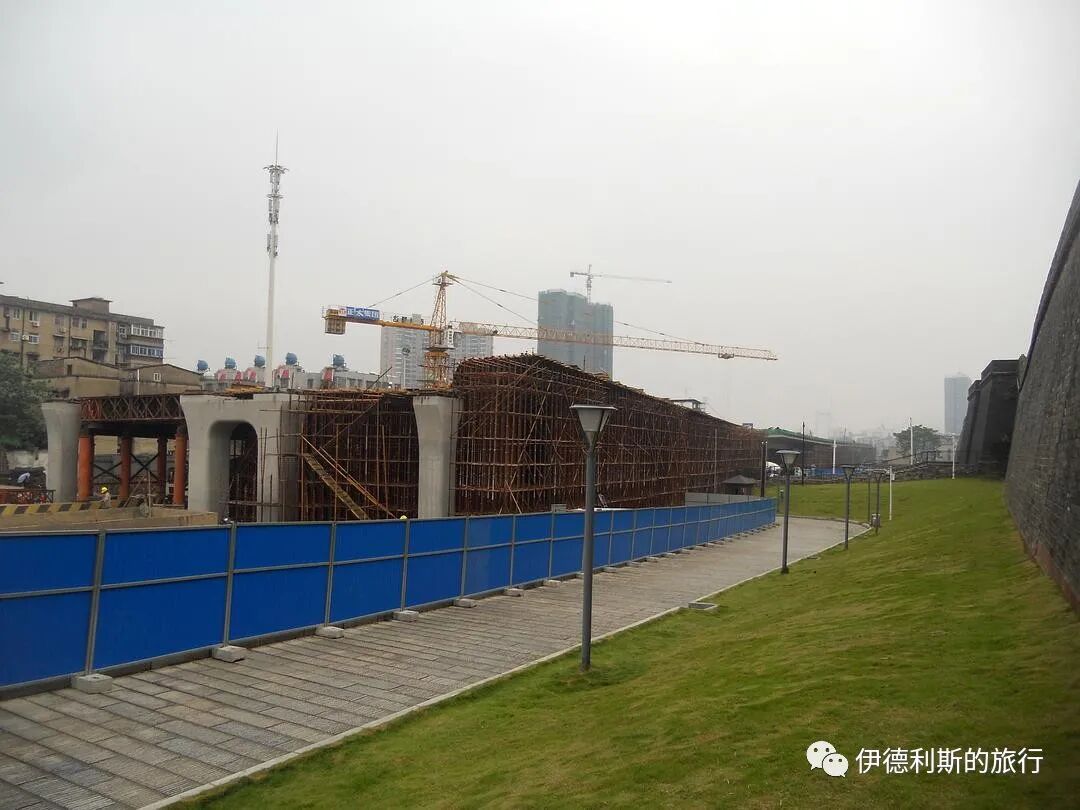
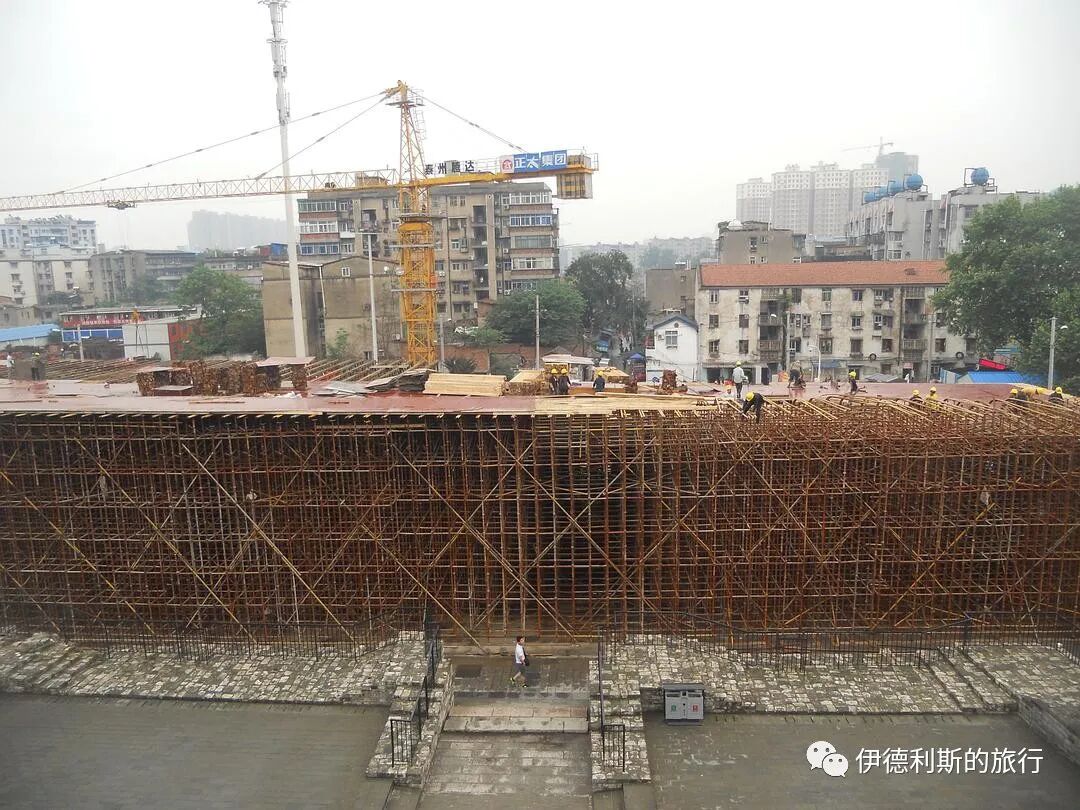
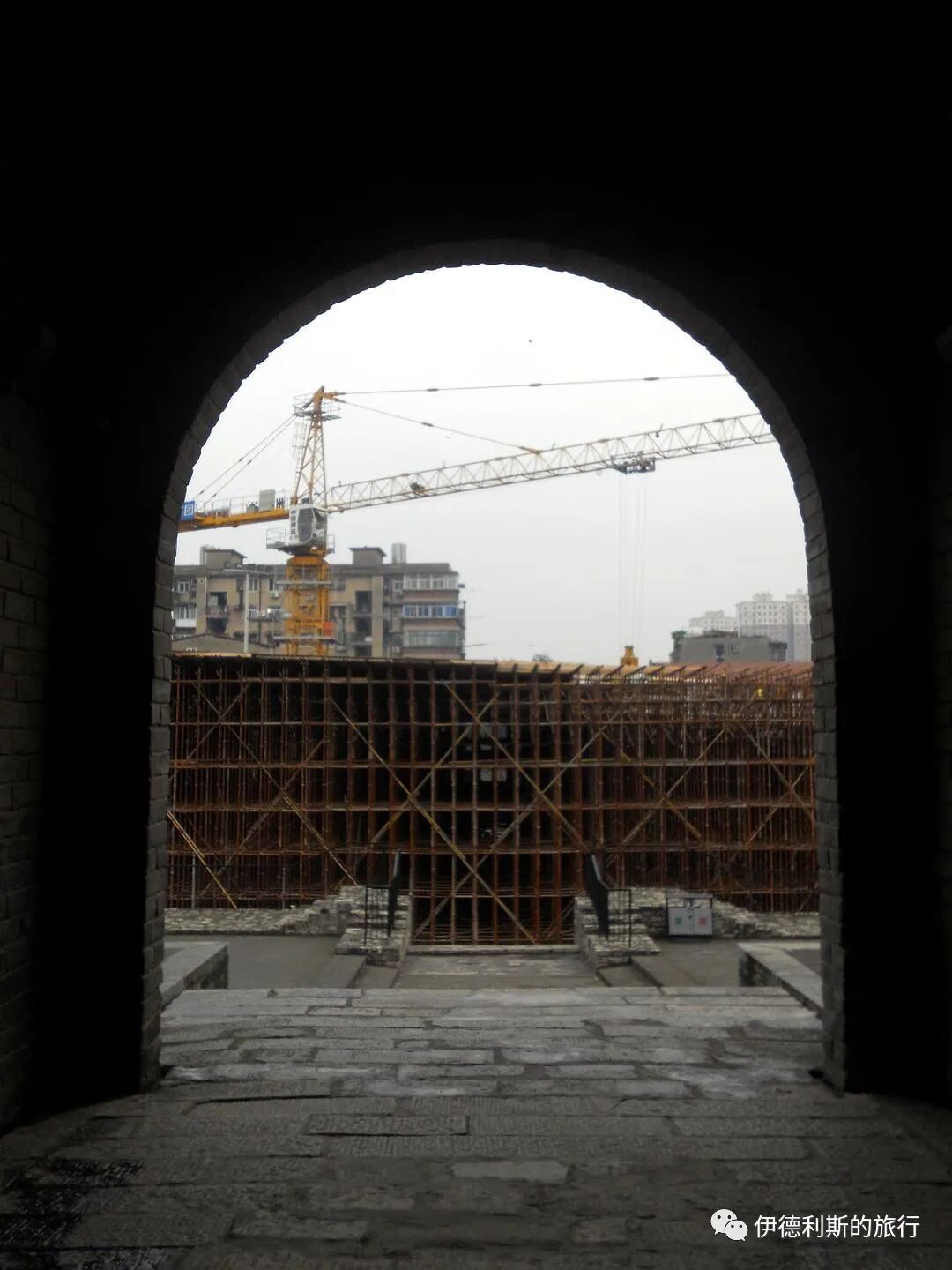
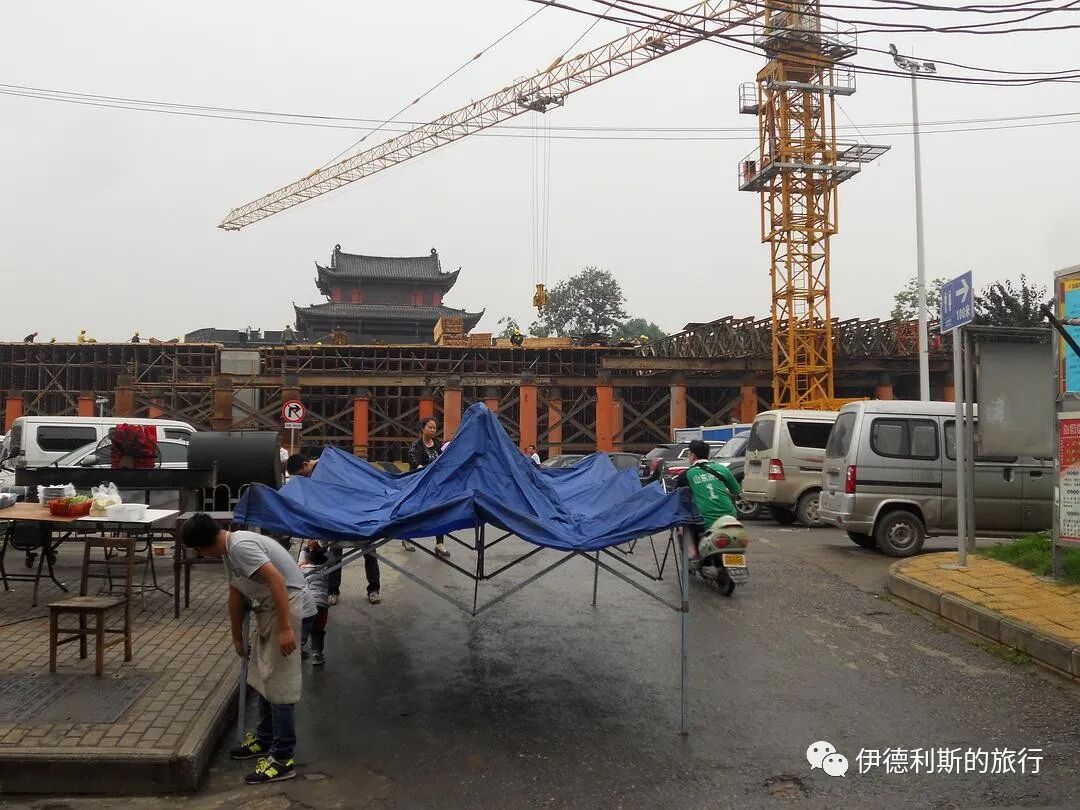
Shizi Street in May 2014
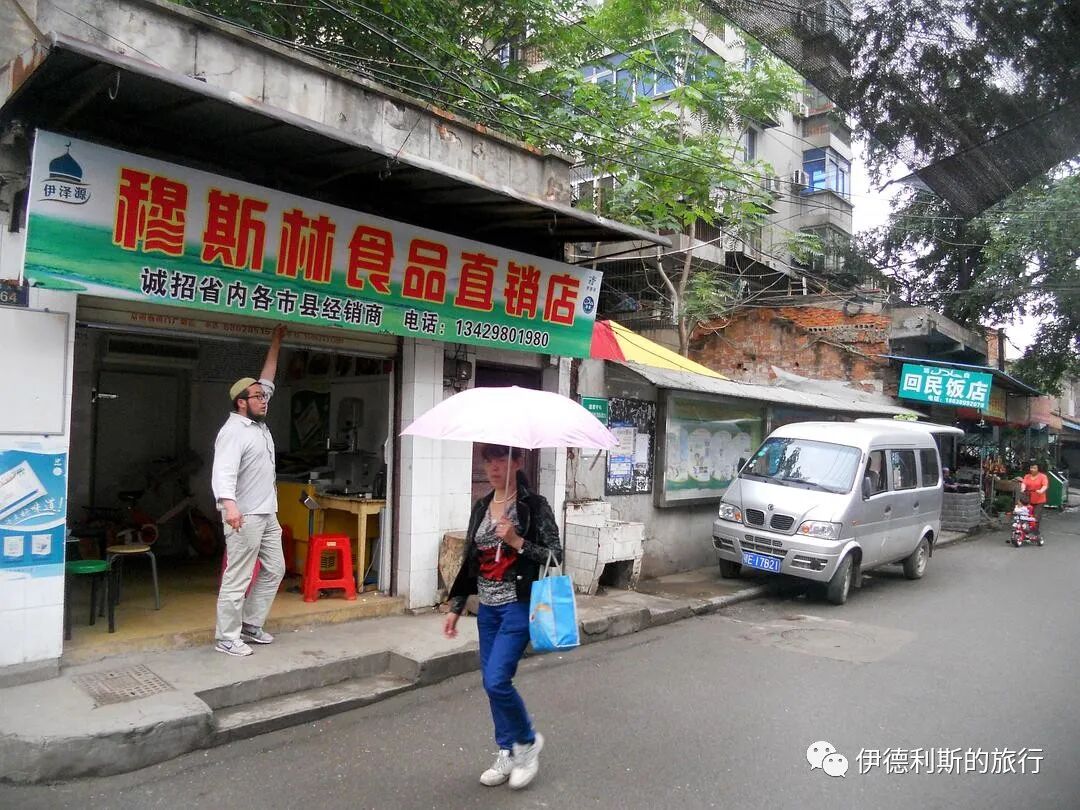
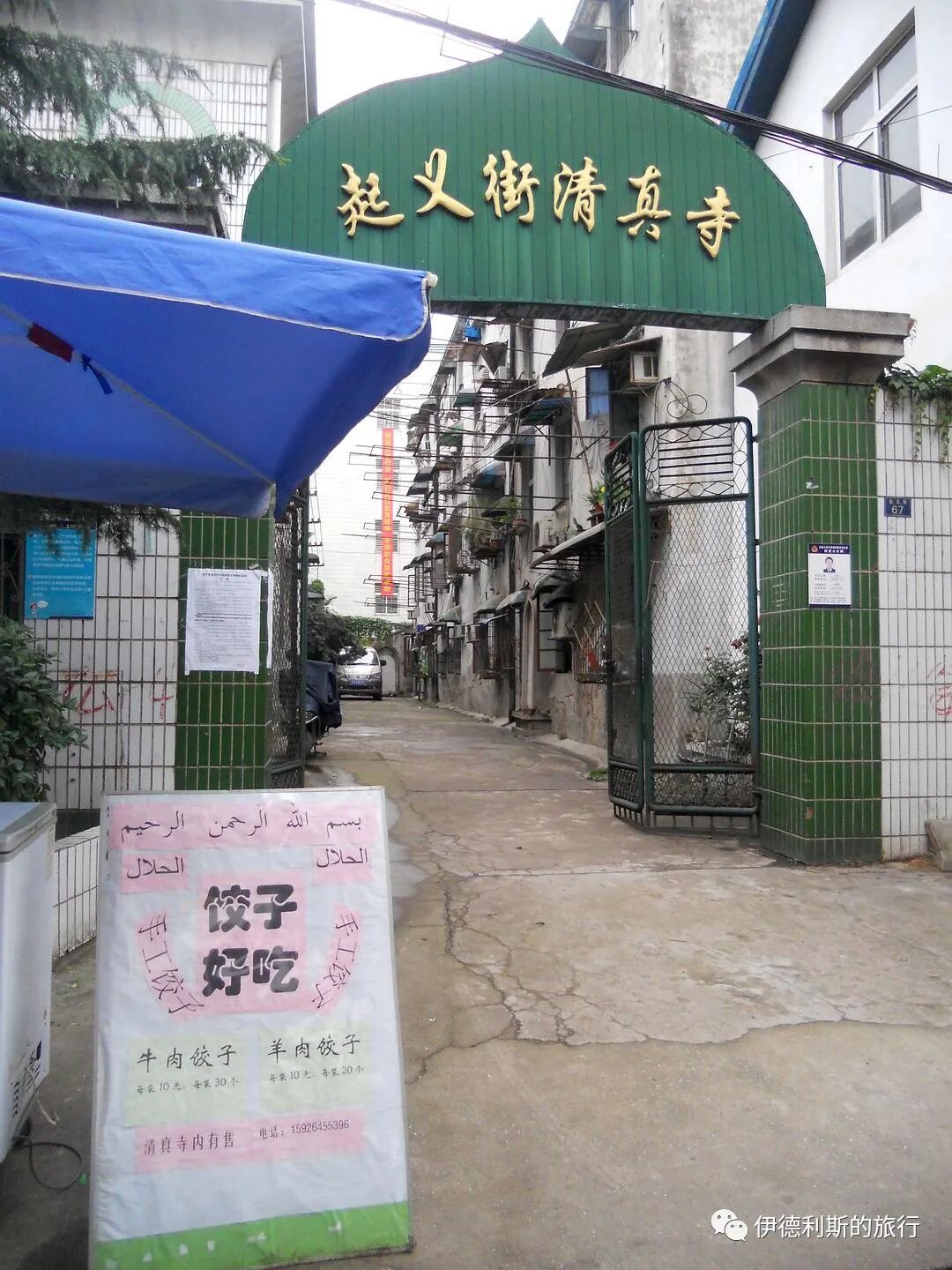
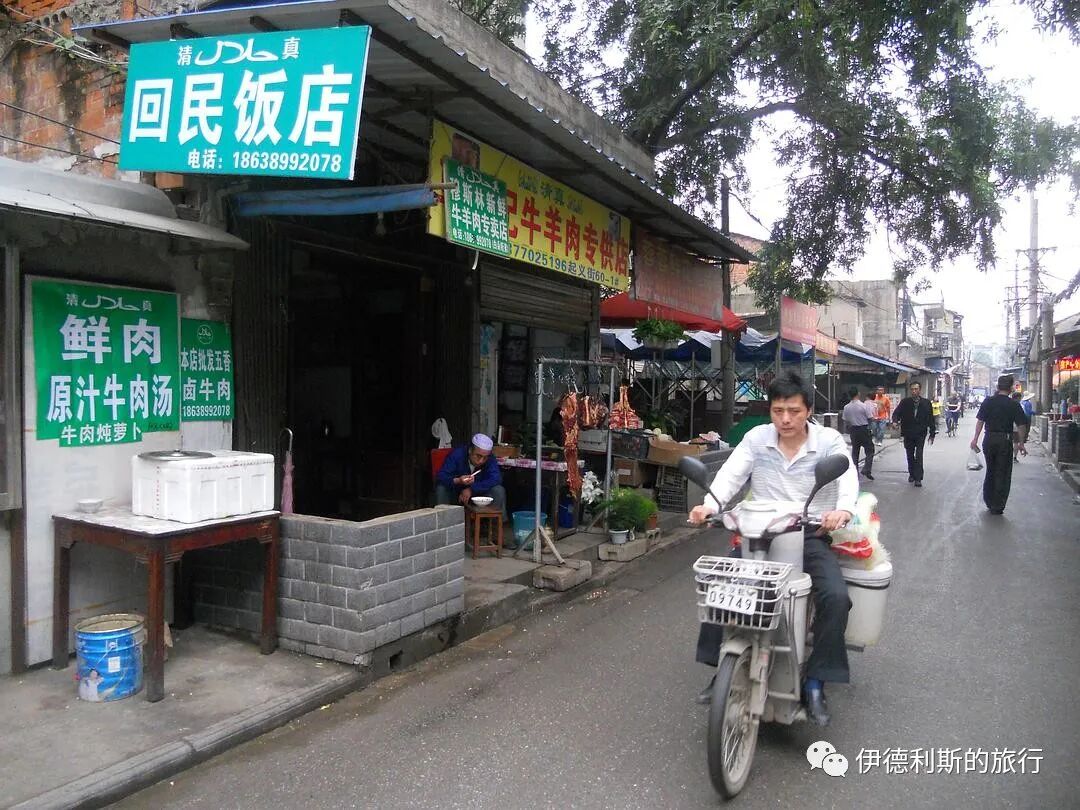
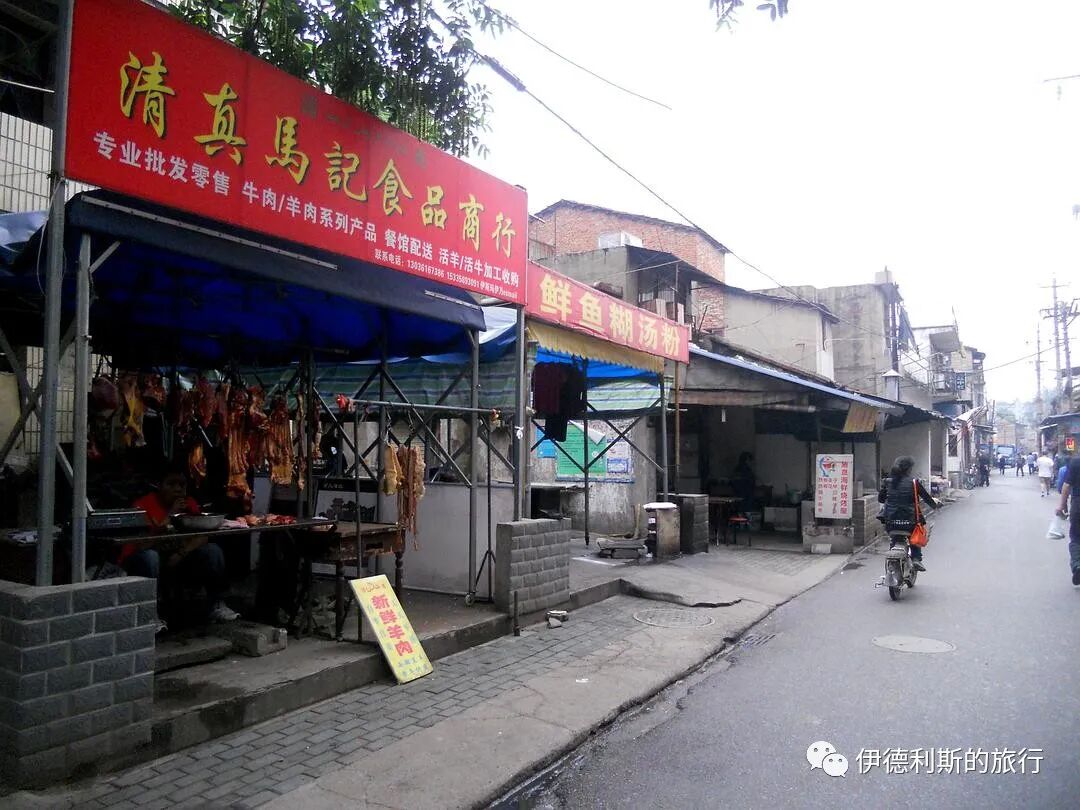
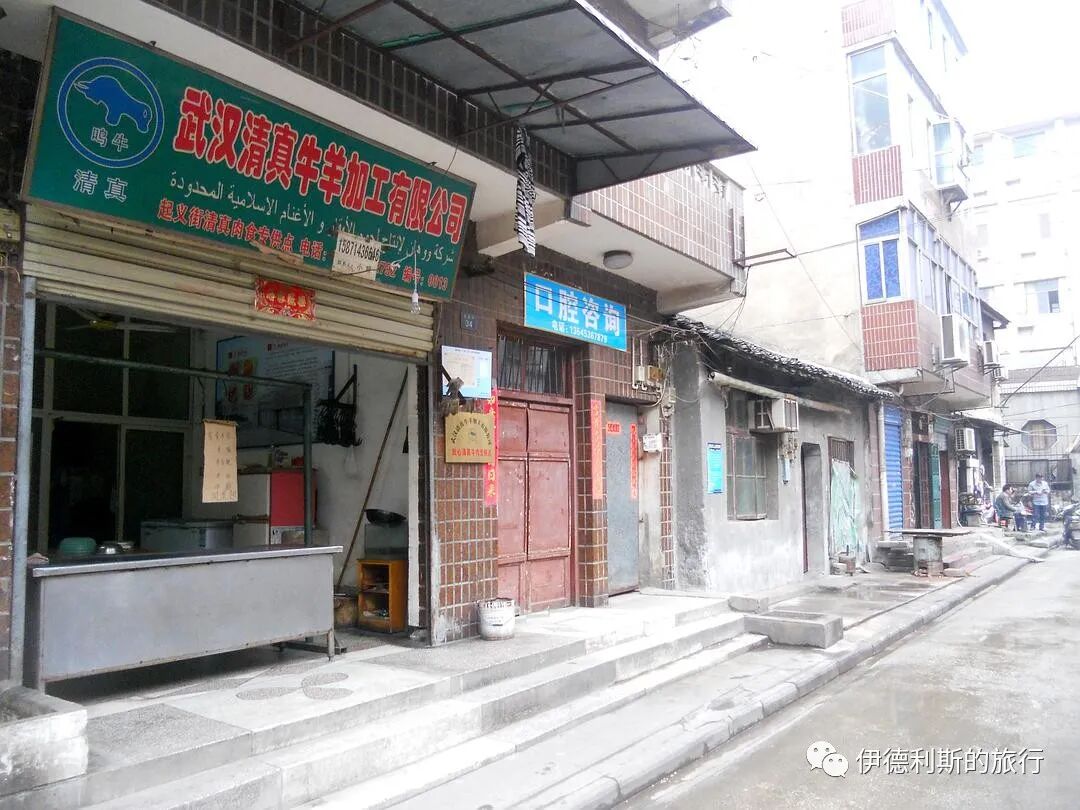
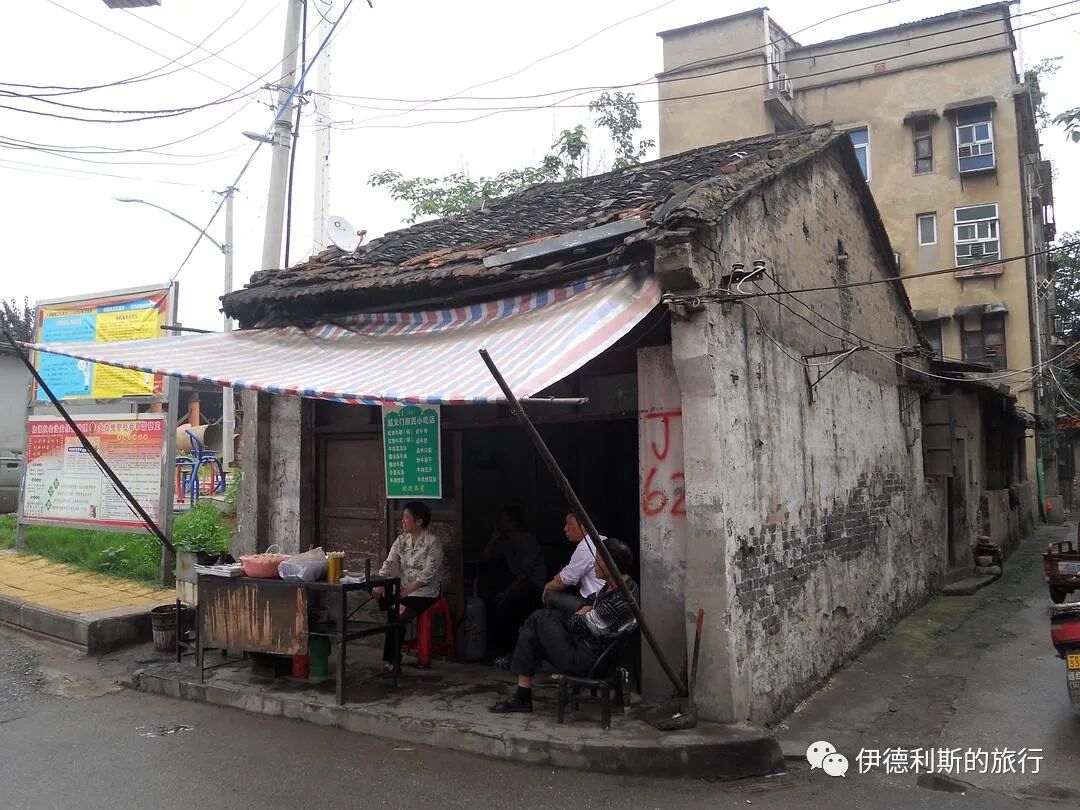
In June 2014, I visited Qiyi Street for the last time before graduation, and the elevated bridge had grown much higher.
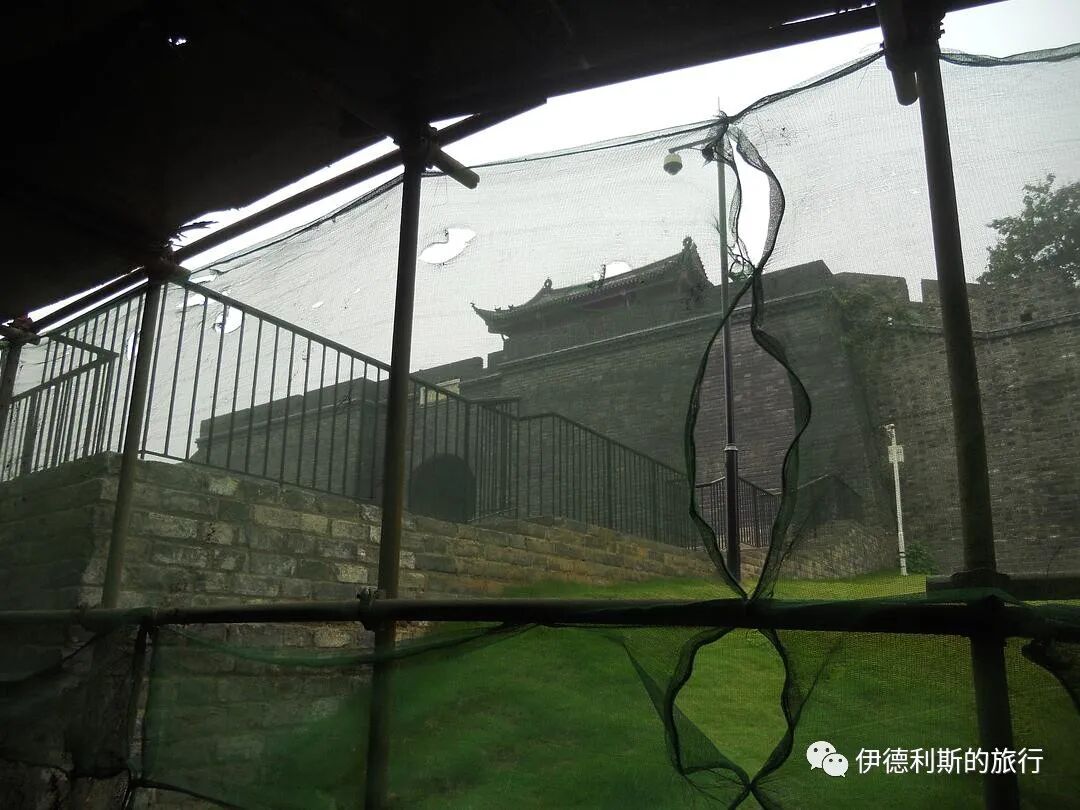
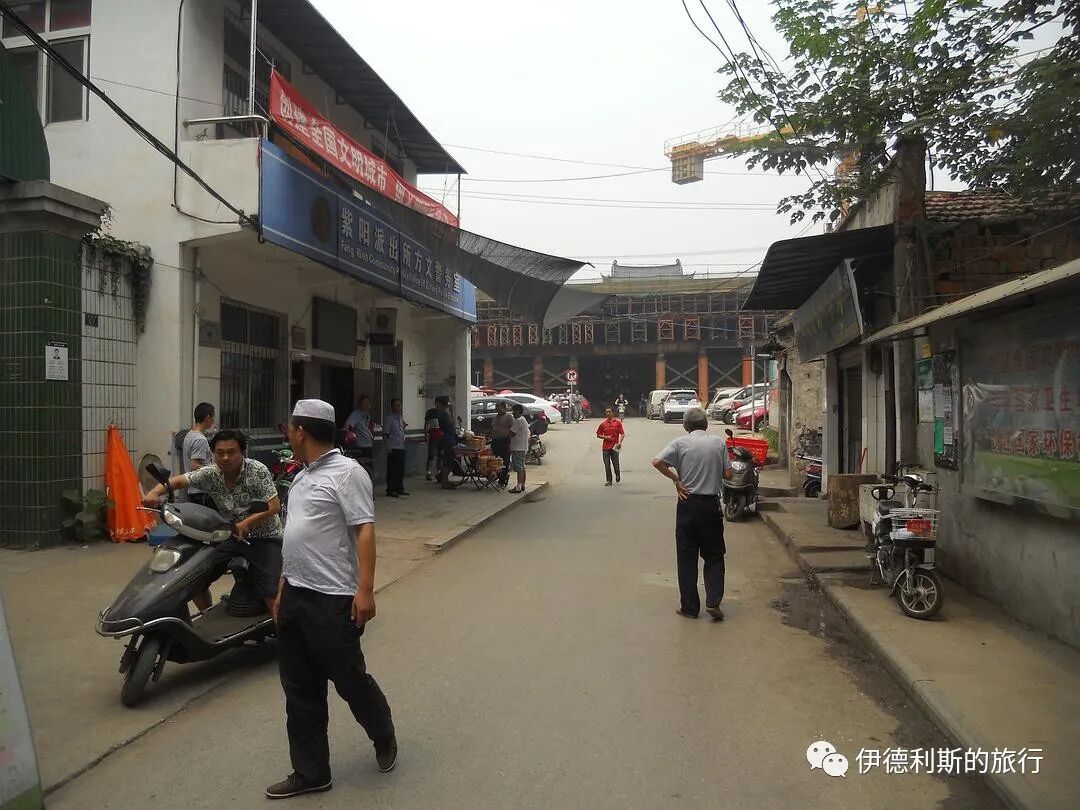
Old houses near Shizi Street
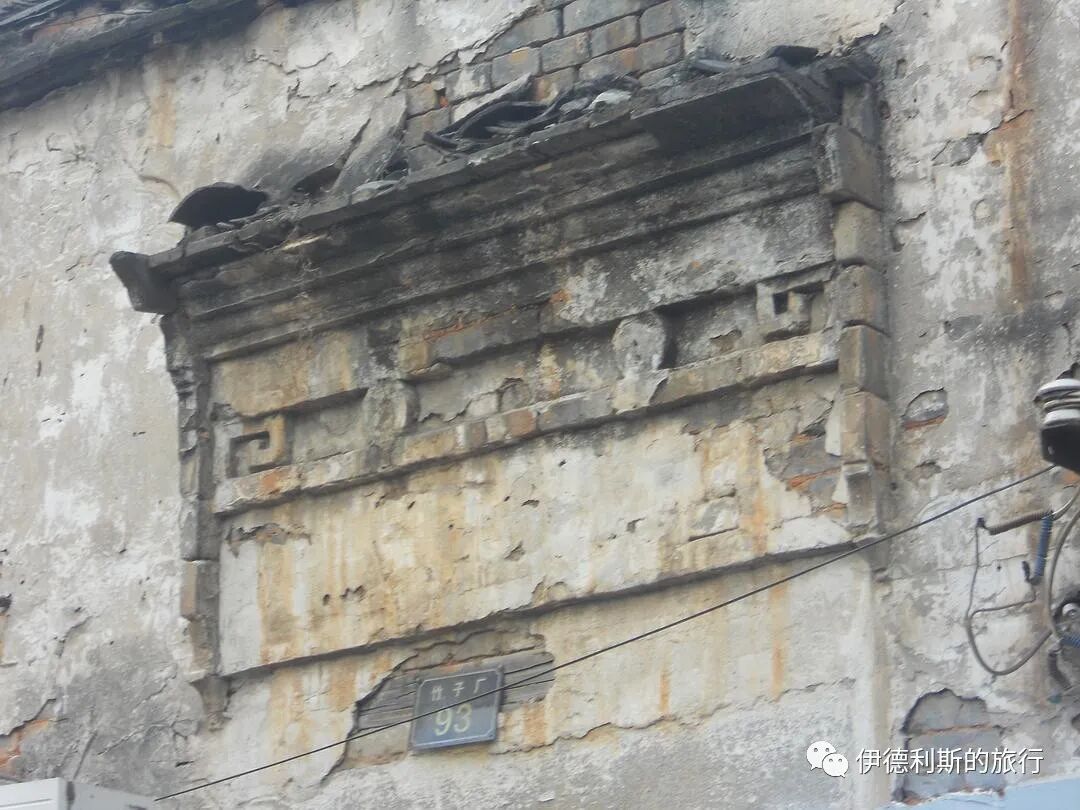
No. 93 Zhuzichang
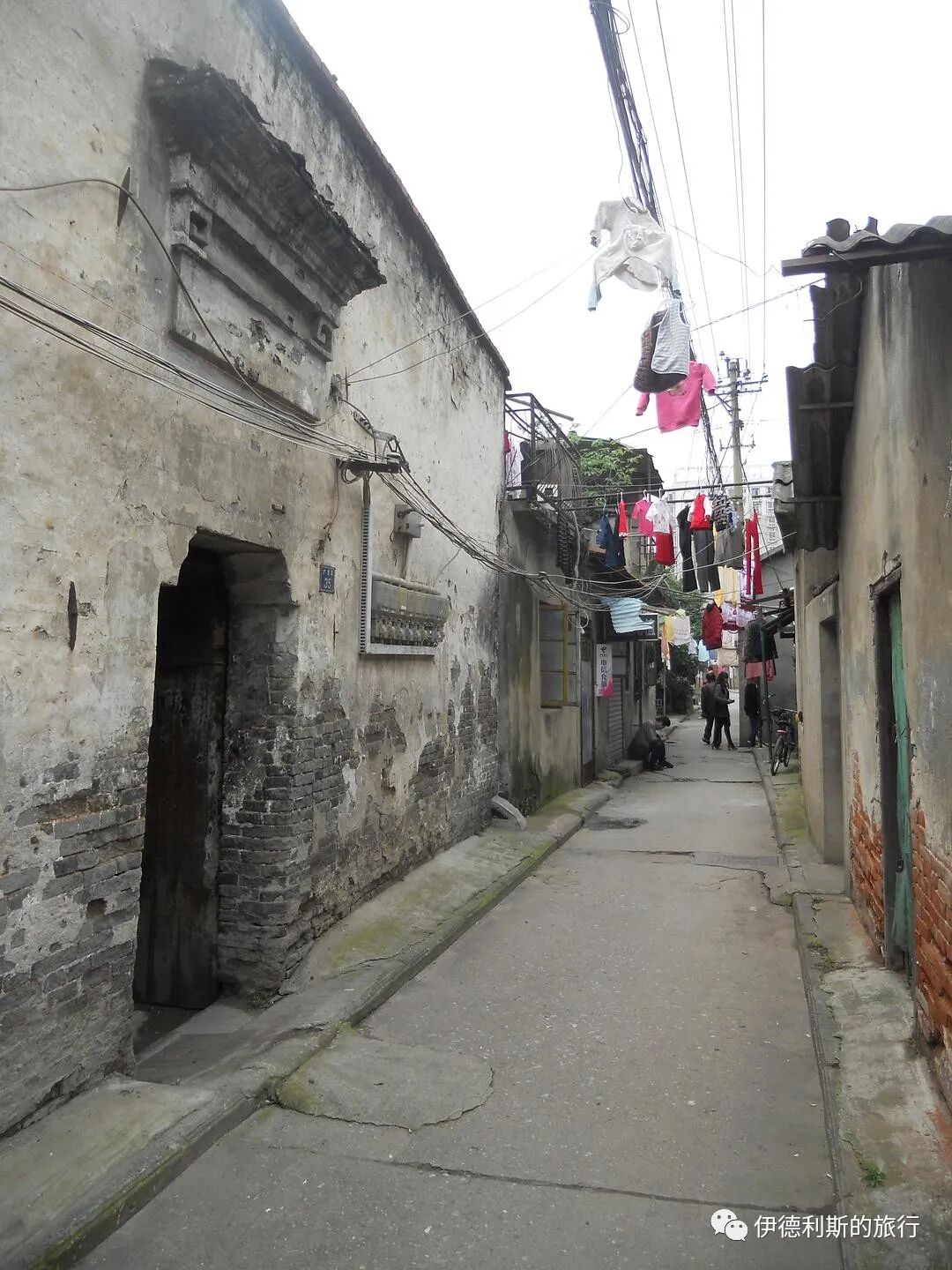
No. 35 Guanglidi
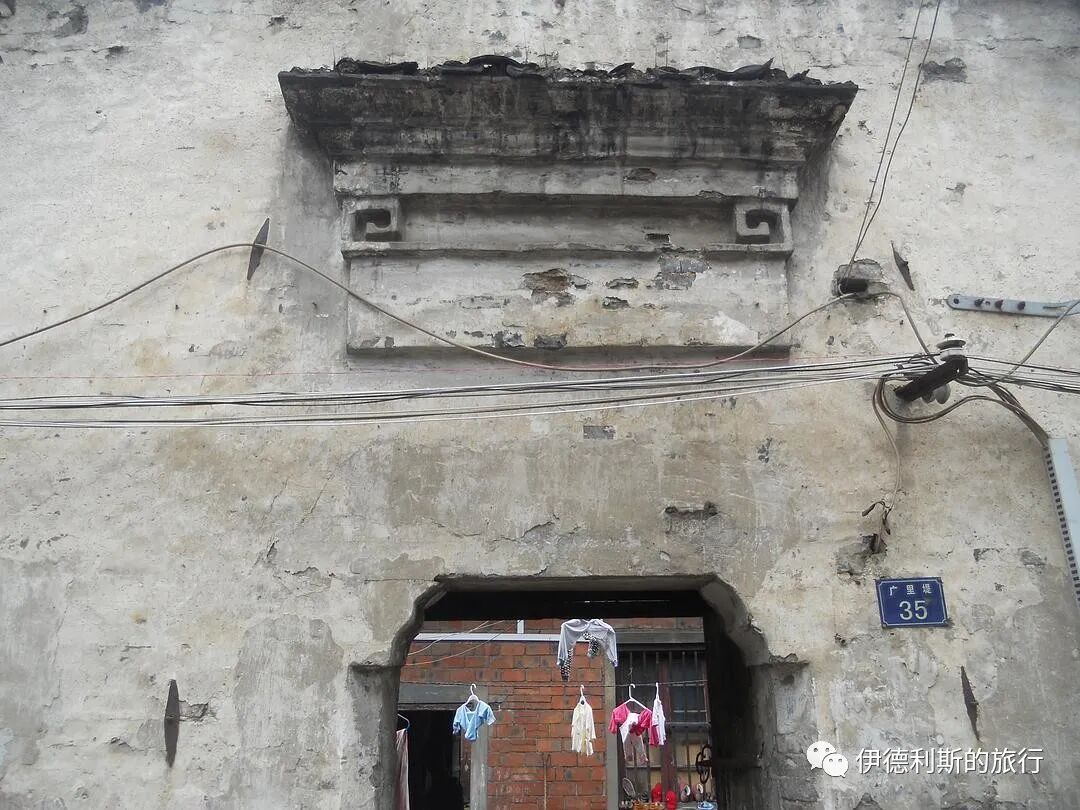
No. 35 Guanglidi
Shizi Street in May 2017; the elevated bridge between Qiyi Gate and Qiyi Street was already finished.
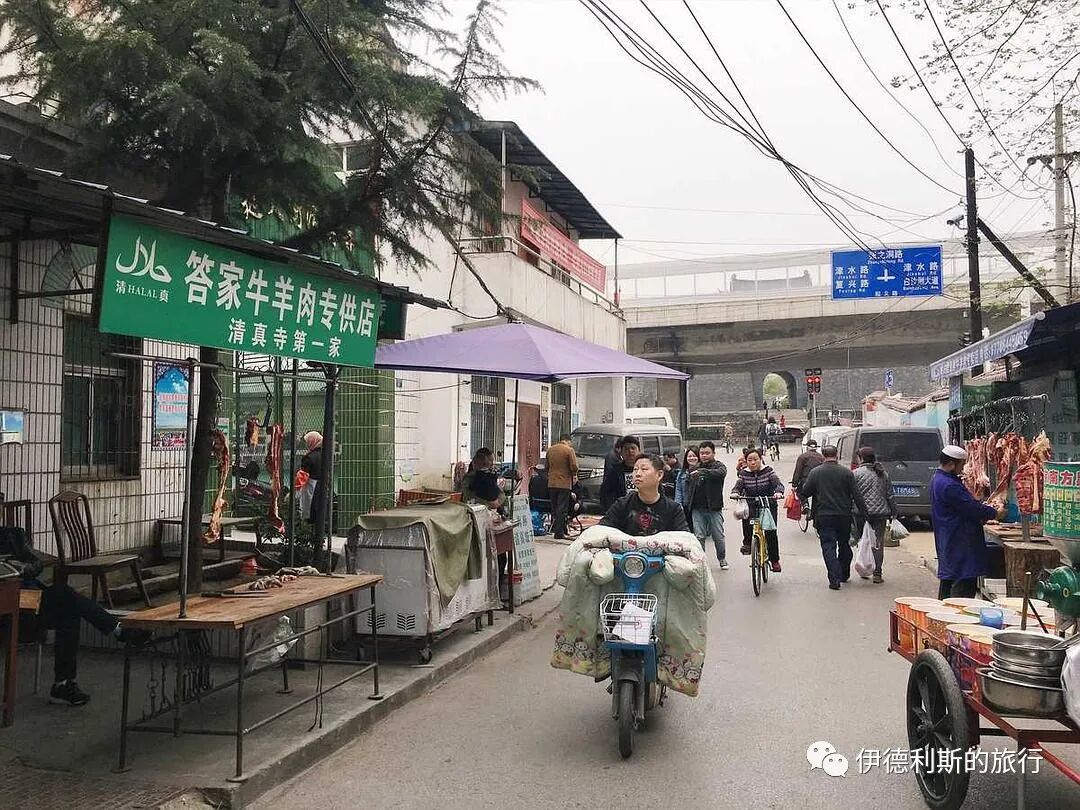
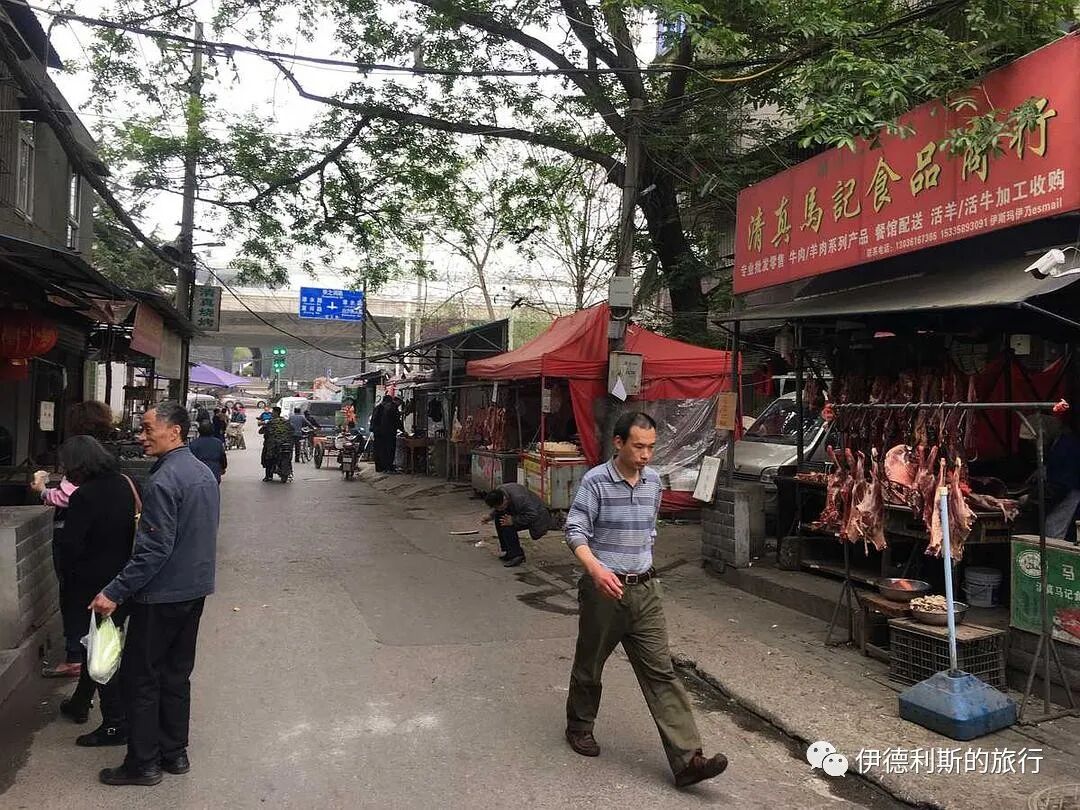
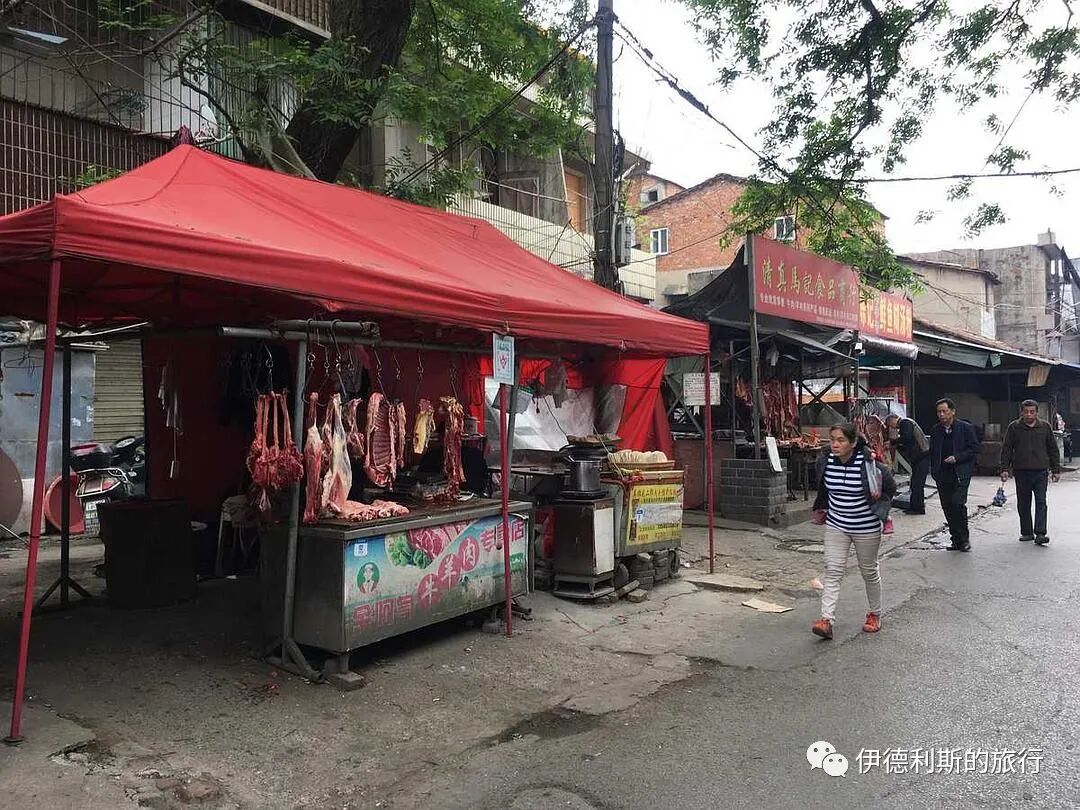
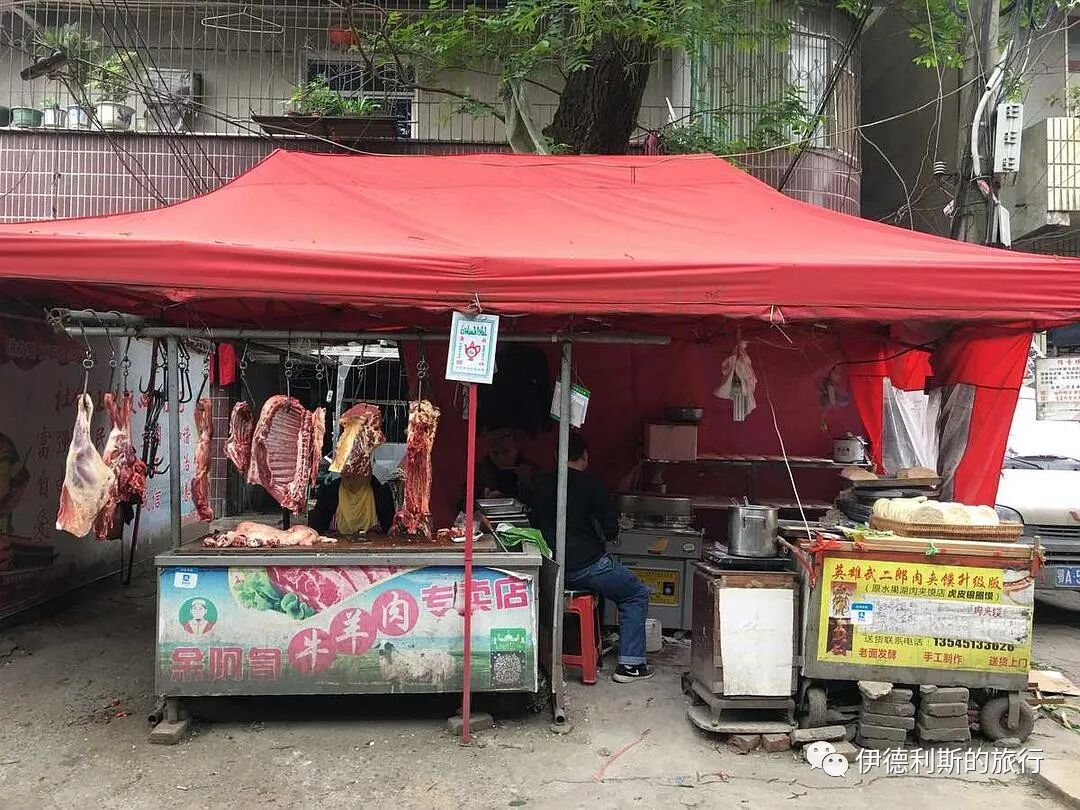
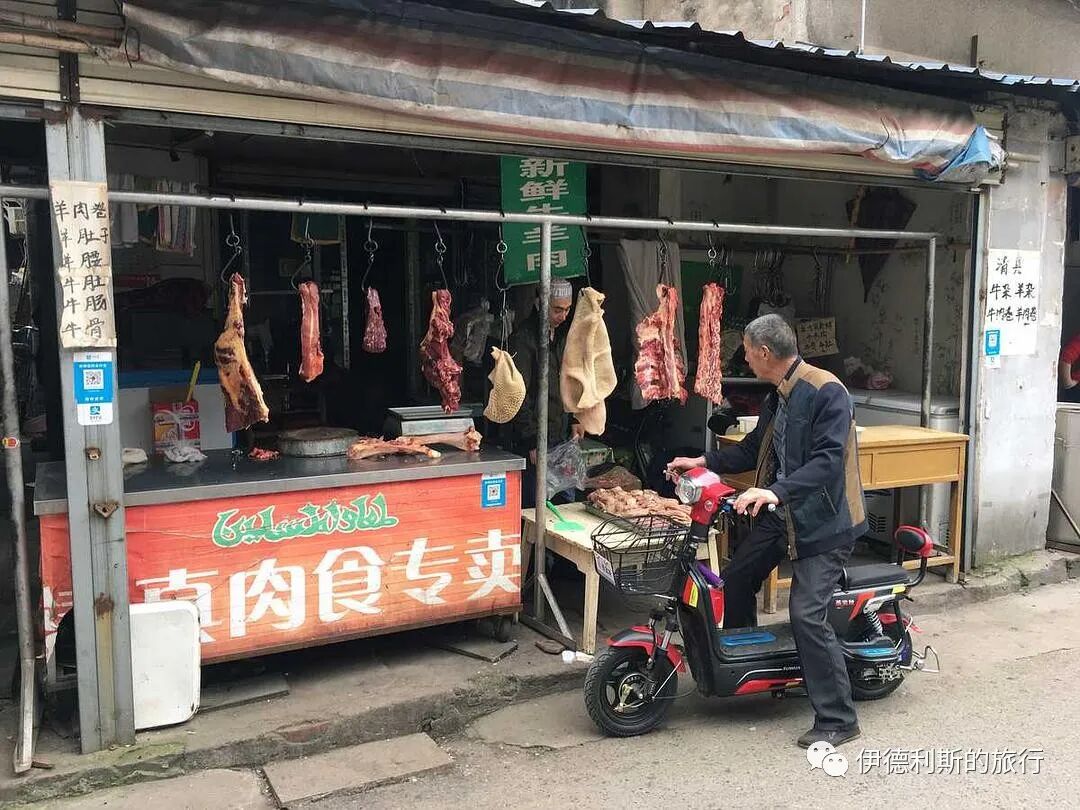
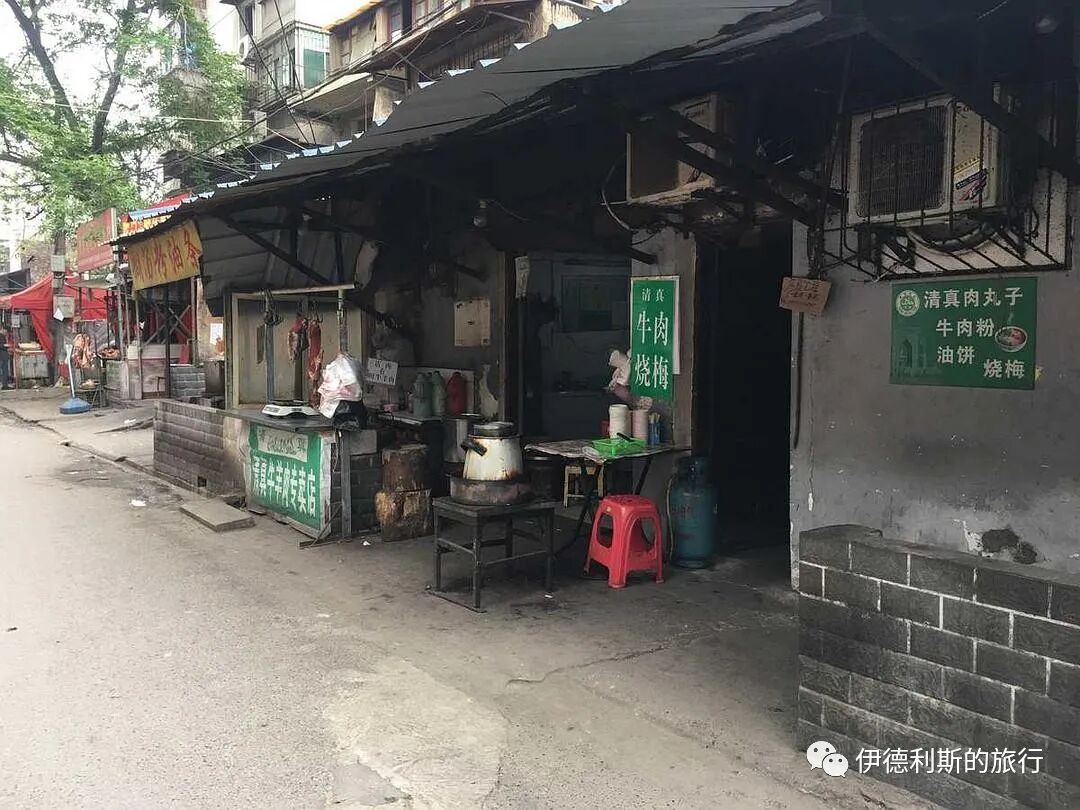
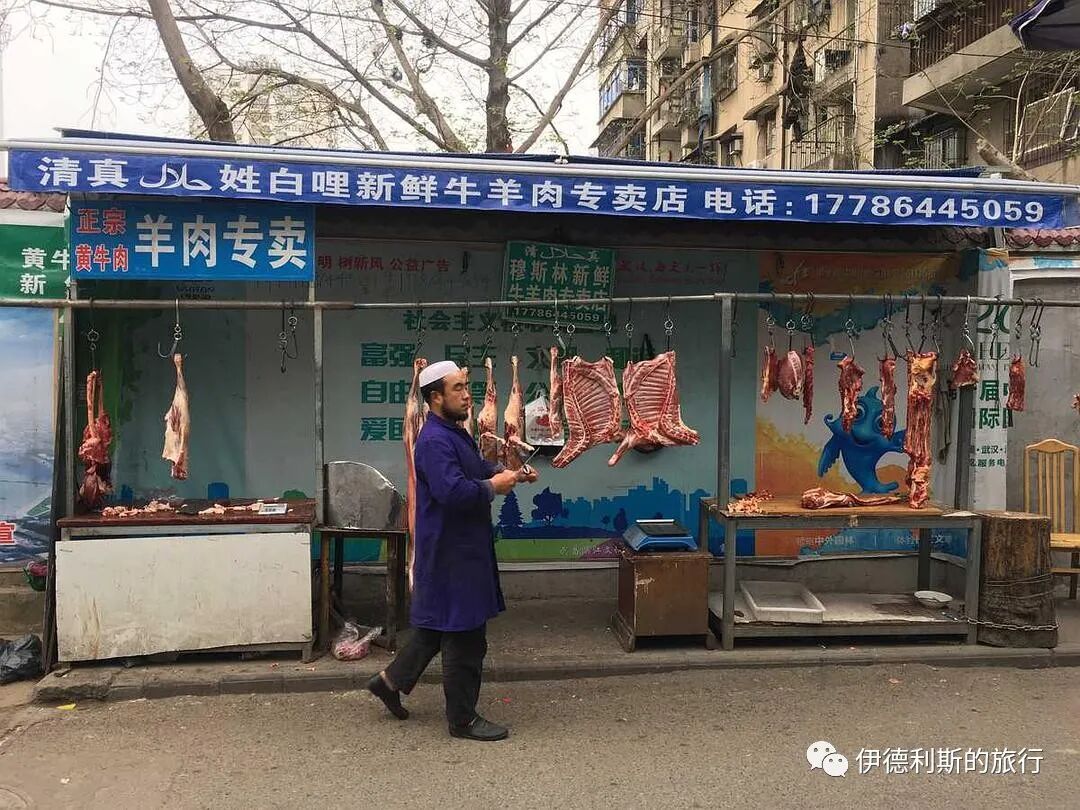
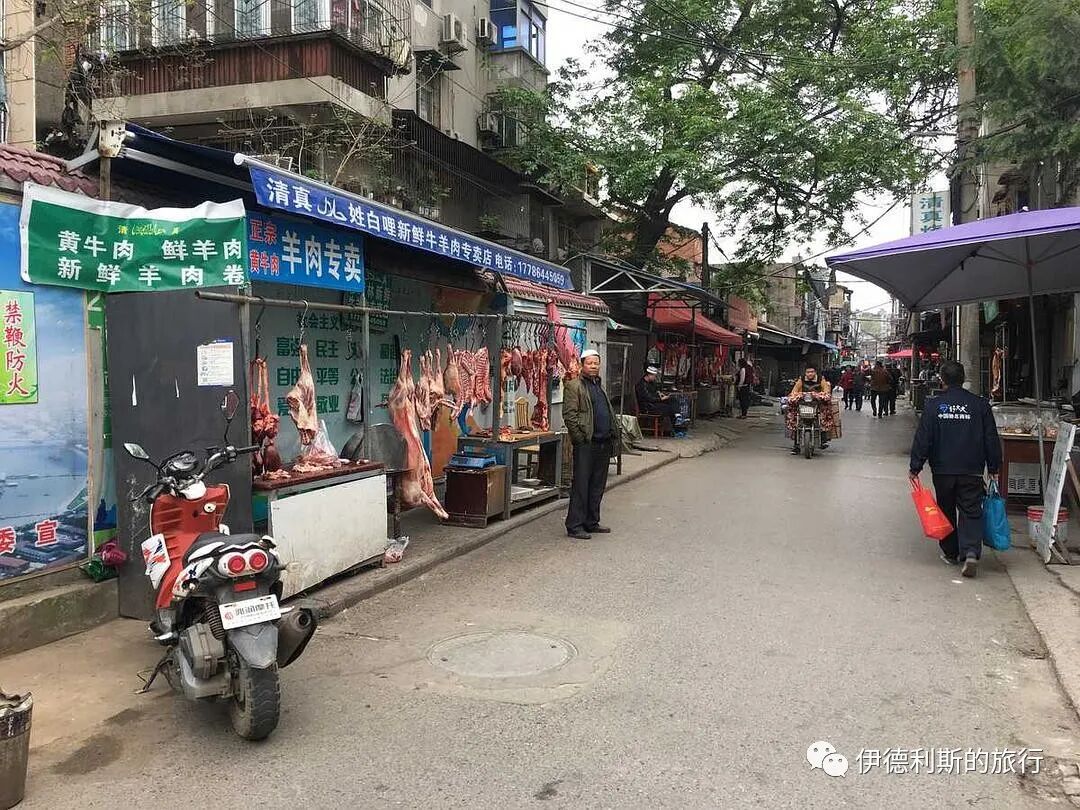
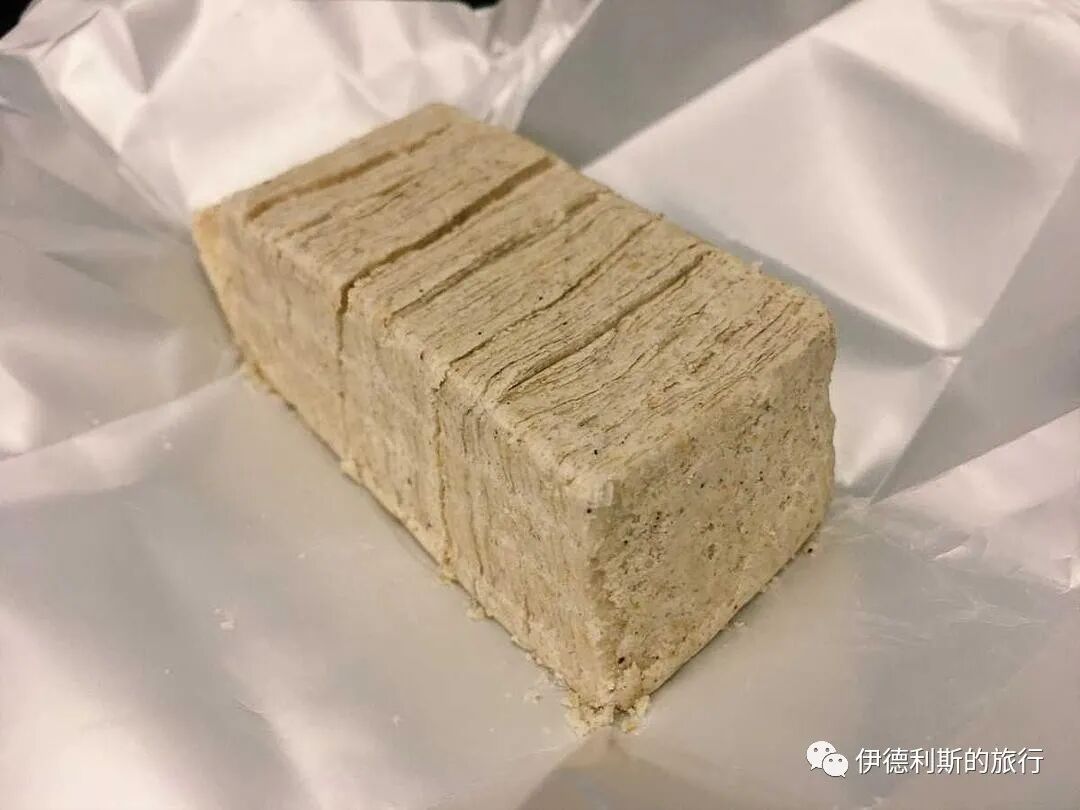
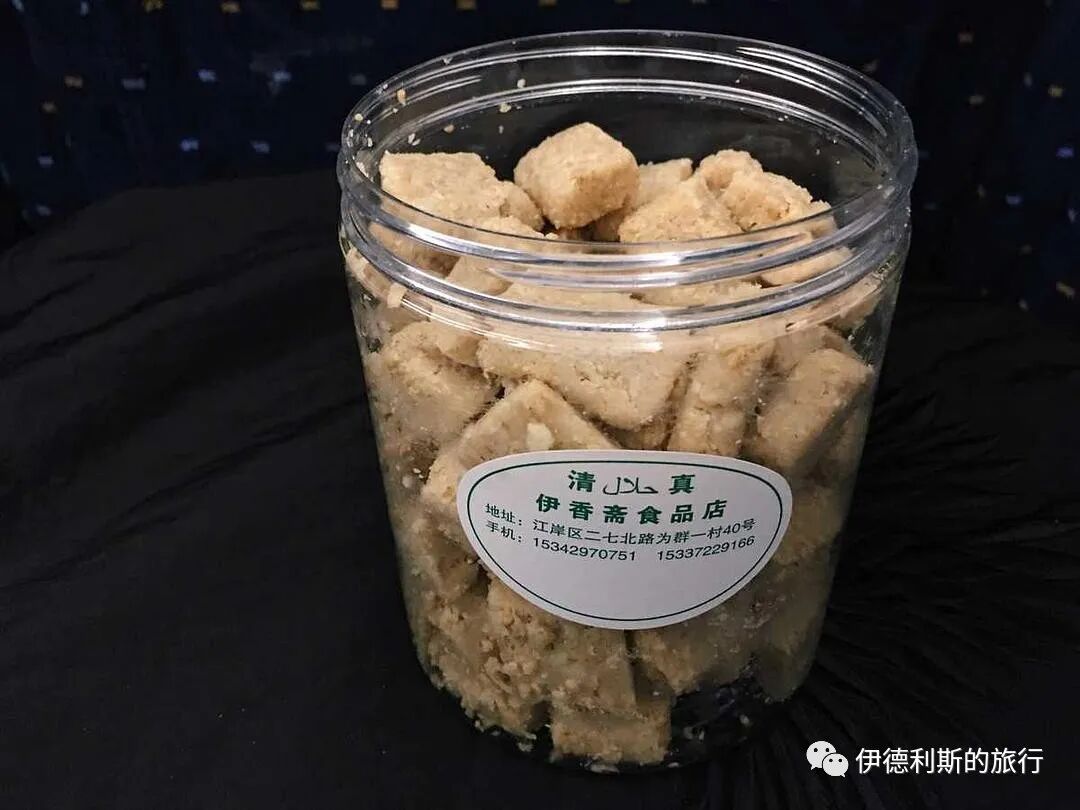
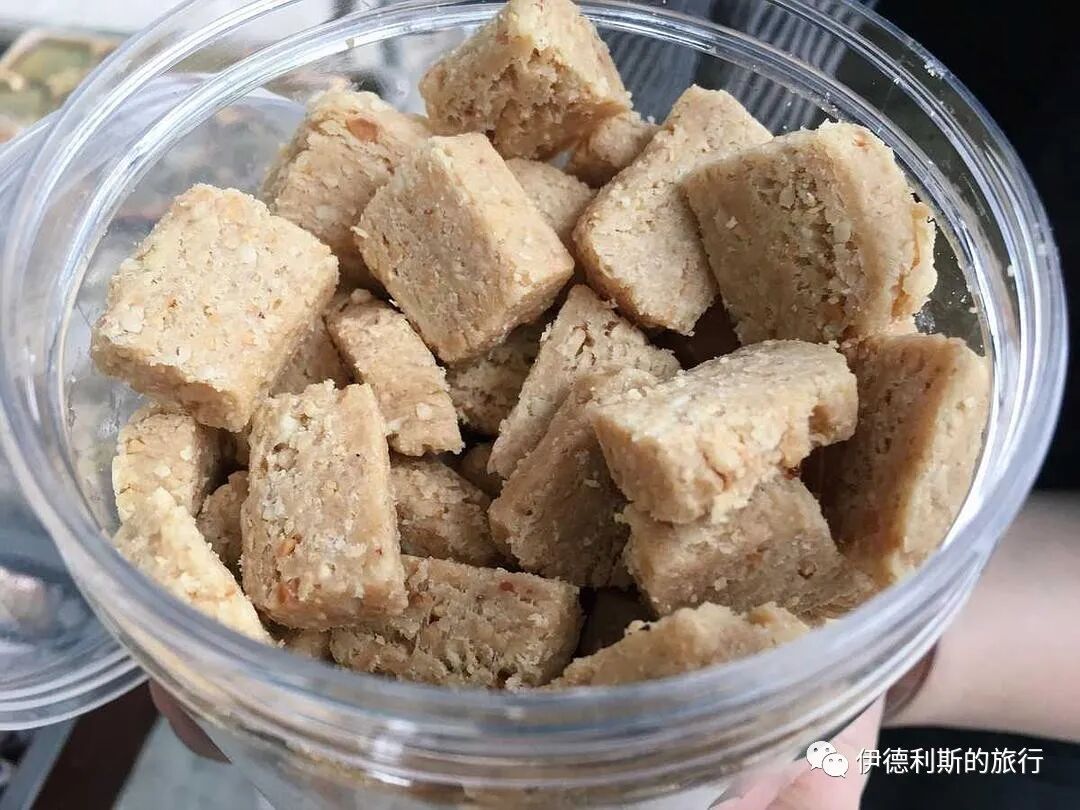
Peanut brittle (huasheng su) and sesame brittle (zhima sutang) bought at the entrance of the Qiyi Street mosque.
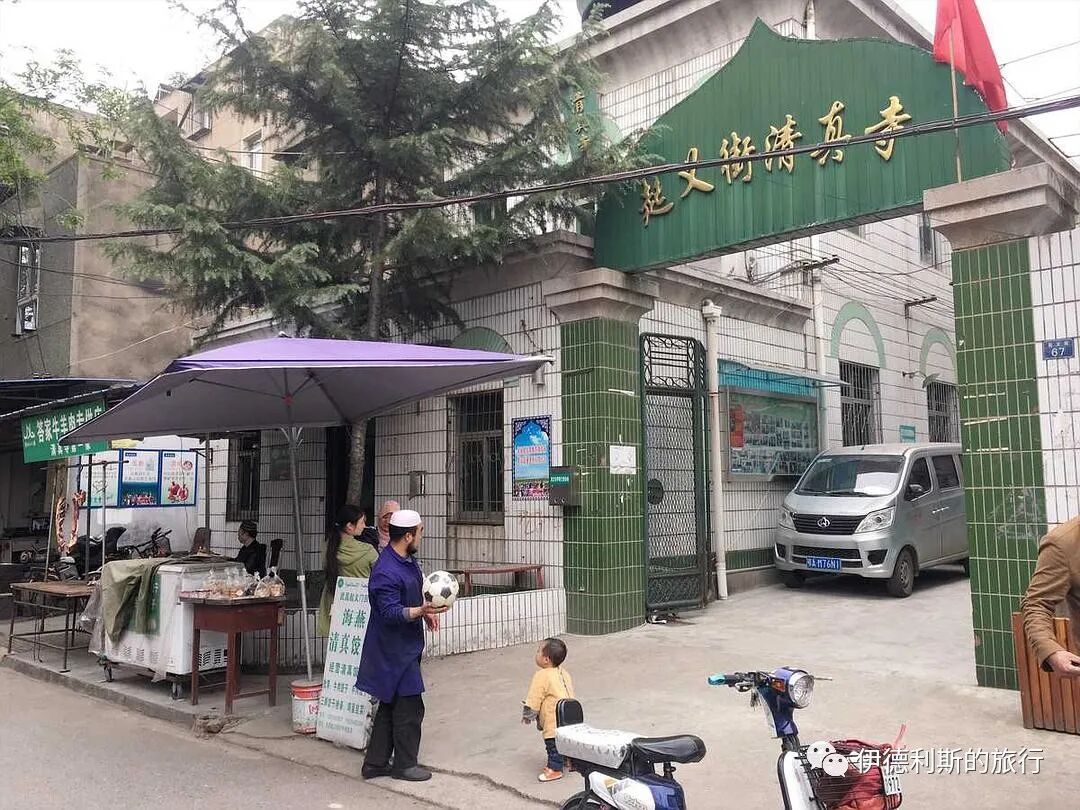
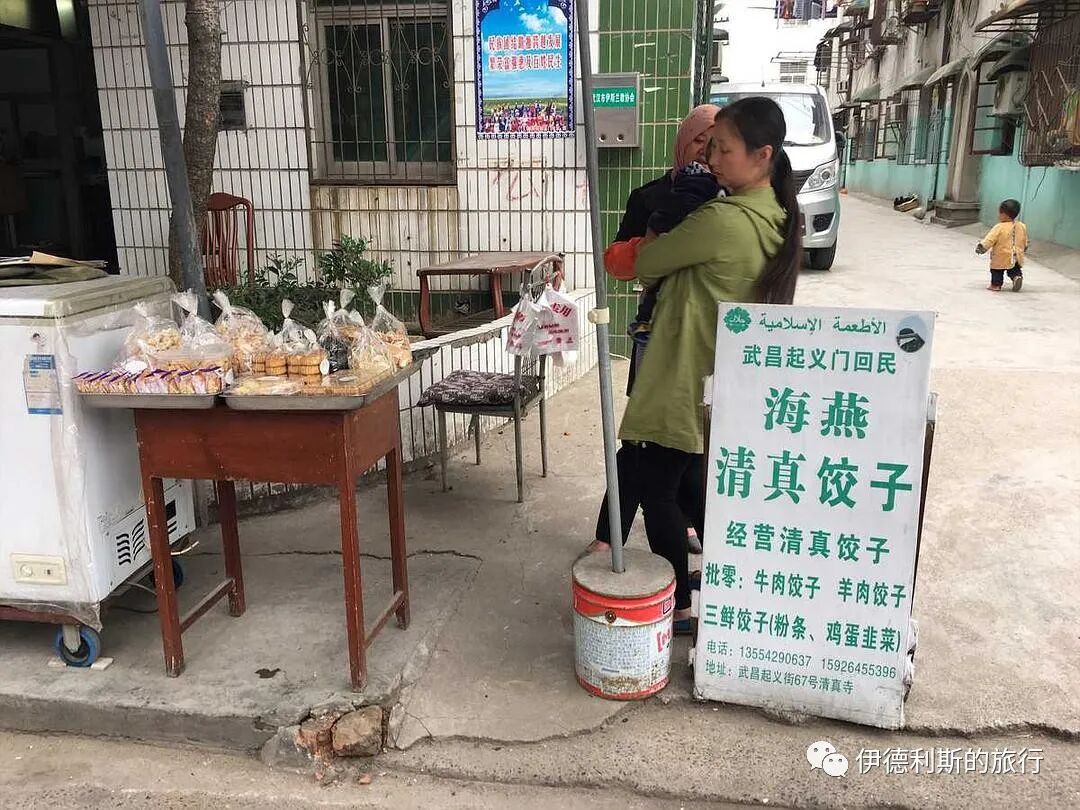
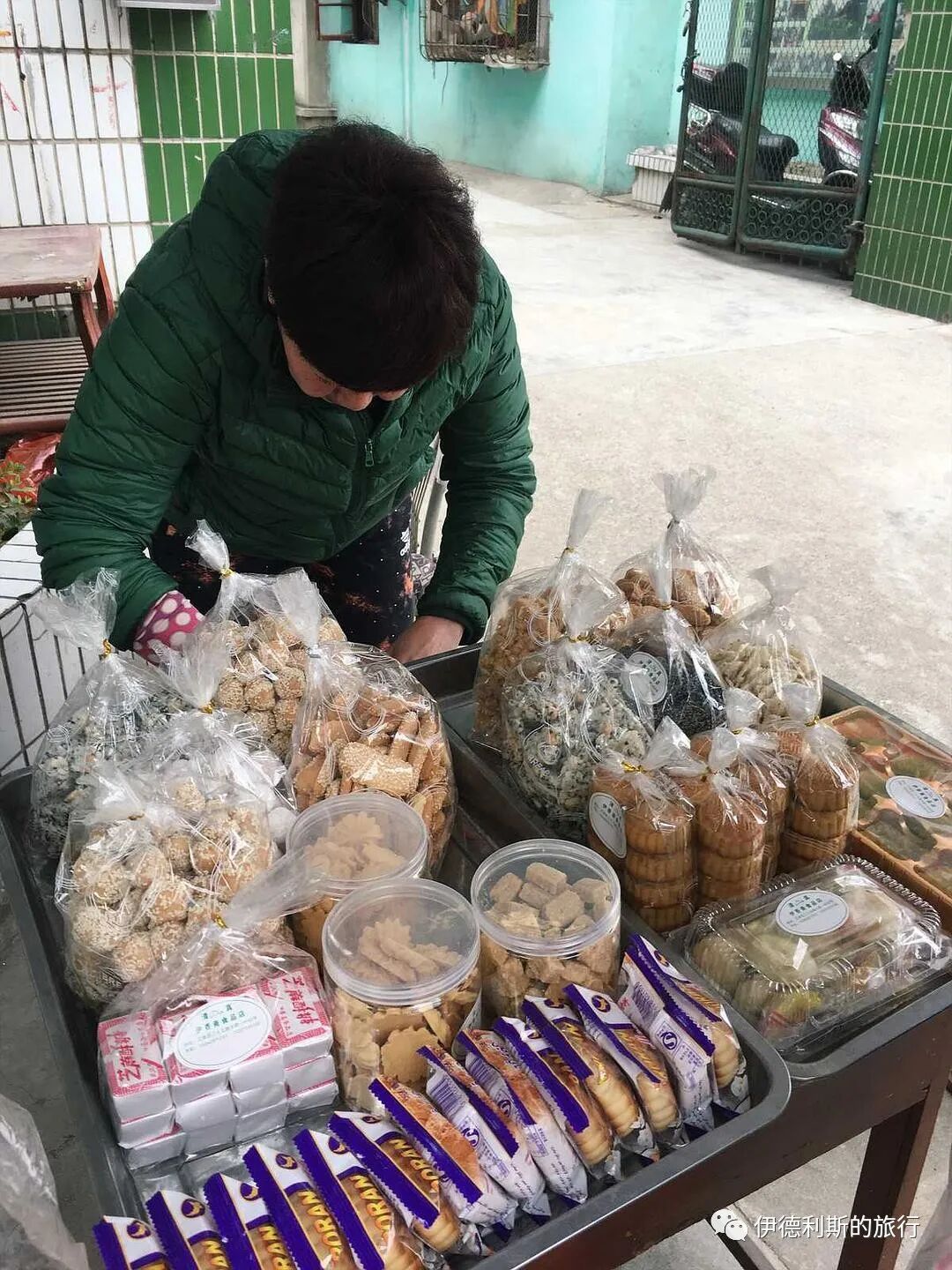
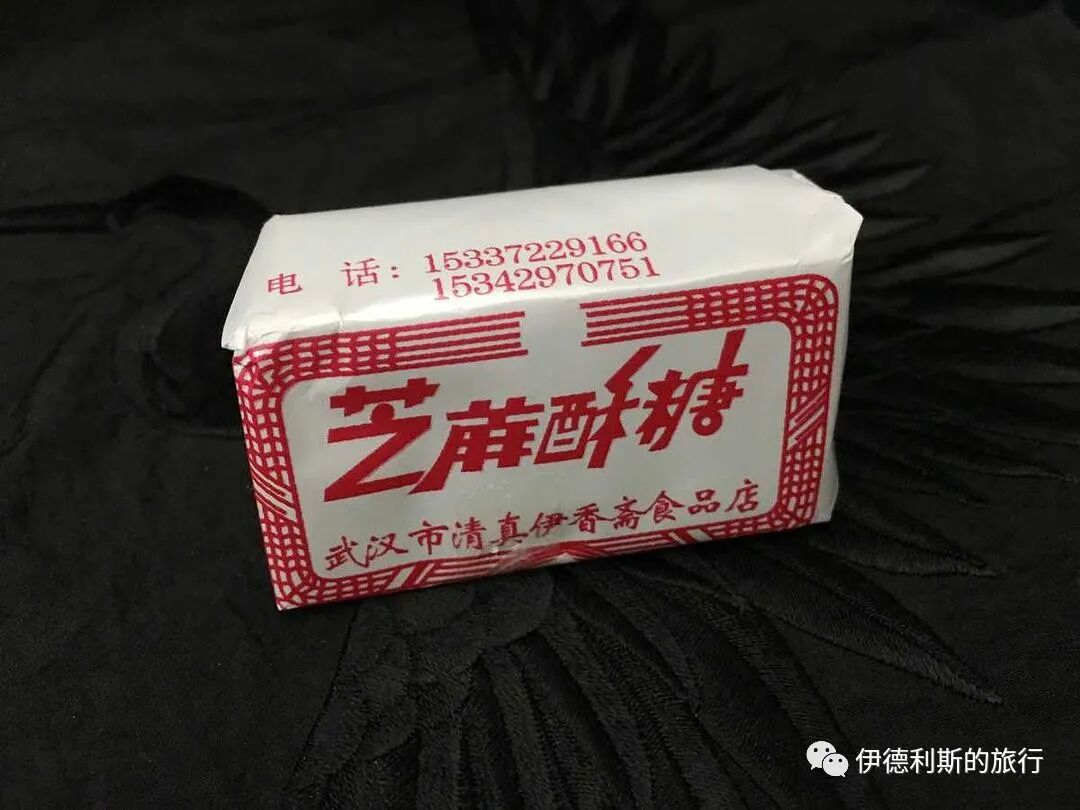
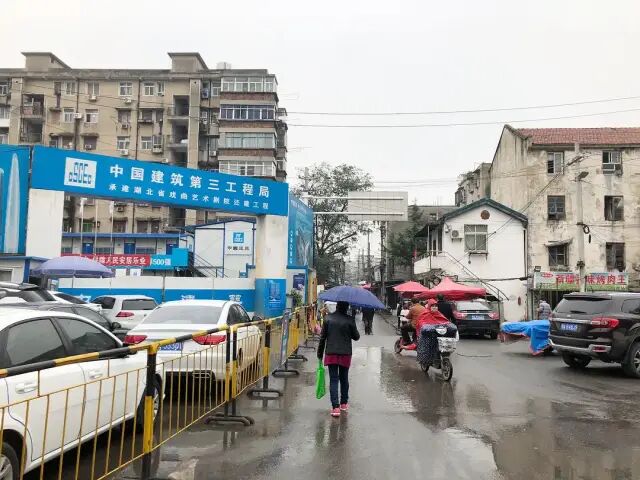
Qiyi Street in November 2018
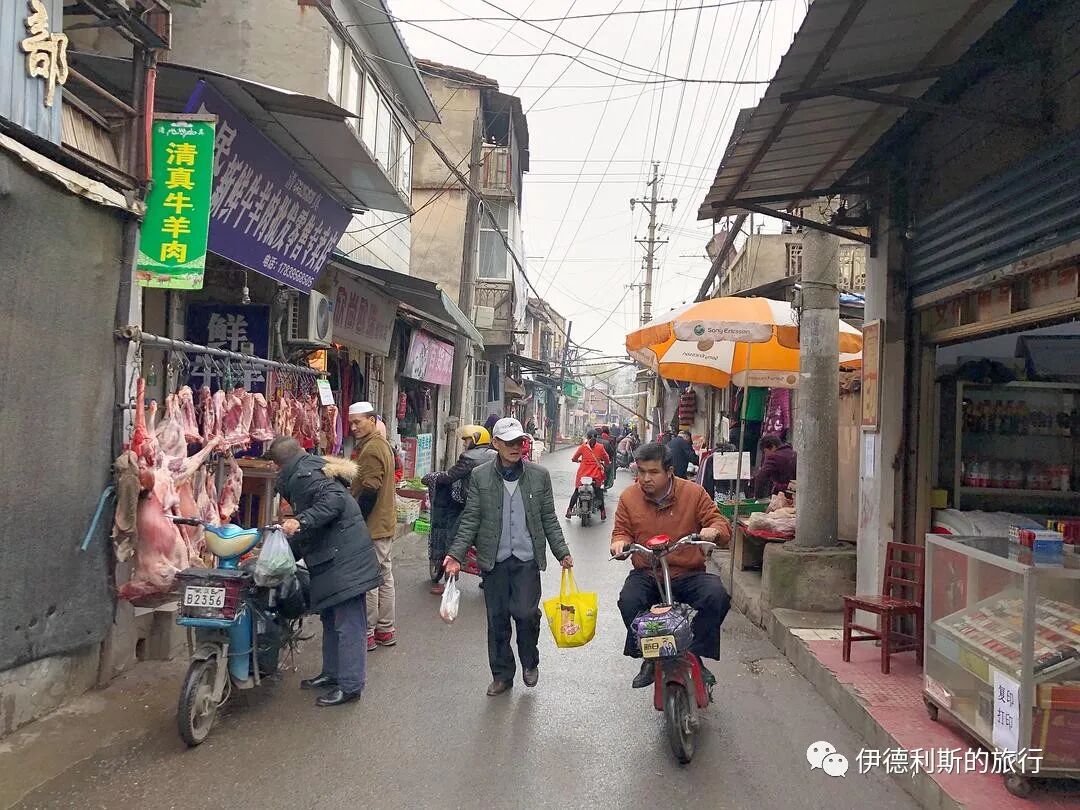
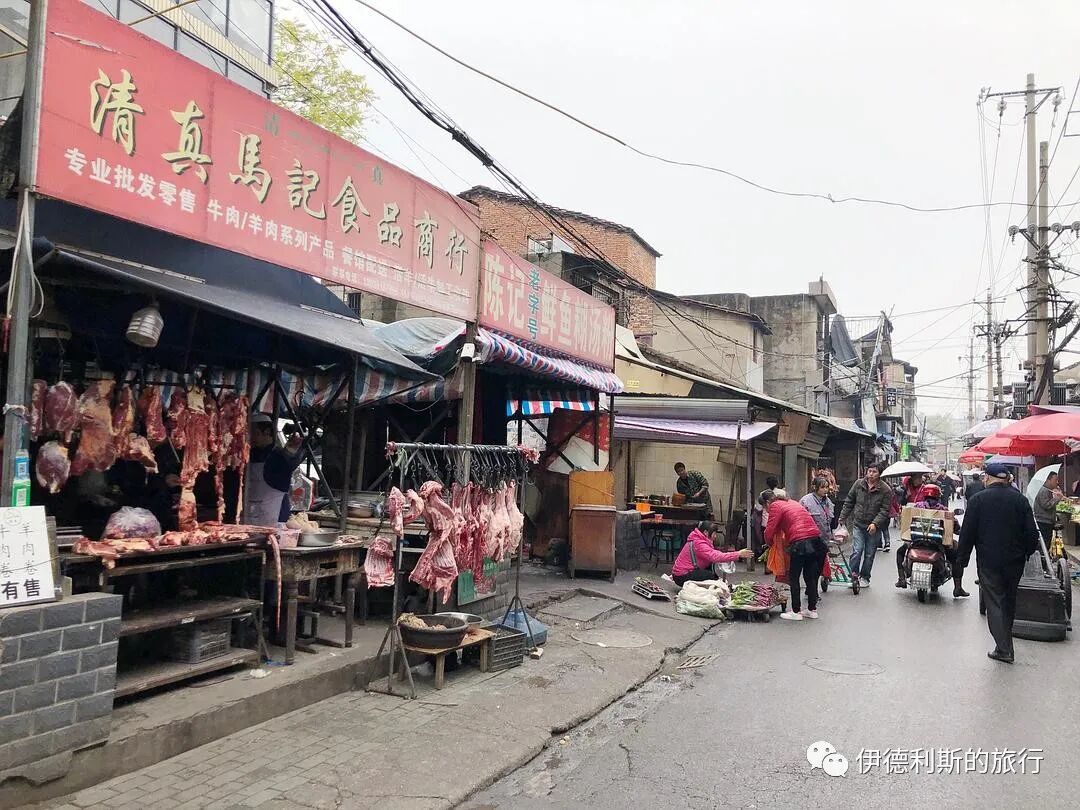
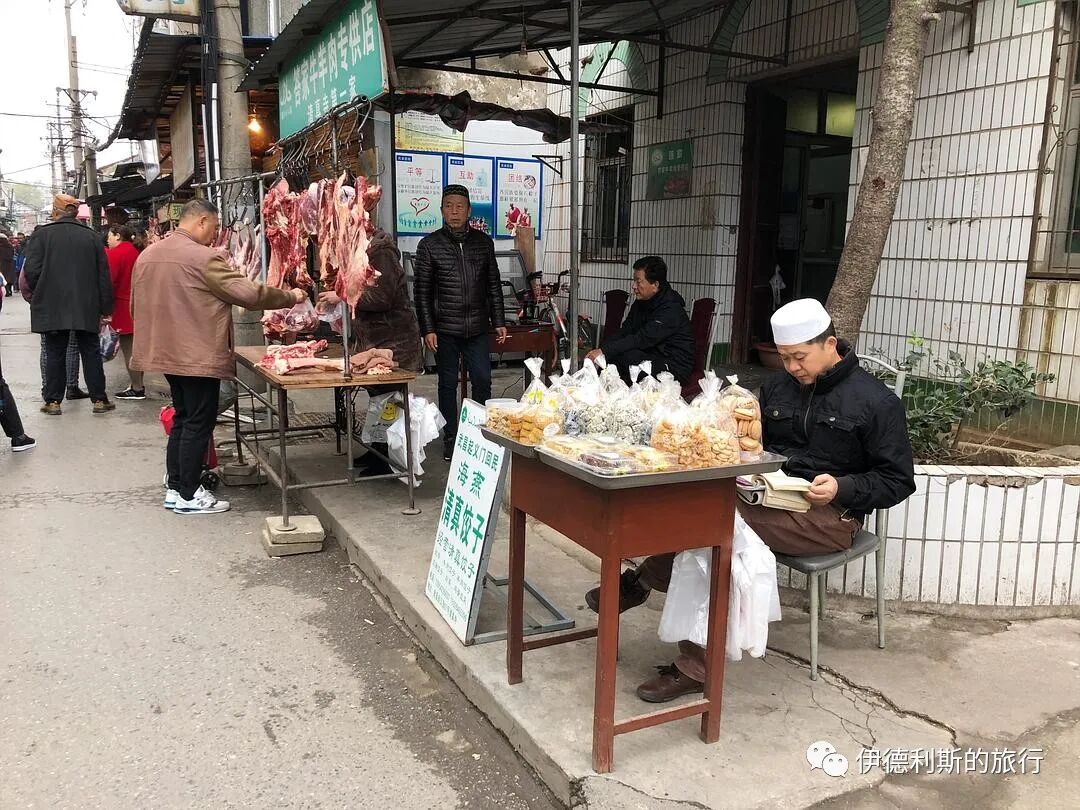
An imam selling pastries at the mosque entrance
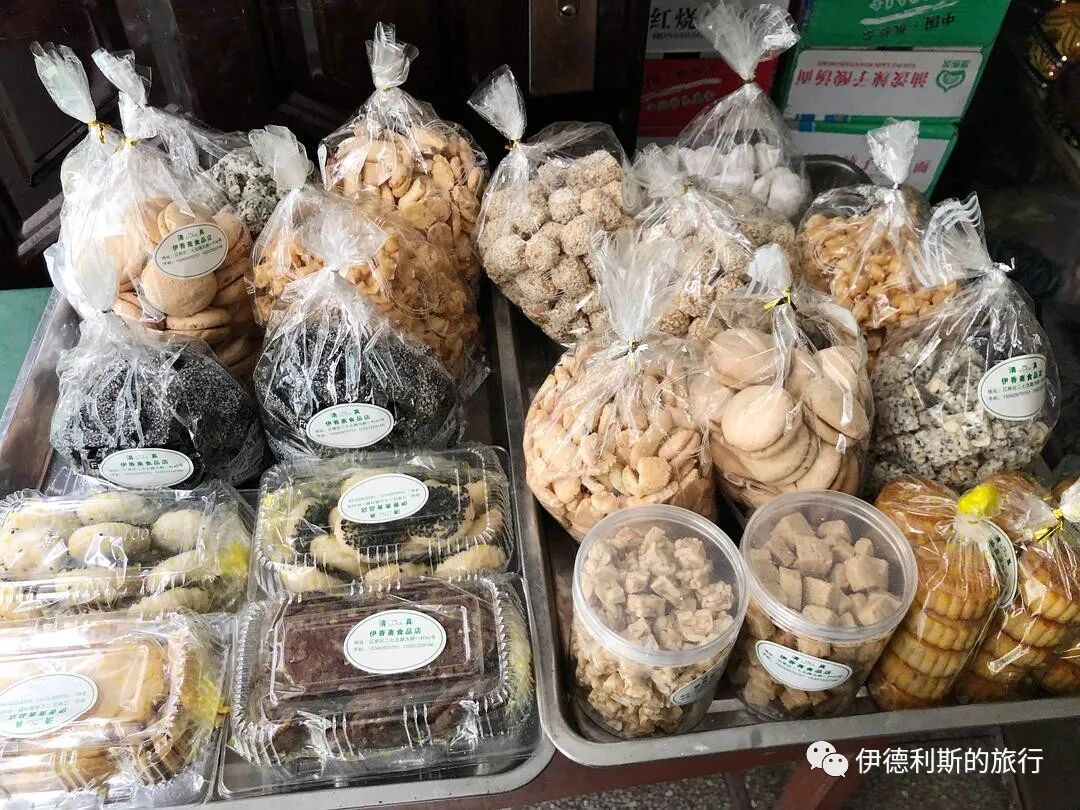
Mixed sugar candies (zatang)
Qiyi Street after Friday prayers (Jumu'ah); Muslims from all over the world are shaking hands warmly, buying meat, and buying flatbread (nang).
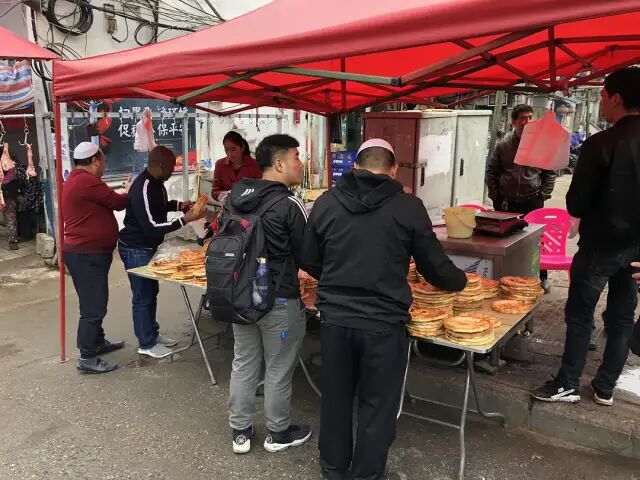
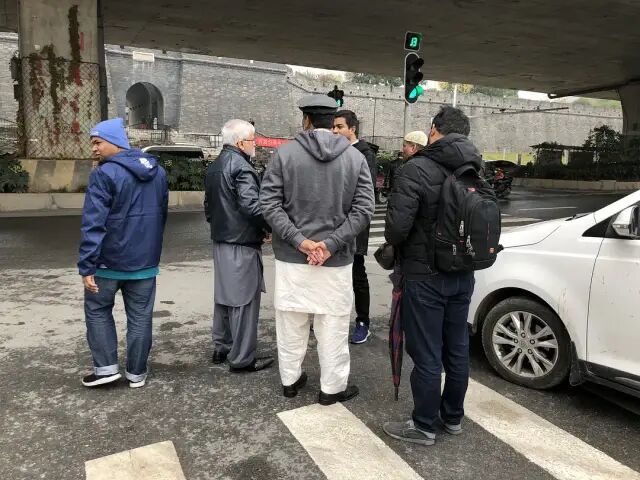
Dajia Halal Chili Oil Beef Noodle Shop
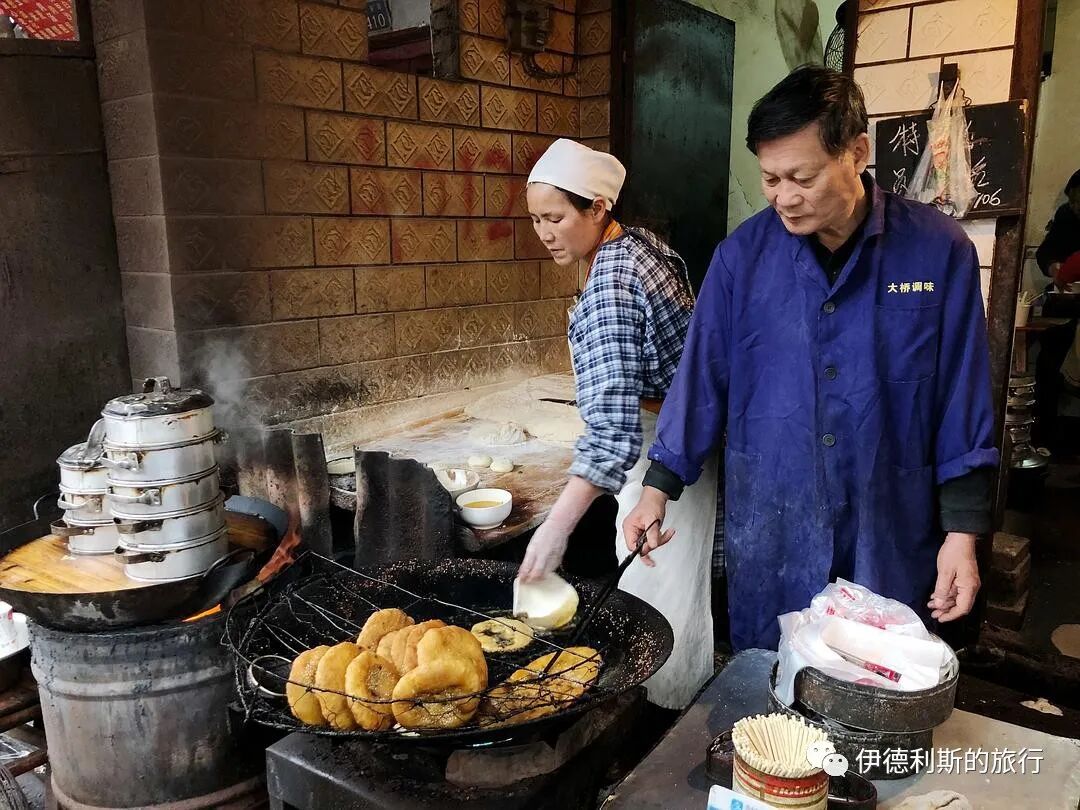
Every morning, Qiyi Street has a lively morning market, crowded and full of life. On Xiangbi Street (now the eastern section of Bao'an Street), which intersects with Qiyi Street, there is a halal breakfast spot called Dajia Halal Chili Oil Beef Noodle Shop. It is open daily from about 6:00 or 7:00 AM until 10:00 AM. I ate thin beef noodles in chili oil and a fried dough cake (youbing) stuffed with steamed dumplings (shaomei) here. The sticky rice inside the shaomei was very fragrant and sweet.
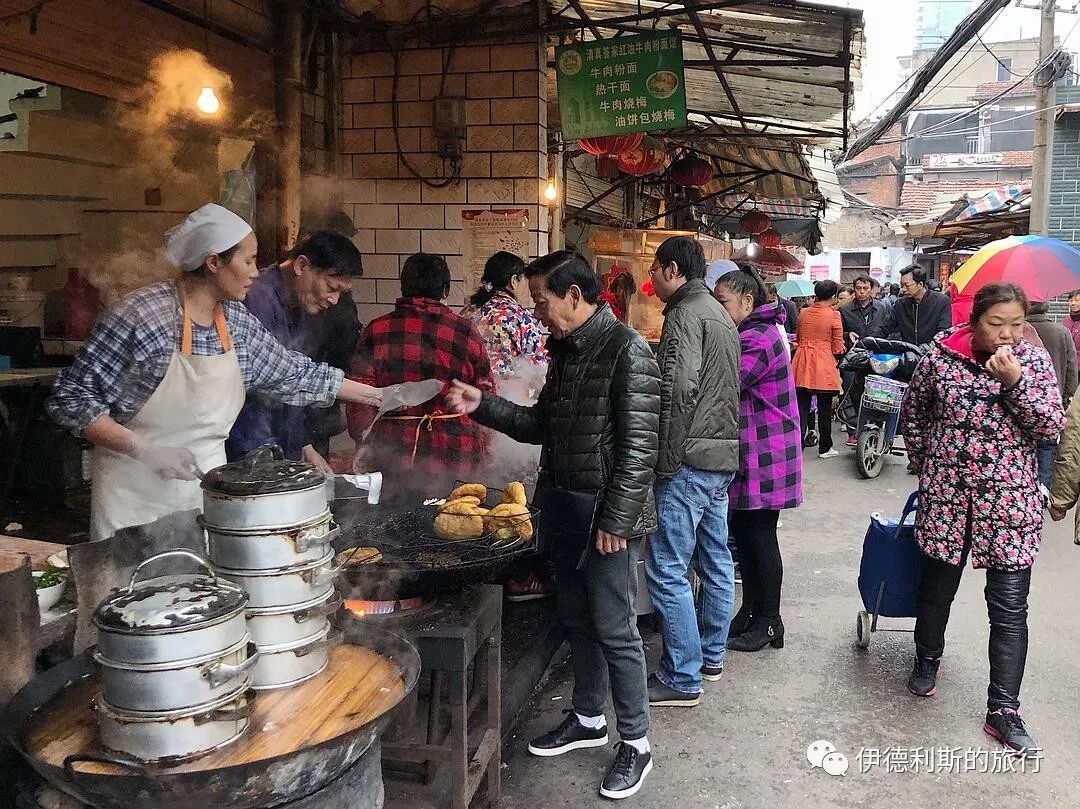
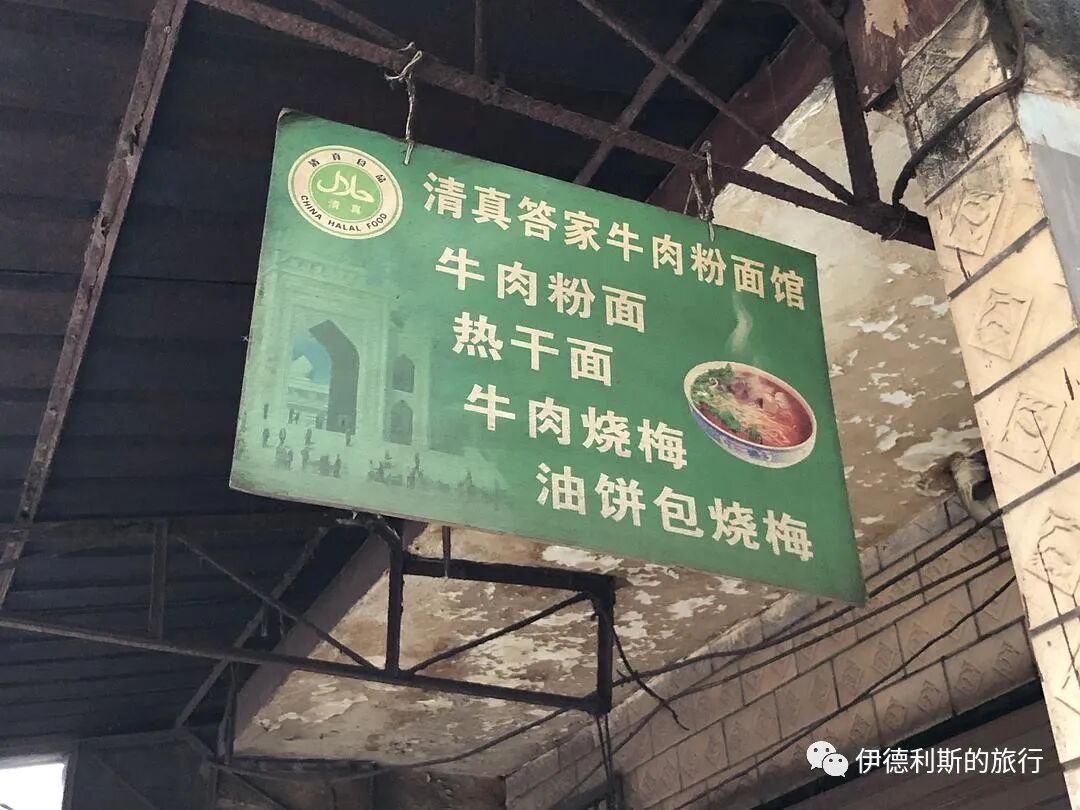
Ding's Beef Meatball Shop
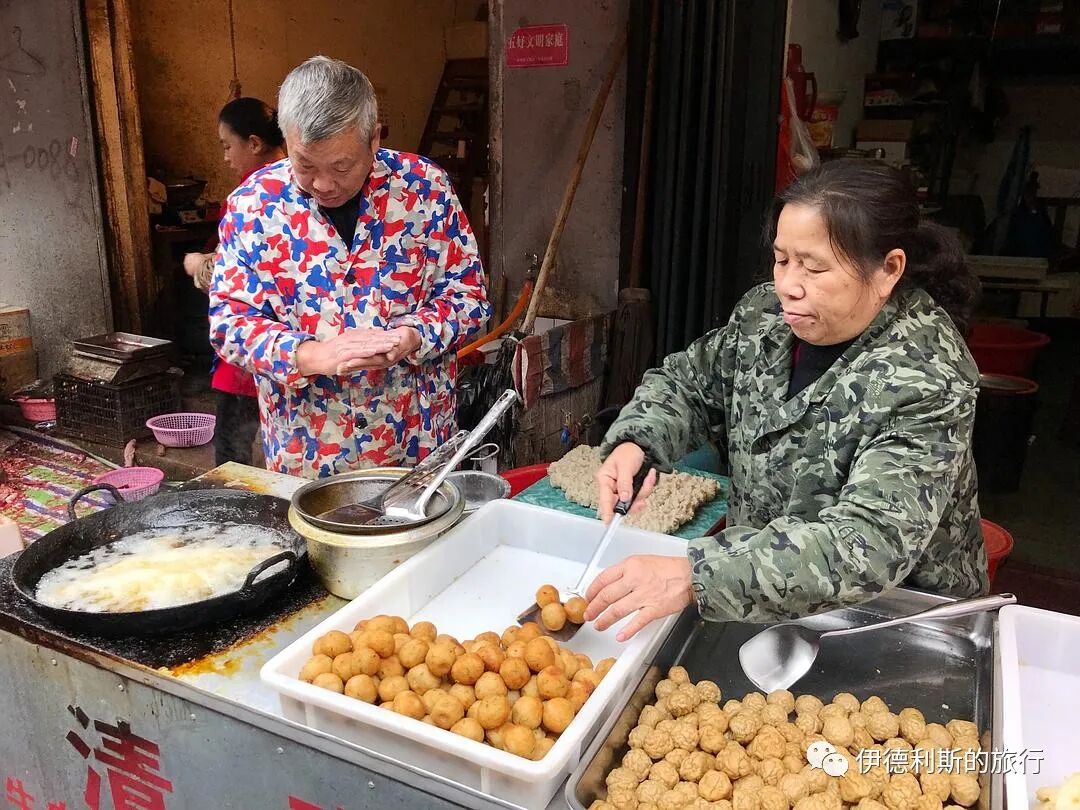
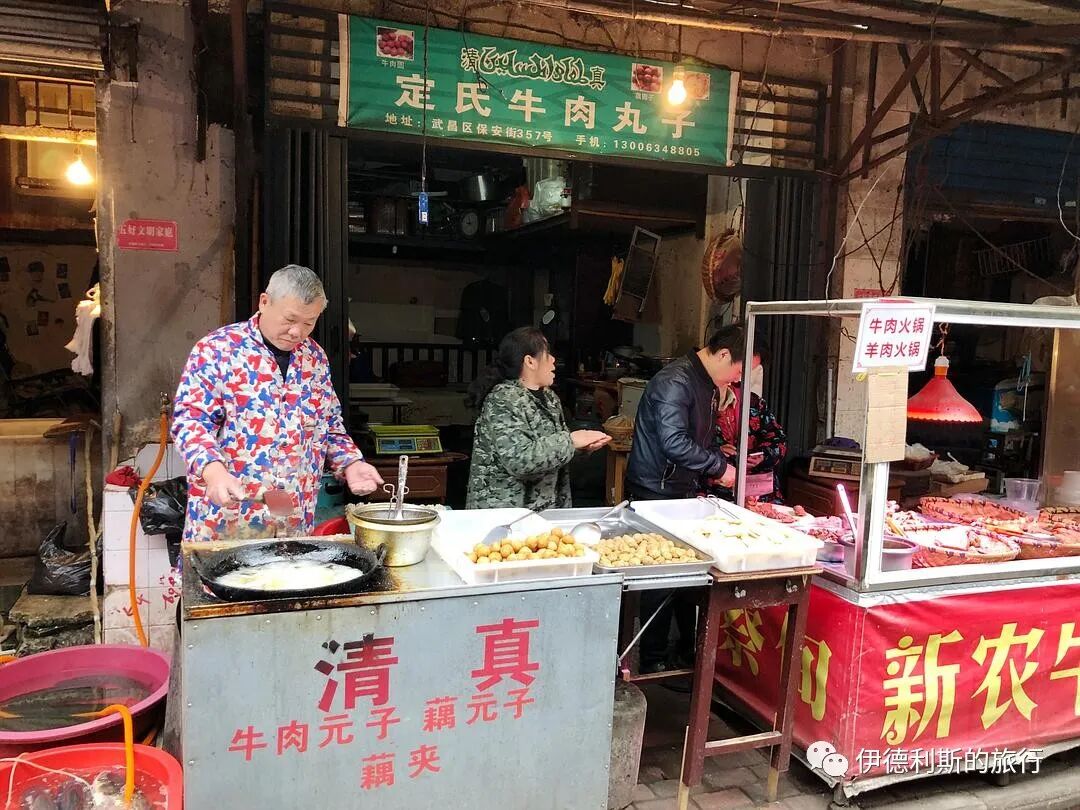
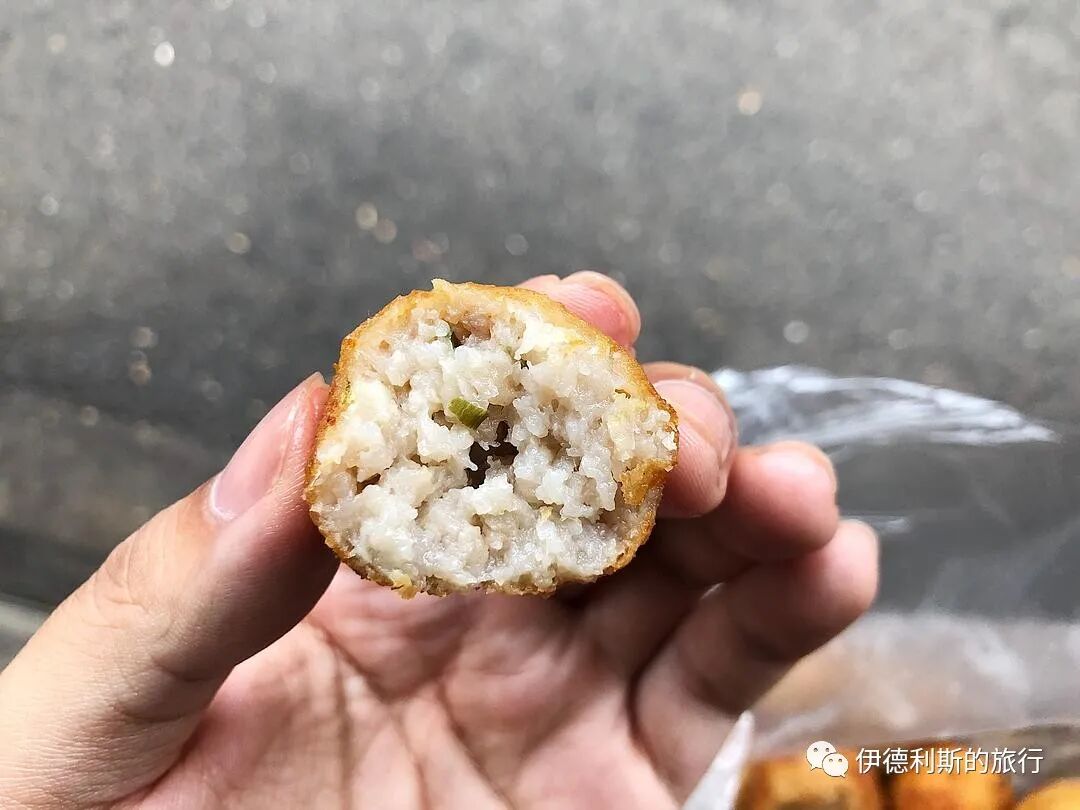
Walking further in from the chili oil noodle shop, you can see Ding's Beef Meatball Shop. They also only sell during morning market hours. This was my first time eating deep-fried lotus root balls (zha ou yuanzi), and they were truly delicious.
Niuchongchong Hui Muslim Snack Shop
There is another local Wuchang halal breakfast spot called Niuchongchong Hui Muslim Snack Shop. It is located at the intersection of Ping'an Road and Hengping Road, not far southeast of Qiyi Street. The owner's family has lived on Qiyi Street for generations. I ate hot dry noodles (reganmian) and sticky rice, beef, and mushroom steamed dumplings (shaomei) here. The biggest surprise was finding deep-fried dough cakes (youxiang) made with brown sugar and sweet osmanthus by local Wuchang Hui Muslims. This was my first time hearing of such a thing. Besides that, their beef noodles and fried dough cakes stuffed with steamed dumplings (youbing bao shaomei) are also very authentic.
Balanyuan
After Qiyi Street was demolished and Niuchongchong Hui Muslim Snack Shop closed, Balanyuan is likely the only traditional Wuchang halal restaurant left.
The owner of Balanyuan, Mr. Li, and his family have been selling beef balls since 1995 right across from the Qiyi Street mosque. I remember them from when I was in college, though I never got the chance to try them back then. After the Qiyi Street demolition, Mr. Li bought a house in Qilimiao, Hanyang, and opened this traditional Wuchang halal restaurant in 2018. Even though they are in Hanyang now, Mr. Li still buys his beef from Qiyi Street. This shop is probably the only comforting thing to come out of the Qiyi Street demolition.
The must-try dish here is the beef brisket and radish ball soup (wagou luobo yuanzi tang). Since the Qing Dynasty and the Republic of China era, the Hui Muslims of Qiyi Street have been famous in Wuchang for their beef balls. The bubbly outer layer of a Qiyi Street beef ball is made of fish, while the inside uses beef tenderloin (meitiao). The beef brisket (wagou) is a specific cut used for simmering soup, and it tastes especially fragrant when paired with radish.
Also, the Hongshan vegetable stalks (Hongshan caitai) that just hit the market in November are a seasonal vegetable unique to Wuhan. Hongshan vegetable stalks originally came from the "nine ridges and eighteen hollows" area between Hongshan and Shipailing in Wuhan's Hongshan District. Production areas shrank significantly during the urban construction of the 1980s and 1990s, but they have gradually recovered in recent years. They are a green vegetable worth eating in Wuhan during the autumn and winter. Their main dishes also include vegetarian deep-fried spring rolls (zha chunjuan), which have a great texture and go very well with the soup.
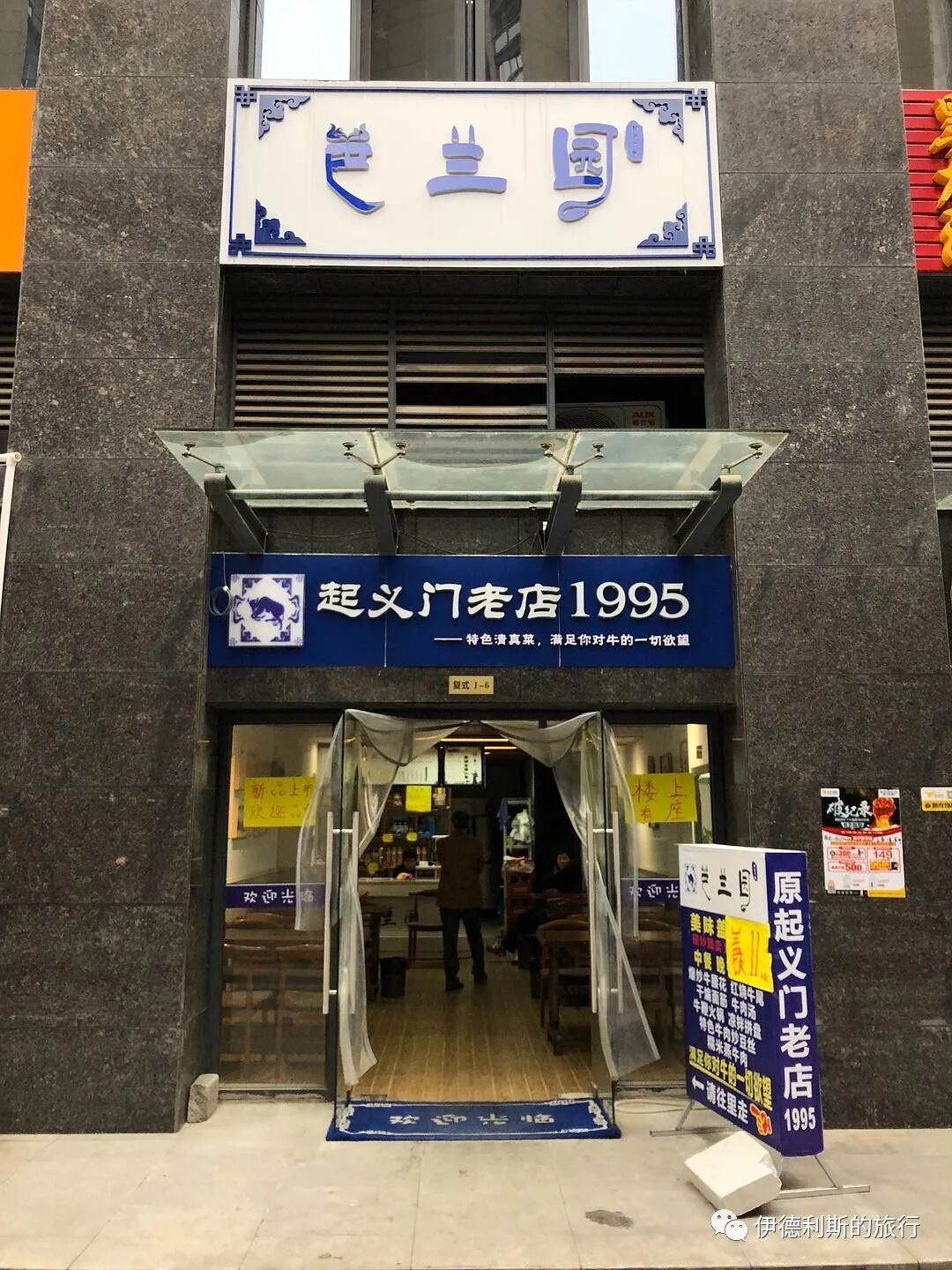
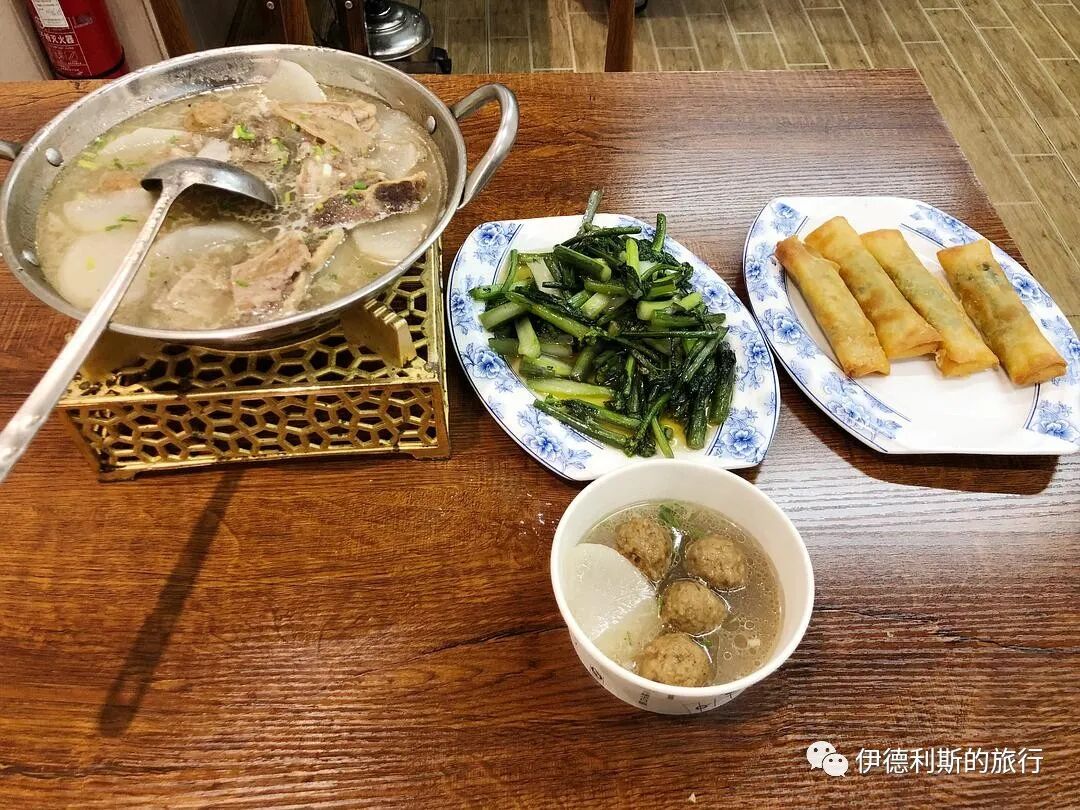
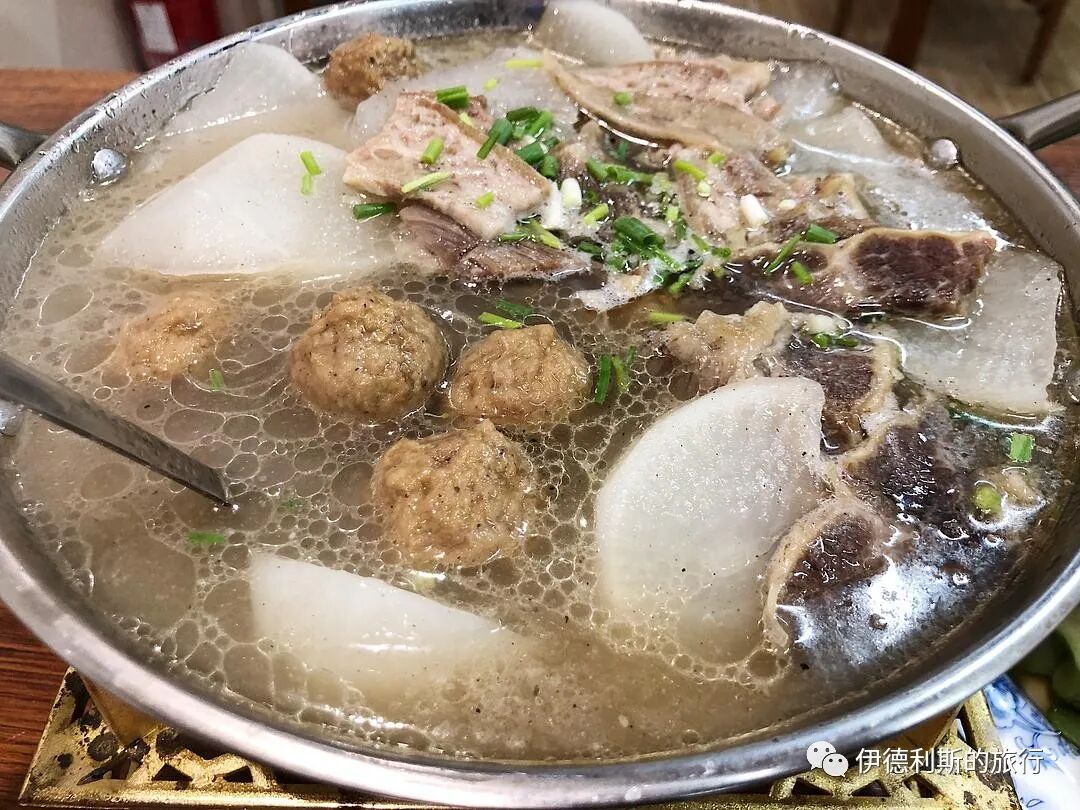
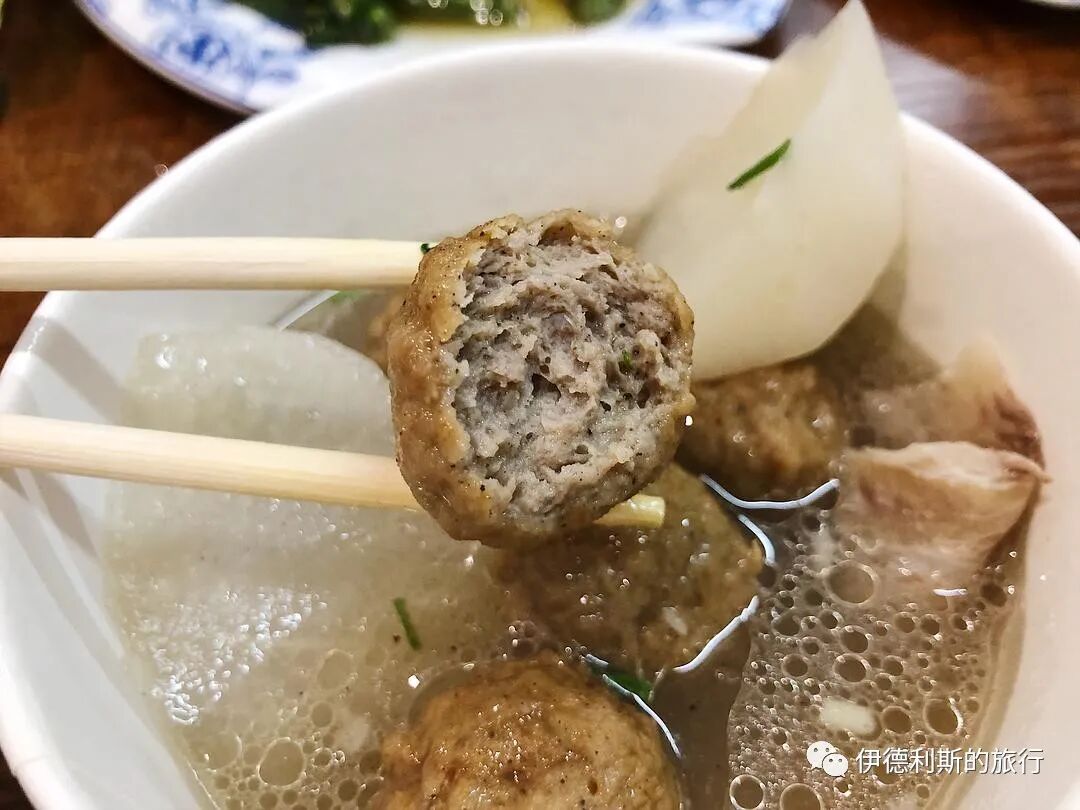
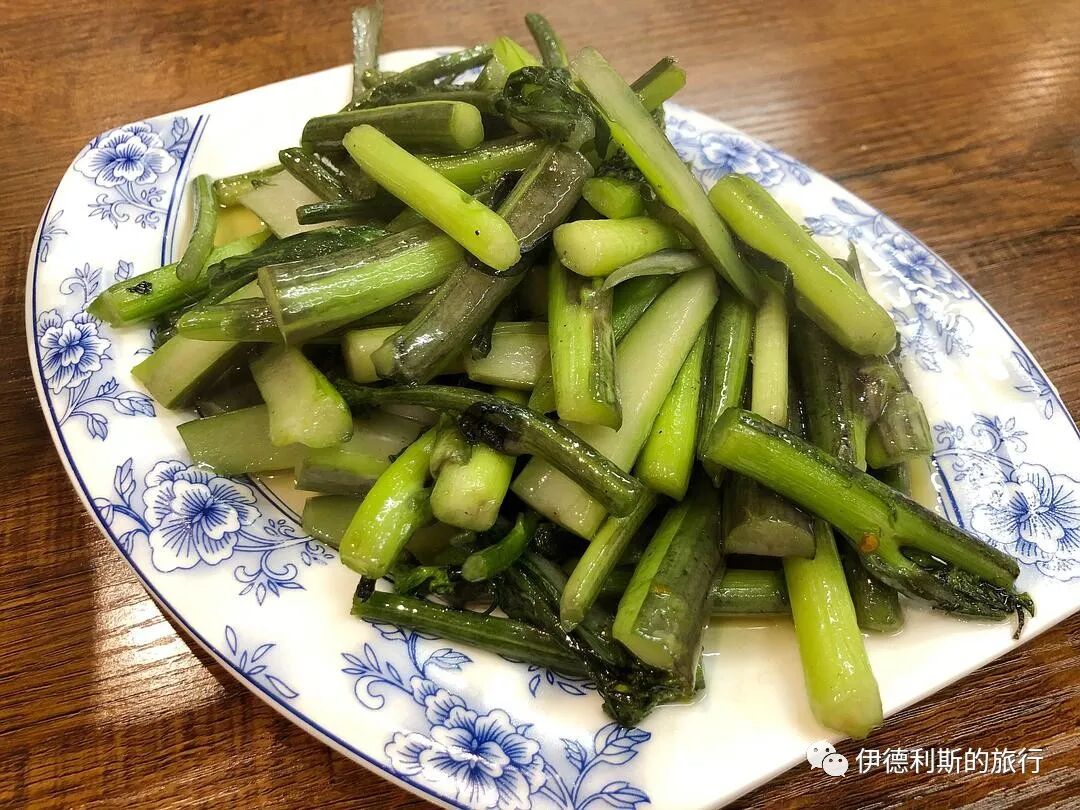
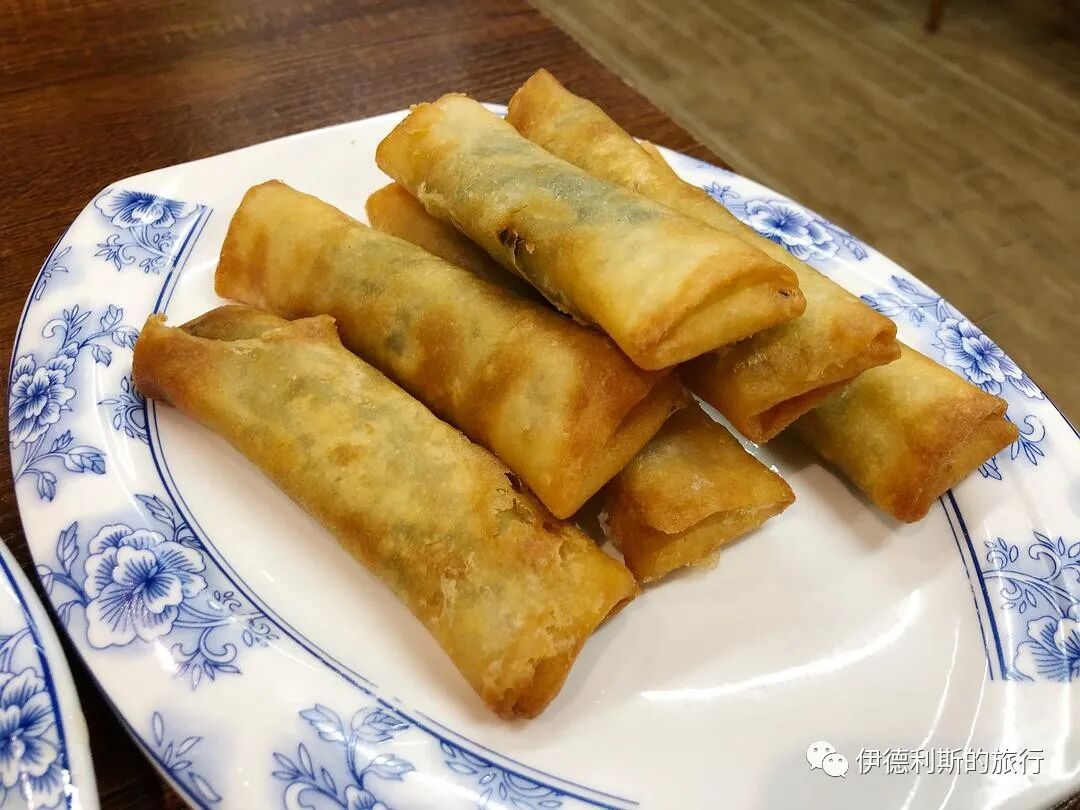
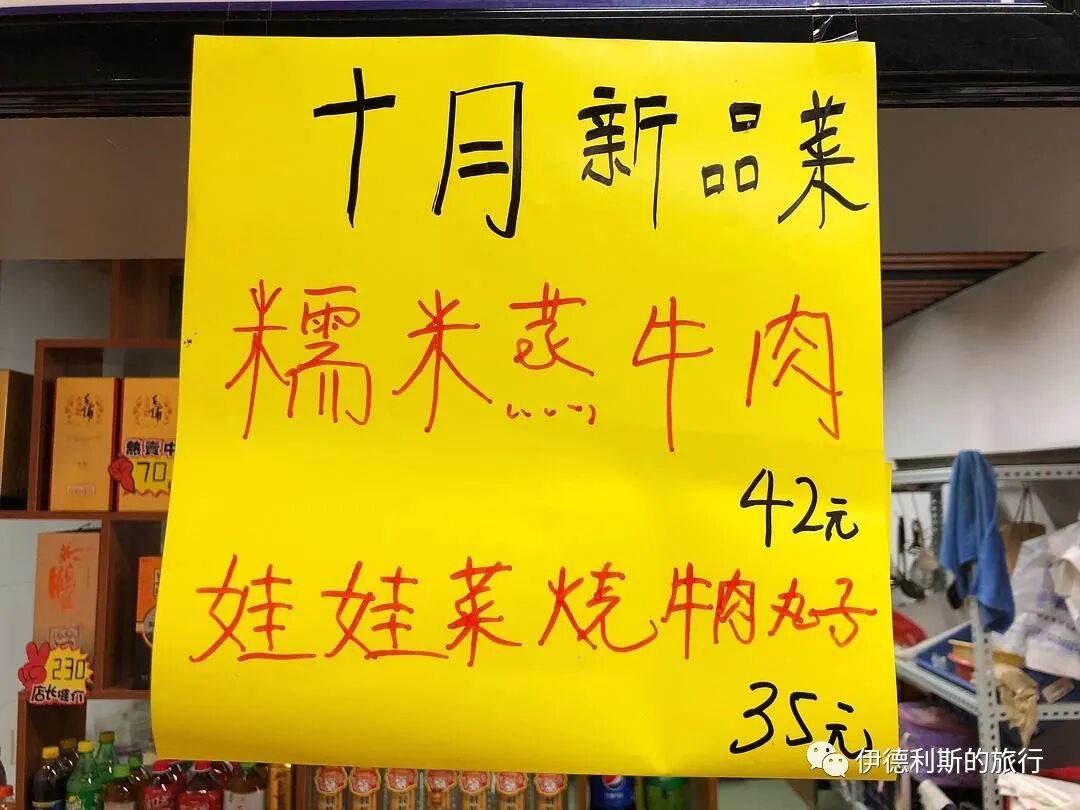
We visited Balanyuan again in 2020. to the beef brisket and radish ball soup, we also ordered dry-fried beef (ganbian niurou) and stir-fried sweet potato leaves (suchao tiaojian). The dry-fried beef was a special recommendation from Mr. Li. The beef was fried until very crispy and sprinkled with white sesame seeds, cumin, and sugar. Zainabu couldn't stop praising it and kept thinking about the flavor.
Because Mr. Li owns his own building, his losses this year were not as severe. The shop reopened in June 2020 and has been recovering quite well since then. I sincerely hope Balanyuan can stay open forever, preserving the only remaining legacy of Wuchang's halal food culture.
Halal Travel Guide: Wuchang Hui Muslim Community — Qiyi Street Photos (Part 2)
Articles • ali2007fr posted the article • 0 comments • 143 views • 2026-05-18 02:26
Summary: Wuchang Hui Muslim Community — Qiyi Street Photos is presented here as a firsthand travel account in clear English, beginning with this scene: Also, their new menu uses a photo I took of Qiyi Street back in 2011. The account keeps its focus on Wuchang Muslims, Old Photos, Hubei Muslims while preserving the names, places, food, and historical details from the Chinese source.
Also, their new menu uses a photo I took of Qiyi Street back in 2011. view all
Summary: Wuchang Hui Muslim Community — Qiyi Street Photos is presented here as a firsthand travel account in clear English, beginning with this scene: Also, their new menu uses a photo I took of Qiyi Street back in 2011. The account keeps its focus on Wuchang Muslims, Old Photos, Hubei Muslims while preserving the names, places, food, and historical details from the Chinese source.
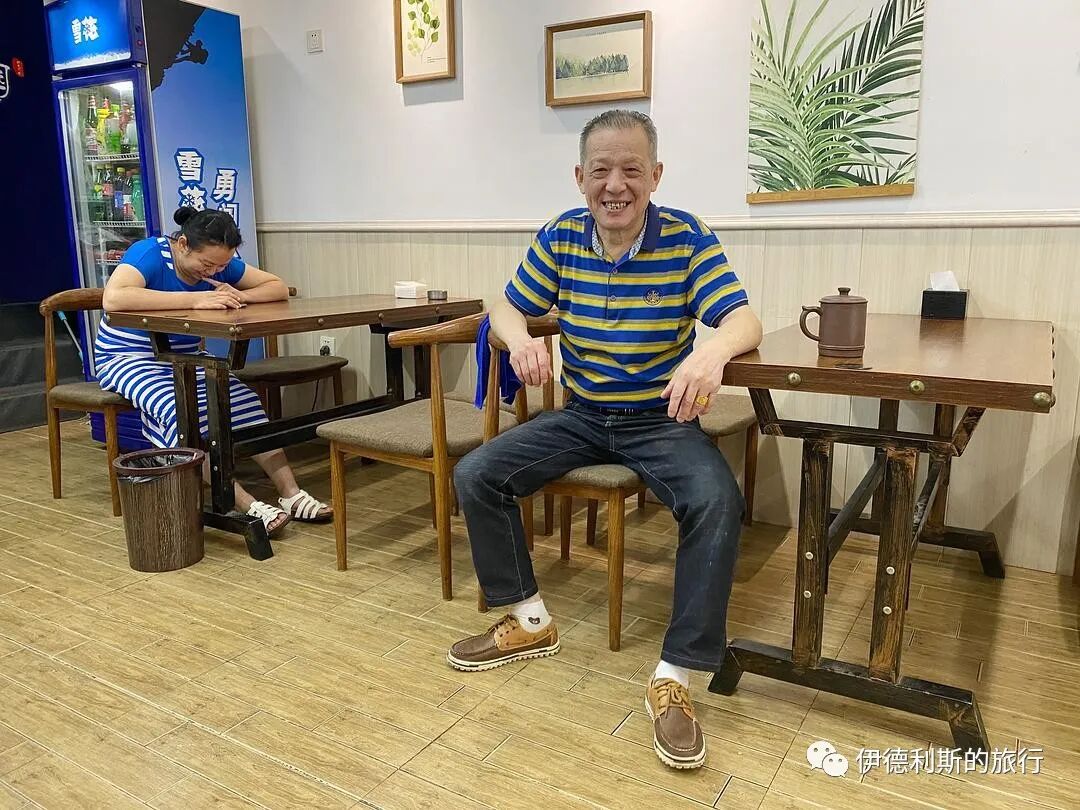
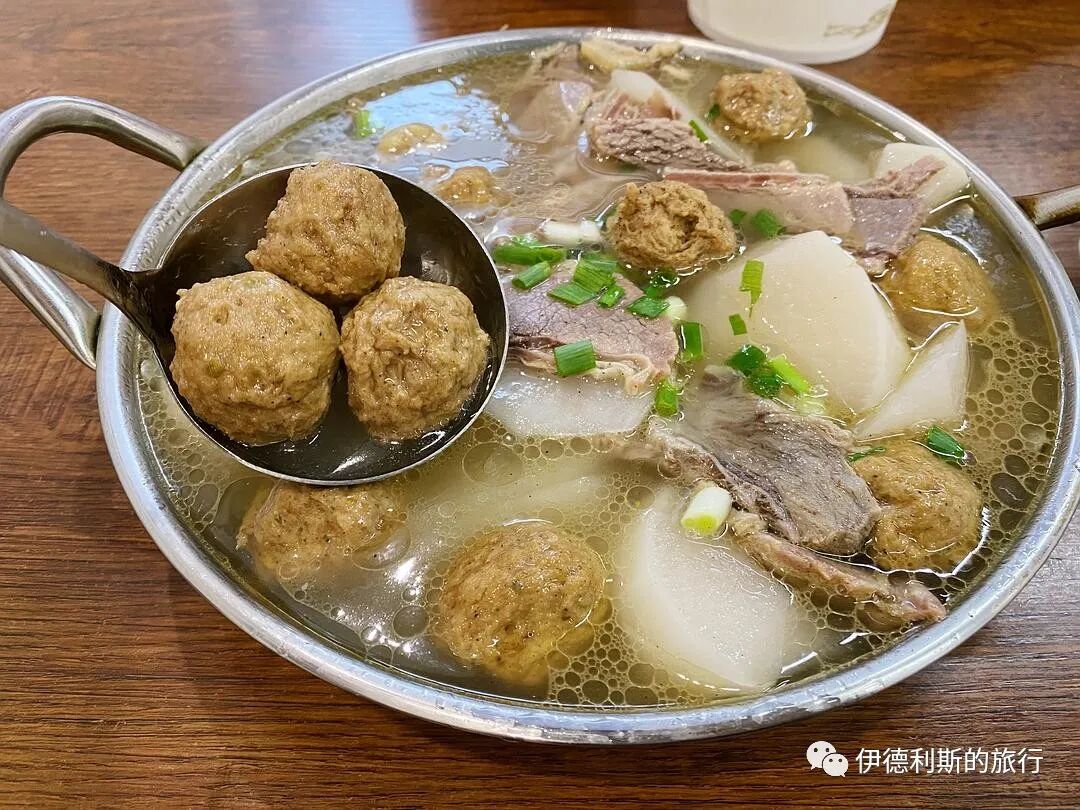
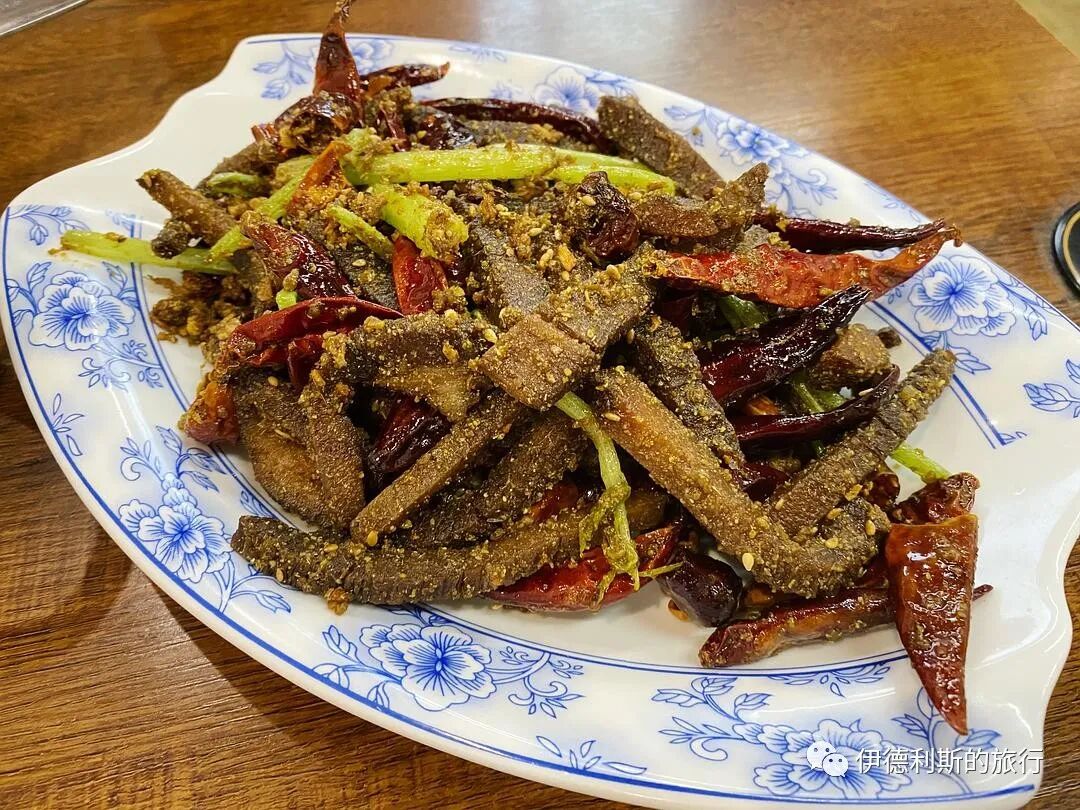
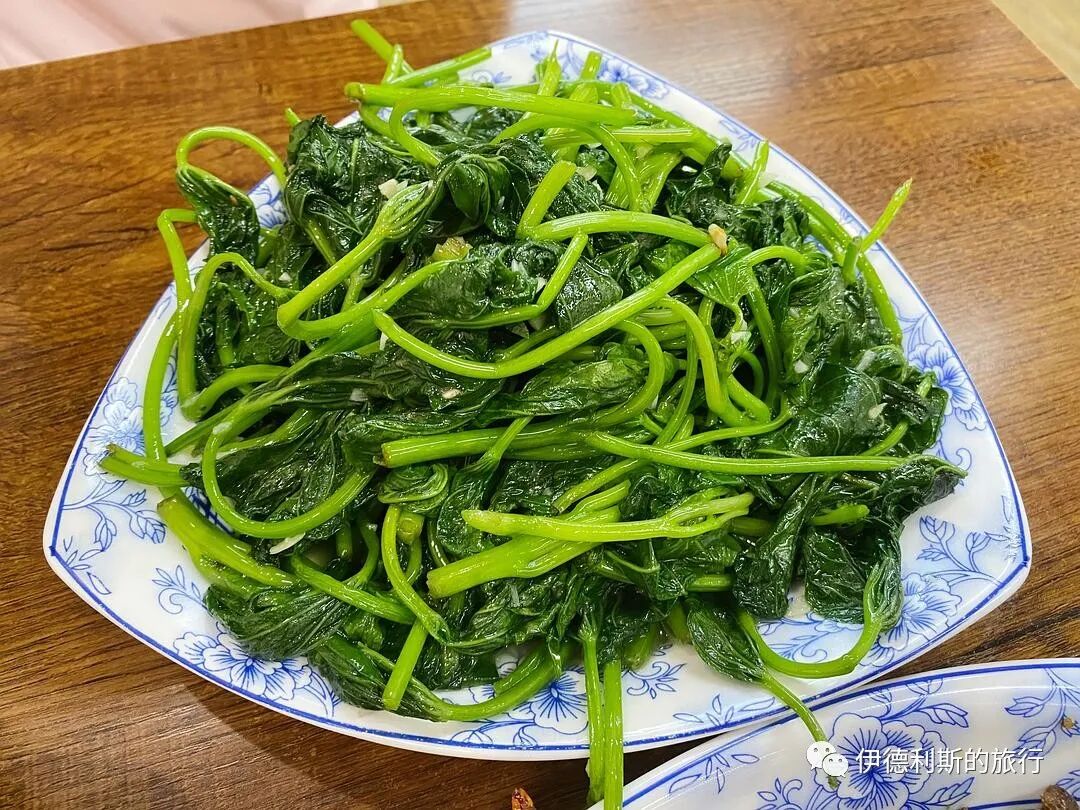
Also, their new menu uses a photo I took of Qiyi Street back in 2011.
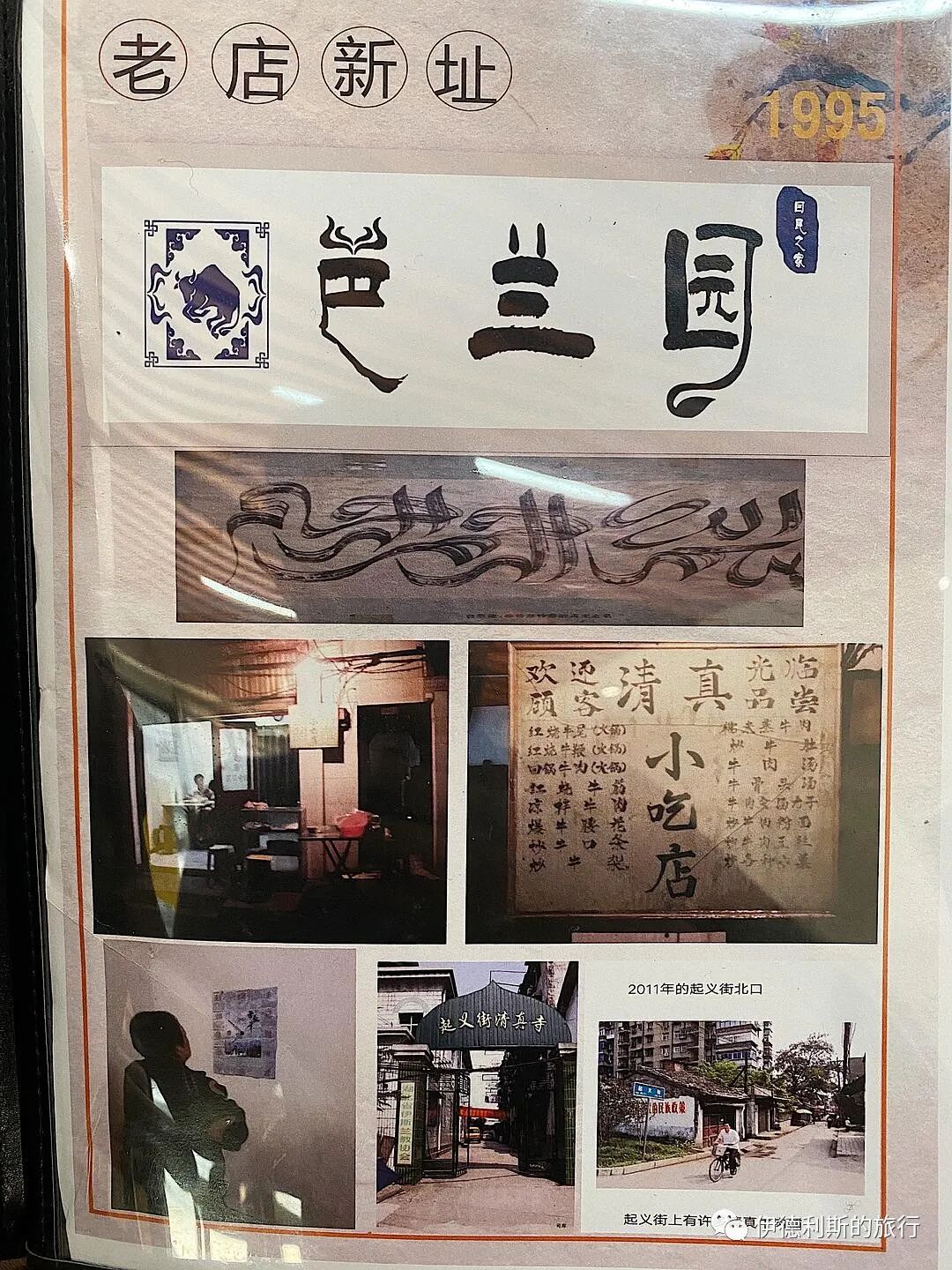
Halal Travel Guide: Shashi Yingxi Hui Street — Mosque, Muslim Food and a Vanished Community
Articles • ali2007fr posted the article • 0 comments • 150 views • 2026-05-18 02:26
Summary: Shashi Yingxi Hui Street — Mosque, Muslim Food and a Vanished Community is presented here as a firsthand travel account in clear English, beginning with this scene: In August 2017, Shashi began a slum renovation project on Yingxi Hui Muslim Street. The account keeps its focus on Hubei Muslims, Shashi Travel, Halal Food while preserving the names, places, food, and historical details from the Chinese source.
Yingxi Hui Muslim Street
In August 2017, Shashi began a slum renovation project on Yingxi Hui Muslim Street. This was another traditional Hui Muslim community in Hubei set to disappear, following those in Wuchang, Hankou, and Fancheng. I decided to document the old street before it changed forever.
Yingxi Hui Muslim Street was originally called Yingxi Street. It was located inside the Yingxi Gate, the northwest gate of the Shashi earthen city wall. The Shashi earthen city wall was first built during the Southern Song Dynasty. It was rebuilt in 1797, the second year of the Jiaqing reign, because of the White Lotus Rebellion. It used brick for the parapets and riverside trees for fences. The Yingxi Gate was established at that time. After the 1950s, the Shashi earthen city wall was gradually torn down, and the Yingxi Gate no longer exists.
In the early years of the Republic of China, some Hui Muslims from Nanyang, Henan, fled to Shashi and settled on Yingxi Street. This is when the Hui Muslim community on Yingxi Street began to form.
On the 1953 edition of the Shashi City Map, you can see a Hui Muslim cooperative on Yingxi Street.
Yingxi Street and the nearby streets
Shashi Mosque
The oldest mosque in Shashi was called the Yinjia Lane Mosque. It was reportedly built in 1459, the third year of the Tianshun reign of the Ming Dynasty. After Yinjia Lane was widened in 1935, it was renamed Xinsha Road, and the mosque became known as the Xinsha Road Mosque. The Xinsha Road Mosque stopped its activities after 1966, but it resumed them in 1981.
The Yingxi Street Mosque was built in 1925. After it was finished, the Yinjia Lane Mosque was called the Lower Mosque, and the Yingxi Street Mosque was called the Upper Mosque. In 1952, the Yingxi Street Mosque was turned into a Hui Muslim textile factory. After the factory moved in 1982, it became the Halal Donglaishun Restaurant and a Hui Muslim hostel.
After the 1990s, the area around the Xinsha Road Mosque became a busy market, which affected the mosque. In 1994, the mosque management committee decided to close the Xinsha Road Mosque and turn it into commercial space. At the same time, they rebuilt the Yingxi Street Mosque, which was completed in 1995.
A stall selling fried dough tips (youmojian) next to the mosque. Fried dough tips (youmojian) are a snack brought to Hubei from Henan. They are a bit like small fried dough sticks (youtiao).
Grass carp cake (huanyugao) is a specialty food in the Jingzhou area. Grass carp (huanyu), also known as black carp (qingyu), is a common edible fish in the middle and lower reaches of the Yangtze River.
I ate beef noodles, hot dry noodles (reganmian), steamed beef with rice flour (fenzheng niurou), and dried tofu noodles (dougan sufen) at an unnamed halal restaurant on Yingxi Street. Shashi's hot dry noodles (reganmian) are different from those in Wuhan because they include sweet bean paste (tianmianjiang).
Wang Daping Lamb Offal
I had a late-night snack at Wang Daping Lamb Offal on Jiefang Road. It was a bit of a surprise. It was the best lamb and lamb offal hot pot I have had recently, and the lamb skewers were also amazing. I really did not expect to find such great lamb in Hubei.
This place is also very surreal. It is in front of an abandoned building with a 'Serve the People' star on it. The area is quiet and empty for 500 meters in every direction, but this spot is incredibly lively. When I visited in August 2017, Wang Daping had already built a grand new shop on Jiefang Road Food Street. It might open soon, and then you won't be able to see this amazing scene anymore.
Starting from the Kangxi reign, the Ding, Ma, Li, Wei, and Wang families who settled in Mianyang (Xiantao) began moving to Shashi. By the late Qing Dynasty, more families including the Wang, Li, Ha, Ai, Jiao, and Yi clans moved to Shashi from Henan, Nanjing, Shaanxi, and Anhui.
Old Three Lu Lamb Offal Shop (Lu Laosan Yangza Dian)
The sun-dried big white fish (yanggan dabiaodiao) and the peanut-mixed fish skin (huaren ban yupi) I ate at Old Three Lamb Offal Shop tasted great.
River-crossing ferry
Finally, let me share the river-crossing ferry from Shashi to Buhe Town on the opposite bank.
River-crossing car ferry
This was the first time I saw a car ferry where one boat tows another, and it even has to turn around and push the other boat to the shore when arriving. view all
Summary: Shashi Yingxi Hui Street — Mosque, Muslim Food and a Vanished Community is presented here as a firsthand travel account in clear English, beginning with this scene: In August 2017, Shashi began a slum renovation project on Yingxi Hui Muslim Street. The account keeps its focus on Hubei Muslims, Shashi Travel, Halal Food while preserving the names, places, food, and historical details from the Chinese source.
Yingxi Hui Muslim Street
In August 2017, Shashi began a slum renovation project on Yingxi Hui Muslim Street. This was another traditional Hui Muslim community in Hubei set to disappear, following those in Wuchang, Hankou, and Fancheng. I decided to document the old street before it changed forever.
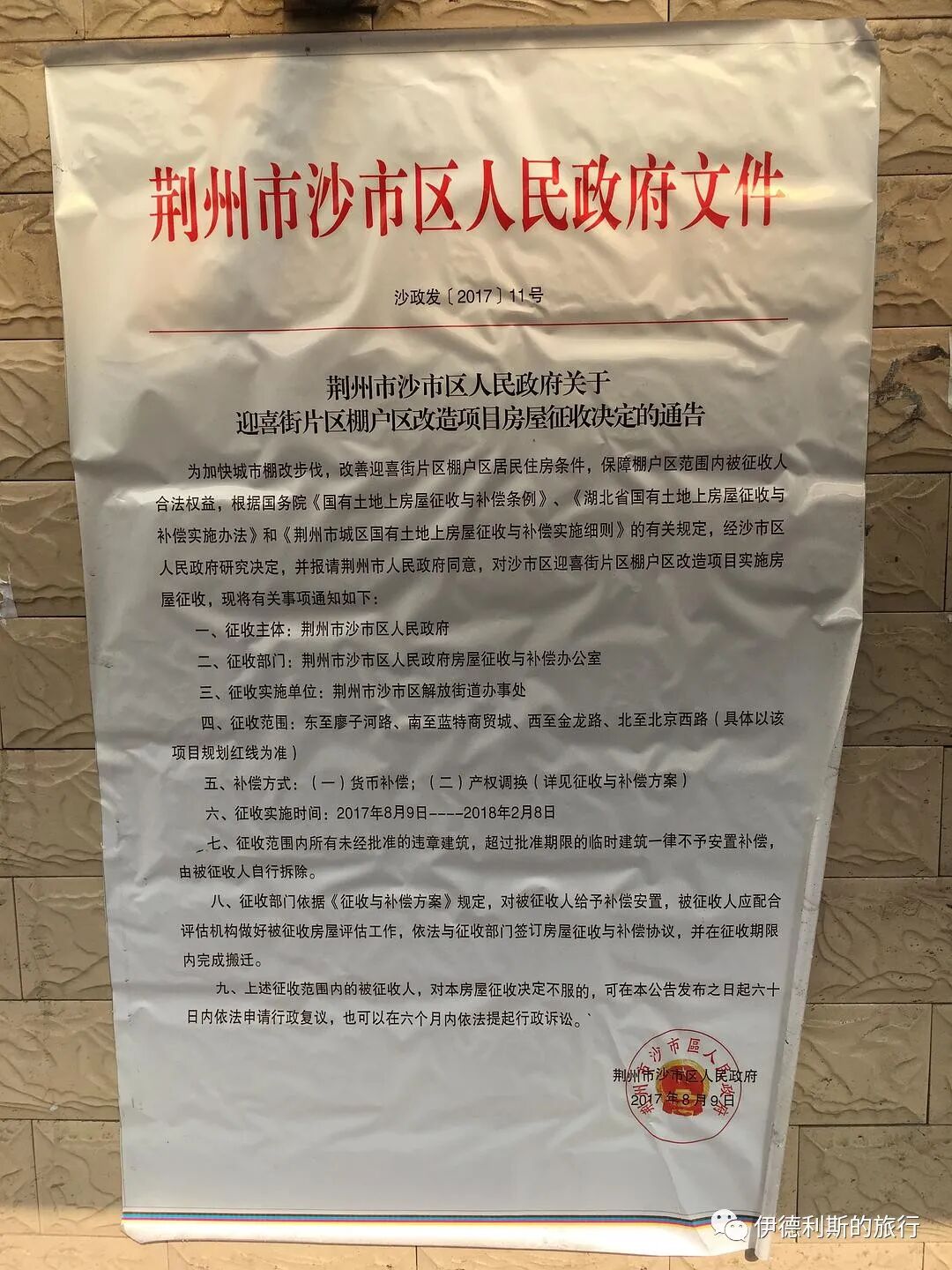
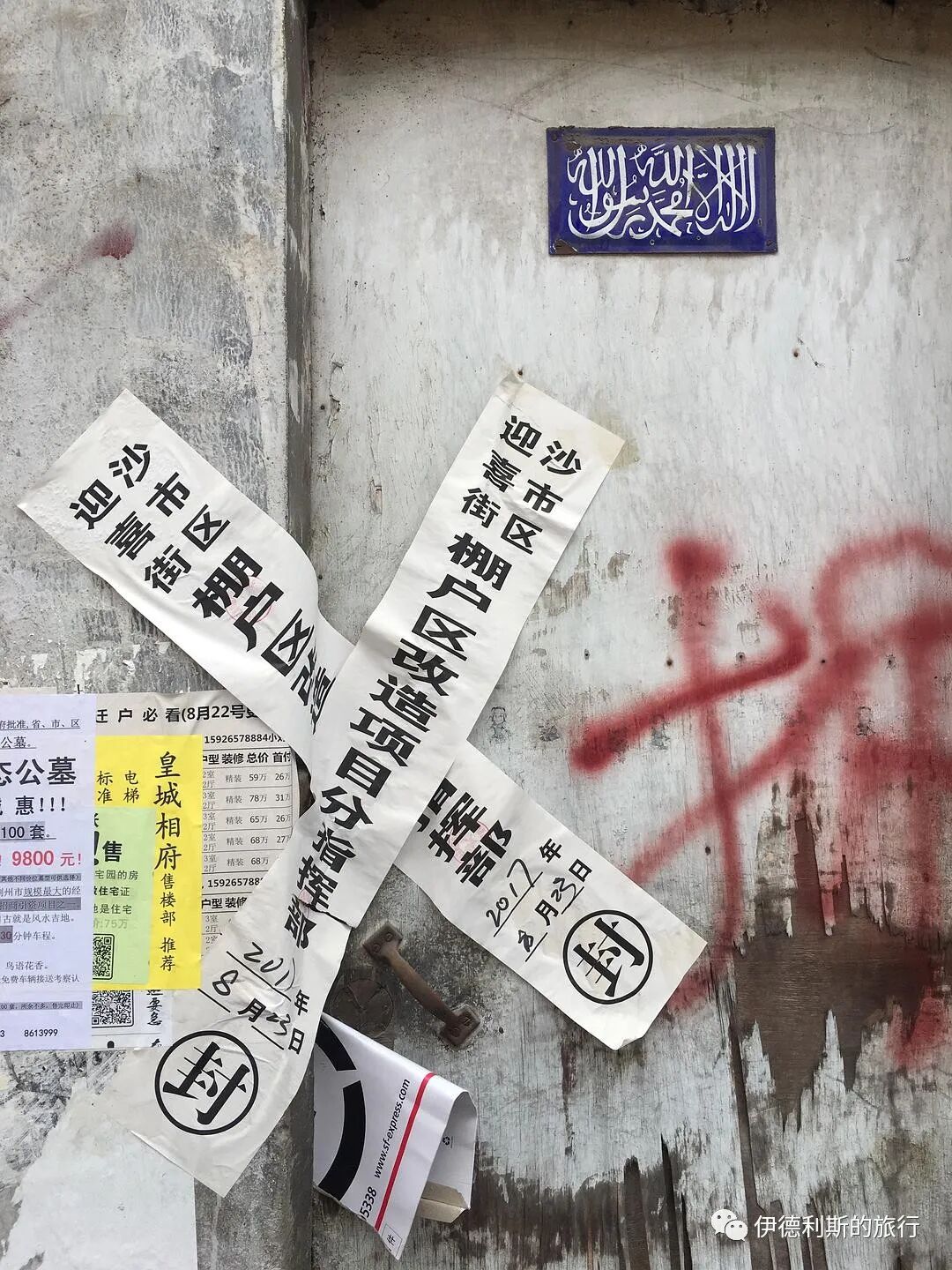
Yingxi Hui Muslim Street was originally called Yingxi Street. It was located inside the Yingxi Gate, the northwest gate of the Shashi earthen city wall. The Shashi earthen city wall was first built during the Southern Song Dynasty. It was rebuilt in 1797, the second year of the Jiaqing reign, because of the White Lotus Rebellion. It used brick for the parapets and riverside trees for fences. The Yingxi Gate was established at that time. After the 1950s, the Shashi earthen city wall was gradually torn down, and the Yingxi Gate no longer exists.
In the early years of the Republic of China, some Hui Muslims from Nanyang, Henan, fled to Shashi and settled on Yingxi Street. This is when the Hui Muslim community on Yingxi Street began to form.
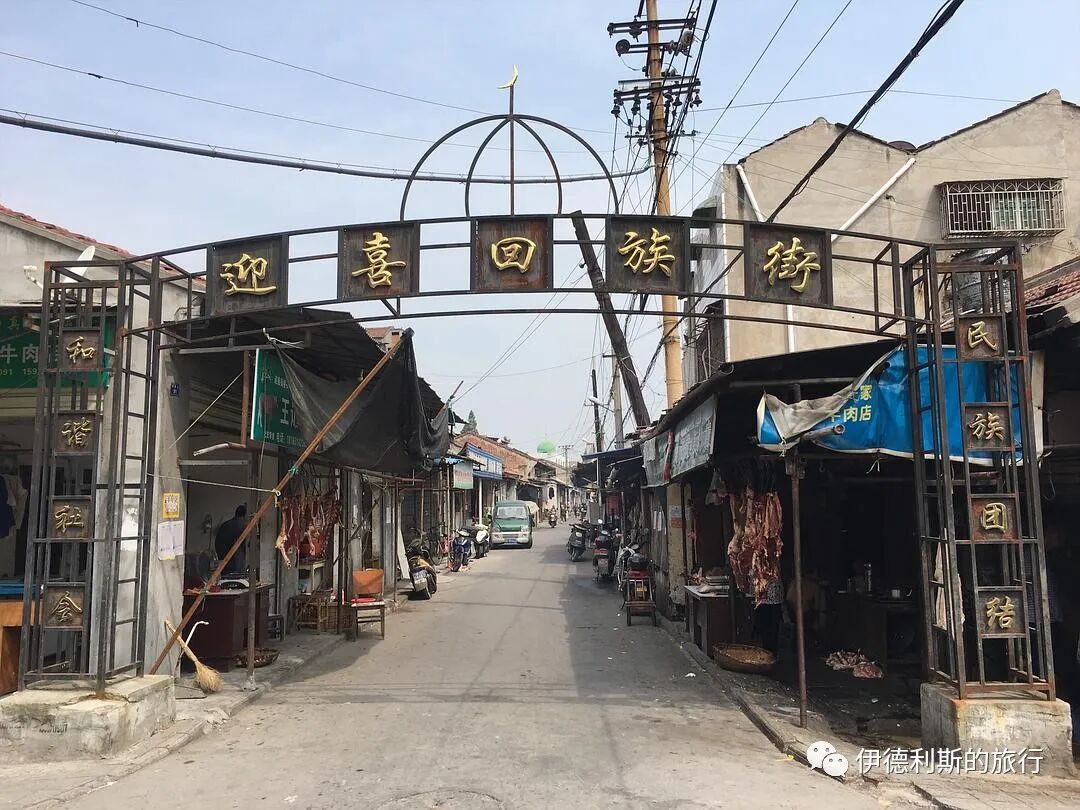
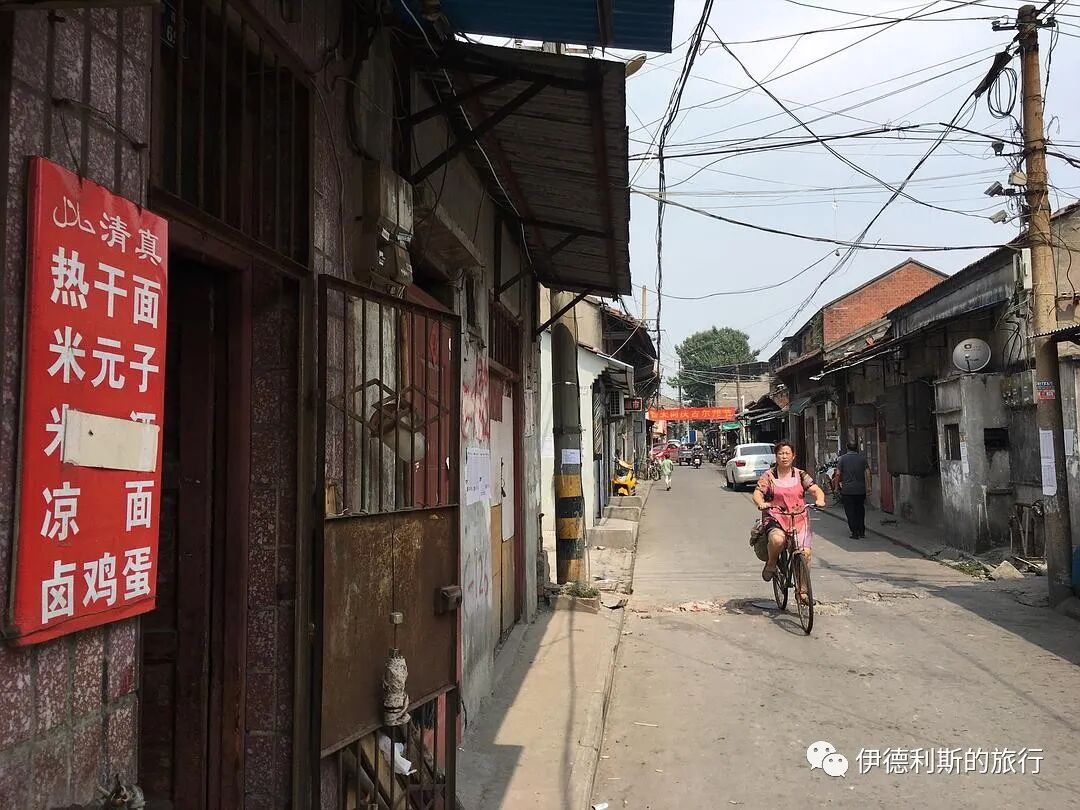
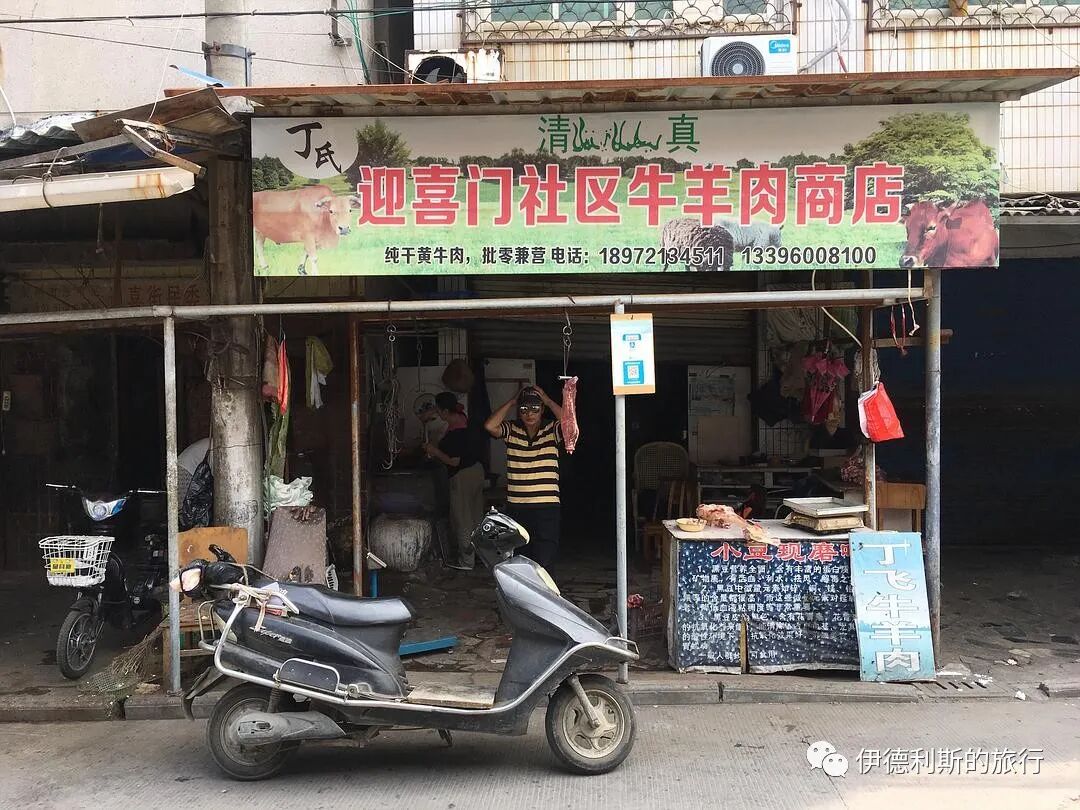
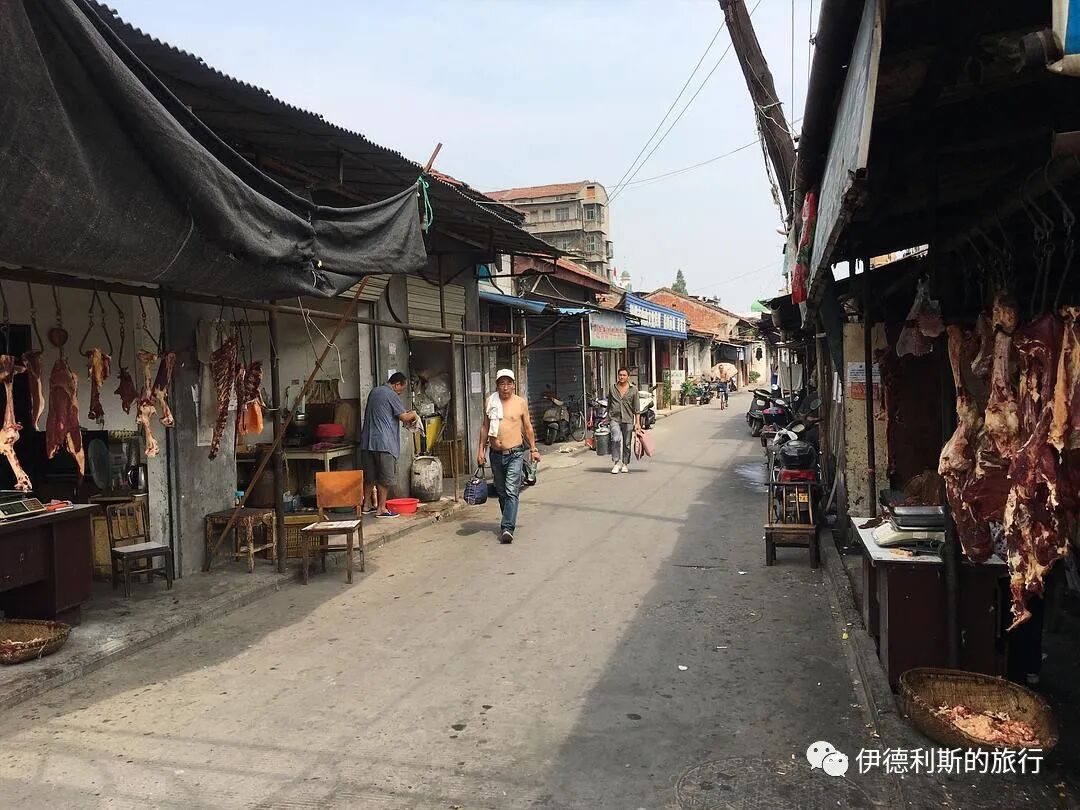
On the 1953 edition of the Shashi City Map, you can see a Hui Muslim cooperative on Yingxi Street.
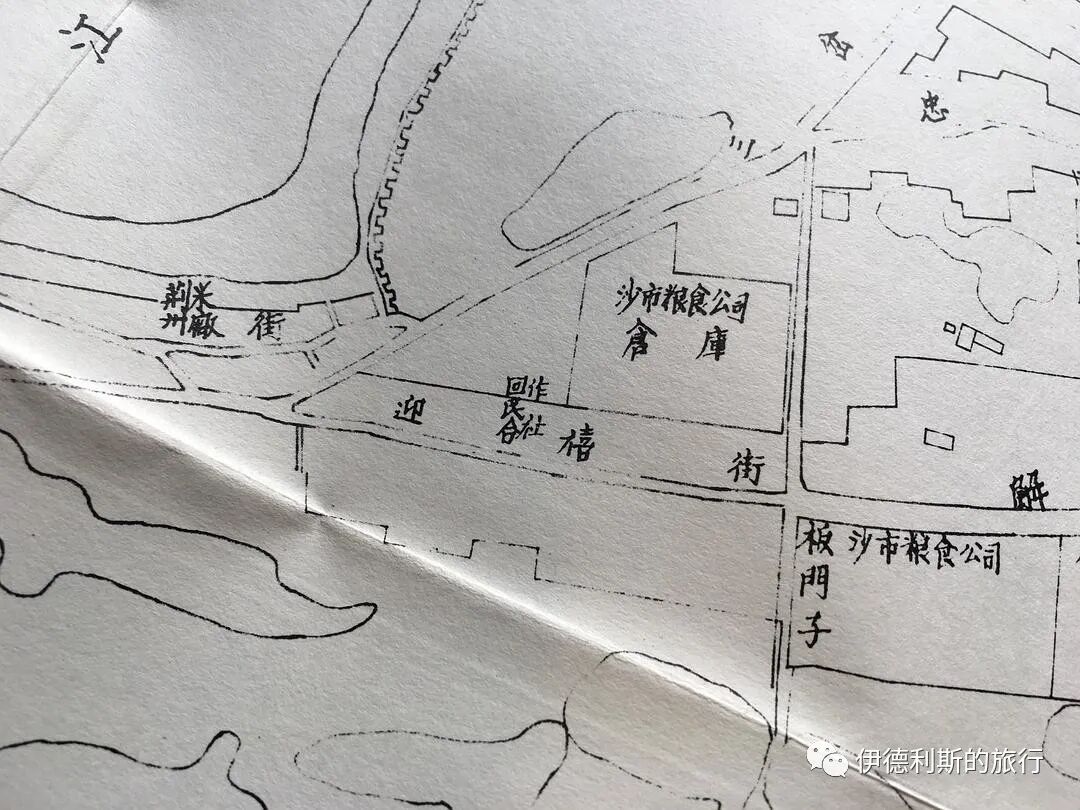
Yingxi Street and the nearby streets
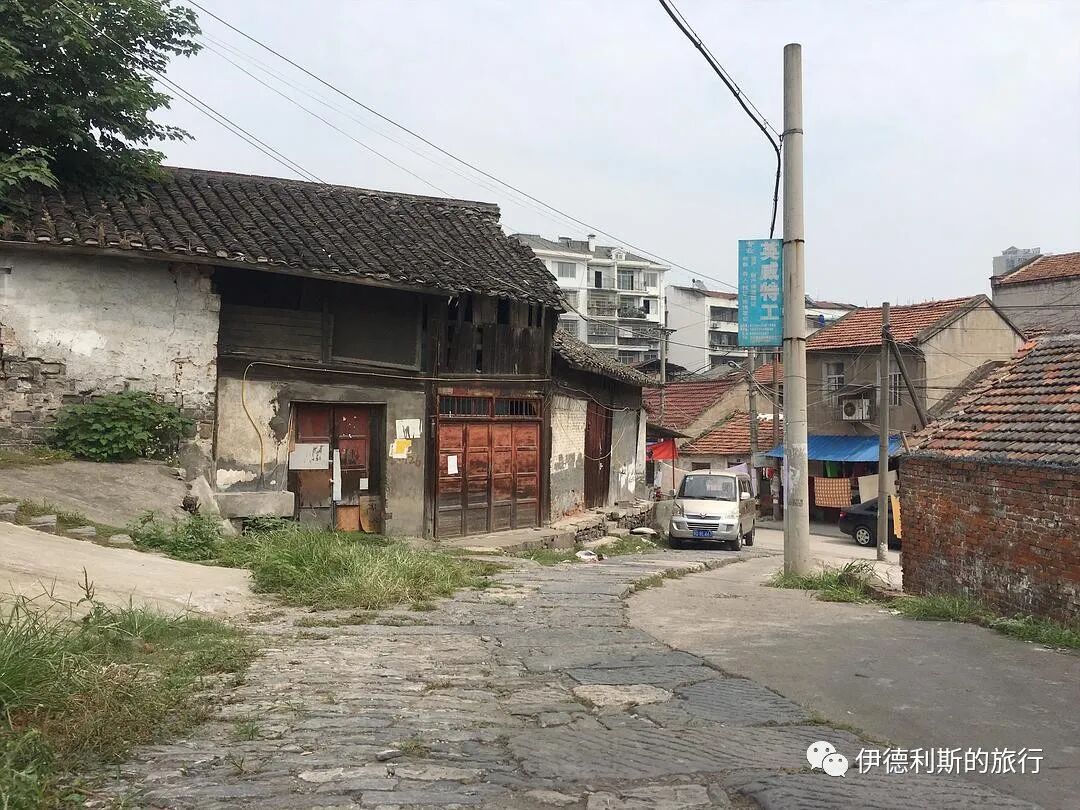
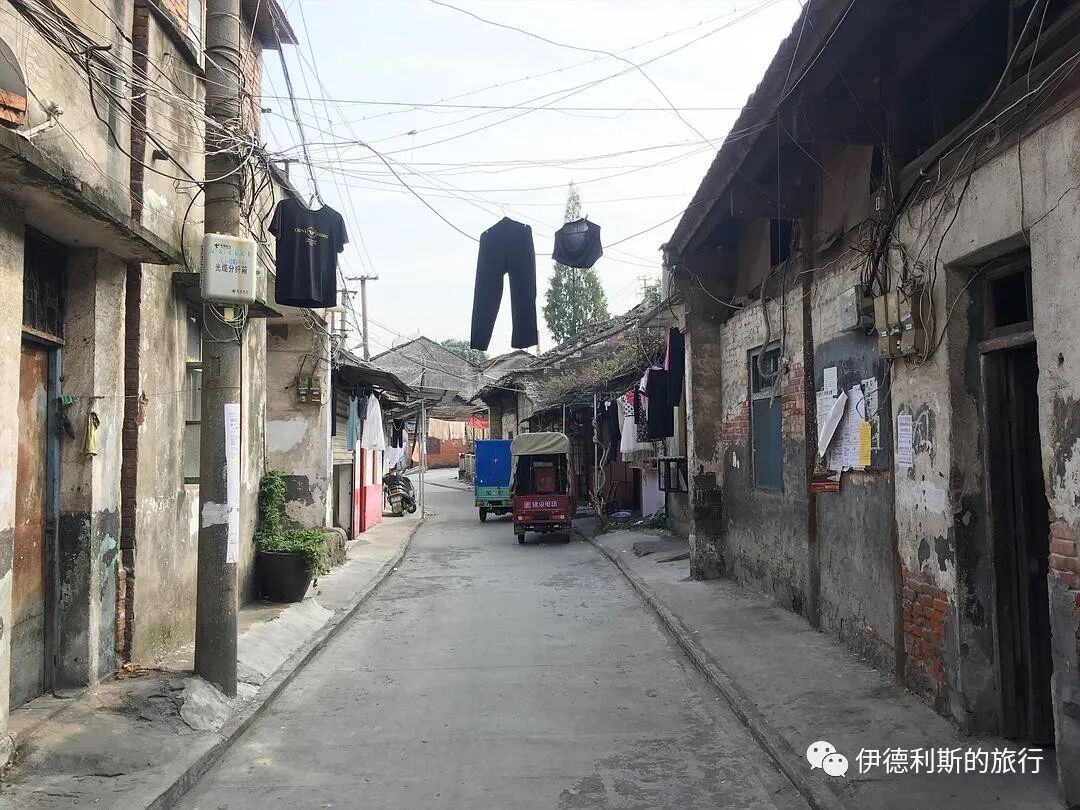
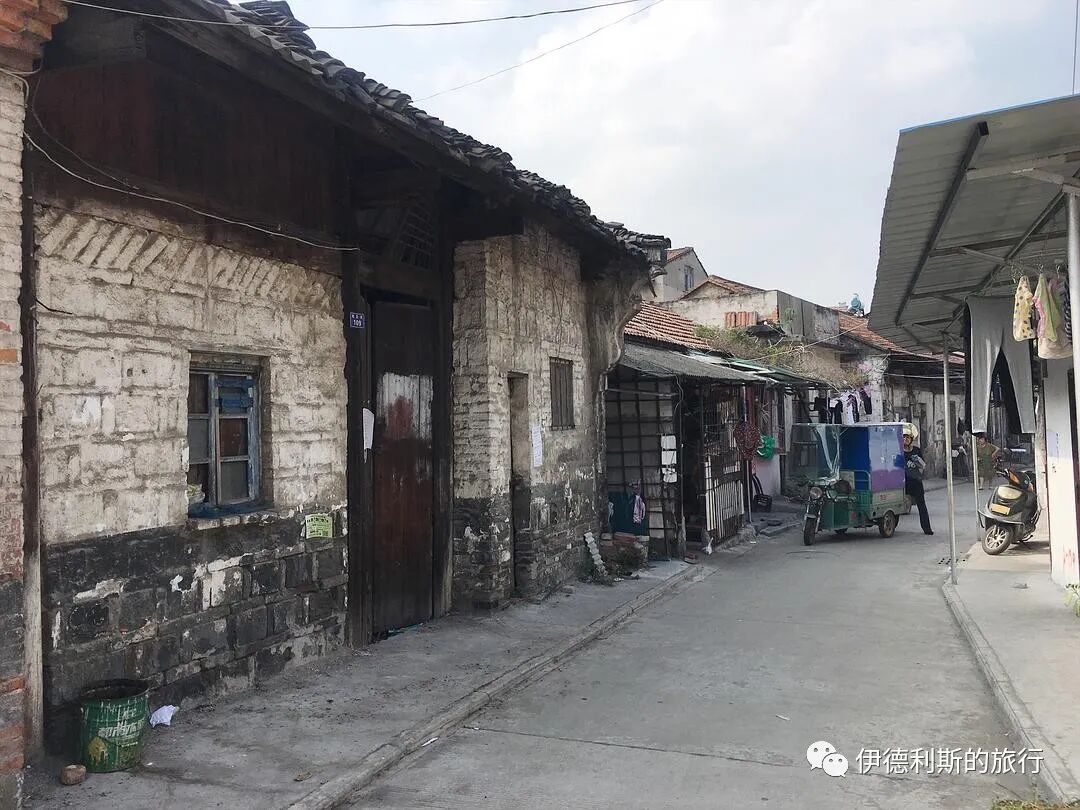
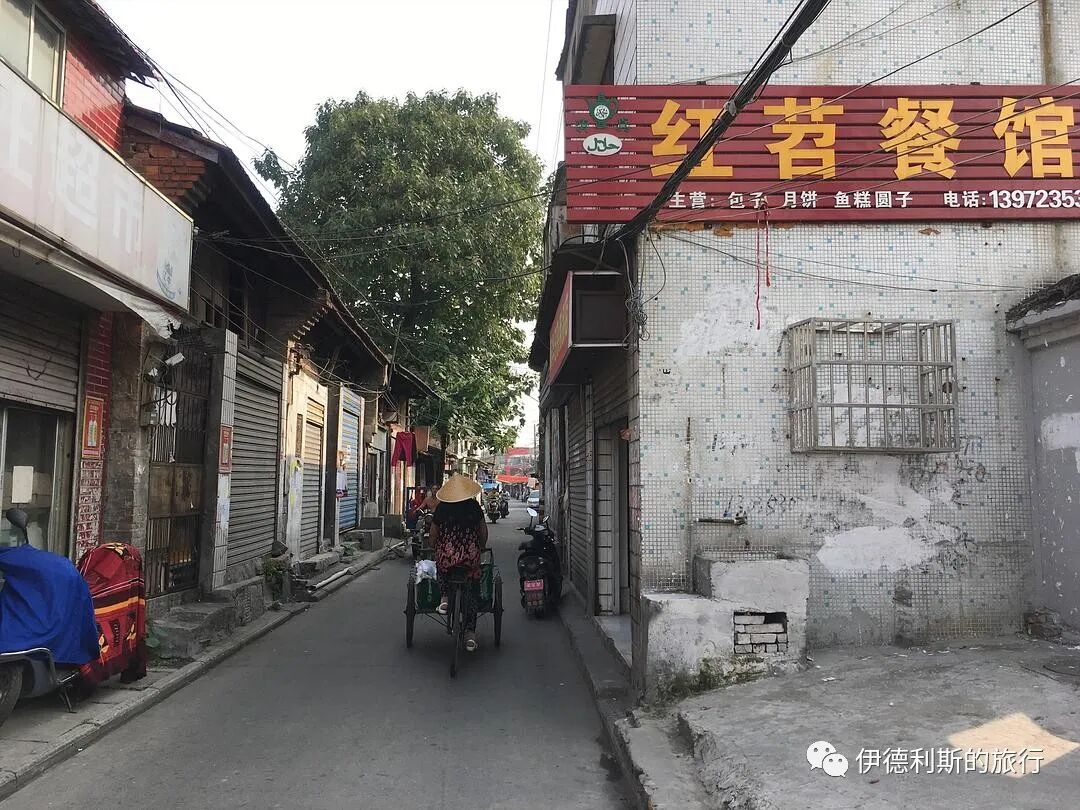
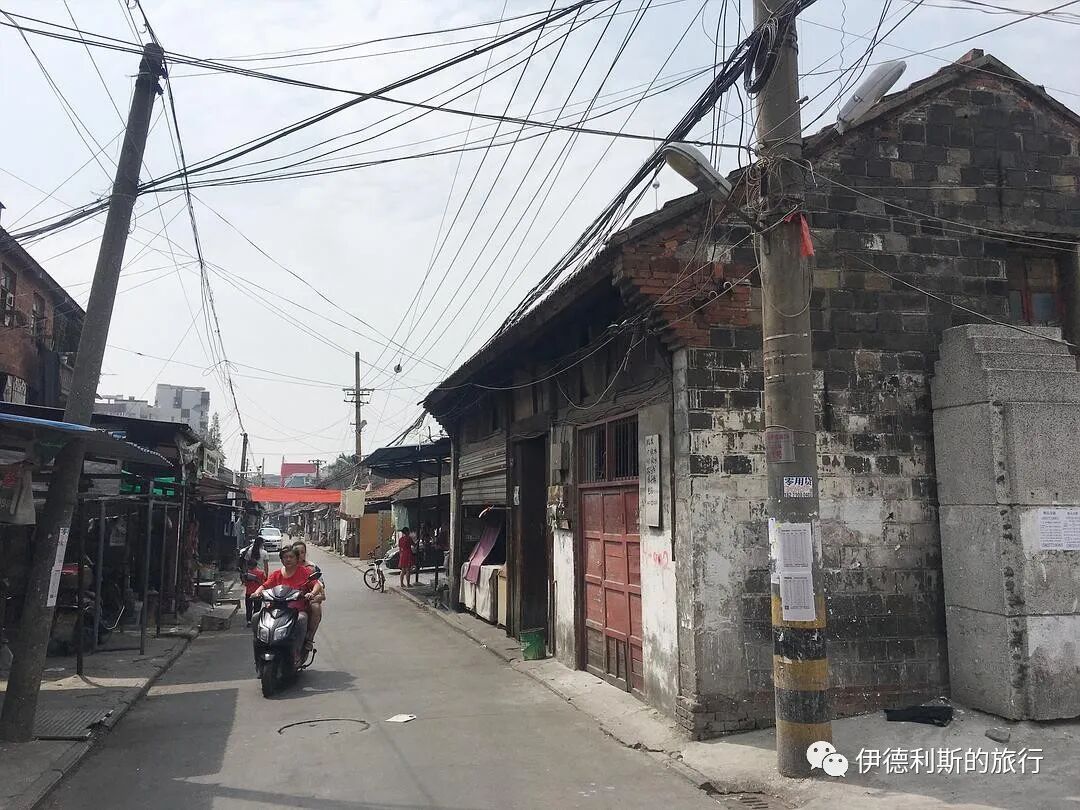
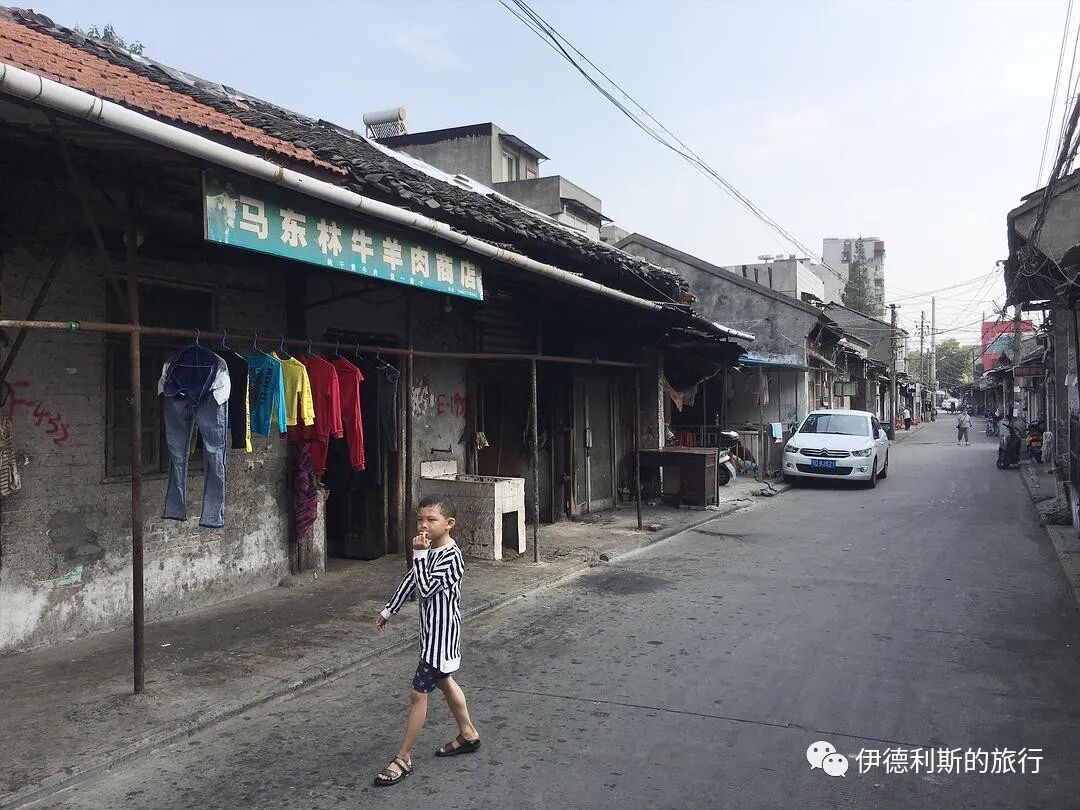
Shashi Mosque
The oldest mosque in Shashi was called the Yinjia Lane Mosque. It was reportedly built in 1459, the third year of the Tianshun reign of the Ming Dynasty. After Yinjia Lane was widened in 1935, it was renamed Xinsha Road, and the mosque became known as the Xinsha Road Mosque. The Xinsha Road Mosque stopped its activities after 1966, but it resumed them in 1981.
The Yingxi Street Mosque was built in 1925. After it was finished, the Yinjia Lane Mosque was called the Lower Mosque, and the Yingxi Street Mosque was called the Upper Mosque. In 1952, the Yingxi Street Mosque was turned into a Hui Muslim textile factory. After the factory moved in 1982, it became the Halal Donglaishun Restaurant and a Hui Muslim hostel.
After the 1990s, the area around the Xinsha Road Mosque became a busy market, which affected the mosque. In 1994, the mosque management committee decided to close the Xinsha Road Mosque and turn it into commercial space. At the same time, they rebuilt the Yingxi Street Mosque, which was completed in 1995.
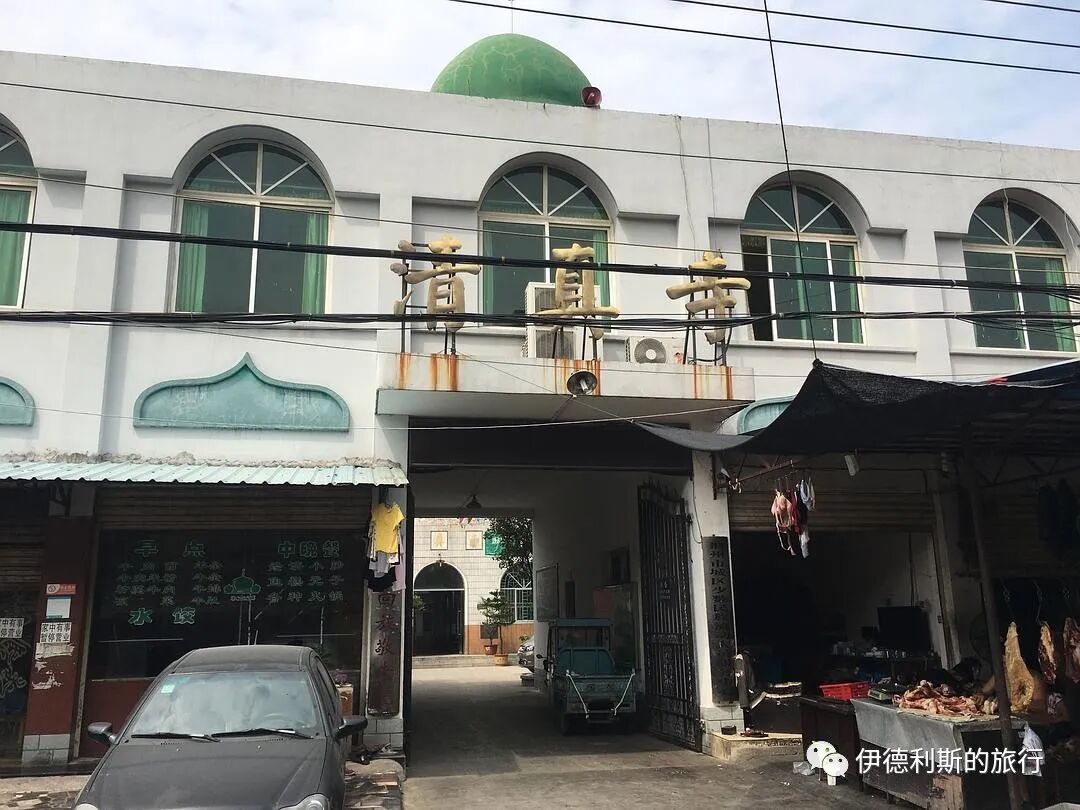
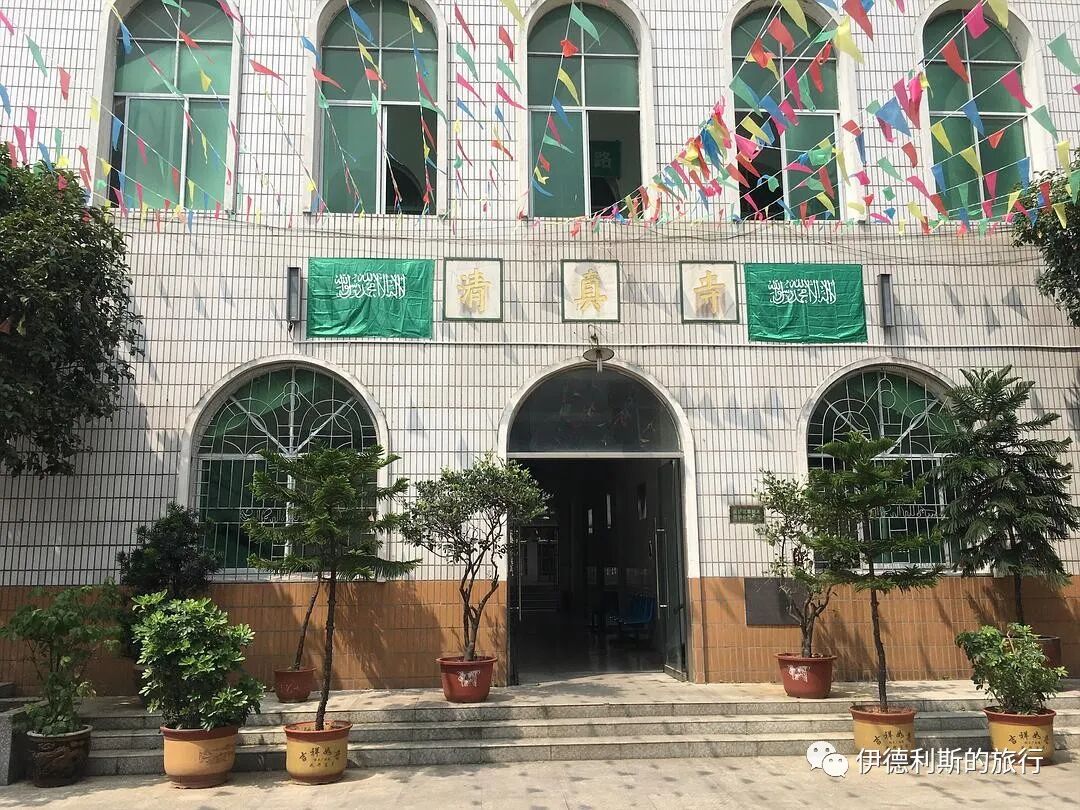
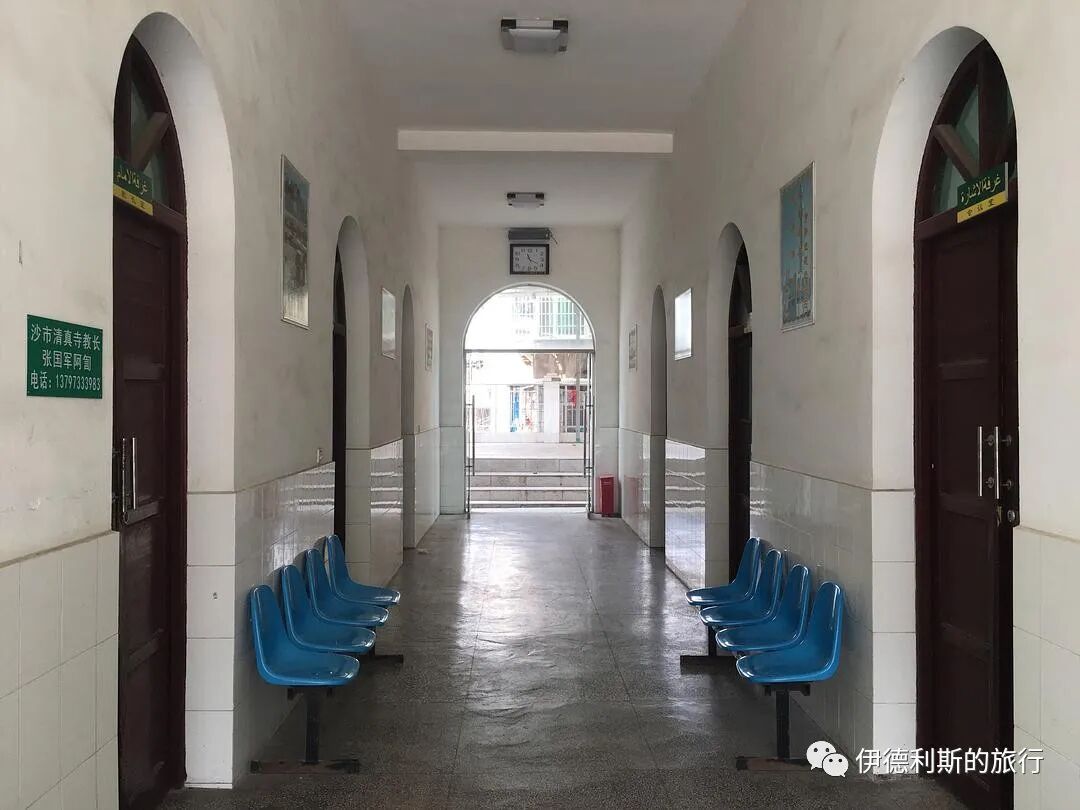
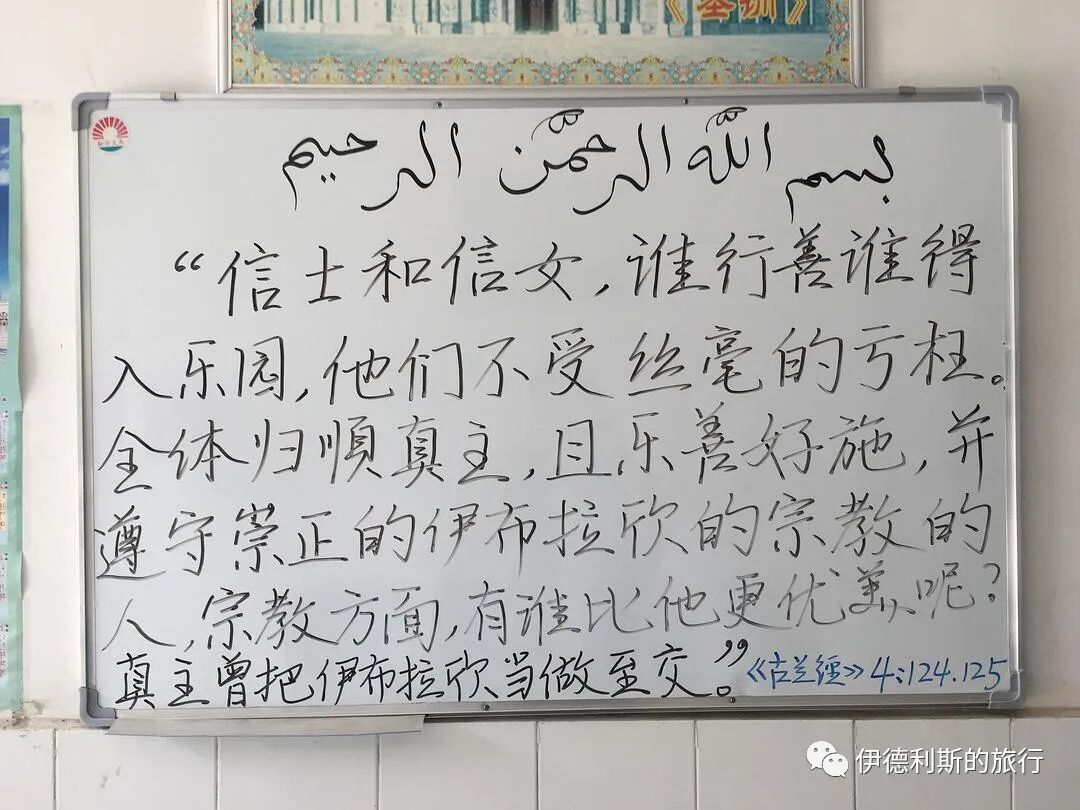
A stall selling fried dough tips (youmojian) next to the mosque. Fried dough tips (youmojian) are a snack brought to Hubei from Henan. They are a bit like small fried dough sticks (youtiao).
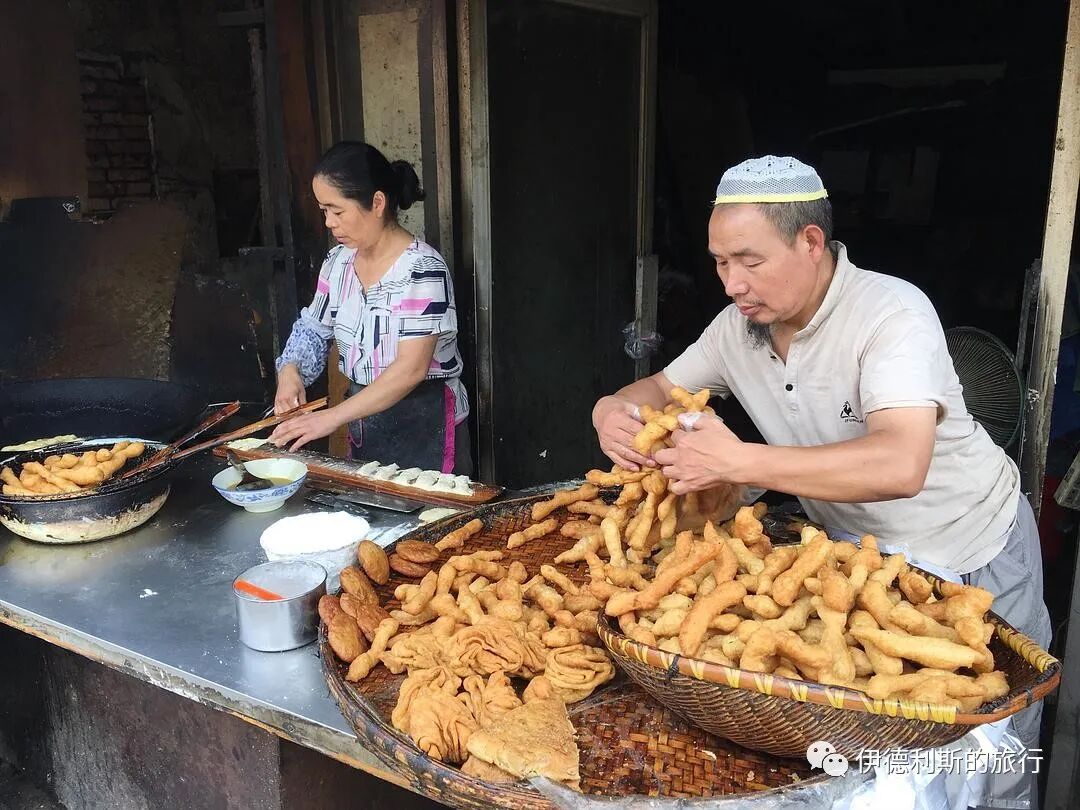
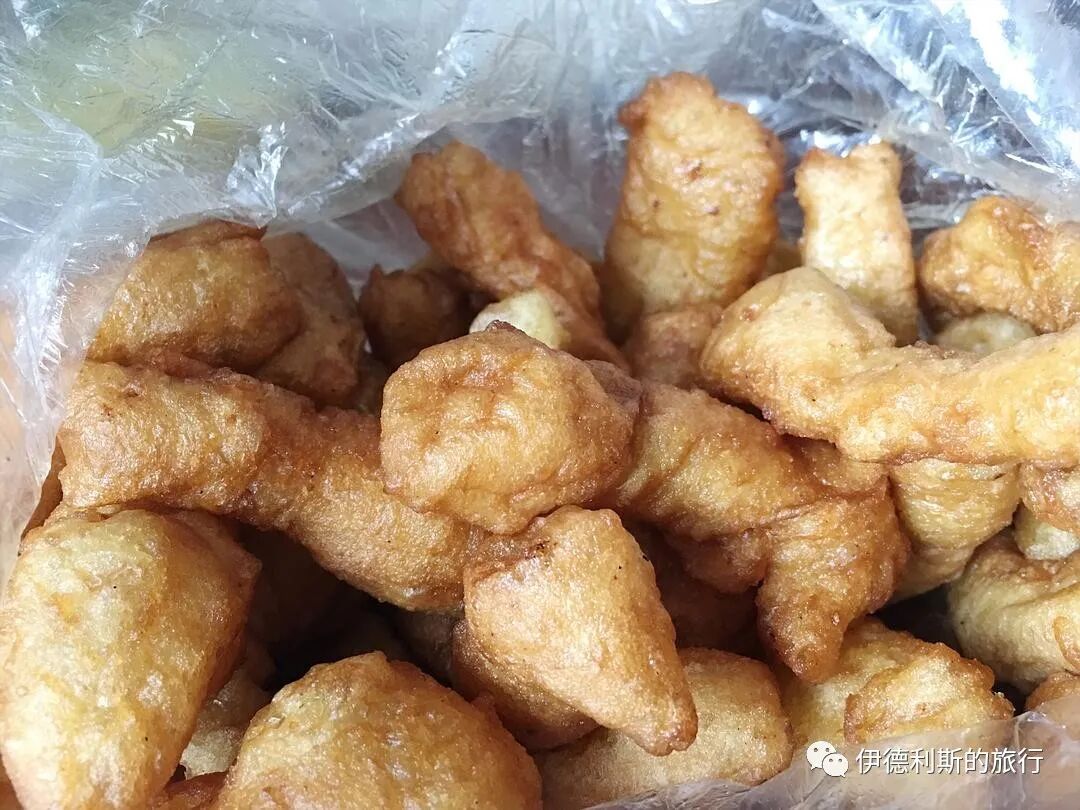
Grass carp cake (huanyugao) is a specialty food in the Jingzhou area. Grass carp (huanyu), also known as black carp (qingyu), is a common edible fish in the middle and lower reaches of the Yangtze River.
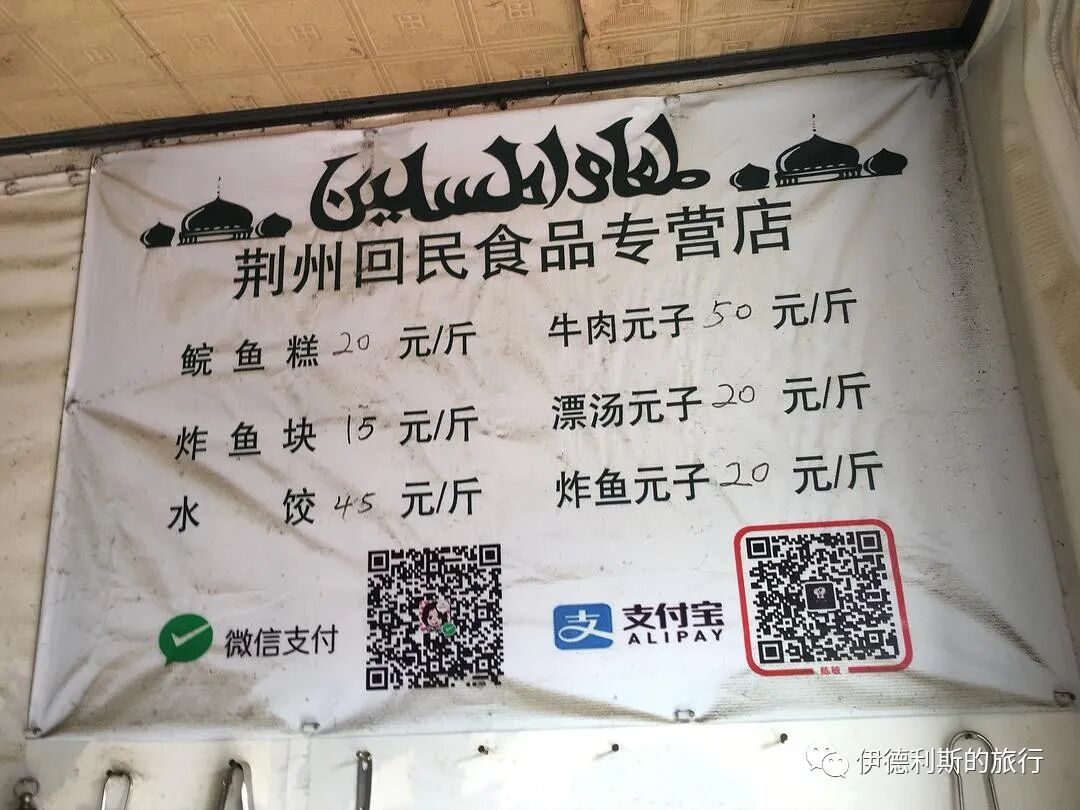
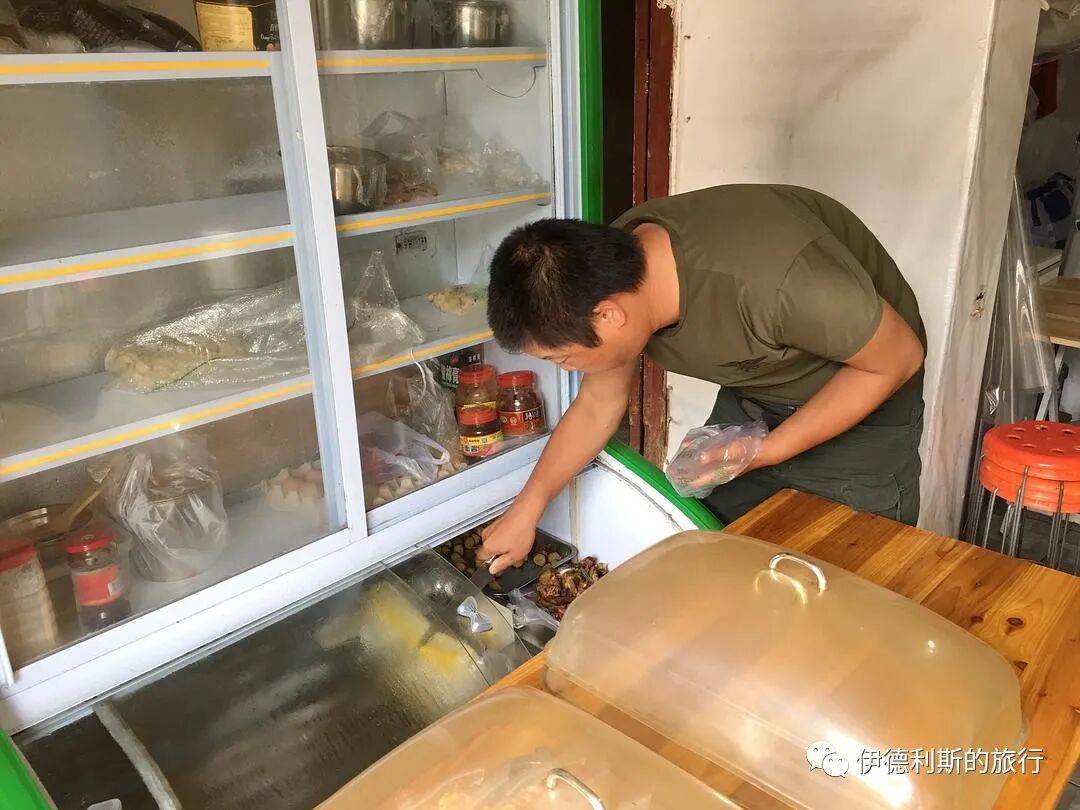
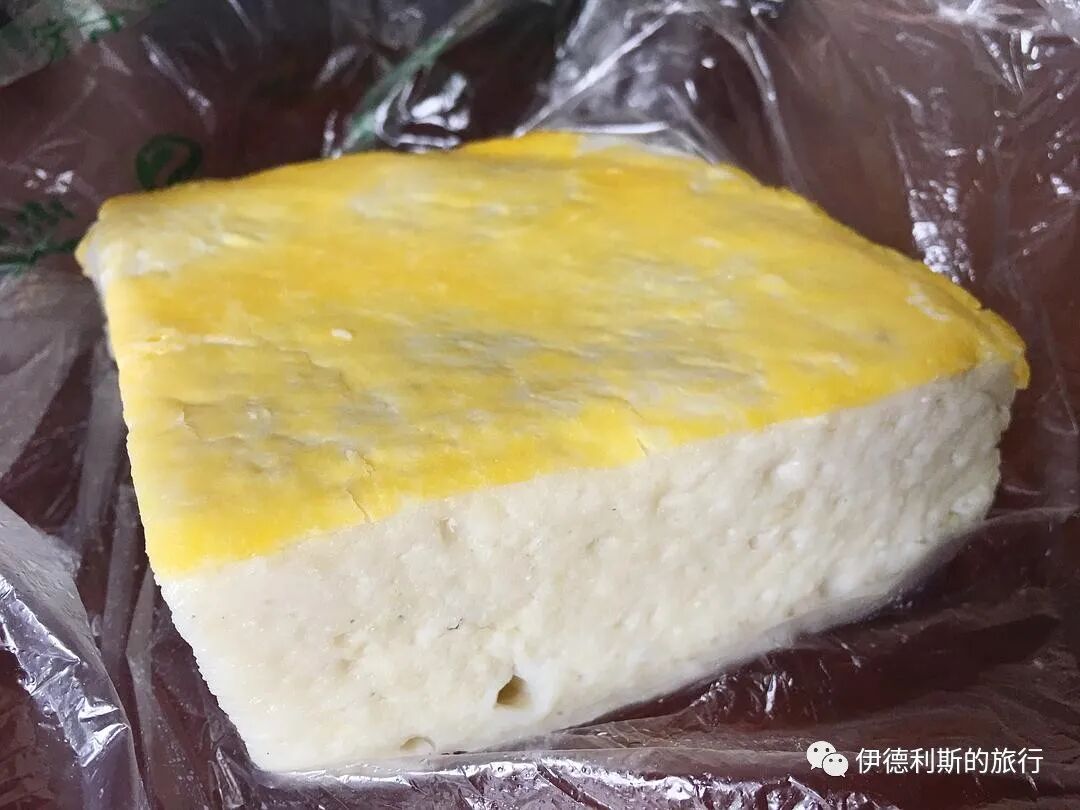
I ate beef noodles, hot dry noodles (reganmian), steamed beef with rice flour (fenzheng niurou), and dried tofu noodles (dougan sufen) at an unnamed halal restaurant on Yingxi Street. Shashi's hot dry noodles (reganmian) are different from those in Wuhan because they include sweet bean paste (tianmianjiang).
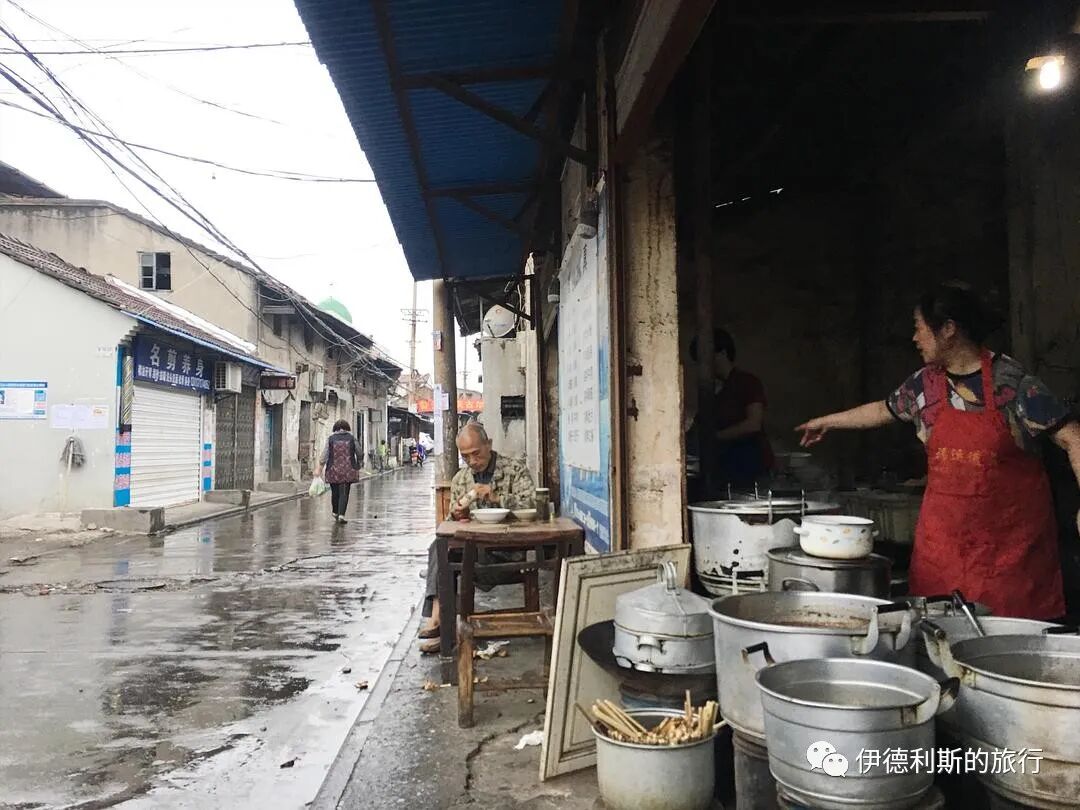
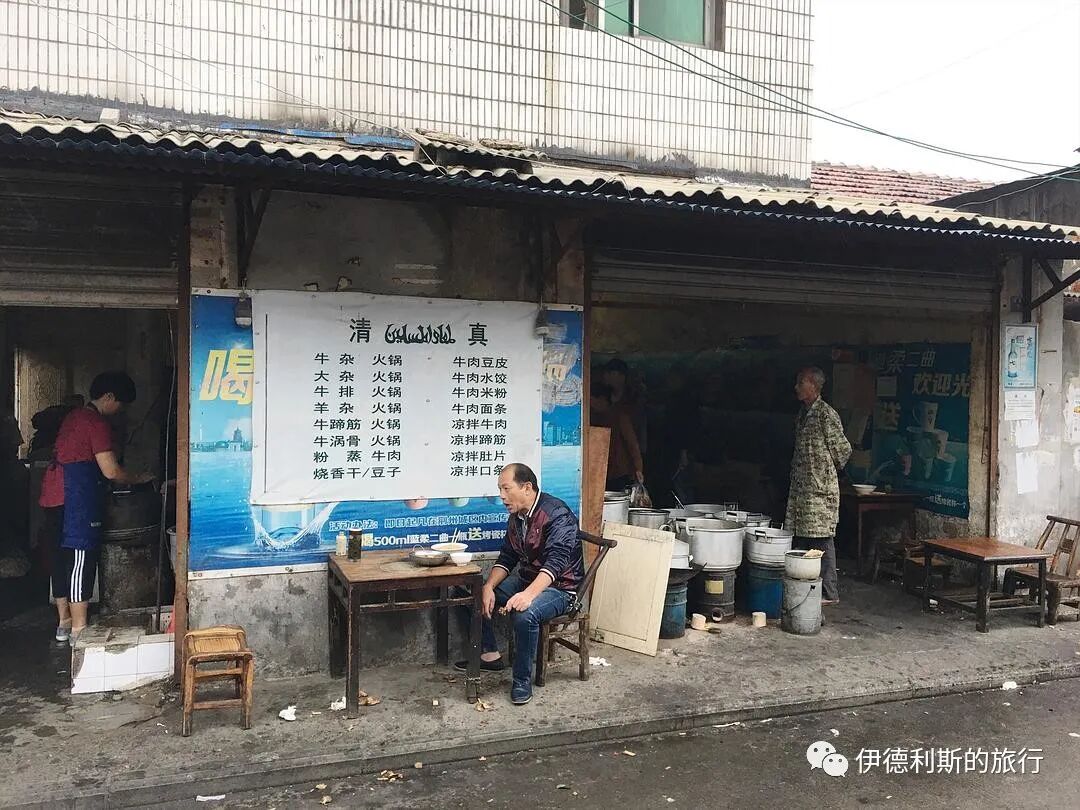
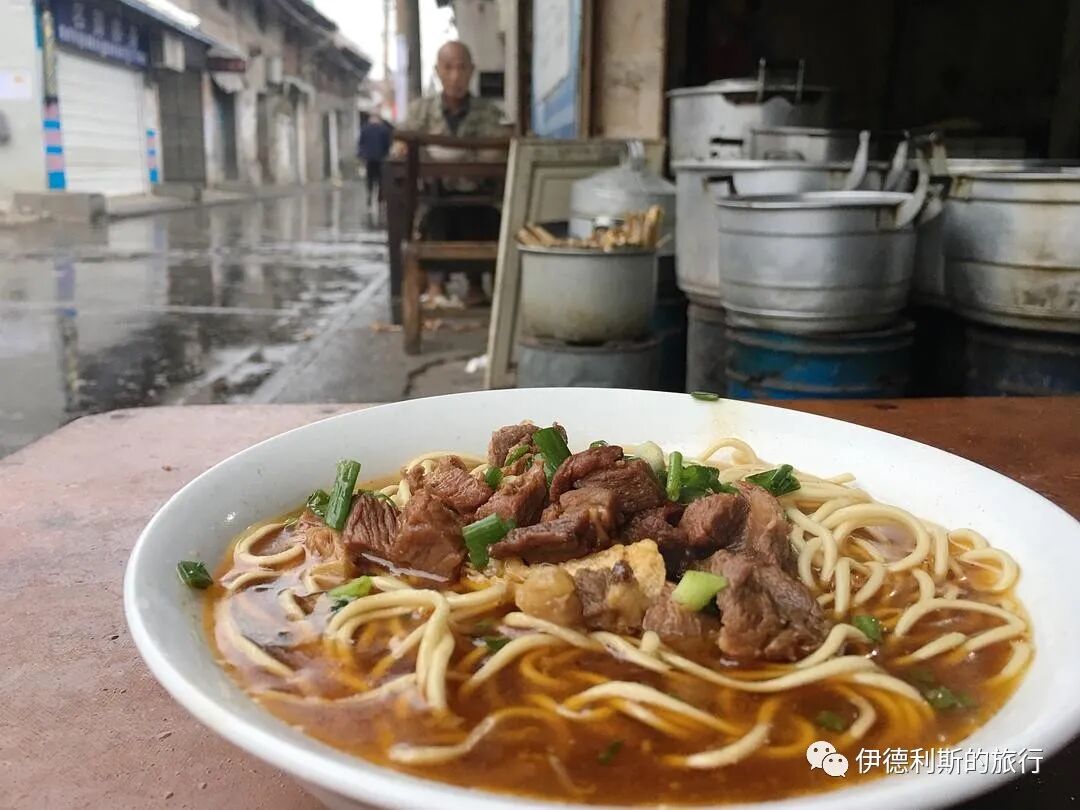
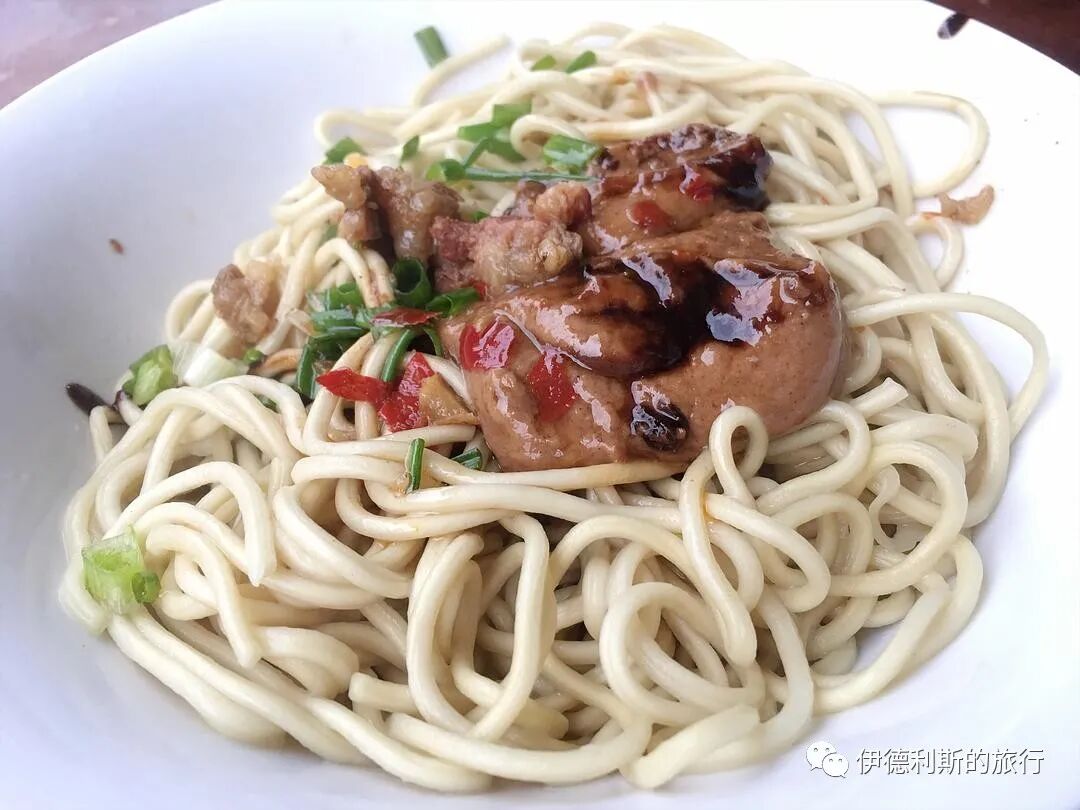
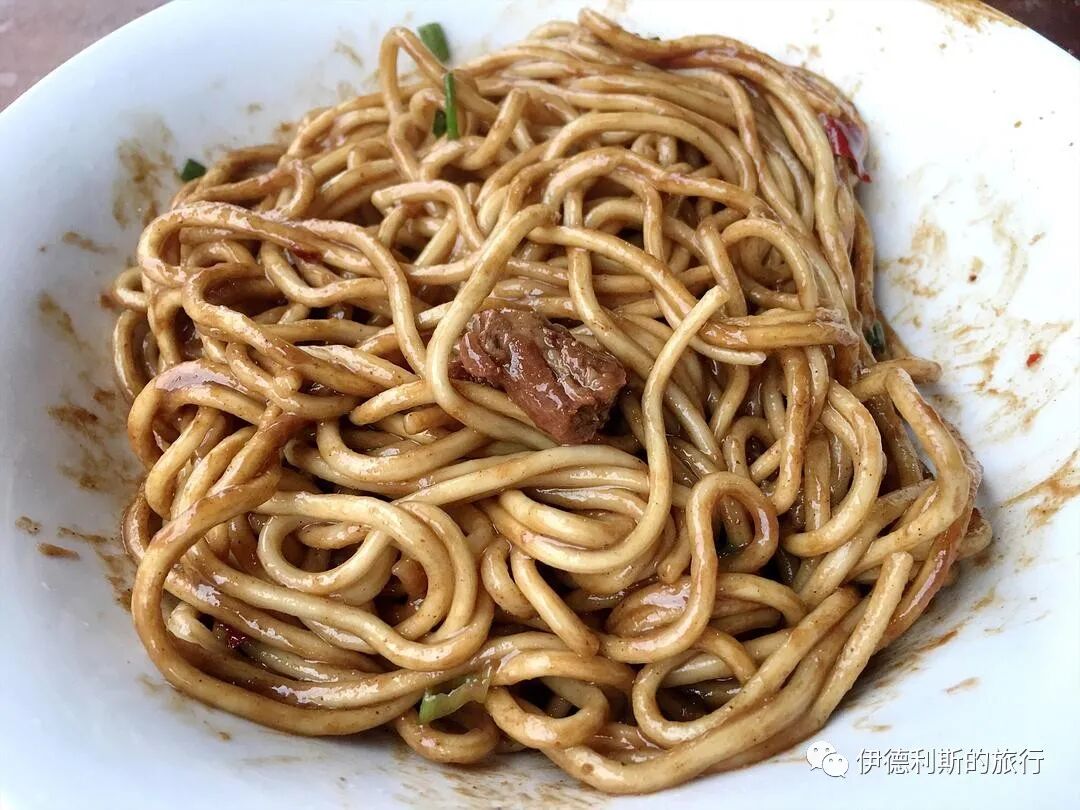
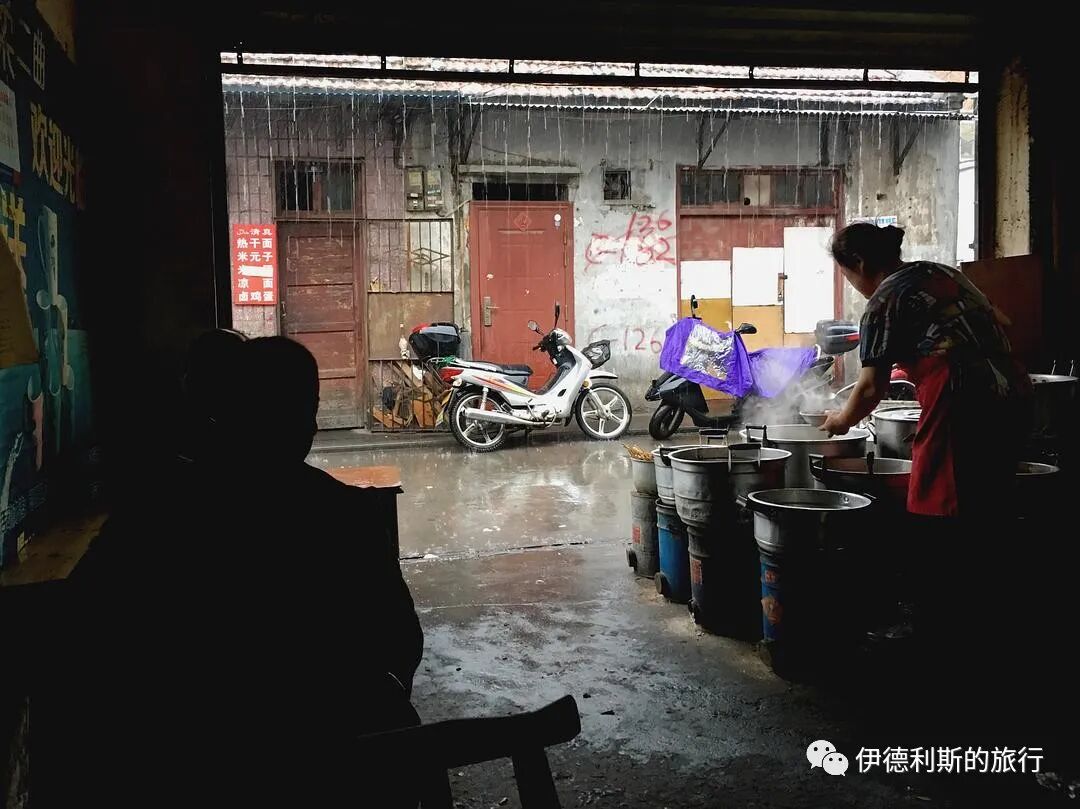
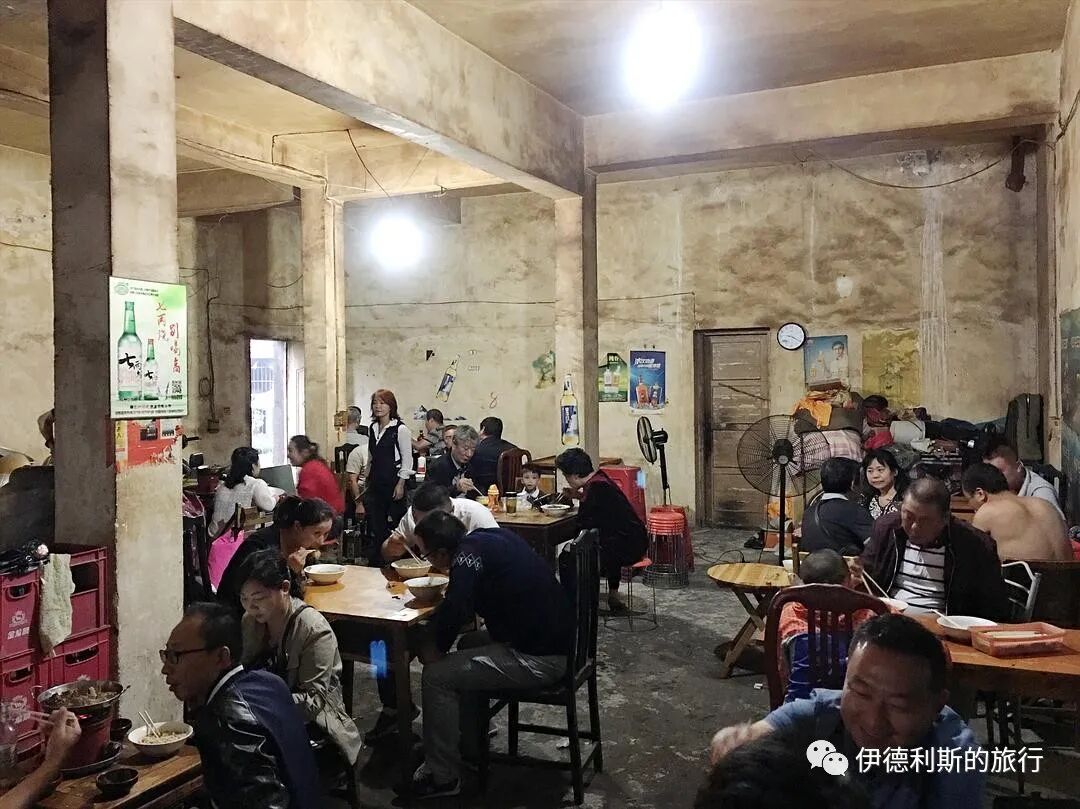
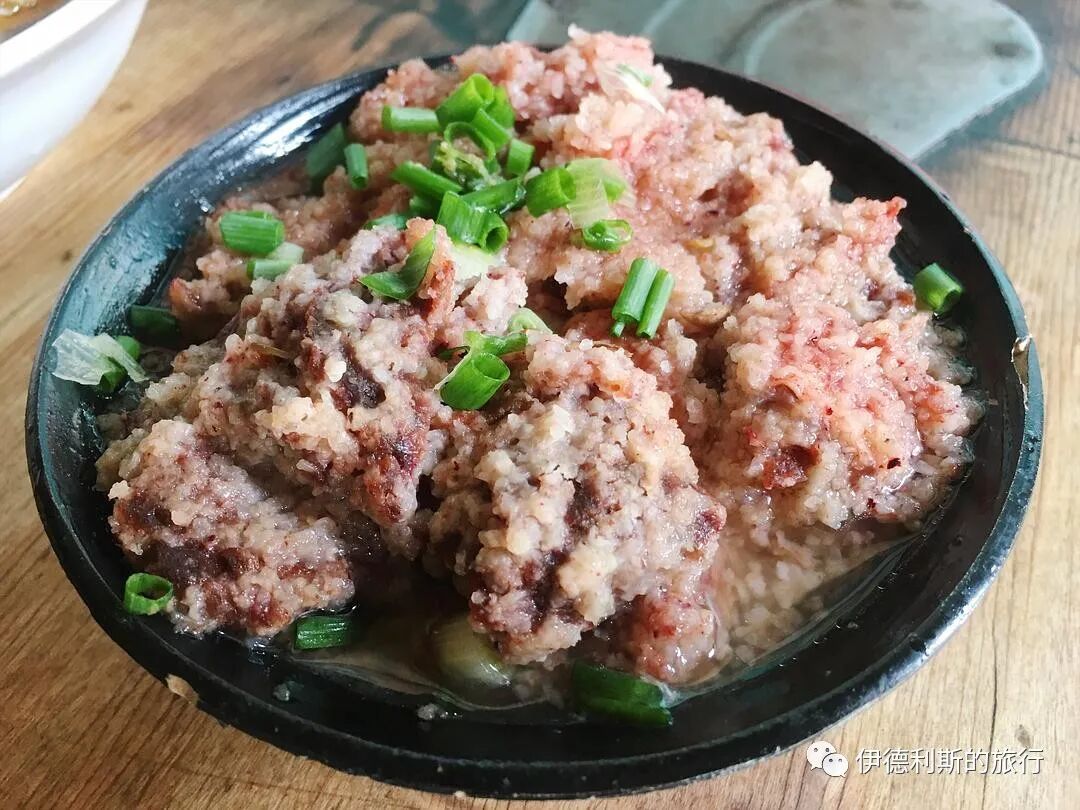
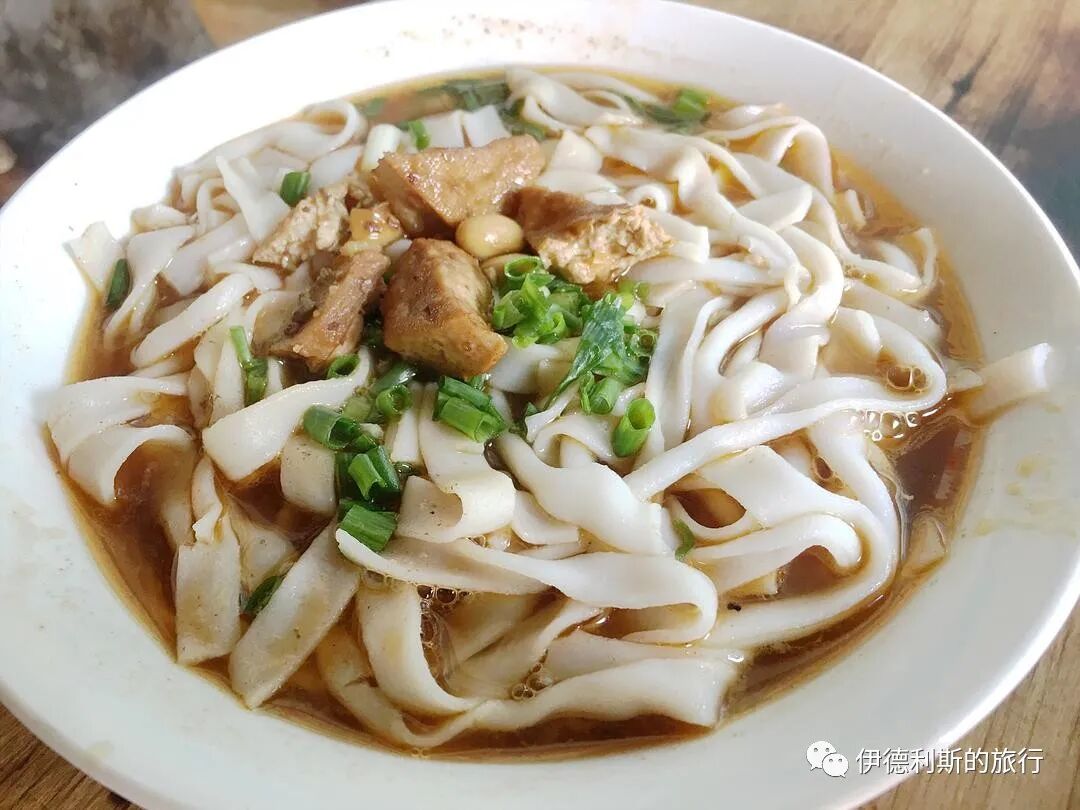
Wang Daping Lamb Offal
I had a late-night snack at Wang Daping Lamb Offal on Jiefang Road. It was a bit of a surprise. It was the best lamb and lamb offal hot pot I have had recently, and the lamb skewers were also amazing. I really did not expect to find such great lamb in Hubei.
This place is also very surreal. It is in front of an abandoned building with a 'Serve the People' star on it. The area is quiet and empty for 500 meters in every direction, but this spot is incredibly lively. When I visited in August 2017, Wang Daping had already built a grand new shop on Jiefang Road Food Street. It might open soon, and then you won't be able to see this amazing scene anymore.
Starting from the Kangxi reign, the Ding, Ma, Li, Wei, and Wang families who settled in Mianyang (Xiantao) began moving to Shashi. By the late Qing Dynasty, more families including the Wang, Li, Ha, Ai, Jiao, and Yi clans moved to Shashi from Henan, Nanjing, Shaanxi, and Anhui.
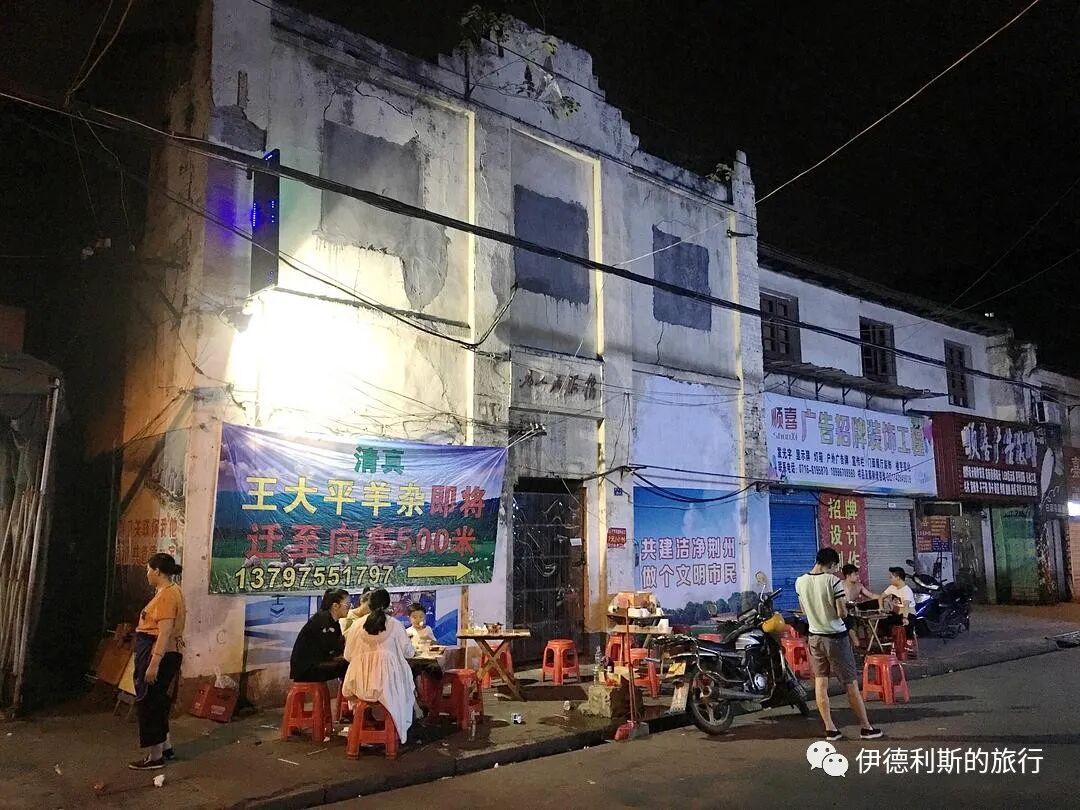
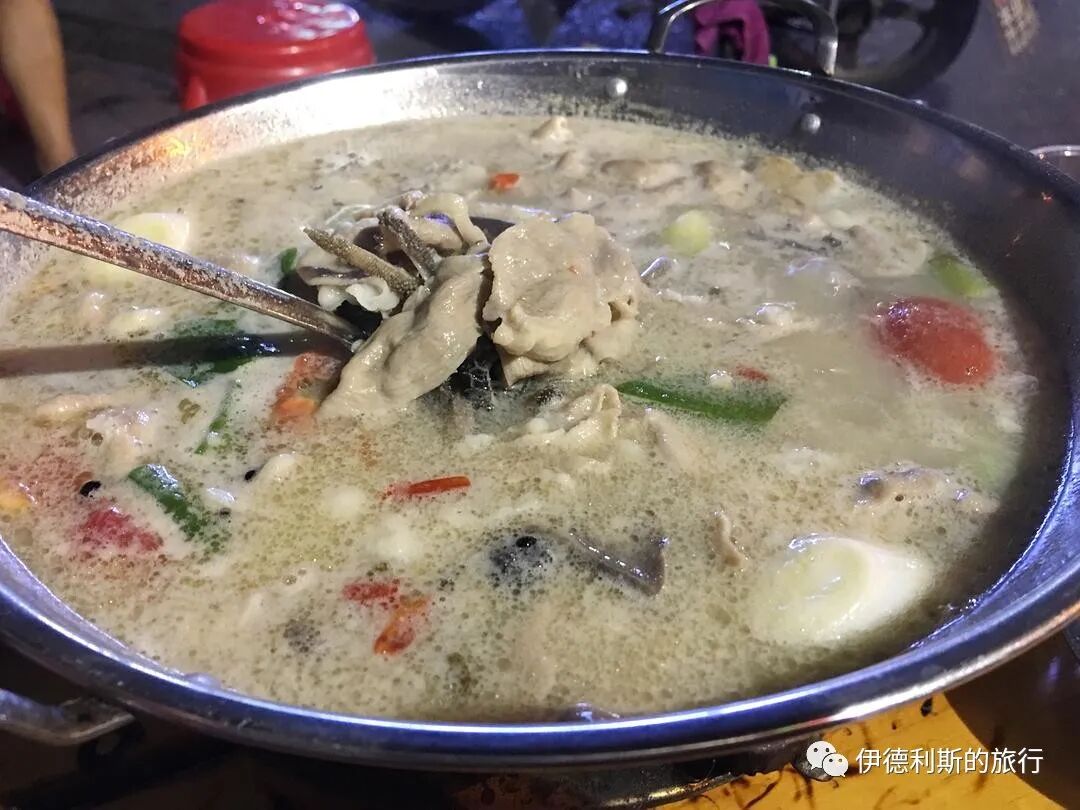
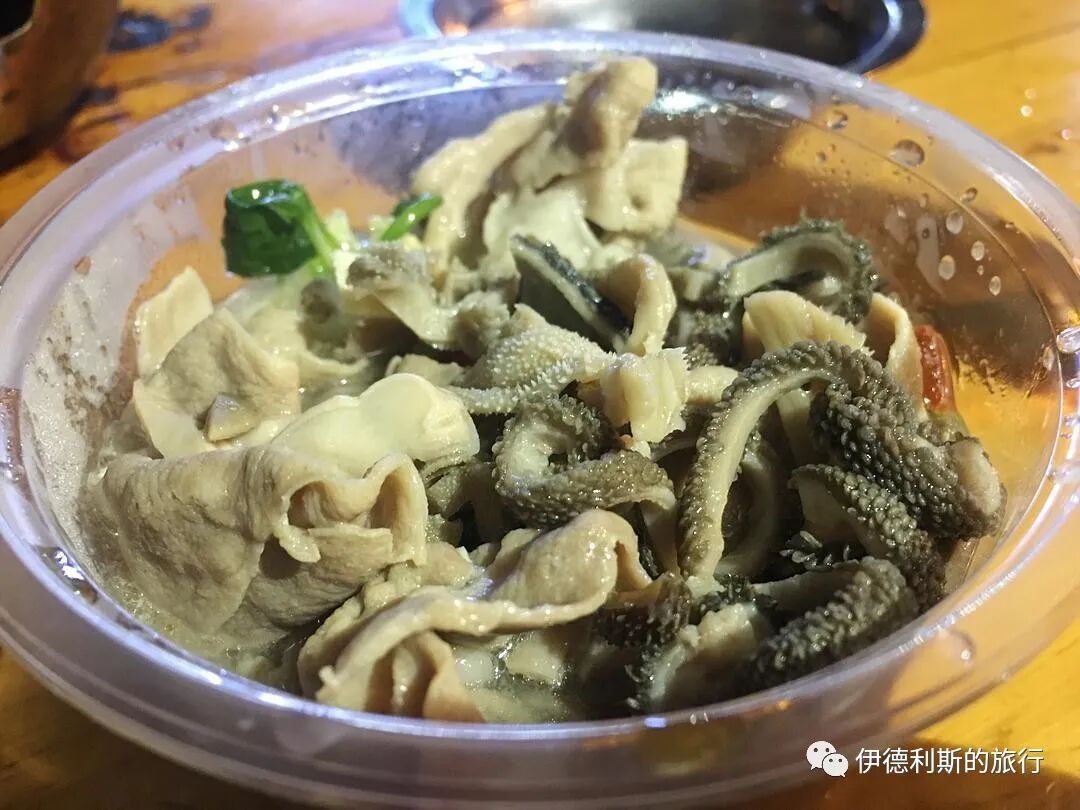
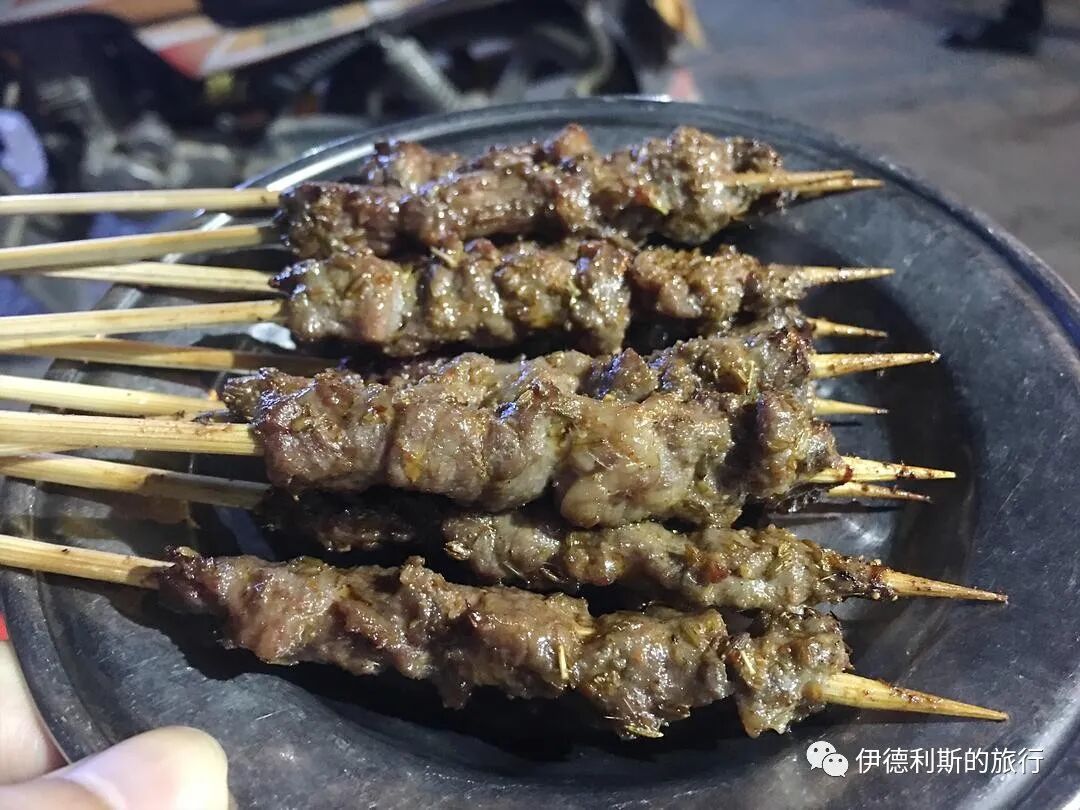
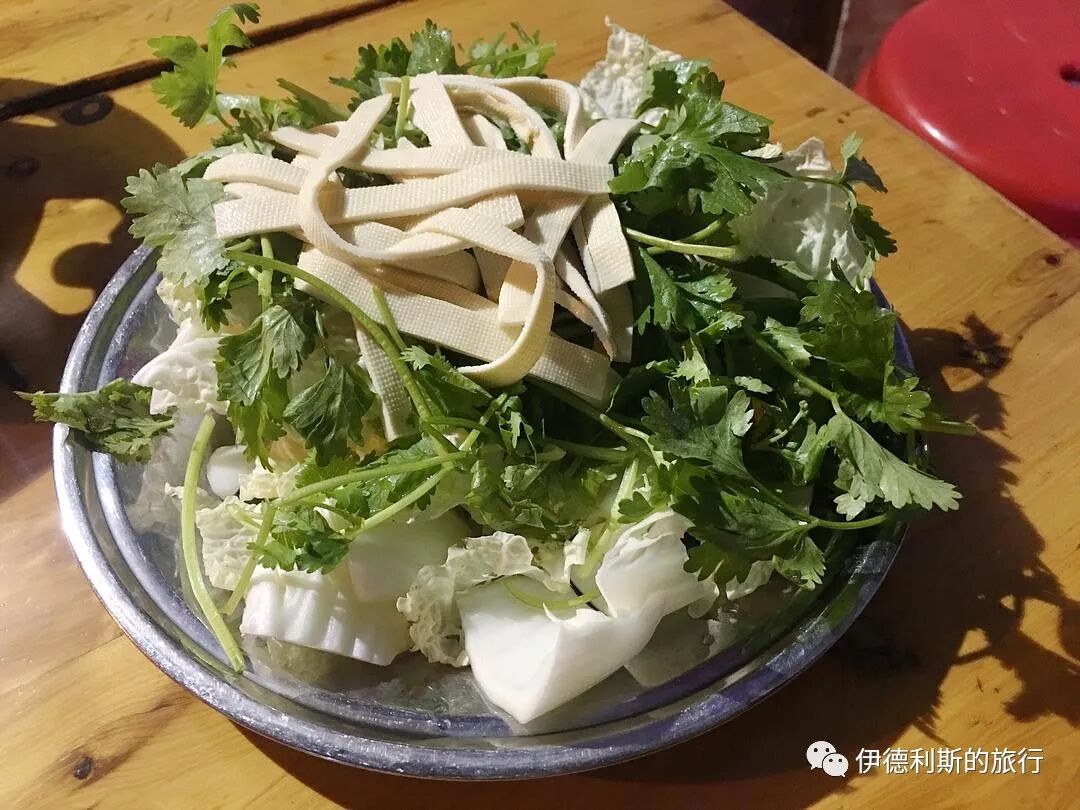
Old Three Lu Lamb Offal Shop (Lu Laosan Yangza Dian)
The sun-dried big white fish (yanggan dabiaodiao) and the peanut-mixed fish skin (huaren ban yupi) I ate at Old Three Lamb Offal Shop tasted great.
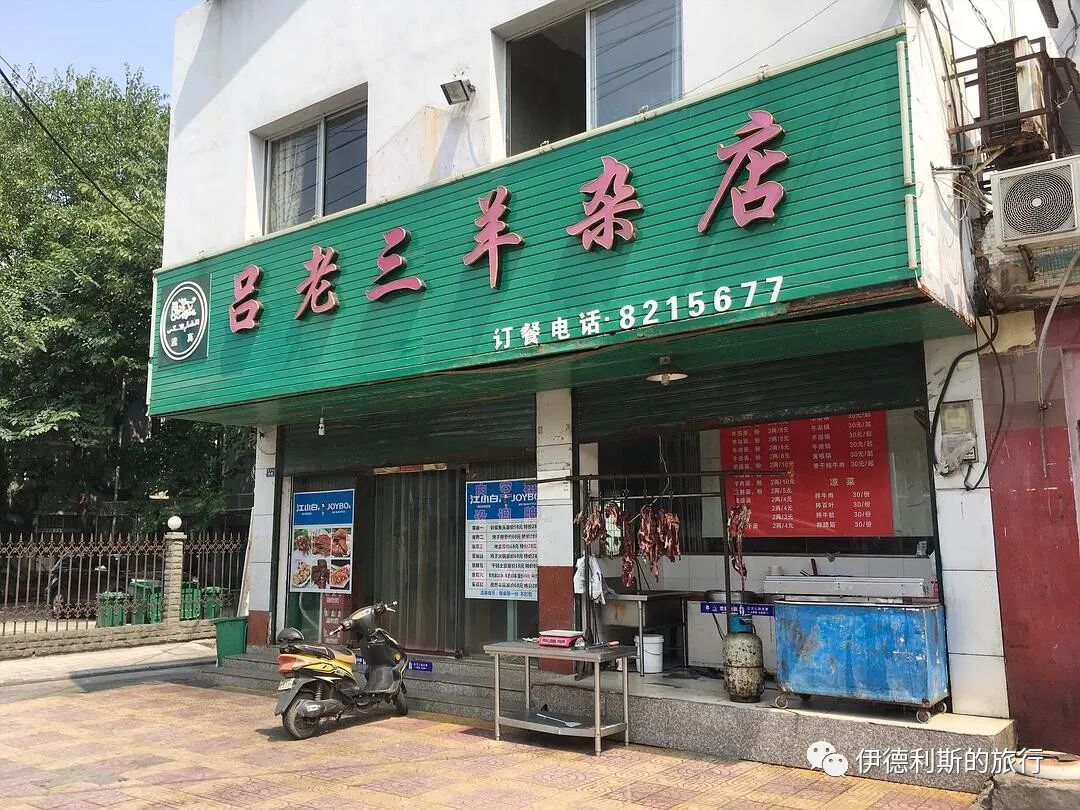
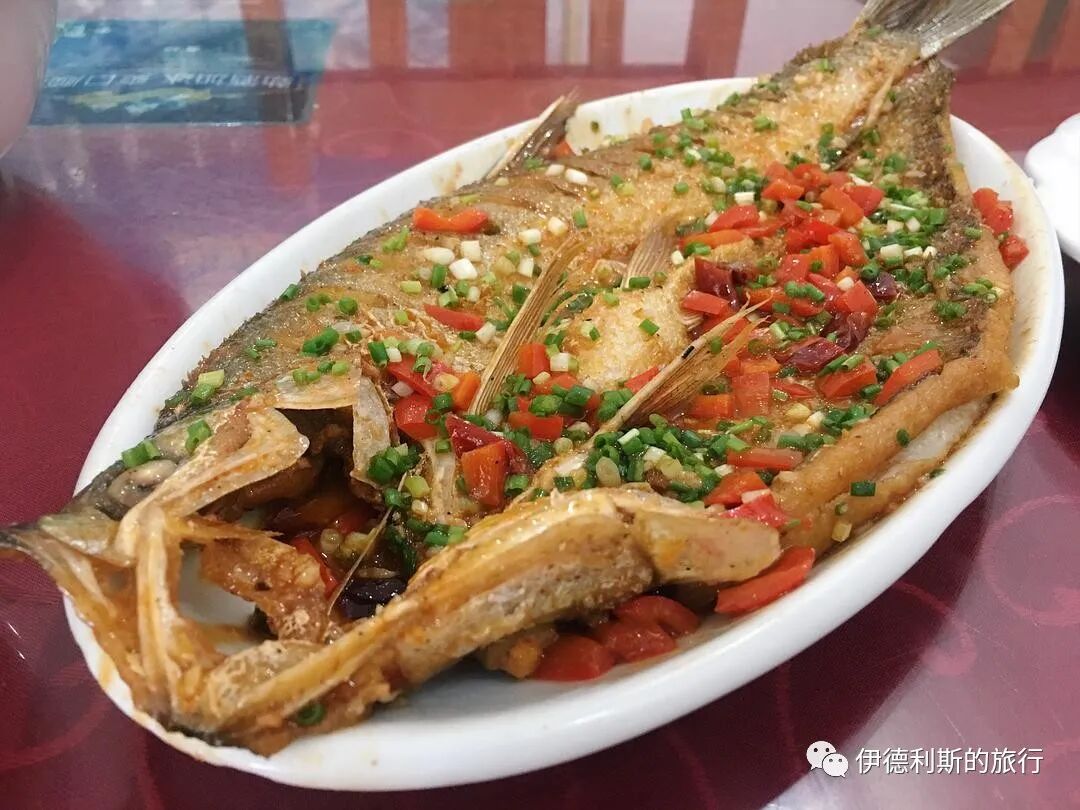
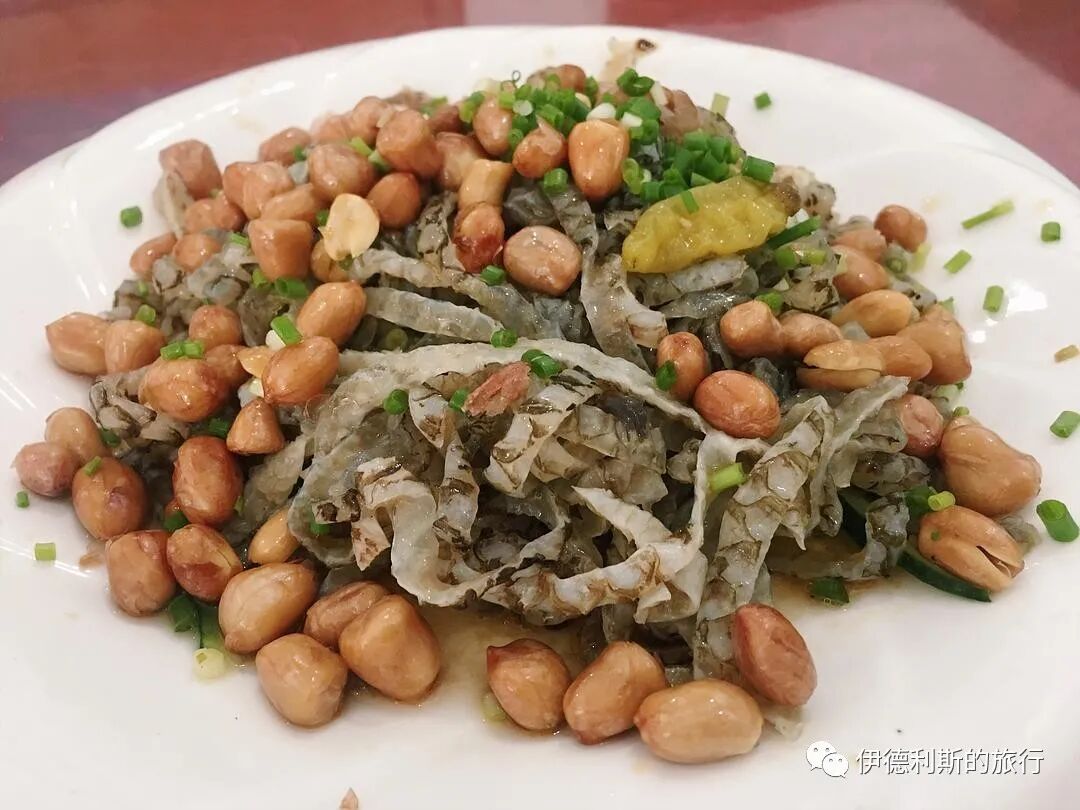
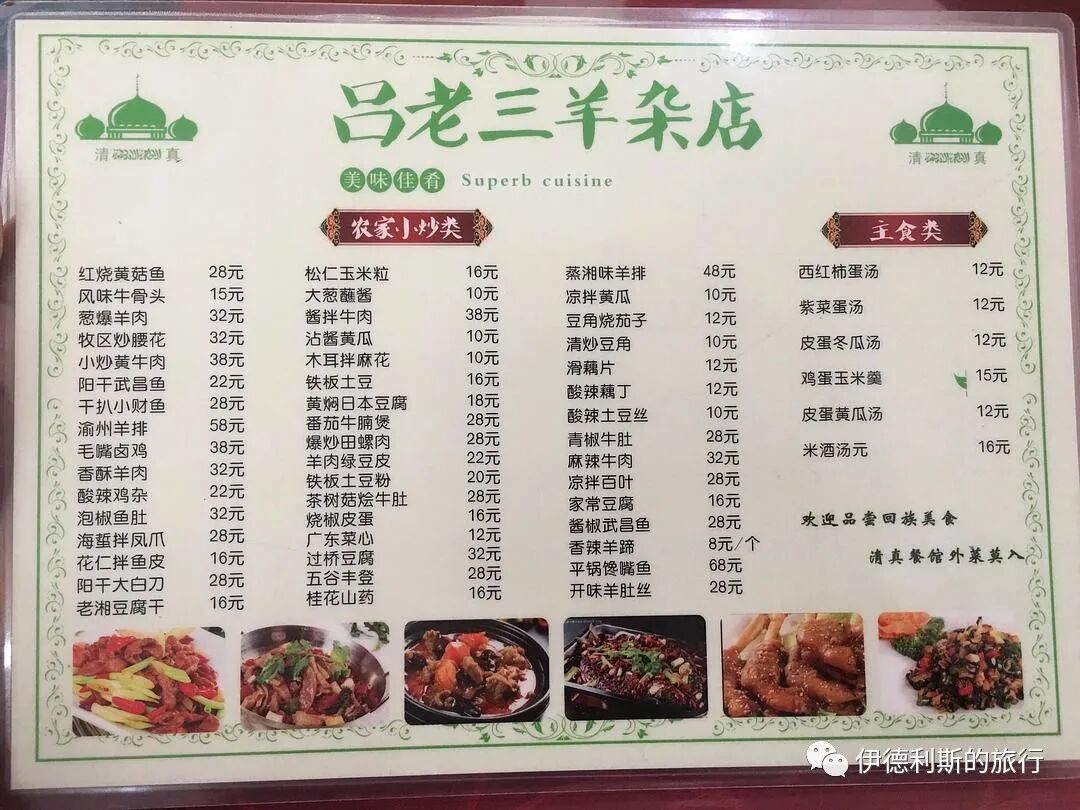
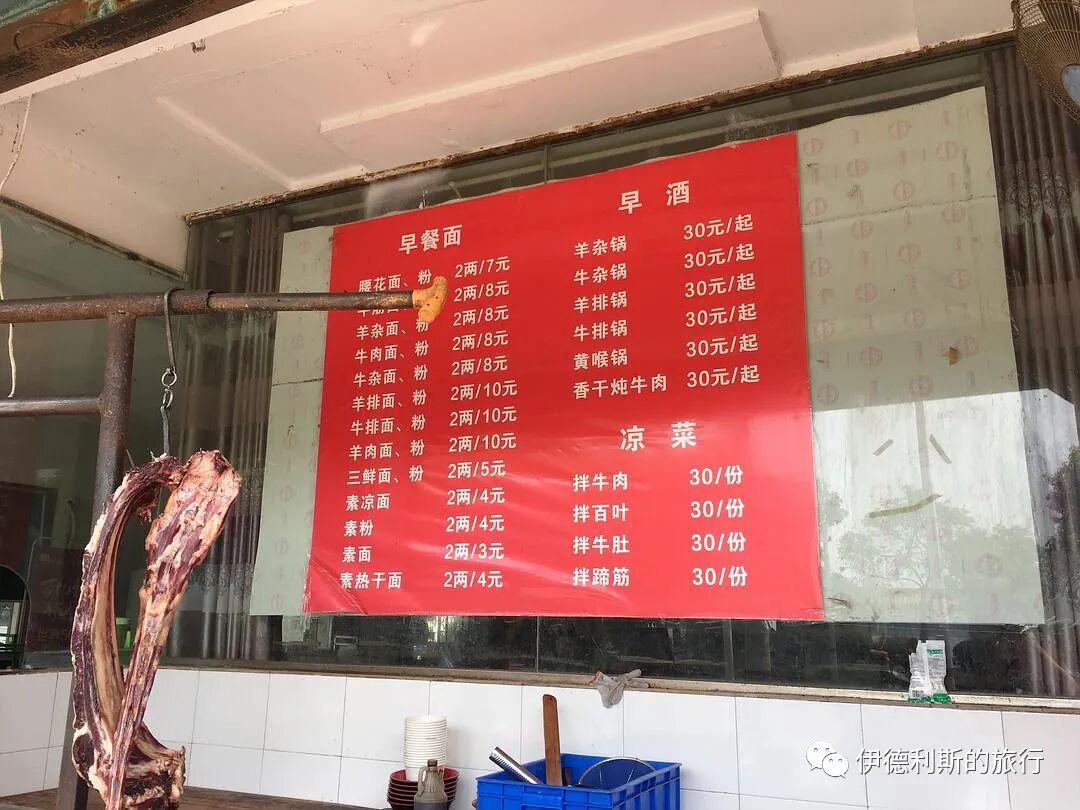
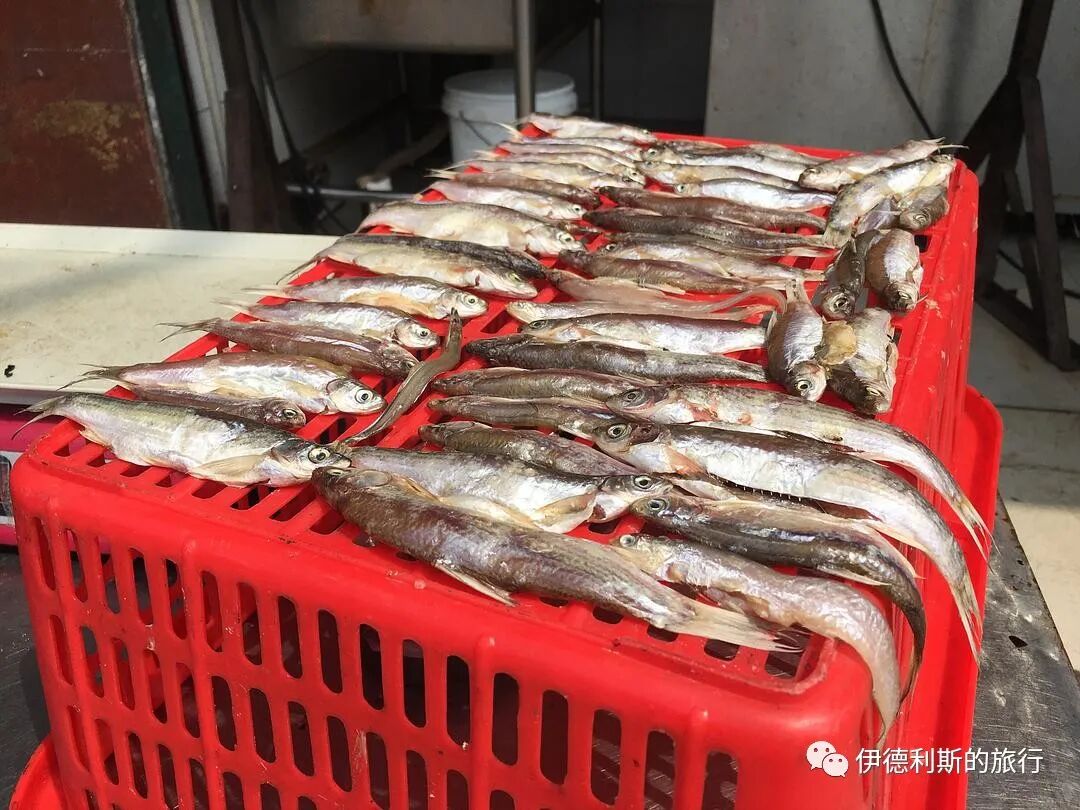
River-crossing ferry
Finally, let me share the river-crossing ferry from Shashi to Buhe Town on the opposite bank.
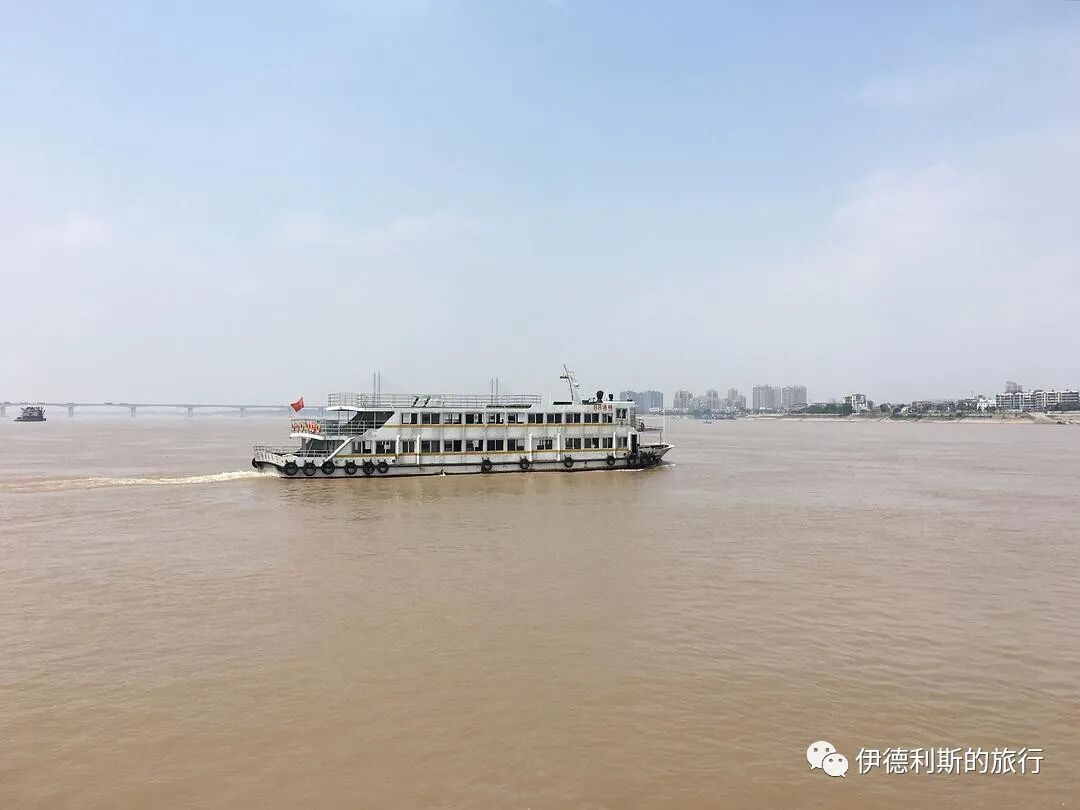
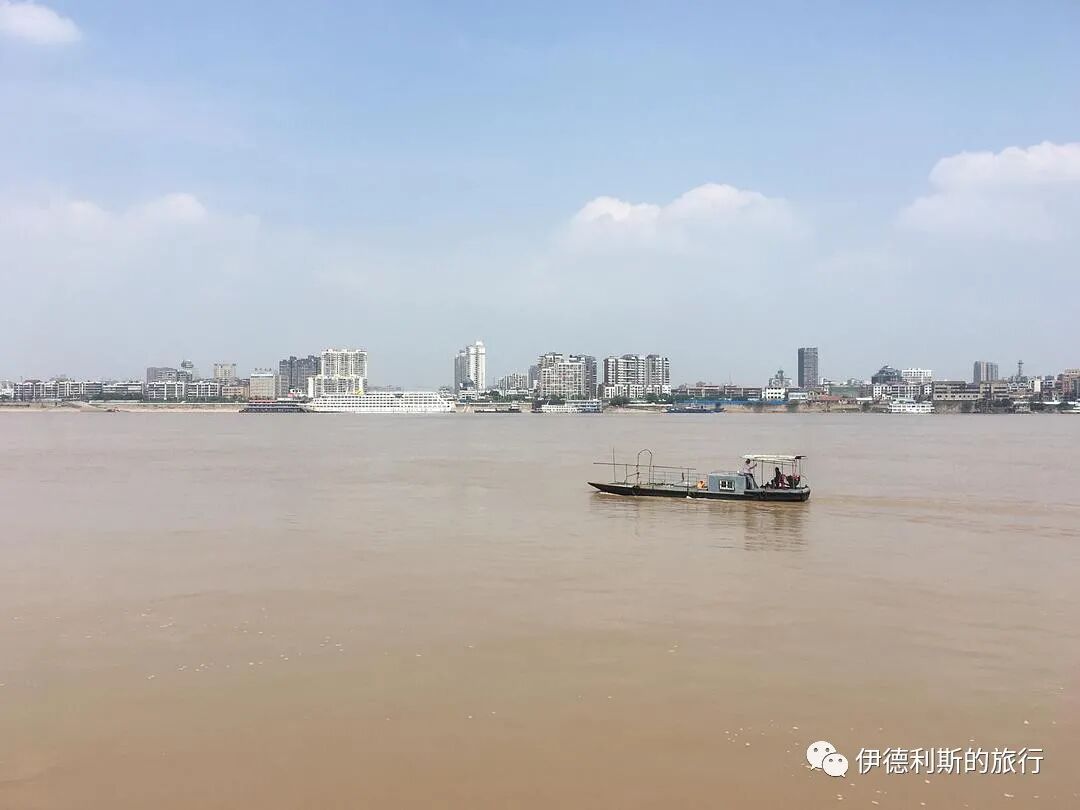
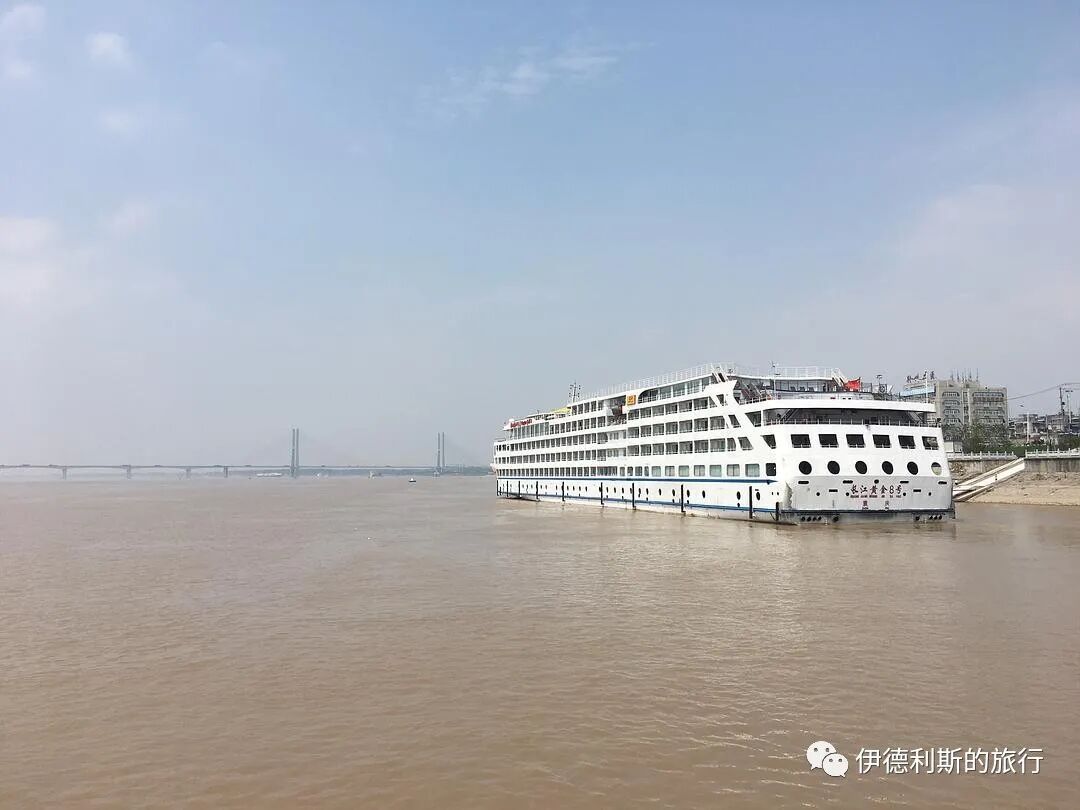
River-crossing car ferry
This was the first time I saw a car ferry where one boat tows another, and it even has to turn around and push the other boat to the shore when arriving.
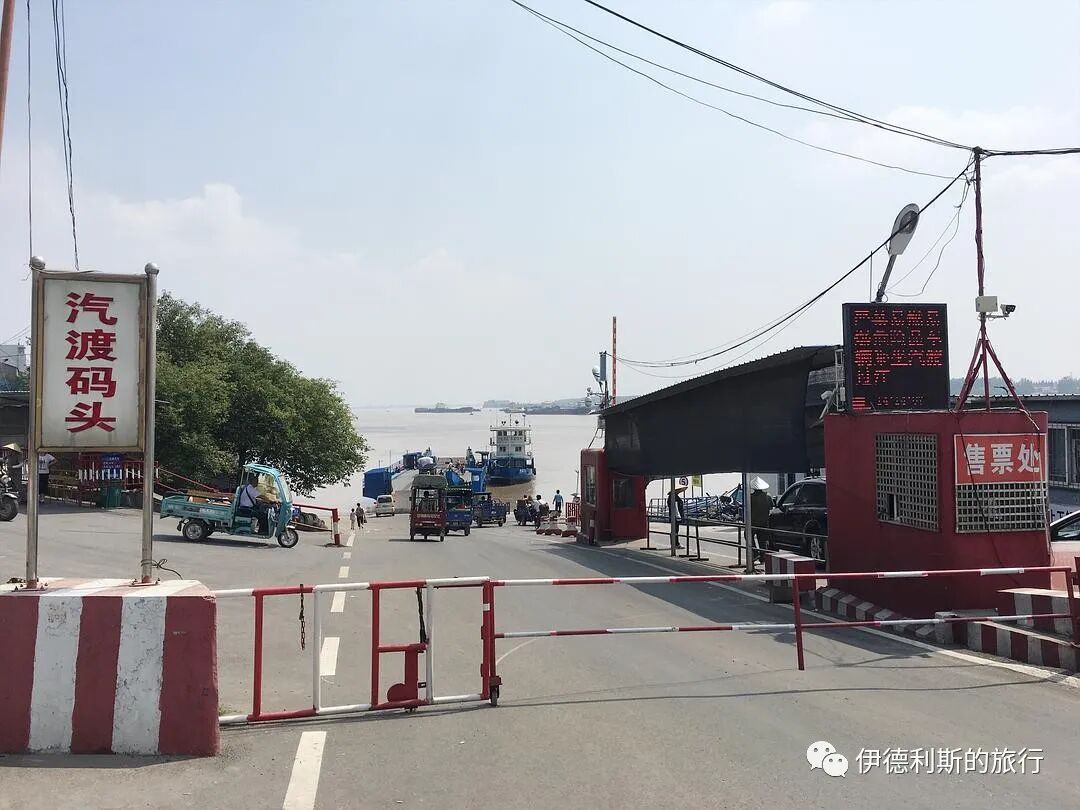
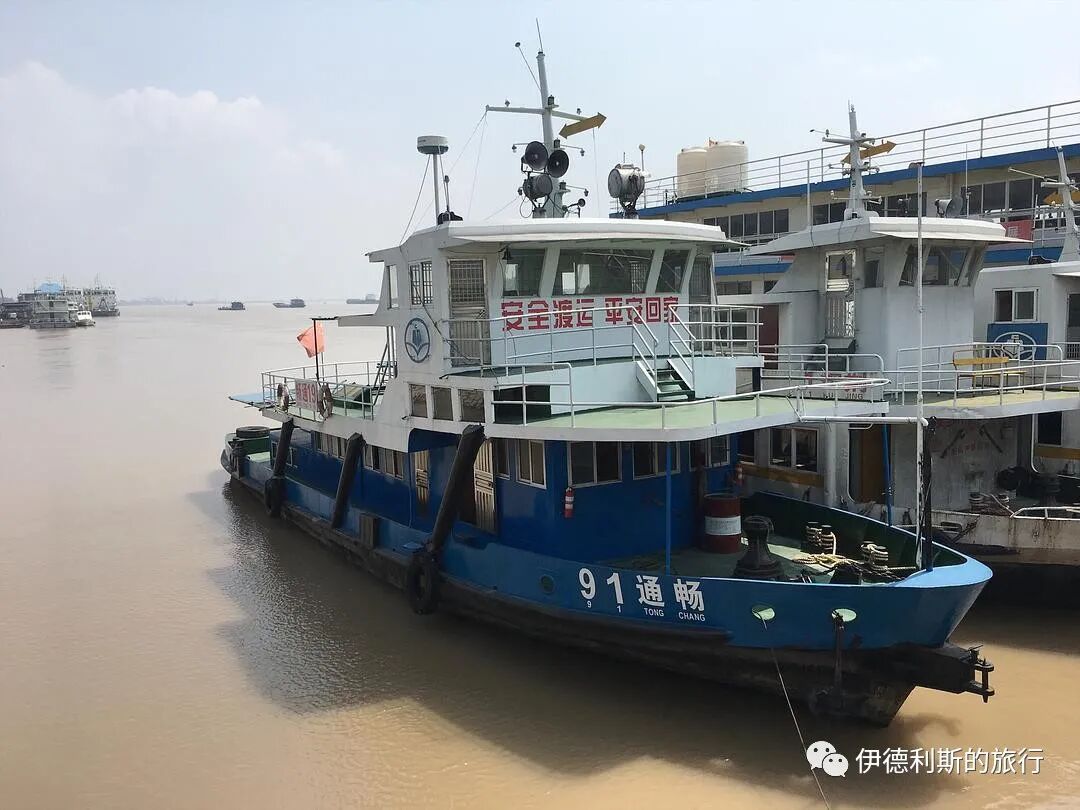
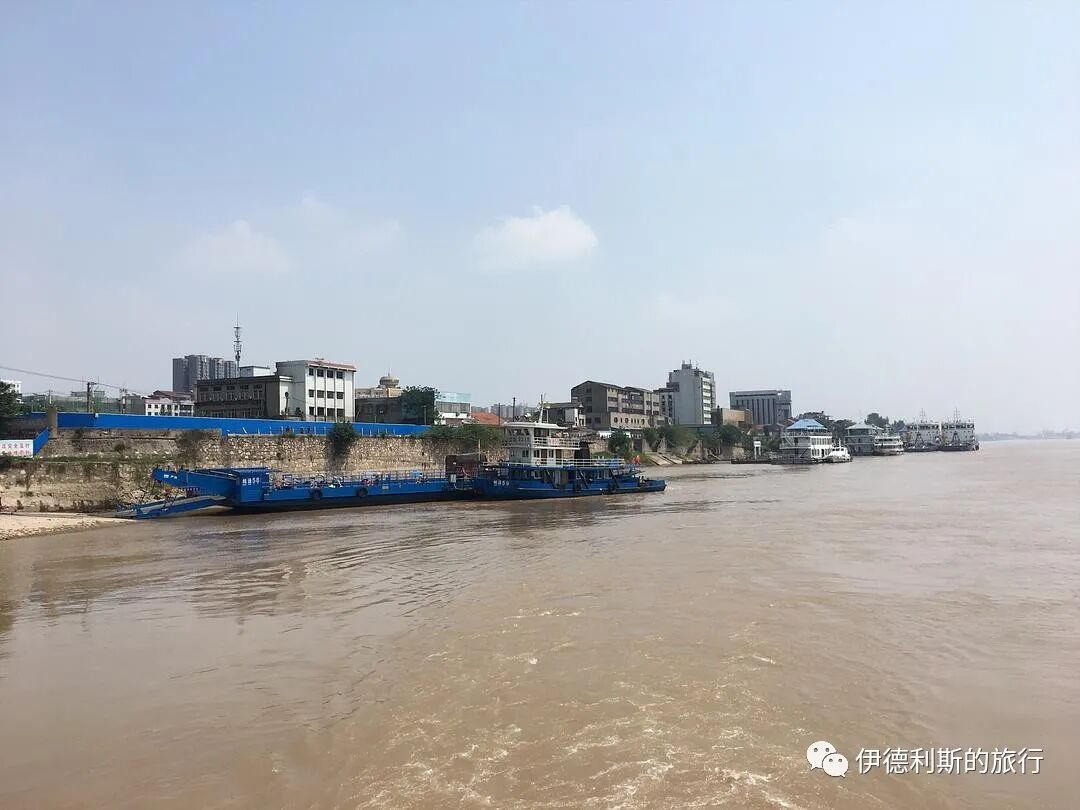
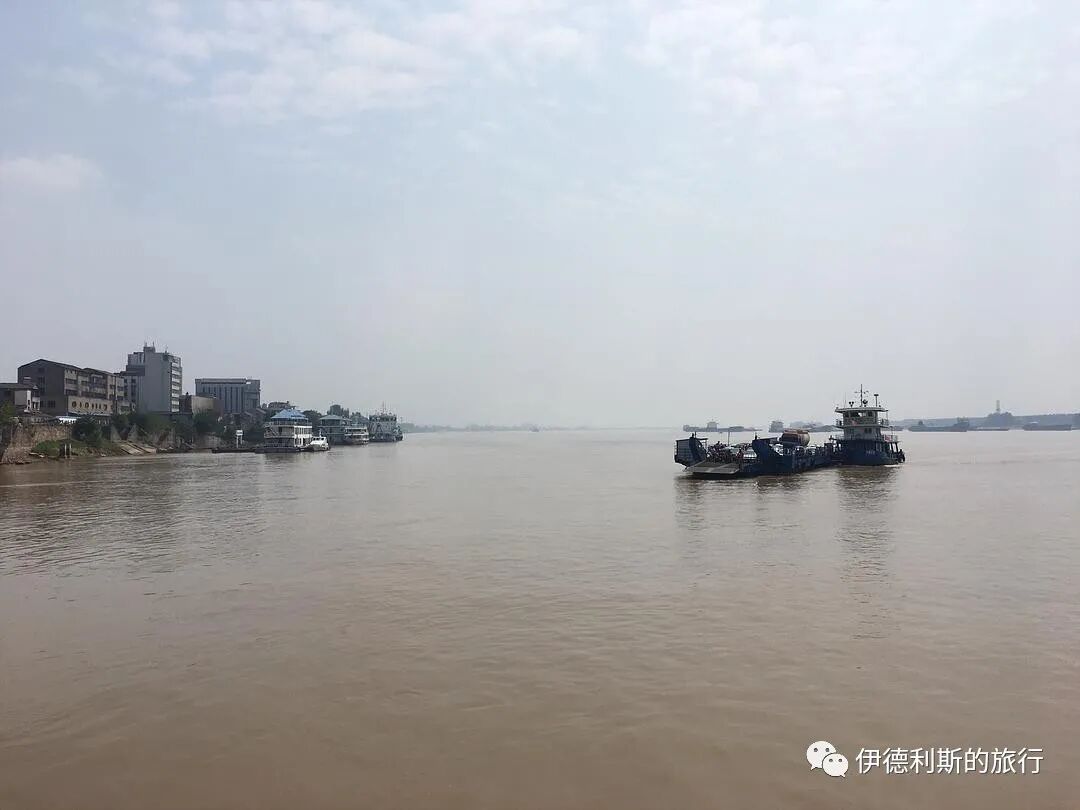
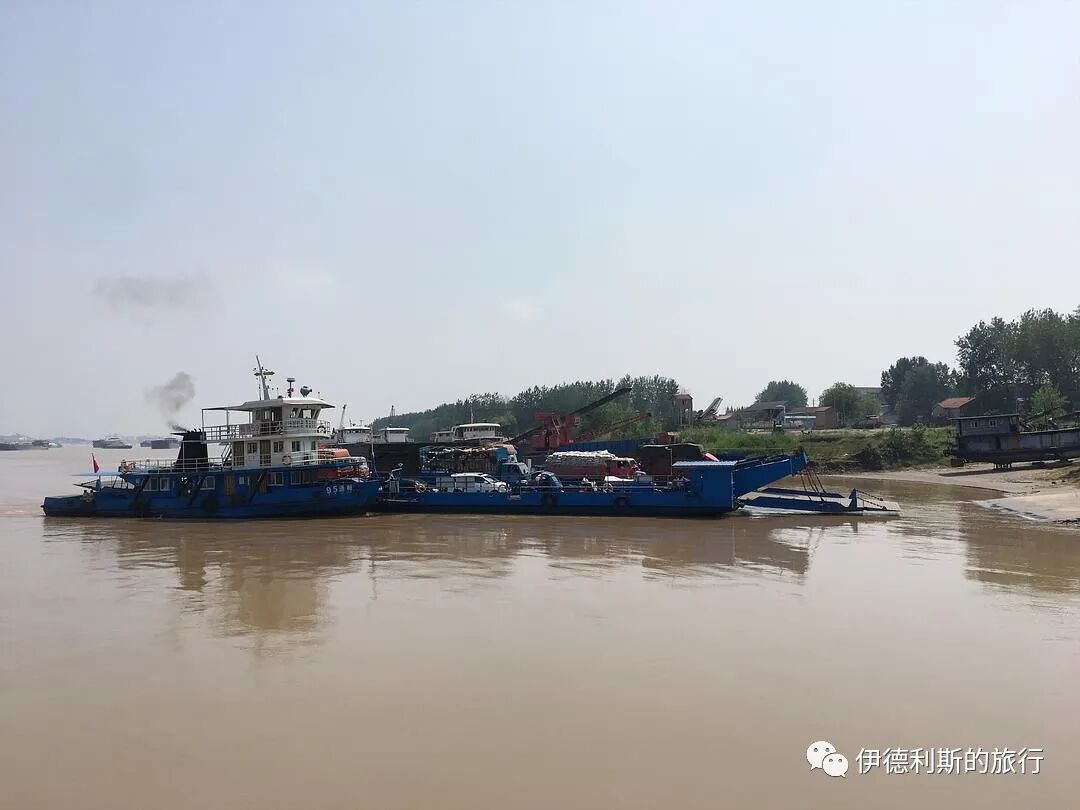
Fancheng Muslim Travel Guide: Hui Muslim History in Hubei
Articles • ali2007fr posted the article • 0 comments • 146 views • 2026-05-17 05:52
Summary: This travel note introduces Fancheng Muslim Travel Guide: Hui Muslim History in Hubei. As the most important commercial hub in the middle reaches of the Han River, Fancheng has had Hui Muslims living there since the Yuan and Ming dynasties. It is useful for readers interested in Hubei Muslims, Hui Muslims, Muslim Heritage.
As the most important commercial hub in the middle reaches of the Han River, Fancheng has had Hui Muslims living there since the Yuan and Ming dynasties. The Hui Muslims of Fancheng were mainly concentrated on Jiaomen Street, where the mosque is located. When the Fancheng Mosque was renovated in 1792 (the 57th year of the Qianlong reign), the number of local Hui Muslim households who donated reached 222. In 2015, Jiaomen Street was completely demolished for new construction, and now only a row of shops selling beef noodles and raw beef remains at the head of the Hanjiang Bridge.
Early in the morning, we came to the bridge head to eat beef noodles at Liu's on Jiaomen Street. Liu's is run by the son of the old Ahong (imam) of the Fancheng Mosque, Liu Donghan, and is quite famous. When I was in college, our school's halal canteen had a stall for Xiangfan beef noodles, and my impression at the time was that it was really spicy! This time, I finally got to taste the authentic version. After finishing the authentic bowl, it did feel a bit spicy, haha. We specifically asked for no chili, but the broth used to braise the beef is inherently a little spicy. However, besides the spice, the beef is truly fragrant! The various meat ingredients must have been added generously, and it was stewed until very flavorful.
The beef noodle shops here at the bridge head basically open from early morning and close near noon. Eating beef noodles in the morning really makes you feel comfortable for the whole day.
After finishing the beef noodles, we went to the Fancheng Mosque. The Fancheng Mosque was once the most important mosque in northwestern Hubei. It was originally a very beautiful ancient Ming Dynasty mosque, but it was tragically demolished around 2015. It can be said to be the greatest regret for traditional Chinese mosque architecture in the 2010s; it is truly a profound pity.
According to a Qing Dynasty stele inscription once inside the mosque, it 'originated in the Yongle period of the former Ming, with orderly scale,' and 'built in the former Ming, by the early Qianlong reign of the current dynasty, the scale was grand and the halls were magnificent.' The mosque leaned toward the traditional southwestern architectural style, with a three-layered flying eave gate and fire-blocking walls. The most distinctive feature was the hexagonal main hall, which was changed from three stories to two after collapsing during a heavy rainstorm in the late Qing Dynasty. The hexagonal main hall was once the most unique traditional mosque hall style in Hubei Province. Besides the Fancheng Mosque, only the Qingzhensi Lane Mosque in Wuchang was the same. Both mosques were founded in the Ming Dynasty and both were destroyed due to the redevelopment of urban residential areas.
The picture below is the gate of the Fancheng Mosque that I took when I went to Fancheng in 2012. It is a great pity that I had not yet systematically photographed traditional mosque architecture at that time, so I did not photograph the main hall. Who would have known that the following year, the demolition of the Fancheng Hui Muslim district would begin, and even the ancient mosque, which was a municipal-level cultural relic protection unit, would be demolished.
After asking for directions, we arrived at the new Fancheng Mosque, which is now surrounded by high-rise residential buildings. The new mosque is very mediocre, with all historical information gone, leaving only a catalpa tree that is over 300 years old. Very fortunately, we were able to visit the Ahong of the Fancheng Mosque, Chen Junren. Ahong Chen also felt very emotional about the reconstruction of the mosque. He said that the old mosque used to have a great atmosphere, and performing namaz (prayer) inside felt solemn and elegant, but the newly built mosque has no feeling at all.
Ahong Chen's hometown is Nanyang, Henan, and he has been in Xiangyang for more than thirty years. He is sixty years old this year. All the halal beef and mutton in Fancheng are slaughtered by Ahong Chen himself, starting from one o'clock every morning until four o'clock in the morning. All the halal beef noodle shops at the head of the Hanjiang Bridge use the meat slaughtered by Ahong Chen. Just then, a dost (friend) asked Ahong Chen to slaughter a sheep, so we watched Ahong Chen's skills on the spot.
Ahong Chen chatted with us very congenially and very enthusiastically gave us several gifts. He gave us a copy of "Tianfang Zhisheng Shilu" (The True Record of the Greatest Sage of Arabia) by Liu Jielian Baba, which is the first biography of the Prophet written in Chinese. He also gave us two pendants brought back by others from Hajj, as well as two porcelain shards he picked up when the Fancheng Hui Muslim street was demolished.
At noon, Ahong Chen took us to the Hexie Restaurant for a meal. Ahong Chen is the uncle of the restaurant owner, Wang Zhiyong. This restaurant has been open for more than thirty years, and local Hui Muslims hold their religious banquets here. We ordered the specialty dry-pot beef offal, wooden bucket fish, and stir-fried baby cabbage with oil bean curd skin. The beef offal was spicy and numbing, with plenty of Sichuan peppercorns, which was very satisfying to eat. The wooden bucket fish was very tender; it is hard to eat such fresh and delicious fish in Beijing.
The river view and city walls of Xiangyang on the opposite bank. view all
Summary: This travel note introduces Fancheng Muslim Travel Guide: Hui Muslim History in Hubei. As the most important commercial hub in the middle reaches of the Han River, Fancheng has had Hui Muslims living there since the Yuan and Ming dynasties. It is useful for readers interested in Hubei Muslims, Hui Muslims, Muslim Heritage.
As the most important commercial hub in the middle reaches of the Han River, Fancheng has had Hui Muslims living there since the Yuan and Ming dynasties. The Hui Muslims of Fancheng were mainly concentrated on Jiaomen Street, where the mosque is located. When the Fancheng Mosque was renovated in 1792 (the 57th year of the Qianlong reign), the number of local Hui Muslim households who donated reached 222. In 2015, Jiaomen Street was completely demolished for new construction, and now only a row of shops selling beef noodles and raw beef remains at the head of the Hanjiang Bridge.
Early in the morning, we came to the bridge head to eat beef noodles at Liu's on Jiaomen Street. Liu's is run by the son of the old Ahong (imam) of the Fancheng Mosque, Liu Donghan, and is quite famous. When I was in college, our school's halal canteen had a stall for Xiangfan beef noodles, and my impression at the time was that it was really spicy! This time, I finally got to taste the authentic version. After finishing the authentic bowl, it did feel a bit spicy, haha. We specifically asked for no chili, but the broth used to braise the beef is inherently a little spicy. However, besides the spice, the beef is truly fragrant! The various meat ingredients must have been added generously, and it was stewed until very flavorful.
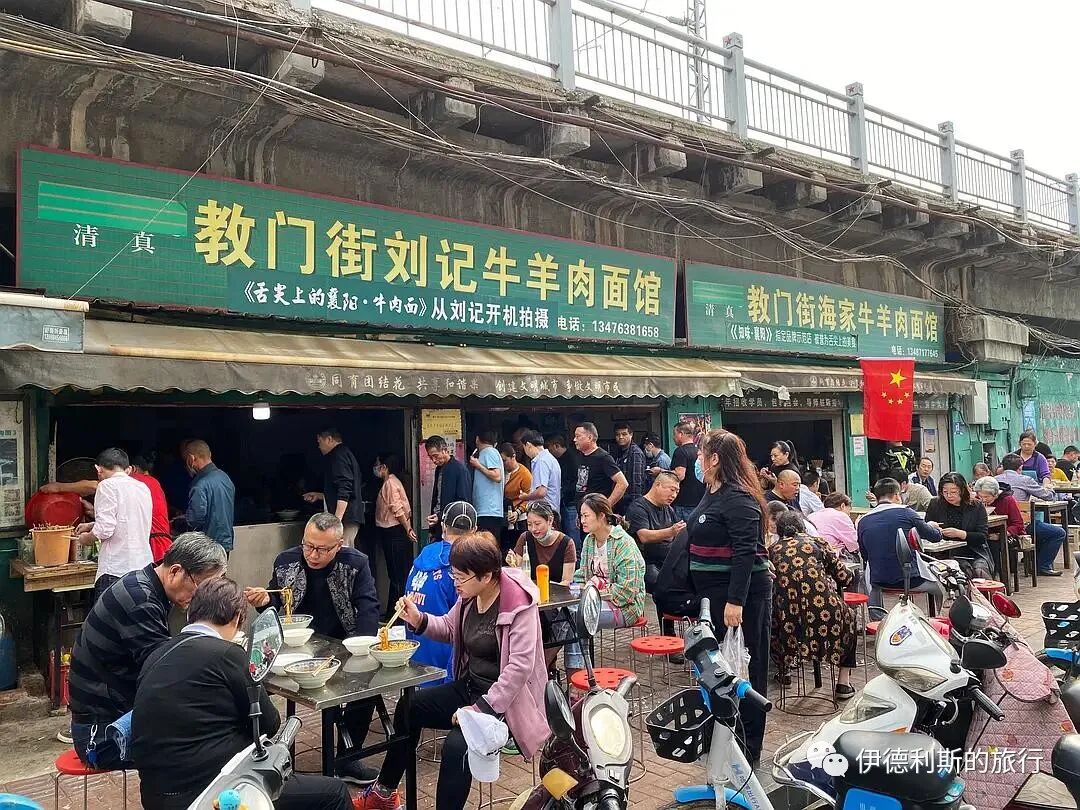
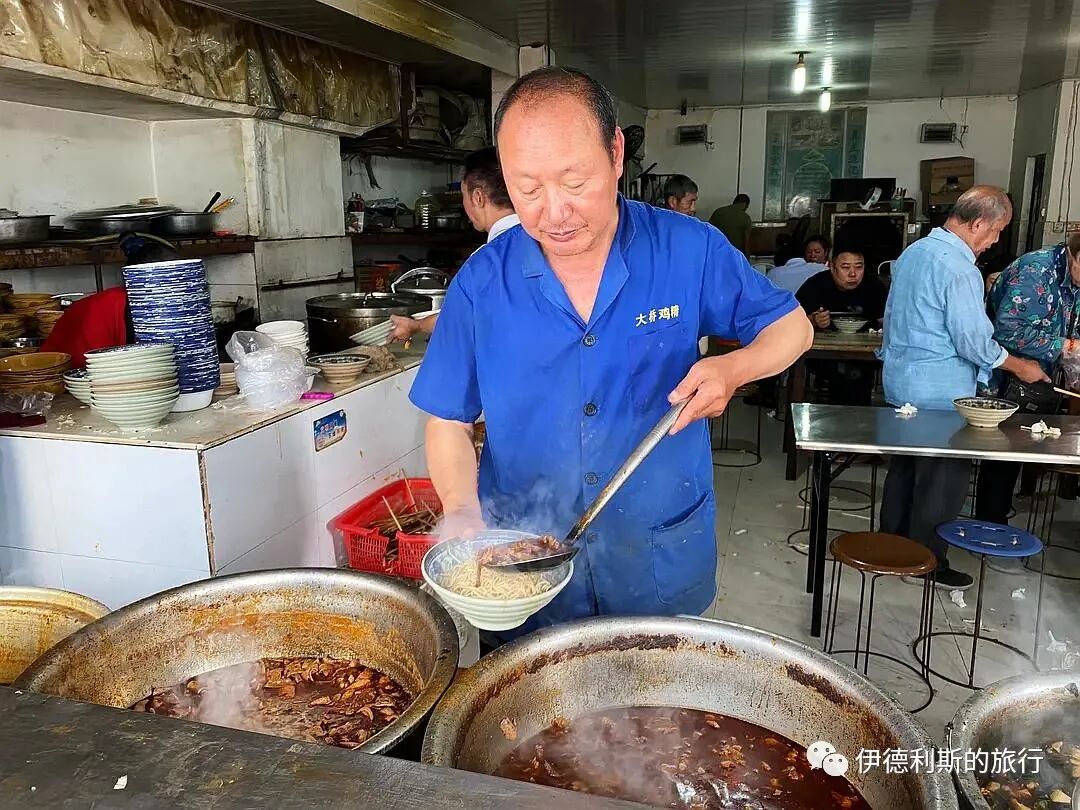
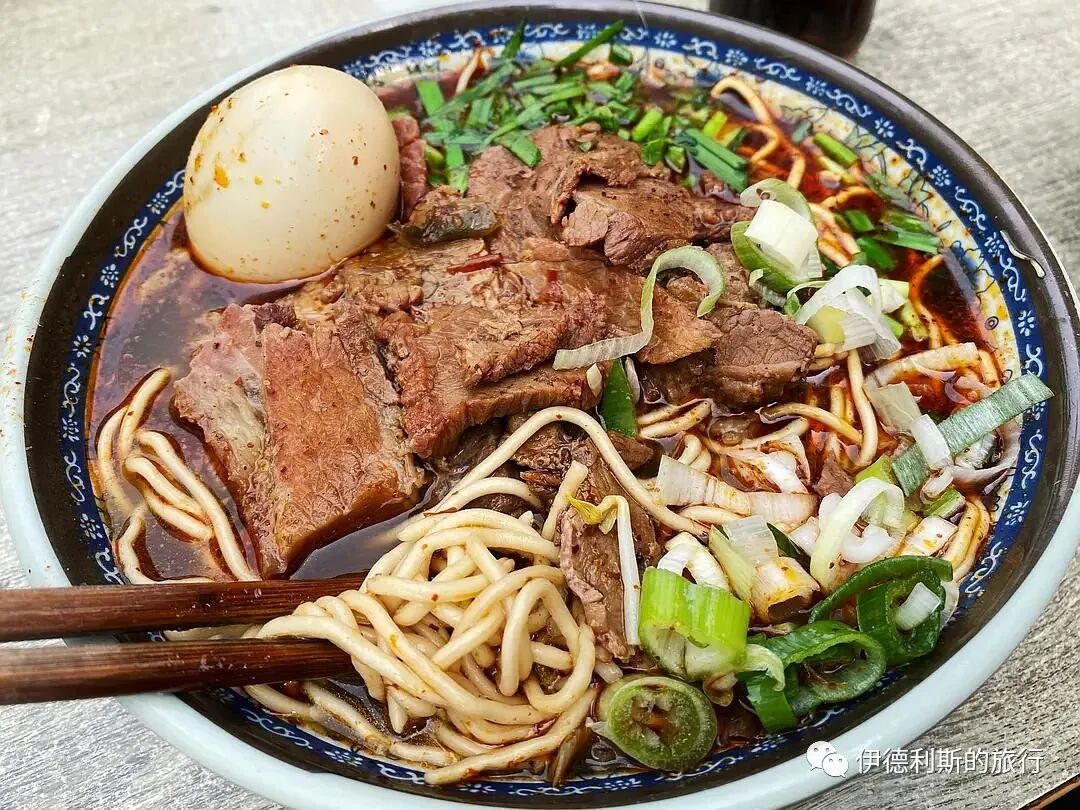
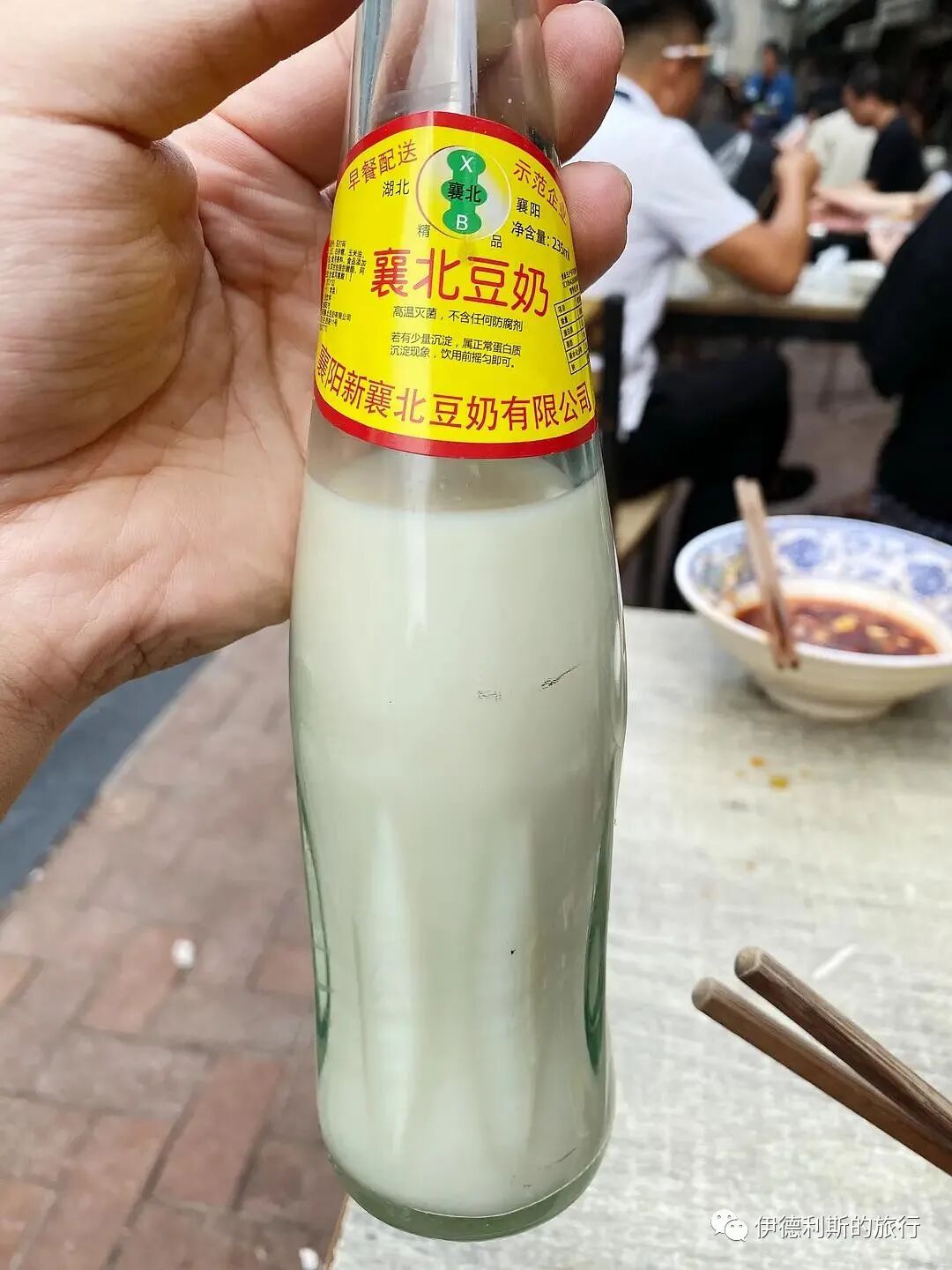
The beef noodle shops here at the bridge head basically open from early morning and close near noon. Eating beef noodles in the morning really makes you feel comfortable for the whole day.
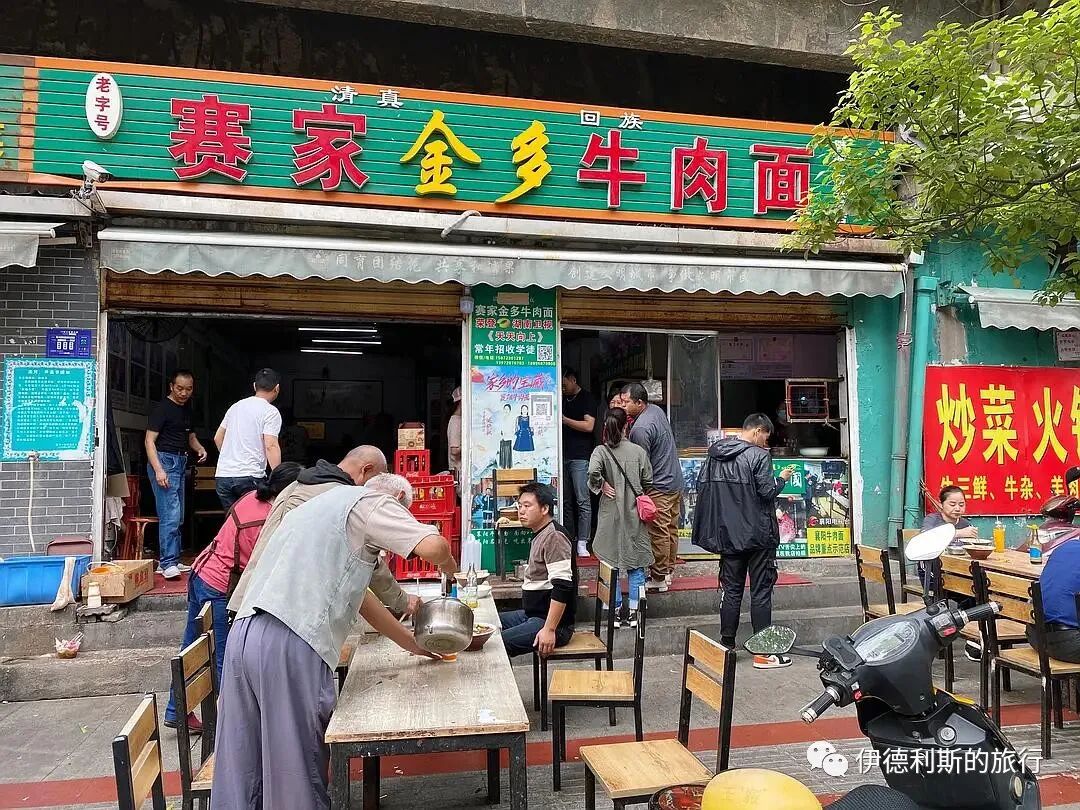
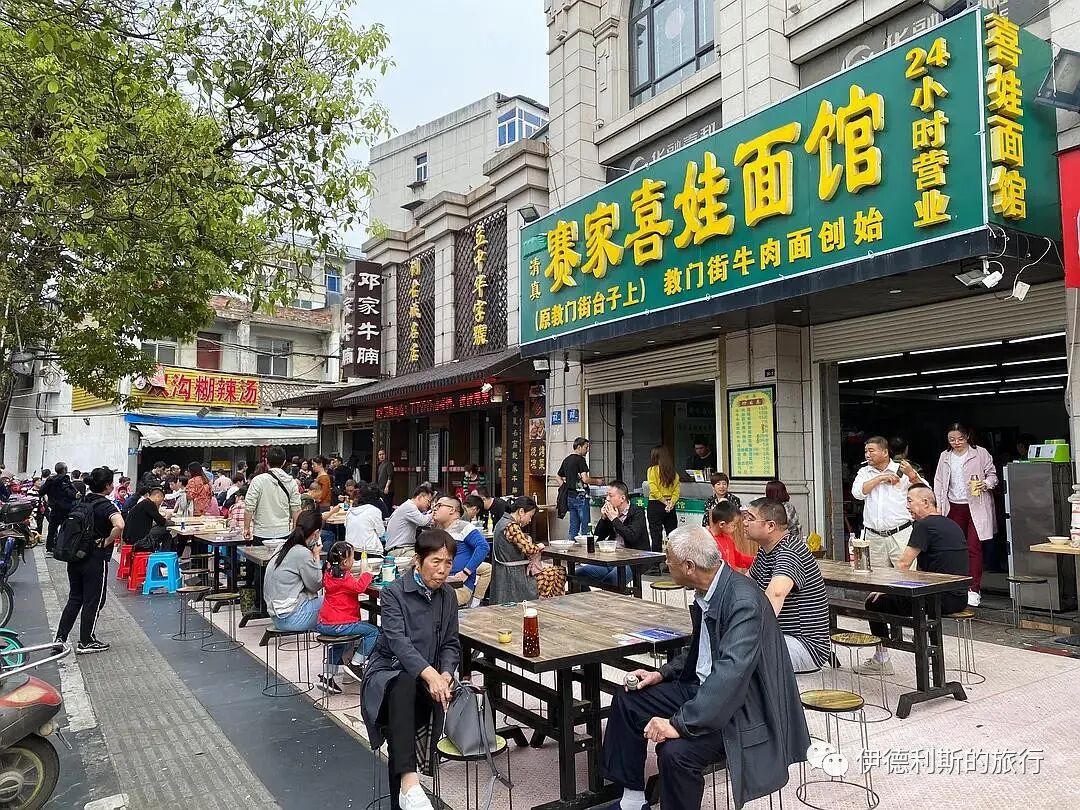
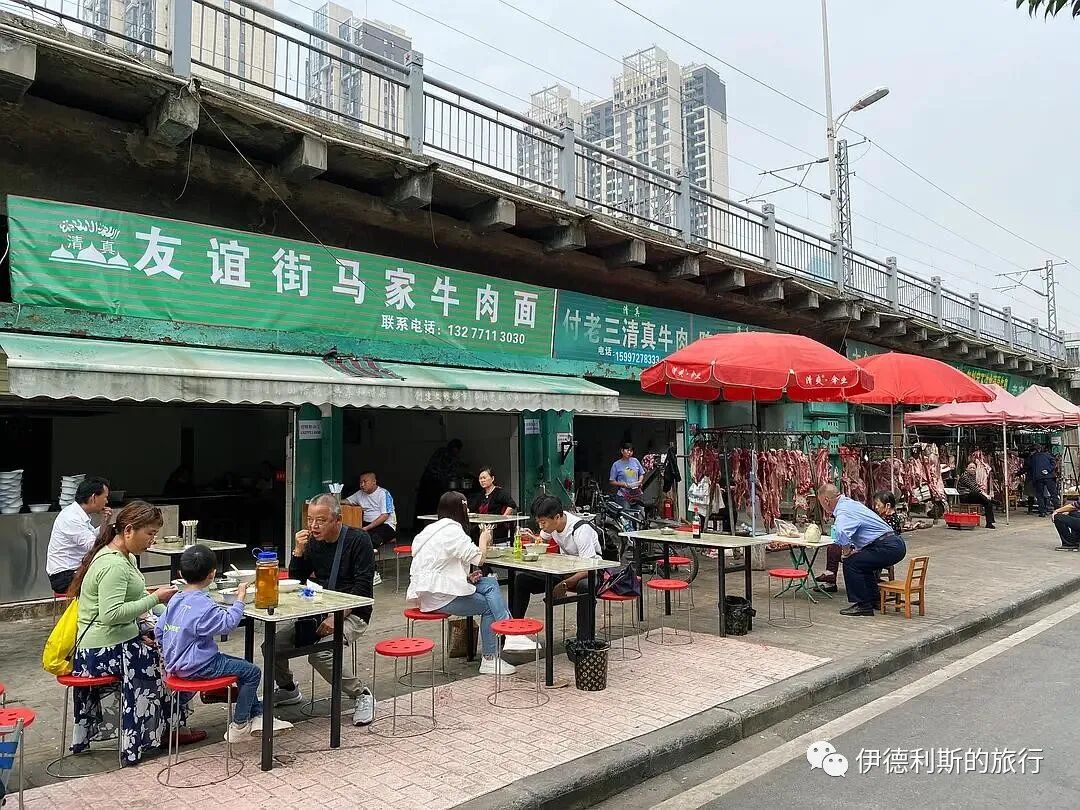
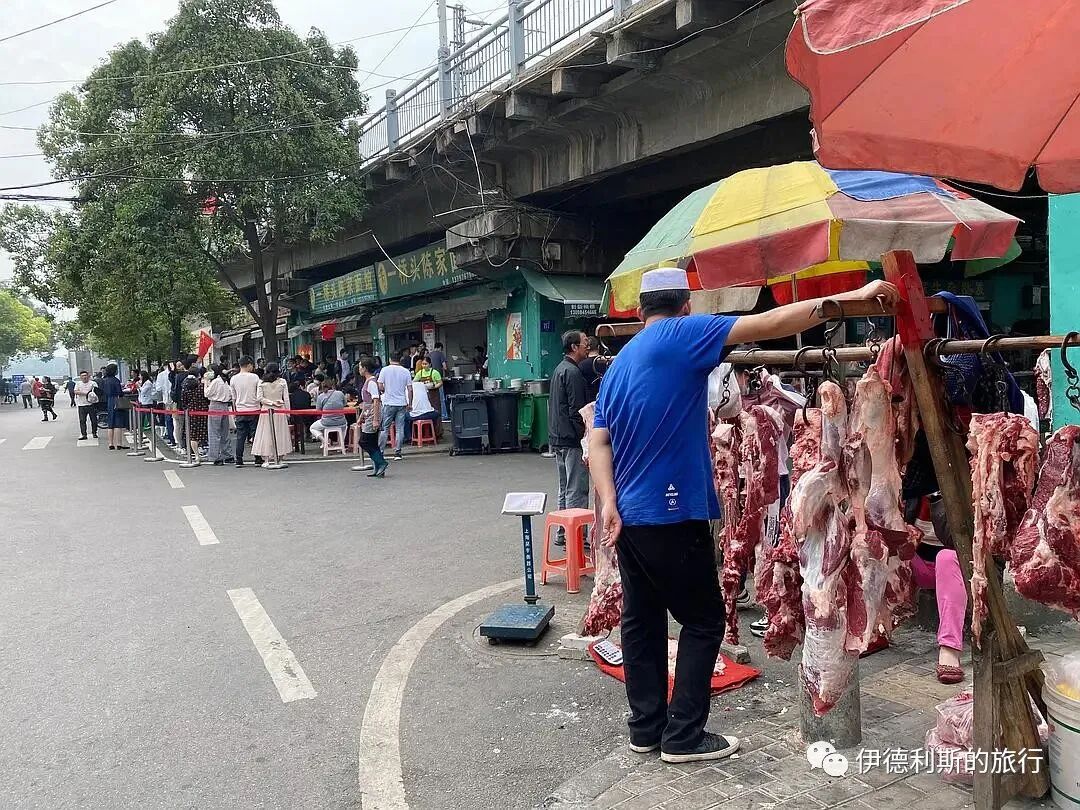
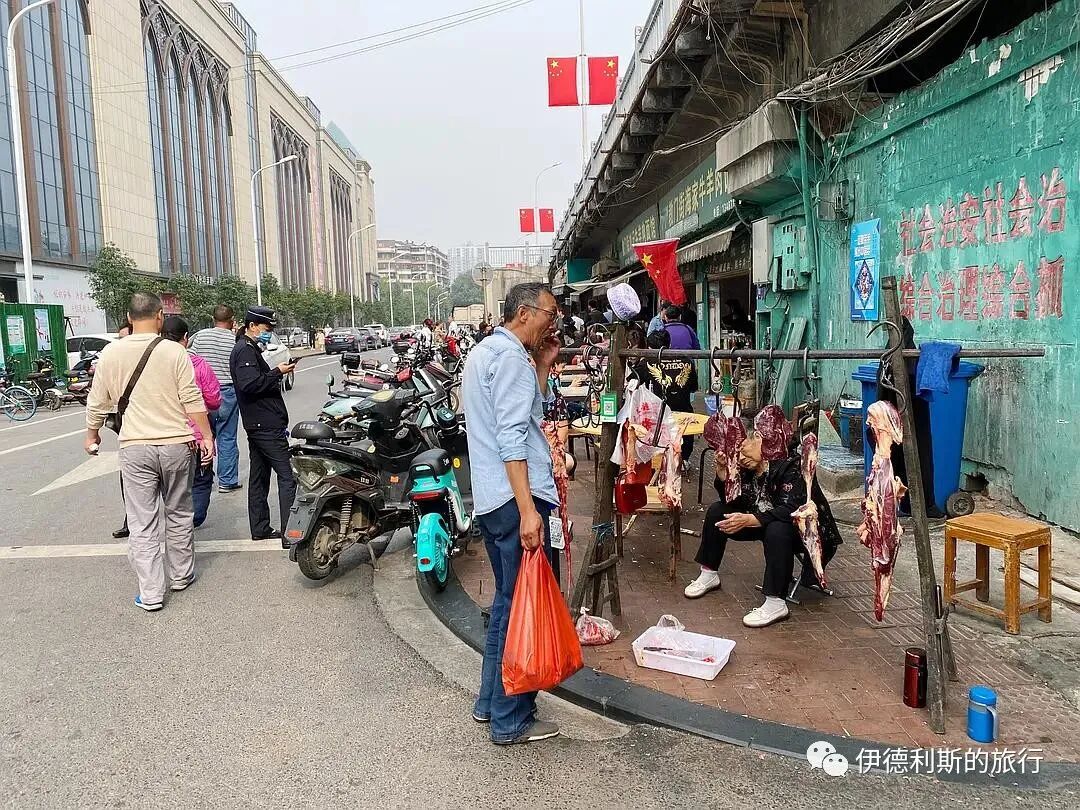
After finishing the beef noodles, we went to the Fancheng Mosque. The Fancheng Mosque was once the most important mosque in northwestern Hubei. It was originally a very beautiful ancient Ming Dynasty mosque, but it was tragically demolished around 2015. It can be said to be the greatest regret for traditional Chinese mosque architecture in the 2010s; it is truly a profound pity.
According to a Qing Dynasty stele inscription once inside the mosque, it 'originated in the Yongle period of the former Ming, with orderly scale,' and 'built in the former Ming, by the early Qianlong reign of the current dynasty, the scale was grand and the halls were magnificent.' The mosque leaned toward the traditional southwestern architectural style, with a three-layered flying eave gate and fire-blocking walls. The most distinctive feature was the hexagonal main hall, which was changed from three stories to two after collapsing during a heavy rainstorm in the late Qing Dynasty. The hexagonal main hall was once the most unique traditional mosque hall style in Hubei Province. Besides the Fancheng Mosque, only the Qingzhensi Lane Mosque in Wuchang was the same. Both mosques were founded in the Ming Dynasty and both were destroyed due to the redevelopment of urban residential areas.
The picture below is the gate of the Fancheng Mosque that I took when I went to Fancheng in 2012. It is a great pity that I had not yet systematically photographed traditional mosque architecture at that time, so I did not photograph the main hall. Who would have known that the following year, the demolition of the Fancheng Hui Muslim district would begin, and even the ancient mosque, which was a municipal-level cultural relic protection unit, would be demolished.
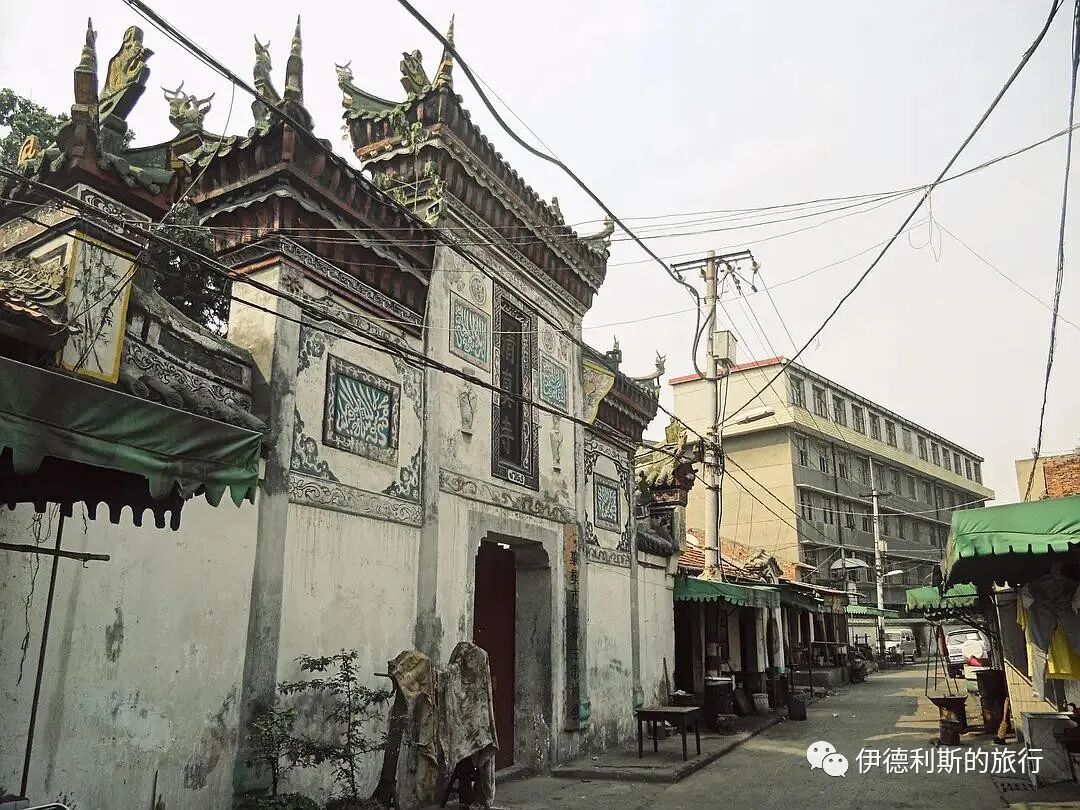
After asking for directions, we arrived at the new Fancheng Mosque, which is now surrounded by high-rise residential buildings. The new mosque is very mediocre, with all historical information gone, leaving only a catalpa tree that is over 300 years old. Very fortunately, we were able to visit the Ahong of the Fancheng Mosque, Chen Junren. Ahong Chen also felt very emotional about the reconstruction of the mosque. He said that the old mosque used to have a great atmosphere, and performing namaz (prayer) inside felt solemn and elegant, but the newly built mosque has no feeling at all.
Ahong Chen's hometown is Nanyang, Henan, and he has been in Xiangyang for more than thirty years. He is sixty years old this year. All the halal beef and mutton in Fancheng are slaughtered by Ahong Chen himself, starting from one o'clock every morning until four o'clock in the morning. All the halal beef noodle shops at the head of the Hanjiang Bridge use the meat slaughtered by Ahong Chen. Just then, a dost (friend) asked Ahong Chen to slaughter a sheep, so we watched Ahong Chen's skills on the spot.
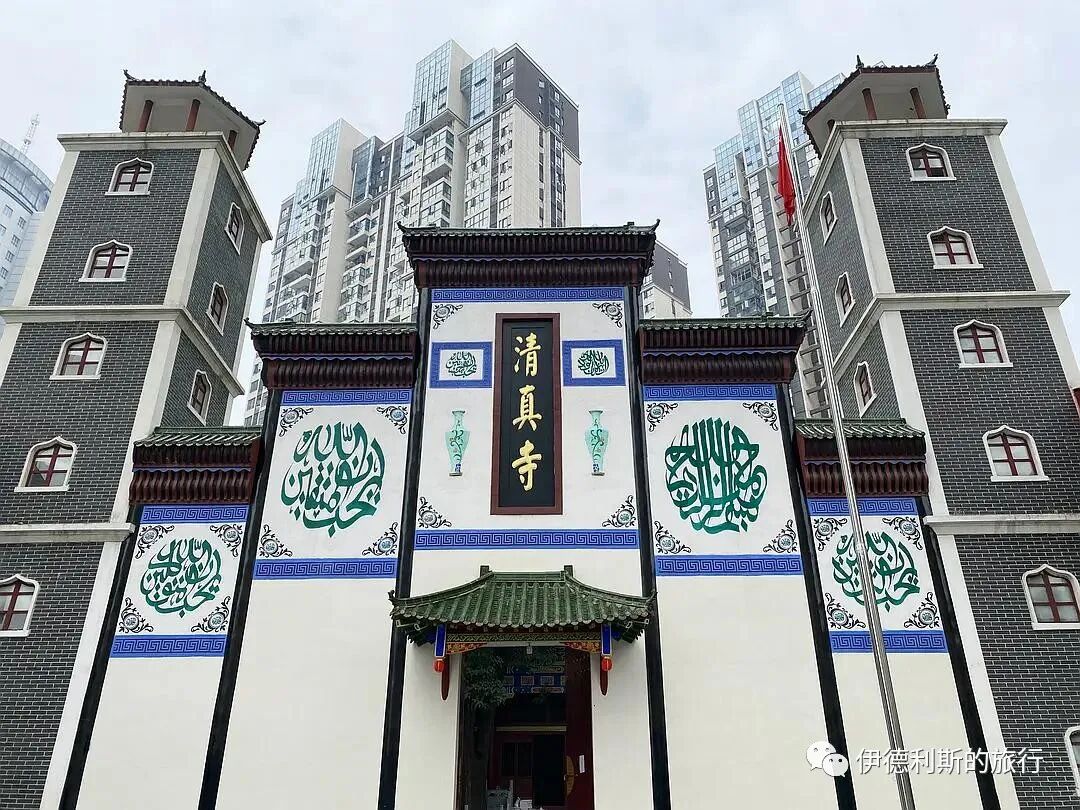
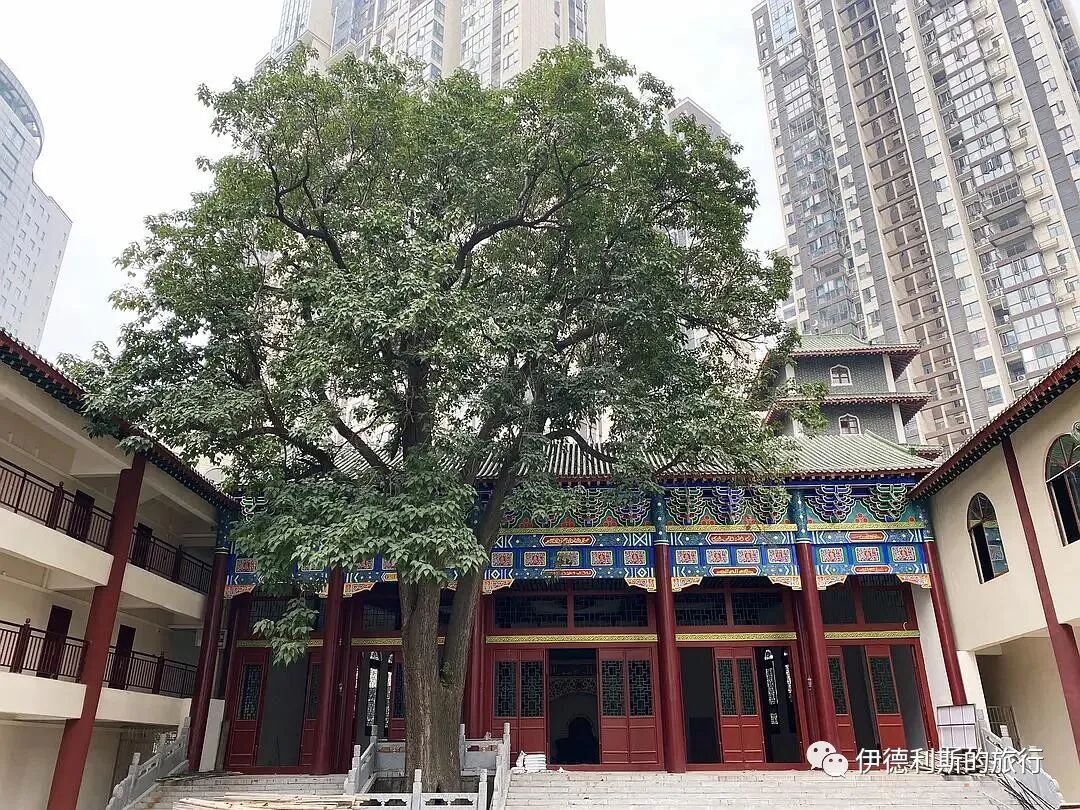
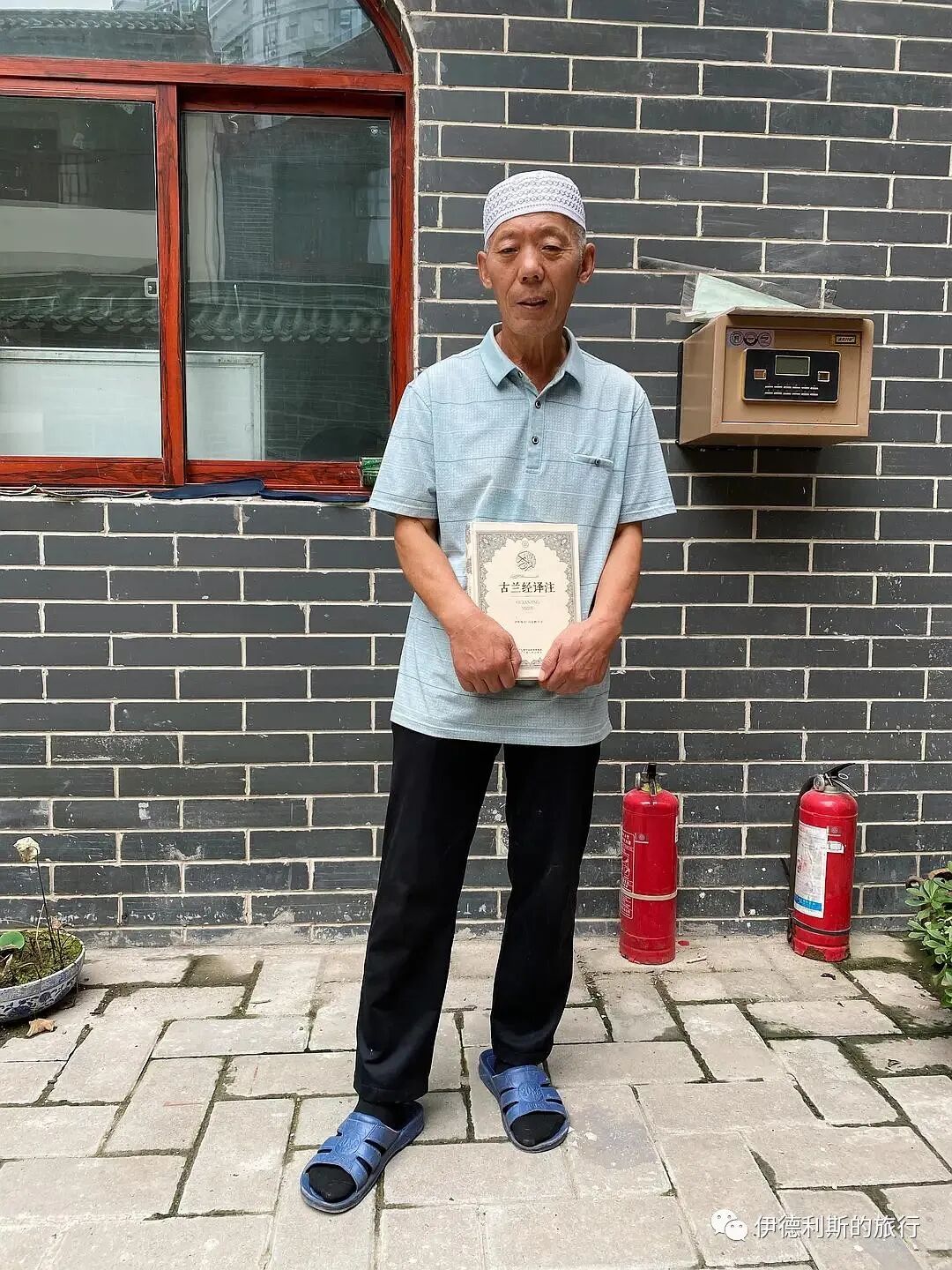
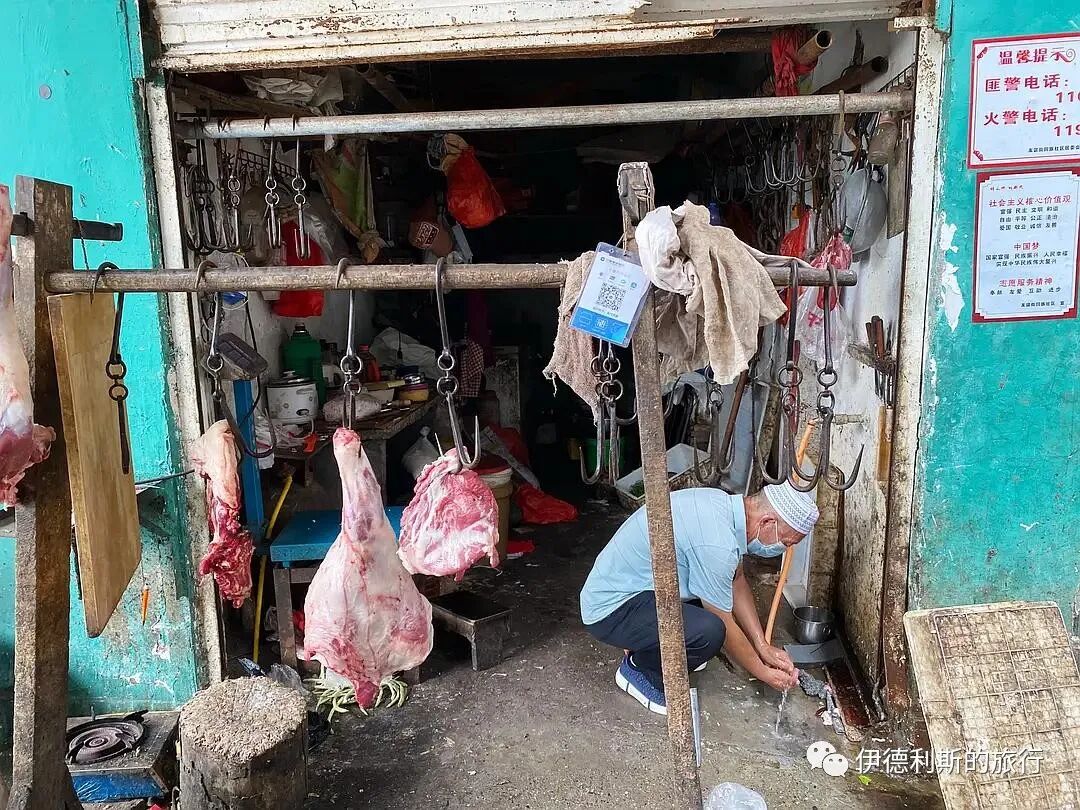
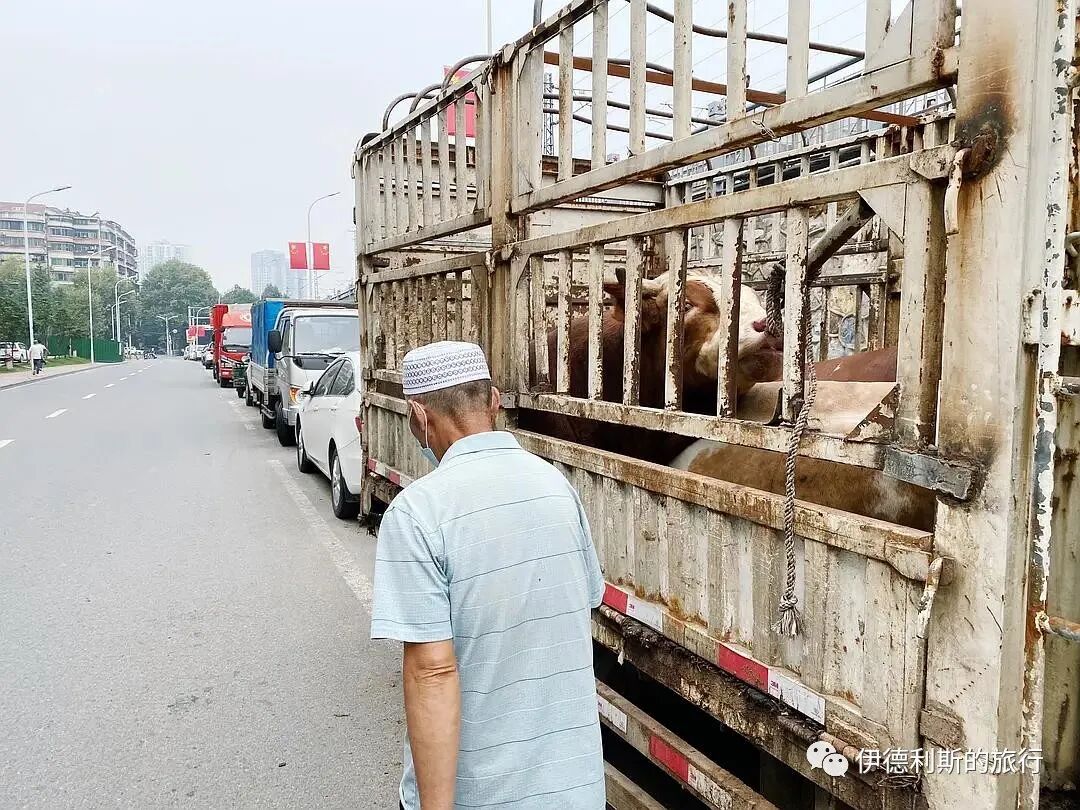
Ahong Chen chatted with us very congenially and very enthusiastically gave us several gifts. He gave us a copy of "Tianfang Zhisheng Shilu" (The True Record of the Greatest Sage of Arabia) by Liu Jielian Baba, which is the first biography of the Prophet written in Chinese. He also gave us two pendants brought back by others from Hajj, as well as two porcelain shards he picked up when the Fancheng Hui Muslim street was demolished.
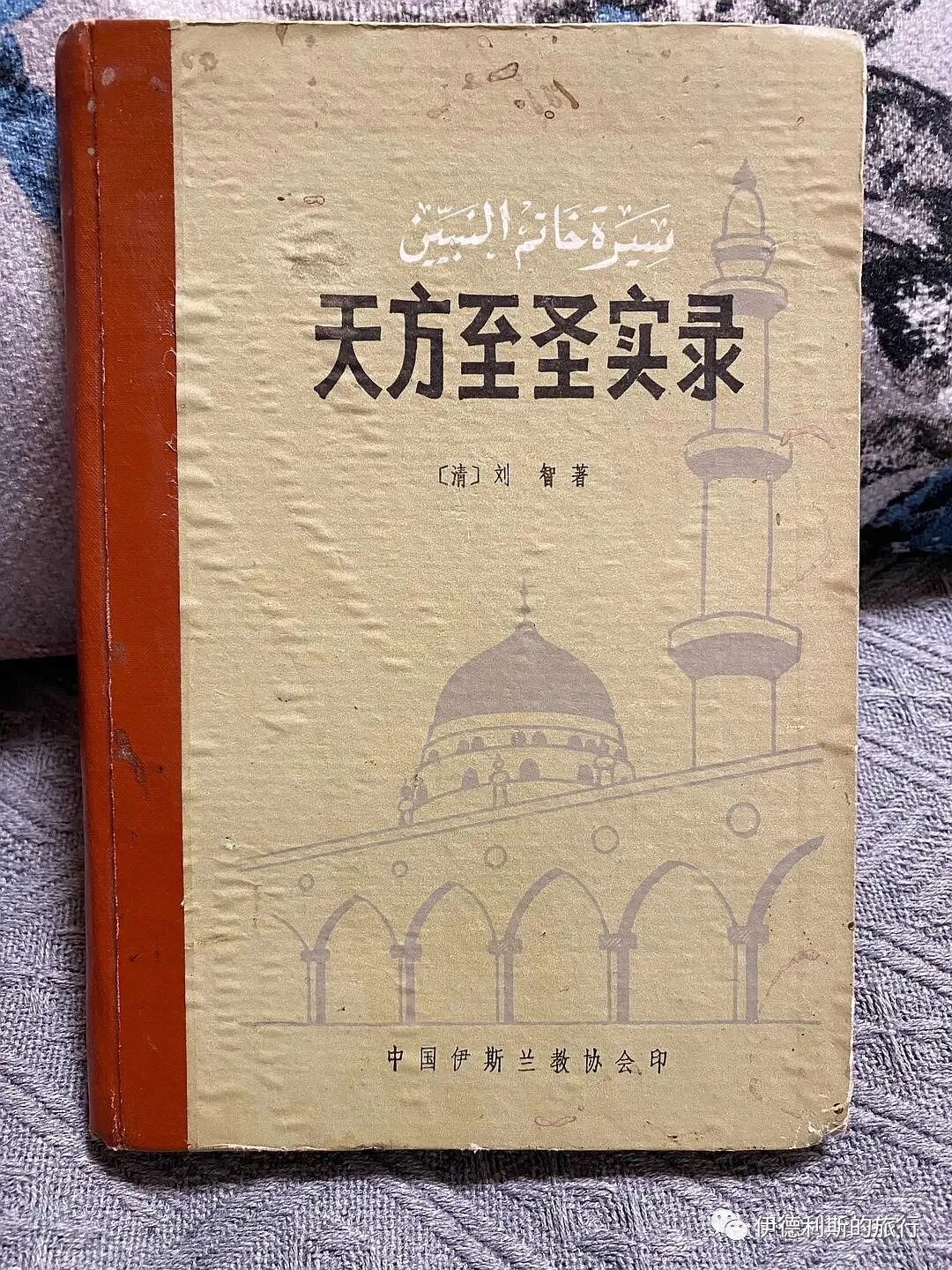
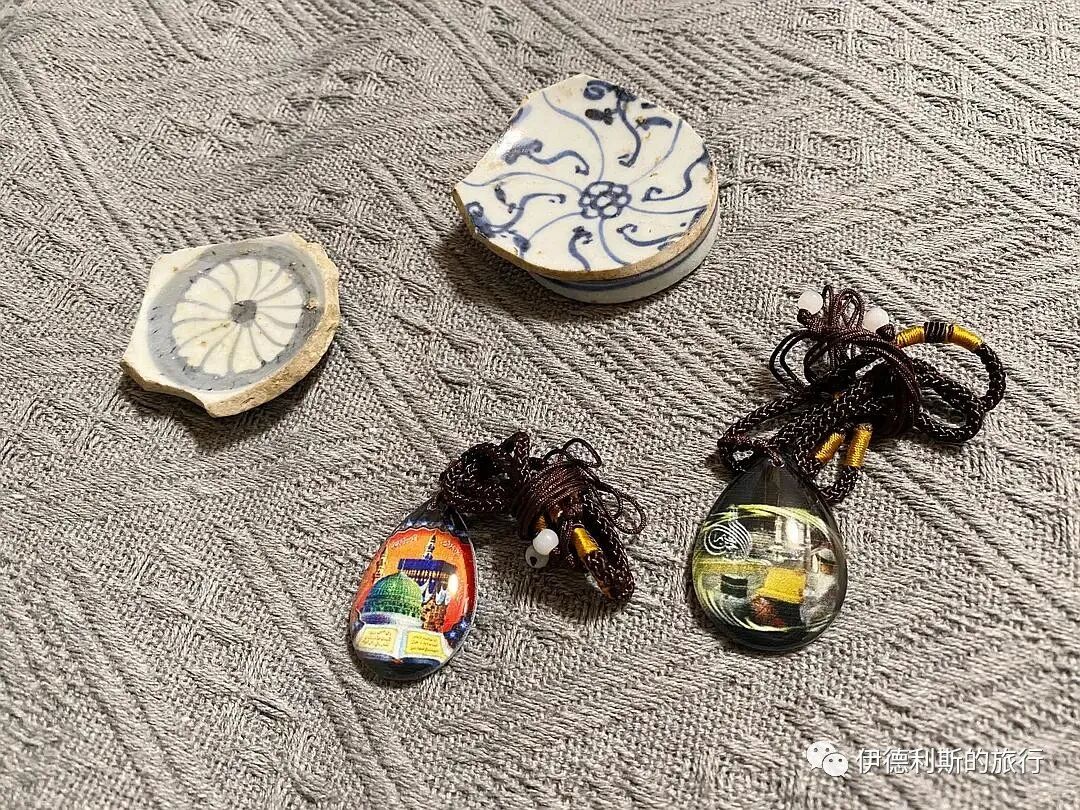
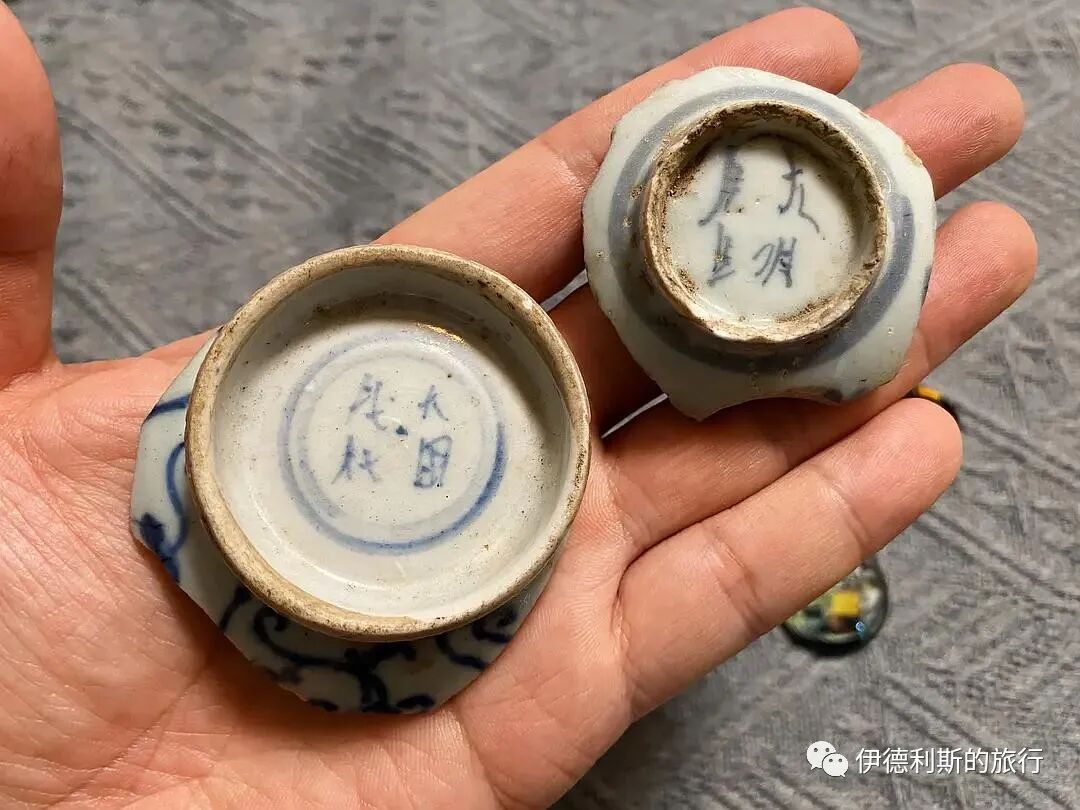
At noon, Ahong Chen took us to the Hexie Restaurant for a meal. Ahong Chen is the uncle of the restaurant owner, Wang Zhiyong. This restaurant has been open for more than thirty years, and local Hui Muslims hold their religious banquets here. We ordered the specialty dry-pot beef offal, wooden bucket fish, and stir-fried baby cabbage with oil bean curd skin. The beef offal was spicy and numbing, with plenty of Sichuan peppercorns, which was very satisfying to eat. The wooden bucket fish was very tender; it is hard to eat such fresh and delicious fish in Beijing.
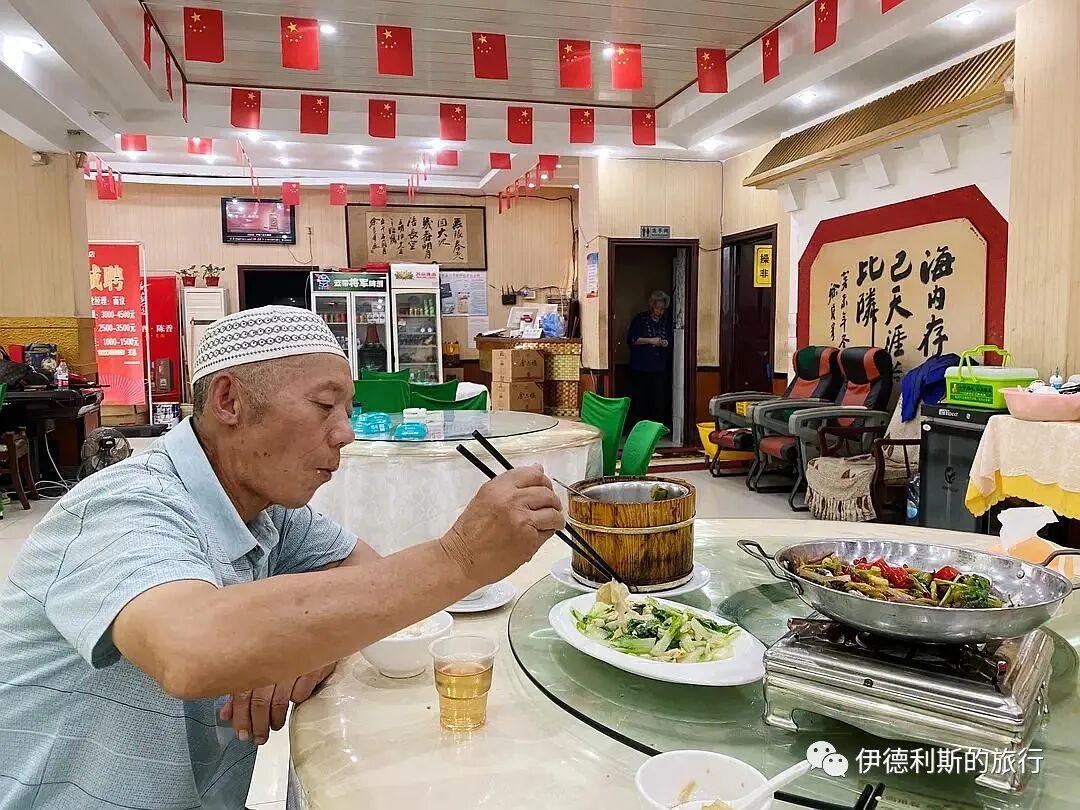
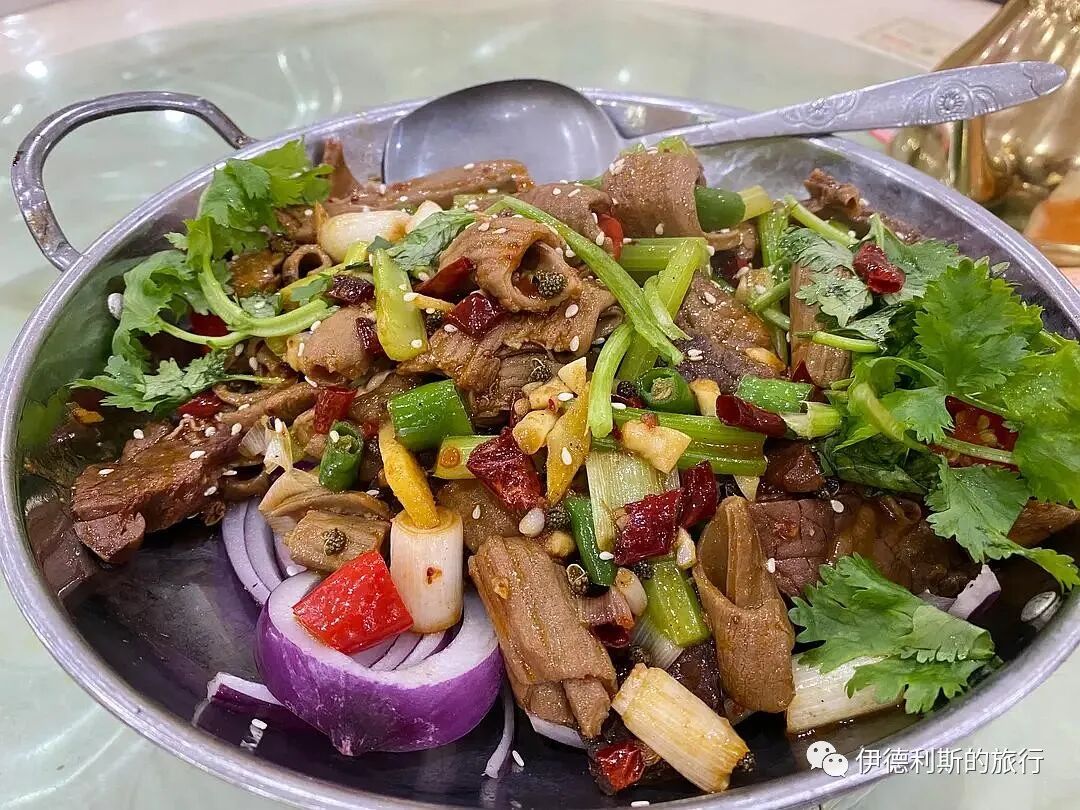
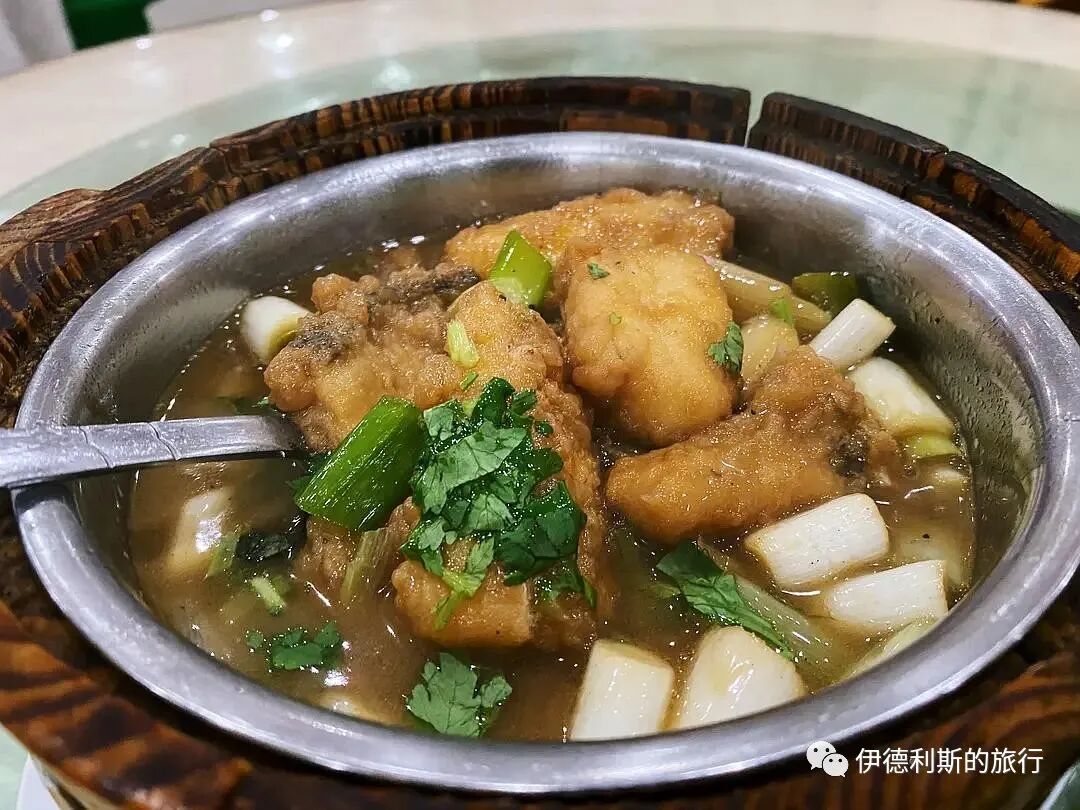
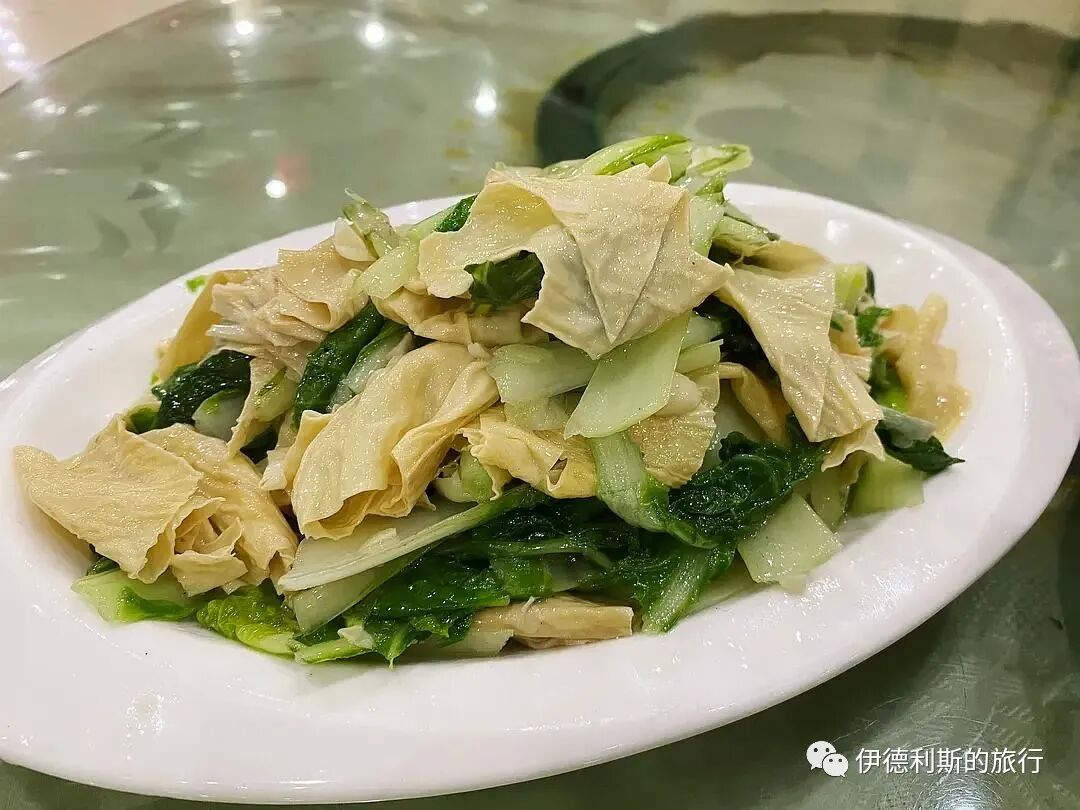
The river view and city walls of Xiangyang on the opposite bank.
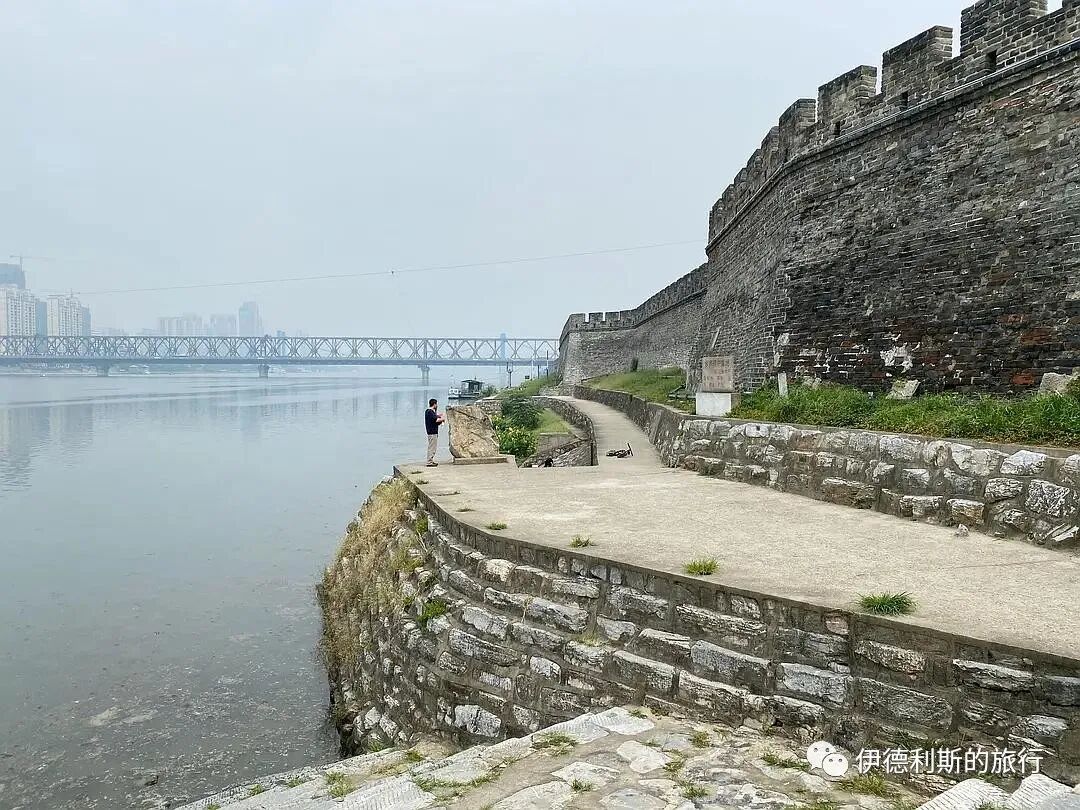
Halal Travel Guide: Hankou Hui Muslim Community — Mosques, Food and Lost Streets
Articles • ali2007fr posted the article • 0 comments • 151 views • 2026-05-18 02:27
Summary: Hankou Hui Muslim Community — Mosques, Food and Lost Streets is presented here as a firsthand travel account in clear English, beginning with this scene: After the middle of the Ming Dynasty, Hankou town began to grow. Hui Muslims from the Jiangsu and Zhejiang regions traveled up the Yangtze River, while those from the Shaanxi and Gansu regions traveled down the Han. The account keeps its focus on Hankou Muslims, Hubei Muslims, China Mosques while preserving the names, places, food, and historical details from the Chinese source.
The formation of the Muslim community in Hankou.
After the middle of the Ming Dynasty, Hankou town began to grow. Hui Muslims from the Jiangsu and Zhejiang regions traveled up the Yangtze River, while those from the Shaanxi and Gansu regions traveled down the Han River, all gathering in Hankou for trade and business. By the end of the Ming Dynasty, the number of Hui Muslims settling in Hankou grew, forming the earliest residential area for the community.
Guangyi Bridge Mosque (Guangyiqiao Qingzhensi).
Guangyi Bridge Mosque was first built in 1723 (the first year of the Yongzheng reign). It was burned down in 1900 (the 26th year of the Guangxu reign) and rebuilt in 1905 with funds raised by community elders like Jin Shihe and Jin Dinghe. During the Wuchang Uprising in 1911, the mosque was burned down again. It was repaired in 1916 with donations from the Shaanxi horse caravan group and the Hubei beef butcher guild (Choubang). The main prayer hall was funded entirely by a famous Hui merchant from Shanghai named Jiang Xingjie. It could hold a thousand people for namaz and featured beautiful bracket sets, curved eaves, and carved beams, making it very spectacular.
In 1905, Ma Ganghou, Yu Jingzhai, and others opened a school for Hui children inside the Wanshou Palace Mosque in Hankou. It was later renamed the Hankou Muslim Primary School and moved into the Guangyi Bridge Mosque, offering free enrollment to Hui children. The curriculum focused on religion, supplemented by Chinese language and abacus math, until it closed after the Battle of Wuhan in 1938.
Guangyi Bridge Mosque in the 1864 Map of Wuhan Towns and Cities.
Guangyi Bridge Mosque in the 1877 Map of Streets in Hankou Town, Hubei.
Guangyi Bridge Mosque before its demolition, photographed by Bi Jingshi before 1930. It is now in the collection of the Harvard-Yenching Library.
According to Wang Jianping in Old Photos of Islamic Culture in China's Interior and Frontier, this is Imam Wu Zhengming from Xi'an.
In 1930, the government renovated a large urban area from Wangjiaxiang to Liuduqiao in Hankou. They built new roads centered around the Sun Yat-sen bronze statue on Sanmin Road, which led to the demolition of the original Guangyi Bridge Mosque. Imam Ma Yiting and community elders like Tie Guoliang, Yu Jingzhai, Yang Shouting, and Ma Tingsheng traveled to Shanghai, Nanjing, and the Shaanxi-Gansu-Henan regions to raise funds. With these donations and contributions from local Hui Muslims, they raised 18,000 yuan. They built a three-story brick-and-concrete mosque on the newly constructed Minquan Road, modeled after the Xiaotaoyuan Mosque in Shanghai. Because it was on Minquan Road, it was also called the Minquan Road Mosque. The first floor of the new mosque held a reception room, a water room for washing, and a room for funeral preparations (maiti). The second floor had a room for reciting scriptures and a lecture hall, and the third floor was the main prayer hall.
The Minquan Road Mosque photographed by Bi Jingshi between 1934 and 1935. You can see the sign on the gate that reads: Hankou Branch of the China Islamic Association, Islamic Prayer Hall.
Notice from the Preparatory Committee of the Hankou Branch of the Chinese Islamic Association.
The true faith of the Hui people originated in Mecca (Tianfang).
It has spread to provinces in the interior, passed down through generations by representatives.
Mosques stand like a forest, bringing unity to even the most remote areas.
With the same path, same writing, and same assimilation, the five ethnic groups flourish together.
According to Wang Jianping in Old Photos of Islamic Culture in China's Interior and Frontier, this is the young Imam Ma from the Minquan Road Mosque. Ma Xiaoshun (born in 1924), the former director of the Minquan Road Mosque management committee, recalled that this was Ma Xun, the adopted son of the mosque's head Imam, Ma Yiting. He later followed Imam Ma Yiting to Shanghai and served as the head Imam at the Fuyou Road Mosque in Shanghai for many years during the 1980s.
A small halal snack shop in Hankou.
In 1986, the mosque was renovated and expanded into a five-story building. The first floor is the washroom, the second floor has a living room and a room for reciting scriptures, the third floor is the main prayer hall, the fourth floor is the office for the Wuhan Islamic Association, and the fifth floor is a meeting hall and an additional prayer hall for holidays.
In 2013, the Minquan Road Mosque, which was a designated excellent historical building in Wuhan, was demolished, leaving behind a permanent regret.
The Minquan Road Mosque I photographed in 2012 before it was demolished.
Hualou Street next to the Minquan Road Mosque, one year before the demolition.
The Minquan Road Mosque in October 2014, which became a parking lot after being torn down.
Jiang'an Mosque.
In 1906 (the 32nd year of the Guangxu reign), the Beijing-Hankou Railway officially opened. Many Hui Muslims from Zhoukou, Henan, traveled along the railway to Hankou to escape a drought, settling in the area around the Jiang'an Railway Station, the southernmost point of the line.
In 1918, the Henan Hui Muslims who settled in Liujiamiao built a simple mosque. This was the earliest Liujiamiao Mosque, also known as the Henan Mosque because it was mainly used by people from Henan. Later, when Wu Peifu's army was stationed there, they requisitioned the mosque to feed their horses, so in 1920, everyone had to raise money to buy a small building to use as a mosque.
Between 1934 and 1935, Bi Jingshi took photos of the Liujiamiao Mosque at that time.
Inside the mosque, the person shown is the imam (ahong) at the time, Elder Chang.
Elder Imam Chang.
Elder Imam Chang's eldest son, Imam Chang.
Elder Imam Chang's second son, Younger Imam Chang.
A photo of Elder Imam Chang and Younger Imam Chang together.
Elder Imam Chang and a foreign friend, Mr. G. K. Harris.
Elder Imam Chang shaving his beard.
Elder Imam Chang.
According to Wang Jianping in 'Old Photos of Islamic Culture in China's Inland and Frontier Regions,' an elderly resident named Wei Ruiyun, who lived near the Wuchang Uprising Street Mosque for over 60 years, recalled that this was Imam Ma Shanzhi, who had performed her nikah (marriage contract) when she got married.
Elder Imam Chang and some merchants who came to Hankou from Henan for business.
Merchants who came to do business in Henan at the Liujiamiao Mosque.
The imam of Liujiamiao Mosque.
The imam, community elders, and merchants from Henan on the roof of the mosque, preparing to perform namaz.
Performing namaz on the roof of Liujiamiao Mosque.
Old Imam Chang leads everyone in Jumu'ah prayer inside the main hall of Liujiamiao Mosque.
A friend (dosti) performs wudu (abdast) on the roof of Liujiamiao Mosque.
After the Battle of Wuhan in 1938, the mosque was damaged by war, and the land was taken for railway expansion, so local Hui Muslims raised money again to buy a new building for the mosque. Since then, the mosque has undergone several major renovations and was officially renamed Jiang'an Mosque. After a major renovation of the main hall in 1986, a second floor was added to the main hall and the north reception room, which caused the foundation to sink and cracks to appear in the walls. In 2005, the original Jiang'an Mosque was demolished to build a new one, and in 2007, a women's Islamic school (qingzhen nvxue) was built next to it.
Jiang'an Mosque as I photographed it in 2013.
A Jumu'ah prayer in 2013.
The study group for middle-aged and elderly people at that time.
Jiang'an Station stopped operating in 2010, and demolition of the surrounding area began immediately. By 2014, the Muslim community around Jiang'an Mosque had been completely razed to the ground and now only exists in history.
In 2015, the community around the mosque was completely razed to the ground.
The former Hui Muslim grocery store has been closed for many years and is now razed to the ground.
The Jiang'an Station sign before it was demolished.
The abandoned station.
The building next to the station was about to be demolished when I photographed it in 2013, and it is now razed to the ground.
An even older century-old station.
A once-luxurious hotel.
A halal restaurant (qingzhen guanzi).
Although the traditional Hui Muslim community in Jiang'an was razed to the ground, Jiang'an Hui Muslims still run halal restaurants in Wuhan.
Fatumei Restaurant on Huangxing Road is a traditional local halal restaurant in Hankou. Owner Li's family are third-generation Hankou Hui Muslims who settled near the Dazhi Railway Station in Hankou during the Republic of China era.
We ordered the most classic Hankou Hui Muslim dish, beef meatball soup (hui niurou yuanzi), as well as sticky rice fish (ciba yu) and fried lotus root sandwiches (zha oujia). Although they are only separated by a river, Hankou Hui Muslims and Wuchang Hui Muslims have different food cultures. Hui Muslims have lived in Wuchang for hundreds of years. While they focus on beef dishes, their diet has also been shaped by local Wuhan influences. Hui Muslims in Hankou mostly moved here from Henan over the last hundred years. Their food culture carries a Central Plains style, which is best seen when comparing the beef meatballs (niurou yuanzi) from both places. Hankou Hui Muslims make their beef meatballs (niurou yuanzi) with pure beef, and their method of stewing the meatballs is also more typical of the Central Plains. When we were eating, they were busy making boxed meals for community workers. The owner said 2020 was a very hard year. After reopening in May, business was very slow. There were few tourists, local Hui Muslims are not used to eating out, their shop is too small for banquets, and the university was locked down so students could not come out to eat. Luckily, their landlord waived three months of rent, and community members helped by often buying boxed meals from them, so they barely managed to keep going.
Pang's Hot Dry Noodles (Pangji reganmian)
We ate hot dry noodles (reganmian), freshly fried savory donuts (mianwo), and egg fermented rice soup (jidan laozao) at Pang's Hot Dry Noodles on Yiyuan Road in Hankou. Pang's is the most famous halal hot dry noodle shop in Wuhan. It has been open for 46 years and is a must-visit spot for Muslims traveling in Wuhan. When I went in 2020, the owner said they would close in 2021 because the rent was high and business was bad that year, so they could no longer keep the business running. I heard a while ago that they reopened under the new name Pang Meiling Hot Dry Noodles.
Freshly made savory donuts (mianwo)
They also sell braised dried tofu (lu dougan), but it was super spicy so we did not dare to eat it.
In 2017, I ate hot dry noodles (reganmian), small knife fish (xiaodaoyu), and beef tripe rice noodles (niudufen) at the Dongting Street shop. view all
Summary: Hankou Hui Muslim Community — Mosques, Food and Lost Streets is presented here as a firsthand travel account in clear English, beginning with this scene: After the middle of the Ming Dynasty, Hankou town began to grow. Hui Muslims from the Jiangsu and Zhejiang regions traveled up the Yangtze River, while those from the Shaanxi and Gansu regions traveled down the Han. The account keeps its focus on Hankou Muslims, Hubei Muslims, China Mosques while preserving the names, places, food, and historical details from the Chinese source.
The formation of the Muslim community in Hankou.
After the middle of the Ming Dynasty, Hankou town began to grow. Hui Muslims from the Jiangsu and Zhejiang regions traveled up the Yangtze River, while those from the Shaanxi and Gansu regions traveled down the Han River, all gathering in Hankou for trade and business. By the end of the Ming Dynasty, the number of Hui Muslims settling in Hankou grew, forming the earliest residential area for the community.
Guangyi Bridge Mosque (Guangyiqiao Qingzhensi).
Guangyi Bridge Mosque was first built in 1723 (the first year of the Yongzheng reign). It was burned down in 1900 (the 26th year of the Guangxu reign) and rebuilt in 1905 with funds raised by community elders like Jin Shihe and Jin Dinghe. During the Wuchang Uprising in 1911, the mosque was burned down again. It was repaired in 1916 with donations from the Shaanxi horse caravan group and the Hubei beef butcher guild (Choubang). The main prayer hall was funded entirely by a famous Hui merchant from Shanghai named Jiang Xingjie. It could hold a thousand people for namaz and featured beautiful bracket sets, curved eaves, and carved beams, making it very spectacular.
In 1905, Ma Ganghou, Yu Jingzhai, and others opened a school for Hui children inside the Wanshou Palace Mosque in Hankou. It was later renamed the Hankou Muslim Primary School and moved into the Guangyi Bridge Mosque, offering free enrollment to Hui children. The curriculum focused on religion, supplemented by Chinese language and abacus math, until it closed after the Battle of Wuhan in 1938.
Guangyi Bridge Mosque in the 1864 Map of Wuhan Towns and Cities.
Guangyi Bridge Mosque in the 1877 Map of Streets in Hankou Town, Hubei.
Guangyi Bridge Mosque before its demolition, photographed by Bi Jingshi before 1930. It is now in the collection of the Harvard-Yenching Library.
According to Wang Jianping in Old Photos of Islamic Culture in China's Interior and Frontier, this is Imam Wu Zhengming from Xi'an.
In 1930, the government renovated a large urban area from Wangjiaxiang to Liuduqiao in Hankou. They built new roads centered around the Sun Yat-sen bronze statue on Sanmin Road, which led to the demolition of the original Guangyi Bridge Mosque. Imam Ma Yiting and community elders like Tie Guoliang, Yu Jingzhai, Yang Shouting, and Ma Tingsheng traveled to Shanghai, Nanjing, and the Shaanxi-Gansu-Henan regions to raise funds. With these donations and contributions from local Hui Muslims, they raised 18,000 yuan. They built a three-story brick-and-concrete mosque on the newly constructed Minquan Road, modeled after the Xiaotaoyuan Mosque in Shanghai. Because it was on Minquan Road, it was also called the Minquan Road Mosque. The first floor of the new mosque held a reception room, a water room for washing, and a room for funeral preparations (maiti). The second floor had a room for reciting scriptures and a lecture hall, and the third floor was the main prayer hall.
The Minquan Road Mosque photographed by Bi Jingshi between 1934 and 1935. You can see the sign on the gate that reads: Hankou Branch of the China Islamic Association, Islamic Prayer Hall.
Notice from the Preparatory Committee of the Hankou Branch of the Chinese Islamic Association.
The true faith of the Hui people originated in Mecca (Tianfang).
It has spread to provinces in the interior, passed down through generations by representatives.
Mosques stand like a forest, bringing unity to even the most remote areas.
With the same path, same writing, and same assimilation, the five ethnic groups flourish together.
According to Wang Jianping in Old Photos of Islamic Culture in China's Interior and Frontier, this is the young Imam Ma from the Minquan Road Mosque. Ma Xiaoshun (born in 1924), the former director of the Minquan Road Mosque management committee, recalled that this was Ma Xun, the adopted son of the mosque's head Imam, Ma Yiting. He later followed Imam Ma Yiting to Shanghai and served as the head Imam at the Fuyou Road Mosque in Shanghai for many years during the 1980s.
A small halal snack shop in Hankou.
In 1986, the mosque was renovated and expanded into a five-story building. The first floor is the washroom, the second floor has a living room and a room for reciting scriptures, the third floor is the main prayer hall, the fourth floor is the office for the Wuhan Islamic Association, and the fifth floor is a meeting hall and an additional prayer hall for holidays.
In 2013, the Minquan Road Mosque, which was a designated excellent historical building in Wuhan, was demolished, leaving behind a permanent regret.
The Minquan Road Mosque I photographed in 2012 before it was demolished.
Hualou Street next to the Minquan Road Mosque, one year before the demolition.
The Minquan Road Mosque in October 2014, which became a parking lot after being torn down.
Jiang'an Mosque.
In 1906 (the 32nd year of the Guangxu reign), the Beijing-Hankou Railway officially opened. Many Hui Muslims from Zhoukou, Henan, traveled along the railway to Hankou to escape a drought, settling in the area around the Jiang'an Railway Station, the southernmost point of the line.
In 1918, the Henan Hui Muslims who settled in Liujiamiao built a simple mosque. This was the earliest Liujiamiao Mosque, also known as the Henan Mosque because it was mainly used by people from Henan. Later, when Wu Peifu's army was stationed there, they requisitioned the mosque to feed their horses, so in 1920, everyone had to raise money to buy a small building to use as a mosque.
Between 1934 and 1935, Bi Jingshi took photos of the Liujiamiao Mosque at that time.
Inside the mosque, the person shown is the imam (ahong) at the time, Elder Chang.
Elder Imam Chang.
Elder Imam Chang's eldest son, Imam Chang.
Elder Imam Chang's second son, Younger Imam Chang.
A photo of Elder Imam Chang and Younger Imam Chang together.
Elder Imam Chang and a foreign friend, Mr. G. K. Harris.
Elder Imam Chang shaving his beard.
Elder Imam Chang.
According to Wang Jianping in 'Old Photos of Islamic Culture in China's Inland and Frontier Regions,' an elderly resident named Wei Ruiyun, who lived near the Wuchang Uprising Street Mosque for over 60 years, recalled that this was Imam Ma Shanzhi, who had performed her nikah (marriage contract) when she got married.
Elder Imam Chang and some merchants who came to Hankou from Henan for business.
Merchants who came to do business in Henan at the Liujiamiao Mosque.
The imam of Liujiamiao Mosque.
The imam, community elders, and merchants from Henan on the roof of the mosque, preparing to perform namaz.
Performing namaz on the roof of Liujiamiao Mosque.
Old Imam Chang leads everyone in Jumu'ah prayer inside the main hall of Liujiamiao Mosque.
A friend (dosti) performs wudu (abdast) on the roof of Liujiamiao Mosque.
After the Battle of Wuhan in 1938, the mosque was damaged by war, and the land was taken for railway expansion, so local Hui Muslims raised money again to buy a new building for the mosque. Since then, the mosque has undergone several major renovations and was officially renamed Jiang'an Mosque. After a major renovation of the main hall in 1986, a second floor was added to the main hall and the north reception room, which caused the foundation to sink and cracks to appear in the walls. In 2005, the original Jiang'an Mosque was demolished to build a new one, and in 2007, a women's Islamic school (qingzhen nvxue) was built next to it.
Jiang'an Mosque as I photographed it in 2013.
A Jumu'ah prayer in 2013.
The study group for middle-aged and elderly people at that time.
Jiang'an Station stopped operating in 2010, and demolition of the surrounding area began immediately. By 2014, the Muslim community around Jiang'an Mosque had been completely razed to the ground and now only exists in history.
In 2015, the community around the mosque was completely razed to the ground.
The former Hui Muslim grocery store has been closed for many years and is now razed to the ground.
The Jiang'an Station sign before it was demolished.
The abandoned station.
The building next to the station was about to be demolished when I photographed it in 2013, and it is now razed to the ground.
An even older century-old station.
A once-luxurious hotel.
A halal restaurant (qingzhen guanzi).
Although the traditional Hui Muslim community in Jiang'an was razed to the ground, Jiang'an Hui Muslims still run halal restaurants in Wuhan.
Fatumei Restaurant on Huangxing Road is a traditional local halal restaurant in Hankou. Owner Li's family are third-generation Hankou Hui Muslims who settled near the Dazhi Railway Station in Hankou during the Republic of China era.
We ordered the most classic Hankou Hui Muslim dish, beef meatball soup (hui niurou yuanzi), as well as sticky rice fish (ciba yu) and fried lotus root sandwiches (zha oujia). Although they are only separated by a river, Hankou Hui Muslims and Wuchang Hui Muslims have different food cultures. Hui Muslims have lived in Wuchang for hundreds of years. While they focus on beef dishes, their diet has also been shaped by local Wuhan influences. Hui Muslims in Hankou mostly moved here from Henan over the last hundred years. Their food culture carries a Central Plains style, which is best seen when comparing the beef meatballs (niurou yuanzi) from both places. Hankou Hui Muslims make their beef meatballs (niurou yuanzi) with pure beef, and their method of stewing the meatballs is also more typical of the Central Plains. When we were eating, they were busy making boxed meals for community workers. The owner said 2020 was a very hard year. After reopening in May, business was very slow. There were few tourists, local Hui Muslims are not used to eating out, their shop is too small for banquets, and the university was locked down so students could not come out to eat. Luckily, their landlord waived three months of rent, and community members helped by often buying boxed meals from them, so they barely managed to keep going.
Pang's Hot Dry Noodles (Pangji reganmian)
We ate hot dry noodles (reganmian), freshly fried savory donuts (mianwo), and egg fermented rice soup (jidan laozao) at Pang's Hot Dry Noodles on Yiyuan Road in Hankou. Pang's is the most famous halal hot dry noodle shop in Wuhan. It has been open for 46 years and is a must-visit spot for Muslims traveling in Wuhan. When I went in 2020, the owner said they would close in 2021 because the rent was high and business was bad that year, so they could no longer keep the business running. I heard a while ago that they reopened under the new name Pang Meiling Hot Dry Noodles.
Freshly made savory donuts (mianwo)
They also sell braised dried tofu (lu dougan), but it was super spicy so we did not dare to eat it.
In 2017, I ate hot dry noodles (reganmian), small knife fish (xiaodaoyu), and beef tripe rice noodles (niudufen) at the Dongting Street shop.
Halal Travel Guide: Wuchang Hui Muslim Community — Qiyi Street, Mosques and History (Part 1)
Articles • ali2007fr posted the article • 0 comments • 144 views • 2026-05-18 02:26
Summary: Wuchang Hui Muslim Community — Qiyi Street, Mosques and History is presented here as a firsthand travel account in clear English, beginning with this scene: I went to school in Wuhan from 2010 to 2014 and often visited the Hui Muslim community on Qiyi Street in Wuchang, which left a deep impression on me. The account keeps its focus on Wuchang Muslims, Qiyi Street, Hubei Muslims while preserving the names, places, food, and historical details from the Chinese source.
I went to school in Wuhan from 2010 to 2014 and often visited the Hui Muslim community on Qiyi Street in Wuchang, which left a deep impression on me. After graduation, I returned to Wuhan a few times and took some photos of Qiyi Street. It was heartbreaking to return to Wuhan in September 2020 and find that Qiyi Street had been demolished. The historical fabric and cultural heritage that had existed for hundreds of years since the Ming Dynasty have vanished, and many things may never be seen again. Along with the traditional community, the traditional halal restaurants have also disappeared, and it may be hard to find the steamed dumplings (shaomei) and beef noodles made by Wuchang Hui Muslims from now on. This is the third century-old Hui Muslim community in Hubei I have seen disappear in the last decade, following the ones in Fancheng and on Yingxi Street in Shashi.
I want to take this opportunity to talk in detail about the 600-year history of the Wuchang Hui Muslim community from its birth to its end.
The formation of the Wuchang Hui Muslim community
First, let me introduce Wuchang City: the Wuchang Prefecture city of the Ming and Qing dynasties was expanded in 1371 (the fourth year of the Hongwu reign of the Ming Dynasty) from the Ezhou city of the Tang and Song dynasties. The prefecture city was divided into two by Snake Hill (Sheshan), with the area south of the hill called 'in front of the mountain' and the area to the north called 'behind the mountain'. The area behind the mountain inherited the layout of the Tang and Song Ezhou city, with dense streets and alleys. The western part had many government offices and was the political center, while the eastern part became a cultural center after churches and mission schools were built there starting in 1862 (the first year of the Tongzhi reign). The area in front of the mountain had many lakes and water systems, with only one main road called Long Street (now Jiefang Road). The Ming Prince Chu's Mansion was built in the north, which became a residential area after the Qing Dynasty. Except for the Huguang Governor's Office (now the Wuchang Shipyard) and the main street of Bao'an Gate, the southern part was sparsely populated. Outside Pinghu Gate and Wenchang Gate in the west of the city, the area had been a commercial center since the Tang and Song dynasties because it was near the Yangtze River. After the Self-Strengthening Movement, Zhang Zhidong built four textile bureaus there, making it an industrial center. Outside the three southern city gates—Zhonghe Gate, Wangshan Gate, and Bao'an Gate—the area was also a commercial center because it was near the Xunsi River.
The first Hui Muslims to settle in Wuchang Prefecture were the Ding, Wang, and Huaiyuan Tang Ma families. According to family records, the second-generation ancestor of the Ding family, Ding Baolu, came to Chu in 1380 (the 13th year of the Hongwu reign) to protect the fiefdom, settled in Wuchang, and lived at Changhong Bridge outside Zhonghe Gate. The first ancestor of the Wang family to move there, Wang Wu, was transferred to Wuchang in 1381 (the 14th year of the Hongwu reign) to serve as a commander of the prefecture's central battalion and handle military affairs. He settled in Wuchang and likely lived near the Prince Chu's Mansion in front of the mountain. The third-generation ancestor of the Huaiyuan Tang Ma family, Ma Jun, was transferred to Wuchang in 1413 (the sixth year of the Xuande reign) as a commander of the Wuchang Left Guard and settled in Wuchang. The famous Islamic scholar Ma Quan came from the Huaiyuan Tang Ma family, and the graves of their third to tenth-generation ancestors are all at Tianpingjia near Changhong Bridge in the south of Wuchang.
From this, we know that the area around Changhong Bridge outside Zhonghe Gate in the south of Wuchang was likely the earliest Hui Muslim settlement, which later became the Qiyi Street Hui Muslim community.
Yuanmenkou Mosque and the Hundred-Character Eulogy Stele
The first mosque in Wuchang with a recorded history was the Qingjing Mosque, built in the early Ming Dynasty. Because it was located at the East Yuanmenkou of the Huguang Governor's Office inside Wangshan Gate in the south of Wuchang, it was later called the Yuanmenkou Mosque, and because it was south of Snake Hill, it was commonly known as the 'Mountain Front Mosque'.
According to the Kangxi edition of the 'Huguang Wuchang Prefecture Gazetteer', the Yuanmenkou Mosque once held the famous 'Imperial Hundred-Character Eulogy of the Most Holy' stele by the Ming Taizu Emperor. The courtyard of the current Qiyi Street Mosque holds three Hundred-Character Eulogy steles. Besides one carved in the Qing Dynasty, the other two broken steles are very likely the originals from the Yuanmenkou Mosque.
The Hundred-Word Eulogy (Baizizan) stele inside the Qiyi Street Mosque in 2017.
The Hundred-Word Eulogy stele is an important document in Chinese Islam and is very widely known. Legend says it was written by the Ming Dynasty founder, Emperor Zhu Yuanzhang, in 1368 (the first year of the Hongwu era). Since the Ming and Qing dynasties, it has been copied and carved onto steles and plaques many times. In his work on the variations of the Emperor's Hundred-Word Eulogy, Professor Hu Yubing of Ningxia University divides the surviving documents into two systems: the 1375 (eighth year of Hongwu) stele at the Qiyi Street Mosque in Wuchang and the 1398 (thirty-first year of Hongwu) stele at the Jingjue Mosque in Nanjing. Although the Jingjue Mosque stele is more famous and influential, Professor Hu Yubing believes the Qiyi Street Mosque stele is closer to the original version, and the Jingjue Mosque version is a rewrite of the one at Qiyi Street.
One of the three Hundred-Word Eulogy steles at the Qiyi Street Mosque is the best preserved. Because it includes the mosque name and posthumous title of the Ming founder, and the back features an imperial edict from the thirty-third year of the Kangxi era signed by the Wuchang Shanqian Mosque in the twentieth year of the Guangxu era (1894), we can conclude it was carved during the Qing Dynasty. According to Professor Hu Yubing's article, the text is as follows:
The Hundred-Word Holy Eulogy for the Hui Muslims, written by the Ming Emperor.
The origin of the universe, named by heaven, the leader who spread the faith in the Western Regions, teaching all living things, the great sage of supreme virtue, kind and righteous, spreading the heavenly scriptures, leader of all saints, assisting the destiny of heaven, protecting the king.
Just and selfless, the true lord of the white emperor, saving all those who are lost, praying to heaven for five dynasties, silently blessing.
Peace, the founder who explains the faith, bright and blessed, saving from suffering and hardship, transcending the underworld, the souls of the dead.
Free from sin, subduing evil and returning to the right path, the pure and simple elder, the Prophet Muhammad.
The Eulogy says:
The essence of the universe is pure, the holy wisdom is born, the way is passed down for ten thousand generations, teaching the true scriptures.
The twentieth day of the fifth month in the eighth year of the Hongwu era of the Great Ming Dynasty.
The Hundred-Word Eulogy re-carved in the Qing Dynasty.
The stele inscription from the Guangxu era on the back.
Between 1934 and 1935, the famous missionary Claude L. Pickens took a photo of this Hundred-Word Eulogy stele standing in the Qiyi Street Mosque. It is now kept in the Harvard-Yenching Library.
The contents of the other two fragments of the Hundred-Word Eulogy stele match the main text of the Qing Dynasty stele.
The Arabic inscription on the back of the second Hundred-Word Eulogy stele fragment.
The Gongbei of Ma Si Baba.
The most famous imam of the Yuanmenkou Mosque was the Islamic scholar Ma Quan. Ma Chao's article on the life of the master Ma Quan and the historical records of his Gongbei provides many details about his life.
Ma Quan, courtesy name Minglong, was born in 1597 (the twenty-fourth year of the Wanli era) and died in 1679 (the seventeenth year of the Kangxi era) at the age of 82. Because he was the fourth child in his family, everyone respectfully called him Ma Si Baba.
Ma Quan belongs to the Ma family of the Huaiyuan Hall. According to the Ma Family Genealogy (Huaiyuan Hall), the family's ancestral home was Xuyi County, Fengyang Prefecture. Their first ancestor, Ma Zhen, served under Zhu Yuanzhang in many battles and became a general flag officer of the Anyang Guard. The second ancestor, Ma Wang, served as a commander of the Taining Guard. The third ancestor, Ma Jun, was transferred to be a commander of the Wuchang Left Guard in the Huguang Regional Military Commission in 1432 (the sixth year of the Xuande reign of the Ming Dynasty), and the family settled in Wuchang Prefecture from then on.
Ma Quan studied Islamic and Chinese classics with his father, Ma Qiang, from a young age. At that time, Feng Bo'an, a second-generation student of Hu Dengzhou (the founder of the Chinese mosque education system) and the nephew of Hu's student Mr. Feng Er, was teaching in Tongxin, Ningxia. Ma Quan went there to study for over three years. On his way home, he passed through Feng Bo'an's hometown of Xingyuantou in Xianning, Shaanxi. He met Feng Bo'an's cousin, Feng Shaoquan, who was the son of Mr. Feng Er, and studied with him for another three years before returning to Wuchang. After returning home, Ma Quan studied hard and with an open mind, eventually becoming a master of Islamic scripture.
While serving as the imam at the Yuanmenkou Mosque, Ma Quan proposed the idea of cultivating one's nature. Cultivating one's nature is the way to self-improvement and social harmony. He used Confucian ideas to explain Islamic teachings, which was part of the historical trend of interpreting Islam through Confucianism at that time. At the same time, Ma Quan started the Islamic mosque education system in Hubei. He opened a school to teach the scriptures, and many students came to learn from him. In the early years of the Kangxi reign, Ma Quan accepted an invitation from Ma Xiong, the regional commander of Liuzhou, to serve as the imam of the mosque in Liuzhou. After leaving Liuzhou and returning home, Ma Quan used money donated by Ma Xiong to buy land for the school at the foot of Wohu Mountain, ten miles east of Wuchang. After he passed away, he was buried there.
After Ma Quan passed away, the Ma family from Huaiyuan Hall and Hui Muslims from the Ma family in Sichuan moved to settle near his grave, gradually forming the village of Majiazhuang. According to the Ma Family Genealogy (Huaiyuan Hall), a mosque had already been built in Majiazhuang by the Qianlong or Jiaqing reign periods at the latest.
Between 1934 and 1935, Bi Jingshi took photos of the Majiazhuang Mosque and Ma Quan's grave as they were then. These are now kept at the Harvard-Yenching Library.
The Gongbei of Ma Si Baba.
Majiazhuang Mosque.
The imam at the entrance of Majiazhuang Mosque.
After the Battle of Wuhan in 1938, the mosque and Ma Quan's grave were damaged. In 1953, a brick and concrete pavilion was built over Ma Quan's grave on the original site, containing the coffins of Ma Quan and his wife. Directly in front inside the pavilion is a stone tablet with Arabic script. Below it is the Inscription on the Relocation of the Grand Master's Grave, written by Ma Quan in 1673 (the twelfth year of the Kangxi reign) for his teacher Hu Dengzhou, whose grave in Weicheng, Shaanxi, had been washed away by the flooding of the Wei River. To the front left inside the pavilion is the Huabiao Tablet, an inscription from 1684 (the twenty-second year of the Kangxi reign) by Ma Ziyun, the regional commander of northern Sichuan, praising Ma Quan. To the front right is the Record of Mosque School Land, an inscription from the same year by Ma Ziyun documenting the school land Ma Quan donated in Majiazhuang. On the left and right sides are the upper and lower parts of the Tablet of Rules and Donors for the Wuchang Majiazhuang School Land, which records the names of those who donated to the school land Ma Quan raised funds for during the Kangxi reign.
Below is a photo I took when I visited the Ma Si Baba gongbei in 2013.
Jinlong Lane Mosque.
After the Qing Dynasty, people had long wanted to move the Yuanmenkou Mosque because the nearby government office complained about the noise of the mosque's drums and the running of horses, while the office also felt the mosque building was too tall. It was not until 1751 (the sixteenth year of the Qianlong reign), when Aligun became the Viceroy of Liangguang, that he finally ordered funds to be allocated to buy land next to Jinlong Lane inside Wangshan Gate, east of the original Yuanmenkou Mosque, to build the Jinlong Lane Mosque in the original style. It is still commonly known as the Shanqian Mosque.
The Qiyi Street Mosque now houses the 1751 (16th year of the Qianlong reign) stele titled 'Stele of the Relocation of the Yuanmenkou Mosque,' which tells the full story of why the mosque was moved.
The most unique feature of the Jinlong Lane Mosque is its hexagonal main prayer hall with surrounding corridors and double eaves. Many mosques in China use hexagonal minarets, but the only two hexagonal main prayer halls discovered so far are in Wuchang's Jinlong Lane and Xiangyang. The reason for using a hexagonal shape is that the mosque's orientation was not perfectly aligned, but the mihrab must face west. A hexagonal shape allowed the main entrance of the prayer hall to sit exactly on the central axis of the courtyard.
The side lecture halls and the inverted entrance hall of the Jinlong Lane Mosque all feature front-facing corridors, creating a courtyard-style cloister. This was a common technique in the south to handle heavy rainfall.
The mosque was rebuilt in 1862 (the first year of the Tongzhi reign). A plaque with gold characters on a black background reading 'Ancient Mosque' (Qingzhen Gusi) hung high above the main gate, and a plaque reading 'Ancient Faith of Arabia' (Tianfang Gujiao) hung inside the hall. In front of the mosque stood a stele from 1894 (the 20th year of the Guangxu reign) inscribed with Emperor Kangxi's praise of Islam. During the 1938 Battle of Wuhan, the mosque was bombed by the Japanese army. After 1947, the building was rented to a school for children of the war effort (later renamed the Second Middle School). During the 1953 Wuhan floods, many victims moved to the open space in front of the mosque, forming a 'Muslim village.' In 1958, all mosque property was handed over to the housing department for management. After 1966, the Wuchang District Real Estate Company demolished the century-old mosque and built a three-story brick-concrete residential building on the site. It was returned to the Wuhan Islamic Association in 1985.
In the 1909 'Detailed Map of Hubei Provincial City and Suburbs,' the white box on the left is the East Yuanmen of the Huguang Governor's Office, and the one on the right is the Jinlong Lane Mosque. You can see the outline of the hexagonal prayer hall and the Mosque Street at the entrance.
Between 1961 and 1965, the famous architect Professor Liu Zhiping led the Chinese Islamic Architecture Research Group to draw the floor plan of the Jinlong Lane Mosque.
In 2010, Jinlong Lane and Mosque Street were completely leveled and disappeared into history.
Qiyi Street Mosque
Besides the Shanqian Mosque inside the city, there was another mosque outside the city at Cross Street (Shizi Jie) outside Zhonghe Gate in southern Wuchang.
After the Wuchang city wall was built during the Ming Dynasty's Hongwu reign, the area outside Zhonghe Gate in the south was originally a wasteland used for construction materials, with lime pits and the southern city moat forming a large lime marsh. In the late Ming Dynasty, a group of Hui Muslims who moved from Maguoyuan in Shaanxi began to settle here, working in beef butchery, general goods, and halal food. During the Qing Dynasty's Daoguang reign, another group of Hui Muslims from Mianyang, Hubei, moved here due to flooding, and the number of Hui Muslims outside Zhonghe Gate gradually increased. Because the road leading south from Zhonghe Gate to Kejia Wharf on the Xunsi River formed a crossroad with the main street outside Bao'an Gate, this area was also called Cross Street.
The mosque outside the city was built in the early Qing Dynasty and was originally called the Zhonghe Gate Mosque. After the Wuchang Uprising, Zhonghe Gate was renamed Qiyi Gate, the main street outside Zhonghe Gate was renamed Qiyi Street, and the Zhonghe Gate Mosque was renamed the Qiyi Street Mosque. In 1862 (the first year of the Tongzhi reign), the mosque outside the city was renovated, forming a two-courtyard complex. The first courtyard's main room was a large hall with side rooms and corridors. The second courtyard's main room was the prayer hall, with side rooms serving as the imam's living quarters and the water room. There was a well in the back courtyard of the prayer hall.
The mosque outside the city in the 1909 'Detailed Map of Hubei Provincial City and Suburbs'
The mosque was destroyed by bombing after the 1938 Battle of Wuhan. It was rebuilt in 1946, but on a much smaller scale. After 1966, the mosque was occupied and severely damaged. The Islamic Association reclaimed it in 1980, and in 1984, they built the current two-story building in the final courtyard where the original well was located. It is the only remaining mosque in Wuchang.
Between 1934 and 1935, Bi Jingshi took photos of the Qiyi Street Mosque as it looked then.
Between 1961 and 1965, the famous architect Professor Liu Zhiping led the Chinese Islamic Architecture Research Group to take photos of the Wuchang Qiyi Street Mosque.
Qiyi Gate and Cross Street
A 1981 census of Cross Street outside Zhonghe Gate recorded 316 Hui Muslim households with 999 people. They were most famous for making halal beef. The signature dishes of the Hui Muslims here included beef meatballs, five-spice braised beef (wuxiang lu niurou), stir-fried beef, glutinous rice steamed beef, seasoned beef offal, beef brisket soup (niu wagou aotang), and full-ingredient beef bone soup.
Shizi Street once had many halal businesses. Baoan Street used to have a busy cattle slaughterhouse, commonly known as the Cattle Killing Bay (Shaniuwan). It supplied all the beef for Hui Muslims in Wuchang until it closed after the public-private partnership reforms in 1956. Qiyi Street No. 52 was a breakfast shop for Hui Muslims. It was first run by Ma Jisu, then taken over by Ma Heqing, who was born in 1913. After the turn of the 21st century, the third-generation successor Ma Minglong, born in 1942, ran the shop under the name Ma Huaji. Baoan Street No. 352 was the Minglun Street Halal Hui Muslim Cooperative Canteen. Xiang Xian organized and opened the halal canteen in 1958. It later became a restaurant for Hui Muslims and closed in 1990. Baoan Street No. 341 was the Qiyi Hui Muslim Restaurant and Hostel. It was opened by the neighborhood committee in 1986 and closed in 1994.
In 2000, the layout of Shizi Street was mostly intact. The first round of demolition began in 2006 to build the road between Qiyi Gate and Shizi Street. Between 2013 and 2015, an elevated road was built after the demolition between Qiyi Gate and Shizi Street, which severely damaged the traditional layout.
I visited Qiyi Gate for the first time in 2010. At that time, they were rebuilding the city walls on both sides and repairing the gate tower built in the 1980s to commemorate the 100th anniversary of the 1911 Revolution.
Qiyi Street in 2010.
When I visited again in 2011, the repairs to Qiyi Gate were finished.
Looking at the Hui Muslim Primary School from Qiyi Gate.
The largest building at the entrance of Qiyi Street is the Wuchang Hui Muslim Primary School. It was founded in 1912 by Ma Zuquan, a major contributor to the 1911 Revolution and an army major general, who also served as its first principal.
In 1907, Ma Zuquan joined the Liudong Halal Education Association, which was formed by Hui Muslim students studying in Japan, while he was studying artillery at the Imperial Japanese Army Academy. The Liudong Halal Education Association published a journal called Awakening the Hui (Xinghui Pian) at the time, which became an important symbol of the beginning of modern education for Hui Muslims.
During the Wuchang Uprising on October 10, 1911, Ma Zuquan was an instructor at the Hubei Training Institute and a supervisor at the Jiangwu Hall. He was elected as the temporary frontline commander and artillery commander. He directed the shelling of the Huguang Viceroy's Office and later participated in the battles to attack Hanyang and Hankou. After the Republic of China was established, he was awarded the rank of army major general and served as the principal of the Hubei Army Officers' School and as an advisor to the Ministry of War.
In 1912, Ma Zuquan, Li Jiahao, Ma Jishan, and Ma Decai donated money to establish the Wuchang Private Chongzhen Primary School inside the Qiyi Street mosque, with Ma Zuquan serving as principal. The Hui Muslim school taught Chinese, abacus, and Arabic at the time, and also had elementary and advanced classes for religious studies. At the beginning, it enrolled over 70 children of Hui Muslims and waived tuition and book fees. In 1922, there were four classes for boys and two elementary classes for girls, totaling over 200 students. In 1924, the Wuchang Hui Muslim Primary School participated in the National Games and won first place in the scout drill competition with Chaquan boxing, single broadsword, and staff techniques.
During the Northern Expedition army's siege of Wuchang in 1926, the school was bombed because it was located near the city wall outside Zhonghe Gate. It was also looted and destroyed by refugees, causing heavy losses and forcing it to shrink to two classes.
In 1937, provincial and county subsidies stopped, and the primary school was left with only one class of 58 students. The school closed completely after the Battle of Wuhan in 1938. After 1945, Sheng Longxuan donated two buildings, and with help from the Ma Yinglong Eye Medicine Shop and donations from the Hui Muslim community, the school reopened. A board of directors was formed by Ma Zuquan and others, with Sheng Longxuan as principal, and they enrolled over 100 students. After 1949, Kang Cheng served as principal. The school's funding came from the Choubang Union (the cattle slaughtering industry). For every cow slaughtered, 7 jiao was collected as a levy, with 5 jiao going to the school and 2 jiao going to the mosque.
The school became public in 1955. In 1962, there were 141 Hui Muslim students, making up 17% of the total.
Looking at Qiyi Street through the archway of Qiyi Gate.
Passing through Qiyi Gate to reach Shizi Street, where you can find all kinds of halal food.
A Hui Muslim family home on Bao'an Street.
The former site of the State-run Yihe Hui Muslim Grocery Store on Qiyi Street, photographed in 2011; it has since disappeared.
In November 2018
I went to Qiyi Gate again in May 2014, and construction on the elevated bridge had already started.
Shizi Street in May 2014
In June 2014, I visited Qiyi Street for the last time before graduation, and the elevated bridge had grown much higher.
Old houses near Shizi Street
No. 93 Zhuzichang
No. 35 Guanglidi
No. 35 Guanglidi
Shizi Street in May 2017; the elevated bridge between Qiyi Gate and Qiyi Street was already finished.
Peanut brittle (huasheng su) and sesame brittle (zhima sutang) bought at the entrance of the Qiyi Street mosque.
Qiyi Street in November 2018
An imam selling pastries at the mosque entrance
Mixed sugar candies (zatang)
Qiyi Street after Friday prayers (Jumu'ah); Muslims from all over the world are shaking hands warmly, buying meat, and buying flatbread (nang).
Dajia Halal Chili Oil Beef Noodle Shop
Every morning, Qiyi Street has a lively morning market, crowded and full of life. On Xiangbi Street (now the eastern section of Bao'an Street), which intersects with Qiyi Street, there is a halal breakfast spot called Dajia Halal Chili Oil Beef Noodle Shop. It is open daily from about 6:00 or 7:00 AM until 10:00 AM. I ate thin beef noodles in chili oil and a fried dough cake (youbing) stuffed with steamed dumplings (shaomei) here. The sticky rice inside the shaomei was very fragrant and sweet.
Ding's Beef Meatball Shop
Walking further in from the chili oil noodle shop, you can see Ding's Beef Meatball Shop. They also only sell during morning market hours. This was my first time eating deep-fried lotus root balls (zha ou yuanzi), and they were truly delicious.
Niuchongchong Hui Muslim Snack Shop
There is another local Wuchang halal breakfast spot called Niuchongchong Hui Muslim Snack Shop. It is located at the intersection of Ping'an Road and Hengping Road, not far southeast of Qiyi Street. The owner's family has lived on Qiyi Street for generations. I ate hot dry noodles (reganmian) and sticky rice, beef, and mushroom steamed dumplings (shaomei) here. The biggest surprise was finding deep-fried dough cakes (youxiang) made with brown sugar and sweet osmanthus by local Wuchang Hui Muslims. This was my first time hearing of such a thing. Besides that, their beef noodles and fried dough cakes stuffed with steamed dumplings (youbing bao shaomei) are also very authentic.
Balanyuan
After Qiyi Street was demolished and Niuchongchong Hui Muslim Snack Shop closed, Balanyuan is likely the only traditional Wuchang halal restaurant left.
The owner of Balanyuan, Mr. Li, and his family have been selling beef balls since 1995 right across from the Qiyi Street mosque. I remember them from when I was in college, though I never got the chance to try them back then. After the Qiyi Street demolition, Mr. Li bought a house in Qilimiao, Hanyang, and opened this traditional Wuchang halal restaurant in 2018. Even though they are in Hanyang now, Mr. Li still buys his beef from Qiyi Street. This shop is probably the only comforting thing to come out of the Qiyi Street demolition.
The must-try dish here is the beef brisket and radish ball soup (wagou luobo yuanzi tang). Since the Qing Dynasty and the Republic of China era, the Hui Muslims of Qiyi Street have been famous in Wuchang for their beef balls. The bubbly outer layer of a Qiyi Street beef ball is made of fish, while the inside uses beef tenderloin (meitiao). The beef brisket (wagou) is a specific cut used for simmering soup, and it tastes especially fragrant when paired with radish.
Also, the Hongshan vegetable stalks (Hongshan caitai) that just hit the market in November are a seasonal vegetable unique to Wuhan. Hongshan vegetable stalks originally came from the "nine ridges and eighteen hollows" area between Hongshan and Shipailing in Wuhan's Hongshan District. Production areas shrank significantly during the urban construction of the 1980s and 1990s, but they have gradually recovered in recent years. They are a green vegetable worth eating in Wuhan during the autumn and winter. Their main dishes also include vegetarian deep-fried spring rolls (zha chunjuan), which have a great texture and go very well with the soup.
We visited Balanyuan again in 2020. to the beef brisket and radish ball soup, we also ordered dry-fried beef (ganbian niurou) and stir-fried sweet potato leaves (suchao tiaojian). The dry-fried beef was a special recommendation from Mr. Li. The beef was fried until very crispy and sprinkled with white sesame seeds, cumin, and sugar. Zainabu couldn't stop praising it and kept thinking about the flavor.
Because Mr. Li owns his own building, his losses this year were not as severe. The shop reopened in June 2020 and has been recovering quite well since then. I sincerely hope Balanyuan can stay open forever, preserving the only remaining legacy of Wuchang's halal food culture. view all
Summary: Wuchang Hui Muslim Community — Qiyi Street, Mosques and History is presented here as a firsthand travel account in clear English, beginning with this scene: I went to school in Wuhan from 2010 to 2014 and often visited the Hui Muslim community on Qiyi Street in Wuchang, which left a deep impression on me. The account keeps its focus on Wuchang Muslims, Qiyi Street, Hubei Muslims while preserving the names, places, food, and historical details from the Chinese source.
I went to school in Wuhan from 2010 to 2014 and often visited the Hui Muslim community on Qiyi Street in Wuchang, which left a deep impression on me. After graduation, I returned to Wuhan a few times and took some photos of Qiyi Street. It was heartbreaking to return to Wuhan in September 2020 and find that Qiyi Street had been demolished. The historical fabric and cultural heritage that had existed for hundreds of years since the Ming Dynasty have vanished, and many things may never be seen again. Along with the traditional community, the traditional halal restaurants have also disappeared, and it may be hard to find the steamed dumplings (shaomei) and beef noodles made by Wuchang Hui Muslims from now on. This is the third century-old Hui Muslim community in Hubei I have seen disappear in the last decade, following the ones in Fancheng and on Yingxi Street in Shashi.
I want to take this opportunity to talk in detail about the 600-year history of the Wuchang Hui Muslim community from its birth to its end.
The formation of the Wuchang Hui Muslim community
First, let me introduce Wuchang City: the Wuchang Prefecture city of the Ming and Qing dynasties was expanded in 1371 (the fourth year of the Hongwu reign of the Ming Dynasty) from the Ezhou city of the Tang and Song dynasties. The prefecture city was divided into two by Snake Hill (Sheshan), with the area south of the hill called 'in front of the mountain' and the area to the north called 'behind the mountain'. The area behind the mountain inherited the layout of the Tang and Song Ezhou city, with dense streets and alleys. The western part had many government offices and was the political center, while the eastern part became a cultural center after churches and mission schools were built there starting in 1862 (the first year of the Tongzhi reign). The area in front of the mountain had many lakes and water systems, with only one main road called Long Street (now Jiefang Road). The Ming Prince Chu's Mansion was built in the north, which became a residential area after the Qing Dynasty. Except for the Huguang Governor's Office (now the Wuchang Shipyard) and the main street of Bao'an Gate, the southern part was sparsely populated. Outside Pinghu Gate and Wenchang Gate in the west of the city, the area had been a commercial center since the Tang and Song dynasties because it was near the Yangtze River. After the Self-Strengthening Movement, Zhang Zhidong built four textile bureaus there, making it an industrial center. Outside the three southern city gates—Zhonghe Gate, Wangshan Gate, and Bao'an Gate—the area was also a commercial center because it was near the Xunsi River.
The first Hui Muslims to settle in Wuchang Prefecture were the Ding, Wang, and Huaiyuan Tang Ma families. According to family records, the second-generation ancestor of the Ding family, Ding Baolu, came to Chu in 1380 (the 13th year of the Hongwu reign) to protect the fiefdom, settled in Wuchang, and lived at Changhong Bridge outside Zhonghe Gate. The first ancestor of the Wang family to move there, Wang Wu, was transferred to Wuchang in 1381 (the 14th year of the Hongwu reign) to serve as a commander of the prefecture's central battalion and handle military affairs. He settled in Wuchang and likely lived near the Prince Chu's Mansion in front of the mountain. The third-generation ancestor of the Huaiyuan Tang Ma family, Ma Jun, was transferred to Wuchang in 1413 (the sixth year of the Xuande reign) as a commander of the Wuchang Left Guard and settled in Wuchang. The famous Islamic scholar Ma Quan came from the Huaiyuan Tang Ma family, and the graves of their third to tenth-generation ancestors are all at Tianpingjia near Changhong Bridge in the south of Wuchang.
From this, we know that the area around Changhong Bridge outside Zhonghe Gate in the south of Wuchang was likely the earliest Hui Muslim settlement, which later became the Qiyi Street Hui Muslim community.
Yuanmenkou Mosque and the Hundred-Character Eulogy Stele
The first mosque in Wuchang with a recorded history was the Qingjing Mosque, built in the early Ming Dynasty. Because it was located at the East Yuanmenkou of the Huguang Governor's Office inside Wangshan Gate in the south of Wuchang, it was later called the Yuanmenkou Mosque, and because it was south of Snake Hill, it was commonly known as the 'Mountain Front Mosque'.
According to the Kangxi edition of the 'Huguang Wuchang Prefecture Gazetteer', the Yuanmenkou Mosque once held the famous 'Imperial Hundred-Character Eulogy of the Most Holy' stele by the Ming Taizu Emperor. The courtyard of the current Qiyi Street Mosque holds three Hundred-Character Eulogy steles. Besides one carved in the Qing Dynasty, the other two broken steles are very likely the originals from the Yuanmenkou Mosque.
The Hundred-Word Eulogy (Baizizan) stele inside the Qiyi Street Mosque in 2017.
The Hundred-Word Eulogy stele is an important document in Chinese Islam and is very widely known. Legend says it was written by the Ming Dynasty founder, Emperor Zhu Yuanzhang, in 1368 (the first year of the Hongwu era). Since the Ming and Qing dynasties, it has been copied and carved onto steles and plaques many times. In his work on the variations of the Emperor's Hundred-Word Eulogy, Professor Hu Yubing of Ningxia University divides the surviving documents into two systems: the 1375 (eighth year of Hongwu) stele at the Qiyi Street Mosque in Wuchang and the 1398 (thirty-first year of Hongwu) stele at the Jingjue Mosque in Nanjing. Although the Jingjue Mosque stele is more famous and influential, Professor Hu Yubing believes the Qiyi Street Mosque stele is closer to the original version, and the Jingjue Mosque version is a rewrite of the one at Qiyi Street.
One of the three Hundred-Word Eulogy steles at the Qiyi Street Mosque is the best preserved. Because it includes the mosque name and posthumous title of the Ming founder, and the back features an imperial edict from the thirty-third year of the Kangxi era signed by the Wuchang Shanqian Mosque in the twentieth year of the Guangxu era (1894), we can conclude it was carved during the Qing Dynasty. According to Professor Hu Yubing's article, the text is as follows:
The Hundred-Word Holy Eulogy for the Hui Muslims, written by the Ming Emperor.
The origin of the universe, named by heaven, the leader who spread the faith in the Western Regions, teaching all living things, the great sage of supreme virtue, kind and righteous, spreading the heavenly scriptures, leader of all saints, assisting the destiny of heaven, protecting the king.
Just and selfless, the true lord of the white emperor, saving all those who are lost, praying to heaven for five dynasties, silently blessing.
Peace, the founder who explains the faith, bright and blessed, saving from suffering and hardship, transcending the underworld, the souls of the dead.
Free from sin, subduing evil and returning to the right path, the pure and simple elder, the Prophet Muhammad.
The Eulogy says:
The essence of the universe is pure, the holy wisdom is born, the way is passed down for ten thousand generations, teaching the true scriptures.
The twentieth day of the fifth month in the eighth year of the Hongwu era of the Great Ming Dynasty.
The Hundred-Word Eulogy re-carved in the Qing Dynasty.
The stele inscription from the Guangxu era on the back.
Between 1934 and 1935, the famous missionary Claude L. Pickens took a photo of this Hundred-Word Eulogy stele standing in the Qiyi Street Mosque. It is now kept in the Harvard-Yenching Library.
The contents of the other two fragments of the Hundred-Word Eulogy stele match the main text of the Qing Dynasty stele.
The Arabic inscription on the back of the second Hundred-Word Eulogy stele fragment.
The Gongbei of Ma Si Baba.
The most famous imam of the Yuanmenkou Mosque was the Islamic scholar Ma Quan. Ma Chao's article on the life of the master Ma Quan and the historical records of his Gongbei provides many details about his life.
Ma Quan, courtesy name Minglong, was born in 1597 (the twenty-fourth year of the Wanli era) and died in 1679 (the seventeenth year of the Kangxi era) at the age of 82. Because he was the fourth child in his family, everyone respectfully called him Ma Si Baba.
Ma Quan belongs to the Ma family of the Huaiyuan Hall. According to the Ma Family Genealogy (Huaiyuan Hall), the family's ancestral home was Xuyi County, Fengyang Prefecture. Their first ancestor, Ma Zhen, served under Zhu Yuanzhang in many battles and became a general flag officer of the Anyang Guard. The second ancestor, Ma Wang, served as a commander of the Taining Guard. The third ancestor, Ma Jun, was transferred to be a commander of the Wuchang Left Guard in the Huguang Regional Military Commission in 1432 (the sixth year of the Xuande reign of the Ming Dynasty), and the family settled in Wuchang Prefecture from then on.
Ma Quan studied Islamic and Chinese classics with his father, Ma Qiang, from a young age. At that time, Feng Bo'an, a second-generation student of Hu Dengzhou (the founder of the Chinese mosque education system) and the nephew of Hu's student Mr. Feng Er, was teaching in Tongxin, Ningxia. Ma Quan went there to study for over three years. On his way home, he passed through Feng Bo'an's hometown of Xingyuantou in Xianning, Shaanxi. He met Feng Bo'an's cousin, Feng Shaoquan, who was the son of Mr. Feng Er, and studied with him for another three years before returning to Wuchang. After returning home, Ma Quan studied hard and with an open mind, eventually becoming a master of Islamic scripture.
While serving as the imam at the Yuanmenkou Mosque, Ma Quan proposed the idea of cultivating one's nature. Cultivating one's nature is the way to self-improvement and social harmony. He used Confucian ideas to explain Islamic teachings, which was part of the historical trend of interpreting Islam through Confucianism at that time. At the same time, Ma Quan started the Islamic mosque education system in Hubei. He opened a school to teach the scriptures, and many students came to learn from him. In the early years of the Kangxi reign, Ma Quan accepted an invitation from Ma Xiong, the regional commander of Liuzhou, to serve as the imam of the mosque in Liuzhou. After leaving Liuzhou and returning home, Ma Quan used money donated by Ma Xiong to buy land for the school at the foot of Wohu Mountain, ten miles east of Wuchang. After he passed away, he was buried there.
After Ma Quan passed away, the Ma family from Huaiyuan Hall and Hui Muslims from the Ma family in Sichuan moved to settle near his grave, gradually forming the village of Majiazhuang. According to the Ma Family Genealogy (Huaiyuan Hall), a mosque had already been built in Majiazhuang by the Qianlong or Jiaqing reign periods at the latest.
Between 1934 and 1935, Bi Jingshi took photos of the Majiazhuang Mosque and Ma Quan's grave as they were then. These are now kept at the Harvard-Yenching Library.
The Gongbei of Ma Si Baba.
Majiazhuang Mosque.
The imam at the entrance of Majiazhuang Mosque.
After the Battle of Wuhan in 1938, the mosque and Ma Quan's grave were damaged. In 1953, a brick and concrete pavilion was built over Ma Quan's grave on the original site, containing the coffins of Ma Quan and his wife. Directly in front inside the pavilion is a stone tablet with Arabic script. Below it is the Inscription on the Relocation of the Grand Master's Grave, written by Ma Quan in 1673 (the twelfth year of the Kangxi reign) for his teacher Hu Dengzhou, whose grave in Weicheng, Shaanxi, had been washed away by the flooding of the Wei River. To the front left inside the pavilion is the Huabiao Tablet, an inscription from 1684 (the twenty-second year of the Kangxi reign) by Ma Ziyun, the regional commander of northern Sichuan, praising Ma Quan. To the front right is the Record of Mosque School Land, an inscription from the same year by Ma Ziyun documenting the school land Ma Quan donated in Majiazhuang. On the left and right sides are the upper and lower parts of the Tablet of Rules and Donors for the Wuchang Majiazhuang School Land, which records the names of those who donated to the school land Ma Quan raised funds for during the Kangxi reign.
Below is a photo I took when I visited the Ma Si Baba gongbei in 2013.
Jinlong Lane Mosque.
After the Qing Dynasty, people had long wanted to move the Yuanmenkou Mosque because the nearby government office complained about the noise of the mosque's drums and the running of horses, while the office also felt the mosque building was too tall. It was not until 1751 (the sixteenth year of the Qianlong reign), when Aligun became the Viceroy of Liangguang, that he finally ordered funds to be allocated to buy land next to Jinlong Lane inside Wangshan Gate, east of the original Yuanmenkou Mosque, to build the Jinlong Lane Mosque in the original style. It is still commonly known as the Shanqian Mosque.
The Qiyi Street Mosque now houses the 1751 (16th year of the Qianlong reign) stele titled 'Stele of the Relocation of the Yuanmenkou Mosque,' which tells the full story of why the mosque was moved.
The most unique feature of the Jinlong Lane Mosque is its hexagonal main prayer hall with surrounding corridors and double eaves. Many mosques in China use hexagonal minarets, but the only two hexagonal main prayer halls discovered so far are in Wuchang's Jinlong Lane and Xiangyang. The reason for using a hexagonal shape is that the mosque's orientation was not perfectly aligned, but the mihrab must face west. A hexagonal shape allowed the main entrance of the prayer hall to sit exactly on the central axis of the courtyard.
The side lecture halls and the inverted entrance hall of the Jinlong Lane Mosque all feature front-facing corridors, creating a courtyard-style cloister. This was a common technique in the south to handle heavy rainfall.
The mosque was rebuilt in 1862 (the first year of the Tongzhi reign). A plaque with gold characters on a black background reading 'Ancient Mosque' (Qingzhen Gusi) hung high above the main gate, and a plaque reading 'Ancient Faith of Arabia' (Tianfang Gujiao) hung inside the hall. In front of the mosque stood a stele from 1894 (the 20th year of the Guangxu reign) inscribed with Emperor Kangxi's praise of Islam. During the 1938 Battle of Wuhan, the mosque was bombed by the Japanese army. After 1947, the building was rented to a school for children of the war effort (later renamed the Second Middle School). During the 1953 Wuhan floods, many victims moved to the open space in front of the mosque, forming a 'Muslim village.' In 1958, all mosque property was handed over to the housing department for management. After 1966, the Wuchang District Real Estate Company demolished the century-old mosque and built a three-story brick-concrete residential building on the site. It was returned to the Wuhan Islamic Association in 1985.
In the 1909 'Detailed Map of Hubei Provincial City and Suburbs,' the white box on the left is the East Yuanmen of the Huguang Governor's Office, and the one on the right is the Jinlong Lane Mosque. You can see the outline of the hexagonal prayer hall and the Mosque Street at the entrance.
Between 1961 and 1965, the famous architect Professor Liu Zhiping led the Chinese Islamic Architecture Research Group to draw the floor plan of the Jinlong Lane Mosque.
In 2010, Jinlong Lane and Mosque Street were completely leveled and disappeared into history.
Qiyi Street Mosque
Besides the Shanqian Mosque inside the city, there was another mosque outside the city at Cross Street (Shizi Jie) outside Zhonghe Gate in southern Wuchang.
After the Wuchang city wall was built during the Ming Dynasty's Hongwu reign, the area outside Zhonghe Gate in the south was originally a wasteland used for construction materials, with lime pits and the southern city moat forming a large lime marsh. In the late Ming Dynasty, a group of Hui Muslims who moved from Maguoyuan in Shaanxi began to settle here, working in beef butchery, general goods, and halal food. During the Qing Dynasty's Daoguang reign, another group of Hui Muslims from Mianyang, Hubei, moved here due to flooding, and the number of Hui Muslims outside Zhonghe Gate gradually increased. Because the road leading south from Zhonghe Gate to Kejia Wharf on the Xunsi River formed a crossroad with the main street outside Bao'an Gate, this area was also called Cross Street.
The mosque outside the city was built in the early Qing Dynasty and was originally called the Zhonghe Gate Mosque. After the Wuchang Uprising, Zhonghe Gate was renamed Qiyi Gate, the main street outside Zhonghe Gate was renamed Qiyi Street, and the Zhonghe Gate Mosque was renamed the Qiyi Street Mosque. In 1862 (the first year of the Tongzhi reign), the mosque outside the city was renovated, forming a two-courtyard complex. The first courtyard's main room was a large hall with side rooms and corridors. The second courtyard's main room was the prayer hall, with side rooms serving as the imam's living quarters and the water room. There was a well in the back courtyard of the prayer hall.
The mosque outside the city in the 1909 'Detailed Map of Hubei Provincial City and Suburbs'
The mosque was destroyed by bombing after the 1938 Battle of Wuhan. It was rebuilt in 1946, but on a much smaller scale. After 1966, the mosque was occupied and severely damaged. The Islamic Association reclaimed it in 1980, and in 1984, they built the current two-story building in the final courtyard where the original well was located. It is the only remaining mosque in Wuchang.
Between 1934 and 1935, Bi Jingshi took photos of the Qiyi Street Mosque as it looked then.
Between 1961 and 1965, the famous architect Professor Liu Zhiping led the Chinese Islamic Architecture Research Group to take photos of the Wuchang Qiyi Street Mosque.
Qiyi Gate and Cross Street
A 1981 census of Cross Street outside Zhonghe Gate recorded 316 Hui Muslim households with 999 people. They were most famous for making halal beef. The signature dishes of the Hui Muslims here included beef meatballs, five-spice braised beef (wuxiang lu niurou), stir-fried beef, glutinous rice steamed beef, seasoned beef offal, beef brisket soup (niu wagou aotang), and full-ingredient beef bone soup.
Shizi Street once had many halal businesses. Baoan Street used to have a busy cattle slaughterhouse, commonly known as the Cattle Killing Bay (Shaniuwan). It supplied all the beef for Hui Muslims in Wuchang until it closed after the public-private partnership reforms in 1956. Qiyi Street No. 52 was a breakfast shop for Hui Muslims. It was first run by Ma Jisu, then taken over by Ma Heqing, who was born in 1913. After the turn of the 21st century, the third-generation successor Ma Minglong, born in 1942, ran the shop under the name Ma Huaji. Baoan Street No. 352 was the Minglun Street Halal Hui Muslim Cooperative Canteen. Xiang Xian organized and opened the halal canteen in 1958. It later became a restaurant for Hui Muslims and closed in 1990. Baoan Street No. 341 was the Qiyi Hui Muslim Restaurant and Hostel. It was opened by the neighborhood committee in 1986 and closed in 1994.
In 2000, the layout of Shizi Street was mostly intact. The first round of demolition began in 2006 to build the road between Qiyi Gate and Shizi Street. Between 2013 and 2015, an elevated road was built after the demolition between Qiyi Gate and Shizi Street, which severely damaged the traditional layout.
I visited Qiyi Gate for the first time in 2010. At that time, they were rebuilding the city walls on both sides and repairing the gate tower built in the 1980s to commemorate the 100th anniversary of the 1911 Revolution.
Qiyi Street in 2010.
When I visited again in 2011, the repairs to Qiyi Gate were finished.
Looking at the Hui Muslim Primary School from Qiyi Gate.
The largest building at the entrance of Qiyi Street is the Wuchang Hui Muslim Primary School. It was founded in 1912 by Ma Zuquan, a major contributor to the 1911 Revolution and an army major general, who also served as its first principal.
In 1907, Ma Zuquan joined the Liudong Halal Education Association, which was formed by Hui Muslim students studying in Japan, while he was studying artillery at the Imperial Japanese Army Academy. The Liudong Halal Education Association published a journal called Awakening the Hui (Xinghui Pian) at the time, which became an important symbol of the beginning of modern education for Hui Muslims.
During the Wuchang Uprising on October 10, 1911, Ma Zuquan was an instructor at the Hubei Training Institute and a supervisor at the Jiangwu Hall. He was elected as the temporary frontline commander and artillery commander. He directed the shelling of the Huguang Viceroy's Office and later participated in the battles to attack Hanyang and Hankou. After the Republic of China was established, he was awarded the rank of army major general and served as the principal of the Hubei Army Officers' School and as an advisor to the Ministry of War.
In 1912, Ma Zuquan, Li Jiahao, Ma Jishan, and Ma Decai donated money to establish the Wuchang Private Chongzhen Primary School inside the Qiyi Street mosque, with Ma Zuquan serving as principal. The Hui Muslim school taught Chinese, abacus, and Arabic at the time, and also had elementary and advanced classes for religious studies. At the beginning, it enrolled over 70 children of Hui Muslims and waived tuition and book fees. In 1922, there were four classes for boys and two elementary classes for girls, totaling over 200 students. In 1924, the Wuchang Hui Muslim Primary School participated in the National Games and won first place in the scout drill competition with Chaquan boxing, single broadsword, and staff techniques.
During the Northern Expedition army's siege of Wuchang in 1926, the school was bombed because it was located near the city wall outside Zhonghe Gate. It was also looted and destroyed by refugees, causing heavy losses and forcing it to shrink to two classes.
In 1937, provincial and county subsidies stopped, and the primary school was left with only one class of 58 students. The school closed completely after the Battle of Wuhan in 1938. After 1945, Sheng Longxuan donated two buildings, and with help from the Ma Yinglong Eye Medicine Shop and donations from the Hui Muslim community, the school reopened. A board of directors was formed by Ma Zuquan and others, with Sheng Longxuan as principal, and they enrolled over 100 students. After 1949, Kang Cheng served as principal. The school's funding came from the Choubang Union (the cattle slaughtering industry). For every cow slaughtered, 7 jiao was collected as a levy, with 5 jiao going to the school and 2 jiao going to the mosque.
The school became public in 1955. In 1962, there were 141 Hui Muslim students, making up 17% of the total.
Looking at Qiyi Street through the archway of Qiyi Gate.
Passing through Qiyi Gate to reach Shizi Street, where you can find all kinds of halal food.
A Hui Muslim family home on Bao'an Street.
The former site of the State-run Yihe Hui Muslim Grocery Store on Qiyi Street, photographed in 2011; it has since disappeared.
In November 2018
I went to Qiyi Gate again in May 2014, and construction on the elevated bridge had already started.
Shizi Street in May 2014
In June 2014, I visited Qiyi Street for the last time before graduation, and the elevated bridge had grown much higher.
Old houses near Shizi Street
No. 93 Zhuzichang
No. 35 Guanglidi
No. 35 Guanglidi
Shizi Street in May 2017; the elevated bridge between Qiyi Gate and Qiyi Street was already finished.
Peanut brittle (huasheng su) and sesame brittle (zhima sutang) bought at the entrance of the Qiyi Street mosque.
Qiyi Street in November 2018
An imam selling pastries at the mosque entrance
Mixed sugar candies (zatang)
Qiyi Street after Friday prayers (Jumu'ah); Muslims from all over the world are shaking hands warmly, buying meat, and buying flatbread (nang).
Dajia Halal Chili Oil Beef Noodle Shop
Every morning, Qiyi Street has a lively morning market, crowded and full of life. On Xiangbi Street (now the eastern section of Bao'an Street), which intersects with Qiyi Street, there is a halal breakfast spot called Dajia Halal Chili Oil Beef Noodle Shop. It is open daily from about 6:00 or 7:00 AM until 10:00 AM. I ate thin beef noodles in chili oil and a fried dough cake (youbing) stuffed with steamed dumplings (shaomei) here. The sticky rice inside the shaomei was very fragrant and sweet.
Ding's Beef Meatball Shop
Walking further in from the chili oil noodle shop, you can see Ding's Beef Meatball Shop. They also only sell during morning market hours. This was my first time eating deep-fried lotus root balls (zha ou yuanzi), and they were truly delicious.
Niuchongchong Hui Muslim Snack Shop
There is another local Wuchang halal breakfast spot called Niuchongchong Hui Muslim Snack Shop. It is located at the intersection of Ping'an Road and Hengping Road, not far southeast of Qiyi Street. The owner's family has lived on Qiyi Street for generations. I ate hot dry noodles (reganmian) and sticky rice, beef, and mushroom steamed dumplings (shaomei) here. The biggest surprise was finding deep-fried dough cakes (youxiang) made with brown sugar and sweet osmanthus by local Wuchang Hui Muslims. This was my first time hearing of such a thing. Besides that, their beef noodles and fried dough cakes stuffed with steamed dumplings (youbing bao shaomei) are also very authentic.
Balanyuan
After Qiyi Street was demolished and Niuchongchong Hui Muslim Snack Shop closed, Balanyuan is likely the only traditional Wuchang halal restaurant left.
The owner of Balanyuan, Mr. Li, and his family have been selling beef balls since 1995 right across from the Qiyi Street mosque. I remember them from when I was in college, though I never got the chance to try them back then. After the Qiyi Street demolition, Mr. Li bought a house in Qilimiao, Hanyang, and opened this traditional Wuchang halal restaurant in 2018. Even though they are in Hanyang now, Mr. Li still buys his beef from Qiyi Street. This shop is probably the only comforting thing to come out of the Qiyi Street demolition.
The must-try dish here is the beef brisket and radish ball soup (wagou luobo yuanzi tang). Since the Qing Dynasty and the Republic of China era, the Hui Muslims of Qiyi Street have been famous in Wuchang for their beef balls. The bubbly outer layer of a Qiyi Street beef ball is made of fish, while the inside uses beef tenderloin (meitiao). The beef brisket (wagou) is a specific cut used for simmering soup, and it tastes especially fragrant when paired with radish.
Also, the Hongshan vegetable stalks (Hongshan caitai) that just hit the market in November are a seasonal vegetable unique to Wuhan. Hongshan vegetable stalks originally came from the "nine ridges and eighteen hollows" area between Hongshan and Shipailing in Wuhan's Hongshan District. Production areas shrank significantly during the urban construction of the 1980s and 1990s, but they have gradually recovered in recent years. They are a green vegetable worth eating in Wuhan during the autumn and winter. Their main dishes also include vegetarian deep-fried spring rolls (zha chunjuan), which have a great texture and go very well with the soup.
We visited Balanyuan again in 2020. to the beef brisket and radish ball soup, we also ordered dry-fried beef (ganbian niurou) and stir-fried sweet potato leaves (suchao tiaojian). The dry-fried beef was a special recommendation from Mr. Li. The beef was fried until very crispy and sprinkled with white sesame seeds, cumin, and sugar. Zainabu couldn't stop praising it and kept thinking about the flavor.
Because Mr. Li owns his own building, his losses this year were not as severe. The shop reopened in June 2020 and has been recovering quite well since then. I sincerely hope Balanyuan can stay open forever, preserving the only remaining legacy of Wuchang's halal food culture.
Halal Travel Guide: Wuchang Hui Muslim Community — Qiyi Street Photos (Part 2)
Articles • ali2007fr posted the article • 0 comments • 143 views • 2026-05-18 02:26
Summary: Wuchang Hui Muslim Community — Qiyi Street Photos is presented here as a firsthand travel account in clear English, beginning with this scene: Also, their new menu uses a photo I took of Qiyi Street back in 2011. The account keeps its focus on Wuchang Muslims, Old Photos, Hubei Muslims while preserving the names, places, food, and historical details from the Chinese source.
Also, their new menu uses a photo I took of Qiyi Street back in 2011. view all
Summary: Wuchang Hui Muslim Community — Qiyi Street Photos is presented here as a firsthand travel account in clear English, beginning with this scene: Also, their new menu uses a photo I took of Qiyi Street back in 2011. The account keeps its focus on Wuchang Muslims, Old Photos, Hubei Muslims while preserving the names, places, food, and historical details from the Chinese source.
Also, their new menu uses a photo I took of Qiyi Street back in 2011.
Halal Travel Guide: Shashi Yingxi Hui Street — Mosque, Muslim Food and a Vanished Community
Articles • ali2007fr posted the article • 0 comments • 150 views • 2026-05-18 02:26
Summary: Shashi Yingxi Hui Street — Mosque, Muslim Food and a Vanished Community is presented here as a firsthand travel account in clear English, beginning with this scene: In August 2017, Shashi began a slum renovation project on Yingxi Hui Muslim Street. The account keeps its focus on Hubei Muslims, Shashi Travel, Halal Food while preserving the names, places, food, and historical details from the Chinese source.
Yingxi Hui Muslim Street
In August 2017, Shashi began a slum renovation project on Yingxi Hui Muslim Street. This was another traditional Hui Muslim community in Hubei set to disappear, following those in Wuchang, Hankou, and Fancheng. I decided to document the old street before it changed forever.
Yingxi Hui Muslim Street was originally called Yingxi Street. It was located inside the Yingxi Gate, the northwest gate of the Shashi earthen city wall. The Shashi earthen city wall was first built during the Southern Song Dynasty. It was rebuilt in 1797, the second year of the Jiaqing reign, because of the White Lotus Rebellion. It used brick for the parapets and riverside trees for fences. The Yingxi Gate was established at that time. After the 1950s, the Shashi earthen city wall was gradually torn down, and the Yingxi Gate no longer exists.
In the early years of the Republic of China, some Hui Muslims from Nanyang, Henan, fled to Shashi and settled on Yingxi Street. This is when the Hui Muslim community on Yingxi Street began to form.
On the 1953 edition of the Shashi City Map, you can see a Hui Muslim cooperative on Yingxi Street.
Yingxi Street and the nearby streets
Shashi Mosque
The oldest mosque in Shashi was called the Yinjia Lane Mosque. It was reportedly built in 1459, the third year of the Tianshun reign of the Ming Dynasty. After Yinjia Lane was widened in 1935, it was renamed Xinsha Road, and the mosque became known as the Xinsha Road Mosque. The Xinsha Road Mosque stopped its activities after 1966, but it resumed them in 1981.
The Yingxi Street Mosque was built in 1925. After it was finished, the Yinjia Lane Mosque was called the Lower Mosque, and the Yingxi Street Mosque was called the Upper Mosque. In 1952, the Yingxi Street Mosque was turned into a Hui Muslim textile factory. After the factory moved in 1982, it became the Halal Donglaishun Restaurant and a Hui Muslim hostel.
After the 1990s, the area around the Xinsha Road Mosque became a busy market, which affected the mosque. In 1994, the mosque management committee decided to close the Xinsha Road Mosque and turn it into commercial space. At the same time, they rebuilt the Yingxi Street Mosque, which was completed in 1995.
A stall selling fried dough tips (youmojian) next to the mosque. Fried dough tips (youmojian) are a snack brought to Hubei from Henan. They are a bit like small fried dough sticks (youtiao).
Grass carp cake (huanyugao) is a specialty food in the Jingzhou area. Grass carp (huanyu), also known as black carp (qingyu), is a common edible fish in the middle and lower reaches of the Yangtze River.
I ate beef noodles, hot dry noodles (reganmian), steamed beef with rice flour (fenzheng niurou), and dried tofu noodles (dougan sufen) at an unnamed halal restaurant on Yingxi Street. Shashi's hot dry noodles (reganmian) are different from those in Wuhan because they include sweet bean paste (tianmianjiang).
Wang Daping Lamb Offal
I had a late-night snack at Wang Daping Lamb Offal on Jiefang Road. It was a bit of a surprise. It was the best lamb and lamb offal hot pot I have had recently, and the lamb skewers were also amazing. I really did not expect to find such great lamb in Hubei.
This place is also very surreal. It is in front of an abandoned building with a 'Serve the People' star on it. The area is quiet and empty for 500 meters in every direction, but this spot is incredibly lively. When I visited in August 2017, Wang Daping had already built a grand new shop on Jiefang Road Food Street. It might open soon, and then you won't be able to see this amazing scene anymore.
Starting from the Kangxi reign, the Ding, Ma, Li, Wei, and Wang families who settled in Mianyang (Xiantao) began moving to Shashi. By the late Qing Dynasty, more families including the Wang, Li, Ha, Ai, Jiao, and Yi clans moved to Shashi from Henan, Nanjing, Shaanxi, and Anhui.
Old Three Lu Lamb Offal Shop (Lu Laosan Yangza Dian)
The sun-dried big white fish (yanggan dabiaodiao) and the peanut-mixed fish skin (huaren ban yupi) I ate at Old Three Lamb Offal Shop tasted great.
River-crossing ferry
Finally, let me share the river-crossing ferry from Shashi to Buhe Town on the opposite bank.
River-crossing car ferry
This was the first time I saw a car ferry where one boat tows another, and it even has to turn around and push the other boat to the shore when arriving. view all
Summary: Shashi Yingxi Hui Street — Mosque, Muslim Food and a Vanished Community is presented here as a firsthand travel account in clear English, beginning with this scene: In August 2017, Shashi began a slum renovation project on Yingxi Hui Muslim Street. The account keeps its focus on Hubei Muslims, Shashi Travel, Halal Food while preserving the names, places, food, and historical details from the Chinese source.
Yingxi Hui Muslim Street
In August 2017, Shashi began a slum renovation project on Yingxi Hui Muslim Street. This was another traditional Hui Muslim community in Hubei set to disappear, following those in Wuchang, Hankou, and Fancheng. I decided to document the old street before it changed forever.
Yingxi Hui Muslim Street was originally called Yingxi Street. It was located inside the Yingxi Gate, the northwest gate of the Shashi earthen city wall. The Shashi earthen city wall was first built during the Southern Song Dynasty. It was rebuilt in 1797, the second year of the Jiaqing reign, because of the White Lotus Rebellion. It used brick for the parapets and riverside trees for fences. The Yingxi Gate was established at that time. After the 1950s, the Shashi earthen city wall was gradually torn down, and the Yingxi Gate no longer exists.
In the early years of the Republic of China, some Hui Muslims from Nanyang, Henan, fled to Shashi and settled on Yingxi Street. This is when the Hui Muslim community on Yingxi Street began to form.
On the 1953 edition of the Shashi City Map, you can see a Hui Muslim cooperative on Yingxi Street.
Yingxi Street and the nearby streets
Shashi Mosque
The oldest mosque in Shashi was called the Yinjia Lane Mosque. It was reportedly built in 1459, the third year of the Tianshun reign of the Ming Dynasty. After Yinjia Lane was widened in 1935, it was renamed Xinsha Road, and the mosque became known as the Xinsha Road Mosque. The Xinsha Road Mosque stopped its activities after 1966, but it resumed them in 1981.
The Yingxi Street Mosque was built in 1925. After it was finished, the Yinjia Lane Mosque was called the Lower Mosque, and the Yingxi Street Mosque was called the Upper Mosque. In 1952, the Yingxi Street Mosque was turned into a Hui Muslim textile factory. After the factory moved in 1982, it became the Halal Donglaishun Restaurant and a Hui Muslim hostel.
After the 1990s, the area around the Xinsha Road Mosque became a busy market, which affected the mosque. In 1994, the mosque management committee decided to close the Xinsha Road Mosque and turn it into commercial space. At the same time, they rebuilt the Yingxi Street Mosque, which was completed in 1995.
A stall selling fried dough tips (youmojian) next to the mosque. Fried dough tips (youmojian) are a snack brought to Hubei from Henan. They are a bit like small fried dough sticks (youtiao).
Grass carp cake (huanyugao) is a specialty food in the Jingzhou area. Grass carp (huanyu), also known as black carp (qingyu), is a common edible fish in the middle and lower reaches of the Yangtze River.
I ate beef noodles, hot dry noodles (reganmian), steamed beef with rice flour (fenzheng niurou), and dried tofu noodles (dougan sufen) at an unnamed halal restaurant on Yingxi Street. Shashi's hot dry noodles (reganmian) are different from those in Wuhan because they include sweet bean paste (tianmianjiang).
Wang Daping Lamb Offal
I had a late-night snack at Wang Daping Lamb Offal on Jiefang Road. It was a bit of a surprise. It was the best lamb and lamb offal hot pot I have had recently, and the lamb skewers were also amazing. I really did not expect to find such great lamb in Hubei.
This place is also very surreal. It is in front of an abandoned building with a 'Serve the People' star on it. The area is quiet and empty for 500 meters in every direction, but this spot is incredibly lively. When I visited in August 2017, Wang Daping had already built a grand new shop on Jiefang Road Food Street. It might open soon, and then you won't be able to see this amazing scene anymore.
Starting from the Kangxi reign, the Ding, Ma, Li, Wei, and Wang families who settled in Mianyang (Xiantao) began moving to Shashi. By the late Qing Dynasty, more families including the Wang, Li, Ha, Ai, Jiao, and Yi clans moved to Shashi from Henan, Nanjing, Shaanxi, and Anhui.
Old Three Lu Lamb Offal Shop (Lu Laosan Yangza Dian)
The sun-dried big white fish (yanggan dabiaodiao) and the peanut-mixed fish skin (huaren ban yupi) I ate at Old Three Lamb Offal Shop tasted great.
River-crossing ferry
Finally, let me share the river-crossing ferry from Shashi to Buhe Town on the opposite bank.
River-crossing car ferry
This was the first time I saw a car ferry where one boat tows another, and it even has to turn around and push the other boat to the shore when arriving.
Fancheng Muslim Travel Guide: Hui Muslim History in Hubei
Articles • ali2007fr posted the article • 0 comments • 146 views • 2026-05-17 05:52
Summary: This travel note introduces Fancheng Muslim Travel Guide: Hui Muslim History in Hubei. As the most important commercial hub in the middle reaches of the Han River, Fancheng has had Hui Muslims living there since the Yuan and Ming dynasties. It is useful for readers interested in Hubei Muslims, Hui Muslims, Muslim Heritage.
As the most important commercial hub in the middle reaches of the Han River, Fancheng has had Hui Muslims living there since the Yuan and Ming dynasties. The Hui Muslims of Fancheng were mainly concentrated on Jiaomen Street, where the mosque is located. When the Fancheng Mosque was renovated in 1792 (the 57th year of the Qianlong reign), the number of local Hui Muslim households who donated reached 222. In 2015, Jiaomen Street was completely demolished for new construction, and now only a row of shops selling beef noodles and raw beef remains at the head of the Hanjiang Bridge.
Early in the morning, we came to the bridge head to eat beef noodles at Liu's on Jiaomen Street. Liu's is run by the son of the old Ahong (imam) of the Fancheng Mosque, Liu Donghan, and is quite famous. When I was in college, our school's halal canteen had a stall for Xiangfan beef noodles, and my impression at the time was that it was really spicy! This time, I finally got to taste the authentic version. After finishing the authentic bowl, it did feel a bit spicy, haha. We specifically asked for no chili, but the broth used to braise the beef is inherently a little spicy. However, besides the spice, the beef is truly fragrant! The various meat ingredients must have been added generously, and it was stewed until very flavorful.
The beef noodle shops here at the bridge head basically open from early morning and close near noon. Eating beef noodles in the morning really makes you feel comfortable for the whole day.
After finishing the beef noodles, we went to the Fancheng Mosque. The Fancheng Mosque was once the most important mosque in northwestern Hubei. It was originally a very beautiful ancient Ming Dynasty mosque, but it was tragically demolished around 2015. It can be said to be the greatest regret for traditional Chinese mosque architecture in the 2010s; it is truly a profound pity.
According to a Qing Dynasty stele inscription once inside the mosque, it 'originated in the Yongle period of the former Ming, with orderly scale,' and 'built in the former Ming, by the early Qianlong reign of the current dynasty, the scale was grand and the halls were magnificent.' The mosque leaned toward the traditional southwestern architectural style, with a three-layered flying eave gate and fire-blocking walls. The most distinctive feature was the hexagonal main hall, which was changed from three stories to two after collapsing during a heavy rainstorm in the late Qing Dynasty. The hexagonal main hall was once the most unique traditional mosque hall style in Hubei Province. Besides the Fancheng Mosque, only the Qingzhensi Lane Mosque in Wuchang was the same. Both mosques were founded in the Ming Dynasty and both were destroyed due to the redevelopment of urban residential areas.
The picture below is the gate of the Fancheng Mosque that I took when I went to Fancheng in 2012. It is a great pity that I had not yet systematically photographed traditional mosque architecture at that time, so I did not photograph the main hall. Who would have known that the following year, the demolition of the Fancheng Hui Muslim district would begin, and even the ancient mosque, which was a municipal-level cultural relic protection unit, would be demolished.
After asking for directions, we arrived at the new Fancheng Mosque, which is now surrounded by high-rise residential buildings. The new mosque is very mediocre, with all historical information gone, leaving only a catalpa tree that is over 300 years old. Very fortunately, we were able to visit the Ahong of the Fancheng Mosque, Chen Junren. Ahong Chen also felt very emotional about the reconstruction of the mosque. He said that the old mosque used to have a great atmosphere, and performing namaz (prayer) inside felt solemn and elegant, but the newly built mosque has no feeling at all.
Ahong Chen's hometown is Nanyang, Henan, and he has been in Xiangyang for more than thirty years. He is sixty years old this year. All the halal beef and mutton in Fancheng are slaughtered by Ahong Chen himself, starting from one o'clock every morning until four o'clock in the morning. All the halal beef noodle shops at the head of the Hanjiang Bridge use the meat slaughtered by Ahong Chen. Just then, a dost (friend) asked Ahong Chen to slaughter a sheep, so we watched Ahong Chen's skills on the spot.
Ahong Chen chatted with us very congenially and very enthusiastically gave us several gifts. He gave us a copy of "Tianfang Zhisheng Shilu" (The True Record of the Greatest Sage of Arabia) by Liu Jielian Baba, which is the first biography of the Prophet written in Chinese. He also gave us two pendants brought back by others from Hajj, as well as two porcelain shards he picked up when the Fancheng Hui Muslim street was demolished.
At noon, Ahong Chen took us to the Hexie Restaurant for a meal. Ahong Chen is the uncle of the restaurant owner, Wang Zhiyong. This restaurant has been open for more than thirty years, and local Hui Muslims hold their religious banquets here. We ordered the specialty dry-pot beef offal, wooden bucket fish, and stir-fried baby cabbage with oil bean curd skin. The beef offal was spicy and numbing, with plenty of Sichuan peppercorns, which was very satisfying to eat. The wooden bucket fish was very tender; it is hard to eat such fresh and delicious fish in Beijing.
The river view and city walls of Xiangyang on the opposite bank. view all
Summary: This travel note introduces Fancheng Muslim Travel Guide: Hui Muslim History in Hubei. As the most important commercial hub in the middle reaches of the Han River, Fancheng has had Hui Muslims living there since the Yuan and Ming dynasties. It is useful for readers interested in Hubei Muslims, Hui Muslims, Muslim Heritage.
As the most important commercial hub in the middle reaches of the Han River, Fancheng has had Hui Muslims living there since the Yuan and Ming dynasties. The Hui Muslims of Fancheng were mainly concentrated on Jiaomen Street, where the mosque is located. When the Fancheng Mosque was renovated in 1792 (the 57th year of the Qianlong reign), the number of local Hui Muslim households who donated reached 222. In 2015, Jiaomen Street was completely demolished for new construction, and now only a row of shops selling beef noodles and raw beef remains at the head of the Hanjiang Bridge.
Early in the morning, we came to the bridge head to eat beef noodles at Liu's on Jiaomen Street. Liu's is run by the son of the old Ahong (imam) of the Fancheng Mosque, Liu Donghan, and is quite famous. When I was in college, our school's halal canteen had a stall for Xiangfan beef noodles, and my impression at the time was that it was really spicy! This time, I finally got to taste the authentic version. After finishing the authentic bowl, it did feel a bit spicy, haha. We specifically asked for no chili, but the broth used to braise the beef is inherently a little spicy. However, besides the spice, the beef is truly fragrant! The various meat ingredients must have been added generously, and it was stewed until very flavorful.
The beef noodle shops here at the bridge head basically open from early morning and close near noon. Eating beef noodles in the morning really makes you feel comfortable for the whole day.
After finishing the beef noodles, we went to the Fancheng Mosque. The Fancheng Mosque was once the most important mosque in northwestern Hubei. It was originally a very beautiful ancient Ming Dynasty mosque, but it was tragically demolished around 2015. It can be said to be the greatest regret for traditional Chinese mosque architecture in the 2010s; it is truly a profound pity.
According to a Qing Dynasty stele inscription once inside the mosque, it 'originated in the Yongle period of the former Ming, with orderly scale,' and 'built in the former Ming, by the early Qianlong reign of the current dynasty, the scale was grand and the halls were magnificent.' The mosque leaned toward the traditional southwestern architectural style, with a three-layered flying eave gate and fire-blocking walls. The most distinctive feature was the hexagonal main hall, which was changed from three stories to two after collapsing during a heavy rainstorm in the late Qing Dynasty. The hexagonal main hall was once the most unique traditional mosque hall style in Hubei Province. Besides the Fancheng Mosque, only the Qingzhensi Lane Mosque in Wuchang was the same. Both mosques were founded in the Ming Dynasty and both were destroyed due to the redevelopment of urban residential areas.
The picture below is the gate of the Fancheng Mosque that I took when I went to Fancheng in 2012. It is a great pity that I had not yet systematically photographed traditional mosque architecture at that time, so I did not photograph the main hall. Who would have known that the following year, the demolition of the Fancheng Hui Muslim district would begin, and even the ancient mosque, which was a municipal-level cultural relic protection unit, would be demolished.
After asking for directions, we arrived at the new Fancheng Mosque, which is now surrounded by high-rise residential buildings. The new mosque is very mediocre, with all historical information gone, leaving only a catalpa tree that is over 300 years old. Very fortunately, we were able to visit the Ahong of the Fancheng Mosque, Chen Junren. Ahong Chen also felt very emotional about the reconstruction of the mosque. He said that the old mosque used to have a great atmosphere, and performing namaz (prayer) inside felt solemn and elegant, but the newly built mosque has no feeling at all.
Ahong Chen's hometown is Nanyang, Henan, and he has been in Xiangyang for more than thirty years. He is sixty years old this year. All the halal beef and mutton in Fancheng are slaughtered by Ahong Chen himself, starting from one o'clock every morning until four o'clock in the morning. All the halal beef noodle shops at the head of the Hanjiang Bridge use the meat slaughtered by Ahong Chen. Just then, a dost (friend) asked Ahong Chen to slaughter a sheep, so we watched Ahong Chen's skills on the spot.
Ahong Chen chatted with us very congenially and very enthusiastically gave us several gifts. He gave us a copy of "Tianfang Zhisheng Shilu" (The True Record of the Greatest Sage of Arabia) by Liu Jielian Baba, which is the first biography of the Prophet written in Chinese. He also gave us two pendants brought back by others from Hajj, as well as two porcelain shards he picked up when the Fancheng Hui Muslim street was demolished.
At noon, Ahong Chen took us to the Hexie Restaurant for a meal. Ahong Chen is the uncle of the restaurant owner, Wang Zhiyong. This restaurant has been open for more than thirty years, and local Hui Muslims hold their religious banquets here. We ordered the specialty dry-pot beef offal, wooden bucket fish, and stir-fried baby cabbage with oil bean curd skin. The beef offal was spicy and numbing, with plenty of Sichuan peppercorns, which was very satisfying to eat. The wooden bucket fish was very tender; it is hard to eat such fresh and delicious fish in Beijing.
The river view and city walls of Xiangyang on the opposite bank.