

Hui Muslim Community
Modern Mosque Management: Improving A-hong Welfare and Professional Security for Hui Muslim Communities
Articles • Hasan09 posted the article • 0 comments • 42 views • 2026-11-09 10:37
This article takes a deep dive into the current pay and social security situation for grassroots Imams (A-hong) in China. By looking at modern mosque management and the needs of the community, we explore how to ditch outdated mindsets and build a solid hiring system to help A-hong better serve their congregations.
|
A-hong Welfare—
New Thinking, Double the Efficiency
___
Written by An Yin
—01—
You can tell if a profession has a real future not by how many people are scrambling to get in when it’s trending, but by whether the people leaving it can do so with peace of mind.
Teachers get a pension when they retire, doctors have a professional annuity, and even your average factory worker has some savings in the bank by the time they reach retirement age. The point of all these systems is simple: to make sure that while you're still grinding, you know you won't be left empty-handed when you can't work anymore. With that kind of security, people can actually focus entirely on their craft.
The A-hong profession is missing this safety net.
Many A-hong who serve at local mosques have spent years teaching, have a deep grasp of religious texts, and are always there for weddings, funerals, and middle-of-the-night calls from the community. But in those final months of their term, they are stressed out. It’s not that they’re attached to the position; it’s that they have no idea where they’ll live or how they’ll eat once they step down. After half a lifetime of service, they don’t have enough in their savings for a down payment on an apartment, and their social security record is blank. It’s not just their individual problem. In many grassroots mosques, an A-hong’s income is just on par with a local blue-collar worker, sometimes even less. No contract, no insurance, no pension. Just some meager mieti (customary donations). The day they leave, their income hits zero, and their security hits zero.
The result? Everyone is stuck in a loop. The current A-hong is afraid to retire because they’ll lose their livelihood, so they hang on as long as possible. Young A-hong can’t move up, and since the seats are occupied, those who have spent ten or twenty years studying have nowhere to go. Most importantly, the young students watching this do the math: if this path leads to no retirement security and makes it hard to support a family, they quit and go open a hand-pulled noodle shop, work in trade, or do translation.
It’s not that they don’t have passion; it’s just that passion alone can’t support a path that leads nowhere. The older generation is afraid to step down, and the younger generation can't see a way in. This doesn't just hurt one person—it breaks the entire talent pipeline from the bottom up.
So, this cycle won't break by just saying, “Just hang in there” or “Keep waiting.” The real solution is improving A-hong welfare. It’s not just about bumping up their current salary—it’s about changing the strategy and putting effort where it actually counts. Sure, a pay raise is great, but that extra cash gets spent on today’s expenses, and the problems they face upon retirement remain exactly the same. The same amount of money, managed differently, yields completely different results.
While they are in office, an A-hong’s salary should stay competitive with local standards—no need to create a false image of the “high-paid A-hong,” but also no reason for their family to struggle. Meanwhile, the mosque management committee should open a locked retirement fund account, depositing an extra 3,000 to 5,000 RMB every month. This lasts for a maximum of three terms, with each term being two years—six years total. After six years, the payments stop. While the A-hong is still serving, they can’t touch this money. It doesn’t disappear if the committee changes, and they don’t have to beg anyone for it. It can only be accessed once they retire and leave the post.
To put it bluntly, for those years in office, the mosque is paying the equivalent of “two salaries”: one for living today, and one to ensure dignity tomorrow. The first part helps them stand tall while working; the second part helps them step down gracefully. This isn't just about paying more; it's about a consistent, long-term savings plan that turns a situation where they “can’t afford to retire” into a realistic “guaranteed safety net.” The mosque is paying for two things: the present and the future.
The most important part of this method isn't the specific amount of money, but the fact that, for the first time, it gives the A-hong role a clear and visible finish line. Once that finish line exists, a lot of other things start to fall into place.
Current A-hong will feel confident retiring; often, the refusal to step down isn't about greed, but about the lack of options. That money locked away for six years is the path to a secure future.
More people will feel comfortable pursuing this path. A student (mulla) who is currently hesitating won't see a dead end. They will see that they can make a living while serving and have a nest egg when they retire. Retaining generations of religious scholars requires more than just slogans about “great rewards”; it requires a path with a visible outcome.
Mosque management becomes more flexible, too. The six-year, three-term cap sends a gentle but clear signal: this is a term-limited role, not a lifetime position. The person leaving does so with dignity, and the person stepping in follows a clear order. This helps the traditional “rotation” practice in seminary education start moving again, instead of turning into a stagnant dead-end.
—02—
Following this logic, there are several other hidden but impactful benefits:
1. While in office, an A-hong doesn’t have to split their focus on side hustles. Today, many A-hong run small businesses, shops, or do online reselling while teaching. This isn't because they aren't focused; it’s because their main job can't support their family after they retire. A retirement fund provides a backup, allowing them to focus entirely on teaching, leading prayers, and mediating mosque affairs. True focus isn't a demand; it’s a result of security.
2. It reduces the friction between the A-hong and the mosque committee. Pay is no longer a “we’ll see what we can give” situation; it’s a number written in an account. The rules are clear, which leads to less suspicion and fewer emotional burdens. The A-hong doesn't have to stress over how much a family gives in donations (mieti) for a service, and the congregation doesn't have to wonder if the A-hong is unhappy because they didn’t pay enough.
3. An A-hong’s dignity after retirement actually bolsters their authority while in office. An A-hong who knows they won't be destitute or dependent on others once they step down can stand their ground against unreasonable demands from the congregation. They don’t have to compromise on everything just to keep their job or swallow their pride for next year’s pay. Dignity isn't about the respect others give you; it’s about the confidence that comes from having a solid foundation behind you.
4. This money elevates the status of the A-hong profession in the eyes of the people. Today, many treat A-hong with a mix of surface-level politeness and underlying condescension. They are polite because of their respect for the faith, but dismissive because they know the A-hong has no security and relies on the community to get by. Subconsciously, many view the A-hong as someone who “needs to be taken care of,” which breeds that subtle disdain. This shows up in the size of the donations, the weight of the committee's words, and the moments when the A-hong feels they can’t speak up.
A profession that relies on “charity at the congregation's discretion” can’t gain real respect. A retirement fund changes the root of the problem. When an A-hong has a locked account waiting for them, the congregation’s perception shifts: they are no longer just someone who will be “left on the street” once they retire, but a professional with institutional backing. The A-hong changes their own view, too: they don’t have to compromise due to financial dependence. When they teach, mediate, or lead, they have a foundation, and they can speak with the weight and clarity required.
Authority isn't fought for; it is supported by institutional structure. When a person doesn't have to bow down due to concerns about their next term or retirement, they can hold their head high in public.
5. This money changes the attitude of the A-hong’s family toward the profession. Today, many families discourage their relatives from entering religious study for a very real reason: what happens after a few terms? You’re back at square one, and how do you handle daily life? When the retirement security becomes visible and calculable, the resistance from the family will drop significantly. Having generations follow this path isn’t just one person’s intention; it’s a life plan that their family can actually see working.
6. For the congregation, the incremental savings approach removes an invisible burden. When an A-hong retires, the community is left wondering: do we take care of them? How? How much retirement money do we give? Give too much and you can't afford it; give too little and you feel guilty. It usually ends up being a messy, emotional account. A retirement fund handles this in advance: the A-hong has their own money, so the congregation isn't put in an awkward spot. The religious duties stay with the A-hong, and the retirement security stays with the system. Everyone can relax.
7. For the retired A-hong, this money provides space to continue contributing. An A-hong who has savings doesn’t need to scramble for another job. They can stay on to mentor students (mulla), serve as a consultant, organize study materials, or help the new A-hong transition. This security isn't about telling people to stop; it’s about giving them the freedom to keep doing what they love.
—Conclusion—
The word “efficiency” might sound a bit cold when applied to an A-hong. But in essence, it just means: how much of a person’s energy can truly be put into what they are supposed to be doing? When an A-hong doesn't have to worry about their basic survival, the years they spend at the podium can be stable, complete, and undistracted.
Providing an A-hong with a retirement fund isn't charity or a favor; it’s a debt this profession has owed for far too long. They spend their lives at the podium, teaching, leading prayers, comforting the bereaved, resolving disputes, and calling for peace, giving their best years to the role. That sacrifice shouldn't be erased the day they retire.
Teachers get pensions, doctors have professional annuities, and workers have savings—the A-hong deserves the same. This fund is the A-hong’s rightful pay: a salary for the present and a guarantee for the future. Like any other serious profession, it should have a beginning, an end, and everything in between.
This isn't some extra comfort; it’s filling in a gap that has been missing for too long. Once that’s filled, the profession becomes whole, the people serving have confidence, and the people coming in have hope. Once the finish line is in place, the chain starts moving. And when the chain moves, the efficiency follows.
END… view all
This article takes a deep dive into the current pay and social security situation for grassroots Imams (A-hong) in China. By looking at modern mosque management and the needs of the community, we explore how to ditch outdated mindsets and build a solid hiring system to help A-hong better serve their congregations.

|
A-hong Welfare—
New Thinking, Double the Efficiency
___
Written by An Yin
—01—
You can tell if a profession has a real future not by how many people are scrambling to get in when it’s trending, but by whether the people leaving it can do so with peace of mind.
Teachers get a pension when they retire, doctors have a professional annuity, and even your average factory worker has some savings in the bank by the time they reach retirement age. The point of all these systems is simple: to make sure that while you're still grinding, you know you won't be left empty-handed when you can't work anymore. With that kind of security, people can actually focus entirely on their craft.
The A-hong profession is missing this safety net.
Many A-hong who serve at local mosques have spent years teaching, have a deep grasp of religious texts, and are always there for weddings, funerals, and middle-of-the-night calls from the community. But in those final months of their term, they are stressed out. It’s not that they’re attached to the position; it’s that they have no idea where they’ll live or how they’ll eat once they step down. After half a lifetime of service, they don’t have enough in their savings for a down payment on an apartment, and their social security record is blank. It’s not just their individual problem. In many grassroots mosques, an A-hong’s income is just on par with a local blue-collar worker, sometimes even less. No contract, no insurance, no pension. Just some meager mieti (customary donations). The day they leave, their income hits zero, and their security hits zero.
The result? Everyone is stuck in a loop. The current A-hong is afraid to retire because they’ll lose their livelihood, so they hang on as long as possible. Young A-hong can’t move up, and since the seats are occupied, those who have spent ten or twenty years studying have nowhere to go. Most importantly, the young students watching this do the math: if this path leads to no retirement security and makes it hard to support a family, they quit and go open a hand-pulled noodle shop, work in trade, or do translation.
It’s not that they don’t have passion; it’s just that passion alone can’t support a path that leads nowhere. The older generation is afraid to step down, and the younger generation can't see a way in. This doesn't just hurt one person—it breaks the entire talent pipeline from the bottom up.
So, this cycle won't break by just saying, “Just hang in there” or “Keep waiting.” The real solution is improving A-hong welfare. It’s not just about bumping up their current salary—it’s about changing the strategy and putting effort where it actually counts. Sure, a pay raise is great, but that extra cash gets spent on today’s expenses, and the problems they face upon retirement remain exactly the same. The same amount of money, managed differently, yields completely different results.
While they are in office, an A-hong’s salary should stay competitive with local standards—no need to create a false image of the “high-paid A-hong,” but also no reason for their family to struggle. Meanwhile, the mosque management committee should open a locked retirement fund account, depositing an extra 3,000 to 5,000 RMB every month. This lasts for a maximum of three terms, with each term being two years—six years total. After six years, the payments stop. While the A-hong is still serving, they can’t touch this money. It doesn’t disappear if the committee changes, and they don’t have to beg anyone for it. It can only be accessed once they retire and leave the post.
To put it bluntly, for those years in office, the mosque is paying the equivalent of “two salaries”: one for living today, and one to ensure dignity tomorrow. The first part helps them stand tall while working; the second part helps them step down gracefully. This isn't just about paying more; it's about a consistent, long-term savings plan that turns a situation where they “can’t afford to retire” into a realistic “guaranteed safety net.” The mosque is paying for two things: the present and the future.
The most important part of this method isn't the specific amount of money, but the fact that, for the first time, it gives the A-hong role a clear and visible finish line. Once that finish line exists, a lot of other things start to fall into place.
Current A-hong will feel confident retiring; often, the refusal to step down isn't about greed, but about the lack of options. That money locked away for six years is the path to a secure future.
More people will feel comfortable pursuing this path. A student (mulla) who is currently hesitating won't see a dead end. They will see that they can make a living while serving and have a nest egg when they retire. Retaining generations of religious scholars requires more than just slogans about “great rewards”; it requires a path with a visible outcome.
Mosque management becomes more flexible, too. The six-year, three-term cap sends a gentle but clear signal: this is a term-limited role, not a lifetime position. The person leaving does so with dignity, and the person stepping in follows a clear order. This helps the traditional “rotation” practice in seminary education start moving again, instead of turning into a stagnant dead-end.

—02—
Following this logic, there are several other hidden but impactful benefits:
1. While in office, an A-hong doesn’t have to split their focus on side hustles. Today, many A-hong run small businesses, shops, or do online reselling while teaching. This isn't because they aren't focused; it’s because their main job can't support their family after they retire. A retirement fund provides a backup, allowing them to focus entirely on teaching, leading prayers, and mediating mosque affairs. True focus isn't a demand; it’s a result of security.
2. It reduces the friction between the A-hong and the mosque committee. Pay is no longer a “we’ll see what we can give” situation; it’s a number written in an account. The rules are clear, which leads to less suspicion and fewer emotional burdens. The A-hong doesn't have to stress over how much a family gives in donations (mieti) for a service, and the congregation doesn't have to wonder if the A-hong is unhappy because they didn’t pay enough.
3. An A-hong’s dignity after retirement actually bolsters their authority while in office. An A-hong who knows they won't be destitute or dependent on others once they step down can stand their ground against unreasonable demands from the congregation. They don’t have to compromise on everything just to keep their job or swallow their pride for next year’s pay. Dignity isn't about the respect others give you; it’s about the confidence that comes from having a solid foundation behind you.
4. This money elevates the status of the A-hong profession in the eyes of the people. Today, many treat A-hong with a mix of surface-level politeness and underlying condescension. They are polite because of their respect for the faith, but dismissive because they know the A-hong has no security and relies on the community to get by. Subconsciously, many view the A-hong as someone who “needs to be taken care of,” which breeds that subtle disdain. This shows up in the size of the donations, the weight of the committee's words, and the moments when the A-hong feels they can’t speak up.
A profession that relies on “charity at the congregation's discretion” can’t gain real respect. A retirement fund changes the root of the problem. When an A-hong has a locked account waiting for them, the congregation’s perception shifts: they are no longer just someone who will be “left on the street” once they retire, but a professional with institutional backing. The A-hong changes their own view, too: they don’t have to compromise due to financial dependence. When they teach, mediate, or lead, they have a foundation, and they can speak with the weight and clarity required.
Authority isn't fought for; it is supported by institutional structure. When a person doesn't have to bow down due to concerns about their next term or retirement, they can hold their head high in public.
5. This money changes the attitude of the A-hong’s family toward the profession. Today, many families discourage their relatives from entering religious study for a very real reason: what happens after a few terms? You’re back at square one, and how do you handle daily life? When the retirement security becomes visible and calculable, the resistance from the family will drop significantly. Having generations follow this path isn’t just one person’s intention; it’s a life plan that their family can actually see working.
6. For the congregation, the incremental savings approach removes an invisible burden. When an A-hong retires, the community is left wondering: do we take care of them? How? How much retirement money do we give? Give too much and you can't afford it; give too little and you feel guilty. It usually ends up being a messy, emotional account. A retirement fund handles this in advance: the A-hong has their own money, so the congregation isn't put in an awkward spot. The religious duties stay with the A-hong, and the retirement security stays with the system. Everyone can relax.
7. For the retired A-hong, this money provides space to continue contributing. An A-hong who has savings doesn’t need to scramble for another job. They can stay on to mentor students (mulla), serve as a consultant, organize study materials, or help the new A-hong transition. This security isn't about telling people to stop; it’s about giving them the freedom to keep doing what they love.
—Conclusion—
The word “efficiency” might sound a bit cold when applied to an A-hong. But in essence, it just means: how much of a person’s energy can truly be put into what they are supposed to be doing? When an A-hong doesn't have to worry about their basic survival, the years they spend at the podium can be stable, complete, and undistracted.
Providing an A-hong with a retirement fund isn't charity or a favor; it’s a debt this profession has owed for far too long. They spend their lives at the podium, teaching, leading prayers, comforting the bereaved, resolving disputes, and calling for peace, giving their best years to the role. That sacrifice shouldn't be erased the day they retire.
Teachers get pensions, doctors have professional annuities, and workers have savings—the A-hong deserves the same. This fund is the A-hong’s rightful pay: a salary for the present and a guarantee for the future. Like any other serious profession, it should have a beginning, an end, and everything in between.
This isn't some extra comfort; it’s filling in a gap that has been missing for too long. Once that’s filled, the profession becomes whole, the people serving have confidence, and the people coming in have hope. Once the finish line is in place, the chain starts moving. And when the chain moves, the efficiency follows.
END…
|
A-hong Welfare—
New Thinking, Double the Efficiency
___
Written by An Yin
—01—
You can tell if a profession has a real future not by how many people are scrambling to get in when it’s trending, but by whether the people leaving it can do so with peace of mind.
Teachers get a pension when they retire, doctors have a professional annuity, and even your average factory worker has some savings in the bank by the time they reach retirement age. The point of all these systems is simple: to make sure that while you're still grinding, you know you won't be left empty-handed when you can't work anymore. With that kind of security, people can actually focus entirely on their craft.
The A-hong profession is missing this safety net.
Many A-hong who serve at local mosques have spent years teaching, have a deep grasp of religious texts, and are always there for weddings, funerals, and middle-of-the-night calls from the community. But in those final months of their term, they are stressed out. It’s not that they’re attached to the position; it’s that they have no idea where they’ll live or how they’ll eat once they step down. After half a lifetime of service, they don’t have enough in their savings for a down payment on an apartment, and their social security record is blank. It’s not just their individual problem. In many grassroots mosques, an A-hong’s income is just on par with a local blue-collar worker, sometimes even less. No contract, no insurance, no pension. Just some meager mieti (customary donations). The day they leave, their income hits zero, and their security hits zero.
The result? Everyone is stuck in a loop. The current A-hong is afraid to retire because they’ll lose their livelihood, so they hang on as long as possible. Young A-hong can’t move up, and since the seats are occupied, those who have spent ten or twenty years studying have nowhere to go. Most importantly, the young students watching this do the math: if this path leads to no retirement security and makes it hard to support a family, they quit and go open a hand-pulled noodle shop, work in trade, or do translation.
It’s not that they don’t have passion; it’s just that passion alone can’t support a path that leads nowhere. The older generation is afraid to step down, and the younger generation can't see a way in. This doesn't just hurt one person—it breaks the entire talent pipeline from the bottom up.
So, this cycle won't break by just saying, “Just hang in there” or “Keep waiting.” The real solution is improving A-hong welfare. It’s not just about bumping up their current salary—it’s about changing the strategy and putting effort where it actually counts. Sure, a pay raise is great, but that extra cash gets spent on today’s expenses, and the problems they face upon retirement remain exactly the same. The same amount of money, managed differently, yields completely different results.
While they are in office, an A-hong’s salary should stay competitive with local standards—no need to create a false image of the “high-paid A-hong,” but also no reason for their family to struggle. Meanwhile, the mosque management committee should open a locked retirement fund account, depositing an extra 3,000 to 5,000 RMB every month. This lasts for a maximum of three terms, with each term being two years—six years total. After six years, the payments stop. While the A-hong is still serving, they can’t touch this money. It doesn’t disappear if the committee changes, and they don’t have to beg anyone for it. It can only be accessed once they retire and leave the post.
To put it bluntly, for those years in office, the mosque is paying the equivalent of “two salaries”: one for living today, and one to ensure dignity tomorrow. The first part helps them stand tall while working; the second part helps them step down gracefully. This isn't just about paying more; it's about a consistent, long-term savings plan that turns a situation where they “can’t afford to retire” into a realistic “guaranteed safety net.” The mosque is paying for two things: the present and the future.
The most important part of this method isn't the specific amount of money, but the fact that, for the first time, it gives the A-hong role a clear and visible finish line. Once that finish line exists, a lot of other things start to fall into place.
Current A-hong will feel confident retiring; often, the refusal to step down isn't about greed, but about the lack of options. That money locked away for six years is the path to a secure future.
More people will feel comfortable pursuing this path. A student (mulla) who is currently hesitating won't see a dead end. They will see that they can make a living while serving and have a nest egg when they retire. Retaining generations of religious scholars requires more than just slogans about “great rewards”; it requires a path with a visible outcome.
Mosque management becomes more flexible, too. The six-year, three-term cap sends a gentle but clear signal: this is a term-limited role, not a lifetime position. The person leaving does so with dignity, and the person stepping in follows a clear order. This helps the traditional “rotation” practice in seminary education start moving again, instead of turning into a stagnant dead-end.
—02—
Following this logic, there are several other hidden but impactful benefits:
1. While in office, an A-hong doesn’t have to split their focus on side hustles. Today, many A-hong run small businesses, shops, or do online reselling while teaching. This isn't because they aren't focused; it’s because their main job can't support their family after they retire. A retirement fund provides a backup, allowing them to focus entirely on teaching, leading prayers, and mediating mosque affairs. True focus isn't a demand; it’s a result of security.
2. It reduces the friction between the A-hong and the mosque committee. Pay is no longer a “we’ll see what we can give” situation; it’s a number written in an account. The rules are clear, which leads to less suspicion and fewer emotional burdens. The A-hong doesn't have to stress over how much a family gives in donations (mieti) for a service, and the congregation doesn't have to wonder if the A-hong is unhappy because they didn’t pay enough.
3. An A-hong’s dignity after retirement actually bolsters their authority while in office. An A-hong who knows they won't be destitute or dependent on others once they step down can stand their ground against unreasonable demands from the congregation. They don’t have to compromise on everything just to keep their job or swallow their pride for next year’s pay. Dignity isn't about the respect others give you; it’s about the confidence that comes from having a solid foundation behind you.
4. This money elevates the status of the A-hong profession in the eyes of the people. Today, many treat A-hong with a mix of surface-level politeness and underlying condescension. They are polite because of their respect for the faith, but dismissive because they know the A-hong has no security and relies on the community to get by. Subconsciously, many view the A-hong as someone who “needs to be taken care of,” which breeds that subtle disdain. This shows up in the size of the donations, the weight of the committee's words, and the moments when the A-hong feels they can’t speak up.
A profession that relies on “charity at the congregation's discretion” can’t gain real respect. A retirement fund changes the root of the problem. When an A-hong has a locked account waiting for them, the congregation’s perception shifts: they are no longer just someone who will be “left on the street” once they retire, but a professional with institutional backing. The A-hong changes their own view, too: they don’t have to compromise due to financial dependence. When they teach, mediate, or lead, they have a foundation, and they can speak with the weight and clarity required.
Authority isn't fought for; it is supported by institutional structure. When a person doesn't have to bow down due to concerns about their next term or retirement, they can hold their head high in public.
5. This money changes the attitude of the A-hong’s family toward the profession. Today, many families discourage their relatives from entering religious study for a very real reason: what happens after a few terms? You’re back at square one, and how do you handle daily life? When the retirement security becomes visible and calculable, the resistance from the family will drop significantly. Having generations follow this path isn’t just one person’s intention; it’s a life plan that their family can actually see working.
6. For the congregation, the incremental savings approach removes an invisible burden. When an A-hong retires, the community is left wondering: do we take care of them? How? How much retirement money do we give? Give too much and you can't afford it; give too little and you feel guilty. It usually ends up being a messy, emotional account. A retirement fund handles this in advance: the A-hong has their own money, so the congregation isn't put in an awkward spot. The religious duties stay with the A-hong, and the retirement security stays with the system. Everyone can relax.
7. For the retired A-hong, this money provides space to continue contributing. An A-hong who has savings doesn’t need to scramble for another job. They can stay on to mentor students (mulla), serve as a consultant, organize study materials, or help the new A-hong transition. This security isn't about telling people to stop; it’s about giving them the freedom to keep doing what they love.
—Conclusion—
The word “efficiency” might sound a bit cold when applied to an A-hong. But in essence, it just means: how much of a person’s energy can truly be put into what they are supposed to be doing? When an A-hong doesn't have to worry about their basic survival, the years they spend at the podium can be stable, complete, and undistracted.
Providing an A-hong with a retirement fund isn't charity or a favor; it’s a debt this profession has owed for far too long. They spend their lives at the podium, teaching, leading prayers, comforting the bereaved, resolving disputes, and calling for peace, giving their best years to the role. That sacrifice shouldn't be erased the day they retire.
Teachers get pensions, doctors have professional annuities, and workers have savings—the A-hong deserves the same. This fund is the A-hong’s rightful pay: a salary for the present and a guarantee for the future. Like any other serious profession, it should have a beginning, an end, and everything in between.
This isn't some extra comfort; it’s filling in a gap that has been missing for too long. Once that’s filled, the profession becomes whole, the people serving have confidence, and the people coming in have hope. Once the finish line is in place, the chain starts moving. And when the chain moves, the efficiency follows.
END…
Muslim Friendly China: Shenzhen Huawei Halal Cafeteria, Tanyang Lamb and Hui Muslim Community
Articles • yusuf908 posted the article • 0 comments • 231 views • 2026-05-22 20:52
Reposted from the web
Summary: This Muslim friendly China guide follows a visit to Huawei Bantian campus in Shenzhen, its halal cafeteria stalls, Ningxia Tanyang lamb, Northwest Chinese food, and the young Hui Muslim community the author met there.
A Halal Food Tour in Shenzhen: The Salt-lake Lamb (Tanyang) at the Huawei Cafeteria Is Really Delicious is presented here as a firsthand travel account in clear English, beginning with this scene: When I first visited Shenzhen in 2015, the Great Mosque was not yet finished. By my second visit in 2019, it was already in use. The account keeps its focus on Halal Travel, Yiwu Food, Mosque Travel while preserving the names, places, food, and historical details from the Chinese source.
When I first visited Shenzhen in 2015, the Great Mosque was not yet finished. By my second visit in 2019, it was already in use. This third visit in 2023 was driven by the current religious atmosphere in Shenzhen. The young, devout, and life-loving Hui Muslims I met left a deep impression on me.
I went straight from the airport to Huawei headquarters before checking into my hotel. I had long heard that Huawei treats Muslims well, even launching a Middle Eastern version of their phone that could locate mosques. Huawei's international vision has earned them significant profits.
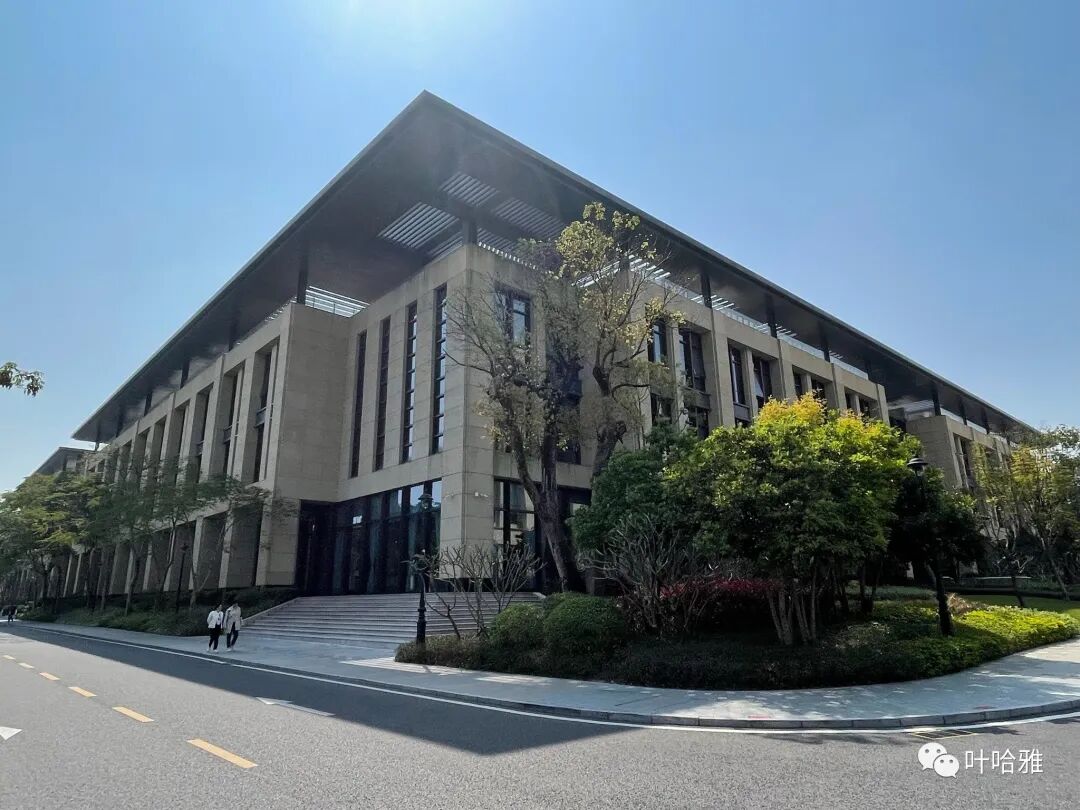
I met with many Muslim brothers (siti) at the Huawei Bantian base in Shenzhen. People say the scenery here rivals a royal garden. If you want to visit Huawei, I recommend the Bantian base, Area B, entering through the East Gate.
A friend from Huawei met me at the gate. You just need to register and state your purpose to enter the campus. We just said we were going to grab a meal and got in.
The East Gate faces the Huawei Finance Building, and the office of the eldest princess, Meng Wanzhou, is right next door.
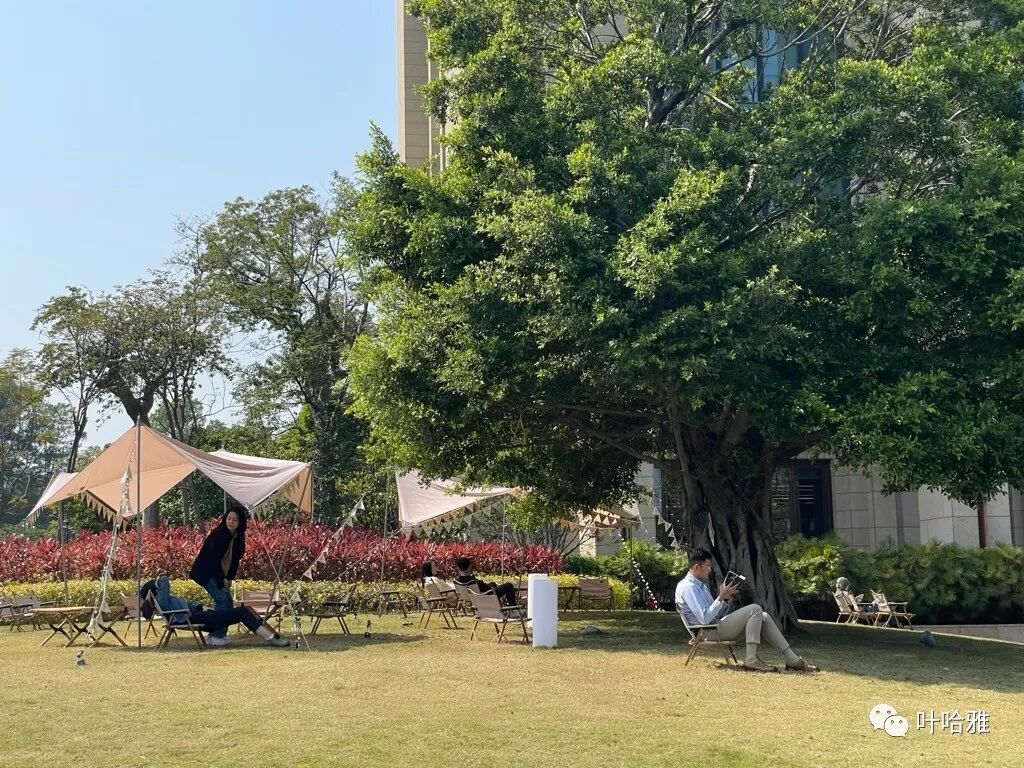
Canopies were set up under the trees on campus, with young men and women reading in the shade. The weather in Shenzhen in late February is mild and sunny. You don't feel cold in short sleeves, and you don't feel hot in long sleeves.
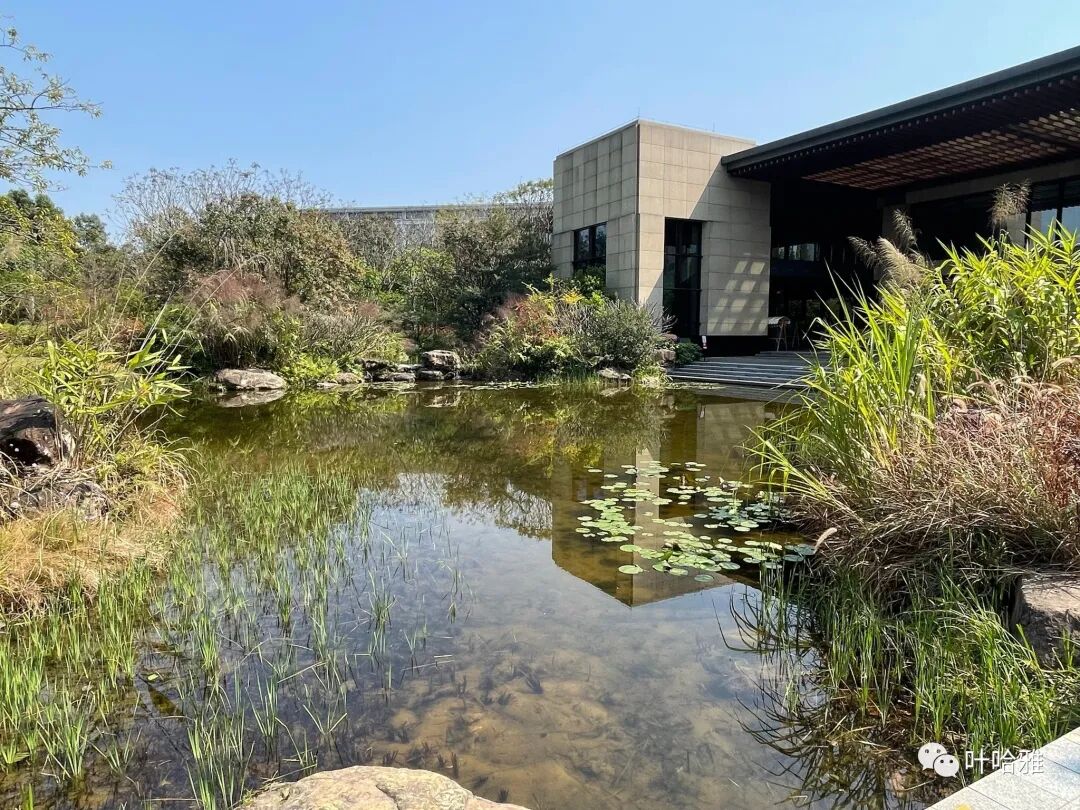
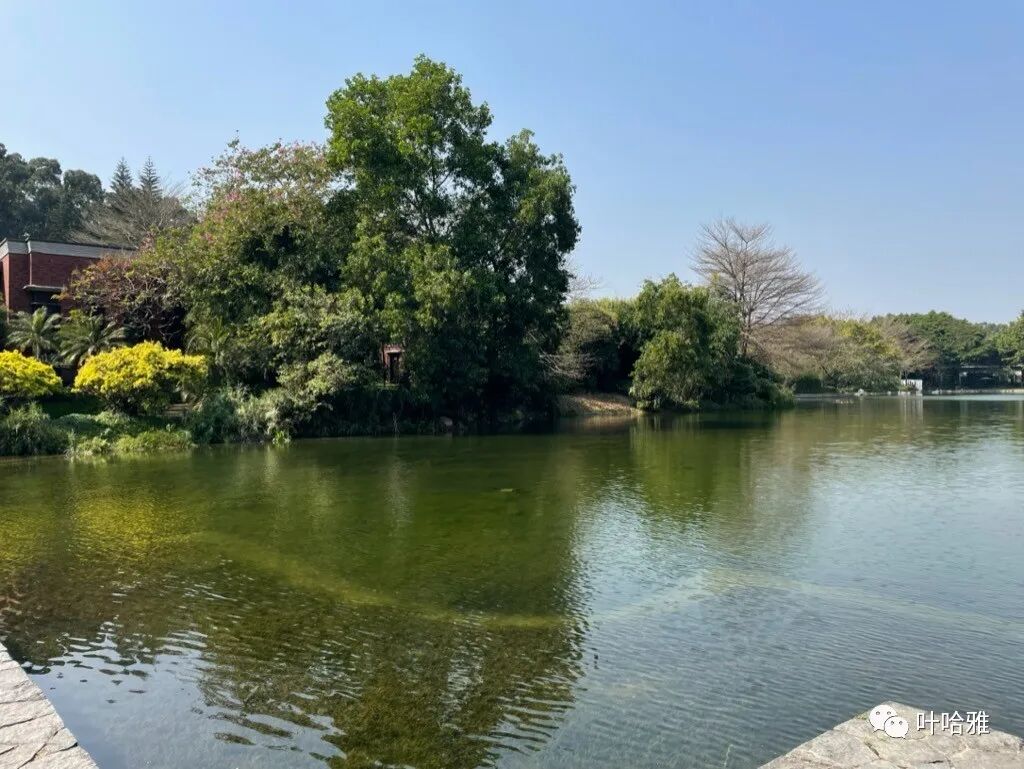
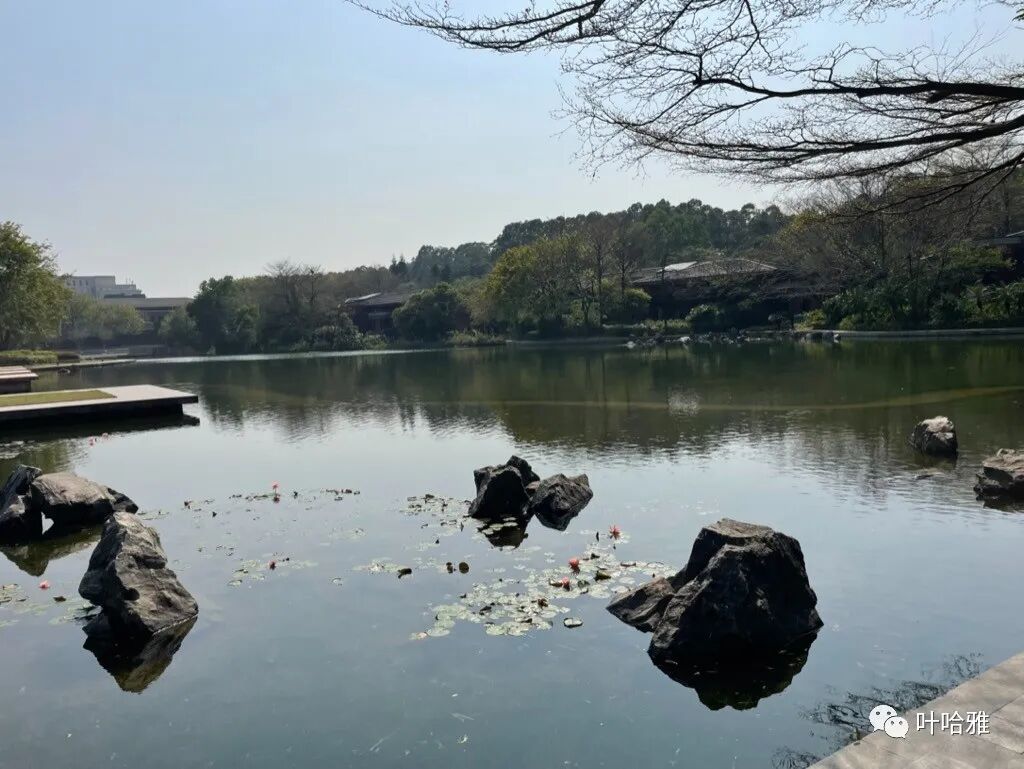
There is a pond in front of the cafeteria. The campus landscape is designed purely for artistic beauty without considering practicality, which makes it feel less like a company and more like a university. That Huawei's top management has this aesthetic sense shows their broad-mindedness, as aesthetics are a projection of one's inner world.
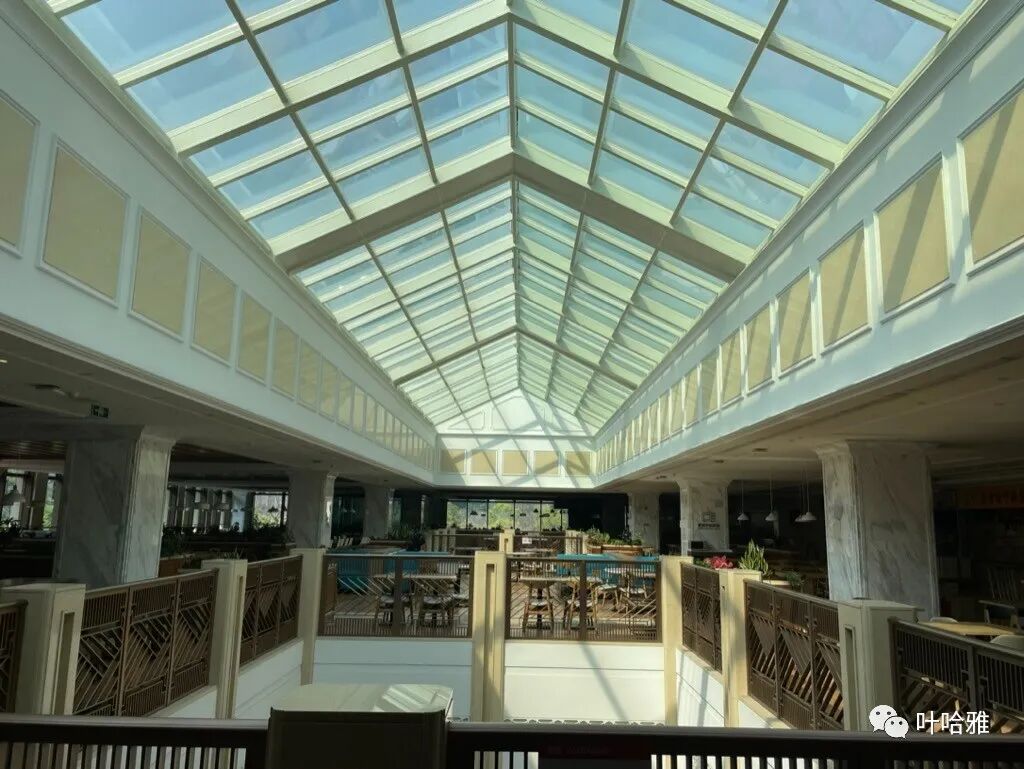
Huawei's cafeteria is very spacious with comfortable spacing between tables and chairs, so it never feels crowded. The simple design style feels like being in an IKEA restaurant.
There is even an Industrial and Commercial Bank of China branch inside the cafeteria that handles simple cash transactions. This is very convenient for employees, as many people can only run errands during their lunch break. At Huawei, you can stay on campus and have all your basic needs met.
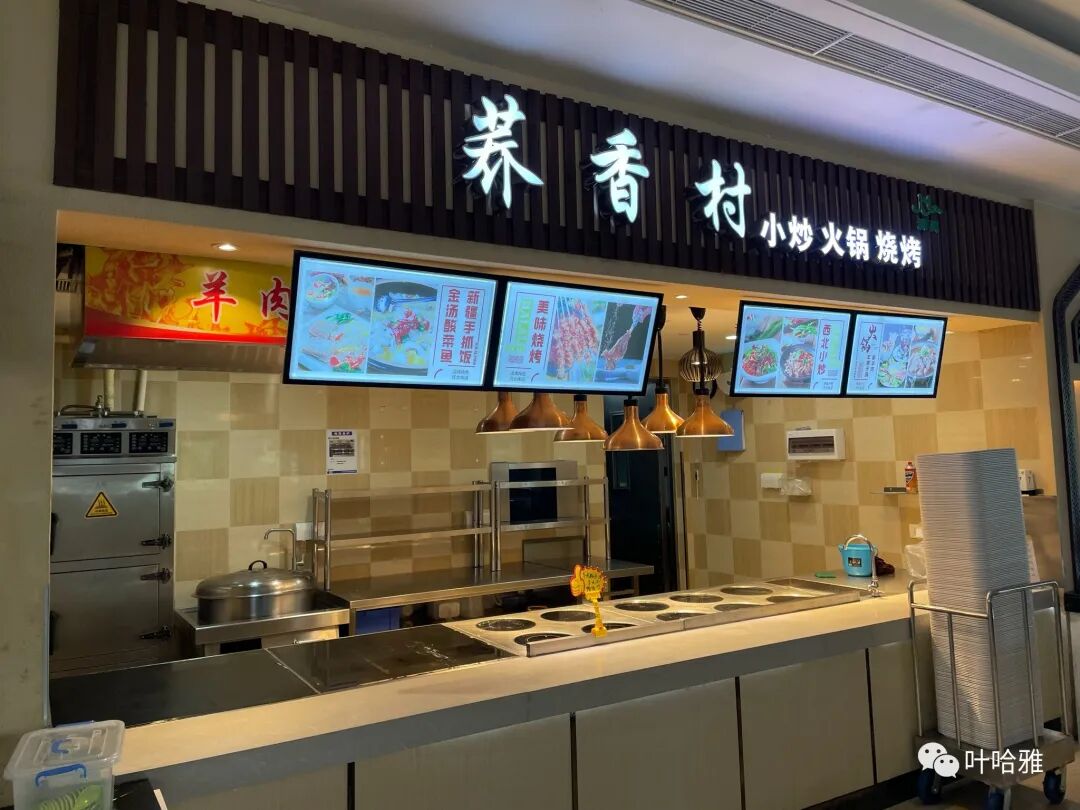
The restaurant has three halal stalls: Dongfanggong, Jiuwan Shisihua, and Qiaoxiangcun. They all serve Northwest Chinese flavors. Qiaoxiangcun can prepare stir-fried dishes, which are suitable for business dinners.
Dongfanggong Lanzhou beef hand-pulled noodles (lamian).
Nine bowls and thirteen flower dishes (jiuwan shisanhua).
Northwest cuisine at Qiaoxiang Village (no alcohol served).
The cooking at Qiaoxiang Village is excellent. They use salt-lake lamb (tanyang), and because they do not pay rent, the prices are even cheaper than other restaurants.
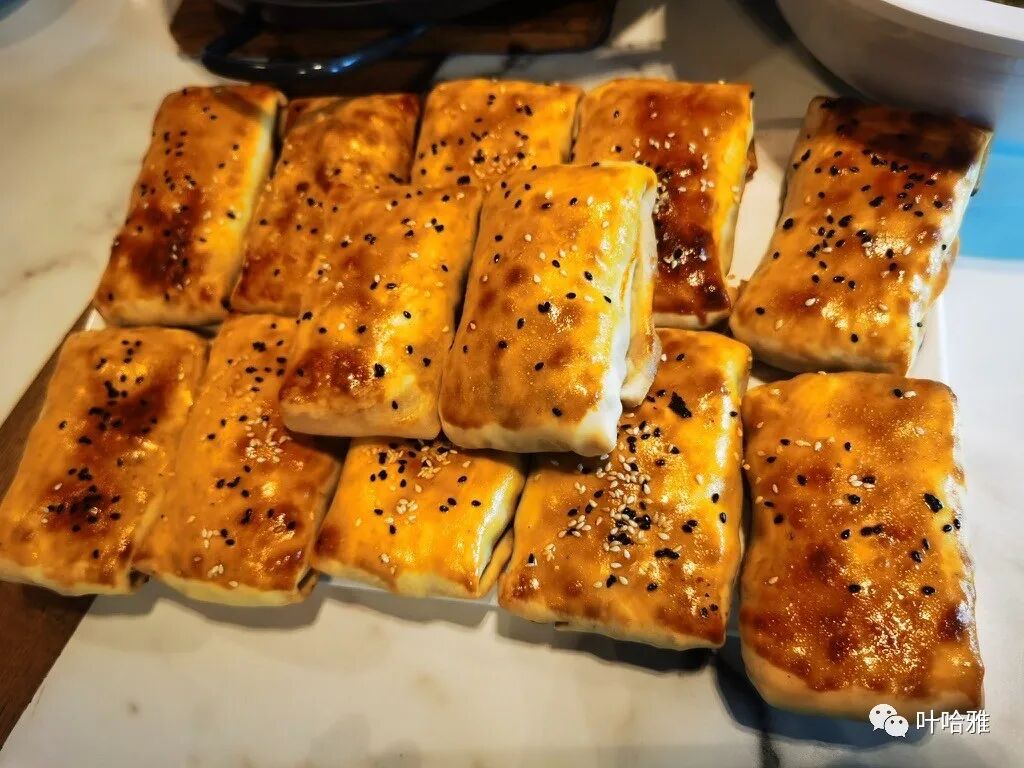
Salt-lake lamb baked buns (tanyang kaobaozi).
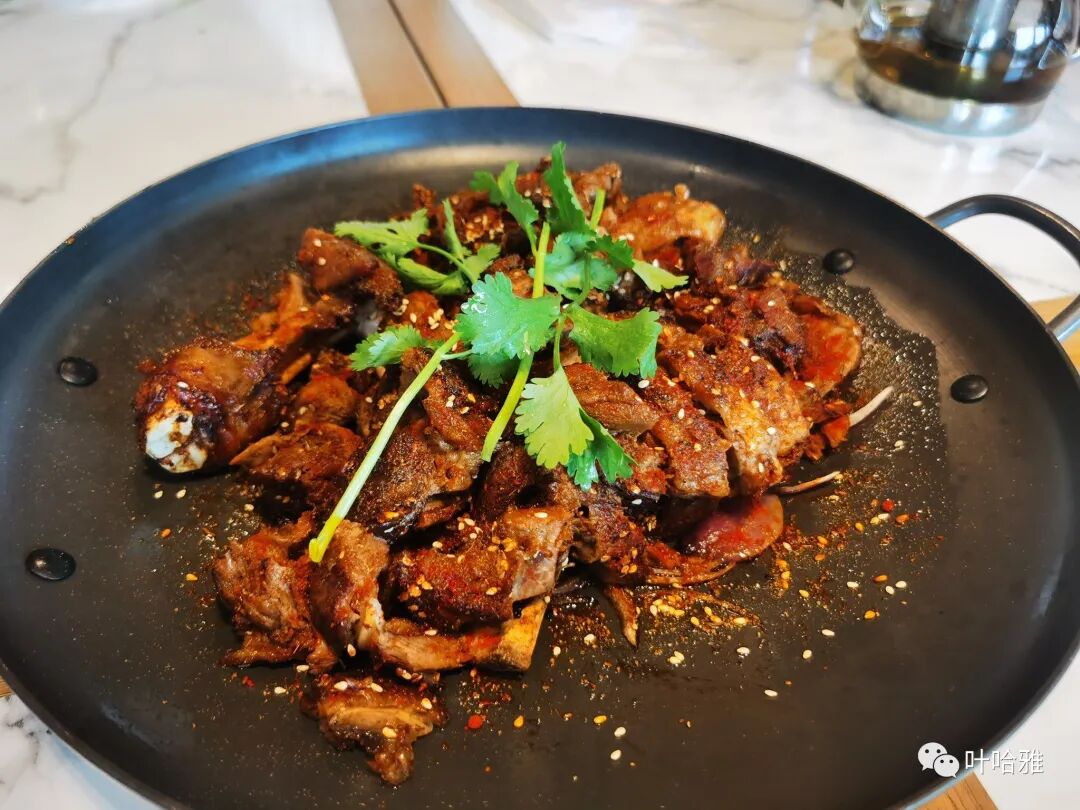
Roasted lamb chops (kaoyangpai)
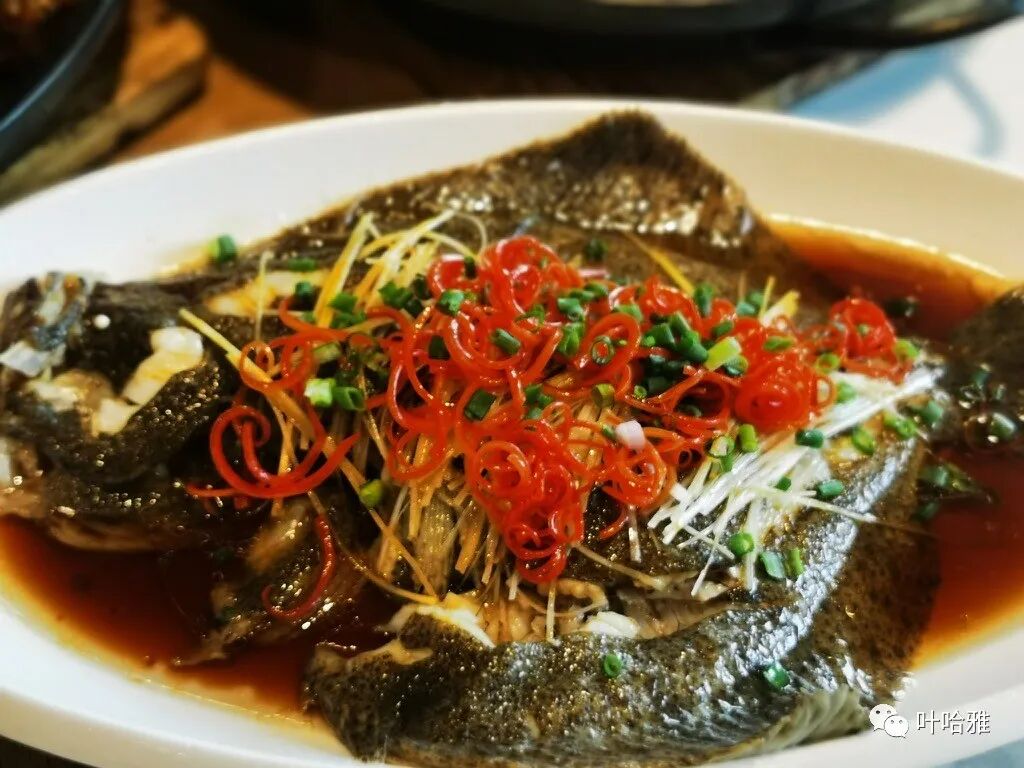
Steamed turbot (qingzheng duobaoyu).
Hand-grabbed lamb (shouzhuayangrou).
A senior Huawei colleague hosted the meal. This table had ten dishes: roasted lamb leg from the desert, hand-grabbed lamb, black pepper beef short ribs, steamed turbot, Hui Muslim style spicy chicken, stir-fried vermicelli with meat, blanched choy sum, lamb baked buns, baby bok choy with scallion oil, and West Lake beef soup. The standard of this meal was better than eating out. I arrived late, but the restaurant kindly reheated the cold food for me, and I was so full I couldn't finish it.
After eating and finishing namaz, some people went off to meetings. Huawei has a dedicated prayer room inside a storage area. For a modern multinational company, this should be standard. When I visited the Shiroi Koibito chocolate factory in Japan, they even had a room for employees to perform wudu and namaz.
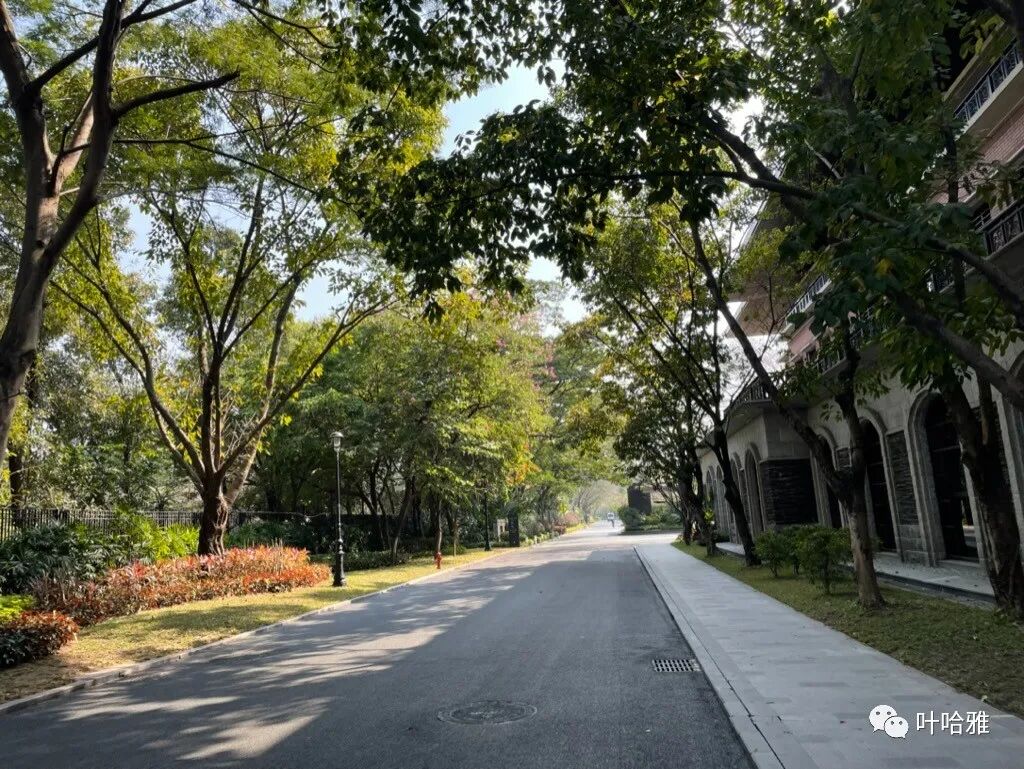
In the afternoon, a colleague with free time drove me around the campus. Yes, the campus is so big that you need a car to get around. Some say the Huawei Bantian base looks like a Japanese garden, but it is more accurate to say it reflects the Tang Dynasty style that Japan has preserved.
While walking, I asked my colleague about some rumors regarding Huawei, such as the claim that Huawei encourages older employees to leave to save on retirement costs. The Huawei colleague said it is not that exaggerated. Many employees retire from Huawei on schedule. Huawei contracts are renewed every eight years, and some people do not meet the requirements for renewal when their contract expires. Being let go is a normal part of corporate personnel turnover. Huawei distributes stock options to all employees, and these options do not become void when an employee leaves, which is already much better than many other companies.
Most of the Huawei partners I know have worked there for over 10 years. It is not easy to stay at one company for three years, let alone 10. This shows the company is stable and employees feel a strong sense of belonging, which is very rare for a private enterprise.
I said goodbye to my Huawei brothers in the afternoon to head to dinner. The evening was hosted by a group of Tencent friends (dosti). Shenzhen is Tencent's home base, and most of the people there were young internet professionals.
Yunnan Cuisine: Garden of Eden (Yidianyuan)
Garden of Eden (Yidianyuan) Yunnan Cuisine is a restaurant highly recommended by many Shenzhen friends (dosti). It is located in the alley behind the Shenzhen Mosque and has two private rooms that seat 10 people each.
The dinner was scheduled after the evening prayer (hufutan). Since it is close to the mosque, many friends (dosti) came only after finishing their namaz.
Fried milk fan cheese (zha rushan)
Garden of Eden (Yidianyuan) combines common specialty dishes from all over Yunnan. It has all the Yunnan food I can think of, and the taste is authentic. The average cost is about 100 yuan per person. If you are in Shenzhen and do not want to eat Northwest Chinese food but want something special, Garden of Eden (Yidianyuan) is a great choice.
Grilled Shiping tofu (kao shiping doufu)
Copper pot rice (tongguo fan)
Dried beef jerky (niu ganba)
Stir-fried beef with mint (bohe chao niurou)
Hani-style stir-fried chicken (Hani xiaochaoji)
Flavorful tilapia (fengwei luofeiyu)
Fresh porcini mushrooms (xinxian niugan jun)
Crispy red beans (xin xiangsu hongdou)
Northwest cuisine at Northwest Leader Lamb (Xibei Lingtouyang)
Northwest Leader Lamb is one of the most popular halal restaurants in Shenzhen right now. It is quite large and sits right next to the mosque. I passed by twice before but never went in. This time, I met an old friend on Friday for Jumu'ah and they brought me here.
Wood ear mushrooms with okra (mu'er qiukui)
Fresh lamb hot pot (xinxian yangrou bao)
This lamb hot pot tastes a lot like the open-pot lamb (kaiguo yangrou) from Lanzhou. I have to admit, the lamb at this restaurant is delicious.
Meat in naan bread (nang bao rou)
Cantonese-style morning tea (zaocha) at Zhongfayuan
Zhongfayuan is a Northwest-style restaurant, but it is the only place in Shenzhen that serves halal Cantonese morning tea. Only three of their chain locations offer it. I cannot remember which three, but the Jingtian branch definitely does. Call to confirm before you go. Unlike the Guangzhou Hui Muslim Restaurant and Xinjiang Building where morning tea starts at 7:00 a.m., morning tea here does not begin until 9:00 a.m. Very few people come on weekdays, though it gets busier on weekends. It seems people in Shenzhen are too busy making money in the morning to have time for tea.
The friends I had dinner with the night before all went to work the next morning. Only a brother from Tencent stayed to have tea with me for a while, but he also took a taxi to his company for a meeting after 10:00 a.m. You can really see how fast the pace of life is in Shenzhen.
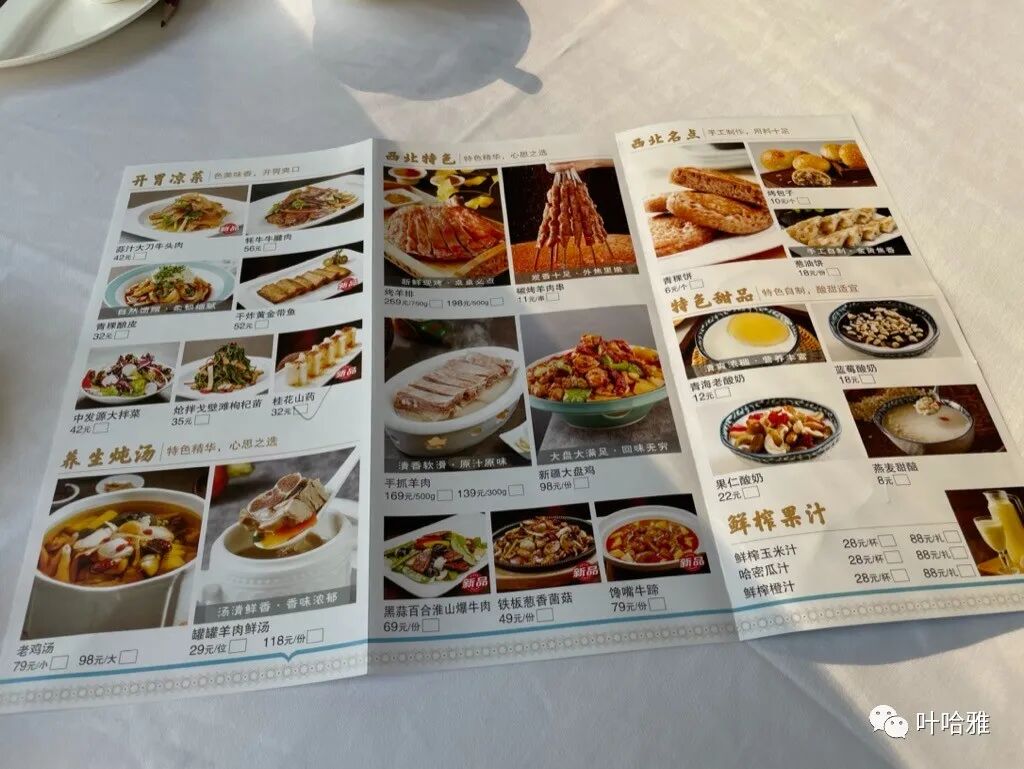
The morning tea menu at Zhongfayuan features traditional Cantonese-style dim sum on the front and improved Northwest-style snacks on the back. It is a creative touch that suits people from different regions.
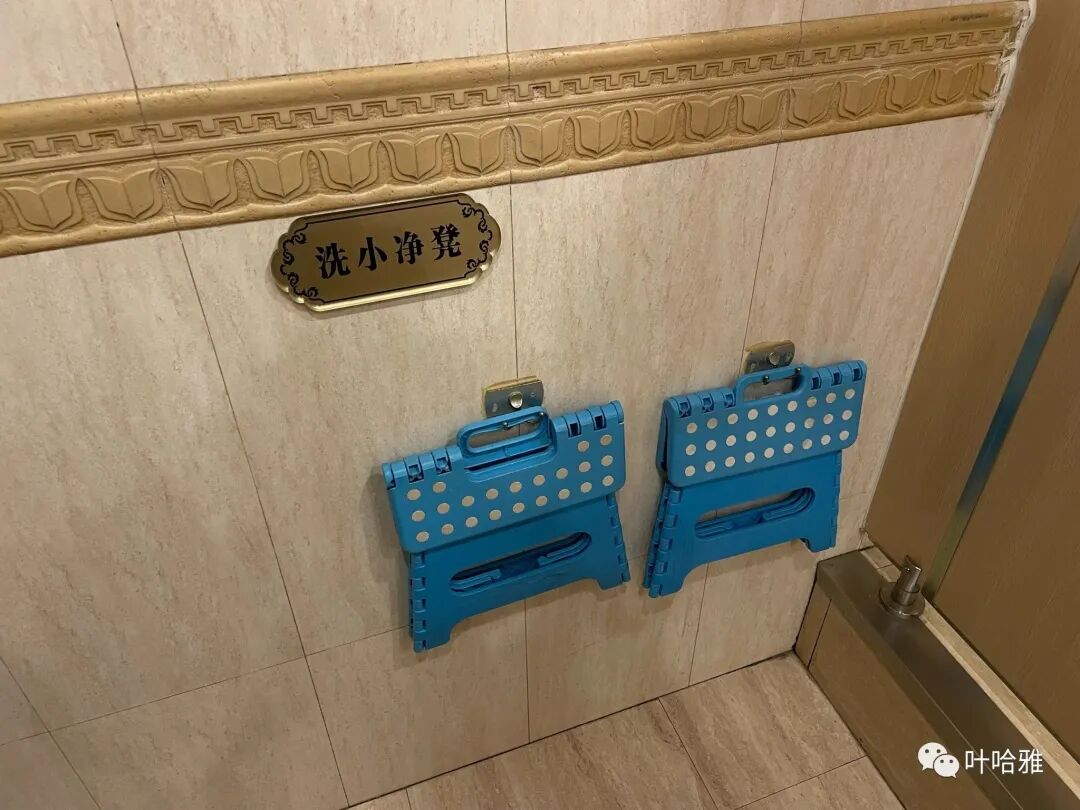
The restroom even provides a stool for performing wudu, which is a nice detail.
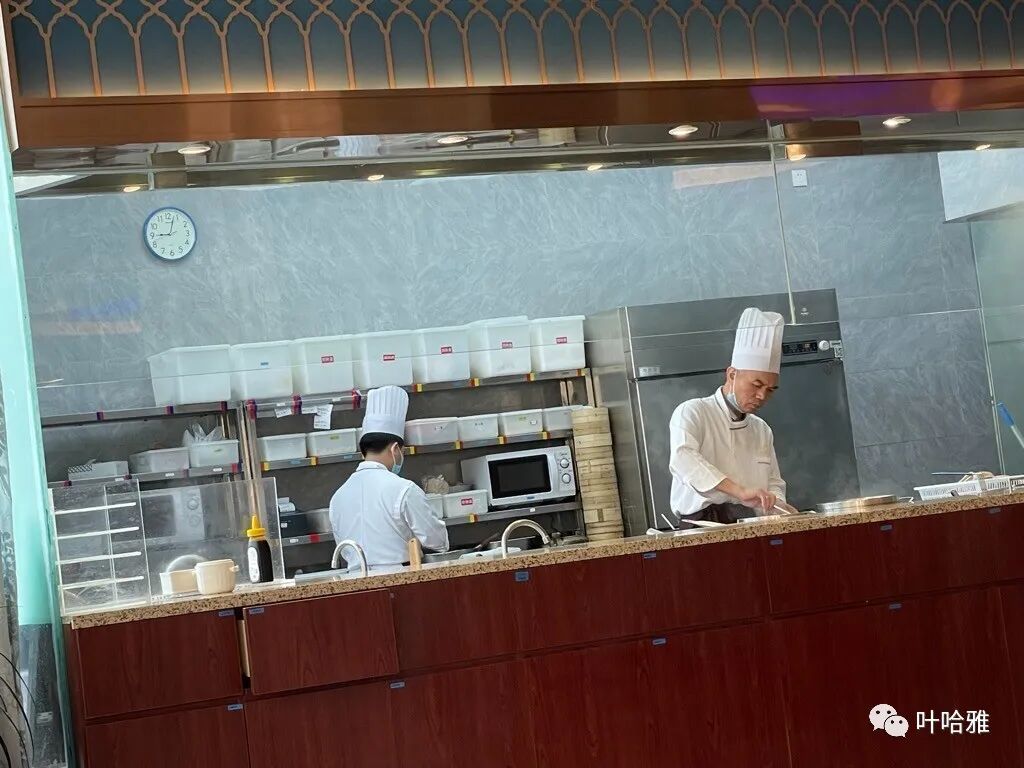
The kitchen is open and visible. Judging by their appearance, the chefs are not Hui Muslims and were likely hired from the local Han Chinese population in the south, but this does not change the halal nature of the food.
The portions for morning tea at Zhongfayuan are larger than in Guangzhou, though there are fewer varieties. I think the taste is about the same, but I prefer a better dining environment with fewer people in the morning. Zhongfayuan is good in this regard. Xinjiang Building has a nice environment but is crowded, while the Hui Muslim Restaurant is both crowded and has a poor environment.
Mango pomelo sago (yangzhi ganlu)
Coriander beef rice noodle rolls (xiangqian niurou changfen)
Osmanthus yam (guihua shanyao)
Hui Muslim shrimp dumplings (huimin xiajiao huang)
Green bean curd skin rolls (bilu fupi juan)
Colorful fried sesame balls (qicai zha jiandui)
Fish fillet and bone-in belly congee with diced choy sum (caixinli yupian gunan zhou).
Shenzhen Mosque.
The current Shenzhen Mosque was built and opened in 2016. It covers a total area of about 6,600 square meters with a total floor area of 10,800 square meters. The building was constructed to the government's Class A (highest level) public project standards. It has four floors plus an elevated ground floor and an underground parking garage. The building is divided into east and west sides. The east side is the office area, and the west side is the prayer hall, which can hold over 3,500 people.
Shenzhen Mosque is one of the few mosques in China with its own website: http://www.szmosque.com/gyqzs.htm
Although there is not much information on it.
Shenzhen has no history of Muslim life from ancient times. The earliest recorded Muslim in Shenzhen was Pan Shun'an, a Hui Muslim from Jiangxi who wandered to Shenzhen during the Republic of China era. After the liberation, he was transferred to work at the Dachan branch of the Kowloon Customs of the People's Republic of China. He passed away in Shenzhen on December 1, 2000, at the age of 89. Pan Shun'an's nephew, Pan Zhaoming, was the first Hui Muslim born in Shenzhen. There are now about 80,000 to 100,000 Muslims in Shenzhen.
When I was in Beijing, I was lucky to meet Uncle Ma, the first director of the mosque management committee when the Shenzhen mosque was first built. This time, introduced by a friend (dosti), I met the current deputy director, Brother Ma. Both administrations have been highly praised by many friends, which is different from the community I live in. In Beijing, our mosque management committees are usually criticized.
Take the current deputy director, Brother Ma, for example. I did not know him before I came here, but the young talents in Shenzhen all spoke highly of him when they mentioned him. It is truly not easy to get everyone to say good things about you. Another thing that draws me to Brother Ma is that he has been an insurance agent for fourteen years. However, the elders say he never actively pushes products on people around him, and he looks at the products he sells objectively and never misleads anyone.
During Ramadan, Brother Ma insists on inviting friends (dosti) to his home for iftar every single day. He sets up four or five tables each time and cooks everything himself. We even ate his stir-fried dishes at the mosque over the weekend, as shown in the photo below.
If you come to the mosque between Maghrib (sham) on Friday or Saturday, you can eat and drink for free. It is busier on Saturdays. The mosque has a library where you can study, so both your spirit and your stomach will be satisfied.
No matter how good restaurant food is, it is not as blessed as the food at the mosque. After the Hufu Beach (Hufutan), a Huawei executive took me to see the facilities inside the mosque.
This is truly the mosque with the most complete facilities I have ever seen in China. It meets the needs of men, women, the elderly, and children.
If you plan to visit the Shenzhen mosque, I suggest you go between Maghrib (sham) on Friday or Saturday and Hufu Beach (Hufutan).
Hong Kong and Macau are now open for entry. Before you head there, come to Shenzhen to experience the halal atmosphere here. I promise it will be a trip worth taking.
Screenshot from Shenzhen Muslim magazine. view all
Reposted from the web
Summary: This Muslim friendly China guide follows a visit to Huawei Bantian campus in Shenzhen, its halal cafeteria stalls, Ningxia Tanyang lamb, Northwest Chinese food, and the young Hui Muslim community the author met there.
A Halal Food Tour in Shenzhen: The Salt-lake Lamb (Tanyang) at the Huawei Cafeteria Is Really Delicious is presented here as a firsthand travel account in clear English, beginning with this scene: When I first visited Shenzhen in 2015, the Great Mosque was not yet finished. By my second visit in 2019, it was already in use. The account keeps its focus on Halal Travel, Yiwu Food, Mosque Travel while preserving the names, places, food, and historical details from the Chinese source.
When I first visited Shenzhen in 2015, the Great Mosque was not yet finished. By my second visit in 2019, it was already in use. This third visit in 2023 was driven by the current religious atmosphere in Shenzhen. The young, devout, and life-loving Hui Muslims I met left a deep impression on me.
I went straight from the airport to Huawei headquarters before checking into my hotel. I had long heard that Huawei treats Muslims well, even launching a Middle Eastern version of their phone that could locate mosques. Huawei's international vision has earned them significant profits.
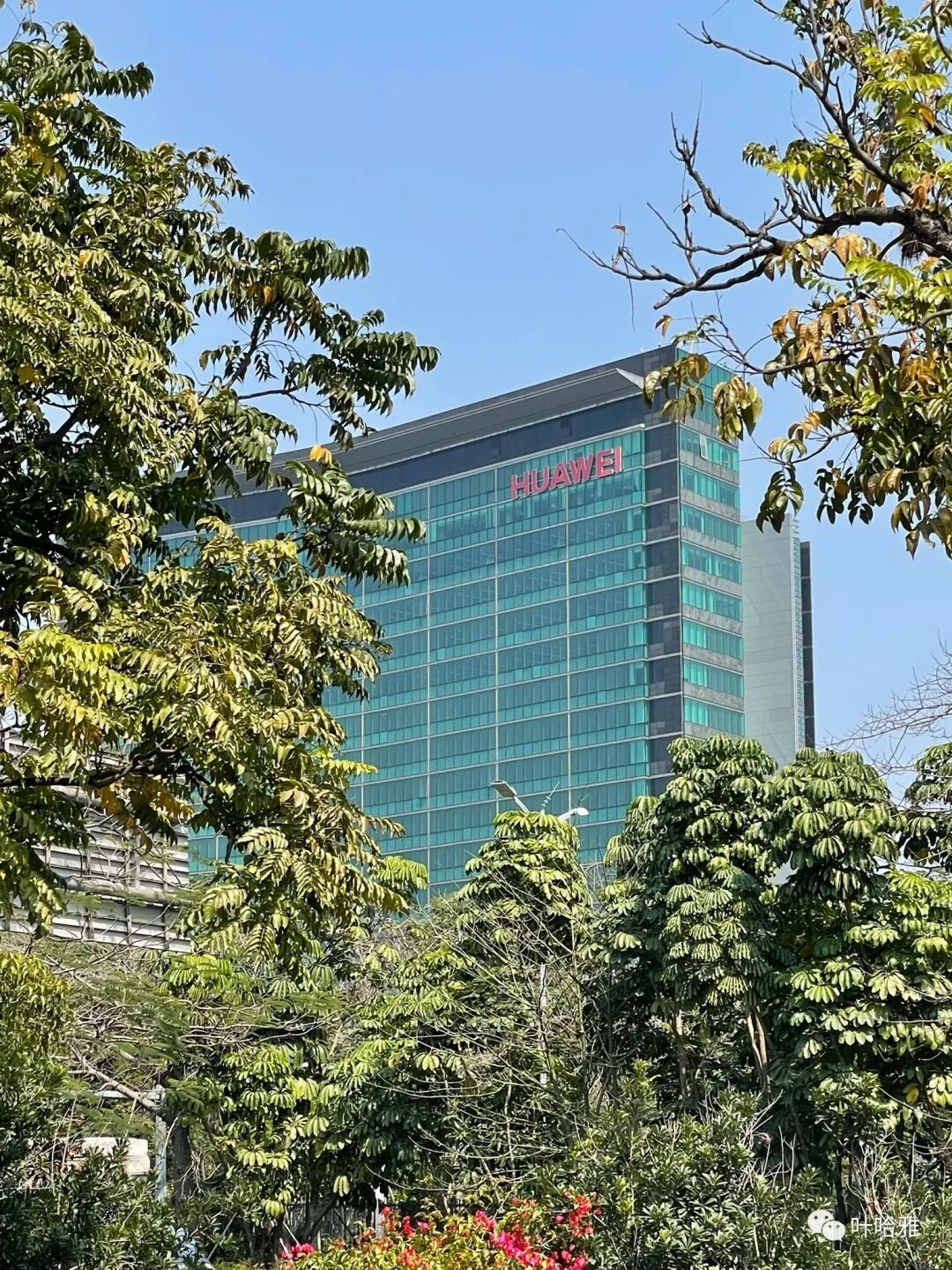
I met with many Muslim brothers (siti) at the Huawei Bantian base in Shenzhen. People say the scenery here rivals a royal garden. If you want to visit Huawei, I recommend the Bantian base, Area B, entering through the East Gate.
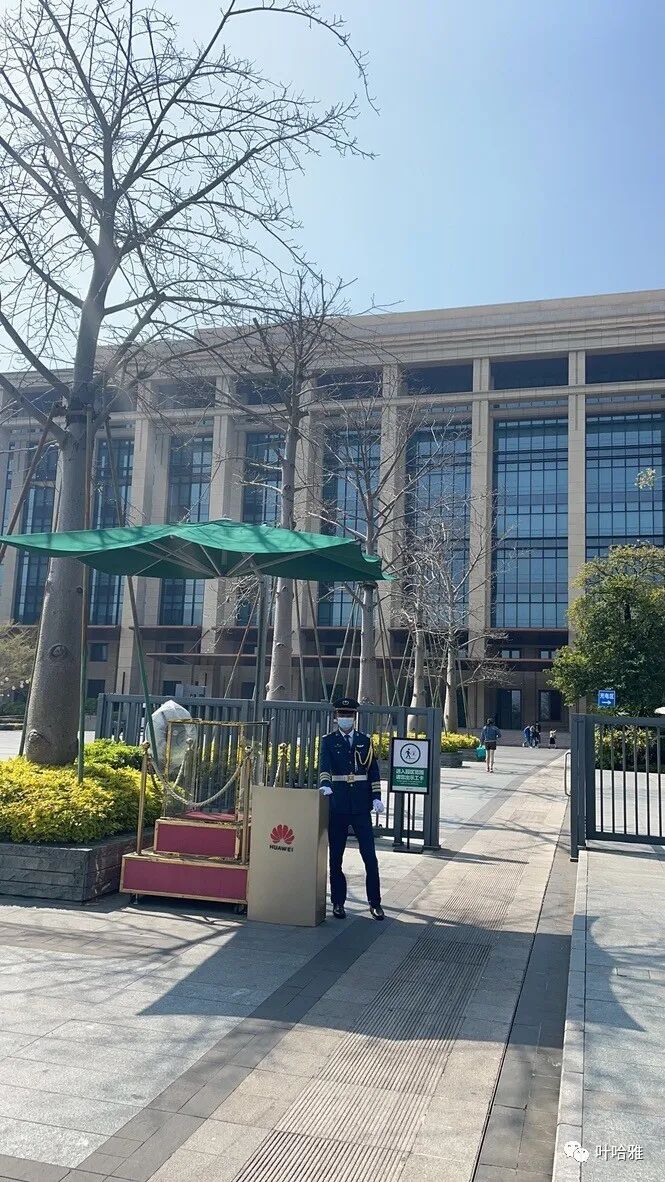
A friend from Huawei met me at the gate. You just need to register and state your purpose to enter the campus. We just said we were going to grab a meal and got in.
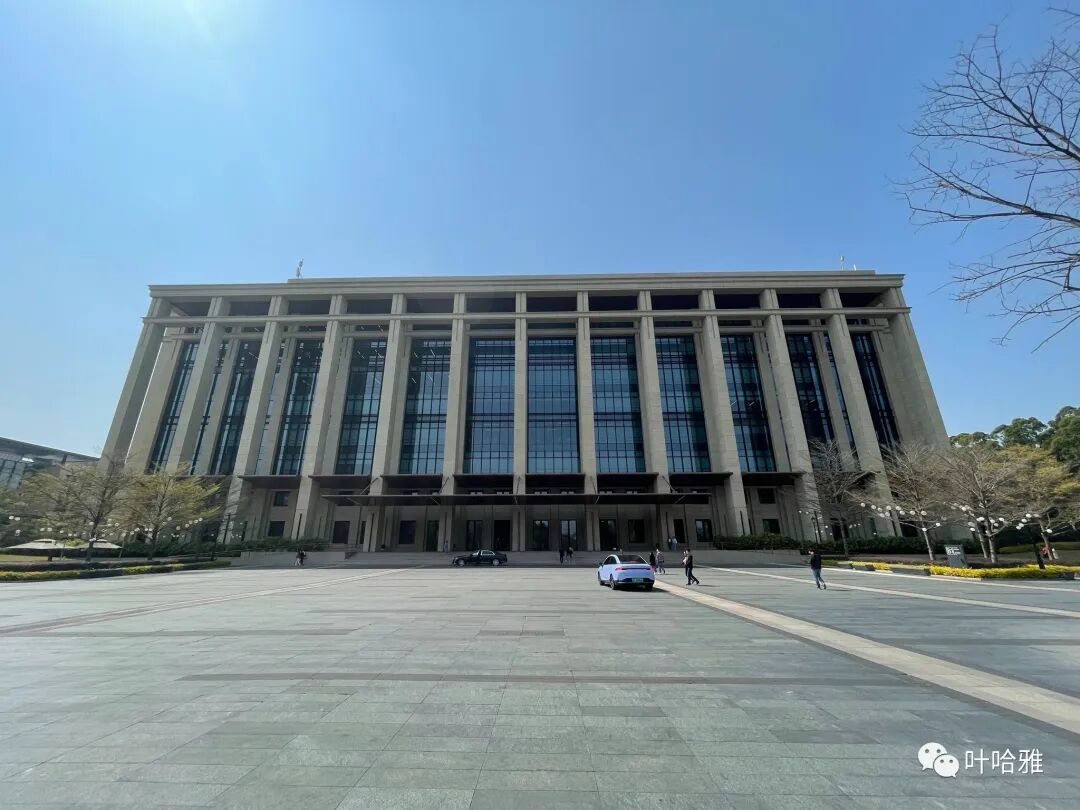
The East Gate faces the Huawei Finance Building, and the office of the eldest princess, Meng Wanzhou, is right next door.
Canopies were set up under the trees on campus, with young men and women reading in the shade. The weather in Shenzhen in late February is mild and sunny. You don't feel cold in short sleeves, and you don't feel hot in long sleeves.
There is a pond in front of the cafeteria. The campus landscape is designed purely for artistic beauty without considering practicality, which makes it feel less like a company and more like a university. That Huawei's top management has this aesthetic sense shows their broad-mindedness, as aesthetics are a projection of one's inner world.
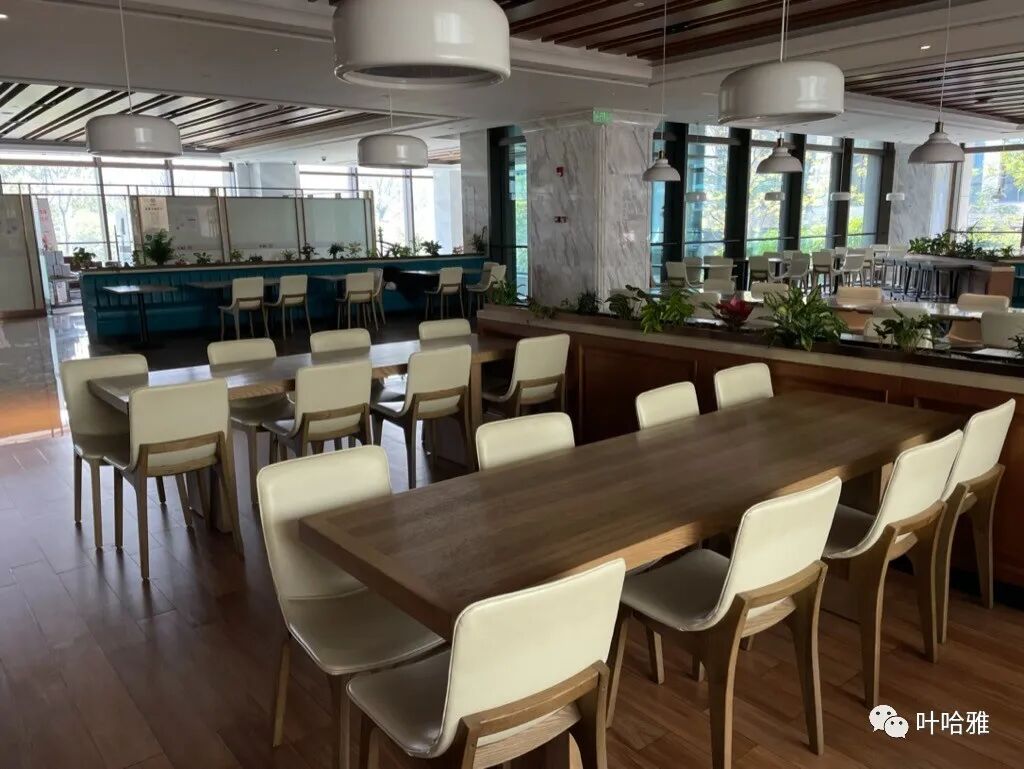
Huawei's cafeteria is very spacious with comfortable spacing between tables and chairs, so it never feels crowded. The simple design style feels like being in an IKEA restaurant.
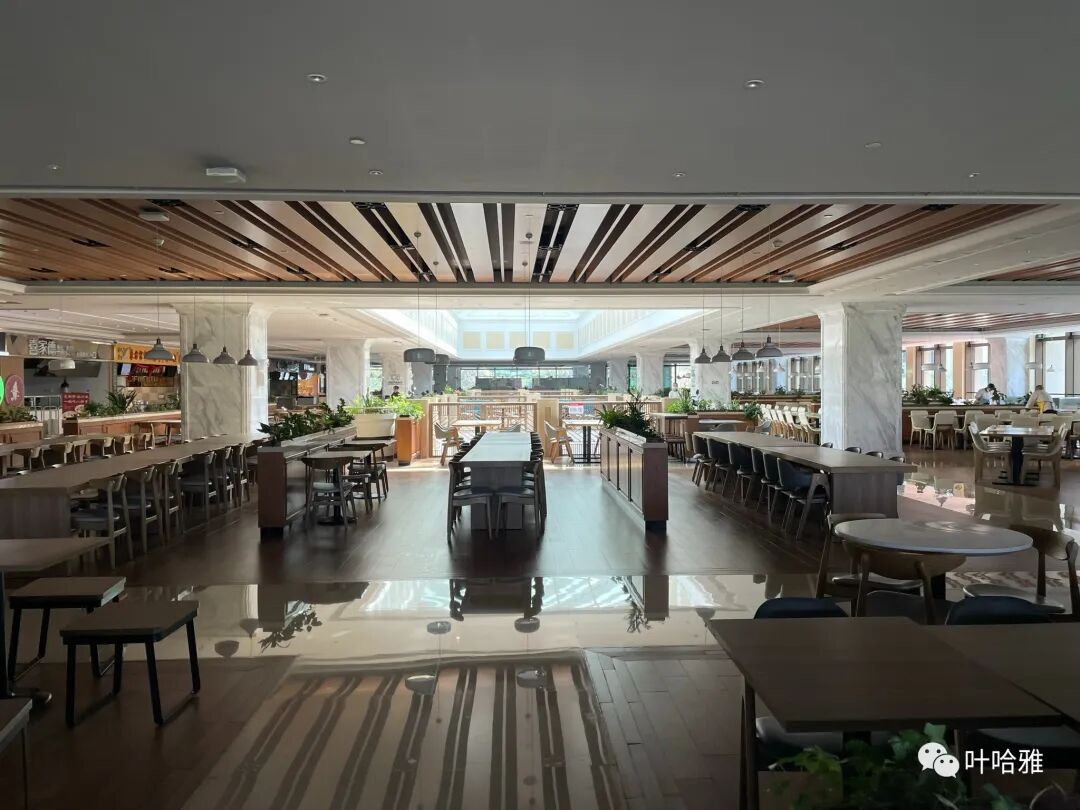
There is even an Industrial and Commercial Bank of China branch inside the cafeteria that handles simple cash transactions. This is very convenient for employees, as many people can only run errands during their lunch break. At Huawei, you can stay on campus and have all your basic needs met.
The restaurant has three halal stalls: Dongfanggong, Jiuwan Shisihua, and Qiaoxiangcun. They all serve Northwest Chinese flavors. Qiaoxiangcun can prepare stir-fried dishes, which are suitable for business dinners.
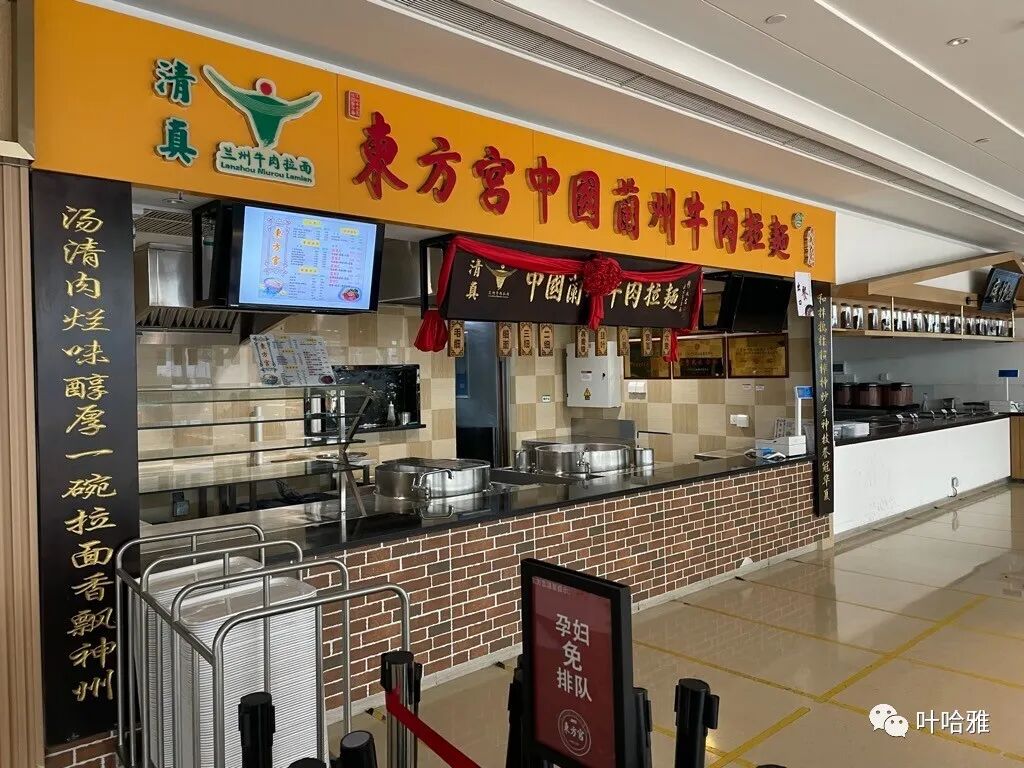
Dongfanggong Lanzhou beef hand-pulled noodles (lamian).
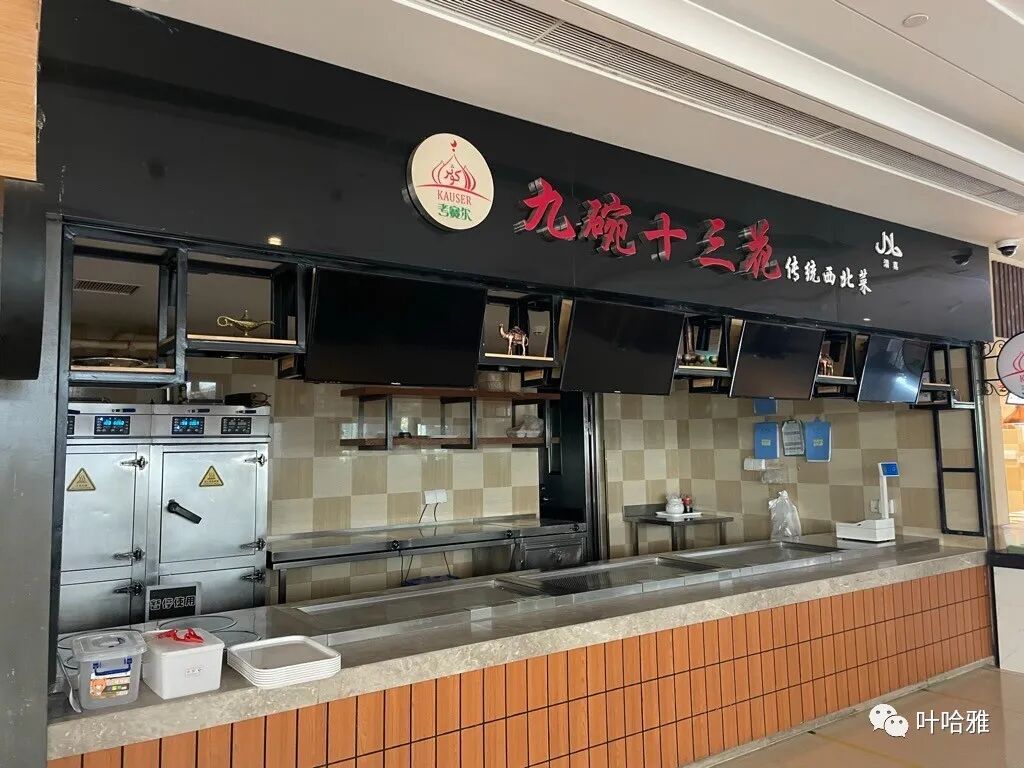
Nine bowls and thirteen flower dishes (jiuwan shisanhua).
Northwest cuisine at Qiaoxiang Village (no alcohol served).
The cooking at Qiaoxiang Village is excellent. They use salt-lake lamb (tanyang), and because they do not pay rent, the prices are even cheaper than other restaurants.
Salt-lake lamb baked buns (tanyang kaobaozi).
Roasted lamb chops (kaoyangpai)
Steamed turbot (qingzheng duobaoyu).
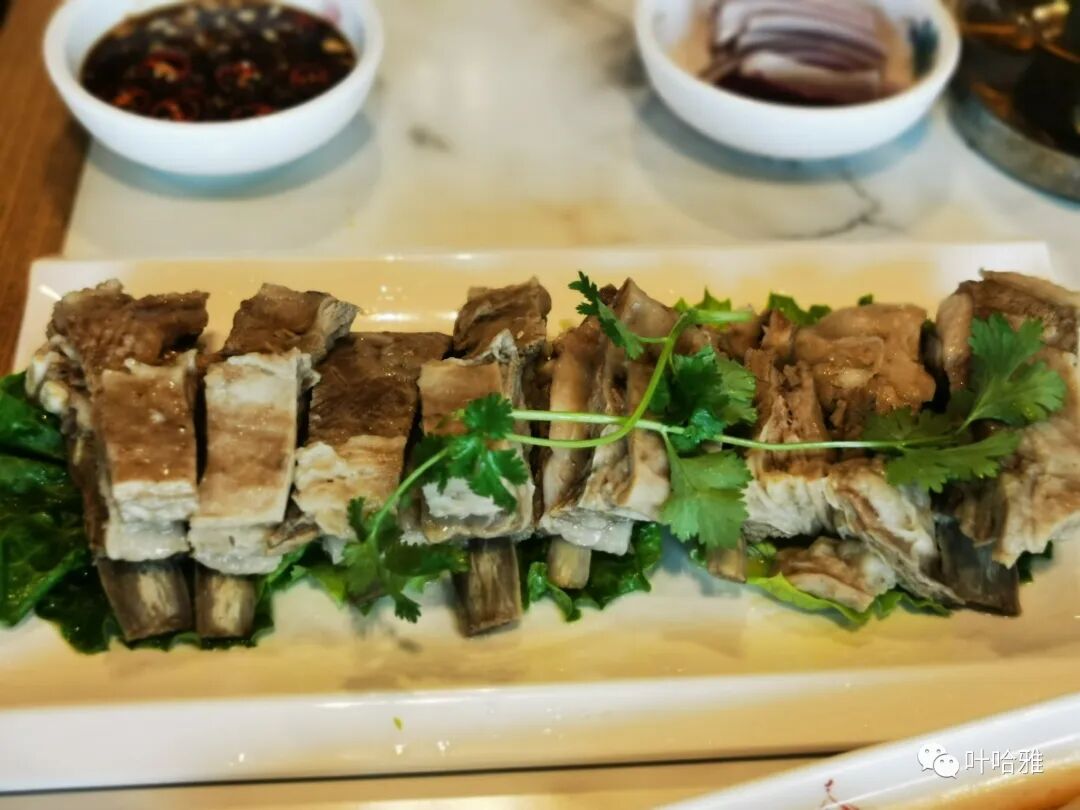
Hand-grabbed lamb (shouzhuayangrou).
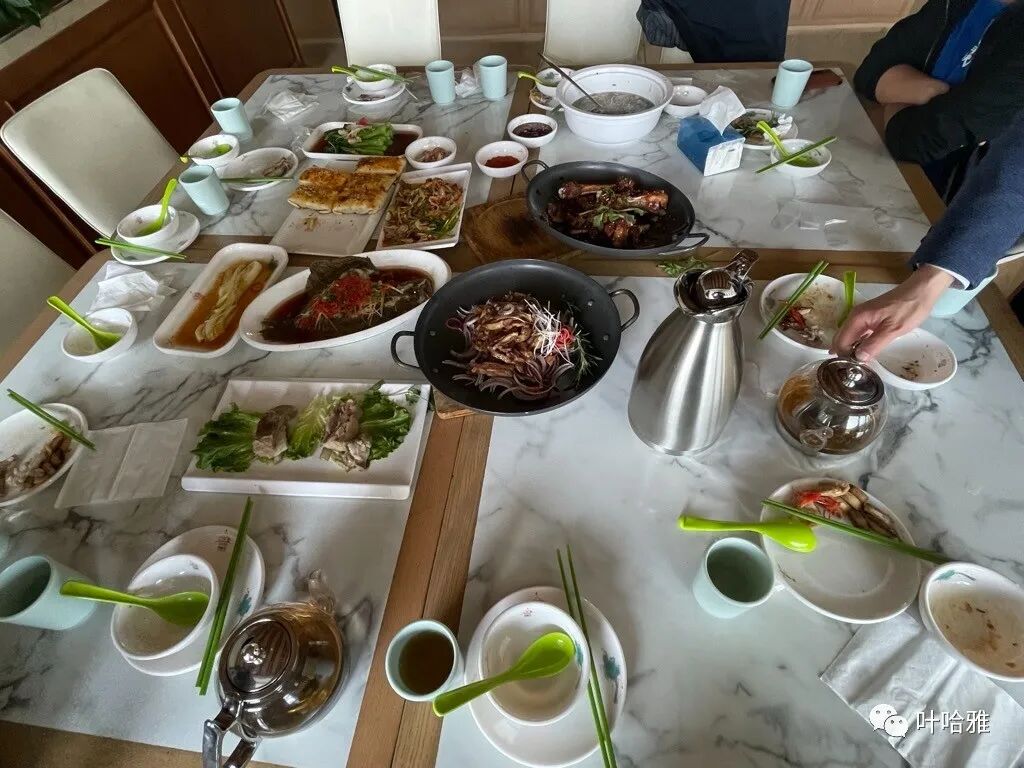
A senior Huawei colleague hosted the meal. This table had ten dishes: roasted lamb leg from the desert, hand-grabbed lamb, black pepper beef short ribs, steamed turbot, Hui Muslim style spicy chicken, stir-fried vermicelli with meat, blanched choy sum, lamb baked buns, baby bok choy with scallion oil, and West Lake beef soup. The standard of this meal was better than eating out. I arrived late, but the restaurant kindly reheated the cold food for me, and I was so full I couldn't finish it.
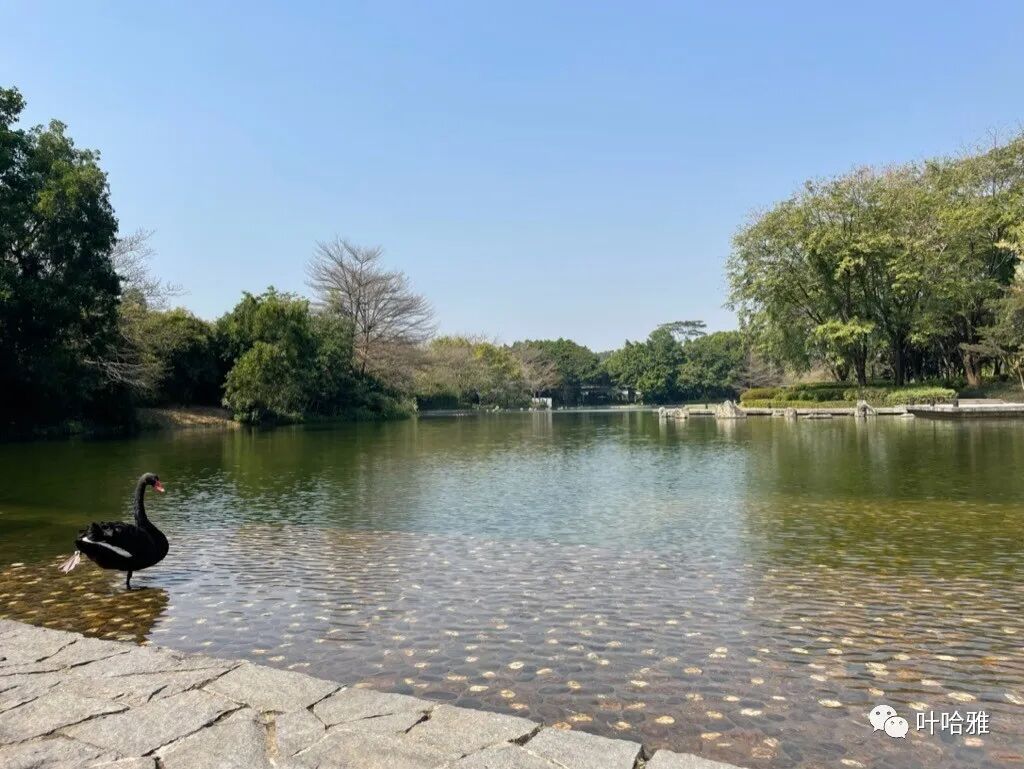
After eating and finishing namaz, some people went off to meetings. Huawei has a dedicated prayer room inside a storage area. For a modern multinational company, this should be standard. When I visited the Shiroi Koibito chocolate factory in Japan, they even had a room for employees to perform wudu and namaz.
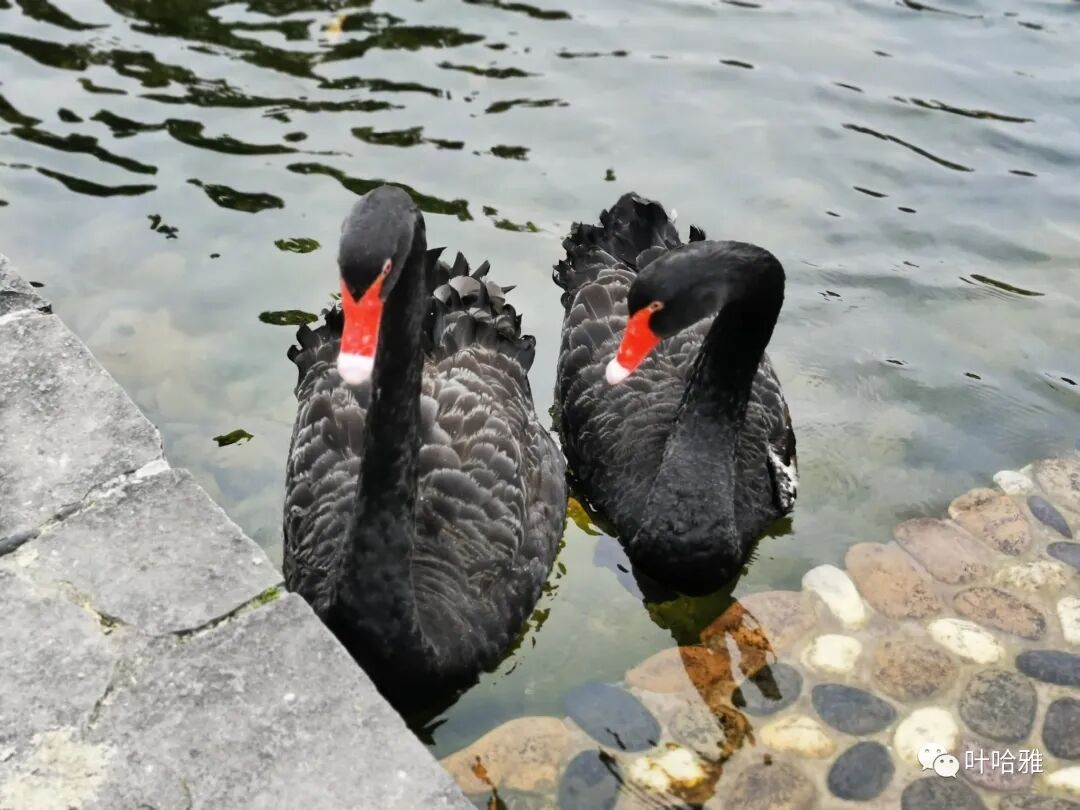
In the afternoon, a colleague with free time drove me around the campus. Yes, the campus is so big that you need a car to get around. Some say the Huawei Bantian base looks like a Japanese garden, but it is more accurate to say it reflects the Tang Dynasty style that Japan has preserved.
While walking, I asked my colleague about some rumors regarding Huawei, such as the claim that Huawei encourages older employees to leave to save on retirement costs. The Huawei colleague said it is not that exaggerated. Many employees retire from Huawei on schedule. Huawei contracts are renewed every eight years, and some people do not meet the requirements for renewal when their contract expires. Being let go is a normal part of corporate personnel turnover. Huawei distributes stock options to all employees, and these options do not become void when an employee leaves, which is already much better than many other companies.
Most of the Huawei partners I know have worked there for over 10 years. It is not easy to stay at one company for three years, let alone 10. This shows the company is stable and employees feel a strong sense of belonging, which is very rare for a private enterprise.
I said goodbye to my Huawei brothers in the afternoon to head to dinner. The evening was hosted by a group of Tencent friends (dosti). Shenzhen is Tencent's home base, and most of the people there were young internet professionals.
Yunnan Cuisine: Garden of Eden (Yidianyuan)
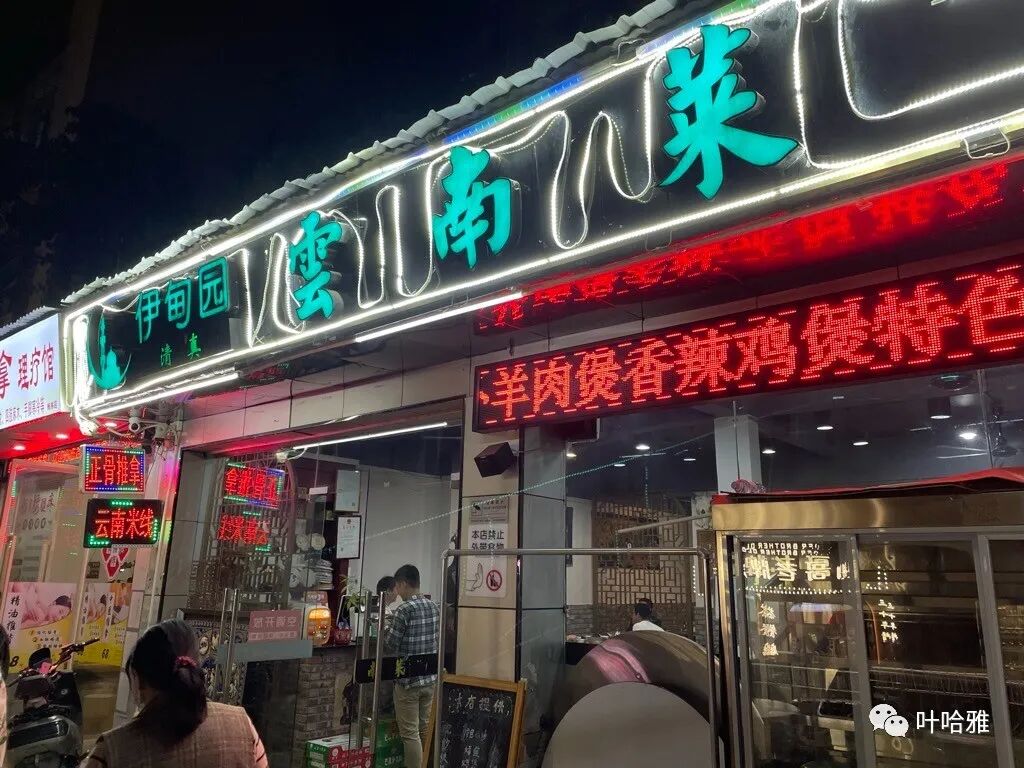
Garden of Eden (Yidianyuan) Yunnan Cuisine is a restaurant highly recommended by many Shenzhen friends (dosti). It is located in the alley behind the Shenzhen Mosque and has two private rooms that seat 10 people each.
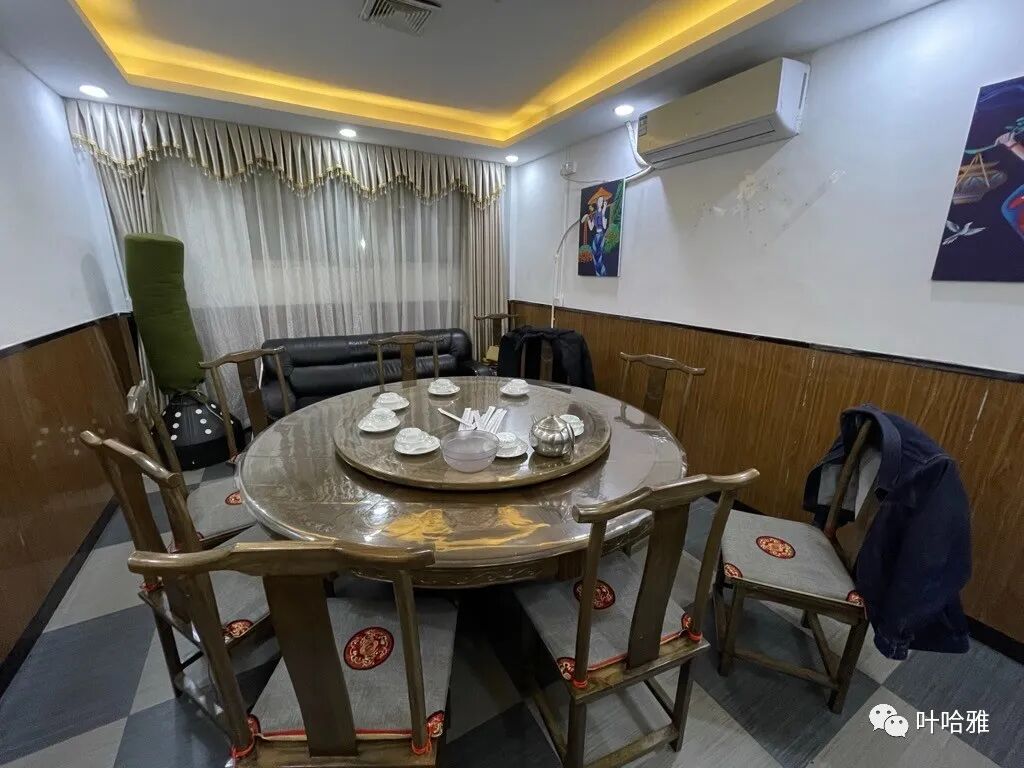
The dinner was scheduled after the evening prayer (hufutan). Since it is close to the mosque, many friends (dosti) came only after finishing their namaz.
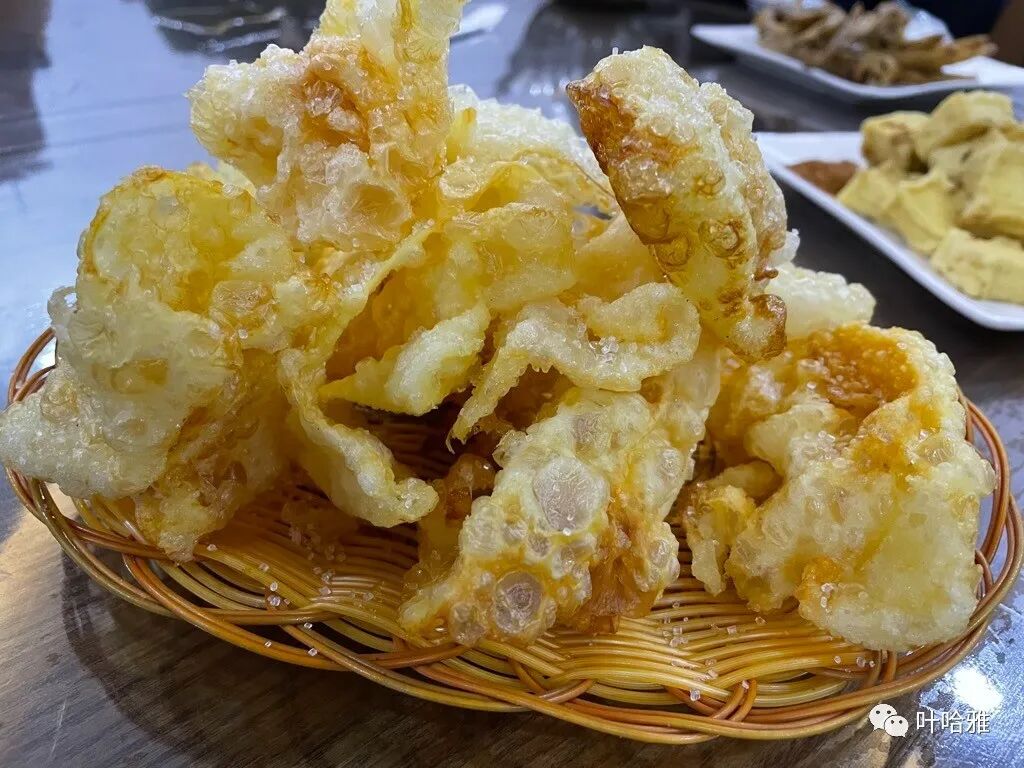
Fried milk fan cheese (zha rushan)
Garden of Eden (Yidianyuan) combines common specialty dishes from all over Yunnan. It has all the Yunnan food I can think of, and the taste is authentic. The average cost is about 100 yuan per person. If you are in Shenzhen and do not want to eat Northwest Chinese food but want something special, Garden of Eden (Yidianyuan) is a great choice.
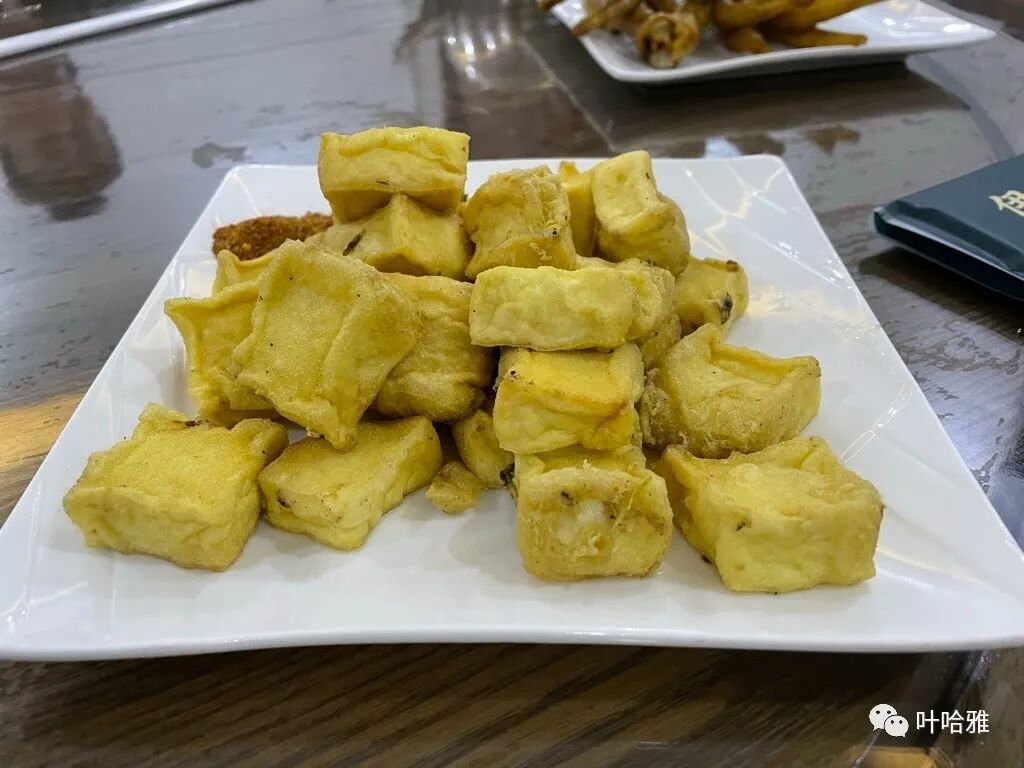
Grilled Shiping tofu (kao shiping doufu)

Copper pot rice (tongguo fan)
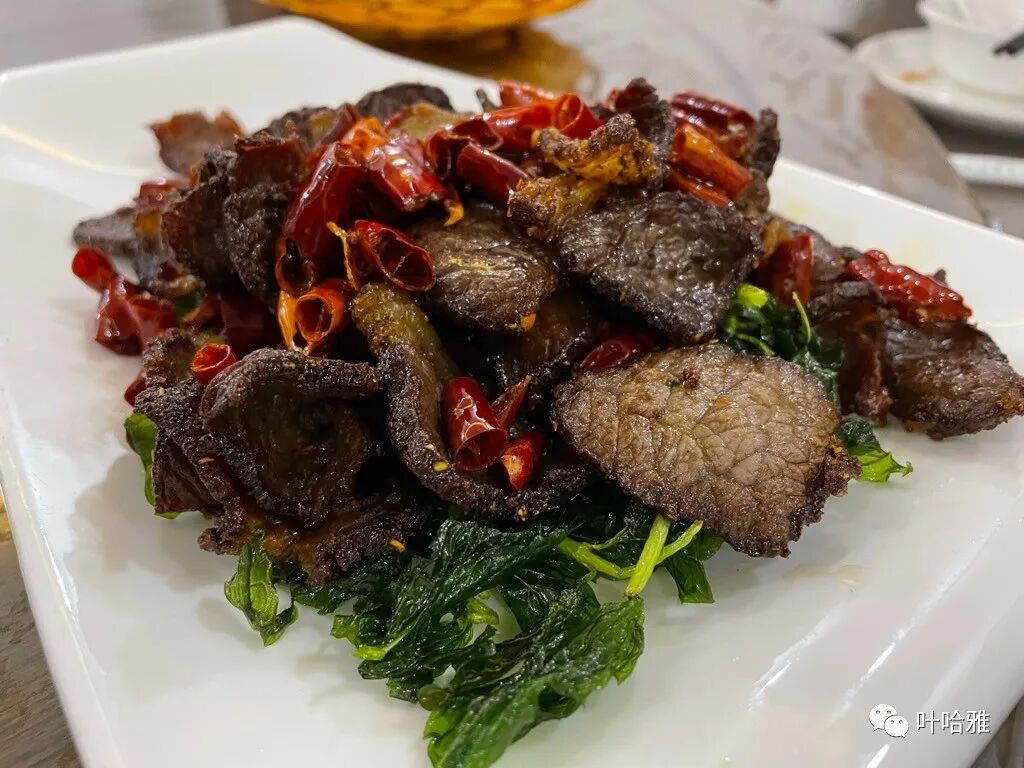
Dried beef jerky (niu ganba)
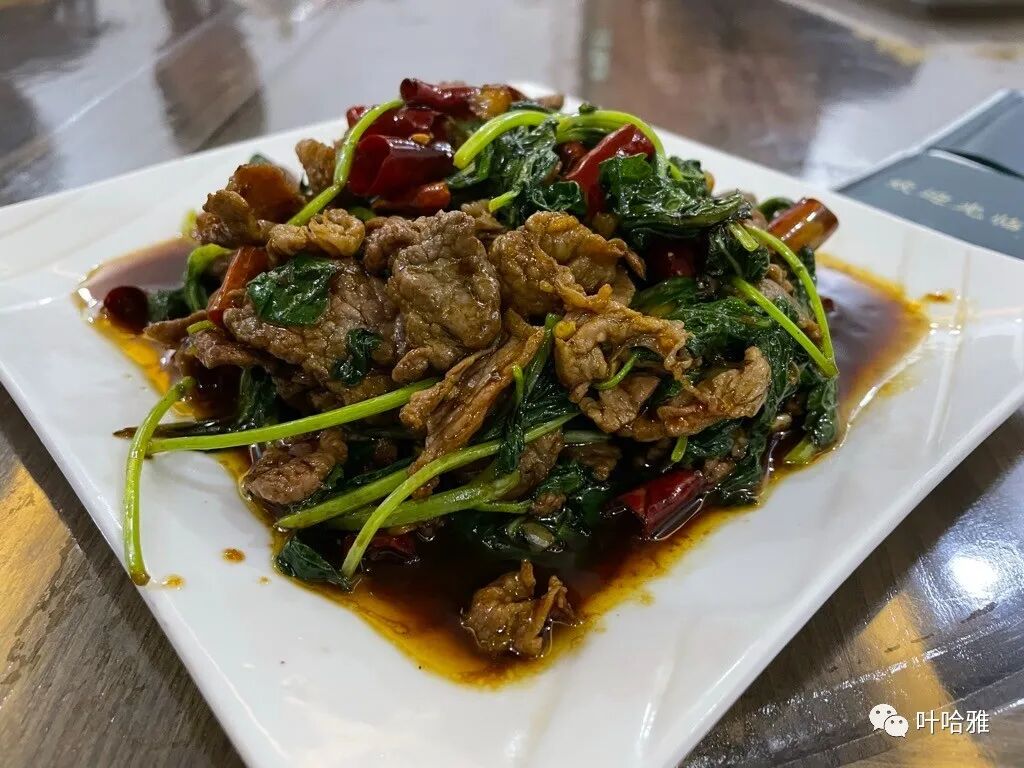
Stir-fried beef with mint (bohe chao niurou)
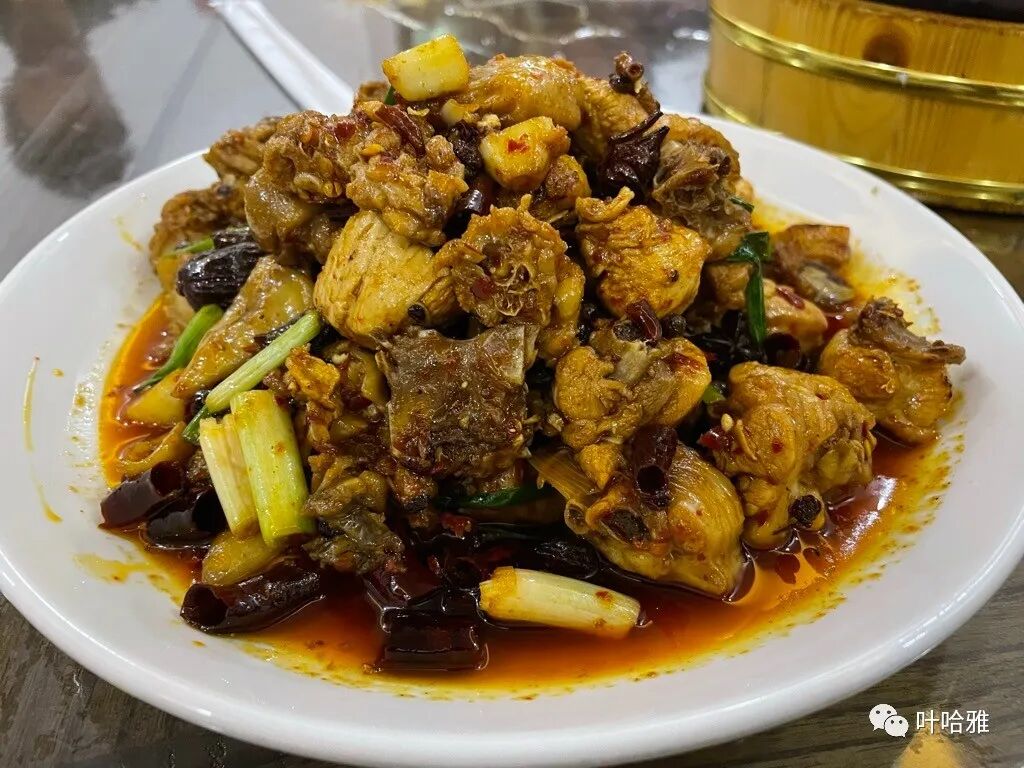
Hani-style stir-fried chicken (Hani xiaochaoji)
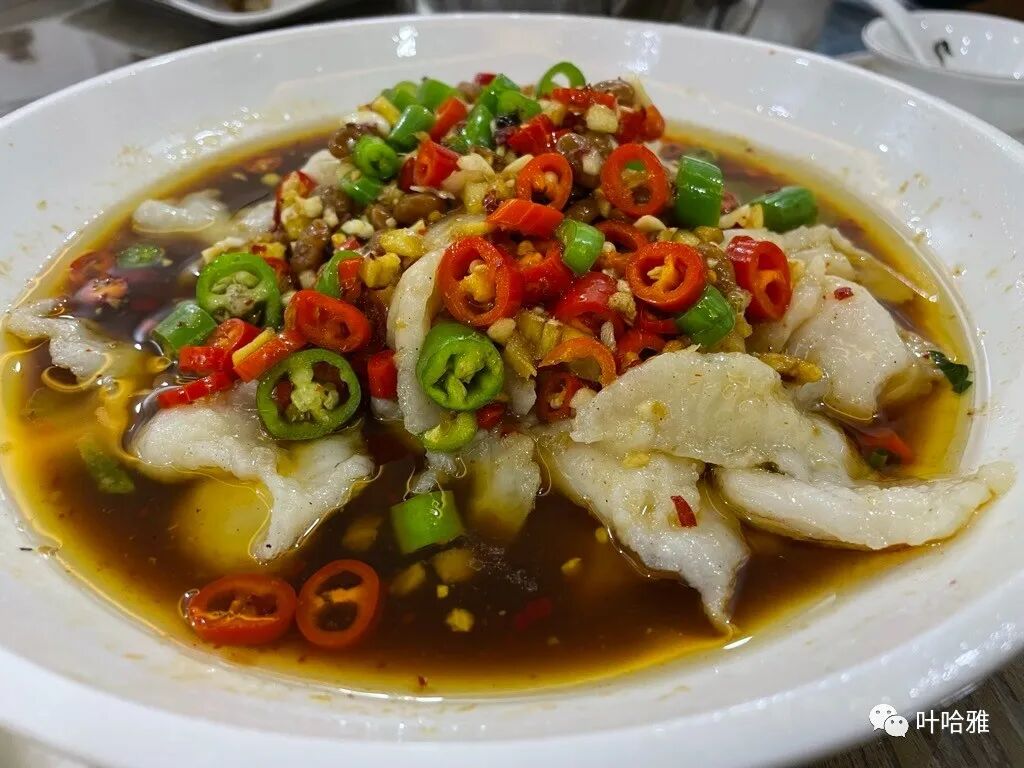
Flavorful tilapia (fengwei luofeiyu)
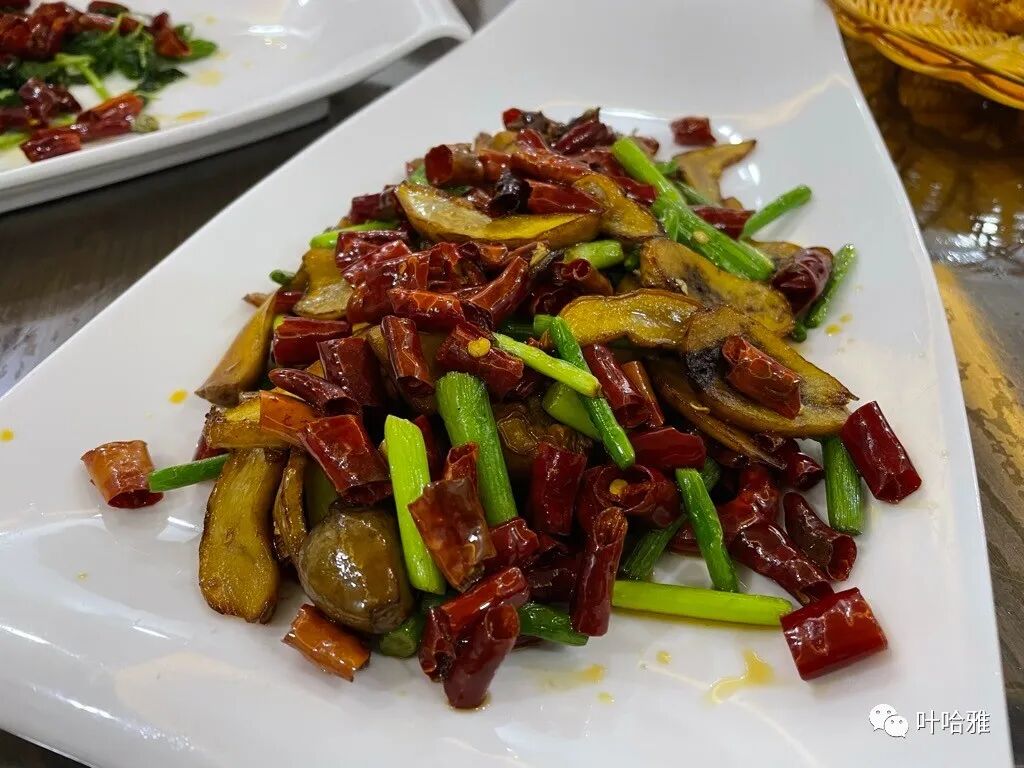
Fresh porcini mushrooms (xinxian niugan jun)
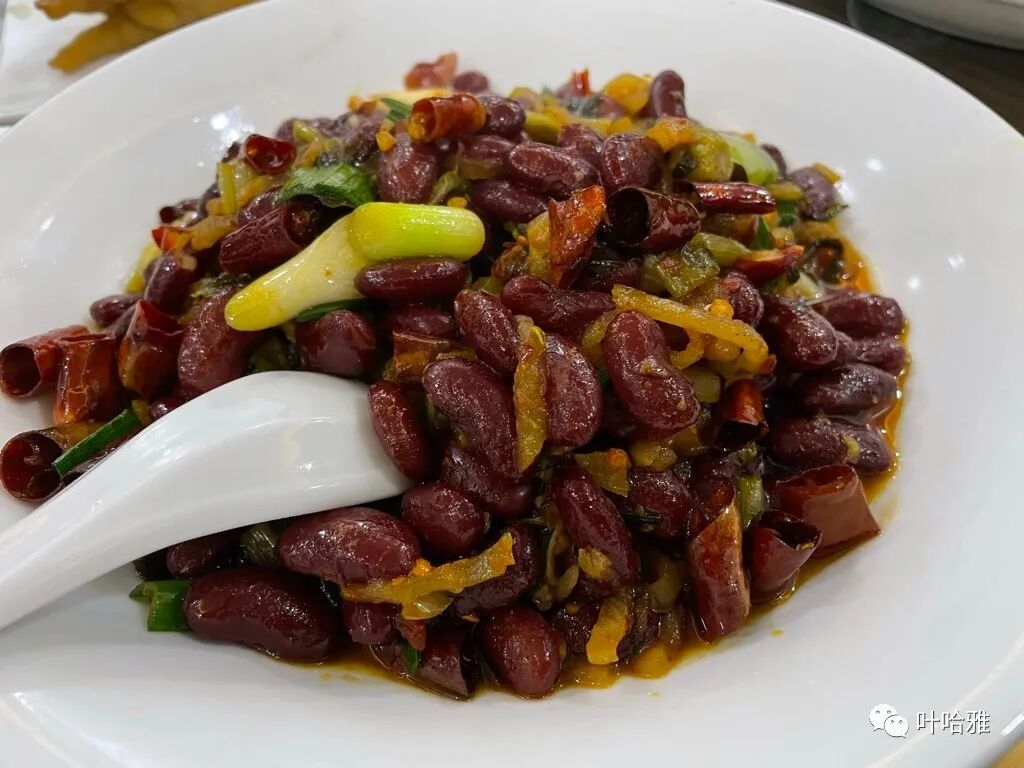
Crispy red beans (xin xiangsu hongdou)
Northwest cuisine at Northwest Leader Lamb (Xibei Lingtouyang)
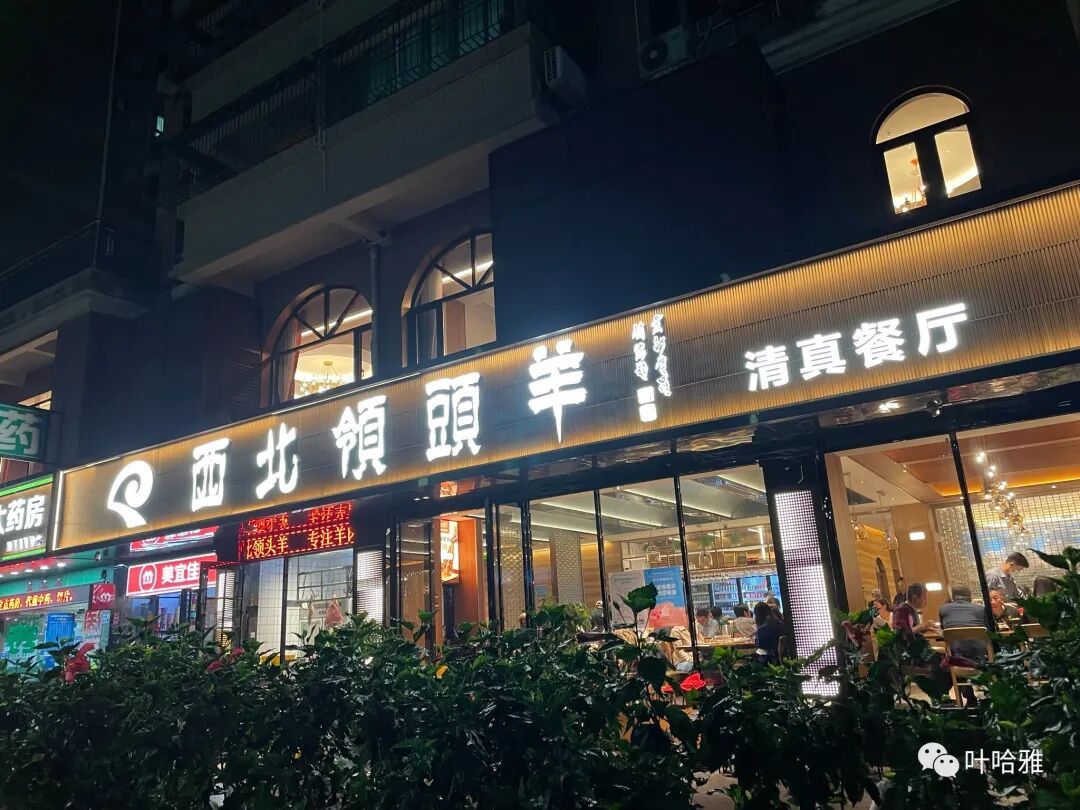
Northwest Leader Lamb is one of the most popular halal restaurants in Shenzhen right now. It is quite large and sits right next to the mosque. I passed by twice before but never went in. This time, I met an old friend on Friday for Jumu'ah and they brought me here.
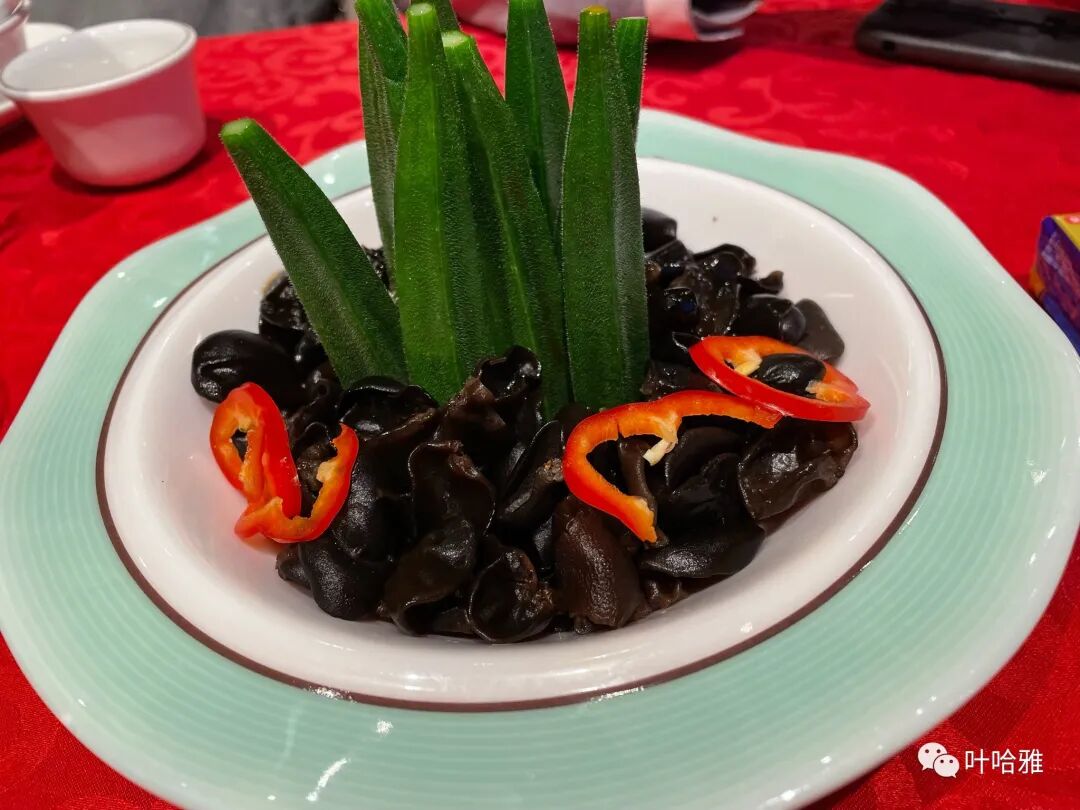
Wood ear mushrooms with okra (mu'er qiukui)
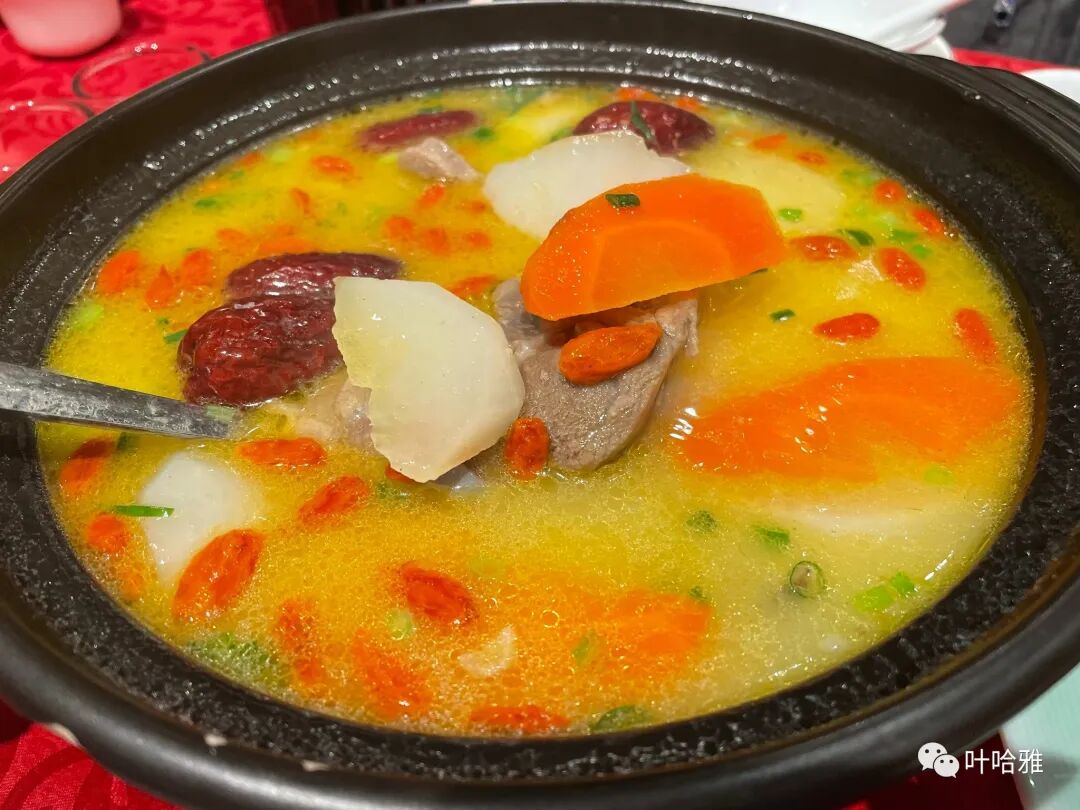
Fresh lamb hot pot (xinxian yangrou bao)
This lamb hot pot tastes a lot like the open-pot lamb (kaiguo yangrou) from Lanzhou. I have to admit, the lamb at this restaurant is delicious.
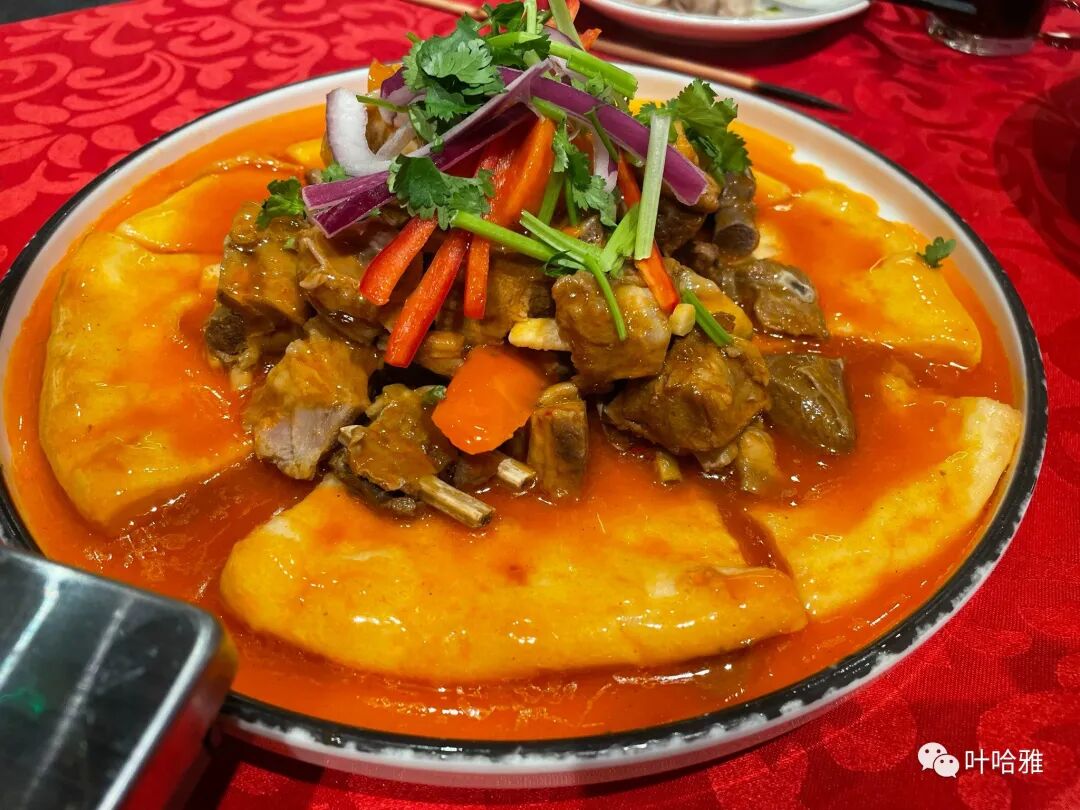
Meat in naan bread (nang bao rou)
Cantonese-style morning tea (zaocha) at Zhongfayuan
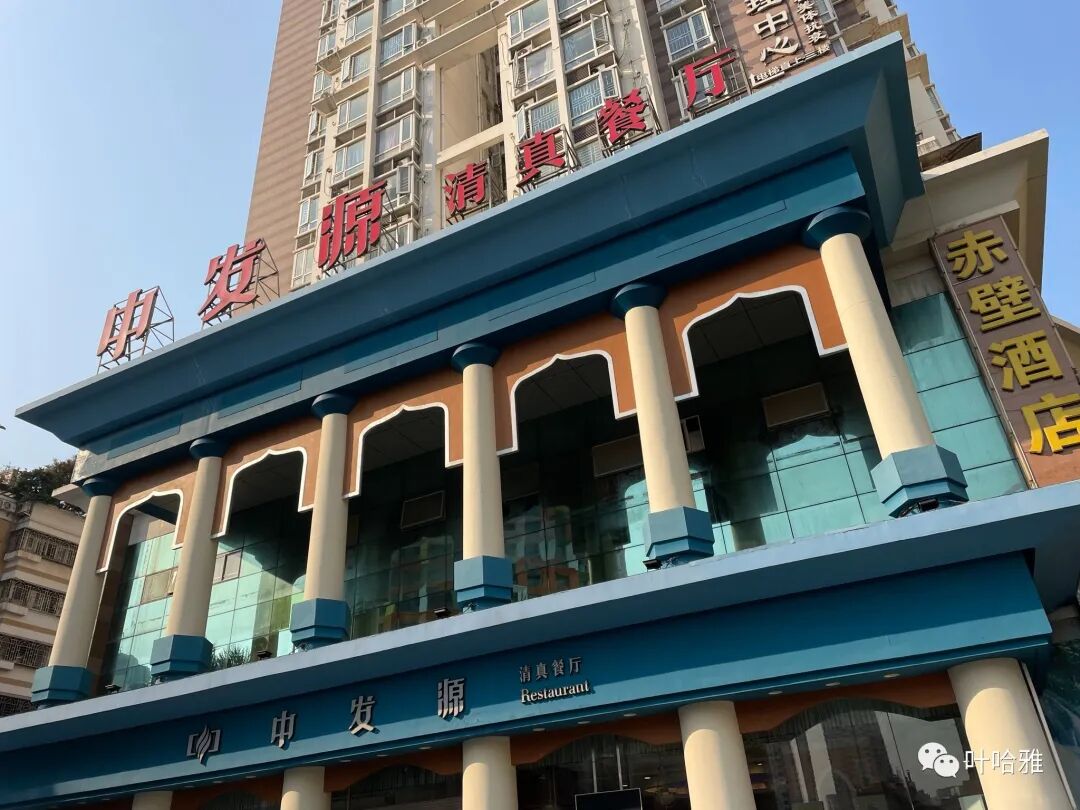
Zhongfayuan is a Northwest-style restaurant, but it is the only place in Shenzhen that serves halal Cantonese morning tea. Only three of their chain locations offer it. I cannot remember which three, but the Jingtian branch definitely does. Call to confirm before you go. Unlike the Guangzhou Hui Muslim Restaurant and Xinjiang Building where morning tea starts at 7:00 a.m., morning tea here does not begin until 9:00 a.m. Very few people come on weekdays, though it gets busier on weekends. It seems people in Shenzhen are too busy making money in the morning to have time for tea.
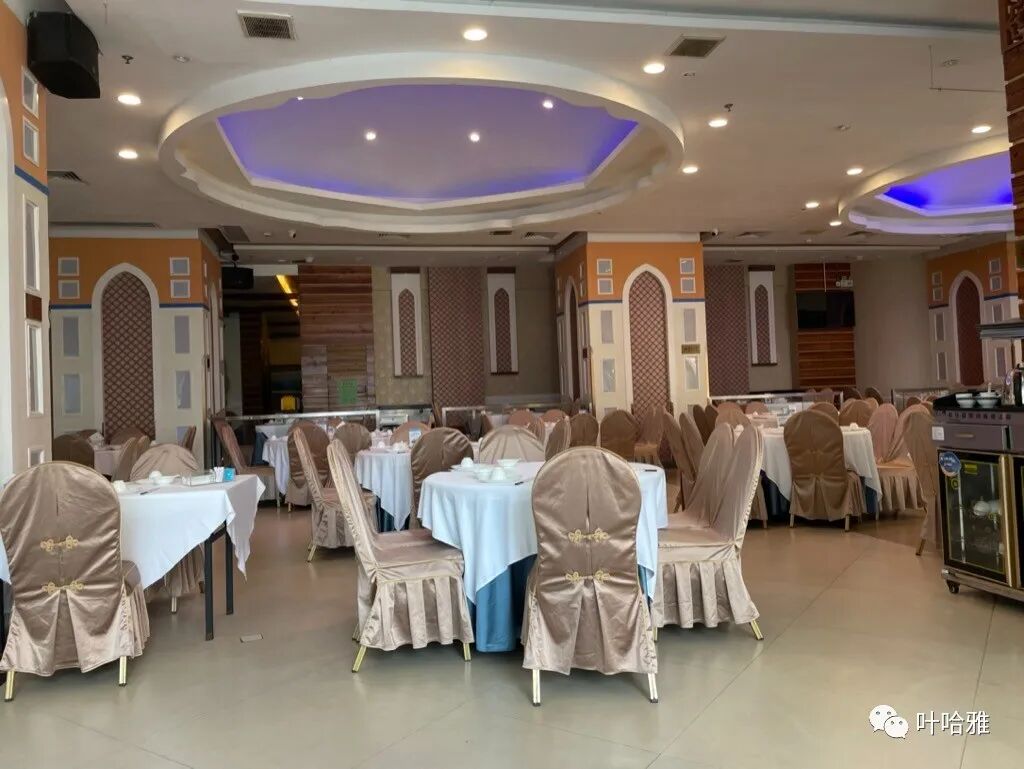
The friends I had dinner with the night before all went to work the next morning. Only a brother from Tencent stayed to have tea with me for a while, but he also took a taxi to his company for a meeting after 10:00 a.m. You can really see how fast the pace of life is in Shenzhen.
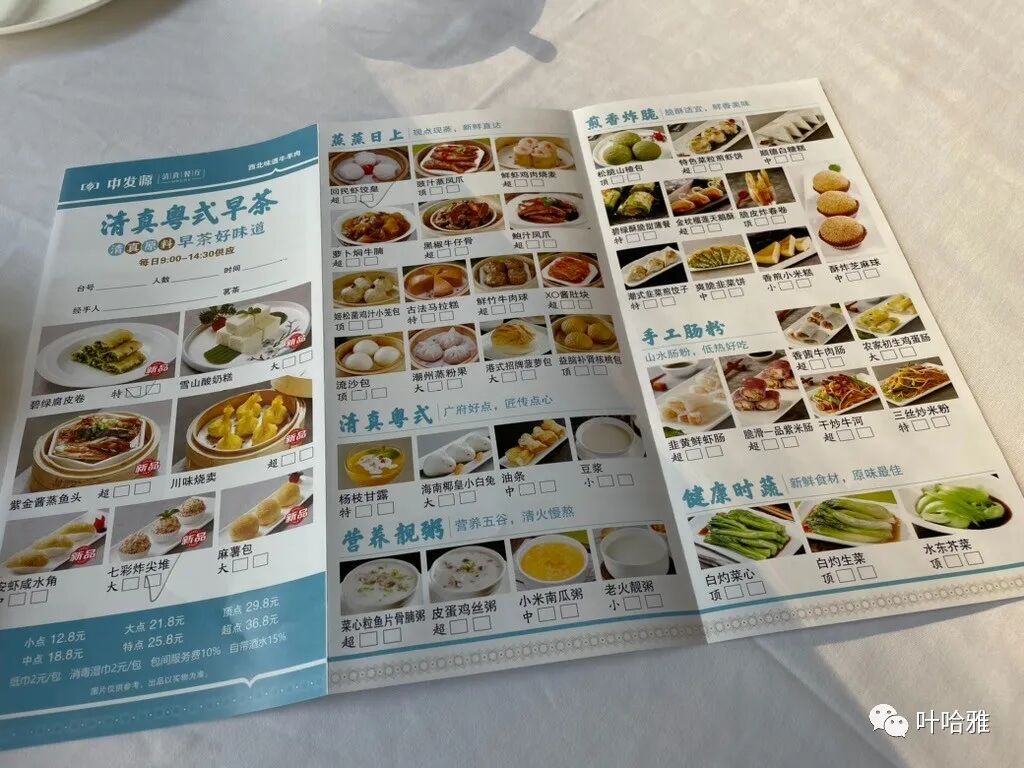
The morning tea menu at Zhongfayuan features traditional Cantonese-style dim sum on the front and improved Northwest-style snacks on the back. It is a creative touch that suits people from different regions.
The restroom even provides a stool for performing wudu, which is a nice detail.
The kitchen is open and visible. Judging by their appearance, the chefs are not Hui Muslims and were likely hired from the local Han Chinese population in the south, but this does not change the halal nature of the food.
The portions for morning tea at Zhongfayuan are larger than in Guangzhou, though there are fewer varieties. I think the taste is about the same, but I prefer a better dining environment with fewer people in the morning. Zhongfayuan is good in this regard. Xinjiang Building has a nice environment but is crowded, while the Hui Muslim Restaurant is both crowded and has a poor environment.
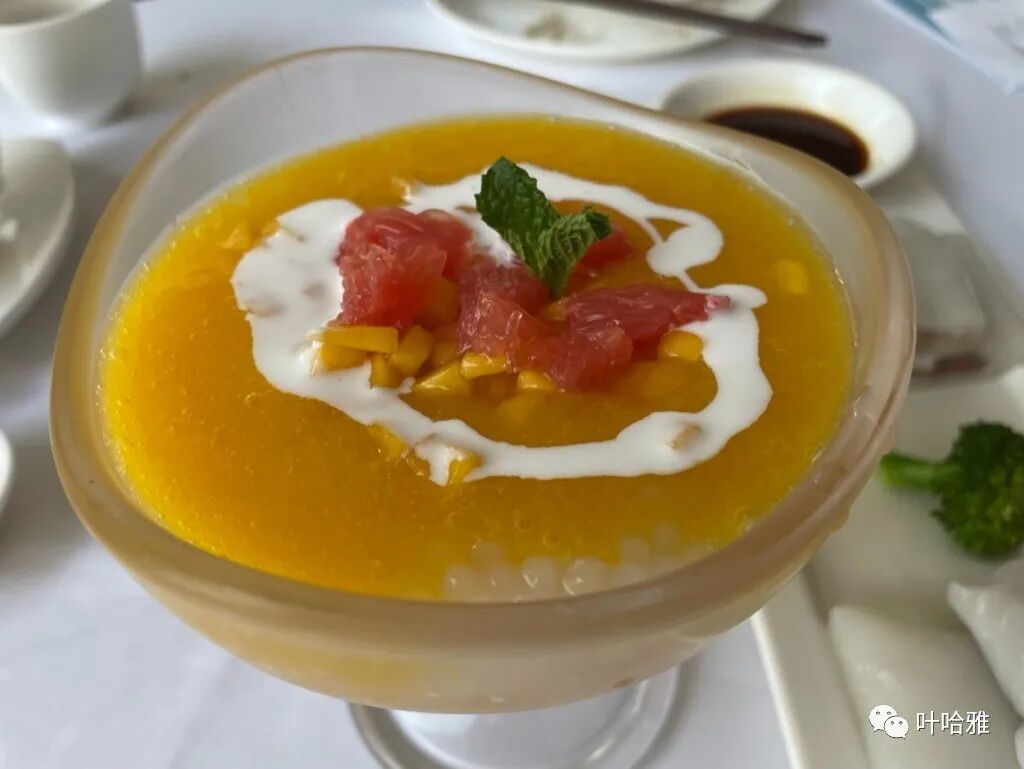
Mango pomelo sago (yangzhi ganlu)
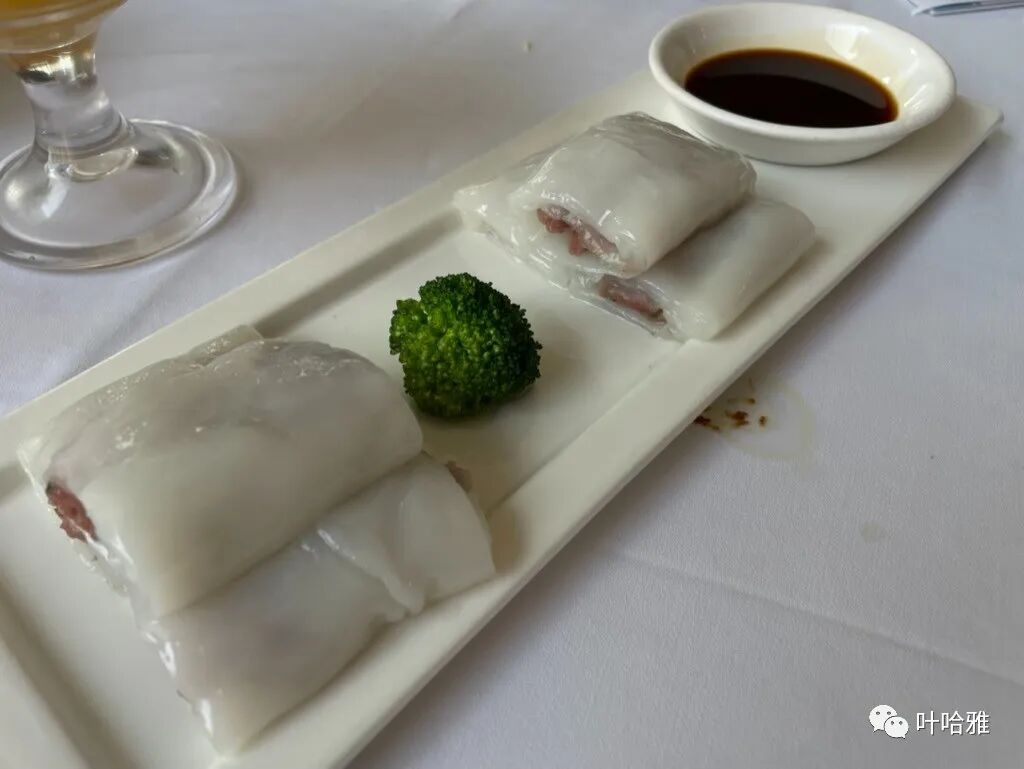
Coriander beef rice noodle rolls (xiangqian niurou changfen)
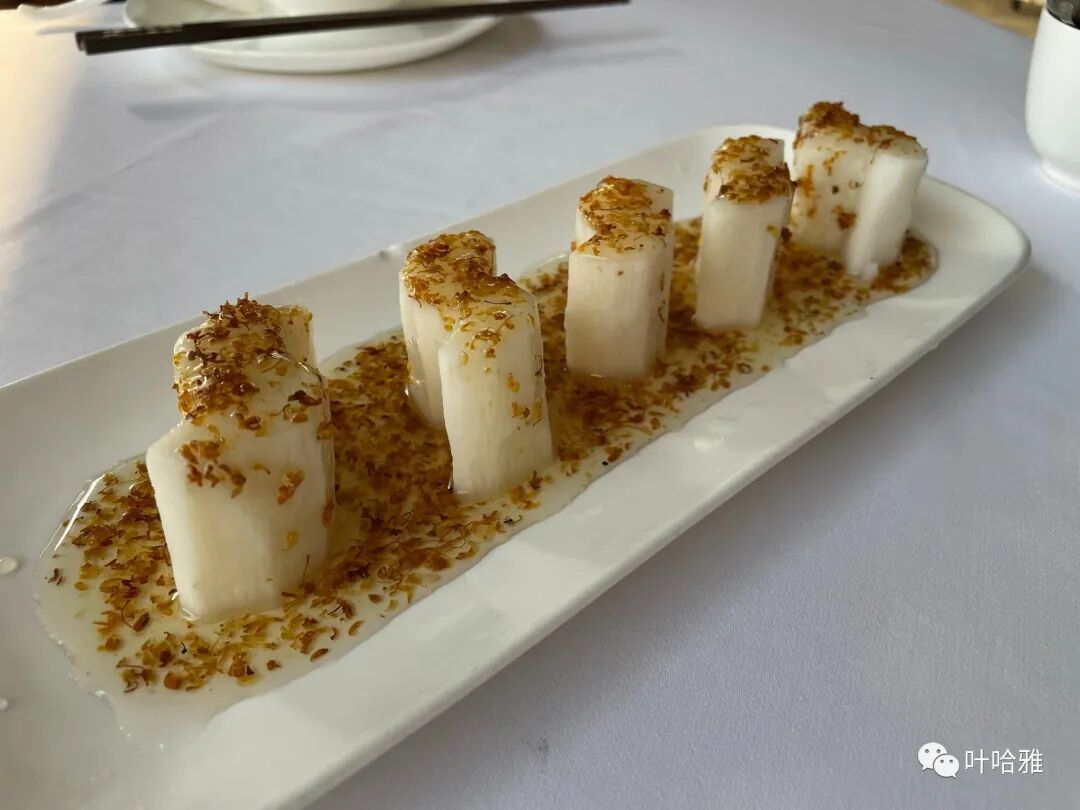
Osmanthus yam (guihua shanyao)
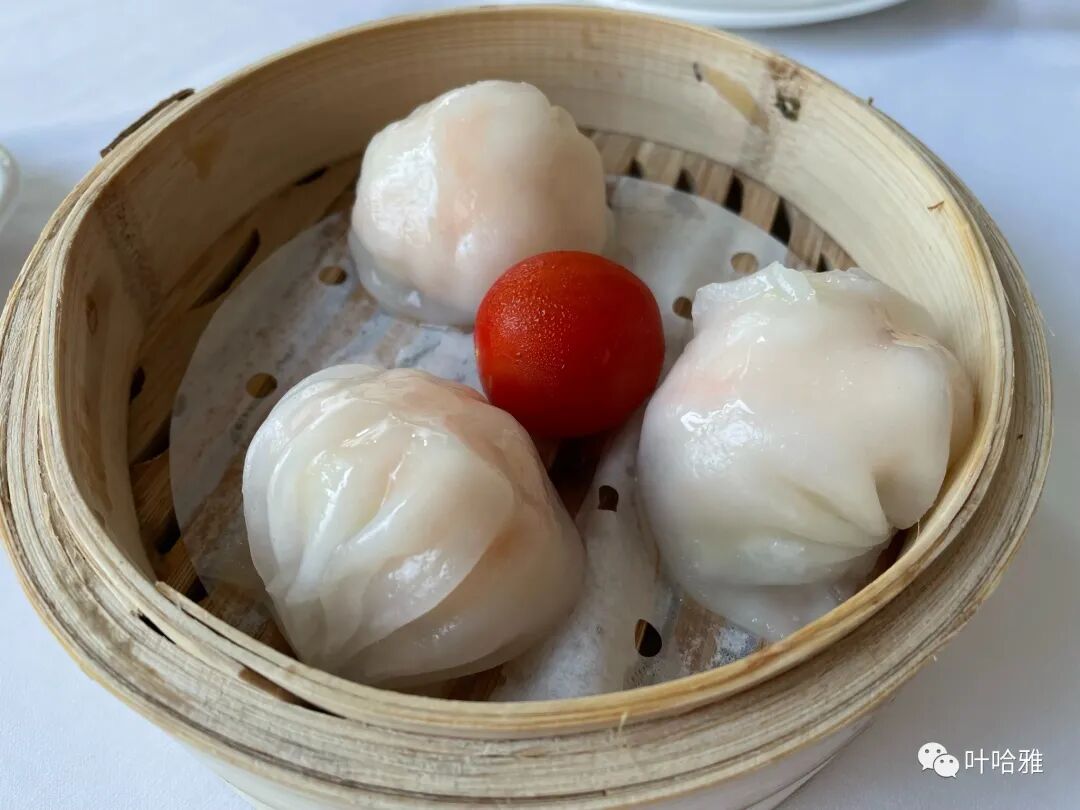
Hui Muslim shrimp dumplings (huimin xiajiao huang)
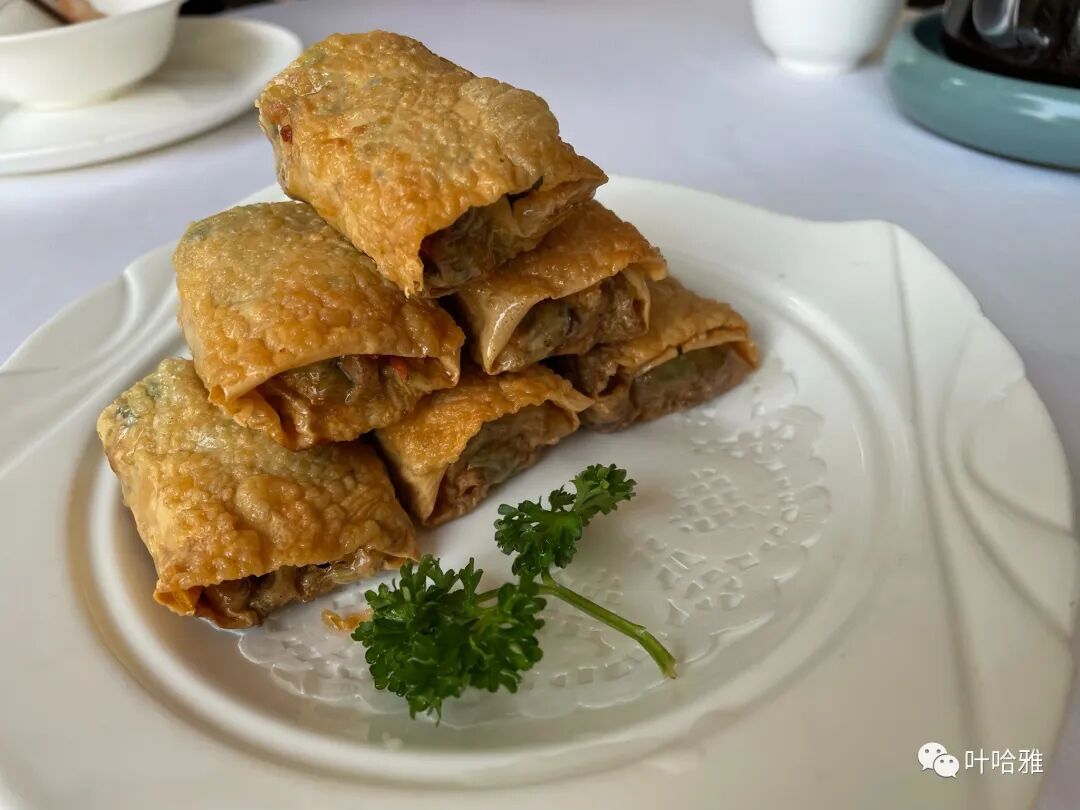
Green bean curd skin rolls (bilu fupi juan)
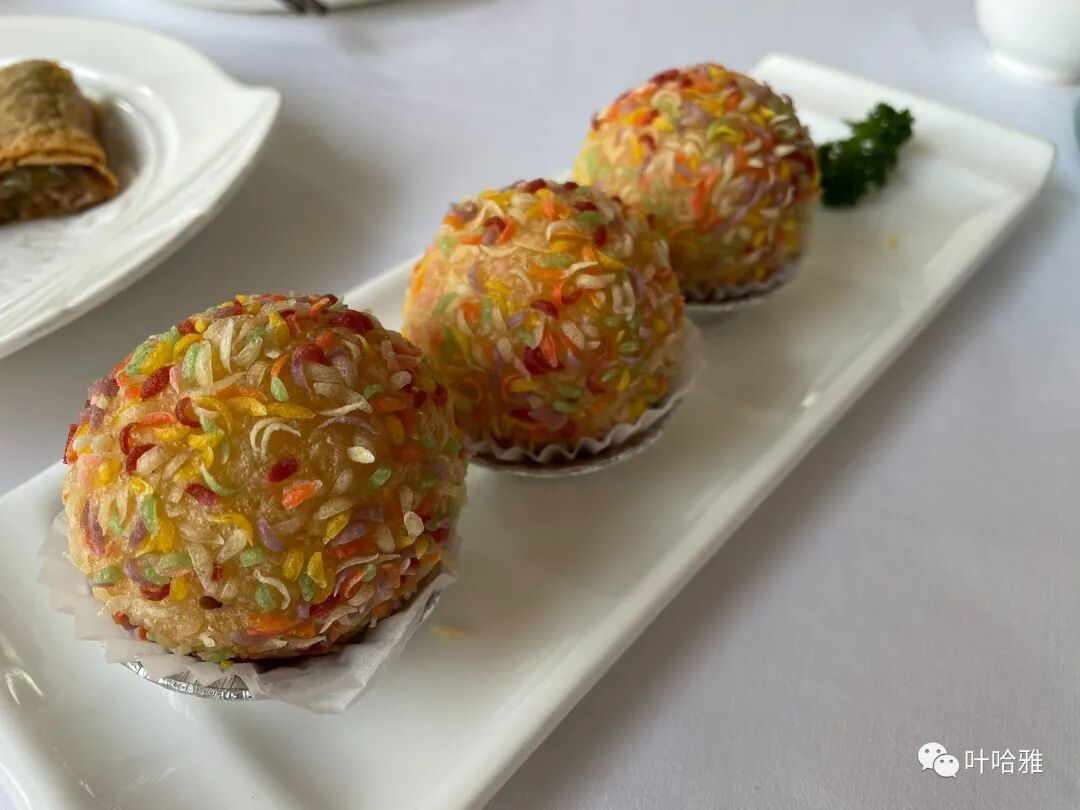
Colorful fried sesame balls (qicai zha jiandui)
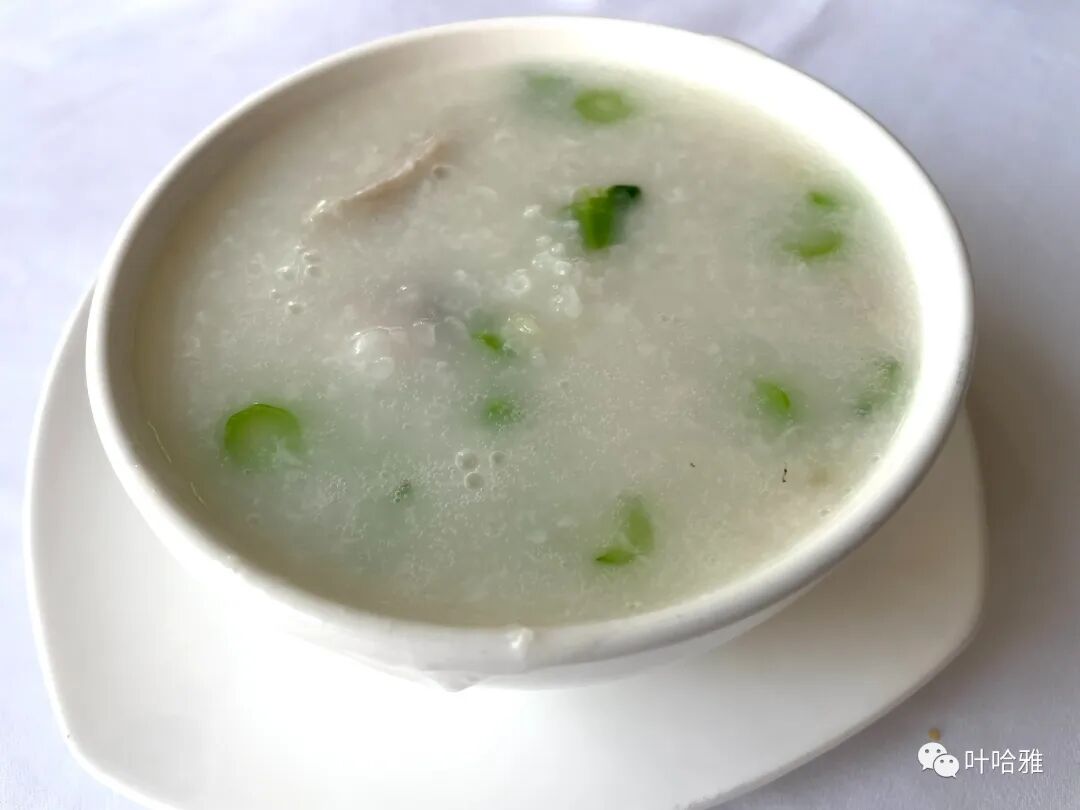
Fish fillet and bone-in belly congee with diced choy sum (caixinli yupian gunan zhou).
Shenzhen Mosque.
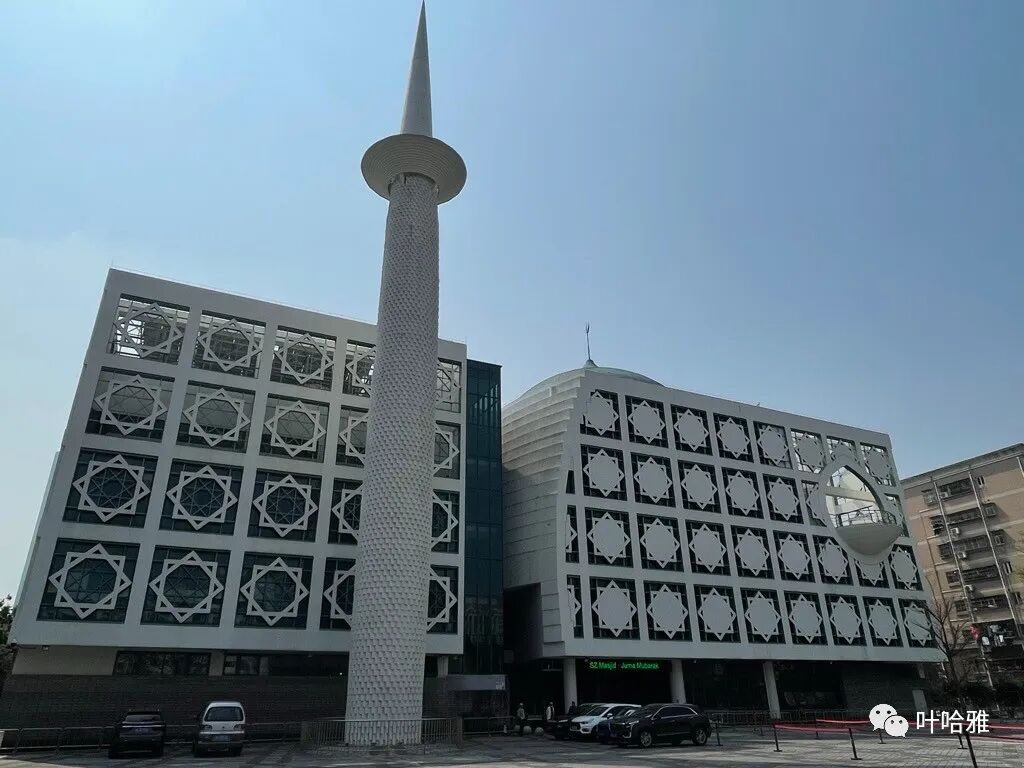
The current Shenzhen Mosque was built and opened in 2016. It covers a total area of about 6,600 square meters with a total floor area of 10,800 square meters. The building was constructed to the government's Class A (highest level) public project standards. It has four floors plus an elevated ground floor and an underground parking garage. The building is divided into east and west sides. The east side is the office area, and the west side is the prayer hall, which can hold over 3,500 people.
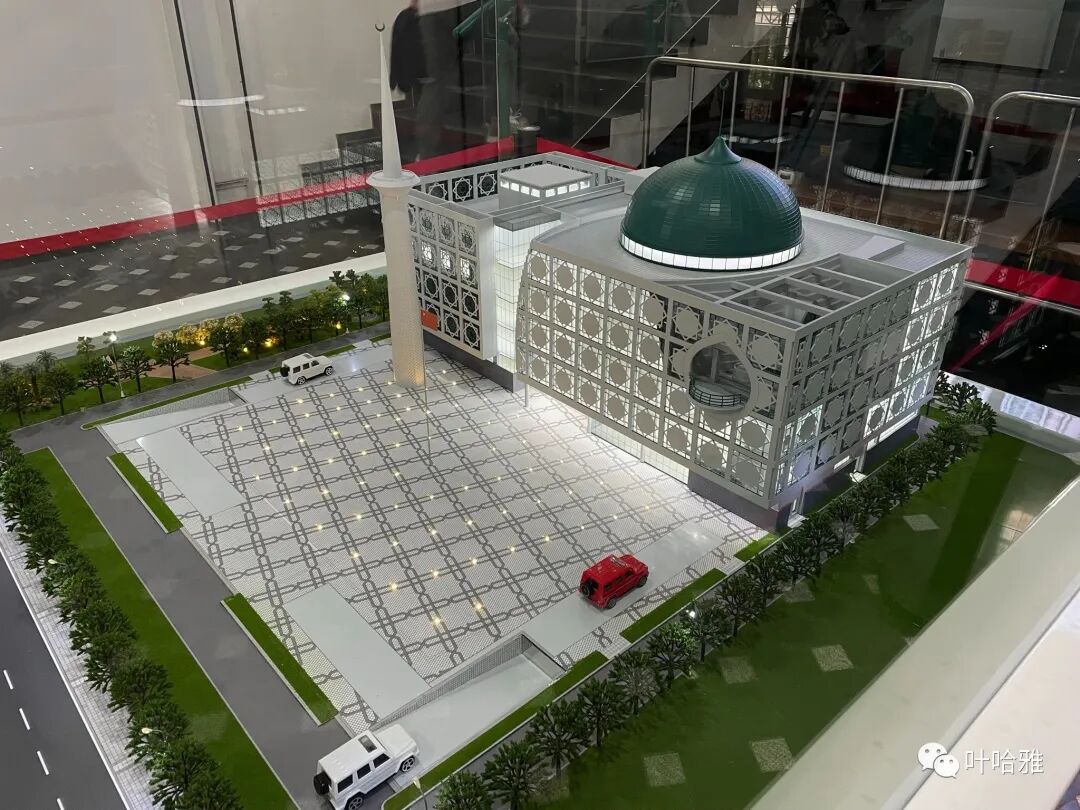
Shenzhen Mosque is one of the few mosques in China with its own website: http://www.szmosque.com/gyqzs.htm
Although there is not much information on it.
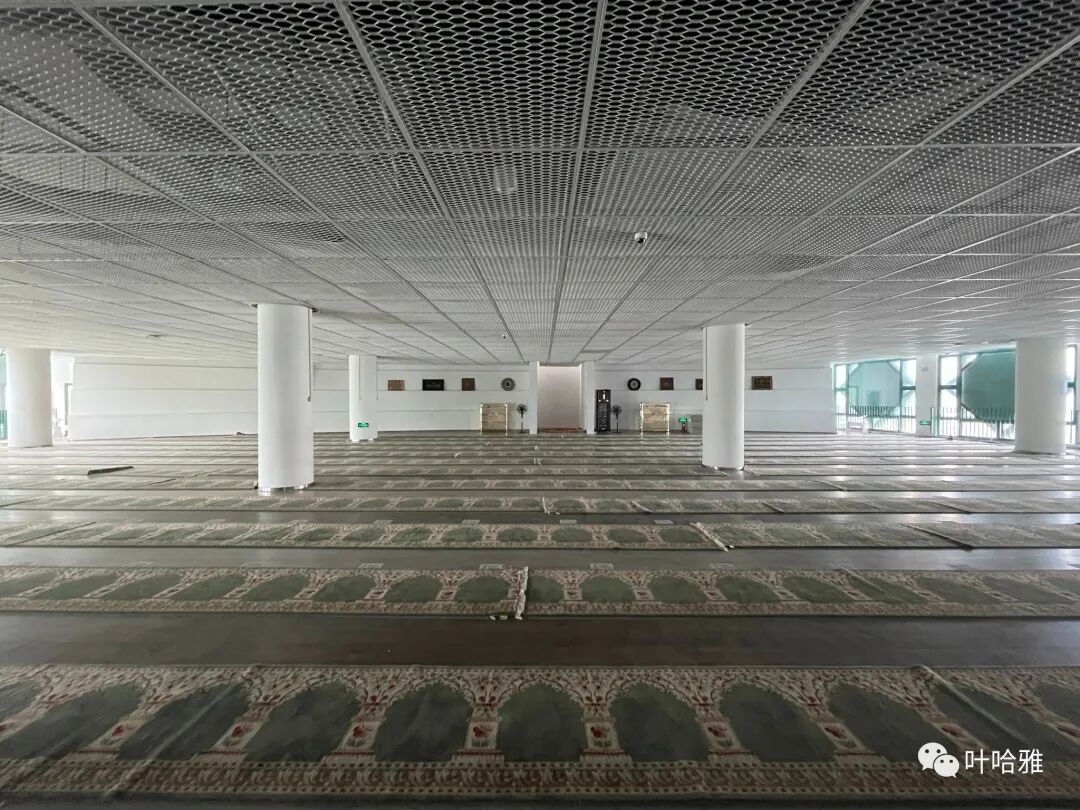
Shenzhen has no history of Muslim life from ancient times. The earliest recorded Muslim in Shenzhen was Pan Shun'an, a Hui Muslim from Jiangxi who wandered to Shenzhen during the Republic of China era. After the liberation, he was transferred to work at the Dachan branch of the Kowloon Customs of the People's Republic of China. He passed away in Shenzhen on December 1, 2000, at the age of 89. Pan Shun'an's nephew, Pan Zhaoming, was the first Hui Muslim born in Shenzhen. There are now about 80,000 to 100,000 Muslims in Shenzhen.
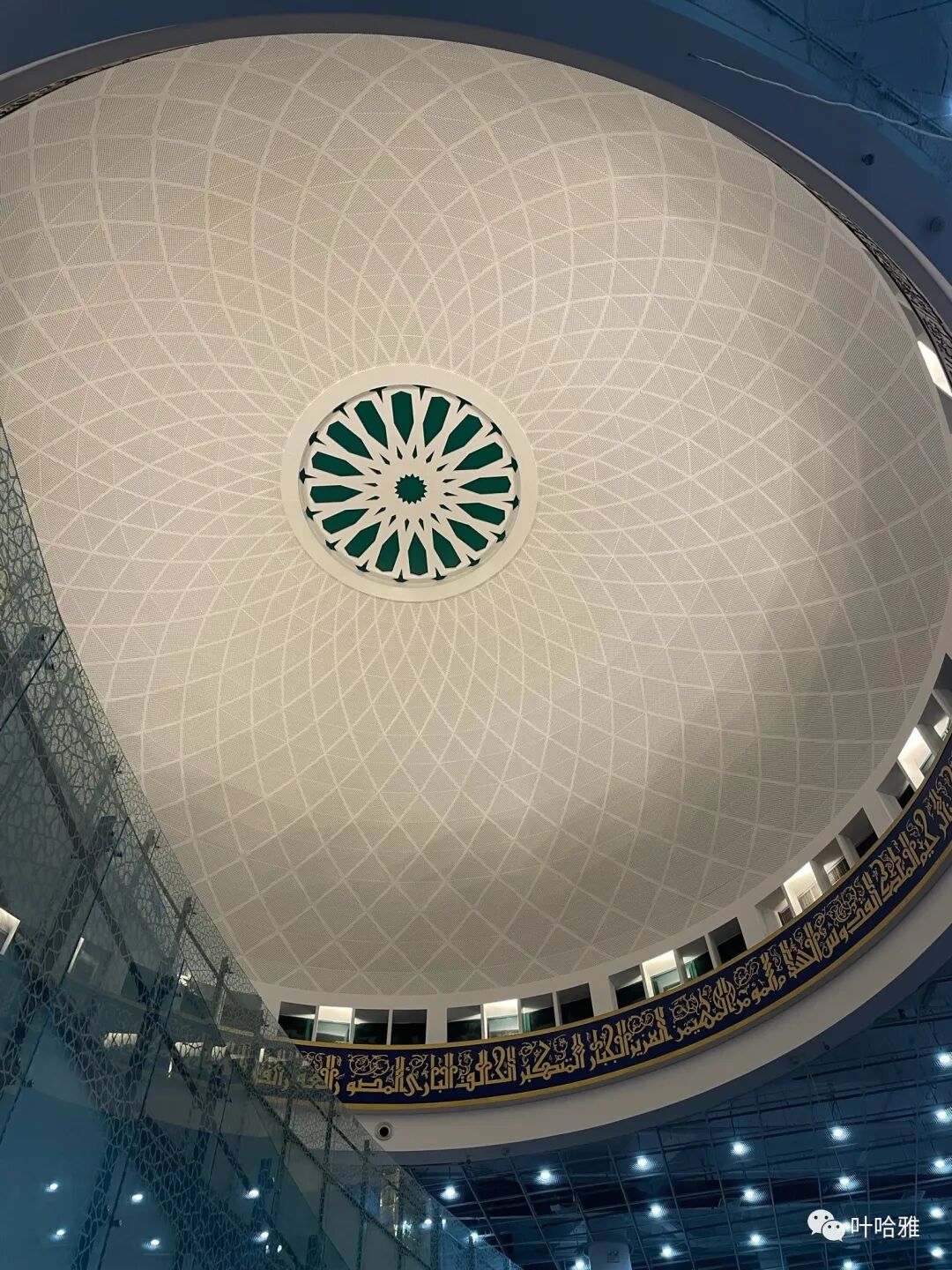
When I was in Beijing, I was lucky to meet Uncle Ma, the first director of the mosque management committee when the Shenzhen mosque was first built. This time, introduced by a friend (dosti), I met the current deputy director, Brother Ma. Both administrations have been highly praised by many friends, which is different from the community I live in. In Beijing, our mosque management committees are usually criticized.
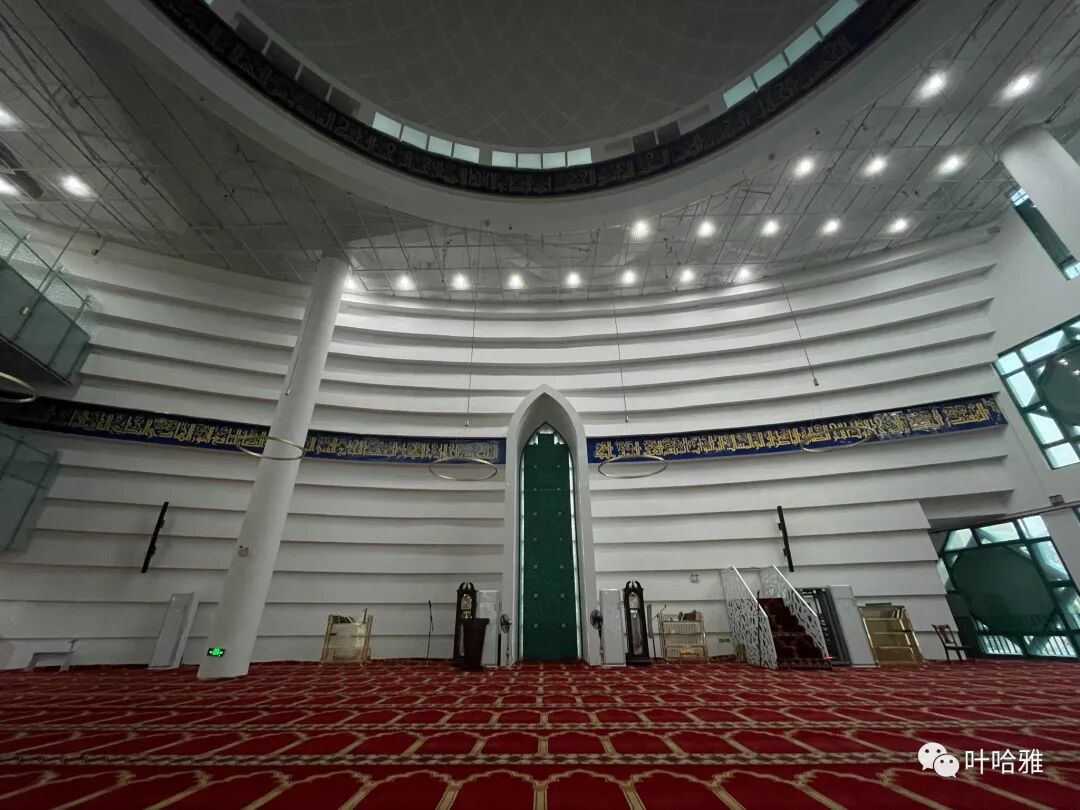
Take the current deputy director, Brother Ma, for example. I did not know him before I came here, but the young talents in Shenzhen all spoke highly of him when they mentioned him. It is truly not easy to get everyone to say good things about you. Another thing that draws me to Brother Ma is that he has been an insurance agent for fourteen years. However, the elders say he never actively pushes products on people around him, and he looks at the products he sells objectively and never misleads anyone.
During Ramadan, Brother Ma insists on inviting friends (dosti) to his home for iftar every single day. He sets up four or five tables each time and cooks everything himself. We even ate his stir-fried dishes at the mosque over the weekend, as shown in the photo below.
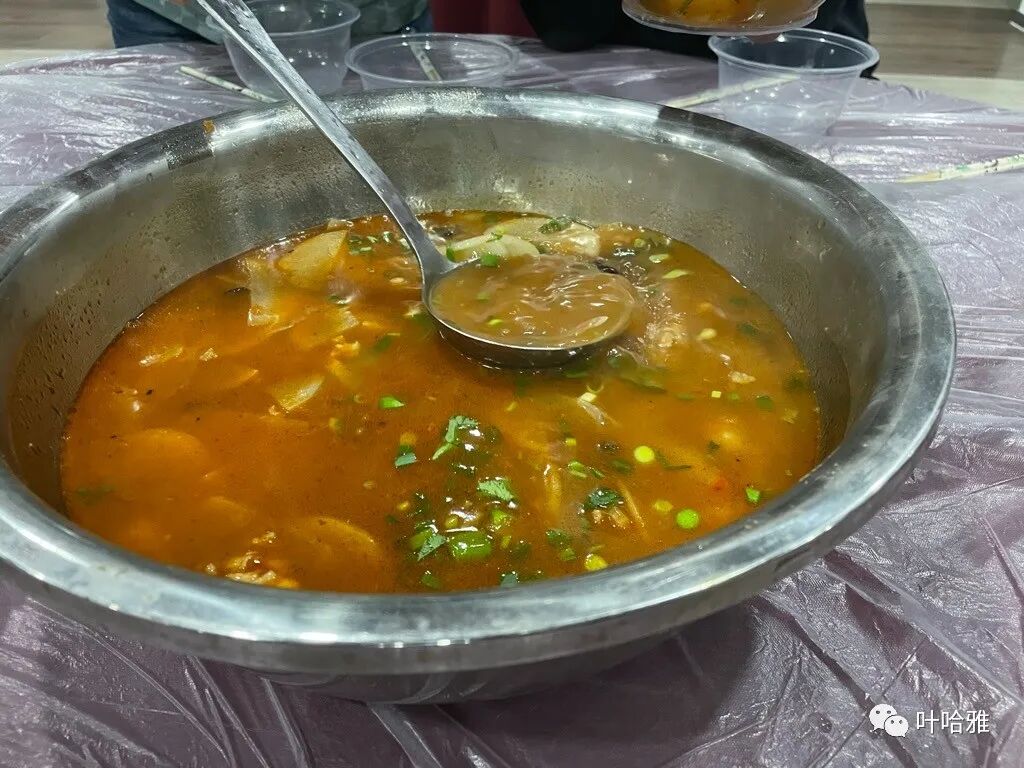
If you come to the mosque between Maghrib (sham) on Friday or Saturday, you can eat and drink for free. It is busier on Saturdays. The mosque has a library where you can study, so both your spirit and your stomach will be satisfied.
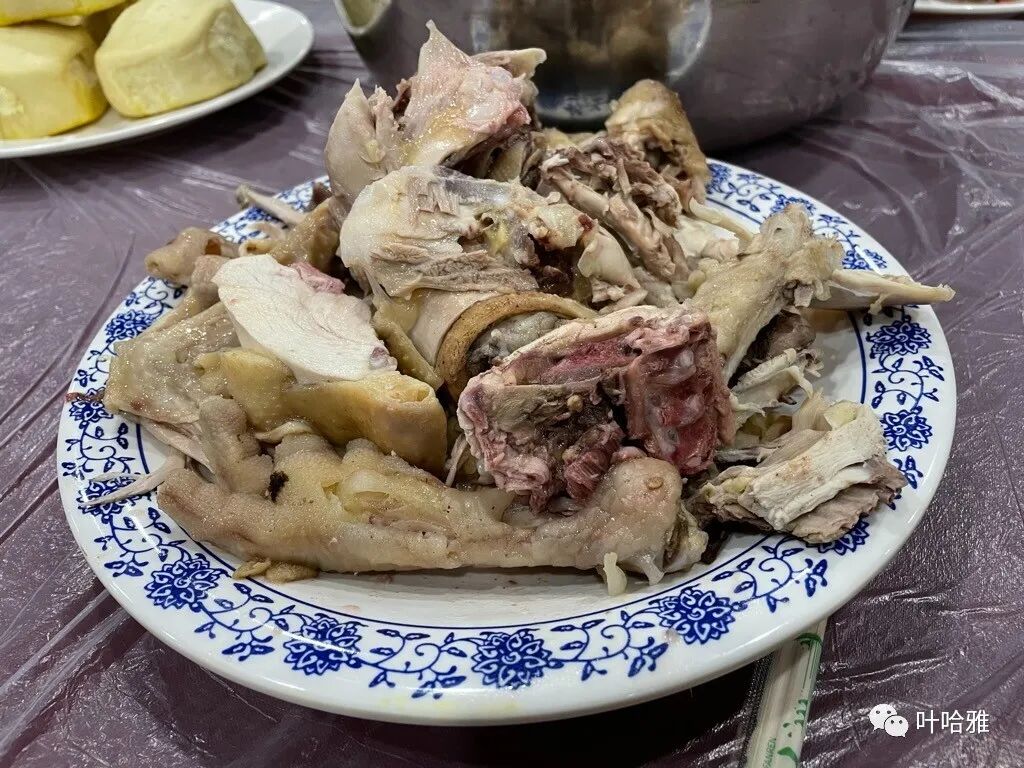
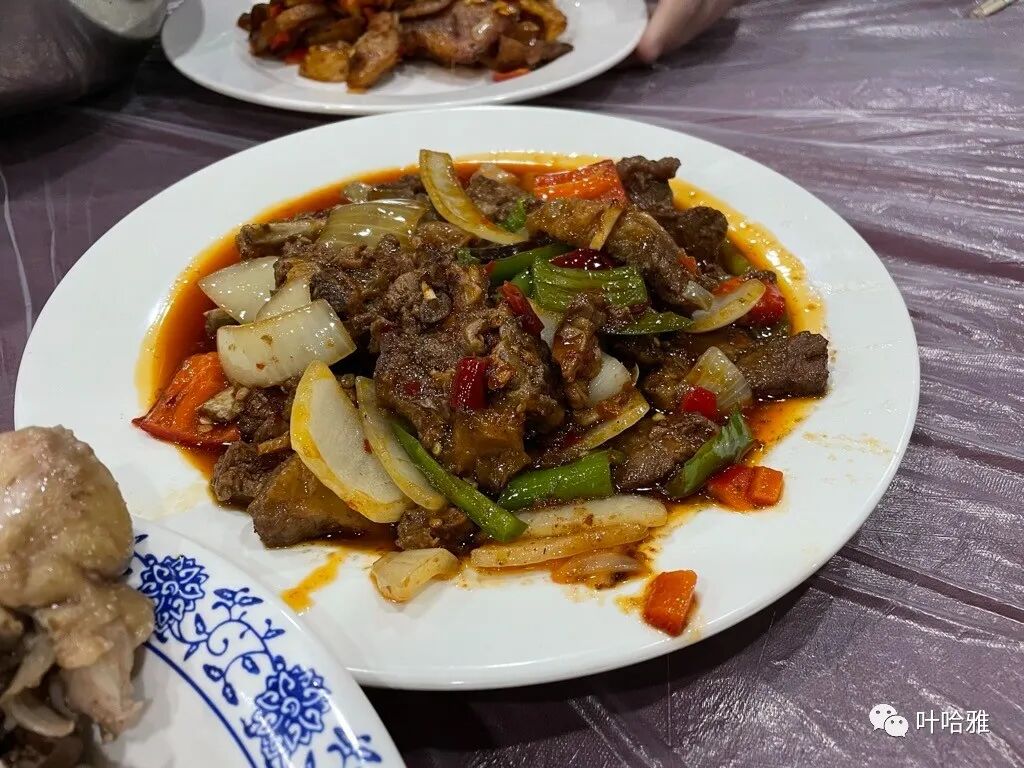
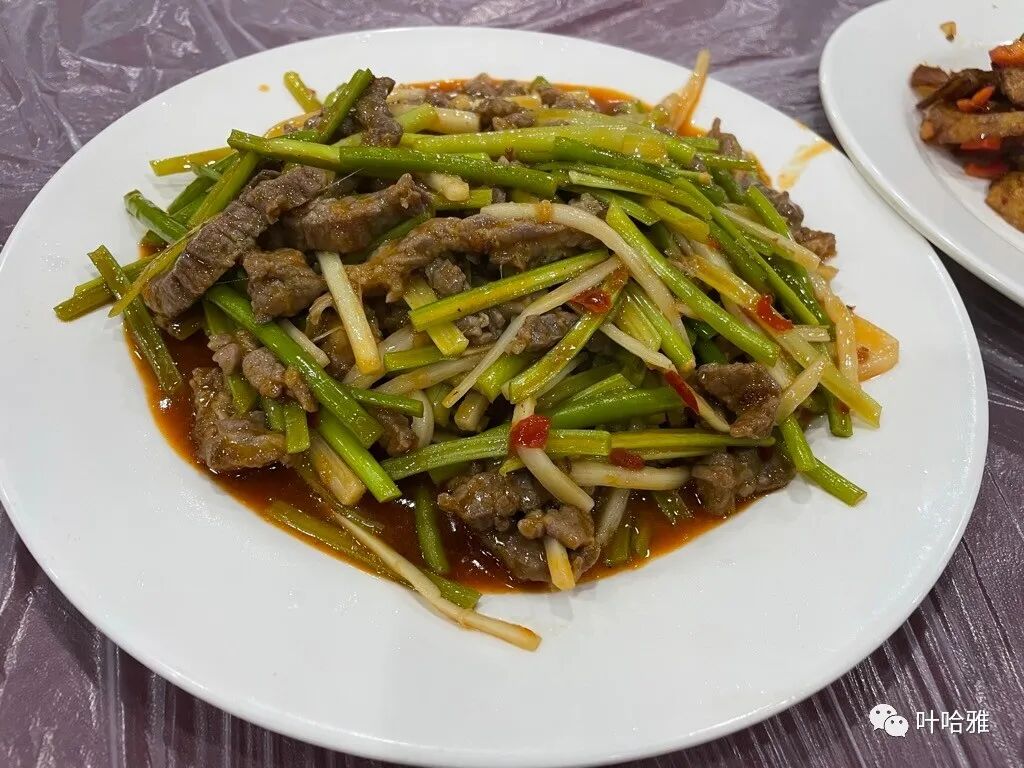
No matter how good restaurant food is, it is not as blessed as the food at the mosque. After the Hufu Beach (Hufutan), a Huawei executive took me to see the facilities inside the mosque.
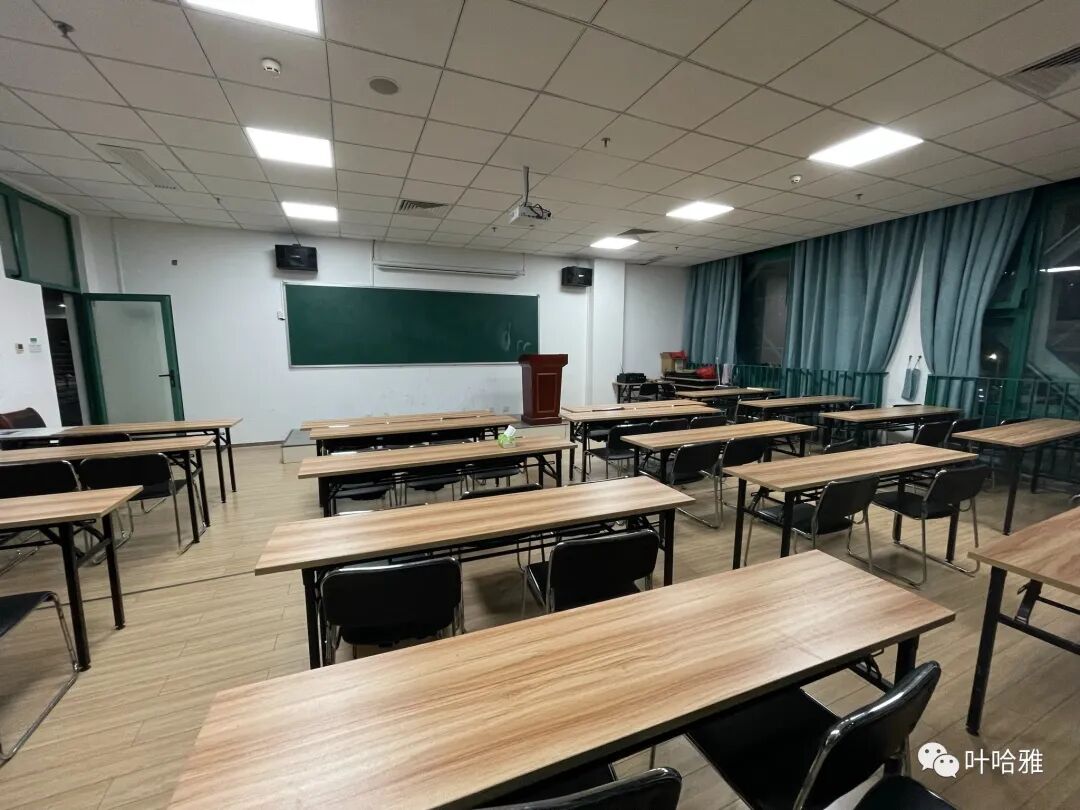
This is truly the mosque with the most complete facilities I have ever seen in China. It meets the needs of men, women, the elderly, and children.
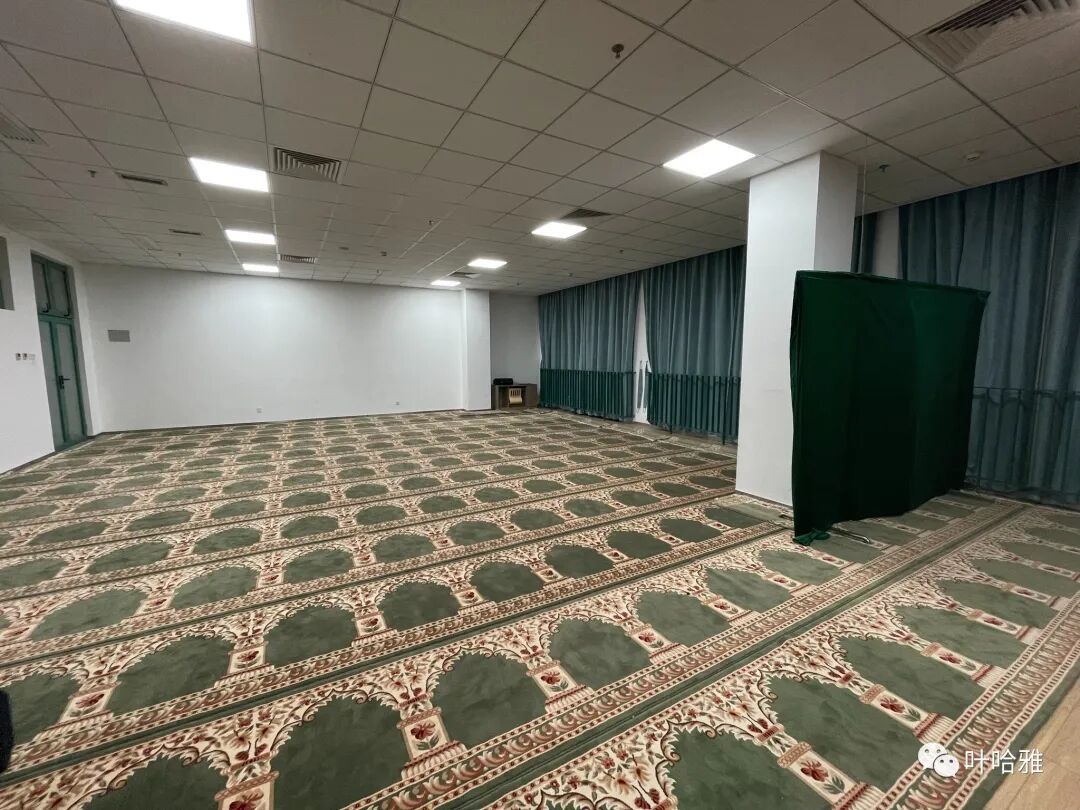
If you plan to visit the Shenzhen mosque, I suggest you go between Maghrib (sham) on Friday or Saturday and Hufu Beach (Hufutan).
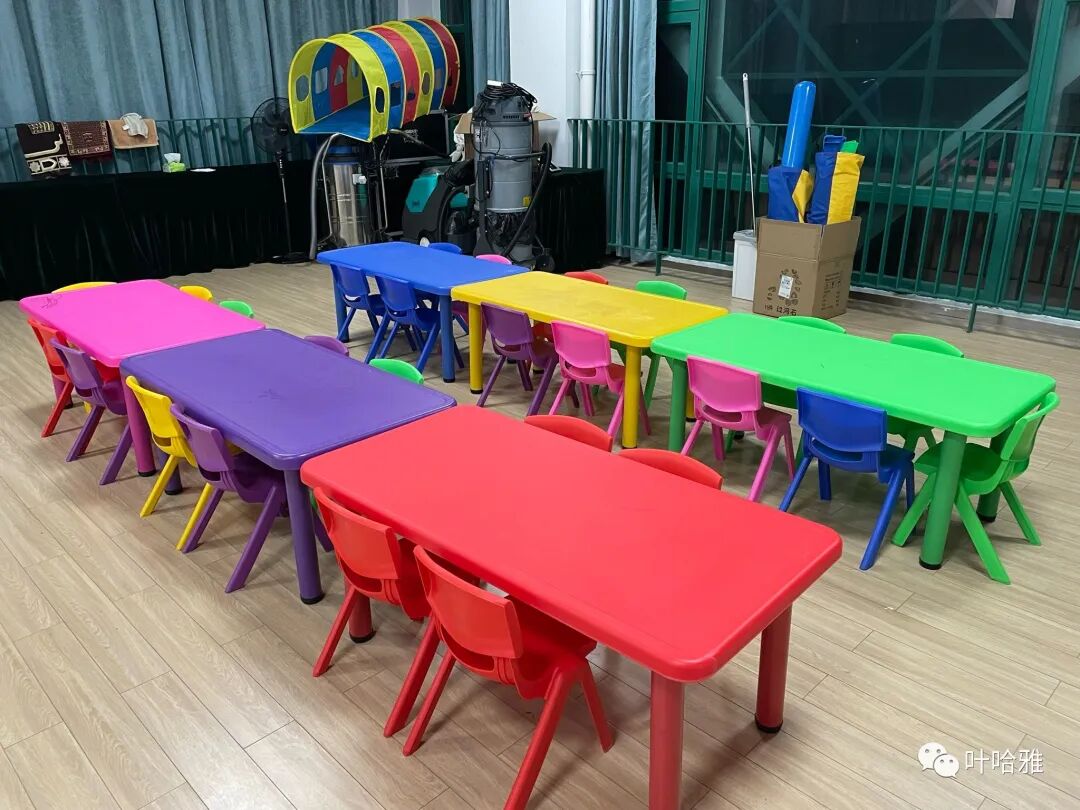
Hong Kong and Macau are now open for entry. Before you head there, come to Shenzhen to experience the halal atmosphere here. I promise it will be a trip worth taking.
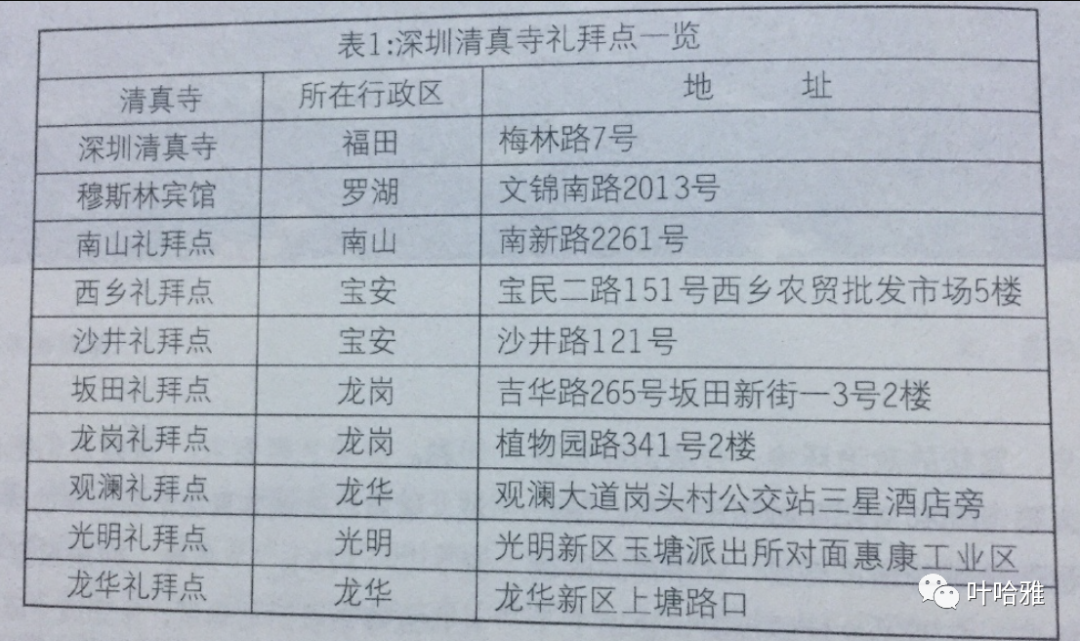
Screenshot from Shenzhen Muslim magazine.

Summary: This Muslim friendly China guide follows a visit to Huawei Bantian campus in Shenzhen, its halal cafeteria stalls, Ningxia Tanyang lamb, Northwest Chinese food, and the young Hui Muslim community the author met there.
A Halal Food Tour in Shenzhen: The Salt-lake Lamb (Tanyang) at the Huawei Cafeteria Is Really Delicious is presented here as a firsthand travel account in clear English, beginning with this scene: When I first visited Shenzhen in 2015, the Great Mosque was not yet finished. By my second visit in 2019, it was already in use. The account keeps its focus on Halal Travel, Yiwu Food, Mosque Travel while preserving the names, places, food, and historical details from the Chinese source.
When I first visited Shenzhen in 2015, the Great Mosque was not yet finished. By my second visit in 2019, it was already in use. This third visit in 2023 was driven by the current religious atmosphere in Shenzhen. The young, devout, and life-loving Hui Muslims I met left a deep impression on me.
I went straight from the airport to Huawei headquarters before checking into my hotel. I had long heard that Huawei treats Muslims well, even launching a Middle Eastern version of their phone that could locate mosques. Huawei's international vision has earned them significant profits.
I met with many Muslim brothers (siti) at the Huawei Bantian base in Shenzhen. People say the scenery here rivals a royal garden. If you want to visit Huawei, I recommend the Bantian base, Area B, entering through the East Gate.
A friend from Huawei met me at the gate. You just need to register and state your purpose to enter the campus. We just said we were going to grab a meal and got in.
The East Gate faces the Huawei Finance Building, and the office of the eldest princess, Meng Wanzhou, is right next door.
Canopies were set up under the trees on campus, with young men and women reading in the shade. The weather in Shenzhen in late February is mild and sunny. You don't feel cold in short sleeves, and you don't feel hot in long sleeves.
There is a pond in front of the cafeteria. The campus landscape is designed purely for artistic beauty without considering practicality, which makes it feel less like a company and more like a university. That Huawei's top management has this aesthetic sense shows their broad-mindedness, as aesthetics are a projection of one's inner world.
Huawei's cafeteria is very spacious with comfortable spacing between tables and chairs, so it never feels crowded. The simple design style feels like being in an IKEA restaurant.
There is even an Industrial and Commercial Bank of China branch inside the cafeteria that handles simple cash transactions. This is very convenient for employees, as many people can only run errands during their lunch break. At Huawei, you can stay on campus and have all your basic needs met.
The restaurant has three halal stalls: Dongfanggong, Jiuwan Shisihua, and Qiaoxiangcun. They all serve Northwest Chinese flavors. Qiaoxiangcun can prepare stir-fried dishes, which are suitable for business dinners.
Dongfanggong Lanzhou beef hand-pulled noodles (lamian).
Nine bowls and thirteen flower dishes (jiuwan shisanhua).
Northwest cuisine at Qiaoxiang Village (no alcohol served).
The cooking at Qiaoxiang Village is excellent. They use salt-lake lamb (tanyang), and because they do not pay rent, the prices are even cheaper than other restaurants.
Salt-lake lamb baked buns (tanyang kaobaozi).
Roasted lamb chops (kaoyangpai)
Steamed turbot (qingzheng duobaoyu).
Hand-grabbed lamb (shouzhuayangrou).
A senior Huawei colleague hosted the meal. This table had ten dishes: roasted lamb leg from the desert, hand-grabbed lamb, black pepper beef short ribs, steamed turbot, Hui Muslim style spicy chicken, stir-fried vermicelli with meat, blanched choy sum, lamb baked buns, baby bok choy with scallion oil, and West Lake beef soup. The standard of this meal was better than eating out. I arrived late, but the restaurant kindly reheated the cold food for me, and I was so full I couldn't finish it.
After eating and finishing namaz, some people went off to meetings. Huawei has a dedicated prayer room inside a storage area. For a modern multinational company, this should be standard. When I visited the Shiroi Koibito chocolate factory in Japan, they even had a room for employees to perform wudu and namaz.
In the afternoon, a colleague with free time drove me around the campus. Yes, the campus is so big that you need a car to get around. Some say the Huawei Bantian base looks like a Japanese garden, but it is more accurate to say it reflects the Tang Dynasty style that Japan has preserved.
While walking, I asked my colleague about some rumors regarding Huawei, such as the claim that Huawei encourages older employees to leave to save on retirement costs. The Huawei colleague said it is not that exaggerated. Many employees retire from Huawei on schedule. Huawei contracts are renewed every eight years, and some people do not meet the requirements for renewal when their contract expires. Being let go is a normal part of corporate personnel turnover. Huawei distributes stock options to all employees, and these options do not become void when an employee leaves, which is already much better than many other companies.
Most of the Huawei partners I know have worked there for over 10 years. It is not easy to stay at one company for three years, let alone 10. This shows the company is stable and employees feel a strong sense of belonging, which is very rare for a private enterprise.
I said goodbye to my Huawei brothers in the afternoon to head to dinner. The evening was hosted by a group of Tencent friends (dosti). Shenzhen is Tencent's home base, and most of the people there were young internet professionals.
Yunnan Cuisine: Garden of Eden (Yidianyuan)
Garden of Eden (Yidianyuan) Yunnan Cuisine is a restaurant highly recommended by many Shenzhen friends (dosti). It is located in the alley behind the Shenzhen Mosque and has two private rooms that seat 10 people each.
The dinner was scheduled after the evening prayer (hufutan). Since it is close to the mosque, many friends (dosti) came only after finishing their namaz.
Fried milk fan cheese (zha rushan)
Garden of Eden (Yidianyuan) combines common specialty dishes from all over Yunnan. It has all the Yunnan food I can think of, and the taste is authentic. The average cost is about 100 yuan per person. If you are in Shenzhen and do not want to eat Northwest Chinese food but want something special, Garden of Eden (Yidianyuan) is a great choice.
Grilled Shiping tofu (kao shiping doufu)
Copper pot rice (tongguo fan)
Dried beef jerky (niu ganba)
Stir-fried beef with mint (bohe chao niurou)
Hani-style stir-fried chicken (Hani xiaochaoji)
Flavorful tilapia (fengwei luofeiyu)
Fresh porcini mushrooms (xinxian niugan jun)
Crispy red beans (xin xiangsu hongdou)
Northwest cuisine at Northwest Leader Lamb (Xibei Lingtouyang)
Northwest Leader Lamb is one of the most popular halal restaurants in Shenzhen right now. It is quite large and sits right next to the mosque. I passed by twice before but never went in. This time, I met an old friend on Friday for Jumu'ah and they brought me here.
Wood ear mushrooms with okra (mu'er qiukui)
Fresh lamb hot pot (xinxian yangrou bao)
This lamb hot pot tastes a lot like the open-pot lamb (kaiguo yangrou) from Lanzhou. I have to admit, the lamb at this restaurant is delicious.
Meat in naan bread (nang bao rou)
Cantonese-style morning tea (zaocha) at Zhongfayuan
Zhongfayuan is a Northwest-style restaurant, but it is the only place in Shenzhen that serves halal Cantonese morning tea. Only three of their chain locations offer it. I cannot remember which three, but the Jingtian branch definitely does. Call to confirm before you go. Unlike the Guangzhou Hui Muslim Restaurant and Xinjiang Building where morning tea starts at 7:00 a.m., morning tea here does not begin until 9:00 a.m. Very few people come on weekdays, though it gets busier on weekends. It seems people in Shenzhen are too busy making money in the morning to have time for tea.
The friends I had dinner with the night before all went to work the next morning. Only a brother from Tencent stayed to have tea with me for a while, but he also took a taxi to his company for a meeting after 10:00 a.m. You can really see how fast the pace of life is in Shenzhen.
The morning tea menu at Zhongfayuan features traditional Cantonese-style dim sum on the front and improved Northwest-style snacks on the back. It is a creative touch that suits people from different regions.
The restroom even provides a stool for performing wudu, which is a nice detail.
The kitchen is open and visible. Judging by their appearance, the chefs are not Hui Muslims and were likely hired from the local Han Chinese population in the south, but this does not change the halal nature of the food.
The portions for morning tea at Zhongfayuan are larger than in Guangzhou, though there are fewer varieties. I think the taste is about the same, but I prefer a better dining environment with fewer people in the morning. Zhongfayuan is good in this regard. Xinjiang Building has a nice environment but is crowded, while the Hui Muslim Restaurant is both crowded and has a poor environment.
Mango pomelo sago (yangzhi ganlu)
Coriander beef rice noodle rolls (xiangqian niurou changfen)
Osmanthus yam (guihua shanyao)
Hui Muslim shrimp dumplings (huimin xiajiao huang)
Green bean curd skin rolls (bilu fupi juan)
Colorful fried sesame balls (qicai zha jiandui)
Fish fillet and bone-in belly congee with diced choy sum (caixinli yupian gunan zhou).
Shenzhen Mosque.
The current Shenzhen Mosque was built and opened in 2016. It covers a total area of about 6,600 square meters with a total floor area of 10,800 square meters. The building was constructed to the government's Class A (highest level) public project standards. It has four floors plus an elevated ground floor and an underground parking garage. The building is divided into east and west sides. The east side is the office area, and the west side is the prayer hall, which can hold over 3,500 people.
Shenzhen Mosque is one of the few mosques in China with its own website: http://www.szmosque.com/gyqzs.htm
Although there is not much information on it.
Shenzhen has no history of Muslim life from ancient times. The earliest recorded Muslim in Shenzhen was Pan Shun'an, a Hui Muslim from Jiangxi who wandered to Shenzhen during the Republic of China era. After the liberation, he was transferred to work at the Dachan branch of the Kowloon Customs of the People's Republic of China. He passed away in Shenzhen on December 1, 2000, at the age of 89. Pan Shun'an's nephew, Pan Zhaoming, was the first Hui Muslim born in Shenzhen. There are now about 80,000 to 100,000 Muslims in Shenzhen.
When I was in Beijing, I was lucky to meet Uncle Ma, the first director of the mosque management committee when the Shenzhen mosque was first built. This time, introduced by a friend (dosti), I met the current deputy director, Brother Ma. Both administrations have been highly praised by many friends, which is different from the community I live in. In Beijing, our mosque management committees are usually criticized.
Take the current deputy director, Brother Ma, for example. I did not know him before I came here, but the young talents in Shenzhen all spoke highly of him when they mentioned him. It is truly not easy to get everyone to say good things about you. Another thing that draws me to Brother Ma is that he has been an insurance agent for fourteen years. However, the elders say he never actively pushes products on people around him, and he looks at the products he sells objectively and never misleads anyone.
During Ramadan, Brother Ma insists on inviting friends (dosti) to his home for iftar every single day. He sets up four or five tables each time and cooks everything himself. We even ate his stir-fried dishes at the mosque over the weekend, as shown in the photo below.
If you come to the mosque between Maghrib (sham) on Friday or Saturday, you can eat and drink for free. It is busier on Saturdays. The mosque has a library where you can study, so both your spirit and your stomach will be satisfied.
No matter how good restaurant food is, it is not as blessed as the food at the mosque. After the Hufu Beach (Hufutan), a Huawei executive took me to see the facilities inside the mosque.
This is truly the mosque with the most complete facilities I have ever seen in China. It meets the needs of men, women, the elderly, and children.
If you plan to visit the Shenzhen mosque, I suggest you go between Maghrib (sham) on Friday or Saturday and Hufu Beach (Hufutan).
Hong Kong and Macau are now open for entry. Before you head there, come to Shenzhen to experience the halal atmosphere here. I promise it will be a trip worth taking.
Screenshot from Shenzhen Muslim magazine.
Modern Mosque Management: Improving A-hong Welfare and Professional Security for Hui Muslim Communities
Articles • Hasan09 posted the article • 0 comments • 42 views • 2026-11-09 10:37
This article takes a deep dive into the current pay and social security situation for grassroots Imams (A-hong) in China. By looking at modern mosque management and the needs of the community, we explore how to ditch outdated mindsets and build a solid hiring system to help A-hong better serve their congregations.
|
A-hong Welfare—
New Thinking, Double the Efficiency
___
Written by An Yin
—01—
You can tell if a profession has a real future not by how many people are scrambling to get in when it’s trending, but by whether the people leaving it can do so with peace of mind.
Teachers get a pension when they retire, doctors have a professional annuity, and even your average factory worker has some savings in the bank by the time they reach retirement age. The point of all these systems is simple: to make sure that while you're still grinding, you know you won't be left empty-handed when you can't work anymore. With that kind of security, people can actually focus entirely on their craft.
The A-hong profession is missing this safety net.
Many A-hong who serve at local mosques have spent years teaching, have a deep grasp of religious texts, and are always there for weddings, funerals, and middle-of-the-night calls from the community. But in those final months of their term, they are stressed out. It’s not that they’re attached to the position; it’s that they have no idea where they’ll live or how they’ll eat once they step down. After half a lifetime of service, they don’t have enough in their savings for a down payment on an apartment, and their social security record is blank. It’s not just their individual problem. In many grassroots mosques, an A-hong’s income is just on par with a local blue-collar worker, sometimes even less. No contract, no insurance, no pension. Just some meager mieti (customary donations). The day they leave, their income hits zero, and their security hits zero.
The result? Everyone is stuck in a loop. The current A-hong is afraid to retire because they’ll lose their livelihood, so they hang on as long as possible. Young A-hong can’t move up, and since the seats are occupied, those who have spent ten or twenty years studying have nowhere to go. Most importantly, the young students watching this do the math: if this path leads to no retirement security and makes it hard to support a family, they quit and go open a hand-pulled noodle shop, work in trade, or do translation.
It’s not that they don’t have passion; it’s just that passion alone can’t support a path that leads nowhere. The older generation is afraid to step down, and the younger generation can't see a way in. This doesn't just hurt one person—it breaks the entire talent pipeline from the bottom up.
So, this cycle won't break by just saying, “Just hang in there” or “Keep waiting.” The real solution is improving A-hong welfare. It’s not just about bumping up their current salary—it’s about changing the strategy and putting effort where it actually counts. Sure, a pay raise is great, but that extra cash gets spent on today’s expenses, and the problems they face upon retirement remain exactly the same. The same amount of money, managed differently, yields completely different results.
While they are in office, an A-hong’s salary should stay competitive with local standards—no need to create a false image of the “high-paid A-hong,” but also no reason for their family to struggle. Meanwhile, the mosque management committee should open a locked retirement fund account, depositing an extra 3,000 to 5,000 RMB every month. This lasts for a maximum of three terms, with each term being two years—six years total. After six years, the payments stop. While the A-hong is still serving, they can’t touch this money. It doesn’t disappear if the committee changes, and they don’t have to beg anyone for it. It can only be accessed once they retire and leave the post.
To put it bluntly, for those years in office, the mosque is paying the equivalent of “two salaries”: one for living today, and one to ensure dignity tomorrow. The first part helps them stand tall while working; the second part helps them step down gracefully. This isn't just about paying more; it's about a consistent, long-term savings plan that turns a situation where they “can’t afford to retire” into a realistic “guaranteed safety net.” The mosque is paying for two things: the present and the future.
The most important part of this method isn't the specific amount of money, but the fact that, for the first time, it gives the A-hong role a clear and visible finish line. Once that finish line exists, a lot of other things start to fall into place.
Current A-hong will feel confident retiring; often, the refusal to step down isn't about greed, but about the lack of options. That money locked away for six years is the path to a secure future.
More people will feel comfortable pursuing this path. A student (mulla) who is currently hesitating won't see a dead end. They will see that they can make a living while serving and have a nest egg when they retire. Retaining generations of religious scholars requires more than just slogans about “great rewards”; it requires a path with a visible outcome.
Mosque management becomes more flexible, too. The six-year, three-term cap sends a gentle but clear signal: this is a term-limited role, not a lifetime position. The person leaving does so with dignity, and the person stepping in follows a clear order. This helps the traditional “rotation” practice in seminary education start moving again, instead of turning into a stagnant dead-end.
—02—
Following this logic, there are several other hidden but impactful benefits:
1. While in office, an A-hong doesn’t have to split their focus on side hustles. Today, many A-hong run small businesses, shops, or do online reselling while teaching. This isn't because they aren't focused; it’s because their main job can't support their family after they retire. A retirement fund provides a backup, allowing them to focus entirely on teaching, leading prayers, and mediating mosque affairs. True focus isn't a demand; it’s a result of security.
2. It reduces the friction between the A-hong and the mosque committee. Pay is no longer a “we’ll see what we can give” situation; it’s a number written in an account. The rules are clear, which leads to less suspicion and fewer emotional burdens. The A-hong doesn't have to stress over how much a family gives in donations (mieti) for a service, and the congregation doesn't have to wonder if the A-hong is unhappy because they didn’t pay enough.
3. An A-hong’s dignity after retirement actually bolsters their authority while in office. An A-hong who knows they won't be destitute or dependent on others once they step down can stand their ground against unreasonable demands from the congregation. They don’t have to compromise on everything just to keep their job or swallow their pride for next year’s pay. Dignity isn't about the respect others give you; it’s about the confidence that comes from having a solid foundation behind you.
4. This money elevates the status of the A-hong profession in the eyes of the people. Today, many treat A-hong with a mix of surface-level politeness and underlying condescension. They are polite because of their respect for the faith, but dismissive because they know the A-hong has no security and relies on the community to get by. Subconsciously, many view the A-hong as someone who “needs to be taken care of,” which breeds that subtle disdain. This shows up in the size of the donations, the weight of the committee's words, and the moments when the A-hong feels they can’t speak up.
A profession that relies on “charity at the congregation's discretion” can’t gain real respect. A retirement fund changes the root of the problem. When an A-hong has a locked account waiting for them, the congregation’s perception shifts: they are no longer just someone who will be “left on the street” once they retire, but a professional with institutional backing. The A-hong changes their own view, too: they don’t have to compromise due to financial dependence. When they teach, mediate, or lead, they have a foundation, and they can speak with the weight and clarity required.
Authority isn't fought for; it is supported by institutional structure. When a person doesn't have to bow down due to concerns about their next term or retirement, they can hold their head high in public.
5. This money changes the attitude of the A-hong’s family toward the profession. Today, many families discourage their relatives from entering religious study for a very real reason: what happens after a few terms? You’re back at square one, and how do you handle daily life? When the retirement security becomes visible and calculable, the resistance from the family will drop significantly. Having generations follow this path isn’t just one person’s intention; it’s a life plan that their family can actually see working.
6. For the congregation, the incremental savings approach removes an invisible burden. When an A-hong retires, the community is left wondering: do we take care of them? How? How much retirement money do we give? Give too much and you can't afford it; give too little and you feel guilty. It usually ends up being a messy, emotional account. A retirement fund handles this in advance: the A-hong has their own money, so the congregation isn't put in an awkward spot. The religious duties stay with the A-hong, and the retirement security stays with the system. Everyone can relax.
7. For the retired A-hong, this money provides space to continue contributing. An A-hong who has savings doesn’t need to scramble for another job. They can stay on to mentor students (mulla), serve as a consultant, organize study materials, or help the new A-hong transition. This security isn't about telling people to stop; it’s about giving them the freedom to keep doing what they love.
—Conclusion—
The word “efficiency” might sound a bit cold when applied to an A-hong. But in essence, it just means: how much of a person’s energy can truly be put into what they are supposed to be doing? When an A-hong doesn't have to worry about their basic survival, the years they spend at the podium can be stable, complete, and undistracted.
Providing an A-hong with a retirement fund isn't charity or a favor; it’s a debt this profession has owed for far too long. They spend their lives at the podium, teaching, leading prayers, comforting the bereaved, resolving disputes, and calling for peace, giving their best years to the role. That sacrifice shouldn't be erased the day they retire.
Teachers get pensions, doctors have professional annuities, and workers have savings—the A-hong deserves the same. This fund is the A-hong’s rightful pay: a salary for the present and a guarantee for the future. Like any other serious profession, it should have a beginning, an end, and everything in between.
This isn't some extra comfort; it’s filling in a gap that has been missing for too long. Once that’s filled, the profession becomes whole, the people serving have confidence, and the people coming in have hope. Once the finish line is in place, the chain starts moving. And when the chain moves, the efficiency follows.
END… view all
|
A-hong Welfare—
New Thinking, Double the Efficiency
___
Written by An Yin
—01—
You can tell if a profession has a real future not by how many people are scrambling to get in when it’s trending, but by whether the people leaving it can do so with peace of mind.
Teachers get a pension when they retire, doctors have a professional annuity, and even your average factory worker has some savings in the bank by the time they reach retirement age. The point of all these systems is simple: to make sure that while you're still grinding, you know you won't be left empty-handed when you can't work anymore. With that kind of security, people can actually focus entirely on their craft.
The A-hong profession is missing this safety net.
Many A-hong who serve at local mosques have spent years teaching, have a deep grasp of religious texts, and are always there for weddings, funerals, and middle-of-the-night calls from the community. But in those final months of their term, they are stressed out. It’s not that they’re attached to the position; it’s that they have no idea where they’ll live or how they’ll eat once they step down. After half a lifetime of service, they don’t have enough in their savings for a down payment on an apartment, and their social security record is blank. It’s not just their individual problem. In many grassroots mosques, an A-hong’s income is just on par with a local blue-collar worker, sometimes even less. No contract, no insurance, no pension. Just some meager mieti (customary donations). The day they leave, their income hits zero, and their security hits zero.
The result? Everyone is stuck in a loop. The current A-hong is afraid to retire because they’ll lose their livelihood, so they hang on as long as possible. Young A-hong can’t move up, and since the seats are occupied, those who have spent ten or twenty years studying have nowhere to go. Most importantly, the young students watching this do the math: if this path leads to no retirement security and makes it hard to support a family, they quit and go open a hand-pulled noodle shop, work in trade, or do translation.
It’s not that they don’t have passion; it’s just that passion alone can’t support a path that leads nowhere. The older generation is afraid to step down, and the younger generation can't see a way in. This doesn't just hurt one person—it breaks the entire talent pipeline from the bottom up.
So, this cycle won't break by just saying, “Just hang in there” or “Keep waiting.” The real solution is improving A-hong welfare. It’s not just about bumping up their current salary—it’s about changing the strategy and putting effort where it actually counts. Sure, a pay raise is great, but that extra cash gets spent on today’s expenses, and the problems they face upon retirement remain exactly the same. The same amount of money, managed differently, yields completely different results.
While they are in office, an A-hong’s salary should stay competitive with local standards—no need to create a false image of the “high-paid A-hong,” but also no reason for their family to struggle. Meanwhile, the mosque management committee should open a locked retirement fund account, depositing an extra 3,000 to 5,000 RMB every month. This lasts for a maximum of three terms, with each term being two years—six years total. After six years, the payments stop. While the A-hong is still serving, they can’t touch this money. It doesn’t disappear if the committee changes, and they don’t have to beg anyone for it. It can only be accessed once they retire and leave the post.
To put it bluntly, for those years in office, the mosque is paying the equivalent of “two salaries”: one for living today, and one to ensure dignity tomorrow. The first part helps them stand tall while working; the second part helps them step down gracefully. This isn't just about paying more; it's about a consistent, long-term savings plan that turns a situation where they “can’t afford to retire” into a realistic “guaranteed safety net.” The mosque is paying for two things: the present and the future.
The most important part of this method isn't the specific amount of money, but the fact that, for the first time, it gives the A-hong role a clear and visible finish line. Once that finish line exists, a lot of other things start to fall into place.
Current A-hong will feel confident retiring; often, the refusal to step down isn't about greed, but about the lack of options. That money locked away for six years is the path to a secure future.
More people will feel comfortable pursuing this path. A student (mulla) who is currently hesitating won't see a dead end. They will see that they can make a living while serving and have a nest egg when they retire. Retaining generations of religious scholars requires more than just slogans about “great rewards”; it requires a path with a visible outcome.
Mosque management becomes more flexible, too. The six-year, three-term cap sends a gentle but clear signal: this is a term-limited role, not a lifetime position. The person leaving does so with dignity, and the person stepping in follows a clear order. This helps the traditional “rotation” practice in seminary education start moving again, instead of turning into a stagnant dead-end.
—02—
Following this logic, there are several other hidden but impactful benefits:
1. While in office, an A-hong doesn’t have to split their focus on side hustles. Today, many A-hong run small businesses, shops, or do online reselling while teaching. This isn't because they aren't focused; it’s because their main job can't support their family after they retire. A retirement fund provides a backup, allowing them to focus entirely on teaching, leading prayers, and mediating mosque affairs. True focus isn't a demand; it’s a result of security.
2. It reduces the friction between the A-hong and the mosque committee. Pay is no longer a “we’ll see what we can give” situation; it’s a number written in an account. The rules are clear, which leads to less suspicion and fewer emotional burdens. The A-hong doesn't have to stress over how much a family gives in donations (mieti) for a service, and the congregation doesn't have to wonder if the A-hong is unhappy because they didn’t pay enough.
3. An A-hong’s dignity after retirement actually bolsters their authority while in office. An A-hong who knows they won't be destitute or dependent on others once they step down can stand their ground against unreasonable demands from the congregation. They don’t have to compromise on everything just to keep their job or swallow their pride for next year’s pay. Dignity isn't about the respect others give you; it’s about the confidence that comes from having a solid foundation behind you.
4. This money elevates the status of the A-hong profession in the eyes of the people. Today, many treat A-hong with a mix of surface-level politeness and underlying condescension. They are polite because of their respect for the faith, but dismissive because they know the A-hong has no security and relies on the community to get by. Subconsciously, many view the A-hong as someone who “needs to be taken care of,” which breeds that subtle disdain. This shows up in the size of the donations, the weight of the committee's words, and the moments when the A-hong feels they can’t speak up.
A profession that relies on “charity at the congregation's discretion” can’t gain real respect. A retirement fund changes the root of the problem. When an A-hong has a locked account waiting for them, the congregation’s perception shifts: they are no longer just someone who will be “left on the street” once they retire, but a professional with institutional backing. The A-hong changes their own view, too: they don’t have to compromise due to financial dependence. When they teach, mediate, or lead, they have a foundation, and they can speak with the weight and clarity required.
Authority isn't fought for; it is supported by institutional structure. When a person doesn't have to bow down due to concerns about their next term or retirement, they can hold their head high in public.
5. This money changes the attitude of the A-hong’s family toward the profession. Today, many families discourage their relatives from entering religious study for a very real reason: what happens after a few terms? You’re back at square one, and how do you handle daily life? When the retirement security becomes visible and calculable, the resistance from the family will drop significantly. Having generations follow this path isn’t just one person’s intention; it’s a life plan that their family can actually see working.
6. For the congregation, the incremental savings approach removes an invisible burden. When an A-hong retires, the community is left wondering: do we take care of them? How? How much retirement money do we give? Give too much and you can't afford it; give too little and you feel guilty. It usually ends up being a messy, emotional account. A retirement fund handles this in advance: the A-hong has their own money, so the congregation isn't put in an awkward spot. The religious duties stay with the A-hong, and the retirement security stays with the system. Everyone can relax.
7. For the retired A-hong, this money provides space to continue contributing. An A-hong who has savings doesn’t need to scramble for another job. They can stay on to mentor students (mulla), serve as a consultant, organize study materials, or help the new A-hong transition. This security isn't about telling people to stop; it’s about giving them the freedom to keep doing what they love.
—Conclusion—
The word “efficiency” might sound a bit cold when applied to an A-hong. But in essence, it just means: how much of a person’s energy can truly be put into what they are supposed to be doing? When an A-hong doesn't have to worry about their basic survival, the years they spend at the podium can be stable, complete, and undistracted.
Providing an A-hong with a retirement fund isn't charity or a favor; it’s a debt this profession has owed for far too long. They spend their lives at the podium, teaching, leading prayers, comforting the bereaved, resolving disputes, and calling for peace, giving their best years to the role. That sacrifice shouldn't be erased the day they retire.
Teachers get pensions, doctors have professional annuities, and workers have savings—the A-hong deserves the same. This fund is the A-hong’s rightful pay: a salary for the present and a guarantee for the future. Like any other serious profession, it should have a beginning, an end, and everything in between.
This isn't some extra comfort; it’s filling in a gap that has been missing for too long. Once that’s filled, the profession becomes whole, the people serving have confidence, and the people coming in have hope. Once the finish line is in place, the chain starts moving. And when the chain moves, the efficiency follows.
END… view all
This article takes a deep dive into the current pay and social security situation for grassroots Imams (A-hong) in China. By looking at modern mosque management and the needs of the community, we explore how to ditch outdated mindsets and build a solid hiring system to help A-hong better serve their congregations.
|
A-hong Welfare—
New Thinking, Double the Efficiency
___
Written by An Yin
—01—
You can tell if a profession has a real future not by how many people are scrambling to get in when it’s trending, but by whether the people leaving it can do so with peace of mind.
Teachers get a pension when they retire, doctors have a professional annuity, and even your average factory worker has some savings in the bank by the time they reach retirement age. The point of all these systems is simple: to make sure that while you're still grinding, you know you won't be left empty-handed when you can't work anymore. With that kind of security, people can actually focus entirely on their craft.
The A-hong profession is missing this safety net.
Many A-hong who serve at local mosques have spent years teaching, have a deep grasp of religious texts, and are always there for weddings, funerals, and middle-of-the-night calls from the community. But in those final months of their term, they are stressed out. It’s not that they’re attached to the position; it’s that they have no idea where they’ll live or how they’ll eat once they step down. After half a lifetime of service, they don’t have enough in their savings for a down payment on an apartment, and their social security record is blank. It’s not just their individual problem. In many grassroots mosques, an A-hong’s income is just on par with a local blue-collar worker, sometimes even less. No contract, no insurance, no pension. Just some meager mieti (customary donations). The day they leave, their income hits zero, and their security hits zero.
The result? Everyone is stuck in a loop. The current A-hong is afraid to retire because they’ll lose their livelihood, so they hang on as long as possible. Young A-hong can’t move up, and since the seats are occupied, those who have spent ten or twenty years studying have nowhere to go. Most importantly, the young students watching this do the math: if this path leads to no retirement security and makes it hard to support a family, they quit and go open a hand-pulled noodle shop, work in trade, or do translation.
It’s not that they don’t have passion; it’s just that passion alone can’t support a path that leads nowhere. The older generation is afraid to step down, and the younger generation can't see a way in. This doesn't just hurt one person—it breaks the entire talent pipeline from the bottom up.
So, this cycle won't break by just saying, “Just hang in there” or “Keep waiting.” The real solution is improving A-hong welfare. It’s not just about bumping up their current salary—it’s about changing the strategy and putting effort where it actually counts. Sure, a pay raise is great, but that extra cash gets spent on today’s expenses, and the problems they face upon retirement remain exactly the same. The same amount of money, managed differently, yields completely different results.
While they are in office, an A-hong’s salary should stay competitive with local standards—no need to create a false image of the “high-paid A-hong,” but also no reason for their family to struggle. Meanwhile, the mosque management committee should open a locked retirement fund account, depositing an extra 3,000 to 5,000 RMB every month. This lasts for a maximum of three terms, with each term being two years—six years total. After six years, the payments stop. While the A-hong is still serving, they can’t touch this money. It doesn’t disappear if the committee changes, and they don’t have to beg anyone for it. It can only be accessed once they retire and leave the post.
To put it bluntly, for those years in office, the mosque is paying the equivalent of “two salaries”: one for living today, and one to ensure dignity tomorrow. The first part helps them stand tall while working; the second part helps them step down gracefully. This isn't just about paying more; it's about a consistent, long-term savings plan that turns a situation where they “can’t afford to retire” into a realistic “guaranteed safety net.” The mosque is paying for two things: the present and the future.
The most important part of this method isn't the specific amount of money, but the fact that, for the first time, it gives the A-hong role a clear and visible finish line. Once that finish line exists, a lot of other things start to fall into place.
Current A-hong will feel confident retiring; often, the refusal to step down isn't about greed, but about the lack of options. That money locked away for six years is the path to a secure future.
More people will feel comfortable pursuing this path. A student (mulla) who is currently hesitating won't see a dead end. They will see that they can make a living while serving and have a nest egg when they retire. Retaining generations of religious scholars requires more than just slogans about “great rewards”; it requires a path with a visible outcome.
Mosque management becomes more flexible, too. The six-year, three-term cap sends a gentle but clear signal: this is a term-limited role, not a lifetime position. The person leaving does so with dignity, and the person stepping in follows a clear order. This helps the traditional “rotation” practice in seminary education start moving again, instead of turning into a stagnant dead-end.
—02—
Following this logic, there are several other hidden but impactful benefits:
1. While in office, an A-hong doesn’t have to split their focus on side hustles. Today, many A-hong run small businesses, shops, or do online reselling while teaching. This isn't because they aren't focused; it’s because their main job can't support their family after they retire. A retirement fund provides a backup, allowing them to focus entirely on teaching, leading prayers, and mediating mosque affairs. True focus isn't a demand; it’s a result of security.
2. It reduces the friction between the A-hong and the mosque committee. Pay is no longer a “we’ll see what we can give” situation; it’s a number written in an account. The rules are clear, which leads to less suspicion and fewer emotional burdens. The A-hong doesn't have to stress over how much a family gives in donations (mieti) for a service, and the congregation doesn't have to wonder if the A-hong is unhappy because they didn’t pay enough.
3. An A-hong’s dignity after retirement actually bolsters their authority while in office. An A-hong who knows they won't be destitute or dependent on others once they step down can stand their ground against unreasonable demands from the congregation. They don’t have to compromise on everything just to keep their job or swallow their pride for next year’s pay. Dignity isn't about the respect others give you; it’s about the confidence that comes from having a solid foundation behind you.
4. This money elevates the status of the A-hong profession in the eyes of the people. Today, many treat A-hong with a mix of surface-level politeness and underlying condescension. They are polite because of their respect for the faith, but dismissive because they know the A-hong has no security and relies on the community to get by. Subconsciously, many view the A-hong as someone who “needs to be taken care of,” which breeds that subtle disdain. This shows up in the size of the donations, the weight of the committee's words, and the moments when the A-hong feels they can’t speak up.
A profession that relies on “charity at the congregation's discretion” can’t gain real respect. A retirement fund changes the root of the problem. When an A-hong has a locked account waiting for them, the congregation’s perception shifts: they are no longer just someone who will be “left on the street” once they retire, but a professional with institutional backing. The A-hong changes their own view, too: they don’t have to compromise due to financial dependence. When they teach, mediate, or lead, they have a foundation, and they can speak with the weight and clarity required.
Authority isn't fought for; it is supported by institutional structure. When a person doesn't have to bow down due to concerns about their next term or retirement, they can hold their head high in public.
5. This money changes the attitude of the A-hong’s family toward the profession. Today, many families discourage their relatives from entering religious study for a very real reason: what happens after a few terms? You’re back at square one, and how do you handle daily life? When the retirement security becomes visible and calculable, the resistance from the family will drop significantly. Having generations follow this path isn’t just one person’s intention; it’s a life plan that their family can actually see working.
6. For the congregation, the incremental savings approach removes an invisible burden. When an A-hong retires, the community is left wondering: do we take care of them? How? How much retirement money do we give? Give too much and you can't afford it; give too little and you feel guilty. It usually ends up being a messy, emotional account. A retirement fund handles this in advance: the A-hong has their own money, so the congregation isn't put in an awkward spot. The religious duties stay with the A-hong, and the retirement security stays with the system. Everyone can relax.
7. For the retired A-hong, this money provides space to continue contributing. An A-hong who has savings doesn’t need to scramble for another job. They can stay on to mentor students (mulla), serve as a consultant, organize study materials, or help the new A-hong transition. This security isn't about telling people to stop; it’s about giving them the freedom to keep doing what they love.
—Conclusion—
The word “efficiency” might sound a bit cold when applied to an A-hong. But in essence, it just means: how much of a person’s energy can truly be put into what they are supposed to be doing? When an A-hong doesn't have to worry about their basic survival, the years they spend at the podium can be stable, complete, and undistracted.
Providing an A-hong with a retirement fund isn't charity or a favor; it’s a debt this profession has owed for far too long. They spend their lives at the podium, teaching, leading prayers, comforting the bereaved, resolving disputes, and calling for peace, giving their best years to the role. That sacrifice shouldn't be erased the day they retire.
Teachers get pensions, doctors have professional annuities, and workers have savings—the A-hong deserves the same. This fund is the A-hong’s rightful pay: a salary for the present and a guarantee for the future. Like any other serious profession, it should have a beginning, an end, and everything in between.
This isn't some extra comfort; it’s filling in a gap that has been missing for too long. Once that’s filled, the profession becomes whole, the people serving have confidence, and the people coming in have hope. Once the finish line is in place, the chain starts moving. And when the chain moves, the efficiency follows.
END…
Muslim Friendly China: Shenzhen Huawei Halal Cafeteria, Tanyang Lamb and Hui Muslim Community
Articles • yusuf908 posted the article • 0 comments • 231 views • 2026-05-22 20:52
Reposted from the web
Summary: This Muslim friendly China guide follows a visit to Huawei Bantian campus in Shenzhen, its halal cafeteria stalls, Ningxia Tanyang lamb, Northwest Chinese food, and the young Hui Muslim community the author met there.
A Halal Food Tour in Shenzhen: The Salt-lake Lamb (Tanyang) at the Huawei Cafeteria Is Really Delicious is presented here as a firsthand travel account in clear English, beginning with this scene: When I first visited Shenzhen in 2015, the Great Mosque was not yet finished. By my second visit in 2019, it was already in use. The account keeps its focus on Halal Travel, Yiwu Food, Mosque Travel while preserving the names, places, food, and historical details from the Chinese source.
When I first visited Shenzhen in 2015, the Great Mosque was not yet finished. By my second visit in 2019, it was already in use. This third visit in 2023 was driven by the current religious atmosphere in Shenzhen. The young, devout, and life-loving Hui Muslims I met left a deep impression on me.
I went straight from the airport to Huawei headquarters before checking into my hotel. I had long heard that Huawei treats Muslims well, even launching a Middle Eastern version of their phone that could locate mosques. Huawei's international vision has earned them significant profits.
I met with many Muslim brothers (siti) at the Huawei Bantian base in Shenzhen. People say the scenery here rivals a royal garden. If you want to visit Huawei, I recommend the Bantian base, Area B, entering through the East Gate.
A friend from Huawei met me at the gate. You just need to register and state your purpose to enter the campus. We just said we were going to grab a meal and got in.
The East Gate faces the Huawei Finance Building, and the office of the eldest princess, Meng Wanzhou, is right next door.
Canopies were set up under the trees on campus, with young men and women reading in the shade. The weather in Shenzhen in late February is mild and sunny. You don't feel cold in short sleeves, and you don't feel hot in long sleeves.
There is a pond in front of the cafeteria. The campus landscape is designed purely for artistic beauty without considering practicality, which makes it feel less like a company and more like a university. That Huawei's top management has this aesthetic sense shows their broad-mindedness, as aesthetics are a projection of one's inner world.
Huawei's cafeteria is very spacious with comfortable spacing between tables and chairs, so it never feels crowded. The simple design style feels like being in an IKEA restaurant.
There is even an Industrial and Commercial Bank of China branch inside the cafeteria that handles simple cash transactions. This is very convenient for employees, as many people can only run errands during their lunch break. At Huawei, you can stay on campus and have all your basic needs met.
The restaurant has three halal stalls: Dongfanggong, Jiuwan Shisihua, and Qiaoxiangcun. They all serve Northwest Chinese flavors. Qiaoxiangcun can prepare stir-fried dishes, which are suitable for business dinners.
Dongfanggong Lanzhou beef hand-pulled noodles (lamian).
Nine bowls and thirteen flower dishes (jiuwan shisanhua).
Northwest cuisine at Qiaoxiang Village (no alcohol served).
The cooking at Qiaoxiang Village is excellent. They use salt-lake lamb (tanyang), and because they do not pay rent, the prices are even cheaper than other restaurants.
Salt-lake lamb baked buns (tanyang kaobaozi).
Roasted lamb chops (kaoyangpai)
Steamed turbot (qingzheng duobaoyu).
Hand-grabbed lamb (shouzhuayangrou).
A senior Huawei colleague hosted the meal. This table had ten dishes: roasted lamb leg from the desert, hand-grabbed lamb, black pepper beef short ribs, steamed turbot, Hui Muslim style spicy chicken, stir-fried vermicelli with meat, blanched choy sum, lamb baked buns, baby bok choy with scallion oil, and West Lake beef soup. The standard of this meal was better than eating out. I arrived late, but the restaurant kindly reheated the cold food for me, and I was so full I couldn't finish it.
After eating and finishing namaz, some people went off to meetings. Huawei has a dedicated prayer room inside a storage area. For a modern multinational company, this should be standard. When I visited the Shiroi Koibito chocolate factory in Japan, they even had a room for employees to perform wudu and namaz.
In the afternoon, a colleague with free time drove me around the campus. Yes, the campus is so big that you need a car to get around. Some say the Huawei Bantian base looks like a Japanese garden, but it is more accurate to say it reflects the Tang Dynasty style that Japan has preserved.
While walking, I asked my colleague about some rumors regarding Huawei, such as the claim that Huawei encourages older employees to leave to save on retirement costs. The Huawei colleague said it is not that exaggerated. Many employees retire from Huawei on schedule. Huawei contracts are renewed every eight years, and some people do not meet the requirements for renewal when their contract expires. Being let go is a normal part of corporate personnel turnover. Huawei distributes stock options to all employees, and these options do not become void when an employee leaves, which is already much better than many other companies.
Most of the Huawei partners I know have worked there for over 10 years. It is not easy to stay at one company for three years, let alone 10. This shows the company is stable and employees feel a strong sense of belonging, which is very rare for a private enterprise.
I said goodbye to my Huawei brothers in the afternoon to head to dinner. The evening was hosted by a group of Tencent friends (dosti). Shenzhen is Tencent's home base, and most of the people there were young internet professionals.
Yunnan Cuisine: Garden of Eden (Yidianyuan)
Garden of Eden (Yidianyuan) Yunnan Cuisine is a restaurant highly recommended by many Shenzhen friends (dosti). It is located in the alley behind the Shenzhen Mosque and has two private rooms that seat 10 people each.
The dinner was scheduled after the evening prayer (hufutan). Since it is close to the mosque, many friends (dosti) came only after finishing their namaz.
Fried milk fan cheese (zha rushan)
Garden of Eden (Yidianyuan) combines common specialty dishes from all over Yunnan. It has all the Yunnan food I can think of, and the taste is authentic. The average cost is about 100 yuan per person. If you are in Shenzhen and do not want to eat Northwest Chinese food but want something special, Garden of Eden (Yidianyuan) is a great choice.
Grilled Shiping tofu (kao shiping doufu)
Copper pot rice (tongguo fan)
Dried beef jerky (niu ganba)
Stir-fried beef with mint (bohe chao niurou)
Hani-style stir-fried chicken (Hani xiaochaoji)
Flavorful tilapia (fengwei luofeiyu)
Fresh porcini mushrooms (xinxian niugan jun)
Crispy red beans (xin xiangsu hongdou)
Northwest cuisine at Northwest Leader Lamb (Xibei Lingtouyang)
Northwest Leader Lamb is one of the most popular halal restaurants in Shenzhen right now. It is quite large and sits right next to the mosque. I passed by twice before but never went in. This time, I met an old friend on Friday for Jumu'ah and they brought me here.
Wood ear mushrooms with okra (mu'er qiukui)
Fresh lamb hot pot (xinxian yangrou bao)
This lamb hot pot tastes a lot like the open-pot lamb (kaiguo yangrou) from Lanzhou. I have to admit, the lamb at this restaurant is delicious.
Meat in naan bread (nang bao rou)
Cantonese-style morning tea (zaocha) at Zhongfayuan
Zhongfayuan is a Northwest-style restaurant, but it is the only place in Shenzhen that serves halal Cantonese morning tea. Only three of their chain locations offer it. I cannot remember which three, but the Jingtian branch definitely does. Call to confirm before you go. Unlike the Guangzhou Hui Muslim Restaurant and Xinjiang Building where morning tea starts at 7:00 a.m., morning tea here does not begin until 9:00 a.m. Very few people come on weekdays, though it gets busier on weekends. It seems people in Shenzhen are too busy making money in the morning to have time for tea.
The friends I had dinner with the night before all went to work the next morning. Only a brother from Tencent stayed to have tea with me for a while, but he also took a taxi to his company for a meeting after 10:00 a.m. You can really see how fast the pace of life is in Shenzhen.
The morning tea menu at Zhongfayuan features traditional Cantonese-style dim sum on the front and improved Northwest-style snacks on the back. It is a creative touch that suits people from different regions.
The restroom even provides a stool for performing wudu, which is a nice detail.
The kitchen is open and visible. Judging by their appearance, the chefs are not Hui Muslims and were likely hired from the local Han Chinese population in the south, but this does not change the halal nature of the food.
The portions for morning tea at Zhongfayuan are larger than in Guangzhou, though there are fewer varieties. I think the taste is about the same, but I prefer a better dining environment with fewer people in the morning. Zhongfayuan is good in this regard. Xinjiang Building has a nice environment but is crowded, while the Hui Muslim Restaurant is both crowded and has a poor environment.
Mango pomelo sago (yangzhi ganlu)
Coriander beef rice noodle rolls (xiangqian niurou changfen)
Osmanthus yam (guihua shanyao)
Hui Muslim shrimp dumplings (huimin xiajiao huang)
Green bean curd skin rolls (bilu fupi juan)
Colorful fried sesame balls (qicai zha jiandui)
Fish fillet and bone-in belly congee with diced choy sum (caixinli yupian gunan zhou).
Shenzhen Mosque.
The current Shenzhen Mosque was built and opened in 2016. It covers a total area of about 6,600 square meters with a total floor area of 10,800 square meters. The building was constructed to the government's Class A (highest level) public project standards. It has four floors plus an elevated ground floor and an underground parking garage. The building is divided into east and west sides. The east side is the office area, and the west side is the prayer hall, which can hold over 3,500 people.
Shenzhen Mosque is one of the few mosques in China with its own website: http://www.szmosque.com/gyqzs.htm
Although there is not much information on it.
Shenzhen has no history of Muslim life from ancient times. The earliest recorded Muslim in Shenzhen was Pan Shun'an, a Hui Muslim from Jiangxi who wandered to Shenzhen during the Republic of China era. After the liberation, he was transferred to work at the Dachan branch of the Kowloon Customs of the People's Republic of China. He passed away in Shenzhen on December 1, 2000, at the age of 89. Pan Shun'an's nephew, Pan Zhaoming, was the first Hui Muslim born in Shenzhen. There are now about 80,000 to 100,000 Muslims in Shenzhen.
When I was in Beijing, I was lucky to meet Uncle Ma, the first director of the mosque management committee when the Shenzhen mosque was first built. This time, introduced by a friend (dosti), I met the current deputy director, Brother Ma. Both administrations have been highly praised by many friends, which is different from the community I live in. In Beijing, our mosque management committees are usually criticized.
Take the current deputy director, Brother Ma, for example. I did not know him before I came here, but the young talents in Shenzhen all spoke highly of him when they mentioned him. It is truly not easy to get everyone to say good things about you. Another thing that draws me to Brother Ma is that he has been an insurance agent for fourteen years. However, the elders say he never actively pushes products on people around him, and he looks at the products he sells objectively and never misleads anyone.
During Ramadan, Brother Ma insists on inviting friends (dosti) to his home for iftar every single day. He sets up four or five tables each time and cooks everything himself. We even ate his stir-fried dishes at the mosque over the weekend, as shown in the photo below.
If you come to the mosque between Maghrib (sham) on Friday or Saturday, you can eat and drink for free. It is busier on Saturdays. The mosque has a library where you can study, so both your spirit and your stomach will be satisfied.
No matter how good restaurant food is, it is not as blessed as the food at the mosque. After the Hufu Beach (Hufutan), a Huawei executive took me to see the facilities inside the mosque.
This is truly the mosque with the most complete facilities I have ever seen in China. It meets the needs of men, women, the elderly, and children.
If you plan to visit the Shenzhen mosque, I suggest you go between Maghrib (sham) on Friday or Saturday and Hufu Beach (Hufutan).
Hong Kong and Macau are now open for entry. Before you head there, come to Shenzhen to experience the halal atmosphere here. I promise it will be a trip worth taking.
Screenshot from Shenzhen Muslim magazine. view all
Summary: This Muslim friendly China guide follows a visit to Huawei Bantian campus in Shenzhen, its halal cafeteria stalls, Ningxia Tanyang lamb, Northwest Chinese food, and the young Hui Muslim community the author met there.
A Halal Food Tour in Shenzhen: The Salt-lake Lamb (Tanyang) at the Huawei Cafeteria Is Really Delicious is presented here as a firsthand travel account in clear English, beginning with this scene: When I first visited Shenzhen in 2015, the Great Mosque was not yet finished. By my second visit in 2019, it was already in use. The account keeps its focus on Halal Travel, Yiwu Food, Mosque Travel while preserving the names, places, food, and historical details from the Chinese source.
When I first visited Shenzhen in 2015, the Great Mosque was not yet finished. By my second visit in 2019, it was already in use. This third visit in 2023 was driven by the current religious atmosphere in Shenzhen. The young, devout, and life-loving Hui Muslims I met left a deep impression on me.
I went straight from the airport to Huawei headquarters before checking into my hotel. I had long heard that Huawei treats Muslims well, even launching a Middle Eastern version of their phone that could locate mosques. Huawei's international vision has earned them significant profits.
I met with many Muslim brothers (siti) at the Huawei Bantian base in Shenzhen. People say the scenery here rivals a royal garden. If you want to visit Huawei, I recommend the Bantian base, Area B, entering through the East Gate.
A friend from Huawei met me at the gate. You just need to register and state your purpose to enter the campus. We just said we were going to grab a meal and got in.
The East Gate faces the Huawei Finance Building, and the office of the eldest princess, Meng Wanzhou, is right next door.
Canopies were set up under the trees on campus, with young men and women reading in the shade. The weather in Shenzhen in late February is mild and sunny. You don't feel cold in short sleeves, and you don't feel hot in long sleeves.
There is a pond in front of the cafeteria. The campus landscape is designed purely for artistic beauty without considering practicality, which makes it feel less like a company and more like a university. That Huawei's top management has this aesthetic sense shows their broad-mindedness, as aesthetics are a projection of one's inner world.
Huawei's cafeteria is very spacious with comfortable spacing between tables and chairs, so it never feels crowded. The simple design style feels like being in an IKEA restaurant.
There is even an Industrial and Commercial Bank of China branch inside the cafeteria that handles simple cash transactions. This is very convenient for employees, as many people can only run errands during their lunch break. At Huawei, you can stay on campus and have all your basic needs met.
The restaurant has three halal stalls: Dongfanggong, Jiuwan Shisihua, and Qiaoxiangcun. They all serve Northwest Chinese flavors. Qiaoxiangcun can prepare stir-fried dishes, which are suitable for business dinners.
Dongfanggong Lanzhou beef hand-pulled noodles (lamian).
Nine bowls and thirteen flower dishes (jiuwan shisanhua).
Northwest cuisine at Qiaoxiang Village (no alcohol served).
The cooking at Qiaoxiang Village is excellent. They use salt-lake lamb (tanyang), and because they do not pay rent, the prices are even cheaper than other restaurants.
Salt-lake lamb baked buns (tanyang kaobaozi).
Roasted lamb chops (kaoyangpai)
Steamed turbot (qingzheng duobaoyu).
Hand-grabbed lamb (shouzhuayangrou).
A senior Huawei colleague hosted the meal. This table had ten dishes: roasted lamb leg from the desert, hand-grabbed lamb, black pepper beef short ribs, steamed turbot, Hui Muslim style spicy chicken, stir-fried vermicelli with meat, blanched choy sum, lamb baked buns, baby bok choy with scallion oil, and West Lake beef soup. The standard of this meal was better than eating out. I arrived late, but the restaurant kindly reheated the cold food for me, and I was so full I couldn't finish it.
After eating and finishing namaz, some people went off to meetings. Huawei has a dedicated prayer room inside a storage area. For a modern multinational company, this should be standard. When I visited the Shiroi Koibito chocolate factory in Japan, they even had a room for employees to perform wudu and namaz.
In the afternoon, a colleague with free time drove me around the campus. Yes, the campus is so big that you need a car to get around. Some say the Huawei Bantian base looks like a Japanese garden, but it is more accurate to say it reflects the Tang Dynasty style that Japan has preserved.
While walking, I asked my colleague about some rumors regarding Huawei, such as the claim that Huawei encourages older employees to leave to save on retirement costs. The Huawei colleague said it is not that exaggerated. Many employees retire from Huawei on schedule. Huawei contracts are renewed every eight years, and some people do not meet the requirements for renewal when their contract expires. Being let go is a normal part of corporate personnel turnover. Huawei distributes stock options to all employees, and these options do not become void when an employee leaves, which is already much better than many other companies.
Most of the Huawei partners I know have worked there for over 10 years. It is not easy to stay at one company for three years, let alone 10. This shows the company is stable and employees feel a strong sense of belonging, which is very rare for a private enterprise.
I said goodbye to my Huawei brothers in the afternoon to head to dinner. The evening was hosted by a group of Tencent friends (dosti). Shenzhen is Tencent's home base, and most of the people there were young internet professionals.
Yunnan Cuisine: Garden of Eden (Yidianyuan)
Garden of Eden (Yidianyuan) Yunnan Cuisine is a restaurant highly recommended by many Shenzhen friends (dosti). It is located in the alley behind the Shenzhen Mosque and has two private rooms that seat 10 people each.
The dinner was scheduled after the evening prayer (hufutan). Since it is close to the mosque, many friends (dosti) came only after finishing their namaz.
Fried milk fan cheese (zha rushan)
Garden of Eden (Yidianyuan) combines common specialty dishes from all over Yunnan. It has all the Yunnan food I can think of, and the taste is authentic. The average cost is about 100 yuan per person. If you are in Shenzhen and do not want to eat Northwest Chinese food but want something special, Garden of Eden (Yidianyuan) is a great choice.
Grilled Shiping tofu (kao shiping doufu)
Copper pot rice (tongguo fan)
Dried beef jerky (niu ganba)
Stir-fried beef with mint (bohe chao niurou)
Hani-style stir-fried chicken (Hani xiaochaoji)
Flavorful tilapia (fengwei luofeiyu)
Fresh porcini mushrooms (xinxian niugan jun)
Crispy red beans (xin xiangsu hongdou)
Northwest cuisine at Northwest Leader Lamb (Xibei Lingtouyang)
Northwest Leader Lamb is one of the most popular halal restaurants in Shenzhen right now. It is quite large and sits right next to the mosque. I passed by twice before but never went in. This time, I met an old friend on Friday for Jumu'ah and they brought me here.
Wood ear mushrooms with okra (mu'er qiukui)
Fresh lamb hot pot (xinxian yangrou bao)
This lamb hot pot tastes a lot like the open-pot lamb (kaiguo yangrou) from Lanzhou. I have to admit, the lamb at this restaurant is delicious.
Meat in naan bread (nang bao rou)
Cantonese-style morning tea (zaocha) at Zhongfayuan
Zhongfayuan is a Northwest-style restaurant, but it is the only place in Shenzhen that serves halal Cantonese morning tea. Only three of their chain locations offer it. I cannot remember which three, but the Jingtian branch definitely does. Call to confirm before you go. Unlike the Guangzhou Hui Muslim Restaurant and Xinjiang Building where morning tea starts at 7:00 a.m., morning tea here does not begin until 9:00 a.m. Very few people come on weekdays, though it gets busier on weekends. It seems people in Shenzhen are too busy making money in the morning to have time for tea.
The friends I had dinner with the night before all went to work the next morning. Only a brother from Tencent stayed to have tea with me for a while, but he also took a taxi to his company for a meeting after 10:00 a.m. You can really see how fast the pace of life is in Shenzhen.
The morning tea menu at Zhongfayuan features traditional Cantonese-style dim sum on the front and improved Northwest-style snacks on the back. It is a creative touch that suits people from different regions.
The restroom even provides a stool for performing wudu, which is a nice detail.
The kitchen is open and visible. Judging by their appearance, the chefs are not Hui Muslims and were likely hired from the local Han Chinese population in the south, but this does not change the halal nature of the food.
The portions for morning tea at Zhongfayuan are larger than in Guangzhou, though there are fewer varieties. I think the taste is about the same, but I prefer a better dining environment with fewer people in the morning. Zhongfayuan is good in this regard. Xinjiang Building has a nice environment but is crowded, while the Hui Muslim Restaurant is both crowded and has a poor environment.
Mango pomelo sago (yangzhi ganlu)
Coriander beef rice noodle rolls (xiangqian niurou changfen)
Osmanthus yam (guihua shanyao)
Hui Muslim shrimp dumplings (huimin xiajiao huang)
Green bean curd skin rolls (bilu fupi juan)
Colorful fried sesame balls (qicai zha jiandui)
Fish fillet and bone-in belly congee with diced choy sum (caixinli yupian gunan zhou).
Shenzhen Mosque.
The current Shenzhen Mosque was built and opened in 2016. It covers a total area of about 6,600 square meters with a total floor area of 10,800 square meters. The building was constructed to the government's Class A (highest level) public project standards. It has four floors plus an elevated ground floor and an underground parking garage. The building is divided into east and west sides. The east side is the office area, and the west side is the prayer hall, which can hold over 3,500 people.
Shenzhen Mosque is one of the few mosques in China with its own website: http://www.szmosque.com/gyqzs.htm
Although there is not much information on it.
Shenzhen has no history of Muslim life from ancient times. The earliest recorded Muslim in Shenzhen was Pan Shun'an, a Hui Muslim from Jiangxi who wandered to Shenzhen during the Republic of China era. After the liberation, he was transferred to work at the Dachan branch of the Kowloon Customs of the People's Republic of China. He passed away in Shenzhen on December 1, 2000, at the age of 89. Pan Shun'an's nephew, Pan Zhaoming, was the first Hui Muslim born in Shenzhen. There are now about 80,000 to 100,000 Muslims in Shenzhen.
When I was in Beijing, I was lucky to meet Uncle Ma, the first director of the mosque management committee when the Shenzhen mosque was first built. This time, introduced by a friend (dosti), I met the current deputy director, Brother Ma. Both administrations have been highly praised by many friends, which is different from the community I live in. In Beijing, our mosque management committees are usually criticized.
Take the current deputy director, Brother Ma, for example. I did not know him before I came here, but the young talents in Shenzhen all spoke highly of him when they mentioned him. It is truly not easy to get everyone to say good things about you. Another thing that draws me to Brother Ma is that he has been an insurance agent for fourteen years. However, the elders say he never actively pushes products on people around him, and he looks at the products he sells objectively and never misleads anyone.
During Ramadan, Brother Ma insists on inviting friends (dosti) to his home for iftar every single day. He sets up four or five tables each time and cooks everything himself. We even ate his stir-fried dishes at the mosque over the weekend, as shown in the photo below.
If you come to the mosque between Maghrib (sham) on Friday or Saturday, you can eat and drink for free. It is busier on Saturdays. The mosque has a library where you can study, so both your spirit and your stomach will be satisfied.
No matter how good restaurant food is, it is not as blessed as the food at the mosque. After the Hufu Beach (Hufutan), a Huawei executive took me to see the facilities inside the mosque.
This is truly the mosque with the most complete facilities I have ever seen in China. It meets the needs of men, women, the elderly, and children.
If you plan to visit the Shenzhen mosque, I suggest you go between Maghrib (sham) on Friday or Saturday and Hufu Beach (Hufutan).
Hong Kong and Macau are now open for entry. Before you head there, come to Shenzhen to experience the halal atmosphere here. I promise it will be a trip worth taking.
Screenshot from Shenzhen Muslim magazine. view all
Reposted from the web
Summary: This Muslim friendly China guide follows a visit to Huawei Bantian campus in Shenzhen, its halal cafeteria stalls, Ningxia Tanyang lamb, Northwest Chinese food, and the young Hui Muslim community the author met there.
A Halal Food Tour in Shenzhen: The Salt-lake Lamb (Tanyang) at the Huawei Cafeteria Is Really Delicious is presented here as a firsthand travel account in clear English, beginning with this scene: When I first visited Shenzhen in 2015, the Great Mosque was not yet finished. By my second visit in 2019, it was already in use. The account keeps its focus on Halal Travel, Yiwu Food, Mosque Travel while preserving the names, places, food, and historical details from the Chinese source.
When I first visited Shenzhen in 2015, the Great Mosque was not yet finished. By my second visit in 2019, it was already in use. This third visit in 2023 was driven by the current religious atmosphere in Shenzhen. The young, devout, and life-loving Hui Muslims I met left a deep impression on me.
I went straight from the airport to Huawei headquarters before checking into my hotel. I had long heard that Huawei treats Muslims well, even launching a Middle Eastern version of their phone that could locate mosques. Huawei's international vision has earned them significant profits.
I met with many Muslim brothers (siti) at the Huawei Bantian base in Shenzhen. People say the scenery here rivals a royal garden. If you want to visit Huawei, I recommend the Bantian base, Area B, entering through the East Gate.
A friend from Huawei met me at the gate. You just need to register and state your purpose to enter the campus. We just said we were going to grab a meal and got in.
The East Gate faces the Huawei Finance Building, and the office of the eldest princess, Meng Wanzhou, is right next door.
Canopies were set up under the trees on campus, with young men and women reading in the shade. The weather in Shenzhen in late February is mild and sunny. You don't feel cold in short sleeves, and you don't feel hot in long sleeves.
There is a pond in front of the cafeteria. The campus landscape is designed purely for artistic beauty without considering practicality, which makes it feel less like a company and more like a university. That Huawei's top management has this aesthetic sense shows their broad-mindedness, as aesthetics are a projection of one's inner world.
Huawei's cafeteria is very spacious with comfortable spacing between tables and chairs, so it never feels crowded. The simple design style feels like being in an IKEA restaurant.
There is even an Industrial and Commercial Bank of China branch inside the cafeteria that handles simple cash transactions. This is very convenient for employees, as many people can only run errands during their lunch break. At Huawei, you can stay on campus and have all your basic needs met.
The restaurant has three halal stalls: Dongfanggong, Jiuwan Shisihua, and Qiaoxiangcun. They all serve Northwest Chinese flavors. Qiaoxiangcun can prepare stir-fried dishes, which are suitable for business dinners.
Dongfanggong Lanzhou beef hand-pulled noodles (lamian).
Nine bowls and thirteen flower dishes (jiuwan shisanhua).
Northwest cuisine at Qiaoxiang Village (no alcohol served).
The cooking at Qiaoxiang Village is excellent. They use salt-lake lamb (tanyang), and because they do not pay rent, the prices are even cheaper than other restaurants.
Salt-lake lamb baked buns (tanyang kaobaozi).
Roasted lamb chops (kaoyangpai)
Steamed turbot (qingzheng duobaoyu).
Hand-grabbed lamb (shouzhuayangrou).
A senior Huawei colleague hosted the meal. This table had ten dishes: roasted lamb leg from the desert, hand-grabbed lamb, black pepper beef short ribs, steamed turbot, Hui Muslim style spicy chicken, stir-fried vermicelli with meat, blanched choy sum, lamb baked buns, baby bok choy with scallion oil, and West Lake beef soup. The standard of this meal was better than eating out. I arrived late, but the restaurant kindly reheated the cold food for me, and I was so full I couldn't finish it.
After eating and finishing namaz, some people went off to meetings. Huawei has a dedicated prayer room inside a storage area. For a modern multinational company, this should be standard. When I visited the Shiroi Koibito chocolate factory in Japan, they even had a room for employees to perform wudu and namaz.
In the afternoon, a colleague with free time drove me around the campus. Yes, the campus is so big that you need a car to get around. Some say the Huawei Bantian base looks like a Japanese garden, but it is more accurate to say it reflects the Tang Dynasty style that Japan has preserved.
While walking, I asked my colleague about some rumors regarding Huawei, such as the claim that Huawei encourages older employees to leave to save on retirement costs. The Huawei colleague said it is not that exaggerated. Many employees retire from Huawei on schedule. Huawei contracts are renewed every eight years, and some people do not meet the requirements for renewal when their contract expires. Being let go is a normal part of corporate personnel turnover. Huawei distributes stock options to all employees, and these options do not become void when an employee leaves, which is already much better than many other companies.
Most of the Huawei partners I know have worked there for over 10 years. It is not easy to stay at one company for three years, let alone 10. This shows the company is stable and employees feel a strong sense of belonging, which is very rare for a private enterprise.
I said goodbye to my Huawei brothers in the afternoon to head to dinner. The evening was hosted by a group of Tencent friends (dosti). Shenzhen is Tencent's home base, and most of the people there were young internet professionals.
Yunnan Cuisine: Garden of Eden (Yidianyuan)
Garden of Eden (Yidianyuan) Yunnan Cuisine is a restaurant highly recommended by many Shenzhen friends (dosti). It is located in the alley behind the Shenzhen Mosque and has two private rooms that seat 10 people each.
The dinner was scheduled after the evening prayer (hufutan). Since it is close to the mosque, many friends (dosti) came only after finishing their namaz.
Fried milk fan cheese (zha rushan)
Garden of Eden (Yidianyuan) combines common specialty dishes from all over Yunnan. It has all the Yunnan food I can think of, and the taste is authentic. The average cost is about 100 yuan per person. If you are in Shenzhen and do not want to eat Northwest Chinese food but want something special, Garden of Eden (Yidianyuan) is a great choice.
Grilled Shiping tofu (kao shiping doufu)
Copper pot rice (tongguo fan)
Dried beef jerky (niu ganba)
Stir-fried beef with mint (bohe chao niurou)
Hani-style stir-fried chicken (Hani xiaochaoji)
Flavorful tilapia (fengwei luofeiyu)
Fresh porcini mushrooms (xinxian niugan jun)
Crispy red beans (xin xiangsu hongdou)
Northwest cuisine at Northwest Leader Lamb (Xibei Lingtouyang)
Northwest Leader Lamb is one of the most popular halal restaurants in Shenzhen right now. It is quite large and sits right next to the mosque. I passed by twice before but never went in. This time, I met an old friend on Friday for Jumu'ah and they brought me here.
Wood ear mushrooms with okra (mu'er qiukui)
Fresh lamb hot pot (xinxian yangrou bao)
This lamb hot pot tastes a lot like the open-pot lamb (kaiguo yangrou) from Lanzhou. I have to admit, the lamb at this restaurant is delicious.
Meat in naan bread (nang bao rou)
Cantonese-style morning tea (zaocha) at Zhongfayuan
Zhongfayuan is a Northwest-style restaurant, but it is the only place in Shenzhen that serves halal Cantonese morning tea. Only three of their chain locations offer it. I cannot remember which three, but the Jingtian branch definitely does. Call to confirm before you go. Unlike the Guangzhou Hui Muslim Restaurant and Xinjiang Building where morning tea starts at 7:00 a.m., morning tea here does not begin until 9:00 a.m. Very few people come on weekdays, though it gets busier on weekends. It seems people in Shenzhen are too busy making money in the morning to have time for tea.
The friends I had dinner with the night before all went to work the next morning. Only a brother from Tencent stayed to have tea with me for a while, but he also took a taxi to his company for a meeting after 10:00 a.m. You can really see how fast the pace of life is in Shenzhen.
The morning tea menu at Zhongfayuan features traditional Cantonese-style dim sum on the front and improved Northwest-style snacks on the back. It is a creative touch that suits people from different regions.
The restroom even provides a stool for performing wudu, which is a nice detail.
The kitchen is open and visible. Judging by their appearance, the chefs are not Hui Muslims and were likely hired from the local Han Chinese population in the south, but this does not change the halal nature of the food.
The portions for morning tea at Zhongfayuan are larger than in Guangzhou, though there are fewer varieties. I think the taste is about the same, but I prefer a better dining environment with fewer people in the morning. Zhongfayuan is good in this regard. Xinjiang Building has a nice environment but is crowded, while the Hui Muslim Restaurant is both crowded and has a poor environment.
Mango pomelo sago (yangzhi ganlu)
Coriander beef rice noodle rolls (xiangqian niurou changfen)
Osmanthus yam (guihua shanyao)
Hui Muslim shrimp dumplings (huimin xiajiao huang)
Green bean curd skin rolls (bilu fupi juan)
Colorful fried sesame balls (qicai zha jiandui)
Fish fillet and bone-in belly congee with diced choy sum (caixinli yupian gunan zhou).
Shenzhen Mosque.
The current Shenzhen Mosque was built and opened in 2016. It covers a total area of about 6,600 square meters with a total floor area of 10,800 square meters. The building was constructed to the government's Class A (highest level) public project standards. It has four floors plus an elevated ground floor and an underground parking garage. The building is divided into east and west sides. The east side is the office area, and the west side is the prayer hall, which can hold over 3,500 people.
Shenzhen Mosque is one of the few mosques in China with its own website: http://www.szmosque.com/gyqzs.htm
Although there is not much information on it.
Shenzhen has no history of Muslim life from ancient times. The earliest recorded Muslim in Shenzhen was Pan Shun'an, a Hui Muslim from Jiangxi who wandered to Shenzhen during the Republic of China era. After the liberation, he was transferred to work at the Dachan branch of the Kowloon Customs of the People's Republic of China. He passed away in Shenzhen on December 1, 2000, at the age of 89. Pan Shun'an's nephew, Pan Zhaoming, was the first Hui Muslim born in Shenzhen. There are now about 80,000 to 100,000 Muslims in Shenzhen.
When I was in Beijing, I was lucky to meet Uncle Ma, the first director of the mosque management committee when the Shenzhen mosque was first built. This time, introduced by a friend (dosti), I met the current deputy director, Brother Ma. Both administrations have been highly praised by many friends, which is different from the community I live in. In Beijing, our mosque management committees are usually criticized.
Take the current deputy director, Brother Ma, for example. I did not know him before I came here, but the young talents in Shenzhen all spoke highly of him when they mentioned him. It is truly not easy to get everyone to say good things about you. Another thing that draws me to Brother Ma is that he has been an insurance agent for fourteen years. However, the elders say he never actively pushes products on people around him, and he looks at the products he sells objectively and never misleads anyone.
During Ramadan, Brother Ma insists on inviting friends (dosti) to his home for iftar every single day. He sets up four or five tables each time and cooks everything himself. We even ate his stir-fried dishes at the mosque over the weekend, as shown in the photo below.
If you come to the mosque between Maghrib (sham) on Friday or Saturday, you can eat and drink for free. It is busier on Saturdays. The mosque has a library where you can study, so both your spirit and your stomach will be satisfied.
No matter how good restaurant food is, it is not as blessed as the food at the mosque. After the Hufu Beach (Hufutan), a Huawei executive took me to see the facilities inside the mosque.
This is truly the mosque with the most complete facilities I have ever seen in China. It meets the needs of men, women, the elderly, and children.
If you plan to visit the Shenzhen mosque, I suggest you go between Maghrib (sham) on Friday or Saturday and Hufu Beach (Hufutan).
Hong Kong and Macau are now open for entry. Before you head there, come to Shenzhen to experience the halal atmosphere here. I promise it will be a trip worth taking.
Screenshot from Shenzhen Muslim magazine.