

Islamic Heritage China
Ningxia Liupan Mountain Mosque Renovations and Minaret Demolition Spark Concerns
Articles • Hasan09 posted the article • 0 comments • 4 views • 3 hours ago
[Internet Repost]
In the Ningxia Hui Autonomous Region of Northwest China, even though the "Sinicization" campaign targeting mosques has been underway for years, the latest signs indicate that religious sites that have already undergone initial exterior "renovations" are still facing the fate of further demolition or even complete disappearance.
Recently, video footage emerged from an iconic mosque in Ningxia's Liupan Mountain region, showing heavy construction cranes inside the courtyard. Eyewitnesses reported that the mosque's traditional Islamic-style minaret was being hoisted down and dismantled.
From "Renovation" to "Dismantling"
This mosque, located in a Hui Muslim-populated area, had previously completed "de-religiosization" rectifications in accordance with official policies. To comply with so-called architectural aesthetics and "Sinicization" requirements, the mosque had already removed its domes and replaced original religious elements with more Chinese-style architectural components.
However, local worshippers found that temporary compromises did not buy long-term preservation. Analysts point out that this latest minaret demolition marks a shift in regional policy focus from "style adjustments" to a more thorough "structural removal."
The Extension of Official Policy
Since 2016, Beijing has pushed forward a nationwide "Sinicization of religion" policy aimed at making the architectural styles, decorations, and internal rituals of religious sites better align with traditional Chinese culture. In Ningxia and Gansu, thousands of mosques have had their domes and minarets removed.
Human Rights Watch and several independent scholars point out that this phased approach is highly representative. Earlier reports revealed that religious sites in some regions were converted into cultural stations or exhibition centers, but the latest developments in the Liupan Mountain area show that even for buildings where "renovations" are complete, their religious symbols are still targeted for rectification.
"This Is Just a Transition"
"So-called 'renovations' are not about preservation; they are a transitional step," said a researcher on religious issues who spoke on condition of anonymity. "First, social sensitivity is lowered through 'style rectifications,' followed by the use of more covert administrative measures for physical demolition, ultimately achieving the goal of 'zeroing out' or completely changing the building's use."
For the worshippers living in the Liupan Mountain region, the mosque is not only a religious center but also the soul of their community culture. The disappearance of the minaret is viewed by locals as a heavy signal of the further shrinking of religious freedom space.
At present, the local government in Ningxia has not yet issued an official explanation regarding the specific demolition work at the mosque. view all
In the Ningxia Hui Autonomous Region of Northwest China, even though the "Sinicization" campaign targeting mosques has been underway for years, the latest signs indicate that religious sites that have already undergone initial exterior "renovations" are still facing the fate of further demolition or even complete disappearance.
Recently, video footage emerged from an iconic mosque in Ningxia's Liupan Mountain region, showing heavy construction cranes inside the courtyard. Eyewitnesses reported that the mosque's traditional Islamic-style minaret was being hoisted down and dismantled.
From "Renovation" to "Dismantling"
This mosque, located in a Hui Muslim-populated area, had previously completed "de-religiosization" rectifications in accordance with official policies. To comply with so-called architectural aesthetics and "Sinicization" requirements, the mosque had already removed its domes and replaced original religious elements with more Chinese-style architectural components.
However, local worshippers found that temporary compromises did not buy long-term preservation. Analysts point out that this latest minaret demolition marks a shift in regional policy focus from "style adjustments" to a more thorough "structural removal."
The Extension of Official Policy
Since 2016, Beijing has pushed forward a nationwide "Sinicization of religion" policy aimed at making the architectural styles, decorations, and internal rituals of religious sites better align with traditional Chinese culture. In Ningxia and Gansu, thousands of mosques have had their domes and minarets removed.
Human Rights Watch and several independent scholars point out that this phased approach is highly representative. Earlier reports revealed that religious sites in some regions were converted into cultural stations or exhibition centers, but the latest developments in the Liupan Mountain area show that even for buildings where "renovations" are complete, their religious symbols are still targeted for rectification.
"This Is Just a Transition"
"So-called 'renovations' are not about preservation; they are a transitional step," said a researcher on religious issues who spoke on condition of anonymity. "First, social sensitivity is lowered through 'style rectifications,' followed by the use of more covert administrative measures for physical demolition, ultimately achieving the goal of 'zeroing out' or completely changing the building's use."
For the worshippers living in the Liupan Mountain region, the mosque is not only a religious center but also the soul of their community culture. The disappearance of the minaret is viewed by locals as a heavy signal of the further shrinking of religious freedom space.
At present, the local government in Ningxia has not yet issued an official explanation regarding the specific demolition work at the mosque. view all
[Internet Repost]
In the Ningxia Hui Autonomous Region of Northwest China, even though the "Sinicization" campaign targeting mosques has been underway for years, the latest signs indicate that religious sites that have already undergone initial exterior "renovations" are still facing the fate of further demolition or even complete disappearance.
Recently, video footage emerged from an iconic mosque in Ningxia's Liupan Mountain region, showing heavy construction cranes inside the courtyard. Eyewitnesses reported that the mosque's traditional Islamic-style minaret was being hoisted down and dismantled.
From "Renovation" to "Dismantling"
This mosque, located in a Hui Muslim-populated area, had previously completed "de-religiosization" rectifications in accordance with official policies. To comply with so-called architectural aesthetics and "Sinicization" requirements, the mosque had already removed its domes and replaced original religious elements with more Chinese-style architectural components.
However, local worshippers found that temporary compromises did not buy long-term preservation. Analysts point out that this latest minaret demolition marks a shift in regional policy focus from "style adjustments" to a more thorough "structural removal."
The Extension of Official Policy
Since 2016, Beijing has pushed forward a nationwide "Sinicization of religion" policy aimed at making the architectural styles, decorations, and internal rituals of religious sites better align with traditional Chinese culture. In Ningxia and Gansu, thousands of mosques have had their domes and minarets removed.
Human Rights Watch and several independent scholars point out that this phased approach is highly representative. Earlier reports revealed that religious sites in some regions were converted into cultural stations or exhibition centers, but the latest developments in the Liupan Mountain area show that even for buildings where "renovations" are complete, their religious symbols are still targeted for rectification.
"This Is Just a Transition"
"So-called 'renovations' are not about preservation; they are a transitional step," said a researcher on religious issues who spoke on condition of anonymity. "First, social sensitivity is lowered through 'style rectifications,' followed by the use of more covert administrative measures for physical demolition, ultimately achieving the goal of 'zeroing out' or completely changing the building's use."
For the worshippers living in the Liupan Mountain region, the mosque is not only a religious center but also the soul of their community culture. The disappearance of the minaret is viewed by locals as a heavy signal of the further shrinking of religious freedom space.
At present, the local government in Ningxia has not yet issued an official explanation regarding the specific demolition work at the mosque.
In the Ningxia Hui Autonomous Region of Northwest China, even though the "Sinicization" campaign targeting mosques has been underway for years, the latest signs indicate that religious sites that have already undergone initial exterior "renovations" are still facing the fate of further demolition or even complete disappearance.
Recently, video footage emerged from an iconic mosque in Ningxia's Liupan Mountain region, showing heavy construction cranes inside the courtyard. Eyewitnesses reported that the mosque's traditional Islamic-style minaret was being hoisted down and dismantled.
From "Renovation" to "Dismantling"
This mosque, located in a Hui Muslim-populated area, had previously completed "de-religiosization" rectifications in accordance with official policies. To comply with so-called architectural aesthetics and "Sinicization" requirements, the mosque had already removed its domes and replaced original religious elements with more Chinese-style architectural components.
However, local worshippers found that temporary compromises did not buy long-term preservation. Analysts point out that this latest minaret demolition marks a shift in regional policy focus from "style adjustments" to a more thorough "structural removal."
The Extension of Official Policy
Since 2016, Beijing has pushed forward a nationwide "Sinicization of religion" policy aimed at making the architectural styles, decorations, and internal rituals of religious sites better align with traditional Chinese culture. In Ningxia and Gansu, thousands of mosques have had their domes and minarets removed.
Human Rights Watch and several independent scholars point out that this phased approach is highly representative. Earlier reports revealed that religious sites in some regions were converted into cultural stations or exhibition centers, but the latest developments in the Liupan Mountain area show that even for buildings where "renovations" are complete, their religious symbols are still targeted for rectification.
"This Is Just a Transition"
"So-called 'renovations' are not about preservation; they are a transitional step," said a researcher on religious issues who spoke on condition of anonymity. "First, social sensitivity is lowered through 'style rectifications,' followed by the use of more covert administrative measures for physical demolition, ultimately achieving the goal of 'zeroing out' or completely changing the building's use."
For the worshippers living in the Liupan Mountain region, the mosque is not only a religious center but also the soul of their community culture. The disappearance of the minaret is viewed by locals as a heavy signal of the further shrinking of religious freedom space.
At present, the local government in Ningxia has not yet issued an official explanation regarding the specific demolition work at the mosque.
Exploring Siliangzi Gongbei in Wuzhong: History of Jahriyya Sufi Shrine in Ningxia
Articles • Hasan09 posted the article • 0 comments • 3 views • 3 hours ago
[Internet Repost]
The Protected Heritage Architecture of Siliangzi Gongbei in Wuzhong: A Study of the Final Resting Place of Master Ma Hualong and Its Hexagonal Double-Eaved Design
Abstract:
A deep dive into the Siliangzi Gongbei, a key cultural heritage site under protection in Wuzhong City. This explores its history—originally built in the fourth year of the Republic of China (1915) and rebuilt in 1992—along with its striking 24-meter-tall main structure featuring an intricate hexagonal pyramidal double-eaved design symbolizing the hexagonal cap of the Jahriyya order.
The Siliangzi Gongbei is a key cultural relic protection unit in Wuzhong City, Ningxia, serving as the final resting place and commemorative shrine of Ma Hualong, the fifth-generation master of the Jahriyya Sufi order (whom followers respectfully call the "Thirteenth Grandfather").
Originally built in 1915 (the fourth year of the Republic of China) and later rebuilt in 1992, the gongbei is now an ancient-style, reinforced concrete structure featuring a hexagonal pyramidal double-eaved roof. Standing 24 meters tall, the main structure symbolizes the hexagonal hat of the Jahriyya and the six core articles of faith in Islam. The exterior is decked out in dark gray bricks and green glazed tiles, while the interior is inlaid with pristine white marble. The craftsmanship is seriously stunning, holding massive religious and artistic value.
The architectural details are totally packed with symbolism:
The nine-tier base represents the "nine layers of empty clouds";
The east-facing facade features carvings of the "Five Elders Observing Taiji," blending traditional philosophical imagery;
The eaves corners are shaped like six phoenixes spreading their wings, symbolizing good fortune and spiritual ascension. view all
The Protected Heritage Architecture of Siliangzi Gongbei in Wuzhong: A Study of the Final Resting Place of Master Ma Hualong and Its Hexagonal Double-Eaved Design
Abstract:
A deep dive into the Siliangzi Gongbei, a key cultural heritage site under protection in Wuzhong City. This explores its history—originally built in the fourth year of the Republic of China (1915) and rebuilt in 1992—along with its striking 24-meter-tall main structure featuring an intricate hexagonal pyramidal double-eaved design symbolizing the hexagonal cap of the Jahriyya order.
The Siliangzi Gongbei is a key cultural relic protection unit in Wuzhong City, Ningxia, serving as the final resting place and commemorative shrine of Ma Hualong, the fifth-generation master of the Jahriyya Sufi order (whom followers respectfully call the "Thirteenth Grandfather").
Originally built in 1915 (the fourth year of the Republic of China) and later rebuilt in 1992, the gongbei is now an ancient-style, reinforced concrete structure featuring a hexagonal pyramidal double-eaved roof. Standing 24 meters tall, the main structure symbolizes the hexagonal hat of the Jahriyya and the six core articles of faith in Islam. The exterior is decked out in dark gray bricks and green glazed tiles, while the interior is inlaid with pristine white marble. The craftsmanship is seriously stunning, holding massive religious and artistic value.
The architectural details are totally packed with symbolism:
The nine-tier base represents the "nine layers of empty clouds";
The east-facing facade features carvings of the "Five Elders Observing Taiji," blending traditional philosophical imagery;
The eaves corners are shaped like six phoenixes spreading their wings, symbolizing good fortune and spiritual ascension. view all
[Internet Repost]
The Protected Heritage Architecture of Siliangzi Gongbei in Wuzhong: A Study of the Final Resting Place of Master Ma Hualong and Its Hexagonal Double-Eaved Design

Abstract:

A deep dive into the Siliangzi Gongbei, a key cultural heritage site under protection in Wuzhong City. This explores its history—originally built in the fourth year of the Republic of China (1915) and rebuilt in 1992—along with its striking 24-meter-tall main structure featuring an intricate hexagonal pyramidal double-eaved design symbolizing the hexagonal cap of the Jahriyya order.

The Siliangzi Gongbei is a key cultural relic protection unit in Wuzhong City, Ningxia, serving as the final resting place and commemorative shrine of Ma Hualong, the fifth-generation master of the Jahriyya Sufi order (whom followers respectfully call the "Thirteenth Grandfather").

Originally built in 1915 (the fourth year of the Republic of China) and later rebuilt in 1992, the gongbei is now an ancient-style, reinforced concrete structure featuring a hexagonal pyramidal double-eaved roof. Standing 24 meters tall, the main structure symbolizes the hexagonal hat of the Jahriyya and the six core articles of faith in Islam. The exterior is decked out in dark gray bricks and green glazed tiles, while the interior is inlaid with pristine white marble. The craftsmanship is seriously stunning, holding massive religious and artistic value.

The architectural details are totally packed with symbolism:

The nine-tier base represents the "nine layers of empty clouds";

The east-facing facade features carvings of the "Five Elders Observing Taiji," blending traditional philosophical imagery;

The eaves corners are shaped like six phoenixes spreading their wings, symbolizing good fortune and spiritual ascension.


The Protected Heritage Architecture of Siliangzi Gongbei in Wuzhong: A Study of the Final Resting Place of Master Ma Hualong and Its Hexagonal Double-Eaved Design
Abstract:
A deep dive into the Siliangzi Gongbei, a key cultural heritage site under protection in Wuzhong City. This explores its history—originally built in the fourth year of the Republic of China (1915) and rebuilt in 1992—along with its striking 24-meter-tall main structure featuring an intricate hexagonal pyramidal double-eaved design symbolizing the hexagonal cap of the Jahriyya order.
The Siliangzi Gongbei is a key cultural relic protection unit in Wuzhong City, Ningxia, serving as the final resting place and commemorative shrine of Ma Hualong, the fifth-generation master of the Jahriyya Sufi order (whom followers respectfully call the "Thirteenth Grandfather").
Originally built in 1915 (the fourth year of the Republic of China) and later rebuilt in 1992, the gongbei is now an ancient-style, reinforced concrete structure featuring a hexagonal pyramidal double-eaved roof. Standing 24 meters tall, the main structure symbolizes the hexagonal hat of the Jahriyya and the six core articles of faith in Islam. The exterior is decked out in dark gray bricks and green glazed tiles, while the interior is inlaid with pristine white marble. The craftsmanship is seriously stunning, holding massive religious and artistic value.
The architectural details are totally packed with symbolism:
The nine-tier base represents the "nine layers of empty clouds";
The east-facing facade features carvings of the "Five Elders Observing Taiji," blending traditional philosophical imagery;
The eaves corners are shaped like six phoenixes spreading their wings, symbolizing good fortune and spiritual ascension.
Complete Guide to Guangzhou's Historic Mosques: Huaisheng, Xiaodongying & Xianxian Masjids
Articles • Hasan09 posted the article • 0 comments • 8 views • 10 hours ago
[Internet Repost]
Complete Guide to Guangzhou's Major Mosques and Prayer Sites: Detailed Locations for Huaisheng Mosque, Xiaodongying Mosque, and Xianxian Mosque
Abstract:
A comprehensive guide detailing the geographical locations and historical backgrounds of Guangzhou's major mosques and Jummah prayer sites. Covering Huaisheng Mosque, Xiaodongying Mosque, Haopan Mosque, and Xianxian Mosque to help Muslim brothers and sisters from home and abroad with their prayers and heritage visits while staying in Guangzhou.
Dear brothers and sisters, As-salamu alaykum!
To better serve all our Muslim brothers and sisters living and working in Guangzhou, we've put together this handy guide mapping out the locations of mosques and prayer spots across every district. We hope this information makes things much easier for you!
Dear brothers and sisters, As-salamu alaykum!
The Guangzhou Muslim community has collected the locations and contact numbers for mosques across different districts, hoping this brings more convenience to you.
Guangzhou is home to four historic mosques: Xianxian Mosque / Ancient Tomb of Saad ibn Abi Waqqas, Huaisheng Mosque, Xiaodongying Mosque, and Haopan Mosque. Here's a quick introduction to all four:
1. Huaisheng Mosque
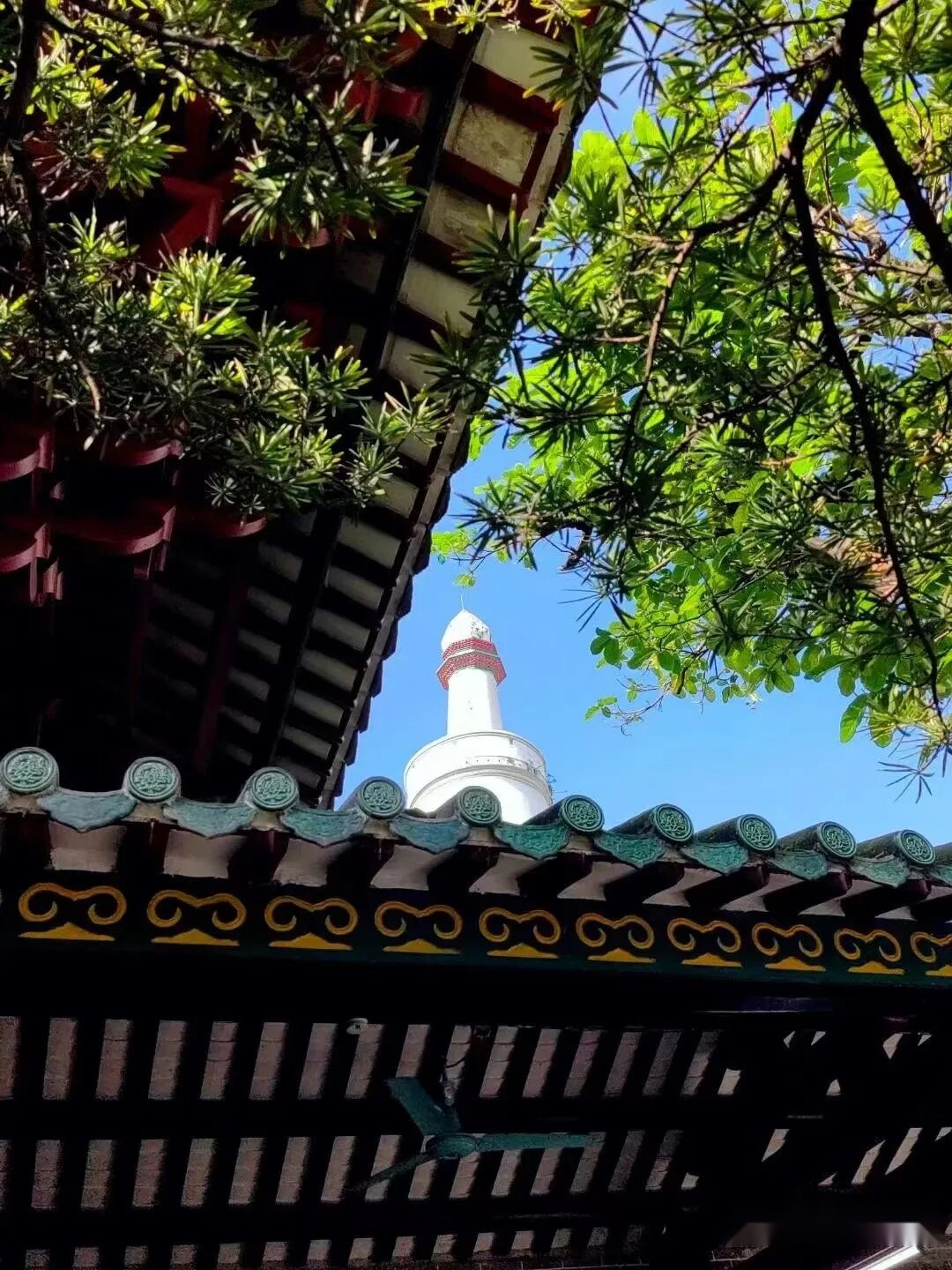
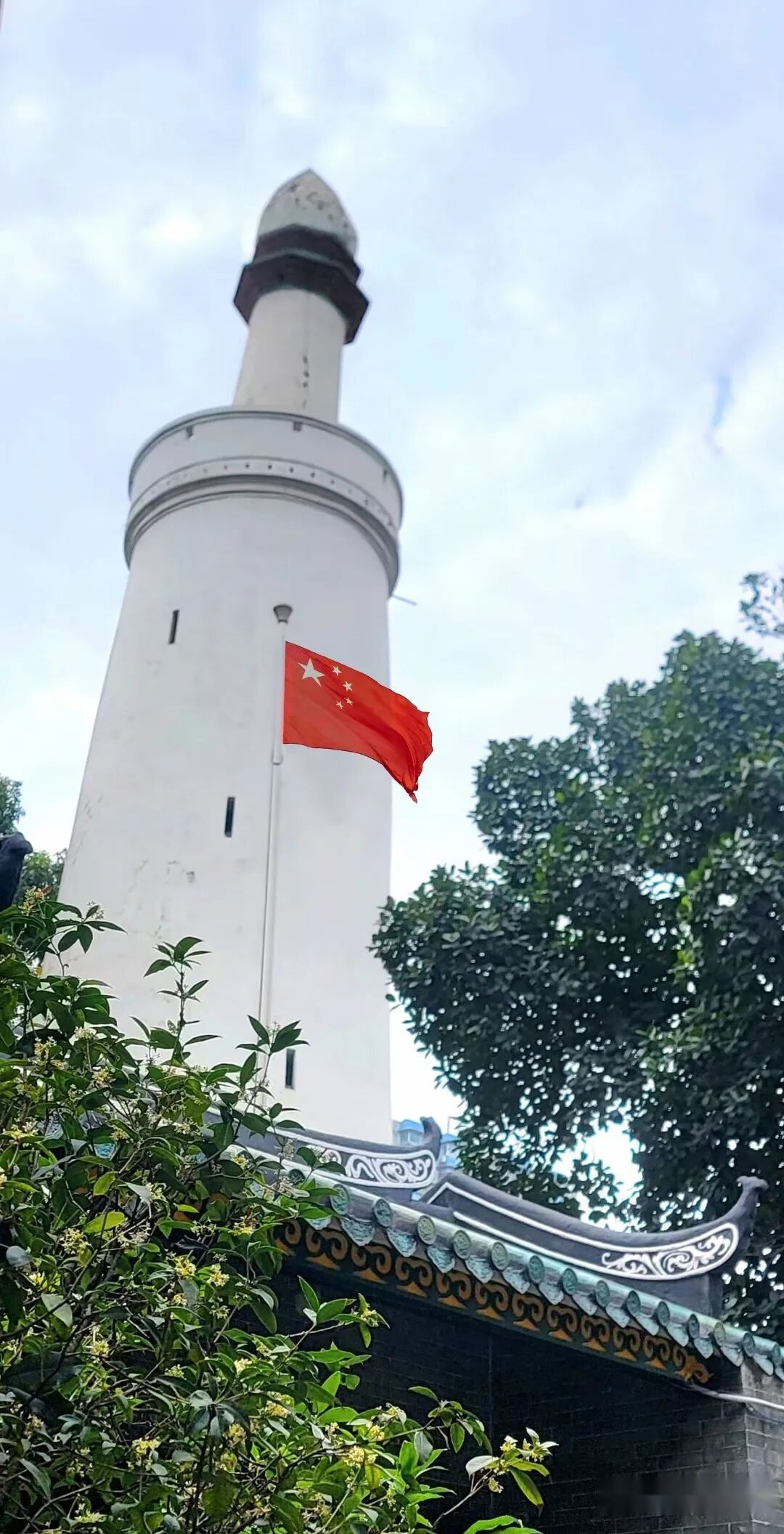
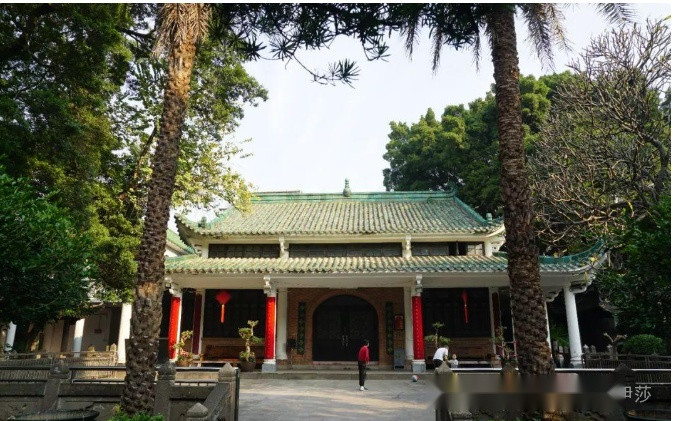
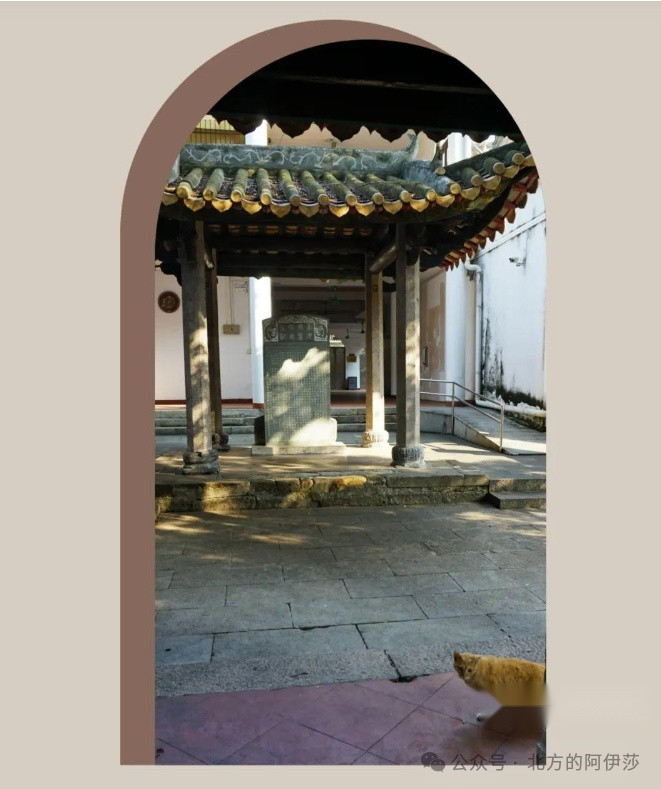
Huaisheng Mosque (Light Pagoda Mosque): Located on Guangta Road in Guangzhou's Yuexiu District, this is one of the oldest surviving mosques in China. Originally built during the Wude reign of Emperor Gaozu of the Tang Dynasty (618–626 CE), it boasts a history of over 1,300 years. The mosque features a classic Arab architectural style and covers an area of about 1,550 square meters. Key structures include the imam's office, the scripture library, the main prayer hall, and the ablution facility. The minaret inside, also known as the 'Light Pagoda' (Huaisheng Pagoda), was built in the third year of the Zhenguan reign (629 CE) and stands 36 meters tall, serving as a major landmark of ancient Islamic architecture in China.
2. Xiaodongying Mosque
Xiaodongying Mosque (Xiaodongying Mosque): Located right next to Xiaodongying Street on Yuehua Road in Guangzhou, this mosque has over 500 years of history and was likely built during the Ming Dynasty (1368–1644). It is a relatively small mosque, covering an area of around 800 square meters. Its bright yellow exterior walls make it stand out distinctively among the surrounding buildings. Inside, Xiaodongying Mosque features a main prayer hall, a lecture hall, and a bathhouse.
3. Haopan Mosque
Haopan Mosque (Haopan Mosque): Located on Haopan Street along Renmin Road Middle, this mosque was built during the Chenghua reign of the Ming Dynasty (1465–1487) and has a history spanning over 500 years. Its architectural style blends traditional Chinese elements with Islamic features, showcasing red walls, green tiles, and flying eaves with bracket sets (dougong). Covering about 1,500 square meters, Haopan Mosque houses a main prayer hall, an imam's office, and a bathhouse. The mosque also preserves a vast collection of Islamic classics and cultural artifacts.
4. Xianxian Mosque
Xianxian Mosque / Ancient Tomb of Saad ibn Abi Waqqas: Located on the west side of Lanpu along Jiefang North Road in Guangzhou, it is also known as the 'Hui Tombs' (Huihui Fen). Legend has it that this is the burial site of Saad ibn Abi Waqqas, a renowned Arab Islamic missionary from the Tang Dynasty (618–907). Covering an area of roughly 3,000 square meters, the mosque's main structures include a main prayer hall, an imam's office, and a bathhouse. It is also the final resting place for several esteemed imams from past dynasties, as well as the 'Tombs of the Forty-One Worthies'.
Be sure to follow us! view all
Complete Guide to Guangzhou's Major Mosques and Prayer Sites: Detailed Locations for Huaisheng Mosque, Xiaodongying Mosque, and Xianxian Mosque
Abstract:
A comprehensive guide detailing the geographical locations and historical backgrounds of Guangzhou's major mosques and Jummah prayer sites. Covering Huaisheng Mosque, Xiaodongying Mosque, Haopan Mosque, and Xianxian Mosque to help Muslim brothers and sisters from home and abroad with their prayers and heritage visits while staying in Guangzhou.
Dear brothers and sisters, As-salamu alaykum!
To better serve all our Muslim brothers and sisters living and working in Guangzhou, we've put together this handy guide mapping out the locations of mosques and prayer spots across every district. We hope this information makes things much easier for you!
Dear brothers and sisters, As-salamu alaykum!
The Guangzhou Muslim community has collected the locations and contact numbers for mosques across different districts, hoping this brings more convenience to you.
Guangzhou is home to four historic mosques: Xianxian Mosque / Ancient Tomb of Saad ibn Abi Waqqas, Huaisheng Mosque, Xiaodongying Mosque, and Haopan Mosque. Here's a quick introduction to all four:
1. Huaisheng Mosque
Huaisheng Mosque (Light Pagoda Mosque): Located on Guangta Road in Guangzhou's Yuexiu District, this is one of the oldest surviving mosques in China. Originally built during the Wude reign of Emperor Gaozu of the Tang Dynasty (618–626 CE), it boasts a history of over 1,300 years. The mosque features a classic Arab architectural style and covers an area of about 1,550 square meters. Key structures include the imam's office, the scripture library, the main prayer hall, and the ablution facility. The minaret inside, also known as the 'Light Pagoda' (Huaisheng Pagoda), was built in the third year of the Zhenguan reign (629 CE) and stands 36 meters tall, serving as a major landmark of ancient Islamic architecture in China.
2. Xiaodongying Mosque
Xiaodongying Mosque (Xiaodongying Mosque): Located right next to Xiaodongying Street on Yuehua Road in Guangzhou, this mosque has over 500 years of history and was likely built during the Ming Dynasty (1368–1644). It is a relatively small mosque, covering an area of around 800 square meters. Its bright yellow exterior walls make it stand out distinctively among the surrounding buildings. Inside, Xiaodongying Mosque features a main prayer hall, a lecture hall, and a bathhouse.
3. Haopan Mosque
Haopan Mosque (Haopan Mosque): Located on Haopan Street along Renmin Road Middle, this mosque was built during the Chenghua reign of the Ming Dynasty (1465–1487) and has a history spanning over 500 years. Its architectural style blends traditional Chinese elements with Islamic features, showcasing red walls, green tiles, and flying eaves with bracket sets (dougong). Covering about 1,500 square meters, Haopan Mosque houses a main prayer hall, an imam's office, and a bathhouse. The mosque also preserves a vast collection of Islamic classics and cultural artifacts.
4. Xianxian Mosque
Xianxian Mosque / Ancient Tomb of Saad ibn Abi Waqqas: Located on the west side of Lanpu along Jiefang North Road in Guangzhou, it is also known as the 'Hui Tombs' (Huihui Fen). Legend has it that this is the burial site of Saad ibn Abi Waqqas, a renowned Arab Islamic missionary from the Tang Dynasty (618–907). Covering an area of roughly 3,000 square meters, the mosque's main structures include a main prayer hall, an imam's office, and a bathhouse. It is also the final resting place for several esteemed imams from past dynasties, as well as the 'Tombs of the Forty-One Worthies'.
Be sure to follow us! view all
[Internet Repost]
Complete Guide to Guangzhou's Major Mosques and Prayer Sites: Detailed Locations for Huaisheng Mosque, Xiaodongying Mosque, and Xianxian Mosque
Abstract:
A comprehensive guide detailing the geographical locations and historical backgrounds of Guangzhou's major mosques and Jummah prayer sites. Covering Huaisheng Mosque, Xiaodongying Mosque, Haopan Mosque, and Xianxian Mosque to help Muslim brothers and sisters from home and abroad with their prayers and heritage visits while staying in Guangzhou.
Dear brothers and sisters, As-salamu alaykum!
To better serve all our Muslim brothers and sisters living and working in Guangzhou, we've put together this handy guide mapping out the locations of mosques and prayer spots across every district. We hope this information makes things much easier for you!
Dear brothers and sisters, As-salamu alaykum!
The Guangzhou Muslim community has collected the locations and contact numbers for mosques across different districts, hoping this brings more convenience to you.
Guangzhou is home to four historic mosques: Xianxian Mosque / Ancient Tomb of Saad ibn Abi Waqqas, Huaisheng Mosque, Xiaodongying Mosque, and Haopan Mosque. Here's a quick introduction to all four:
1. Huaisheng Mosque
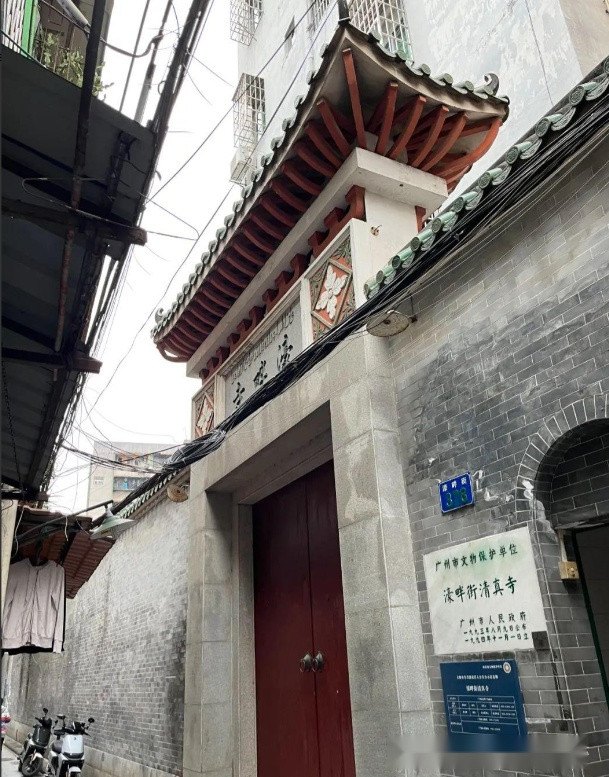
Huaisheng Mosque (Light Pagoda Mosque): Located on Guangta Road in Guangzhou's Yuexiu District, this is one of the oldest surviving mosques in China. Originally built during the Wude reign of Emperor Gaozu of the Tang Dynasty (618–626 CE), it boasts a history of over 1,300 years. The mosque features a classic Arab architectural style and covers an area of about 1,550 square meters. Key structures include the imam's office, the scripture library, the main prayer hall, and the ablution facility. The minaret inside, also known as the 'Light Pagoda' (Huaisheng Pagoda), was built in the third year of the Zhenguan reign (629 CE) and stands 36 meters tall, serving as a major landmark of ancient Islamic architecture in China.
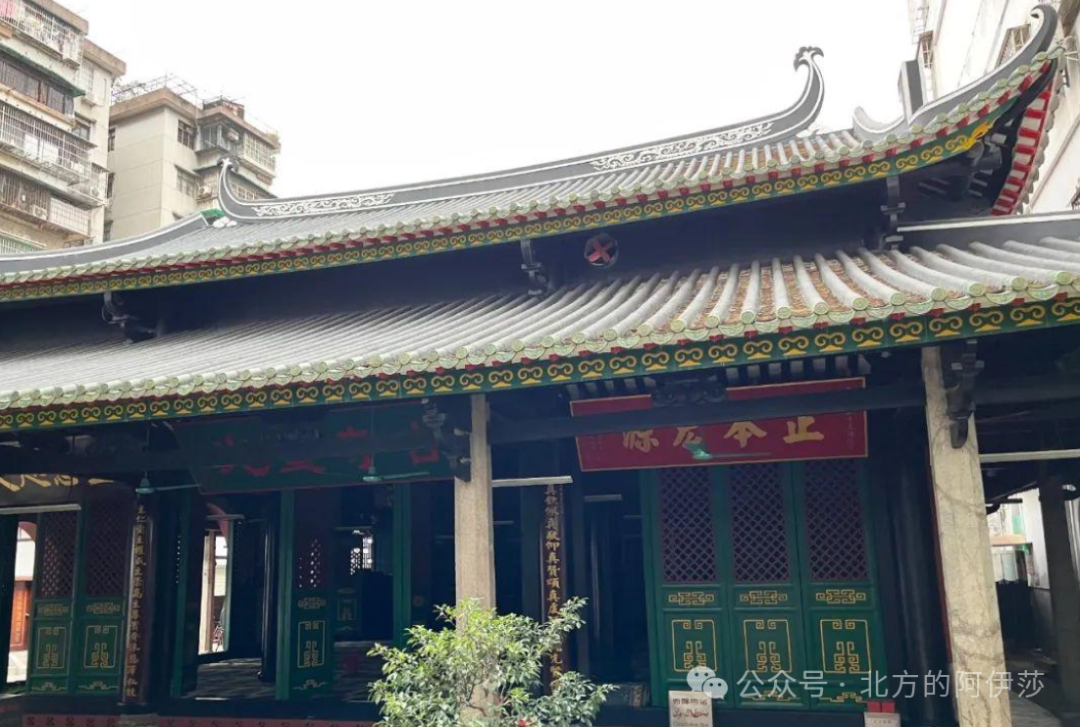
2. Xiaodongying Mosque
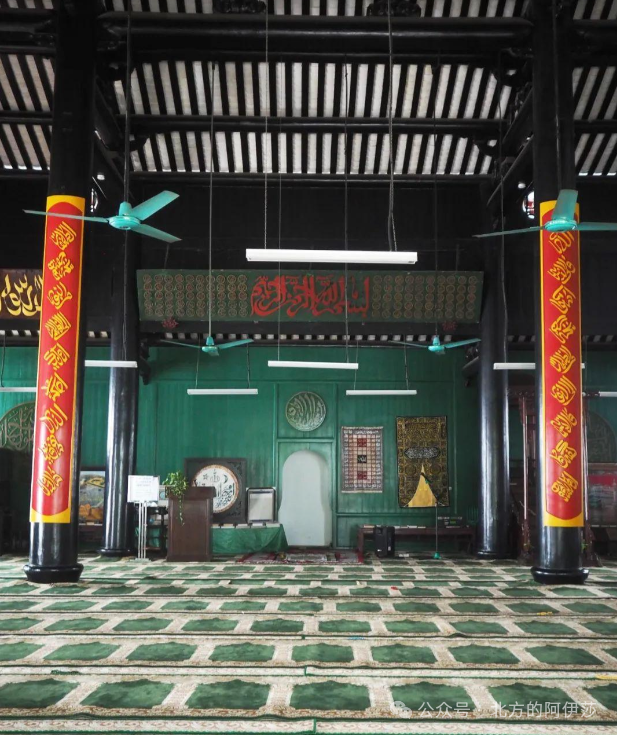
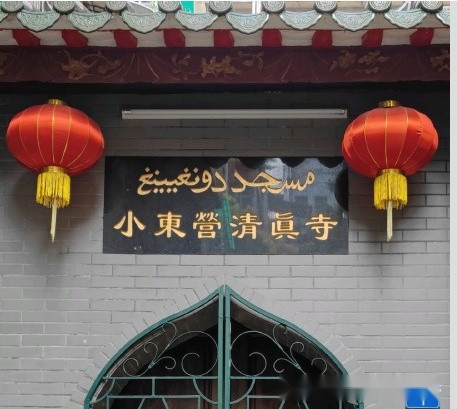
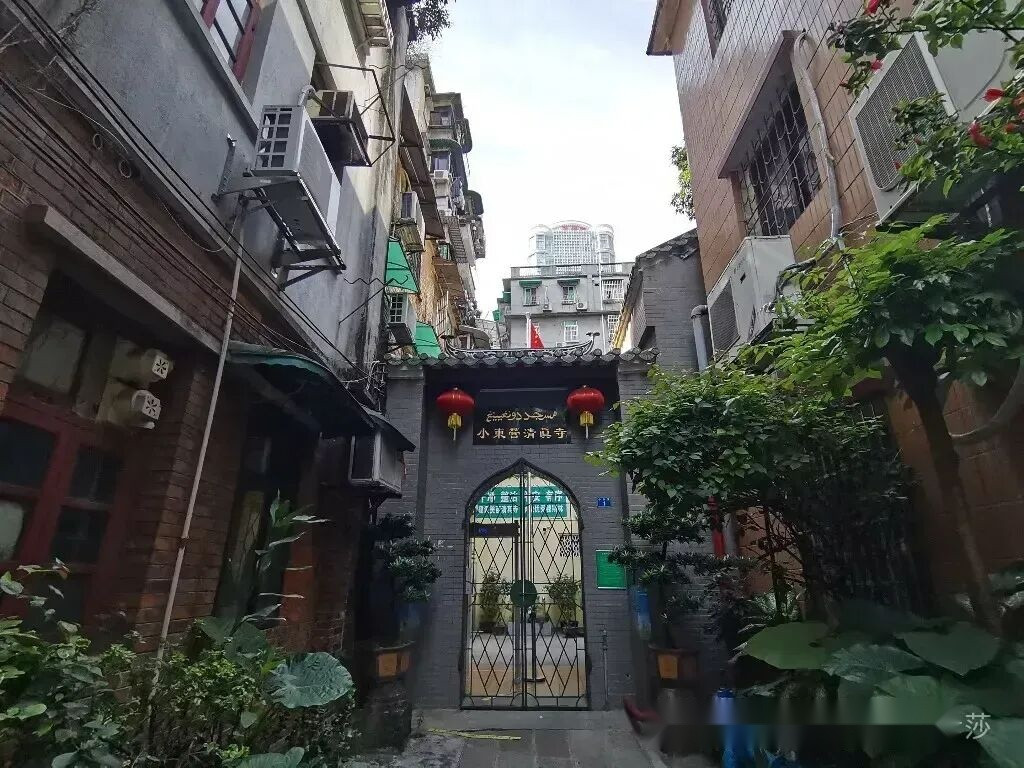
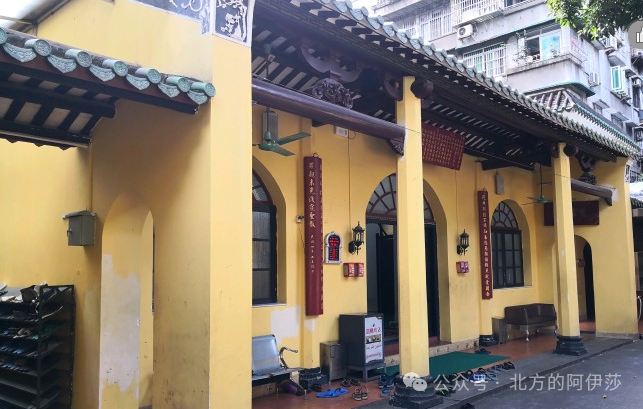
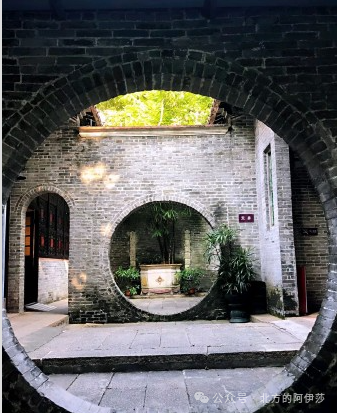
Xiaodongying Mosque (Xiaodongying Mosque): Located right next to Xiaodongying Street on Yuehua Road in Guangzhou, this mosque has over 500 years of history and was likely built during the Ming Dynasty (1368–1644). It is a relatively small mosque, covering an area of around 800 square meters. Its bright yellow exterior walls make it stand out distinctively among the surrounding buildings. Inside, Xiaodongying Mosque features a main prayer hall, a lecture hall, and a bathhouse.
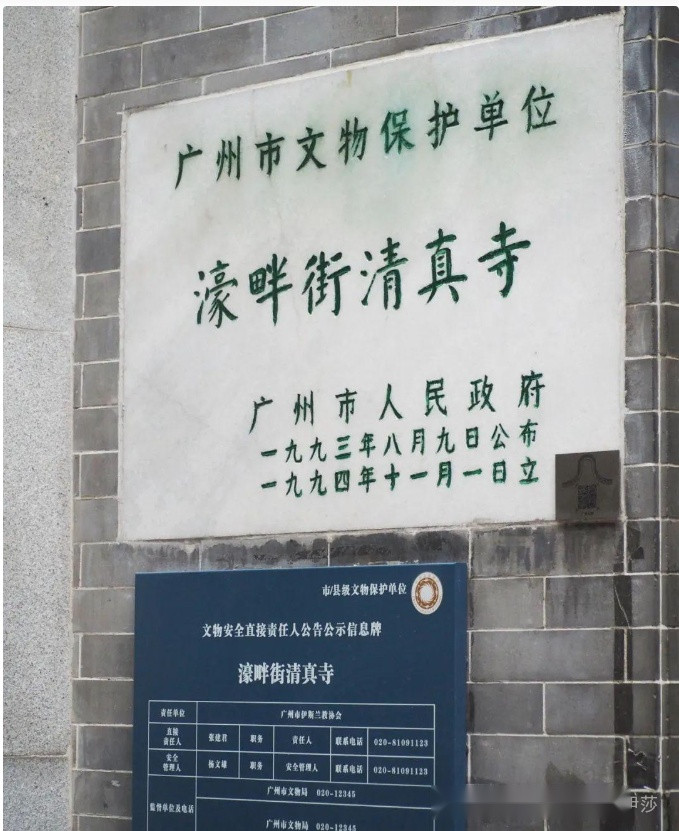
3. Haopan Mosque
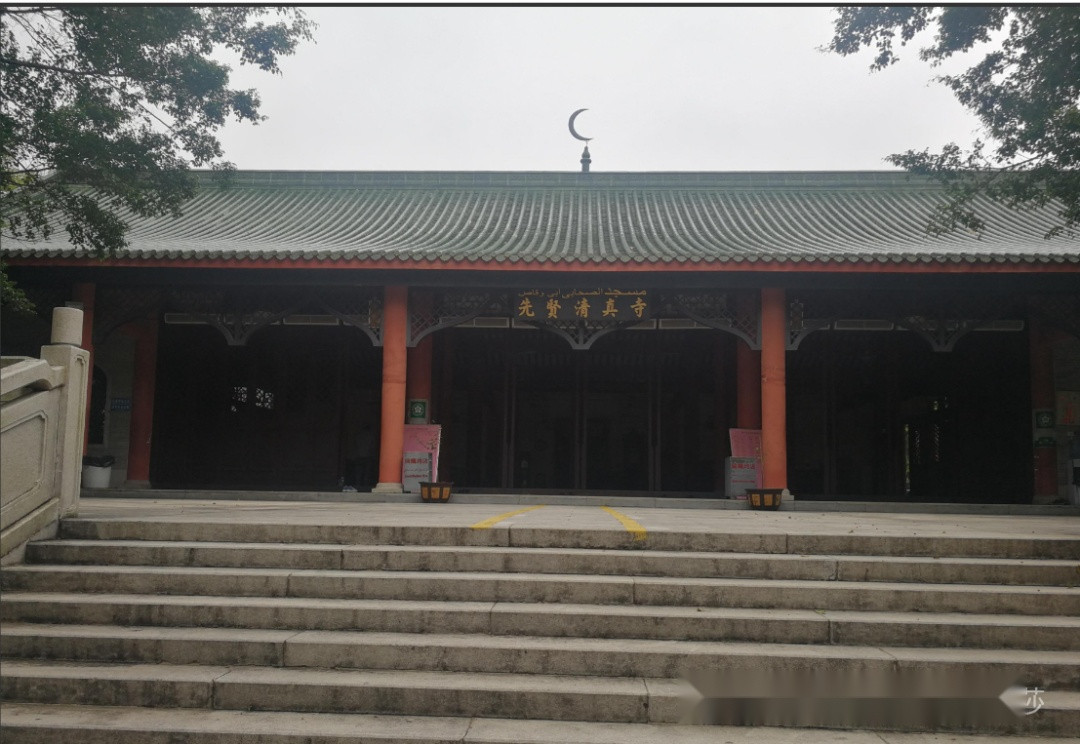
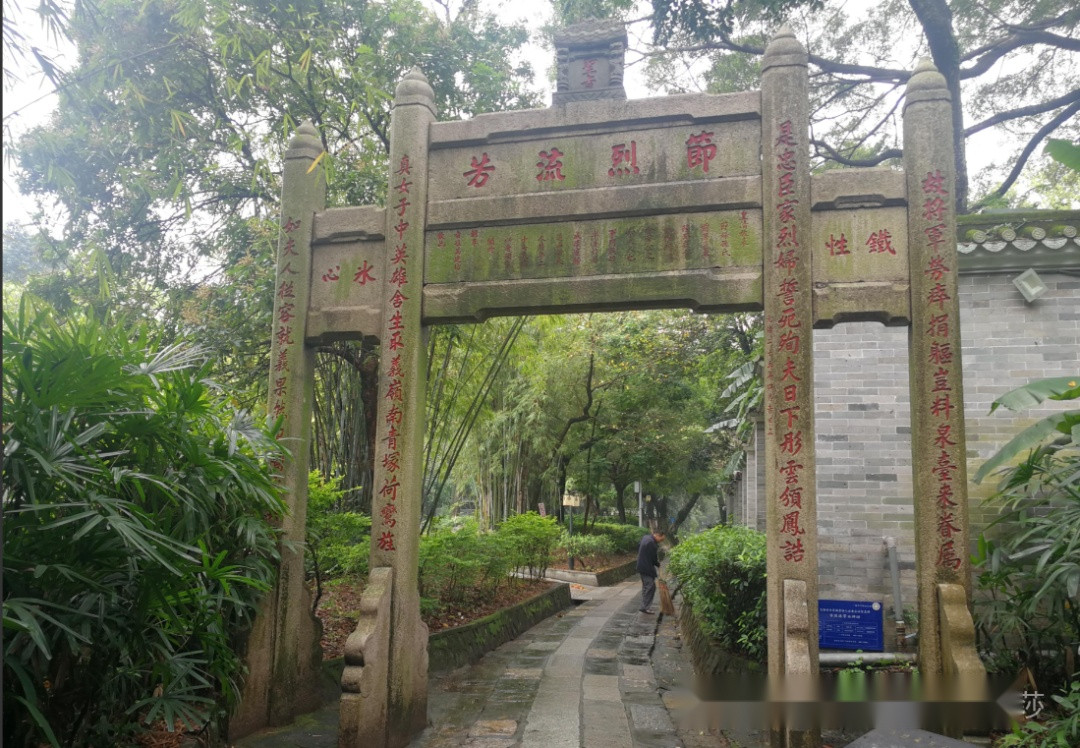
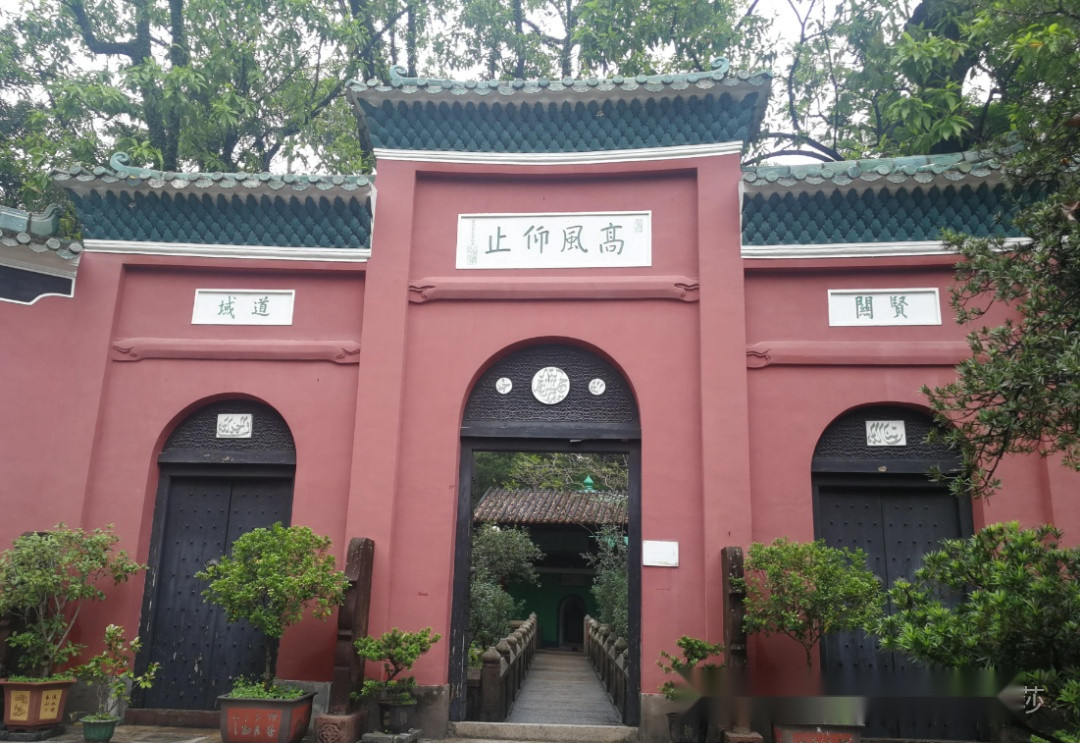
Haopan Mosque (Haopan Mosque): Located on Haopan Street along Renmin Road Middle, this mosque was built during the Chenghua reign of the Ming Dynasty (1465–1487) and has a history spanning over 500 years. Its architectural style blends traditional Chinese elements with Islamic features, showcasing red walls, green tiles, and flying eaves with bracket sets (dougong). Covering about 1,500 square meters, Haopan Mosque houses a main prayer hall, an imam's office, and a bathhouse. The mosque also preserves a vast collection of Islamic classics and cultural artifacts.
4. Xianxian Mosque
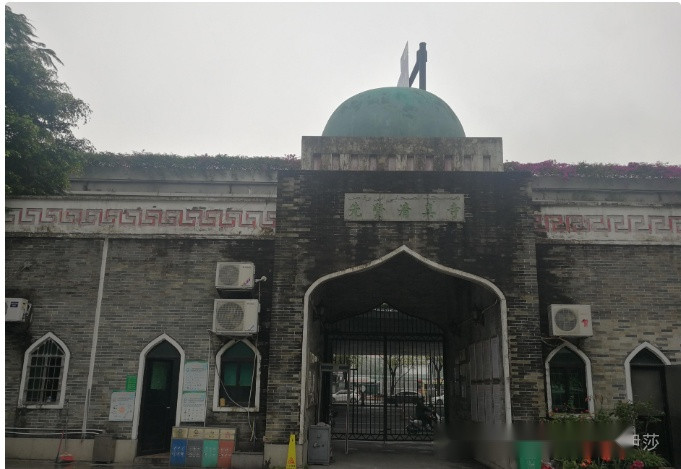
Xianxian Mosque / Ancient Tomb of Saad ibn Abi Waqqas: Located on the west side of Lanpu along Jiefang North Road in Guangzhou, it is also known as the 'Hui Tombs' (Huihui Fen). Legend has it that this is the burial site of Saad ibn Abi Waqqas, a renowned Arab Islamic missionary from the Tang Dynasty (618–907). Covering an area of roughly 3,000 square meters, the mosque's main structures include a main prayer hall, an imam's office, and a bathhouse. It is also the final resting place for several esteemed imams from past dynasties, as well as the 'Tombs of the Forty-One Worthies'.
Be sure to follow us!
Complete Guide to Guangzhou's Major Mosques and Prayer Sites: Detailed Locations for Huaisheng Mosque, Xiaodongying Mosque, and Xianxian Mosque
Abstract:
A comprehensive guide detailing the geographical locations and historical backgrounds of Guangzhou's major mosques and Jummah prayer sites. Covering Huaisheng Mosque, Xiaodongying Mosque, Haopan Mosque, and Xianxian Mosque to help Muslim brothers and sisters from home and abroad with their prayers and heritage visits while staying in Guangzhou.
Dear brothers and sisters, As-salamu alaykum!
To better serve all our Muslim brothers and sisters living and working in Guangzhou, we've put together this handy guide mapping out the locations of mosques and prayer spots across every district. We hope this information makes things much easier for you!
Dear brothers and sisters, As-salamu alaykum!
The Guangzhou Muslim community has collected the locations and contact numbers for mosques across different districts, hoping this brings more convenience to you.
Guangzhou is home to four historic mosques: Xianxian Mosque / Ancient Tomb of Saad ibn Abi Waqqas, Huaisheng Mosque, Xiaodongying Mosque, and Haopan Mosque. Here's a quick introduction to all four:
1. Huaisheng Mosque
Huaisheng Mosque (Light Pagoda Mosque): Located on Guangta Road in Guangzhou's Yuexiu District, this is one of the oldest surviving mosques in China. Originally built during the Wude reign of Emperor Gaozu of the Tang Dynasty (618–626 CE), it boasts a history of over 1,300 years. The mosque features a classic Arab architectural style and covers an area of about 1,550 square meters. Key structures include the imam's office, the scripture library, the main prayer hall, and the ablution facility. The minaret inside, also known as the 'Light Pagoda' (Huaisheng Pagoda), was built in the third year of the Zhenguan reign (629 CE) and stands 36 meters tall, serving as a major landmark of ancient Islamic architecture in China.
2. Xiaodongying Mosque
Xiaodongying Mosque (Xiaodongying Mosque): Located right next to Xiaodongying Street on Yuehua Road in Guangzhou, this mosque has over 500 years of history and was likely built during the Ming Dynasty (1368–1644). It is a relatively small mosque, covering an area of around 800 square meters. Its bright yellow exterior walls make it stand out distinctively among the surrounding buildings. Inside, Xiaodongying Mosque features a main prayer hall, a lecture hall, and a bathhouse.
3. Haopan Mosque
Haopan Mosque (Haopan Mosque): Located on Haopan Street along Renmin Road Middle, this mosque was built during the Chenghua reign of the Ming Dynasty (1465–1487) and has a history spanning over 500 years. Its architectural style blends traditional Chinese elements with Islamic features, showcasing red walls, green tiles, and flying eaves with bracket sets (dougong). Covering about 1,500 square meters, Haopan Mosque houses a main prayer hall, an imam's office, and a bathhouse. The mosque also preserves a vast collection of Islamic classics and cultural artifacts.
4. Xianxian Mosque
Xianxian Mosque / Ancient Tomb of Saad ibn Abi Waqqas: Located on the west side of Lanpu along Jiefang North Road in Guangzhou, it is also known as the 'Hui Tombs' (Huihui Fen). Legend has it that this is the burial site of Saad ibn Abi Waqqas, a renowned Arab Islamic missionary from the Tang Dynasty (618–907). Covering an area of roughly 3,000 square meters, the mosque's main structures include a main prayer hall, an imam's office, and a bathhouse. It is also the final resting place for several esteemed imams from past dynasties, as well as the 'Tombs of the Forty-One Worthies'.
Be sure to follow us!
Ningxia Liupan Mountain Mosque Renovations and Minaret Demolition Spark Concerns
Articles • Hasan09 posted the article • 0 comments • 4 views • 3 hours ago
[Internet Repost]
In the Ningxia Hui Autonomous Region of Northwest China, even though the "Sinicization" campaign targeting mosques has been underway for years, the latest signs indicate that religious sites that have already undergone initial exterior "renovations" are still facing the fate of further demolition or even complete disappearance.
Recently, video footage emerged from an iconic mosque in Ningxia's Liupan Mountain region, showing heavy construction cranes inside the courtyard. Eyewitnesses reported that the mosque's traditional Islamic-style minaret was being hoisted down and dismantled.
From "Renovation" to "Dismantling"
This mosque, located in a Hui Muslim-populated area, had previously completed "de-religiosization" rectifications in accordance with official policies. To comply with so-called architectural aesthetics and "Sinicization" requirements, the mosque had already removed its domes and replaced original religious elements with more Chinese-style architectural components.
However, local worshippers found that temporary compromises did not buy long-term preservation. Analysts point out that this latest minaret demolition marks a shift in regional policy focus from "style adjustments" to a more thorough "structural removal."
The Extension of Official Policy
Since 2016, Beijing has pushed forward a nationwide "Sinicization of religion" policy aimed at making the architectural styles, decorations, and internal rituals of religious sites better align with traditional Chinese culture. In Ningxia and Gansu, thousands of mosques have had their domes and minarets removed.
Human Rights Watch and several independent scholars point out that this phased approach is highly representative. Earlier reports revealed that religious sites in some regions were converted into cultural stations or exhibition centers, but the latest developments in the Liupan Mountain area show that even for buildings where "renovations" are complete, their religious symbols are still targeted for rectification.
"This Is Just a Transition"
"So-called 'renovations' are not about preservation; they are a transitional step," said a researcher on religious issues who spoke on condition of anonymity. "First, social sensitivity is lowered through 'style rectifications,' followed by the use of more covert administrative measures for physical demolition, ultimately achieving the goal of 'zeroing out' or completely changing the building's use."
For the worshippers living in the Liupan Mountain region, the mosque is not only a religious center but also the soul of their community culture. The disappearance of the minaret is viewed by locals as a heavy signal of the further shrinking of religious freedom space.
At present, the local government in Ningxia has not yet issued an official explanation regarding the specific demolition work at the mosque. view all
In the Ningxia Hui Autonomous Region of Northwest China, even though the "Sinicization" campaign targeting mosques has been underway for years, the latest signs indicate that religious sites that have already undergone initial exterior "renovations" are still facing the fate of further demolition or even complete disappearance.
Recently, video footage emerged from an iconic mosque in Ningxia's Liupan Mountain region, showing heavy construction cranes inside the courtyard. Eyewitnesses reported that the mosque's traditional Islamic-style minaret was being hoisted down and dismantled.
From "Renovation" to "Dismantling"
This mosque, located in a Hui Muslim-populated area, had previously completed "de-religiosization" rectifications in accordance with official policies. To comply with so-called architectural aesthetics and "Sinicization" requirements, the mosque had already removed its domes and replaced original religious elements with more Chinese-style architectural components.
However, local worshippers found that temporary compromises did not buy long-term preservation. Analysts point out that this latest minaret demolition marks a shift in regional policy focus from "style adjustments" to a more thorough "structural removal."
The Extension of Official Policy
Since 2016, Beijing has pushed forward a nationwide "Sinicization of religion" policy aimed at making the architectural styles, decorations, and internal rituals of religious sites better align with traditional Chinese culture. In Ningxia and Gansu, thousands of mosques have had their domes and minarets removed.
Human Rights Watch and several independent scholars point out that this phased approach is highly representative. Earlier reports revealed that religious sites in some regions were converted into cultural stations or exhibition centers, but the latest developments in the Liupan Mountain area show that even for buildings where "renovations" are complete, their religious symbols are still targeted for rectification.
"This Is Just a Transition"
"So-called 'renovations' are not about preservation; they are a transitional step," said a researcher on religious issues who spoke on condition of anonymity. "First, social sensitivity is lowered through 'style rectifications,' followed by the use of more covert administrative measures for physical demolition, ultimately achieving the goal of 'zeroing out' or completely changing the building's use."
For the worshippers living in the Liupan Mountain region, the mosque is not only a religious center but also the soul of their community culture. The disappearance of the minaret is viewed by locals as a heavy signal of the further shrinking of religious freedom space.
At present, the local government in Ningxia has not yet issued an official explanation regarding the specific demolition work at the mosque. view all
[Internet Repost]
In the Ningxia Hui Autonomous Region of Northwest China, even though the "Sinicization" campaign targeting mosques has been underway for years, the latest signs indicate that religious sites that have already undergone initial exterior "renovations" are still facing the fate of further demolition or even complete disappearance.
Recently, video footage emerged from an iconic mosque in Ningxia's Liupan Mountain region, showing heavy construction cranes inside the courtyard. Eyewitnesses reported that the mosque's traditional Islamic-style minaret was being hoisted down and dismantled.
From "Renovation" to "Dismantling"
This mosque, located in a Hui Muslim-populated area, had previously completed "de-religiosization" rectifications in accordance with official policies. To comply with so-called architectural aesthetics and "Sinicization" requirements, the mosque had already removed its domes and replaced original religious elements with more Chinese-style architectural components.
However, local worshippers found that temporary compromises did not buy long-term preservation. Analysts point out that this latest minaret demolition marks a shift in regional policy focus from "style adjustments" to a more thorough "structural removal."
The Extension of Official Policy
Since 2016, Beijing has pushed forward a nationwide "Sinicization of religion" policy aimed at making the architectural styles, decorations, and internal rituals of religious sites better align with traditional Chinese culture. In Ningxia and Gansu, thousands of mosques have had their domes and minarets removed.
Human Rights Watch and several independent scholars point out that this phased approach is highly representative. Earlier reports revealed that religious sites in some regions were converted into cultural stations or exhibition centers, but the latest developments in the Liupan Mountain area show that even for buildings where "renovations" are complete, their religious symbols are still targeted for rectification.
"This Is Just a Transition"
"So-called 'renovations' are not about preservation; they are a transitional step," said a researcher on religious issues who spoke on condition of anonymity. "First, social sensitivity is lowered through 'style rectifications,' followed by the use of more covert administrative measures for physical demolition, ultimately achieving the goal of 'zeroing out' or completely changing the building's use."
For the worshippers living in the Liupan Mountain region, the mosque is not only a religious center but also the soul of their community culture. The disappearance of the minaret is viewed by locals as a heavy signal of the further shrinking of religious freedom space.
At present, the local government in Ningxia has not yet issued an official explanation regarding the specific demolition work at the mosque.
In the Ningxia Hui Autonomous Region of Northwest China, even though the "Sinicization" campaign targeting mosques has been underway for years, the latest signs indicate that religious sites that have already undergone initial exterior "renovations" are still facing the fate of further demolition or even complete disappearance.
Recently, video footage emerged from an iconic mosque in Ningxia's Liupan Mountain region, showing heavy construction cranes inside the courtyard. Eyewitnesses reported that the mosque's traditional Islamic-style minaret was being hoisted down and dismantled.
From "Renovation" to "Dismantling"
This mosque, located in a Hui Muslim-populated area, had previously completed "de-religiosization" rectifications in accordance with official policies. To comply with so-called architectural aesthetics and "Sinicization" requirements, the mosque had already removed its domes and replaced original religious elements with more Chinese-style architectural components.
However, local worshippers found that temporary compromises did not buy long-term preservation. Analysts point out that this latest minaret demolition marks a shift in regional policy focus from "style adjustments" to a more thorough "structural removal."
The Extension of Official Policy
Since 2016, Beijing has pushed forward a nationwide "Sinicization of religion" policy aimed at making the architectural styles, decorations, and internal rituals of religious sites better align with traditional Chinese culture. In Ningxia and Gansu, thousands of mosques have had their domes and minarets removed.
Human Rights Watch and several independent scholars point out that this phased approach is highly representative. Earlier reports revealed that religious sites in some regions were converted into cultural stations or exhibition centers, but the latest developments in the Liupan Mountain area show that even for buildings where "renovations" are complete, their religious symbols are still targeted for rectification.
"This Is Just a Transition"
"So-called 'renovations' are not about preservation; they are a transitional step," said a researcher on religious issues who spoke on condition of anonymity. "First, social sensitivity is lowered through 'style rectifications,' followed by the use of more covert administrative measures for physical demolition, ultimately achieving the goal of 'zeroing out' or completely changing the building's use."
For the worshippers living in the Liupan Mountain region, the mosque is not only a religious center but also the soul of their community culture. The disappearance of the minaret is viewed by locals as a heavy signal of the further shrinking of religious freedom space.
At present, the local government in Ningxia has not yet issued an official explanation regarding the specific demolition work at the mosque.
Exploring Siliangzi Gongbei in Wuzhong: History of Jahriyya Sufi Shrine in Ningxia
Articles • Hasan09 posted the article • 0 comments • 3 views • 3 hours ago
[Internet Repost]
The Protected Heritage Architecture of Siliangzi Gongbei in Wuzhong: A Study of the Final Resting Place of Master Ma Hualong and Its Hexagonal Double-Eaved Design
Abstract:
A deep dive into the Siliangzi Gongbei, a key cultural heritage site under protection in Wuzhong City. This explores its history—originally built in the fourth year of the Republic of China (1915) and rebuilt in 1992—along with its striking 24-meter-tall main structure featuring an intricate hexagonal pyramidal double-eaved design symbolizing the hexagonal cap of the Jahriyya order.
The Siliangzi Gongbei is a key cultural relic protection unit in Wuzhong City, Ningxia, serving as the final resting place and commemorative shrine of Ma Hualong, the fifth-generation master of the Jahriyya Sufi order (whom followers respectfully call the "Thirteenth Grandfather").
Originally built in 1915 (the fourth year of the Republic of China) and later rebuilt in 1992, the gongbei is now an ancient-style, reinforced concrete structure featuring a hexagonal pyramidal double-eaved roof. Standing 24 meters tall, the main structure symbolizes the hexagonal hat of the Jahriyya and the six core articles of faith in Islam. The exterior is decked out in dark gray bricks and green glazed tiles, while the interior is inlaid with pristine white marble. The craftsmanship is seriously stunning, holding massive religious and artistic value.
The architectural details are totally packed with symbolism:
The nine-tier base represents the "nine layers of empty clouds";
The east-facing facade features carvings of the "Five Elders Observing Taiji," blending traditional philosophical imagery;
The eaves corners are shaped like six phoenixes spreading their wings, symbolizing good fortune and spiritual ascension. view all
The Protected Heritage Architecture of Siliangzi Gongbei in Wuzhong: A Study of the Final Resting Place of Master Ma Hualong and Its Hexagonal Double-Eaved Design
Abstract:
A deep dive into the Siliangzi Gongbei, a key cultural heritage site under protection in Wuzhong City. This explores its history—originally built in the fourth year of the Republic of China (1915) and rebuilt in 1992—along with its striking 24-meter-tall main structure featuring an intricate hexagonal pyramidal double-eaved design symbolizing the hexagonal cap of the Jahriyya order.
The Siliangzi Gongbei is a key cultural relic protection unit in Wuzhong City, Ningxia, serving as the final resting place and commemorative shrine of Ma Hualong, the fifth-generation master of the Jahriyya Sufi order (whom followers respectfully call the "Thirteenth Grandfather").
Originally built in 1915 (the fourth year of the Republic of China) and later rebuilt in 1992, the gongbei is now an ancient-style, reinforced concrete structure featuring a hexagonal pyramidal double-eaved roof. Standing 24 meters tall, the main structure symbolizes the hexagonal hat of the Jahriyya and the six core articles of faith in Islam. The exterior is decked out in dark gray bricks and green glazed tiles, while the interior is inlaid with pristine white marble. The craftsmanship is seriously stunning, holding massive religious and artistic value.
The architectural details are totally packed with symbolism:
The nine-tier base represents the "nine layers of empty clouds";
The east-facing facade features carvings of the "Five Elders Observing Taiji," blending traditional philosophical imagery;
The eaves corners are shaped like six phoenixes spreading their wings, symbolizing good fortune and spiritual ascension. view all
[Internet Repost]
The Protected Heritage Architecture of Siliangzi Gongbei in Wuzhong: A Study of the Final Resting Place of Master Ma Hualong and Its Hexagonal Double-Eaved Design
Abstract:
A deep dive into the Siliangzi Gongbei, a key cultural heritage site under protection in Wuzhong City. This explores its history—originally built in the fourth year of the Republic of China (1915) and rebuilt in 1992—along with its striking 24-meter-tall main structure featuring an intricate hexagonal pyramidal double-eaved design symbolizing the hexagonal cap of the Jahriyya order.
The Siliangzi Gongbei is a key cultural relic protection unit in Wuzhong City, Ningxia, serving as the final resting place and commemorative shrine of Ma Hualong, the fifth-generation master of the Jahriyya Sufi order (whom followers respectfully call the "Thirteenth Grandfather").
Originally built in 1915 (the fourth year of the Republic of China) and later rebuilt in 1992, the gongbei is now an ancient-style, reinforced concrete structure featuring a hexagonal pyramidal double-eaved roof. Standing 24 meters tall, the main structure symbolizes the hexagonal hat of the Jahriyya and the six core articles of faith in Islam. The exterior is decked out in dark gray bricks and green glazed tiles, while the interior is inlaid with pristine white marble. The craftsmanship is seriously stunning, holding massive religious and artistic value.
The architectural details are totally packed with symbolism:
The nine-tier base represents the "nine layers of empty clouds";
The east-facing facade features carvings of the "Five Elders Observing Taiji," blending traditional philosophical imagery;
The eaves corners are shaped like six phoenixes spreading their wings, symbolizing good fortune and spiritual ascension.
The Protected Heritage Architecture of Siliangzi Gongbei in Wuzhong: A Study of the Final Resting Place of Master Ma Hualong and Its Hexagonal Double-Eaved Design
Abstract:
A deep dive into the Siliangzi Gongbei, a key cultural heritage site under protection in Wuzhong City. This explores its history—originally built in the fourth year of the Republic of China (1915) and rebuilt in 1992—along with its striking 24-meter-tall main structure featuring an intricate hexagonal pyramidal double-eaved design symbolizing the hexagonal cap of the Jahriyya order.
The Siliangzi Gongbei is a key cultural relic protection unit in Wuzhong City, Ningxia, serving as the final resting place and commemorative shrine of Ma Hualong, the fifth-generation master of the Jahriyya Sufi order (whom followers respectfully call the "Thirteenth Grandfather").
Originally built in 1915 (the fourth year of the Republic of China) and later rebuilt in 1992, the gongbei is now an ancient-style, reinforced concrete structure featuring a hexagonal pyramidal double-eaved roof. Standing 24 meters tall, the main structure symbolizes the hexagonal hat of the Jahriyya and the six core articles of faith in Islam. The exterior is decked out in dark gray bricks and green glazed tiles, while the interior is inlaid with pristine white marble. The craftsmanship is seriously stunning, holding massive religious and artistic value.
The architectural details are totally packed with symbolism:
The nine-tier base represents the "nine layers of empty clouds";
The east-facing facade features carvings of the "Five Elders Observing Taiji," blending traditional philosophical imagery;
The eaves corners are shaped like six phoenixes spreading their wings, symbolizing good fortune and spiritual ascension.
Complete Guide to Guangzhou's Historic Mosques: Huaisheng, Xiaodongying & Xianxian Masjids
Articles • Hasan09 posted the article • 0 comments • 8 views • 10 hours ago
[Internet Repost]
Complete Guide to Guangzhou's Major Mosques and Prayer Sites: Detailed Locations for Huaisheng Mosque, Xiaodongying Mosque, and Xianxian Mosque
Abstract:
A comprehensive guide detailing the geographical locations and historical backgrounds of Guangzhou's major mosques and Jummah prayer sites. Covering Huaisheng Mosque, Xiaodongying Mosque, Haopan Mosque, and Xianxian Mosque to help Muslim brothers and sisters from home and abroad with their prayers and heritage visits while staying in Guangzhou.
Dear brothers and sisters, As-salamu alaykum!
To better serve all our Muslim brothers and sisters living and working in Guangzhou, we've put together this handy guide mapping out the locations of mosques and prayer spots across every district. We hope this information makes things much easier for you!
Dear brothers and sisters, As-salamu alaykum!
The Guangzhou Muslim community has collected the locations and contact numbers for mosques across different districts, hoping this brings more convenience to you.
Guangzhou is home to four historic mosques: Xianxian Mosque / Ancient Tomb of Saad ibn Abi Waqqas, Huaisheng Mosque, Xiaodongying Mosque, and Haopan Mosque. Here's a quick introduction to all four:
1. Huaisheng Mosque
Huaisheng Mosque (Light Pagoda Mosque): Located on Guangta Road in Guangzhou's Yuexiu District, this is one of the oldest surviving mosques in China. Originally built during the Wude reign of Emperor Gaozu of the Tang Dynasty (618–626 CE), it boasts a history of over 1,300 years. The mosque features a classic Arab architectural style and covers an area of about 1,550 square meters. Key structures include the imam's office, the scripture library, the main prayer hall, and the ablution facility. The minaret inside, also known as the 'Light Pagoda' (Huaisheng Pagoda), was built in the third year of the Zhenguan reign (629 CE) and stands 36 meters tall, serving as a major landmark of ancient Islamic architecture in China.
2. Xiaodongying Mosque
Xiaodongying Mosque (Xiaodongying Mosque): Located right next to Xiaodongying Street on Yuehua Road in Guangzhou, this mosque has over 500 years of history and was likely built during the Ming Dynasty (1368–1644). It is a relatively small mosque, covering an area of around 800 square meters. Its bright yellow exterior walls make it stand out distinctively among the surrounding buildings. Inside, Xiaodongying Mosque features a main prayer hall, a lecture hall, and a bathhouse.
3. Haopan Mosque
Haopan Mosque (Haopan Mosque): Located on Haopan Street along Renmin Road Middle, this mosque was built during the Chenghua reign of the Ming Dynasty (1465–1487) and has a history spanning over 500 years. Its architectural style blends traditional Chinese elements with Islamic features, showcasing red walls, green tiles, and flying eaves with bracket sets (dougong). Covering about 1,500 square meters, Haopan Mosque houses a main prayer hall, an imam's office, and a bathhouse. The mosque also preserves a vast collection of Islamic classics and cultural artifacts.
4. Xianxian Mosque
Xianxian Mosque / Ancient Tomb of Saad ibn Abi Waqqas: Located on the west side of Lanpu along Jiefang North Road in Guangzhou, it is also known as the 'Hui Tombs' (Huihui Fen). Legend has it that this is the burial site of Saad ibn Abi Waqqas, a renowned Arab Islamic missionary from the Tang Dynasty (618–907). Covering an area of roughly 3,000 square meters, the mosque's main structures include a main prayer hall, an imam's office, and a bathhouse. It is also the final resting place for several esteemed imams from past dynasties, as well as the 'Tombs of the Forty-One Worthies'.
Be sure to follow us! view all
Complete Guide to Guangzhou's Major Mosques and Prayer Sites: Detailed Locations for Huaisheng Mosque, Xiaodongying Mosque, and Xianxian Mosque
Abstract:
A comprehensive guide detailing the geographical locations and historical backgrounds of Guangzhou's major mosques and Jummah prayer sites. Covering Huaisheng Mosque, Xiaodongying Mosque, Haopan Mosque, and Xianxian Mosque to help Muslim brothers and sisters from home and abroad with their prayers and heritage visits while staying in Guangzhou.
Dear brothers and sisters, As-salamu alaykum!
To better serve all our Muslim brothers and sisters living and working in Guangzhou, we've put together this handy guide mapping out the locations of mosques and prayer spots across every district. We hope this information makes things much easier for you!
Dear brothers and sisters, As-salamu alaykum!
The Guangzhou Muslim community has collected the locations and contact numbers for mosques across different districts, hoping this brings more convenience to you.
Guangzhou is home to four historic mosques: Xianxian Mosque / Ancient Tomb of Saad ibn Abi Waqqas, Huaisheng Mosque, Xiaodongying Mosque, and Haopan Mosque. Here's a quick introduction to all four:
1. Huaisheng Mosque
Huaisheng Mosque (Light Pagoda Mosque): Located on Guangta Road in Guangzhou's Yuexiu District, this is one of the oldest surviving mosques in China. Originally built during the Wude reign of Emperor Gaozu of the Tang Dynasty (618–626 CE), it boasts a history of over 1,300 years. The mosque features a classic Arab architectural style and covers an area of about 1,550 square meters. Key structures include the imam's office, the scripture library, the main prayer hall, and the ablution facility. The minaret inside, also known as the 'Light Pagoda' (Huaisheng Pagoda), was built in the third year of the Zhenguan reign (629 CE) and stands 36 meters tall, serving as a major landmark of ancient Islamic architecture in China.
2. Xiaodongying Mosque
Xiaodongying Mosque (Xiaodongying Mosque): Located right next to Xiaodongying Street on Yuehua Road in Guangzhou, this mosque has over 500 years of history and was likely built during the Ming Dynasty (1368–1644). It is a relatively small mosque, covering an area of around 800 square meters. Its bright yellow exterior walls make it stand out distinctively among the surrounding buildings. Inside, Xiaodongying Mosque features a main prayer hall, a lecture hall, and a bathhouse.
3. Haopan Mosque
Haopan Mosque (Haopan Mosque): Located on Haopan Street along Renmin Road Middle, this mosque was built during the Chenghua reign of the Ming Dynasty (1465–1487) and has a history spanning over 500 years. Its architectural style blends traditional Chinese elements with Islamic features, showcasing red walls, green tiles, and flying eaves with bracket sets (dougong). Covering about 1,500 square meters, Haopan Mosque houses a main prayer hall, an imam's office, and a bathhouse. The mosque also preserves a vast collection of Islamic classics and cultural artifacts.
4. Xianxian Mosque
Xianxian Mosque / Ancient Tomb of Saad ibn Abi Waqqas: Located on the west side of Lanpu along Jiefang North Road in Guangzhou, it is also known as the 'Hui Tombs' (Huihui Fen). Legend has it that this is the burial site of Saad ibn Abi Waqqas, a renowned Arab Islamic missionary from the Tang Dynasty (618–907). Covering an area of roughly 3,000 square meters, the mosque's main structures include a main prayer hall, an imam's office, and a bathhouse. It is also the final resting place for several esteemed imams from past dynasties, as well as the 'Tombs of the Forty-One Worthies'.
Be sure to follow us! view all
[Internet Repost]
Complete Guide to Guangzhou's Major Mosques and Prayer Sites: Detailed Locations for Huaisheng Mosque, Xiaodongying Mosque, and Xianxian Mosque
Abstract:
A comprehensive guide detailing the geographical locations and historical backgrounds of Guangzhou's major mosques and Jummah prayer sites. Covering Huaisheng Mosque, Xiaodongying Mosque, Haopan Mosque, and Xianxian Mosque to help Muslim brothers and sisters from home and abroad with their prayers and heritage visits while staying in Guangzhou.
Dear brothers and sisters, As-salamu alaykum!
To better serve all our Muslim brothers and sisters living and working in Guangzhou, we've put together this handy guide mapping out the locations of mosques and prayer spots across every district. We hope this information makes things much easier for you!
Dear brothers and sisters, As-salamu alaykum!
The Guangzhou Muslim community has collected the locations and contact numbers for mosques across different districts, hoping this brings more convenience to you.
Guangzhou is home to four historic mosques: Xianxian Mosque / Ancient Tomb of Saad ibn Abi Waqqas, Huaisheng Mosque, Xiaodongying Mosque, and Haopan Mosque. Here's a quick introduction to all four:
1. Huaisheng Mosque
Huaisheng Mosque (Light Pagoda Mosque): Located on Guangta Road in Guangzhou's Yuexiu District, this is one of the oldest surviving mosques in China. Originally built during the Wude reign of Emperor Gaozu of the Tang Dynasty (618–626 CE), it boasts a history of over 1,300 years. The mosque features a classic Arab architectural style and covers an area of about 1,550 square meters. Key structures include the imam's office, the scripture library, the main prayer hall, and the ablution facility. The minaret inside, also known as the 'Light Pagoda' (Huaisheng Pagoda), was built in the third year of the Zhenguan reign (629 CE) and stands 36 meters tall, serving as a major landmark of ancient Islamic architecture in China.
2. Xiaodongying Mosque
Xiaodongying Mosque (Xiaodongying Mosque): Located right next to Xiaodongying Street on Yuehua Road in Guangzhou, this mosque has over 500 years of history and was likely built during the Ming Dynasty (1368–1644). It is a relatively small mosque, covering an area of around 800 square meters. Its bright yellow exterior walls make it stand out distinctively among the surrounding buildings. Inside, Xiaodongying Mosque features a main prayer hall, a lecture hall, and a bathhouse.
3. Haopan Mosque
Haopan Mosque (Haopan Mosque): Located on Haopan Street along Renmin Road Middle, this mosque was built during the Chenghua reign of the Ming Dynasty (1465–1487) and has a history spanning over 500 years. Its architectural style blends traditional Chinese elements with Islamic features, showcasing red walls, green tiles, and flying eaves with bracket sets (dougong). Covering about 1,500 square meters, Haopan Mosque houses a main prayer hall, an imam's office, and a bathhouse. The mosque also preserves a vast collection of Islamic classics and cultural artifacts.
4. Xianxian Mosque
Xianxian Mosque / Ancient Tomb of Saad ibn Abi Waqqas: Located on the west side of Lanpu along Jiefang North Road in Guangzhou, it is also known as the 'Hui Tombs' (Huihui Fen). Legend has it that this is the burial site of Saad ibn Abi Waqqas, a renowned Arab Islamic missionary from the Tang Dynasty (618–907). Covering an area of roughly 3,000 square meters, the mosque's main structures include a main prayer hall, an imam's office, and a bathhouse. It is also the final resting place for several esteemed imams from past dynasties, as well as the 'Tombs of the Forty-One Worthies'.
Be sure to follow us!
Complete Guide to Guangzhou's Major Mosques and Prayer Sites: Detailed Locations for Huaisheng Mosque, Xiaodongying Mosque, and Xianxian Mosque
Abstract:
A comprehensive guide detailing the geographical locations and historical backgrounds of Guangzhou's major mosques and Jummah prayer sites. Covering Huaisheng Mosque, Xiaodongying Mosque, Haopan Mosque, and Xianxian Mosque to help Muslim brothers and sisters from home and abroad with their prayers and heritage visits while staying in Guangzhou.
Dear brothers and sisters, As-salamu alaykum!
To better serve all our Muslim brothers and sisters living and working in Guangzhou, we've put together this handy guide mapping out the locations of mosques and prayer spots across every district. We hope this information makes things much easier for you!
Dear brothers and sisters, As-salamu alaykum!
The Guangzhou Muslim community has collected the locations and contact numbers for mosques across different districts, hoping this brings more convenience to you.
Guangzhou is home to four historic mosques: Xianxian Mosque / Ancient Tomb of Saad ibn Abi Waqqas, Huaisheng Mosque, Xiaodongying Mosque, and Haopan Mosque. Here's a quick introduction to all four:
1. Huaisheng Mosque
Huaisheng Mosque (Light Pagoda Mosque): Located on Guangta Road in Guangzhou's Yuexiu District, this is one of the oldest surviving mosques in China. Originally built during the Wude reign of Emperor Gaozu of the Tang Dynasty (618–626 CE), it boasts a history of over 1,300 years. The mosque features a classic Arab architectural style and covers an area of about 1,550 square meters. Key structures include the imam's office, the scripture library, the main prayer hall, and the ablution facility. The minaret inside, also known as the 'Light Pagoda' (Huaisheng Pagoda), was built in the third year of the Zhenguan reign (629 CE) and stands 36 meters tall, serving as a major landmark of ancient Islamic architecture in China.
2. Xiaodongying Mosque
Xiaodongying Mosque (Xiaodongying Mosque): Located right next to Xiaodongying Street on Yuehua Road in Guangzhou, this mosque has over 500 years of history and was likely built during the Ming Dynasty (1368–1644). It is a relatively small mosque, covering an area of around 800 square meters. Its bright yellow exterior walls make it stand out distinctively among the surrounding buildings. Inside, Xiaodongying Mosque features a main prayer hall, a lecture hall, and a bathhouse.
3. Haopan Mosque
Haopan Mosque (Haopan Mosque): Located on Haopan Street along Renmin Road Middle, this mosque was built during the Chenghua reign of the Ming Dynasty (1465–1487) and has a history spanning over 500 years. Its architectural style blends traditional Chinese elements with Islamic features, showcasing red walls, green tiles, and flying eaves with bracket sets (dougong). Covering about 1,500 square meters, Haopan Mosque houses a main prayer hall, an imam's office, and a bathhouse. The mosque also preserves a vast collection of Islamic classics and cultural artifacts.
4. Xianxian Mosque
Xianxian Mosque / Ancient Tomb of Saad ibn Abi Waqqas: Located on the west side of Lanpu along Jiefang North Road in Guangzhou, it is also known as the 'Hui Tombs' (Huihui Fen). Legend has it that this is the burial site of Saad ibn Abi Waqqas, a renowned Arab Islamic missionary from the Tang Dynasty (618–907). Covering an area of roughly 3,000 square meters, the mosque's main structures include a main prayer hall, an imam's office, and a bathhouse. It is also the final resting place for several esteemed imams from past dynasties, as well as the 'Tombs of the Forty-One Worthies'.
Be sure to follow us!