

Jeddah
Islamic Museum Guide: Jeddah Tayebat Museum - Saudi History and Culture
Articles • ali2007fr posted the article • 0 comments • 188 views • 2026-05-19 09:31
Reposted from the web
Summary: Islamic Museum Guide: Jeddah Tayebat Museum - Saudi History and Culture is presented here as a firsthand travel account in clear, natural English. The account focuses on Jeddah, Tayebat Museum, Saudi Culture while preserving the names, places, food, photos, and historical details from the Chinese source.
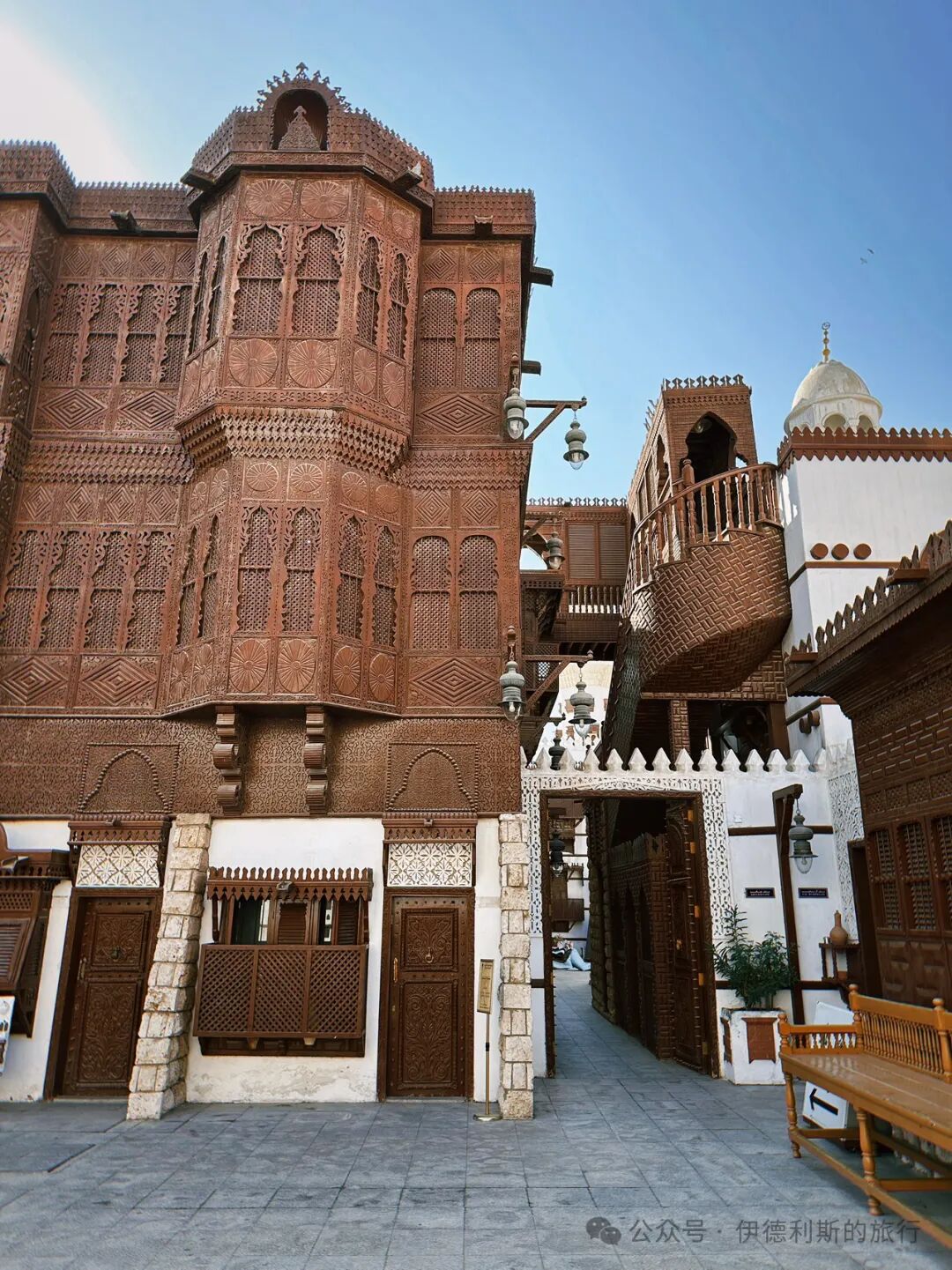
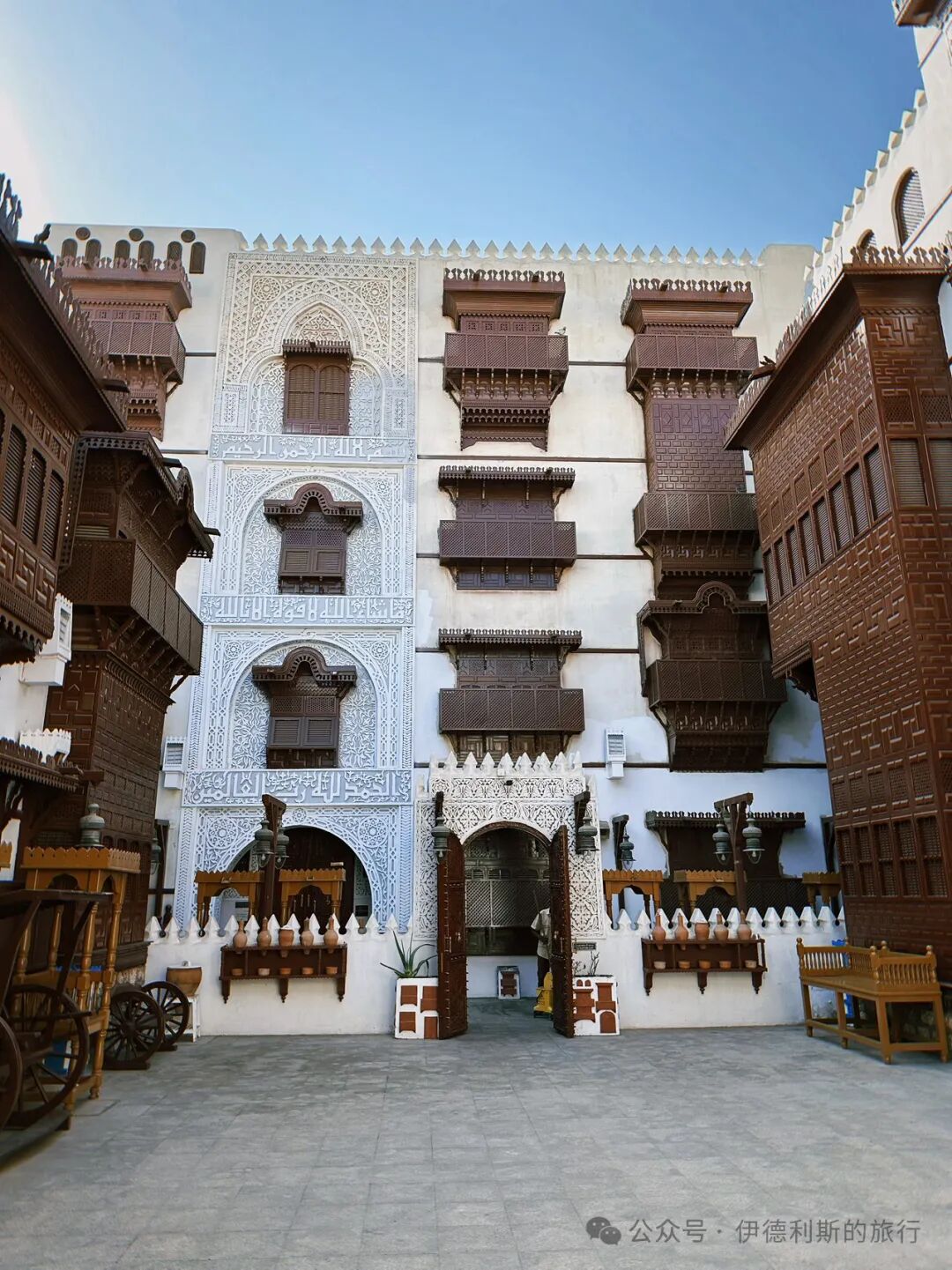
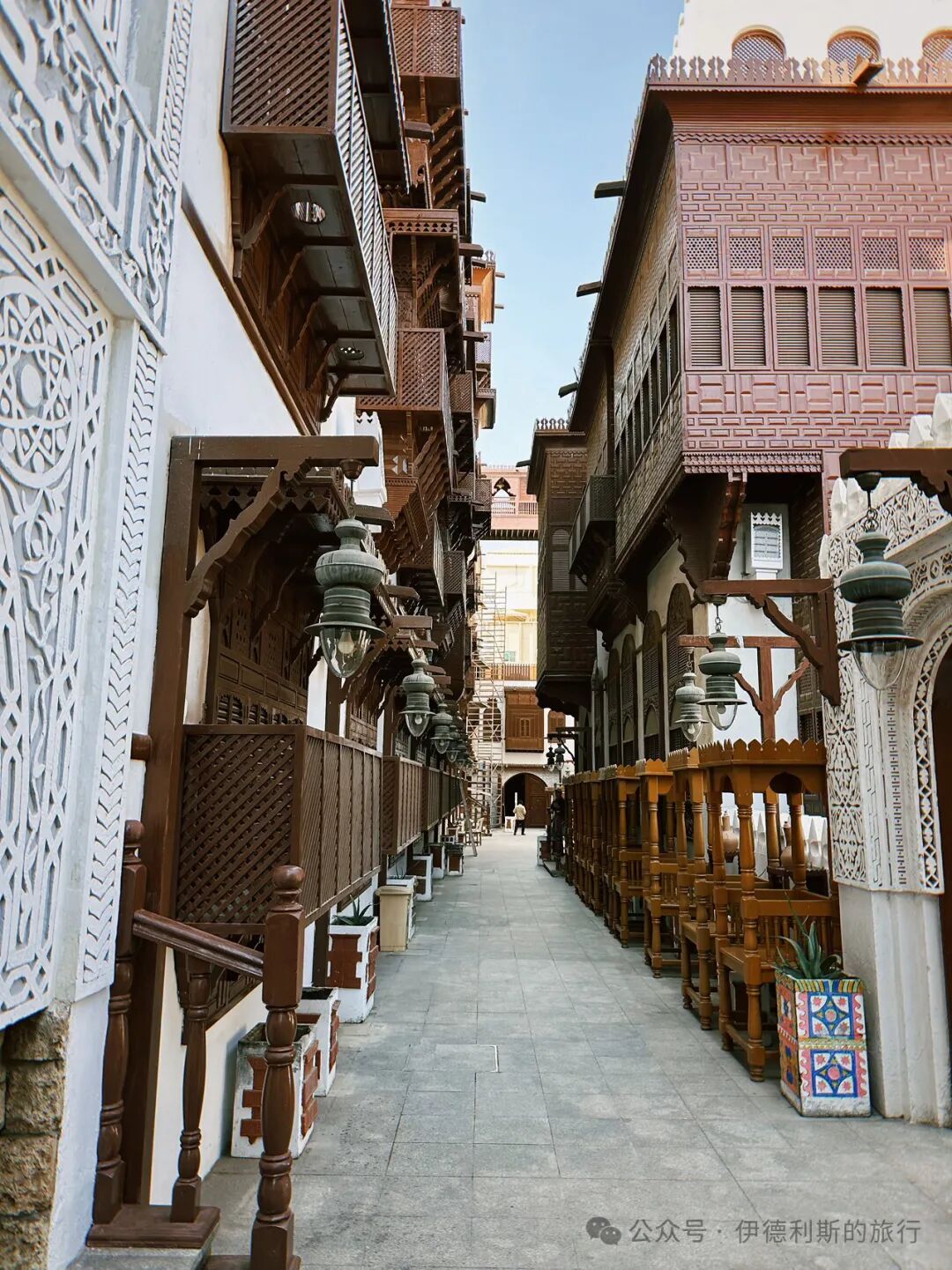
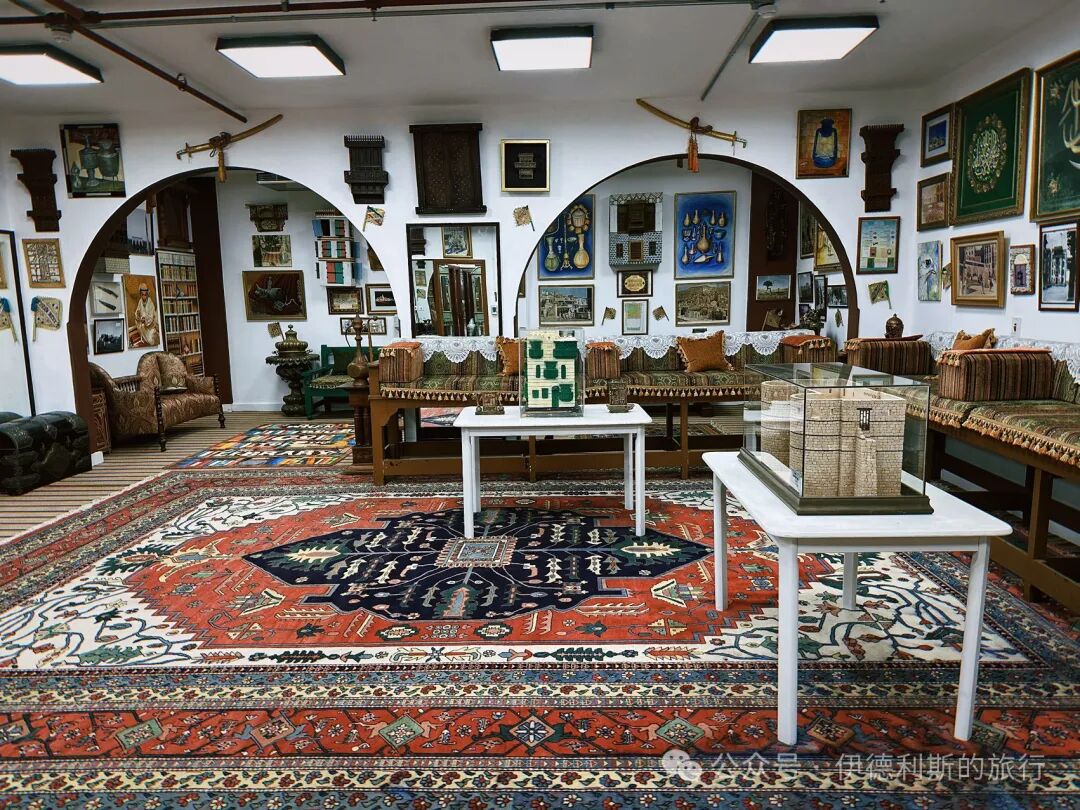
The full name of the Tayebat Museum is the Al Taybat International City Museum of Science and Information. The entire museum is built in the traditional architectural style of the Hejaz region, featuring coral stone and plaster walls along with beautiful wooden bay windows (Roshan).
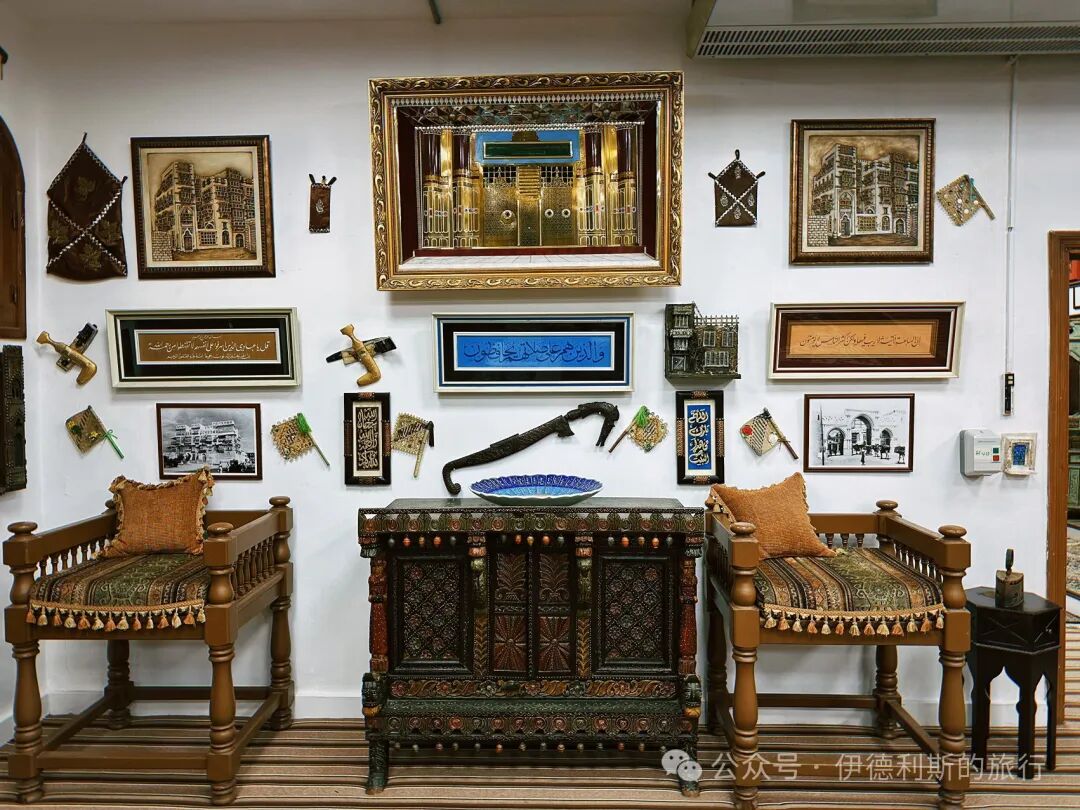
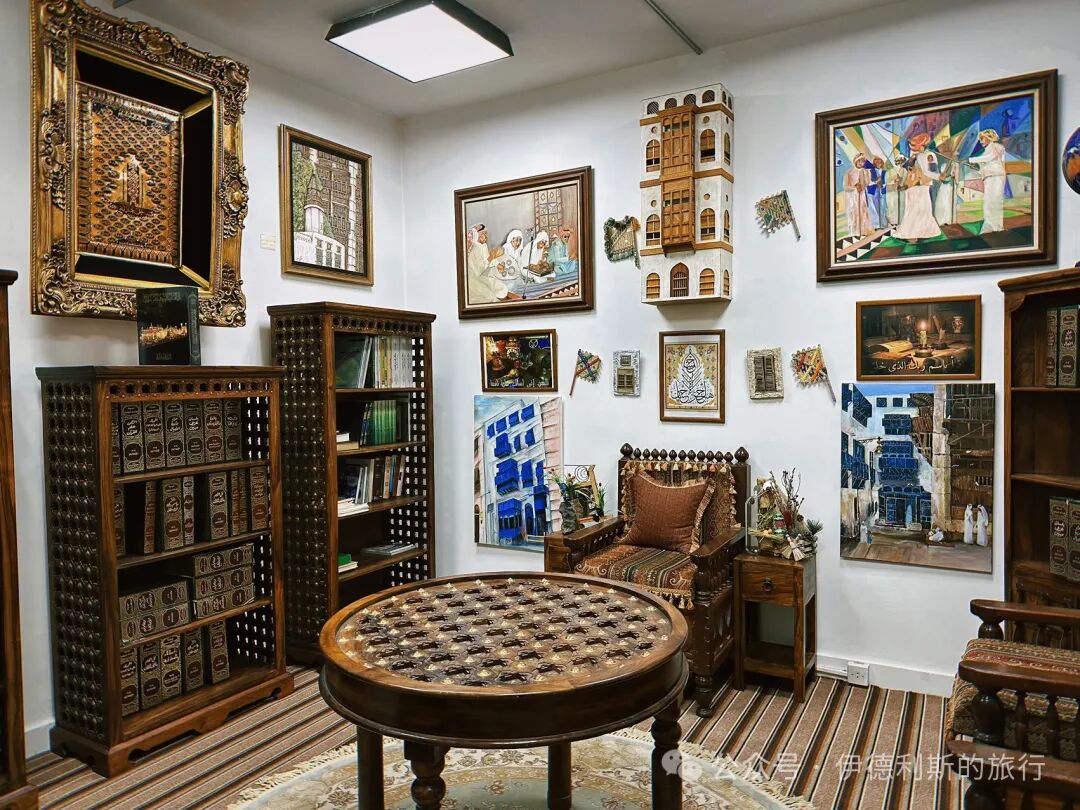
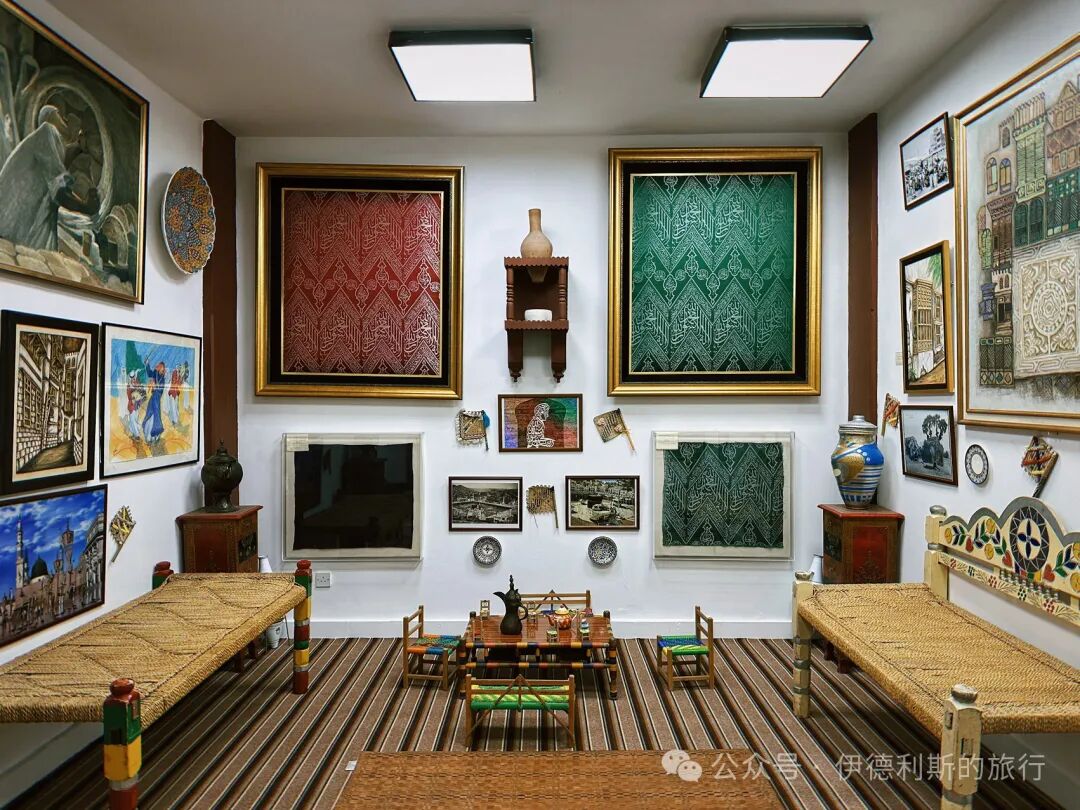
The museum has a rich collection of exhibits. It starts with the rise of the faith and displays many beautiful artworks and artifacts. The museum also has a wealth of displays on the traditional folk culture of Jeddah, the Hejaz, and all of Saudi Arabia, including a large collection of traditional clothing and folk objects.
A 19th-century wooden prayer niche (mihrab) from Damascus, featuring beautiful Persian calligraphy.
A 16th-century manuscript from the Mughal Empire.
A 16th-century Persian Safavid dynasty manuscript of poetry with miniature paintings.
A 12th-century bronze cannon muzzle from the ancient city of Herat, Afghanistan, engraved with Kufic calligraphy. Herat grew into a center for metal manufacturing between the 11th and 12th centuries until the Mongol army massacred the city in 1221.
A 14th-century small plaster prayer niche (mihrab) from Samarkand during the Timurid dynasty, decorated with Kufic calligraphy.
A Moroccan manuscript from 1860 written in Maghrebi script.
A copper water kettle with silver inlay from Ottoman-era Damascus, dating to the 18th or 19th century.
A 13th-century Ayyubid dynasty manuscript from the southeastern Anatolian Peninsula, written in Muhaqqaq script.
A 13th-century Egyptian Mamluk dynasty manuscript written in Muhaqqaq script.
A 16th-century Persian Safavid dynasty manuscript written in Al-rayhani script.
A 14th-century manuscript from northwestern Iraq, written in Iraqi Rayhani script during the Jalayirid dynasty. The Jalayirid dynasty was a Persianized khanate established by Mongol tribes after the Ilkhanate collapsed.
A 19th-century North African manuscript written in Maghrebi Kufic script.
A manuscript written in Naskh script from the Persian Qajar dynasty in 1800.
A manuscript written in Naskh script from the Bosnia region during the Ottoman dynasty in the 17th to 18th centuries.
A manuscript written in Naskh script from the Turkey region during the Ottoman dynasty in the 18th century.
A manuscript written in Naskh script from the India region during the Mughal dynasty in the 17th century.
A manuscript written in Kufic script, likely from the Iraq region, dating to the 10th to 11th centuries.
A manuscript written in Andalusian script from the Andalusia region in the 12th century.
A manuscript written in Kufic script from the Iraq region during the Abbasid dynasty in the 9th to 10th centuries.
A manuscript written in Kufic script from the Iraq region during the Abbasid dynasty in the 8th to 9th centuries.
A manuscript written in Kufic script from 9th-century Iraq or Iran.
A manuscript written in Muhaqqaq script from the Anatolia region during the Seljuk Empire in the 13th to 14th centuries.
A manuscript of Sahih al-Bukhari from the 18th-century Morocco region.
A religious handbook from the 17th-century Kashmir region.
An 1828 Ottoman Turkish manuscript of the prayer book Dala'il al-Khayrat.
A 1495 miniature painting in Turkmen style from the Khamsa, the masterpiece of the great Persian poet Nizami.
A 1744 miniature painting of the Prophet's Mosque and the Sacred Mosque from the Dala'il al-Khayrat, created by Ottoman calligrapher Mohammed Bin Hussein.
A 1485 Indian miniature painting from The Treasury of Secrets, the first volume of the Khamsa by the great Persian poet Nizami.
A 14th-century brass candlestick from the Mamluk period in Syria, featuring engravings in Naskh calligraphy.
A 15th to 16th-century copper plate from the Mamluk period in Egypt, featuring engravings in Naskh calligraphy.
A 17th-century porcelain jar from the Ottoman period in Turkey, featuring Naskh calligraphy.
A wooden inscription from 1351 dedicated to the zakat for the Kaaba.
A 19th-century chest of drawers from Damascus made of coconut wood, inlaid with shell and bone, with drawer handles made of porcelain and marble.
Two 17th-century wooden beams from Medina featuring Kufic script.
A 10th-century marble carving from the Fatimid period in Damascus featuring Kufic script.
A limestone carved column capital from an Umayyad palace dating to 693.
A marble column capital from the Umayyad Caliphate in Syria, dating back to the 7th century.
A white marble fountain from Egypt during the Mamluk Sultanate, dating to the 13th or 14th century.
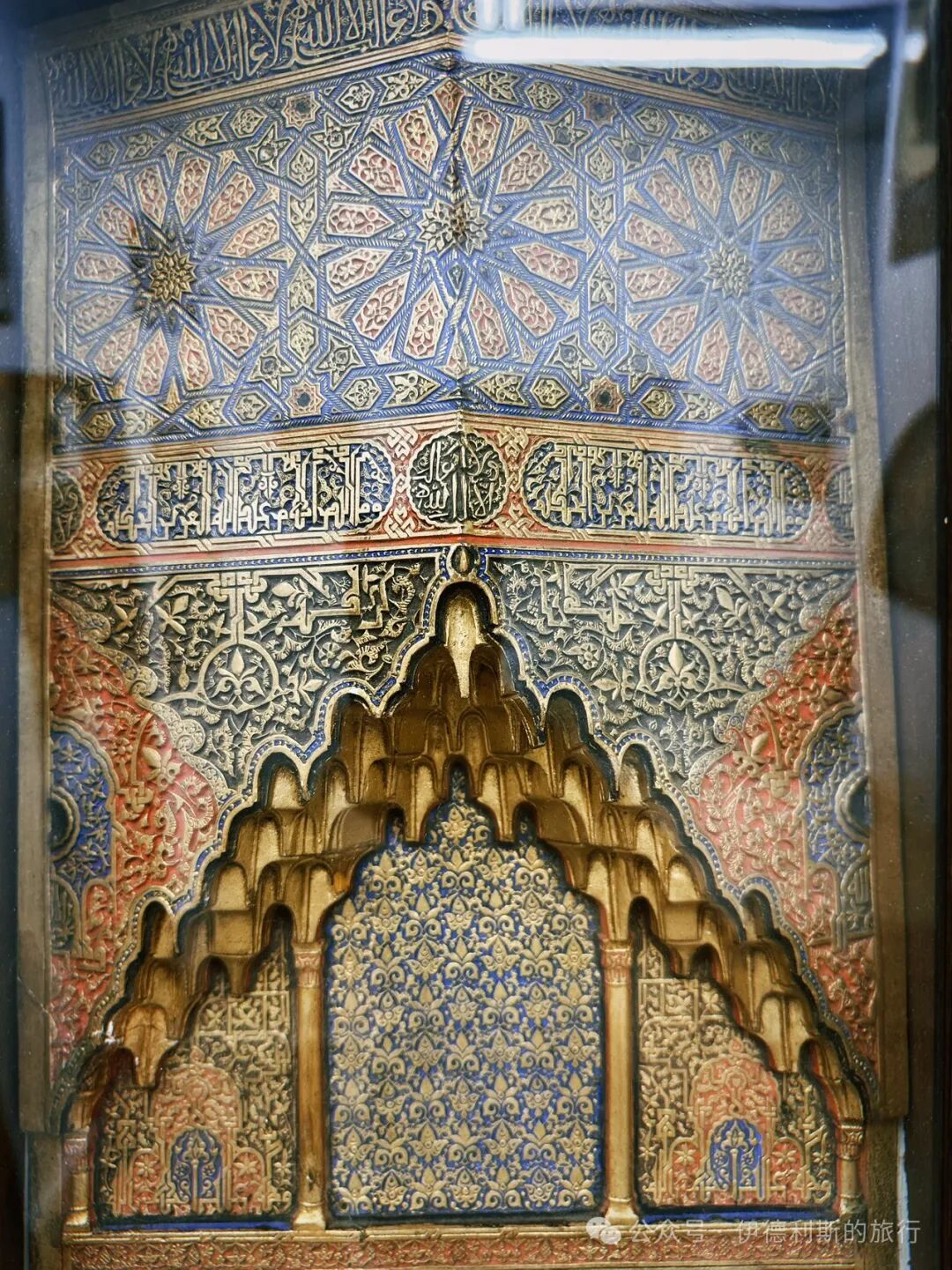
Architectural elements from the Alhambra in Spain, dating to the 19th century.
After seeing the historical artifacts of the faith, you enter the next major section: the Saudi folk culture exhibition. Here, you get a direct look at the different customs from across Saudi Arabia. The traditional Saudi wedding dresses in the gallery are very eye-catching, and the white gowns are incredibly delicate.
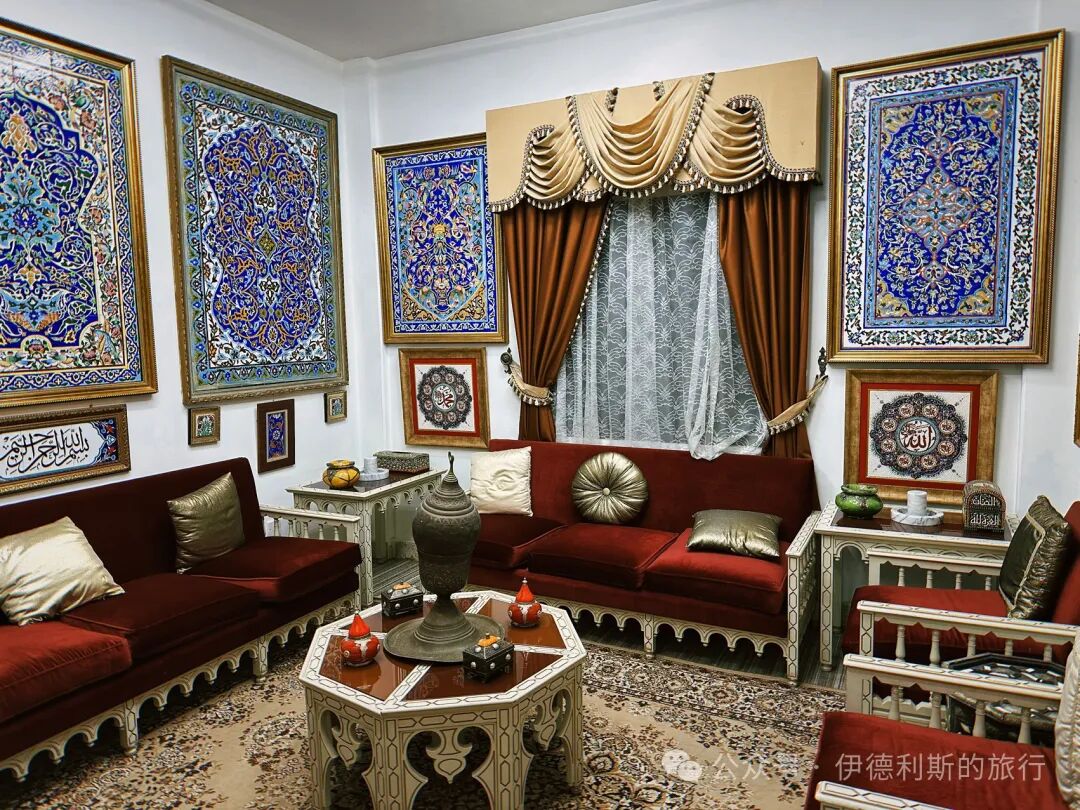
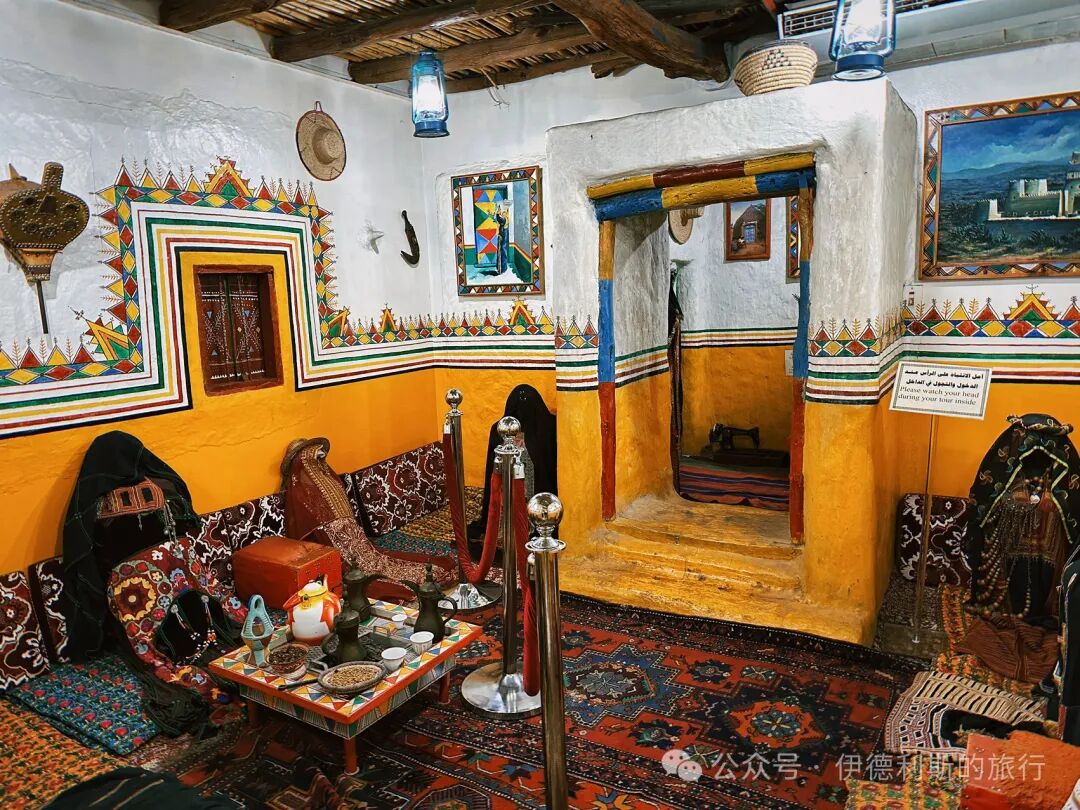
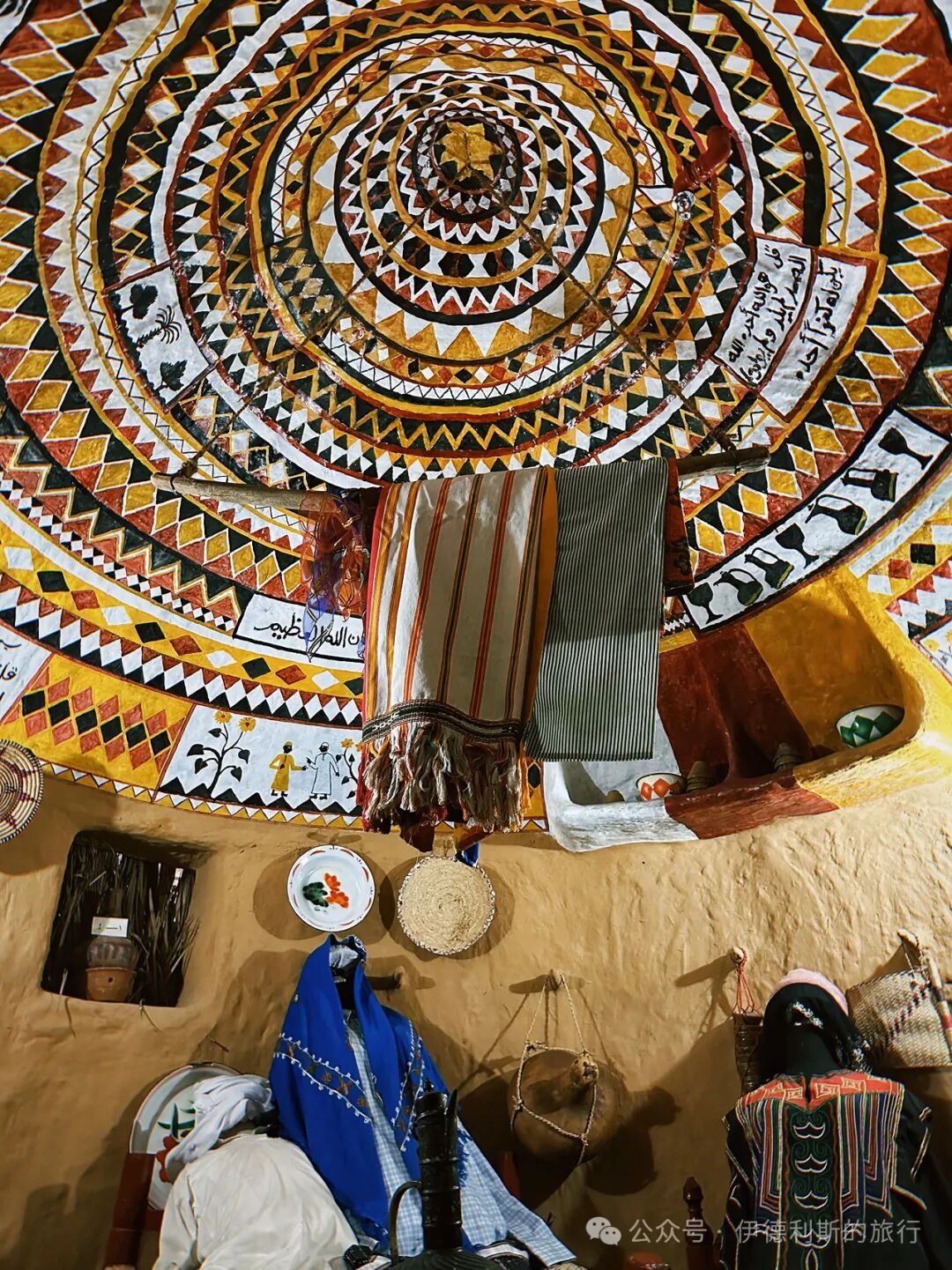
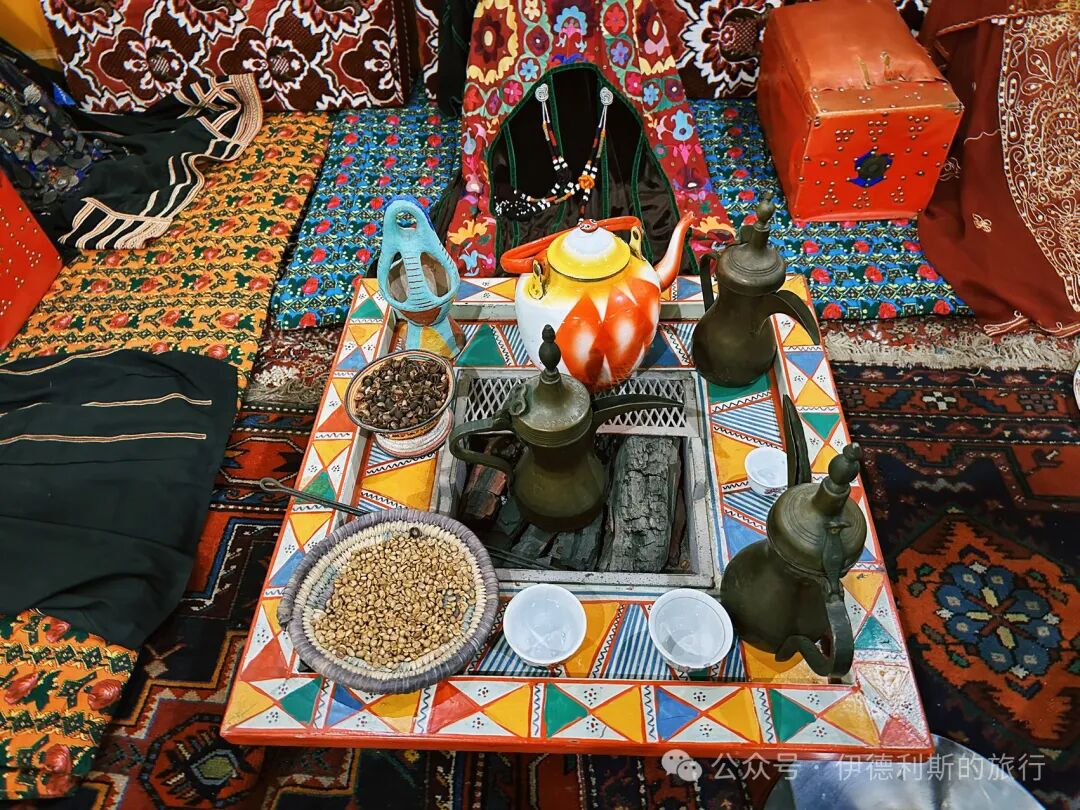
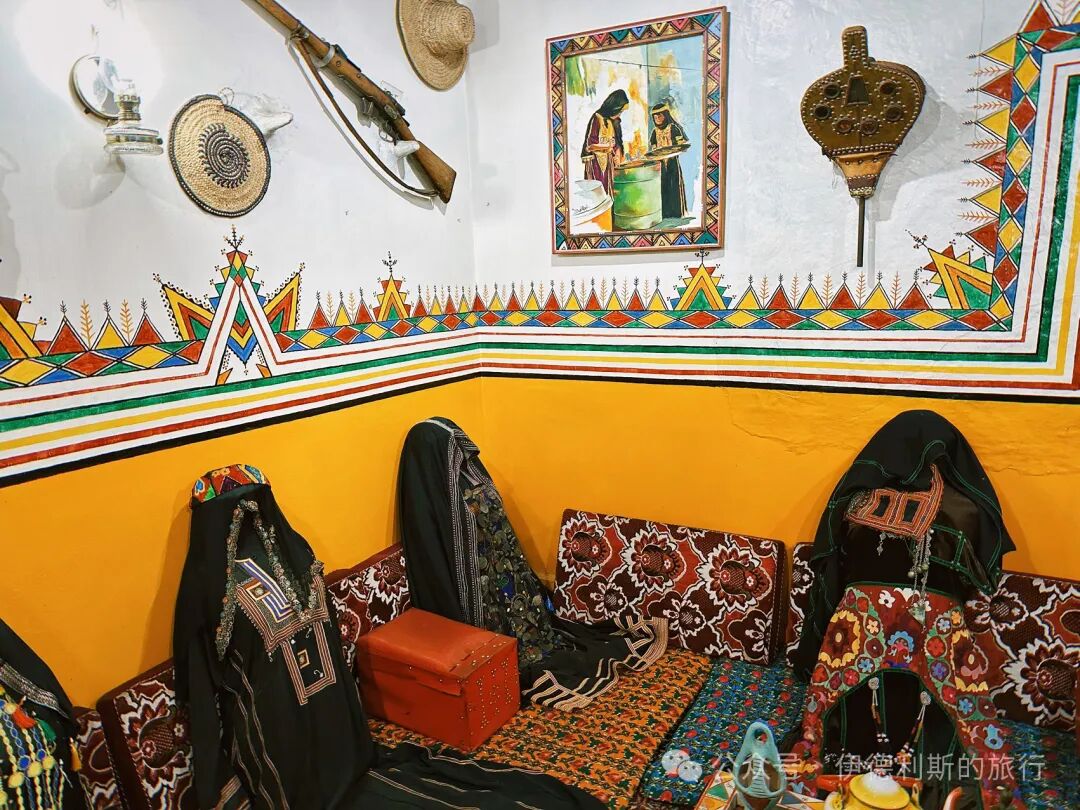
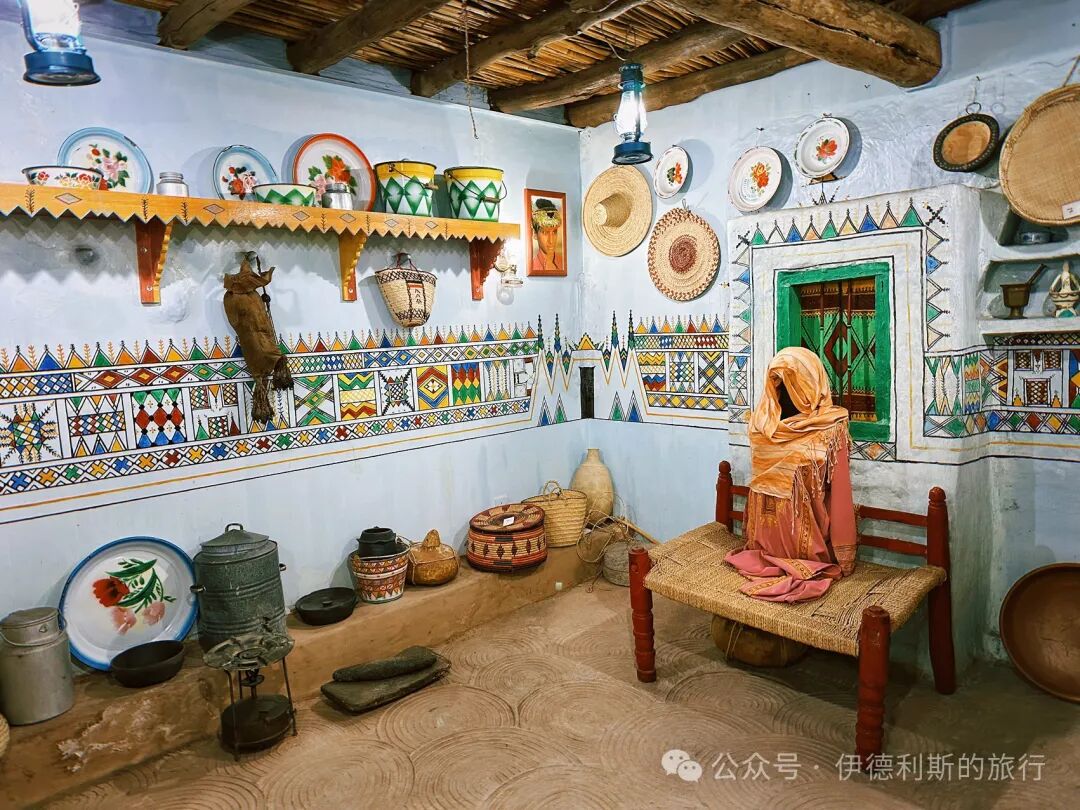
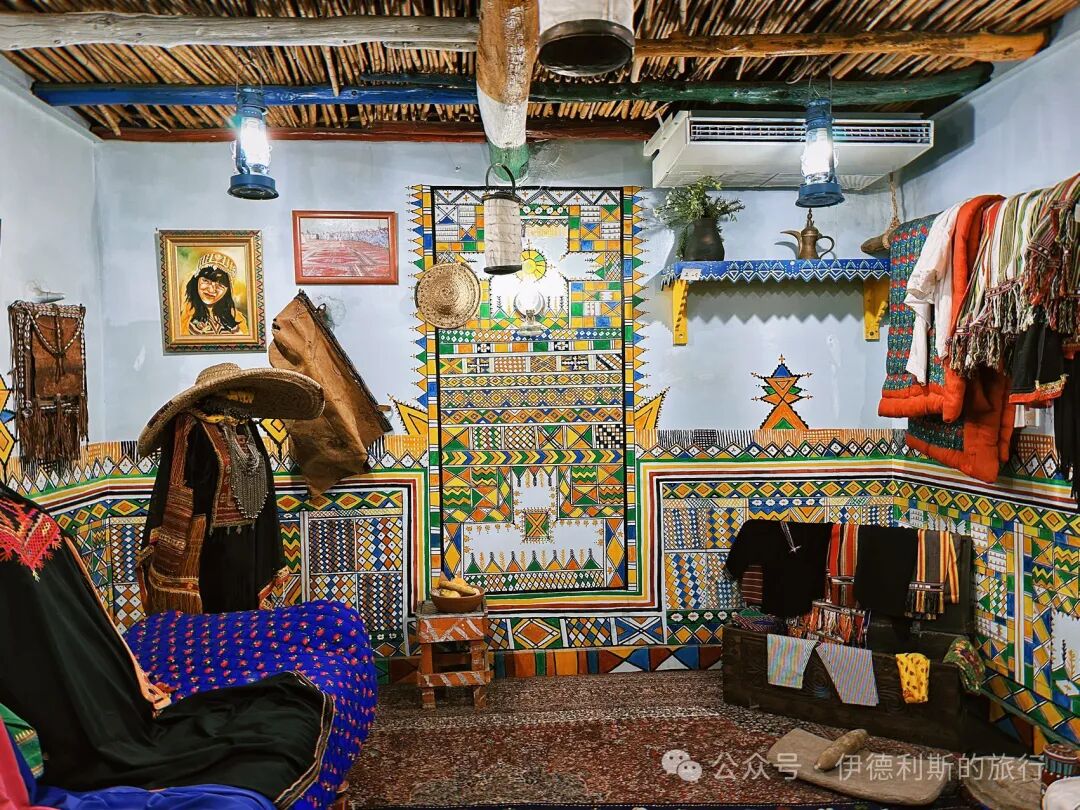
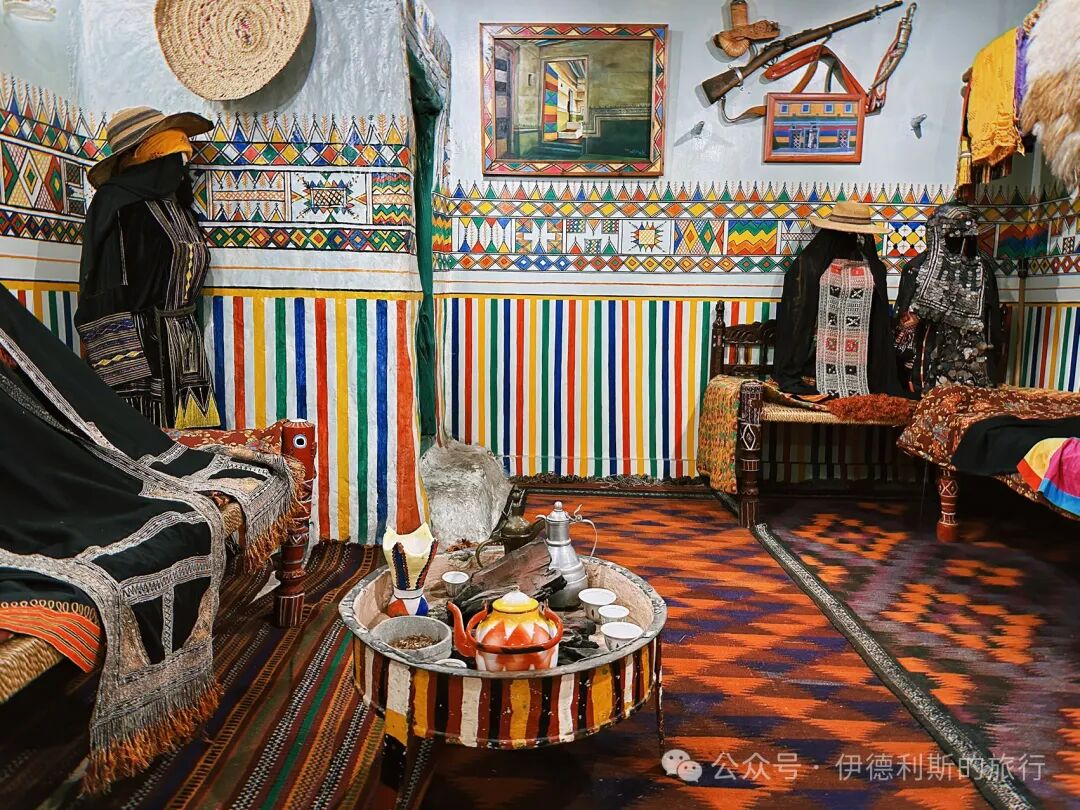
The most interesting part of the Saudi folk culture exhibition is the recreation of traditional houses in different styles from across the country. Because of the different climates, traditional houses in various parts of Saudi Arabia each have their own unique features.
Unlike the desert oases most people imagine, the scenery in Al Bahah Province in southwestern Saudi Arabia is very beautiful, and it is known as the Garden of Hejaz. The Baha region gets a lot of rain, so the mountains are covered in thick forests. You can hear streams flowing through the villages, see lush palm groves, and find many banana plantations. Traditional houses in the Baha region are built from wood and clay, and they are painted in very bright colors. view all
Summary: Islamic Museum Guide: Jeddah Tayebat Museum - Saudi History and Culture is presented here as a firsthand travel account in clear, natural English. The account focuses on Jeddah, Tayebat Museum, Saudi Culture while preserving the names, places, food, photos, and historical details from the Chinese source.
The full name of the Tayebat Museum is the Al Taybat International City Museum of Science and Information. The entire museum is built in the traditional architectural style of the Hejaz region, featuring coral stone and plaster walls along with beautiful wooden bay windows (Roshan).
The museum has a rich collection of exhibits. It starts with the rise of the faith and displays many beautiful artworks and artifacts. The museum also has a wealth of displays on the traditional folk culture of Jeddah, the Hejaz, and all of Saudi Arabia, including a large collection of traditional clothing and folk objects.
A 19th-century wooden prayer niche (mihrab) from Damascus, featuring beautiful Persian calligraphy.
A 16th-century manuscript from the Mughal Empire.
A 16th-century Persian Safavid dynasty manuscript of poetry with miniature paintings.
A 12th-century bronze cannon muzzle from the ancient city of Herat, Afghanistan, engraved with Kufic calligraphy. Herat grew into a center for metal manufacturing between the 11th and 12th centuries until the Mongol army massacred the city in 1221.
A 14th-century small plaster prayer niche (mihrab) from Samarkand during the Timurid dynasty, decorated with Kufic calligraphy.
A Moroccan manuscript from 1860 written in Maghrebi script.
A copper water kettle with silver inlay from Ottoman-era Damascus, dating to the 18th or 19th century.
A 13th-century Ayyubid dynasty manuscript from the southeastern Anatolian Peninsula, written in Muhaqqaq script.
A 13th-century Egyptian Mamluk dynasty manuscript written in Muhaqqaq script.
A 16th-century Persian Safavid dynasty manuscript written in Al-rayhani script.
A 14th-century manuscript from northwestern Iraq, written in Iraqi Rayhani script during the Jalayirid dynasty. The Jalayirid dynasty was a Persianized khanate established by Mongol tribes after the Ilkhanate collapsed.
A 19th-century North African manuscript written in Maghrebi Kufic script.
A manuscript written in Naskh script from the Persian Qajar dynasty in 1800.
A manuscript written in Naskh script from the Bosnia region during the Ottoman dynasty in the 17th to 18th centuries.
A manuscript written in Naskh script from the Turkey region during the Ottoman dynasty in the 18th century.
A manuscript written in Naskh script from the India region during the Mughal dynasty in the 17th century.
A manuscript written in Kufic script, likely from the Iraq region, dating to the 10th to 11th centuries.
A manuscript written in Andalusian script from the Andalusia region in the 12th century.
A manuscript written in Kufic script from the Iraq region during the Abbasid dynasty in the 9th to 10th centuries.
A manuscript written in Kufic script from the Iraq region during the Abbasid dynasty in the 8th to 9th centuries.
A manuscript written in Kufic script from 9th-century Iraq or Iran.
A manuscript written in Muhaqqaq script from the Anatolia region during the Seljuk Empire in the 13th to 14th centuries.
A manuscript of Sahih al-Bukhari from the 18th-century Morocco region.
A religious handbook from the 17th-century Kashmir region.
An 1828 Ottoman Turkish manuscript of the prayer book Dala'il al-Khayrat.
A 1495 miniature painting in Turkmen style from the Khamsa, the masterpiece of the great Persian poet Nizami.
A 1744 miniature painting of the Prophet's Mosque and the Sacred Mosque from the Dala'il al-Khayrat, created by Ottoman calligrapher Mohammed Bin Hussein.
A 1485 Indian miniature painting from The Treasury of Secrets, the first volume of the Khamsa by the great Persian poet Nizami.
A 14th-century brass candlestick from the Mamluk period in Syria, featuring engravings in Naskh calligraphy.
A 15th to 16th-century copper plate from the Mamluk period in Egypt, featuring engravings in Naskh calligraphy.
A 17th-century porcelain jar from the Ottoman period in Turkey, featuring Naskh calligraphy.
A wooden inscription from 1351 dedicated to the zakat for the Kaaba.
A 19th-century chest of drawers from Damascus made of coconut wood, inlaid with shell and bone, with drawer handles made of porcelain and marble.
Two 17th-century wooden beams from Medina featuring Kufic script.
A 10th-century marble carving from the Fatimid period in Damascus featuring Kufic script.
A limestone carved column capital from an Umayyad palace dating to 693.
A marble column capital from the Umayyad Caliphate in Syria, dating back to the 7th century.
A white marble fountain from Egypt during the Mamluk Sultanate, dating to the 13th or 14th century.
Architectural elements from the Alhambra in Spain, dating to the 19th century.
After seeing the historical artifacts of the faith, you enter the next major section: the Saudi folk culture exhibition. Here, you get a direct look at the different customs from across Saudi Arabia. The traditional Saudi wedding dresses in the gallery are very eye-catching, and the white gowns are incredibly delicate.
The most interesting part of the Saudi folk culture exhibition is the recreation of traditional houses in different styles from across the country. Because of the different climates, traditional houses in various parts of Saudi Arabia each have their own unique features.
Unlike the desert oases most people imagine, the scenery in Al Bahah Province in southwestern Saudi Arabia is very beautiful, and it is known as the Garden of Hejaz. The Baha region gets a lot of rain, so the mountains are covered in thick forests. You can hear streams flowing through the villages, see lush palm groves, and find many banana plantations. Traditional houses in the Baha region are built from wood and clay, and they are painted in very bright colors. view all
Reposted from the web
Summary: Islamic Museum Guide: Jeddah Tayebat Museum - Saudi History and Culture is presented here as a firsthand travel account in clear, natural English. The account focuses on Jeddah, Tayebat Museum, Saudi Culture while preserving the names, places, food, photos, and historical details from the Chinese source.
The full name of the Tayebat Museum is the Al Taybat International City Museum of Science and Information. The entire museum is built in the traditional architectural style of the Hejaz region, featuring coral stone and plaster walls along with beautiful wooden bay windows (Roshan).
The museum has a rich collection of exhibits. It starts with the rise of the faith and displays many beautiful artworks and artifacts. The museum also has a wealth of displays on the traditional folk culture of Jeddah, the Hejaz, and all of Saudi Arabia, including a large collection of traditional clothing and folk objects.
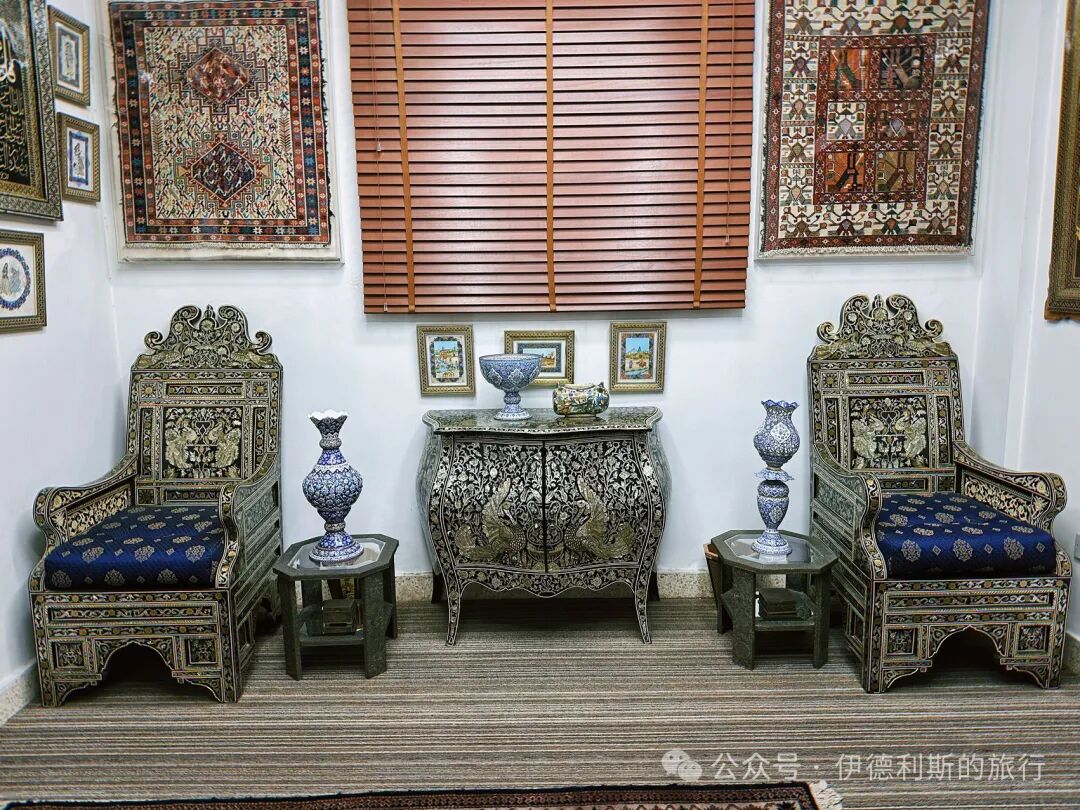
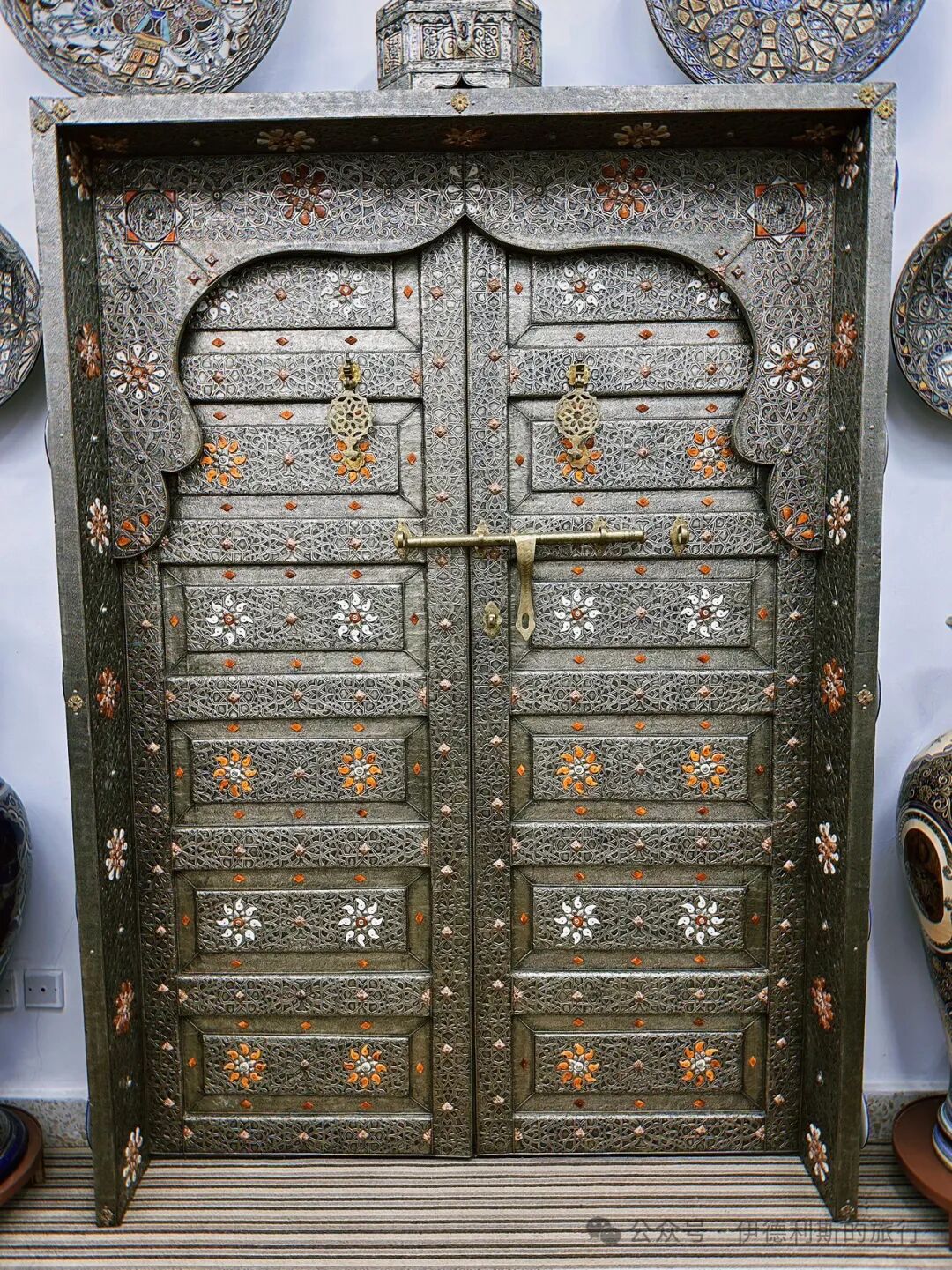
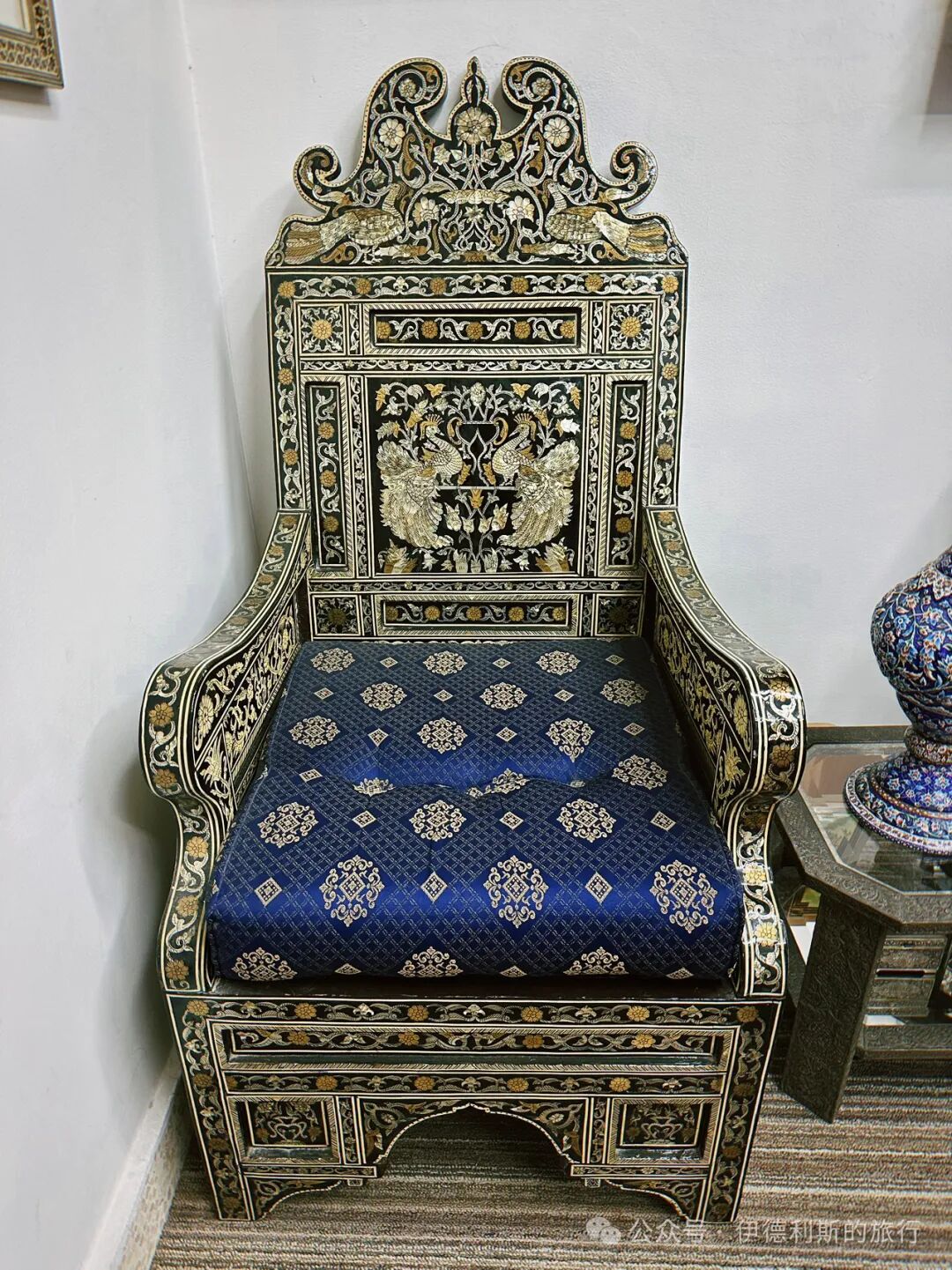
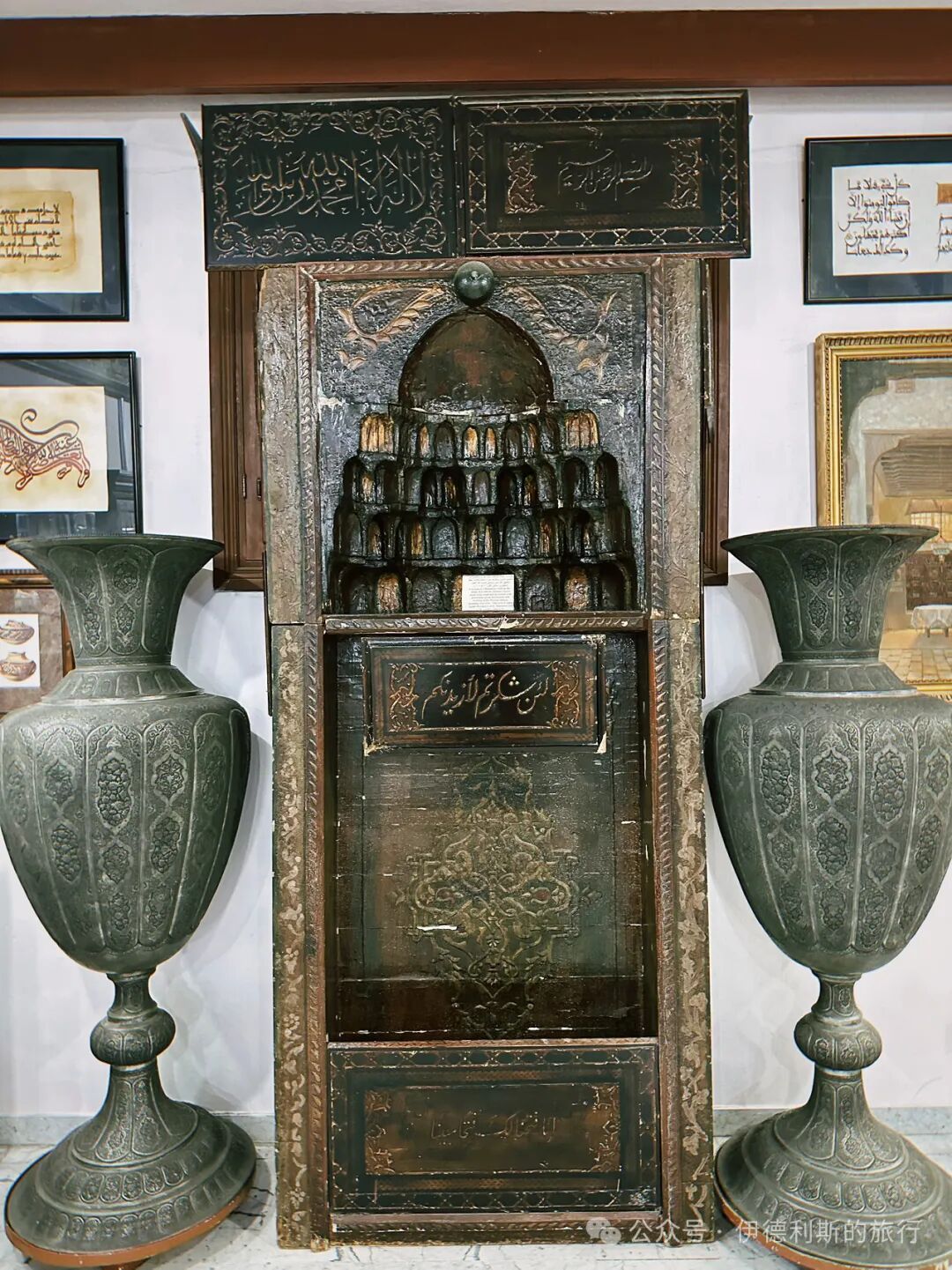
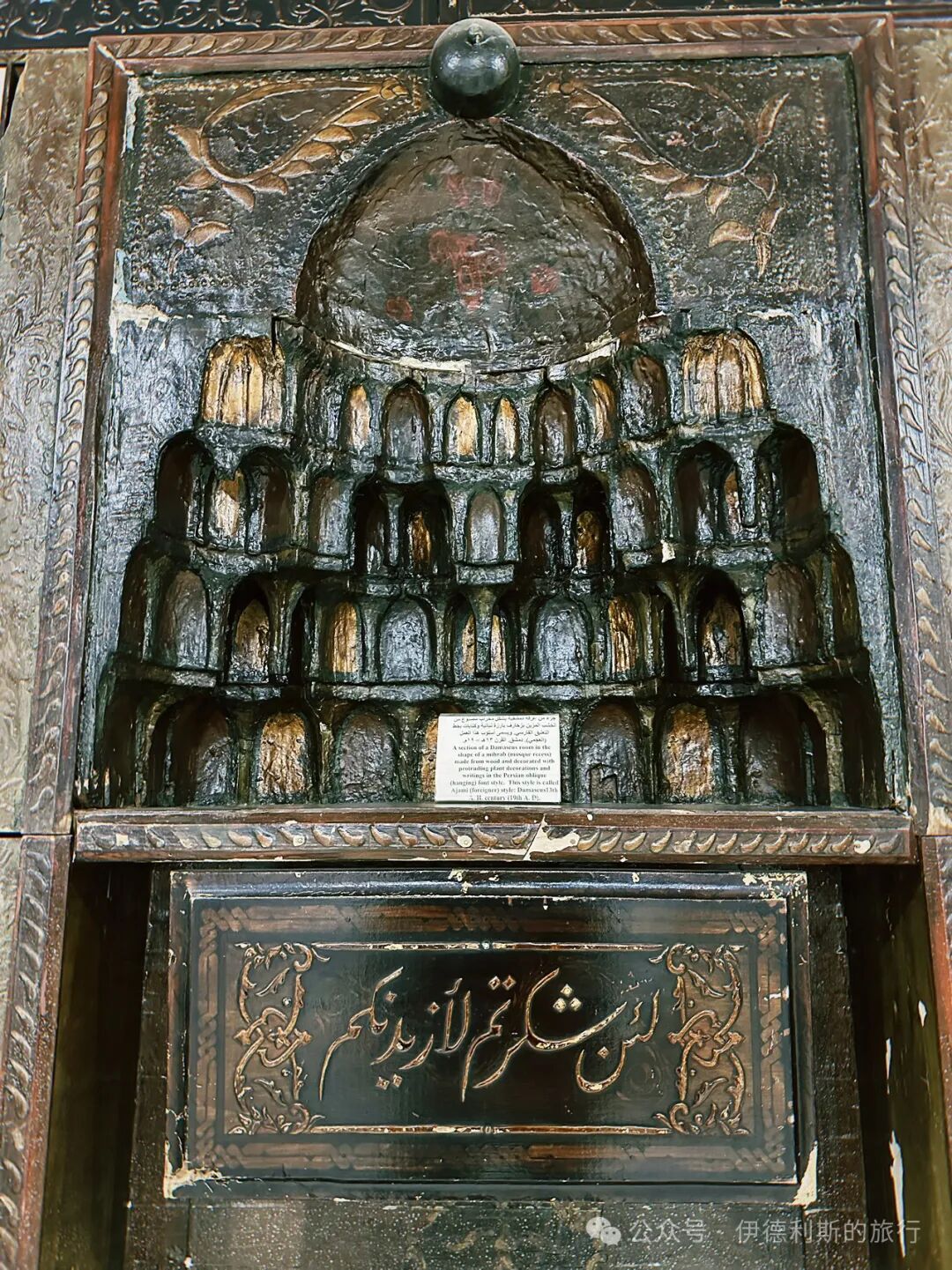
A 19th-century wooden prayer niche (mihrab) from Damascus, featuring beautiful Persian calligraphy.
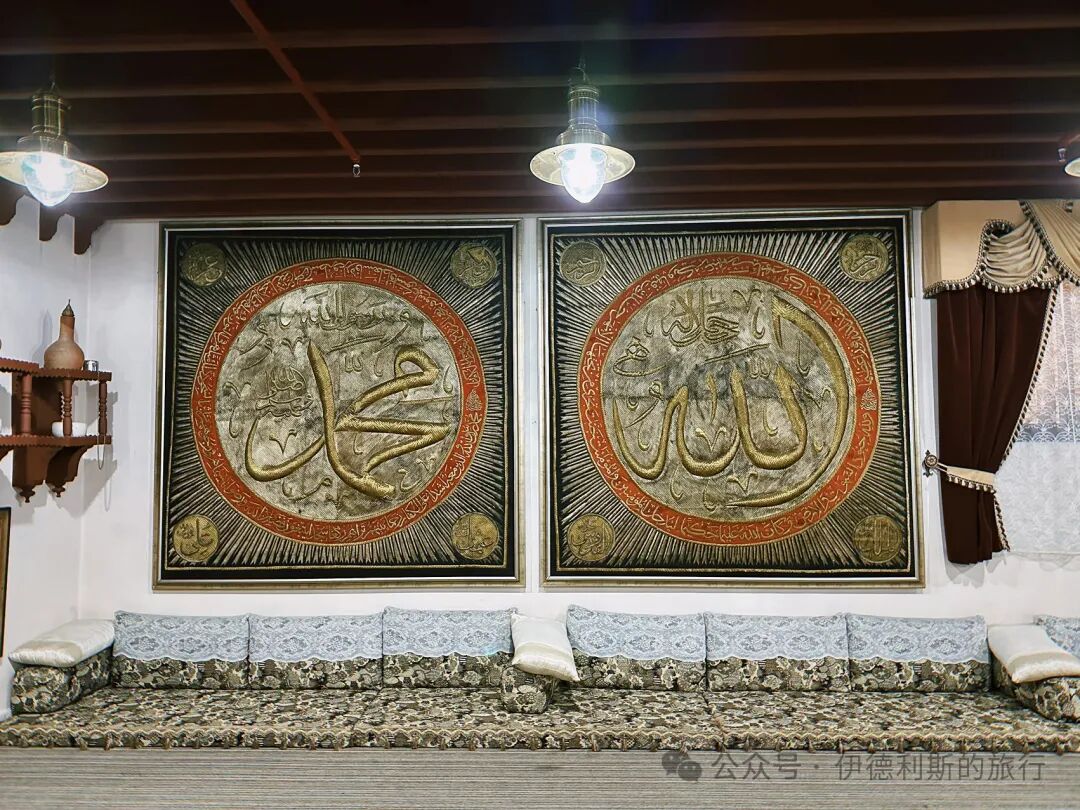
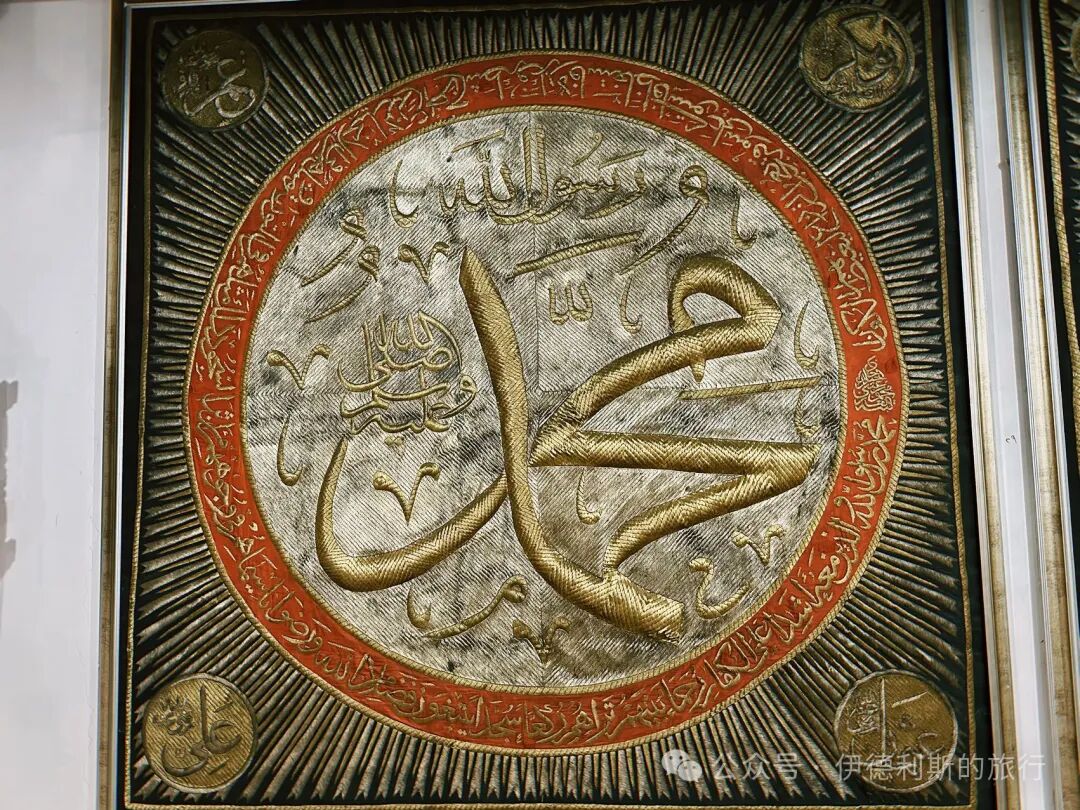
A 16th-century manuscript from the Mughal Empire.
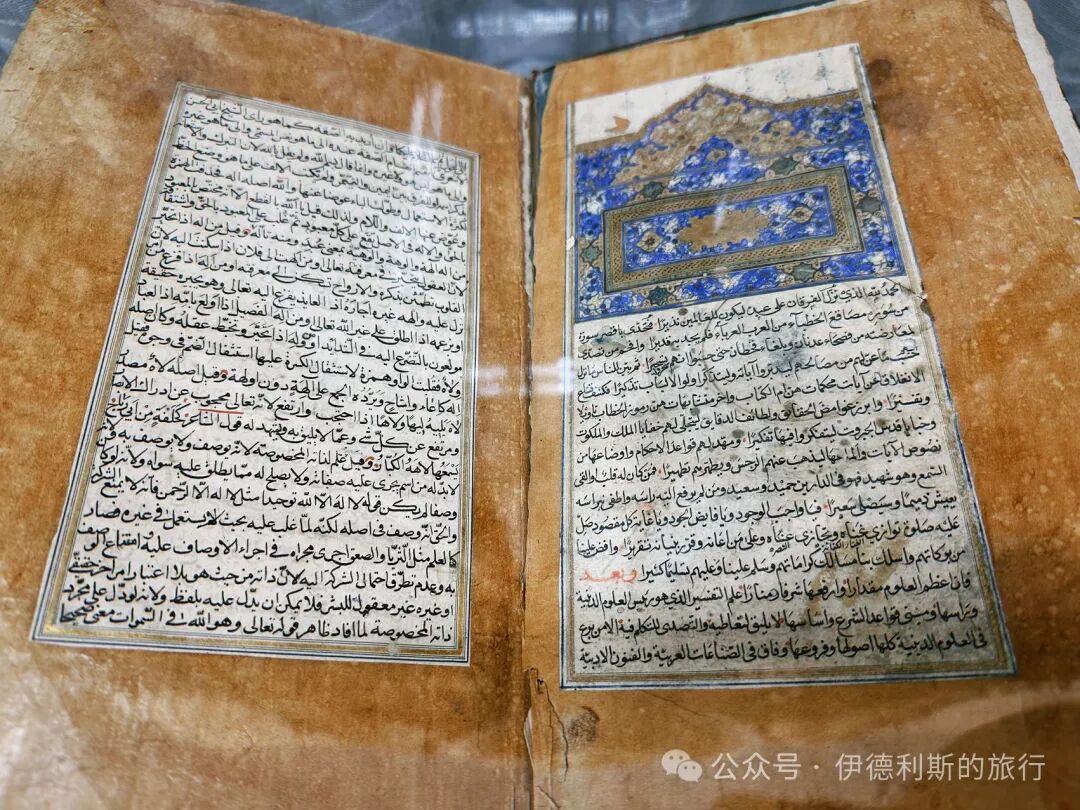
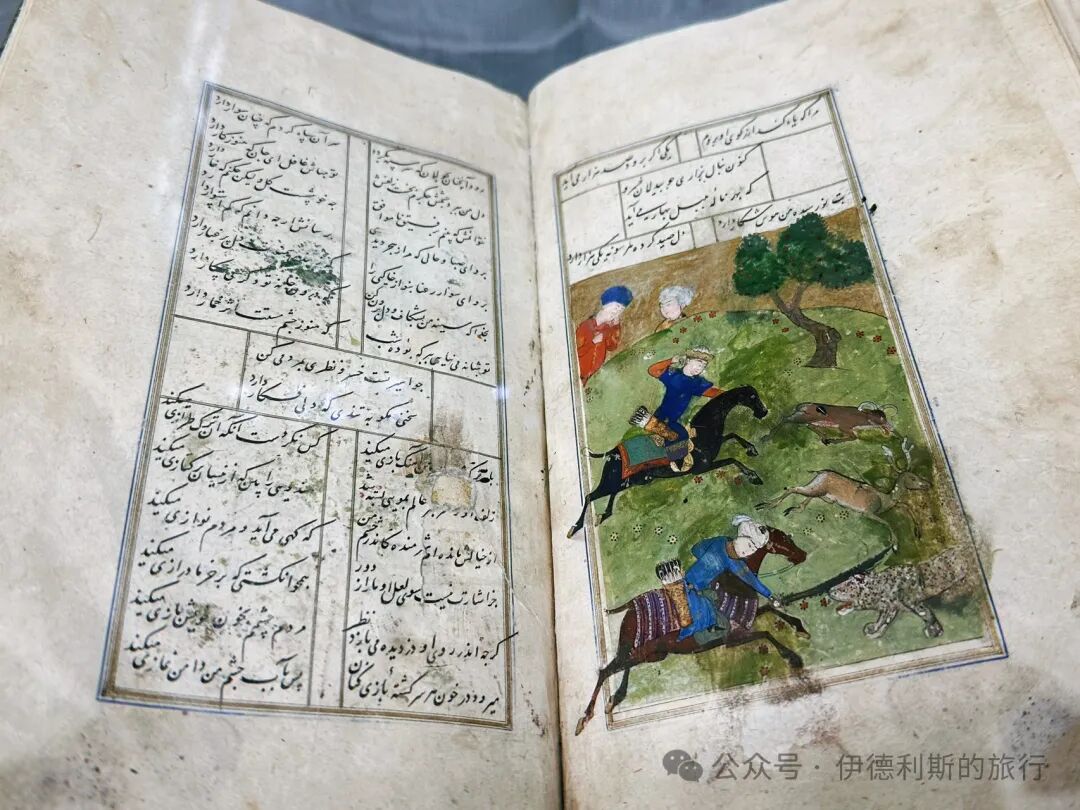
A 16th-century Persian Safavid dynasty manuscript of poetry with miniature paintings.
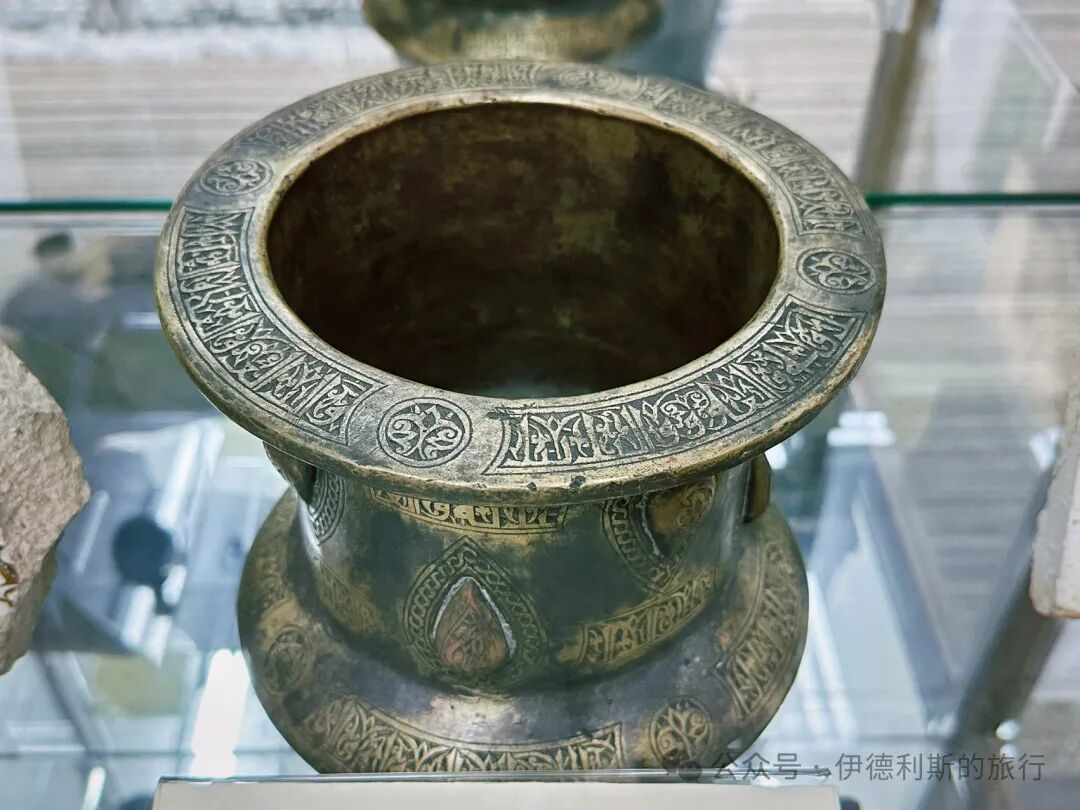
A 12th-century bronze cannon muzzle from the ancient city of Herat, Afghanistan, engraved with Kufic calligraphy. Herat grew into a center for metal manufacturing between the 11th and 12th centuries until the Mongol army massacred the city in 1221.
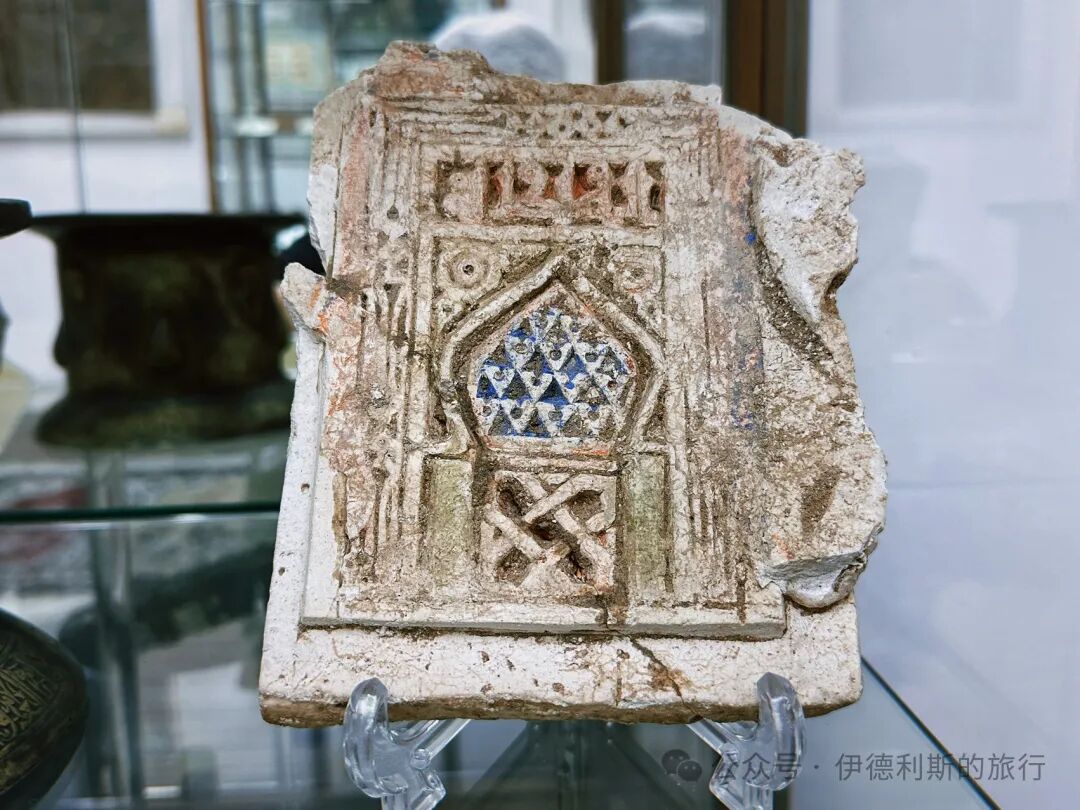
A 14th-century small plaster prayer niche (mihrab) from Samarkand during the Timurid dynasty, decorated with Kufic calligraphy.
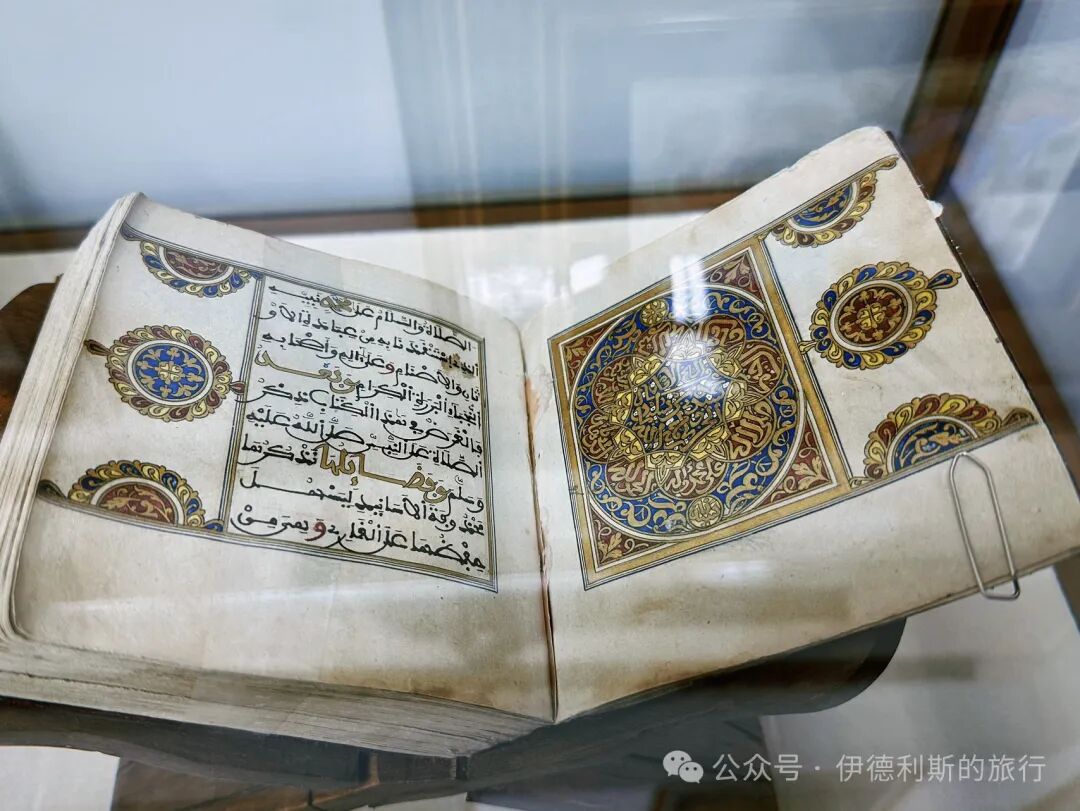
A Moroccan manuscript from 1860 written in Maghrebi script.
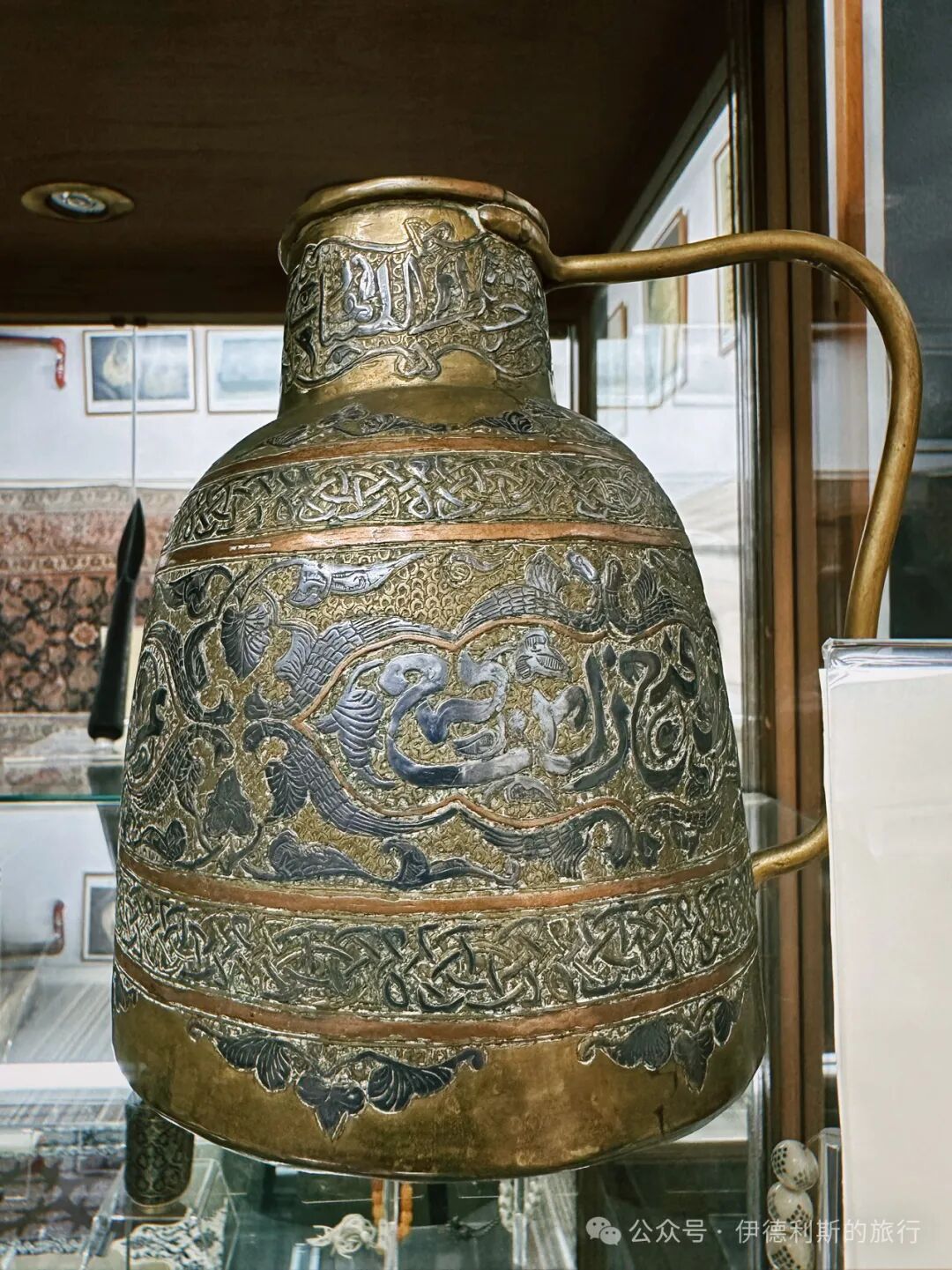
A copper water kettle with silver inlay from Ottoman-era Damascus, dating to the 18th or 19th century.
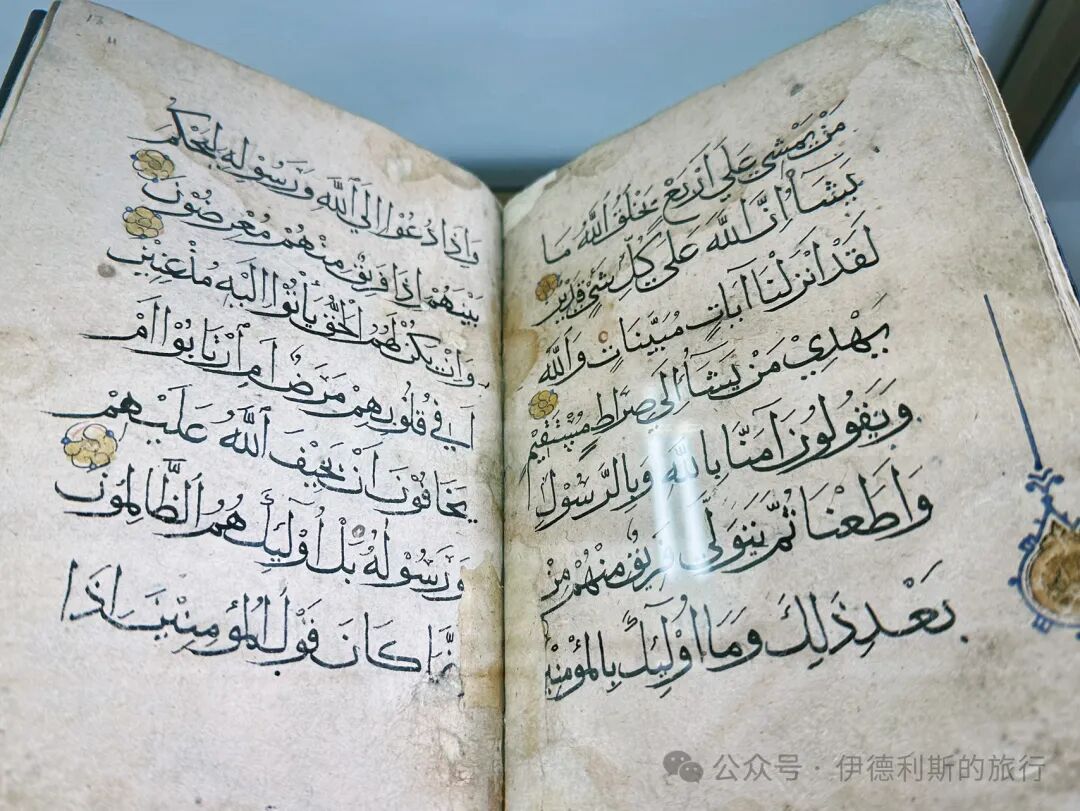
A 13th-century Ayyubid dynasty manuscript from the southeastern Anatolian Peninsula, written in Muhaqqaq script.
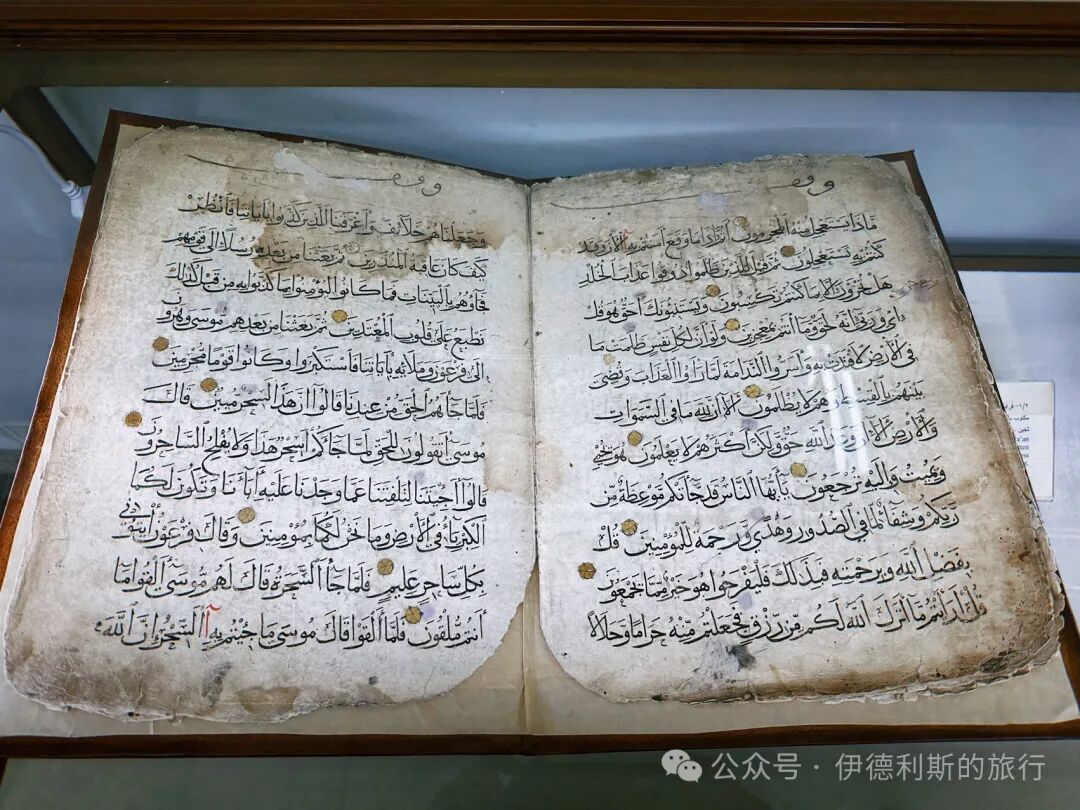
A 13th-century Egyptian Mamluk dynasty manuscript written in Muhaqqaq script.
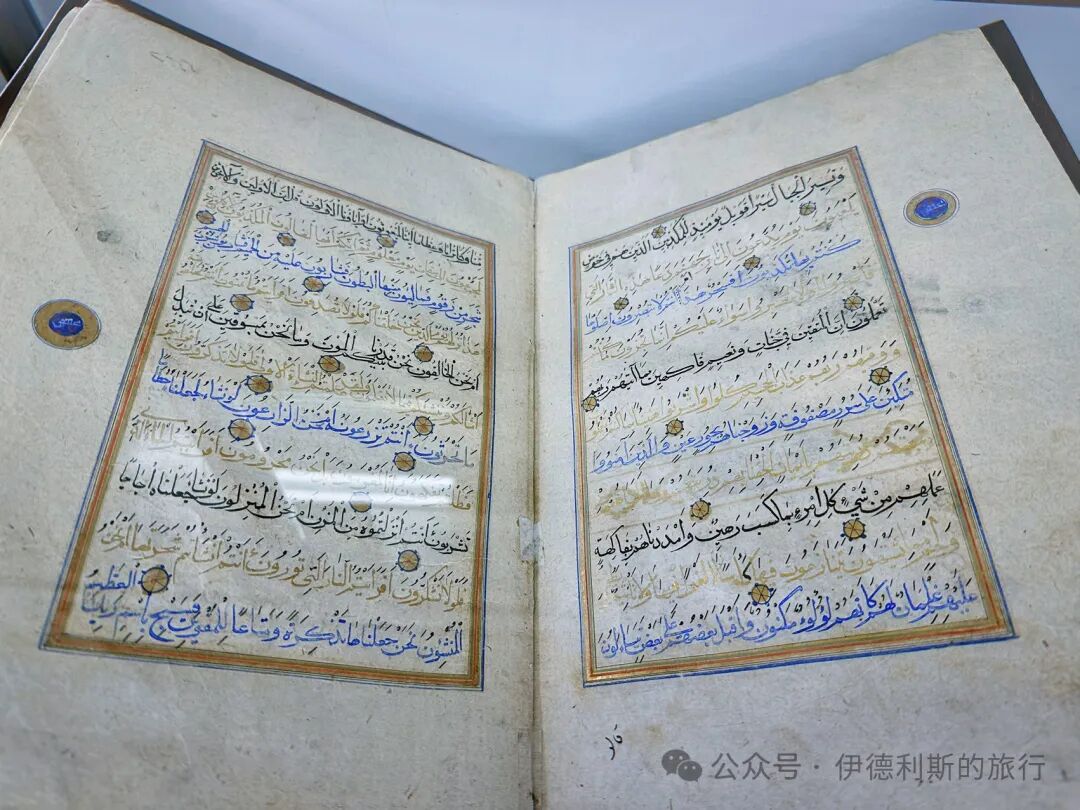
A 16th-century Persian Safavid dynasty manuscript written in Al-rayhani script.
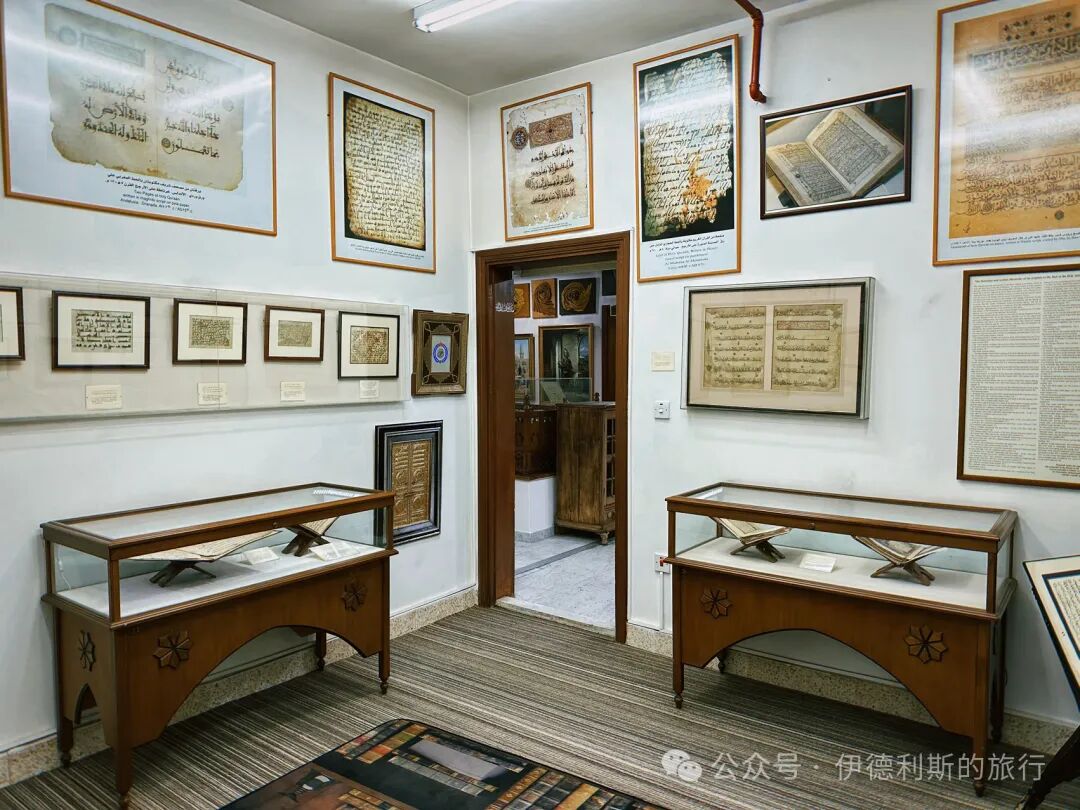
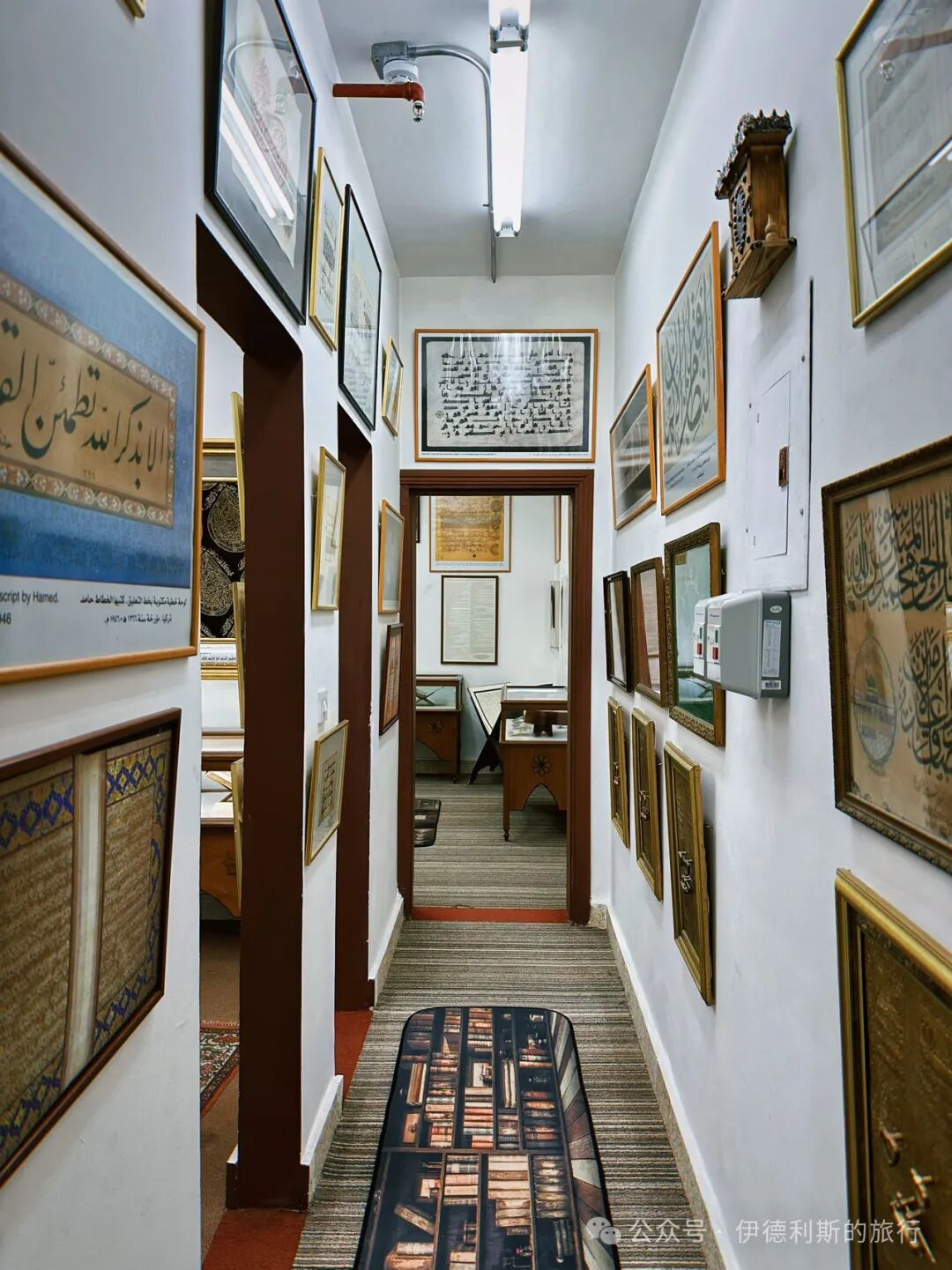
A 14th-century manuscript from northwestern Iraq, written in Iraqi Rayhani script during the Jalayirid dynasty. The Jalayirid dynasty was a Persianized khanate established by Mongol tribes after the Ilkhanate collapsed.
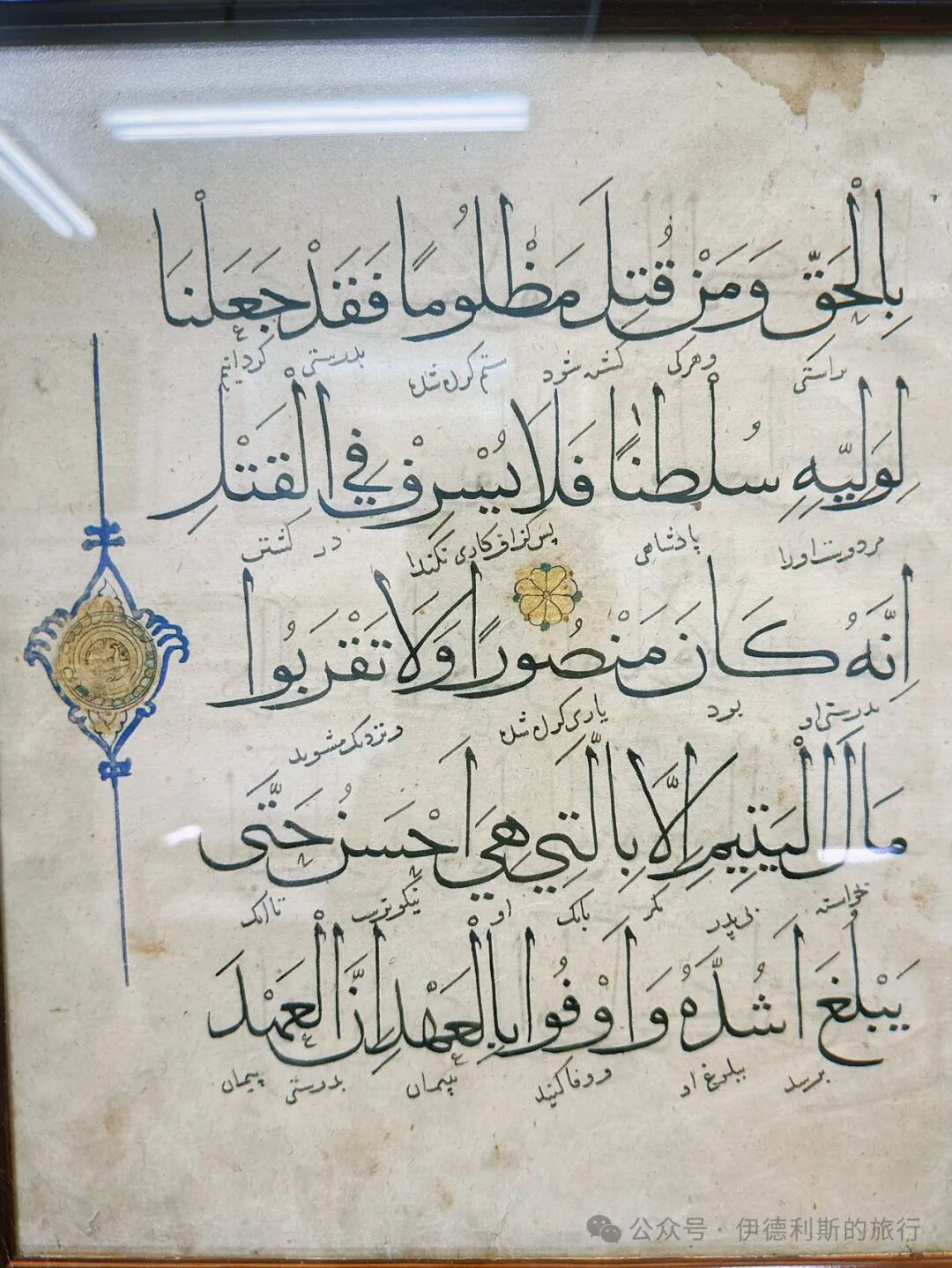
A 19th-century North African manuscript written in Maghrebi Kufic script.
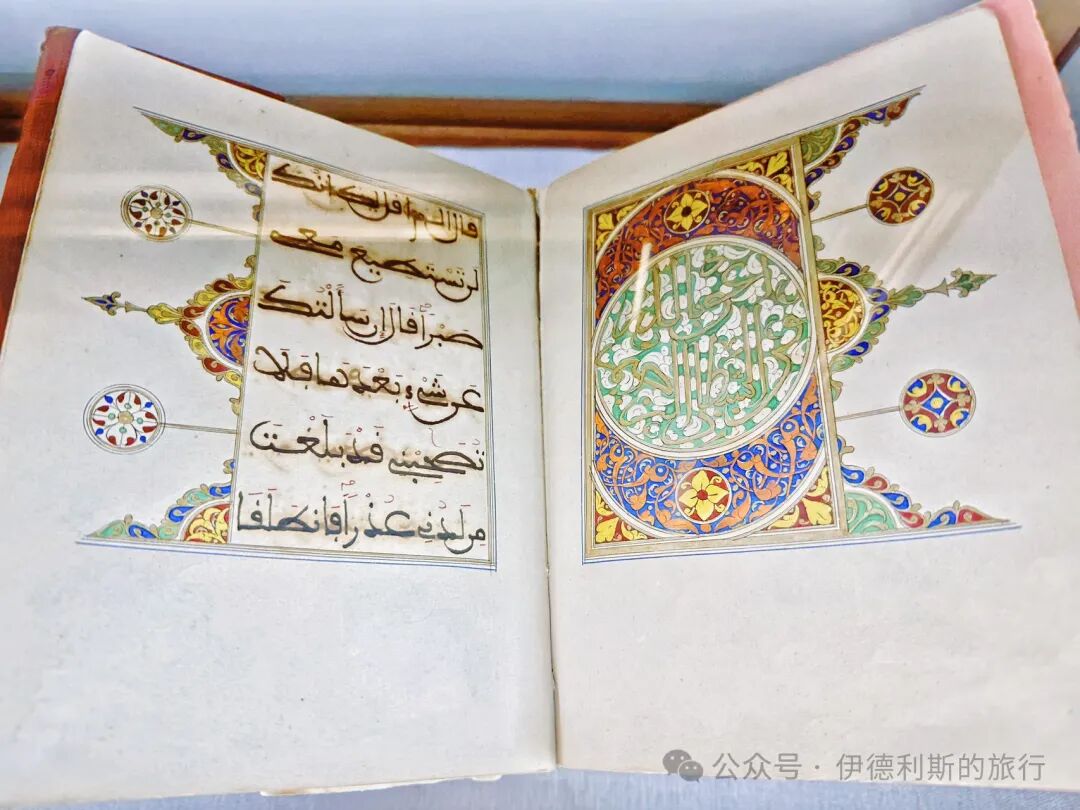
A manuscript written in Naskh script from the Persian Qajar dynasty in 1800.
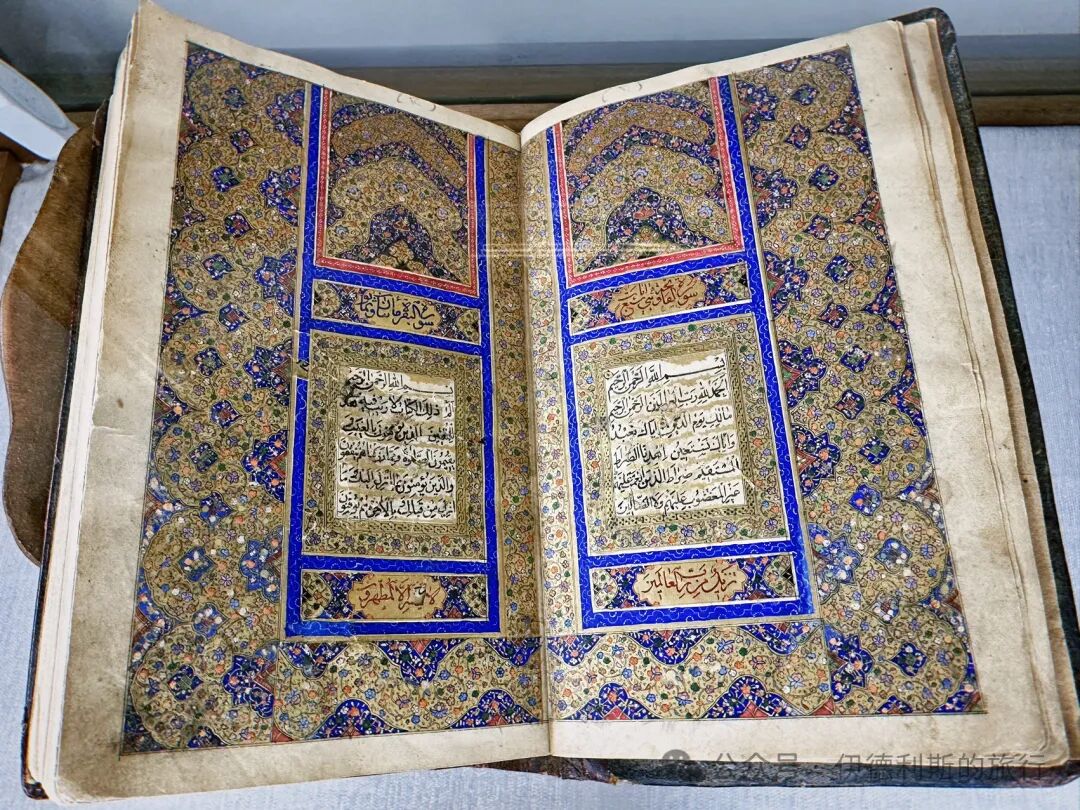
A manuscript written in Naskh script from the Bosnia region during the Ottoman dynasty in the 17th to 18th centuries.
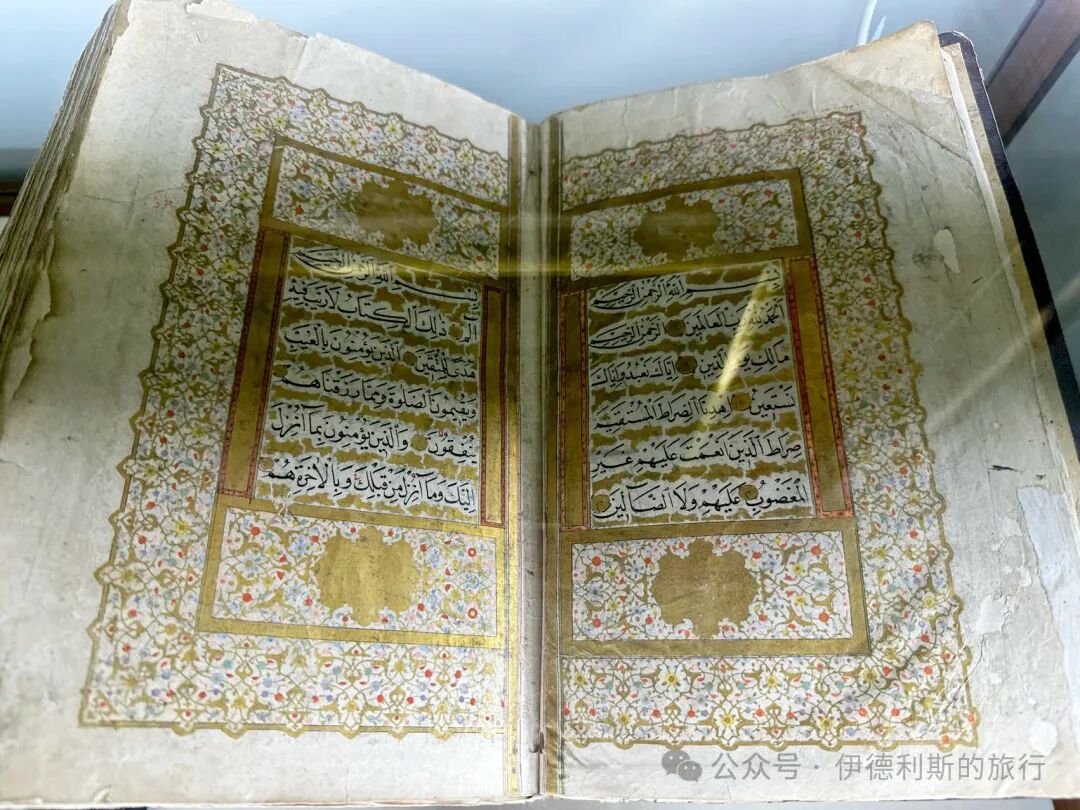
A manuscript written in Naskh script from the Turkey region during the Ottoman dynasty in the 18th century.
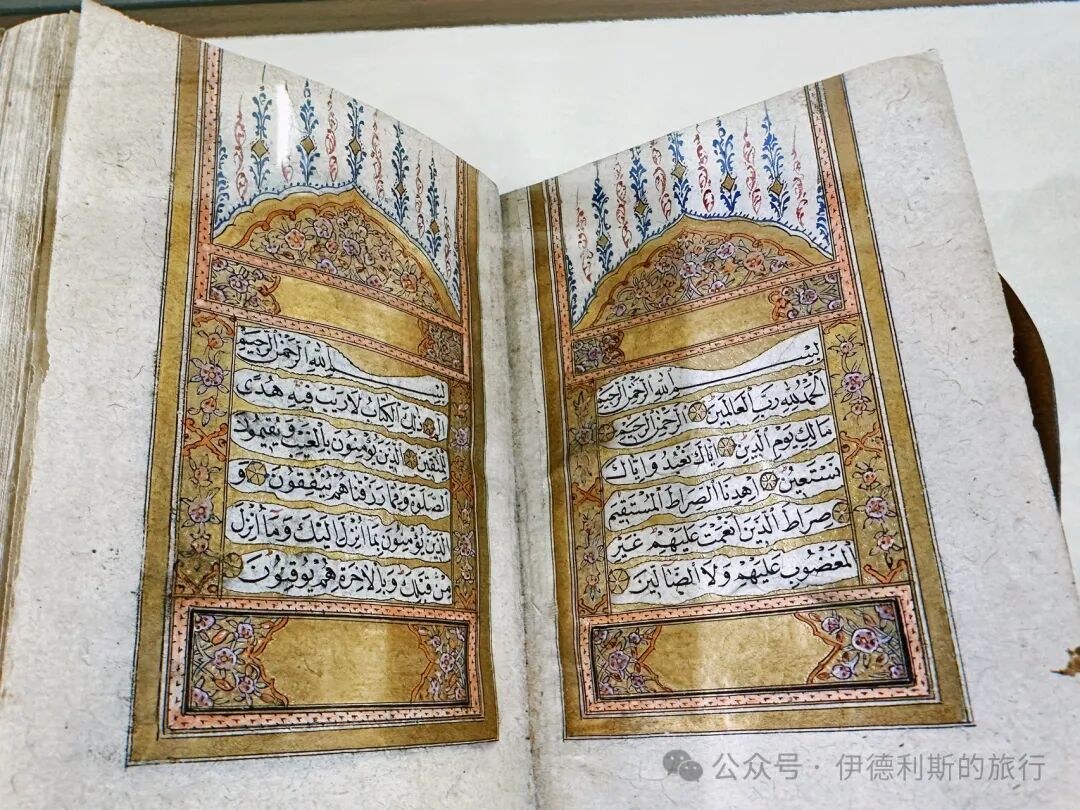
A manuscript written in Naskh script from the India region during the Mughal dynasty in the 17th century.
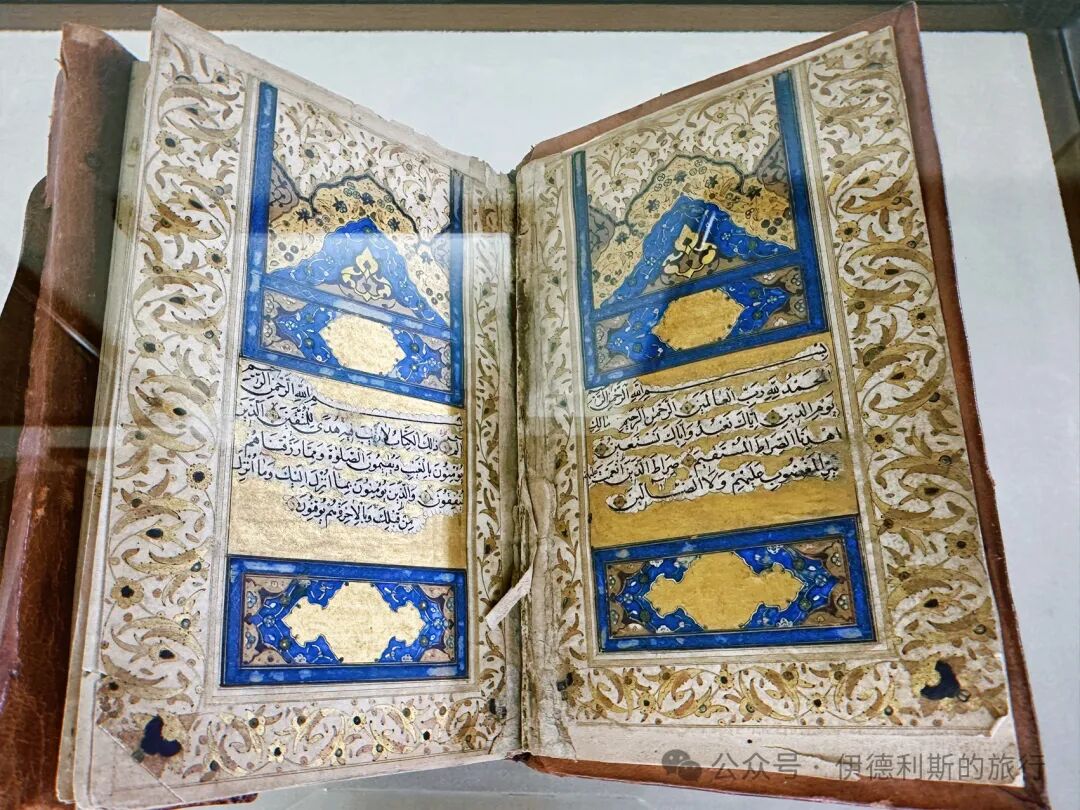
A manuscript written in Kufic script, likely from the Iraq region, dating to the 10th to 11th centuries.
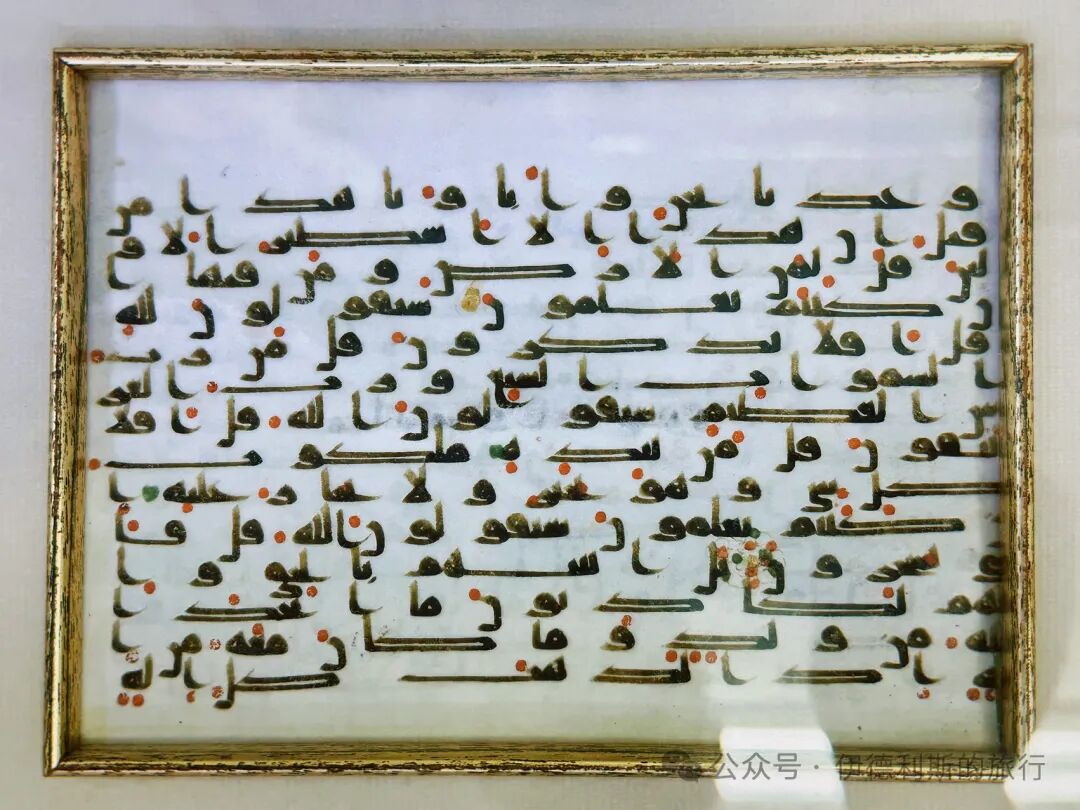
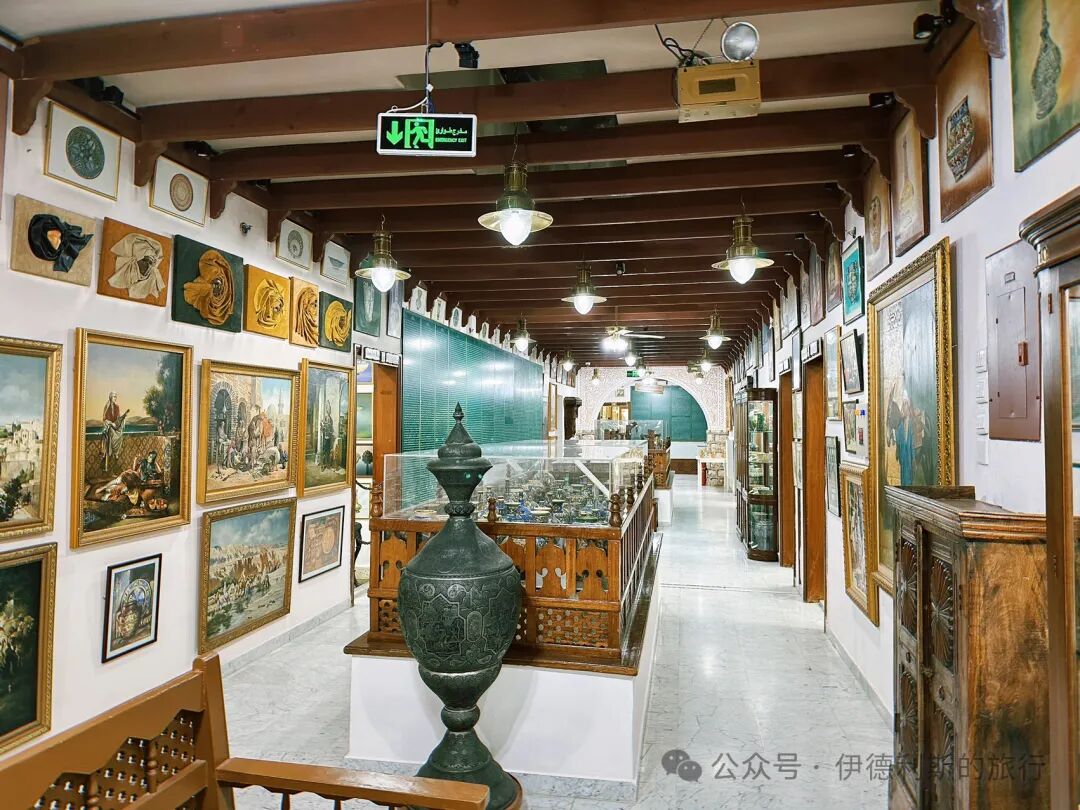
A manuscript written in Andalusian script from the Andalusia region in the 12th century.
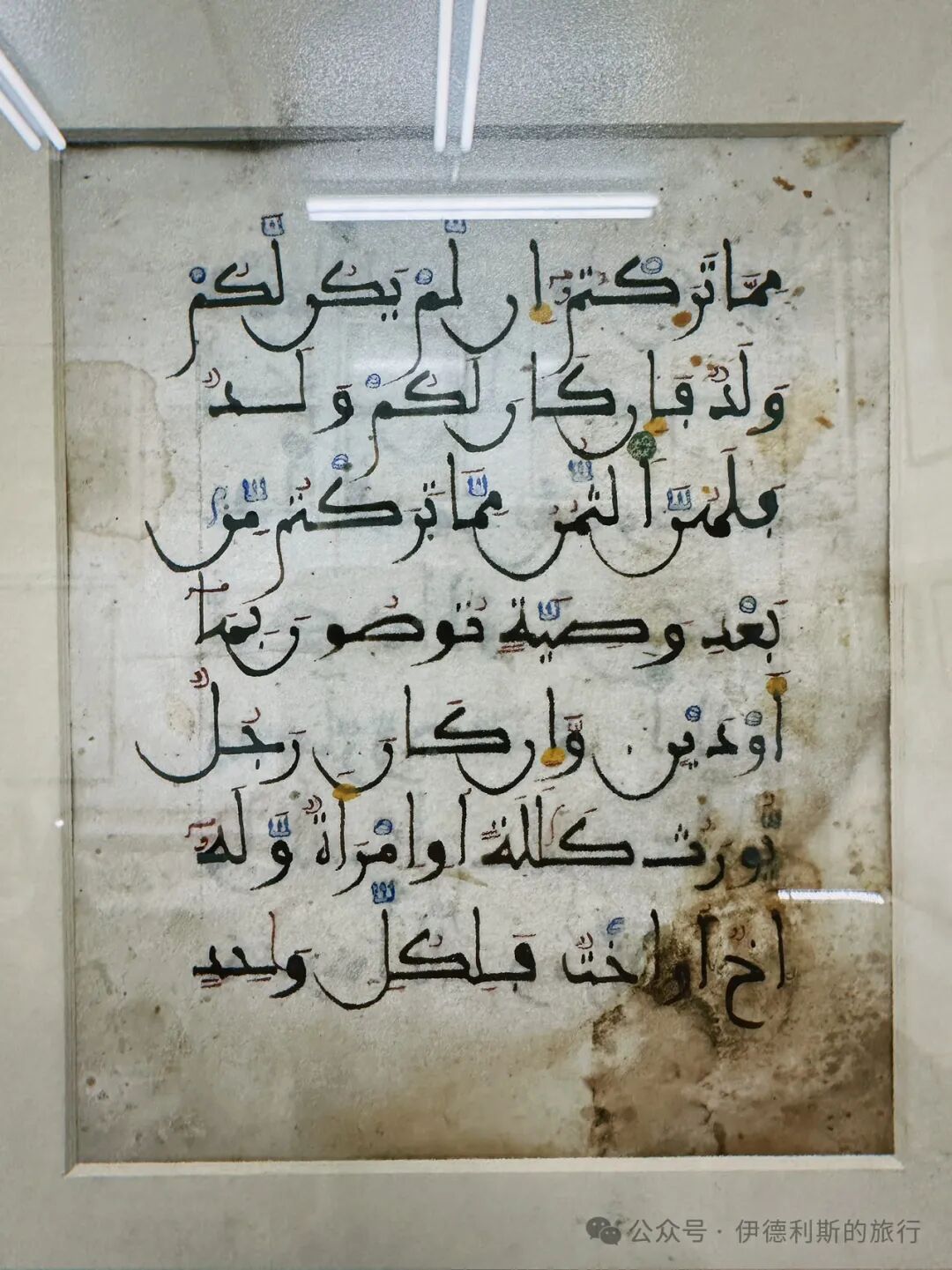
A manuscript written in Kufic script from the Iraq region during the Abbasid dynasty in the 9th to 10th centuries.
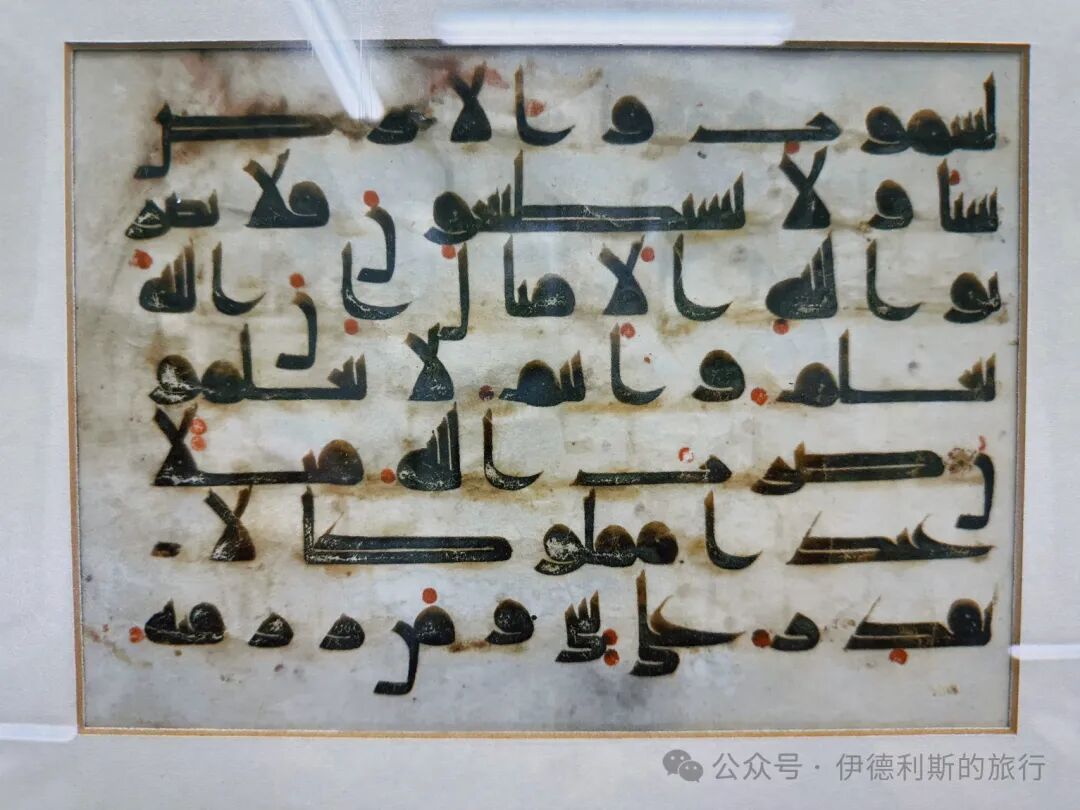
A manuscript written in Kufic script from the Iraq region during the Abbasid dynasty in the 8th to 9th centuries.
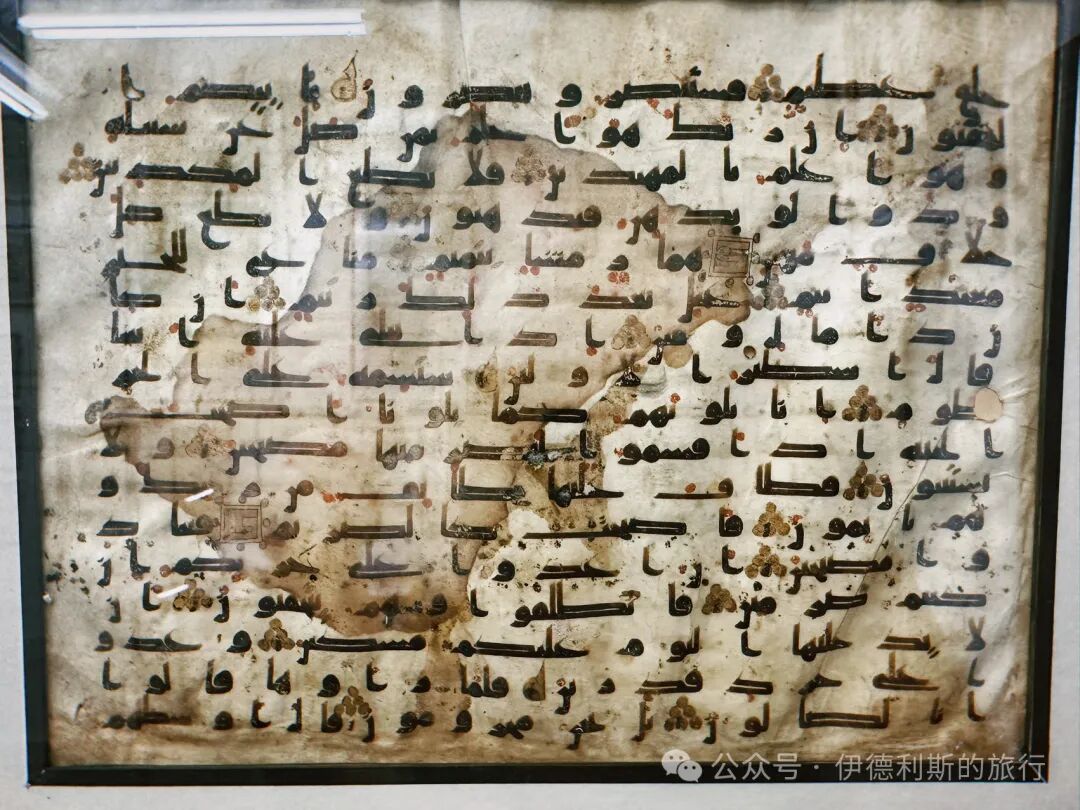
A manuscript written in Kufic script from 9th-century Iraq or Iran.
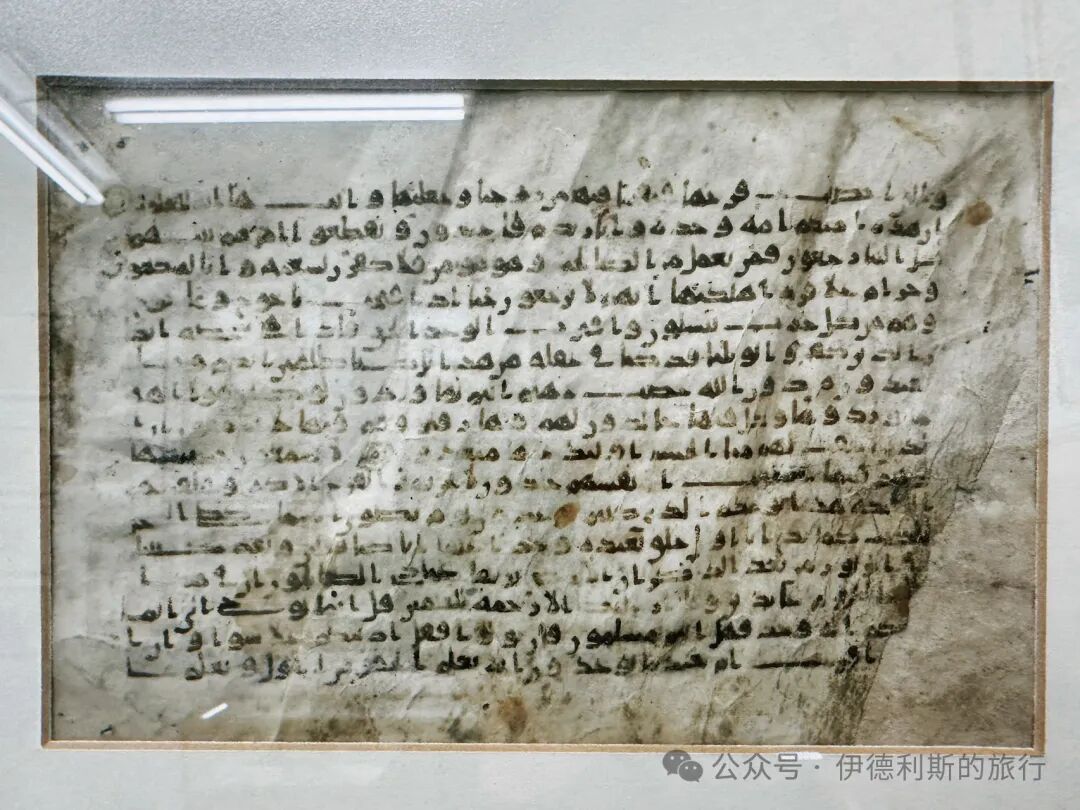
A manuscript written in Muhaqqaq script from the Anatolia region during the Seljuk Empire in the 13th to 14th centuries.
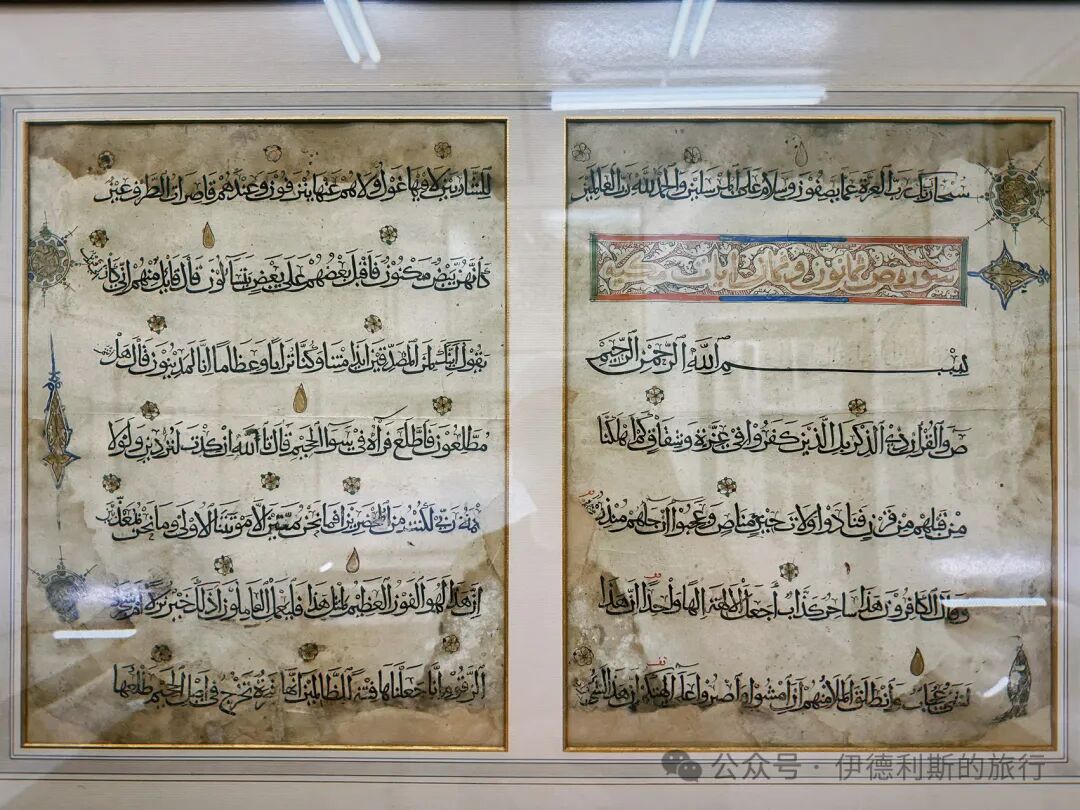
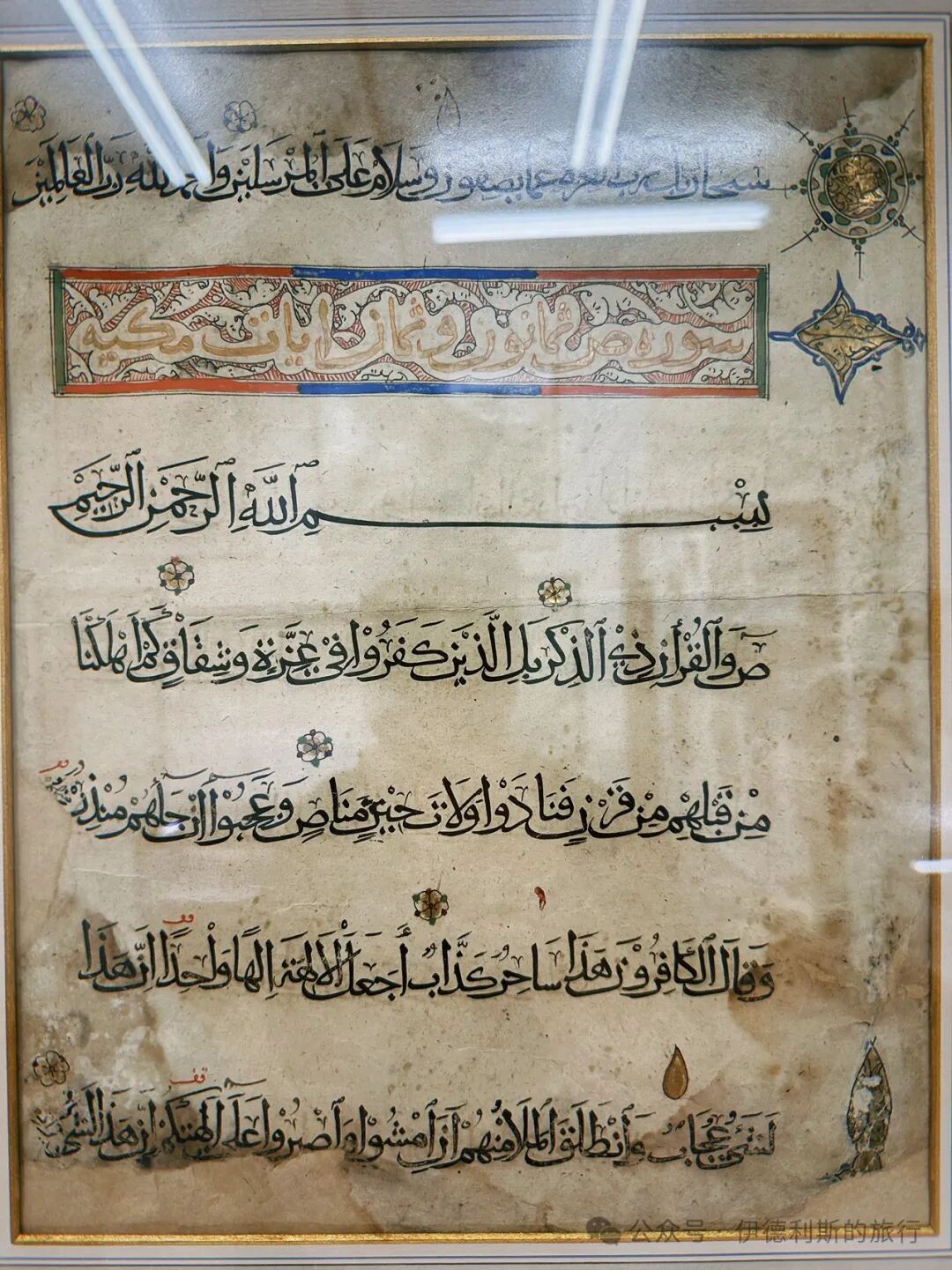
A manuscript of Sahih al-Bukhari from the 18th-century Morocco region.
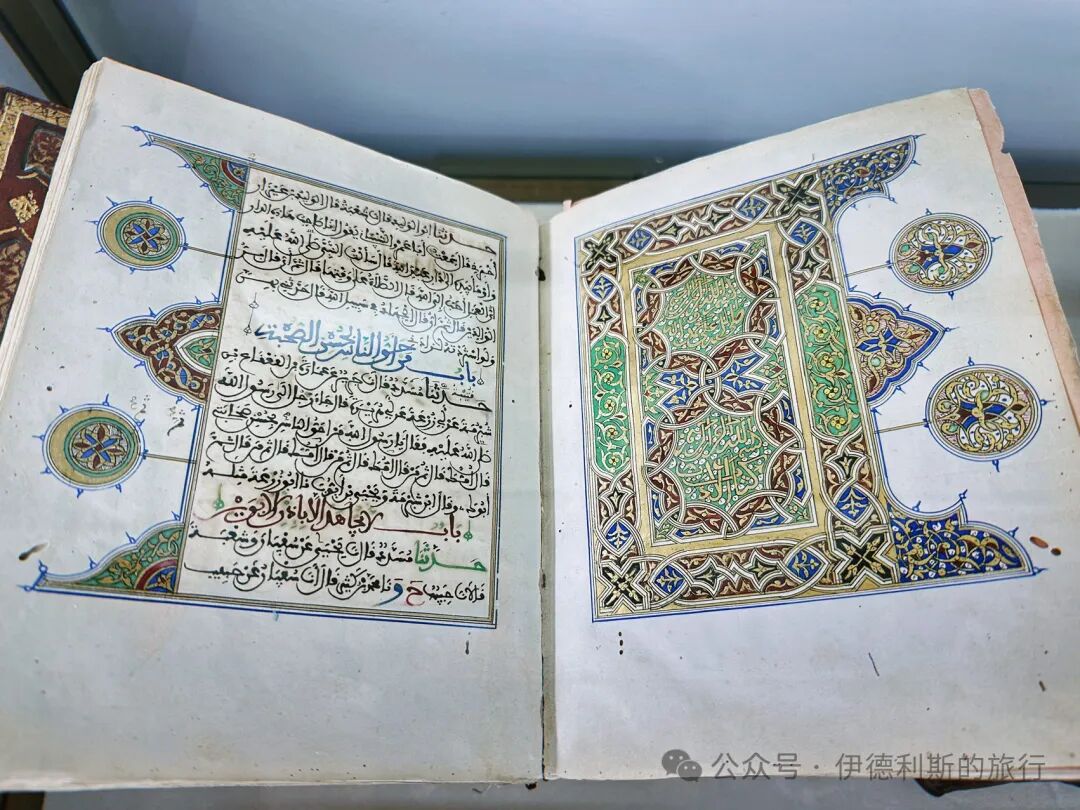
A religious handbook from the 17th-century Kashmir region.
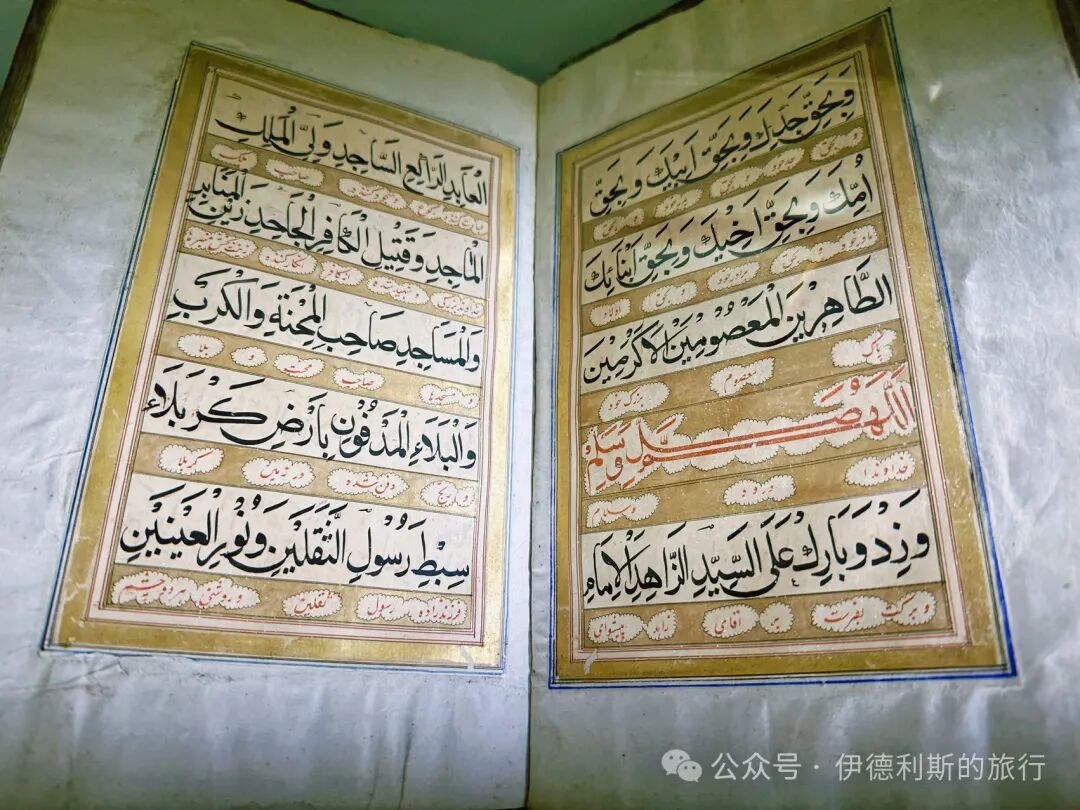
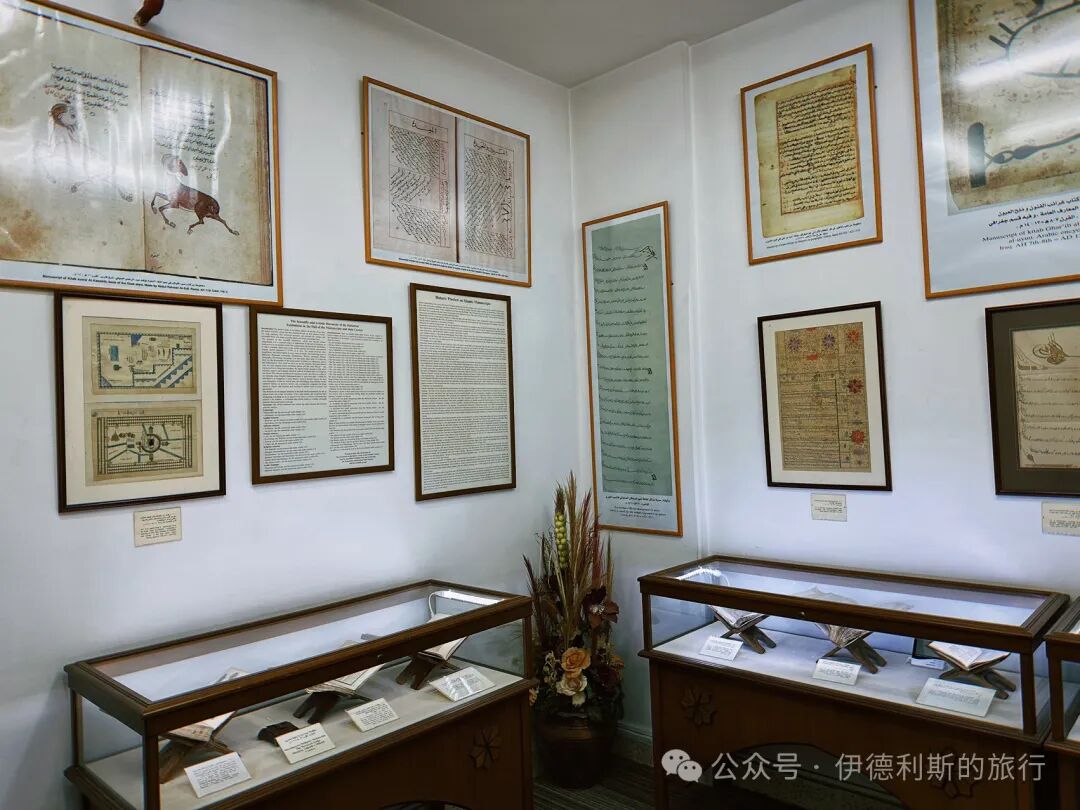
An 1828 Ottoman Turkish manuscript of the prayer book Dala'il al-Khayrat.
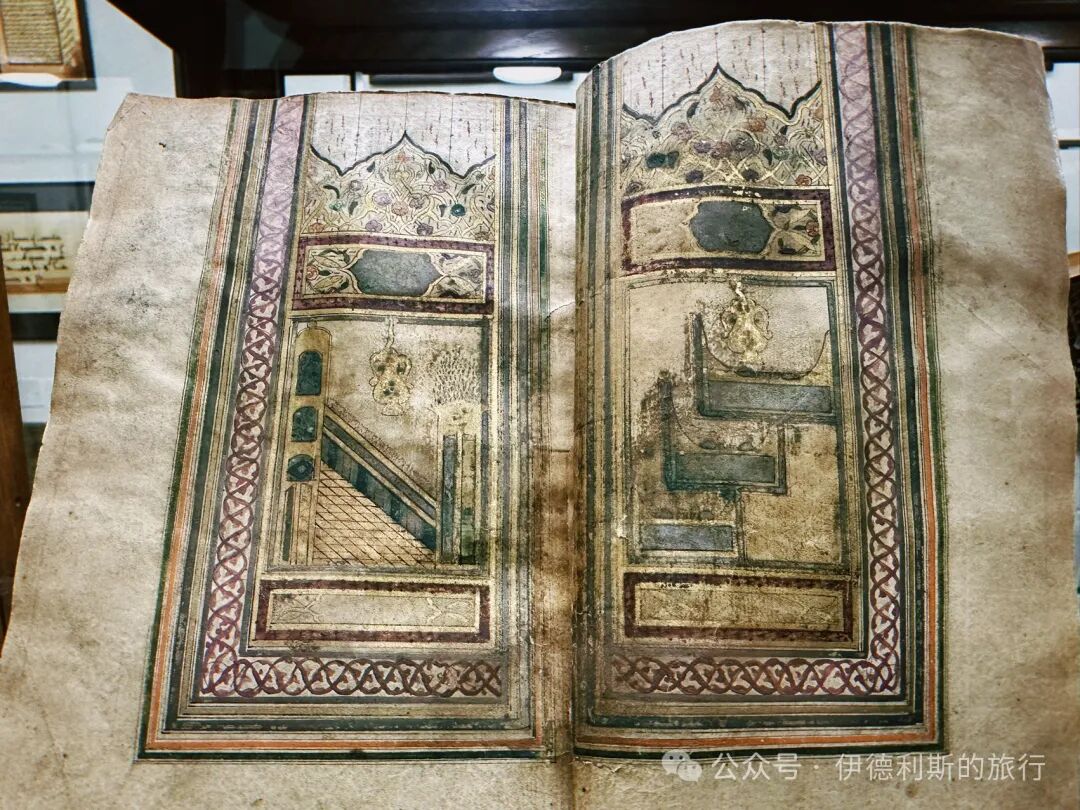
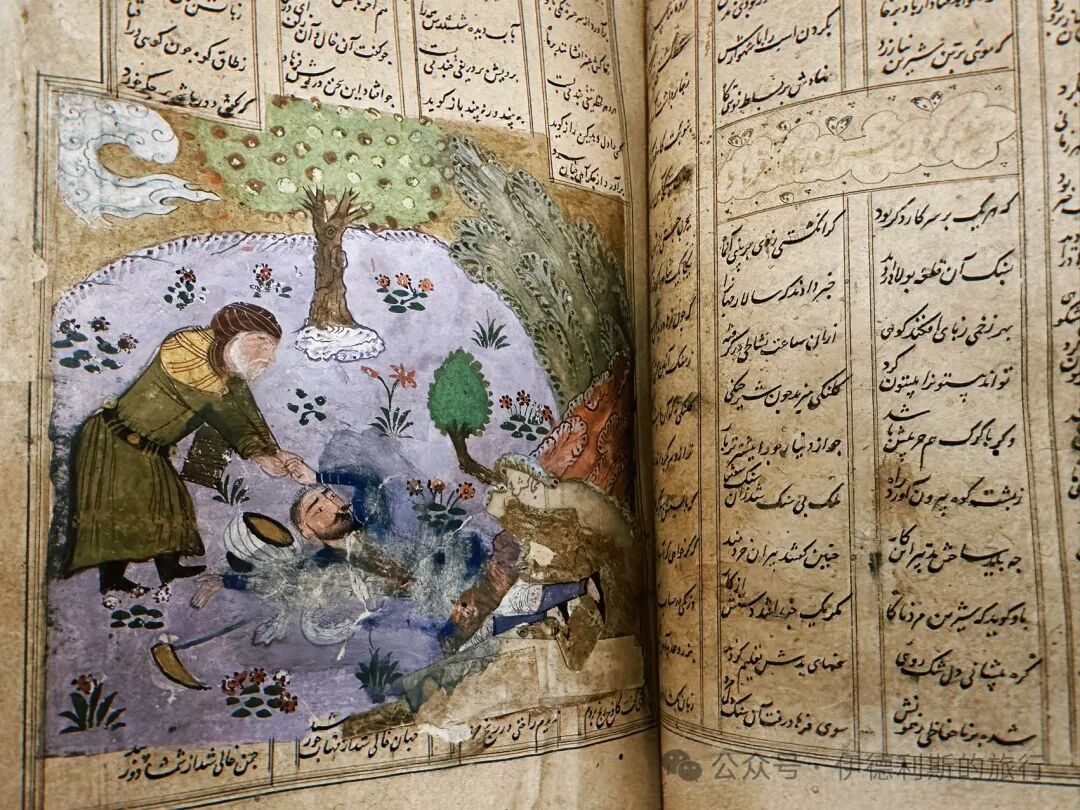
A 1495 miniature painting in Turkmen style from the Khamsa, the masterpiece of the great Persian poet Nizami.
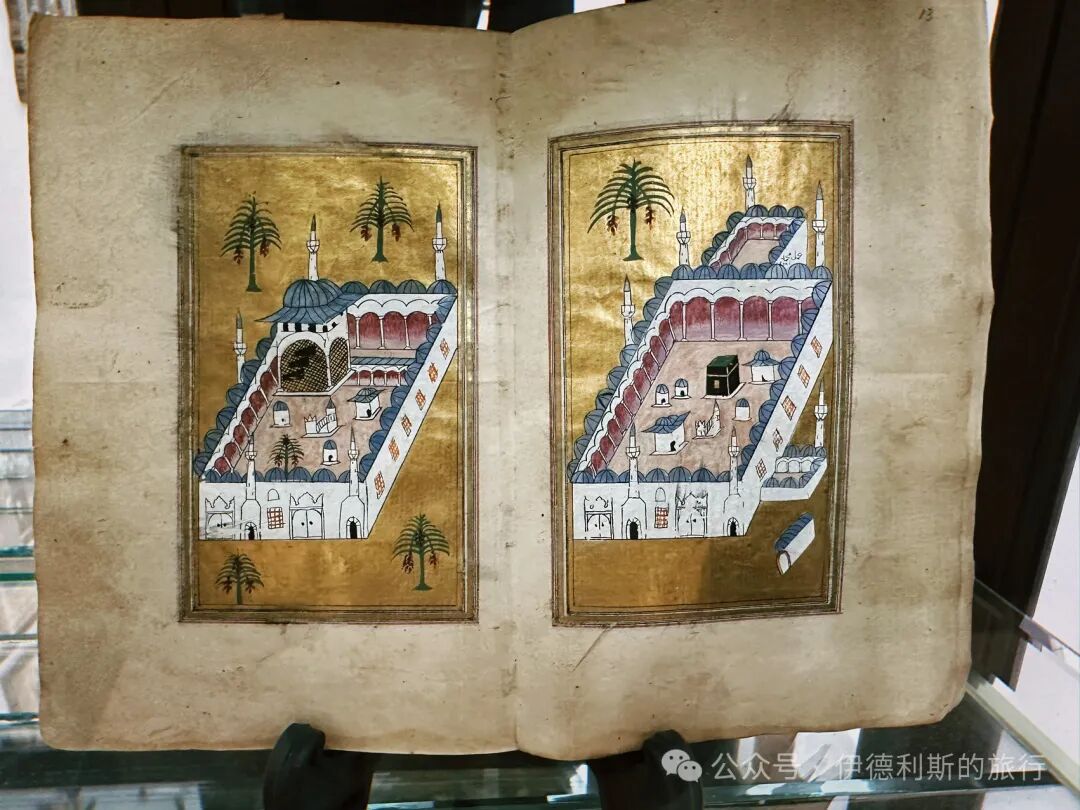
A 1744 miniature painting of the Prophet's Mosque and the Sacred Mosque from the Dala'il al-Khayrat, created by Ottoman calligrapher Mohammed Bin Hussein.
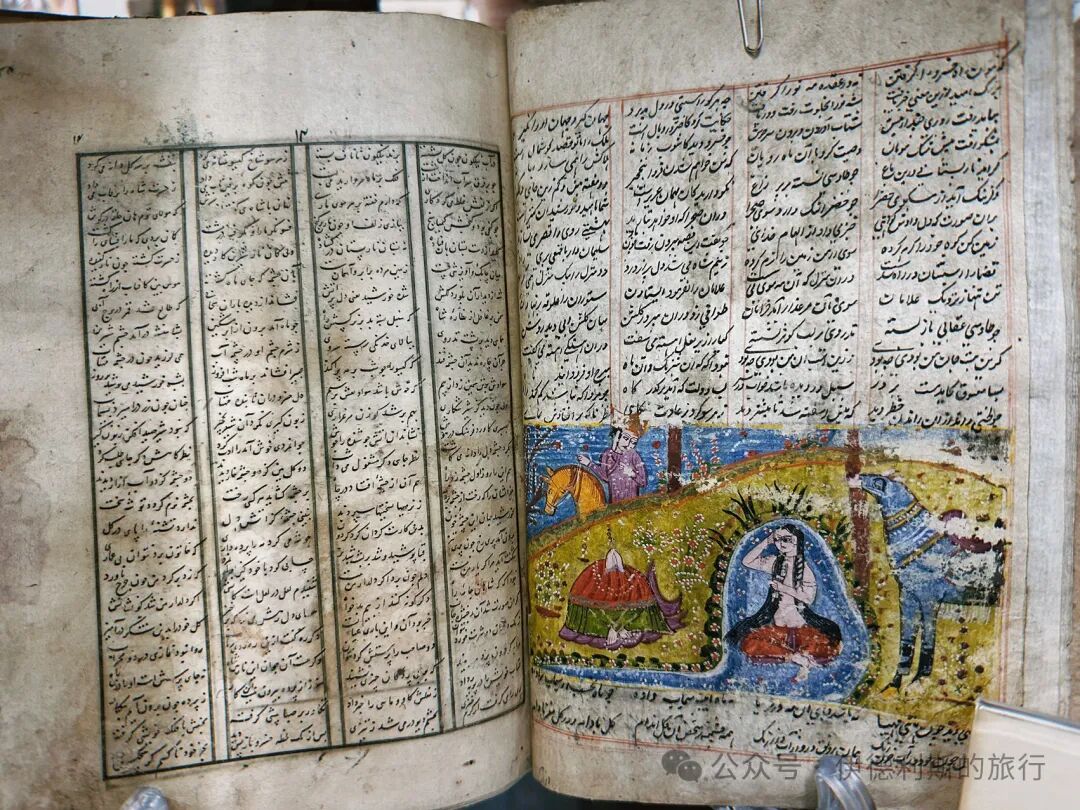
A 1485 Indian miniature painting from The Treasury of Secrets, the first volume of the Khamsa by the great Persian poet Nizami.
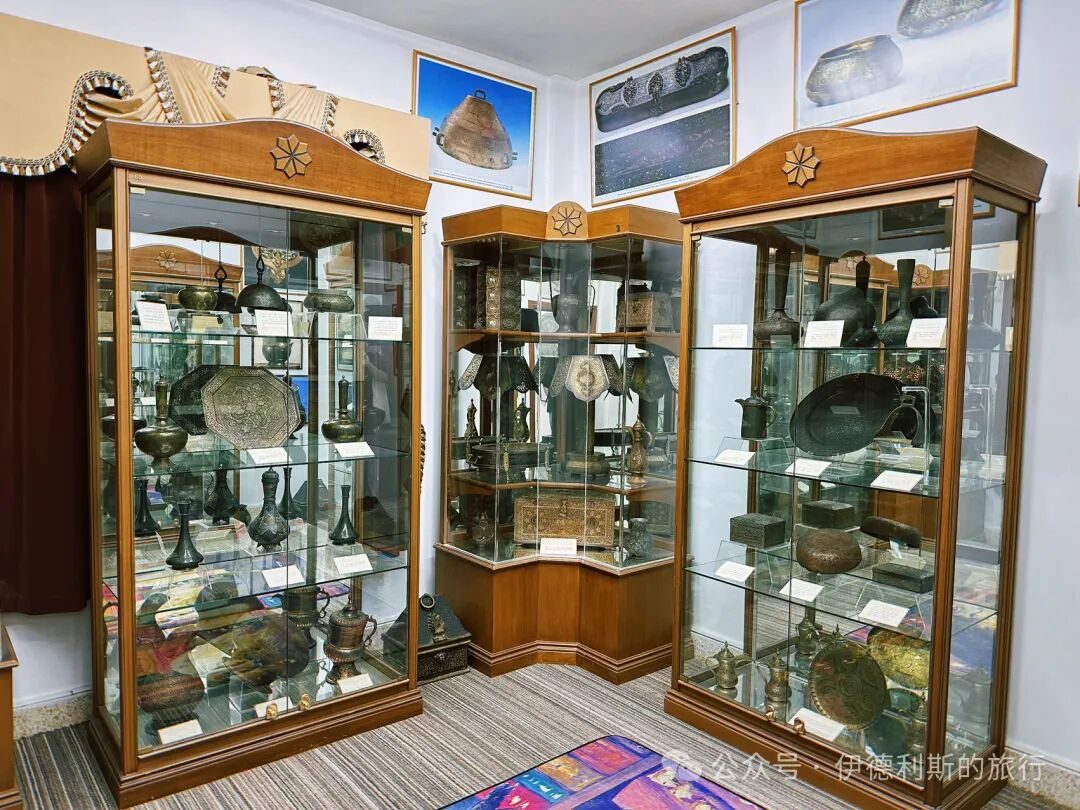
A 14th-century brass candlestick from the Mamluk period in Syria, featuring engravings in Naskh calligraphy.
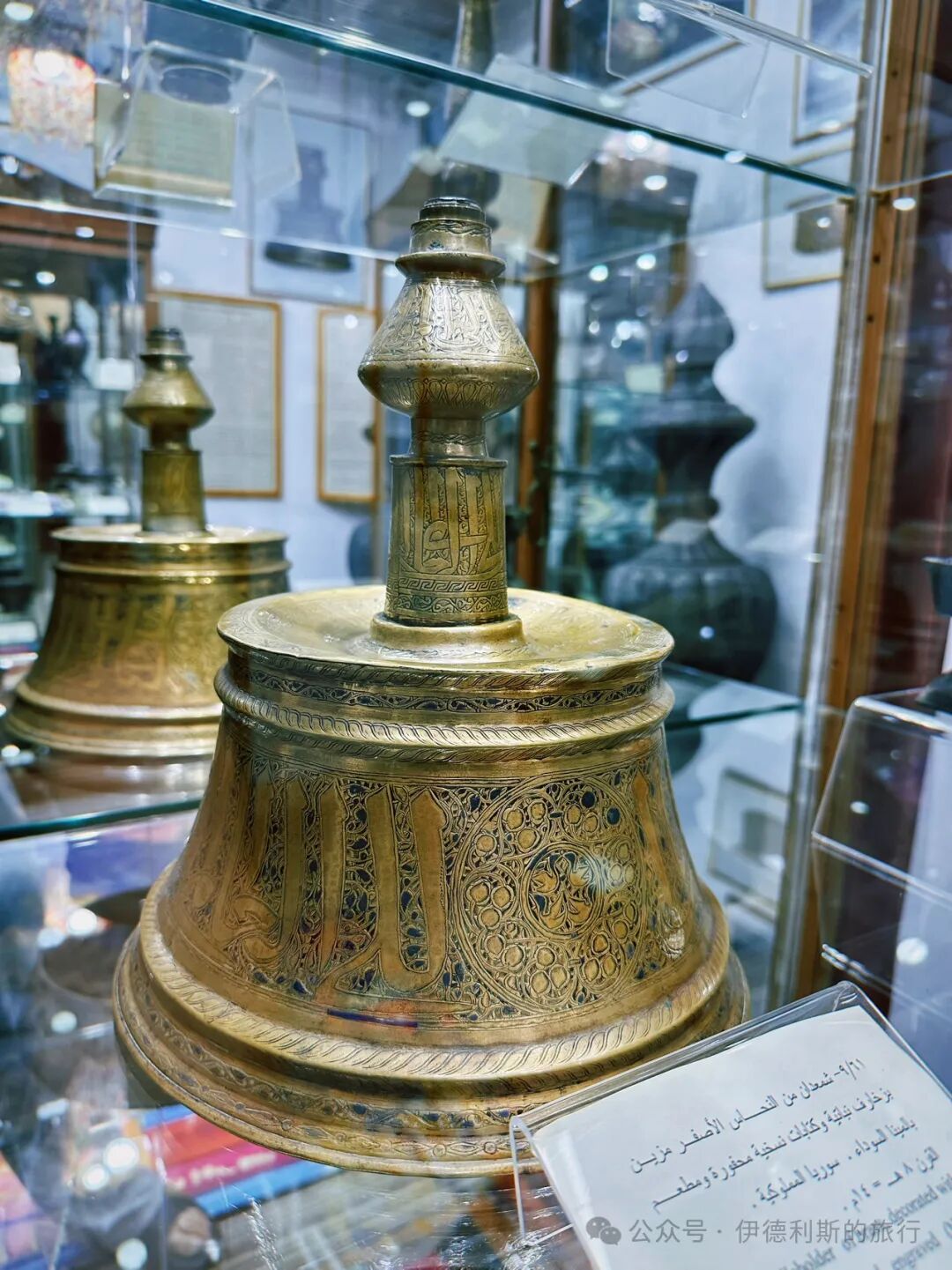
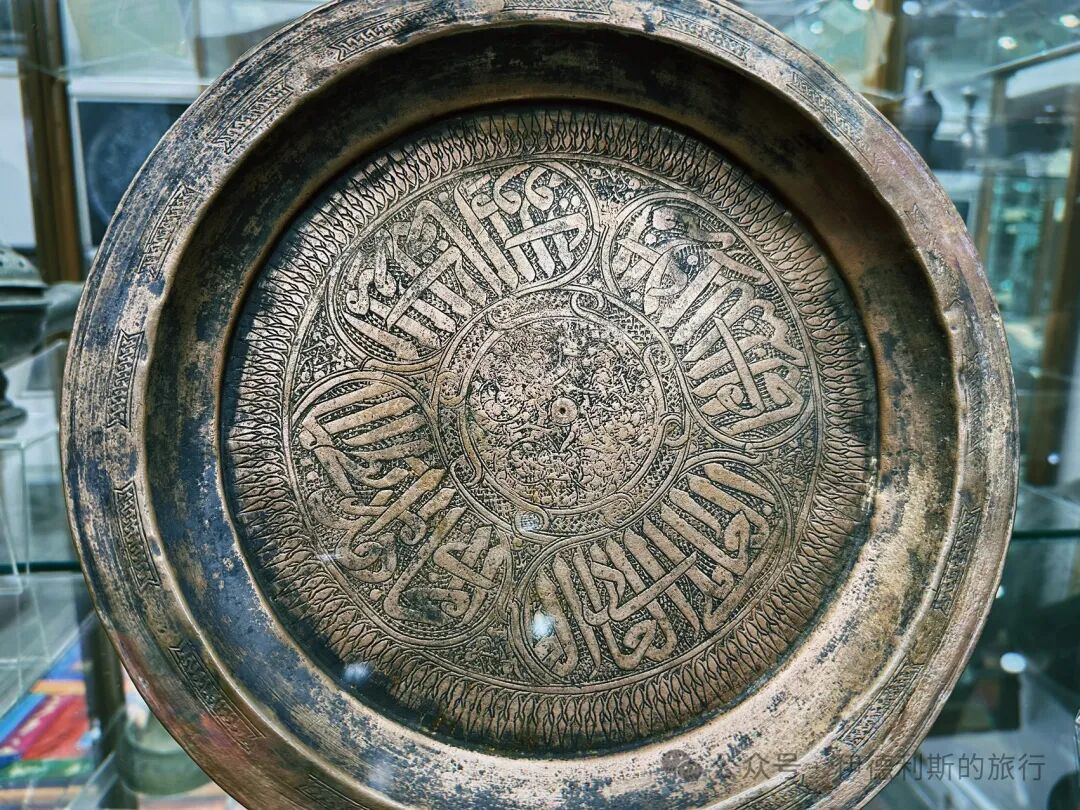
A 15th to 16th-century copper plate from the Mamluk period in Egypt, featuring engravings in Naskh calligraphy.
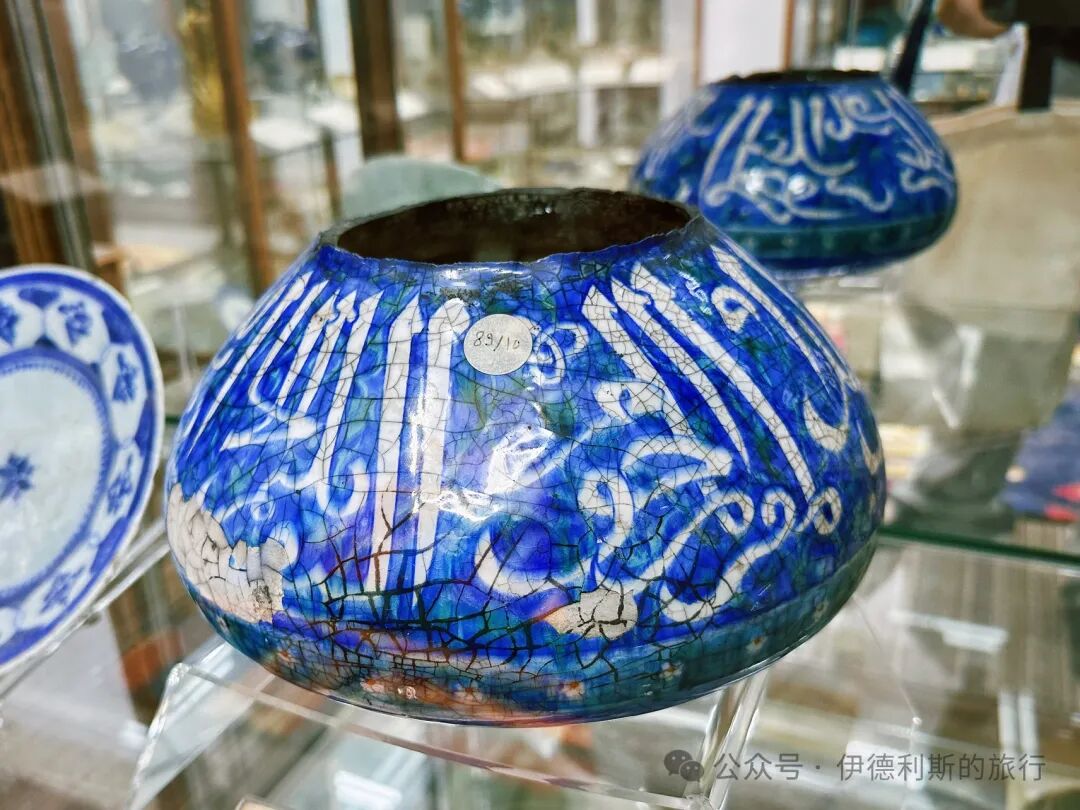
A 17th-century porcelain jar from the Ottoman period in Turkey, featuring Naskh calligraphy.
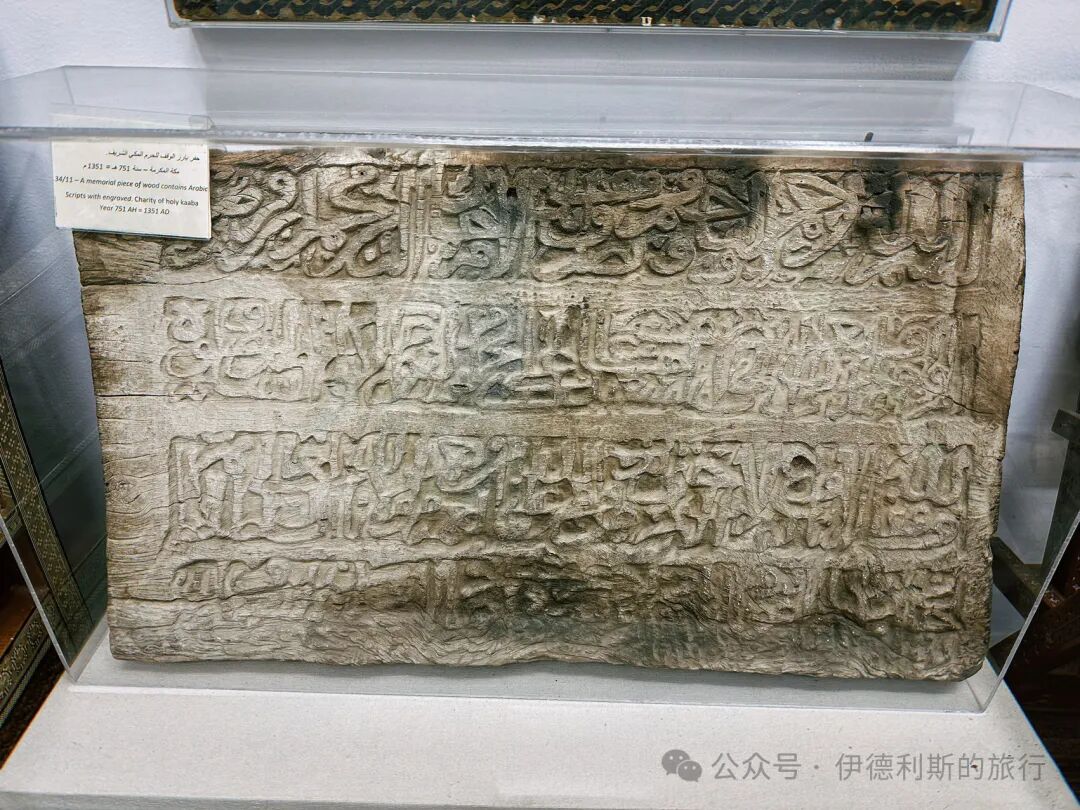
A wooden inscription from 1351 dedicated to the zakat for the Kaaba.
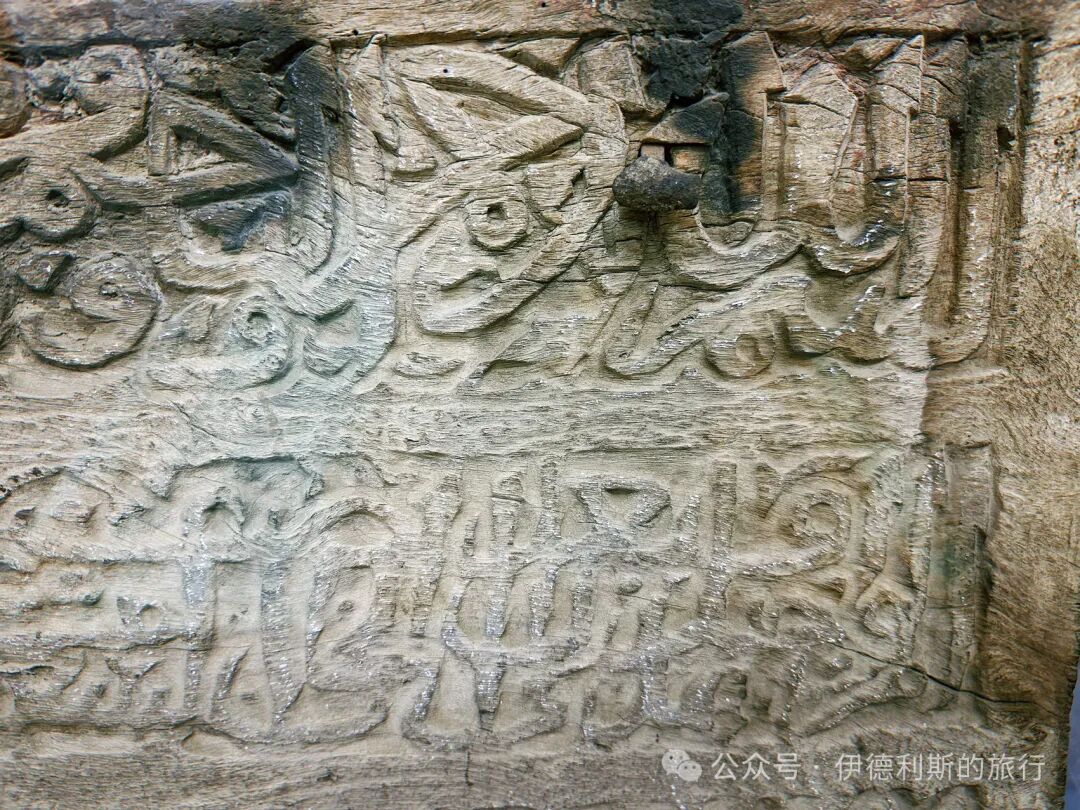
A 19th-century chest of drawers from Damascus made of coconut wood, inlaid with shell and bone, with drawer handles made of porcelain and marble.
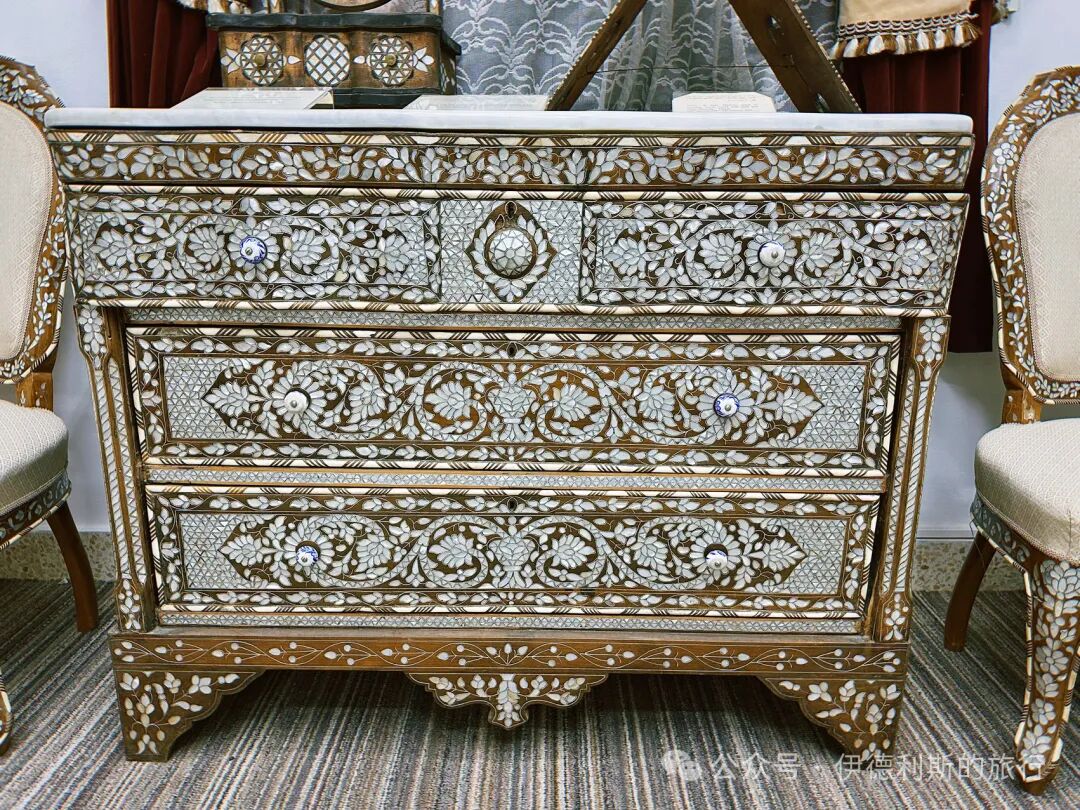
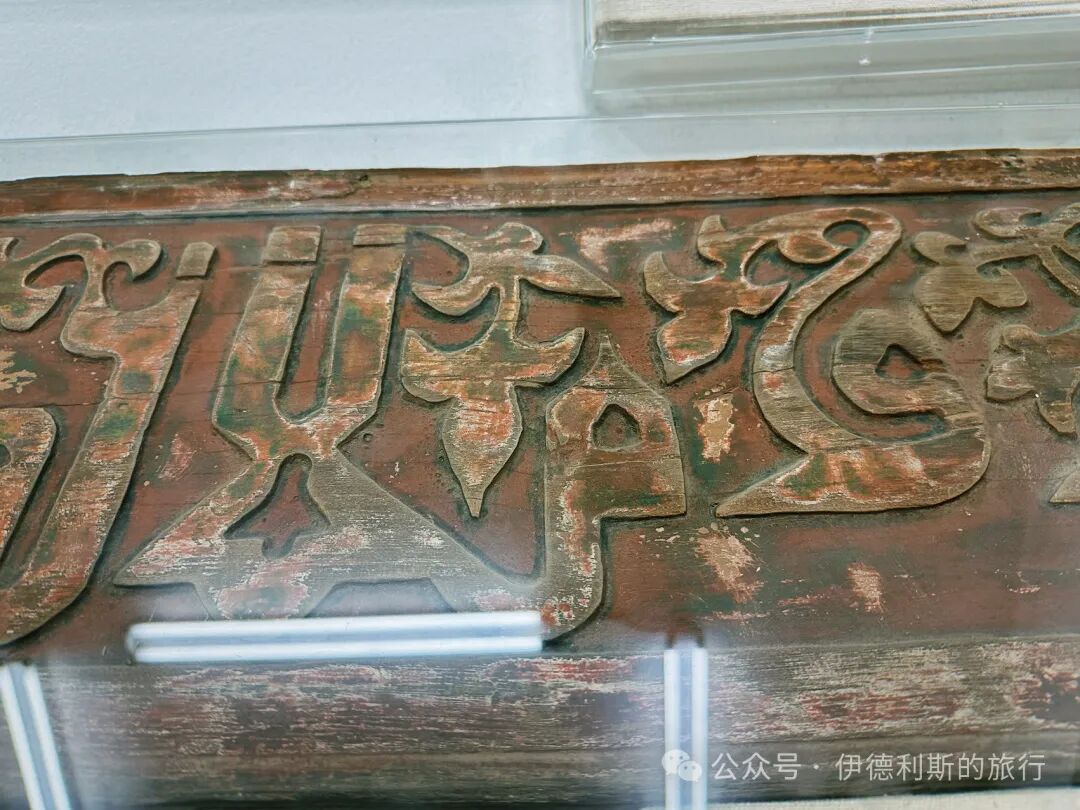
Two 17th-century wooden beams from Medina featuring Kufic script.
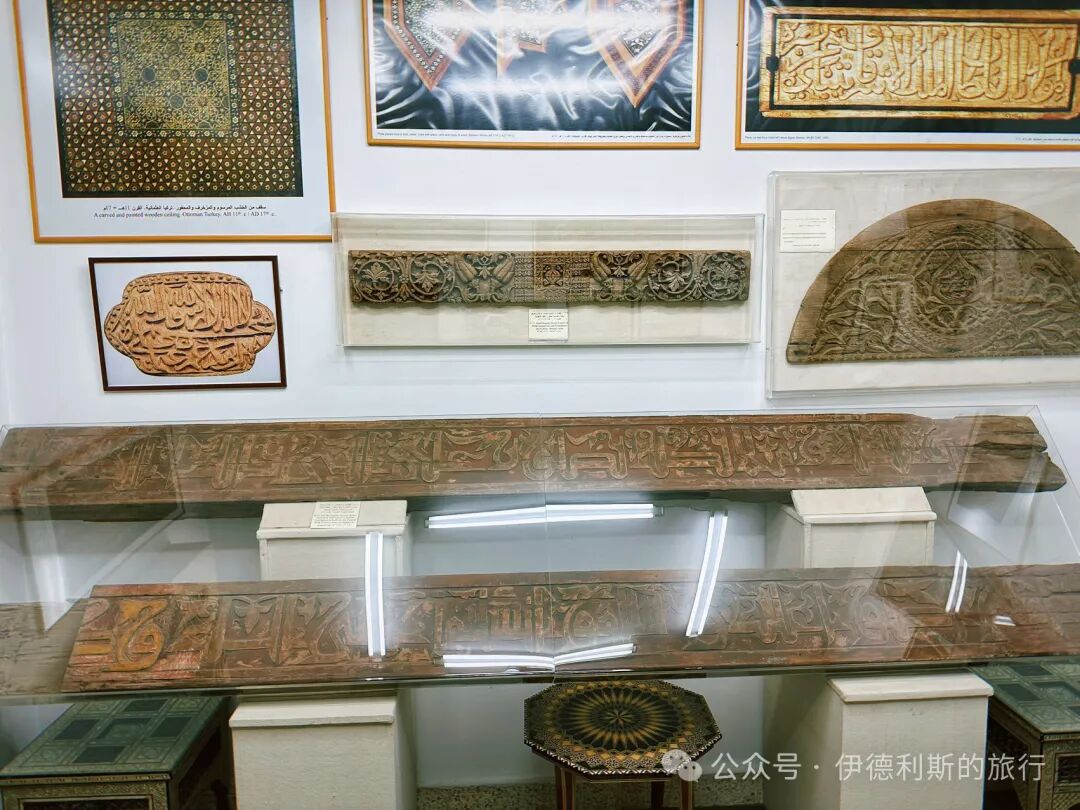
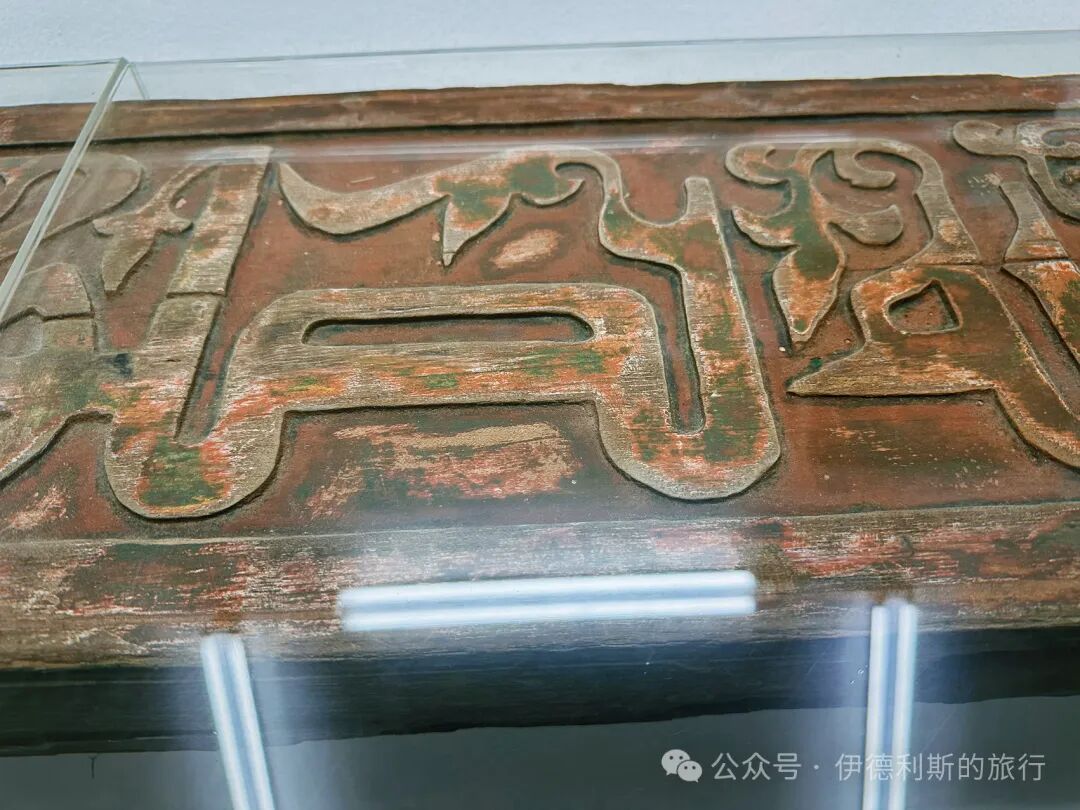
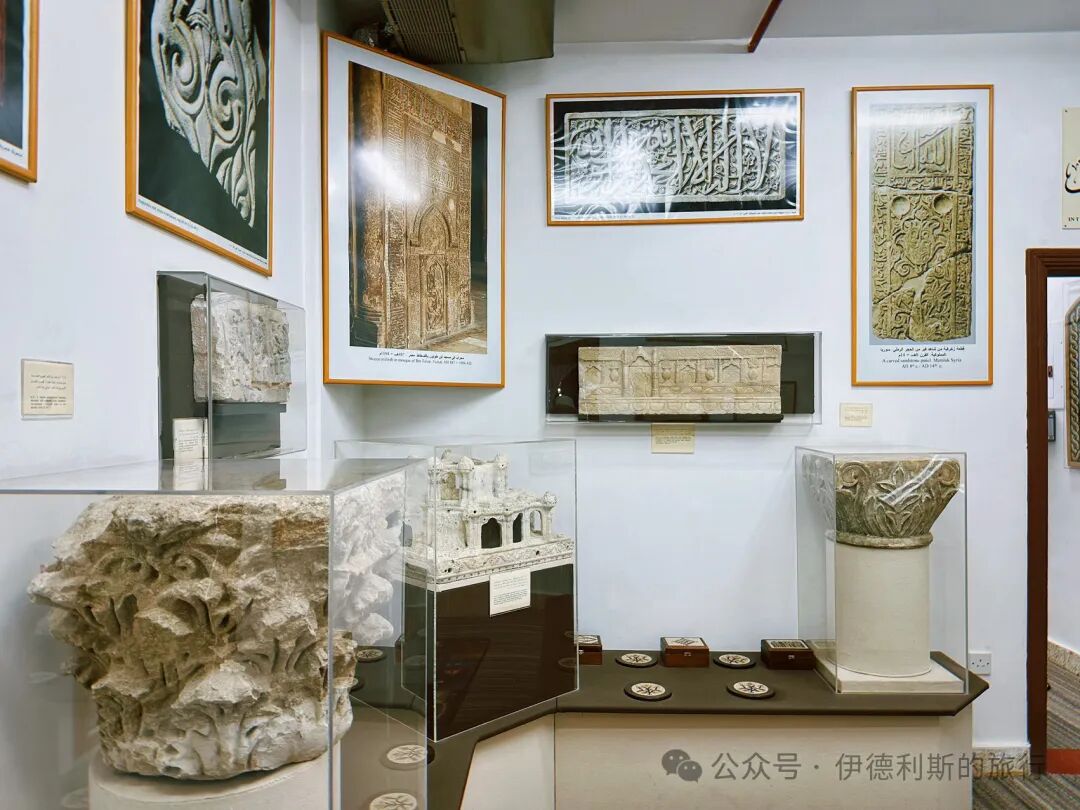
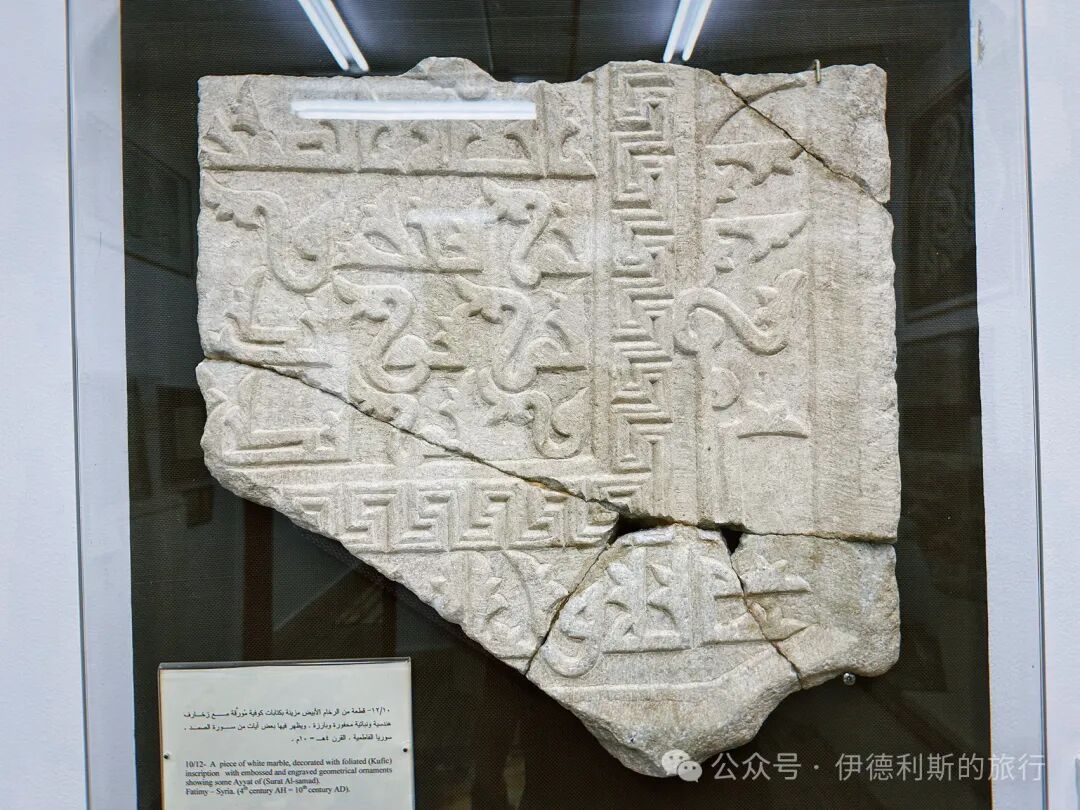
A 10th-century marble carving from the Fatimid period in Damascus featuring Kufic script.
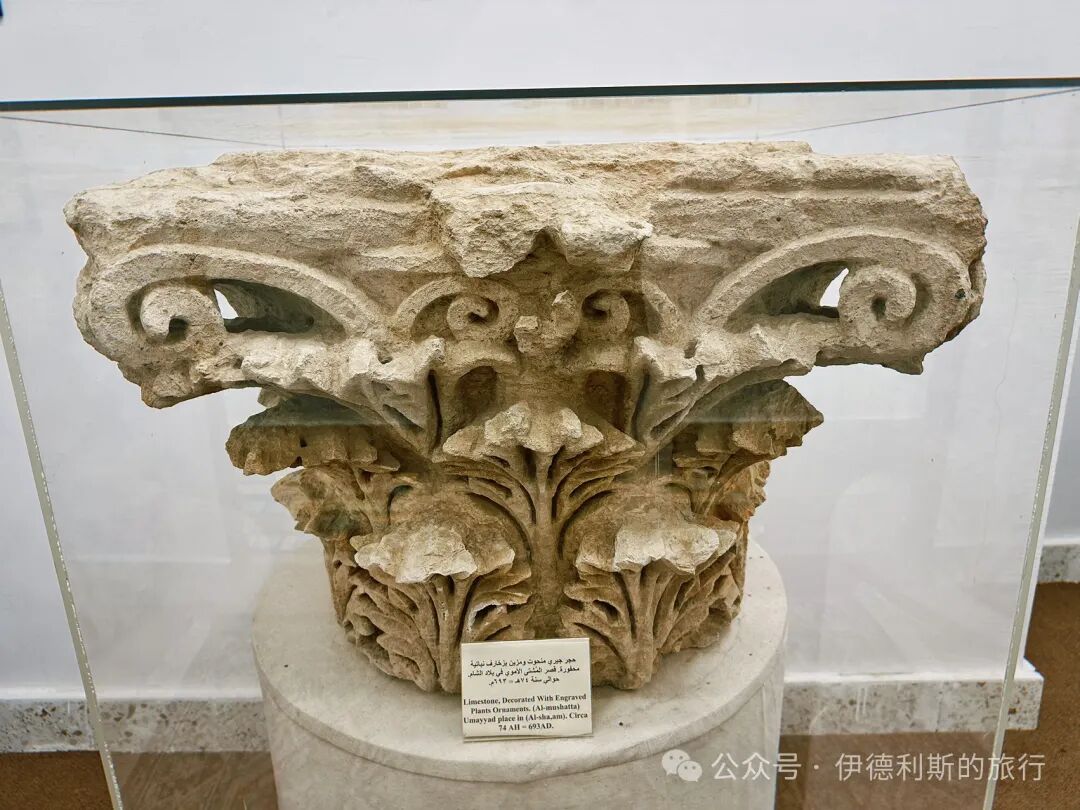
A limestone carved column capital from an Umayyad palace dating to 693.
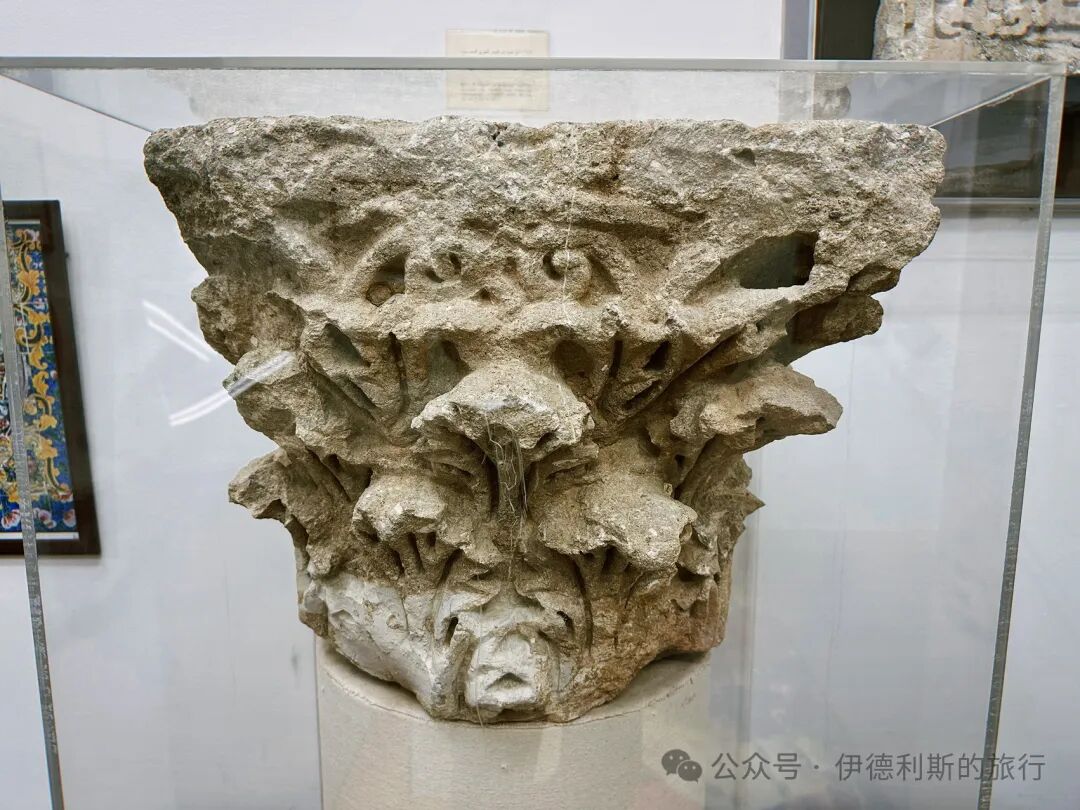
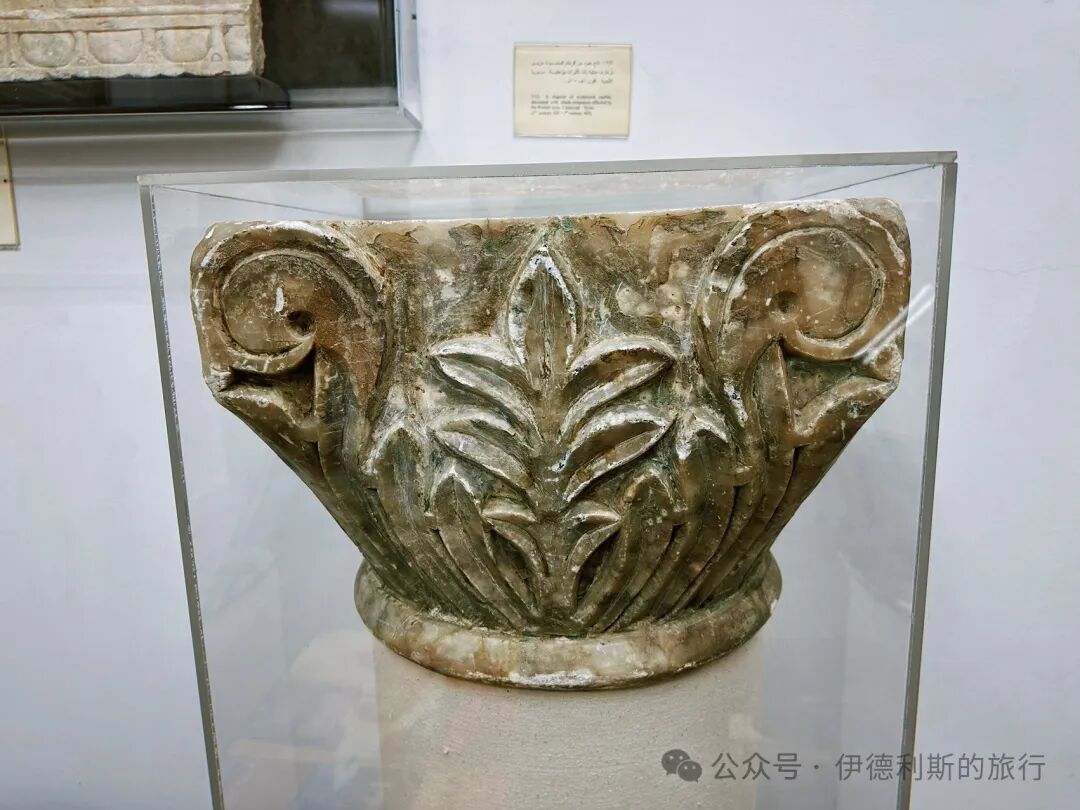
A marble column capital from the Umayyad Caliphate in Syria, dating back to the 7th century.
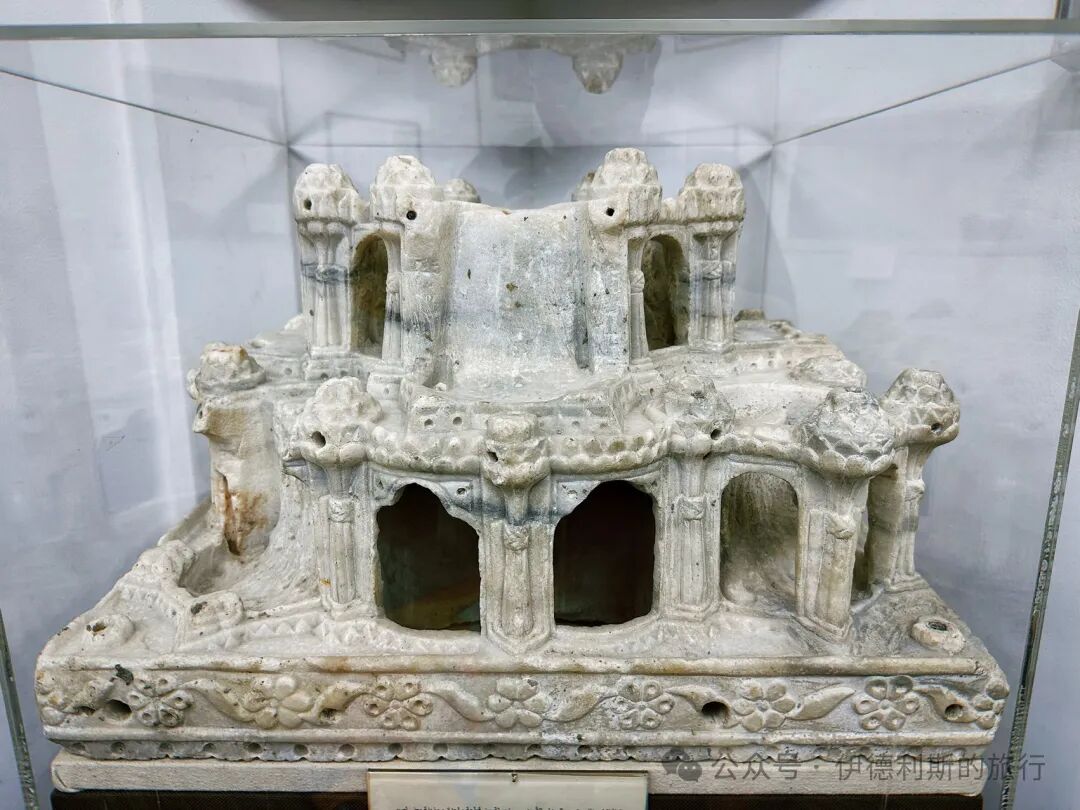
A white marble fountain from Egypt during the Mamluk Sultanate, dating to the 13th or 14th century.
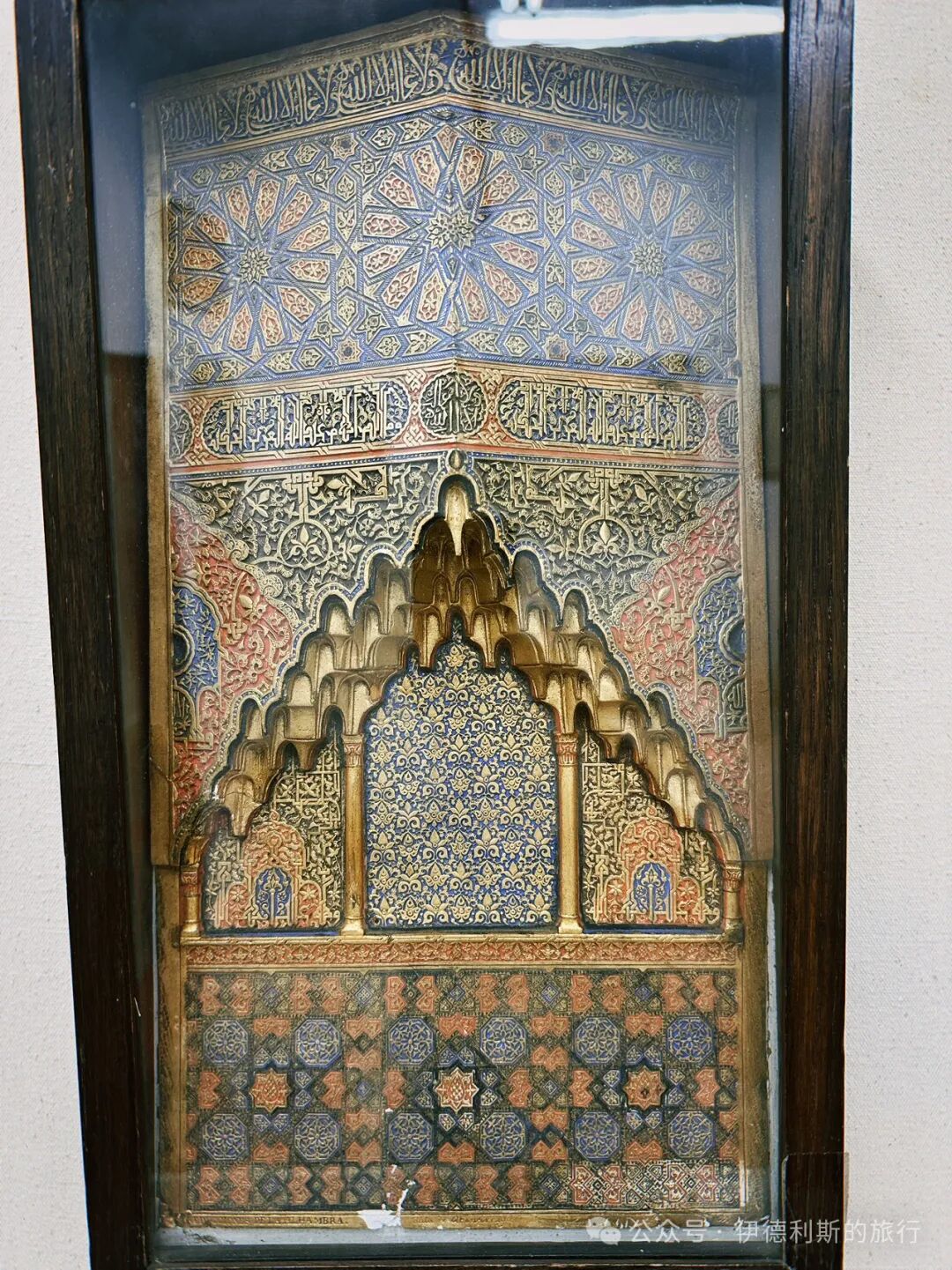
Architectural elements from the Alhambra in Spain, dating to the 19th century.
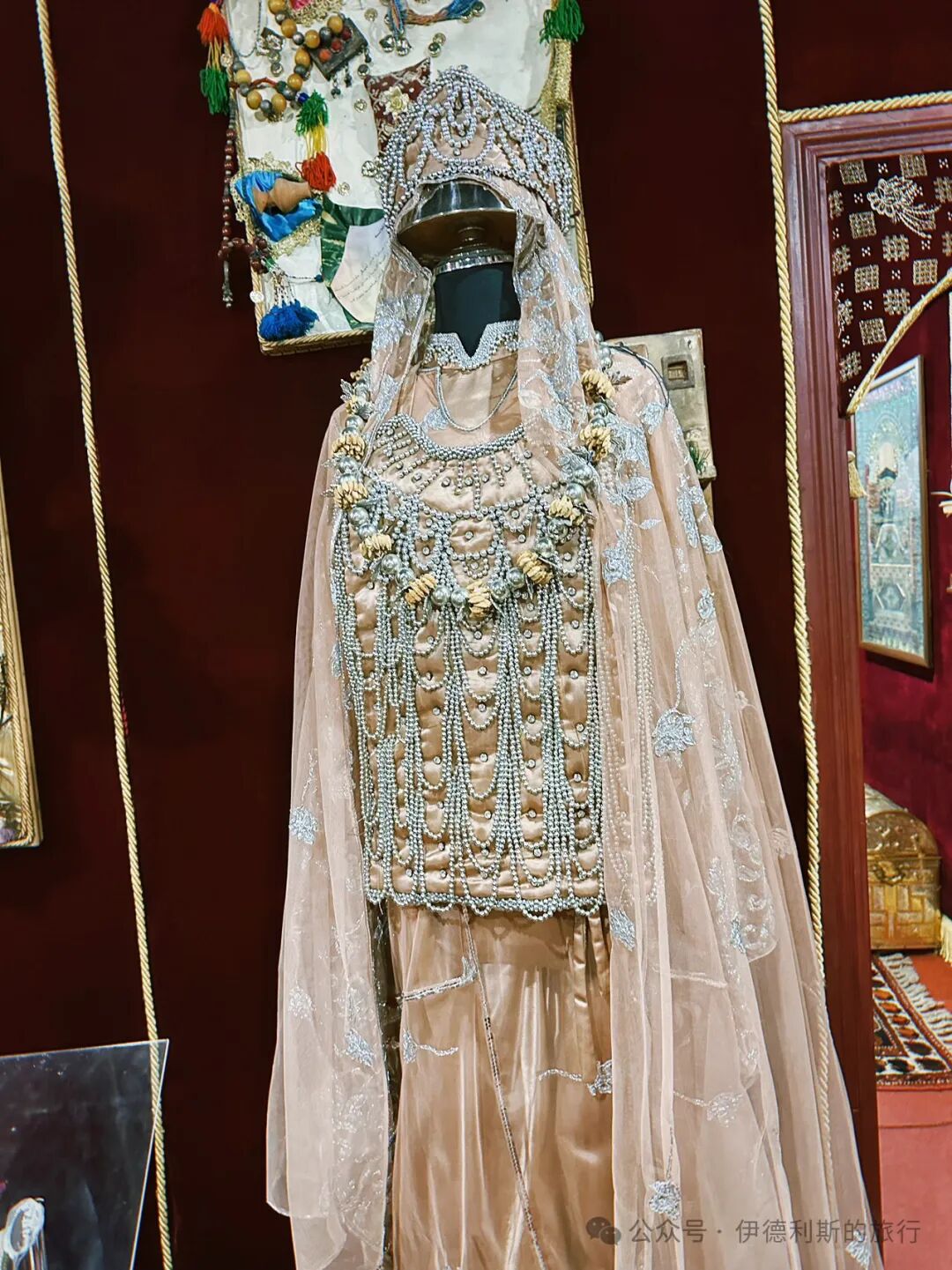
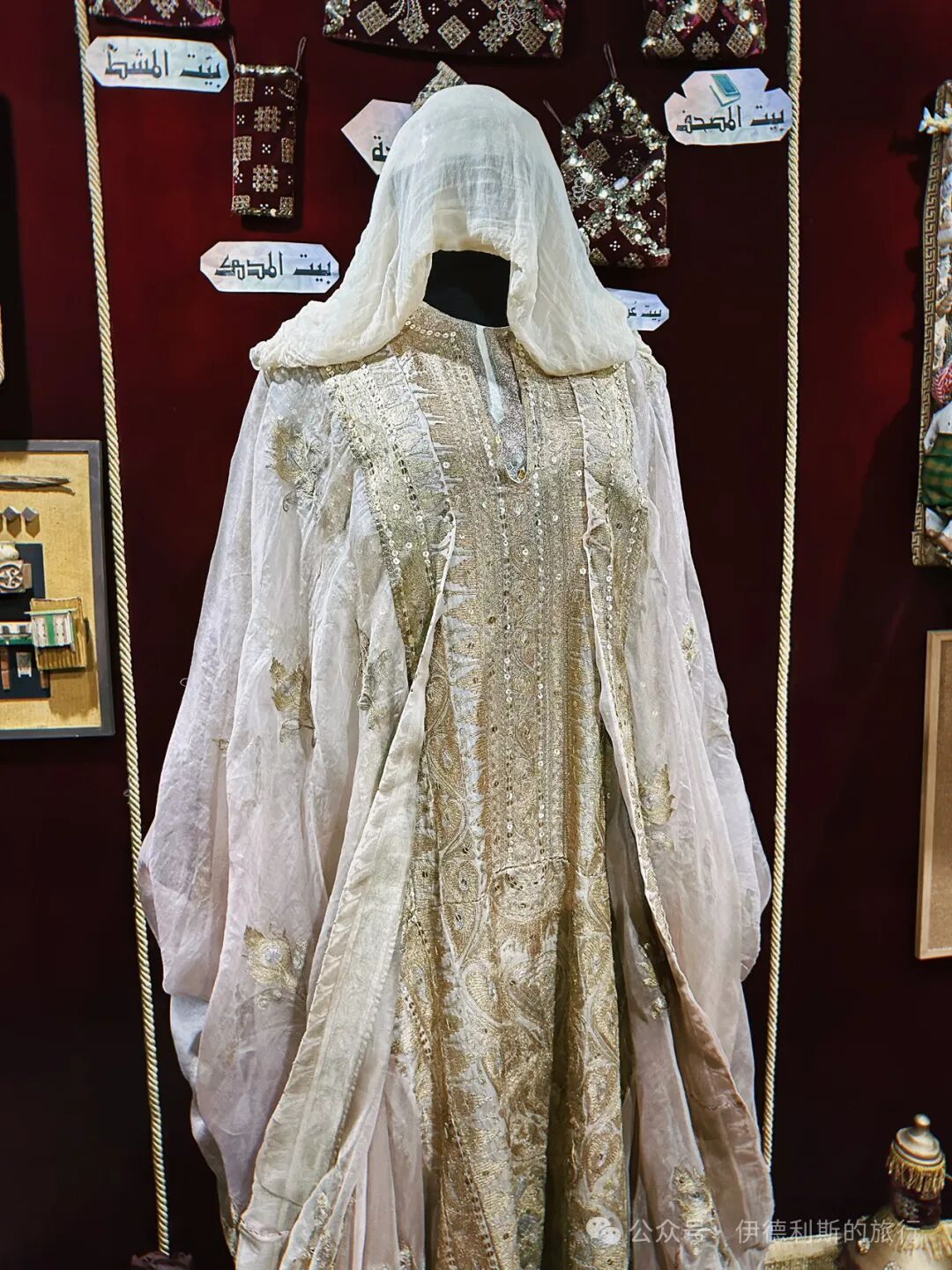
After seeing the historical artifacts of the faith, you enter the next major section: the Saudi folk culture exhibition. Here, you get a direct look at the different customs from across Saudi Arabia. The traditional Saudi wedding dresses in the gallery are very eye-catching, and the white gowns are incredibly delicate.
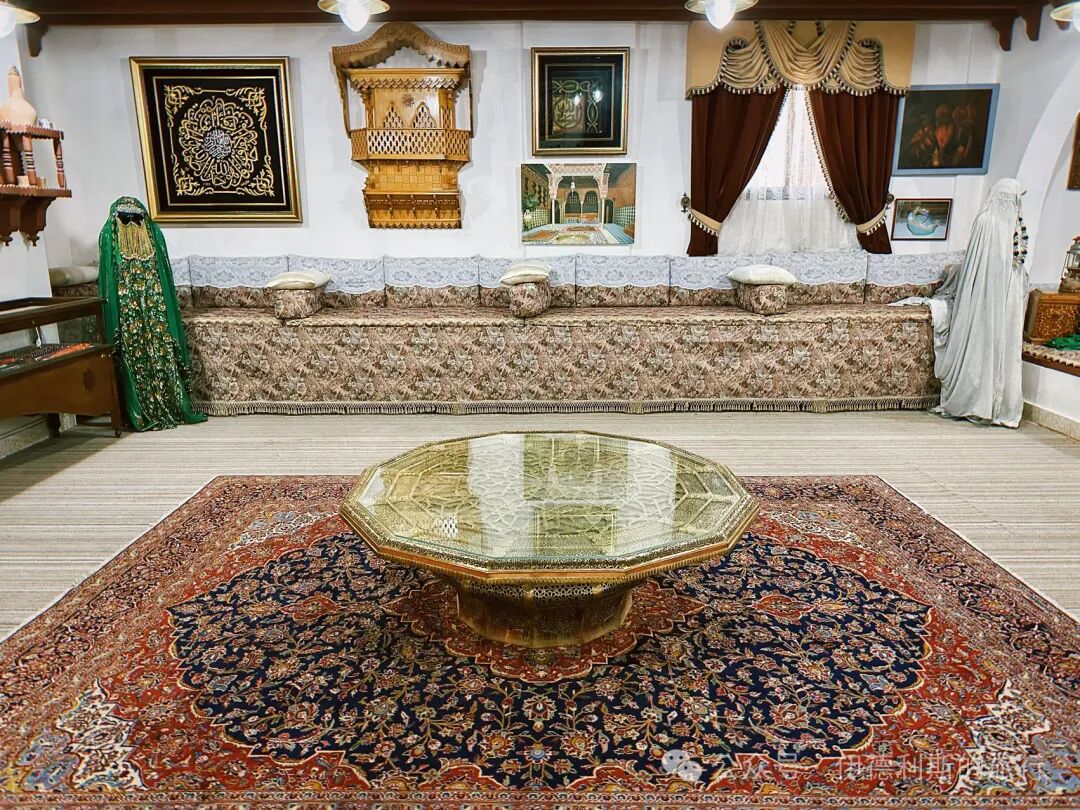
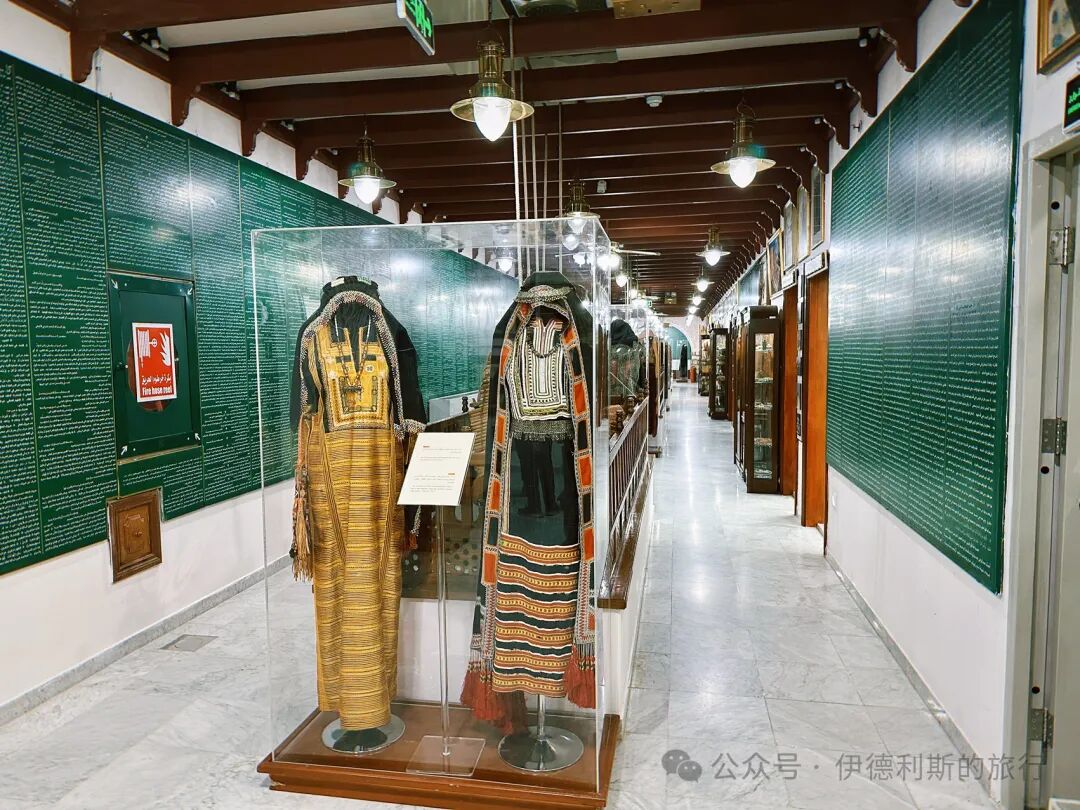
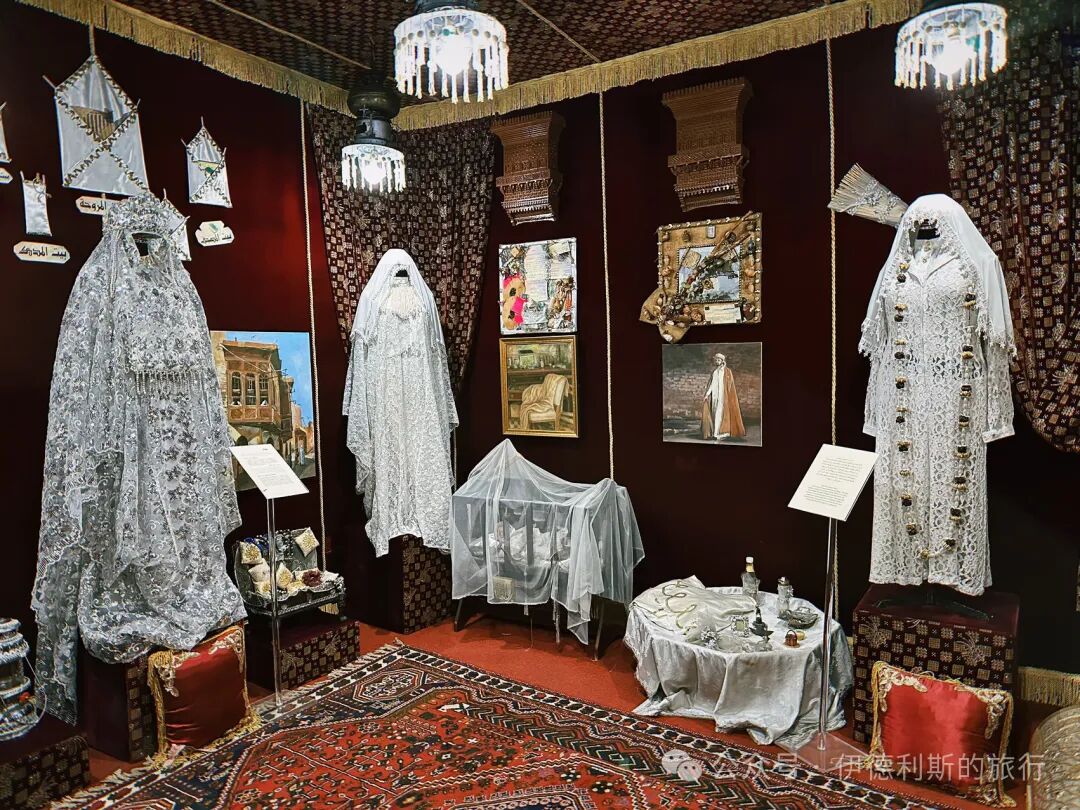
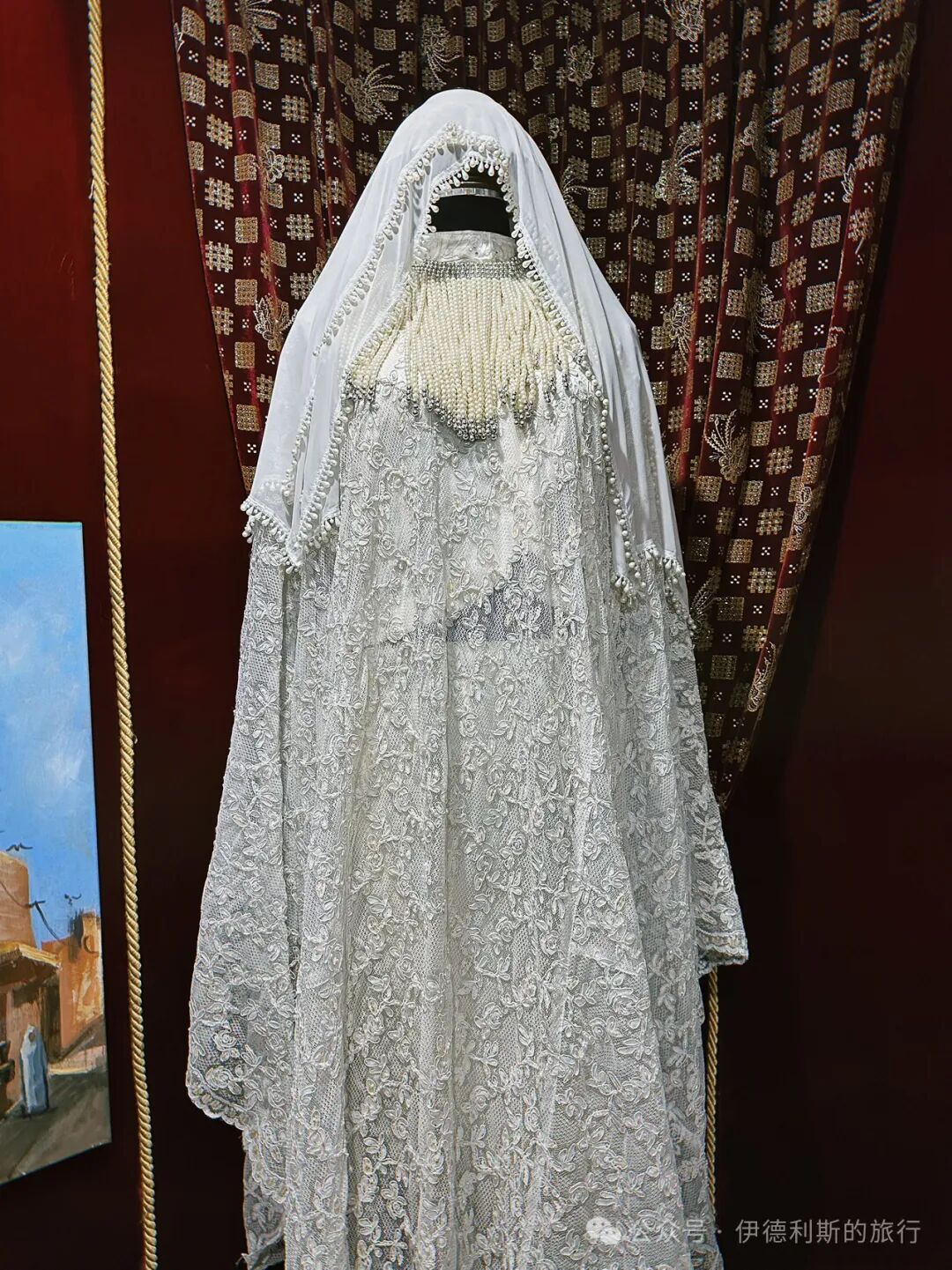
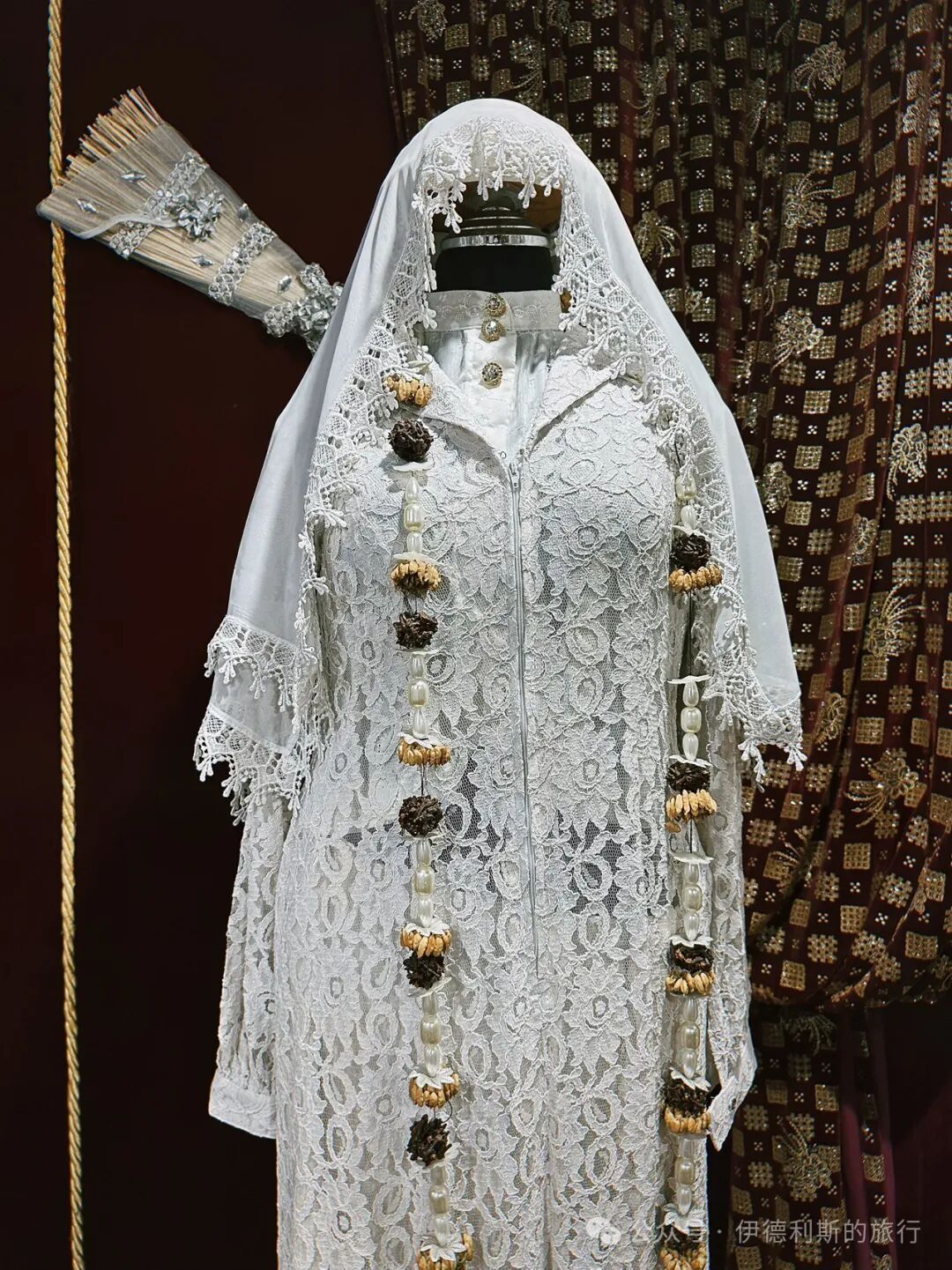
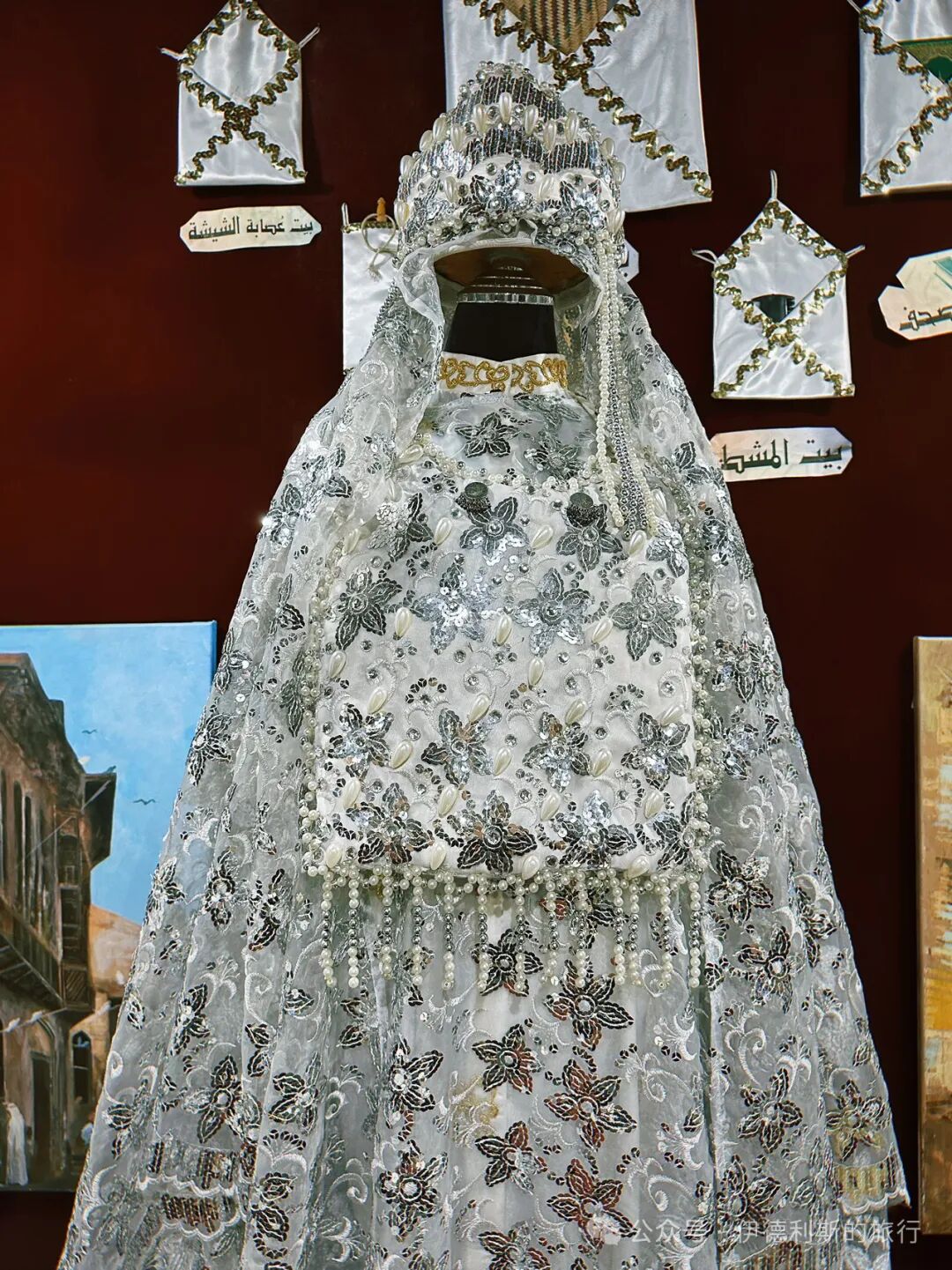
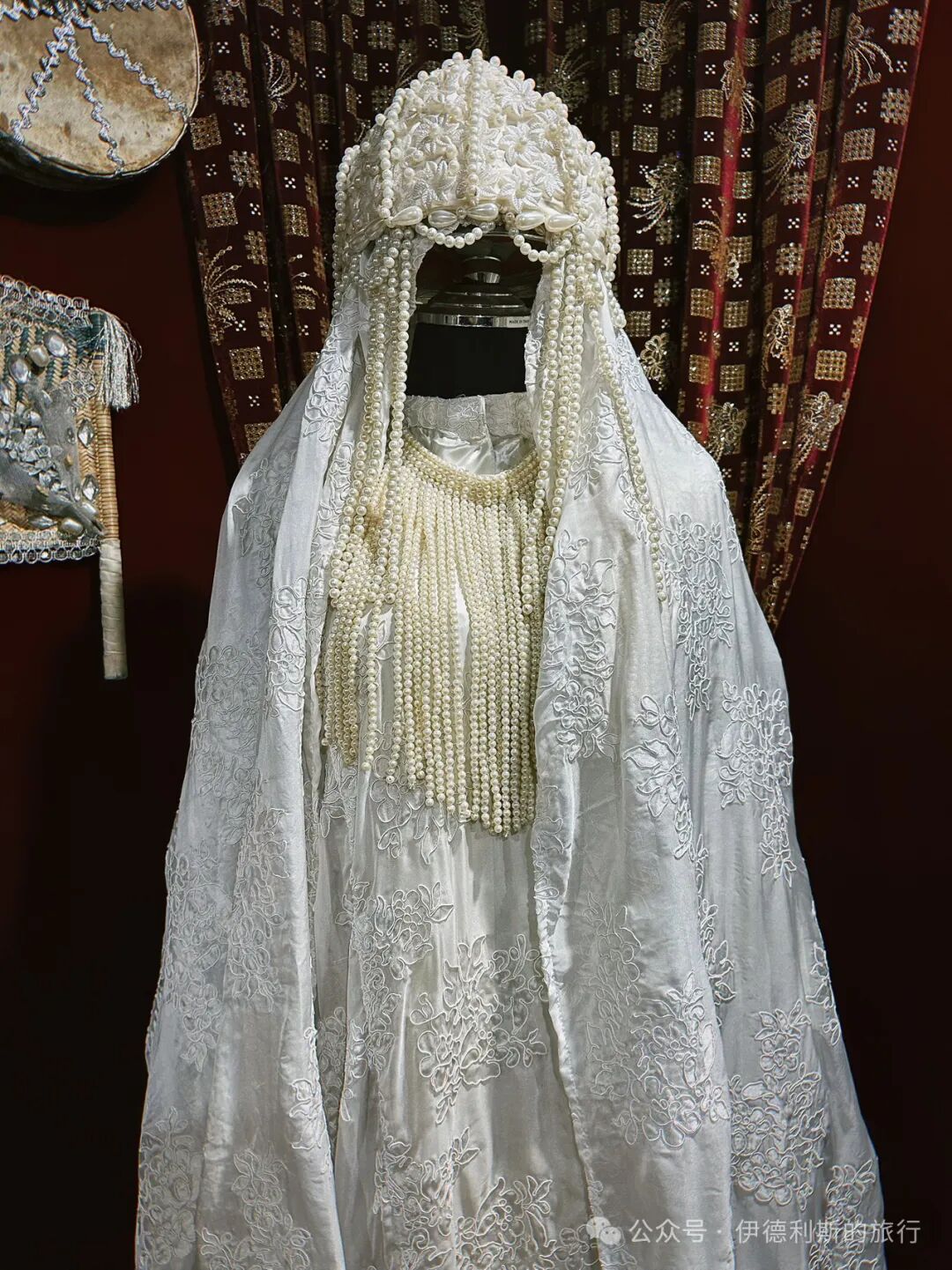
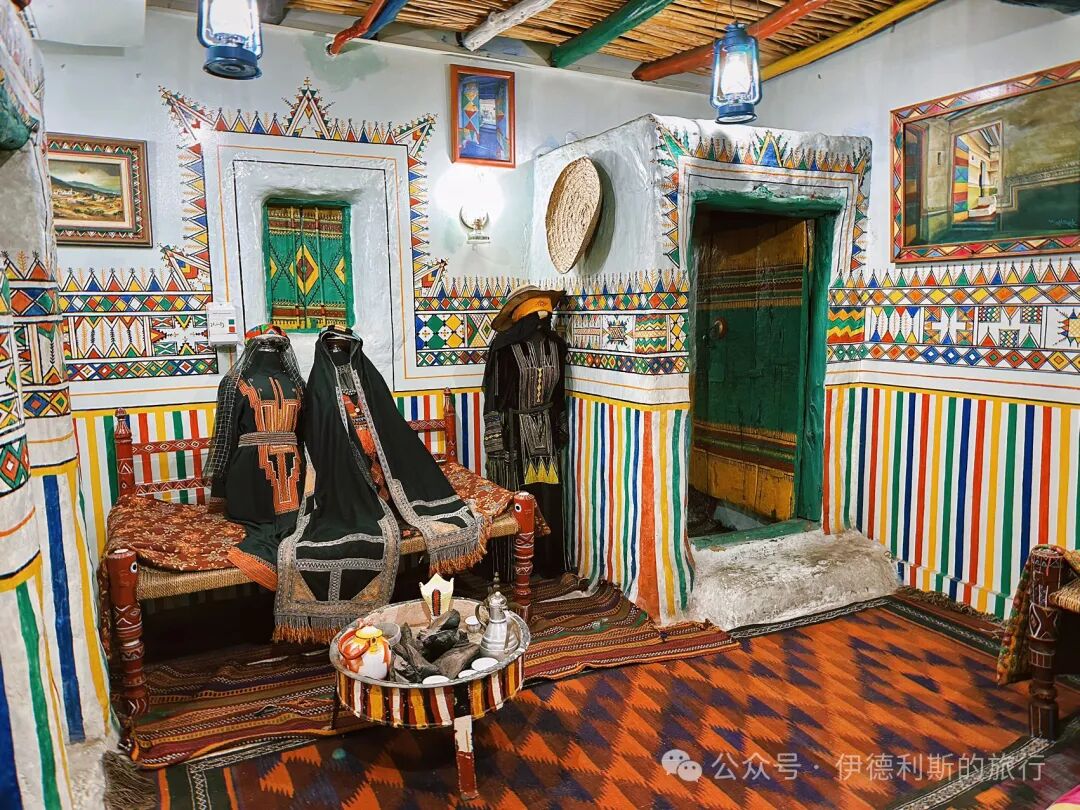
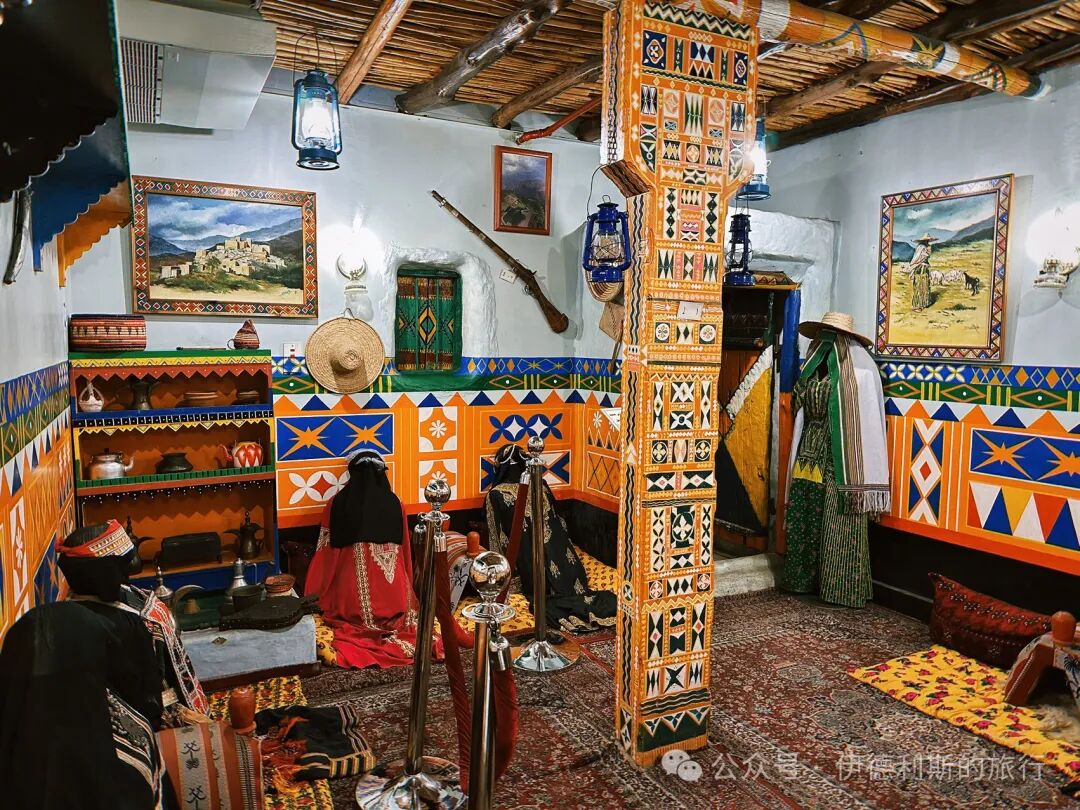
The most interesting part of the Saudi folk culture exhibition is the recreation of traditional houses in different styles from across the country. Because of the different climates, traditional houses in various parts of Saudi Arabia each have their own unique features.
Unlike the desert oases most people imagine, the scenery in Al Bahah Province in southwestern Saudi Arabia is very beautiful, and it is known as the Garden of Hejaz. The Baha region gets a lot of rain, so the mountains are covered in thick forests. You can hear streams flowing through the villages, see lush palm groves, and find many banana plantations. Traditional houses in the Baha region are built from wood and clay, and they are painted in very bright colors.
Summary: Islamic Museum Guide: Jeddah Tayebat Museum - Saudi History and Culture is presented here as a firsthand travel account in clear, natural English. The account focuses on Jeddah, Tayebat Museum, Saudi Culture while preserving the names, places, food, photos, and historical details from the Chinese source.
The full name of the Tayebat Museum is the Al Taybat International City Museum of Science and Information. The entire museum is built in the traditional architectural style of the Hejaz region, featuring coral stone and plaster walls along with beautiful wooden bay windows (Roshan).
The museum has a rich collection of exhibits. It starts with the rise of the faith and displays many beautiful artworks and artifacts. The museum also has a wealth of displays on the traditional folk culture of Jeddah, the Hejaz, and all of Saudi Arabia, including a large collection of traditional clothing and folk objects.
A 19th-century wooden prayer niche (mihrab) from Damascus, featuring beautiful Persian calligraphy.
A 16th-century manuscript from the Mughal Empire.
A 16th-century Persian Safavid dynasty manuscript of poetry with miniature paintings.
A 12th-century bronze cannon muzzle from the ancient city of Herat, Afghanistan, engraved with Kufic calligraphy. Herat grew into a center for metal manufacturing between the 11th and 12th centuries until the Mongol army massacred the city in 1221.
A 14th-century small plaster prayer niche (mihrab) from Samarkand during the Timurid dynasty, decorated with Kufic calligraphy.
A Moroccan manuscript from 1860 written in Maghrebi script.
A copper water kettle with silver inlay from Ottoman-era Damascus, dating to the 18th or 19th century.
A 13th-century Ayyubid dynasty manuscript from the southeastern Anatolian Peninsula, written in Muhaqqaq script.
A 13th-century Egyptian Mamluk dynasty manuscript written in Muhaqqaq script.
A 16th-century Persian Safavid dynasty manuscript written in Al-rayhani script.
A 14th-century manuscript from northwestern Iraq, written in Iraqi Rayhani script during the Jalayirid dynasty. The Jalayirid dynasty was a Persianized khanate established by Mongol tribes after the Ilkhanate collapsed.
A 19th-century North African manuscript written in Maghrebi Kufic script.
A manuscript written in Naskh script from the Persian Qajar dynasty in 1800.
A manuscript written in Naskh script from the Bosnia region during the Ottoman dynasty in the 17th to 18th centuries.
A manuscript written in Naskh script from the Turkey region during the Ottoman dynasty in the 18th century.
A manuscript written in Naskh script from the India region during the Mughal dynasty in the 17th century.
A manuscript written in Kufic script, likely from the Iraq region, dating to the 10th to 11th centuries.
A manuscript written in Andalusian script from the Andalusia region in the 12th century.
A manuscript written in Kufic script from the Iraq region during the Abbasid dynasty in the 9th to 10th centuries.
A manuscript written in Kufic script from the Iraq region during the Abbasid dynasty in the 8th to 9th centuries.
A manuscript written in Kufic script from 9th-century Iraq or Iran.
A manuscript written in Muhaqqaq script from the Anatolia region during the Seljuk Empire in the 13th to 14th centuries.
A manuscript of Sahih al-Bukhari from the 18th-century Morocco region.
A religious handbook from the 17th-century Kashmir region.
An 1828 Ottoman Turkish manuscript of the prayer book Dala'il al-Khayrat.
A 1495 miniature painting in Turkmen style from the Khamsa, the masterpiece of the great Persian poet Nizami.
A 1744 miniature painting of the Prophet's Mosque and the Sacred Mosque from the Dala'il al-Khayrat, created by Ottoman calligrapher Mohammed Bin Hussein.
A 1485 Indian miniature painting from The Treasury of Secrets, the first volume of the Khamsa by the great Persian poet Nizami.
A 14th-century brass candlestick from the Mamluk period in Syria, featuring engravings in Naskh calligraphy.
A 15th to 16th-century copper plate from the Mamluk period in Egypt, featuring engravings in Naskh calligraphy.
A 17th-century porcelain jar from the Ottoman period in Turkey, featuring Naskh calligraphy.
A wooden inscription from 1351 dedicated to the zakat for the Kaaba.
A 19th-century chest of drawers from Damascus made of coconut wood, inlaid with shell and bone, with drawer handles made of porcelain and marble.
Two 17th-century wooden beams from Medina featuring Kufic script.
A 10th-century marble carving from the Fatimid period in Damascus featuring Kufic script.
A limestone carved column capital from an Umayyad palace dating to 693.
A marble column capital from the Umayyad Caliphate in Syria, dating back to the 7th century.
A white marble fountain from Egypt during the Mamluk Sultanate, dating to the 13th or 14th century.
Architectural elements from the Alhambra in Spain, dating to the 19th century.
After seeing the historical artifacts of the faith, you enter the next major section: the Saudi folk culture exhibition. Here, you get a direct look at the different customs from across Saudi Arabia. The traditional Saudi wedding dresses in the gallery are very eye-catching, and the white gowns are incredibly delicate.
The most interesting part of the Saudi folk culture exhibition is the recreation of traditional houses in different styles from across the country. Because of the different climates, traditional houses in various parts of Saudi Arabia each have their own unique features.
Unlike the desert oases most people imagine, the scenery in Al Bahah Province in southwestern Saudi Arabia is very beautiful, and it is known as the Garden of Hejaz. The Baha region gets a lot of rain, so the mountains are covered in thick forests. You can hear streams flowing through the villages, see lush palm groves, and find many banana plantations. Traditional houses in the Baha region are built from wood and clay, and they are painted in very bright colors.
Halal Travel Guide: Jeddah Old City - Gateway to Makkah and Hijazi Heritage
Articles • ali2007fr posted the article • 0 comments • 144 views • 2026-05-19 06:55
Reposted from the web
Jeddah is located in the Hejaz region on the east coast of the Red Sea. In 647 AD, Caliph Uthman ordered it to be built as a port for travel to Mecca. Since then, Jeddah has been an important gateway for pilgrims arriving by sea.
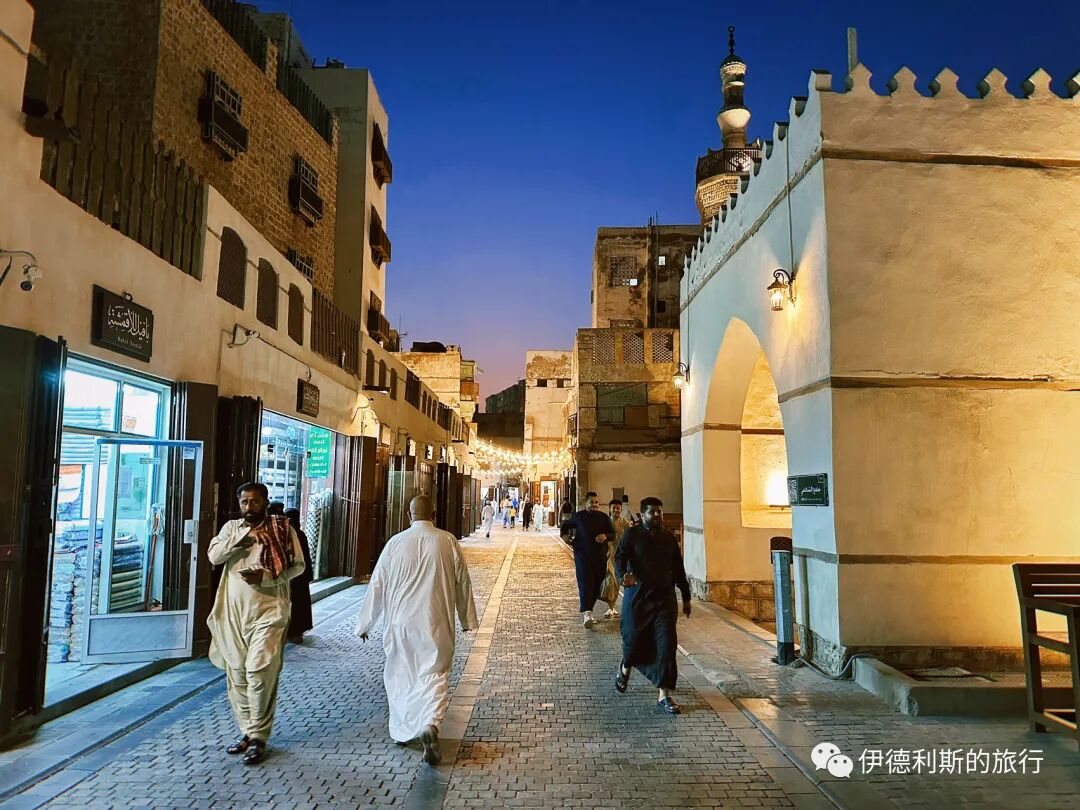
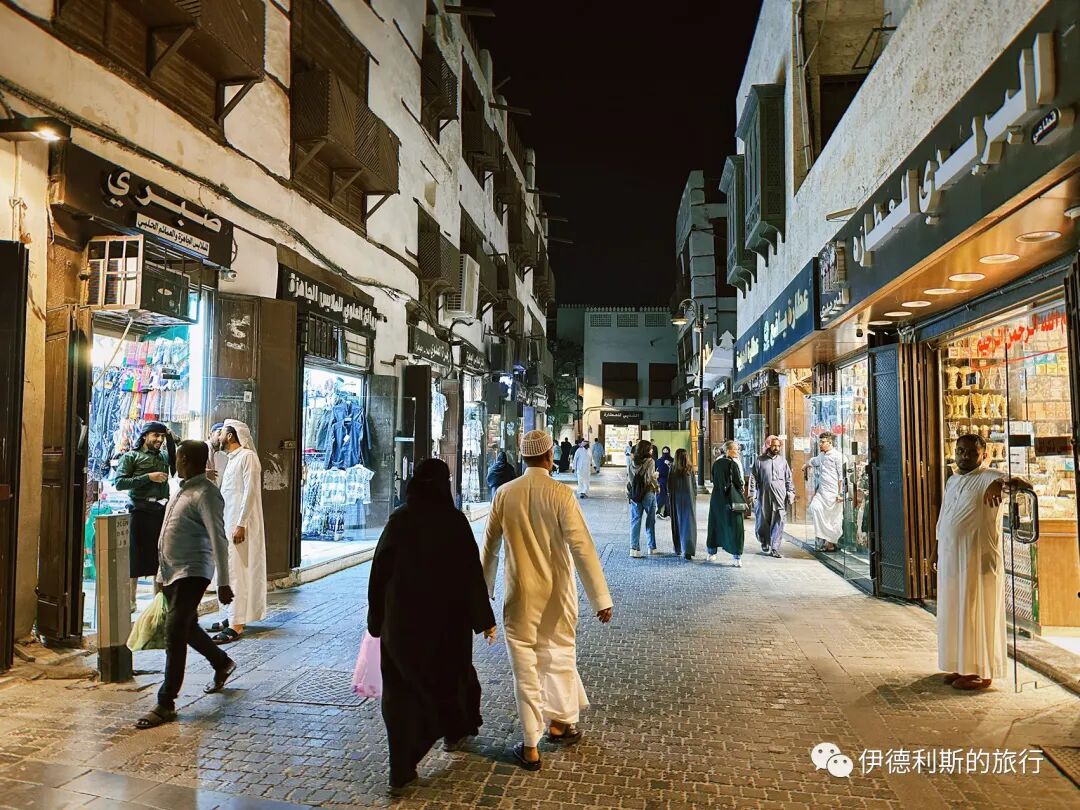
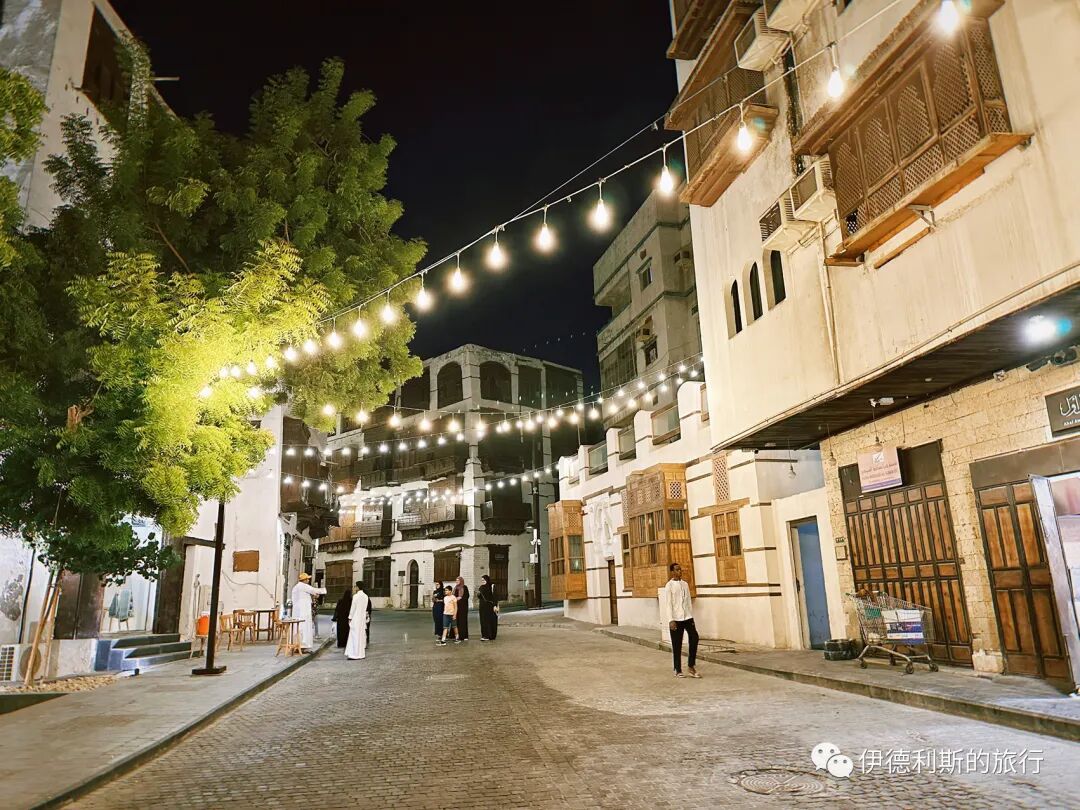
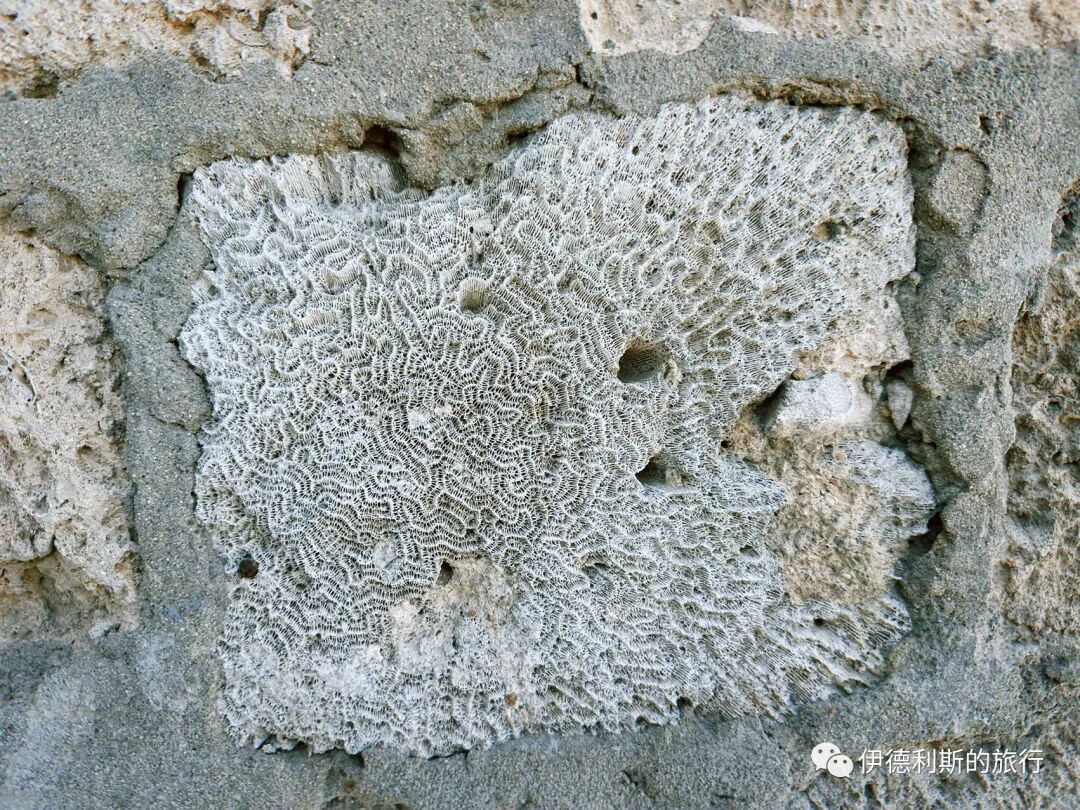
The Old Town of Jeddah is the last ancient city along the Red Sea that still keeps its traditional layout. It is made up of tall tower houses, coral stone buildings, traditional mosques, open-air markets (souqs), cafes, and small public squares. These traditional buildings were once common along the Red Sea coast, but after the 20th century, modernization left only a few standing. They are an important witness to the Indian Ocean trade routes from the 16th to the early 20th century. Because of this, the Old Town of Jeddah was added to the UNESCO World Heritage list in 2014.
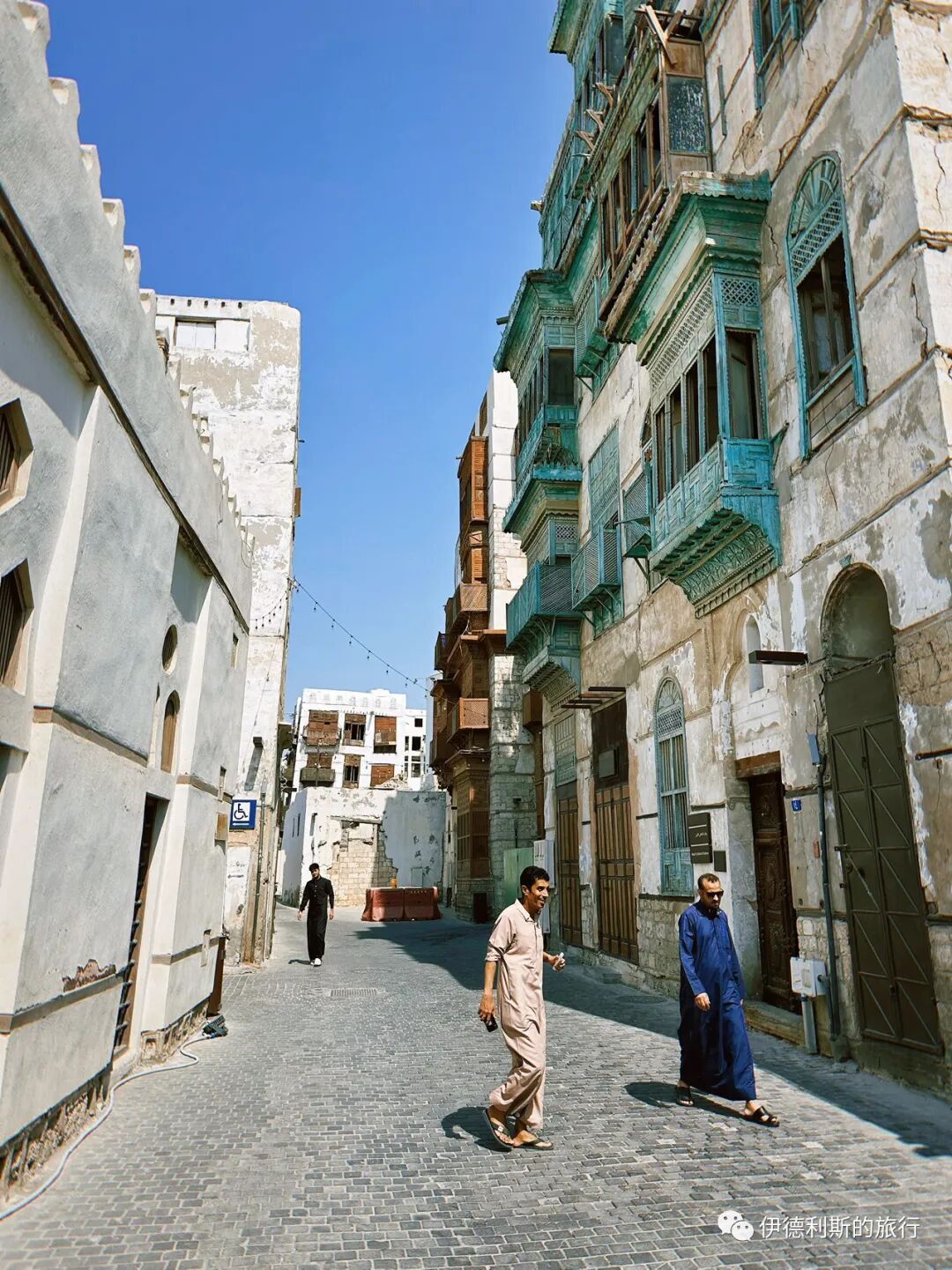
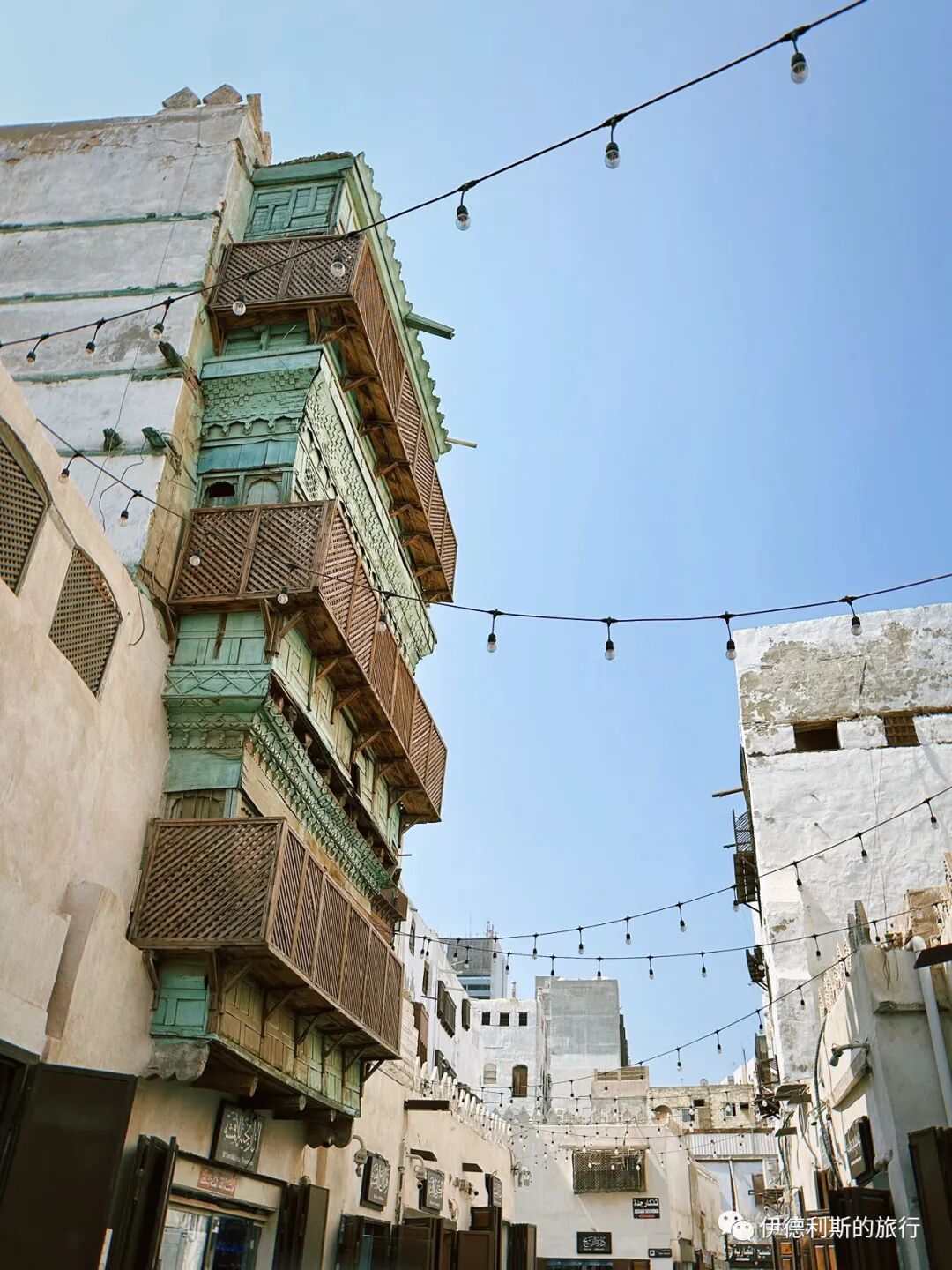
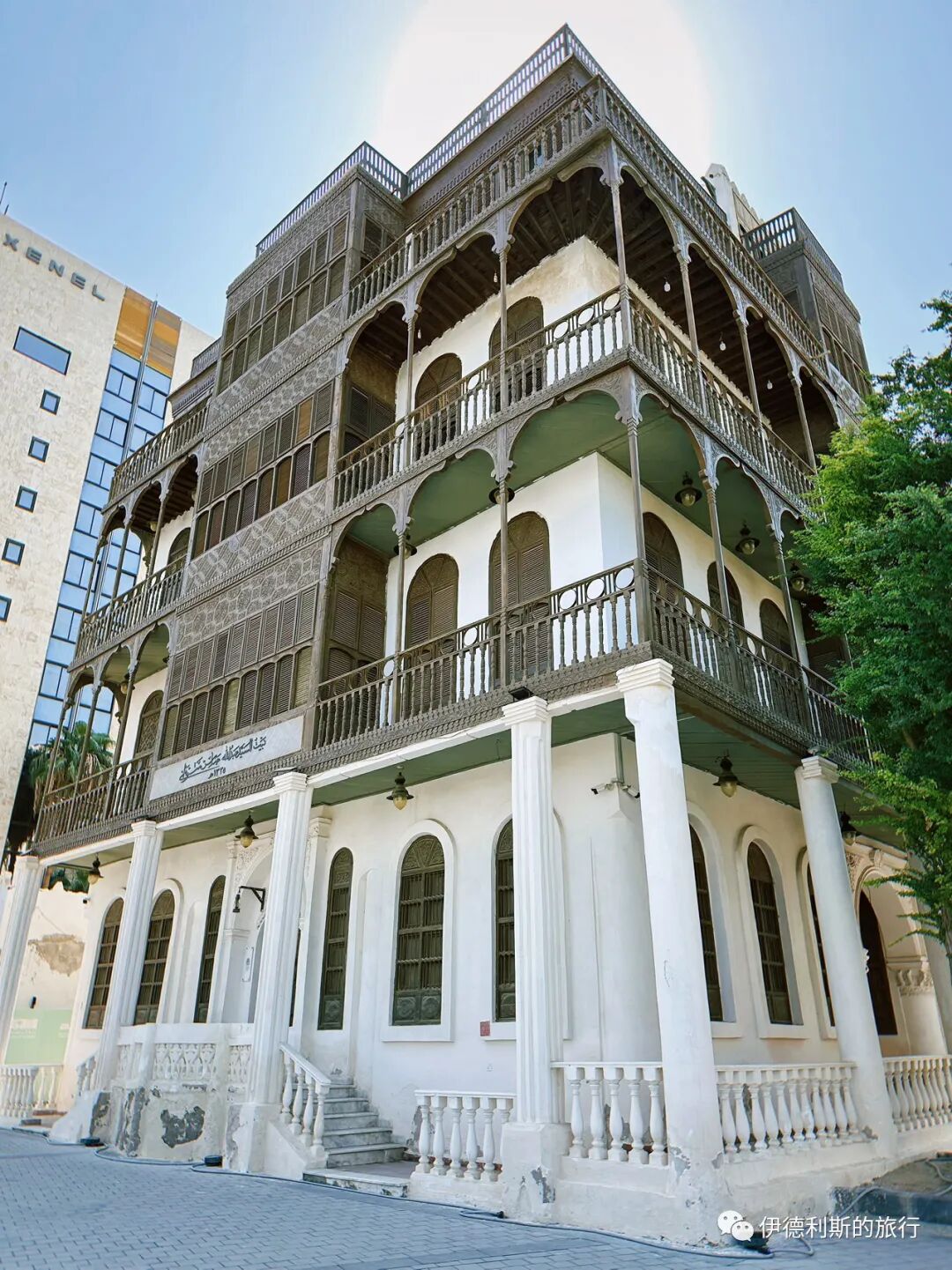
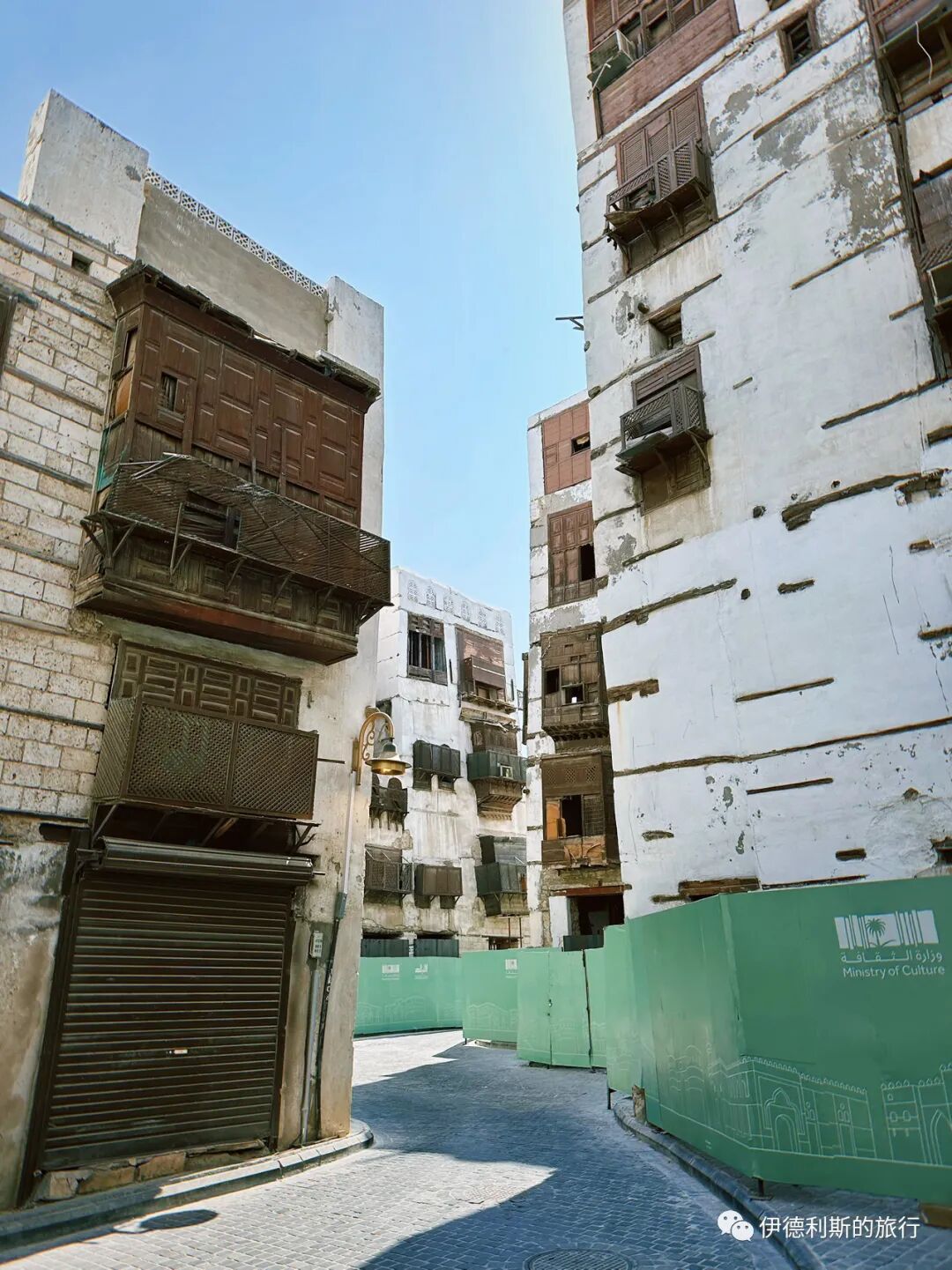
The most unique feature of the Old Town of Jeddah is the Roshan wooden bay window tower houses from the late 19th century. After the Suez Canal opened in 1869, a new route connected the Mediterranean to the Indian Ocean, and Jeddah's status rose quickly. As the number of merchants and pilgrims grew, these six-to-seven-story towers helped ease the housing shortage.
These towers are built from coral stone and lime plaster. They feature beautiful Roshan wooden bay windows and have no courtyards. The ground floor is used for shops, while the upper floors are rented out to pilgrims. The Roshan wooden bay windows are made from teak imported from Java. The carving and decoration styles depend on the owner's taste and are often influenced by India and other parts of Asia. The wooden bay windows are about 60 centimeters deep. People can look out at the view through the shutters or sit inside to drink tea and rest. Besides providing privacy and decoration, the Roshan wooden bay windows are important for cross-ventilation and cooling. People place water basins inside the windows, using the shade and airflow to cool the water.
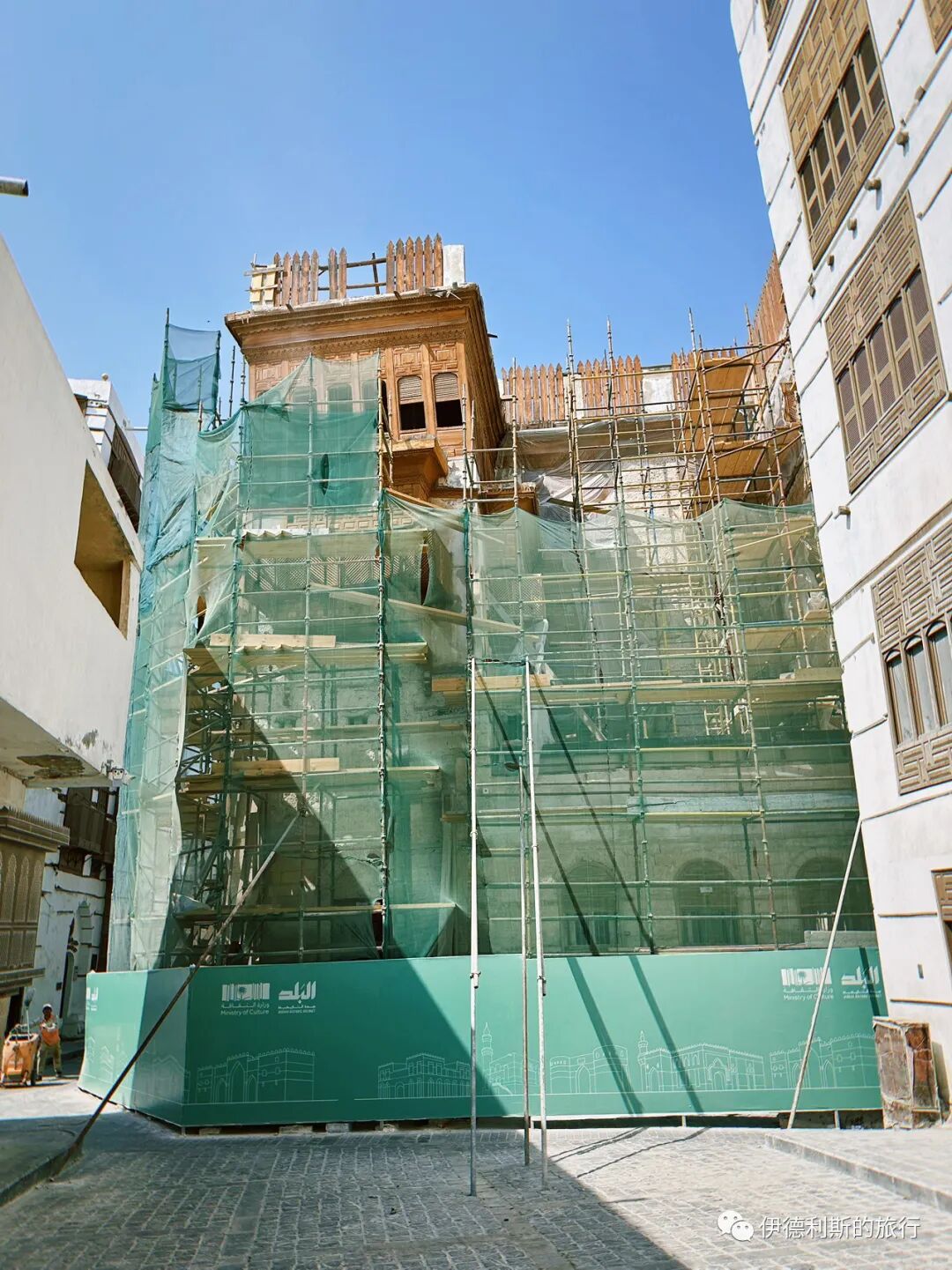
Before the 1950s, most people living in the Old Town of Jeddah were local merchant families. Later, as oil income increased, most locals moved to the suburbs, and the houses in the old city were rented to migrant workers. After being added to the World Heritage list in 2014, the Saudi government began large-scale restoration of the old city. When we visited, many old buildings were still being repaired.
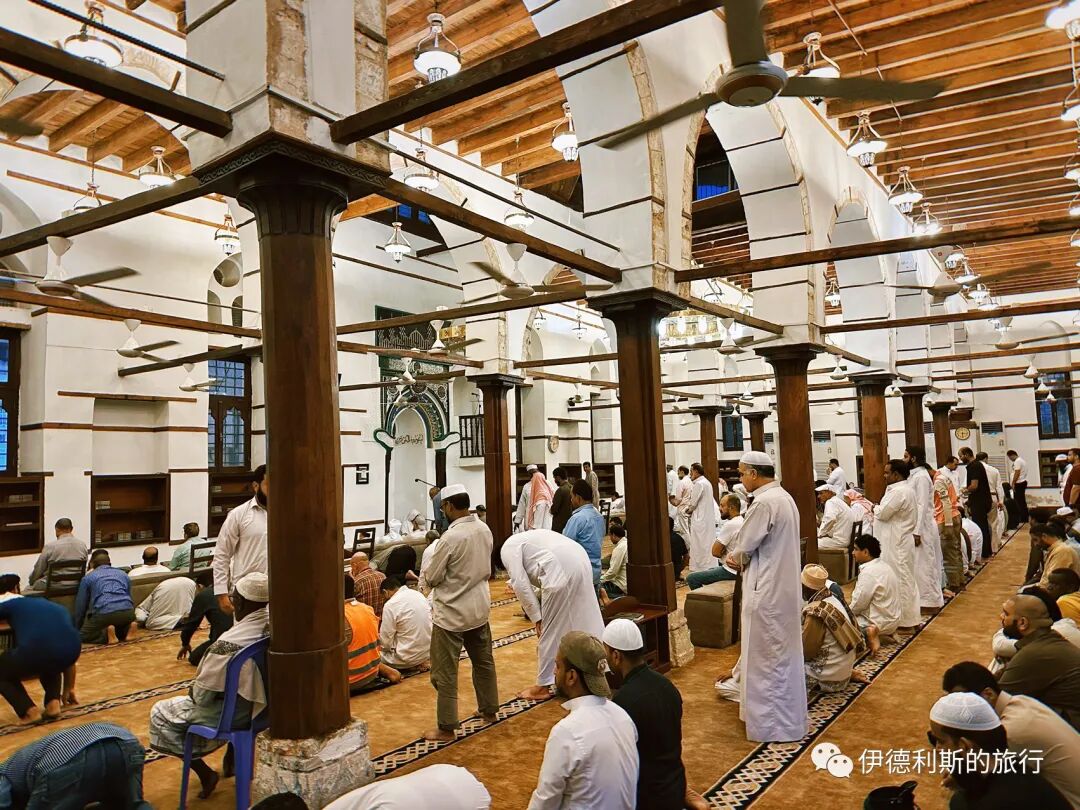
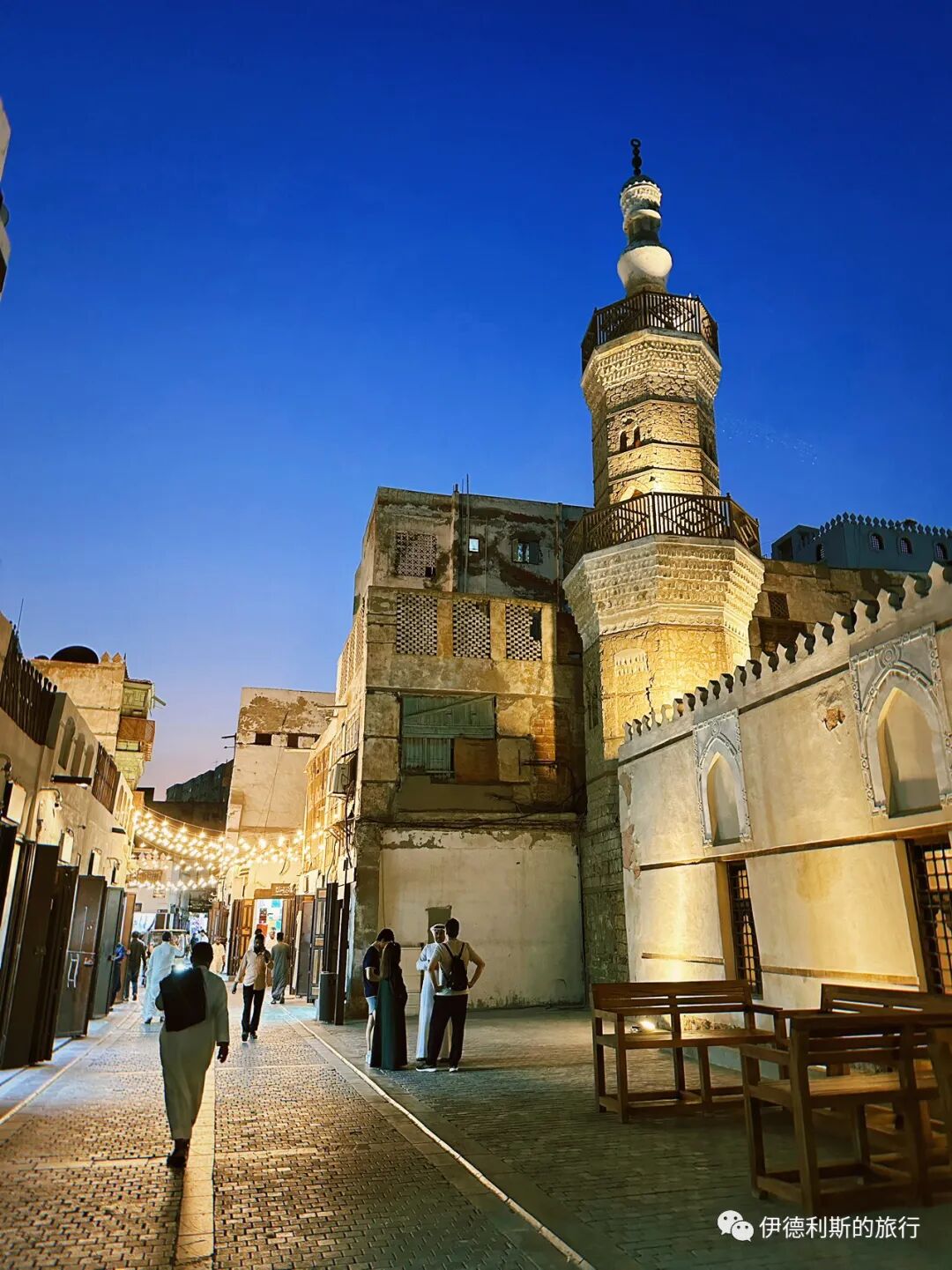
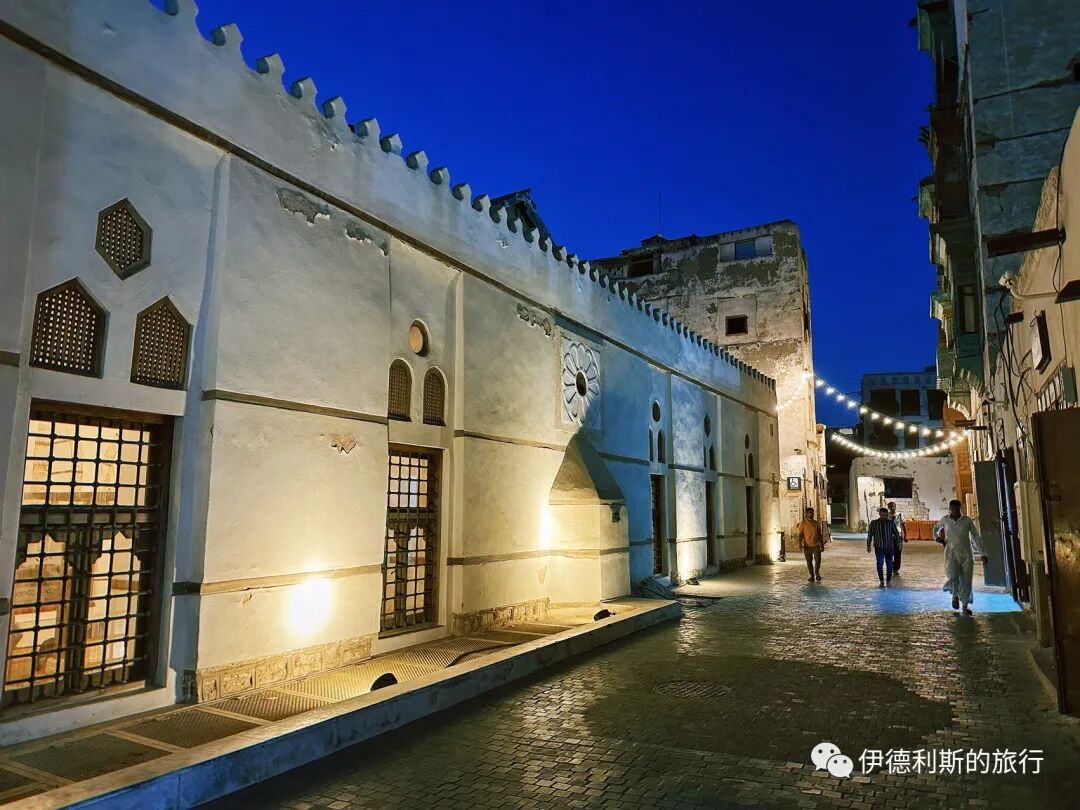
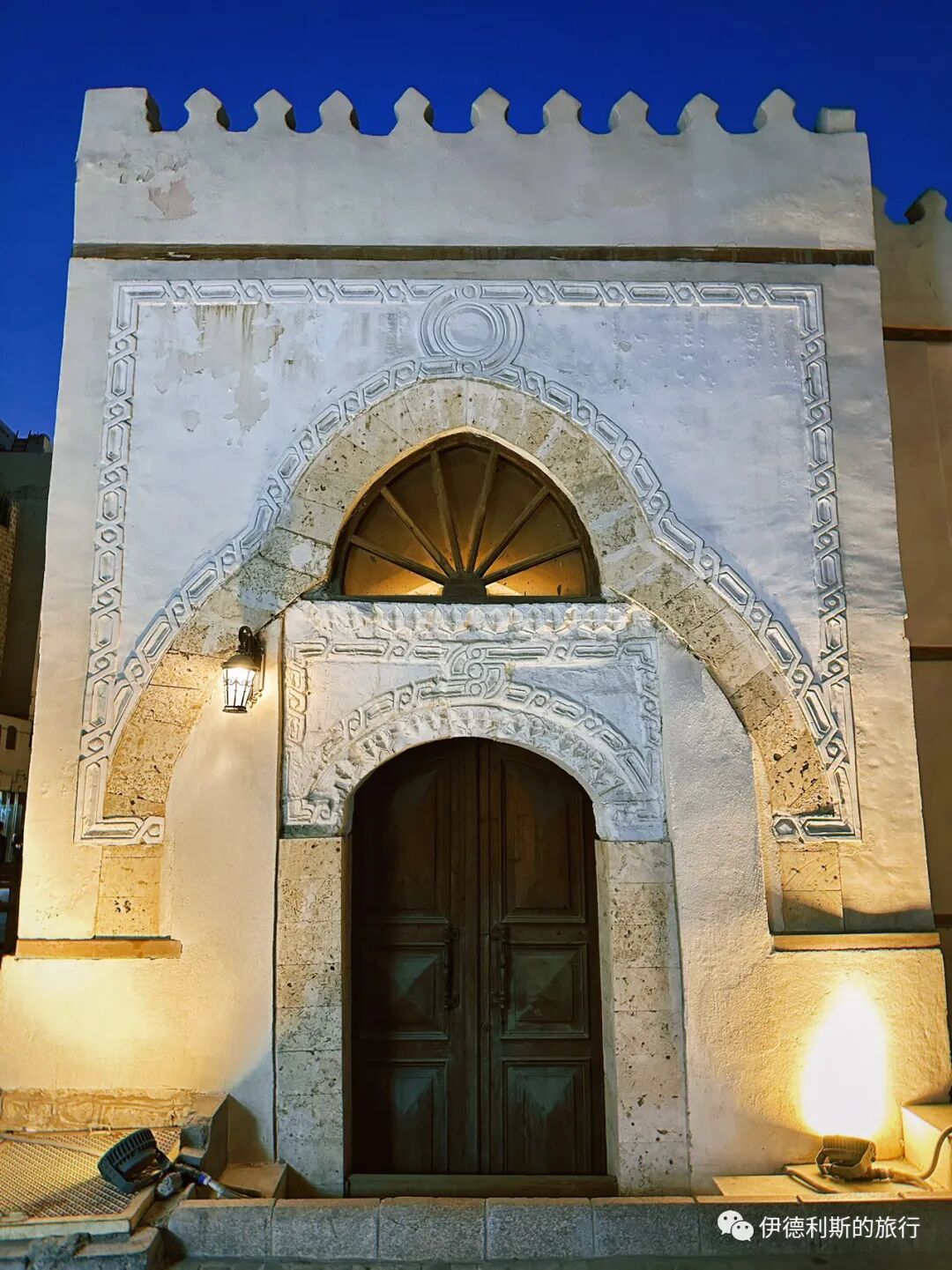
In the evening, we performed the Maghrib namaz at the Al-Shafi'i Mosque in the Old Town of Jeddah. The Al-Shafi'i Mosque is the oldest surviving coral stone mosque in Jeddah. It was first built in 1250 by the Yemeni King Mudhaffar. It is named after the Shafi'i school of law, which is followed in Yemen. In 1539, an Indian merchant named Khawaja Muhammad Ali brought the best wood from Yemen to rebuild the mosque, except for the minaret. Today, you can see clear influences from the Kerala region of India in the carvings on the porch's cross-shaped column capitals.
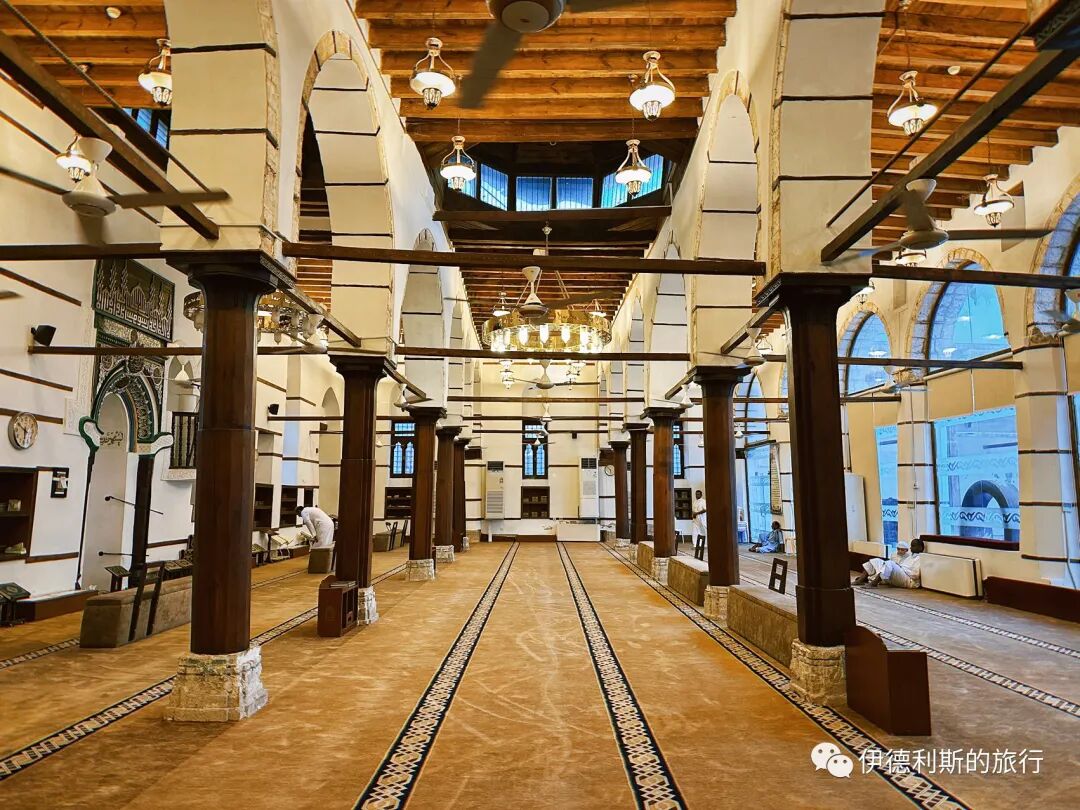
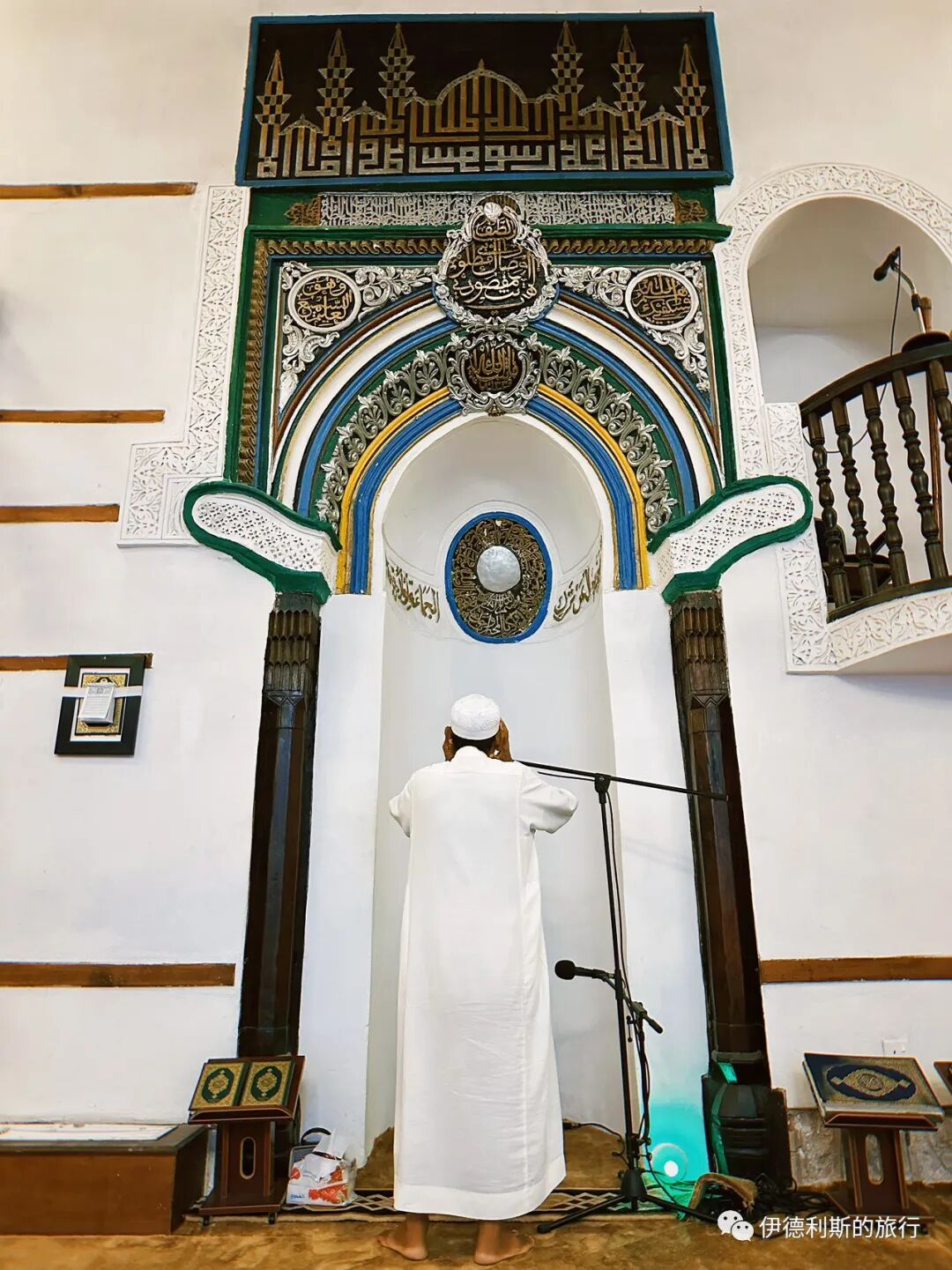
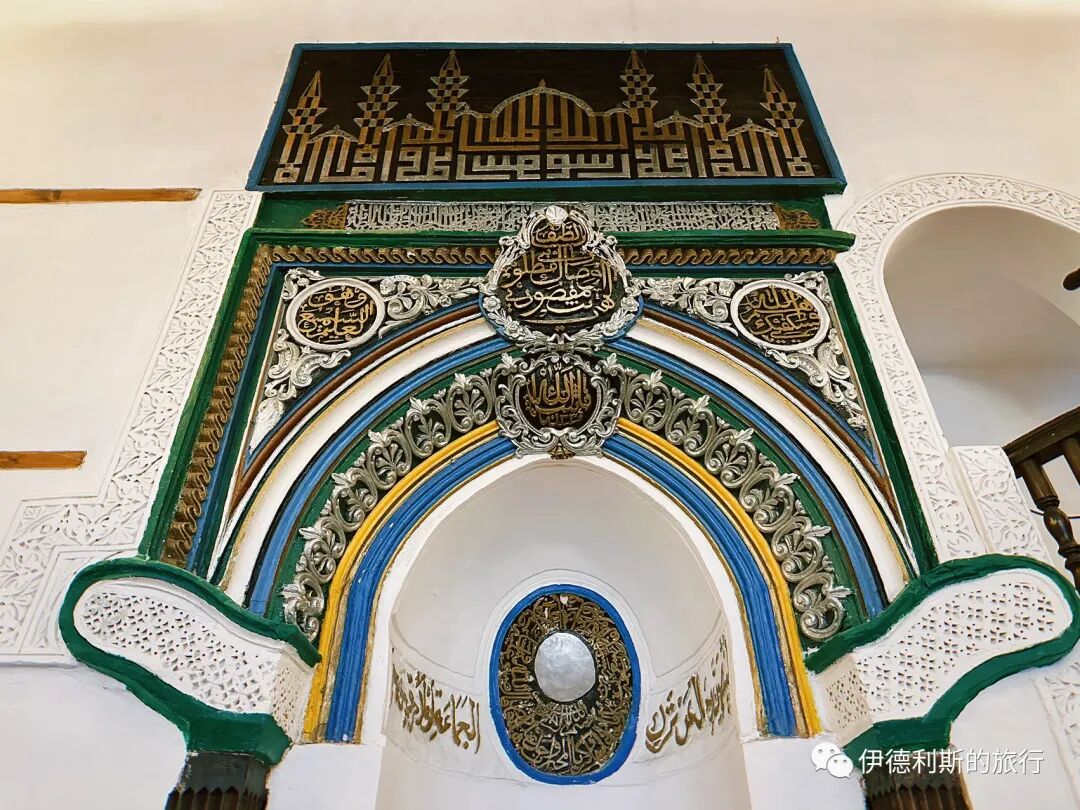
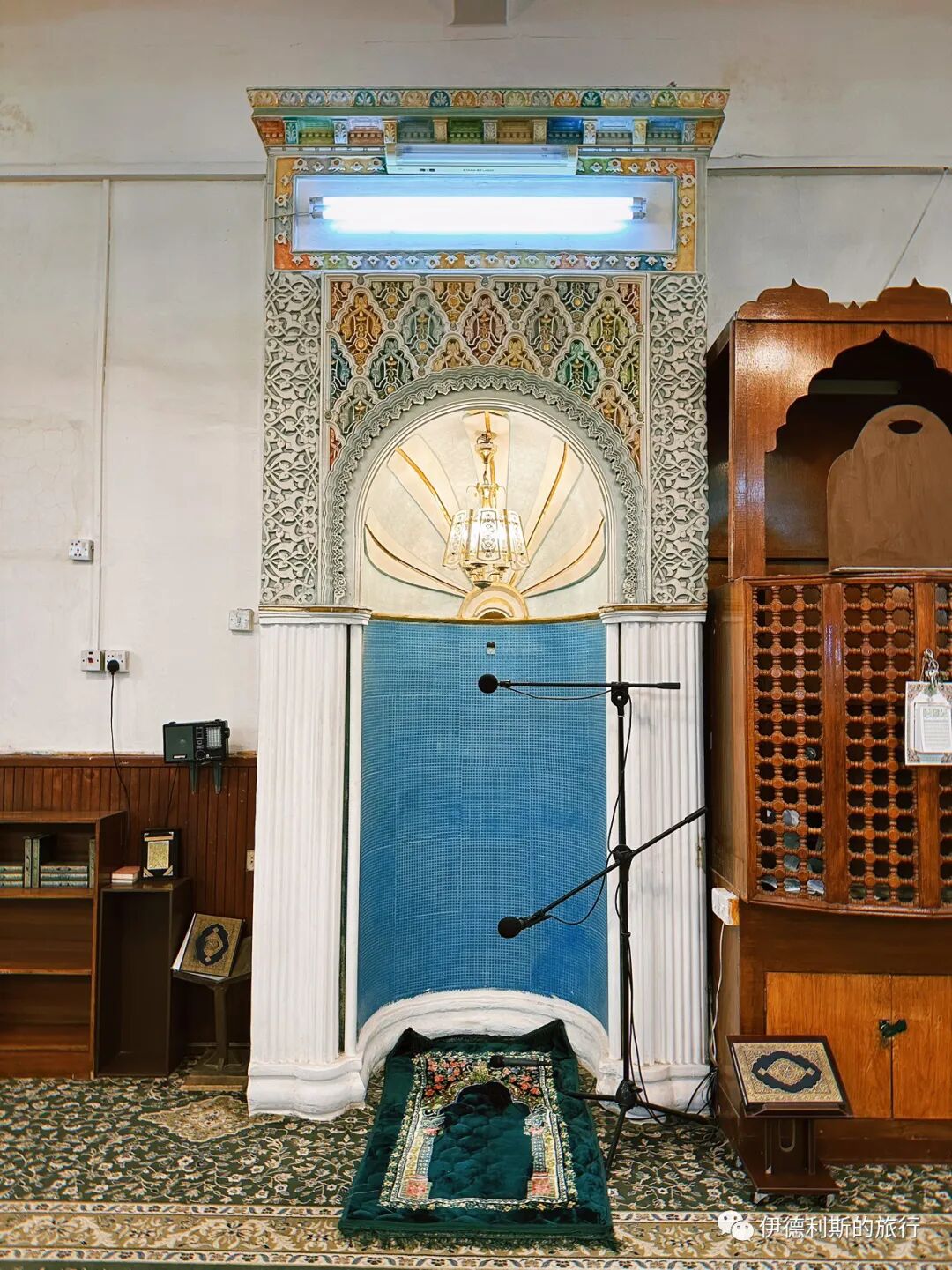
Shafi'i Mosque is built from coral stone, sea mud, and wood, with a main hall supported by wooden pillars and coral stone bases. The mihrab niche features rich calligraphy, geometric patterns, and floral decorations. The Kufic calligraphy above the mihrab forms the image of a mosque with six minarets, which clearly shows Ottoman influence.
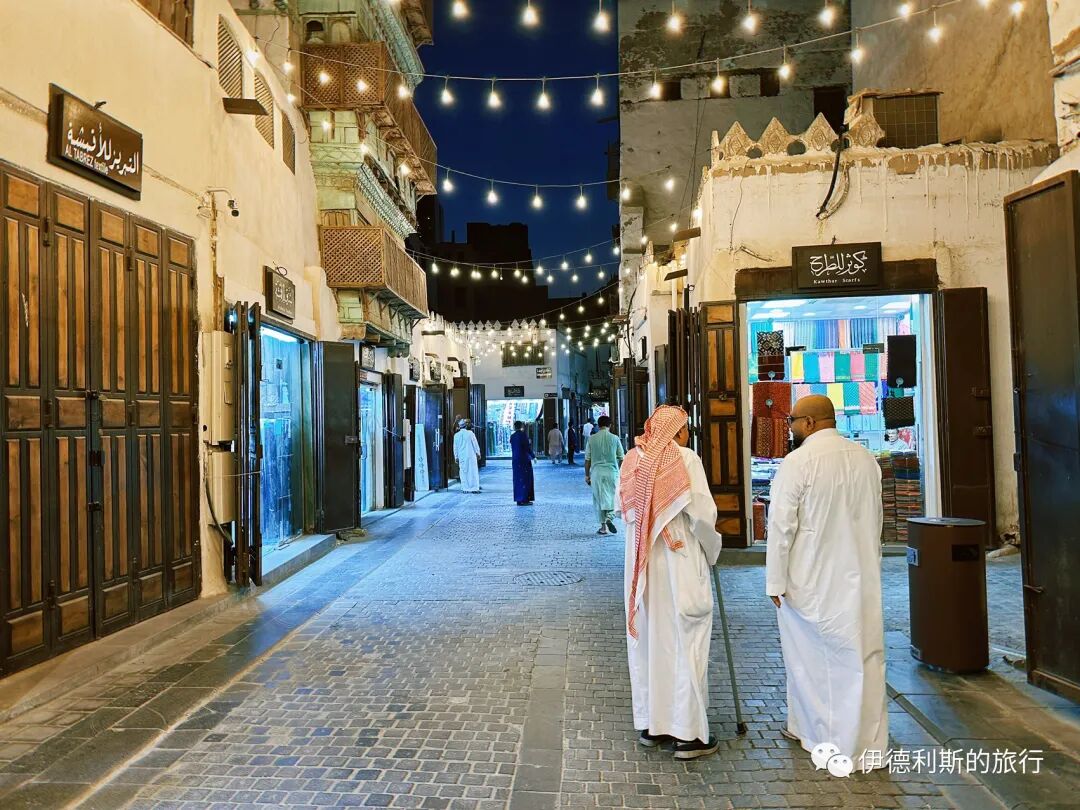
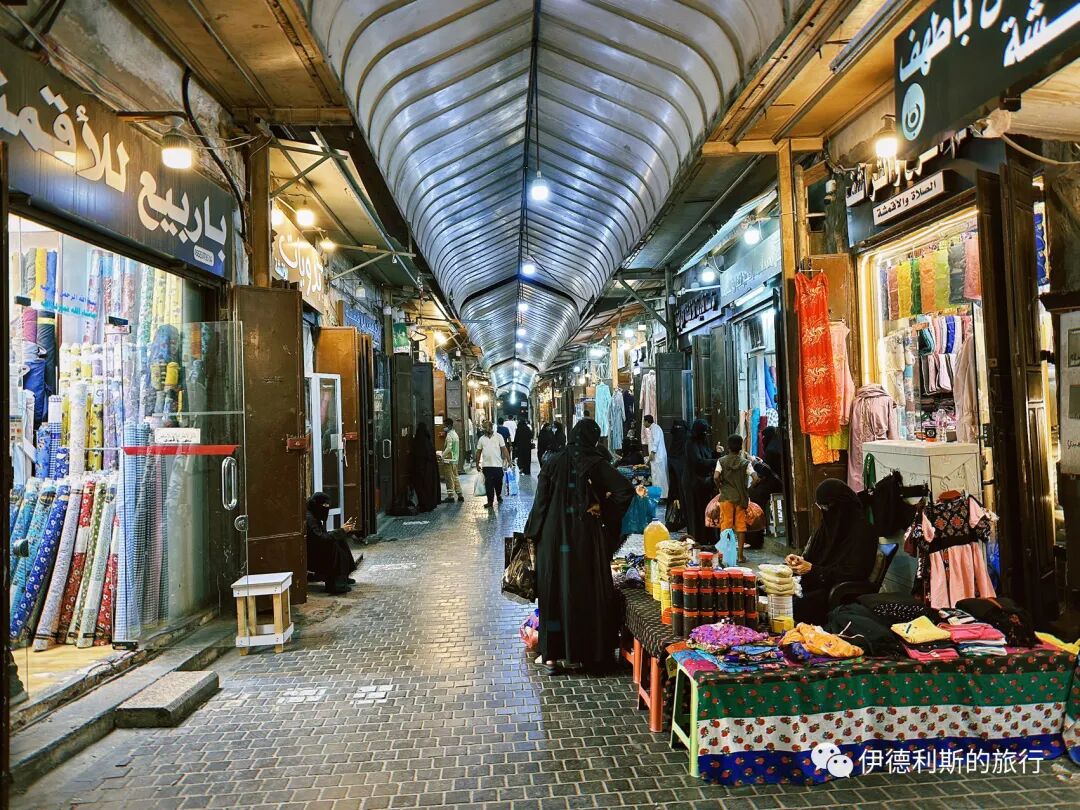
To the west of Shafi'i Mosque are gold and silver workshops and a copper market, while the east side houses the traditional textile and clothing market, Souq Al Badw (Bedouin market), where the street is still filled with fabric shops.
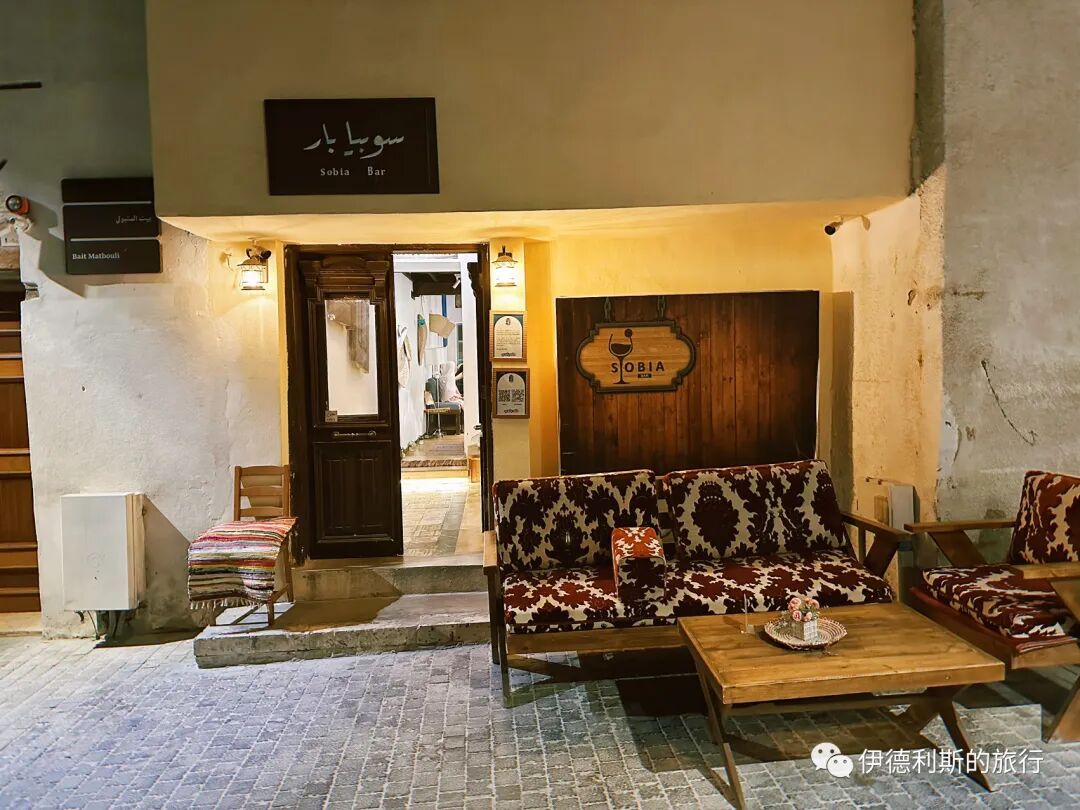
There are some traditional cold drink shops in the old town of Jeddah where you can try traditional Hejaz region drinks. Sobia is a classic iftar drink in the Hejaz region, made by fermenting dried bread, raisins, barley, or oats, then filtering it and adding sugar, cardamom, cinnamon, and ice. Besides the original white Sobia, you can add strawberry to make it red or tamarind to make it brown. They also have special blends that include ingredients like hibiscus.
Making Sobia produces varying amounts of alcohol depending on the fermentation time, and the Saudi Food and Drug Authority states that a small amount of alcohol produced during the natural fermentation of juices and drinks is a natural chemical reaction.
Opposite the Bayt Ba'ishan old house is another open-to-the-public historic home called Bayt Jeddah, also known as Salloum's house, built by Sheikh Abdullah Bin Obaid Salloum in 1880. It preserves many pieces of furniture used by the Salloum family, including some imported from India that are over 120 years old.
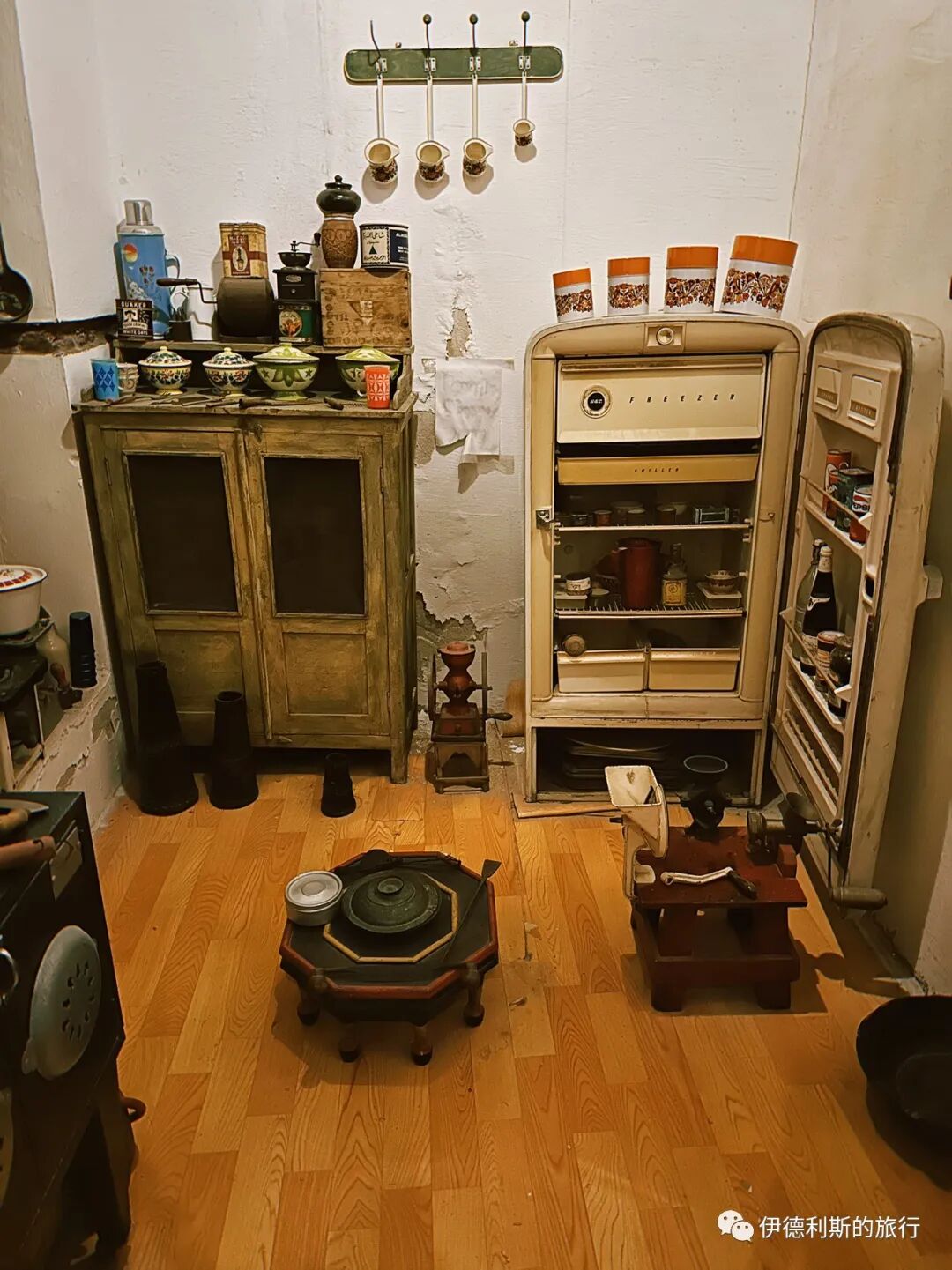
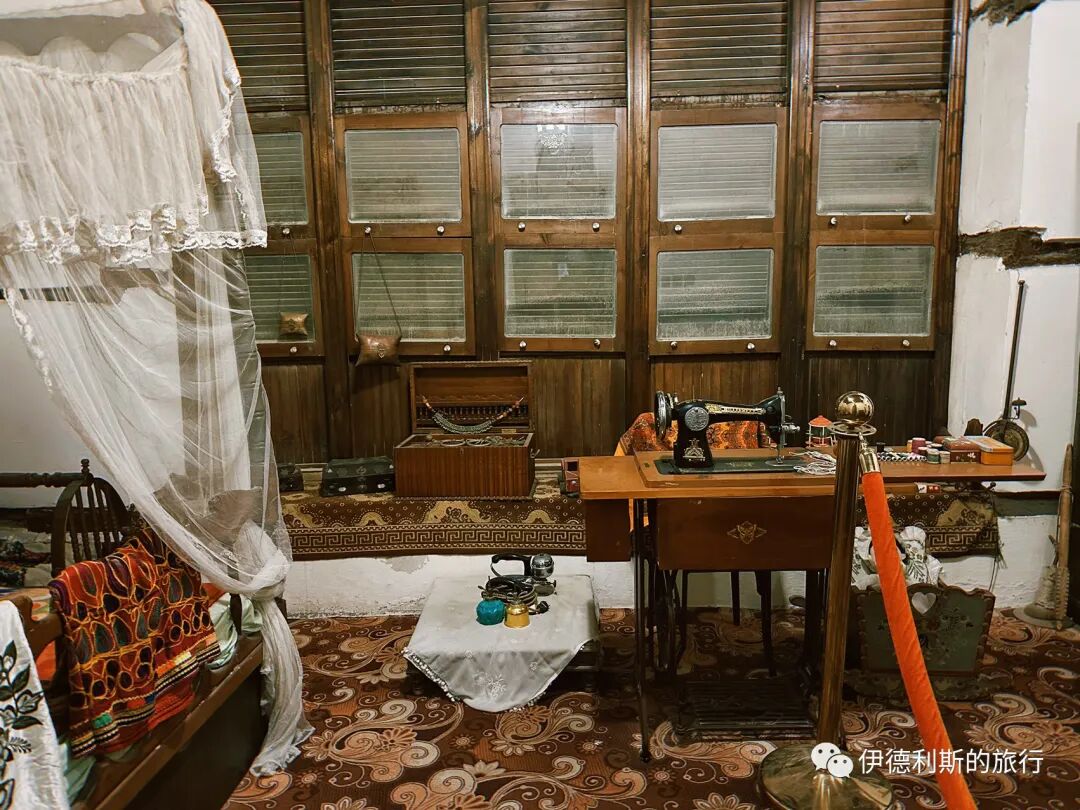
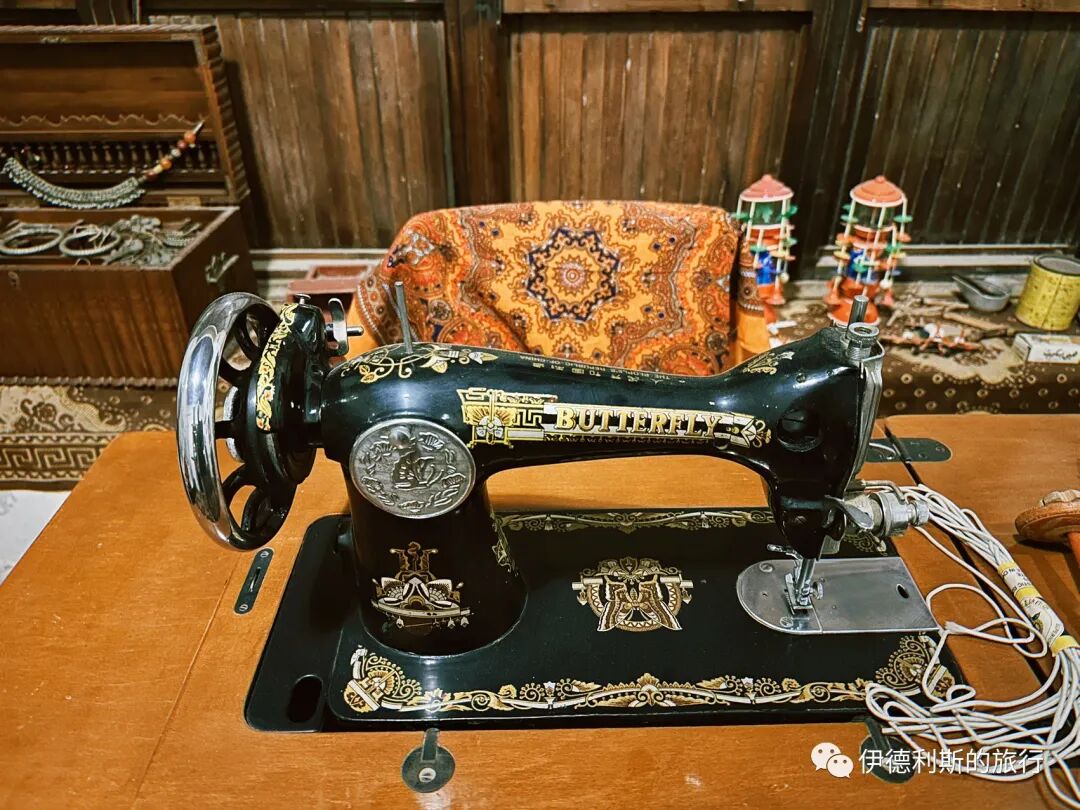
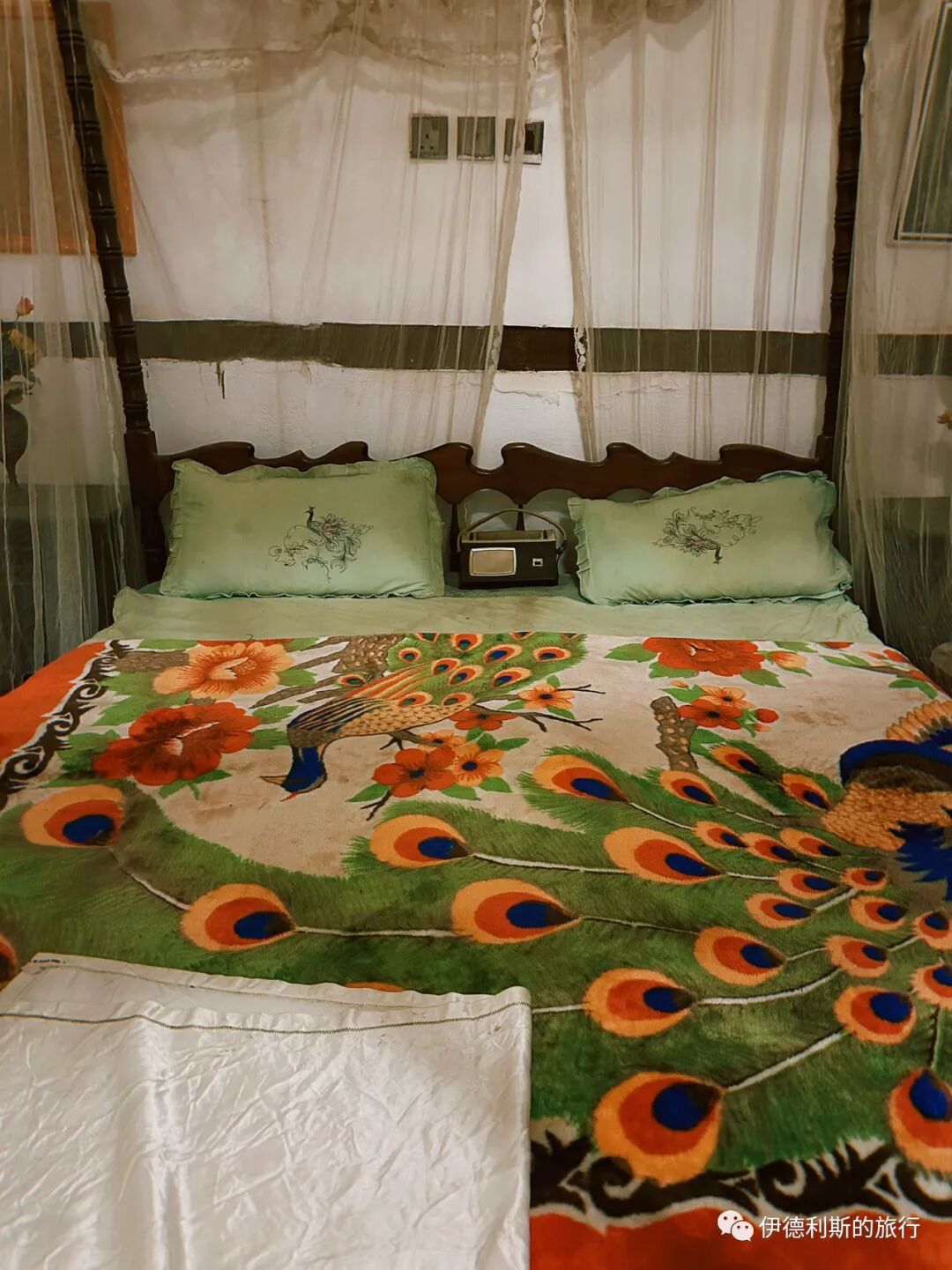
The house has three floors: the first floor is a reception room, and the second floor is a bedroom where you can see many daily items, including old suitcases, sewing machines, and vintage kerosene-powered refrigerators. In the house, you can see the area once used in the Hejaz region to host female neighbors, who used to gather there every afternoon to drink tea and chat.
Opposite the Bayt Ba'ishan old house is another open-to-the-public historic home called Bayt Jeddah, also known as Salloum's house, built by Sheikh Abdullah Bin Obaid Salloum in 1880. It preserves many pieces of furniture used by the Salloum family, including some imported from India that are over 120 years old.
The house has three floors: the first floor is a reception room, and the second floor is a bedroom where you can see many daily items, including old suitcases, sewing machines, and vintage kerosene-powered refrigerators. In the house, you can see the area once used in the Hejaz region to host female neighbors, who used to gather there every afternoon to drink tea and chat.
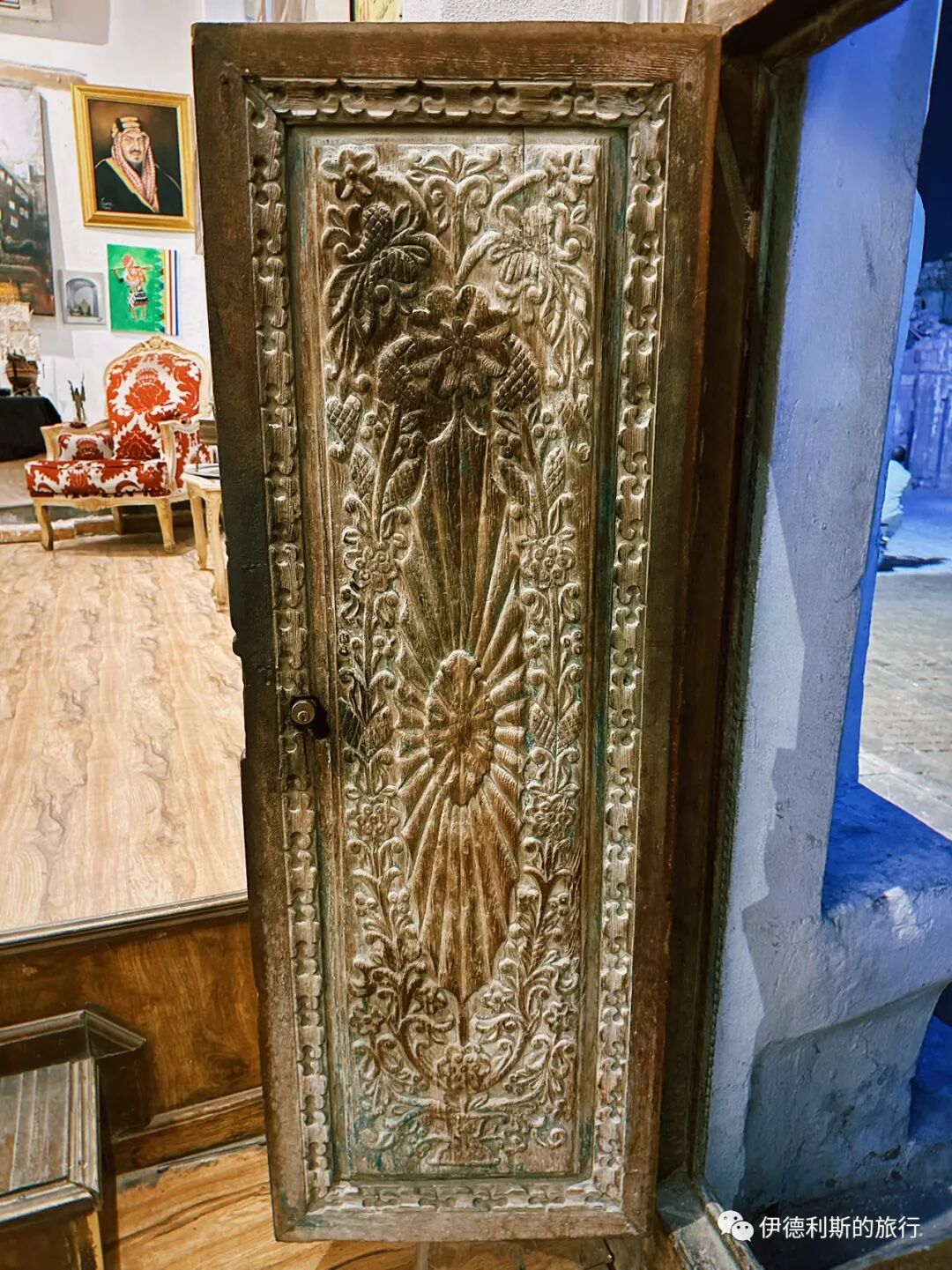
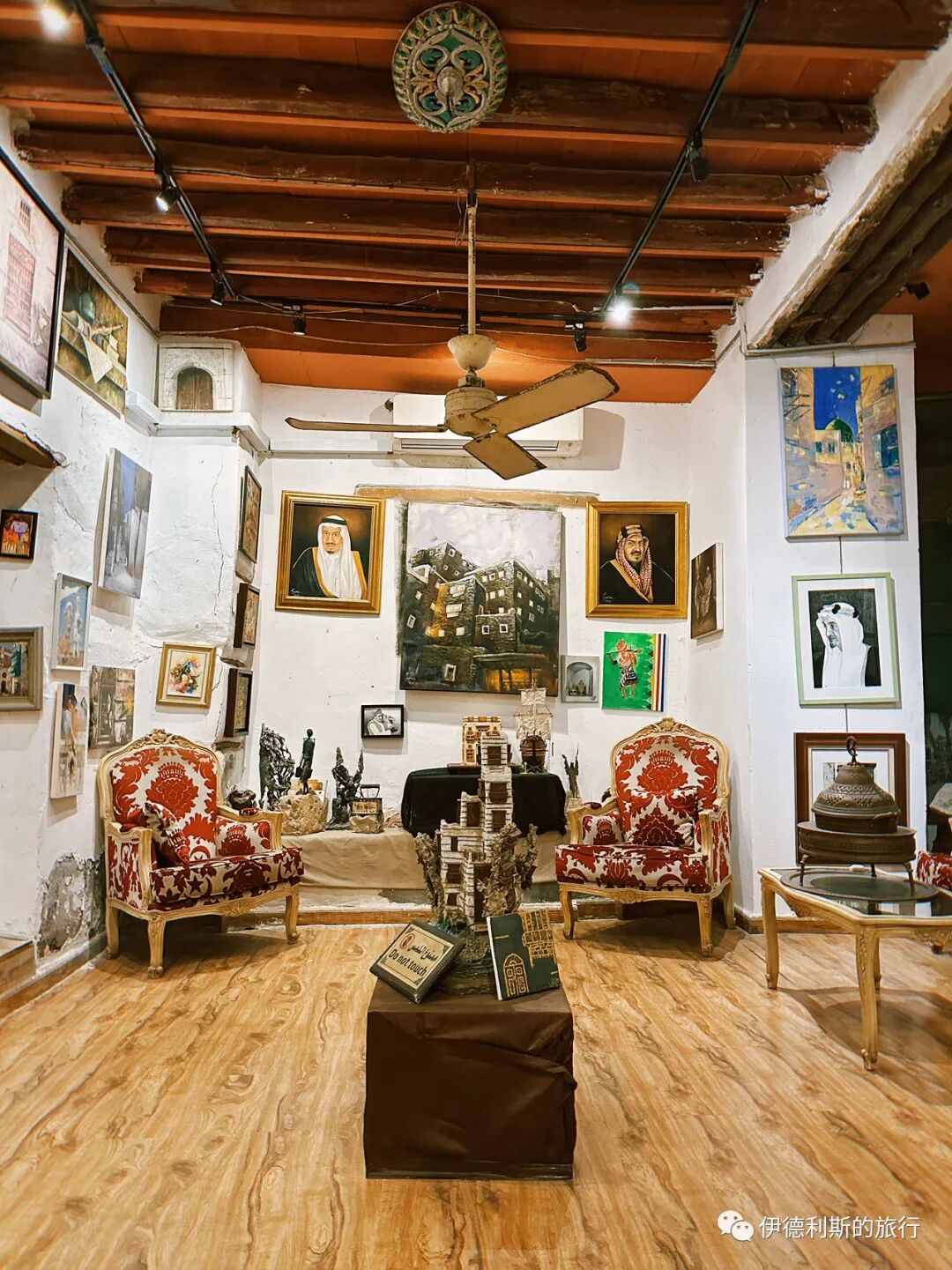
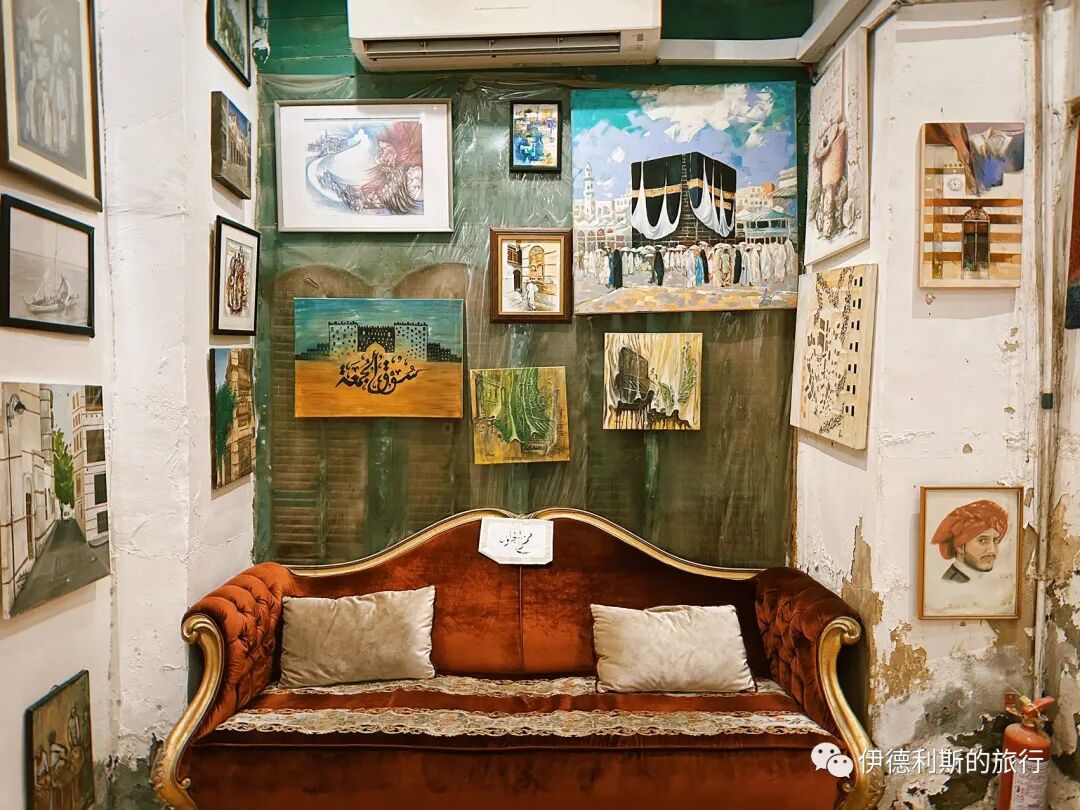
There is an art gallery inside an old house with many paintings related to the ancient city of Jeddah.
In the evening, we performed namaz at the Abu'Unba mosque in the old town of Jeddah.
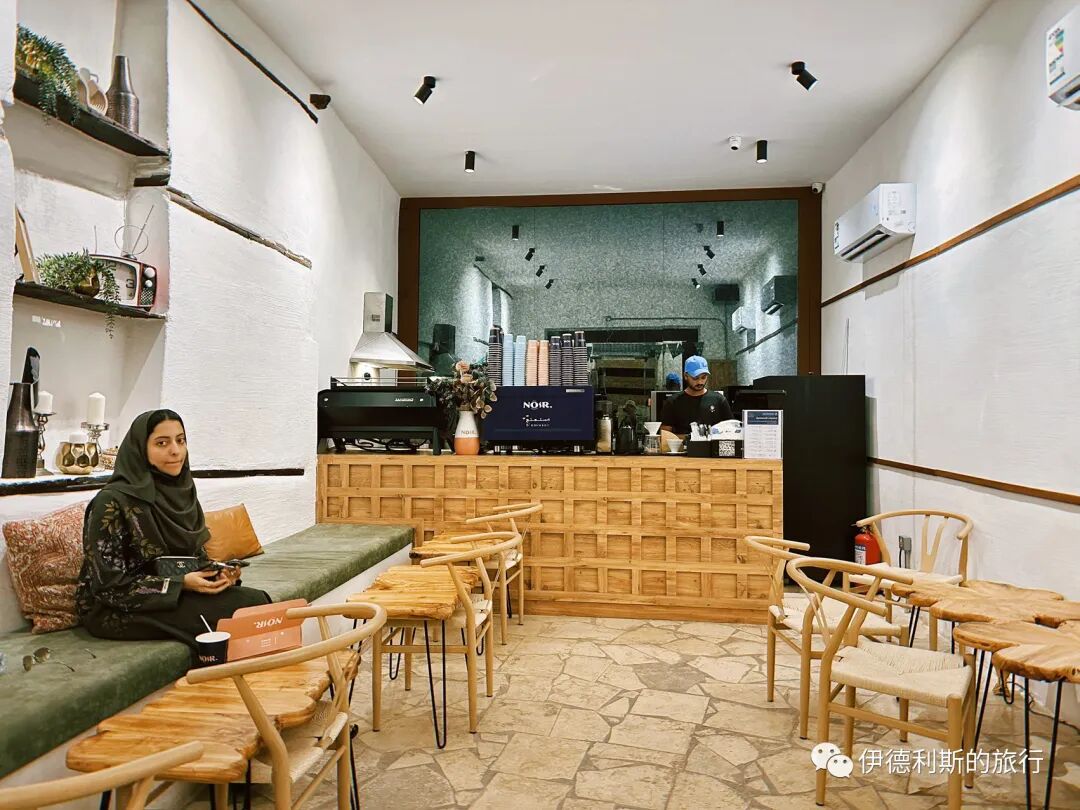
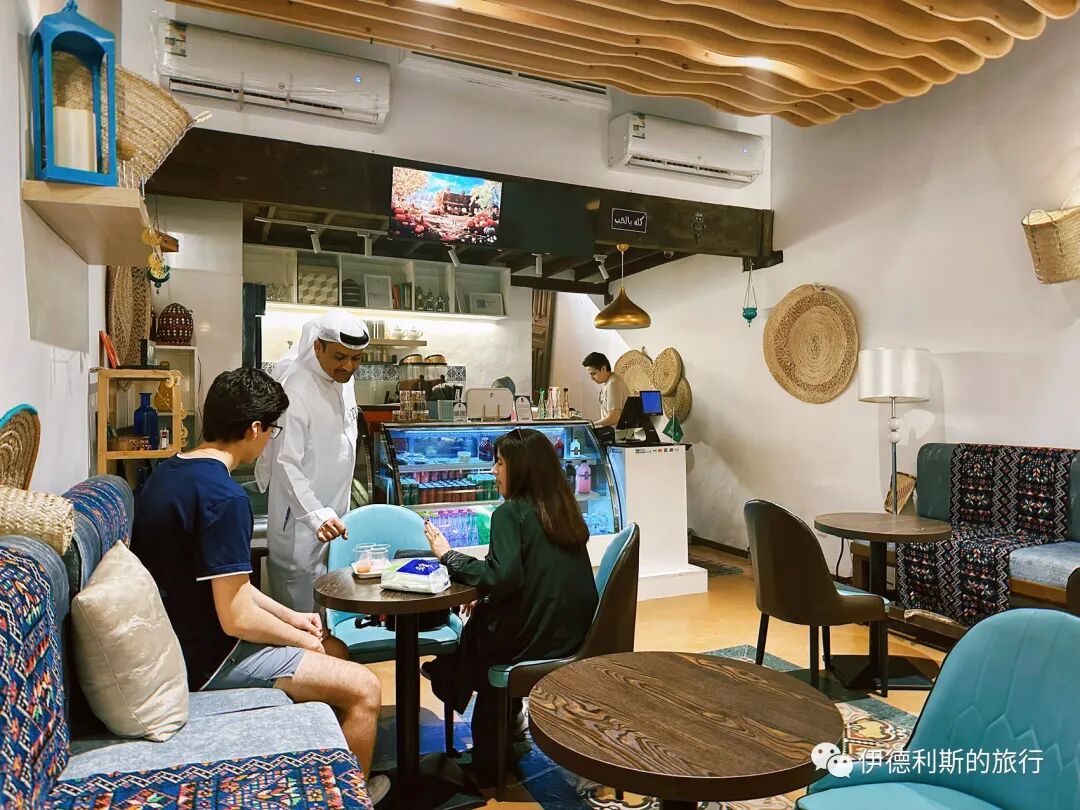
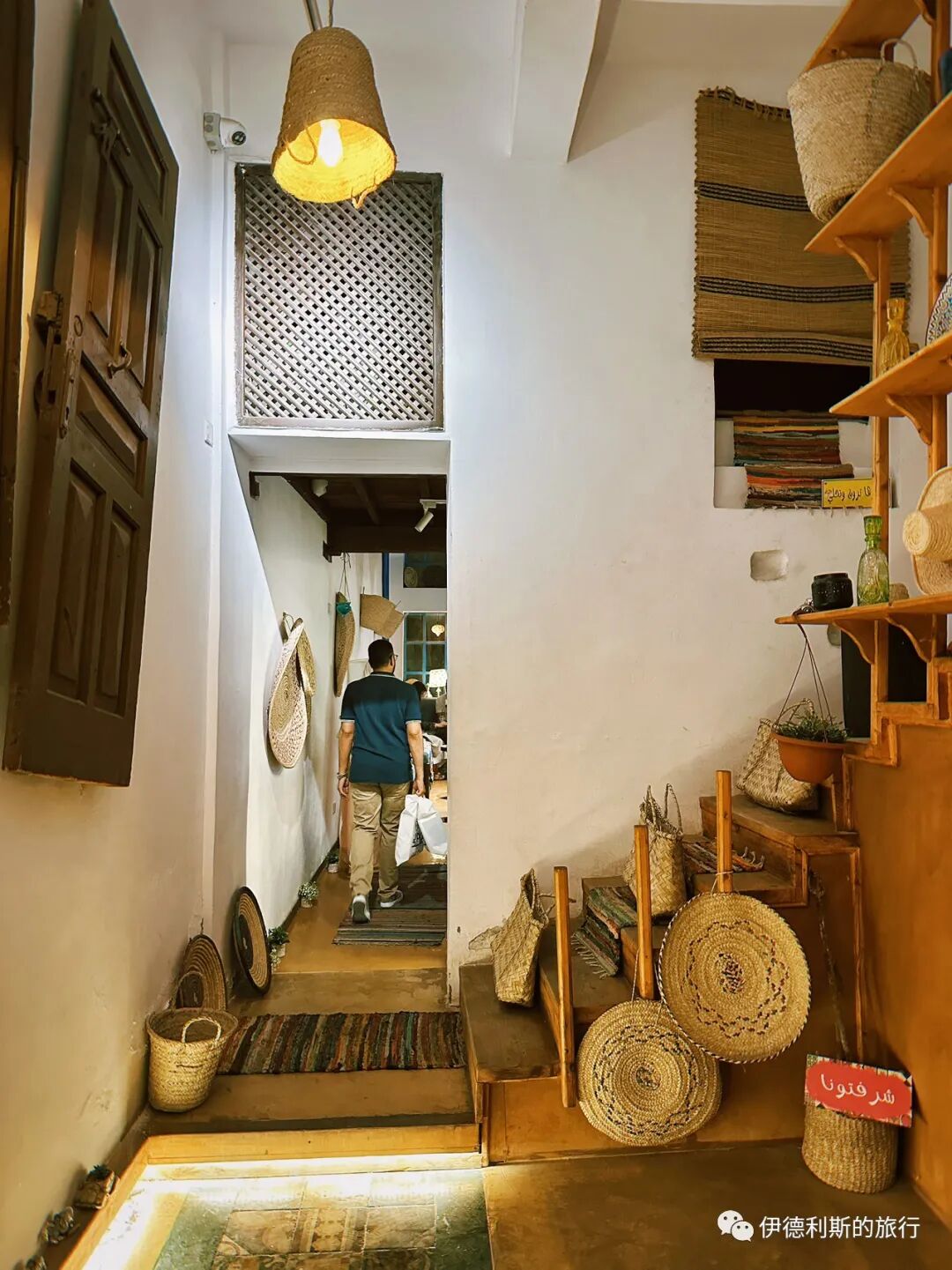
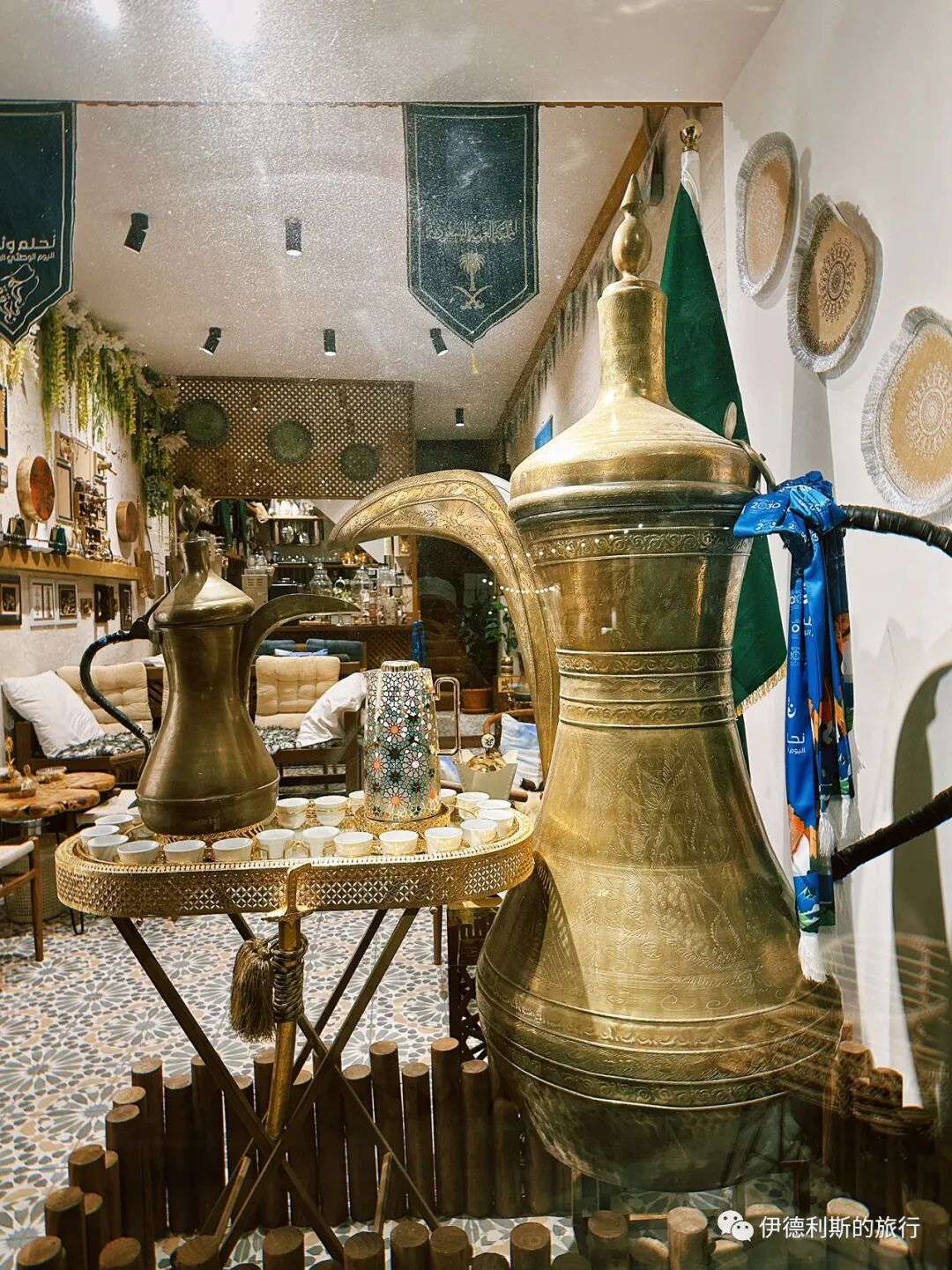
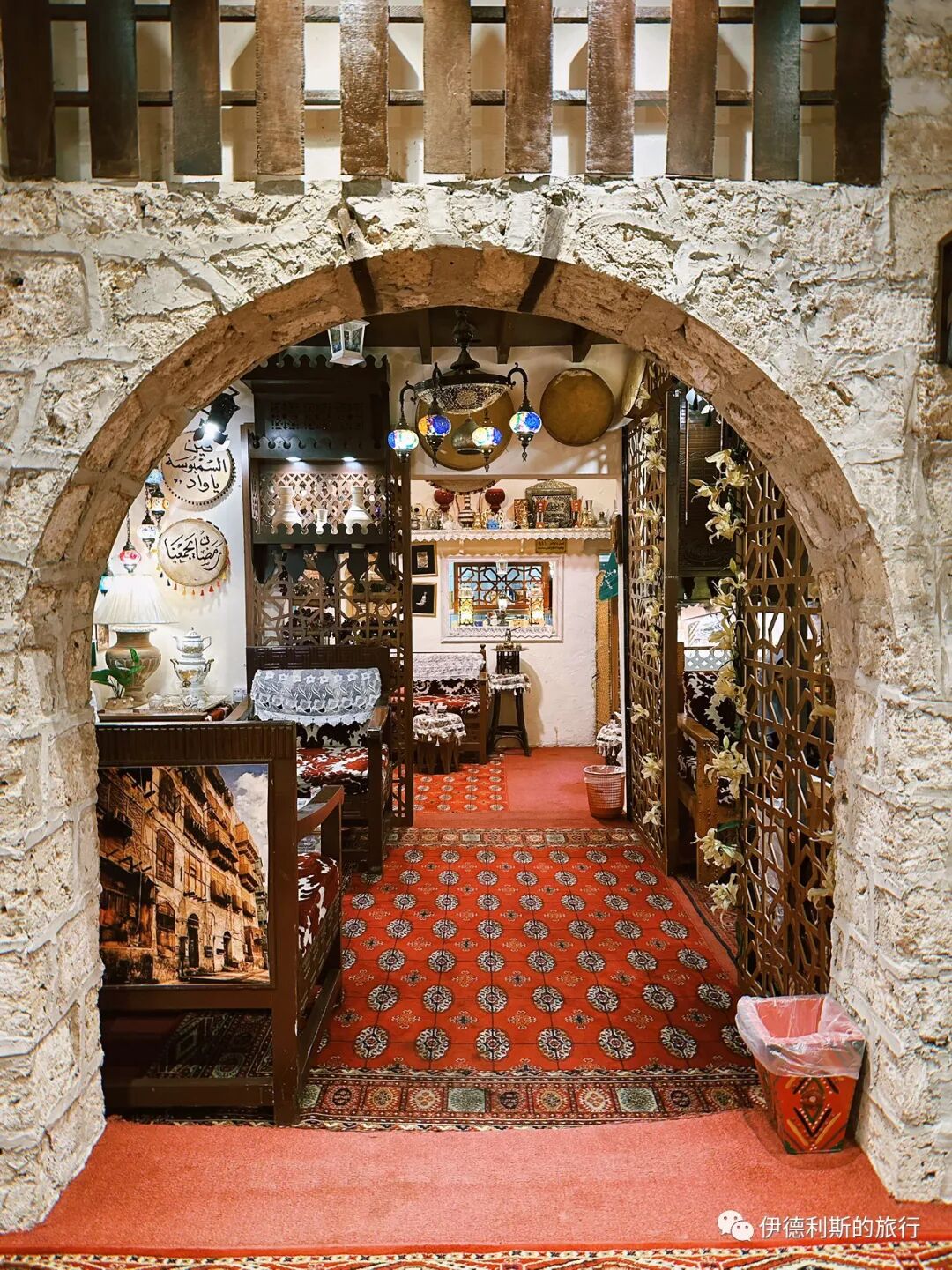
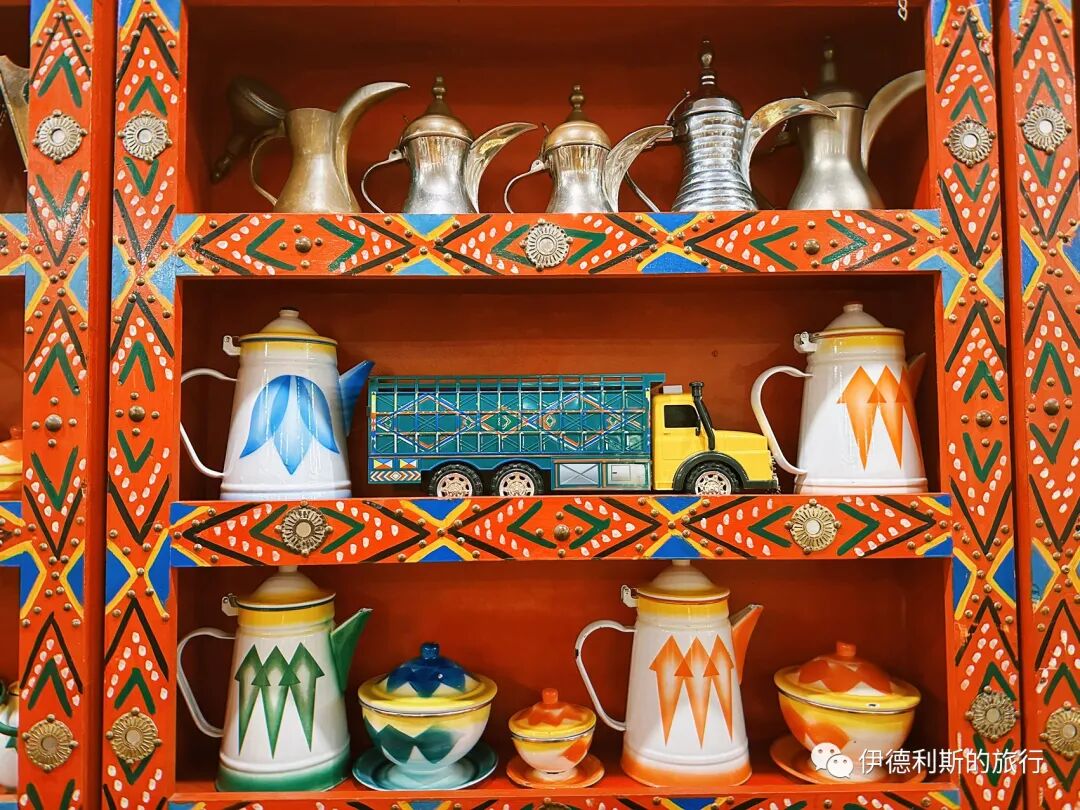
After namaz, we went to a traditional cafe across from the mosque. The small shop is not big, but it is decorated beautifully with many traditional Hejazi elements, making it perfect for photos. We ordered traditional coffee and dates dipped in sesame paste (tahini) to experience the life of old Jeddah residents.
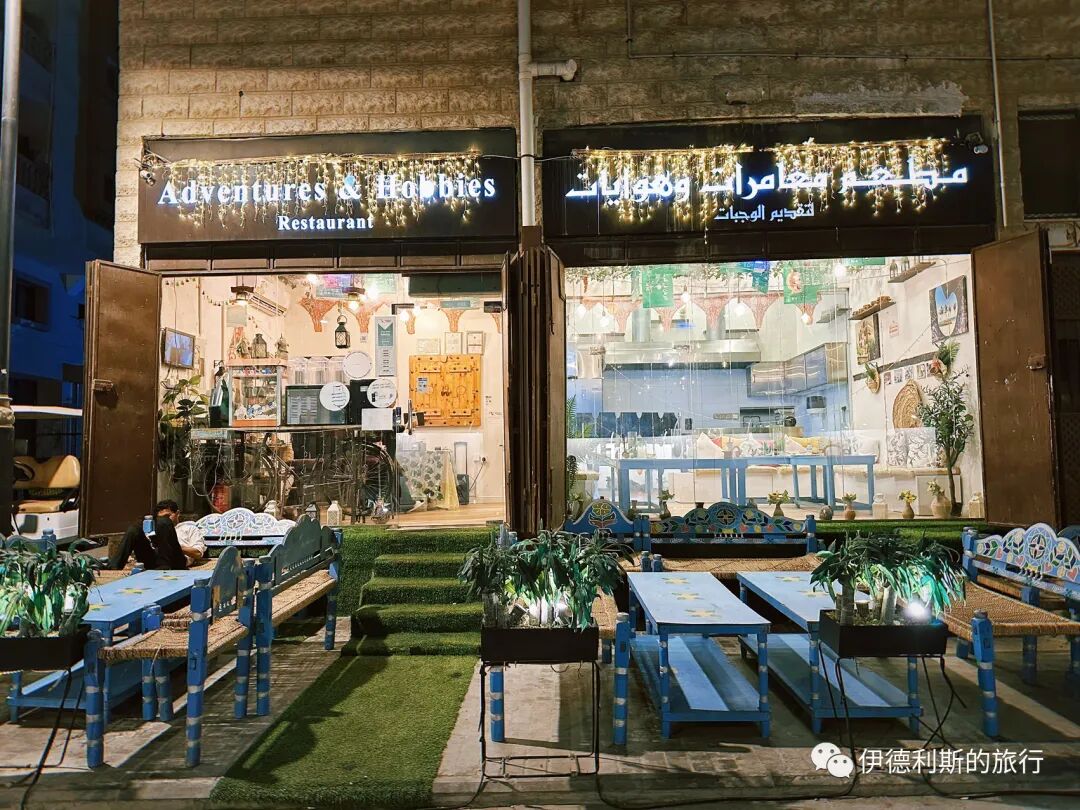
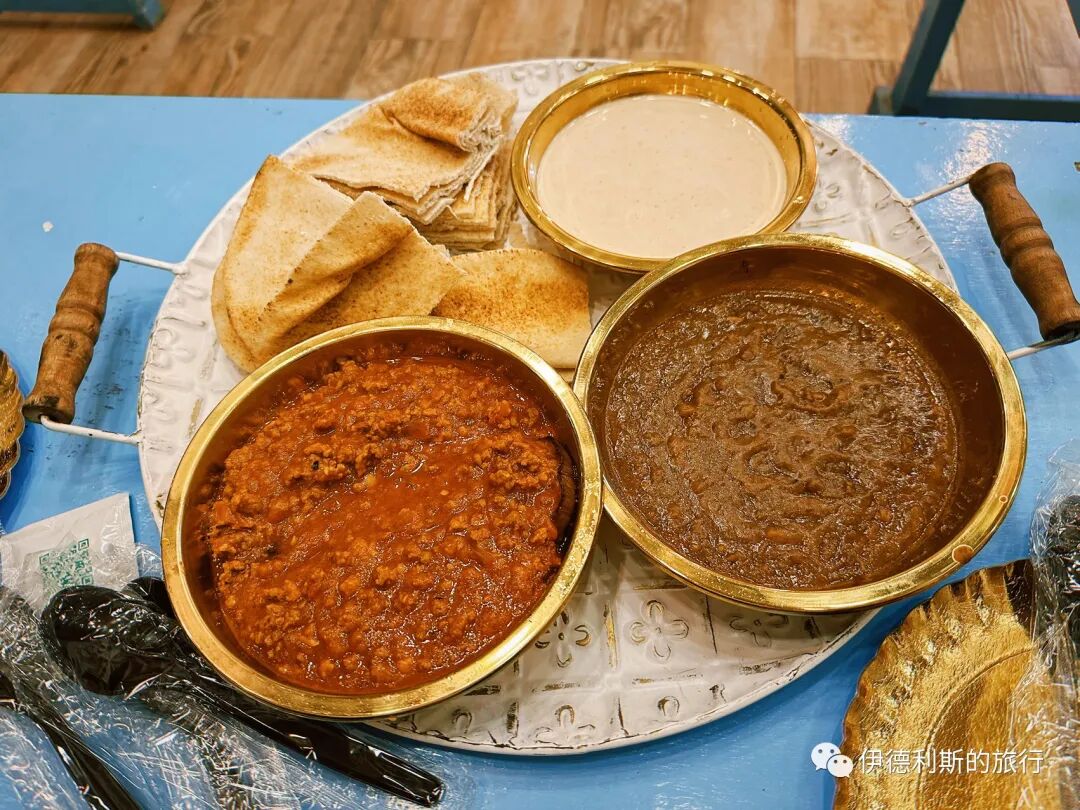
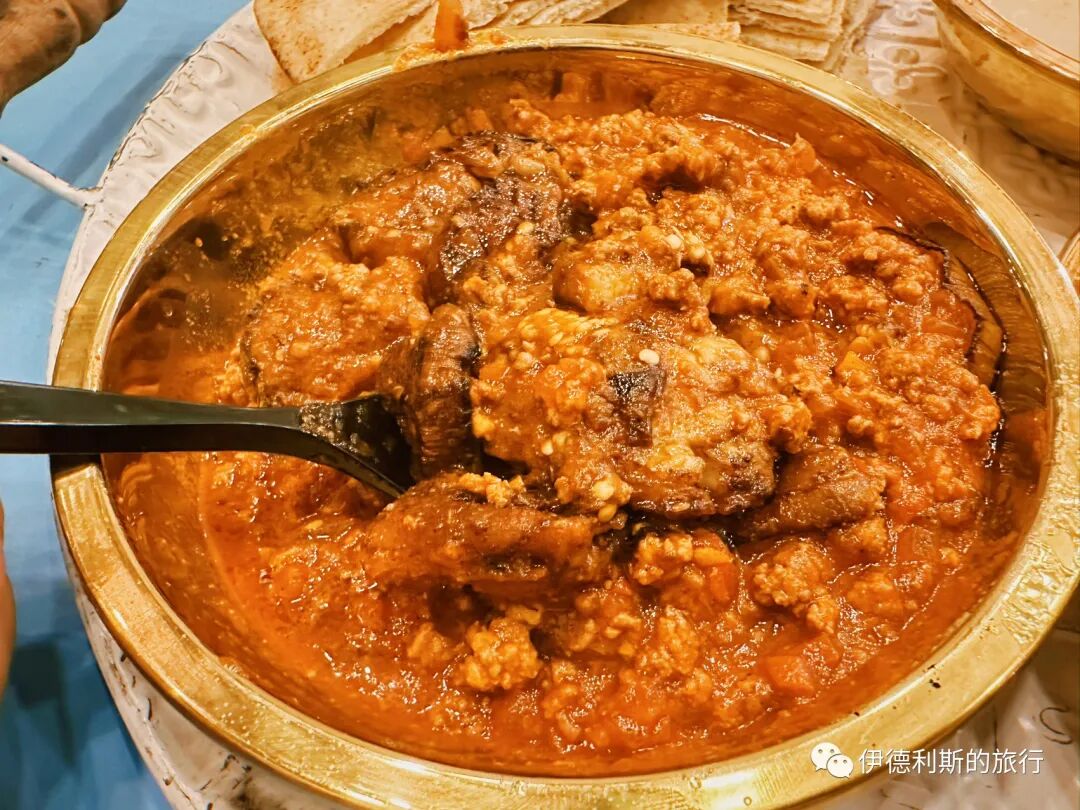
In the evening, we ate various dips with pita bread at a traditional restaurant. We ate minced meat and eggplant casserole (moussaka). The word means 'mashed' in Arabic, and it later spread to the Middle East and the Balkans during the Ottoman Empire, with different versions in each place.
The next day, we went for a walk in the old town of Jeddah again. This time, we took a taxi to the north gate, Bab al-Jadid, and saw the excavated city wall ruins. The Jeddah city wall was built by Hussein al-Kurdi in the 16th century. It underwent major repairs in the 19th century and was demolished in 1947, with only a few gates remaining.
On the east side of the north gate is the old house Bayt Sharbatli. It was built 150 years ago by the merchant Sharif Abdulelah Muhanna al-Abdali, who owned a small fleet of ships traveling between Red Sea cities. Later, it was used as the Egyptian embassy.
The old town was quiet and empty in the morning. It is a pity that many old houses were not open for visits, so we could only look at them from the outside.
There are several seafood restaurants on the west side of the old town. I ate grilled fish and fried shrimp at one of them, served with two colors of rice. The restaurant uses traditional decor, and you have to sit on carpets and eat with your hands. The first floor is where you choose and grill the fish. The second floor is the men's area, while women and families must dine in private rooms on the third floor.
Several old buildings are currently under renovation. Because Saudi Arabia's tourism industry has just started, the development of the old town has also just begun. I expect that if I visit the old town of Jeddah again in a year or two, I will be able to see it after the renovations are complete.
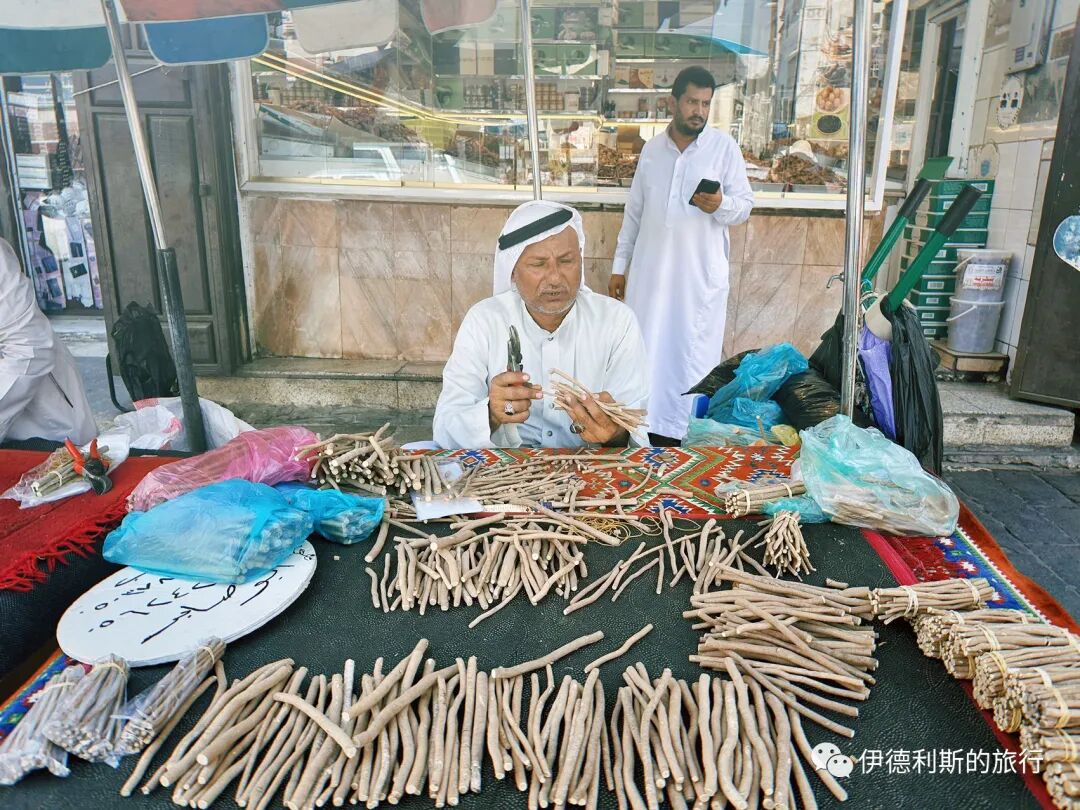
East of the old town of Jeddah is the market area, where you can see stalls selling teeth-cleaning twigs (miswak). The Prophet Muhammad often recommended using miswak twigs to brush teeth in the Hadith.
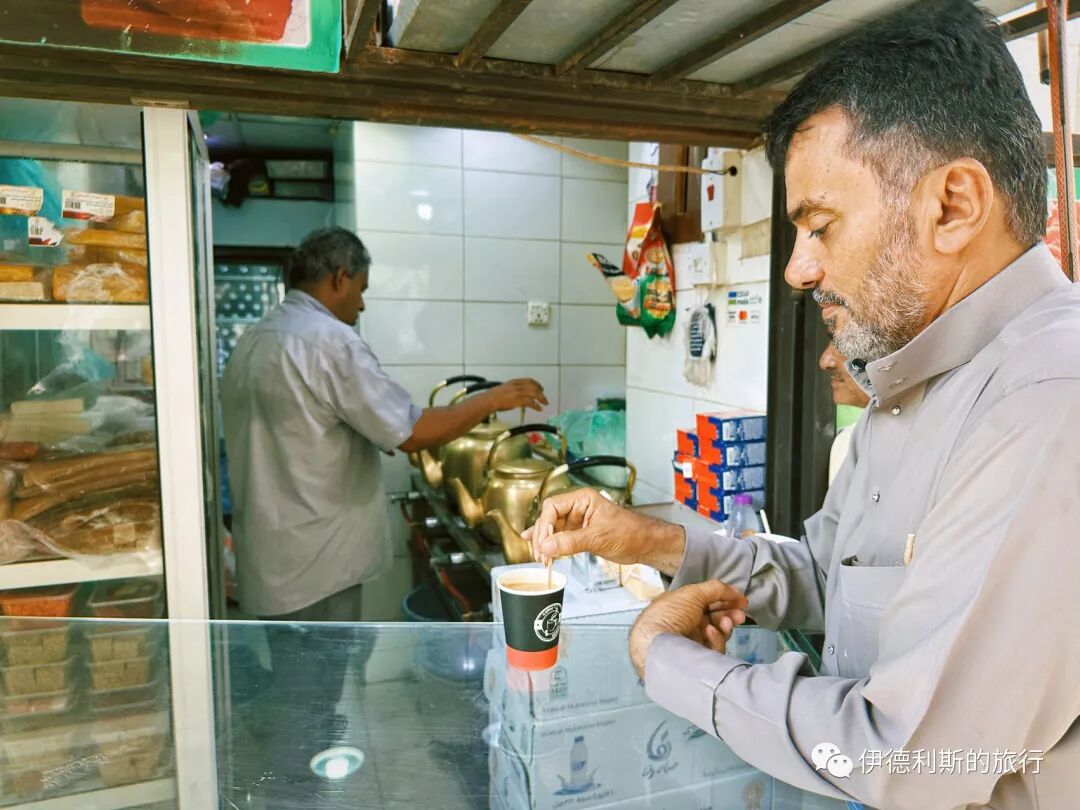
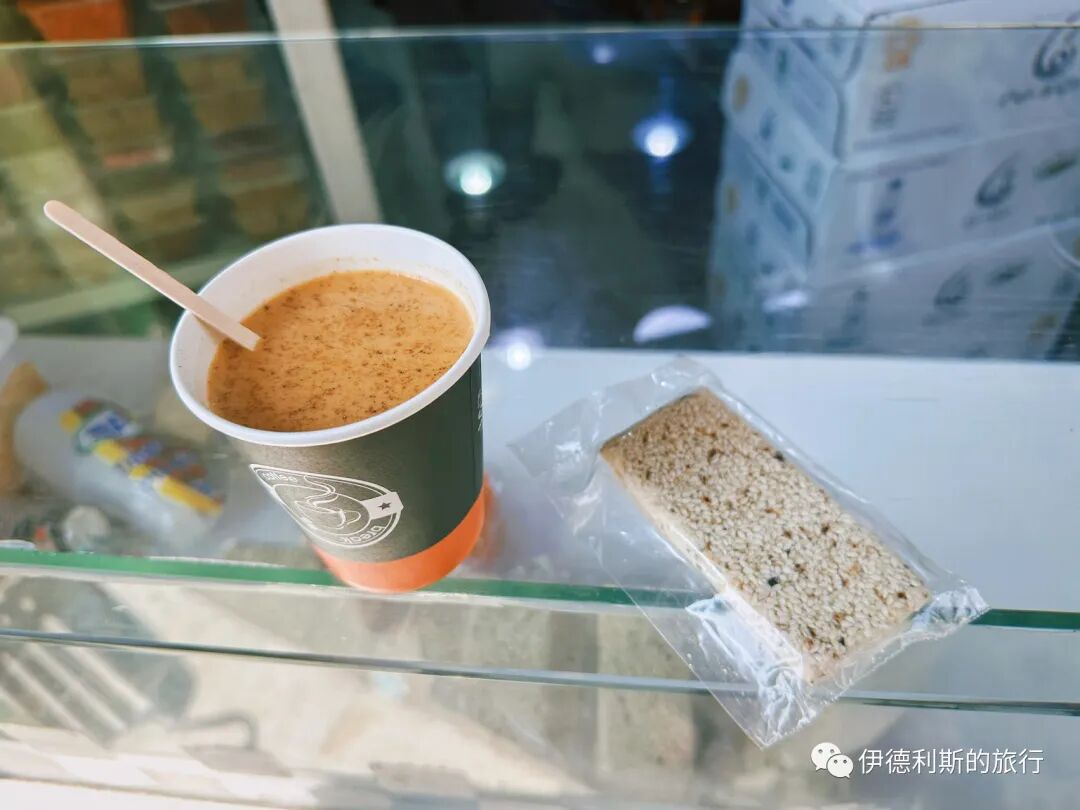
We also drank black tea mixed with traditional local spices and served with sesame candy (zhima tang), which is a daily snack for the locals.
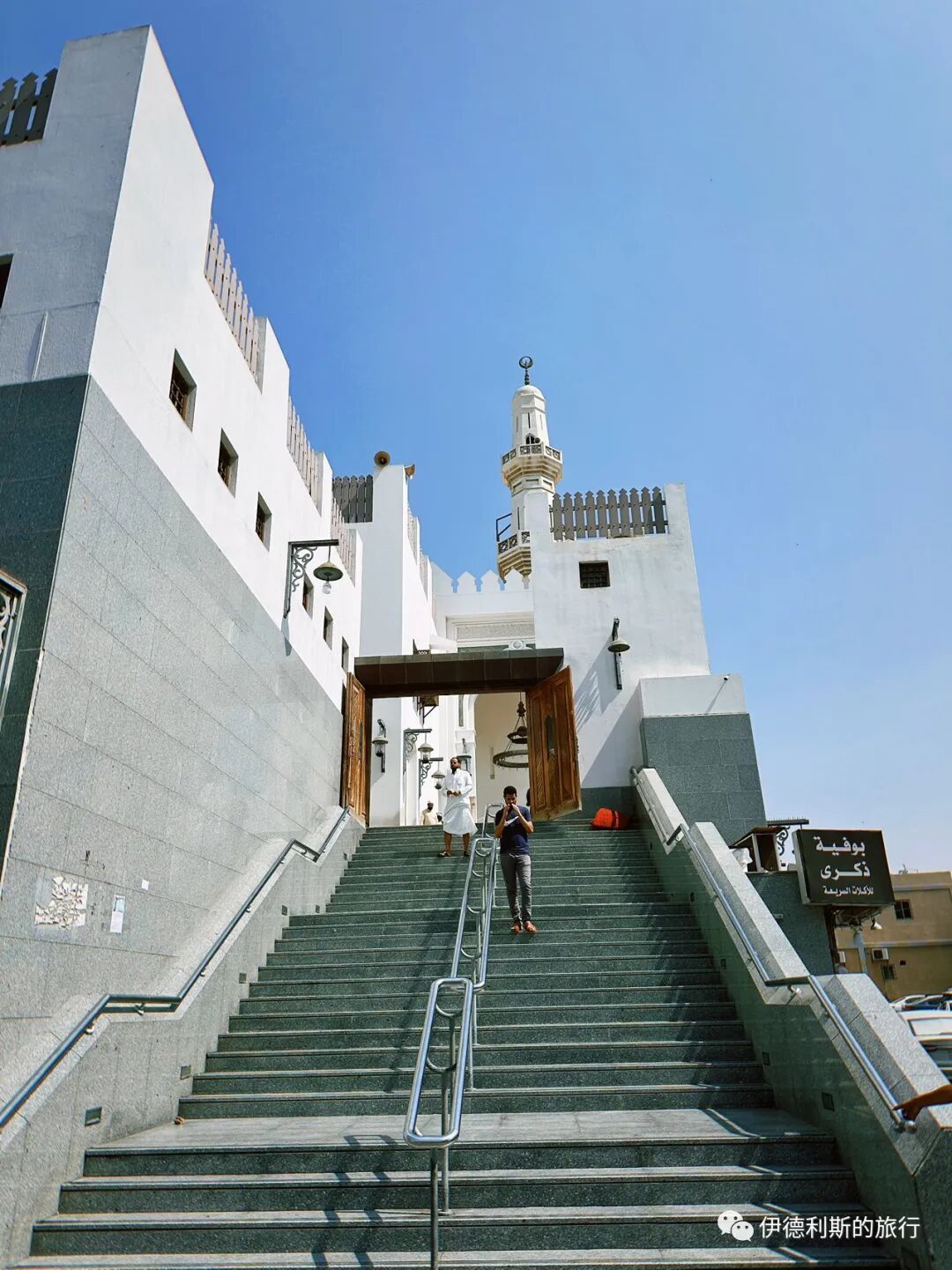
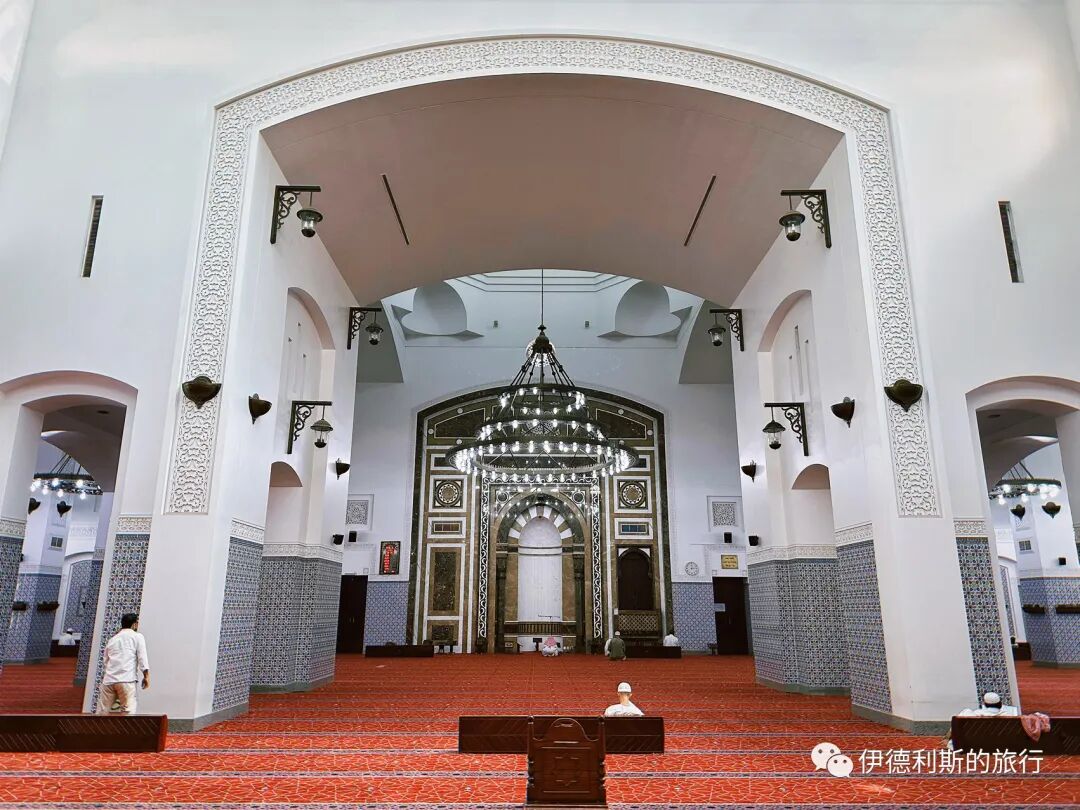
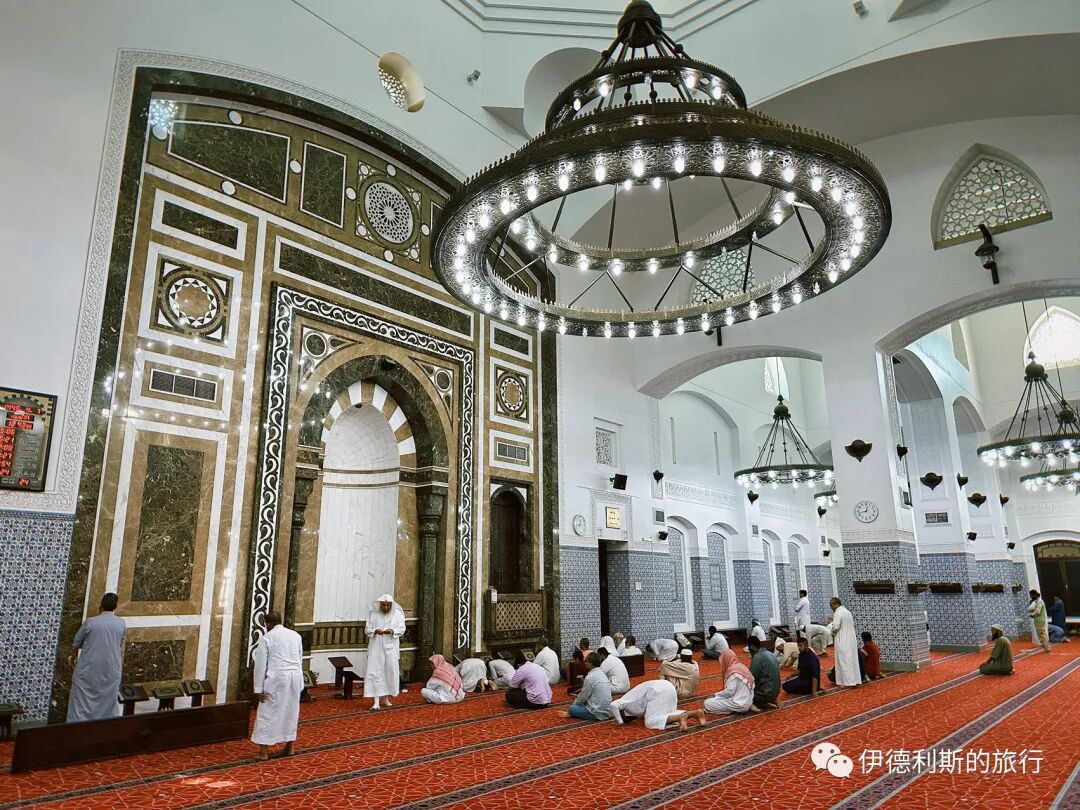
Finally, we finished our tour of the old city of Jeddah by performing namaz at a large mosque located above a market. view all
Jeddah is located in the Hejaz region on the east coast of the Red Sea. In 647 AD, Caliph Uthman ordered it to be built as a port for travel to Mecca. Since then, Jeddah has been an important gateway for pilgrims arriving by sea.
The Old Town of Jeddah is the last ancient city along the Red Sea that still keeps its traditional layout. It is made up of tall tower houses, coral stone buildings, traditional mosques, open-air markets (souqs), cafes, and small public squares. These traditional buildings were once common along the Red Sea coast, but after the 20th century, modernization left only a few standing. They are an important witness to the Indian Ocean trade routes from the 16th to the early 20th century. Because of this, the Old Town of Jeddah was added to the UNESCO World Heritage list in 2014.
The most unique feature of the Old Town of Jeddah is the Roshan wooden bay window tower houses from the late 19th century. After the Suez Canal opened in 1869, a new route connected the Mediterranean to the Indian Ocean, and Jeddah's status rose quickly. As the number of merchants and pilgrims grew, these six-to-seven-story towers helped ease the housing shortage.
These towers are built from coral stone and lime plaster. They feature beautiful Roshan wooden bay windows and have no courtyards. The ground floor is used for shops, while the upper floors are rented out to pilgrims. The Roshan wooden bay windows are made from teak imported from Java. The carving and decoration styles depend on the owner's taste and are often influenced by India and other parts of Asia. The wooden bay windows are about 60 centimeters deep. People can look out at the view through the shutters or sit inside to drink tea and rest. Besides providing privacy and decoration, the Roshan wooden bay windows are important for cross-ventilation and cooling. People place water basins inside the windows, using the shade and airflow to cool the water.
Before the 1950s, most people living in the Old Town of Jeddah were local merchant families. Later, as oil income increased, most locals moved to the suburbs, and the houses in the old city were rented to migrant workers. After being added to the World Heritage list in 2014, the Saudi government began large-scale restoration of the old city. When we visited, many old buildings were still being repaired.
In the evening, we performed the Maghrib namaz at the Al-Shafi'i Mosque in the Old Town of Jeddah. The Al-Shafi'i Mosque is the oldest surviving coral stone mosque in Jeddah. It was first built in 1250 by the Yemeni King Mudhaffar. It is named after the Shafi'i school of law, which is followed in Yemen. In 1539, an Indian merchant named Khawaja Muhammad Ali brought the best wood from Yemen to rebuild the mosque, except for the minaret. Today, you can see clear influences from the Kerala region of India in the carvings on the porch's cross-shaped column capitals.
Shafi'i Mosque is built from coral stone, sea mud, and wood, with a main hall supported by wooden pillars and coral stone bases. The mihrab niche features rich calligraphy, geometric patterns, and floral decorations. The Kufic calligraphy above the mihrab forms the image of a mosque with six minarets, which clearly shows Ottoman influence.
To the west of Shafi'i Mosque are gold and silver workshops and a copper market, while the east side houses the traditional textile and clothing market, Souq Al Badw (Bedouin market), where the street is still filled with fabric shops.
There are some traditional cold drink shops in the old town of Jeddah where you can try traditional Hejaz region drinks. Sobia is a classic iftar drink in the Hejaz region, made by fermenting dried bread, raisins, barley, or oats, then filtering it and adding sugar, cardamom, cinnamon, and ice. Besides the original white Sobia, you can add strawberry to make it red or tamarind to make it brown. They also have special blends that include ingredients like hibiscus.
Making Sobia produces varying amounts of alcohol depending on the fermentation time, and the Saudi Food and Drug Authority states that a small amount of alcohol produced during the natural fermentation of juices and drinks is a natural chemical reaction.
Opposite the Bayt Ba'ishan old house is another open-to-the-public historic home called Bayt Jeddah, also known as Salloum's house, built by Sheikh Abdullah Bin Obaid Salloum in 1880. It preserves many pieces of furniture used by the Salloum family, including some imported from India that are over 120 years old.
The house has three floors: the first floor is a reception room, and the second floor is a bedroom where you can see many daily items, including old suitcases, sewing machines, and vintage kerosene-powered refrigerators. In the house, you can see the area once used in the Hejaz region to host female neighbors, who used to gather there every afternoon to drink tea and chat.
Opposite the Bayt Ba'ishan old house is another open-to-the-public historic home called Bayt Jeddah, also known as Salloum's house, built by Sheikh Abdullah Bin Obaid Salloum in 1880. It preserves many pieces of furniture used by the Salloum family, including some imported from India that are over 120 years old.
The house has three floors: the first floor is a reception room, and the second floor is a bedroom where you can see many daily items, including old suitcases, sewing machines, and vintage kerosene-powered refrigerators. In the house, you can see the area once used in the Hejaz region to host female neighbors, who used to gather there every afternoon to drink tea and chat.
There is an art gallery inside an old house with many paintings related to the ancient city of Jeddah.
In the evening, we performed namaz at the Abu'Unba mosque in the old town of Jeddah.
After namaz, we went to a traditional cafe across from the mosque. The small shop is not big, but it is decorated beautifully with many traditional Hejazi elements, making it perfect for photos. We ordered traditional coffee and dates dipped in sesame paste (tahini) to experience the life of old Jeddah residents.
In the evening, we ate various dips with pita bread at a traditional restaurant. We ate minced meat and eggplant casserole (moussaka). The word means 'mashed' in Arabic, and it later spread to the Middle East and the Balkans during the Ottoman Empire, with different versions in each place.
The next day, we went for a walk in the old town of Jeddah again. This time, we took a taxi to the north gate, Bab al-Jadid, and saw the excavated city wall ruins. The Jeddah city wall was built by Hussein al-Kurdi in the 16th century. It underwent major repairs in the 19th century and was demolished in 1947, with only a few gates remaining.
On the east side of the north gate is the old house Bayt Sharbatli. It was built 150 years ago by the merchant Sharif Abdulelah Muhanna al-Abdali, who owned a small fleet of ships traveling between Red Sea cities. Later, it was used as the Egyptian embassy.
The old town was quiet and empty in the morning. It is a pity that many old houses were not open for visits, so we could only look at them from the outside.
There are several seafood restaurants on the west side of the old town. I ate grilled fish and fried shrimp at one of them, served with two colors of rice. The restaurant uses traditional decor, and you have to sit on carpets and eat with your hands. The first floor is where you choose and grill the fish. The second floor is the men's area, while women and families must dine in private rooms on the third floor.
Several old buildings are currently under renovation. Because Saudi Arabia's tourism industry has just started, the development of the old town has also just begun. I expect that if I visit the old town of Jeddah again in a year or two, I will be able to see it after the renovations are complete.
East of the old town of Jeddah is the market area, where you can see stalls selling teeth-cleaning twigs (miswak). The Prophet Muhammad often recommended using miswak twigs to brush teeth in the Hadith.
We also drank black tea mixed with traditional local spices and served with sesame candy (zhima tang), which is a daily snack for the locals.
Finally, we finished our tour of the old city of Jeddah by performing namaz at a large mosque located above a market. view all
Reposted from the web
Jeddah is located in the Hejaz region on the east coast of the Red Sea. In 647 AD, Caliph Uthman ordered it to be built as a port for travel to Mecca. Since then, Jeddah has been an important gateway for pilgrims arriving by sea.
The Old Town of Jeddah is the last ancient city along the Red Sea that still keeps its traditional layout. It is made up of tall tower houses, coral stone buildings, traditional mosques, open-air markets (souqs), cafes, and small public squares. These traditional buildings were once common along the Red Sea coast, but after the 20th century, modernization left only a few standing. They are an important witness to the Indian Ocean trade routes from the 16th to the early 20th century. Because of this, the Old Town of Jeddah was added to the UNESCO World Heritage list in 2014.
The most unique feature of the Old Town of Jeddah is the Roshan wooden bay window tower houses from the late 19th century. After the Suez Canal opened in 1869, a new route connected the Mediterranean to the Indian Ocean, and Jeddah's status rose quickly. As the number of merchants and pilgrims grew, these six-to-seven-story towers helped ease the housing shortage.
These towers are built from coral stone and lime plaster. They feature beautiful Roshan wooden bay windows and have no courtyards. The ground floor is used for shops, while the upper floors are rented out to pilgrims. The Roshan wooden bay windows are made from teak imported from Java. The carving and decoration styles depend on the owner's taste and are often influenced by India and other parts of Asia. The wooden bay windows are about 60 centimeters deep. People can look out at the view through the shutters or sit inside to drink tea and rest. Besides providing privacy and decoration, the Roshan wooden bay windows are important for cross-ventilation and cooling. People place water basins inside the windows, using the shade and airflow to cool the water.
Before the 1950s, most people living in the Old Town of Jeddah were local merchant families. Later, as oil income increased, most locals moved to the suburbs, and the houses in the old city were rented to migrant workers. After being added to the World Heritage list in 2014, the Saudi government began large-scale restoration of the old city. When we visited, many old buildings were still being repaired.
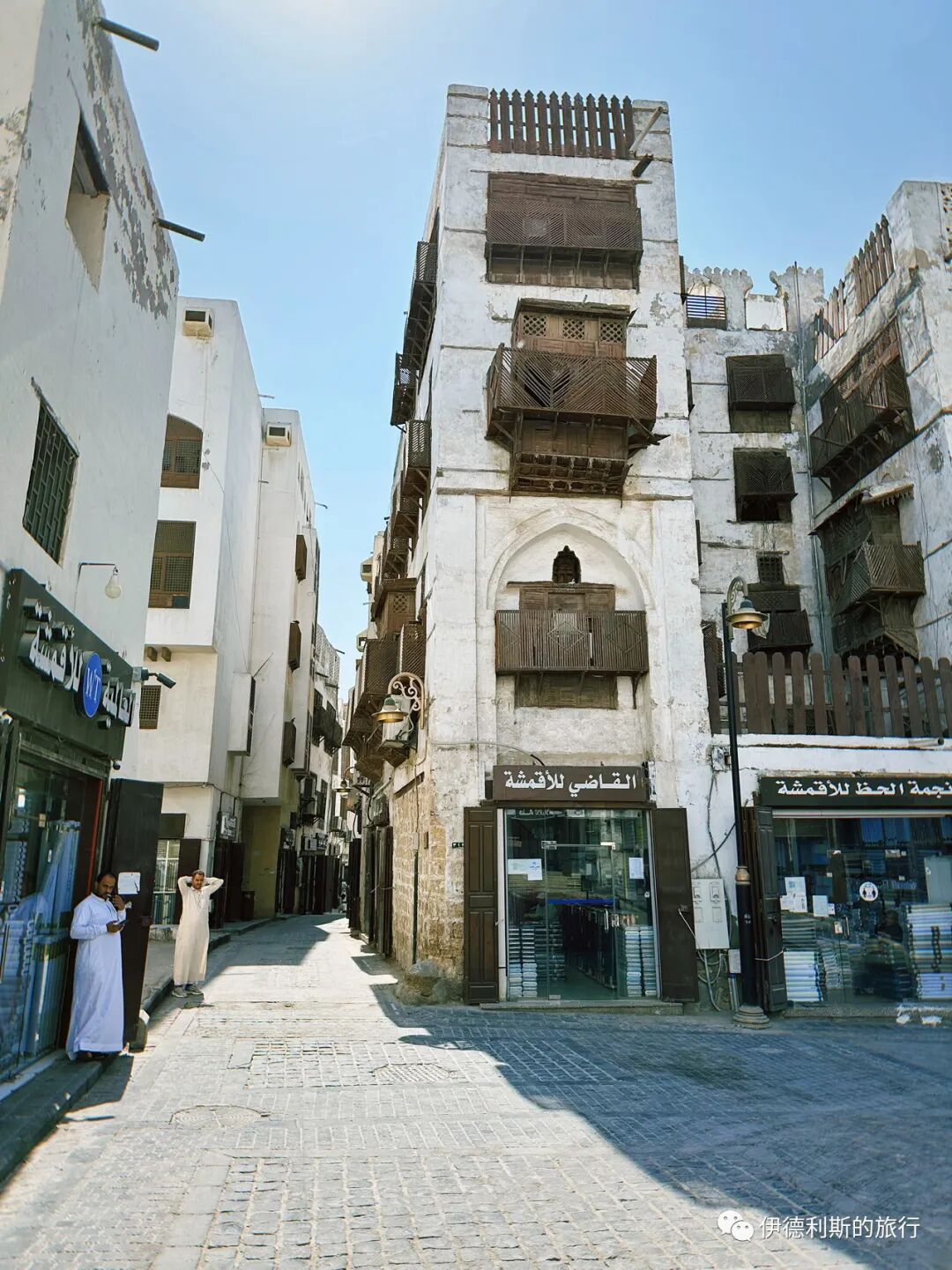
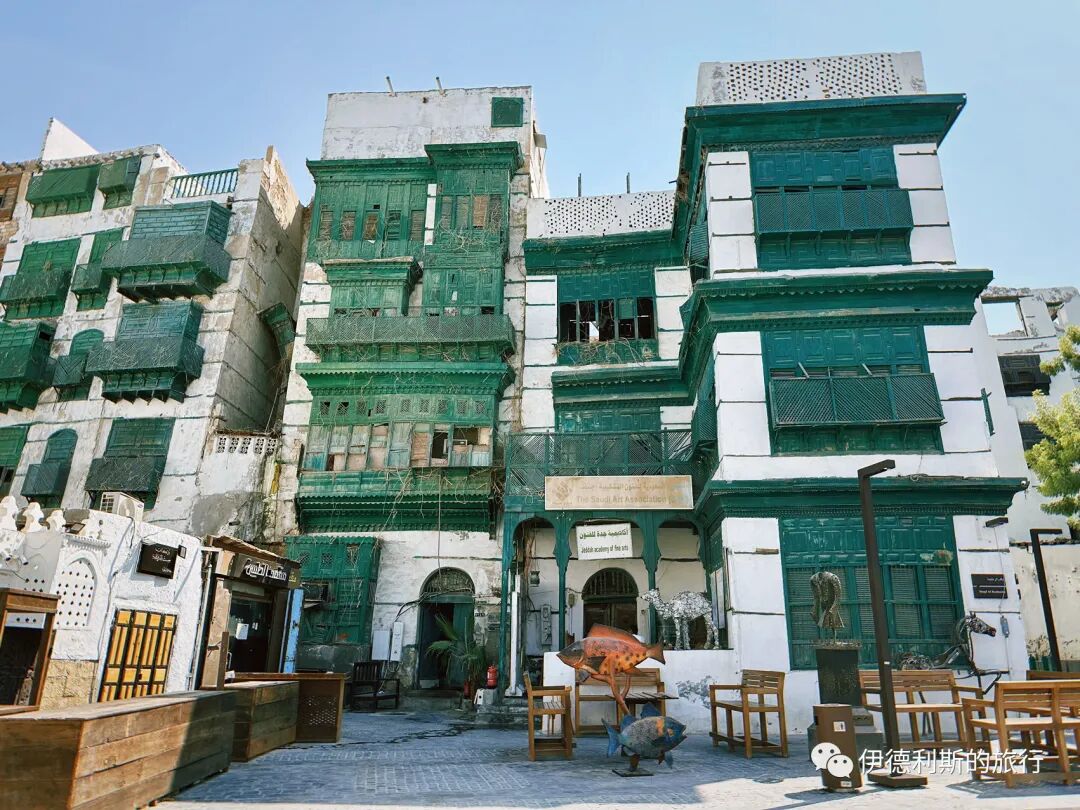
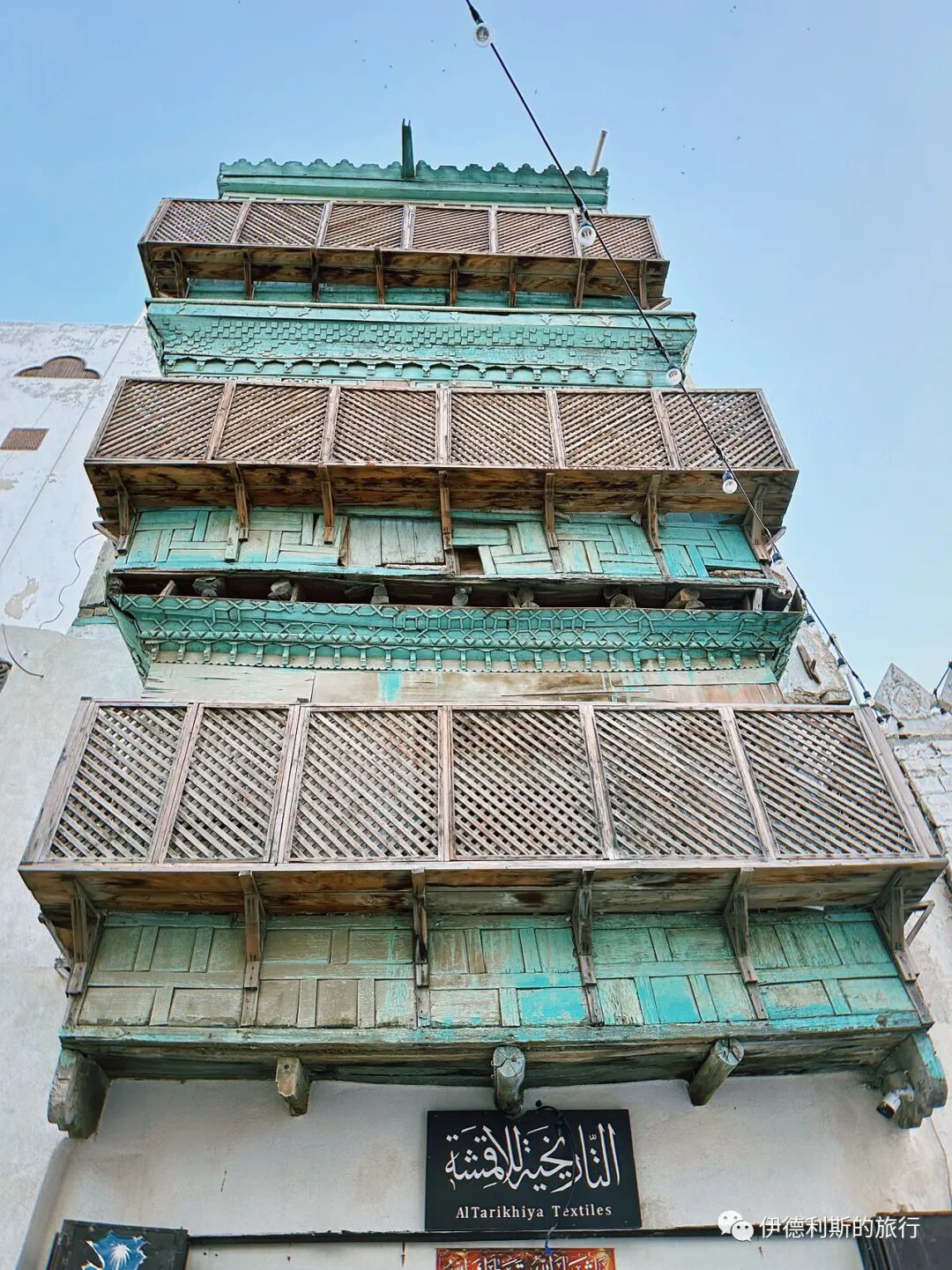
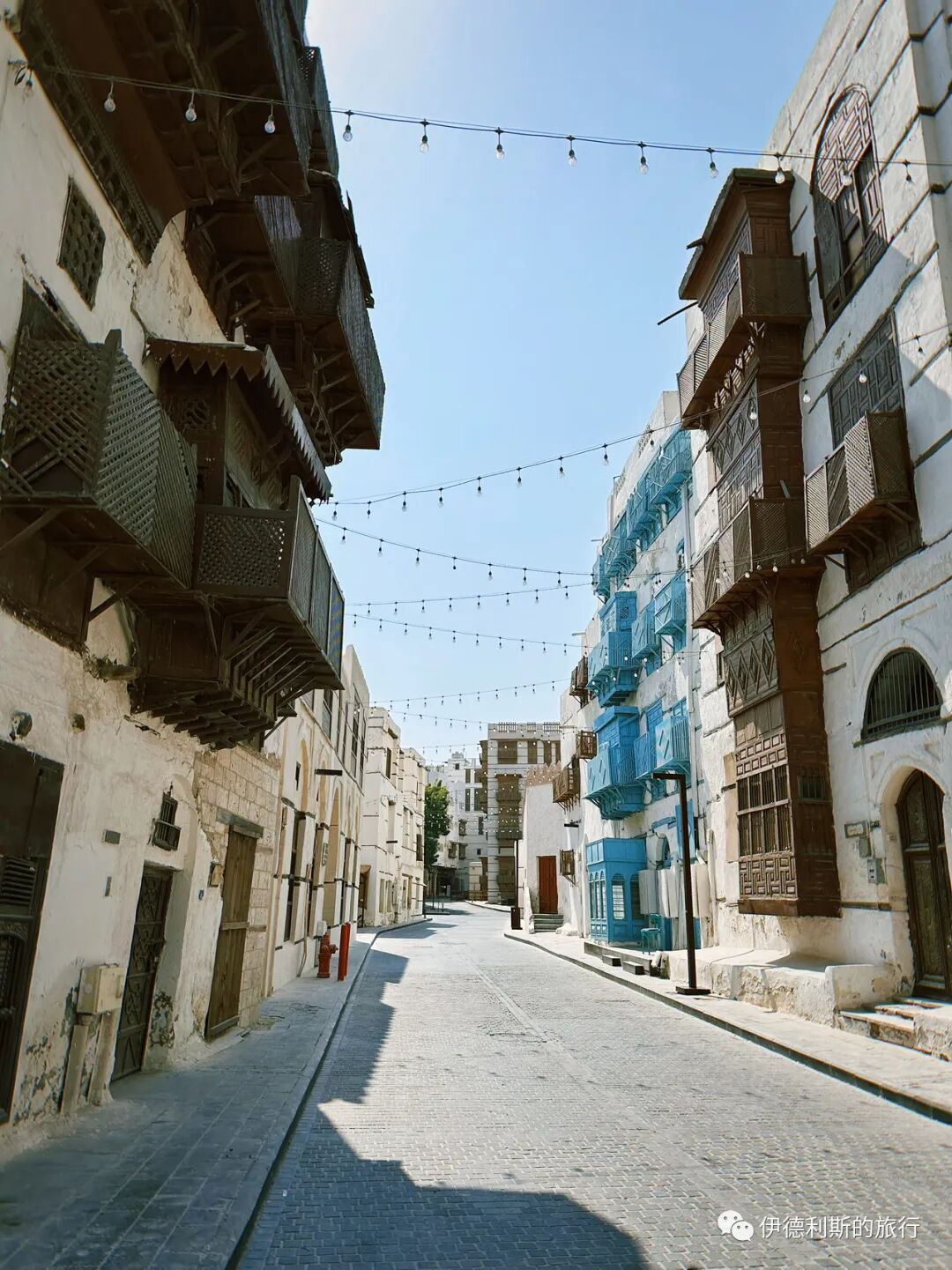
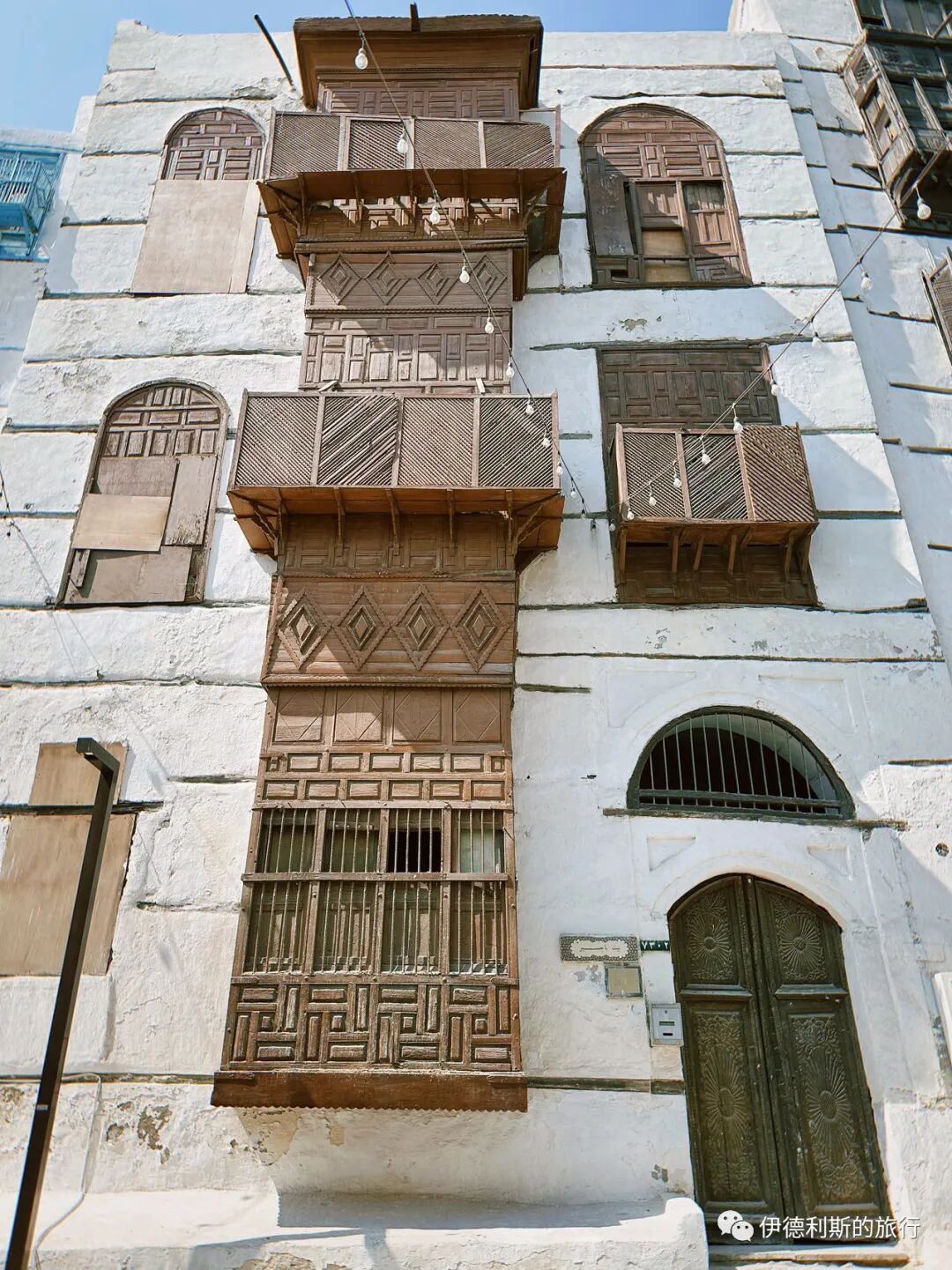
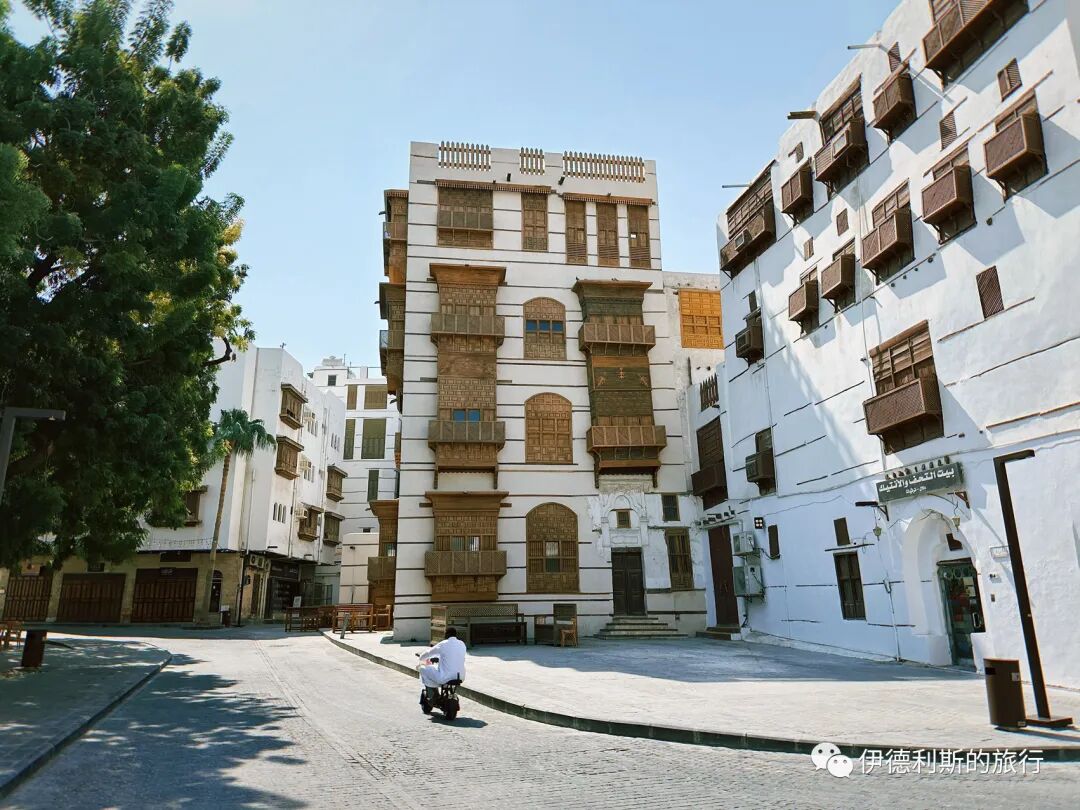
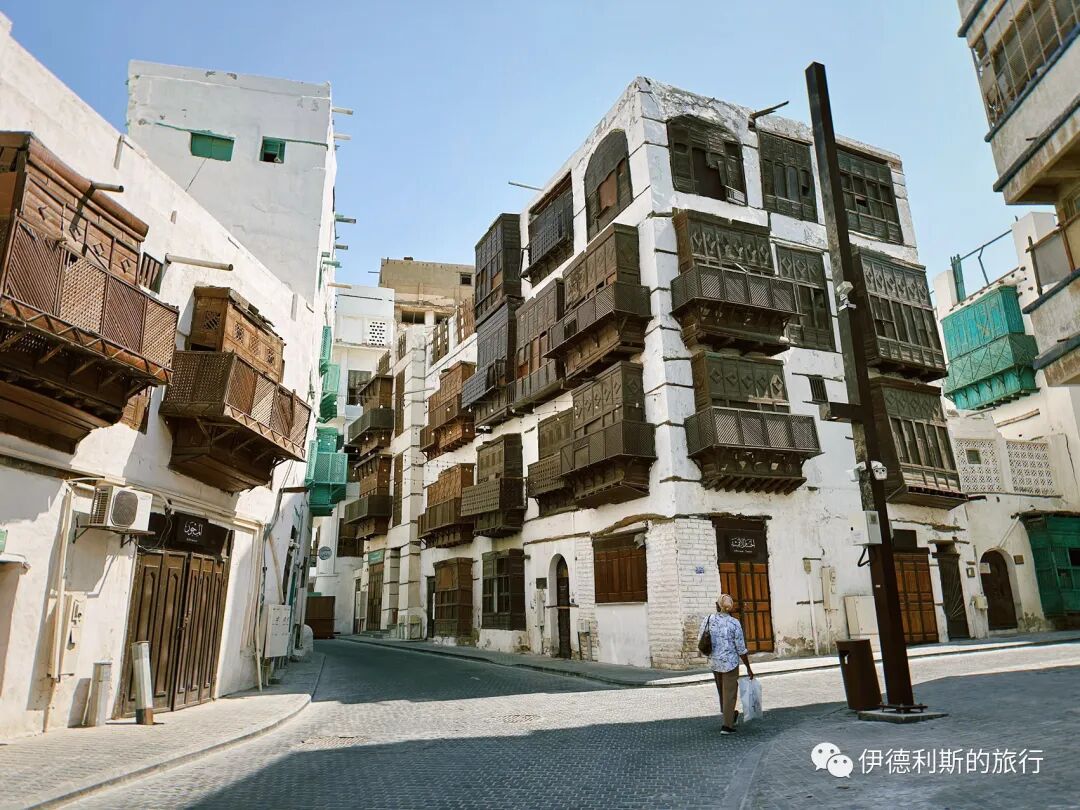
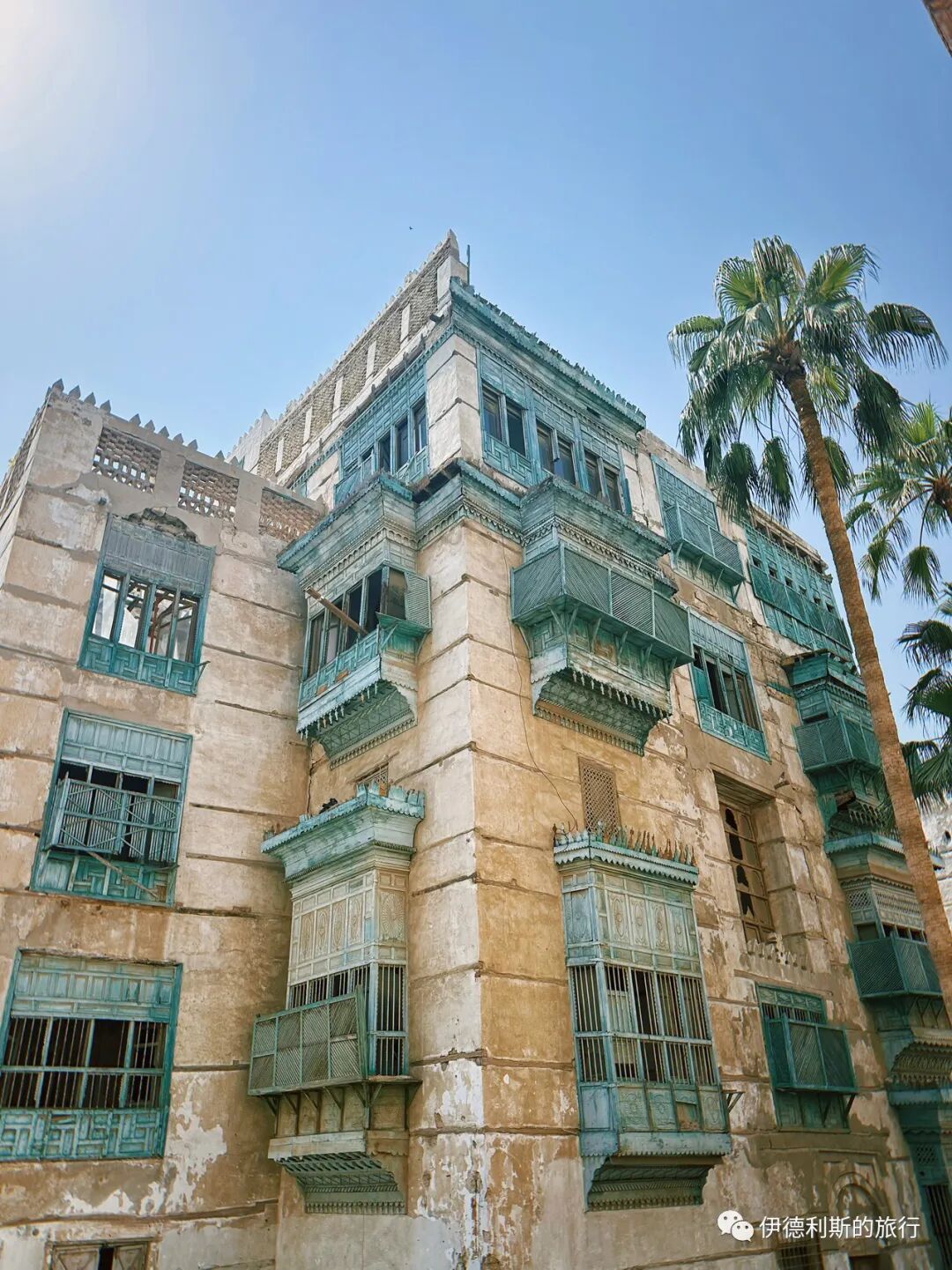
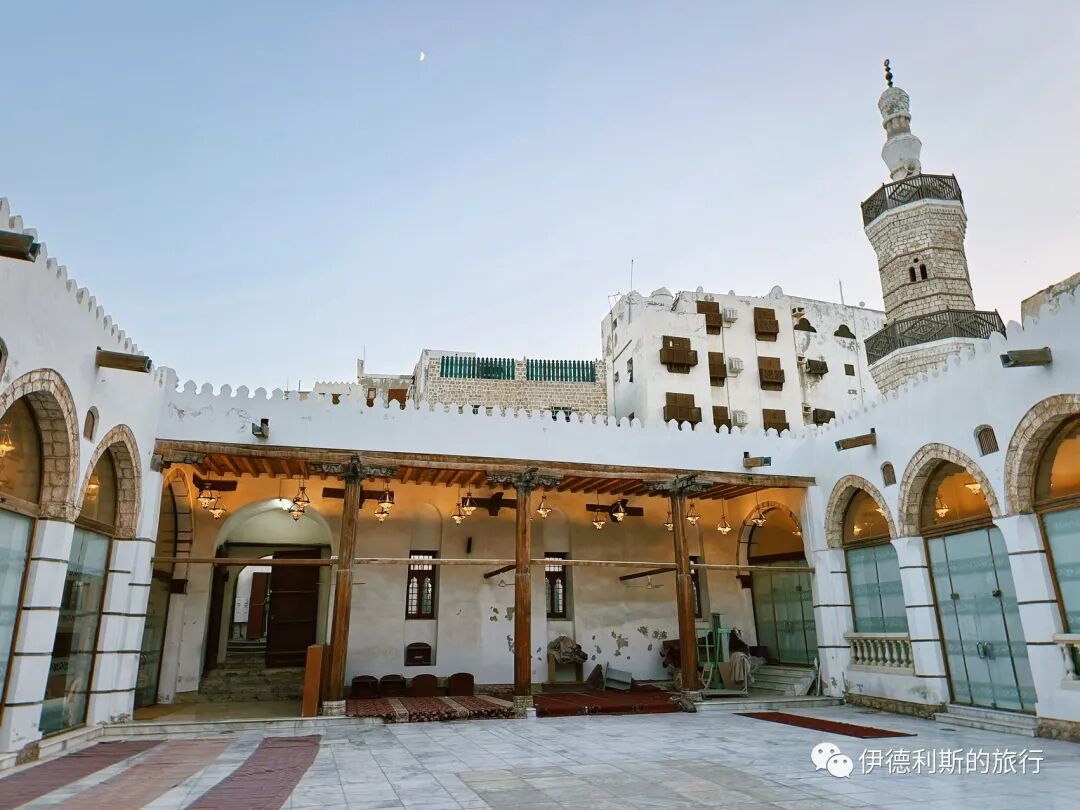
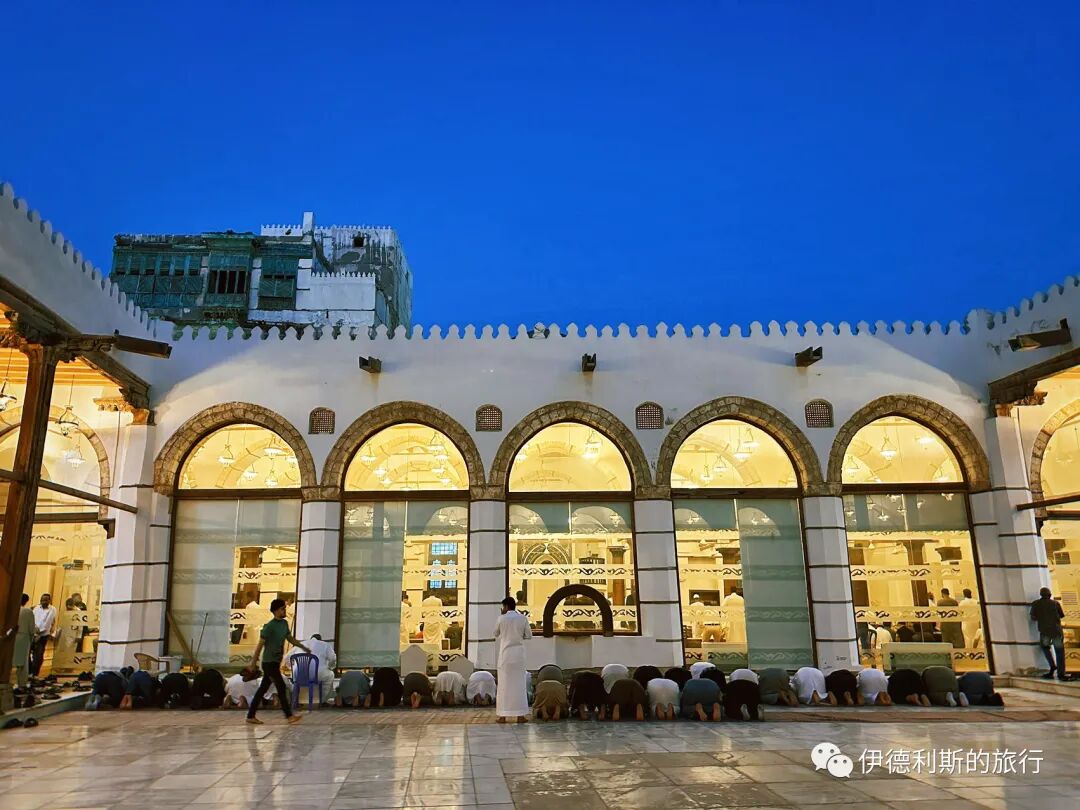
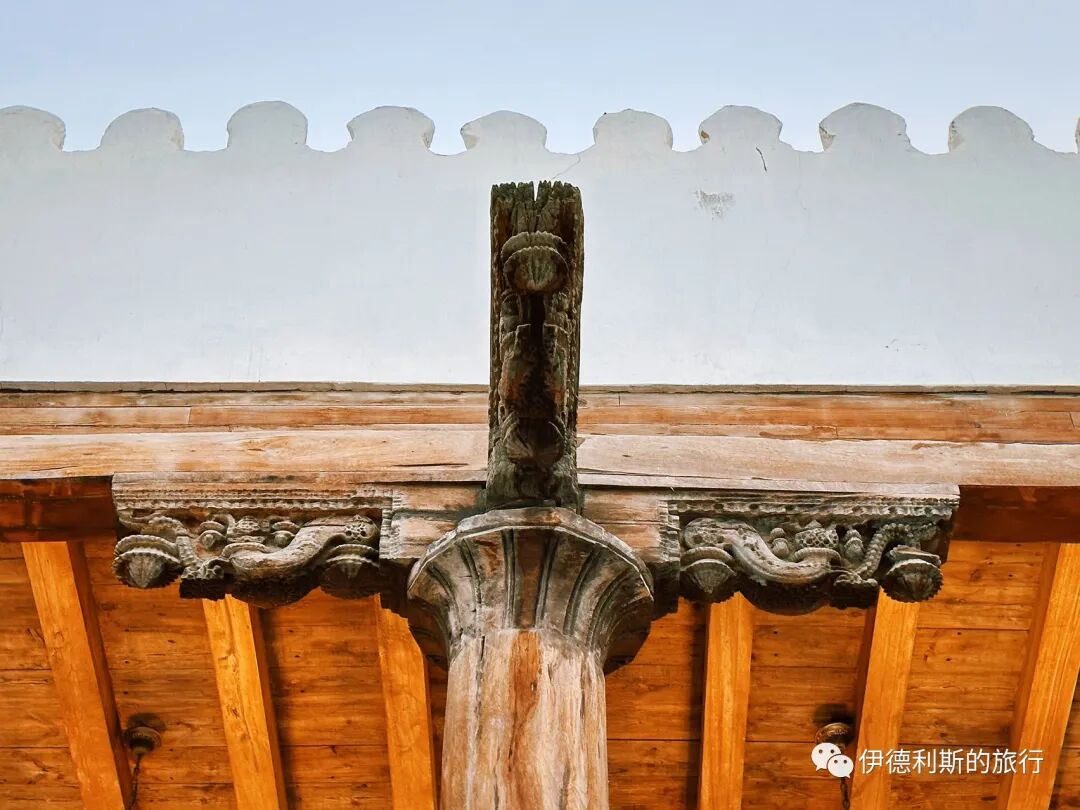
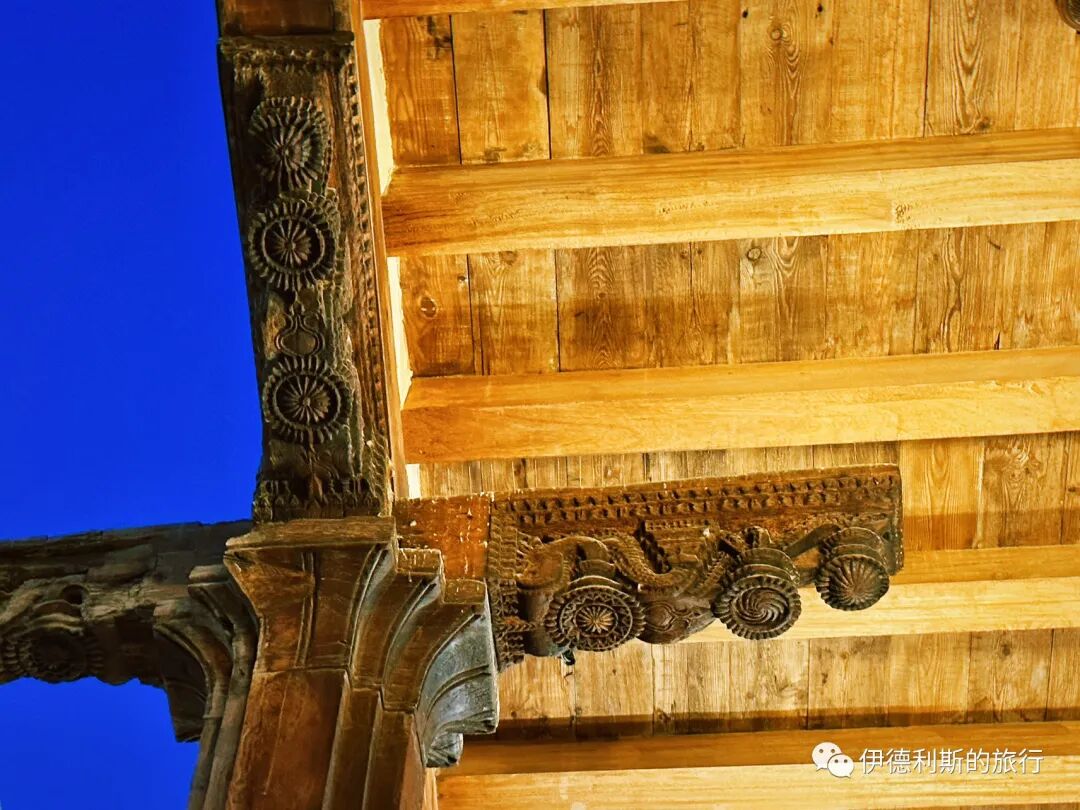
In the evening, we performed the Maghrib namaz at the Al-Shafi'i Mosque in the Old Town of Jeddah. The Al-Shafi'i Mosque is the oldest surviving coral stone mosque in Jeddah. It was first built in 1250 by the Yemeni King Mudhaffar. It is named after the Shafi'i school of law, which is followed in Yemen. In 1539, an Indian merchant named Khawaja Muhammad Ali brought the best wood from Yemen to rebuild the mosque, except for the minaret. Today, you can see clear influences from the Kerala region of India in the carvings on the porch's cross-shaped column capitals.
Shafi'i Mosque is built from coral stone, sea mud, and wood, with a main hall supported by wooden pillars and coral stone bases. The mihrab niche features rich calligraphy, geometric patterns, and floral decorations. The Kufic calligraphy above the mihrab forms the image of a mosque with six minarets, which clearly shows Ottoman influence.
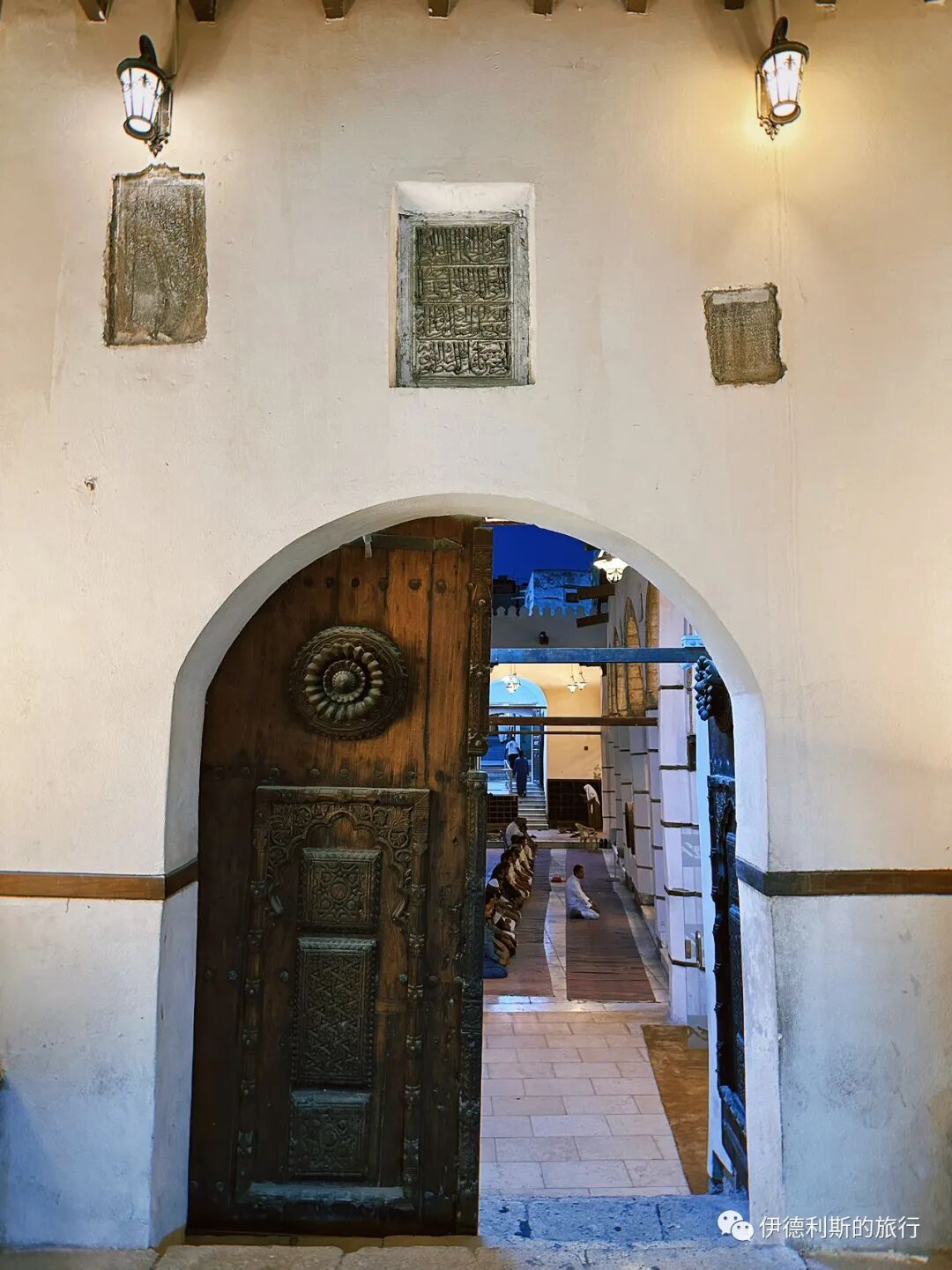
To the west of Shafi'i Mosque are gold and silver workshops and a copper market, while the east side houses the traditional textile and clothing market, Souq Al Badw (Bedouin market), where the street is still filled with fabric shops.
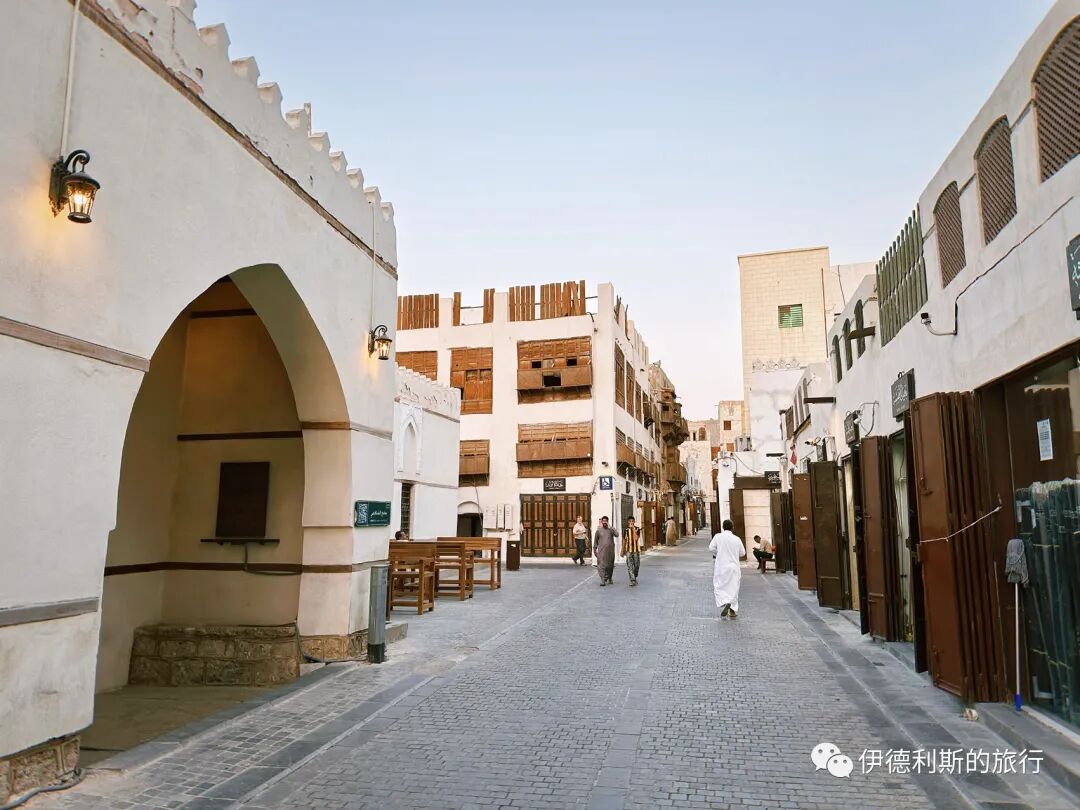
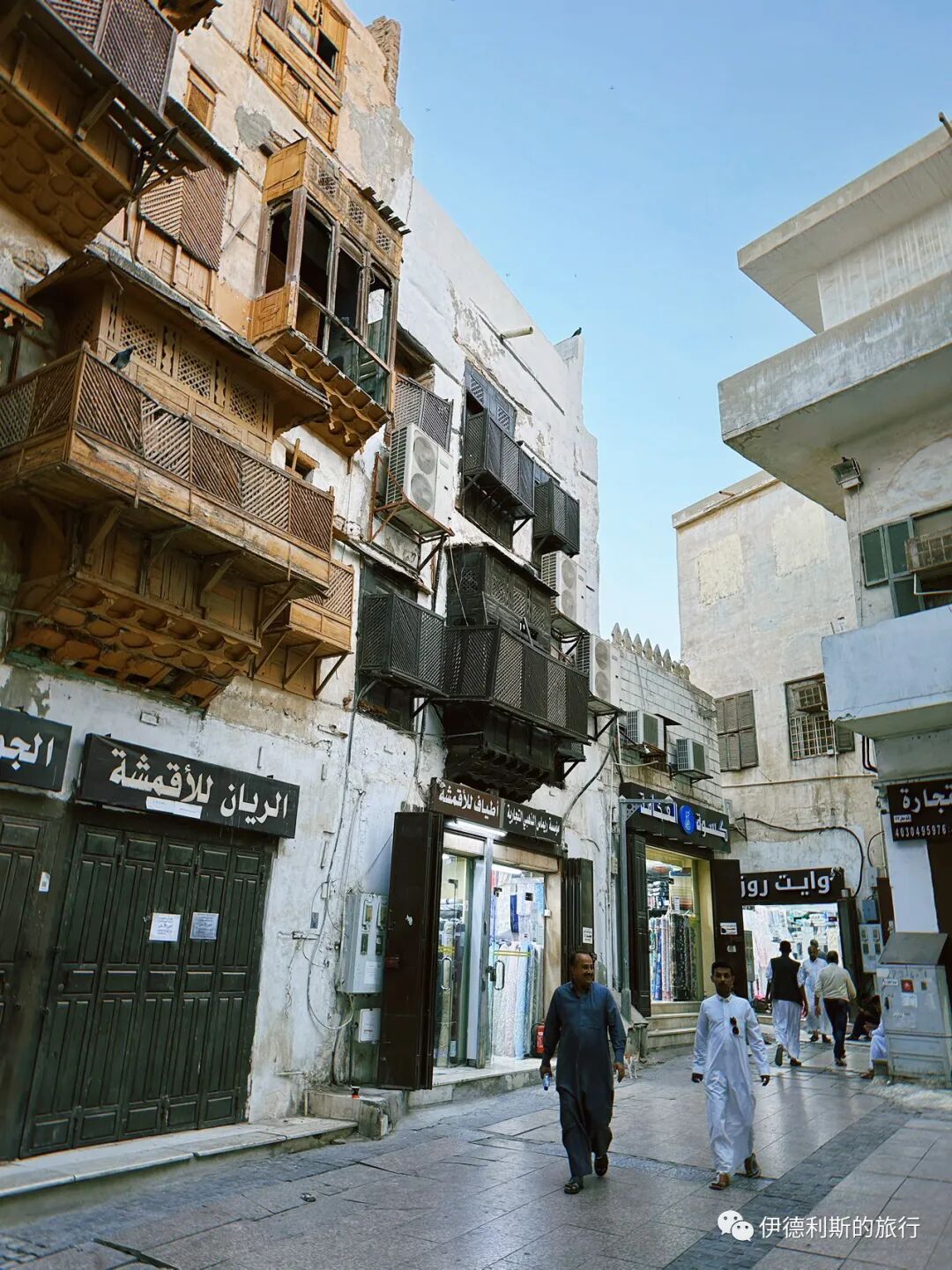
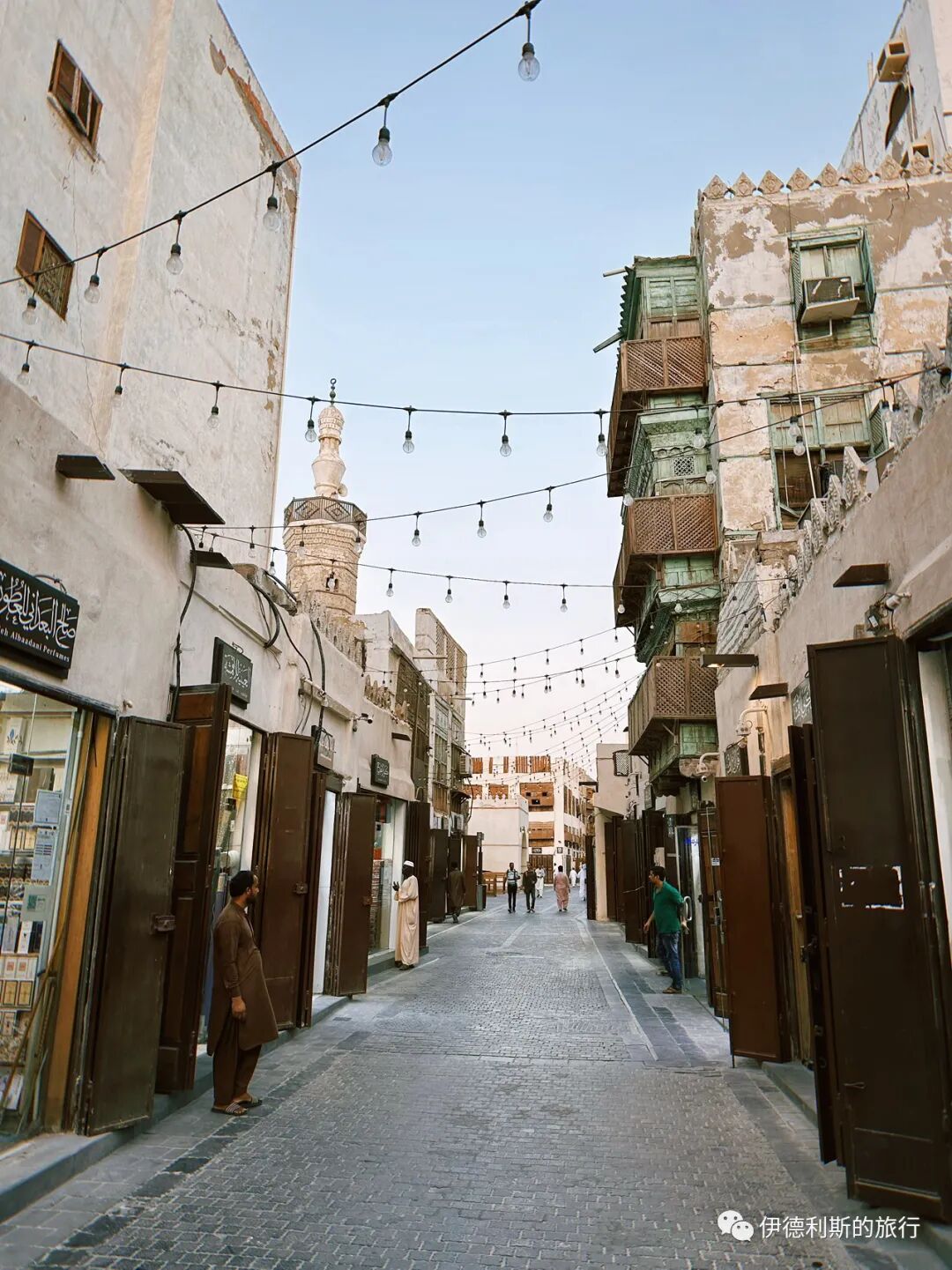
There are some traditional cold drink shops in the old town of Jeddah where you can try traditional Hejaz region drinks. Sobia is a classic iftar drink in the Hejaz region, made by fermenting dried bread, raisins, barley, or oats, then filtering it and adding sugar, cardamom, cinnamon, and ice. Besides the original white Sobia, you can add strawberry to make it red or tamarind to make it brown. They also have special blends that include ingredients like hibiscus.
Making Sobia produces varying amounts of alcohol depending on the fermentation time, and the Saudi Food and Drug Authority states that a small amount of alcohol produced during the natural fermentation of juices and drinks is a natural chemical reaction.

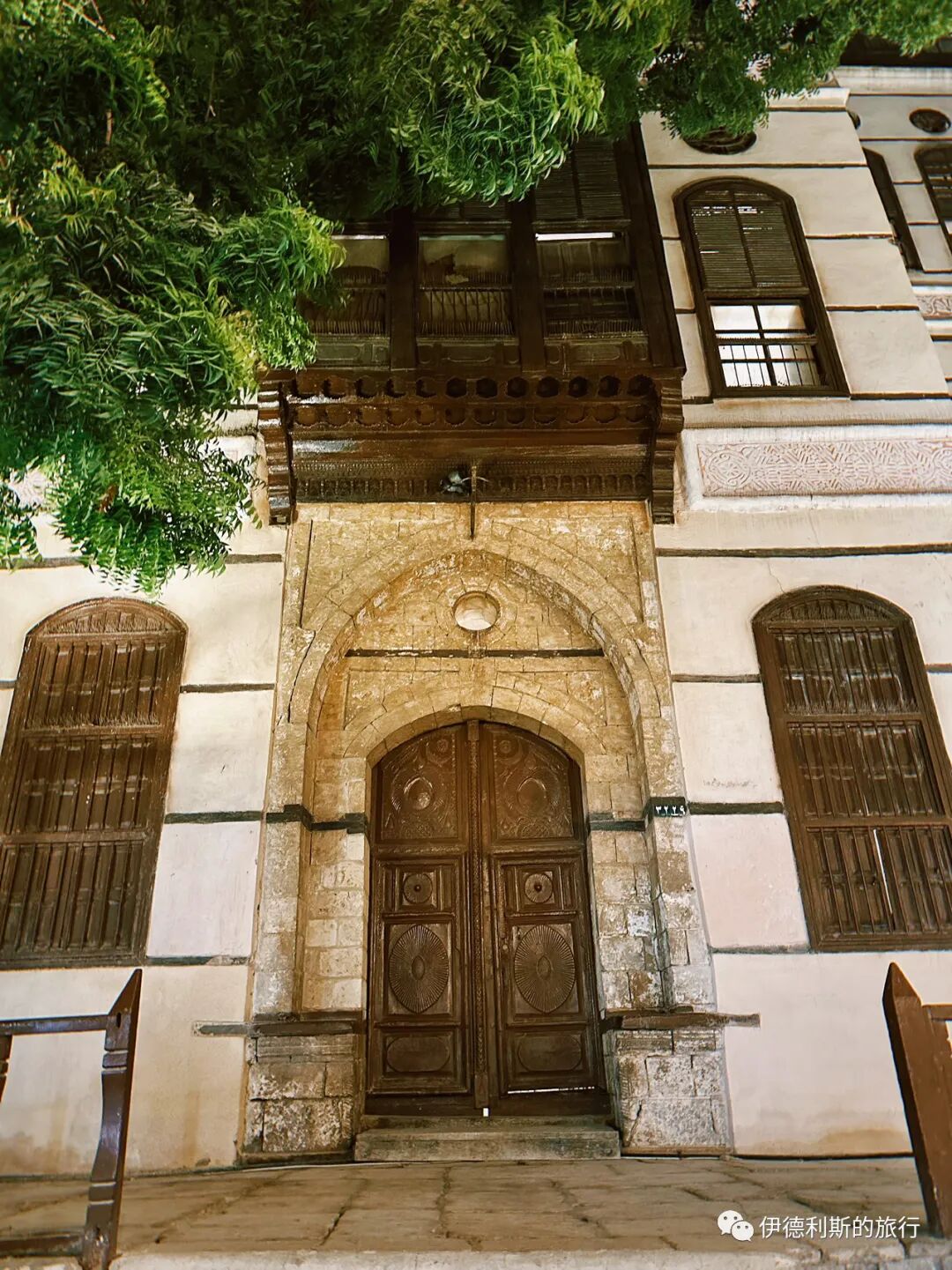
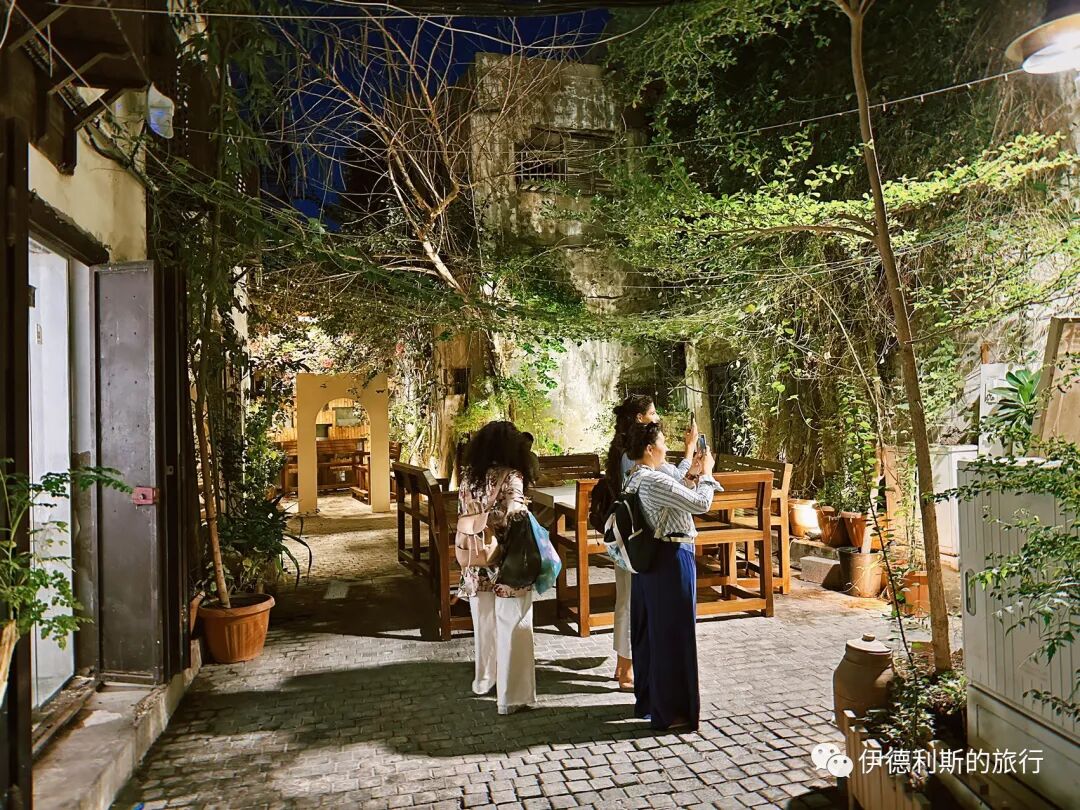
Opposite the Bayt Ba'ishan old house is another open-to-the-public historic home called Bayt Jeddah, also known as Salloum's house, built by Sheikh Abdullah Bin Obaid Salloum in 1880. It preserves many pieces of furniture used by the Salloum family, including some imported from India that are over 120 years old.
The house has three floors: the first floor is a reception room, and the second floor is a bedroom where you can see many daily items, including old suitcases, sewing machines, and vintage kerosene-powered refrigerators. In the house, you can see the area once used in the Hejaz region to host female neighbors, who used to gather there every afternoon to drink tea and chat.
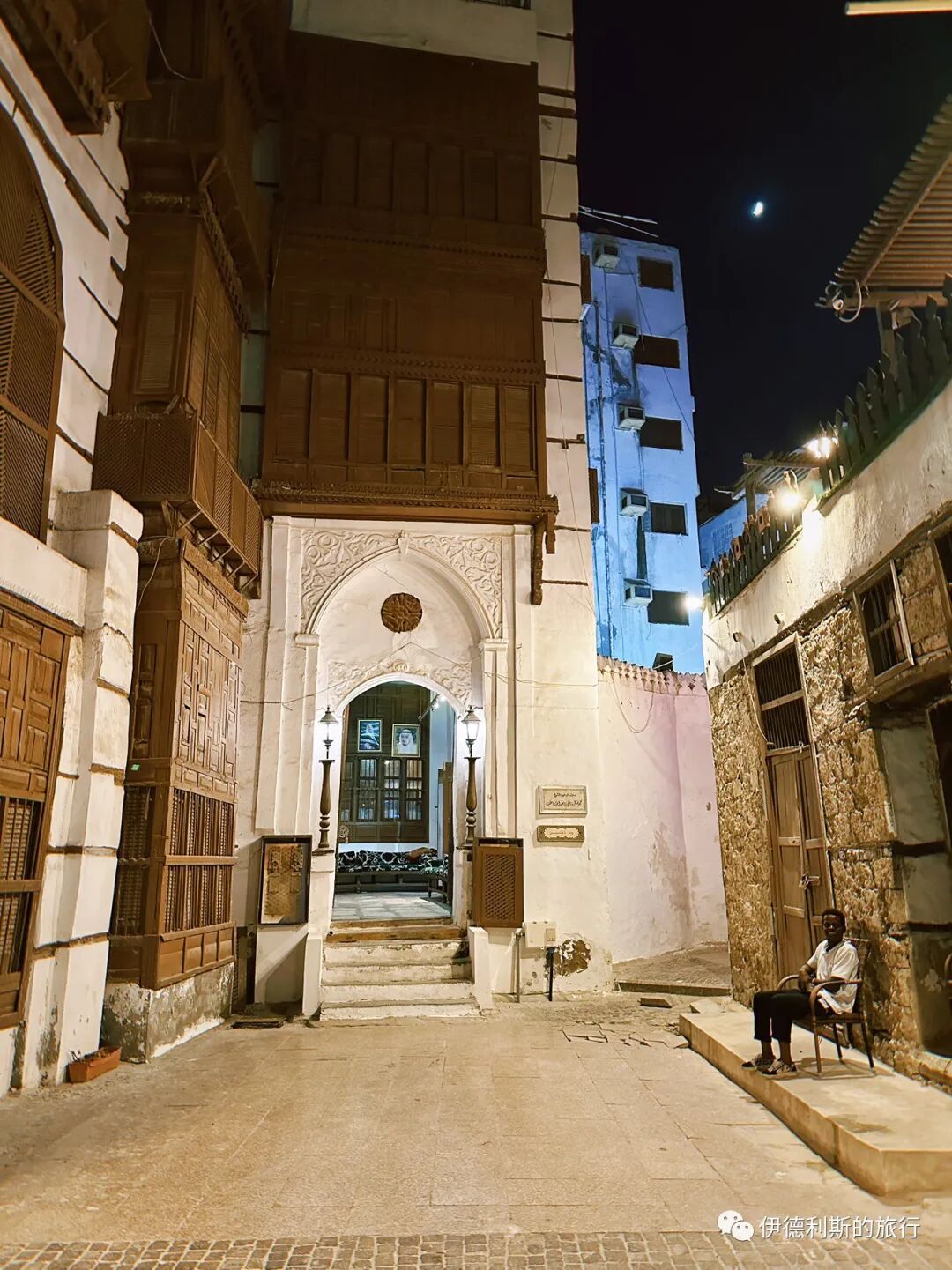
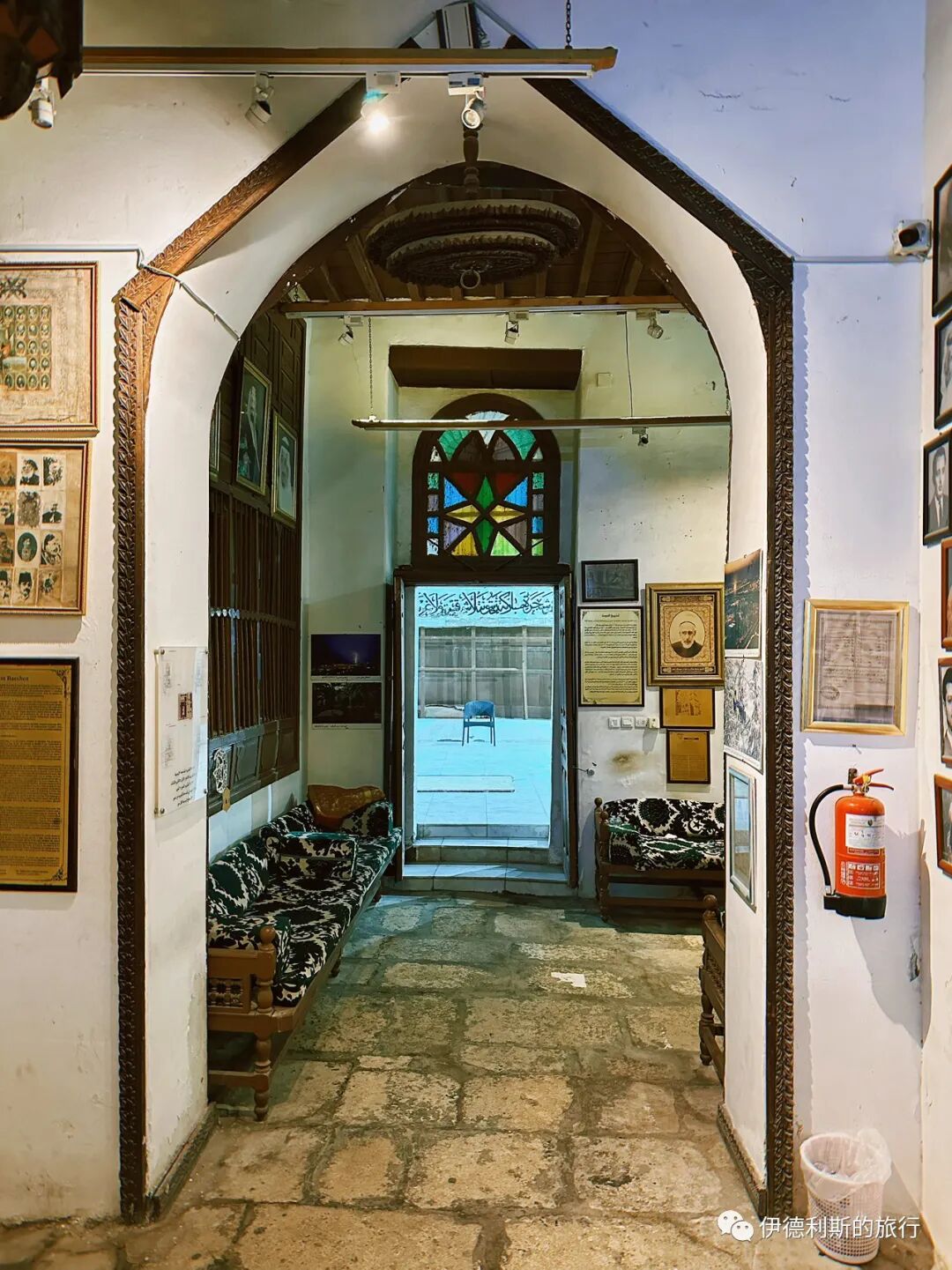
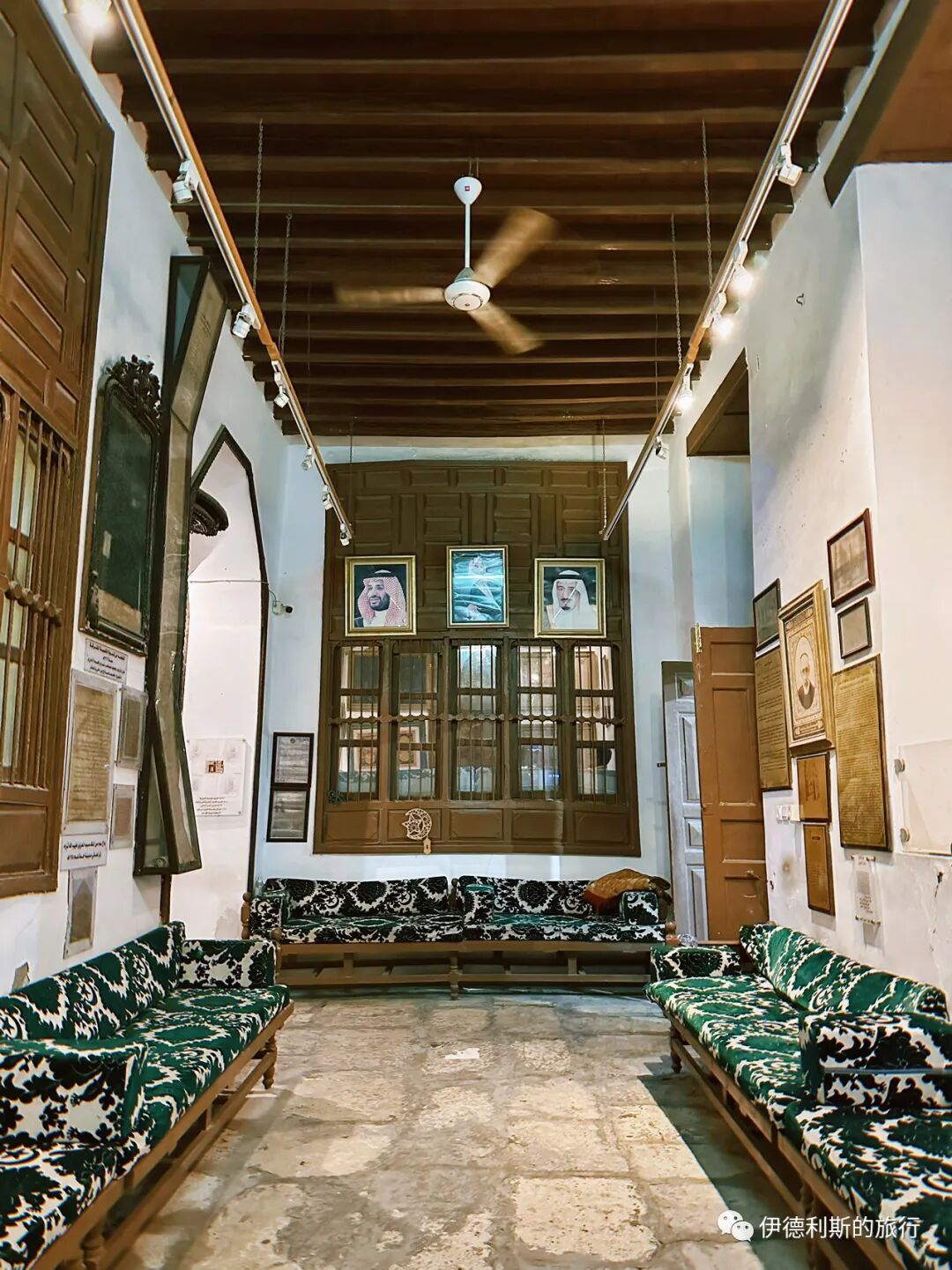
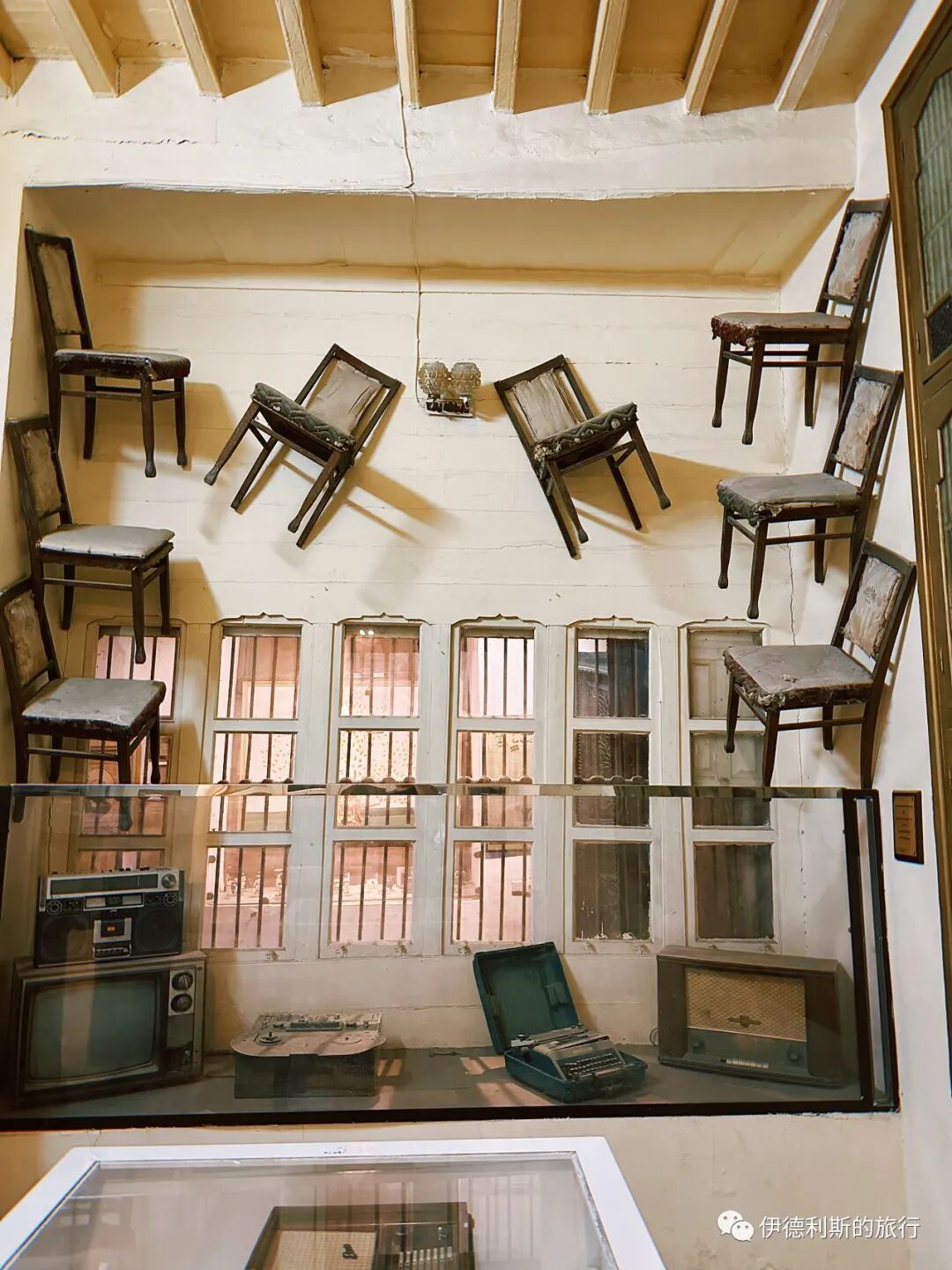
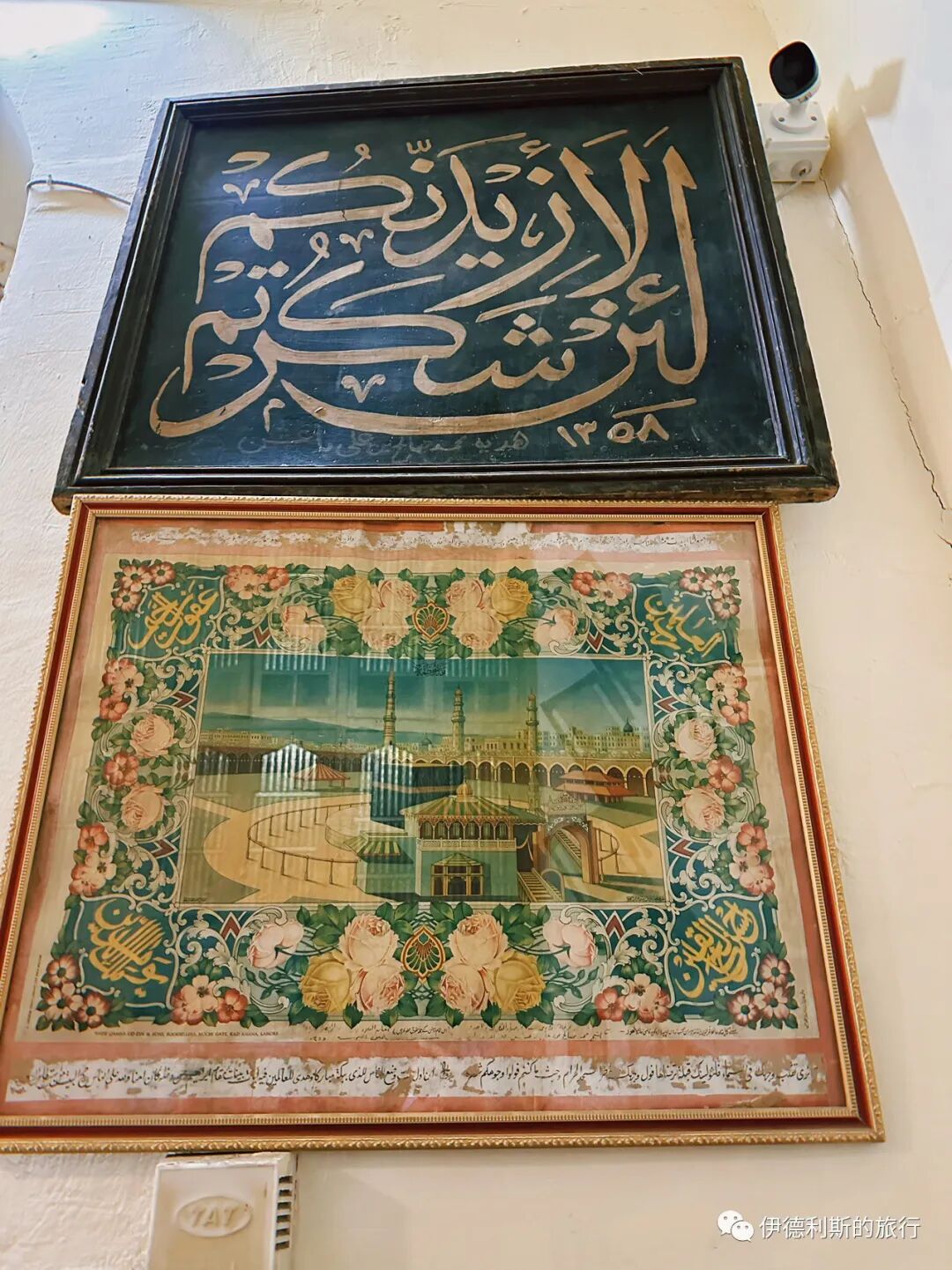
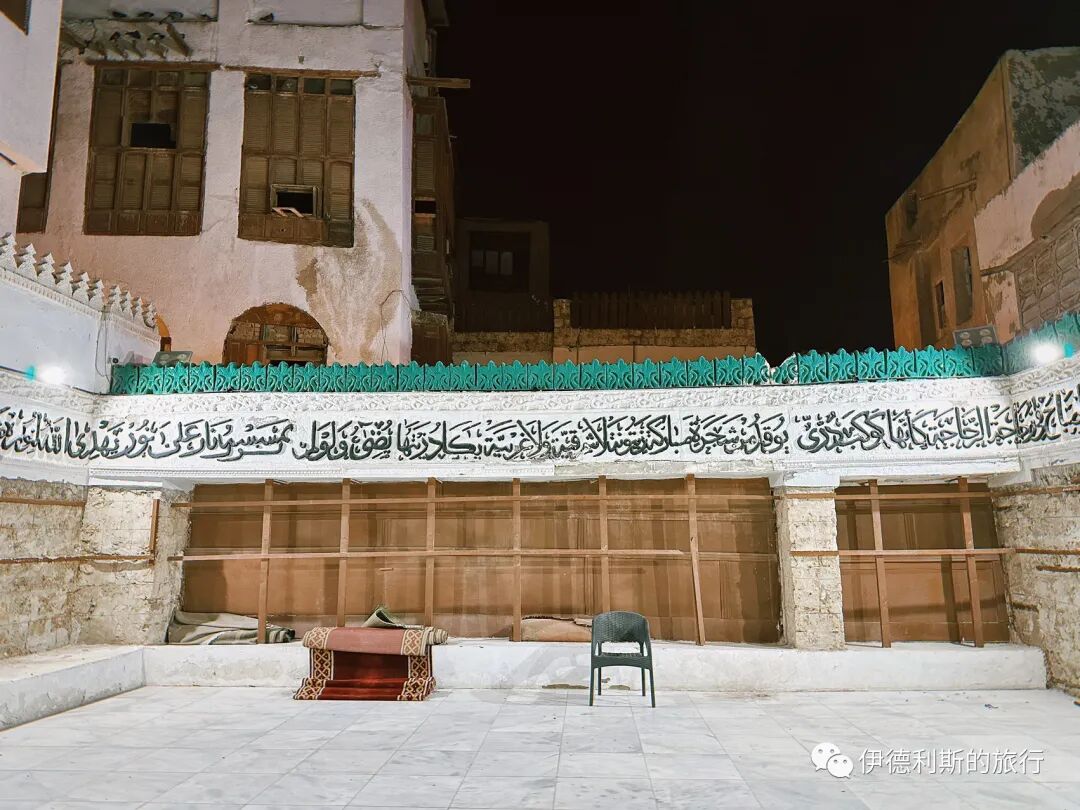
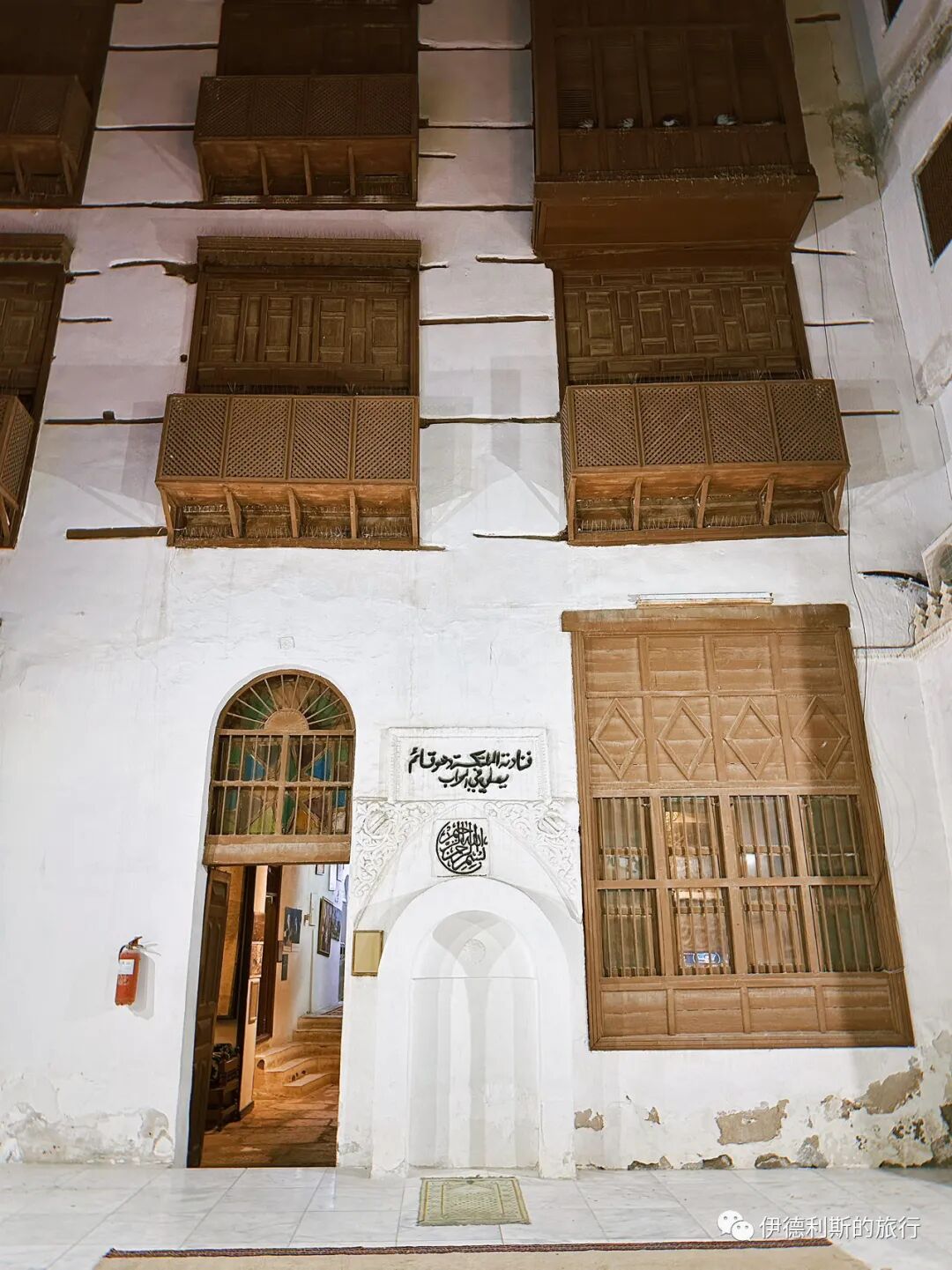
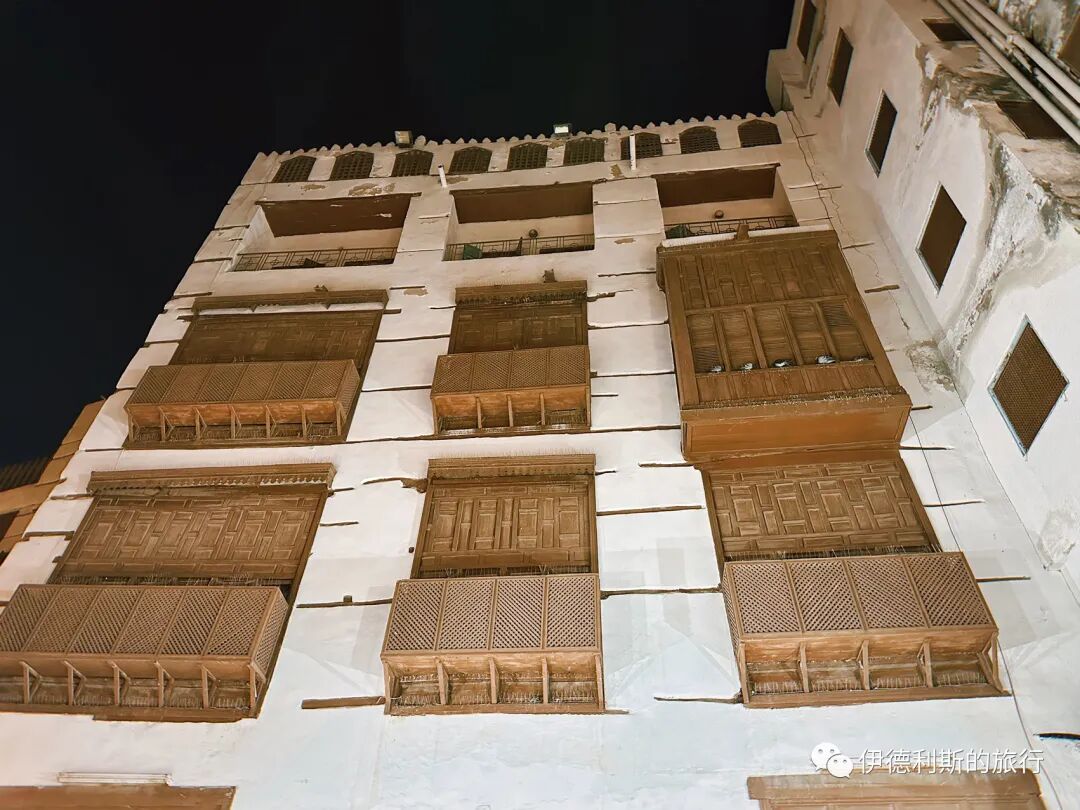
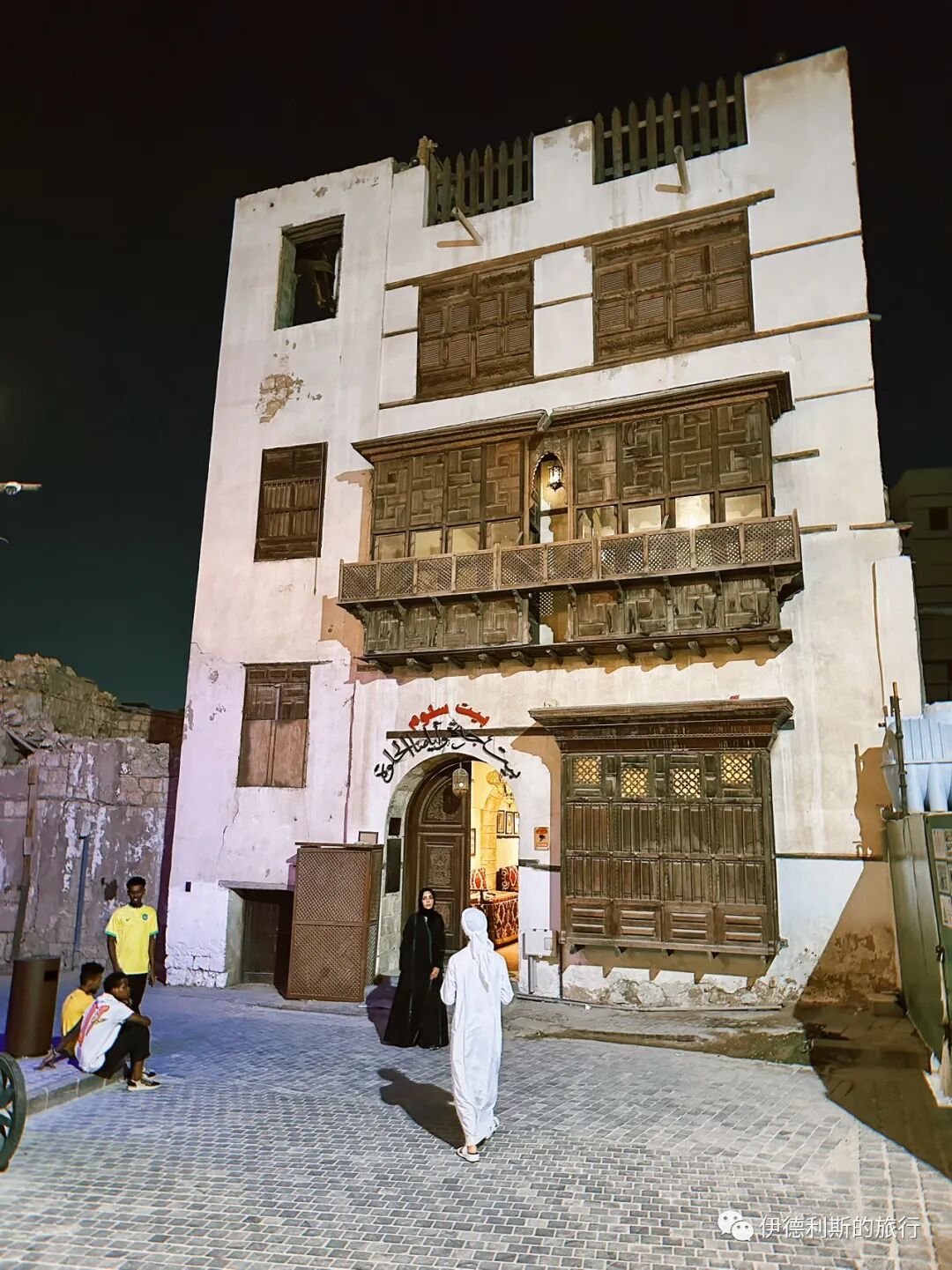
Opposite the Bayt Ba'ishan old house is another open-to-the-public historic home called Bayt Jeddah, also known as Salloum's house, built by Sheikh Abdullah Bin Obaid Salloum in 1880. It preserves many pieces of furniture used by the Salloum family, including some imported from India that are over 120 years old.
The house has three floors: the first floor is a reception room, and the second floor is a bedroom where you can see many daily items, including old suitcases, sewing machines, and vintage kerosene-powered refrigerators. In the house, you can see the area once used in the Hejaz region to host female neighbors, who used to gather there every afternoon to drink tea and chat.
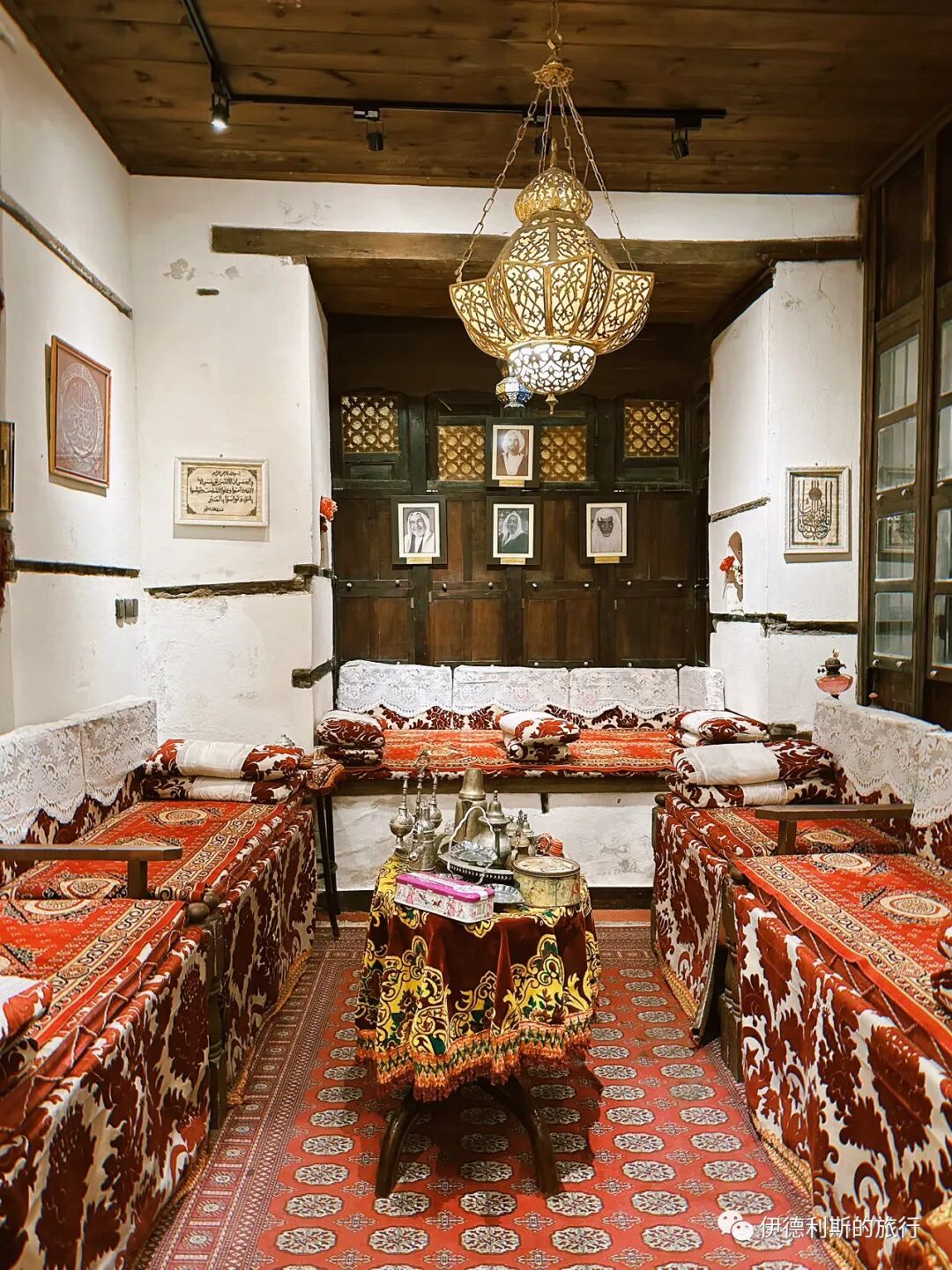
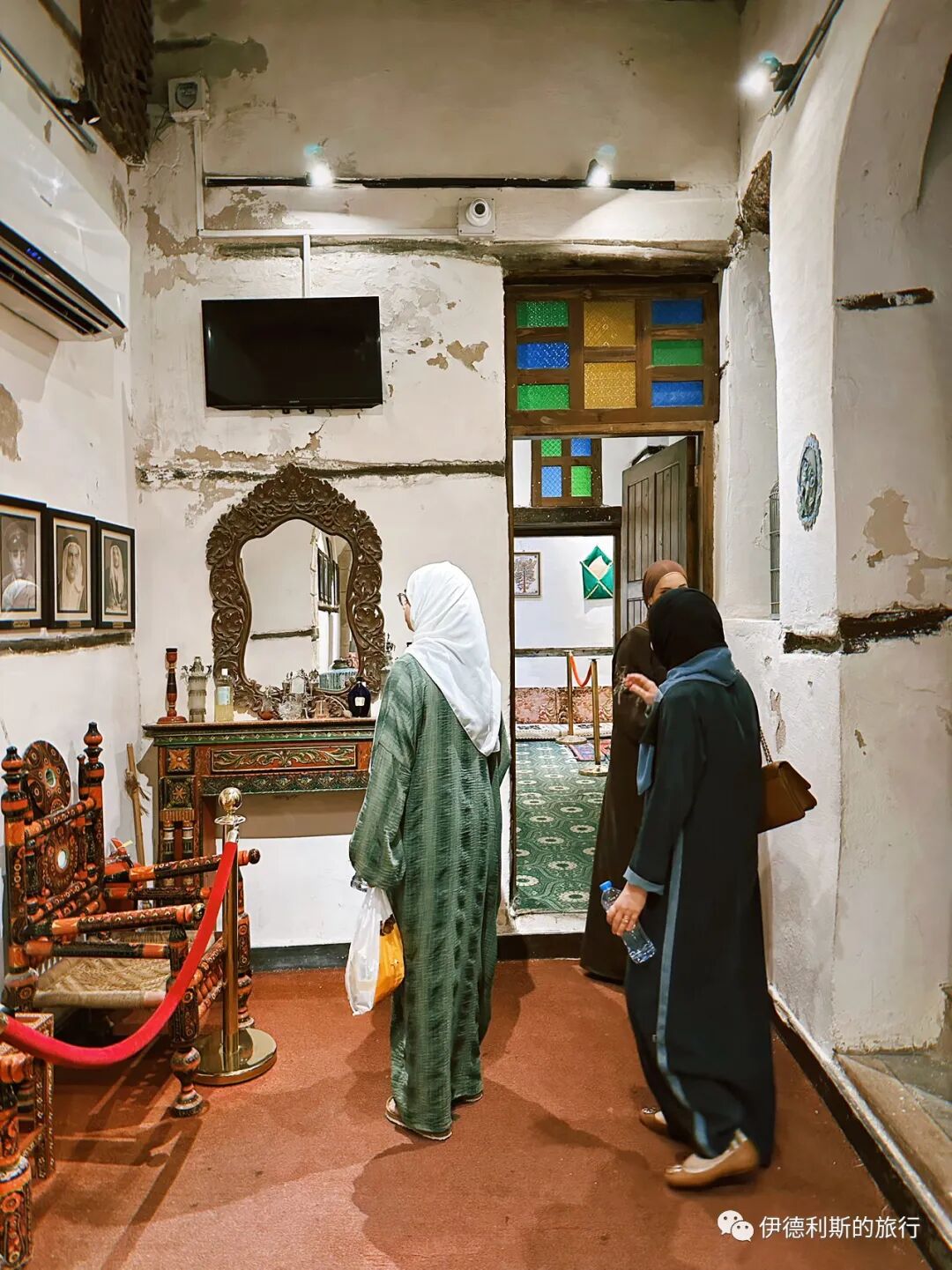
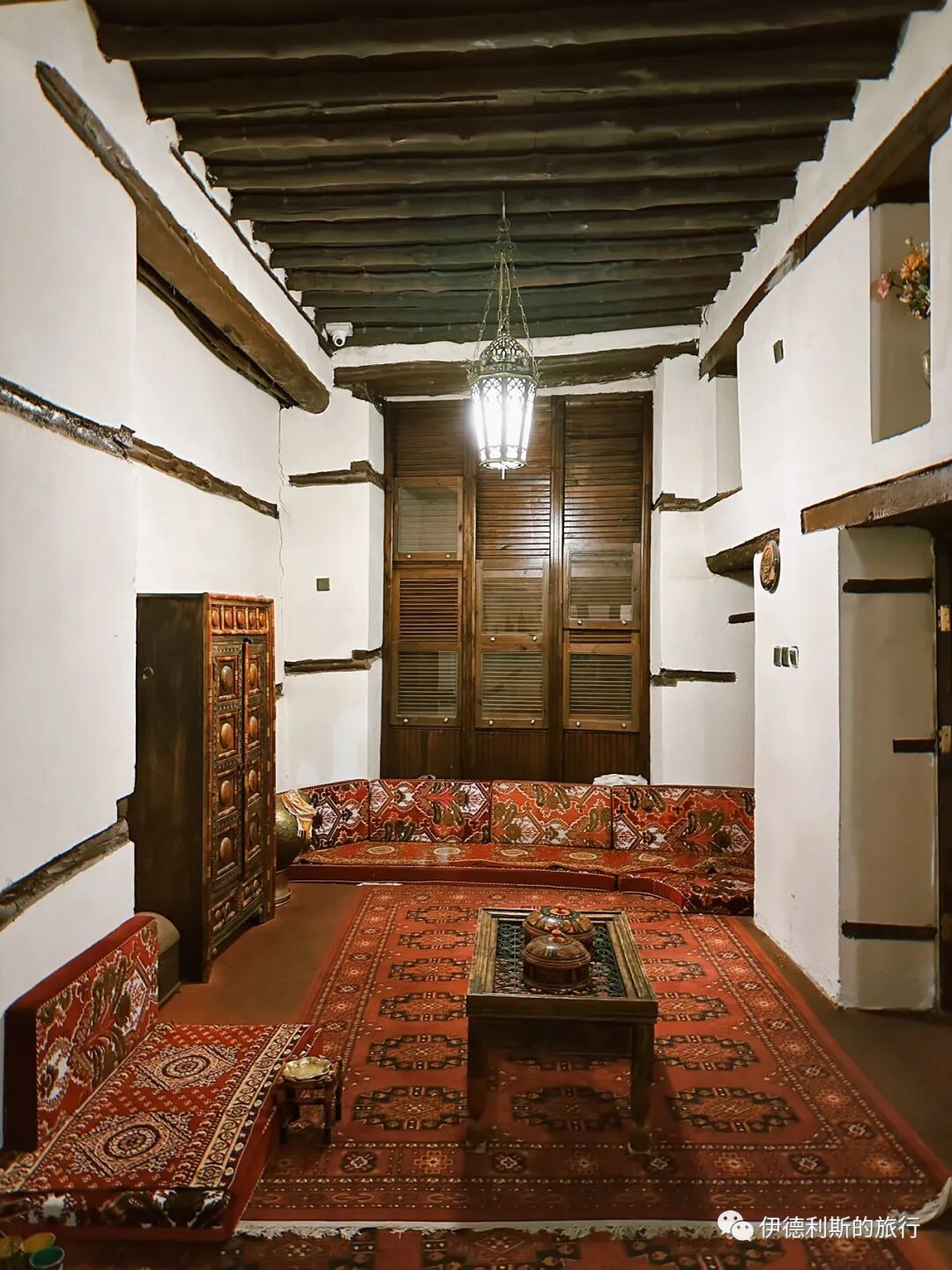
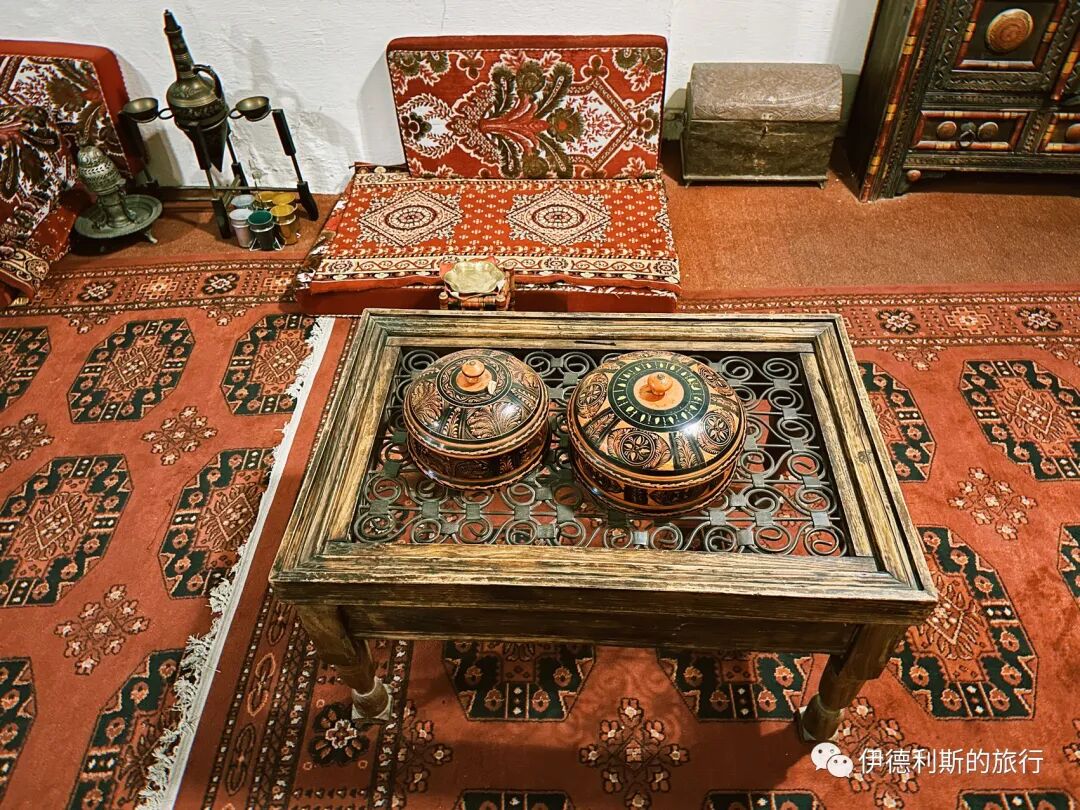
There is an art gallery inside an old house with many paintings related to the ancient city of Jeddah.
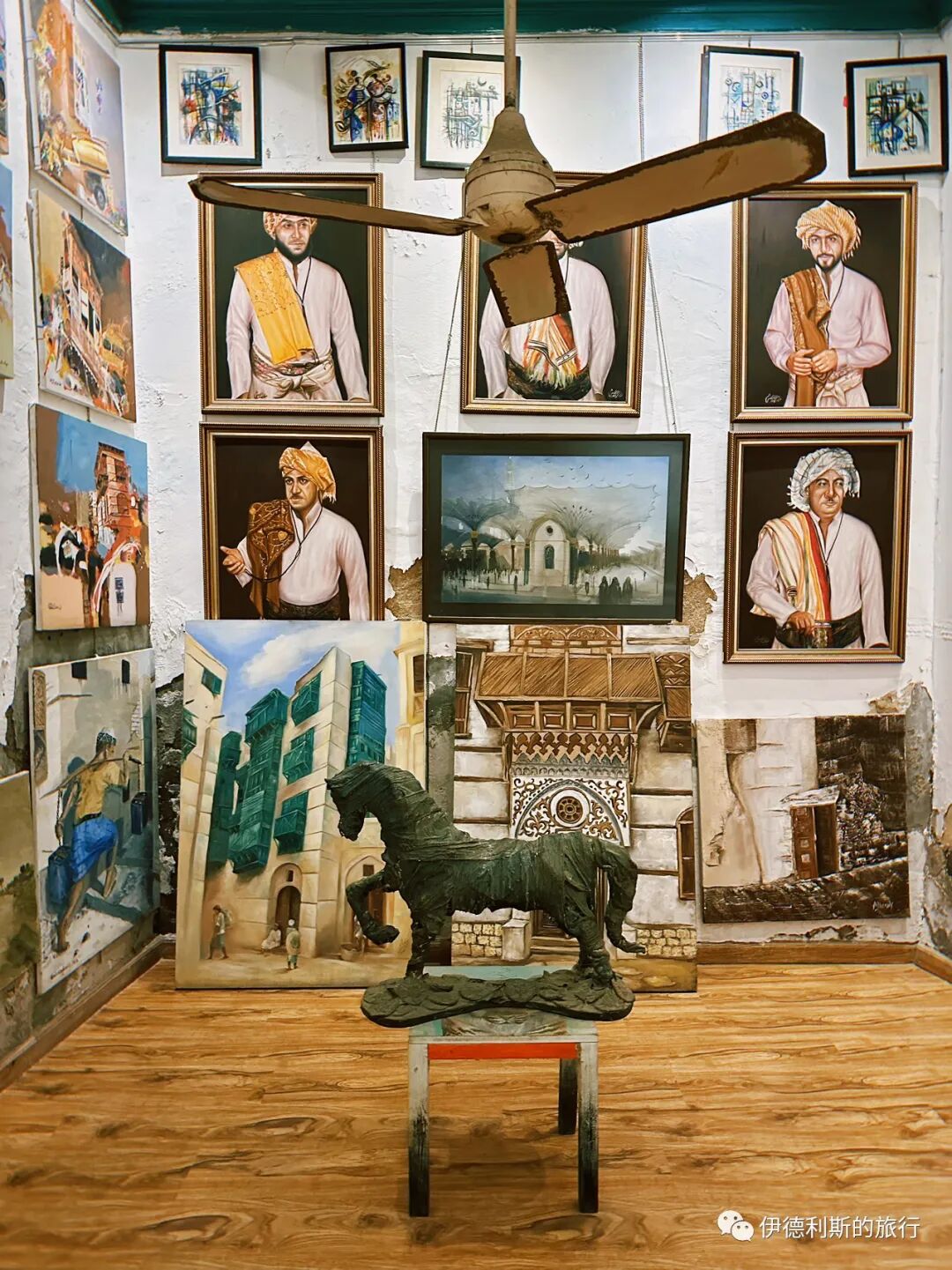
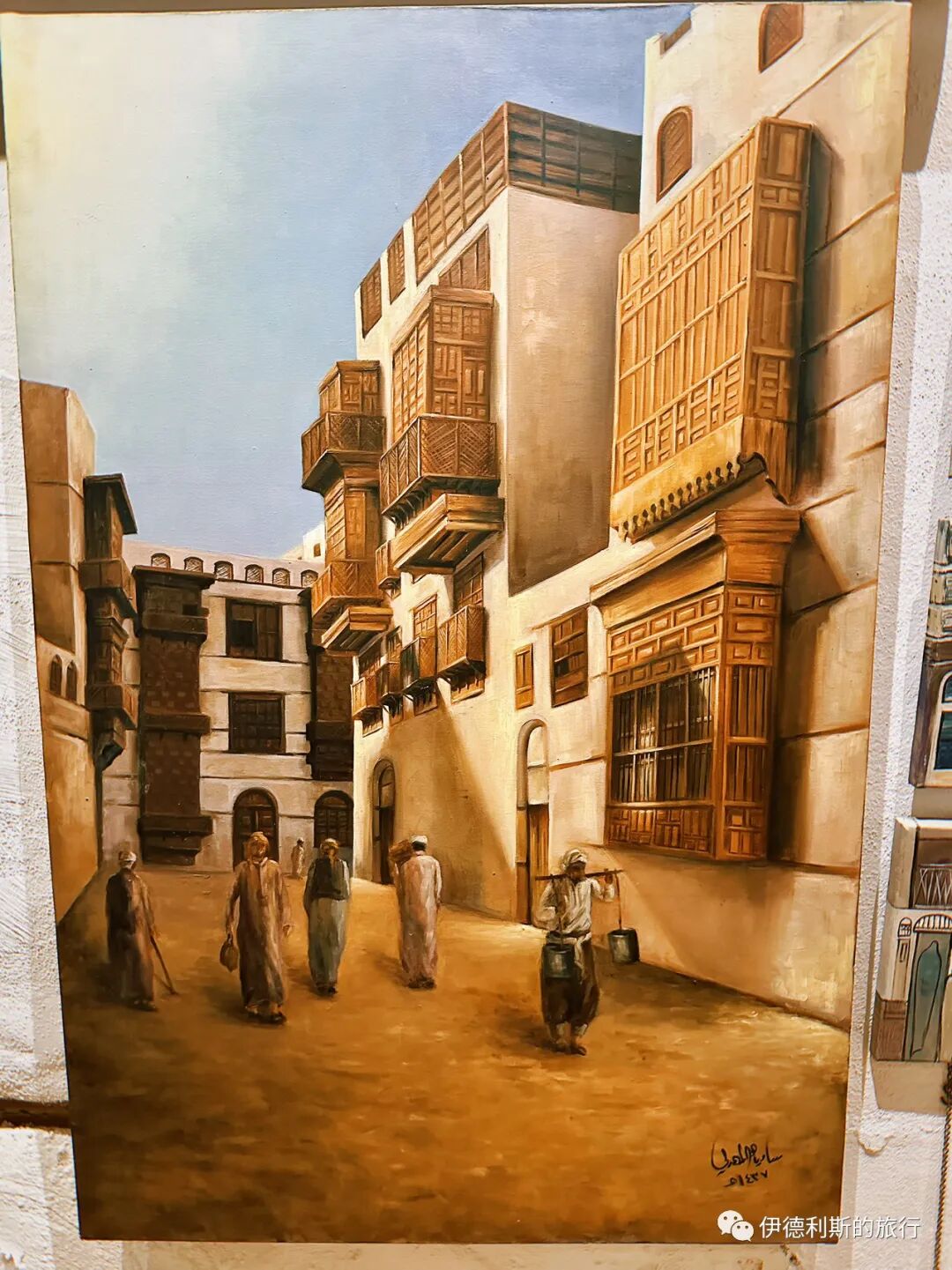
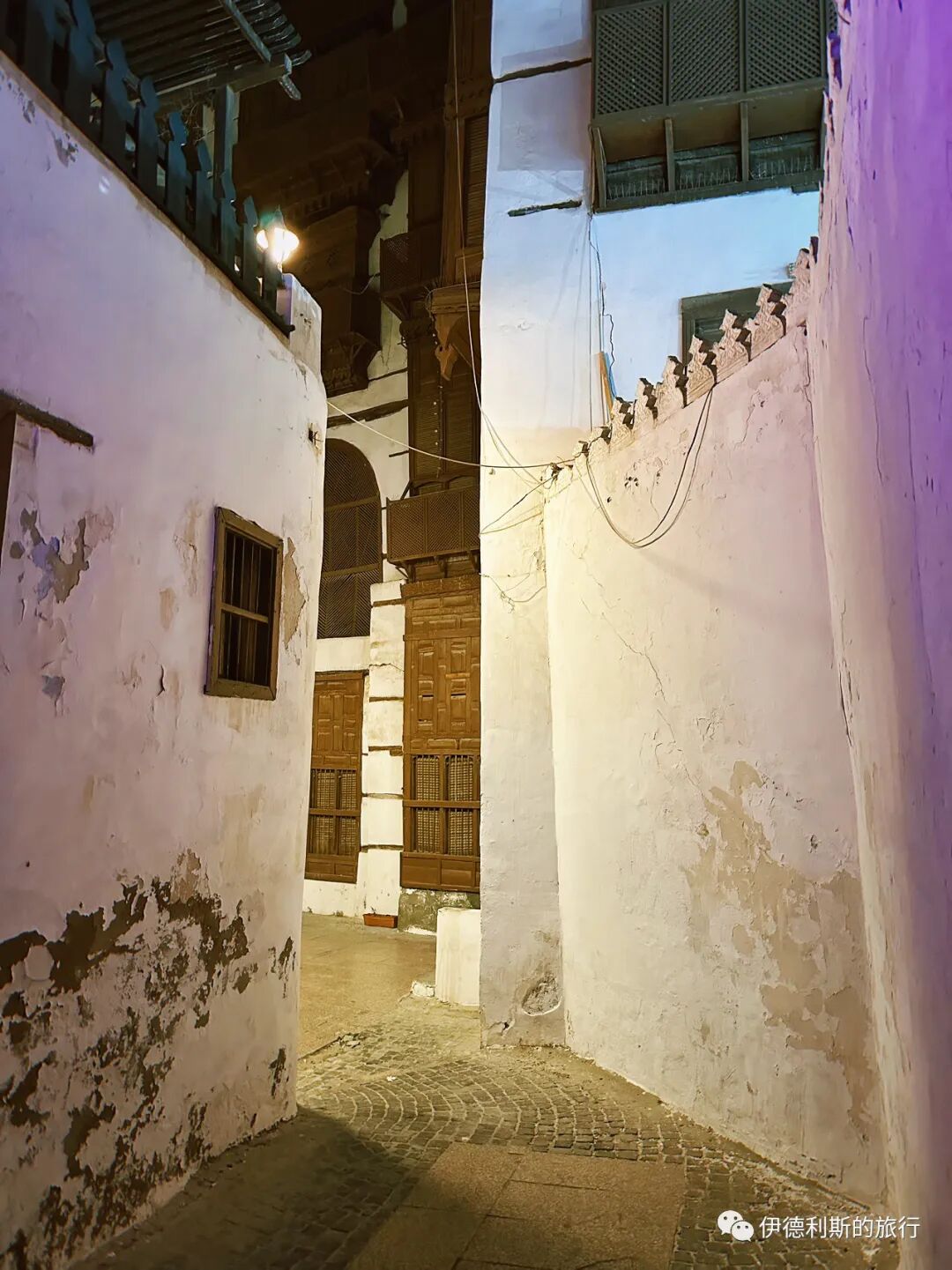
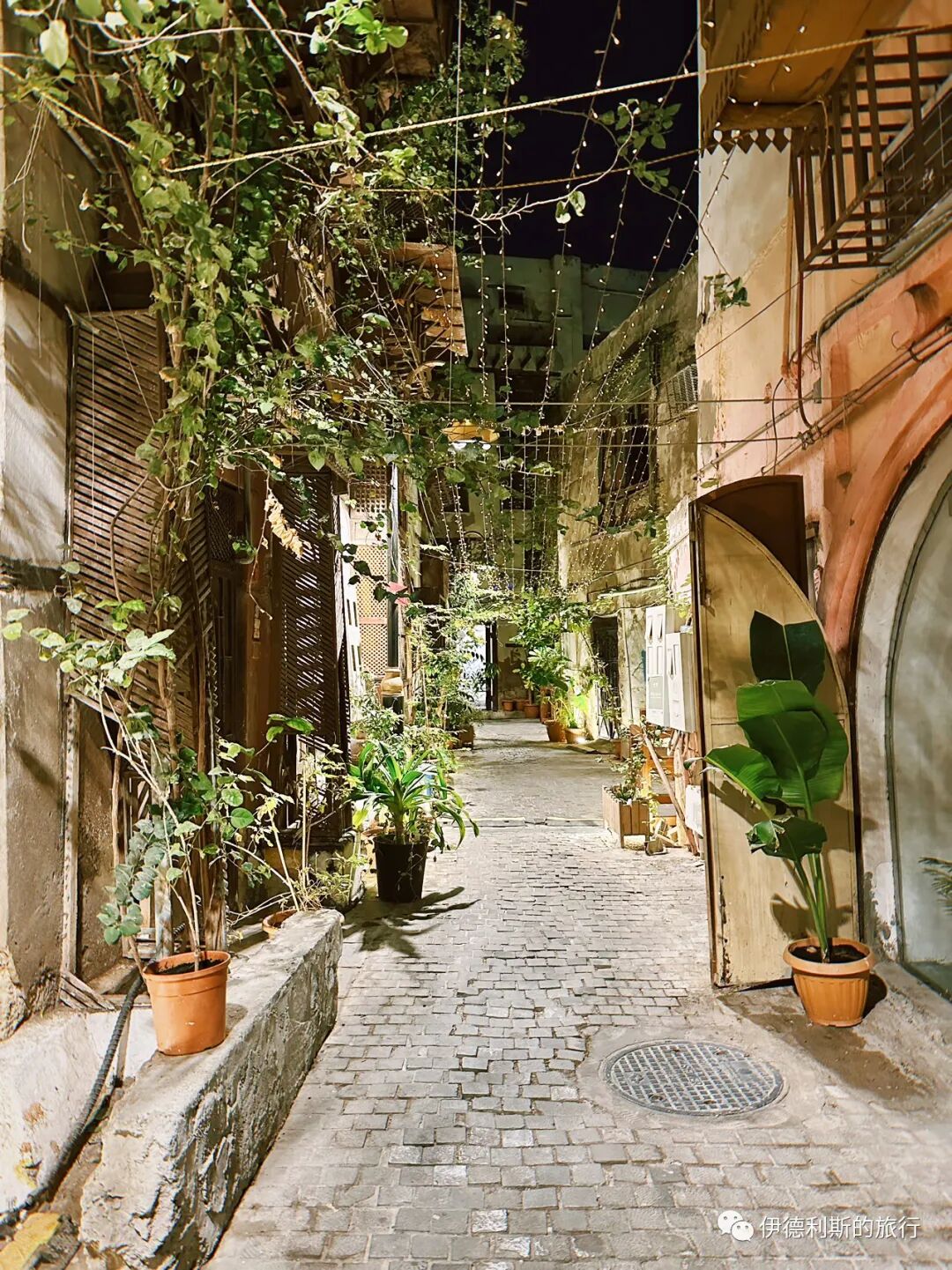
In the evening, we performed namaz at the Abu'Unba mosque in the old town of Jeddah.
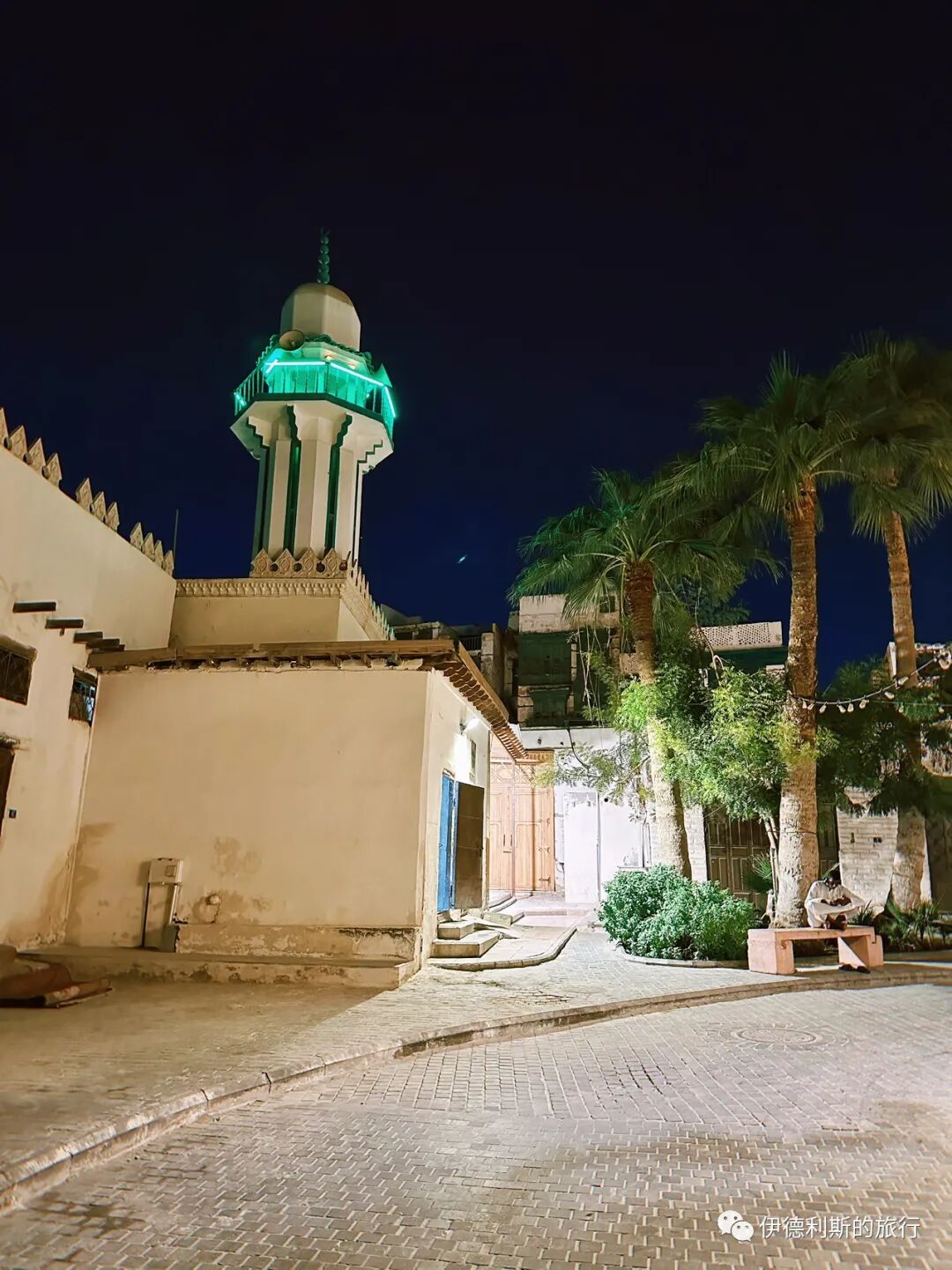
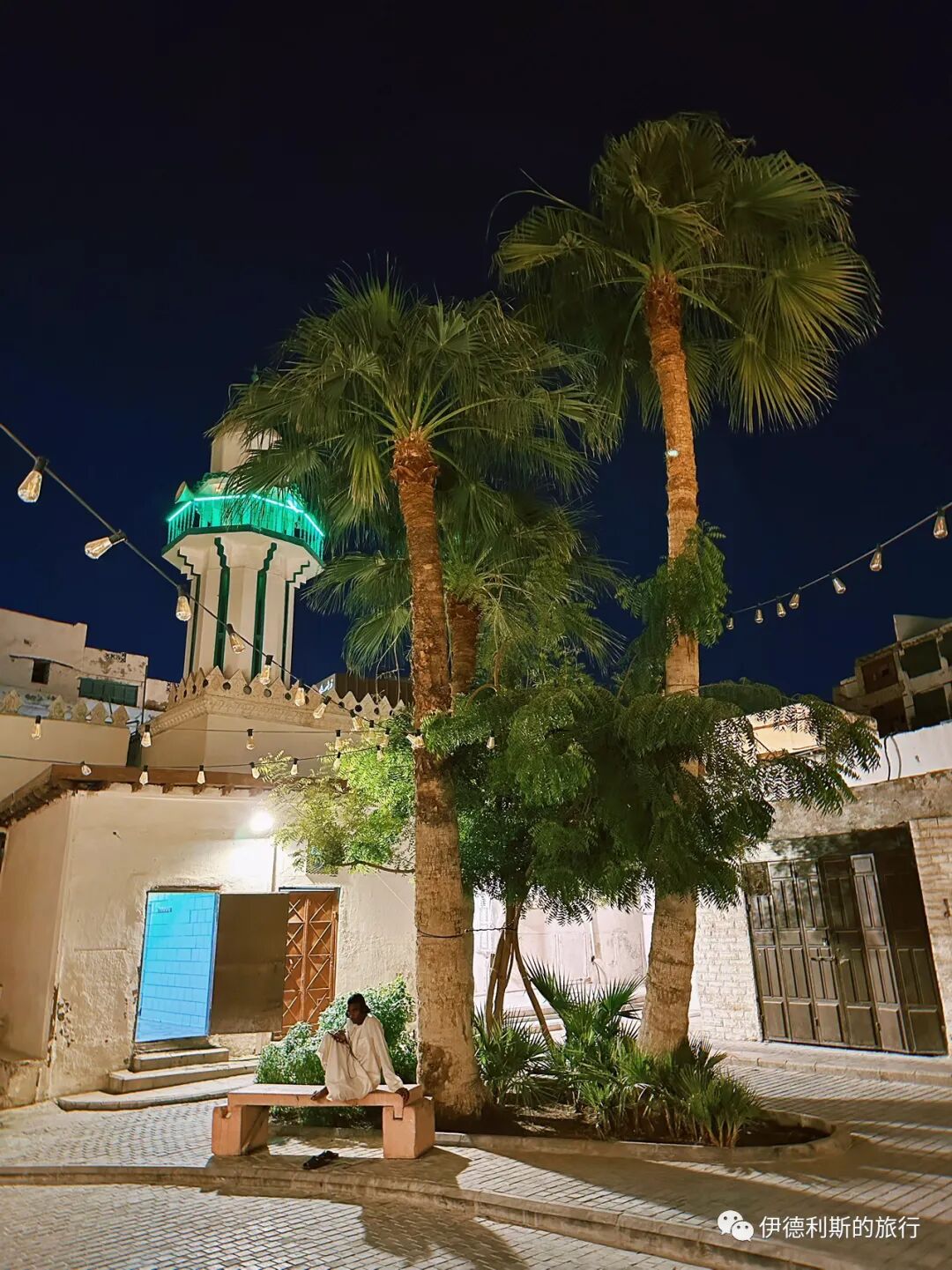
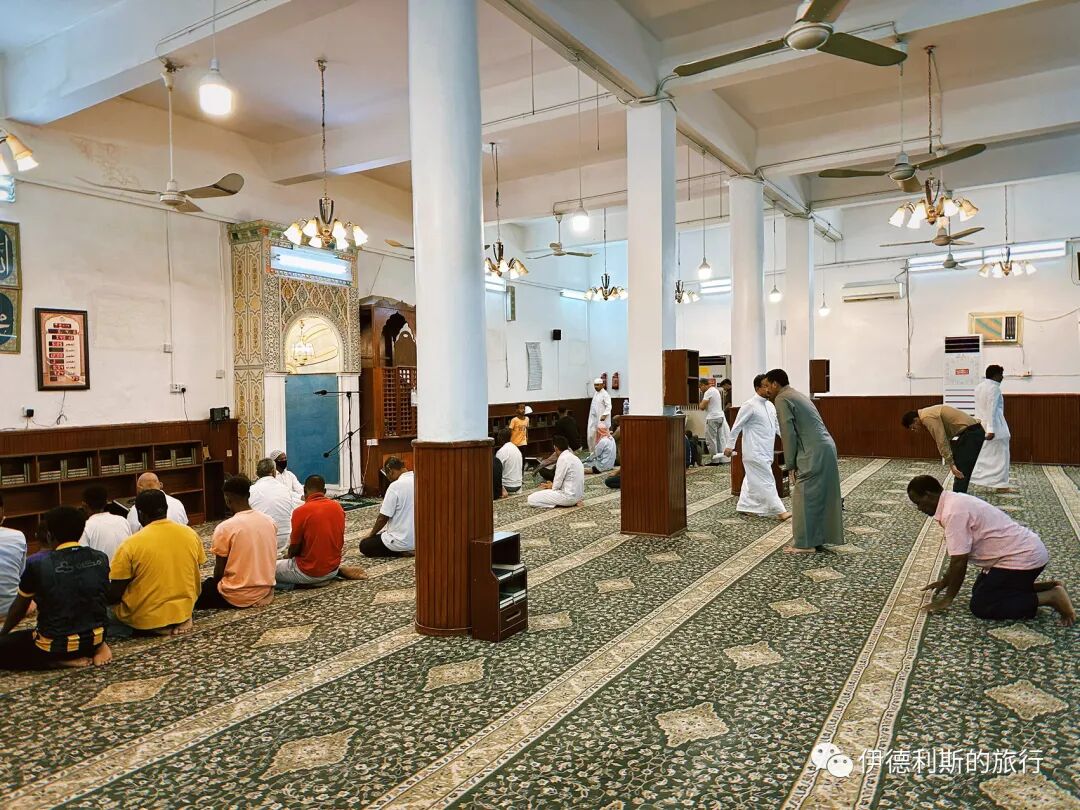
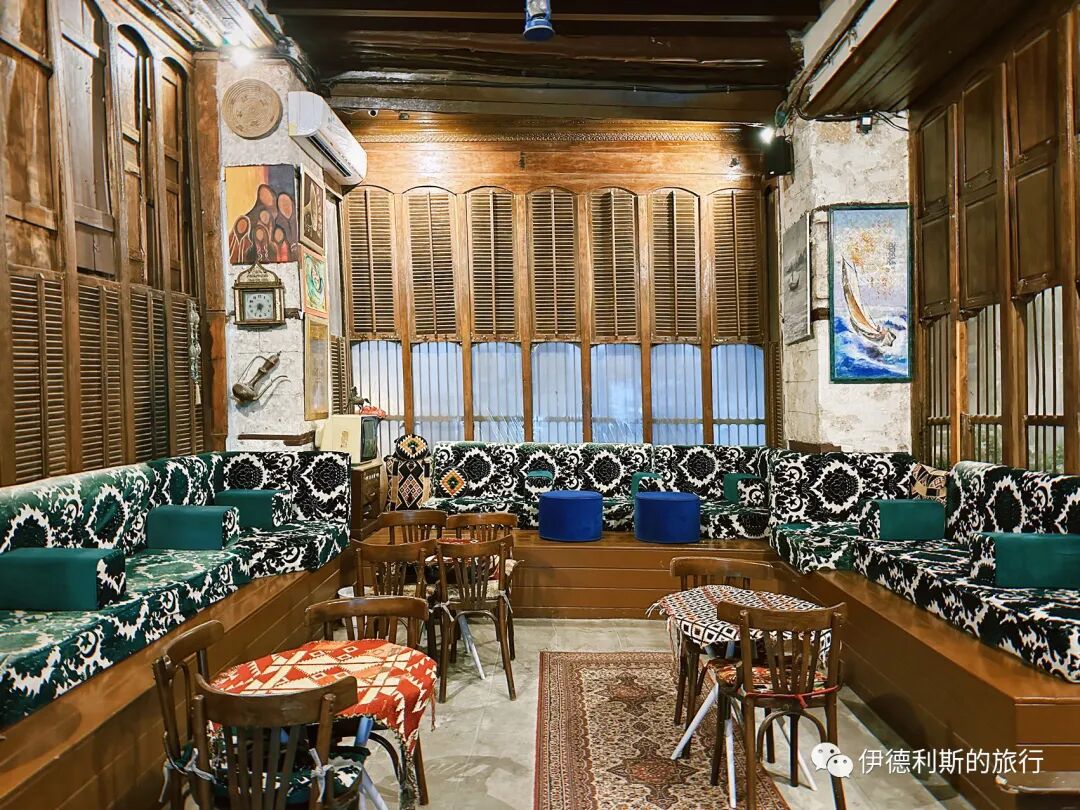
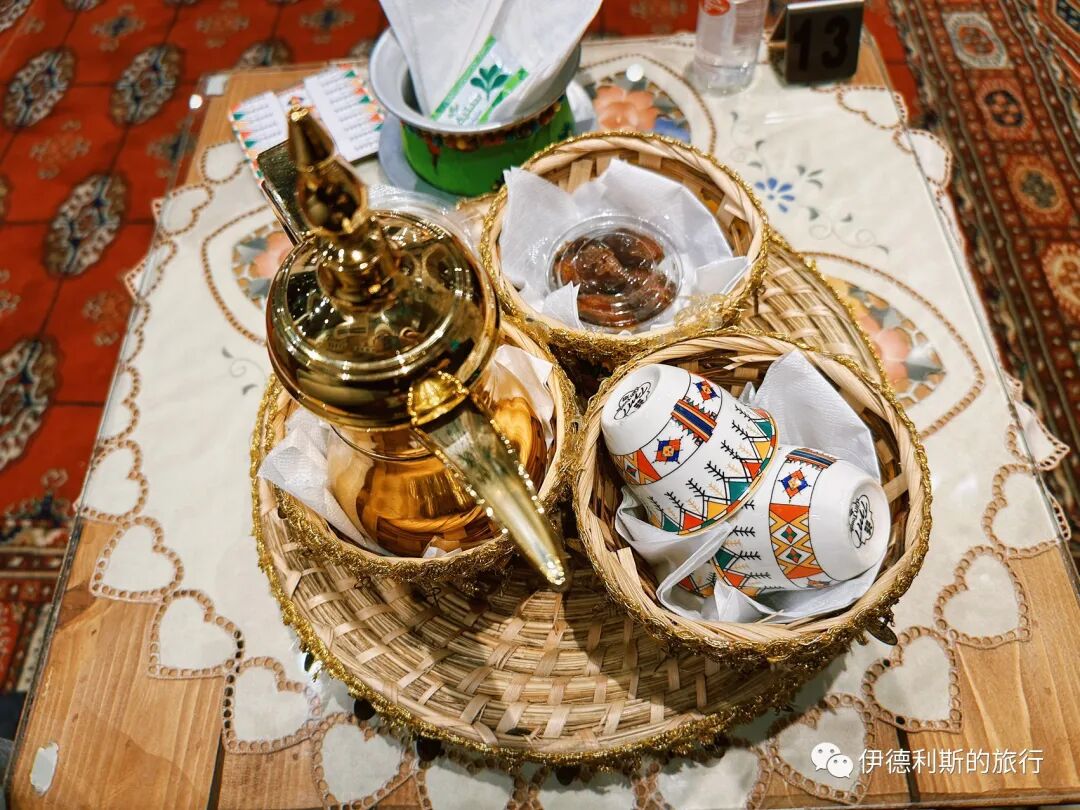
After namaz, we went to a traditional cafe across from the mosque. The small shop is not big, but it is decorated beautifully with many traditional Hejazi elements, making it perfect for photos. We ordered traditional coffee and dates dipped in sesame paste (tahini) to experience the life of old Jeddah residents.
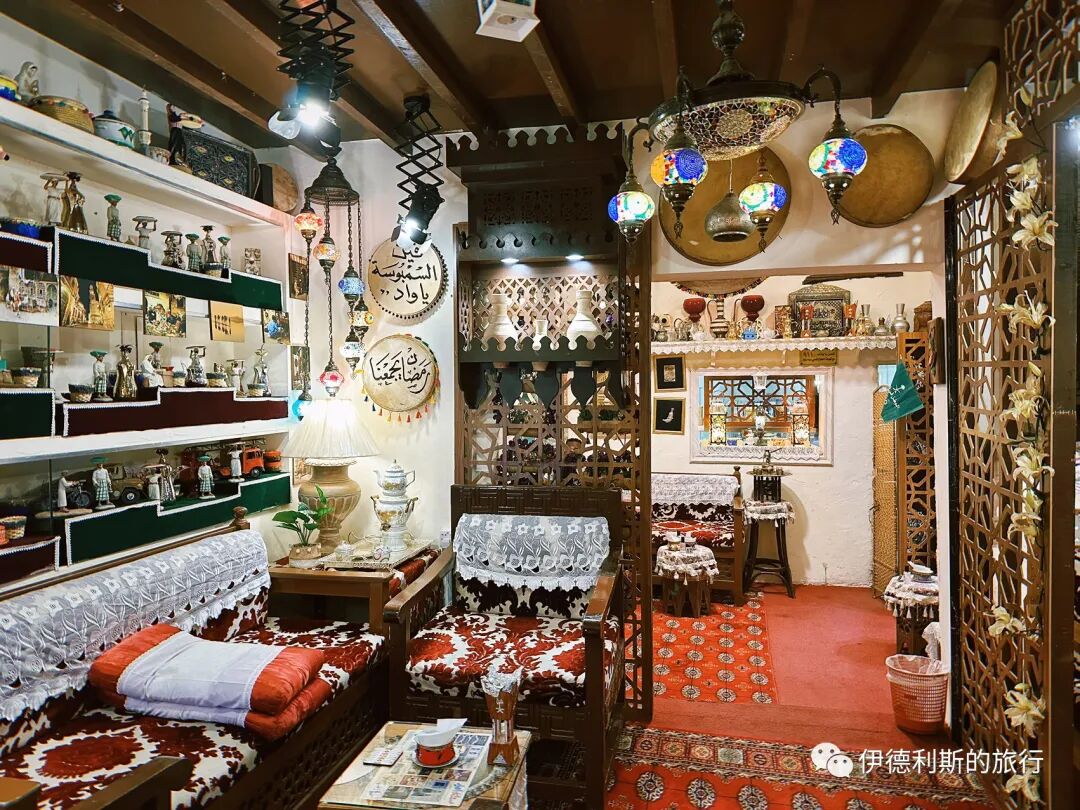
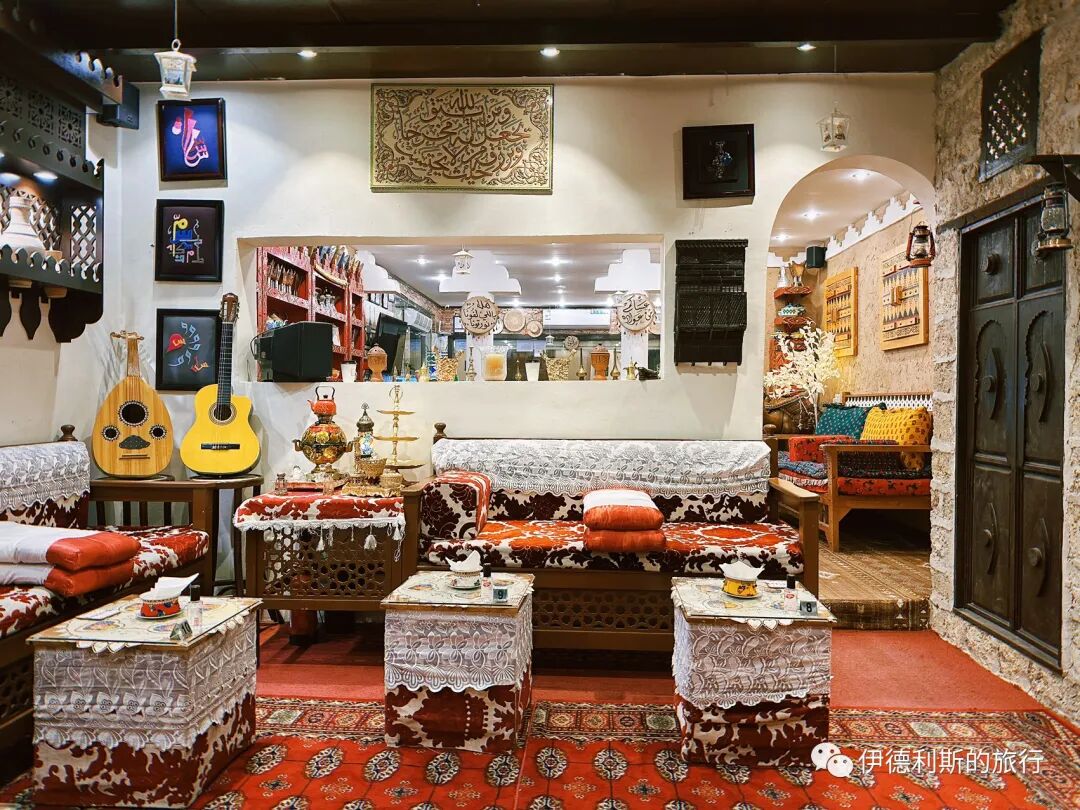
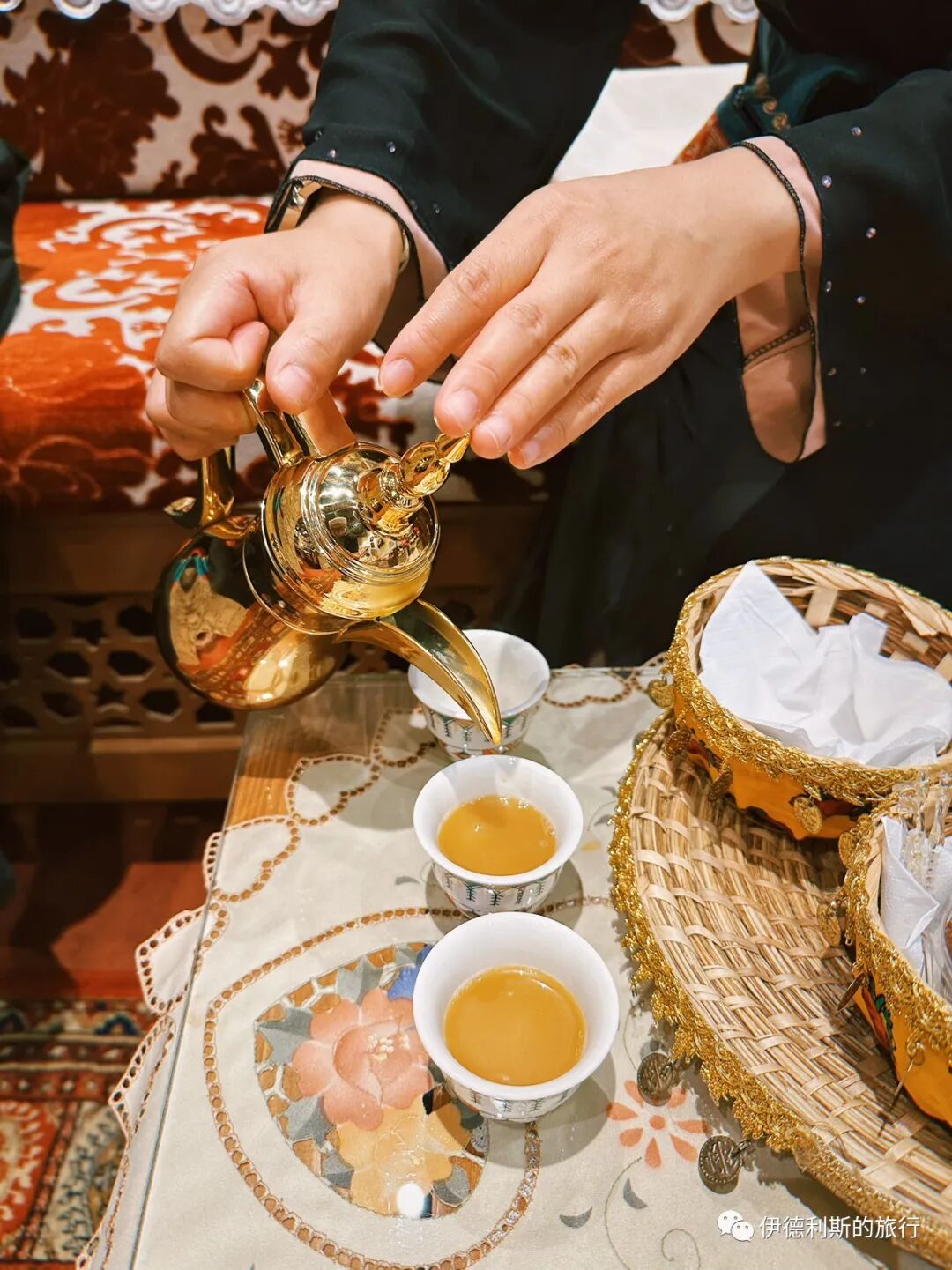
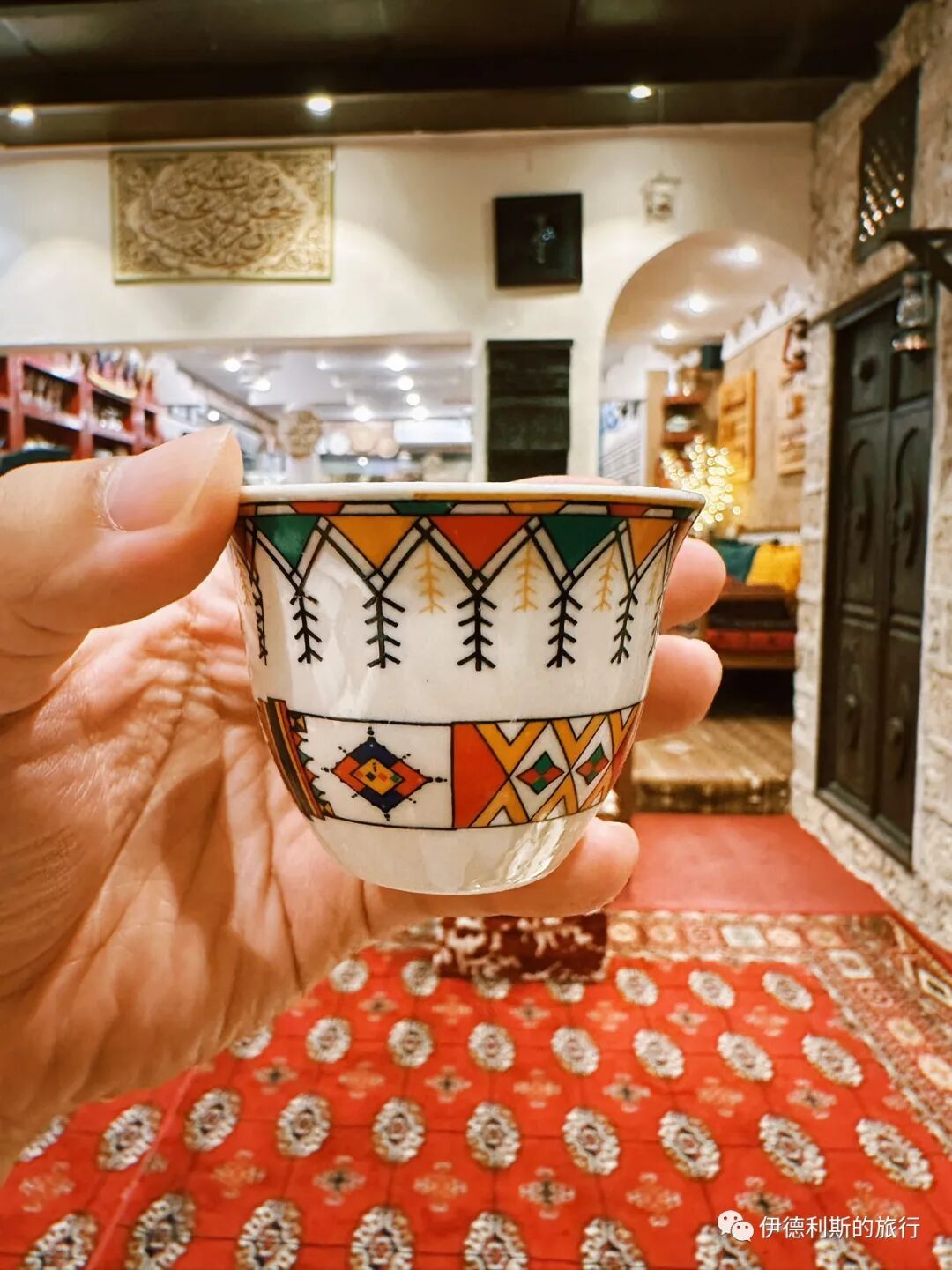
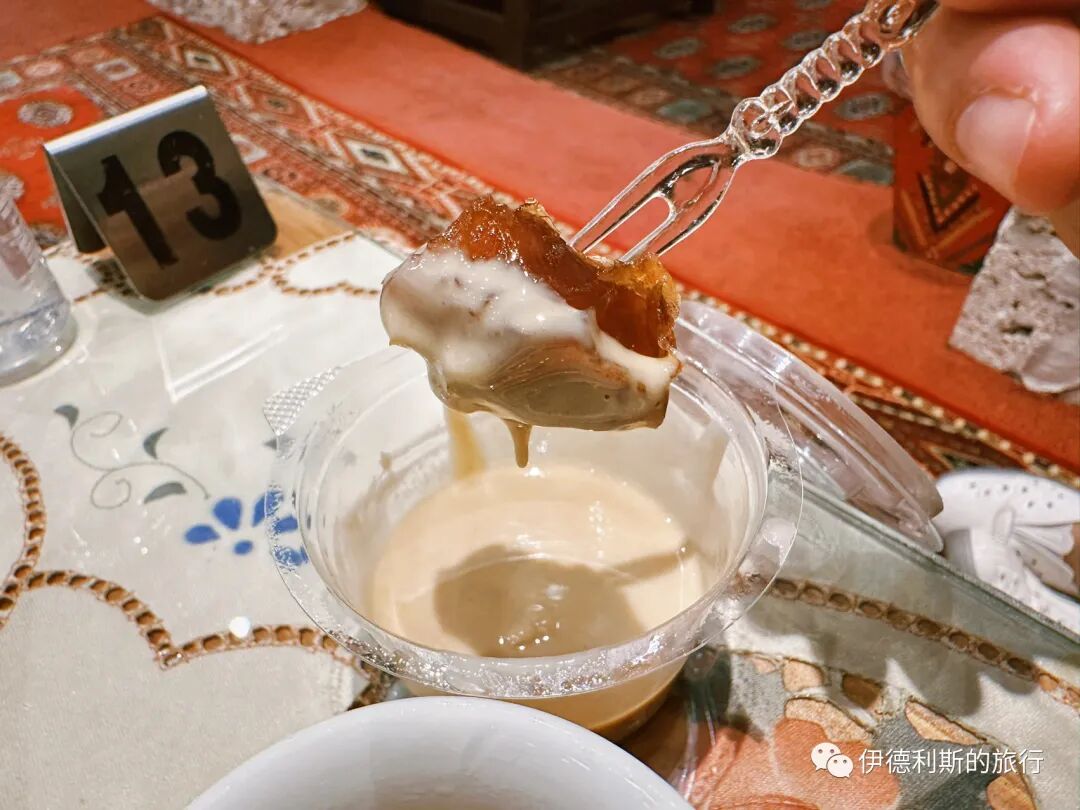
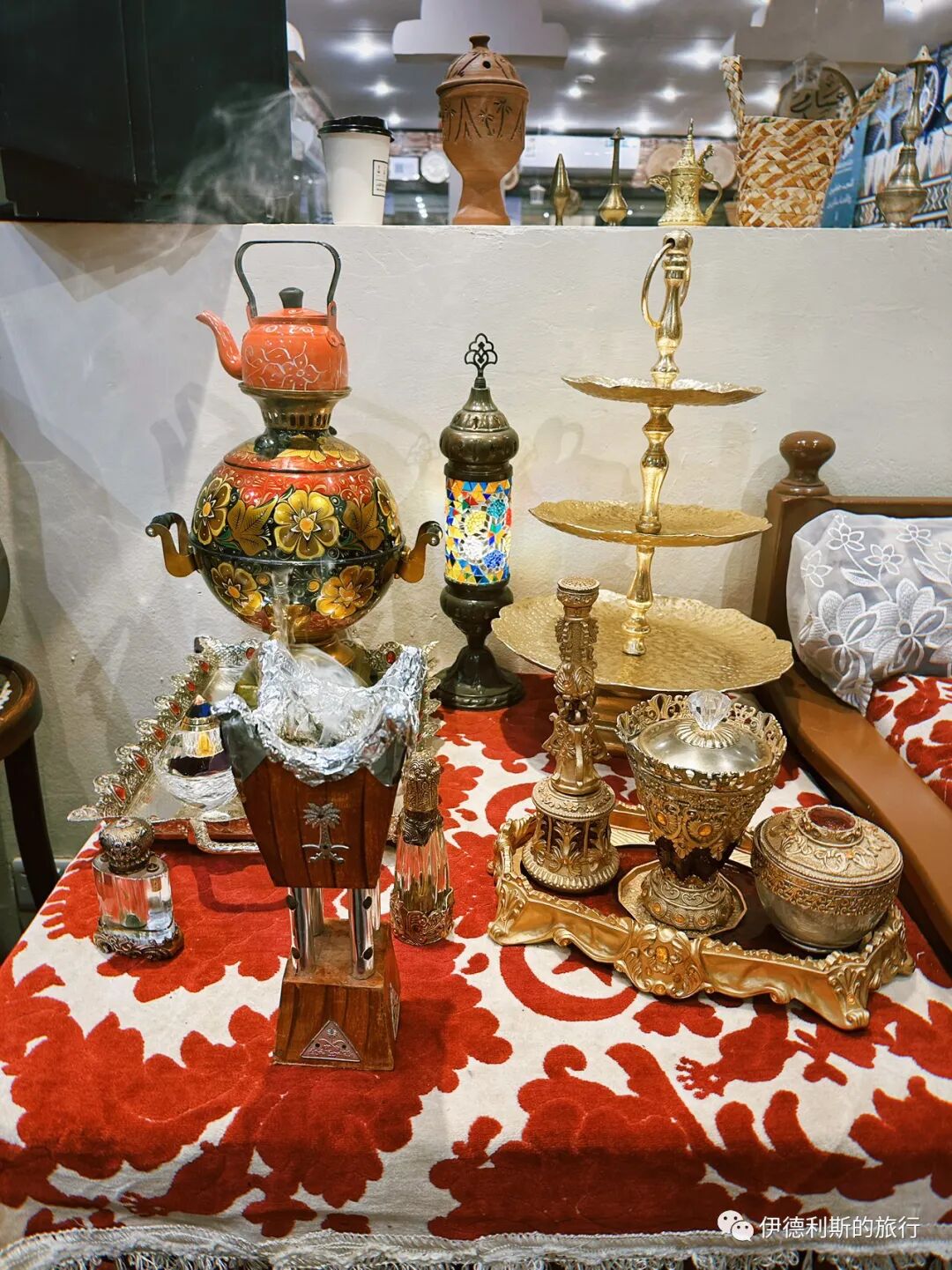
In the evening, we ate various dips with pita bread at a traditional restaurant. We ate minced meat and eggplant casserole (moussaka). The word means 'mashed' in Arabic, and it later spread to the Middle East and the Balkans during the Ottoman Empire, with different versions in each place.
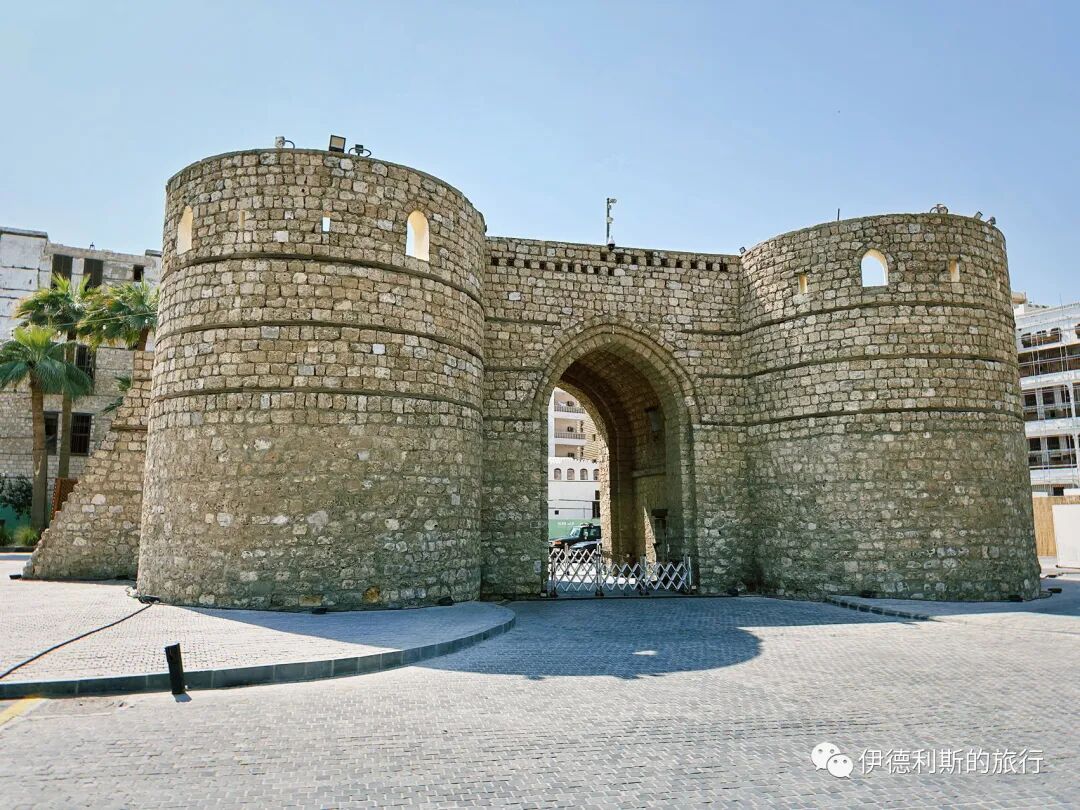
The next day, we went for a walk in the old town of Jeddah again. This time, we took a taxi to the north gate, Bab al-Jadid, and saw the excavated city wall ruins. The Jeddah city wall was built by Hussein al-Kurdi in the 16th century. It underwent major repairs in the 19th century and was demolished in 1947, with only a few gates remaining.
On the east side of the north gate is the old house Bayt Sharbatli. It was built 150 years ago by the merchant Sharif Abdulelah Muhanna al-Abdali, who owned a small fleet of ships traveling between Red Sea cities. Later, it was used as the Egyptian embassy.
The old town was quiet and empty in the morning. It is a pity that many old houses were not open for visits, so we could only look at them from the outside.
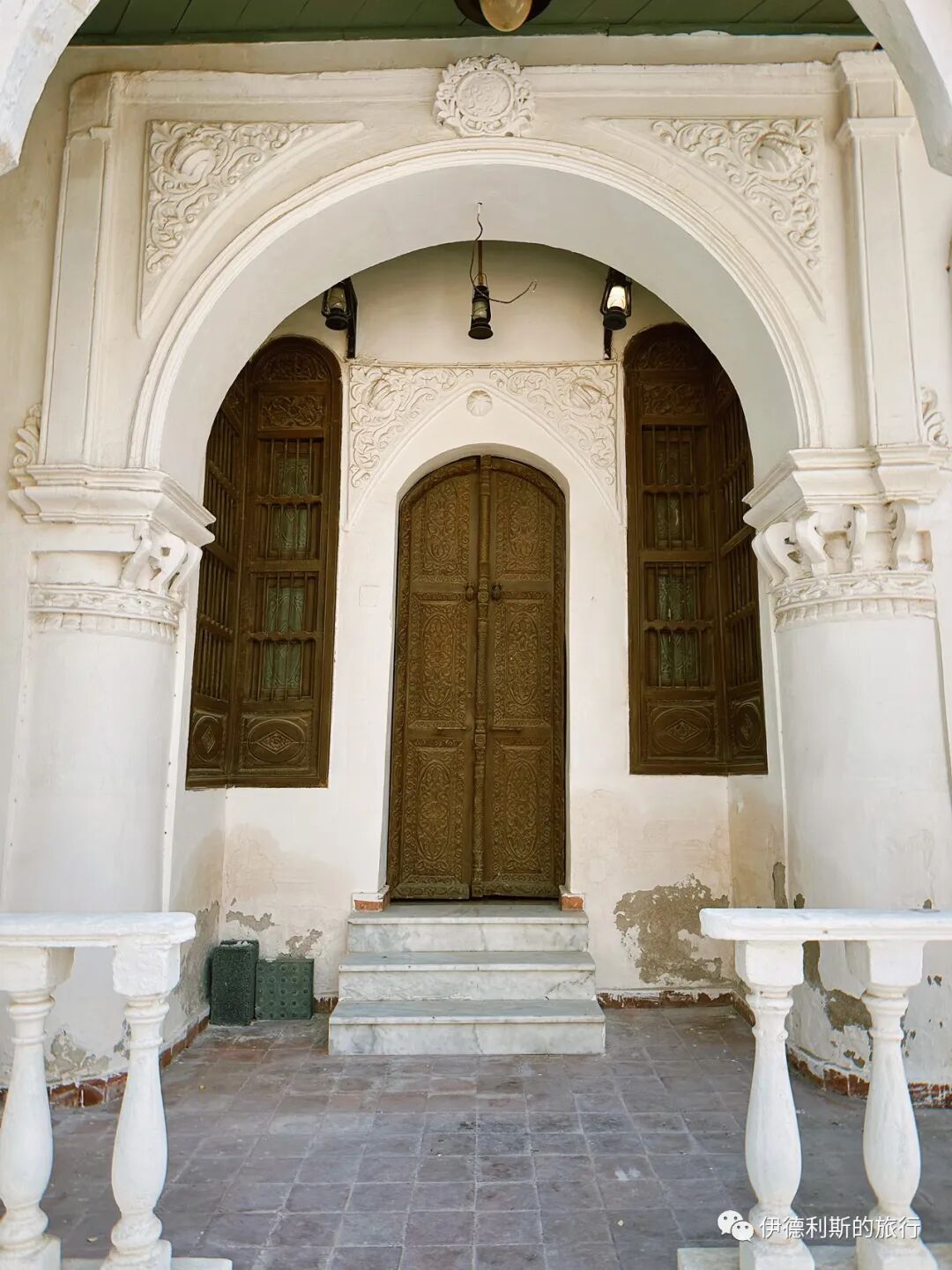
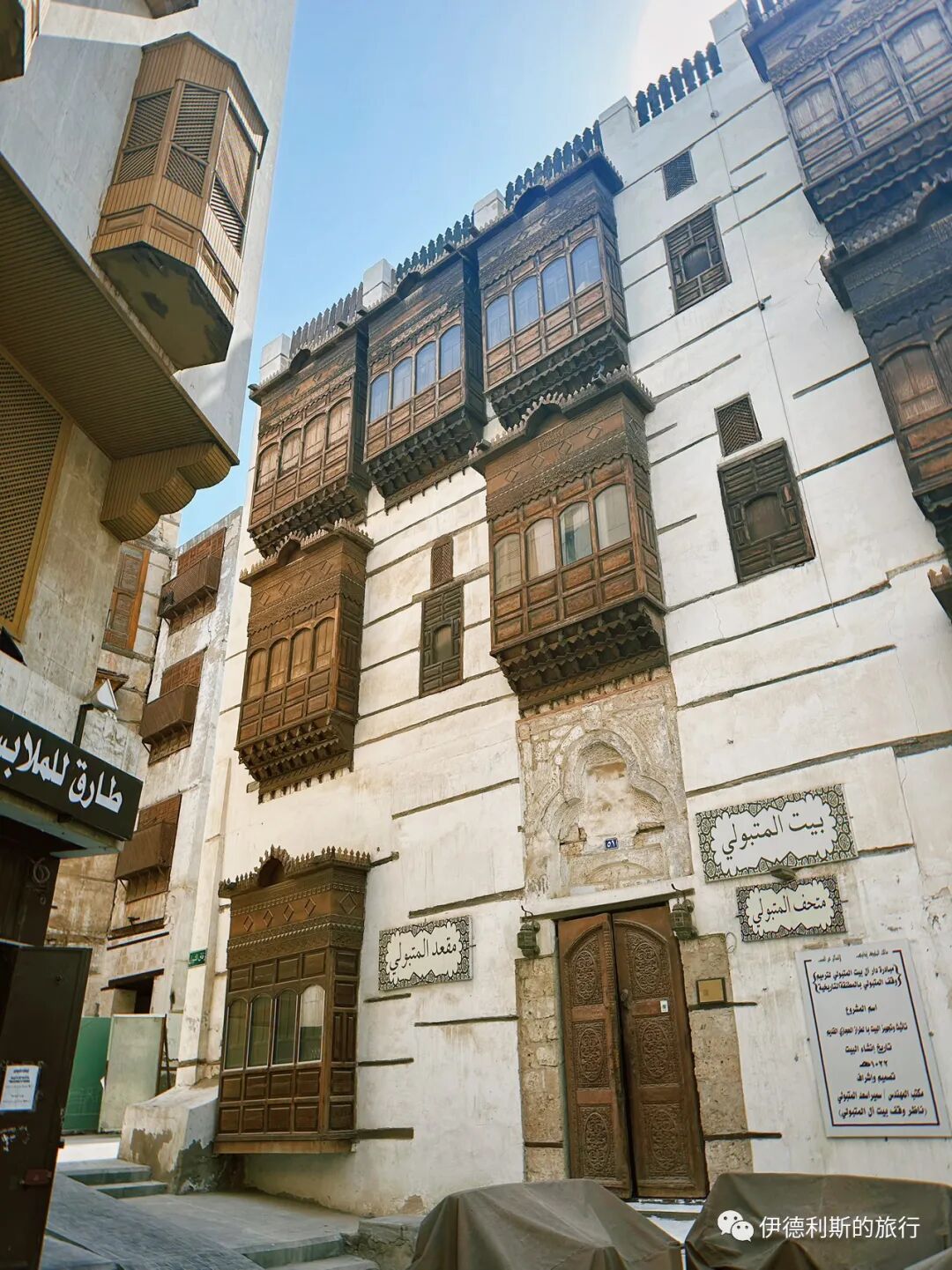
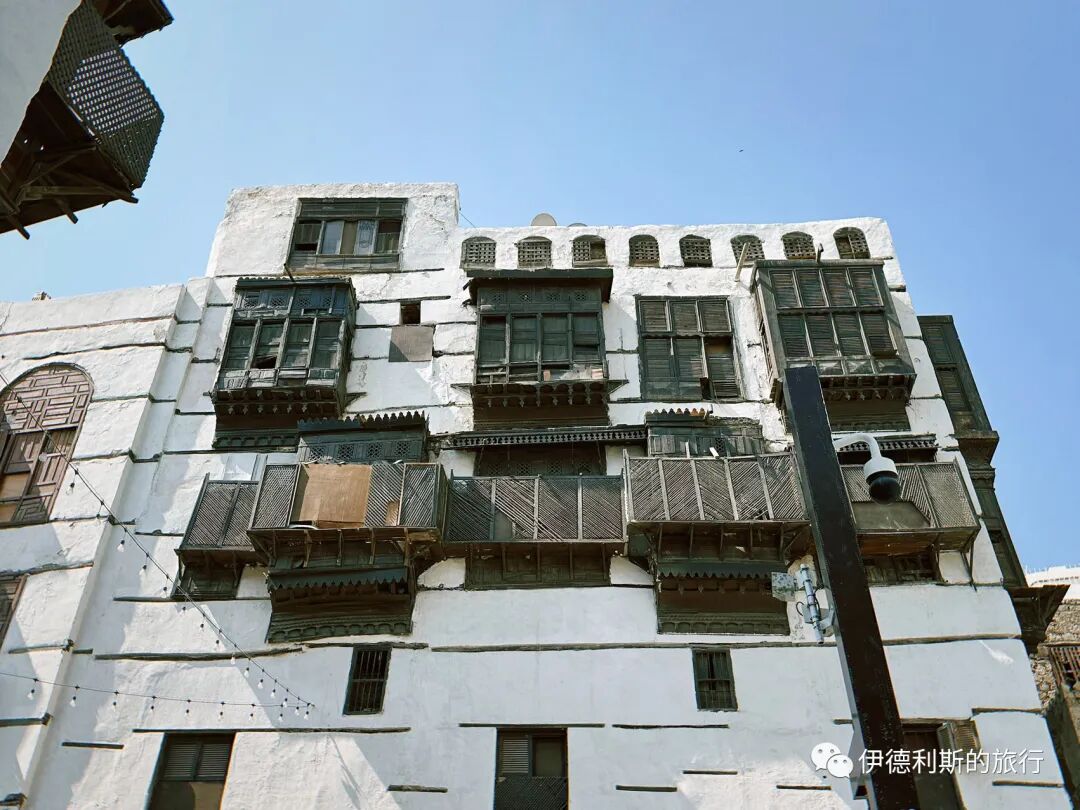
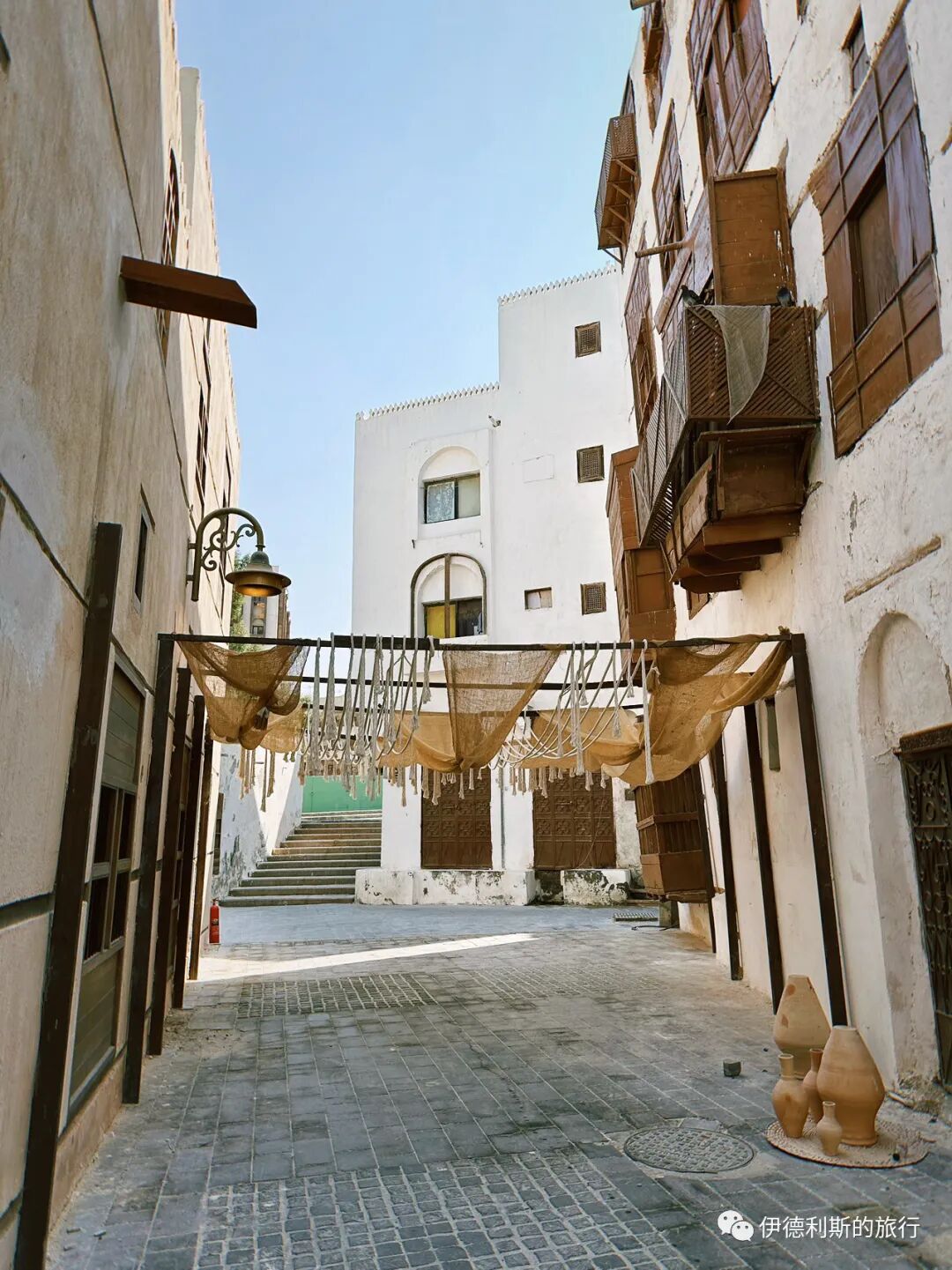
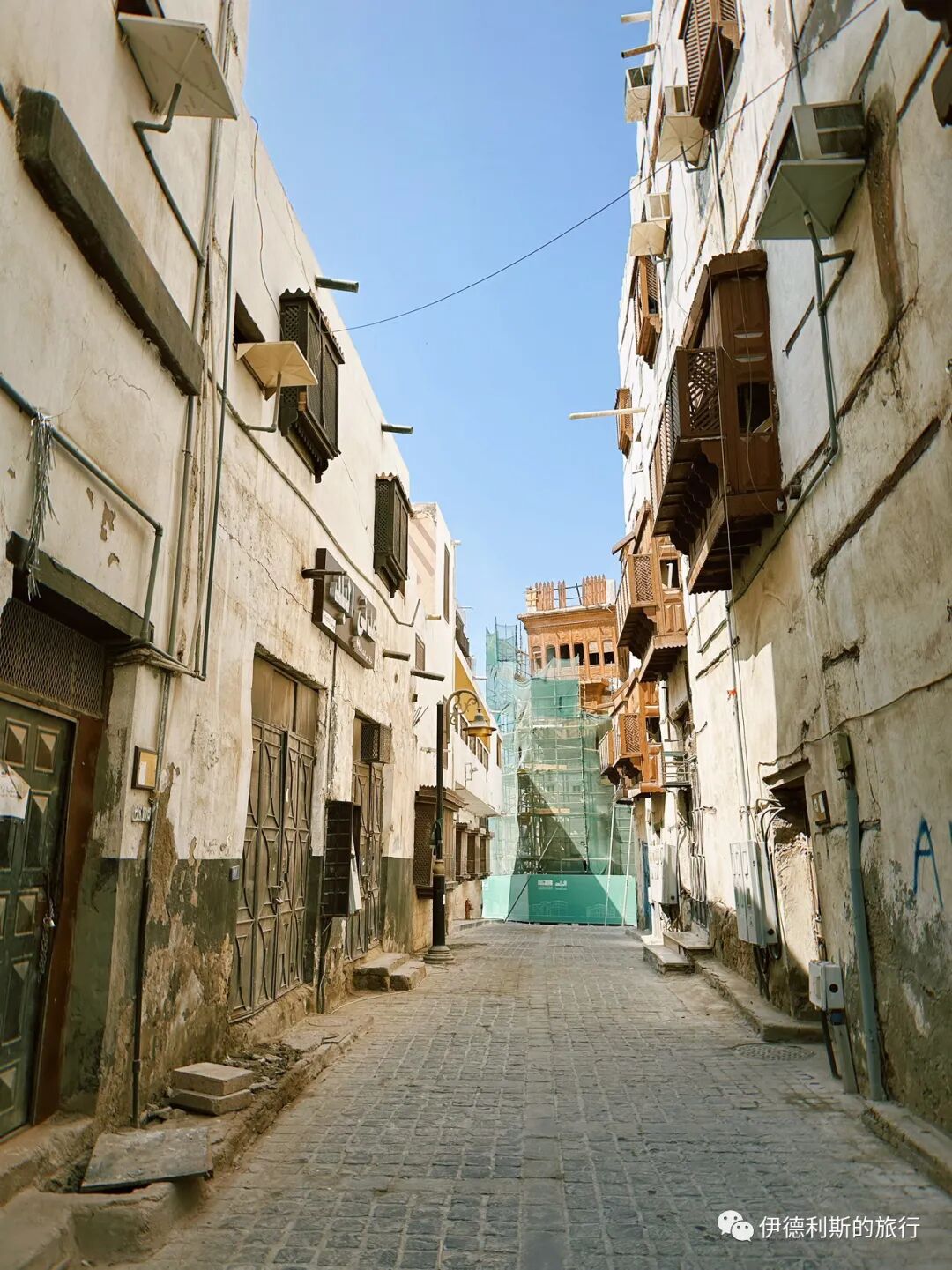
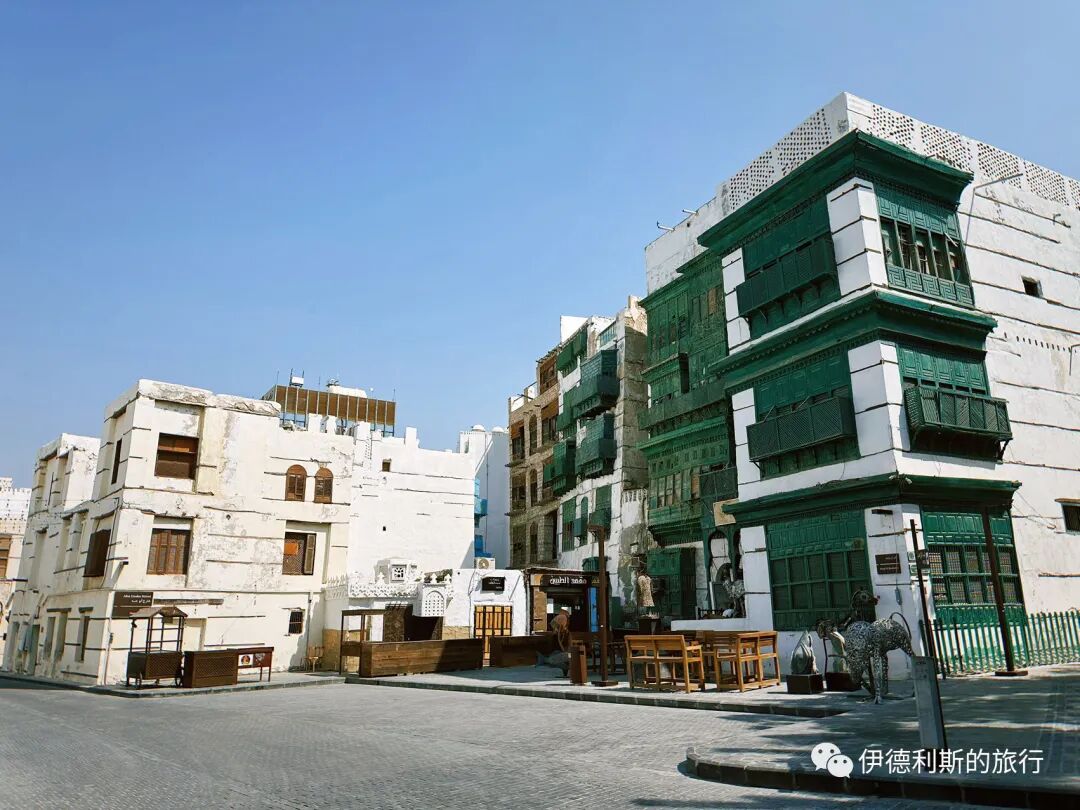
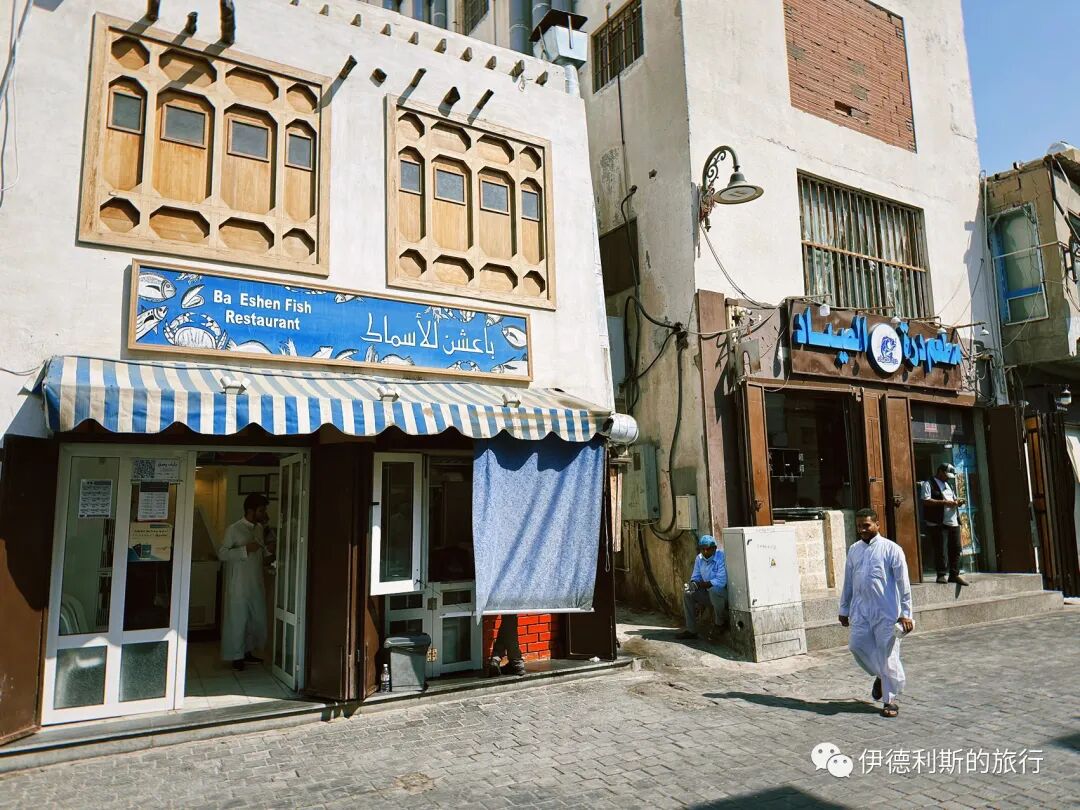
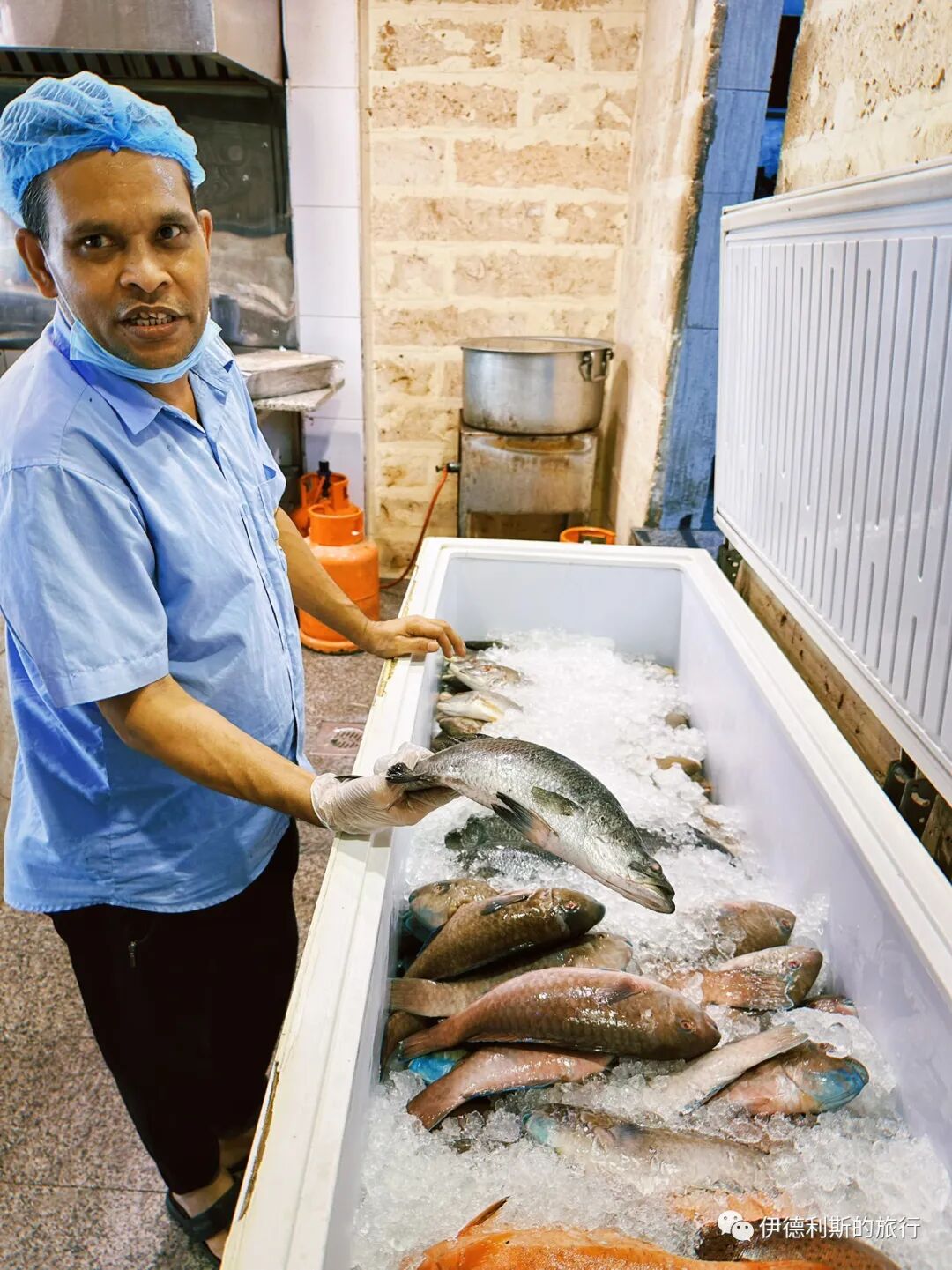
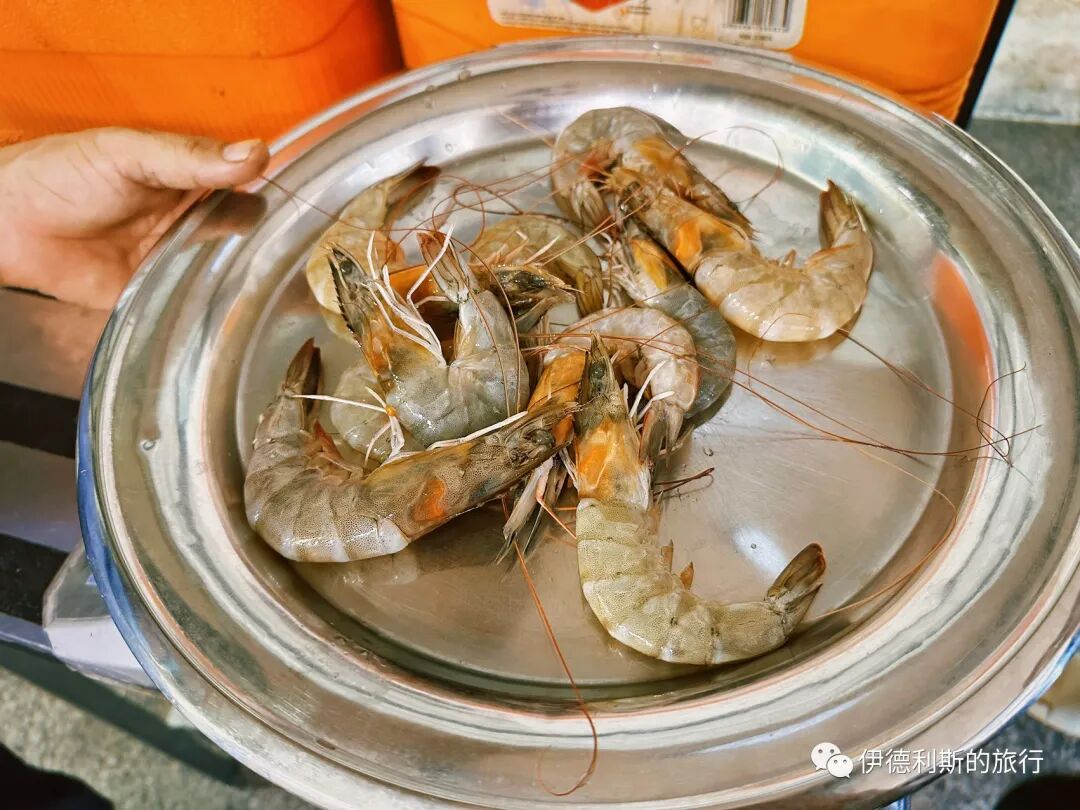
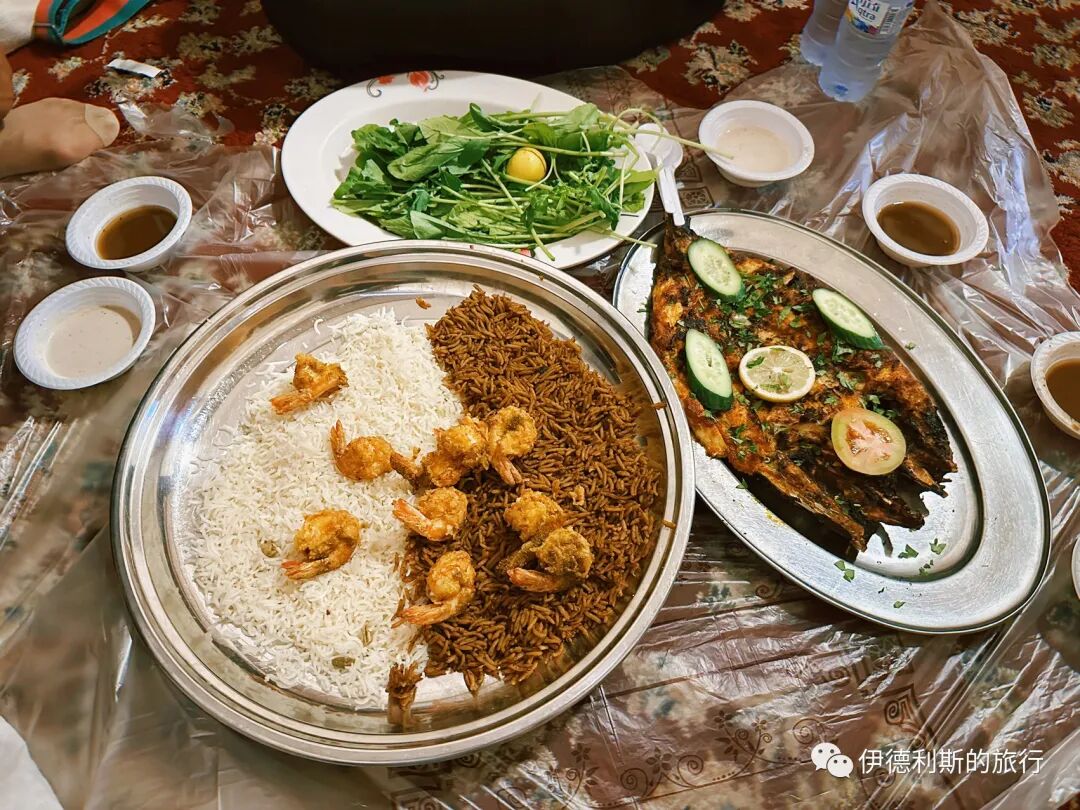
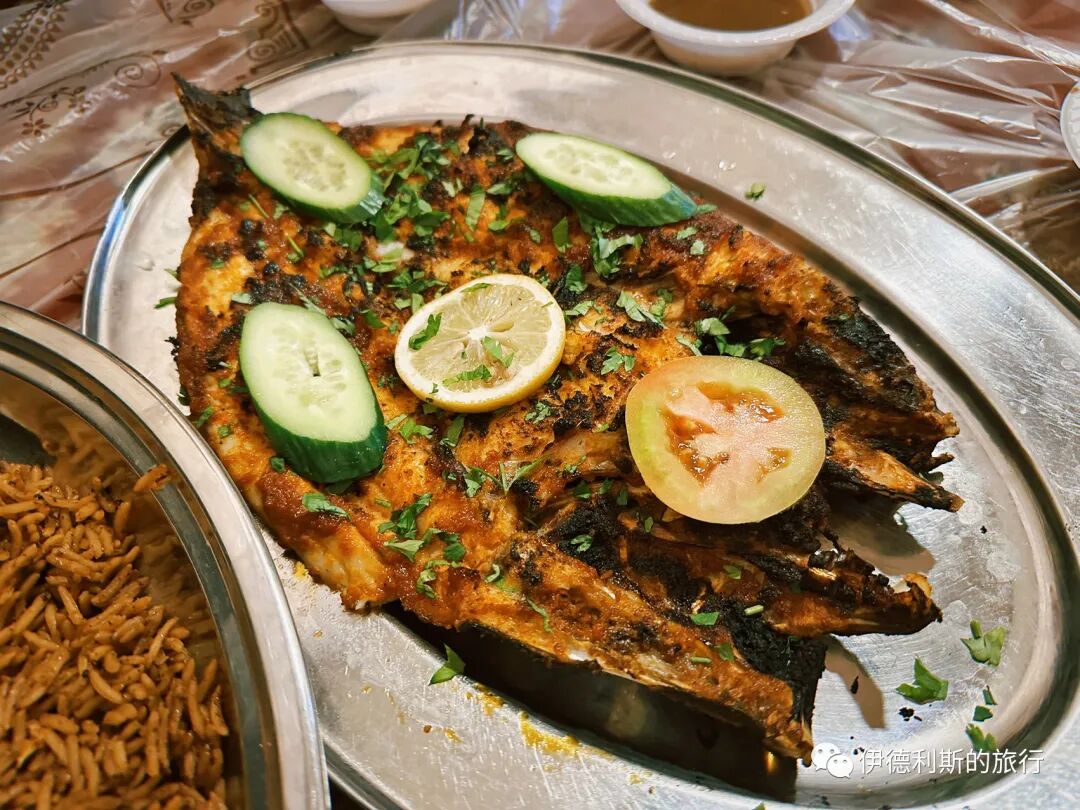
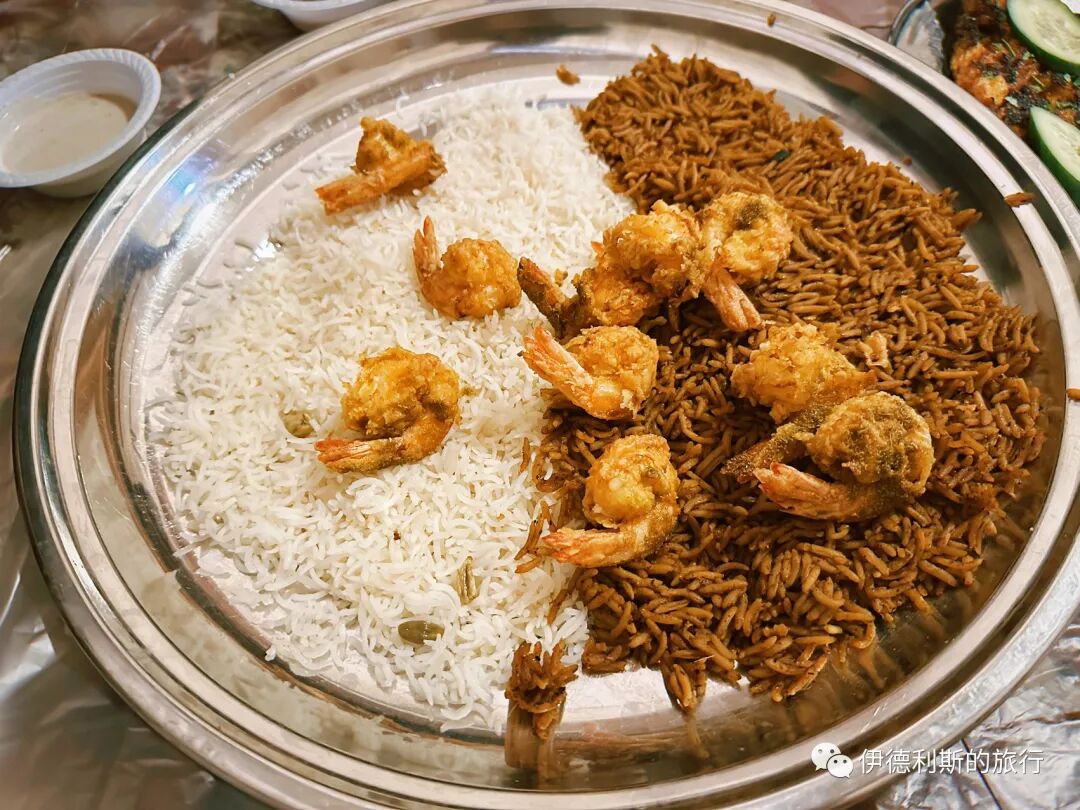
There are several seafood restaurants on the west side of the old town. I ate grilled fish and fried shrimp at one of them, served with two colors of rice. The restaurant uses traditional decor, and you have to sit on carpets and eat with your hands. The first floor is where you choose and grill the fish. The second floor is the men's area, while women and families must dine in private rooms on the third floor.
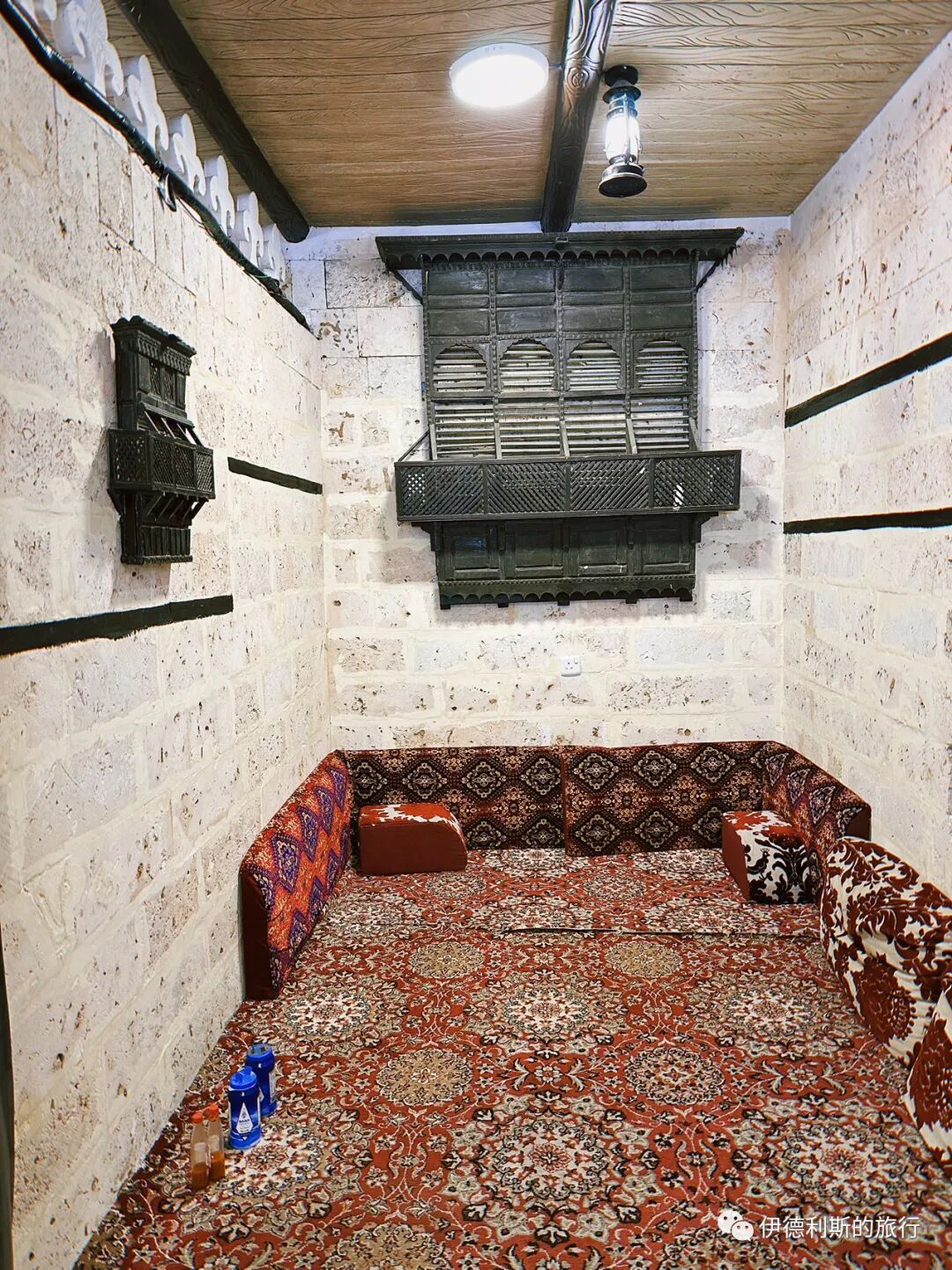
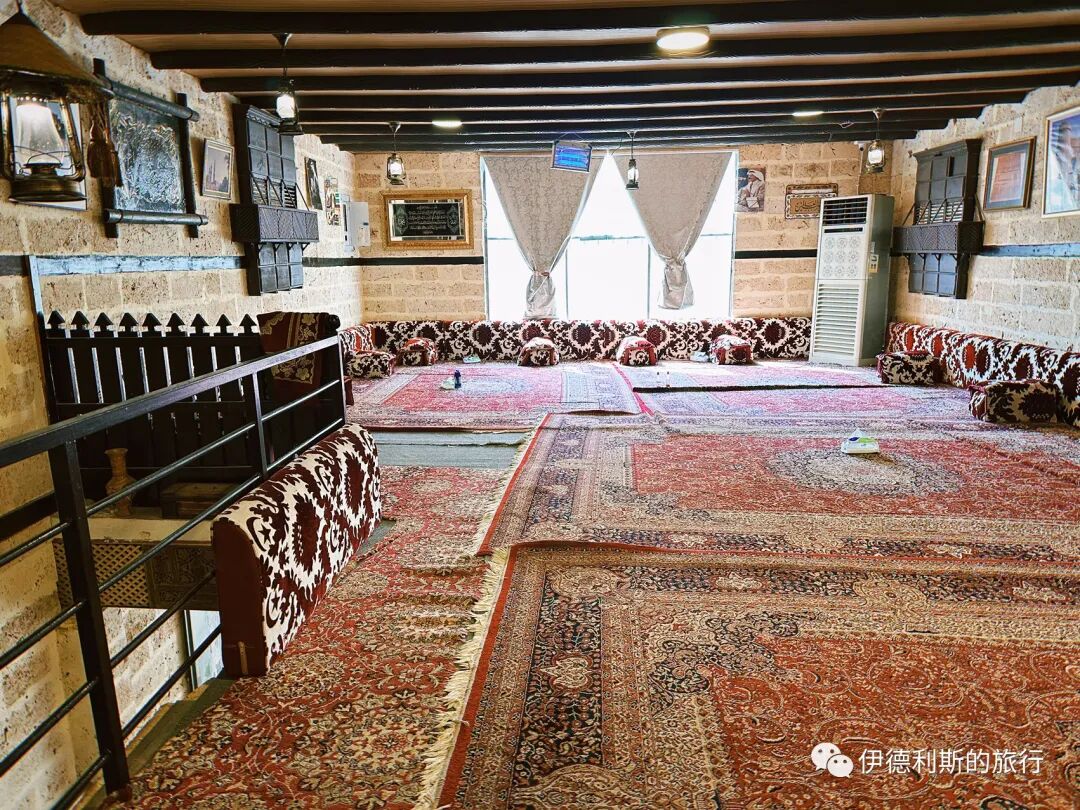
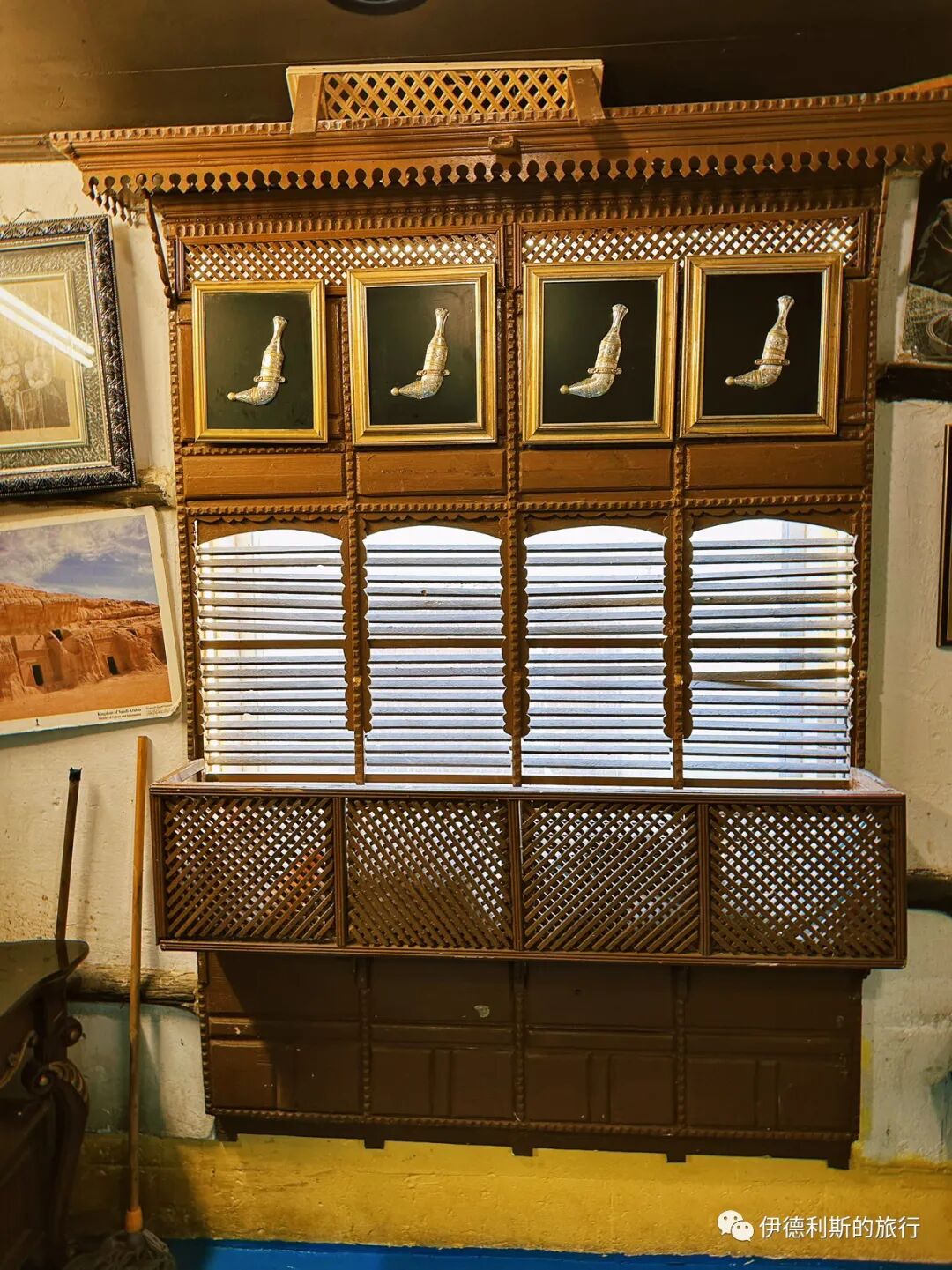
Several old buildings are currently under renovation. Because Saudi Arabia's tourism industry has just started, the development of the old town has also just begun. I expect that if I visit the old town of Jeddah again in a year or two, I will be able to see it after the renovations are complete.
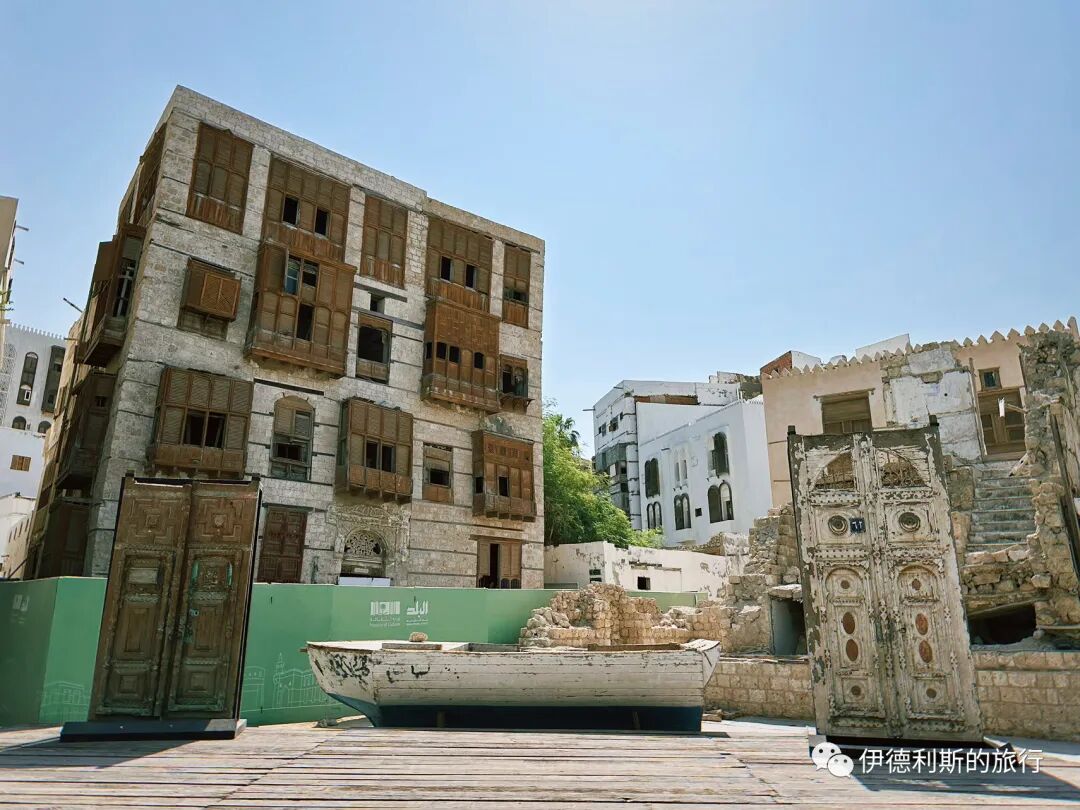
East of the old town of Jeddah is the market area, where you can see stalls selling teeth-cleaning twigs (miswak). The Prophet Muhammad often recommended using miswak twigs to brush teeth in the Hadith.
We also drank black tea mixed with traditional local spices and served with sesame candy (zhima tang), which is a daily snack for the locals.
Finally, we finished our tour of the old city of Jeddah by performing namaz at a large mosque located above a market.
Jeddah is located in the Hejaz region on the east coast of the Red Sea. In 647 AD, Caliph Uthman ordered it to be built as a port for travel to Mecca. Since then, Jeddah has been an important gateway for pilgrims arriving by sea.
The Old Town of Jeddah is the last ancient city along the Red Sea that still keeps its traditional layout. It is made up of tall tower houses, coral stone buildings, traditional mosques, open-air markets (souqs), cafes, and small public squares. These traditional buildings were once common along the Red Sea coast, but after the 20th century, modernization left only a few standing. They are an important witness to the Indian Ocean trade routes from the 16th to the early 20th century. Because of this, the Old Town of Jeddah was added to the UNESCO World Heritage list in 2014.
The most unique feature of the Old Town of Jeddah is the Roshan wooden bay window tower houses from the late 19th century. After the Suez Canal opened in 1869, a new route connected the Mediterranean to the Indian Ocean, and Jeddah's status rose quickly. As the number of merchants and pilgrims grew, these six-to-seven-story towers helped ease the housing shortage.
These towers are built from coral stone and lime plaster. They feature beautiful Roshan wooden bay windows and have no courtyards. The ground floor is used for shops, while the upper floors are rented out to pilgrims. The Roshan wooden bay windows are made from teak imported from Java. The carving and decoration styles depend on the owner's taste and are often influenced by India and other parts of Asia. The wooden bay windows are about 60 centimeters deep. People can look out at the view through the shutters or sit inside to drink tea and rest. Besides providing privacy and decoration, the Roshan wooden bay windows are important for cross-ventilation and cooling. People place water basins inside the windows, using the shade and airflow to cool the water.
Before the 1950s, most people living in the Old Town of Jeddah were local merchant families. Later, as oil income increased, most locals moved to the suburbs, and the houses in the old city were rented to migrant workers. After being added to the World Heritage list in 2014, the Saudi government began large-scale restoration of the old city. When we visited, many old buildings were still being repaired.
In the evening, we performed the Maghrib namaz at the Al-Shafi'i Mosque in the Old Town of Jeddah. The Al-Shafi'i Mosque is the oldest surviving coral stone mosque in Jeddah. It was first built in 1250 by the Yemeni King Mudhaffar. It is named after the Shafi'i school of law, which is followed in Yemen. In 1539, an Indian merchant named Khawaja Muhammad Ali brought the best wood from Yemen to rebuild the mosque, except for the minaret. Today, you can see clear influences from the Kerala region of India in the carvings on the porch's cross-shaped column capitals.
Shafi'i Mosque is built from coral stone, sea mud, and wood, with a main hall supported by wooden pillars and coral stone bases. The mihrab niche features rich calligraphy, geometric patterns, and floral decorations. The Kufic calligraphy above the mihrab forms the image of a mosque with six minarets, which clearly shows Ottoman influence.
To the west of Shafi'i Mosque are gold and silver workshops and a copper market, while the east side houses the traditional textile and clothing market, Souq Al Badw (Bedouin market), where the street is still filled with fabric shops.
There are some traditional cold drink shops in the old town of Jeddah where you can try traditional Hejaz region drinks. Sobia is a classic iftar drink in the Hejaz region, made by fermenting dried bread, raisins, barley, or oats, then filtering it and adding sugar, cardamom, cinnamon, and ice. Besides the original white Sobia, you can add strawberry to make it red or tamarind to make it brown. They also have special blends that include ingredients like hibiscus.
Making Sobia produces varying amounts of alcohol depending on the fermentation time, and the Saudi Food and Drug Authority states that a small amount of alcohol produced during the natural fermentation of juices and drinks is a natural chemical reaction.
Opposite the Bayt Ba'ishan old house is another open-to-the-public historic home called Bayt Jeddah, also known as Salloum's house, built by Sheikh Abdullah Bin Obaid Salloum in 1880. It preserves many pieces of furniture used by the Salloum family, including some imported from India that are over 120 years old.
The house has three floors: the first floor is a reception room, and the second floor is a bedroom where you can see many daily items, including old suitcases, sewing machines, and vintage kerosene-powered refrigerators. In the house, you can see the area once used in the Hejaz region to host female neighbors, who used to gather there every afternoon to drink tea and chat.
Opposite the Bayt Ba'ishan old house is another open-to-the-public historic home called Bayt Jeddah, also known as Salloum's house, built by Sheikh Abdullah Bin Obaid Salloum in 1880. It preserves many pieces of furniture used by the Salloum family, including some imported from India that are over 120 years old.
The house has three floors: the first floor is a reception room, and the second floor is a bedroom where you can see many daily items, including old suitcases, sewing machines, and vintage kerosene-powered refrigerators. In the house, you can see the area once used in the Hejaz region to host female neighbors, who used to gather there every afternoon to drink tea and chat.
There is an art gallery inside an old house with many paintings related to the ancient city of Jeddah.
In the evening, we performed namaz at the Abu'Unba mosque in the old town of Jeddah.
After namaz, we went to a traditional cafe across from the mosque. The small shop is not big, but it is decorated beautifully with many traditional Hejazi elements, making it perfect for photos. We ordered traditional coffee and dates dipped in sesame paste (tahini) to experience the life of old Jeddah residents.
In the evening, we ate various dips with pita bread at a traditional restaurant. We ate minced meat and eggplant casserole (moussaka). The word means 'mashed' in Arabic, and it later spread to the Middle East and the Balkans during the Ottoman Empire, with different versions in each place.
The next day, we went for a walk in the old town of Jeddah again. This time, we took a taxi to the north gate, Bab al-Jadid, and saw the excavated city wall ruins. The Jeddah city wall was built by Hussein al-Kurdi in the 16th century. It underwent major repairs in the 19th century and was demolished in 1947, with only a few gates remaining.
On the east side of the north gate is the old house Bayt Sharbatli. It was built 150 years ago by the merchant Sharif Abdulelah Muhanna al-Abdali, who owned a small fleet of ships traveling between Red Sea cities. Later, it was used as the Egyptian embassy.
The old town was quiet and empty in the morning. It is a pity that many old houses were not open for visits, so we could only look at them from the outside.
There are several seafood restaurants on the west side of the old town. I ate grilled fish and fried shrimp at one of them, served with two colors of rice. The restaurant uses traditional decor, and you have to sit on carpets and eat with your hands. The first floor is where you choose and grill the fish. The second floor is the men's area, while women and families must dine in private rooms on the third floor.
Several old buildings are currently under renovation. Because Saudi Arabia's tourism industry has just started, the development of the old town has also just begun. I expect that if I visit the old town of Jeddah again in a year or two, I will be able to see it after the renovations are complete.
East of the old town of Jeddah is the market area, where you can see stalls selling teeth-cleaning twigs (miswak). The Prophet Muhammad often recommended using miswak twigs to brush teeth in the Hadith.
We also drank black tea mixed with traditional local spices and served with sesame candy (zhima tang), which is a daily snack for the locals.
Finally, we finished our tour of the old city of Jeddah by performing namaz at a large mosque located above a market.
Islamic Museum Guide: Jeddah Tayebat Museum - Saudi History and Culture
Articles • ali2007fr posted the article • 0 comments • 188 views • 2026-05-19 09:31
Reposted from the web
Summary: Islamic Museum Guide: Jeddah Tayebat Museum - Saudi History and Culture is presented here as a firsthand travel account in clear, natural English. The account focuses on Jeddah, Tayebat Museum, Saudi Culture while preserving the names, places, food, photos, and historical details from the Chinese source.
The full name of the Tayebat Museum is the Al Taybat International City Museum of Science and Information. The entire museum is built in the traditional architectural style of the Hejaz region, featuring coral stone and plaster walls along with beautiful wooden bay windows (Roshan).
The museum has a rich collection of exhibits. It starts with the rise of the faith and displays many beautiful artworks and artifacts. The museum also has a wealth of displays on the traditional folk culture of Jeddah, the Hejaz, and all of Saudi Arabia, including a large collection of traditional clothing and folk objects.
A 19th-century wooden prayer niche (mihrab) from Damascus, featuring beautiful Persian calligraphy.
A 16th-century manuscript from the Mughal Empire.
A 16th-century Persian Safavid dynasty manuscript of poetry with miniature paintings.
A 12th-century bronze cannon muzzle from the ancient city of Herat, Afghanistan, engraved with Kufic calligraphy. Herat grew into a center for metal manufacturing between the 11th and 12th centuries until the Mongol army massacred the city in 1221.
A 14th-century small plaster prayer niche (mihrab) from Samarkand during the Timurid dynasty, decorated with Kufic calligraphy.
A Moroccan manuscript from 1860 written in Maghrebi script.
A copper water kettle with silver inlay from Ottoman-era Damascus, dating to the 18th or 19th century.
A 13th-century Ayyubid dynasty manuscript from the southeastern Anatolian Peninsula, written in Muhaqqaq script.
A 13th-century Egyptian Mamluk dynasty manuscript written in Muhaqqaq script.
A 16th-century Persian Safavid dynasty manuscript written in Al-rayhani script.
A 14th-century manuscript from northwestern Iraq, written in Iraqi Rayhani script during the Jalayirid dynasty. The Jalayirid dynasty was a Persianized khanate established by Mongol tribes after the Ilkhanate collapsed.
A 19th-century North African manuscript written in Maghrebi Kufic script.
A manuscript written in Naskh script from the Persian Qajar dynasty in 1800.
A manuscript written in Naskh script from the Bosnia region during the Ottoman dynasty in the 17th to 18th centuries.
A manuscript written in Naskh script from the Turkey region during the Ottoman dynasty in the 18th century.
A manuscript written in Naskh script from the India region during the Mughal dynasty in the 17th century.
A manuscript written in Kufic script, likely from the Iraq region, dating to the 10th to 11th centuries.
A manuscript written in Andalusian script from the Andalusia region in the 12th century.
A manuscript written in Kufic script from the Iraq region during the Abbasid dynasty in the 9th to 10th centuries.
A manuscript written in Kufic script from the Iraq region during the Abbasid dynasty in the 8th to 9th centuries.
A manuscript written in Kufic script from 9th-century Iraq or Iran.
A manuscript written in Muhaqqaq script from the Anatolia region during the Seljuk Empire in the 13th to 14th centuries.
A manuscript of Sahih al-Bukhari from the 18th-century Morocco region.
A religious handbook from the 17th-century Kashmir region.
An 1828 Ottoman Turkish manuscript of the prayer book Dala'il al-Khayrat.
A 1495 miniature painting in Turkmen style from the Khamsa, the masterpiece of the great Persian poet Nizami.
A 1744 miniature painting of the Prophet's Mosque and the Sacred Mosque from the Dala'il al-Khayrat, created by Ottoman calligrapher Mohammed Bin Hussein.
A 1485 Indian miniature painting from The Treasury of Secrets, the first volume of the Khamsa by the great Persian poet Nizami.
A 14th-century brass candlestick from the Mamluk period in Syria, featuring engravings in Naskh calligraphy.
A 15th to 16th-century copper plate from the Mamluk period in Egypt, featuring engravings in Naskh calligraphy.
A 17th-century porcelain jar from the Ottoman period in Turkey, featuring Naskh calligraphy.
A wooden inscription from 1351 dedicated to the zakat for the Kaaba.
A 19th-century chest of drawers from Damascus made of coconut wood, inlaid with shell and bone, with drawer handles made of porcelain and marble.
Two 17th-century wooden beams from Medina featuring Kufic script.
A 10th-century marble carving from the Fatimid period in Damascus featuring Kufic script.
A limestone carved column capital from an Umayyad palace dating to 693.
A marble column capital from the Umayyad Caliphate in Syria, dating back to the 7th century.
A white marble fountain from Egypt during the Mamluk Sultanate, dating to the 13th or 14th century.
Architectural elements from the Alhambra in Spain, dating to the 19th century.
After seeing the historical artifacts of the faith, you enter the next major section: the Saudi folk culture exhibition. Here, you get a direct look at the different customs from across Saudi Arabia. The traditional Saudi wedding dresses in the gallery are very eye-catching, and the white gowns are incredibly delicate.
The most interesting part of the Saudi folk culture exhibition is the recreation of traditional houses in different styles from across the country. Because of the different climates, traditional houses in various parts of Saudi Arabia each have their own unique features.
Unlike the desert oases most people imagine, the scenery in Al Bahah Province in southwestern Saudi Arabia is very beautiful, and it is known as the Garden of Hejaz. The Baha region gets a lot of rain, so the mountains are covered in thick forests. You can hear streams flowing through the villages, see lush palm groves, and find many banana plantations. Traditional houses in the Baha region are built from wood and clay, and they are painted in very bright colors. view all
Summary: Islamic Museum Guide: Jeddah Tayebat Museum - Saudi History and Culture is presented here as a firsthand travel account in clear, natural English. The account focuses on Jeddah, Tayebat Museum, Saudi Culture while preserving the names, places, food, photos, and historical details from the Chinese source.
The full name of the Tayebat Museum is the Al Taybat International City Museum of Science and Information. The entire museum is built in the traditional architectural style of the Hejaz region, featuring coral stone and plaster walls along with beautiful wooden bay windows (Roshan).
The museum has a rich collection of exhibits. It starts with the rise of the faith and displays many beautiful artworks and artifacts. The museum also has a wealth of displays on the traditional folk culture of Jeddah, the Hejaz, and all of Saudi Arabia, including a large collection of traditional clothing and folk objects.
A 19th-century wooden prayer niche (mihrab) from Damascus, featuring beautiful Persian calligraphy.
A 16th-century manuscript from the Mughal Empire.
A 16th-century Persian Safavid dynasty manuscript of poetry with miniature paintings.
A 12th-century bronze cannon muzzle from the ancient city of Herat, Afghanistan, engraved with Kufic calligraphy. Herat grew into a center for metal manufacturing between the 11th and 12th centuries until the Mongol army massacred the city in 1221.
A 14th-century small plaster prayer niche (mihrab) from Samarkand during the Timurid dynasty, decorated with Kufic calligraphy.
A Moroccan manuscript from 1860 written in Maghrebi script.
A copper water kettle with silver inlay from Ottoman-era Damascus, dating to the 18th or 19th century.
A 13th-century Ayyubid dynasty manuscript from the southeastern Anatolian Peninsula, written in Muhaqqaq script.
A 13th-century Egyptian Mamluk dynasty manuscript written in Muhaqqaq script.
A 16th-century Persian Safavid dynasty manuscript written in Al-rayhani script.
A 14th-century manuscript from northwestern Iraq, written in Iraqi Rayhani script during the Jalayirid dynasty. The Jalayirid dynasty was a Persianized khanate established by Mongol tribes after the Ilkhanate collapsed.
A 19th-century North African manuscript written in Maghrebi Kufic script.
A manuscript written in Naskh script from the Persian Qajar dynasty in 1800.
A manuscript written in Naskh script from the Bosnia region during the Ottoman dynasty in the 17th to 18th centuries.
A manuscript written in Naskh script from the Turkey region during the Ottoman dynasty in the 18th century.
A manuscript written in Naskh script from the India region during the Mughal dynasty in the 17th century.
A manuscript written in Kufic script, likely from the Iraq region, dating to the 10th to 11th centuries.
A manuscript written in Andalusian script from the Andalusia region in the 12th century.
A manuscript written in Kufic script from the Iraq region during the Abbasid dynasty in the 9th to 10th centuries.
A manuscript written in Kufic script from the Iraq region during the Abbasid dynasty in the 8th to 9th centuries.
A manuscript written in Kufic script from 9th-century Iraq or Iran.
A manuscript written in Muhaqqaq script from the Anatolia region during the Seljuk Empire in the 13th to 14th centuries.
A manuscript of Sahih al-Bukhari from the 18th-century Morocco region.
A religious handbook from the 17th-century Kashmir region.
An 1828 Ottoman Turkish manuscript of the prayer book Dala'il al-Khayrat.
A 1495 miniature painting in Turkmen style from the Khamsa, the masterpiece of the great Persian poet Nizami.
A 1744 miniature painting of the Prophet's Mosque and the Sacred Mosque from the Dala'il al-Khayrat, created by Ottoman calligrapher Mohammed Bin Hussein.
A 1485 Indian miniature painting from The Treasury of Secrets, the first volume of the Khamsa by the great Persian poet Nizami.
A 14th-century brass candlestick from the Mamluk period in Syria, featuring engravings in Naskh calligraphy.
A 15th to 16th-century copper plate from the Mamluk period in Egypt, featuring engravings in Naskh calligraphy.
A 17th-century porcelain jar from the Ottoman period in Turkey, featuring Naskh calligraphy.
A wooden inscription from 1351 dedicated to the zakat for the Kaaba.
A 19th-century chest of drawers from Damascus made of coconut wood, inlaid with shell and bone, with drawer handles made of porcelain and marble.
Two 17th-century wooden beams from Medina featuring Kufic script.
A 10th-century marble carving from the Fatimid period in Damascus featuring Kufic script.
A limestone carved column capital from an Umayyad palace dating to 693.
A marble column capital from the Umayyad Caliphate in Syria, dating back to the 7th century.
A white marble fountain from Egypt during the Mamluk Sultanate, dating to the 13th or 14th century.
Architectural elements from the Alhambra in Spain, dating to the 19th century.
After seeing the historical artifacts of the faith, you enter the next major section: the Saudi folk culture exhibition. Here, you get a direct look at the different customs from across Saudi Arabia. The traditional Saudi wedding dresses in the gallery are very eye-catching, and the white gowns are incredibly delicate.
The most interesting part of the Saudi folk culture exhibition is the recreation of traditional houses in different styles from across the country. Because of the different climates, traditional houses in various parts of Saudi Arabia each have their own unique features.
Unlike the desert oases most people imagine, the scenery in Al Bahah Province in southwestern Saudi Arabia is very beautiful, and it is known as the Garden of Hejaz. The Baha region gets a lot of rain, so the mountains are covered in thick forests. You can hear streams flowing through the villages, see lush palm groves, and find many banana plantations. Traditional houses in the Baha region are built from wood and clay, and they are painted in very bright colors. view all
Reposted from the web
Summary: Islamic Museum Guide: Jeddah Tayebat Museum - Saudi History and Culture is presented here as a firsthand travel account in clear, natural English. The account focuses on Jeddah, Tayebat Museum, Saudi Culture while preserving the names, places, food, photos, and historical details from the Chinese source.
The full name of the Tayebat Museum is the Al Taybat International City Museum of Science and Information. The entire museum is built in the traditional architectural style of the Hejaz region, featuring coral stone and plaster walls along with beautiful wooden bay windows (Roshan).
The museum has a rich collection of exhibits. It starts with the rise of the faith and displays many beautiful artworks and artifacts. The museum also has a wealth of displays on the traditional folk culture of Jeddah, the Hejaz, and all of Saudi Arabia, including a large collection of traditional clothing and folk objects.
A 19th-century wooden prayer niche (mihrab) from Damascus, featuring beautiful Persian calligraphy.
A 16th-century manuscript from the Mughal Empire.
A 16th-century Persian Safavid dynasty manuscript of poetry with miniature paintings.
A 12th-century bronze cannon muzzle from the ancient city of Herat, Afghanistan, engraved with Kufic calligraphy. Herat grew into a center for metal manufacturing between the 11th and 12th centuries until the Mongol army massacred the city in 1221.
A 14th-century small plaster prayer niche (mihrab) from Samarkand during the Timurid dynasty, decorated with Kufic calligraphy.
A Moroccan manuscript from 1860 written in Maghrebi script.
A copper water kettle with silver inlay from Ottoman-era Damascus, dating to the 18th or 19th century.
A 13th-century Ayyubid dynasty manuscript from the southeastern Anatolian Peninsula, written in Muhaqqaq script.
A 13th-century Egyptian Mamluk dynasty manuscript written in Muhaqqaq script.
A 16th-century Persian Safavid dynasty manuscript written in Al-rayhani script.
A 14th-century manuscript from northwestern Iraq, written in Iraqi Rayhani script during the Jalayirid dynasty. The Jalayirid dynasty was a Persianized khanate established by Mongol tribes after the Ilkhanate collapsed.
A 19th-century North African manuscript written in Maghrebi Kufic script.
A manuscript written in Naskh script from the Persian Qajar dynasty in 1800.
A manuscript written in Naskh script from the Bosnia region during the Ottoman dynasty in the 17th to 18th centuries.
A manuscript written in Naskh script from the Turkey region during the Ottoman dynasty in the 18th century.
A manuscript written in Naskh script from the India region during the Mughal dynasty in the 17th century.
A manuscript written in Kufic script, likely from the Iraq region, dating to the 10th to 11th centuries.
A manuscript written in Andalusian script from the Andalusia region in the 12th century.
A manuscript written in Kufic script from the Iraq region during the Abbasid dynasty in the 9th to 10th centuries.
A manuscript written in Kufic script from the Iraq region during the Abbasid dynasty in the 8th to 9th centuries.
A manuscript written in Kufic script from 9th-century Iraq or Iran.
A manuscript written in Muhaqqaq script from the Anatolia region during the Seljuk Empire in the 13th to 14th centuries.
A manuscript of Sahih al-Bukhari from the 18th-century Morocco region.
A religious handbook from the 17th-century Kashmir region.
An 1828 Ottoman Turkish manuscript of the prayer book Dala'il al-Khayrat.
A 1495 miniature painting in Turkmen style from the Khamsa, the masterpiece of the great Persian poet Nizami.
A 1744 miniature painting of the Prophet's Mosque and the Sacred Mosque from the Dala'il al-Khayrat, created by Ottoman calligrapher Mohammed Bin Hussein.
A 1485 Indian miniature painting from The Treasury of Secrets, the first volume of the Khamsa by the great Persian poet Nizami.
A 14th-century brass candlestick from the Mamluk period in Syria, featuring engravings in Naskh calligraphy.
A 15th to 16th-century copper plate from the Mamluk period in Egypt, featuring engravings in Naskh calligraphy.
A 17th-century porcelain jar from the Ottoman period in Turkey, featuring Naskh calligraphy.
A wooden inscription from 1351 dedicated to the zakat for the Kaaba.
A 19th-century chest of drawers from Damascus made of coconut wood, inlaid with shell and bone, with drawer handles made of porcelain and marble.
Two 17th-century wooden beams from Medina featuring Kufic script.
A 10th-century marble carving from the Fatimid period in Damascus featuring Kufic script.
A limestone carved column capital from an Umayyad palace dating to 693.
A marble column capital from the Umayyad Caliphate in Syria, dating back to the 7th century.
A white marble fountain from Egypt during the Mamluk Sultanate, dating to the 13th or 14th century.
Architectural elements from the Alhambra in Spain, dating to the 19th century.
After seeing the historical artifacts of the faith, you enter the next major section: the Saudi folk culture exhibition. Here, you get a direct look at the different customs from across Saudi Arabia. The traditional Saudi wedding dresses in the gallery are very eye-catching, and the white gowns are incredibly delicate.
The most interesting part of the Saudi folk culture exhibition is the recreation of traditional houses in different styles from across the country. Because of the different climates, traditional houses in various parts of Saudi Arabia each have their own unique features.
Unlike the desert oases most people imagine, the scenery in Al Bahah Province in southwestern Saudi Arabia is very beautiful, and it is known as the Garden of Hejaz. The Baha region gets a lot of rain, so the mountains are covered in thick forests. You can hear streams flowing through the villages, see lush palm groves, and find many banana plantations. Traditional houses in the Baha region are built from wood and clay, and they are painted in very bright colors.
Summary: Islamic Museum Guide: Jeddah Tayebat Museum - Saudi History and Culture is presented here as a firsthand travel account in clear, natural English. The account focuses on Jeddah, Tayebat Museum, Saudi Culture while preserving the names, places, food, photos, and historical details from the Chinese source.
The full name of the Tayebat Museum is the Al Taybat International City Museum of Science and Information. The entire museum is built in the traditional architectural style of the Hejaz region, featuring coral stone and plaster walls along with beautiful wooden bay windows (Roshan).
The museum has a rich collection of exhibits. It starts with the rise of the faith and displays many beautiful artworks and artifacts. The museum also has a wealth of displays on the traditional folk culture of Jeddah, the Hejaz, and all of Saudi Arabia, including a large collection of traditional clothing and folk objects.
A 19th-century wooden prayer niche (mihrab) from Damascus, featuring beautiful Persian calligraphy.
A 16th-century manuscript from the Mughal Empire.
A 16th-century Persian Safavid dynasty manuscript of poetry with miniature paintings.
A 12th-century bronze cannon muzzle from the ancient city of Herat, Afghanistan, engraved with Kufic calligraphy. Herat grew into a center for metal manufacturing between the 11th and 12th centuries until the Mongol army massacred the city in 1221.
A 14th-century small plaster prayer niche (mihrab) from Samarkand during the Timurid dynasty, decorated with Kufic calligraphy.
A Moroccan manuscript from 1860 written in Maghrebi script.
A copper water kettle with silver inlay from Ottoman-era Damascus, dating to the 18th or 19th century.
A 13th-century Ayyubid dynasty manuscript from the southeastern Anatolian Peninsula, written in Muhaqqaq script.
A 13th-century Egyptian Mamluk dynasty manuscript written in Muhaqqaq script.
A 16th-century Persian Safavid dynasty manuscript written in Al-rayhani script.
A 14th-century manuscript from northwestern Iraq, written in Iraqi Rayhani script during the Jalayirid dynasty. The Jalayirid dynasty was a Persianized khanate established by Mongol tribes after the Ilkhanate collapsed.
A 19th-century North African manuscript written in Maghrebi Kufic script.
A manuscript written in Naskh script from the Persian Qajar dynasty in 1800.
A manuscript written in Naskh script from the Bosnia region during the Ottoman dynasty in the 17th to 18th centuries.
A manuscript written in Naskh script from the Turkey region during the Ottoman dynasty in the 18th century.
A manuscript written in Naskh script from the India region during the Mughal dynasty in the 17th century.
A manuscript written in Kufic script, likely from the Iraq region, dating to the 10th to 11th centuries.
A manuscript written in Andalusian script from the Andalusia region in the 12th century.
A manuscript written in Kufic script from the Iraq region during the Abbasid dynasty in the 9th to 10th centuries.
A manuscript written in Kufic script from the Iraq region during the Abbasid dynasty in the 8th to 9th centuries.
A manuscript written in Kufic script from 9th-century Iraq or Iran.
A manuscript written in Muhaqqaq script from the Anatolia region during the Seljuk Empire in the 13th to 14th centuries.
A manuscript of Sahih al-Bukhari from the 18th-century Morocco region.
A religious handbook from the 17th-century Kashmir region.
An 1828 Ottoman Turkish manuscript of the prayer book Dala'il al-Khayrat.
A 1495 miniature painting in Turkmen style from the Khamsa, the masterpiece of the great Persian poet Nizami.
A 1744 miniature painting of the Prophet's Mosque and the Sacred Mosque from the Dala'il al-Khayrat, created by Ottoman calligrapher Mohammed Bin Hussein.
A 1485 Indian miniature painting from The Treasury of Secrets, the first volume of the Khamsa by the great Persian poet Nizami.
A 14th-century brass candlestick from the Mamluk period in Syria, featuring engravings in Naskh calligraphy.
A 15th to 16th-century copper plate from the Mamluk period in Egypt, featuring engravings in Naskh calligraphy.
A 17th-century porcelain jar from the Ottoman period in Turkey, featuring Naskh calligraphy.
A wooden inscription from 1351 dedicated to the zakat for the Kaaba.
A 19th-century chest of drawers from Damascus made of coconut wood, inlaid with shell and bone, with drawer handles made of porcelain and marble.
Two 17th-century wooden beams from Medina featuring Kufic script.
A 10th-century marble carving from the Fatimid period in Damascus featuring Kufic script.
A limestone carved column capital from an Umayyad palace dating to 693.
A marble column capital from the Umayyad Caliphate in Syria, dating back to the 7th century.
A white marble fountain from Egypt during the Mamluk Sultanate, dating to the 13th or 14th century.
Architectural elements from the Alhambra in Spain, dating to the 19th century.
After seeing the historical artifacts of the faith, you enter the next major section: the Saudi folk culture exhibition. Here, you get a direct look at the different customs from across Saudi Arabia. The traditional Saudi wedding dresses in the gallery are very eye-catching, and the white gowns are incredibly delicate.
The most interesting part of the Saudi folk culture exhibition is the recreation of traditional houses in different styles from across the country. Because of the different climates, traditional houses in various parts of Saudi Arabia each have their own unique features.
Unlike the desert oases most people imagine, the scenery in Al Bahah Province in southwestern Saudi Arabia is very beautiful, and it is known as the Garden of Hejaz. The Baha region gets a lot of rain, so the mountains are covered in thick forests. You can hear streams flowing through the villages, see lush palm groves, and find many banana plantations. Traditional houses in the Baha region are built from wood and clay, and they are painted in very bright colors.
Halal Travel Guide: Jeddah Old City - Gateway to Makkah and Hijazi Heritage
Articles • ali2007fr posted the article • 0 comments • 144 views • 2026-05-19 06:55
Reposted from the web
Jeddah is located in the Hejaz region on the east coast of the Red Sea. In 647 AD, Caliph Uthman ordered it to be built as a port for travel to Mecca. Since then, Jeddah has been an important gateway for pilgrims arriving by sea.
The Old Town of Jeddah is the last ancient city along the Red Sea that still keeps its traditional layout. It is made up of tall tower houses, coral stone buildings, traditional mosques, open-air markets (souqs), cafes, and small public squares. These traditional buildings were once common along the Red Sea coast, but after the 20th century, modernization left only a few standing. They are an important witness to the Indian Ocean trade routes from the 16th to the early 20th century. Because of this, the Old Town of Jeddah was added to the UNESCO World Heritage list in 2014.
The most unique feature of the Old Town of Jeddah is the Roshan wooden bay window tower houses from the late 19th century. After the Suez Canal opened in 1869, a new route connected the Mediterranean to the Indian Ocean, and Jeddah's status rose quickly. As the number of merchants and pilgrims grew, these six-to-seven-story towers helped ease the housing shortage.
These towers are built from coral stone and lime plaster. They feature beautiful Roshan wooden bay windows and have no courtyards. The ground floor is used for shops, while the upper floors are rented out to pilgrims. The Roshan wooden bay windows are made from teak imported from Java. The carving and decoration styles depend on the owner's taste and are often influenced by India and other parts of Asia. The wooden bay windows are about 60 centimeters deep. People can look out at the view through the shutters or sit inside to drink tea and rest. Besides providing privacy and decoration, the Roshan wooden bay windows are important for cross-ventilation and cooling. People place water basins inside the windows, using the shade and airflow to cool the water.
Before the 1950s, most people living in the Old Town of Jeddah were local merchant families. Later, as oil income increased, most locals moved to the suburbs, and the houses in the old city were rented to migrant workers. After being added to the World Heritage list in 2014, the Saudi government began large-scale restoration of the old city. When we visited, many old buildings were still being repaired.
In the evening, we performed the Maghrib namaz at the Al-Shafi'i Mosque in the Old Town of Jeddah. The Al-Shafi'i Mosque is the oldest surviving coral stone mosque in Jeddah. It was first built in 1250 by the Yemeni King Mudhaffar. It is named after the Shafi'i school of law, which is followed in Yemen. In 1539, an Indian merchant named Khawaja Muhammad Ali brought the best wood from Yemen to rebuild the mosque, except for the minaret. Today, you can see clear influences from the Kerala region of India in the carvings on the porch's cross-shaped column capitals.
Shafi'i Mosque is built from coral stone, sea mud, and wood, with a main hall supported by wooden pillars and coral stone bases. The mihrab niche features rich calligraphy, geometric patterns, and floral decorations. The Kufic calligraphy above the mihrab forms the image of a mosque with six minarets, which clearly shows Ottoman influence.
To the west of Shafi'i Mosque are gold and silver workshops and a copper market, while the east side houses the traditional textile and clothing market, Souq Al Badw (Bedouin market), where the street is still filled with fabric shops.
There are some traditional cold drink shops in the old town of Jeddah where you can try traditional Hejaz region drinks. Sobia is a classic iftar drink in the Hejaz region, made by fermenting dried bread, raisins, barley, or oats, then filtering it and adding sugar, cardamom, cinnamon, and ice. Besides the original white Sobia, you can add strawberry to make it red or tamarind to make it brown. They also have special blends that include ingredients like hibiscus.
Making Sobia produces varying amounts of alcohol depending on the fermentation time, and the Saudi Food and Drug Authority states that a small amount of alcohol produced during the natural fermentation of juices and drinks is a natural chemical reaction.
Opposite the Bayt Ba'ishan old house is another open-to-the-public historic home called Bayt Jeddah, also known as Salloum's house, built by Sheikh Abdullah Bin Obaid Salloum in 1880. It preserves many pieces of furniture used by the Salloum family, including some imported from India that are over 120 years old.
The house has three floors: the first floor is a reception room, and the second floor is a bedroom where you can see many daily items, including old suitcases, sewing machines, and vintage kerosene-powered refrigerators. In the house, you can see the area once used in the Hejaz region to host female neighbors, who used to gather there every afternoon to drink tea and chat.
Opposite the Bayt Ba'ishan old house is another open-to-the-public historic home called Bayt Jeddah, also known as Salloum's house, built by Sheikh Abdullah Bin Obaid Salloum in 1880. It preserves many pieces of furniture used by the Salloum family, including some imported from India that are over 120 years old.
The house has three floors: the first floor is a reception room, and the second floor is a bedroom where you can see many daily items, including old suitcases, sewing machines, and vintage kerosene-powered refrigerators. In the house, you can see the area once used in the Hejaz region to host female neighbors, who used to gather there every afternoon to drink tea and chat.
There is an art gallery inside an old house with many paintings related to the ancient city of Jeddah.
In the evening, we performed namaz at the Abu'Unba mosque in the old town of Jeddah.
After namaz, we went to a traditional cafe across from the mosque. The small shop is not big, but it is decorated beautifully with many traditional Hejazi elements, making it perfect for photos. We ordered traditional coffee and dates dipped in sesame paste (tahini) to experience the life of old Jeddah residents.
In the evening, we ate various dips with pita bread at a traditional restaurant. We ate minced meat and eggplant casserole (moussaka). The word means 'mashed' in Arabic, and it later spread to the Middle East and the Balkans during the Ottoman Empire, with different versions in each place.
The next day, we went for a walk in the old town of Jeddah again. This time, we took a taxi to the north gate, Bab al-Jadid, and saw the excavated city wall ruins. The Jeddah city wall was built by Hussein al-Kurdi in the 16th century. It underwent major repairs in the 19th century and was demolished in 1947, with only a few gates remaining.
On the east side of the north gate is the old house Bayt Sharbatli. It was built 150 years ago by the merchant Sharif Abdulelah Muhanna al-Abdali, who owned a small fleet of ships traveling between Red Sea cities. Later, it was used as the Egyptian embassy.
The old town was quiet and empty in the morning. It is a pity that many old houses were not open for visits, so we could only look at them from the outside.
There are several seafood restaurants on the west side of the old town. I ate grilled fish and fried shrimp at one of them, served with two colors of rice. The restaurant uses traditional decor, and you have to sit on carpets and eat with your hands. The first floor is where you choose and grill the fish. The second floor is the men's area, while women and families must dine in private rooms on the third floor.
Several old buildings are currently under renovation. Because Saudi Arabia's tourism industry has just started, the development of the old town has also just begun. I expect that if I visit the old town of Jeddah again in a year or two, I will be able to see it after the renovations are complete.
East of the old town of Jeddah is the market area, where you can see stalls selling teeth-cleaning twigs (miswak). The Prophet Muhammad often recommended using miswak twigs to brush teeth in the Hadith.
We also drank black tea mixed with traditional local spices and served with sesame candy (zhima tang), which is a daily snack for the locals.
Finally, we finished our tour of the old city of Jeddah by performing namaz at a large mosque located above a market. view all
Jeddah is located in the Hejaz region on the east coast of the Red Sea. In 647 AD, Caliph Uthman ordered it to be built as a port for travel to Mecca. Since then, Jeddah has been an important gateway for pilgrims arriving by sea.
The Old Town of Jeddah is the last ancient city along the Red Sea that still keeps its traditional layout. It is made up of tall tower houses, coral stone buildings, traditional mosques, open-air markets (souqs), cafes, and small public squares. These traditional buildings were once common along the Red Sea coast, but after the 20th century, modernization left only a few standing. They are an important witness to the Indian Ocean trade routes from the 16th to the early 20th century. Because of this, the Old Town of Jeddah was added to the UNESCO World Heritage list in 2014.
The most unique feature of the Old Town of Jeddah is the Roshan wooden bay window tower houses from the late 19th century. After the Suez Canal opened in 1869, a new route connected the Mediterranean to the Indian Ocean, and Jeddah's status rose quickly. As the number of merchants and pilgrims grew, these six-to-seven-story towers helped ease the housing shortage.
These towers are built from coral stone and lime plaster. They feature beautiful Roshan wooden bay windows and have no courtyards. The ground floor is used for shops, while the upper floors are rented out to pilgrims. The Roshan wooden bay windows are made from teak imported from Java. The carving and decoration styles depend on the owner's taste and are often influenced by India and other parts of Asia. The wooden bay windows are about 60 centimeters deep. People can look out at the view through the shutters or sit inside to drink tea and rest. Besides providing privacy and decoration, the Roshan wooden bay windows are important for cross-ventilation and cooling. People place water basins inside the windows, using the shade and airflow to cool the water.
Before the 1950s, most people living in the Old Town of Jeddah were local merchant families. Later, as oil income increased, most locals moved to the suburbs, and the houses in the old city were rented to migrant workers. After being added to the World Heritage list in 2014, the Saudi government began large-scale restoration of the old city. When we visited, many old buildings were still being repaired.
In the evening, we performed the Maghrib namaz at the Al-Shafi'i Mosque in the Old Town of Jeddah. The Al-Shafi'i Mosque is the oldest surviving coral stone mosque in Jeddah. It was first built in 1250 by the Yemeni King Mudhaffar. It is named after the Shafi'i school of law, which is followed in Yemen. In 1539, an Indian merchant named Khawaja Muhammad Ali brought the best wood from Yemen to rebuild the mosque, except for the minaret. Today, you can see clear influences from the Kerala region of India in the carvings on the porch's cross-shaped column capitals.
Shafi'i Mosque is built from coral stone, sea mud, and wood, with a main hall supported by wooden pillars and coral stone bases. The mihrab niche features rich calligraphy, geometric patterns, and floral decorations. The Kufic calligraphy above the mihrab forms the image of a mosque with six minarets, which clearly shows Ottoman influence.
To the west of Shafi'i Mosque are gold and silver workshops and a copper market, while the east side houses the traditional textile and clothing market, Souq Al Badw (Bedouin market), where the street is still filled with fabric shops.
There are some traditional cold drink shops in the old town of Jeddah where you can try traditional Hejaz region drinks. Sobia is a classic iftar drink in the Hejaz region, made by fermenting dried bread, raisins, barley, or oats, then filtering it and adding sugar, cardamom, cinnamon, and ice. Besides the original white Sobia, you can add strawberry to make it red or tamarind to make it brown. They also have special blends that include ingredients like hibiscus.
Making Sobia produces varying amounts of alcohol depending on the fermentation time, and the Saudi Food and Drug Authority states that a small amount of alcohol produced during the natural fermentation of juices and drinks is a natural chemical reaction.
Opposite the Bayt Ba'ishan old house is another open-to-the-public historic home called Bayt Jeddah, also known as Salloum's house, built by Sheikh Abdullah Bin Obaid Salloum in 1880. It preserves many pieces of furniture used by the Salloum family, including some imported from India that are over 120 years old.
The house has three floors: the first floor is a reception room, and the second floor is a bedroom where you can see many daily items, including old suitcases, sewing machines, and vintage kerosene-powered refrigerators. In the house, you can see the area once used in the Hejaz region to host female neighbors, who used to gather there every afternoon to drink tea and chat.
Opposite the Bayt Ba'ishan old house is another open-to-the-public historic home called Bayt Jeddah, also known as Salloum's house, built by Sheikh Abdullah Bin Obaid Salloum in 1880. It preserves many pieces of furniture used by the Salloum family, including some imported from India that are over 120 years old.
The house has three floors: the first floor is a reception room, and the second floor is a bedroom where you can see many daily items, including old suitcases, sewing machines, and vintage kerosene-powered refrigerators. In the house, you can see the area once used in the Hejaz region to host female neighbors, who used to gather there every afternoon to drink tea and chat.
There is an art gallery inside an old house with many paintings related to the ancient city of Jeddah.
In the evening, we performed namaz at the Abu'Unba mosque in the old town of Jeddah.
After namaz, we went to a traditional cafe across from the mosque. The small shop is not big, but it is decorated beautifully with many traditional Hejazi elements, making it perfect for photos. We ordered traditional coffee and dates dipped in sesame paste (tahini) to experience the life of old Jeddah residents.
In the evening, we ate various dips with pita bread at a traditional restaurant. We ate minced meat and eggplant casserole (moussaka). The word means 'mashed' in Arabic, and it later spread to the Middle East and the Balkans during the Ottoman Empire, with different versions in each place.
The next day, we went for a walk in the old town of Jeddah again. This time, we took a taxi to the north gate, Bab al-Jadid, and saw the excavated city wall ruins. The Jeddah city wall was built by Hussein al-Kurdi in the 16th century. It underwent major repairs in the 19th century and was demolished in 1947, with only a few gates remaining.
On the east side of the north gate is the old house Bayt Sharbatli. It was built 150 years ago by the merchant Sharif Abdulelah Muhanna al-Abdali, who owned a small fleet of ships traveling between Red Sea cities. Later, it was used as the Egyptian embassy.
The old town was quiet and empty in the morning. It is a pity that many old houses were not open for visits, so we could only look at them from the outside.
There are several seafood restaurants on the west side of the old town. I ate grilled fish and fried shrimp at one of them, served with two colors of rice. The restaurant uses traditional decor, and you have to sit on carpets and eat with your hands. The first floor is where you choose and grill the fish. The second floor is the men's area, while women and families must dine in private rooms on the third floor.
Several old buildings are currently under renovation. Because Saudi Arabia's tourism industry has just started, the development of the old town has also just begun. I expect that if I visit the old town of Jeddah again in a year or two, I will be able to see it after the renovations are complete.
East of the old town of Jeddah is the market area, where you can see stalls selling teeth-cleaning twigs (miswak). The Prophet Muhammad often recommended using miswak twigs to brush teeth in the Hadith.
We also drank black tea mixed with traditional local spices and served with sesame candy (zhima tang), which is a daily snack for the locals.
Finally, we finished our tour of the old city of Jeddah by performing namaz at a large mosque located above a market. view all
Reposted from the web
Jeddah is located in the Hejaz region on the east coast of the Red Sea. In 647 AD, Caliph Uthman ordered it to be built as a port for travel to Mecca. Since then, Jeddah has been an important gateway for pilgrims arriving by sea.
The Old Town of Jeddah is the last ancient city along the Red Sea that still keeps its traditional layout. It is made up of tall tower houses, coral stone buildings, traditional mosques, open-air markets (souqs), cafes, and small public squares. These traditional buildings were once common along the Red Sea coast, but after the 20th century, modernization left only a few standing. They are an important witness to the Indian Ocean trade routes from the 16th to the early 20th century. Because of this, the Old Town of Jeddah was added to the UNESCO World Heritage list in 2014.
The most unique feature of the Old Town of Jeddah is the Roshan wooden bay window tower houses from the late 19th century. After the Suez Canal opened in 1869, a new route connected the Mediterranean to the Indian Ocean, and Jeddah's status rose quickly. As the number of merchants and pilgrims grew, these six-to-seven-story towers helped ease the housing shortage.
These towers are built from coral stone and lime plaster. They feature beautiful Roshan wooden bay windows and have no courtyards. The ground floor is used for shops, while the upper floors are rented out to pilgrims. The Roshan wooden bay windows are made from teak imported from Java. The carving and decoration styles depend on the owner's taste and are often influenced by India and other parts of Asia. The wooden bay windows are about 60 centimeters deep. People can look out at the view through the shutters or sit inside to drink tea and rest. Besides providing privacy and decoration, the Roshan wooden bay windows are important for cross-ventilation and cooling. People place water basins inside the windows, using the shade and airflow to cool the water.
Before the 1950s, most people living in the Old Town of Jeddah were local merchant families. Later, as oil income increased, most locals moved to the suburbs, and the houses in the old city were rented to migrant workers. After being added to the World Heritage list in 2014, the Saudi government began large-scale restoration of the old city. When we visited, many old buildings were still being repaired.
In the evening, we performed the Maghrib namaz at the Al-Shafi'i Mosque in the Old Town of Jeddah. The Al-Shafi'i Mosque is the oldest surviving coral stone mosque in Jeddah. It was first built in 1250 by the Yemeni King Mudhaffar. It is named after the Shafi'i school of law, which is followed in Yemen. In 1539, an Indian merchant named Khawaja Muhammad Ali brought the best wood from Yemen to rebuild the mosque, except for the minaret. Today, you can see clear influences from the Kerala region of India in the carvings on the porch's cross-shaped column capitals.
Shafi'i Mosque is built from coral stone, sea mud, and wood, with a main hall supported by wooden pillars and coral stone bases. The mihrab niche features rich calligraphy, geometric patterns, and floral decorations. The Kufic calligraphy above the mihrab forms the image of a mosque with six minarets, which clearly shows Ottoman influence.
To the west of Shafi'i Mosque are gold and silver workshops and a copper market, while the east side houses the traditional textile and clothing market, Souq Al Badw (Bedouin market), where the street is still filled with fabric shops.
There are some traditional cold drink shops in the old town of Jeddah where you can try traditional Hejaz region drinks. Sobia is a classic iftar drink in the Hejaz region, made by fermenting dried bread, raisins, barley, or oats, then filtering it and adding sugar, cardamom, cinnamon, and ice. Besides the original white Sobia, you can add strawberry to make it red or tamarind to make it brown. They also have special blends that include ingredients like hibiscus.
Making Sobia produces varying amounts of alcohol depending on the fermentation time, and the Saudi Food and Drug Authority states that a small amount of alcohol produced during the natural fermentation of juices and drinks is a natural chemical reaction.
Opposite the Bayt Ba'ishan old house is another open-to-the-public historic home called Bayt Jeddah, also known as Salloum's house, built by Sheikh Abdullah Bin Obaid Salloum in 1880. It preserves many pieces of furniture used by the Salloum family, including some imported from India that are over 120 years old.
The house has three floors: the first floor is a reception room, and the second floor is a bedroom where you can see many daily items, including old suitcases, sewing machines, and vintage kerosene-powered refrigerators. In the house, you can see the area once used in the Hejaz region to host female neighbors, who used to gather there every afternoon to drink tea and chat.
Opposite the Bayt Ba'ishan old house is another open-to-the-public historic home called Bayt Jeddah, also known as Salloum's house, built by Sheikh Abdullah Bin Obaid Salloum in 1880. It preserves many pieces of furniture used by the Salloum family, including some imported from India that are over 120 years old.
The house has three floors: the first floor is a reception room, and the second floor is a bedroom where you can see many daily items, including old suitcases, sewing machines, and vintage kerosene-powered refrigerators. In the house, you can see the area once used in the Hejaz region to host female neighbors, who used to gather there every afternoon to drink tea and chat.
There is an art gallery inside an old house with many paintings related to the ancient city of Jeddah.
In the evening, we performed namaz at the Abu'Unba mosque in the old town of Jeddah.
After namaz, we went to a traditional cafe across from the mosque. The small shop is not big, but it is decorated beautifully with many traditional Hejazi elements, making it perfect for photos. We ordered traditional coffee and dates dipped in sesame paste (tahini) to experience the life of old Jeddah residents.
In the evening, we ate various dips with pita bread at a traditional restaurant. We ate minced meat and eggplant casserole (moussaka). The word means 'mashed' in Arabic, and it later spread to the Middle East and the Balkans during the Ottoman Empire, with different versions in each place.
The next day, we went for a walk in the old town of Jeddah again. This time, we took a taxi to the north gate, Bab al-Jadid, and saw the excavated city wall ruins. The Jeddah city wall was built by Hussein al-Kurdi in the 16th century. It underwent major repairs in the 19th century and was demolished in 1947, with only a few gates remaining.
On the east side of the north gate is the old house Bayt Sharbatli. It was built 150 years ago by the merchant Sharif Abdulelah Muhanna al-Abdali, who owned a small fleet of ships traveling between Red Sea cities. Later, it was used as the Egyptian embassy.
The old town was quiet and empty in the morning. It is a pity that many old houses were not open for visits, so we could only look at them from the outside.
There are several seafood restaurants on the west side of the old town. I ate grilled fish and fried shrimp at one of them, served with two colors of rice. The restaurant uses traditional decor, and you have to sit on carpets and eat with your hands. The first floor is where you choose and grill the fish. The second floor is the men's area, while women and families must dine in private rooms on the third floor.
Several old buildings are currently under renovation. Because Saudi Arabia's tourism industry has just started, the development of the old town has also just begun. I expect that if I visit the old town of Jeddah again in a year or two, I will be able to see it after the renovations are complete.
East of the old town of Jeddah is the market area, where you can see stalls selling teeth-cleaning twigs (miswak). The Prophet Muhammad often recommended using miswak twigs to brush teeth in the Hadith.
We also drank black tea mixed with traditional local spices and served with sesame candy (zhima tang), which is a daily snack for the locals.
Finally, we finished our tour of the old city of Jeddah by performing namaz at a large mosque located above a market.
Jeddah is located in the Hejaz region on the east coast of the Red Sea. In 647 AD, Caliph Uthman ordered it to be built as a port for travel to Mecca. Since then, Jeddah has been an important gateway for pilgrims arriving by sea.
The Old Town of Jeddah is the last ancient city along the Red Sea that still keeps its traditional layout. It is made up of tall tower houses, coral stone buildings, traditional mosques, open-air markets (souqs), cafes, and small public squares. These traditional buildings were once common along the Red Sea coast, but after the 20th century, modernization left only a few standing. They are an important witness to the Indian Ocean trade routes from the 16th to the early 20th century. Because of this, the Old Town of Jeddah was added to the UNESCO World Heritage list in 2014.
The most unique feature of the Old Town of Jeddah is the Roshan wooden bay window tower houses from the late 19th century. After the Suez Canal opened in 1869, a new route connected the Mediterranean to the Indian Ocean, and Jeddah's status rose quickly. As the number of merchants and pilgrims grew, these six-to-seven-story towers helped ease the housing shortage.
These towers are built from coral stone and lime plaster. They feature beautiful Roshan wooden bay windows and have no courtyards. The ground floor is used for shops, while the upper floors are rented out to pilgrims. The Roshan wooden bay windows are made from teak imported from Java. The carving and decoration styles depend on the owner's taste and are often influenced by India and other parts of Asia. The wooden bay windows are about 60 centimeters deep. People can look out at the view through the shutters or sit inside to drink tea and rest. Besides providing privacy and decoration, the Roshan wooden bay windows are important for cross-ventilation and cooling. People place water basins inside the windows, using the shade and airflow to cool the water.
Before the 1950s, most people living in the Old Town of Jeddah were local merchant families. Later, as oil income increased, most locals moved to the suburbs, and the houses in the old city were rented to migrant workers. After being added to the World Heritage list in 2014, the Saudi government began large-scale restoration of the old city. When we visited, many old buildings were still being repaired.
In the evening, we performed the Maghrib namaz at the Al-Shafi'i Mosque in the Old Town of Jeddah. The Al-Shafi'i Mosque is the oldest surviving coral stone mosque in Jeddah. It was first built in 1250 by the Yemeni King Mudhaffar. It is named after the Shafi'i school of law, which is followed in Yemen. In 1539, an Indian merchant named Khawaja Muhammad Ali brought the best wood from Yemen to rebuild the mosque, except for the minaret. Today, you can see clear influences from the Kerala region of India in the carvings on the porch's cross-shaped column capitals.
Shafi'i Mosque is built from coral stone, sea mud, and wood, with a main hall supported by wooden pillars and coral stone bases. The mihrab niche features rich calligraphy, geometric patterns, and floral decorations. The Kufic calligraphy above the mihrab forms the image of a mosque with six minarets, which clearly shows Ottoman influence.
To the west of Shafi'i Mosque are gold and silver workshops and a copper market, while the east side houses the traditional textile and clothing market, Souq Al Badw (Bedouin market), where the street is still filled with fabric shops.
There are some traditional cold drink shops in the old town of Jeddah where you can try traditional Hejaz region drinks. Sobia is a classic iftar drink in the Hejaz region, made by fermenting dried bread, raisins, barley, or oats, then filtering it and adding sugar, cardamom, cinnamon, and ice. Besides the original white Sobia, you can add strawberry to make it red or tamarind to make it brown. They also have special blends that include ingredients like hibiscus.
Making Sobia produces varying amounts of alcohol depending on the fermentation time, and the Saudi Food and Drug Authority states that a small amount of alcohol produced during the natural fermentation of juices and drinks is a natural chemical reaction.
Opposite the Bayt Ba'ishan old house is another open-to-the-public historic home called Bayt Jeddah, also known as Salloum's house, built by Sheikh Abdullah Bin Obaid Salloum in 1880. It preserves many pieces of furniture used by the Salloum family, including some imported from India that are over 120 years old.
The house has three floors: the first floor is a reception room, and the second floor is a bedroom where you can see many daily items, including old suitcases, sewing machines, and vintage kerosene-powered refrigerators. In the house, you can see the area once used in the Hejaz region to host female neighbors, who used to gather there every afternoon to drink tea and chat.
Opposite the Bayt Ba'ishan old house is another open-to-the-public historic home called Bayt Jeddah, also known as Salloum's house, built by Sheikh Abdullah Bin Obaid Salloum in 1880. It preserves many pieces of furniture used by the Salloum family, including some imported from India that are over 120 years old.
The house has three floors: the first floor is a reception room, and the second floor is a bedroom where you can see many daily items, including old suitcases, sewing machines, and vintage kerosene-powered refrigerators. In the house, you can see the area once used in the Hejaz region to host female neighbors, who used to gather there every afternoon to drink tea and chat.
There is an art gallery inside an old house with many paintings related to the ancient city of Jeddah.
In the evening, we performed namaz at the Abu'Unba mosque in the old town of Jeddah.
After namaz, we went to a traditional cafe across from the mosque. The small shop is not big, but it is decorated beautifully with many traditional Hejazi elements, making it perfect for photos. We ordered traditional coffee and dates dipped in sesame paste (tahini) to experience the life of old Jeddah residents.
In the evening, we ate various dips with pita bread at a traditional restaurant. We ate minced meat and eggplant casserole (moussaka). The word means 'mashed' in Arabic, and it later spread to the Middle East and the Balkans during the Ottoman Empire, with different versions in each place.
The next day, we went for a walk in the old town of Jeddah again. This time, we took a taxi to the north gate, Bab al-Jadid, and saw the excavated city wall ruins. The Jeddah city wall was built by Hussein al-Kurdi in the 16th century. It underwent major repairs in the 19th century and was demolished in 1947, with only a few gates remaining.
On the east side of the north gate is the old house Bayt Sharbatli. It was built 150 years ago by the merchant Sharif Abdulelah Muhanna al-Abdali, who owned a small fleet of ships traveling between Red Sea cities. Later, it was used as the Egyptian embassy.
The old town was quiet and empty in the morning. It is a pity that many old houses were not open for visits, so we could only look at them from the outside.
There are several seafood restaurants on the west side of the old town. I ate grilled fish and fried shrimp at one of them, served with two colors of rice. The restaurant uses traditional decor, and you have to sit on carpets and eat with your hands. The first floor is where you choose and grill the fish. The second floor is the men's area, while women and families must dine in private rooms on the third floor.
Several old buildings are currently under renovation. Because Saudi Arabia's tourism industry has just started, the development of the old town has also just begun. I expect that if I visit the old town of Jeddah again in a year or two, I will be able to see it after the renovations are complete.
East of the old town of Jeddah is the market area, where you can see stalls selling teeth-cleaning twigs (miswak). The Prophet Muhammad often recommended using miswak twigs to brush teeth in the Hadith.
We also drank black tea mixed with traditional local spices and served with sesame candy (zhima tang), which is a daily snack for the locals.
Finally, we finished our tour of the old city of Jeddah by performing namaz at a large mosque located above a market.