

Malay Muslims
Halal Travel Guide: Bangkok - Malay Mosque Quarters, Hotels and Markets
Articles • ali2007fr posted the article • 0 comments • 224 views • 2026-05-20 09:11
Summary: Bangkok has Malay Muslim mosque quarters, halal hotels, river markets, and neighborhood food stops shaped by migration from the Malay world. This account follows the six Malay mosque areas, local markets, hotels, restaurants, and photos in the same order as the original travel note.
There are many Malay-founded mosque communities in Bangkok's city center and suburbs. They come from two main areas: the Pattani region in present-day southern Thailand (the three southern border provinces) and the Kedah region in northwestern Malaysia. I visited three Pattani Malay mosque communities and three Kedah Malay mosque communities on this trip.
Pattani Malay Mosque Communities
The Sultanate of Pattani was a Malay state founded in the 15th century, located in the southernmost part of modern-day Thailand. After the Sultanate of Malacca fell in the 16th century, the Sultanate of Pattani began to rise, becoming a center for trade and culture during that same century.
Thailand began invading the Sultanate of Pattani from the 17th century, and the war of conquest in 1688 caused chaos in the Pattani region. Long-term warfare led to many Pattani Malays being taken to Ayutthaya, the capital of Thailand at the time. In the mid-18th century, thousands of Pattani Malay captives were settled in the southern and southwestern suburbs of Ayutthaya, where they were forced to work to fill the capital's granaries. After Ayutthaya fell in 1767, some Pattani Malays managed to return home, while others stayed in Ayutthaya. A small number of Malays were invited by the Thai king to settle in the new capital, Thonburi, and were released from their status as captives.
Bang O Mosque
The Bang O mosque community is located 5 kilometers downstream from Thonburi and is one of the Pattani Malay mosque communities that relocated from Ayutthaya. During the reign of Rama I (1782-1809), the leader of the Bang O mosque community was granted the title of Director of Maritime Construction (Phraya Yotha Samut). He was responsible for supplying timber to the Thai naval base and established a sawmill. In the late 19th century, a Malay merchant from Songkhla named Mohammat Phet thongkham converted the Bang O mosque community's sawmill from manual labor to steam power and obtained a concession for inland teak. He built a thriving timber export trade in the Bang O mosque community and donated funds to rebuild the Bang O mosque in 1903. In 1924, the timber trade at the Bang O mosque community was interrupted by the construction of an upstream dam. Later, the community shifted to exporting timber and rice to the Middle East, which led to the introduction of more radical Salafi ideas from Arabia.
The main prayer hall of the Bang O mosque was built in 1918. It features a neoclassical style and a very exquisite design. Interestingly, the entrance hall faces southeast toward the banks of the Chao Phraya River, but the main hall behind it faces due west toward the Kaaba. Because of this, the entire building is not symmetrical along a single axis.
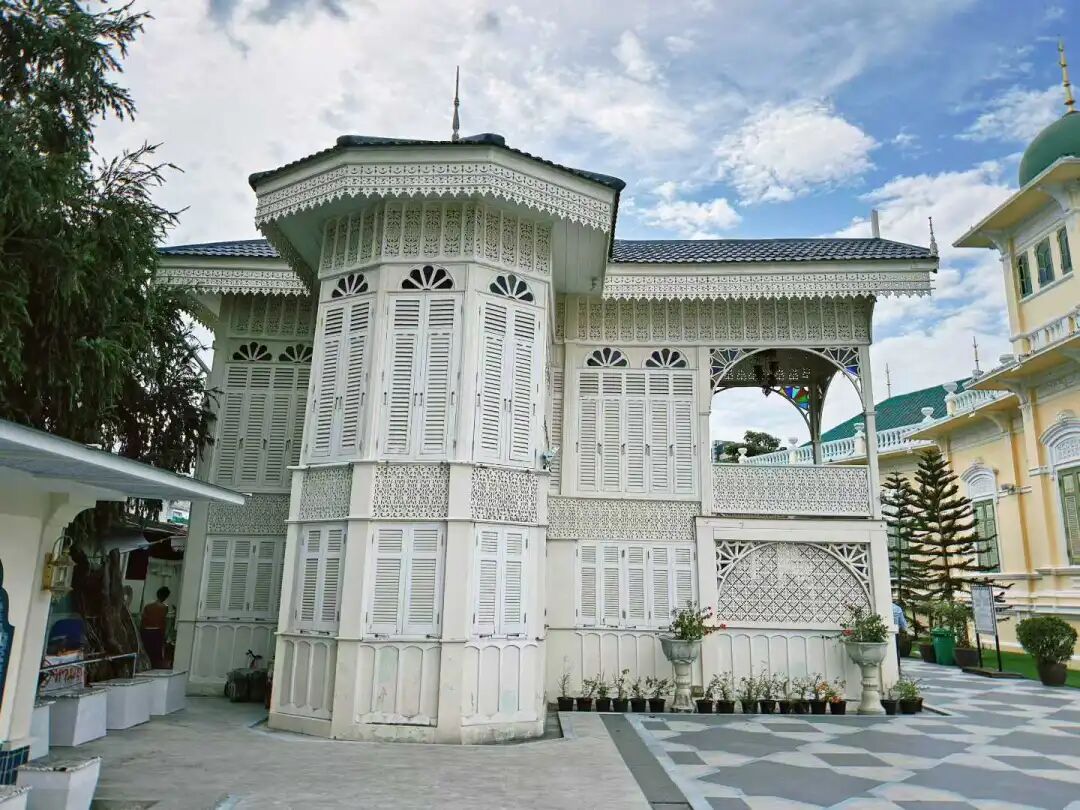
Additionally, the office of the Bang O mosque was built in 1920 using the teak gingerbread style, which is very characteristic of that era. This is a decorative style that originated in the United States in the 1860s. It involves cutting wood into small decorative pieces with very rich details. Because gingerbread houses have high ceilings and shutters on all sides to improve ventilation, they were very popular in tropical regions. During the reign of Rama V (1868-1910), many mansions belonging to Thai nobles were built in the teak gingerbread style.
Chakraphong Mosque
After Ayutthaya fell in 1767, the Sultanate of Pattani was briefly free from Thai control. However, with the establishment of the Chakri Dynasty in Thailand in 1782, the Thai government decided to restore its control over the Sultanate of Pattani. In 1786, Thailand sent an army led by the Second King Maha Sura Singhanat to launch a devastating attack on the Pattani Sultanate. To show their loyalty to Thailand, the Pattani Sultanate sent a large number of nobles and craftsmen to Bangkok as hostages. Under the supervision of the Thai Second King, these Pattani Malays were settled inside the northern city wall of Bangkok, near the mouth of the Bang Lamphu canal. Among the many mosque communities (masjid) established by Malay and Cham captives around Bangkok, the Chakraphong mosque community is the only one located inside the city walls.
The Chakraphong mosque was originally called the Bang Lamphu mosque, and it only changed to its current name after Chakraphong Road was built in 1900. Before the 1960s, many Malay residents worked as goldsmiths, setting up stalls to trade along the roads around the mosque community. Today, the Bang Lamphu mosque community is famous for its specialty snacks.
Chinese porcelain collected by the Chakraphong mosque.
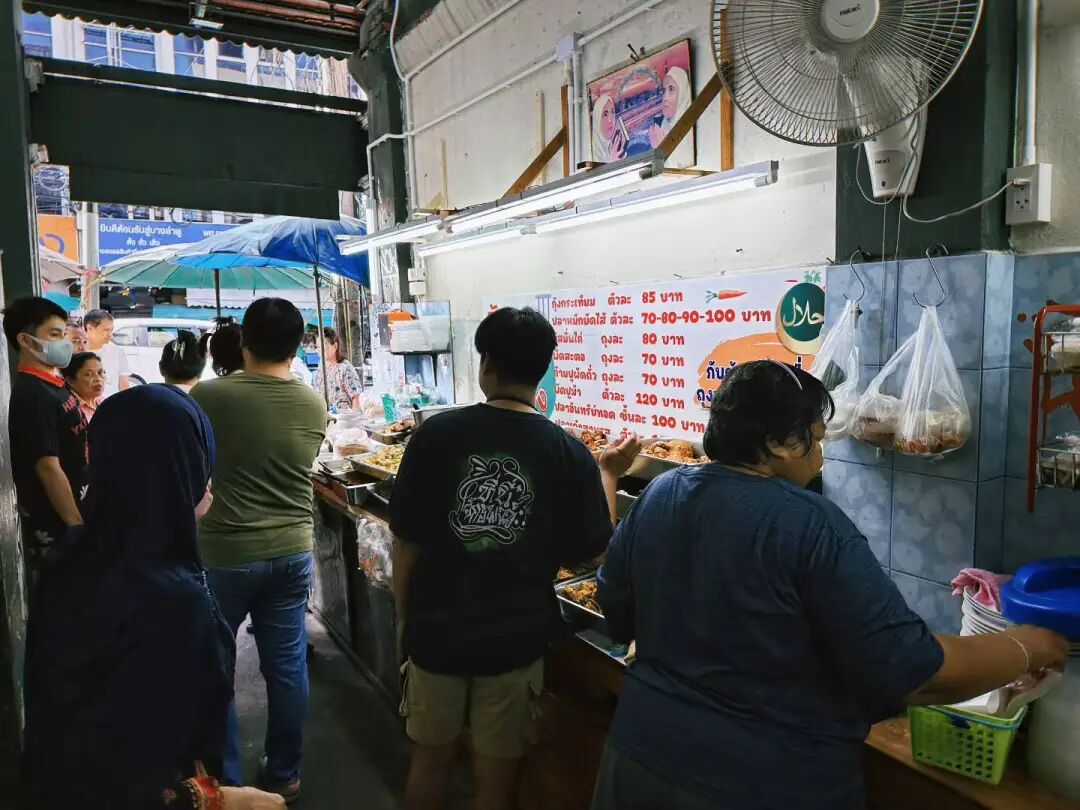
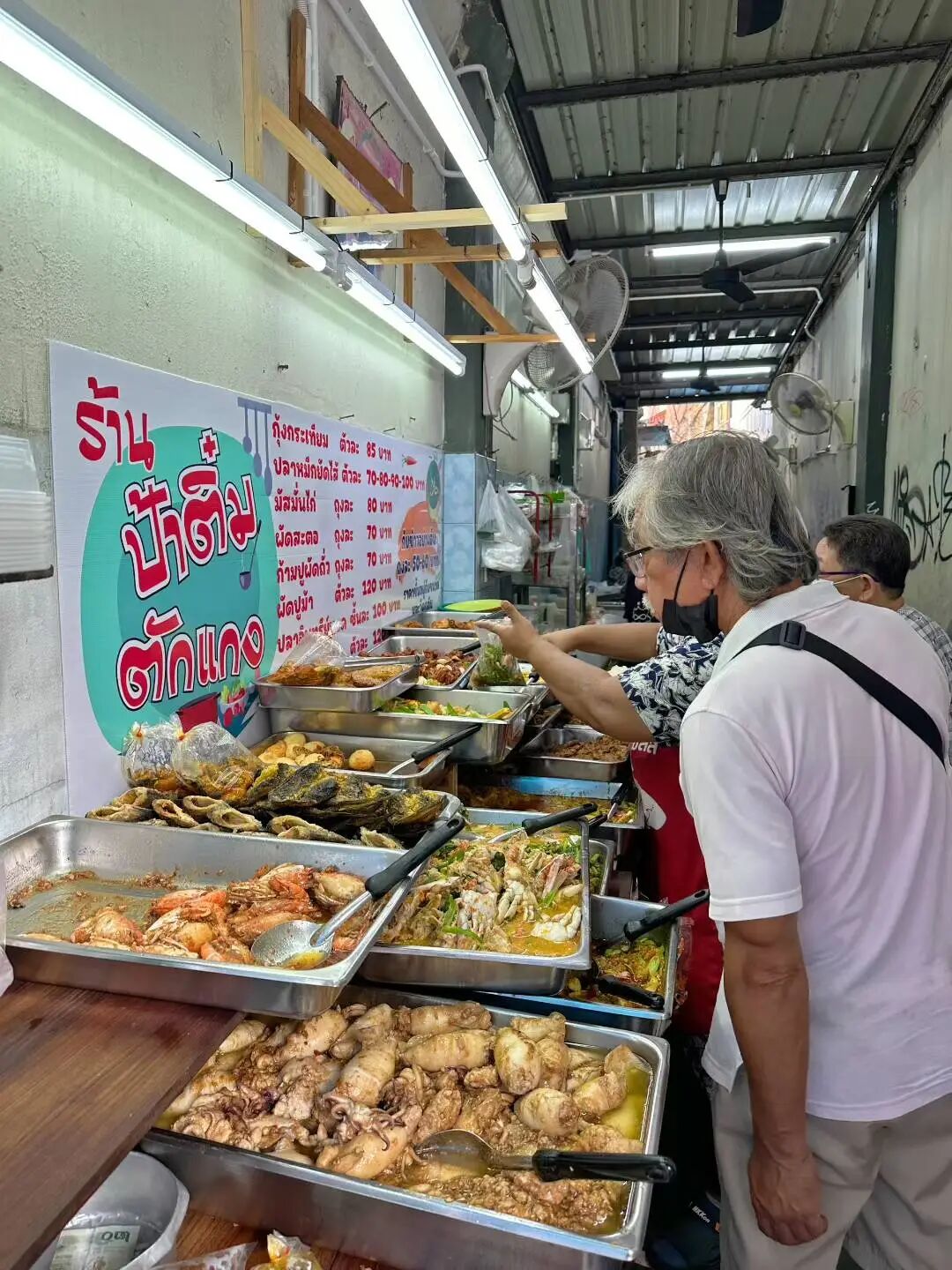
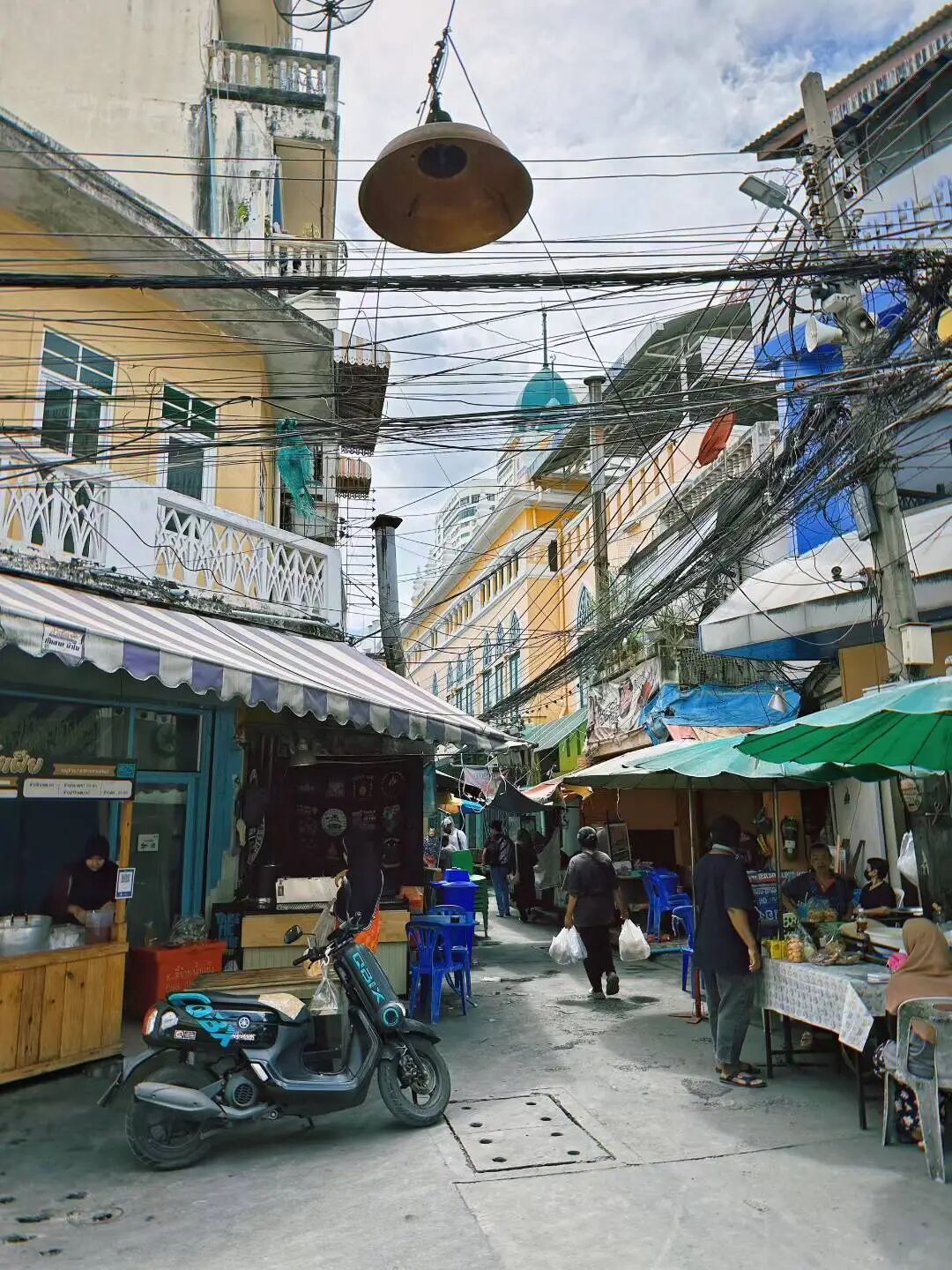
The snack stalls at the entrance are very busy, with people lining up to get food to go.
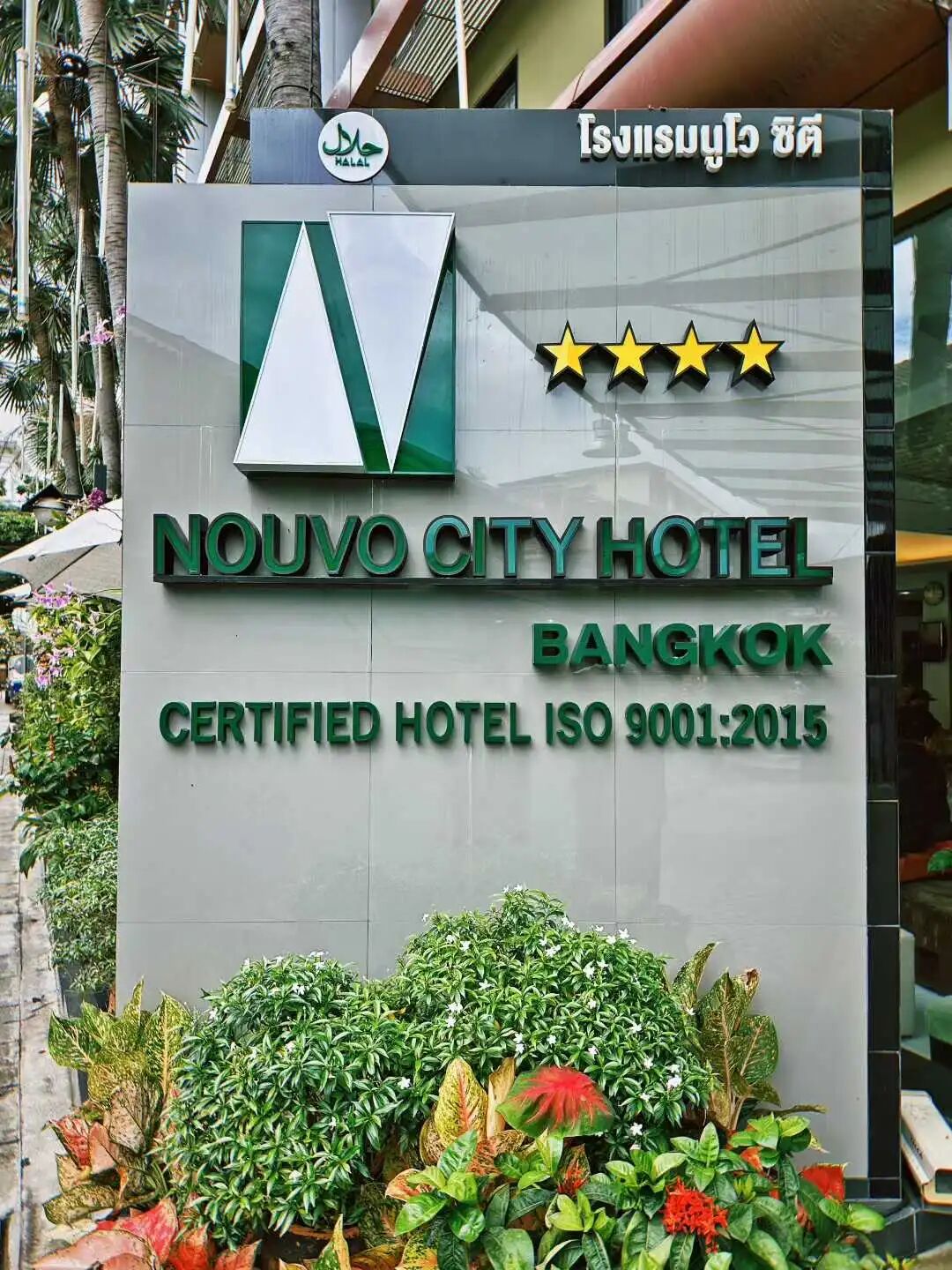
The Nouvo City Hotel where we stayed is only about 200 meters from the Chakraphong mosque, and it is the most famous halal hotel in Bangkok's old town. Near the hotel are piers for two express boat lines on the Chao Phraya River and the Bang Lamphu canal, making it very convenient to reach major Bangkok attractions without getting stuck in traffic.
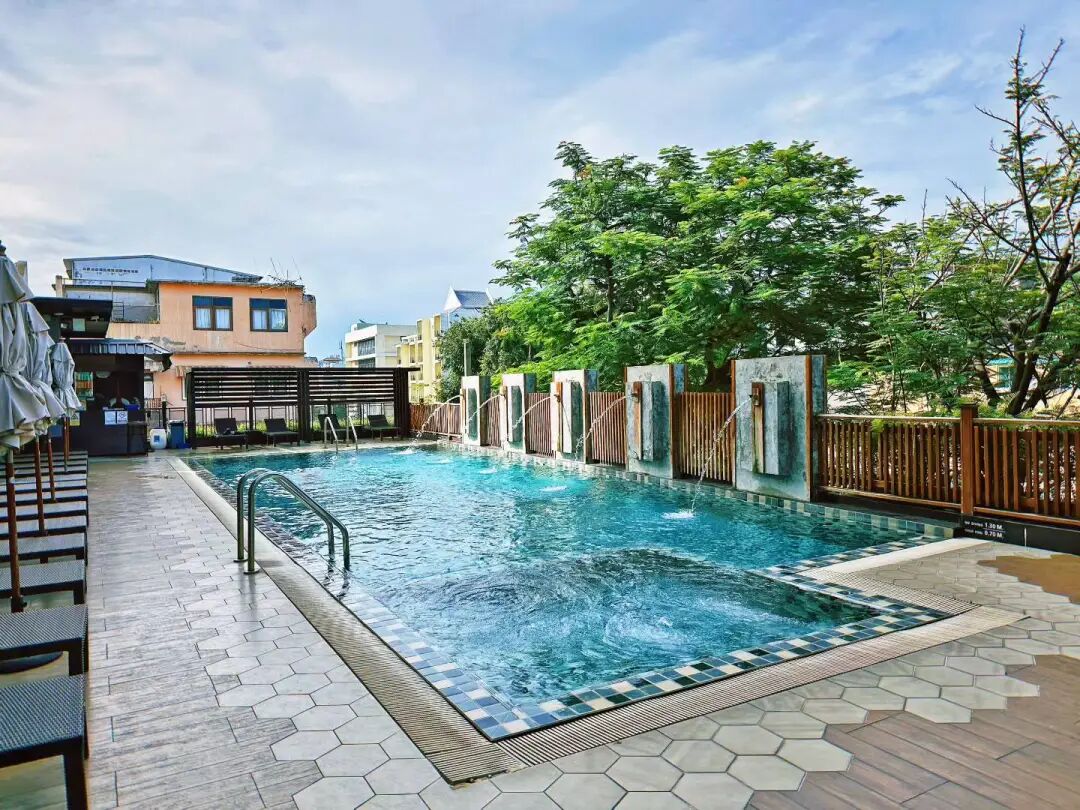
The hotel has a gym, two swimming pools, and a prayer room, which is very convenient.
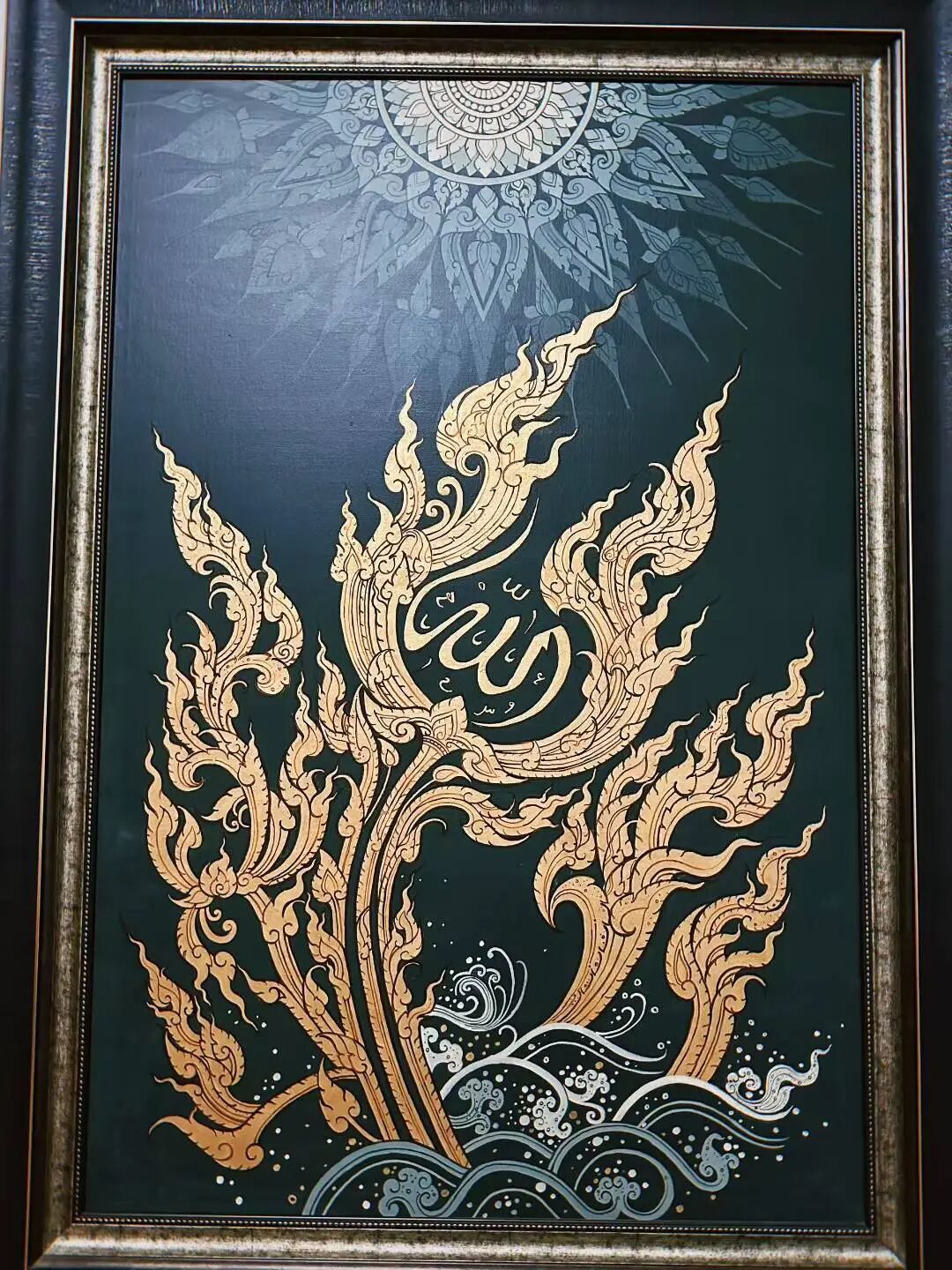
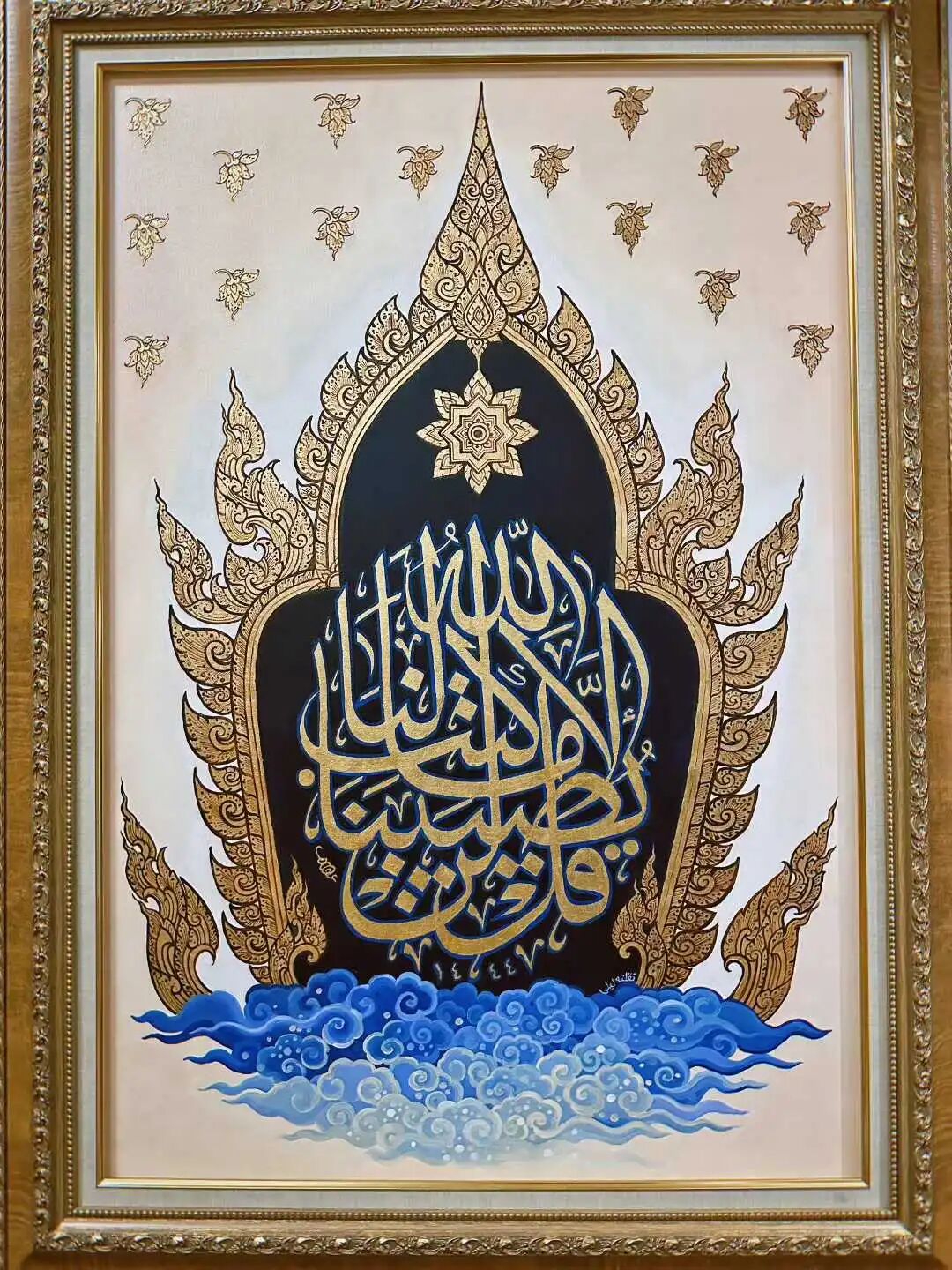
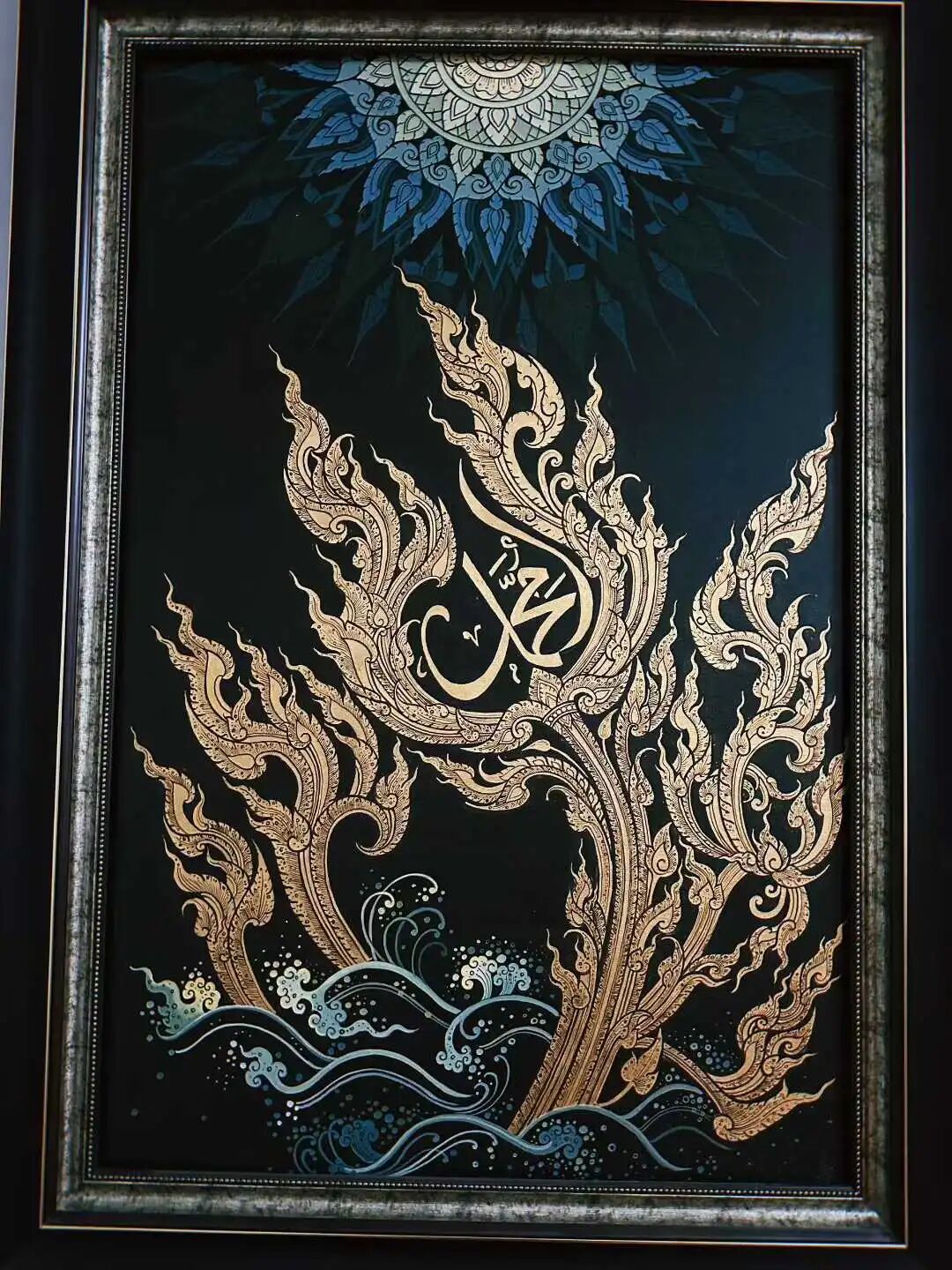
The prayer room features Thai-style Islamic decorative art, combining local Thai patterns with Islamic calligraphy, which looks very beautiful.
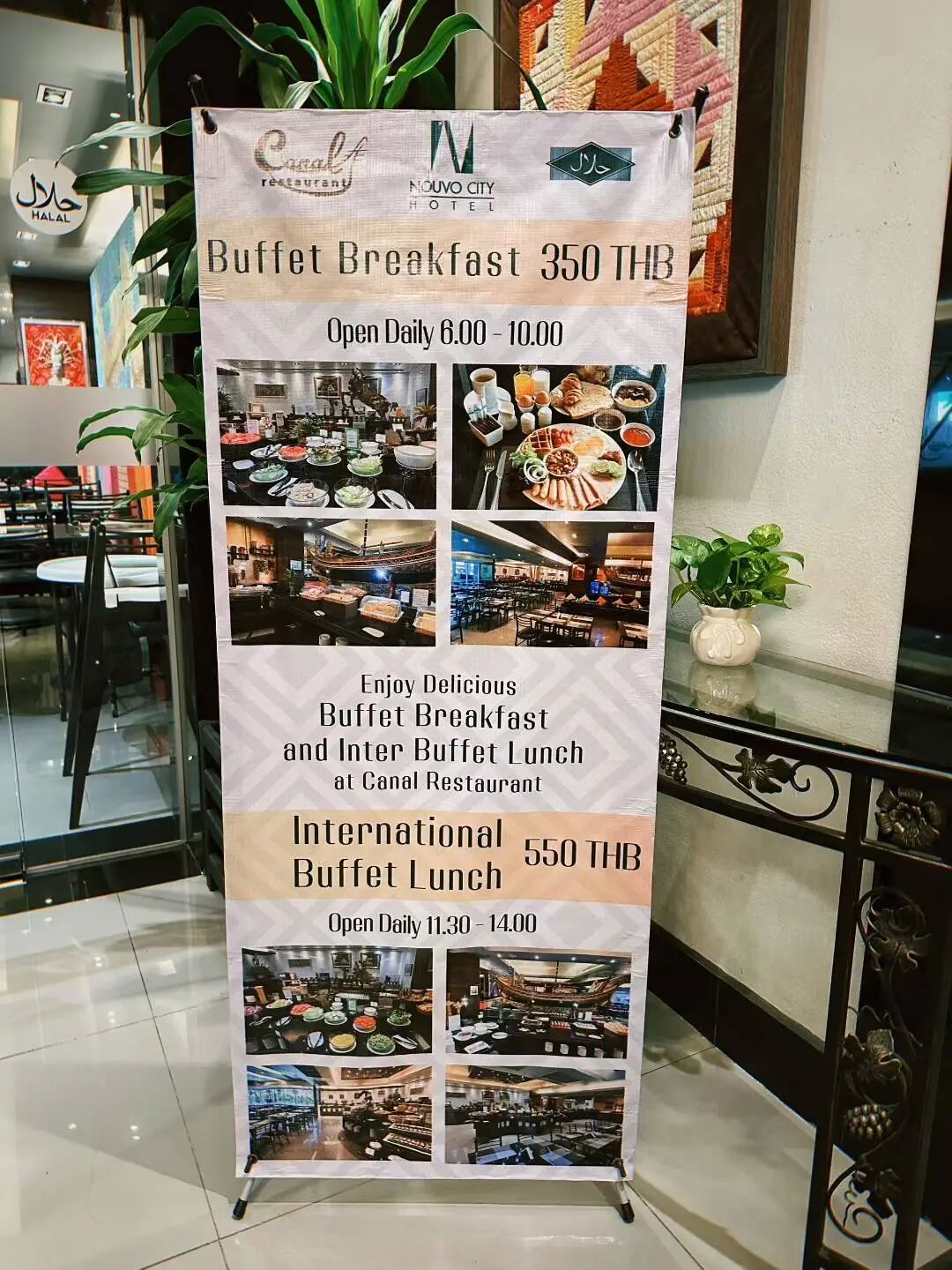
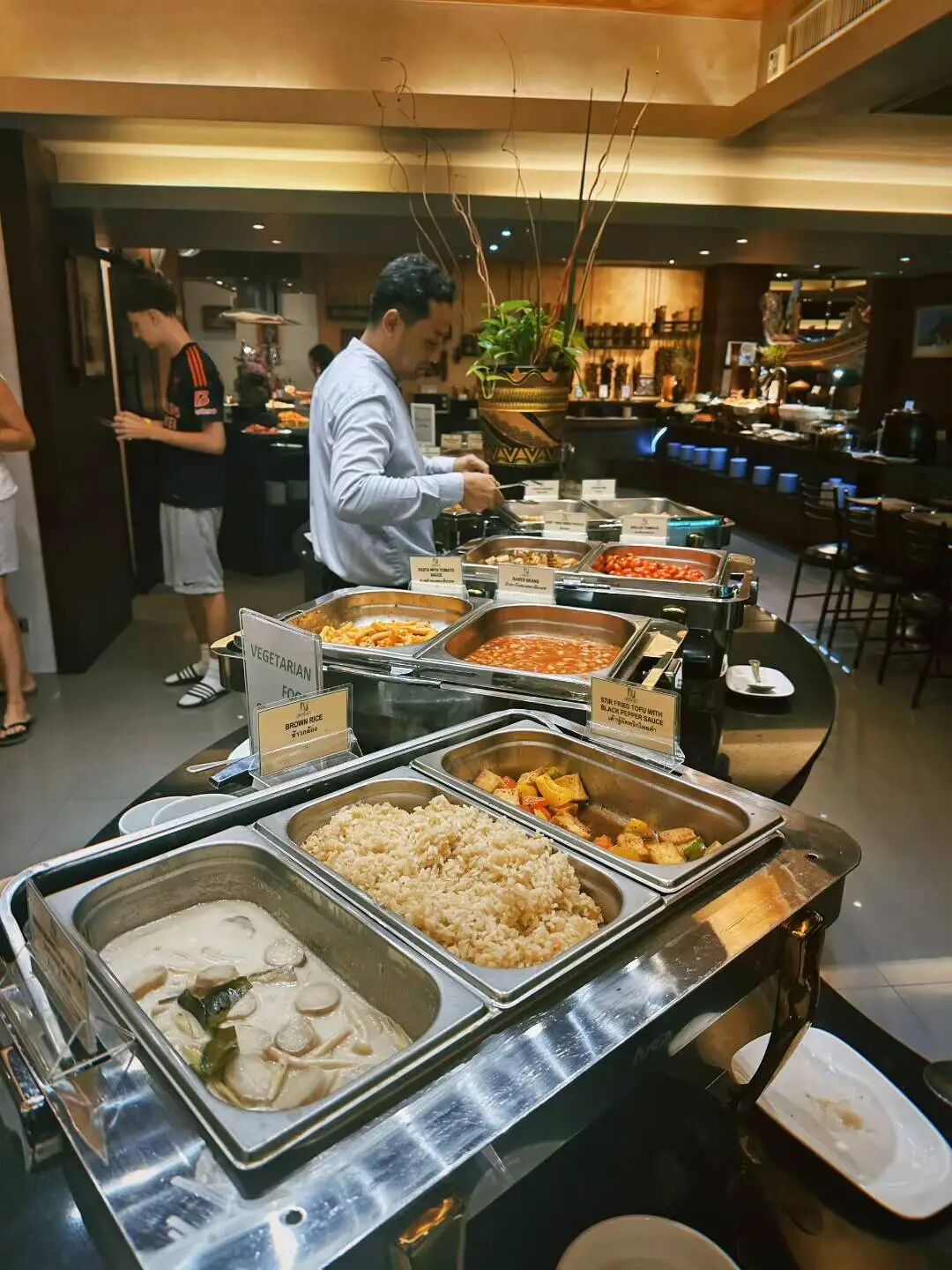
The hotel's buffet breakfast is also good, offering Thai, Indian, and Western styles, with specialties like coconut milk mushrooms, spicy porridge, and brown rice.
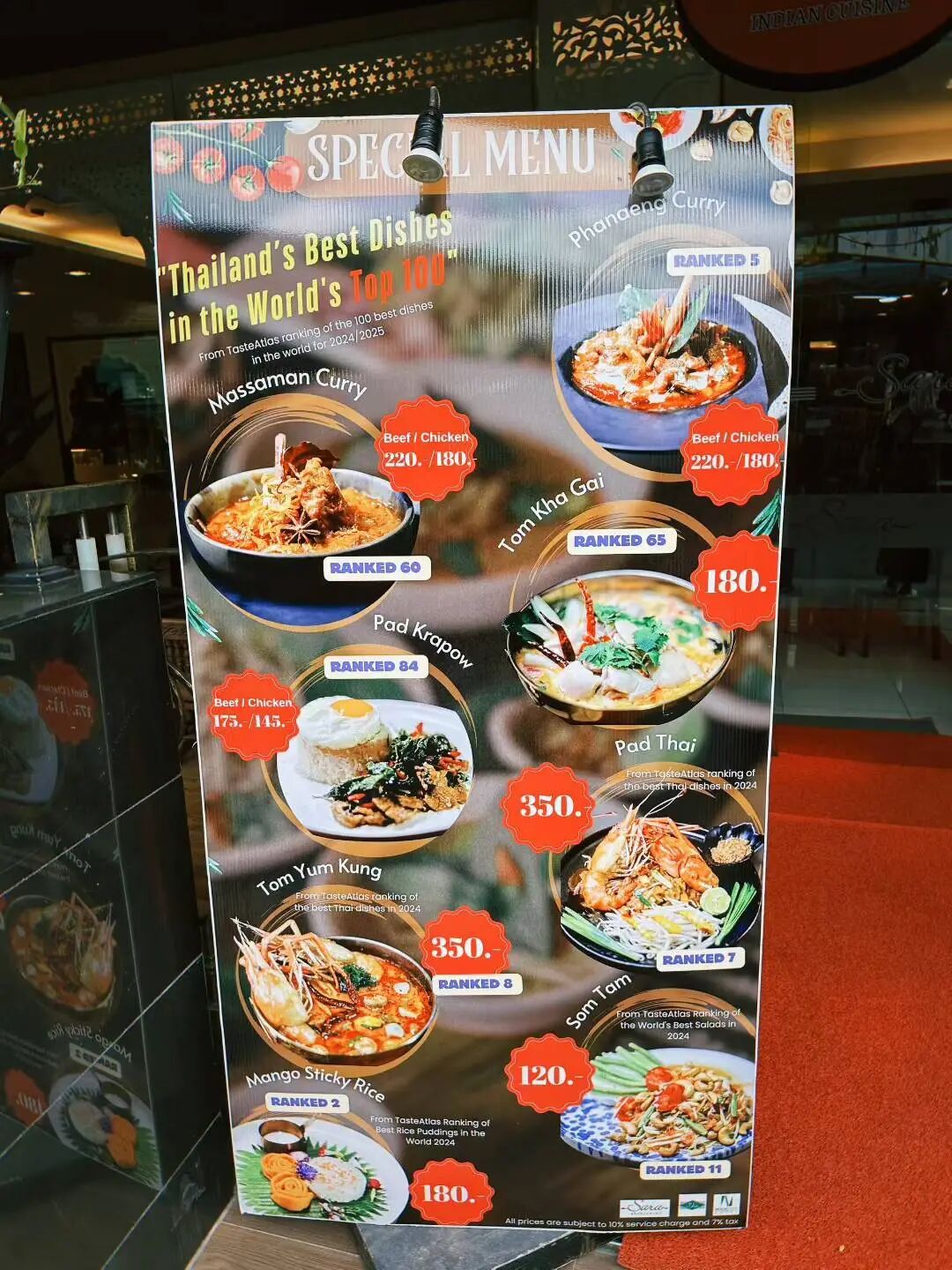
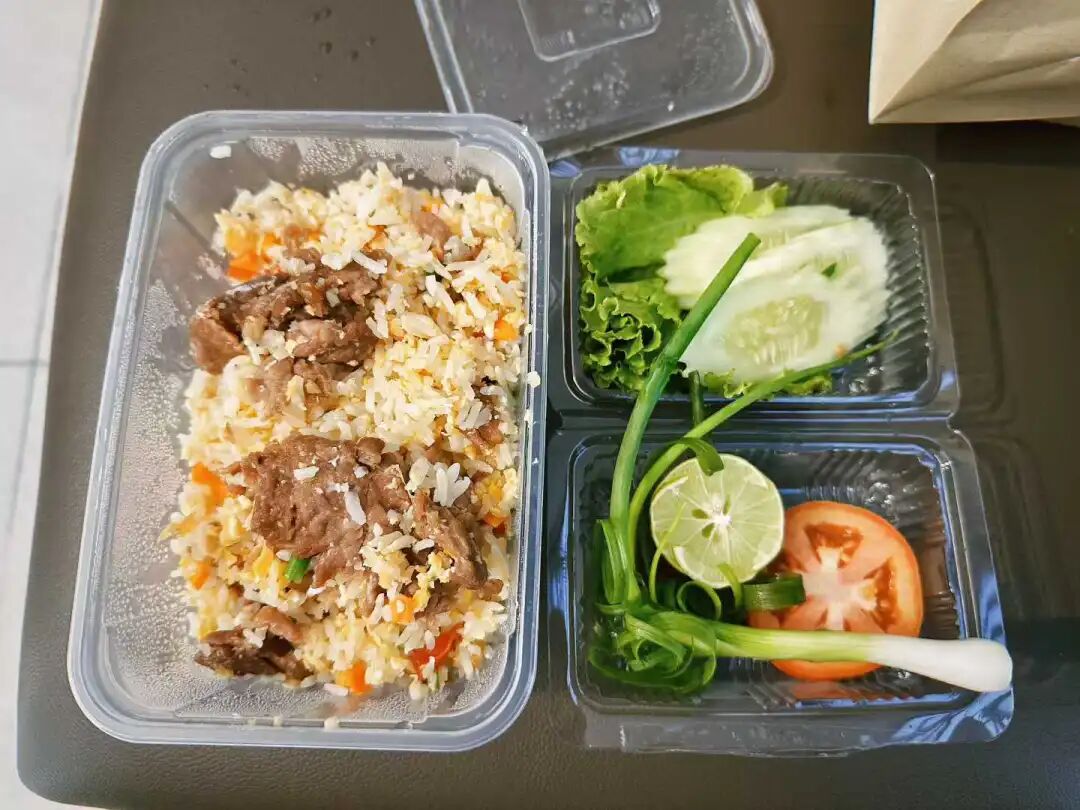
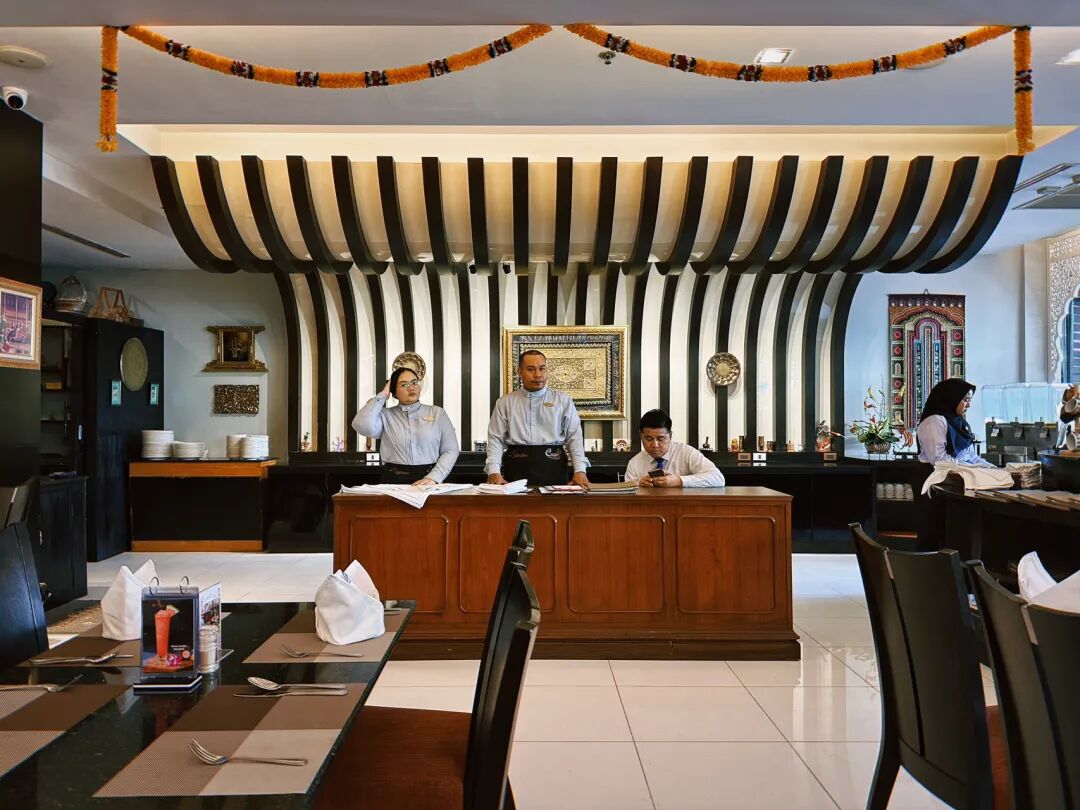
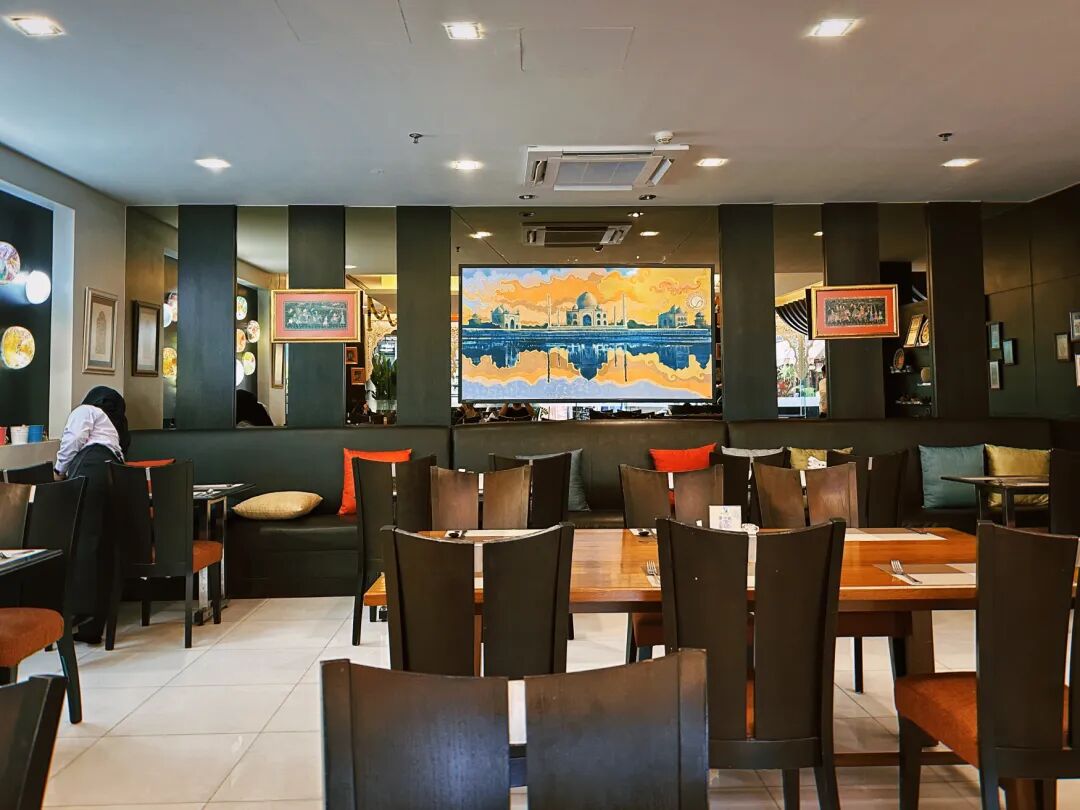
The hotel also has another restaurant called Sara where you can order from a menu, focusing on Thai and Indian food. Before I left for the airport, I ordered a beef fried rice to go; it was inexpensive and came with a box of side dishes. Their service is also quite good.
Mahanak mosque
Not long after Thailand invaded Pattani in 1786, the Pattani Sultanate soon began to resist Thailand again. Thailand invaded the Pattani Sultanate again in 1790 and then sent a second group of Pattani Malay captives to Bangkok, where they were settled in the eastern suburbs and established the Mahanak mosque community.
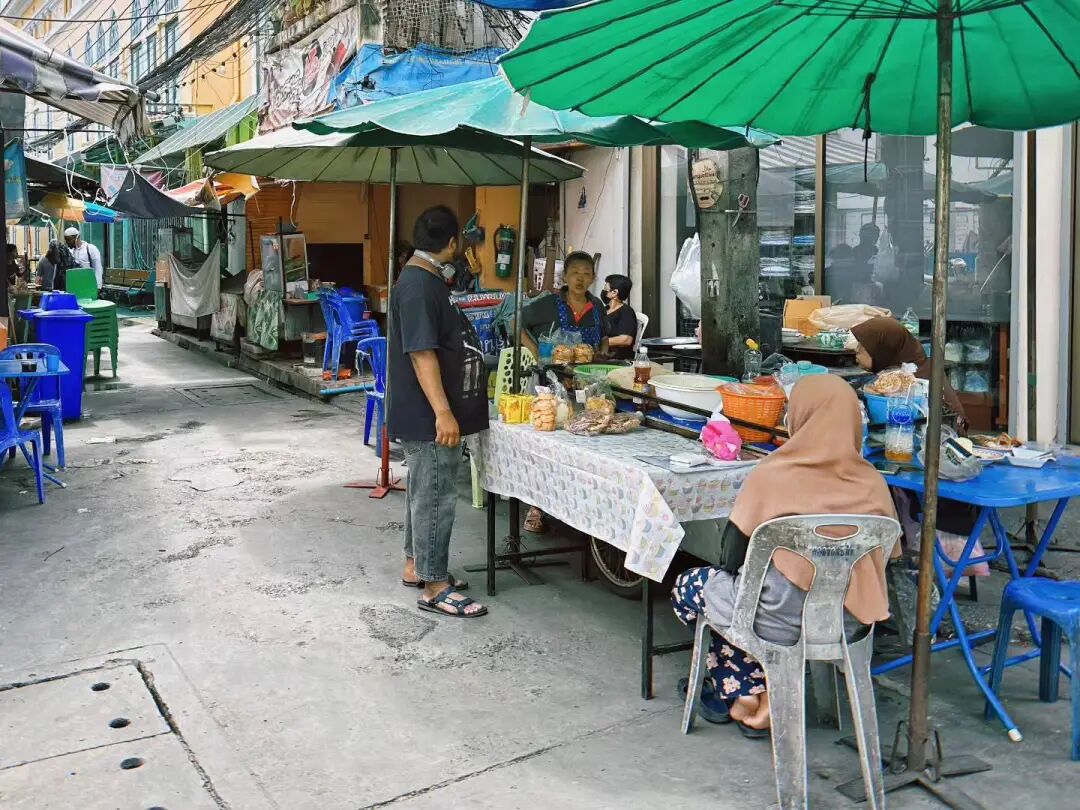
With the excavation of the Padung Krung Kasem canal and the Mahanak canal, the Mahanak mosque community gradually became a floating market. After the 20th century, a large group of Indian textile merchants on the other side of the canal provided more income opportunities for the mosque community.
Kedah Malay mosque community
The Kedah Sultanate is located in the northwest of present-day Malaysia, west of the Pattani Sultanate, and is another Malay state bordering Thailand.
Al-Athik mosque
In 1803, Thailand forcibly interfered in the internal affairs of the Kedah Sultanate, forcing the Sultan to abdicate and installing a new one, which led to the Kedah Sultanate splitting into two countries in 1808.
In 1808, a group of Malay captives from the Kedah Sultanate arrived in Bangkok. To avoid interaction with previously settled Pattani Malay villages, they were placed in a remote area on the east bank, five kilometers down the Chao Phraya River. These Kedah Malays dug canals to provide irrigation for their village, gradually turning jungle swamps into farmland reaching one kilometer inland, and they established the Al-Athik mosque, which means 'Old Mosque'.
After more than fifty years of isolation, Bangkok's first southern suburban road was finally built, which greatly improved transportation for the Al-Athik mosque community. In the late 19th century, ferry terminals, rice and timber export companies, a tram terminal, a slaughterhouse, and Bangkok's first coal-fired power plant were gradually built around the mosque community.
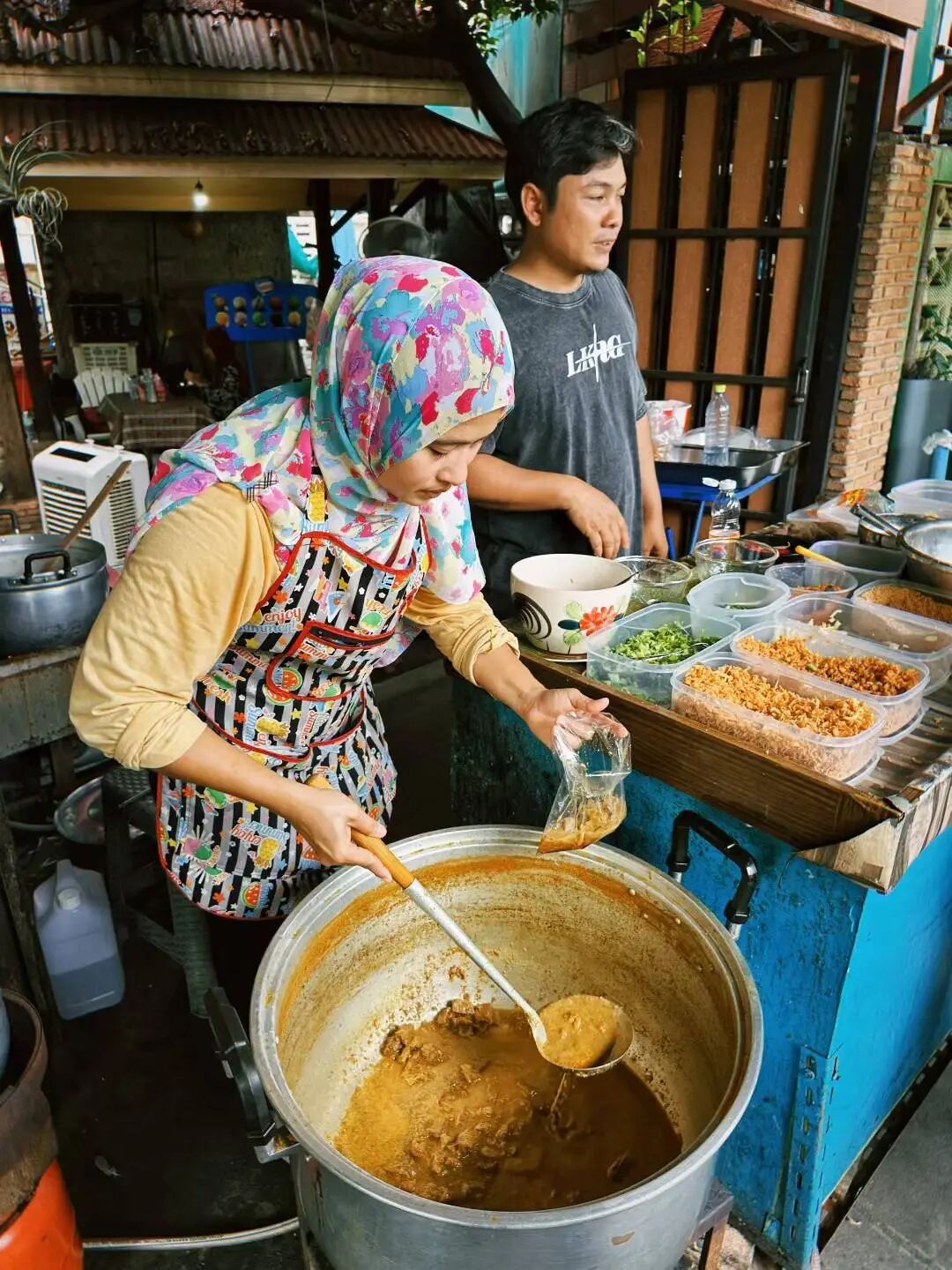
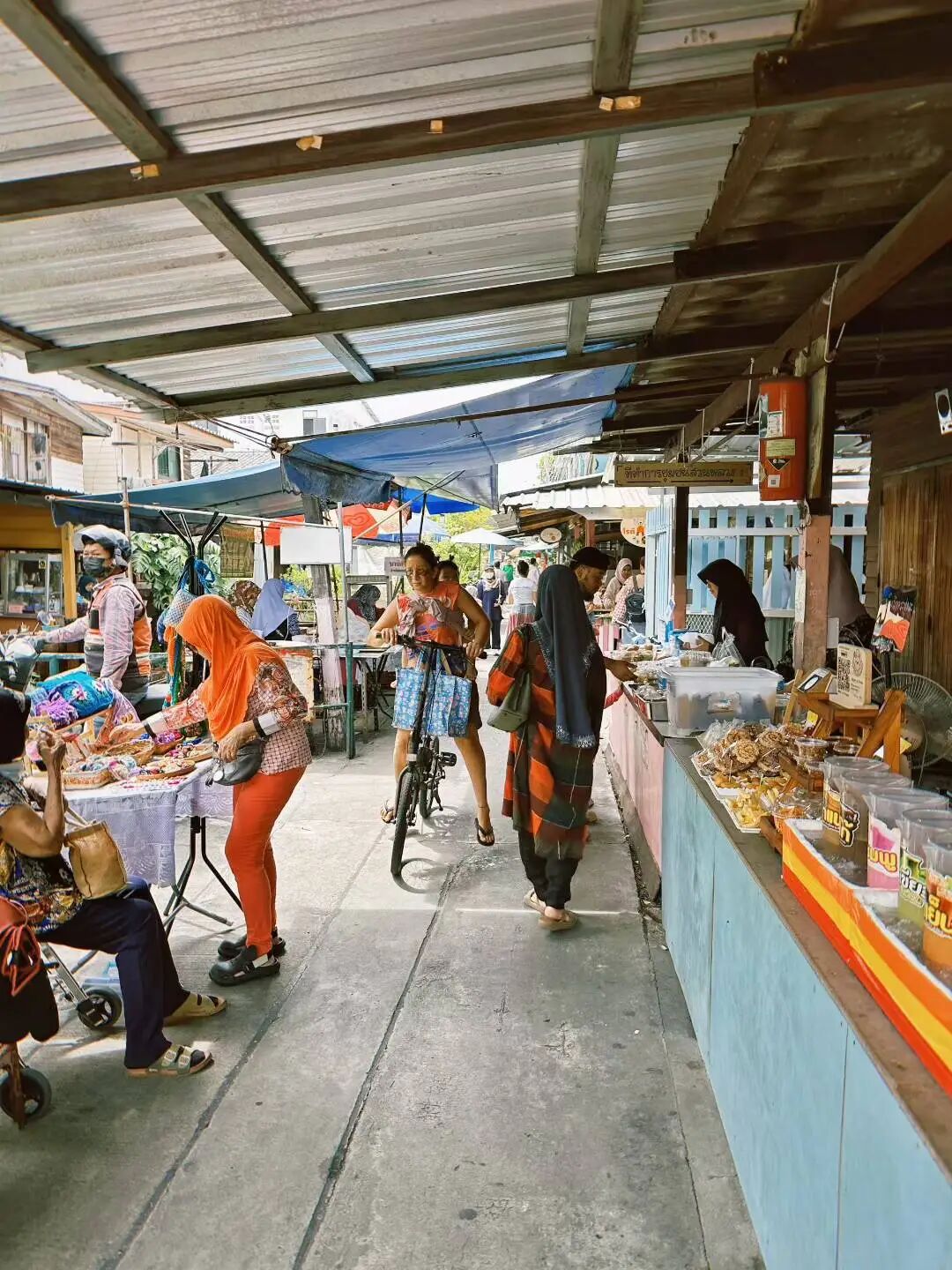
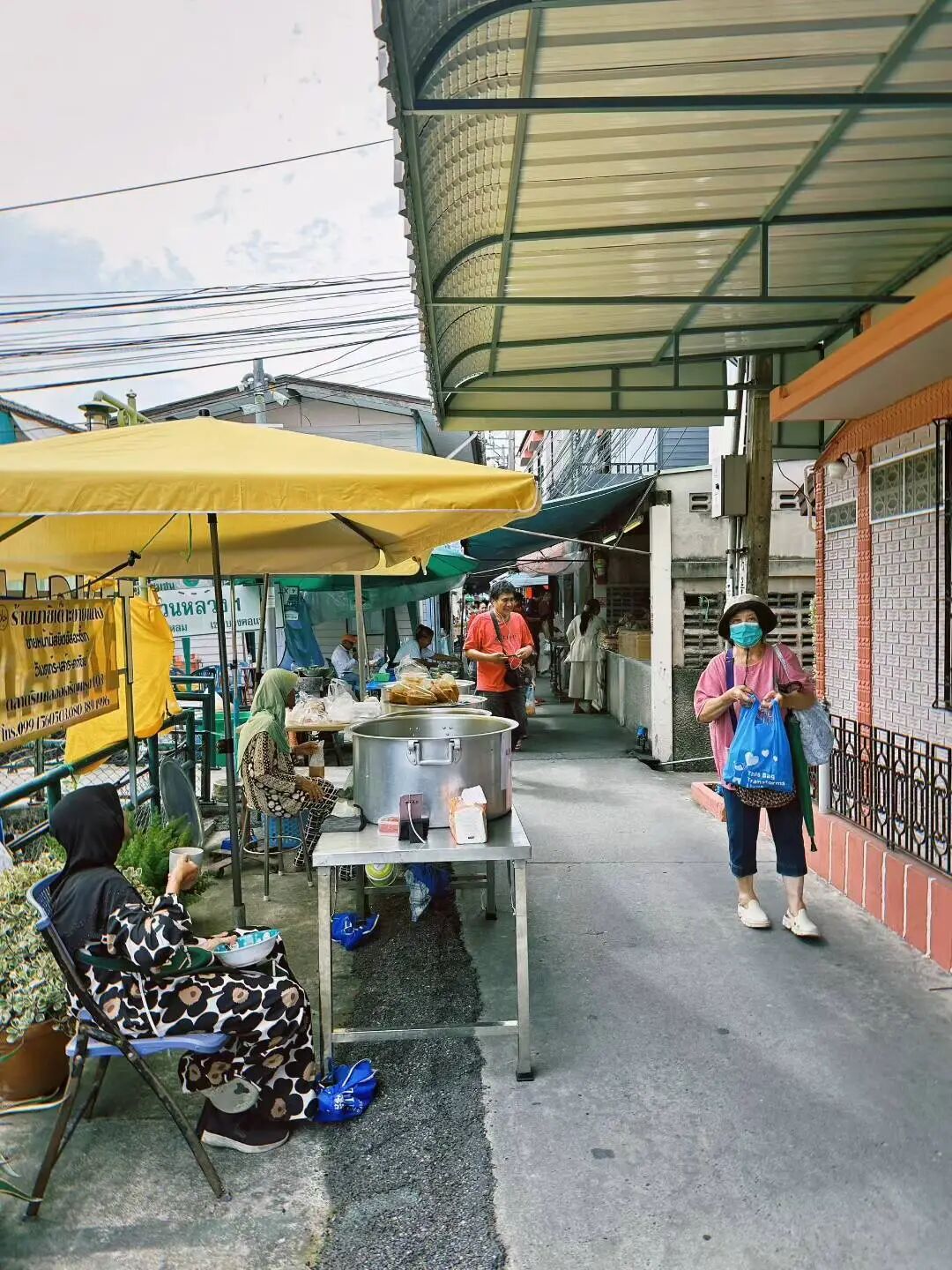
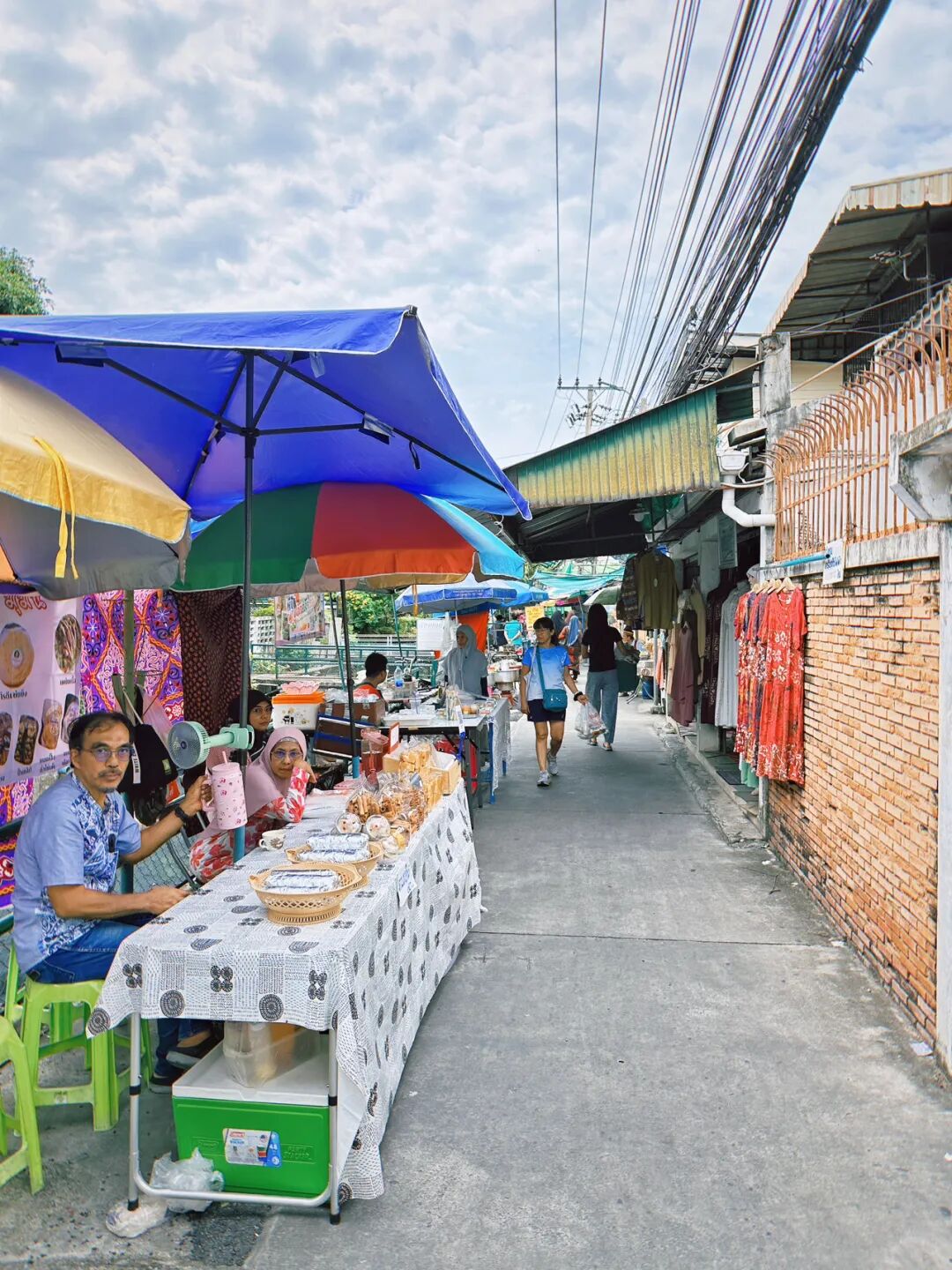
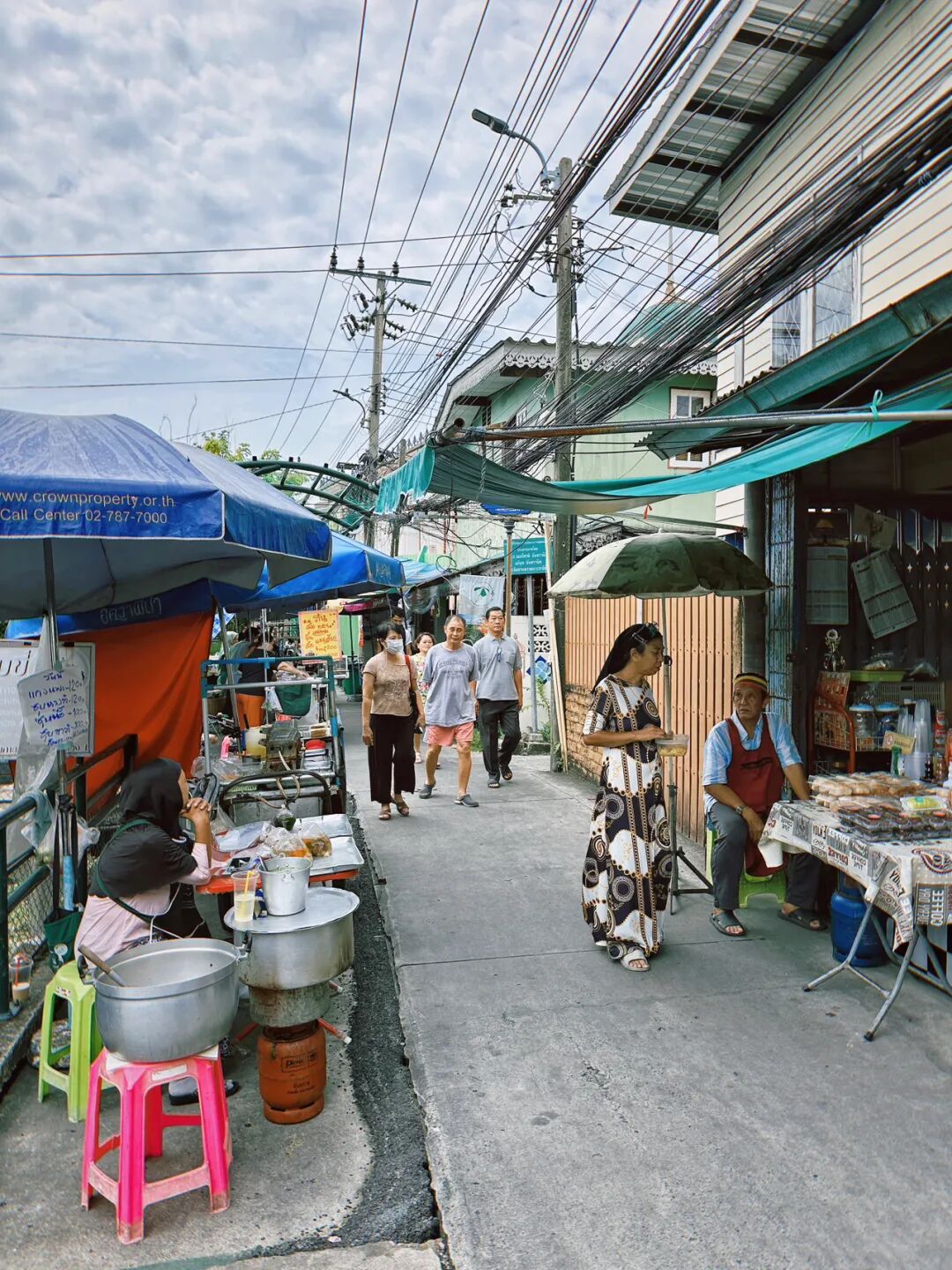
The Al-Athik mosque community holds a halal market on the morning of the first weekend of every month, which is the best chance to experience Bangkok's halal culture; you can find it on the map by searching for Riverside Market, Charoen Krung 103.
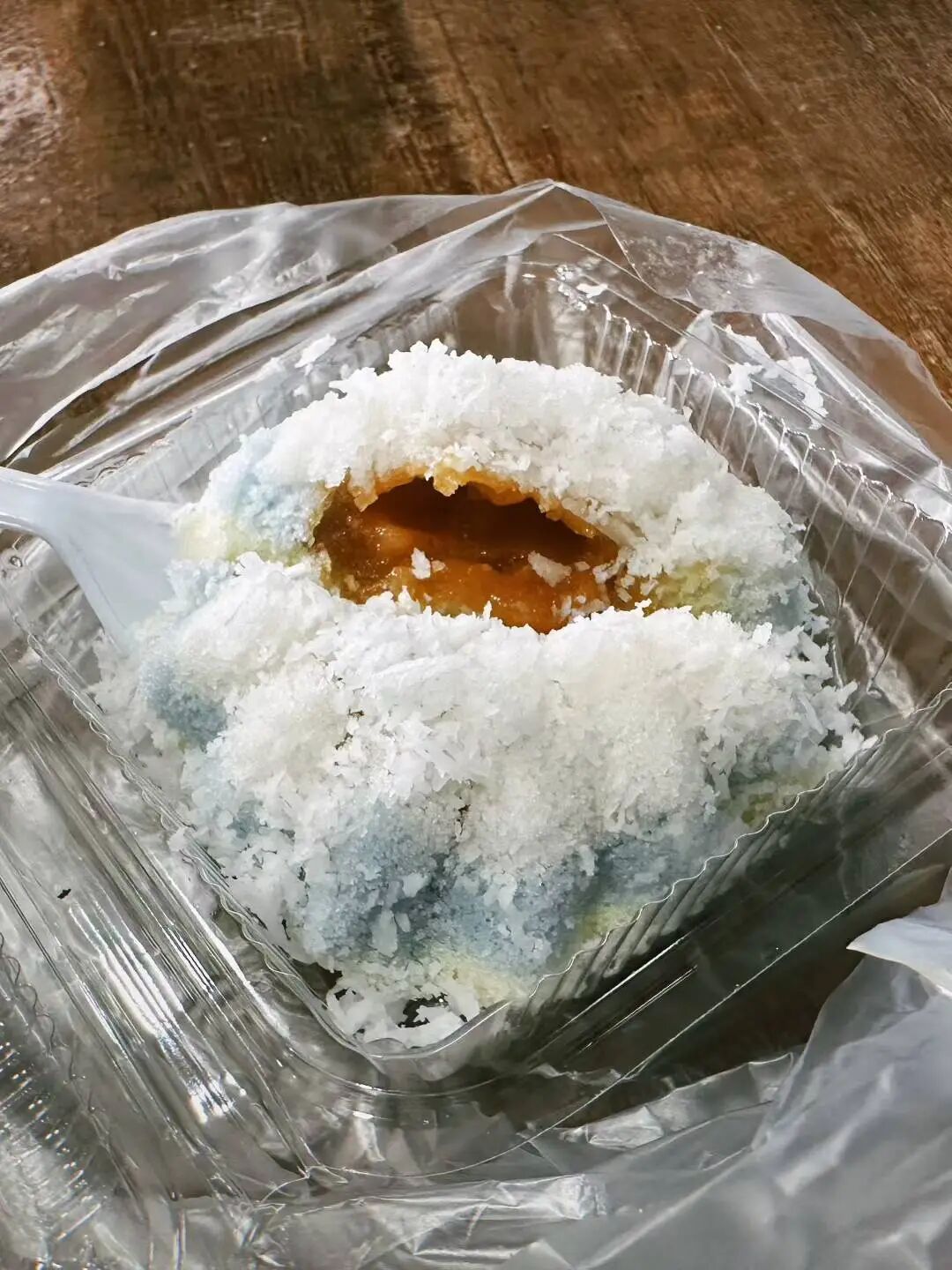
We first bought a pastry similar to Malay steamed rice cakes (dudu kuih), made by putting palm sugar inside rice flour, pressing it into stainless steel molds, steaming it, and sprinkling it with shredded coconut.
Then we drank longan water, which can be mixed with various ingredients like pearl barley, red beans, honey dates, green jelly noodles (cendol), and grass jelly (xiancao), finally topped with palm sugar and ice for a very rich flavor.
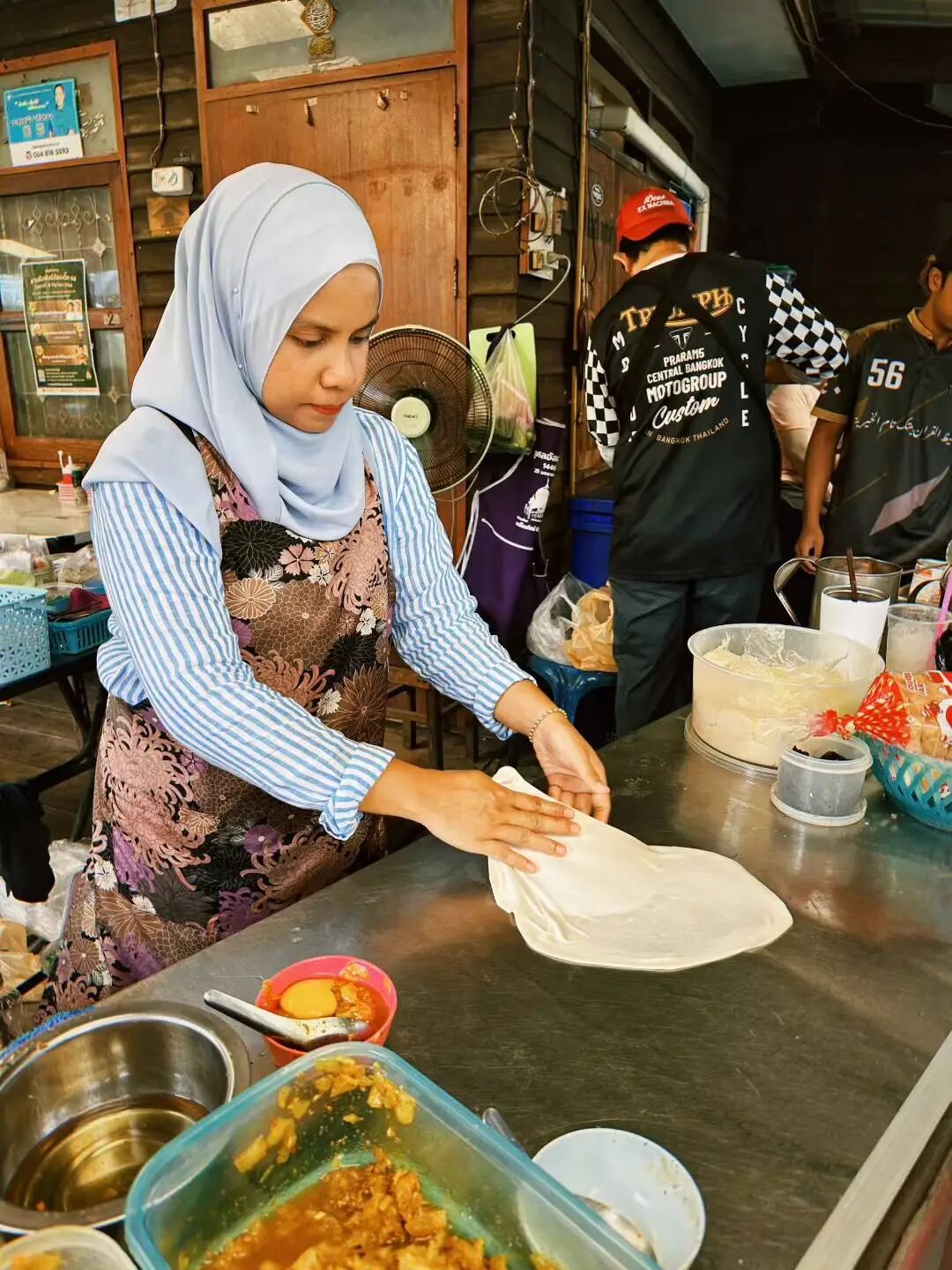
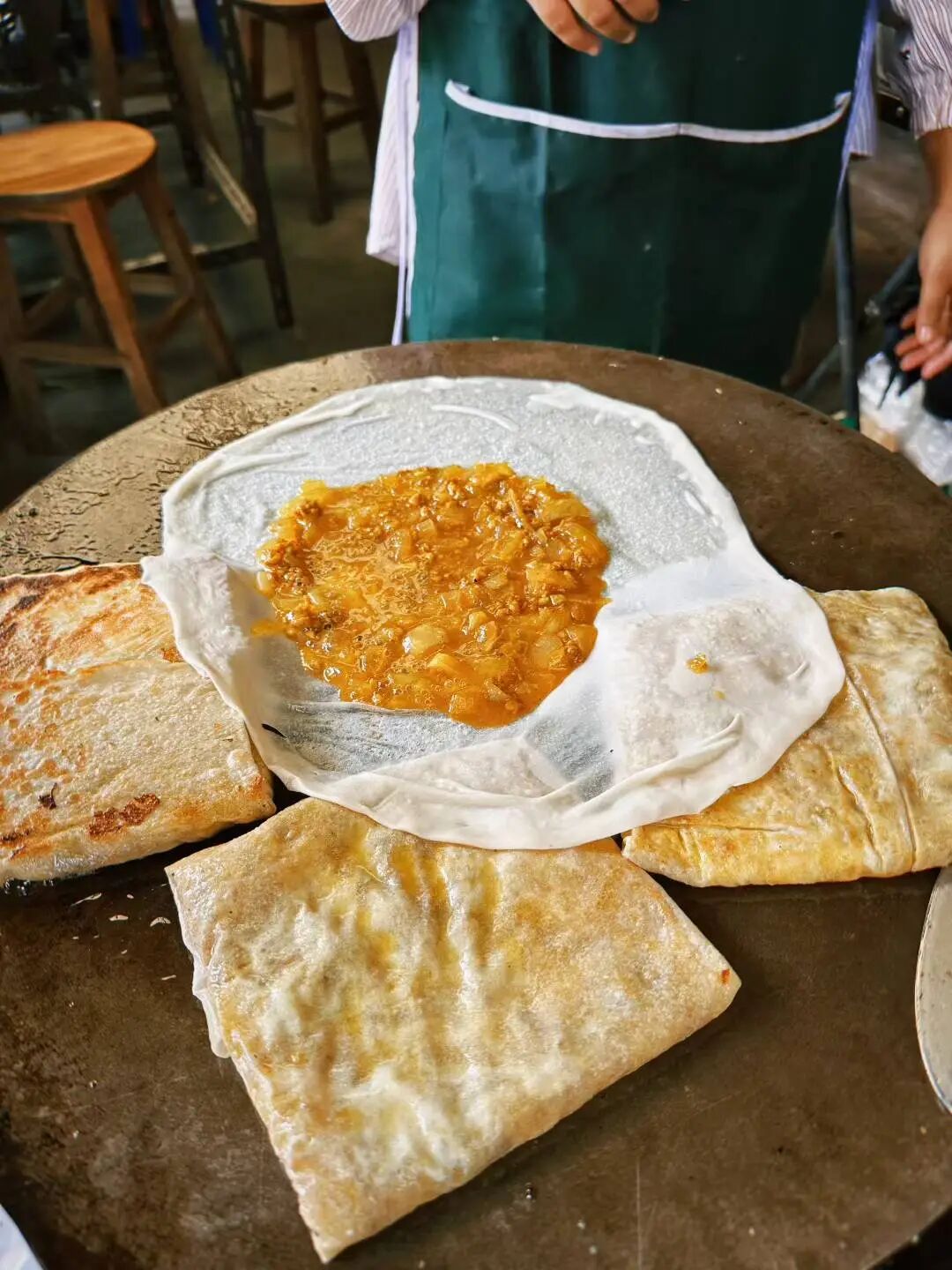
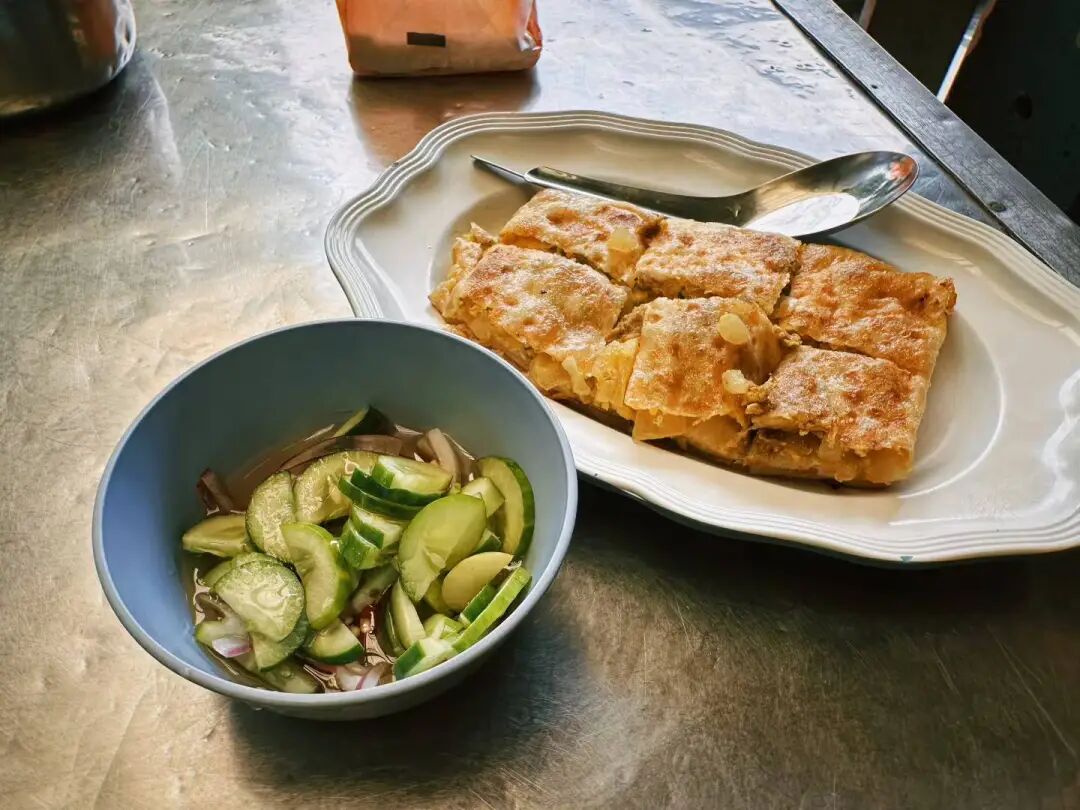
At the Al-Athik mosque halal market, we ate the specialty folded pancake (mataba) with a beef and onion filling. Mataba comes from the Arabic word 'Murtabak', which means 'folded'. This pancake likely originated with Arabs in Yemen, was brought to India by Indian merchants along the Arabian Sea, and finally reached Southeast Asia via the Indian Ocean monsoon winds; today it is a street snack shared across the Arabian Peninsula, South Asia, and Southeast Asia, though recipes vary by region. Thailand's mataba is similar to the version in Malaysia, and both are classic street breakfasts.
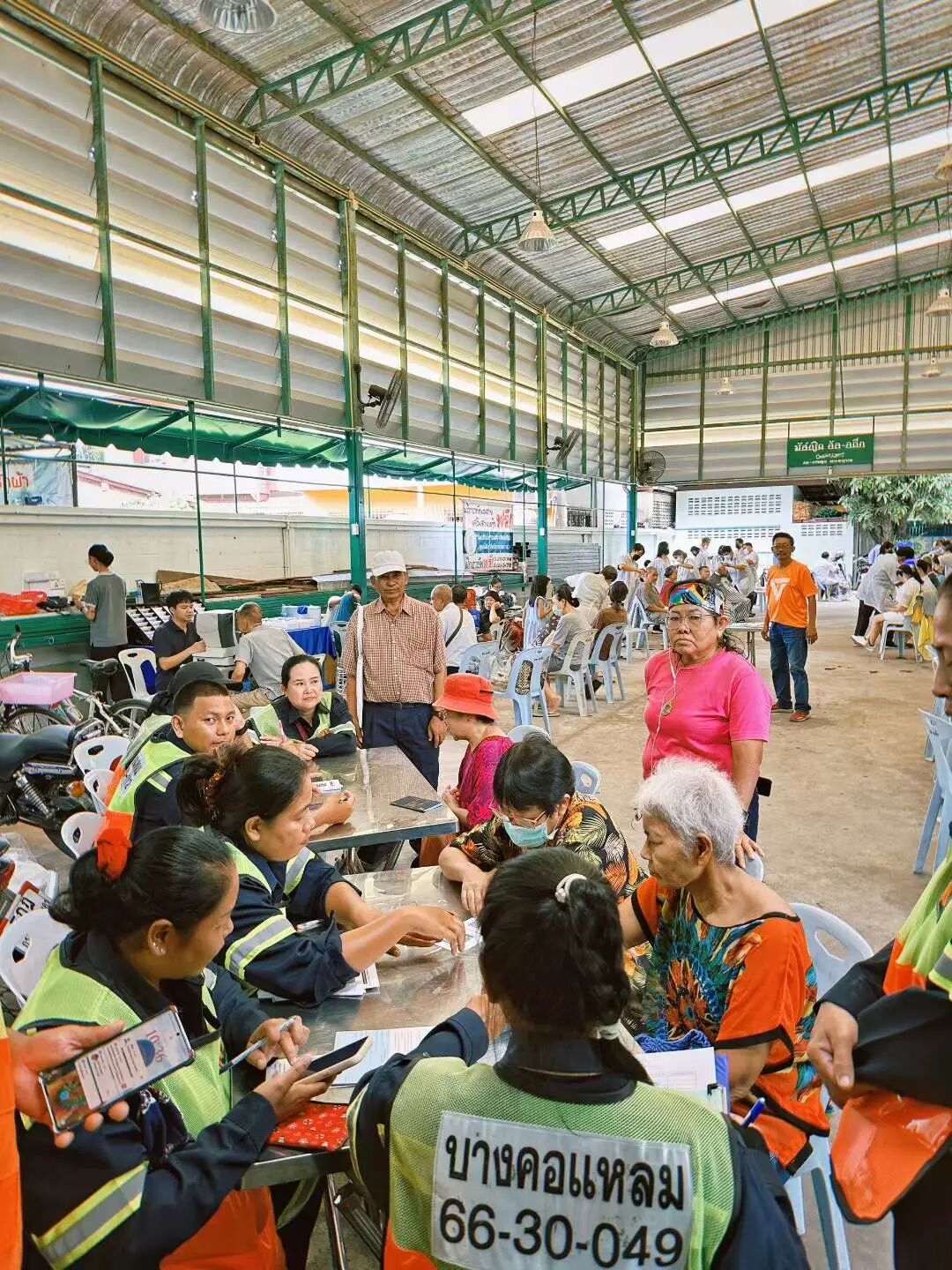
During the market, the courtyard of Al-Athik mosque hosts various charity activities, including medical check-ups and haircuts, which many middle-aged and elderly people attend.
Bang Uthit Mosque
In 1841, the Siamese-Vietnamese War broke out between Thailand and Vietnam, and King Rama III developed a shipyard in the Wat Phraya Krai area on the lower Chao Phraya River to support naval operations against Vietnam. After the Siamese-Vietnamese War ended in 1845, the shipyard was renovated to support the profitable China trade. After 1885, the shipyard continued to expand and began recruiting Malays from the nearby Al-Athik mosque community. The shipyard provided new settlements for these Malay workers near the shipyard, which became Bang Uthit village.
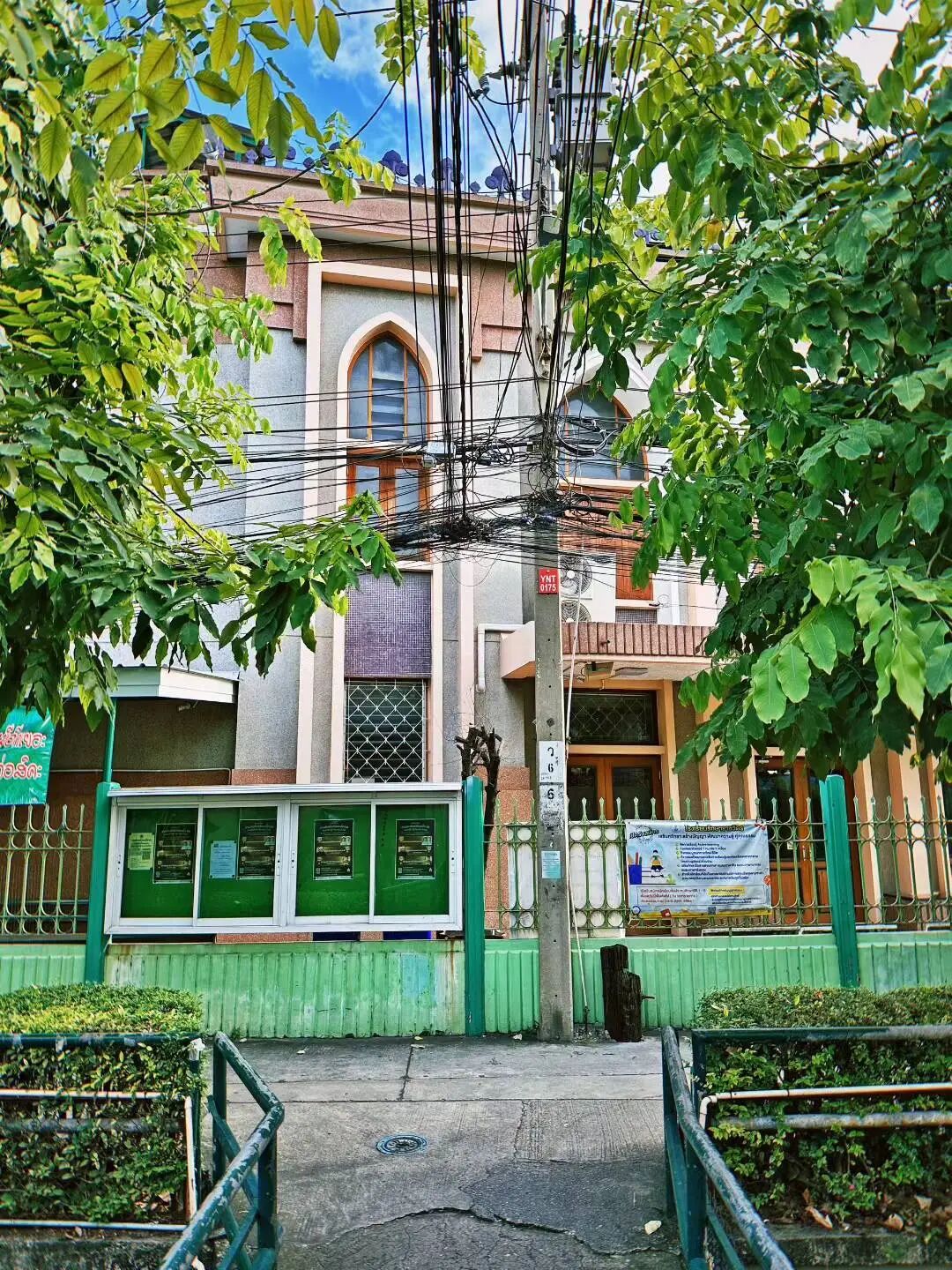
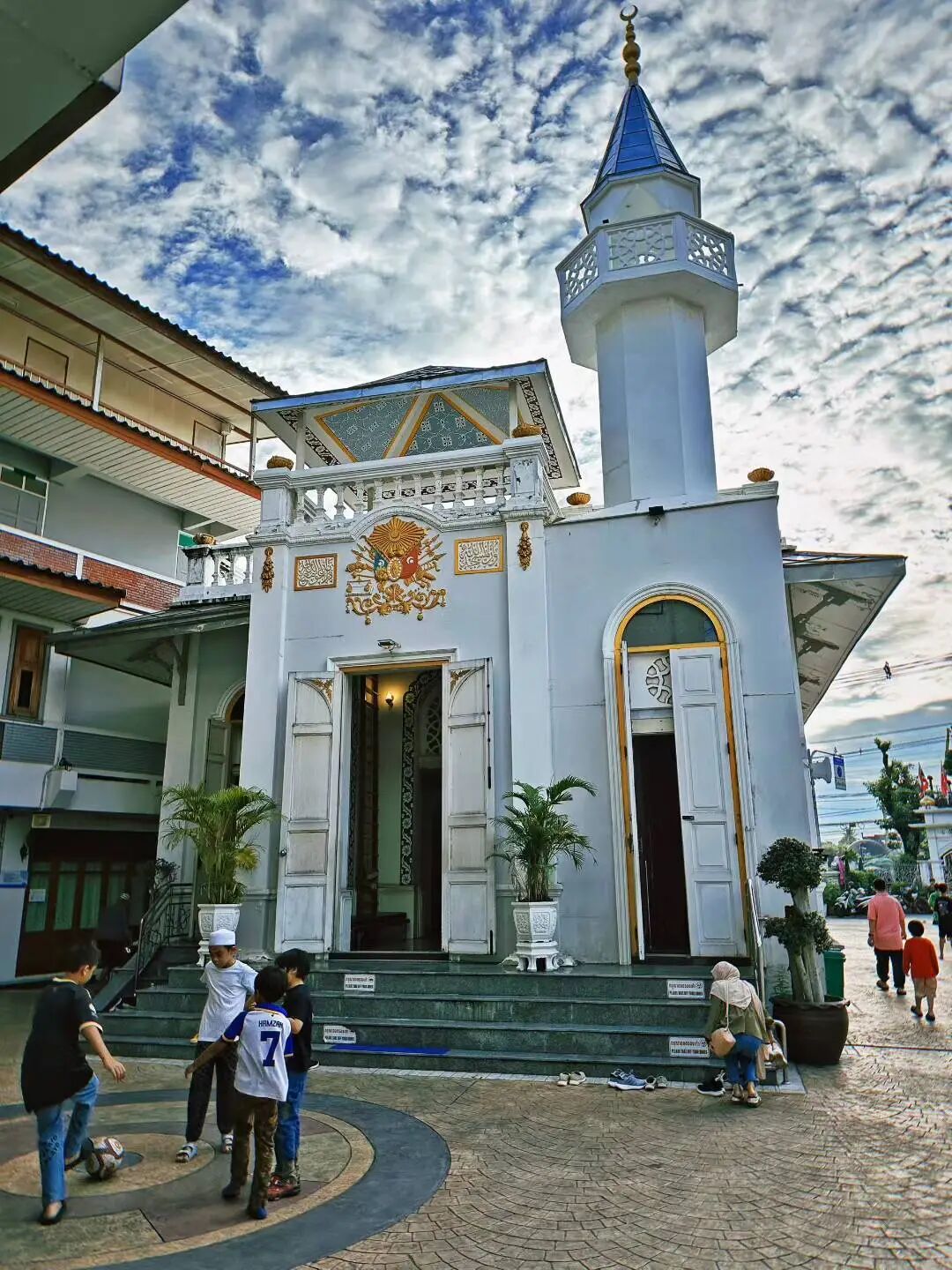
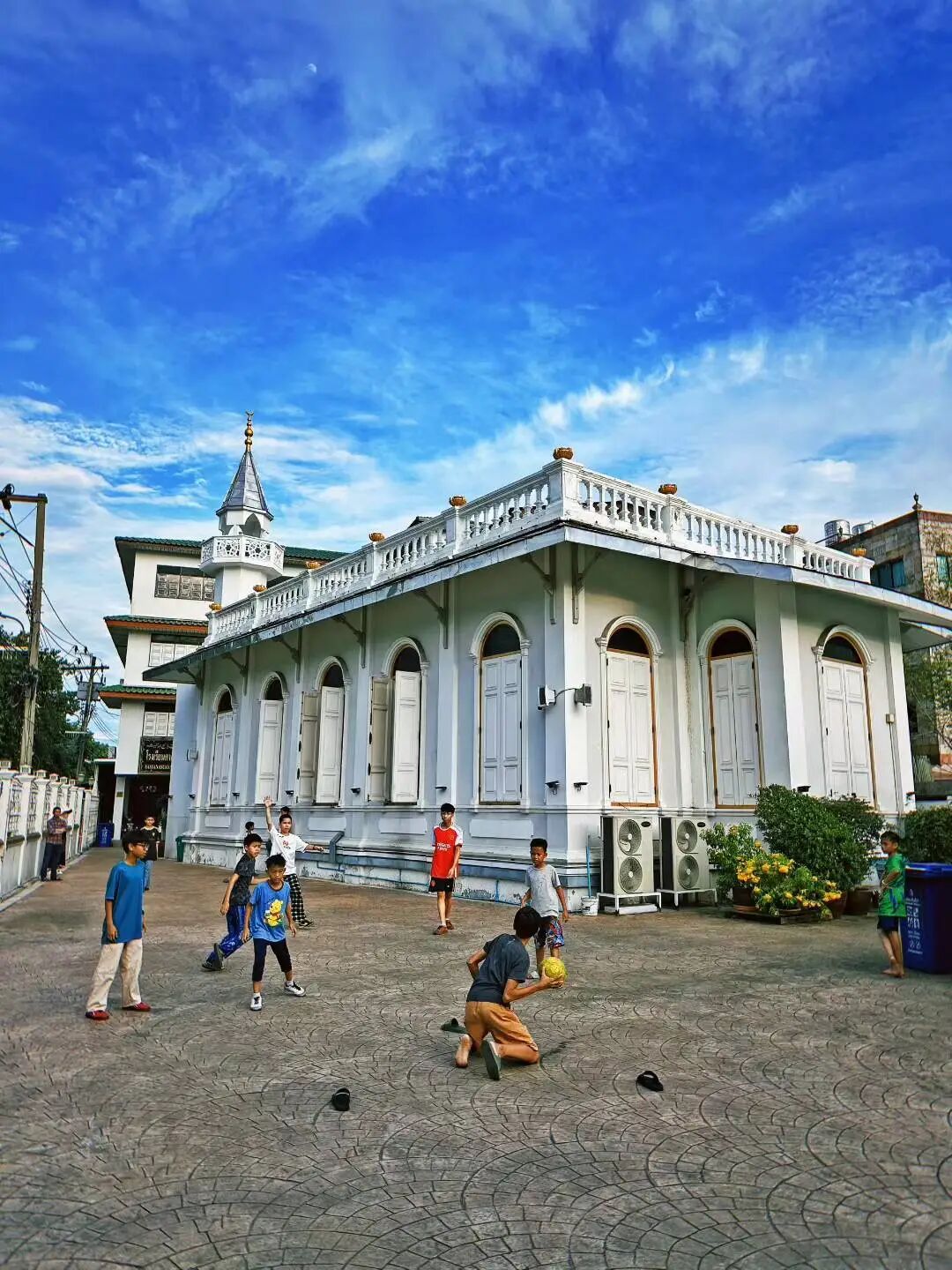
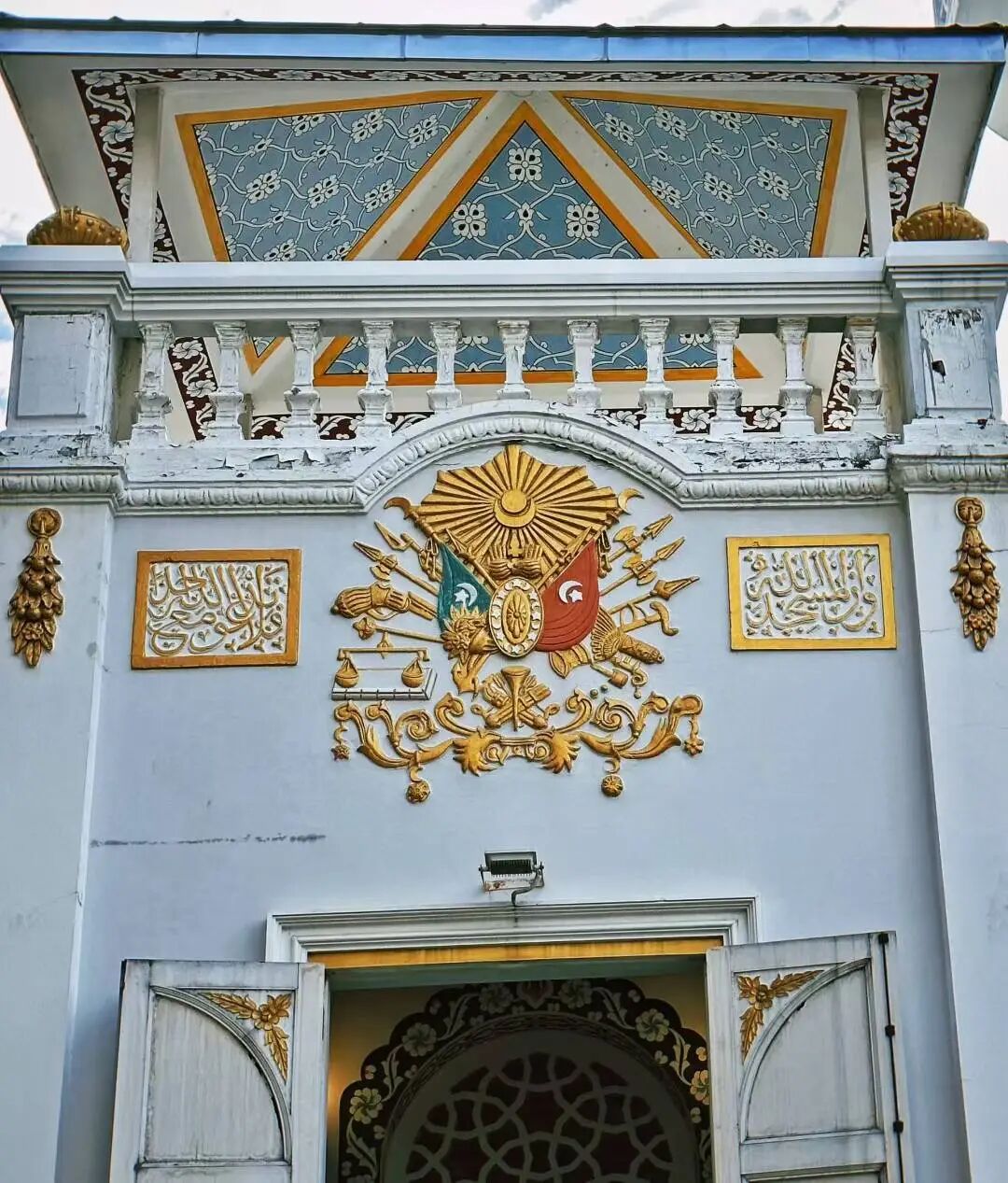
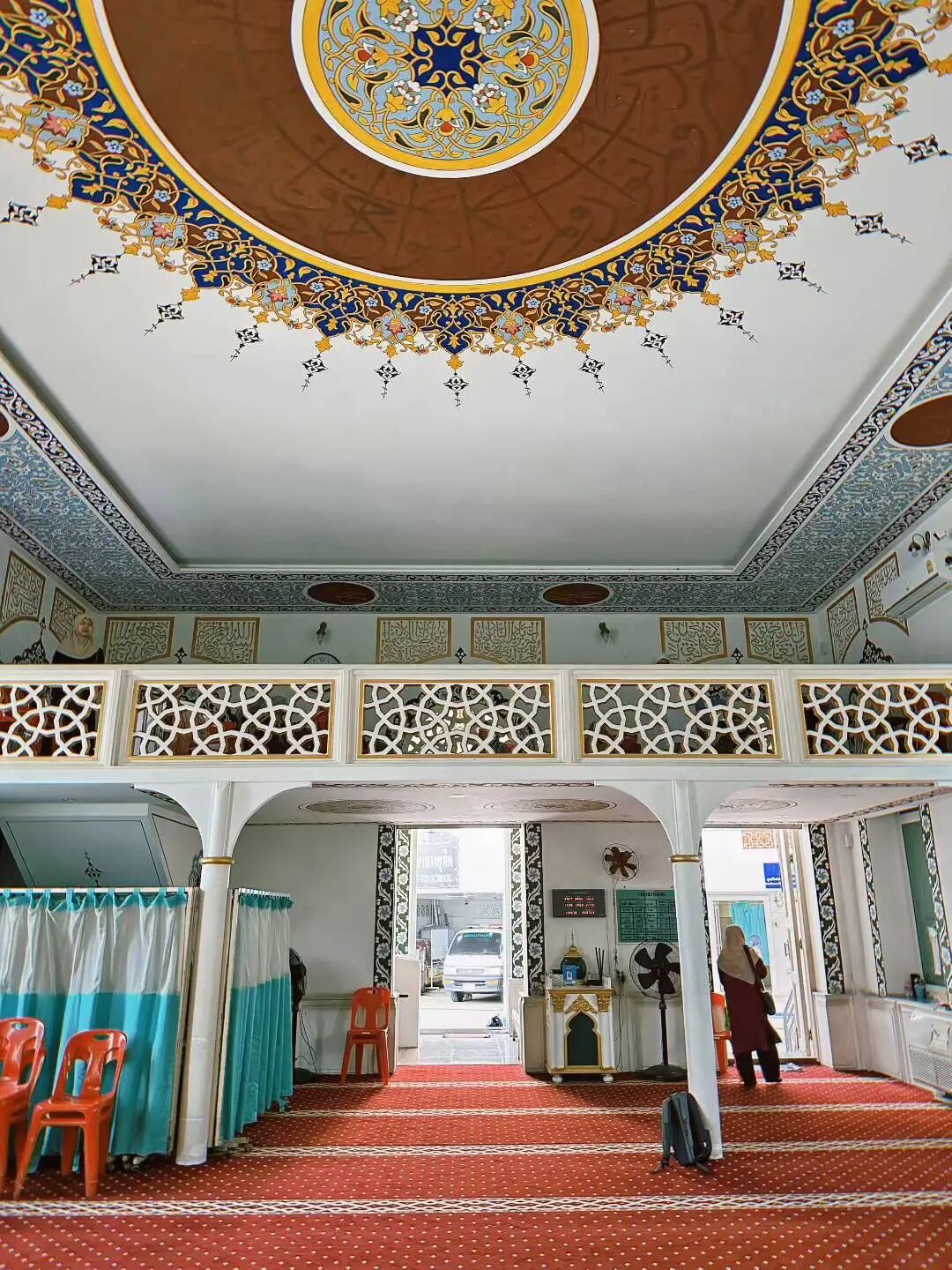
As the Wat Phraya Krai area continued to develop, rice mills and sawmills were built near the shipyard, and more and more Malays settled in Bang Uthit village. In the early 20th century, Bang Uthit mosque was built, officially separating from the Al-Athik mosque community. When Bang Uthit mosque was built, Ottoman Sultan Abdul Hamid II (reigned 1876-1909) sent an Ottoman shield-shaped emblem, making Bang Uthit mosque the only mosque in Thailand with an Ottoman emblem.
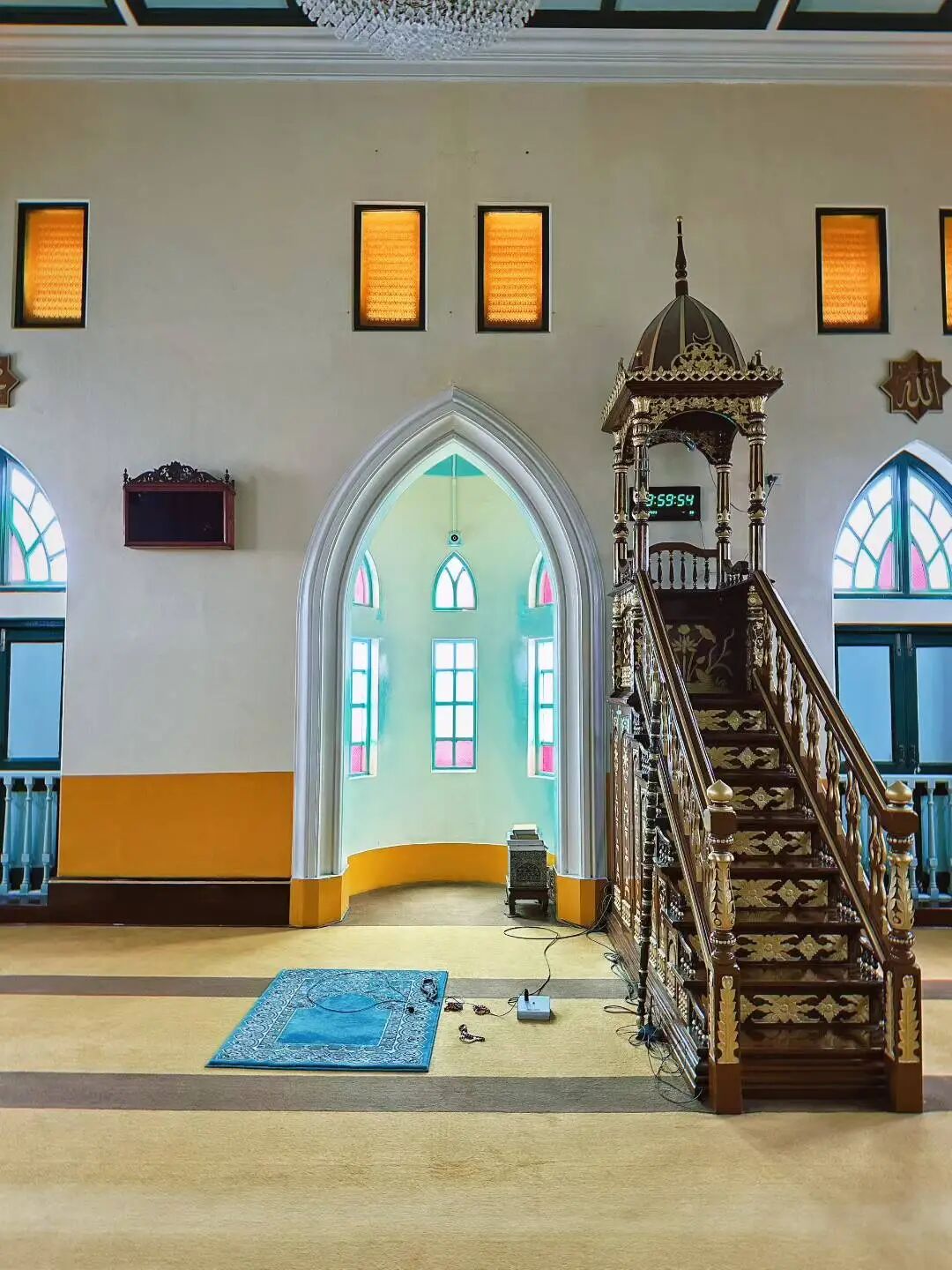
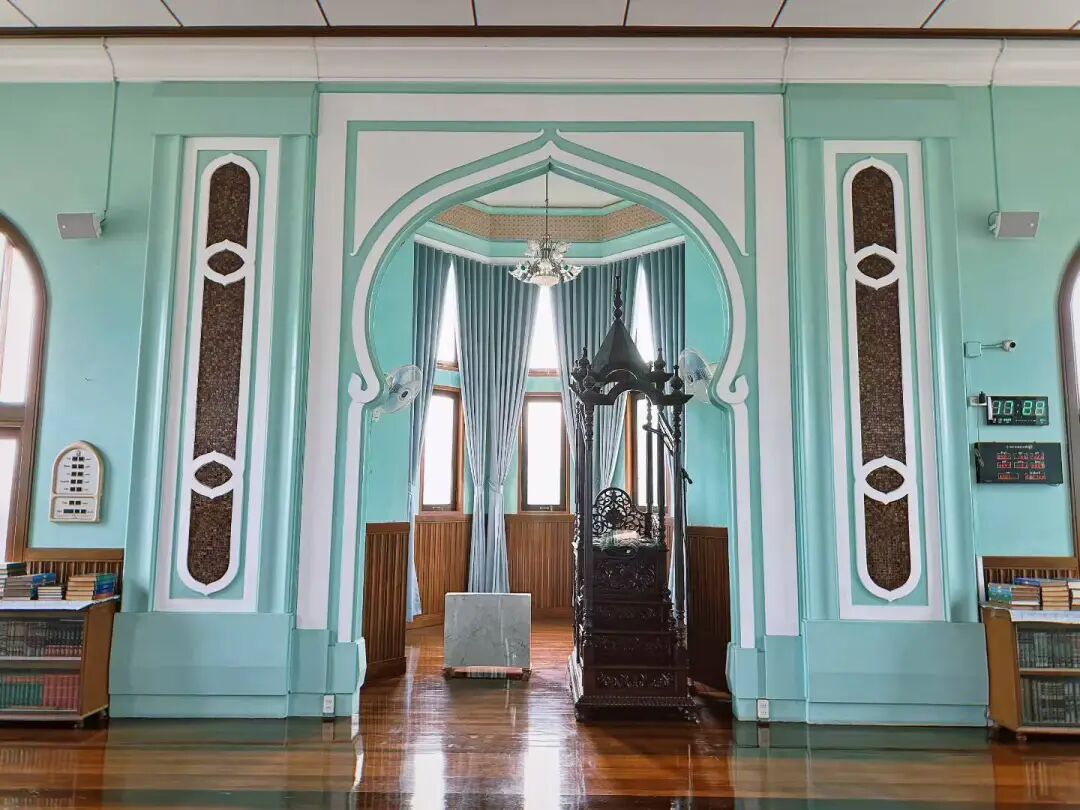
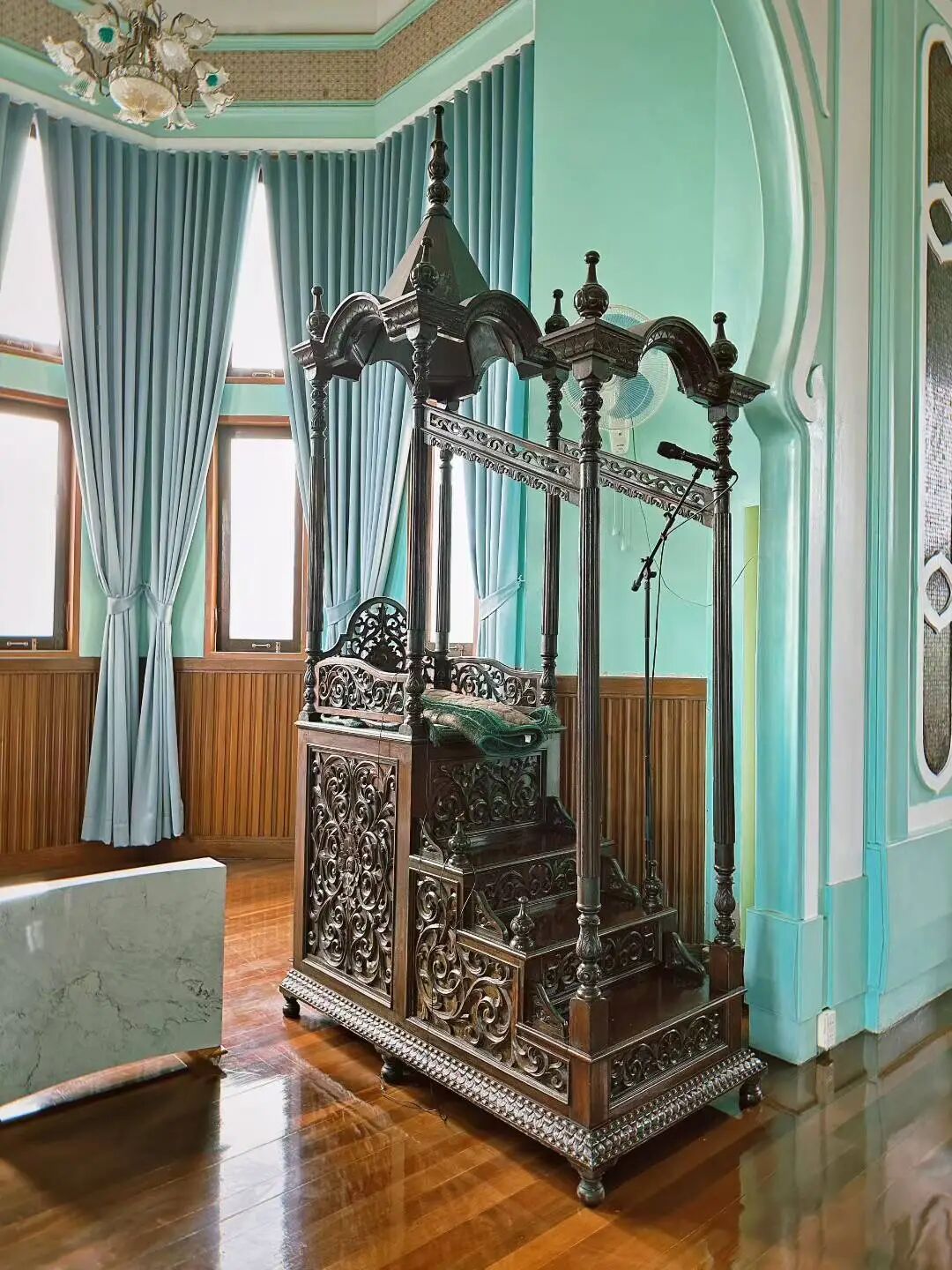
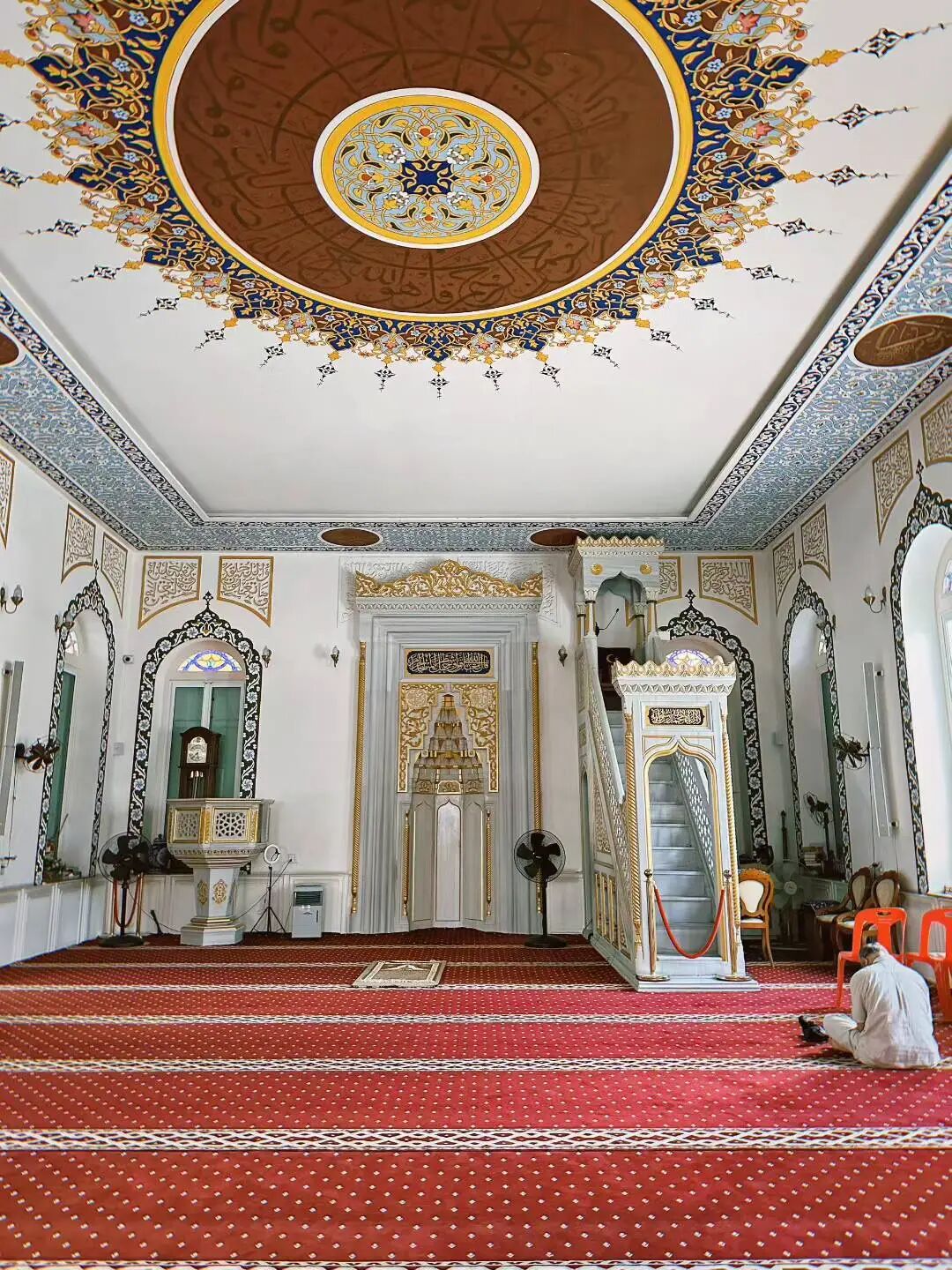
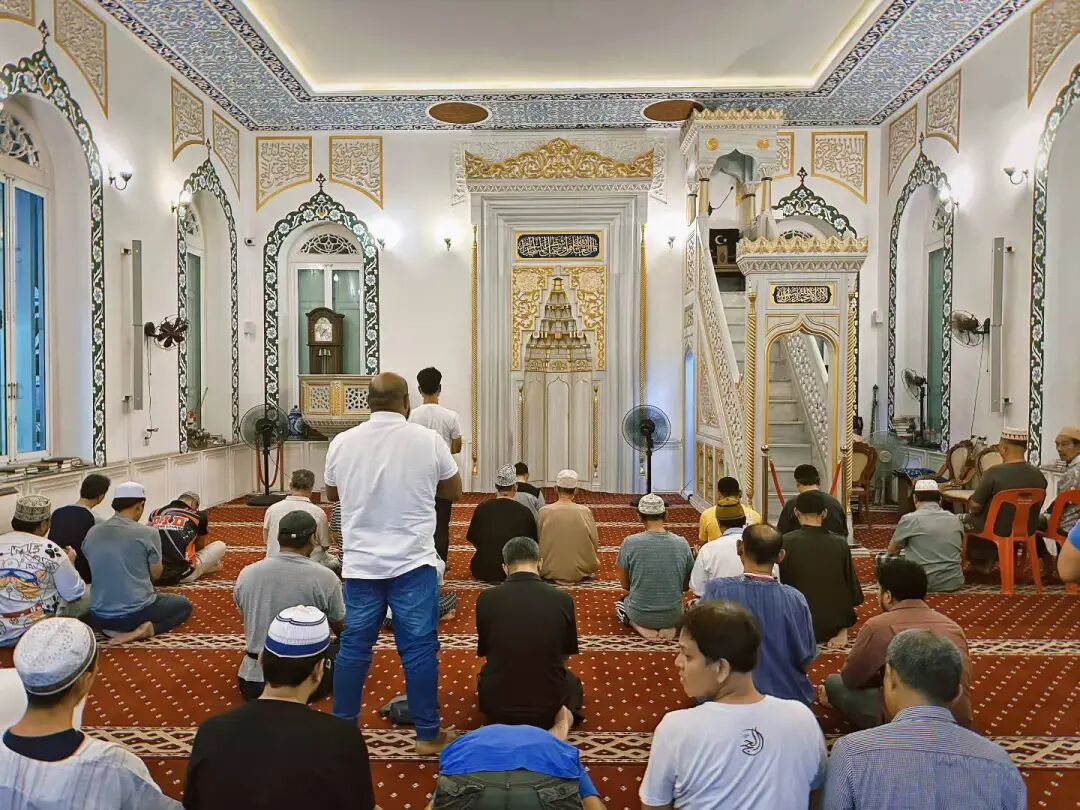
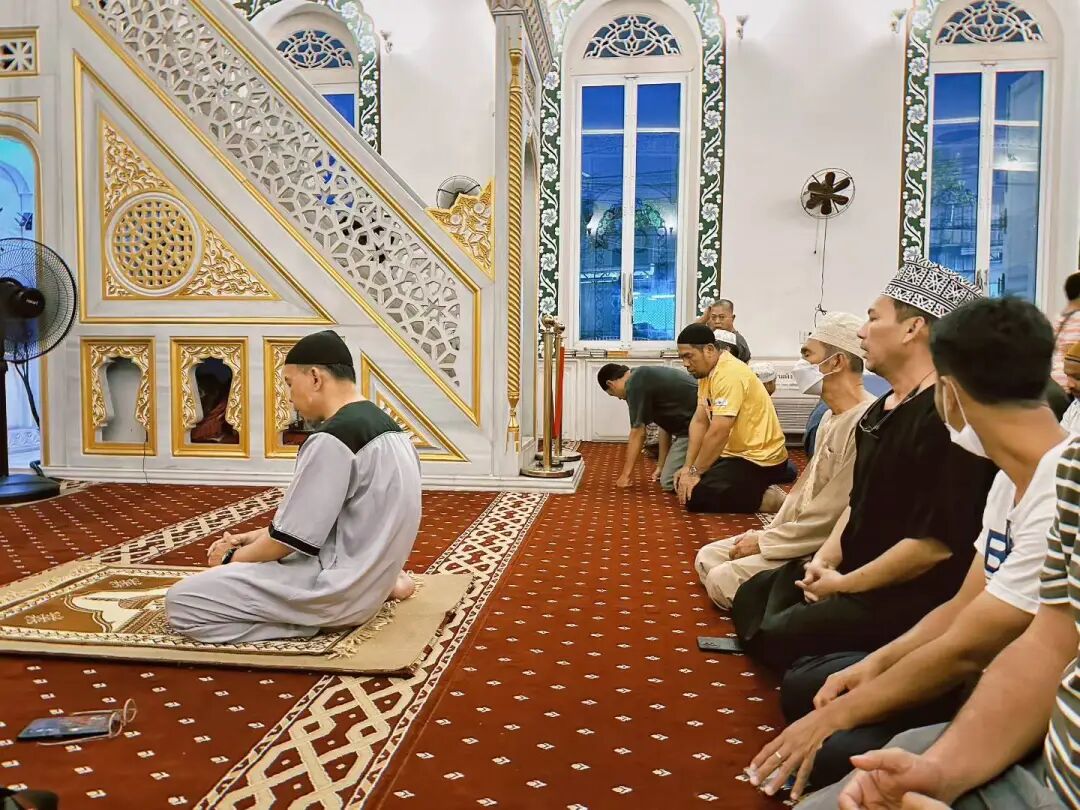
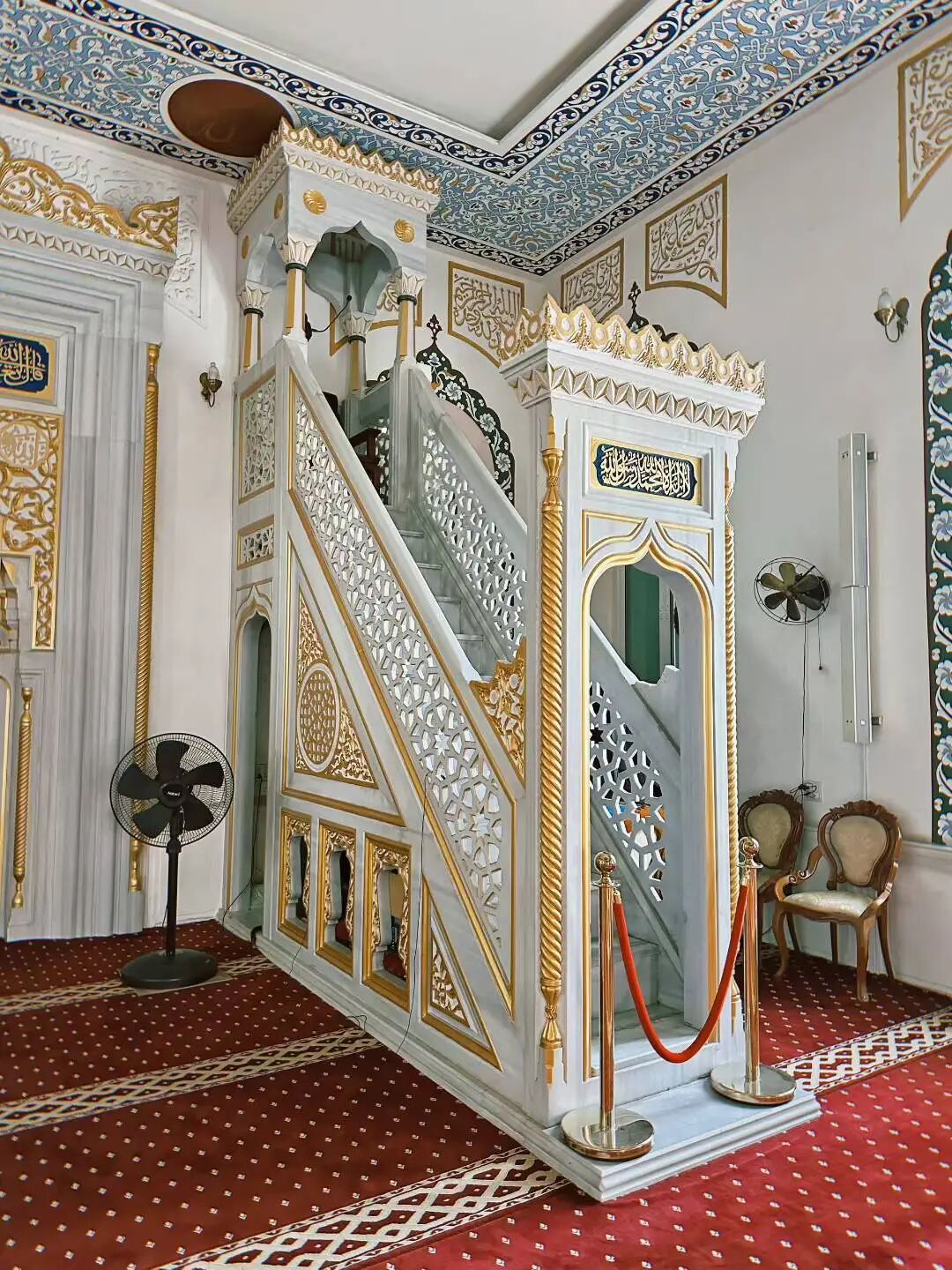
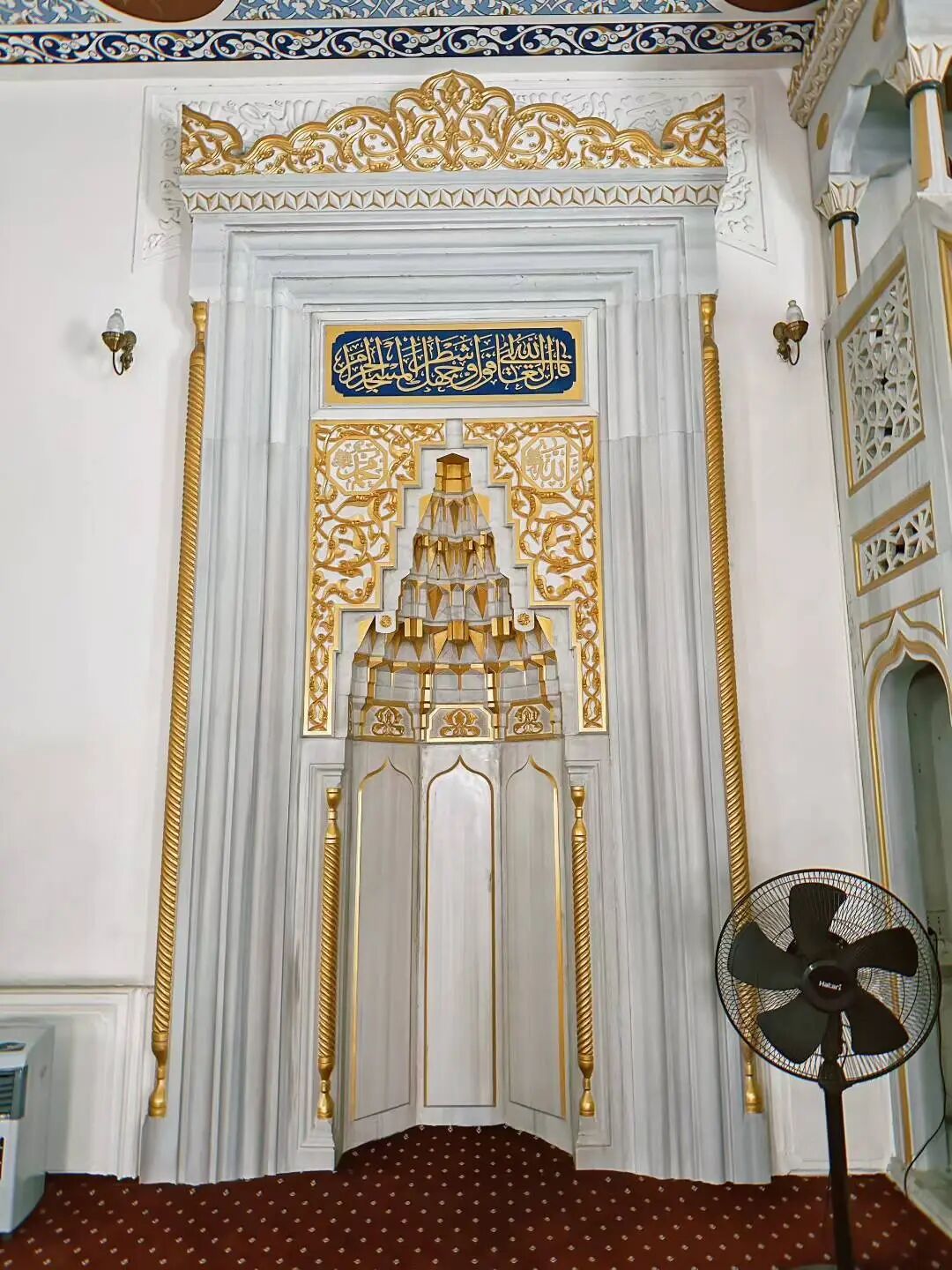
In 2015, the Turkish Cooperation and Coordination Agency (TİKA) renovated Bang Uthit mosque, using Turkish marble to build an Ottoman-style mihrab, minbar, and pulpit, and also added a mezzanine for women. This makes Bang Uthit mosque the only Ottoman-style mosque in Bangkok.
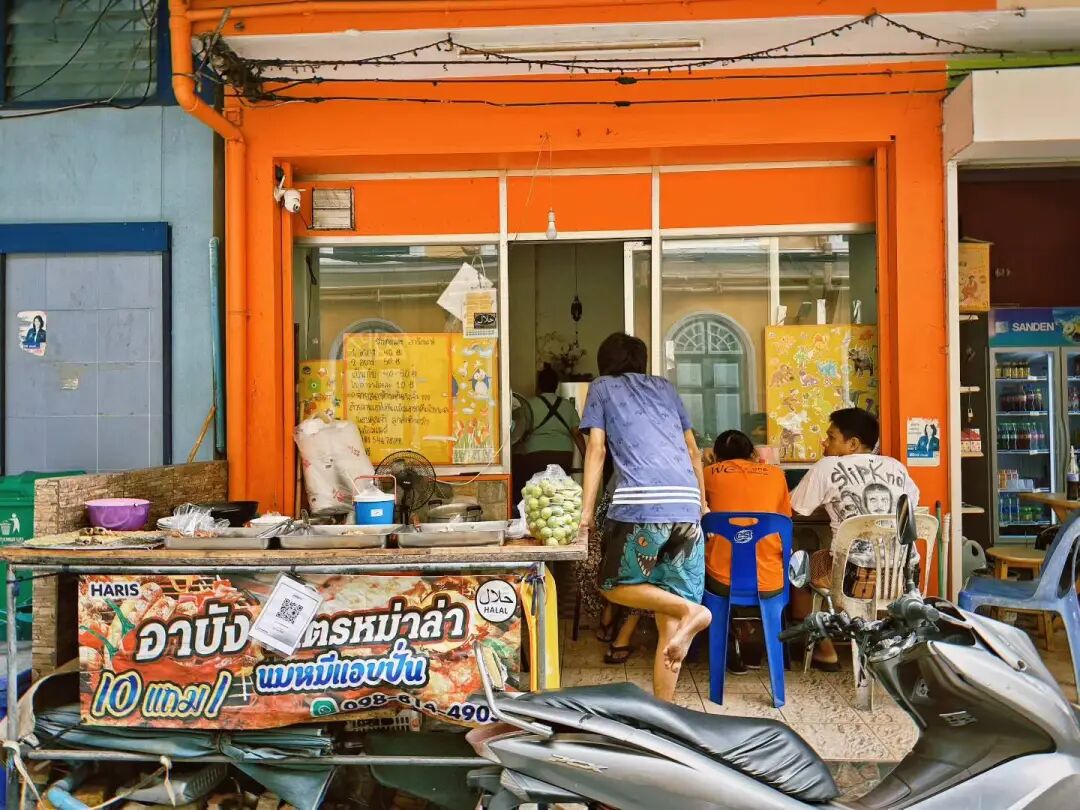
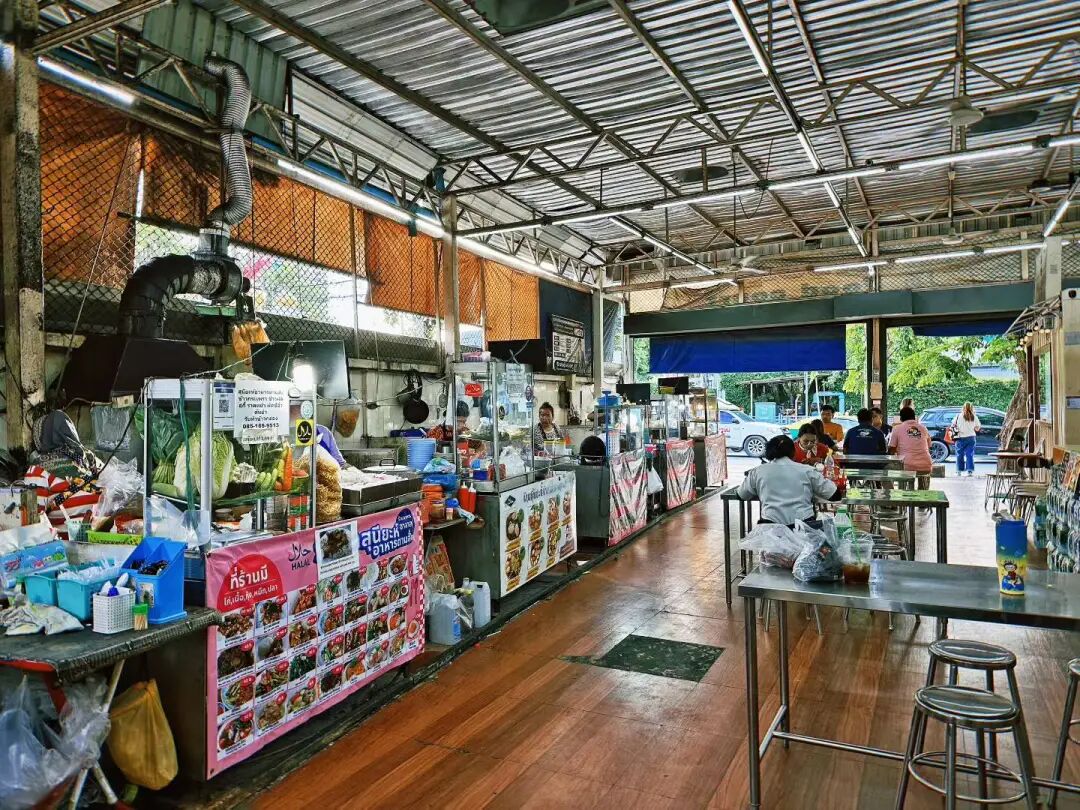
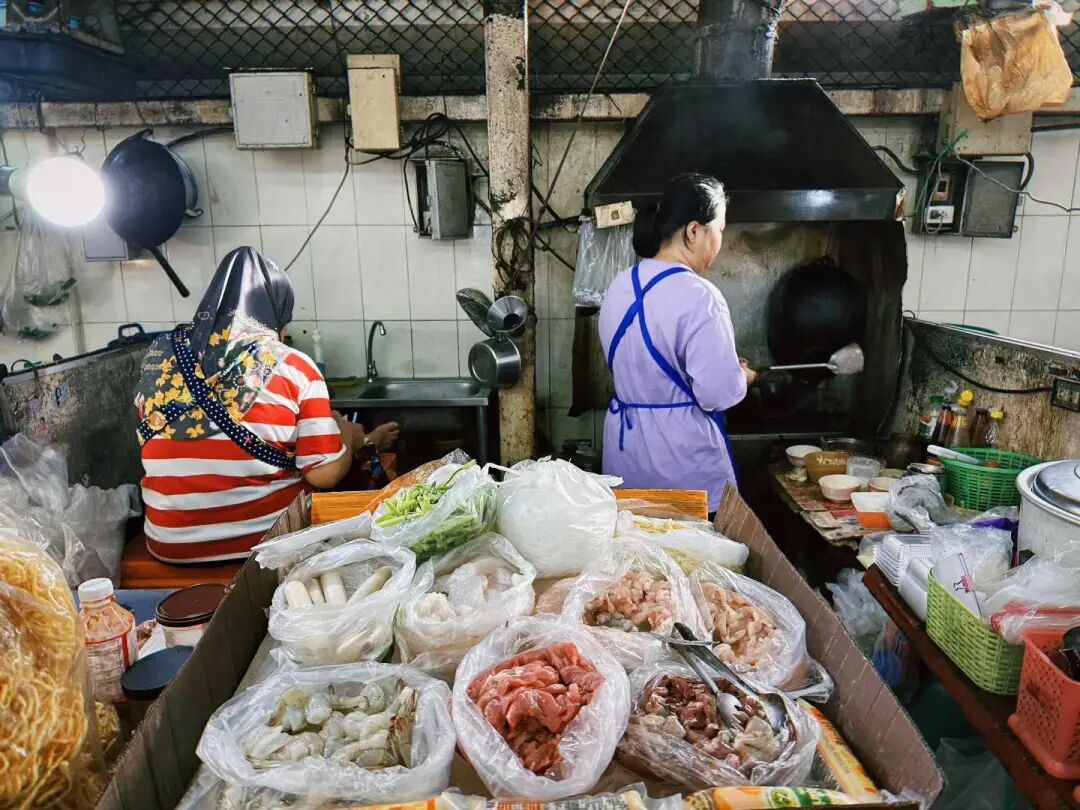
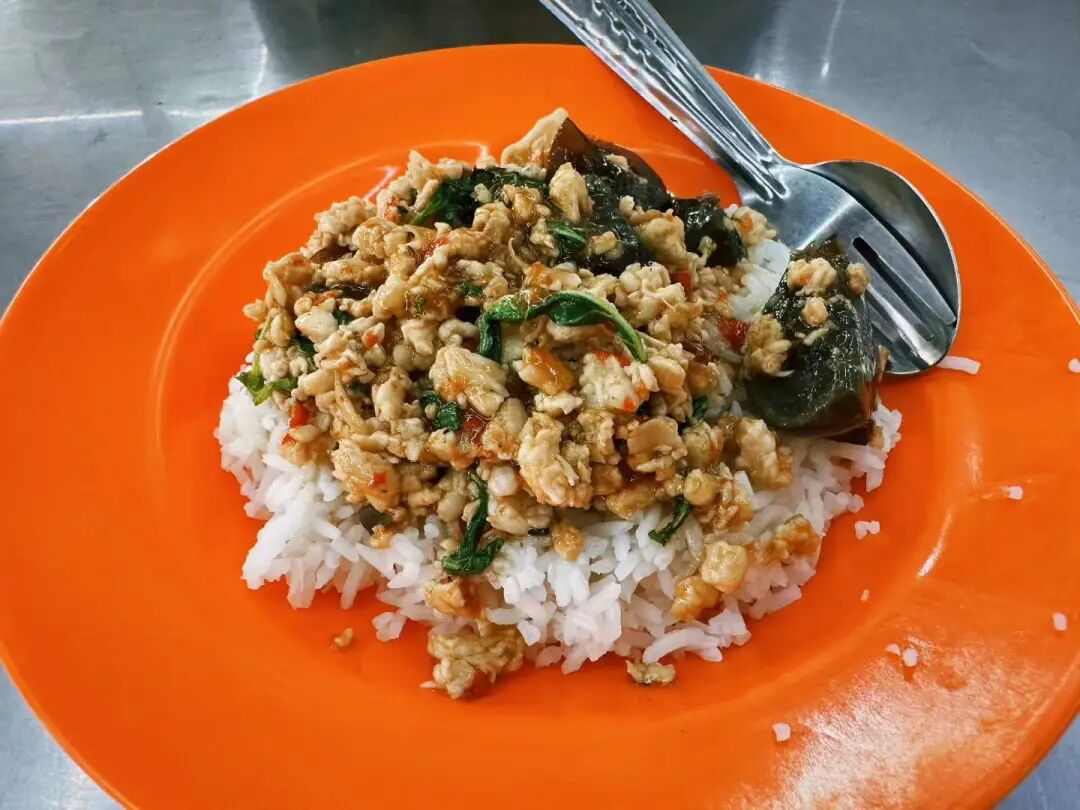
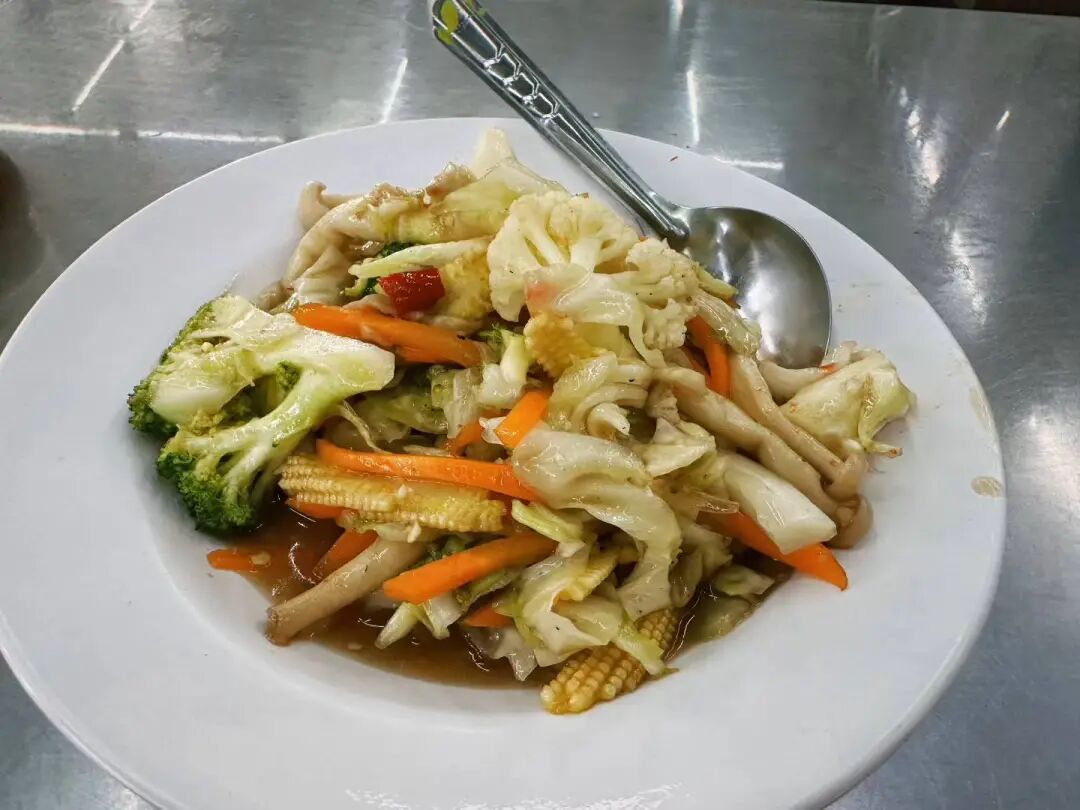
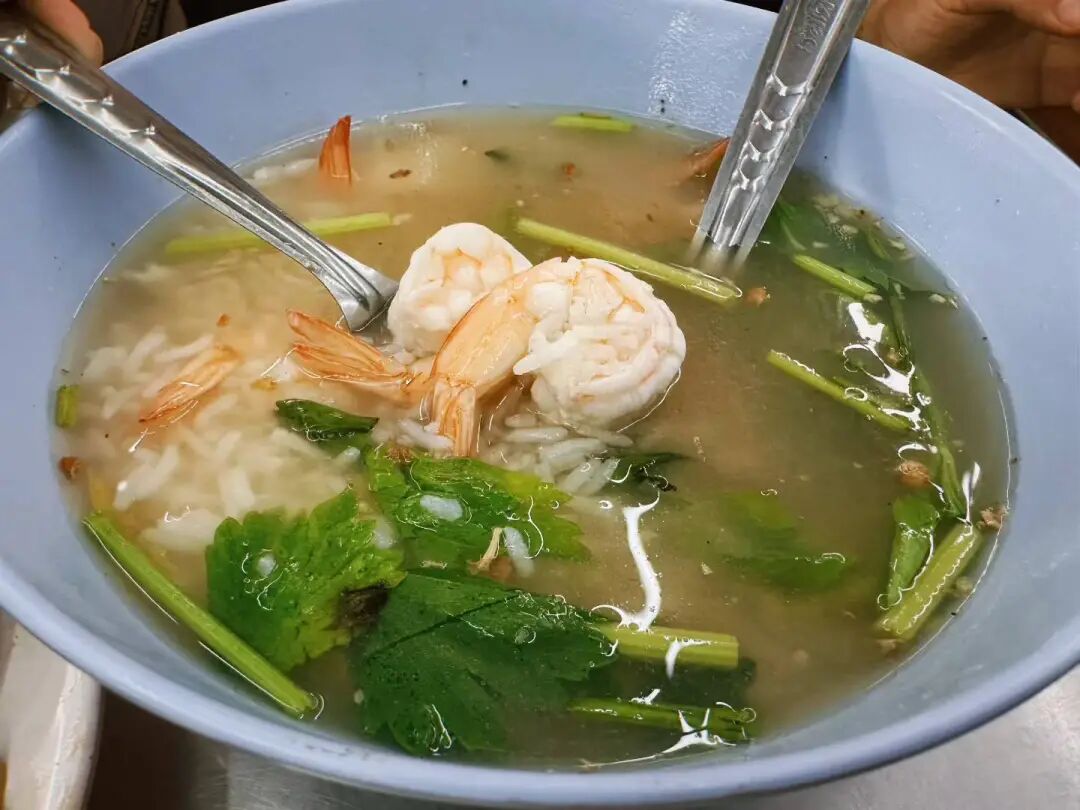
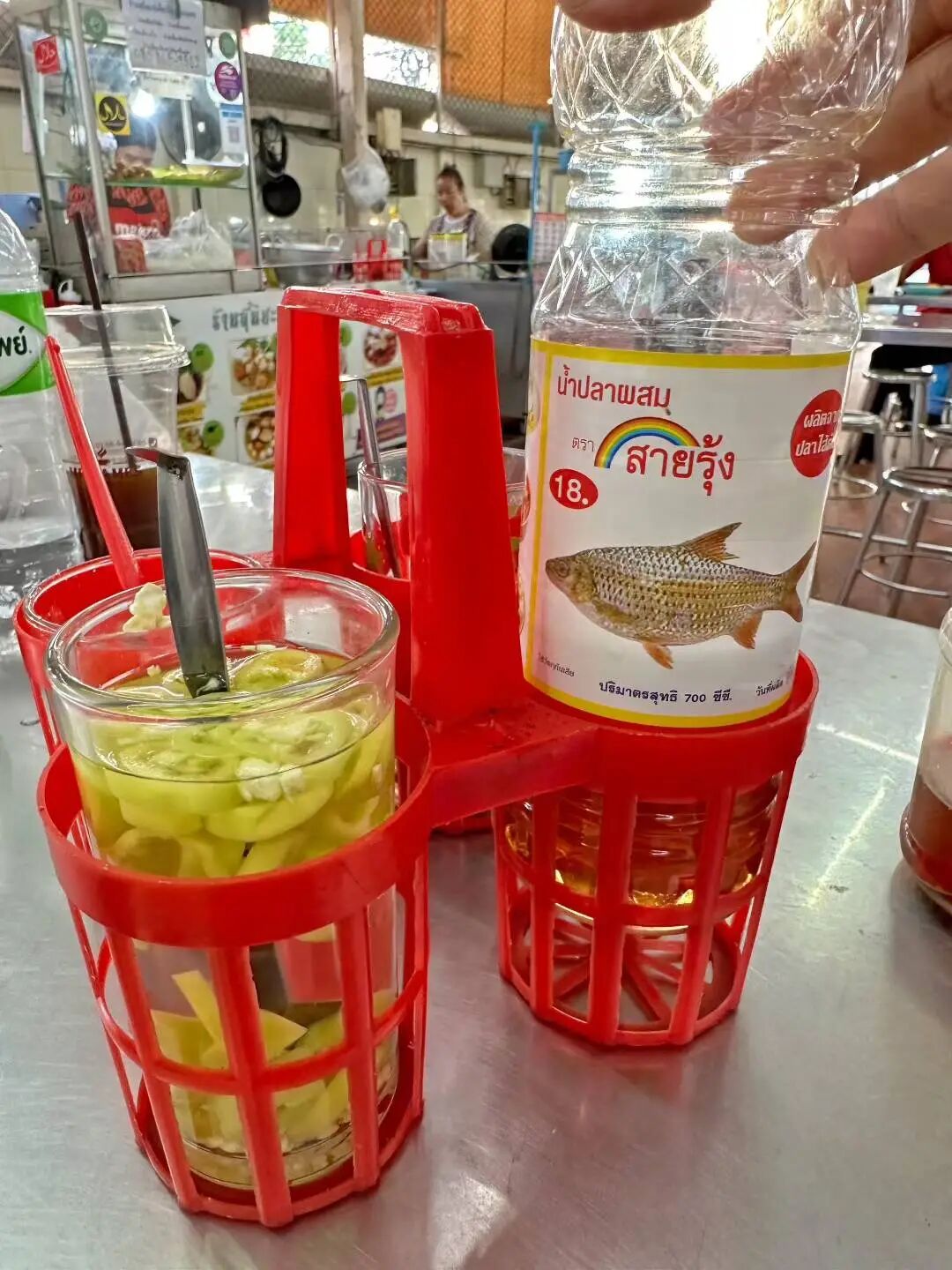
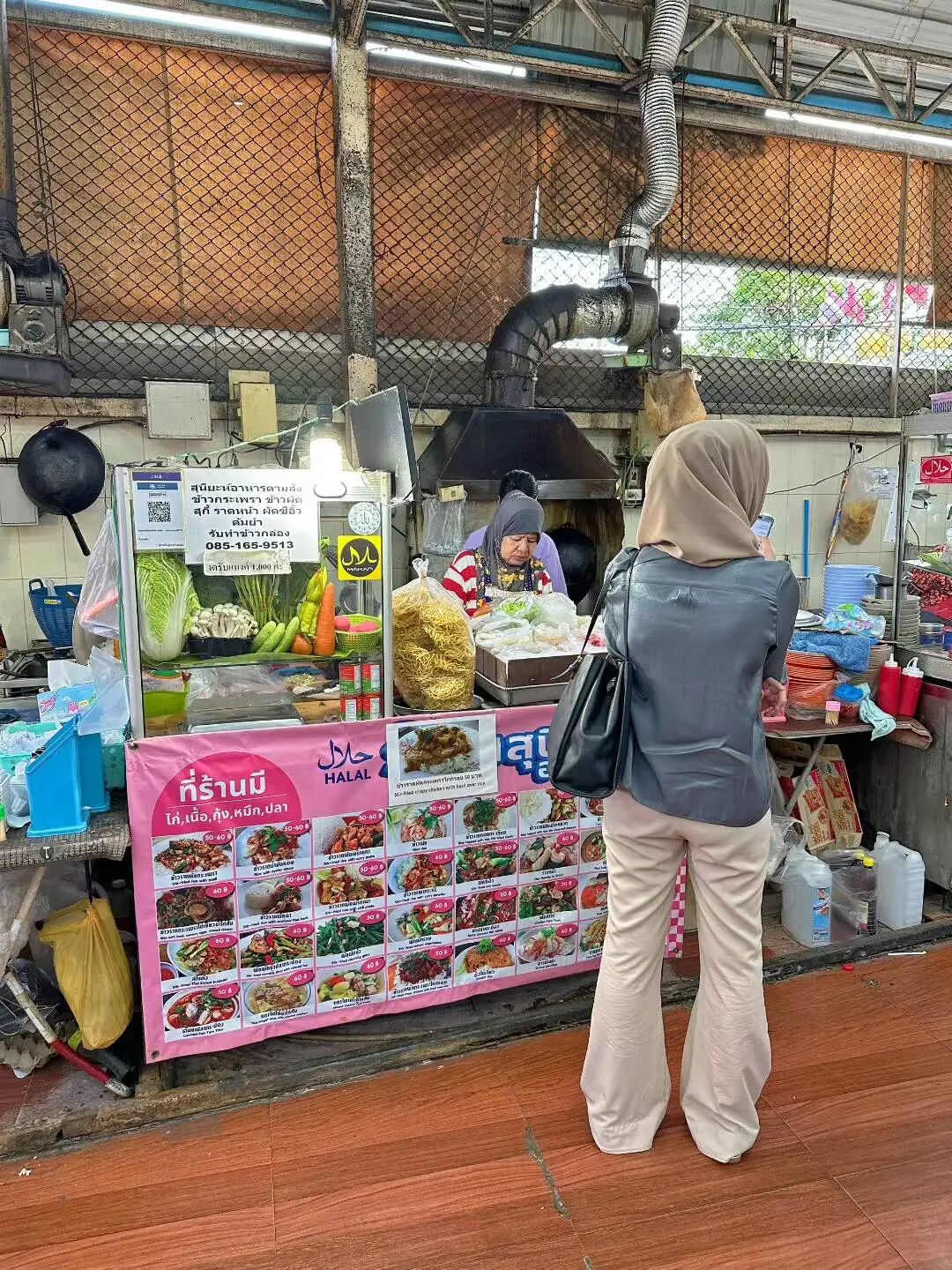
Next to Bang Uthit Mosque, there is a row of food stalls where you can eat authentic Thai halal home-cooked meals. We ordered holy basil chicken rice (gaprao gai) and shrimp porridge. Gaprao is also called holy basil. It is native to South Asia and widely grown in the tropical regions of Southeast Asia. Stir-frying meat with holy basil leaves is a famous Thai dish that I really love. Thai people love to drink meat porridge. The Thai word 'Chok' comes from the Minnan word for 'porridge'. The condiments on the table include fish sauce. I saw people at other tables adding a lot of it to their porridge and noodles, and adding a little really brings out the fresh flavor.
Kocha Itsahak Mosque
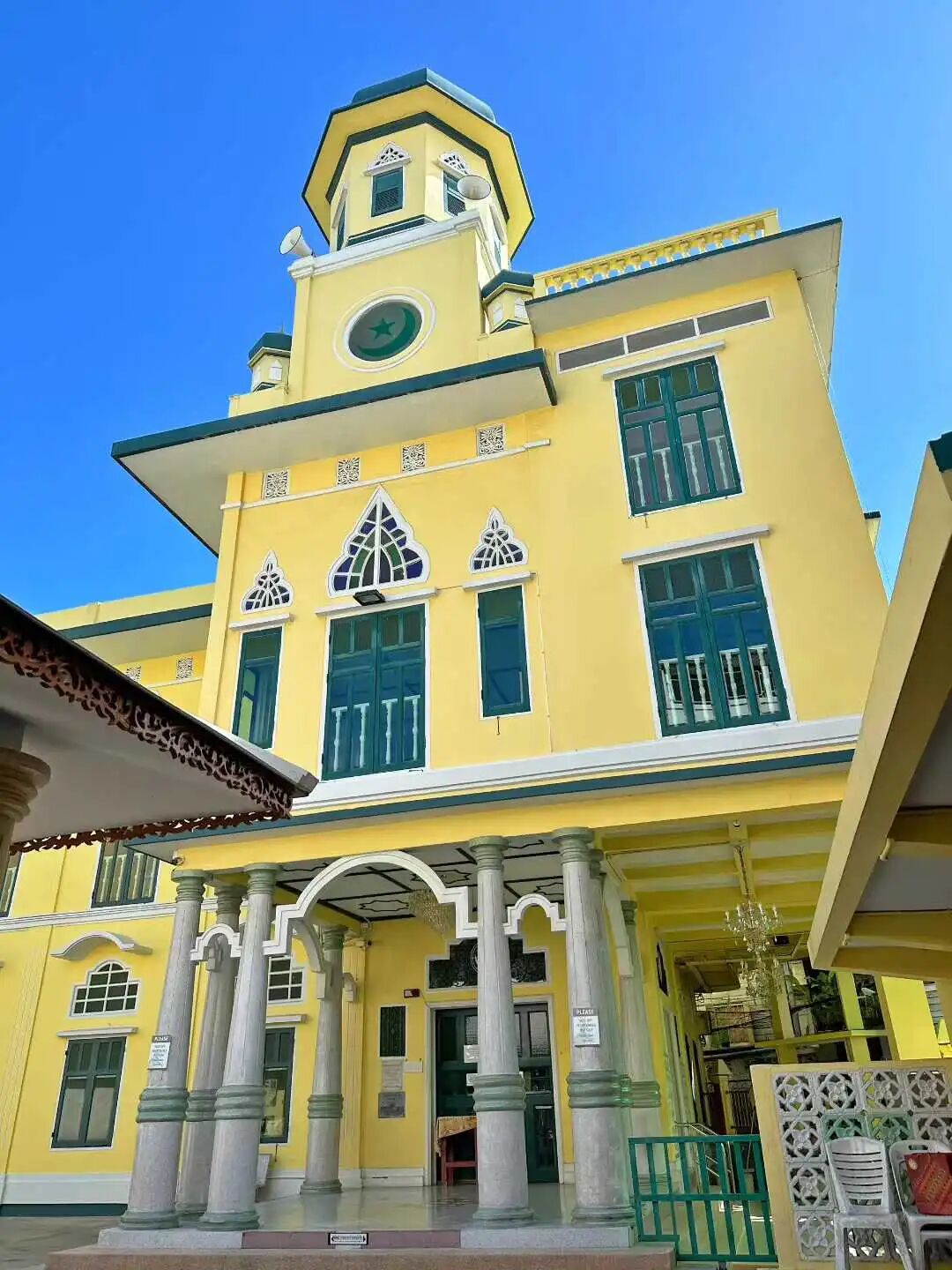
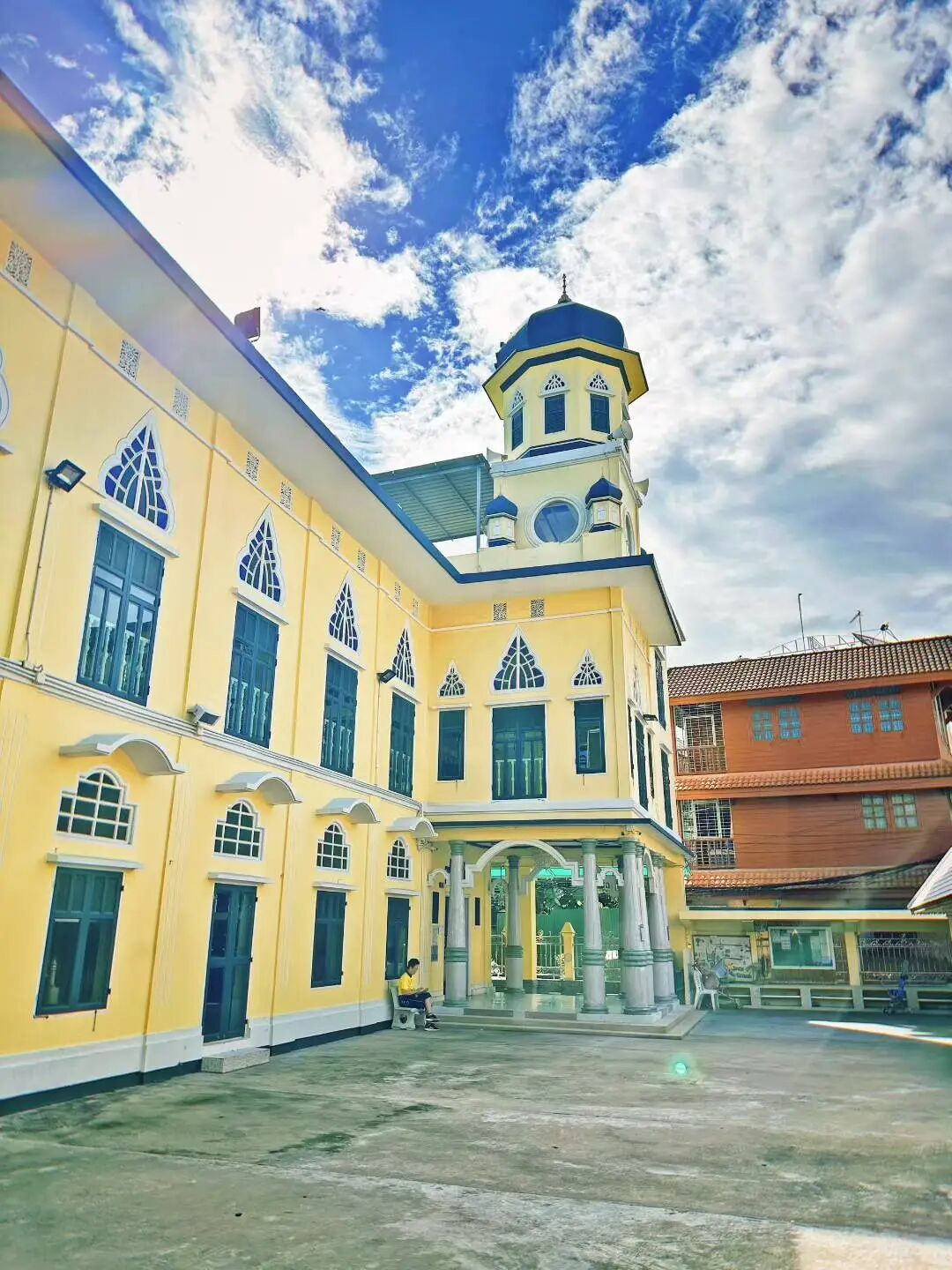
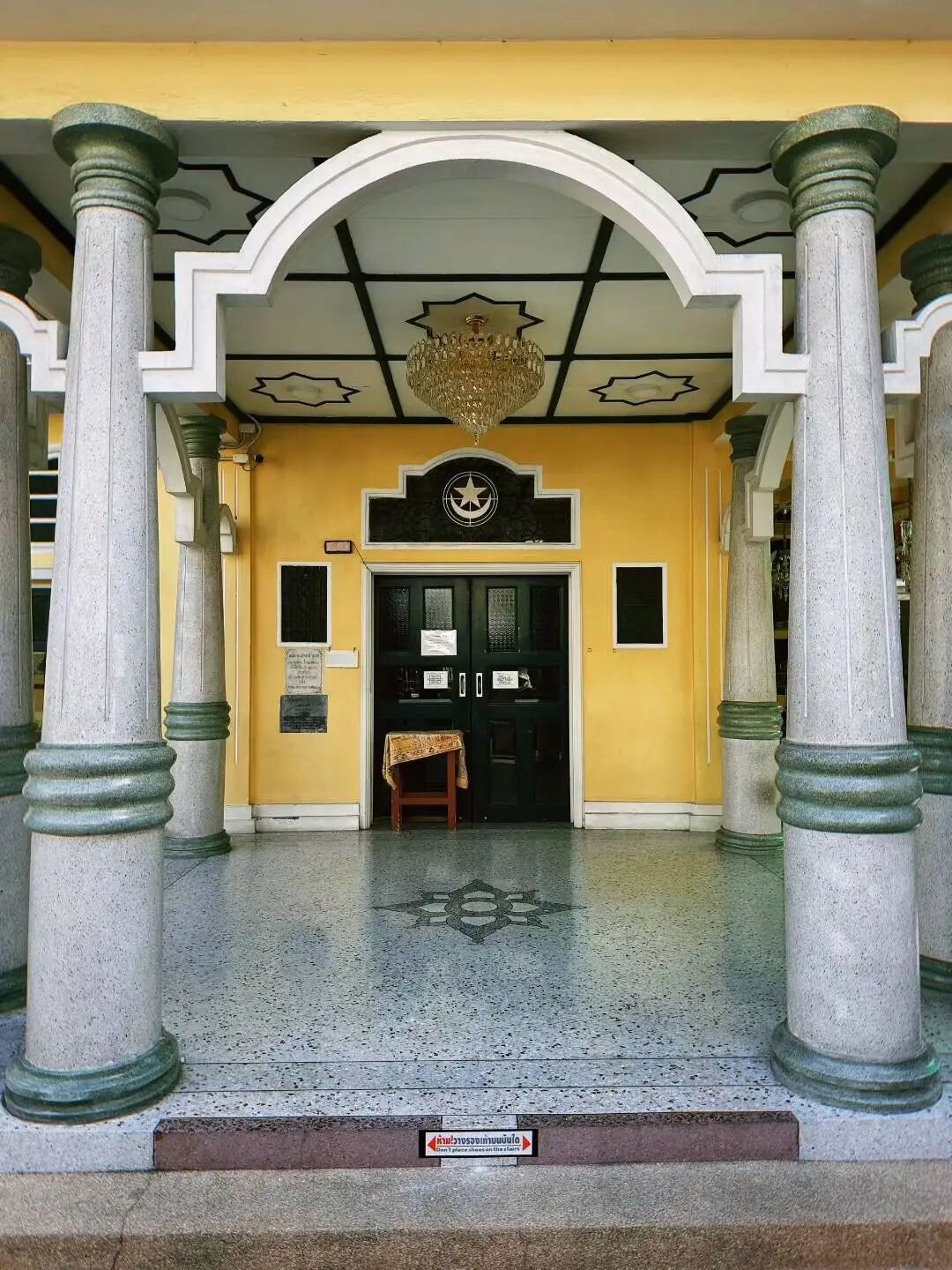
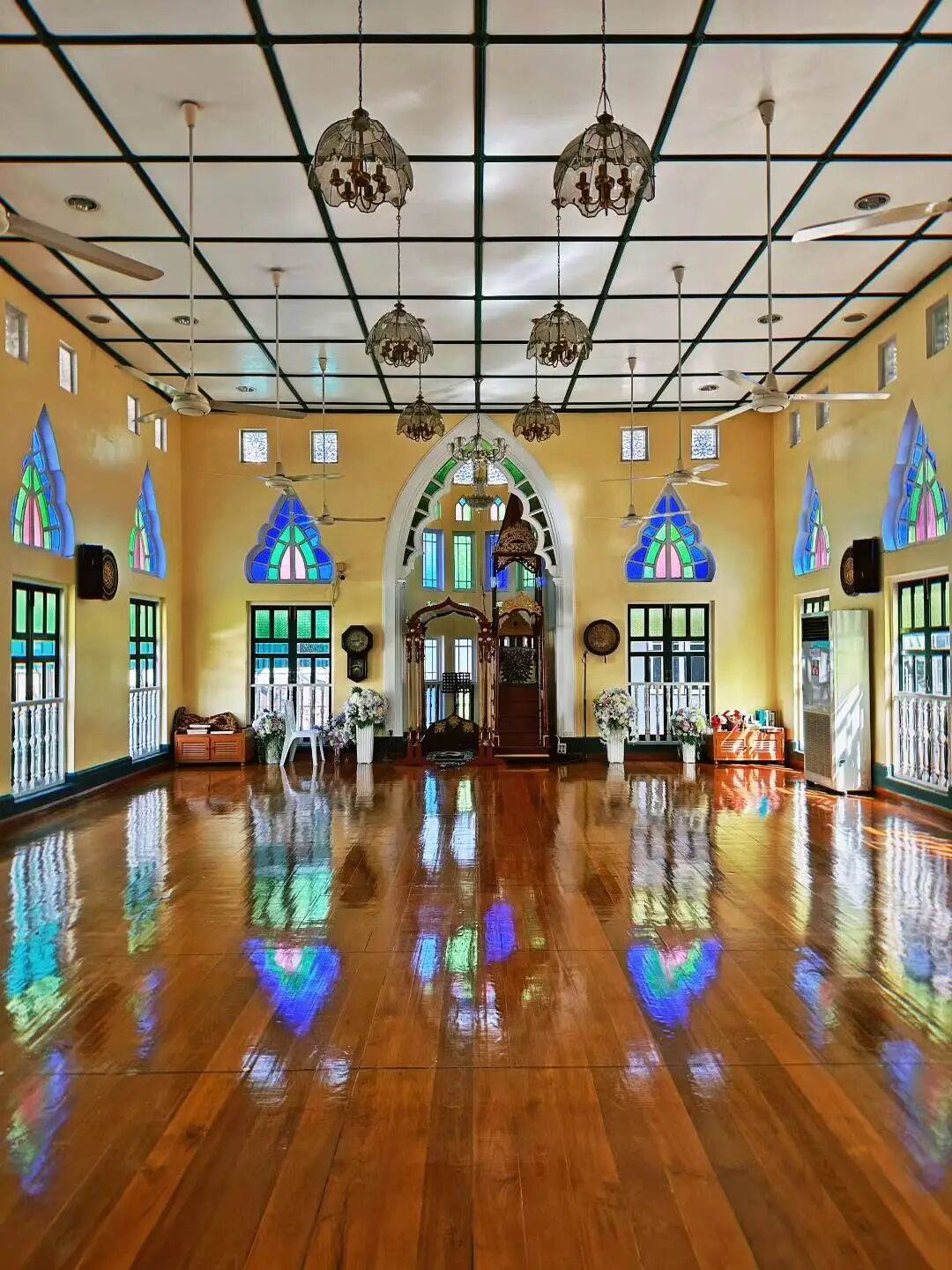
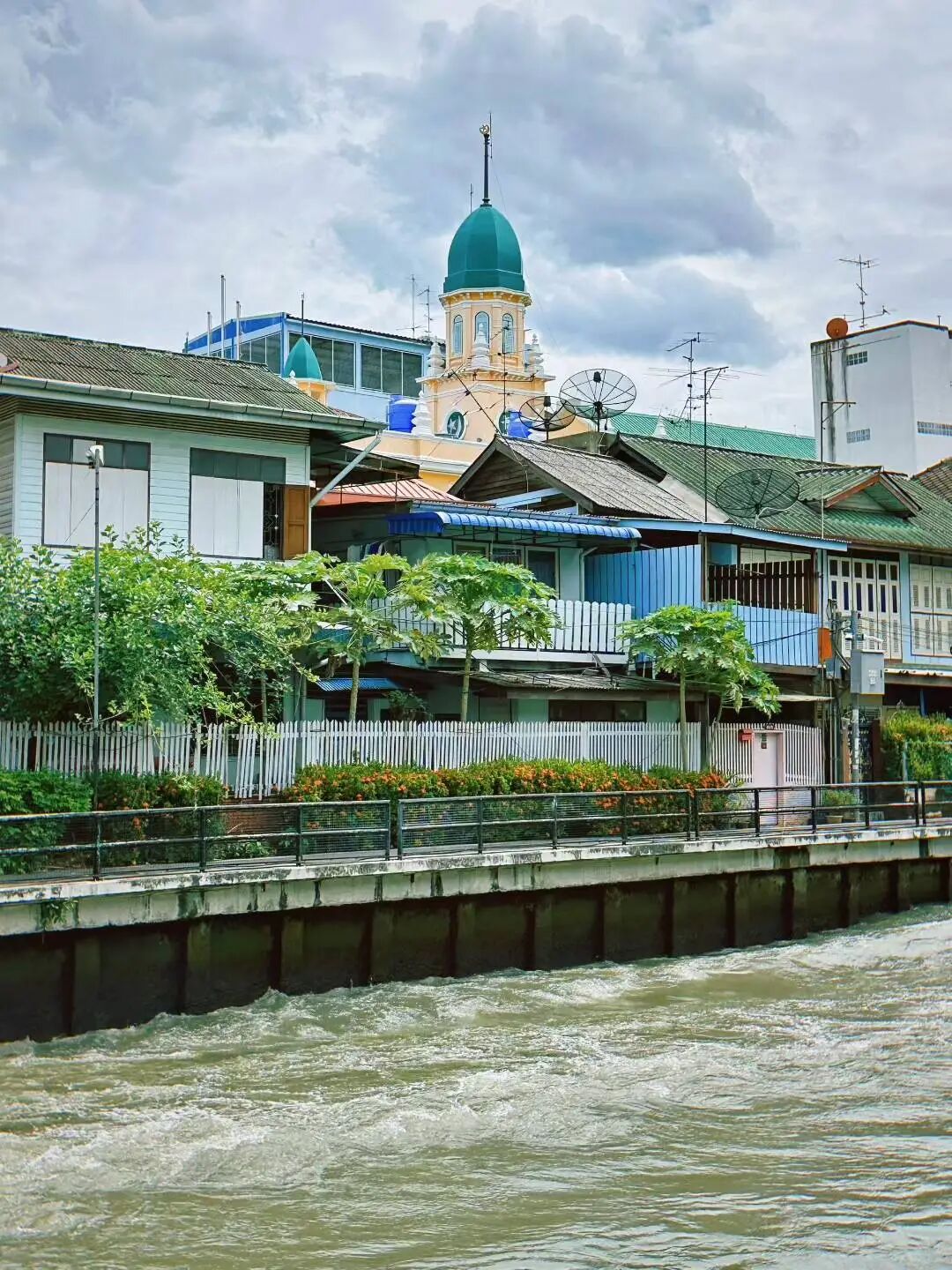
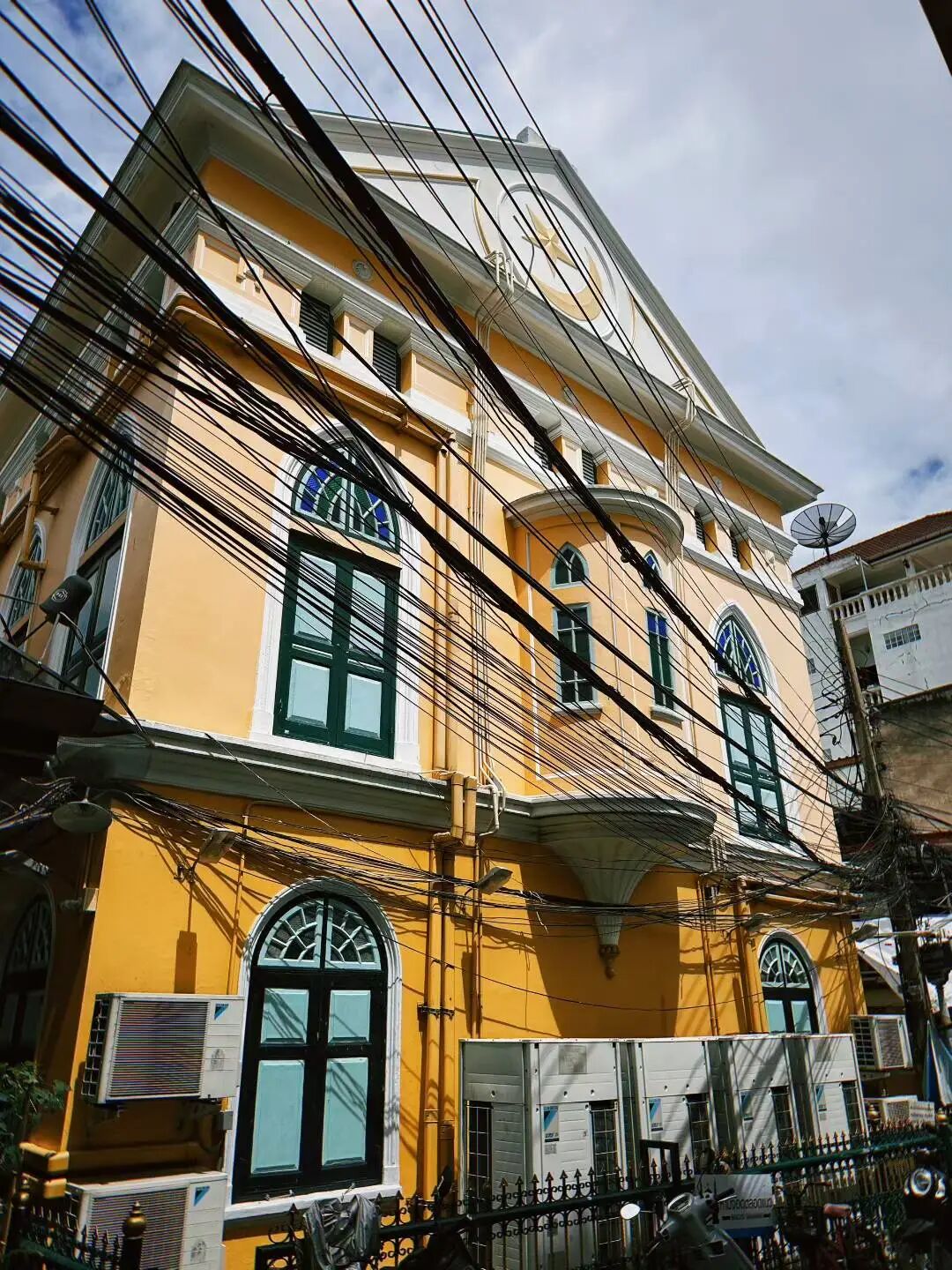
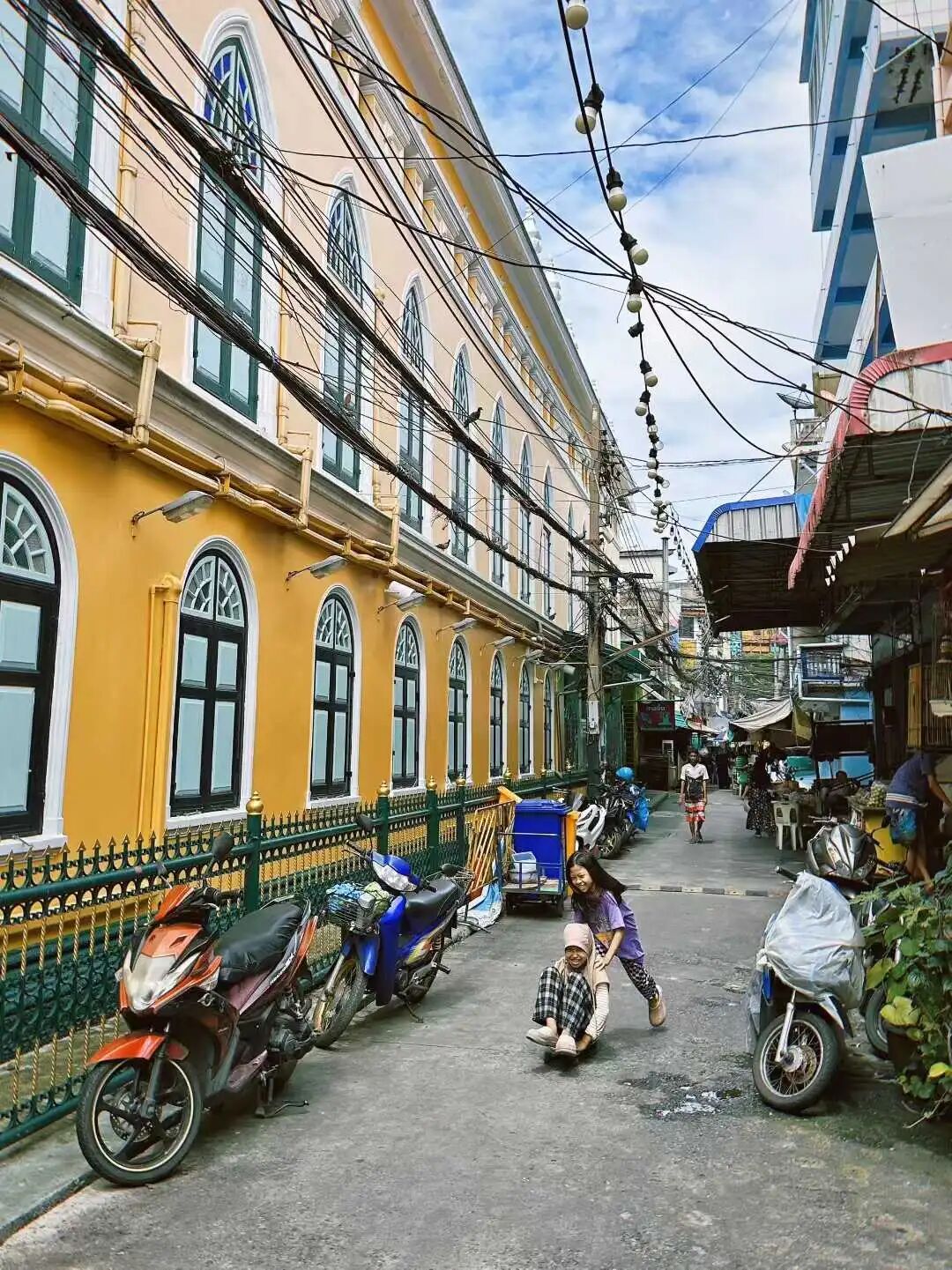
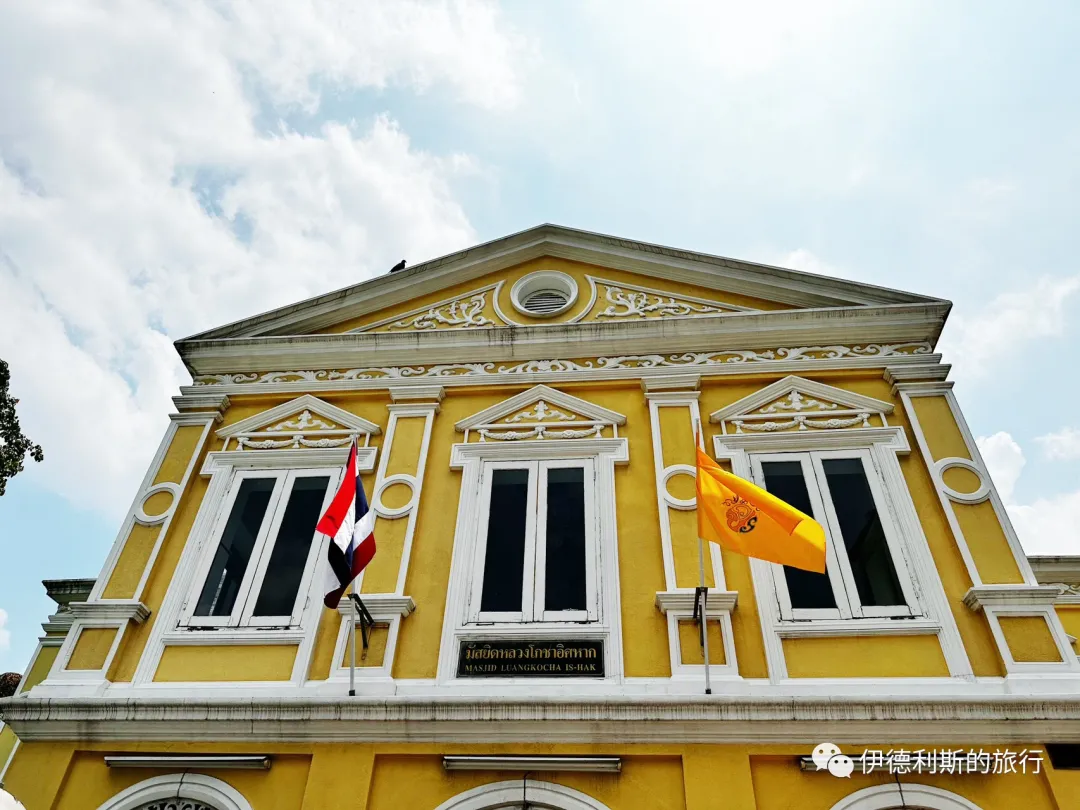
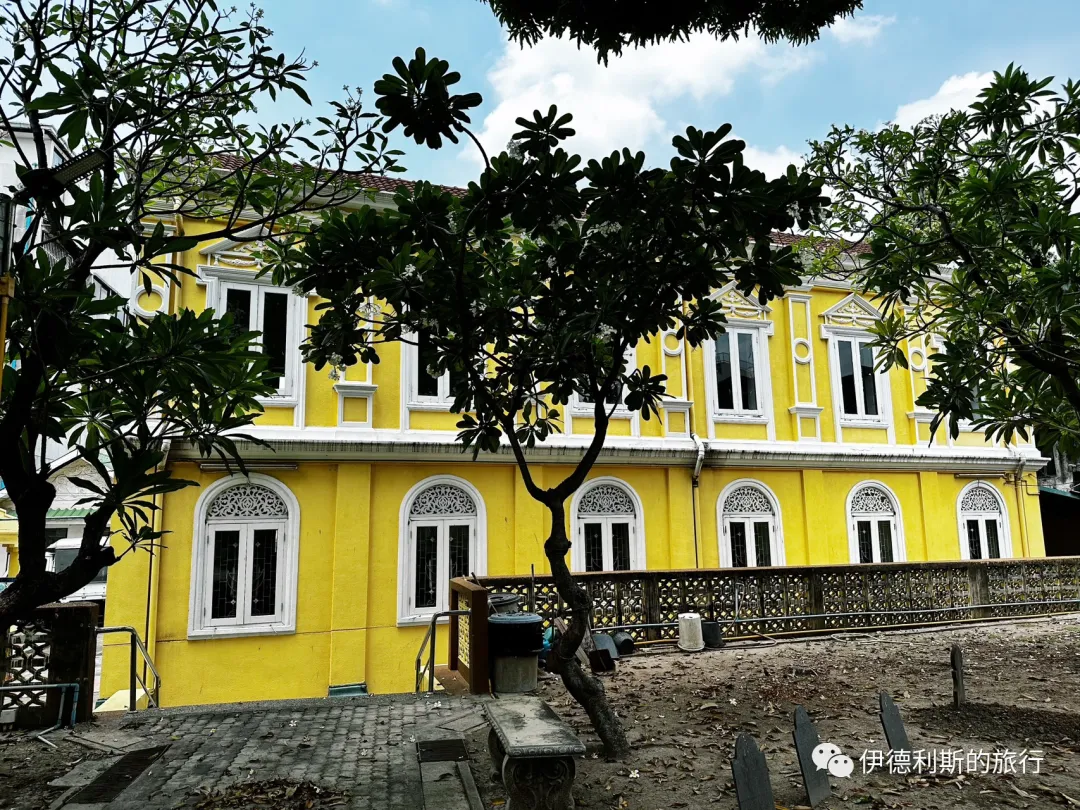
Near Sampeng Lane in Bangkok's Chinatown stands the European-style Kocha Itsahak Mosque, built in the late 19th century by the Siamese royal translator Luang Kocha Itsahak.
Luang Kocha Itsahak was of Malay descent from Kedah. He worked in the Siamese Department of Western Trade (Krom Tha Khwa), serving as a translator for foreign ambassadors visiting the Siamese court. He was also responsible for liaising with rulers of Siamese dependencies on the Malay Peninsula and foreign merchants trading with Siam. Luang Kocha Itsahak's father was a Malay merchant from the Kedah Sultanate who moved to Bangkok for business and married a Chinese wife.
After Siam established its capital in Bangkok in 1782, an import and trade district dominated by Teochew merchants gradually formed near Sampeng Lane. Before Don Mueang Airport was built in 1914, people wanting to travel from Bangkok to India, the Middle East, or Europe had to first take a steamship from the Kongsa Pier near Sampeng Lane to Singapore or Penang, then transfer to a cruise ship to continue westward. Because of this, the 19th-century Kongsa Pier was crowded with merchants from all over the world, and many Indians and Malays worked in the nearby warehouses and trading companies.
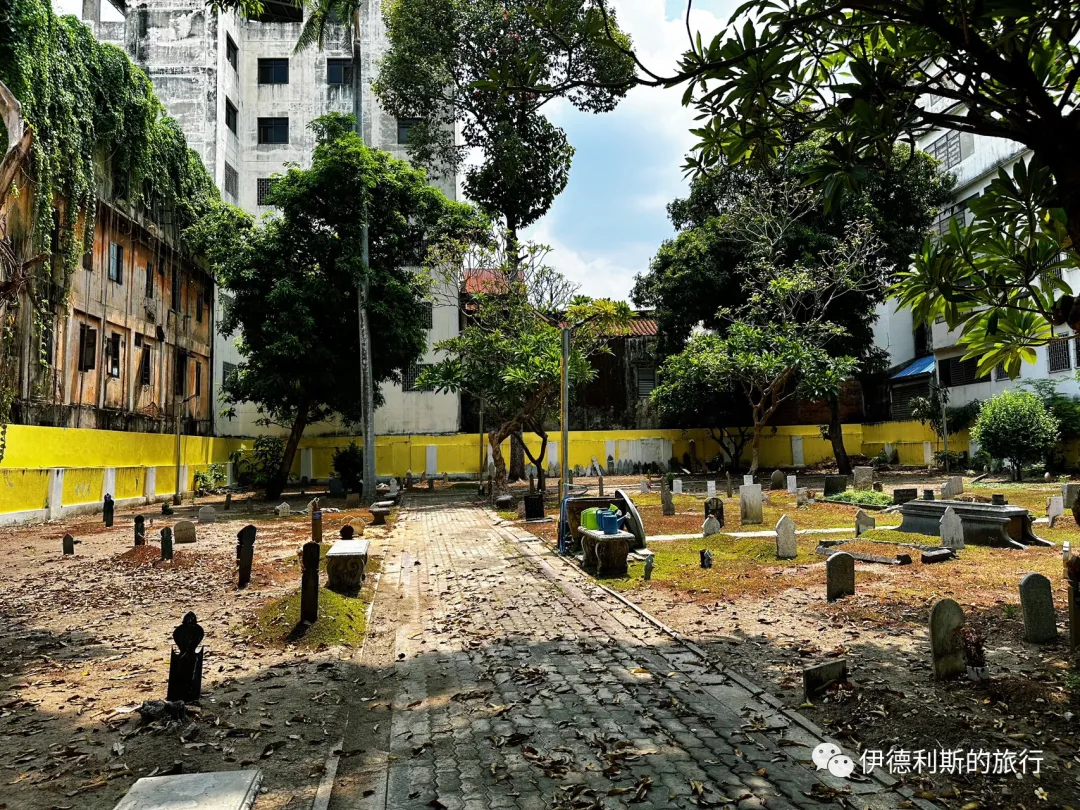
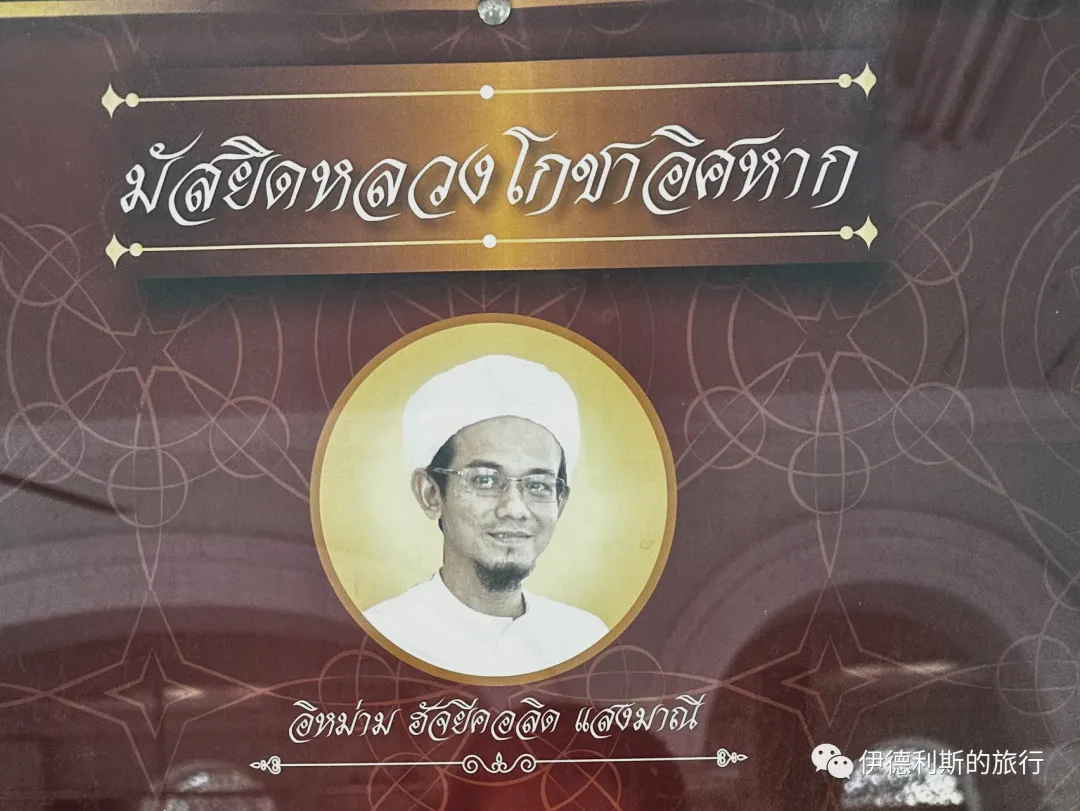
Seeing that there was no mosque in the Sampeng Lane area, Luang Kocha Itsahak donated a piece of his own land and had his children dismantle the bricks and stones from an old house he owned across the river in the Thonburi area to build this mosque. Today, the mosque is still owned by the descendants of Kocha Itsahak and provides convenience for the friends (dosti) working in Bangkok's Sampeng Lane.
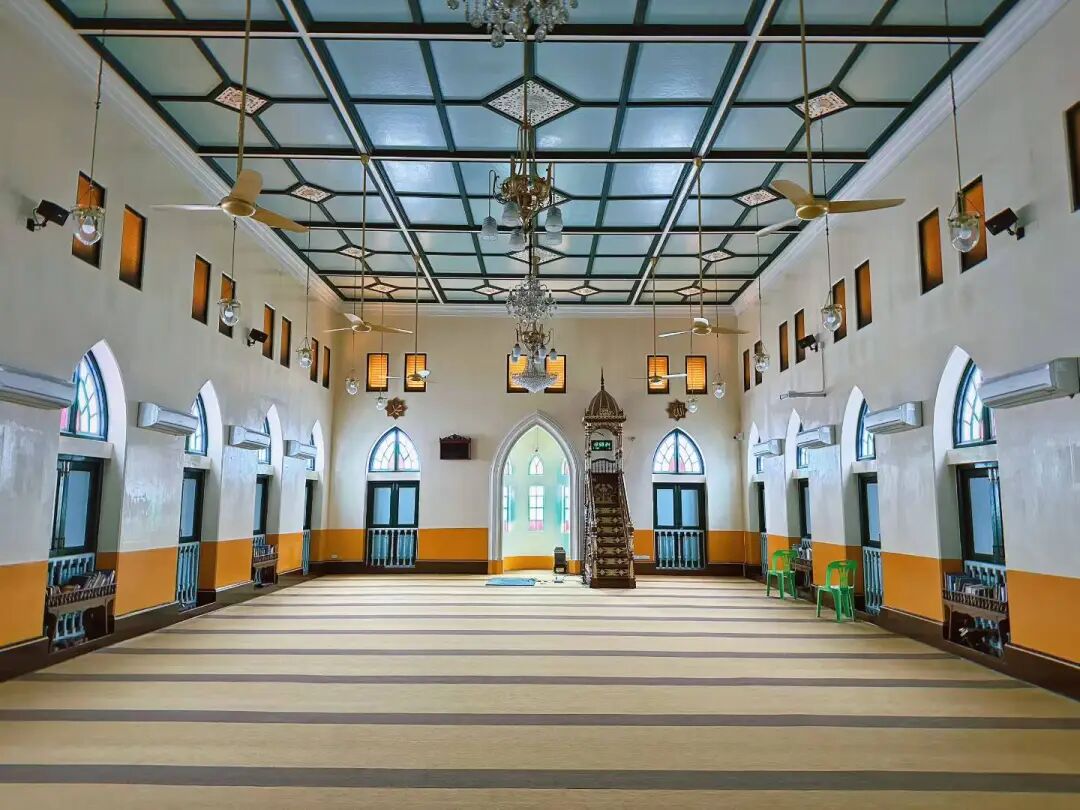
Kocha Itsahak Mosque was originally a wooden building, but it was rebuilt into the current neoclassical structure during the reign of Rama V (reigned 1868-1910). view all
Summary: Bangkok has Malay Muslim mosque quarters, halal hotels, river markets, and neighborhood food stops shaped by migration from the Malay world. This account follows the six Malay mosque areas, local markets, hotels, restaurants, and photos in the same order as the original travel note.
There are many Malay-founded mosque communities in Bangkok's city center and suburbs. They come from two main areas: the Pattani region in present-day southern Thailand (the three southern border provinces) and the Kedah region in northwestern Malaysia. I visited three Pattani Malay mosque communities and three Kedah Malay mosque communities on this trip.
Pattani Malay Mosque Communities
The Sultanate of Pattani was a Malay state founded in the 15th century, located in the southernmost part of modern-day Thailand. After the Sultanate of Malacca fell in the 16th century, the Sultanate of Pattani began to rise, becoming a center for trade and culture during that same century.
Thailand began invading the Sultanate of Pattani from the 17th century, and the war of conquest in 1688 caused chaos in the Pattani region. Long-term warfare led to many Pattani Malays being taken to Ayutthaya, the capital of Thailand at the time. In the mid-18th century, thousands of Pattani Malay captives were settled in the southern and southwestern suburbs of Ayutthaya, where they were forced to work to fill the capital's granaries. After Ayutthaya fell in 1767, some Pattani Malays managed to return home, while others stayed in Ayutthaya. A small number of Malays were invited by the Thai king to settle in the new capital, Thonburi, and were released from their status as captives.
Bang O Mosque
The Bang O mosque community is located 5 kilometers downstream from Thonburi and is one of the Pattani Malay mosque communities that relocated from Ayutthaya. During the reign of Rama I (1782-1809), the leader of the Bang O mosque community was granted the title of Director of Maritime Construction (Phraya Yotha Samut). He was responsible for supplying timber to the Thai naval base and established a sawmill. In the late 19th century, a Malay merchant from Songkhla named Mohammat Phet thongkham converted the Bang O mosque community's sawmill from manual labor to steam power and obtained a concession for inland teak. He built a thriving timber export trade in the Bang O mosque community and donated funds to rebuild the Bang O mosque in 1903. In 1924, the timber trade at the Bang O mosque community was interrupted by the construction of an upstream dam. Later, the community shifted to exporting timber and rice to the Middle East, which led to the introduction of more radical Salafi ideas from Arabia.
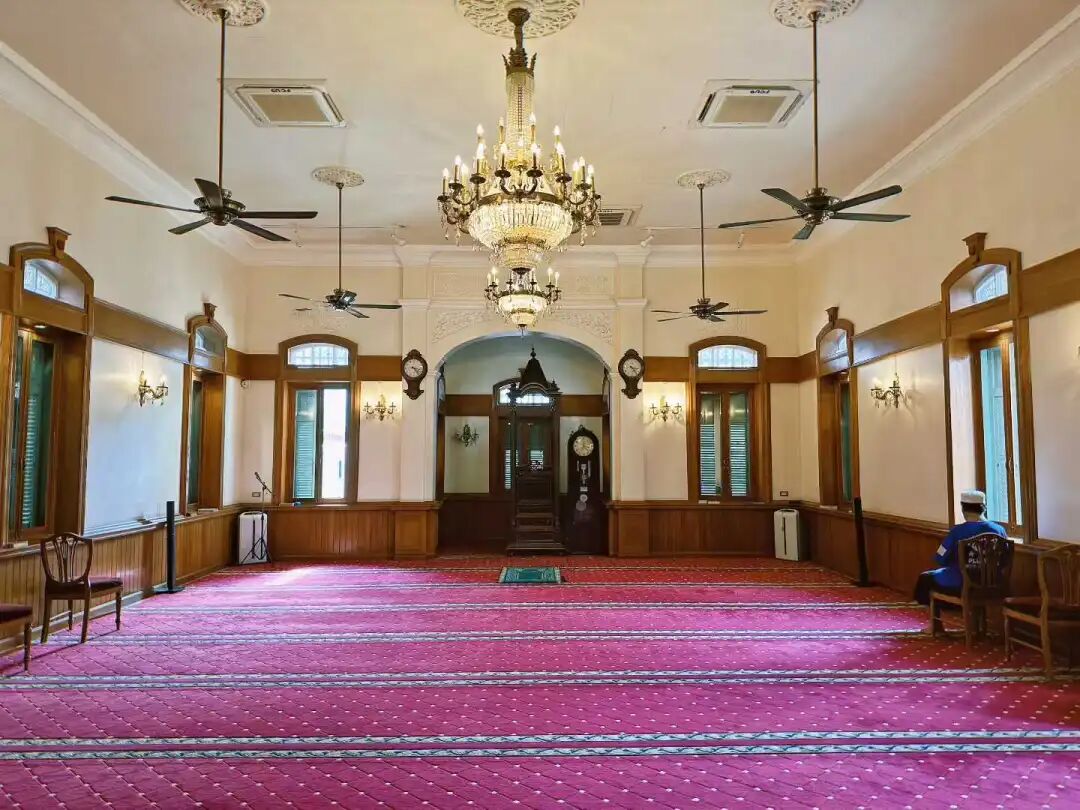
The main prayer hall of the Bang O mosque was built in 1918. It features a neoclassical style and a very exquisite design. Interestingly, the entrance hall faces southeast toward the banks of the Chao Phraya River, but the main hall behind it faces due west toward the Kaaba. Because of this, the entire building is not symmetrical along a single axis.
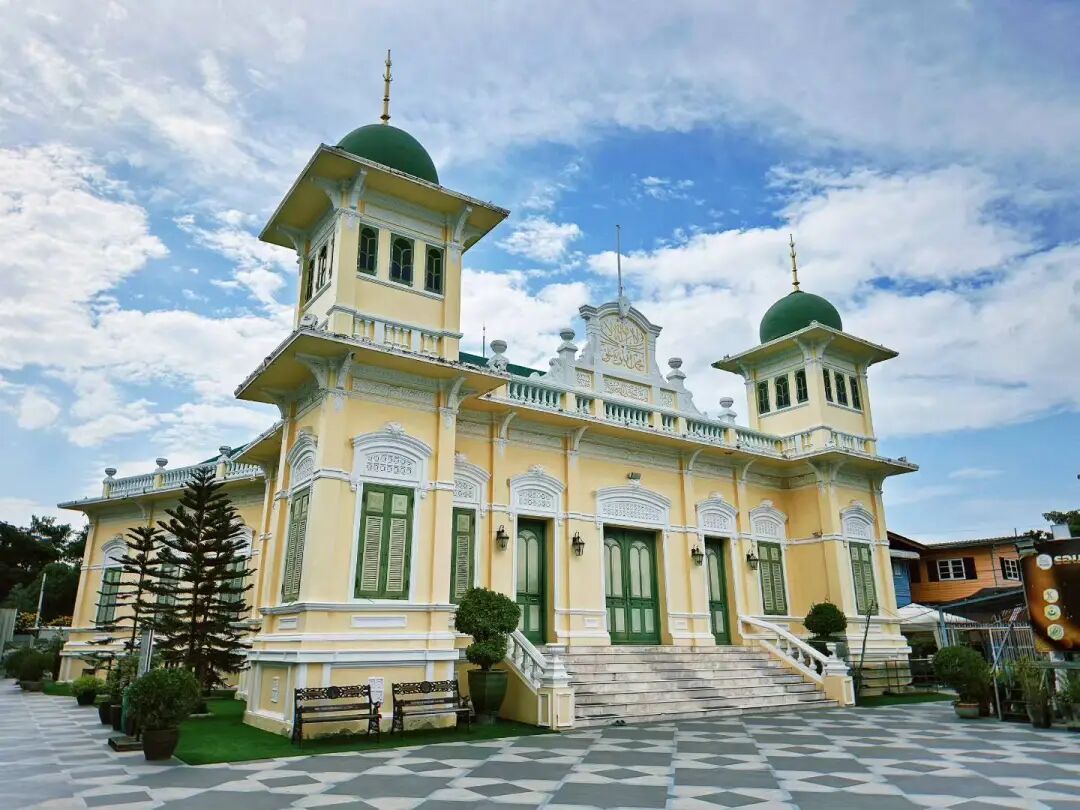
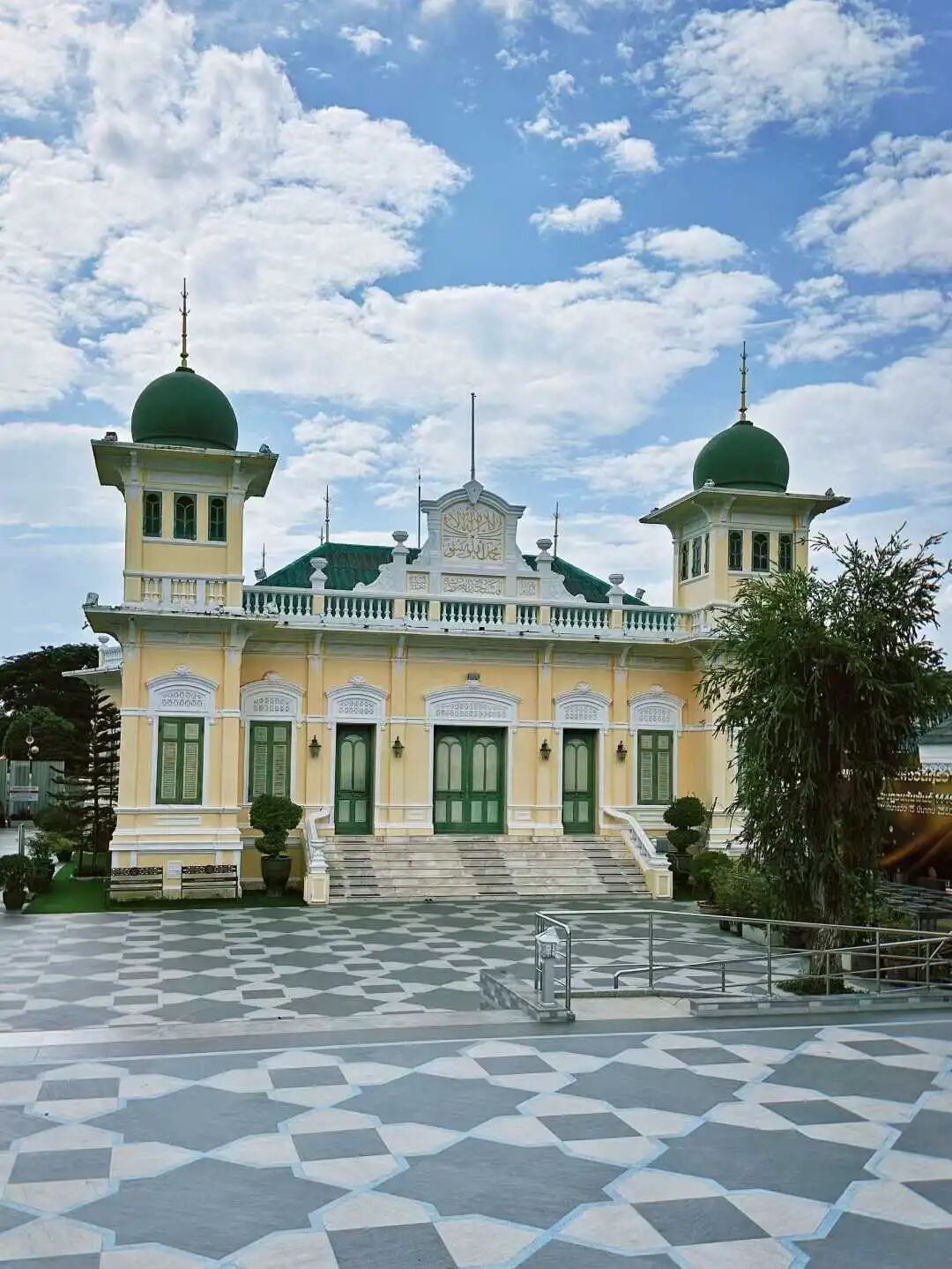
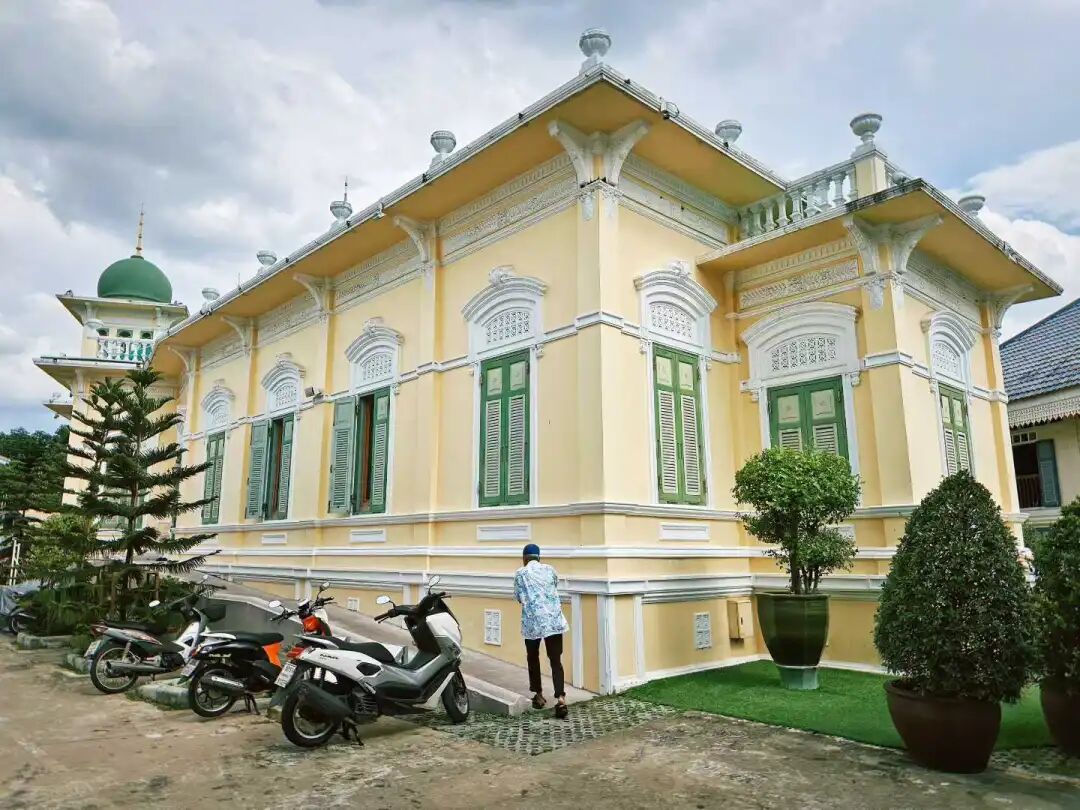
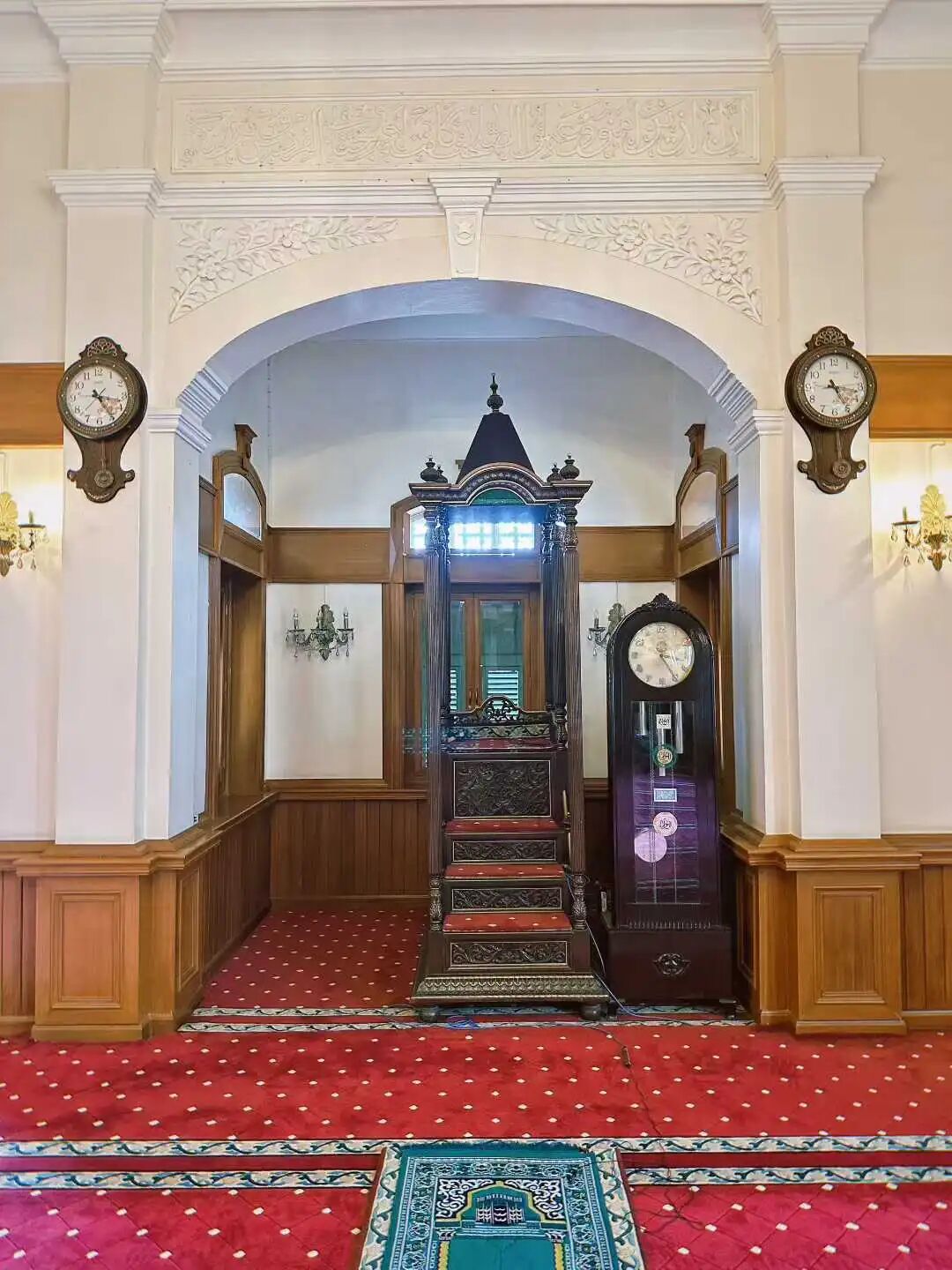
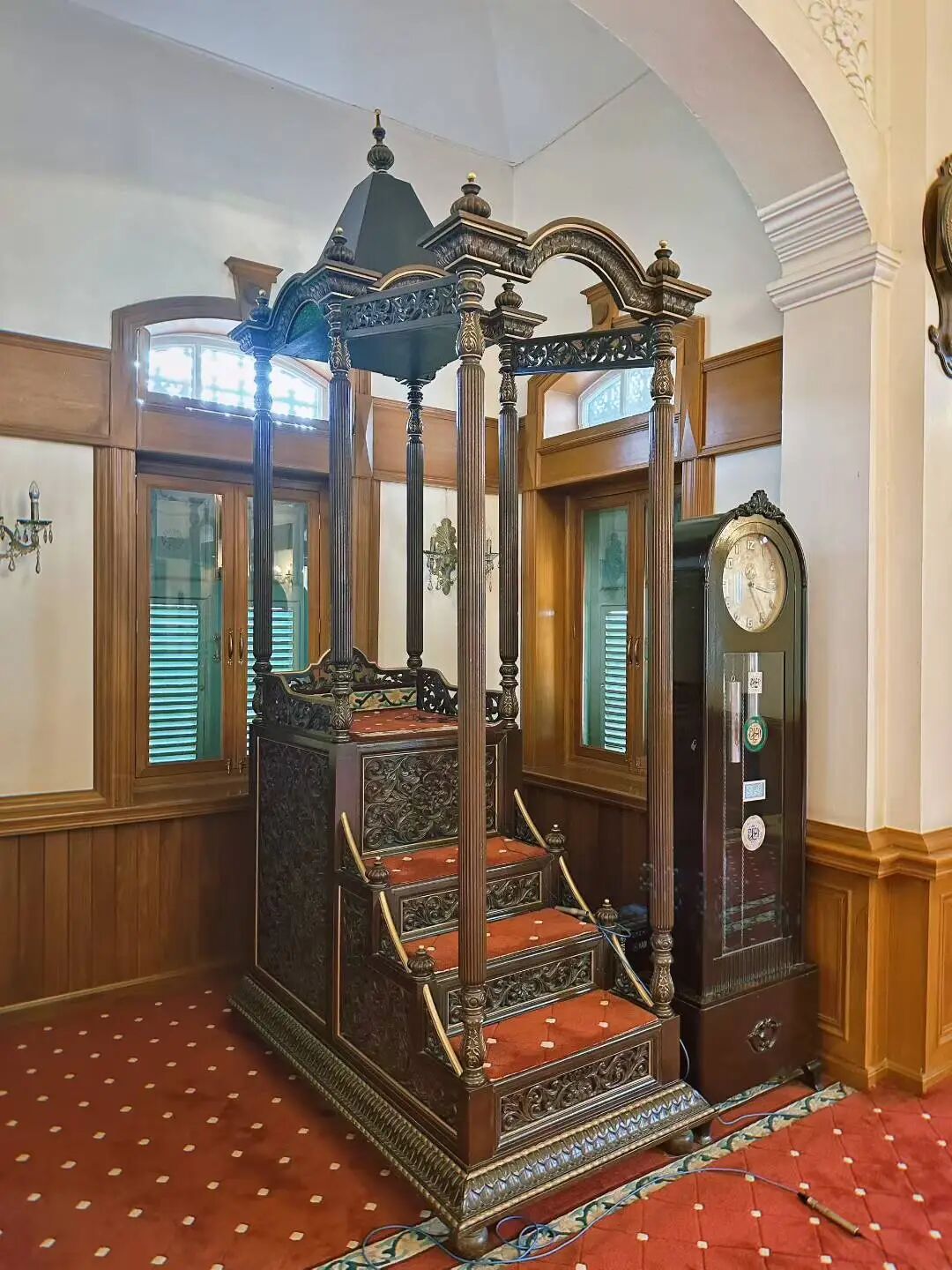
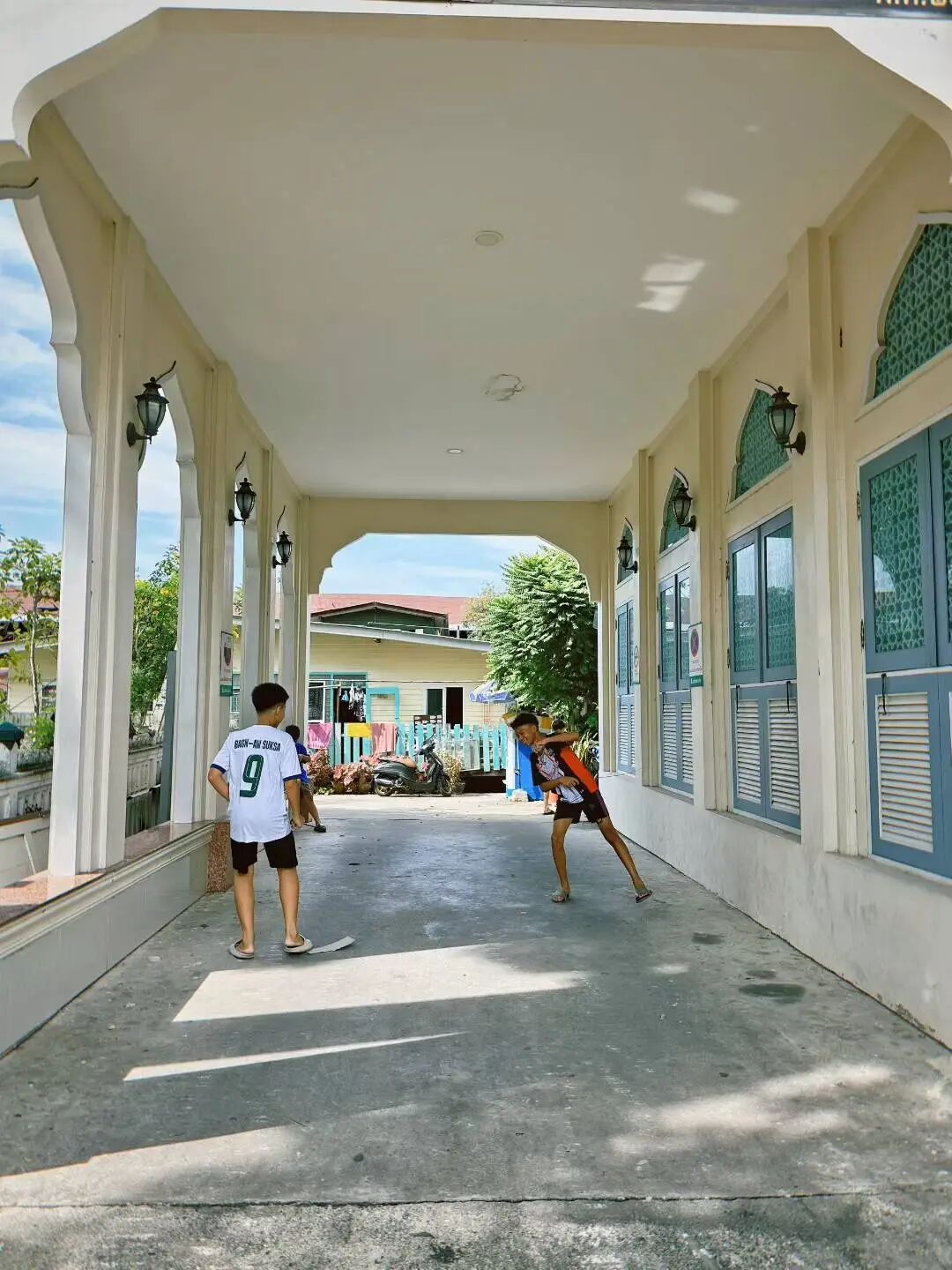
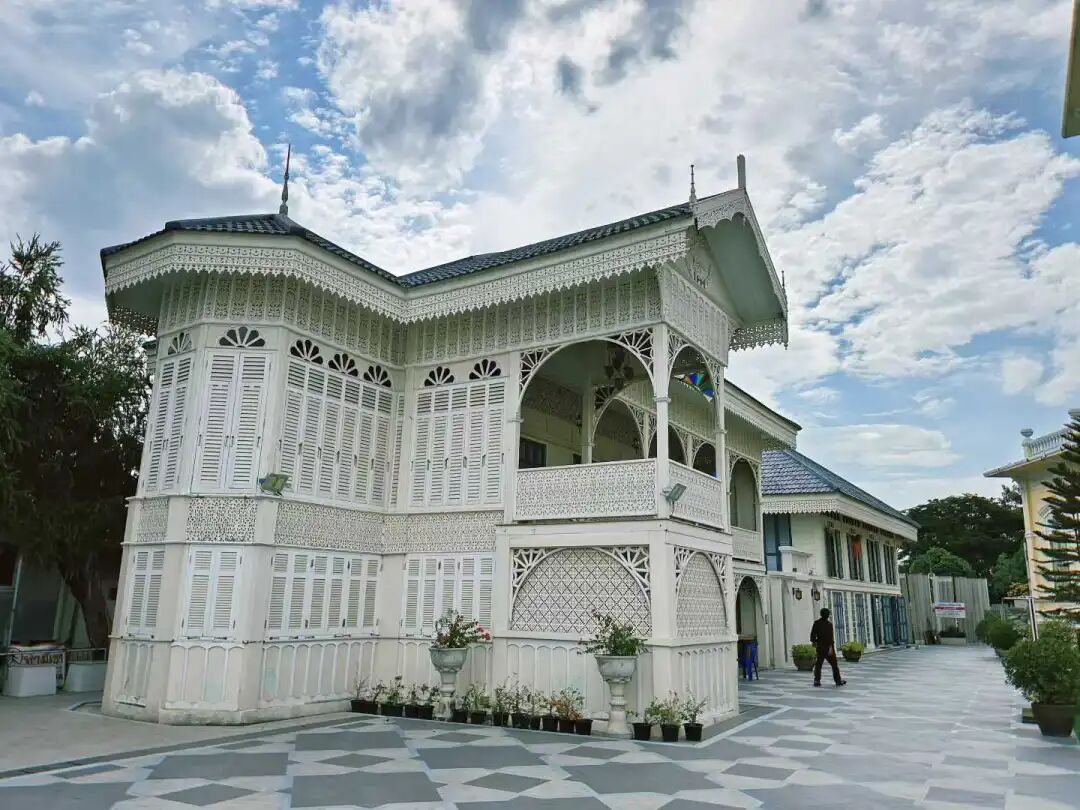
Additionally, the office of the Bang O mosque was built in 1920 using the teak gingerbread style, which is very characteristic of that era. This is a decorative style that originated in the United States in the 1860s. It involves cutting wood into small decorative pieces with very rich details. Because gingerbread houses have high ceilings and shutters on all sides to improve ventilation, they were very popular in tropical regions. During the reign of Rama V (1868-1910), many mansions belonging to Thai nobles were built in the teak gingerbread style.
Chakraphong Mosque
After Ayutthaya fell in 1767, the Sultanate of Pattani was briefly free from Thai control. However, with the establishment of the Chakri Dynasty in Thailand in 1782, the Thai government decided to restore its control over the Sultanate of Pattani. In 1786, Thailand sent an army led by the Second King Maha Sura Singhanat to launch a devastating attack on the Pattani Sultanate. To show their loyalty to Thailand, the Pattani Sultanate sent a large number of nobles and craftsmen to Bangkok as hostages. Under the supervision of the Thai Second King, these Pattani Malays were settled inside the northern city wall of Bangkok, near the mouth of the Bang Lamphu canal. Among the many mosque communities (masjid) established by Malay and Cham captives around Bangkok, the Chakraphong mosque community is the only one located inside the city walls.
The Chakraphong mosque was originally called the Bang Lamphu mosque, and it only changed to its current name after Chakraphong Road was built in 1900. Before the 1960s, many Malay residents worked as goldsmiths, setting up stalls to trade along the roads around the mosque community. Today, the Bang Lamphu mosque community is famous for its specialty snacks.
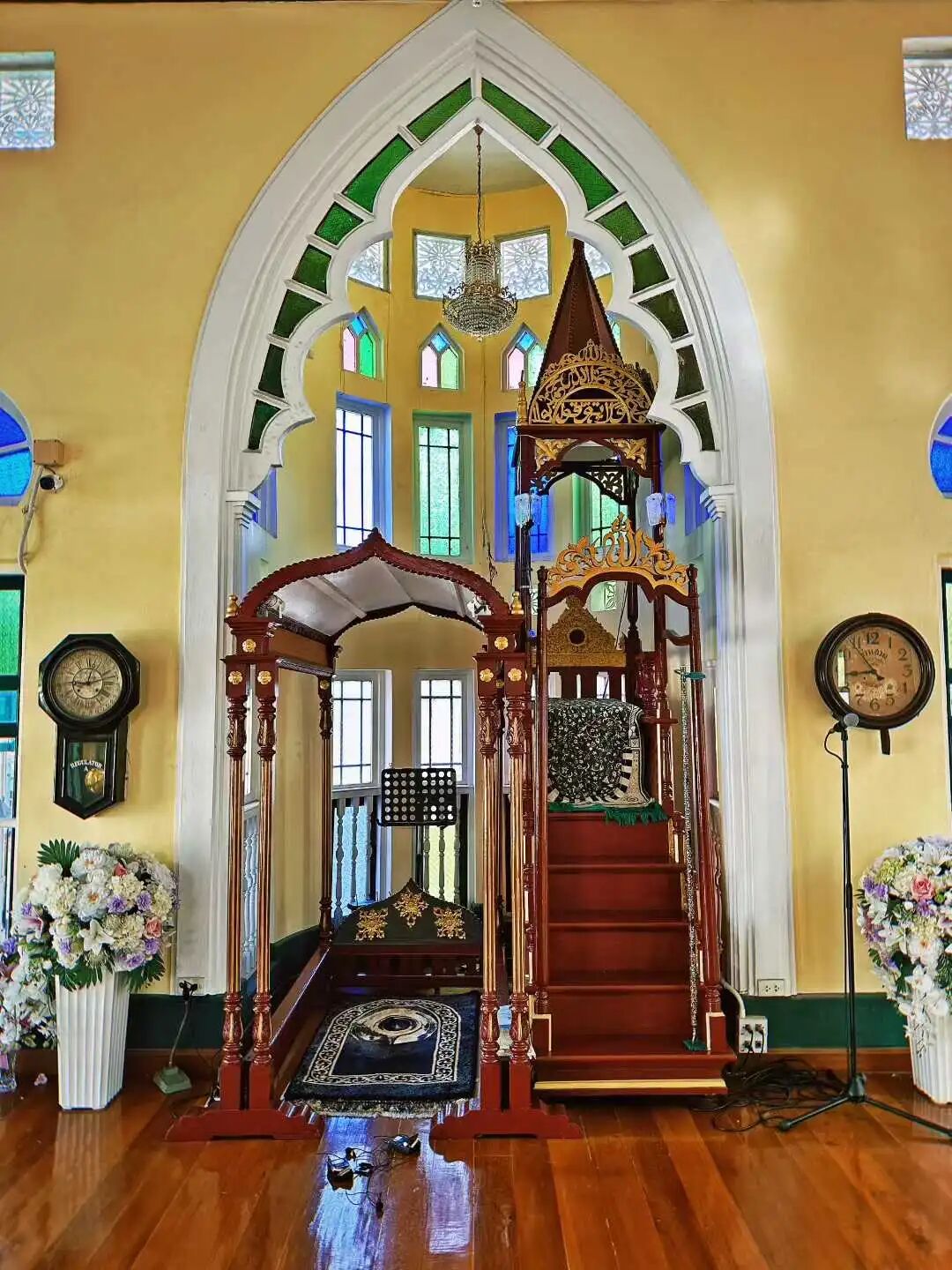
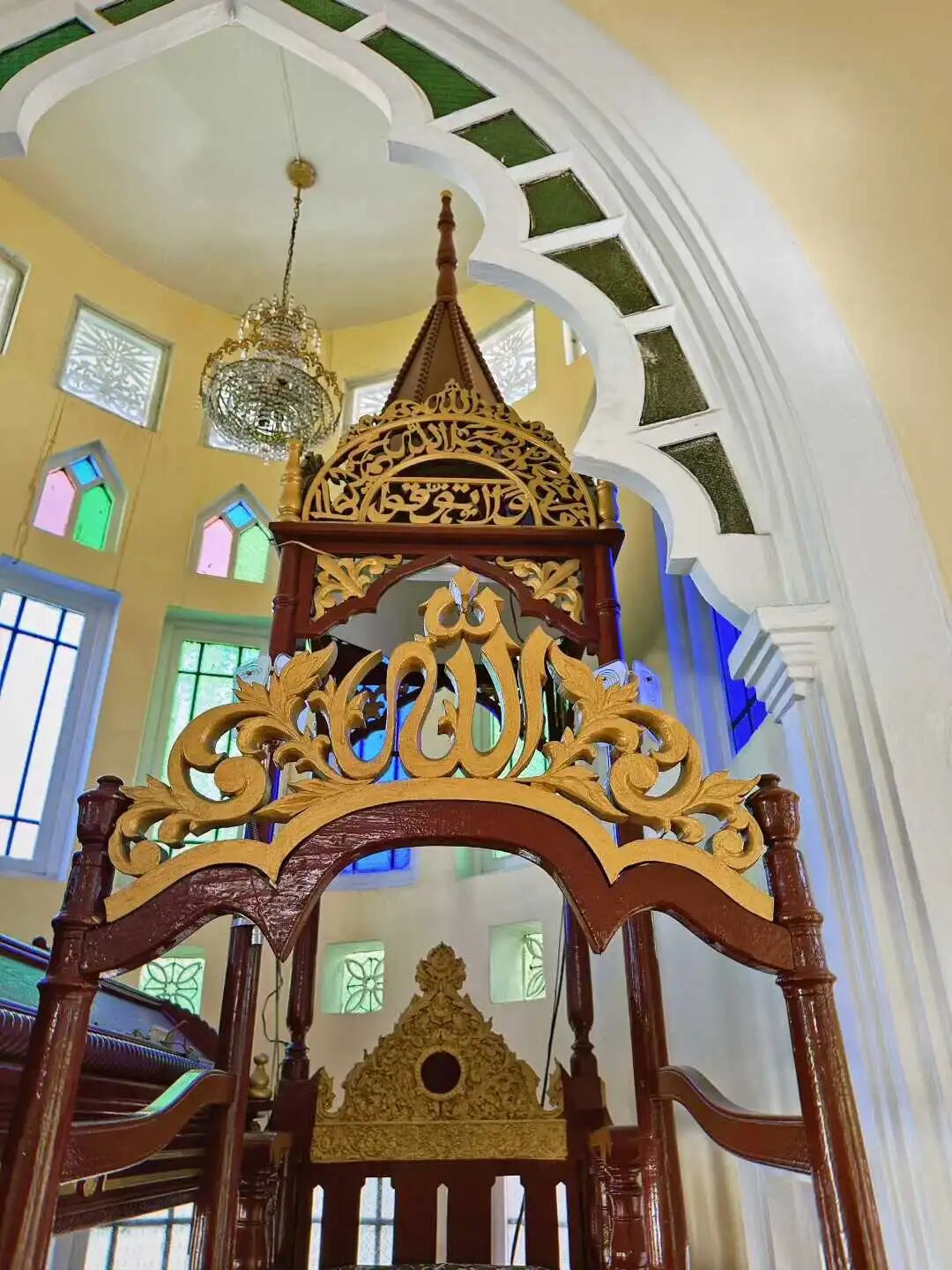
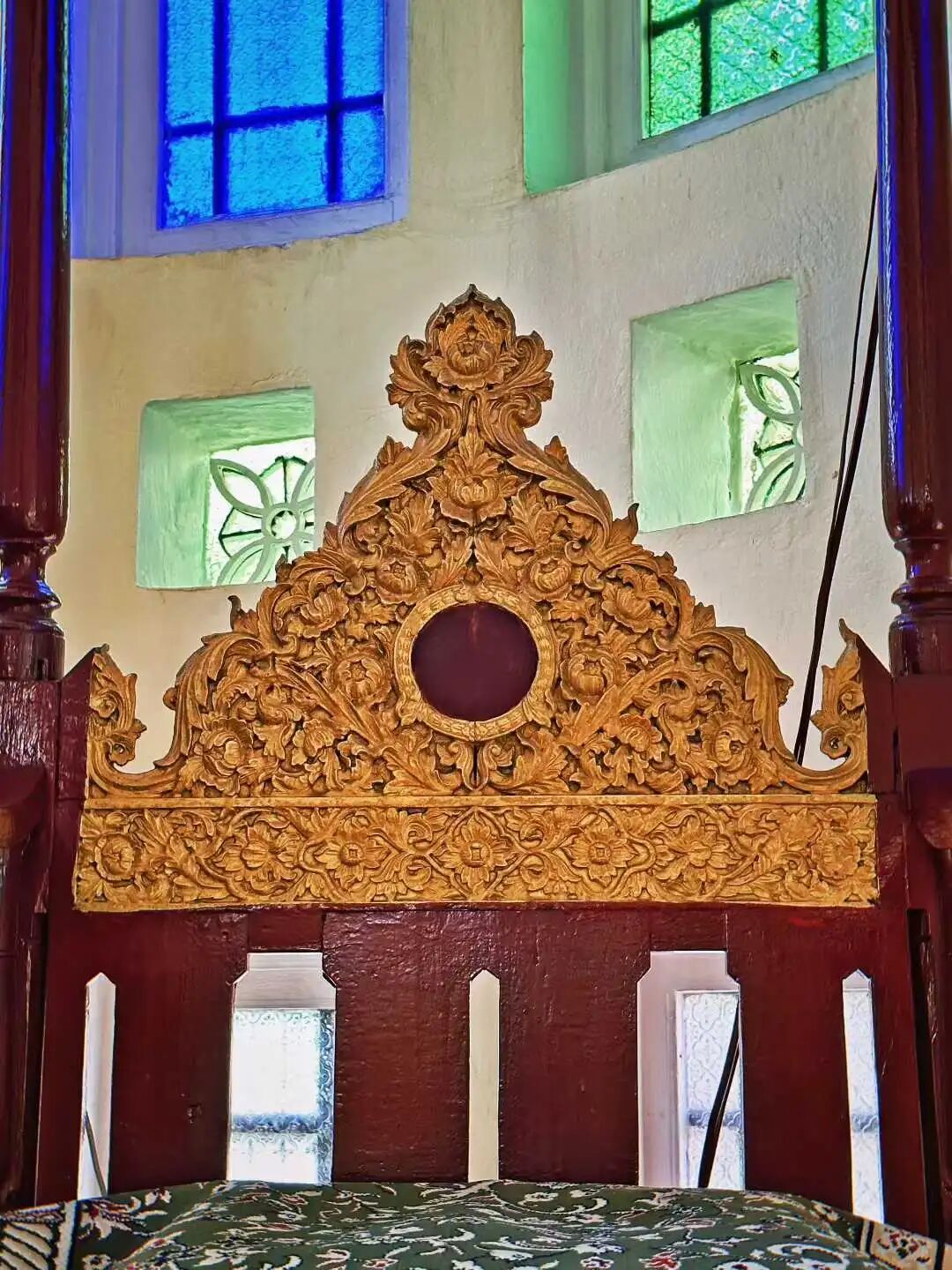
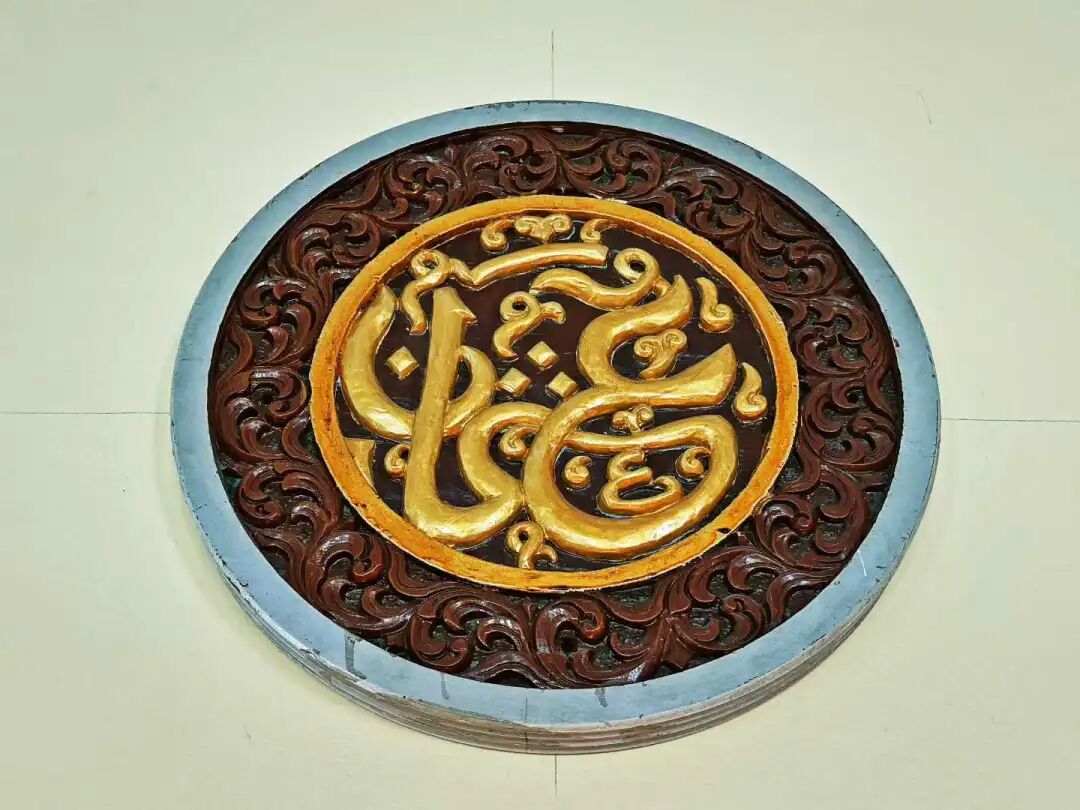
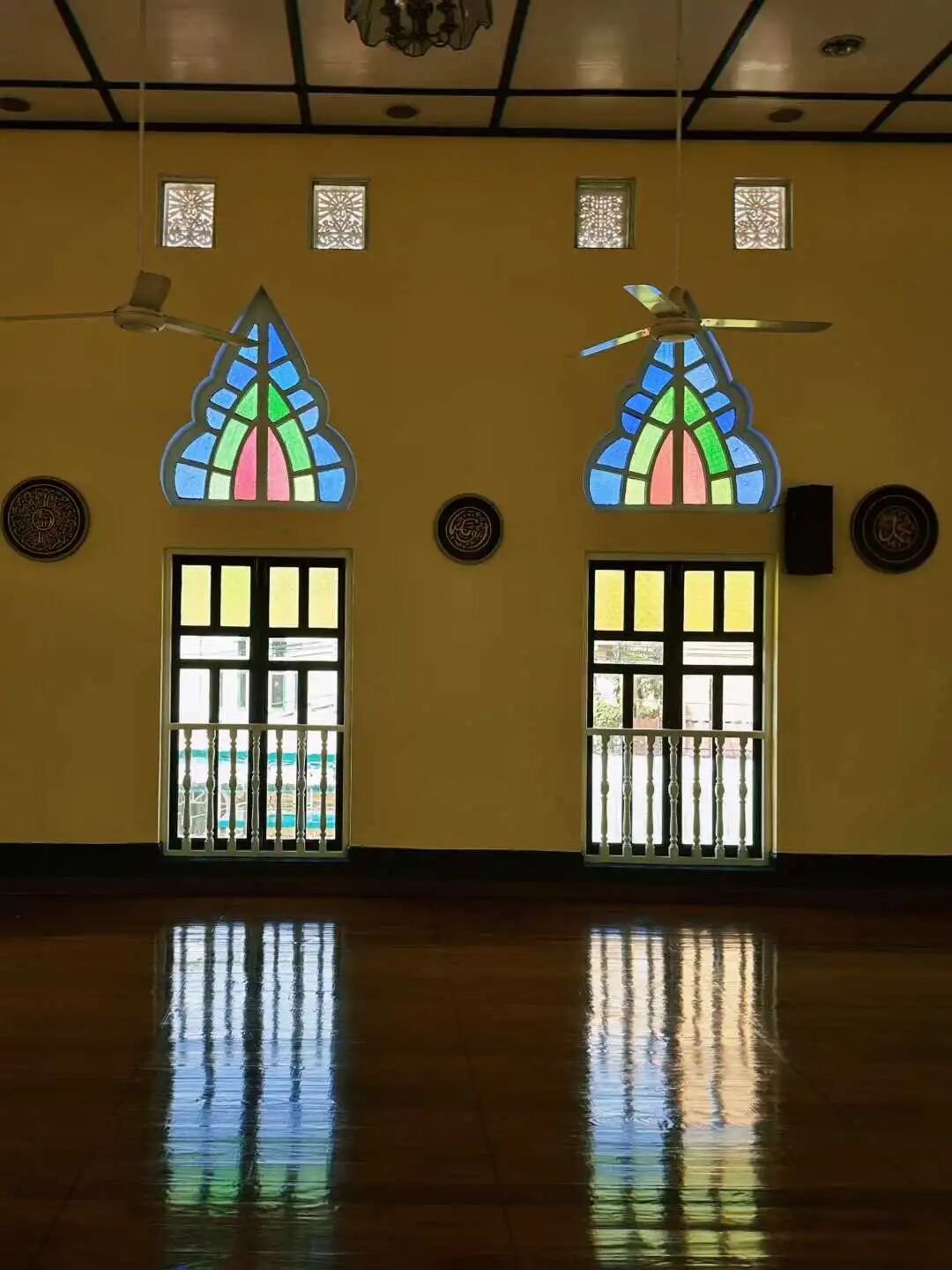
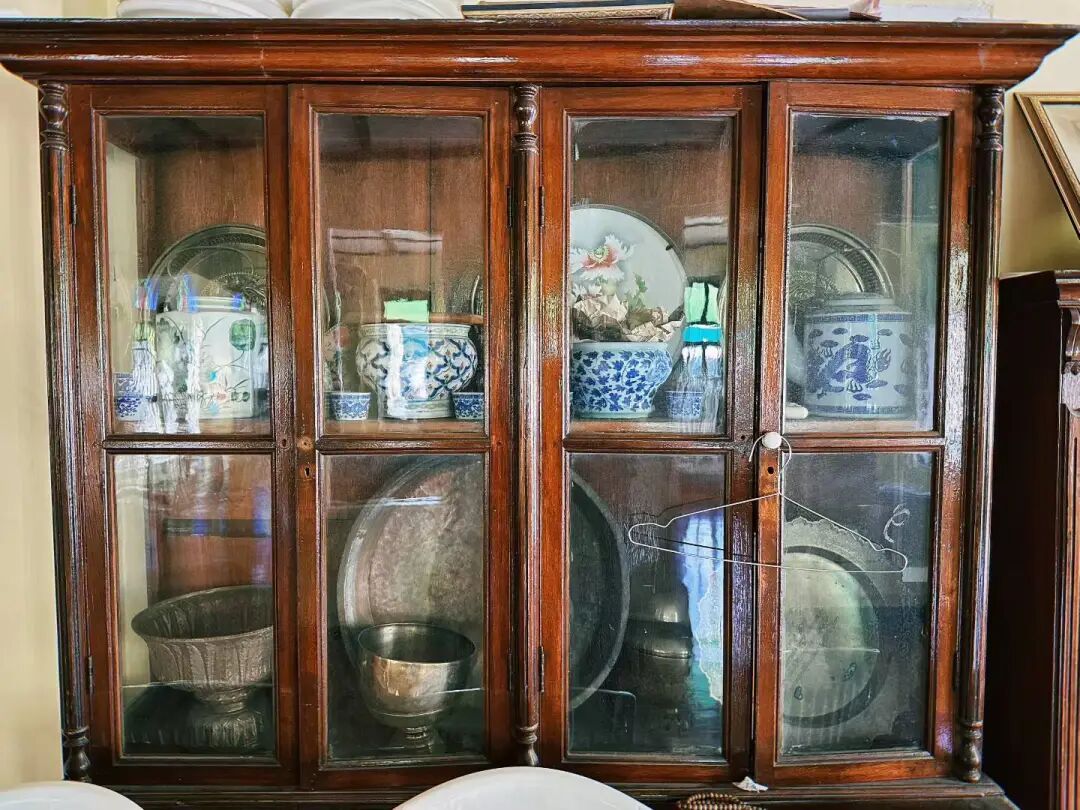
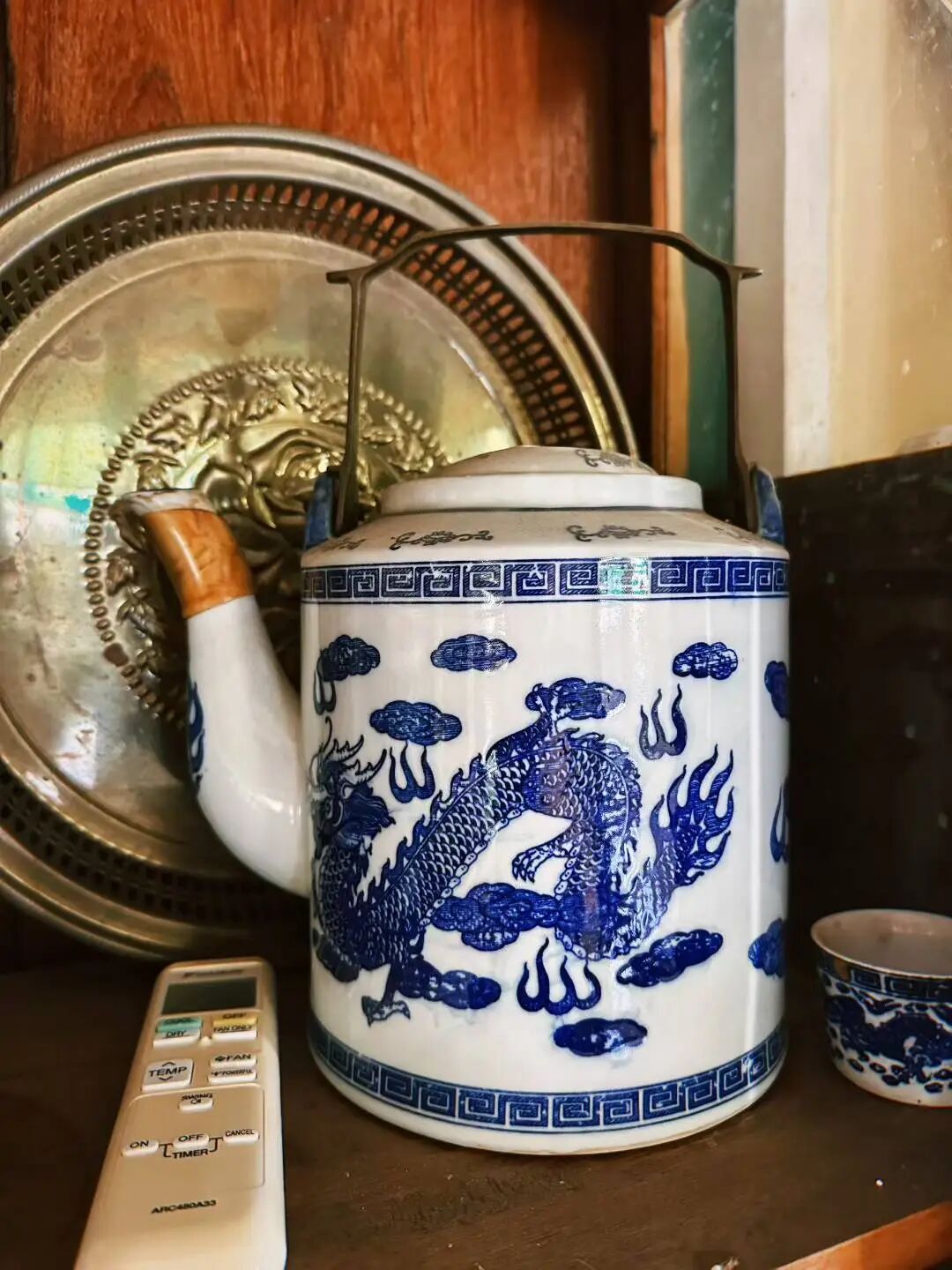
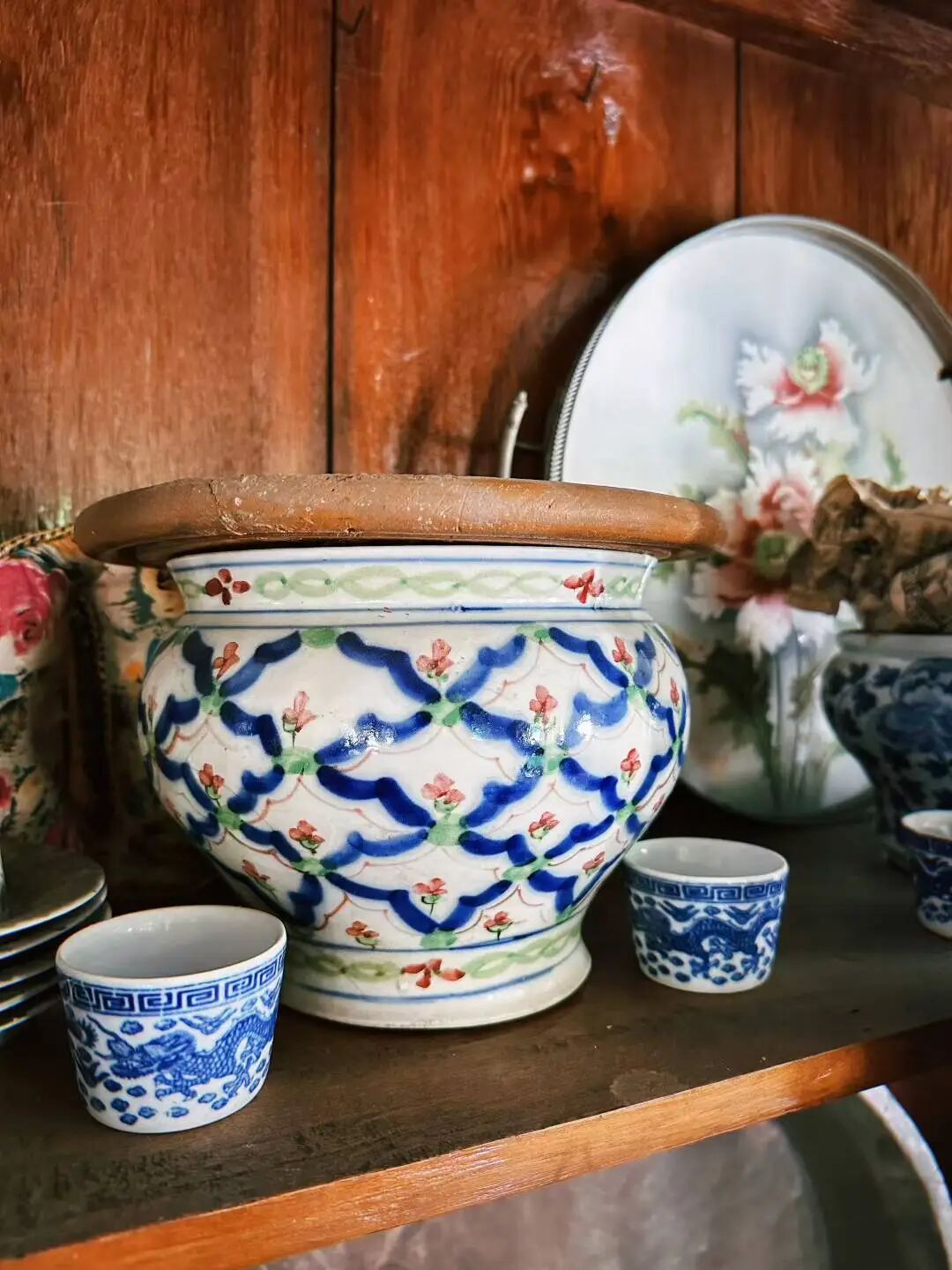
Chinese porcelain collected by the Chakraphong mosque.
The snack stalls at the entrance are very busy, with people lining up to get food to go.
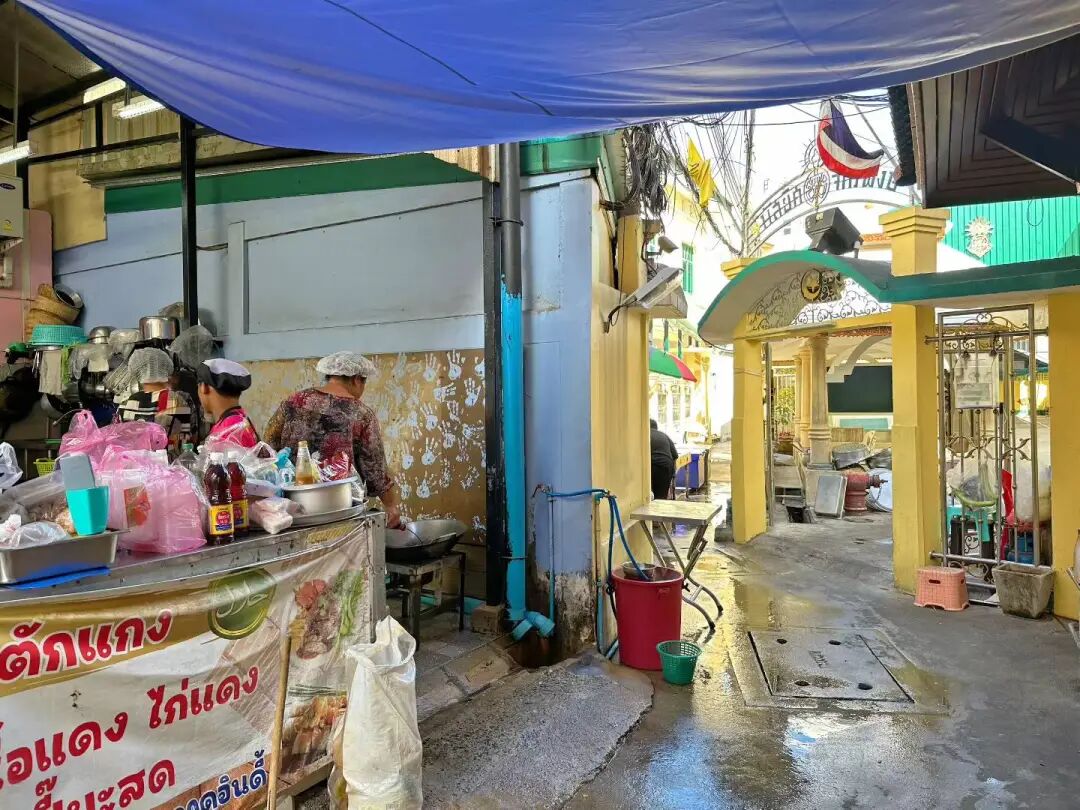
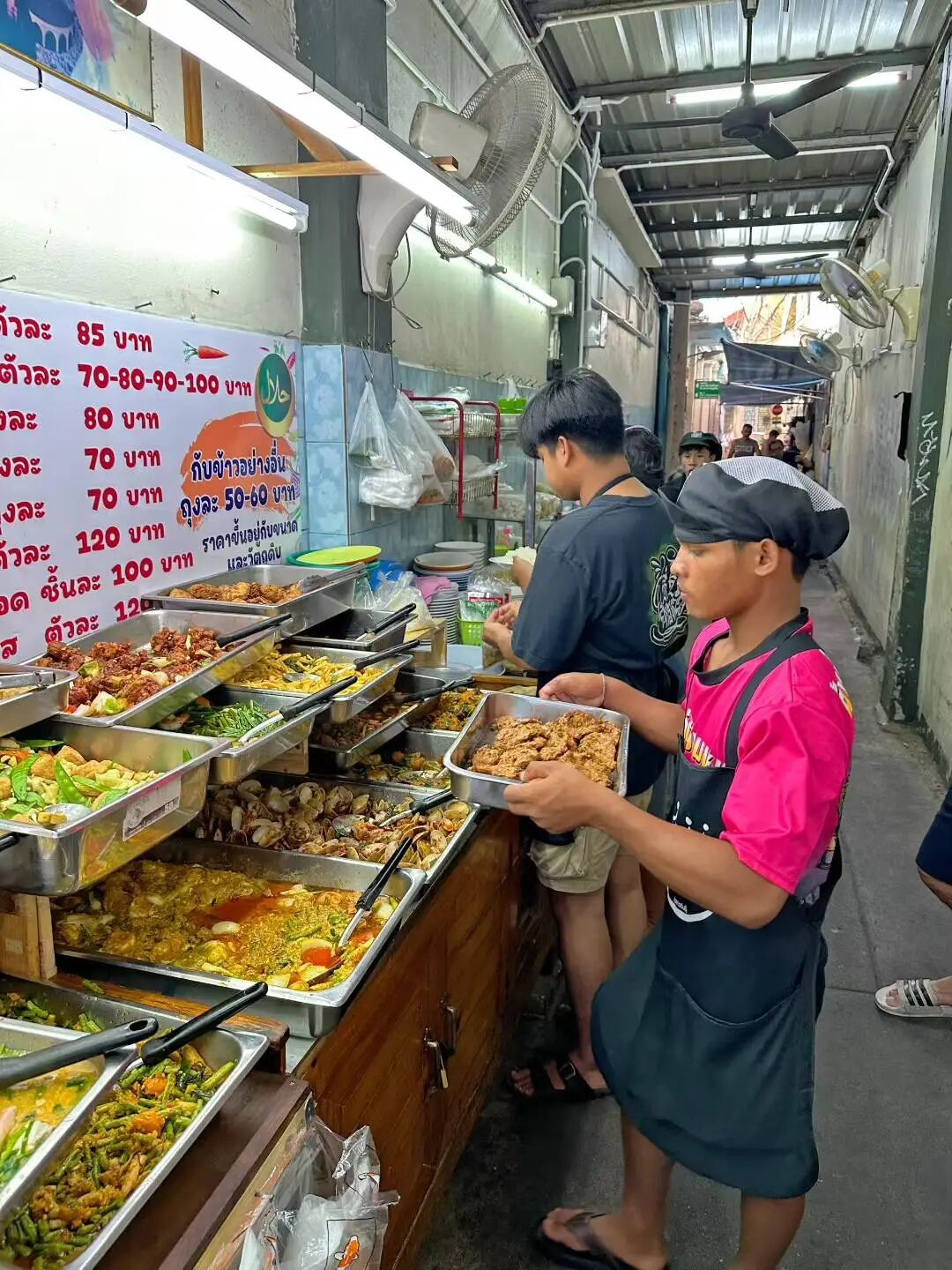
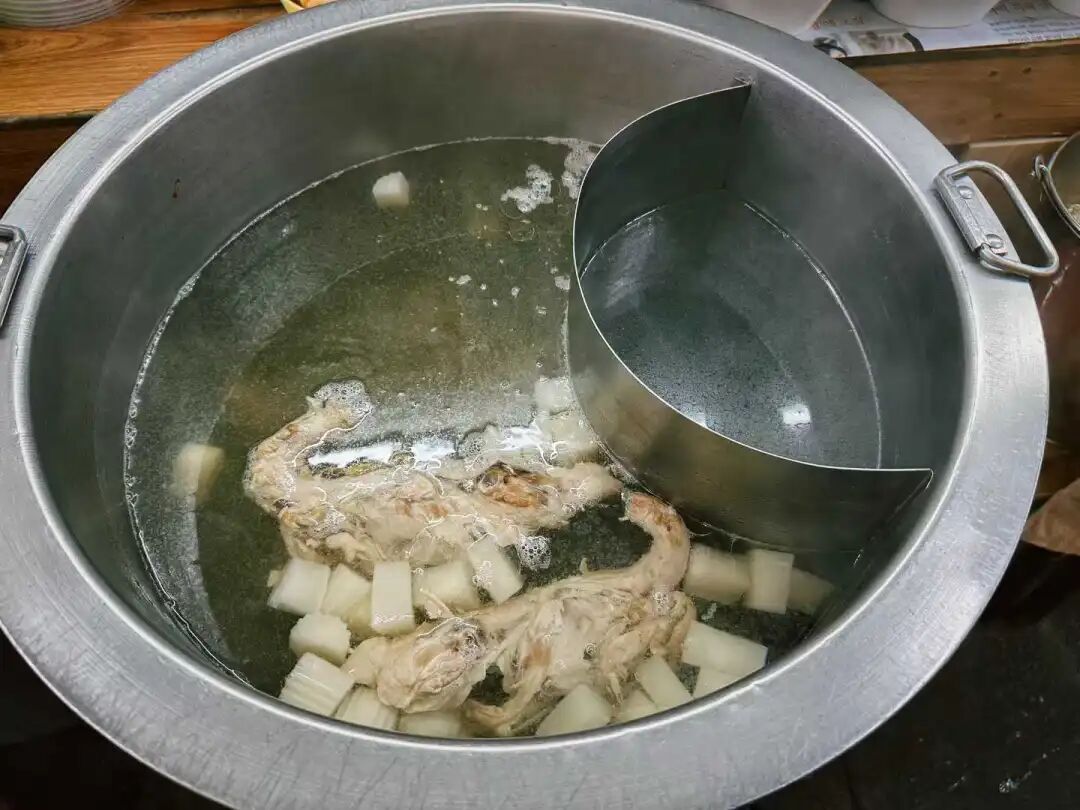
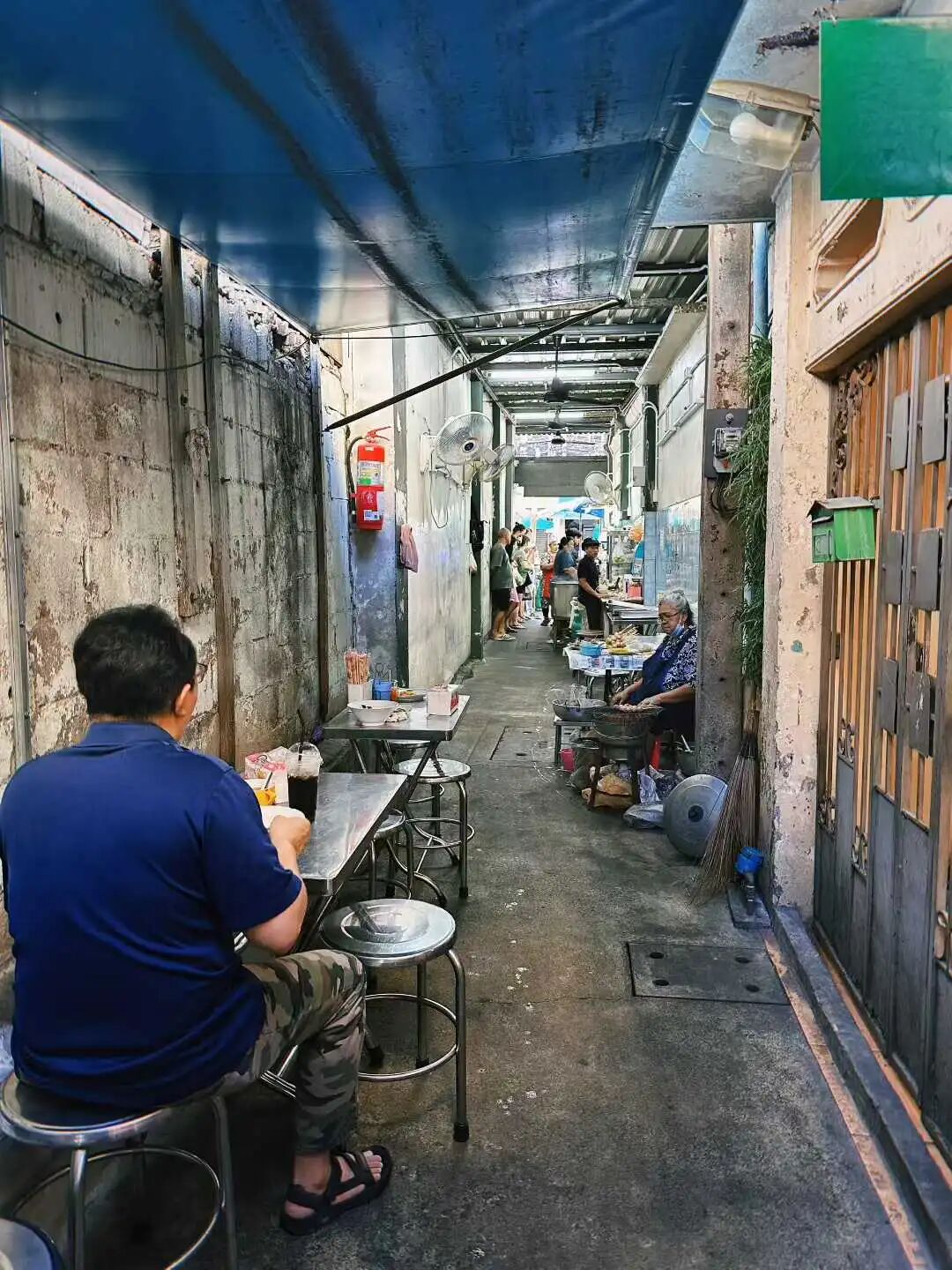
The Nouvo City Hotel where we stayed is only about 200 meters from the Chakraphong mosque, and it is the most famous halal hotel in Bangkok's old town. Near the hotel are piers for two express boat lines on the Chao Phraya River and the Bang Lamphu canal, making it very convenient to reach major Bangkok attractions without getting stuck in traffic.
The hotel has a gym, two swimming pools, and a prayer room, which is very convenient.
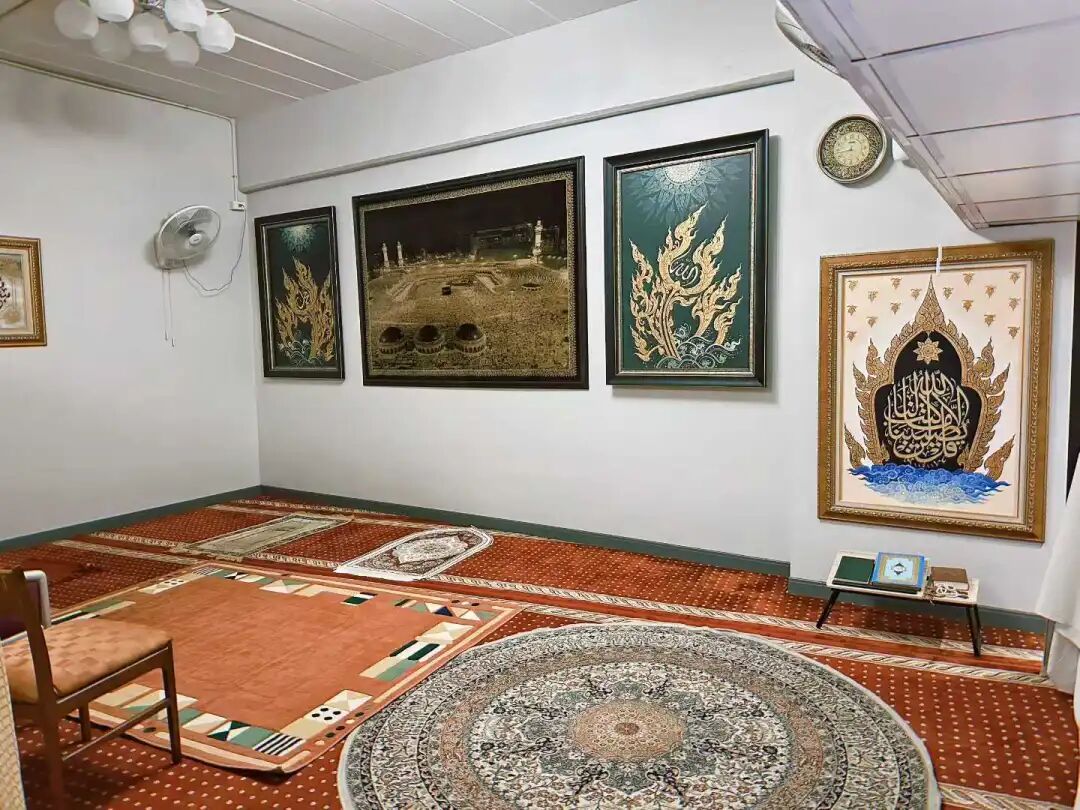
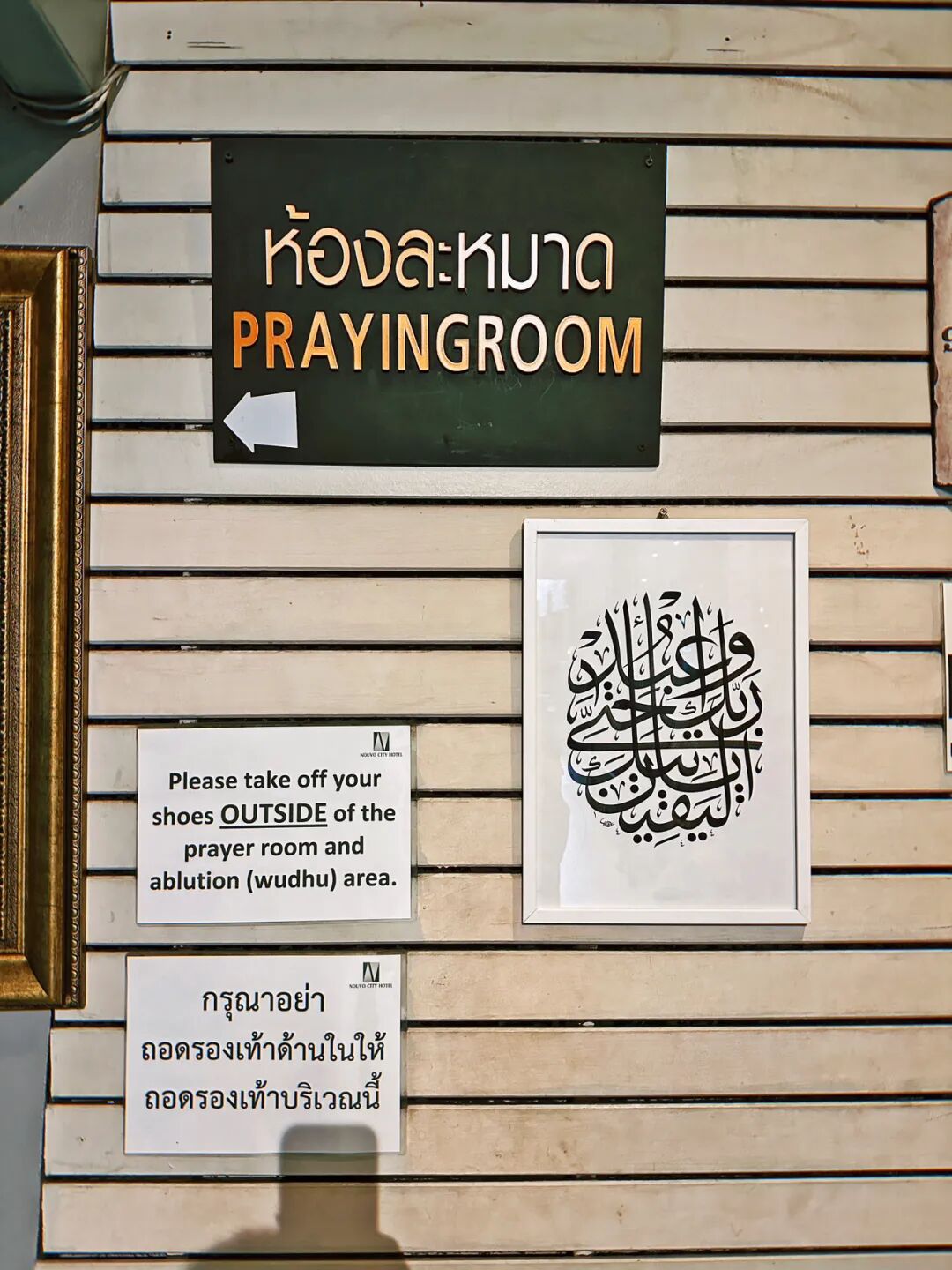
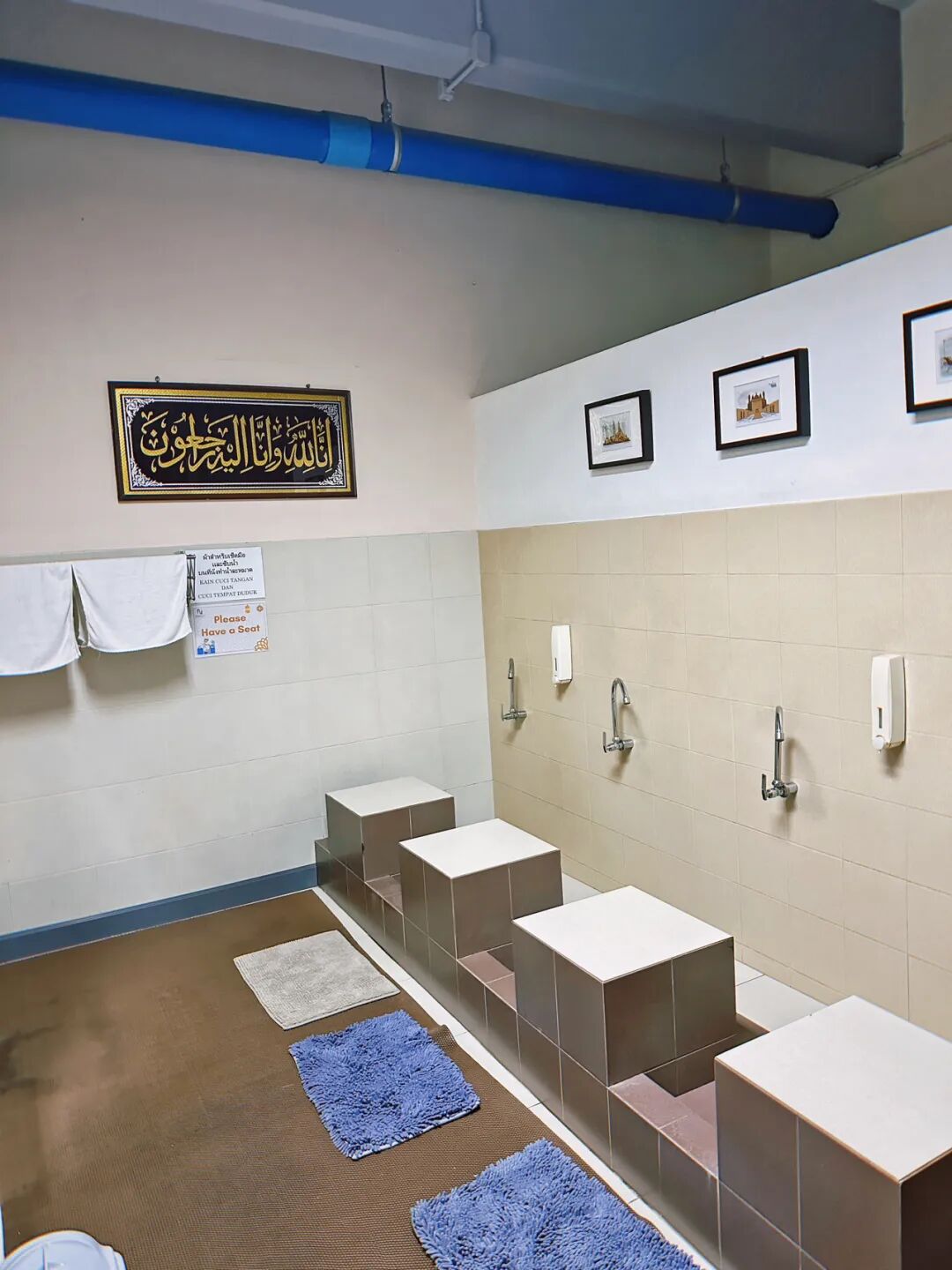
The prayer room features Thai-style Islamic decorative art, combining local Thai patterns with Islamic calligraphy, which looks very beautiful.
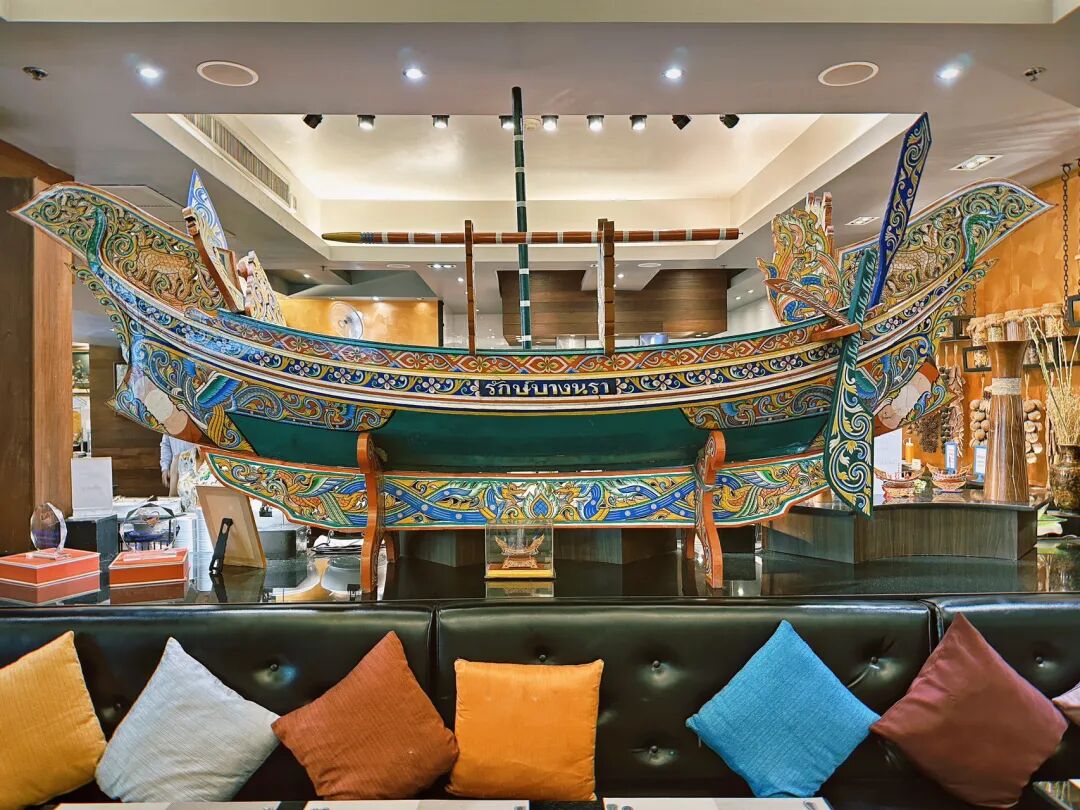
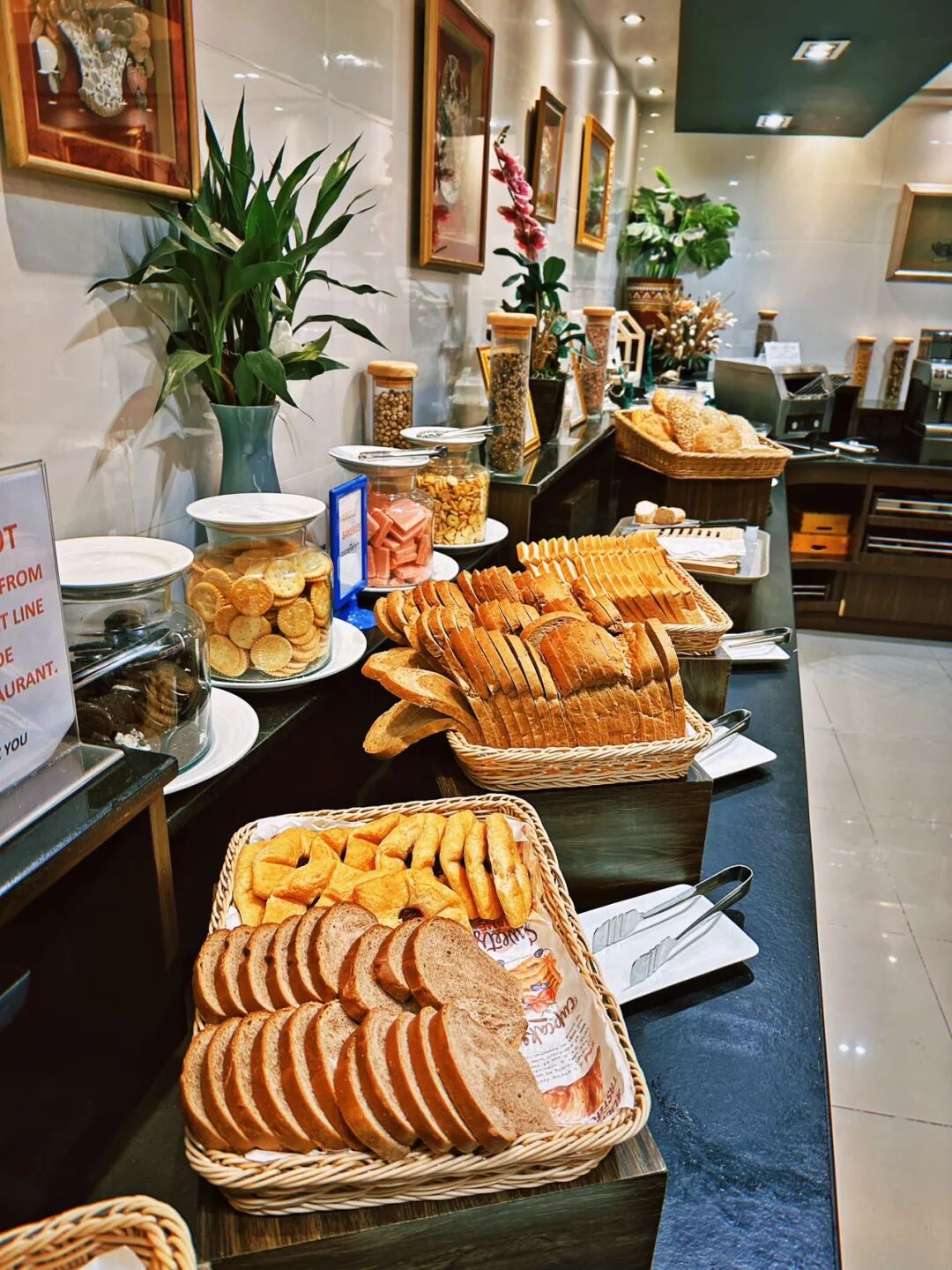
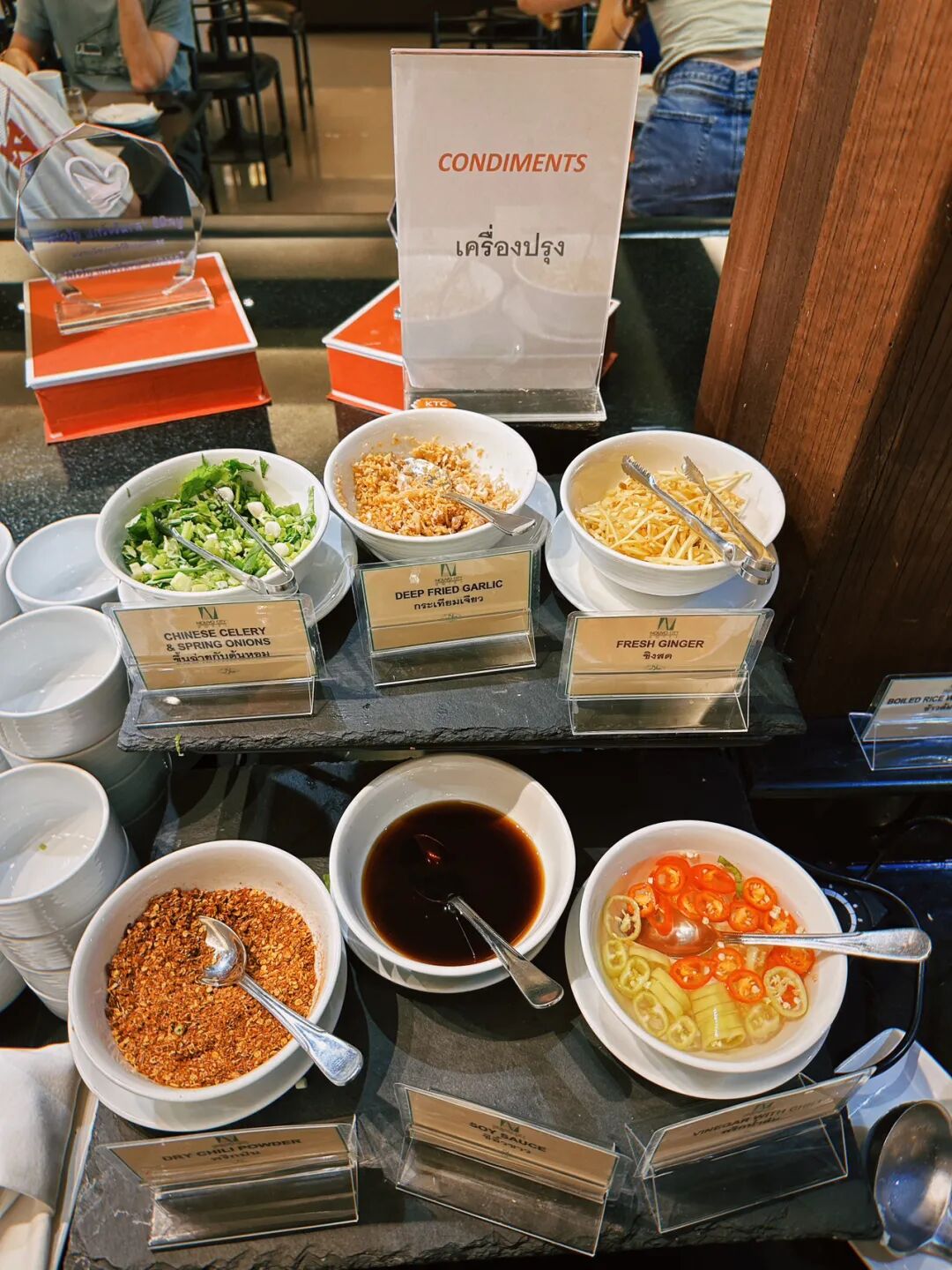
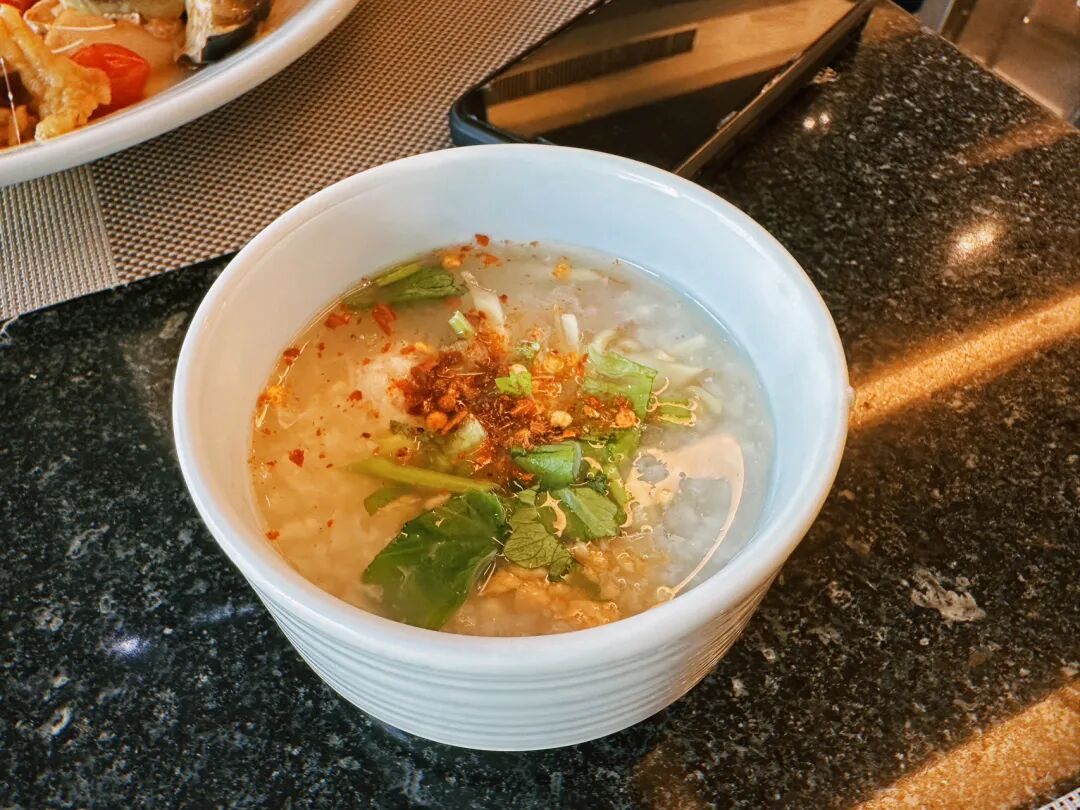
The hotel's buffet breakfast is also good, offering Thai, Indian, and Western styles, with specialties like coconut milk mushrooms, spicy porridge, and brown rice.
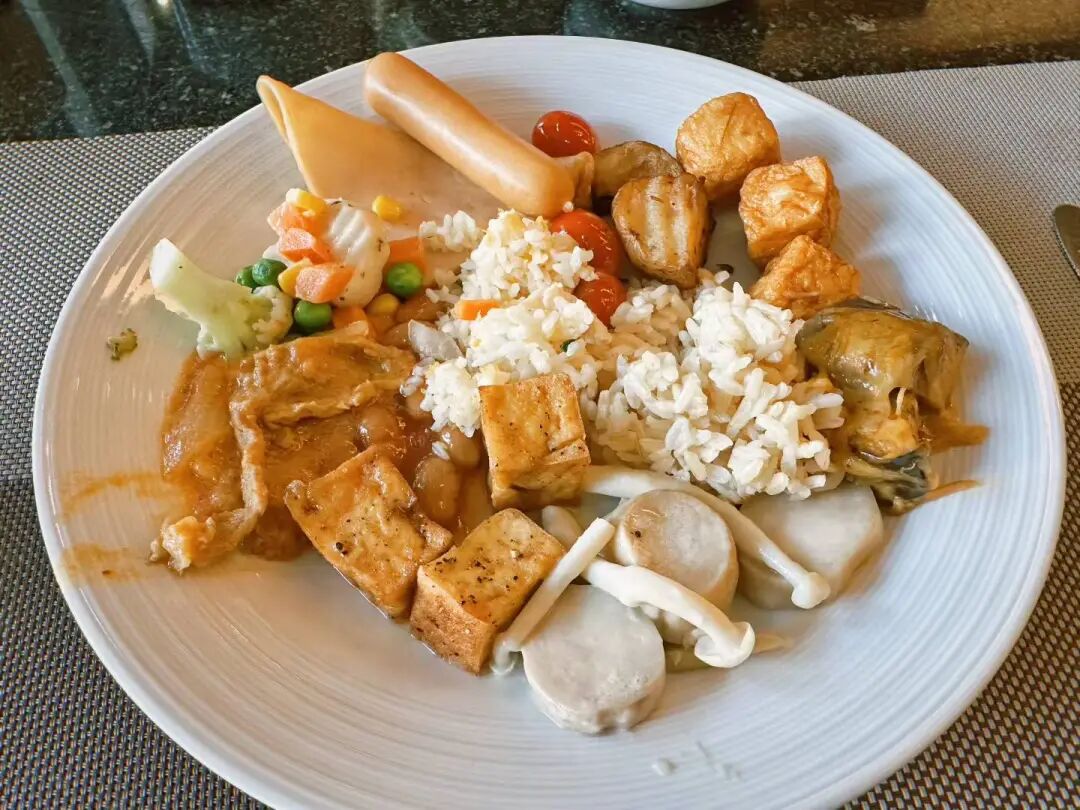
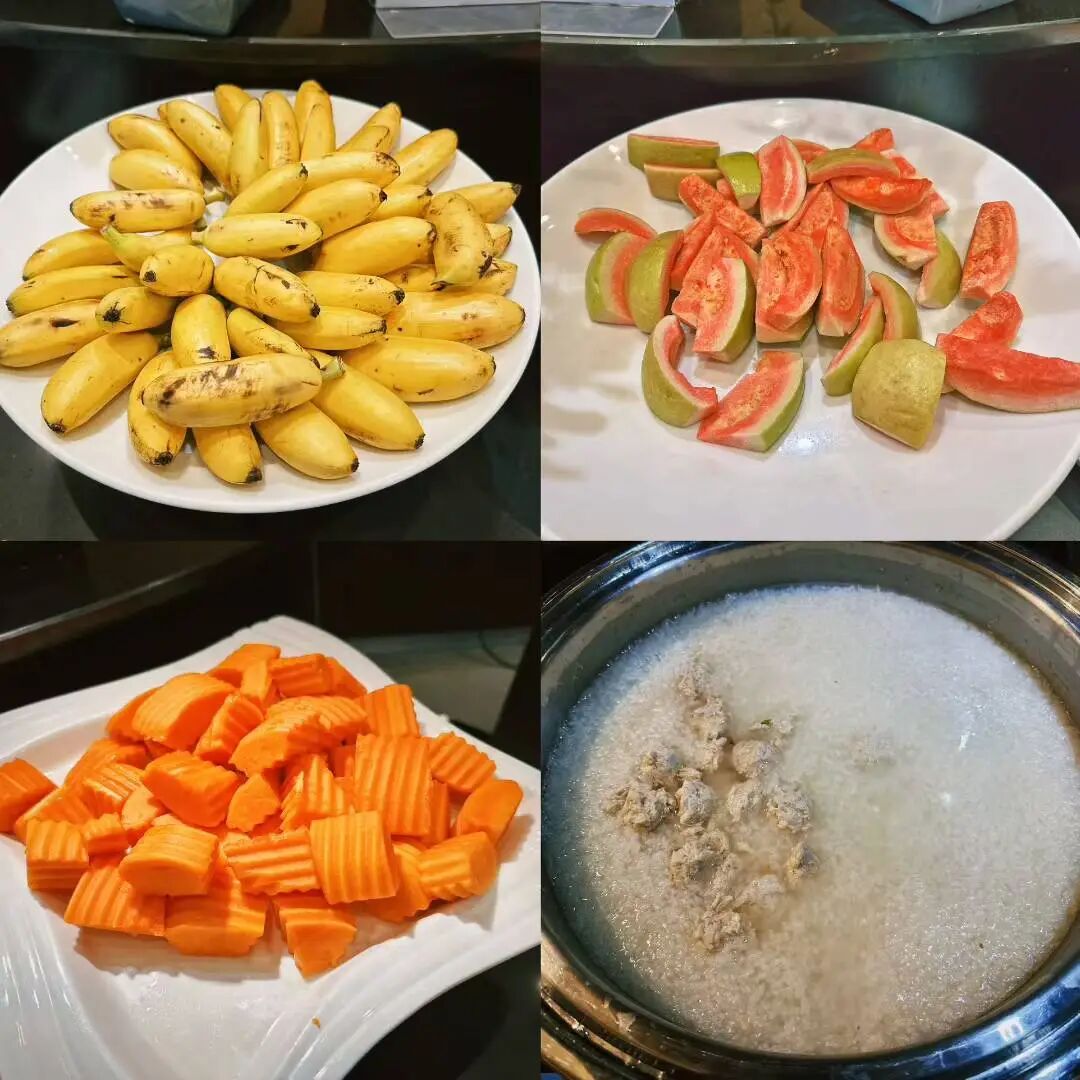
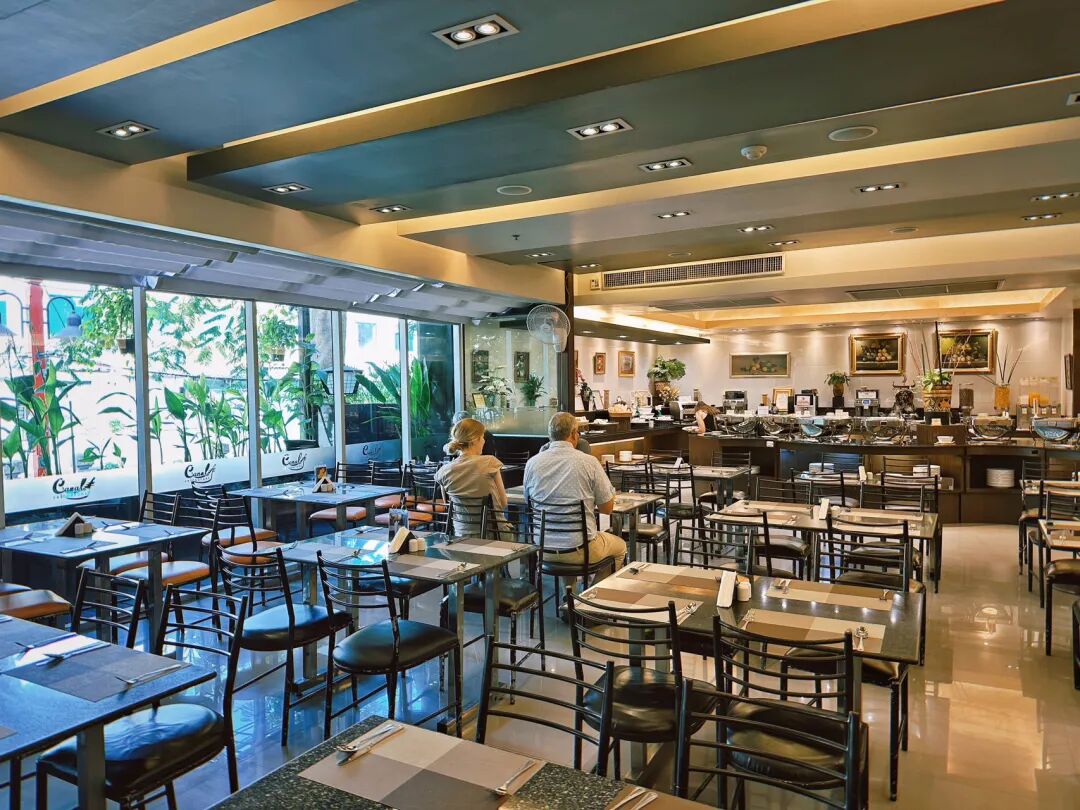
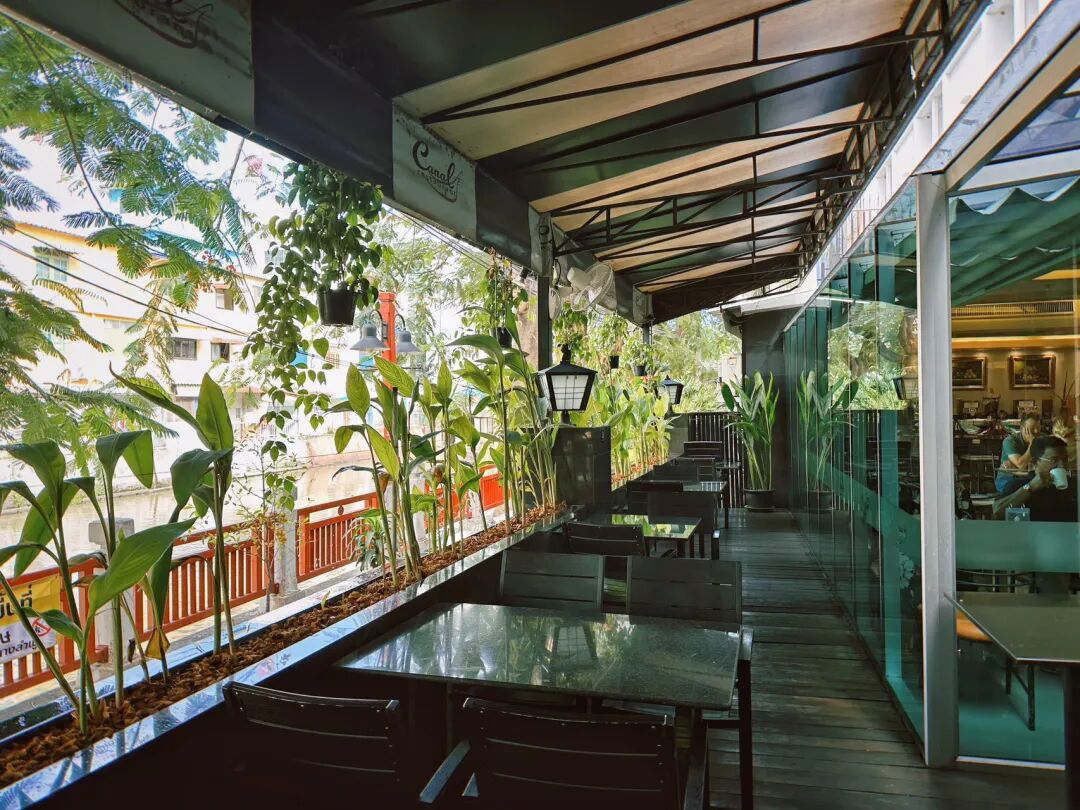
The hotel also has another restaurant called Sara where you can order from a menu, focusing on Thai and Indian food. Before I left for the airport, I ordered a beef fried rice to go; it was inexpensive and came with a box of side dishes. Their service is also quite good.
Mahanak mosque
Not long after Thailand invaded Pattani in 1786, the Pattani Sultanate soon began to resist Thailand again. Thailand invaded the Pattani Sultanate again in 1790 and then sent a second group of Pattani Malay captives to Bangkok, where they were settled in the eastern suburbs and established the Mahanak mosque community.
With the excavation of the Padung Krung Kasem canal and the Mahanak canal, the Mahanak mosque community gradually became a floating market. After the 20th century, a large group of Indian textile merchants on the other side of the canal provided more income opportunities for the mosque community.
Kedah Malay mosque community
The Kedah Sultanate is located in the northwest of present-day Malaysia, west of the Pattani Sultanate, and is another Malay state bordering Thailand.
Al-Athik mosque
In 1803, Thailand forcibly interfered in the internal affairs of the Kedah Sultanate, forcing the Sultan to abdicate and installing a new one, which led to the Kedah Sultanate splitting into two countries in 1808.
In 1808, a group of Malay captives from the Kedah Sultanate arrived in Bangkok. To avoid interaction with previously settled Pattani Malay villages, they were placed in a remote area on the east bank, five kilometers down the Chao Phraya River. These Kedah Malays dug canals to provide irrigation for their village, gradually turning jungle swamps into farmland reaching one kilometer inland, and they established the Al-Athik mosque, which means 'Old Mosque'.
After more than fifty years of isolation, Bangkok's first southern suburban road was finally built, which greatly improved transportation for the Al-Athik mosque community. In the late 19th century, ferry terminals, rice and timber export companies, a tram terminal, a slaughterhouse, and Bangkok's first coal-fired power plant were gradually built around the mosque community.
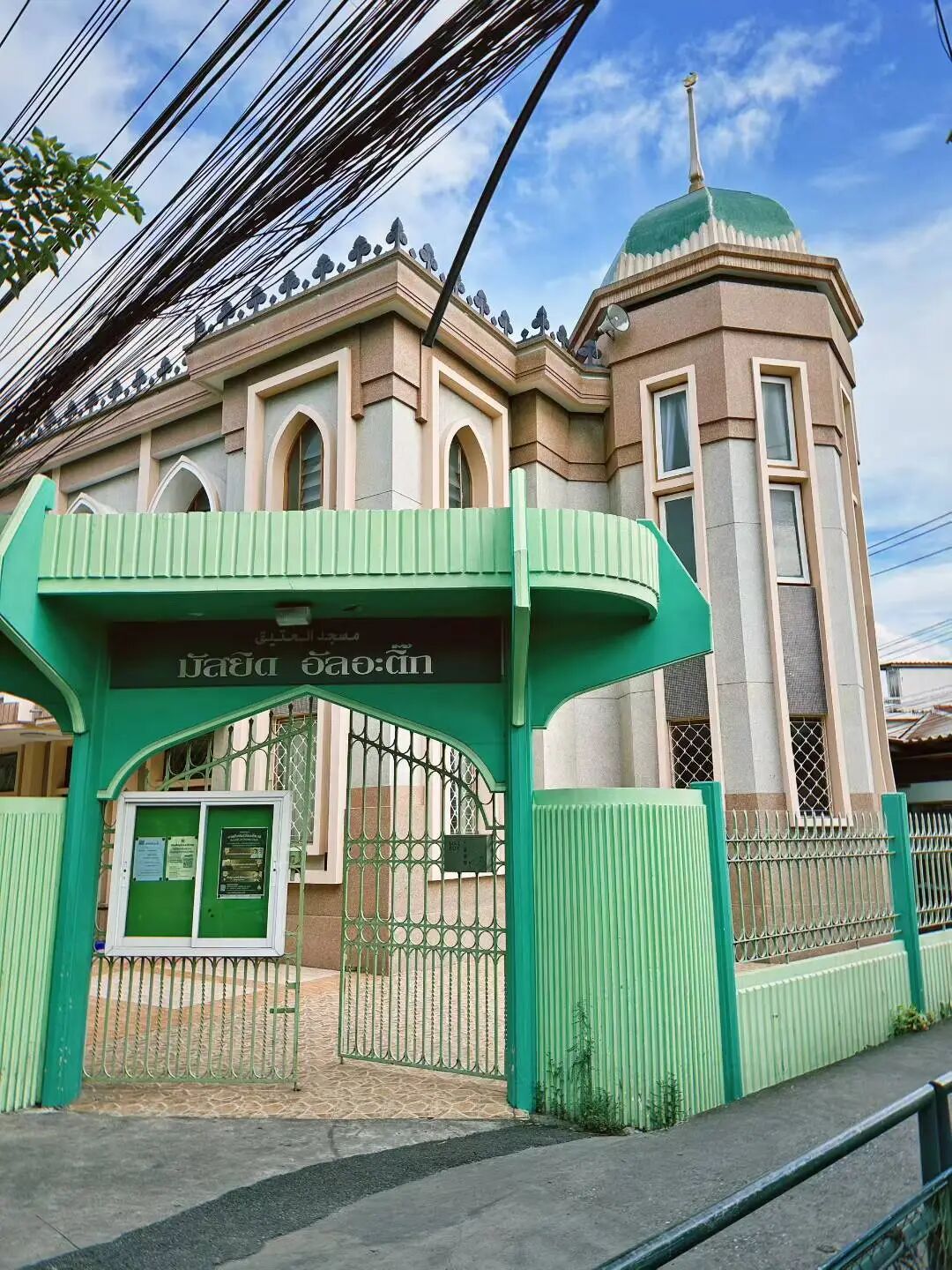
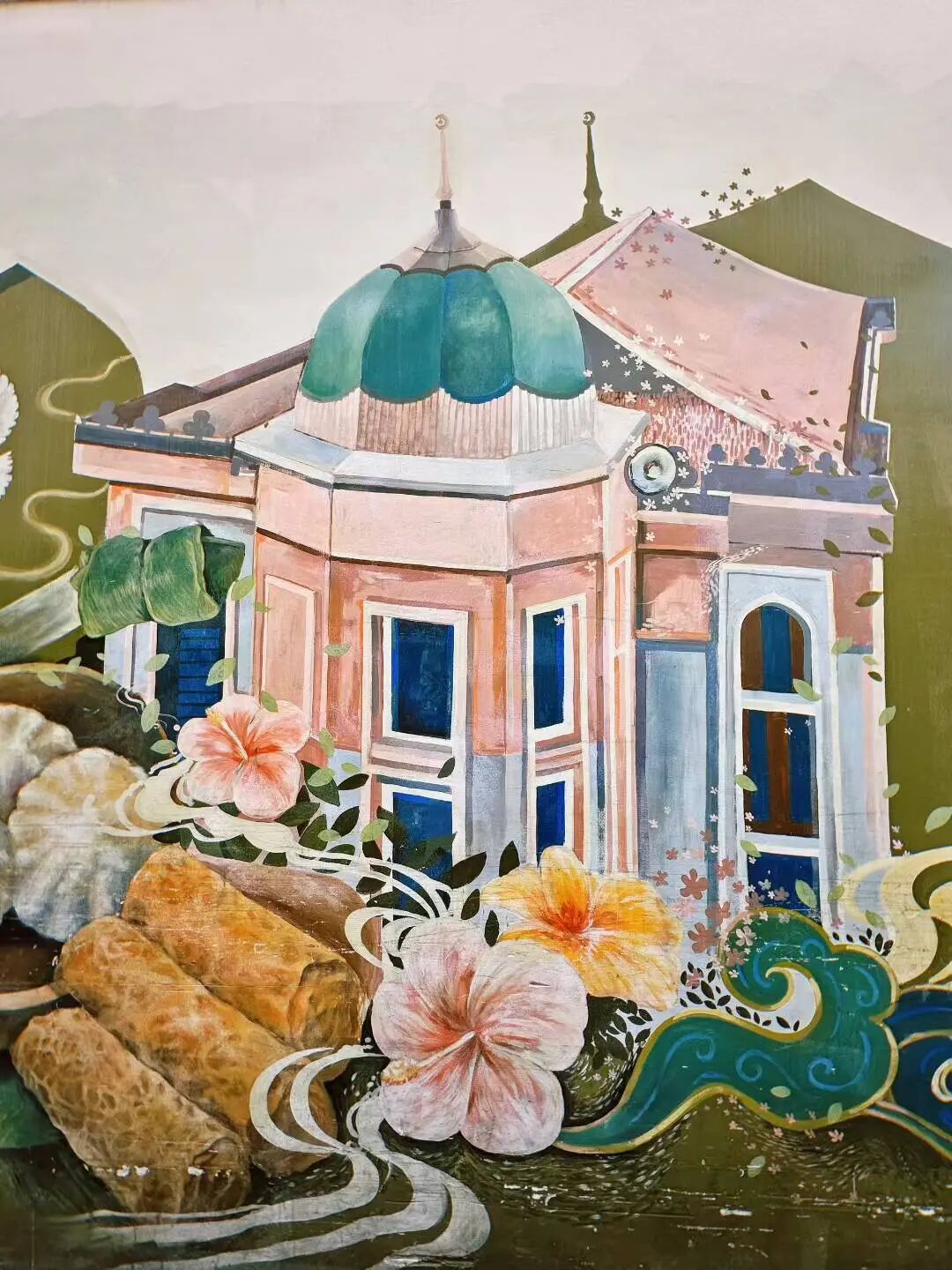
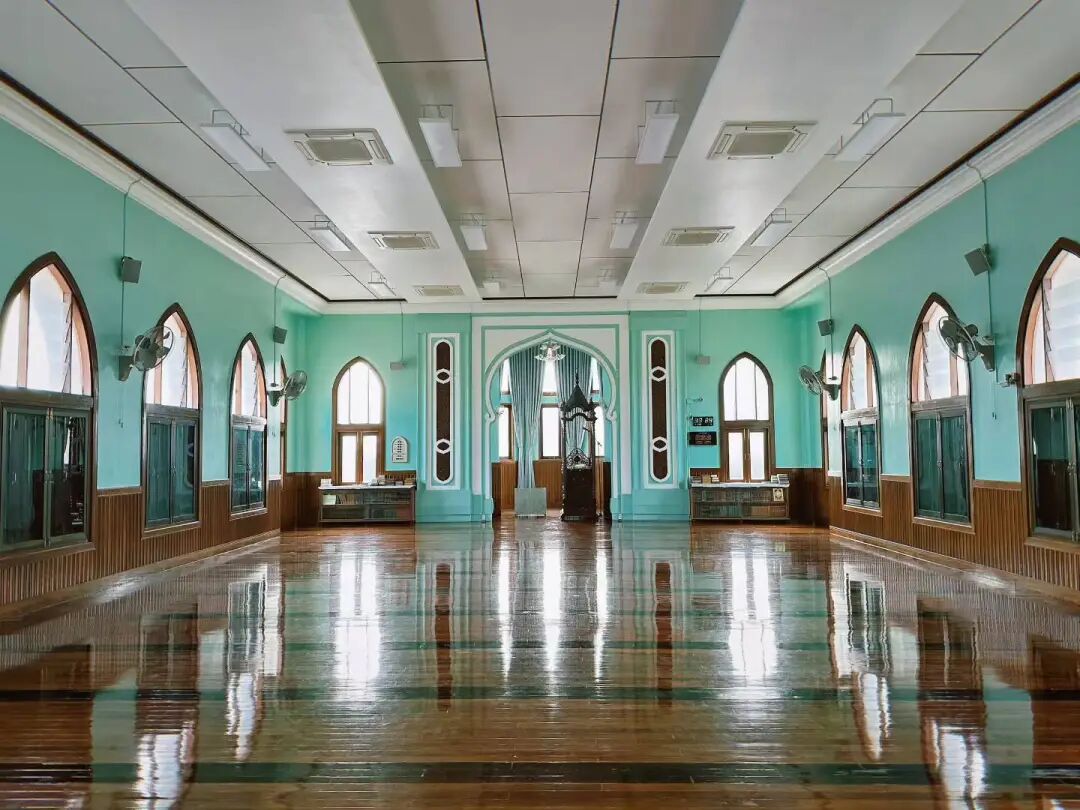
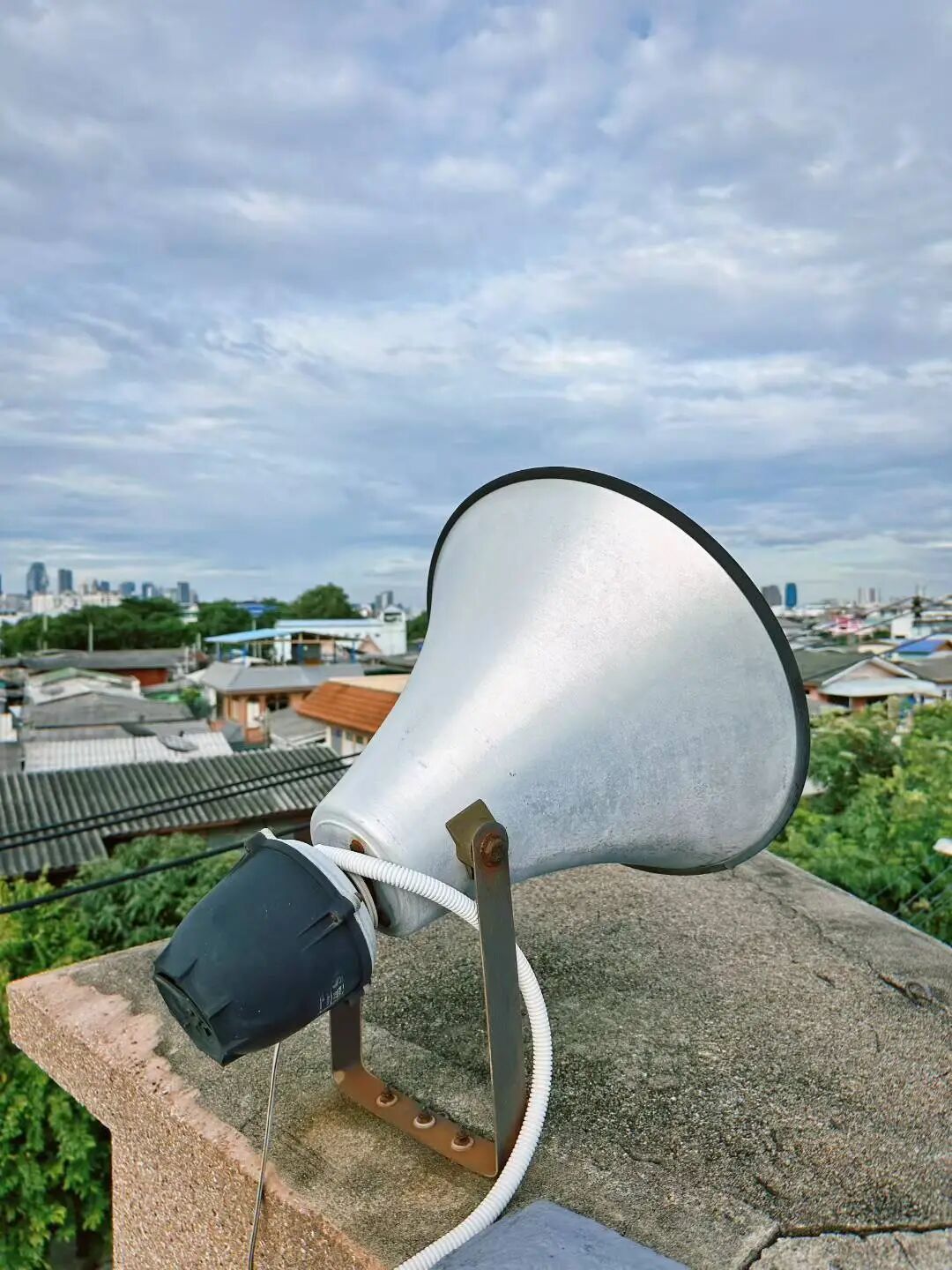
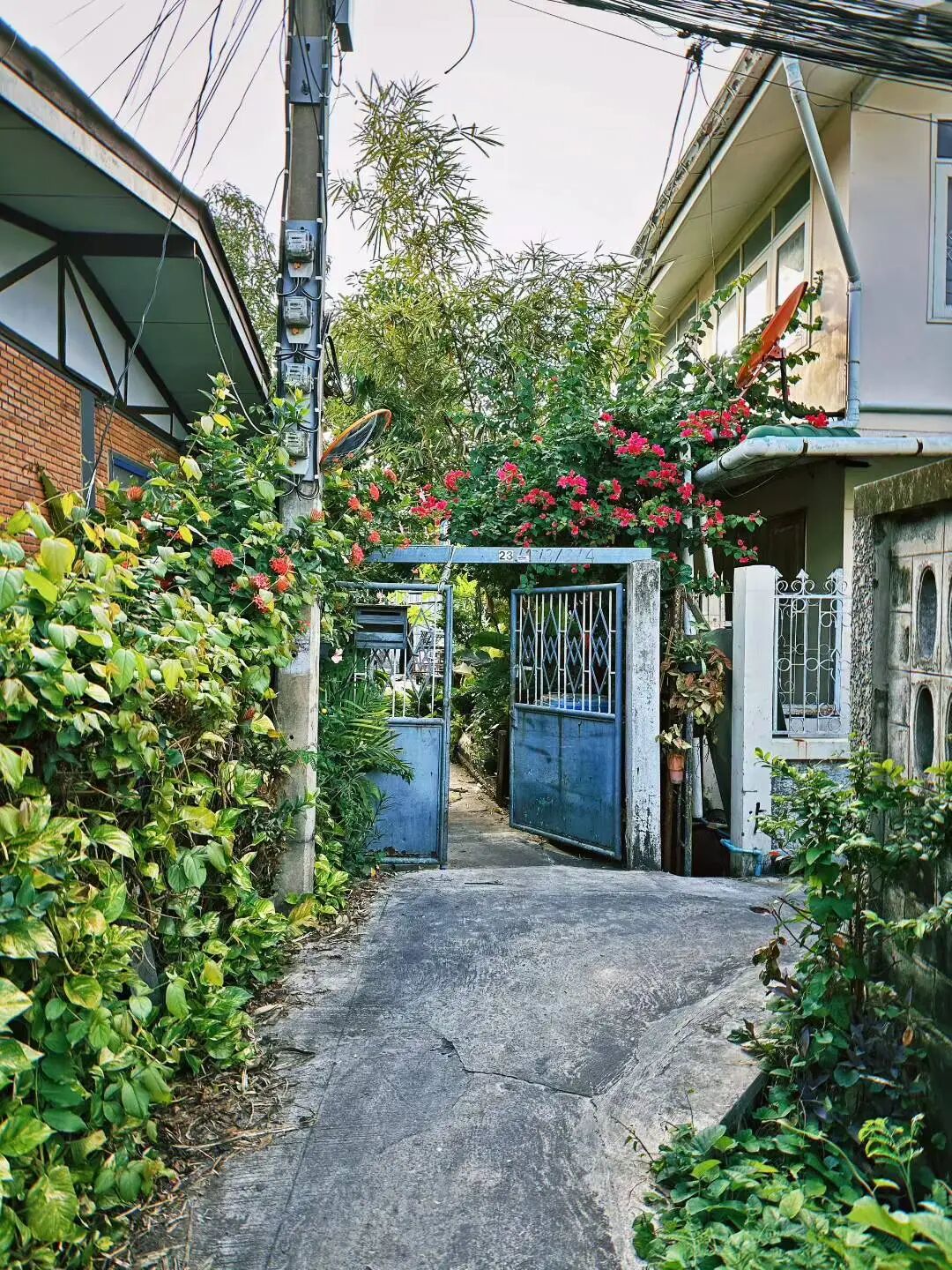
The Al-Athik mosque community holds a halal market on the morning of the first weekend of every month, which is the best chance to experience Bangkok's halal culture; you can find it on the map by searching for Riverside Market, Charoen Krung 103.
We first bought a pastry similar to Malay steamed rice cakes (dudu kuih), made by putting palm sugar inside rice flour, pressing it into stainless steel molds, steaming it, and sprinkling it with shredded coconut.
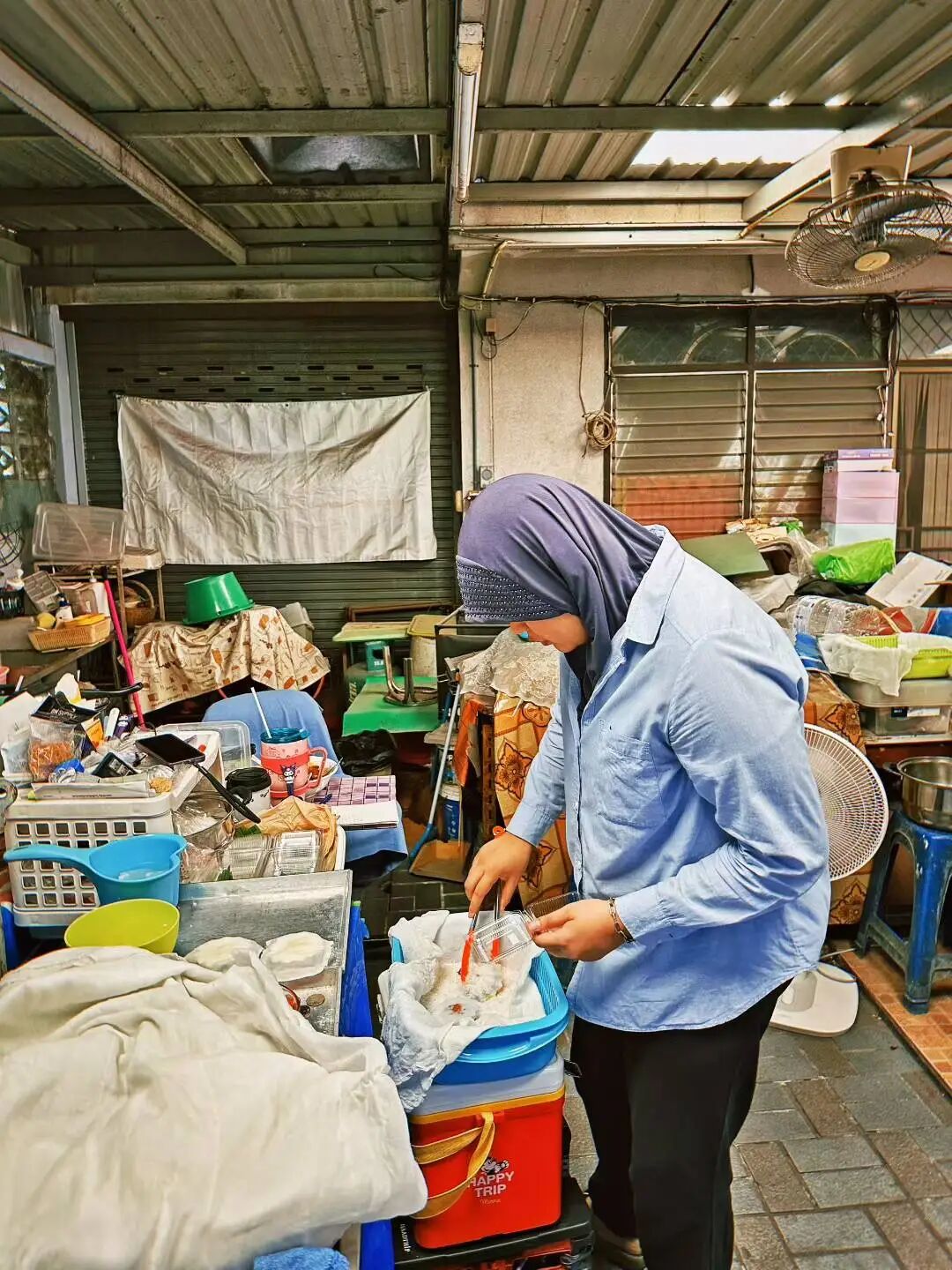
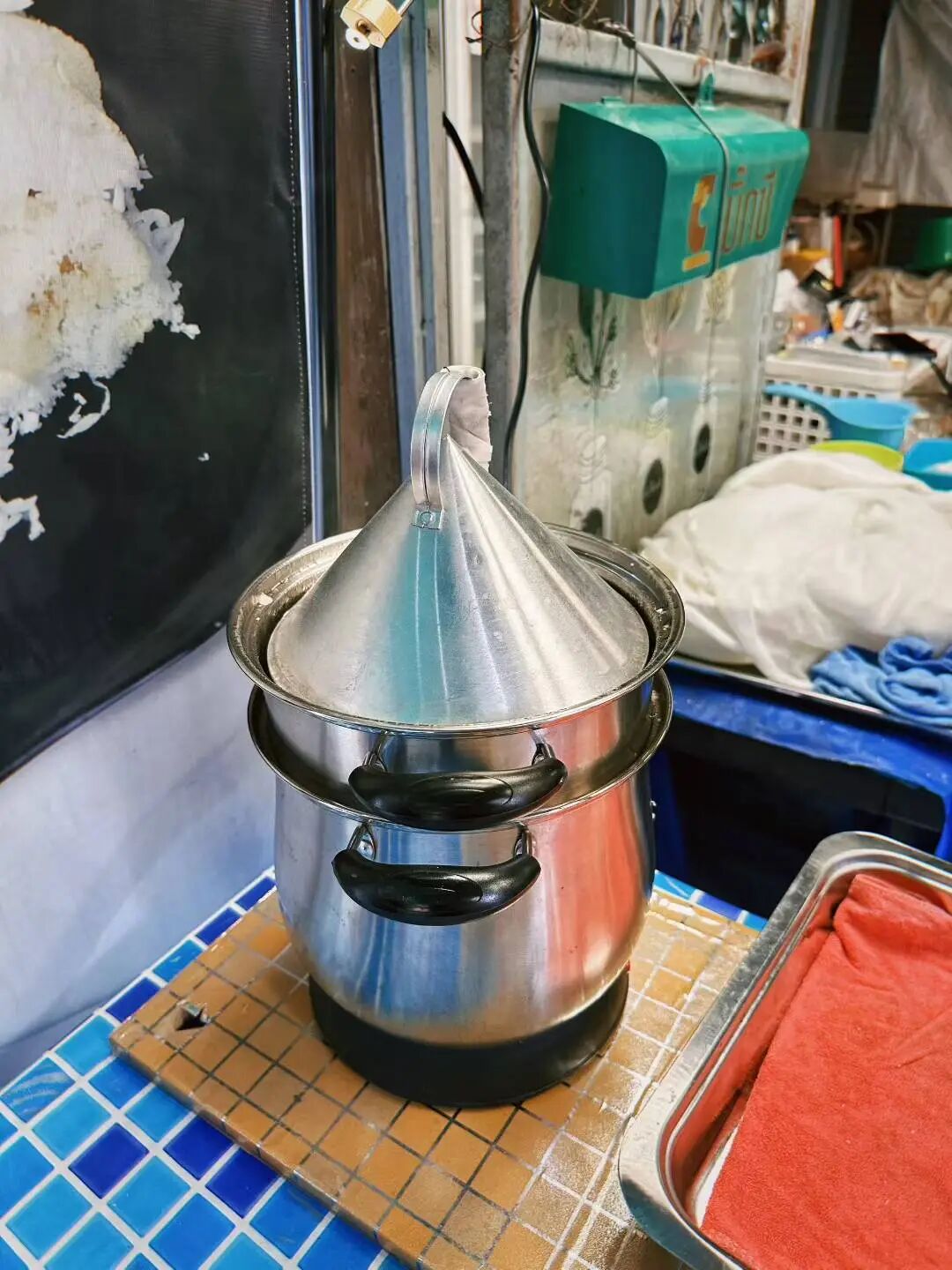
Then we drank longan water, which can be mixed with various ingredients like pearl barley, red beans, honey dates, green jelly noodles (cendol), and grass jelly (xiancao), finally topped with palm sugar and ice for a very rich flavor.
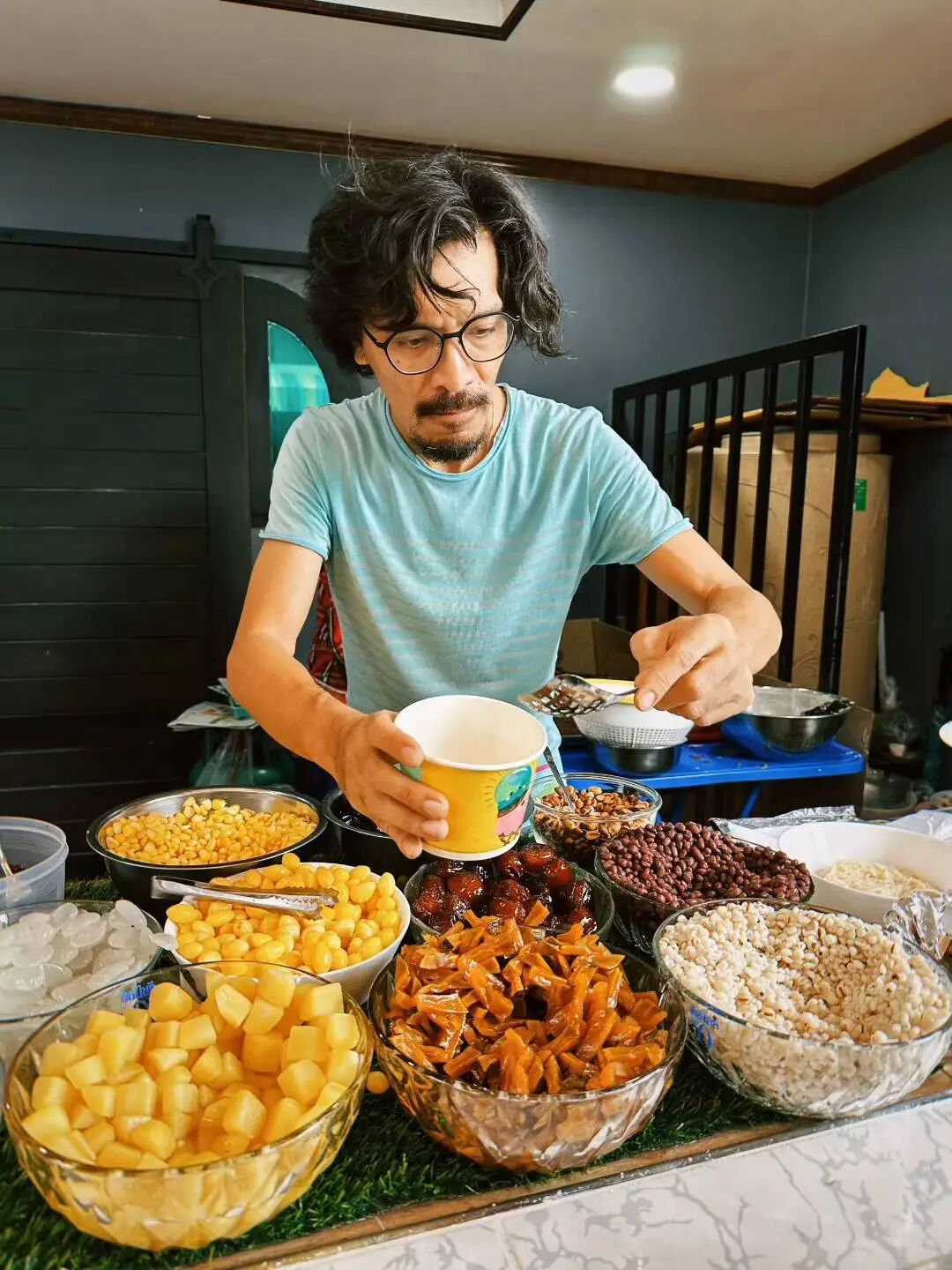
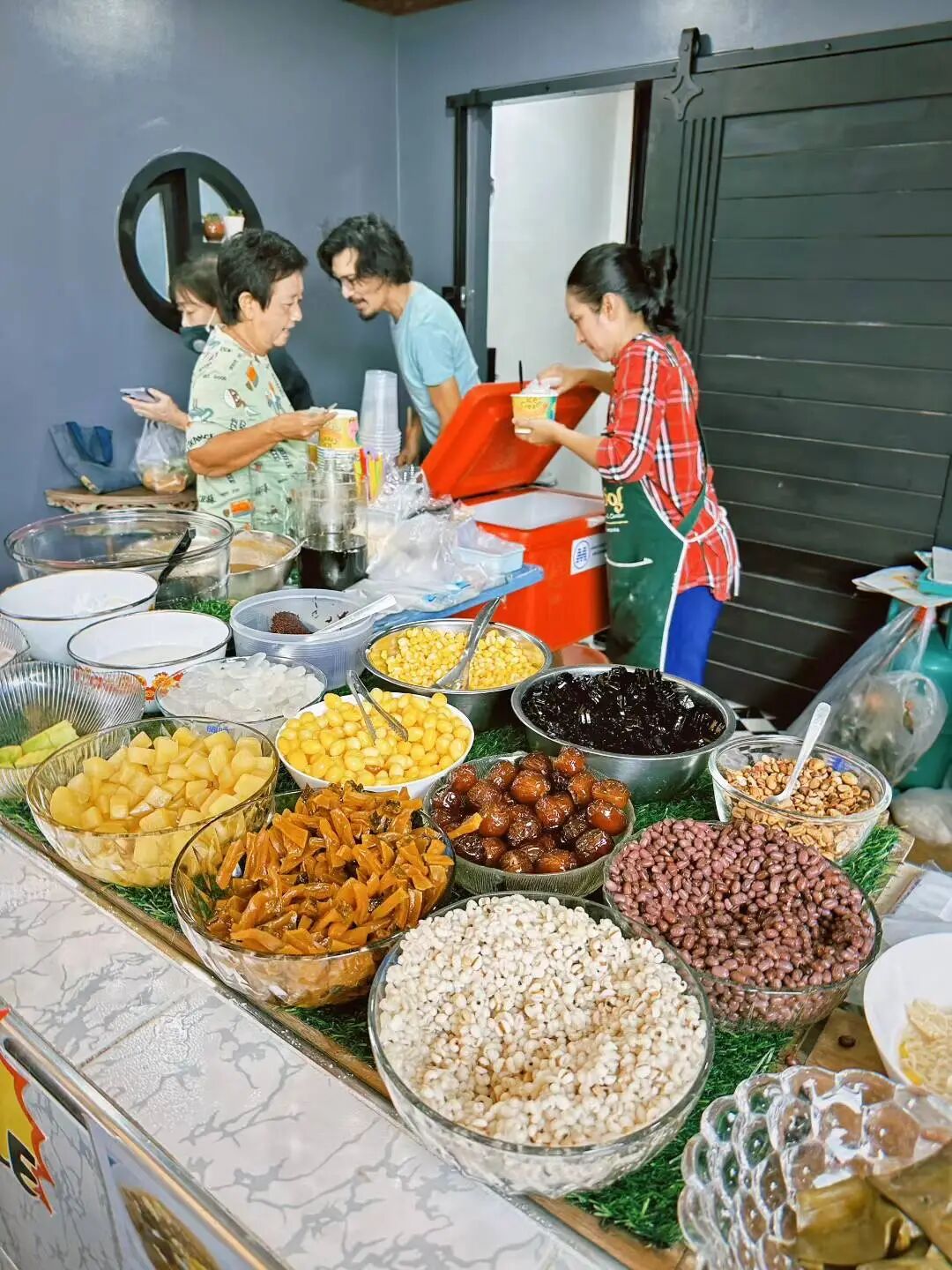
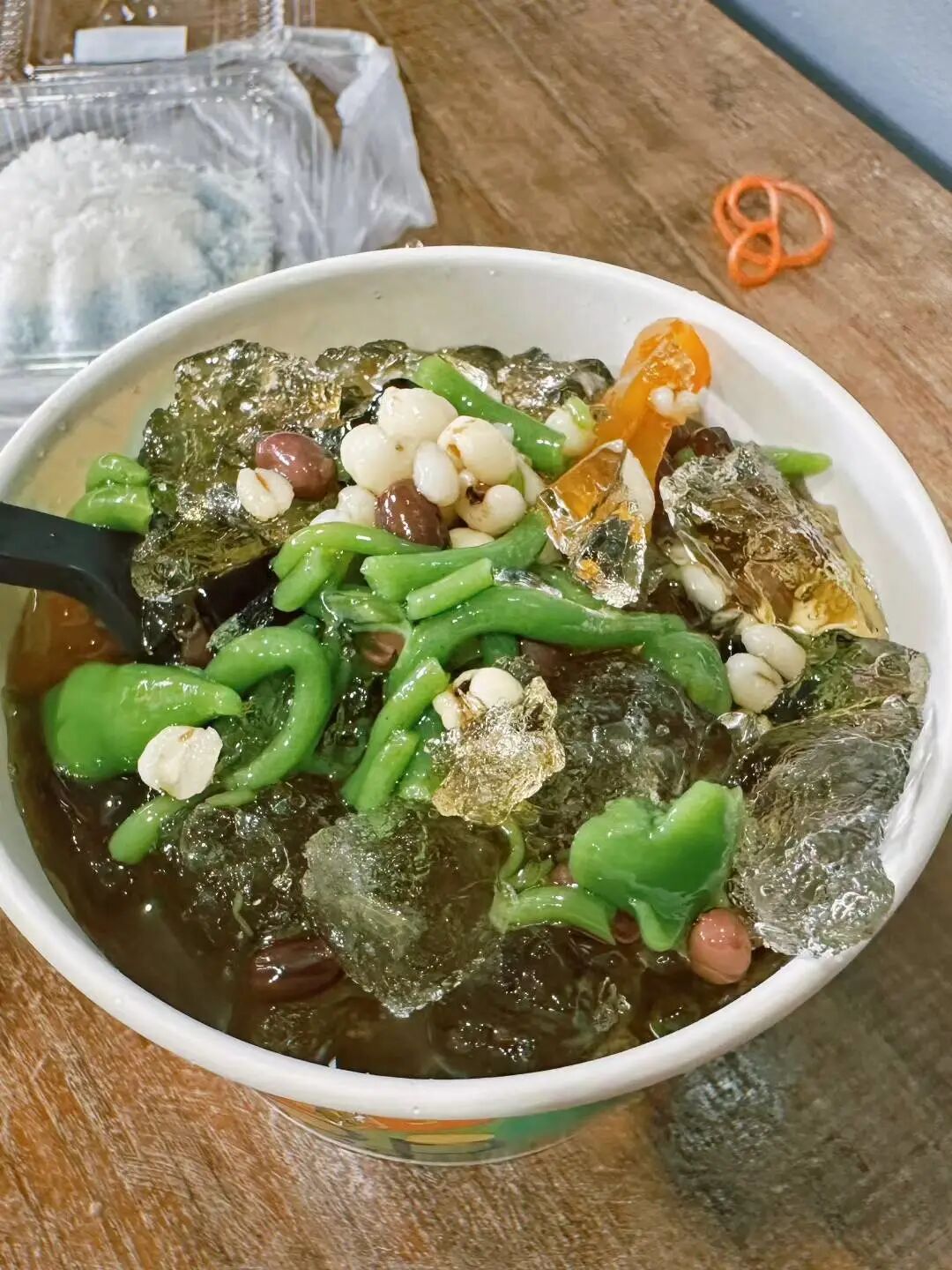
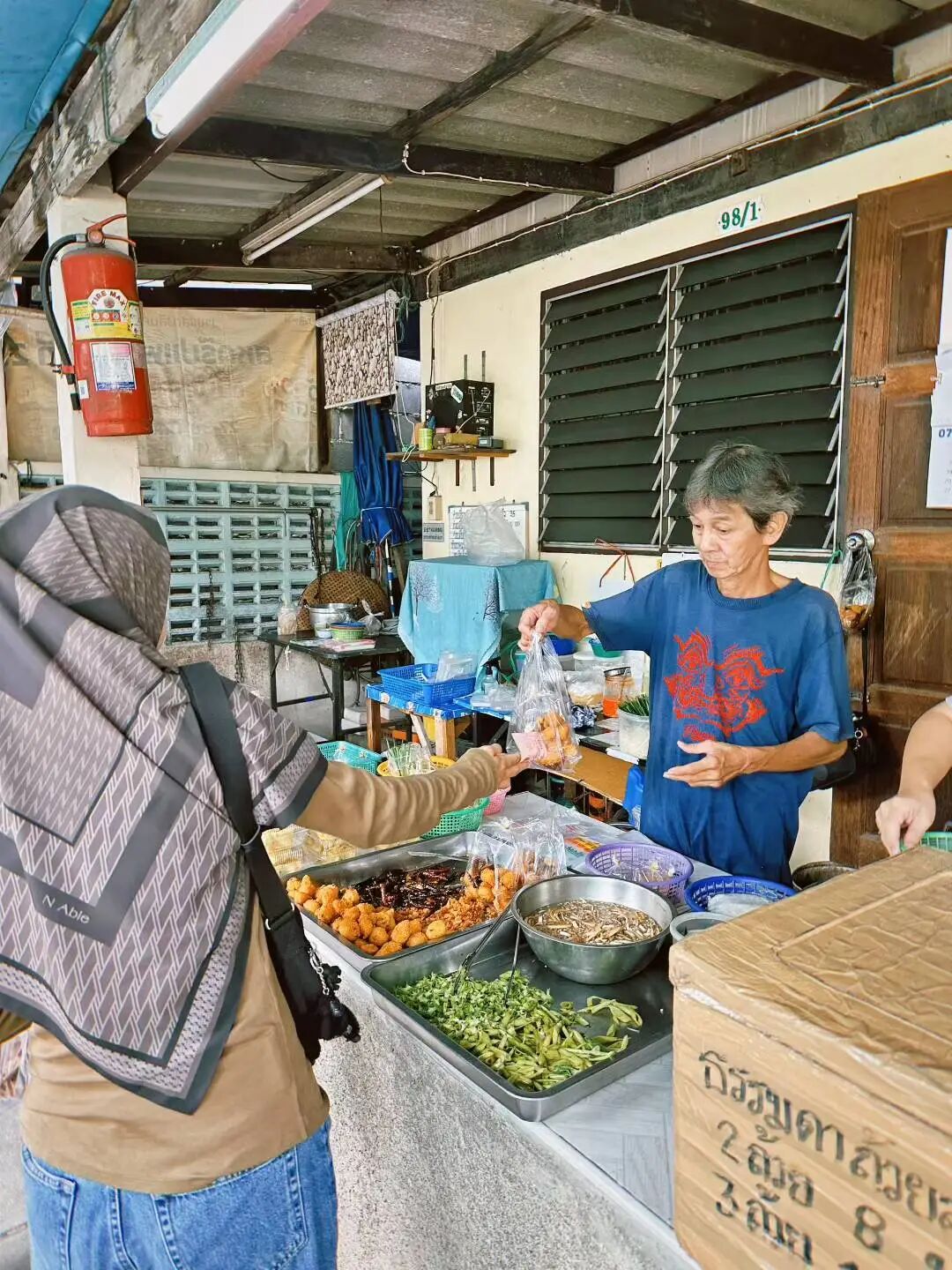
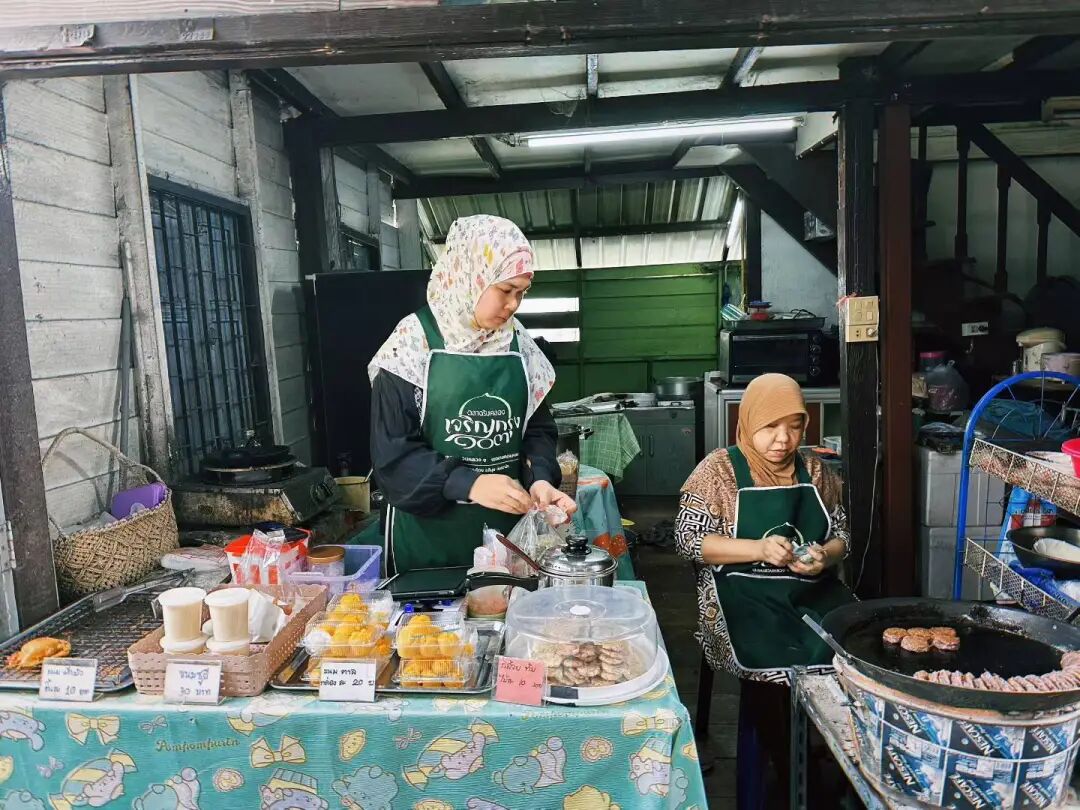
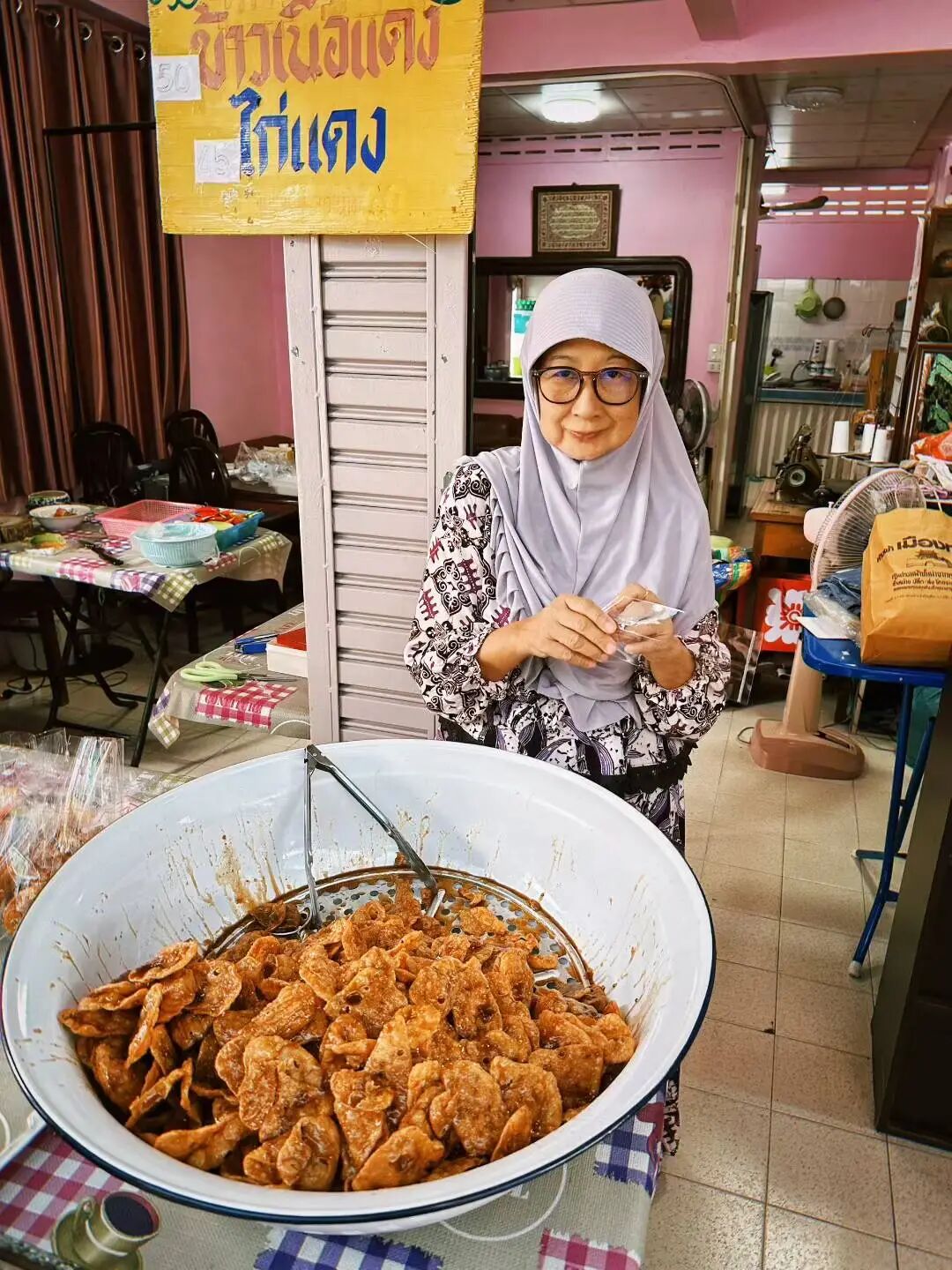
At the Al-Athik mosque halal market, we ate the specialty folded pancake (mataba) with a beef and onion filling. Mataba comes from the Arabic word 'Murtabak', which means 'folded'. This pancake likely originated with Arabs in Yemen, was brought to India by Indian merchants along the Arabian Sea, and finally reached Southeast Asia via the Indian Ocean monsoon winds; today it is a street snack shared across the Arabian Peninsula, South Asia, and Southeast Asia, though recipes vary by region. Thailand's mataba is similar to the version in Malaysia, and both are classic street breakfasts.
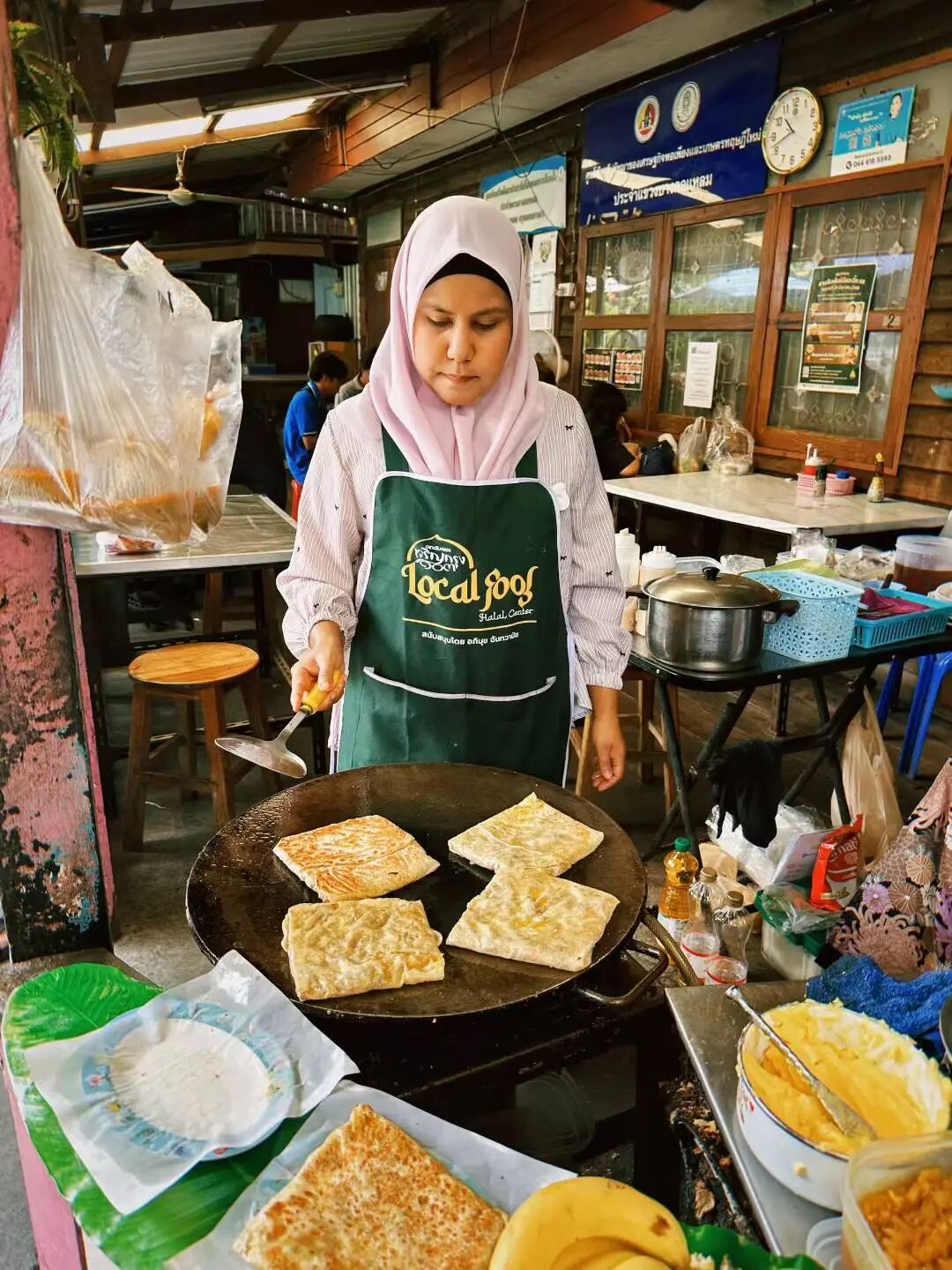
During the market, the courtyard of Al-Athik mosque hosts various charity activities, including medical check-ups and haircuts, which many middle-aged and elderly people attend.
Bang Uthit Mosque
In 1841, the Siamese-Vietnamese War broke out between Thailand and Vietnam, and King Rama III developed a shipyard in the Wat Phraya Krai area on the lower Chao Phraya River to support naval operations against Vietnam. After the Siamese-Vietnamese War ended in 1845, the shipyard was renovated to support the profitable China trade. After 1885, the shipyard continued to expand and began recruiting Malays from the nearby Al-Athik mosque community. The shipyard provided new settlements for these Malay workers near the shipyard, which became Bang Uthit village.
As the Wat Phraya Krai area continued to develop, rice mills and sawmills were built near the shipyard, and more and more Malays settled in Bang Uthit village. In the early 20th century, Bang Uthit mosque was built, officially separating from the Al-Athik mosque community. When Bang Uthit mosque was built, Ottoman Sultan Abdul Hamid II (reigned 1876-1909) sent an Ottoman shield-shaped emblem, making Bang Uthit mosque the only mosque in Thailand with an Ottoman emblem.
In 2015, the Turkish Cooperation and Coordination Agency (TİKA) renovated Bang Uthit mosque, using Turkish marble to build an Ottoman-style mihrab, minbar, and pulpit, and also added a mezzanine for women. This makes Bang Uthit mosque the only Ottoman-style mosque in Bangkok.
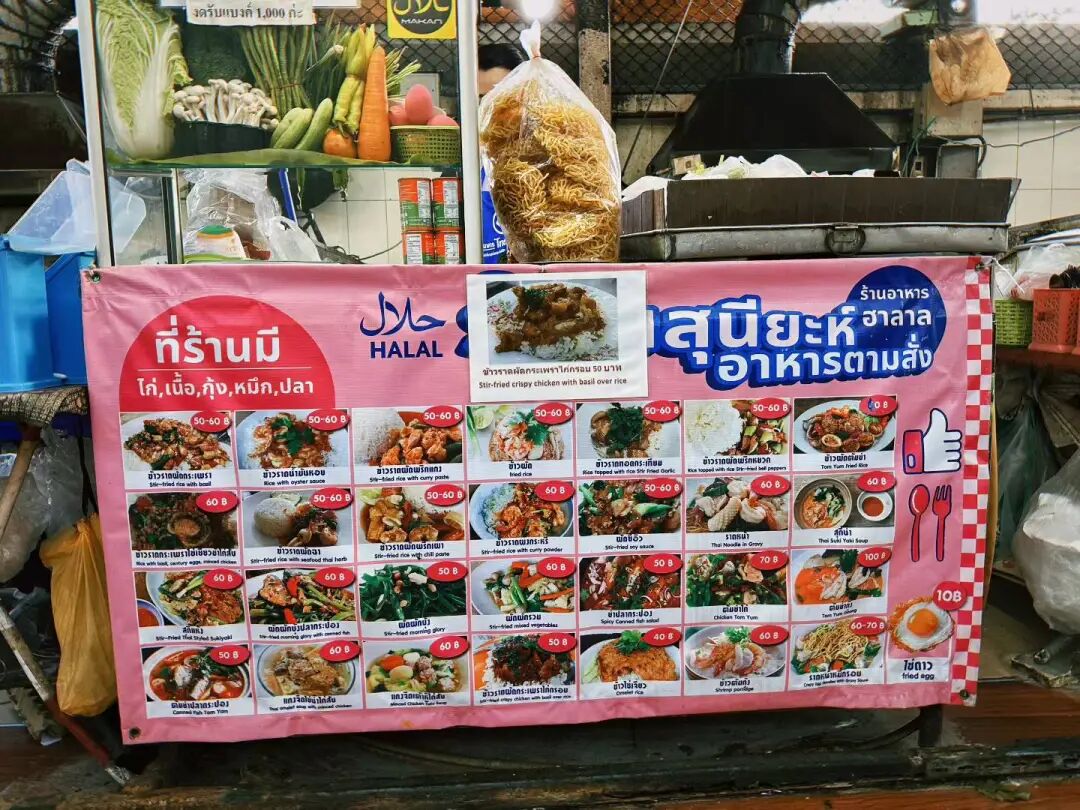
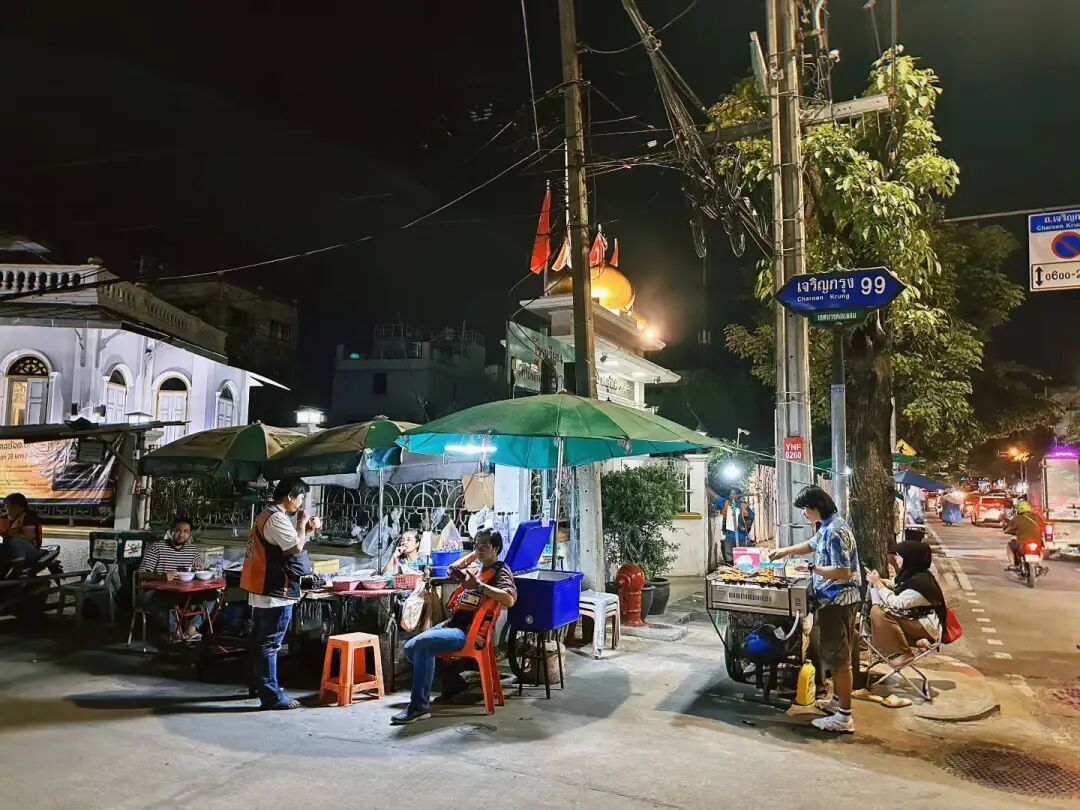
Next to Bang Uthit Mosque, there is a row of food stalls where you can eat authentic Thai halal home-cooked meals. We ordered holy basil chicken rice (gaprao gai) and shrimp porridge. Gaprao is also called holy basil. It is native to South Asia and widely grown in the tropical regions of Southeast Asia. Stir-frying meat with holy basil leaves is a famous Thai dish that I really love. Thai people love to drink meat porridge. The Thai word 'Chok' comes from the Minnan word for 'porridge'. The condiments on the table include fish sauce. I saw people at other tables adding a lot of it to their porridge and noodles, and adding a little really brings out the fresh flavor.
Kocha Itsahak Mosque
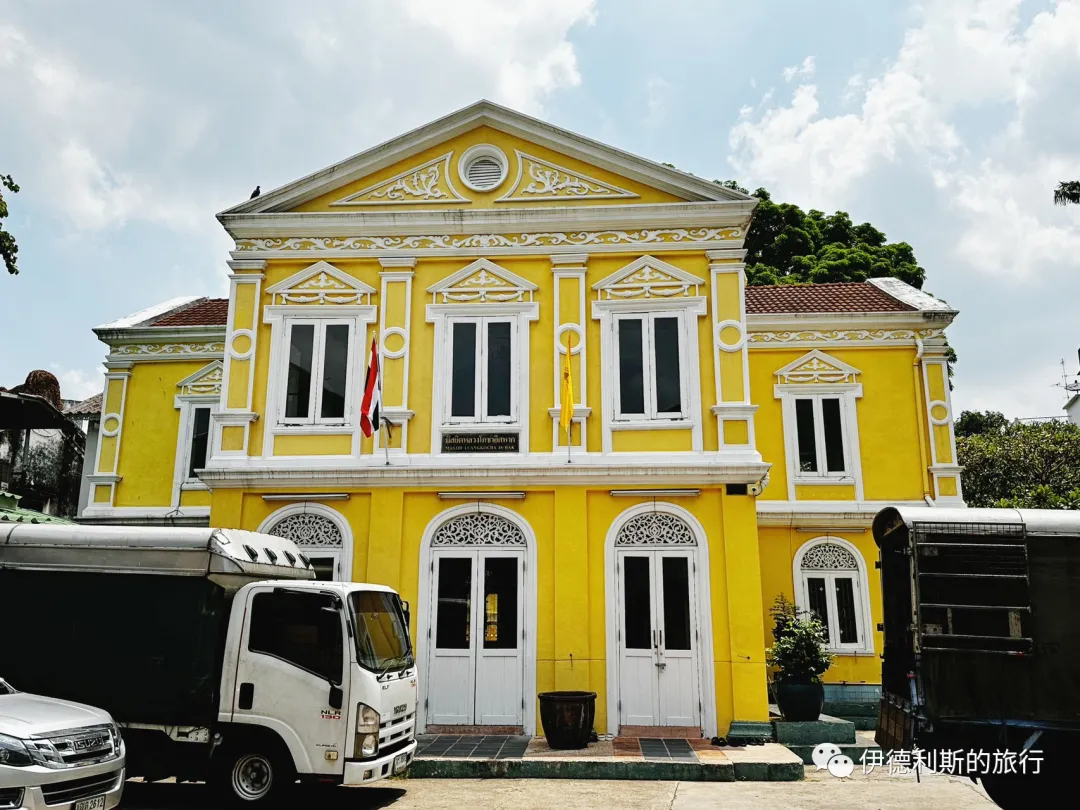
Near Sampeng Lane in Bangkok's Chinatown stands the European-style Kocha Itsahak Mosque, built in the late 19th century by the Siamese royal translator Luang Kocha Itsahak.
Luang Kocha Itsahak was of Malay descent from Kedah. He worked in the Siamese Department of Western Trade (Krom Tha Khwa), serving as a translator for foreign ambassadors visiting the Siamese court. He was also responsible for liaising with rulers of Siamese dependencies on the Malay Peninsula and foreign merchants trading with Siam. Luang Kocha Itsahak's father was a Malay merchant from the Kedah Sultanate who moved to Bangkok for business and married a Chinese wife.
After Siam established its capital in Bangkok in 1782, an import and trade district dominated by Teochew merchants gradually formed near Sampeng Lane. Before Don Mueang Airport was built in 1914, people wanting to travel from Bangkok to India, the Middle East, or Europe had to first take a steamship from the Kongsa Pier near Sampeng Lane to Singapore or Penang, then transfer to a cruise ship to continue westward. Because of this, the 19th-century Kongsa Pier was crowded with merchants from all over the world, and many Indians and Malays worked in the nearby warehouses and trading companies.
Seeing that there was no mosque in the Sampeng Lane area, Luang Kocha Itsahak donated a piece of his own land and had his children dismantle the bricks and stones from an old house he owned across the river in the Thonburi area to build this mosque. Today, the mosque is still owned by the descendants of Kocha Itsahak and provides convenience for the friends (dosti) working in Bangkok's Sampeng Lane.
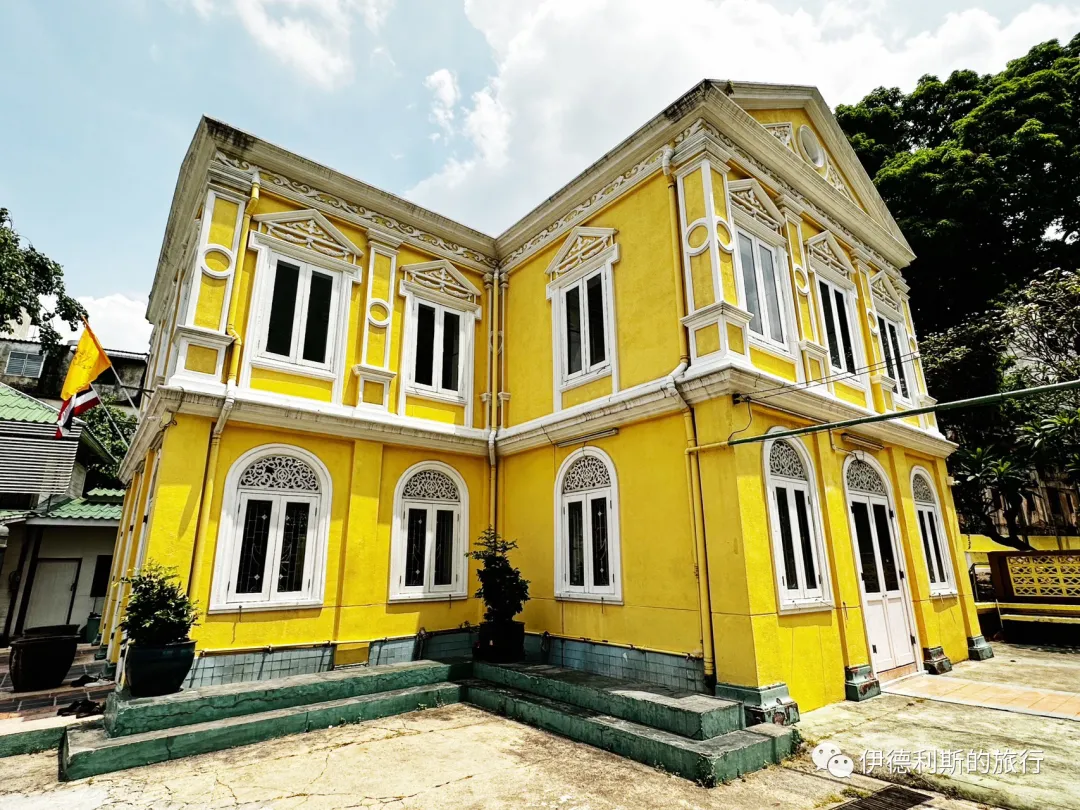
Kocha Itsahak Mosque was originally a wooden building, but it was rebuilt into the current neoclassical structure during the reign of Rama V (reigned 1868-1910).
Halal Travel Guide: Ho Chi Minh City — Malay Muslims, Mosques and Food
Articles • ali2007fr posted the article • 0 comments • 164 views • 2026-05-18 06:54
Summary: Ho Chi Minh City — Malay Muslims, Mosques and Food is presented here as a firsthand travel account in clear English, beginning with this scene: Southern Vietnam has a long history of close contact with the Malay Archipelago. In the 15th century, the Malacca Sultanate (1400–1511) became a major power in Southeast Asia and maintained close ties with Champa, which. The account keeps its focus on Ho Chi Minh City, Malay Muslims, Vietnam Muslims while preserving the names, places, food, and historical details from the Chinese source.
Southern Vietnam has a long history of close contact with the Malay Archipelago. In the 15th century, the Malacca Sultanate (1400–1511) became a major power in Southeast Asia and maintained close ties with Champa, which then ruled southern Vietnam. The classic Cham literature piece, The Princess of Kelantan, tells the story of a princess from Kelantan on the Malay Peninsula who practiced her faith in Champa. After the Portuguese occupied the Malacca Sultanate in 1511, many Malay people moved away, and some settled in southern Vietnam, where they integrated with the Cham Muslims.
The Western missionary M. Mahot MEP began living in Champa in 1676. In a letter written in July 1678, he noted: 'Regarding the Cham religion, the Malay Muslims are more vigilant than we are. They have immigrated to Champa in large numbers and have brought the Cham king and his court into Islam.'
In 1692, Vietnam invaded Champa and established Binh Thuan Prefecture on former Cham lands, then continued to invade the Mekong Delta, which was ruled by Cambodia. In 1698, they established Gia Dinh Prefecture in the Mekong Delta, which was the predecessor to Ho Chi Minh City. In the early 19th century, Emperor Gia Long (reigned 1802–1820) of the Vietnamese Nguyen Dynasty sent troops to guard Gia Dinh City. Because he lacked enough soldiers, he recruited many Cham and Malay troops.
In 1859, the joint French and Spanish forces captured the city of Gia Dinh. In 1862, France and the Nguyen Dynasty of Vietnam signed the Treaty of Saigon, officially occupying Gia Dinh. From then on, Gia Dinh gradually developed into Saigon, a commercial hub for the French in Southeast Asia.
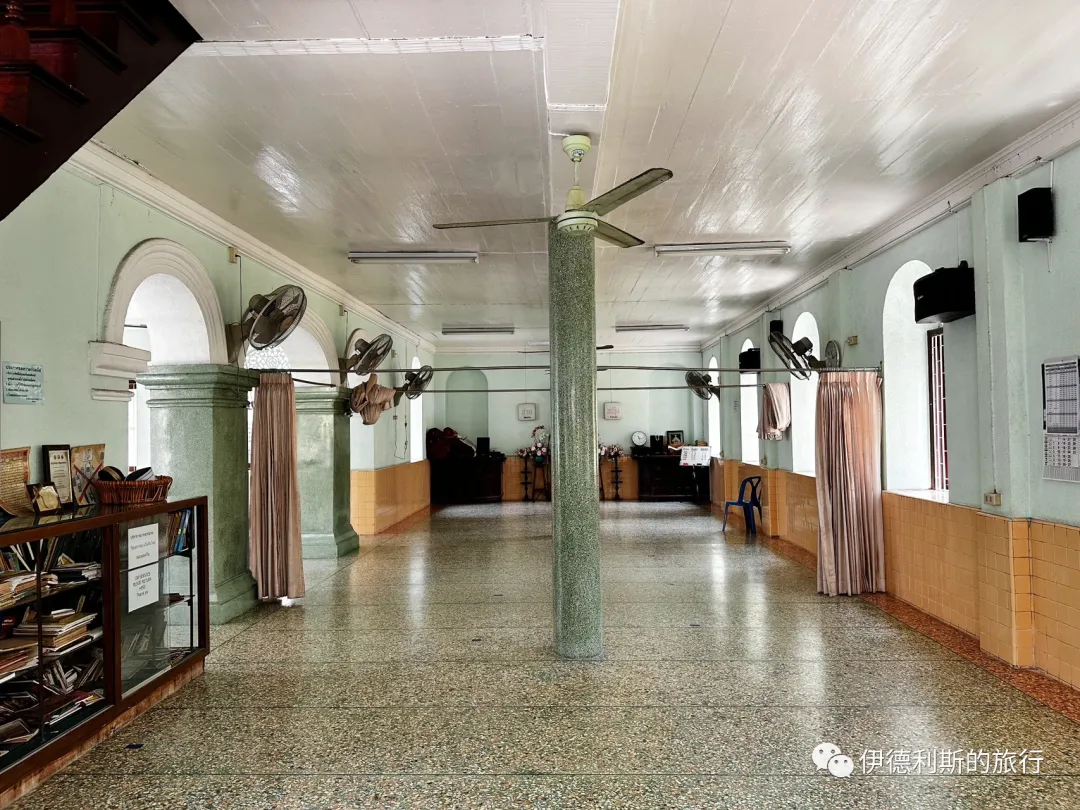
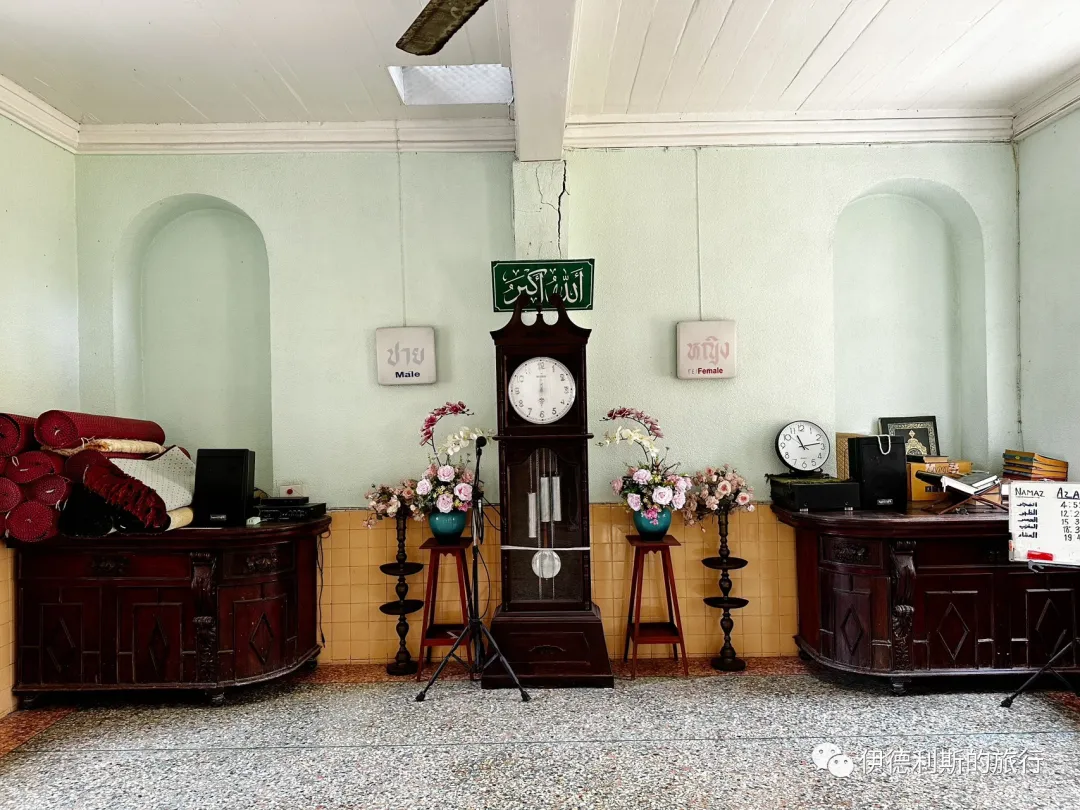
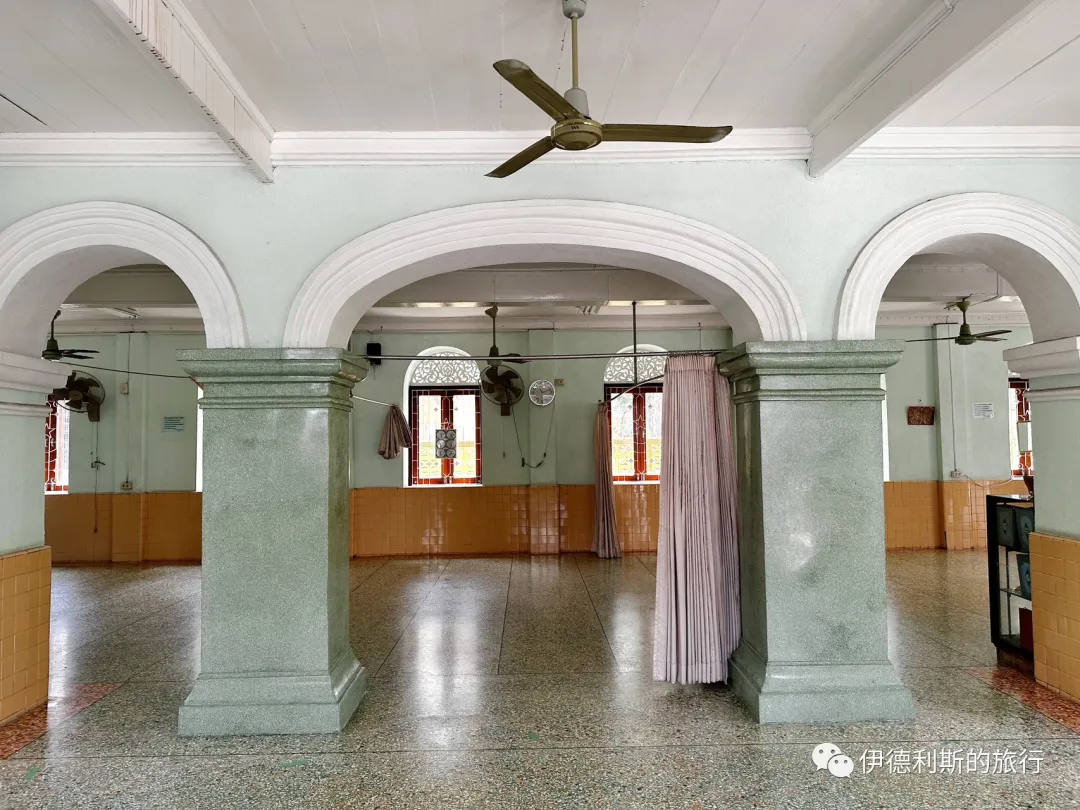
During French rule, the government had a relatively relaxed policy toward the faith. Many Malay and Indonesian people came to Saigon for business, and the first mosque in Saigon was the Al Rahim Mosque, built by Malay and Indonesian Muslims in 1885.
After entering the 20th century, the Malay community had a greater influence on the faith in Vietnam. At that time, religious publications were all imported from Malaya, and mosques were accustomed to inviting Malay imams to give sermons (waaz) in the Malay language. Local Cham youth were used to traveling to Malaya to study the scriptures, returning to Vietnam to practice their faith after completing their studies. In 1954, Vietnam was divided into North and South, and South Vietnam maintained good diplomatic relations with the then Federation of Malaya and later Malaysia. Many mosques in Vietnam were built with help from Malaysia in the 1950s and 1960s. In Saigon, you can find the Haiyat Al Islam mosque built in 1962, the Alsa Adah mosque built in 1968, and the Jamiul Anwar mosque built in 1969.
Jamiul Anwar mosque
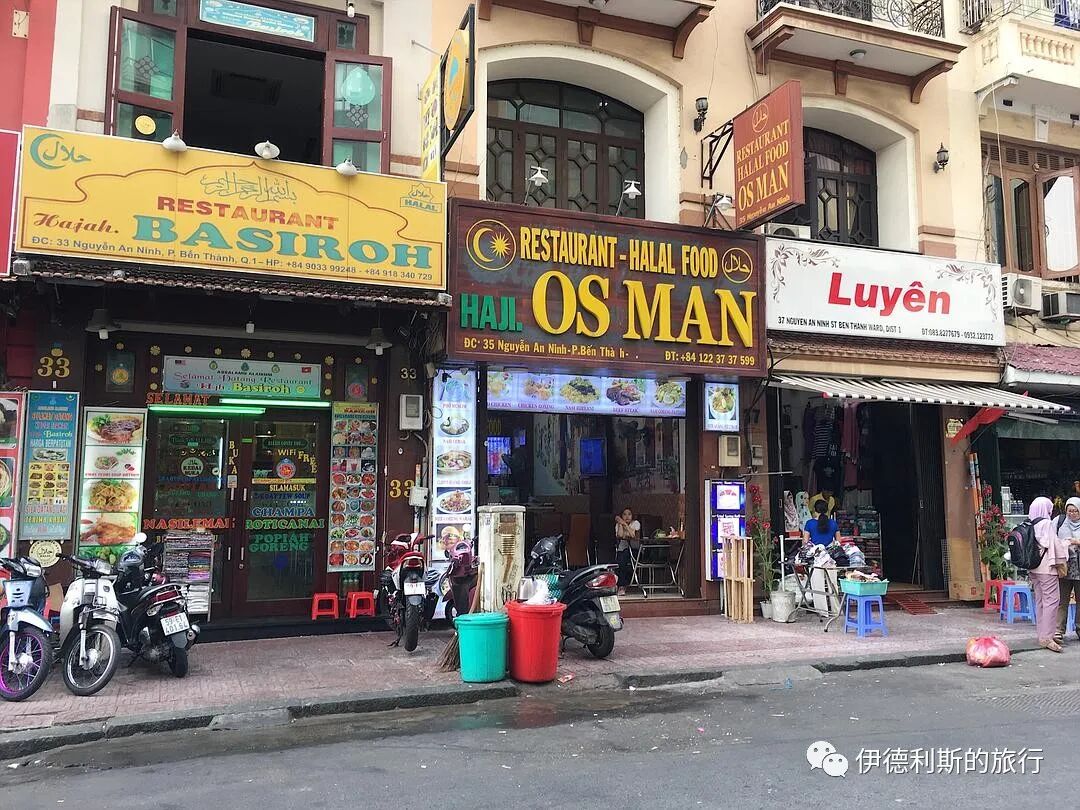
The area in Ho Chi Minh City with the most Malay people is currently Malay Street, located outside the west gate of Ben Thanh Market.
Since these restaurants mainly serve Malay tourists, they also offer Vietnamese food. This makes it very easy for Malay Muslims to try local Vietnamese dishes.
The west gate of Ben Thanh Market is at the end of the road.
The street has many stalls and shops selling women's clothing for Muslims.
There are also Muslim travel agencies. Among them, Bismillah means the basmala.
Haji Osman Restaurant
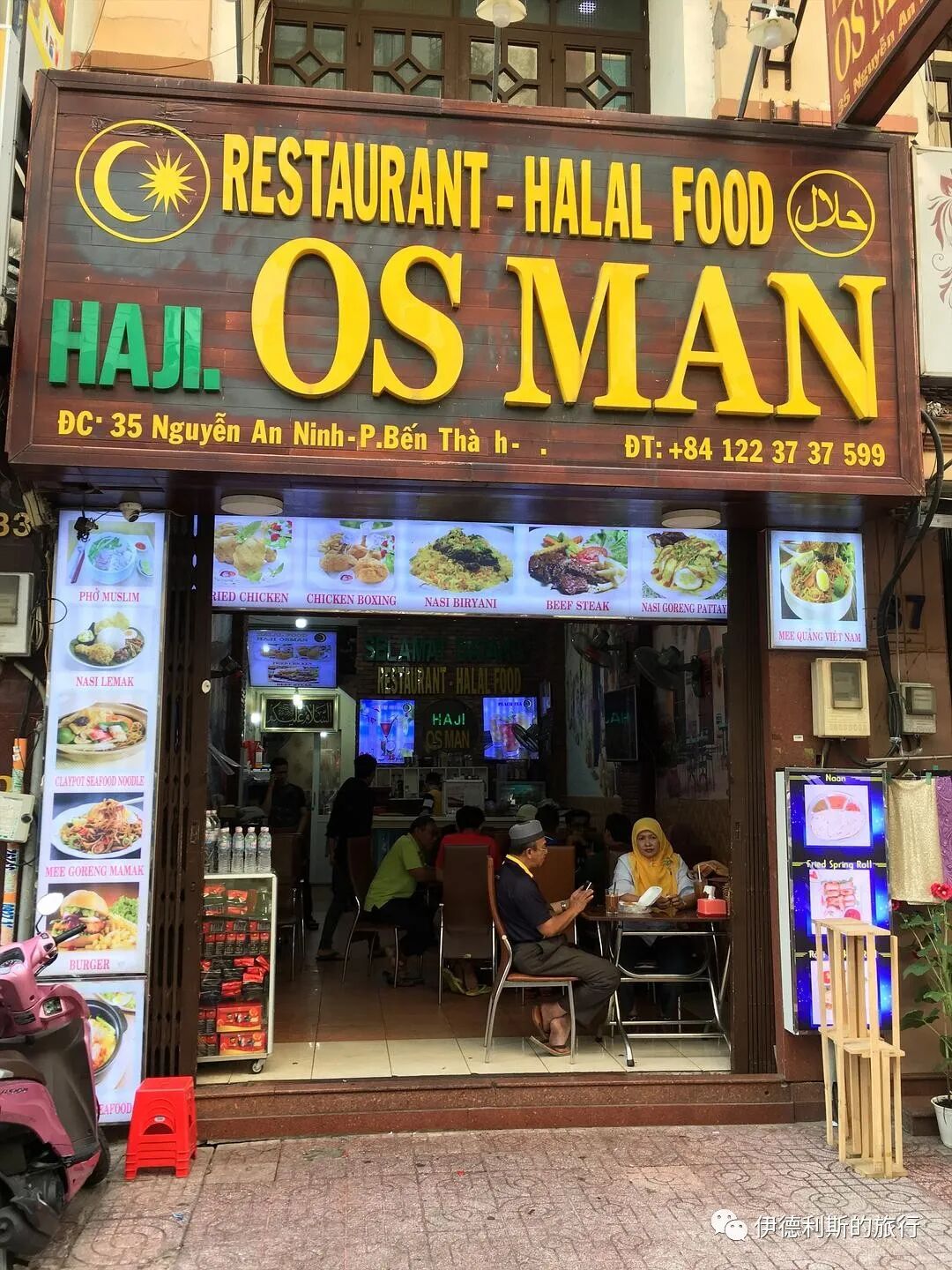
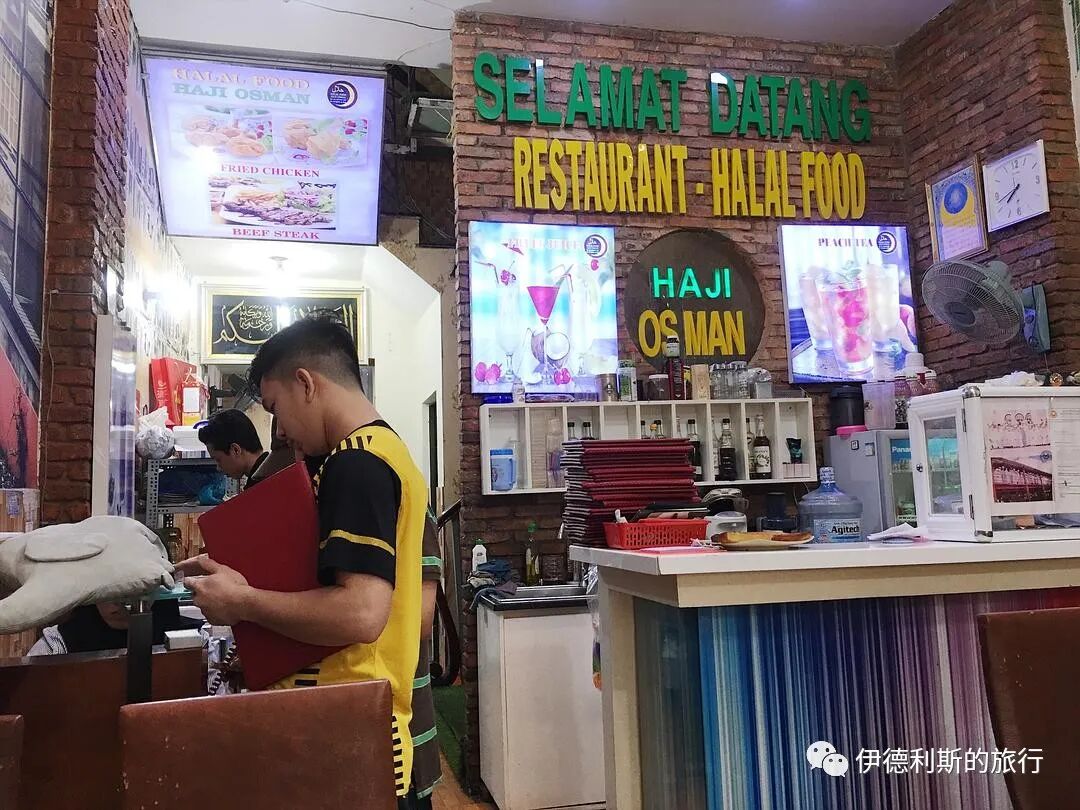
I flew from Beijing to Ho Chi Minh City and headed straight to Malay Street first thing in the morning. Malay Street was still quiet in the morning, so I walked around and picked Haji Osman Restaurant, which looked like the busiest spot.
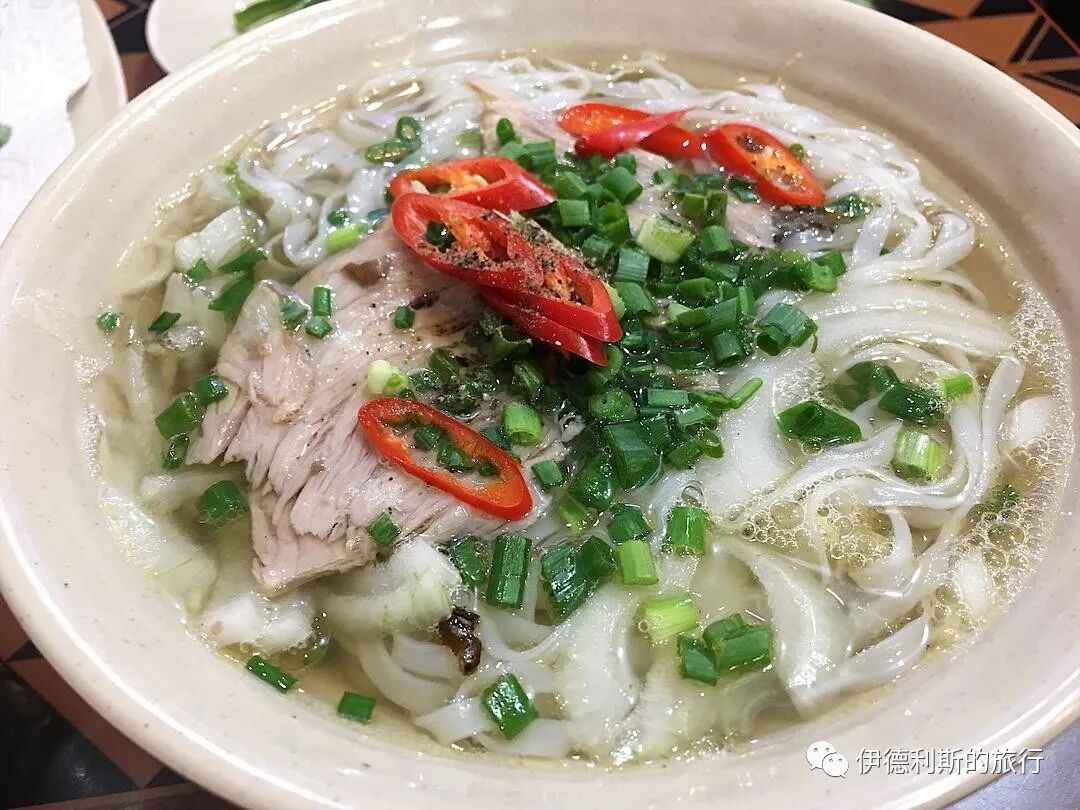
I ordered Vietnamese-style baguette, rice noodle soup (pho), and coffee, and everything was excellent. I never used to like coffee, but I was surprised to find that I really enjoyed it this time.
Vietnamese baguette (banh mi) is a classic breakfast on the streets of Saigon. The baguette arrived in Saigon after the French occupied the city in 1861. Back then, wheat was expensive to import, so the baguette was considered a luxury item. During World War I, wheat imports stopped, so more cheap rice flour was added to Vietnamese baguettes, making them much fluffier. Because the price dropped, baguettes became a regular part of the Vietnamese diet.
Before the 1950s, Vietnamese baguettes were still strictly French-style, served with mayonnaise or jam. After Vietnam was divided into North and South in 1954, over a million people moved from the north to the south, which changed the food scene in Saigon. In the late 1950s, some northern migrants started selling baguettes on the street, and the modern Vietnamese baguette began to take shape.
After the Fall of Saigon in 1975, baguettes were only sold in state-run restaurants and often served with other dishes, which is how the modern habit of dipping baguettes into rice noodle soup (pho) began. It was not until the socialist market economic reforms in 1986 that baguettes returned to the streets as a common snack.
Vietnamese rice noodle soup (pho) appeared in northern Vietnam in the early 20th century, but it was not very popular in Saigon until the 1950s. After Vietnam was divided into North and South in 1954, over a million people moved from the north to the south. Rice noodle soup (pho) became popular in Saigon and developed a unique flavor different from the north.
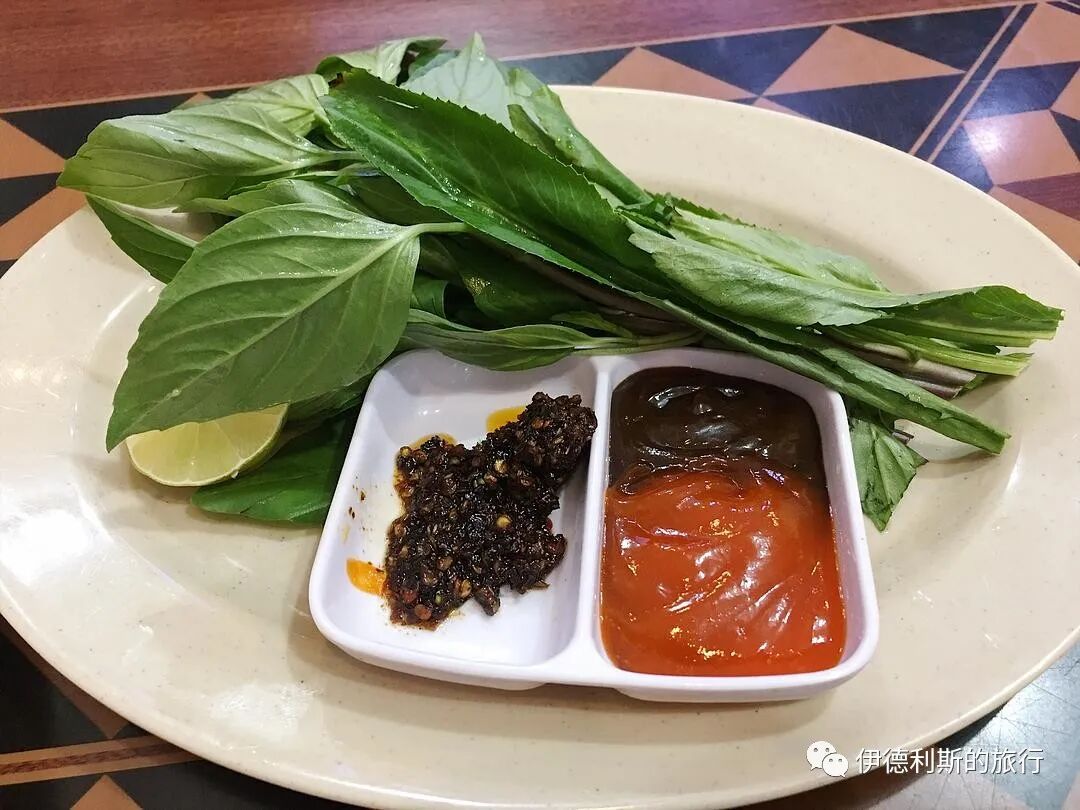
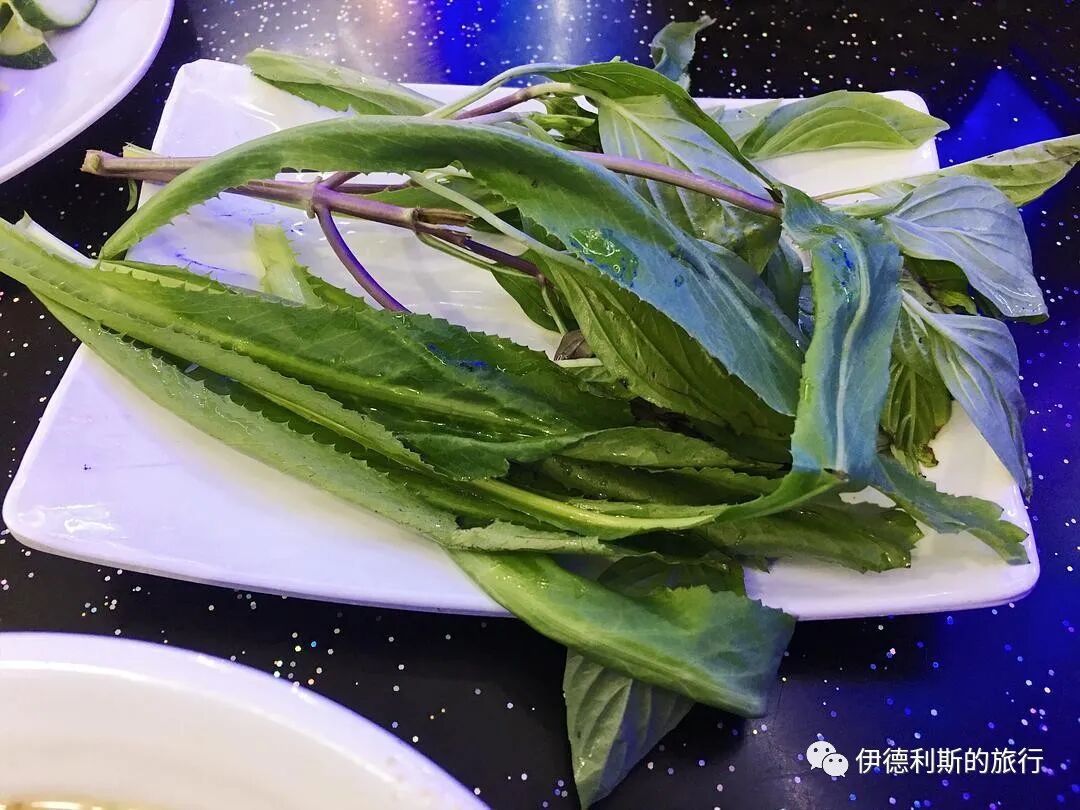
Thai basil is served with the rice noodle soup, though the Malay people at the next table did not seem to enjoy it much.
Delicious Vietnamese coffee.
HALAL AMIN restaurant.
HALAL AMIN is another halal restaurant on Malay Street. The words "PHỞ MUSLIM" below mean Muslim rice noodle soup.
How it looks during the day.
Vietnamese spring rolls (Gỏi cuốn) contain rice vermicelli (bún) wrapped in translucent rice paper (Bánh tráng). The rice paper is a bit tough to chew, and it felt strange the first time I ate it.
I ordered wide beef noodles at the last place, but this time I had thin chicken noodles.
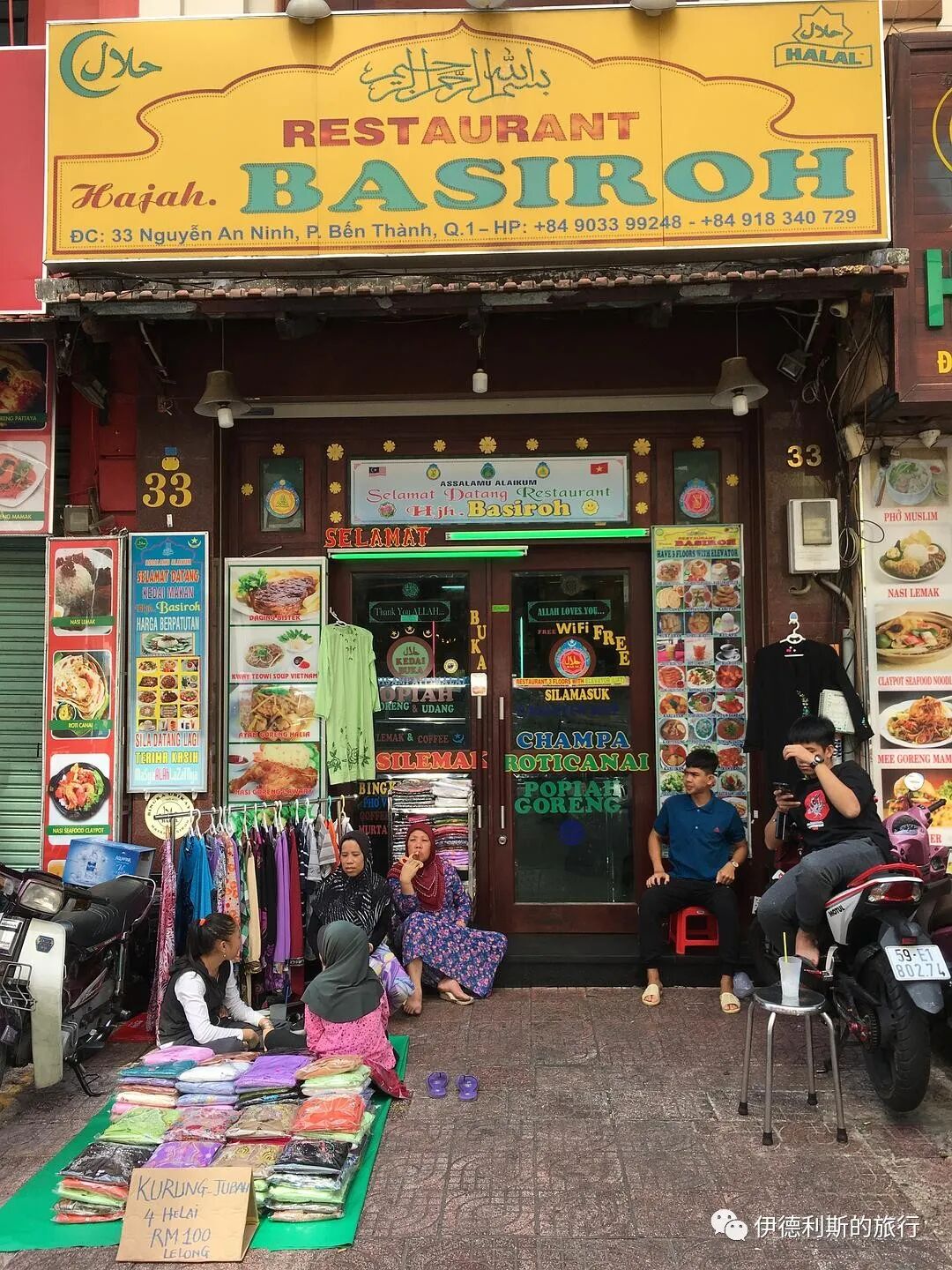
Hajah BASIROH Restaurant
I also tried the Malaysian chicken rice at Hajah BASIROH Restaurant on Malay Street.
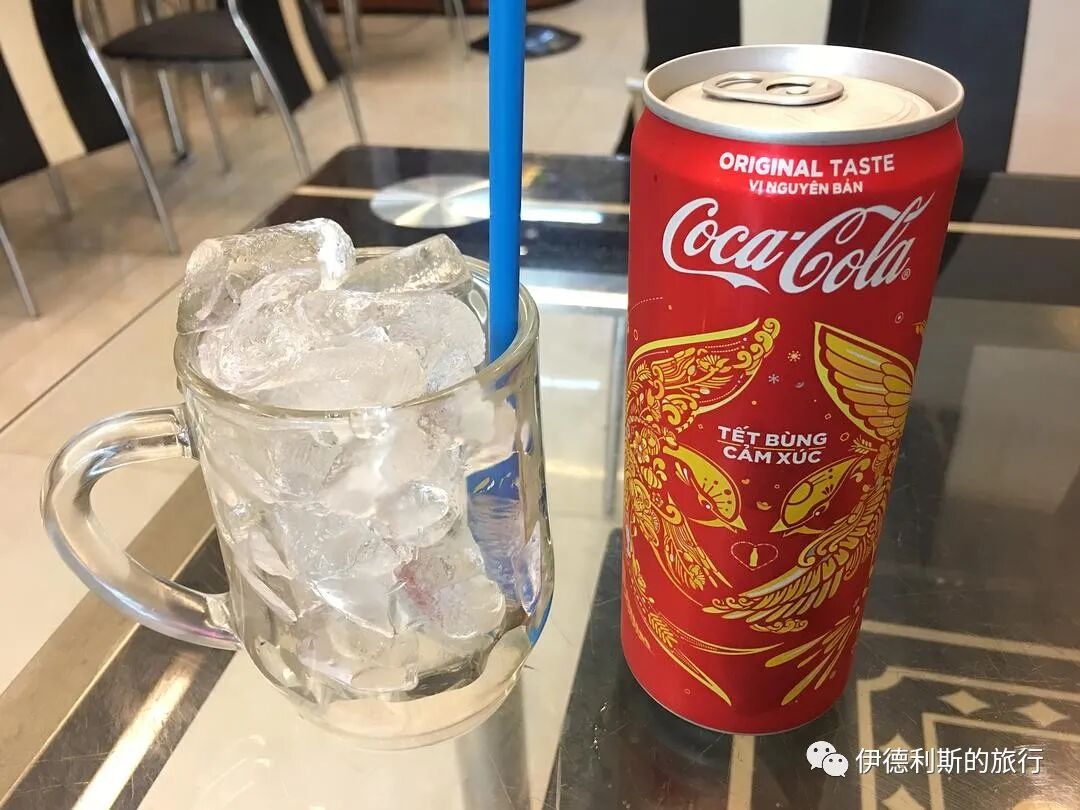
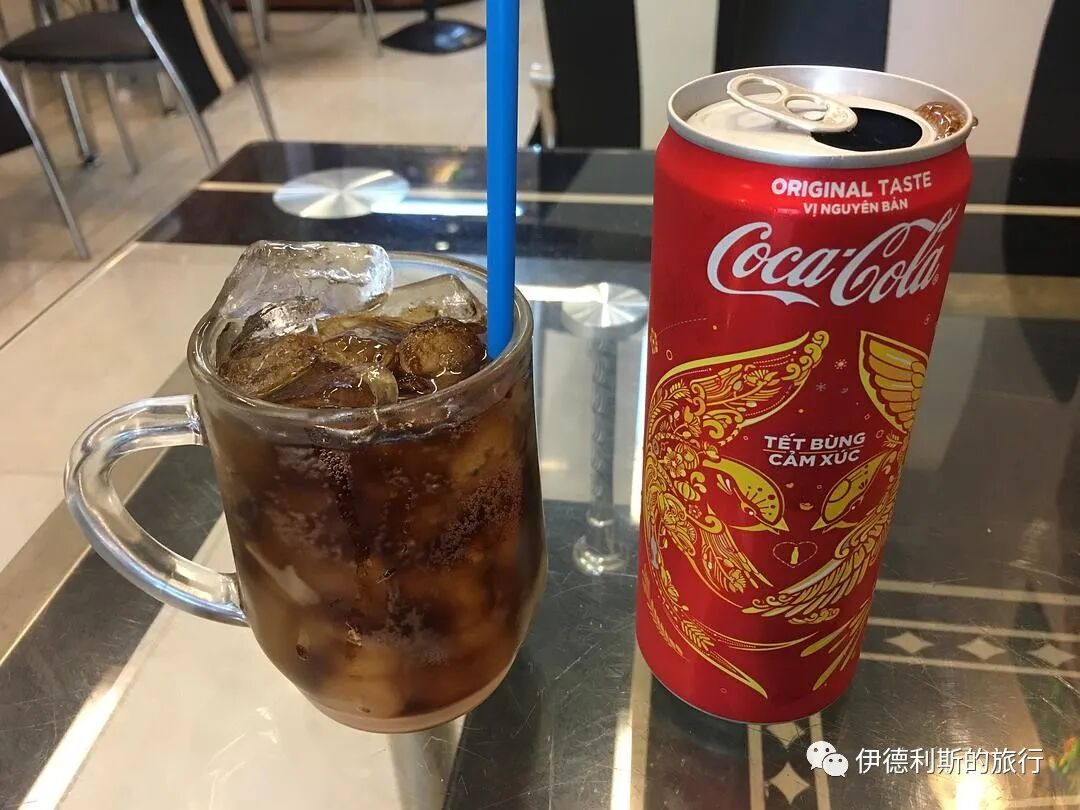
In tropical countries like Malaysia, Vietnam, or Thailand, restaurants often bring you a big glass of ice first. You pour your own water or drink into it, which feels amazing in the hot and humid weather.
Street-style Malay cake (Kuih)
One morning on Malay Street, I met an uncle selling Malay cake (Kuih).
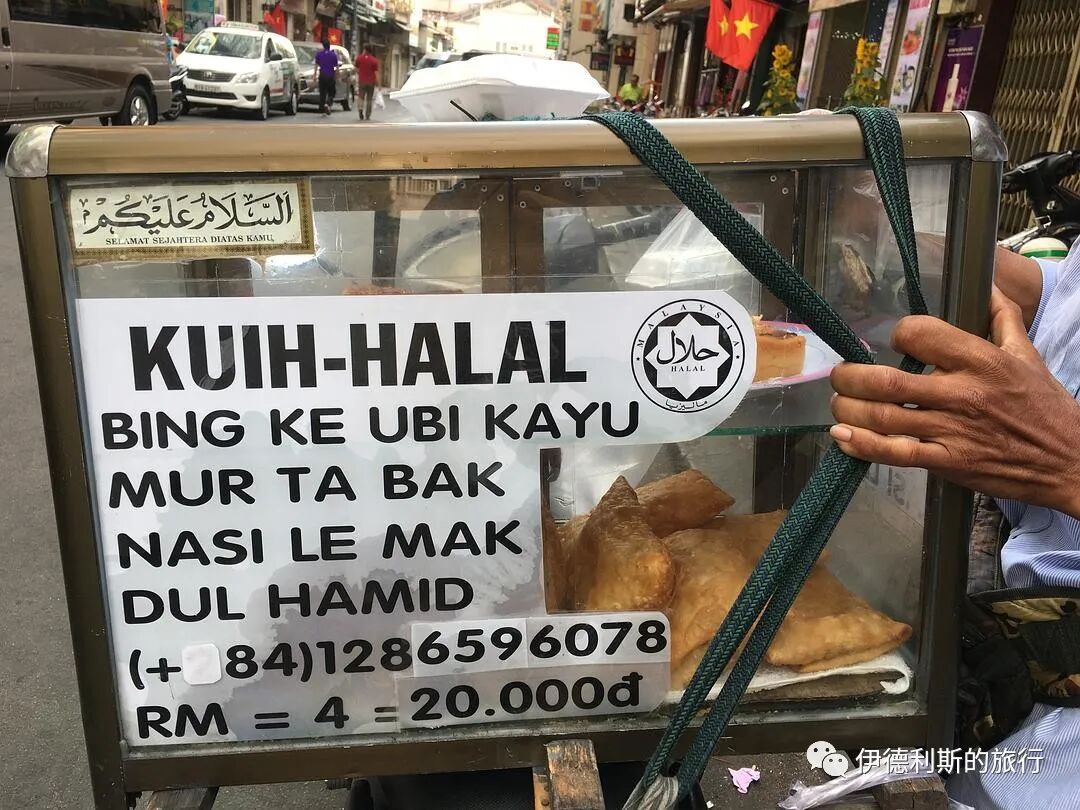
The uncle specifically showed me the words on his cart. The title KUIH-HALAL means halal Malay cake, and on the right is the Malaysian halal certification logo.
The 'Bingke Ubi Kayu' on the first line, also written as 'Kuih Bingka Ubi Kayu' or 'Bingka Ubi', is a Malay cake made by mixing coconut and cassava with coconut milk and salt. This simple recipe is very common in Malaysia.
The 'Murtabak' on the second line is a vegetable pancake popular across the Middle East, South Asia, and Southeast Asia.
The 'Nasi Lemak' on the third line is Malay coconut milk rice.
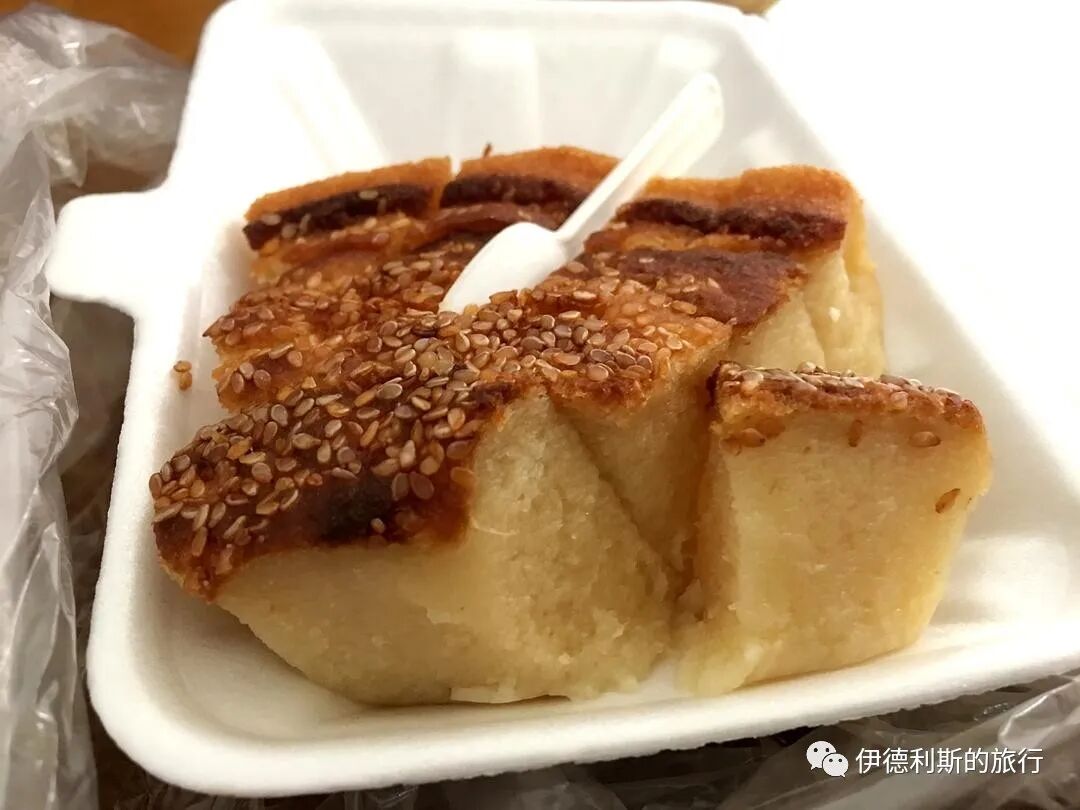
I bought a piece of Bingka Ubi cake made from a mix of cassava and coconut to eat.
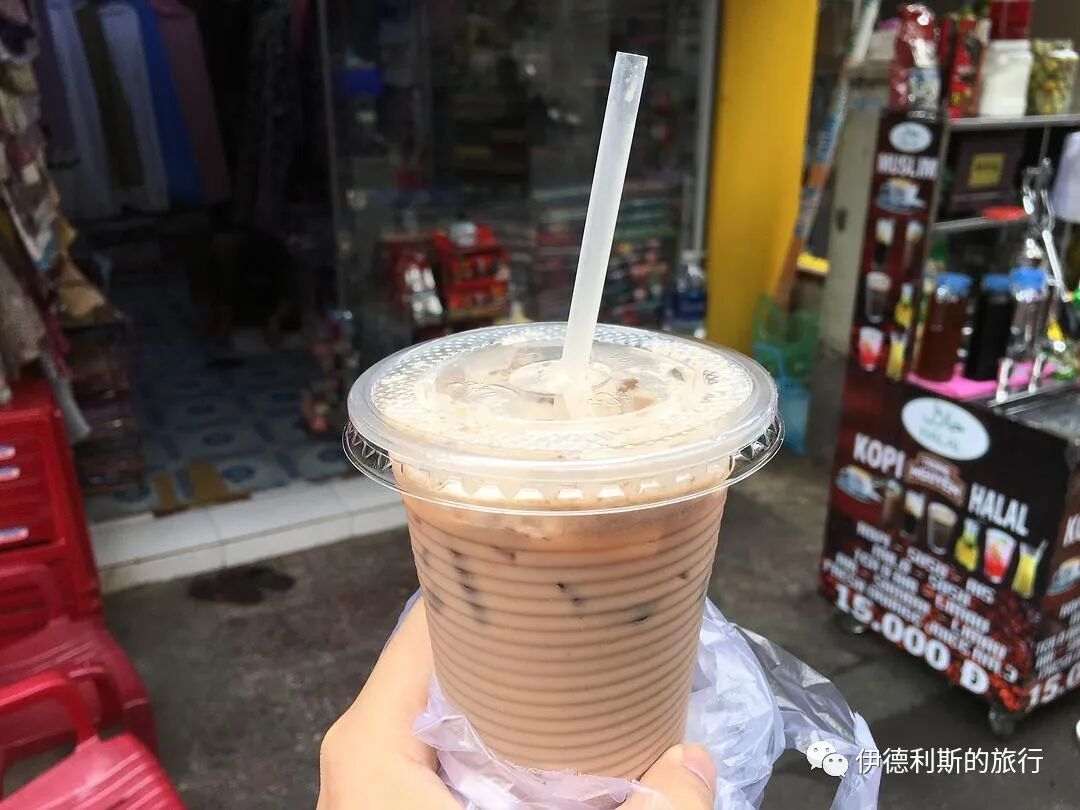
5. Street cold drinks
A cold drink stall on Malay Street sits right in front of a shop selling clothes for Muslim women.
The word 'kopi' written on the stall means coffee.
I bought a cup of rice milk to drink.
Kampung Panda Restaurant
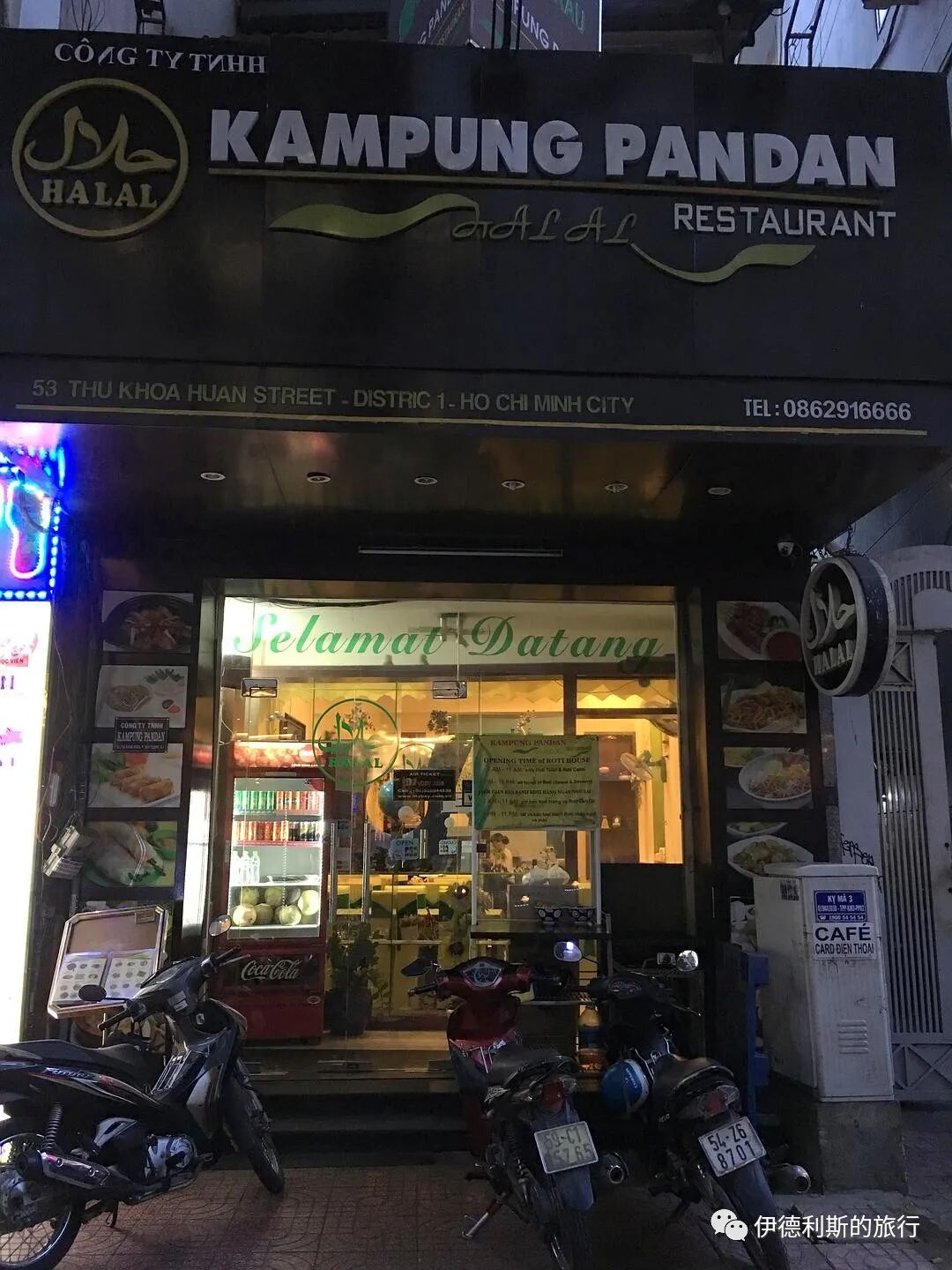
Besides Malay Street, there are many Malaysian restaurants near the Bianqing Market, and the most famous one is Kampung Punda. The word "Kampung" means "village" in Malay.
This restaurant also serves a lot of Vietnamese food.
Start by drinking some coconut juice.
This type of spring roll is called Cuốn diếp. It is popular in northern Vietnam and is made by wrapping chicken, carrots, and other ingredients in lettuce. It tastes quite good.
Stir-fried seafood noodles (Mì xào)
Vegetable and seafood squid rolls
The Daun restaurant
Besides the Malaysian restaurants, there is a halal place near Ben Thanh Market run by Singaporeans. They hire Vietnamese chefs who make excellent halal Vietnamese food.
The man sitting across from us is the owner, and he is very kind and polite.
Menu
Start with an iced coffee!
The noodles with fried spring rolls (bun cha gio) come with a delicious sweet and spicy fish sauce.
Pineapple and mushrooms
In Ho Chi Minh City, besides Malaysian and Singaporean halal restaurants, there are many halal eateries and stalls run by local Cham people. You can see more in my previous diary entry, "Mosques and Cham Muslims in Ho Chi Minh City, Vietnam." view all
Summary: Ho Chi Minh City — Malay Muslims, Mosques and Food is presented here as a firsthand travel account in clear English, beginning with this scene: Southern Vietnam has a long history of close contact with the Malay Archipelago. In the 15th century, the Malacca Sultanate (1400–1511) became a major power in Southeast Asia and maintained close ties with Champa, which. The account keeps its focus on Ho Chi Minh City, Malay Muslims, Vietnam Muslims while preserving the names, places, food, and historical details from the Chinese source.
Southern Vietnam has a long history of close contact with the Malay Archipelago. In the 15th century, the Malacca Sultanate (1400–1511) became a major power in Southeast Asia and maintained close ties with Champa, which then ruled southern Vietnam. The classic Cham literature piece, The Princess of Kelantan, tells the story of a princess from Kelantan on the Malay Peninsula who practiced her faith in Champa. After the Portuguese occupied the Malacca Sultanate in 1511, many Malay people moved away, and some settled in southern Vietnam, where they integrated with the Cham Muslims.
The Western missionary M. Mahot MEP began living in Champa in 1676. In a letter written in July 1678, he noted: 'Regarding the Cham religion, the Malay Muslims are more vigilant than we are. They have immigrated to Champa in large numbers and have brought the Cham king and his court into Islam.'
In 1692, Vietnam invaded Champa and established Binh Thuan Prefecture on former Cham lands, then continued to invade the Mekong Delta, which was ruled by Cambodia. In 1698, they established Gia Dinh Prefecture in the Mekong Delta, which was the predecessor to Ho Chi Minh City. In the early 19th century, Emperor Gia Long (reigned 1802–1820) of the Vietnamese Nguyen Dynasty sent troops to guard Gia Dinh City. Because he lacked enough soldiers, he recruited many Cham and Malay troops.
In 1859, the joint French and Spanish forces captured the city of Gia Dinh. In 1862, France and the Nguyen Dynasty of Vietnam signed the Treaty of Saigon, officially occupying Gia Dinh. From then on, Gia Dinh gradually developed into Saigon, a commercial hub for the French in Southeast Asia.
During French rule, the government had a relatively relaxed policy toward the faith. Many Malay and Indonesian people came to Saigon for business, and the first mosque in Saigon was the Al Rahim Mosque, built by Malay and Indonesian Muslims in 1885.
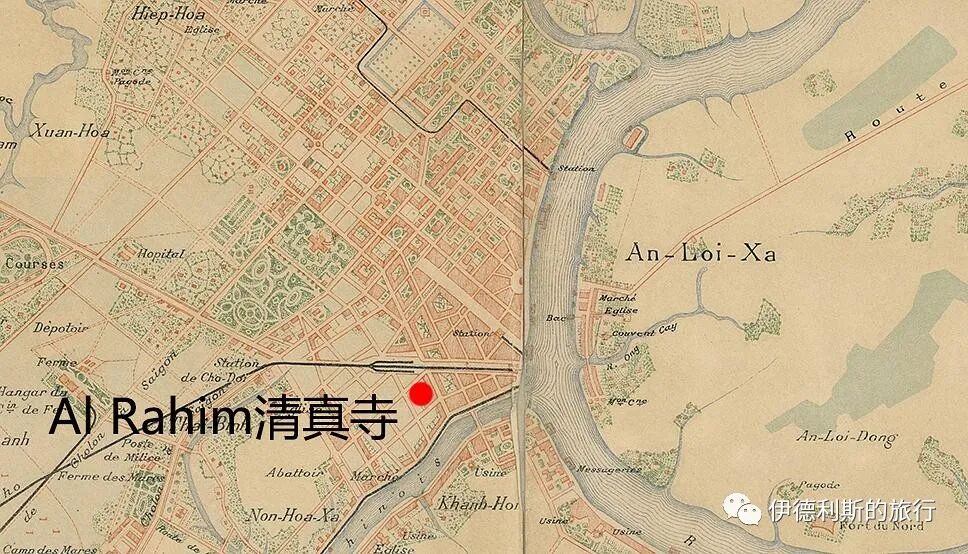
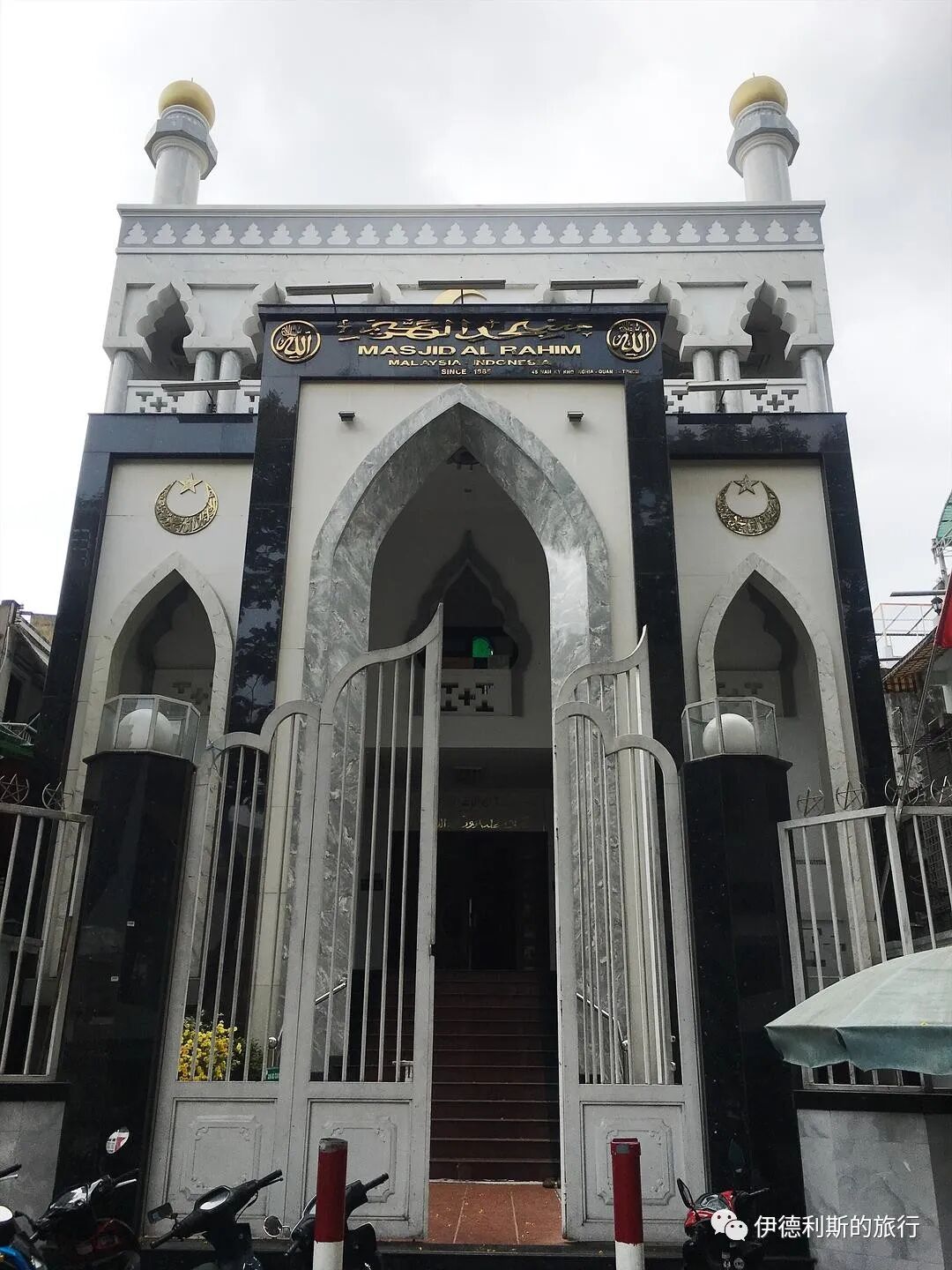
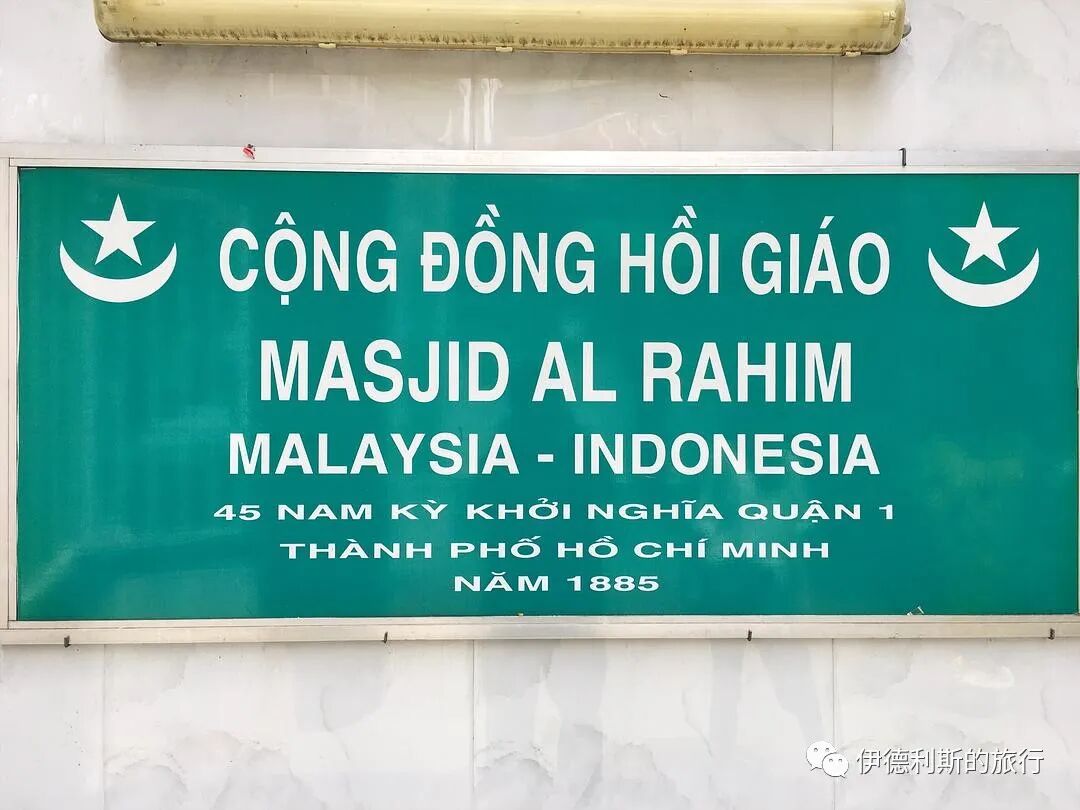
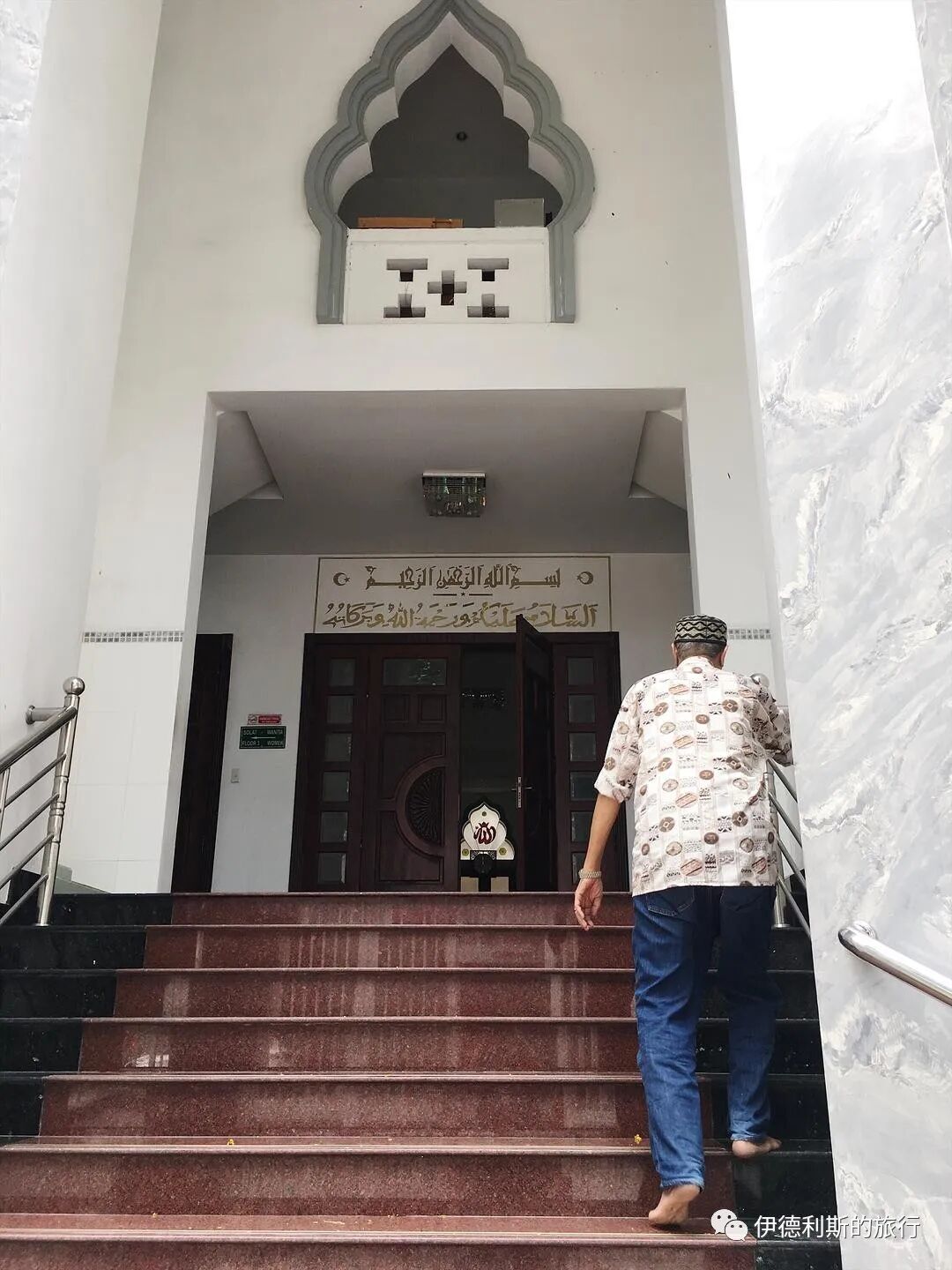
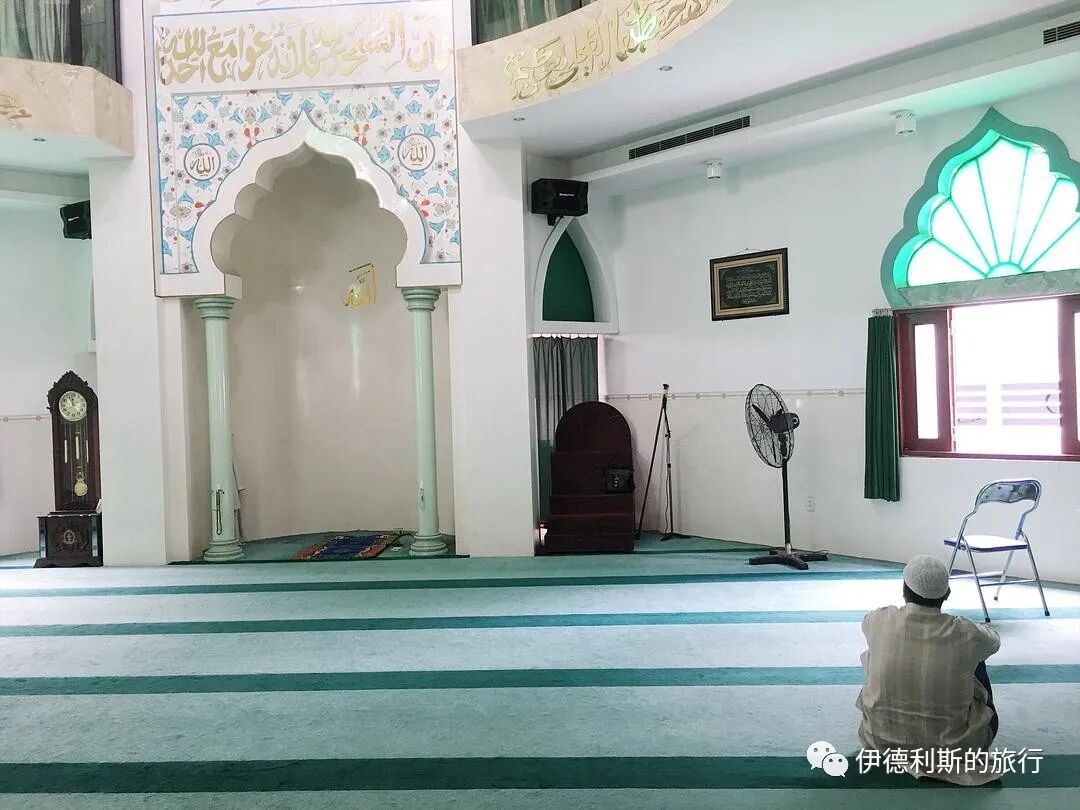
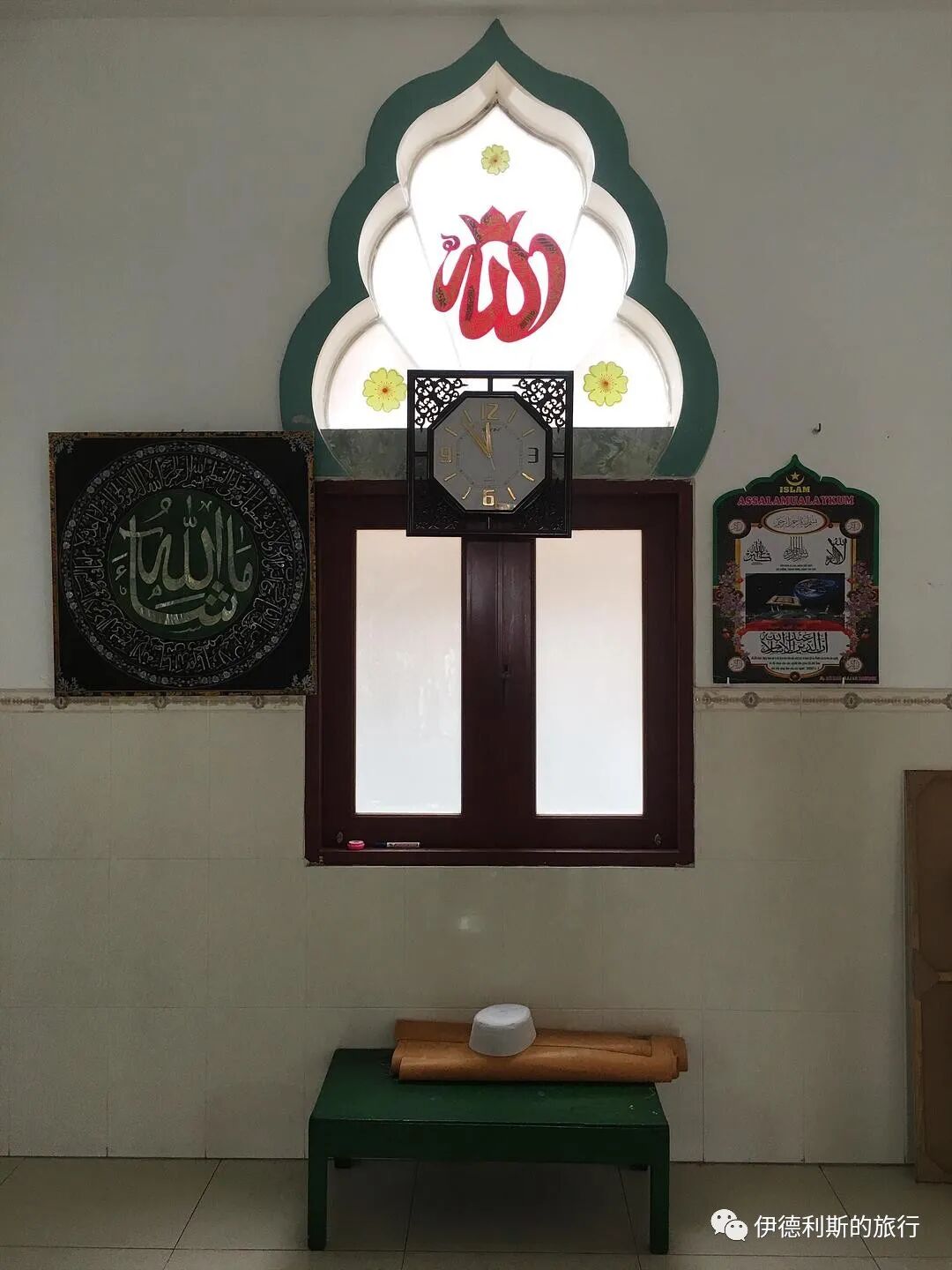
After entering the 20th century, the Malay community had a greater influence on the faith in Vietnam. At that time, religious publications were all imported from Malaya, and mosques were accustomed to inviting Malay imams to give sermons (waaz) in the Malay language. Local Cham youth were used to traveling to Malaya to study the scriptures, returning to Vietnam to practice their faith after completing their studies. In 1954, Vietnam was divided into North and South, and South Vietnam maintained good diplomatic relations with the then Federation of Malaya and later Malaysia. Many mosques in Vietnam were built with help from Malaysia in the 1950s and 1960s. In Saigon, you can find the Haiyat Al Islam mosque built in 1962, the Alsa Adah mosque built in 1968, and the Jamiul Anwar mosque built in 1969.
Jamiul Anwar mosque
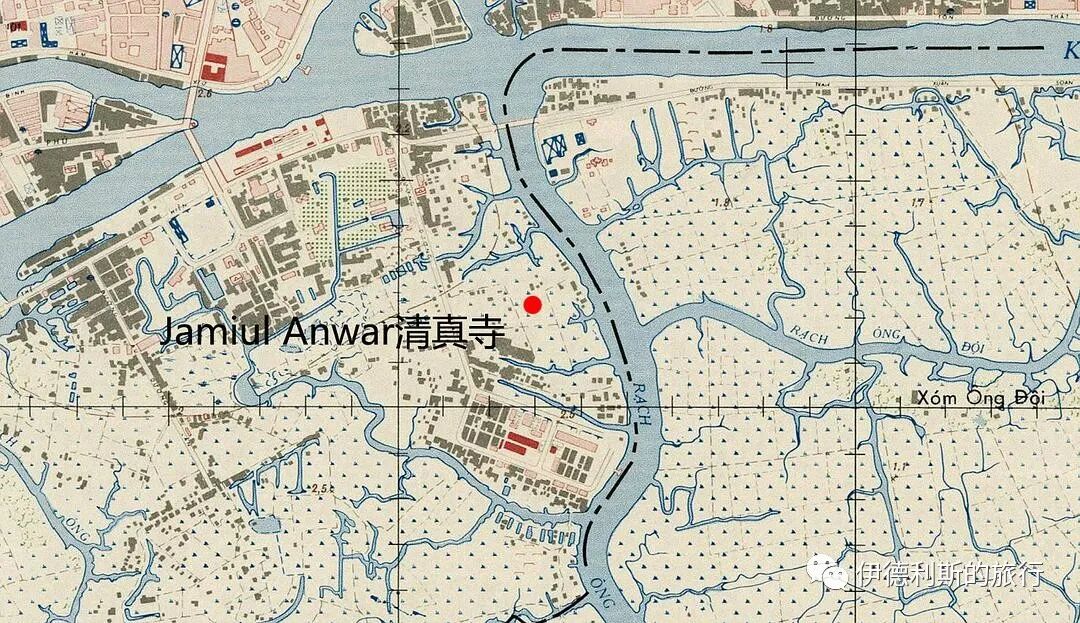
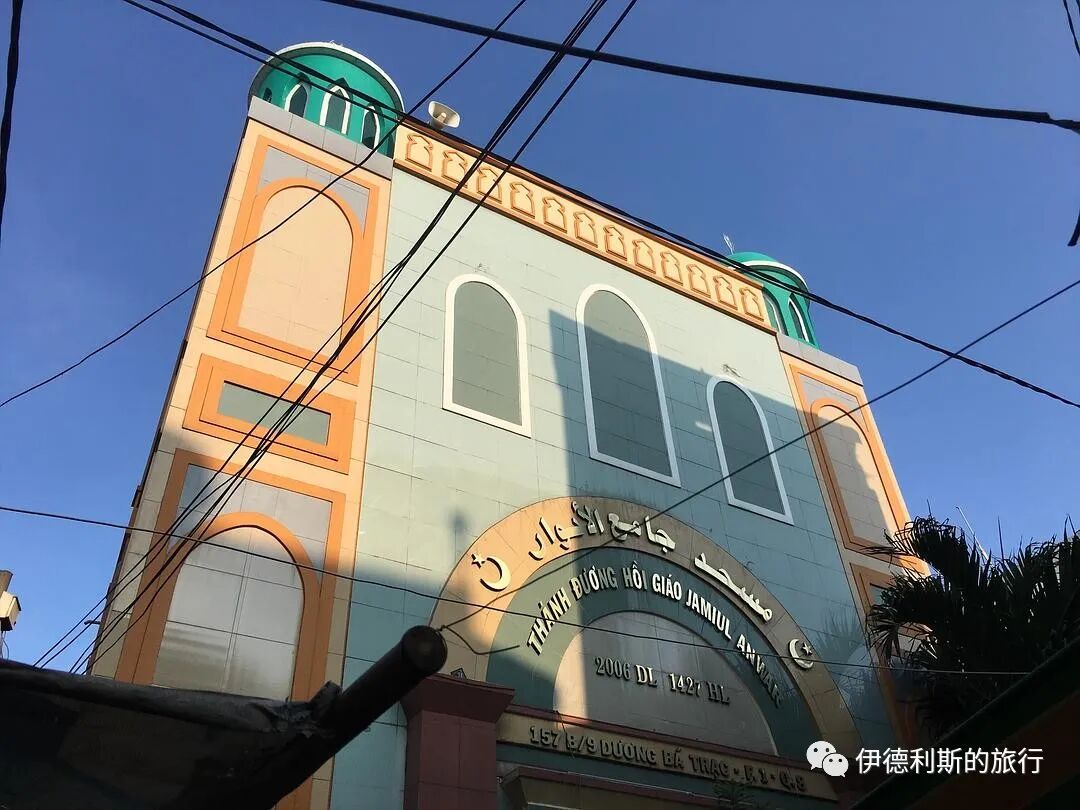
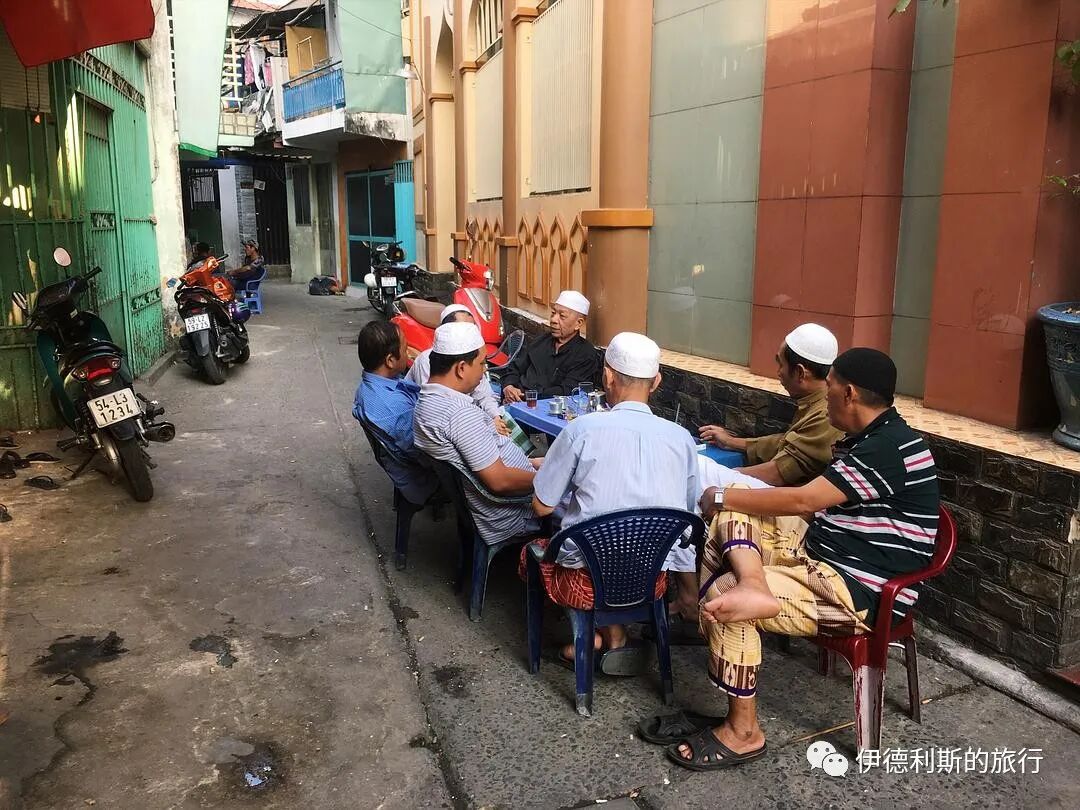
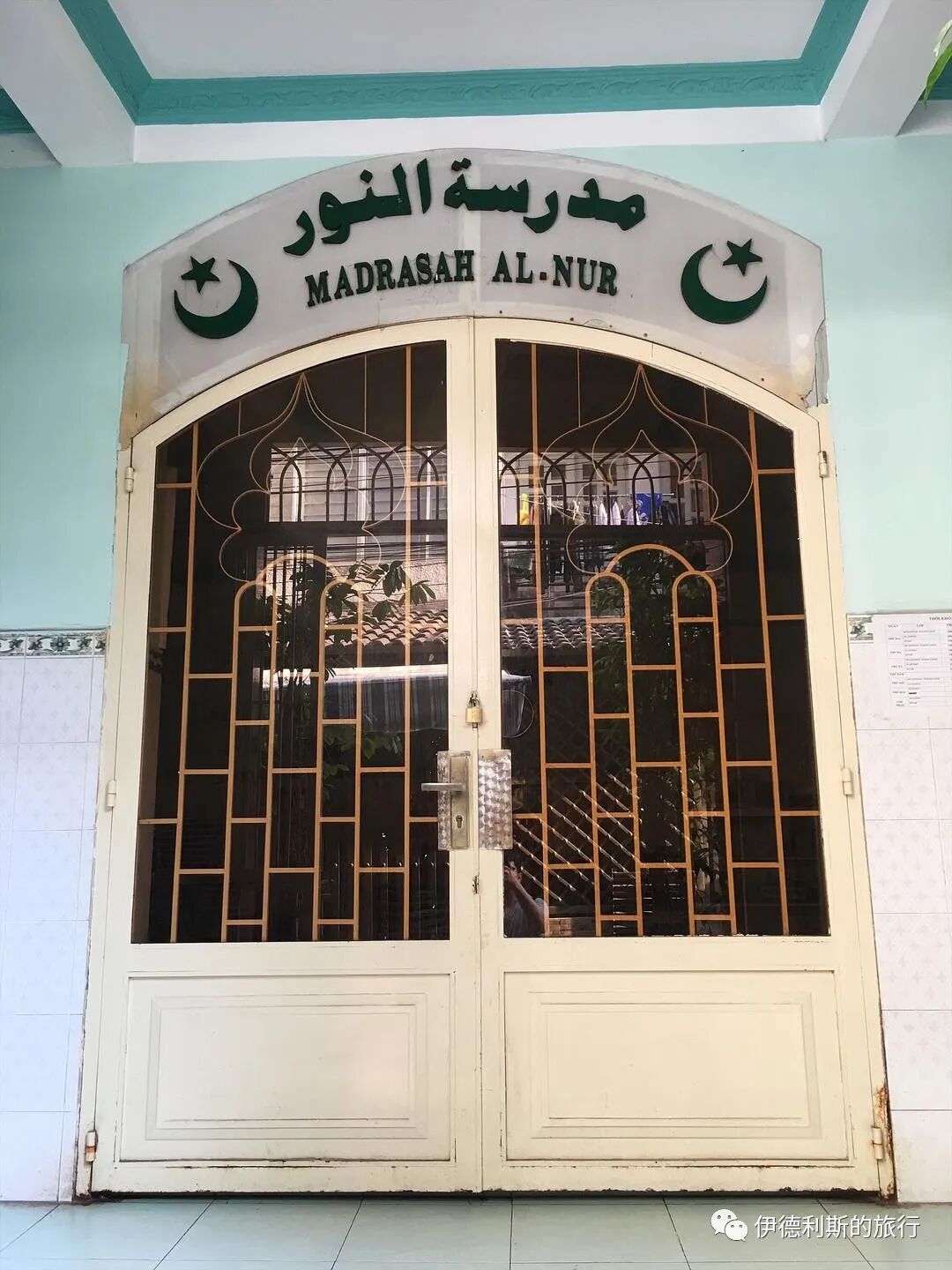
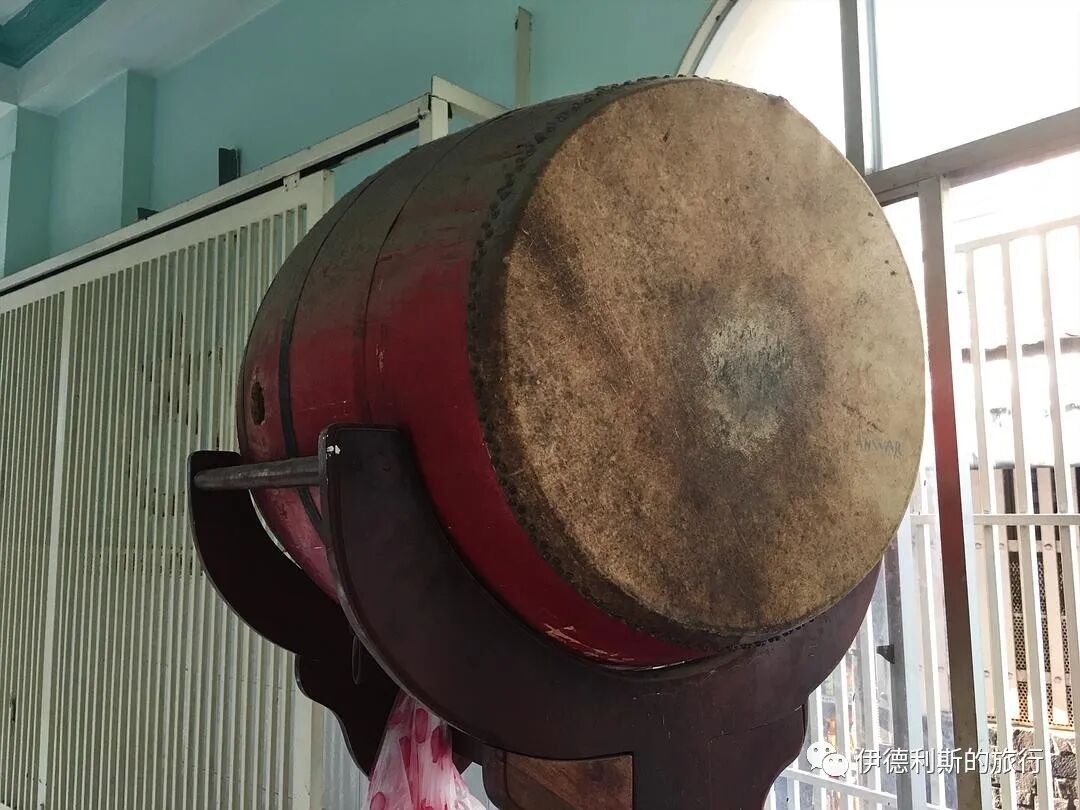
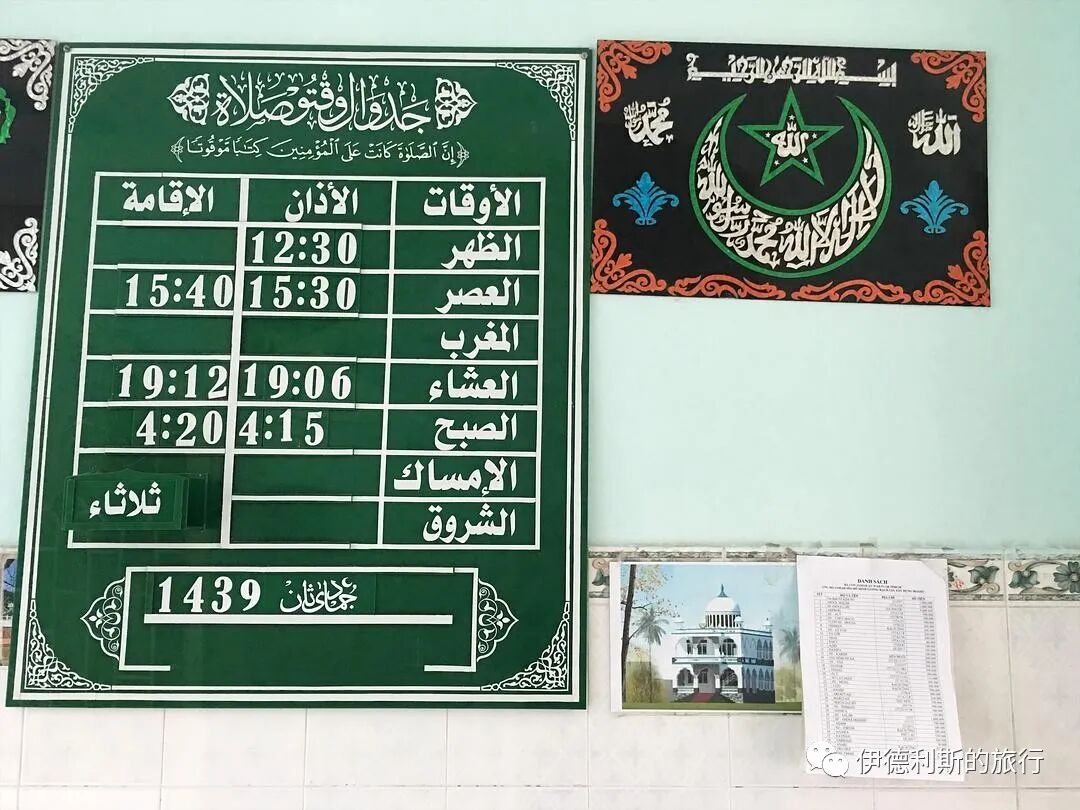
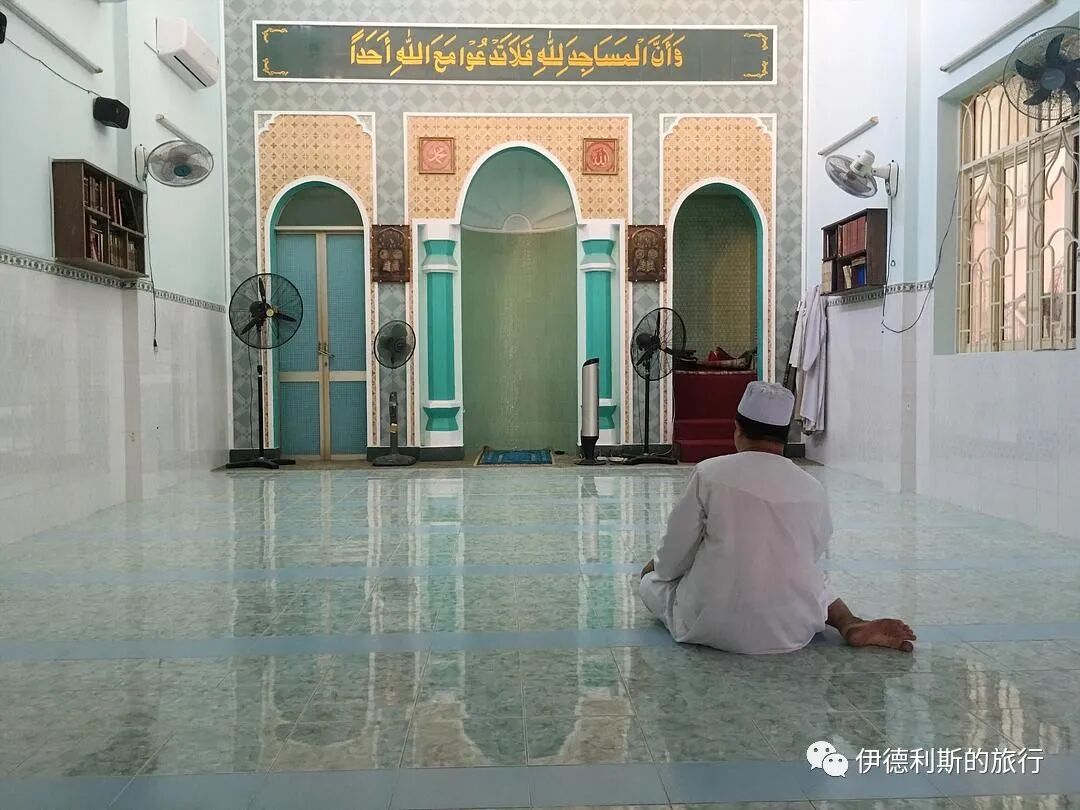
The area in Ho Chi Minh City with the most Malay people is currently Malay Street, located outside the west gate of Ben Thanh Market.
Since these restaurants mainly serve Malay tourists, they also offer Vietnamese food. This makes it very easy for Malay Muslims to try local Vietnamese dishes.
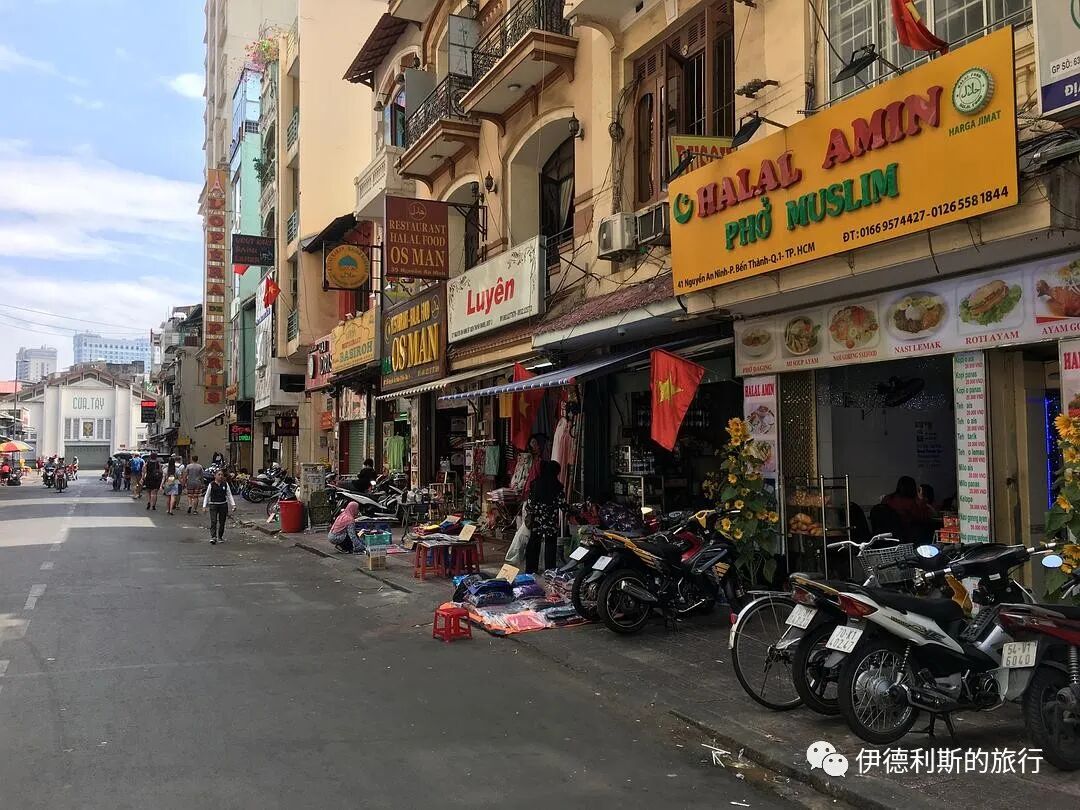
The west gate of Ben Thanh Market is at the end of the road.
The street has many stalls and shops selling women's clothing for Muslims.
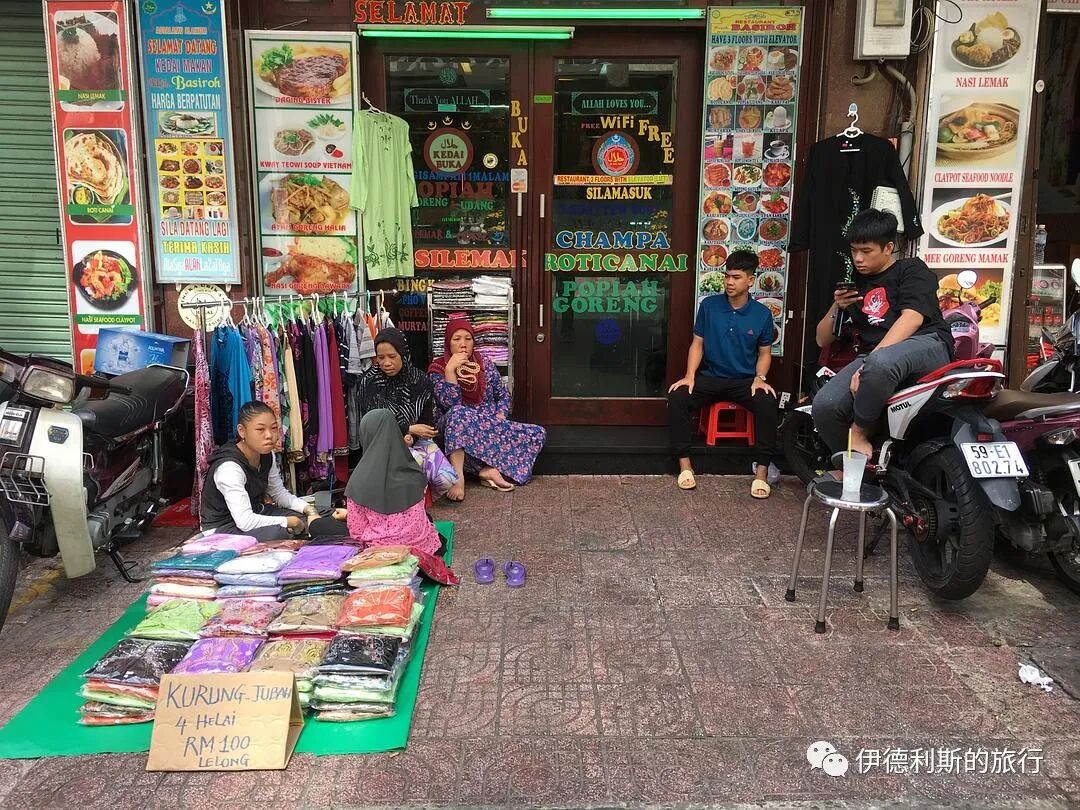
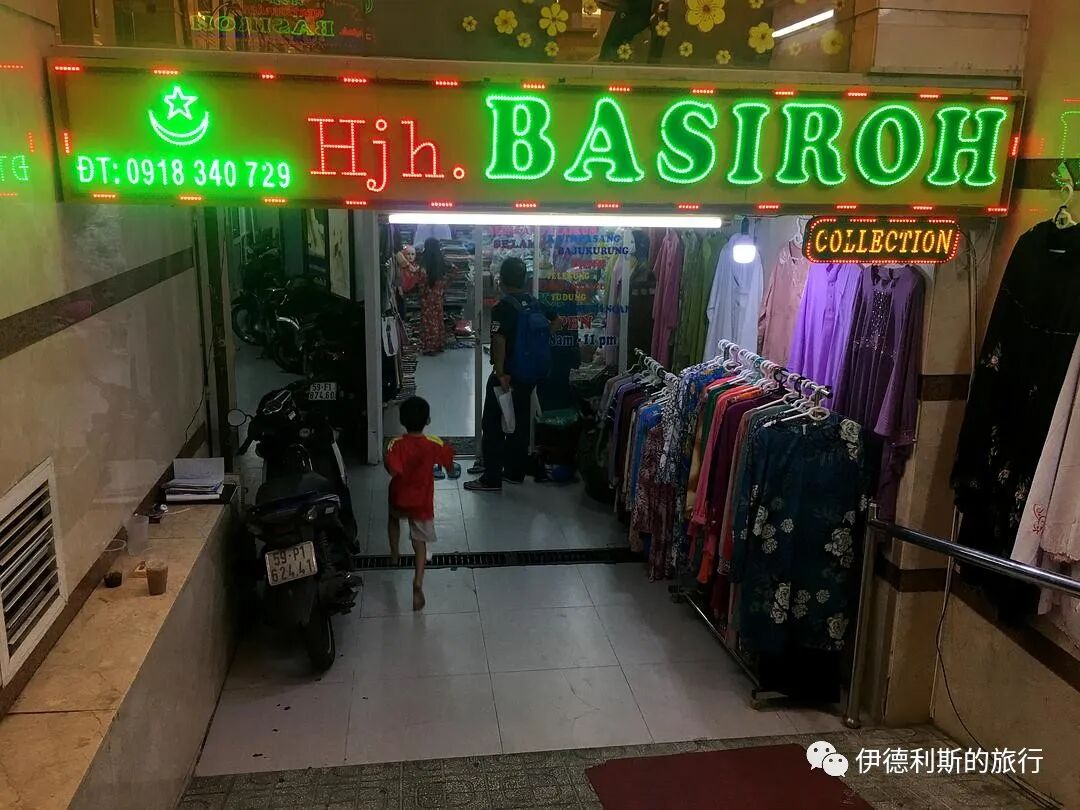
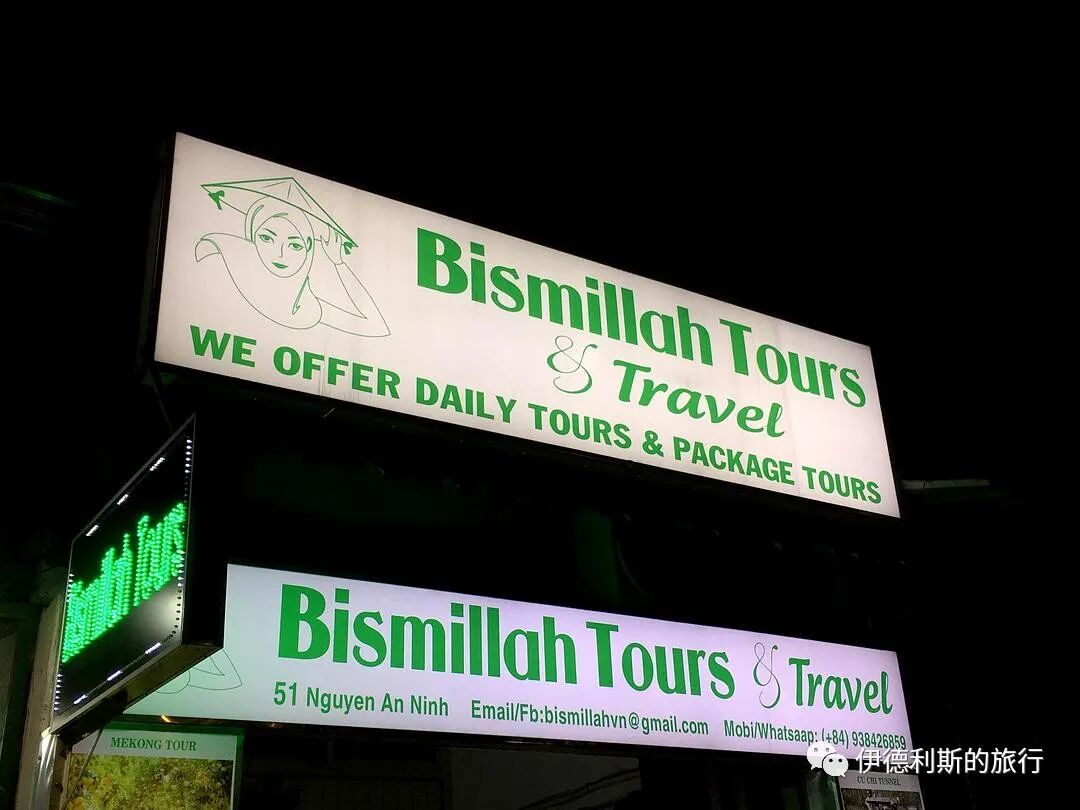
There are also Muslim travel agencies. Among them, Bismillah means the basmala.
Haji Osman Restaurant
I flew from Beijing to Ho Chi Minh City and headed straight to Malay Street first thing in the morning. Malay Street was still quiet in the morning, so I walked around and picked Haji Osman Restaurant, which looked like the busiest spot.
I ordered Vietnamese-style baguette, rice noodle soup (pho), and coffee, and everything was excellent. I never used to like coffee, but I was surprised to find that I really enjoyed it this time.
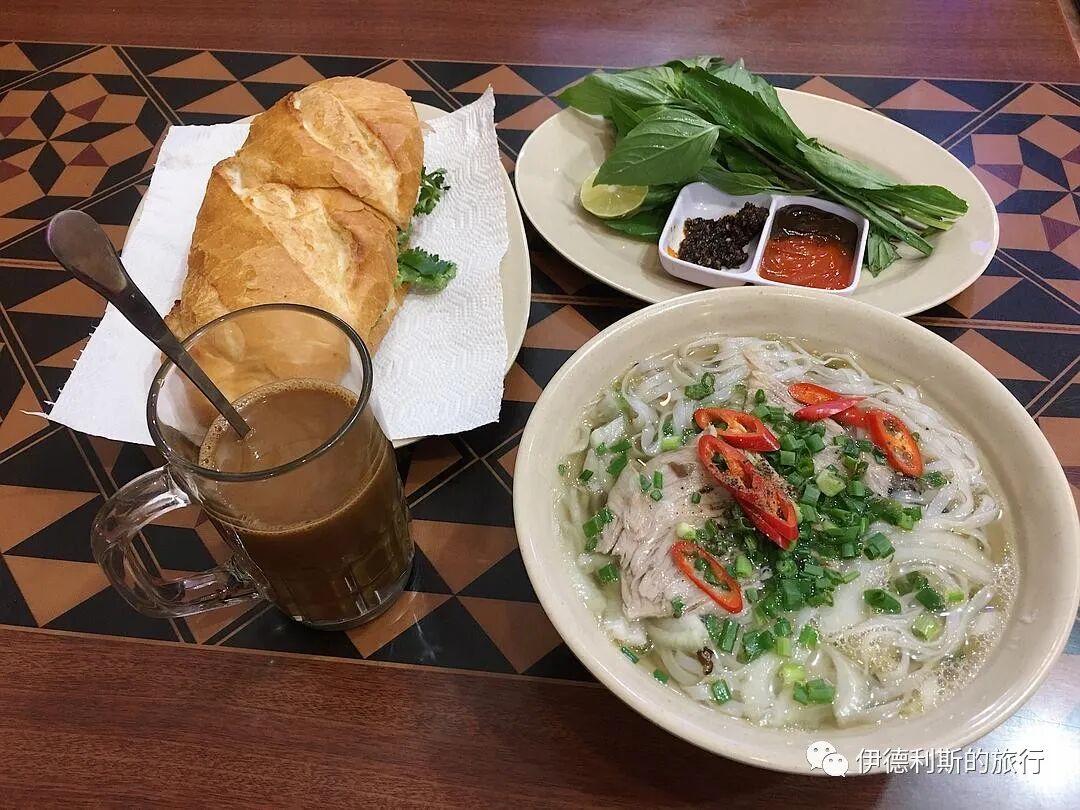
Vietnamese baguette (banh mi) is a classic breakfast on the streets of Saigon. The baguette arrived in Saigon after the French occupied the city in 1861. Back then, wheat was expensive to import, so the baguette was considered a luxury item. During World War I, wheat imports stopped, so more cheap rice flour was added to Vietnamese baguettes, making them much fluffier. Because the price dropped, baguettes became a regular part of the Vietnamese diet.
Before the 1950s, Vietnamese baguettes were still strictly French-style, served with mayonnaise or jam. After Vietnam was divided into North and South in 1954, over a million people moved from the north to the south, which changed the food scene in Saigon. In the late 1950s, some northern migrants started selling baguettes on the street, and the modern Vietnamese baguette began to take shape.
After the Fall of Saigon in 1975, baguettes were only sold in state-run restaurants and often served with other dishes, which is how the modern habit of dipping baguettes into rice noodle soup (pho) began. It was not until the socialist market economic reforms in 1986 that baguettes returned to the streets as a common snack.
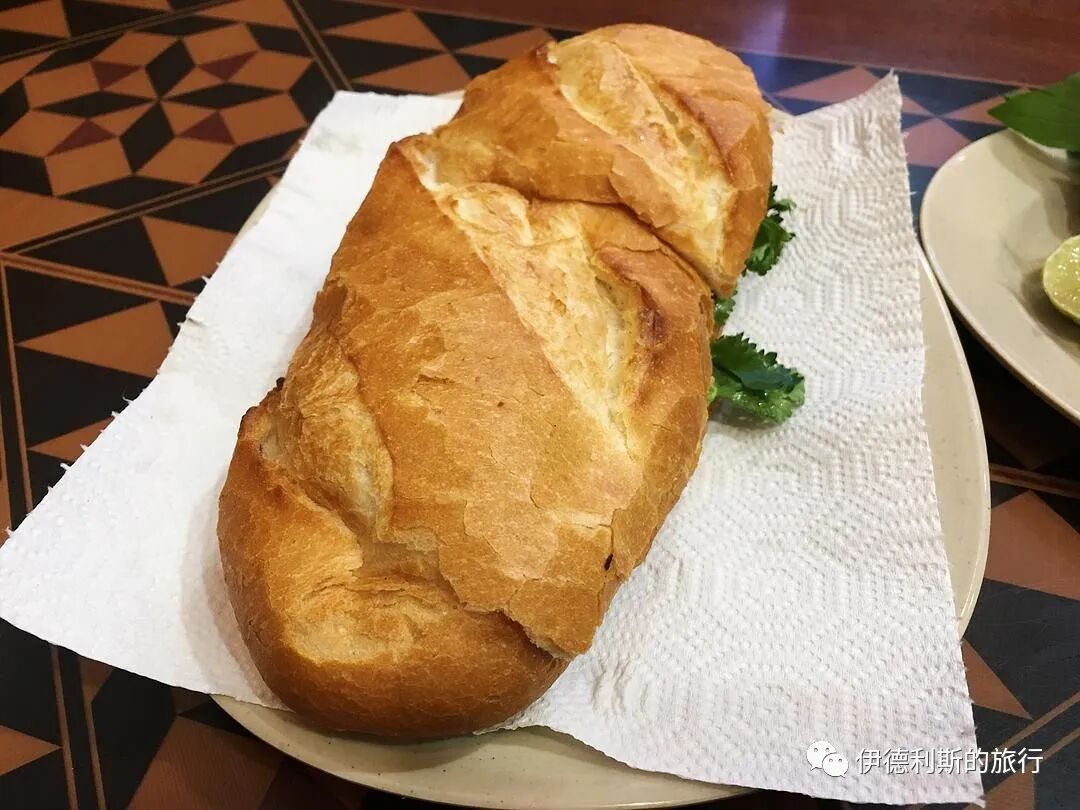
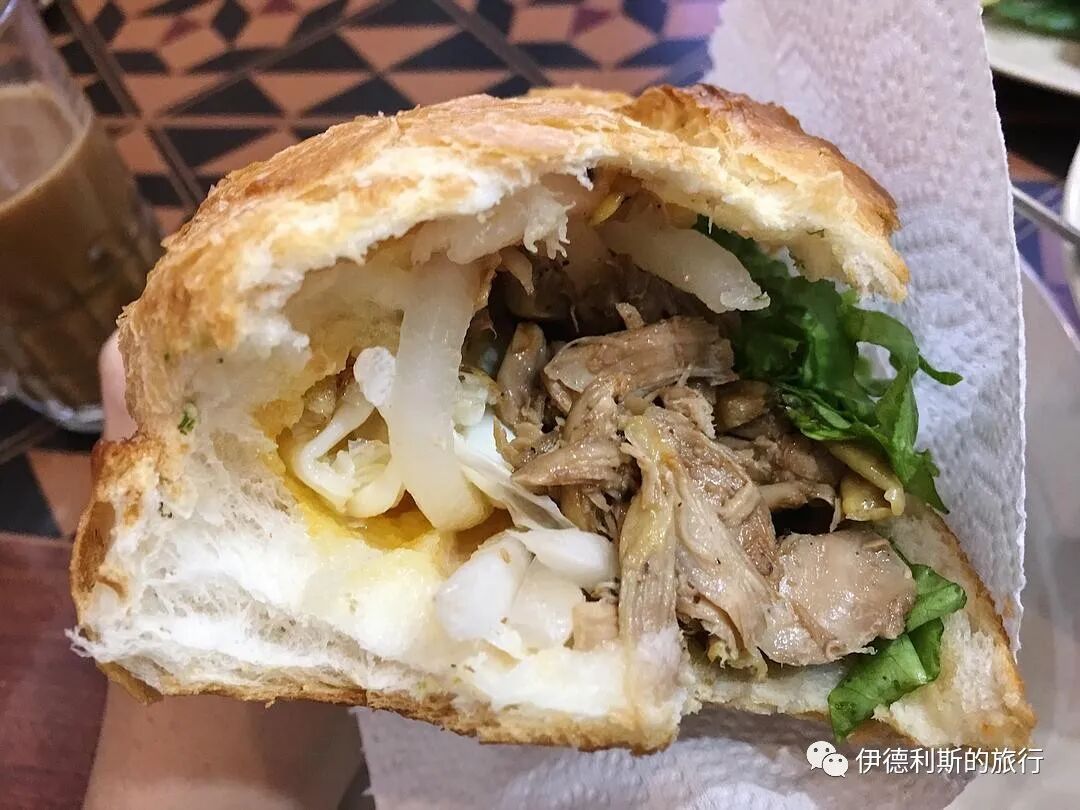
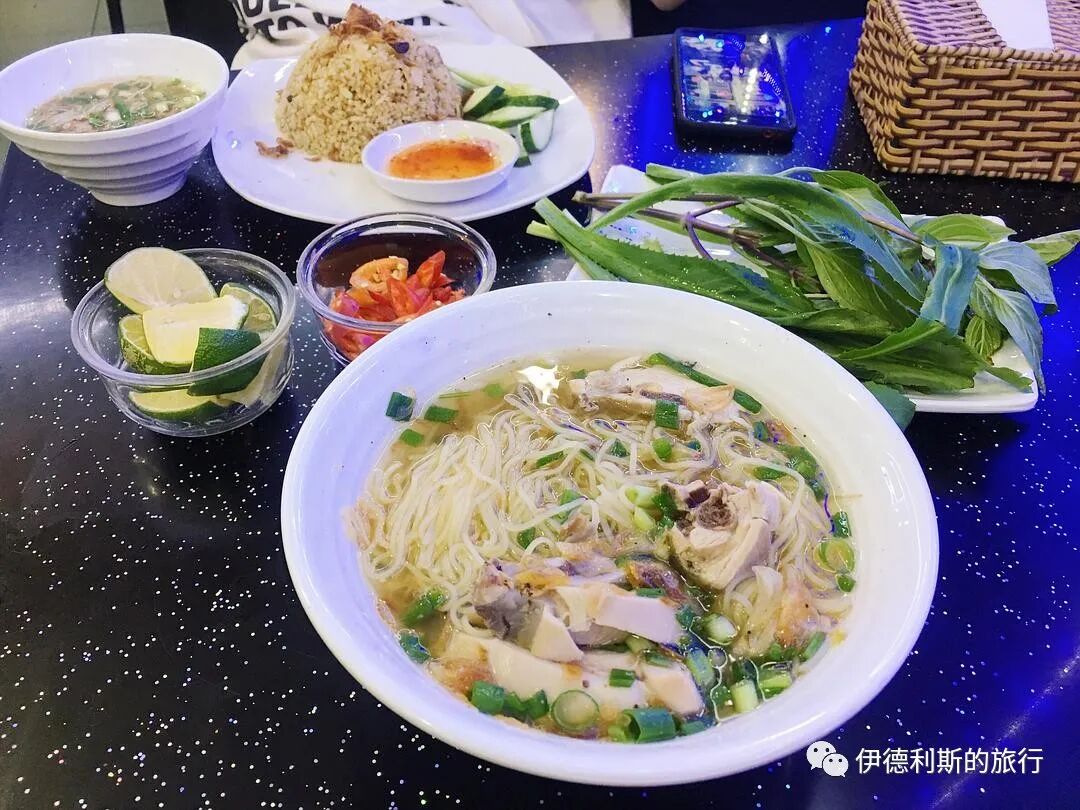
Vietnamese rice noodle soup (pho) appeared in northern Vietnam in the early 20th century, but it was not very popular in Saigon until the 1950s. After Vietnam was divided into North and South in 1954, over a million people moved from the north to the south. Rice noodle soup (pho) became popular in Saigon and developed a unique flavor different from the north.
Thai basil is served with the rice noodle soup, though the Malay people at the next table did not seem to enjoy it much.
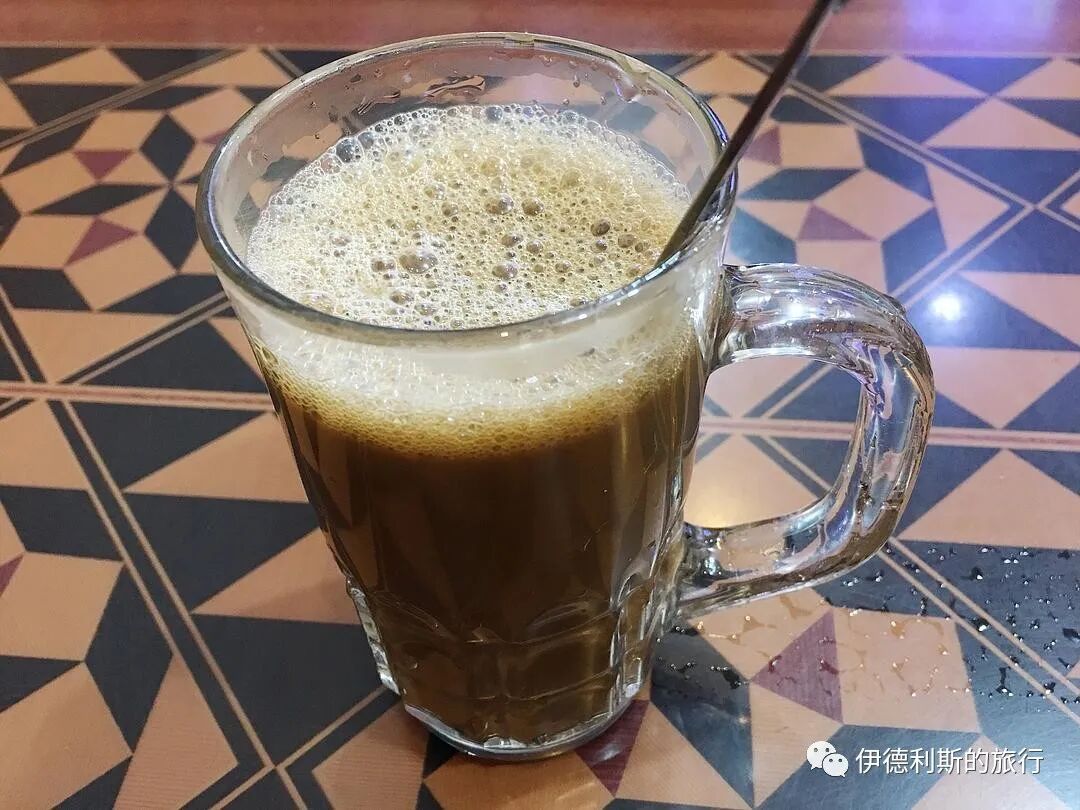
Delicious Vietnamese coffee.
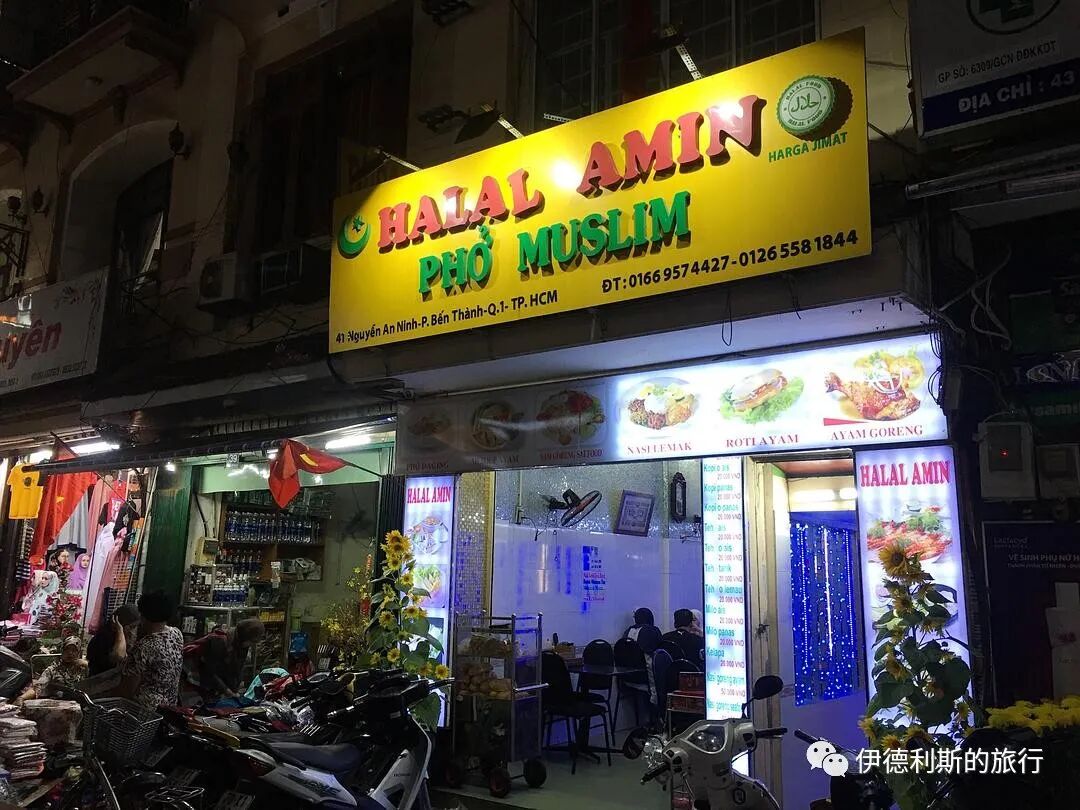
HALAL AMIN restaurant.
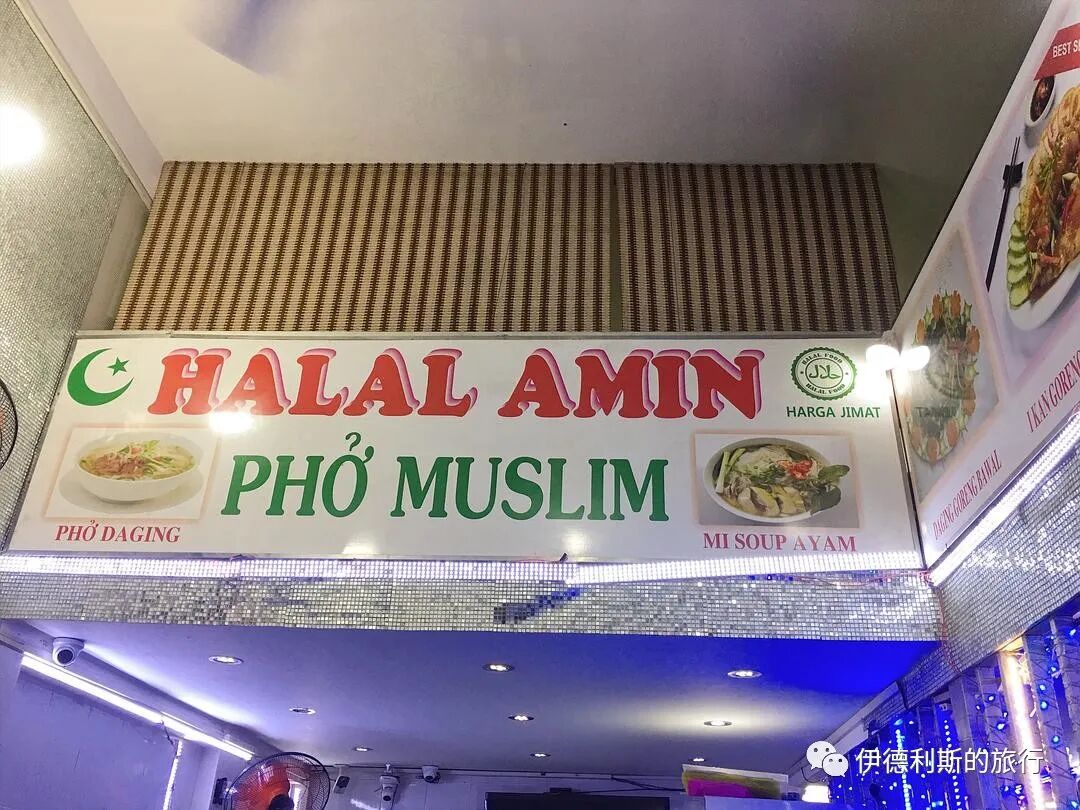
HALAL AMIN is another halal restaurant on Malay Street. The words "PHỞ MUSLIM" below mean Muslim rice noodle soup.
How it looks during the day.
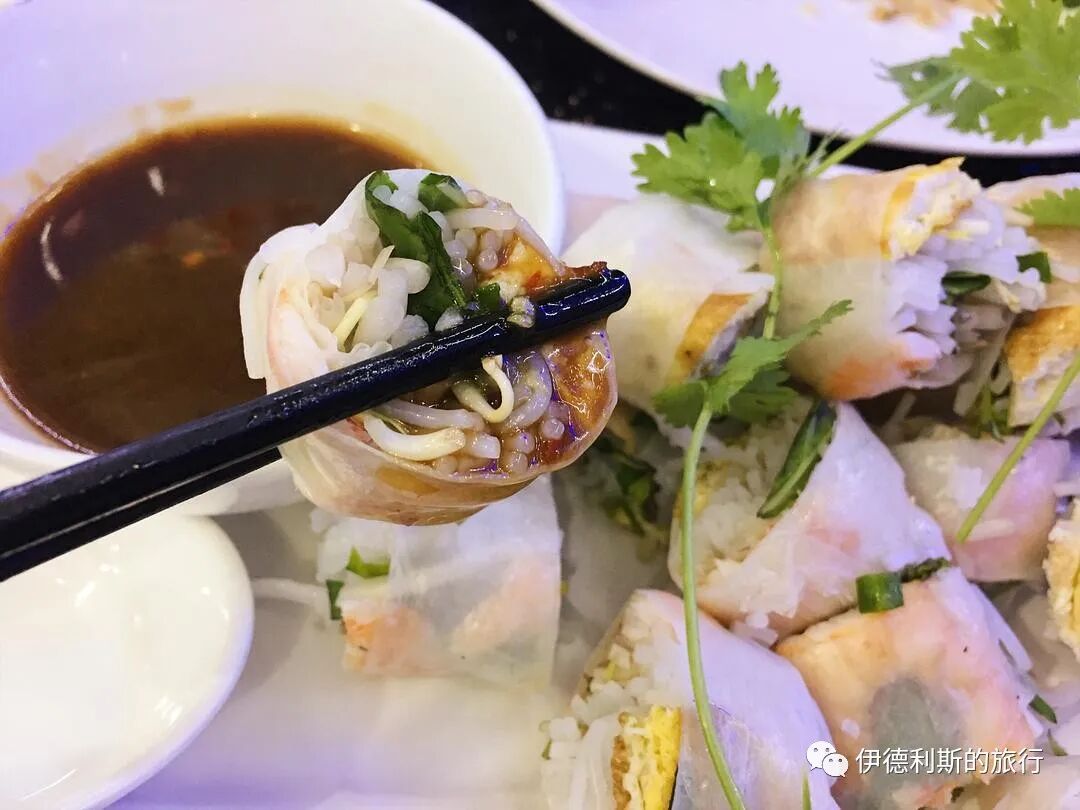
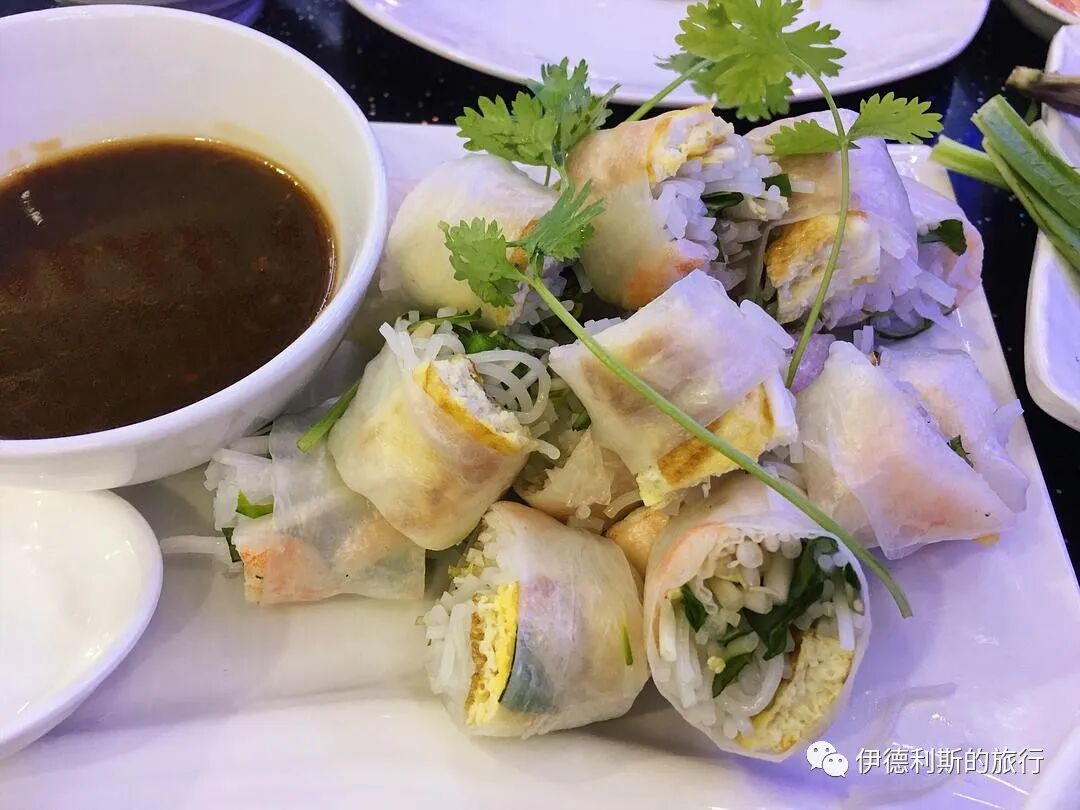
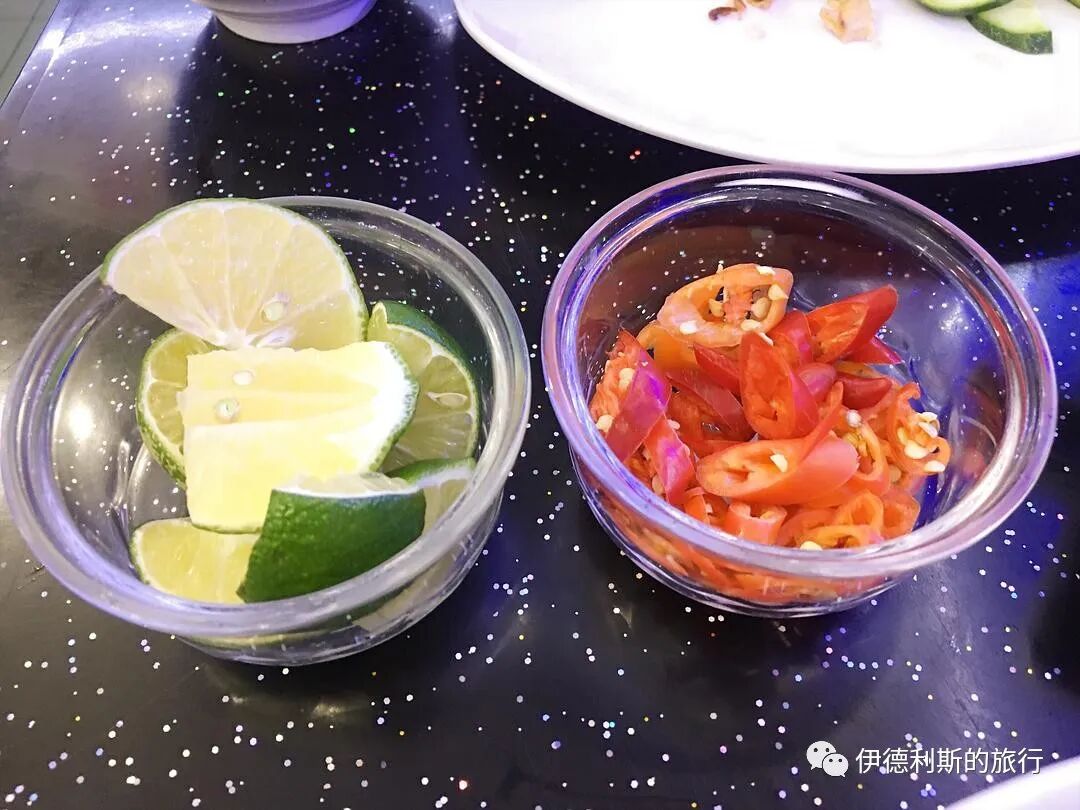
Vietnamese spring rolls (Gỏi cuốn) contain rice vermicelli (bún) wrapped in translucent rice paper (Bánh tráng). The rice paper is a bit tough to chew, and it felt strange the first time I ate it.
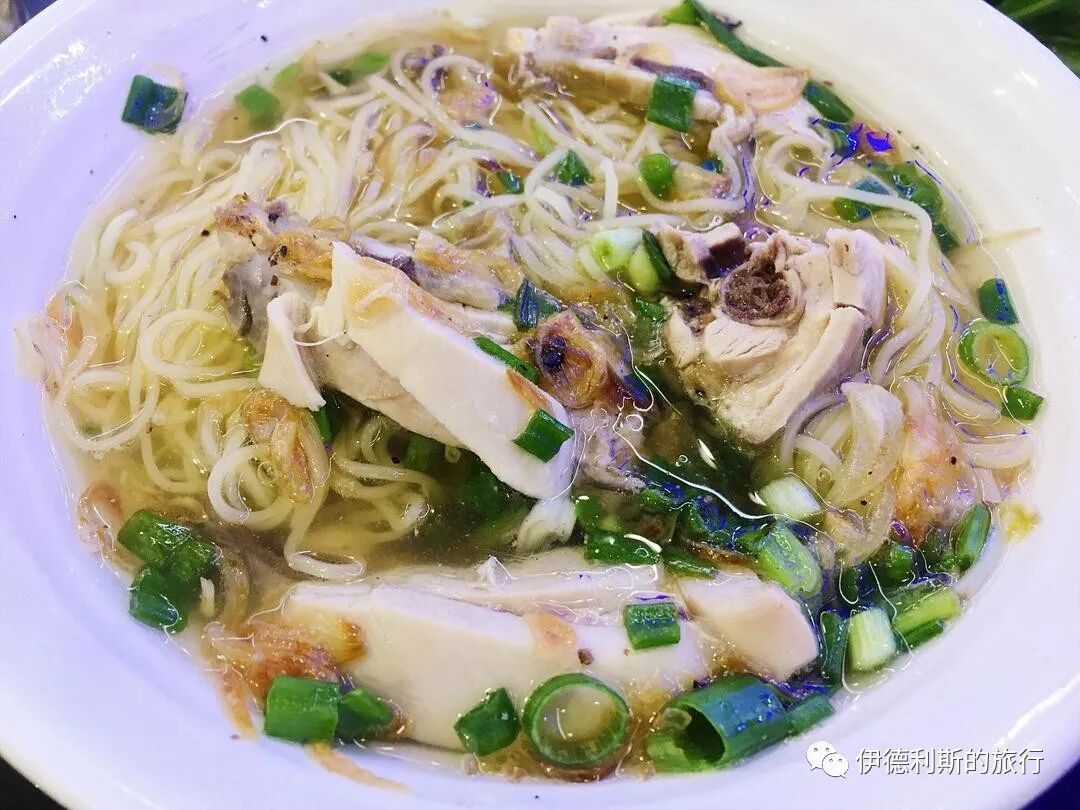
I ordered wide beef noodles at the last place, but this time I had thin chicken noodles.
Hajah BASIROH Restaurant
I also tried the Malaysian chicken rice at Hajah BASIROH Restaurant on Malay Street.
In tropical countries like Malaysia, Vietnam, or Thailand, restaurants often bring you a big glass of ice first. You pour your own water or drink into it, which feels amazing in the hot and humid weather.
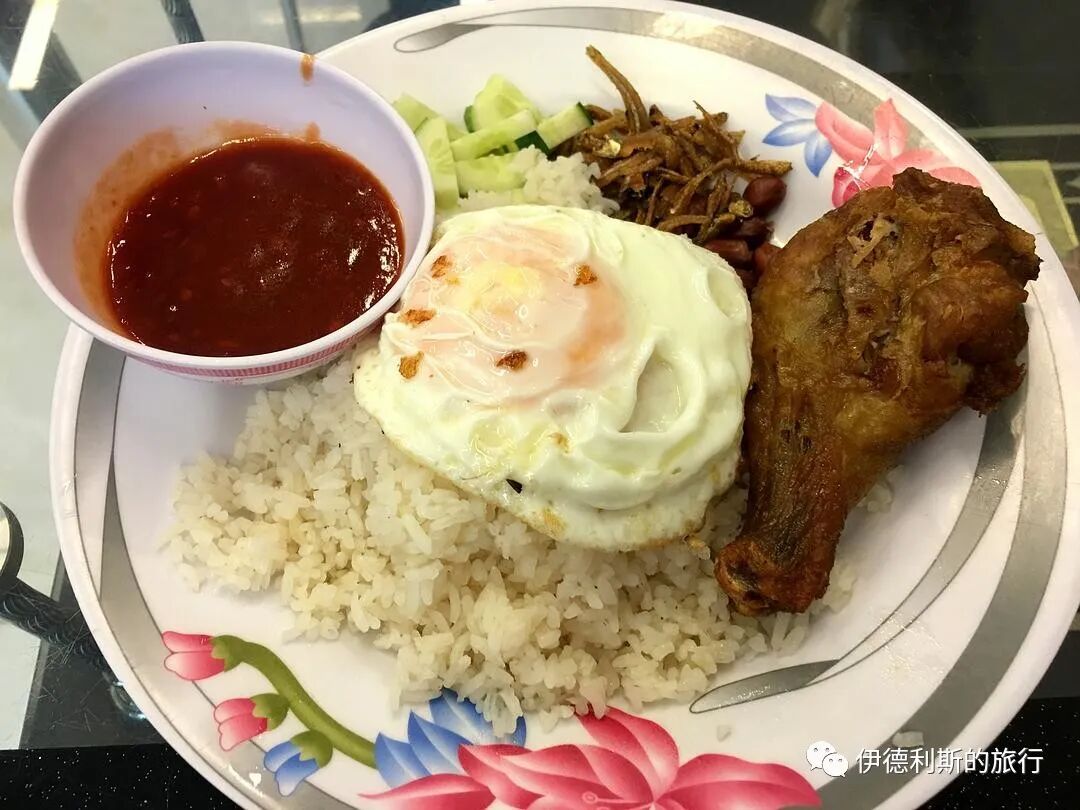
Street-style Malay cake (Kuih)
One morning on Malay Street, I met an uncle selling Malay cake (Kuih).
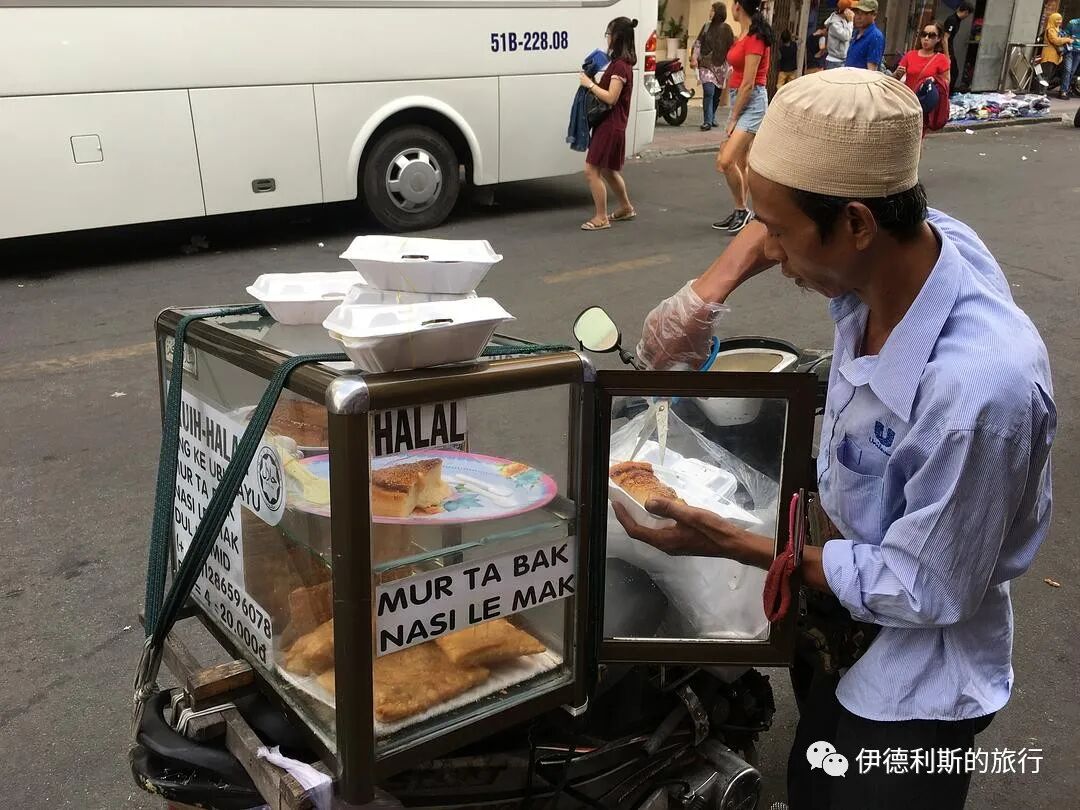
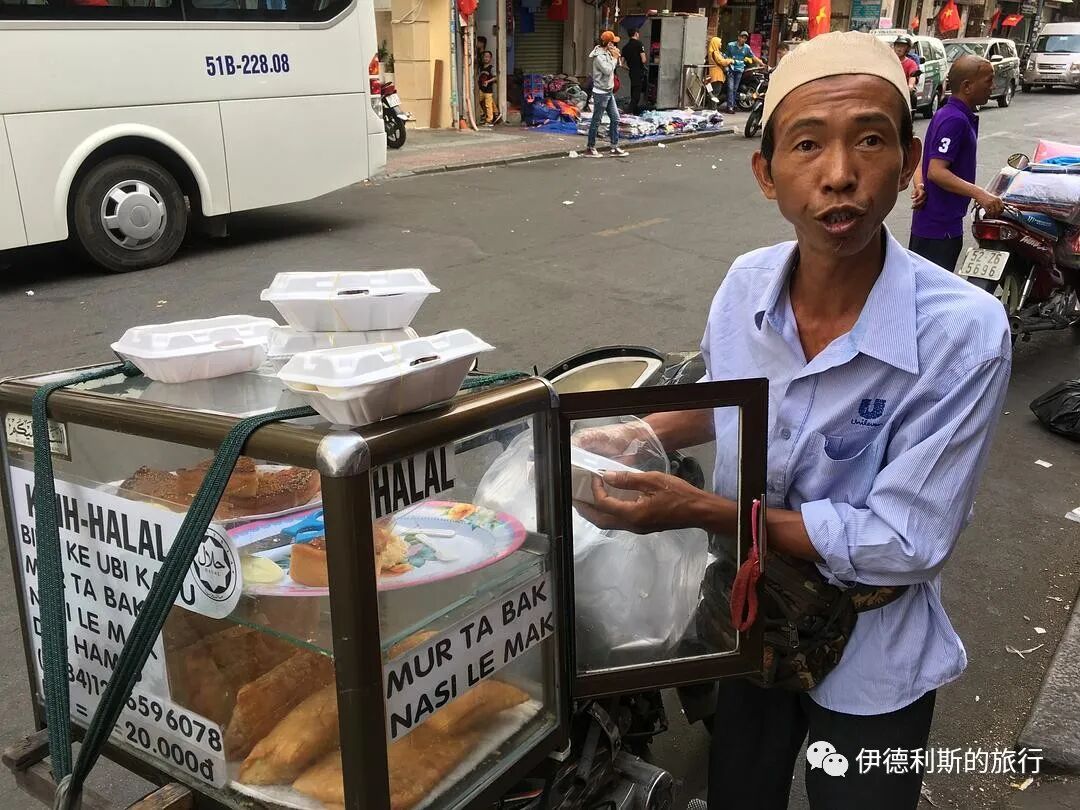
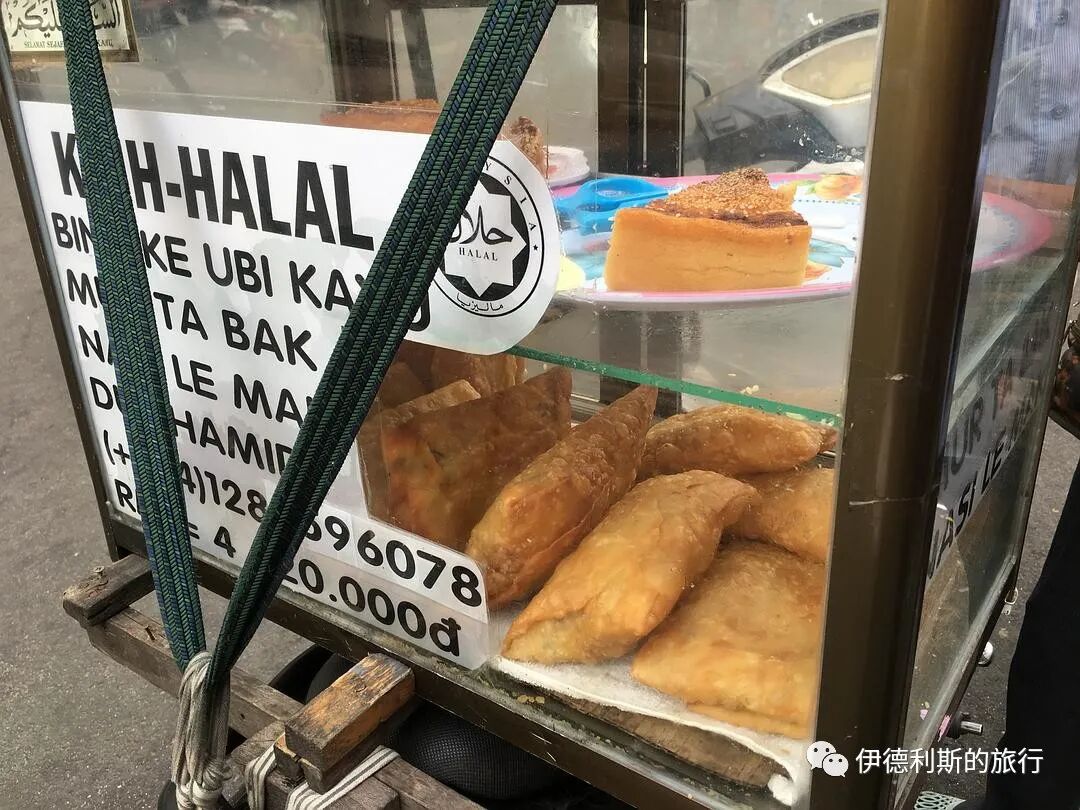
The uncle specifically showed me the words on his cart. The title KUIH-HALAL means halal Malay cake, and on the right is the Malaysian halal certification logo.
The 'Bingke Ubi Kayu' on the first line, also written as 'Kuih Bingka Ubi Kayu' or 'Bingka Ubi', is a Malay cake made by mixing coconut and cassava with coconut milk and salt. This simple recipe is very common in Malaysia.
The 'Murtabak' on the second line is a vegetable pancake popular across the Middle East, South Asia, and Southeast Asia.
The 'Nasi Lemak' on the third line is Malay coconut milk rice.
I bought a piece of Bingka Ubi cake made from a mix of cassava and coconut to eat.
5. Street cold drinks
A cold drink stall on Malay Street sits right in front of a shop selling clothes for Muslim women.
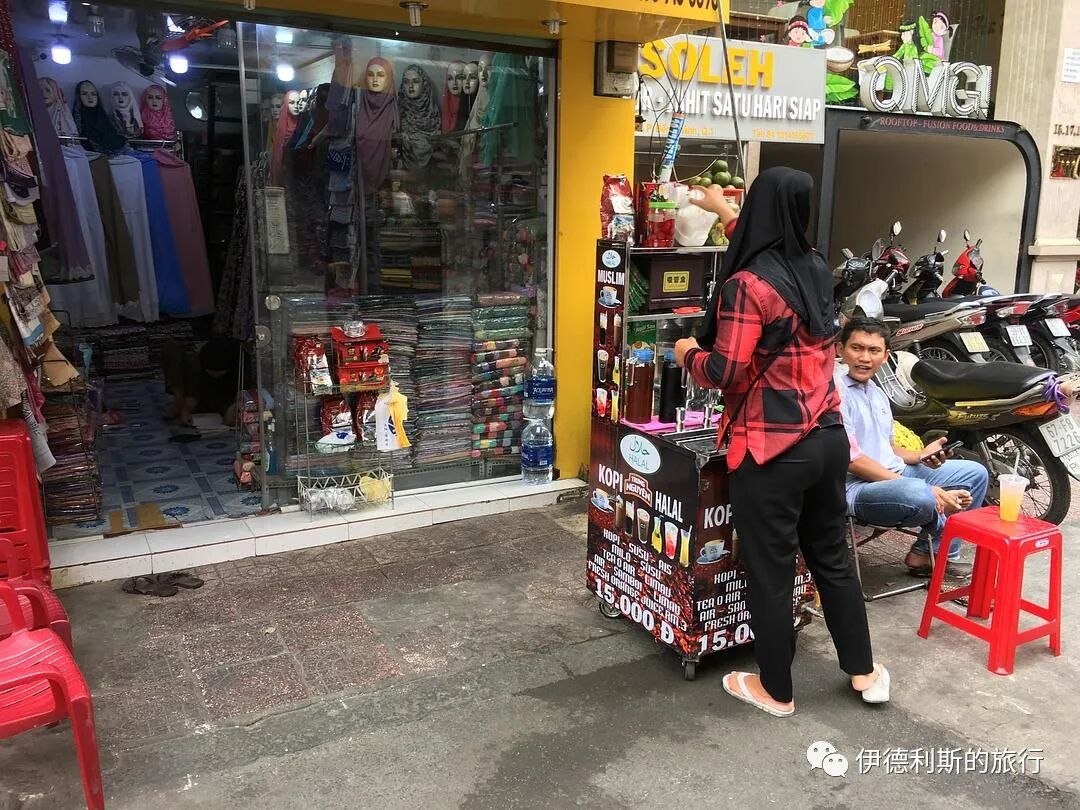
The word 'kopi' written on the stall means coffee.
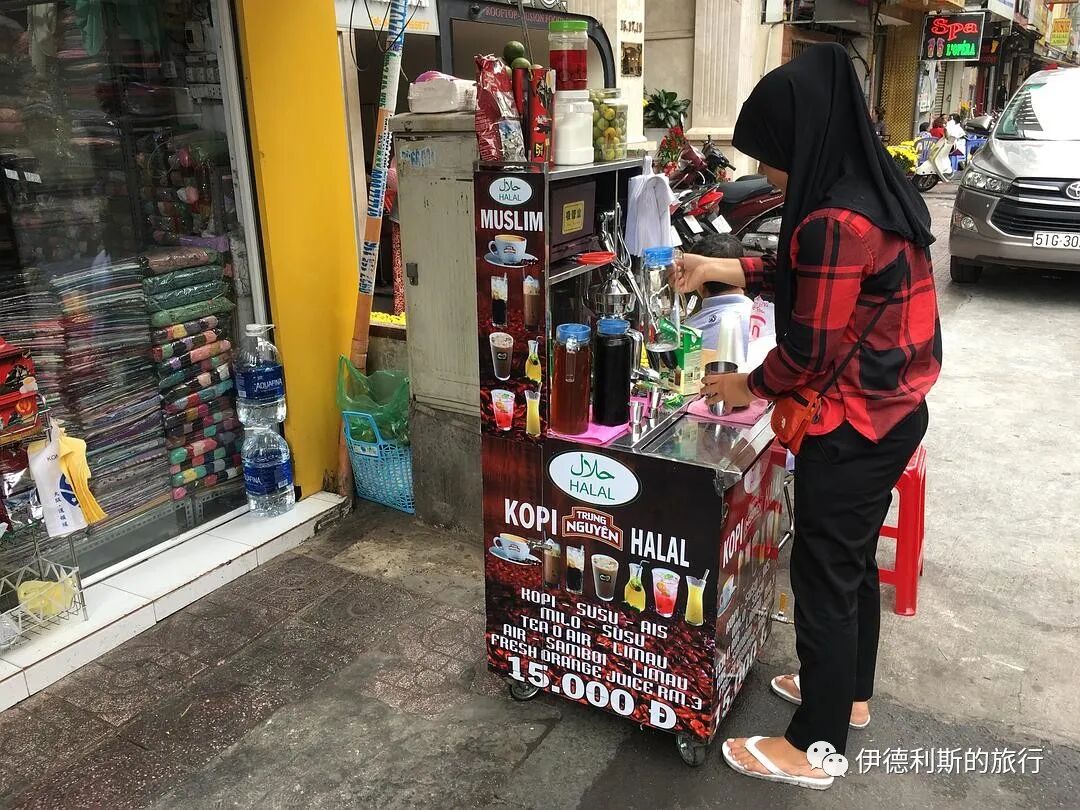
I bought a cup of rice milk to drink.
Kampung Panda Restaurant
Besides Malay Street, there are many Malaysian restaurants near the Bianqing Market, and the most famous one is Kampung Punda. The word "Kampung" means "village" in Malay.
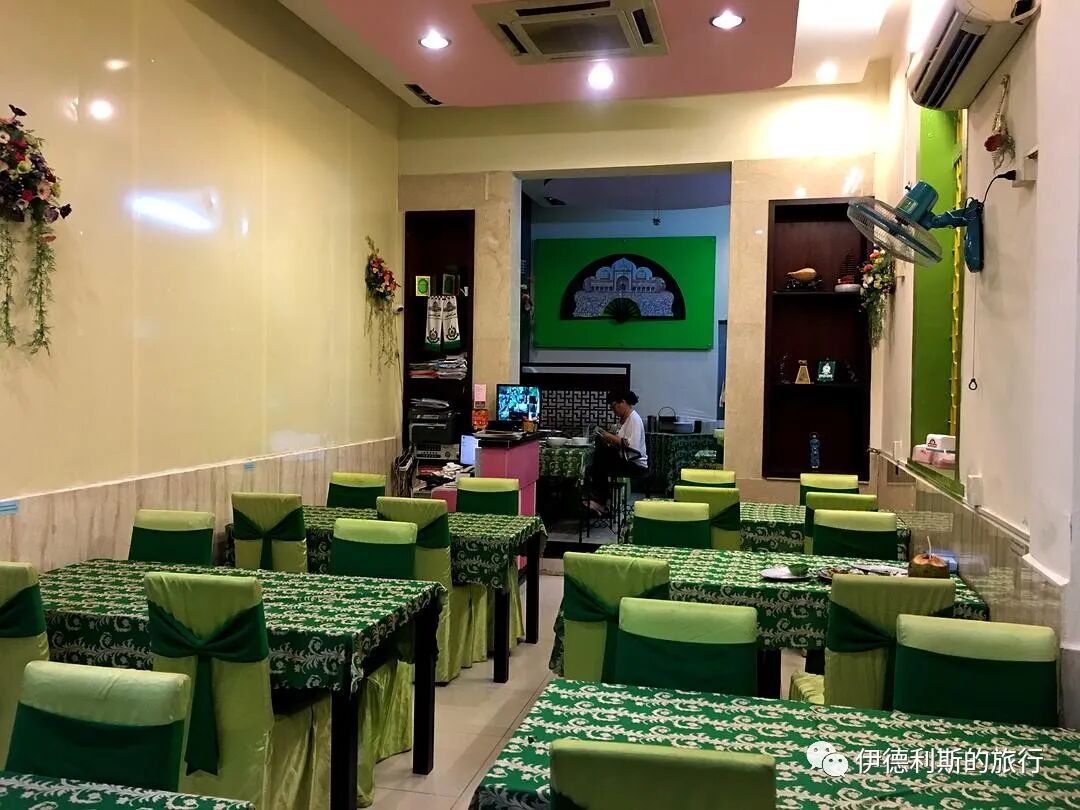
This restaurant also serves a lot of Vietnamese food.
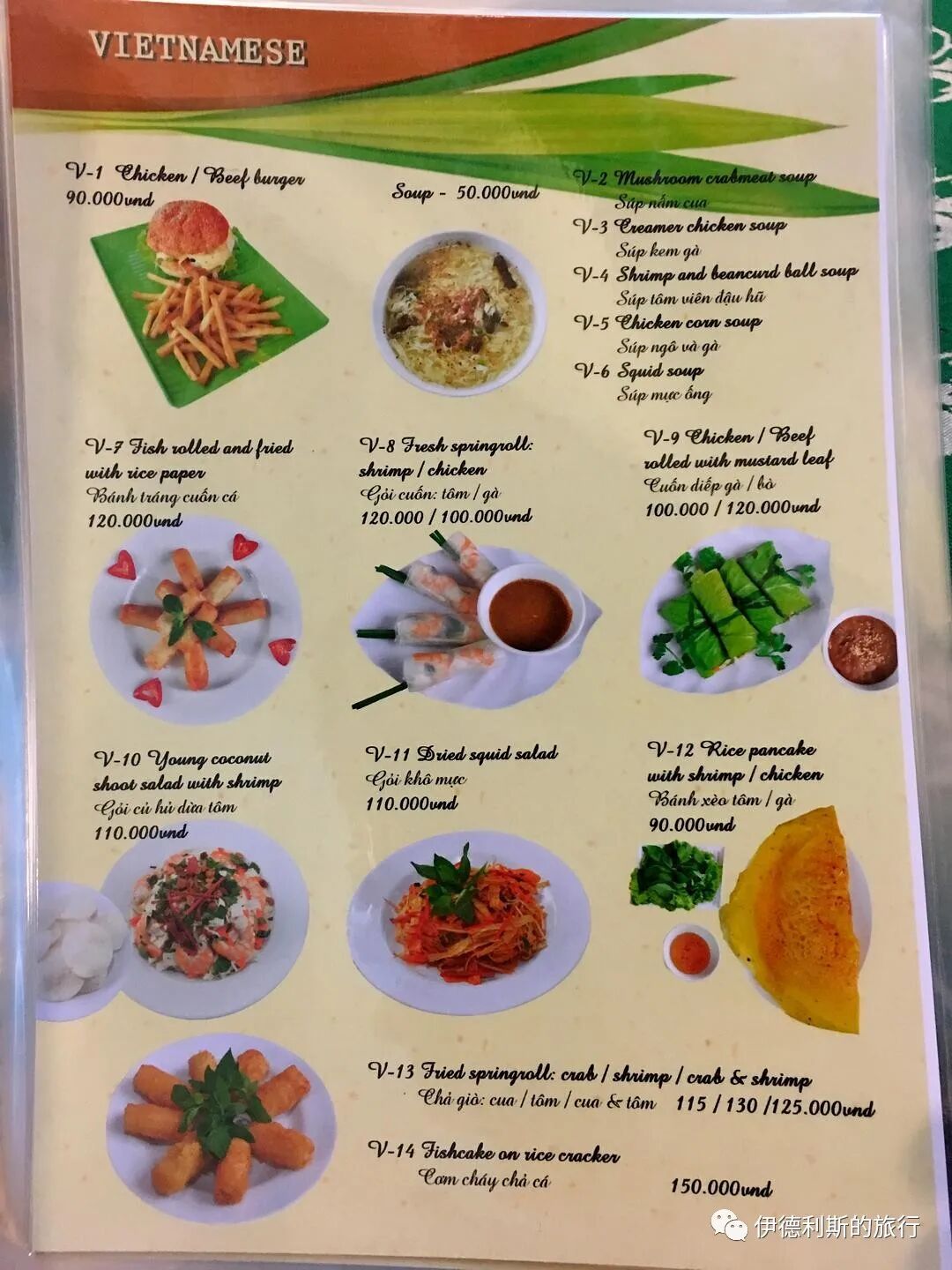
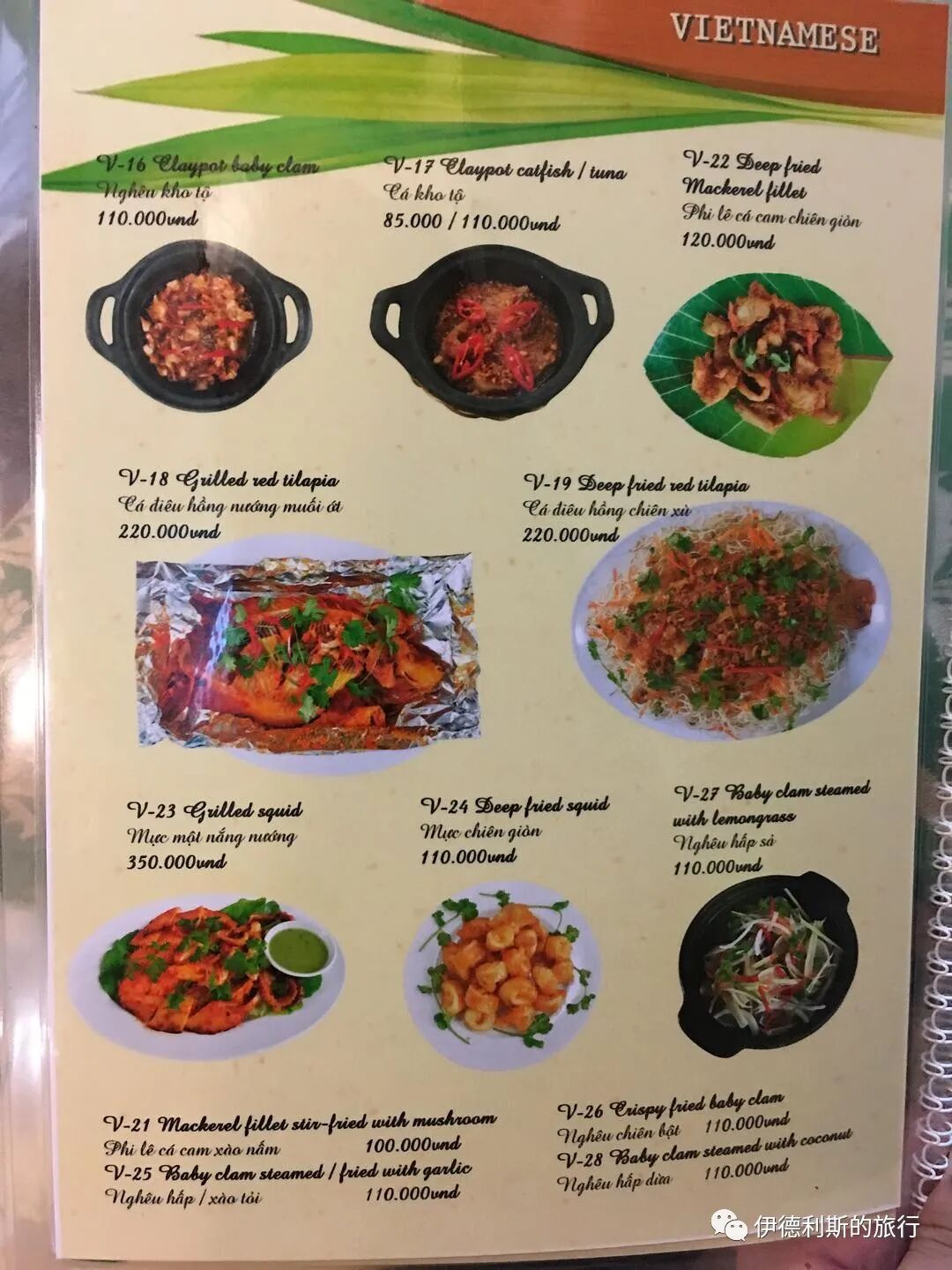
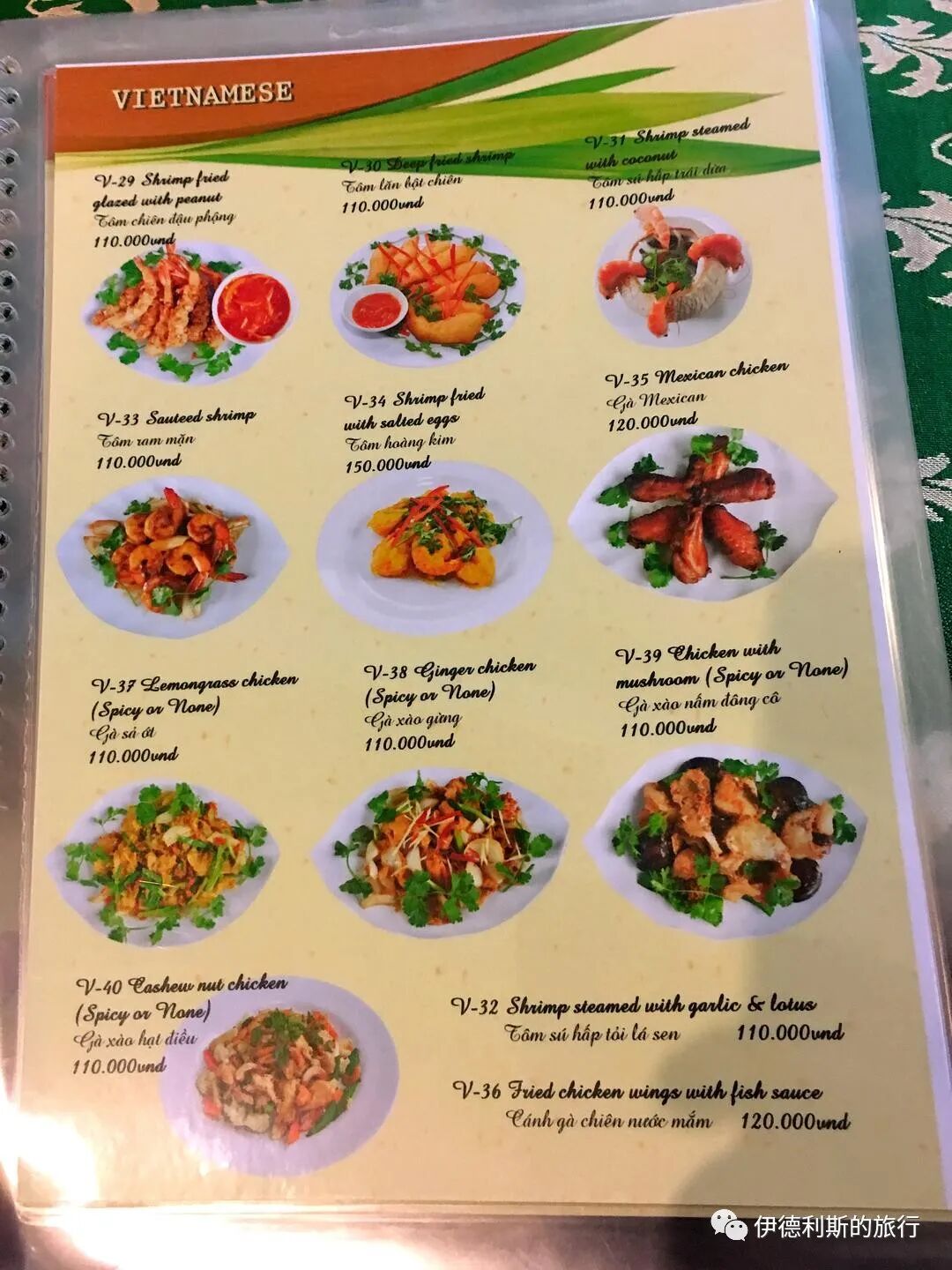
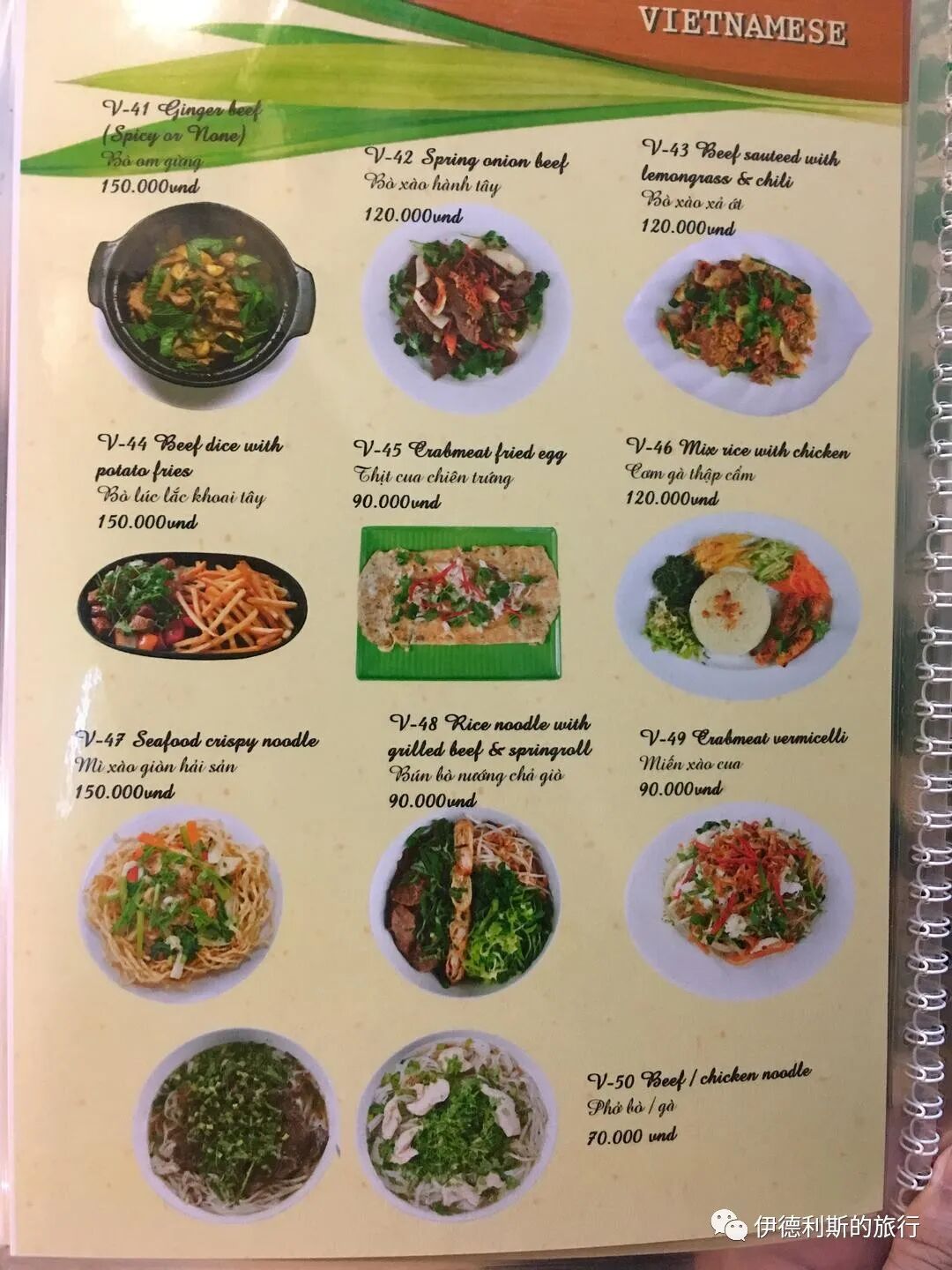
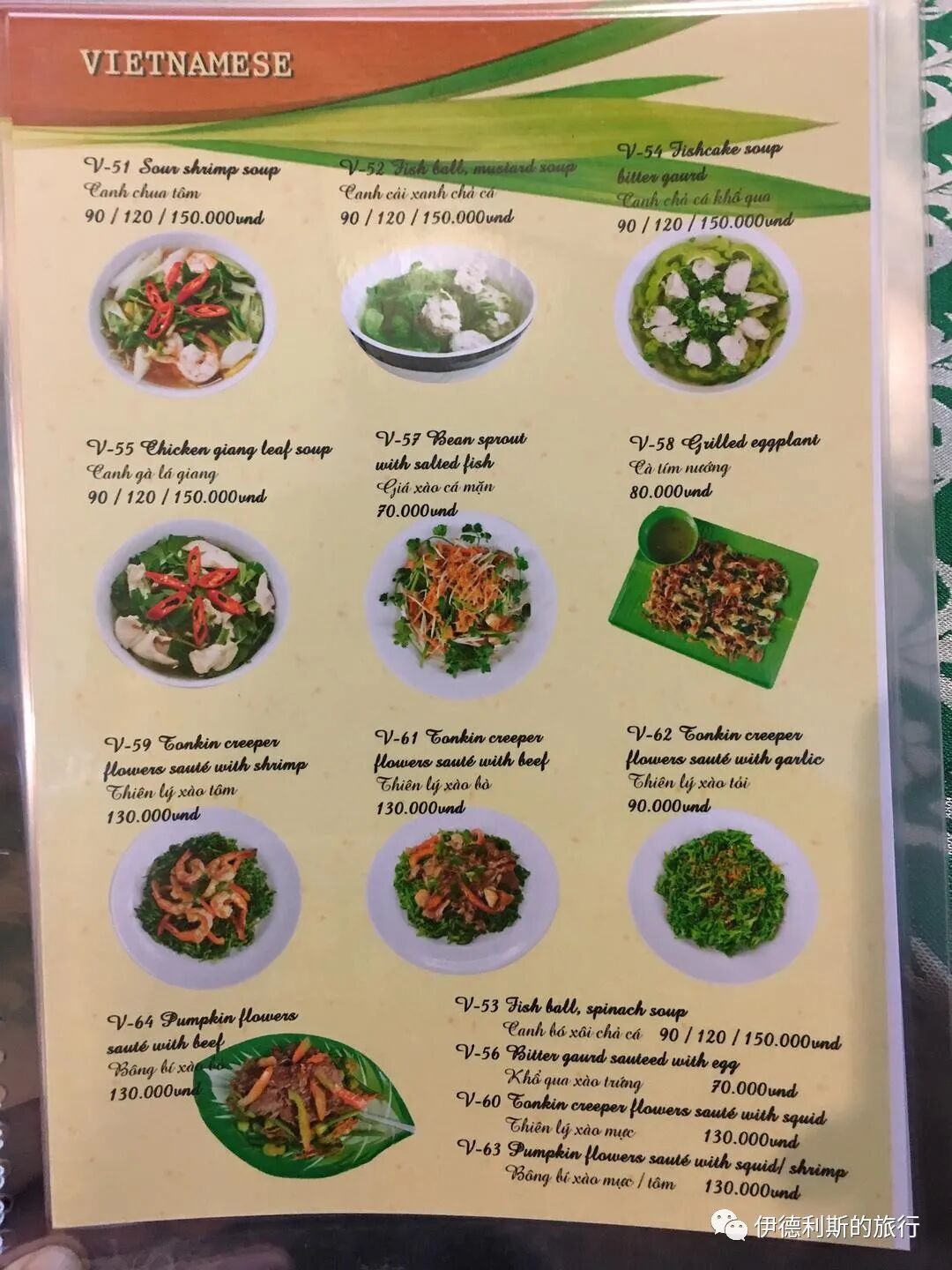
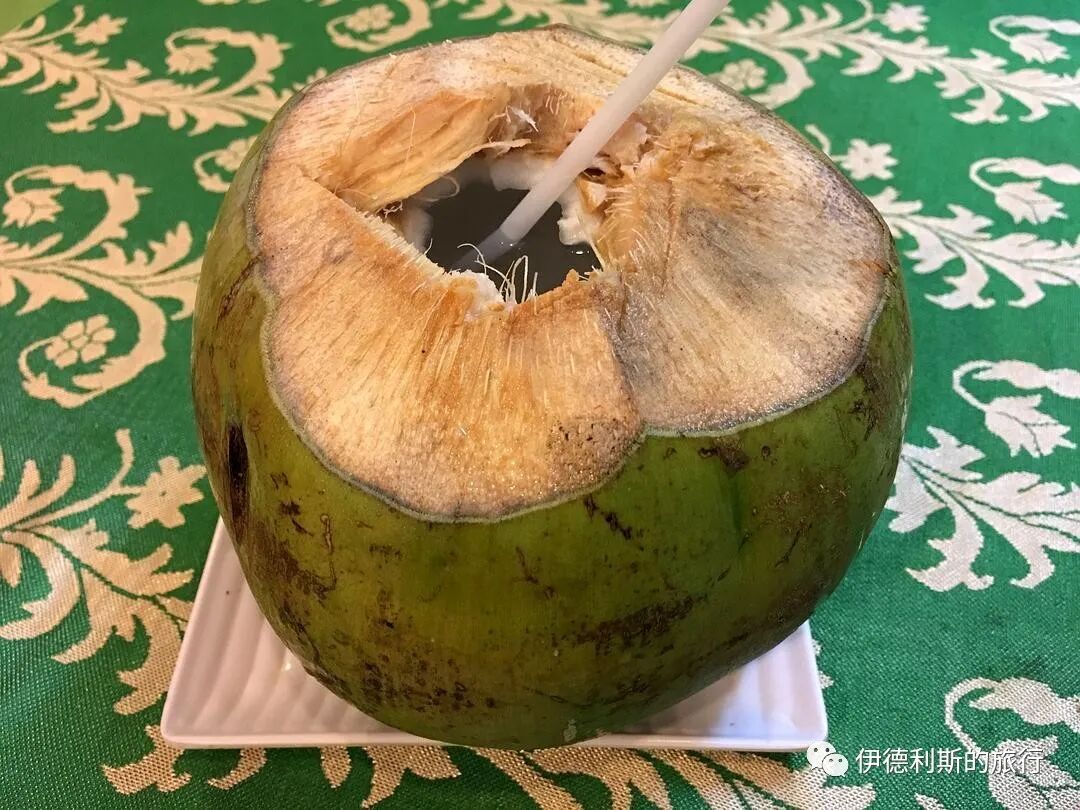
Start by drinking some coconut juice.
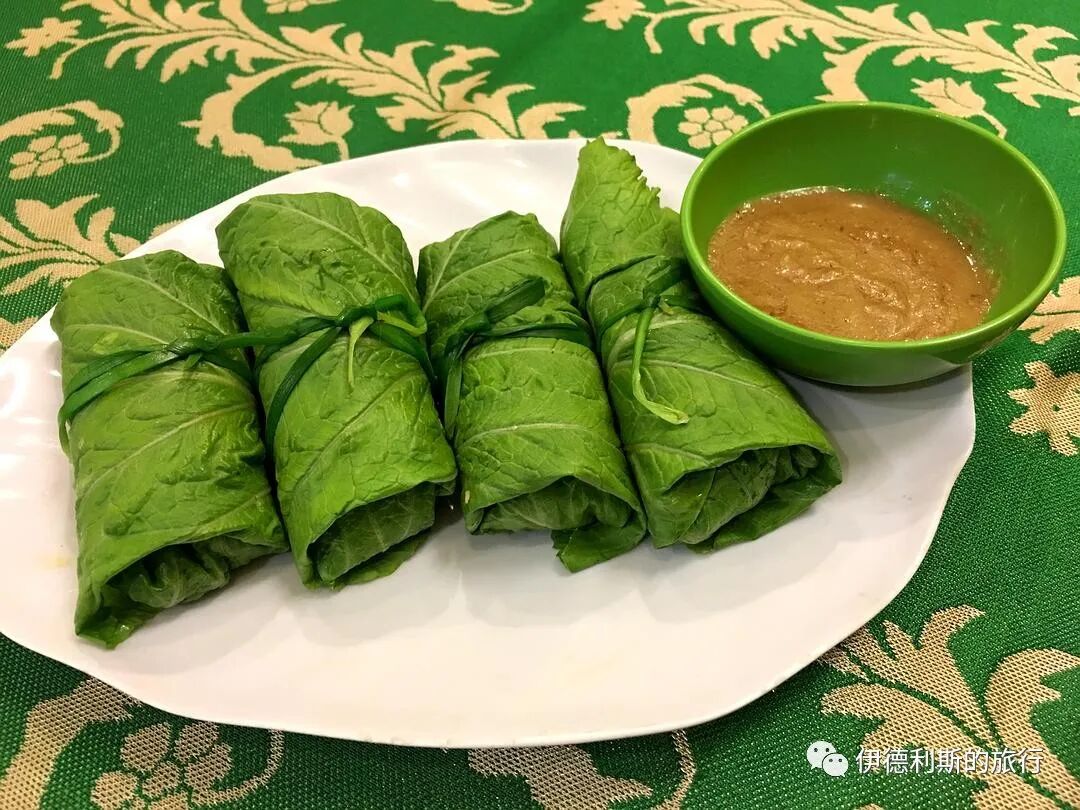
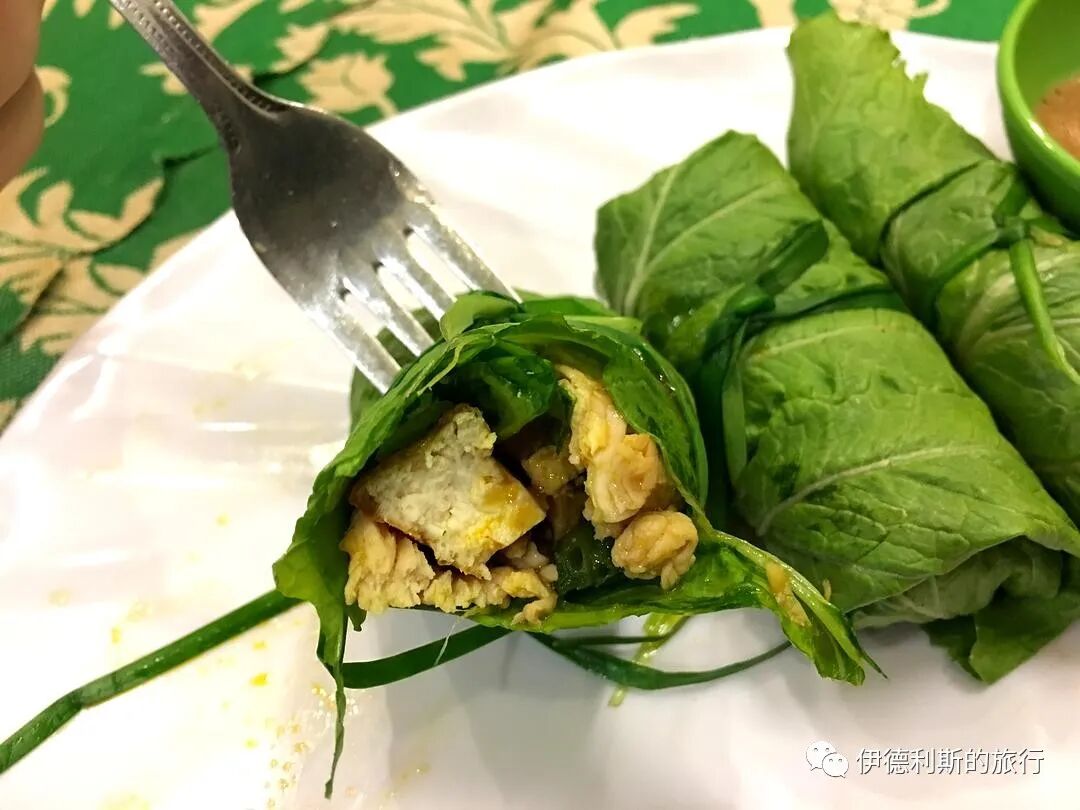
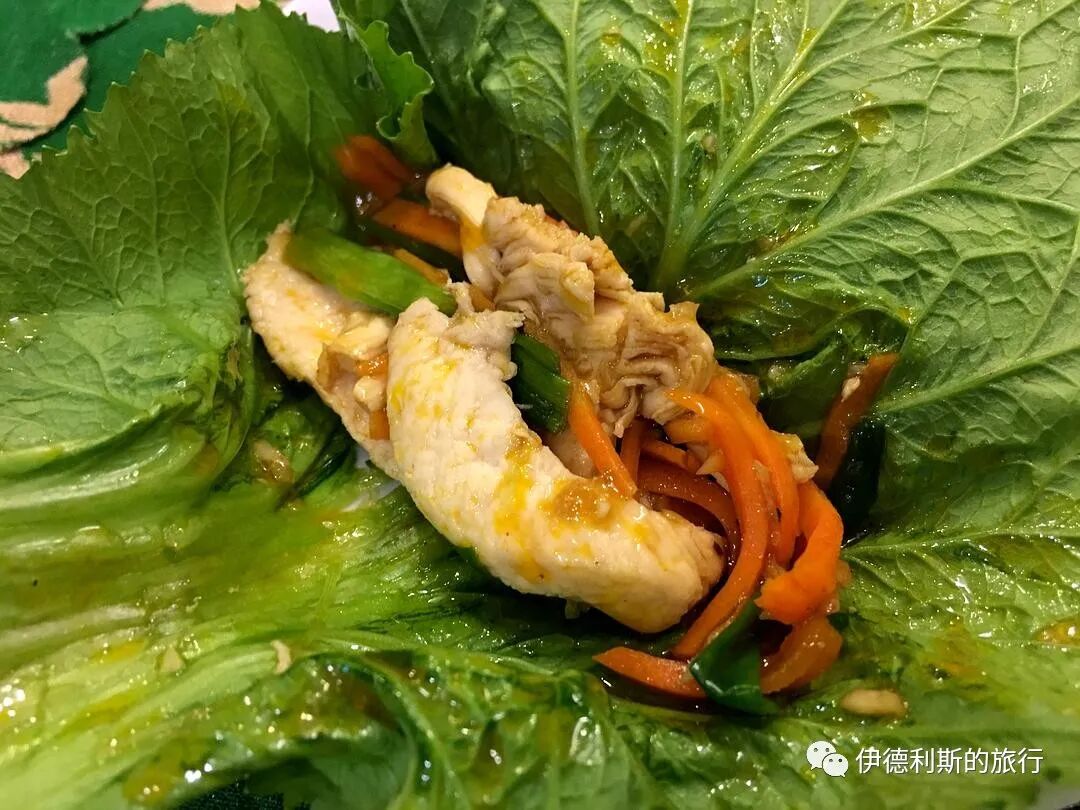
This type of spring roll is called Cuốn diếp. It is popular in northern Vietnam and is made by wrapping chicken, carrots, and other ingredients in lettuce. It tastes quite good.
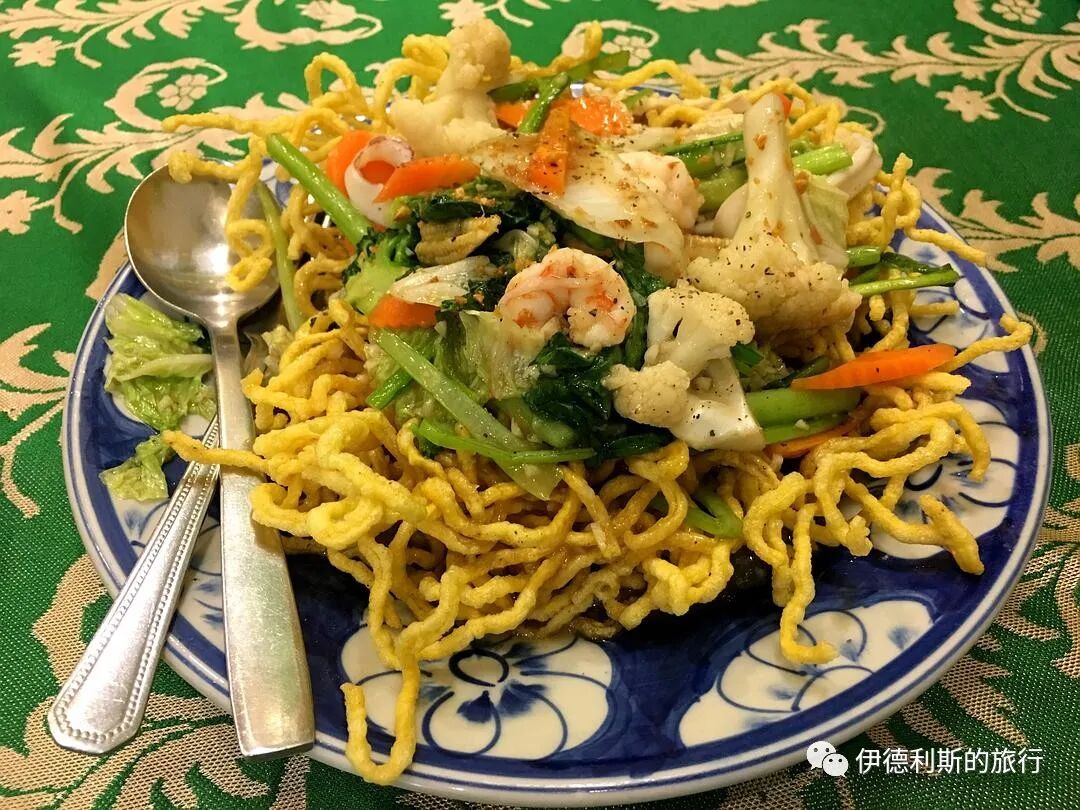
Stir-fried seafood noodles (Mì xào)
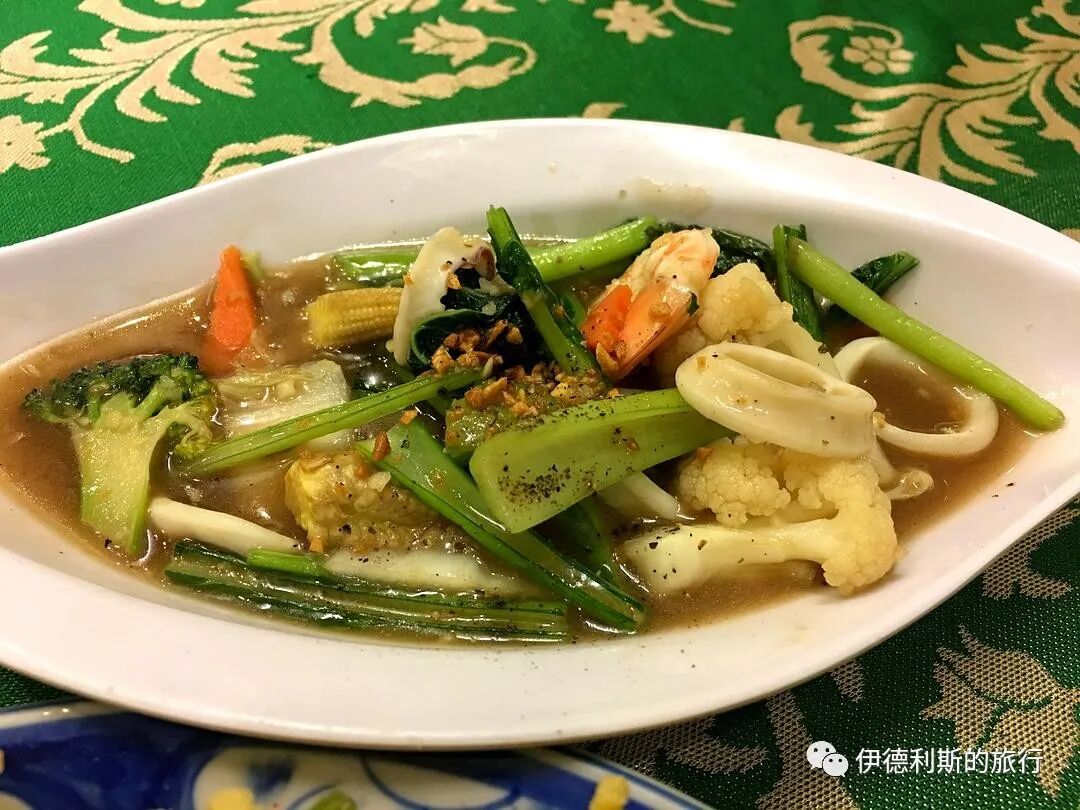
Vegetable and seafood squid rolls
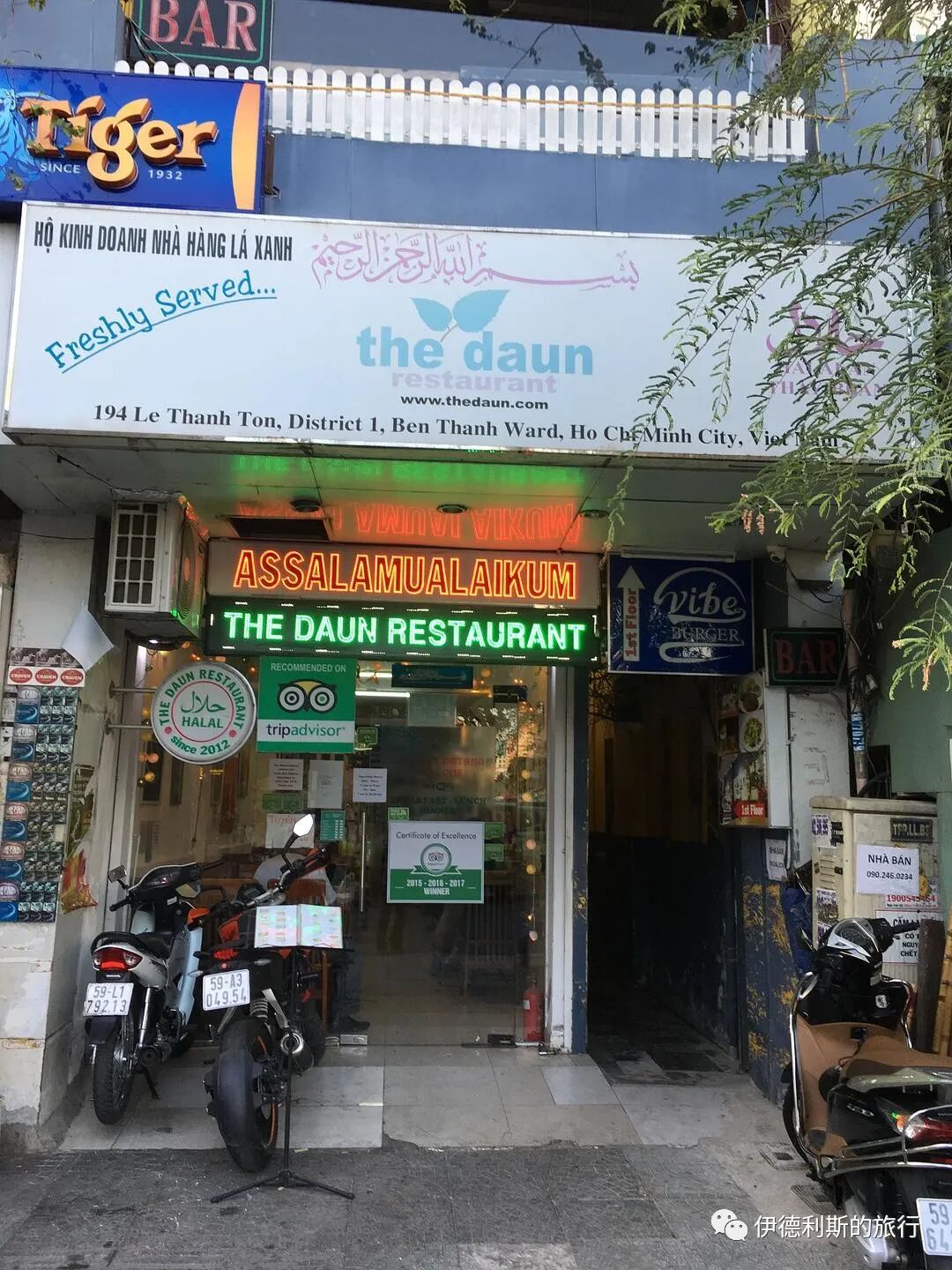
The Daun restaurant
Besides the Malaysian restaurants, there is a halal place near Ben Thanh Market run by Singaporeans. They hire Vietnamese chefs who make excellent halal Vietnamese food.
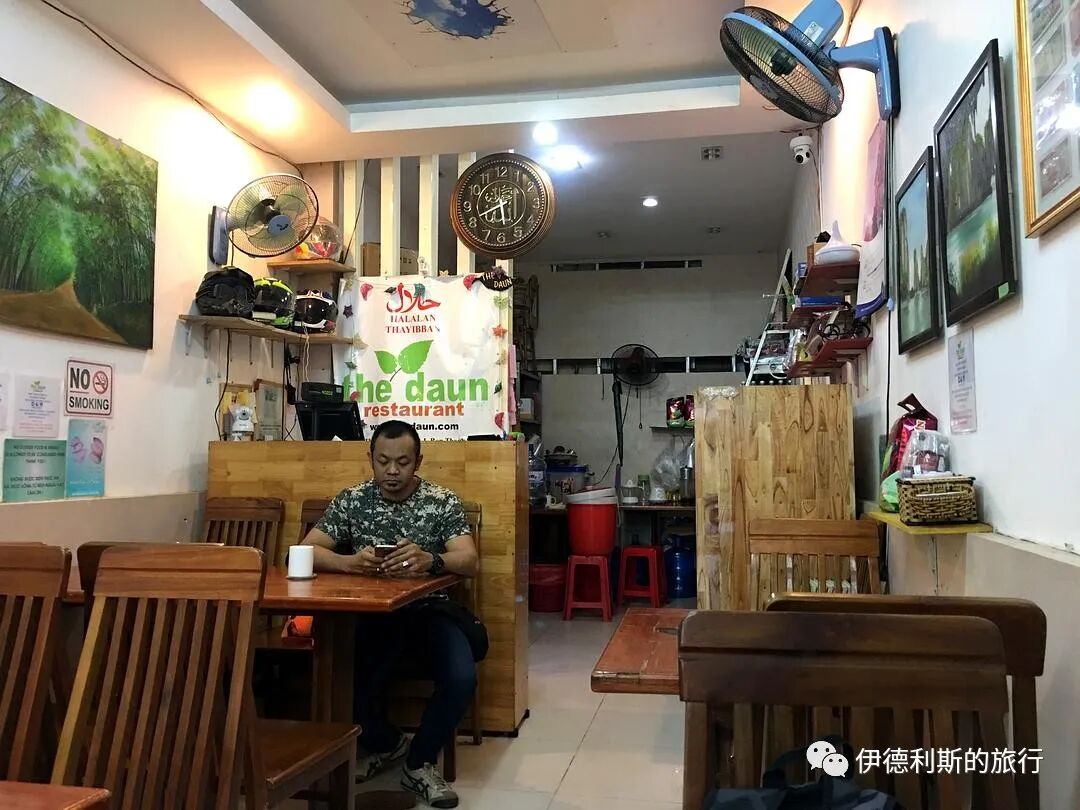
The man sitting across from us is the owner, and he is very kind and polite.
Menu
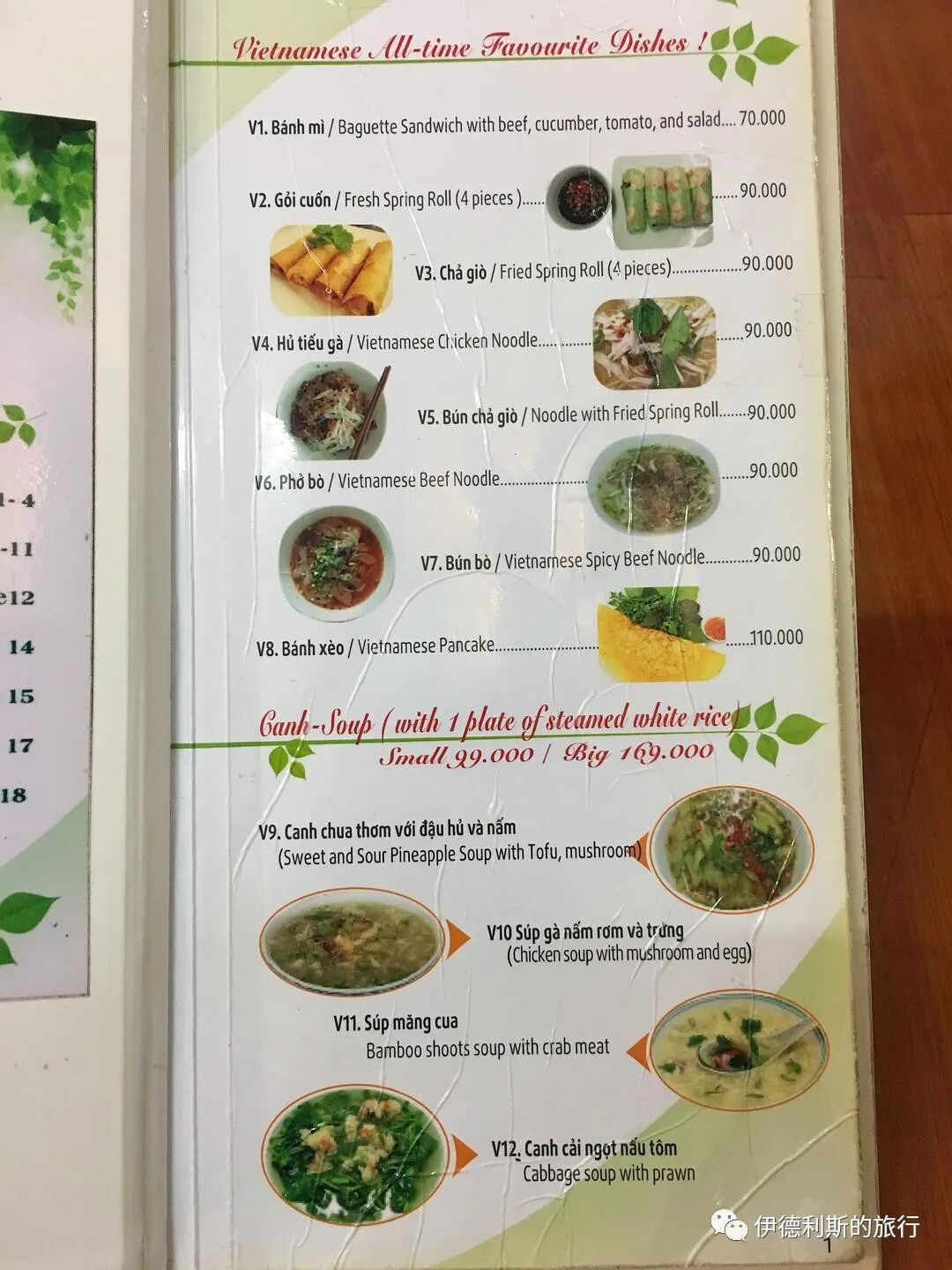
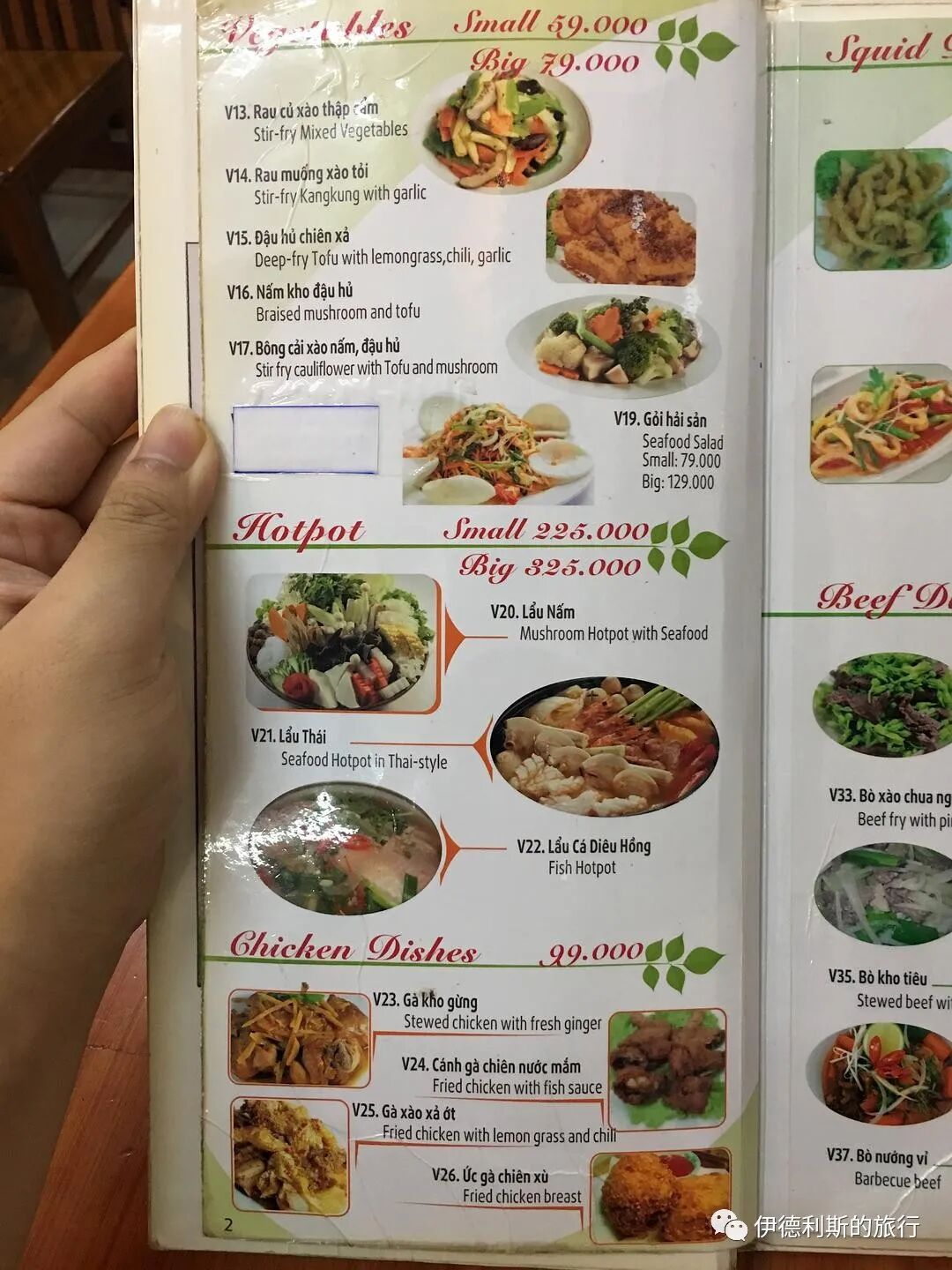
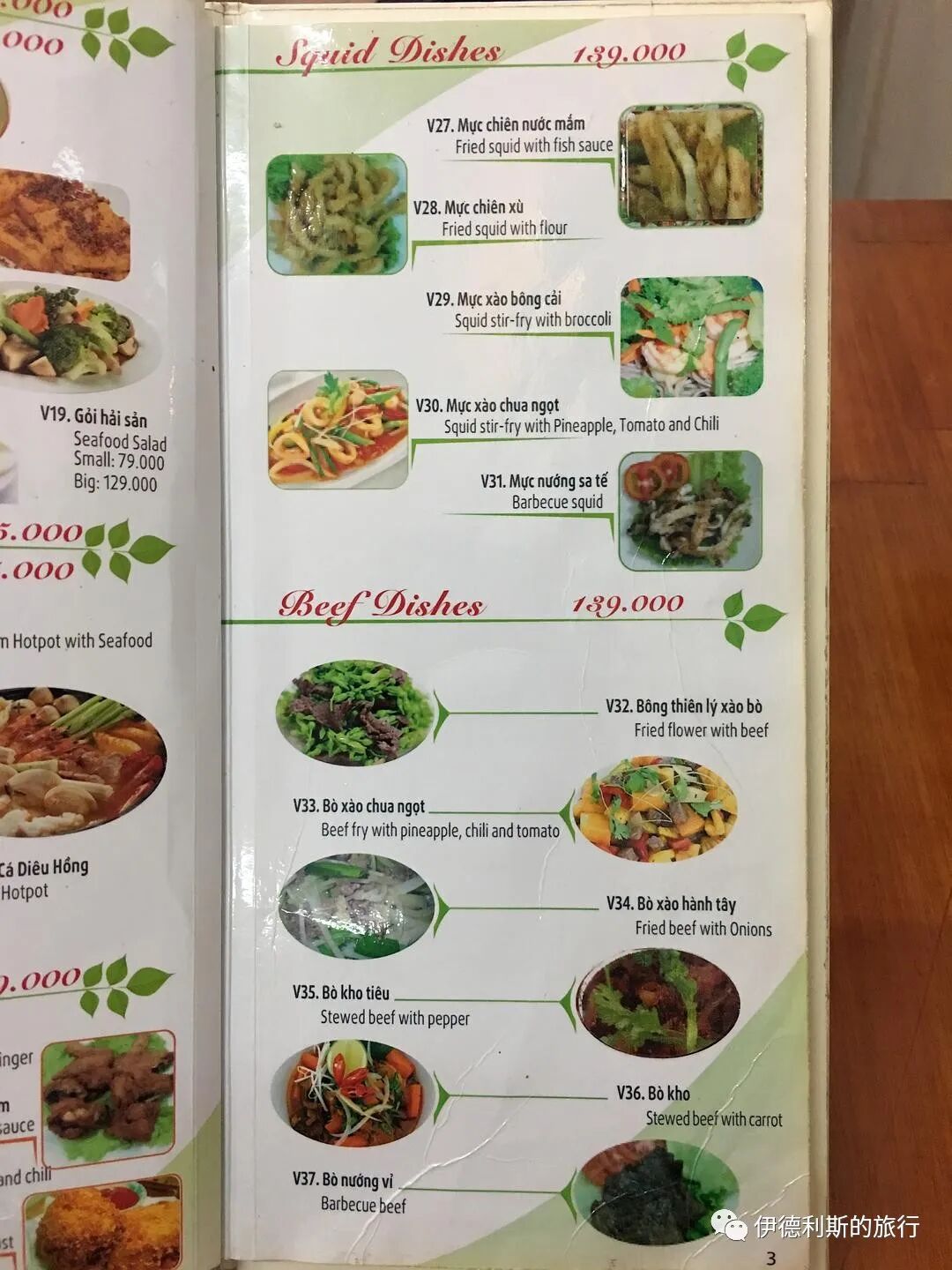
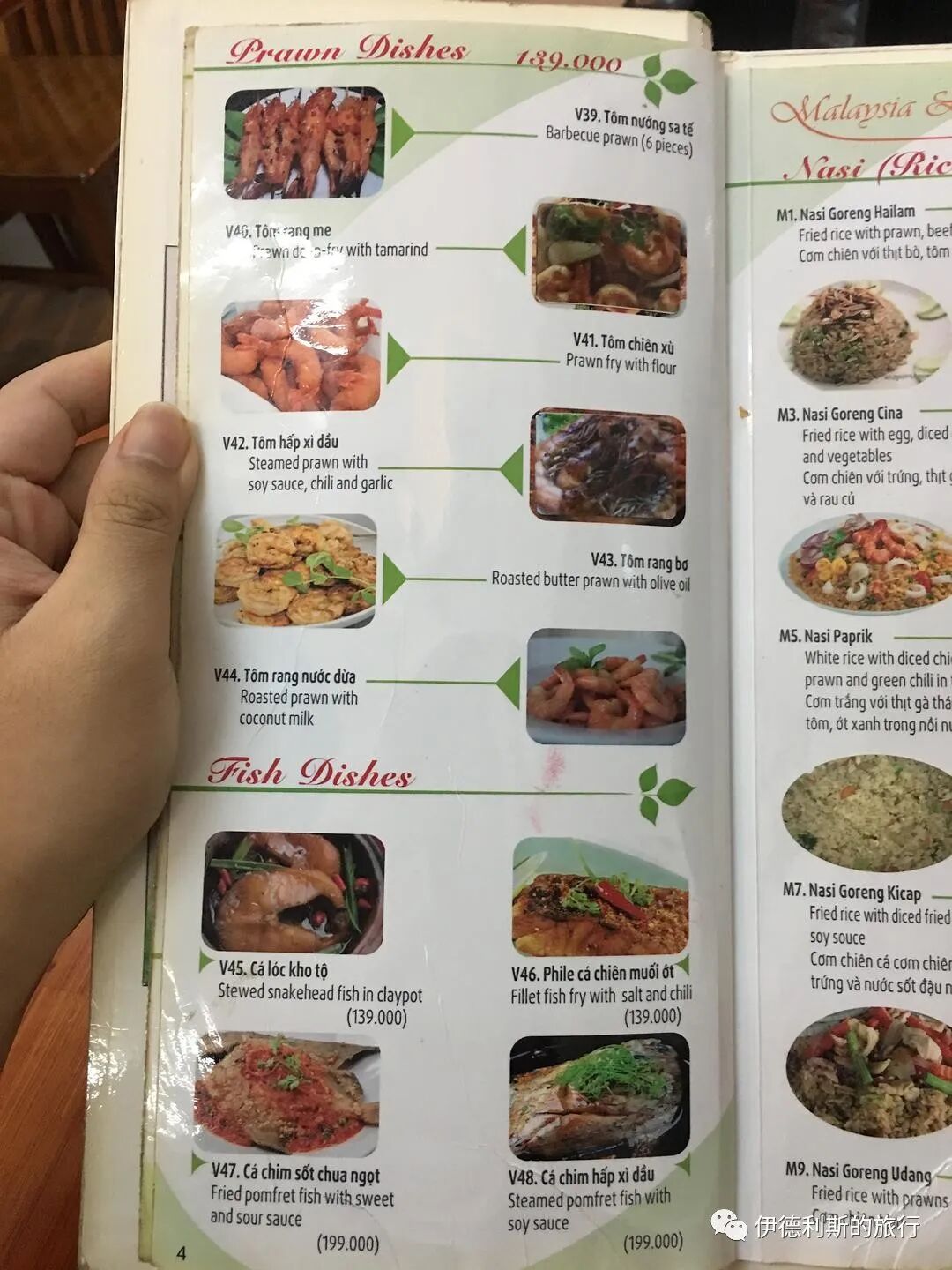
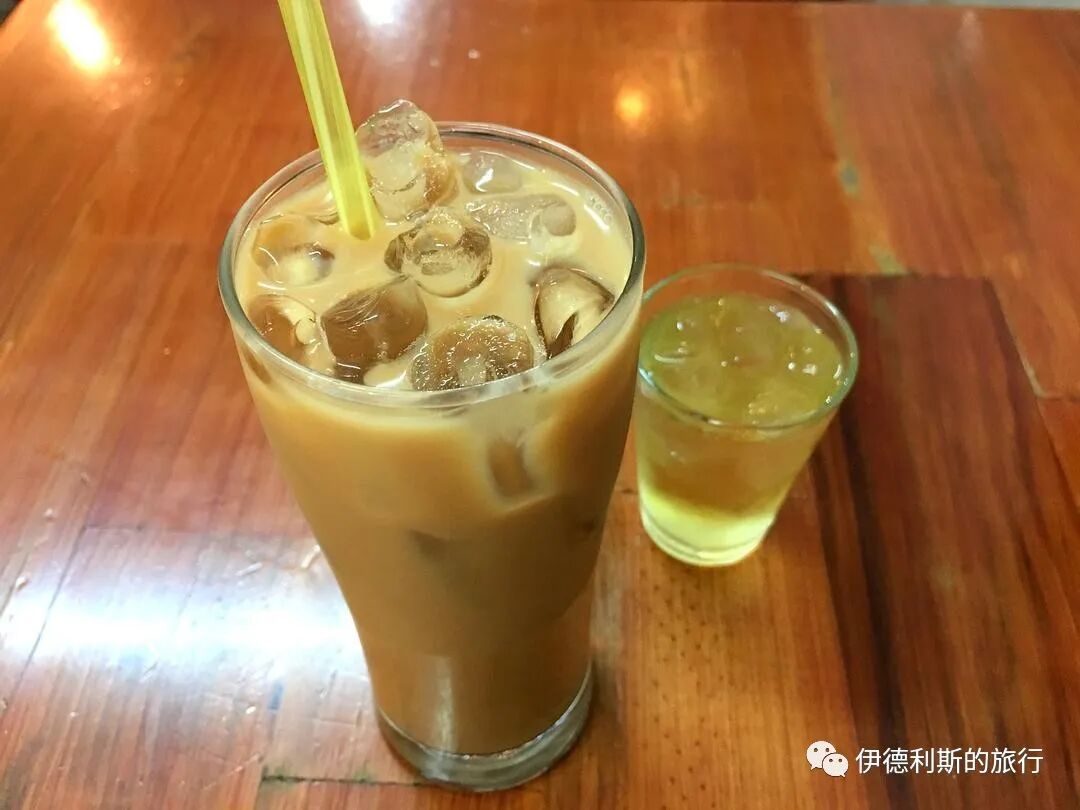
Start with an iced coffee!
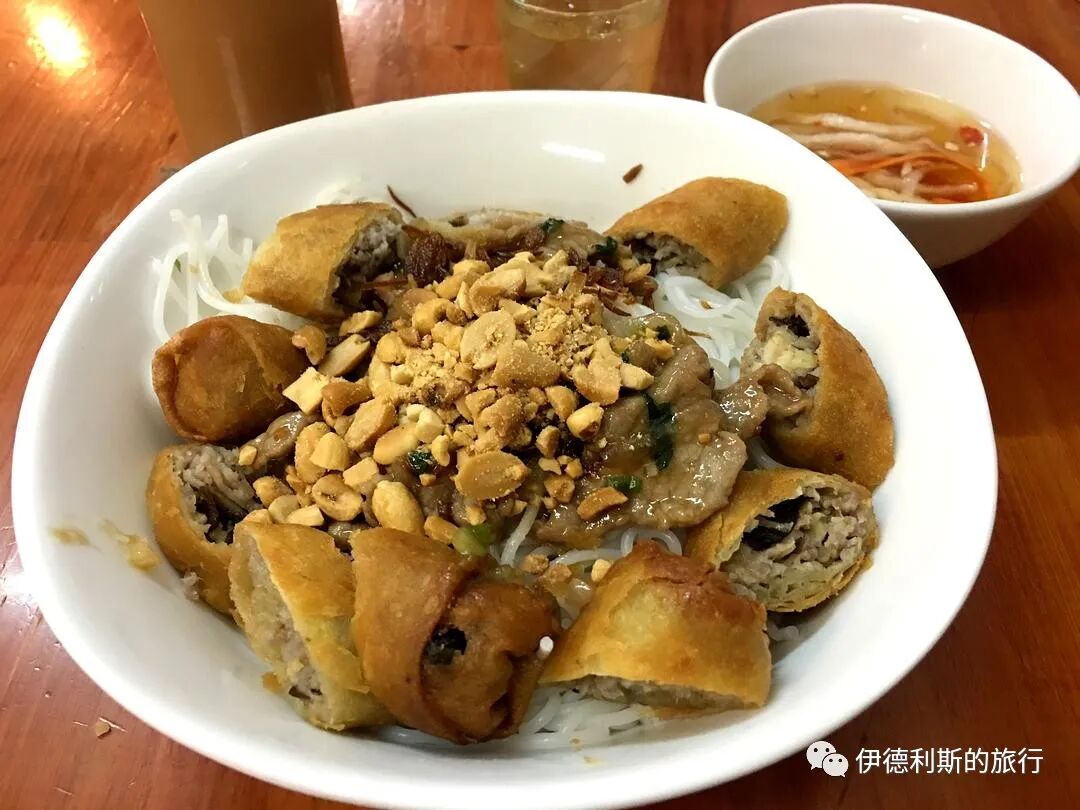
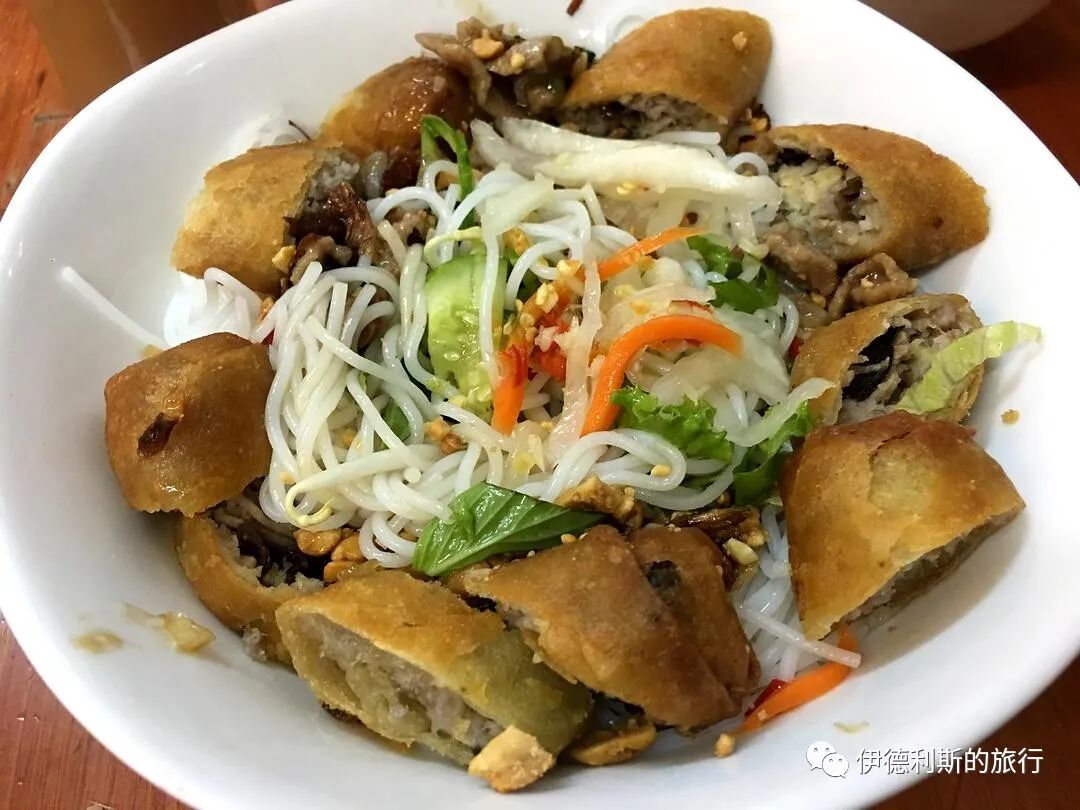
The noodles with fried spring rolls (bun cha gio) come with a delicious sweet and spicy fish sauce.
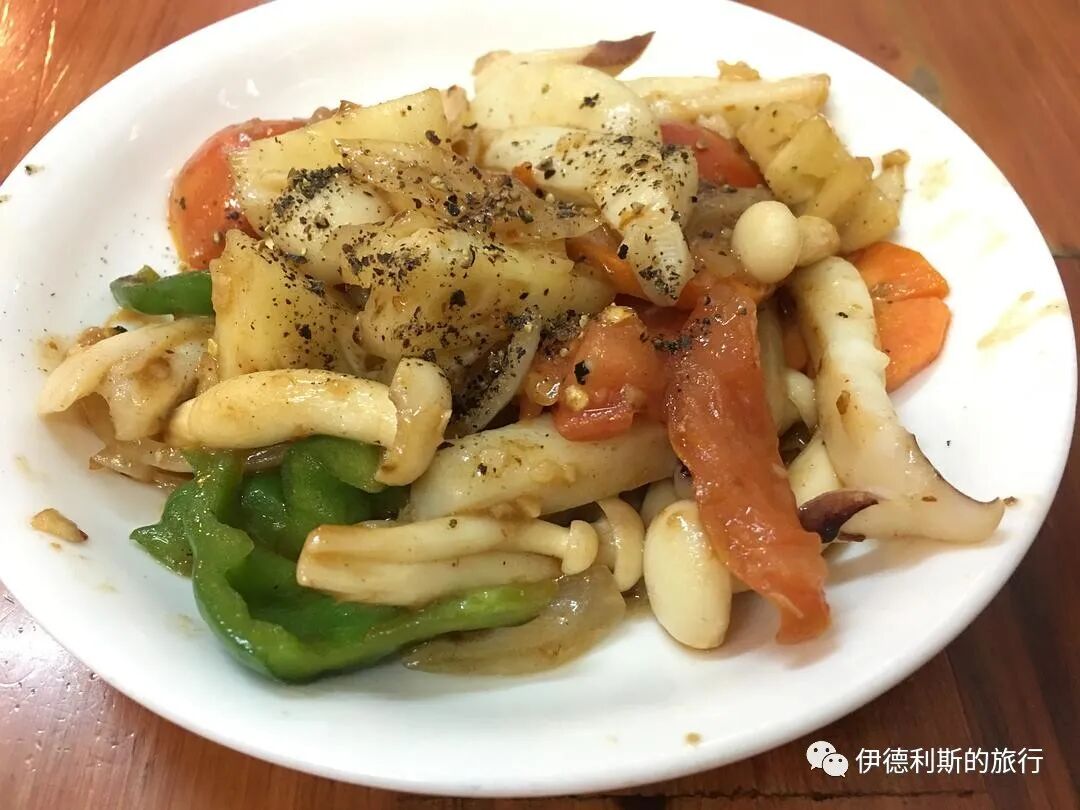
Pineapple and mushrooms
In Ho Chi Minh City, besides Malaysian and Singaporean halal restaurants, there are many halal eateries and stalls run by local Cham people. You can see more in my previous diary entry, "Mosques and Cham Muslims in Ho Chi Minh City, Vietnam."
Halal Travel Guide: Penang — Malay Muslims, Mosques and Local History
Articles • ali2007fr posted the article • 0 comments • 150 views • 2026-05-17 22:15
Summary: Penang — Malay Muslims, Mosques and Local History is presented here as a firsthand travel account in clear English, beginning with this scene: The Malay people (Melayu) are a group of Austronesian-speaking Muslims living in the Malay Archipelago, who emerged during the Malacca Sultanate in the 15th century. The account keeps its focus on Penang Malays, Malay Muslims, Muslim Heritage while preserving the names, places, food, and historical details from the Chinese source.
The Malay people (Melayu) are a group of Austronesian-speaking Muslims living in the Malay Archipelago, who emerged during the Malacca Sultanate in the 15th century. After the British took control of the Malay Peninsula in the 19th century, many Austronesian-speaking Muslim groups like the Acehnese, Banjar, Bugis, and Javanese moved to Malaya to settle down. Because they shared the same faith, similar physical features, and related languages, they gradually identified with Malay culture over two or three generations.
Although the Malay people have developed for hundreds of years, discussions about a Malay national identity only began in the early 20th century, leading to different schools of Malay nationalism. Article 160 of the 1957 Constitution of the Federation of Malaya officially defined a Malay person as someone who professes the Islamic religion, habitually speaks the Malay language, and conforms to Malay customs and culture. Born in the Federation of Malaya or Singapore before Independence Day (August 31, 1957), or having either parent born in the Federation of Malaya or Singapore, or being a resident of the Federation or Singapore on Independence Day, or being a descendant of any of these people. After this, all Malay-speaking Muslim groups within Malaysia were classified as Malay.
Today in Penang, you can still experience the diverse cultural atmosphere of the Malay people. Here you can visit a mosque built by the Acehnese 200 years ago, eat unique food from the Jawi Peranakan community, and listen to the music of the legendary Penang Malay singer P. Ramlee.
Lagenda Cafe
Lagenda Cafe is a themed restaurant honoring the godfather of Malay film music, P. Ramlee (1929-1973), and it plays his classic songs on a loop. P. Ramlee is a legend among the Malay community in Penang, and people still remember him even though he passed away many years ago. P. Ramlee was born Teuku Zakaria. His father was a sailor from the Aceh region in northern Sumatra, Indonesia, who later settled in Penang. P. Ramlee starred in 66 films, directed 35 movies, and wrote 250 songs. He was a key figure during the golden age of Malaysia from the 1950s to the early 1960s and was an icon in the entertainment industries of Singapore, Malaysia, and Indonesia.
Lagenda Cafe specializes in Malay and Indonesian food. We ordered gado-gado (gado-gado) and chicken satay (satay ji rou chuan).
Gado-gado is a salad that started on Java Island. The name gado-gado means "mix," so it includes many different foods. Our version had cucumber, sweet radish, shrimp crackers, vegetable tempura, shrimp tempura, egg, wheat grain strips, fried tofu, fried potato, rice cake, bean sprouts, and long beans. Then you dip it in gado-gado sauce made from fried peanuts, palm sugar, garlic, chili, tamarind, and lime juice.
Chicken satay is also a dish from Java Island. People say Javanese street vendors developed it in the 18th century from Indian kebabs brought by Indian Muslim traders, and it became part of Malay food in Penang in the 19th century. Meat skewers are usually marinated in turmeric, sweet soy sauce, or coconut oil before grilling, then dipped in satay sauce when eaten. Satay sauce is mainly made of roasted peanuts, and usually includes peanut butter, coconut milk, turmeric, soy sauce, galangal, garlic, chili, and various spices.
This drink is called Asam Boi & Guava Tea. It is made with lime, mint, black tea, sour plum, and fresh-pressed guava juice. It is very refreshing and smooth.
Jawi House Cafe Gallery
In Penang and Malaysia, there is a unique group called Jawi Peranakan. This refers to a Malay-speaking Muslim community formed by the intermarriage of Indian Muslim men—also including those of Arab and Persian descent—with Malay Muslim women. Jawi is the Arabic word for Southeast Asian Muslim, and Peranakan is the Malay word for local-born. Before the 1860s, the vast majority of Indian Muslims who came to Penang were men.
When the Jawi Peranakan community married, they did not prioritize the other person's ethnic group, but looked first at their wealth and status. Because of this, after the mid-19th century, the Jawi Peranakan had become the elite class of British Malaya. The Jawi Peranakan community placed great importance on a British-style education, so many of them held positions in the colonial government. At the same time, the Jawi Peranakan community also valued cultural development, and the first Malay-language newspaper was founded by them.
After the 20th century, as the British Empire declined, the Jawi Peranakan community began to blend into the Malay population. Today, the government counts most Jawi Peranakan as Malay. Even so, the Jawi Peranakan community still works hard to pass on their unique culture, which shows in their architecture, clothing, jewelry, and food.
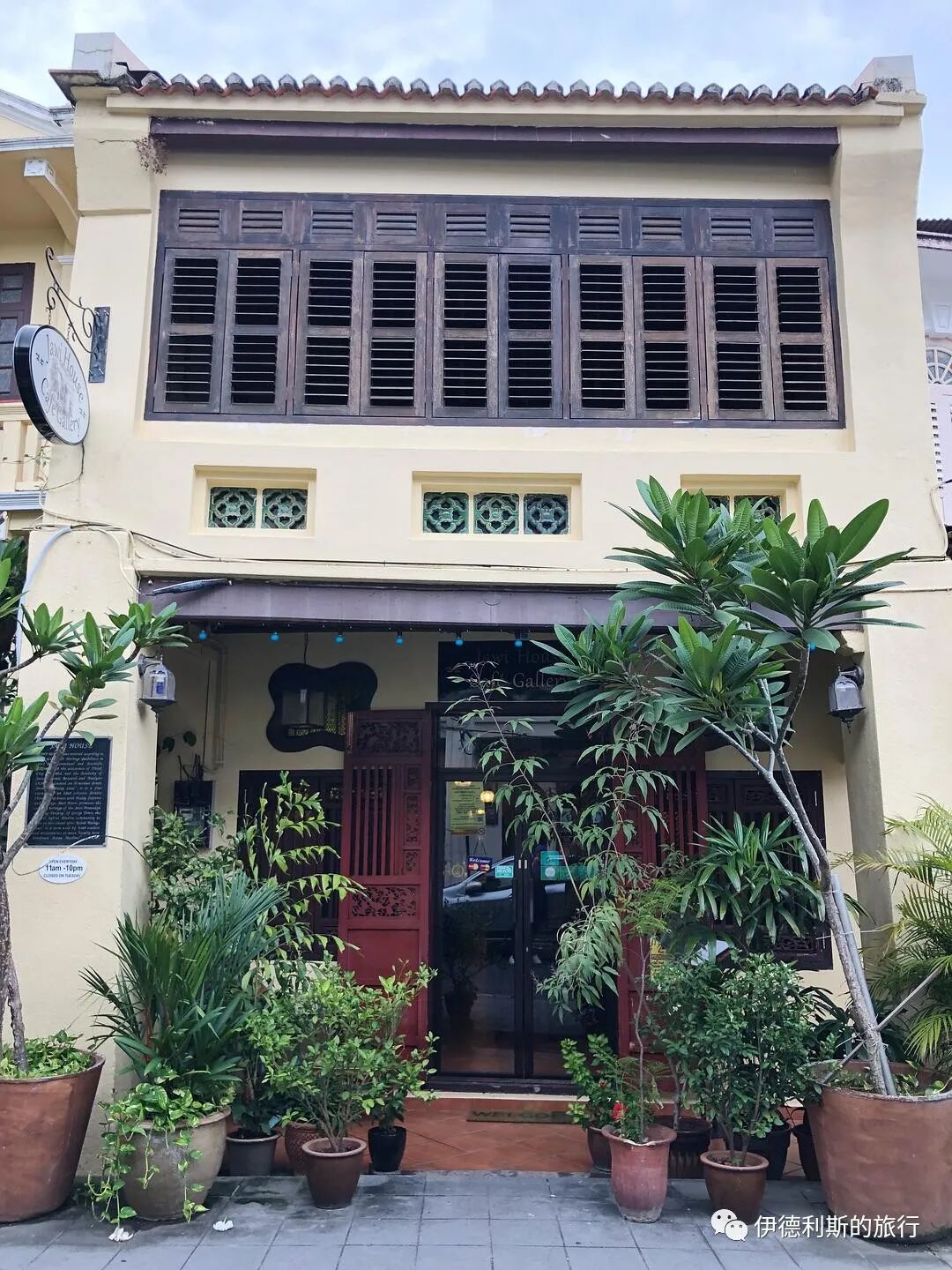
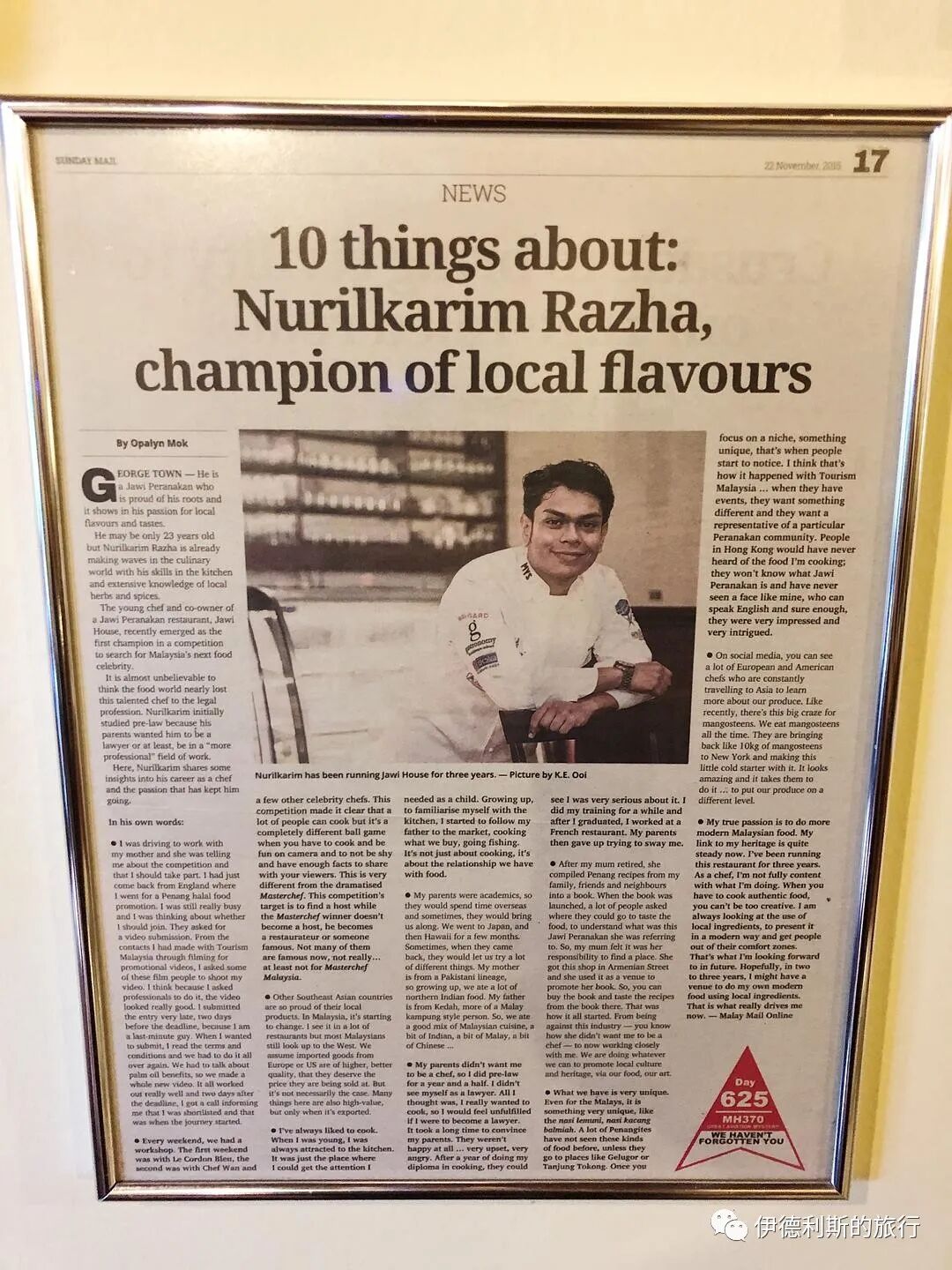
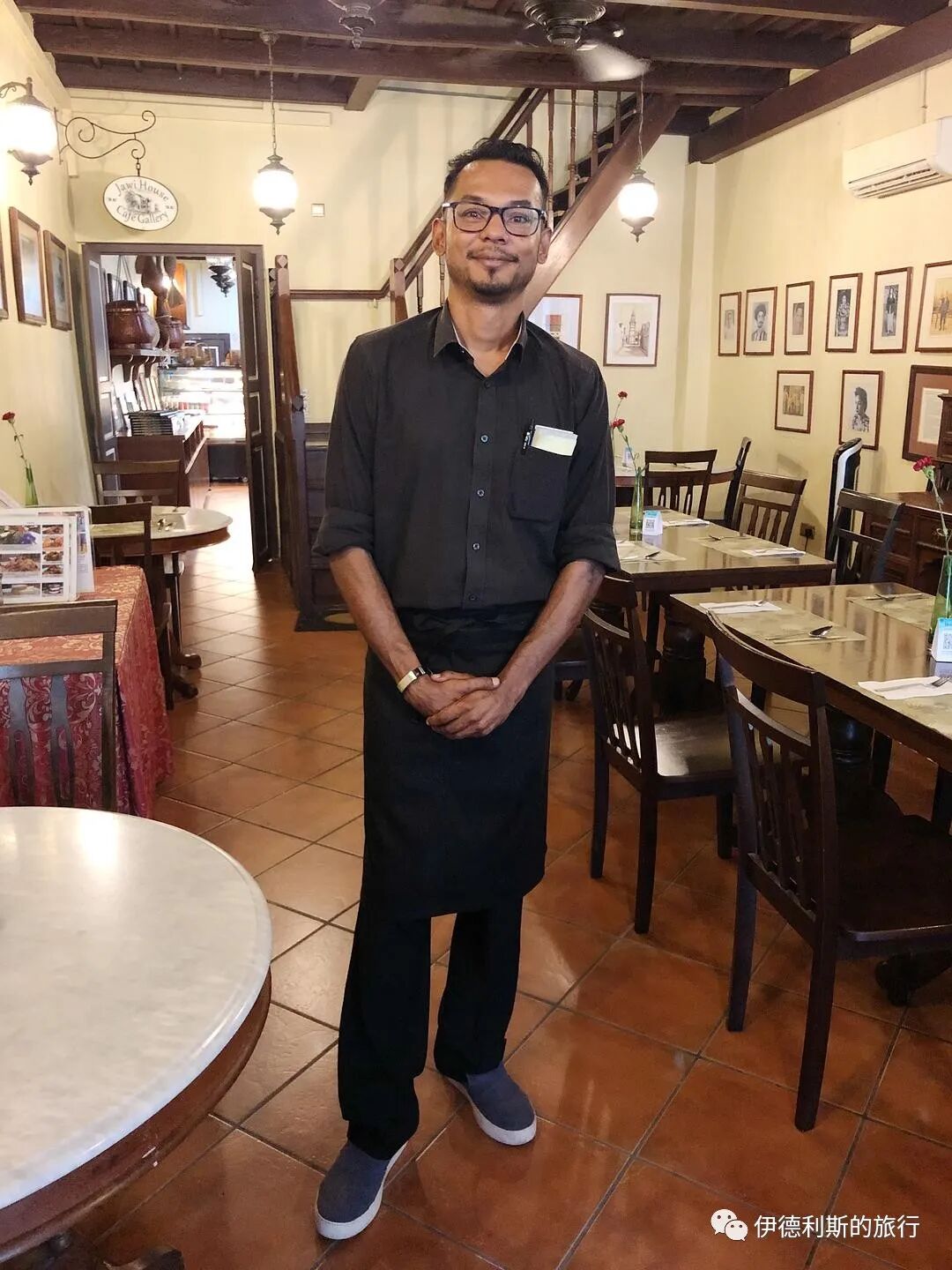
Today, the best place in Penang to experience Jawi Peranakan culture is the Jawi House Cafe Gallery. This building started as a Straits Eclectic-style Chinese shophouse built in the 1860s with Malay-style decorations, and it later served as an Indian Muslim coppersmith shop. The shop is on Armenian Street (Lebuh Armenian), originally called Malay Lane, which was the first area where the Jawi Peranakan community settled. In 2012, the Karim family, who have Punjabi roots and have lived in Penang for six generations, opened Jawi House here to serve the most authentic Jawi Peranakan food.
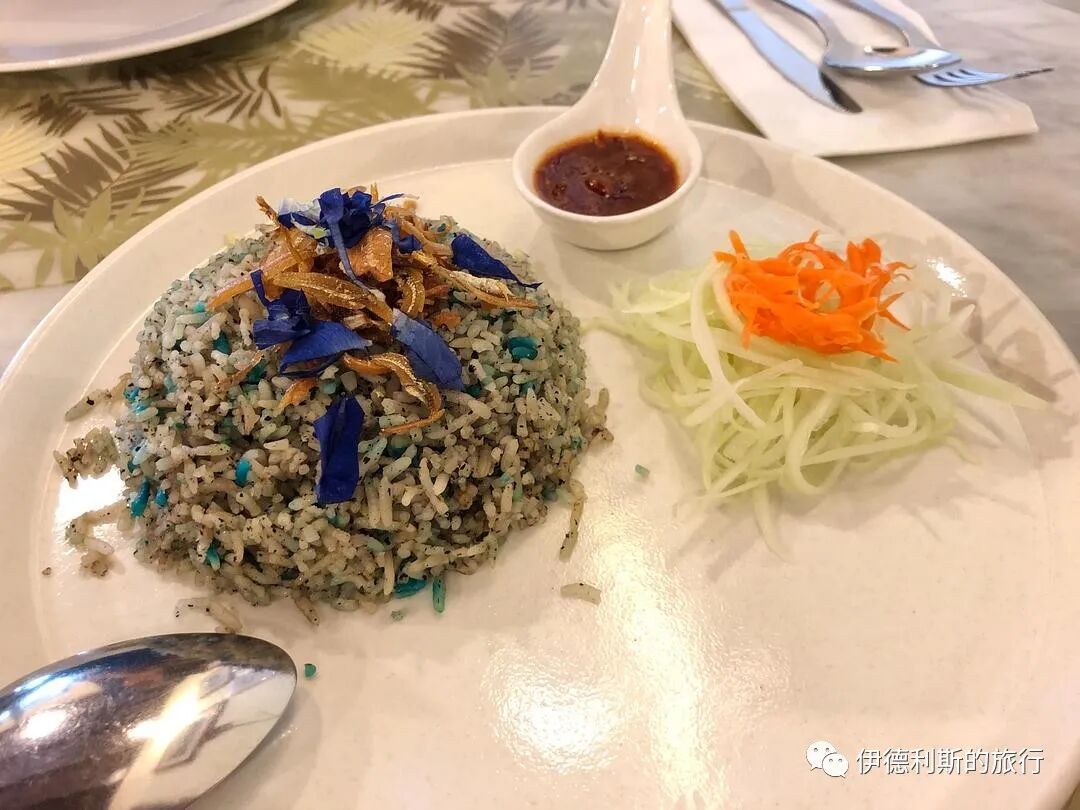
We ate prawn fritters (cucur udang), lemuni leaf rice (nasi lemuni), and Jawi chicken curry. We also drank Penang nutmeg juice and Arabian sherbet, and finished with sago pudding for dessert.
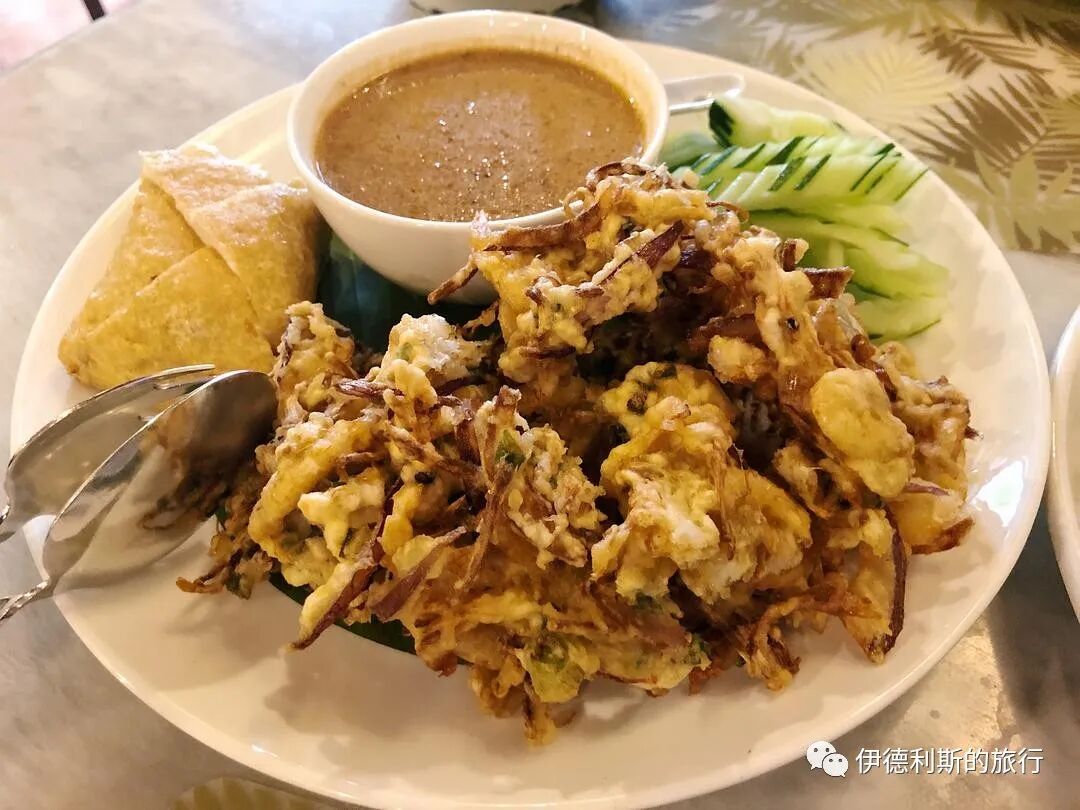
Cucur udang is made by coating shrimp and green onions in batter, deep-frying them, and dipping them in peanut sauce. In Malay, 'cucur' means a deep-fried fritter and 'udang' means shrimp.
Nasi lemuni is rice cooked with coconut milk, lemongrass, and blue lemuni flowers, served with crispy fried anchovies and spicy sambal sauce. In the past, Lemuni rice (nasi lemuni) was a traditional food for Malay women during their postpartum recovery period, as it was said to help improve blood circulation.
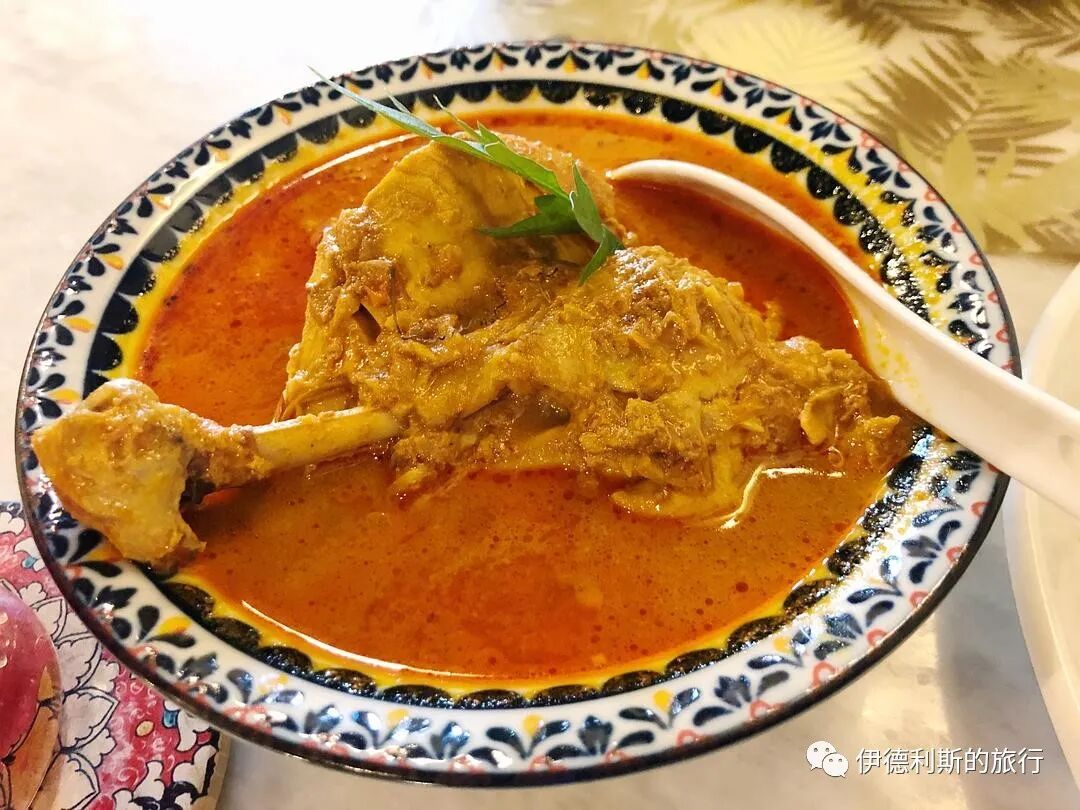
Jawi chicken curry is the Jawi Peranakan version of chicken curry. As a mixed-heritage community, Jawi Peranakan curry is a blend of both Indian and Malay curry styles.
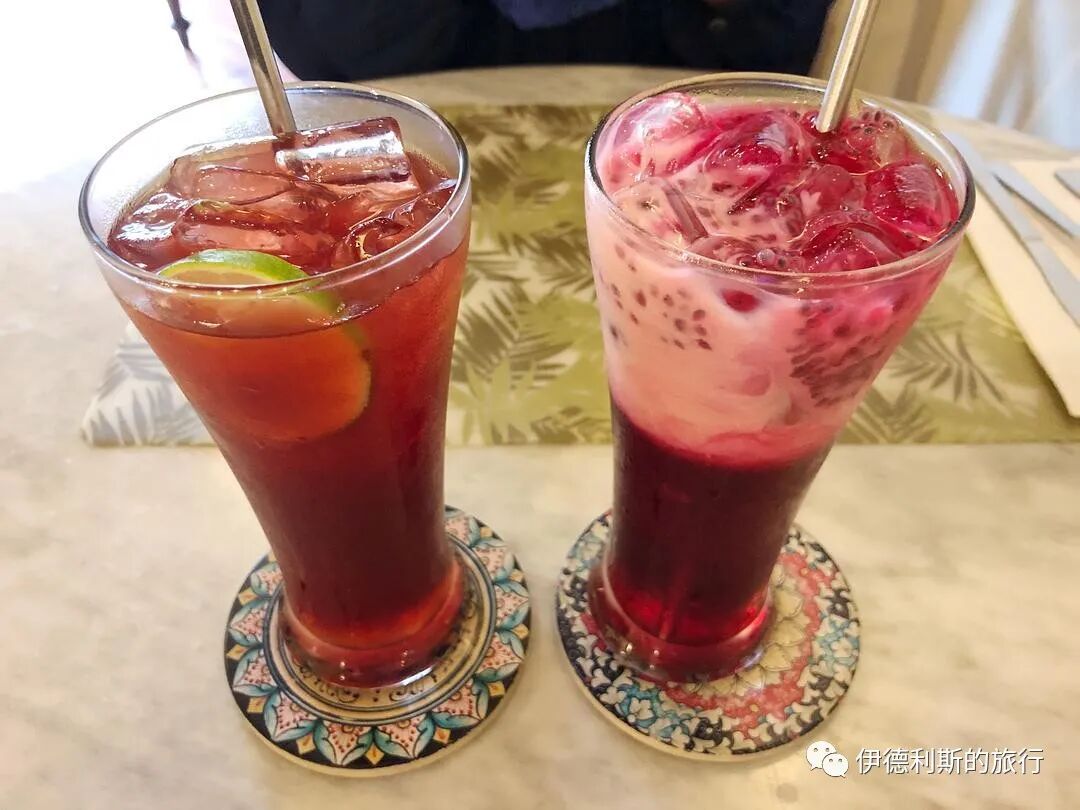
Nutmeg is the English name for the spice, and this drink is a Penang specialty made with honey and lemon, giving it a sweet and sour taste.
The word sherbet comes from the Persian word sharbat, which means a non-alcoholic sugar drink. In medieval Arabia, people loved to add syrup and honey to their sharbat to make it sweeter. They also liked to add ingredients like almonds, lemon, apple, pomegranate, tamarind, dates, sumac, musk, and mint. Spread by Arabs and Persians, the drink sharbat is now popular across West Asia, South Asia, and the Malay Archipelago, especially during Ramadan. The Arabian sherbet at Jawi House is made with rose syrup, mallow nuts, gum arabic, and basil seeds, giving it a very rich flavor.
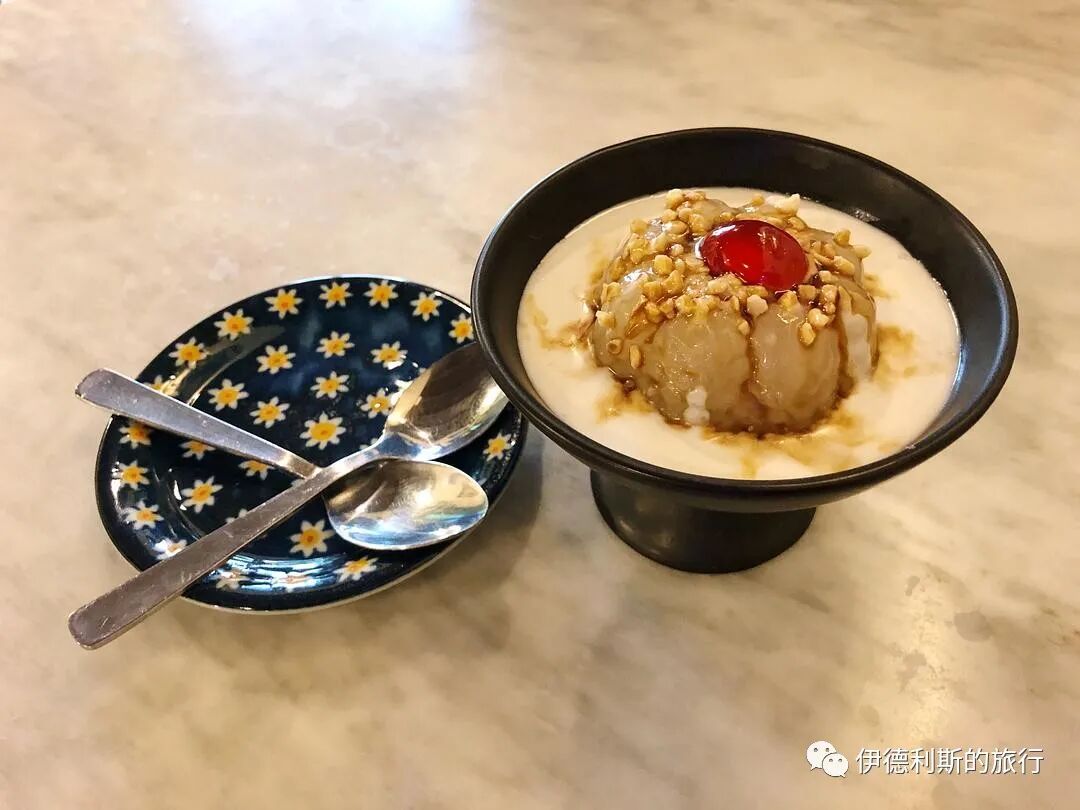
The signature Jawi Peranakan version of sago pudding is topped with coconut cream and thick palm sugar syrup, then sprinkled with crushed peanuts for a refined taste.
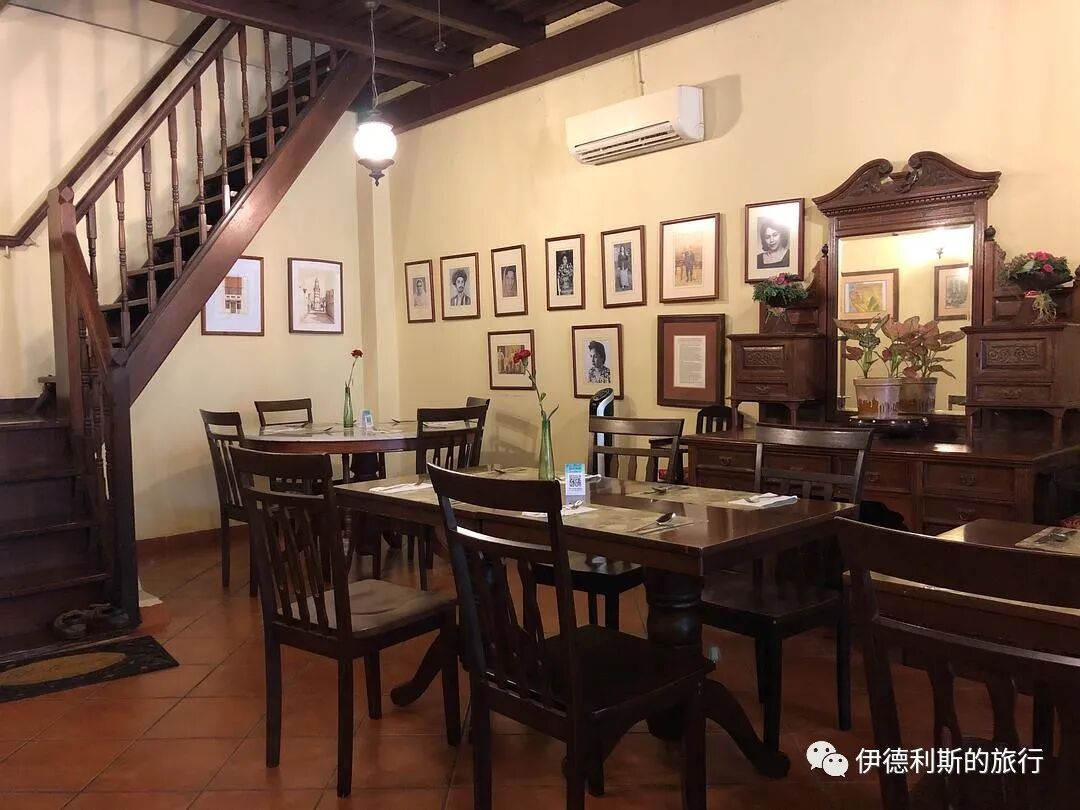
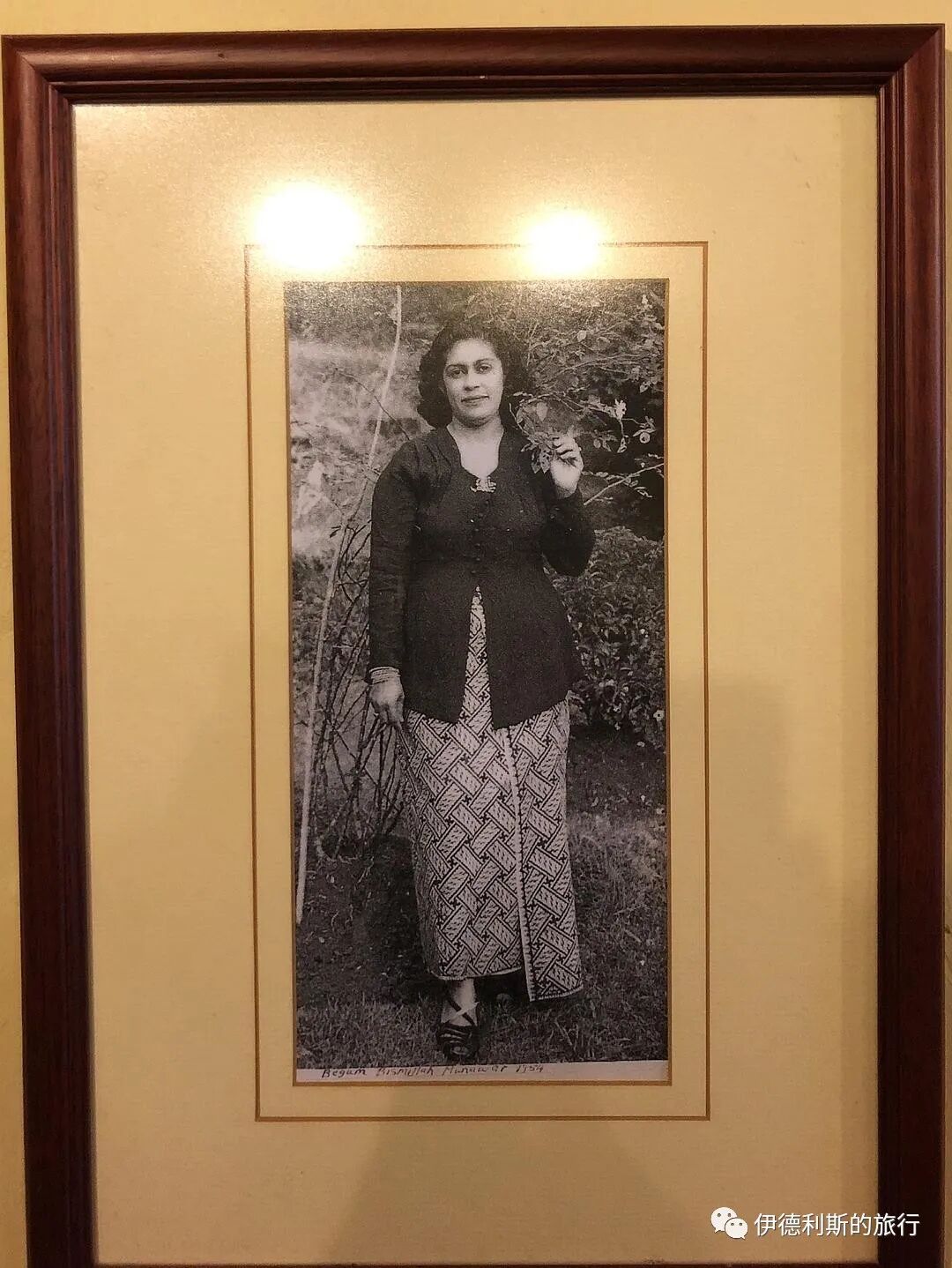
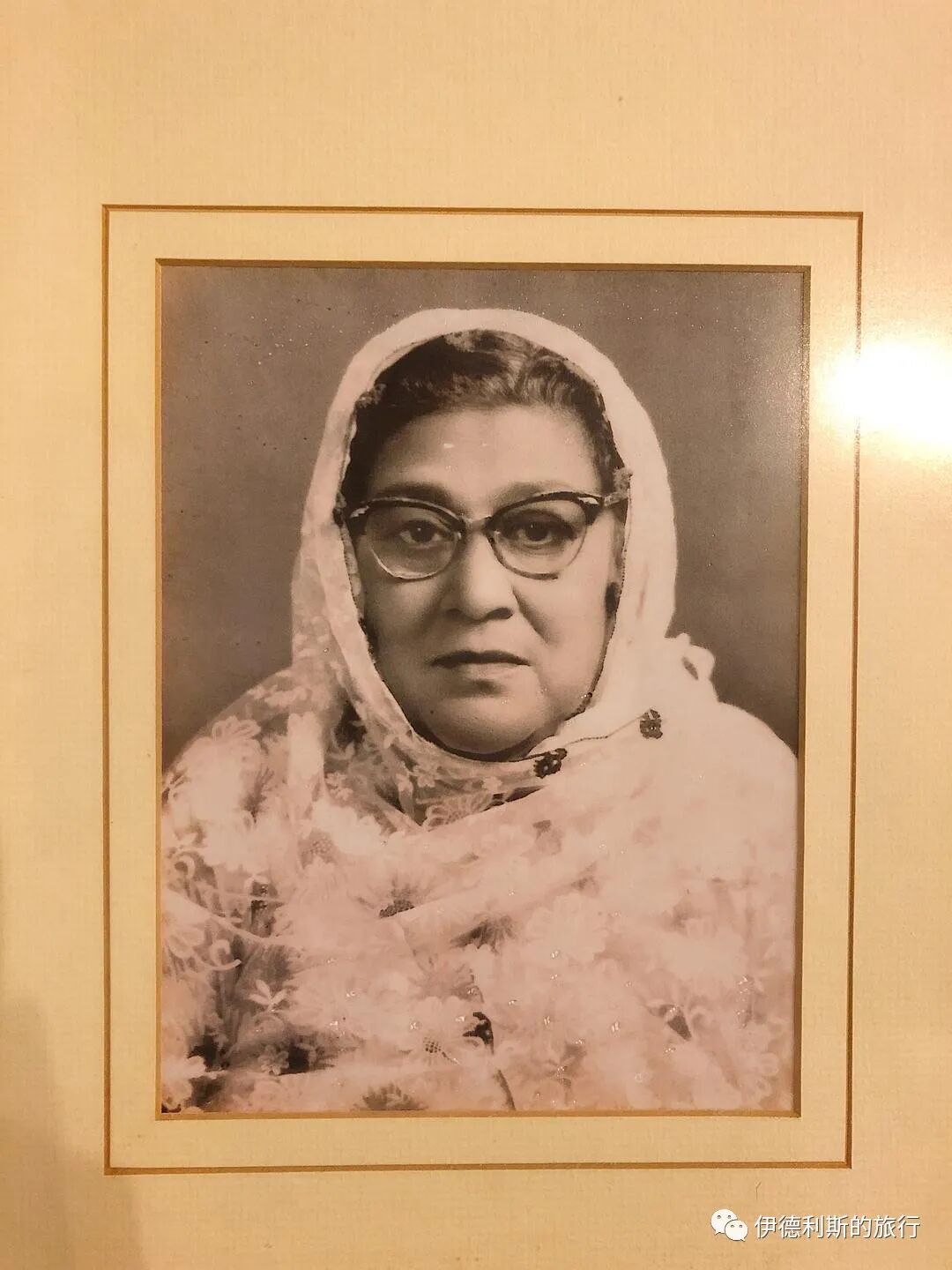
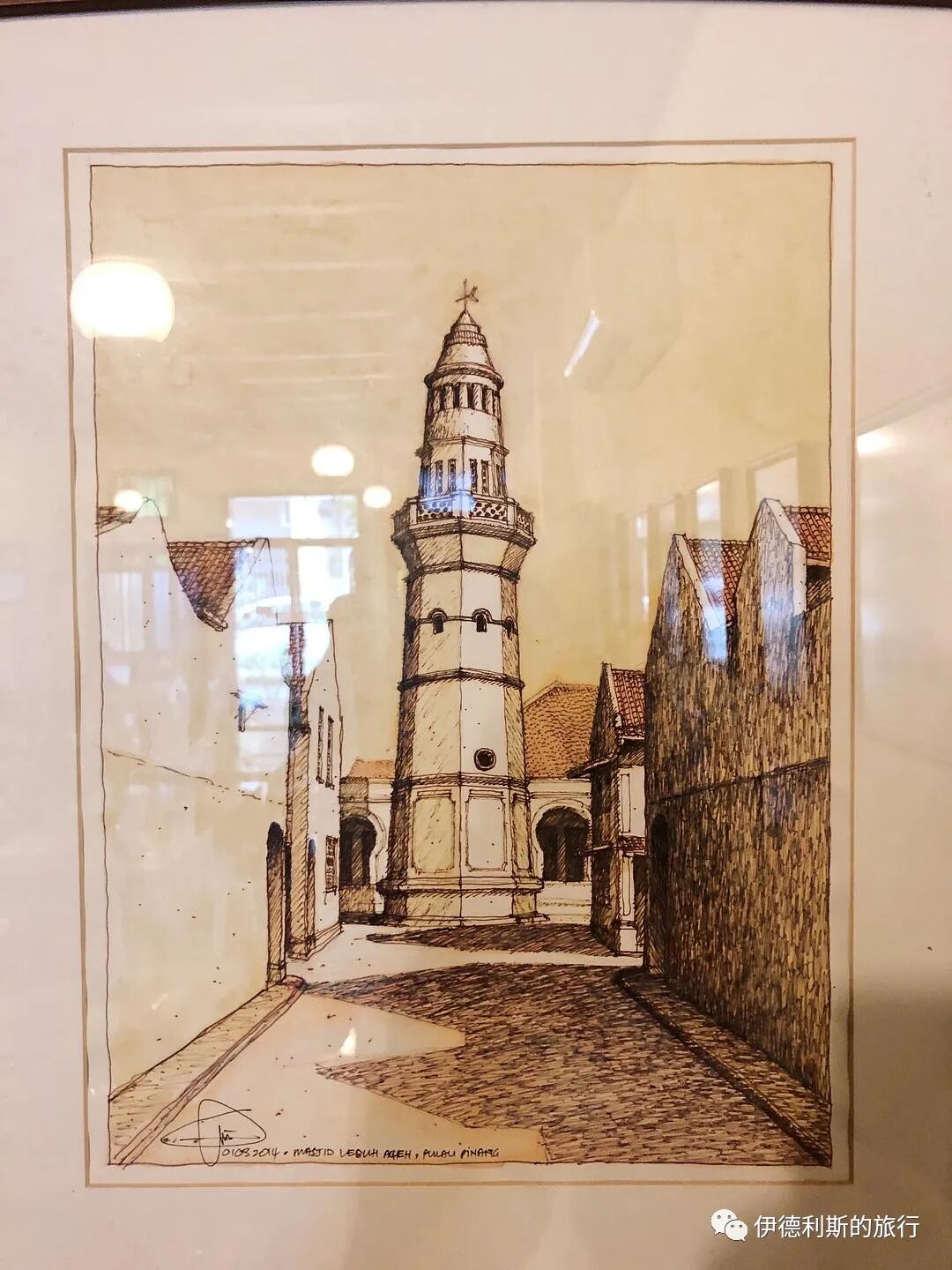
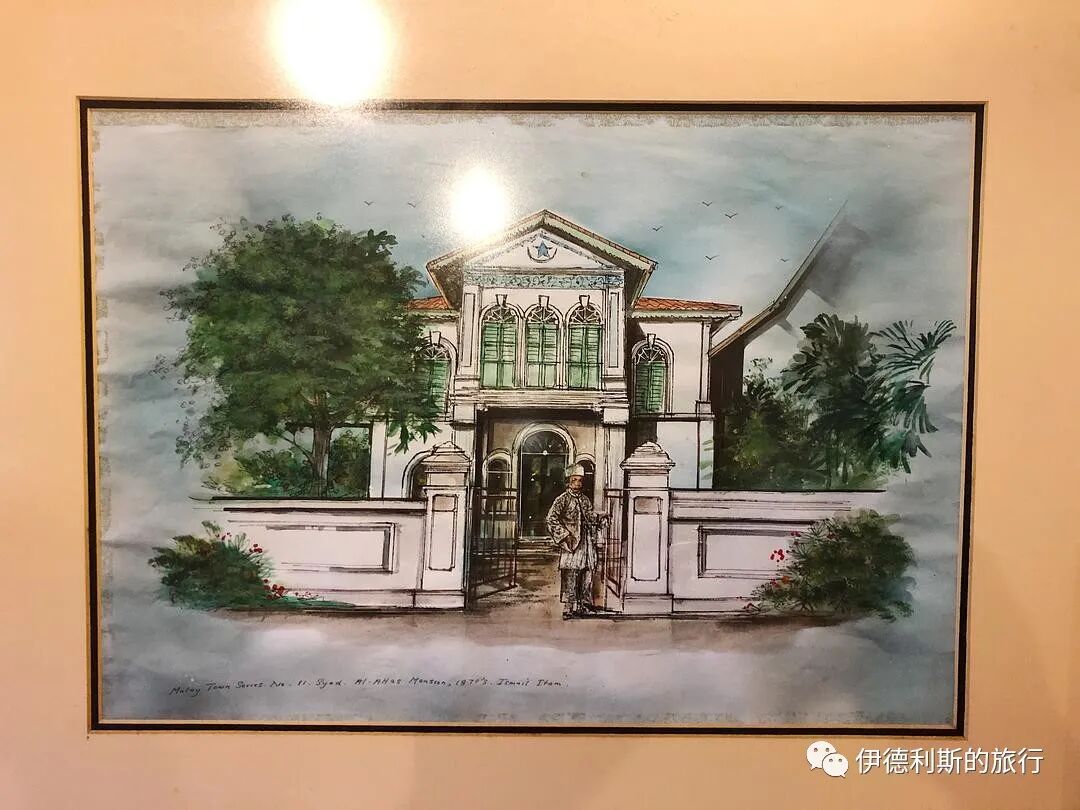
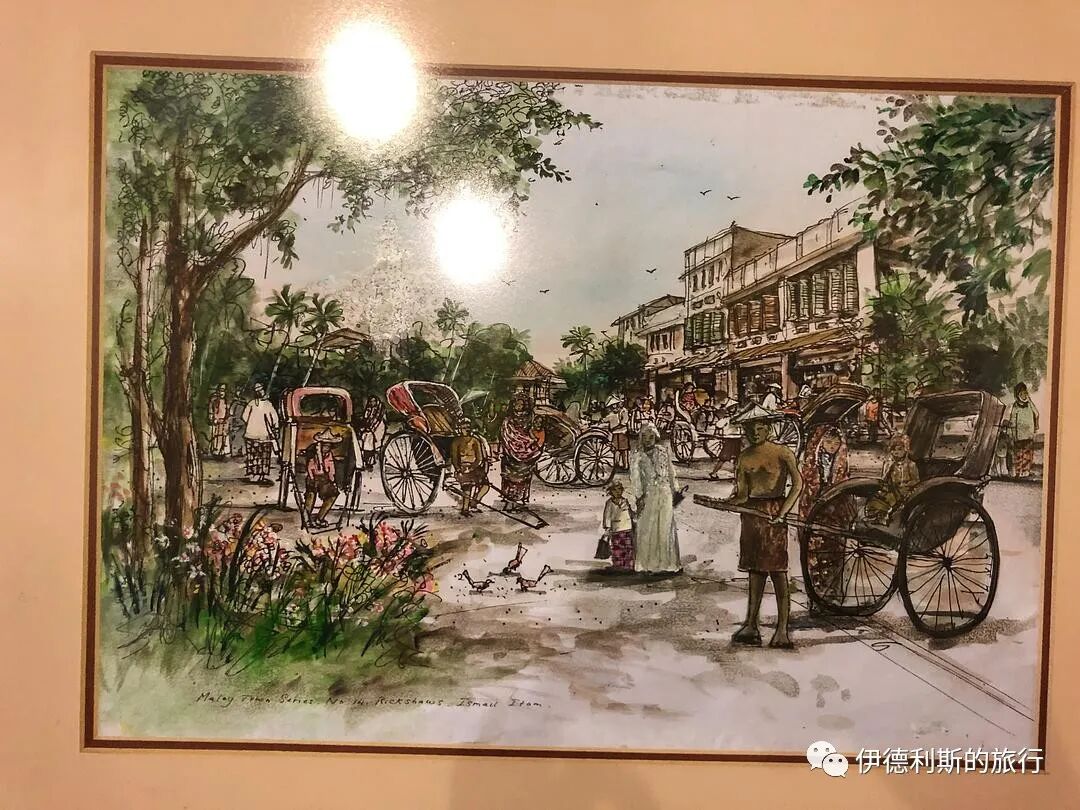
Jawi House displays a collection of old photos of Jawi Peranakan life in Penang, along with paintings of the local Muslim community.
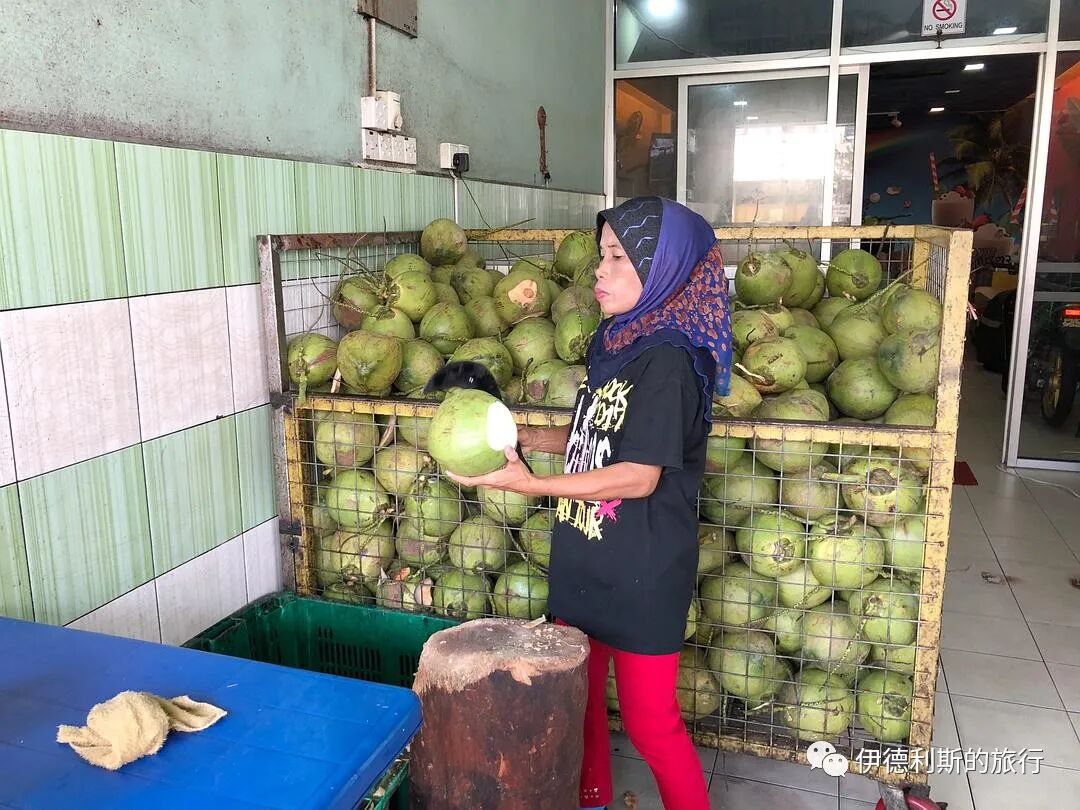
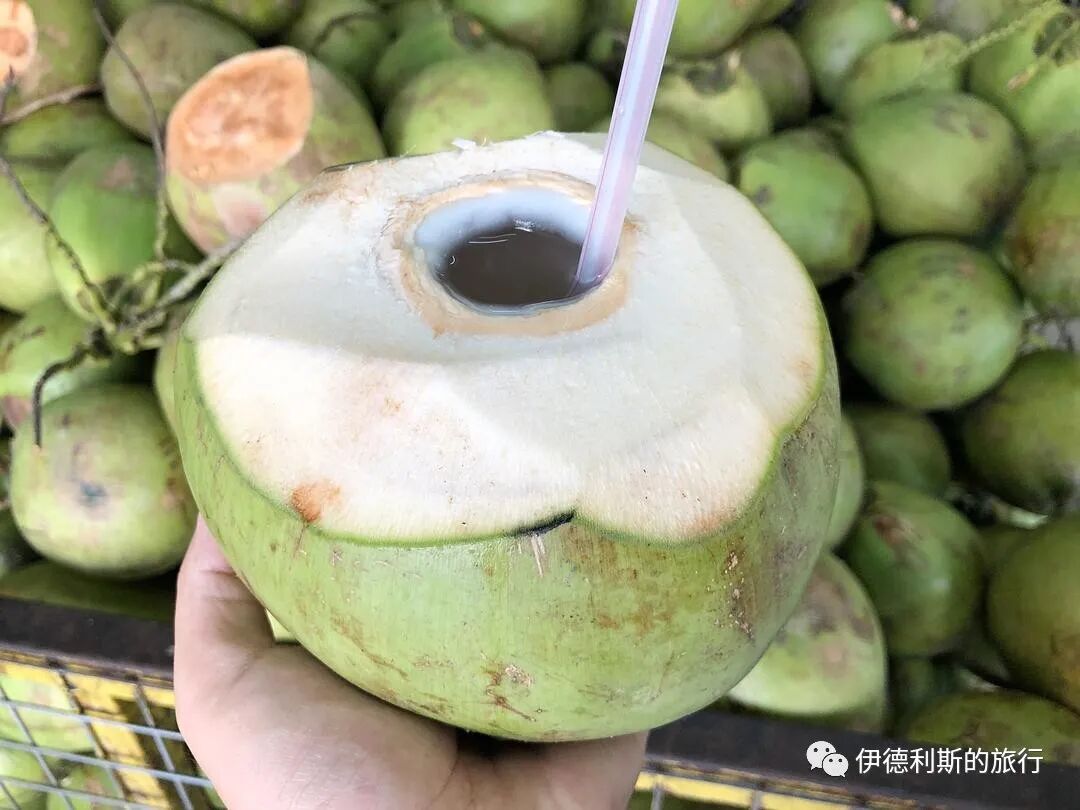
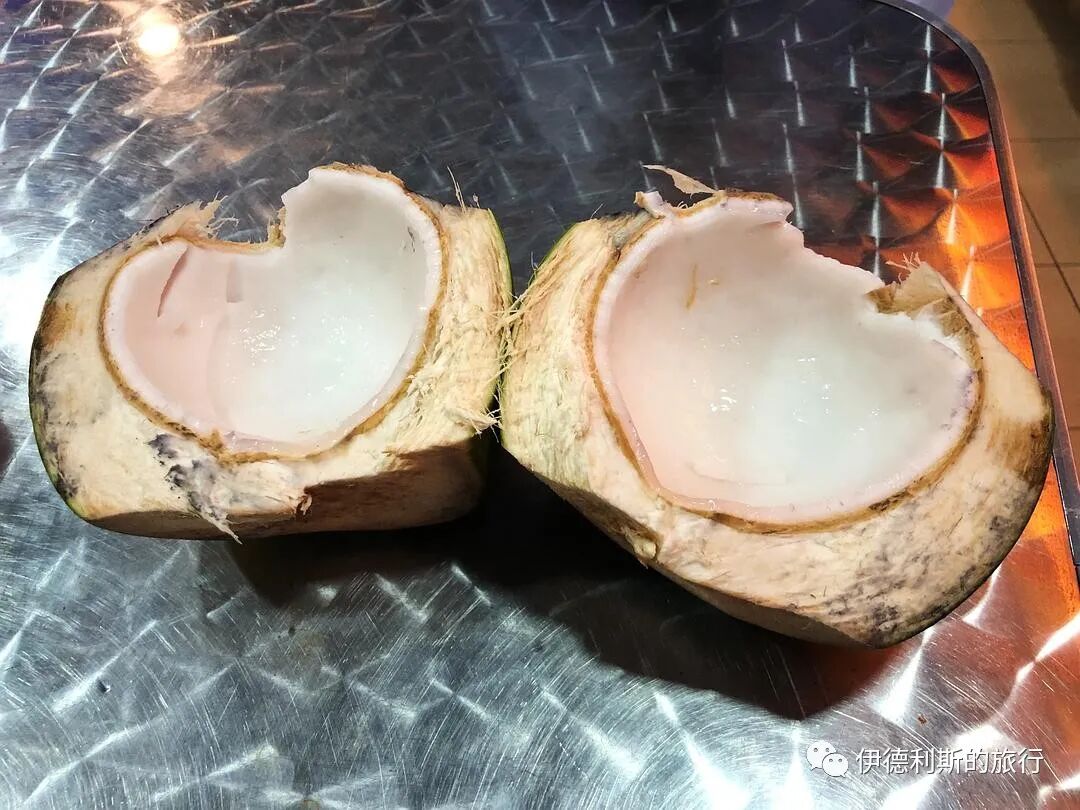
A coconut shop on a street in Penang.
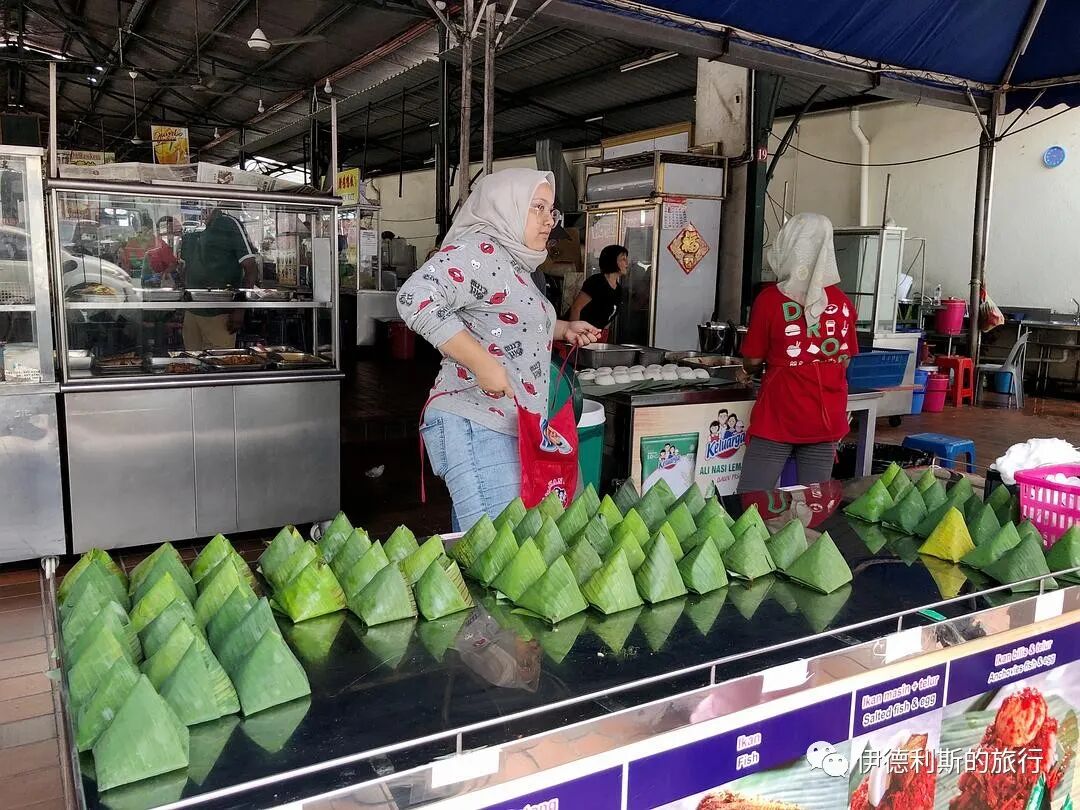
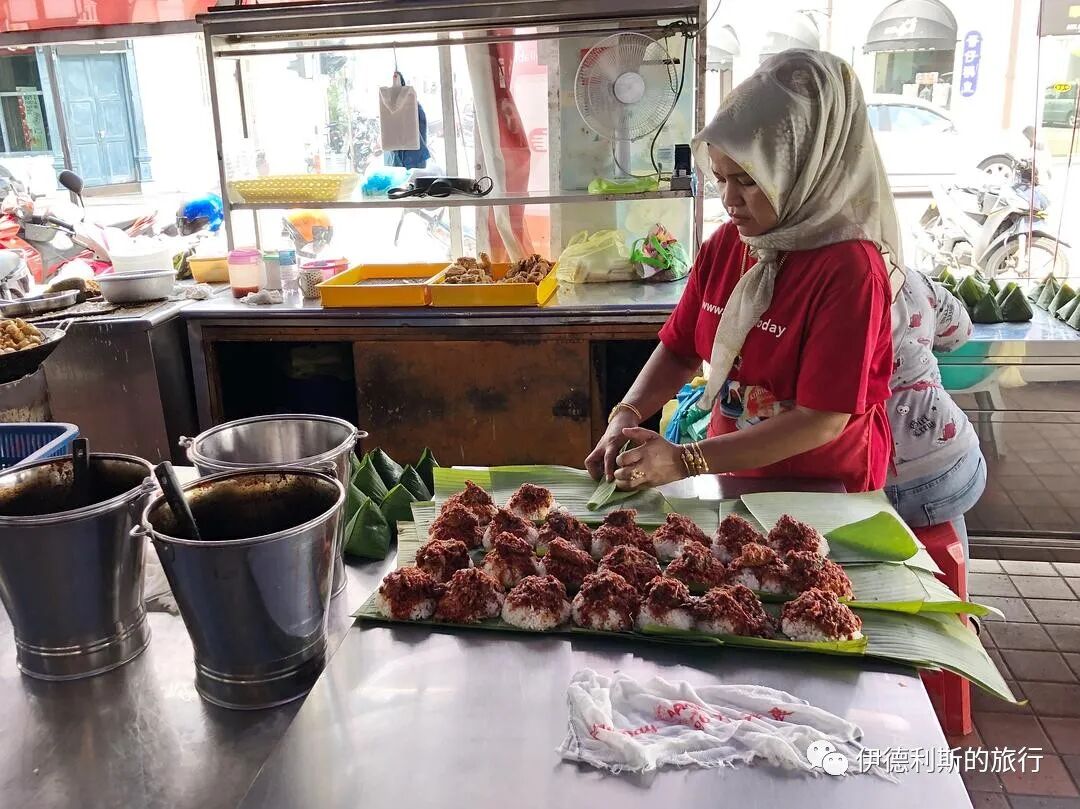
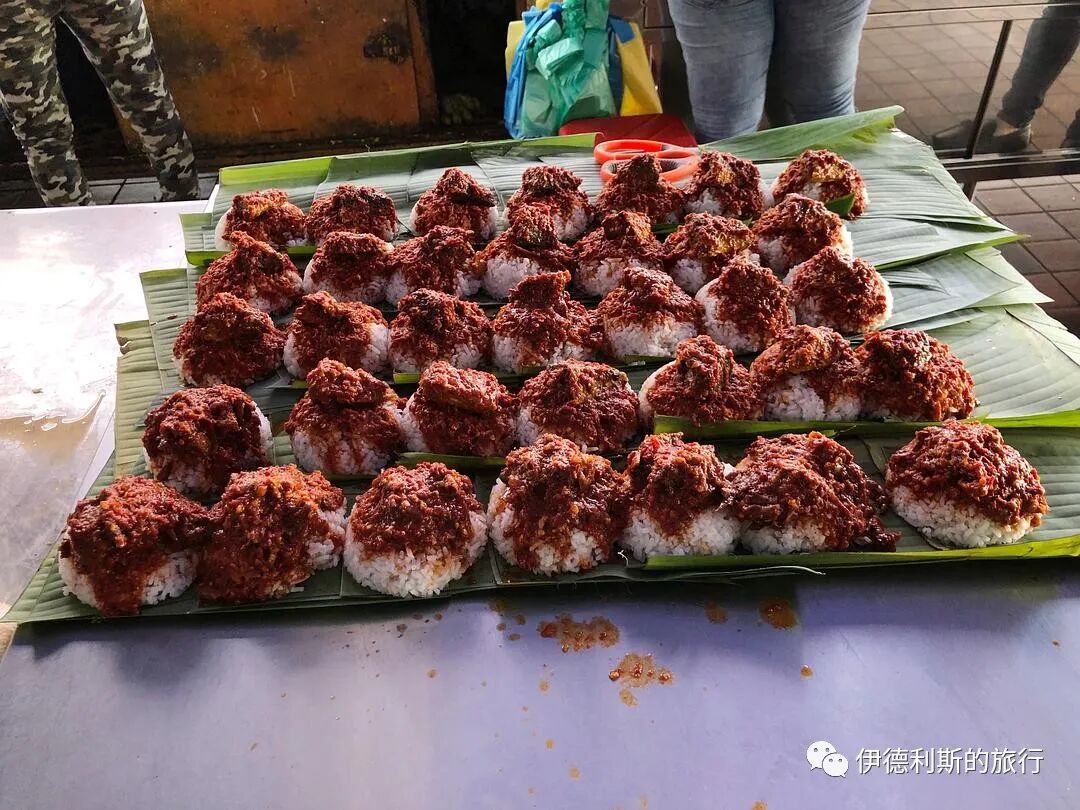
ALI NASI LEMAK coconut milk rice (nasi lemak)
I ate coconut milk rice (nasi lemak) at ALI NASI LEMAK in the Sri Weld Food Court in Penang. Coconut milk rice is fragrant Malay rice cooked with coconut milk and pandan leaves. It is known as Malaysia's national dish and is popular across the Malay Archipelago and southern Thailand.
Traditional coconut milk rice is wrapped in a banana leaf and served with spicy chili paste (sambal), dried anchovies, peanuts, and eggs. Spicy chili paste is a traditional Southeast Asian sauce that started in Indonesia. It is made by stir-frying fermented shrimp paste (belacan) with chili peppers and various seasonings. The sambal sauce at this place was incredibly spicy; it really burned my lips first and then hit my throat.
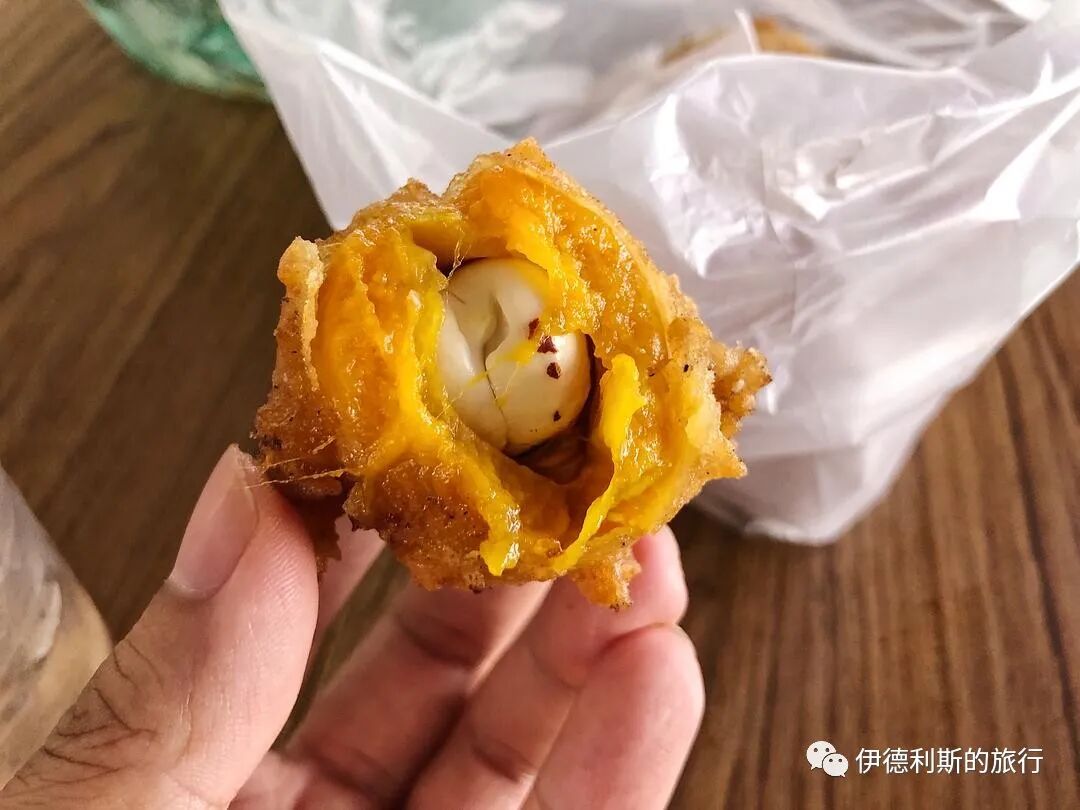
Then I had some fried jackfruit next door. Small jackfruit (cempedak) is similar to regular jackfruit, but it is sweeter and has a smoother, softer texture.
Acheen Street Mosque: 1808
Acheen Street Mosque (Masjid Melayu Lebuh Acheh) was built by the Acehnese in 1808, and the area around the mosque is the oldest Muslim community in Penang. The Acehnese are a Muslim ethnic group speaking an Austronesian language who live on the northernmost tip of Sumatra. They founded the Aceh Sultanate in 1499 and saw it flourish during the 17th century. In the late 18th and early 19th centuries, the first Chinese Kapitan of Penang, Koh Lay Huan, built a strong relationship with the Aceh Sultanate, which started the pepper trade between Aceh and Penang.
In 1791, an Acehnese pepper merchant and nobleman of Arab descent named Tengku Syed Hussain Al-Aidid moved from Aceh to Penang. He established the first Muslim settlement in Penang near what is now Aceh Street, and after that, many Muslim merchants from the Malay Archipelago, India, and Arabia arrived. In 1808, Tengku Syed Hussain donated money and land to build a mosque. The first imam of the mosque was Sheikh Omar Basheer Al-Khalilee, and his son, Sheikh Zakaria, later took over the position. Sheikh Zakaria became the first Mufti (legal scholar) of Penang in 1888.
After Tengku Hussain died in the mid-19th century, the Muslim community on Acheen Street continued to thrive and became known as the second Jeddah (the port city that serves as the gateway to Mecca). Every year during the Hajj season, pilgrims from all over would pack the Acheen Street community before boarding ships in Penang to travel to Mecca. This busy scene lasted until the Malaysian Hajj Pilgrims Fund Board (Lembaga Tabung Haji) was established in the 1970s.
In 1913, the British colonial government passed the Malay Reservation Act, which officially defined a "Malay" for the first time as anyone who belonged to the Malay race, habitually spoke the Malay language or "any other Malay language," and practiced Islam. This meant that Austronesian-speaking Muslim groups who moved to Malaya from other parts of the Malay Archipelago were counted as 'other Malays' in statistics, a group that included the Acehnese in Penang. First-generation Penang Acehnese usually kept their immigrant identity. However, because the Acehnese and Malays share similar physical features, languages, and the same faith, most Penang Acehnese accepted a 'Malay' identity by the second or third generation and blended into Malay culture.
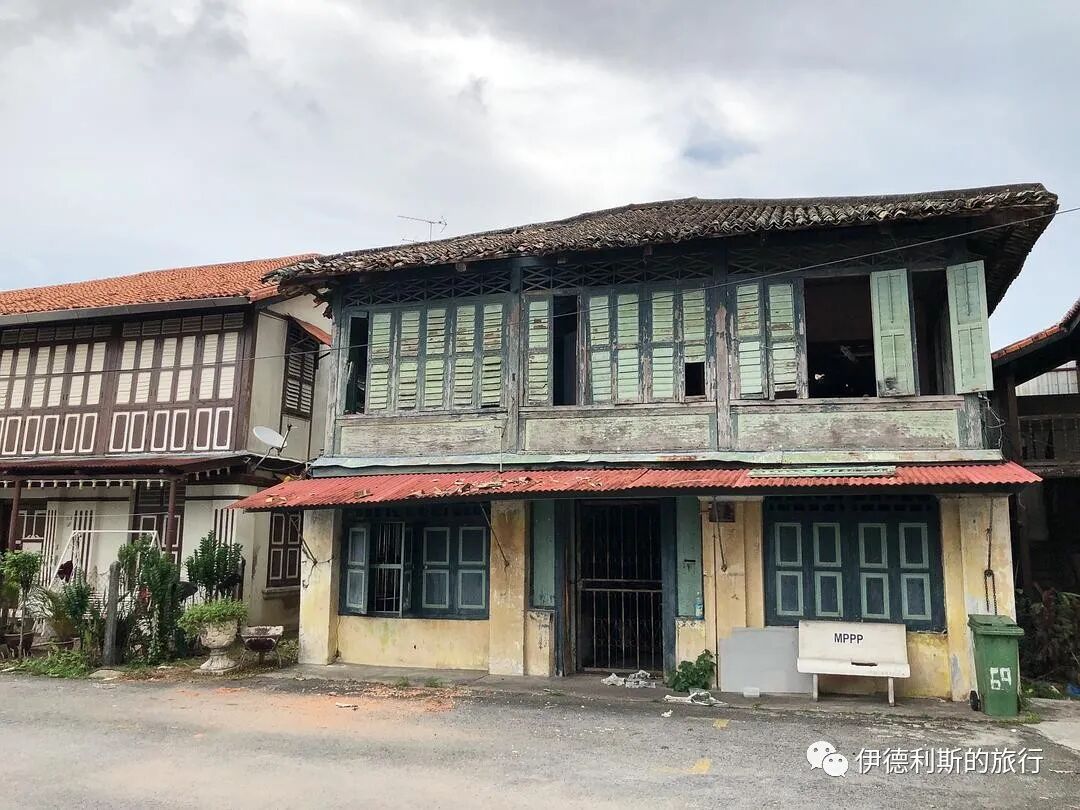
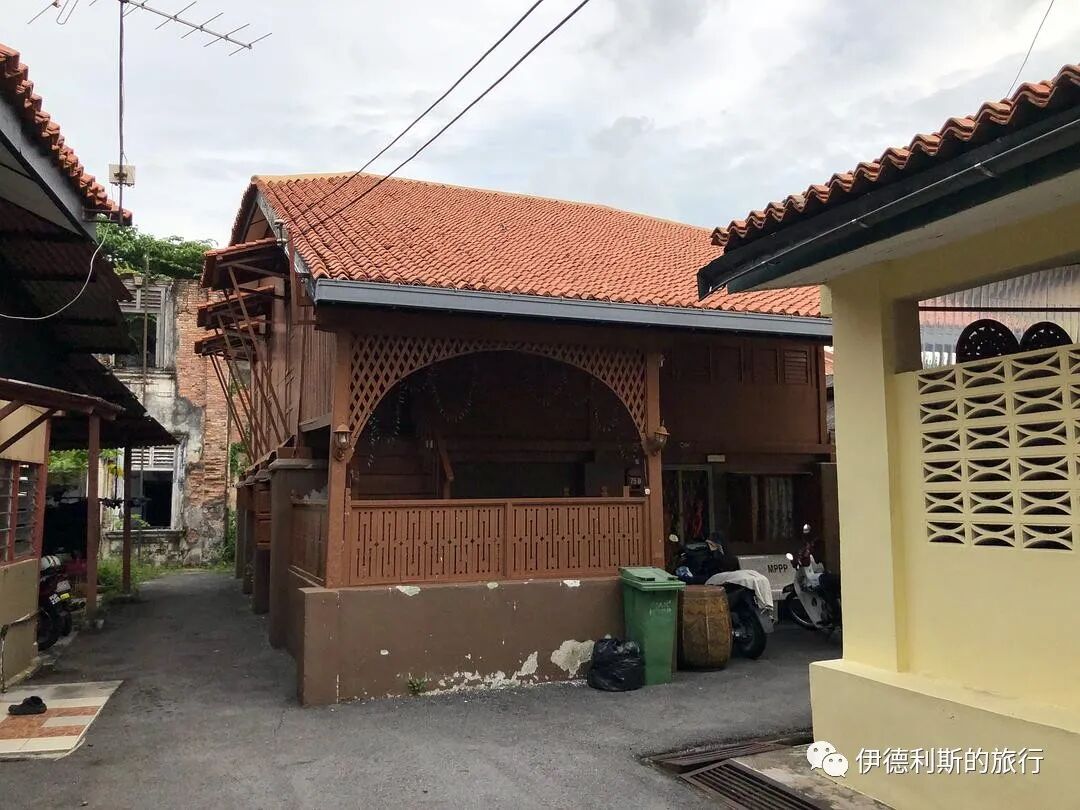
The courtyard of the Aceh Mosque still holds four early houses from the Aceh Street Muslim community: the home of Syed Mohamad Al-Habshee, the Al-Mashoor Quran school, the home of the first mufti Sheikh Zakaria, and the home of Syed Abdul Hamid AL-Haddad.
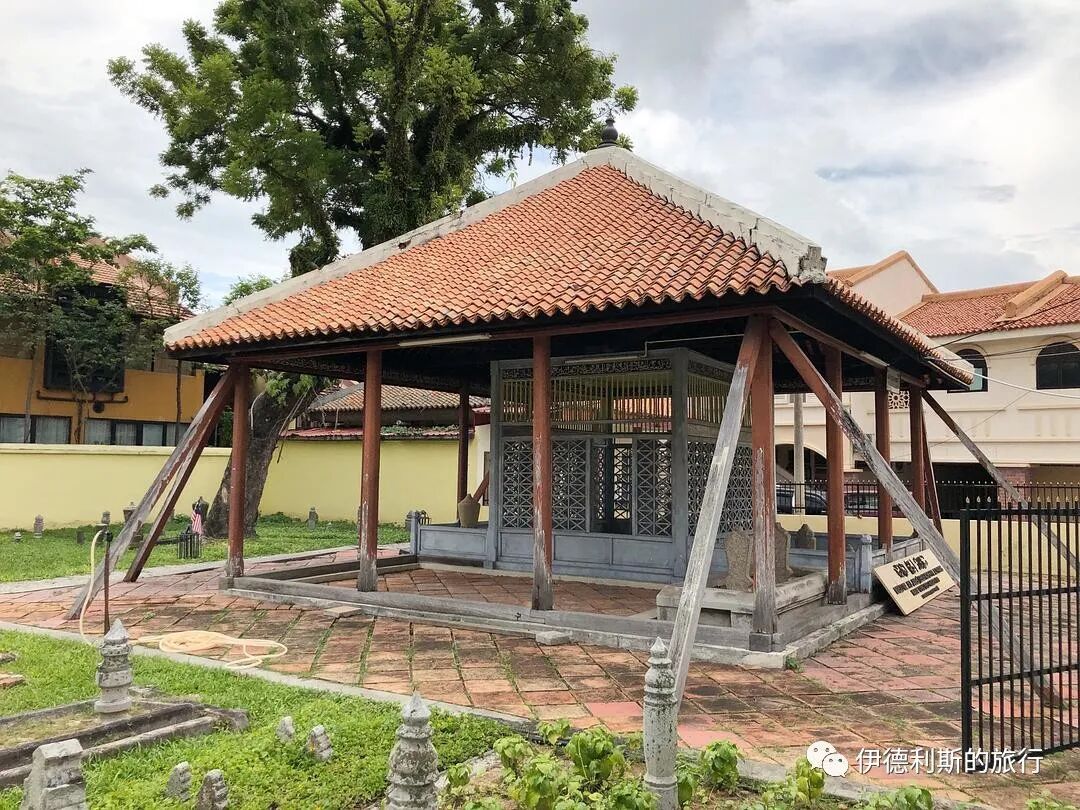
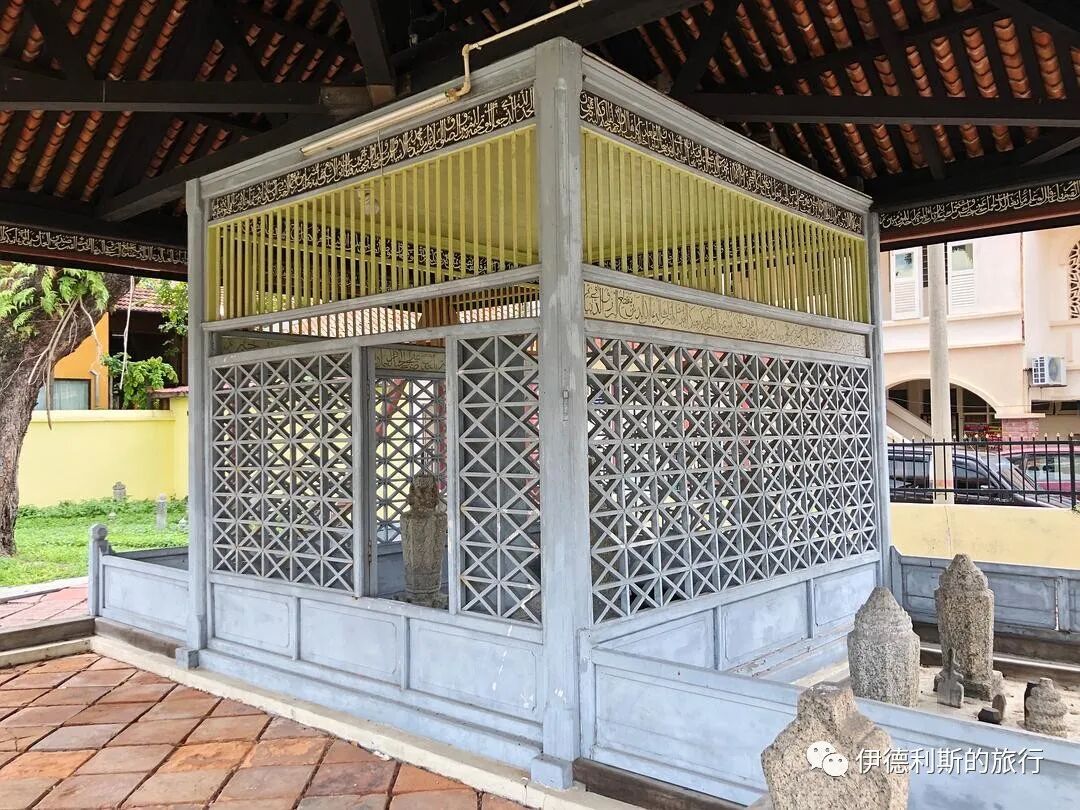
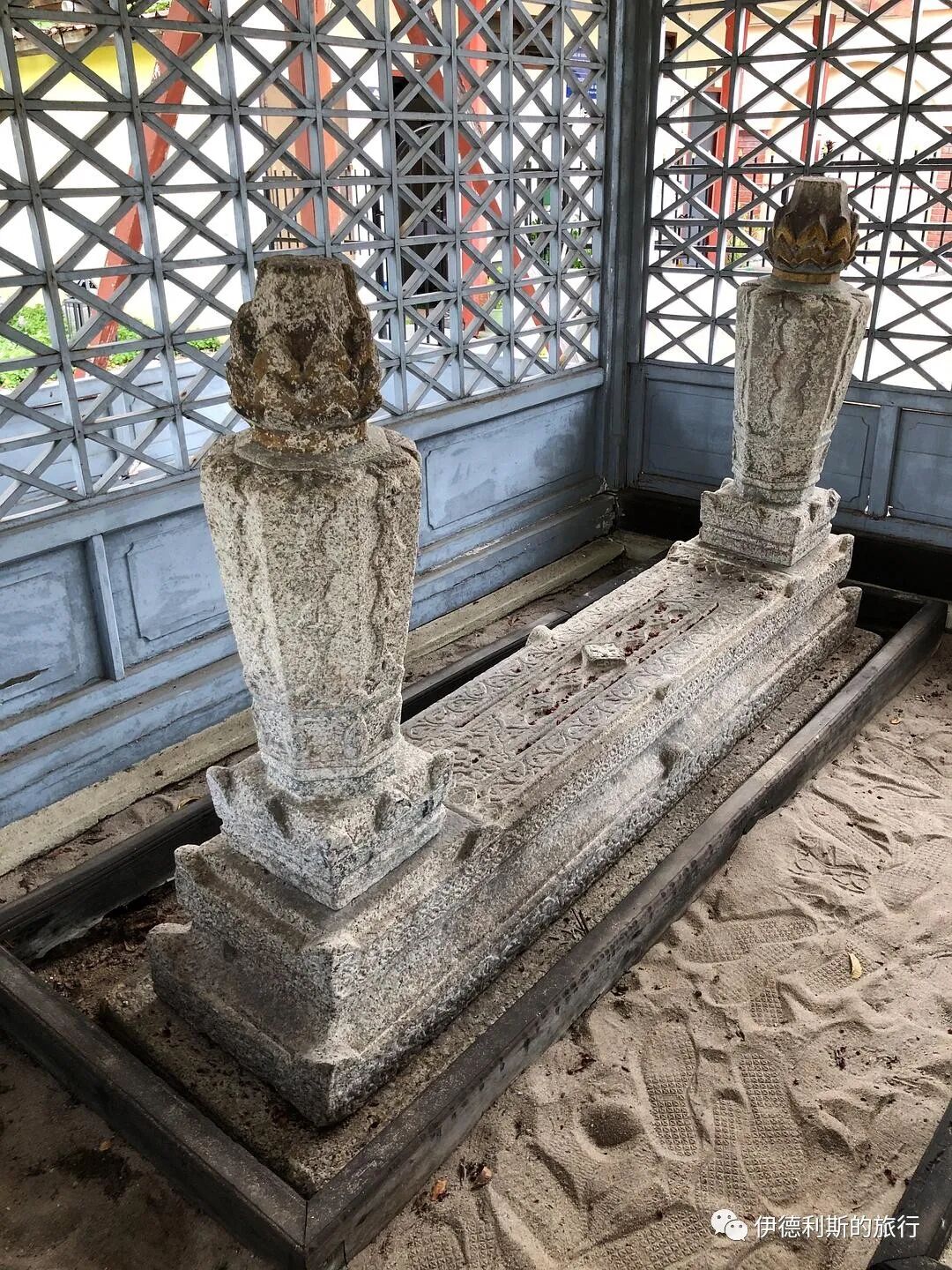
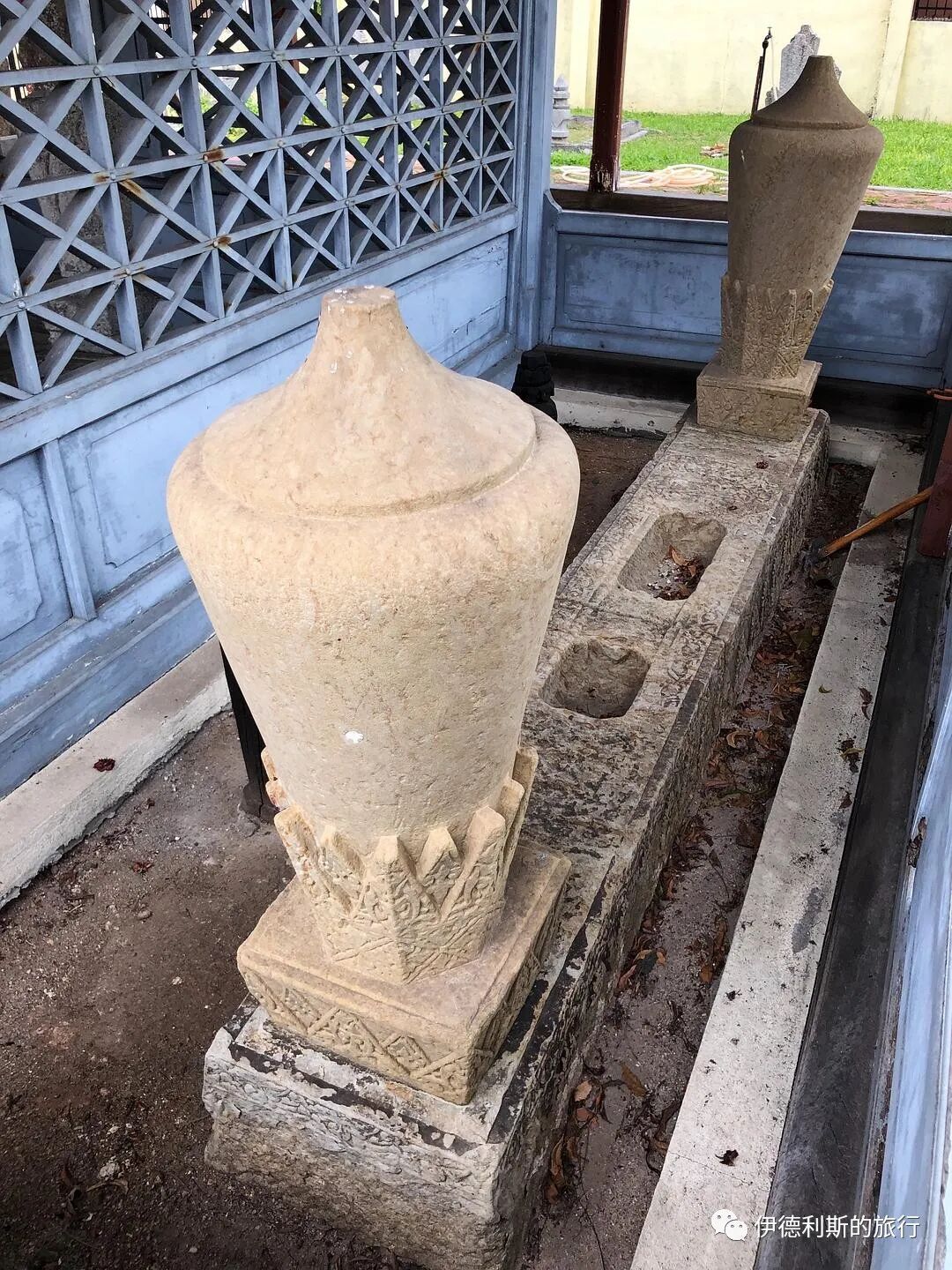
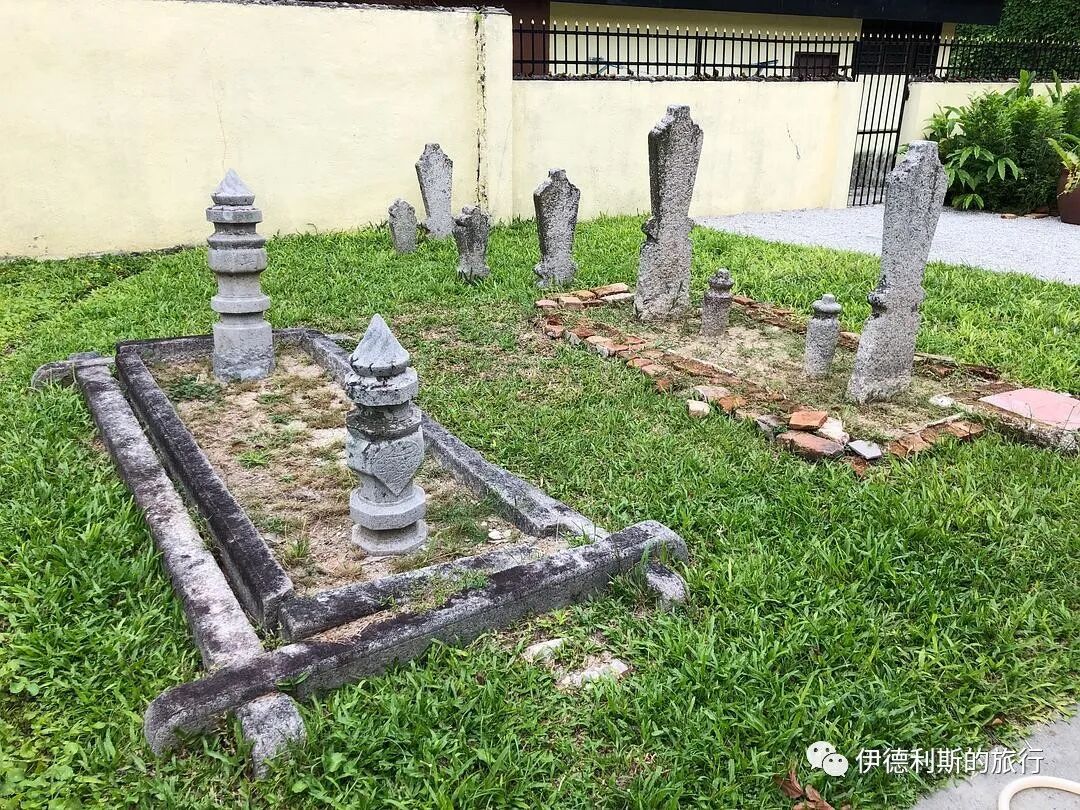
There is also the tomb of the mosque's founder, Tengku Syed Hussain Al-Aidid, which features a tombstone in the classic Acehnese style.
The Penang Islamic Museum under renovation.
It was a real shame that the Penang Islamic Museum was closed for renovations during my visit. This building is a Straits-style house built by an Acehnese Muslim pepper merchant in the 1860s.
Malay artifacts in the Penang Museum
The Penang Museum has a gallery that displays artifacts from the Malay people of Penang.
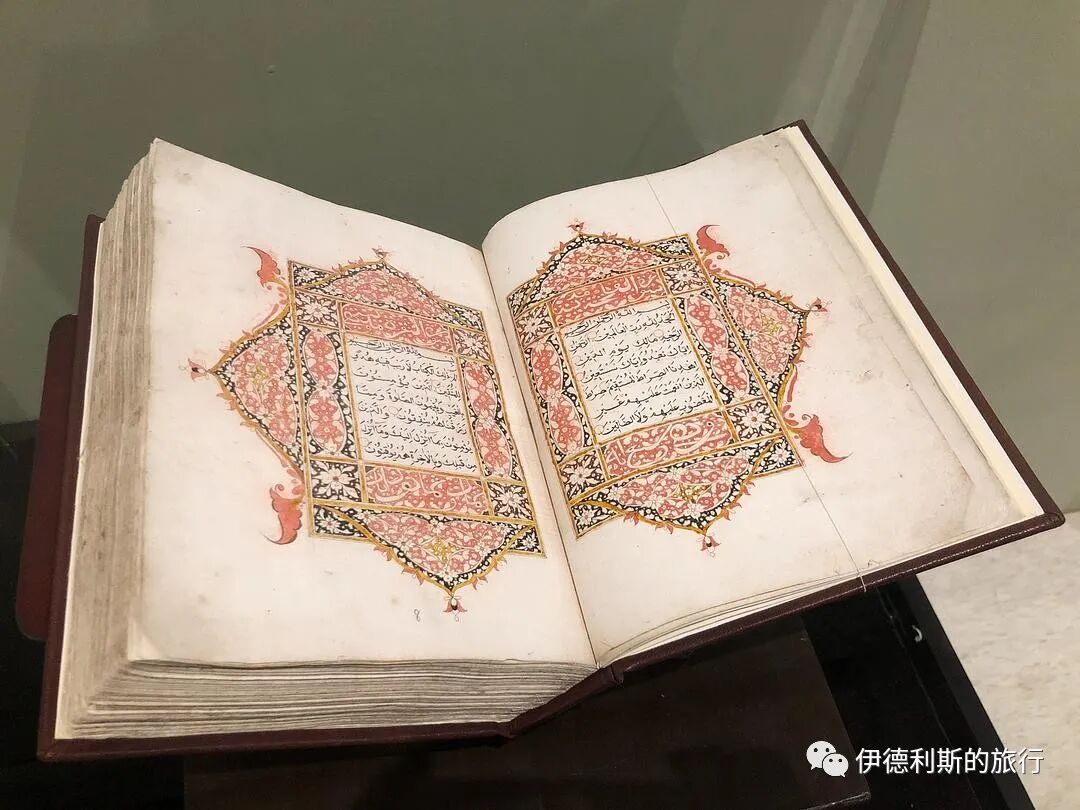
Arabic calligraphy
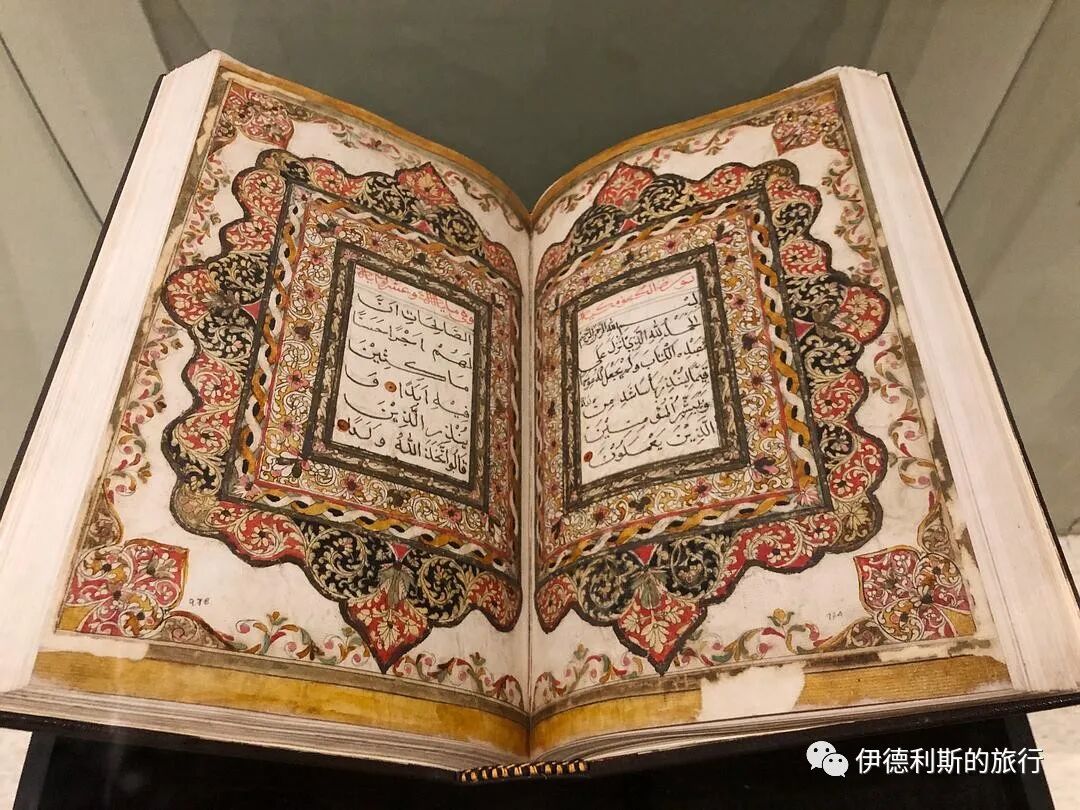
A Quran in the Nanyang style.
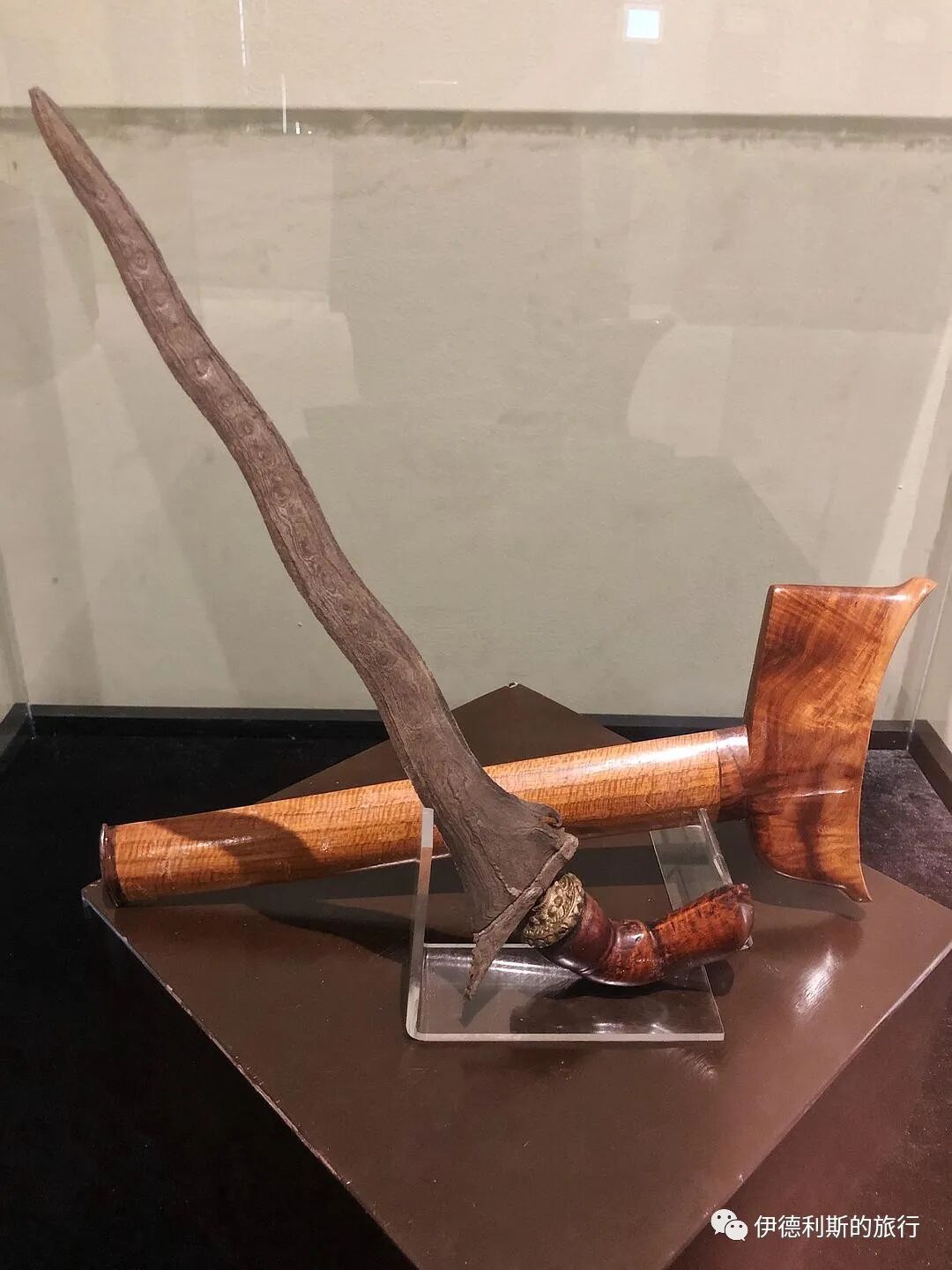
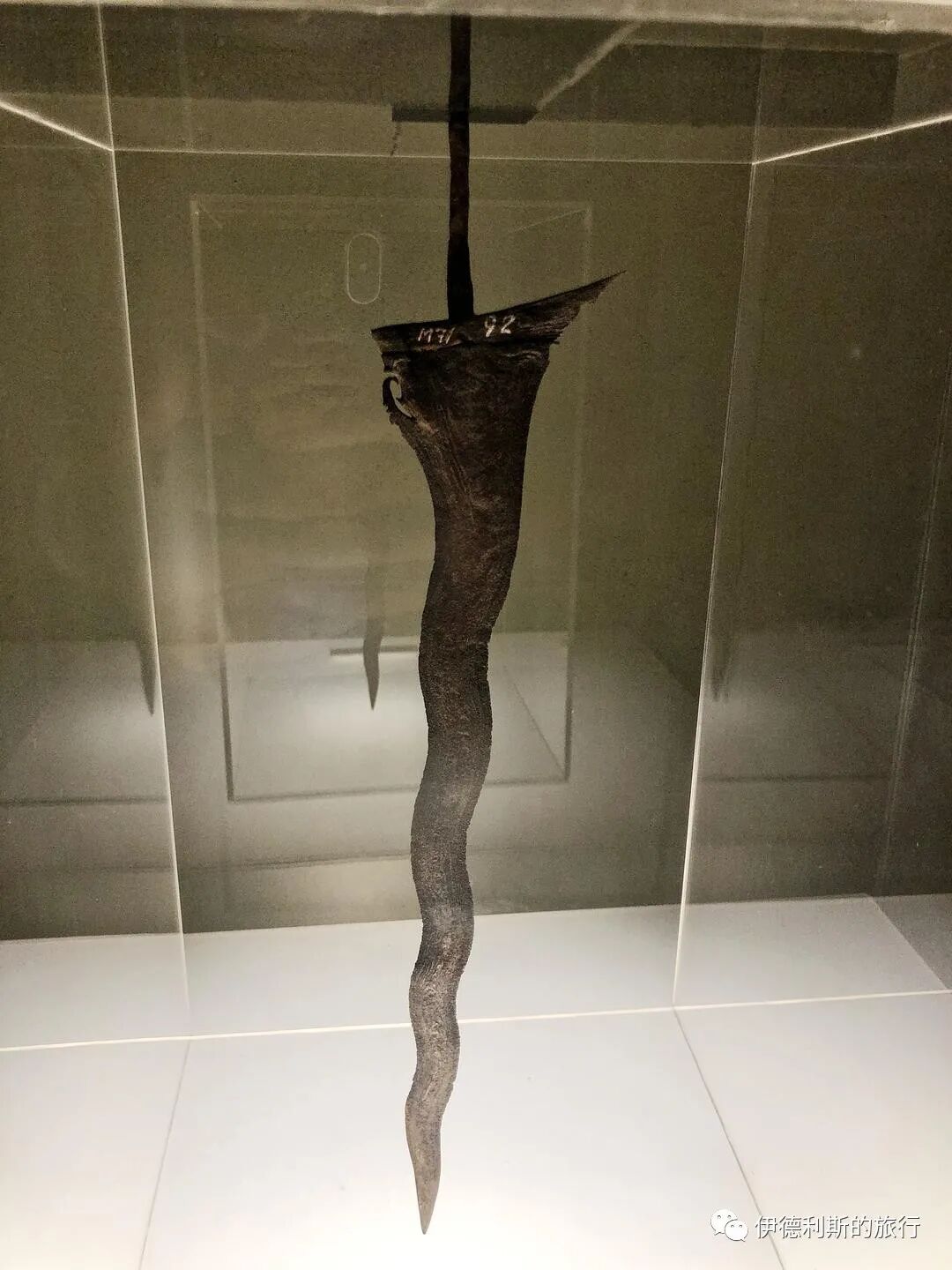
The Malay dagger (keris) is a wavy-bladed short sword popular across the Malay Archipelago. The keris started in Java and spread to the Malay Peninsula in the 15th century as the Majapahit Empire expanded. During wartime, warriors used the keris as a backup weapon alongside their spears, while civilians carried one for self-defense whenever they went out. After firearms arrived in the 16th century, the keris became less practical and was used more as part of ceremonial dress or kept as a family heirloom.
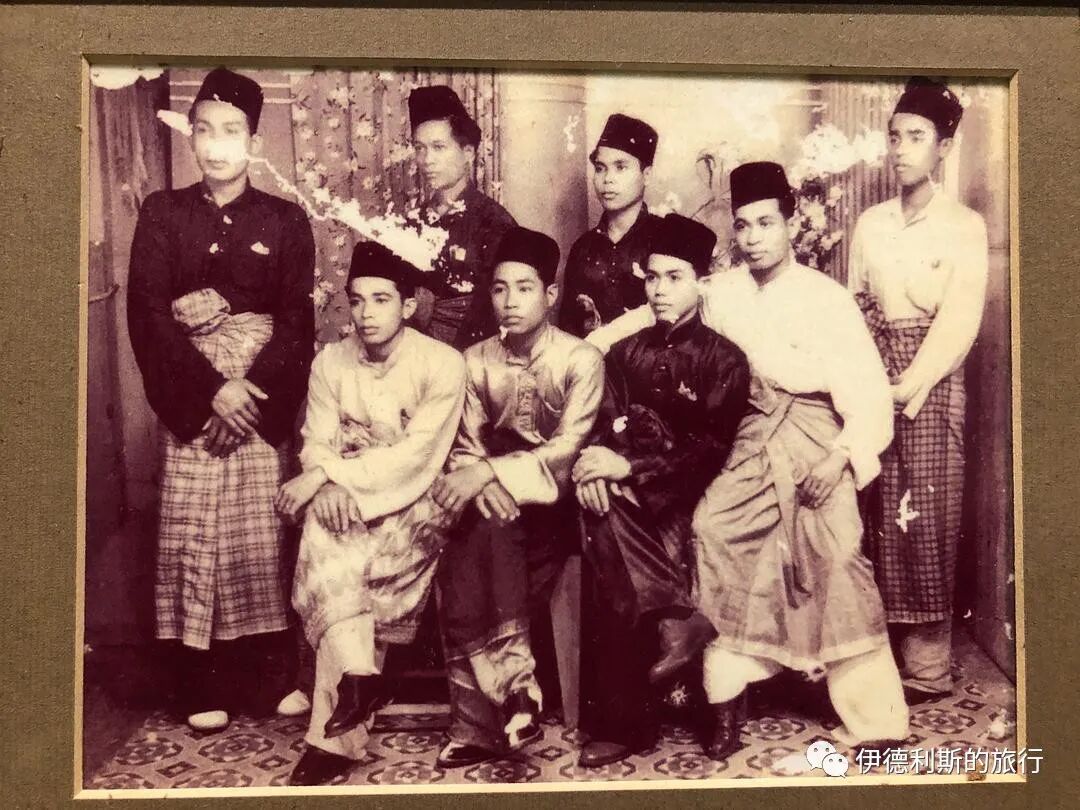
Old photos of Malay people in Penang
A Penang Malay dressing table
Wedding bed
Dressing box
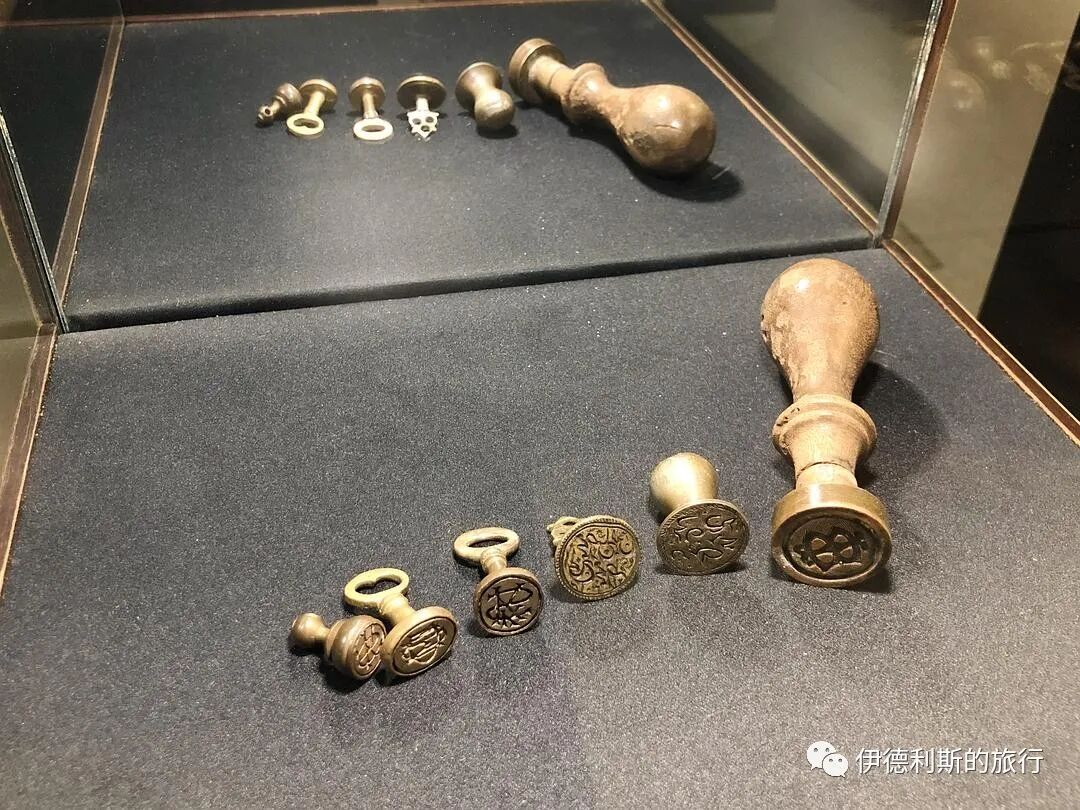
Seal view all
Summary: Penang — Malay Muslims, Mosques and Local History is presented here as a firsthand travel account in clear English, beginning with this scene: The Malay people (Melayu) are a group of Austronesian-speaking Muslims living in the Malay Archipelago, who emerged during the Malacca Sultanate in the 15th century. The account keeps its focus on Penang Malays, Malay Muslims, Muslim Heritage while preserving the names, places, food, and historical details from the Chinese source.
The Malay people (Melayu) are a group of Austronesian-speaking Muslims living in the Malay Archipelago, who emerged during the Malacca Sultanate in the 15th century. After the British took control of the Malay Peninsula in the 19th century, many Austronesian-speaking Muslim groups like the Acehnese, Banjar, Bugis, and Javanese moved to Malaya to settle down. Because they shared the same faith, similar physical features, and related languages, they gradually identified with Malay culture over two or three generations.
Although the Malay people have developed for hundreds of years, discussions about a Malay national identity only began in the early 20th century, leading to different schools of Malay nationalism. Article 160 of the 1957 Constitution of the Federation of Malaya officially defined a Malay person as someone who professes the Islamic religion, habitually speaks the Malay language, and conforms to Malay customs and culture. Born in the Federation of Malaya or Singapore before Independence Day (August 31, 1957), or having either parent born in the Federation of Malaya or Singapore, or being a resident of the Federation or Singapore on Independence Day, or being a descendant of any of these people. After this, all Malay-speaking Muslim groups within Malaysia were classified as Malay.
Today in Penang, you can still experience the diverse cultural atmosphere of the Malay people. Here you can visit a mosque built by the Acehnese 200 years ago, eat unique food from the Jawi Peranakan community, and listen to the music of the legendary Penang Malay singer P. Ramlee.
Lagenda Cafe
Lagenda Cafe is a themed restaurant honoring the godfather of Malay film music, P. Ramlee (1929-1973), and it plays his classic songs on a loop. P. Ramlee is a legend among the Malay community in Penang, and people still remember him even though he passed away many years ago. P. Ramlee was born Teuku Zakaria. His father was a sailor from the Aceh region in northern Sumatra, Indonesia, who later settled in Penang. P. Ramlee starred in 66 films, directed 35 movies, and wrote 250 songs. He was a key figure during the golden age of Malaysia from the 1950s to the early 1960s and was an icon in the entertainment industries of Singapore, Malaysia, and Indonesia.
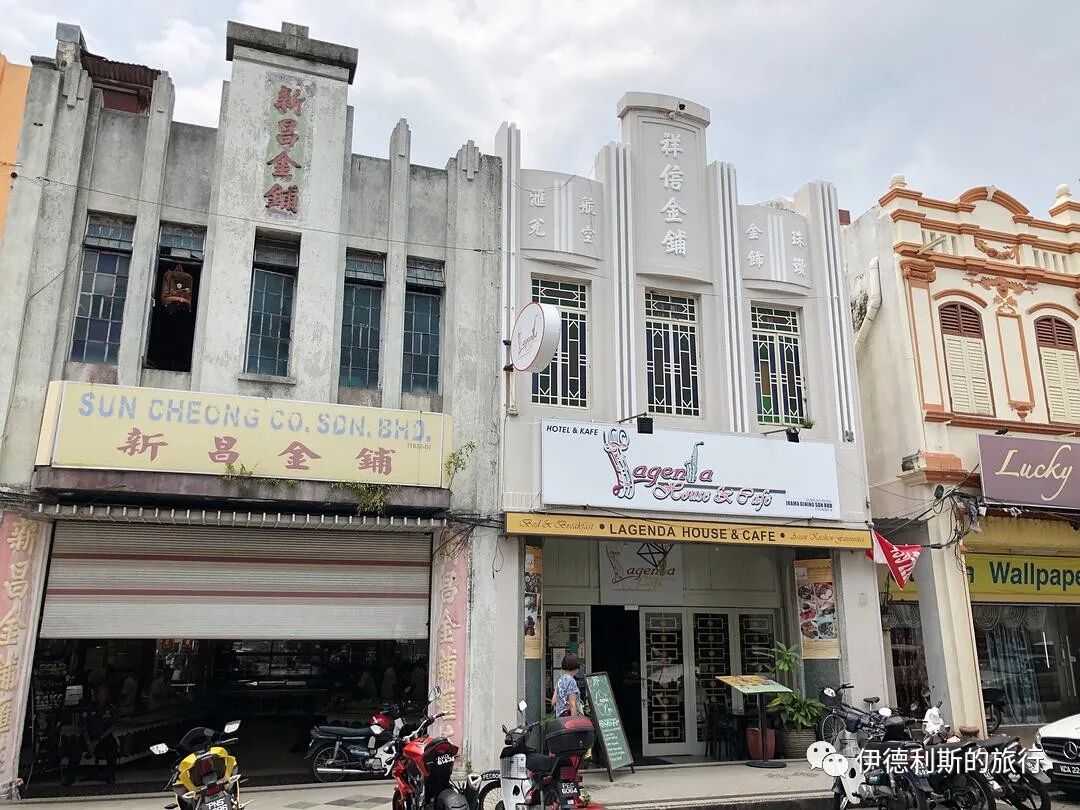
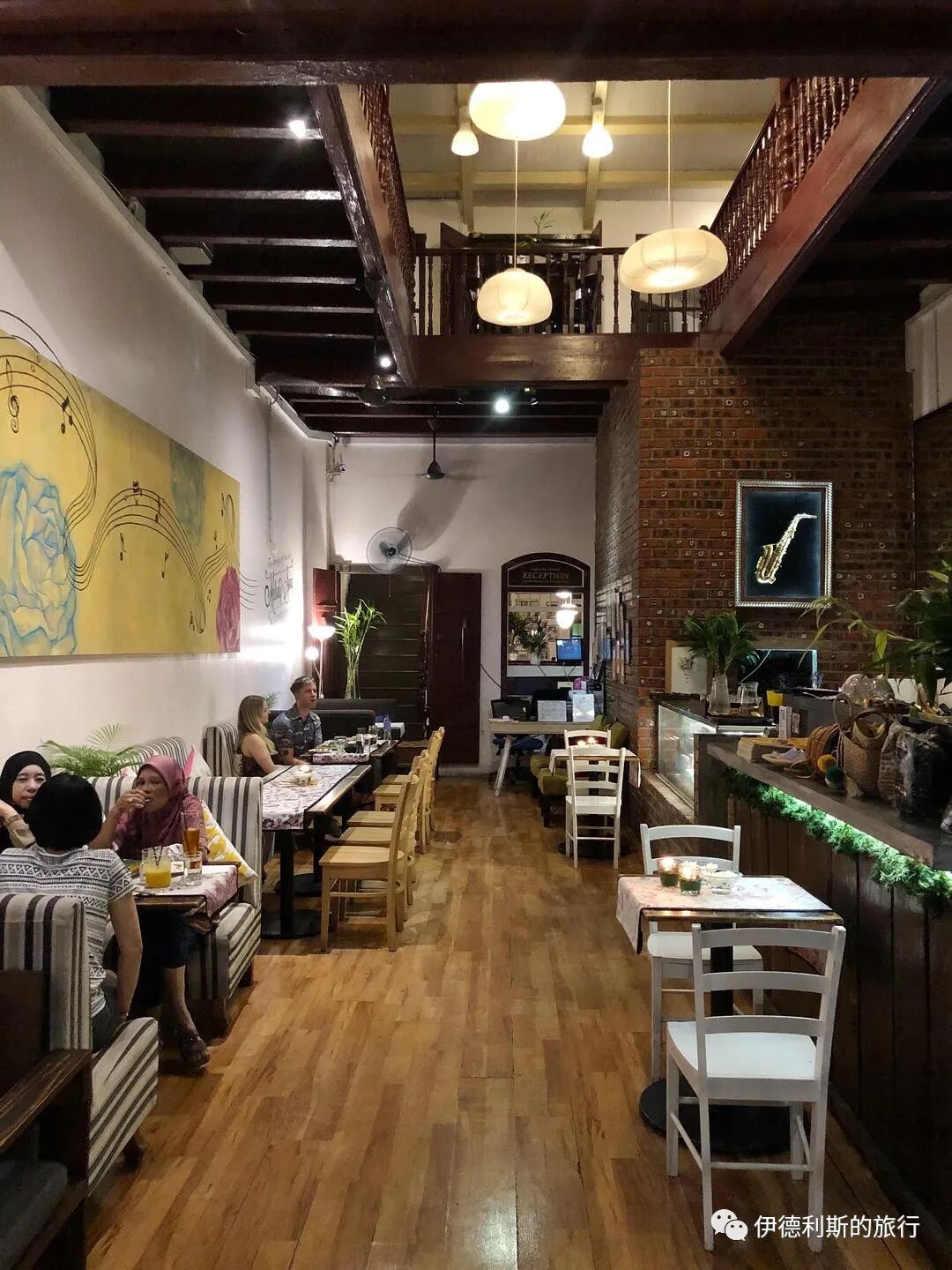
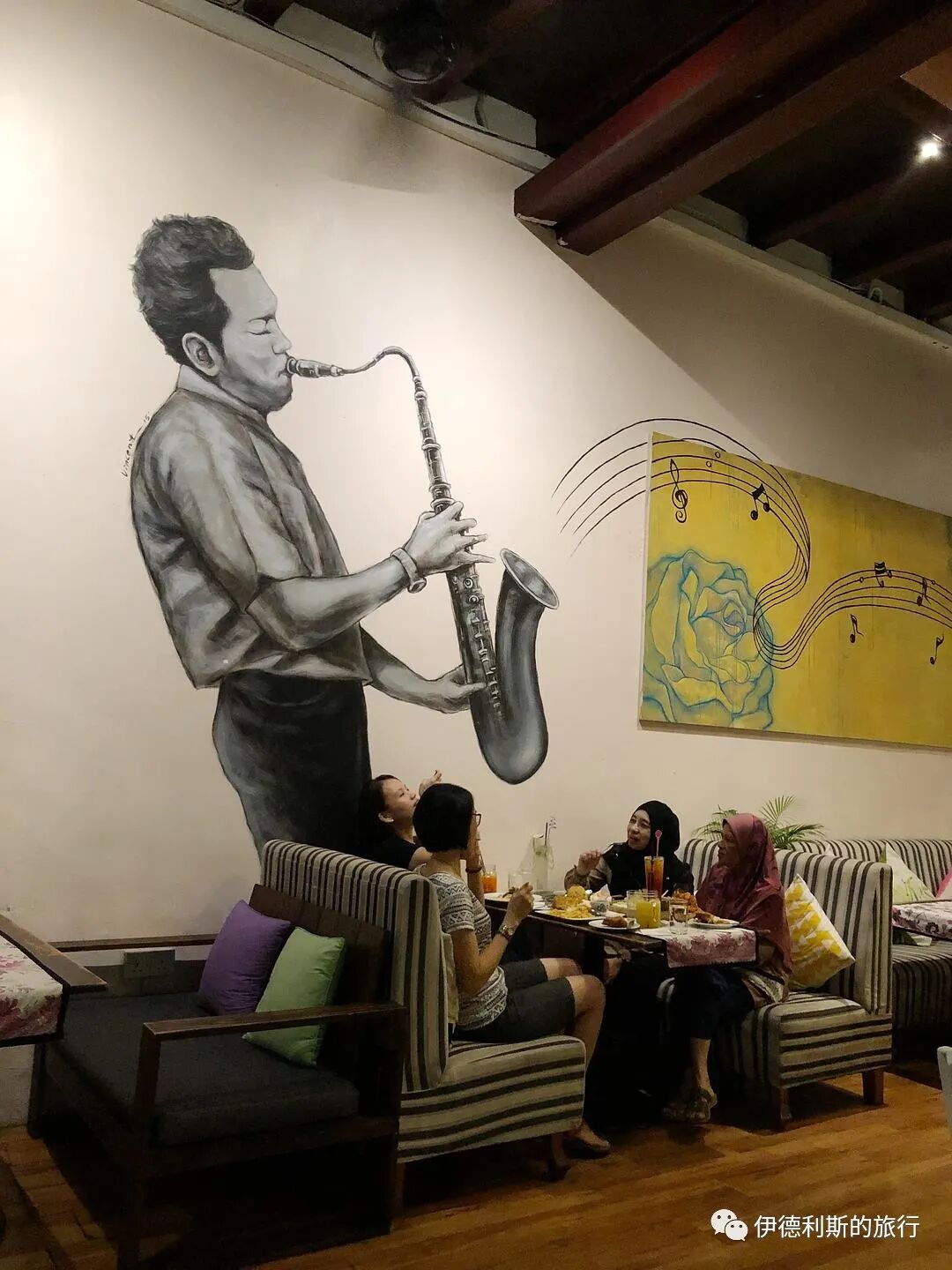
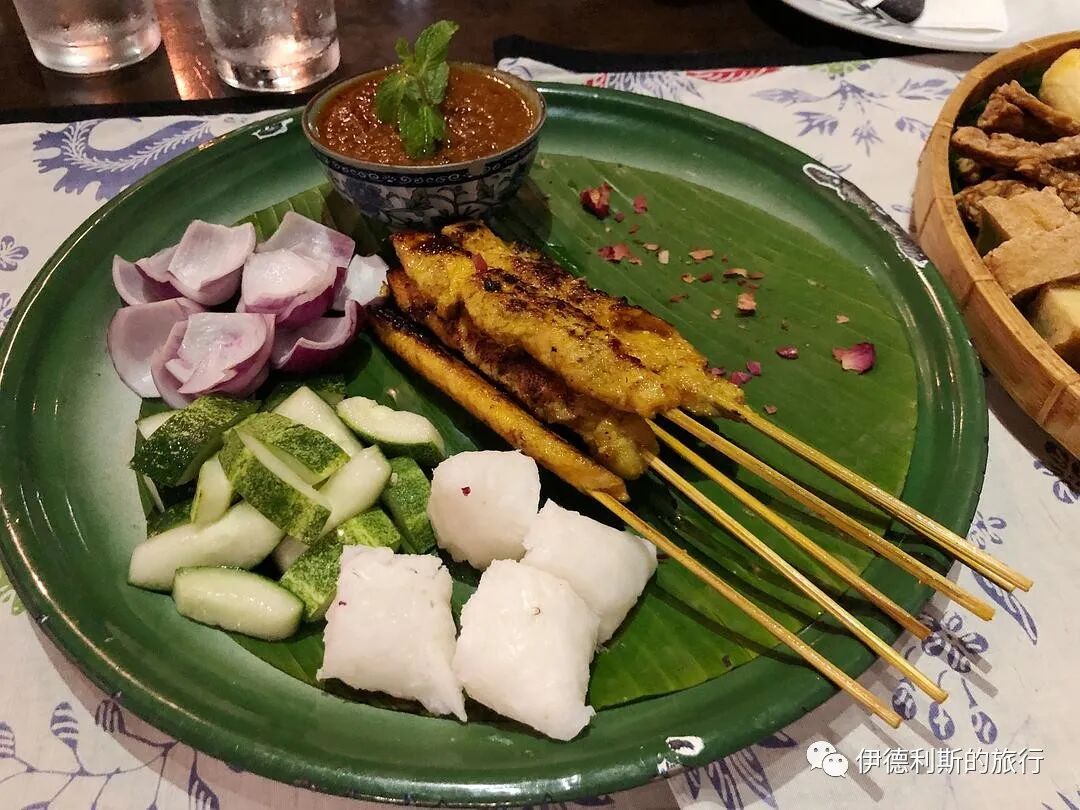
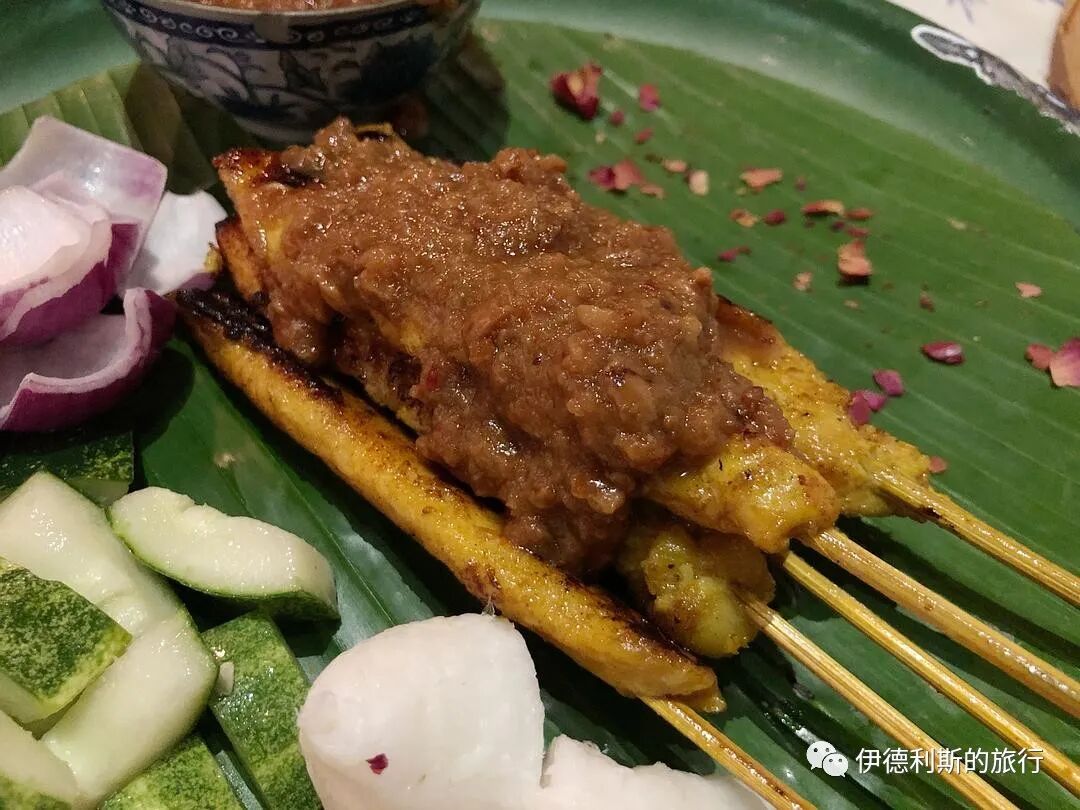
Lagenda Cafe specializes in Malay and Indonesian food. We ordered gado-gado (gado-gado) and chicken satay (satay ji rou chuan).
Gado-gado is a salad that started on Java Island. The name gado-gado means "mix," so it includes many different foods. Our version had cucumber, sweet radish, shrimp crackers, vegetable tempura, shrimp tempura, egg, wheat grain strips, fried tofu, fried potato, rice cake, bean sprouts, and long beans. Then you dip it in gado-gado sauce made from fried peanuts, palm sugar, garlic, chili, tamarind, and lime juice.
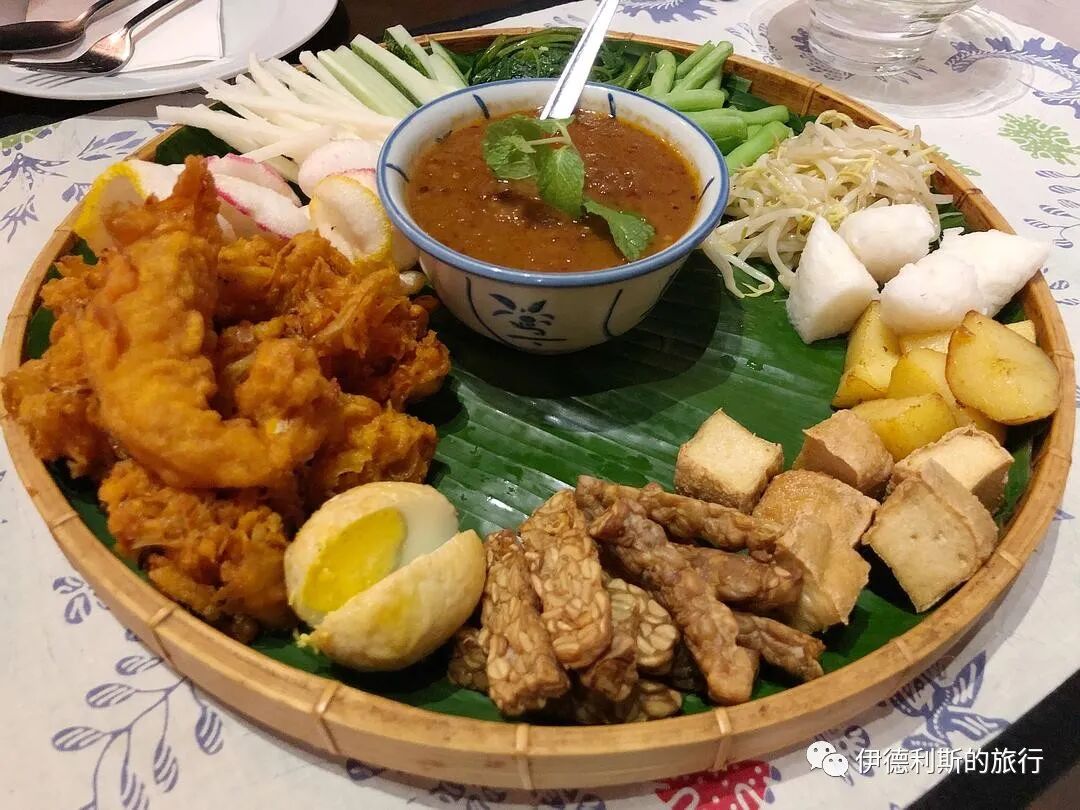
Chicken satay is also a dish from Java Island. People say Javanese street vendors developed it in the 18th century from Indian kebabs brought by Indian Muslim traders, and it became part of Malay food in Penang in the 19th century. Meat skewers are usually marinated in turmeric, sweet soy sauce, or coconut oil before grilling, then dipped in satay sauce when eaten. Satay sauce is mainly made of roasted peanuts, and usually includes peanut butter, coconut milk, turmeric, soy sauce, galangal, garlic, chili, and various spices.
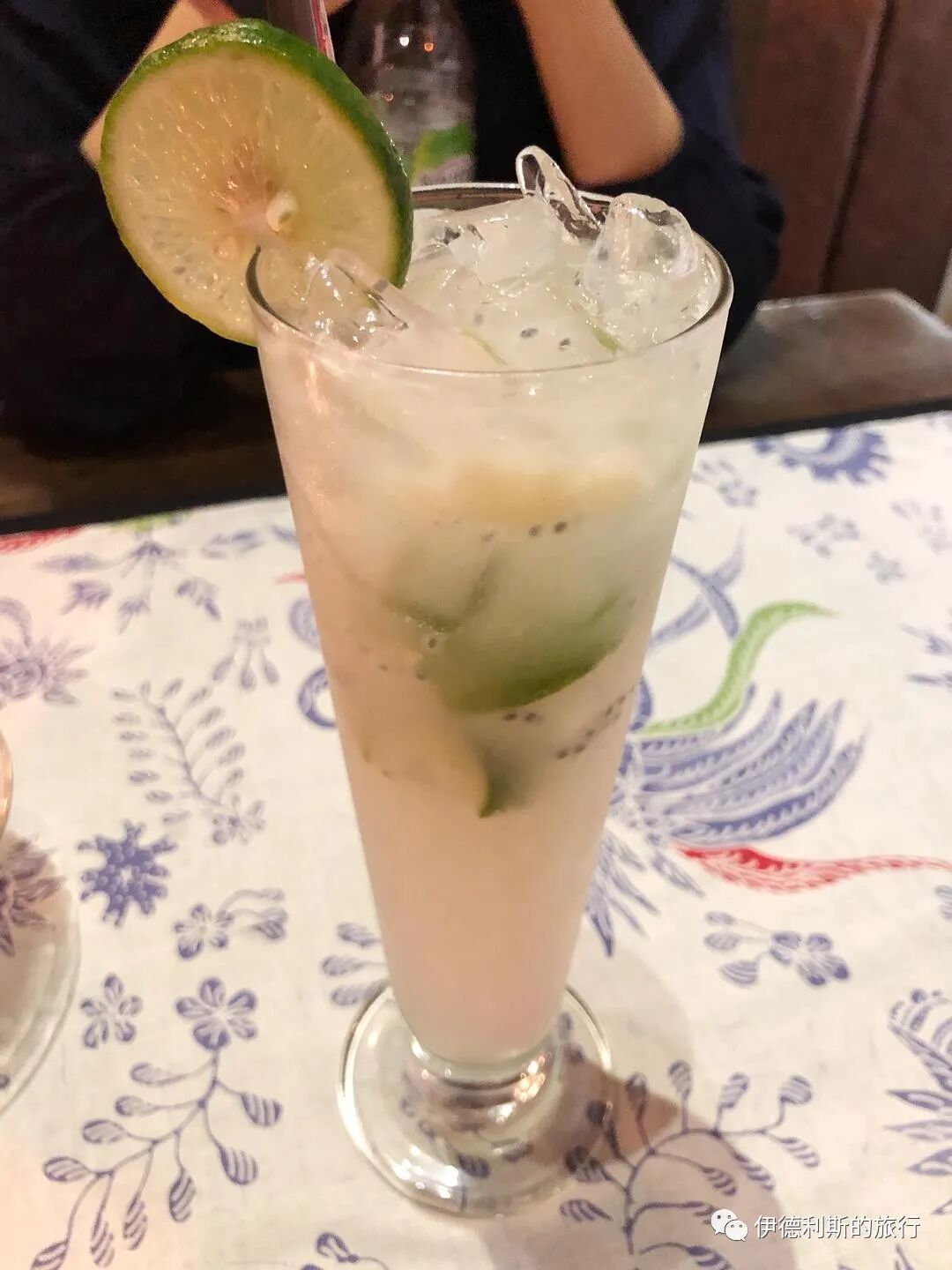
This drink is called Asam Boi & Guava Tea. It is made with lime, mint, black tea, sour plum, and fresh-pressed guava juice. It is very refreshing and smooth.
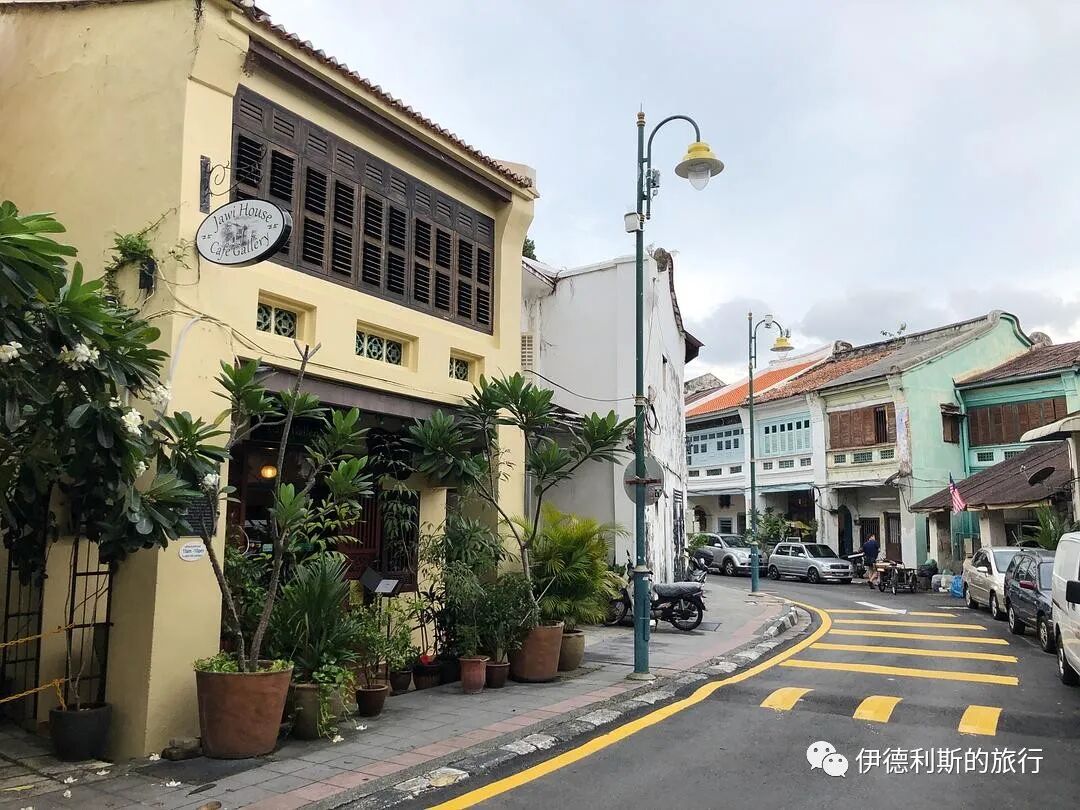
Jawi House Cafe Gallery
In Penang and Malaysia, there is a unique group called Jawi Peranakan. This refers to a Malay-speaking Muslim community formed by the intermarriage of Indian Muslim men—also including those of Arab and Persian descent—with Malay Muslim women. Jawi is the Arabic word for Southeast Asian Muslim, and Peranakan is the Malay word for local-born. Before the 1860s, the vast majority of Indian Muslims who came to Penang were men.
When the Jawi Peranakan community married, they did not prioritize the other person's ethnic group, but looked first at their wealth and status. Because of this, after the mid-19th century, the Jawi Peranakan had become the elite class of British Malaya. The Jawi Peranakan community placed great importance on a British-style education, so many of them held positions in the colonial government. At the same time, the Jawi Peranakan community also valued cultural development, and the first Malay-language newspaper was founded by them.
After the 20th century, as the British Empire declined, the Jawi Peranakan community began to blend into the Malay population. Today, the government counts most Jawi Peranakan as Malay. Even so, the Jawi Peranakan community still works hard to pass on their unique culture, which shows in their architecture, clothing, jewelry, and food.
Today, the best place in Penang to experience Jawi Peranakan culture is the Jawi House Cafe Gallery. This building started as a Straits Eclectic-style Chinese shophouse built in the 1860s with Malay-style decorations, and it later served as an Indian Muslim coppersmith shop. The shop is on Armenian Street (Lebuh Armenian), originally called Malay Lane, which was the first area where the Jawi Peranakan community settled. In 2012, the Karim family, who have Punjabi roots and have lived in Penang for six generations, opened Jawi House here to serve the most authentic Jawi Peranakan food.
We ate prawn fritters (cucur udang), lemuni leaf rice (nasi lemuni), and Jawi chicken curry. We also drank Penang nutmeg juice and Arabian sherbet, and finished with sago pudding for dessert.
Cucur udang is made by coating shrimp and green onions in batter, deep-frying them, and dipping them in peanut sauce. In Malay, 'cucur' means a deep-fried fritter and 'udang' means shrimp.
Nasi lemuni is rice cooked with coconut milk, lemongrass, and blue lemuni flowers, served with crispy fried anchovies and spicy sambal sauce. In the past, Lemuni rice (nasi lemuni) was a traditional food for Malay women during their postpartum recovery period, as it was said to help improve blood circulation.
Jawi chicken curry is the Jawi Peranakan version of chicken curry. As a mixed-heritage community, Jawi Peranakan curry is a blend of both Indian and Malay curry styles.
Nutmeg is the English name for the spice, and this drink is a Penang specialty made with honey and lemon, giving it a sweet and sour taste.
The word sherbet comes from the Persian word sharbat, which means a non-alcoholic sugar drink. In medieval Arabia, people loved to add syrup and honey to their sharbat to make it sweeter. They also liked to add ingredients like almonds, lemon, apple, pomegranate, tamarind, dates, sumac, musk, and mint. Spread by Arabs and Persians, the drink sharbat is now popular across West Asia, South Asia, and the Malay Archipelago, especially during Ramadan. The Arabian sherbet at Jawi House is made with rose syrup, mallow nuts, gum arabic, and basil seeds, giving it a very rich flavor.
The signature Jawi Peranakan version of sago pudding is topped with coconut cream and thick palm sugar syrup, then sprinkled with crushed peanuts for a refined taste.
Jawi House displays a collection of old photos of Jawi Peranakan life in Penang, along with paintings of the local Muslim community.
A coconut shop on a street in Penang.
ALI NASI LEMAK coconut milk rice (nasi lemak)
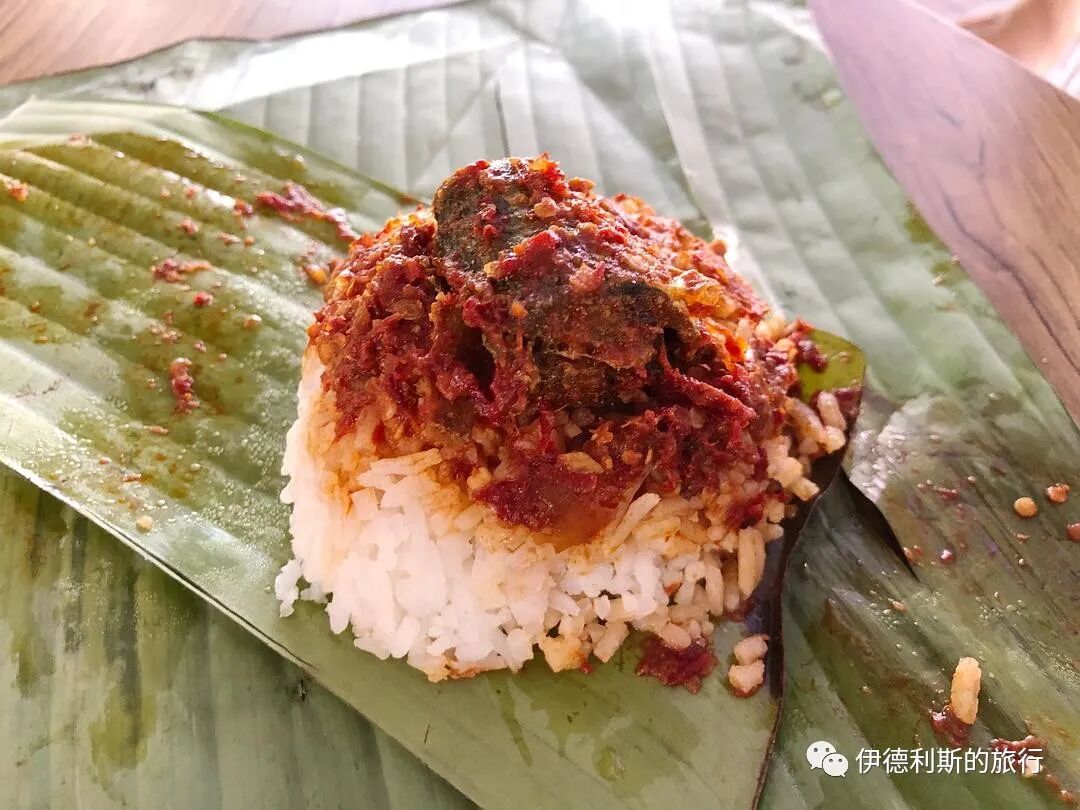
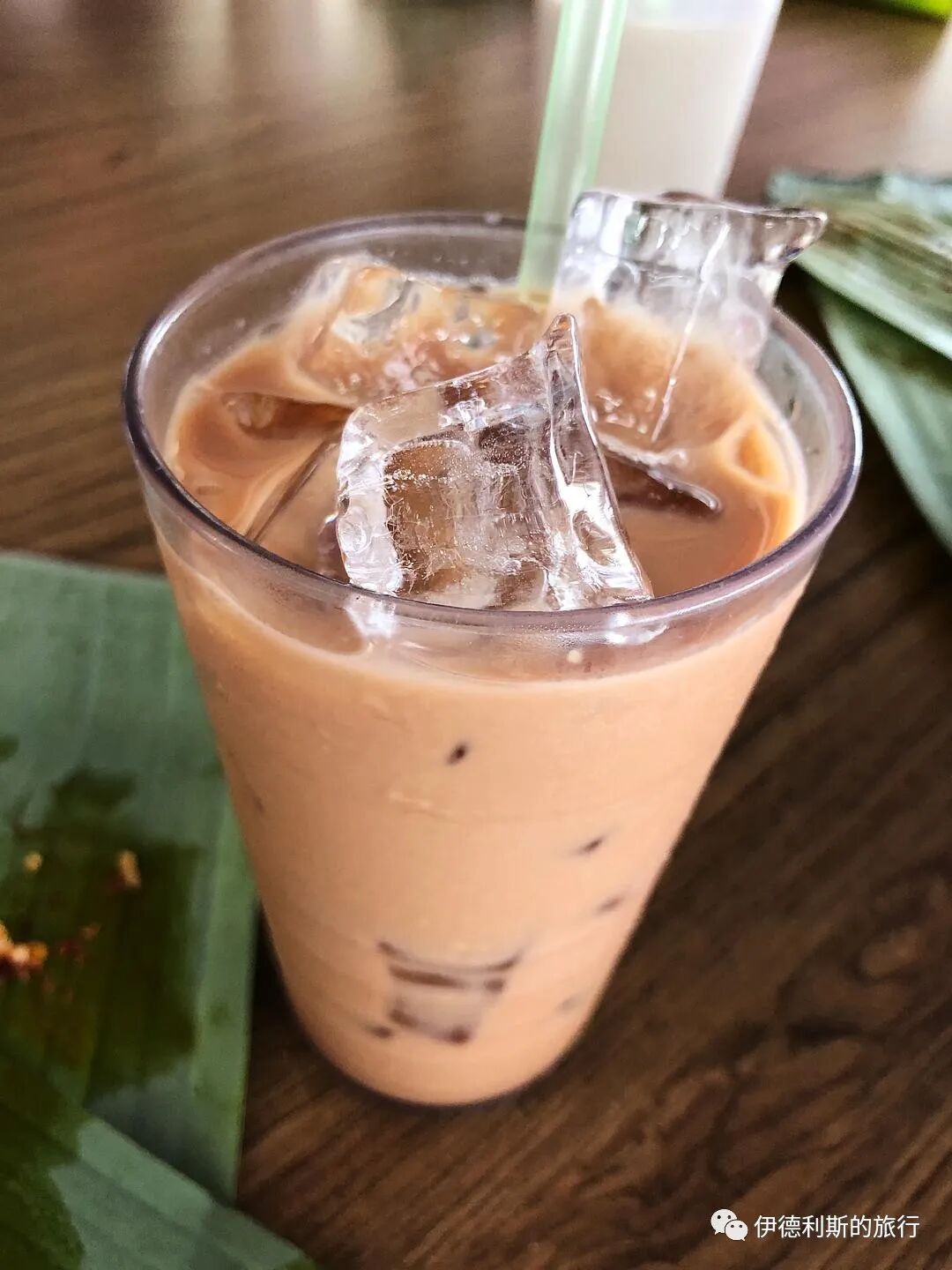
I ate coconut milk rice (nasi lemak) at ALI NASI LEMAK in the Sri Weld Food Court in Penang. Coconut milk rice is fragrant Malay rice cooked with coconut milk and pandan leaves. It is known as Malaysia's national dish and is popular across the Malay Archipelago and southern Thailand.
Traditional coconut milk rice is wrapped in a banana leaf and served with spicy chili paste (sambal), dried anchovies, peanuts, and eggs. Spicy chili paste is a traditional Southeast Asian sauce that started in Indonesia. It is made by stir-frying fermented shrimp paste (belacan) with chili peppers and various seasonings. The sambal sauce at this place was incredibly spicy; it really burned my lips first and then hit my throat.
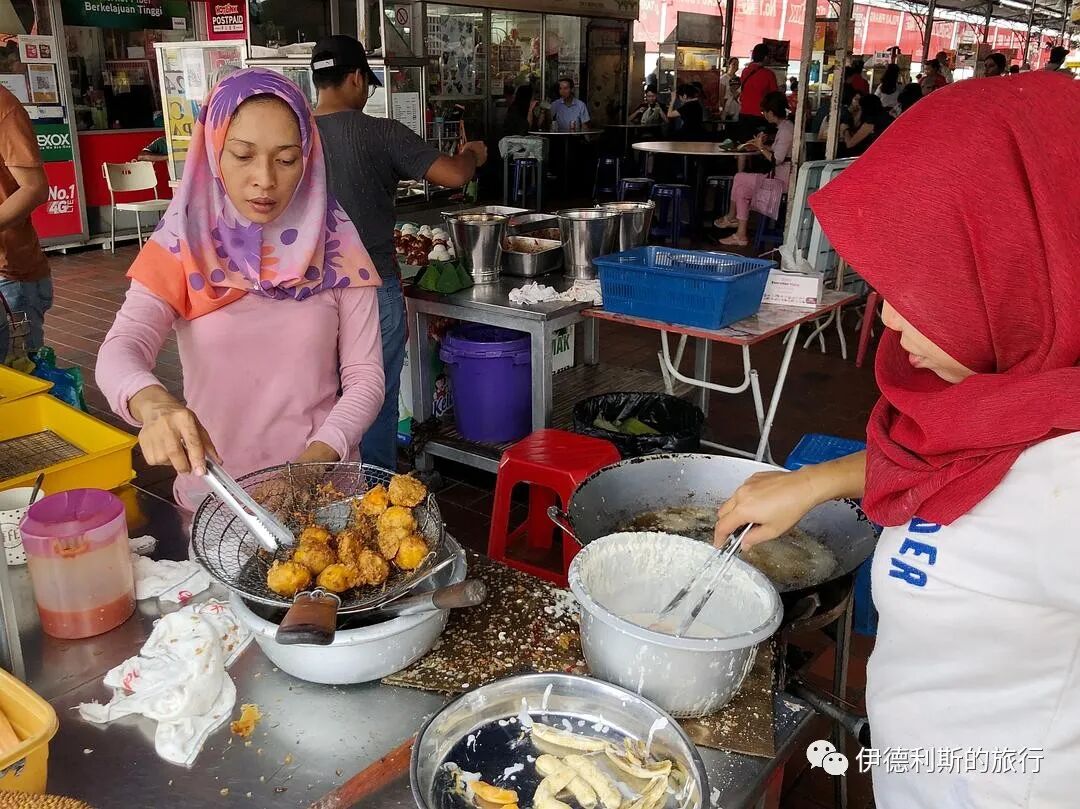
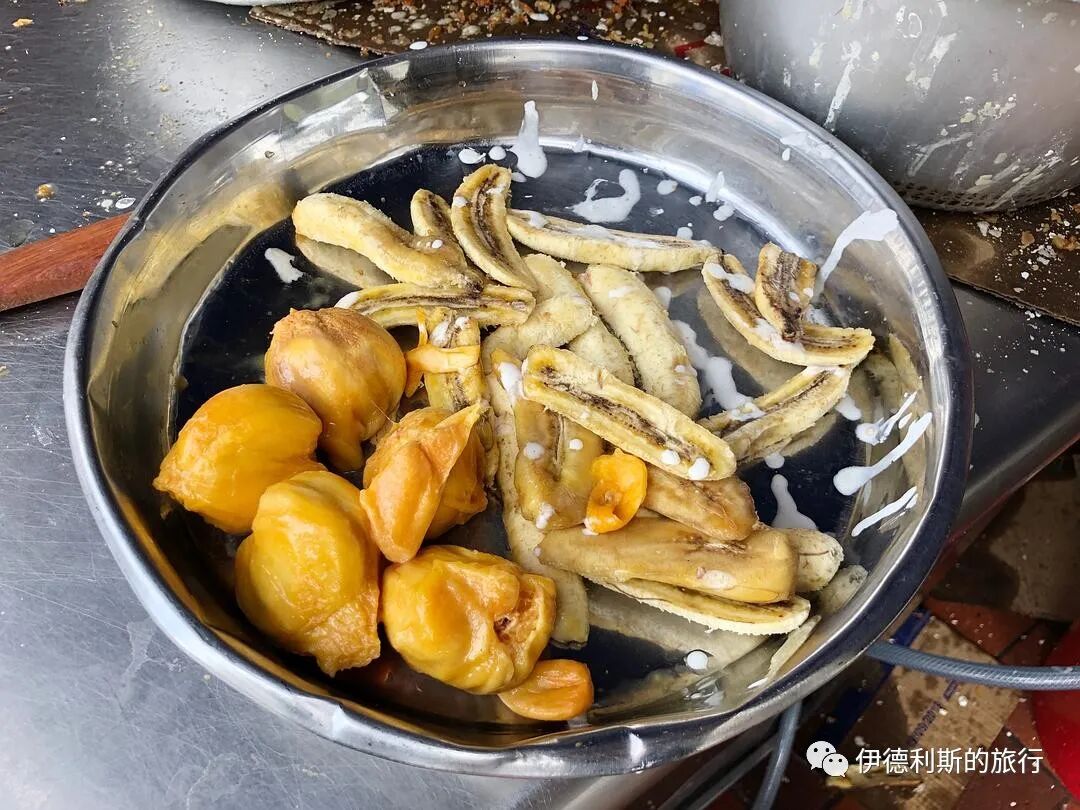
Then I had some fried jackfruit next door. Small jackfruit (cempedak) is similar to regular jackfruit, but it is sweeter and has a smoother, softer texture.
Acheen Street Mosque: 1808
Acheen Street Mosque (Masjid Melayu Lebuh Acheh) was built by the Acehnese in 1808, and the area around the mosque is the oldest Muslim community in Penang. The Acehnese are a Muslim ethnic group speaking an Austronesian language who live on the northernmost tip of Sumatra. They founded the Aceh Sultanate in 1499 and saw it flourish during the 17th century. In the late 18th and early 19th centuries, the first Chinese Kapitan of Penang, Koh Lay Huan, built a strong relationship with the Aceh Sultanate, which started the pepper trade between Aceh and Penang.
In 1791, an Acehnese pepper merchant and nobleman of Arab descent named Tengku Syed Hussain Al-Aidid moved from Aceh to Penang. He established the first Muslim settlement in Penang near what is now Aceh Street, and after that, many Muslim merchants from the Malay Archipelago, India, and Arabia arrived. In 1808, Tengku Syed Hussain donated money and land to build a mosque. The first imam of the mosque was Sheikh Omar Basheer Al-Khalilee, and his son, Sheikh Zakaria, later took over the position. Sheikh Zakaria became the first Mufti (legal scholar) of Penang in 1888.
After Tengku Hussain died in the mid-19th century, the Muslim community on Acheen Street continued to thrive and became known as the second Jeddah (the port city that serves as the gateway to Mecca). Every year during the Hajj season, pilgrims from all over would pack the Acheen Street community before boarding ships in Penang to travel to Mecca. This busy scene lasted until the Malaysian Hajj Pilgrims Fund Board (Lembaga Tabung Haji) was established in the 1970s.
In 1913, the British colonial government passed the Malay Reservation Act, which officially defined a "Malay" for the first time as anyone who belonged to the Malay race, habitually spoke the Malay language or "any other Malay language," and practiced Islam. This meant that Austronesian-speaking Muslim groups who moved to Malaya from other parts of the Malay Archipelago were counted as 'other Malays' in statistics, a group that included the Acehnese in Penang. First-generation Penang Acehnese usually kept their immigrant identity. However, because the Acehnese and Malays share similar physical features, languages, and the same faith, most Penang Acehnese accepted a 'Malay' identity by the second or third generation and blended into Malay culture.
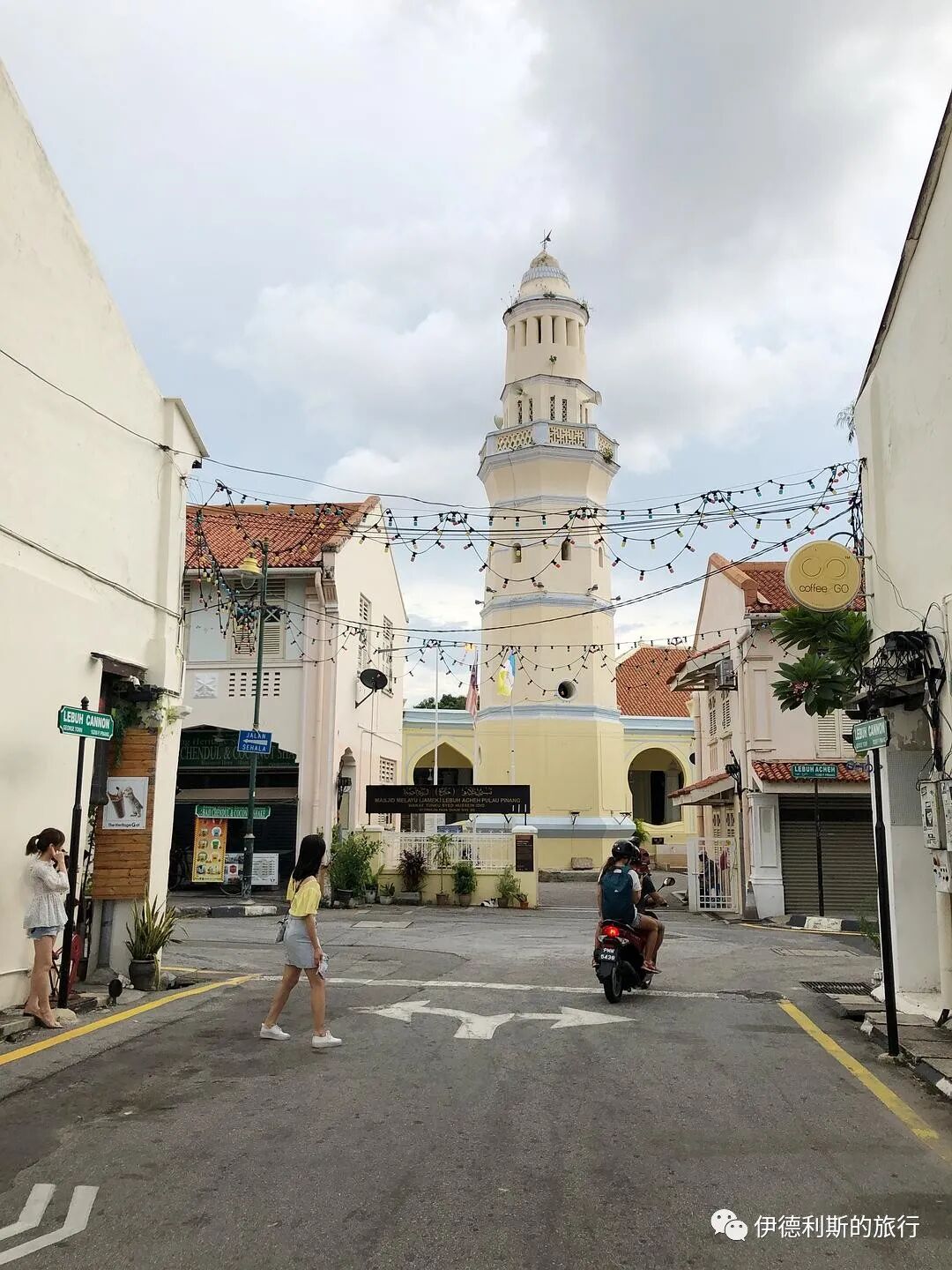
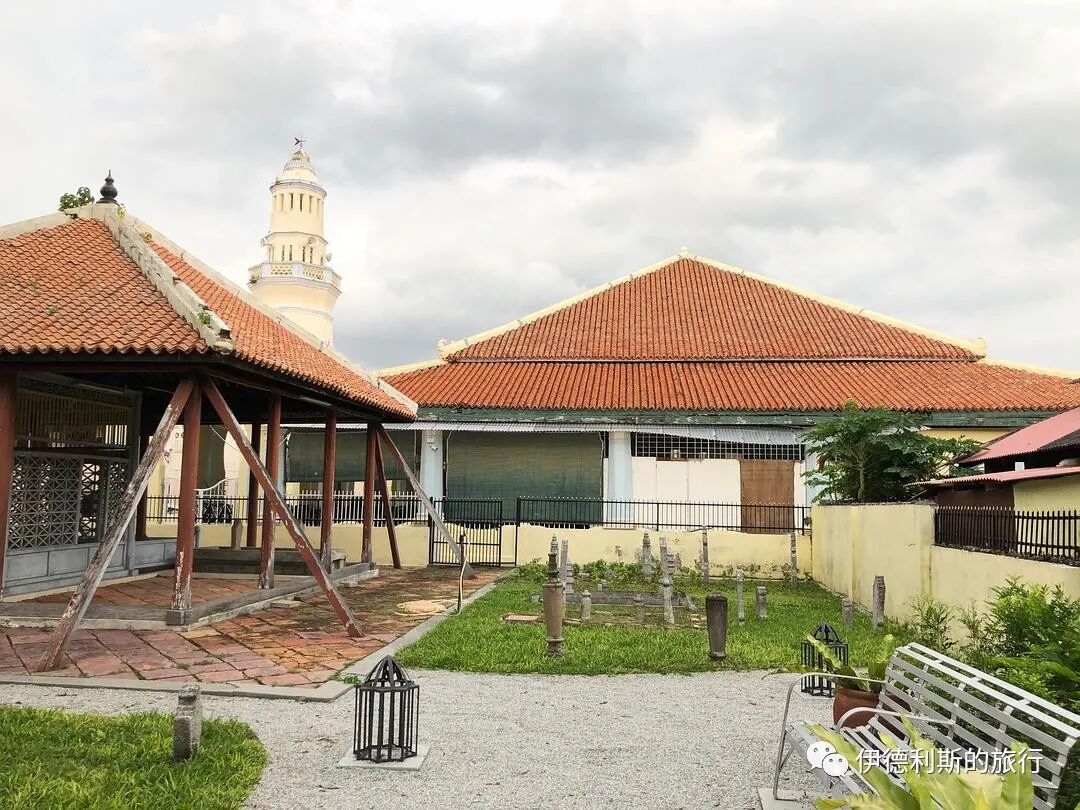
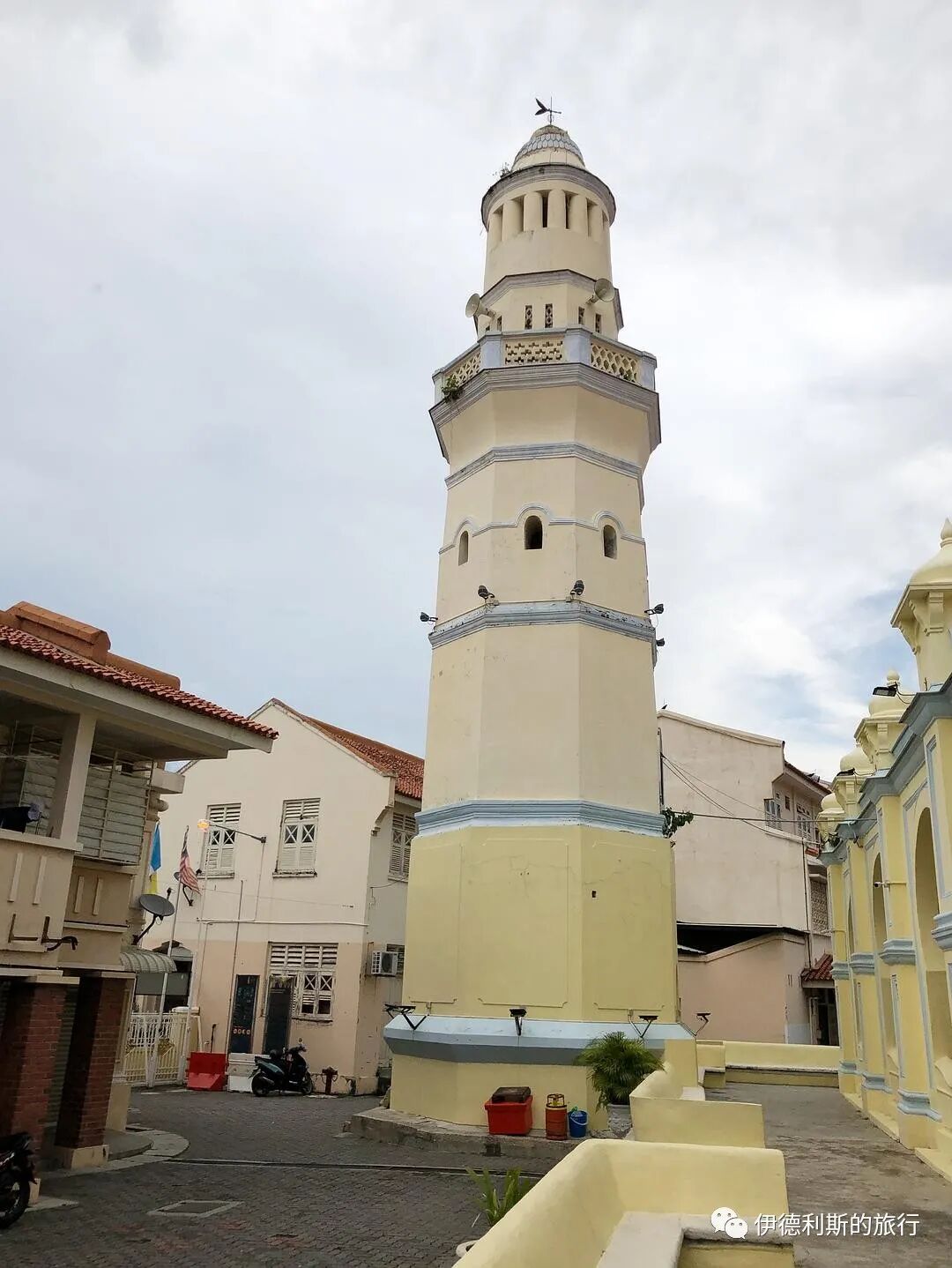
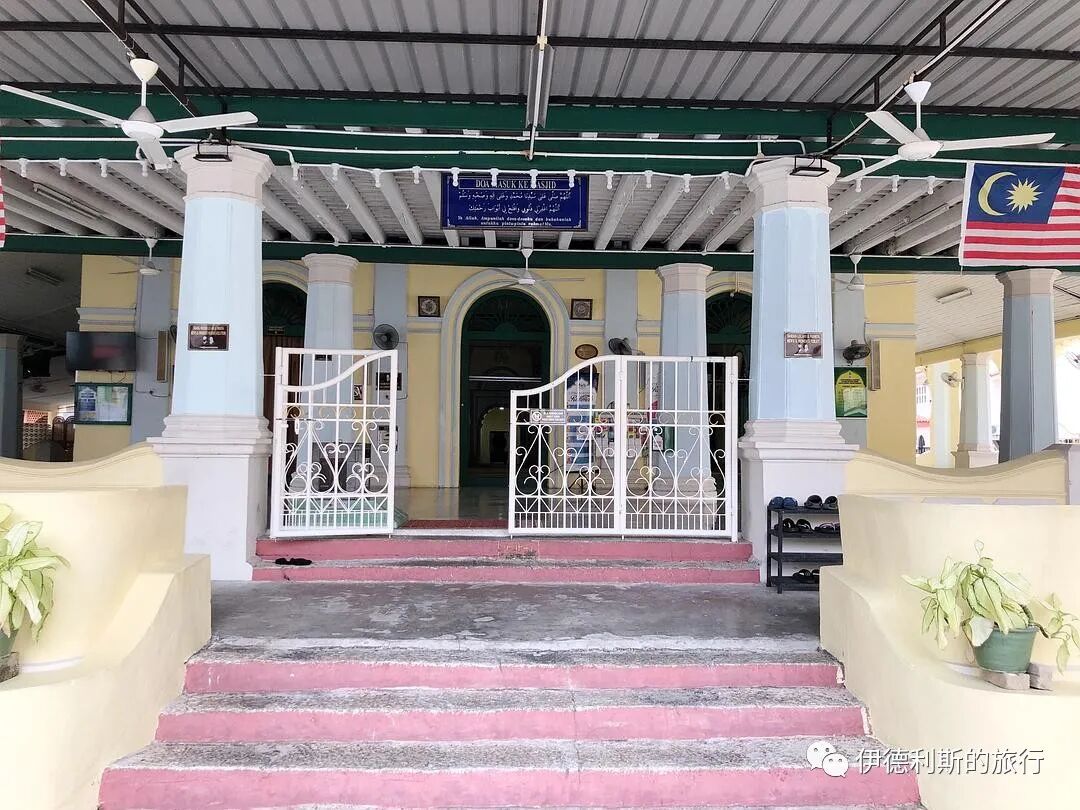
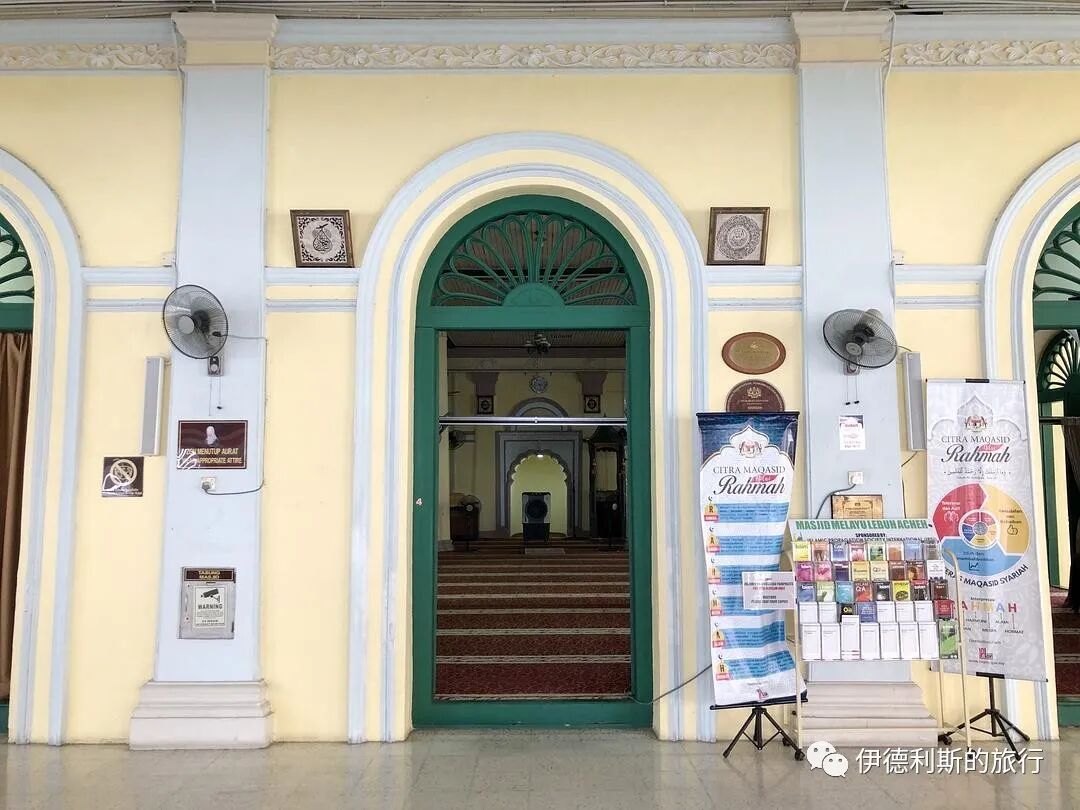
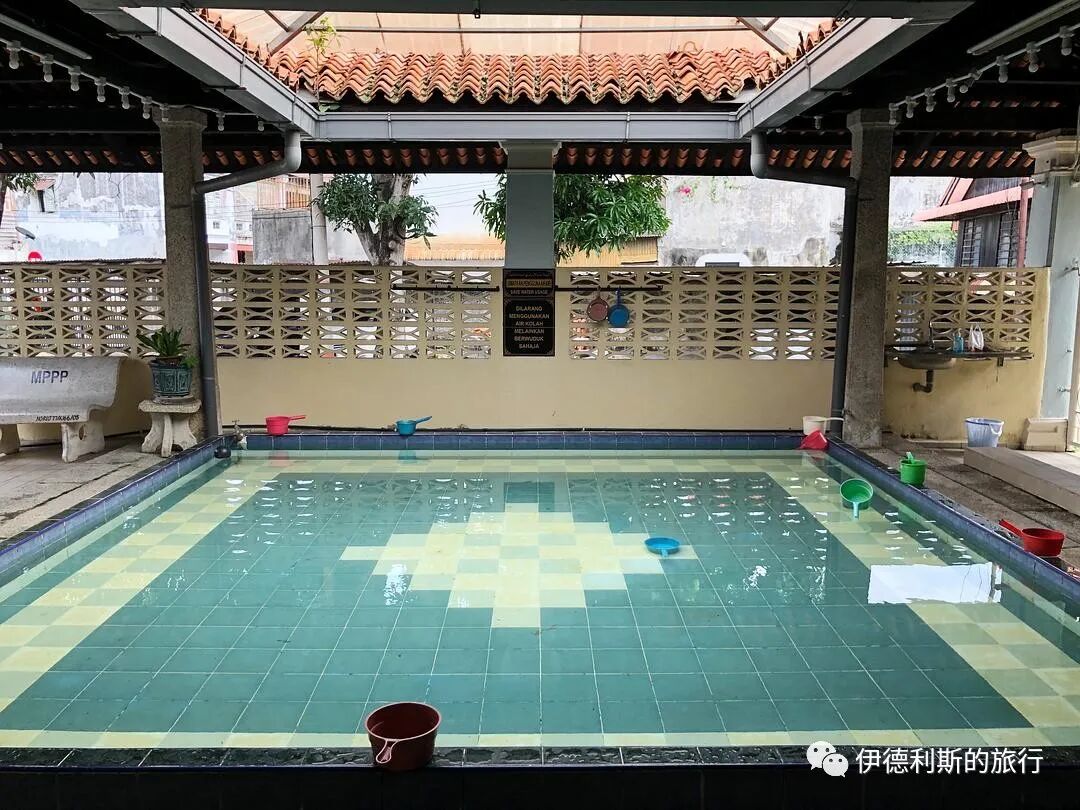
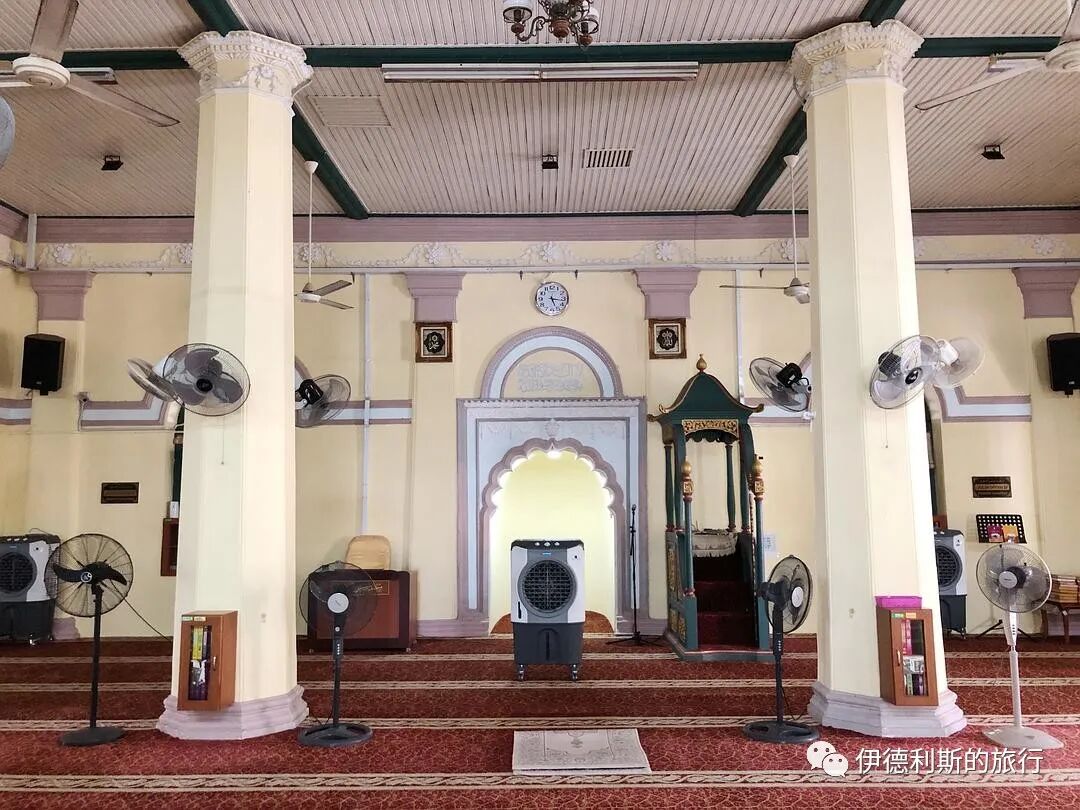
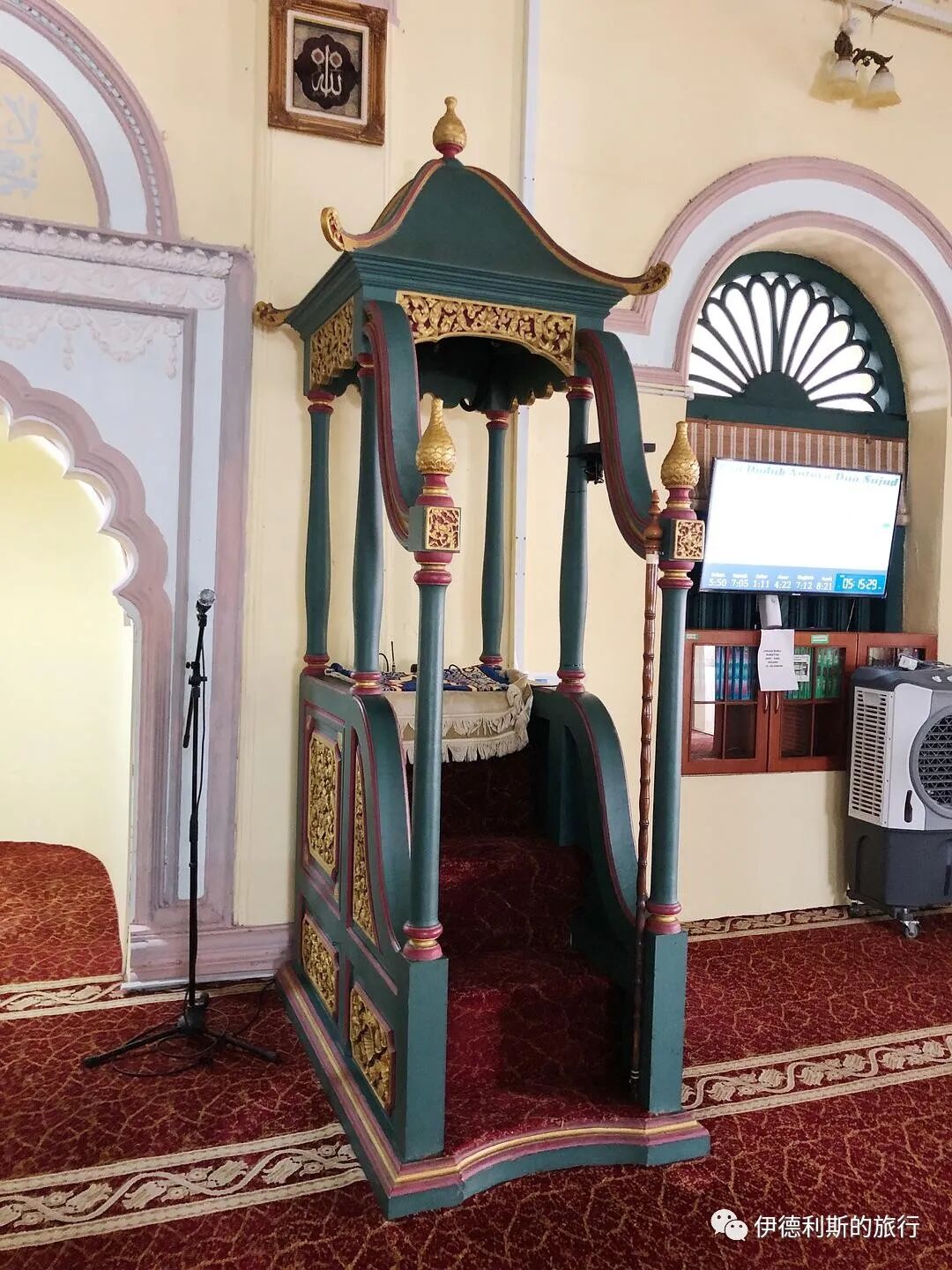
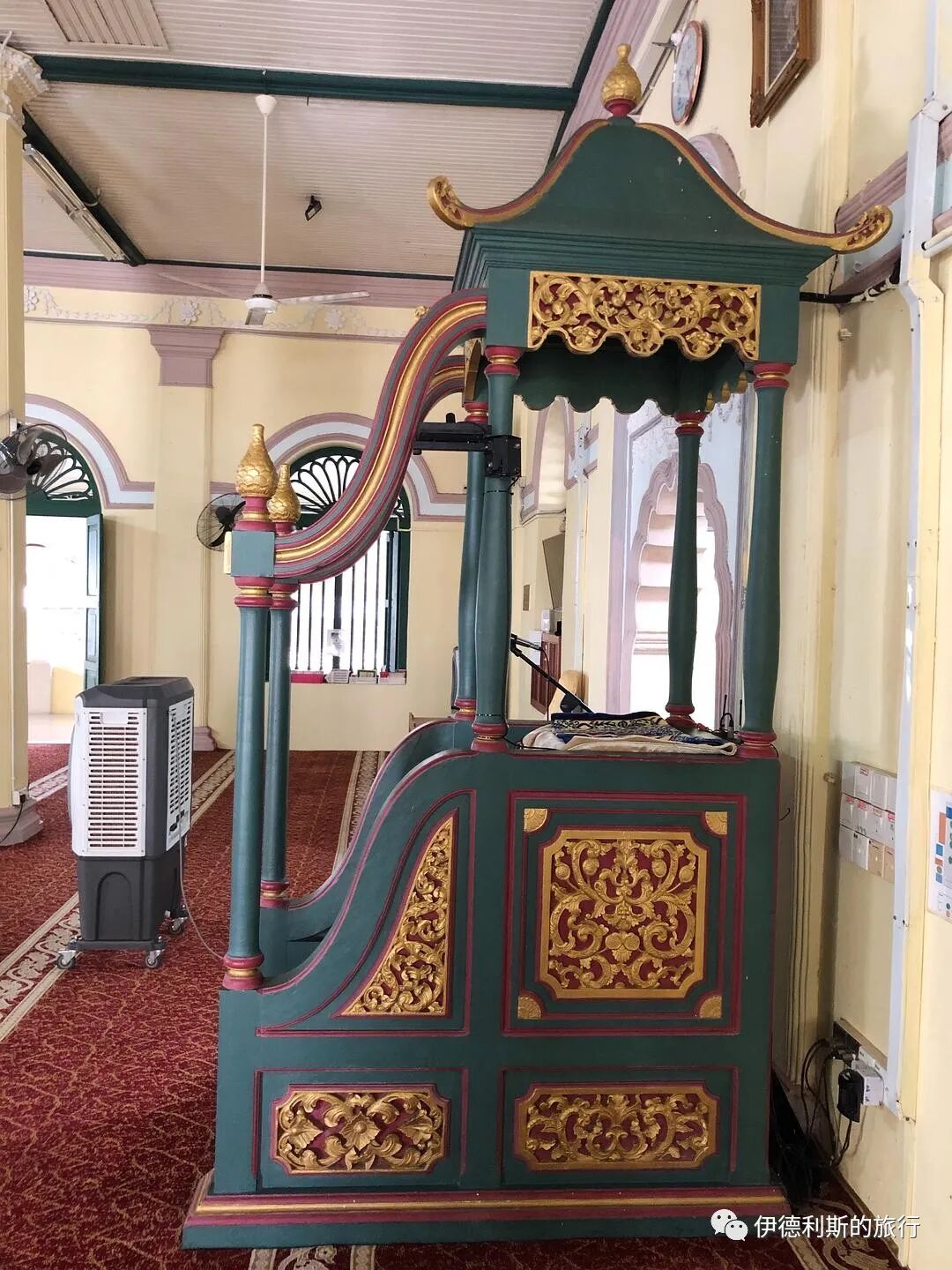
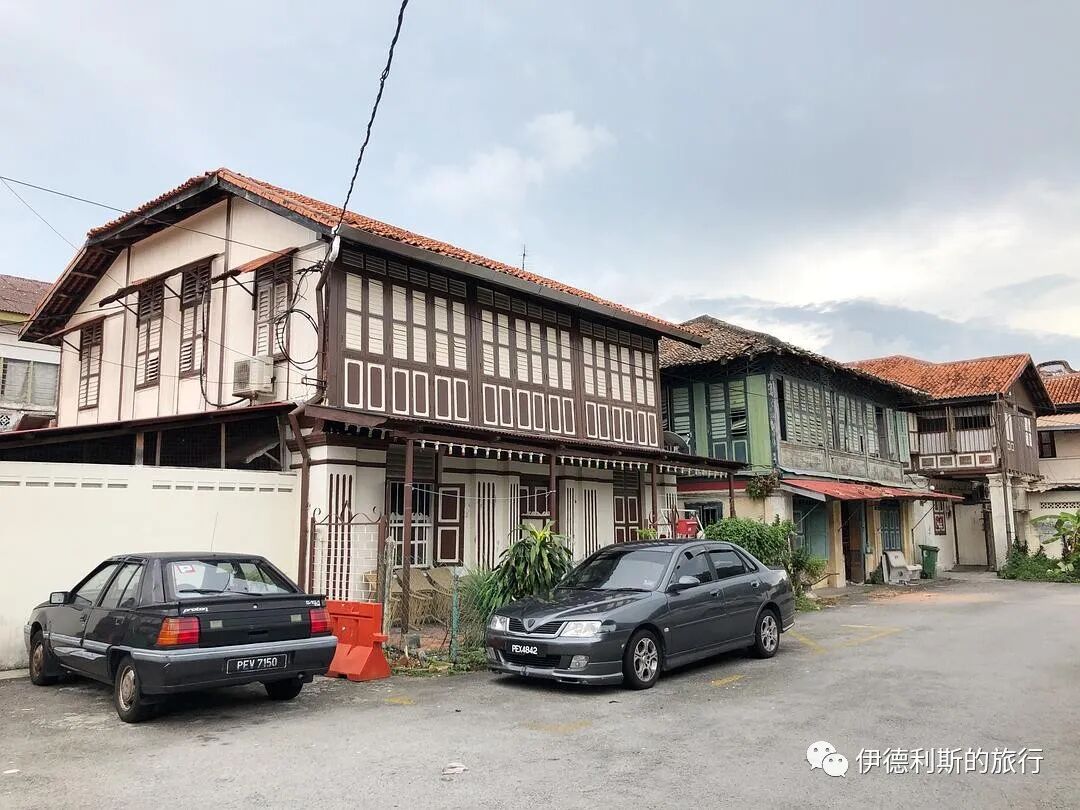
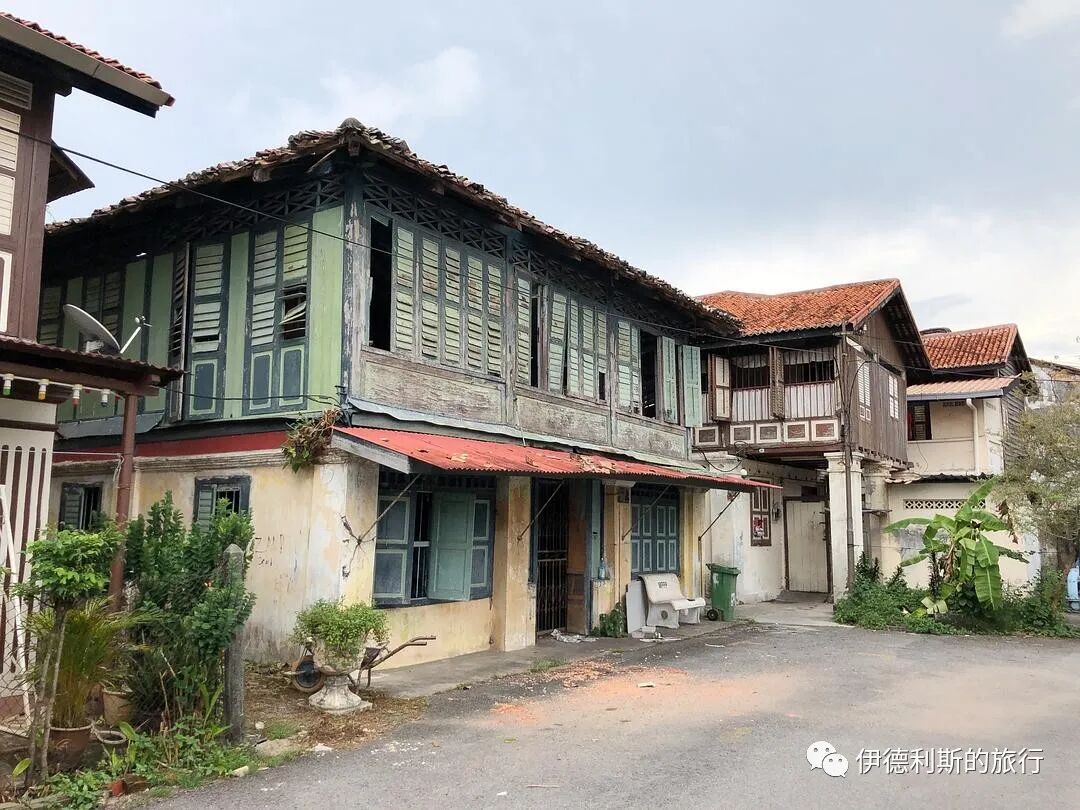
The courtyard of the Aceh Mosque still holds four early houses from the Aceh Street Muslim community: the home of Syed Mohamad Al-Habshee, the Al-Mashoor Quran school, the home of the first mufti Sheikh Zakaria, and the home of Syed Abdul Hamid AL-Haddad.
There is also the tomb of the mosque's founder, Tengku Syed Hussain Al-Aidid, which features a tombstone in the classic Acehnese style.
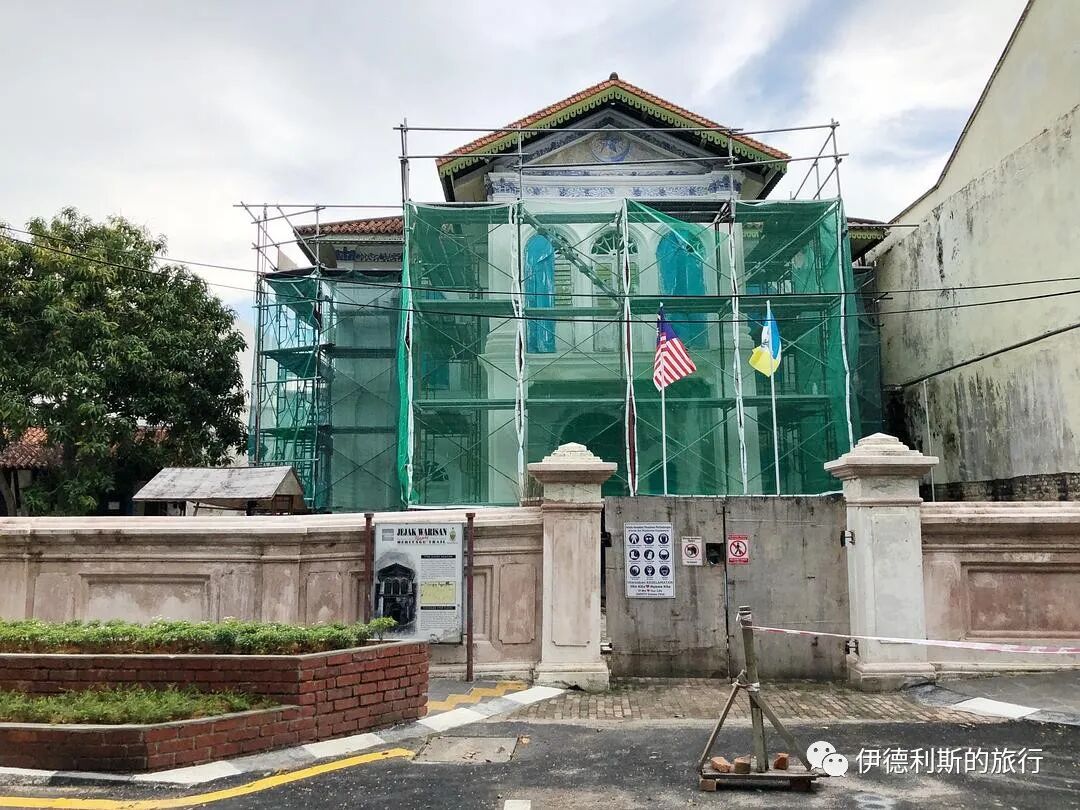
The Penang Islamic Museum under renovation.
It was a real shame that the Penang Islamic Museum was closed for renovations during my visit. This building is a Straits-style house built by an Acehnese Muslim pepper merchant in the 1860s.
Malay artifacts in the Penang Museum
The Penang Museum has a gallery that displays artifacts from the Malay people of Penang.
Arabic calligraphy
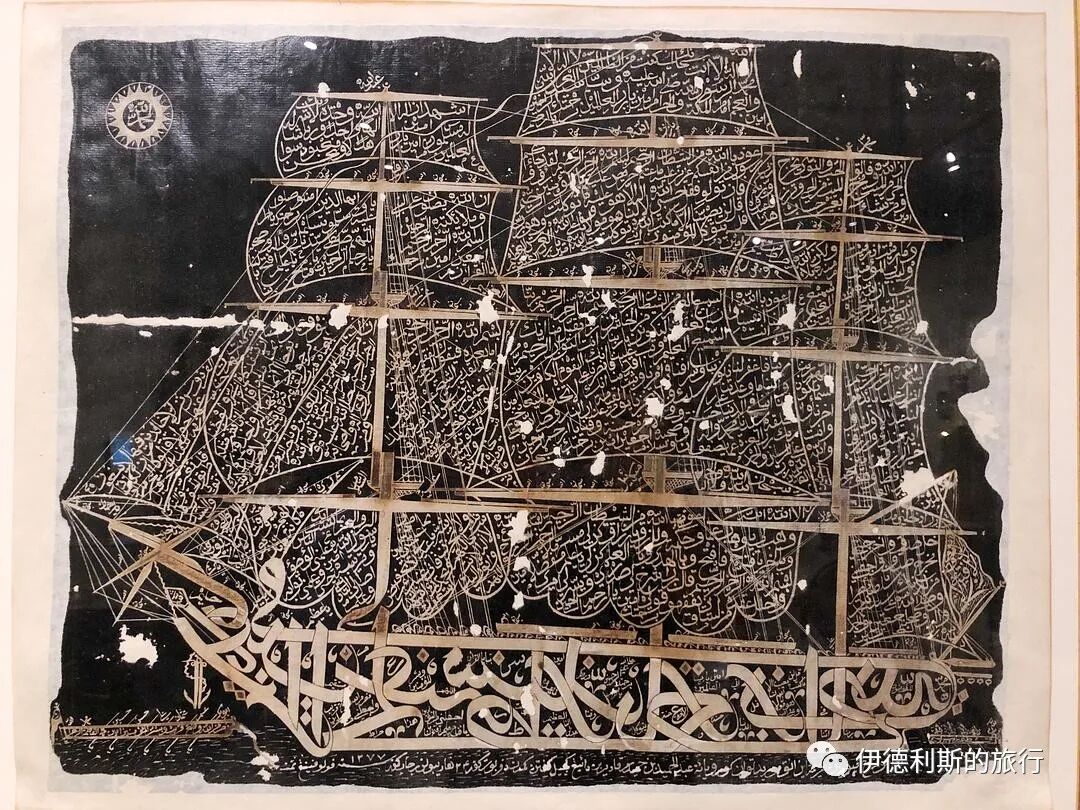
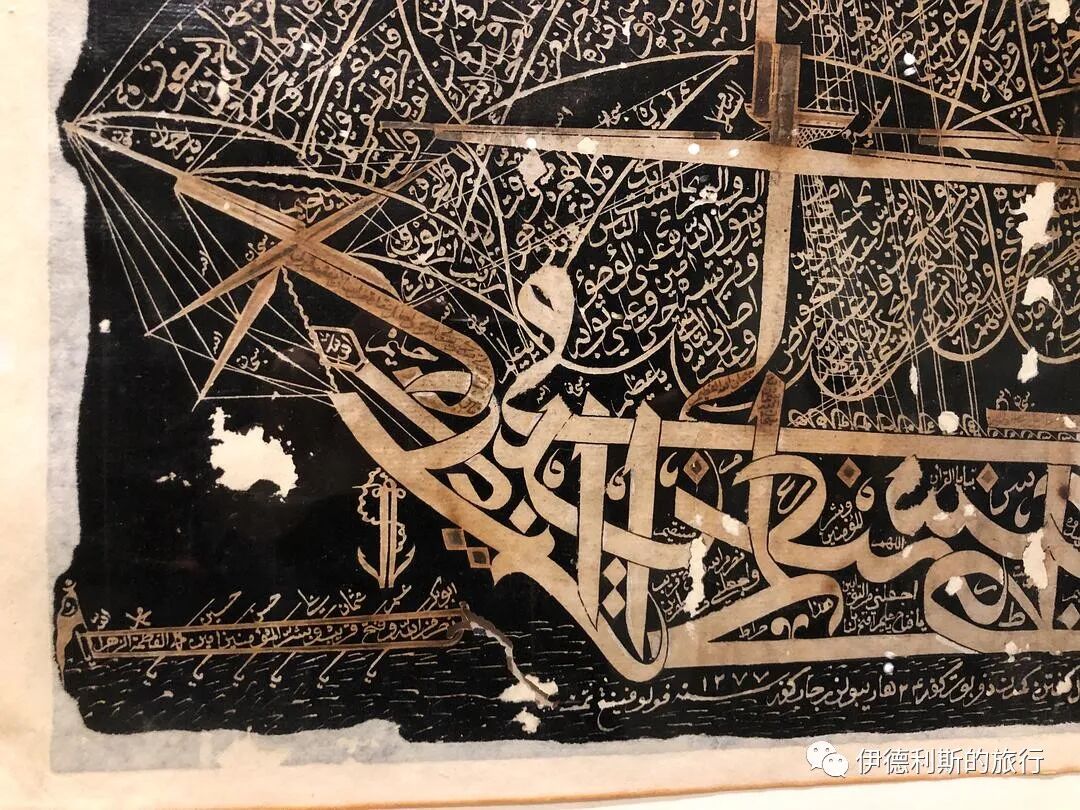
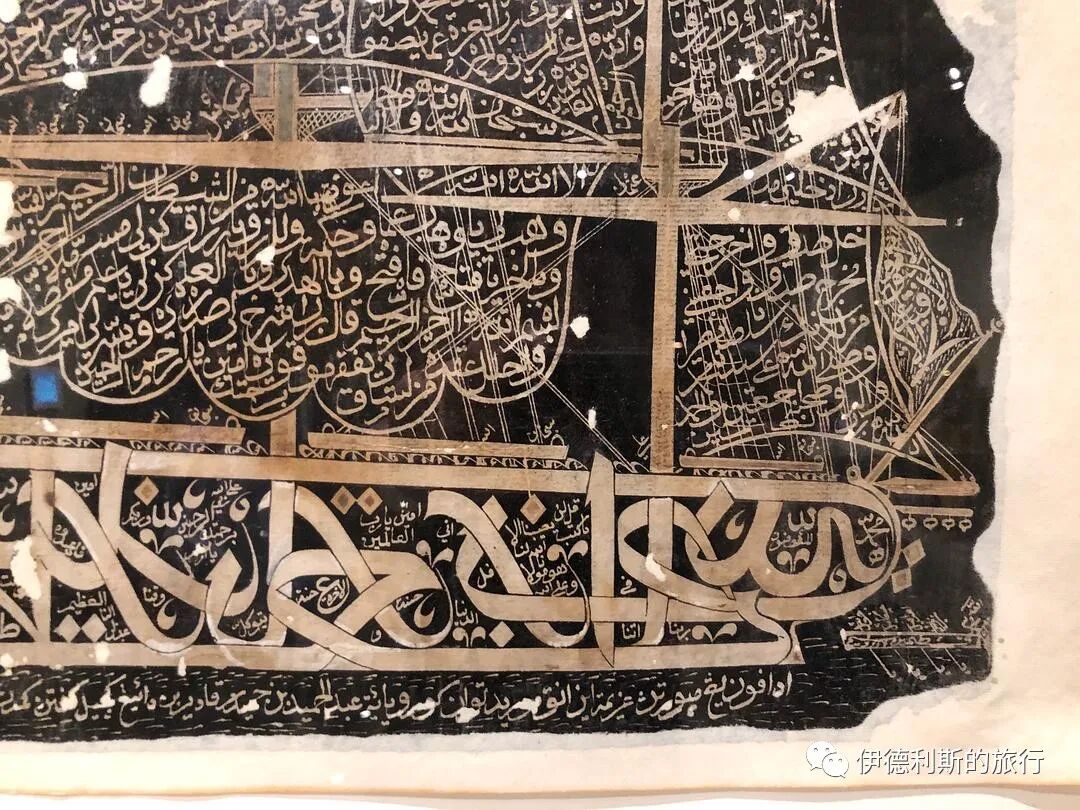
A Quran in the Nanyang style.
The Malay dagger (keris) is a wavy-bladed short sword popular across the Malay Archipelago. The keris started in Java and spread to the Malay Peninsula in the 15th century as the Majapahit Empire expanded. During wartime, warriors used the keris as a backup weapon alongside their spears, while civilians carried one for self-defense whenever they went out. After firearms arrived in the 16th century, the keris became less practical and was used more as part of ceremonial dress or kept as a family heirloom.
Old photos of Malay people in Penang
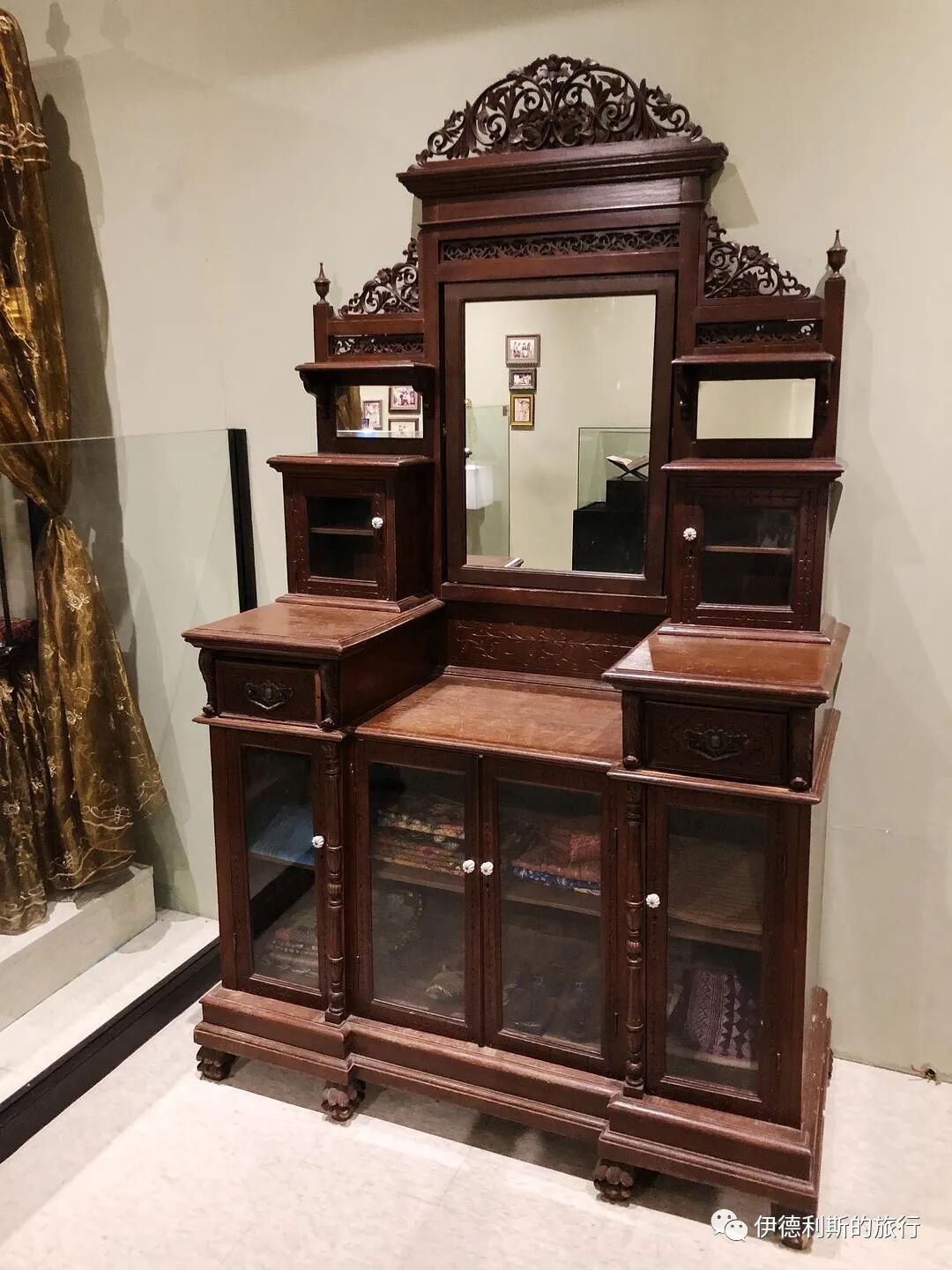
A Penang Malay dressing table
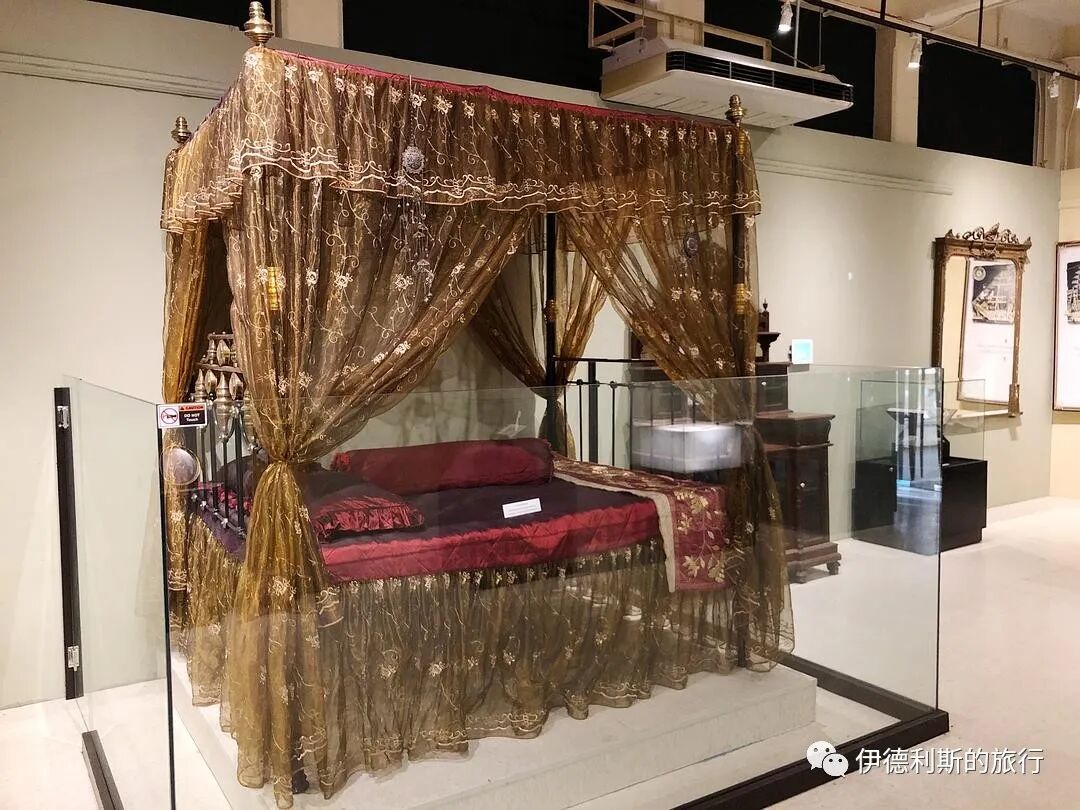
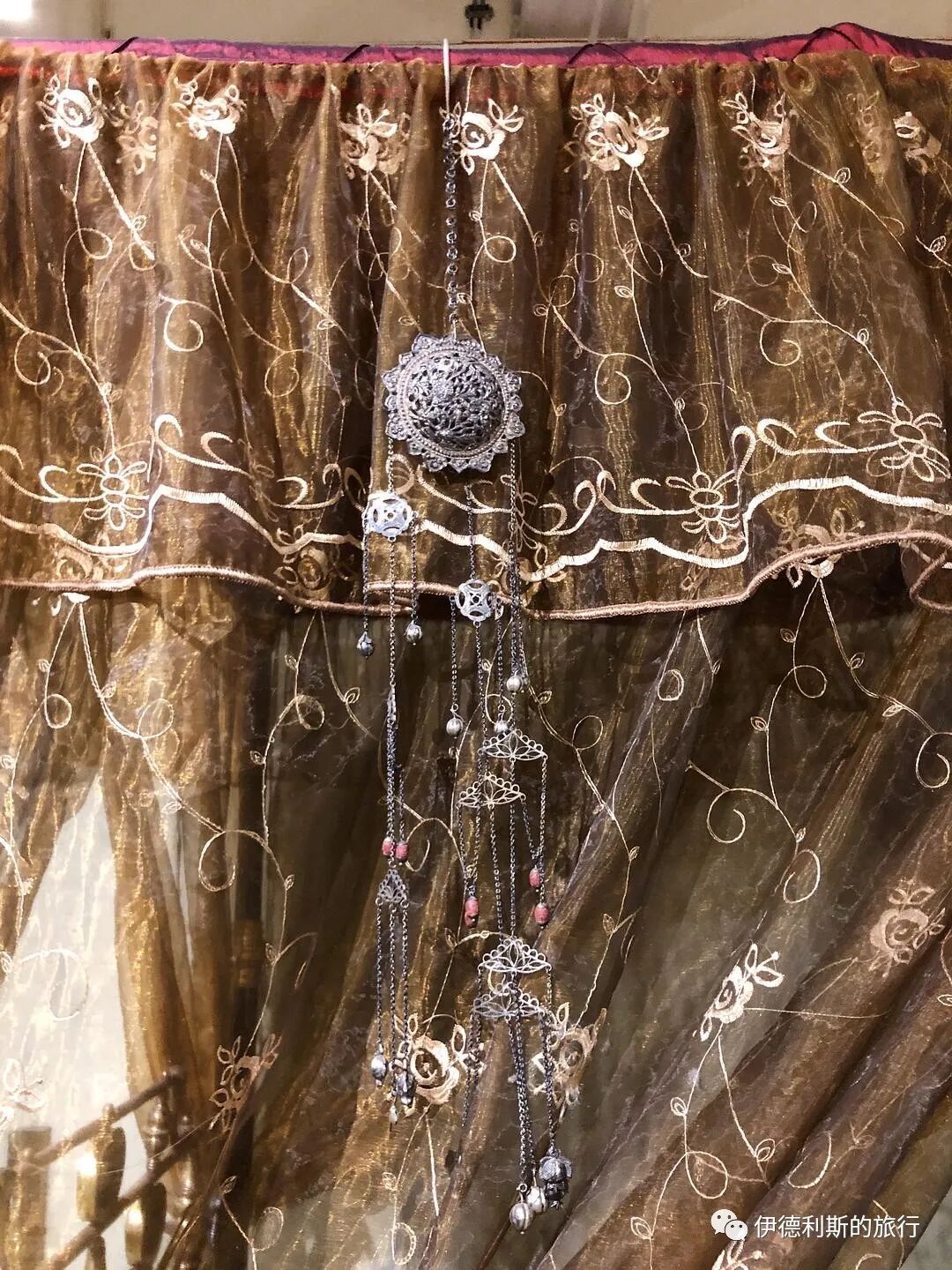
Wedding bed
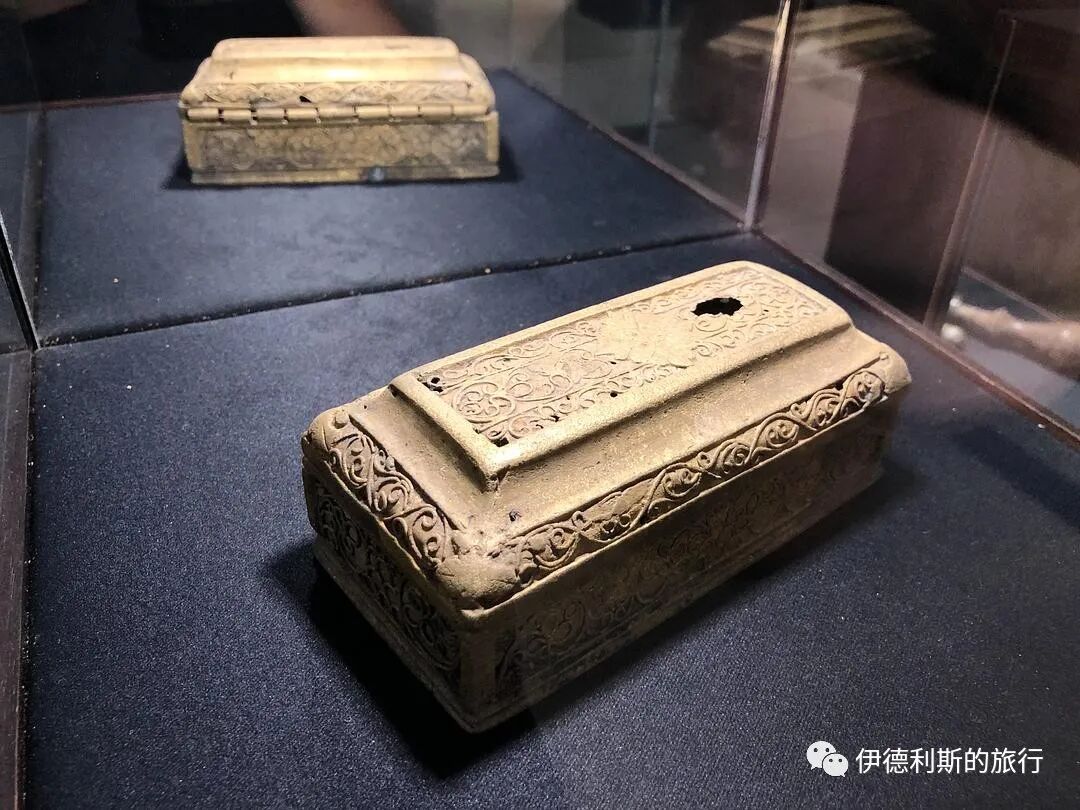
Dressing box
Seal
Halal Travel Guide: Penang — Malay Muslims, Mosques and Local History
Articles • ali2007fr posted the article • 0 comments • 153 views • 2026-05-17 21:58
Summary: Penang — Malay Muslims, Mosques and Local History is presented here as a firsthand travel account in clear English, beginning with this scene: The Malay people (Melayu) are a group of Austronesian-speaking Muslims living in the Malay Archipelago, who emerged during the Malacca Sultanate in the 15th century. The account keeps its focus on Penang Malays, Malay Muslims, Muslim Heritage while preserving the names, places, food, and historical details from the Chinese source.
The Malay people (Melayu) are a group of Austronesian-speaking Muslims living in the Malay Archipelago, who emerged during the Malacca Sultanate in the 15th century. After the British took control of the Malay Peninsula in the 19th century, many Austronesian-speaking Muslim groups like the Acehnese, Banjar, Bugis, and Javanese moved to Malaya to settle down. Because they shared the same faith, similar physical features, and related languages, they gradually identified with Malay culture over two or three generations.
Although the Malay people have developed for hundreds of years, discussions about a Malay national identity only began in the early 20th century, leading to different schools of Malay nationalism. Article 160 of the 1957 Constitution of the Federation of Malaya officially defined a Malay person as someone who professes the Islamic religion, habitually speaks the Malay language, and conforms to Malay customs and culture. Born in the Federation of Malaya or Singapore before Independence Day (August 31, 1957), or having either parent born in the Federation of Malaya or Singapore, or being a resident of the Federation or Singapore on Independence Day, or being a descendant of any of these people. After this, all Malay-speaking Muslim groups within Malaysia were classified as Malay.
Today in Penang, you can still experience the diverse cultural atmosphere of the Malay people. Here you can visit a mosque built by the Acehnese 200 years ago, eat unique food from the Jawi Peranakan community, and listen to the music of the legendary Penang Malay singer P. Ramlee.
Lagenda Cafe
Lagenda Cafe is a themed restaurant honoring the godfather of Malay film music, P. Ramlee (1929-1973), and it plays his classic songs on a loop. P. Ramlee is a legend among the Malay community in Penang, and people still remember him even though he passed away many years ago. P. Ramlee was born Teuku Zakaria. His father was a sailor from the Aceh region in northern Sumatra, Indonesia, who later settled in Penang. P. Ramlee starred in 66 films, directed 35 movies, and wrote 250 songs. He was a key figure during the golden age of Malaysia from the 1950s to the early 1960s and was an icon in the entertainment industries of Singapore, Malaysia, and Indonesia.
Lagenda Cafe specializes in Malay and Indonesian food. We ordered gado-gado (gado-gado) and chicken satay (satay ji rou chuan).
Gado-gado is a salad that started on Java Island. The name gado-gado means "mix," so it includes many different foods. Our version had cucumber, sweet radish, shrimp crackers, vegetable tempura, shrimp tempura, egg, wheat grain strips, fried tofu, fried potato, rice cake, bean sprouts, and long beans. Then you dip it in gado-gado sauce made from fried peanuts, palm sugar, garlic, chili, tamarind, and lime juice.
Chicken satay is also a dish from Java Island. People say Javanese street vendors developed it in the 18th century from Indian kebabs brought by Indian Muslim traders, and it became part of Malay food in Penang in the 19th century. Meat skewers are usually marinated in turmeric, sweet soy sauce, or coconut oil before grilling, then dipped in satay sauce when eaten. Satay sauce is mainly made of roasted peanuts, and usually includes peanut butter, coconut milk, turmeric, soy sauce, galangal, garlic, chili, and various spices.
This drink is called Asam Boi & Guava Tea. It is made with lime, mint, black tea, sour plum, and fresh-pressed guava juice. It is very refreshing and smooth.
Jawi House Cafe Gallery
In Penang and Malaysia, there is a unique group called Jawi Peranakan. This refers to a Malay-speaking Muslim community formed by the intermarriage of Indian Muslim men—also including those of Arab and Persian descent—with Malay Muslim women. Jawi is the Arabic word for Southeast Asian Muslim, and Peranakan is the Malay word for local-born. Before the 1860s, the vast majority of Indian Muslims who came to Penang were men.
When the Jawi Peranakan community married, they did not prioritize the other person's ethnic group, but looked first at their wealth and status. Because of this, after the mid-19th century, the Jawi Peranakan had become the elite class of British Malaya. The Jawi Peranakan community placed great importance on a British-style education, so many of them held positions in the colonial government. At the same time, the Jawi Peranakan community also valued cultural development, and the first Malay-language newspaper was founded by them.
After the 20th century, as the British Empire declined, the Jawi Peranakan community began to blend into the Malay population. Today, the government counts most Jawi Peranakan as Malay. Even so, the Jawi Peranakan community still works hard to pass on their unique culture, which shows in their architecture, clothing, jewelry, and food.
Today, the best place in Penang to experience Jawi Peranakan culture is the Jawi House Cafe Gallery. This building started as a Straits Eclectic-style Chinese shophouse built in the 1860s with Malay-style decorations, and it later served as an Indian Muslim coppersmith shop. The shop is on Armenian Street (Lebuh Armenian), originally called Malay Lane, which was the first area where the Jawi Peranakan community settled. In 2012, the Karim family, who have Punjabi roots and have lived in Penang for six generations, opened Jawi House here to serve the most authentic Jawi Peranakan food.
We ate prawn fritters (cucur udang), lemuni leaf rice (nasi lemuni), and Jawi chicken curry. We also drank Penang nutmeg juice and Arabian sherbet, and finished with sago pudding for dessert.
Cucur udang is made by coating shrimp and green onions in batter, deep-frying them, and dipping them in peanut sauce. In Malay, 'cucur' means a deep-fried fritter and 'udang' means shrimp.
Nasi lemuni is rice cooked with coconut milk, lemongrass, and blue lemuni flowers, served with crispy fried anchovies and spicy sambal sauce. In the past, Lemuni rice (nasi lemuni) was a traditional food for Malay women during their postpartum recovery period, as it was said to help improve blood circulation.
Jawi chicken curry is the Jawi Peranakan version of chicken curry. As a mixed-heritage community, Jawi Peranakan curry is a blend of both Indian and Malay curry styles.
Nutmeg is the English name for the spice, and this drink is a Penang specialty made with honey and lemon, giving it a sweet and sour taste.
The word sherbet comes from the Persian word sharbat, which means a non-alcoholic sugar drink. In medieval Arabia, people loved to add syrup and honey to their sharbat to make it sweeter. They also liked to add ingredients like almonds, lemon, apple, pomegranate, tamarind, dates, sumac, musk, and mint. Spread by Arabs and Persians, the drink sharbat is now popular across West Asia, South Asia, and the Malay Archipelago, especially during Ramadan. The Arabian sherbet at Jawi House is made with rose syrup, mallow nuts, gum arabic, and basil seeds, giving it a very rich flavor.
The signature Jawi Peranakan version of sago pudding is topped with coconut cream and thick palm sugar syrup, then sprinkled with crushed peanuts for a refined taste.
Jawi House displays a collection of old photos of Jawi Peranakan life in Penang, along with paintings of the local Muslim community.
A coconut shop on a street in Penang.
ALI NASI LEMAK coconut milk rice (nasi lemak)
I ate coconut milk rice (nasi lemak) at ALI NASI LEMAK in the Sri Weld Food Court in Penang. Coconut milk rice is fragrant Malay rice cooked with coconut milk and pandan leaves. It is known as Malaysia's national dish and is popular across the Malay Archipelago and southern Thailand.
Traditional coconut milk rice is wrapped in a banana leaf and served with spicy chili paste (sambal), dried anchovies, peanuts, and eggs. Spicy chili paste is a traditional Southeast Asian sauce that started in Indonesia. It is made by stir-frying fermented shrimp paste (belacan) with chili peppers and various seasonings. The sambal sauce at this place was incredibly spicy; it really burned my lips first and then hit my throat.
Then I had some fried jackfruit next door. Small jackfruit (cempedak) is similar to regular jackfruit, but it is sweeter and has a smoother, softer texture.
Acheen Street Mosque: 1808
Acheen Street Mosque (Masjid Melayu Lebuh Acheh) was built by the Acehnese in 1808, and the area around the mosque is the oldest Muslim community in Penang. The Acehnese are a Muslim ethnic group speaking an Austronesian language who live on the northernmost tip of Sumatra. They founded the Aceh Sultanate in 1499 and saw it flourish during the 17th century. In the late 18th and early 19th centuries, the first Chinese Kapitan of Penang, Koh Lay Huan, built a strong relationship with the Aceh Sultanate, which started the pepper trade between Aceh and Penang.
In 1791, an Acehnese pepper merchant and nobleman of Arab descent named Tengku Syed Hussain Al-Aidid moved from Aceh to Penang. He established the first Muslim settlement in Penang near what is now Aceh Street, and after that, many Muslim merchants from the Malay Archipelago, India, and Arabia arrived. In 1808, Tengku Syed Hussain donated money and land to build a mosque. The first imam of the mosque was Sheikh Omar Basheer Al-Khalilee, and his son, Sheikh Zakaria, later took over the position. Sheikh Zakaria became the first Mufti (legal scholar) of Penang in 1888.
After Tengku Hussain died in the mid-19th century, the Muslim community on Acheen Street continued to thrive and became known as the second Jeddah (the port city that serves as the gateway to Mecca). Every year during the Hajj season, pilgrims from all over would pack the Acheen Street community before boarding ships in Penang to travel to Mecca. This busy scene lasted until the Malaysian Hajj Pilgrims Fund Board (Lembaga Tabung Haji) was established in the 1970s.
In 1913, the British colonial government passed the Malay Reservation Act, which officially defined a "Malay" for the first time as anyone who belonged to the Malay race, habitually spoke the Malay language or "any other Malay language," and practiced Islam. This meant that Austronesian-speaking Muslim groups who moved to Malaya from other parts of the Malay Archipelago were counted as 'other Malays' in statistics, a group that included the Acehnese in Penang. First-generation Penang Acehnese usually kept their immigrant identity. However, because the Acehnese and Malays share similar physical features, languages, and the same faith, most Penang Acehnese accepted a 'Malay' identity by the second or third generation and blended into Malay culture.
The courtyard of the Aceh Mosque still holds four early houses from the Aceh Street Muslim community: the home of Syed Mohamad Al-Habshee, the Al-Mashoor Quran school, the home of the first mufti Sheikh Zakaria, and the home of Syed Abdul Hamid AL-Haddad.
There is also the tomb of the mosque's founder, Tengku Syed Hussain Al-Aidid, which features a tombstone in the classic Acehnese style.
The Penang Islamic Museum under renovation.
It was a real shame that the Penang Islamic Museum was closed for renovations during my visit. This building is a Straits-style house built by an Acehnese Muslim pepper merchant in the 1860s.
Malay artifacts in the Penang Museum
The Penang Museum has a gallery that displays artifacts from the Malay people of Penang.
Arabic calligraphy
A Quran in the Nanyang style.
The Malay dagger (keris) is a wavy-bladed short sword popular across the Malay Archipelago. The keris started in Java and spread to the Malay Peninsula in the 15th century as the Majapahit Empire expanded. During wartime, warriors used the keris as a backup weapon alongside their spears, while civilians carried one for self-defense whenever they went out. After firearms arrived in the 16th century, the keris became less practical and was used more as part of ceremonial dress or kept as a family heirloom.
Old photos of Malay people in Penang
A Penang Malay dressing table
Wedding bed
Dressing box
Seal view all
Summary: Penang — Malay Muslims, Mosques and Local History is presented here as a firsthand travel account in clear English, beginning with this scene: The Malay people (Melayu) are a group of Austronesian-speaking Muslims living in the Malay Archipelago, who emerged during the Malacca Sultanate in the 15th century. The account keeps its focus on Penang Malays, Malay Muslims, Muslim Heritage while preserving the names, places, food, and historical details from the Chinese source.
The Malay people (Melayu) are a group of Austronesian-speaking Muslims living in the Malay Archipelago, who emerged during the Malacca Sultanate in the 15th century. After the British took control of the Malay Peninsula in the 19th century, many Austronesian-speaking Muslim groups like the Acehnese, Banjar, Bugis, and Javanese moved to Malaya to settle down. Because they shared the same faith, similar physical features, and related languages, they gradually identified with Malay culture over two or three generations.
Although the Malay people have developed for hundreds of years, discussions about a Malay national identity only began in the early 20th century, leading to different schools of Malay nationalism. Article 160 of the 1957 Constitution of the Federation of Malaya officially defined a Malay person as someone who professes the Islamic religion, habitually speaks the Malay language, and conforms to Malay customs and culture. Born in the Federation of Malaya or Singapore before Independence Day (August 31, 1957), or having either parent born in the Federation of Malaya or Singapore, or being a resident of the Federation or Singapore on Independence Day, or being a descendant of any of these people. After this, all Malay-speaking Muslim groups within Malaysia were classified as Malay.
Today in Penang, you can still experience the diverse cultural atmosphere of the Malay people. Here you can visit a mosque built by the Acehnese 200 years ago, eat unique food from the Jawi Peranakan community, and listen to the music of the legendary Penang Malay singer P. Ramlee.
Lagenda Cafe
Lagenda Cafe is a themed restaurant honoring the godfather of Malay film music, P. Ramlee (1929-1973), and it plays his classic songs on a loop. P. Ramlee is a legend among the Malay community in Penang, and people still remember him even though he passed away many years ago. P. Ramlee was born Teuku Zakaria. His father was a sailor from the Aceh region in northern Sumatra, Indonesia, who later settled in Penang. P. Ramlee starred in 66 films, directed 35 movies, and wrote 250 songs. He was a key figure during the golden age of Malaysia from the 1950s to the early 1960s and was an icon in the entertainment industries of Singapore, Malaysia, and Indonesia.
Lagenda Cafe specializes in Malay and Indonesian food. We ordered gado-gado (gado-gado) and chicken satay (satay ji rou chuan).
Gado-gado is a salad that started on Java Island. The name gado-gado means "mix," so it includes many different foods. Our version had cucumber, sweet radish, shrimp crackers, vegetable tempura, shrimp tempura, egg, wheat grain strips, fried tofu, fried potato, rice cake, bean sprouts, and long beans. Then you dip it in gado-gado sauce made from fried peanuts, palm sugar, garlic, chili, tamarind, and lime juice.
Chicken satay is also a dish from Java Island. People say Javanese street vendors developed it in the 18th century from Indian kebabs brought by Indian Muslim traders, and it became part of Malay food in Penang in the 19th century. Meat skewers are usually marinated in turmeric, sweet soy sauce, or coconut oil before grilling, then dipped in satay sauce when eaten. Satay sauce is mainly made of roasted peanuts, and usually includes peanut butter, coconut milk, turmeric, soy sauce, galangal, garlic, chili, and various spices.
This drink is called Asam Boi & Guava Tea. It is made with lime, mint, black tea, sour plum, and fresh-pressed guava juice. It is very refreshing and smooth.
Jawi House Cafe Gallery
In Penang and Malaysia, there is a unique group called Jawi Peranakan. This refers to a Malay-speaking Muslim community formed by the intermarriage of Indian Muslim men—also including those of Arab and Persian descent—with Malay Muslim women. Jawi is the Arabic word for Southeast Asian Muslim, and Peranakan is the Malay word for local-born. Before the 1860s, the vast majority of Indian Muslims who came to Penang were men.
When the Jawi Peranakan community married, they did not prioritize the other person's ethnic group, but looked first at their wealth and status. Because of this, after the mid-19th century, the Jawi Peranakan had become the elite class of British Malaya. The Jawi Peranakan community placed great importance on a British-style education, so many of them held positions in the colonial government. At the same time, the Jawi Peranakan community also valued cultural development, and the first Malay-language newspaper was founded by them.
After the 20th century, as the British Empire declined, the Jawi Peranakan community began to blend into the Malay population. Today, the government counts most Jawi Peranakan as Malay. Even so, the Jawi Peranakan community still works hard to pass on their unique culture, which shows in their architecture, clothing, jewelry, and food.
Today, the best place in Penang to experience Jawi Peranakan culture is the Jawi House Cafe Gallery. This building started as a Straits Eclectic-style Chinese shophouse built in the 1860s with Malay-style decorations, and it later served as an Indian Muslim coppersmith shop. The shop is on Armenian Street (Lebuh Armenian), originally called Malay Lane, which was the first area where the Jawi Peranakan community settled. In 2012, the Karim family, who have Punjabi roots and have lived in Penang for six generations, opened Jawi House here to serve the most authentic Jawi Peranakan food.
We ate prawn fritters (cucur udang), lemuni leaf rice (nasi lemuni), and Jawi chicken curry. We also drank Penang nutmeg juice and Arabian sherbet, and finished with sago pudding for dessert.
Cucur udang is made by coating shrimp and green onions in batter, deep-frying them, and dipping them in peanut sauce. In Malay, 'cucur' means a deep-fried fritter and 'udang' means shrimp.
Nasi lemuni is rice cooked with coconut milk, lemongrass, and blue lemuni flowers, served with crispy fried anchovies and spicy sambal sauce. In the past, Lemuni rice (nasi lemuni) was a traditional food for Malay women during their postpartum recovery period, as it was said to help improve blood circulation.
Jawi chicken curry is the Jawi Peranakan version of chicken curry. As a mixed-heritage community, Jawi Peranakan curry is a blend of both Indian and Malay curry styles.
Nutmeg is the English name for the spice, and this drink is a Penang specialty made with honey and lemon, giving it a sweet and sour taste.
The word sherbet comes from the Persian word sharbat, which means a non-alcoholic sugar drink. In medieval Arabia, people loved to add syrup and honey to their sharbat to make it sweeter. They also liked to add ingredients like almonds, lemon, apple, pomegranate, tamarind, dates, sumac, musk, and mint. Spread by Arabs and Persians, the drink sharbat is now popular across West Asia, South Asia, and the Malay Archipelago, especially during Ramadan. The Arabian sherbet at Jawi House is made with rose syrup, mallow nuts, gum arabic, and basil seeds, giving it a very rich flavor.
The signature Jawi Peranakan version of sago pudding is topped with coconut cream and thick palm sugar syrup, then sprinkled with crushed peanuts for a refined taste.
Jawi House displays a collection of old photos of Jawi Peranakan life in Penang, along with paintings of the local Muslim community.
A coconut shop on a street in Penang.
ALI NASI LEMAK coconut milk rice (nasi lemak)
I ate coconut milk rice (nasi lemak) at ALI NASI LEMAK in the Sri Weld Food Court in Penang. Coconut milk rice is fragrant Malay rice cooked with coconut milk and pandan leaves. It is known as Malaysia's national dish and is popular across the Malay Archipelago and southern Thailand.
Traditional coconut milk rice is wrapped in a banana leaf and served with spicy chili paste (sambal), dried anchovies, peanuts, and eggs. Spicy chili paste is a traditional Southeast Asian sauce that started in Indonesia. It is made by stir-frying fermented shrimp paste (belacan) with chili peppers and various seasonings. The sambal sauce at this place was incredibly spicy; it really burned my lips first and then hit my throat.
Then I had some fried jackfruit next door. Small jackfruit (cempedak) is similar to regular jackfruit, but it is sweeter and has a smoother, softer texture.
Acheen Street Mosque: 1808
Acheen Street Mosque (Masjid Melayu Lebuh Acheh) was built by the Acehnese in 1808, and the area around the mosque is the oldest Muslim community in Penang. The Acehnese are a Muslim ethnic group speaking an Austronesian language who live on the northernmost tip of Sumatra. They founded the Aceh Sultanate in 1499 and saw it flourish during the 17th century. In the late 18th and early 19th centuries, the first Chinese Kapitan of Penang, Koh Lay Huan, built a strong relationship with the Aceh Sultanate, which started the pepper trade between Aceh and Penang.
In 1791, an Acehnese pepper merchant and nobleman of Arab descent named Tengku Syed Hussain Al-Aidid moved from Aceh to Penang. He established the first Muslim settlement in Penang near what is now Aceh Street, and after that, many Muslim merchants from the Malay Archipelago, India, and Arabia arrived. In 1808, Tengku Syed Hussain donated money and land to build a mosque. The first imam of the mosque was Sheikh Omar Basheer Al-Khalilee, and his son, Sheikh Zakaria, later took over the position. Sheikh Zakaria became the first Mufti (legal scholar) of Penang in 1888.
After Tengku Hussain died in the mid-19th century, the Muslim community on Acheen Street continued to thrive and became known as the second Jeddah (the port city that serves as the gateway to Mecca). Every year during the Hajj season, pilgrims from all over would pack the Acheen Street community before boarding ships in Penang to travel to Mecca. This busy scene lasted until the Malaysian Hajj Pilgrims Fund Board (Lembaga Tabung Haji) was established in the 1970s.
In 1913, the British colonial government passed the Malay Reservation Act, which officially defined a "Malay" for the first time as anyone who belonged to the Malay race, habitually spoke the Malay language or "any other Malay language," and practiced Islam. This meant that Austronesian-speaking Muslim groups who moved to Malaya from other parts of the Malay Archipelago were counted as 'other Malays' in statistics, a group that included the Acehnese in Penang. First-generation Penang Acehnese usually kept their immigrant identity. However, because the Acehnese and Malays share similar physical features, languages, and the same faith, most Penang Acehnese accepted a 'Malay' identity by the second or third generation and blended into Malay culture.
The courtyard of the Aceh Mosque still holds four early houses from the Aceh Street Muslim community: the home of Syed Mohamad Al-Habshee, the Al-Mashoor Quran school, the home of the first mufti Sheikh Zakaria, and the home of Syed Abdul Hamid AL-Haddad.
There is also the tomb of the mosque's founder, Tengku Syed Hussain Al-Aidid, which features a tombstone in the classic Acehnese style.
The Penang Islamic Museum under renovation.
It was a real shame that the Penang Islamic Museum was closed for renovations during my visit. This building is a Straits-style house built by an Acehnese Muslim pepper merchant in the 1860s.
Malay artifacts in the Penang Museum
The Penang Museum has a gallery that displays artifacts from the Malay people of Penang.
Arabic calligraphy
A Quran in the Nanyang style.
The Malay dagger (keris) is a wavy-bladed short sword popular across the Malay Archipelago. The keris started in Java and spread to the Malay Peninsula in the 15th century as the Majapahit Empire expanded. During wartime, warriors used the keris as a backup weapon alongside their spears, while civilians carried one for self-defense whenever they went out. After firearms arrived in the 16th century, the keris became less practical and was used more as part of ceremonial dress or kept as a family heirloom.
Old photos of Malay people in Penang
A Penang Malay dressing table
Wedding bed
Dressing box
Seal
Halal Travel Guide: Bangkok - Malay Mosque Quarters, Hotels and Markets
Articles • ali2007fr posted the article • 0 comments • 224 views • 2026-05-20 09:11
Summary: Bangkok has Malay Muslim mosque quarters, halal hotels, river markets, and neighborhood food stops shaped by migration from the Malay world. This account follows the six Malay mosque areas, local markets, hotels, restaurants, and photos in the same order as the original travel note.
There are many Malay-founded mosque communities in Bangkok's city center and suburbs. They come from two main areas: the Pattani region in present-day southern Thailand (the three southern border provinces) and the Kedah region in northwestern Malaysia. I visited three Pattani Malay mosque communities and three Kedah Malay mosque communities on this trip.
Pattani Malay Mosque Communities
The Sultanate of Pattani was a Malay state founded in the 15th century, located in the southernmost part of modern-day Thailand. After the Sultanate of Malacca fell in the 16th century, the Sultanate of Pattani began to rise, becoming a center for trade and culture during that same century.
Thailand began invading the Sultanate of Pattani from the 17th century, and the war of conquest in 1688 caused chaos in the Pattani region. Long-term warfare led to many Pattani Malays being taken to Ayutthaya, the capital of Thailand at the time. In the mid-18th century, thousands of Pattani Malay captives were settled in the southern and southwestern suburbs of Ayutthaya, where they were forced to work to fill the capital's granaries. After Ayutthaya fell in 1767, some Pattani Malays managed to return home, while others stayed in Ayutthaya. A small number of Malays were invited by the Thai king to settle in the new capital, Thonburi, and were released from their status as captives.
Bang O Mosque
The Bang O mosque community is located 5 kilometers downstream from Thonburi and is one of the Pattani Malay mosque communities that relocated from Ayutthaya. During the reign of Rama I (1782-1809), the leader of the Bang O mosque community was granted the title of Director of Maritime Construction (Phraya Yotha Samut). He was responsible for supplying timber to the Thai naval base and established a sawmill. In the late 19th century, a Malay merchant from Songkhla named Mohammat Phet thongkham converted the Bang O mosque community's sawmill from manual labor to steam power and obtained a concession for inland teak. He built a thriving timber export trade in the Bang O mosque community and donated funds to rebuild the Bang O mosque in 1903. In 1924, the timber trade at the Bang O mosque community was interrupted by the construction of an upstream dam. Later, the community shifted to exporting timber and rice to the Middle East, which led to the introduction of more radical Salafi ideas from Arabia.
The main prayer hall of the Bang O mosque was built in 1918. It features a neoclassical style and a very exquisite design. Interestingly, the entrance hall faces southeast toward the banks of the Chao Phraya River, but the main hall behind it faces due west toward the Kaaba. Because of this, the entire building is not symmetrical along a single axis.
Additionally, the office of the Bang O mosque was built in 1920 using the teak gingerbread style, which is very characteristic of that era. This is a decorative style that originated in the United States in the 1860s. It involves cutting wood into small decorative pieces with very rich details. Because gingerbread houses have high ceilings and shutters on all sides to improve ventilation, they were very popular in tropical regions. During the reign of Rama V (1868-1910), many mansions belonging to Thai nobles were built in the teak gingerbread style.
Chakraphong Mosque
After Ayutthaya fell in 1767, the Sultanate of Pattani was briefly free from Thai control. However, with the establishment of the Chakri Dynasty in Thailand in 1782, the Thai government decided to restore its control over the Sultanate of Pattani. In 1786, Thailand sent an army led by the Second King Maha Sura Singhanat to launch a devastating attack on the Pattani Sultanate. To show their loyalty to Thailand, the Pattani Sultanate sent a large number of nobles and craftsmen to Bangkok as hostages. Under the supervision of the Thai Second King, these Pattani Malays were settled inside the northern city wall of Bangkok, near the mouth of the Bang Lamphu canal. Among the many mosque communities (masjid) established by Malay and Cham captives around Bangkok, the Chakraphong mosque community is the only one located inside the city walls.
The Chakraphong mosque was originally called the Bang Lamphu mosque, and it only changed to its current name after Chakraphong Road was built in 1900. Before the 1960s, many Malay residents worked as goldsmiths, setting up stalls to trade along the roads around the mosque community. Today, the Bang Lamphu mosque community is famous for its specialty snacks.
Chinese porcelain collected by the Chakraphong mosque.
The snack stalls at the entrance are very busy, with people lining up to get food to go.
The Nouvo City Hotel where we stayed is only about 200 meters from the Chakraphong mosque, and it is the most famous halal hotel in Bangkok's old town. Near the hotel are piers for two express boat lines on the Chao Phraya River and the Bang Lamphu canal, making it very convenient to reach major Bangkok attractions without getting stuck in traffic.
The hotel has a gym, two swimming pools, and a prayer room, which is very convenient.
The prayer room features Thai-style Islamic decorative art, combining local Thai patterns with Islamic calligraphy, which looks very beautiful.
The hotel's buffet breakfast is also good, offering Thai, Indian, and Western styles, with specialties like coconut milk mushrooms, spicy porridge, and brown rice.
The hotel also has another restaurant called Sara where you can order from a menu, focusing on Thai and Indian food. Before I left for the airport, I ordered a beef fried rice to go; it was inexpensive and came with a box of side dishes. Their service is also quite good.
Mahanak mosque
Not long after Thailand invaded Pattani in 1786, the Pattani Sultanate soon began to resist Thailand again. Thailand invaded the Pattani Sultanate again in 1790 and then sent a second group of Pattani Malay captives to Bangkok, where they were settled in the eastern suburbs and established the Mahanak mosque community.
With the excavation of the Padung Krung Kasem canal and the Mahanak canal, the Mahanak mosque community gradually became a floating market. After the 20th century, a large group of Indian textile merchants on the other side of the canal provided more income opportunities for the mosque community.
Kedah Malay mosque community
The Kedah Sultanate is located in the northwest of present-day Malaysia, west of the Pattani Sultanate, and is another Malay state bordering Thailand.
Al-Athik mosque
In 1803, Thailand forcibly interfered in the internal affairs of the Kedah Sultanate, forcing the Sultan to abdicate and installing a new one, which led to the Kedah Sultanate splitting into two countries in 1808.
In 1808, a group of Malay captives from the Kedah Sultanate arrived in Bangkok. To avoid interaction with previously settled Pattani Malay villages, they were placed in a remote area on the east bank, five kilometers down the Chao Phraya River. These Kedah Malays dug canals to provide irrigation for their village, gradually turning jungle swamps into farmland reaching one kilometer inland, and they established the Al-Athik mosque, which means 'Old Mosque'.
After more than fifty years of isolation, Bangkok's first southern suburban road was finally built, which greatly improved transportation for the Al-Athik mosque community. In the late 19th century, ferry terminals, rice and timber export companies, a tram terminal, a slaughterhouse, and Bangkok's first coal-fired power plant were gradually built around the mosque community.
The Al-Athik mosque community holds a halal market on the morning of the first weekend of every month, which is the best chance to experience Bangkok's halal culture; you can find it on the map by searching for Riverside Market, Charoen Krung 103.
We first bought a pastry similar to Malay steamed rice cakes (dudu kuih), made by putting palm sugar inside rice flour, pressing it into stainless steel molds, steaming it, and sprinkling it with shredded coconut.
Then we drank longan water, which can be mixed with various ingredients like pearl barley, red beans, honey dates, green jelly noodles (cendol), and grass jelly (xiancao), finally topped with palm sugar and ice for a very rich flavor.
At the Al-Athik mosque halal market, we ate the specialty folded pancake (mataba) with a beef and onion filling. Mataba comes from the Arabic word 'Murtabak', which means 'folded'. This pancake likely originated with Arabs in Yemen, was brought to India by Indian merchants along the Arabian Sea, and finally reached Southeast Asia via the Indian Ocean monsoon winds; today it is a street snack shared across the Arabian Peninsula, South Asia, and Southeast Asia, though recipes vary by region. Thailand's mataba is similar to the version in Malaysia, and both are classic street breakfasts.
During the market, the courtyard of Al-Athik mosque hosts various charity activities, including medical check-ups and haircuts, which many middle-aged and elderly people attend.
Bang Uthit Mosque
In 1841, the Siamese-Vietnamese War broke out between Thailand and Vietnam, and King Rama III developed a shipyard in the Wat Phraya Krai area on the lower Chao Phraya River to support naval operations against Vietnam. After the Siamese-Vietnamese War ended in 1845, the shipyard was renovated to support the profitable China trade. After 1885, the shipyard continued to expand and began recruiting Malays from the nearby Al-Athik mosque community. The shipyard provided new settlements for these Malay workers near the shipyard, which became Bang Uthit village.
As the Wat Phraya Krai area continued to develop, rice mills and sawmills were built near the shipyard, and more and more Malays settled in Bang Uthit village. In the early 20th century, Bang Uthit mosque was built, officially separating from the Al-Athik mosque community. When Bang Uthit mosque was built, Ottoman Sultan Abdul Hamid II (reigned 1876-1909) sent an Ottoman shield-shaped emblem, making Bang Uthit mosque the only mosque in Thailand with an Ottoman emblem.
In 2015, the Turkish Cooperation and Coordination Agency (TİKA) renovated Bang Uthit mosque, using Turkish marble to build an Ottoman-style mihrab, minbar, and pulpit, and also added a mezzanine for women. This makes Bang Uthit mosque the only Ottoman-style mosque in Bangkok.
Next to Bang Uthit Mosque, there is a row of food stalls where you can eat authentic Thai halal home-cooked meals. We ordered holy basil chicken rice (gaprao gai) and shrimp porridge. Gaprao is also called holy basil. It is native to South Asia and widely grown in the tropical regions of Southeast Asia. Stir-frying meat with holy basil leaves is a famous Thai dish that I really love. Thai people love to drink meat porridge. The Thai word 'Chok' comes from the Minnan word for 'porridge'. The condiments on the table include fish sauce. I saw people at other tables adding a lot of it to their porridge and noodles, and adding a little really brings out the fresh flavor.
Kocha Itsahak Mosque
Near Sampeng Lane in Bangkok's Chinatown stands the European-style Kocha Itsahak Mosque, built in the late 19th century by the Siamese royal translator Luang Kocha Itsahak.
Luang Kocha Itsahak was of Malay descent from Kedah. He worked in the Siamese Department of Western Trade (Krom Tha Khwa), serving as a translator for foreign ambassadors visiting the Siamese court. He was also responsible for liaising with rulers of Siamese dependencies on the Malay Peninsula and foreign merchants trading with Siam. Luang Kocha Itsahak's father was a Malay merchant from the Kedah Sultanate who moved to Bangkok for business and married a Chinese wife.
After Siam established its capital in Bangkok in 1782, an import and trade district dominated by Teochew merchants gradually formed near Sampeng Lane. Before Don Mueang Airport was built in 1914, people wanting to travel from Bangkok to India, the Middle East, or Europe had to first take a steamship from the Kongsa Pier near Sampeng Lane to Singapore or Penang, then transfer to a cruise ship to continue westward. Because of this, the 19th-century Kongsa Pier was crowded with merchants from all over the world, and many Indians and Malays worked in the nearby warehouses and trading companies.
Seeing that there was no mosque in the Sampeng Lane area, Luang Kocha Itsahak donated a piece of his own land and had his children dismantle the bricks and stones from an old house he owned across the river in the Thonburi area to build this mosque. Today, the mosque is still owned by the descendants of Kocha Itsahak and provides convenience for the friends (dosti) working in Bangkok's Sampeng Lane.
Kocha Itsahak Mosque was originally a wooden building, but it was rebuilt into the current neoclassical structure during the reign of Rama V (reigned 1868-1910). view all
Summary: Bangkok has Malay Muslim mosque quarters, halal hotels, river markets, and neighborhood food stops shaped by migration from the Malay world. This account follows the six Malay mosque areas, local markets, hotels, restaurants, and photos in the same order as the original travel note.
There are many Malay-founded mosque communities in Bangkok's city center and suburbs. They come from two main areas: the Pattani region in present-day southern Thailand (the three southern border provinces) and the Kedah region in northwestern Malaysia. I visited three Pattani Malay mosque communities and three Kedah Malay mosque communities on this trip.
Pattani Malay Mosque Communities
The Sultanate of Pattani was a Malay state founded in the 15th century, located in the southernmost part of modern-day Thailand. After the Sultanate of Malacca fell in the 16th century, the Sultanate of Pattani began to rise, becoming a center for trade and culture during that same century.
Thailand began invading the Sultanate of Pattani from the 17th century, and the war of conquest in 1688 caused chaos in the Pattani region. Long-term warfare led to many Pattani Malays being taken to Ayutthaya, the capital of Thailand at the time. In the mid-18th century, thousands of Pattani Malay captives were settled in the southern and southwestern suburbs of Ayutthaya, where they were forced to work to fill the capital's granaries. After Ayutthaya fell in 1767, some Pattani Malays managed to return home, while others stayed in Ayutthaya. A small number of Malays were invited by the Thai king to settle in the new capital, Thonburi, and were released from their status as captives.
Bang O Mosque
The Bang O mosque community is located 5 kilometers downstream from Thonburi and is one of the Pattani Malay mosque communities that relocated from Ayutthaya. During the reign of Rama I (1782-1809), the leader of the Bang O mosque community was granted the title of Director of Maritime Construction (Phraya Yotha Samut). He was responsible for supplying timber to the Thai naval base and established a sawmill. In the late 19th century, a Malay merchant from Songkhla named Mohammat Phet thongkham converted the Bang O mosque community's sawmill from manual labor to steam power and obtained a concession for inland teak. He built a thriving timber export trade in the Bang O mosque community and donated funds to rebuild the Bang O mosque in 1903. In 1924, the timber trade at the Bang O mosque community was interrupted by the construction of an upstream dam. Later, the community shifted to exporting timber and rice to the Middle East, which led to the introduction of more radical Salafi ideas from Arabia.
The main prayer hall of the Bang O mosque was built in 1918. It features a neoclassical style and a very exquisite design. Interestingly, the entrance hall faces southeast toward the banks of the Chao Phraya River, but the main hall behind it faces due west toward the Kaaba. Because of this, the entire building is not symmetrical along a single axis.
Additionally, the office of the Bang O mosque was built in 1920 using the teak gingerbread style, which is very characteristic of that era. This is a decorative style that originated in the United States in the 1860s. It involves cutting wood into small decorative pieces with very rich details. Because gingerbread houses have high ceilings and shutters on all sides to improve ventilation, they were very popular in tropical regions. During the reign of Rama V (1868-1910), many mansions belonging to Thai nobles were built in the teak gingerbread style.
Chakraphong Mosque
After Ayutthaya fell in 1767, the Sultanate of Pattani was briefly free from Thai control. However, with the establishment of the Chakri Dynasty in Thailand in 1782, the Thai government decided to restore its control over the Sultanate of Pattani. In 1786, Thailand sent an army led by the Second King Maha Sura Singhanat to launch a devastating attack on the Pattani Sultanate. To show their loyalty to Thailand, the Pattani Sultanate sent a large number of nobles and craftsmen to Bangkok as hostages. Under the supervision of the Thai Second King, these Pattani Malays were settled inside the northern city wall of Bangkok, near the mouth of the Bang Lamphu canal. Among the many mosque communities (masjid) established by Malay and Cham captives around Bangkok, the Chakraphong mosque community is the only one located inside the city walls.
The Chakraphong mosque was originally called the Bang Lamphu mosque, and it only changed to its current name after Chakraphong Road was built in 1900. Before the 1960s, many Malay residents worked as goldsmiths, setting up stalls to trade along the roads around the mosque community. Today, the Bang Lamphu mosque community is famous for its specialty snacks.
Chinese porcelain collected by the Chakraphong mosque.
The snack stalls at the entrance are very busy, with people lining up to get food to go.
The Nouvo City Hotel where we stayed is only about 200 meters from the Chakraphong mosque, and it is the most famous halal hotel in Bangkok's old town. Near the hotel are piers for two express boat lines on the Chao Phraya River and the Bang Lamphu canal, making it very convenient to reach major Bangkok attractions without getting stuck in traffic.
The hotel has a gym, two swimming pools, and a prayer room, which is very convenient.
The prayer room features Thai-style Islamic decorative art, combining local Thai patterns with Islamic calligraphy, which looks very beautiful.
The hotel's buffet breakfast is also good, offering Thai, Indian, and Western styles, with specialties like coconut milk mushrooms, spicy porridge, and brown rice.
The hotel also has another restaurant called Sara where you can order from a menu, focusing on Thai and Indian food. Before I left for the airport, I ordered a beef fried rice to go; it was inexpensive and came with a box of side dishes. Their service is also quite good.
Mahanak mosque
Not long after Thailand invaded Pattani in 1786, the Pattani Sultanate soon began to resist Thailand again. Thailand invaded the Pattani Sultanate again in 1790 and then sent a second group of Pattani Malay captives to Bangkok, where they were settled in the eastern suburbs and established the Mahanak mosque community.
With the excavation of the Padung Krung Kasem canal and the Mahanak canal, the Mahanak mosque community gradually became a floating market. After the 20th century, a large group of Indian textile merchants on the other side of the canal provided more income opportunities for the mosque community.
Kedah Malay mosque community
The Kedah Sultanate is located in the northwest of present-day Malaysia, west of the Pattani Sultanate, and is another Malay state bordering Thailand.
Al-Athik mosque
In 1803, Thailand forcibly interfered in the internal affairs of the Kedah Sultanate, forcing the Sultan to abdicate and installing a new one, which led to the Kedah Sultanate splitting into two countries in 1808.
In 1808, a group of Malay captives from the Kedah Sultanate arrived in Bangkok. To avoid interaction with previously settled Pattani Malay villages, they were placed in a remote area on the east bank, five kilometers down the Chao Phraya River. These Kedah Malays dug canals to provide irrigation for their village, gradually turning jungle swamps into farmland reaching one kilometer inland, and they established the Al-Athik mosque, which means 'Old Mosque'.
After more than fifty years of isolation, Bangkok's first southern suburban road was finally built, which greatly improved transportation for the Al-Athik mosque community. In the late 19th century, ferry terminals, rice and timber export companies, a tram terminal, a slaughterhouse, and Bangkok's first coal-fired power plant were gradually built around the mosque community.
The Al-Athik mosque community holds a halal market on the morning of the first weekend of every month, which is the best chance to experience Bangkok's halal culture; you can find it on the map by searching for Riverside Market, Charoen Krung 103.
We first bought a pastry similar to Malay steamed rice cakes (dudu kuih), made by putting palm sugar inside rice flour, pressing it into stainless steel molds, steaming it, and sprinkling it with shredded coconut.
Then we drank longan water, which can be mixed with various ingredients like pearl barley, red beans, honey dates, green jelly noodles (cendol), and grass jelly (xiancao), finally topped with palm sugar and ice for a very rich flavor.
At the Al-Athik mosque halal market, we ate the specialty folded pancake (mataba) with a beef and onion filling. Mataba comes from the Arabic word 'Murtabak', which means 'folded'. This pancake likely originated with Arabs in Yemen, was brought to India by Indian merchants along the Arabian Sea, and finally reached Southeast Asia via the Indian Ocean monsoon winds; today it is a street snack shared across the Arabian Peninsula, South Asia, and Southeast Asia, though recipes vary by region. Thailand's mataba is similar to the version in Malaysia, and both are classic street breakfasts.
During the market, the courtyard of Al-Athik mosque hosts various charity activities, including medical check-ups and haircuts, which many middle-aged and elderly people attend.
Bang Uthit Mosque
In 1841, the Siamese-Vietnamese War broke out between Thailand and Vietnam, and King Rama III developed a shipyard in the Wat Phraya Krai area on the lower Chao Phraya River to support naval operations against Vietnam. After the Siamese-Vietnamese War ended in 1845, the shipyard was renovated to support the profitable China trade. After 1885, the shipyard continued to expand and began recruiting Malays from the nearby Al-Athik mosque community. The shipyard provided new settlements for these Malay workers near the shipyard, which became Bang Uthit village.
As the Wat Phraya Krai area continued to develop, rice mills and sawmills were built near the shipyard, and more and more Malays settled in Bang Uthit village. In the early 20th century, Bang Uthit mosque was built, officially separating from the Al-Athik mosque community. When Bang Uthit mosque was built, Ottoman Sultan Abdul Hamid II (reigned 1876-1909) sent an Ottoman shield-shaped emblem, making Bang Uthit mosque the only mosque in Thailand with an Ottoman emblem.
In 2015, the Turkish Cooperation and Coordination Agency (TİKA) renovated Bang Uthit mosque, using Turkish marble to build an Ottoman-style mihrab, minbar, and pulpit, and also added a mezzanine for women. This makes Bang Uthit mosque the only Ottoman-style mosque in Bangkok.
Next to Bang Uthit Mosque, there is a row of food stalls where you can eat authentic Thai halal home-cooked meals. We ordered holy basil chicken rice (gaprao gai) and shrimp porridge. Gaprao is also called holy basil. It is native to South Asia and widely grown in the tropical regions of Southeast Asia. Stir-frying meat with holy basil leaves is a famous Thai dish that I really love. Thai people love to drink meat porridge. The Thai word 'Chok' comes from the Minnan word for 'porridge'. The condiments on the table include fish sauce. I saw people at other tables adding a lot of it to their porridge and noodles, and adding a little really brings out the fresh flavor.
Kocha Itsahak Mosque
Near Sampeng Lane in Bangkok's Chinatown stands the European-style Kocha Itsahak Mosque, built in the late 19th century by the Siamese royal translator Luang Kocha Itsahak.
Luang Kocha Itsahak was of Malay descent from Kedah. He worked in the Siamese Department of Western Trade (Krom Tha Khwa), serving as a translator for foreign ambassadors visiting the Siamese court. He was also responsible for liaising with rulers of Siamese dependencies on the Malay Peninsula and foreign merchants trading with Siam. Luang Kocha Itsahak's father was a Malay merchant from the Kedah Sultanate who moved to Bangkok for business and married a Chinese wife.
After Siam established its capital in Bangkok in 1782, an import and trade district dominated by Teochew merchants gradually formed near Sampeng Lane. Before Don Mueang Airport was built in 1914, people wanting to travel from Bangkok to India, the Middle East, or Europe had to first take a steamship from the Kongsa Pier near Sampeng Lane to Singapore or Penang, then transfer to a cruise ship to continue westward. Because of this, the 19th-century Kongsa Pier was crowded with merchants from all over the world, and many Indians and Malays worked in the nearby warehouses and trading companies.
Seeing that there was no mosque in the Sampeng Lane area, Luang Kocha Itsahak donated a piece of his own land and had his children dismantle the bricks and stones from an old house he owned across the river in the Thonburi area to build this mosque. Today, the mosque is still owned by the descendants of Kocha Itsahak and provides convenience for the friends (dosti) working in Bangkok's Sampeng Lane.
Kocha Itsahak Mosque was originally a wooden building, but it was rebuilt into the current neoclassical structure during the reign of Rama V (reigned 1868-1910).
Halal Travel Guide: Ho Chi Minh City — Malay Muslims, Mosques and Food
Articles • ali2007fr posted the article • 0 comments • 164 views • 2026-05-18 06:54
Summary: Ho Chi Minh City — Malay Muslims, Mosques and Food is presented here as a firsthand travel account in clear English, beginning with this scene: Southern Vietnam has a long history of close contact with the Malay Archipelago. In the 15th century, the Malacca Sultanate (1400–1511) became a major power in Southeast Asia and maintained close ties with Champa, which. The account keeps its focus on Ho Chi Minh City, Malay Muslims, Vietnam Muslims while preserving the names, places, food, and historical details from the Chinese source.
Southern Vietnam has a long history of close contact with the Malay Archipelago. In the 15th century, the Malacca Sultanate (1400–1511) became a major power in Southeast Asia and maintained close ties with Champa, which then ruled southern Vietnam. The classic Cham literature piece, The Princess of Kelantan, tells the story of a princess from Kelantan on the Malay Peninsula who practiced her faith in Champa. After the Portuguese occupied the Malacca Sultanate in 1511, many Malay people moved away, and some settled in southern Vietnam, where they integrated with the Cham Muslims.
The Western missionary M. Mahot MEP began living in Champa in 1676. In a letter written in July 1678, he noted: 'Regarding the Cham religion, the Malay Muslims are more vigilant than we are. They have immigrated to Champa in large numbers and have brought the Cham king and his court into Islam.'
In 1692, Vietnam invaded Champa and established Binh Thuan Prefecture on former Cham lands, then continued to invade the Mekong Delta, which was ruled by Cambodia. In 1698, they established Gia Dinh Prefecture in the Mekong Delta, which was the predecessor to Ho Chi Minh City. In the early 19th century, Emperor Gia Long (reigned 1802–1820) of the Vietnamese Nguyen Dynasty sent troops to guard Gia Dinh City. Because he lacked enough soldiers, he recruited many Cham and Malay troops.
In 1859, the joint French and Spanish forces captured the city of Gia Dinh. In 1862, France and the Nguyen Dynasty of Vietnam signed the Treaty of Saigon, officially occupying Gia Dinh. From then on, Gia Dinh gradually developed into Saigon, a commercial hub for the French in Southeast Asia.
During French rule, the government had a relatively relaxed policy toward the faith. Many Malay and Indonesian people came to Saigon for business, and the first mosque in Saigon was the Al Rahim Mosque, built by Malay and Indonesian Muslims in 1885.
After entering the 20th century, the Malay community had a greater influence on the faith in Vietnam. At that time, religious publications were all imported from Malaya, and mosques were accustomed to inviting Malay imams to give sermons (waaz) in the Malay language. Local Cham youth were used to traveling to Malaya to study the scriptures, returning to Vietnam to practice their faith after completing their studies. In 1954, Vietnam was divided into North and South, and South Vietnam maintained good diplomatic relations with the then Federation of Malaya and later Malaysia. Many mosques in Vietnam were built with help from Malaysia in the 1950s and 1960s. In Saigon, you can find the Haiyat Al Islam mosque built in 1962, the Alsa Adah mosque built in 1968, and the Jamiul Anwar mosque built in 1969.
Jamiul Anwar mosque
The area in Ho Chi Minh City with the most Malay people is currently Malay Street, located outside the west gate of Ben Thanh Market.
Since these restaurants mainly serve Malay tourists, they also offer Vietnamese food. This makes it very easy for Malay Muslims to try local Vietnamese dishes.
The west gate of Ben Thanh Market is at the end of the road.
The street has many stalls and shops selling women's clothing for Muslims.
There are also Muslim travel agencies. Among them, Bismillah means the basmala.
Haji Osman Restaurant
I flew from Beijing to Ho Chi Minh City and headed straight to Malay Street first thing in the morning. Malay Street was still quiet in the morning, so I walked around and picked Haji Osman Restaurant, which looked like the busiest spot.
I ordered Vietnamese-style baguette, rice noodle soup (pho), and coffee, and everything was excellent. I never used to like coffee, but I was surprised to find that I really enjoyed it this time.
Vietnamese baguette (banh mi) is a classic breakfast on the streets of Saigon. The baguette arrived in Saigon after the French occupied the city in 1861. Back then, wheat was expensive to import, so the baguette was considered a luxury item. During World War I, wheat imports stopped, so more cheap rice flour was added to Vietnamese baguettes, making them much fluffier. Because the price dropped, baguettes became a regular part of the Vietnamese diet.
Before the 1950s, Vietnamese baguettes were still strictly French-style, served with mayonnaise or jam. After Vietnam was divided into North and South in 1954, over a million people moved from the north to the south, which changed the food scene in Saigon. In the late 1950s, some northern migrants started selling baguettes on the street, and the modern Vietnamese baguette began to take shape.
After the Fall of Saigon in 1975, baguettes were only sold in state-run restaurants and often served with other dishes, which is how the modern habit of dipping baguettes into rice noodle soup (pho) began. It was not until the socialist market economic reforms in 1986 that baguettes returned to the streets as a common snack.
Vietnamese rice noodle soup (pho) appeared in northern Vietnam in the early 20th century, but it was not very popular in Saigon until the 1950s. After Vietnam was divided into North and South in 1954, over a million people moved from the north to the south. Rice noodle soup (pho) became popular in Saigon and developed a unique flavor different from the north.
Thai basil is served with the rice noodle soup, though the Malay people at the next table did not seem to enjoy it much.
Delicious Vietnamese coffee.
HALAL AMIN restaurant.
HALAL AMIN is another halal restaurant on Malay Street. The words "PHỞ MUSLIM" below mean Muslim rice noodle soup.
How it looks during the day.
Vietnamese spring rolls (Gỏi cuốn) contain rice vermicelli (bún) wrapped in translucent rice paper (Bánh tráng). The rice paper is a bit tough to chew, and it felt strange the first time I ate it.
I ordered wide beef noodles at the last place, but this time I had thin chicken noodles.
Hajah BASIROH Restaurant
I also tried the Malaysian chicken rice at Hajah BASIROH Restaurant on Malay Street.
In tropical countries like Malaysia, Vietnam, or Thailand, restaurants often bring you a big glass of ice first. You pour your own water or drink into it, which feels amazing in the hot and humid weather.
Street-style Malay cake (Kuih)
One morning on Malay Street, I met an uncle selling Malay cake (Kuih).
The uncle specifically showed me the words on his cart. The title KUIH-HALAL means halal Malay cake, and on the right is the Malaysian halal certification logo.
The 'Bingke Ubi Kayu' on the first line, also written as 'Kuih Bingka Ubi Kayu' or 'Bingka Ubi', is a Malay cake made by mixing coconut and cassava with coconut milk and salt. This simple recipe is very common in Malaysia.
The 'Murtabak' on the second line is a vegetable pancake popular across the Middle East, South Asia, and Southeast Asia.
The 'Nasi Lemak' on the third line is Malay coconut milk rice.
I bought a piece of Bingka Ubi cake made from a mix of cassava and coconut to eat.
5. Street cold drinks
A cold drink stall on Malay Street sits right in front of a shop selling clothes for Muslim women.
The word 'kopi' written on the stall means coffee.
I bought a cup of rice milk to drink.
Kampung Panda Restaurant
Besides Malay Street, there are many Malaysian restaurants near the Bianqing Market, and the most famous one is Kampung Punda. The word "Kampung" means "village" in Malay.
This restaurant also serves a lot of Vietnamese food.
Start by drinking some coconut juice.
This type of spring roll is called Cuốn diếp. It is popular in northern Vietnam and is made by wrapping chicken, carrots, and other ingredients in lettuce. It tastes quite good.
Stir-fried seafood noodles (Mì xào)
Vegetable and seafood squid rolls
The Daun restaurant
Besides the Malaysian restaurants, there is a halal place near Ben Thanh Market run by Singaporeans. They hire Vietnamese chefs who make excellent halal Vietnamese food.
The man sitting across from us is the owner, and he is very kind and polite.
Menu
Start with an iced coffee!
The noodles with fried spring rolls (bun cha gio) come with a delicious sweet and spicy fish sauce.
Pineapple and mushrooms
In Ho Chi Minh City, besides Malaysian and Singaporean halal restaurants, there are many halal eateries and stalls run by local Cham people. You can see more in my previous diary entry, "Mosques and Cham Muslims in Ho Chi Minh City, Vietnam." view all
Summary: Ho Chi Minh City — Malay Muslims, Mosques and Food is presented here as a firsthand travel account in clear English, beginning with this scene: Southern Vietnam has a long history of close contact with the Malay Archipelago. In the 15th century, the Malacca Sultanate (1400–1511) became a major power in Southeast Asia and maintained close ties with Champa, which. The account keeps its focus on Ho Chi Minh City, Malay Muslims, Vietnam Muslims while preserving the names, places, food, and historical details from the Chinese source.
Southern Vietnam has a long history of close contact with the Malay Archipelago. In the 15th century, the Malacca Sultanate (1400–1511) became a major power in Southeast Asia and maintained close ties with Champa, which then ruled southern Vietnam. The classic Cham literature piece, The Princess of Kelantan, tells the story of a princess from Kelantan on the Malay Peninsula who practiced her faith in Champa. After the Portuguese occupied the Malacca Sultanate in 1511, many Malay people moved away, and some settled in southern Vietnam, where they integrated with the Cham Muslims.
The Western missionary M. Mahot MEP began living in Champa in 1676. In a letter written in July 1678, he noted: 'Regarding the Cham religion, the Malay Muslims are more vigilant than we are. They have immigrated to Champa in large numbers and have brought the Cham king and his court into Islam.'
In 1692, Vietnam invaded Champa and established Binh Thuan Prefecture on former Cham lands, then continued to invade the Mekong Delta, which was ruled by Cambodia. In 1698, they established Gia Dinh Prefecture in the Mekong Delta, which was the predecessor to Ho Chi Minh City. In the early 19th century, Emperor Gia Long (reigned 1802–1820) of the Vietnamese Nguyen Dynasty sent troops to guard Gia Dinh City. Because he lacked enough soldiers, he recruited many Cham and Malay troops.
In 1859, the joint French and Spanish forces captured the city of Gia Dinh. In 1862, France and the Nguyen Dynasty of Vietnam signed the Treaty of Saigon, officially occupying Gia Dinh. From then on, Gia Dinh gradually developed into Saigon, a commercial hub for the French in Southeast Asia.
During French rule, the government had a relatively relaxed policy toward the faith. Many Malay and Indonesian people came to Saigon for business, and the first mosque in Saigon was the Al Rahim Mosque, built by Malay and Indonesian Muslims in 1885.
After entering the 20th century, the Malay community had a greater influence on the faith in Vietnam. At that time, religious publications were all imported from Malaya, and mosques were accustomed to inviting Malay imams to give sermons (waaz) in the Malay language. Local Cham youth were used to traveling to Malaya to study the scriptures, returning to Vietnam to practice their faith after completing their studies. In 1954, Vietnam was divided into North and South, and South Vietnam maintained good diplomatic relations with the then Federation of Malaya and later Malaysia. Many mosques in Vietnam were built with help from Malaysia in the 1950s and 1960s. In Saigon, you can find the Haiyat Al Islam mosque built in 1962, the Alsa Adah mosque built in 1968, and the Jamiul Anwar mosque built in 1969.
Jamiul Anwar mosque
The area in Ho Chi Minh City with the most Malay people is currently Malay Street, located outside the west gate of Ben Thanh Market.
Since these restaurants mainly serve Malay tourists, they also offer Vietnamese food. This makes it very easy for Malay Muslims to try local Vietnamese dishes.
The west gate of Ben Thanh Market is at the end of the road.
The street has many stalls and shops selling women's clothing for Muslims.
There are also Muslim travel agencies. Among them, Bismillah means the basmala.
Haji Osman Restaurant
I flew from Beijing to Ho Chi Minh City and headed straight to Malay Street first thing in the morning. Malay Street was still quiet in the morning, so I walked around and picked Haji Osman Restaurant, which looked like the busiest spot.
I ordered Vietnamese-style baguette, rice noodle soup (pho), and coffee, and everything was excellent. I never used to like coffee, but I was surprised to find that I really enjoyed it this time.
Vietnamese baguette (banh mi) is a classic breakfast on the streets of Saigon. The baguette arrived in Saigon after the French occupied the city in 1861. Back then, wheat was expensive to import, so the baguette was considered a luxury item. During World War I, wheat imports stopped, so more cheap rice flour was added to Vietnamese baguettes, making them much fluffier. Because the price dropped, baguettes became a regular part of the Vietnamese diet.
Before the 1950s, Vietnamese baguettes were still strictly French-style, served with mayonnaise or jam. After Vietnam was divided into North and South in 1954, over a million people moved from the north to the south, which changed the food scene in Saigon. In the late 1950s, some northern migrants started selling baguettes on the street, and the modern Vietnamese baguette began to take shape.
After the Fall of Saigon in 1975, baguettes were only sold in state-run restaurants and often served with other dishes, which is how the modern habit of dipping baguettes into rice noodle soup (pho) began. It was not until the socialist market economic reforms in 1986 that baguettes returned to the streets as a common snack.
Vietnamese rice noodle soup (pho) appeared in northern Vietnam in the early 20th century, but it was not very popular in Saigon until the 1950s. After Vietnam was divided into North and South in 1954, over a million people moved from the north to the south. Rice noodle soup (pho) became popular in Saigon and developed a unique flavor different from the north.
Thai basil is served with the rice noodle soup, though the Malay people at the next table did not seem to enjoy it much.
Delicious Vietnamese coffee.
HALAL AMIN restaurant.
HALAL AMIN is another halal restaurant on Malay Street. The words "PHỞ MUSLIM" below mean Muslim rice noodle soup.
How it looks during the day.
Vietnamese spring rolls (Gỏi cuốn) contain rice vermicelli (bún) wrapped in translucent rice paper (Bánh tráng). The rice paper is a bit tough to chew, and it felt strange the first time I ate it.
I ordered wide beef noodles at the last place, but this time I had thin chicken noodles.
Hajah BASIROH Restaurant
I also tried the Malaysian chicken rice at Hajah BASIROH Restaurant on Malay Street.
In tropical countries like Malaysia, Vietnam, or Thailand, restaurants often bring you a big glass of ice first. You pour your own water or drink into it, which feels amazing in the hot and humid weather.
Street-style Malay cake (Kuih)
One morning on Malay Street, I met an uncle selling Malay cake (Kuih).
The uncle specifically showed me the words on his cart. The title KUIH-HALAL means halal Malay cake, and on the right is the Malaysian halal certification logo.
The 'Bingke Ubi Kayu' on the first line, also written as 'Kuih Bingka Ubi Kayu' or 'Bingka Ubi', is a Malay cake made by mixing coconut and cassava with coconut milk and salt. This simple recipe is very common in Malaysia.
The 'Murtabak' on the second line is a vegetable pancake popular across the Middle East, South Asia, and Southeast Asia.
The 'Nasi Lemak' on the third line is Malay coconut milk rice.
I bought a piece of Bingka Ubi cake made from a mix of cassava and coconut to eat.
5. Street cold drinks
A cold drink stall on Malay Street sits right in front of a shop selling clothes for Muslim women.
The word 'kopi' written on the stall means coffee.
I bought a cup of rice milk to drink.
Kampung Panda Restaurant
Besides Malay Street, there are many Malaysian restaurants near the Bianqing Market, and the most famous one is Kampung Punda. The word "Kampung" means "village" in Malay.
This restaurant also serves a lot of Vietnamese food.
Start by drinking some coconut juice.
This type of spring roll is called Cuốn diếp. It is popular in northern Vietnam and is made by wrapping chicken, carrots, and other ingredients in lettuce. It tastes quite good.
Stir-fried seafood noodles (Mì xào)
Vegetable and seafood squid rolls
The Daun restaurant
Besides the Malaysian restaurants, there is a halal place near Ben Thanh Market run by Singaporeans. They hire Vietnamese chefs who make excellent halal Vietnamese food.
The man sitting across from us is the owner, and he is very kind and polite.
Menu
Start with an iced coffee!
The noodles with fried spring rolls (bun cha gio) come with a delicious sweet and spicy fish sauce.
Pineapple and mushrooms
In Ho Chi Minh City, besides Malaysian and Singaporean halal restaurants, there are many halal eateries and stalls run by local Cham people. You can see more in my previous diary entry, "Mosques and Cham Muslims in Ho Chi Minh City, Vietnam."
Halal Travel Guide: Penang — Malay Muslims, Mosques and Local History
Articles • ali2007fr posted the article • 0 comments • 150 views • 2026-05-17 22:15
Summary: Penang — Malay Muslims, Mosques and Local History is presented here as a firsthand travel account in clear English, beginning with this scene: The Malay people (Melayu) are a group of Austronesian-speaking Muslims living in the Malay Archipelago, who emerged during the Malacca Sultanate in the 15th century. The account keeps its focus on Penang Malays, Malay Muslims, Muslim Heritage while preserving the names, places, food, and historical details from the Chinese source.
The Malay people (Melayu) are a group of Austronesian-speaking Muslims living in the Malay Archipelago, who emerged during the Malacca Sultanate in the 15th century. After the British took control of the Malay Peninsula in the 19th century, many Austronesian-speaking Muslim groups like the Acehnese, Banjar, Bugis, and Javanese moved to Malaya to settle down. Because they shared the same faith, similar physical features, and related languages, they gradually identified with Malay culture over two or three generations.
Although the Malay people have developed for hundreds of years, discussions about a Malay national identity only began in the early 20th century, leading to different schools of Malay nationalism. Article 160 of the 1957 Constitution of the Federation of Malaya officially defined a Malay person as someone who professes the Islamic religion, habitually speaks the Malay language, and conforms to Malay customs and culture. Born in the Federation of Malaya or Singapore before Independence Day (August 31, 1957), or having either parent born in the Federation of Malaya or Singapore, or being a resident of the Federation or Singapore on Independence Day, or being a descendant of any of these people. After this, all Malay-speaking Muslim groups within Malaysia were classified as Malay.
Today in Penang, you can still experience the diverse cultural atmosphere of the Malay people. Here you can visit a mosque built by the Acehnese 200 years ago, eat unique food from the Jawi Peranakan community, and listen to the music of the legendary Penang Malay singer P. Ramlee.
Lagenda Cafe
Lagenda Cafe is a themed restaurant honoring the godfather of Malay film music, P. Ramlee (1929-1973), and it plays his classic songs on a loop. P. Ramlee is a legend among the Malay community in Penang, and people still remember him even though he passed away many years ago. P. Ramlee was born Teuku Zakaria. His father was a sailor from the Aceh region in northern Sumatra, Indonesia, who later settled in Penang. P. Ramlee starred in 66 films, directed 35 movies, and wrote 250 songs. He was a key figure during the golden age of Malaysia from the 1950s to the early 1960s and was an icon in the entertainment industries of Singapore, Malaysia, and Indonesia.
Lagenda Cafe specializes in Malay and Indonesian food. We ordered gado-gado (gado-gado) and chicken satay (satay ji rou chuan).
Gado-gado is a salad that started on Java Island. The name gado-gado means "mix," so it includes many different foods. Our version had cucumber, sweet radish, shrimp crackers, vegetable tempura, shrimp tempura, egg, wheat grain strips, fried tofu, fried potato, rice cake, bean sprouts, and long beans. Then you dip it in gado-gado sauce made from fried peanuts, palm sugar, garlic, chili, tamarind, and lime juice.
Chicken satay is also a dish from Java Island. People say Javanese street vendors developed it in the 18th century from Indian kebabs brought by Indian Muslim traders, and it became part of Malay food in Penang in the 19th century. Meat skewers are usually marinated in turmeric, sweet soy sauce, or coconut oil before grilling, then dipped in satay sauce when eaten. Satay sauce is mainly made of roasted peanuts, and usually includes peanut butter, coconut milk, turmeric, soy sauce, galangal, garlic, chili, and various spices.
This drink is called Asam Boi & Guava Tea. It is made with lime, mint, black tea, sour plum, and fresh-pressed guava juice. It is very refreshing and smooth.
Jawi House Cafe Gallery
In Penang and Malaysia, there is a unique group called Jawi Peranakan. This refers to a Malay-speaking Muslim community formed by the intermarriage of Indian Muslim men—also including those of Arab and Persian descent—with Malay Muslim women. Jawi is the Arabic word for Southeast Asian Muslim, and Peranakan is the Malay word for local-born. Before the 1860s, the vast majority of Indian Muslims who came to Penang were men.
When the Jawi Peranakan community married, they did not prioritize the other person's ethnic group, but looked first at their wealth and status. Because of this, after the mid-19th century, the Jawi Peranakan had become the elite class of British Malaya. The Jawi Peranakan community placed great importance on a British-style education, so many of them held positions in the colonial government. At the same time, the Jawi Peranakan community also valued cultural development, and the first Malay-language newspaper was founded by them.
After the 20th century, as the British Empire declined, the Jawi Peranakan community began to blend into the Malay population. Today, the government counts most Jawi Peranakan as Malay. Even so, the Jawi Peranakan community still works hard to pass on their unique culture, which shows in their architecture, clothing, jewelry, and food.
Today, the best place in Penang to experience Jawi Peranakan culture is the Jawi House Cafe Gallery. This building started as a Straits Eclectic-style Chinese shophouse built in the 1860s with Malay-style decorations, and it later served as an Indian Muslim coppersmith shop. The shop is on Armenian Street (Lebuh Armenian), originally called Malay Lane, which was the first area where the Jawi Peranakan community settled. In 2012, the Karim family, who have Punjabi roots and have lived in Penang for six generations, opened Jawi House here to serve the most authentic Jawi Peranakan food.
We ate prawn fritters (cucur udang), lemuni leaf rice (nasi lemuni), and Jawi chicken curry. We also drank Penang nutmeg juice and Arabian sherbet, and finished with sago pudding for dessert.
Cucur udang is made by coating shrimp and green onions in batter, deep-frying them, and dipping them in peanut sauce. In Malay, 'cucur' means a deep-fried fritter and 'udang' means shrimp.
Nasi lemuni is rice cooked with coconut milk, lemongrass, and blue lemuni flowers, served with crispy fried anchovies and spicy sambal sauce. In the past, Lemuni rice (nasi lemuni) was a traditional food for Malay women during their postpartum recovery period, as it was said to help improve blood circulation.
Jawi chicken curry is the Jawi Peranakan version of chicken curry. As a mixed-heritage community, Jawi Peranakan curry is a blend of both Indian and Malay curry styles.
Nutmeg is the English name for the spice, and this drink is a Penang specialty made with honey and lemon, giving it a sweet and sour taste.
The word sherbet comes from the Persian word sharbat, which means a non-alcoholic sugar drink. In medieval Arabia, people loved to add syrup and honey to their sharbat to make it sweeter. They also liked to add ingredients like almonds, lemon, apple, pomegranate, tamarind, dates, sumac, musk, and mint. Spread by Arabs and Persians, the drink sharbat is now popular across West Asia, South Asia, and the Malay Archipelago, especially during Ramadan. The Arabian sherbet at Jawi House is made with rose syrup, mallow nuts, gum arabic, and basil seeds, giving it a very rich flavor.
The signature Jawi Peranakan version of sago pudding is topped with coconut cream and thick palm sugar syrup, then sprinkled with crushed peanuts for a refined taste.
Jawi House displays a collection of old photos of Jawi Peranakan life in Penang, along with paintings of the local Muslim community.
A coconut shop on a street in Penang.
ALI NASI LEMAK coconut milk rice (nasi lemak)
I ate coconut milk rice (nasi lemak) at ALI NASI LEMAK in the Sri Weld Food Court in Penang. Coconut milk rice is fragrant Malay rice cooked with coconut milk and pandan leaves. It is known as Malaysia's national dish and is popular across the Malay Archipelago and southern Thailand.
Traditional coconut milk rice is wrapped in a banana leaf and served with spicy chili paste (sambal), dried anchovies, peanuts, and eggs. Spicy chili paste is a traditional Southeast Asian sauce that started in Indonesia. It is made by stir-frying fermented shrimp paste (belacan) with chili peppers and various seasonings. The sambal sauce at this place was incredibly spicy; it really burned my lips first and then hit my throat.
Then I had some fried jackfruit next door. Small jackfruit (cempedak) is similar to regular jackfruit, but it is sweeter and has a smoother, softer texture.
Acheen Street Mosque: 1808
Acheen Street Mosque (Masjid Melayu Lebuh Acheh) was built by the Acehnese in 1808, and the area around the mosque is the oldest Muslim community in Penang. The Acehnese are a Muslim ethnic group speaking an Austronesian language who live on the northernmost tip of Sumatra. They founded the Aceh Sultanate in 1499 and saw it flourish during the 17th century. In the late 18th and early 19th centuries, the first Chinese Kapitan of Penang, Koh Lay Huan, built a strong relationship with the Aceh Sultanate, which started the pepper trade between Aceh and Penang.
In 1791, an Acehnese pepper merchant and nobleman of Arab descent named Tengku Syed Hussain Al-Aidid moved from Aceh to Penang. He established the first Muslim settlement in Penang near what is now Aceh Street, and after that, many Muslim merchants from the Malay Archipelago, India, and Arabia arrived. In 1808, Tengku Syed Hussain donated money and land to build a mosque. The first imam of the mosque was Sheikh Omar Basheer Al-Khalilee, and his son, Sheikh Zakaria, later took over the position. Sheikh Zakaria became the first Mufti (legal scholar) of Penang in 1888.
After Tengku Hussain died in the mid-19th century, the Muslim community on Acheen Street continued to thrive and became known as the second Jeddah (the port city that serves as the gateway to Mecca). Every year during the Hajj season, pilgrims from all over would pack the Acheen Street community before boarding ships in Penang to travel to Mecca. This busy scene lasted until the Malaysian Hajj Pilgrims Fund Board (Lembaga Tabung Haji) was established in the 1970s.
In 1913, the British colonial government passed the Malay Reservation Act, which officially defined a "Malay" for the first time as anyone who belonged to the Malay race, habitually spoke the Malay language or "any other Malay language," and practiced Islam. This meant that Austronesian-speaking Muslim groups who moved to Malaya from other parts of the Malay Archipelago were counted as 'other Malays' in statistics, a group that included the Acehnese in Penang. First-generation Penang Acehnese usually kept their immigrant identity. However, because the Acehnese and Malays share similar physical features, languages, and the same faith, most Penang Acehnese accepted a 'Malay' identity by the second or third generation and blended into Malay culture.
The courtyard of the Aceh Mosque still holds four early houses from the Aceh Street Muslim community: the home of Syed Mohamad Al-Habshee, the Al-Mashoor Quran school, the home of the first mufti Sheikh Zakaria, and the home of Syed Abdul Hamid AL-Haddad.
There is also the tomb of the mosque's founder, Tengku Syed Hussain Al-Aidid, which features a tombstone in the classic Acehnese style.
The Penang Islamic Museum under renovation.
It was a real shame that the Penang Islamic Museum was closed for renovations during my visit. This building is a Straits-style house built by an Acehnese Muslim pepper merchant in the 1860s.
Malay artifacts in the Penang Museum
The Penang Museum has a gallery that displays artifacts from the Malay people of Penang.
Arabic calligraphy
A Quran in the Nanyang style.
The Malay dagger (keris) is a wavy-bladed short sword popular across the Malay Archipelago. The keris started in Java and spread to the Malay Peninsula in the 15th century as the Majapahit Empire expanded. During wartime, warriors used the keris as a backup weapon alongside their spears, while civilians carried one for self-defense whenever they went out. After firearms arrived in the 16th century, the keris became less practical and was used more as part of ceremonial dress or kept as a family heirloom.
Old photos of Malay people in Penang
A Penang Malay dressing table
Wedding bed
Dressing box
Seal view all
Summary: Penang — Malay Muslims, Mosques and Local History is presented here as a firsthand travel account in clear English, beginning with this scene: The Malay people (Melayu) are a group of Austronesian-speaking Muslims living in the Malay Archipelago, who emerged during the Malacca Sultanate in the 15th century. The account keeps its focus on Penang Malays, Malay Muslims, Muslim Heritage while preserving the names, places, food, and historical details from the Chinese source.
The Malay people (Melayu) are a group of Austronesian-speaking Muslims living in the Malay Archipelago, who emerged during the Malacca Sultanate in the 15th century. After the British took control of the Malay Peninsula in the 19th century, many Austronesian-speaking Muslim groups like the Acehnese, Banjar, Bugis, and Javanese moved to Malaya to settle down. Because they shared the same faith, similar physical features, and related languages, they gradually identified with Malay culture over two or three generations.
Although the Malay people have developed for hundreds of years, discussions about a Malay national identity only began in the early 20th century, leading to different schools of Malay nationalism. Article 160 of the 1957 Constitution of the Federation of Malaya officially defined a Malay person as someone who professes the Islamic religion, habitually speaks the Malay language, and conforms to Malay customs and culture. Born in the Federation of Malaya or Singapore before Independence Day (August 31, 1957), or having either parent born in the Federation of Malaya or Singapore, or being a resident of the Federation or Singapore on Independence Day, or being a descendant of any of these people. After this, all Malay-speaking Muslim groups within Malaysia were classified as Malay.
Today in Penang, you can still experience the diverse cultural atmosphere of the Malay people. Here you can visit a mosque built by the Acehnese 200 years ago, eat unique food from the Jawi Peranakan community, and listen to the music of the legendary Penang Malay singer P. Ramlee.
Lagenda Cafe
Lagenda Cafe is a themed restaurant honoring the godfather of Malay film music, P. Ramlee (1929-1973), and it plays his classic songs on a loop. P. Ramlee is a legend among the Malay community in Penang, and people still remember him even though he passed away many years ago. P. Ramlee was born Teuku Zakaria. His father was a sailor from the Aceh region in northern Sumatra, Indonesia, who later settled in Penang. P. Ramlee starred in 66 films, directed 35 movies, and wrote 250 songs. He was a key figure during the golden age of Malaysia from the 1950s to the early 1960s and was an icon in the entertainment industries of Singapore, Malaysia, and Indonesia.
Lagenda Cafe specializes in Malay and Indonesian food. We ordered gado-gado (gado-gado) and chicken satay (satay ji rou chuan).
Gado-gado is a salad that started on Java Island. The name gado-gado means "mix," so it includes many different foods. Our version had cucumber, sweet radish, shrimp crackers, vegetable tempura, shrimp tempura, egg, wheat grain strips, fried tofu, fried potato, rice cake, bean sprouts, and long beans. Then you dip it in gado-gado sauce made from fried peanuts, palm sugar, garlic, chili, tamarind, and lime juice.
Chicken satay is also a dish from Java Island. People say Javanese street vendors developed it in the 18th century from Indian kebabs brought by Indian Muslim traders, and it became part of Malay food in Penang in the 19th century. Meat skewers are usually marinated in turmeric, sweet soy sauce, or coconut oil before grilling, then dipped in satay sauce when eaten. Satay sauce is mainly made of roasted peanuts, and usually includes peanut butter, coconut milk, turmeric, soy sauce, galangal, garlic, chili, and various spices.
This drink is called Asam Boi & Guava Tea. It is made with lime, mint, black tea, sour plum, and fresh-pressed guava juice. It is very refreshing and smooth.
Jawi House Cafe Gallery
In Penang and Malaysia, there is a unique group called Jawi Peranakan. This refers to a Malay-speaking Muslim community formed by the intermarriage of Indian Muslim men—also including those of Arab and Persian descent—with Malay Muslim women. Jawi is the Arabic word for Southeast Asian Muslim, and Peranakan is the Malay word for local-born. Before the 1860s, the vast majority of Indian Muslims who came to Penang were men.
When the Jawi Peranakan community married, they did not prioritize the other person's ethnic group, but looked first at their wealth and status. Because of this, after the mid-19th century, the Jawi Peranakan had become the elite class of British Malaya. The Jawi Peranakan community placed great importance on a British-style education, so many of them held positions in the colonial government. At the same time, the Jawi Peranakan community also valued cultural development, and the first Malay-language newspaper was founded by them.
After the 20th century, as the British Empire declined, the Jawi Peranakan community began to blend into the Malay population. Today, the government counts most Jawi Peranakan as Malay. Even so, the Jawi Peranakan community still works hard to pass on their unique culture, which shows in their architecture, clothing, jewelry, and food.
Today, the best place in Penang to experience Jawi Peranakan culture is the Jawi House Cafe Gallery. This building started as a Straits Eclectic-style Chinese shophouse built in the 1860s with Malay-style decorations, and it later served as an Indian Muslim coppersmith shop. The shop is on Armenian Street (Lebuh Armenian), originally called Malay Lane, which was the first area where the Jawi Peranakan community settled. In 2012, the Karim family, who have Punjabi roots and have lived in Penang for six generations, opened Jawi House here to serve the most authentic Jawi Peranakan food.
We ate prawn fritters (cucur udang), lemuni leaf rice (nasi lemuni), and Jawi chicken curry. We also drank Penang nutmeg juice and Arabian sherbet, and finished with sago pudding for dessert.
Cucur udang is made by coating shrimp and green onions in batter, deep-frying them, and dipping them in peanut sauce. In Malay, 'cucur' means a deep-fried fritter and 'udang' means shrimp.
Nasi lemuni is rice cooked with coconut milk, lemongrass, and blue lemuni flowers, served with crispy fried anchovies and spicy sambal sauce. In the past, Lemuni rice (nasi lemuni) was a traditional food for Malay women during their postpartum recovery period, as it was said to help improve blood circulation.
Jawi chicken curry is the Jawi Peranakan version of chicken curry. As a mixed-heritage community, Jawi Peranakan curry is a blend of both Indian and Malay curry styles.
Nutmeg is the English name for the spice, and this drink is a Penang specialty made with honey and lemon, giving it a sweet and sour taste.
The word sherbet comes from the Persian word sharbat, which means a non-alcoholic sugar drink. In medieval Arabia, people loved to add syrup and honey to their sharbat to make it sweeter. They also liked to add ingredients like almonds, lemon, apple, pomegranate, tamarind, dates, sumac, musk, and mint. Spread by Arabs and Persians, the drink sharbat is now popular across West Asia, South Asia, and the Malay Archipelago, especially during Ramadan. The Arabian sherbet at Jawi House is made with rose syrup, mallow nuts, gum arabic, and basil seeds, giving it a very rich flavor.
The signature Jawi Peranakan version of sago pudding is topped with coconut cream and thick palm sugar syrup, then sprinkled with crushed peanuts for a refined taste.
Jawi House displays a collection of old photos of Jawi Peranakan life in Penang, along with paintings of the local Muslim community.
A coconut shop on a street in Penang.
ALI NASI LEMAK coconut milk rice (nasi lemak)
I ate coconut milk rice (nasi lemak) at ALI NASI LEMAK in the Sri Weld Food Court in Penang. Coconut milk rice is fragrant Malay rice cooked with coconut milk and pandan leaves. It is known as Malaysia's national dish and is popular across the Malay Archipelago and southern Thailand.
Traditional coconut milk rice is wrapped in a banana leaf and served with spicy chili paste (sambal), dried anchovies, peanuts, and eggs. Spicy chili paste is a traditional Southeast Asian sauce that started in Indonesia. It is made by stir-frying fermented shrimp paste (belacan) with chili peppers and various seasonings. The sambal sauce at this place was incredibly spicy; it really burned my lips first and then hit my throat.
Then I had some fried jackfruit next door. Small jackfruit (cempedak) is similar to regular jackfruit, but it is sweeter and has a smoother, softer texture.
Acheen Street Mosque: 1808
Acheen Street Mosque (Masjid Melayu Lebuh Acheh) was built by the Acehnese in 1808, and the area around the mosque is the oldest Muslim community in Penang. The Acehnese are a Muslim ethnic group speaking an Austronesian language who live on the northernmost tip of Sumatra. They founded the Aceh Sultanate in 1499 and saw it flourish during the 17th century. In the late 18th and early 19th centuries, the first Chinese Kapitan of Penang, Koh Lay Huan, built a strong relationship with the Aceh Sultanate, which started the pepper trade between Aceh and Penang.
In 1791, an Acehnese pepper merchant and nobleman of Arab descent named Tengku Syed Hussain Al-Aidid moved from Aceh to Penang. He established the first Muslim settlement in Penang near what is now Aceh Street, and after that, many Muslim merchants from the Malay Archipelago, India, and Arabia arrived. In 1808, Tengku Syed Hussain donated money and land to build a mosque. The first imam of the mosque was Sheikh Omar Basheer Al-Khalilee, and his son, Sheikh Zakaria, later took over the position. Sheikh Zakaria became the first Mufti (legal scholar) of Penang in 1888.
After Tengku Hussain died in the mid-19th century, the Muslim community on Acheen Street continued to thrive and became known as the second Jeddah (the port city that serves as the gateway to Mecca). Every year during the Hajj season, pilgrims from all over would pack the Acheen Street community before boarding ships in Penang to travel to Mecca. This busy scene lasted until the Malaysian Hajj Pilgrims Fund Board (Lembaga Tabung Haji) was established in the 1970s.
In 1913, the British colonial government passed the Malay Reservation Act, which officially defined a "Malay" for the first time as anyone who belonged to the Malay race, habitually spoke the Malay language or "any other Malay language," and practiced Islam. This meant that Austronesian-speaking Muslim groups who moved to Malaya from other parts of the Malay Archipelago were counted as 'other Malays' in statistics, a group that included the Acehnese in Penang. First-generation Penang Acehnese usually kept their immigrant identity. However, because the Acehnese and Malays share similar physical features, languages, and the same faith, most Penang Acehnese accepted a 'Malay' identity by the second or third generation and blended into Malay culture.
The courtyard of the Aceh Mosque still holds four early houses from the Aceh Street Muslim community: the home of Syed Mohamad Al-Habshee, the Al-Mashoor Quran school, the home of the first mufti Sheikh Zakaria, and the home of Syed Abdul Hamid AL-Haddad.
There is also the tomb of the mosque's founder, Tengku Syed Hussain Al-Aidid, which features a tombstone in the classic Acehnese style.
The Penang Islamic Museum under renovation.
It was a real shame that the Penang Islamic Museum was closed for renovations during my visit. This building is a Straits-style house built by an Acehnese Muslim pepper merchant in the 1860s.
Malay artifacts in the Penang Museum
The Penang Museum has a gallery that displays artifacts from the Malay people of Penang.
Arabic calligraphy
A Quran in the Nanyang style.
The Malay dagger (keris) is a wavy-bladed short sword popular across the Malay Archipelago. The keris started in Java and spread to the Malay Peninsula in the 15th century as the Majapahit Empire expanded. During wartime, warriors used the keris as a backup weapon alongside their spears, while civilians carried one for self-defense whenever they went out. After firearms arrived in the 16th century, the keris became less practical and was used more as part of ceremonial dress or kept as a family heirloom.
Old photos of Malay people in Penang
A Penang Malay dressing table
Wedding bed
Dressing box
Seal
Halal Travel Guide: Penang — Malay Muslims, Mosques and Local History
Articles • ali2007fr posted the article • 0 comments • 153 views • 2026-05-17 21:58
Summary: Penang — Malay Muslims, Mosques and Local History is presented here as a firsthand travel account in clear English, beginning with this scene: The Malay people (Melayu) are a group of Austronesian-speaking Muslims living in the Malay Archipelago, who emerged during the Malacca Sultanate in the 15th century. The account keeps its focus on Penang Malays, Malay Muslims, Muslim Heritage while preserving the names, places, food, and historical details from the Chinese source.
The Malay people (Melayu) are a group of Austronesian-speaking Muslims living in the Malay Archipelago, who emerged during the Malacca Sultanate in the 15th century. After the British took control of the Malay Peninsula in the 19th century, many Austronesian-speaking Muslim groups like the Acehnese, Banjar, Bugis, and Javanese moved to Malaya to settle down. Because they shared the same faith, similar physical features, and related languages, they gradually identified with Malay culture over two or three generations.
Although the Malay people have developed for hundreds of years, discussions about a Malay national identity only began in the early 20th century, leading to different schools of Malay nationalism. Article 160 of the 1957 Constitution of the Federation of Malaya officially defined a Malay person as someone who professes the Islamic religion, habitually speaks the Malay language, and conforms to Malay customs and culture. Born in the Federation of Malaya or Singapore before Independence Day (August 31, 1957), or having either parent born in the Federation of Malaya or Singapore, or being a resident of the Federation or Singapore on Independence Day, or being a descendant of any of these people. After this, all Malay-speaking Muslim groups within Malaysia were classified as Malay.
Today in Penang, you can still experience the diverse cultural atmosphere of the Malay people. Here you can visit a mosque built by the Acehnese 200 years ago, eat unique food from the Jawi Peranakan community, and listen to the music of the legendary Penang Malay singer P. Ramlee.
Lagenda Cafe
Lagenda Cafe is a themed restaurant honoring the godfather of Malay film music, P. Ramlee (1929-1973), and it plays his classic songs on a loop. P. Ramlee is a legend among the Malay community in Penang, and people still remember him even though he passed away many years ago. P. Ramlee was born Teuku Zakaria. His father was a sailor from the Aceh region in northern Sumatra, Indonesia, who later settled in Penang. P. Ramlee starred in 66 films, directed 35 movies, and wrote 250 songs. He was a key figure during the golden age of Malaysia from the 1950s to the early 1960s and was an icon in the entertainment industries of Singapore, Malaysia, and Indonesia.
Lagenda Cafe specializes in Malay and Indonesian food. We ordered gado-gado (gado-gado) and chicken satay (satay ji rou chuan).
Gado-gado is a salad that started on Java Island. The name gado-gado means "mix," so it includes many different foods. Our version had cucumber, sweet radish, shrimp crackers, vegetable tempura, shrimp tempura, egg, wheat grain strips, fried tofu, fried potato, rice cake, bean sprouts, and long beans. Then you dip it in gado-gado sauce made from fried peanuts, palm sugar, garlic, chili, tamarind, and lime juice.
Chicken satay is also a dish from Java Island. People say Javanese street vendors developed it in the 18th century from Indian kebabs brought by Indian Muslim traders, and it became part of Malay food in Penang in the 19th century. Meat skewers are usually marinated in turmeric, sweet soy sauce, or coconut oil before grilling, then dipped in satay sauce when eaten. Satay sauce is mainly made of roasted peanuts, and usually includes peanut butter, coconut milk, turmeric, soy sauce, galangal, garlic, chili, and various spices.
This drink is called Asam Boi & Guava Tea. It is made with lime, mint, black tea, sour plum, and fresh-pressed guava juice. It is very refreshing and smooth.
Jawi House Cafe Gallery
In Penang and Malaysia, there is a unique group called Jawi Peranakan. This refers to a Malay-speaking Muslim community formed by the intermarriage of Indian Muslim men—also including those of Arab and Persian descent—with Malay Muslim women. Jawi is the Arabic word for Southeast Asian Muslim, and Peranakan is the Malay word for local-born. Before the 1860s, the vast majority of Indian Muslims who came to Penang were men.
When the Jawi Peranakan community married, they did not prioritize the other person's ethnic group, but looked first at their wealth and status. Because of this, after the mid-19th century, the Jawi Peranakan had become the elite class of British Malaya. The Jawi Peranakan community placed great importance on a British-style education, so many of them held positions in the colonial government. At the same time, the Jawi Peranakan community also valued cultural development, and the first Malay-language newspaper was founded by them.
After the 20th century, as the British Empire declined, the Jawi Peranakan community began to blend into the Malay population. Today, the government counts most Jawi Peranakan as Malay. Even so, the Jawi Peranakan community still works hard to pass on their unique culture, which shows in their architecture, clothing, jewelry, and food.
Today, the best place in Penang to experience Jawi Peranakan culture is the Jawi House Cafe Gallery. This building started as a Straits Eclectic-style Chinese shophouse built in the 1860s with Malay-style decorations, and it later served as an Indian Muslim coppersmith shop. The shop is on Armenian Street (Lebuh Armenian), originally called Malay Lane, which was the first area where the Jawi Peranakan community settled. In 2012, the Karim family, who have Punjabi roots and have lived in Penang for six generations, opened Jawi House here to serve the most authentic Jawi Peranakan food.
We ate prawn fritters (cucur udang), lemuni leaf rice (nasi lemuni), and Jawi chicken curry. We also drank Penang nutmeg juice and Arabian sherbet, and finished with sago pudding for dessert.
Cucur udang is made by coating shrimp and green onions in batter, deep-frying them, and dipping them in peanut sauce. In Malay, 'cucur' means a deep-fried fritter and 'udang' means shrimp.
Nasi lemuni is rice cooked with coconut milk, lemongrass, and blue lemuni flowers, served with crispy fried anchovies and spicy sambal sauce. In the past, Lemuni rice (nasi lemuni) was a traditional food for Malay women during their postpartum recovery period, as it was said to help improve blood circulation.
Jawi chicken curry is the Jawi Peranakan version of chicken curry. As a mixed-heritage community, Jawi Peranakan curry is a blend of both Indian and Malay curry styles.
Nutmeg is the English name for the spice, and this drink is a Penang specialty made with honey and lemon, giving it a sweet and sour taste.
The word sherbet comes from the Persian word sharbat, which means a non-alcoholic sugar drink. In medieval Arabia, people loved to add syrup and honey to their sharbat to make it sweeter. They also liked to add ingredients like almonds, lemon, apple, pomegranate, tamarind, dates, sumac, musk, and mint. Spread by Arabs and Persians, the drink sharbat is now popular across West Asia, South Asia, and the Malay Archipelago, especially during Ramadan. The Arabian sherbet at Jawi House is made with rose syrup, mallow nuts, gum arabic, and basil seeds, giving it a very rich flavor.
The signature Jawi Peranakan version of sago pudding is topped with coconut cream and thick palm sugar syrup, then sprinkled with crushed peanuts for a refined taste.
Jawi House displays a collection of old photos of Jawi Peranakan life in Penang, along with paintings of the local Muslim community.
A coconut shop on a street in Penang.
ALI NASI LEMAK coconut milk rice (nasi lemak)
I ate coconut milk rice (nasi lemak) at ALI NASI LEMAK in the Sri Weld Food Court in Penang. Coconut milk rice is fragrant Malay rice cooked with coconut milk and pandan leaves. It is known as Malaysia's national dish and is popular across the Malay Archipelago and southern Thailand.
Traditional coconut milk rice is wrapped in a banana leaf and served with spicy chili paste (sambal), dried anchovies, peanuts, and eggs. Spicy chili paste is a traditional Southeast Asian sauce that started in Indonesia. It is made by stir-frying fermented shrimp paste (belacan) with chili peppers and various seasonings. The sambal sauce at this place was incredibly spicy; it really burned my lips first and then hit my throat.
Then I had some fried jackfruit next door. Small jackfruit (cempedak) is similar to regular jackfruit, but it is sweeter and has a smoother, softer texture.
Acheen Street Mosque: 1808
Acheen Street Mosque (Masjid Melayu Lebuh Acheh) was built by the Acehnese in 1808, and the area around the mosque is the oldest Muslim community in Penang. The Acehnese are a Muslim ethnic group speaking an Austronesian language who live on the northernmost tip of Sumatra. They founded the Aceh Sultanate in 1499 and saw it flourish during the 17th century. In the late 18th and early 19th centuries, the first Chinese Kapitan of Penang, Koh Lay Huan, built a strong relationship with the Aceh Sultanate, which started the pepper trade between Aceh and Penang.
In 1791, an Acehnese pepper merchant and nobleman of Arab descent named Tengku Syed Hussain Al-Aidid moved from Aceh to Penang. He established the first Muslim settlement in Penang near what is now Aceh Street, and after that, many Muslim merchants from the Malay Archipelago, India, and Arabia arrived. In 1808, Tengku Syed Hussain donated money and land to build a mosque. The first imam of the mosque was Sheikh Omar Basheer Al-Khalilee, and his son, Sheikh Zakaria, later took over the position. Sheikh Zakaria became the first Mufti (legal scholar) of Penang in 1888.
After Tengku Hussain died in the mid-19th century, the Muslim community on Acheen Street continued to thrive and became known as the second Jeddah (the port city that serves as the gateway to Mecca). Every year during the Hajj season, pilgrims from all over would pack the Acheen Street community before boarding ships in Penang to travel to Mecca. This busy scene lasted until the Malaysian Hajj Pilgrims Fund Board (Lembaga Tabung Haji) was established in the 1970s.
In 1913, the British colonial government passed the Malay Reservation Act, which officially defined a "Malay" for the first time as anyone who belonged to the Malay race, habitually spoke the Malay language or "any other Malay language," and practiced Islam. This meant that Austronesian-speaking Muslim groups who moved to Malaya from other parts of the Malay Archipelago were counted as 'other Malays' in statistics, a group that included the Acehnese in Penang. First-generation Penang Acehnese usually kept their immigrant identity. However, because the Acehnese and Malays share similar physical features, languages, and the same faith, most Penang Acehnese accepted a 'Malay' identity by the second or third generation and blended into Malay culture.
The courtyard of the Aceh Mosque still holds four early houses from the Aceh Street Muslim community: the home of Syed Mohamad Al-Habshee, the Al-Mashoor Quran school, the home of the first mufti Sheikh Zakaria, and the home of Syed Abdul Hamid AL-Haddad.
There is also the tomb of the mosque's founder, Tengku Syed Hussain Al-Aidid, which features a tombstone in the classic Acehnese style.
The Penang Islamic Museum under renovation.
It was a real shame that the Penang Islamic Museum was closed for renovations during my visit. This building is a Straits-style house built by an Acehnese Muslim pepper merchant in the 1860s.
Malay artifacts in the Penang Museum
The Penang Museum has a gallery that displays artifacts from the Malay people of Penang.
Arabic calligraphy
A Quran in the Nanyang style.
The Malay dagger (keris) is a wavy-bladed short sword popular across the Malay Archipelago. The keris started in Java and spread to the Malay Peninsula in the 15th century as the Majapahit Empire expanded. During wartime, warriors used the keris as a backup weapon alongside their spears, while civilians carried one for self-defense whenever they went out. After firearms arrived in the 16th century, the keris became less practical and was used more as part of ceremonial dress or kept as a family heirloom.
Old photos of Malay people in Penang
A Penang Malay dressing table
Wedding bed
Dressing box
Seal view all
Summary: Penang — Malay Muslims, Mosques and Local History is presented here as a firsthand travel account in clear English, beginning with this scene: The Malay people (Melayu) are a group of Austronesian-speaking Muslims living in the Malay Archipelago, who emerged during the Malacca Sultanate in the 15th century. The account keeps its focus on Penang Malays, Malay Muslims, Muslim Heritage while preserving the names, places, food, and historical details from the Chinese source.
The Malay people (Melayu) are a group of Austronesian-speaking Muslims living in the Malay Archipelago, who emerged during the Malacca Sultanate in the 15th century. After the British took control of the Malay Peninsula in the 19th century, many Austronesian-speaking Muslim groups like the Acehnese, Banjar, Bugis, and Javanese moved to Malaya to settle down. Because they shared the same faith, similar physical features, and related languages, they gradually identified with Malay culture over two or three generations.
Although the Malay people have developed for hundreds of years, discussions about a Malay national identity only began in the early 20th century, leading to different schools of Malay nationalism. Article 160 of the 1957 Constitution of the Federation of Malaya officially defined a Malay person as someone who professes the Islamic religion, habitually speaks the Malay language, and conforms to Malay customs and culture. Born in the Federation of Malaya or Singapore before Independence Day (August 31, 1957), or having either parent born in the Federation of Malaya or Singapore, or being a resident of the Federation or Singapore on Independence Day, or being a descendant of any of these people. After this, all Malay-speaking Muslim groups within Malaysia were classified as Malay.
Today in Penang, you can still experience the diverse cultural atmosphere of the Malay people. Here you can visit a mosque built by the Acehnese 200 years ago, eat unique food from the Jawi Peranakan community, and listen to the music of the legendary Penang Malay singer P. Ramlee.
Lagenda Cafe
Lagenda Cafe is a themed restaurant honoring the godfather of Malay film music, P. Ramlee (1929-1973), and it plays his classic songs on a loop. P. Ramlee is a legend among the Malay community in Penang, and people still remember him even though he passed away many years ago. P. Ramlee was born Teuku Zakaria. His father was a sailor from the Aceh region in northern Sumatra, Indonesia, who later settled in Penang. P. Ramlee starred in 66 films, directed 35 movies, and wrote 250 songs. He was a key figure during the golden age of Malaysia from the 1950s to the early 1960s and was an icon in the entertainment industries of Singapore, Malaysia, and Indonesia.
Lagenda Cafe specializes in Malay and Indonesian food. We ordered gado-gado (gado-gado) and chicken satay (satay ji rou chuan).
Gado-gado is a salad that started on Java Island. The name gado-gado means "mix," so it includes many different foods. Our version had cucumber, sweet radish, shrimp crackers, vegetable tempura, shrimp tempura, egg, wheat grain strips, fried tofu, fried potato, rice cake, bean sprouts, and long beans. Then you dip it in gado-gado sauce made from fried peanuts, palm sugar, garlic, chili, tamarind, and lime juice.
Chicken satay is also a dish from Java Island. People say Javanese street vendors developed it in the 18th century from Indian kebabs brought by Indian Muslim traders, and it became part of Malay food in Penang in the 19th century. Meat skewers are usually marinated in turmeric, sweet soy sauce, or coconut oil before grilling, then dipped in satay sauce when eaten. Satay sauce is mainly made of roasted peanuts, and usually includes peanut butter, coconut milk, turmeric, soy sauce, galangal, garlic, chili, and various spices.
This drink is called Asam Boi & Guava Tea. It is made with lime, mint, black tea, sour plum, and fresh-pressed guava juice. It is very refreshing and smooth.
Jawi House Cafe Gallery
In Penang and Malaysia, there is a unique group called Jawi Peranakan. This refers to a Malay-speaking Muslim community formed by the intermarriage of Indian Muslim men—also including those of Arab and Persian descent—with Malay Muslim women. Jawi is the Arabic word for Southeast Asian Muslim, and Peranakan is the Malay word for local-born. Before the 1860s, the vast majority of Indian Muslims who came to Penang were men.
When the Jawi Peranakan community married, they did not prioritize the other person's ethnic group, but looked first at their wealth and status. Because of this, after the mid-19th century, the Jawi Peranakan had become the elite class of British Malaya. The Jawi Peranakan community placed great importance on a British-style education, so many of them held positions in the colonial government. At the same time, the Jawi Peranakan community also valued cultural development, and the first Malay-language newspaper was founded by them.
After the 20th century, as the British Empire declined, the Jawi Peranakan community began to blend into the Malay population. Today, the government counts most Jawi Peranakan as Malay. Even so, the Jawi Peranakan community still works hard to pass on their unique culture, which shows in their architecture, clothing, jewelry, and food.
Today, the best place in Penang to experience Jawi Peranakan culture is the Jawi House Cafe Gallery. This building started as a Straits Eclectic-style Chinese shophouse built in the 1860s with Malay-style decorations, and it later served as an Indian Muslim coppersmith shop. The shop is on Armenian Street (Lebuh Armenian), originally called Malay Lane, which was the first area where the Jawi Peranakan community settled. In 2012, the Karim family, who have Punjabi roots and have lived in Penang for six generations, opened Jawi House here to serve the most authentic Jawi Peranakan food.
We ate prawn fritters (cucur udang), lemuni leaf rice (nasi lemuni), and Jawi chicken curry. We also drank Penang nutmeg juice and Arabian sherbet, and finished with sago pudding for dessert.
Cucur udang is made by coating shrimp and green onions in batter, deep-frying them, and dipping them in peanut sauce. In Malay, 'cucur' means a deep-fried fritter and 'udang' means shrimp.
Nasi lemuni is rice cooked with coconut milk, lemongrass, and blue lemuni flowers, served with crispy fried anchovies and spicy sambal sauce. In the past, Lemuni rice (nasi lemuni) was a traditional food for Malay women during their postpartum recovery period, as it was said to help improve blood circulation.
Jawi chicken curry is the Jawi Peranakan version of chicken curry. As a mixed-heritage community, Jawi Peranakan curry is a blend of both Indian and Malay curry styles.
Nutmeg is the English name for the spice, and this drink is a Penang specialty made with honey and lemon, giving it a sweet and sour taste.
The word sherbet comes from the Persian word sharbat, which means a non-alcoholic sugar drink. In medieval Arabia, people loved to add syrup and honey to their sharbat to make it sweeter. They also liked to add ingredients like almonds, lemon, apple, pomegranate, tamarind, dates, sumac, musk, and mint. Spread by Arabs and Persians, the drink sharbat is now popular across West Asia, South Asia, and the Malay Archipelago, especially during Ramadan. The Arabian sherbet at Jawi House is made with rose syrup, mallow nuts, gum arabic, and basil seeds, giving it a very rich flavor.
The signature Jawi Peranakan version of sago pudding is topped with coconut cream and thick palm sugar syrup, then sprinkled with crushed peanuts for a refined taste.
Jawi House displays a collection of old photos of Jawi Peranakan life in Penang, along with paintings of the local Muslim community.
A coconut shop on a street in Penang.
ALI NASI LEMAK coconut milk rice (nasi lemak)
I ate coconut milk rice (nasi lemak) at ALI NASI LEMAK in the Sri Weld Food Court in Penang. Coconut milk rice is fragrant Malay rice cooked with coconut milk and pandan leaves. It is known as Malaysia's national dish and is popular across the Malay Archipelago and southern Thailand.
Traditional coconut milk rice is wrapped in a banana leaf and served with spicy chili paste (sambal), dried anchovies, peanuts, and eggs. Spicy chili paste is a traditional Southeast Asian sauce that started in Indonesia. It is made by stir-frying fermented shrimp paste (belacan) with chili peppers and various seasonings. The sambal sauce at this place was incredibly spicy; it really burned my lips first and then hit my throat.
Then I had some fried jackfruit next door. Small jackfruit (cempedak) is similar to regular jackfruit, but it is sweeter and has a smoother, softer texture.
Acheen Street Mosque: 1808
Acheen Street Mosque (Masjid Melayu Lebuh Acheh) was built by the Acehnese in 1808, and the area around the mosque is the oldest Muslim community in Penang. The Acehnese are a Muslim ethnic group speaking an Austronesian language who live on the northernmost tip of Sumatra. They founded the Aceh Sultanate in 1499 and saw it flourish during the 17th century. In the late 18th and early 19th centuries, the first Chinese Kapitan of Penang, Koh Lay Huan, built a strong relationship with the Aceh Sultanate, which started the pepper trade between Aceh and Penang.
In 1791, an Acehnese pepper merchant and nobleman of Arab descent named Tengku Syed Hussain Al-Aidid moved from Aceh to Penang. He established the first Muslim settlement in Penang near what is now Aceh Street, and after that, many Muslim merchants from the Malay Archipelago, India, and Arabia arrived. In 1808, Tengku Syed Hussain donated money and land to build a mosque. The first imam of the mosque was Sheikh Omar Basheer Al-Khalilee, and his son, Sheikh Zakaria, later took over the position. Sheikh Zakaria became the first Mufti (legal scholar) of Penang in 1888.
After Tengku Hussain died in the mid-19th century, the Muslim community on Acheen Street continued to thrive and became known as the second Jeddah (the port city that serves as the gateway to Mecca). Every year during the Hajj season, pilgrims from all over would pack the Acheen Street community before boarding ships in Penang to travel to Mecca. This busy scene lasted until the Malaysian Hajj Pilgrims Fund Board (Lembaga Tabung Haji) was established in the 1970s.
In 1913, the British colonial government passed the Malay Reservation Act, which officially defined a "Malay" for the first time as anyone who belonged to the Malay race, habitually spoke the Malay language or "any other Malay language," and practiced Islam. This meant that Austronesian-speaking Muslim groups who moved to Malaya from other parts of the Malay Archipelago were counted as 'other Malays' in statistics, a group that included the Acehnese in Penang. First-generation Penang Acehnese usually kept their immigrant identity. However, because the Acehnese and Malays share similar physical features, languages, and the same faith, most Penang Acehnese accepted a 'Malay' identity by the second or third generation and blended into Malay culture.
The courtyard of the Aceh Mosque still holds four early houses from the Aceh Street Muslim community: the home of Syed Mohamad Al-Habshee, the Al-Mashoor Quran school, the home of the first mufti Sheikh Zakaria, and the home of Syed Abdul Hamid AL-Haddad.
There is also the tomb of the mosque's founder, Tengku Syed Hussain Al-Aidid, which features a tombstone in the classic Acehnese style.
The Penang Islamic Museum under renovation.
It was a real shame that the Penang Islamic Museum was closed for renovations during my visit. This building is a Straits-style house built by an Acehnese Muslim pepper merchant in the 1860s.
Malay artifacts in the Penang Museum
The Penang Museum has a gallery that displays artifacts from the Malay people of Penang.
Arabic calligraphy
A Quran in the Nanyang style.
The Malay dagger (keris) is a wavy-bladed short sword popular across the Malay Archipelago. The keris started in Java and spread to the Malay Peninsula in the 15th century as the Majapahit Empire expanded. During wartime, warriors used the keris as a backup weapon alongside their spears, while civilians carried one for self-defense whenever they went out. After firearms arrived in the 16th century, the keris became less practical and was used more as part of ceremonial dress or kept as a family heirloom.
Old photos of Malay people in Penang
A Penang Malay dressing table
Wedding bed
Dressing box
Seal