

Malaysia Halal Food
Best Halal Food Kuala Lumpur: Nyonya Cuisine, Muslim Hot Pot, Petaling Street Malatang and Fish Head Noodles
Articles • yusuf908 posted the article • 0 comments • 170 views • 2026-05-24 00:17
Summary: This Kuala Lumpur halal food map issue 7 covers Limapulo Baba Can Cook, Ali-Han Muslim buffet hot pot and barbecue, Petaling Street halal malatang, Bartolo Lisboa Bakehouse, Village Park nasi lemak, Yunnan rice noodles, An Bang chicken rice, Barraca, and Hai Kah Lang seafood fish head noodles.
The restaurants in this issue are as follows:
1. Limapulo: Baba Can Cook (Nyonya cuisine)
2. Ali·Han Muslim buffet hotpot barbecue
3. Petaling Street Halal Malatang
4. BARTOLO LISBOA BAKEHOUSE (Portuguese cuisine)
5. VILLAGE PARK RESTAURANT (Nasi Lemak)
6. Steaming Era (Chaoshan Cuisine)
7. Yunye·Yunnan Rice Noodles
8. Anbang Paradise Chicken Rice Restaurant (Fujian cuisine)
9. BARRACA (Spanish food)
10. Hai Jiao Ren (seafood stall)
1. Limapulo:Baba Can Cook
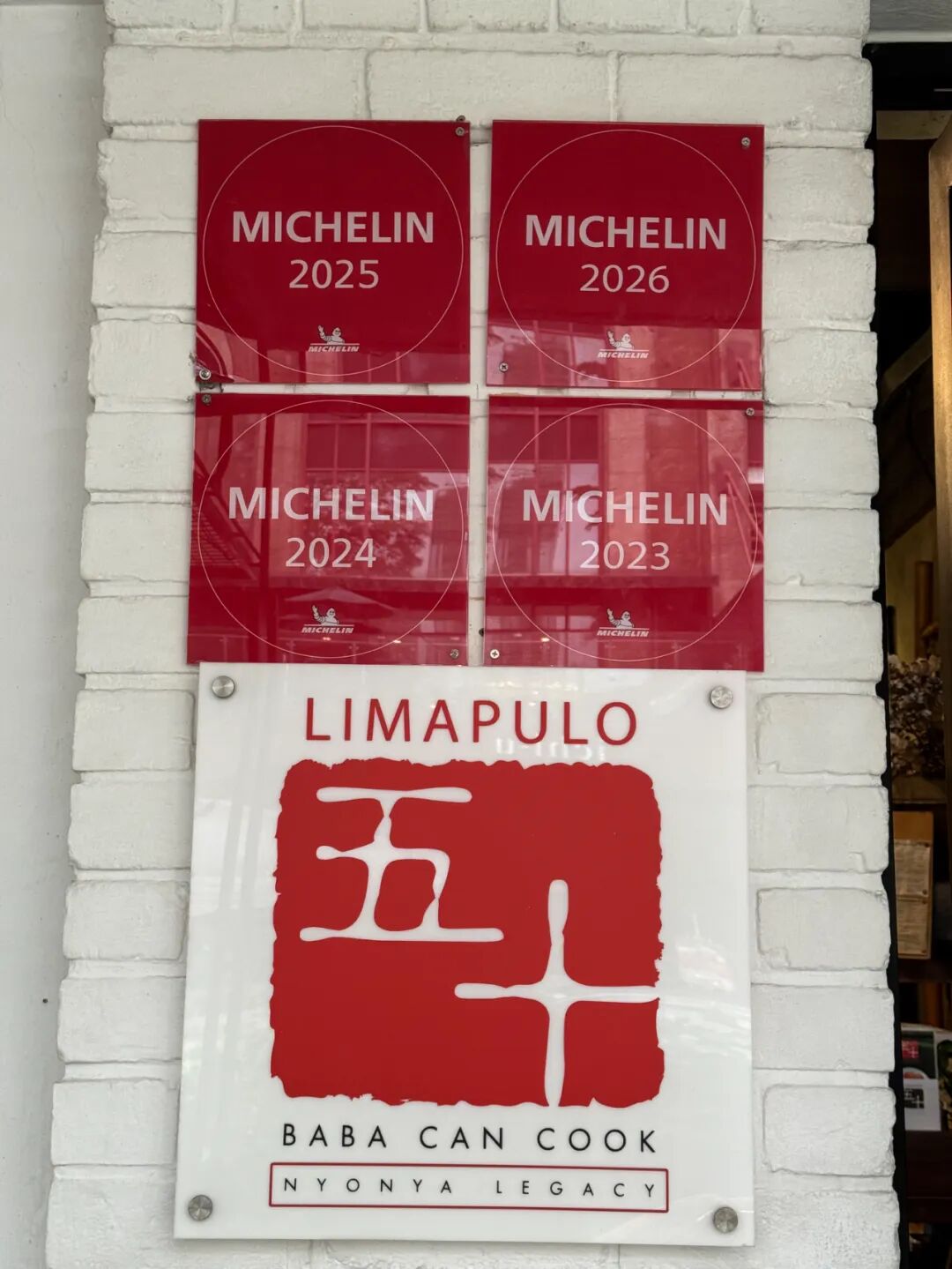
This is a Malay-Nyonya restaurant that has been on the Michelin list for four consecutive years. Among Malay cuisines, I like to eat Nyonya food the most, because Nyonya food combines the cooking skills and taste of Nanyang Chinese.
The photo should be the founders. You can see that they are wearing traditional clothes and have Nanyang characteristics.
This restaurant is very popular. In Malaysia, any restaurant that can get Michelin certification is very popular because the consumption here is not expensive, with an average of 20-40 ringgit per person.
There are many things on the menu. In order to avoid being confused, I chose the most popular dishes based on the recommendations of most netizens.
Most of the people who come to eat at noon are office workers nearby, so there is no need to queue.
A cup of Nanyang-style teh tarik. The teh tarik here tastes good and moderate in taste. I don’t like drinks that are too sweet.
Satay chicken skewers, satay means grilled skewers. The white one should be Nyonya cake. The chicken itself is marinated. To eat satay, it needs to be paired with sauce. This dipping sauce is slightly sweet and not spicy. I am not used to the spicy taste in Southeast Asia.
This is one of the store's signature dishes, called shrimp tart. It is made of shrimp and crispy shell into the shape of an egg tart, with vegetable salad inside. You can dip it in the sweet and salty sauce. It is very delicious.
The restaurant is located near the World Trade Center. Parking is not easy around. You need to park in a parking lot in a nearby building. The passage in that parking lot is very narrow and the parking fee is relatively expensive. It is best not to drive here.
Address: Limapulo (Limapulo Baba Can Cook)
2. Ali·Han Muslim Buffet Hot Pot
A newly opened Chinese northwest-style self-service hotpot on Petaling Street. The owner is from Qinghai. The northwest flavor is mainly reflected in his northwest noodles such as Youxiang and bitter bean rolls.
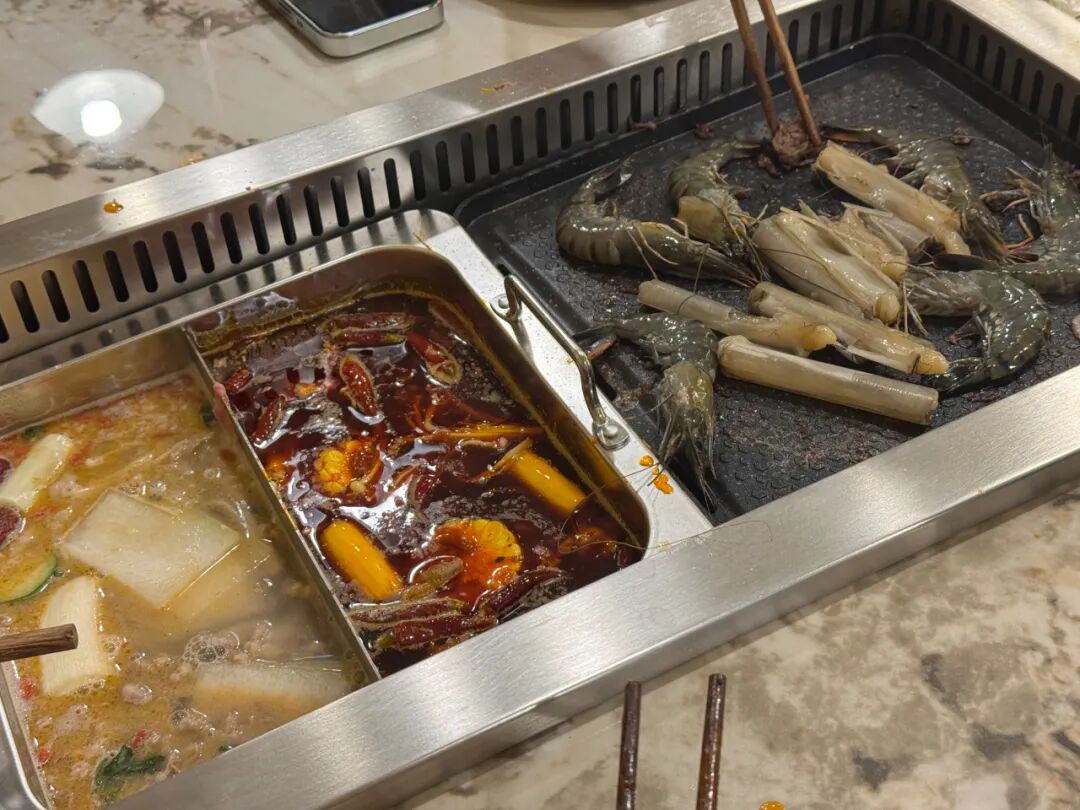
You can choose between hot pot and barbecue, or both, and the per capita consumption is around RM40.
There is a wide variety of ingredients, including everything you should have, including desserts and ice cream.
You can choose the mandarin duck pot as the bottom of the pot, barbecue and hot pot are both available together.
The location is opposite the famous Chinese Ramen on Petaling Street, but it can’t be found on the map.
Address: Baker Street (Petaling Street)
3. Halal Malatang
Petaling Street is a Chinese food street, and next to the Muslim hotpot there is a Malatang that does a good business.
This Malatang used to be a Ma Jinlong franchise store, but it is no longer there. There are two branches in the same street.
The style is the same as in China, you can choose your own ingredients, and the vegetarian and meat dishes are the same price.
In fact, the taste is not as good as the spicy hotpot in China, but the business is booming, and the diners are mainly Malays.
Address: Baker Street (Petaling Street)
4. BARTOLO LISBOA BAKEHOUSE
This was the first time I saw a Portuguese restaurant, so I came over to try it out of curiosity. This shop specializes in Portuguese bread and also has simple meals.
The owner looks like a serious Portuguese at first glance, and the menu is all in Portuguese. I asked the waiter to recommend a local specialty to me.
This egg-like pancake is called Bolo do caco. It is a round flatbread with a shape like a fire and a soft texture. It is a traditional Portuguese staple food.
Portuguese egg tarts are probably the most famous snacks in Portugal. This authentic Portuguese egg tarts are larger, thicker and sweeter than the egg tarts we eat in China.
I ordered a strawberry milkshake for my son. The freshly squeezed strawberries and milk tasted sour and sweet, and it was quite delicious.
The prices in this store are on the high side, with the three items costing a total of RM64.
Address: Bartolo (Bartolo Lisboa Bakehouse)
5. VILLAGE PARK RESTAURANT
This is a very famous nasi lemak restaurant in Kuala Lumpur. I have been here twice, both times at noon. It is very popular and you have to queue for more than ten minutes during peak hours.
Although there are many people, the service is still very good. The waiters are unhurried and arranged in an orderly manner.
Nasi lemak is the national dish of Southeast Asia. Singapore, Malaysia, and Indonesia all consider themselves to be the birthplace of nasi lemak.
My experience is that just choose their signature chicken drumstick nasi lemak, the others are not as delicious as the signature.
This meal only costs RM12, so the value for money is really hard to beat.
Their store opens at six in the morning, and you can have hot spring eggs dipped in bread for breakfast.
For drinks, we recommend a cup of white coffee, which is the most popular coffee category in Southeast Asia.
Address: 5, Jalan SS 21/37, Damansara Utama, 47400 Petaling Jaya, Selangor
6. Steaming Era
When eating seafood in Kuala Lumpur, the first choice is a restaurant opened by Chaoshan people. This steamed seafood restaurant is the most delicious seafood restaurant I have ever eaten in Kuala Lumpur.
Malay seafood restaurants often sell dead frozen products. Only Chaoshan people prefer fresh seafood, because the fresher the seafood, the less fishy it smells.
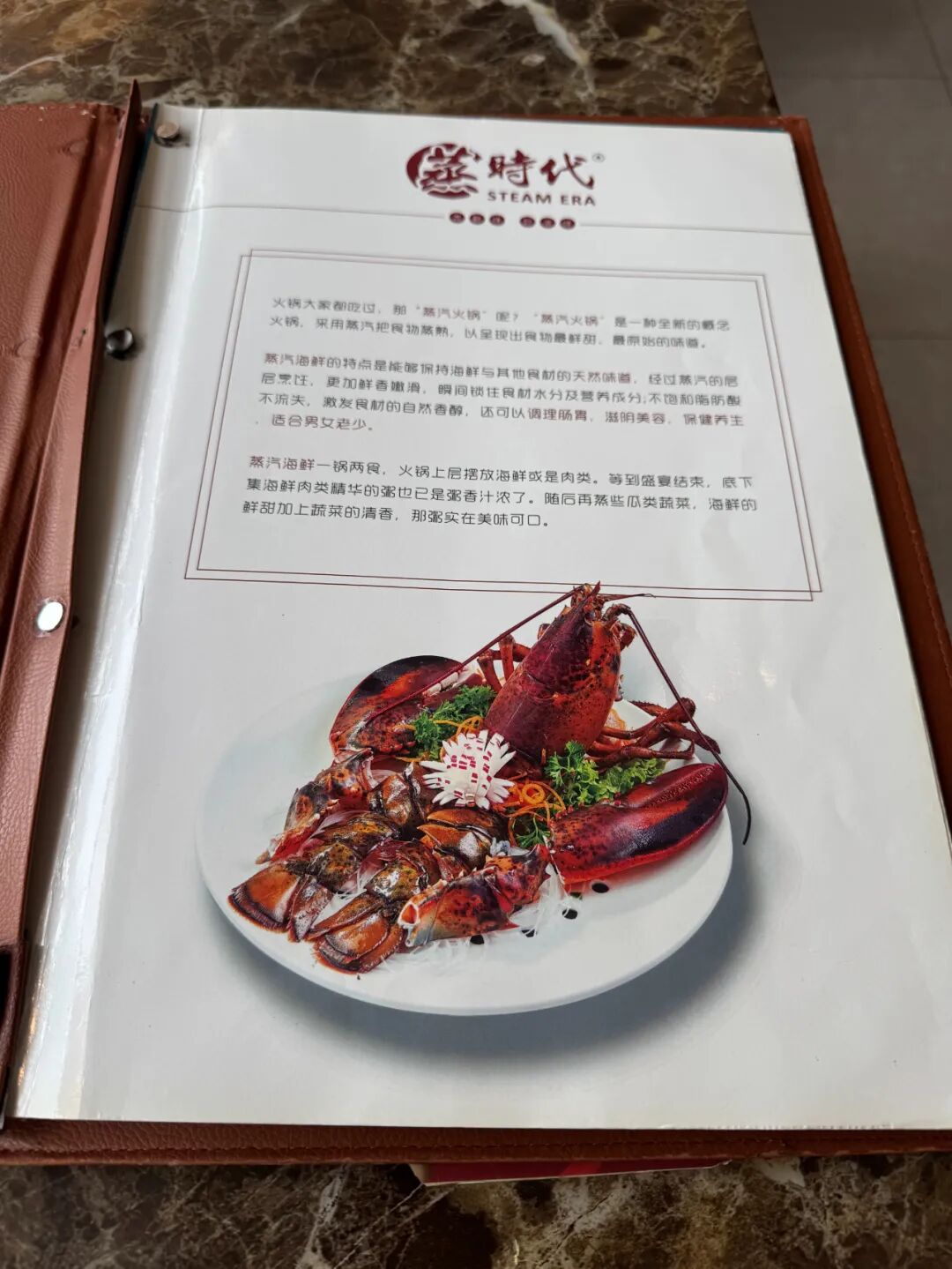
The method of steaming seafood is also simple. Put the raw porridge at the bottom of the pot, put the seafood on top, cover it, wait a few minutes, and you can eat the seafood on top. After eating the seafood, the porridge at the bottom is also ready, and the seafood soup will flow into the bottom of the pot, which is delicious.
There are many kinds of seafood in this store, and there are many ways to eat them. The seafood can be eaten raw or steamed.
More than a dozen kinds of dipping sauces, mix and match as you like.
Their signature milk tea is better than other milk tea shops outside. It tastes sweeter and sweeter. The waiter even asked me what I thought of the taste. I said it was very good.
This thing is very similar to northwest pasta. It is made by Chaoshan people with Hui oil flavor. It is a thin layer with a hollow inside, which can be eaten with vegetables.
The seafood casserole porridge, the seafood in it can be tasted and the ingredients are fresh, definitely not made from frozen products.
The prawns and scallops are both alive and will jump around when put in the steamer.
After steaming the seafood, I just had porridge. This steamed dish, paired with their dipping sauce, is more delicious than eating Malatang.
Seven-star spotted fish is a fish that we all like to eat. It has no small spines and the meat is tender and firm. It has no shortcomings except that it is expensive.
I have been to this steamed seafood restaurant twice, and each time I ate different dishes, they all tasted great. If you don’t eat expensive ingredients, the per capita consumption would be around RM70.
Address: Marina Seafood (Marina Seafood Restaurant Steam Times)
7. Yunye·Yunnan Rice Noodles·Sichuan Small Bowl Dishes
Friends who want to eat Yunnan rice noodles in Kuala Lumpur are in luck, a Yunnan rice noodle shop has opened at the back of the Bank of China Building.
They specialize in a variety of small bowl dishes, but the rice noodles are what attracts me the most.
The diners at noon are mainly office workers nearby. This kind of small bowl dish is convenient to choose and the price is cheap.
The rice noodles are made in the traditional Yunnan way, with mint added and the beef soup stewed very thick.
Address: 1, Megan Avenue, C-0-7, 189, Jln Tun Razak, 50400 Kuala Lumpur, Wilayah Persekutuan Kuala Lumpur
8. An Bang Paradise Chicken Rice Restaurant
This chicken rice restaurant is one that I often visit. It is a pork-free restaurant run by a local Chinese. The chicken rice is very delicious.
This is also a traditional Nanyang Chinese craft that has been practiced in Ampang for two generations.
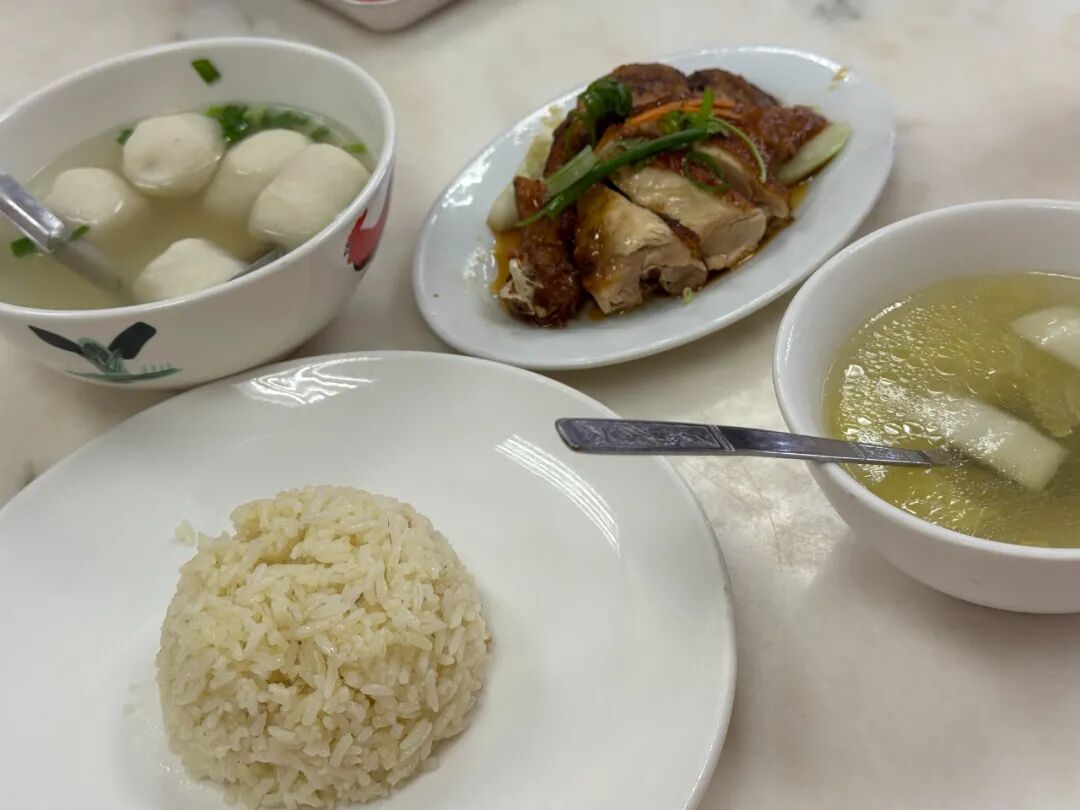
For chicken rice, you can choose either plain-cut chicken or grilled chicken legs. I have tried both, and they are both delicious, and the accompanying dipping sauces are amazing.
The store's homemade herbal tea and Fuzhou fish balls show that their ancestors are from Fujian.
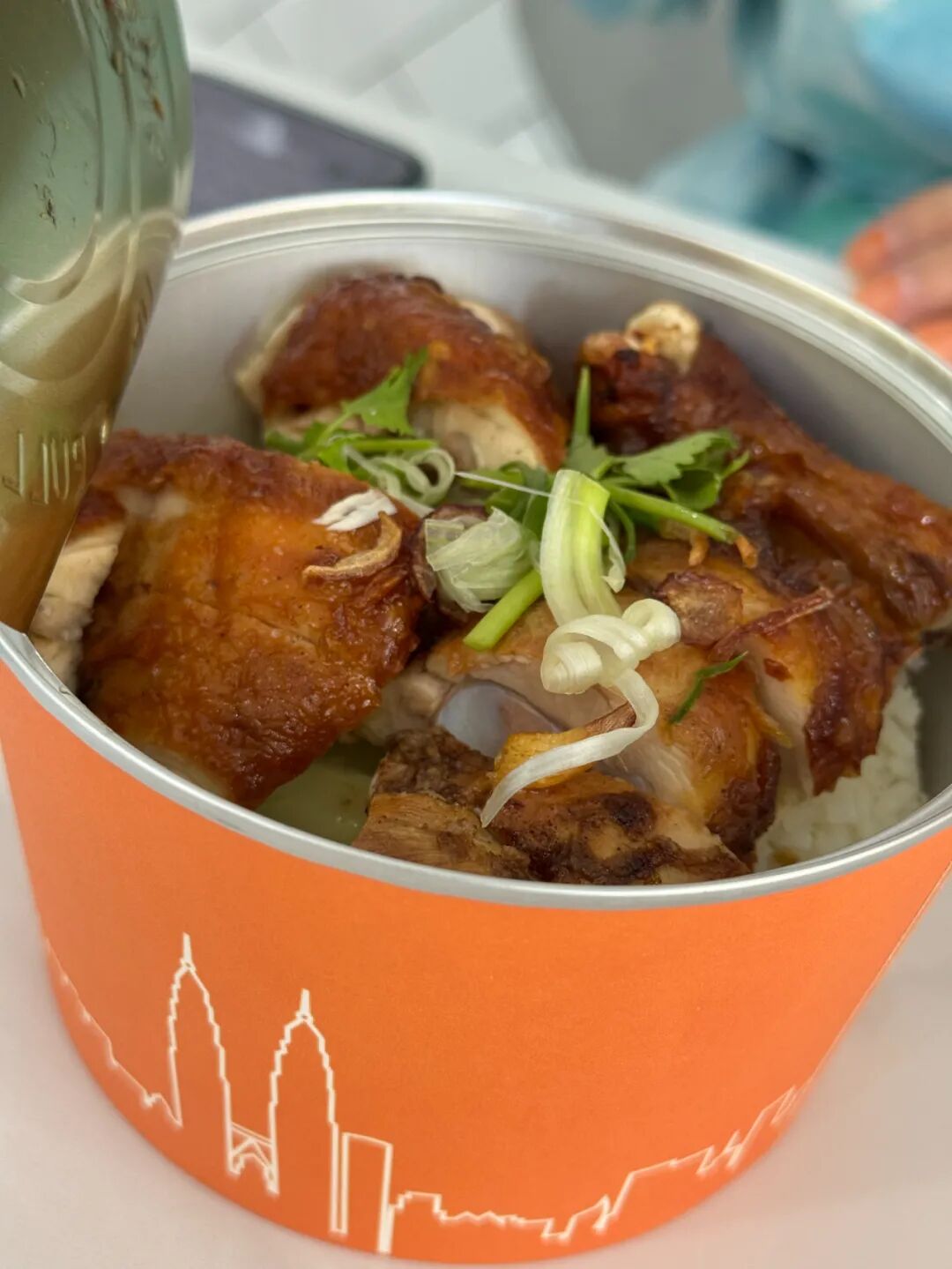
This is for dine-in dining, and you can also choose to take it out. They will pack it in a sealed box, and the taste will not be affected at all after it is opened.
The Ampang Paradise Chicken Restaurant street reminds me of Penang, because this area is also a gathering place for Chinese.
Address: 158, Jalan Besar Ampang, Pekan Ampang, 68000 Ampang, Selangor
9. BARRACA
This is a newly opened Spanish restaurant in Ampang, and its main specialty is of course paella.
I have eaten Spanish restaurants in Indonesia before. There are also some restaurants in China that make Spanish paella, but it is difficult to eat authentic ones.
Facts have proved that Spanish paella is just that, not that good, because the rice they use is a bit hard, and it mainly depends on the freshness of the ingredients.
This shop has just opened and is very popular. There are only a dozen staff working in the kitchen.
The bread that comes with the meal is a standard feature of Western food.
This thing that looks like sushi is topped with octopus. Spanish and Portuguese people like to eat octopus.
This goat cheese salad is very delicious, mainly because the cheese has a rich milky aroma. Spain has a well-developed animal husbandry and first-class dairy products.
Address: L1-08 The Campus Ampang Jalan Kolam Air Lama, Mukim, 68000 Kuala Lumpur, Selangor
10. Hai Kah Lang
Hai Jiao Ren is an Internet celebrity Michelin restaurant in Kuala Lumpur, specializing in a variety of seafood and Nanyang Chinese snacks.
The difference between this store and Steam Times is that this one is a food stall, while Steam Times is a more high-end business dinner. In the steaming era, seafood was steamed, but this restaurant mainly specializes in spicy stir-fried, fried and various curries.
When Chinese people eat seafood, of course they still have to eat it fresh.
Haijiaoren is quite large, but it is still full, and you have to queue for more than ten minutes for lunch.
We followed the recommendations on Dianping and chose the most popular signature dishes.
A cup of Hainan tea, Hainan tea is white coffee, and a cup of lemongrass lemonade.
This is called soft fried crab, and you can eat it with the shell because it is really soft.
I still chose my favorite seven-star grouper. This kind of fish is delicious no matter how you prepare it, as long as the ingredients are fresh.
This is mixed seafood, with kway teow at the bottom. The kway teow is like vermicelli or rice noodles. The soup base is Tom Yum Goong. This bowl is very generous, with shrimps, crabs, shells, and fish in it. The meal costs 60 ringgit per person.
Address: Hai Kah Lang (Taman Cheras) Hai Kah Lang Seafood & Fish Head Noodle view all
Summary: This Kuala Lumpur halal food map issue 7 covers Limapulo Baba Can Cook, Ali-Han Muslim buffet hot pot and barbecue, Petaling Street halal malatang, Bartolo Lisboa Bakehouse, Village Park nasi lemak, Yunnan rice noodles, An Bang chicken rice, Barraca, and Hai Kah Lang seafood fish head noodles.
The restaurants in this issue are as follows:
1. Limapulo: Baba Can Cook (Nyonya cuisine)
2. Ali·Han Muslim buffet hotpot barbecue
3. Petaling Street Halal Malatang
4. BARTOLO LISBOA BAKEHOUSE (Portuguese cuisine)
5. VILLAGE PARK RESTAURANT (Nasi Lemak)
6. Steaming Era (Chaoshan Cuisine)
7. Yunye·Yunnan Rice Noodles
8. Anbang Paradise Chicken Rice Restaurant (Fujian cuisine)
9. BARRACA (Spanish food)
10. Hai Jiao Ren (seafood stall)
1. Limapulo:Baba Can Cook
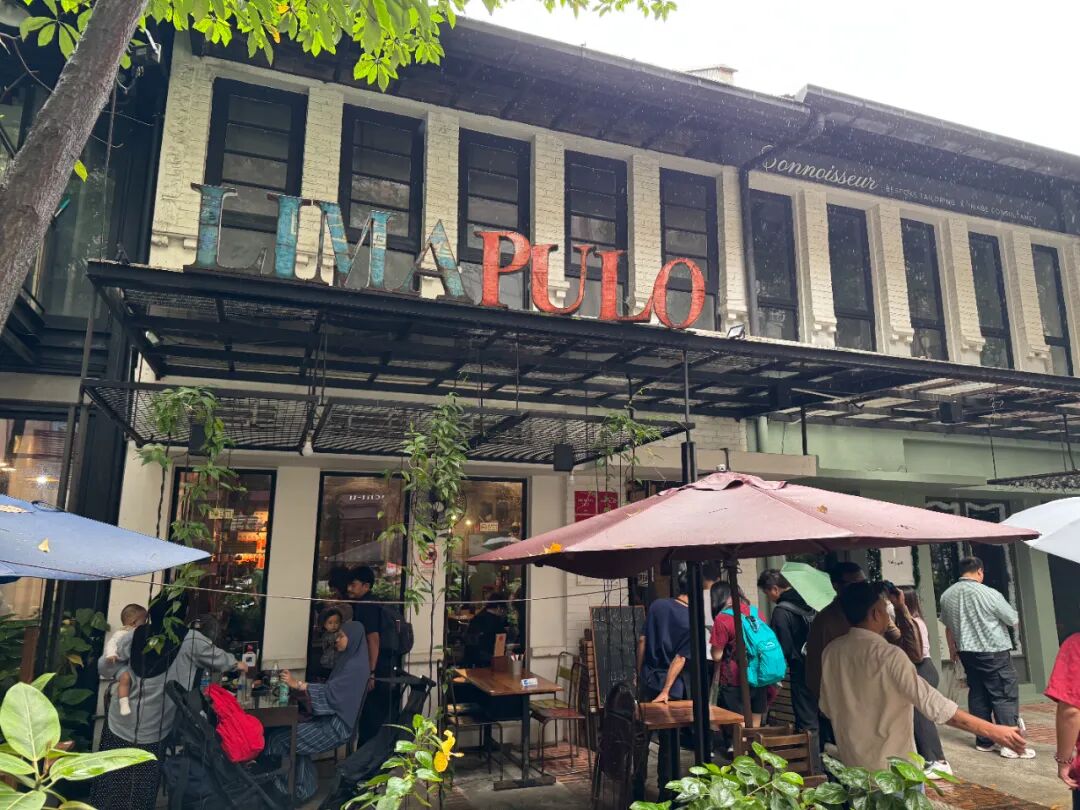
This is a Malay-Nyonya restaurant that has been on the Michelin list for four consecutive years. Among Malay cuisines, I like to eat Nyonya food the most, because Nyonya food combines the cooking skills and taste of Nanyang Chinese.
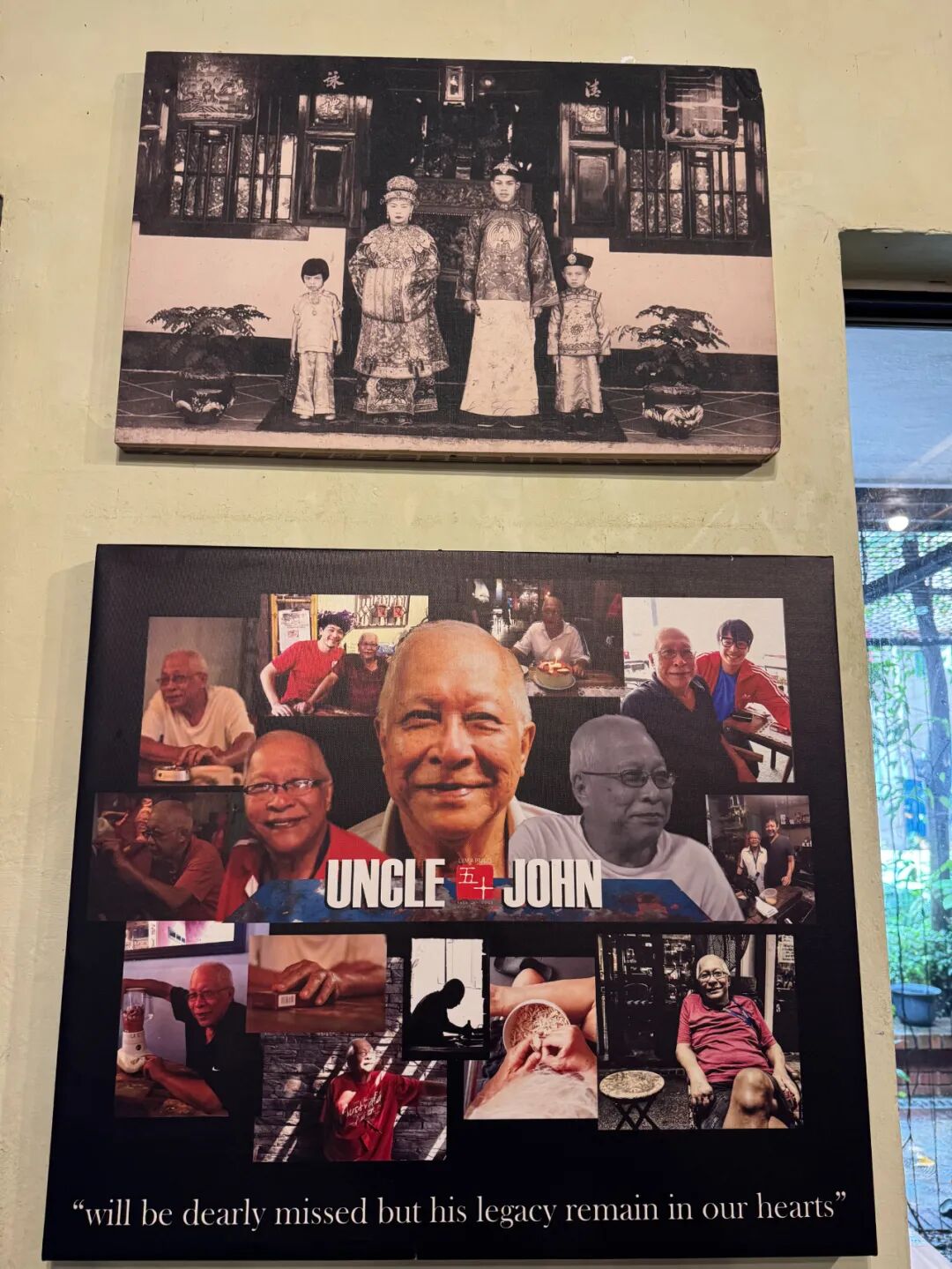
The photo should be the founders. You can see that they are wearing traditional clothes and have Nanyang characteristics.
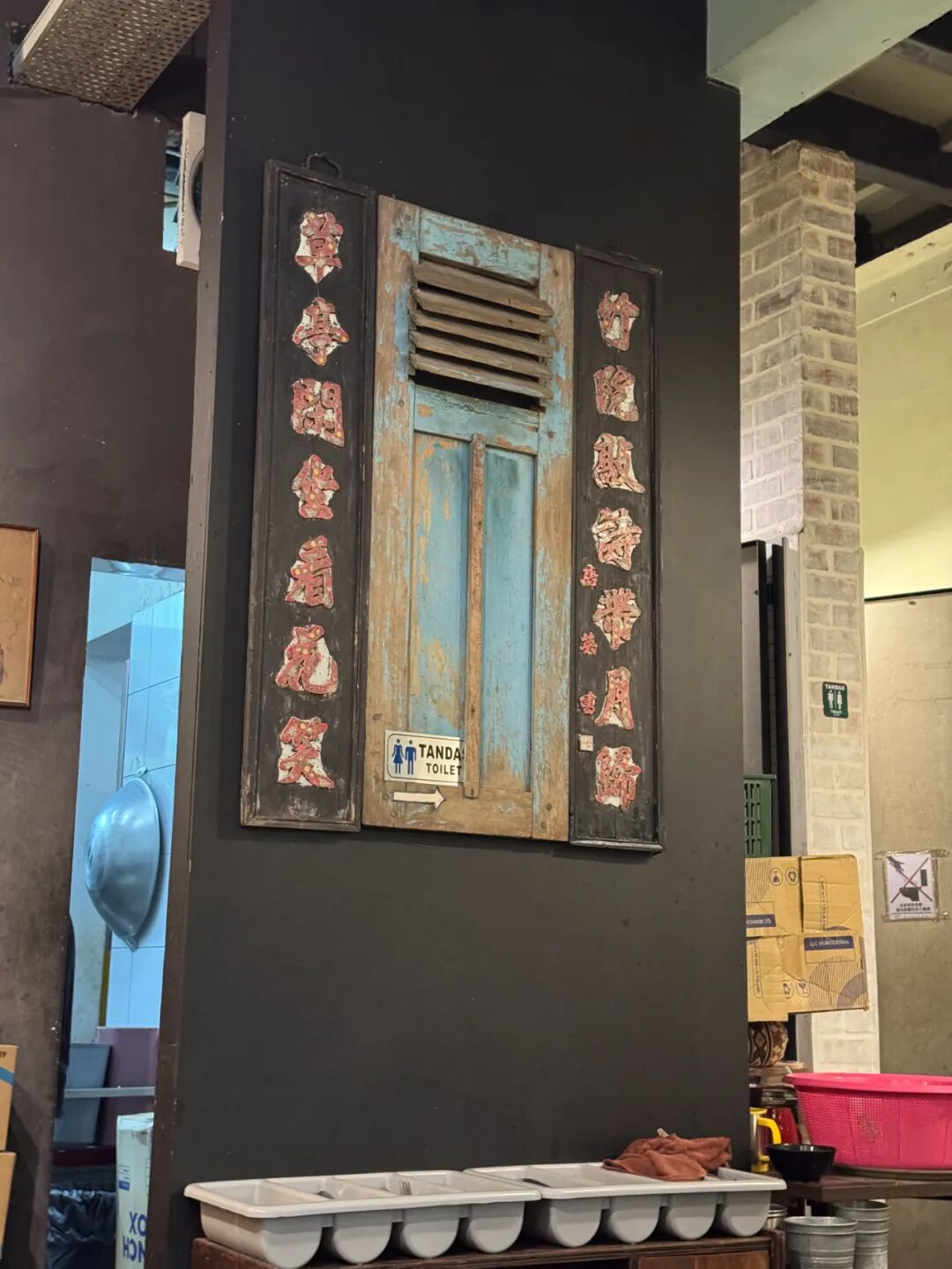
This restaurant is very popular. In Malaysia, any restaurant that can get Michelin certification is very popular because the consumption here is not expensive, with an average of 20-40 ringgit per person.
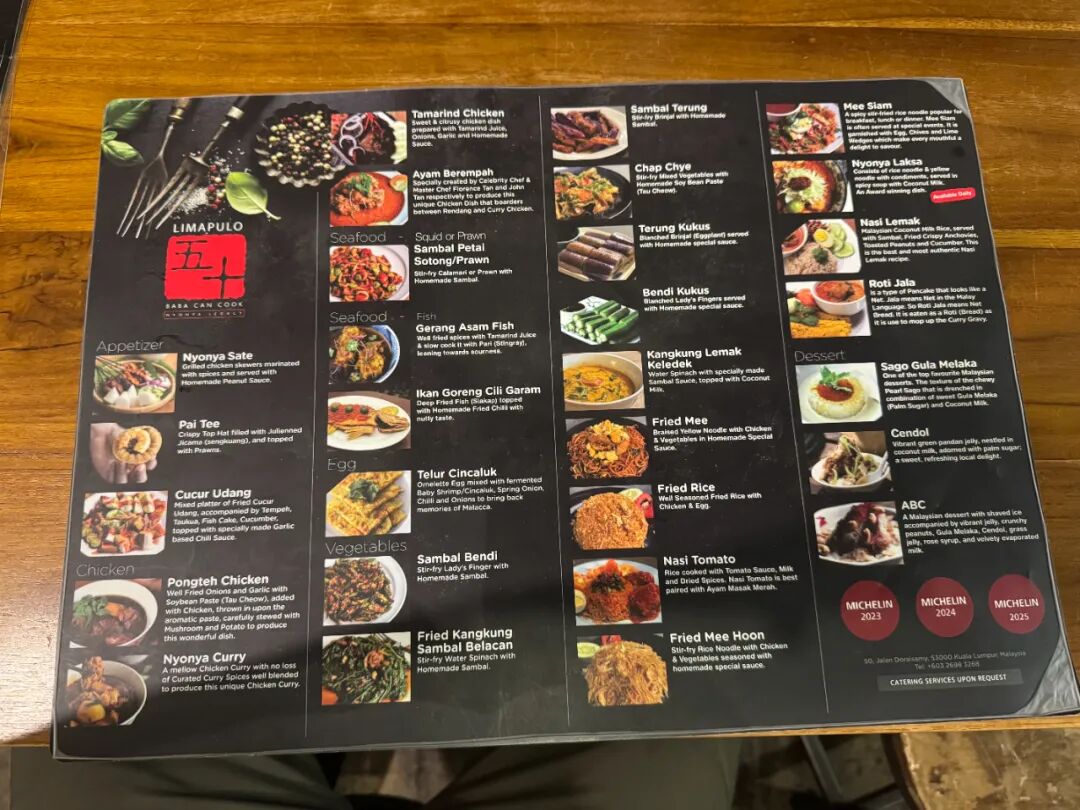
There are many things on the menu. In order to avoid being confused, I chose the most popular dishes based on the recommendations of most netizens.
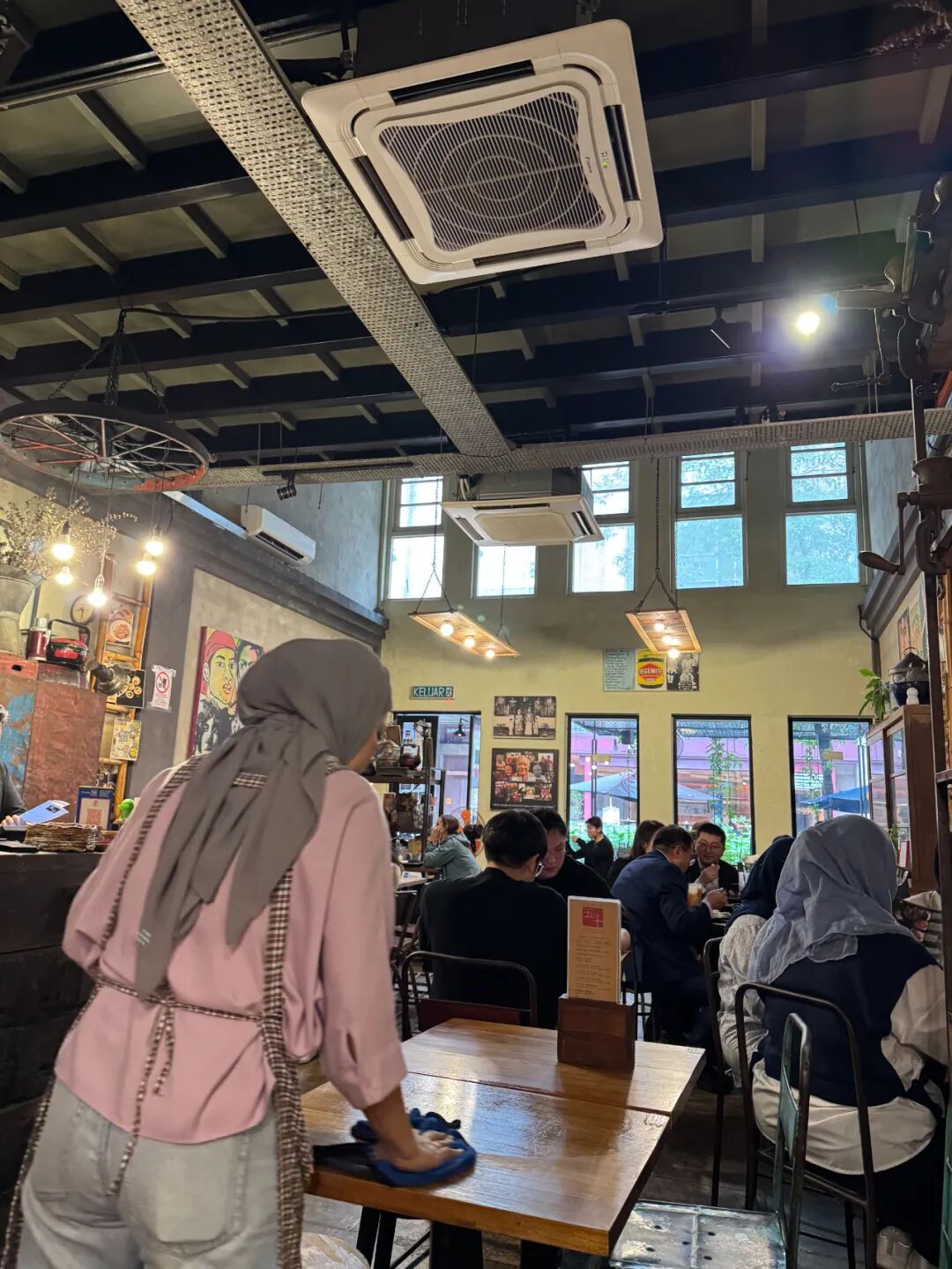
Most of the people who come to eat at noon are office workers nearby, so there is no need to queue.
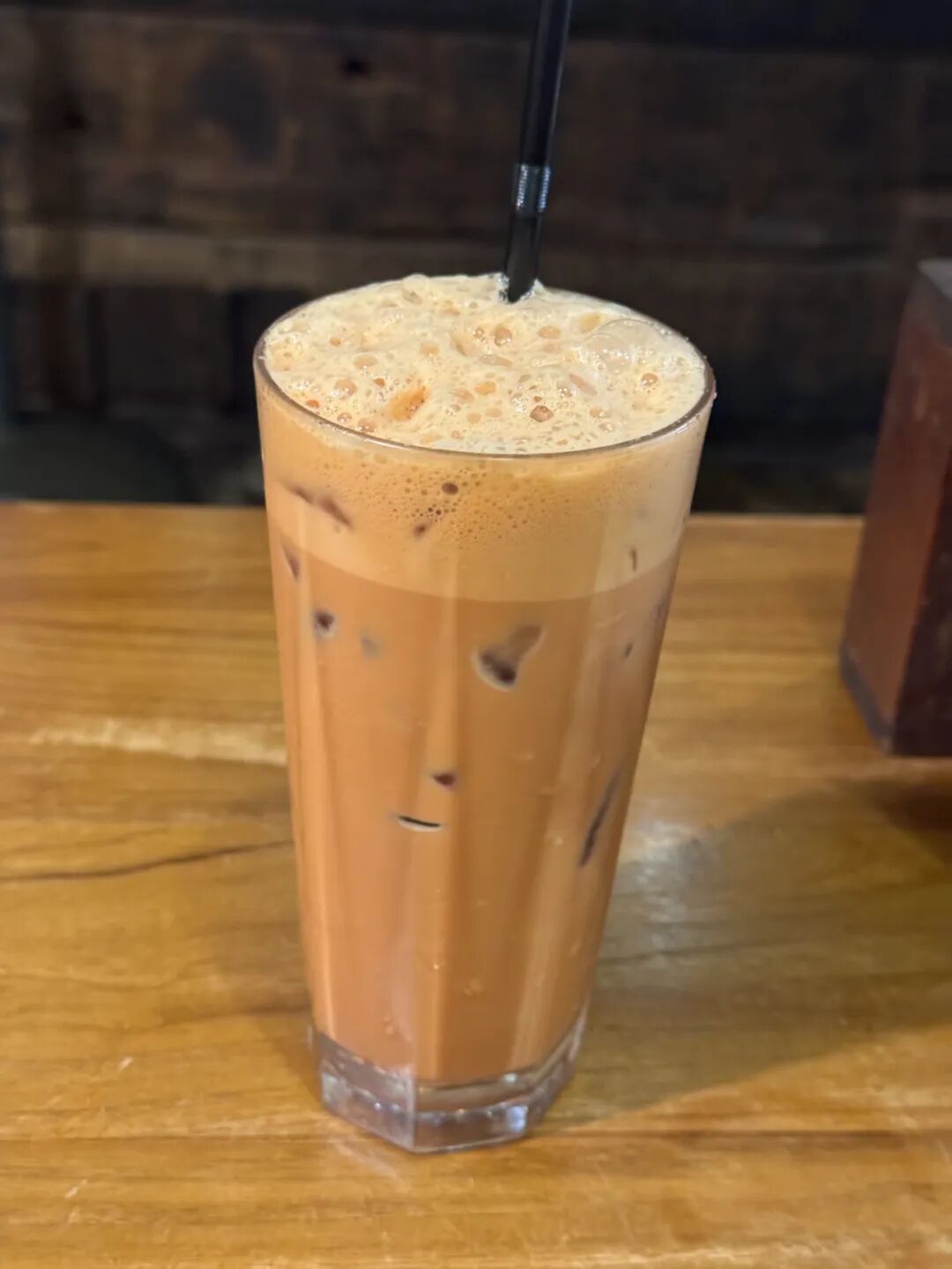
A cup of Nanyang-style teh tarik. The teh tarik here tastes good and moderate in taste. I don’t like drinks that are too sweet.
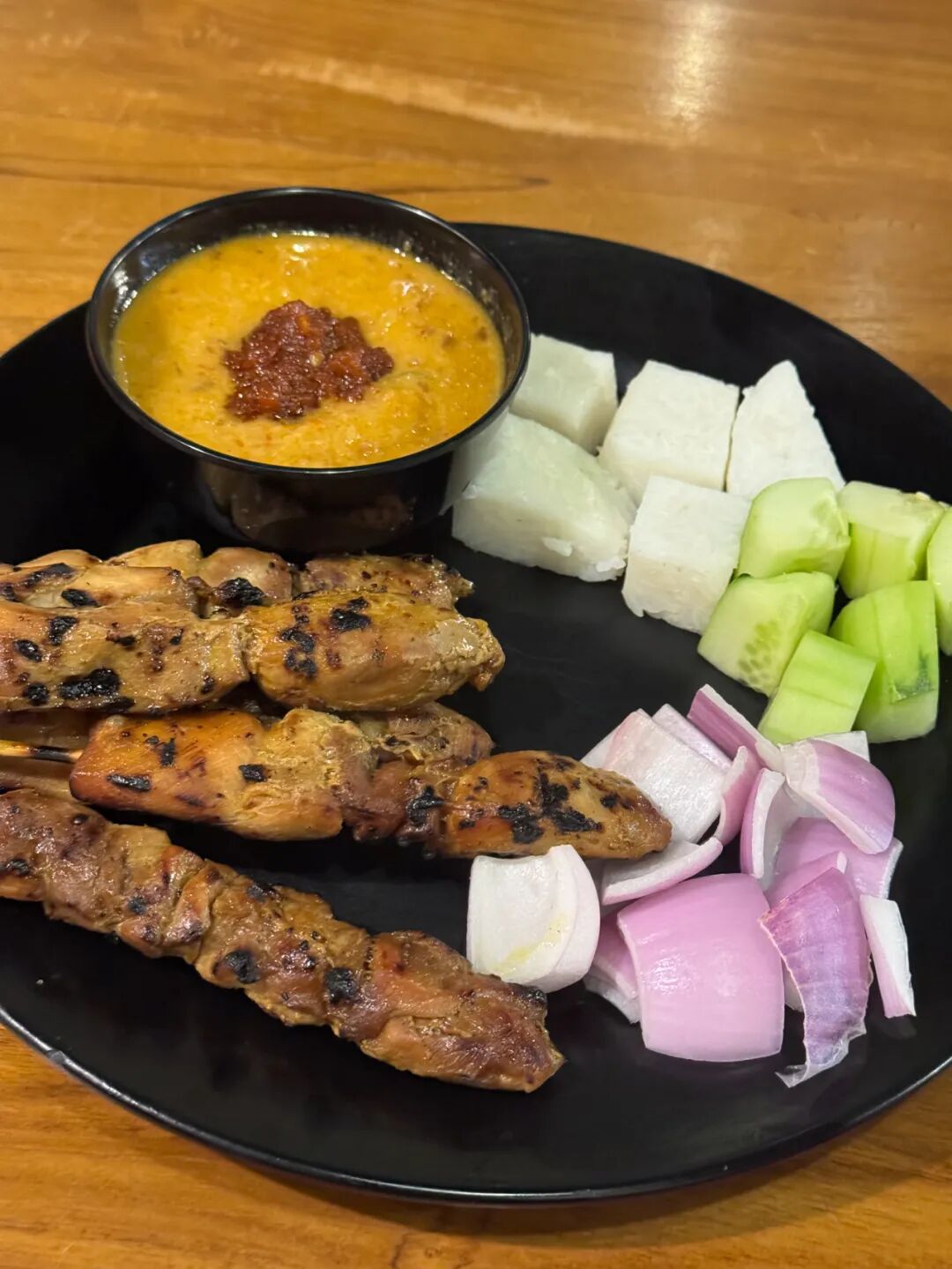
Satay chicken skewers, satay means grilled skewers. The white one should be Nyonya cake. The chicken itself is marinated. To eat satay, it needs to be paired with sauce. This dipping sauce is slightly sweet and not spicy. I am not used to the spicy taste in Southeast Asia.
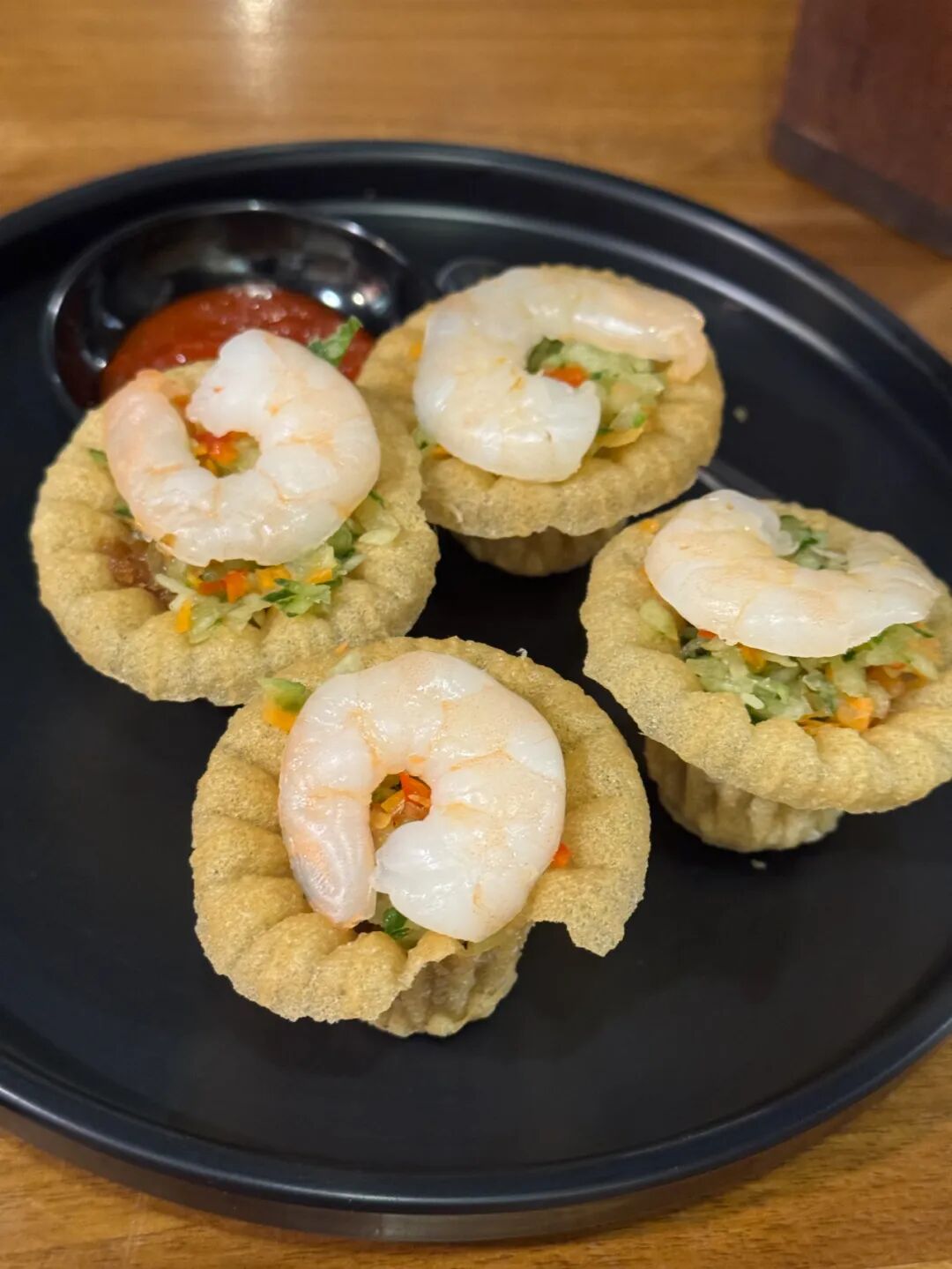
This is one of the store's signature dishes, called shrimp tart. It is made of shrimp and crispy shell into the shape of an egg tart, with vegetable salad inside. You can dip it in the sweet and salty sauce. It is very delicious.
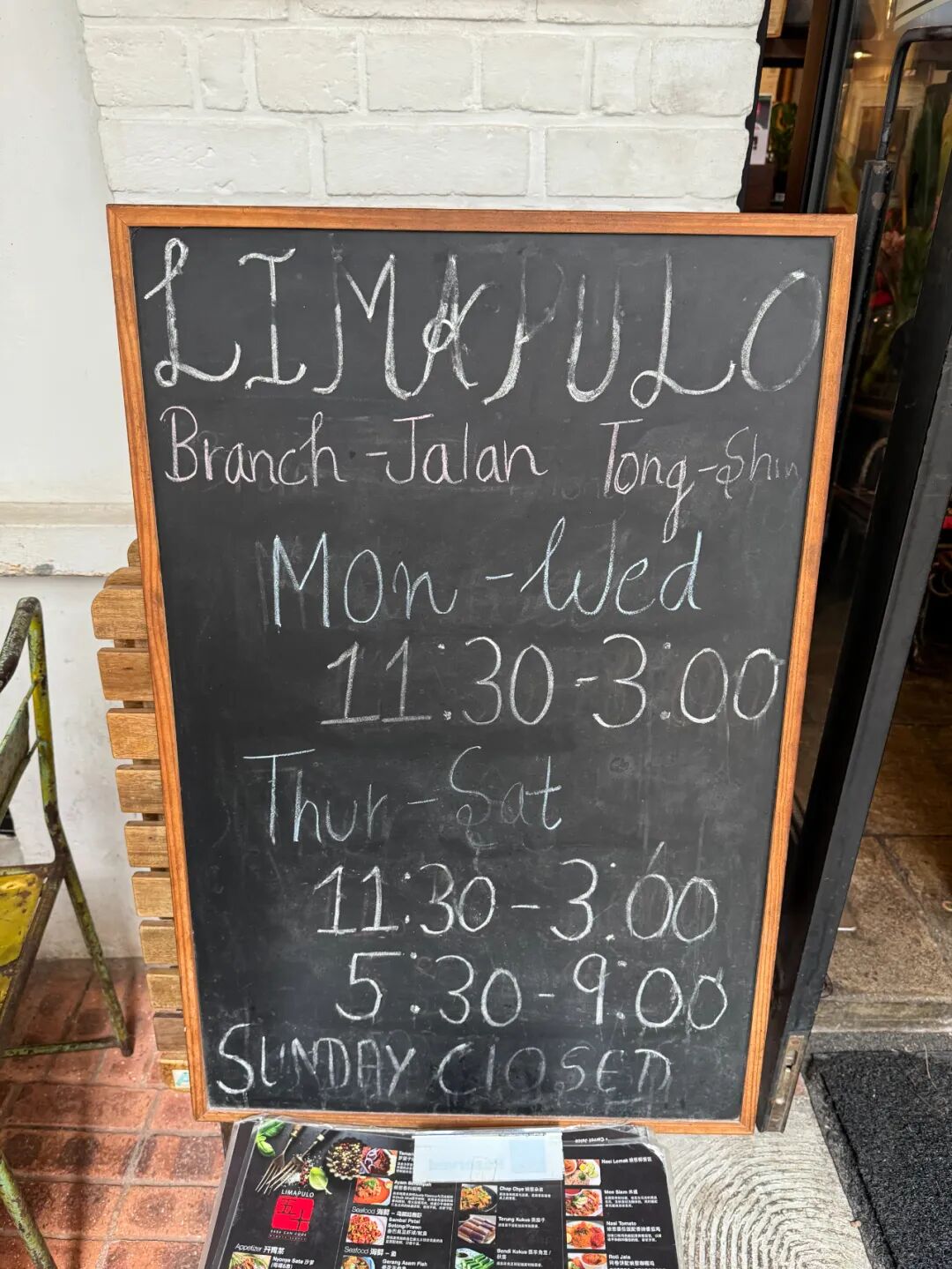
The restaurant is located near the World Trade Center. Parking is not easy around. You need to park in a parking lot in a nearby building. The passage in that parking lot is very narrow and the parking fee is relatively expensive. It is best not to drive here.
Address: Limapulo (Limapulo Baba Can Cook)
2. Ali·Han Muslim Buffet Hot Pot
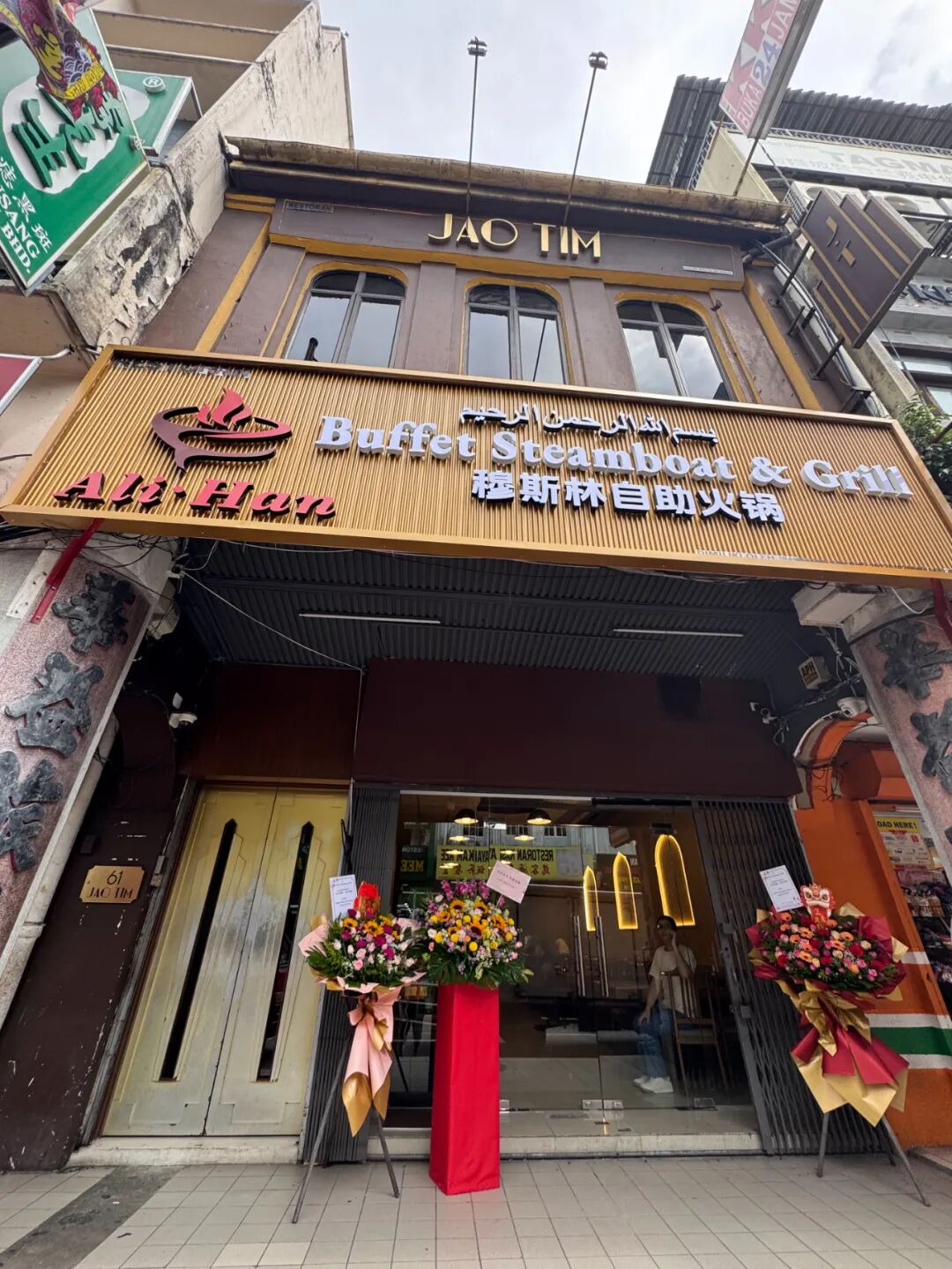
A newly opened Chinese northwest-style self-service hotpot on Petaling Street. The owner is from Qinghai. The northwest flavor is mainly reflected in his northwest noodles such as Youxiang and bitter bean rolls.
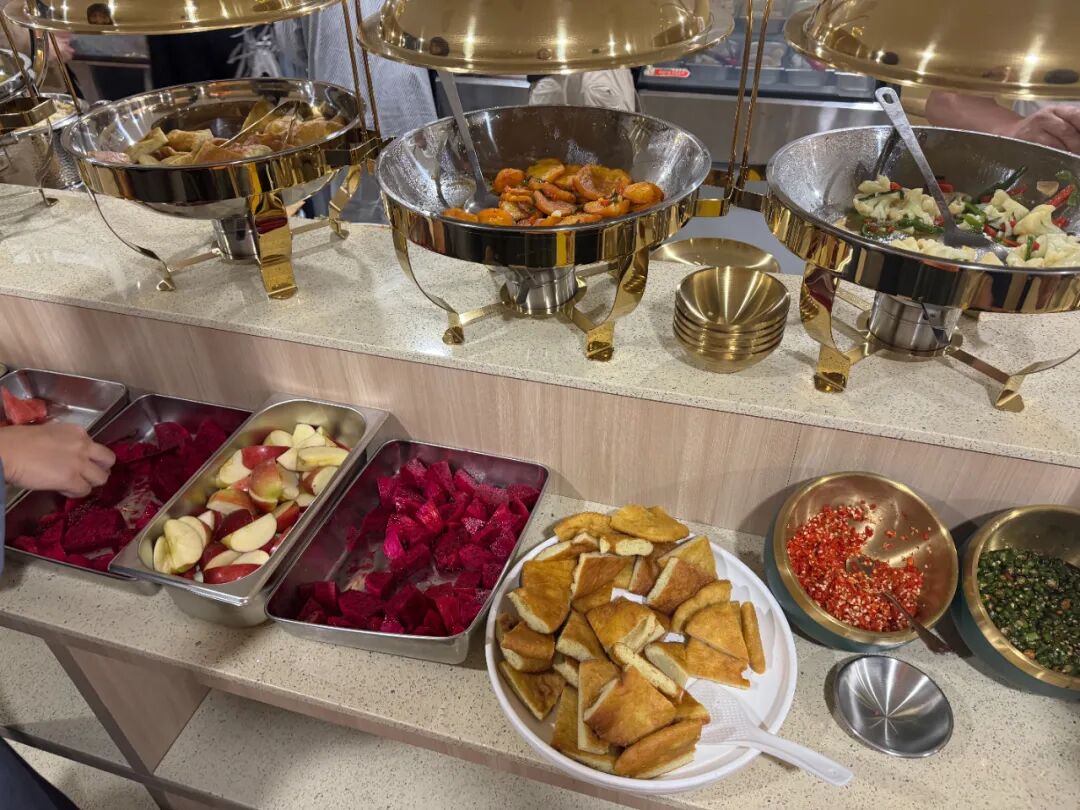
You can choose between hot pot and barbecue, or both, and the per capita consumption is around RM40.
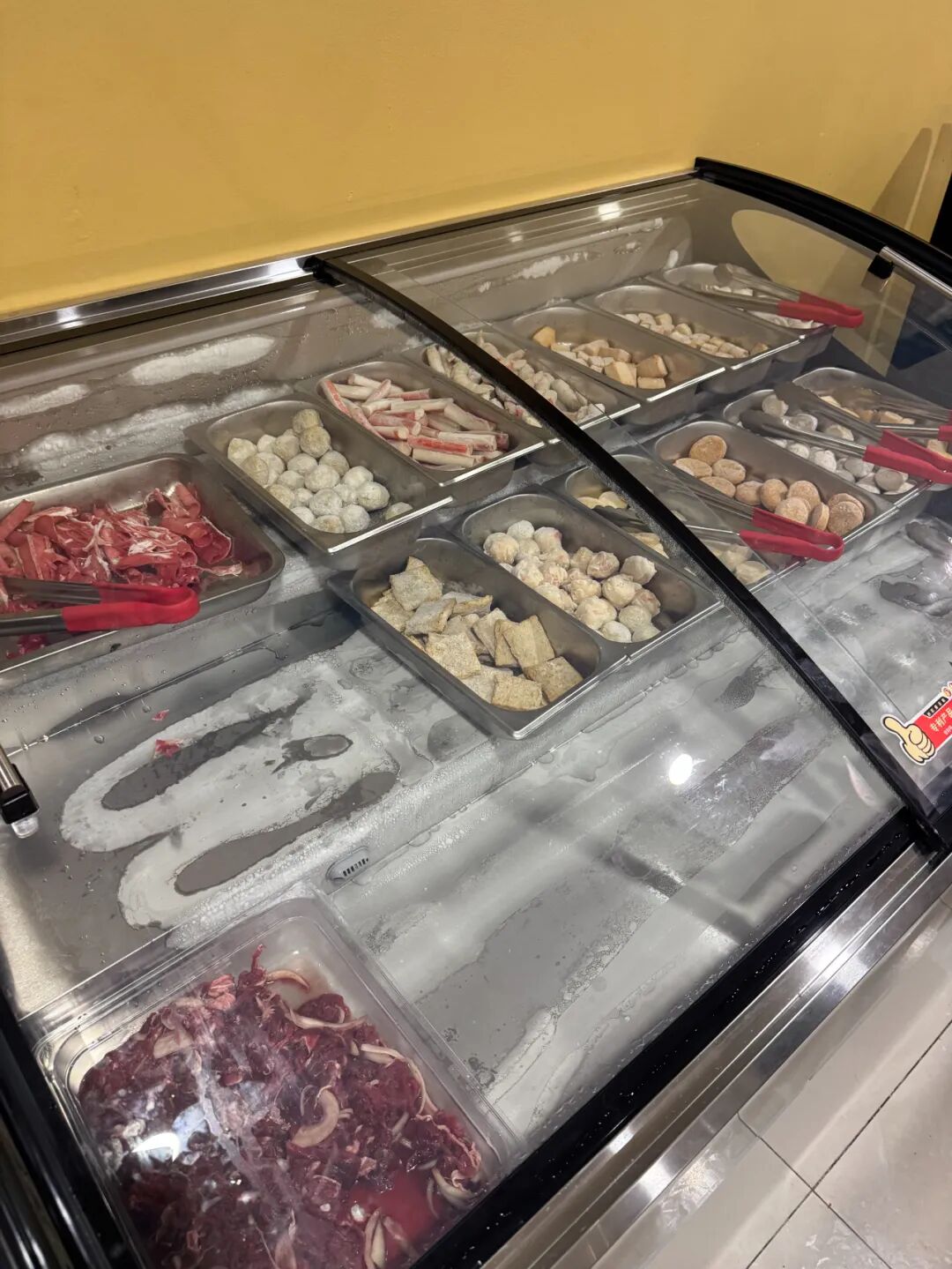
There is a wide variety of ingredients, including everything you should have, including desserts and ice cream.
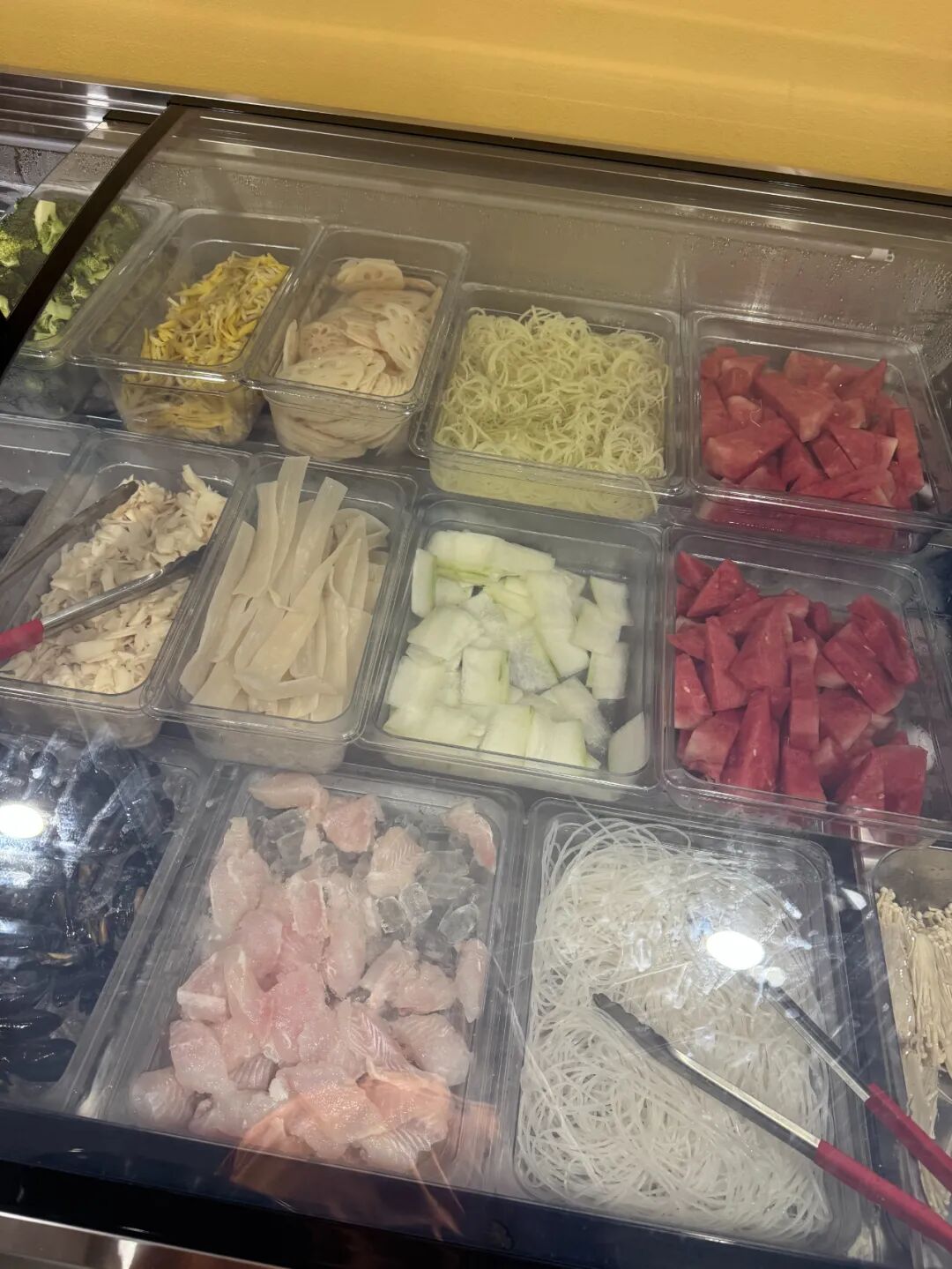
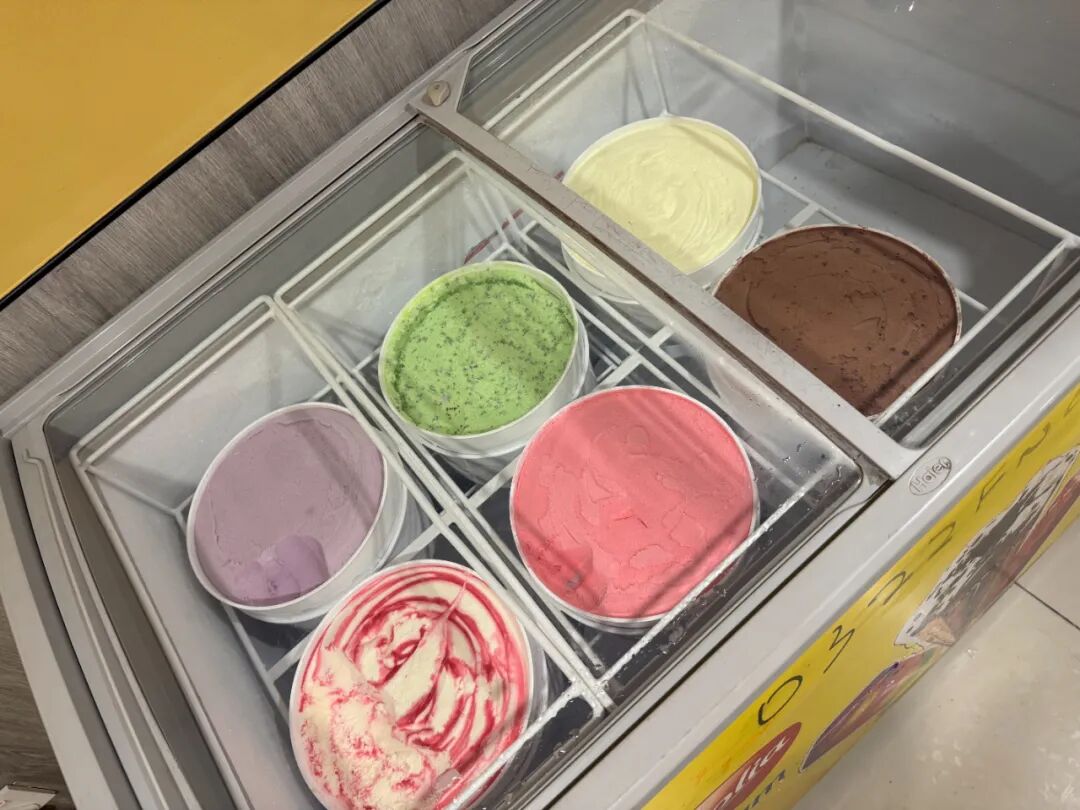
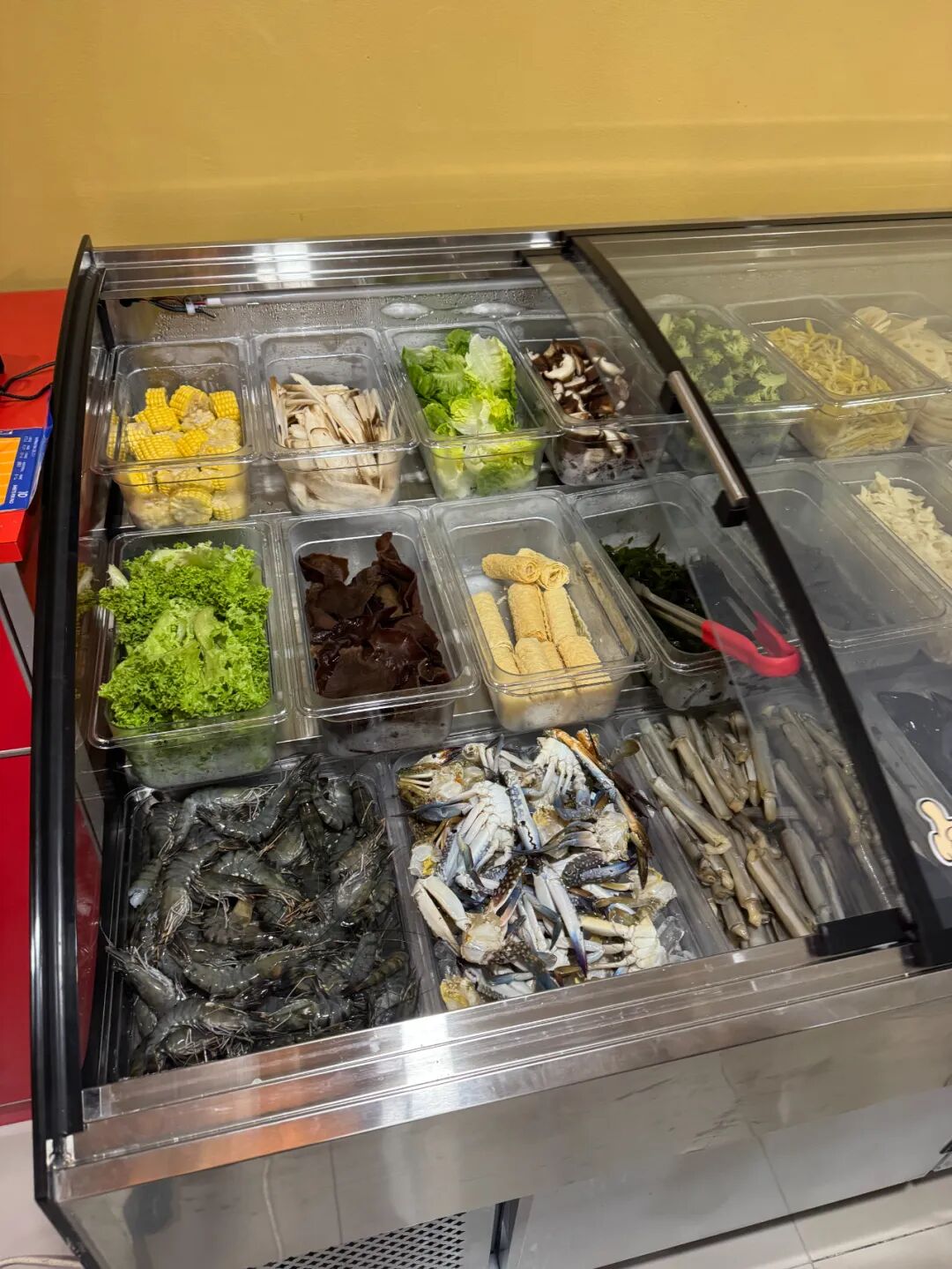
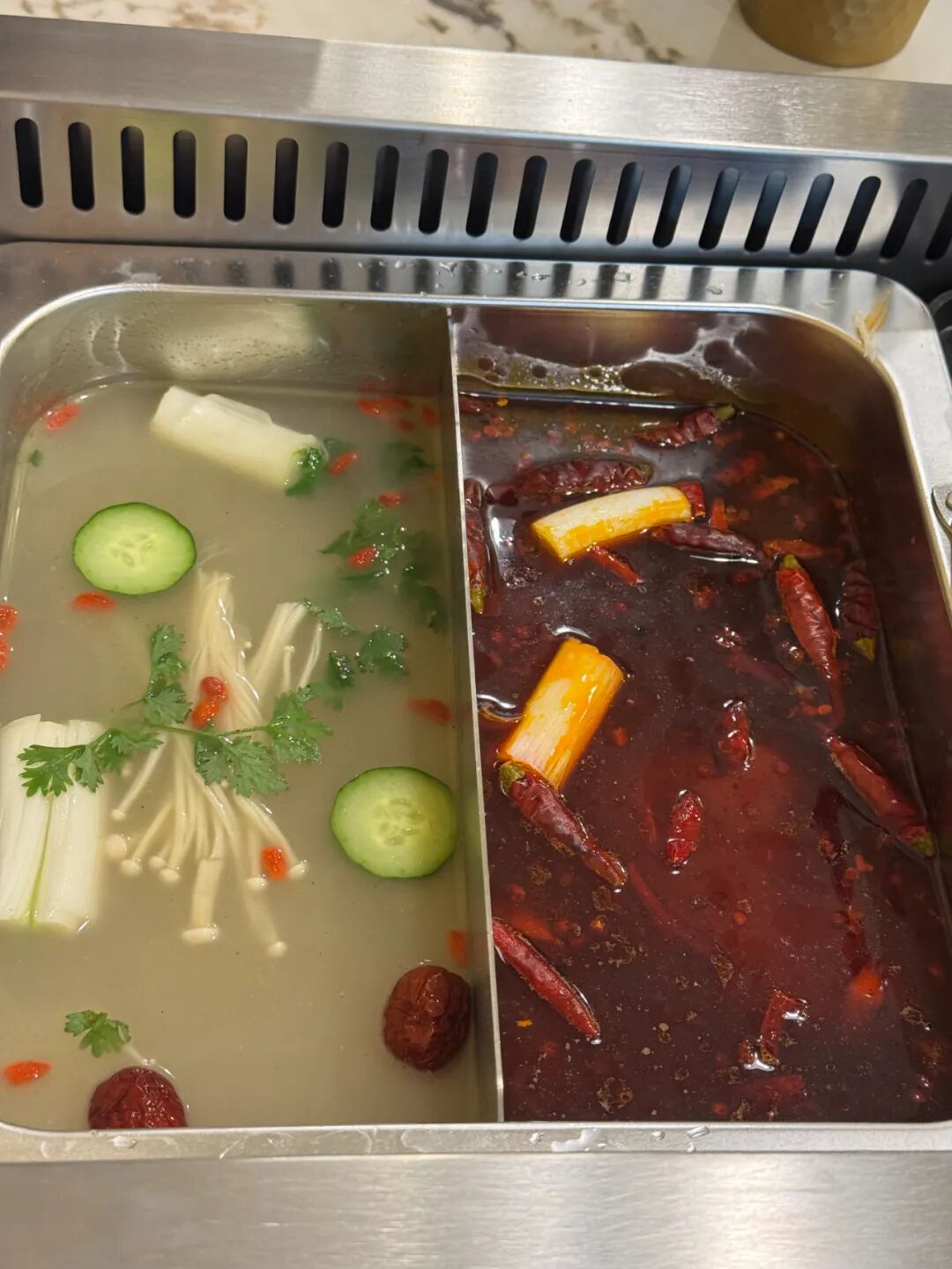
You can choose the mandarin duck pot as the bottom of the pot, barbecue and hot pot are both available together.
The location is opposite the famous Chinese Ramen on Petaling Street, but it can’t be found on the map.
Address: Baker Street (Petaling Street)
3. Halal Malatang
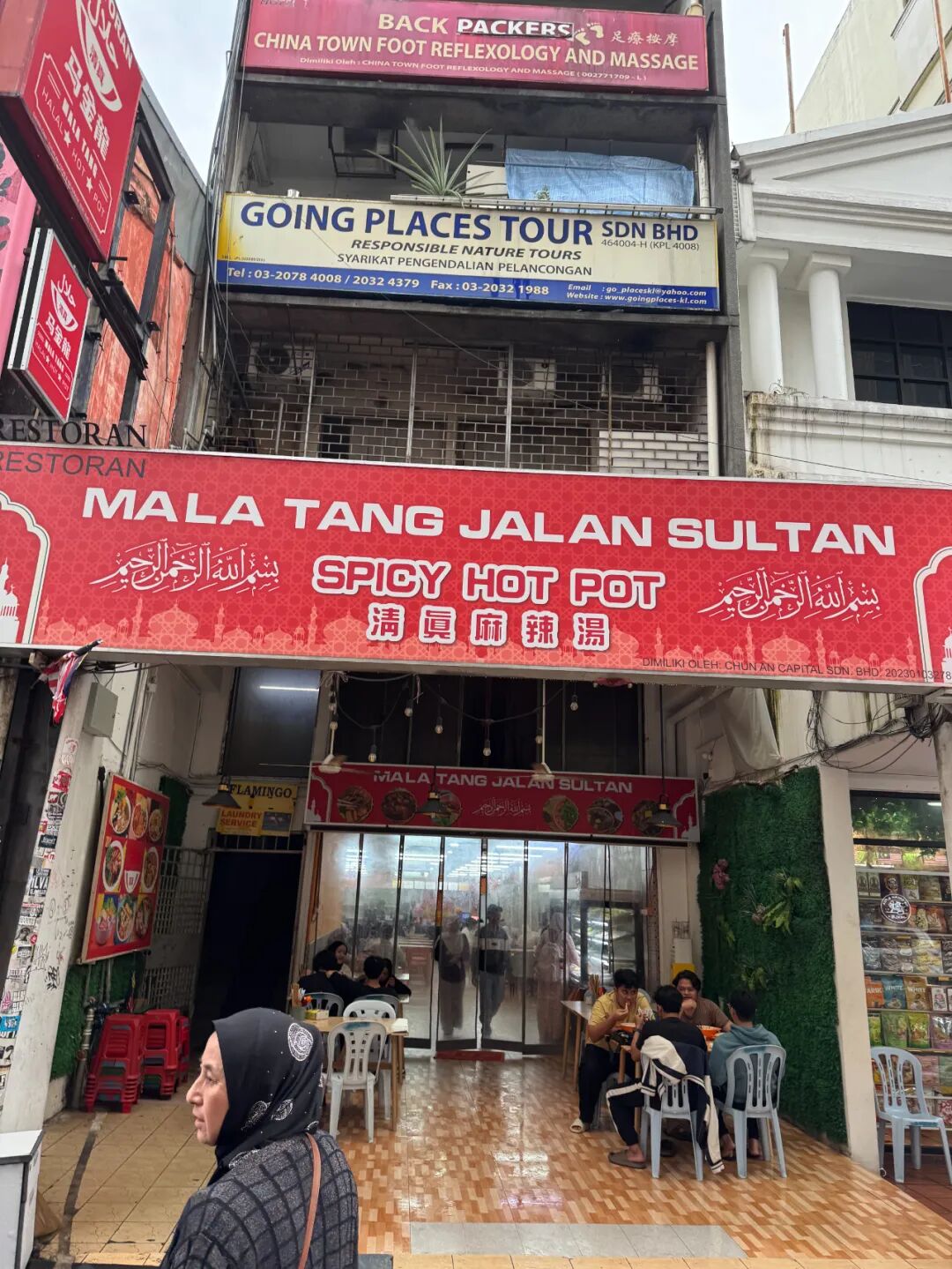
Petaling Street is a Chinese food street, and next to the Muslim hotpot there is a Malatang that does a good business.
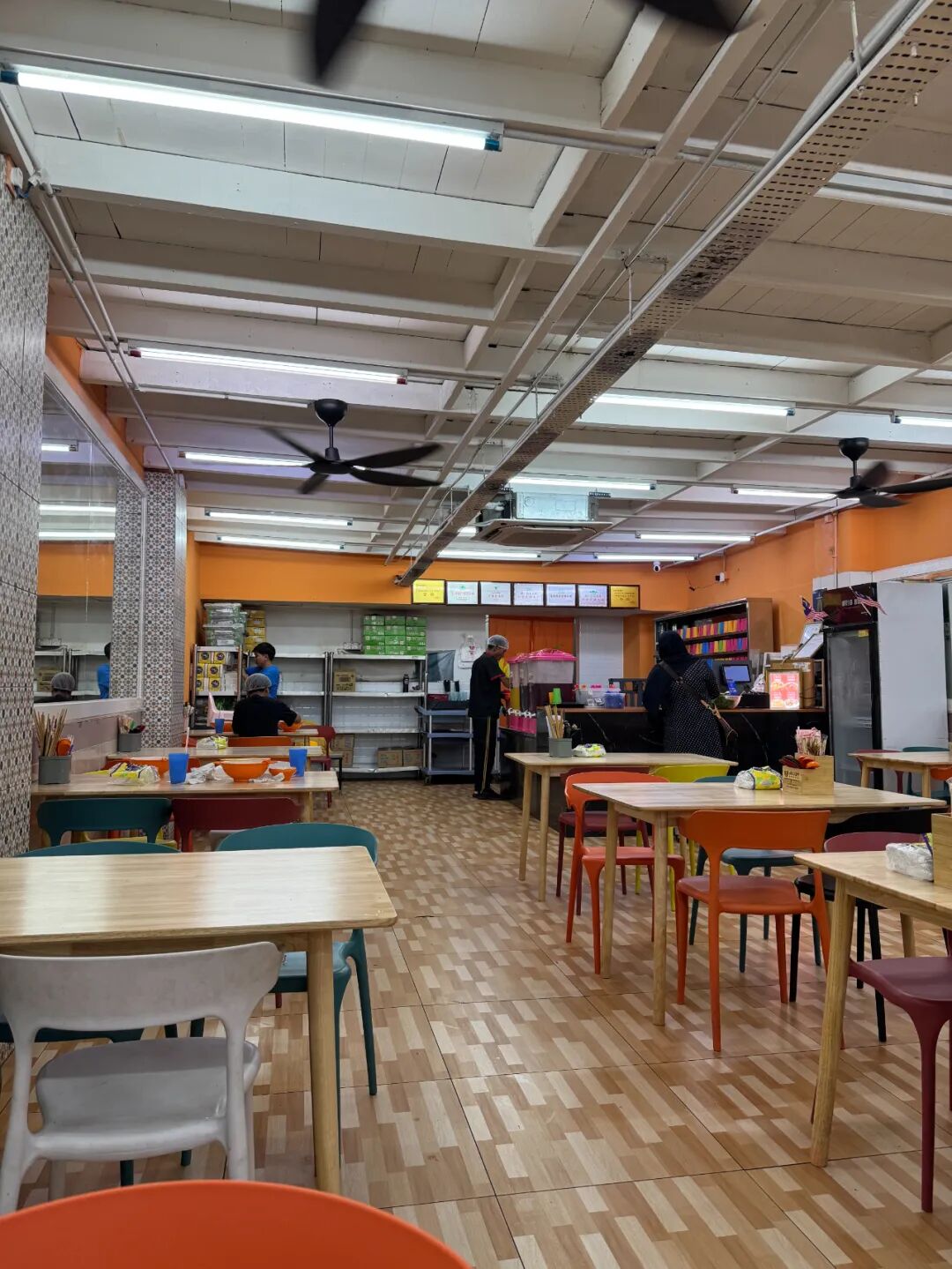
This Malatang used to be a Ma Jinlong franchise store, but it is no longer there. There are two branches in the same street.
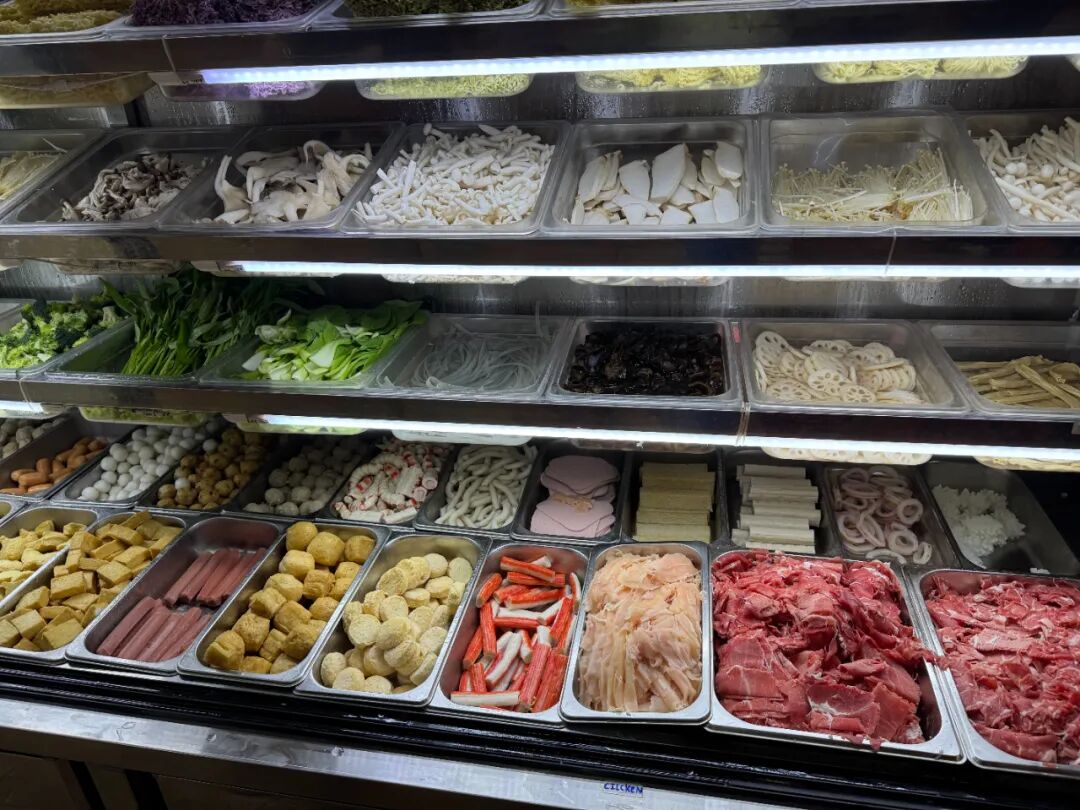
The style is the same as in China, you can choose your own ingredients, and the vegetarian and meat dishes are the same price.
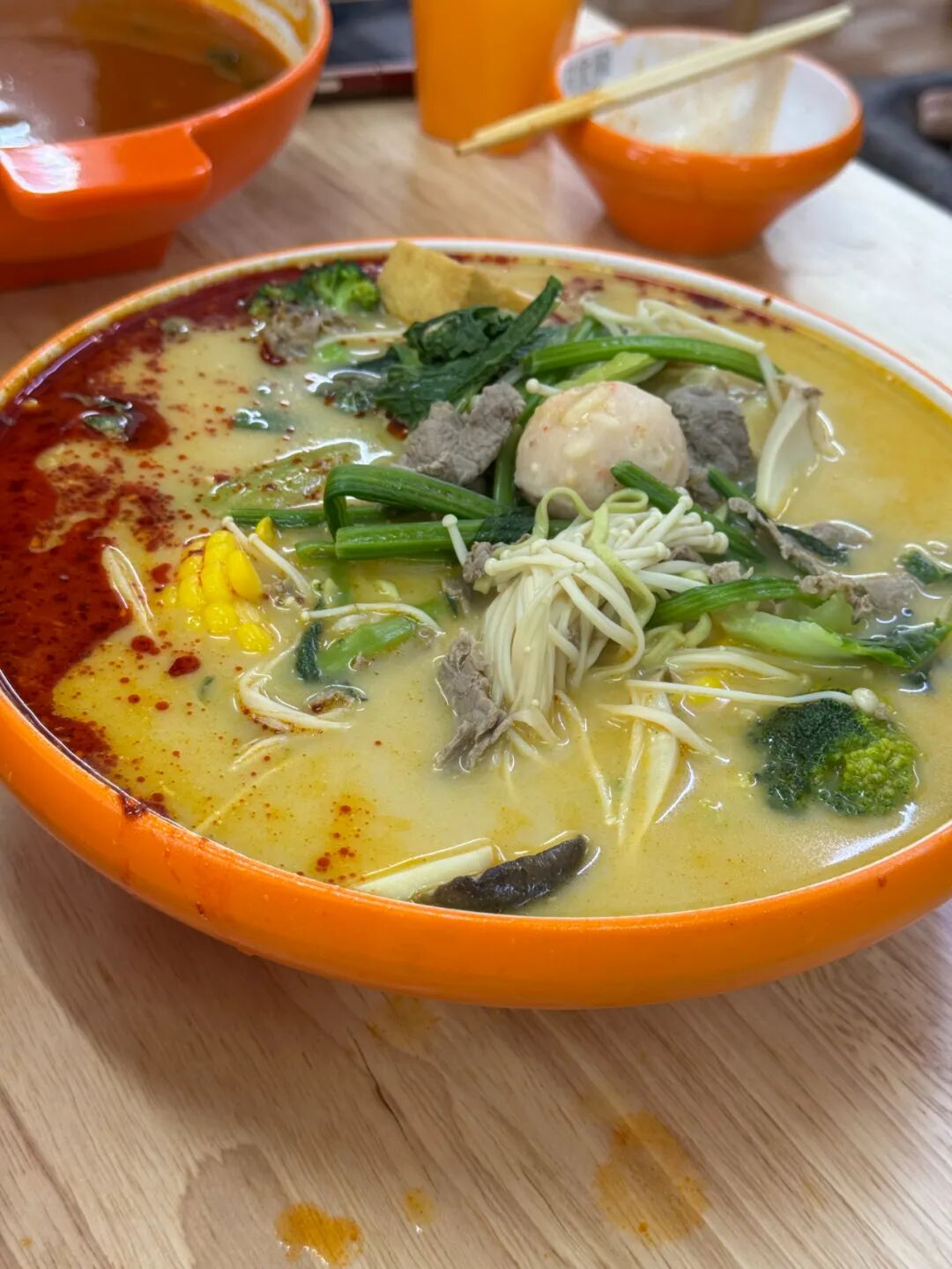
In fact, the taste is not as good as the spicy hotpot in China, but the business is booming, and the diners are mainly Malays.
Address: Baker Street (Petaling Street)
4. BARTOLO LISBOA BAKEHOUSE
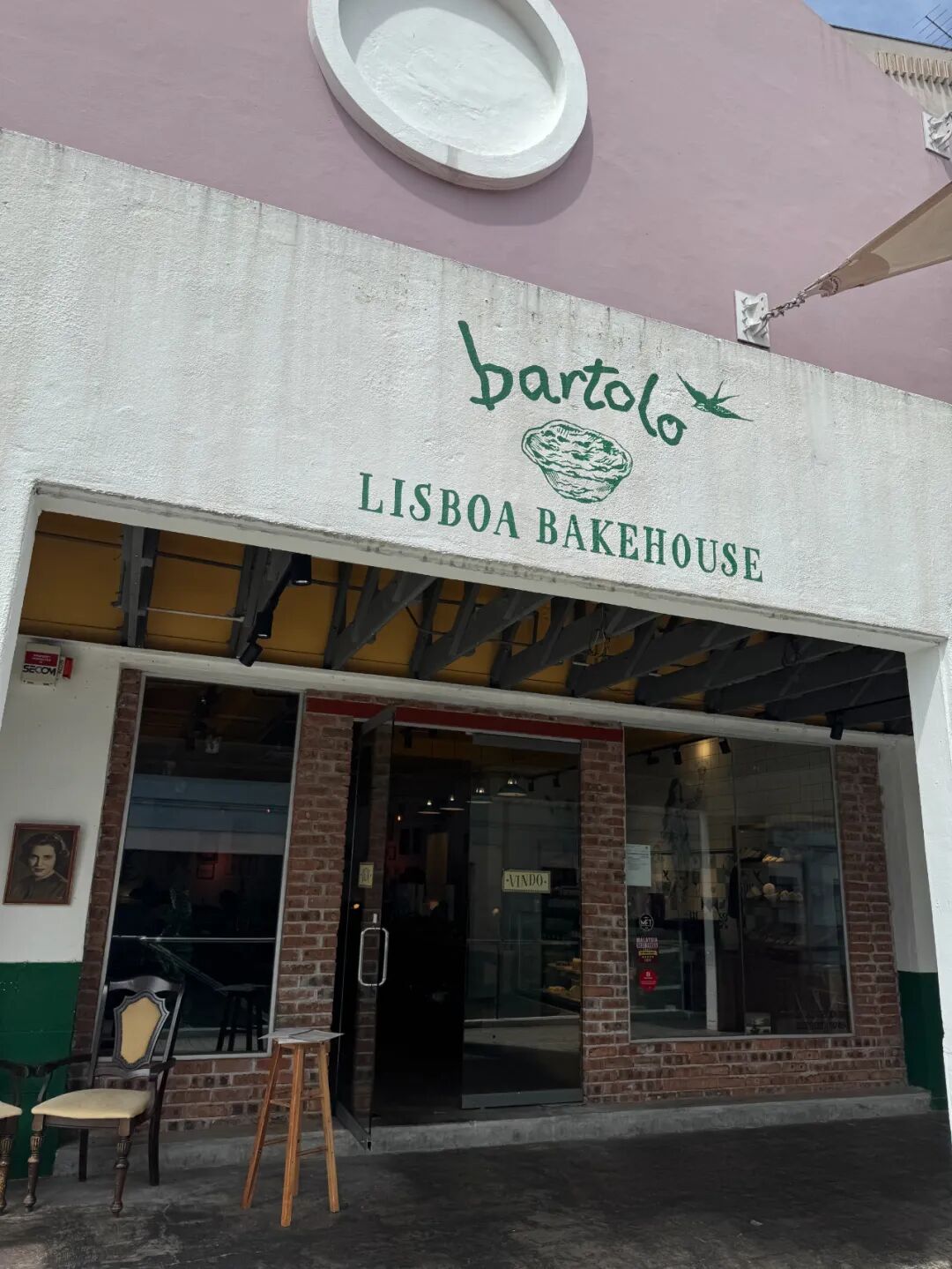
This was the first time I saw a Portuguese restaurant, so I came over to try it out of curiosity. This shop specializes in Portuguese bread and also has simple meals.
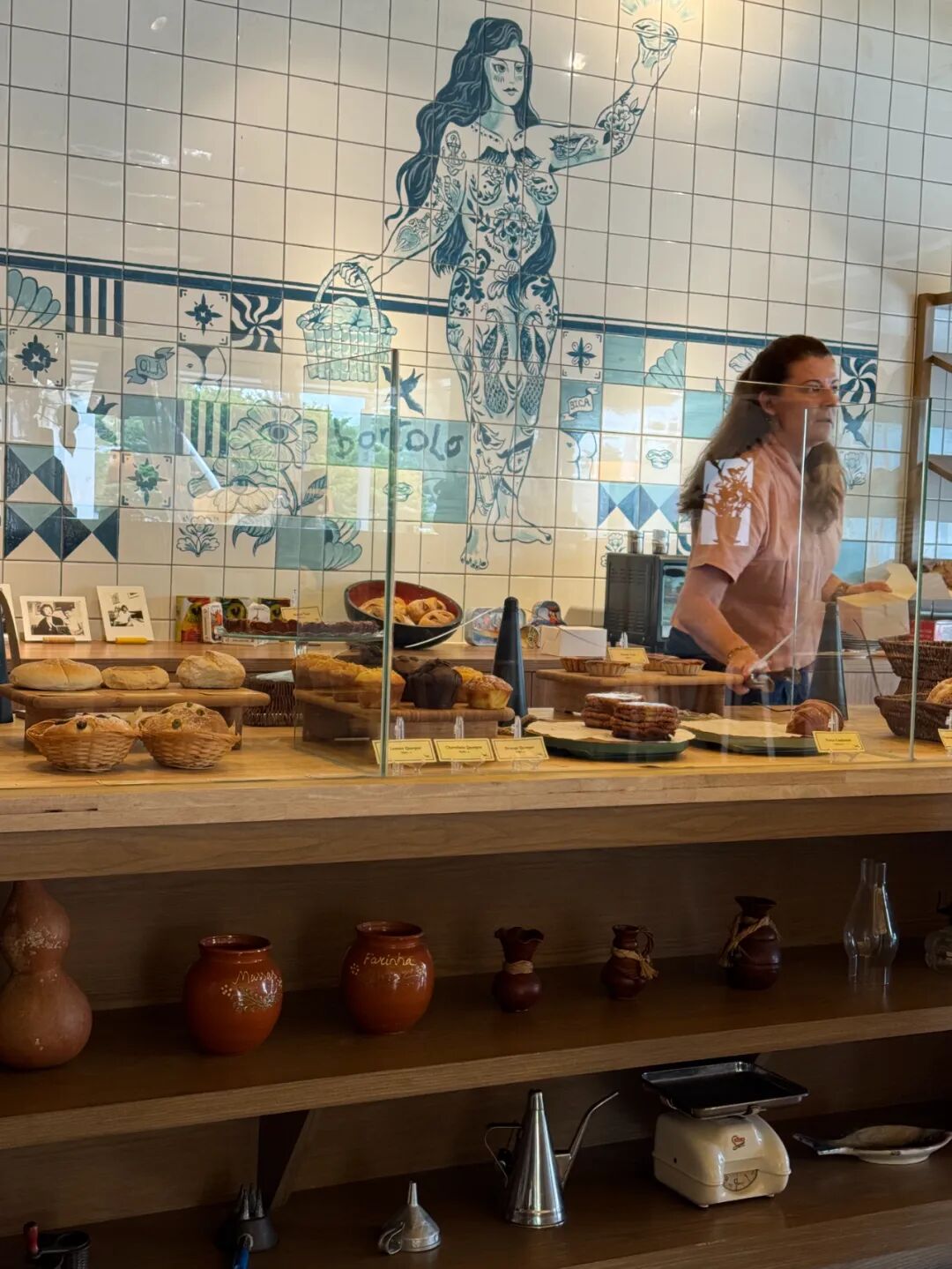
The owner looks like a serious Portuguese at first glance, and the menu is all in Portuguese. I asked the waiter to recommend a local specialty to me.
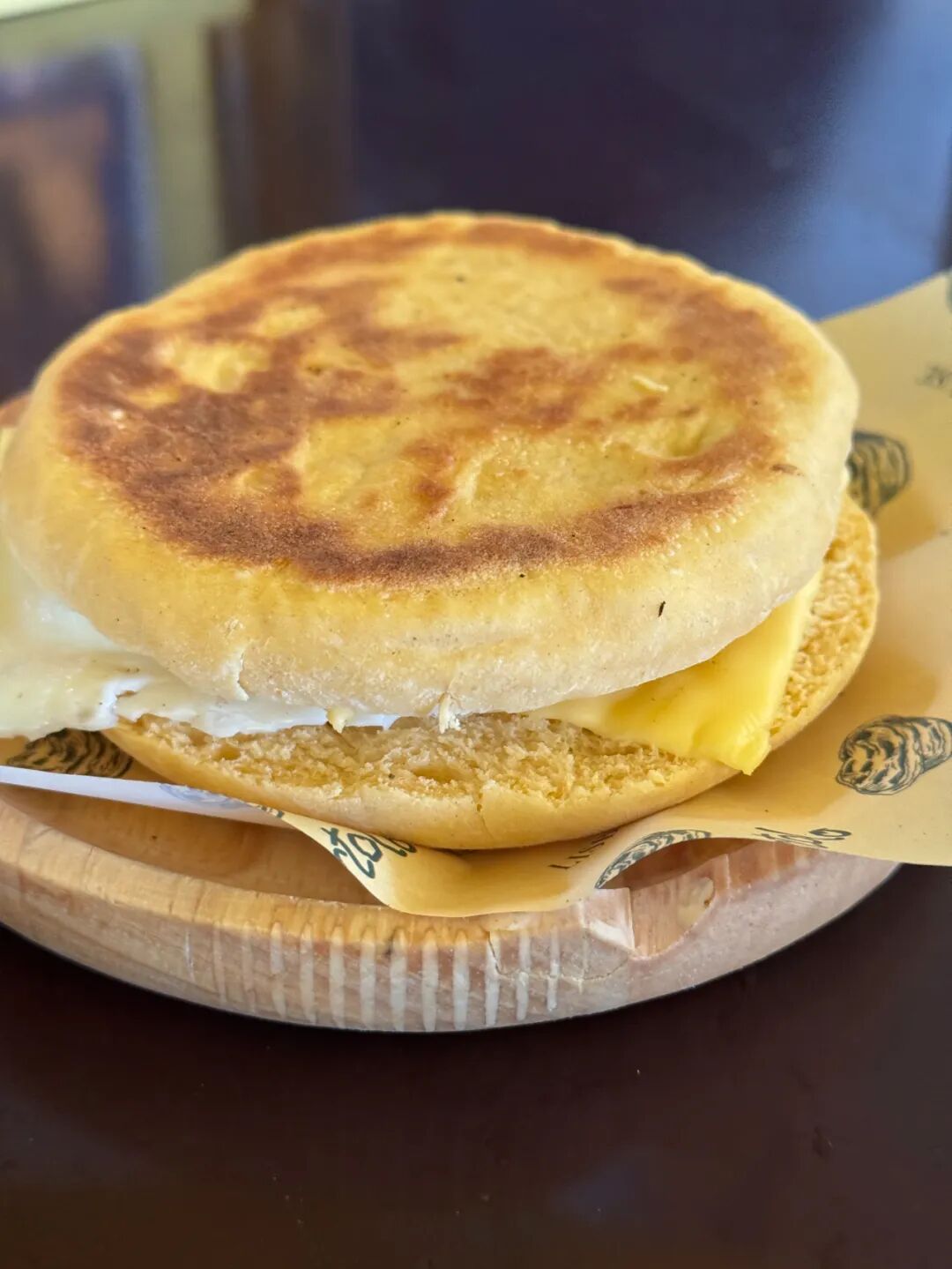
This egg-like pancake is called Bolo do caco. It is a round flatbread with a shape like a fire and a soft texture. It is a traditional Portuguese staple food.
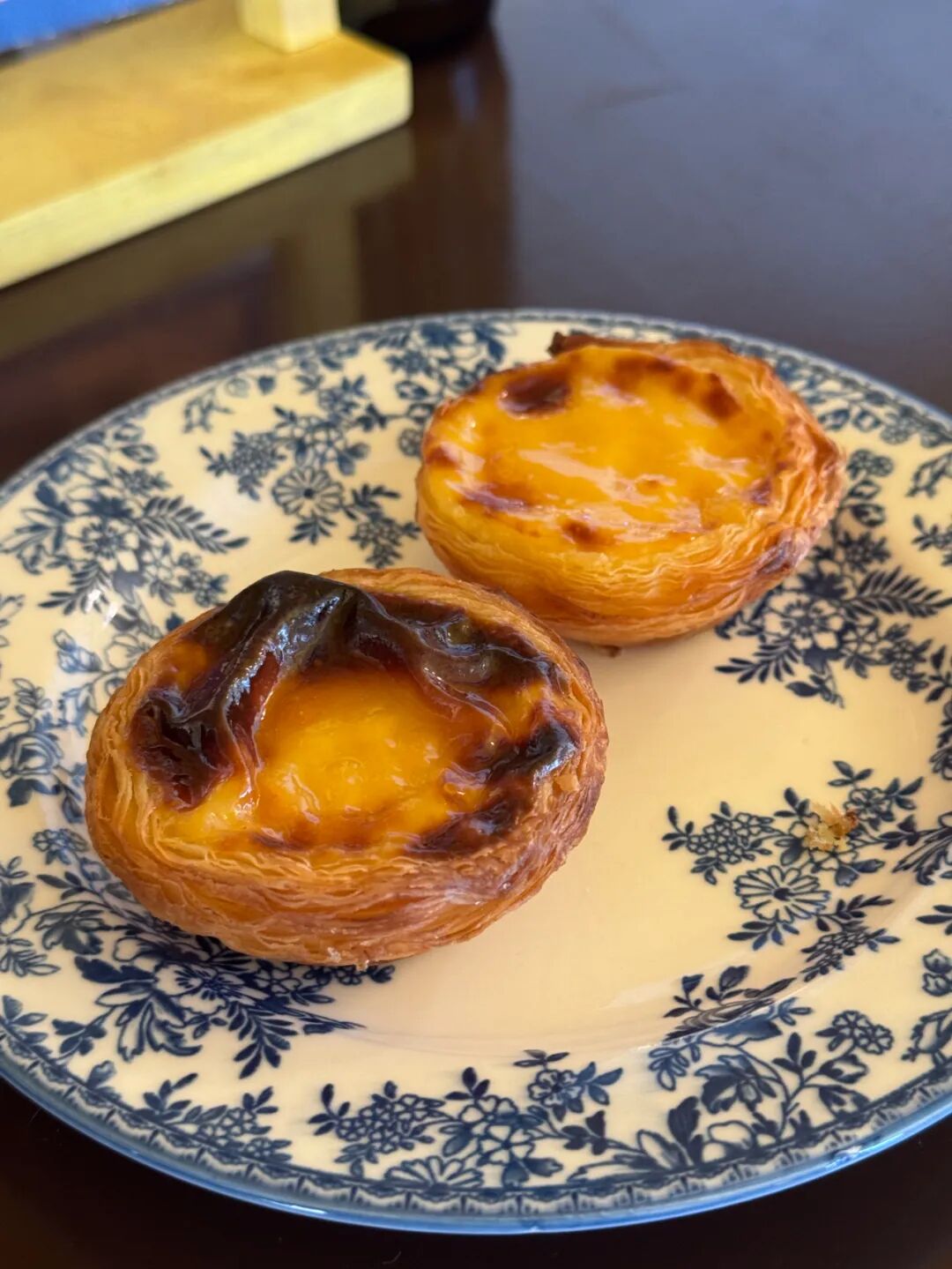
Portuguese egg tarts are probably the most famous snacks in Portugal. This authentic Portuguese egg tarts are larger, thicker and sweeter than the egg tarts we eat in China.
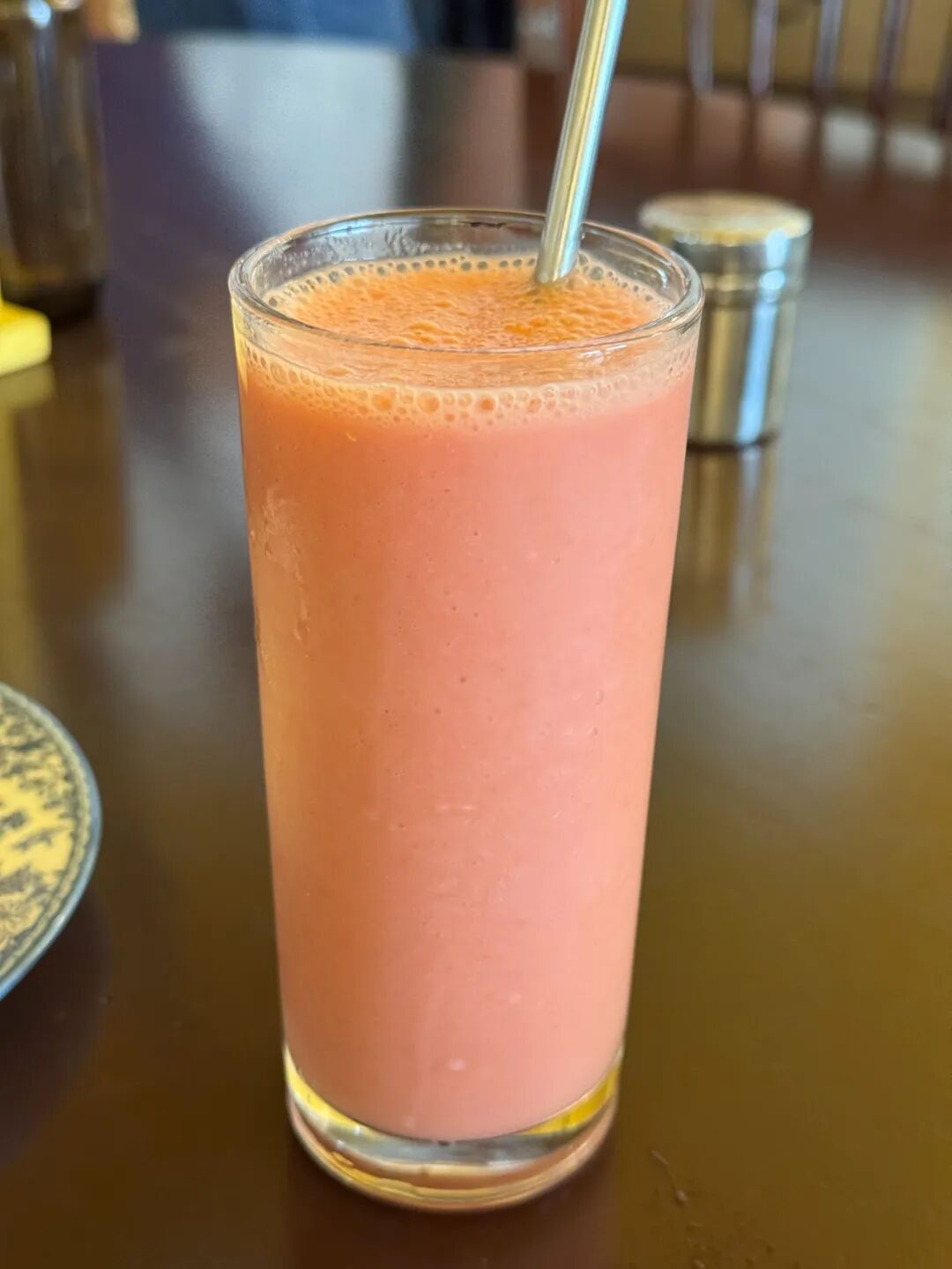
I ordered a strawberry milkshake for my son. The freshly squeezed strawberries and milk tasted sour and sweet, and it was quite delicious.
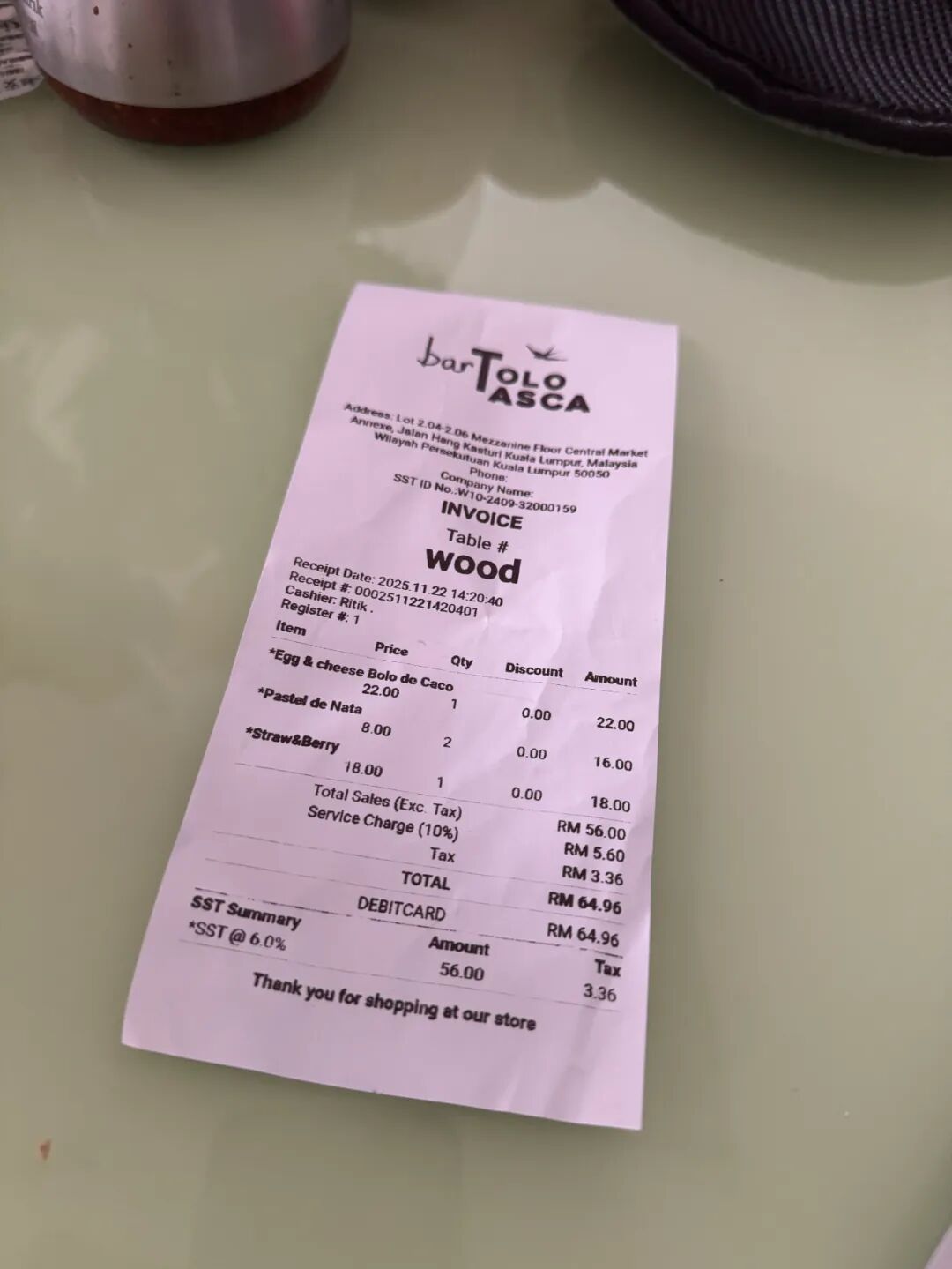
The prices in this store are on the high side, with the three items costing a total of RM64.
Address: Bartolo (Bartolo Lisboa Bakehouse)
5. VILLAGE PARK RESTAURANT
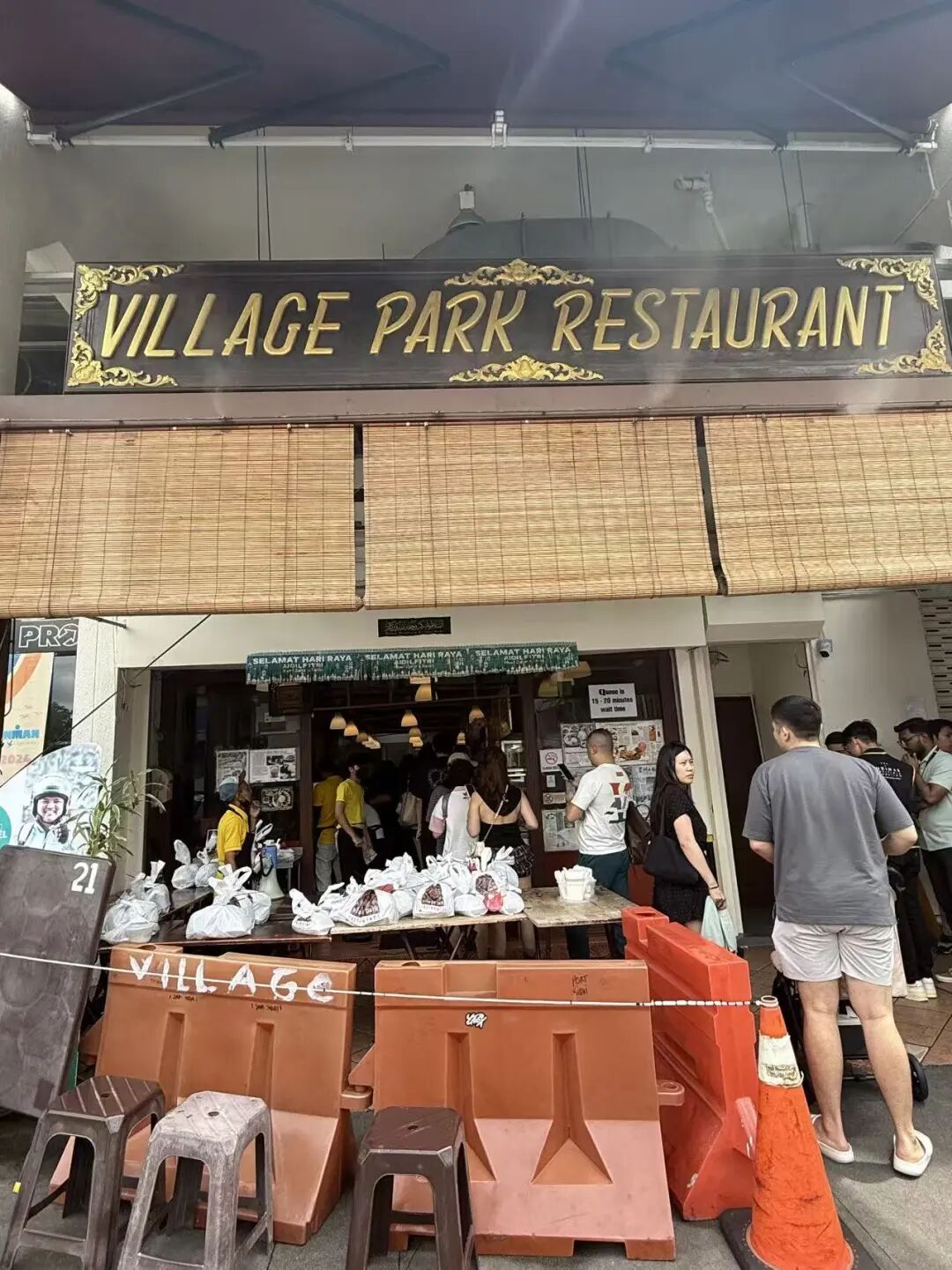
This is a very famous nasi lemak restaurant in Kuala Lumpur. I have been here twice, both times at noon. It is very popular and you have to queue for more than ten minutes during peak hours.
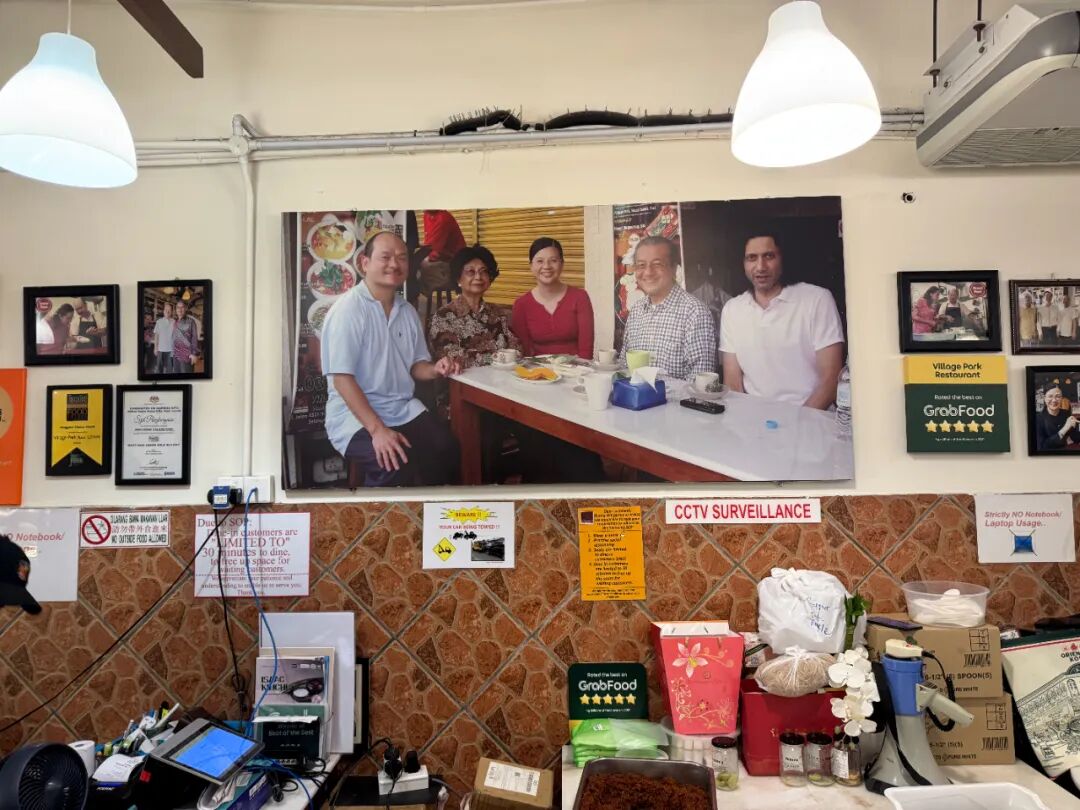
Although there are many people, the service is still very good. The waiters are unhurried and arranged in an orderly manner.
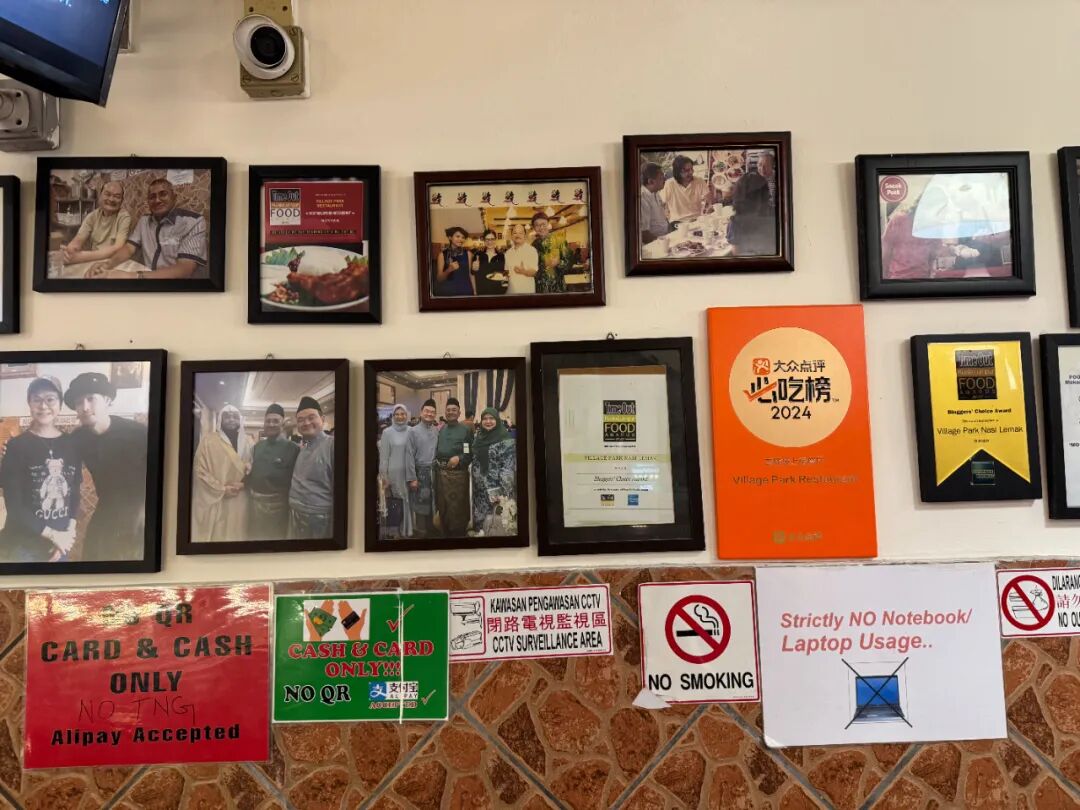
Nasi lemak is the national dish of Southeast Asia. Singapore, Malaysia, and Indonesia all consider themselves to be the birthplace of nasi lemak.
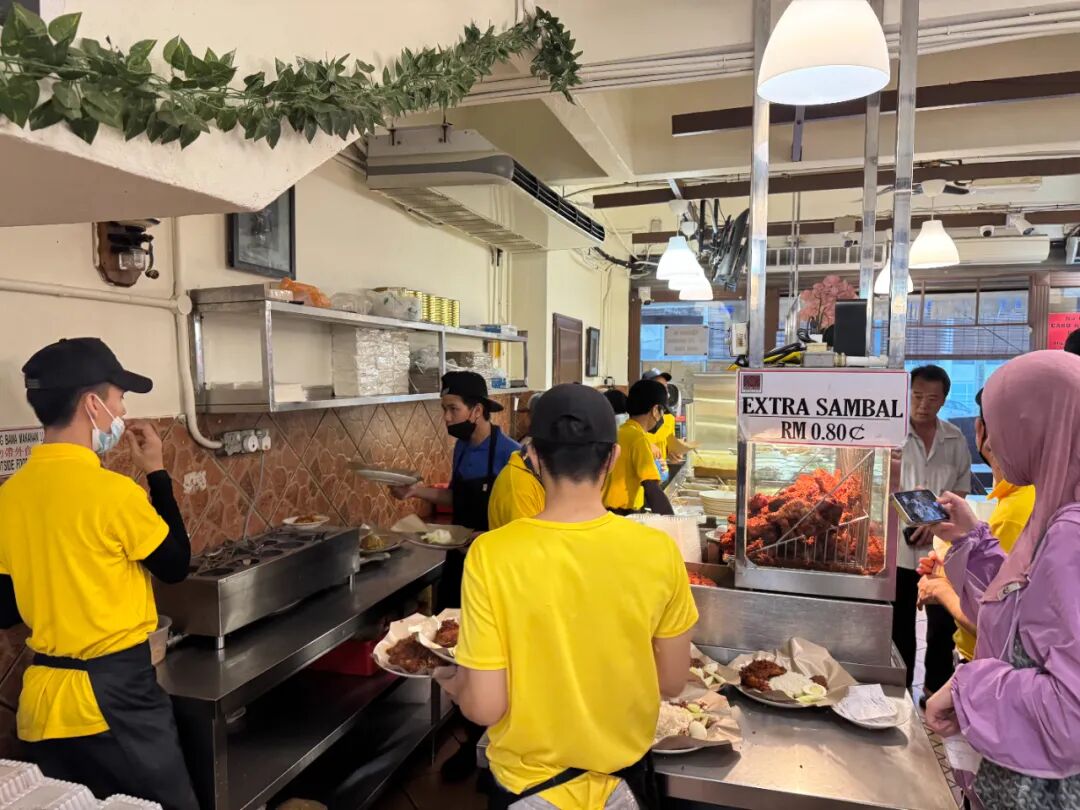
My experience is that just choose their signature chicken drumstick nasi lemak, the others are not as delicious as the signature.
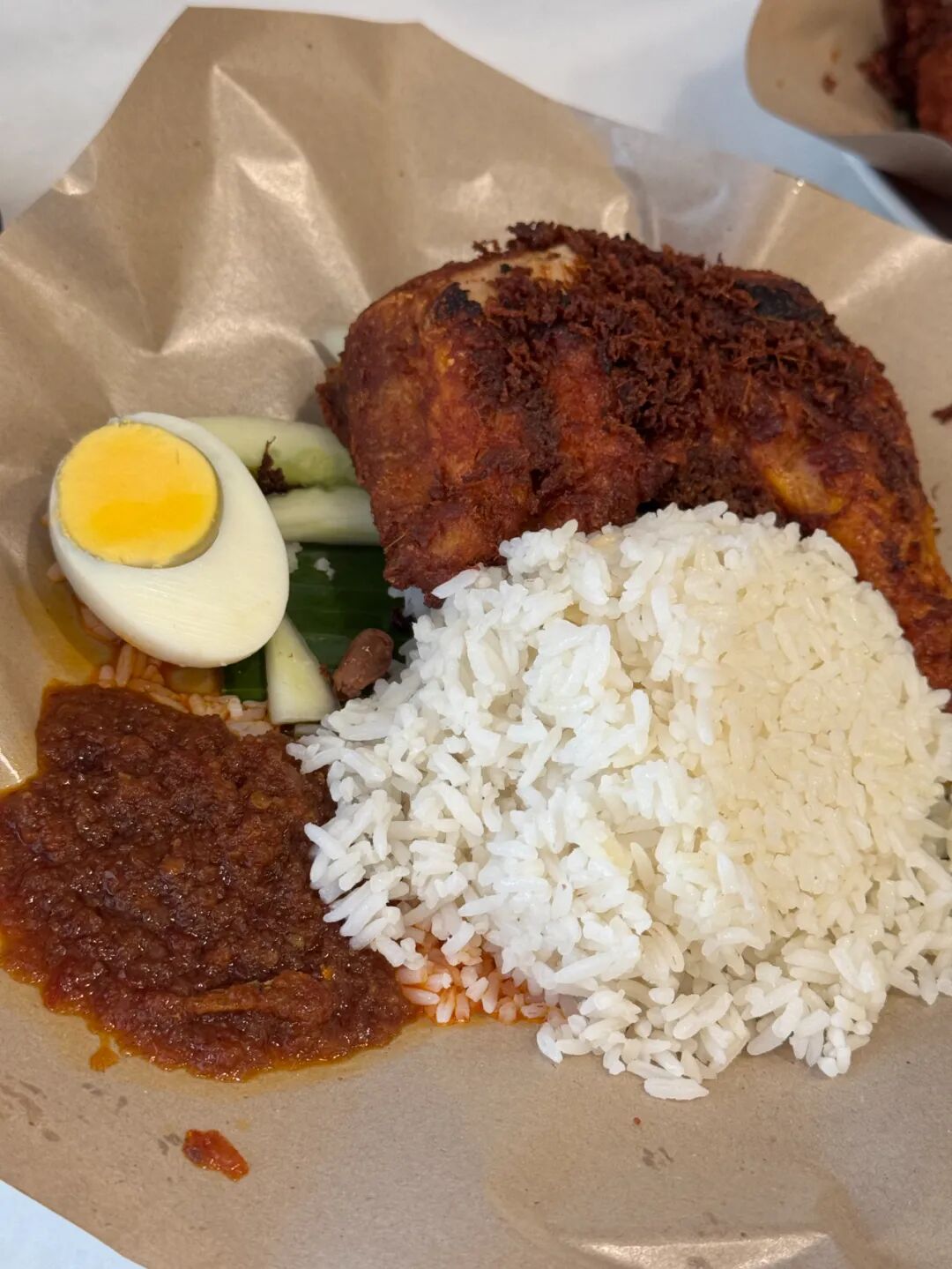
This meal only costs RM12, so the value for money is really hard to beat.
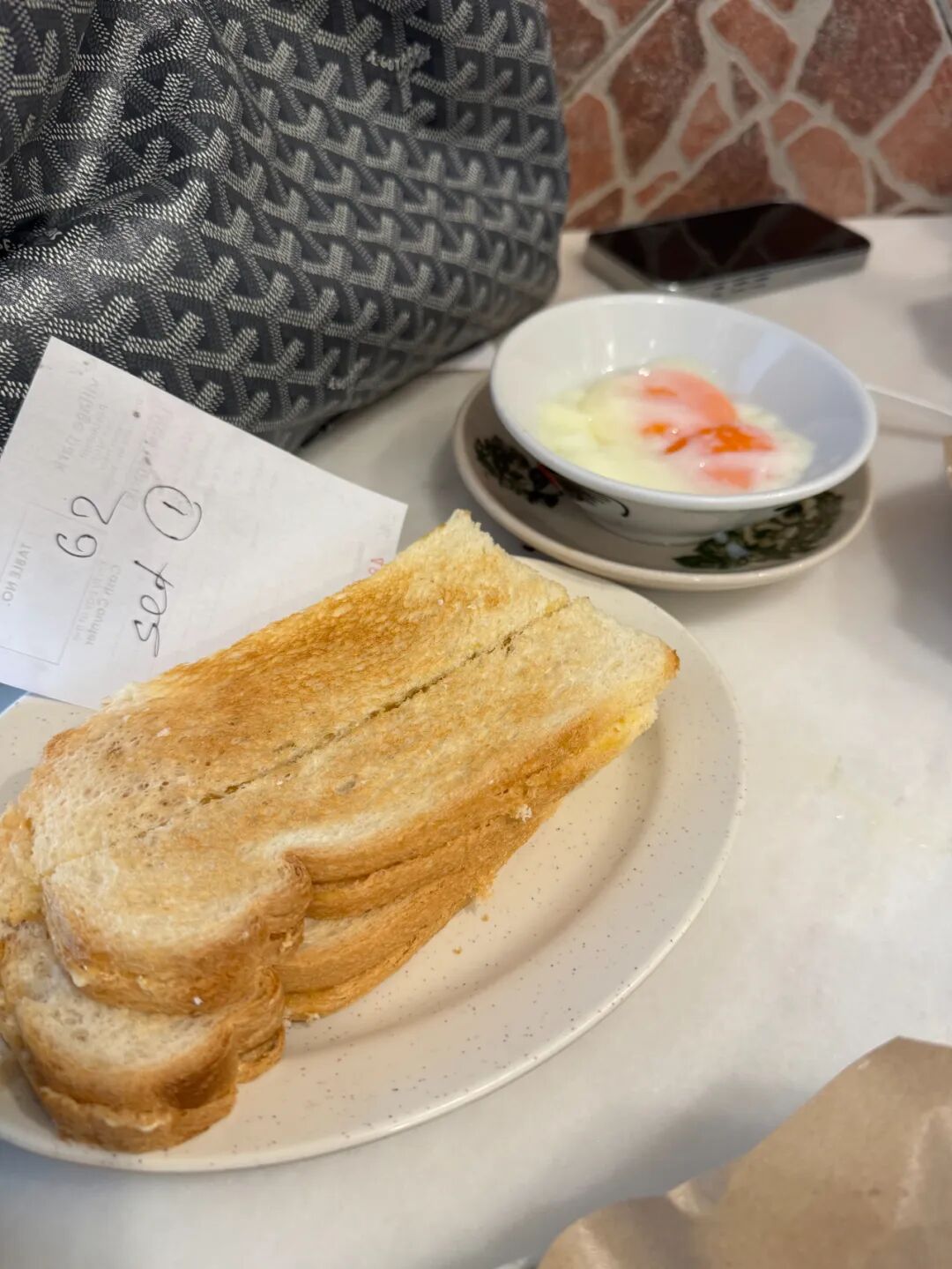
Their store opens at six in the morning, and you can have hot spring eggs dipped in bread for breakfast.
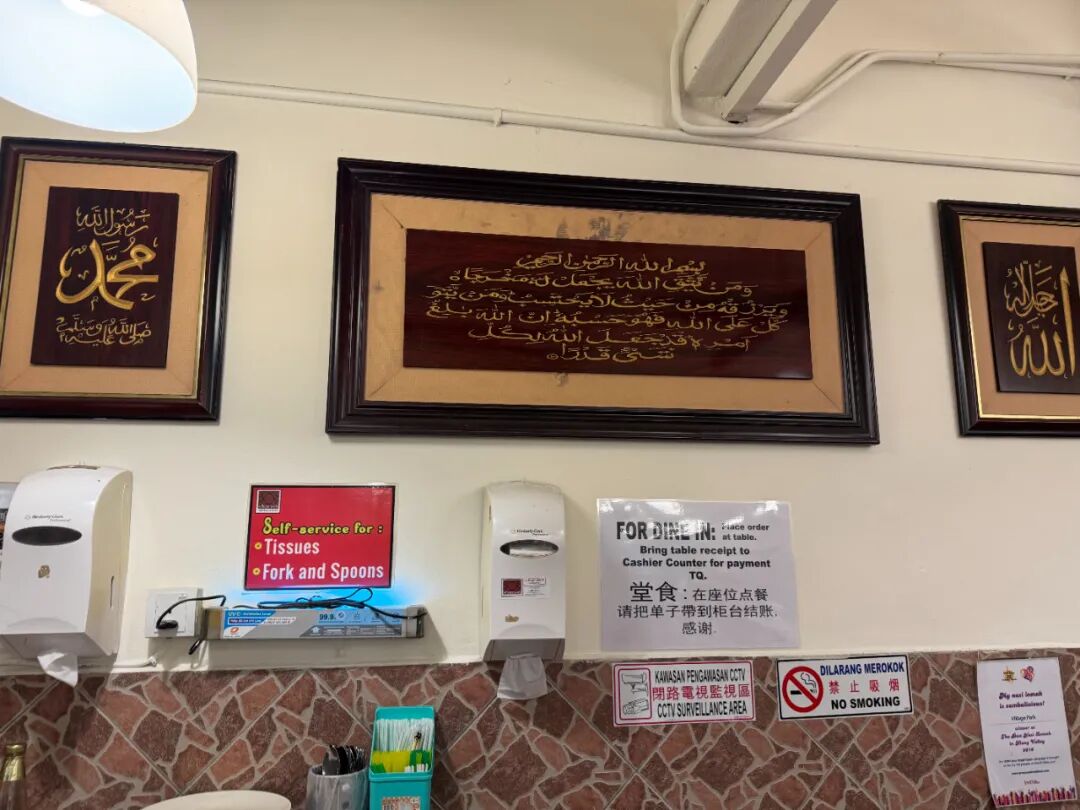
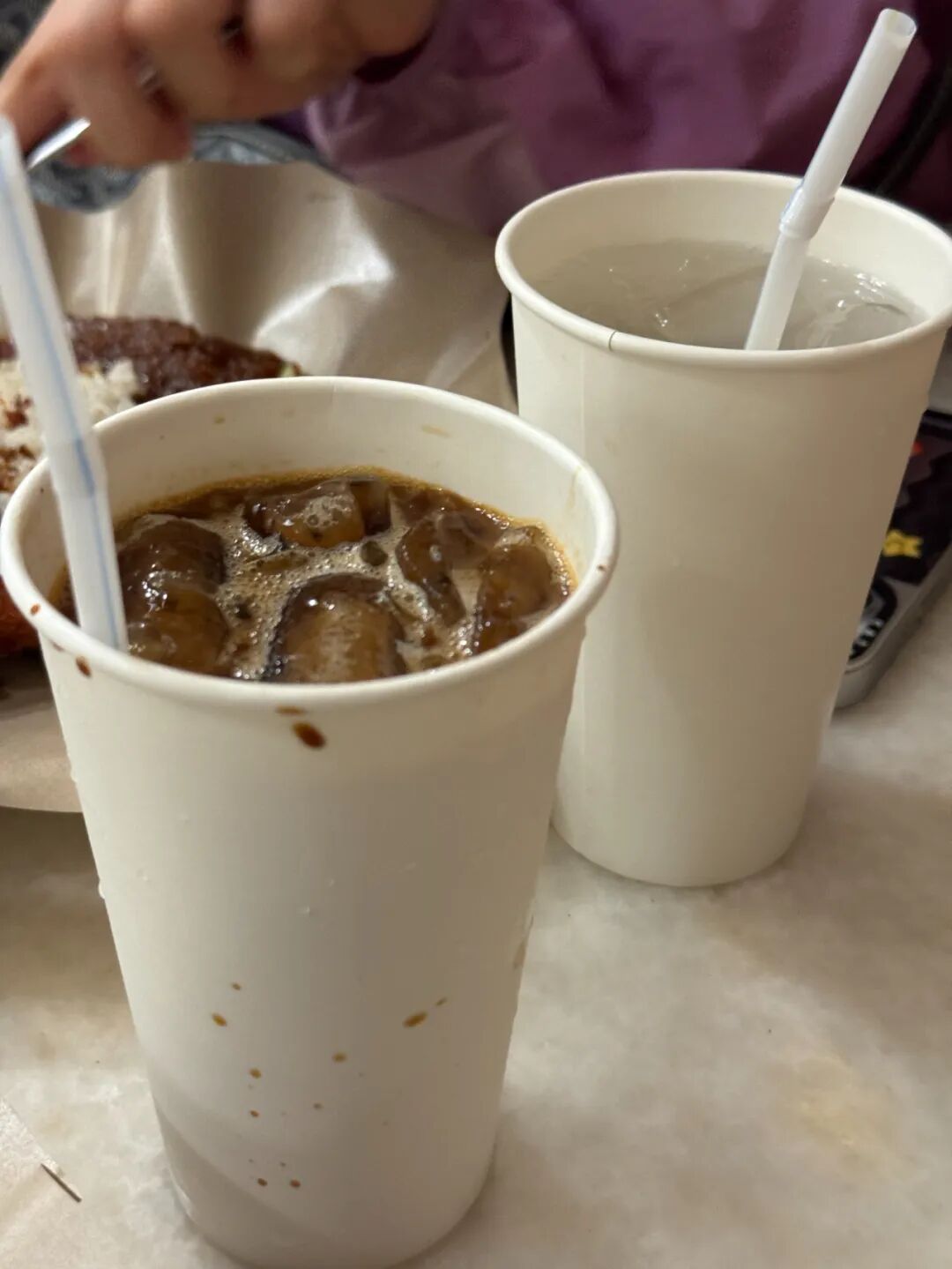
For drinks, we recommend a cup of white coffee, which is the most popular coffee category in Southeast Asia.
Address: 5, Jalan SS 21/37, Damansara Utama, 47400 Petaling Jaya, Selangor
6. Steaming Era
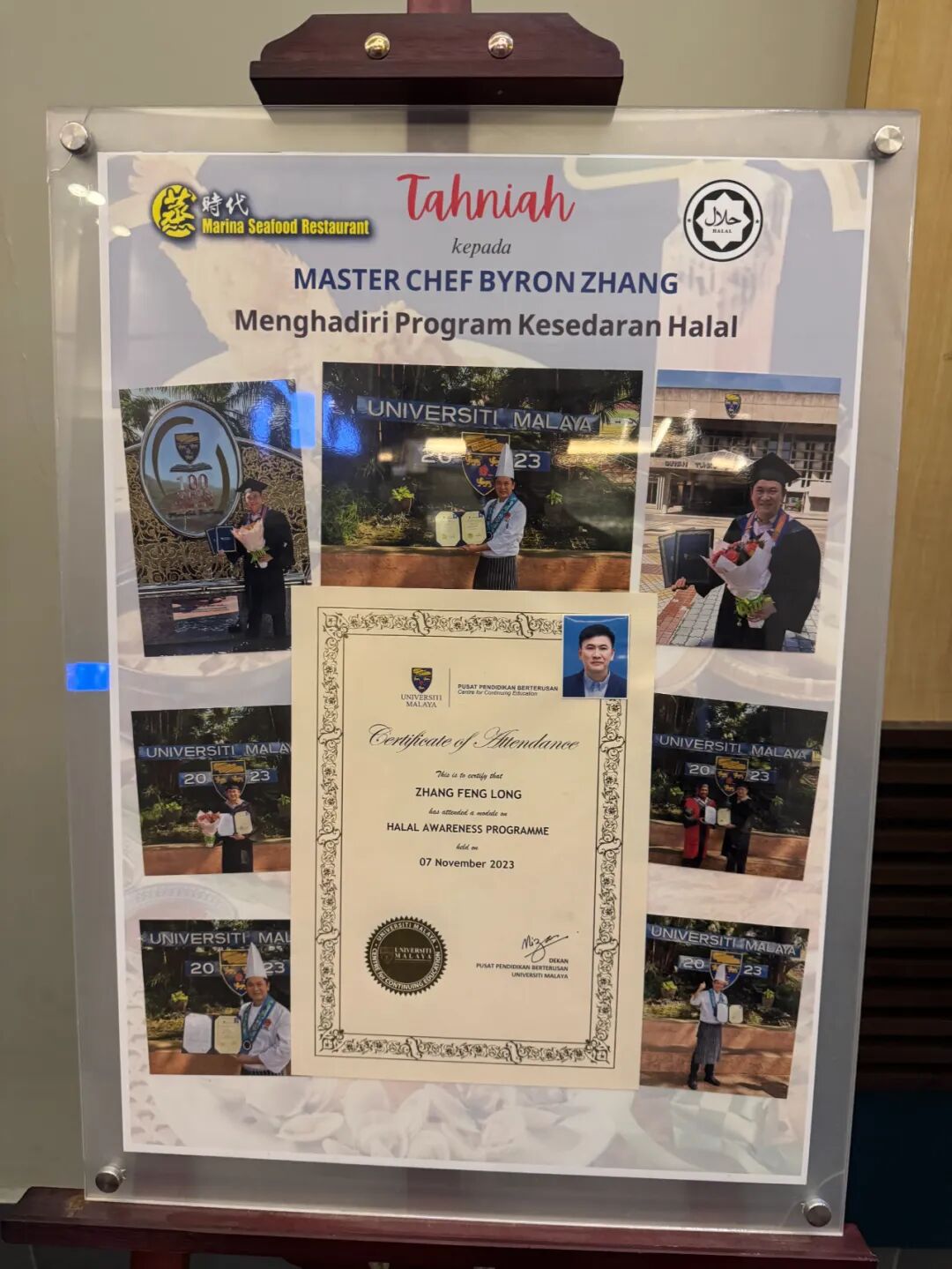
When eating seafood in Kuala Lumpur, the first choice is a restaurant opened by Chaoshan people. This steamed seafood restaurant is the most delicious seafood restaurant I have ever eaten in Kuala Lumpur.
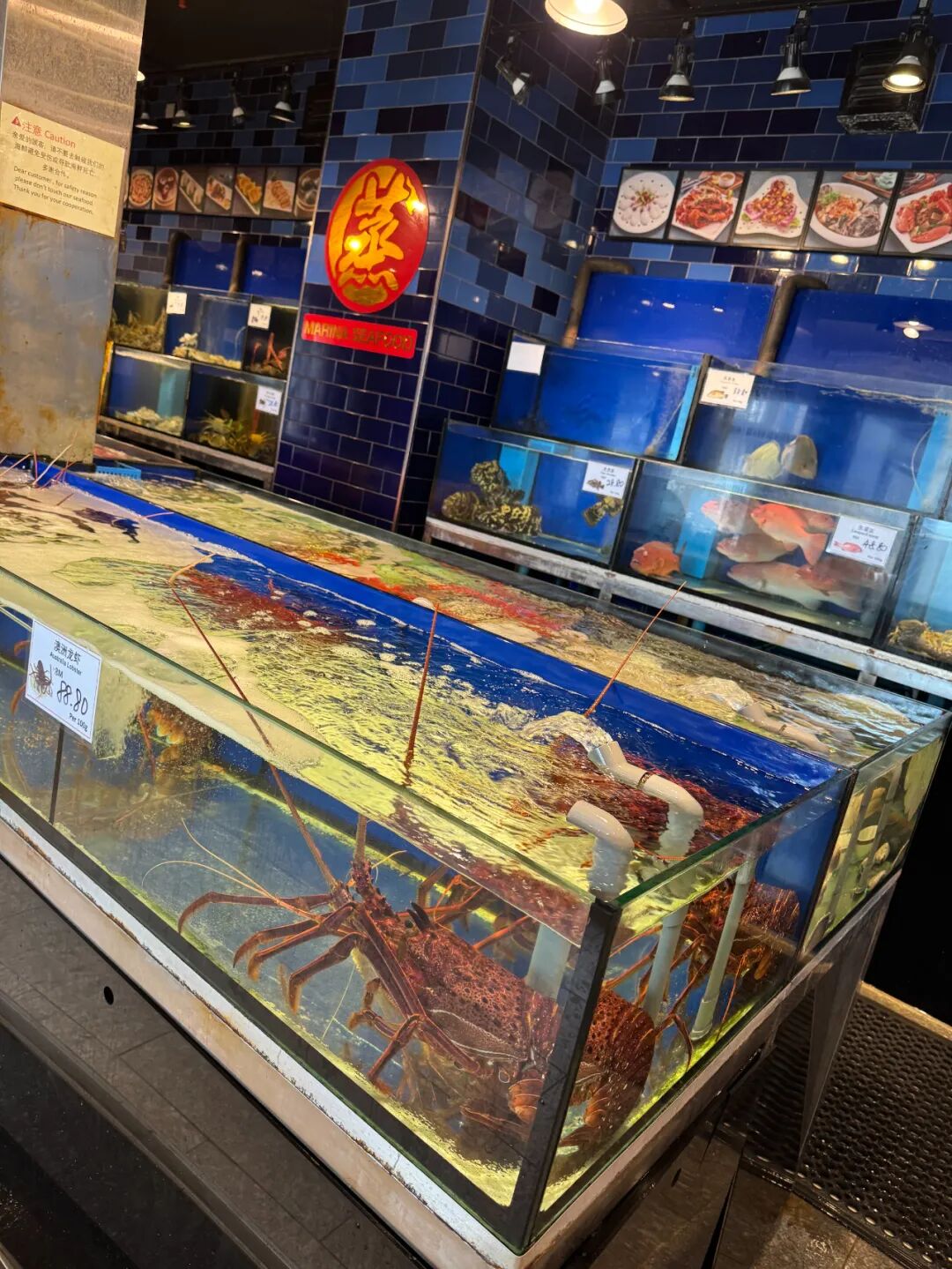
Malay seafood restaurants often sell dead frozen products. Only Chaoshan people prefer fresh seafood, because the fresher the seafood, the less fishy it smells.
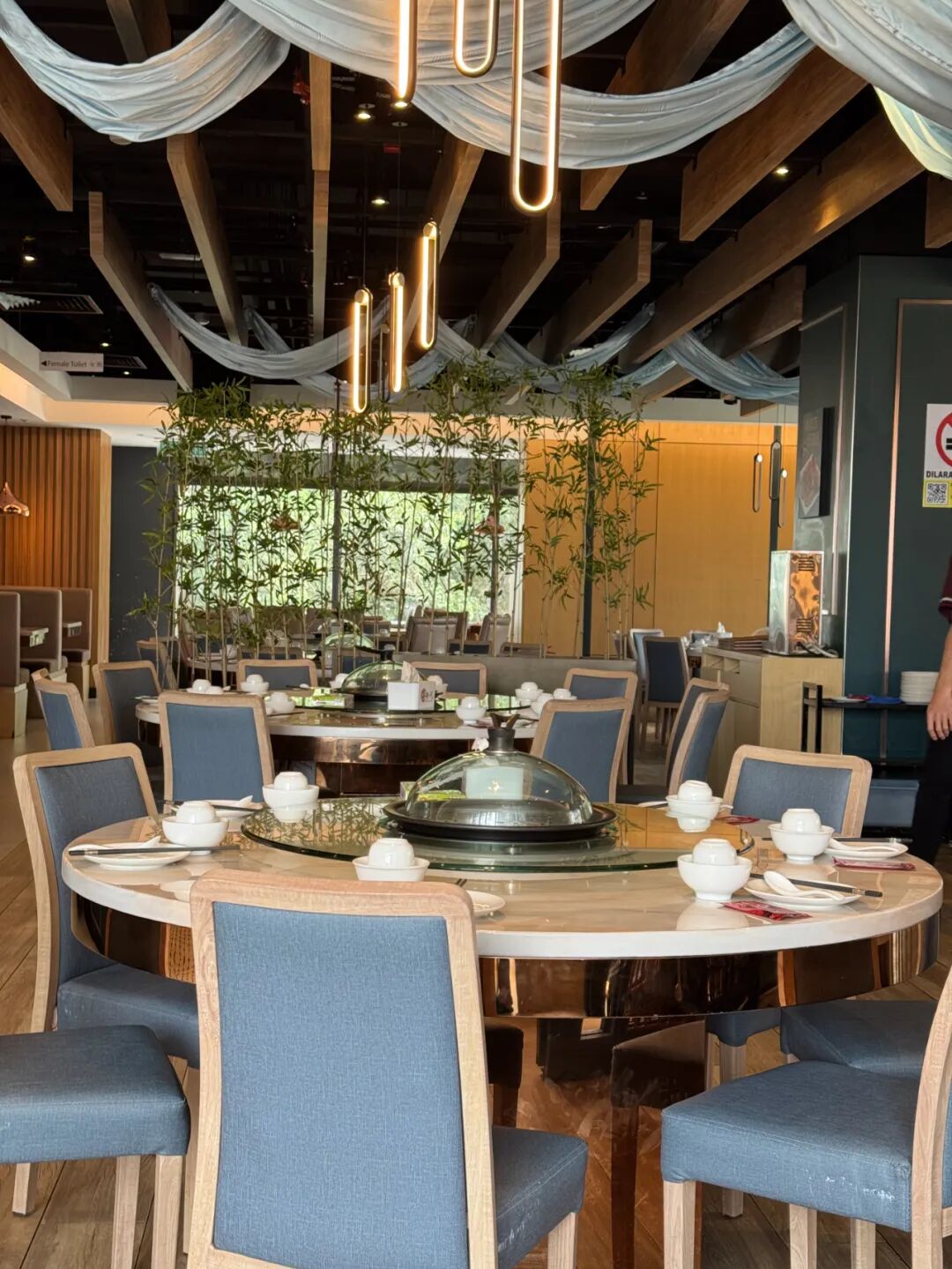
The method of steaming seafood is also simple. Put the raw porridge at the bottom of the pot, put the seafood on top, cover it, wait a few minutes, and you can eat the seafood on top. After eating the seafood, the porridge at the bottom is also ready, and the seafood soup will flow into the bottom of the pot, which is delicious.
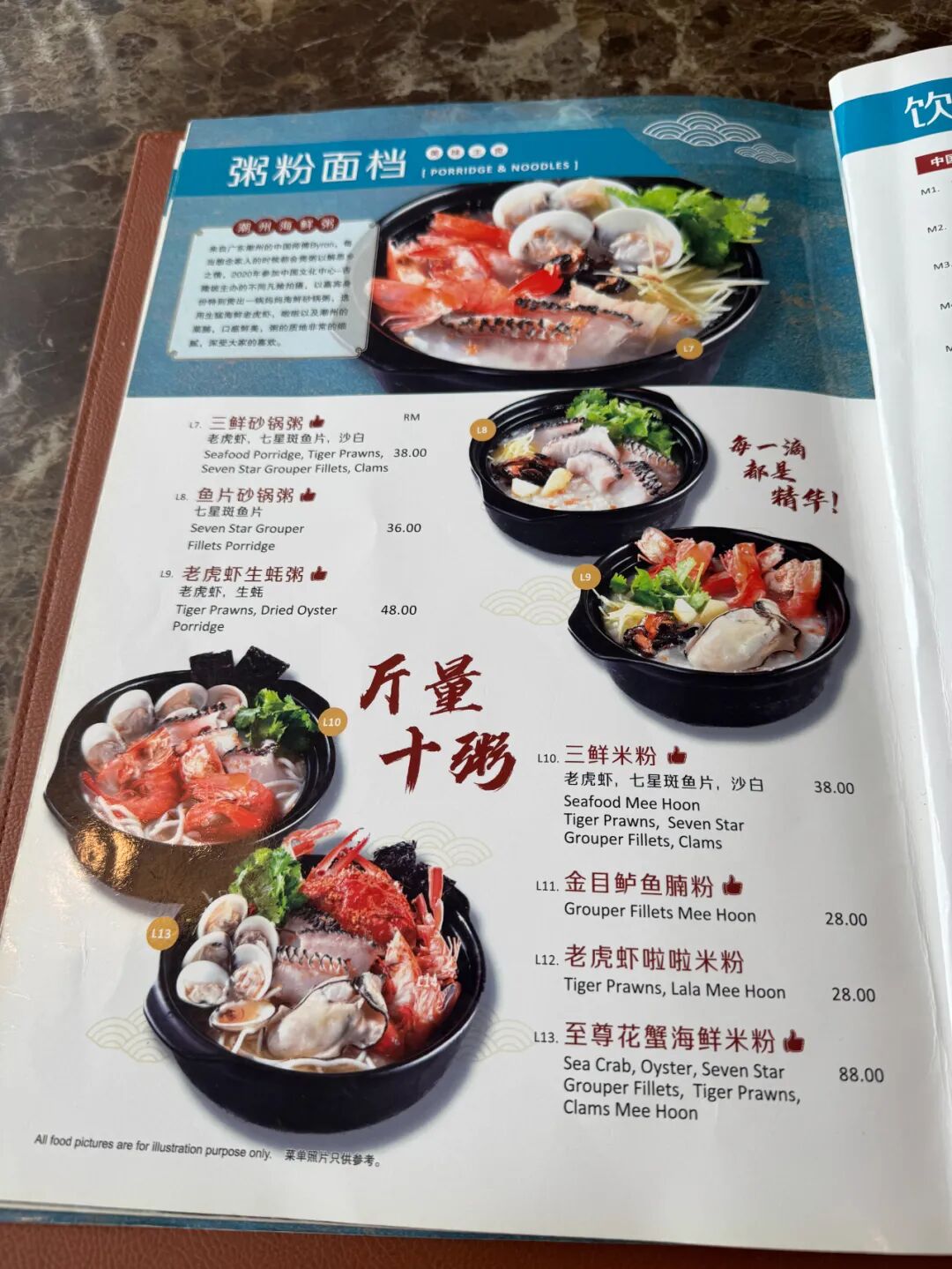
There are many kinds of seafood in this store, and there are many ways to eat them. The seafood can be eaten raw or steamed.
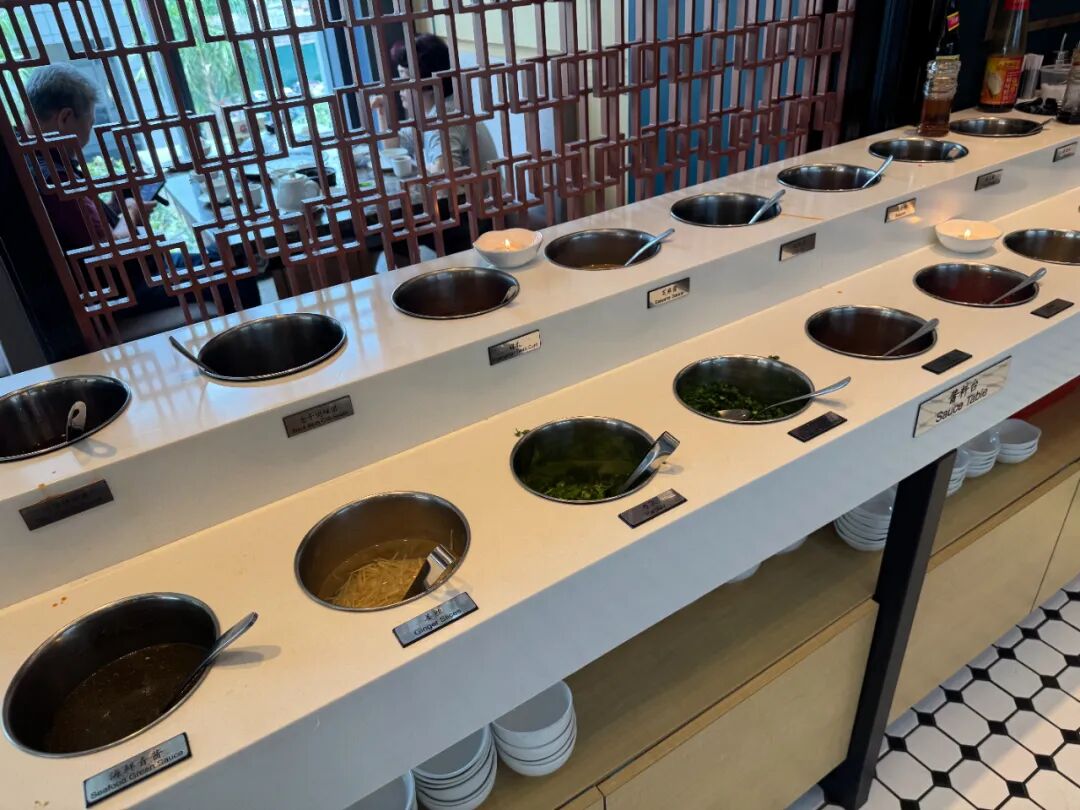
More than a dozen kinds of dipping sauces, mix and match as you like.
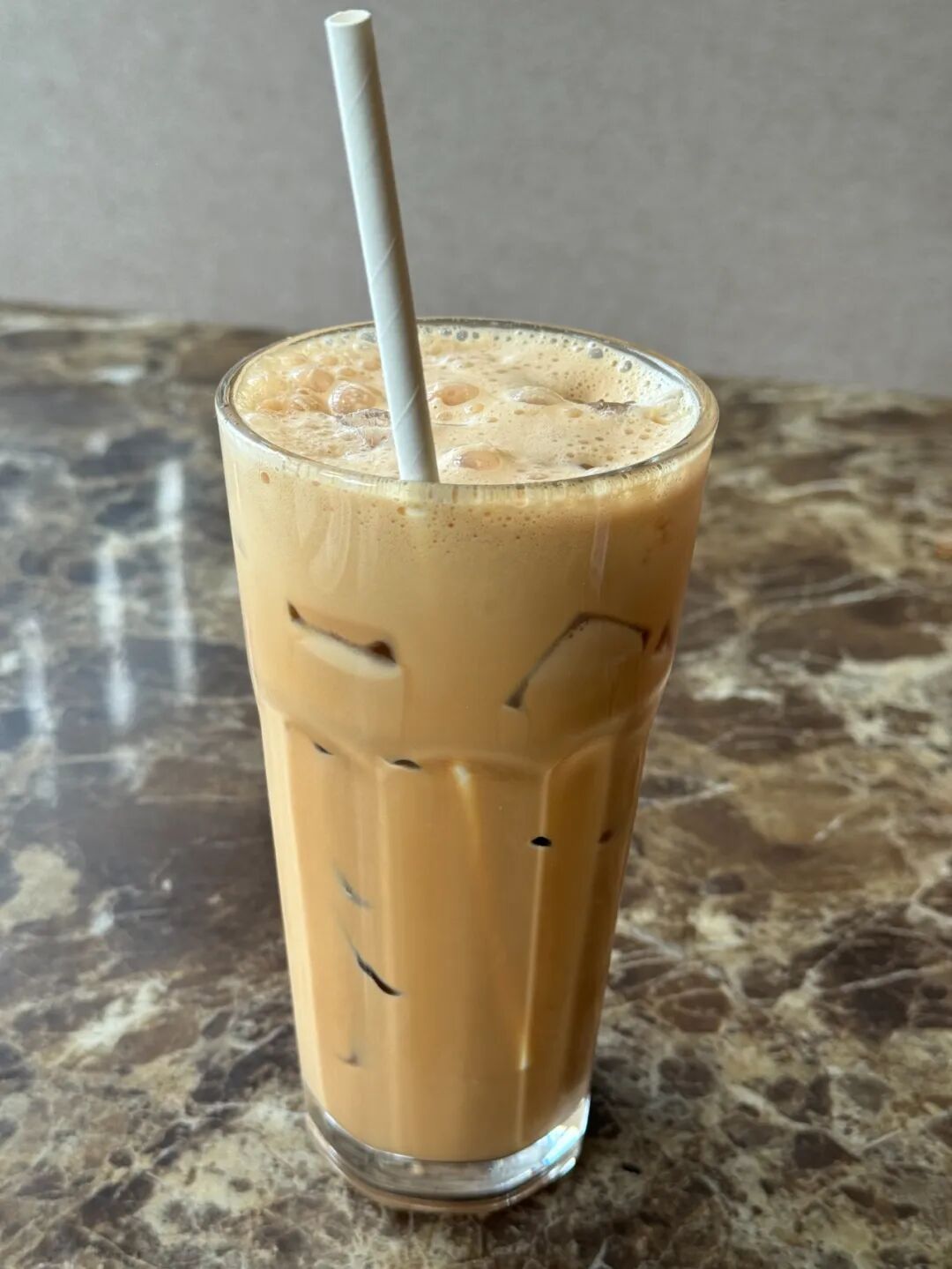
Their signature milk tea is better than other milk tea shops outside. It tastes sweeter and sweeter. The waiter even asked me what I thought of the taste. I said it was very good.
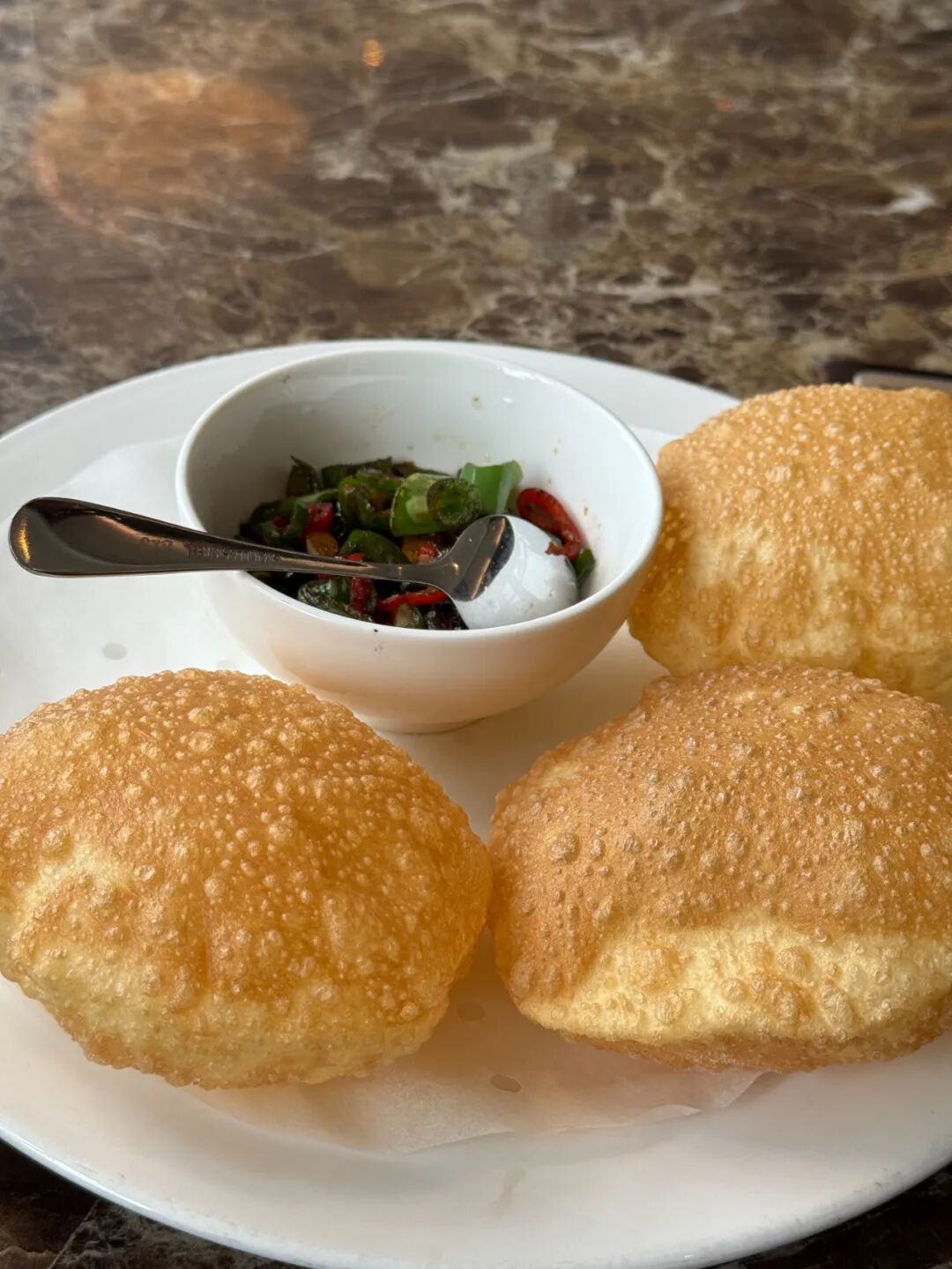
This thing is very similar to northwest pasta. It is made by Chaoshan people with Hui oil flavor. It is a thin layer with a hollow inside, which can be eaten with vegetables.
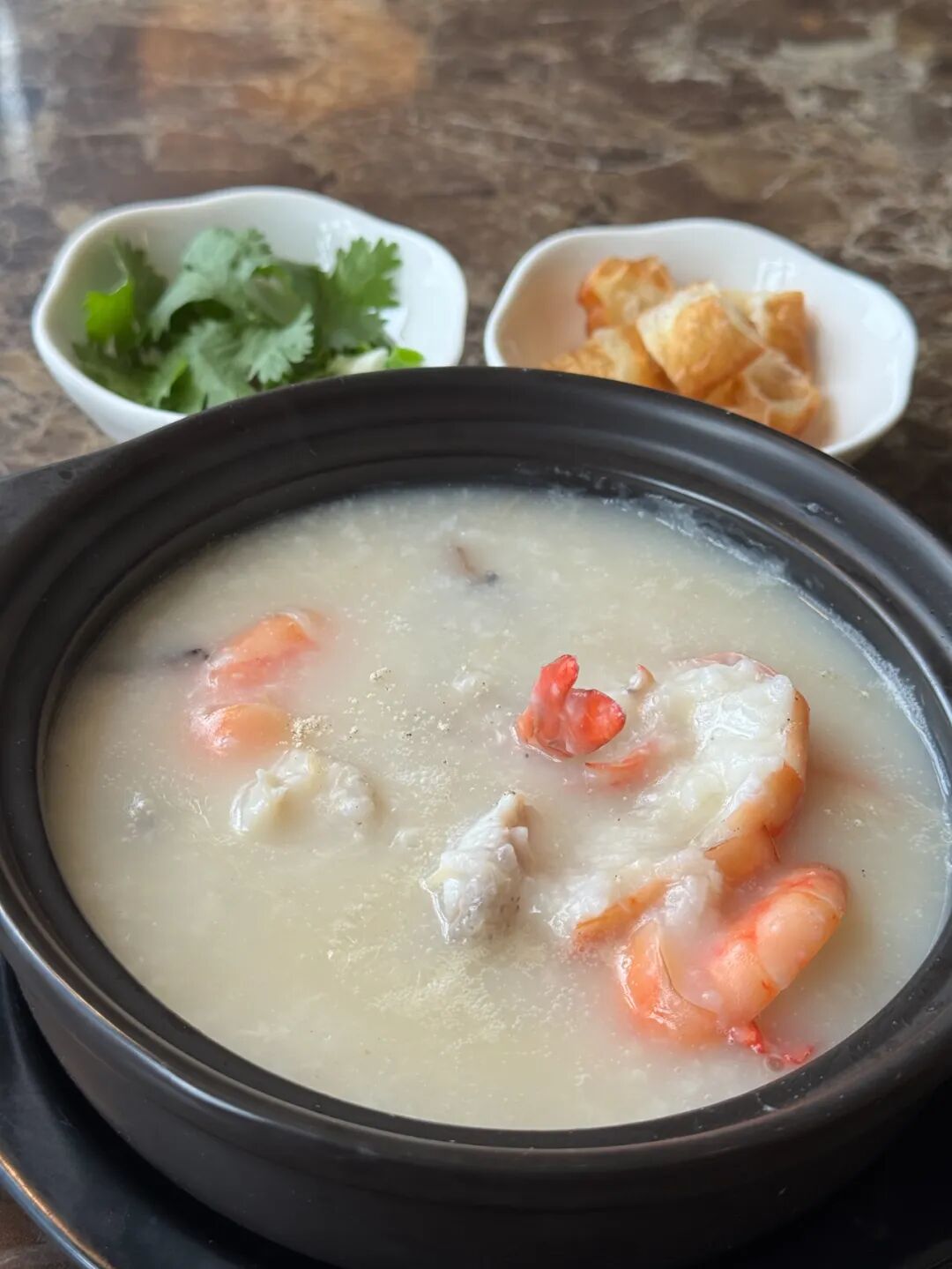
The seafood casserole porridge, the seafood in it can be tasted and the ingredients are fresh, definitely not made from frozen products.
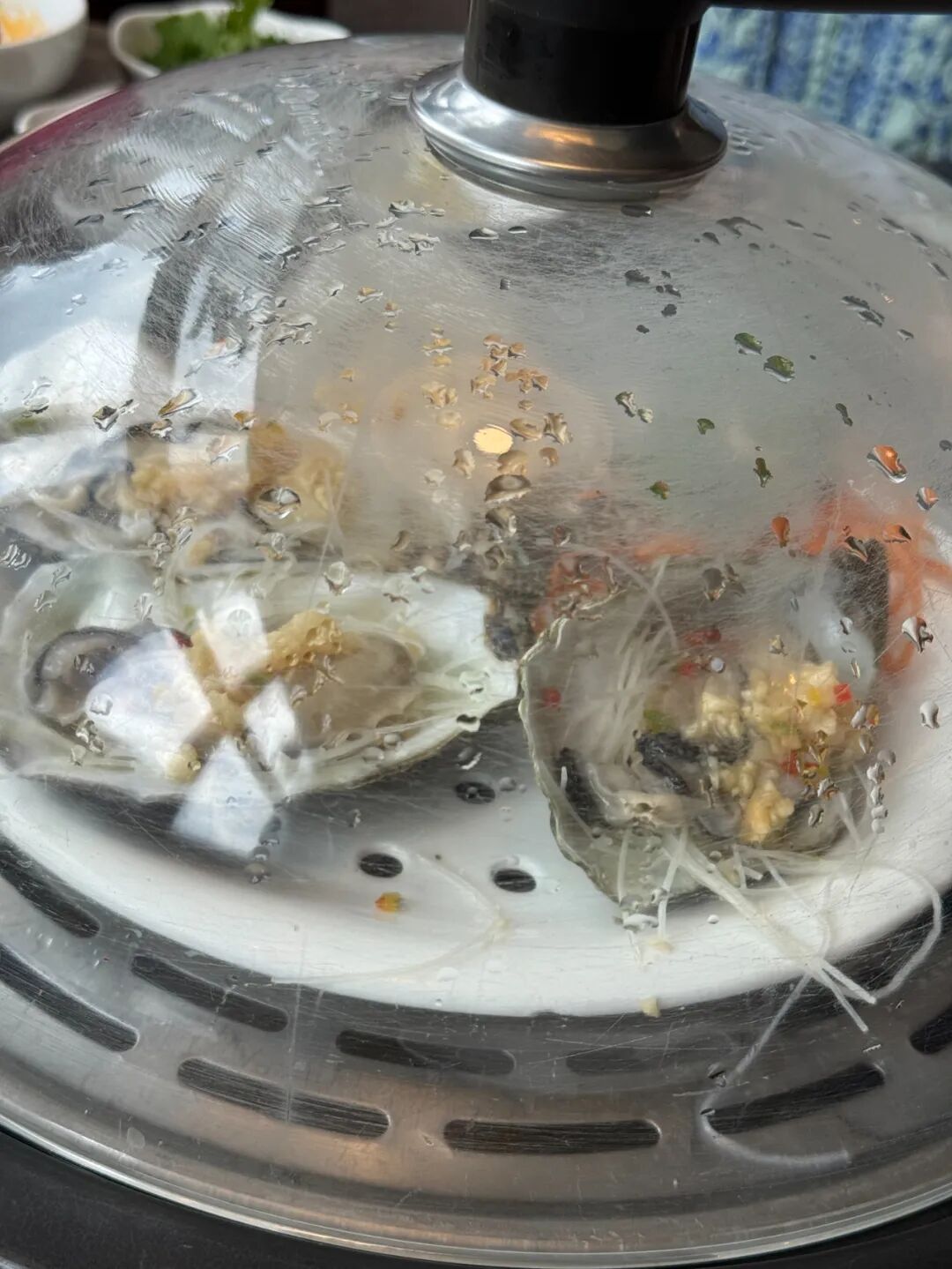
The prawns and scallops are both alive and will jump around when put in the steamer.
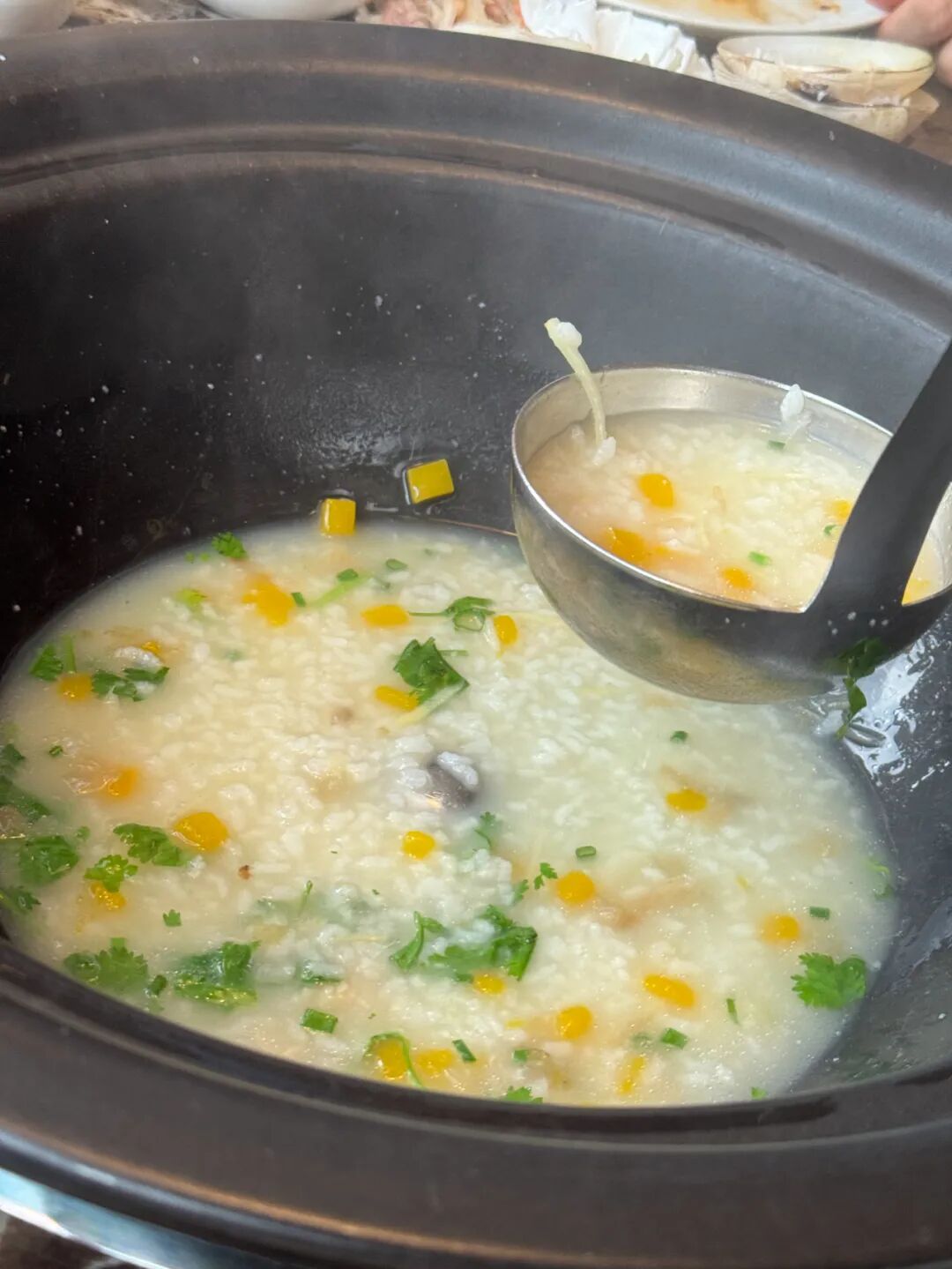
After steaming the seafood, I just had porridge. This steamed dish, paired with their dipping sauce, is more delicious than eating Malatang.
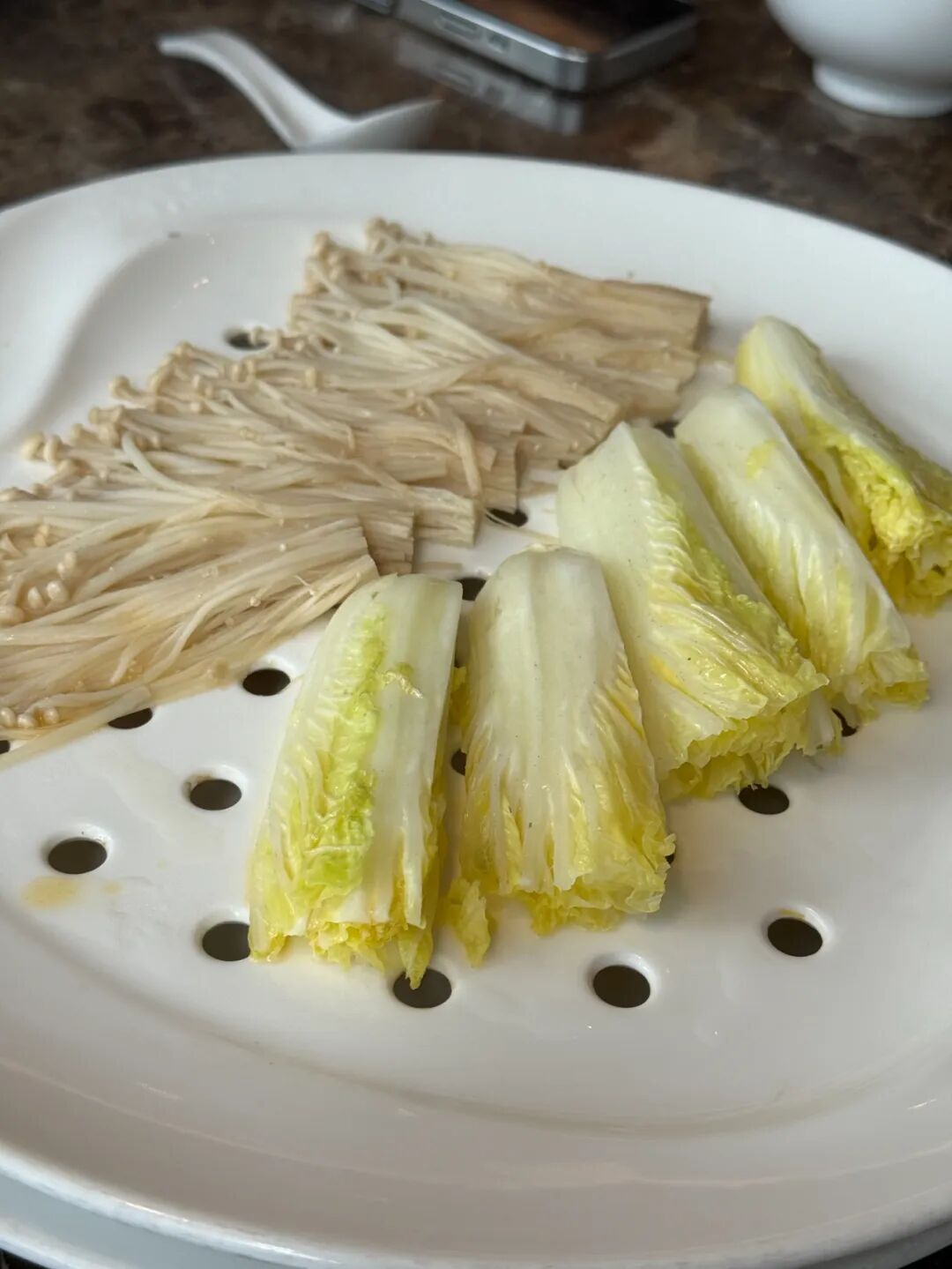
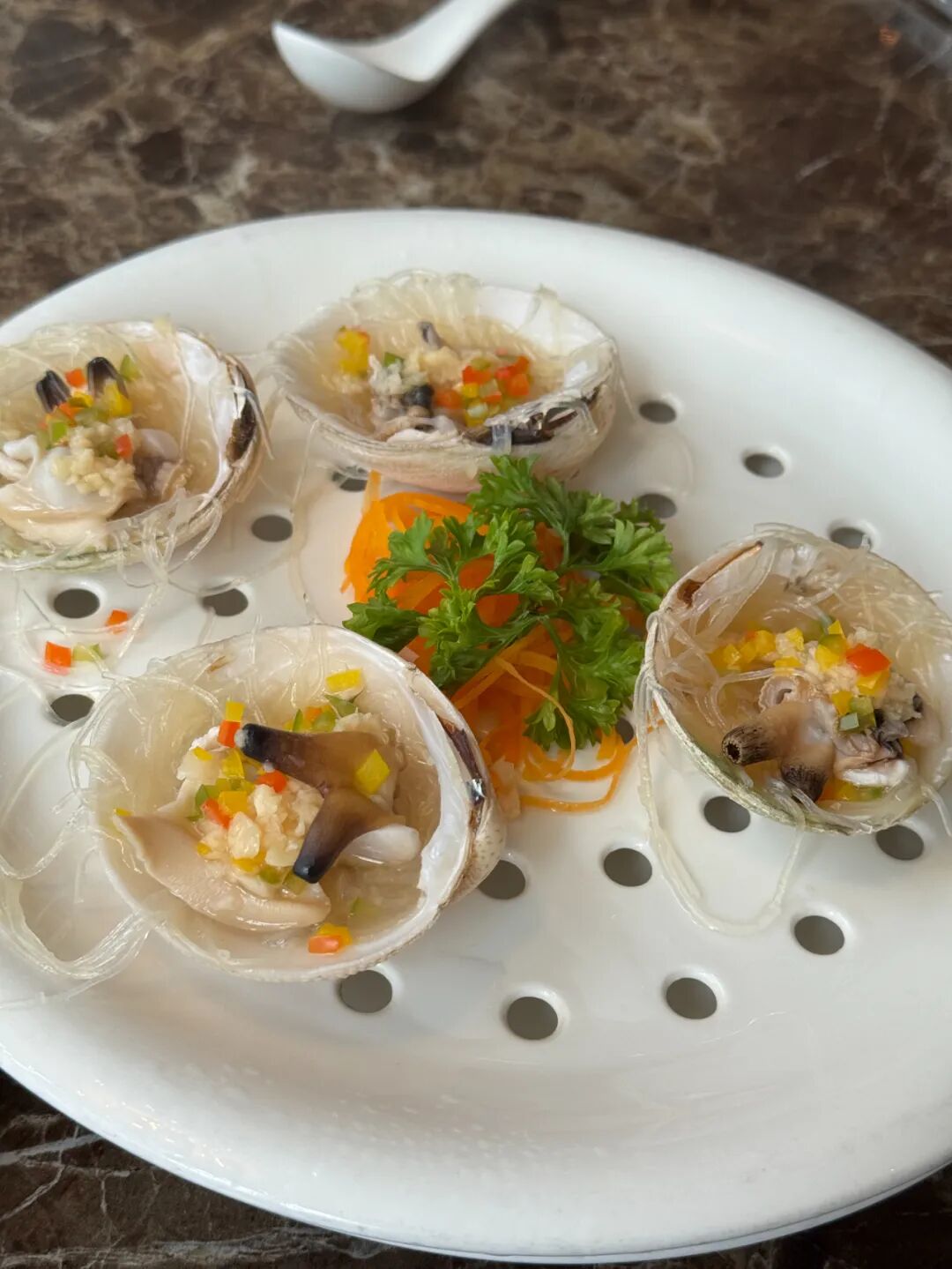
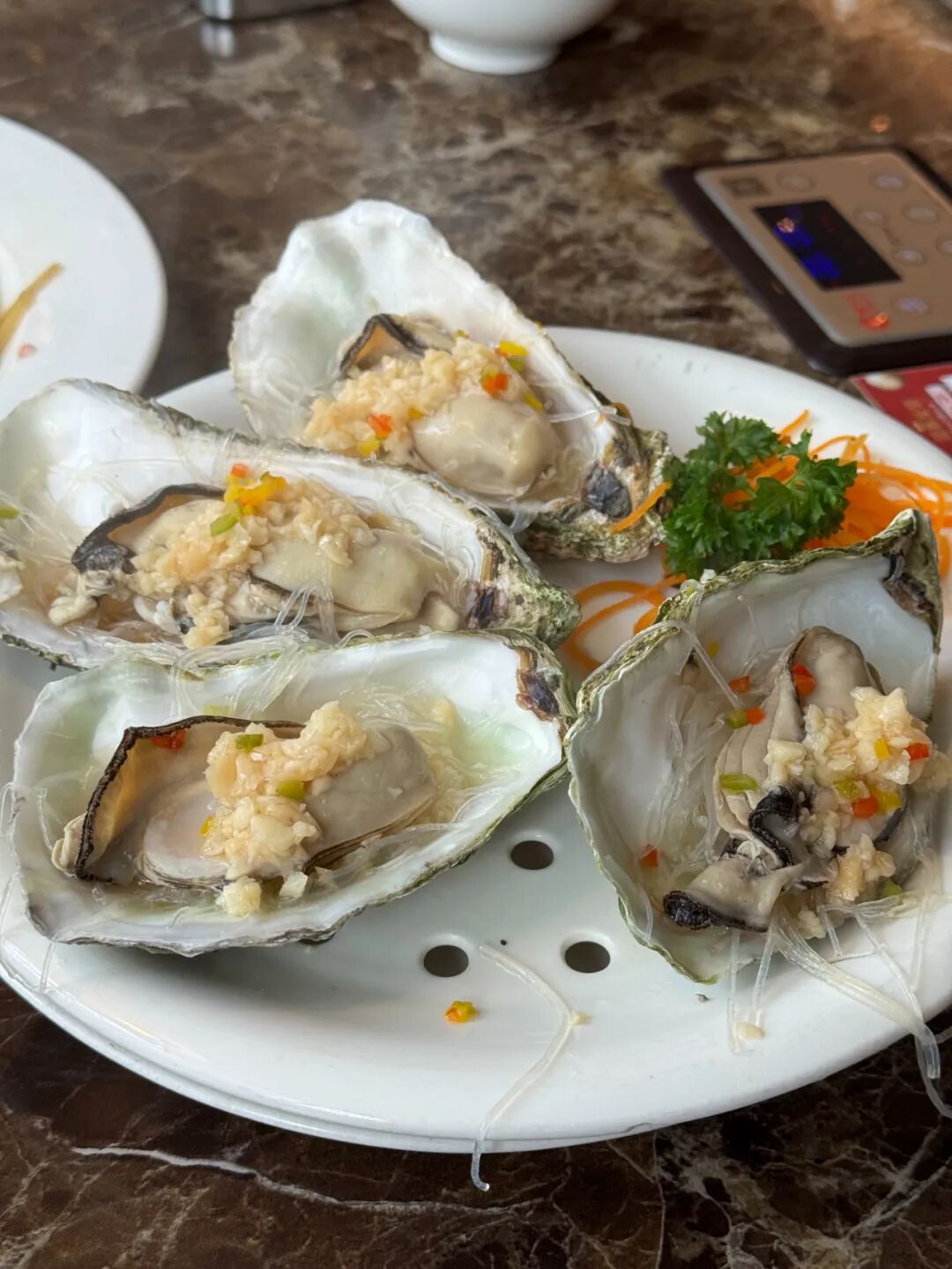
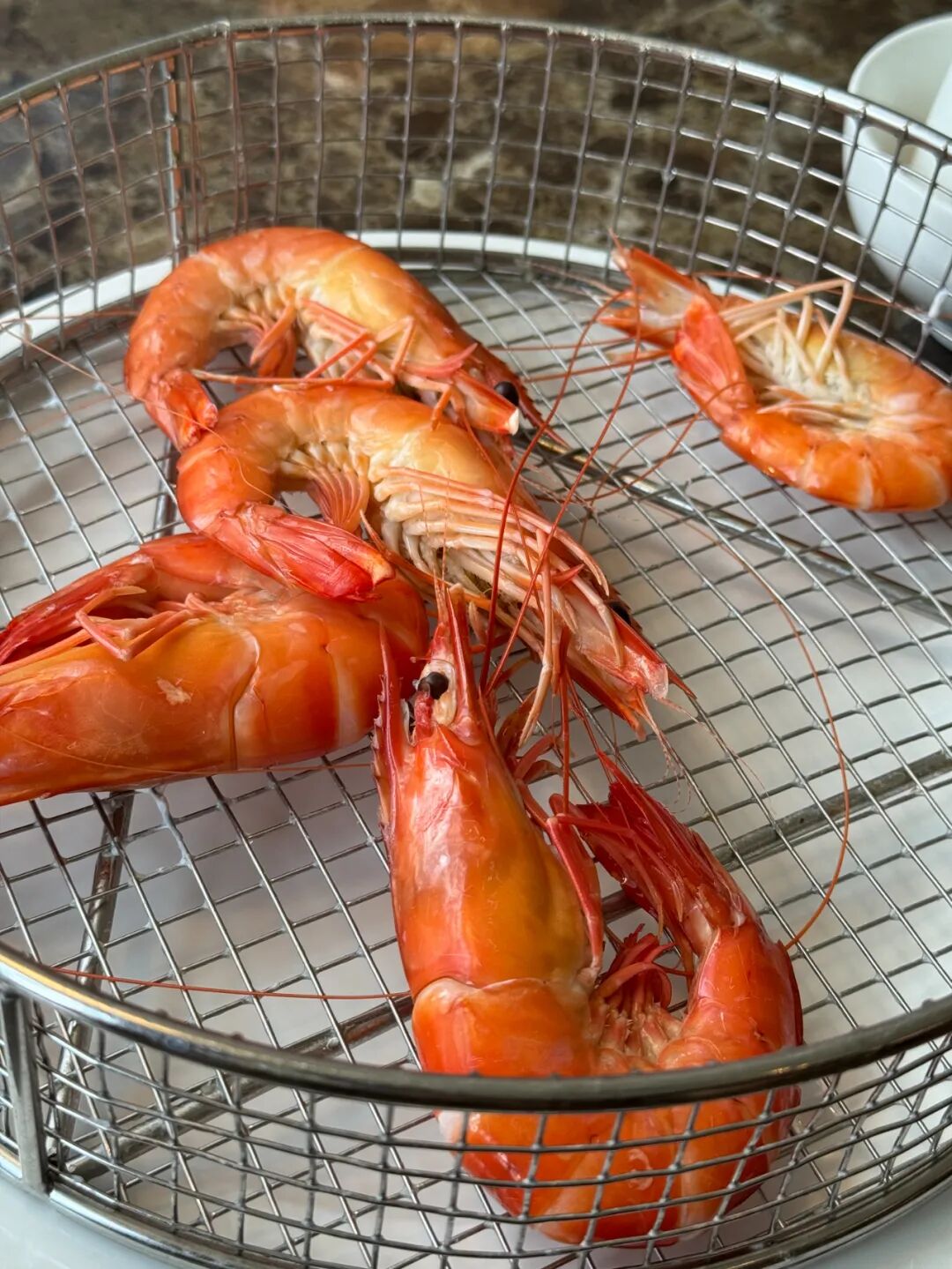
Seven-star spotted fish is a fish that we all like to eat. It has no small spines and the meat is tender and firm. It has no shortcomings except that it is expensive.
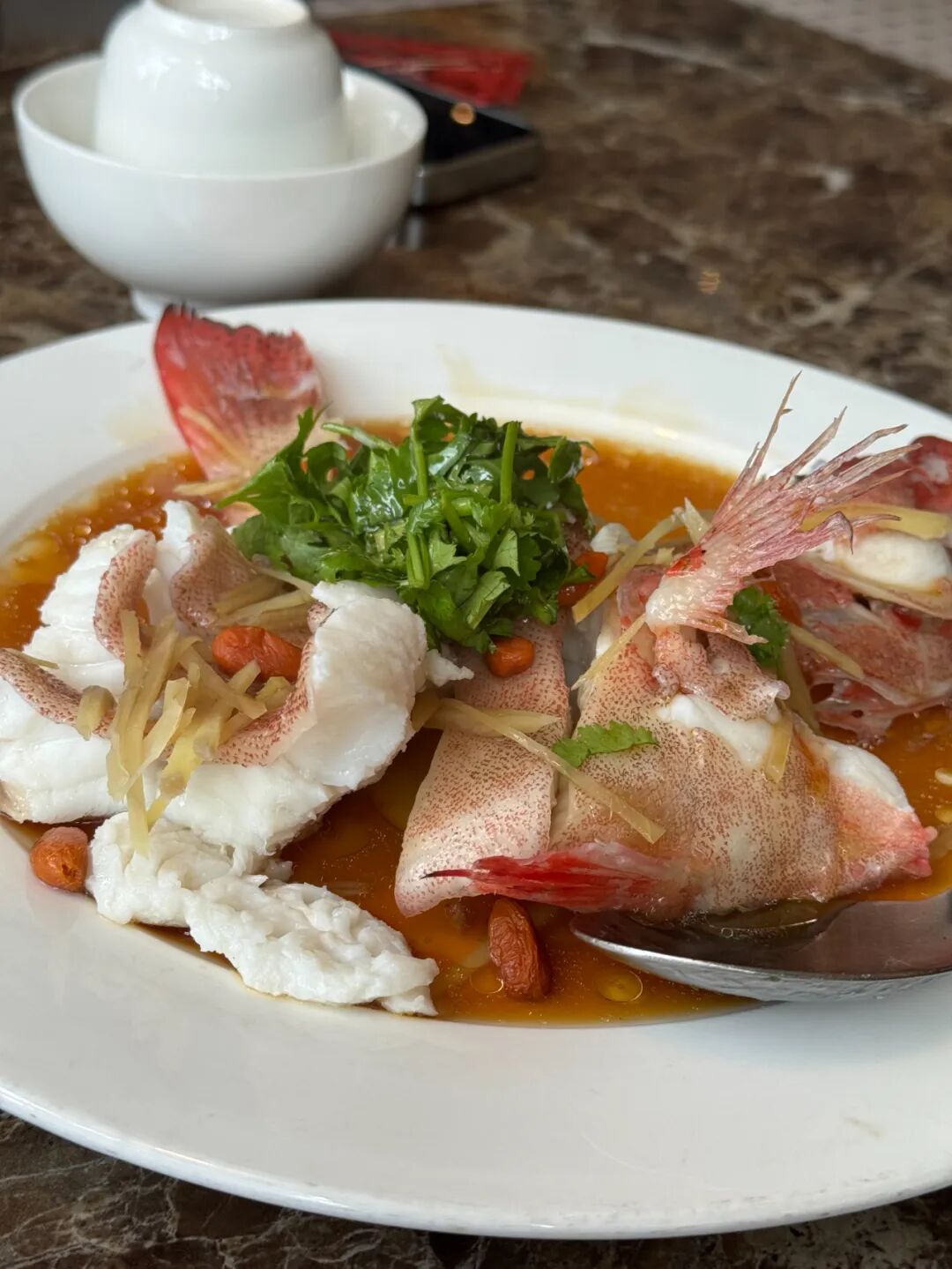
I have been to this steamed seafood restaurant twice, and each time I ate different dishes, they all tasted great. If you don’t eat expensive ingredients, the per capita consumption would be around RM70.
Address: Marina Seafood (Marina Seafood Restaurant Steam Times)
7. Yunye·Yunnan Rice Noodles·Sichuan Small Bowl Dishes
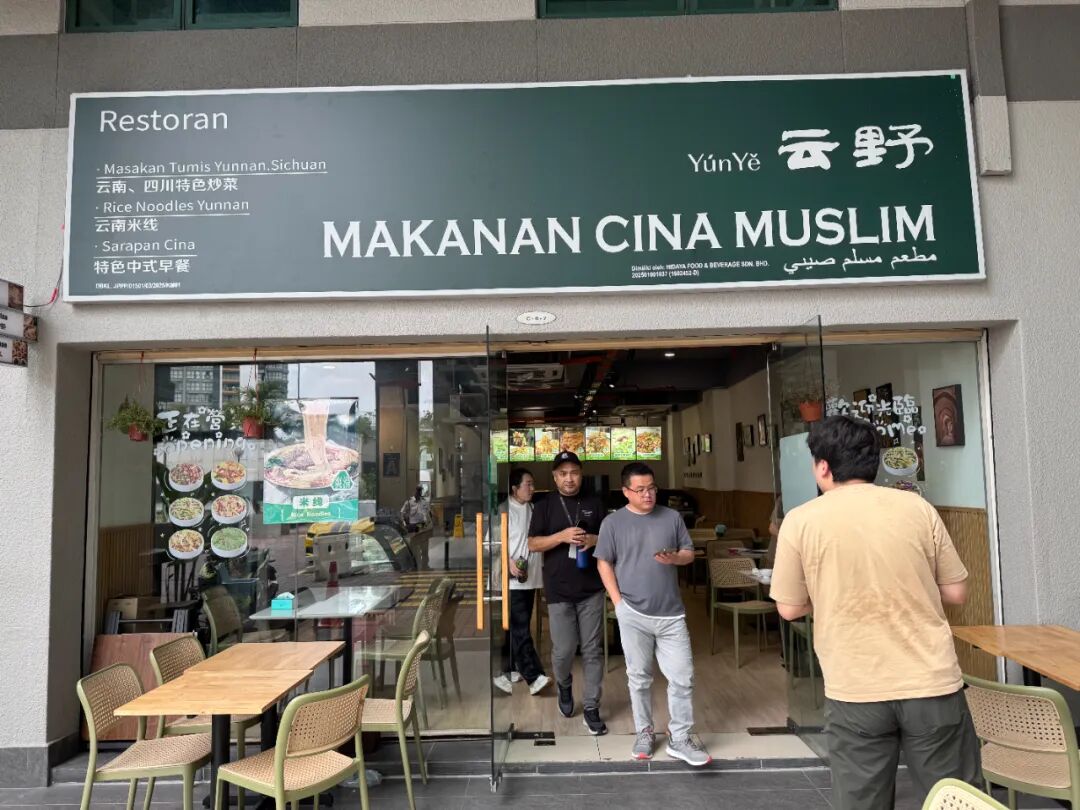
Friends who want to eat Yunnan rice noodles in Kuala Lumpur are in luck, a Yunnan rice noodle shop has opened at the back of the Bank of China Building.
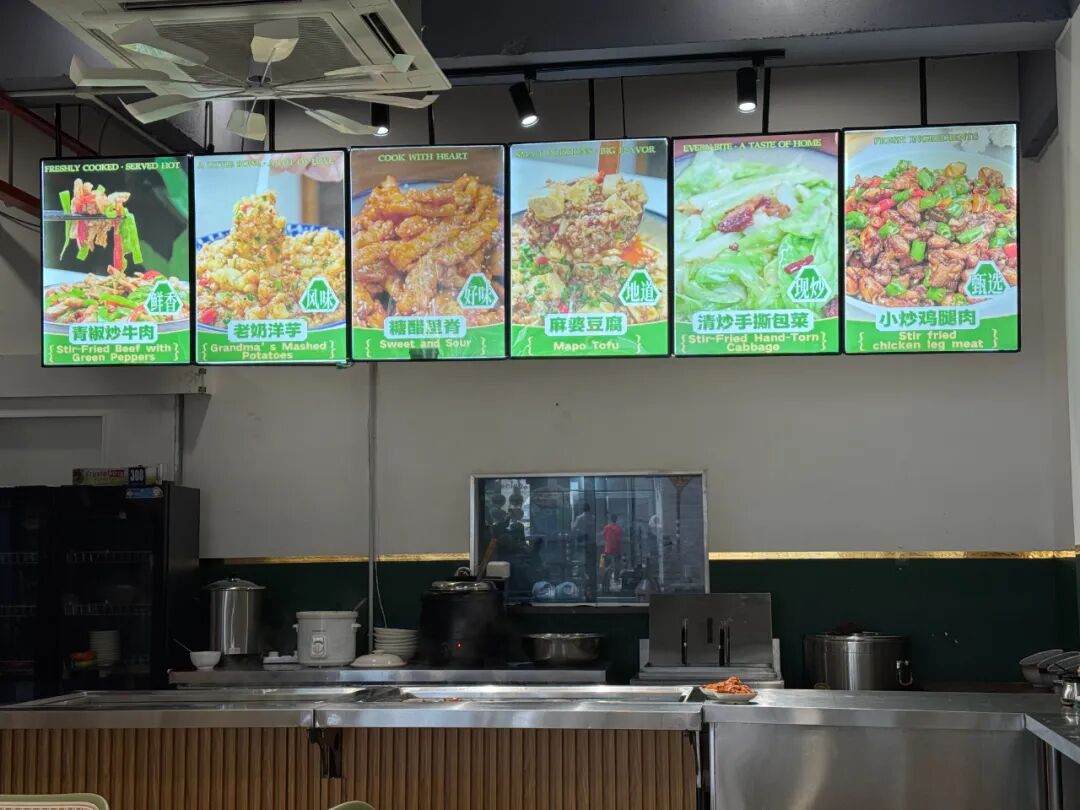
They specialize in a variety of small bowl dishes, but the rice noodles are what attracts me the most.
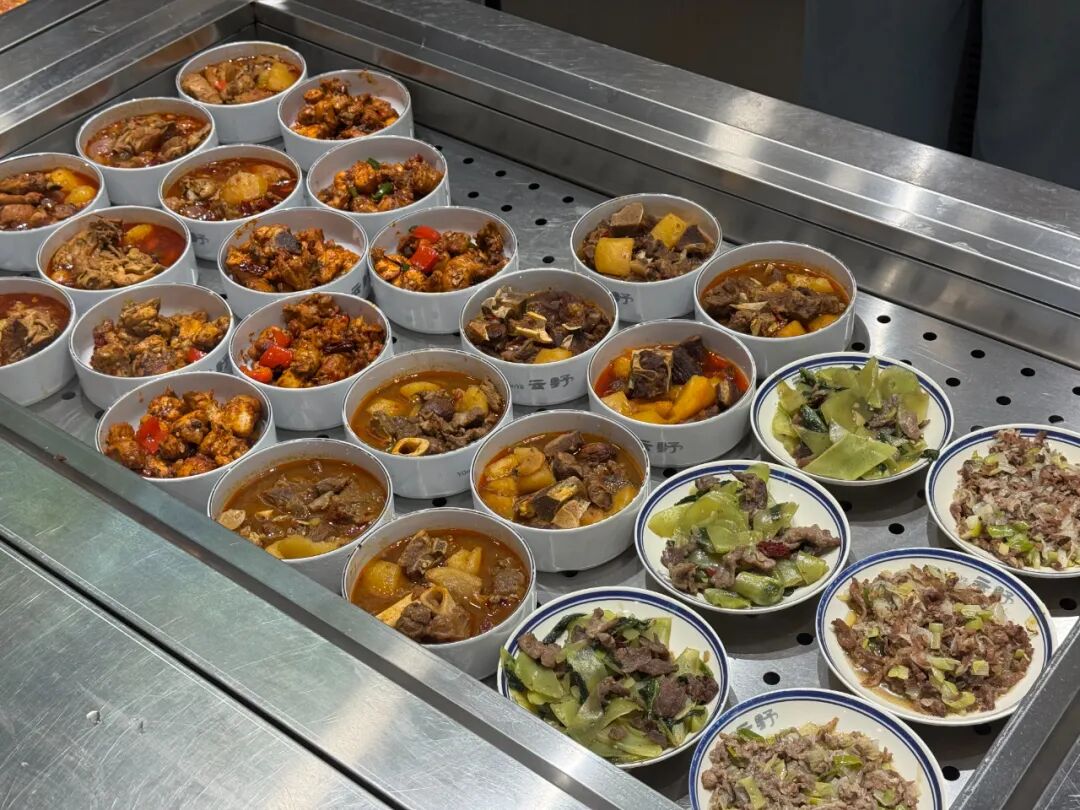
The diners at noon are mainly office workers nearby. This kind of small bowl dish is convenient to choose and the price is cheap.
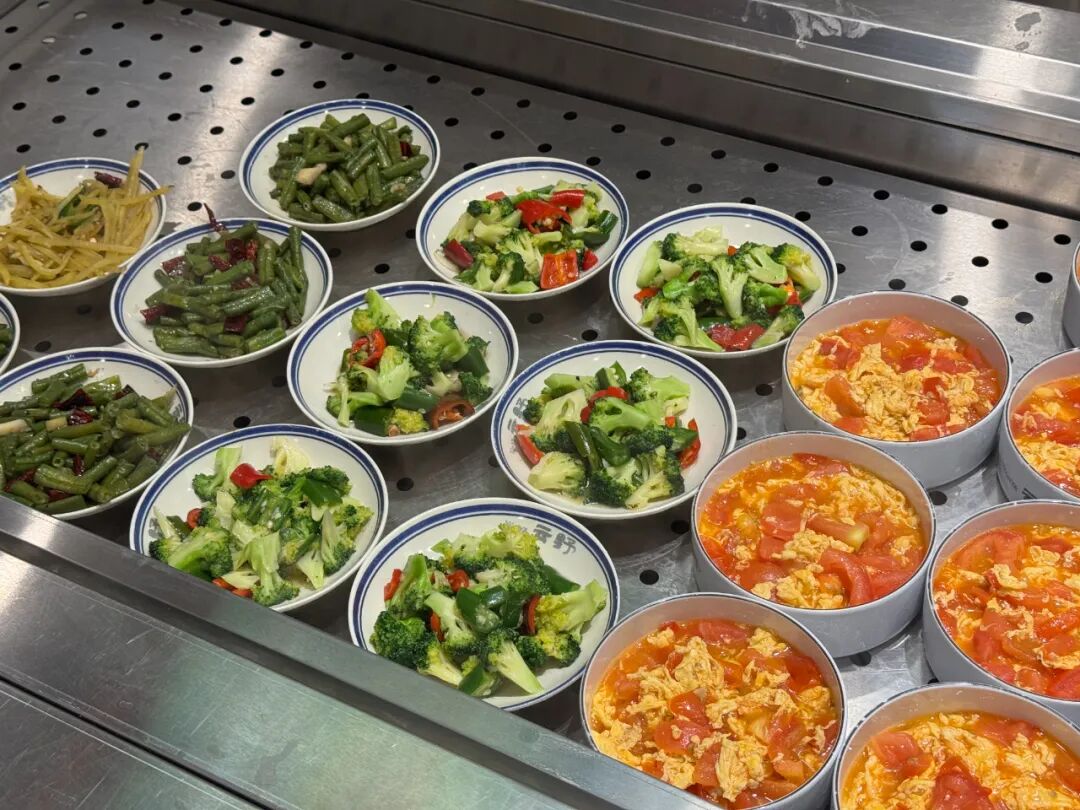
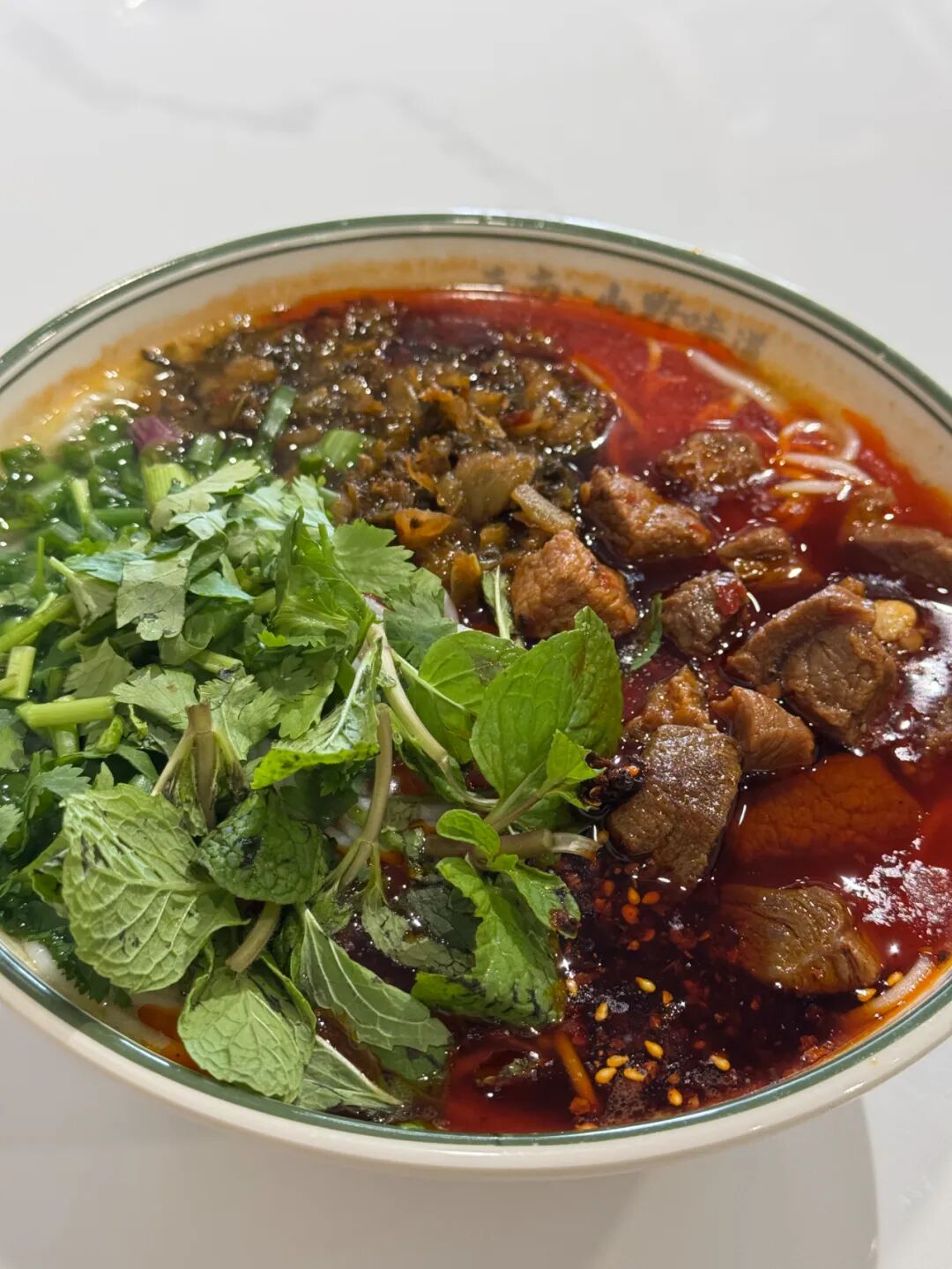
The rice noodles are made in the traditional Yunnan way, with mint added and the beef soup stewed very thick.
Address: 1, Megan Avenue, C-0-7, 189, Jln Tun Razak, 50400 Kuala Lumpur, Wilayah Persekutuan Kuala Lumpur
8. An Bang Paradise Chicken Rice Restaurant
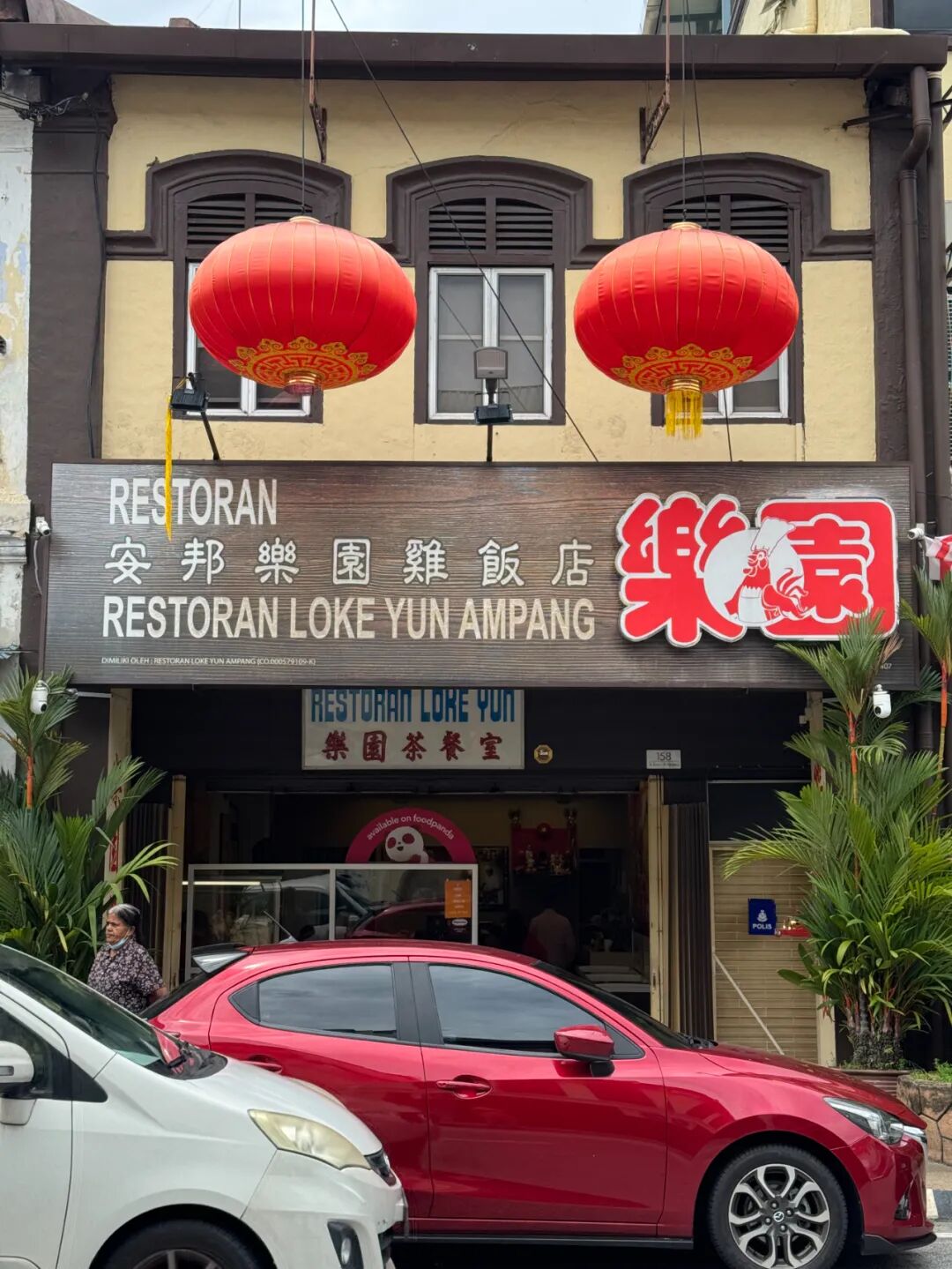
This chicken rice restaurant is one that I often visit. It is a pork-free restaurant run by a local Chinese. The chicken rice is very delicious.
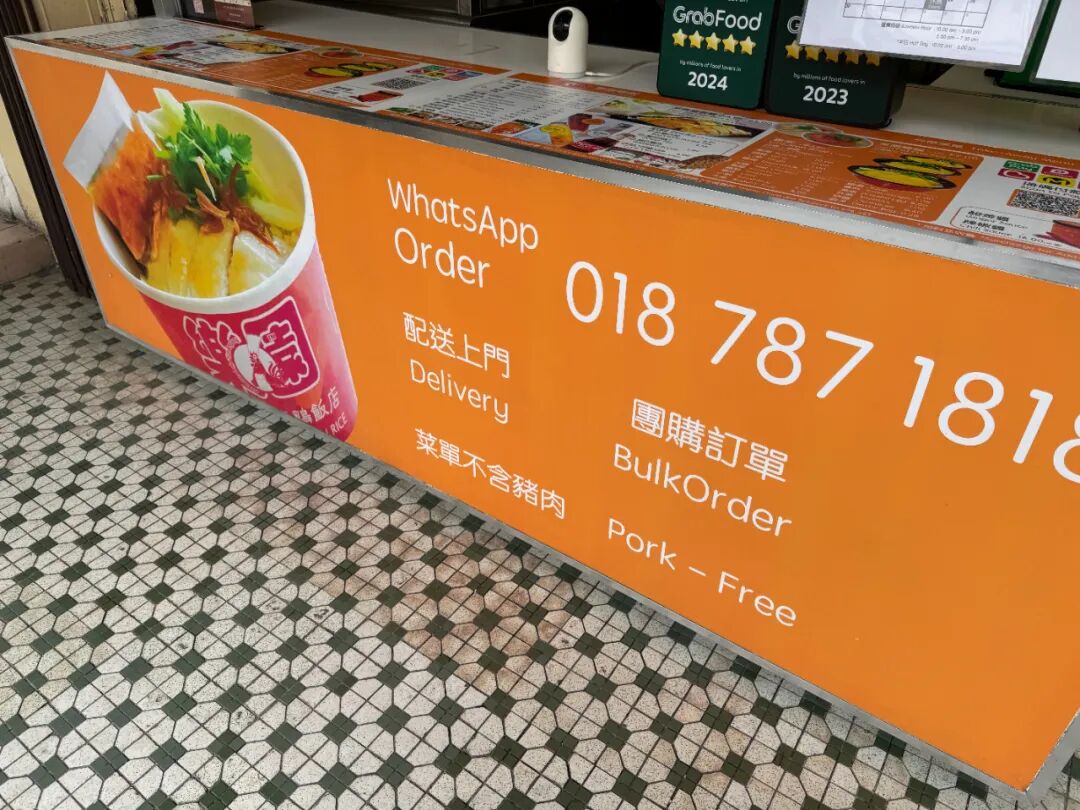
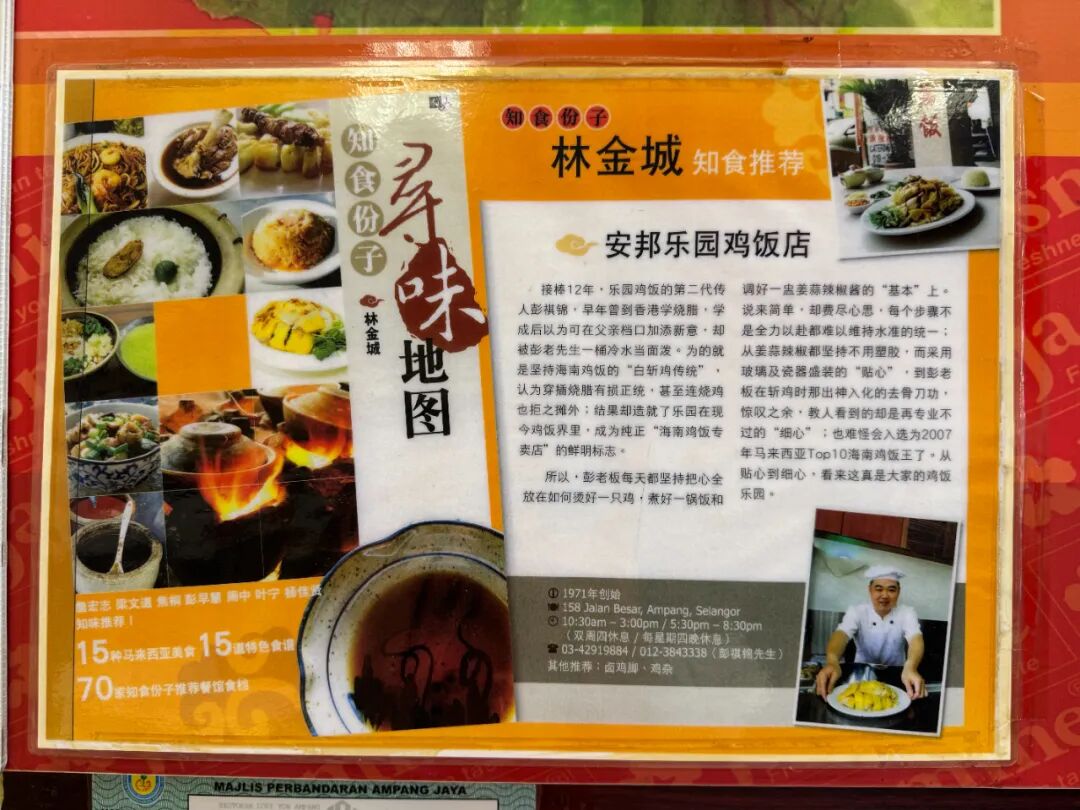
This is also a traditional Nanyang Chinese craft that has been practiced in Ampang for two generations.
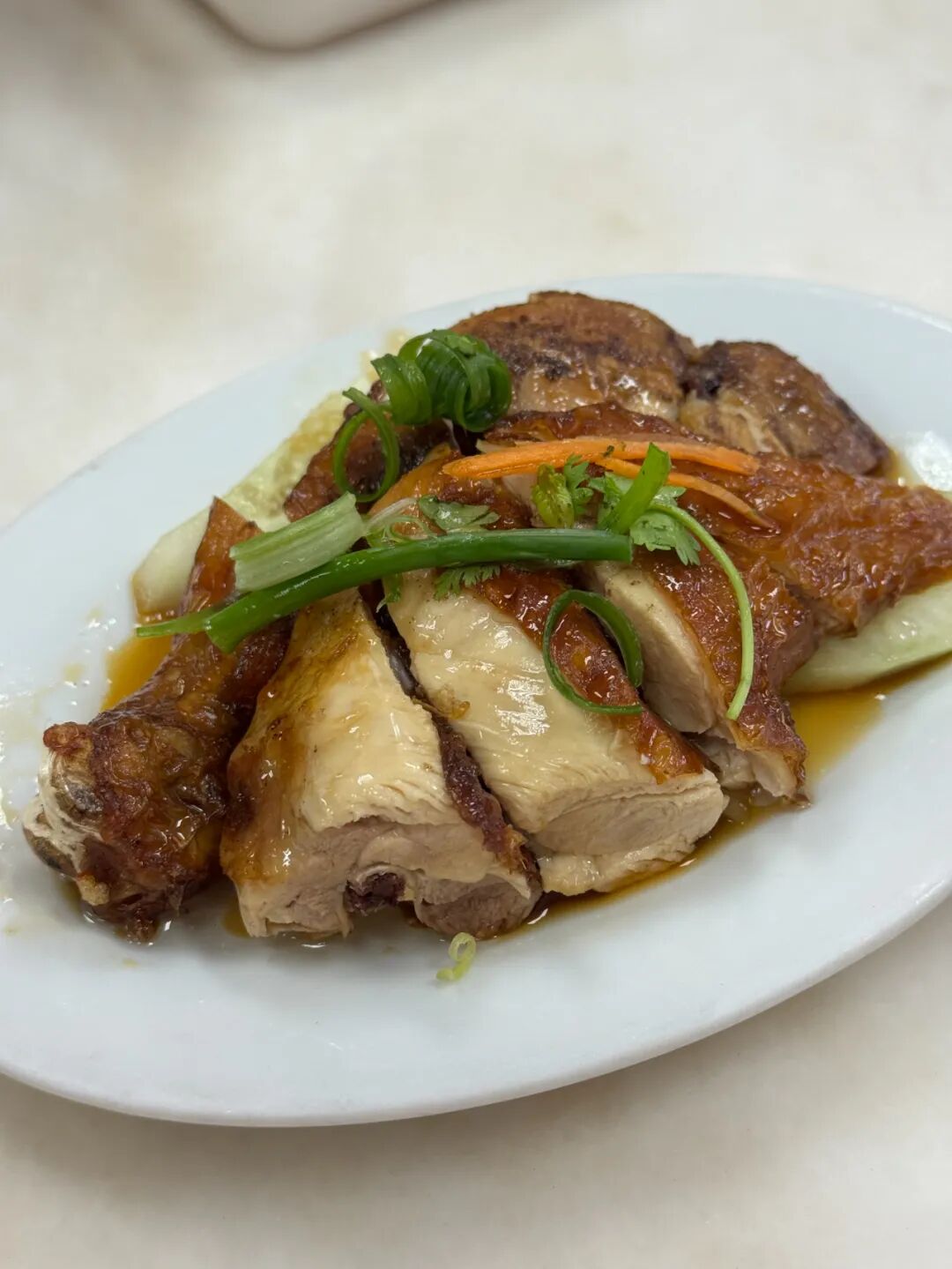
For chicken rice, you can choose either plain-cut chicken or grilled chicken legs. I have tried both, and they are both delicious, and the accompanying dipping sauces are amazing.
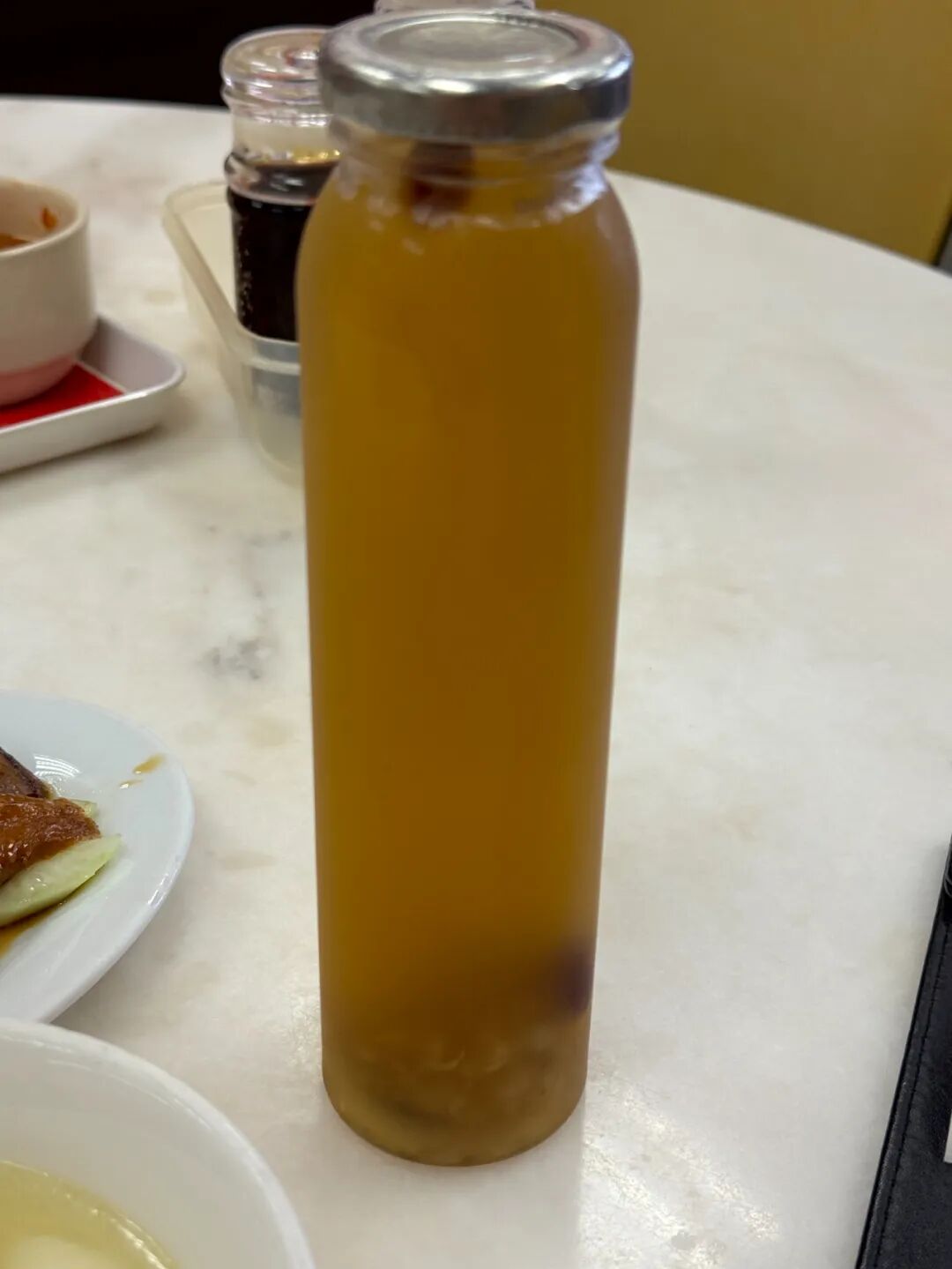
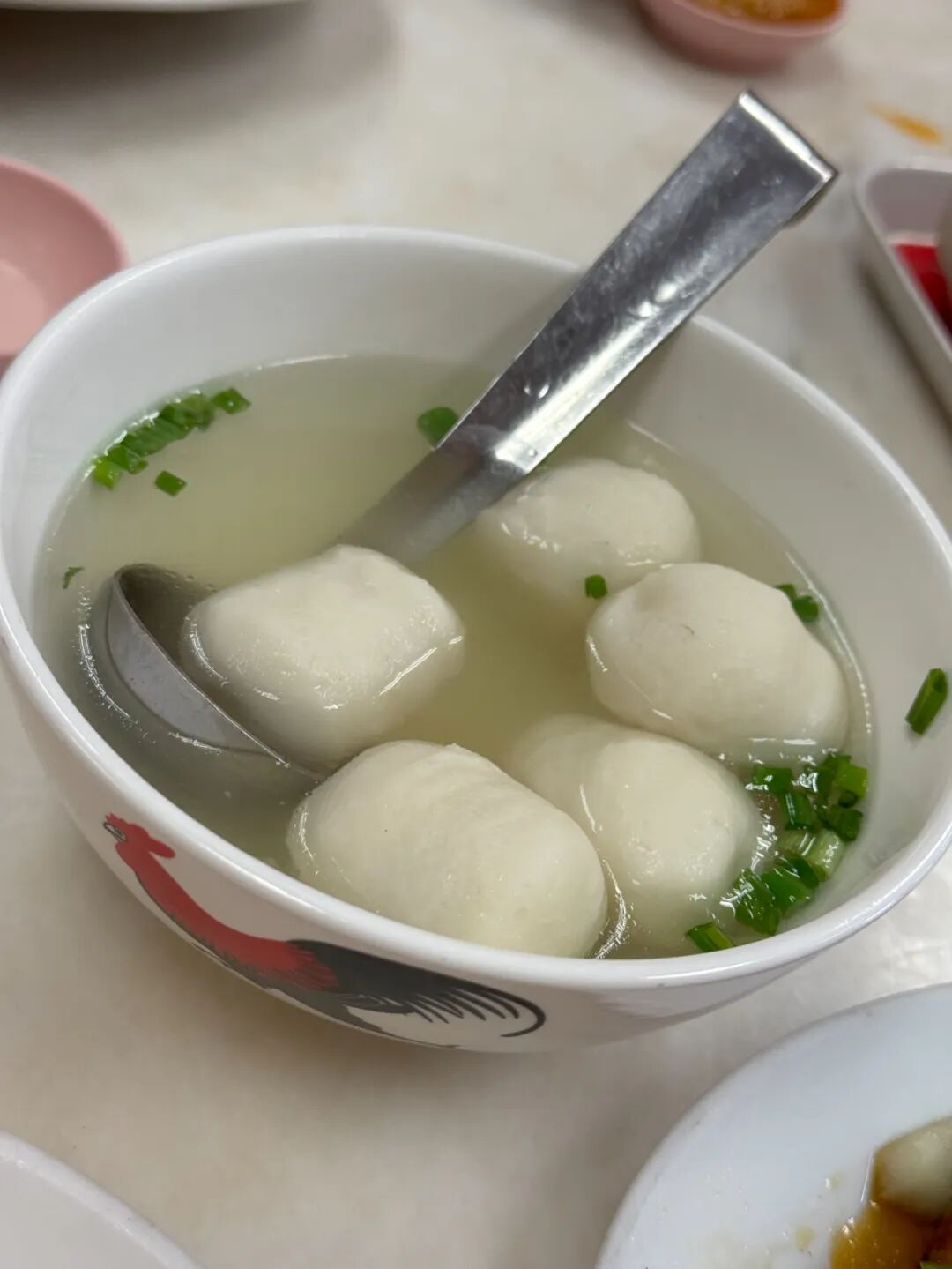
The store's homemade herbal tea and Fuzhou fish balls show that their ancestors are from Fujian.
This is for dine-in dining, and you can also choose to take it out. They will pack it in a sealed box, and the taste will not be affected at all after it is opened.
The Ampang Paradise Chicken Restaurant street reminds me of Penang, because this area is also a gathering place for Chinese.
Address: 158, Jalan Besar Ampang, Pekan Ampang, 68000 Ampang, Selangor
9. BARRACA
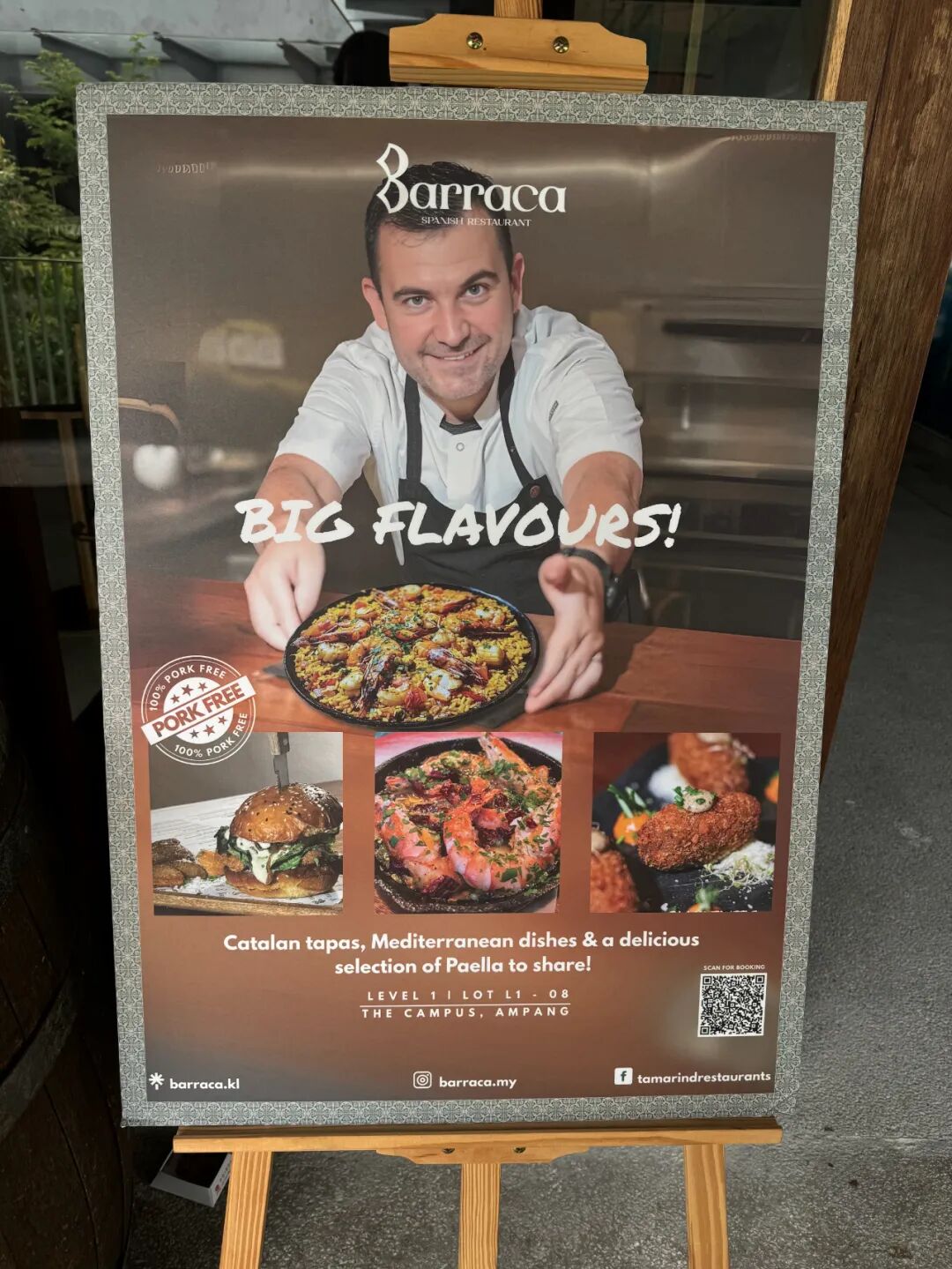
This is a newly opened Spanish restaurant in Ampang, and its main specialty is of course paella.
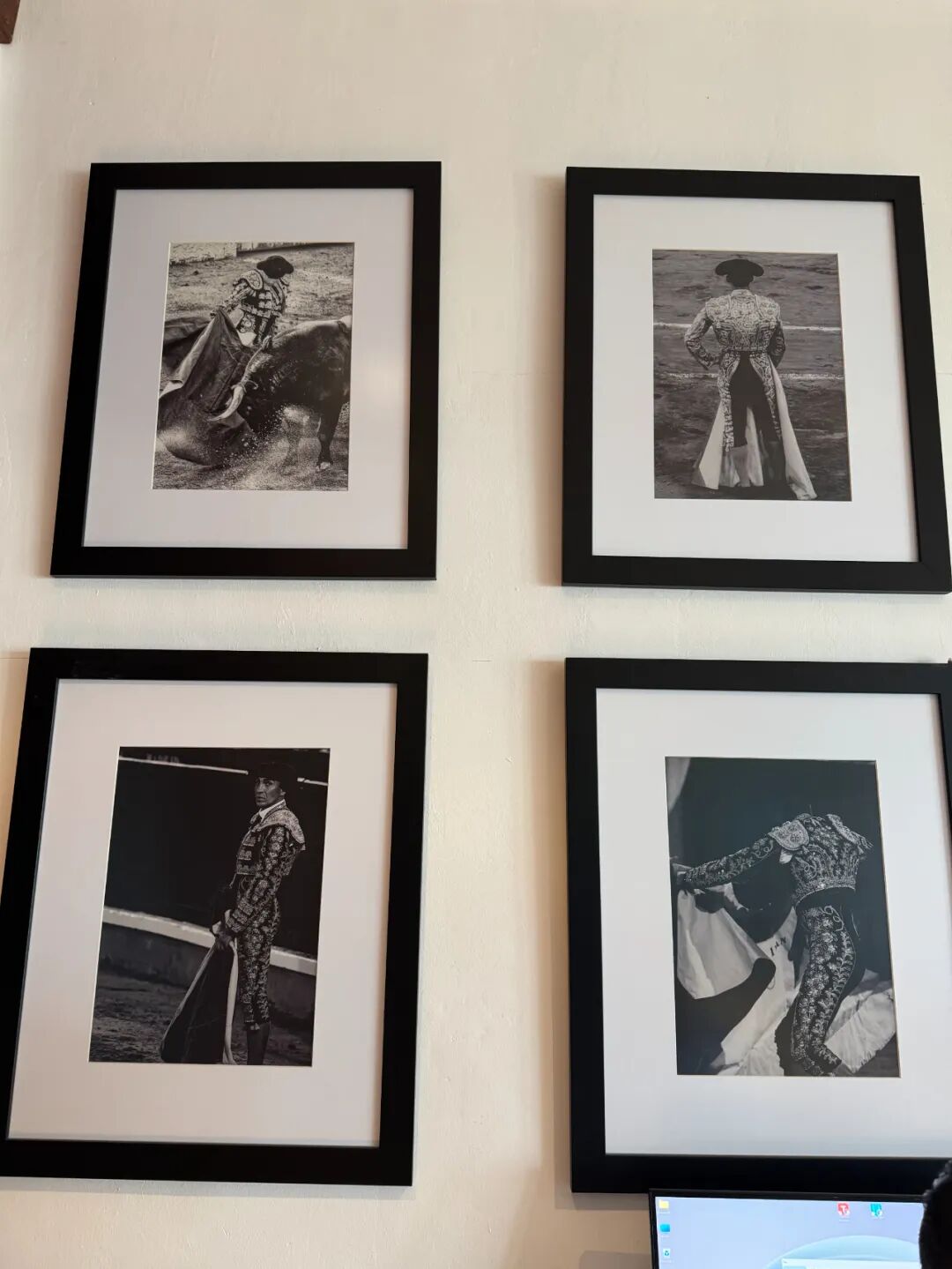
I have eaten Spanish restaurants in Indonesia before. There are also some restaurants in China that make Spanish paella, but it is difficult to eat authentic ones.
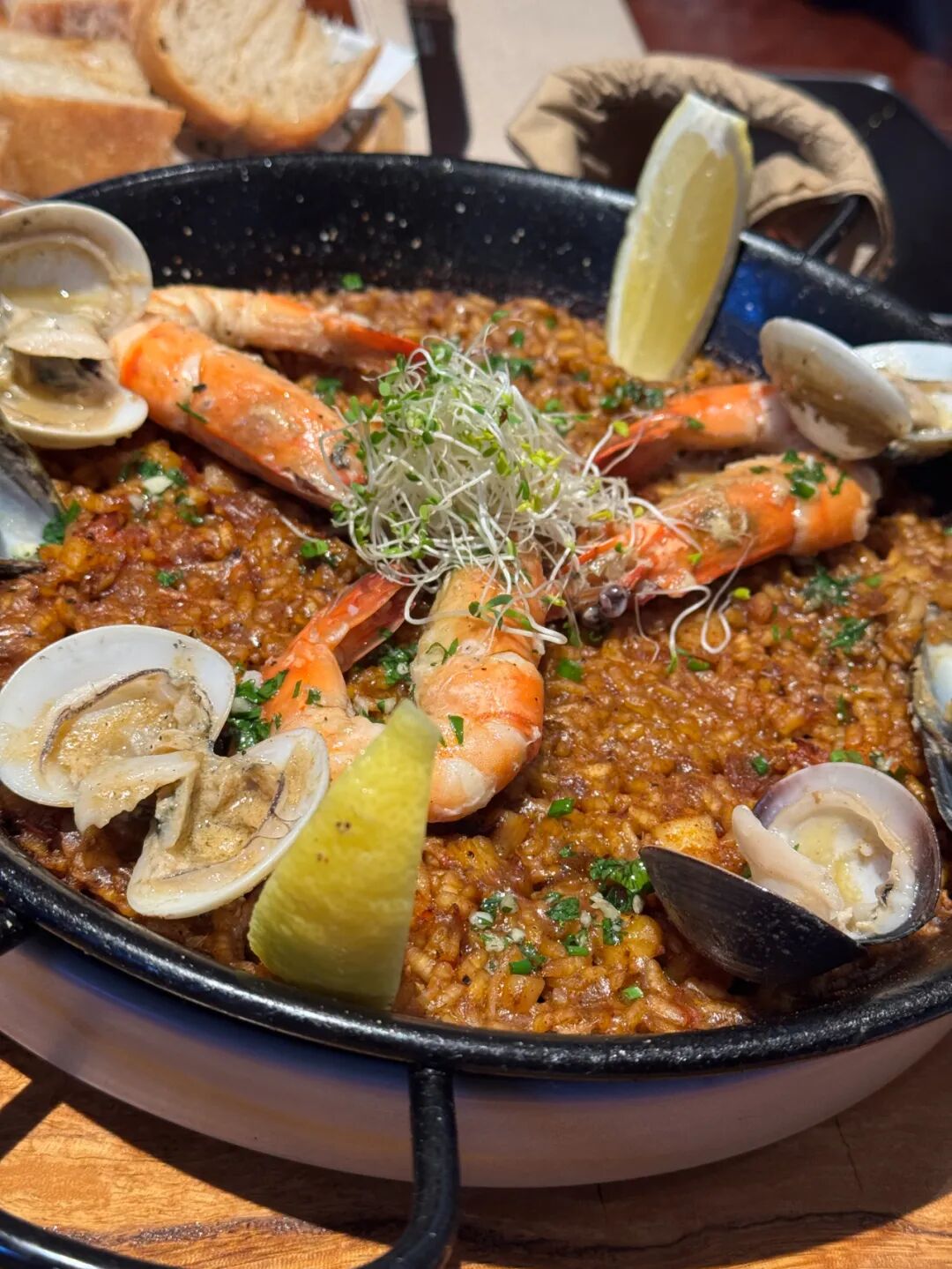
Facts have proved that Spanish paella is just that, not that good, because the rice they use is a bit hard, and it mainly depends on the freshness of the ingredients.
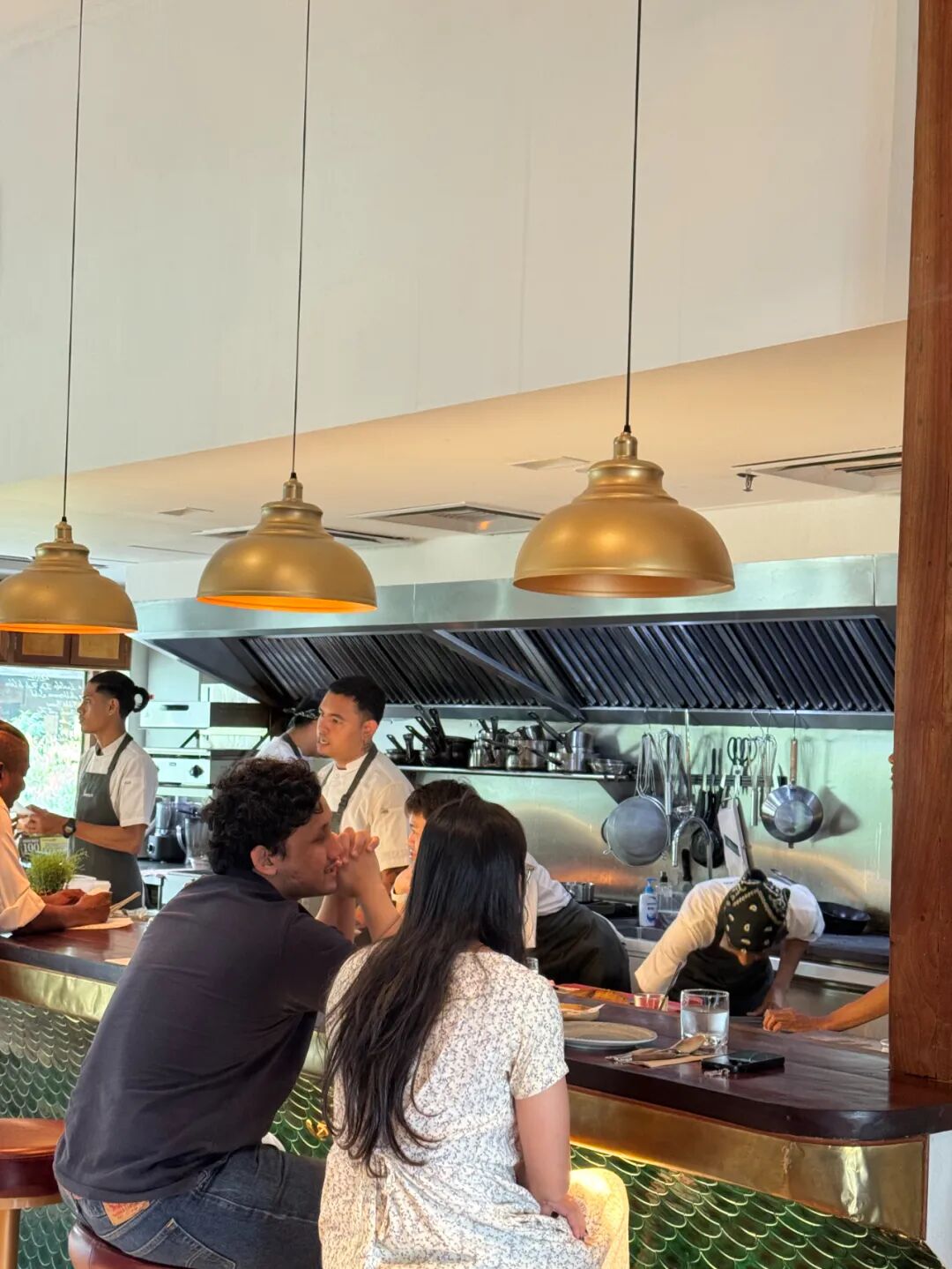
This shop has just opened and is very popular. There are only a dozen staff working in the kitchen.
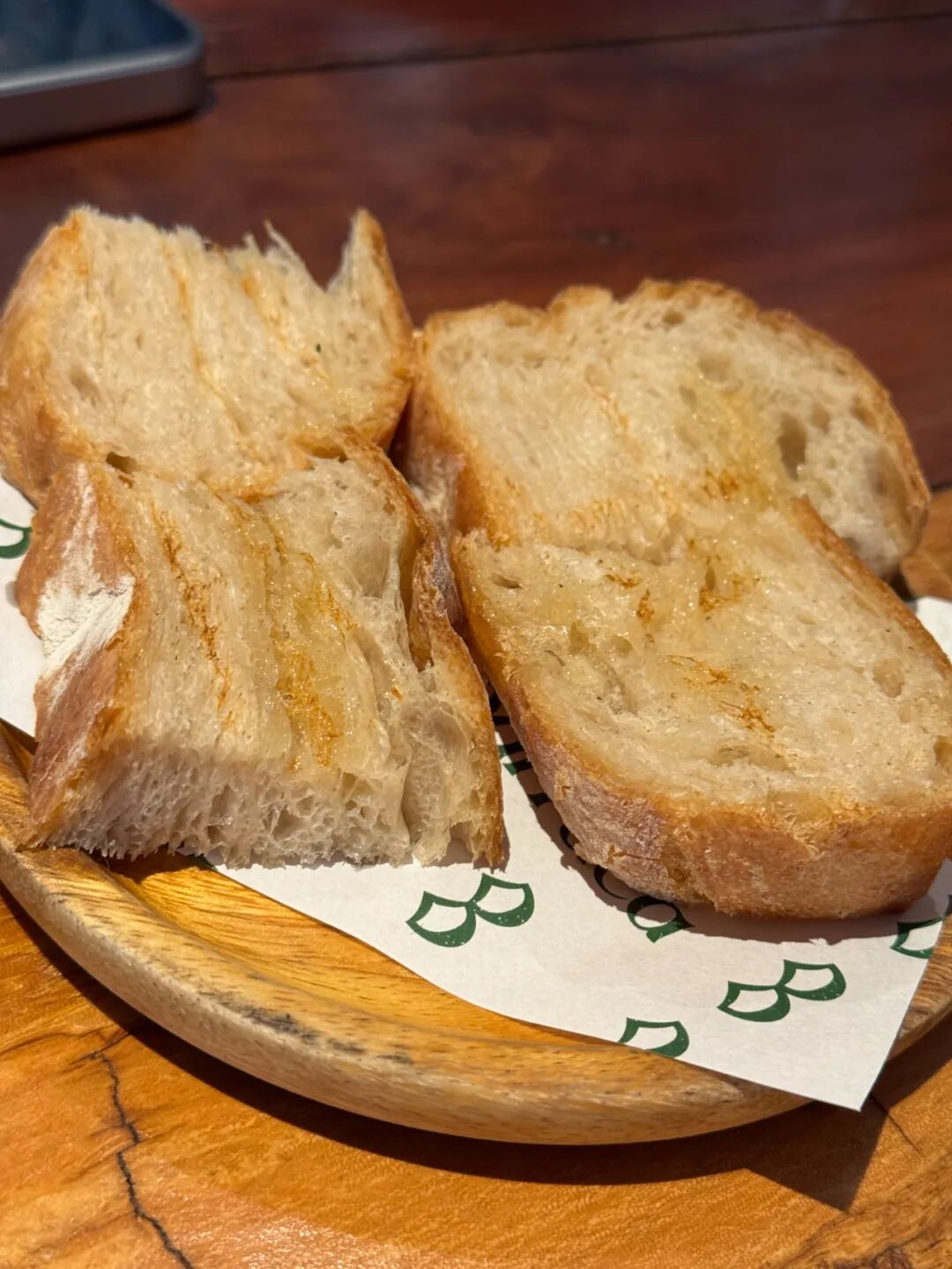
The bread that comes with the meal is a standard feature of Western food.
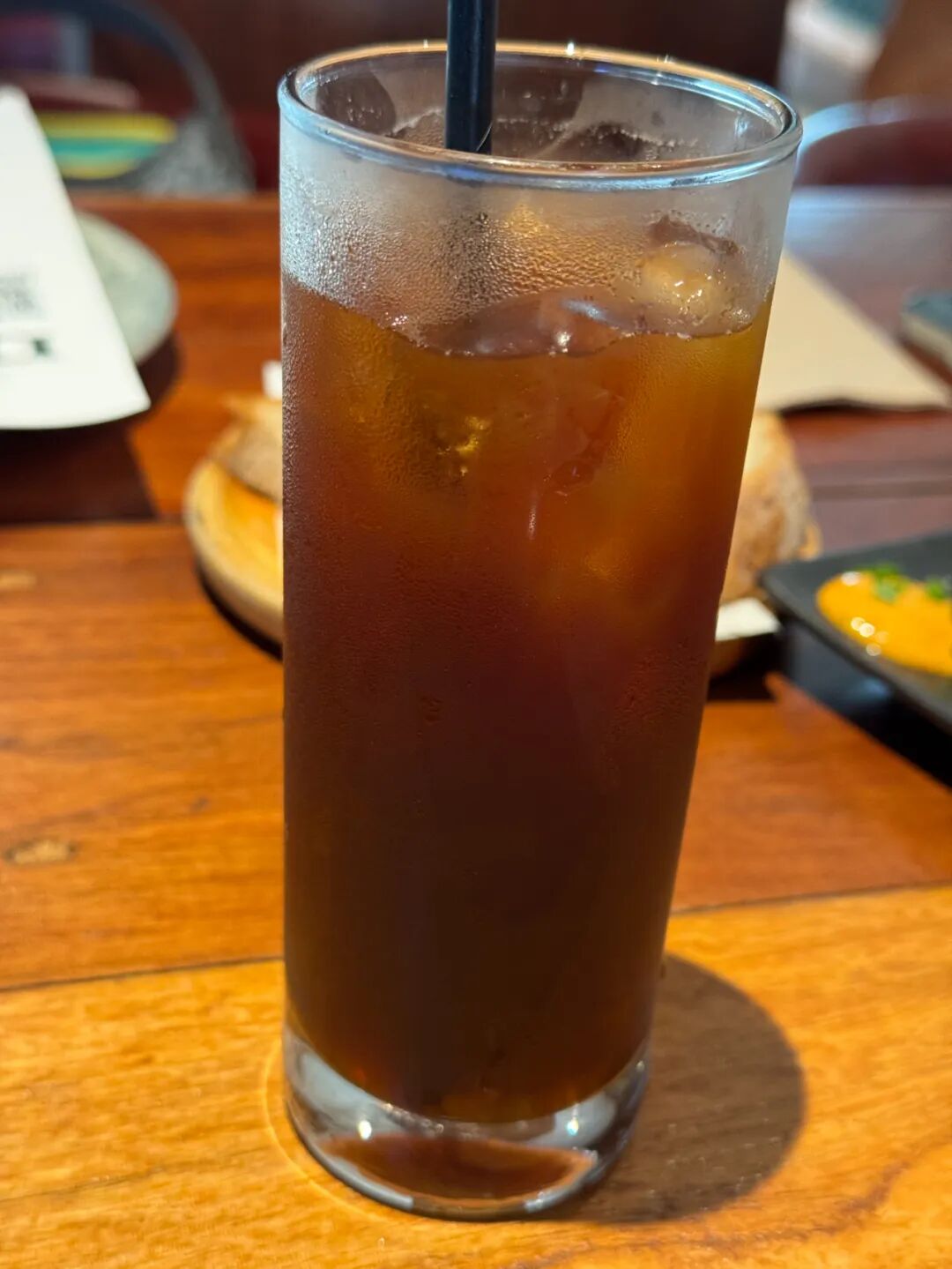
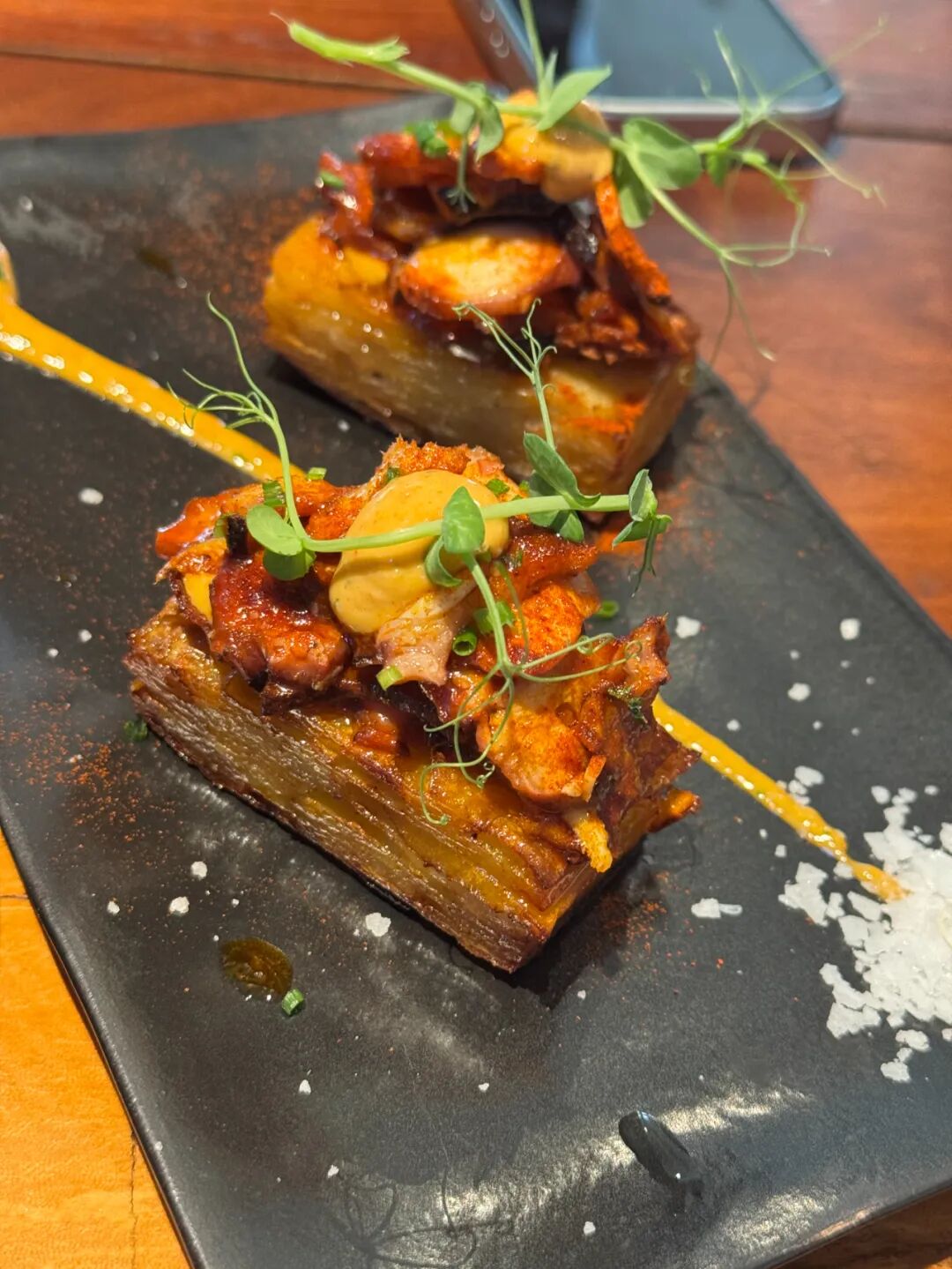
This thing that looks like sushi is topped with octopus. Spanish and Portuguese people like to eat octopus.
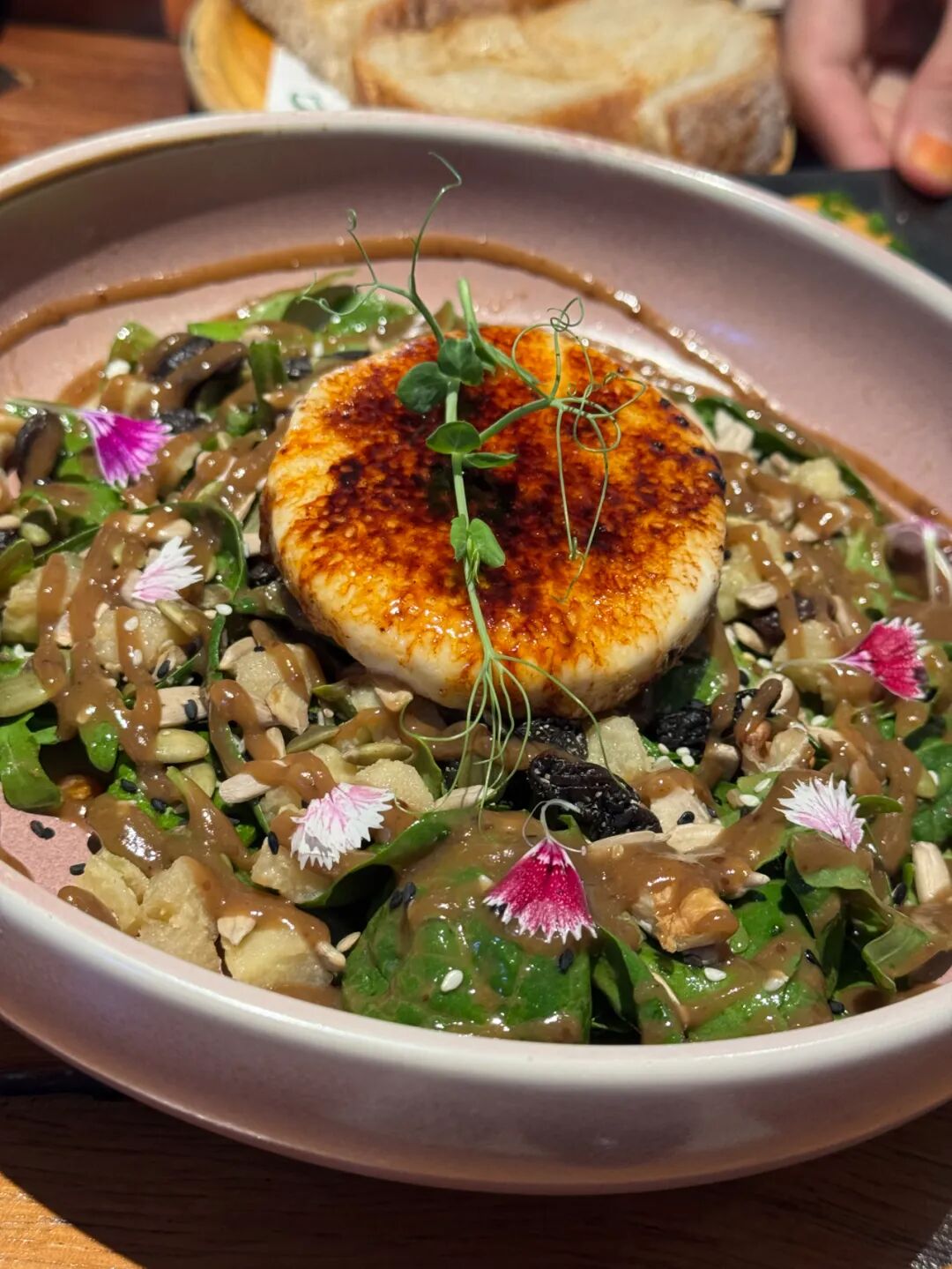
This goat cheese salad is very delicious, mainly because the cheese has a rich milky aroma. Spain has a well-developed animal husbandry and first-class dairy products.
Address: L1-08 The Campus Ampang Jalan Kolam Air Lama, Mukim, 68000 Kuala Lumpur, Selangor
10. Hai Kah Lang
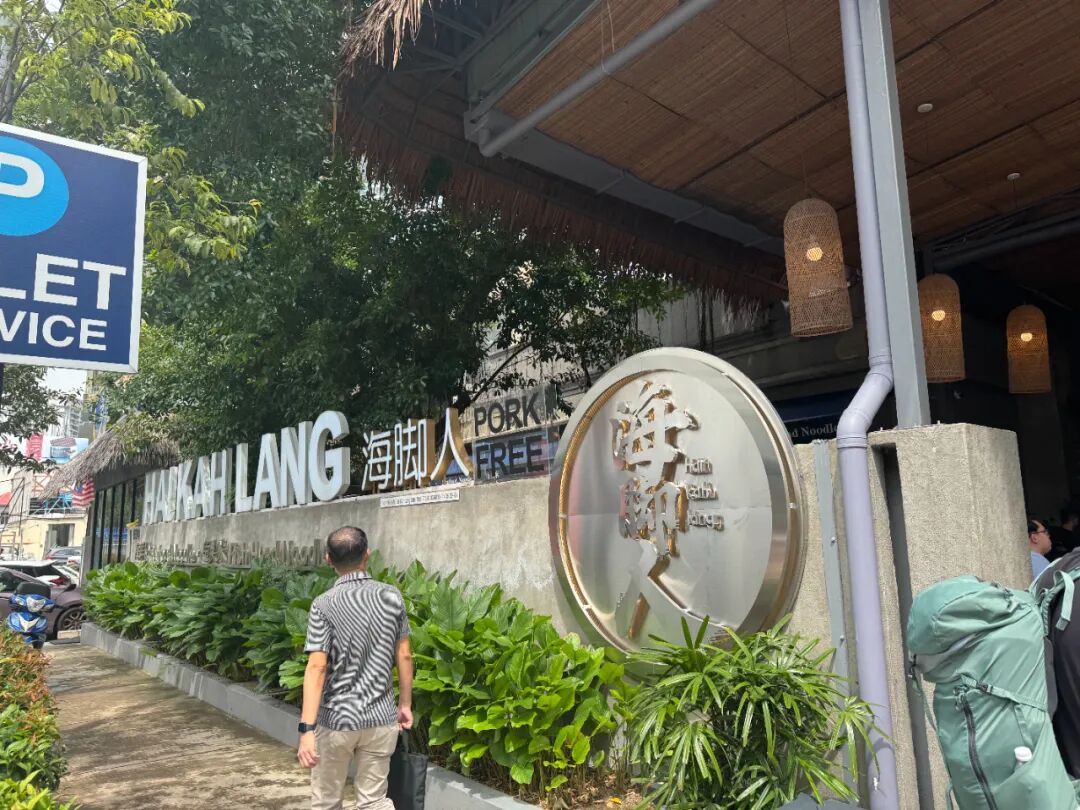
Hai Jiao Ren is an Internet celebrity Michelin restaurant in Kuala Lumpur, specializing in a variety of seafood and Nanyang Chinese snacks.
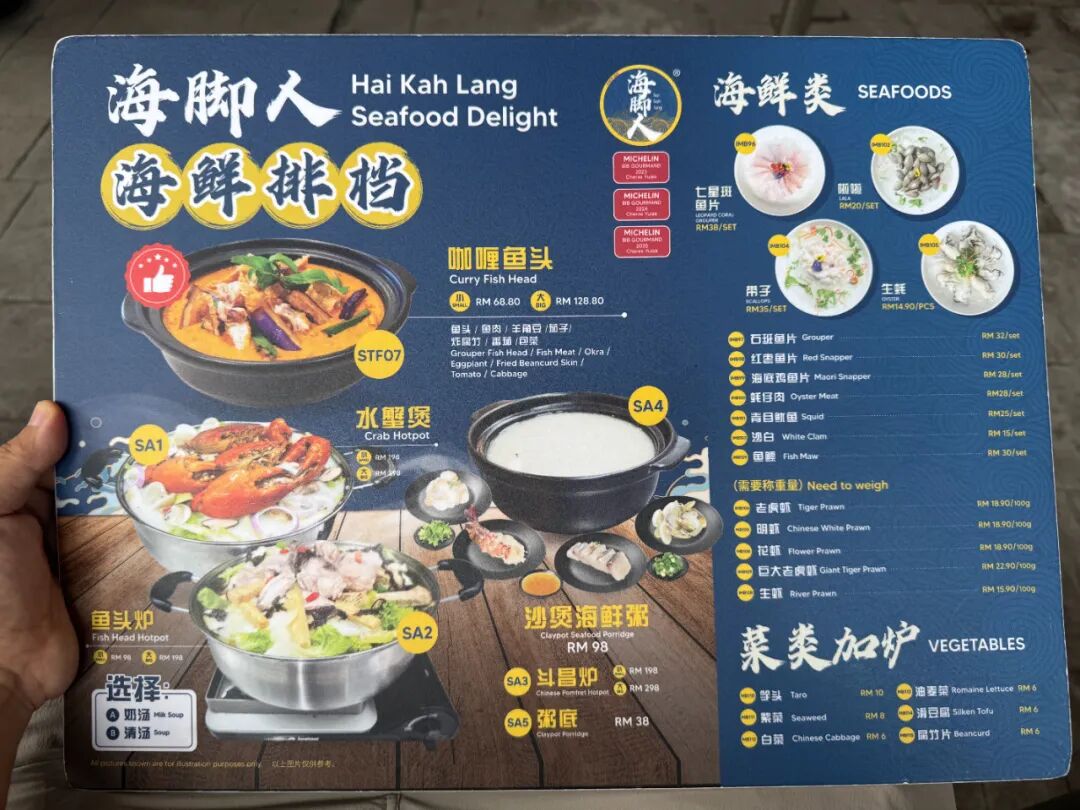
The difference between this store and Steam Times is that this one is a food stall, while Steam Times is a more high-end business dinner. In the steaming era, seafood was steamed, but this restaurant mainly specializes in spicy stir-fried, fried and various curries.
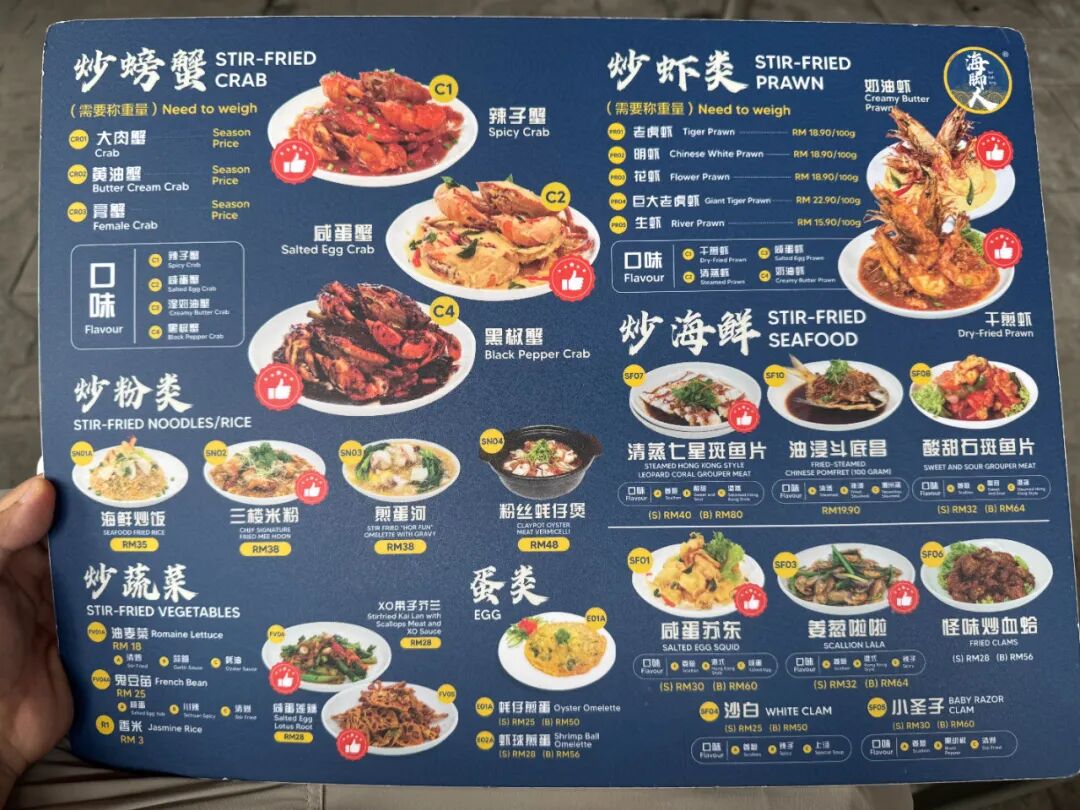
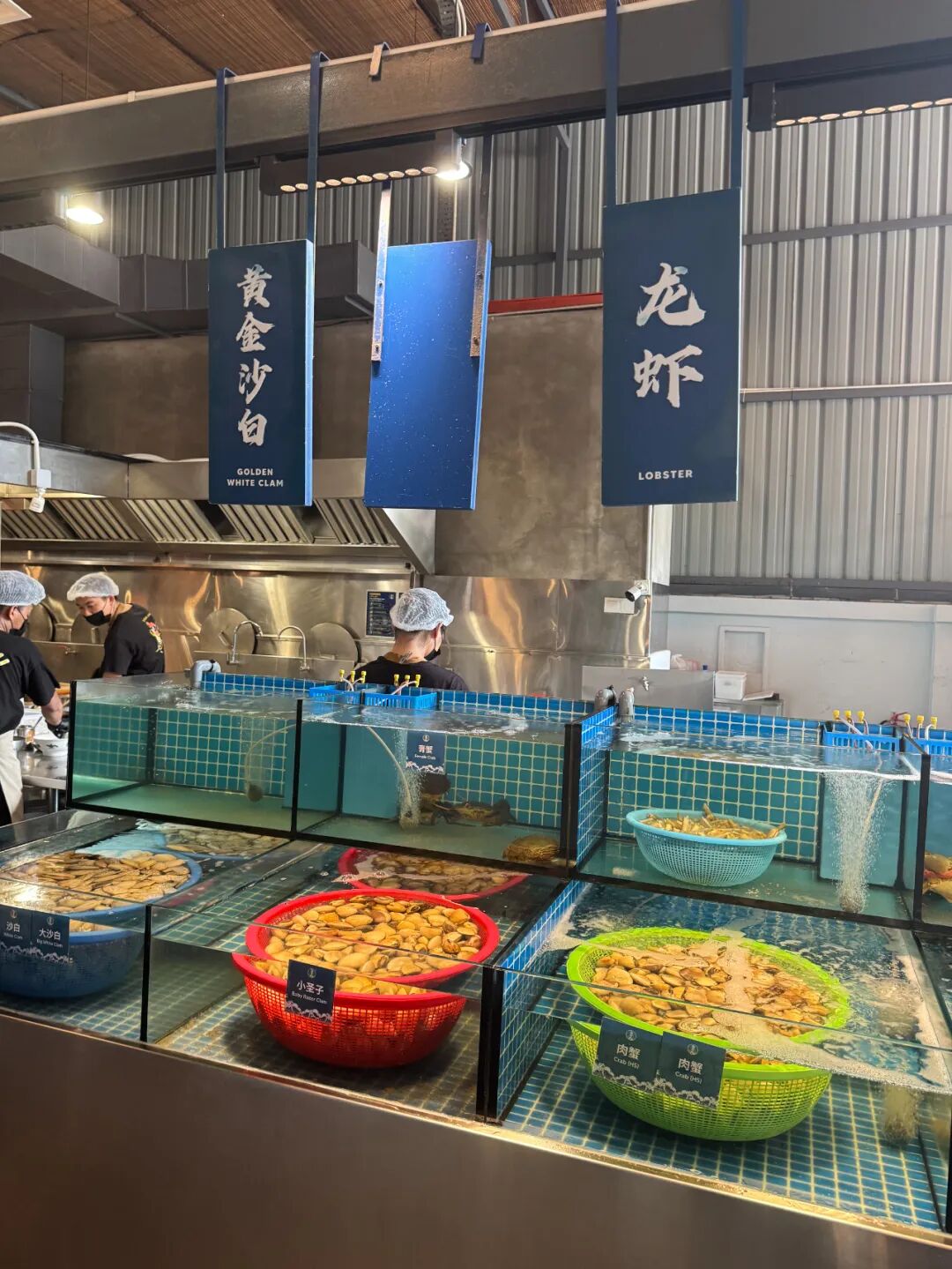
When Chinese people eat seafood, of course they still have to eat it fresh.
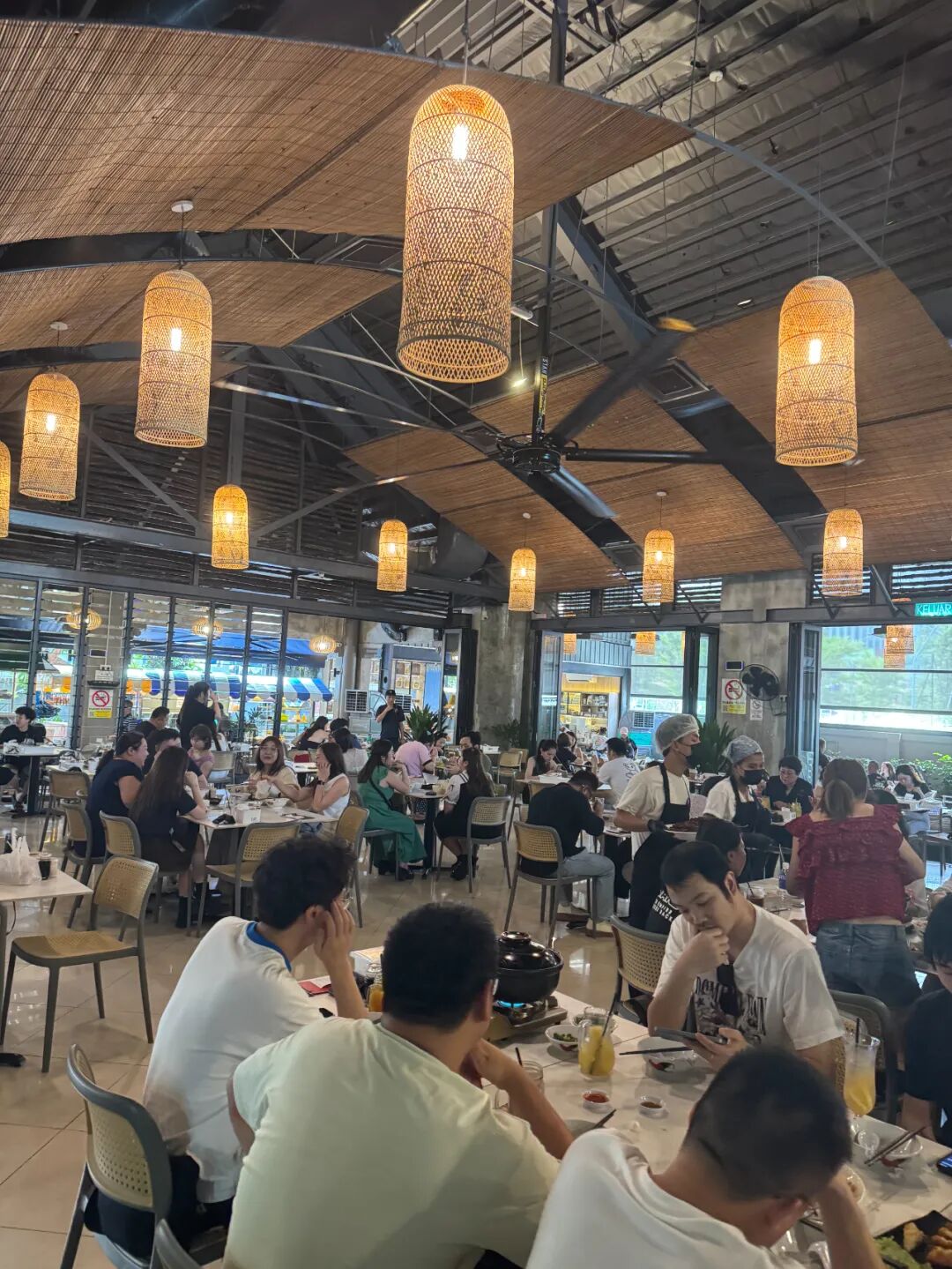
Haijiaoren is quite large, but it is still full, and you have to queue for more than ten minutes for lunch.
We followed the recommendations on Dianping and chose the most popular signature dishes.
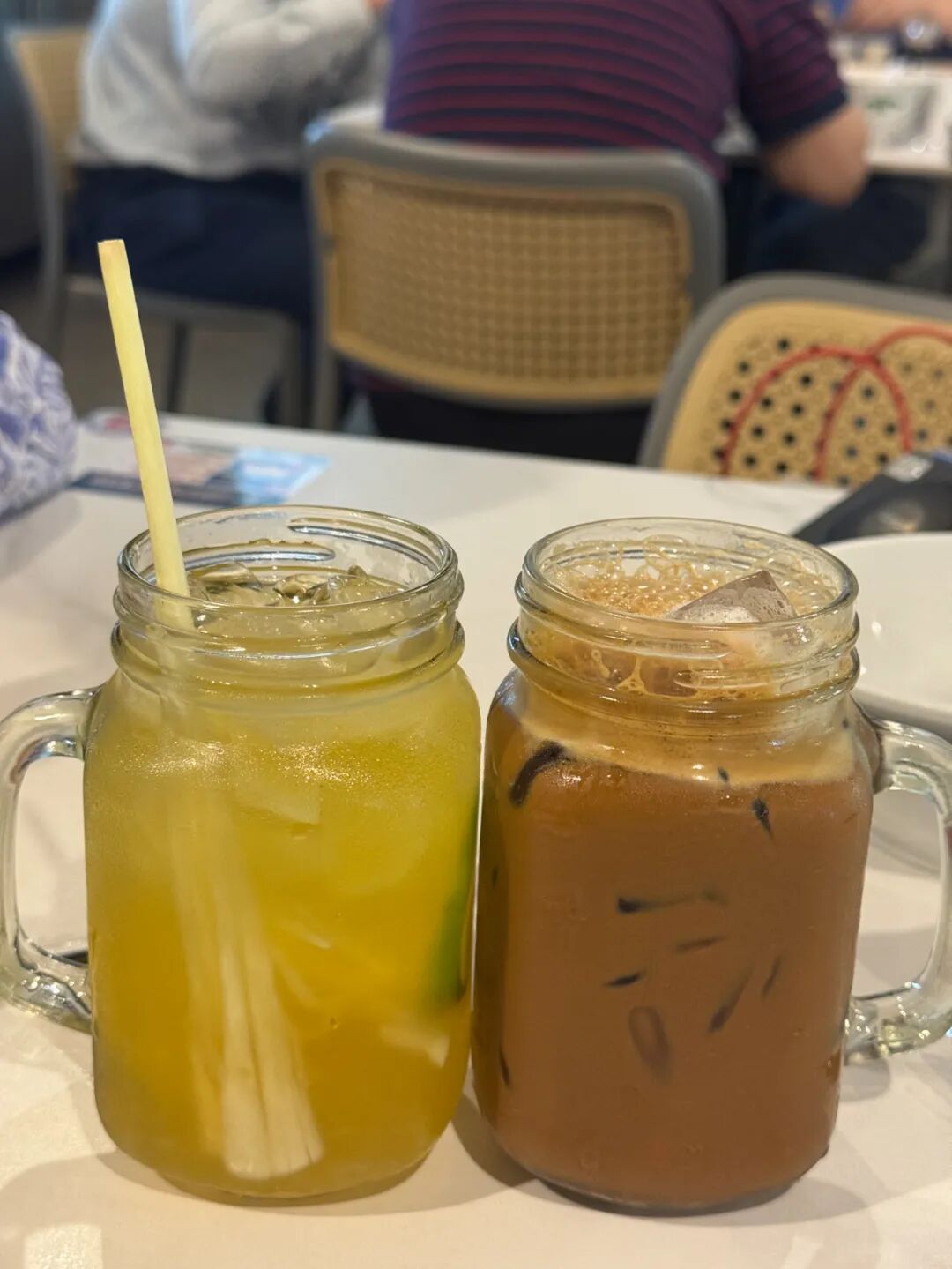
A cup of Hainan tea, Hainan tea is white coffee, and a cup of lemongrass lemonade.
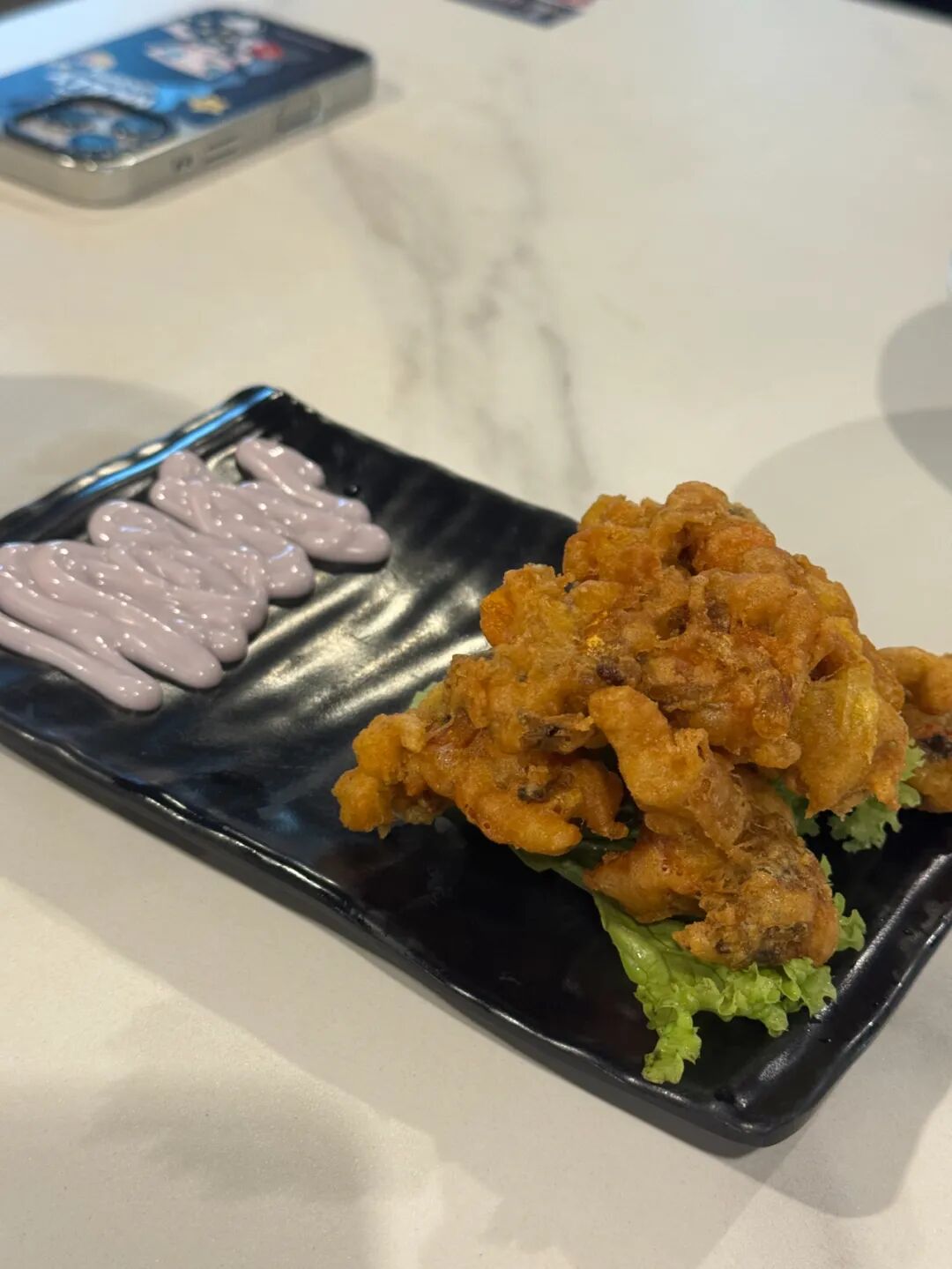
This is called soft fried crab, and you can eat it with the shell because it is really soft.
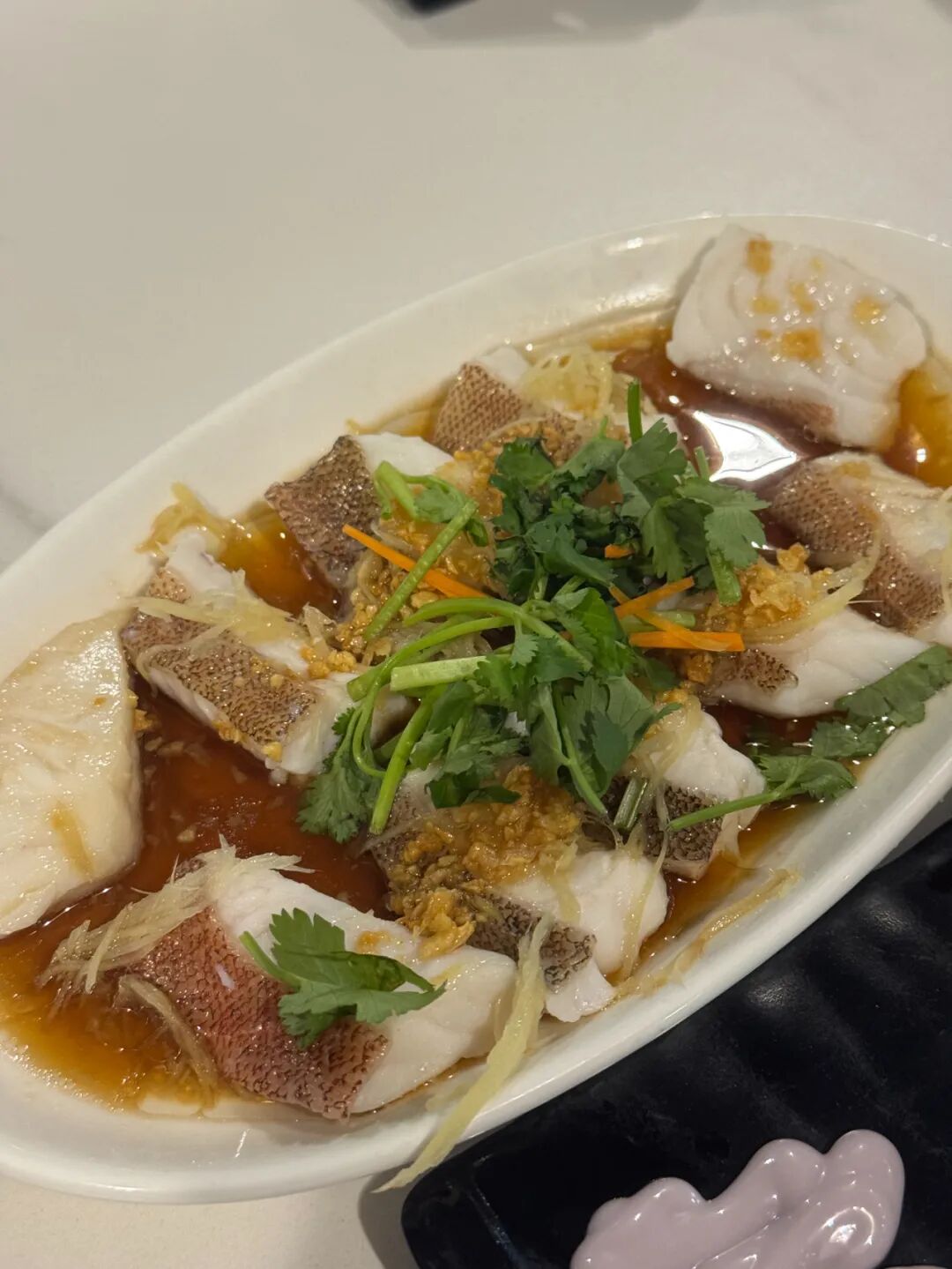
I still chose my favorite seven-star grouper. This kind of fish is delicious no matter how you prepare it, as long as the ingredients are fresh.
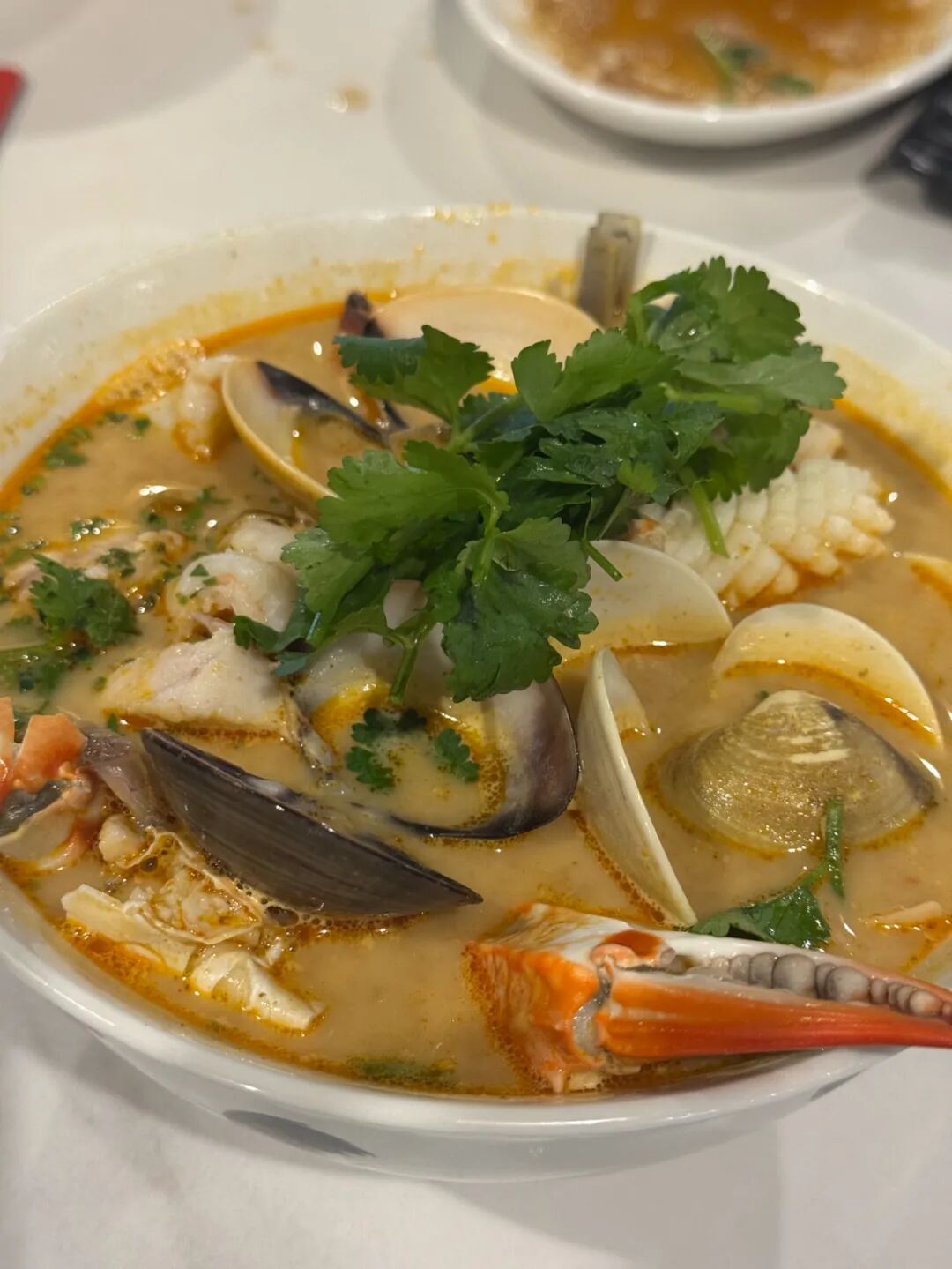
This is mixed seafood, with kway teow at the bottom. The kway teow is like vermicelli or rice noodles. The soup base is Tom Yum Goong. This bowl is very generous, with shrimps, crabs, shells, and fish in it. The meal costs 60 ringgit per person.
Address: Hai Kah Lang (Taman Cheras) Hai Kah Lang Seafood & Fish Head Noodle
Best Halal Food Kuala Lumpur: Halal Certification Tips, Iranian Rice, Burgers and Ampang Coffee
Articles • yusuf908 posted the article • 0 comments • 180 views • 2026-05-24 00:17
Summary: This Kuala Lumpur halal food map issue 8 explains how halal certification works in Malaysia, then follows the author through desserts, Vietnamese food, Lebanese food, Iranian rice, burgers, pastries, coffee, and family-friendly Muslim dining around Ampang.
In previous issues of my Kuala Lumpur Halal Food Map, I've covered how to find halal restaurants in Malaysia. This time, I'll focus on explaining it further. Very few restaurants in Malaysia have official halal certification. Usually, only large chains or big establishments display the certification mark. Most small street-side eateries don't have it. This is because Malaysia doesn't allow private businesses to self-certify as halal. To get certified, you have to pay a fee. The official price is only a few hundred Malaysian ringgit. But if you go through an agent, it can cost tens of thousands. You can guess why there's such a big difference.
So, to save money, many restaurant owners hint that their place is halal in other ways. They might hire waitstaff who wear headscarves or write 'no pork' on the menu. Malaysians know this is common practice and don't only eat at places with official halal certification. Of course, some Malaysians do only eat at certified places. I don't get too hung up on this issue myself. I also don't think it's necessary to question the halal status of food too deeply. For more on this, see the article 'Egypt's Grand Mufti: Don't Be Overly Inquisitive About Whether Meat is Halal.' I've also discussed food issues in my video series.
Here's the list of restaurants featured in this issue:
1. Sugirl Desserts (Malaysian desserts)
2. RUYI ONE (Vietnamese)
3. AL-Amar (Lebanese)
4. MODU (Korean)
5. NASI KANDAR UMAR (Indian)
6. WALLANCE (Fast food)
7. Hai Ji Beef Pan-Fried Buns
8. piccoli lotti (Italian ice cream)
9. Jibby chow (Cantonese dim sum)
10. UNIVERSAL BAKEHOUSE (Bakery)
1. Sugirl Desserts
Mid Valley Megamall is the hardest mall to find parking at in Kuala Lumpur. I came here on a quiet Thursday afternoon and spent over an hour circling before finding a spot. I highly recommend taking public transport if you visit. This small Nanyang-style dessert shop is located at the top of the stairs on the third floor of the mall. It's not too crowded here, making it a nice spot to relax.
This dessert reminds me of the dessert chain Honeymoon Dessert back home. Its flavor is light and sweet, but this shop's desserts have more of a Southeast Asian flair.
Address: Lot T-045A, 3rd Floor, The Boulevard Office Mid Valley City, Mid Valley City, 59200 Kuala Lumpur, Wilayah Persekutuan Kuala Lumpur
2. RUYI ONE
A new shopping district has opened in Ampang’s education hub. We’ve been here many times; the Spanish restaurant we ate at last time is in this area. It’s not too crowded yet, and there are many boutique shops to explore. This place is one of them, serving Vietnamese food.
We came to this small shop because we wanted to drink Vietnamese coffee and have a casual meal.
This restaurant serves no pork and no alcohol. The coffee is delicious.
I visited Vietnam once and had a wonderful time. There are no halal Vietnamese restaurants in Beijing yet, so finding one in Kuala Lumpur is a must-try.
Vietnamese cuisine has a few signature dishes. The first is the Vietnamese sandwich, along with spring rolls and pho.
The spring rolls and pho here are quite authentic. After all, Malaysia and Vietnam are neighbors, so the flavors aren't too different.
Address: Unit G-15, Ground Floor, The Campus Ampang, Lot 7706, Jalan Kolam Air Lama, Mukim, Hulu Kelang, 68000 Ampang, Selangor
3. AL-Amar
This is a Lebanese restaurant on the sixth floor of Pavilion mall, decorated exquisitely. Pavilion is a popular shopping area swarming with tourists and is very lively.
When taking children out to eat in Kuala Lumpur, I prefer Arabic restaurants. The Mandi rice or grilled chicken here are suitable for kids because they aren't spicy.
Lebanese salads are also good for children. Fahim, for example, loves the cucumbers and tomatoes in the salad.
This is a small portion of Mandi chicken rice. The chicken is especially tender, and it comes with cashews and raisins. The children really like it.
Address: Lot 6.10, level 6, Pavilion Kuala Lumpur, 168, Jln Bukit Bintang, Bukit Bintang, 55100 Kuala Lumpur, Wilayah Persekutuan Kuala Lumpur, Malaysia
4. MODU
MODU is a new Korean restaurant in the TRX mall that's really popular right now. You'll probably wait about an hour for lunch, but you can grab a number at the counter and explore the mall. Your phone will get a notification when your table is ready, and the staff will also call you.
This halal sign means they're applying for certification, but it hasn't been approved yet.
Looking at the menu, it's hard to tell exactly what each dish is.
Most of the diners here are young Asian women. There are definitely a lot of Koreans here.
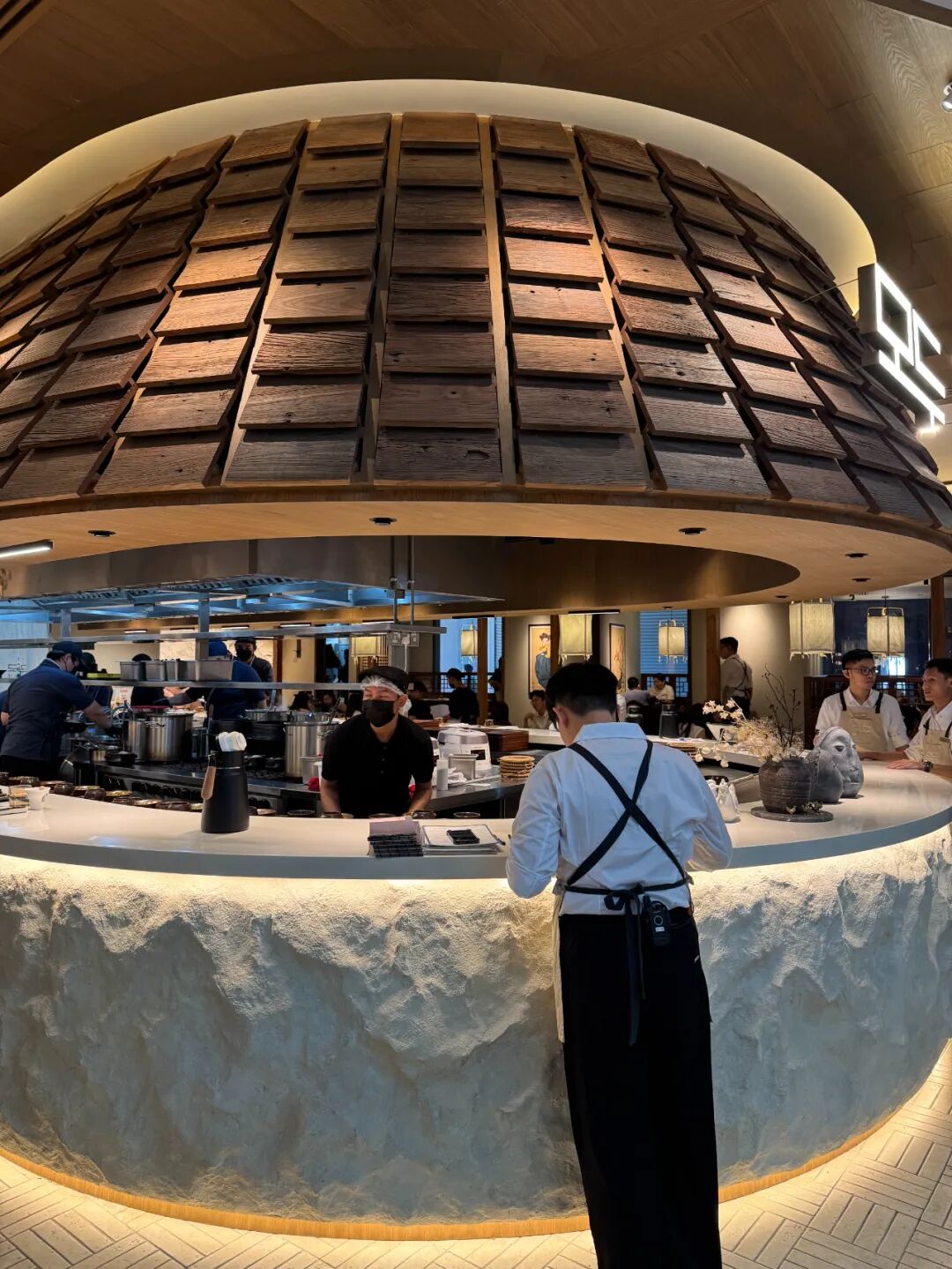
The restaurant has a lot of space, the decor is really nice, and the staff are very friendly.
We chose a clay pot chicken soup and a black chicken soup. They come with a bowl of sticky rice and side dishes. This chicken has sticky rice stuffed inside, and the soup is really fresh and very mild.
It has ginseng in it, which is great for women's health. A set meal costs about 70 Malaysian ringgit.
The chicken is small, perfect for one person. The meat just falls off the bone – it melts in your mouth.
Address: Lot L2T.04.0, Level 2, The Exchange TRX, Persiaran TRX, Imbi, 55188 Kuala Lumpur, Wilayah Persekutuan Kuala Lumpur, Malaysia
5. NASI KANDAR UMAR
Nasi Kandar, or 'pole rice,' is a common fast food in Malaysia. It's a specialty of Indian Muslims, about as popular as Lanzhou beef noodles are back home. Most of these stalls are halal.
You just tell the server what you want on your plate, then pay at the cashier. A plate of rice usually costs around ten ringgit, and with a milk tea, it's usually under twenty.
The only downside is that this rice is usually a bit spicy, so it's not great for kids. But I go for it when I can't decide what else to eat.
Address: 37 3G, Jln Sultan Ismail, Bukit Bintang, 50250 Kuala Lumpur, Wilayah Persekutuan Kuala Lumpur, Malaysia
6. WALLACE
Wallace is a fast-food joint selling burgers and fried chicken. This new spot is celebrating its opening with a deal: three burgers for just 9.9 ringgit.
These burger joints are a hit with everyone in Kuala Lumpur, young and old. Almost all of them are halal, including McDonald's and KFC.
Wallace's fried chicken burgers taste pretty good. The best part is the price – three for 9.9 ringgit. You can't ask for more than that.
My son hasn't quite fallen in love with burgers and fries yet. I wonder if he'll like them later on.
Address: M5A, 11, Jalan Pandan Indah 4/1, Pandan Indah, 55100 Kuala Lumpur, Federal Territory of Kuala Lumpur, Malaysia
7. Hai Ji Beef Pan-Fried Buns
Next to Lanzhou Hand-Pulled Noodles on Petaling Street, there's a shop called Hai Ji Beef Pan-Fried Buns. These buns are a bit bigger than the ones from Henan and Shandong. They taste great. Petaling Street is a hub for Chinese food, mainly serving Chinese cuisine.
Address: 38, Jalan Sultan, City Centre, 50000 Kuala Lumpur, Wilayah Persekutuan Kuala Lumpur, Malaysia
8. PICCOLI LOTTI
This Italian ice cream shop on the first floor of Ampang Point is run by Malays. Italian ice cream is famous, mainly because they use good quality milk and don't add extra water. This shop's ice cream is just like that, with over ten flavors to choose from.
On hot days, I love visiting dessert shops like this. They usually also have various coffee drinks and seating areas. Kids love them too.
Address: Ground Floor, Ampang Point
9. JIBBY CHOW
A new Cantonese-style tea restaurant has opened at Ampang Point. This place serves dim sum all day, so we could still enjoy it even though we arrived in the afternoon.
Everyone eating here is Malay. Malays really love Cantonese morning tea.
The shop's decor features traditional Chinese cultural elements, but the servers are all Malay.
You can sit here all afternoon with a pot of Pu'er tea and a few dim sum dishes.
The soup dumplings, char siu bao, and shaomai here are all delicious and steamed fresh.
The chicken char siu bao has a dim sum-like texture and a sweet flavor. It's not quite as good as the lamb char siu bao at Guangzhou Hui Muslim restaurants, which is truly exceptional.
Address: Level 2, Ampang Learning City.
10. UNIVERSAL BAKEHOUSE
This popular bakery in Ampang Learning City has many branches and is usually packed. However, the branch we visited in Ampang wasn't too crowded.
These kinds of fancy bakeries are very popular in Malaysia, especially with young women who love to take photos here.
I like to eat bread with coffee for breakfast, along with a light salad. It leaves me feeling refreshed.
Actually, this shop has very few types of bread. I don't understand why it's so popular.
When you dine in, they give you butter. I like to eat bread with butter, just like I do for breakfast at the hotel.
Their coffee is also quite good. There are several other specialty coffee shops in Ampang Learning City that I'll check out later.
Address: Level 1, Ampang Learning City. view all
Summary: This Kuala Lumpur halal food map issue 8 explains how halal certification works in Malaysia, then follows the author through desserts, Vietnamese food, Lebanese food, Iranian rice, burgers, pastries, coffee, and family-friendly Muslim dining around Ampang.
In previous issues of my Kuala Lumpur Halal Food Map, I've covered how to find halal restaurants in Malaysia. This time, I'll focus on explaining it further. Very few restaurants in Malaysia have official halal certification. Usually, only large chains or big establishments display the certification mark. Most small street-side eateries don't have it. This is because Malaysia doesn't allow private businesses to self-certify as halal. To get certified, you have to pay a fee. The official price is only a few hundred Malaysian ringgit. But if you go through an agent, it can cost tens of thousands. You can guess why there's such a big difference.
So, to save money, many restaurant owners hint that their place is halal in other ways. They might hire waitstaff who wear headscarves or write 'no pork' on the menu. Malaysians know this is common practice and don't only eat at places with official halal certification. Of course, some Malaysians do only eat at certified places. I don't get too hung up on this issue myself. I also don't think it's necessary to question the halal status of food too deeply. For more on this, see the article 'Egypt's Grand Mufti: Don't Be Overly Inquisitive About Whether Meat is Halal.' I've also discussed food issues in my video series.
Here's the list of restaurants featured in this issue:
1. Sugirl Desserts (Malaysian desserts)
2. RUYI ONE (Vietnamese)
3. AL-Amar (Lebanese)
4. MODU (Korean)
5. NASI KANDAR UMAR (Indian)
6. WALLANCE (Fast food)
7. Hai Ji Beef Pan-Fried Buns
8. piccoli lotti (Italian ice cream)
9. Jibby chow (Cantonese dim sum)
10. UNIVERSAL BAKEHOUSE (Bakery)
1. Sugirl Desserts
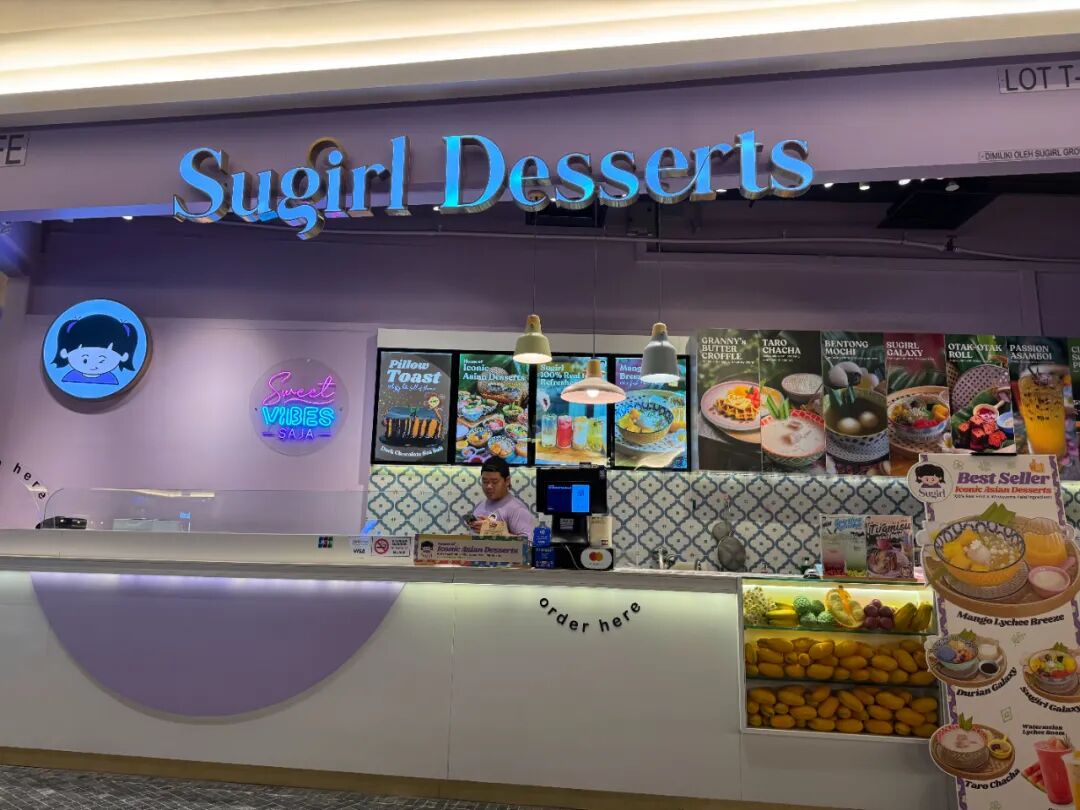
Mid Valley Megamall is the hardest mall to find parking at in Kuala Lumpur. I came here on a quiet Thursday afternoon and spent over an hour circling before finding a spot. I highly recommend taking public transport if you visit. This small Nanyang-style dessert shop is located at the top of the stairs on the third floor of the mall. It's not too crowded here, making it a nice spot to relax.
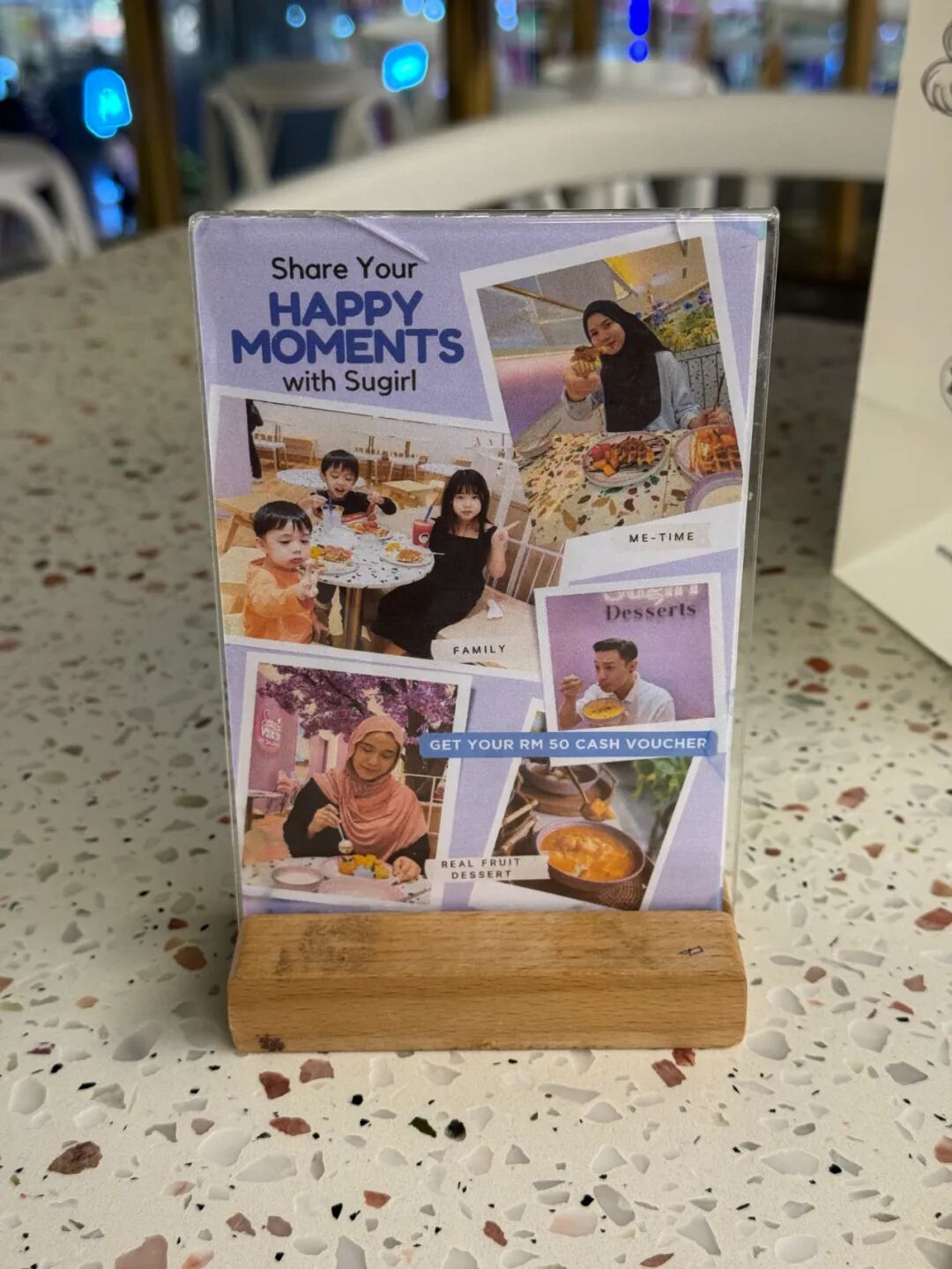
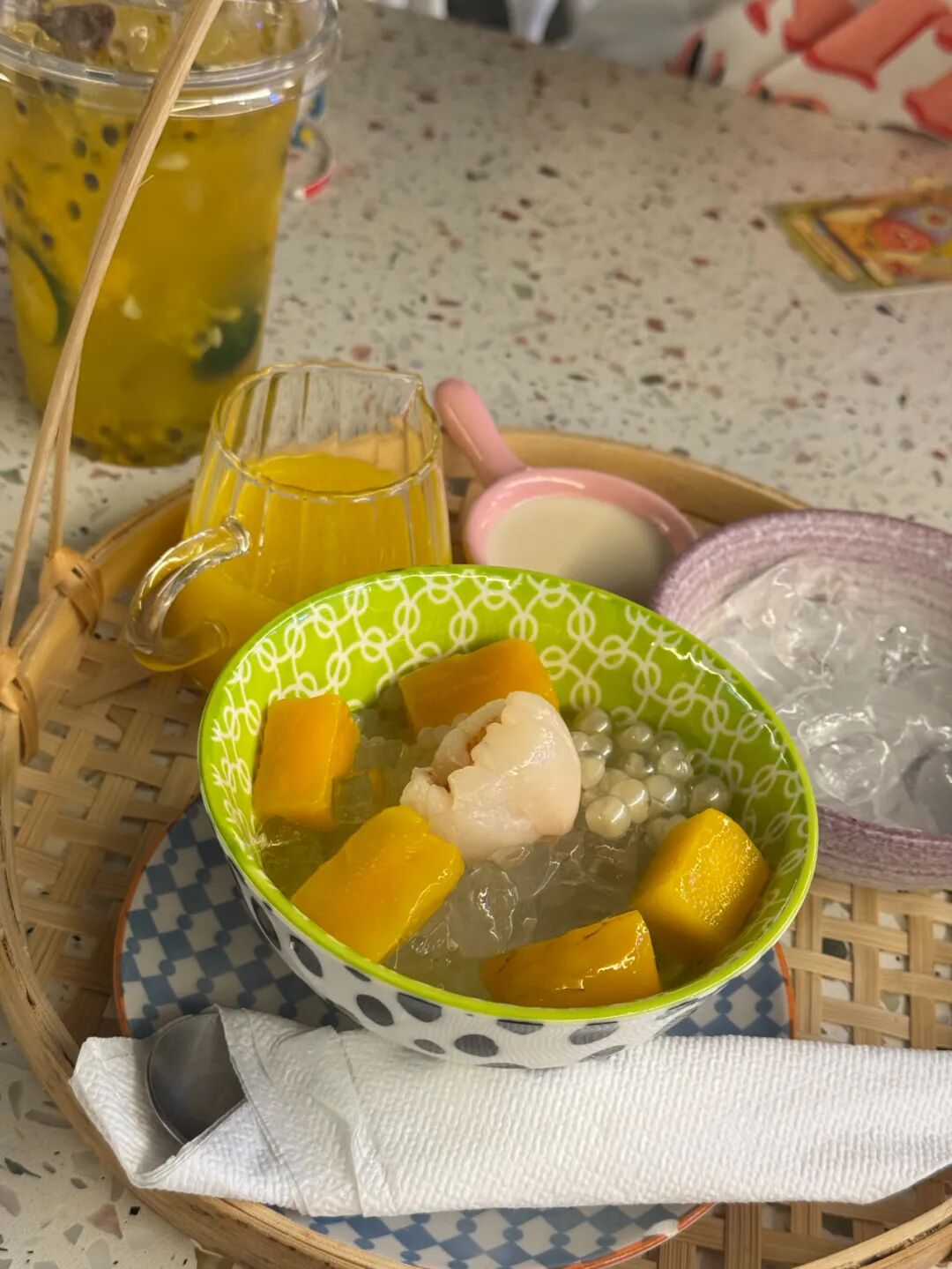
This dessert reminds me of the dessert chain Honeymoon Dessert back home. Its flavor is light and sweet, but this shop's desserts have more of a Southeast Asian flair.
Address: Lot T-045A, 3rd Floor, The Boulevard Office Mid Valley City, Mid Valley City, 59200 Kuala Lumpur, Wilayah Persekutuan Kuala Lumpur
2. RUYI ONE
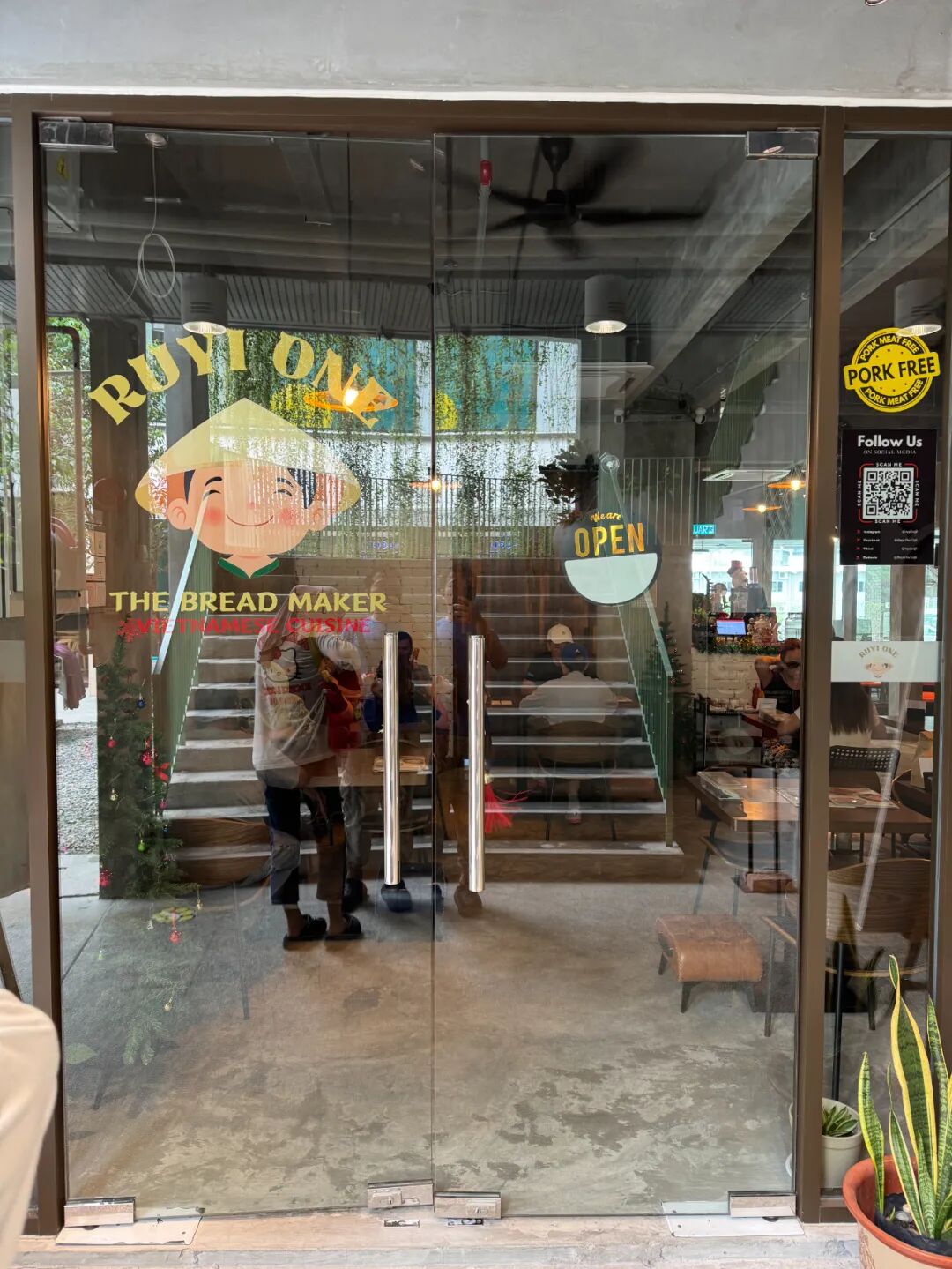
A new shopping district has opened in Ampang’s education hub. We’ve been here many times; the Spanish restaurant we ate at last time is in this area. It’s not too crowded yet, and there are many boutique shops to explore. This place is one of them, serving Vietnamese food.
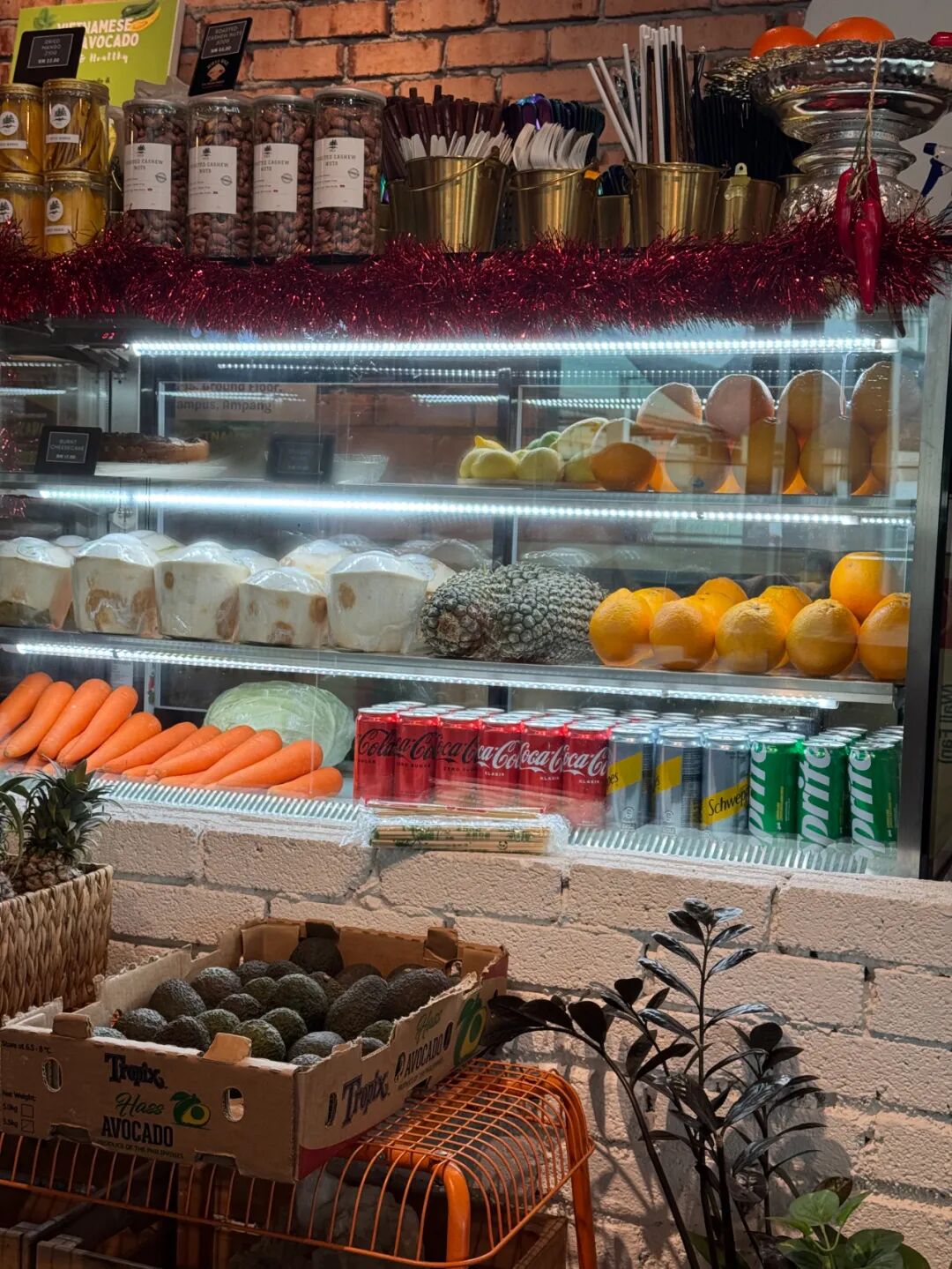
We came to this small shop because we wanted to drink Vietnamese coffee and have a casual meal.
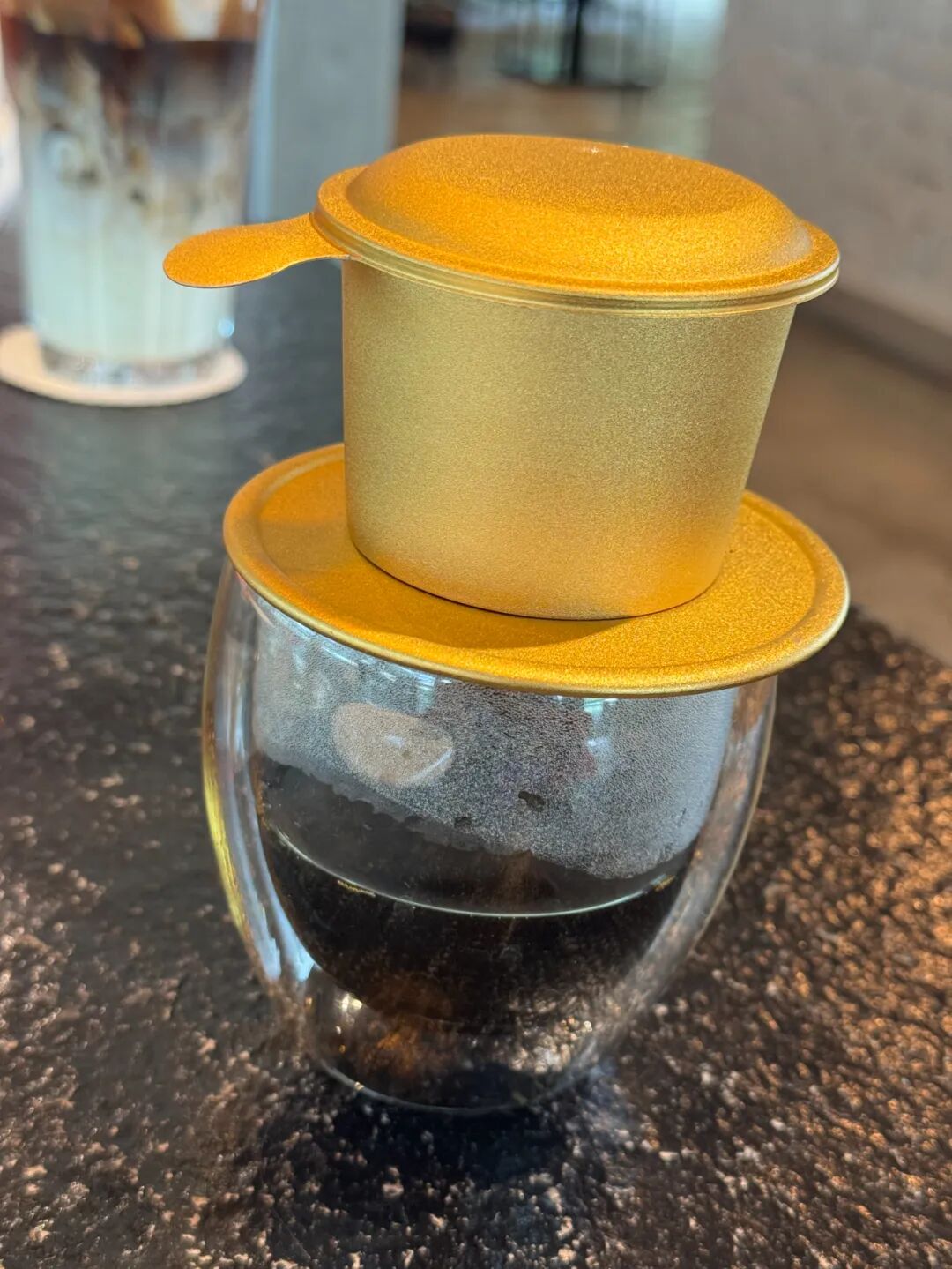
This restaurant serves no pork and no alcohol. The coffee is delicious.
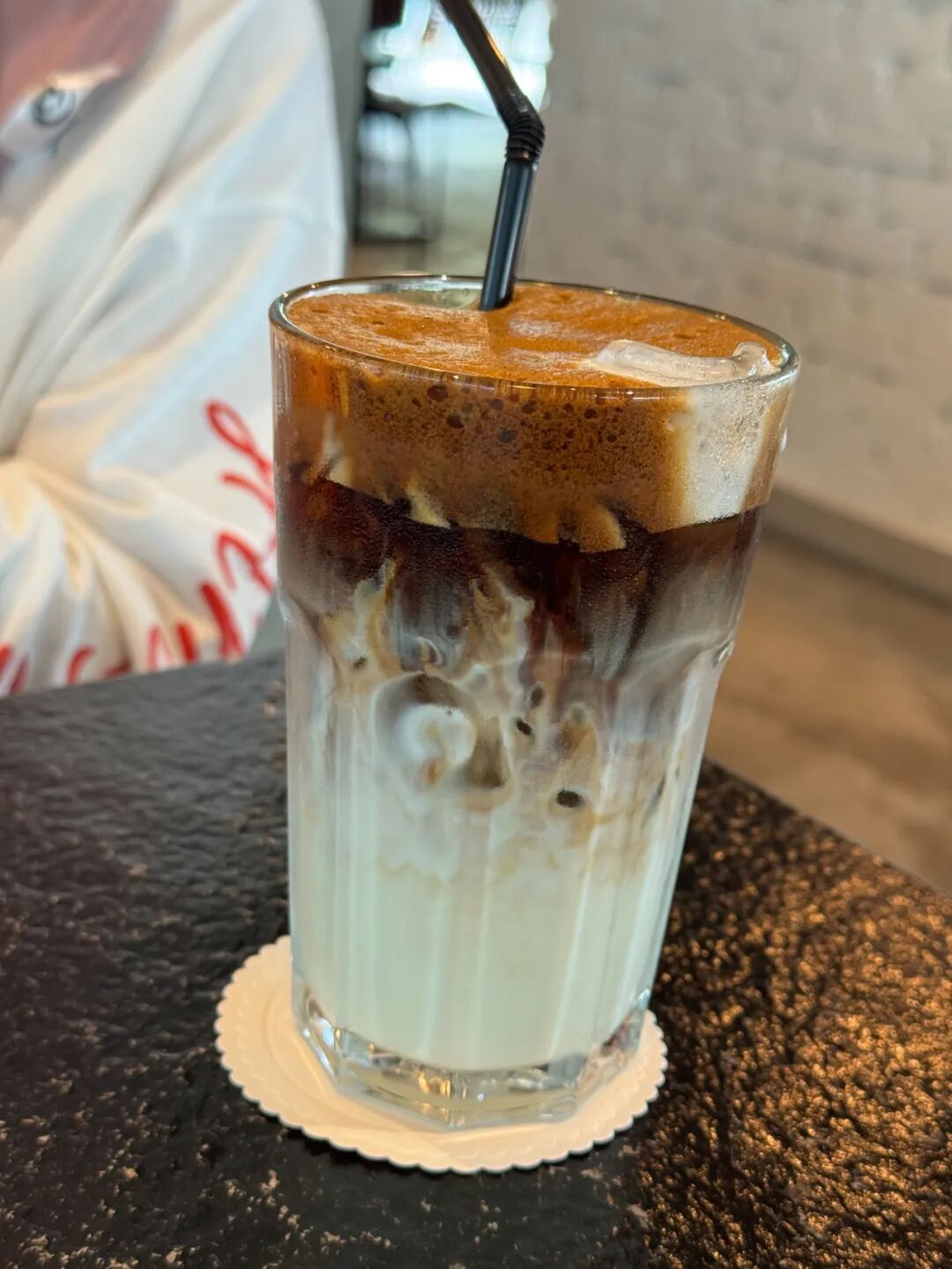
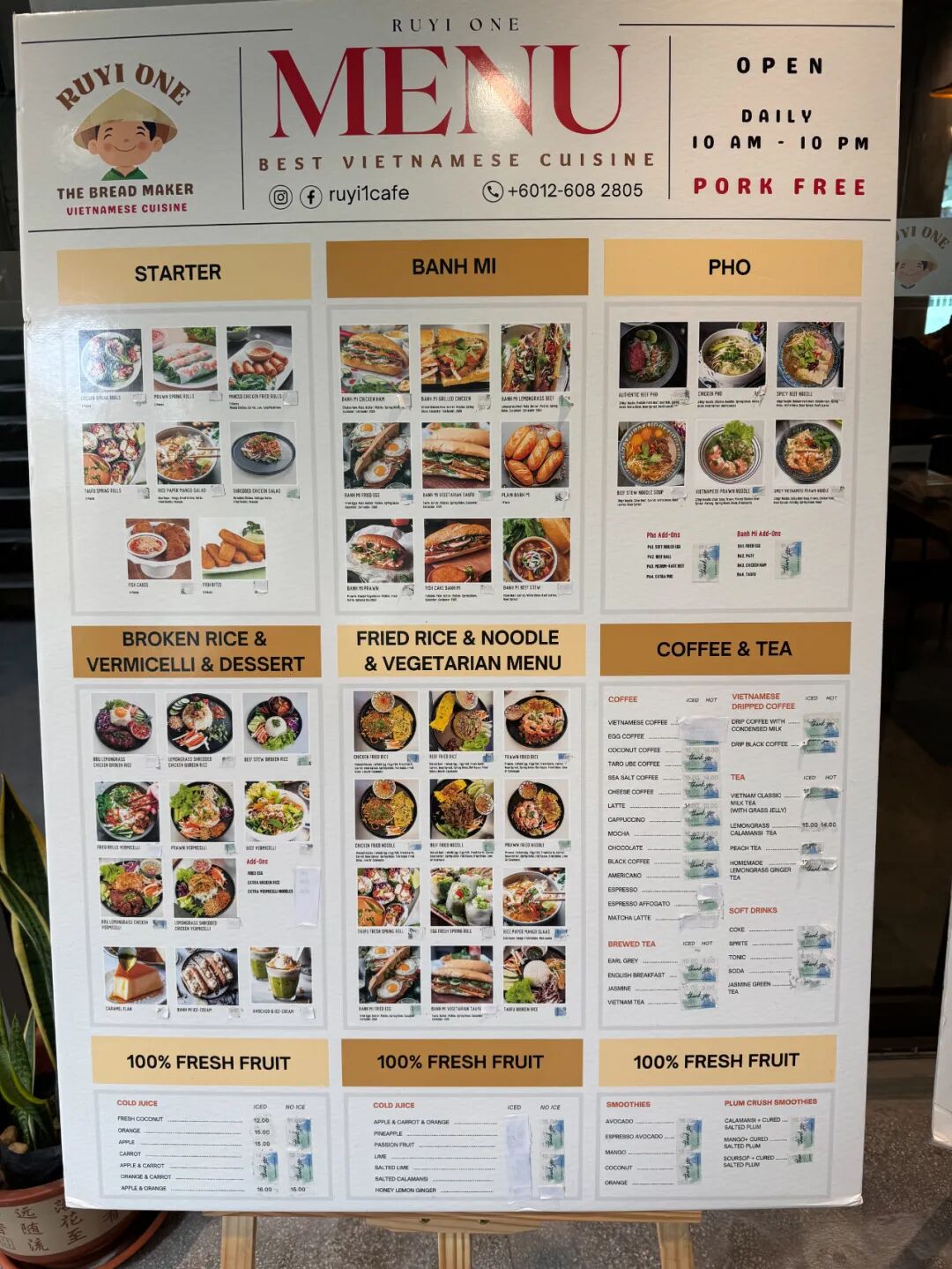
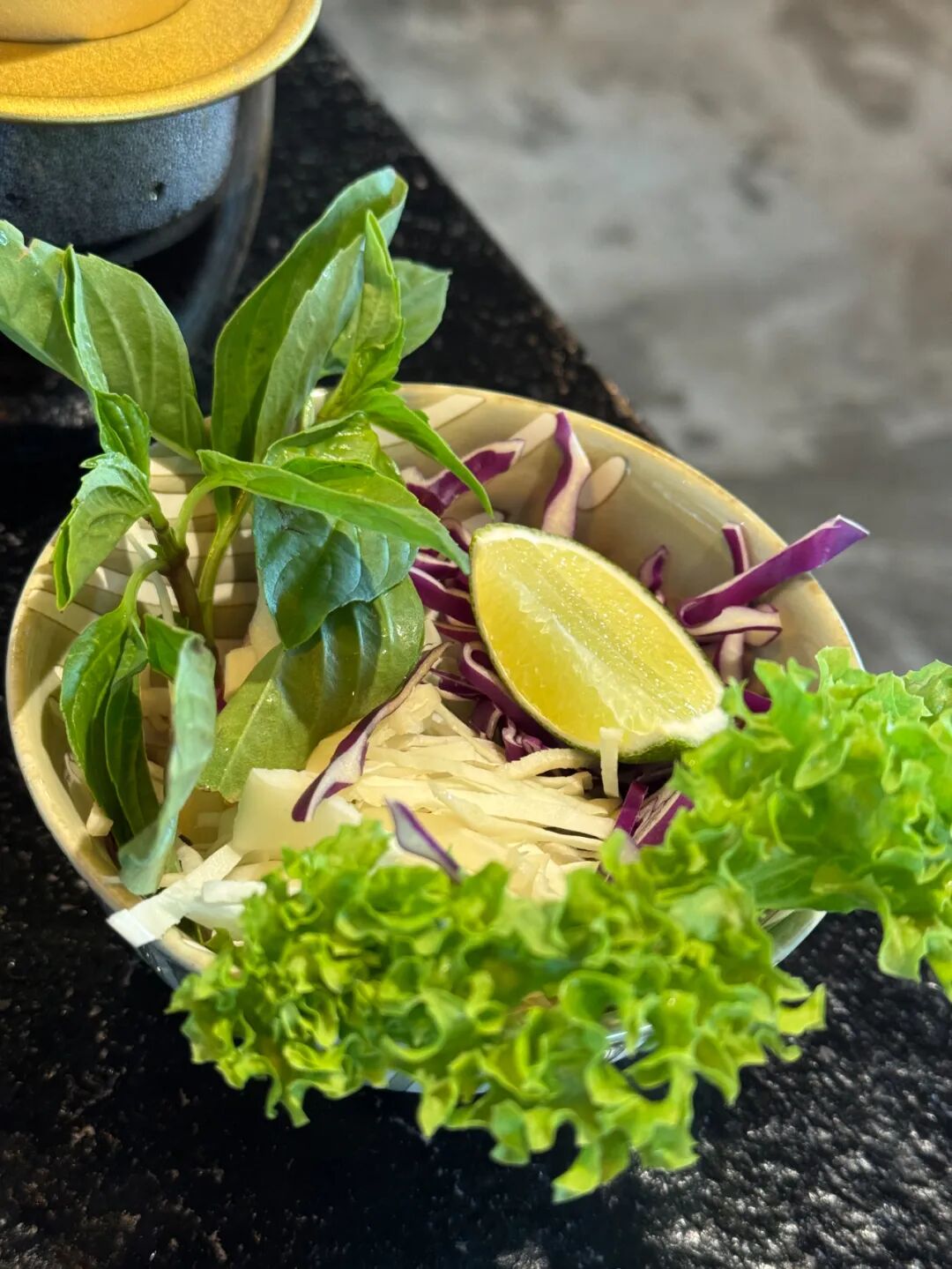
I visited Vietnam once and had a wonderful time. There are no halal Vietnamese restaurants in Beijing yet, so finding one in Kuala Lumpur is a must-try.
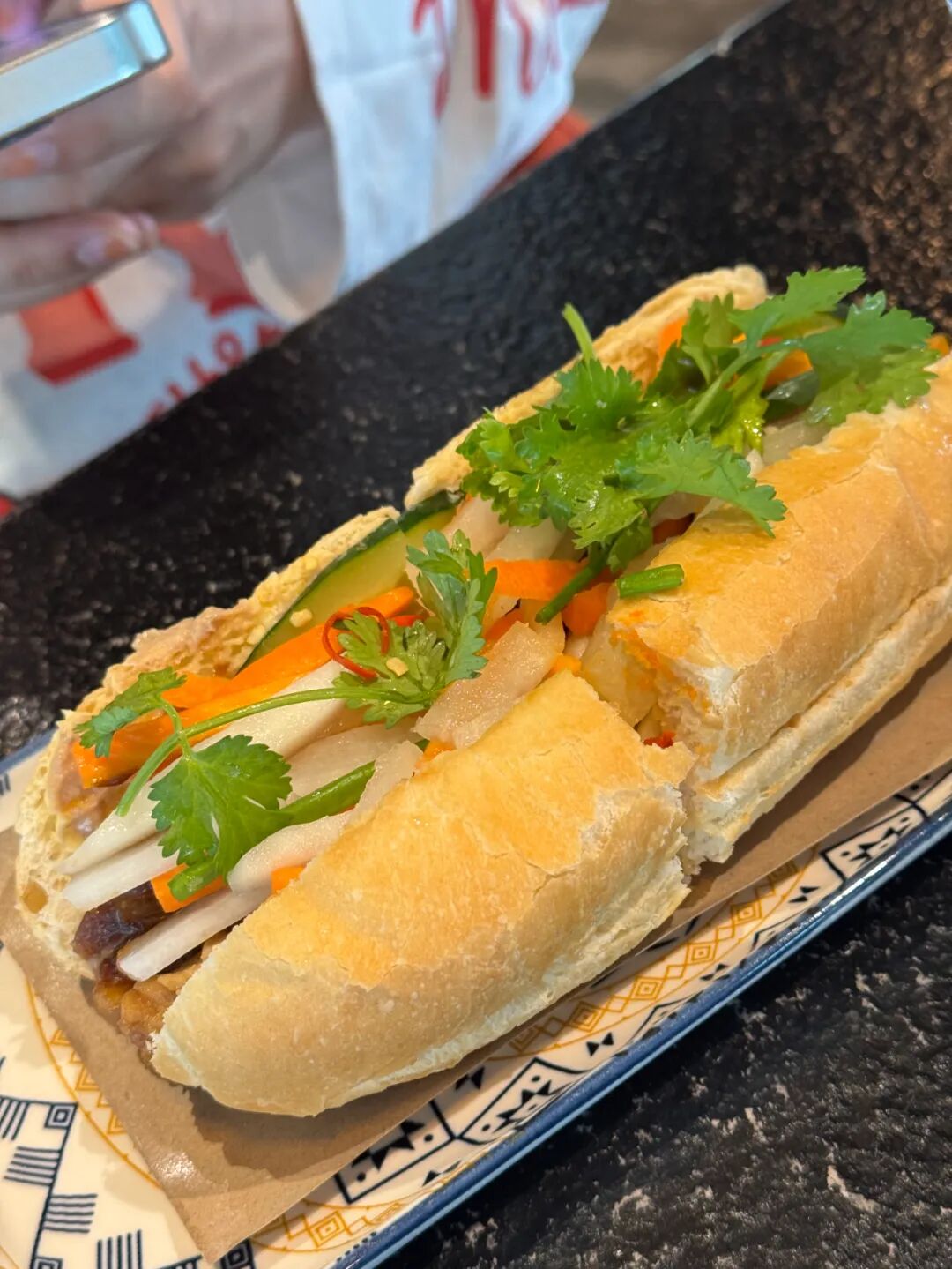
Vietnamese cuisine has a few signature dishes. The first is the Vietnamese sandwich, along with spring rolls and pho.
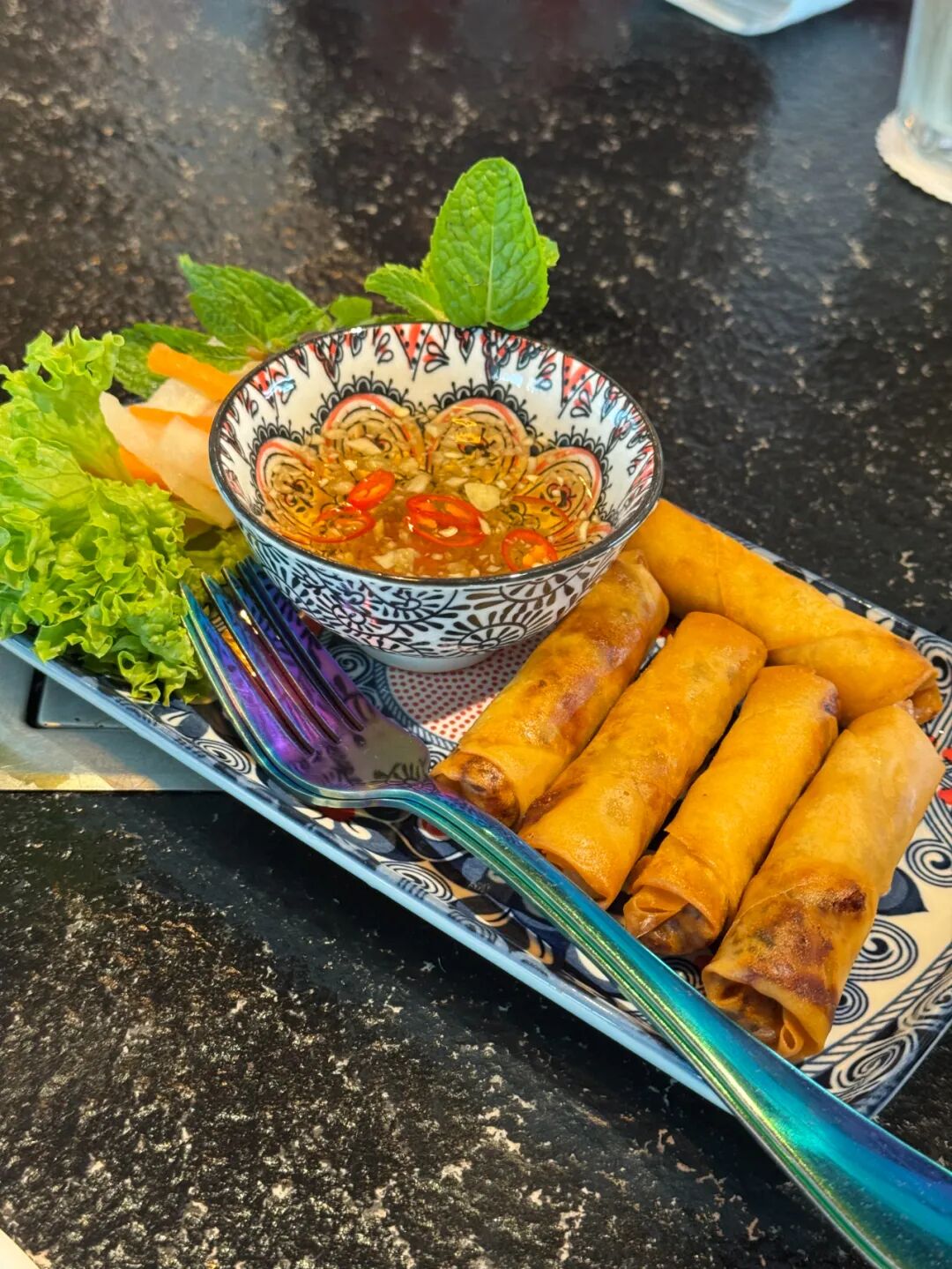
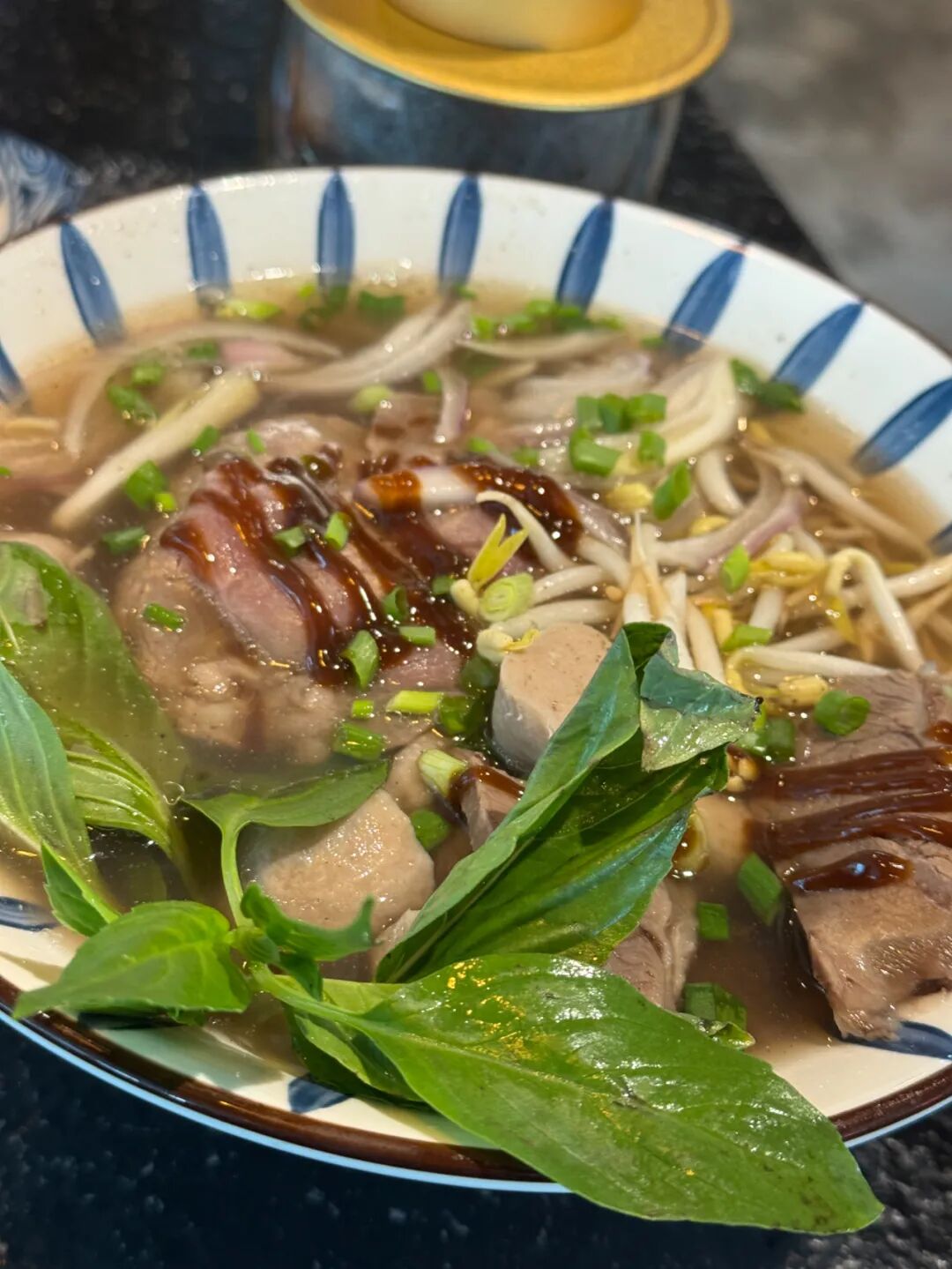
The spring rolls and pho here are quite authentic. After all, Malaysia and Vietnam are neighbors, so the flavors aren't too different.
Address: Unit G-15, Ground Floor, The Campus Ampang, Lot 7706, Jalan Kolam Air Lama, Mukim, Hulu Kelang, 68000 Ampang, Selangor
3. AL-Amar
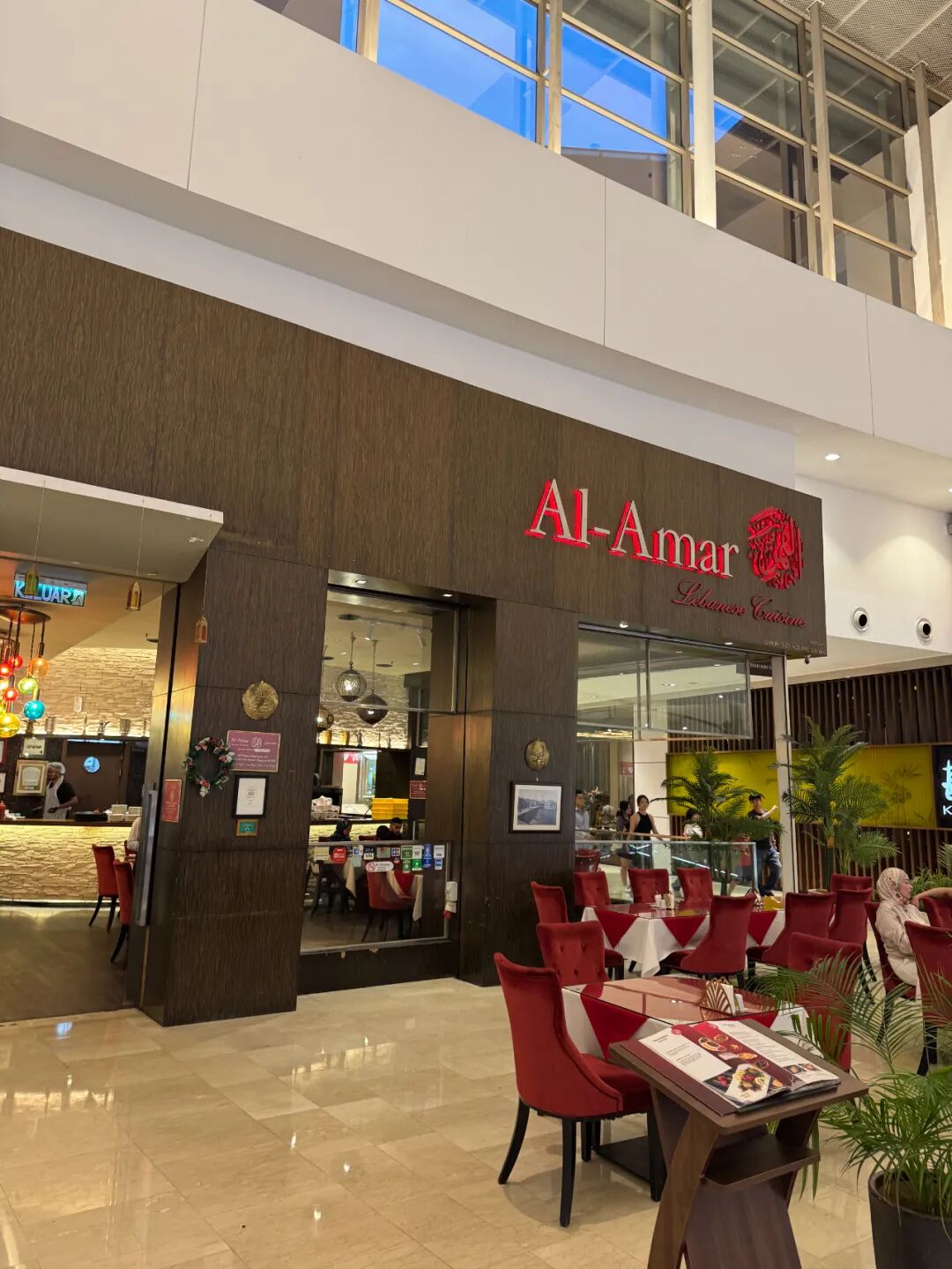
This is a Lebanese restaurant on the sixth floor of Pavilion mall, decorated exquisitely. Pavilion is a popular shopping area swarming with tourists and is very lively.
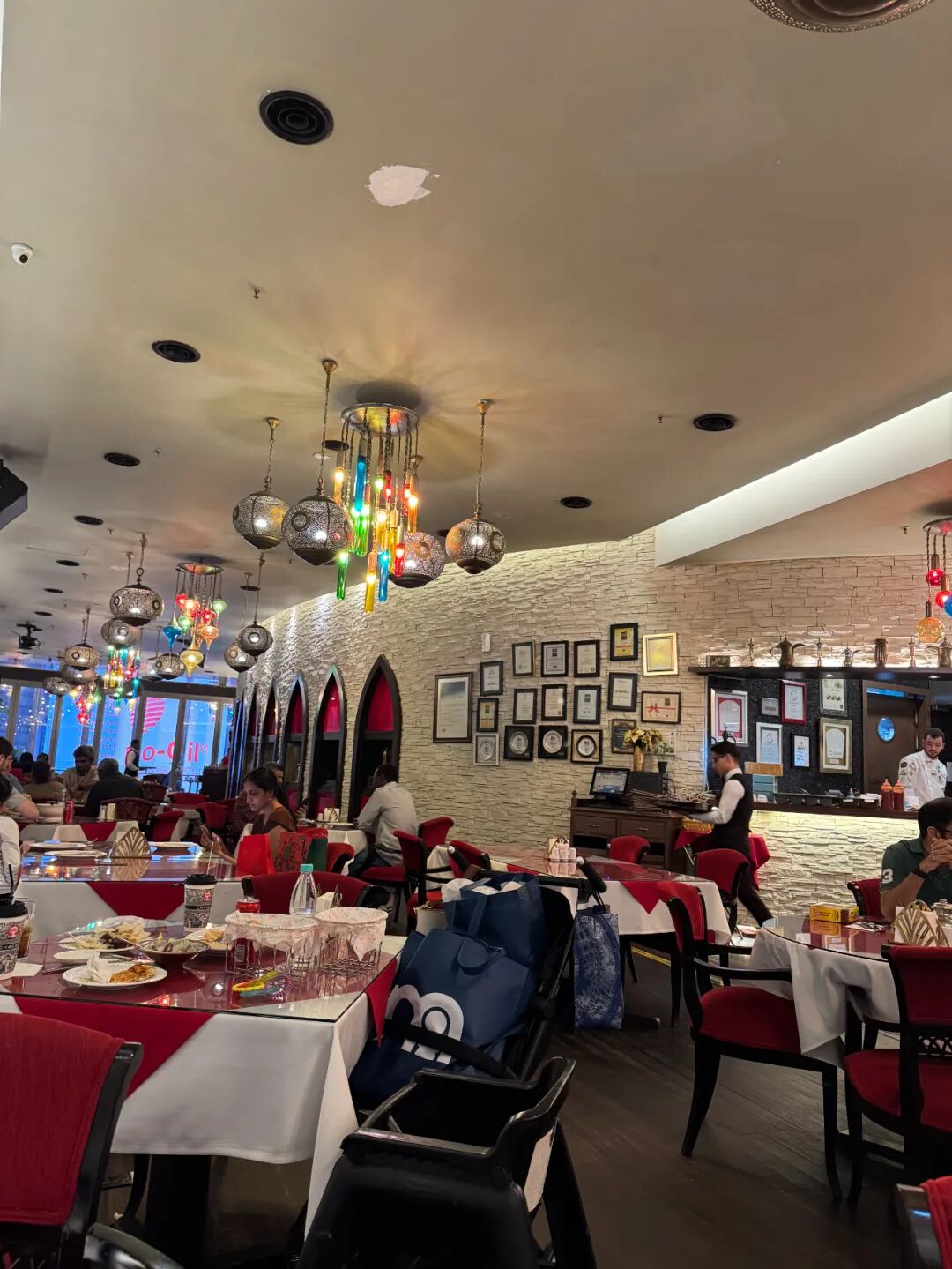
When taking children out to eat in Kuala Lumpur, I prefer Arabic restaurants. The Mandi rice or grilled chicken here are suitable for kids because they aren't spicy.
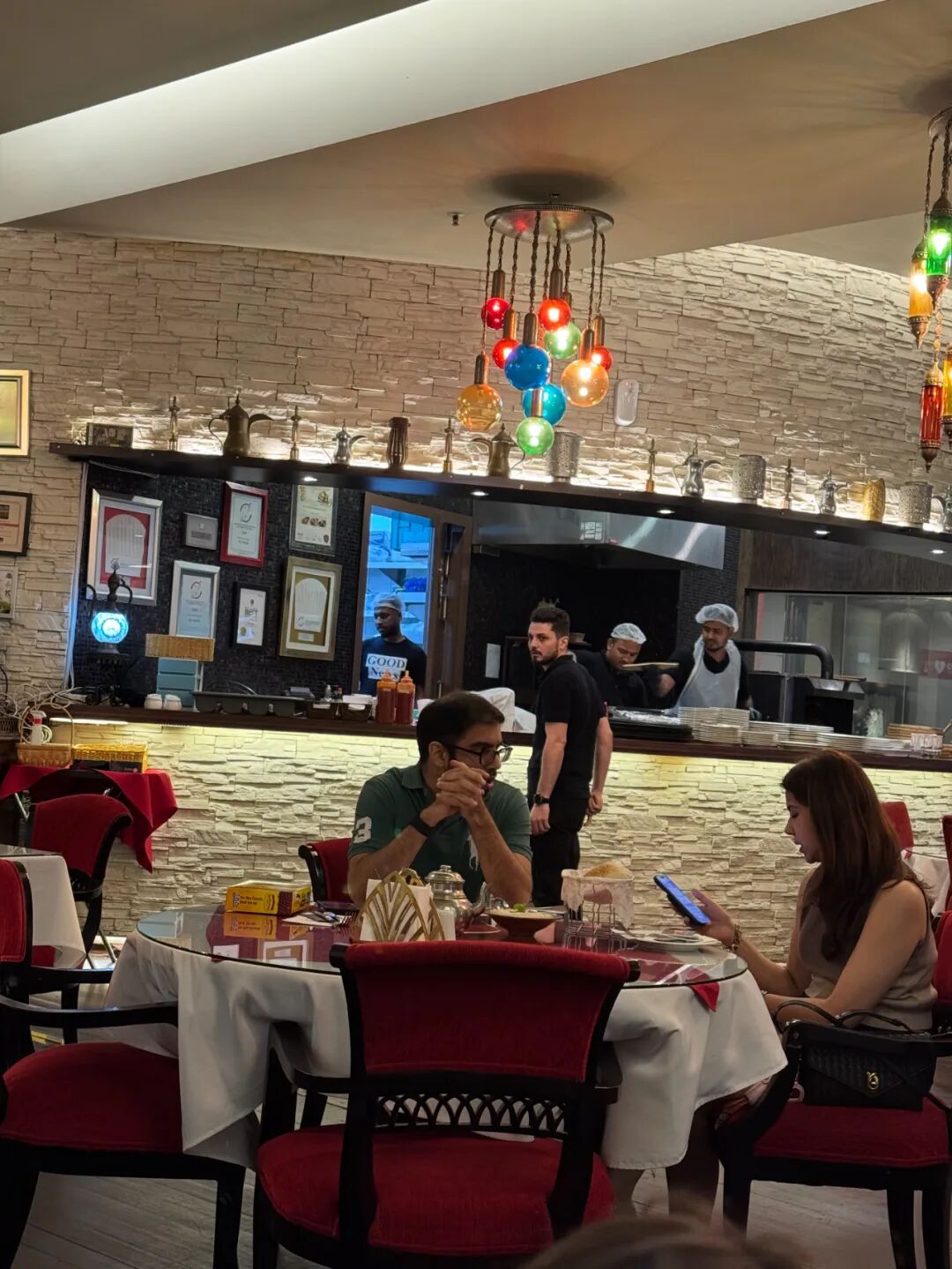
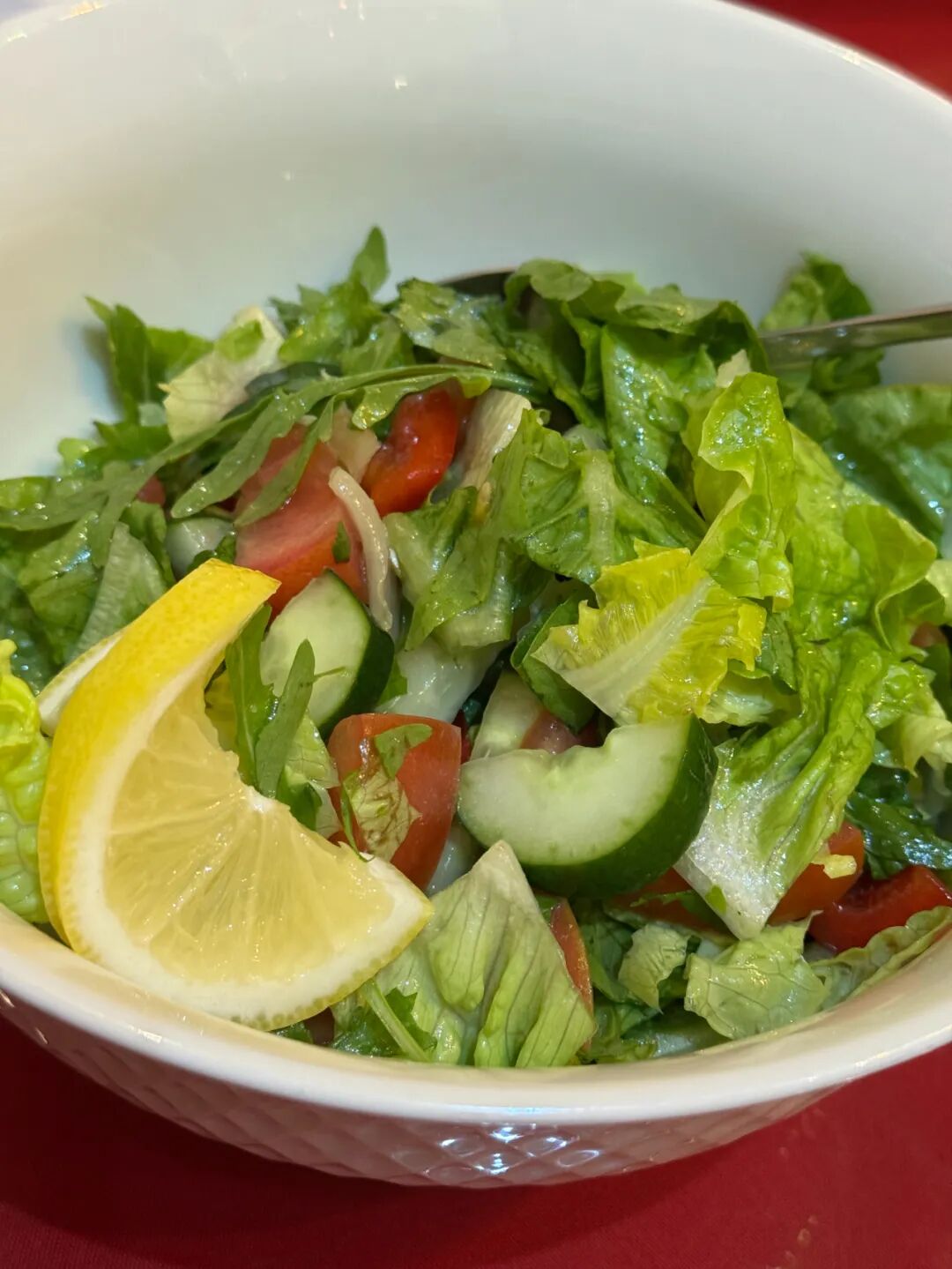
Lebanese salads are also good for children. Fahim, for example, loves the cucumbers and tomatoes in the salad.
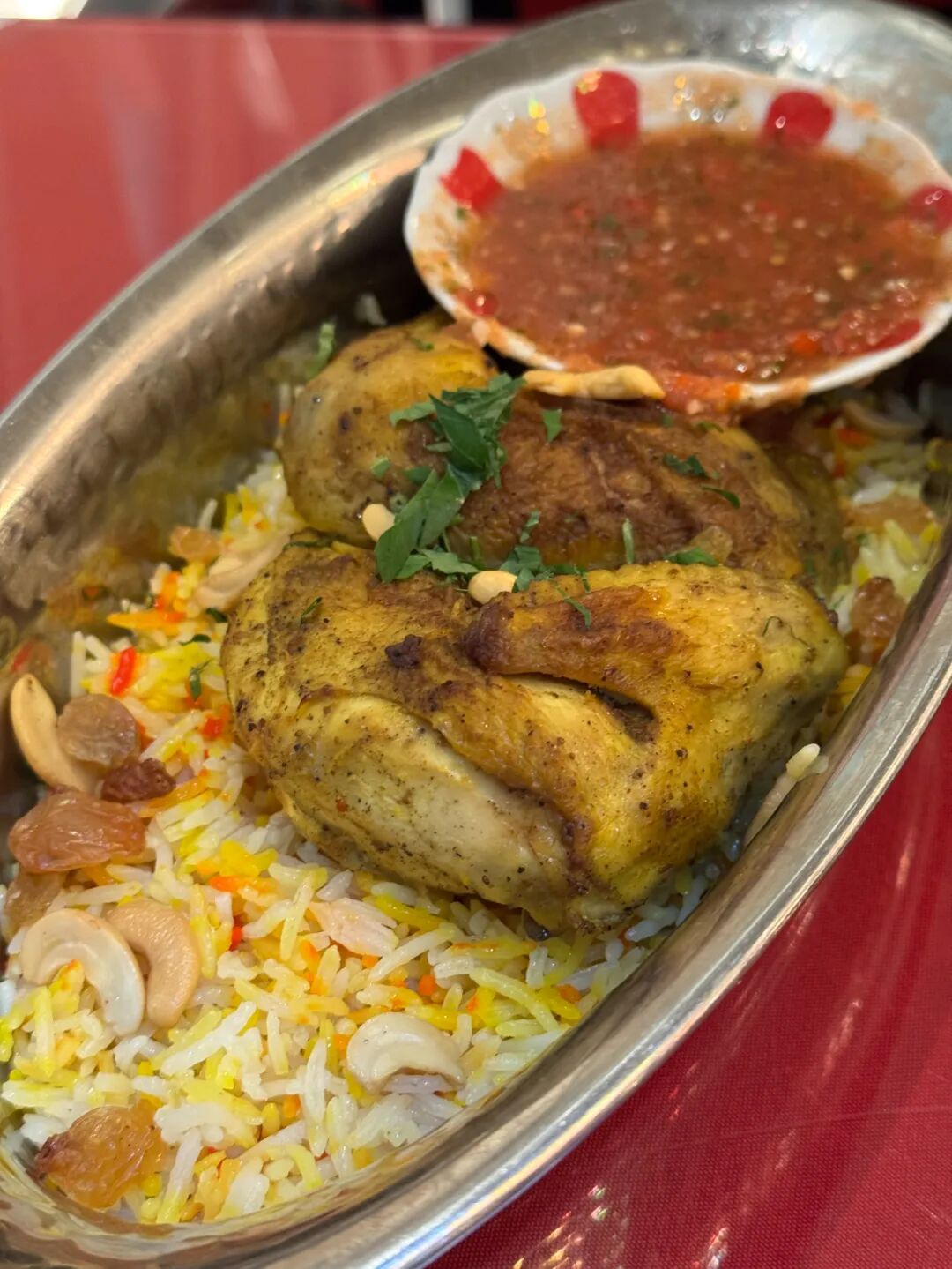
This is a small portion of Mandi chicken rice. The chicken is especially tender, and it comes with cashews and raisins. The children really like it.
Address: Lot 6.10, level 6, Pavilion Kuala Lumpur, 168, Jln Bukit Bintang, Bukit Bintang, 55100 Kuala Lumpur, Wilayah Persekutuan Kuala Lumpur, Malaysia
4. MODU
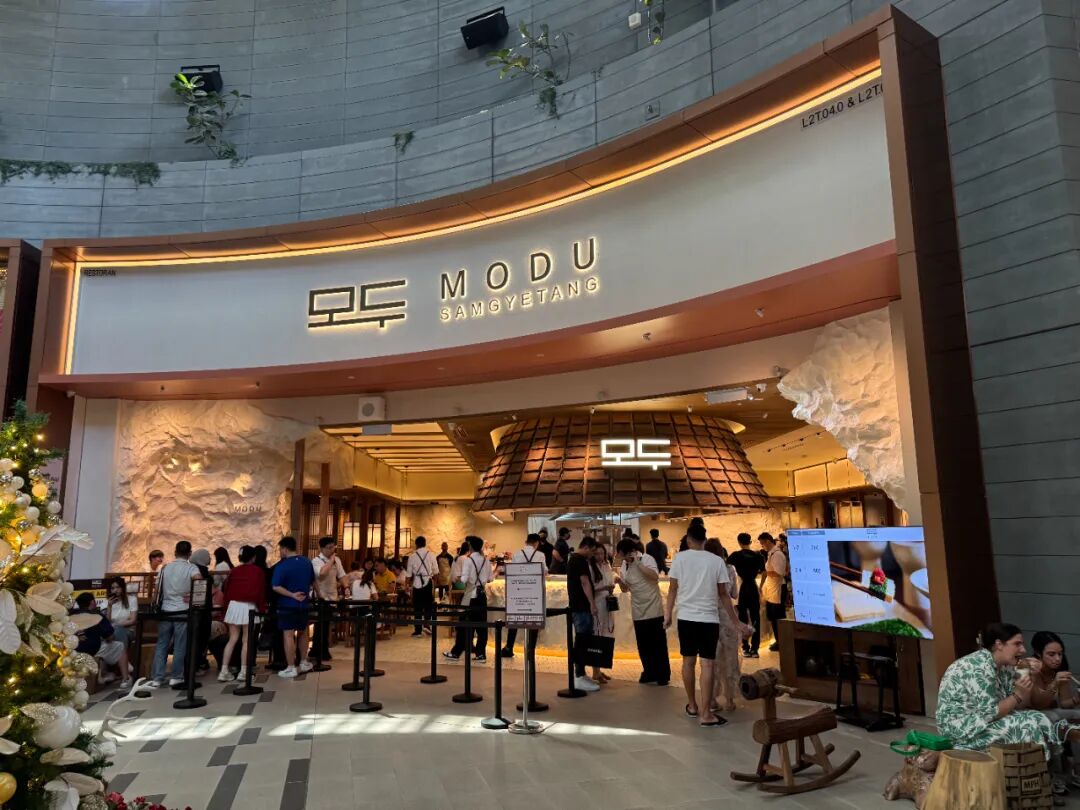
MODU is a new Korean restaurant in the TRX mall that's really popular right now. You'll probably wait about an hour for lunch, but you can grab a number at the counter and explore the mall. Your phone will get a notification when your table is ready, and the staff will also call you.
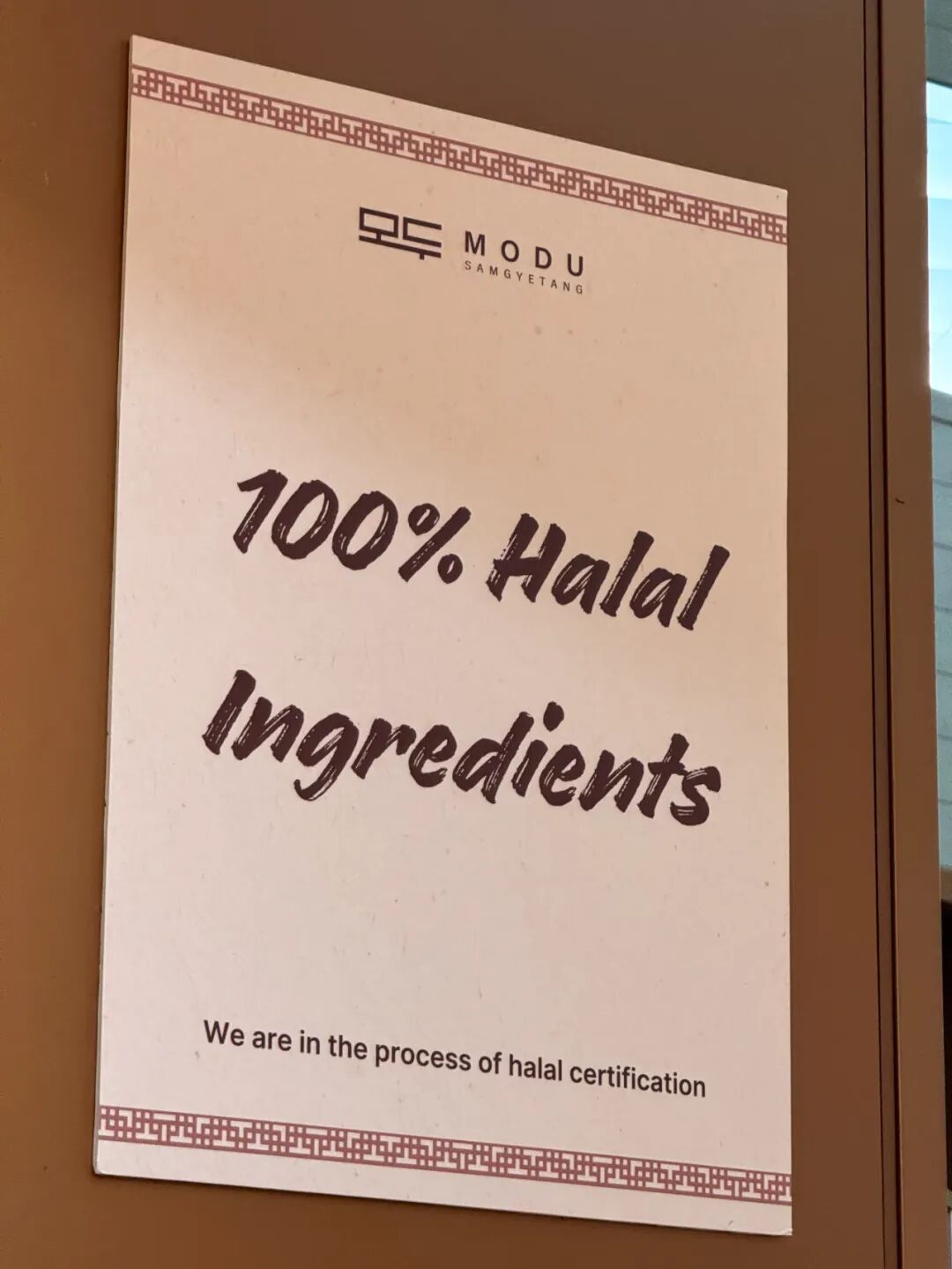
This halal sign means they're applying for certification, but it hasn't been approved yet.
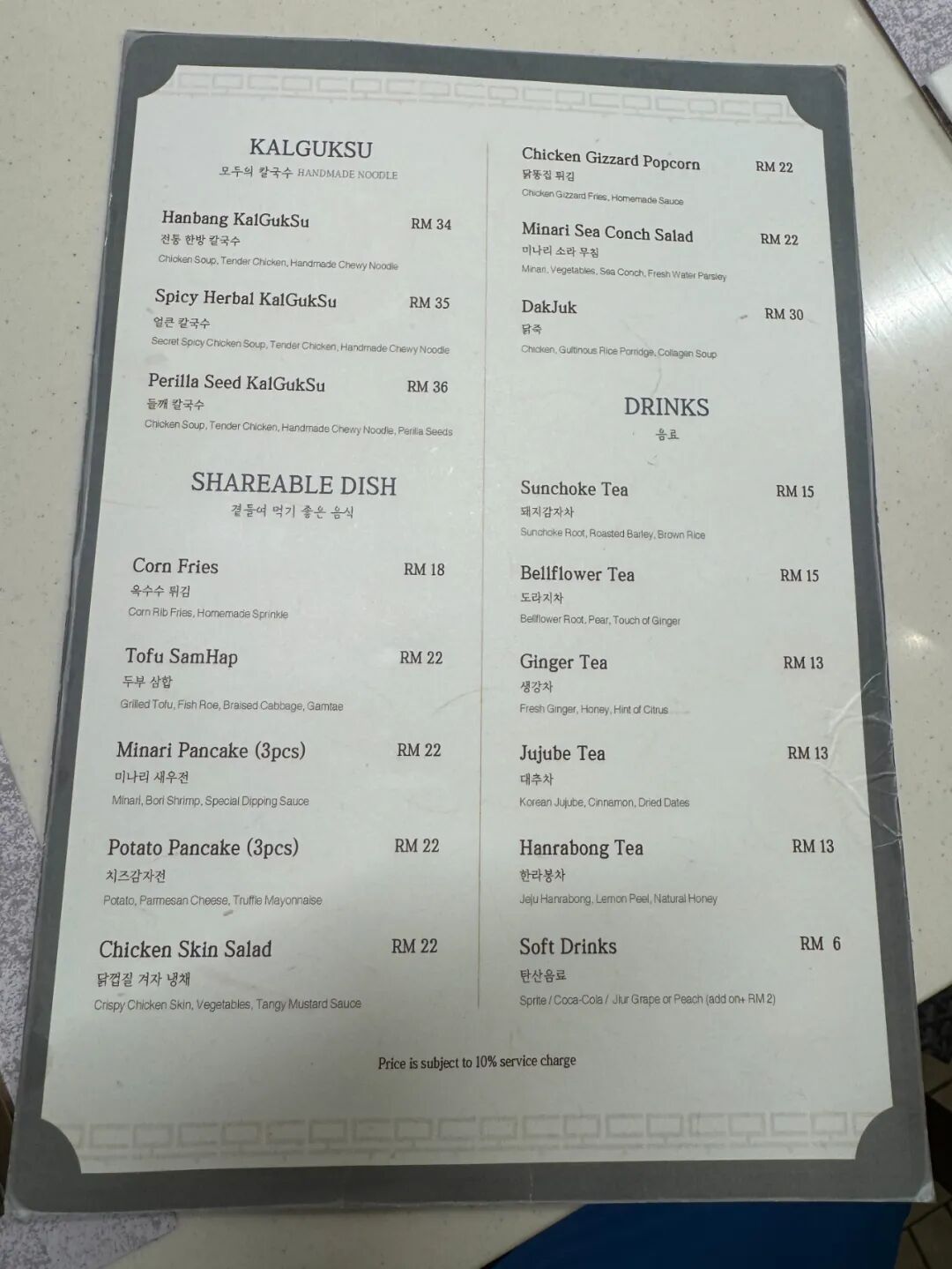
Looking at the menu, it's hard to tell exactly what each dish is.
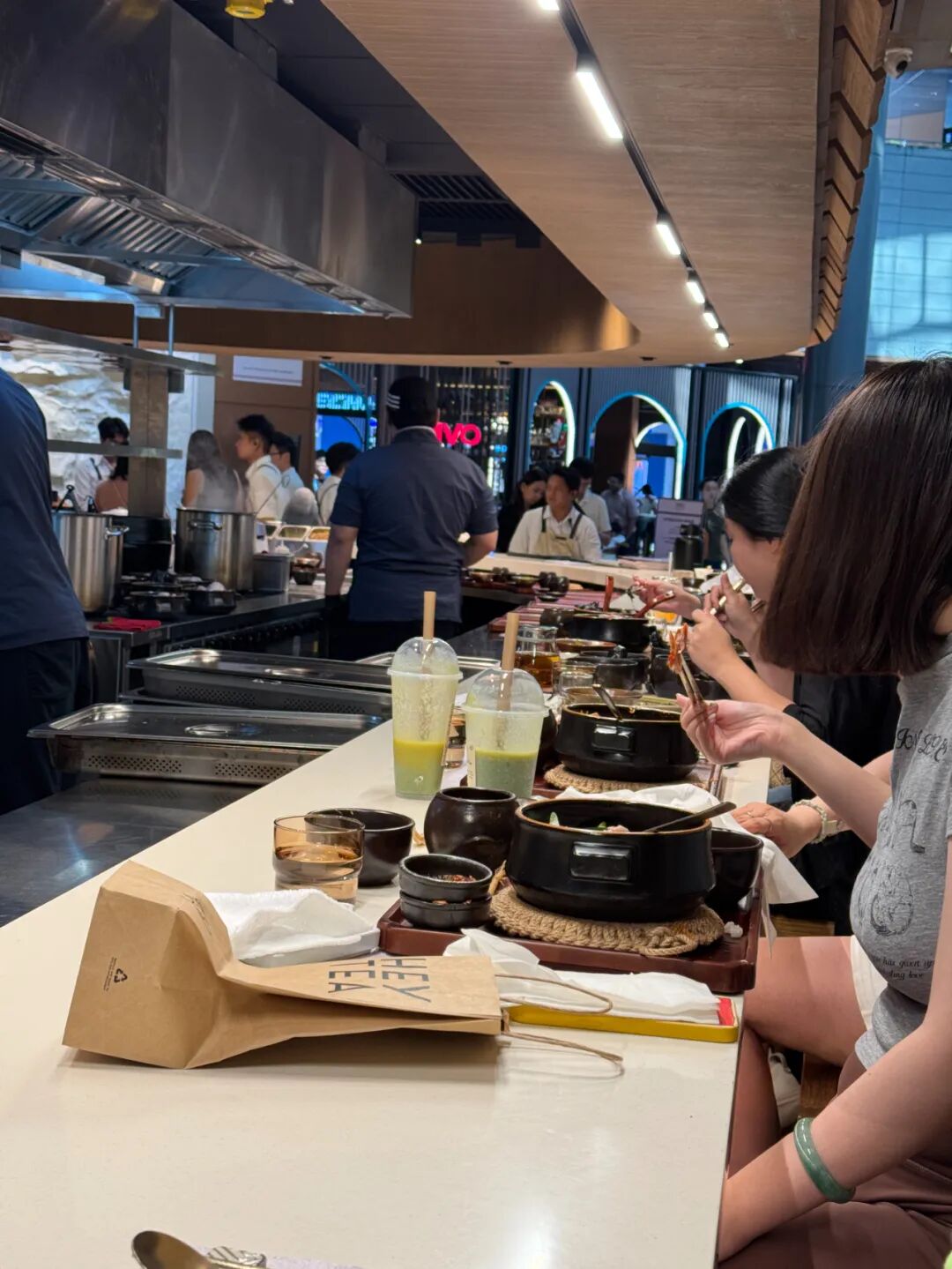
Most of the diners here are young Asian women. There are definitely a lot of Koreans here.
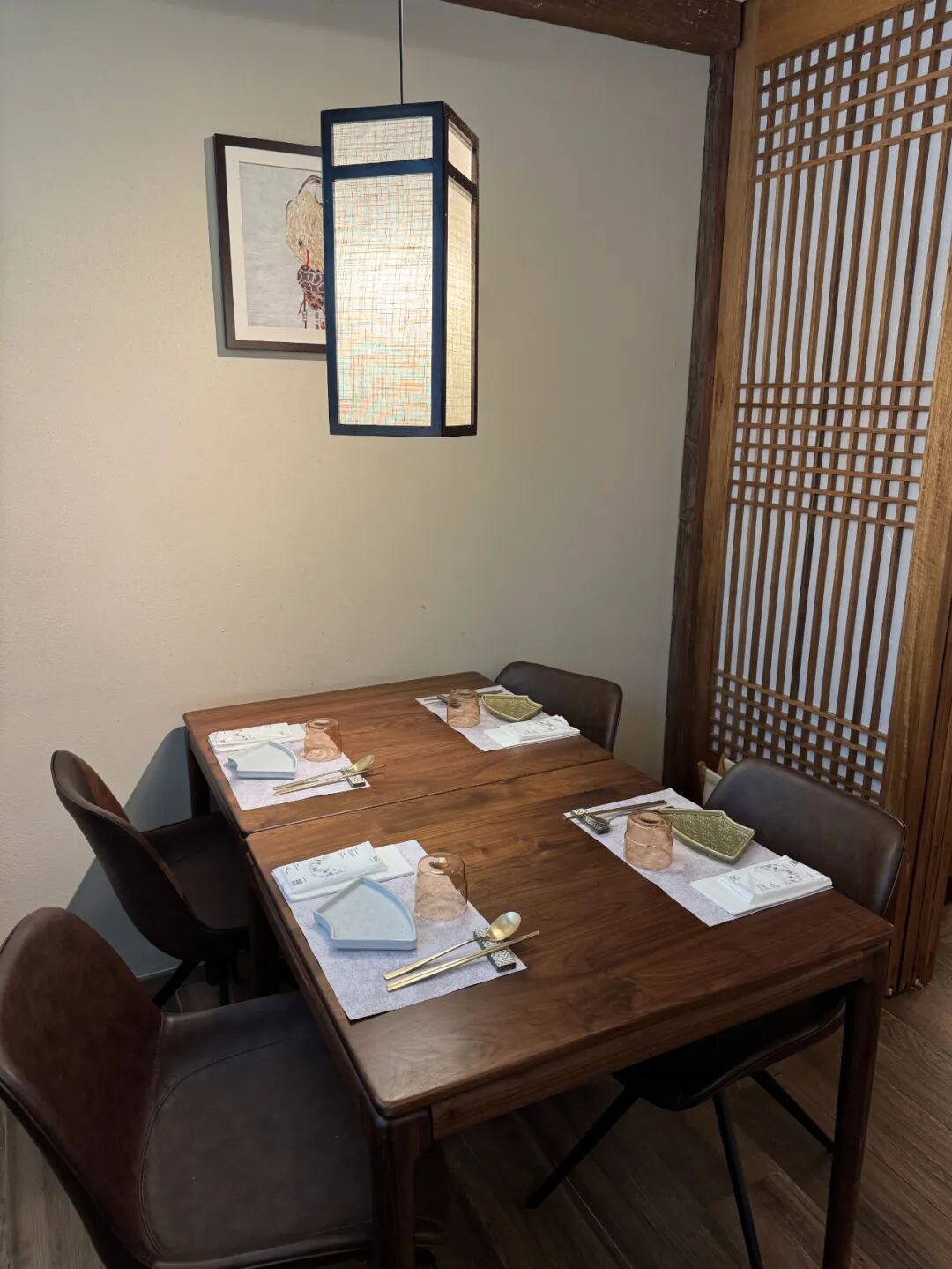
The restaurant has a lot of space, the decor is really nice, and the staff are very friendly.
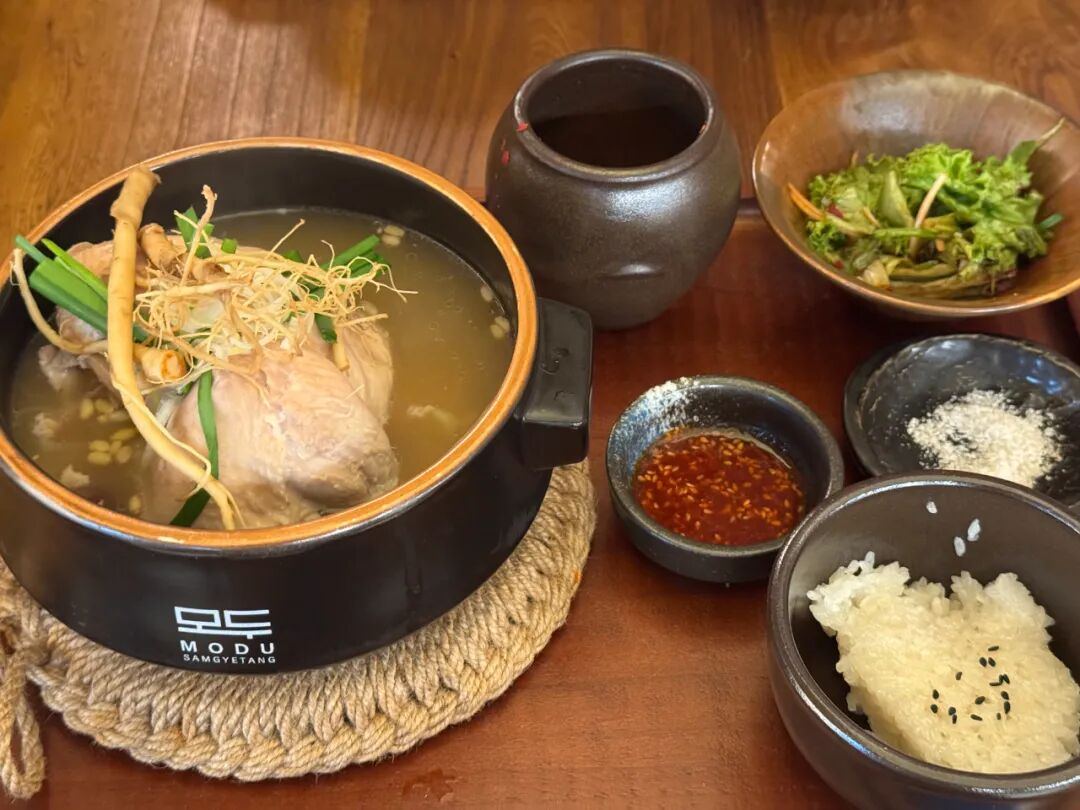
We chose a clay pot chicken soup and a black chicken soup. They come with a bowl of sticky rice and side dishes. This chicken has sticky rice stuffed inside, and the soup is really fresh and very mild.
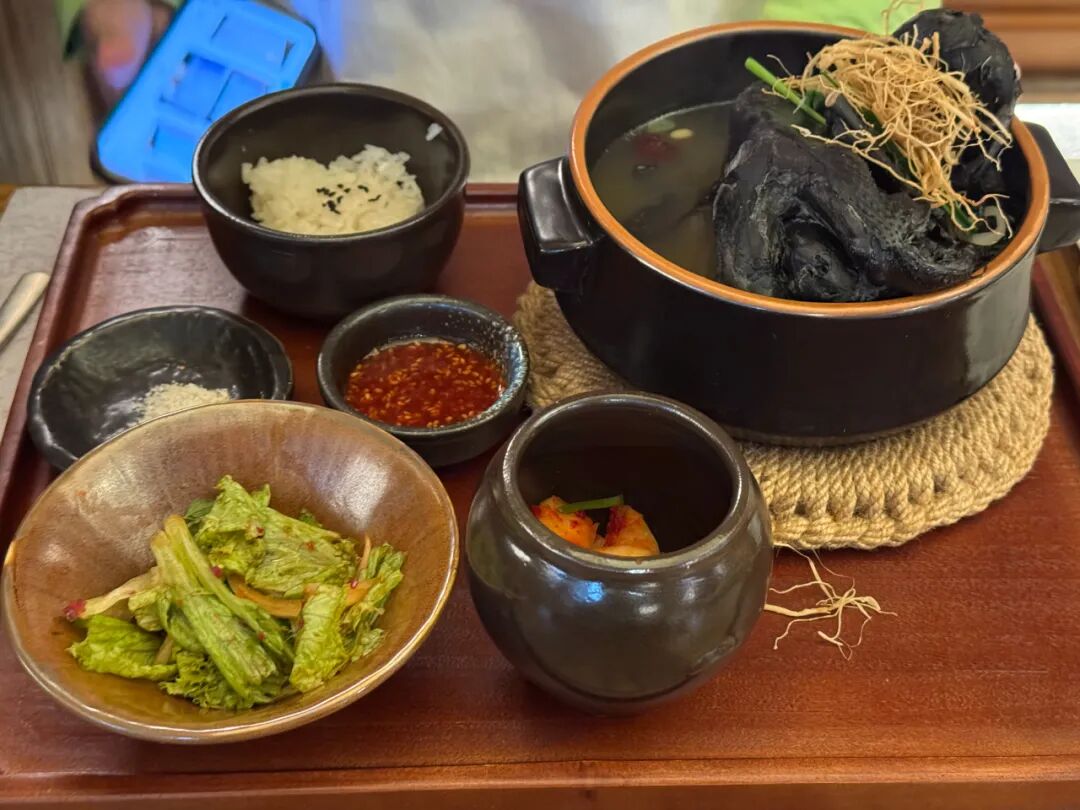
It has ginseng in it, which is great for women's health. A set meal costs about 70 Malaysian ringgit.
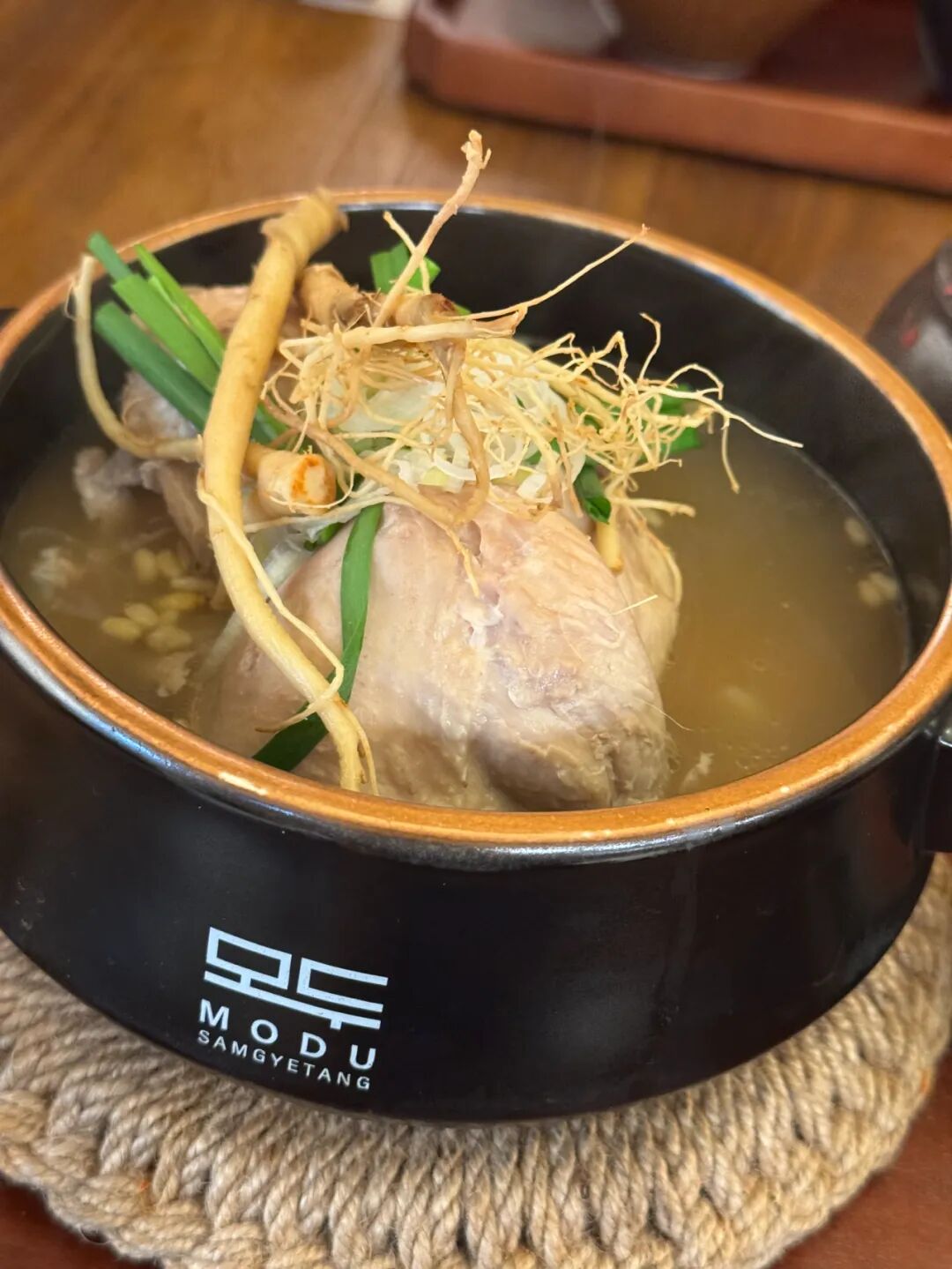
The chicken is small, perfect for one person. The meat just falls off the bone – it melts in your mouth.
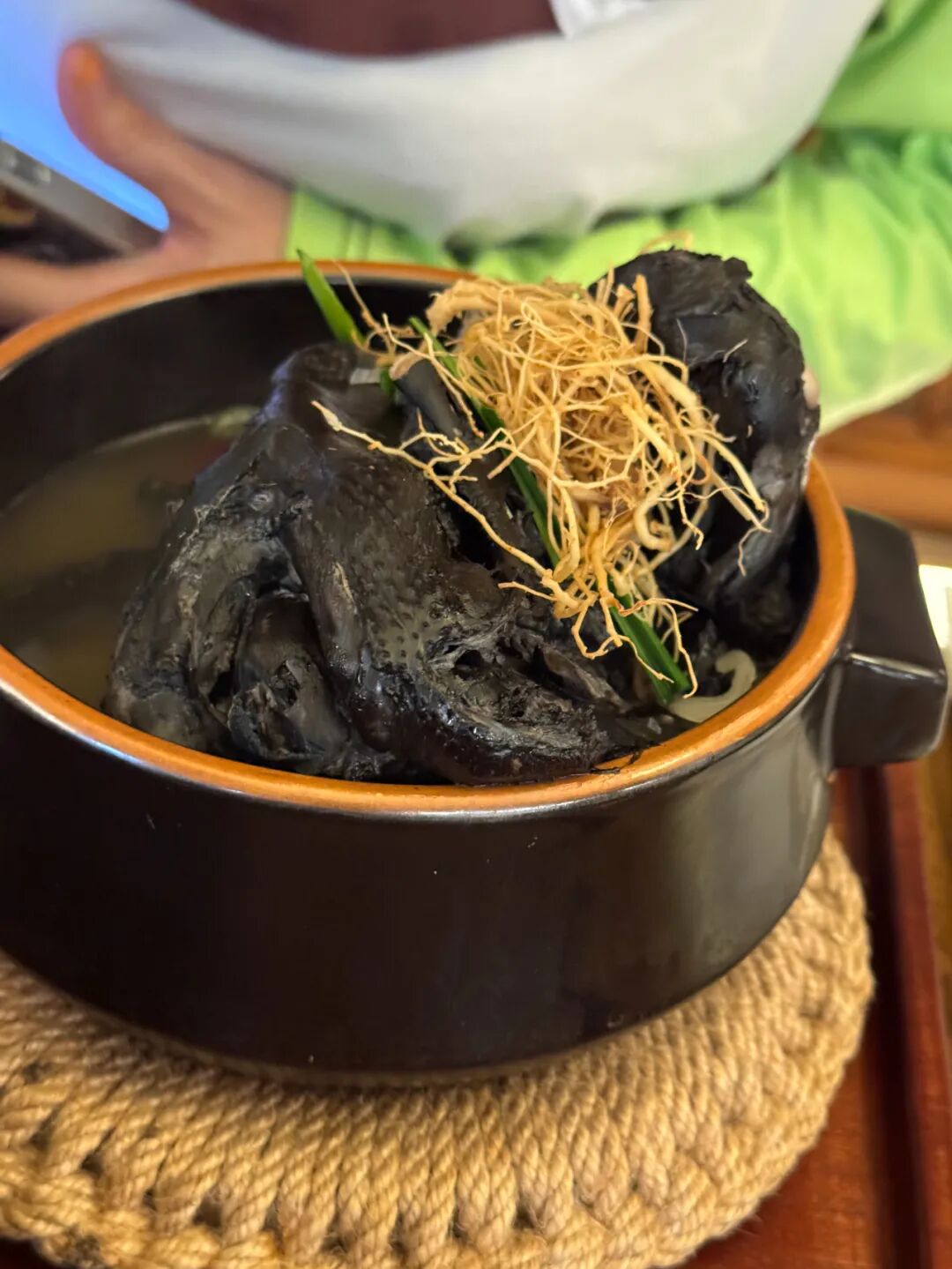
Address: Lot L2T.04.0, Level 2, The Exchange TRX, Persiaran TRX, Imbi, 55188 Kuala Lumpur, Wilayah Persekutuan Kuala Lumpur, Malaysia
5. NASI KANDAR UMAR
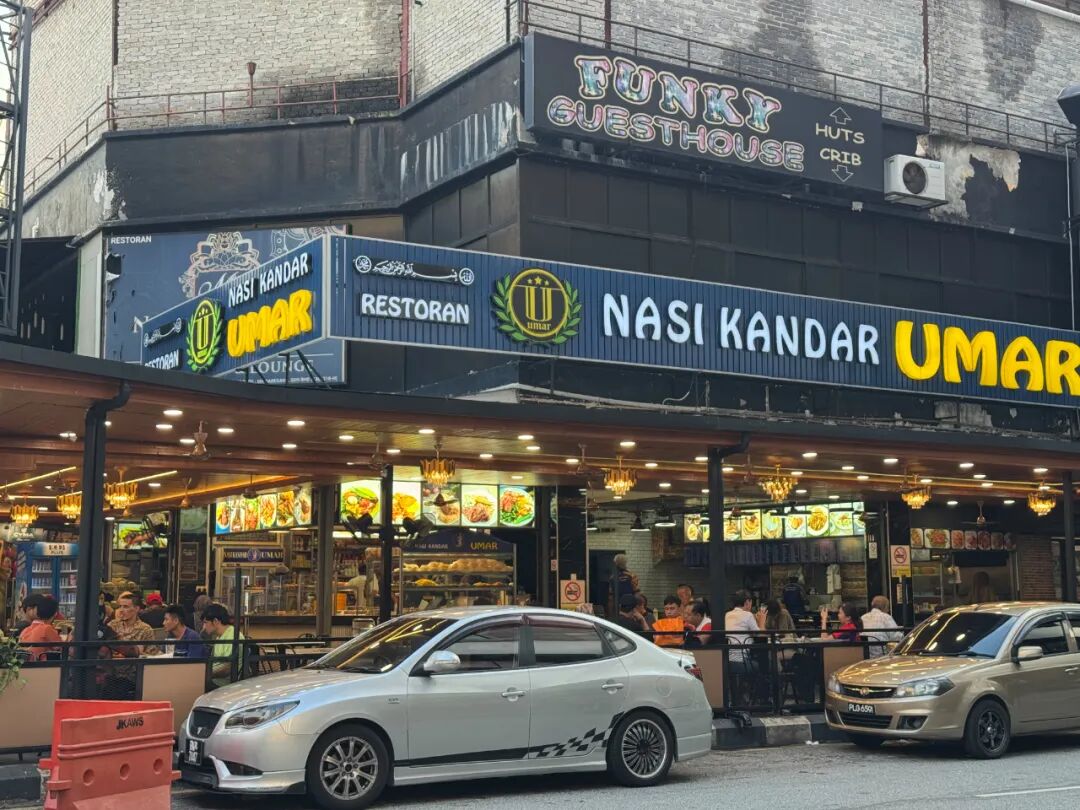
Nasi Kandar, or 'pole rice,' is a common fast food in Malaysia. It's a specialty of Indian Muslims, about as popular as Lanzhou beef noodles are back home. Most of these stalls are halal.
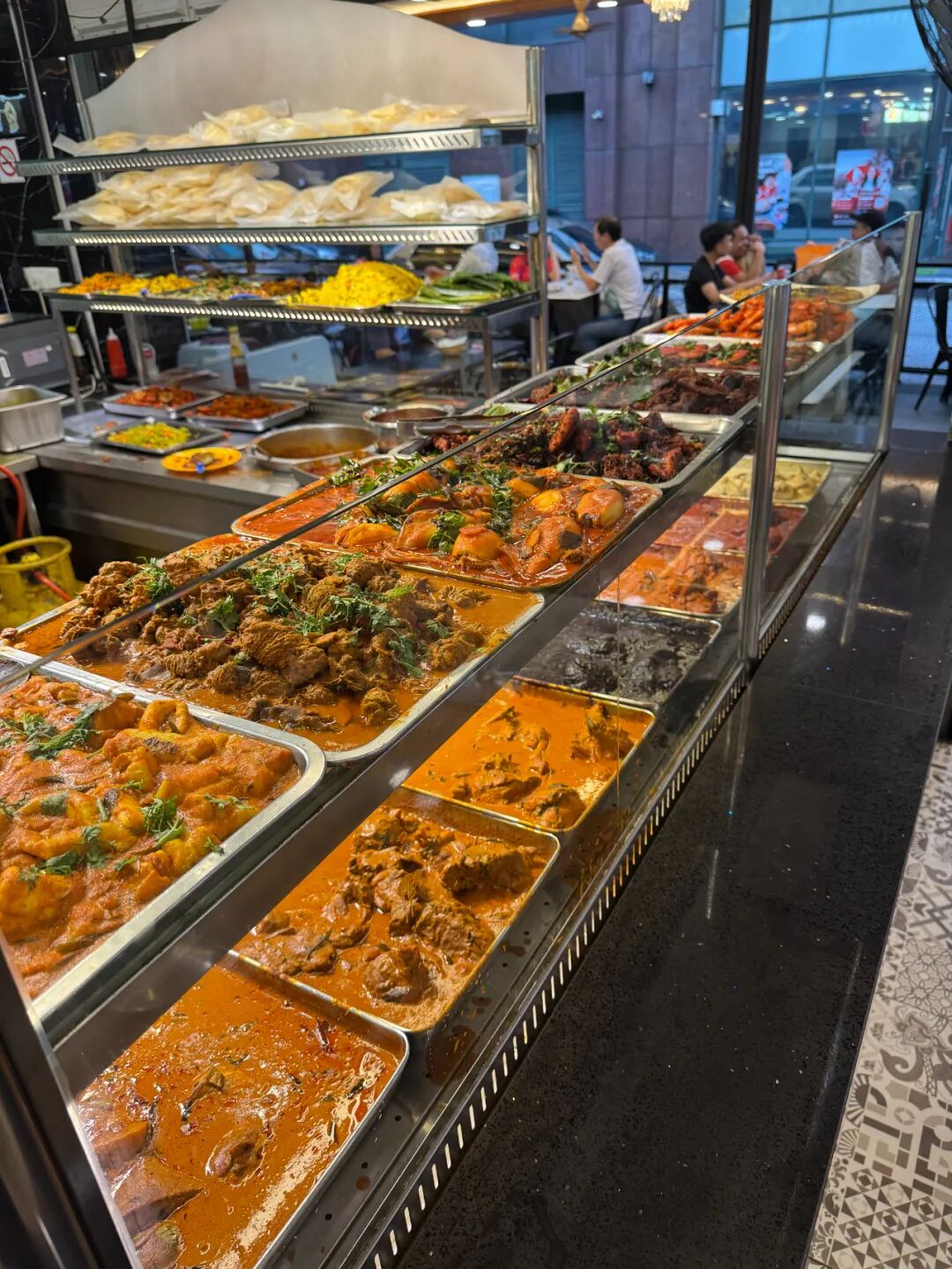
You just tell the server what you want on your plate, then pay at the cashier. A plate of rice usually costs around ten ringgit, and with a milk tea, it's usually under twenty.
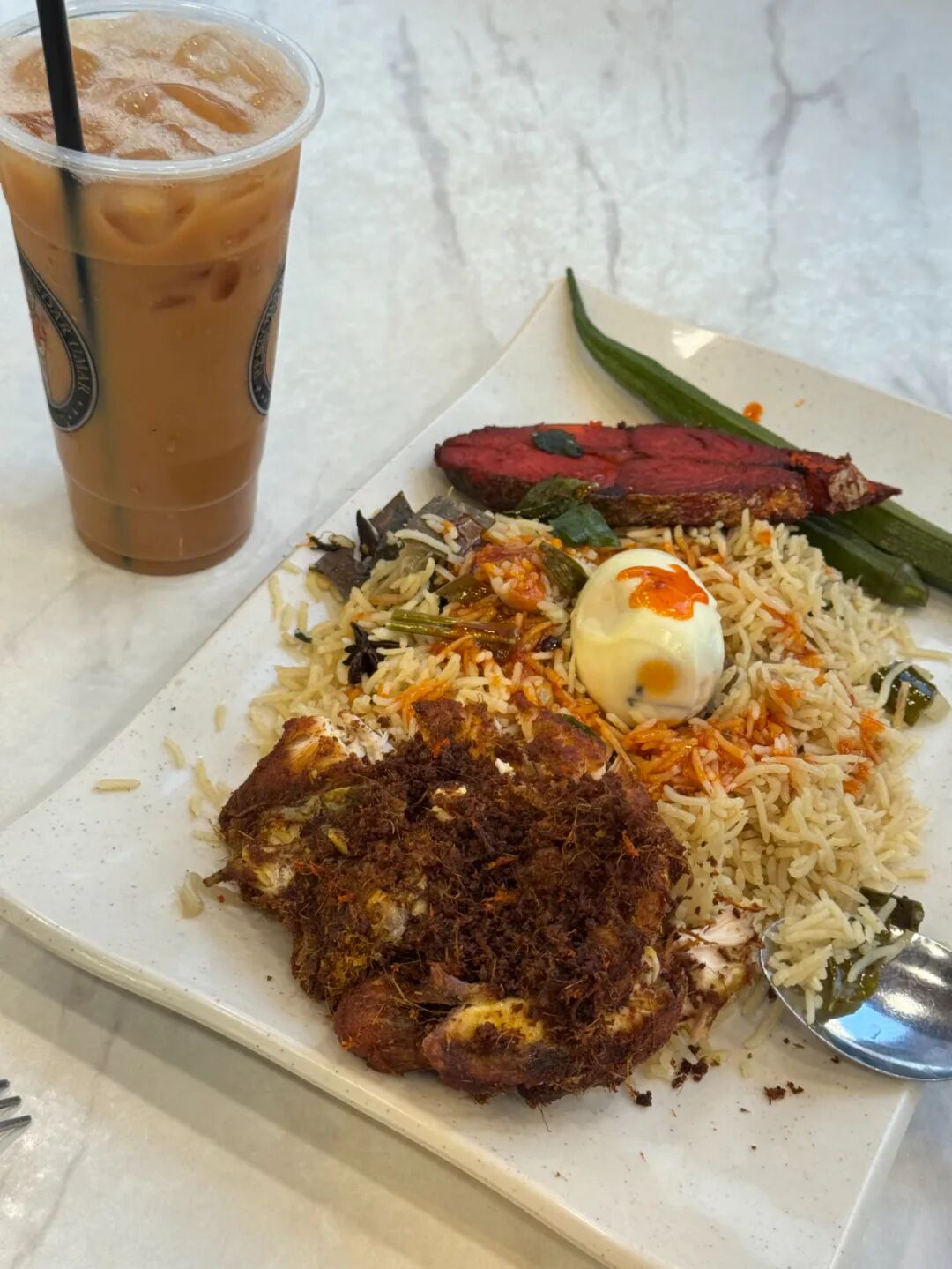
The only downside is that this rice is usually a bit spicy, so it's not great for kids. But I go for it when I can't decide what else to eat.
Address: 37 3G, Jln Sultan Ismail, Bukit Bintang, 50250 Kuala Lumpur, Wilayah Persekutuan Kuala Lumpur, Malaysia
6. WALLACE
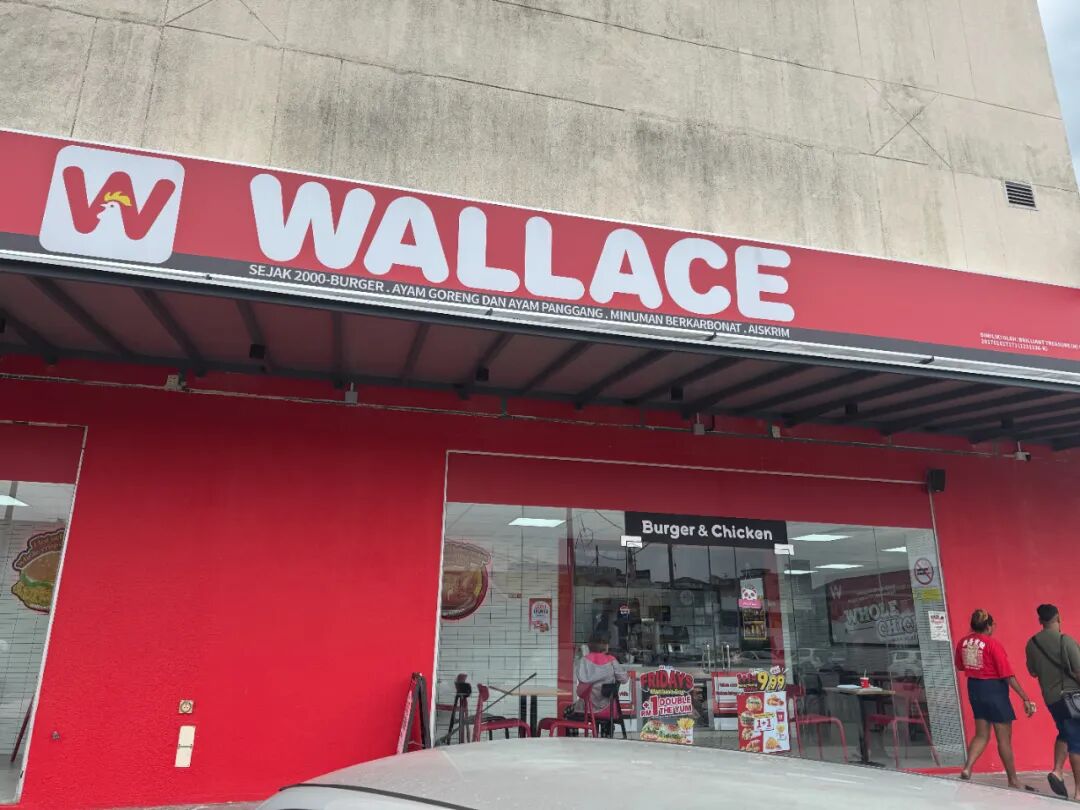
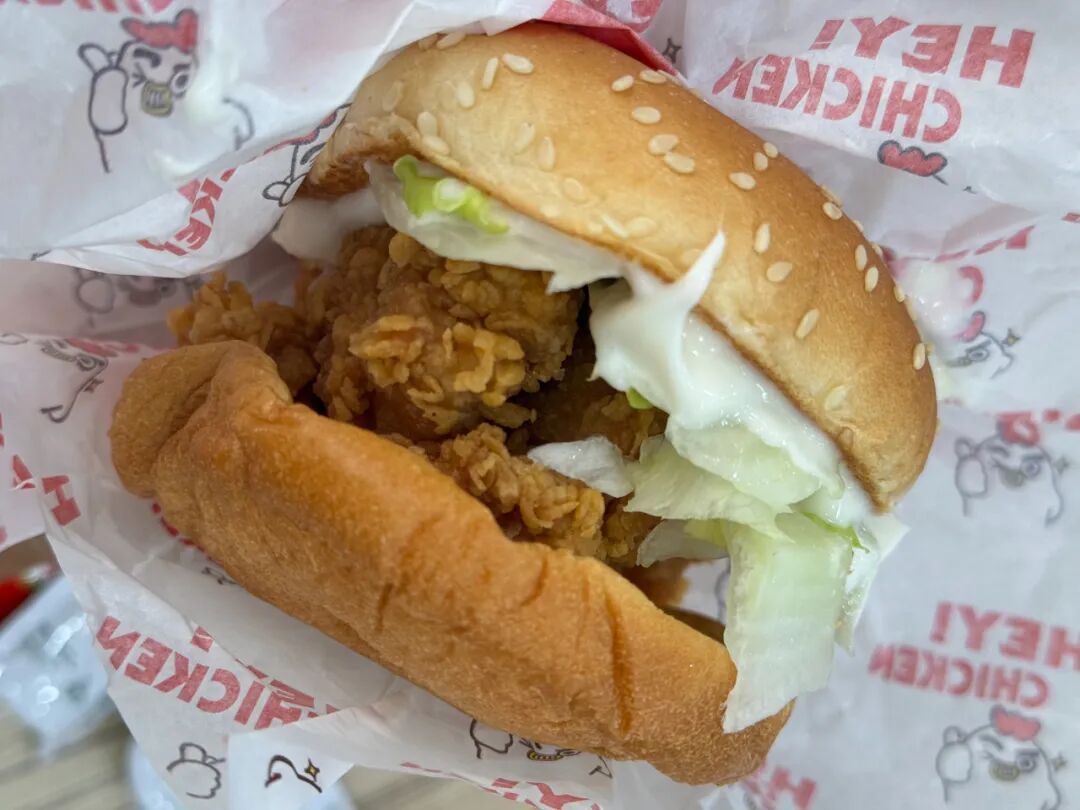
Wallace is a fast-food joint selling burgers and fried chicken. This new spot is celebrating its opening with a deal: three burgers for just 9.9 ringgit.
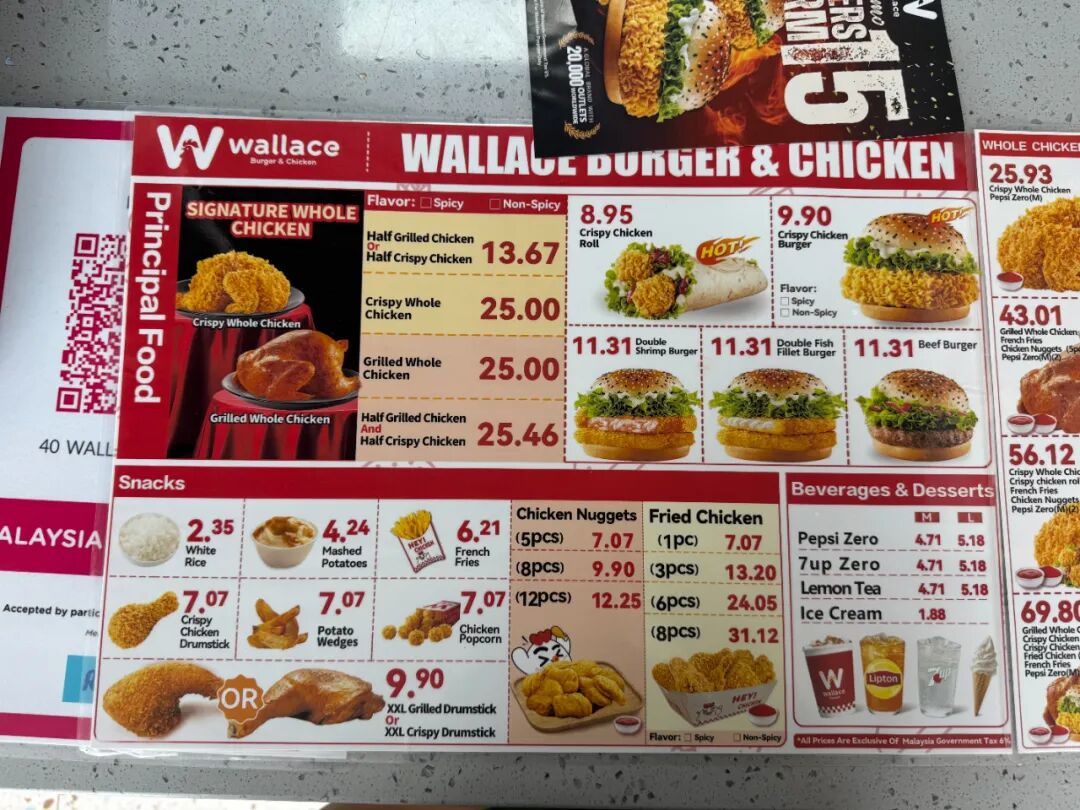
These burger joints are a hit with everyone in Kuala Lumpur, young and old. Almost all of them are halal, including McDonald's and KFC.
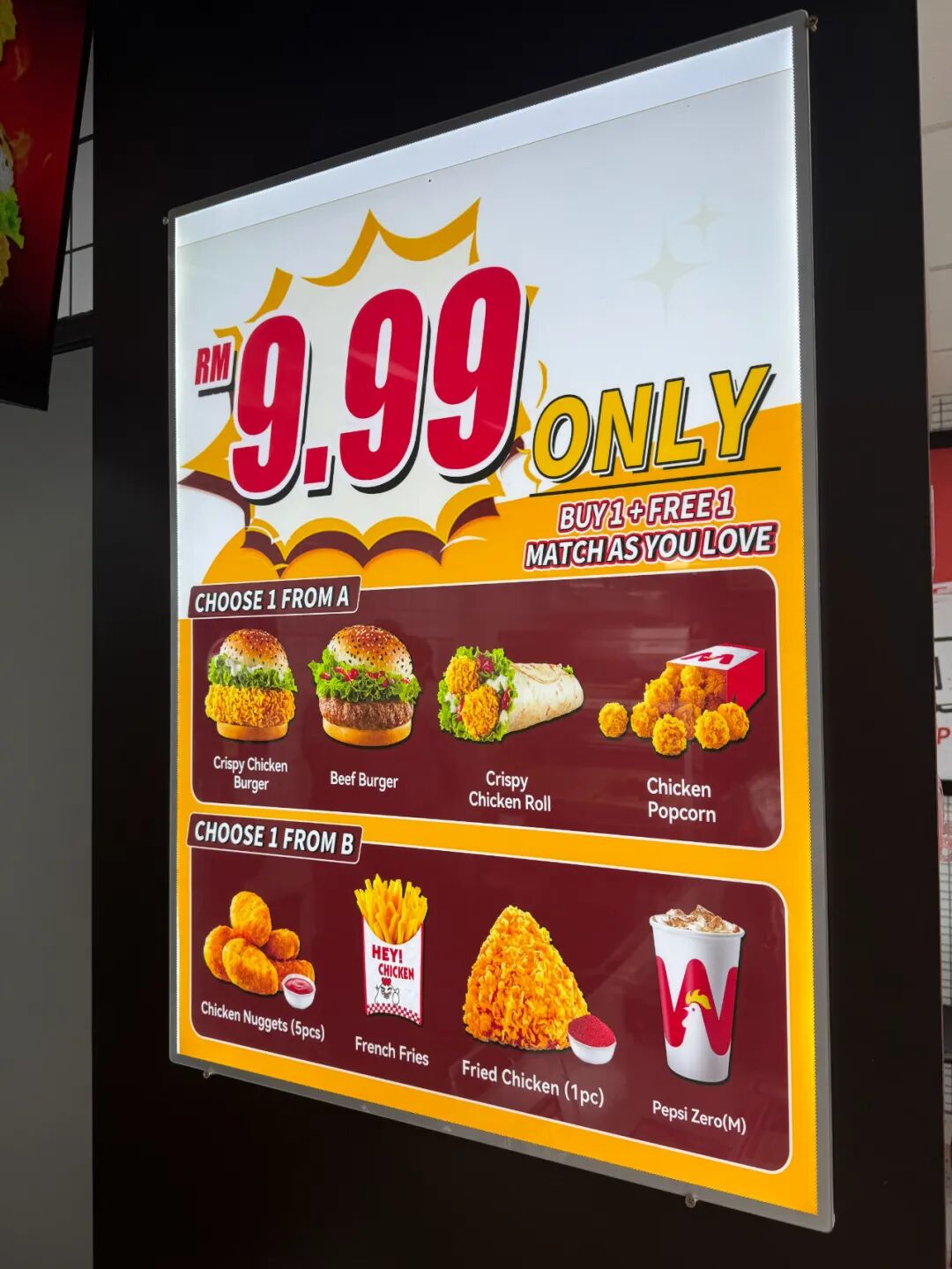
Wallace's fried chicken burgers taste pretty good. The best part is the price – three for 9.9 ringgit. You can't ask for more than that.
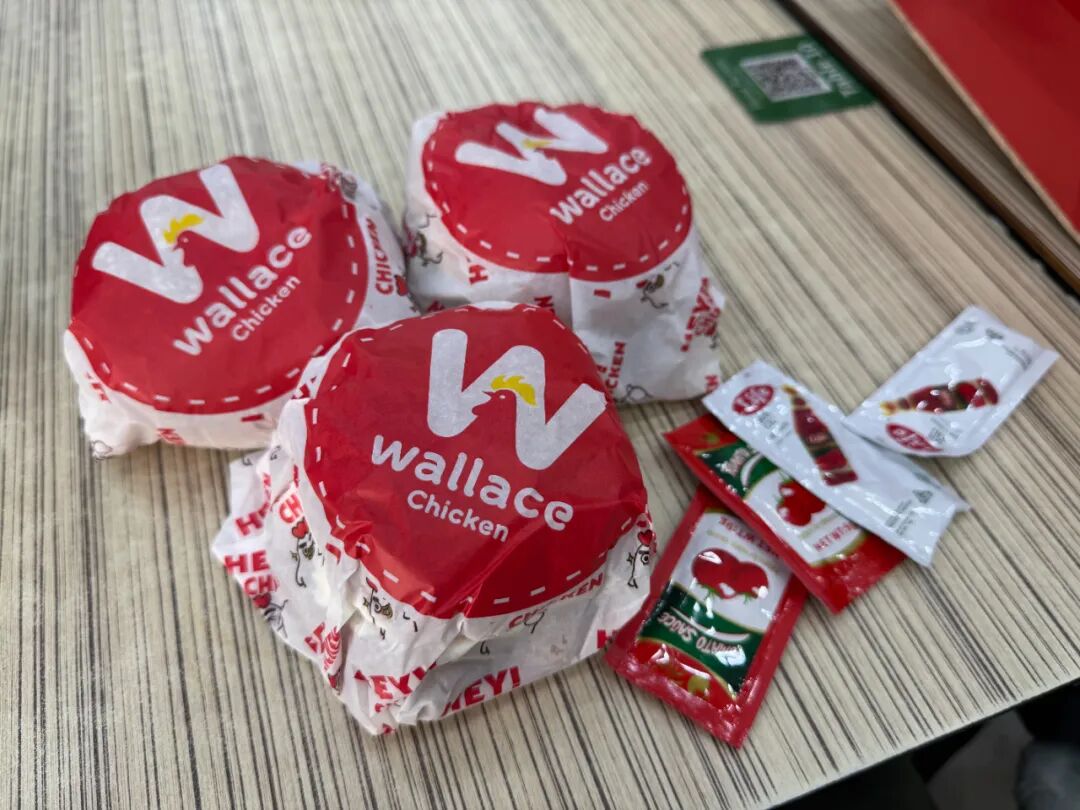
My son hasn't quite fallen in love with burgers and fries yet. I wonder if he'll like them later on.
Address: M5A, 11, Jalan Pandan Indah 4/1, Pandan Indah, 55100 Kuala Lumpur, Federal Territory of Kuala Lumpur, Malaysia
7. Hai Ji Beef Pan-Fried Buns
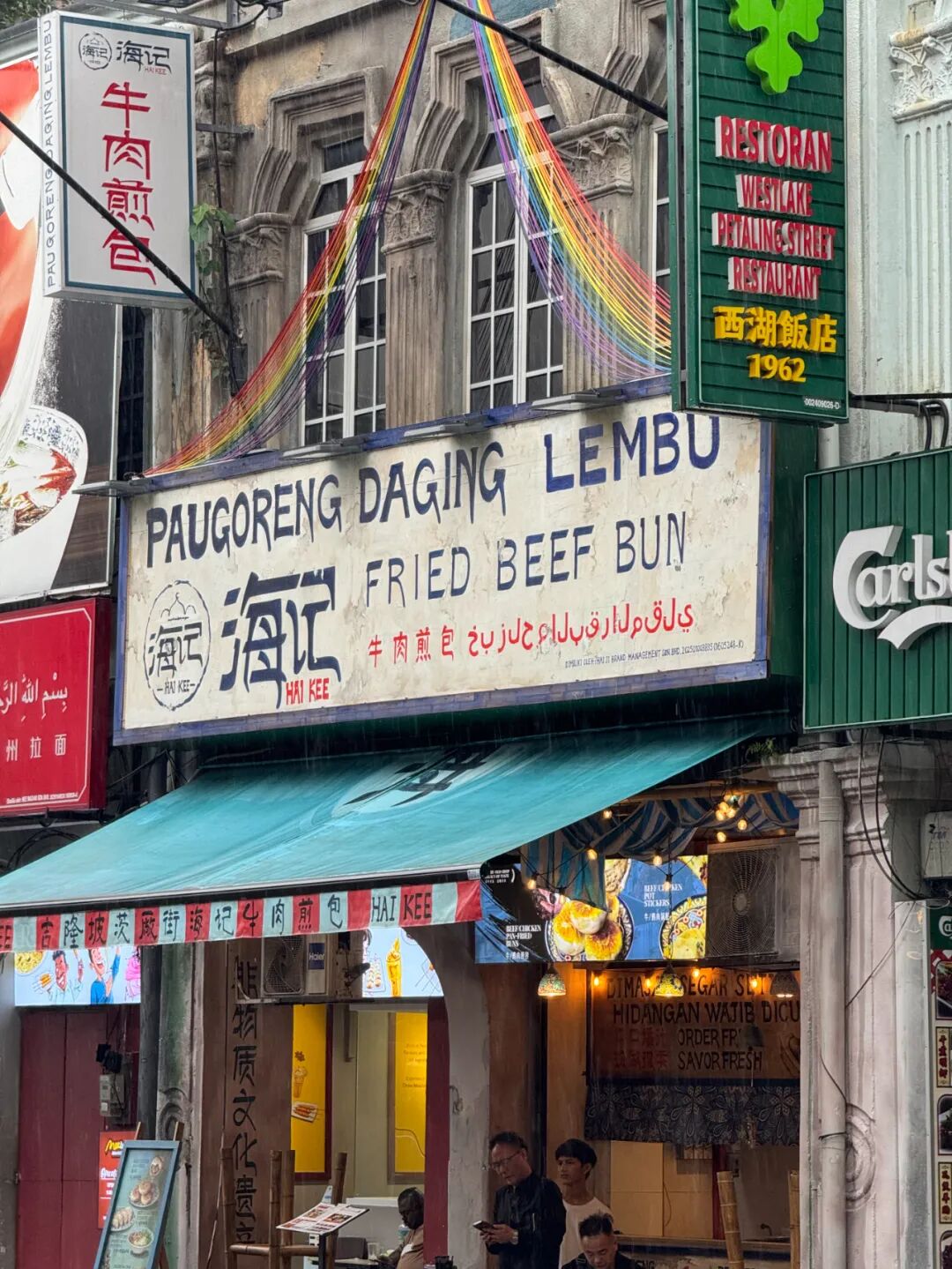
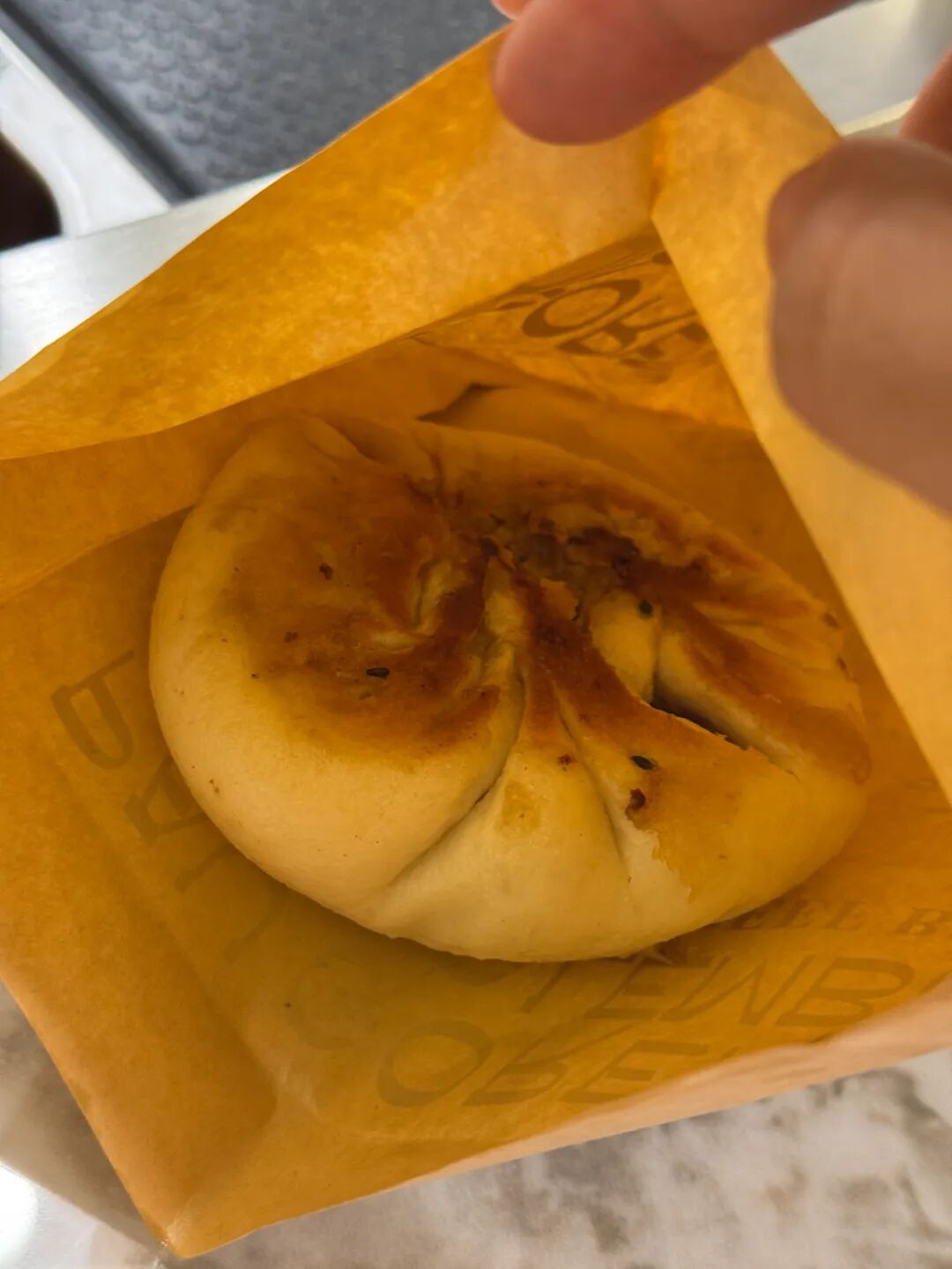
Next to Lanzhou Hand-Pulled Noodles on Petaling Street, there's a shop called Hai Ji Beef Pan-Fried Buns. These buns are a bit bigger than the ones from Henan and Shandong. They taste great. Petaling Street is a hub for Chinese food, mainly serving Chinese cuisine.
Address: 38, Jalan Sultan, City Centre, 50000 Kuala Lumpur, Wilayah Persekutuan Kuala Lumpur, Malaysia
8. PICCOLI LOTTI
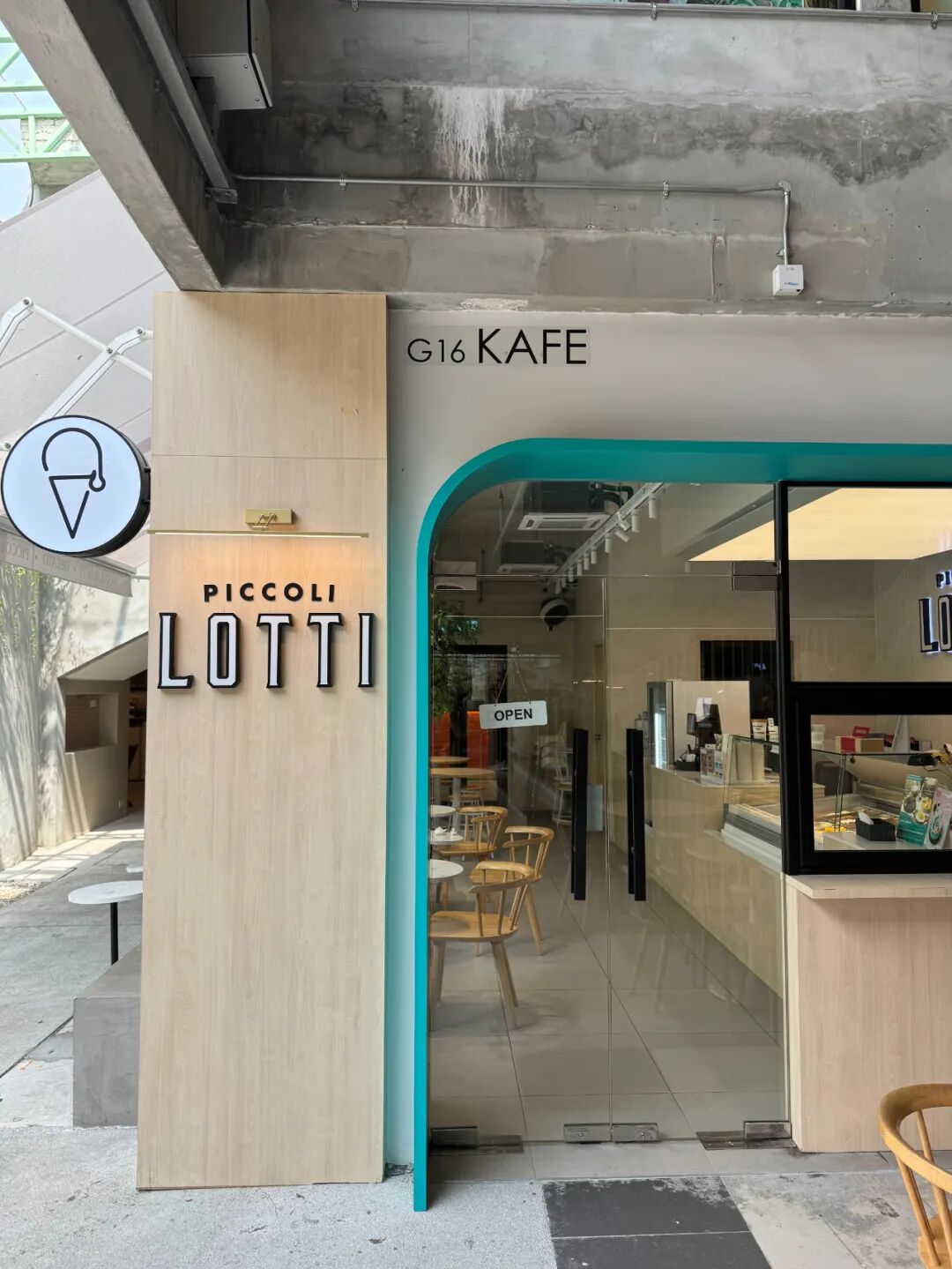
This Italian ice cream shop on the first floor of Ampang Point is run by Malays. Italian ice cream is famous, mainly because they use good quality milk and don't add extra water. This shop's ice cream is just like that, with over ten flavors to choose from.
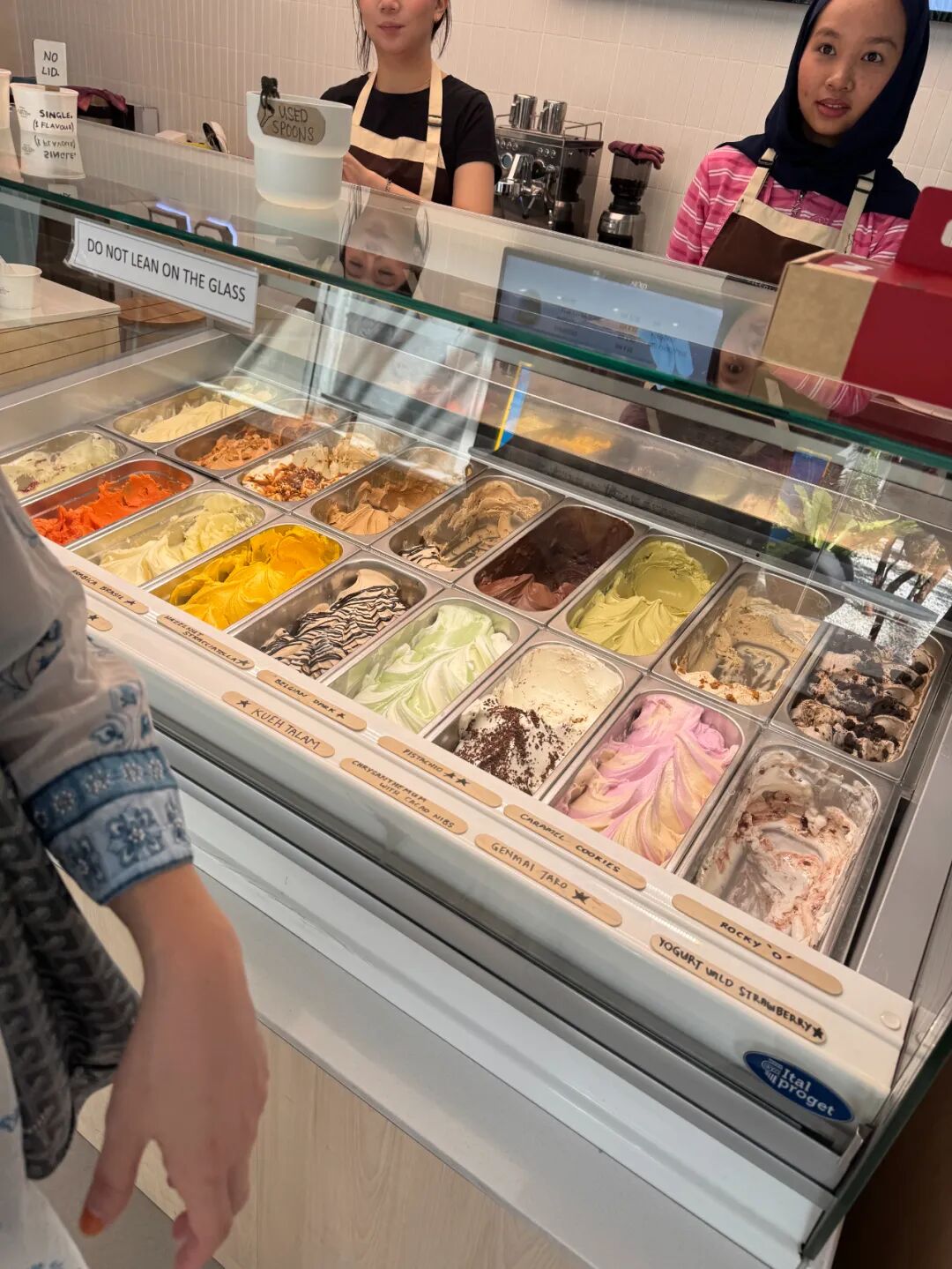
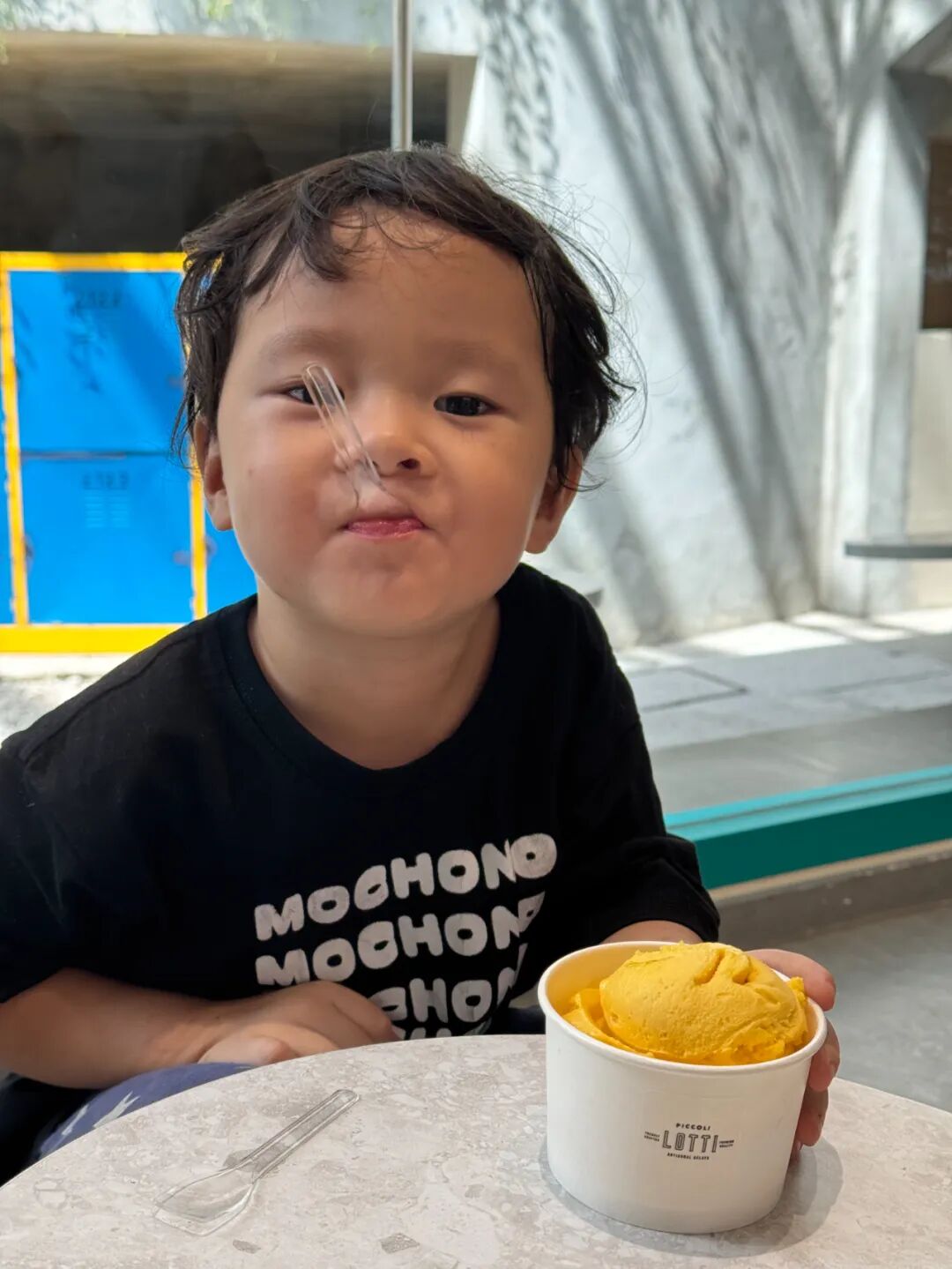
On hot days, I love visiting dessert shops like this. They usually also have various coffee drinks and seating areas. Kids love them too.
Address: Ground Floor, Ampang Point
9. JIBBY CHOW
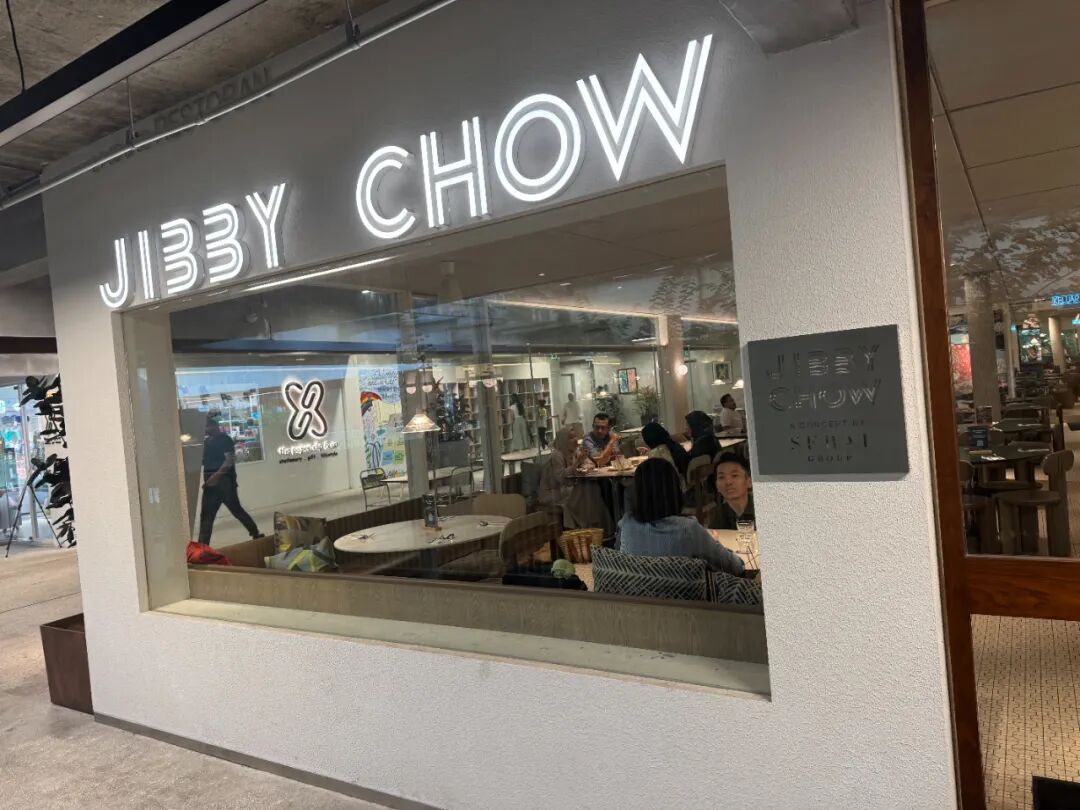
A new Cantonese-style tea restaurant has opened at Ampang Point. This place serves dim sum all day, so we could still enjoy it even though we arrived in the afternoon.
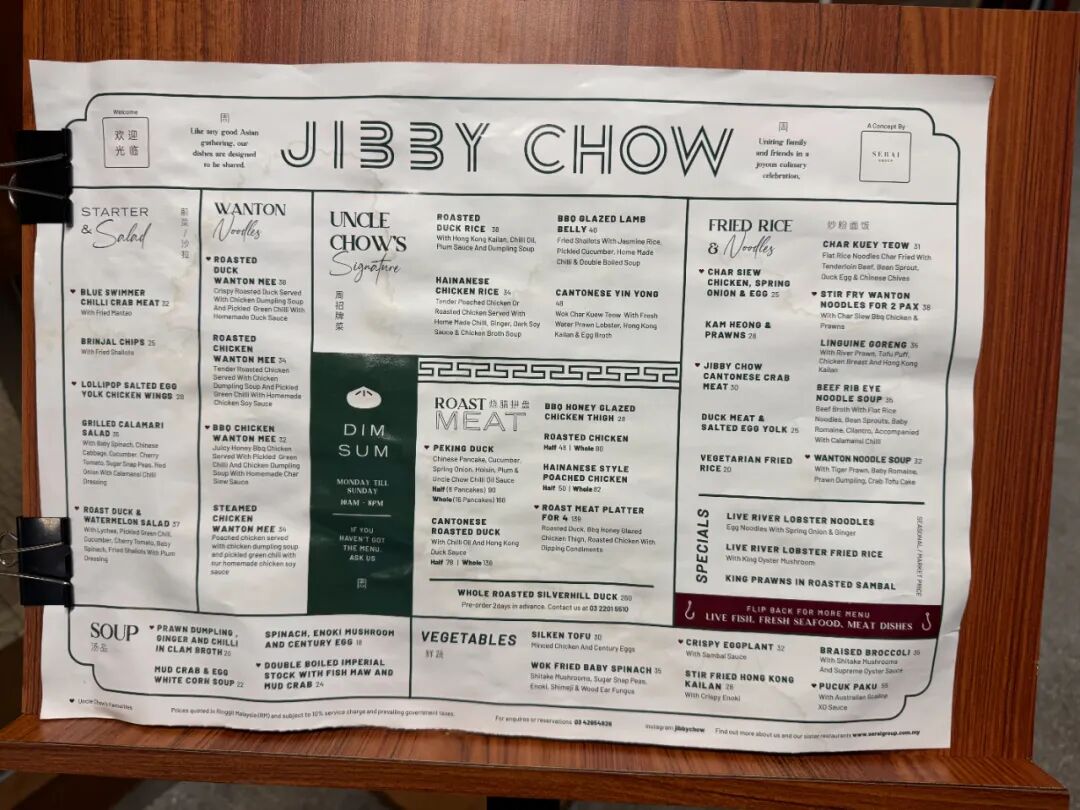
Everyone eating here is Malay. Malays really love Cantonese morning tea.
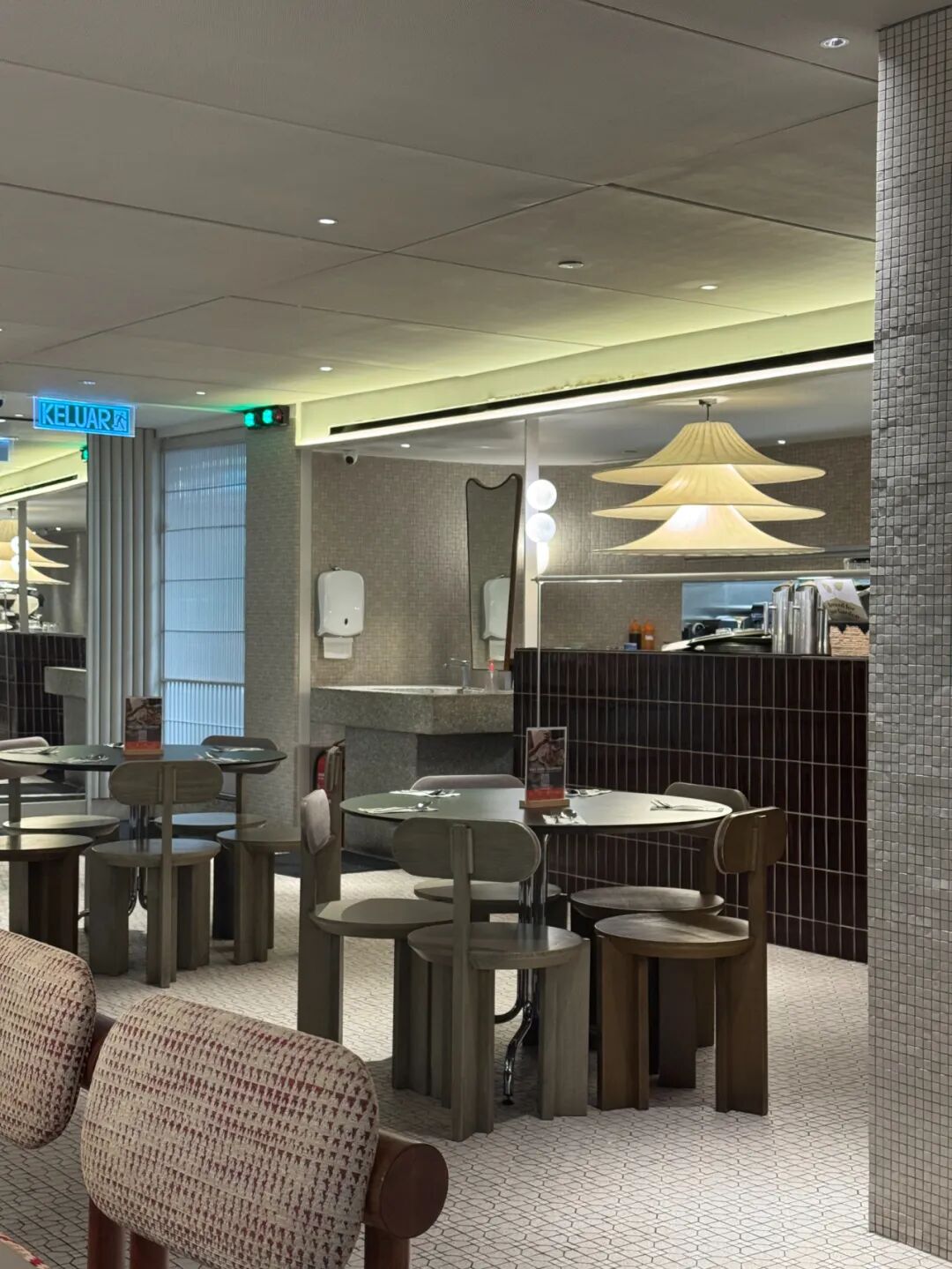
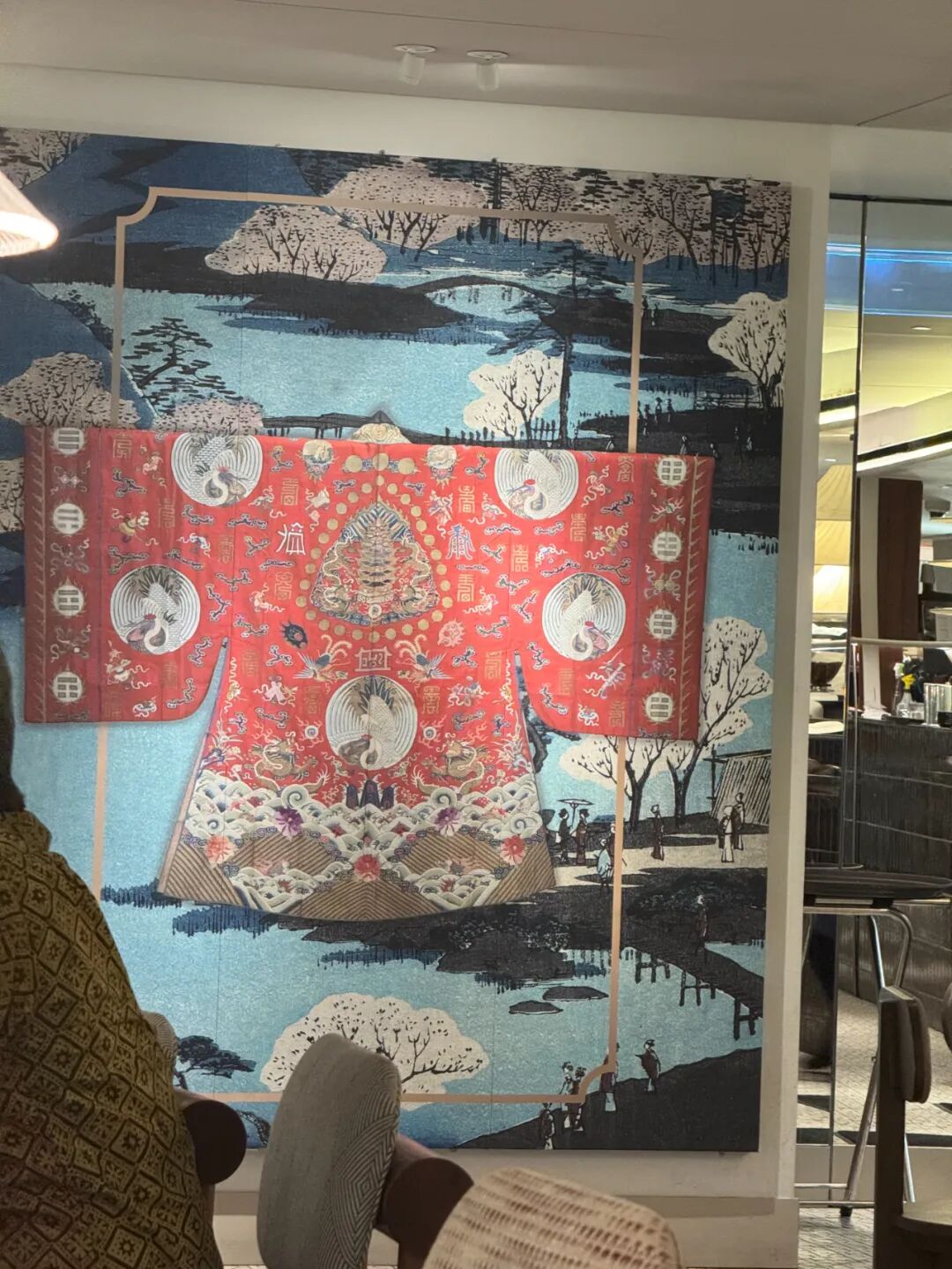
The shop's decor features traditional Chinese cultural elements, but the servers are all Malay.
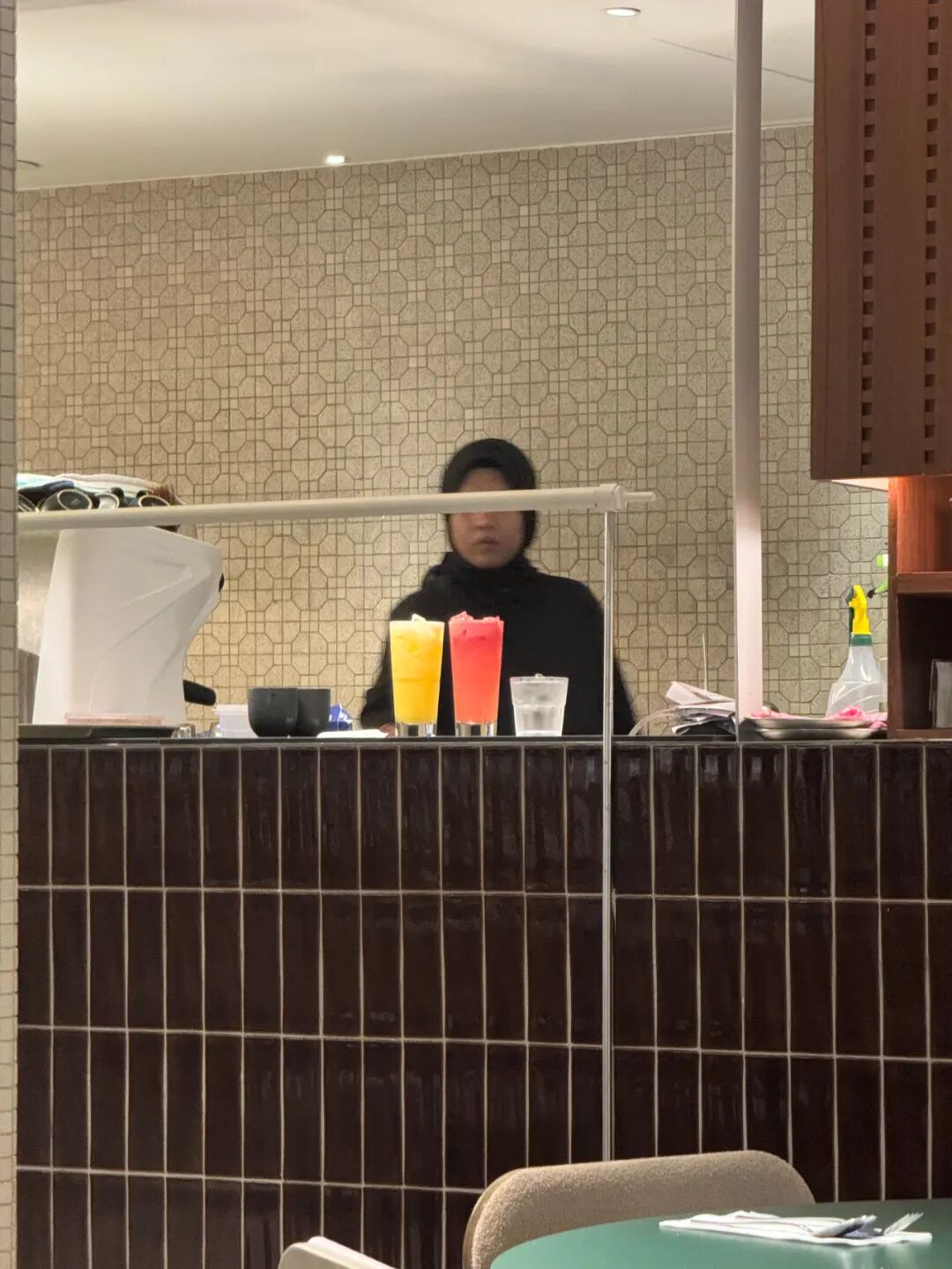
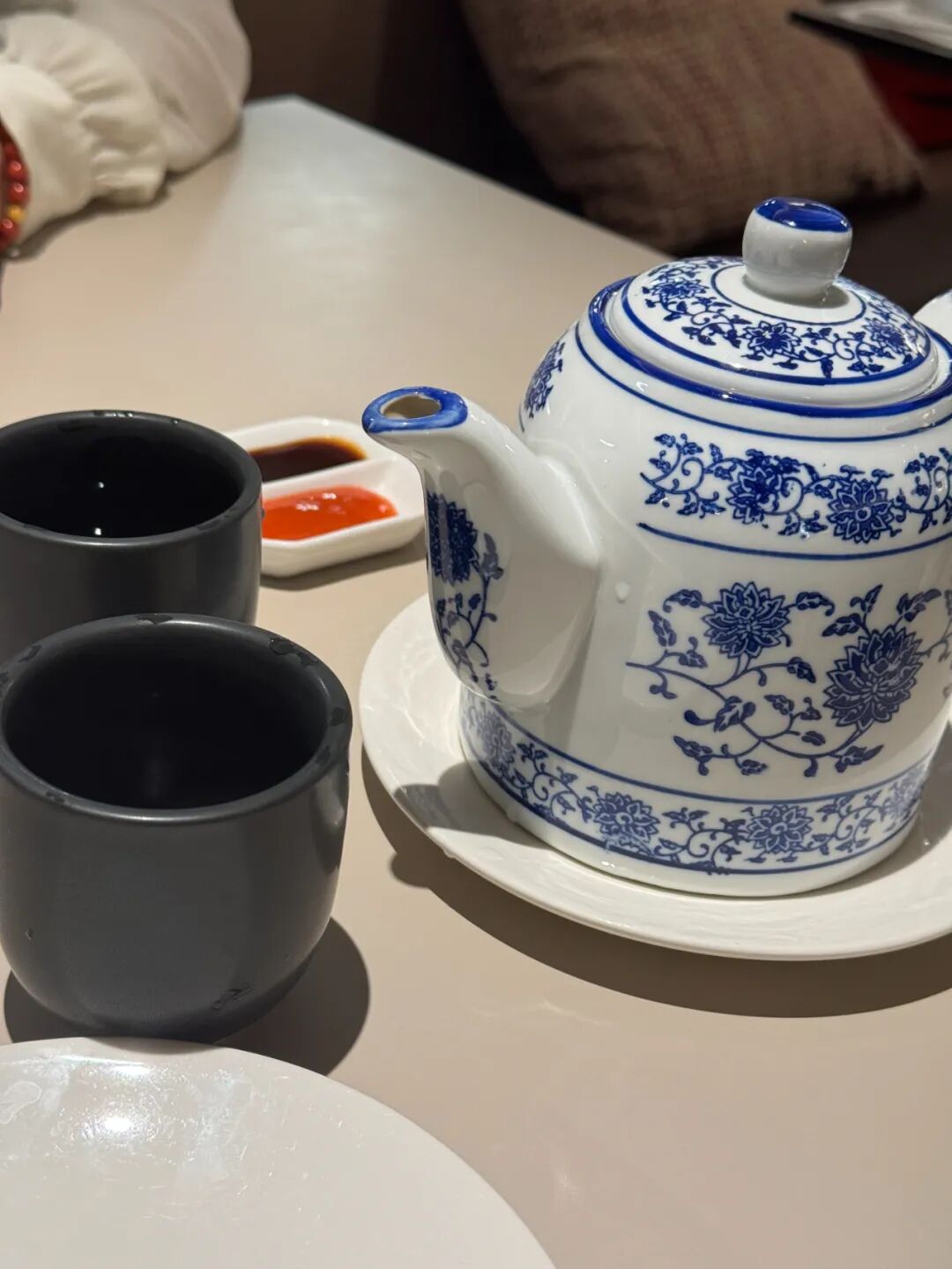
You can sit here all afternoon with a pot of Pu'er tea and a few dim sum dishes.
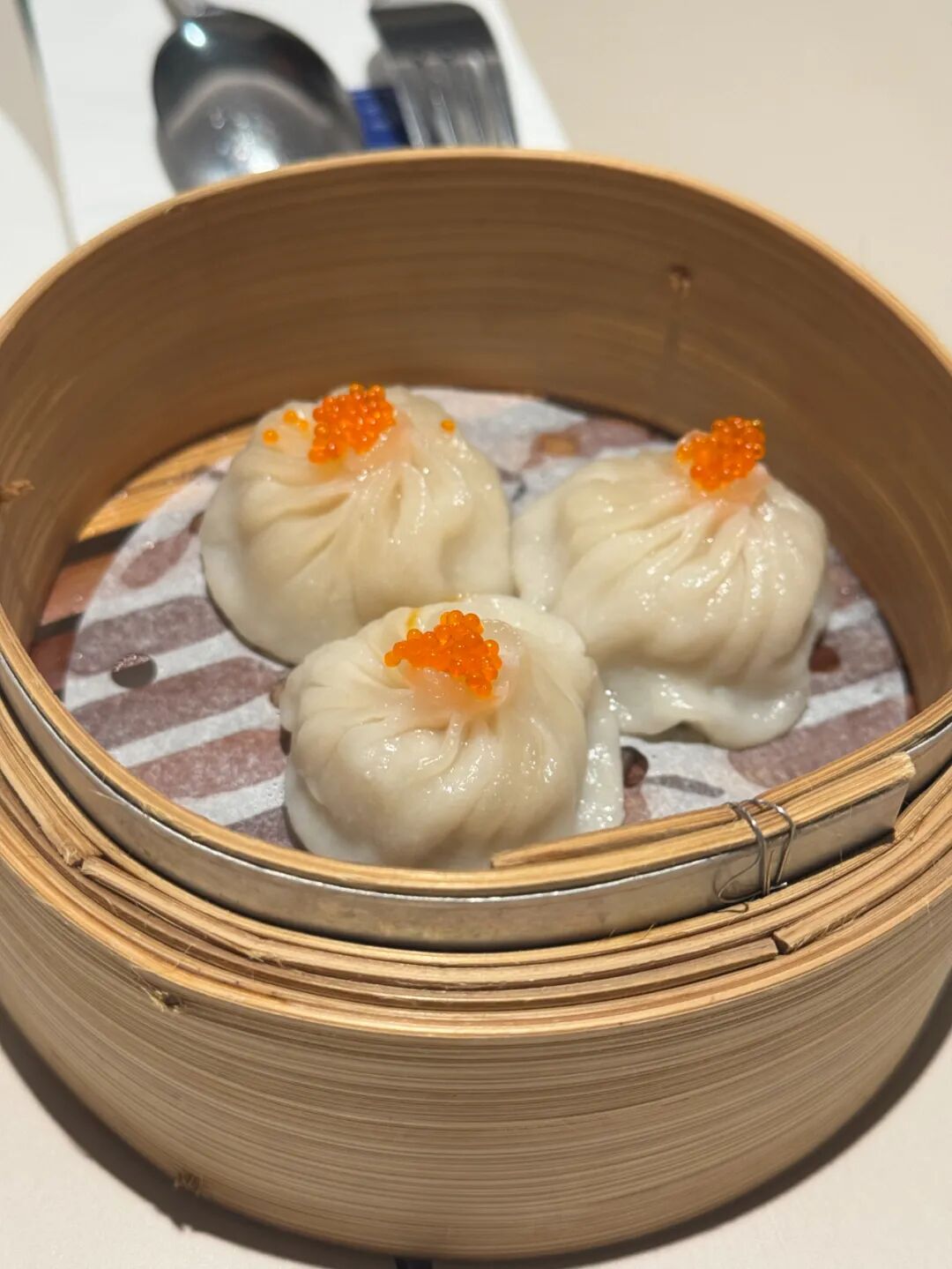
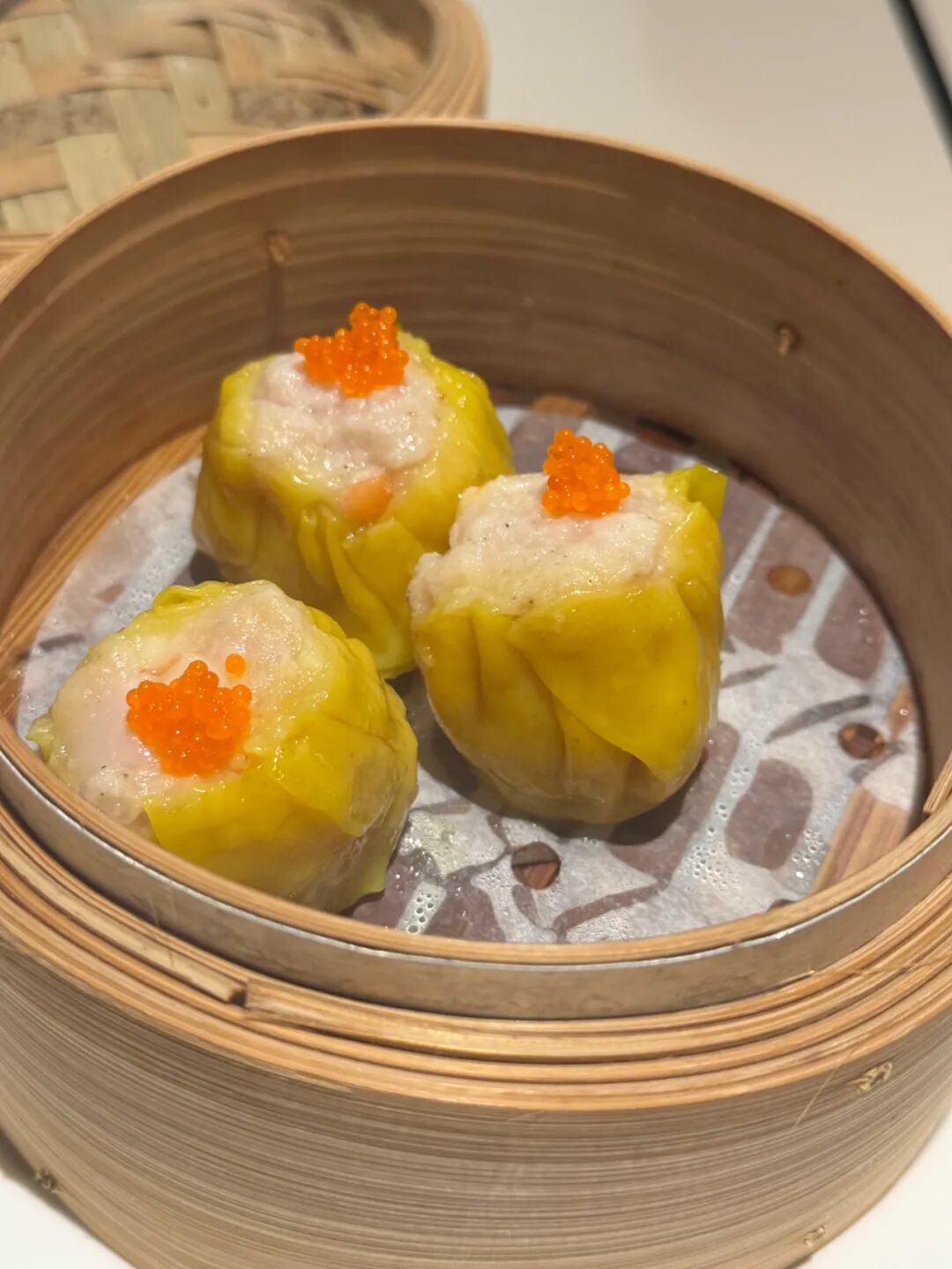
The soup dumplings, char siu bao, and shaomai here are all delicious and steamed fresh.
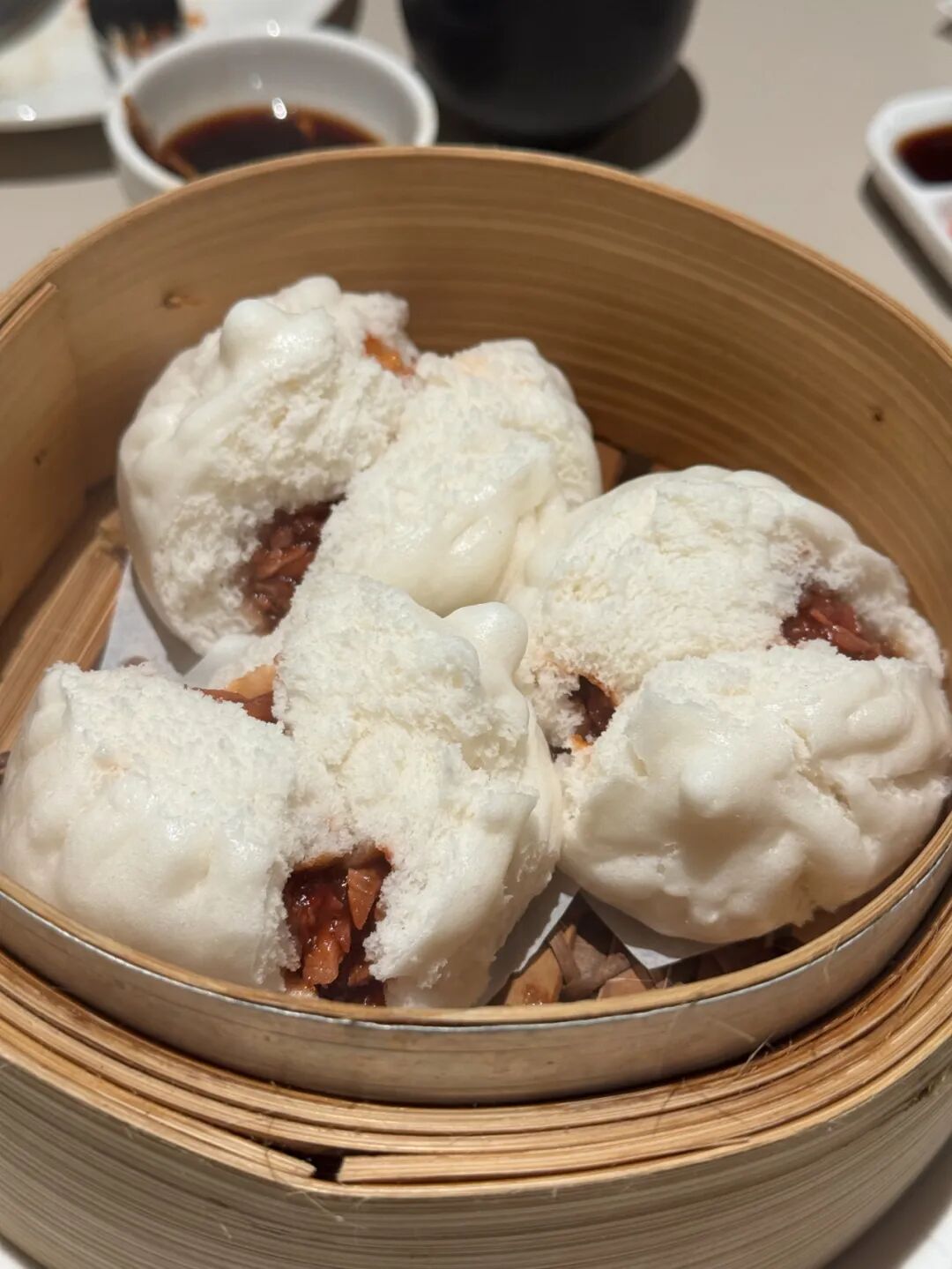
The chicken char siu bao has a dim sum-like texture and a sweet flavor. It's not quite as good as the lamb char siu bao at Guangzhou Hui Muslim restaurants, which is truly exceptional.
Address: Level 2, Ampang Learning City.
10. UNIVERSAL BAKEHOUSE
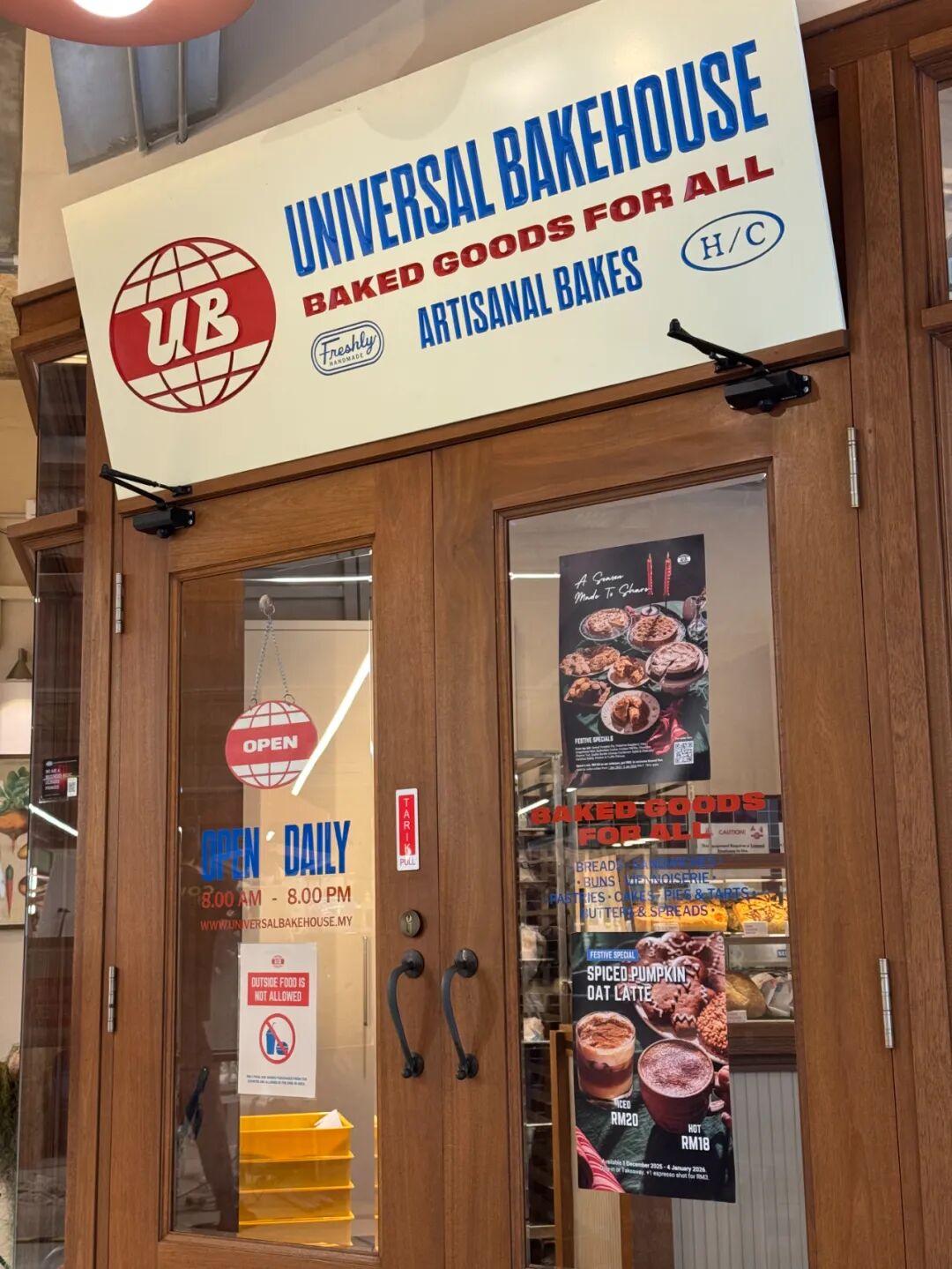
This popular bakery in Ampang Learning City has many branches and is usually packed. However, the branch we visited in Ampang wasn't too crowded.
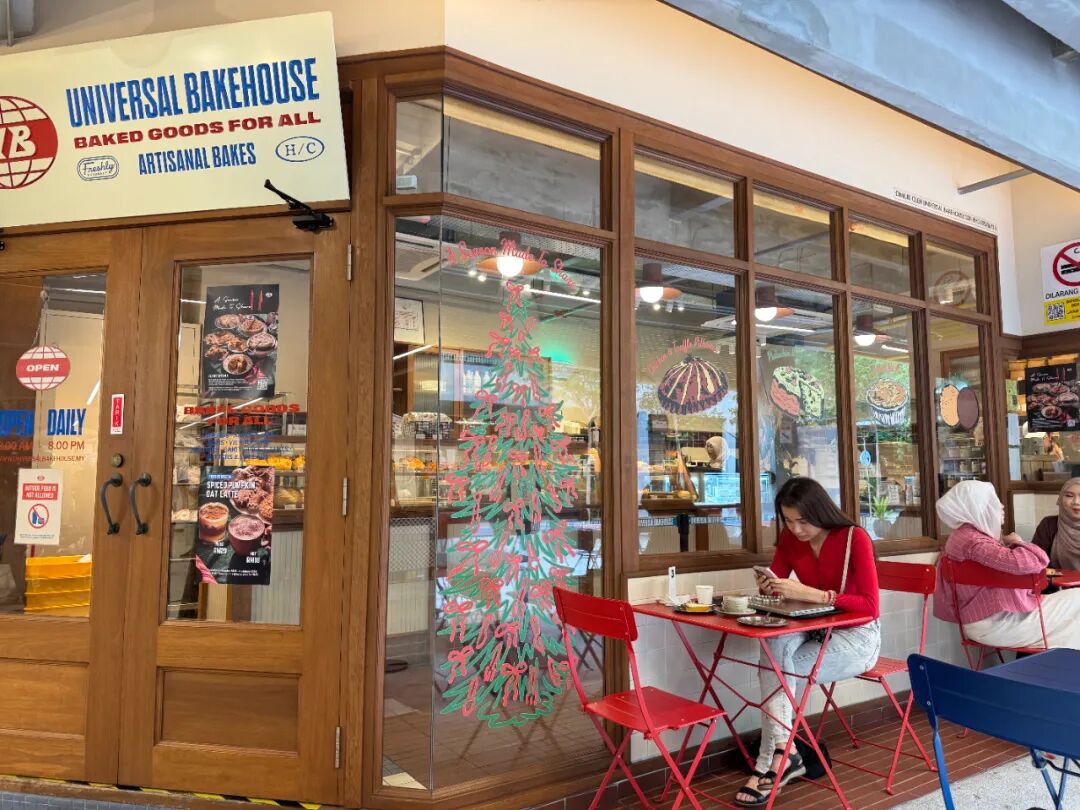
These kinds of fancy bakeries are very popular in Malaysia, especially with young women who love to take photos here.
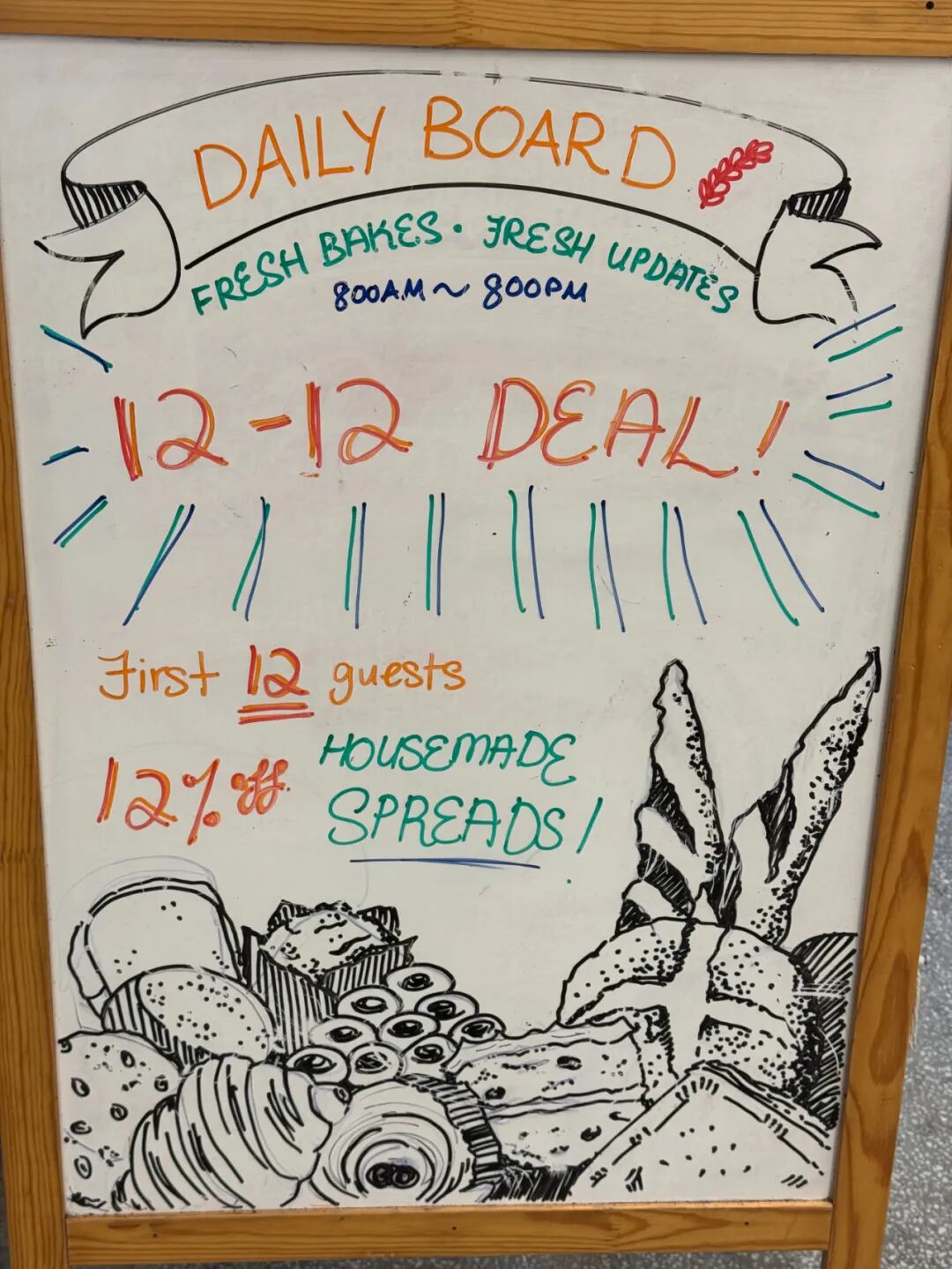
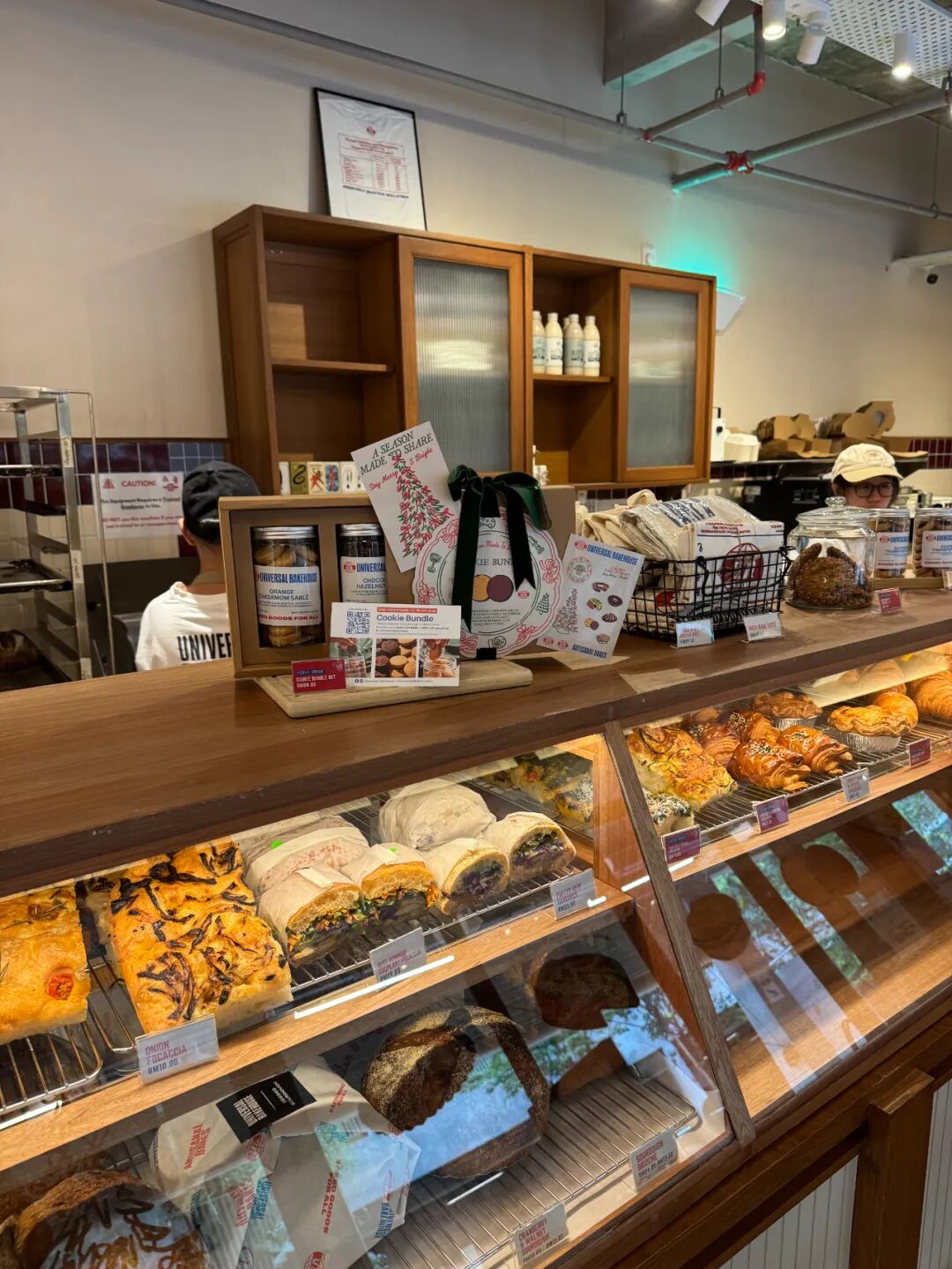
I like to eat bread with coffee for breakfast, along with a light salad. It leaves me feeling refreshed.
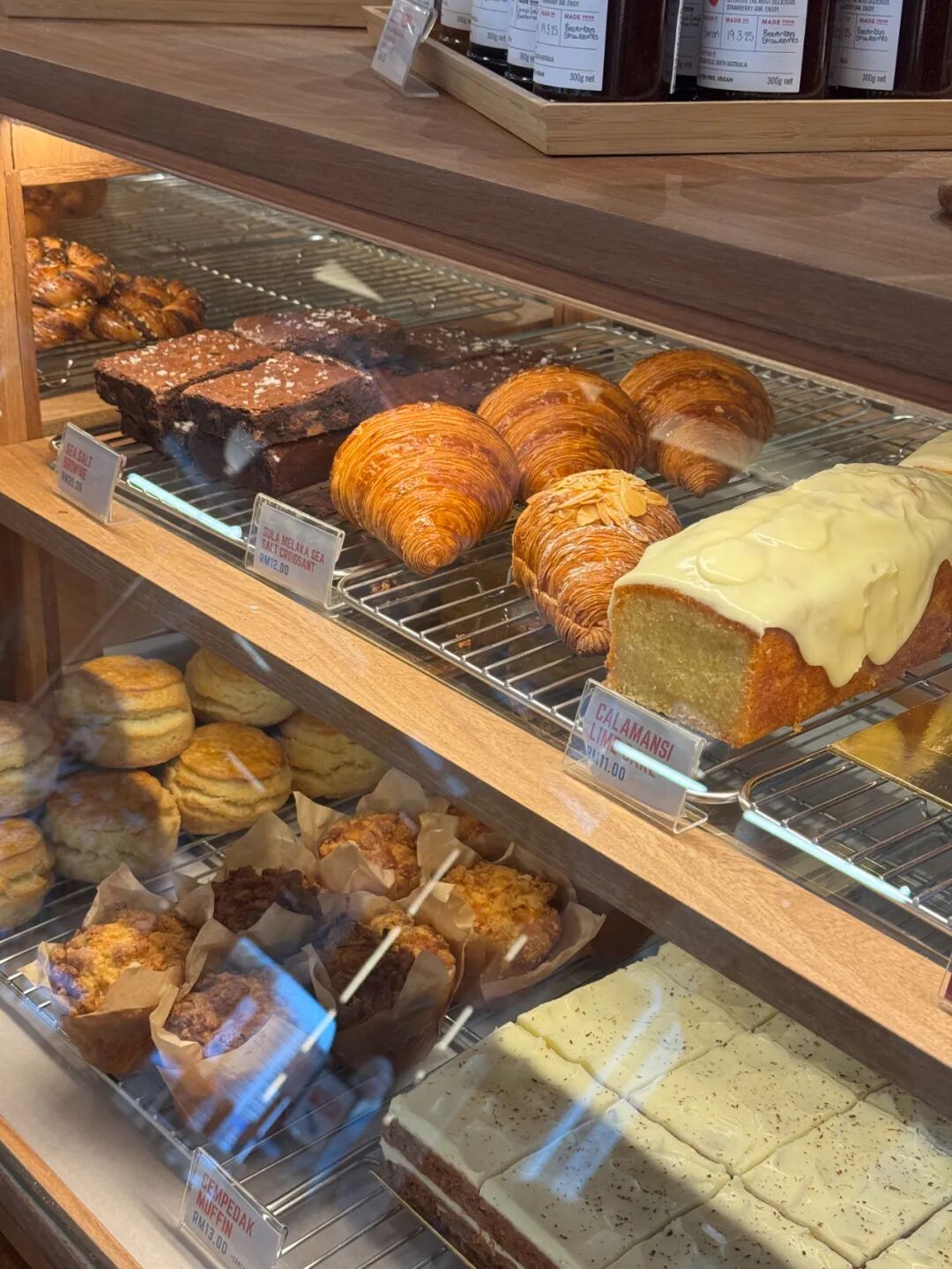
Actually, this shop has very few types of bread. I don't understand why it's so popular.
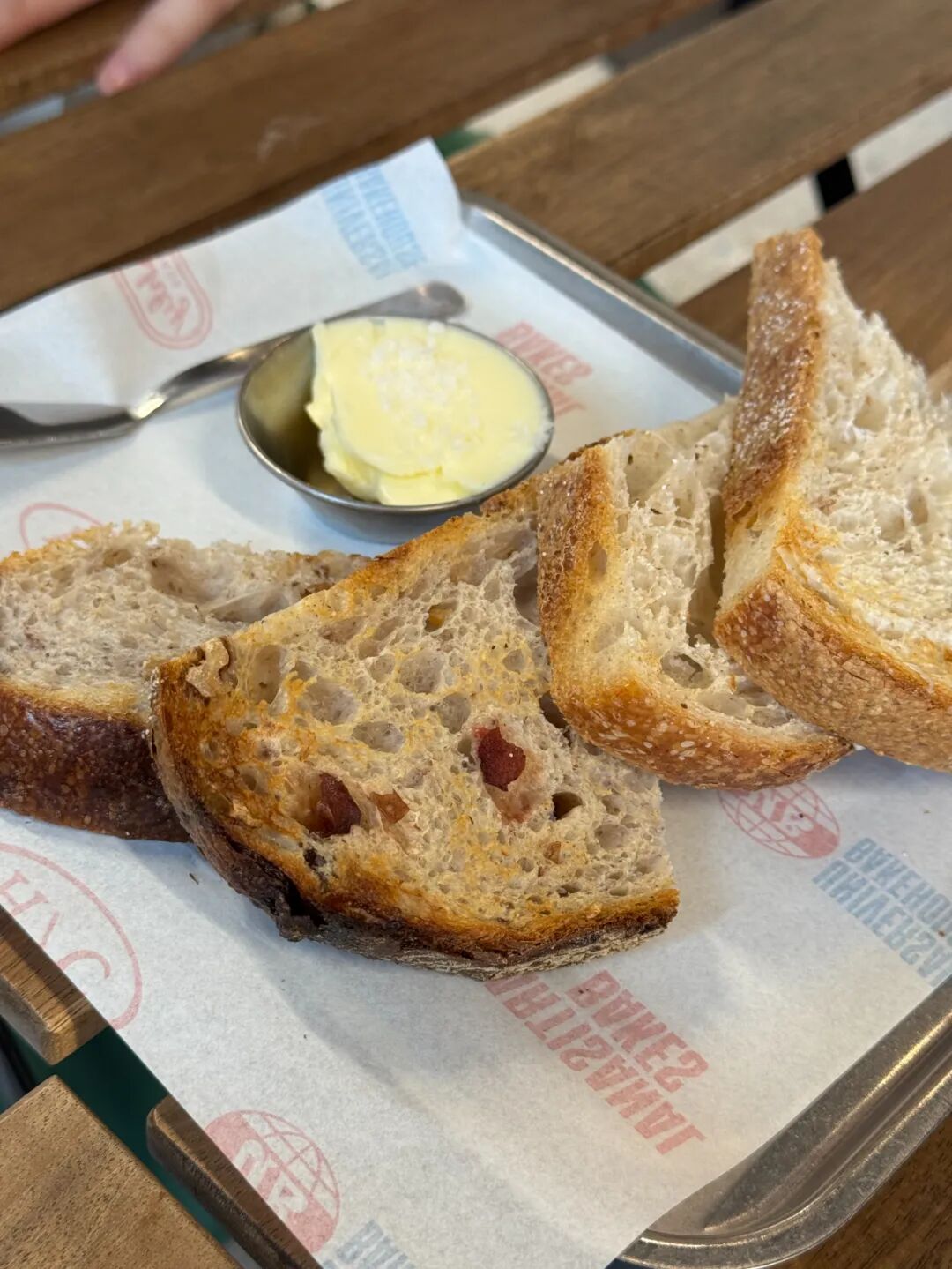
When you dine in, they give you butter. I like to eat bread with butter, just like I do for breakfast at the hotel.
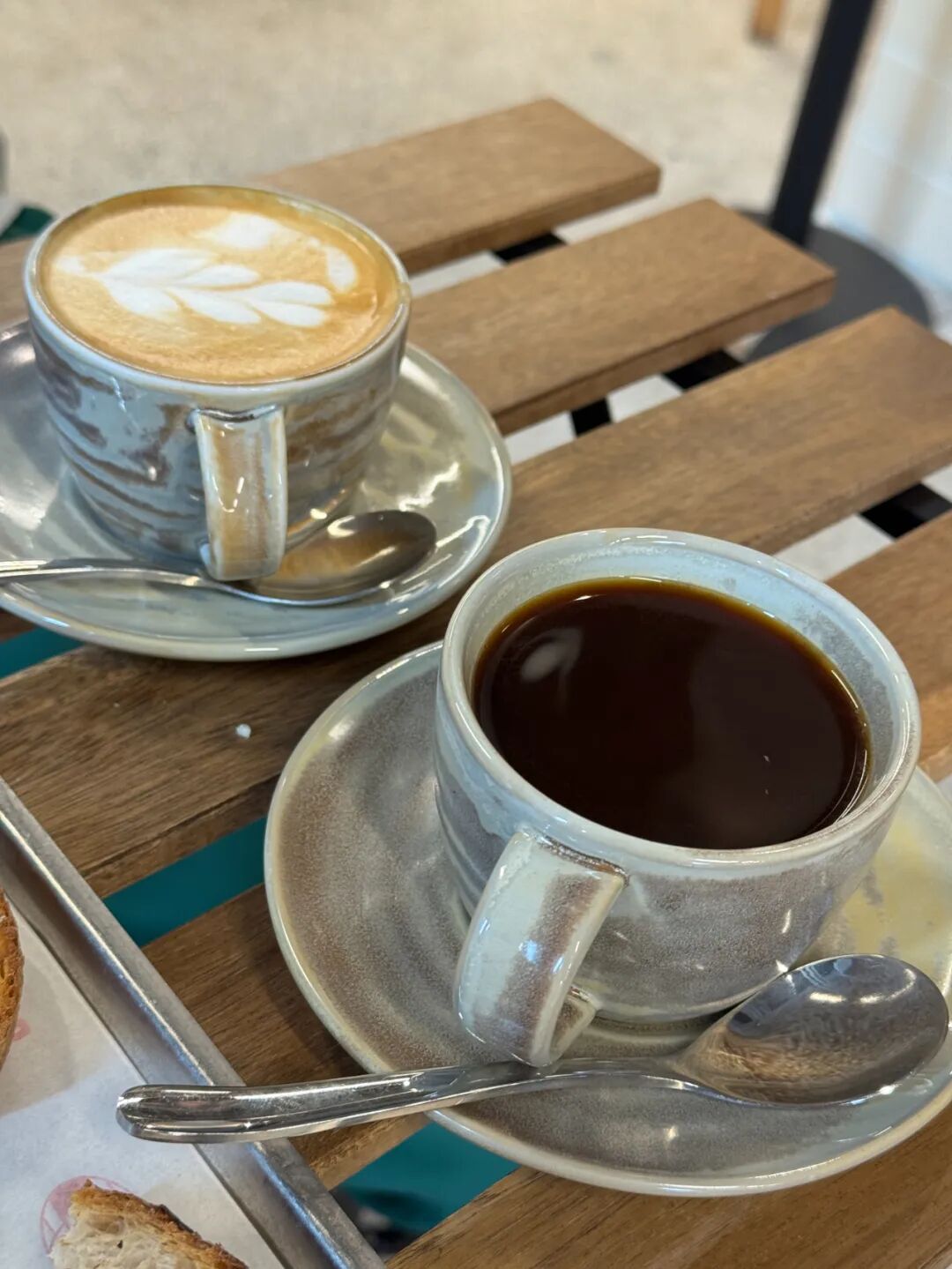
Their coffee is also quite good. There are several other specialty coffee shops in Ampang Learning City that I'll check out later.
Address: Level 1, Ampang Learning City.
Best Halal Food Kuala Lumpur: Halal Certification Tips, Iranian Rice, Burgers and Ampang Coffee
Articles • yusuf908 posted the article • 0 comments • 232 views • 2026-05-23 21:33
Summary: This Kuala Lumpur halal food map issue 8 explains how halal certification works in Malaysia, then follows the author through desserts, Vietnamese food, Lebanese food, Iranian rice, burgers, pastries, coffee, and family-friendly Muslim dining around Ampang.
In previous issues of my Kuala Lumpur Halal Food Map, I've covered how to find halal restaurants in Malaysia. This time, I'll focus on explaining it further. Very few restaurants in Malaysia have official halal certification. Usually, only large chains or big establishments display the certification mark. Most small street-side eateries don't have it. This is because Malaysia doesn't allow private businesses to self-certify as halal. To get certified, you have to pay a fee. The official price is only a few hundred Malaysian ringgit. But if you go through an agent, it can cost tens of thousands. You can guess why there's such a big difference.
So, to save money, many restaurant owners hint that their place is halal in other ways. They might hire waitstaff who wear headscarves or write 'no pork' on the menu. Malaysians know this is common practice and don't only eat at places with official halal certification. Of course, some Malaysians do only eat at certified places. I don't get too hung up on this issue myself. I also don't think it's necessary to question the halal status of food too deeply. For more on this, see the article 'Egypt's Grand Mufti: Don't Be Overly Inquisitive About Whether Meat is Halal.' I've also discussed food issues in my video series.
Here's the list of restaurants featured in this issue:
1. Sugirl Desserts (Malaysian desserts)
2. RUYI ONE (Vietnamese)
3. AL-Amar (Lebanese)
4. MODU (Korean)
5. NASI KANDAR UMAR (Indian)
6. WALLANCE (Fast food)
7. Hai Ji Beef Pan-Fried Buns
8. piccoli lotti (Italian ice cream)
9. Jibby chow (Cantonese dim sum)
10. UNIVERSAL BAKEHOUSE (Bakery)
1. Sugirl Desserts
Mid Valley Megamall is the hardest mall to find parking at in Kuala Lumpur. I came here on a quiet Thursday afternoon and spent over an hour circling before finding a spot. I highly recommend taking public transport if you visit. This small Nanyang-style dessert shop is located at the top of the stairs on the third floor of the mall. It's not too crowded here, making it a nice spot to relax.
This dessert reminds me of the dessert chain Honeymoon Dessert back home. Its flavor is light and sweet, but this shop's desserts have more of a Southeast Asian flair.
Address: Lot T-045A, 3rd Floor, The Boulevard Office Mid Valley City, Mid Valley City, 59200 Kuala Lumpur, Wilayah Persekutuan Kuala Lumpur
2. RUYI ONE
A new shopping district has opened in Ampang’s education hub. We’ve been here many times; the Spanish restaurant we ate at last time is in this area. It’s not too crowded yet, and there are many boutique shops to explore. This place is one of them, serving Vietnamese food.
We came to this small shop because we wanted to drink Vietnamese coffee and have a casual meal.
This restaurant serves no pork and no alcohol. The coffee is delicious.
I visited Vietnam once and had a wonderful time. There are no halal Vietnamese restaurants in Beijing yet, so finding one in Kuala Lumpur is a must-try.
Vietnamese cuisine has a few signature dishes. The first is the Vietnamese sandwich, along with spring rolls and pho.
The spring rolls and pho here are quite authentic. After all, Malaysia and Vietnam are neighbors, so the flavors aren't too different.
Address: Unit G-15, Ground Floor, The Campus Ampang, Lot 7706, Jalan Kolam Air Lama, Mukim, Hulu Kelang, 68000 Ampang, Selangor
3. AL-Amar
This is a Lebanese restaurant on the sixth floor of Pavilion mall, decorated exquisitely. Pavilion is a popular shopping area swarming with tourists and is very lively.
When taking children out to eat in Kuala Lumpur, I prefer Arabic restaurants. The Mandi rice or grilled chicken here are suitable for kids because they aren't spicy.
Lebanese salads are also good for children. Fahim, for example, loves the cucumbers and tomatoes in the salad.
This is a small portion of Mandi chicken rice. The chicken is especially tender, and it comes with cashews and raisins. The children really like it.
Address: Lot 6.10, level 6, Pavilion Kuala Lumpur, 168, Jln Bukit Bintang, Bukit Bintang, 55100 Kuala Lumpur, Wilayah Persekutuan Kuala Lumpur, Malaysia
4. MODU
MODU is a new Korean restaurant in the TRX mall that's really popular right now. You'll probably wait about an hour for lunch, but you can grab a number at the counter and explore the mall. Your phone will get a notification when your table is ready, and the staff will also call you.
This halal sign means they're applying for certification, but it hasn't been approved yet.
Looking at the menu, it's hard to tell exactly what each dish is.
Most of the diners here are young Asian women. There are definitely a lot of Koreans here.
The restaurant has a lot of space, the decor is really nice, and the staff are very friendly.
We chose a clay pot chicken soup and a black chicken soup. They come with a bowl of sticky rice and side dishes. This chicken has sticky rice stuffed inside, and the soup is really fresh and very mild.
It has ginseng in it, which is great for women's health. A set meal costs about 70 Malaysian ringgit.
The chicken is small, perfect for one person. The meat just falls off the bone – it melts in your mouth.
Address: Lot L2T.04.0, Level 2, The Exchange TRX, Persiaran TRX, Imbi, 55188 Kuala Lumpur, Wilayah Persekutuan Kuala Lumpur, Malaysia
5. NASI KANDAR UMAR
Nasi Kandar, or 'pole rice,' is a common fast food in Malaysia. It's a specialty of Indian Muslims, about as popular as Lanzhou beef noodles are back home. Most of these stalls are halal.
You just tell the server what you want on your plate, then pay at the cashier. A plate of rice usually costs around ten ringgit, and with a milk tea, it's usually under twenty.
The only downside is that this rice is usually a bit spicy, so it's not great for kids. But I go for it when I can't decide what else to eat.
Address: 37 3G, Jln Sultan Ismail, Bukit Bintang, 50250 Kuala Lumpur, Wilayah Persekutuan Kuala Lumpur, Malaysia
6. WALLACE
Wallace is a fast-food joint selling burgers and fried chicken. This new spot is celebrating its opening with a deal: three burgers for just 9.9 ringgit.
These burger joints are a hit with everyone in Kuala Lumpur, young and old. Almost all of them are halal, including McDonald's and KFC.
Wallace's fried chicken burgers taste pretty good. The best part is the price – three for 9.9 ringgit. You can't ask for more than that.
My son hasn't quite fallen in love with burgers and fries yet. I wonder if he'll like them later on.
Address: M5A, 11, Jalan Pandan Indah 4/1, Pandan Indah, 55100 Kuala Lumpur, Federal Territory of Kuala Lumpur, Malaysia
7. Hai Ji Beef Pan-Fried Buns
Next to Lanzhou Hand-Pulled Noodles on Petaling Street, there's a shop called Hai Ji Beef Pan-Fried Buns. These buns are a bit bigger than the ones from Henan and Shandong. They taste great. Petaling Street is a hub for Chinese food, mainly serving Chinese cuisine.
Address: 38, Jalan Sultan, City Centre, 50000 Kuala Lumpur, Wilayah Persekutuan Kuala Lumpur, Malaysia
8. PICCOLI LOTTI
This Italian ice cream shop on the first floor of Ampang Point is run by Malays. Italian ice cream is famous, mainly because they use good quality milk and don't add extra water. This shop's ice cream is just like that, with over ten flavors to choose from.
On hot days, I love visiting dessert shops like this. They usually also have various coffee drinks and seating areas. Kids love them too.
Address: Ground Floor, Ampang Point
9. JIBBY CHOW
A new Cantonese-style tea restaurant has opened at Ampang Point. This place serves dim sum all day, so we could still enjoy it even though we arrived in the afternoon.
Everyone eating here is Malay. Malays really love Cantonese morning tea.
The shop's decor features traditional Chinese cultural elements, but the servers are all Malay.
You can sit here all afternoon with a pot of Pu'er tea and a few dim sum dishes.
The soup dumplings, char siu bao, and shaomai here are all delicious and steamed fresh.
The chicken char siu bao has a dim sum-like texture and a sweet flavor. It's not quite as good as the lamb char siu bao at Guangzhou Hui Muslim restaurants, which is truly exceptional.
Address: Level 2, Ampang Learning City.
10. UNIVERSAL BAKEHOUSE
This popular bakery in Ampang Learning City has many branches and is usually packed. However, the branch we visited in Ampang wasn't too crowded.
These kinds of fancy bakeries are very popular in Malaysia, especially with young women who love to take photos here.
I like to eat bread with coffee for breakfast, along with a light salad. It leaves me feeling refreshed.
Actually, this shop has very few types of bread. I don't understand why it's so popular.
When you dine in, they give you butter. I like to eat bread with butter, just like I do for breakfast at the hotel.
Their coffee is also quite good. There are several other specialty coffee shops in Ampang Learning City that I'll check out later.
Address: Level 1, Ampang Learning City. view all
Summary: This Kuala Lumpur halal food map issue 8 explains how halal certification works in Malaysia, then follows the author through desserts, Vietnamese food, Lebanese food, Iranian rice, burgers, pastries, coffee, and family-friendly Muslim dining around Ampang.
In previous issues of my Kuala Lumpur Halal Food Map, I've covered how to find halal restaurants in Malaysia. This time, I'll focus on explaining it further. Very few restaurants in Malaysia have official halal certification. Usually, only large chains or big establishments display the certification mark. Most small street-side eateries don't have it. This is because Malaysia doesn't allow private businesses to self-certify as halal. To get certified, you have to pay a fee. The official price is only a few hundred Malaysian ringgit. But if you go through an agent, it can cost tens of thousands. You can guess why there's such a big difference.
So, to save money, many restaurant owners hint that their place is halal in other ways. They might hire waitstaff who wear headscarves or write 'no pork' on the menu. Malaysians know this is common practice and don't only eat at places with official halal certification. Of course, some Malaysians do only eat at certified places. I don't get too hung up on this issue myself. I also don't think it's necessary to question the halal status of food too deeply. For more on this, see the article 'Egypt's Grand Mufti: Don't Be Overly Inquisitive About Whether Meat is Halal.' I've also discussed food issues in my video series.
Here's the list of restaurants featured in this issue:
1. Sugirl Desserts (Malaysian desserts)
2. RUYI ONE (Vietnamese)
3. AL-Amar (Lebanese)
4. MODU (Korean)
5. NASI KANDAR UMAR (Indian)
6. WALLANCE (Fast food)
7. Hai Ji Beef Pan-Fried Buns
8. piccoli lotti (Italian ice cream)
9. Jibby chow (Cantonese dim sum)
10. UNIVERSAL BAKEHOUSE (Bakery)
1. Sugirl Desserts
Mid Valley Megamall is the hardest mall to find parking at in Kuala Lumpur. I came here on a quiet Thursday afternoon and spent over an hour circling before finding a spot. I highly recommend taking public transport if you visit. This small Nanyang-style dessert shop is located at the top of the stairs on the third floor of the mall. It's not too crowded here, making it a nice spot to relax.
This dessert reminds me of the dessert chain Honeymoon Dessert back home. Its flavor is light and sweet, but this shop's desserts have more of a Southeast Asian flair.
Address: Lot T-045A, 3rd Floor, The Boulevard Office Mid Valley City, Mid Valley City, 59200 Kuala Lumpur, Wilayah Persekutuan Kuala Lumpur
2. RUYI ONE
A new shopping district has opened in Ampang’s education hub. We’ve been here many times; the Spanish restaurant we ate at last time is in this area. It’s not too crowded yet, and there are many boutique shops to explore. This place is one of them, serving Vietnamese food.
We came to this small shop because we wanted to drink Vietnamese coffee and have a casual meal.
This restaurant serves no pork and no alcohol. The coffee is delicious.
I visited Vietnam once and had a wonderful time. There are no halal Vietnamese restaurants in Beijing yet, so finding one in Kuala Lumpur is a must-try.
Vietnamese cuisine has a few signature dishes. The first is the Vietnamese sandwich, along with spring rolls and pho.
The spring rolls and pho here are quite authentic. After all, Malaysia and Vietnam are neighbors, so the flavors aren't too different.
Address: Unit G-15, Ground Floor, The Campus Ampang, Lot 7706, Jalan Kolam Air Lama, Mukim, Hulu Kelang, 68000 Ampang, Selangor
3. AL-Amar
This is a Lebanese restaurant on the sixth floor of Pavilion mall, decorated exquisitely. Pavilion is a popular shopping area swarming with tourists and is very lively.
When taking children out to eat in Kuala Lumpur, I prefer Arabic restaurants. The Mandi rice or grilled chicken here are suitable for kids because they aren't spicy.
Lebanese salads are also good for children. Fahim, for example, loves the cucumbers and tomatoes in the salad.
This is a small portion of Mandi chicken rice. The chicken is especially tender, and it comes with cashews and raisins. The children really like it.
Address: Lot 6.10, level 6, Pavilion Kuala Lumpur, 168, Jln Bukit Bintang, Bukit Bintang, 55100 Kuala Lumpur, Wilayah Persekutuan Kuala Lumpur, Malaysia
4. MODU
MODU is a new Korean restaurant in the TRX mall that's really popular right now. You'll probably wait about an hour for lunch, but you can grab a number at the counter and explore the mall. Your phone will get a notification when your table is ready, and the staff will also call you.
This halal sign means they're applying for certification, but it hasn't been approved yet.
Looking at the menu, it's hard to tell exactly what each dish is.
Most of the diners here are young Asian women. There are definitely a lot of Koreans here.
The restaurant has a lot of space, the decor is really nice, and the staff are very friendly.
We chose a clay pot chicken soup and a black chicken soup. They come with a bowl of sticky rice and side dishes. This chicken has sticky rice stuffed inside, and the soup is really fresh and very mild.
It has ginseng in it, which is great for women's health. A set meal costs about 70 Malaysian ringgit.
The chicken is small, perfect for one person. The meat just falls off the bone – it melts in your mouth.
Address: Lot L2T.04.0, Level 2, The Exchange TRX, Persiaran TRX, Imbi, 55188 Kuala Lumpur, Wilayah Persekutuan Kuala Lumpur, Malaysia
5. NASI KANDAR UMAR
Nasi Kandar, or 'pole rice,' is a common fast food in Malaysia. It's a specialty of Indian Muslims, about as popular as Lanzhou beef noodles are back home. Most of these stalls are halal.
You just tell the server what you want on your plate, then pay at the cashier. A plate of rice usually costs around ten ringgit, and with a milk tea, it's usually under twenty.
The only downside is that this rice is usually a bit spicy, so it's not great for kids. But I go for it when I can't decide what else to eat.
Address: 37 3G, Jln Sultan Ismail, Bukit Bintang, 50250 Kuala Lumpur, Wilayah Persekutuan Kuala Lumpur, Malaysia
6. WALLACE
Wallace is a fast-food joint selling burgers and fried chicken. This new spot is celebrating its opening with a deal: three burgers for just 9.9 ringgit.
These burger joints are a hit with everyone in Kuala Lumpur, young and old. Almost all of them are halal, including McDonald's and KFC.
Wallace's fried chicken burgers taste pretty good. The best part is the price – three for 9.9 ringgit. You can't ask for more than that.
My son hasn't quite fallen in love with burgers and fries yet. I wonder if he'll like them later on.
Address: M5A, 11, Jalan Pandan Indah 4/1, Pandan Indah, 55100 Kuala Lumpur, Federal Territory of Kuala Lumpur, Malaysia
7. Hai Ji Beef Pan-Fried Buns
Next to Lanzhou Hand-Pulled Noodles on Petaling Street, there's a shop called Hai Ji Beef Pan-Fried Buns. These buns are a bit bigger than the ones from Henan and Shandong. They taste great. Petaling Street is a hub for Chinese food, mainly serving Chinese cuisine.
Address: 38, Jalan Sultan, City Centre, 50000 Kuala Lumpur, Wilayah Persekutuan Kuala Lumpur, Malaysia
8. PICCOLI LOTTI
This Italian ice cream shop on the first floor of Ampang Point is run by Malays. Italian ice cream is famous, mainly because they use good quality milk and don't add extra water. This shop's ice cream is just like that, with over ten flavors to choose from.
On hot days, I love visiting dessert shops like this. They usually also have various coffee drinks and seating areas. Kids love them too.
Address: Ground Floor, Ampang Point
9. JIBBY CHOW
A new Cantonese-style tea restaurant has opened at Ampang Point. This place serves dim sum all day, so we could still enjoy it even though we arrived in the afternoon.
Everyone eating here is Malay. Malays really love Cantonese morning tea.
The shop's decor features traditional Chinese cultural elements, but the servers are all Malay.
You can sit here all afternoon with a pot of Pu'er tea and a few dim sum dishes.
The soup dumplings, char siu bao, and shaomai here are all delicious and steamed fresh.
The chicken char siu bao has a dim sum-like texture and a sweet flavor. It's not quite as good as the lamb char siu bao at Guangzhou Hui Muslim restaurants, which is truly exceptional.
Address: Level 2, Ampang Learning City.
10. UNIVERSAL BAKEHOUSE
This popular bakery in Ampang Learning City has many branches and is usually packed. However, the branch we visited in Ampang wasn't too crowded.
These kinds of fancy bakeries are very popular in Malaysia, especially with young women who love to take photos here.
I like to eat bread with coffee for breakfast, along with a light salad. It leaves me feeling refreshed.
Actually, this shop has very few types of bread. I don't understand why it's so popular.
When you dine in, they give you butter. I like to eat bread with butter, just like I do for breakfast at the hotel.
Their coffee is also quite good. There are several other specialty coffee shops in Ampang Learning City that I'll check out later.
Address: Level 1, Ampang Learning City.
Best Halal Food Kuala Lumpur Ramadan: Iftar, Arab Rice, Middle Eastern Restaurants and Rehan
Articles • yusuf908 posted the article • 0 comments • 252 views • 2026-05-23 21:31
Summary: This Kuala Lumpur halal food map issue 9 looks at Ramadan in Malaysia and introduces coffee shops, Korean fried chicken, Lanzhou-style roast lamb, iftar meals, Arab rice, Yemeni flatbread, Middle Eastern restaurants, and Rehan Restaurant.
Ramadan has just passed, and I spent the entire Ramadan this year in Kuala Lumpur. In fact, in Malaysia, Ramadan is not much different from usual times, and pedestrians are not restricted from eating and drinking on the streets. Most restaurants are open normally, but the number of customers will be less, but some restaurants will open all night after evening. Larger mosques will provide free iftar meals, which are served by people from all walks of life. The meals are relatively simple and unpretentious. Some of them don't look as rich as the iftar refreshments prepared by mosques in Beijing, so there is nothing to show off.
However, when it comes to food, nowhere is as rich as Beijing. Every day I see Beijing folks posting Iftar refreshments in my circle of friends, and I am extremely envious. I am going back to Beijing next month, and someone urged me to update the Beijing halal food map and start a new food journey as soon as I return to Beijing.
The list of restaurants introduced in this issue is as follows:
1. MARU COFFEE (Japanese style coffee)
2. KyoChon Chicken (Korean fried chicken)
3. Lanzhou open fire roasted mutton
4. Sahara Tent (Morocco)
5. RGB COFFEE
6. RESTORAN YAHALA (Middle East)
7. Nasi & Mee by Bapak Sayang (Malaysia)
8. BUSHANZIP (Busan)
9. ORCHLD (Middle East)
10. The Castle (Arabia)
11. YAKINIKU KURO (Japanese barbecue)
12. DRAGON HOT POT, one spicy and one spicy
13. WADI HADRAMAWT (Yemen)
14. REHAN (Middle East)
1. MARU COFFEE
Maru means circle, period, and OK in Japanese. This is a Japanese-style coffee chain in Kuala Lumpur. The Japanese-style simple decoration style looks particularly refreshing. In Kuala Lumpur, there are not many shops open before 10 o'clock, and it is not easy to find such a simple cafe with breakfast.
The front desk clerks are two young ladies wearing headscarves who serve with a smile every time they meet.
I especially like to eat their breakfast burgers. I have tried chicken, beef, and egg burgers. They are more delicious and exquisite than McDonald's burgers. A set meal with a cup of coffee and a burger costs about 11 ringgit.
The tuna sandwich set meal is more expensive at RM19.8, and is actually not as delicious as the beef or chicken burgers.
AddressMaru Kafe by Mynews. Com
2. KyoChon Chicken
This is a popular Korean fried chicken restaurant that only takes away food. It is located next to our store. Over time, I learned that this store is quite famous and its business is very good. It does not have dine-in food and only accepts online take-out orders.
There is a kitchen inside, which looks quite clean, and the menu is very simple, which is fried chicken in various flavors.
My wife likes this fried chicken very much and orders it often. You can also pick it up at the store.
AddressKyochon 1991 Wisma Central
3. Lanzhou open fire roasted mutton
There is a newly opened Lanzhou barbecue restaurant in Petaling Street. When I passed by by chance, I discovered that most of the restaurants in Petaling Street are Chinese food, with various cuisines, of which Northwestern cuisine accounts for the majority.
It was indeed an open-fire barbecue, but Brother Bati’s technique was not good enough. We were anxious to break our fast, and later asked the boss to grill it himself.
Petaling Street is more lively at night. Many shops are open until early morning, and some are even open all night.
Address: Baker Street (Petaling Street)
4. Sahara Tent
On the way my son goes to and from school, there are two Sahara restaurants. They are chain stores and the decoration style is Southeast Asian style. Since my son has been to Arab countries, he has been talking about going to Dubai again. Sometimes I take him here to have a good meal.
The interior space of the restaurant is very large and the environment is very good. There are running water and waterwheels, just like being in a tropical rain forest.
His table is also quite unique, and I just noticed it was a sewing machine.
This restaurant belongs to the Moroccan style of Arabic cuisine, which can also be said to be North African style. The tagine is a specialty. However, the children only eat French fries and barbecue every time. The staple food is scones. I think it is also very good. These foods are also easy to eat.
Address: Sahara Tent Restaurant Jalan Ampang
5. RGB COFFEE
One day I was taking my children for a walk near my house. It was raining and I accidentally walked to this cafe to take shelter. There was a big yard in front of his house. Parking was convenient and the kids could play in the yard.
I like these Western-style simple meals and light meals, and they are also suitable for feeding children. After staying in Kuala Lumpur for a long time, the taste becomes lighter and lighter, which is also influenced by the children.
I now have a soft spot for this kind of café and bar with a refreshing environment. This store is a treasure. It is located in a residential area in the city center and is rarely visited by tourists.
To be precise, there are fewer people during the day. I once passed by in the evening and found that there were more people in the store. This is because people here prefer to go out to consume in the dark.
In the block where this store is located, there are several good-looking restaurants with relatively large areas. I will take my time to explore the restaurants when I have time in the future.
Address: RGB Coffee at the Bean Hive
6. RESTORAN YAHALA
Some time ago, my son was ill and hospitalized. He didn't like to eat the special children's meals provided by the hospital. The main reason was that the children's meals in the hospital were too healthy and light, with many vegetables and bland taste. He didn't like vegetables, but wanted to eat Arabic naan and mandi rice. There happened to be an Arabic restaurant next to the hospital, so I packed it up and brought it back to him to eat.
Middle Eastern restaurants are more common in Kuala Lumpur. After eating too much, I can taste different flavors. Now I don’t need to look at the menu when ordering because they are all the same, but the cooking methods are slightly different.
And what’s incredible to me is that Middle Eastern restaurants in Kuala Lumpur are generally doing very well, no matter how well they do.
My son likes to eat Arabic flatbreads, but there are many kinds of Arabic flatbreads, some are like naan, and some are like bread.
As a northerner, my son prefers pasta over rice. The chicken in Mandy Chicken Rice is suitable for children because it is neither spicy nor salty, and is soft and fall off the bone.
Address: Yahala Restaurant - Ampang
7. Nasi & Mee by Bapak Sayang
This is a traditional Malaysian flavor chain store in Aeon Supermarket. In fact, there are various Southeast Asian delicacies on the menu. What we ordered was Vietnamese special traditional snacks.
This kind of small shop is more suitable for young couples.
I like Southeast Asian curry rice very much. It’s a bit spicy, but it’s also very appetizing. There are usually several snacks included in a set meal.
Address: Nasi Mee by Bapak Sayang AEON
8. BUSHANZIP
BUSAN means Busan. This restaurant specializes in Busan, South Korea, and its signature dish is spicy fried octopus.
This store is the most Korean store I have ever eaten in. The owner is Korean and speaks fluent English.
The decoration of the restaurant is also exquisite and the service attitude is very good.
This spicy stir-fried live octopus is a must-order for every table. The waiters help fry it freshly. The picture above shows the correct way to eat it.
The octopus is guaranteed to be fresh and tender, but it is also very spicy.
The vegetables that accompany the meal are also very fresh, and the waiters will help add vegetables at any time, so you don’t have to worry about not having enough food, which is great for friends who like to eat vegetables.
The spicy octopus alone is definitely not enough, you also have to add a piece of Australian Wagyu beef barbecue.
The staple food is this Busan specialty cold noodles. The taste of this noodles is different from the cold noodles we have eaten in China. The boss said this is a Busan specialty, but I still think Qiqihar cold noodles are more delicious.
Address: Busanzip
9. ORCHID
This Middle Eastern restaurant is the closest to our home. It’s just downstairs and across the road. Although it looks classy, the food is actually very cheap, and the mandi rice in this restaurant is the best in Kuala Lumpur in my opinion.
Most Middle Eastern restaurants will install a large screen to watch football games. As long as there is a game, the restaurant will be open all night.
Even the toilets and wash basins in this store are made of gold. My son likes to eat their food. We come here almost every week and the store staff all know us.
For this portion of Mandy's Chicken Rice, if it's just my son and I, we'd order a quarter portion, and two adults can order a half portion. A quarter portion only costs RM22, which is cheaper than many restaurants I've been to, and it's also delicious.
Sometimes the flavors are changed, but basically they are not bad, suitable for children, nutritious, delicious and healthy.
But my son doesn’t really like salads or anything with soup or dip, he only likes mandi or grilled meats.
Address: Orchid Restaurant (Orchid)
10. The Castle
This store is also near where I live. I pass by it every day. One time, my son suddenly wanted to eat the castle-like meal, so I took him here to have a few meals. The taste was average, not as good as the Orchid I recommended earlier.
But the environment is also very good. The advantage of this store is that there is a yard at the door and easy parking.
The price is a few dollars more expensive than Orchid, but the prices of this type of Arabic restaurant are not much different, so don't be intimidated by the decoration, just go inside boldly.
The Mandy Chicken Rice in this store looks relatively simple, with no raisins in it and few side dishes.
Address: The Castle Restaurant
11. YAKINIKU KURO
There is a very popular Japanese barbecue restaurant in TRX, and you have to queue for half an hour to get a meal.
Beef imported from Australia and Japan is used, and the per capita consumption is about RM150.
A quick calculation shows that almost all the Japanese food shops I have seen in Kuala Lumpur are halal.
However, eating barbecue in Kuala Lumpur is not as cost-effective as in Beijing. The main reason is that the price is slightly higher than that in Beijing, but the meat quality is actually almost the same.
Address: Yakiniku Kuro the Exchange TRX
11. DRAGON HOT POT, one spicy and one spicy
A spicy hotpot restaurant very close to the pavilion, offering spicy hotpot, spicy hotpot, and dry mix. There is a sign at the door that says, "No pork, no lard." This is a cryptic statement for a halal shop, because it requires a lot of money to be certified to hang the halal label.
The variety of dishes is quite complete, and there are many ways to eat it. It is a newly opened store and there are not many people.
We chose two flavors: spicy hotpot and dry mix. The taste is very good and the price is cheap. The per capita consumption is about RM50.
Address: Xiao Long Xing Dou Lao Hotpot (A Dragon Hotpot)
12. Cafe in house
As I said before, in Kuala Lumpur, there are not many places where you can have a delicious and healthy breakfast in the morning. This cafe is one of them. It has a Western-style healthy breakfast that I like. I have eaten the halal version in Canada for a few days before. It is rare to find another one in Kuala Lumpur.
The electronic screen says no pork and no lard. A breakfast costs about 20 ringgit. Such breakfast also sells for 20 Canadian dollars in Canada.
The sign also specifically emphasizes that outside food and alcohol are prohibited, and this store strictly prohibits alcohol.
I chose mushroom omelette with waffles. There are many combinations to choose from. I also had a latte and I felt refreshed in the morning.
Address: Cafe-In House
13. WADI HADRAMAWT
There is a Yemeni Arabic restaurant near my son’s school. This restaurant is his favorite restaurant. My son likes to eat Yemeni baked flatbreads very much.
This kind of flatbread is called mulawah, which means flat bread in Arabic. I have a small size, and there is also a large size. It has a full wheat flavor. I also like to eat it, especially when dipped in the potato soup provided by the store.
This store has distinct Yemeni characteristics, and the waiters are also dark-skinned Arabs from Yemen.
Arabic restaurants in Kuala Lumpur usually do not emphasize that they are halal. They may feel that there is no need to mark it. After all, halal signs are rarely seen in the Middle East, and these Arab restaurants all do not serve alcohol.
There is a very large parking lot in front of this store. During Ramadan, the yard is full of cars coming to break fast at night, but usually there are not many people and the price is very cheap. The average consumption per person is 30 yuan. I only took my son to eat there more than ten times.
Address: Restoran Wadi Hadramawt
14. REHAN
This store is also near the apartment where I live, across the road from the white ORCHID. My son prefers to eat in this store because his family has Yemeni flatbreads, but the one opposite does not. So sometimes I go to the opposite store to pack a mandi, and then pack a Yemeni flatbread from this store.
The mandi in this shop is okay, but not as exquisite as the one opposite. My wife also prefers the mandi in the white Arabic restaurant across the street, so they are all Arabic rice, but the details are slightly different. The prices of the Arab restaurants near our home are slightly higher than the one at my son’s school. For example, the Yemeni flatbread in this shop is 10 ringgit a piece, while the school shop only sells it for 4 ringgit, and it is more delicious.
Address: Rehan Restaurant (Rehan) view all
Summary: This Kuala Lumpur halal food map issue 9 looks at Ramadan in Malaysia and introduces coffee shops, Korean fried chicken, Lanzhou-style roast lamb, iftar meals, Arab rice, Yemeni flatbread, Middle Eastern restaurants, and Rehan Restaurant.
Ramadan has just passed, and I spent the entire Ramadan this year in Kuala Lumpur. In fact, in Malaysia, Ramadan is not much different from usual times, and pedestrians are not restricted from eating and drinking on the streets. Most restaurants are open normally, but the number of customers will be less, but some restaurants will open all night after evening. Larger mosques will provide free iftar meals, which are served by people from all walks of life. The meals are relatively simple and unpretentious. Some of them don't look as rich as the iftar refreshments prepared by mosques in Beijing, so there is nothing to show off.
However, when it comes to food, nowhere is as rich as Beijing. Every day I see Beijing folks posting Iftar refreshments in my circle of friends, and I am extremely envious. I am going back to Beijing next month, and someone urged me to update the Beijing halal food map and start a new food journey as soon as I return to Beijing.
The list of restaurants introduced in this issue is as follows:
1. MARU COFFEE (Japanese style coffee)
2. KyoChon Chicken (Korean fried chicken)
3. Lanzhou open fire roasted mutton
4. Sahara Tent (Morocco)
5. RGB COFFEE
6. RESTORAN YAHALA (Middle East)
7. Nasi & Mee by Bapak Sayang (Malaysia)
8. BUSHANZIP (Busan)
9. ORCHLD (Middle East)
10. The Castle (Arabia)
11. YAKINIKU KURO (Japanese barbecue)
12. DRAGON HOT POT, one spicy and one spicy
13. WADI HADRAMAWT (Yemen)
14. REHAN (Middle East)
1. MARU COFFEE
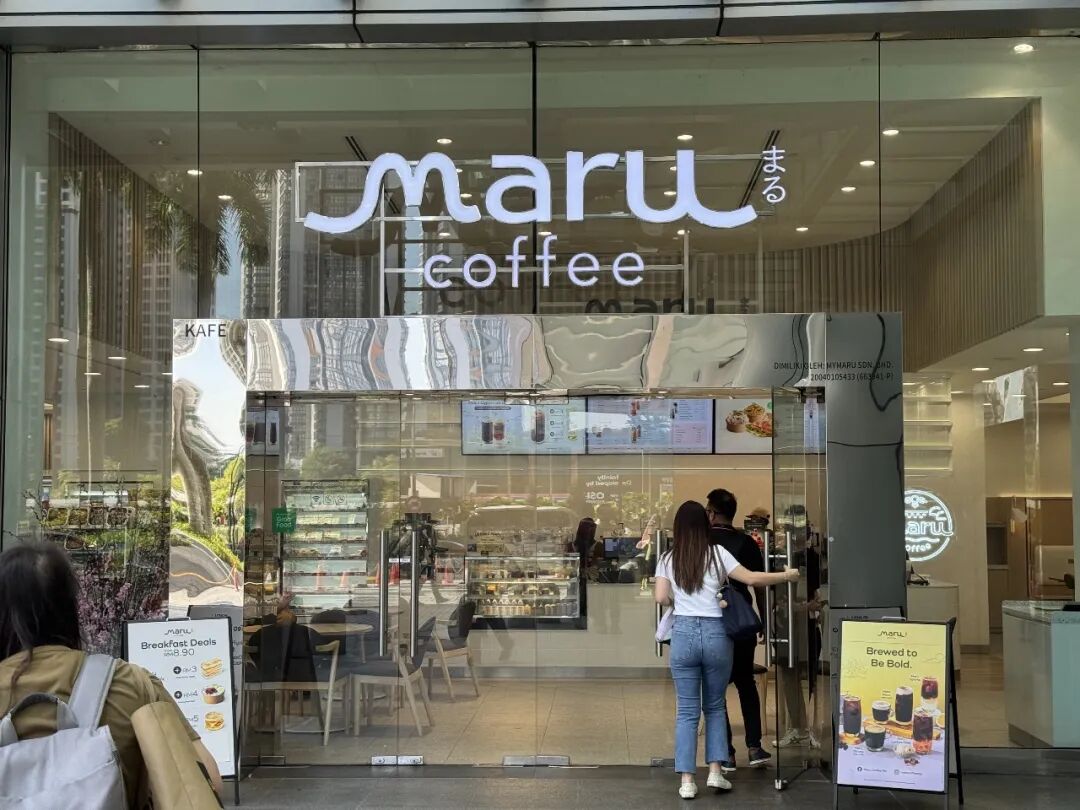
Maru means circle, period, and OK in Japanese. This is a Japanese-style coffee chain in Kuala Lumpur. The Japanese-style simple decoration style looks particularly refreshing. In Kuala Lumpur, there are not many shops open before 10 o'clock, and it is not easy to find such a simple cafe with breakfast.
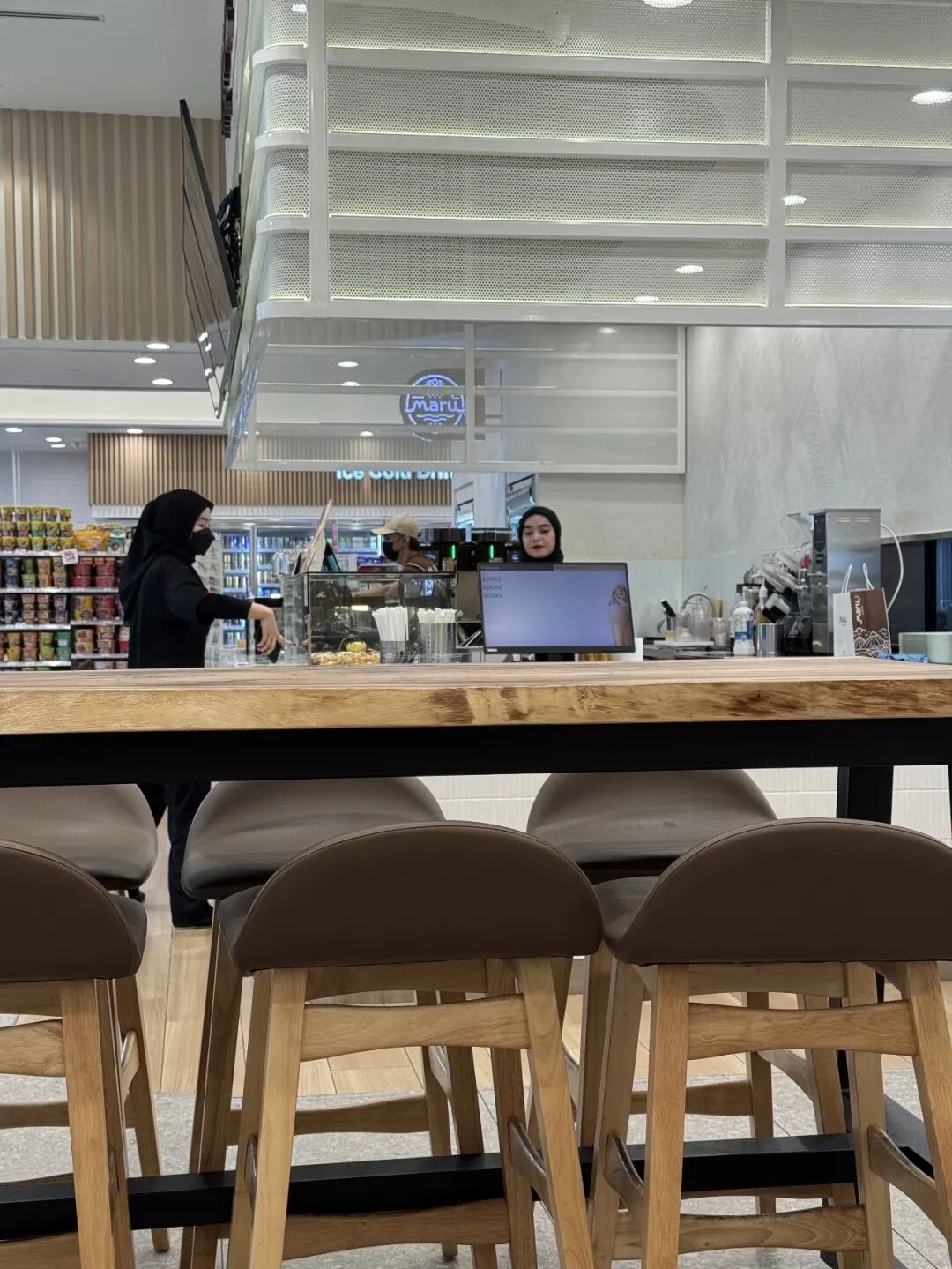
The front desk clerks are two young ladies wearing headscarves who serve with a smile every time they meet.
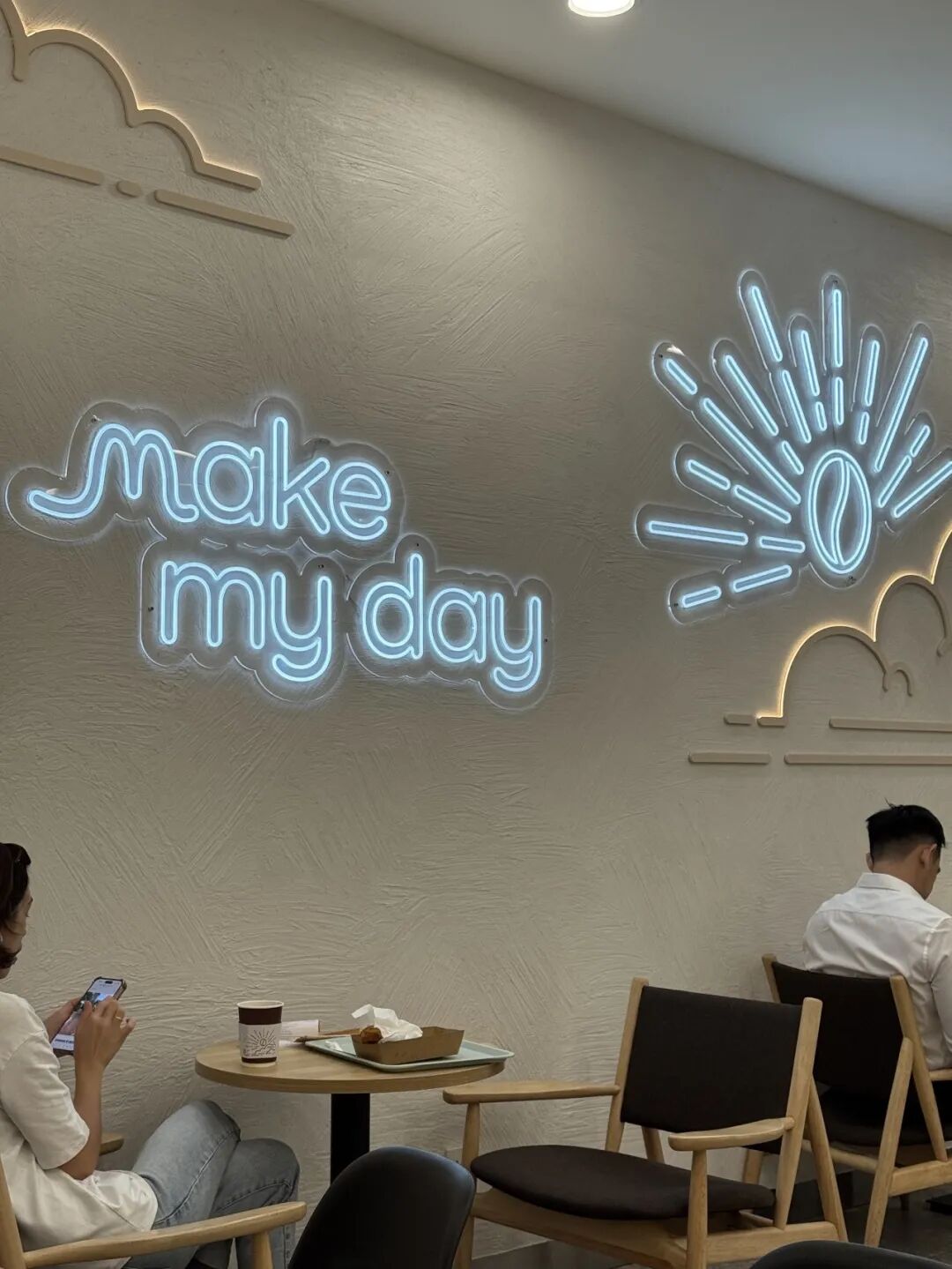
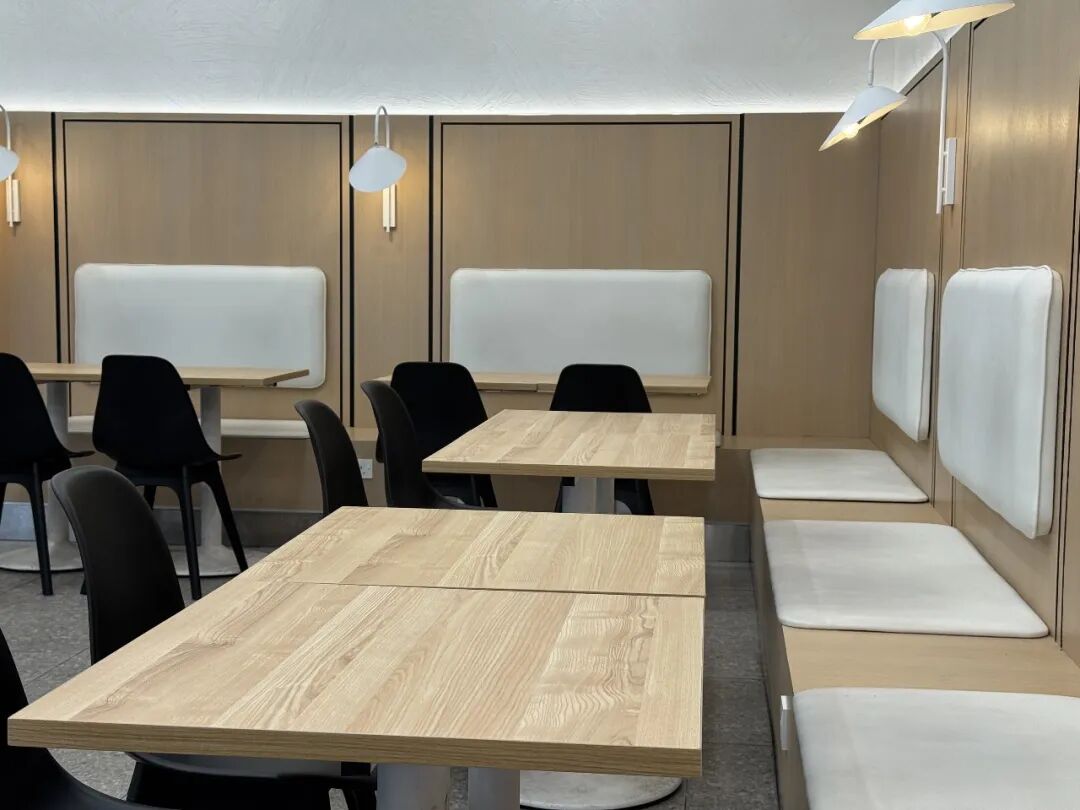
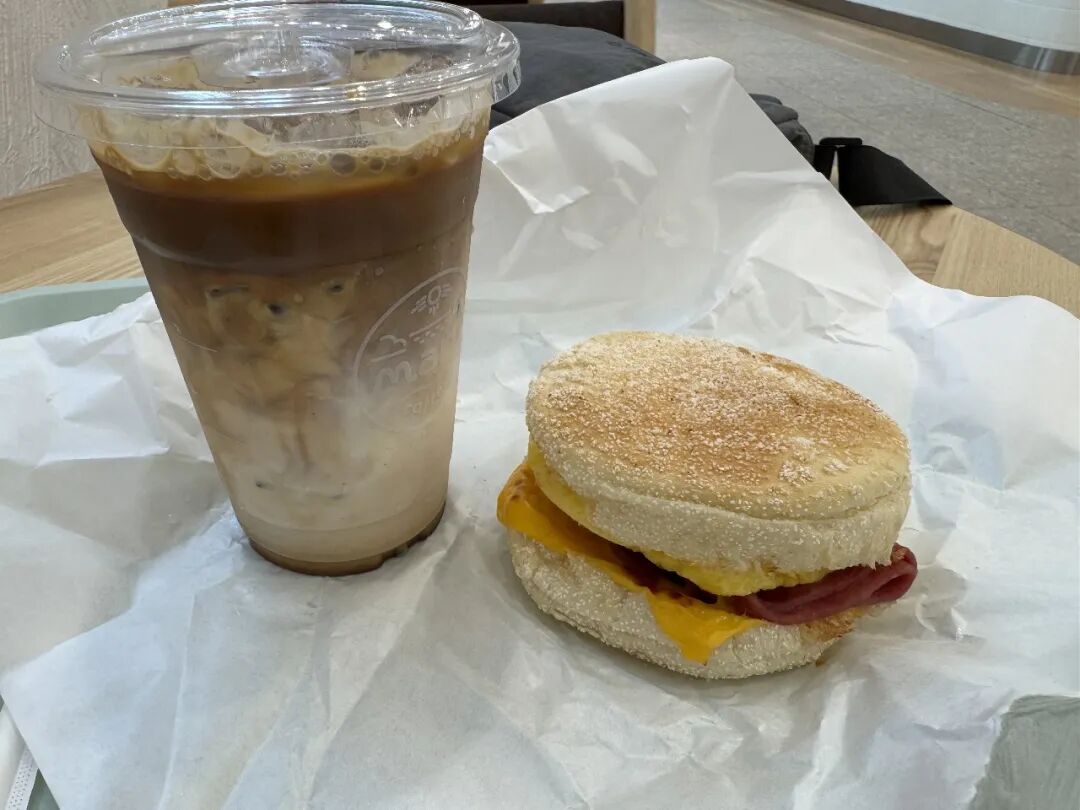
I especially like to eat their breakfast burgers. I have tried chicken, beef, and egg burgers. They are more delicious and exquisite than McDonald's burgers. A set meal with a cup of coffee and a burger costs about 11 ringgit.
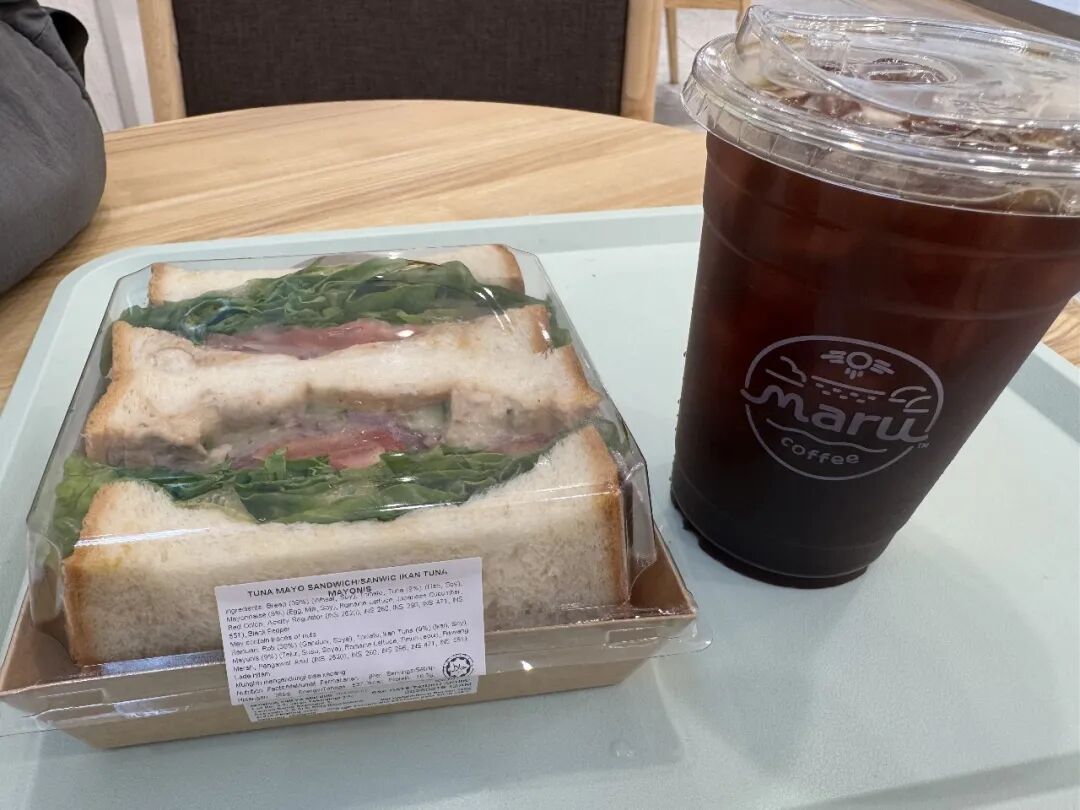
The tuna sandwich set meal is more expensive at RM19.8, and is actually not as delicious as the beef or chicken burgers.
AddressMaru Kafe by Mynews. Com
2. KyoChon Chicken
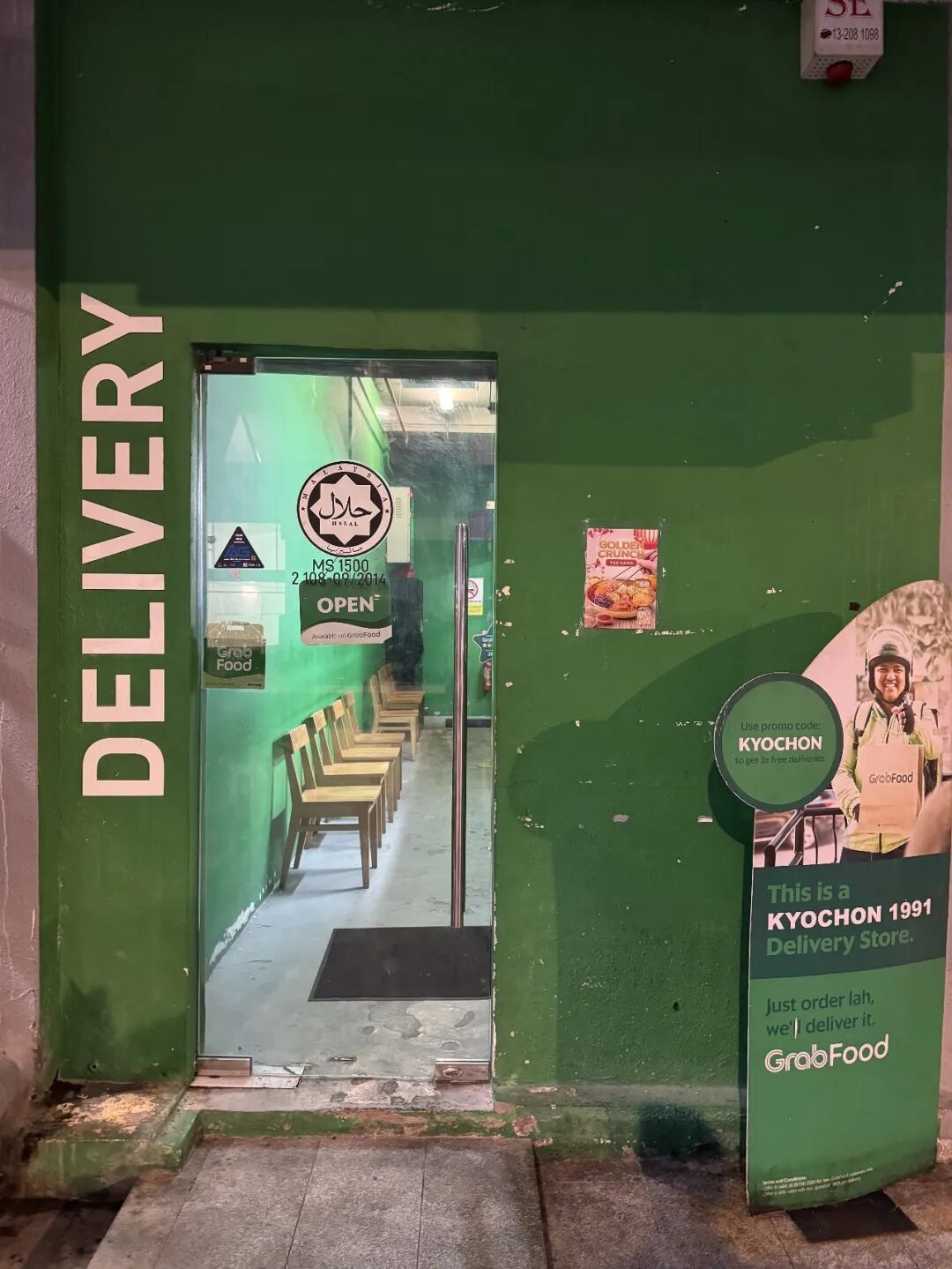
This is a popular Korean fried chicken restaurant that only takes away food. It is located next to our store. Over time, I learned that this store is quite famous and its business is very good. It does not have dine-in food and only accepts online take-out orders.
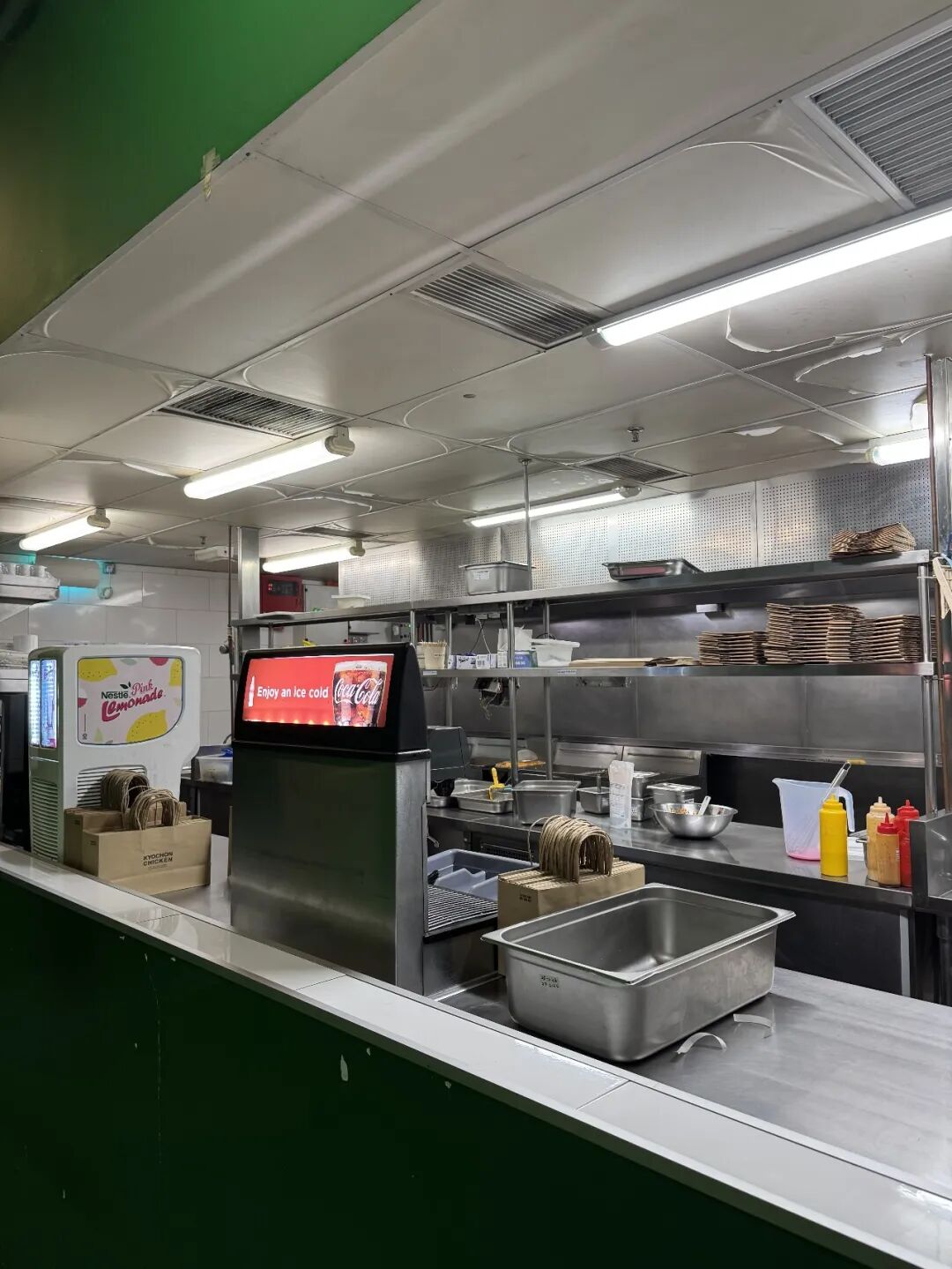
There is a kitchen inside, which looks quite clean, and the menu is very simple, which is fried chicken in various flavors.
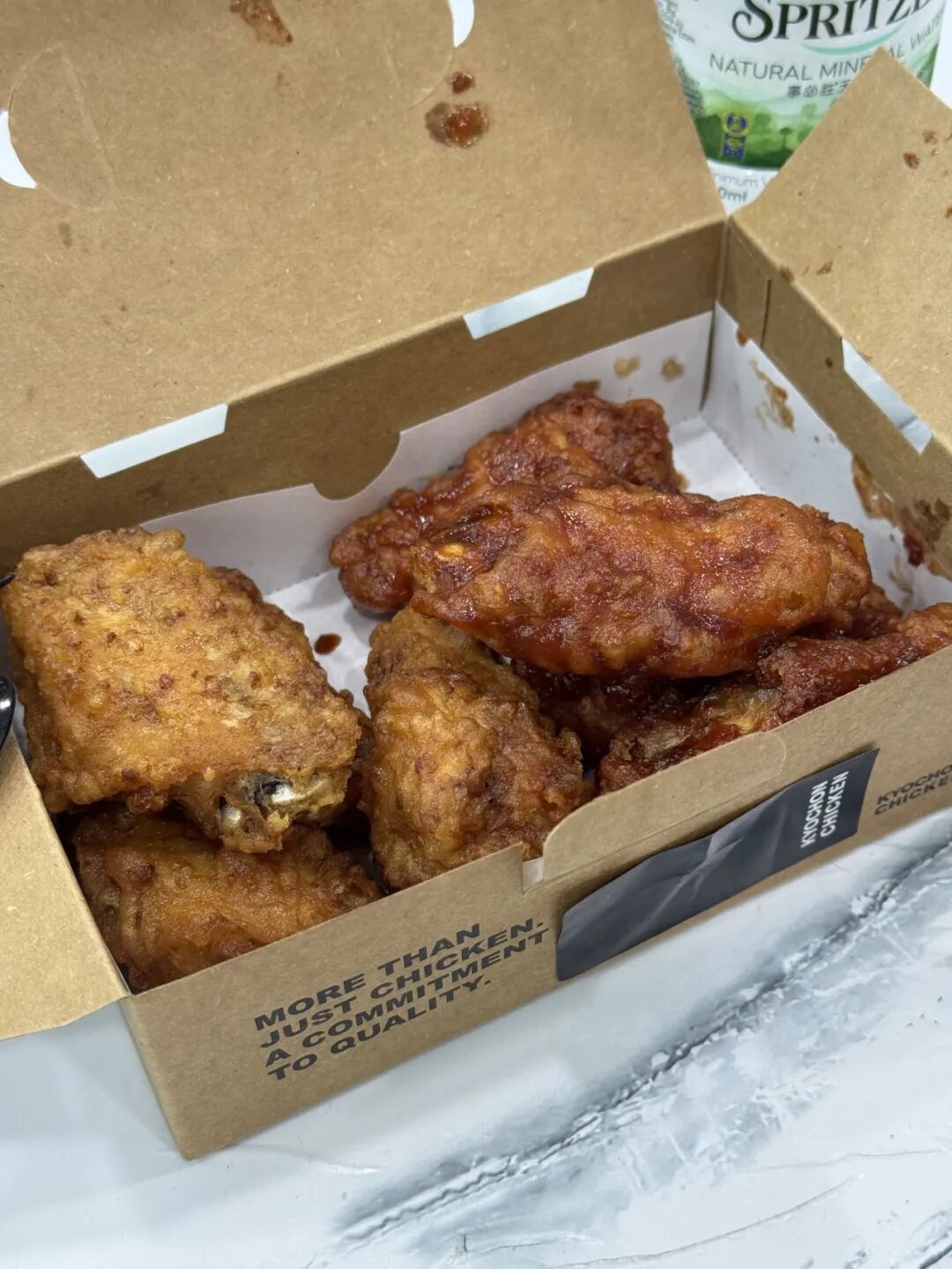
My wife likes this fried chicken very much and orders it often. You can also pick it up at the store.
AddressKyochon 1991 Wisma Central
3. Lanzhou open fire roasted mutton
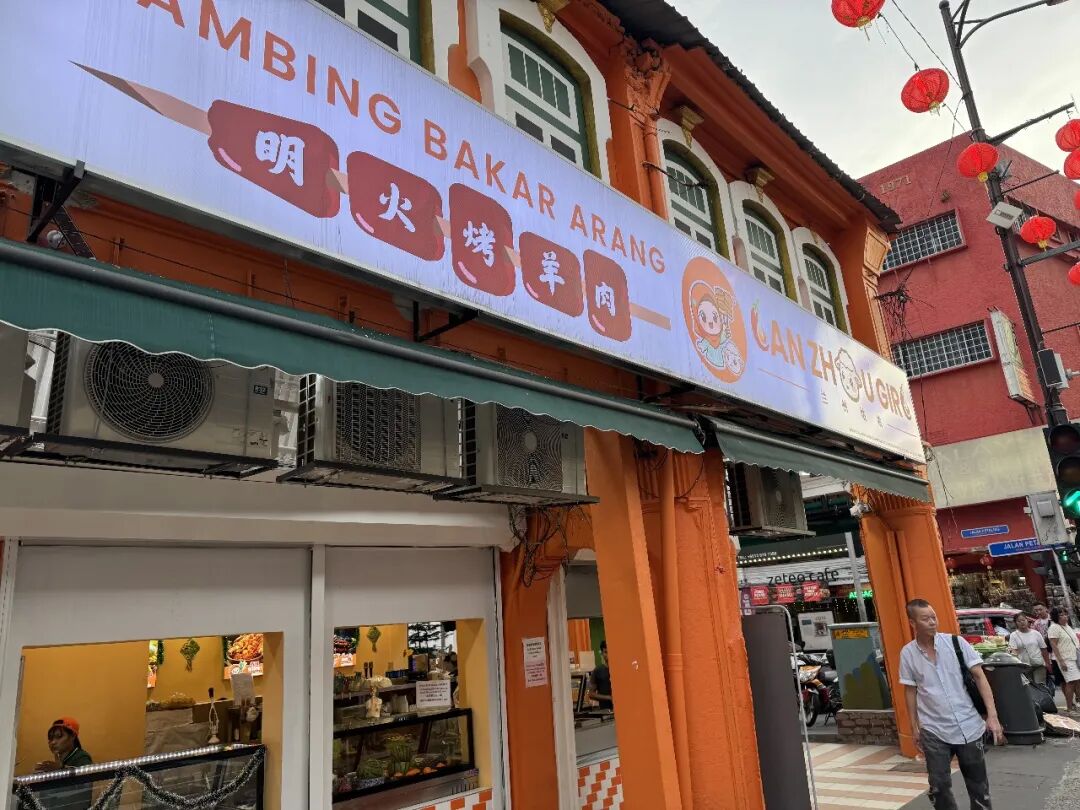
There is a newly opened Lanzhou barbecue restaurant in Petaling Street. When I passed by by chance, I discovered that most of the restaurants in Petaling Street are Chinese food, with various cuisines, of which Northwestern cuisine accounts for the majority.
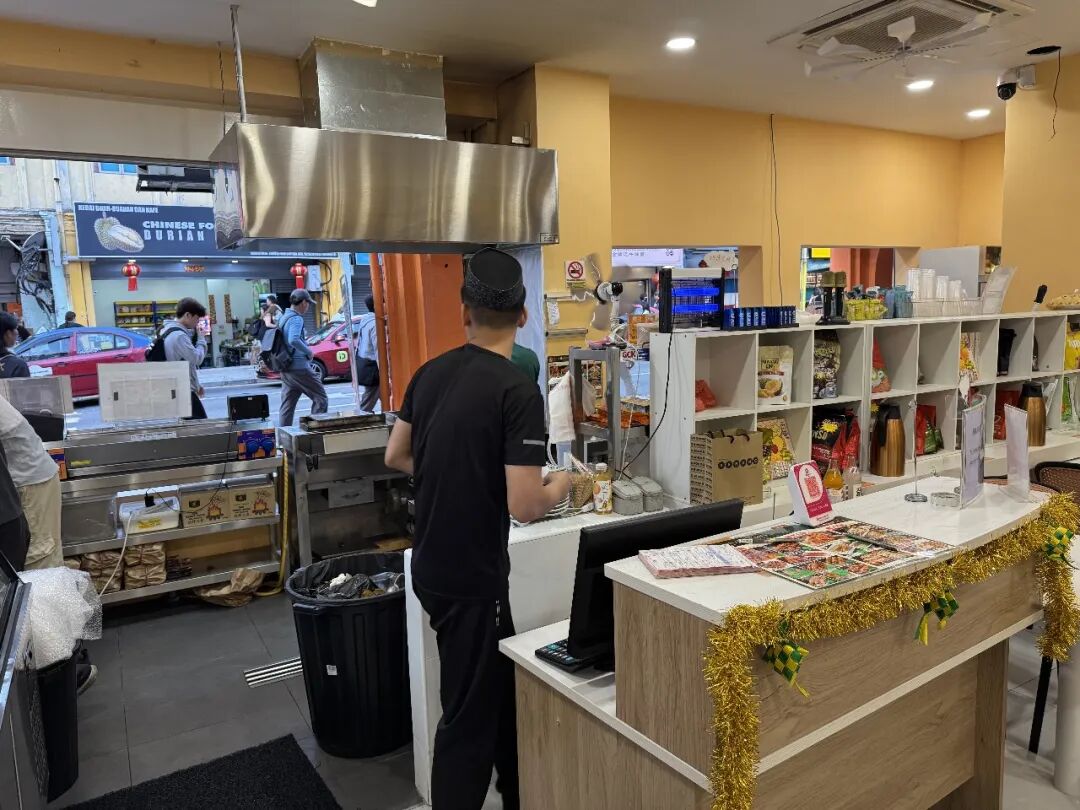
It was indeed an open-fire barbecue, but Brother Bati’s technique was not good enough. We were anxious to break our fast, and later asked the boss to grill it himself.
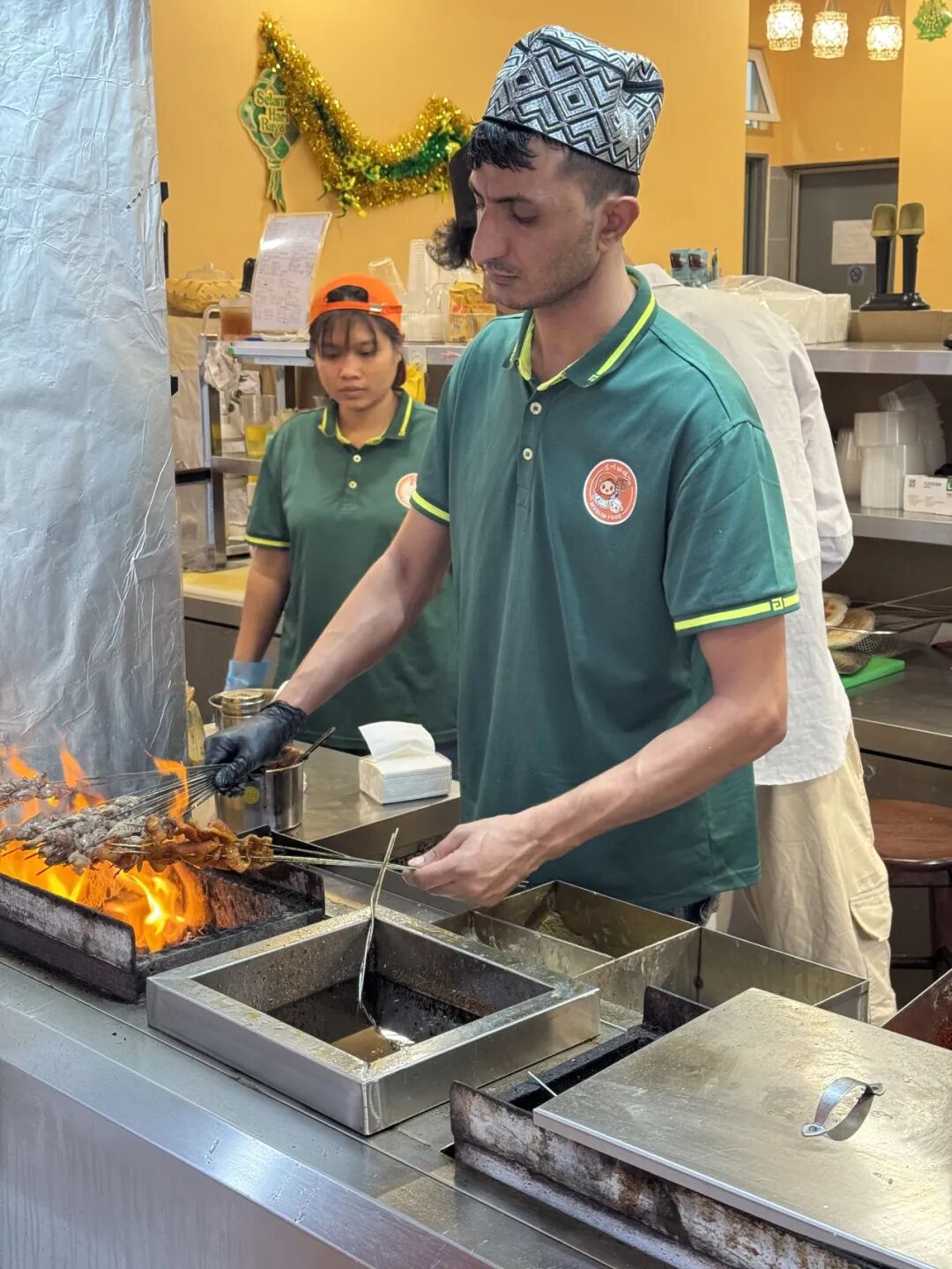
Petaling Street is more lively at night. Many shops are open until early morning, and some are even open all night.
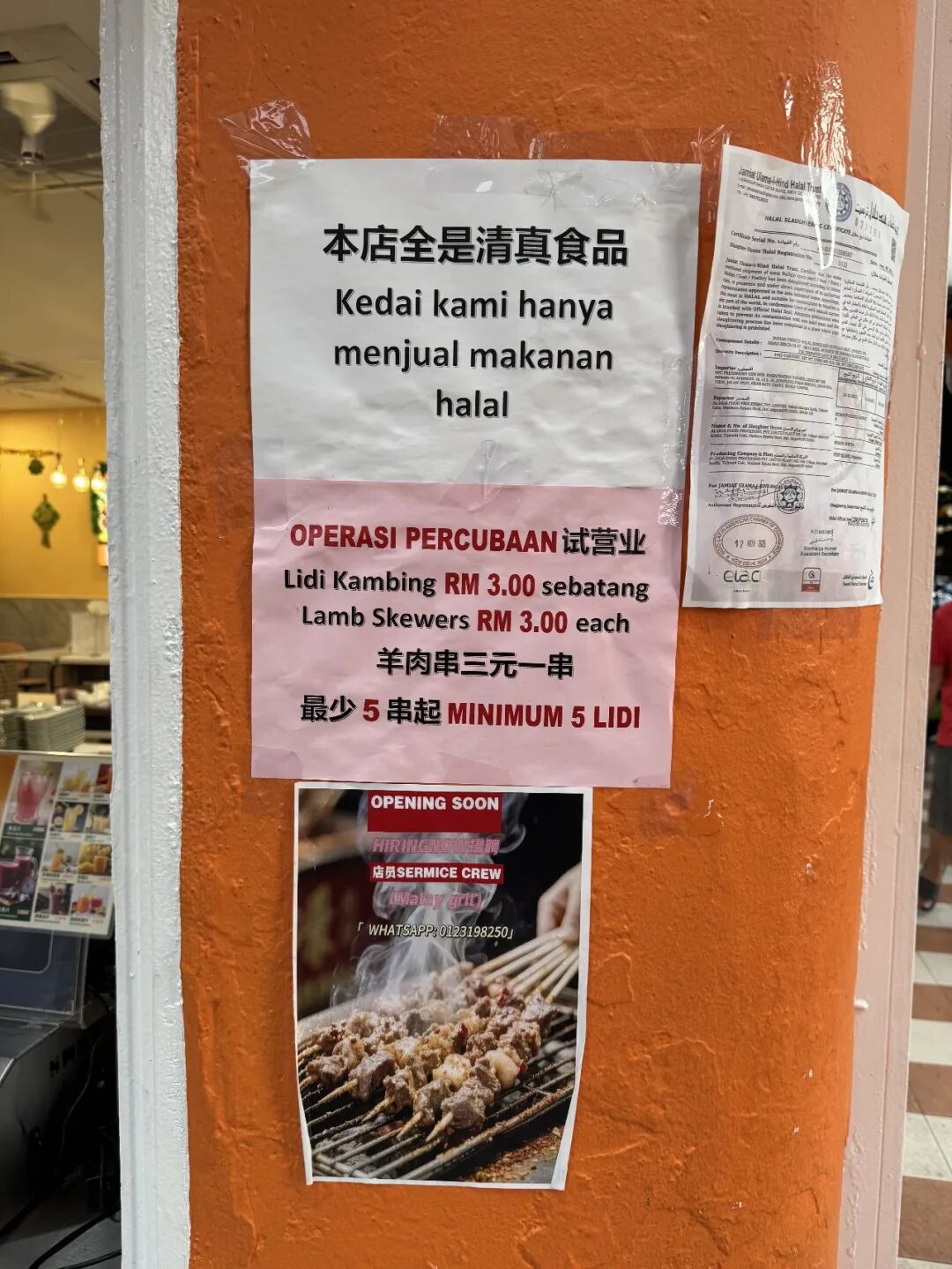
Address: Baker Street (Petaling Street)
4. Sahara Tent
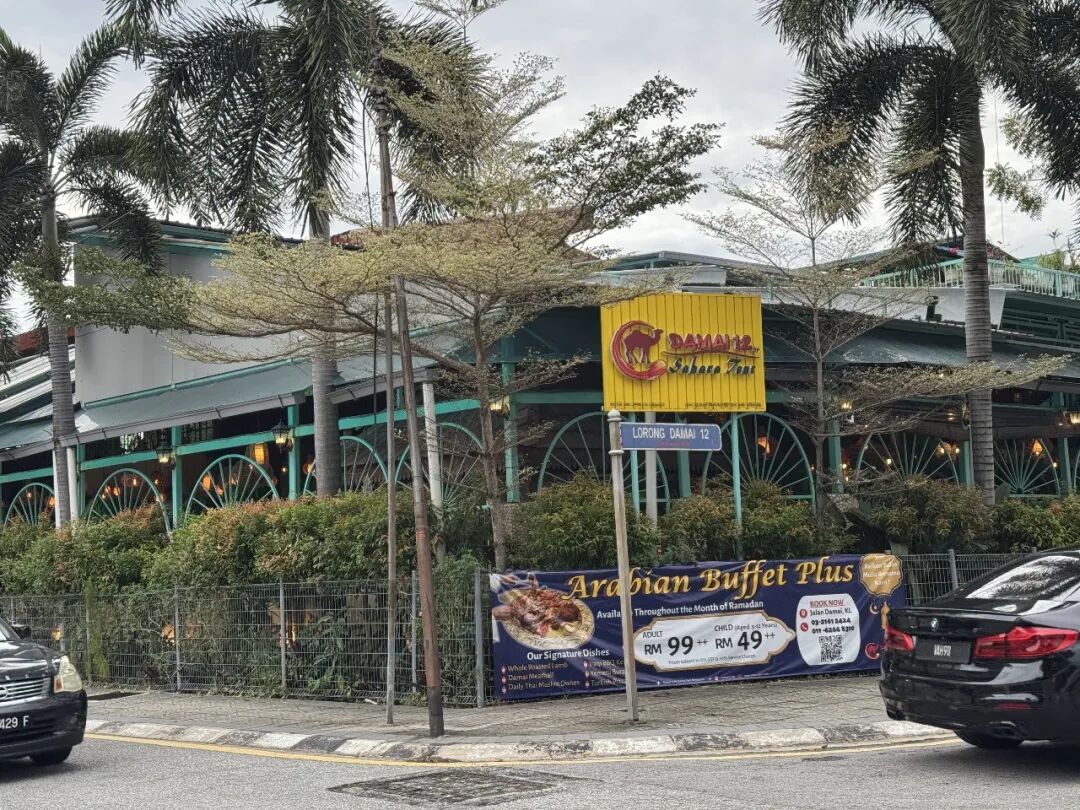
On the way my son goes to and from school, there are two Sahara restaurants. They are chain stores and the decoration style is Southeast Asian style. Since my son has been to Arab countries, he has been talking about going to Dubai again. Sometimes I take him here to have a good meal.
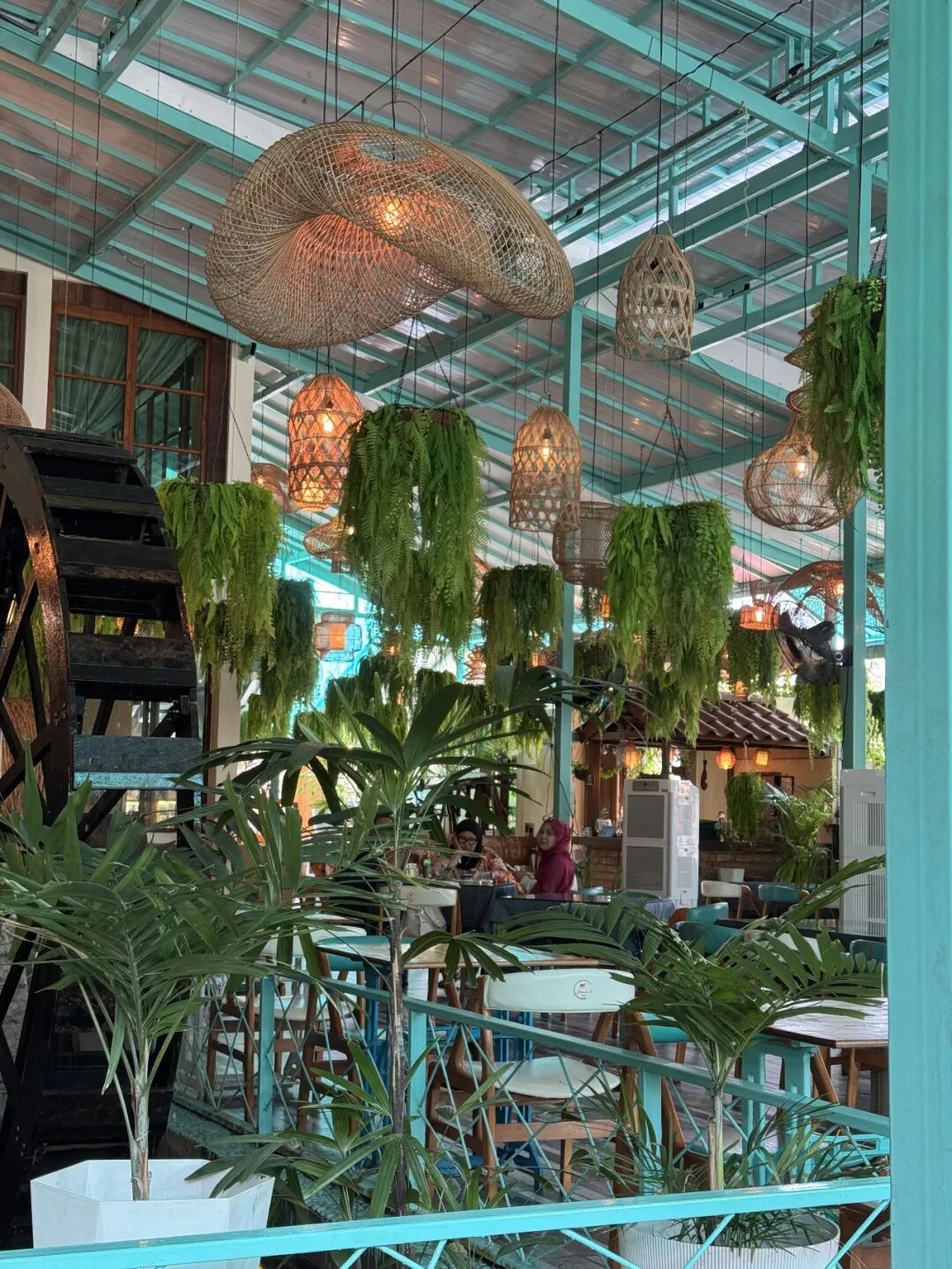
The interior space of the restaurant is very large and the environment is very good. There are running water and waterwheels, just like being in a tropical rain forest.
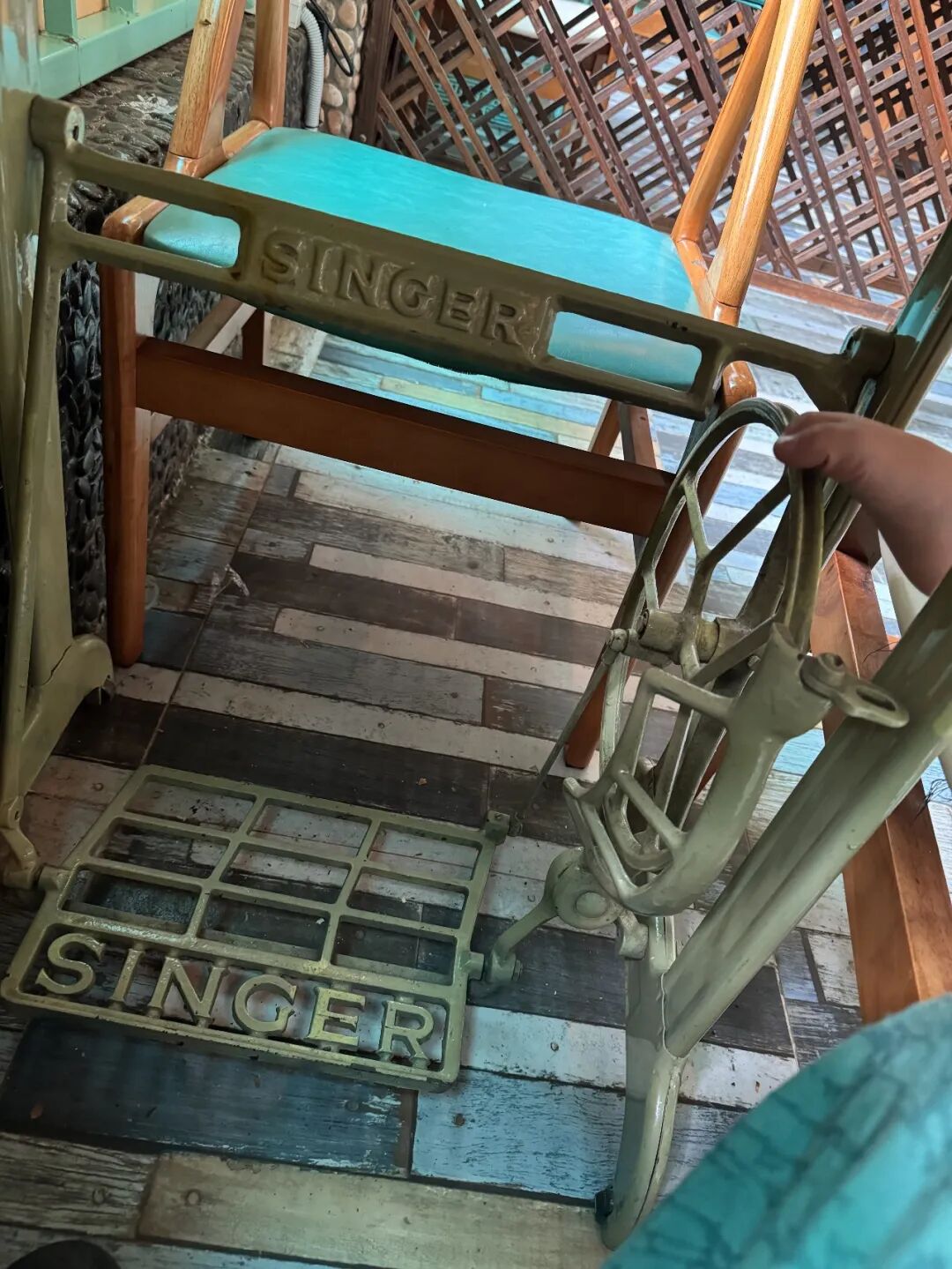
His table is also quite unique, and I just noticed it was a sewing machine.
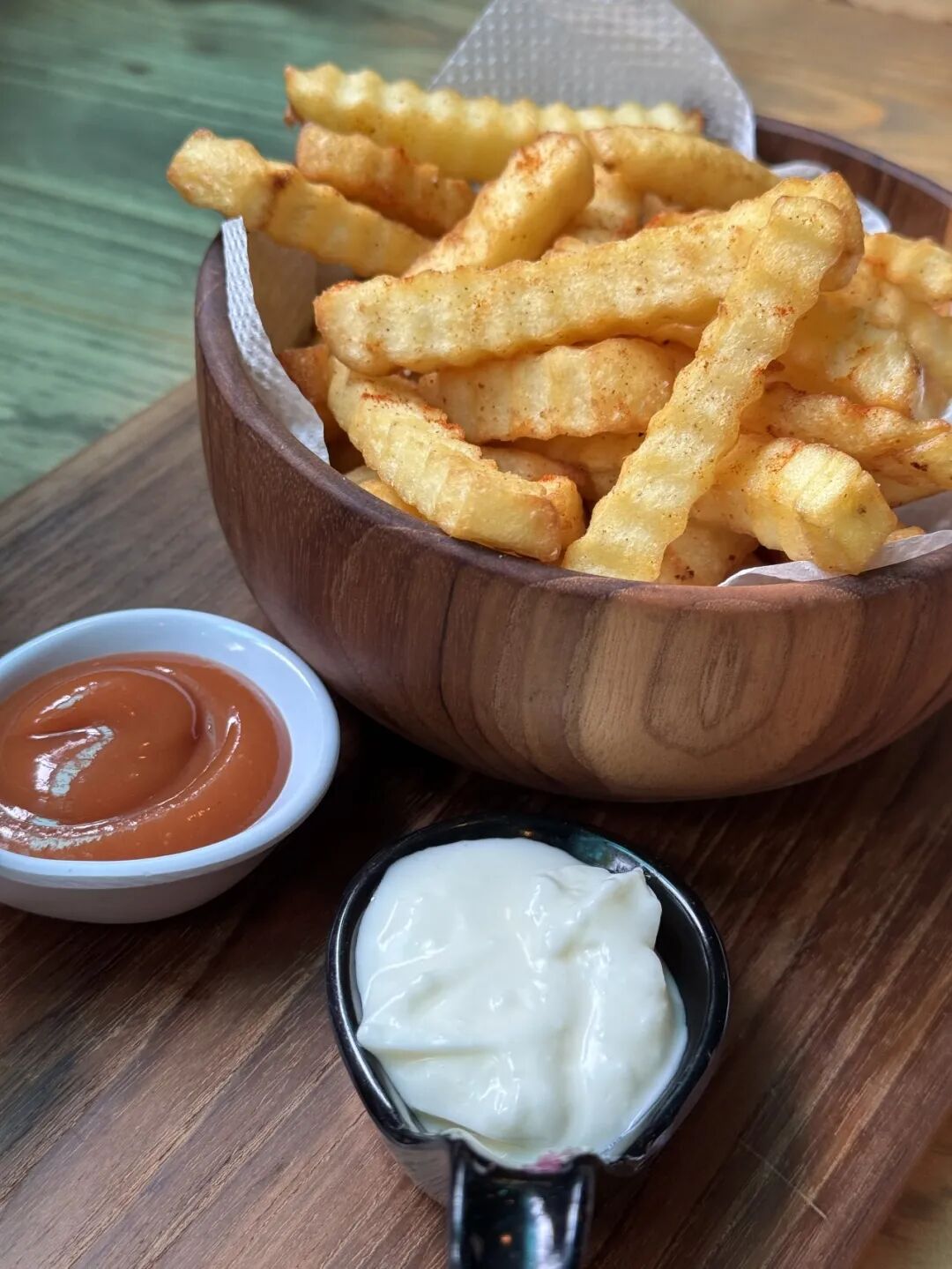
This restaurant belongs to the Moroccan style of Arabic cuisine, which can also be said to be North African style. The tagine is a specialty. However, the children only eat French fries and barbecue every time. The staple food is scones. I think it is also very good. These foods are also easy to eat.
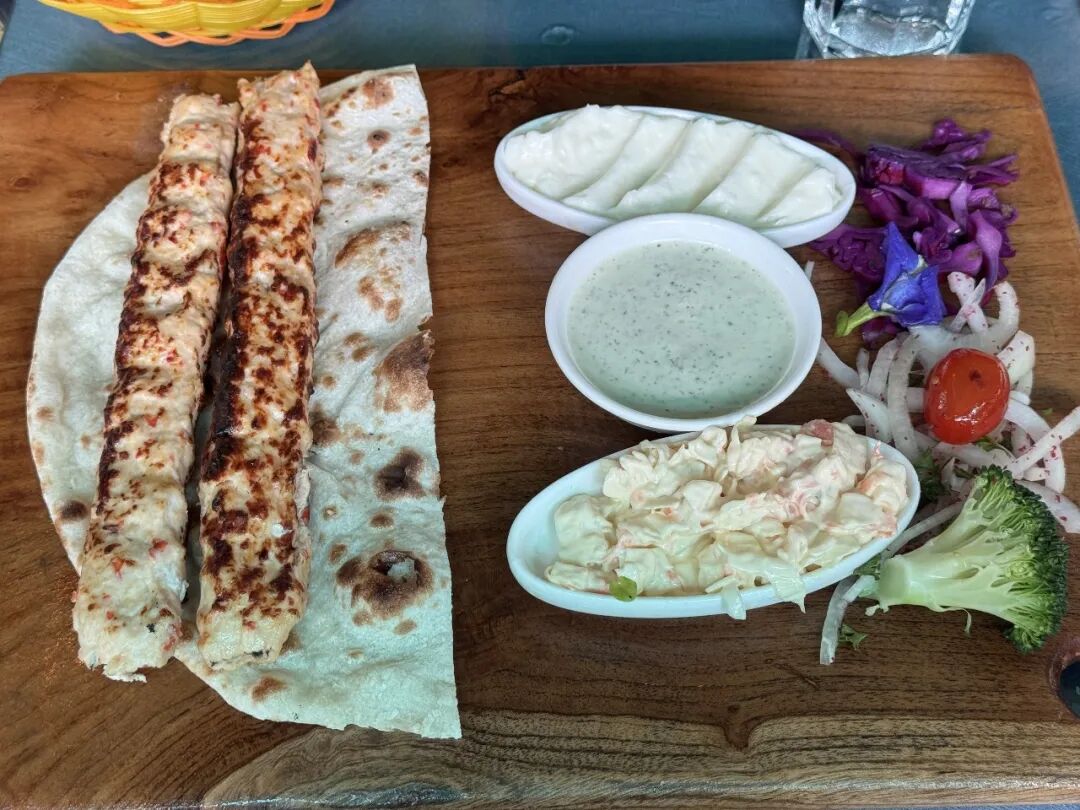
Address: Sahara Tent Restaurant Jalan Ampang
5. RGB COFFEE
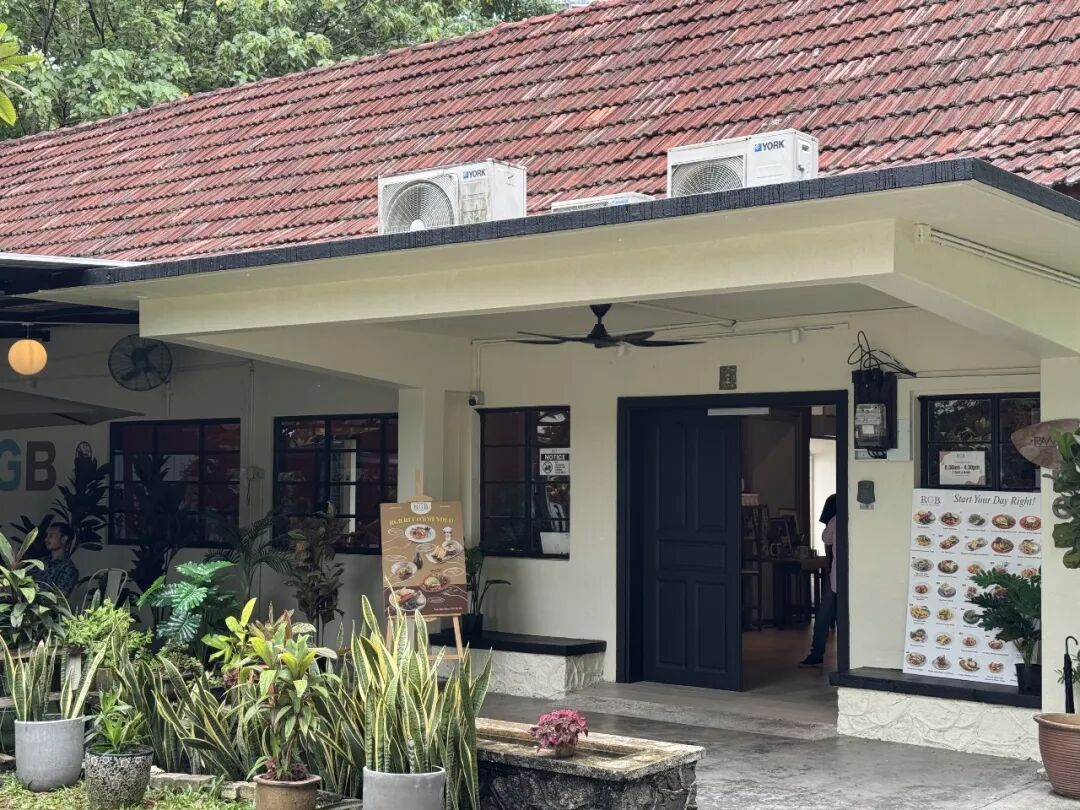
One day I was taking my children for a walk near my house. It was raining and I accidentally walked to this cafe to take shelter. There was a big yard in front of his house. Parking was convenient and the kids could play in the yard.
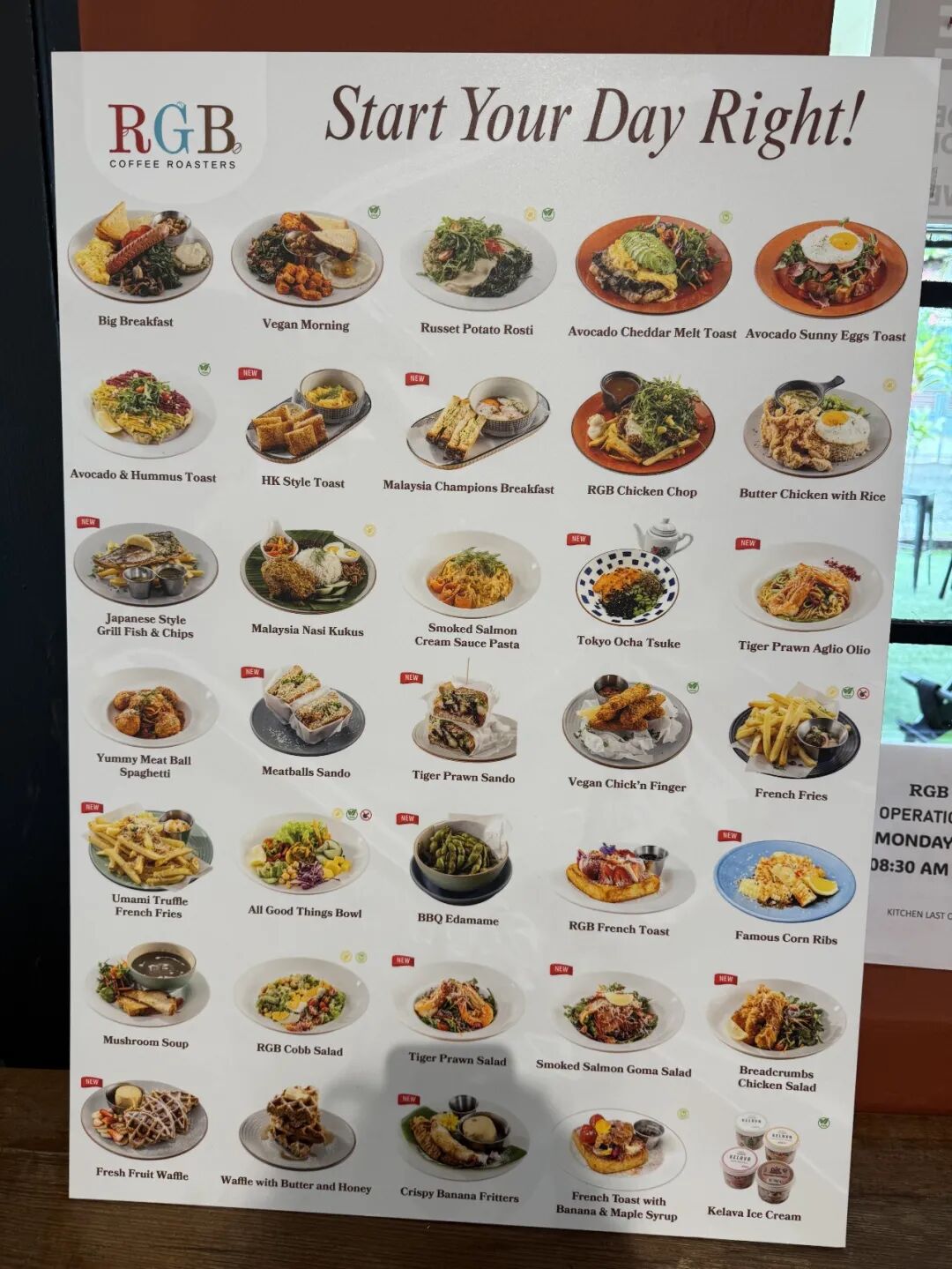
I like these Western-style simple meals and light meals, and they are also suitable for feeding children. After staying in Kuala Lumpur for a long time, the taste becomes lighter and lighter, which is also influenced by the children.
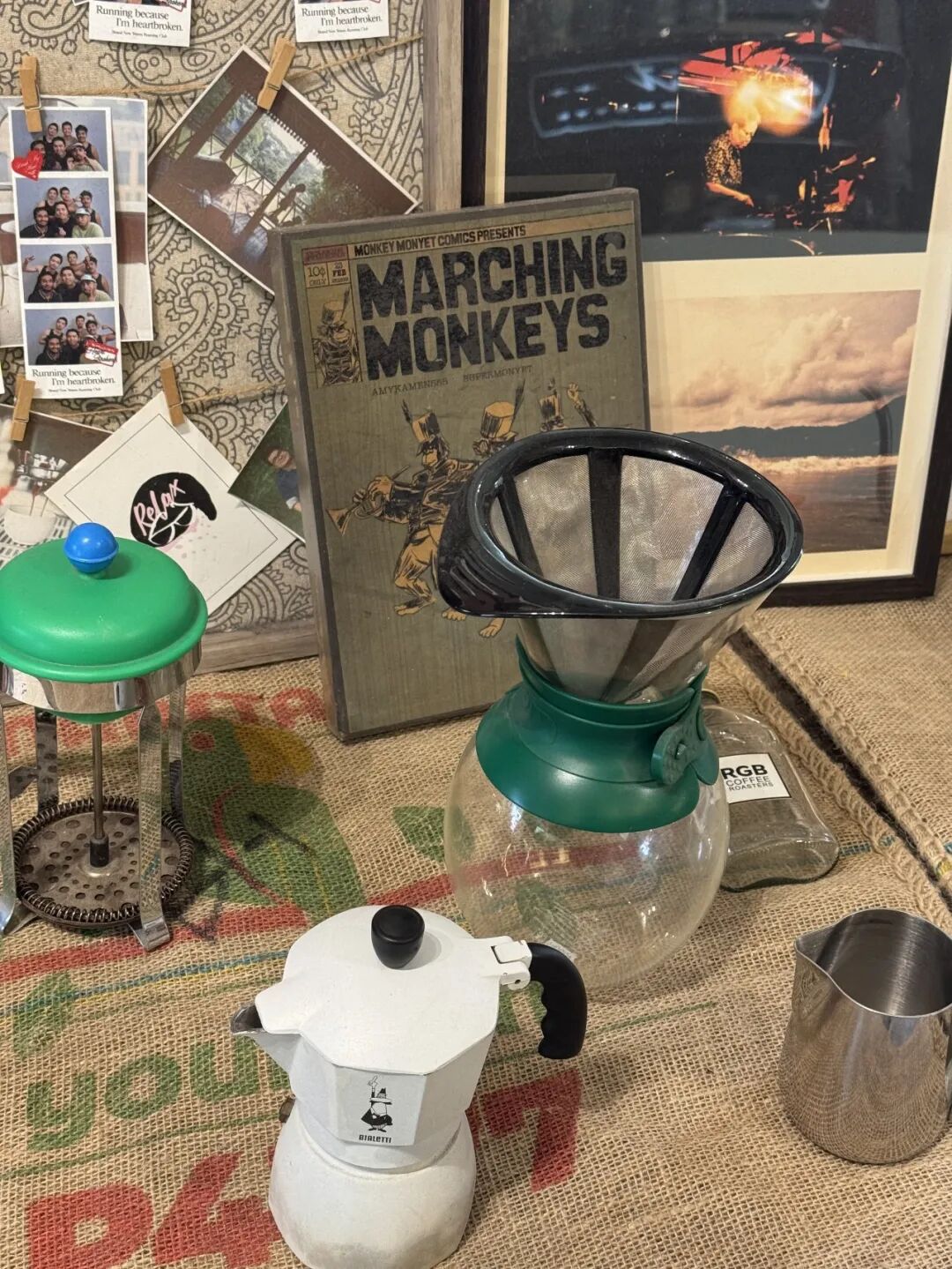
I now have a soft spot for this kind of café and bar with a refreshing environment. This store is a treasure. It is located in a residential area in the city center and is rarely visited by tourists.
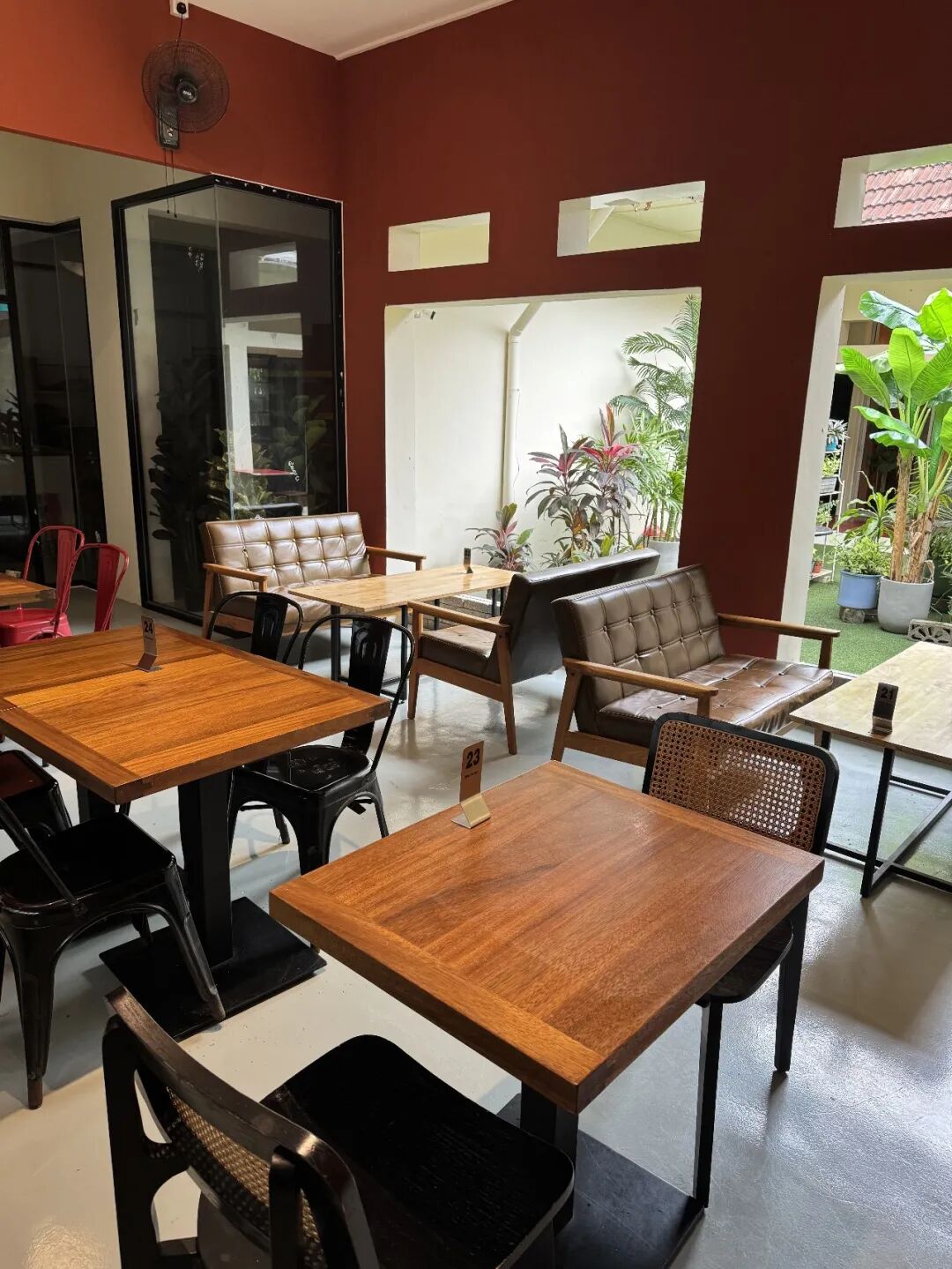
To be precise, there are fewer people during the day. I once passed by in the evening and found that there were more people in the store. This is because people here prefer to go out to consume in the dark.
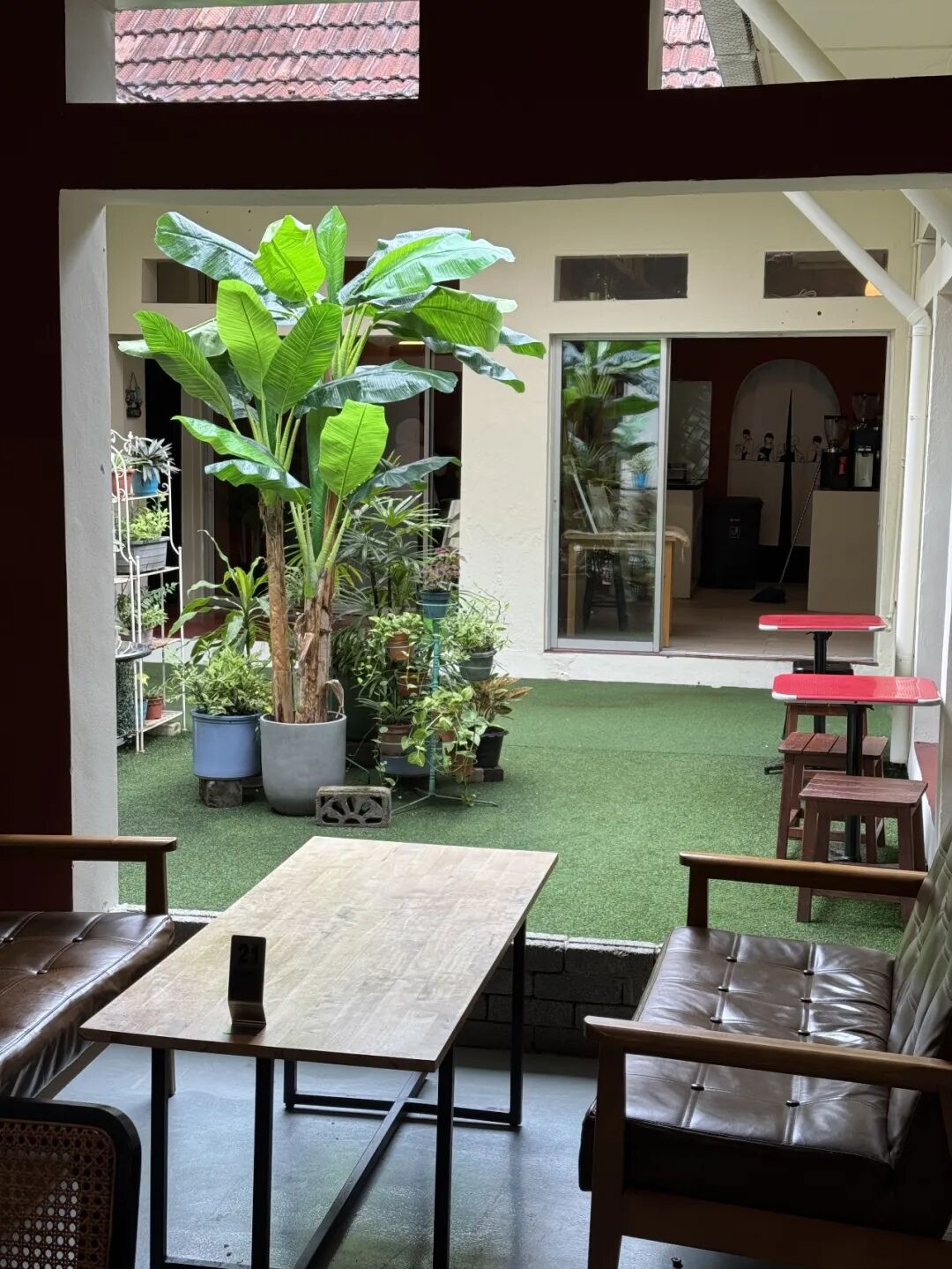
In the block where this store is located, there are several good-looking restaurants with relatively large areas. I will take my time to explore the restaurants when I have time in the future.
Address: RGB Coffee at the Bean Hive
6. RESTORAN YAHALA
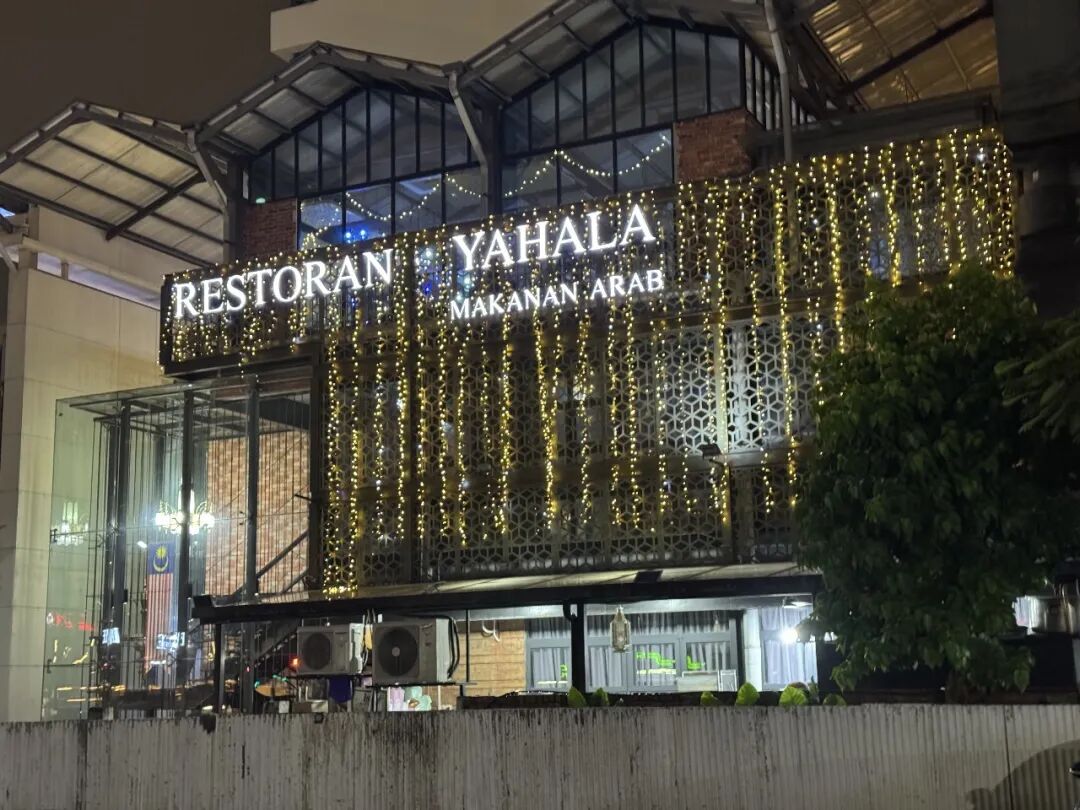
Some time ago, my son was ill and hospitalized. He didn't like to eat the special children's meals provided by the hospital. The main reason was that the children's meals in the hospital were too healthy and light, with many vegetables and bland taste. He didn't like vegetables, but wanted to eat Arabic naan and mandi rice. There happened to be an Arabic restaurant next to the hospital, so I packed it up and brought it back to him to eat.
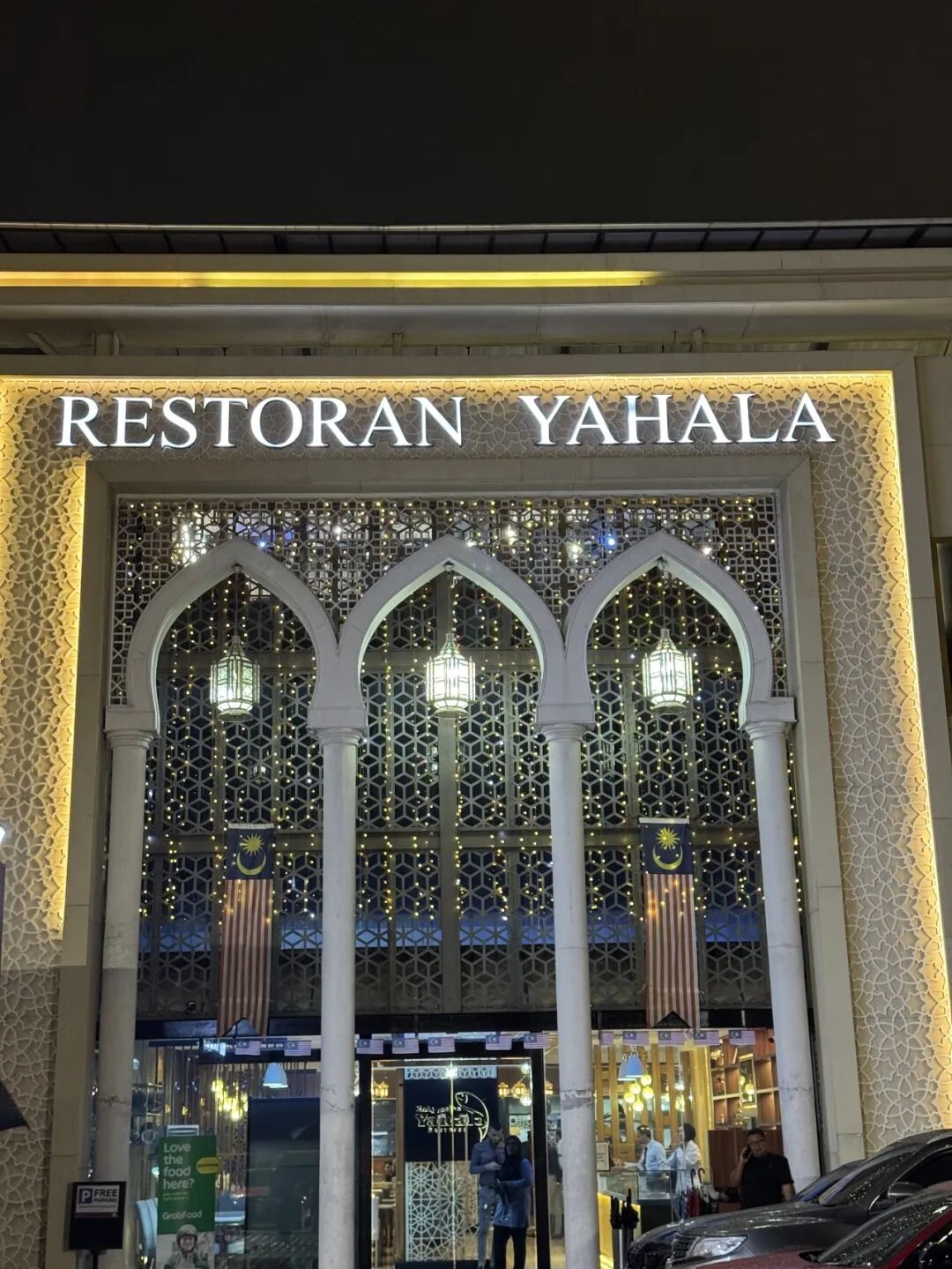
Middle Eastern restaurants are more common in Kuala Lumpur. After eating too much, I can taste different flavors. Now I don’t need to look at the menu when ordering because they are all the same, but the cooking methods are slightly different.
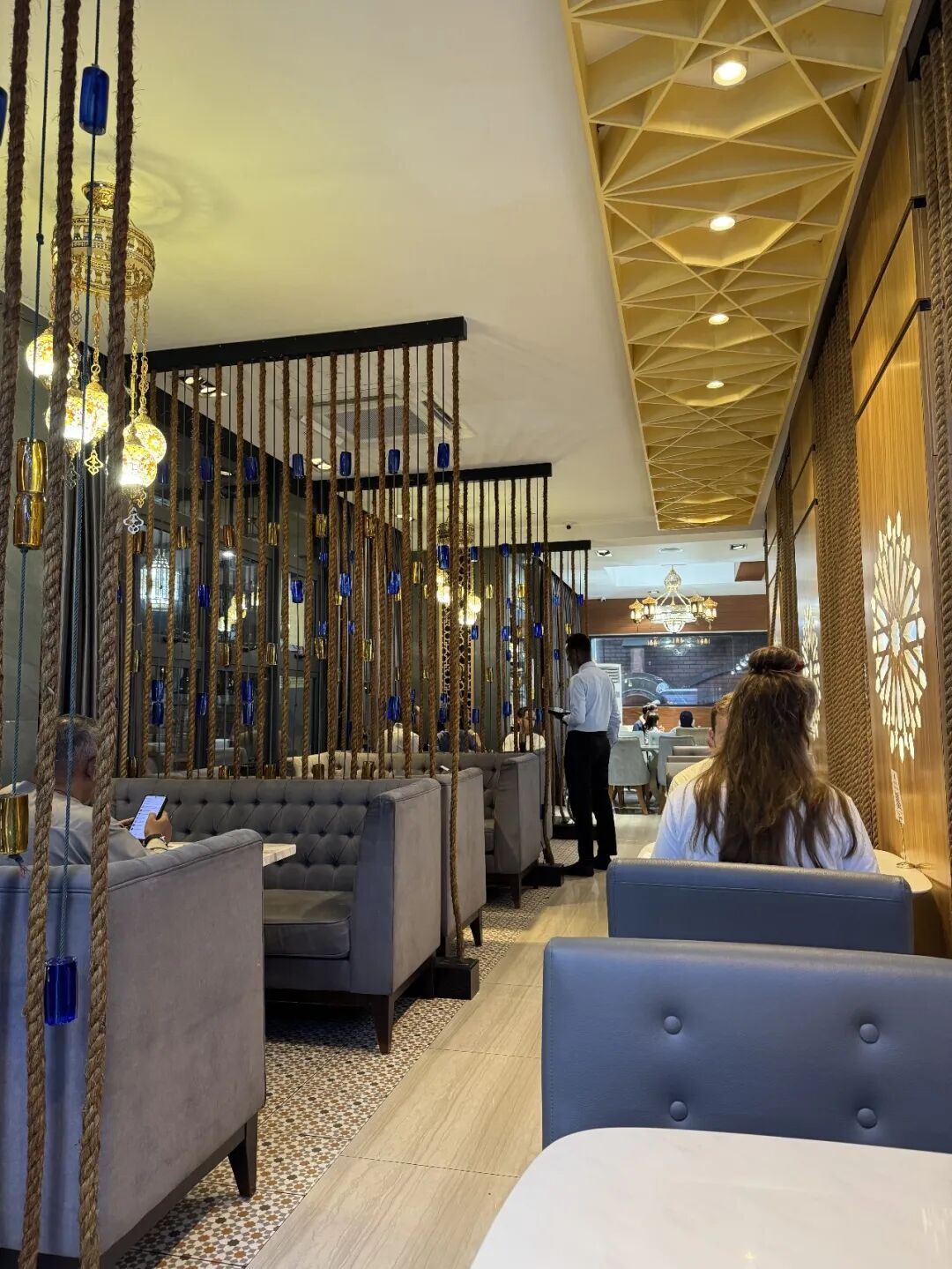
And what’s incredible to me is that Middle Eastern restaurants in Kuala Lumpur are generally doing very well, no matter how well they do.
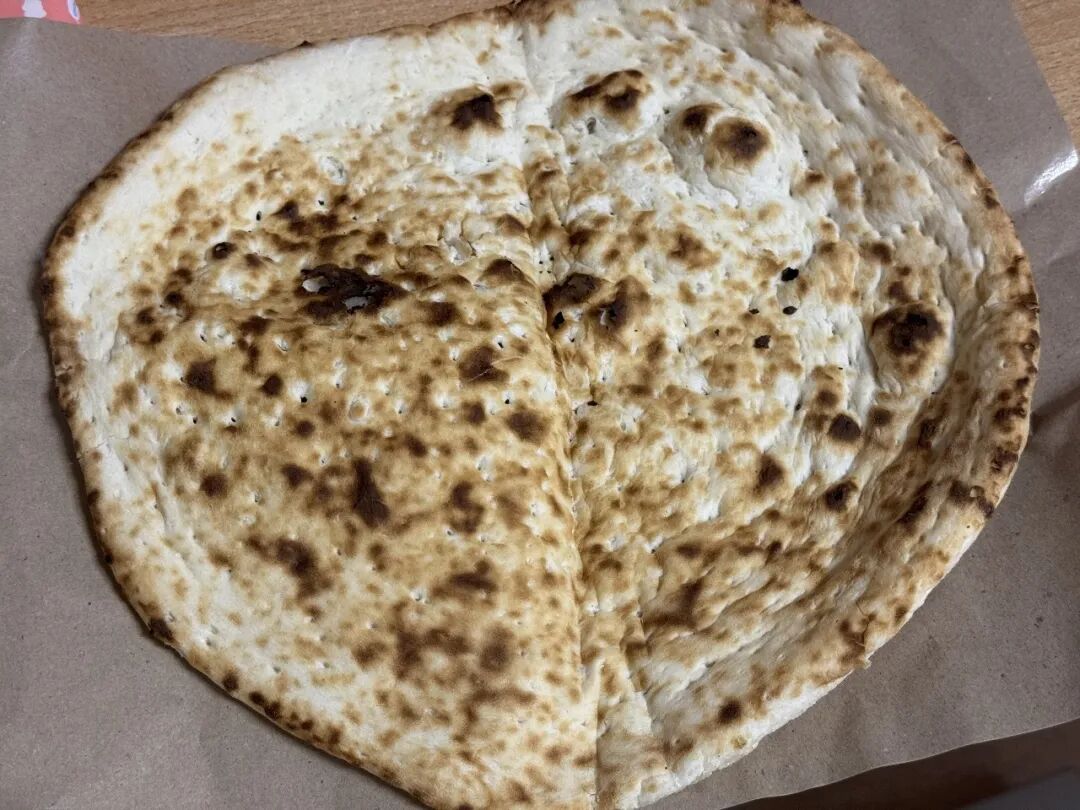
My son likes to eat Arabic flatbreads, but there are many kinds of Arabic flatbreads, some are like naan, and some are like bread.
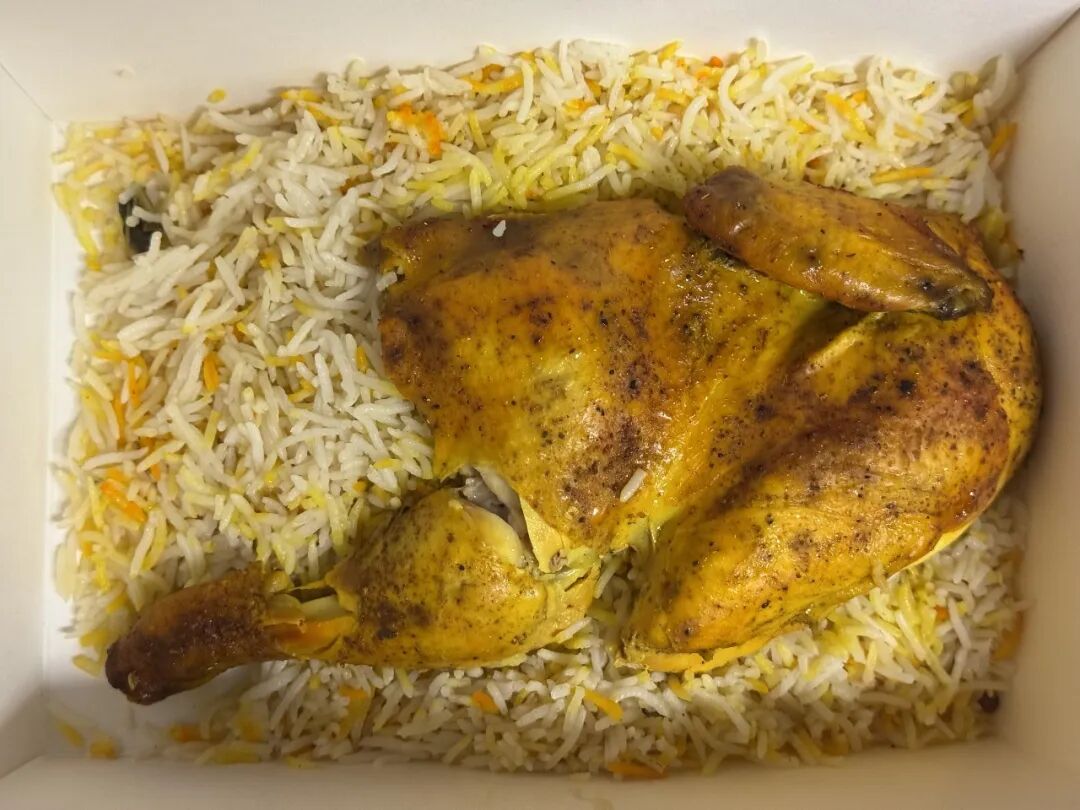
As a northerner, my son prefers pasta over rice. The chicken in Mandy Chicken Rice is suitable for children because it is neither spicy nor salty, and is soft and fall off the bone.
Address: Yahala Restaurant - Ampang
7. Nasi & Mee by Bapak Sayang
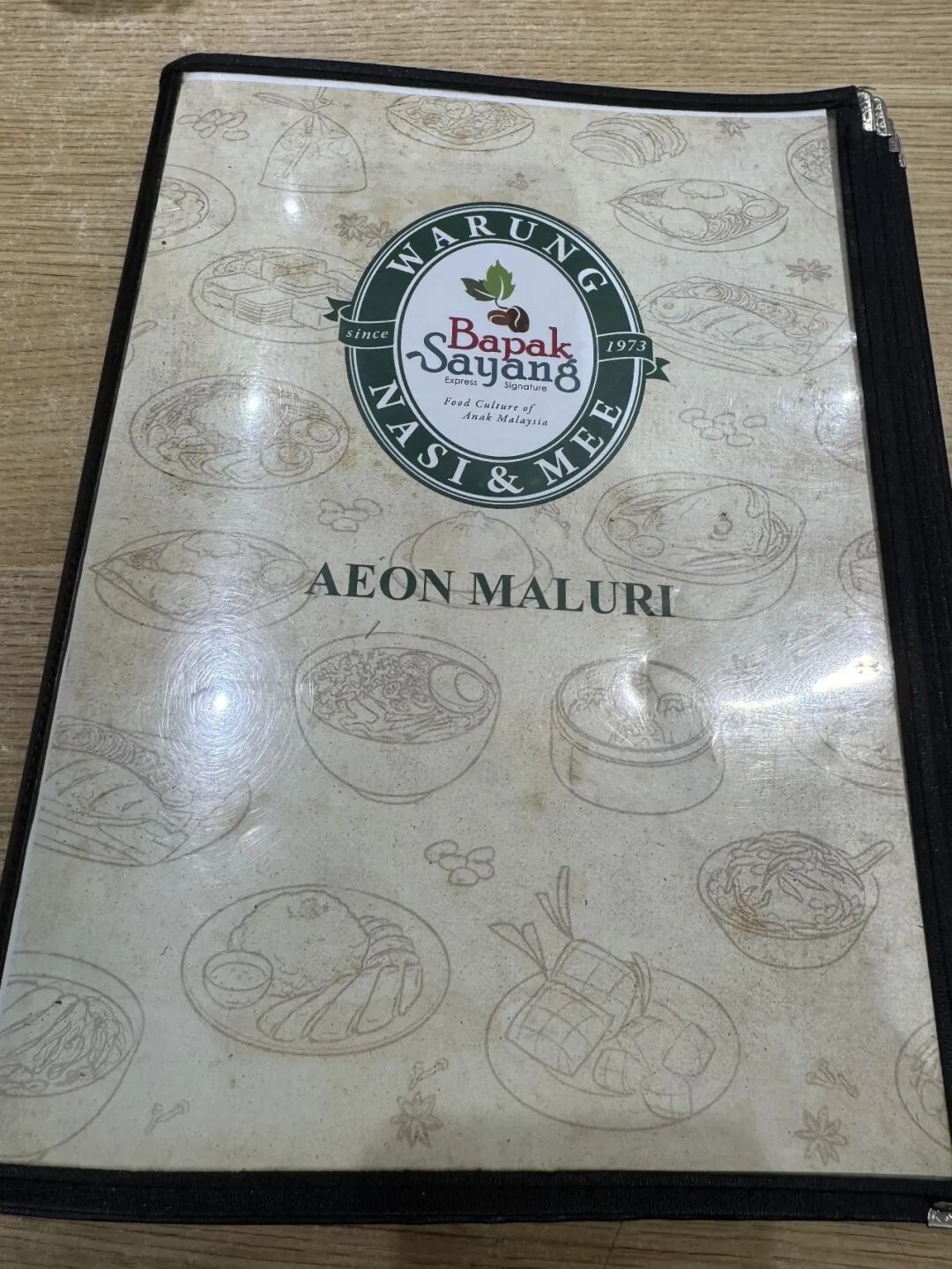
This is a traditional Malaysian flavor chain store in Aeon Supermarket. In fact, there are various Southeast Asian delicacies on the menu. What we ordered was Vietnamese special traditional snacks.
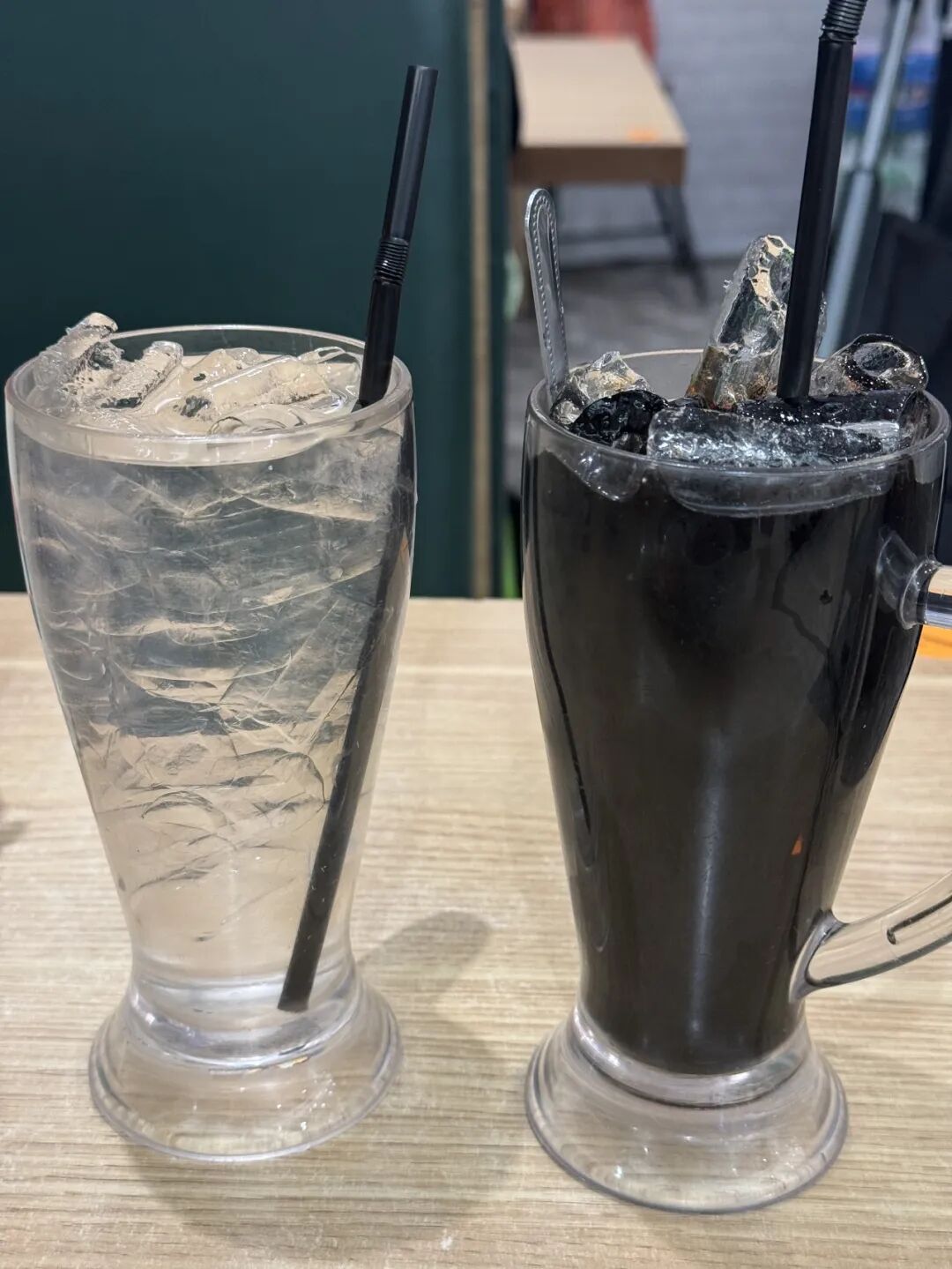
This kind of small shop is more suitable for young couples.
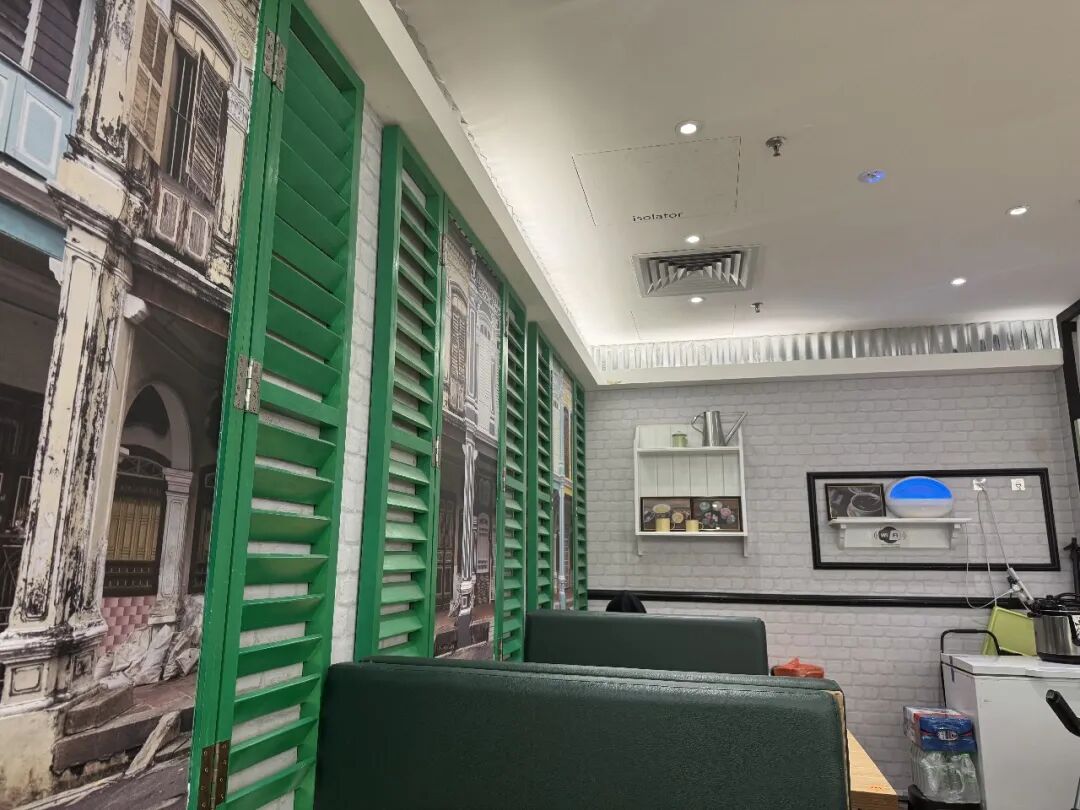
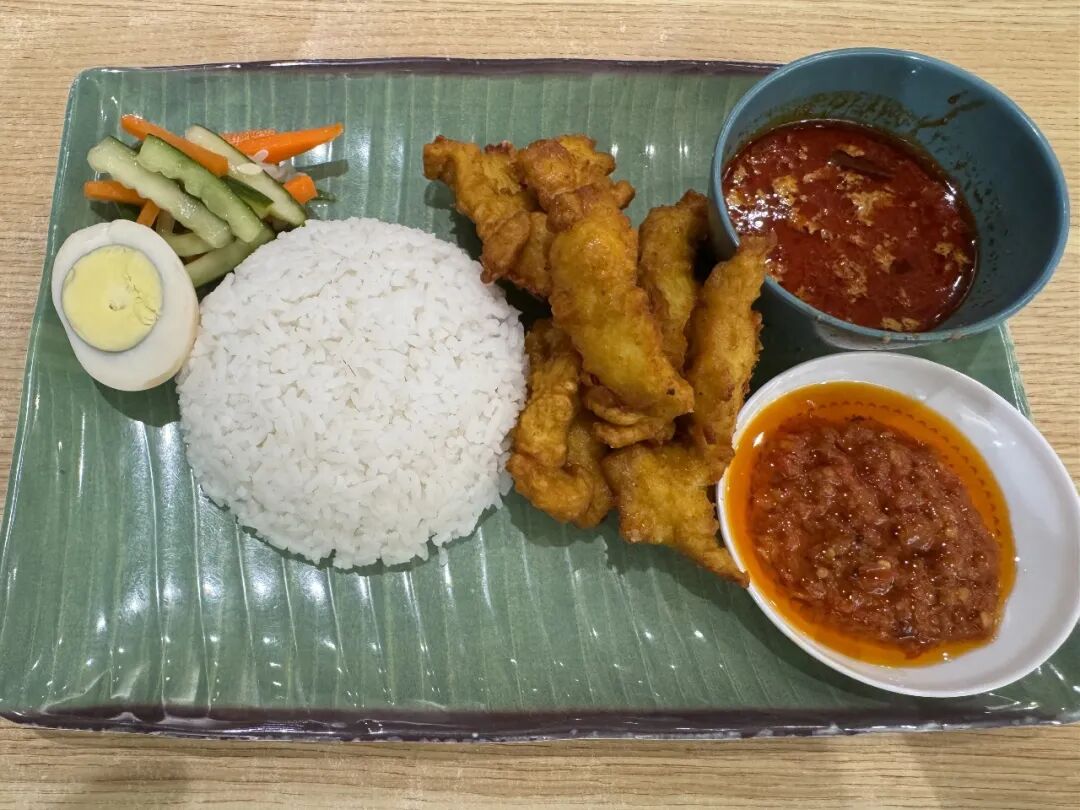
I like Southeast Asian curry rice very much. It’s a bit spicy, but it’s also very appetizing. There are usually several snacks included in a set meal.
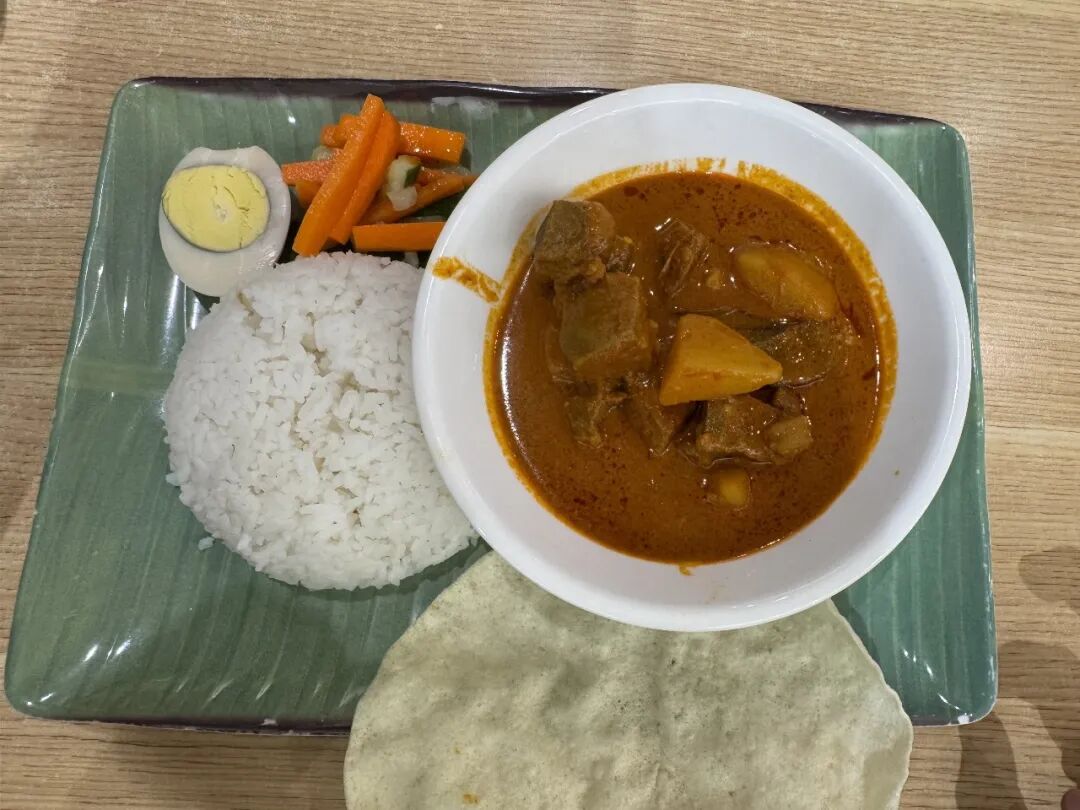
Address: Nasi Mee by Bapak Sayang AEON
8. BUSHANZIP
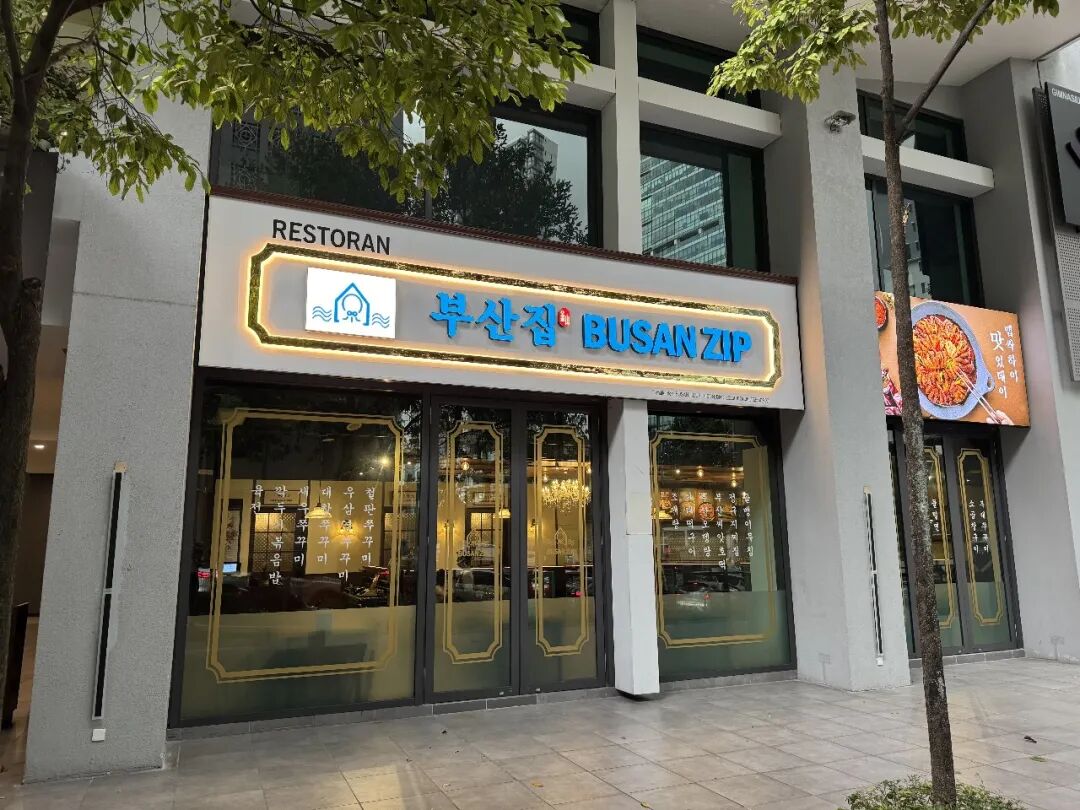
BUSAN means Busan. This restaurant specializes in Busan, South Korea, and its signature dish is spicy fried octopus.
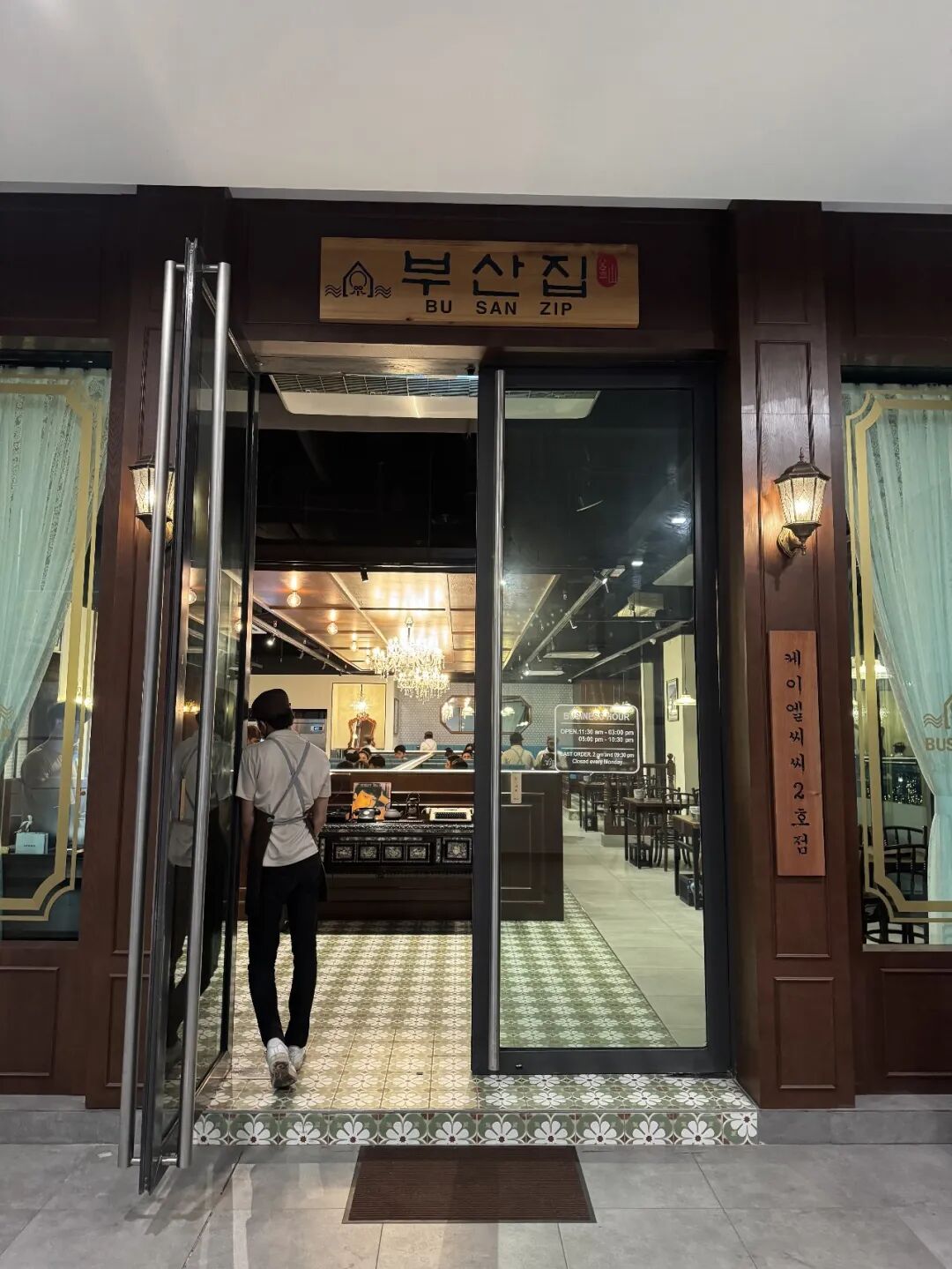
This store is the most Korean store I have ever eaten in. The owner is Korean and speaks fluent English.
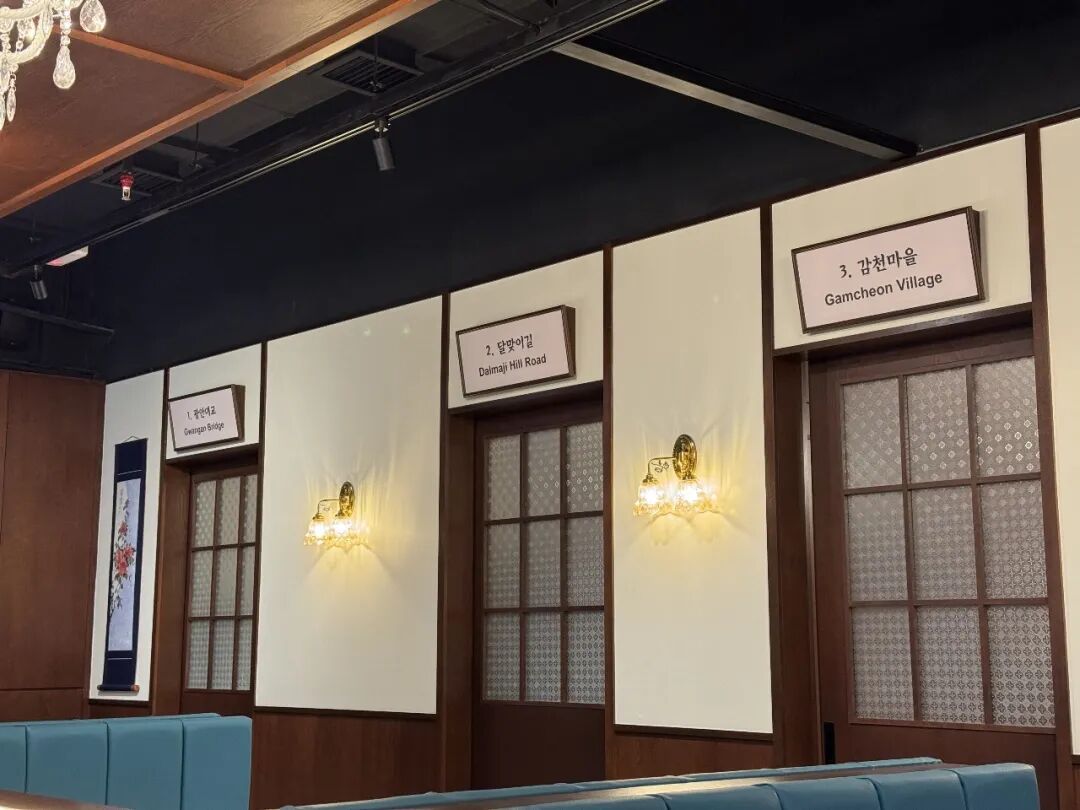
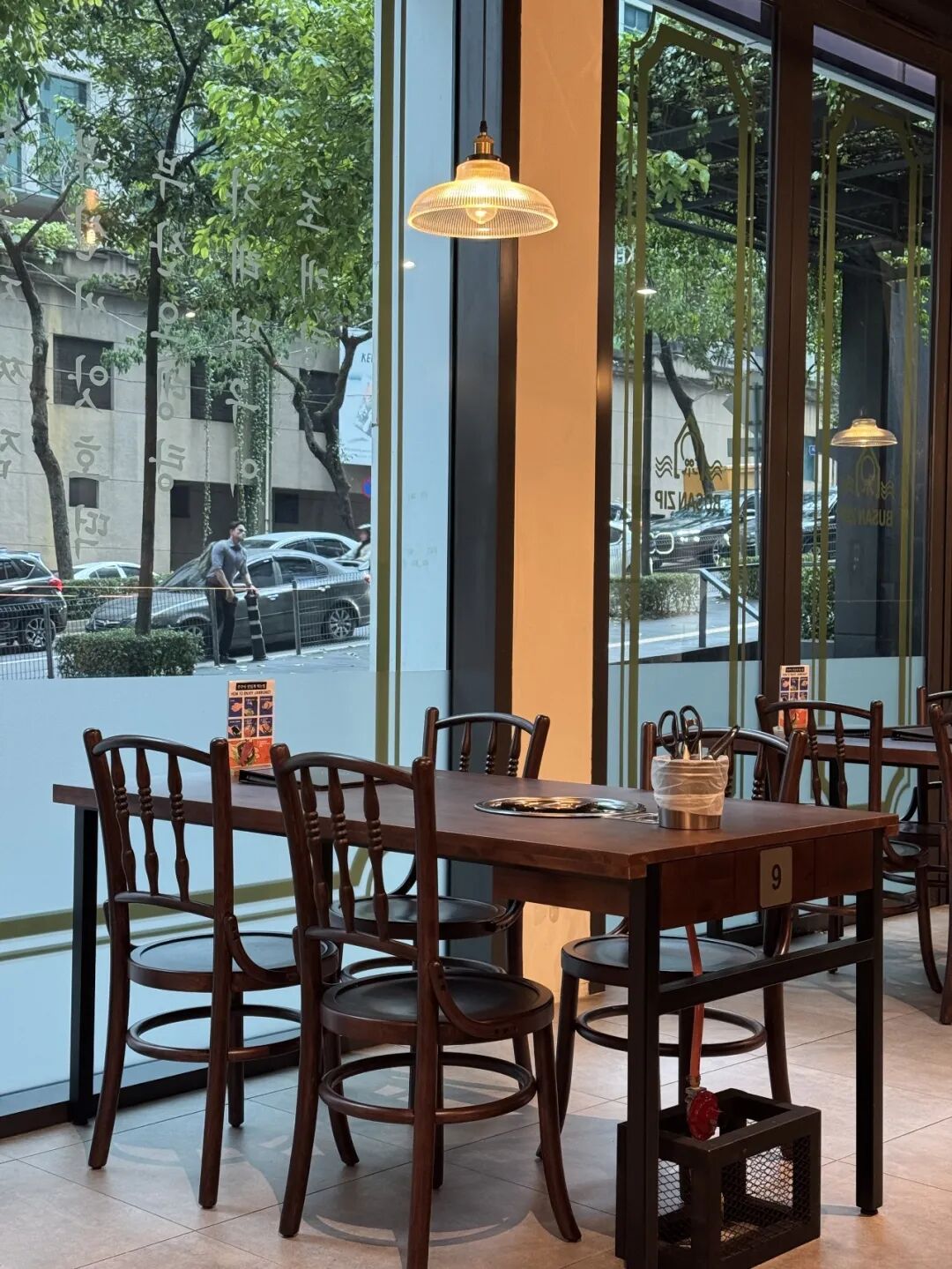
The decoration of the restaurant is also exquisite and the service attitude is very good.
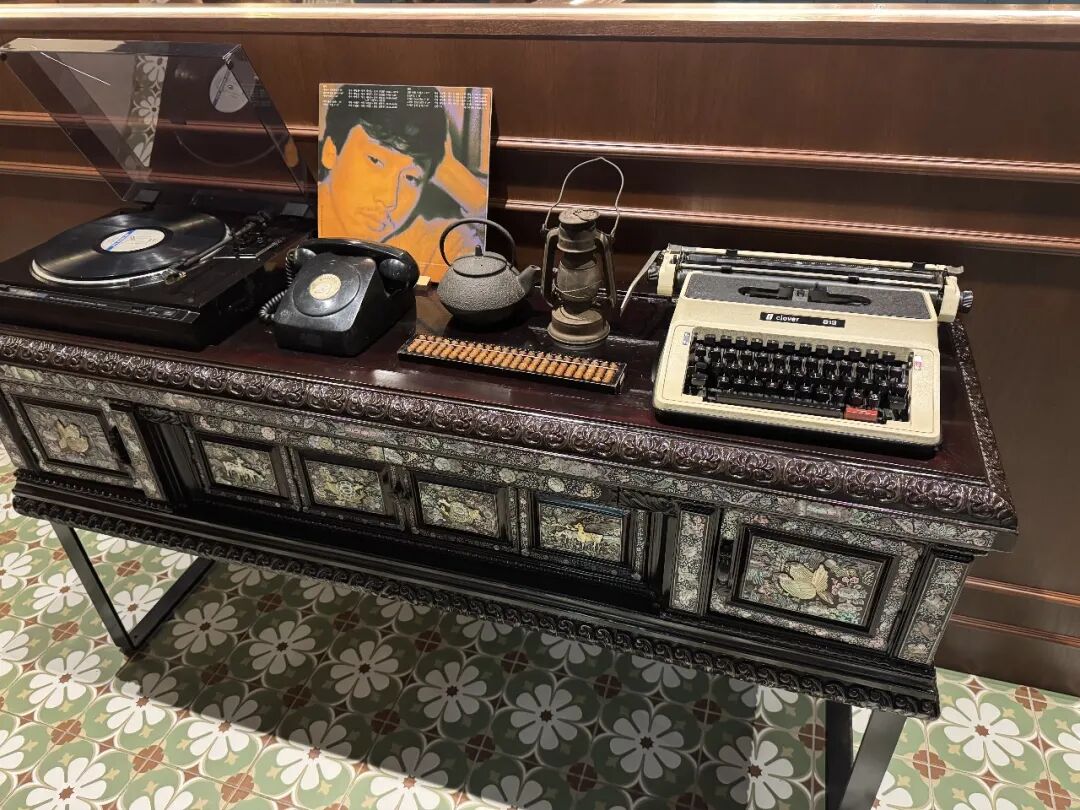
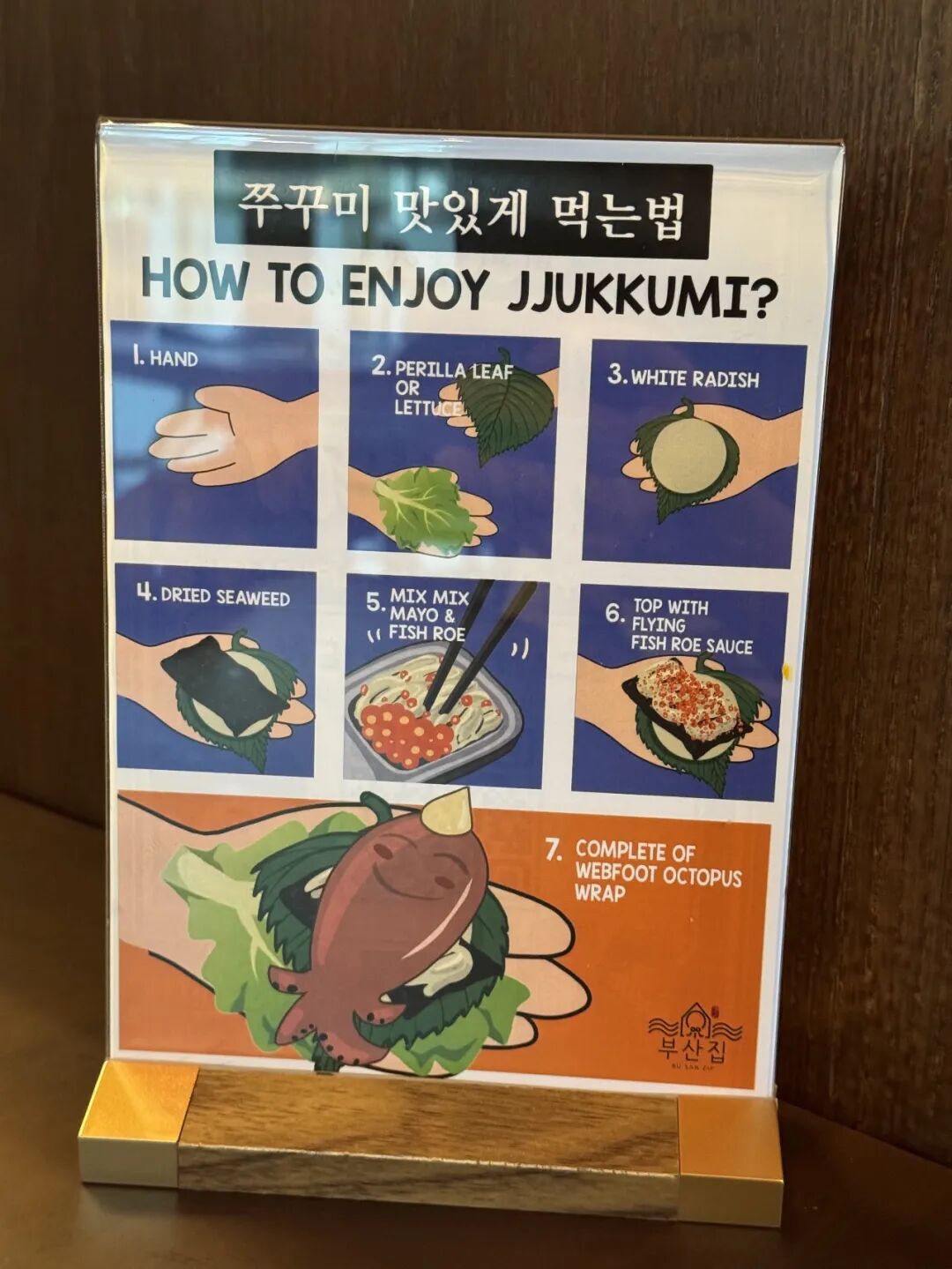
This spicy stir-fried live octopus is a must-order for every table. The waiters help fry it freshly. The picture above shows the correct way to eat it.
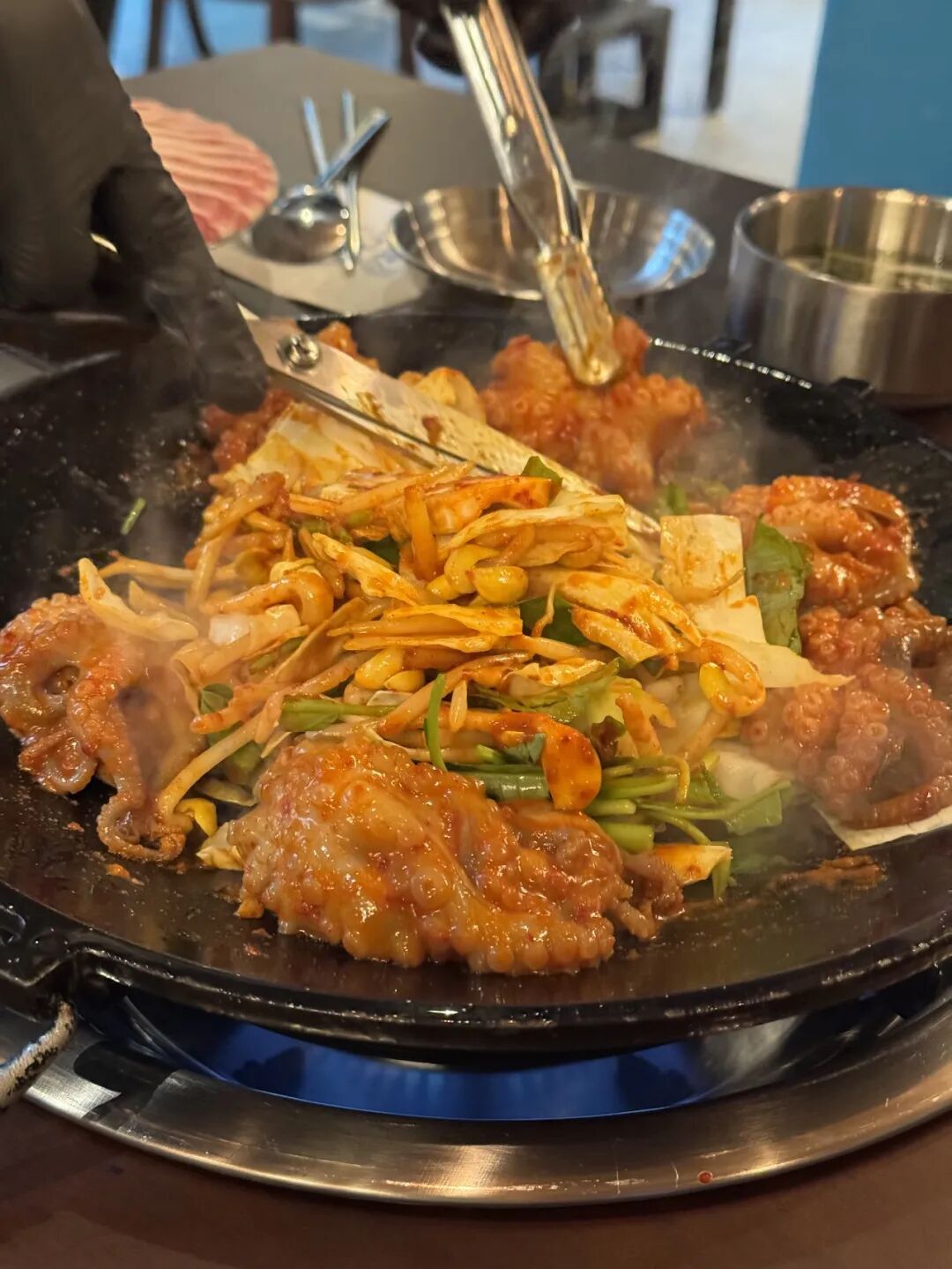
The octopus is guaranteed to be fresh and tender, but it is also very spicy.
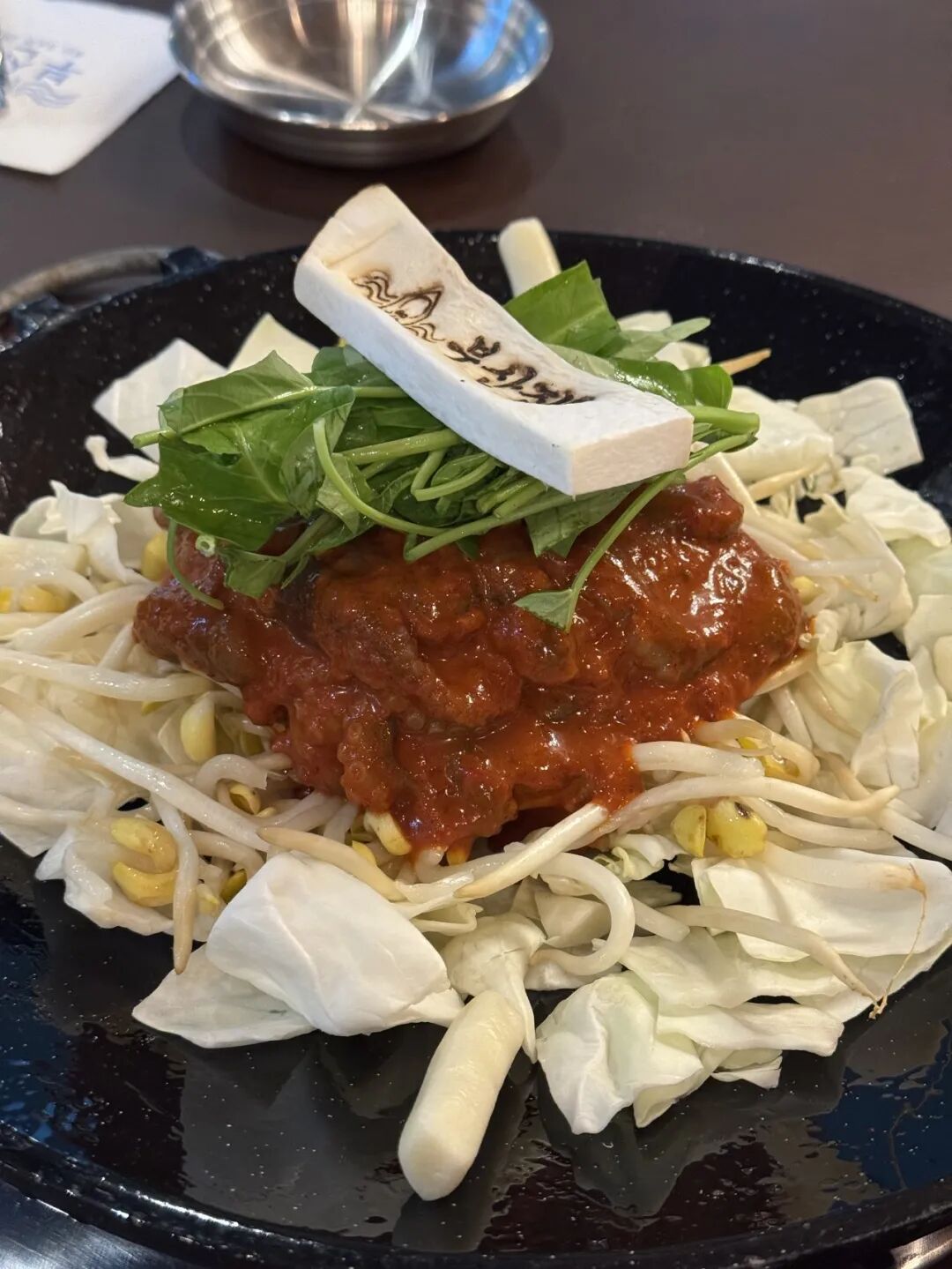
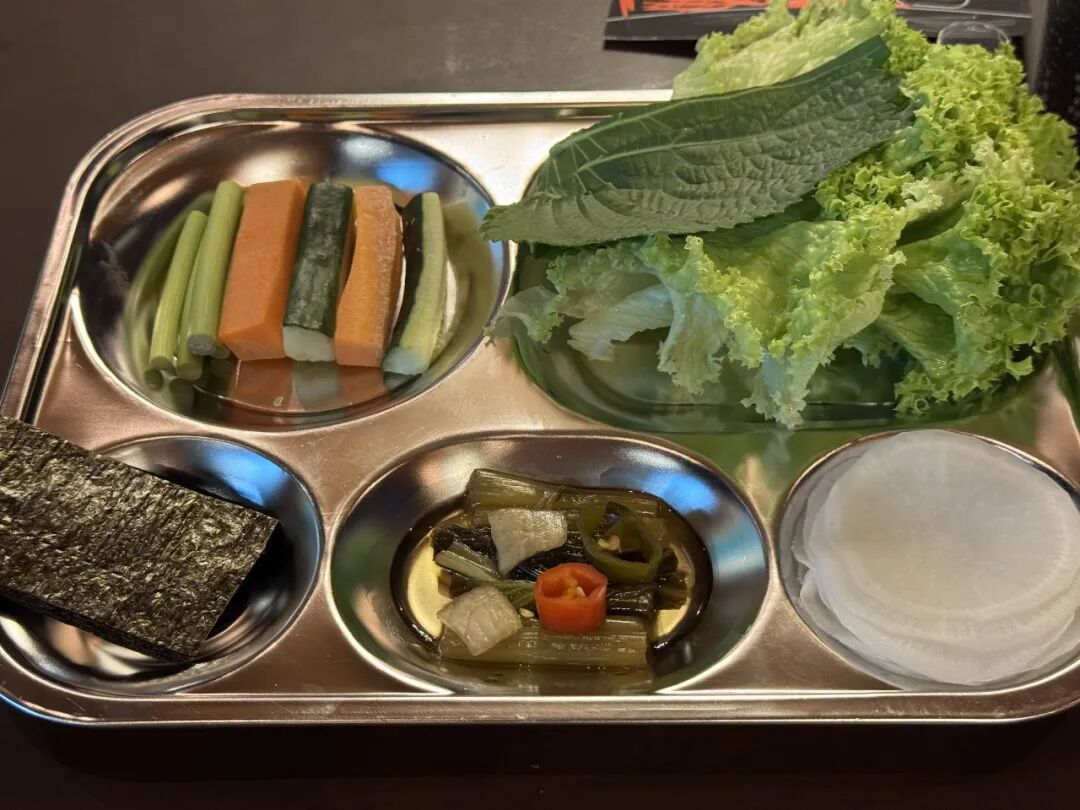
The vegetables that accompany the meal are also very fresh, and the waiters will help add vegetables at any time, so you don’t have to worry about not having enough food, which is great for friends who like to eat vegetables.
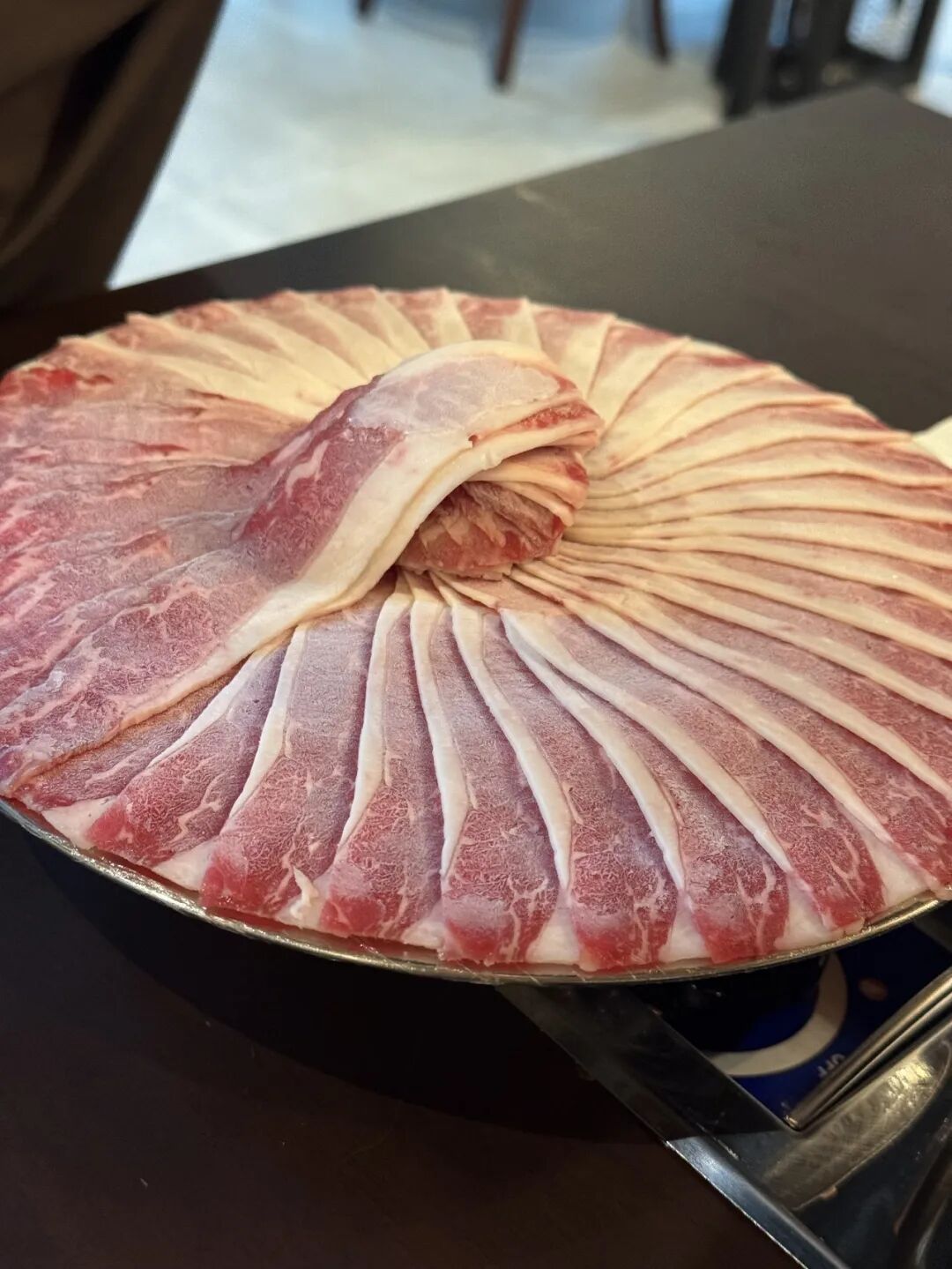
The spicy octopus alone is definitely not enough, you also have to add a piece of Australian Wagyu beef barbecue.
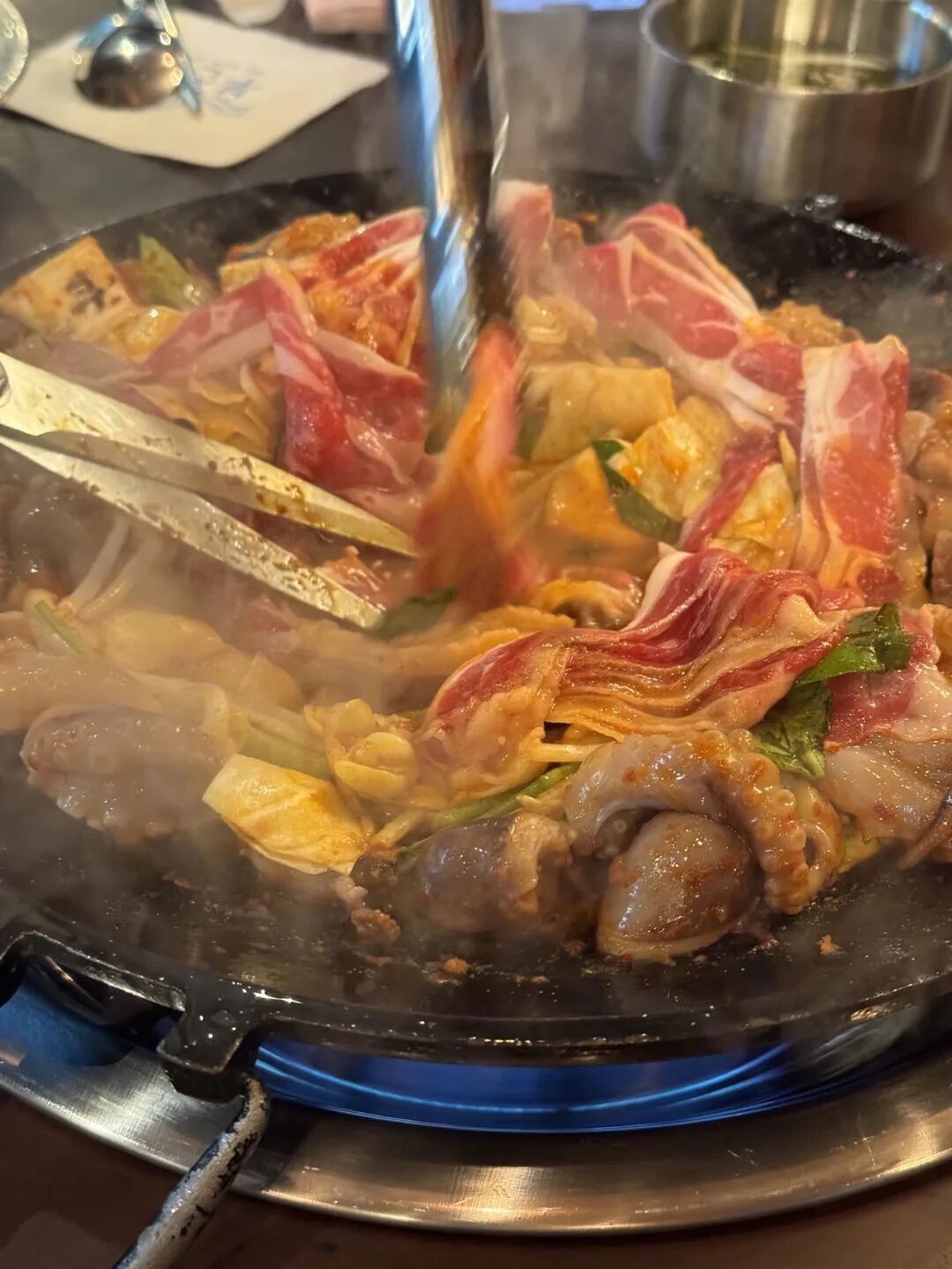
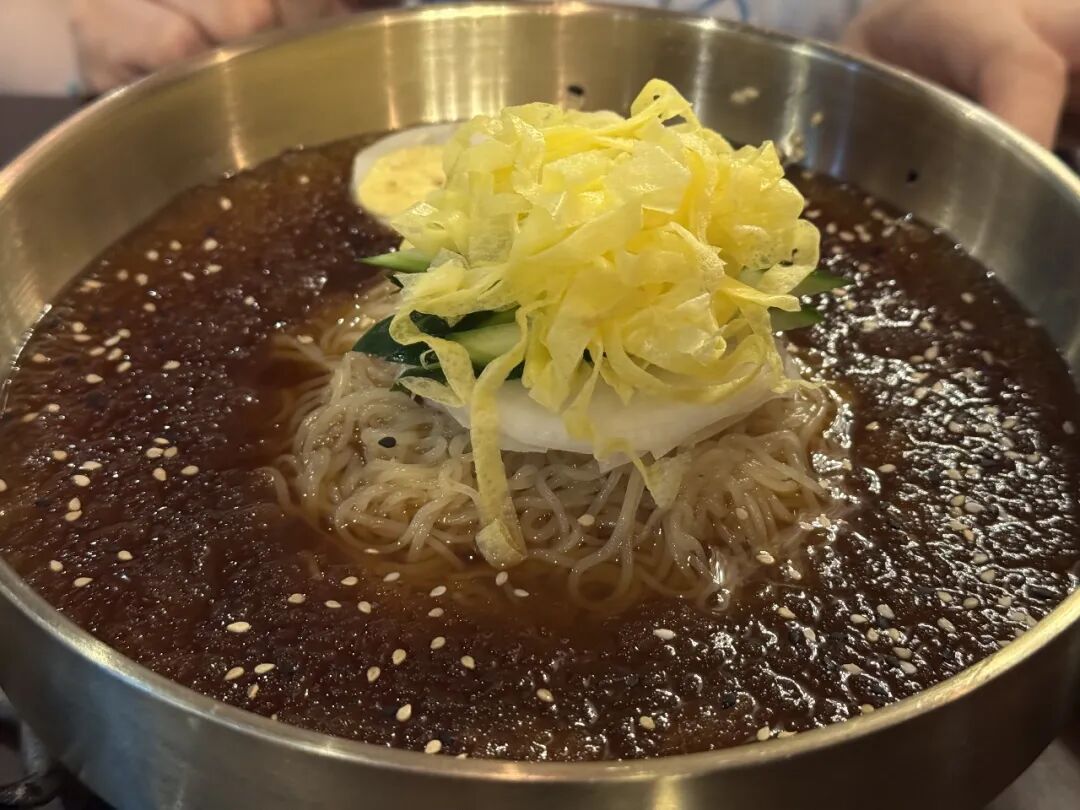
The staple food is this Busan specialty cold noodles. The taste of this noodles is different from the cold noodles we have eaten in China. The boss said this is a Busan specialty, but I still think Qiqihar cold noodles are more delicious.
Address: Busanzip
9. ORCHID
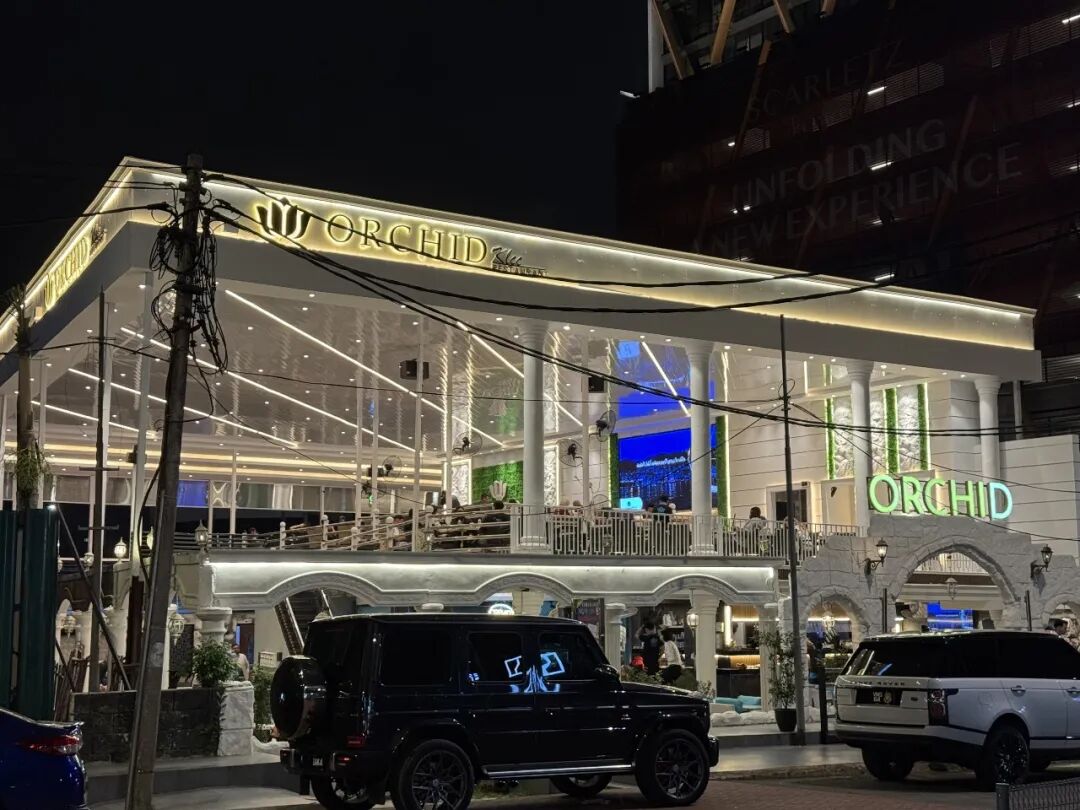
This Middle Eastern restaurant is the closest to our home. It’s just downstairs and across the road. Although it looks classy, the food is actually very cheap, and the mandi rice in this restaurant is the best in Kuala Lumpur in my opinion.
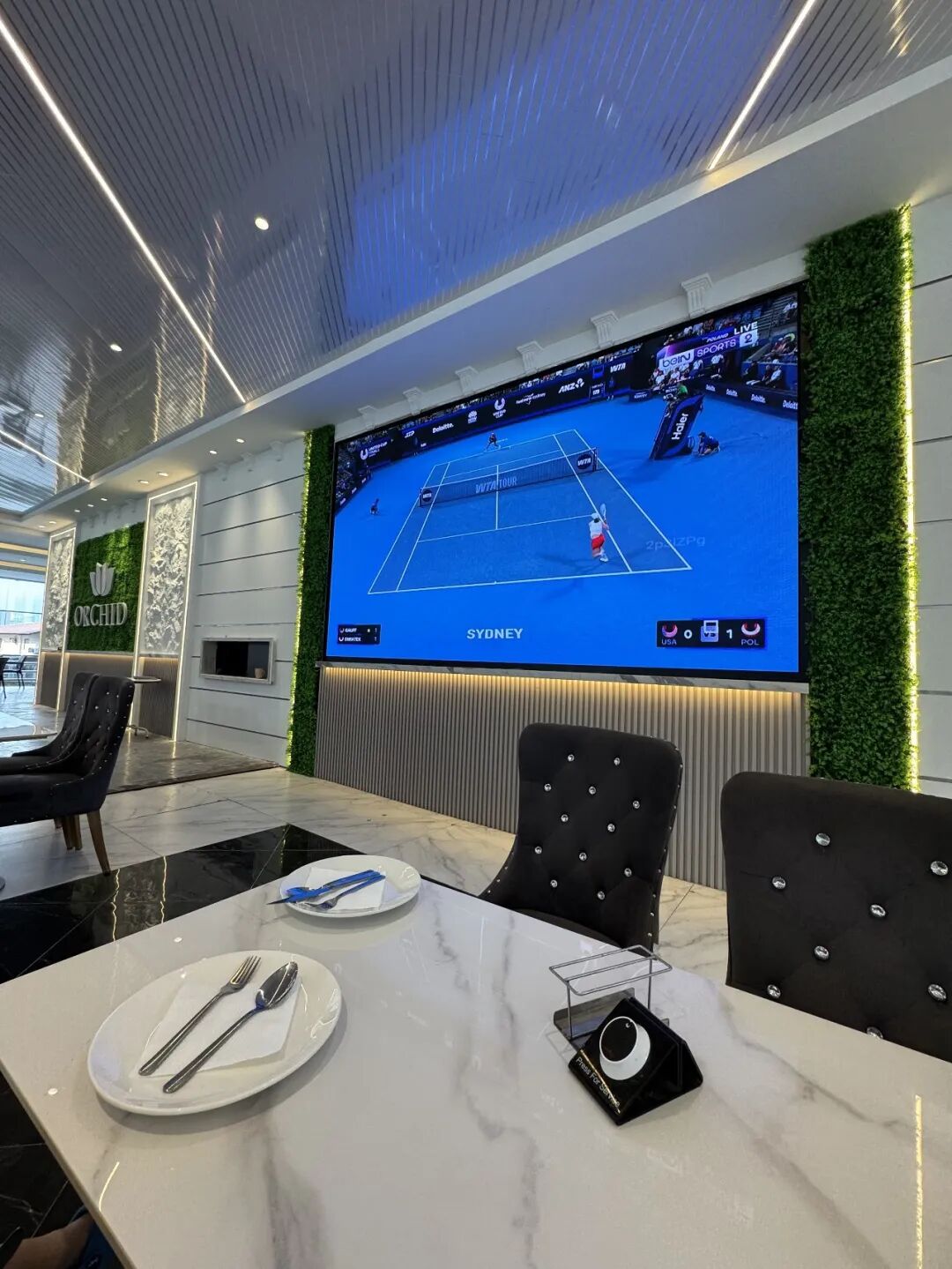
Most Middle Eastern restaurants will install a large screen to watch football games. As long as there is a game, the restaurant will be open all night.
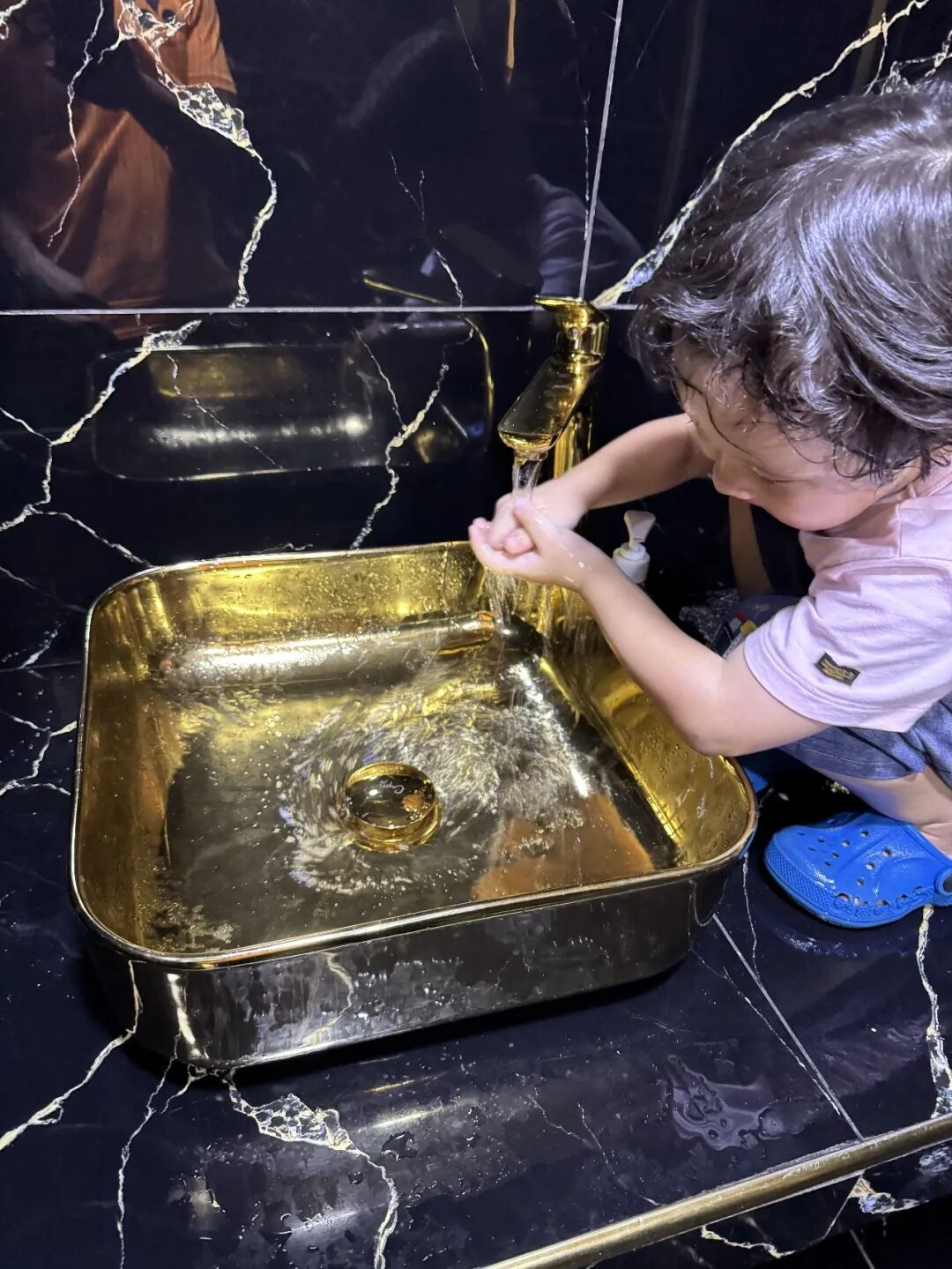
Even the toilets and wash basins in this store are made of gold. My son likes to eat their food. We come here almost every week and the store staff all know us.
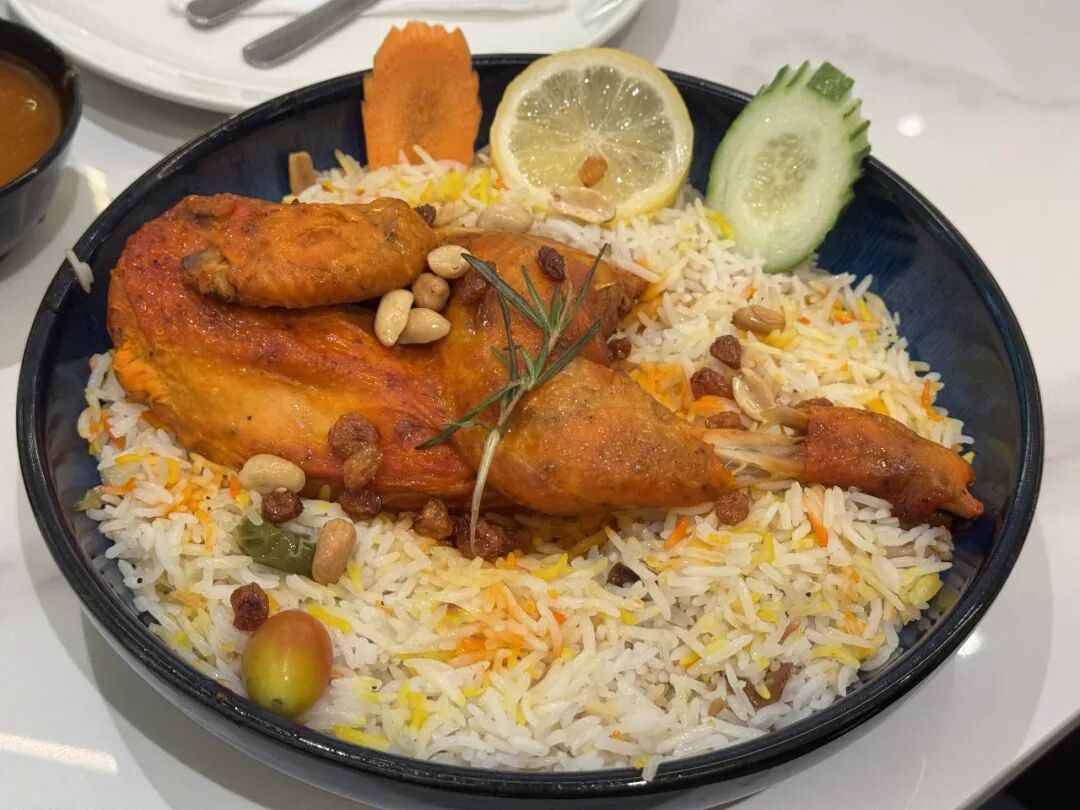
For this portion of Mandy's Chicken Rice, if it's just my son and I, we'd order a quarter portion, and two adults can order a half portion. A quarter portion only costs RM22, which is cheaper than many restaurants I've been to, and it's also delicious.
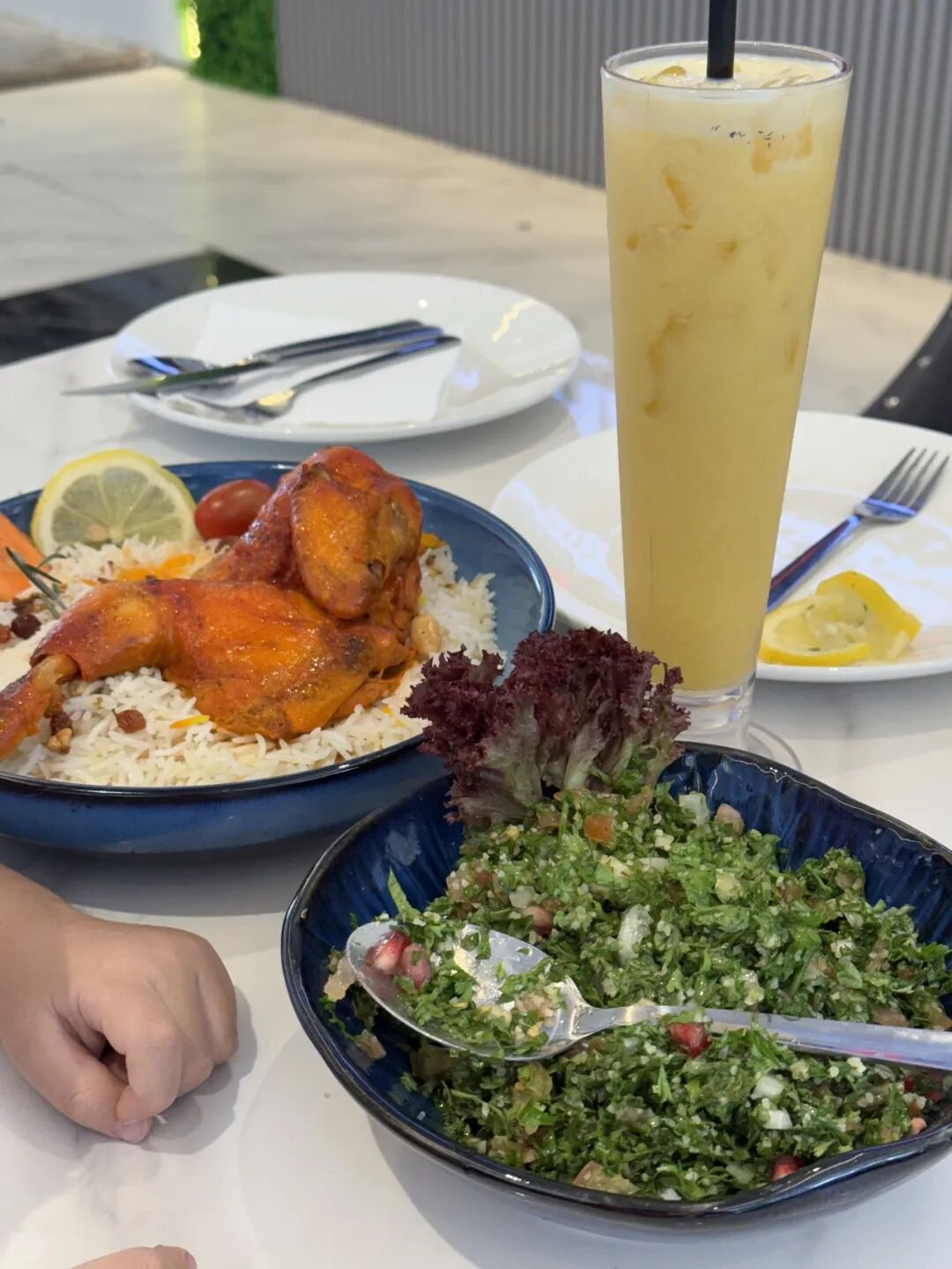
Sometimes the flavors are changed, but basically they are not bad, suitable for children, nutritious, delicious and healthy.
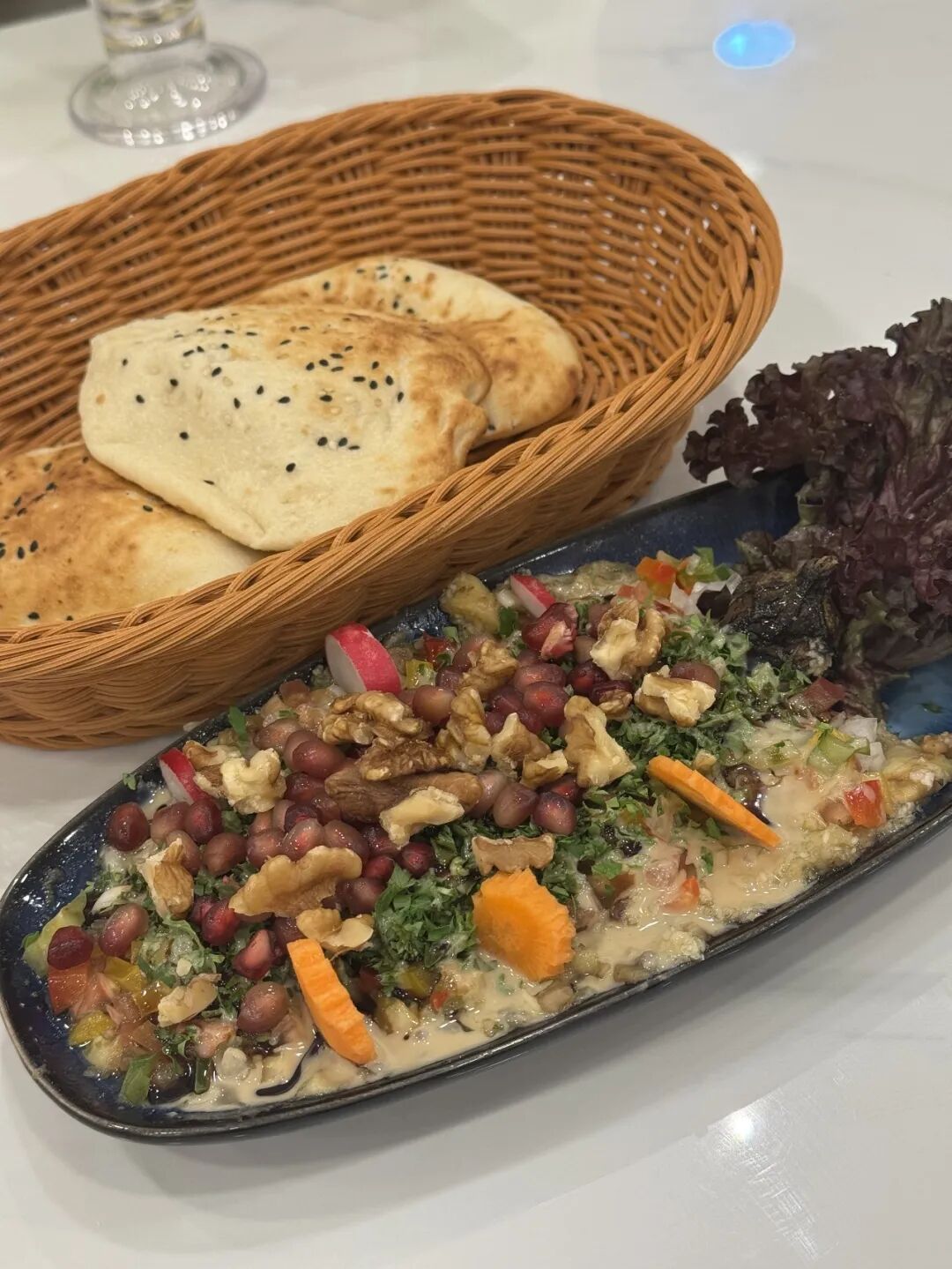
But my son doesn’t really like salads or anything with soup or dip, he only likes mandi or grilled meats.
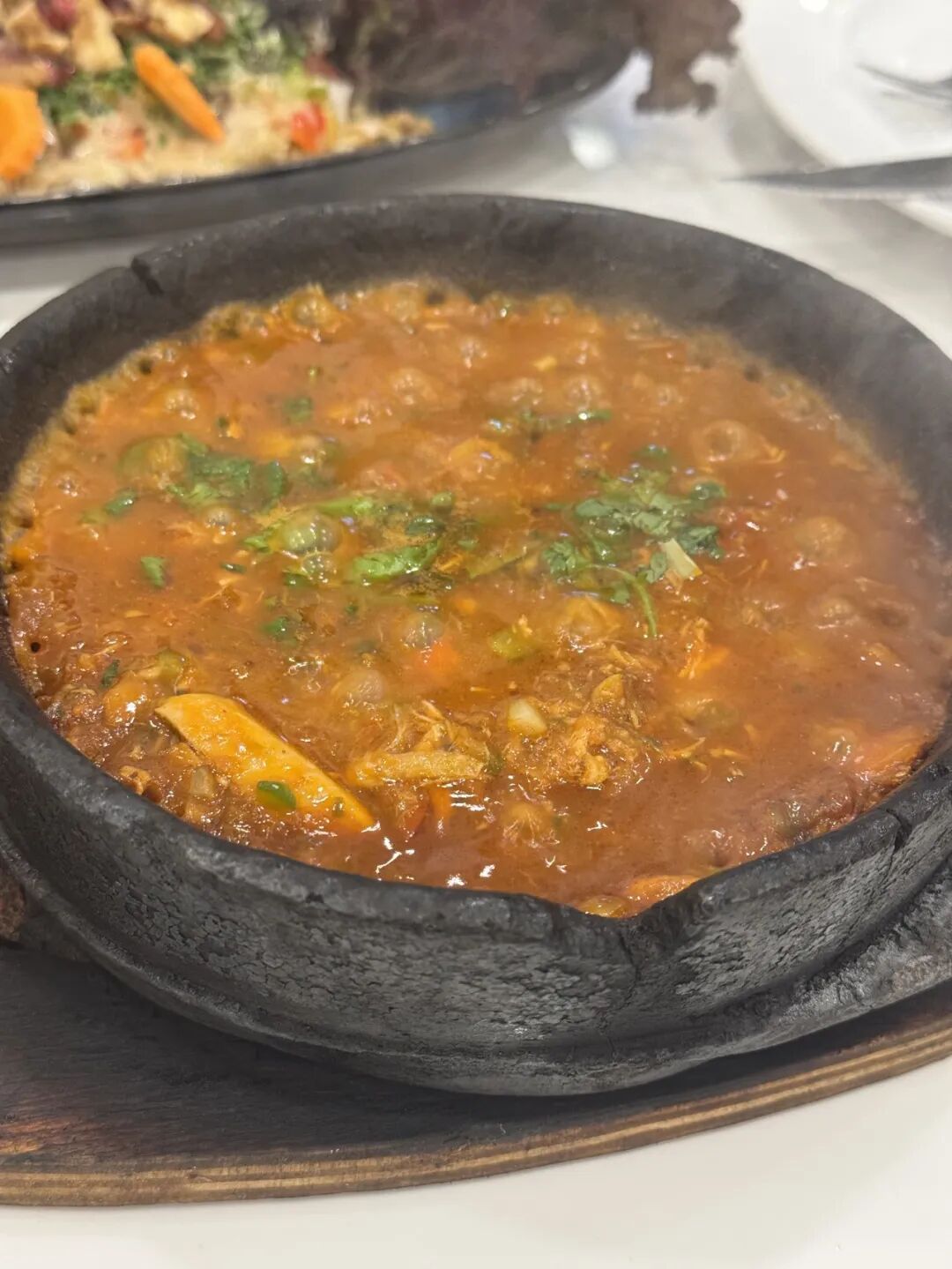
Address: Orchid Restaurant (Orchid)
10. The Castle
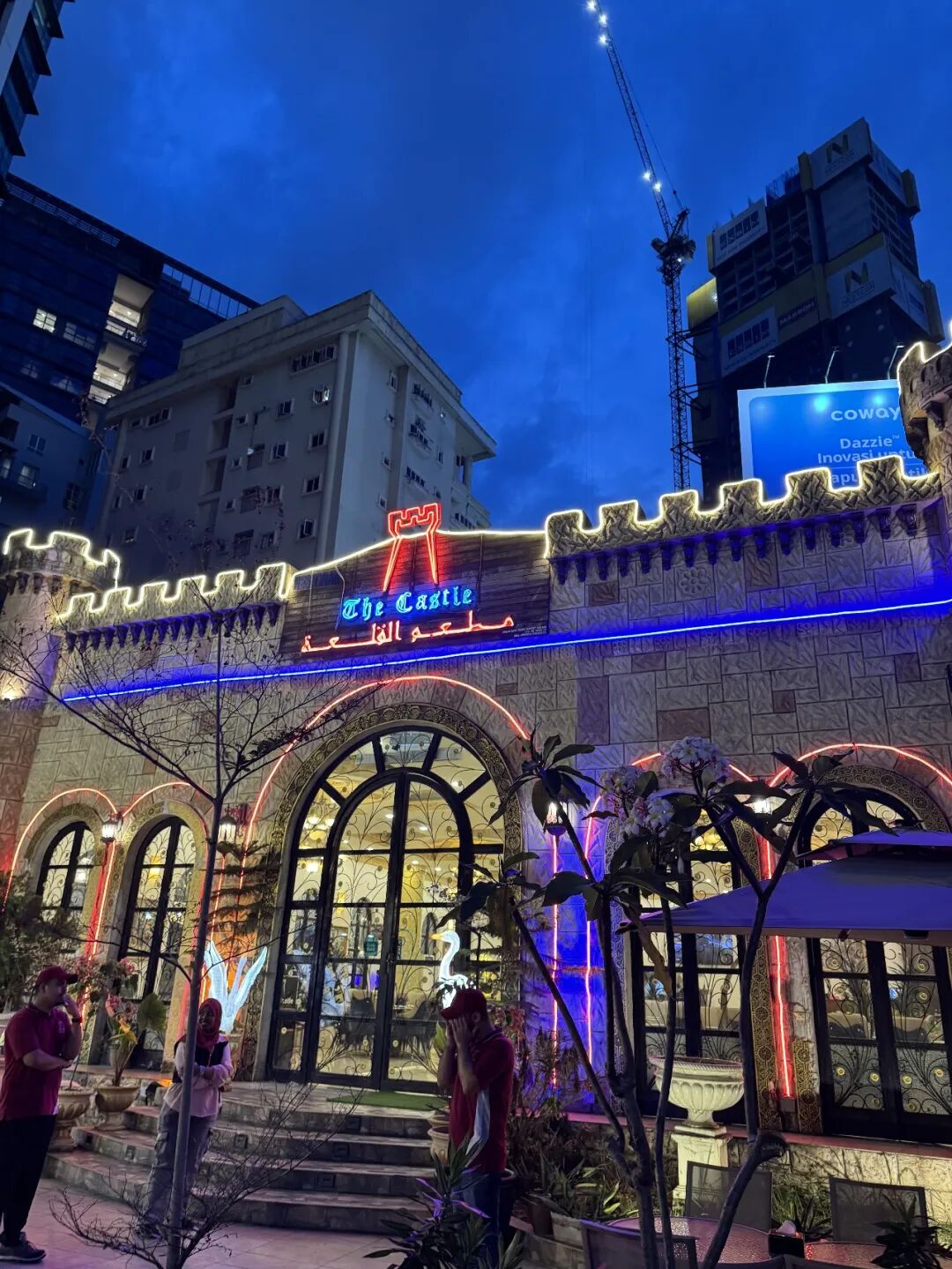
This store is also near where I live. I pass by it every day. One time, my son suddenly wanted to eat the castle-like meal, so I took him here to have a few meals. The taste was average, not as good as the Orchid I recommended earlier.
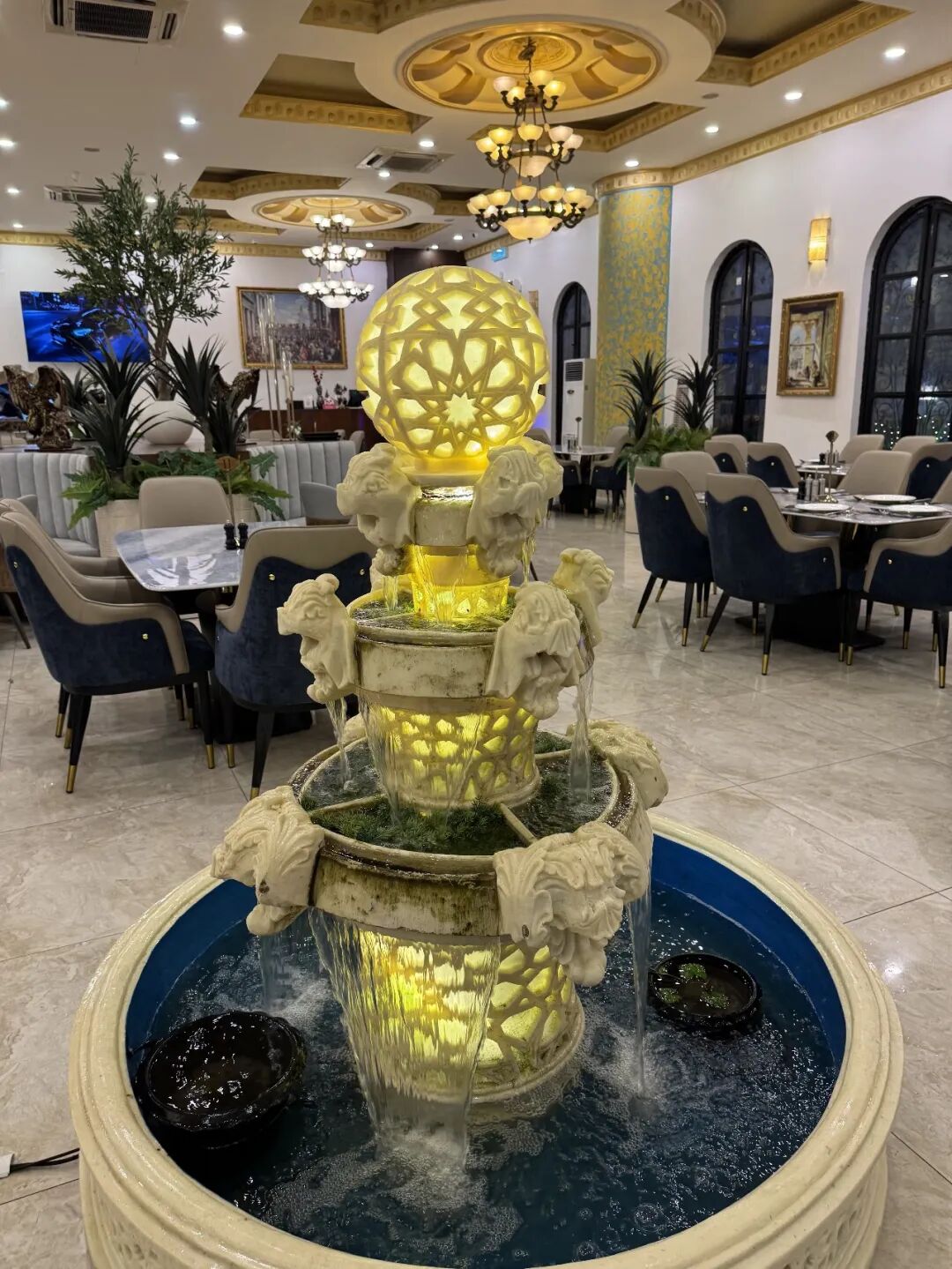
But the environment is also very good. The advantage of this store is that there is a yard at the door and easy parking.
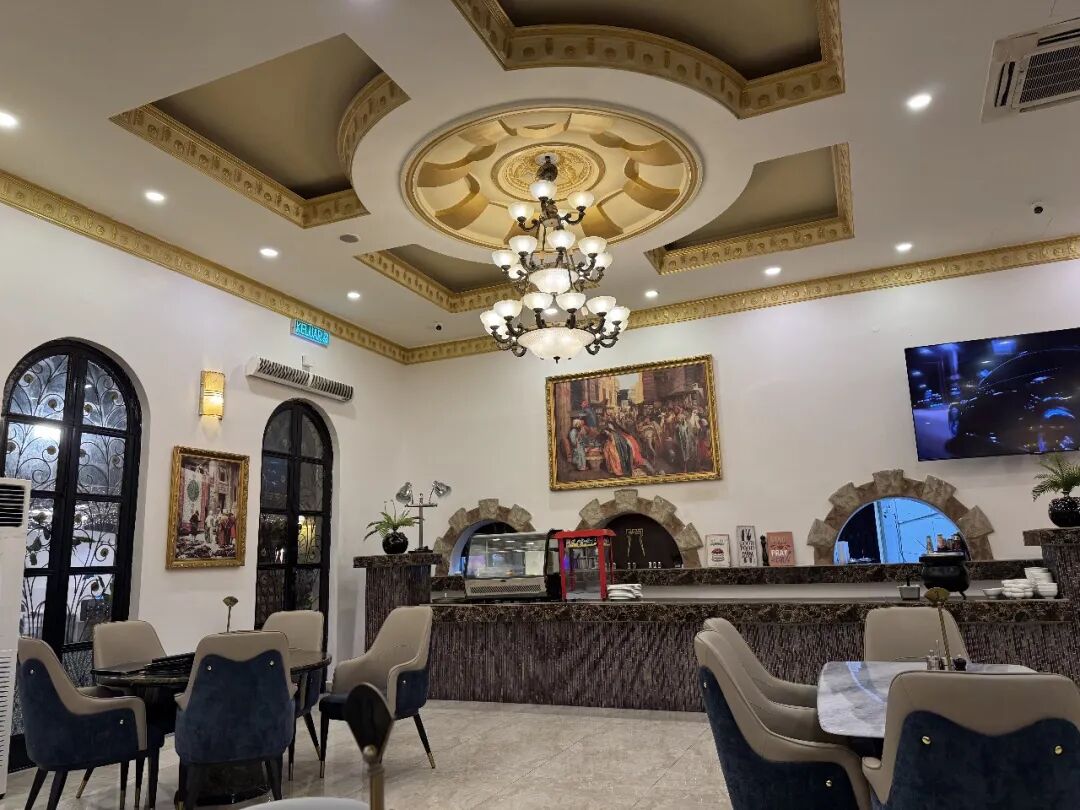
The price is a few dollars more expensive than Orchid, but the prices of this type of Arabic restaurant are not much different, so don't be intimidated by the decoration, just go inside boldly.
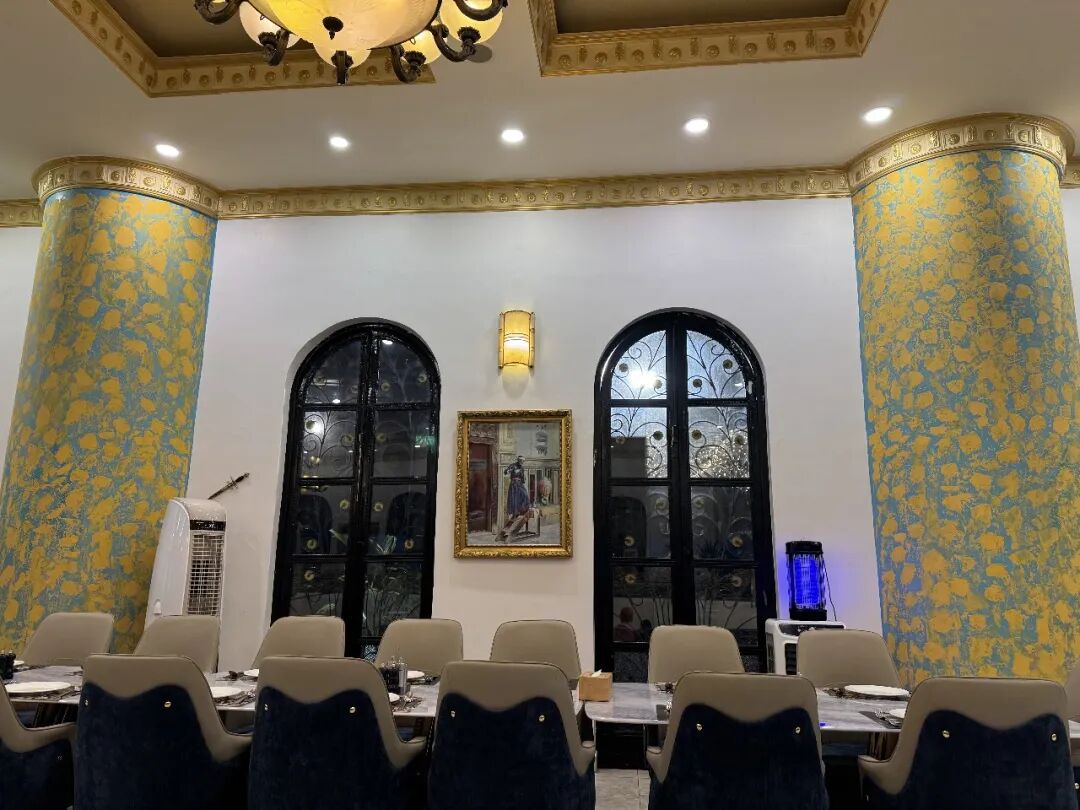
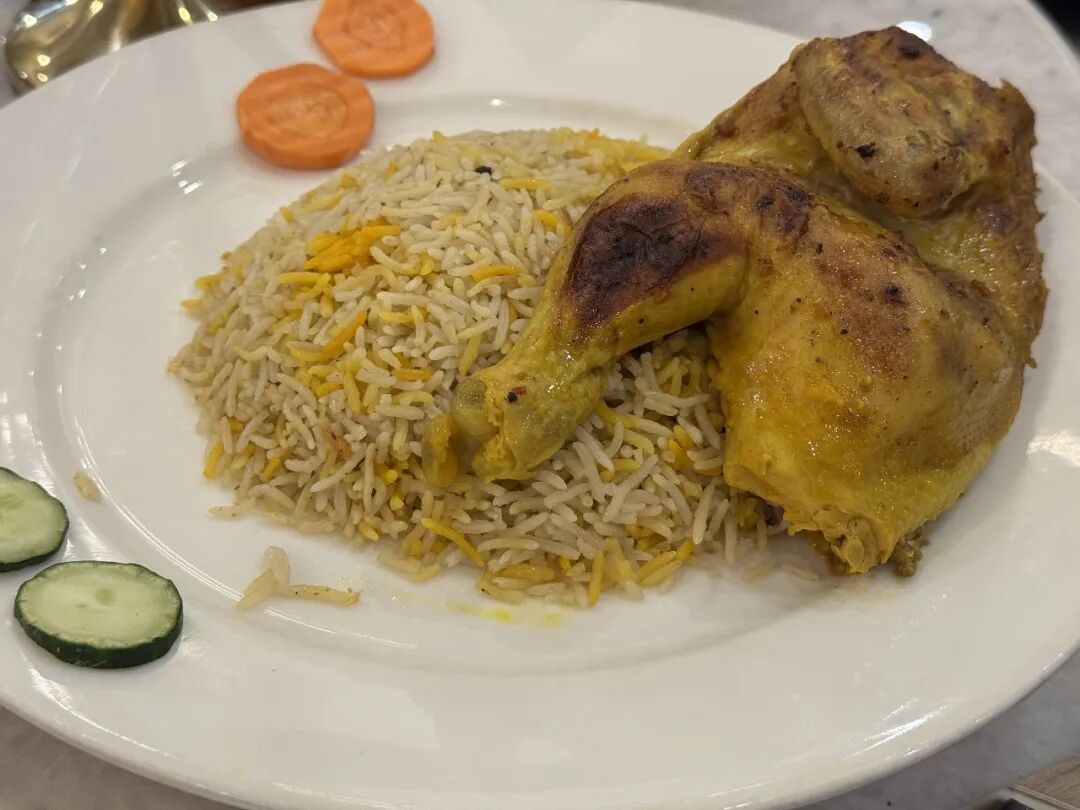
The Mandy Chicken Rice in this store looks relatively simple, with no raisins in it and few side dishes.
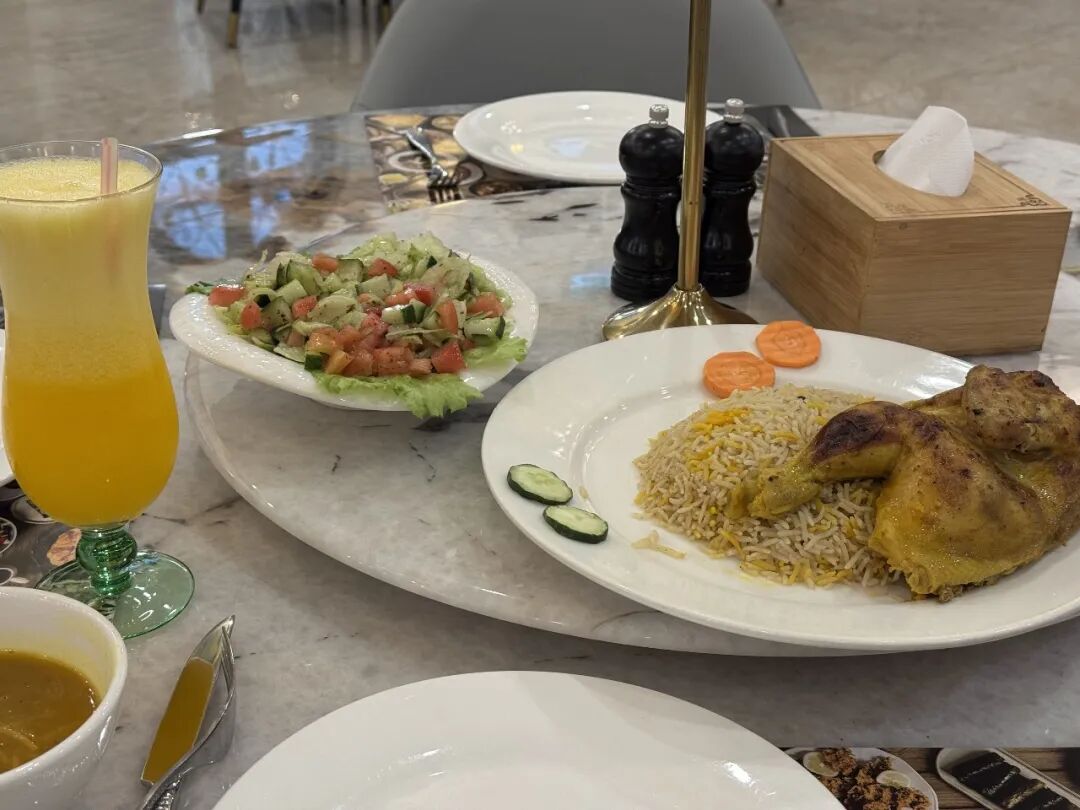
Address: The Castle Restaurant
11. YAKINIKU KURO
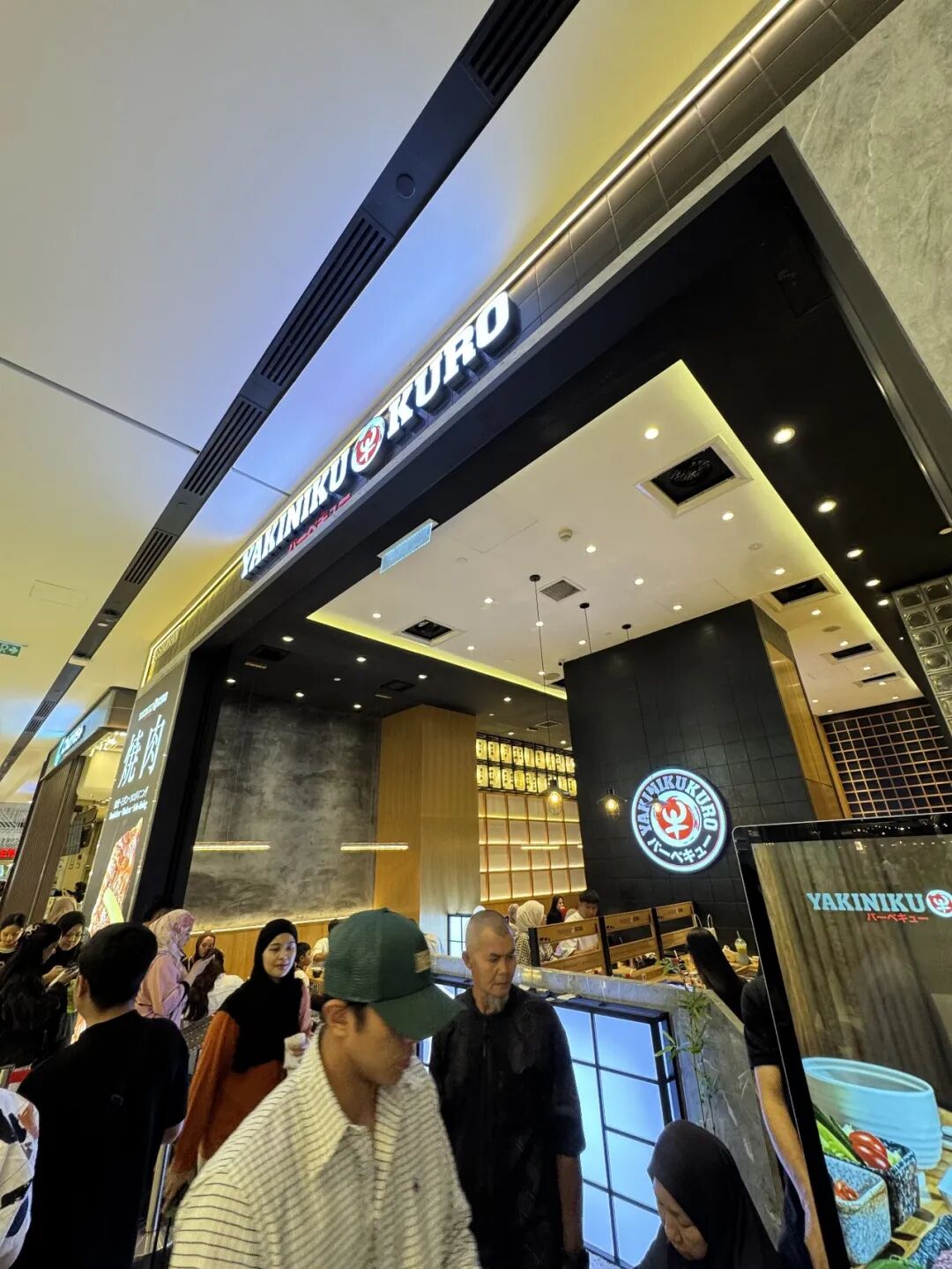
There is a very popular Japanese barbecue restaurant in TRX, and you have to queue for half an hour to get a meal.
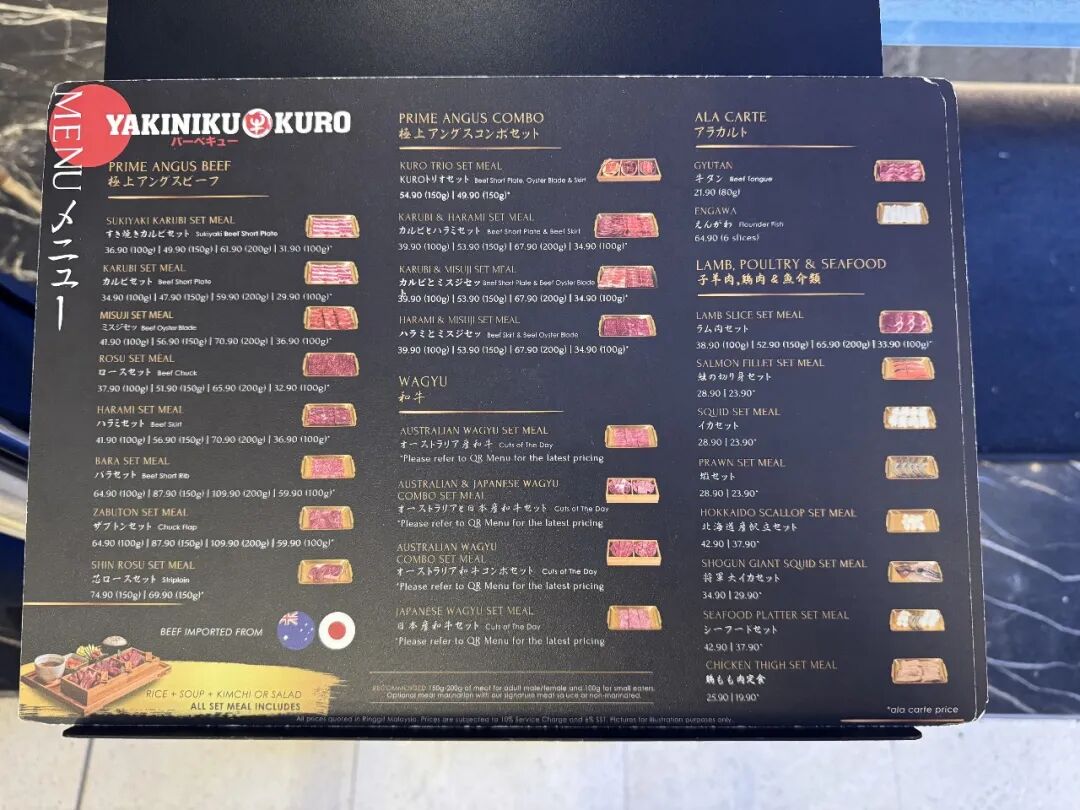
Beef imported from Australia and Japan is used, and the per capita consumption is about RM150.
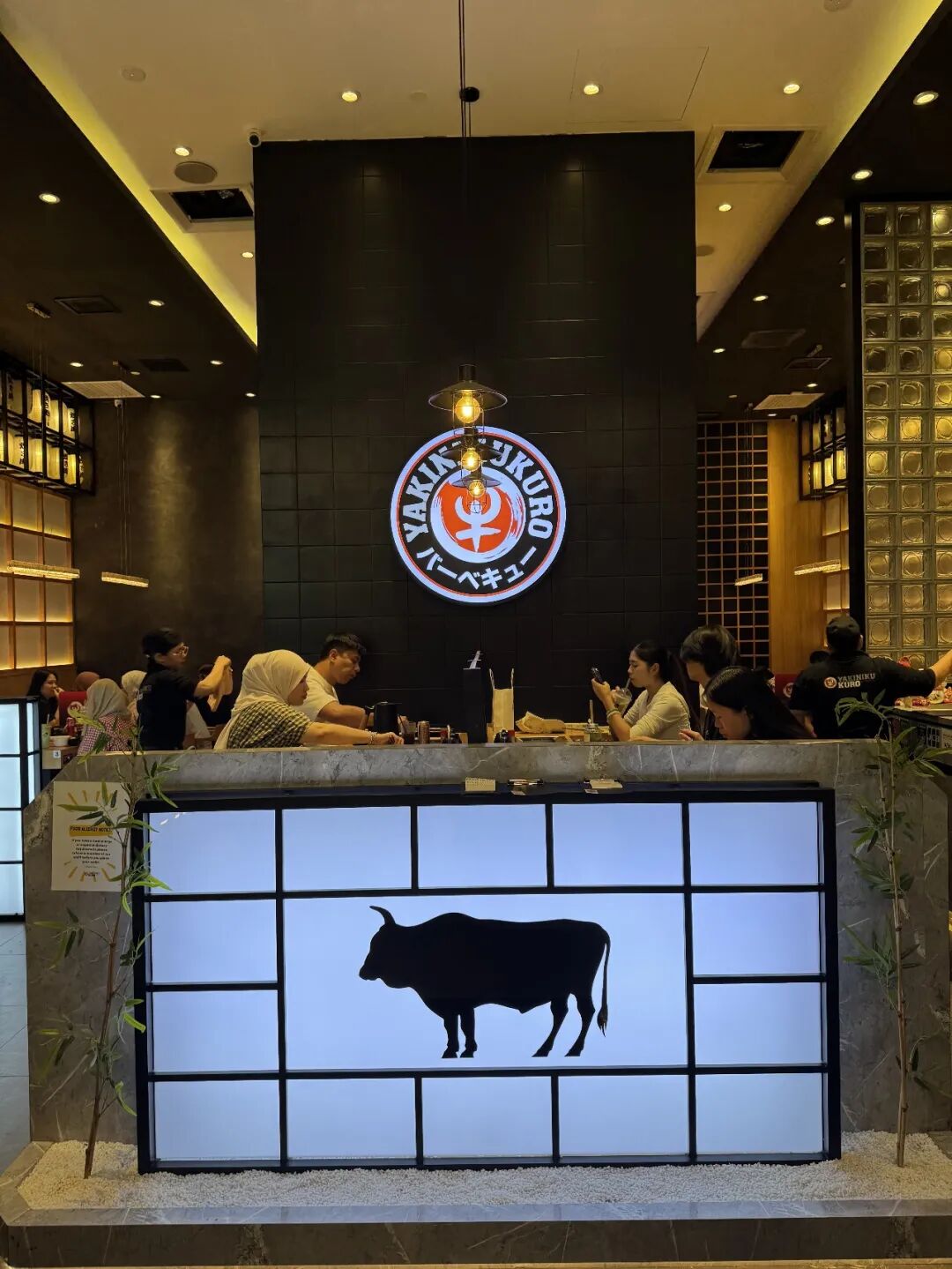
A quick calculation shows that almost all the Japanese food shops I have seen in Kuala Lumpur are halal.
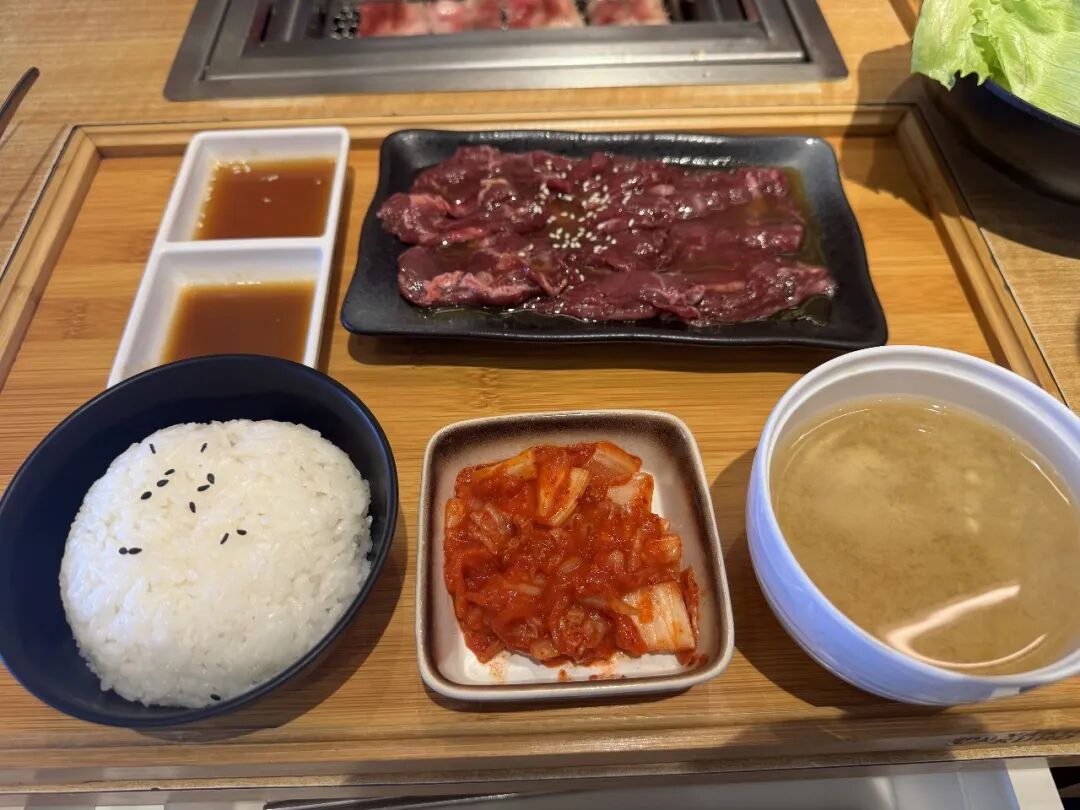
However, eating barbecue in Kuala Lumpur is not as cost-effective as in Beijing. The main reason is that the price is slightly higher than that in Beijing, but the meat quality is actually almost the same.
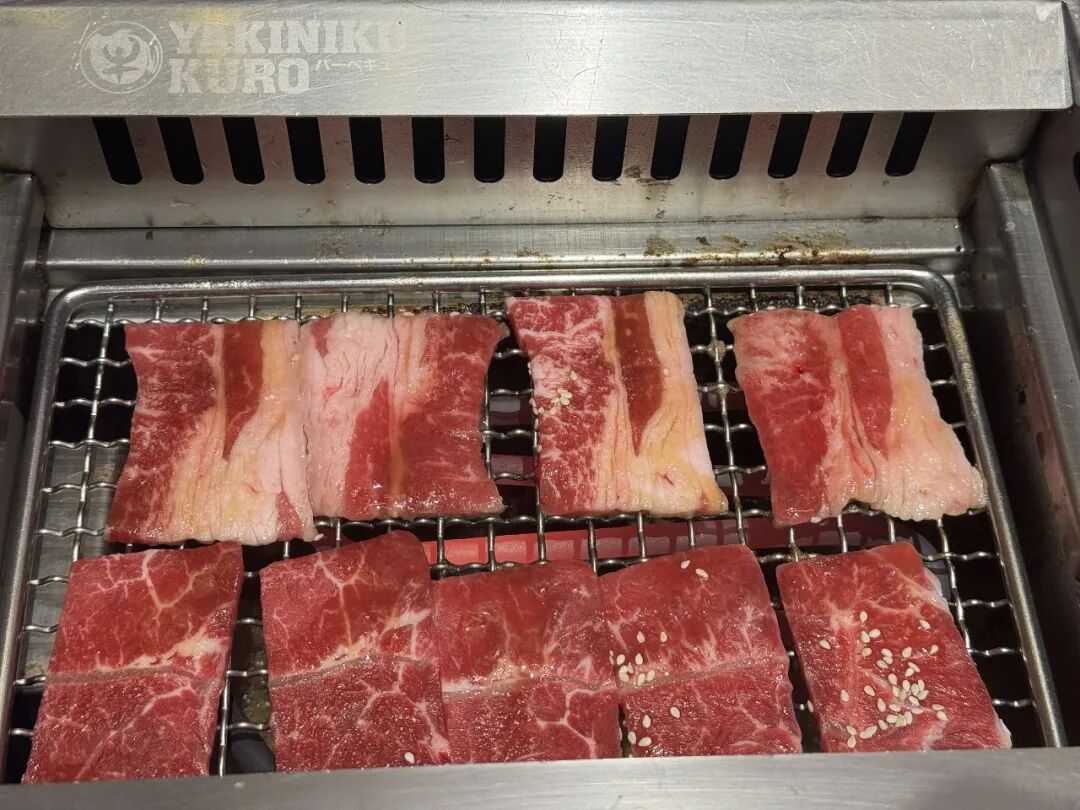
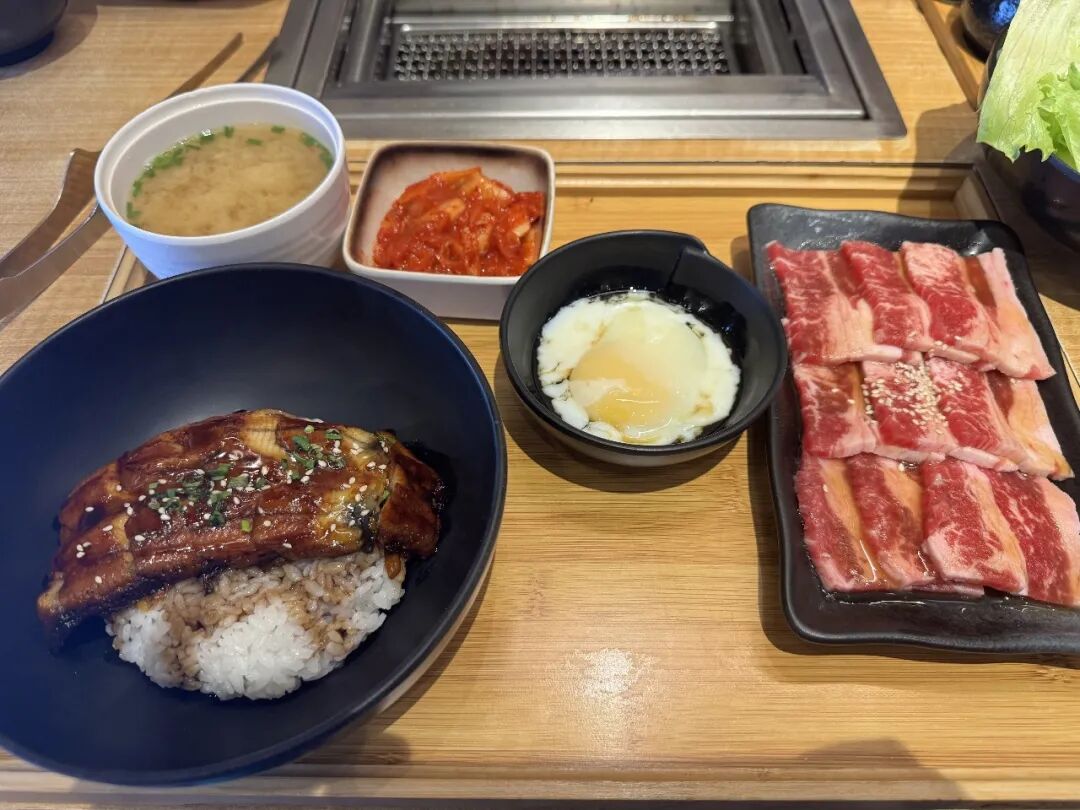
Address: Yakiniku Kuro the Exchange TRX
11. DRAGON HOT POT, one spicy and one spicy
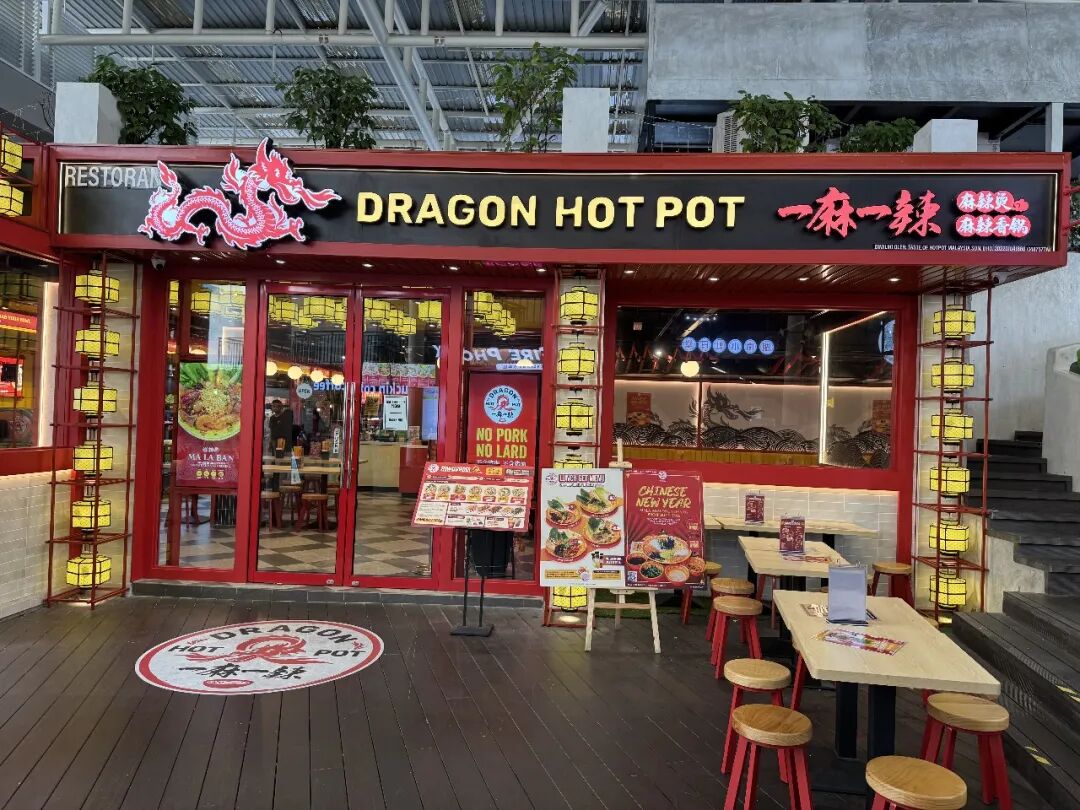
A spicy hotpot restaurant very close to the pavilion, offering spicy hotpot, spicy hotpot, and dry mix. There is a sign at the door that says, "No pork, no lard." This is a cryptic statement for a halal shop, because it requires a lot of money to be certified to hang the halal label.
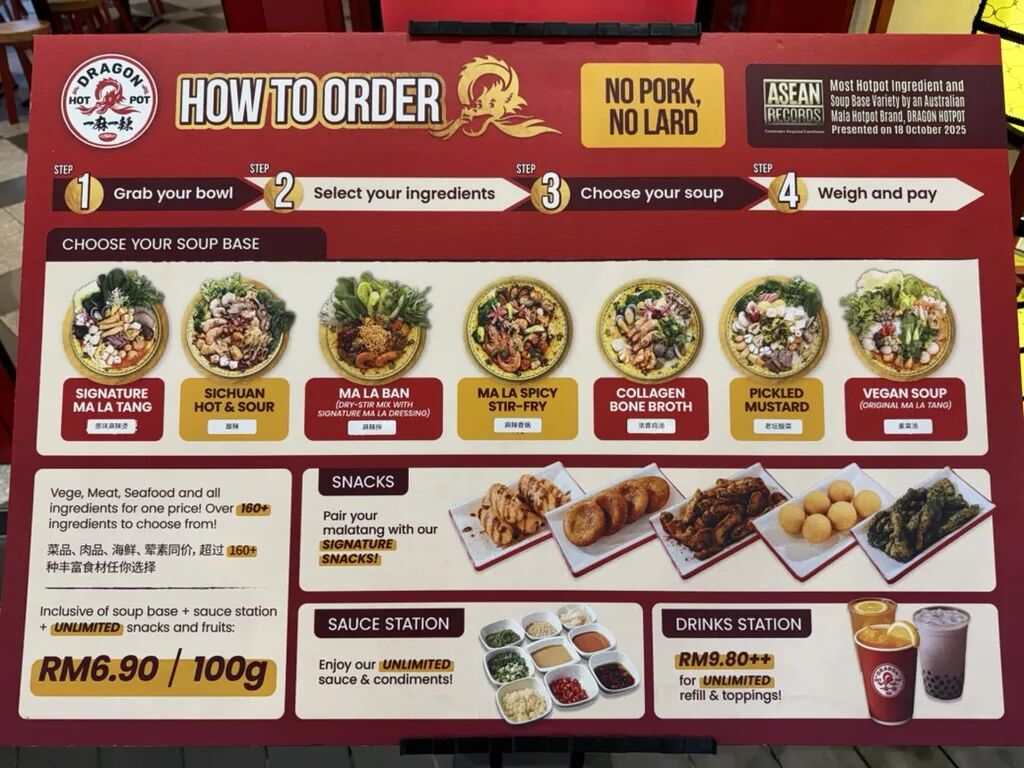
The variety of dishes is quite complete, and there are many ways to eat it. It is a newly opened store and there are not many people.
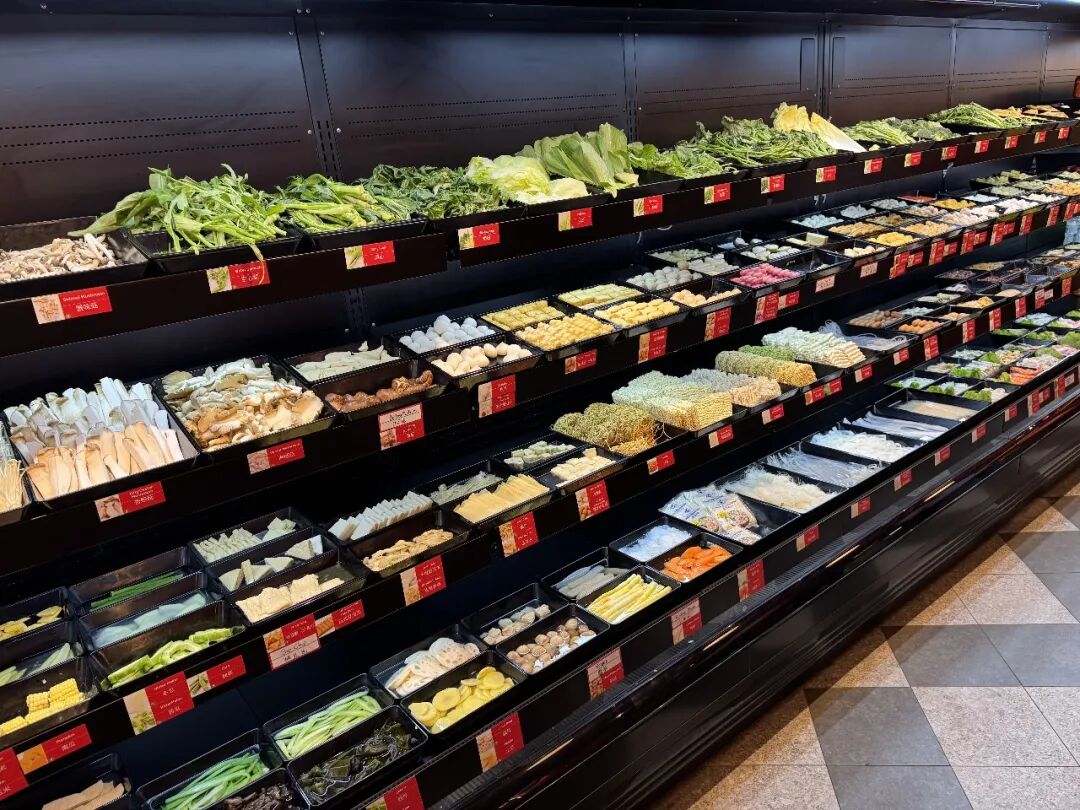
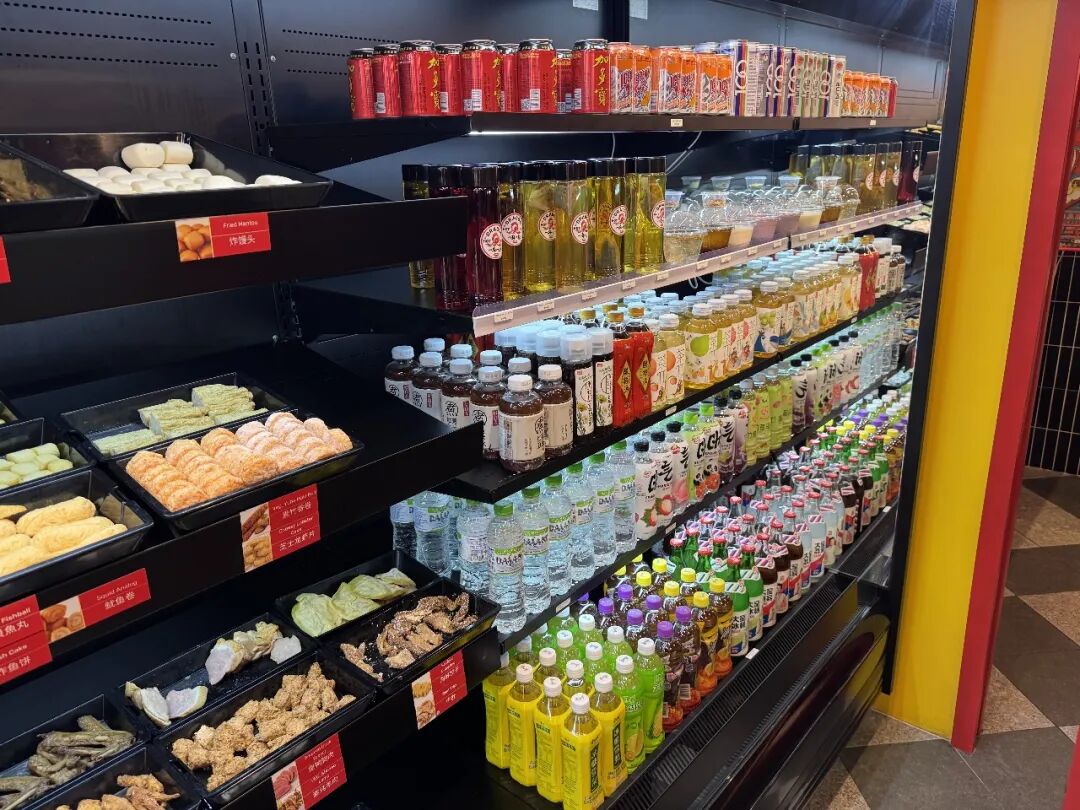
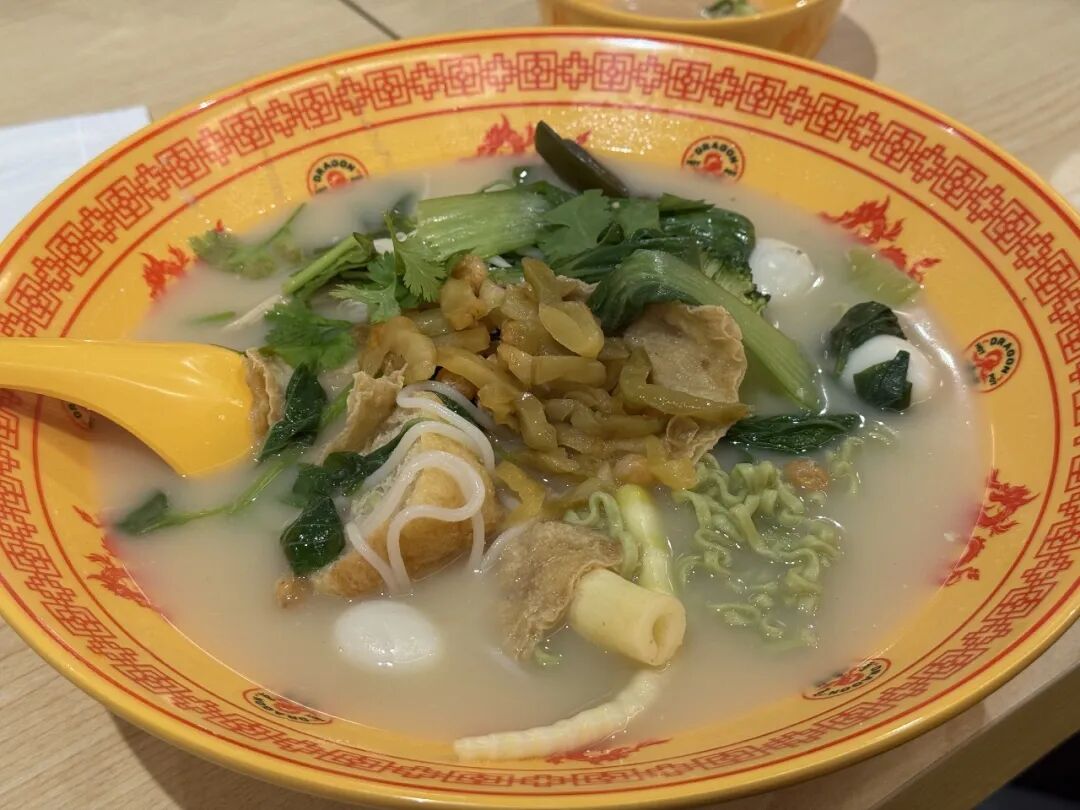
We chose two flavors: spicy hotpot and dry mix. The taste is very good and the price is cheap. The per capita consumption is about RM50.
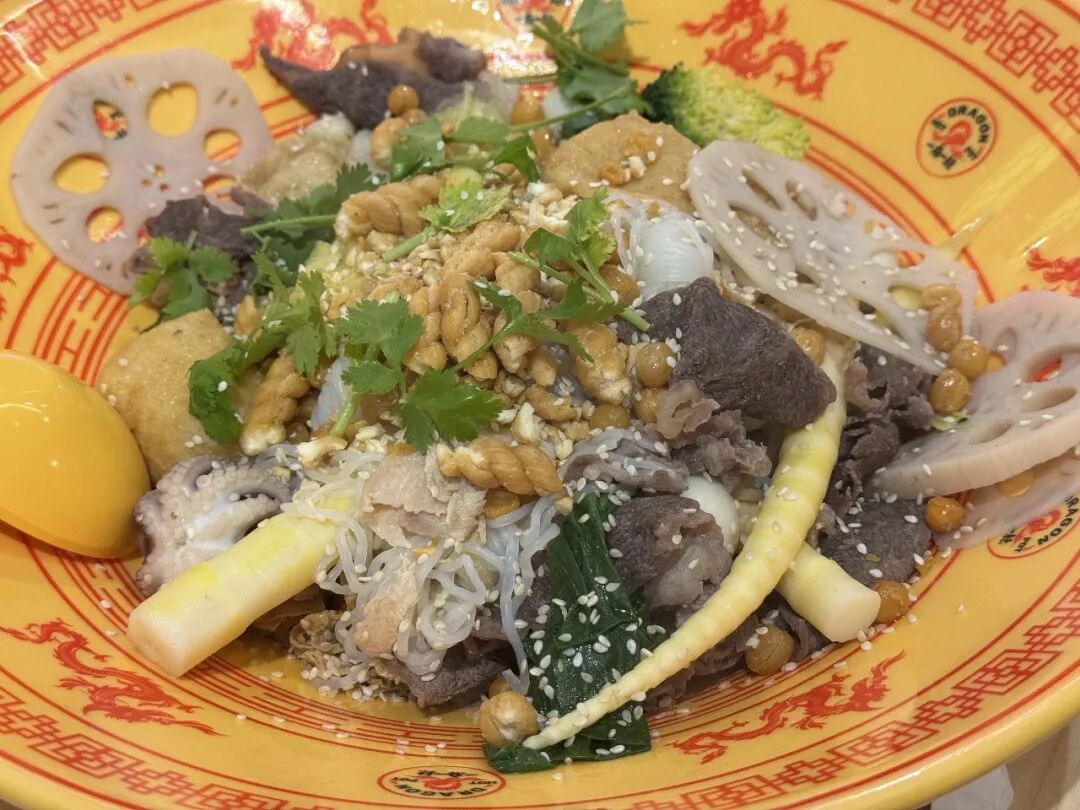
Address: Xiao Long Xing Dou Lao Hotpot (A Dragon Hotpot)
12. Cafe in house
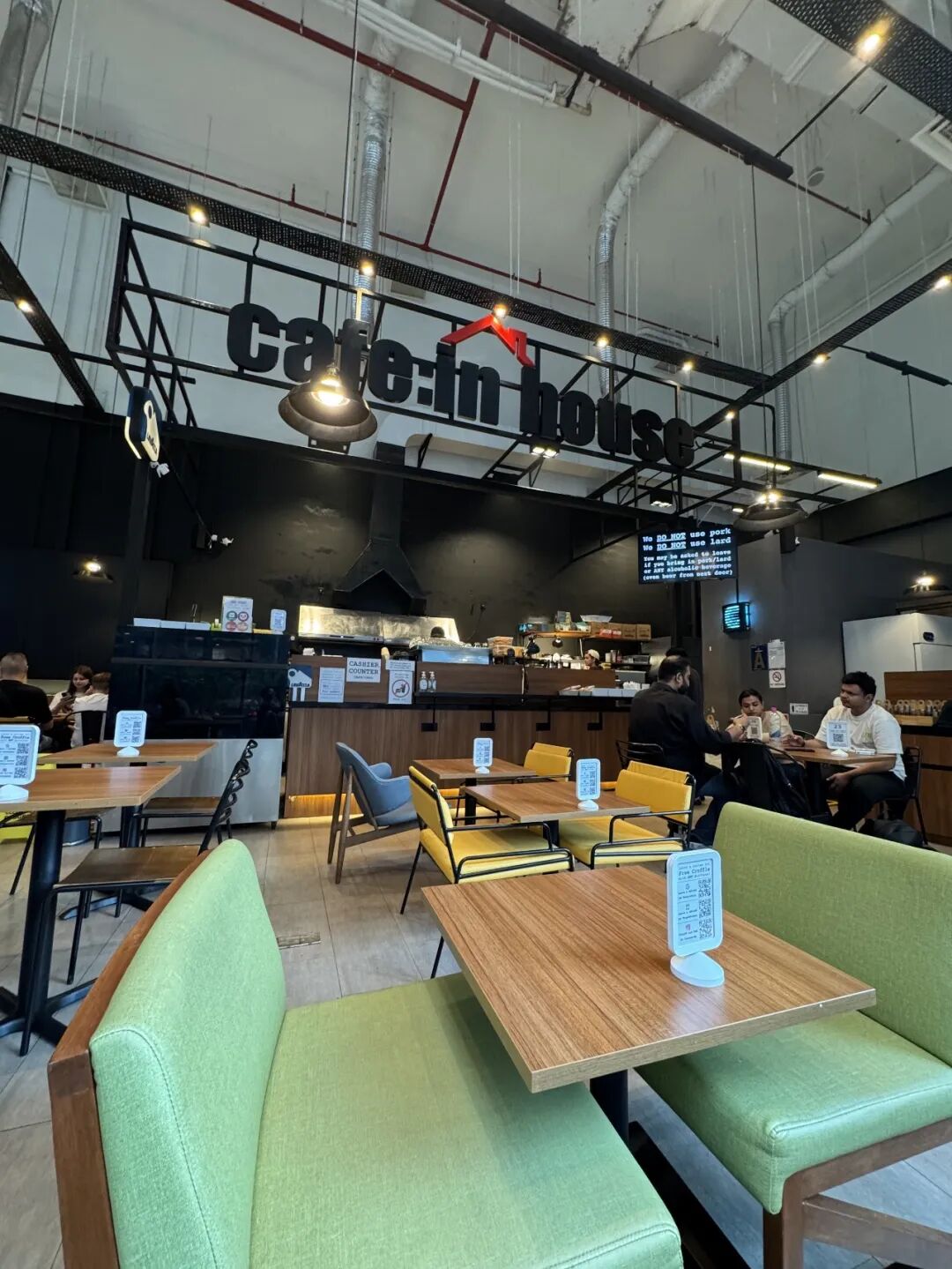
As I said before, in Kuala Lumpur, there are not many places where you can have a delicious and healthy breakfast in the morning. This cafe is one of them. It has a Western-style healthy breakfast that I like. I have eaten the halal version in Canada for a few days before. It is rare to find another one in Kuala Lumpur.
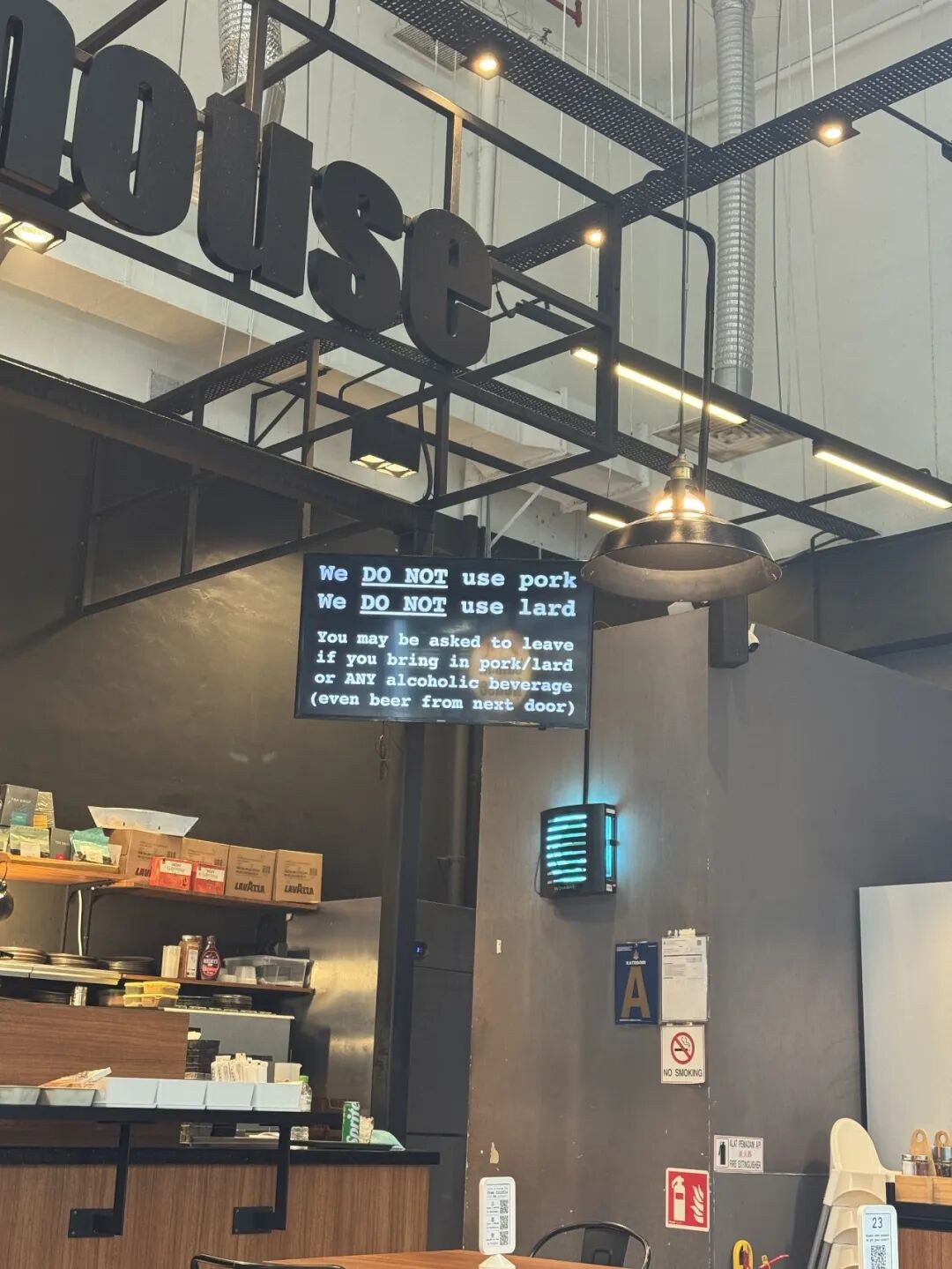
The electronic screen says no pork and no lard. A breakfast costs about 20 ringgit. Such breakfast also sells for 20 Canadian dollars in Canada.
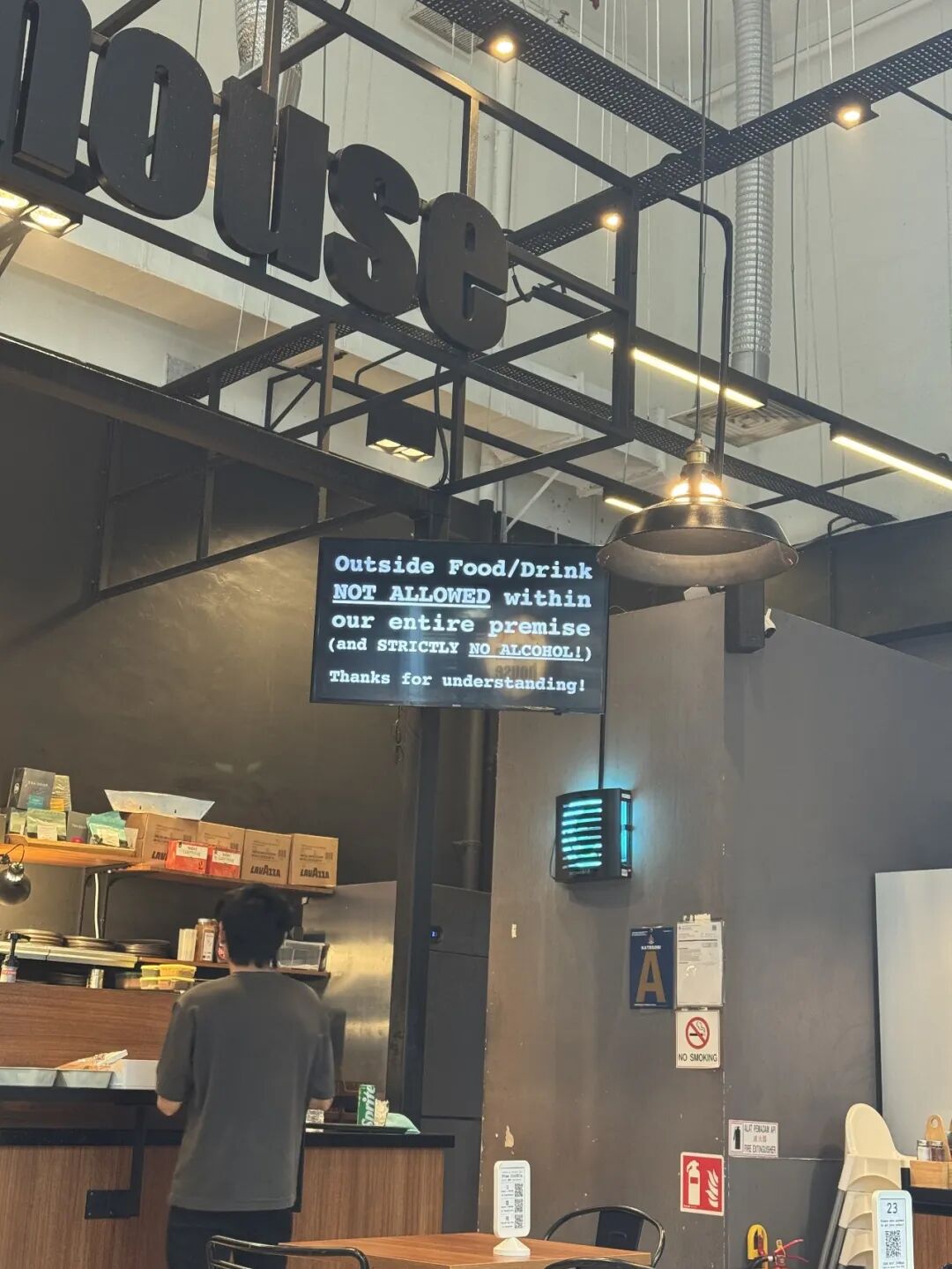
The sign also specifically emphasizes that outside food and alcohol are prohibited, and this store strictly prohibits alcohol.
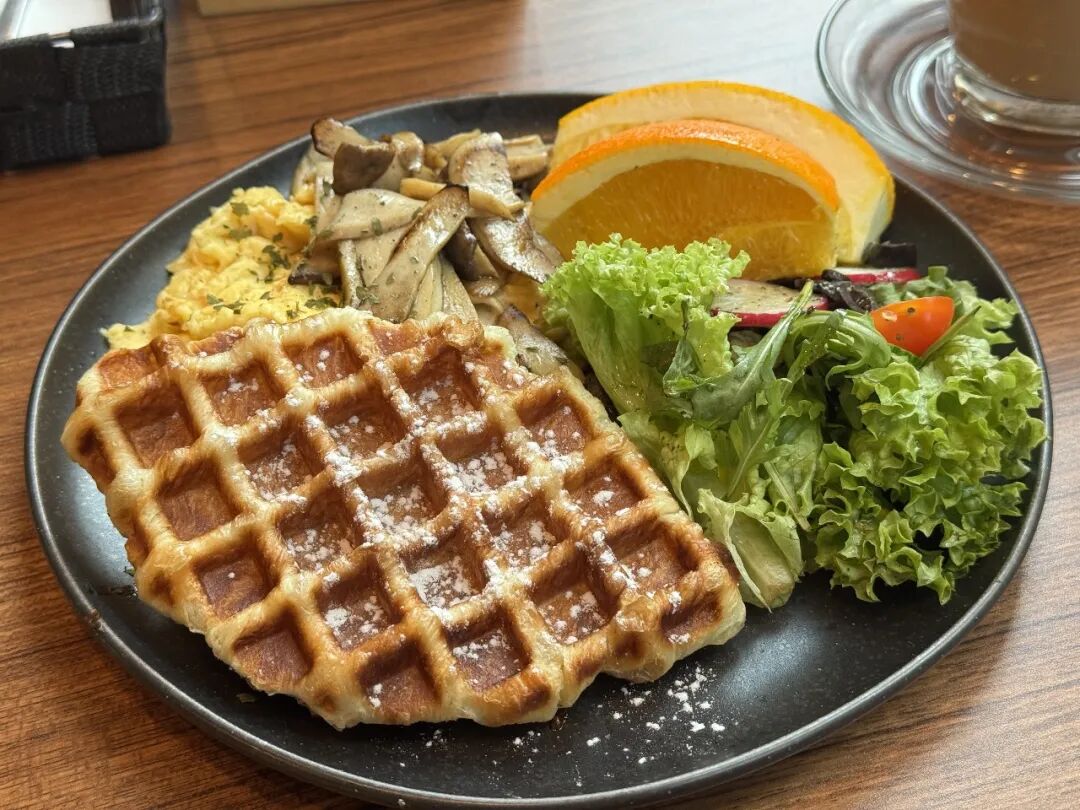
I chose mushroom omelette with waffles. There are many combinations to choose from. I also had a latte and I felt refreshed in the morning.
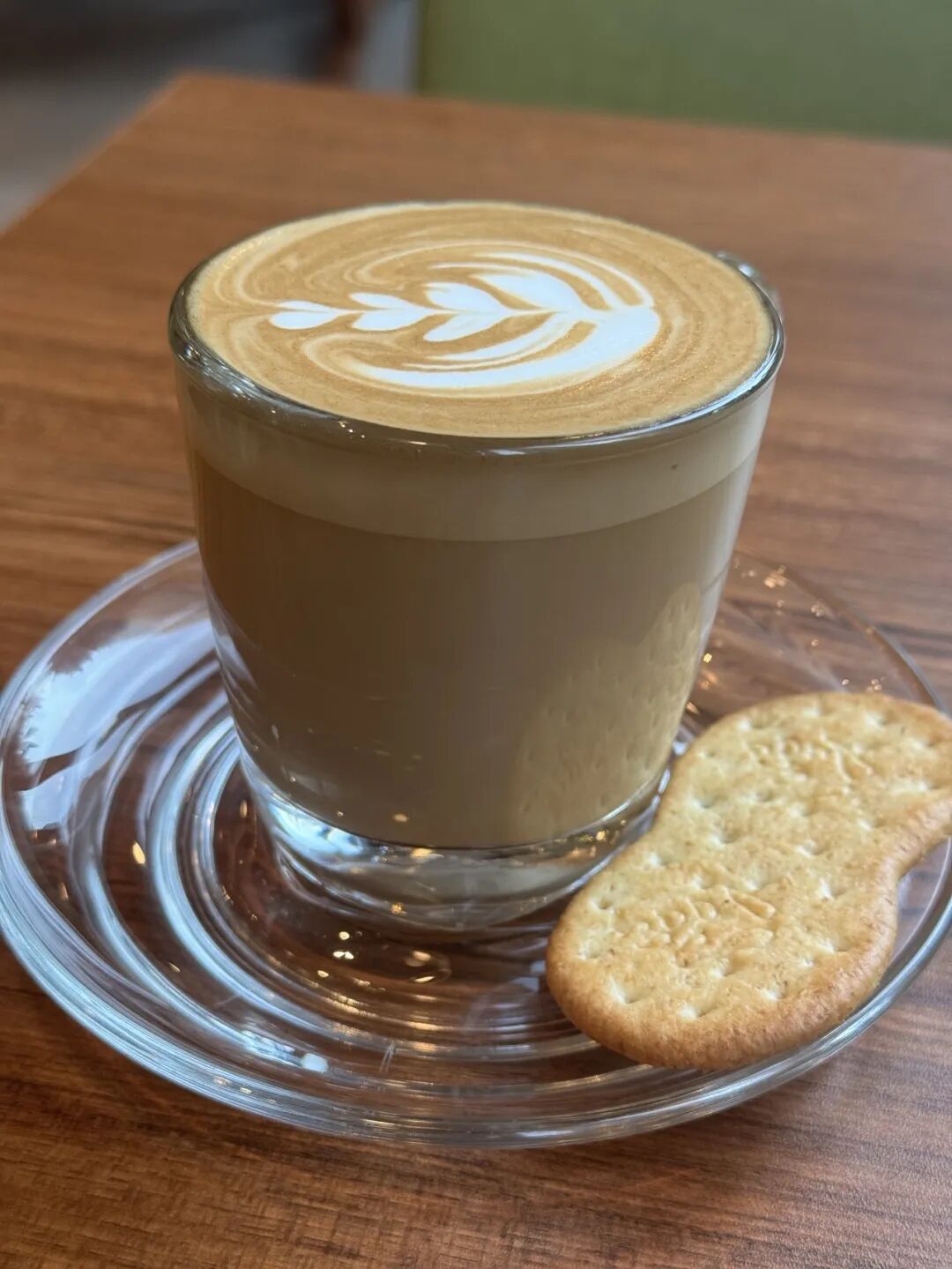
Address: Cafe-In House
13. WADI HADRAMAWT
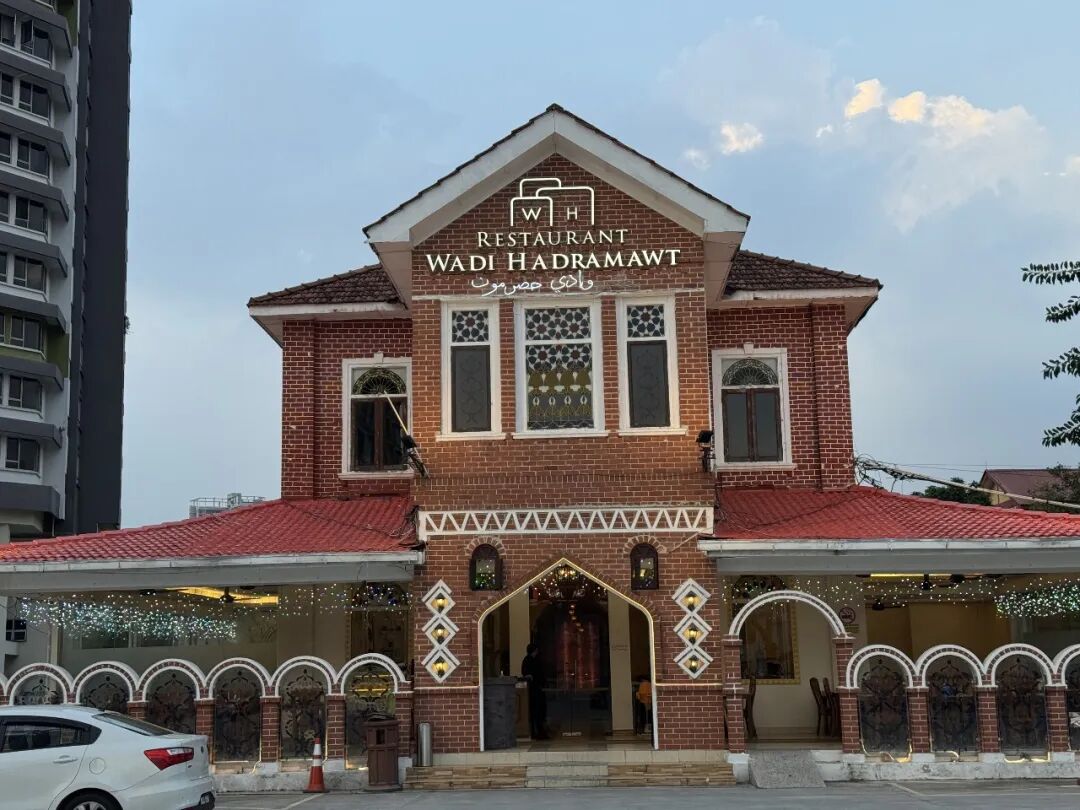
There is a Yemeni Arabic restaurant near my son’s school. This restaurant is his favorite restaurant. My son likes to eat Yemeni baked flatbreads very much.
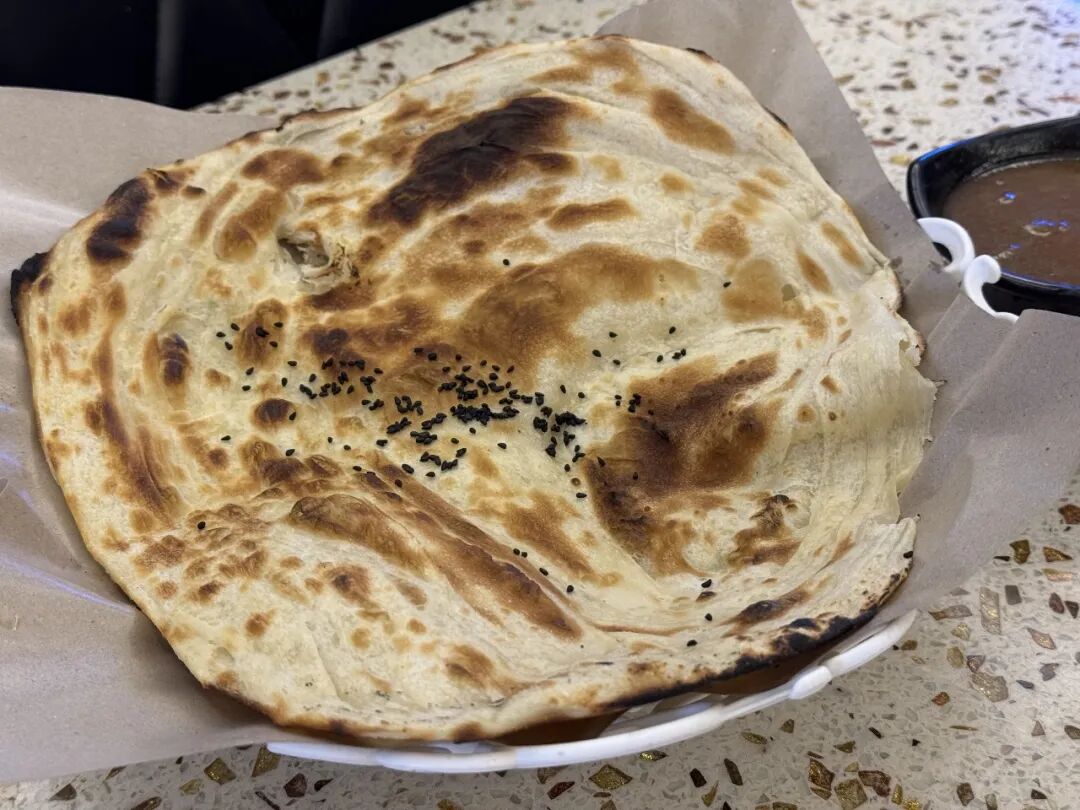
This kind of flatbread is called mulawah, which means flat bread in Arabic. I have a small size, and there is also a large size. It has a full wheat flavor. I also like to eat it, especially when dipped in the potato soup provided by the store.
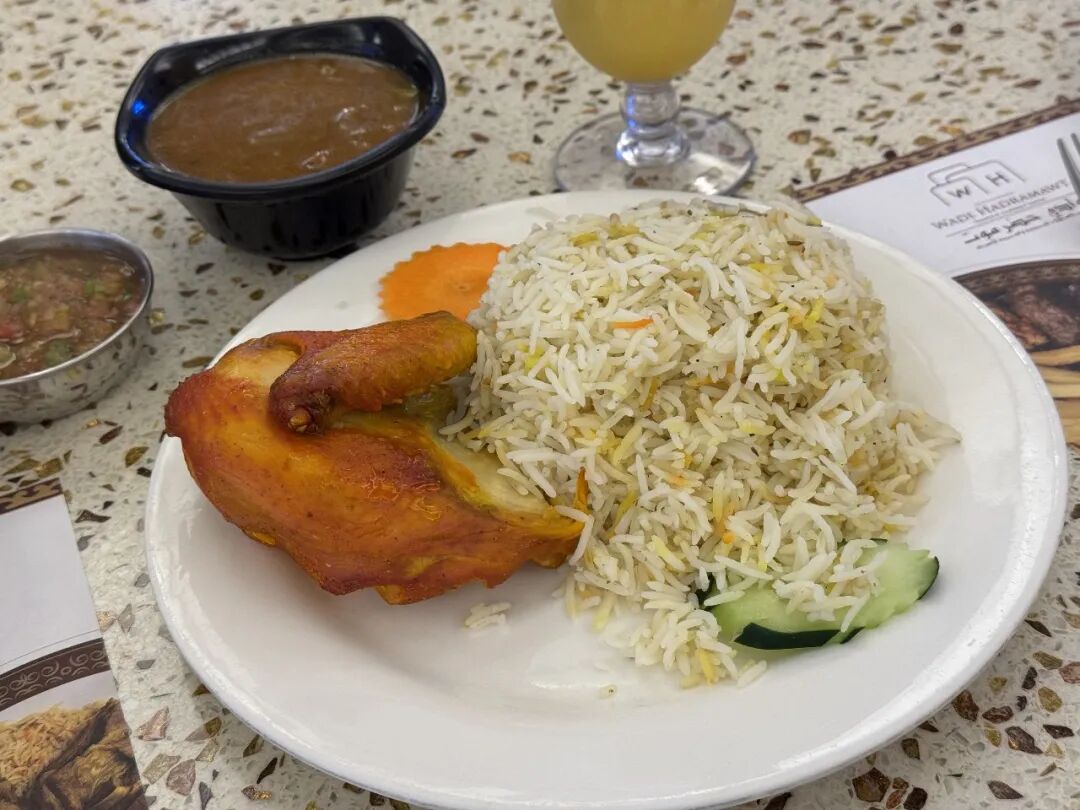
This store has distinct Yemeni characteristics, and the waiters are also dark-skinned Arabs from Yemen.
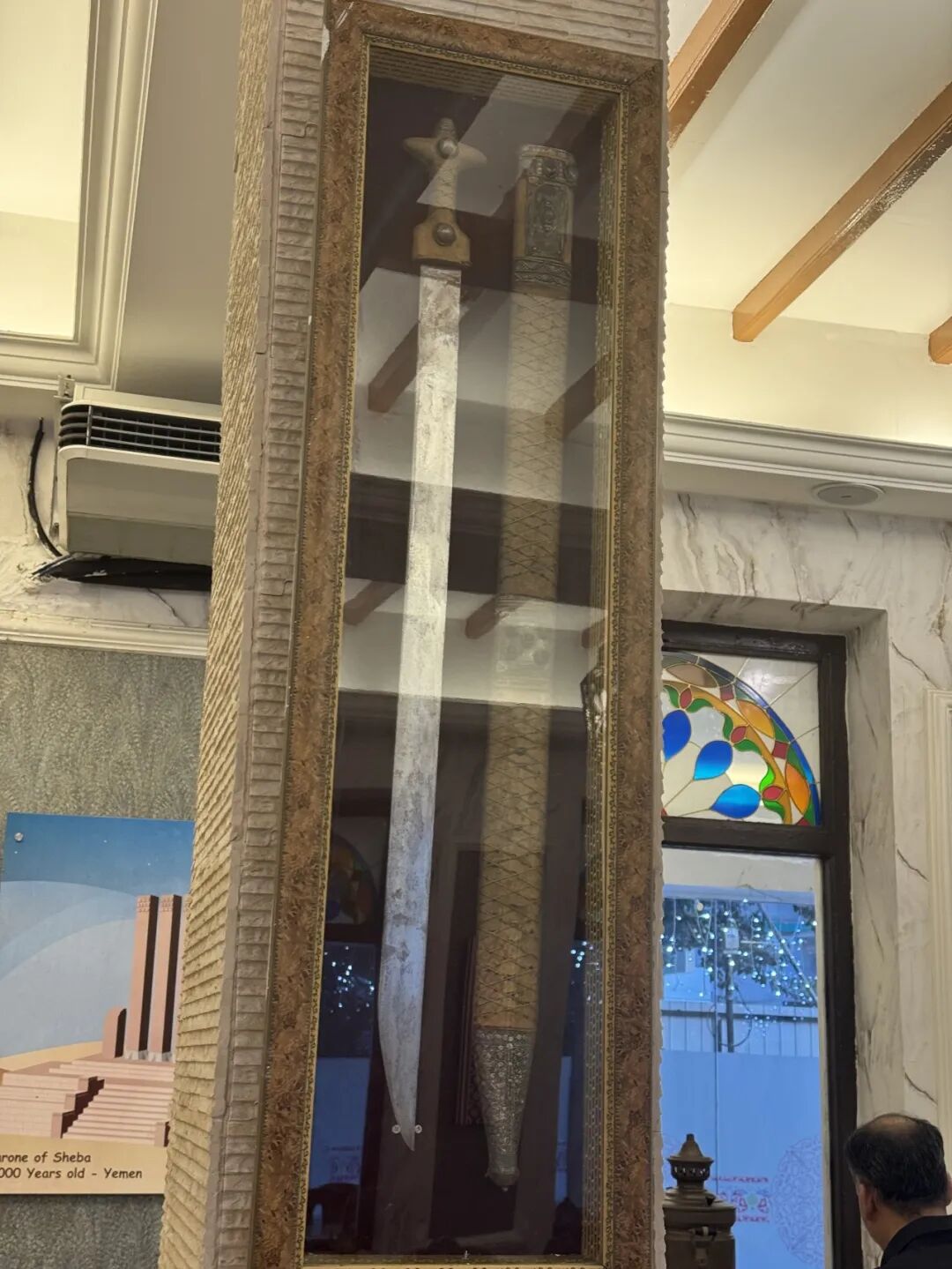
Arabic restaurants in Kuala Lumpur usually do not emphasize that they are halal. They may feel that there is no need to mark it. After all, halal signs are rarely seen in the Middle East, and these Arab restaurants all do not serve alcohol.
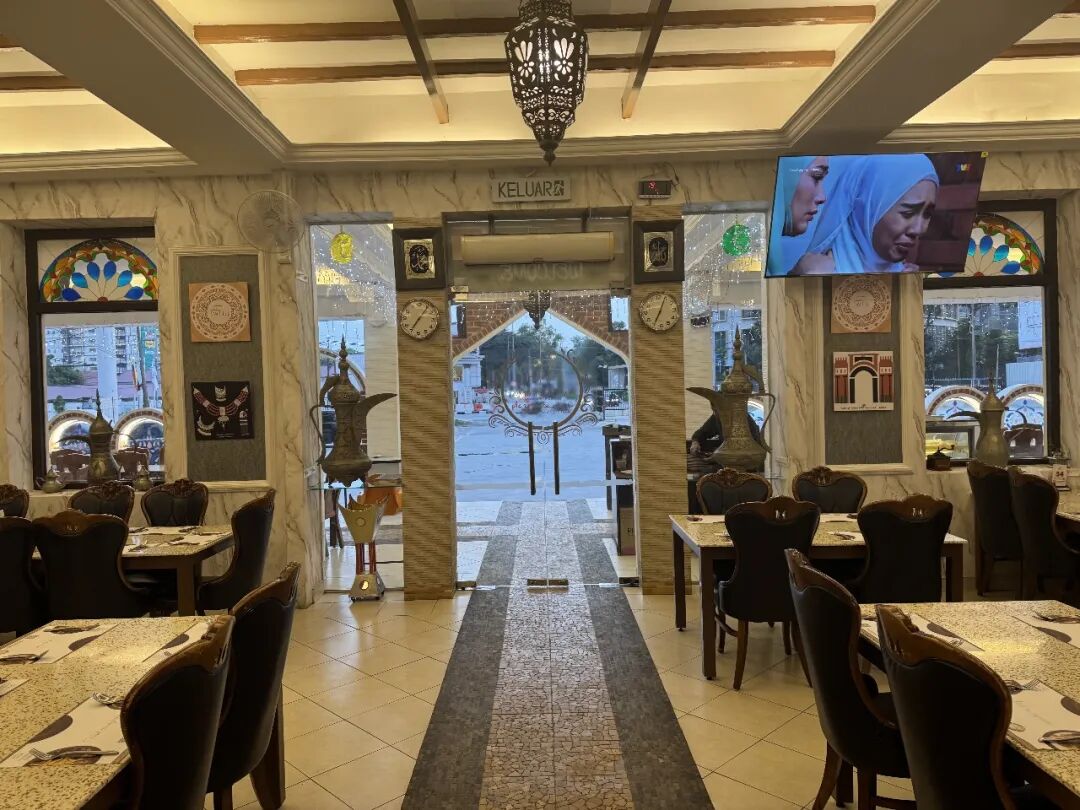
There is a very large parking lot in front of this store. During Ramadan, the yard is full of cars coming to break fast at night, but usually there are not many people and the price is very cheap. The average consumption per person is 30 yuan. I only took my son to eat there more than ten times.
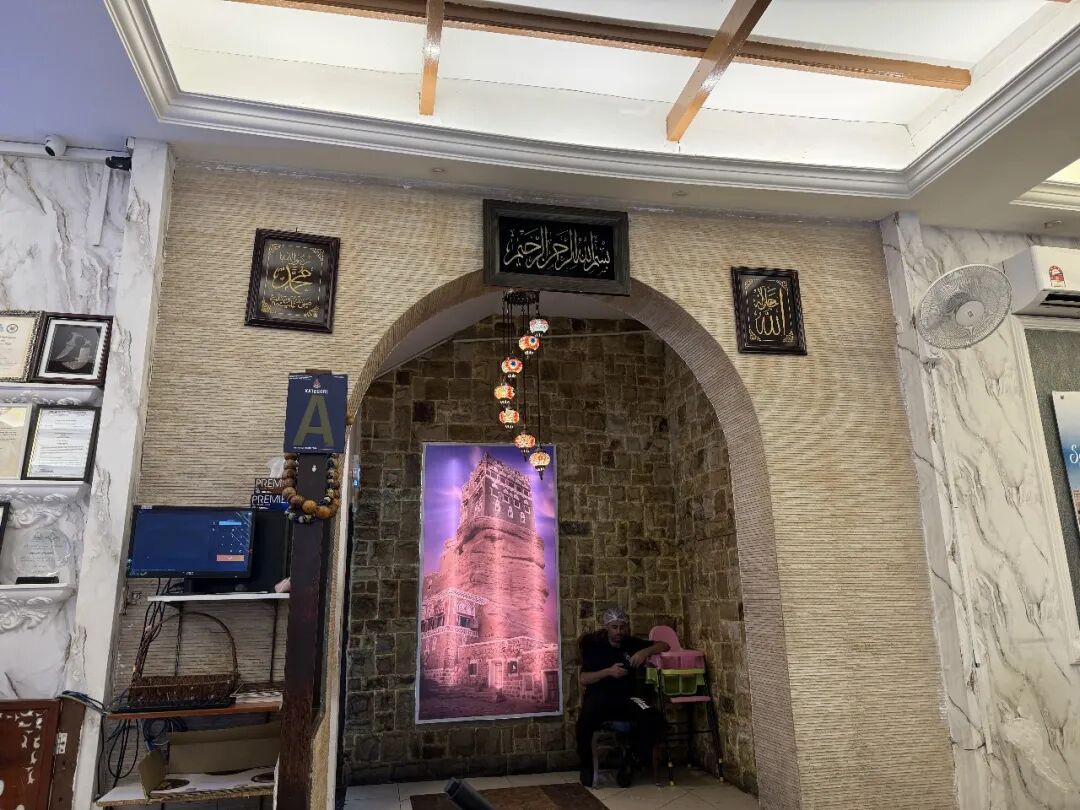
Address: Restoran Wadi Hadramawt
14. REHAN
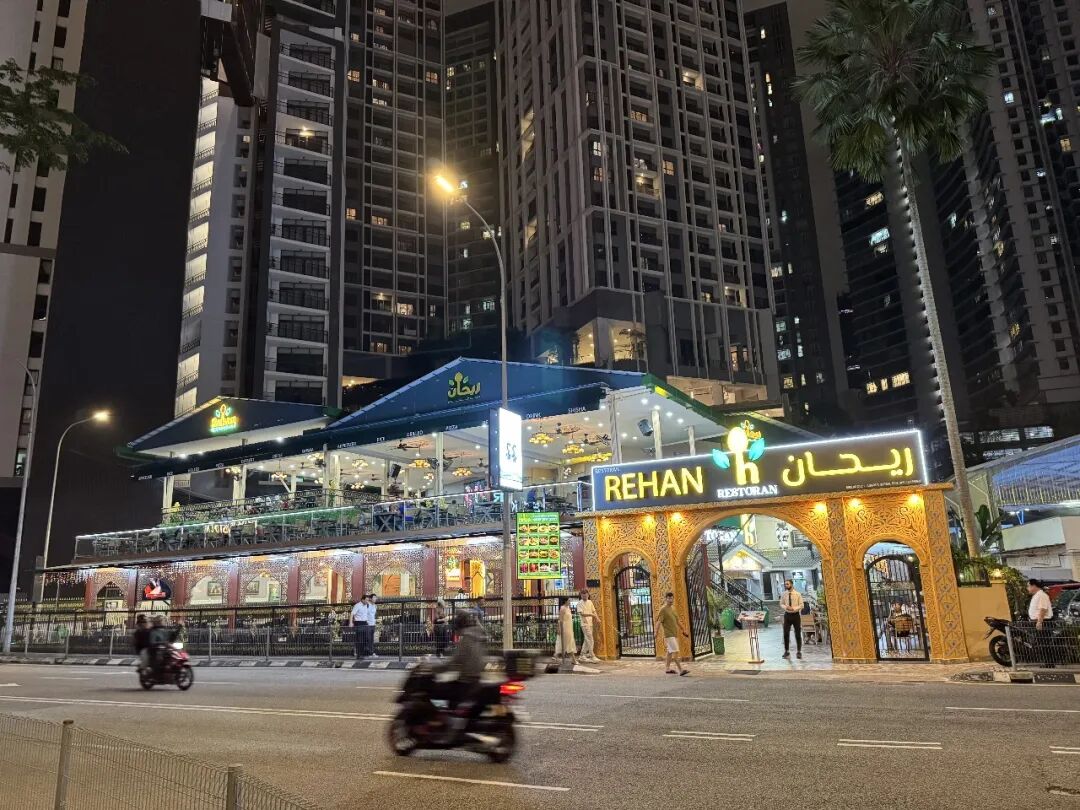
This store is also near the apartment where I live, across the road from the white ORCHID. My son prefers to eat in this store because his family has Yemeni flatbreads, but the one opposite does not. So sometimes I go to the opposite store to pack a mandi, and then pack a Yemeni flatbread from this store.
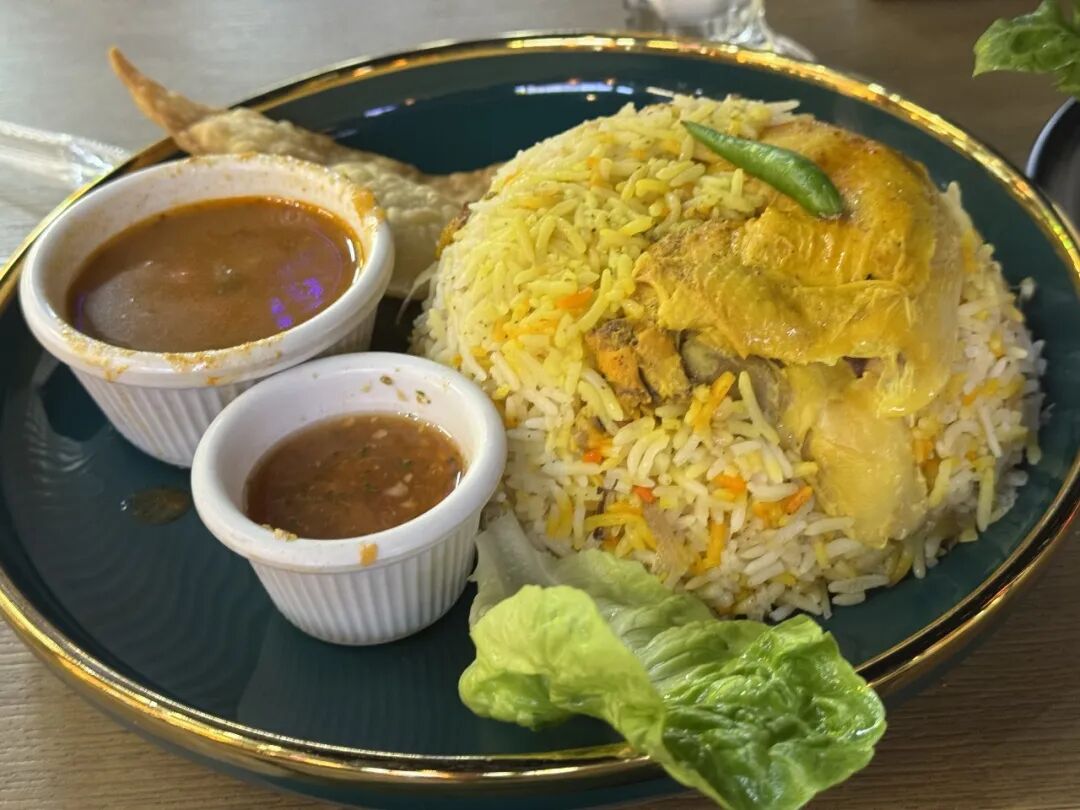
The mandi in this shop is okay, but not as exquisite as the one opposite. My wife also prefers the mandi in the white Arabic restaurant across the street, so they are all Arabic rice, but the details are slightly different. The prices of the Arab restaurants near our home are slightly higher than the one at my son’s school. For example, the Yemeni flatbread in this shop is 10 ringgit a piece, while the school shop only sells it for 4 ringgit, and it is more delicious.
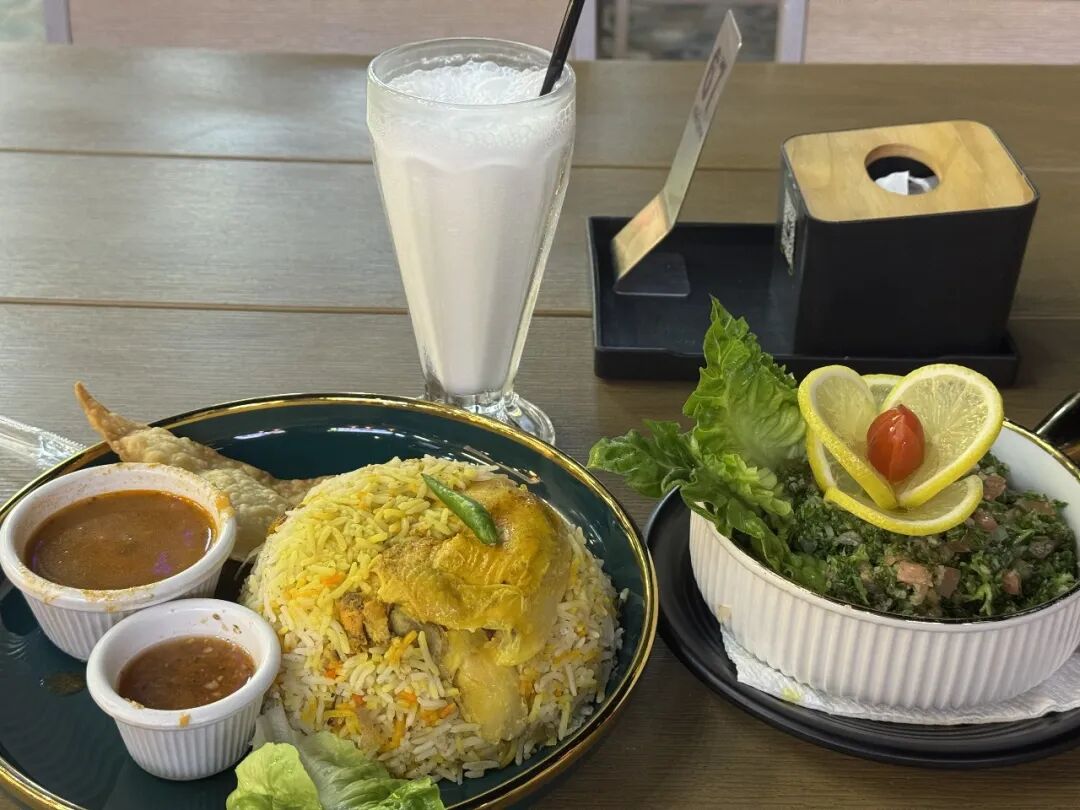
Address: Rehan Restaurant (Rehan)
Best Halal Food Kuala Lumpur: Nyonya Cuisine, Muslim Hot Pot, Petaling Street Malatang and Fish Head Noodles
Articles • yusuf908 posted the article • 0 comments • 172 views • 2026-05-23 21:09
Summary: This Kuala Lumpur halal food map issue 7 covers Limapulo Baba Can Cook, Ali-Han Muslim buffet hot pot and barbecue, Petaling Street halal malatang, Bartolo Lisboa Bakehouse, Village Park nasi lemak, Yunnan rice noodles, An Bang chicken rice, Barraca, and Hai Kah Lang seafood fish head noodles.
The restaurants in this issue are as follows:
1. Limapulo: Baba Can Cook (Nyonya cuisine)
2. Ali·Han Muslim buffet hotpot barbecue
3. Petaling Street Halal Malatang
4. BARTOLO LISBOA BAKEHOUSE (Portuguese cuisine)
5. VILLAGE PARK RESTAURANT (Nasi Lemak)
6. Steaming Era (Chaoshan Cuisine)
7. Yunye·Yunnan Rice Noodles
8. Anbang Paradise Chicken Rice Restaurant (Fujian cuisine)
9. BARRACA (Spanish food)
10. Hai Jiao Ren (seafood stall)
1. Limapulo:Baba Can Cook
This is a Malay-Nyonya restaurant that has been on the Michelin list for four consecutive years. Among Malay cuisines, I like to eat Nyonya food the most, because Nyonya food combines the cooking skills and taste of Nanyang Chinese.
The photo should be the founders. You can see that they are wearing traditional clothes and have Nanyang characteristics.
This restaurant is very popular. In Malaysia, any restaurant that can get Michelin certification is very popular because the consumption here is not expensive, with an average of 20-40 ringgit per person.
There are many things on the menu. In order to avoid being confused, I chose the most popular dishes based on the recommendations of most netizens.
Most of the people who come to eat at noon are office workers nearby, so there is no need to queue.
A cup of Nanyang-style teh tarik. The teh tarik here tastes good and moderate in taste. I don’t like drinks that are too sweet.
Satay chicken skewers, satay means grilled skewers. The white one should be Nyonya cake. The chicken itself is marinated. To eat satay, it needs to be paired with sauce. This dipping sauce is slightly sweet and not spicy. I am not used to the spicy taste in Southeast Asia.
This is one of the store's signature dishes, called shrimp tart. It is made of shrimp and crispy shell into the shape of an egg tart, with vegetable salad inside. You can dip it in the sweet and salty sauce. It is very delicious.
The restaurant is located near the World Trade Center. Parking is not easy around. You need to park in a parking lot in a nearby building. The passage in that parking lot is very narrow and the parking fee is relatively expensive. It is best not to drive here.
Address: Limapulo (Limapulo Baba Can Cook)
2. Ali·Han Muslim Buffet Hot Pot
A newly opened Chinese northwest-style self-service hotpot on Petaling Street. The owner is from Qinghai. The northwest flavor is mainly reflected in his northwest noodles such as Youxiang and bitter bean rolls.
You can choose between hot pot and barbecue, or both, and the per capita consumption is around RM40.
There is a wide variety of ingredients, including everything you should have, including desserts and ice cream.
You can choose the mandarin duck pot as the bottom of the pot, barbecue and hot pot are both available together.
The location is opposite the famous Chinese Ramen on Petaling Street, but it can’t be found on the map.
Address: Baker Street (Petaling Street)
3. Halal Malatang
Petaling Street is a Chinese food street, and next to the Muslim hotpot there is a Malatang that does a good business.
This Malatang used to be a Ma Jinlong franchise store, but it is no longer there. There are two branches in the same street.
The style is the same as in China, you can choose your own ingredients, and the vegetarian and meat dishes are the same price.
In fact, the taste is not as good as the spicy hotpot in China, but the business is booming, and the diners are mainly Malays.
Address: Baker Street (Petaling Street)
4. BARTOLO LISBOA BAKEHOUSE
This was the first time I saw a Portuguese restaurant, so I came over to try it out of curiosity. This shop specializes in Portuguese bread and also has simple meals.
The owner looks like a serious Portuguese at first glance, and the menu is all in Portuguese. I asked the waiter to recommend a local specialty to me.
This egg-like pancake is called Bolo do caco. It is a round flatbread with a shape like a fire and a soft texture. It is a traditional Portuguese staple food.
Portuguese egg tarts are probably the most famous snacks in Portugal. This authentic Portuguese egg tarts are larger, thicker and sweeter than the egg tarts we eat in China.
I ordered a strawberry milkshake for my son. The freshly squeezed strawberries and milk tasted sour and sweet, and it was quite delicious.
The prices in this store are on the high side, with the three items costing a total of RM64.
Address: Bartolo (Bartolo Lisboa Bakehouse)
5. VILLAGE PARK RESTAURANT
This is a very famous nasi lemak restaurant in Kuala Lumpur. I have been here twice, both times at noon. It is very popular and you have to queue for more than ten minutes during peak hours.
Although there are many people, the service is still very good. The waiters are unhurried and arranged in an orderly manner.
Nasi lemak is the national dish of Southeast Asia. Singapore, Malaysia, and Indonesia all consider themselves to be the birthplace of nasi lemak.
My experience is that just choose their signature chicken drumstick nasi lemak, the others are not as delicious as the signature.
This meal only costs RM12, so the value for money is really hard to beat.
Their store opens at six in the morning, and you can have hot spring eggs dipped in bread for breakfast.
For drinks, we recommend a cup of white coffee, which is the most popular coffee category in Southeast Asia.
Address: 5, Jalan SS 21/37, Damansara Utama, 47400 Petaling Jaya, Selangor
6. Steaming Era
When eating seafood in Kuala Lumpur, the first choice is a restaurant opened by Chaoshan people. This steamed seafood restaurant is the most delicious seafood restaurant I have ever eaten in Kuala Lumpur.
Malay seafood restaurants often sell dead frozen products. Only Chaoshan people prefer fresh seafood, because the fresher the seafood, the less fishy it smells.
The method of steaming seafood is also simple. Put the raw porridge at the bottom of the pot, put the seafood on top, cover it, wait a few minutes, and you can eat the seafood on top. After eating the seafood, the porridge at the bottom is also ready, and the seafood soup will flow into the bottom of the pot, which is delicious.
There are many kinds of seafood in this store, and there are many ways to eat them. The seafood can be eaten raw or steamed.
More than a dozen kinds of dipping sauces, mix and match as you like.
Their signature milk tea is better than other milk tea shops outside. It tastes sweeter and sweeter. The waiter even asked me what I thought of the taste. I said it was very good.
This thing is very similar to northwest pasta. It is made by Chaoshan people with Hui oil flavor. It is a thin layer with a hollow inside, which can be eaten with vegetables.
The seafood casserole porridge, the seafood in it can be tasted and the ingredients are fresh, definitely not made from frozen products.
The prawns and scallops are both alive and will jump around when put in the steamer.
After steaming the seafood, I just had porridge. This steamed dish, paired with their dipping sauce, is more delicious than eating Malatang.
Seven-star spotted fish is a fish that we all like to eat. It has no small spines and the meat is tender and firm. It has no shortcomings except that it is expensive.
I have been to this steamed seafood restaurant twice, and each time I ate different dishes, they all tasted great. If you don’t eat expensive ingredients, the per capita consumption would be around RM70.
Address: Marina Seafood (Marina Seafood Restaurant Steam Times)
7. Yunye·Yunnan Rice Noodles·Sichuan Small Bowl Dishes
Friends who want to eat Yunnan rice noodles in Kuala Lumpur are in luck, a Yunnan rice noodle shop has opened at the back of the Bank of China Building.
They specialize in a variety of small bowl dishes, but the rice noodles are what attracts me the most.
The diners at noon are mainly office workers nearby. This kind of small bowl dish is convenient to choose and the price is cheap.
The rice noodles are made in the traditional Yunnan way, with mint added and the beef soup stewed very thick.
Address: 1, Megan Avenue, C-0-7, 189, Jln Tun Razak, 50400 Kuala Lumpur, Wilayah Persekutuan Kuala Lumpur
8. An Bang Paradise Chicken Rice Restaurant
This chicken rice restaurant is one that I often visit. It is a pork-free restaurant run by a local Chinese. The chicken rice is very delicious.
This is also a traditional Nanyang Chinese craft that has been practiced in Ampang for two generations.
For chicken rice, you can choose either plain-cut chicken or grilled chicken legs. I have tried both, and they are both delicious, and the accompanying dipping sauces are amazing.
The store's homemade herbal tea and Fuzhou fish balls show that their ancestors are from Fujian.
This is for dine-in dining, and you can also choose to take it out. They will pack it in a sealed box, and the taste will not be affected at all after it is opened.
The Ampang Paradise Chicken Restaurant street reminds me of Penang, because this area is also a gathering place for Chinese.
Address: 158, Jalan Besar Ampang, Pekan Ampang, 68000 Ampang, Selangor
9. BARRACA
This is a newly opened Spanish restaurant in Ampang, and its main specialty is of course paella.
I have eaten Spanish restaurants in Indonesia before. There are also some restaurants in China that make Spanish paella, but it is difficult to eat authentic ones.
Facts have proved that Spanish paella is just that, not that good, because the rice they use is a bit hard, and it mainly depends on the freshness of the ingredients.
This shop has just opened and is very popular. There are only a dozen staff working in the kitchen.
The bread that comes with the meal is a standard feature of Western food.
This thing that looks like sushi is topped with octopus. Spanish and Portuguese people like to eat octopus.
This goat cheese salad is very delicious, mainly because the cheese has a rich milky aroma. Spain has a well-developed animal husbandry and first-class dairy products.
Address: L1-08 The Campus Ampang Jalan Kolam Air Lama, Mukim, 68000 Kuala Lumpur, Selangor
10. Hai Kah Lang
Hai Jiao Ren is an Internet celebrity Michelin restaurant in Kuala Lumpur, specializing in a variety of seafood and Nanyang Chinese snacks.
The difference between this store and Steam Times is that this one is a food stall, while Steam Times is a more high-end business dinner. In the steaming era, seafood was steamed, but this restaurant mainly specializes in spicy stir-fried, fried and various curries.
When Chinese people eat seafood, of course they still have to eat it fresh.
Haijiaoren is quite large, but it is still full, and you have to queue for more than ten minutes for lunch.
We followed the recommendations on Dianping and chose the most popular signature dishes.
A cup of Hainan tea, Hainan tea is white coffee, and a cup of lemongrass lemonade.
This is called soft fried crab, and you can eat it with the shell because it is really soft.
I still chose my favorite seven-star grouper. This kind of fish is delicious no matter how you prepare it, as long as the ingredients are fresh.
This is mixed seafood, with kway teow at the bottom. The kway teow is like vermicelli or rice noodles. The soup base is Tom Yum Goong. This bowl is very generous, with shrimps, crabs, shells, and fish in it. The meal costs 60 ringgit per person.
Address: Hai Kah Lang (Taman Cheras) Hai Kah Lang Seafood & Fish Head Noodle view all
Summary: This Kuala Lumpur halal food map issue 7 covers Limapulo Baba Can Cook, Ali-Han Muslim buffet hot pot and barbecue, Petaling Street halal malatang, Bartolo Lisboa Bakehouse, Village Park nasi lemak, Yunnan rice noodles, An Bang chicken rice, Barraca, and Hai Kah Lang seafood fish head noodles.
The restaurants in this issue are as follows:
1. Limapulo: Baba Can Cook (Nyonya cuisine)
2. Ali·Han Muslim buffet hotpot barbecue
3. Petaling Street Halal Malatang
4. BARTOLO LISBOA BAKEHOUSE (Portuguese cuisine)
5. VILLAGE PARK RESTAURANT (Nasi Lemak)
6. Steaming Era (Chaoshan Cuisine)
7. Yunye·Yunnan Rice Noodles
8. Anbang Paradise Chicken Rice Restaurant (Fujian cuisine)
9. BARRACA (Spanish food)
10. Hai Jiao Ren (seafood stall)
1. Limapulo:Baba Can Cook
This is a Malay-Nyonya restaurant that has been on the Michelin list for four consecutive years. Among Malay cuisines, I like to eat Nyonya food the most, because Nyonya food combines the cooking skills and taste of Nanyang Chinese.
The photo should be the founders. You can see that they are wearing traditional clothes and have Nanyang characteristics.
This restaurant is very popular. In Malaysia, any restaurant that can get Michelin certification is very popular because the consumption here is not expensive, with an average of 20-40 ringgit per person.
There are many things on the menu. In order to avoid being confused, I chose the most popular dishes based on the recommendations of most netizens.
Most of the people who come to eat at noon are office workers nearby, so there is no need to queue.
A cup of Nanyang-style teh tarik. The teh tarik here tastes good and moderate in taste. I don’t like drinks that are too sweet.
Satay chicken skewers, satay means grilled skewers. The white one should be Nyonya cake. The chicken itself is marinated. To eat satay, it needs to be paired with sauce. This dipping sauce is slightly sweet and not spicy. I am not used to the spicy taste in Southeast Asia.
This is one of the store's signature dishes, called shrimp tart. It is made of shrimp and crispy shell into the shape of an egg tart, with vegetable salad inside. You can dip it in the sweet and salty sauce. It is very delicious.
The restaurant is located near the World Trade Center. Parking is not easy around. You need to park in a parking lot in a nearby building. The passage in that parking lot is very narrow and the parking fee is relatively expensive. It is best not to drive here.
Address: Limapulo (Limapulo Baba Can Cook)
2. Ali·Han Muslim Buffet Hot Pot
A newly opened Chinese northwest-style self-service hotpot on Petaling Street. The owner is from Qinghai. The northwest flavor is mainly reflected in his northwest noodles such as Youxiang and bitter bean rolls.
You can choose between hot pot and barbecue, or both, and the per capita consumption is around RM40.
There is a wide variety of ingredients, including everything you should have, including desserts and ice cream.
You can choose the mandarin duck pot as the bottom of the pot, barbecue and hot pot are both available together.
The location is opposite the famous Chinese Ramen on Petaling Street, but it can’t be found on the map.
Address: Baker Street (Petaling Street)
3. Halal Malatang
Petaling Street is a Chinese food street, and next to the Muslim hotpot there is a Malatang that does a good business.
This Malatang used to be a Ma Jinlong franchise store, but it is no longer there. There are two branches in the same street.
The style is the same as in China, you can choose your own ingredients, and the vegetarian and meat dishes are the same price.
In fact, the taste is not as good as the spicy hotpot in China, but the business is booming, and the diners are mainly Malays.
Address: Baker Street (Petaling Street)
4. BARTOLO LISBOA BAKEHOUSE
This was the first time I saw a Portuguese restaurant, so I came over to try it out of curiosity. This shop specializes in Portuguese bread and also has simple meals.
The owner looks like a serious Portuguese at first glance, and the menu is all in Portuguese. I asked the waiter to recommend a local specialty to me.
This egg-like pancake is called Bolo do caco. It is a round flatbread with a shape like a fire and a soft texture. It is a traditional Portuguese staple food.
Portuguese egg tarts are probably the most famous snacks in Portugal. This authentic Portuguese egg tarts are larger, thicker and sweeter than the egg tarts we eat in China.
I ordered a strawberry milkshake for my son. The freshly squeezed strawberries and milk tasted sour and sweet, and it was quite delicious.
The prices in this store are on the high side, with the three items costing a total of RM64.
Address: Bartolo (Bartolo Lisboa Bakehouse)
5. VILLAGE PARK RESTAURANT
This is a very famous nasi lemak restaurant in Kuala Lumpur. I have been here twice, both times at noon. It is very popular and you have to queue for more than ten minutes during peak hours.
Although there are many people, the service is still very good. The waiters are unhurried and arranged in an orderly manner.
Nasi lemak is the national dish of Southeast Asia. Singapore, Malaysia, and Indonesia all consider themselves to be the birthplace of nasi lemak.
My experience is that just choose their signature chicken drumstick nasi lemak, the others are not as delicious as the signature.
This meal only costs RM12, so the value for money is really hard to beat.
Their store opens at six in the morning, and you can have hot spring eggs dipped in bread for breakfast.
For drinks, we recommend a cup of white coffee, which is the most popular coffee category in Southeast Asia.
Address: 5, Jalan SS 21/37, Damansara Utama, 47400 Petaling Jaya, Selangor
6. Steaming Era
When eating seafood in Kuala Lumpur, the first choice is a restaurant opened by Chaoshan people. This steamed seafood restaurant is the most delicious seafood restaurant I have ever eaten in Kuala Lumpur.
Malay seafood restaurants often sell dead frozen products. Only Chaoshan people prefer fresh seafood, because the fresher the seafood, the less fishy it smells.
The method of steaming seafood is also simple. Put the raw porridge at the bottom of the pot, put the seafood on top, cover it, wait a few minutes, and you can eat the seafood on top. After eating the seafood, the porridge at the bottom is also ready, and the seafood soup will flow into the bottom of the pot, which is delicious.
There are many kinds of seafood in this store, and there are many ways to eat them. The seafood can be eaten raw or steamed.
More than a dozen kinds of dipping sauces, mix and match as you like.
Their signature milk tea is better than other milk tea shops outside. It tastes sweeter and sweeter. The waiter even asked me what I thought of the taste. I said it was very good.
This thing is very similar to northwest pasta. It is made by Chaoshan people with Hui oil flavor. It is a thin layer with a hollow inside, which can be eaten with vegetables.
The seafood casserole porridge, the seafood in it can be tasted and the ingredients are fresh, definitely not made from frozen products.
The prawns and scallops are both alive and will jump around when put in the steamer.
After steaming the seafood, I just had porridge. This steamed dish, paired with their dipping sauce, is more delicious than eating Malatang.
Seven-star spotted fish is a fish that we all like to eat. It has no small spines and the meat is tender and firm. It has no shortcomings except that it is expensive.
I have been to this steamed seafood restaurant twice, and each time I ate different dishes, they all tasted great. If you don’t eat expensive ingredients, the per capita consumption would be around RM70.
Address: Marina Seafood (Marina Seafood Restaurant Steam Times)
7. Yunye·Yunnan Rice Noodles·Sichuan Small Bowl Dishes
Friends who want to eat Yunnan rice noodles in Kuala Lumpur are in luck, a Yunnan rice noodle shop has opened at the back of the Bank of China Building.
They specialize in a variety of small bowl dishes, but the rice noodles are what attracts me the most.
The diners at noon are mainly office workers nearby. This kind of small bowl dish is convenient to choose and the price is cheap.
The rice noodles are made in the traditional Yunnan way, with mint added and the beef soup stewed very thick.
Address: 1, Megan Avenue, C-0-7, 189, Jln Tun Razak, 50400 Kuala Lumpur, Wilayah Persekutuan Kuala Lumpur
8. An Bang Paradise Chicken Rice Restaurant
This chicken rice restaurant is one that I often visit. It is a pork-free restaurant run by a local Chinese. The chicken rice is very delicious.
This is also a traditional Nanyang Chinese craft that has been practiced in Ampang for two generations.
For chicken rice, you can choose either plain-cut chicken or grilled chicken legs. I have tried both, and they are both delicious, and the accompanying dipping sauces are amazing.
The store's homemade herbal tea and Fuzhou fish balls show that their ancestors are from Fujian.
This is for dine-in dining, and you can also choose to take it out. They will pack it in a sealed box, and the taste will not be affected at all after it is opened.
The Ampang Paradise Chicken Restaurant street reminds me of Penang, because this area is also a gathering place for Chinese.
Address: 158, Jalan Besar Ampang, Pekan Ampang, 68000 Ampang, Selangor
9. BARRACA
This is a newly opened Spanish restaurant in Ampang, and its main specialty is of course paella.
I have eaten Spanish restaurants in Indonesia before. There are also some restaurants in China that make Spanish paella, but it is difficult to eat authentic ones.
Facts have proved that Spanish paella is just that, not that good, because the rice they use is a bit hard, and it mainly depends on the freshness of the ingredients.
This shop has just opened and is very popular. There are only a dozen staff working in the kitchen.
The bread that comes with the meal is a standard feature of Western food.
This thing that looks like sushi is topped with octopus. Spanish and Portuguese people like to eat octopus.
This goat cheese salad is very delicious, mainly because the cheese has a rich milky aroma. Spain has a well-developed animal husbandry and first-class dairy products.
Address: L1-08 The Campus Ampang Jalan Kolam Air Lama, Mukim, 68000 Kuala Lumpur, Selangor
10. Hai Kah Lang
Hai Jiao Ren is an Internet celebrity Michelin restaurant in Kuala Lumpur, specializing in a variety of seafood and Nanyang Chinese snacks.
The difference between this store and Steam Times is that this one is a food stall, while Steam Times is a more high-end business dinner. In the steaming era, seafood was steamed, but this restaurant mainly specializes in spicy stir-fried, fried and various curries.
When Chinese people eat seafood, of course they still have to eat it fresh.
Haijiaoren is quite large, but it is still full, and you have to queue for more than ten minutes for lunch.
We followed the recommendations on Dianping and chose the most popular signature dishes.
A cup of Hainan tea, Hainan tea is white coffee, and a cup of lemongrass lemonade.
This is called soft fried crab, and you can eat it with the shell because it is really soft.
I still chose my favorite seven-star grouper. This kind of fish is delicious no matter how you prepare it, as long as the ingredients are fresh.
This is mixed seafood, with kway teow at the bottom. The kway teow is like vermicelli or rice noodles. The soup base is Tom Yum Goong. This bowl is very generous, with shrimps, crabs, shells, and fish in it. The meal costs 60 ringgit per person.
Address: Hai Kah Lang (Taman Cheras) Hai Kah Lang Seafood & Fish Head Noodle
Best Halal Food Kuala Lumpur: Chef Eyad BBQ, Chicken Rice, Shawarma City, Supamala and Nando's
Articles • yusuf908 posted the article • 0 comments • 243 views • 2026-05-23 08:43
Summary: This Kuala Lumpur halal food map issue 6 follows the author's long stay near KLCC and covers Chef Eyad smoked barbecue, IKEA, The Chicken Rice Shop, Shawarma City, Sprezzatura Kafe, Supamala Sichuan hot pot, Bake With Yen, Monster Sushi, Grumpy Bagels, Nando's, and family-friendly Muslim travel meals.
Recently, I came to Kuala Lumpur while accompanying my child during their studies. I stayed for a long time and dug into the restaurants near my home. After this period of exploration, I found that my taste has completely failed in Malaysia. If I am in China, if I think a restaurant's food tastes good, then most people will find it delicious, and my taste is relatively close to the masses. However, in Kuala Lumpur, I don’t think the restaurants that locals like to eat are delicious, especially the Malay cuisine. I have tried several local popular online restaurants in succession, but they all turned out to be disappointing. Malay people have a strong taste, and most of their dishes are salty, spicy and fried. I still prefer lighter dishes, but the Middle Eastern cuisine I have eaten in Kuala Lumpur is very delicious and almost never lets me down.
Early review:
Kuala Lumpur Halal Food Map (Issue 5)
Kuala Lumpur Halal Food Map (Issue 4)
Kuala Lumpur Halal Food Map (Issue 3)
Kuala Lumpur Halal Food Map (Issue 2)
The restaurants in this issue are as follows:
1. Chef Eyad (smoked barbecue)
2. IKEA (Swedish restaurant)
3. THE CHICKEN RICE SHOP (Hainan Chicken Rice)
4. SHAWARMA CITY (Turkish & Syrian cuisine)
5. SPREZZATURA KAFE (light meal)
6. SUPAMALA (Sichuan hot pot)
7. Bake With Yen Chow Kit (baking supplies supermarket)
8. MONSTER SUSHI (conveyor belt sushi)
9. GRUMPY BAGELS (bakery shop)
10. Nando's (roast chicken)
1. Chef Eyad (smoked barbecue)
This is a Middle Eastern-style smoked barbecue restaurant, not far from the apartment where I live, with the Twin Towers in the background. I often pass by it, and then I thought of checking out the store. I was pleasantly surprised and have already visited it for the second time.
Most restaurants in Malaysia do not have halal certification, because the official unified halal certification is very expensive, tens of thousands of ringgit, so restaurants will use some obscure ways to express halal, because restaurants without certification are not allowed to label halal without authorization.
This kind of charcoal-smoked barbecue is also American-style barbecue, but it’s better to emphasize American-style here than just mention smoke.
This store is still an international chain store, but its branches are all open in Middle Eastern countries. We had a particularly delicious American barbecue restaurant in Dubai, and we couldn’t forget it after we returned home. We didn’t expect there to be one right outside our doorstep.
The first time I came alone, I saw an American-style burger on the menu and decided to order a beef one.
This smoked beef burger is very delicious. It has two layers of meat, one layer of patty and one layer of smoked beef. The quality of the beef is excellent, it is all lean meat, and it is grilled to a soft and chewy texture.
In a restaurant opened by Arabs, tabouli salad is an indispensable part of the salad.
Cherry tomato and mint salad, this is my second choice.
The second time our family of three came to eat, I chose a 250g smoked roast beef. The set meal came with a naan, a rice, a salad, and a plate of hummus sauce. The meat was so tender that Fahim also ate a lot. He especially liked to eat naan bread. I remembered that when we were in Egypt, he ate naan bread every day. The flat bread in Egypt only cost 20 cents a piece.
This shop is very particular, each cake comes with a bag.
This set is just enough for the three of us. If you have a big appetite, you can choose the 500g set, which will come with more side dishes.
His Kunafa dessert is actually the original flavor without added sugar. It tastes not sweet at all. If you want it sweet, just dip it in the syrup in the small dish.
Address: Chef Eyad Star Boulevard KLCC
2. IKEA (Swedish restaurant)
The IKEA restaurant in Kuala Lumpur has halal certification. It was also my first time to dine at IKEA. I used to visit Huiju IKEA in Beijing, but I would only eat ice cream and drinks there.
The IKEA restaurant in Kuala Lumpur is very popular. You have to queue up to get a meal tray during lunch time. It is popular because of its high cost performance. A lunch only costs RM20 and there are unlimited drinks.
I feel that there are many more people coming to eat than buying furniture, and it is difficult to find a seat during peak dining hours.
People say IKEA's restaurants are also outsourced, with no rent, but IKEA has a profit-sharing agreement with the restaurant.
The variety of dishes is particularly rich. to Swedish meatballs, there are also some localized Malay dishes and desserts.
The process is the same as eating in the school cafeteria. Take a plate and tell the waiter what you want to eat and how much you want. He will help you prepare your meal, then go to the cashier to pay. If you want to drink, you can get a drink cup, and if you want to drink coffee, you can get a coffee cup.
I definitely still prefer this healthy light meal. Salmon and pasta are also children’s favorites.
People say this meatball is the most popular. The waiter will ask you how many you want to eat, tell the number, and then he will serve you with broccoli and mashed potatoes.
Another popular item is the grilled chicken wings. The chicken wings are huge and taste good. They were very comfortable to eat at IKEA and the two of them spent only RM40.
Address: IKEA Cheras (IKEA)
3. THE CHICKEN RICE SHOP (Hainan Chicken Rice)
This store is located on the second floor of AK Shopping Mall. I have eaten from their takeout before. Because there are so many people there at noon, I have to queue up, so I can order takeout faster.
With halal certification, this is more common in chain fast food restaurants and requires the restaurant to have a certain level of strength.
The Hainanese Chicken Rice Set, which comes with a portion of sour chili, a portion of chicken soup, and a portion of fried bean sprouts, is also around RM20.
Their taste is more suitable for Chinese people, especially southerners.
Address: The Chicken Rice Shop Avenue K
4. SHAWARMA CITY
This is another grilled daddy shop with the Twin Towers on its back. You can see the Twin Towers in the background of the sign. Because there are so many shawarma shops like this in Malaysia, I didn’t pay attention. I passed by several times without going in. A few days ago, Fahim had been eating Pizza Hut pasta for a week. I was really tired of it, so I wanted to give him a change of taste. It happened that this shop was very close to my home, so I came here.
Because there are many non-spicy rice dishes for children in Middle Eastern restaurants, and I like them very much myself, so when I don’t know what to eat, this is a good choice.
You can choose from all the dishes on the menu of this store. I picked a chicken one. The most popular one in Malaysia is chicken, because Indians here or some Chinese who believe in local religions do not eat beef.
For their chicken rice, there was so much chicken that it covered the rice, and the grilled chicken was so delicious that Fahim finished the whole plate of chicken. And when asked the next day if he wanted to eat pasta or hand-picked rice, he switched to hand-picked rice.
Address: Shawarma City KLCC
5. SPREZZATURA KAFE
This kind of quiet cafe with few people is my favorite place to go in Kuala Lumpur. The simple sandwiches provided are also my favorite light meals. This shop is a simple coffee shop next to the clinic I discovered when I took Fahim to get a flu shot.
Because it was noon time, all the nearby Malay food stalls were crowded with people. Only this shop looked deserted, so I came in.
This kind of healthy light breakfast that I like is not very recognized by the locals, but in Canada and the United Kingdom, the most popular breakfast restaurants in the morning have this kind of light breakfast, and you have to queue up.
This store actually has a good reputation on Google, but the parking fee here is too expensive, charging RM4 for half an hour, and the parking fee in this place has to be paid at the self-service machine in the lobby with a card, which is very troublesome.
Fortunately, the coffee and sandwiches taste very good. This set meal costs only RM30, which is already very expensive for office workers.
Address: Sprezzatura Coffee Phileo Buna Market (Sprezzatura Cafe)
6. SUPAMALA (Sichuan hot pot)
I've been missing Beijing's shabu-shabu recently, and I haven't found any particularly delicious hot pot restaurants in Kuala Lumpur, so I did a search and found this restaurant, which should be classified as Sichuan-style hot pot.
The environment of the restaurant is quite exquisite. It opened not long ago and the service of the staff is also very attentive.
This dipping station has more Nanyang characteristics, with various seafood sauces and Southeast Asian specialties, but no sesame sauce.
When we first arrived, we were at the first table. It didn’t take long for the store to be filled with people, all of them office workers who came to eat at noon. This store has buffets at different prices, as well as a la carte, and we chose a la carte.
I remember the buffet starts at more than 50 ringgit per person, and there are several more expensive ones.
You can choose from four kinds of soup bases. The dipping sauces and soup bases in this store are very good, but the presentation of the ingredients is really not flattering, because the price of this store is mid-to-high-end in Kuala Lumpur, with per capita consumption of more than 150 ringgit, but this product is definitely not available in Beijing.
Moreover, the portion of the dish was really too small. The two of us added many more dishes, and we ate a total of more than 300 ringgit before we were barely full, with nothing left.
To be honest, the seafood and squid here are very fresh, and the meatballs taste better than those at home, but the beef and mutton are just not that good.
This brown sugar glutinous rice cake is not very authentic either. It is flat in appearance and tasteless.
So I say that domestic hot pot rolls are still very good. This kind of restaurant will definitely not survive for three months in Beijing, but the business is very good in Malaysia. Domestic hot pot restaurant owners may consider coming to Kuala Lumpur to make a roll.
Address: 50, Jalan Raja Abdullah, Chow Kit, 50300 Kuala Lumpur, Wilayah Persekutuan Kuala Lumpur
7. Bake With Yen Chow Kit
This is a halal supermarket that specializes in baking supplies and ingredients. Baking is very popular in Kuala Lumpur, and most of them are halal shops, so this kind of raw material supermarket exists.
Moreover, the raw materials in this store are sold very cheaply, including all kinds of seasonings and flour.
Baking molds, colorings, almond flour, etc. are all available. The entire site is halal, so you can buy with confidence.
There are also many Chinese clerks, which makes communication easy.
Address: Bake with Yen Chow Kit
8. MONSTER SUSHI
When I'm walking my baby shopping, and I don't know what to eat, I'll go to a Japanese restaurant.
This is a very cute conveyor belt sushi restaurant. Most Japanese food restaurants in Kuala Lumpur are relatively affordable. The per capita consumption of this small restaurant is only RM50.
Conveyor belt sushi is suitable for children. You can eat whichever one looks pretty. After you finish the meal, you will pay according to the color of the plate. You can also order a la carte.
This set meal is neither salty nor spicy and is suitable for all ages.
The fried rice is also very tasty.
I really can’t resist the temptation of freshly squeezed juice in Kuala Lumpur, a bottle of which costs less than ten ringgit.
Address: Sushi Monster Setapak Central
9. GRUMPY BAGELS
This is a new Internet celebrity roasting and coffee shop in Kuala Lumpur. The owner is a retired flight attendant and is quite popular on Xiaohongshu.
The location is relatively secluded. It is located in a bungalow in an alley. The surrounding area is not busy, but the store's business is very good.
We arrived early in the morning, there were not many vacancies, and the parking space at the door was also tight.
I didn’t see the proprietress that day. People say the proprietress likes to post videos of herself baking on Xiaohongshu, which has attracted many fans.
We packed several kinds of bagels. They tasted good to eat on the road, but their products were a little more expensive, with a bagel costing ten ringgits.
The decoration of the store is relatively simple and simple, and it looks very comfortable. However, compared to cafes in China, the environment is not as outstanding. It can only be said that competition among Chinese catering companies is fierce.
The styles of cakes look very ordinary, but the business of this shop is really good, and the proprietress is very attentive in running it.
That's the boss lady in the photo. Their way of living and working is very enviable.
Address: Grumpy Bagels
10. Nando's (roast chicken)
This grilled chicken restaurant was the restaurant where we ate on our first date in Malaysia. It was 10 years ago. At that time, we only focused on people-watching and had no impression of the taste of the food. Now that we live in Kuala Lumpur, we occasionally order takeaway from their restaurant because my son also likes the meat and vegetable combination of this chicken rice.
You can choose any flavor, make sure it is not spicy, and you can also match the side dishes inside. This store is a large chain and can be found in many shopping malls.
Fahim likes to eat green beans and chicken, but he doesn’t like to eat vegetables, so we can only try our best to provide him with nutritious meals. Fortunately, he lives near KLCC, so there are more restaurants to choose from.
Address: Nando's view all
Summary: This Kuala Lumpur halal food map issue 6 follows the author's long stay near KLCC and covers Chef Eyad smoked barbecue, IKEA, The Chicken Rice Shop, Shawarma City, Sprezzatura Kafe, Supamala Sichuan hot pot, Bake With Yen, Monster Sushi, Grumpy Bagels, Nando's, and family-friendly Muslim travel meals.
Recently, I came to Kuala Lumpur while accompanying my child during their studies. I stayed for a long time and dug into the restaurants near my home. After this period of exploration, I found that my taste has completely failed in Malaysia. If I am in China, if I think a restaurant's food tastes good, then most people will find it delicious, and my taste is relatively close to the masses. However, in Kuala Lumpur, I don’t think the restaurants that locals like to eat are delicious, especially the Malay cuisine. I have tried several local popular online restaurants in succession, but they all turned out to be disappointing. Malay people have a strong taste, and most of their dishes are salty, spicy and fried. I still prefer lighter dishes, but the Middle Eastern cuisine I have eaten in Kuala Lumpur is very delicious and almost never lets me down.
Early review:
Kuala Lumpur Halal Food Map (Issue 5)
Kuala Lumpur Halal Food Map (Issue 4)
Kuala Lumpur Halal Food Map (Issue 3)
Kuala Lumpur Halal Food Map (Issue 2)
The restaurants in this issue are as follows:
1. Chef Eyad (smoked barbecue)
2. IKEA (Swedish restaurant)
3. THE CHICKEN RICE SHOP (Hainan Chicken Rice)
4. SHAWARMA CITY (Turkish & Syrian cuisine)
5. SPREZZATURA KAFE (light meal)
6. SUPAMALA (Sichuan hot pot)
7. Bake With Yen Chow Kit (baking supplies supermarket)
8. MONSTER SUSHI (conveyor belt sushi)
9. GRUMPY BAGELS (bakery shop)
10. Nando's (roast chicken)
1. Chef Eyad (smoked barbecue)
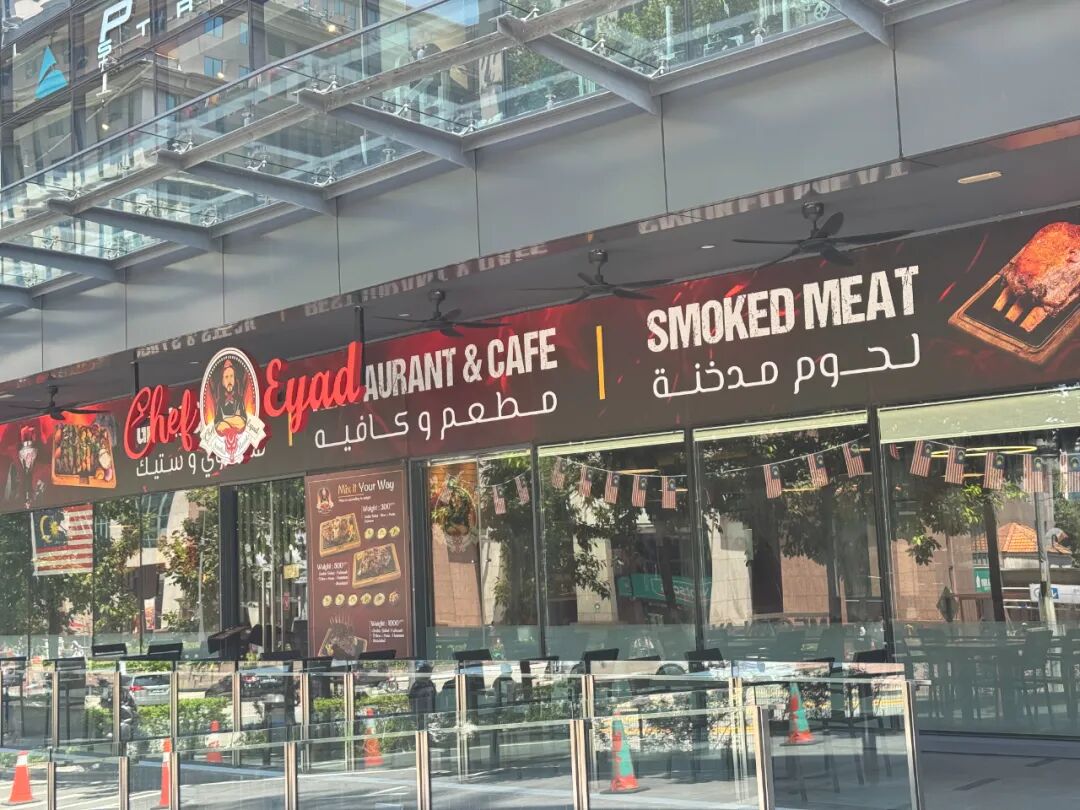
This is a Middle Eastern-style smoked barbecue restaurant, not far from the apartment where I live, with the Twin Towers in the background. I often pass by it, and then I thought of checking out the store. I was pleasantly surprised and have already visited it for the second time.
Most restaurants in Malaysia do not have halal certification, because the official unified halal certification is very expensive, tens of thousands of ringgit, so restaurants will use some obscure ways to express halal, because restaurants without certification are not allowed to label halal without authorization.
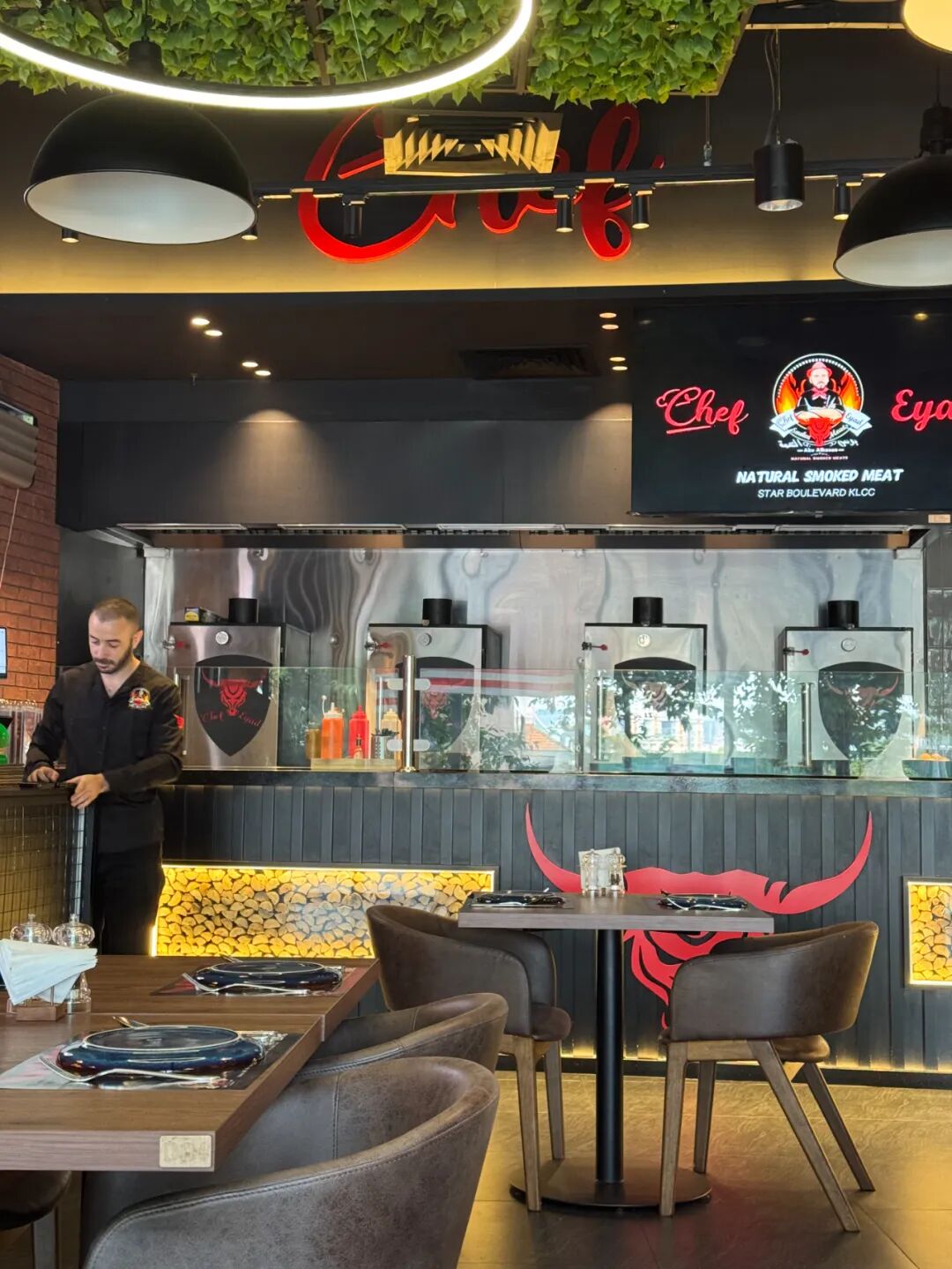
This kind of charcoal-smoked barbecue is also American-style barbecue, but it’s better to emphasize American-style here than just mention smoke.
This store is still an international chain store, but its branches are all open in Middle Eastern countries. We had a particularly delicious American barbecue restaurant in Dubai, and we couldn’t forget it after we returned home. We didn’t expect there to be one right outside our doorstep.
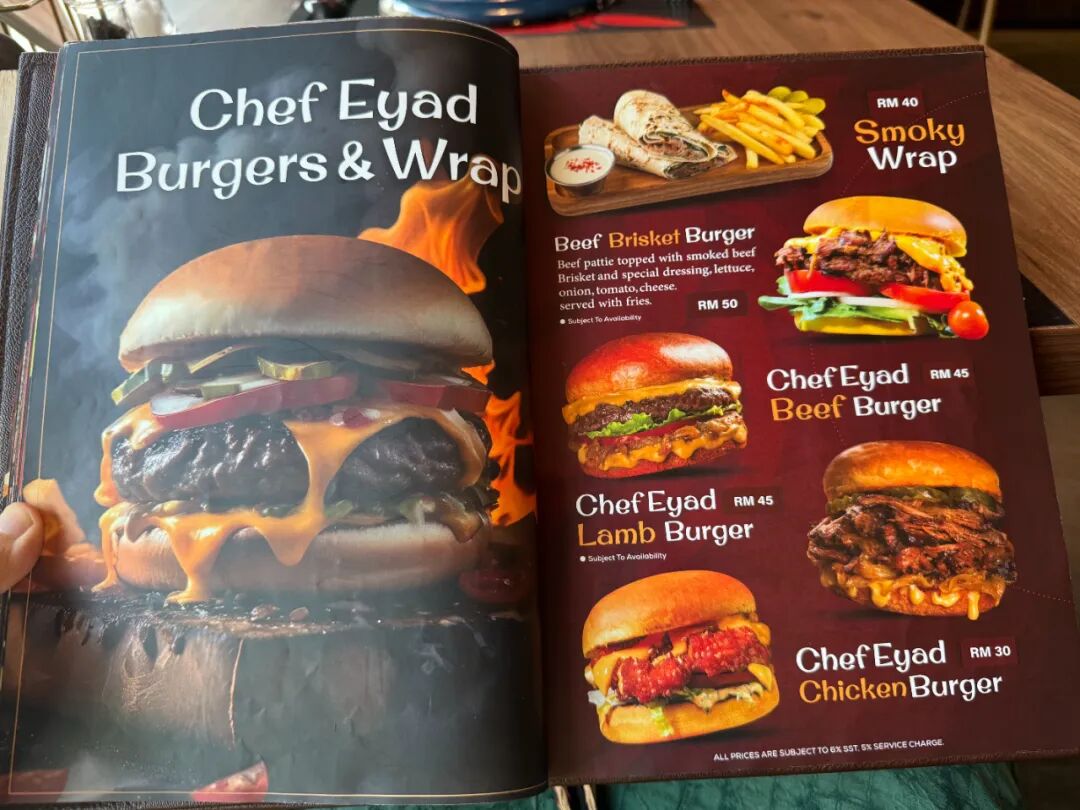
The first time I came alone, I saw an American-style burger on the menu and decided to order a beef one.
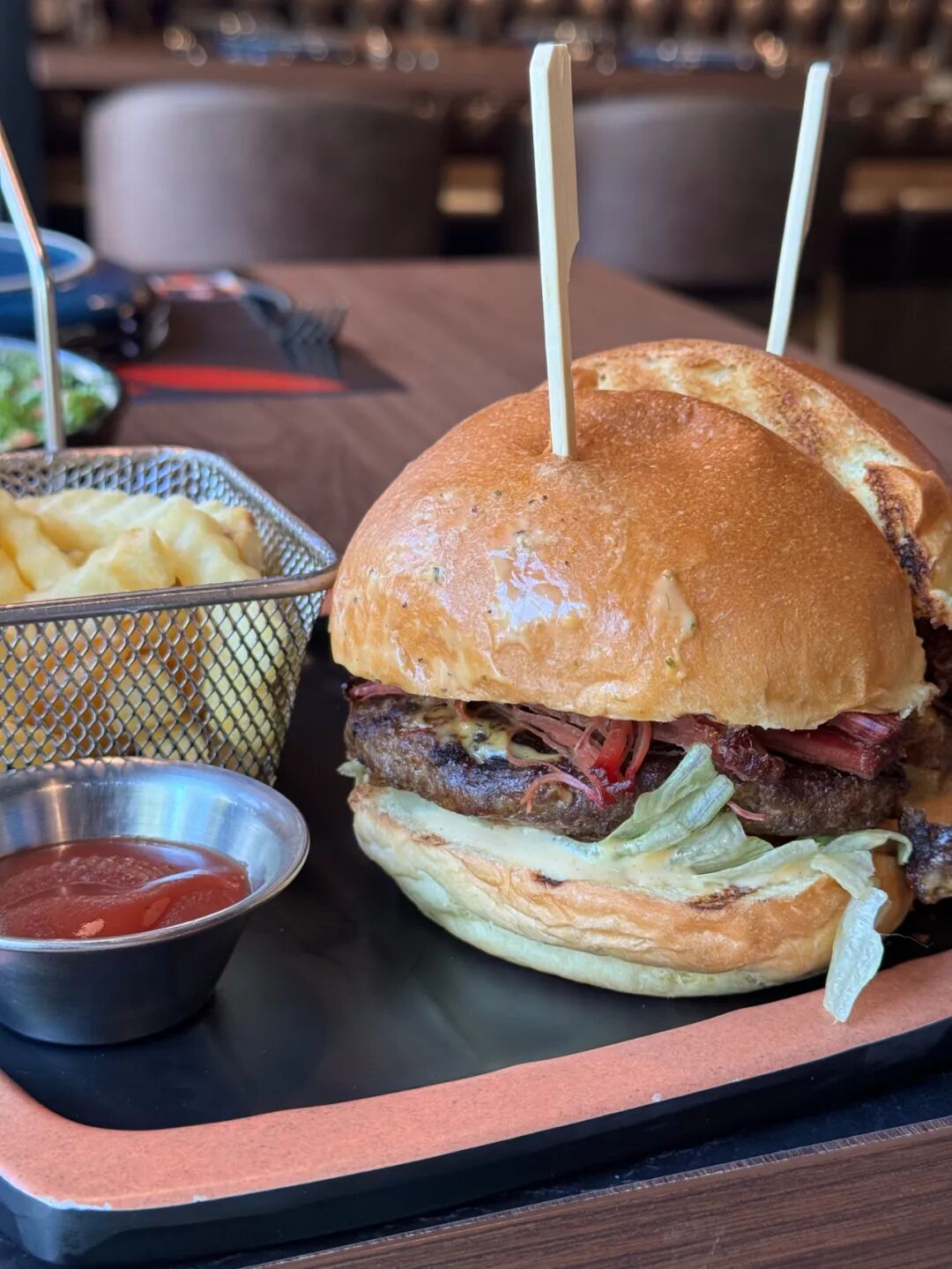
This smoked beef burger is very delicious. It has two layers of meat, one layer of patty and one layer of smoked beef. The quality of the beef is excellent, it is all lean meat, and it is grilled to a soft and chewy texture.
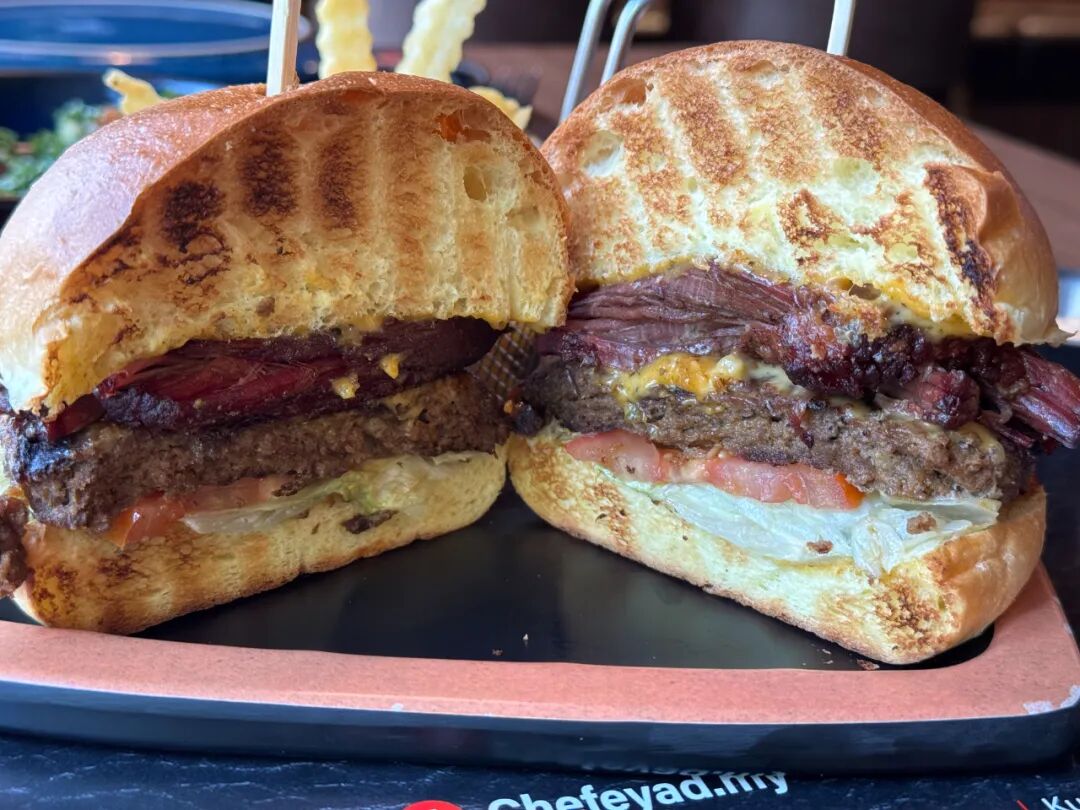
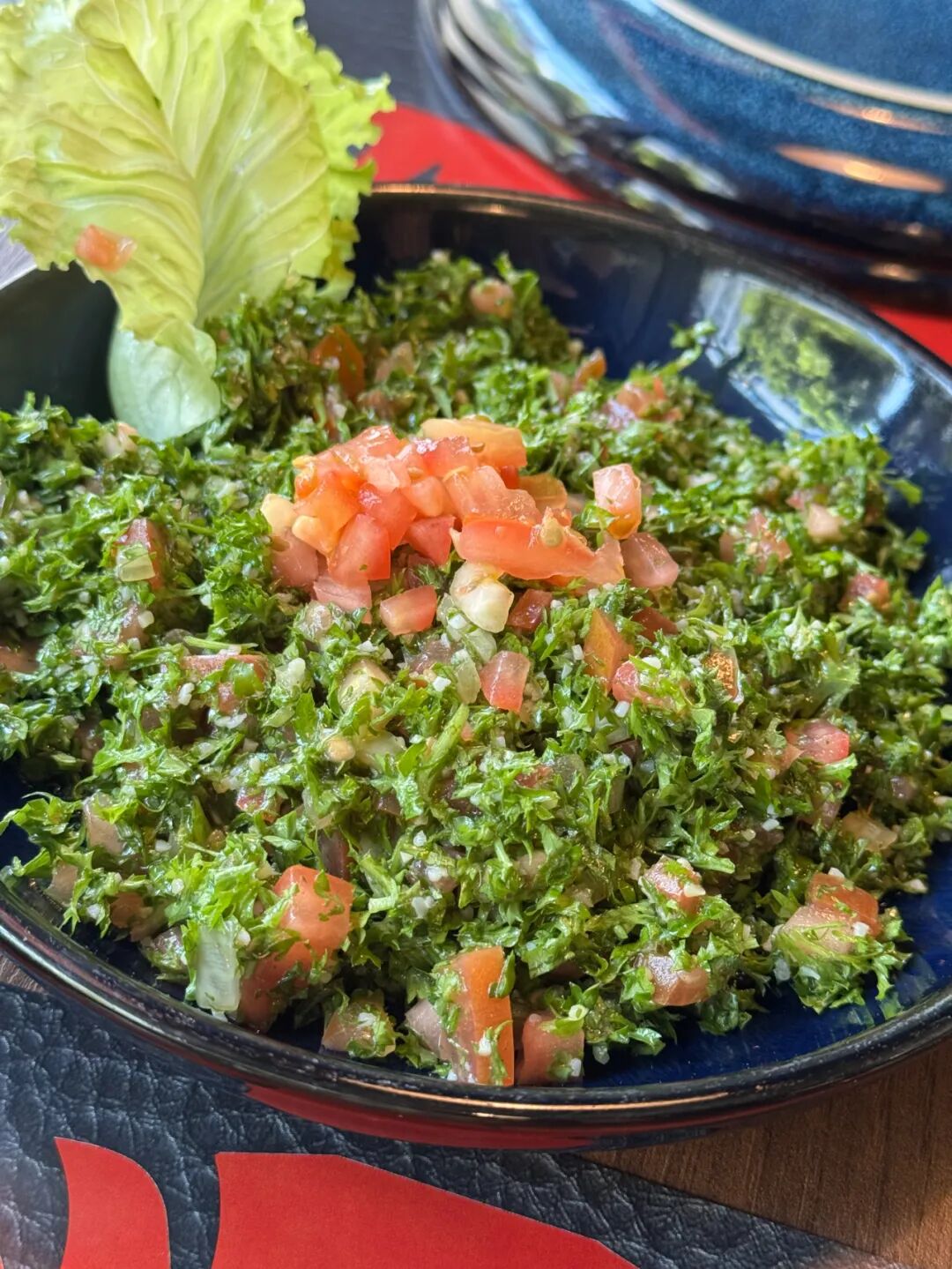
In a restaurant opened by Arabs, tabouli salad is an indispensable part of the salad.
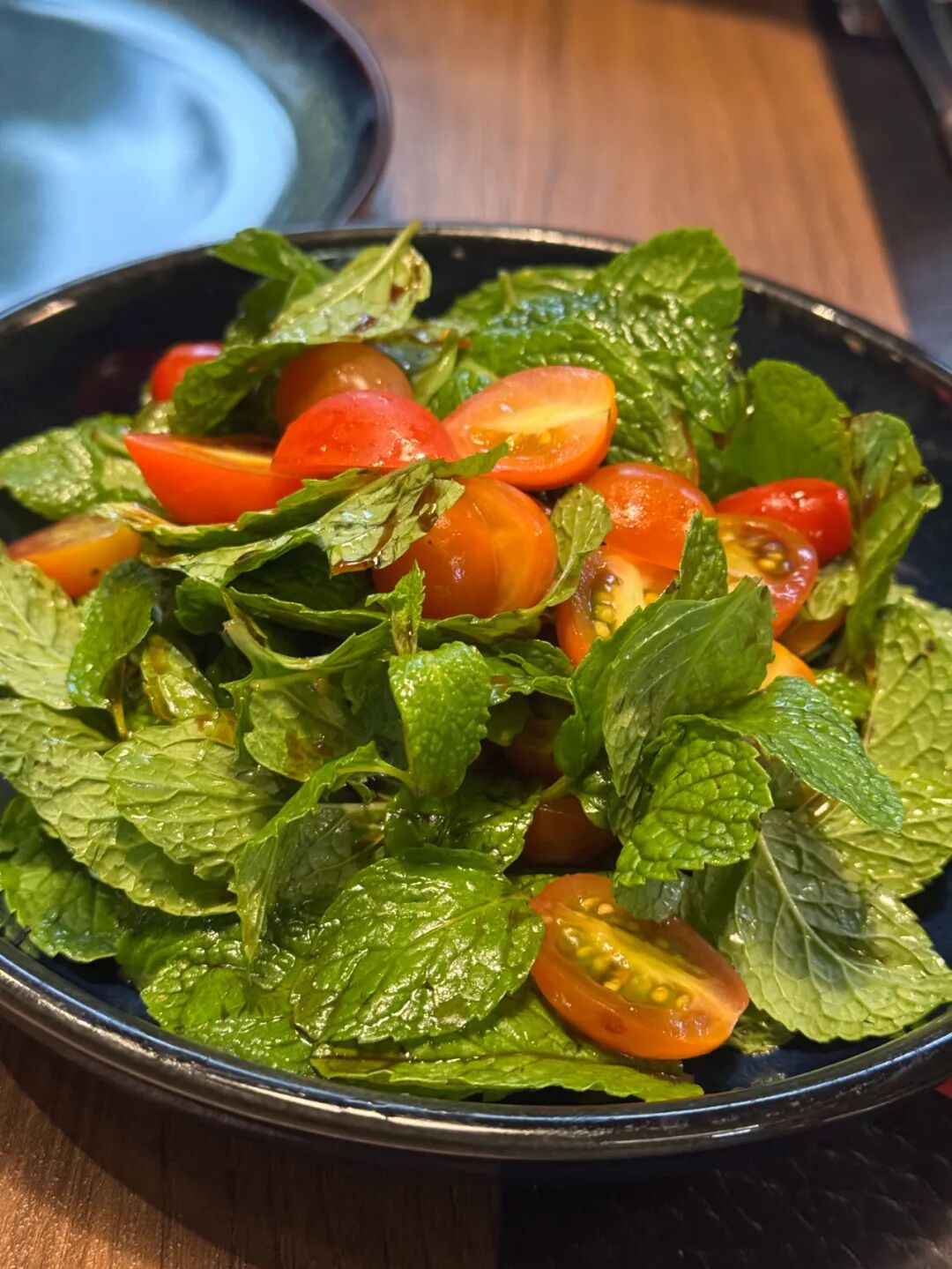
Cherry tomato and mint salad, this is my second choice.
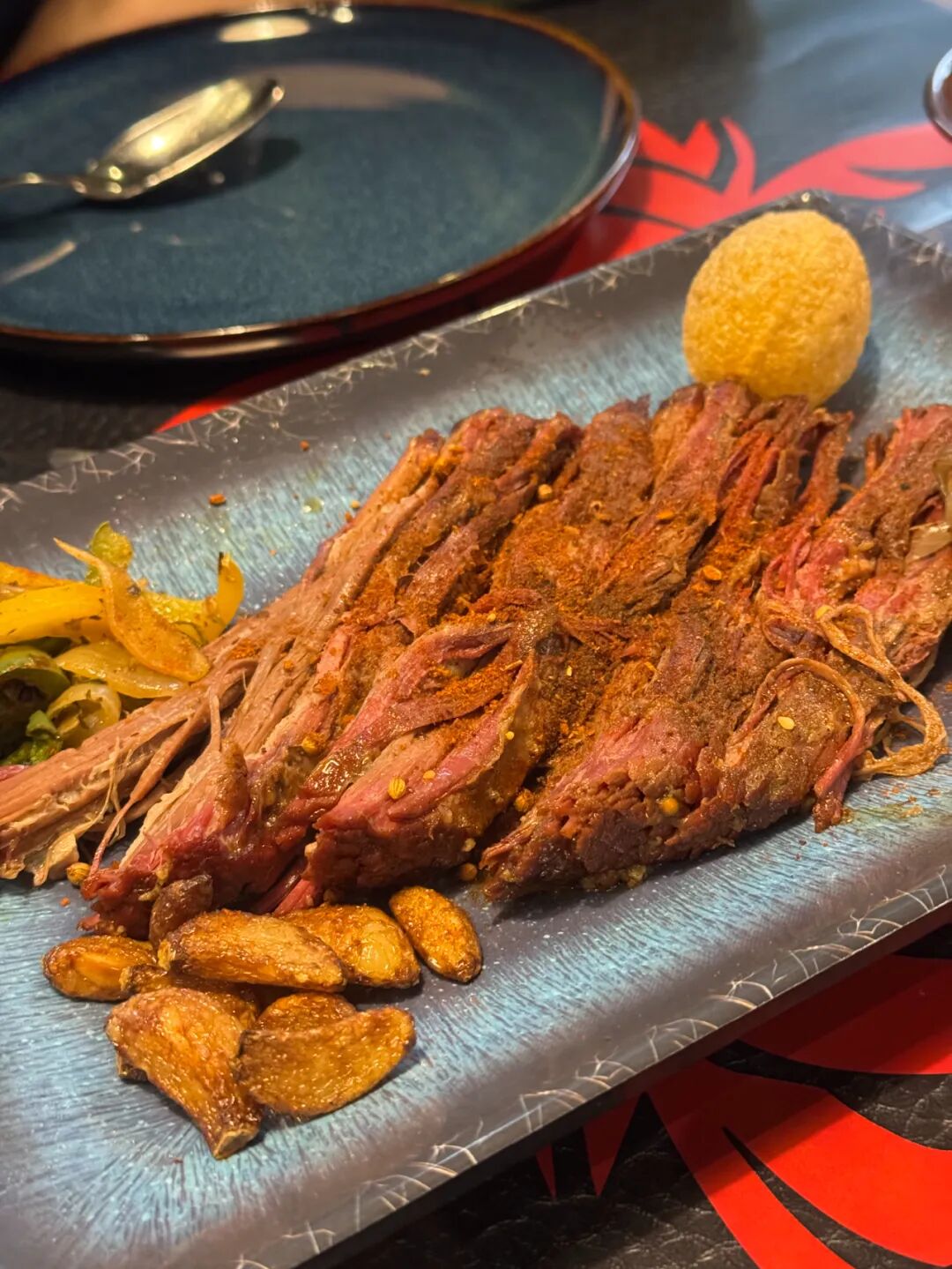
The second time our family of three came to eat, I chose a 250g smoked roast beef. The set meal came with a naan, a rice, a salad, and a plate of hummus sauce. The meat was so tender that Fahim also ate a lot. He especially liked to eat naan bread. I remembered that when we were in Egypt, he ate naan bread every day. The flat bread in Egypt only cost 20 cents a piece.
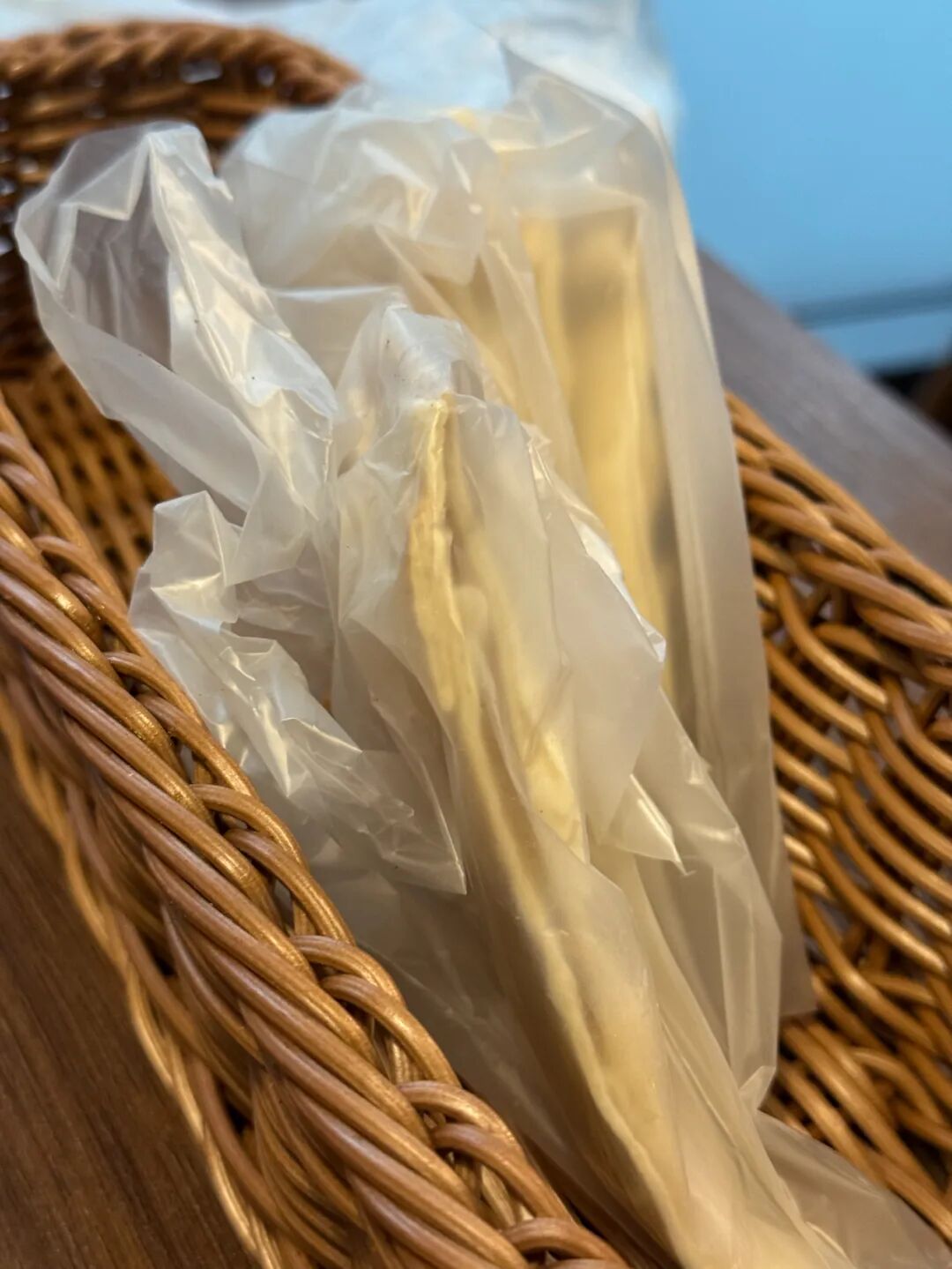
This shop is very particular, each cake comes with a bag.
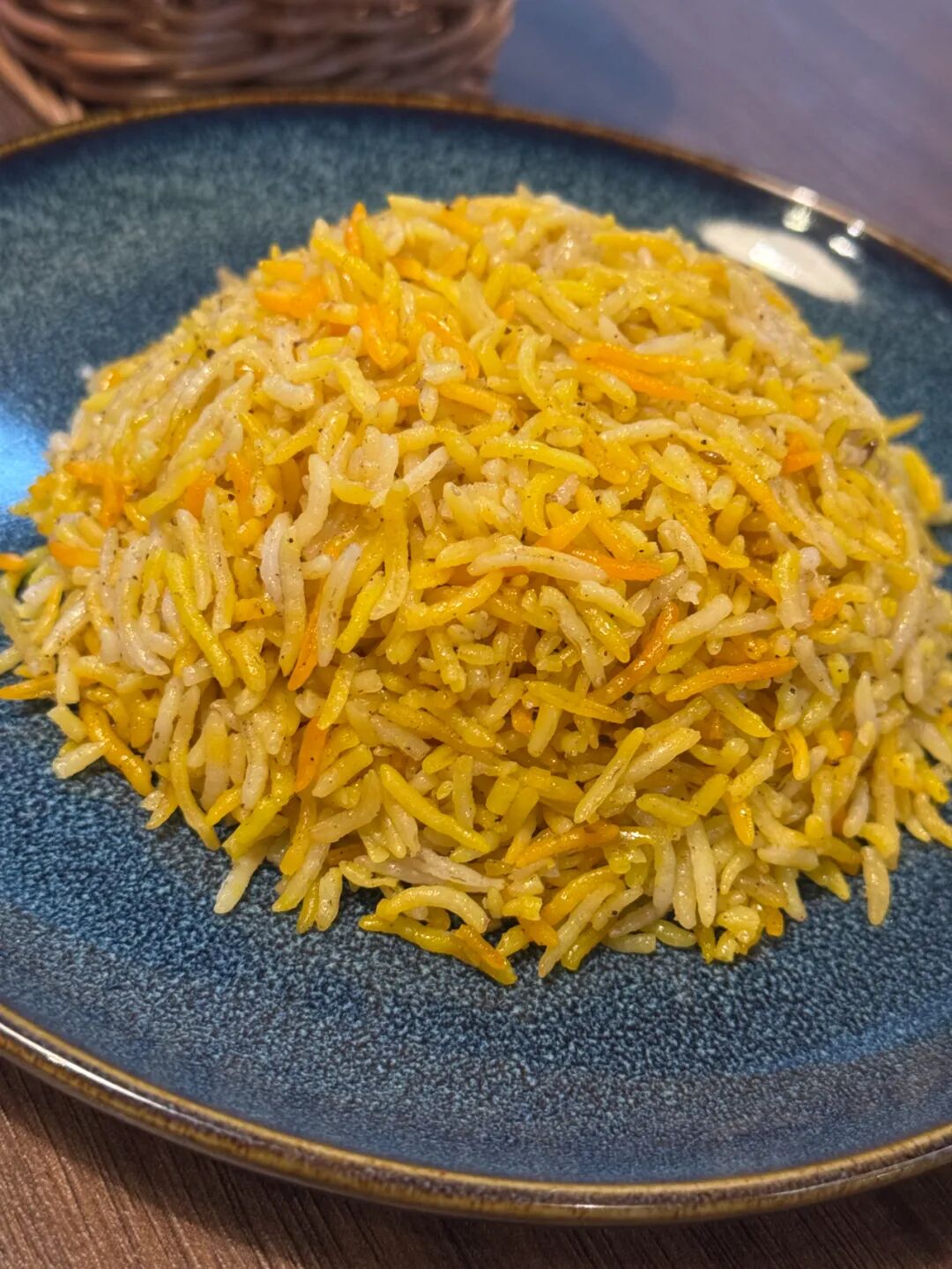
This set is just enough for the three of us. If you have a big appetite, you can choose the 500g set, which will come with more side dishes.
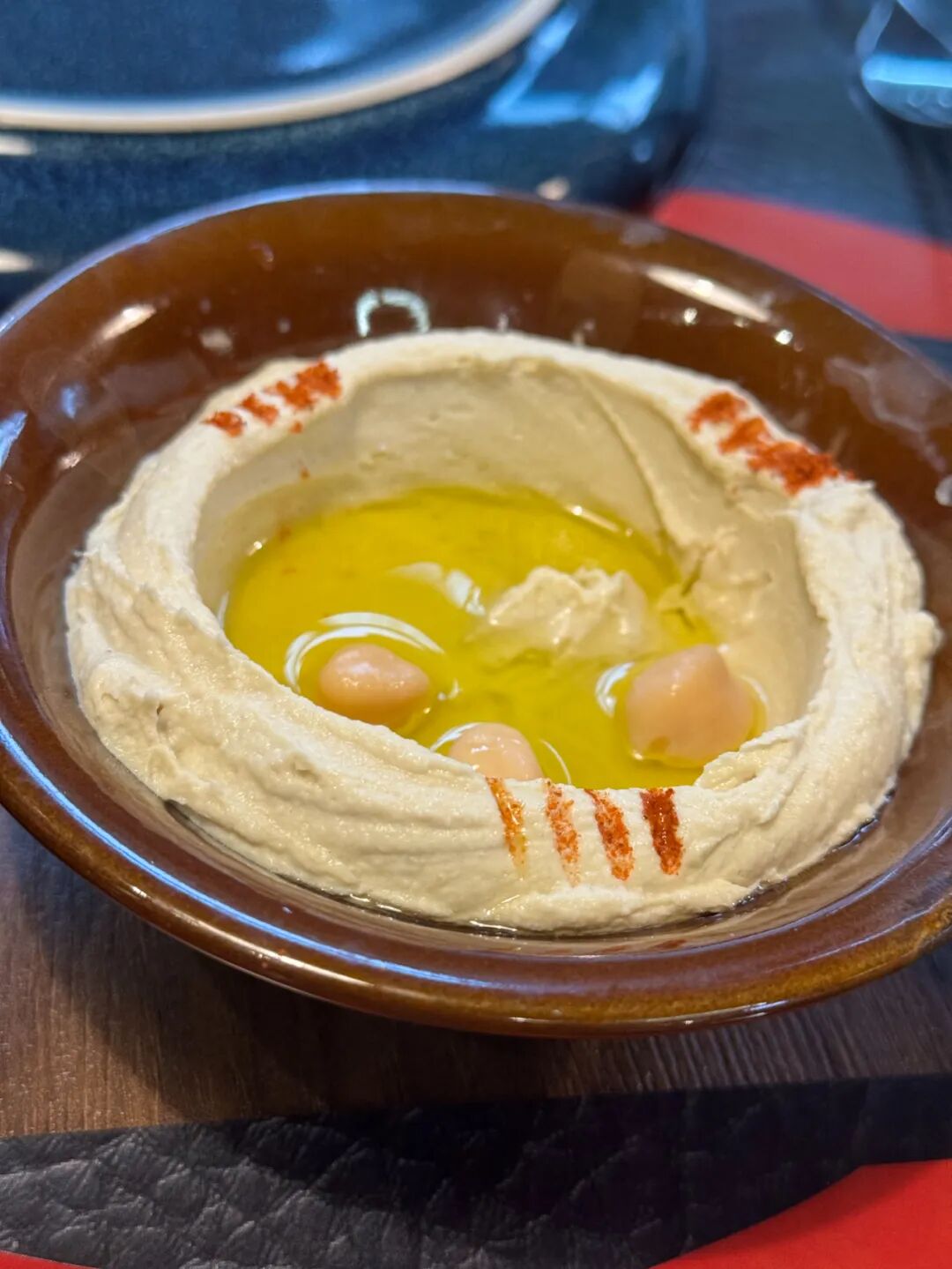
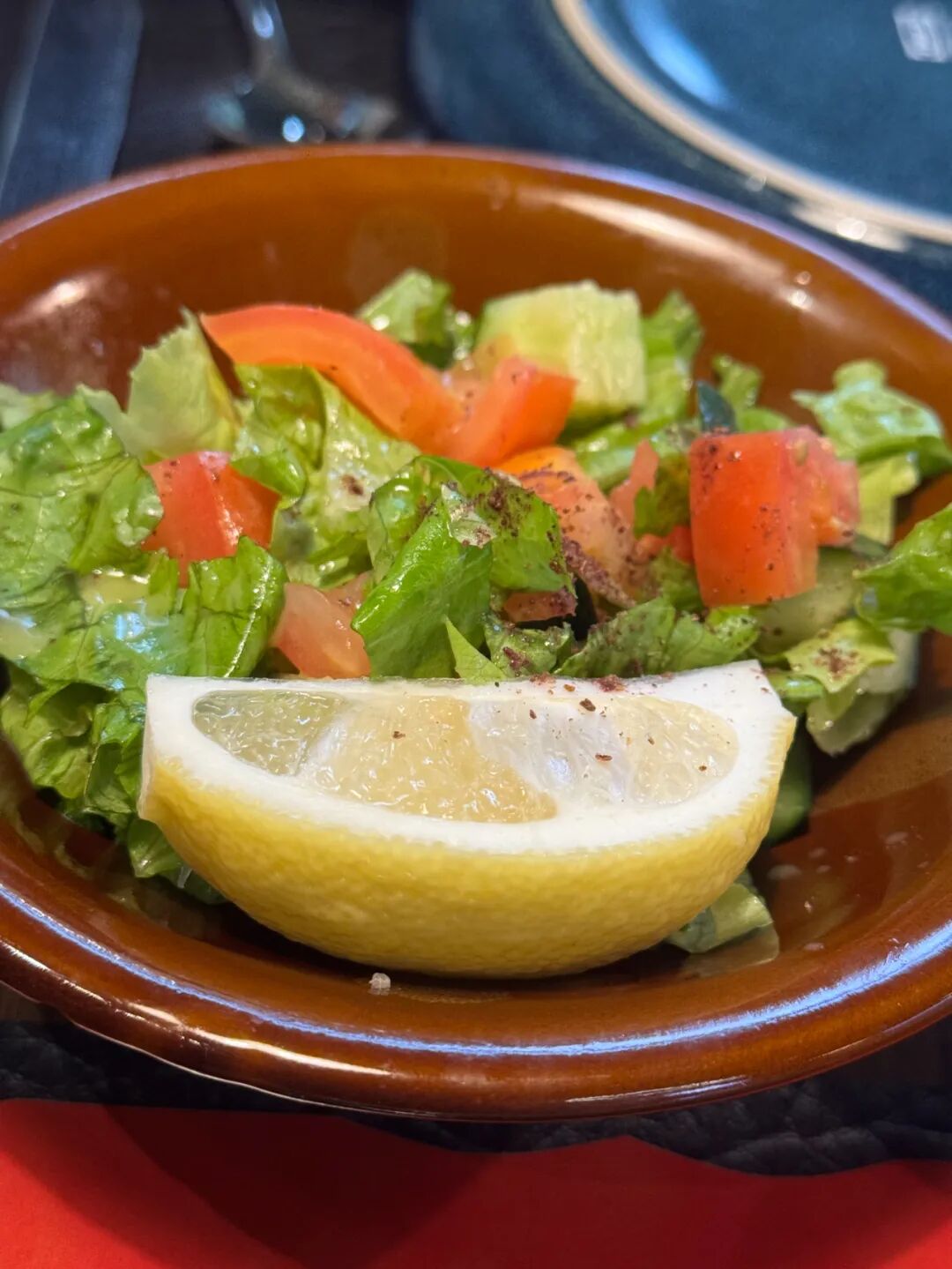
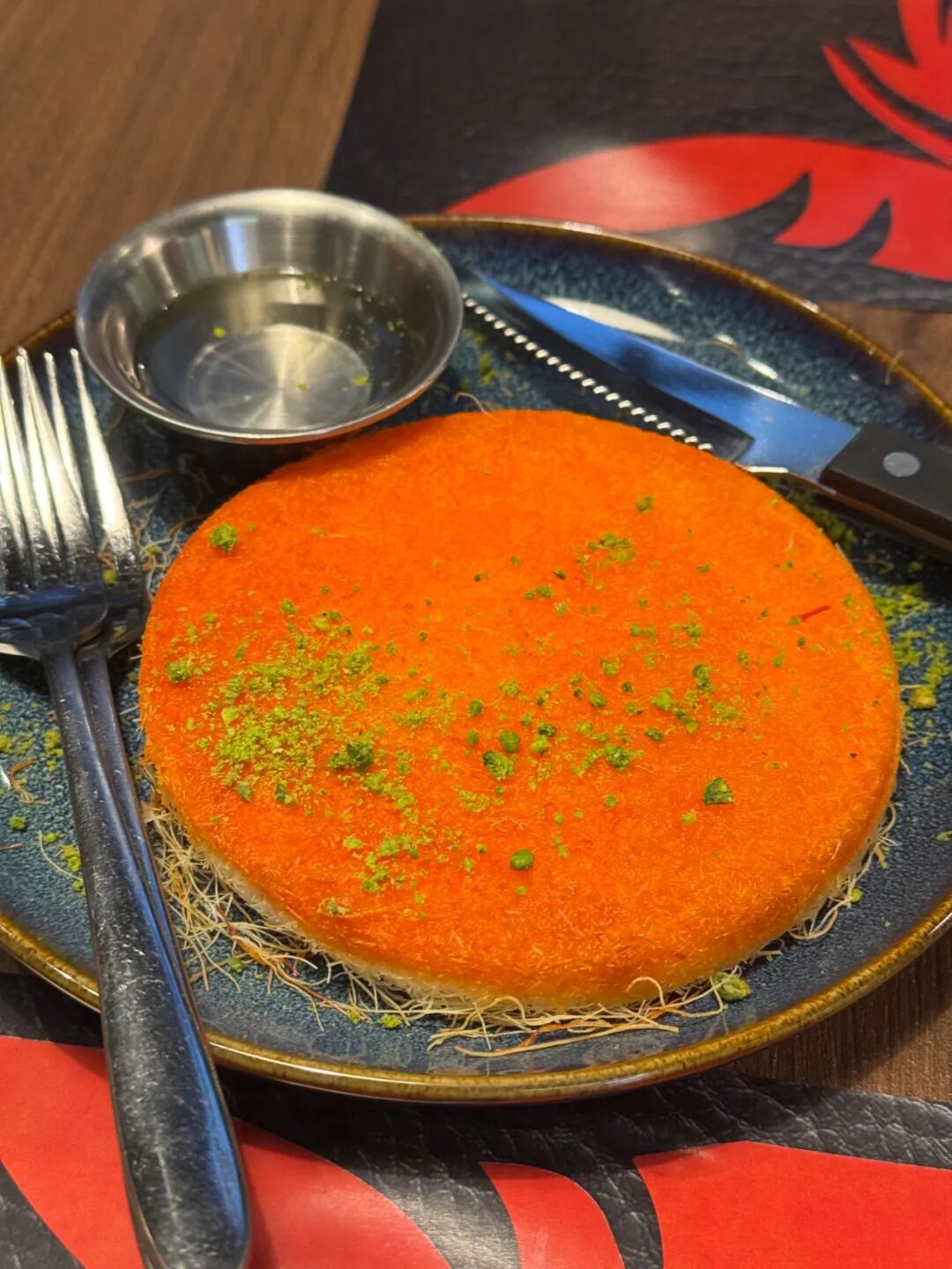
His Kunafa dessert is actually the original flavor without added sugar. It tastes not sweet at all. If you want it sweet, just dip it in the syrup in the small dish.
Address: Chef Eyad Star Boulevard KLCC
2. IKEA (Swedish restaurant)
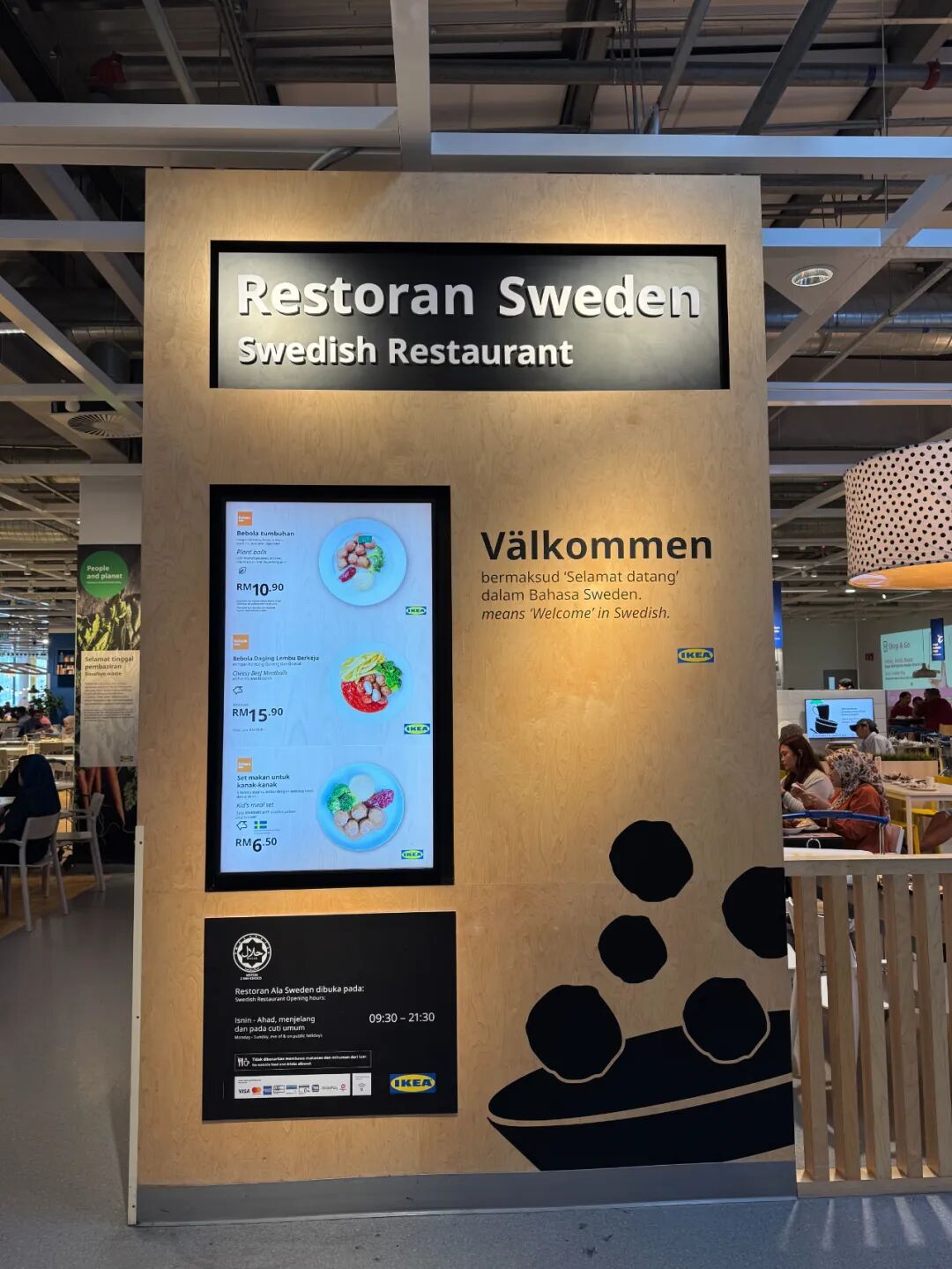
The IKEA restaurant in Kuala Lumpur has halal certification. It was also my first time to dine at IKEA. I used to visit Huiju IKEA in Beijing, but I would only eat ice cream and drinks there.
The IKEA restaurant in Kuala Lumpur is very popular. You have to queue up to get a meal tray during lunch time. It is popular because of its high cost performance. A lunch only costs RM20 and there are unlimited drinks.
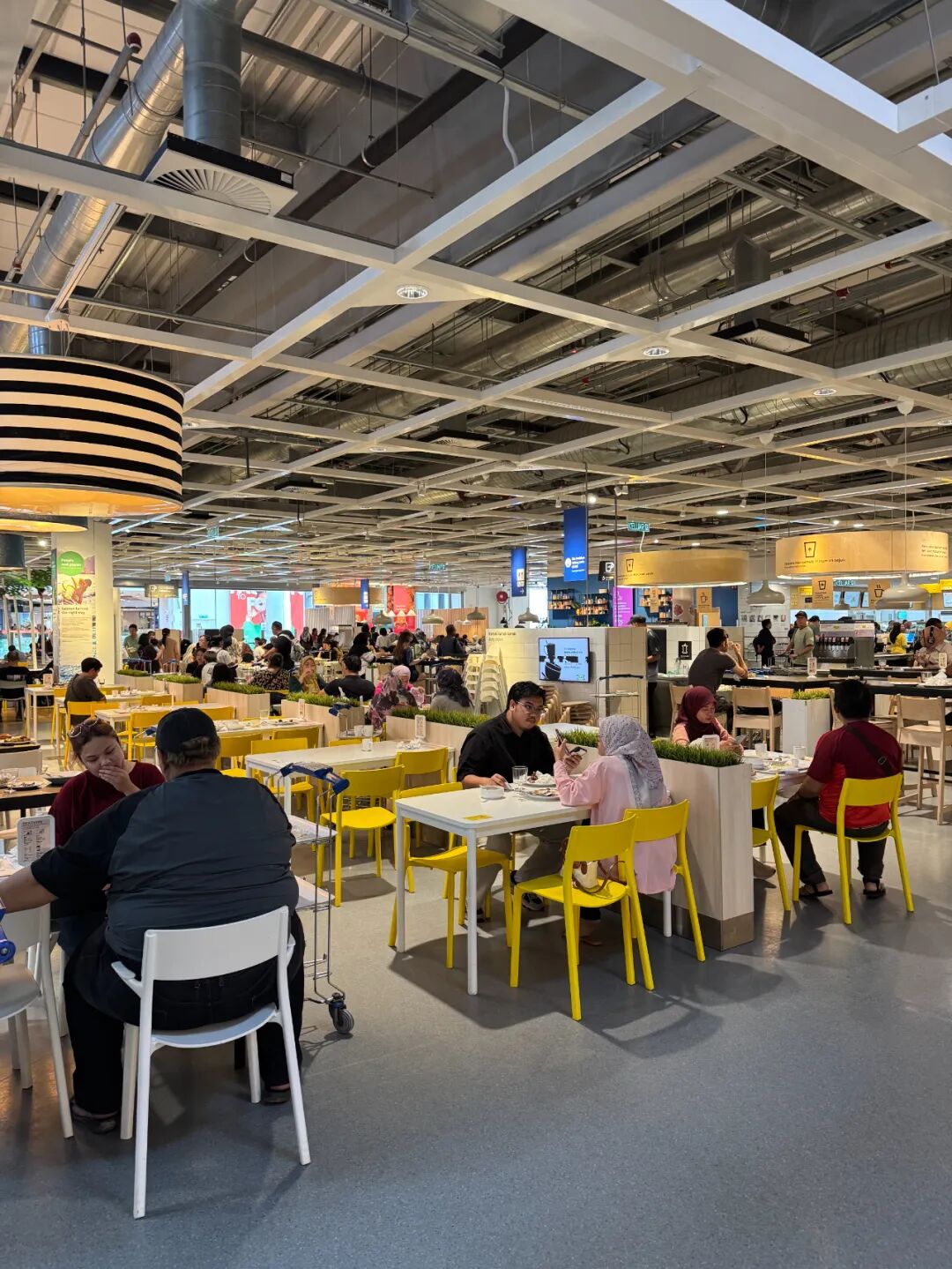
I feel that there are many more people coming to eat than buying furniture, and it is difficult to find a seat during peak dining hours.
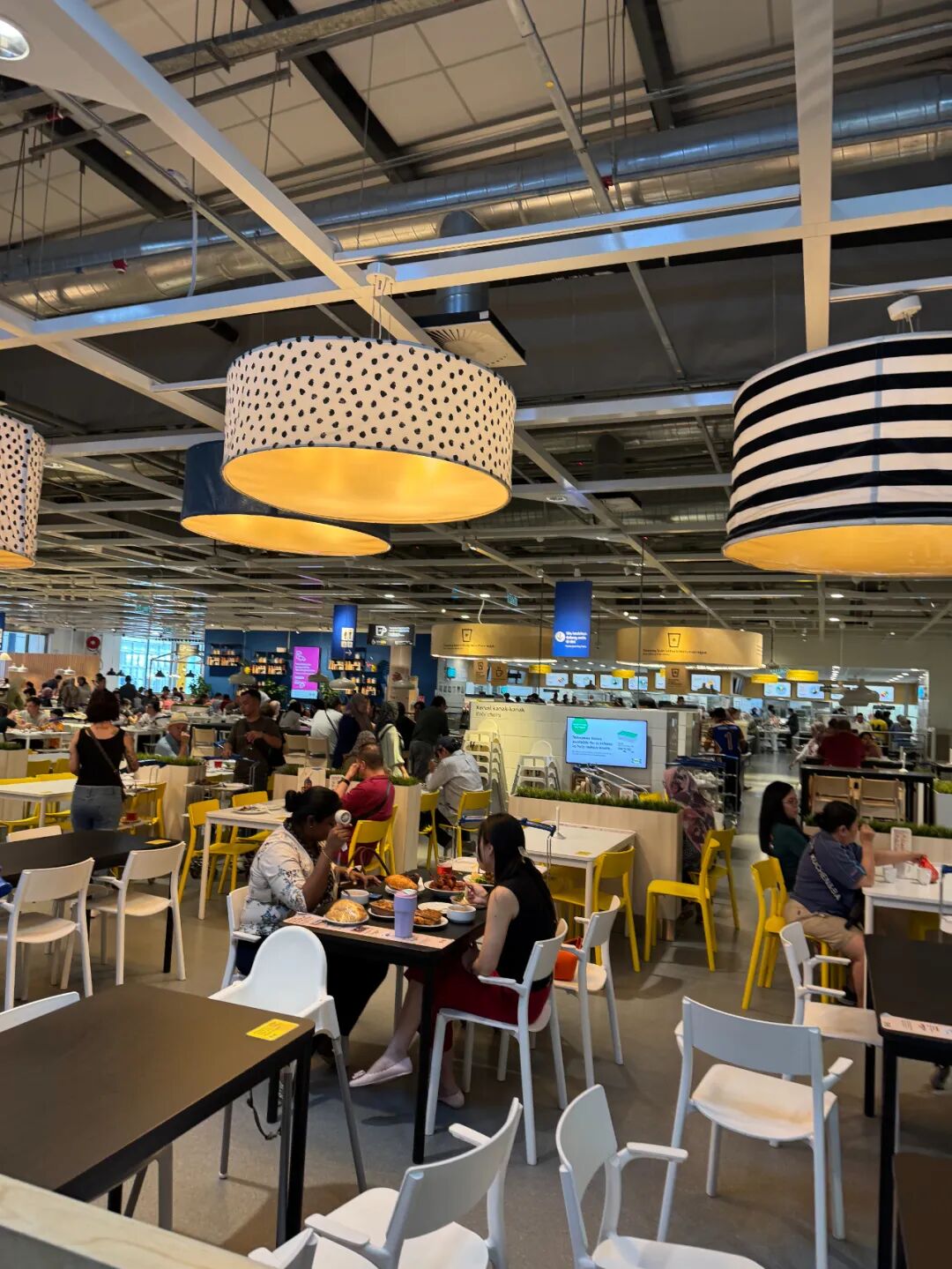
People say IKEA's restaurants are also outsourced, with no rent, but IKEA has a profit-sharing agreement with the restaurant.
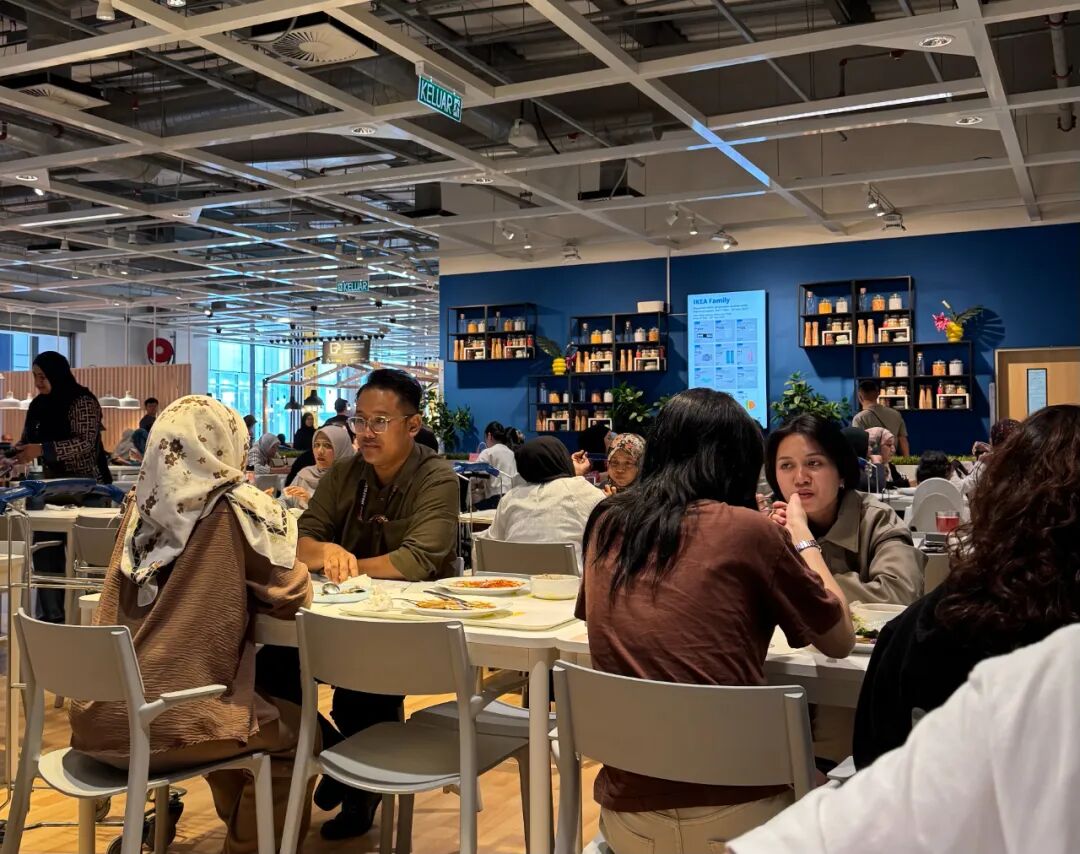
The variety of dishes is particularly rich. to Swedish meatballs, there are also some localized Malay dishes and desserts.
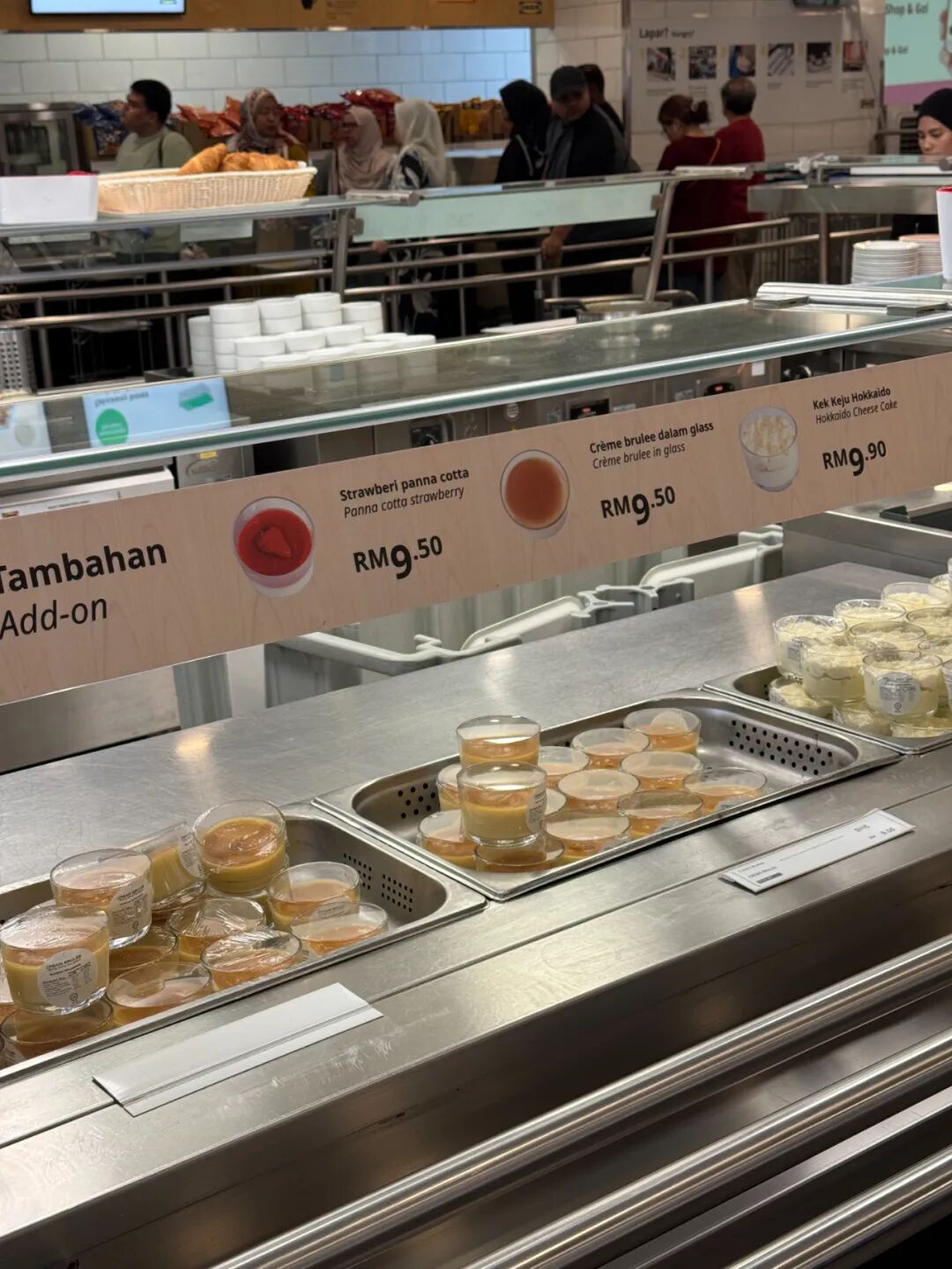
The process is the same as eating in the school cafeteria. Take a plate and tell the waiter what you want to eat and how much you want. He will help you prepare your meal, then go to the cashier to pay. If you want to drink, you can get a drink cup, and if you want to drink coffee, you can get a coffee cup.
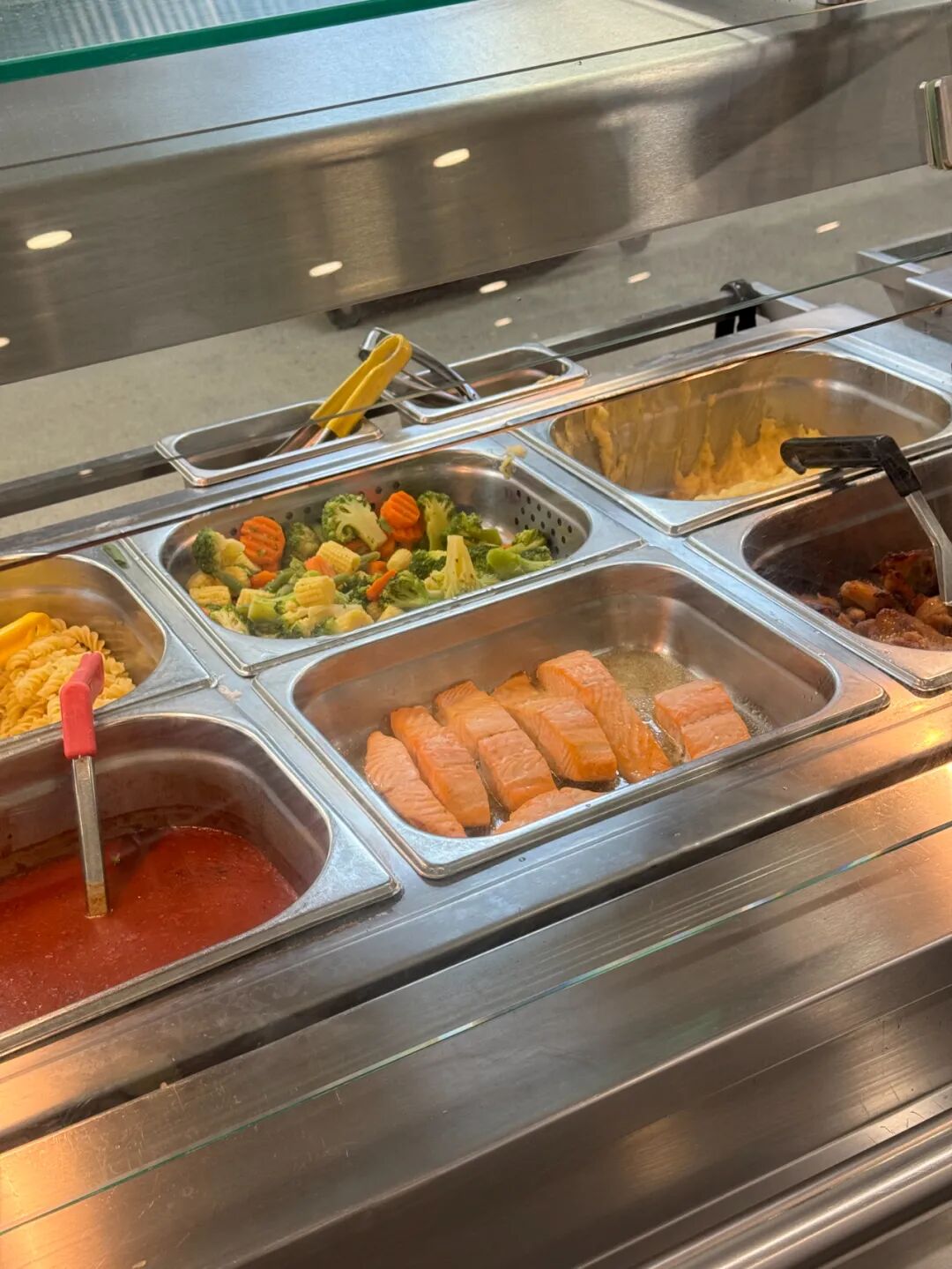
I definitely still prefer this healthy light meal. Salmon and pasta are also children’s favorites.
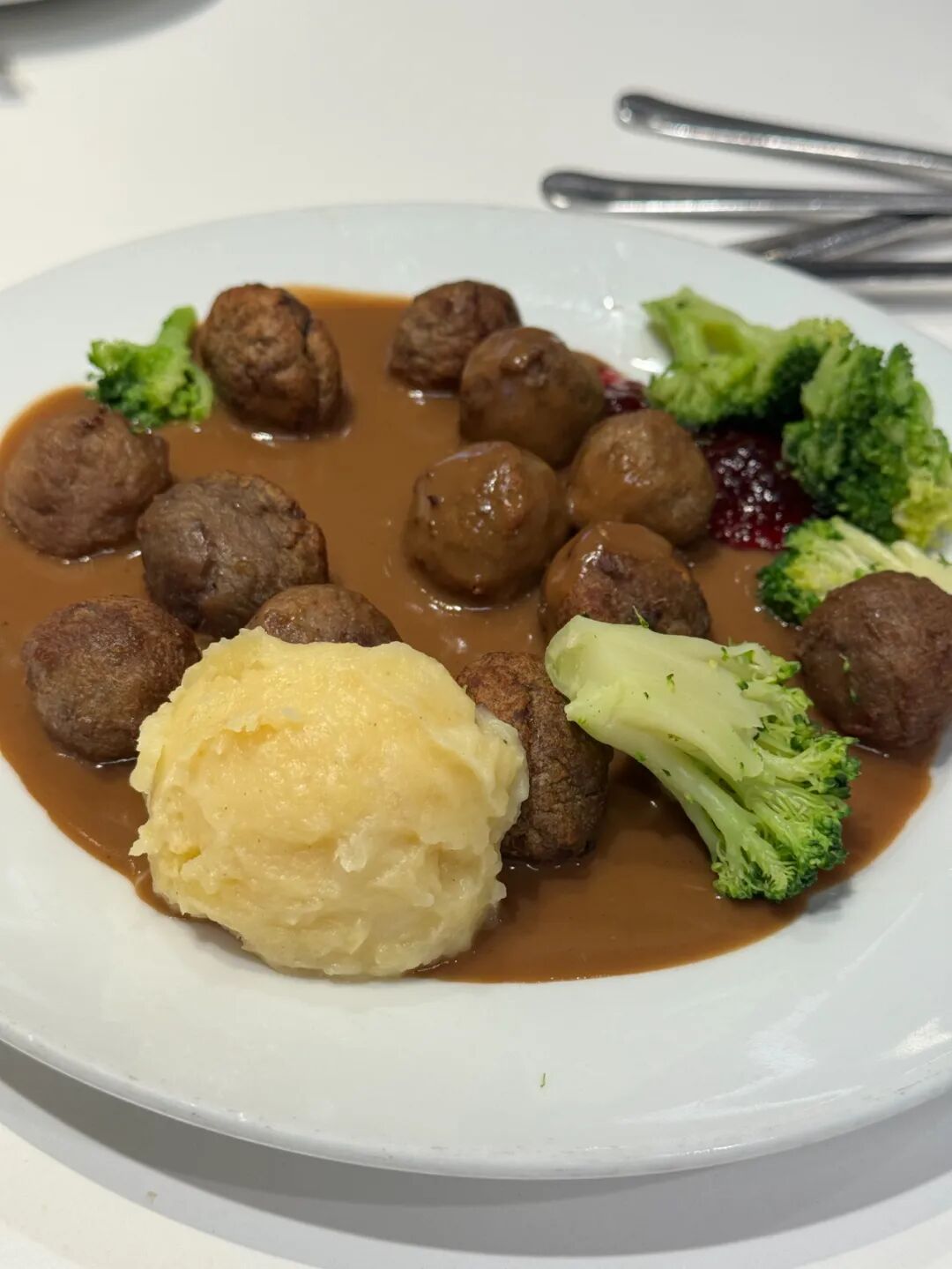
People say this meatball is the most popular. The waiter will ask you how many you want to eat, tell the number, and then he will serve you with broccoli and mashed potatoes.
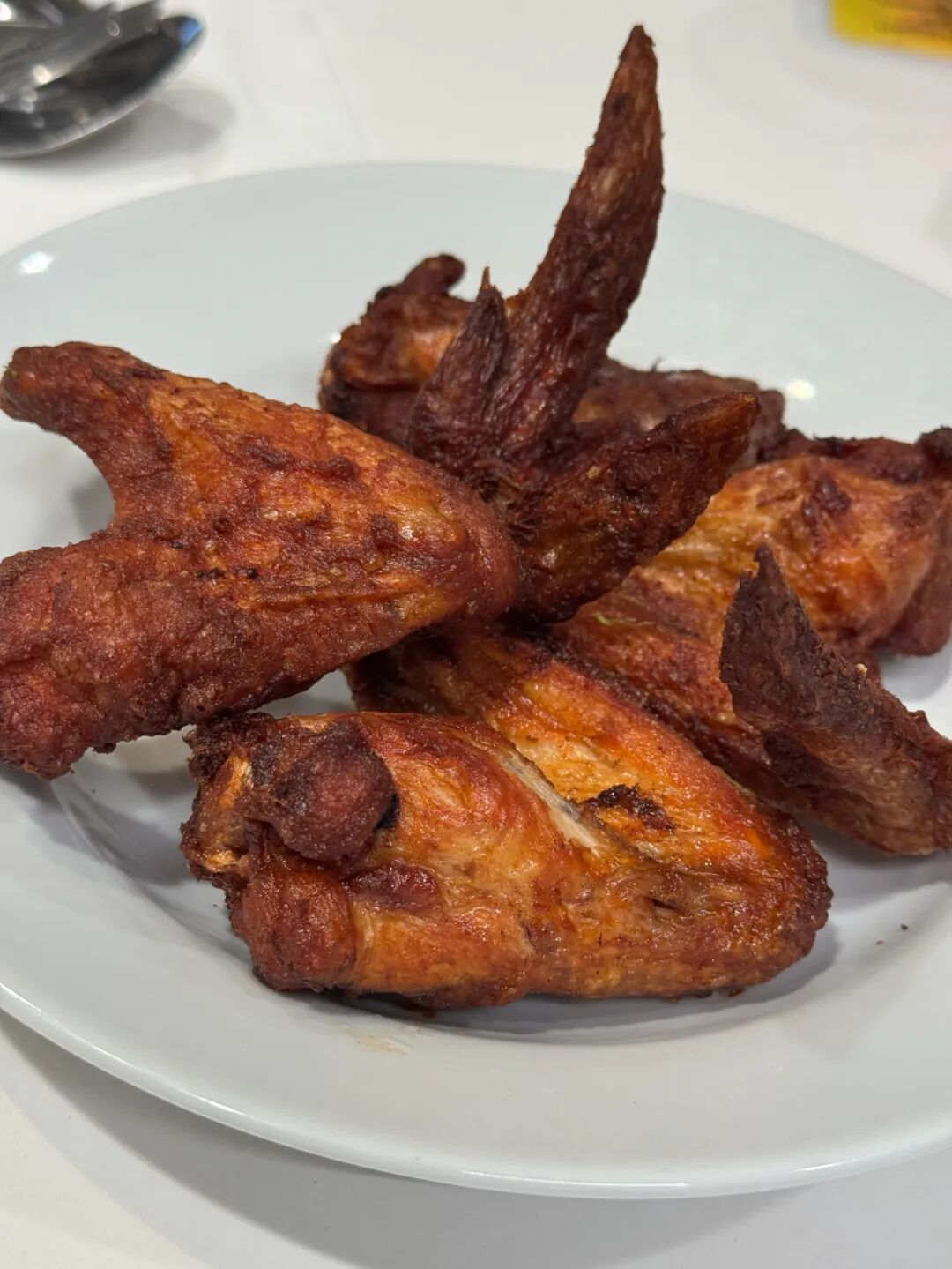
Another popular item is the grilled chicken wings. The chicken wings are huge and taste good. They were very comfortable to eat at IKEA and the two of them spent only RM40.
Address: IKEA Cheras (IKEA)
3. THE CHICKEN RICE SHOP (Hainan Chicken Rice)
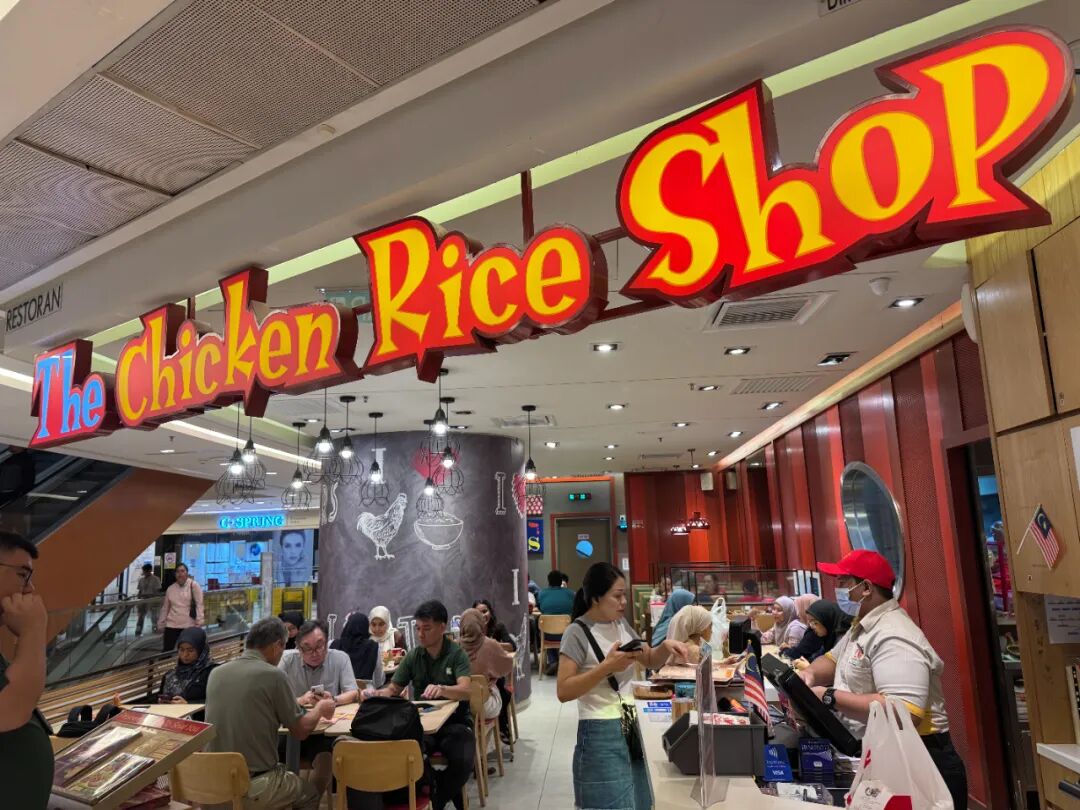
This store is located on the second floor of AK Shopping Mall. I have eaten from their takeout before. Because there are so many people there at noon, I have to queue up, so I can order takeout faster.
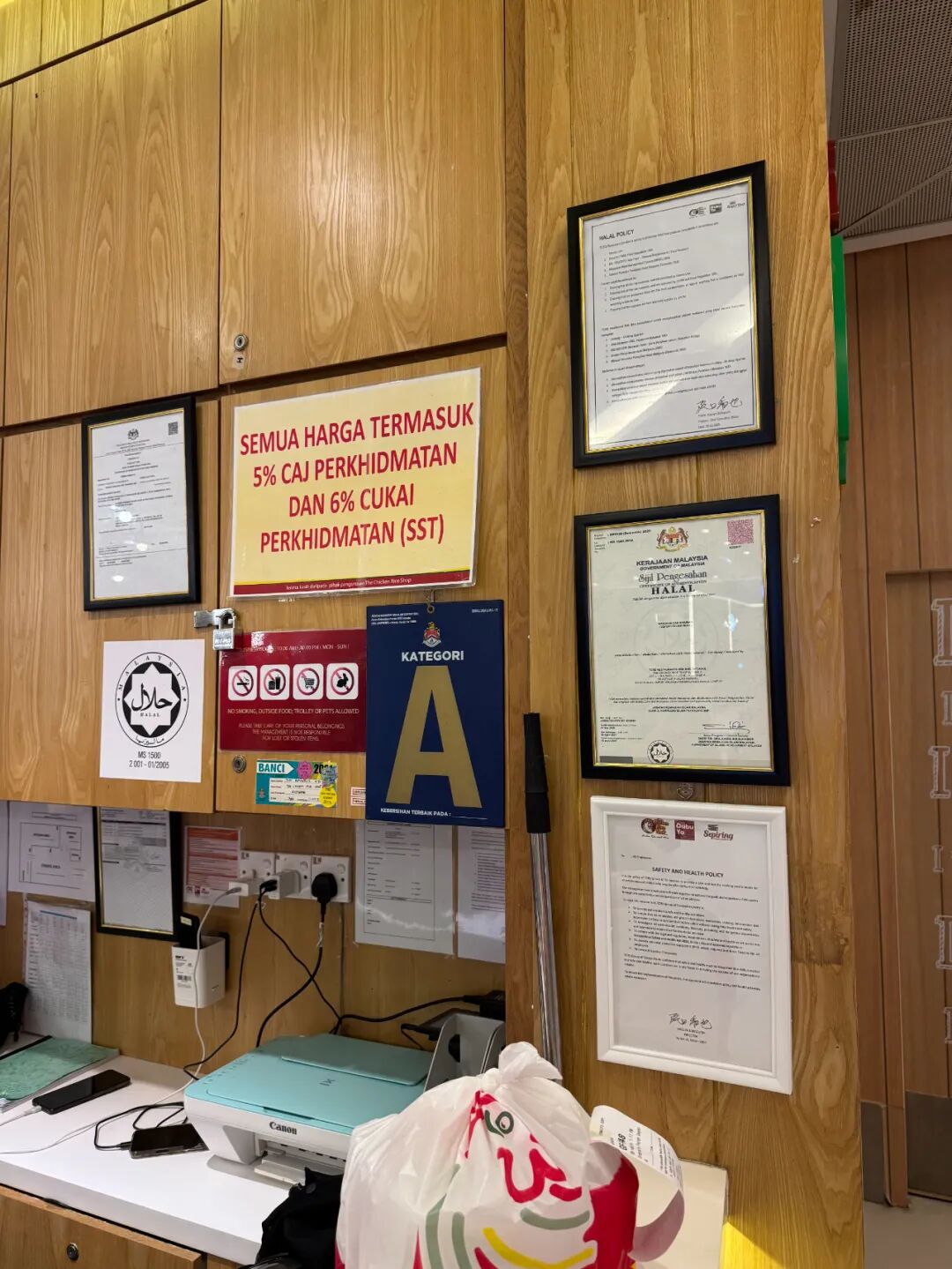
With halal certification, this is more common in chain fast food restaurants and requires the restaurant to have a certain level of strength.
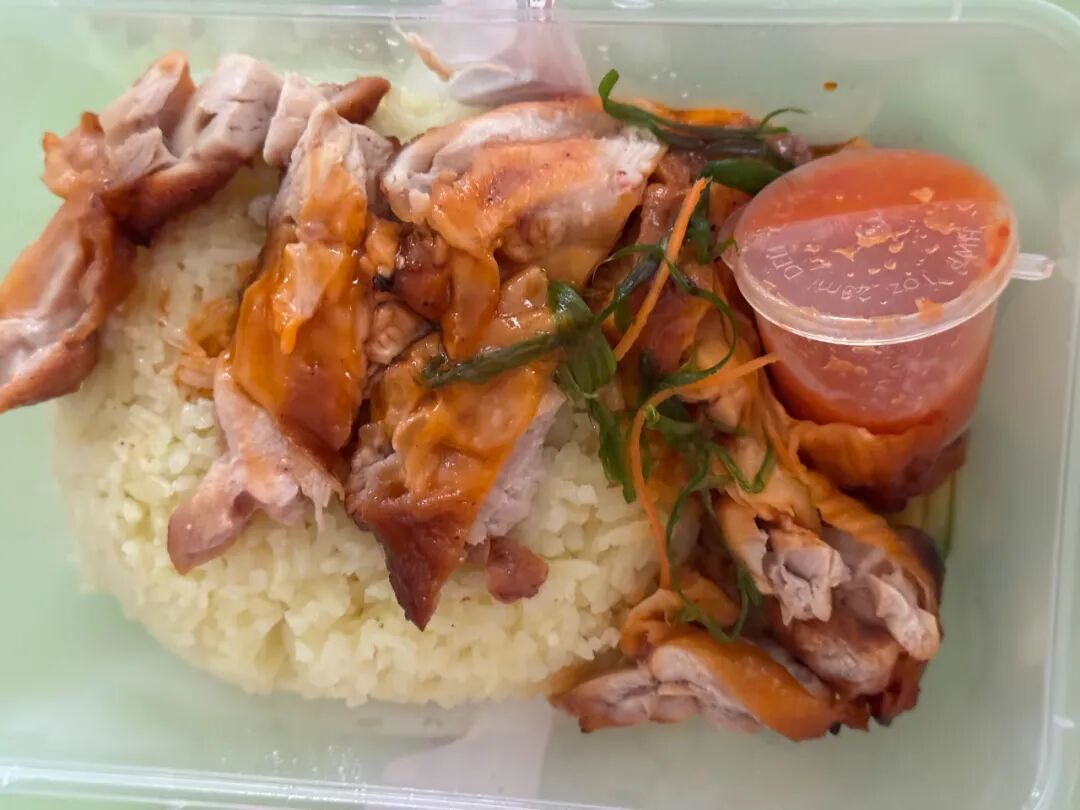
The Hainanese Chicken Rice Set, which comes with a portion of sour chili, a portion of chicken soup, and a portion of fried bean sprouts, is also around RM20.
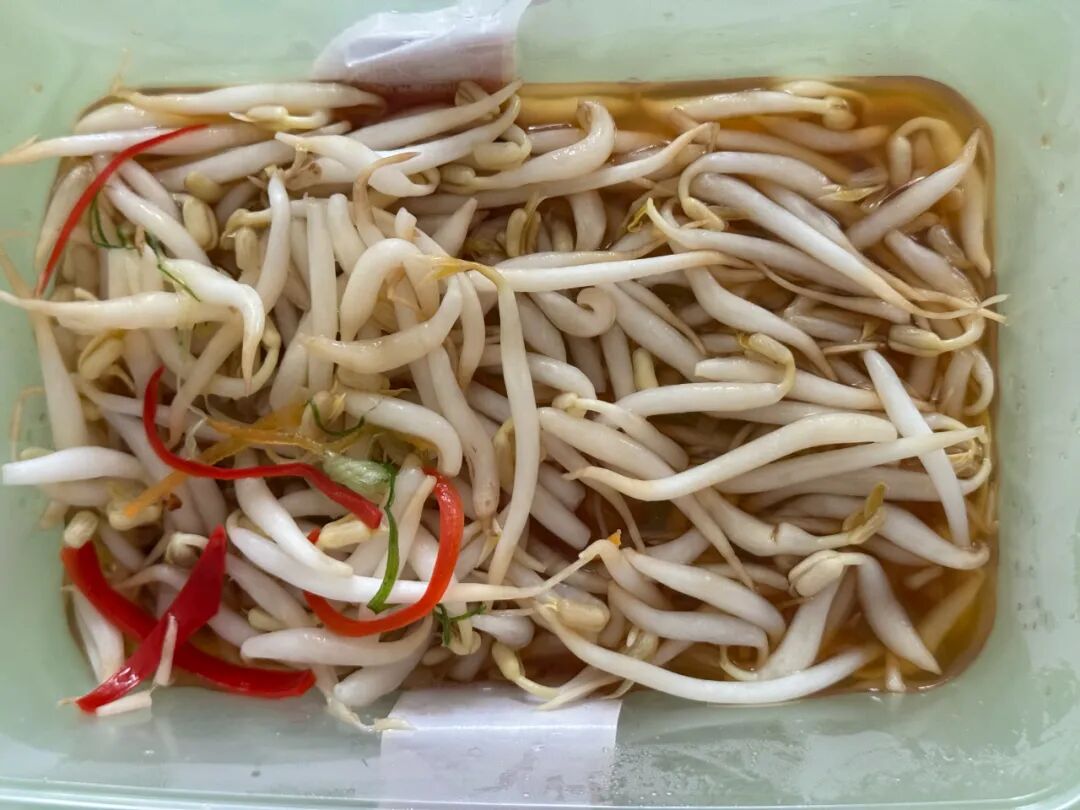
Their taste is more suitable for Chinese people, especially southerners.
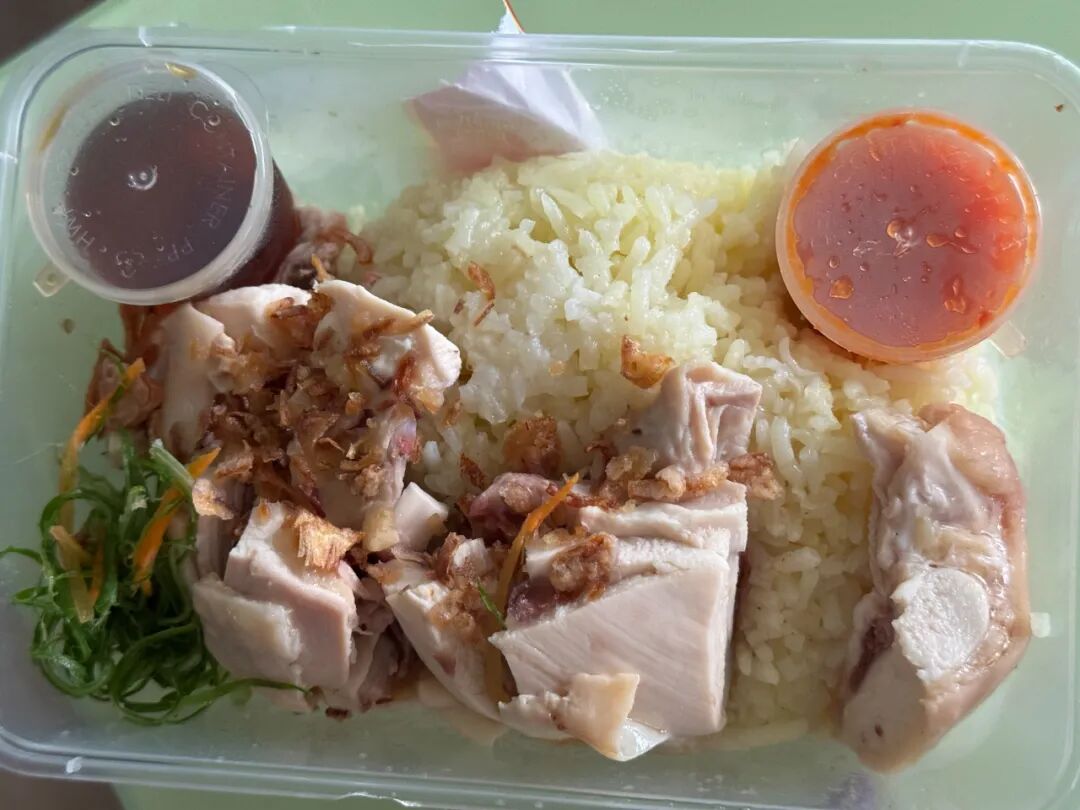
Address: The Chicken Rice Shop Avenue K
4. SHAWARMA CITY
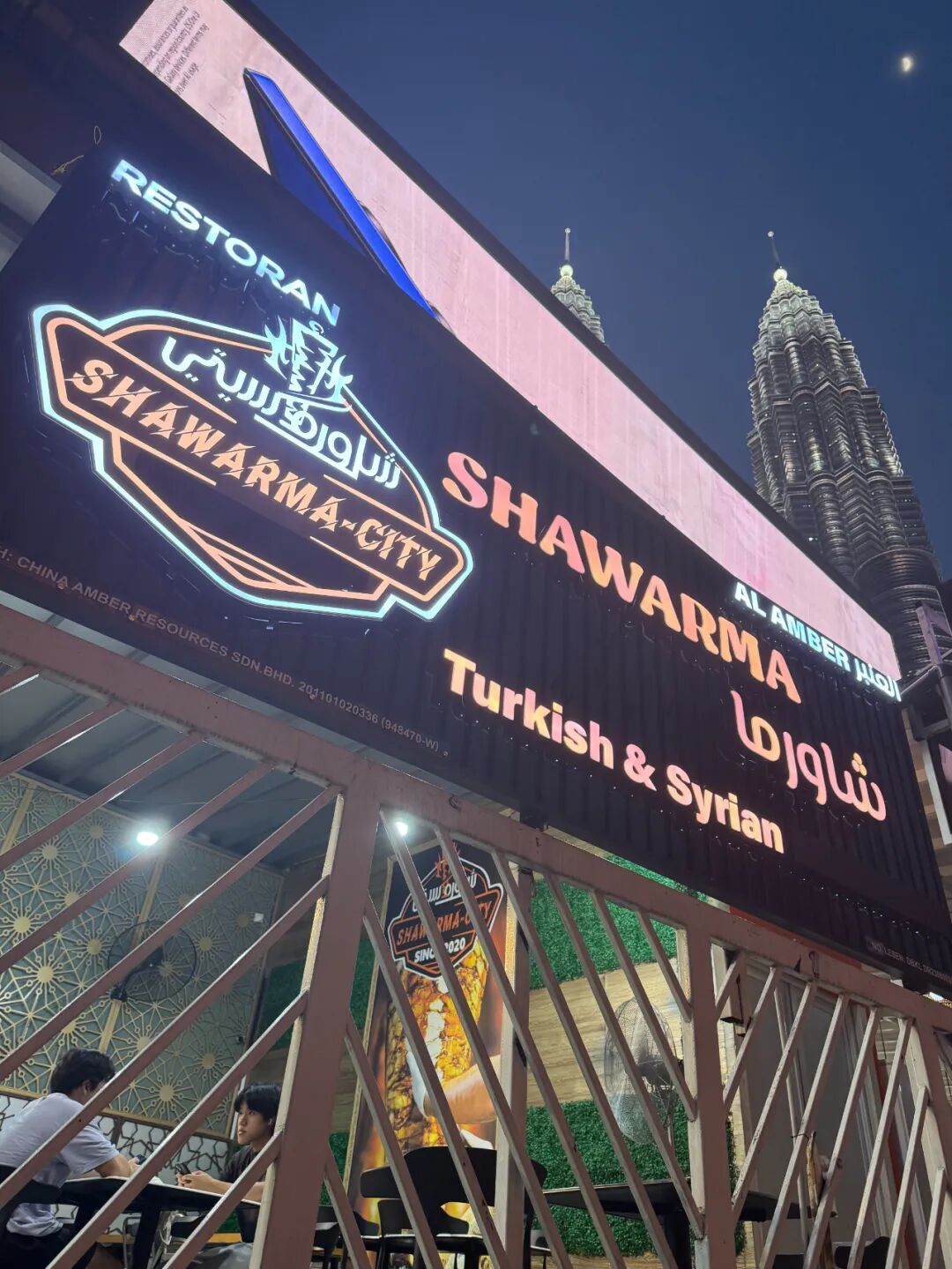
This is another grilled daddy shop with the Twin Towers on its back. You can see the Twin Towers in the background of the sign. Because there are so many shawarma shops like this in Malaysia, I didn’t pay attention. I passed by several times without going in. A few days ago, Fahim had been eating Pizza Hut pasta for a week. I was really tired of it, so I wanted to give him a change of taste. It happened that this shop was very close to my home, so I came here.
Because there are many non-spicy rice dishes for children in Middle Eastern restaurants, and I like them very much myself, so when I don’t know what to eat, this is a good choice.
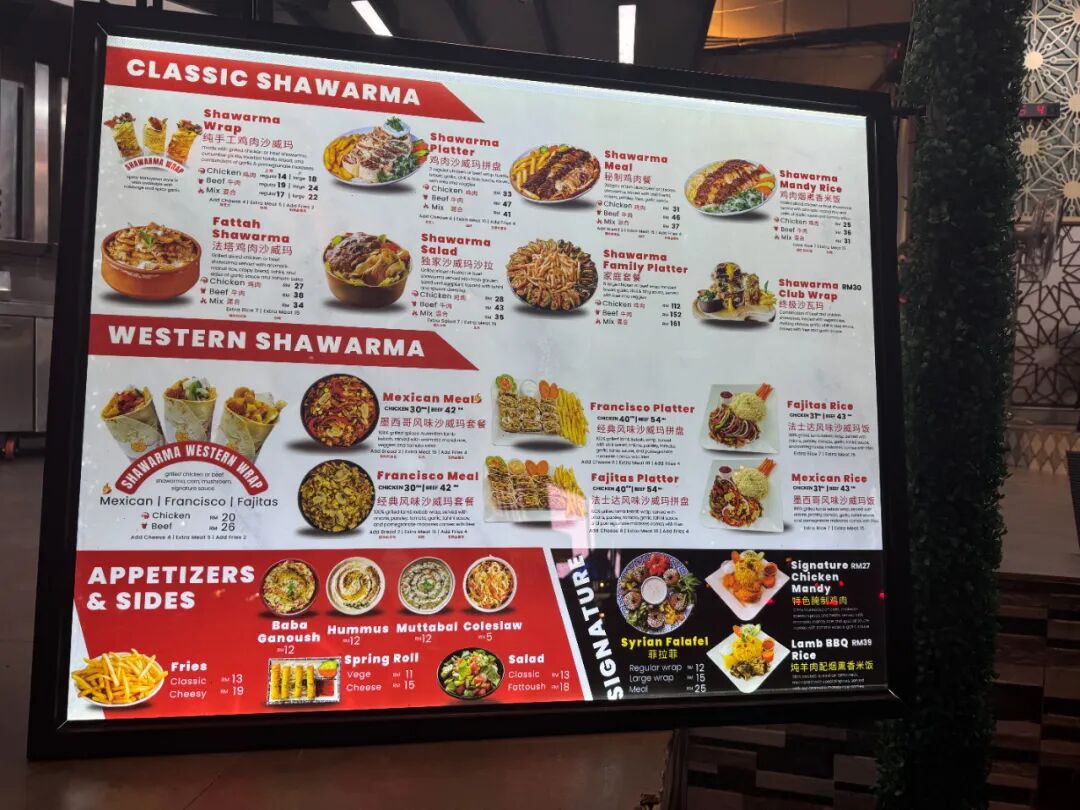
You can choose from all the dishes on the menu of this store. I picked a chicken one. The most popular one in Malaysia is chicken, because Indians here or some Chinese who believe in local religions do not eat beef.
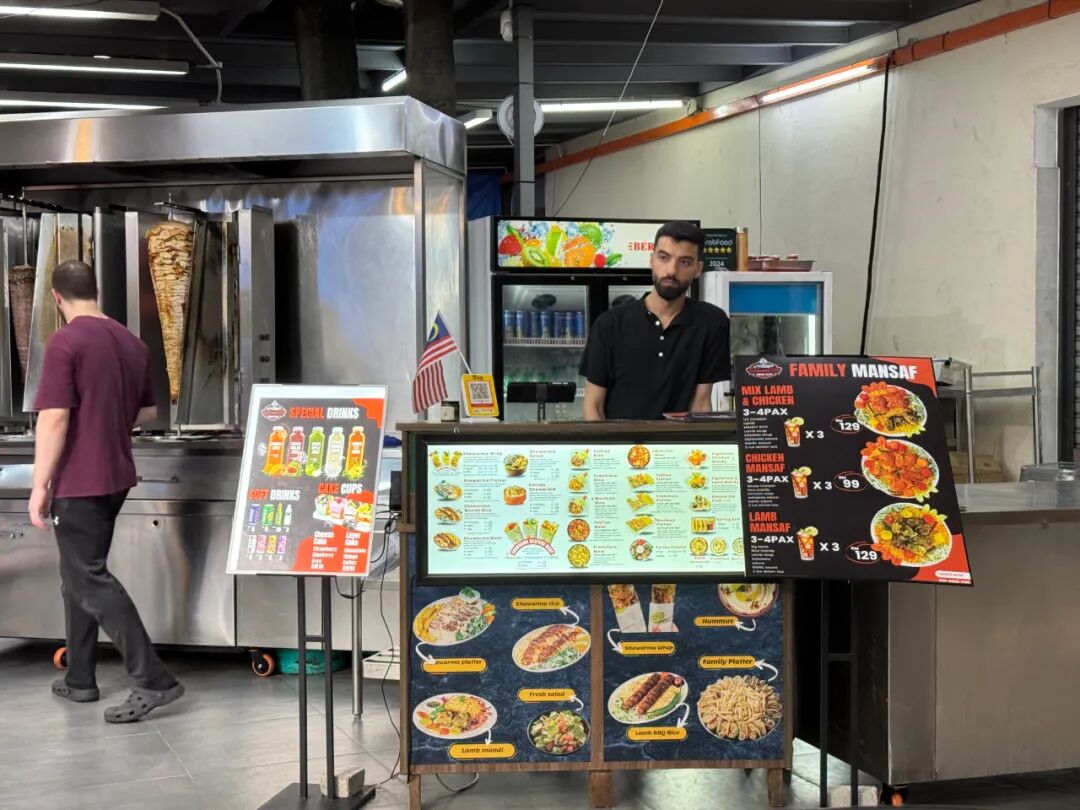
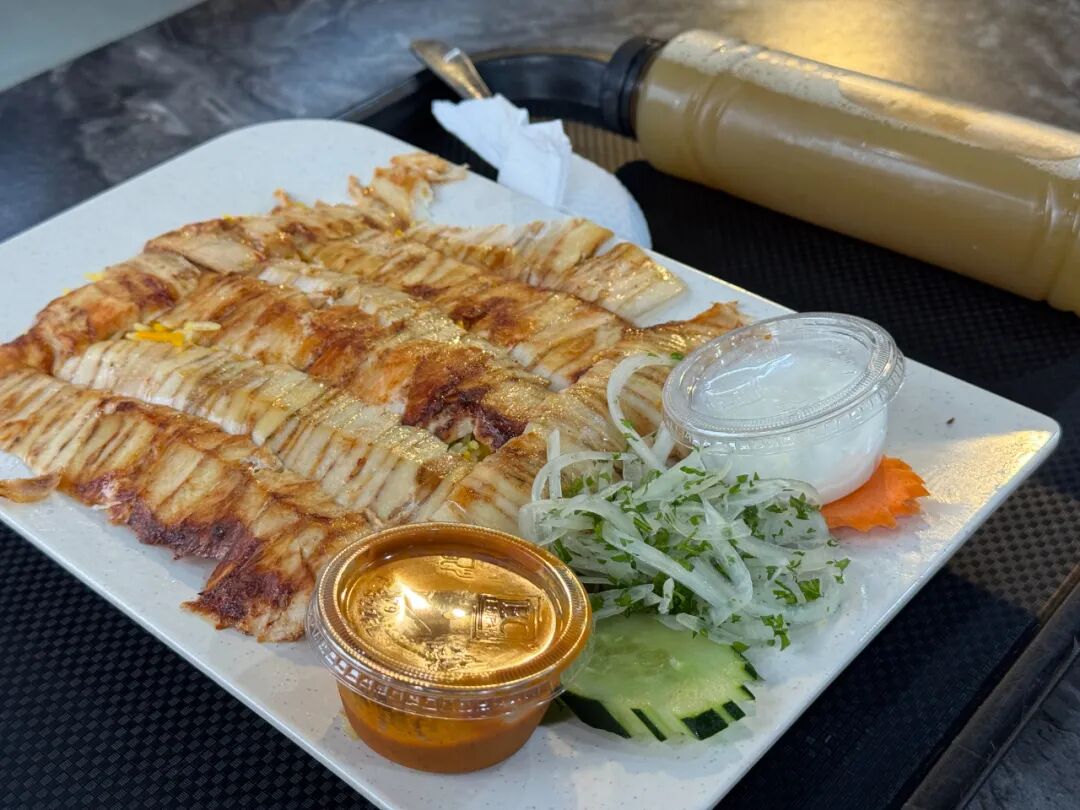
For their chicken rice, there was so much chicken that it covered the rice, and the grilled chicken was so delicious that Fahim finished the whole plate of chicken. And when asked the next day if he wanted to eat pasta or hand-picked rice, he switched to hand-picked rice.
Address: Shawarma City KLCC
5. SPREZZATURA KAFE
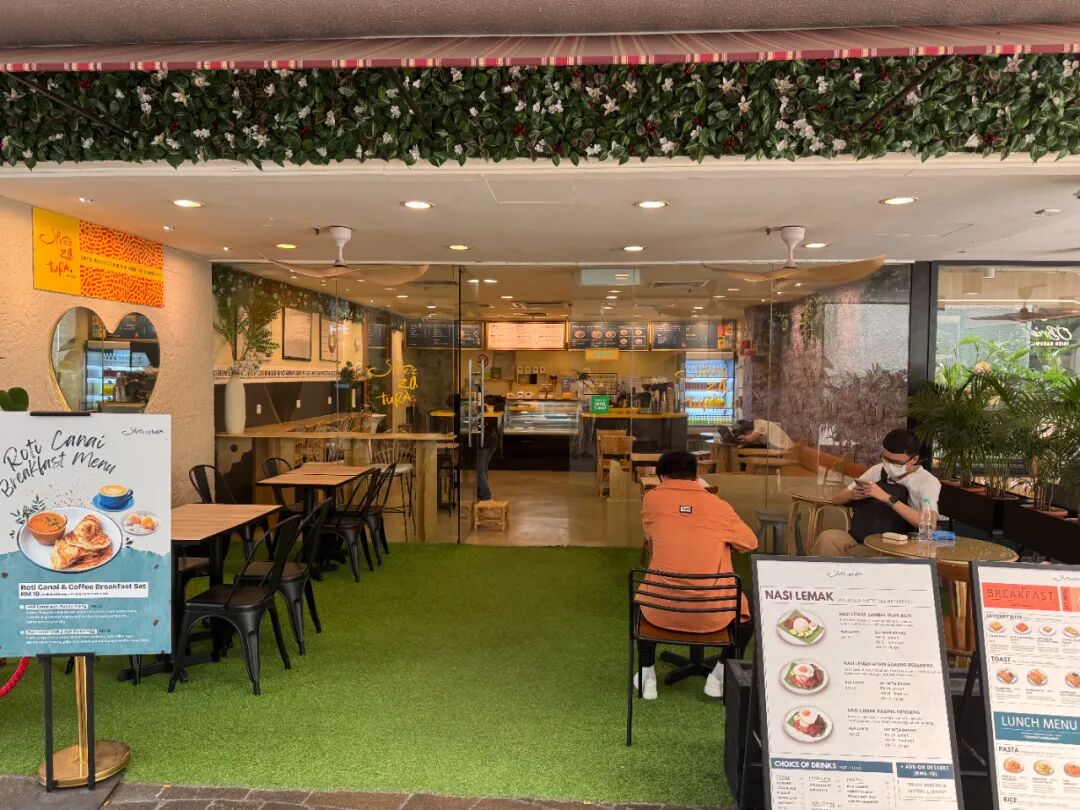
This kind of quiet cafe with few people is my favorite place to go in Kuala Lumpur. The simple sandwiches provided are also my favorite light meals. This shop is a simple coffee shop next to the clinic I discovered when I took Fahim to get a flu shot.
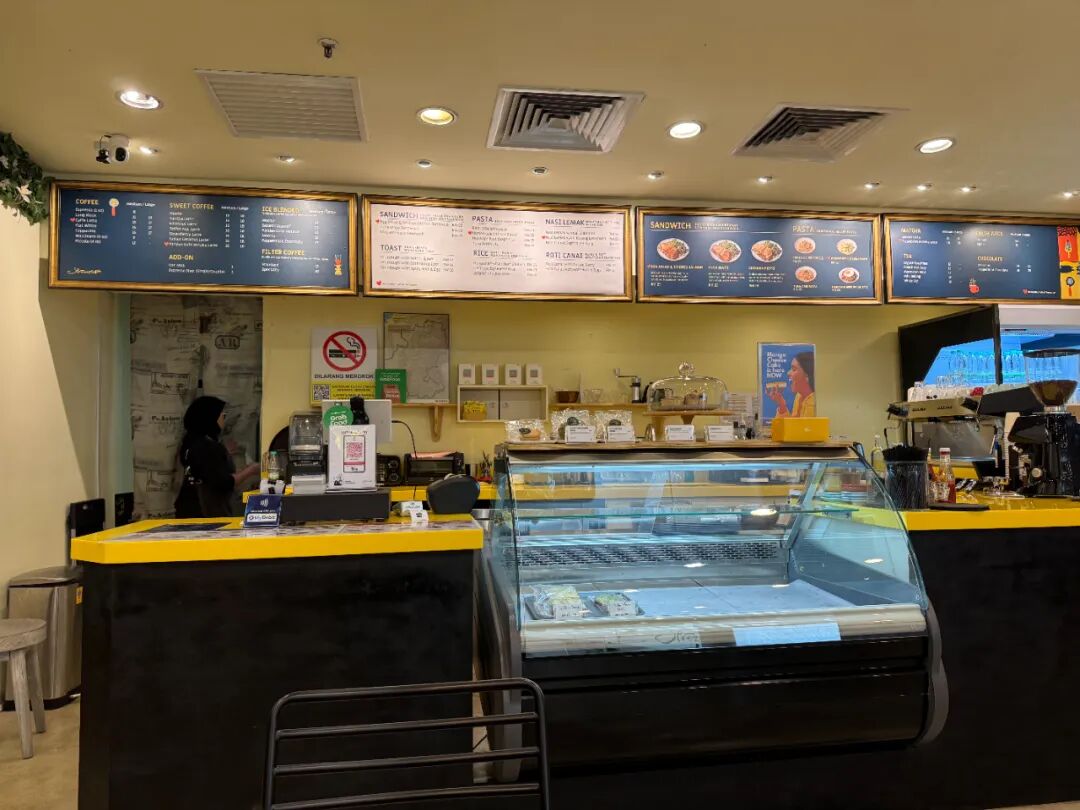
Because it was noon time, all the nearby Malay food stalls were crowded with people. Only this shop looked deserted, so I came in.
This kind of healthy light breakfast that I like is not very recognized by the locals, but in Canada and the United Kingdom, the most popular breakfast restaurants in the morning have this kind of light breakfast, and you have to queue up.
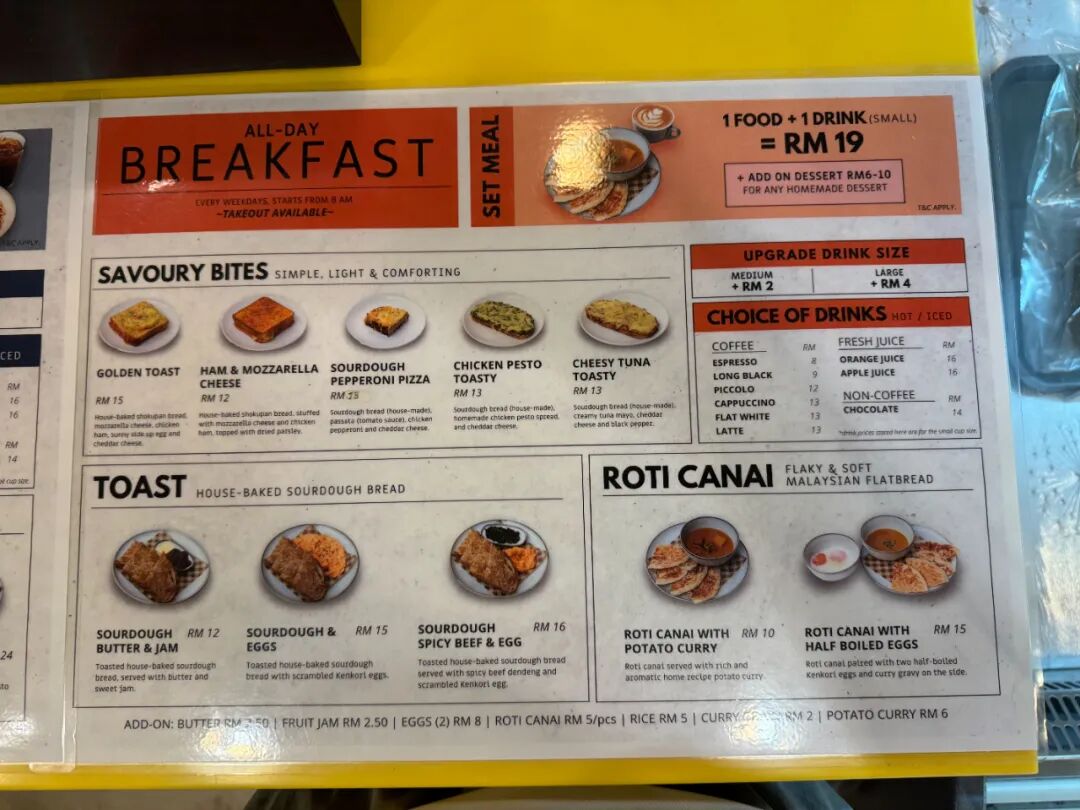
This store actually has a good reputation on Google, but the parking fee here is too expensive, charging RM4 for half an hour, and the parking fee in this place has to be paid at the self-service machine in the lobby with a card, which is very troublesome.
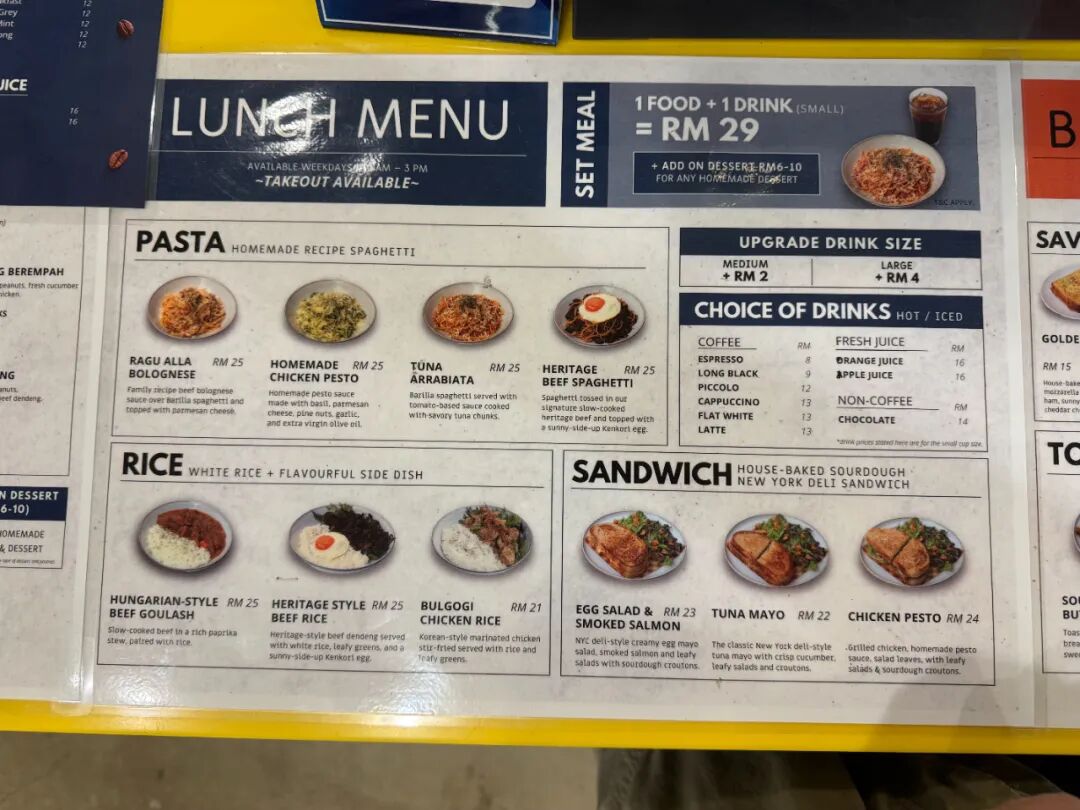
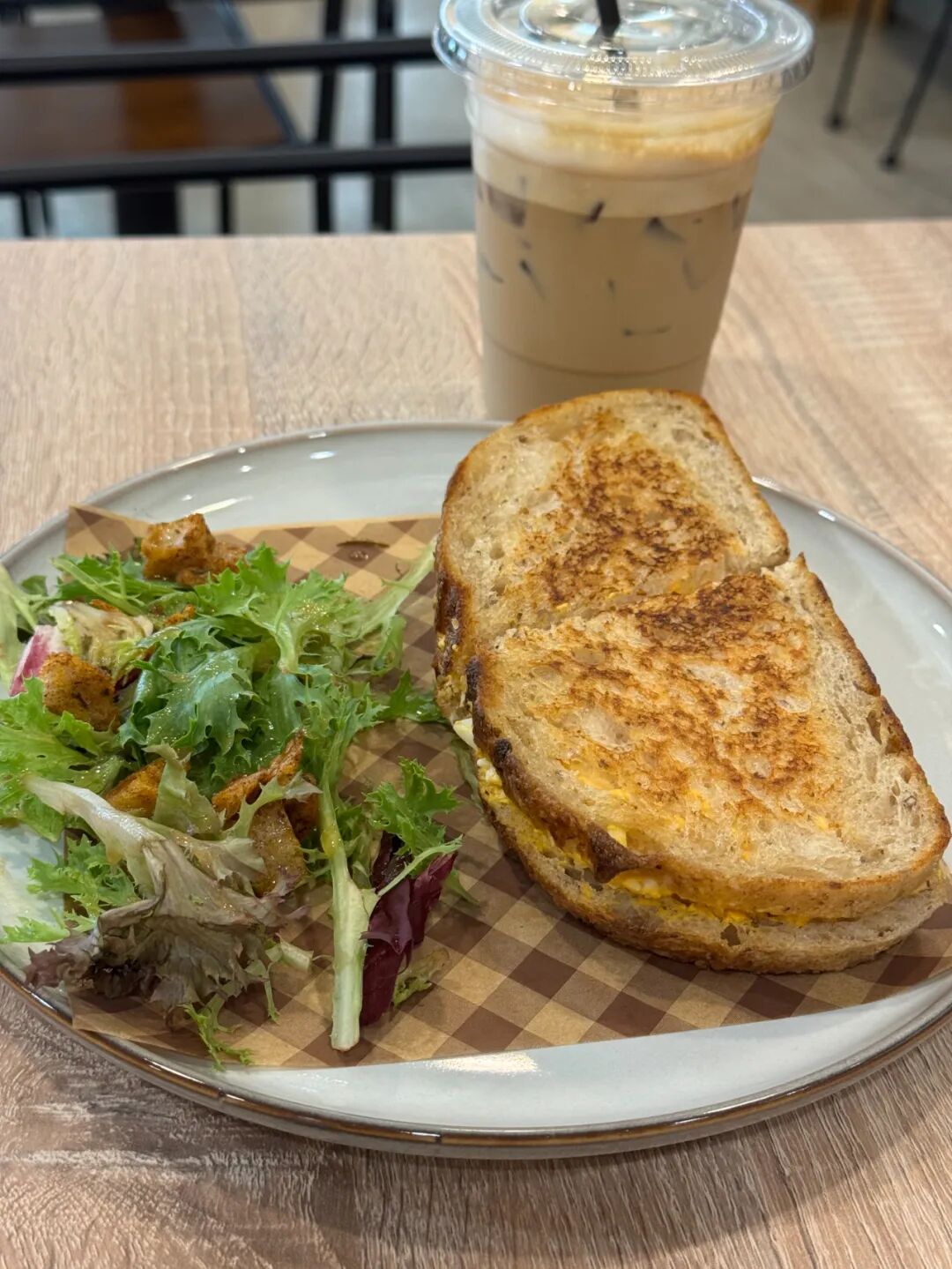
Fortunately, the coffee and sandwiches taste very good. This set meal costs only RM30, which is already very expensive for office workers.
Address: Sprezzatura Coffee Phileo Buna Market (Sprezzatura Cafe)
6. SUPAMALA (Sichuan hot pot)
I've been missing Beijing's shabu-shabu recently, and I haven't found any particularly delicious hot pot restaurants in Kuala Lumpur, so I did a search and found this restaurant, which should be classified as Sichuan-style hot pot.
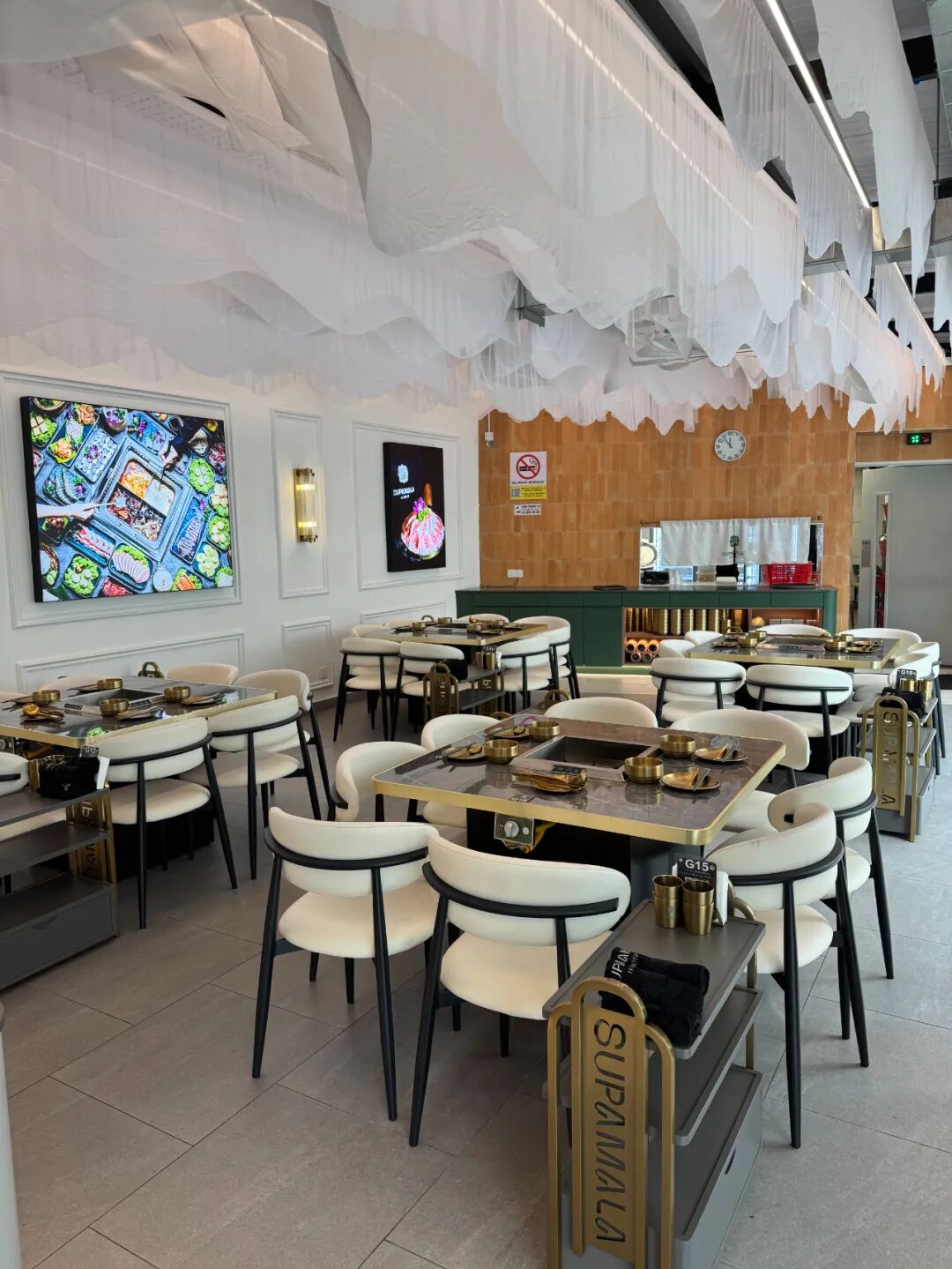
The environment of the restaurant is quite exquisite. It opened not long ago and the service of the staff is also very attentive.
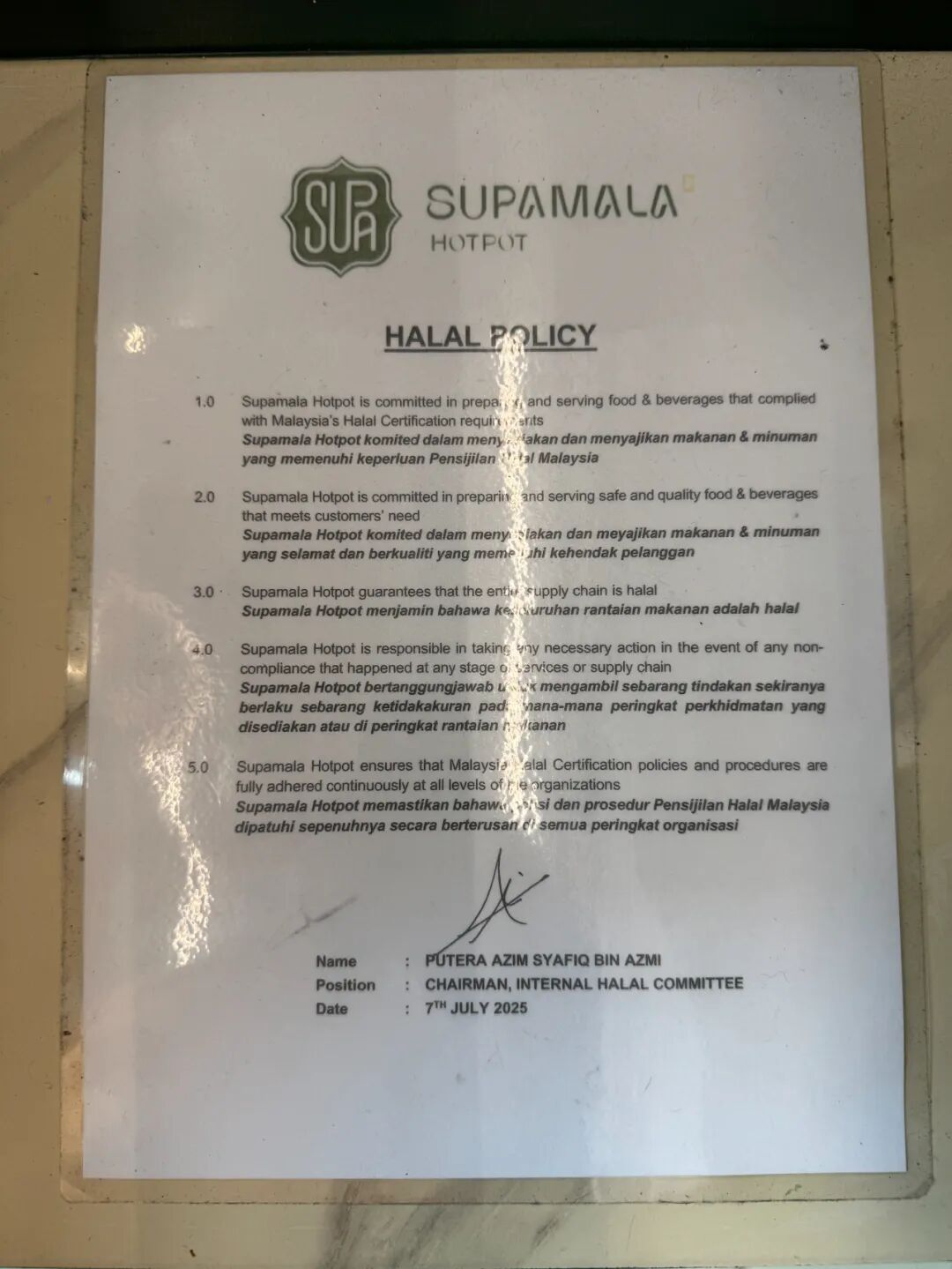
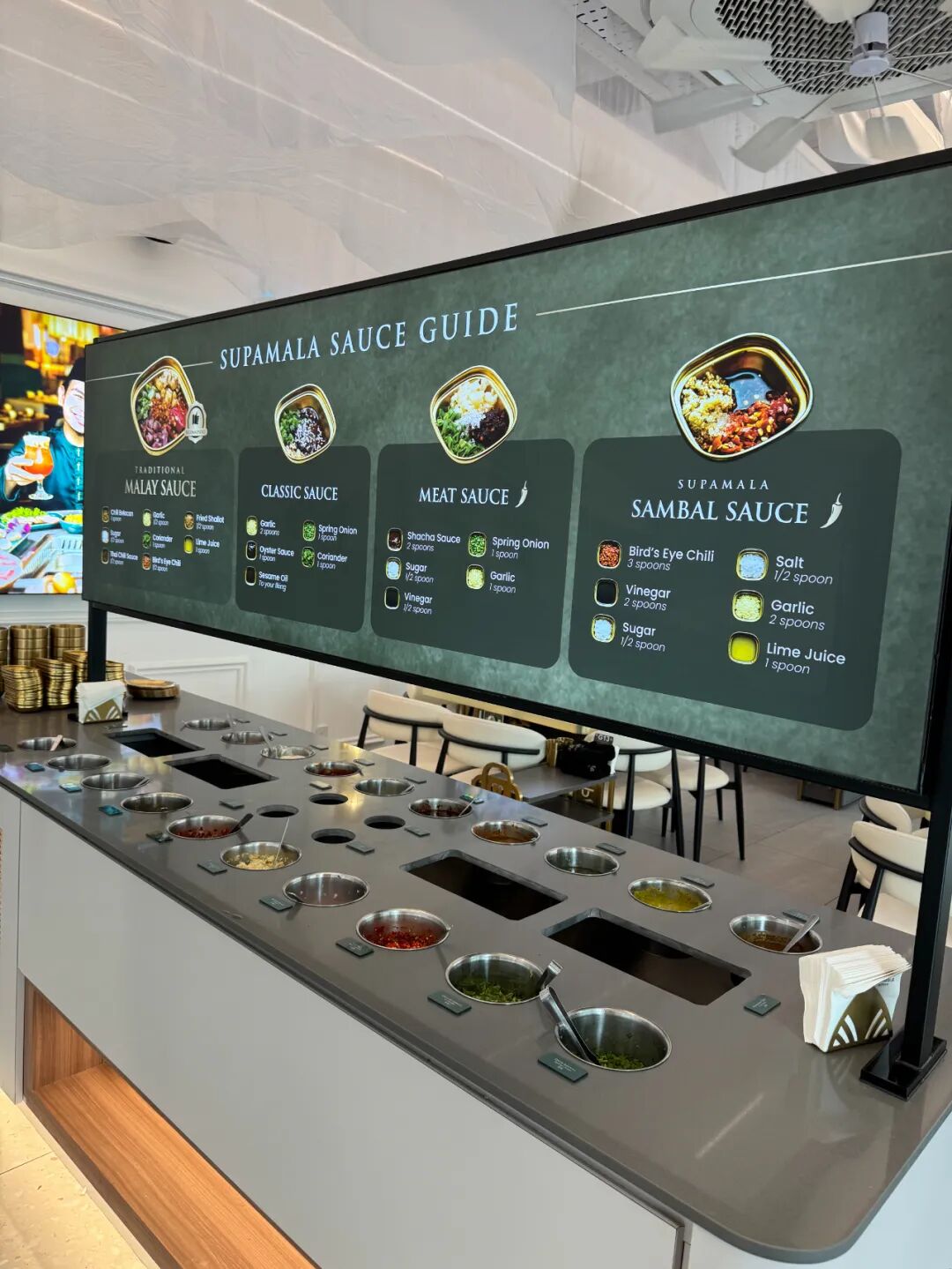
This dipping station has more Nanyang characteristics, with various seafood sauces and Southeast Asian specialties, but no sesame sauce.
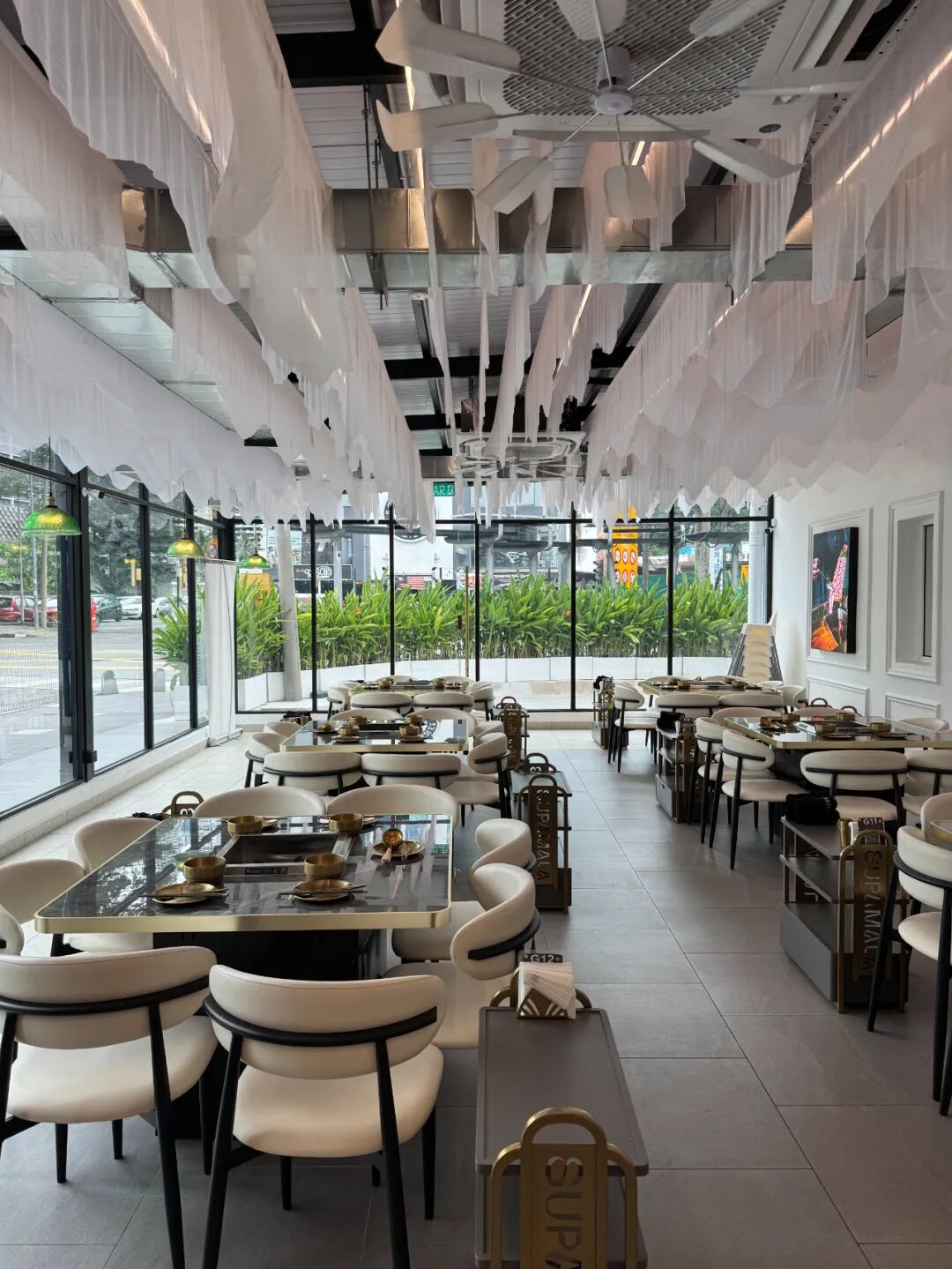
When we first arrived, we were at the first table. It didn’t take long for the store to be filled with people, all of them office workers who came to eat at noon. This store has buffets at different prices, as well as a la carte, and we chose a la carte.
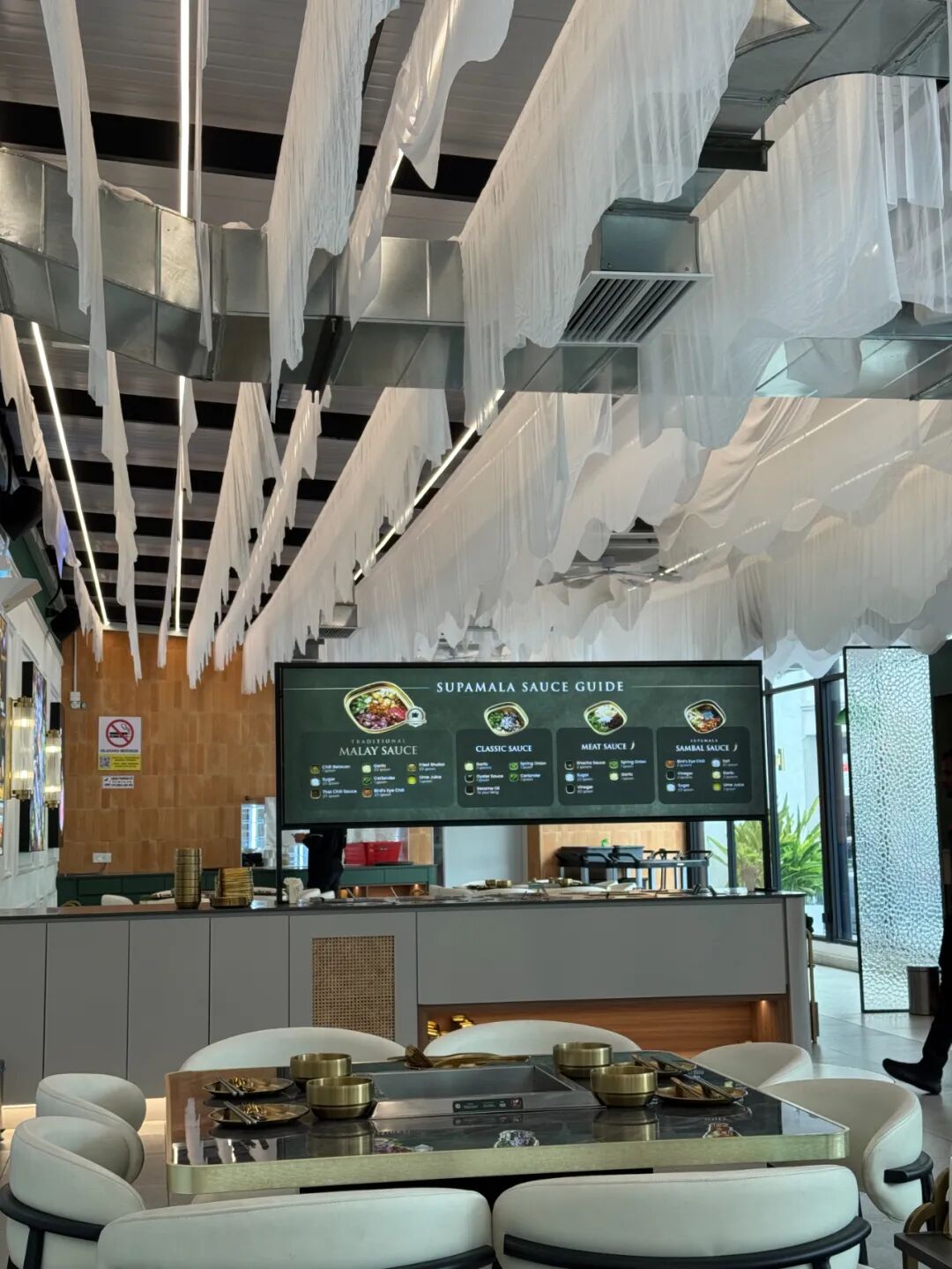
I remember the buffet starts at more than 50 ringgit per person, and there are several more expensive ones.
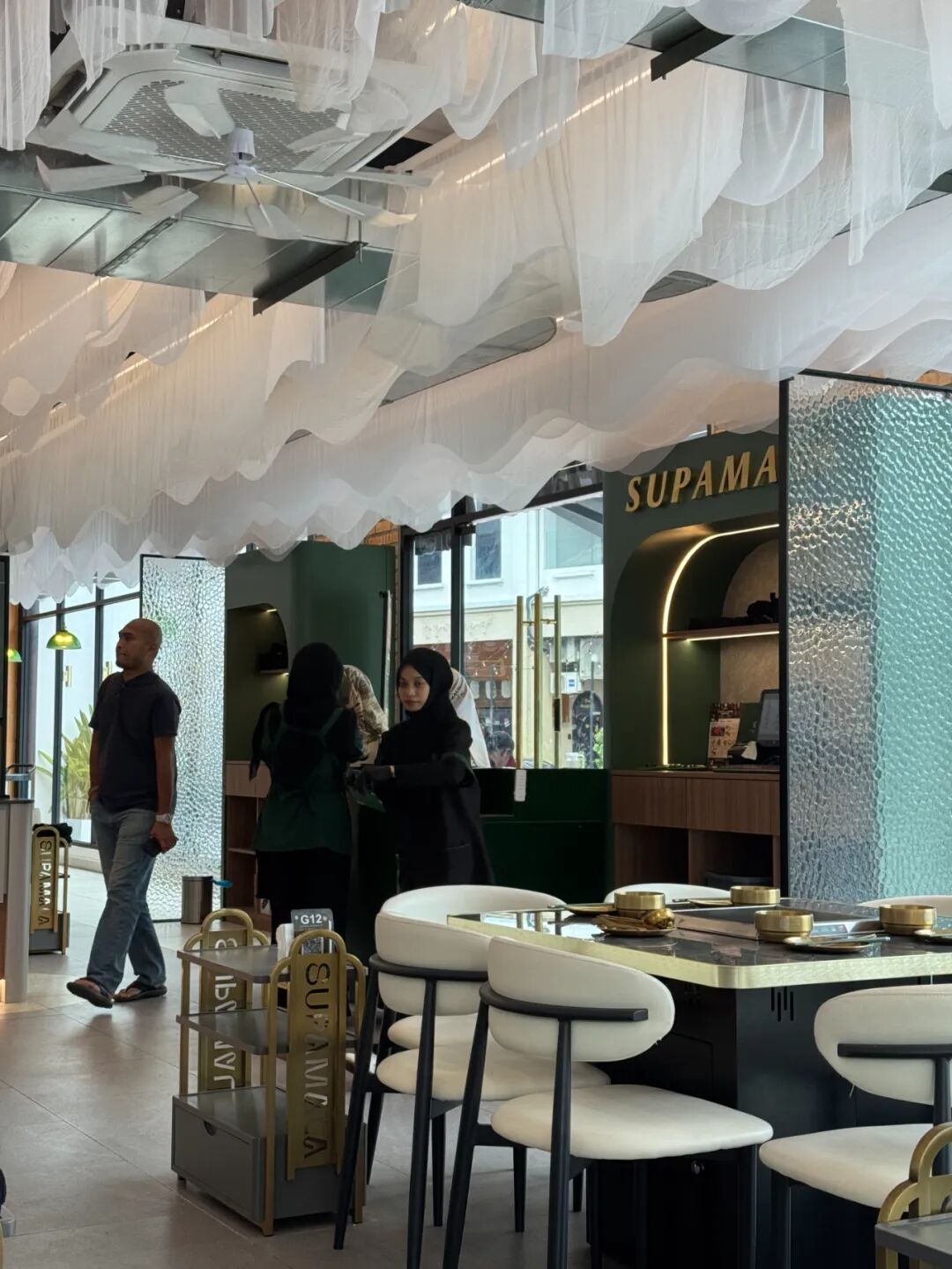
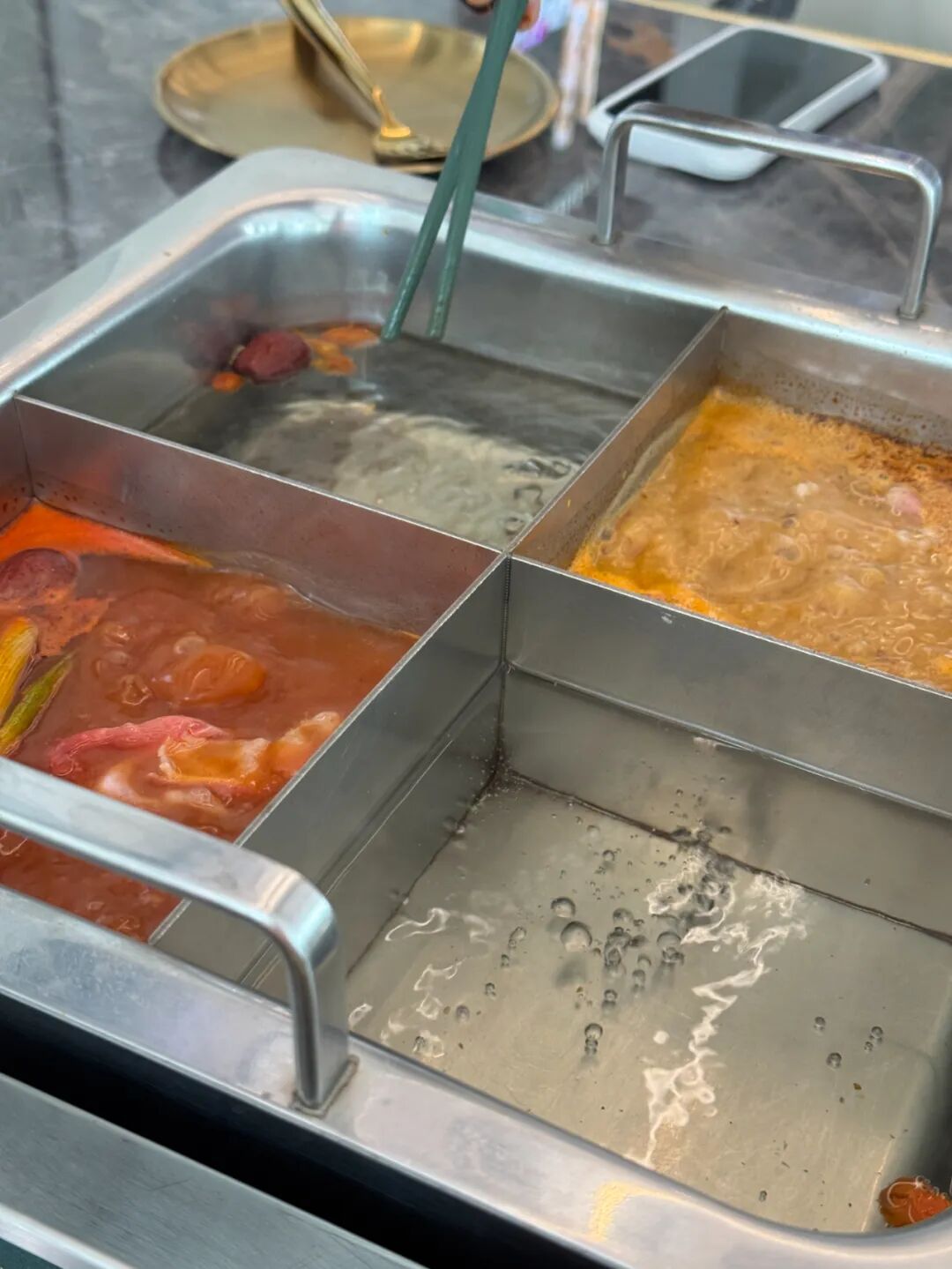
You can choose from four kinds of soup bases. The dipping sauces and soup bases in this store are very good, but the presentation of the ingredients is really not flattering, because the price of this store is mid-to-high-end in Kuala Lumpur, with per capita consumption of more than 150 ringgit, but this product is definitely not available in Beijing.
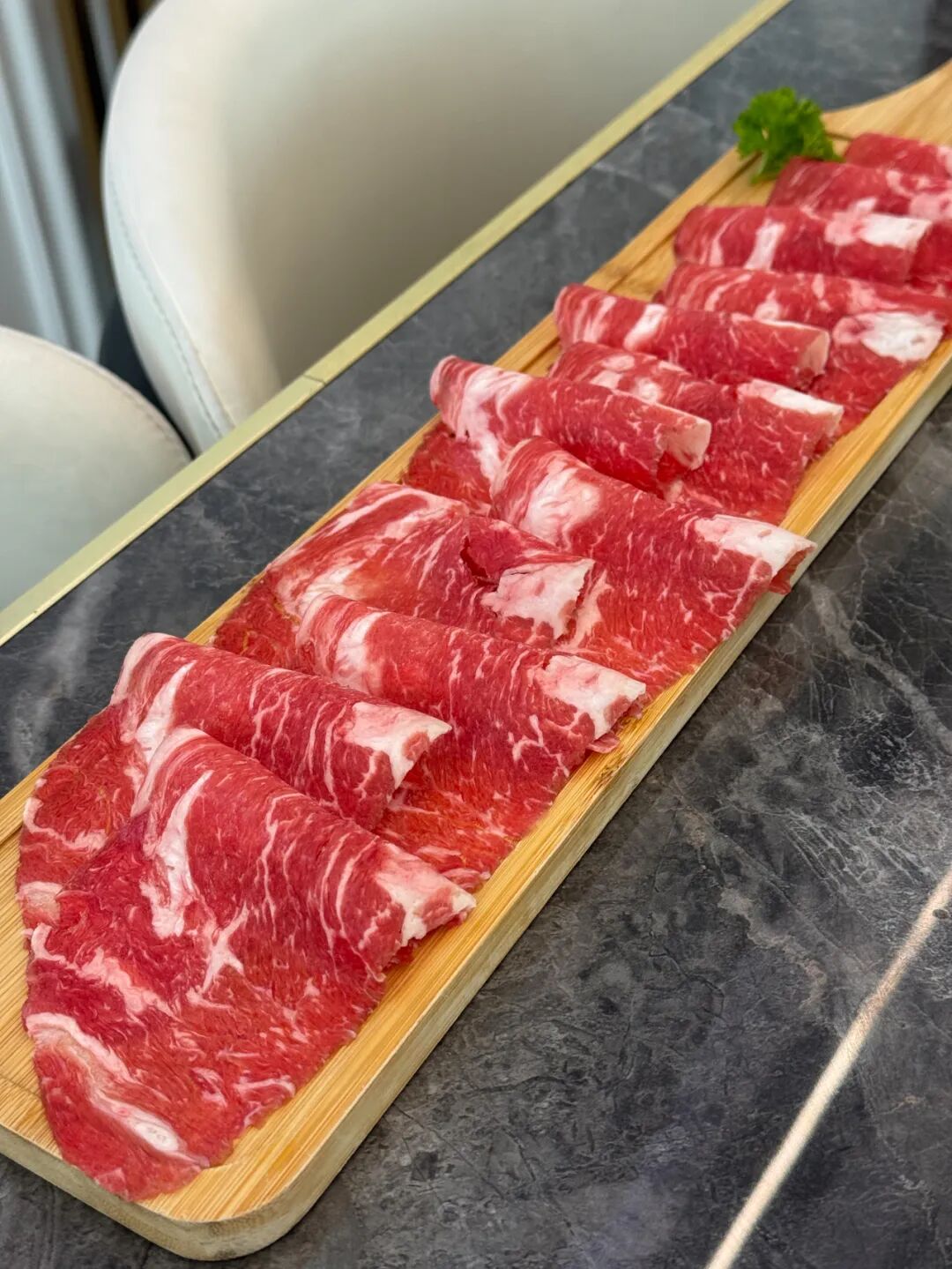
Moreover, the portion of the dish was really too small. The two of us added many more dishes, and we ate a total of more than 300 ringgit before we were barely full, with nothing left.
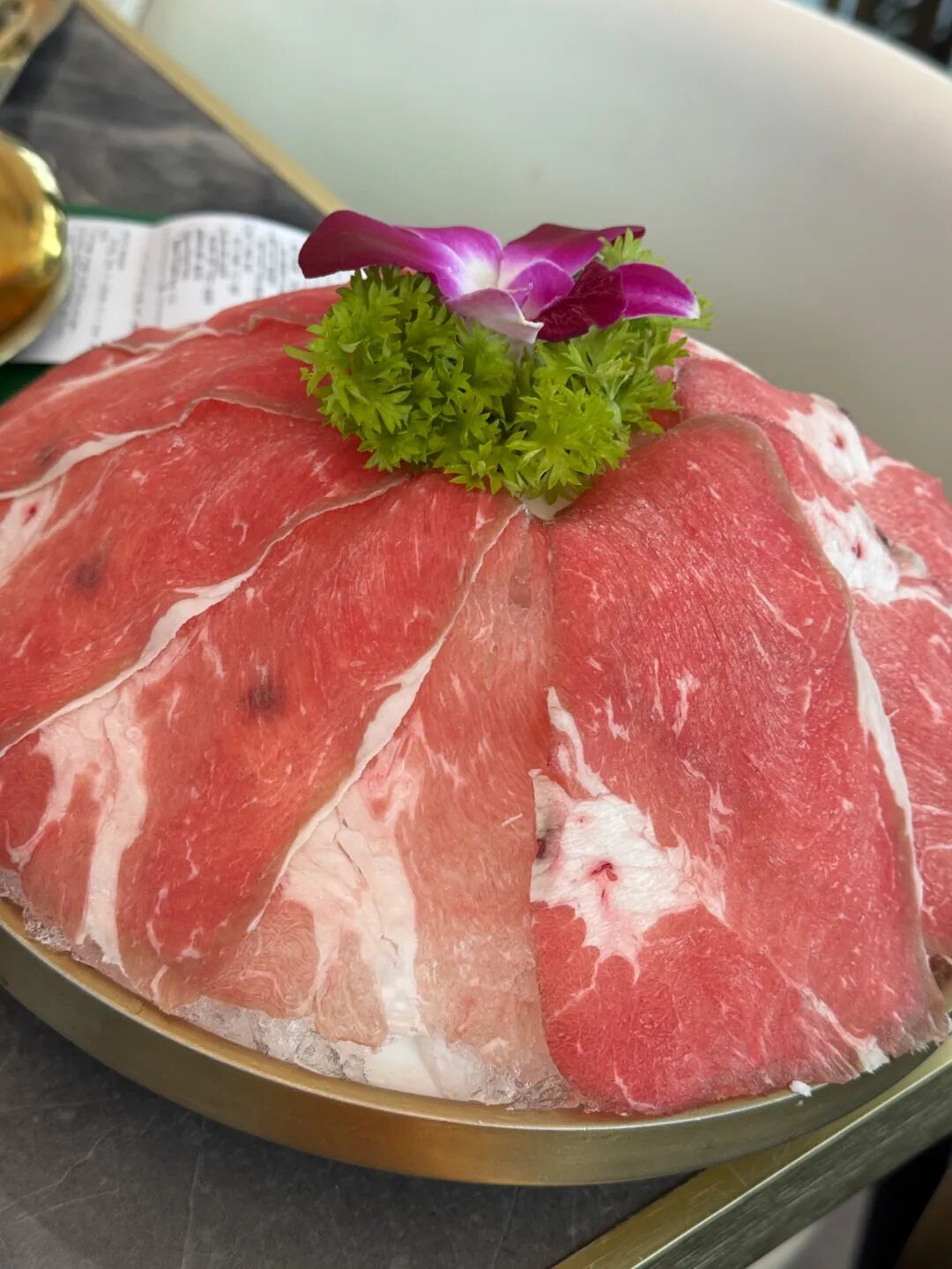
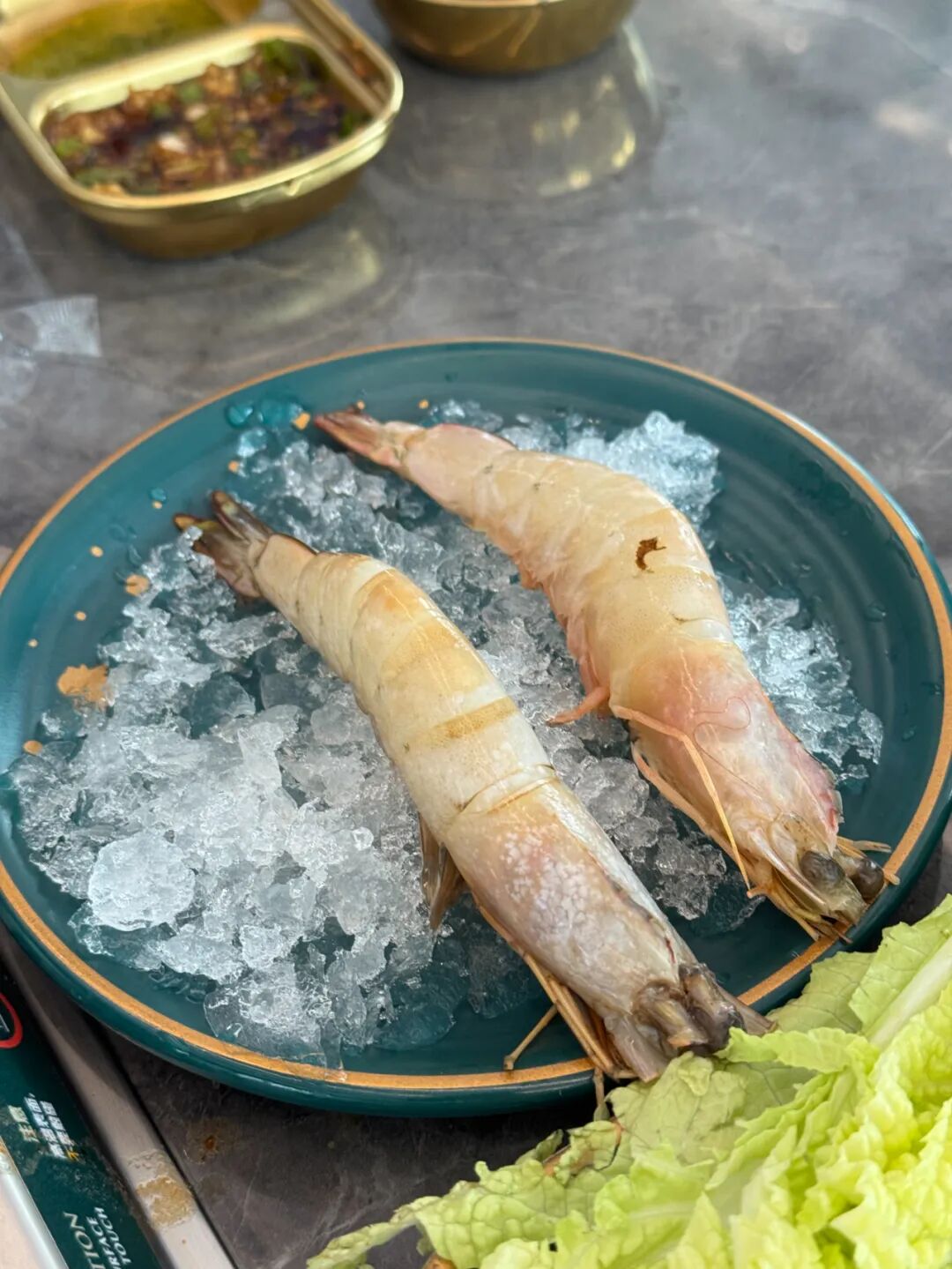
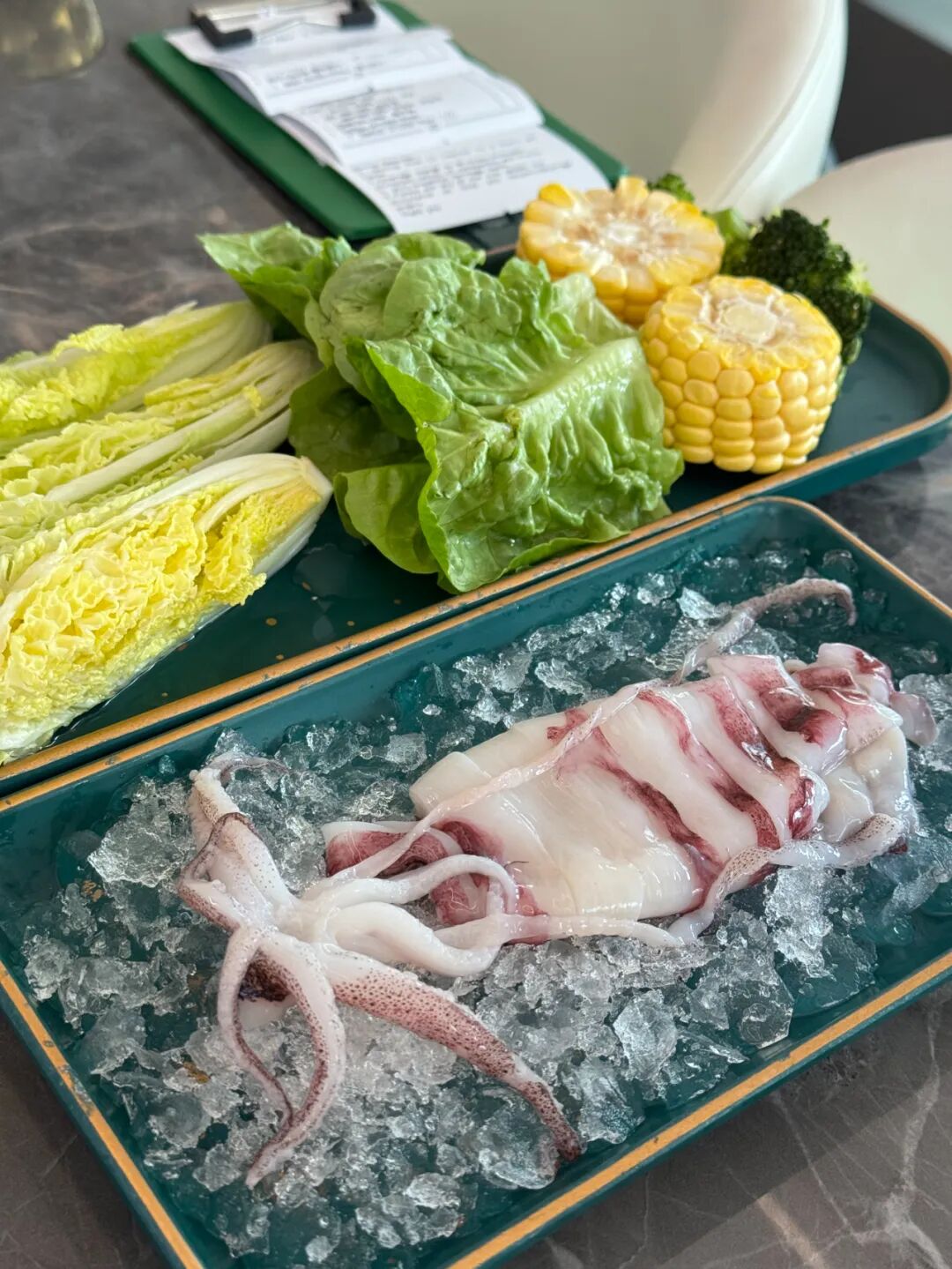
To be honest, the seafood and squid here are very fresh, and the meatballs taste better than those at home, but the beef and mutton are just not that good.
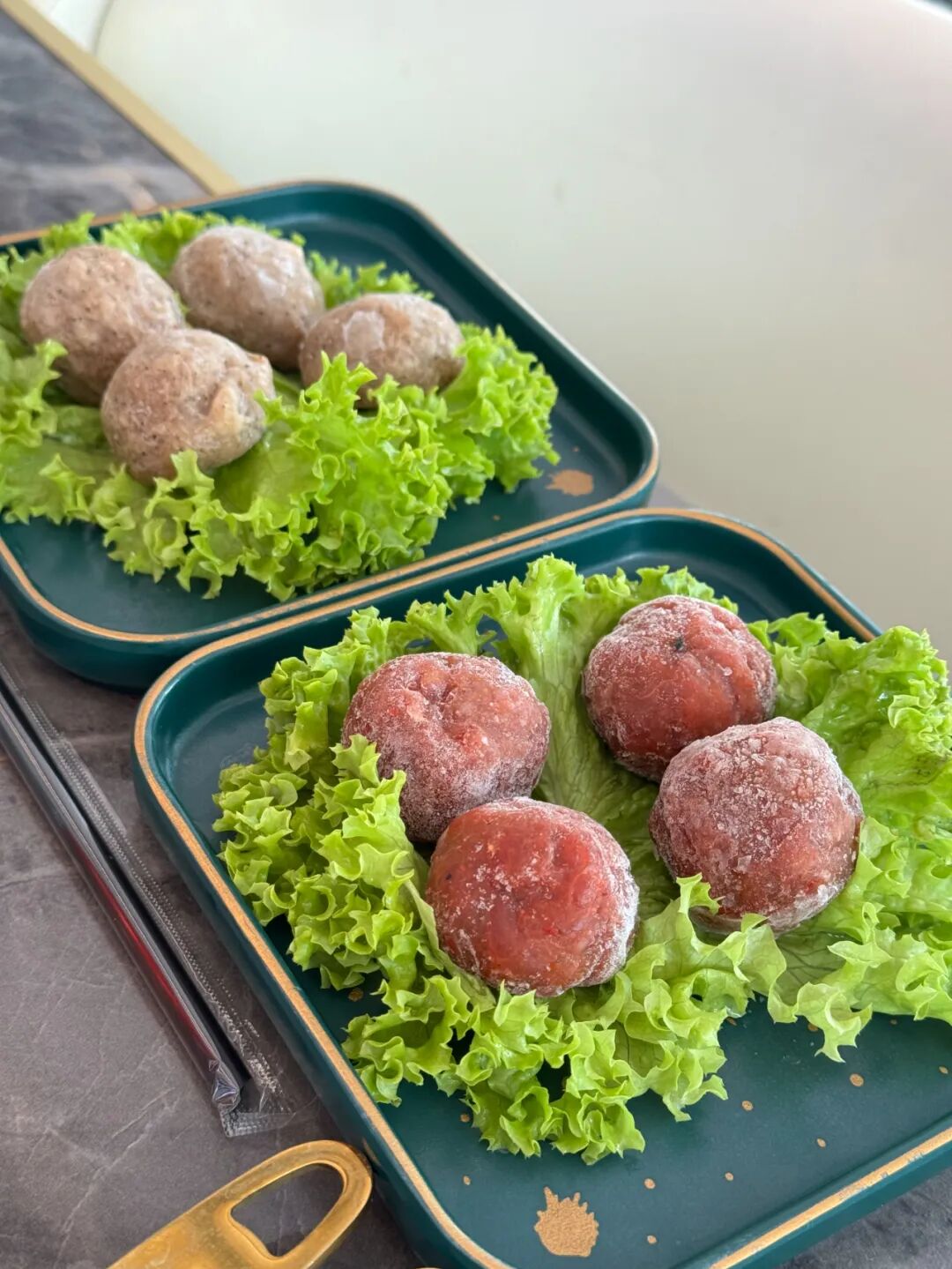
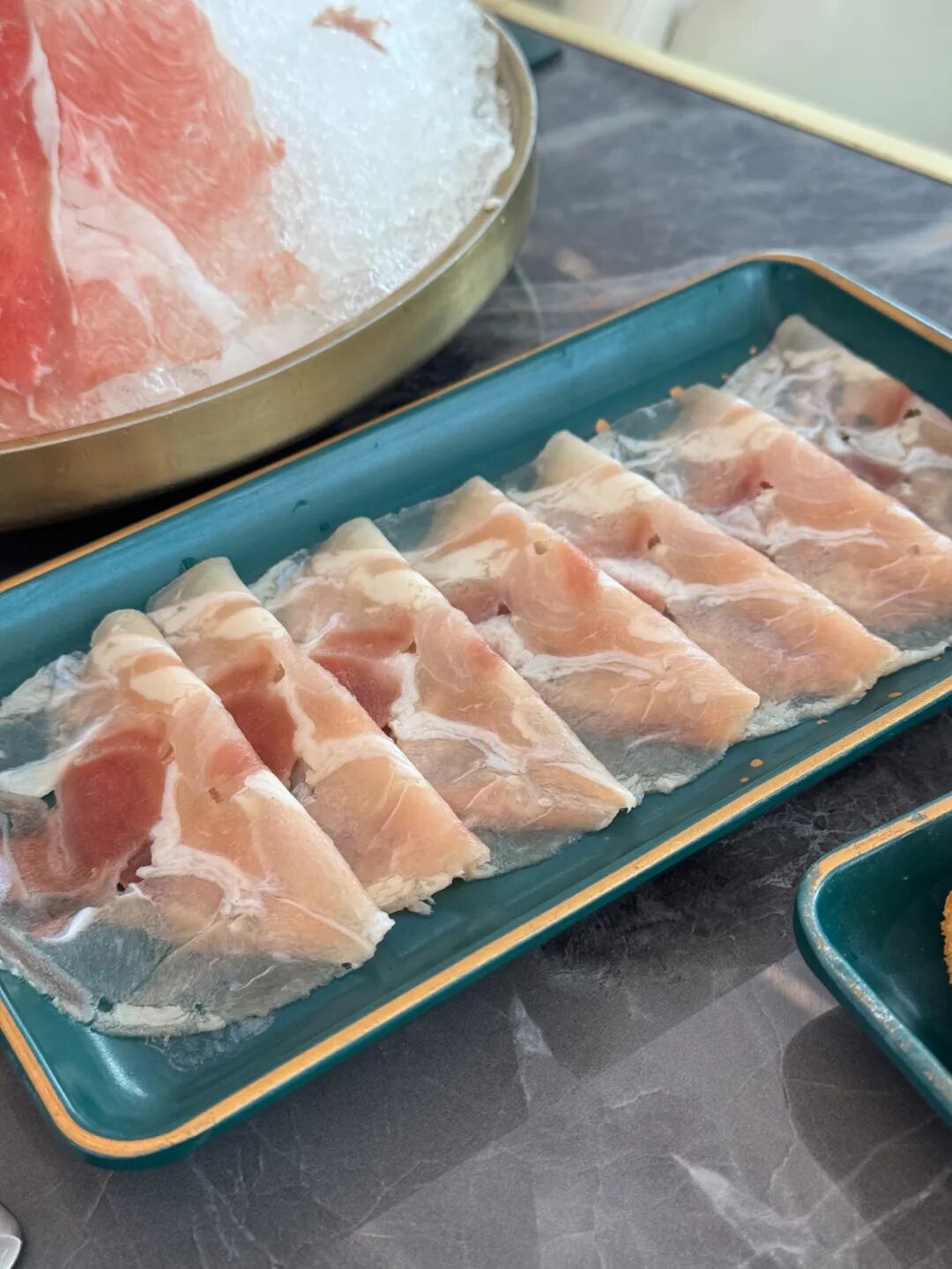
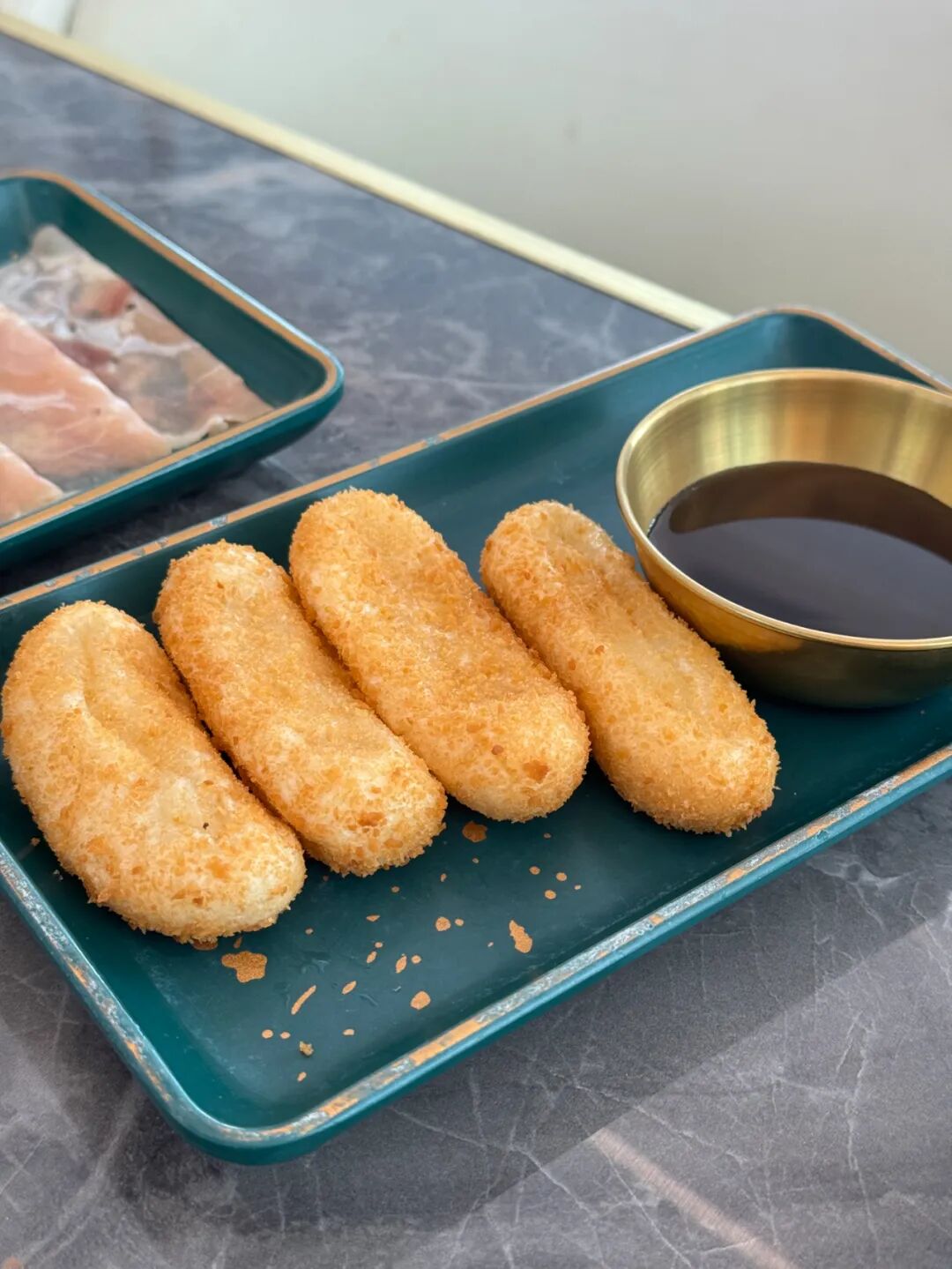
This brown sugar glutinous rice cake is not very authentic either. It is flat in appearance and tasteless.
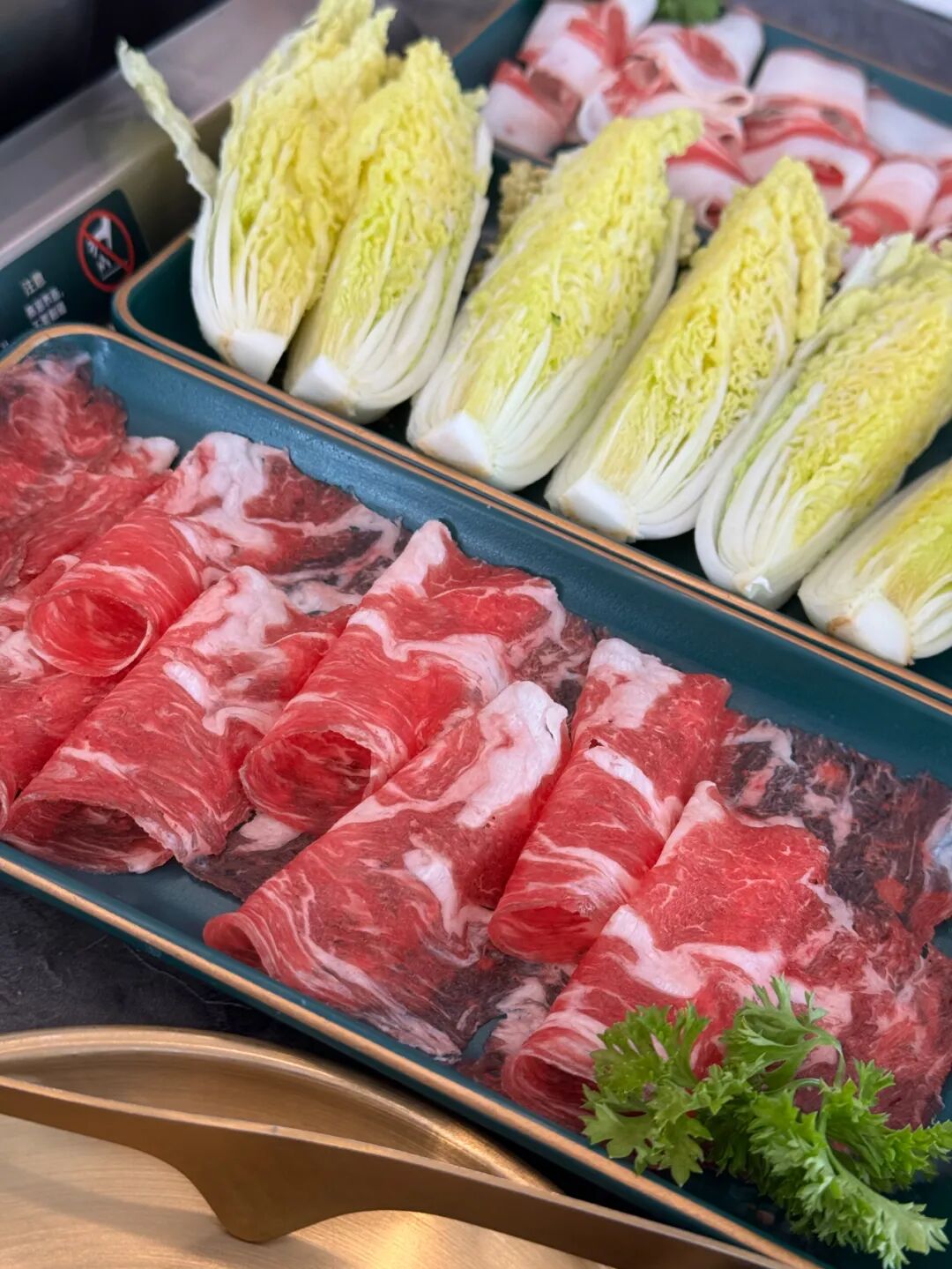
So I say that domestic hot pot rolls are still very good. This kind of restaurant will definitely not survive for three months in Beijing, but the business is very good in Malaysia. Domestic hot pot restaurant owners may consider coming to Kuala Lumpur to make a roll.
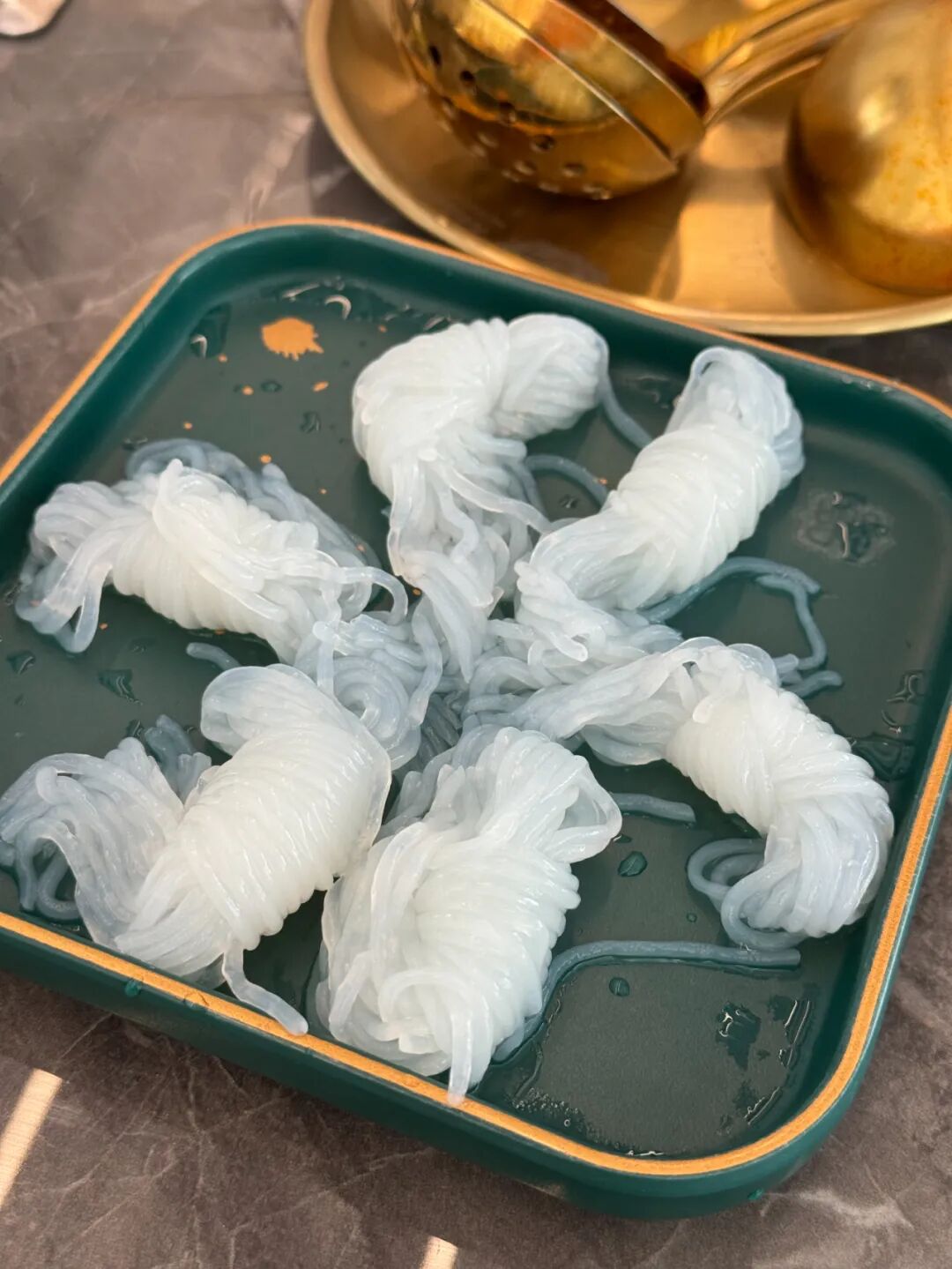
Address: 50, Jalan Raja Abdullah, Chow Kit, 50300 Kuala Lumpur, Wilayah Persekutuan Kuala Lumpur
7. Bake With Yen Chow Kit
This is a halal supermarket that specializes in baking supplies and ingredients. Baking is very popular in Kuala Lumpur, and most of them are halal shops, so this kind of raw material supermarket exists.
Moreover, the raw materials in this store are sold very cheaply, including all kinds of seasonings and flour.
Baking molds, colorings, almond flour, etc. are all available. The entire site is halal, so you can buy with confidence.
There are also many Chinese clerks, which makes communication easy.
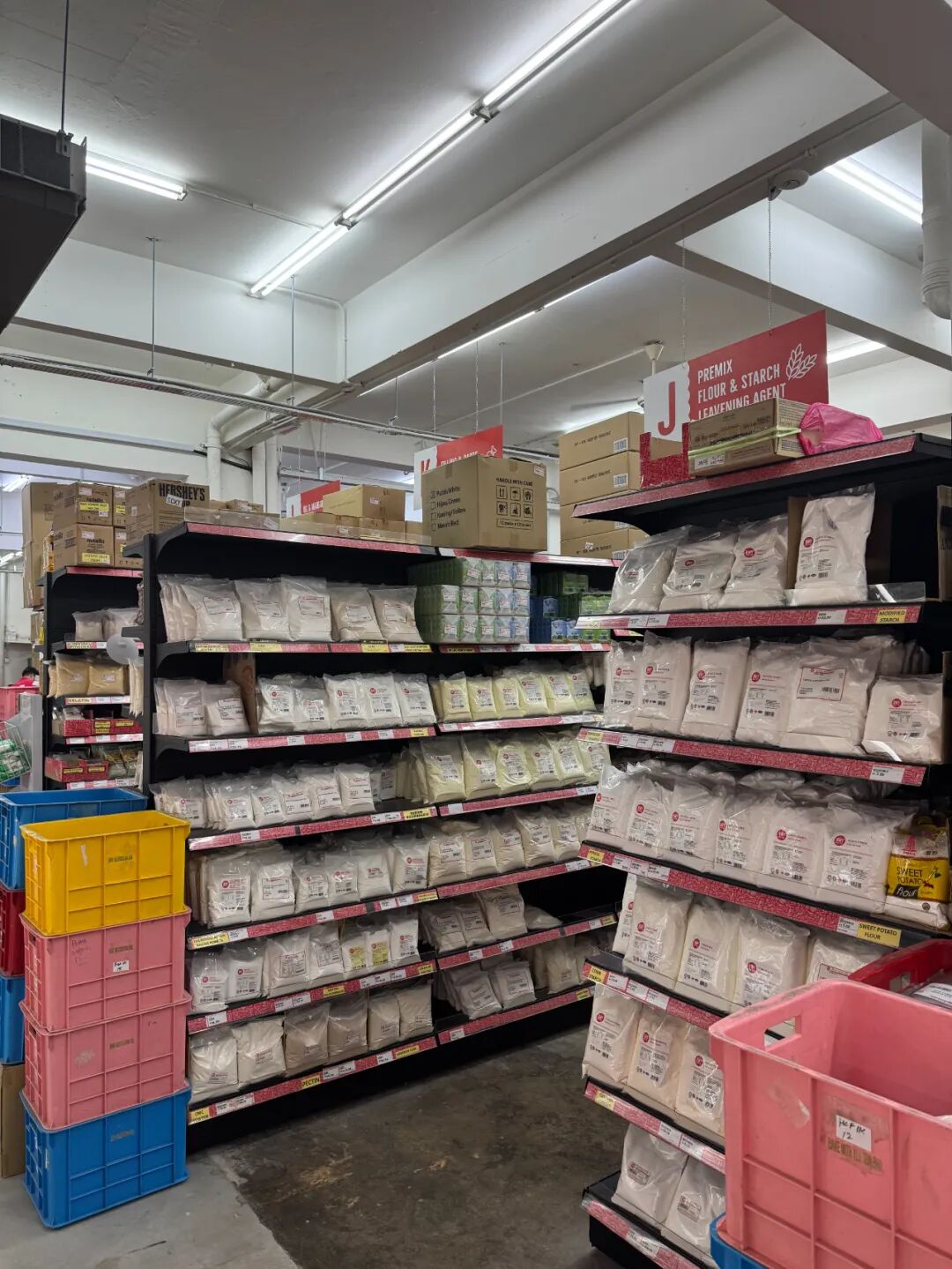
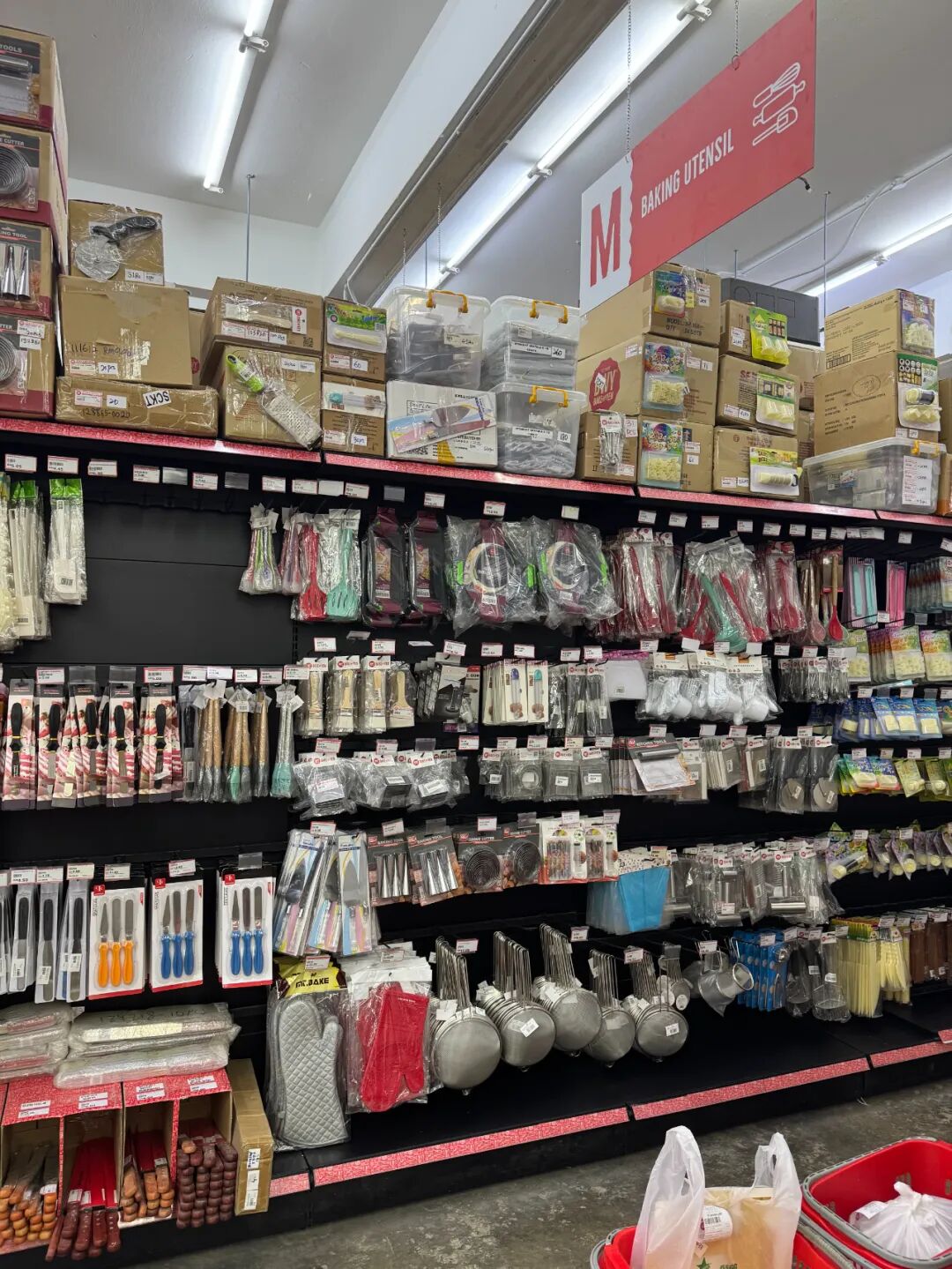
Address: Bake with Yen Chow Kit
8. MONSTER SUSHI
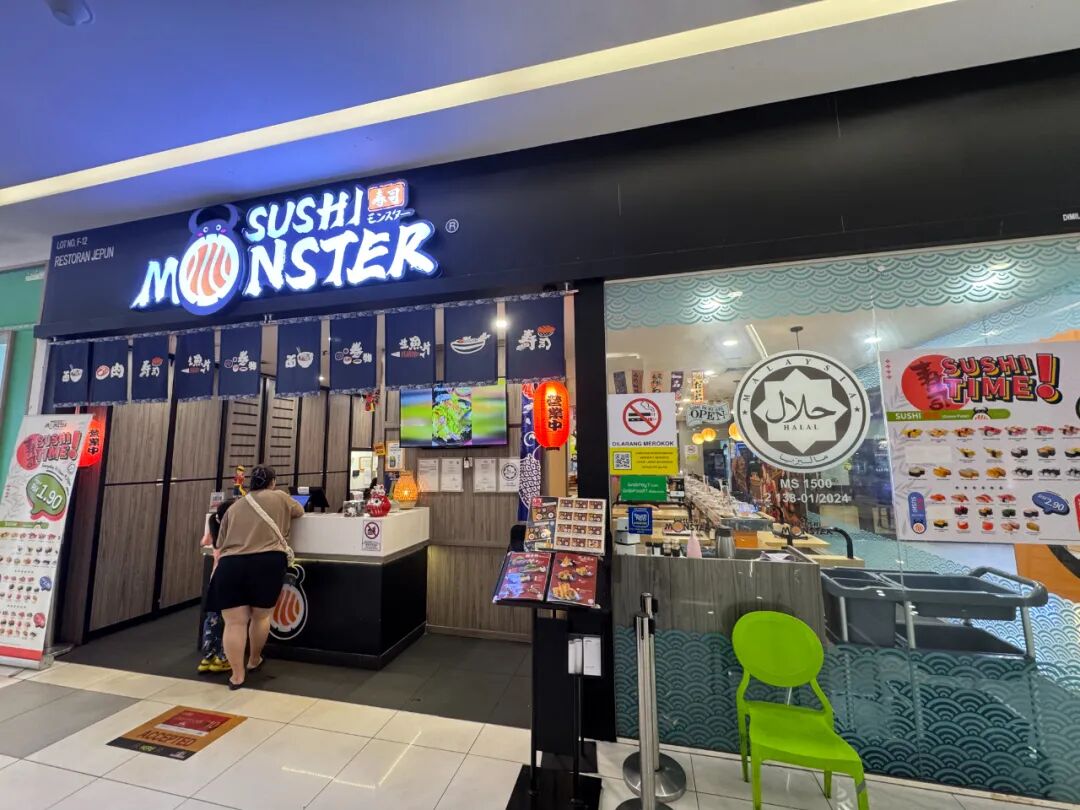
When I'm walking my baby shopping, and I don't know what to eat, I'll go to a Japanese restaurant.
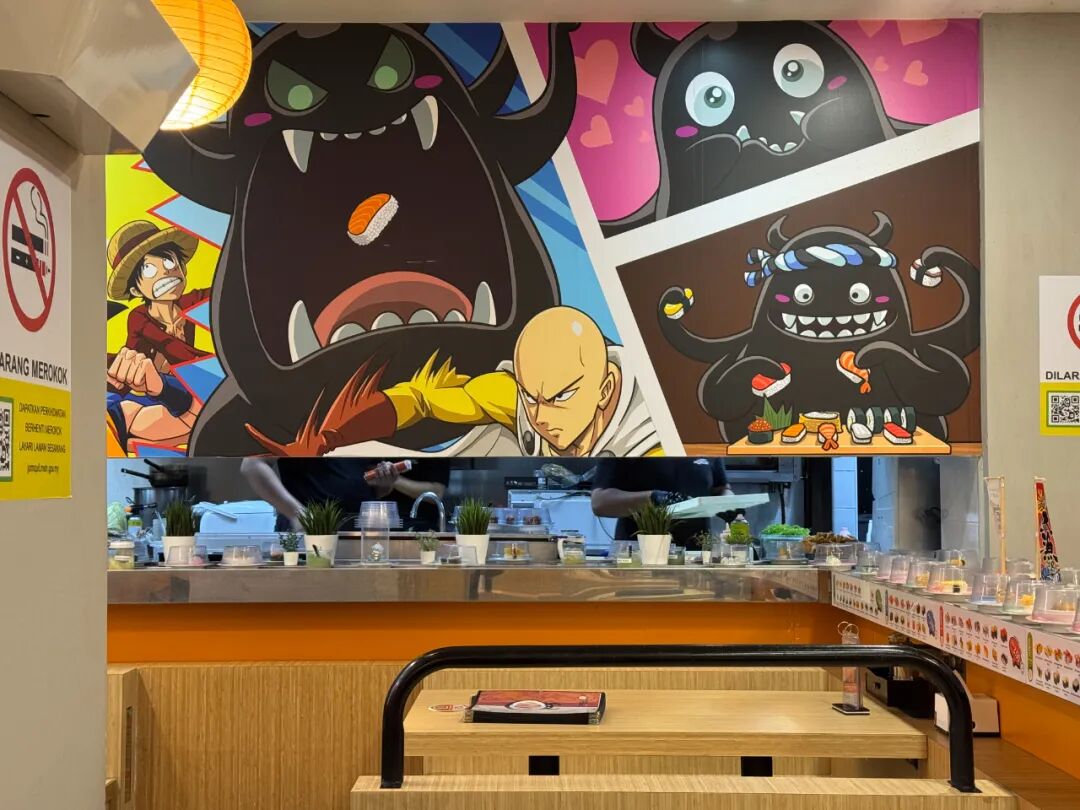
This is a very cute conveyor belt sushi restaurant. Most Japanese food restaurants in Kuala Lumpur are relatively affordable. The per capita consumption of this small restaurant is only RM50.
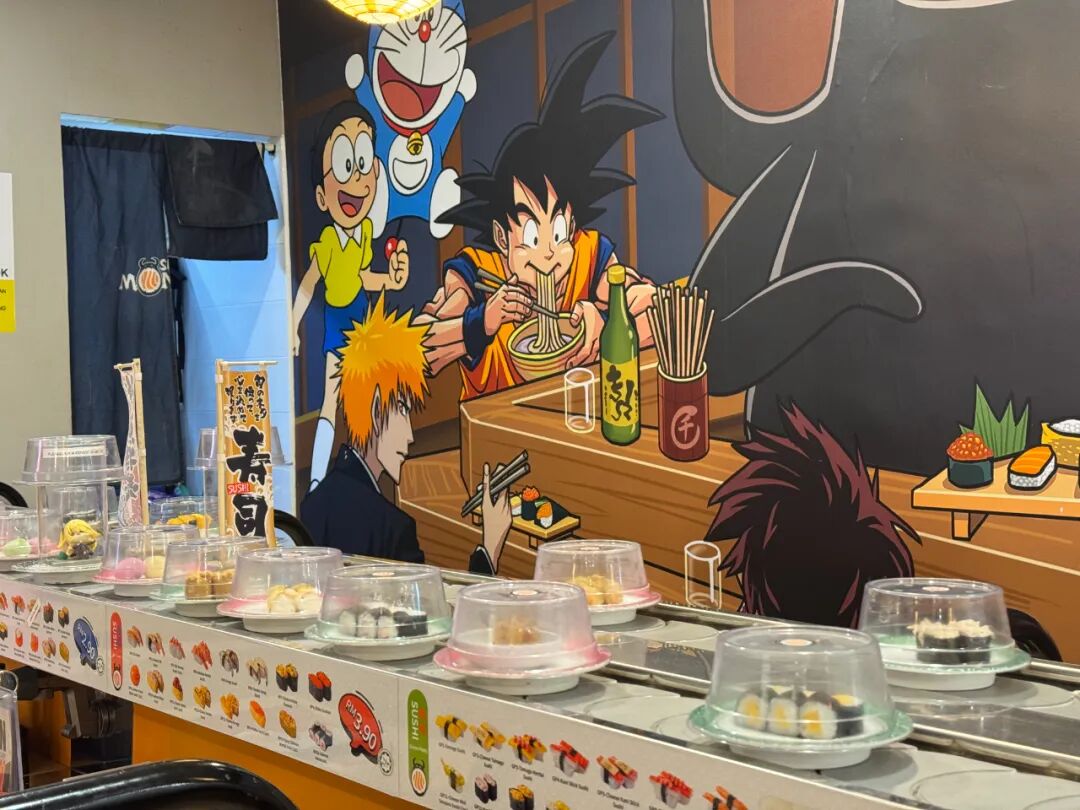
Conveyor belt sushi is suitable for children. You can eat whichever one looks pretty. After you finish the meal, you will pay according to the color of the plate. You can also order a la carte.
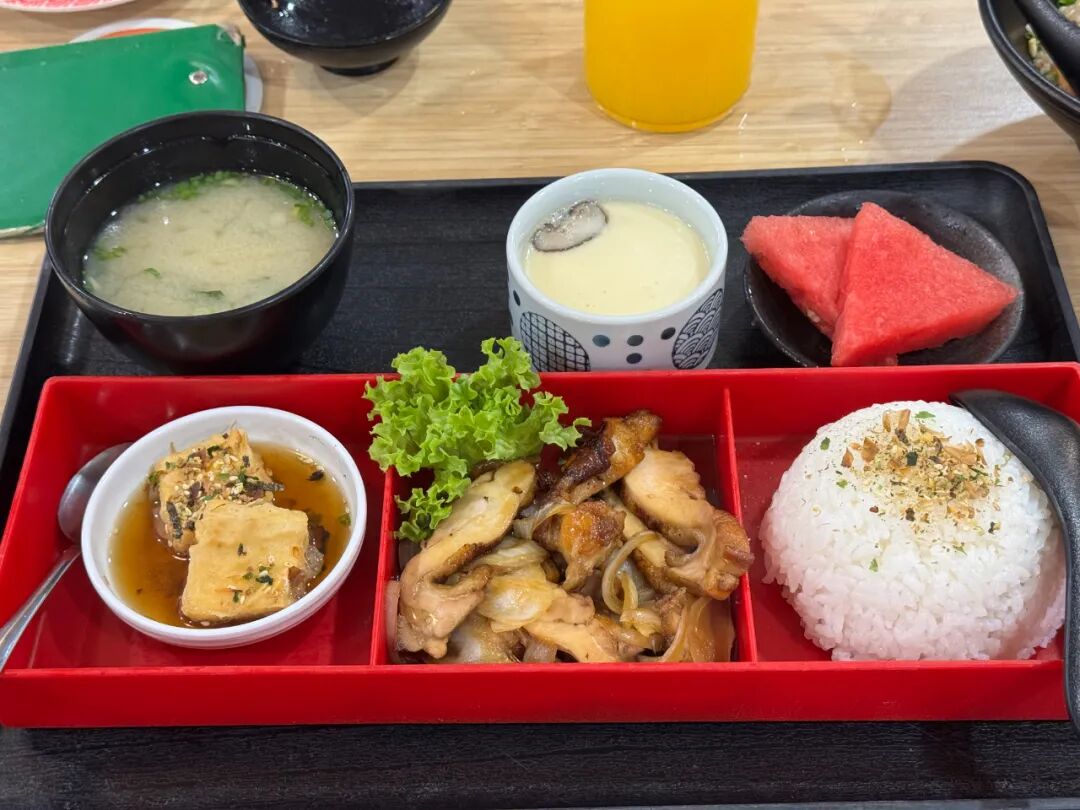
This set meal is neither salty nor spicy and is suitable for all ages.
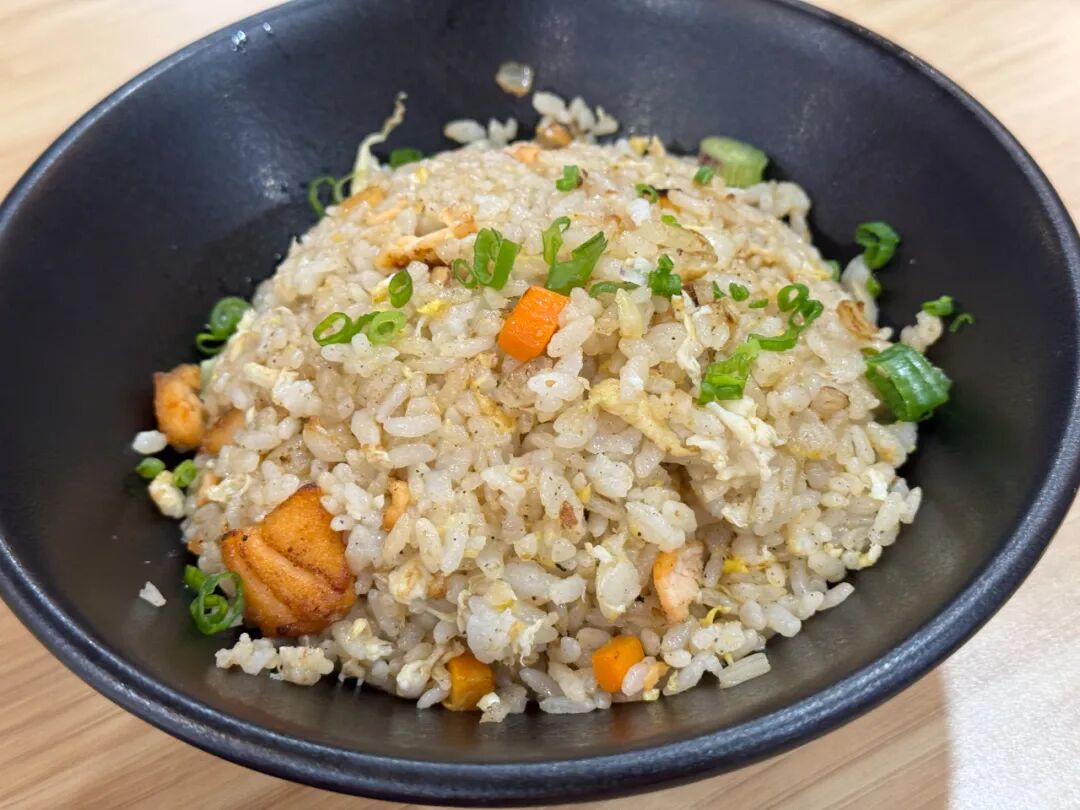
The fried rice is also very tasty.
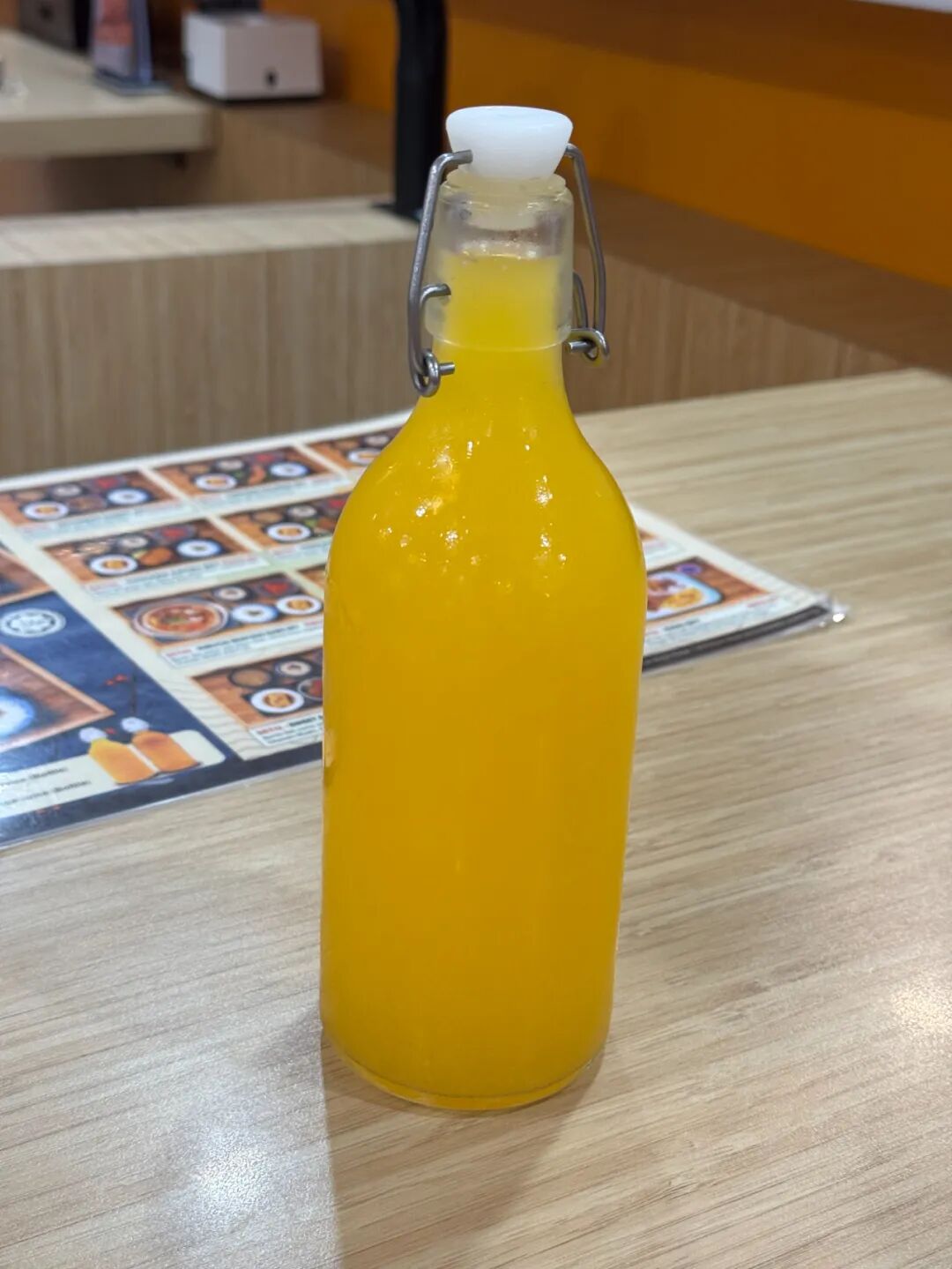
I really can’t resist the temptation of freshly squeezed juice in Kuala Lumpur, a bottle of which costs less than ten ringgit.
Address: Sushi Monster Setapak Central
9. GRUMPY BAGELS
This is a new Internet celebrity roasting and coffee shop in Kuala Lumpur. The owner is a retired flight attendant and is quite popular on Xiaohongshu.
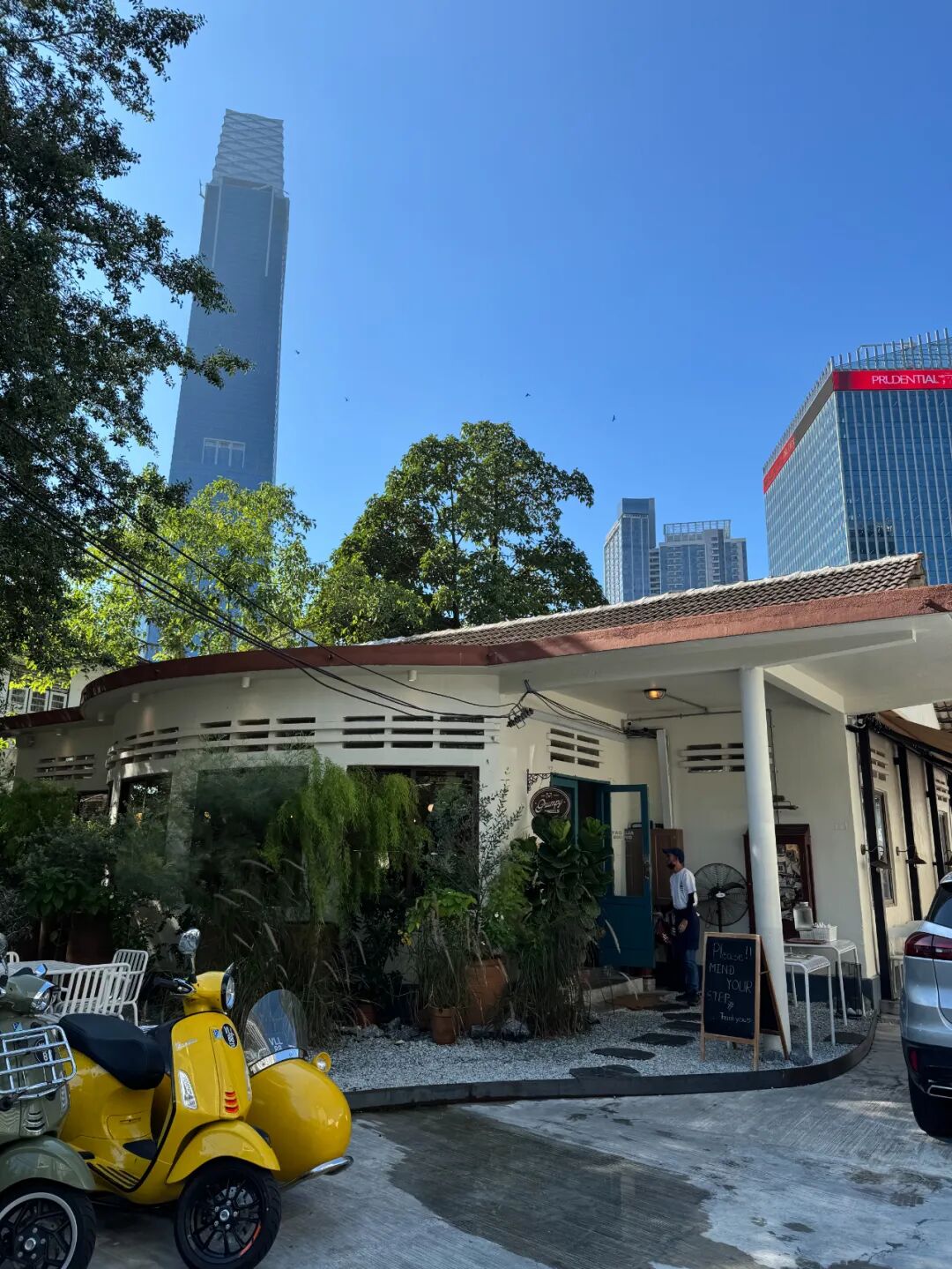
The location is relatively secluded. It is located in a bungalow in an alley. The surrounding area is not busy, but the store's business is very good.
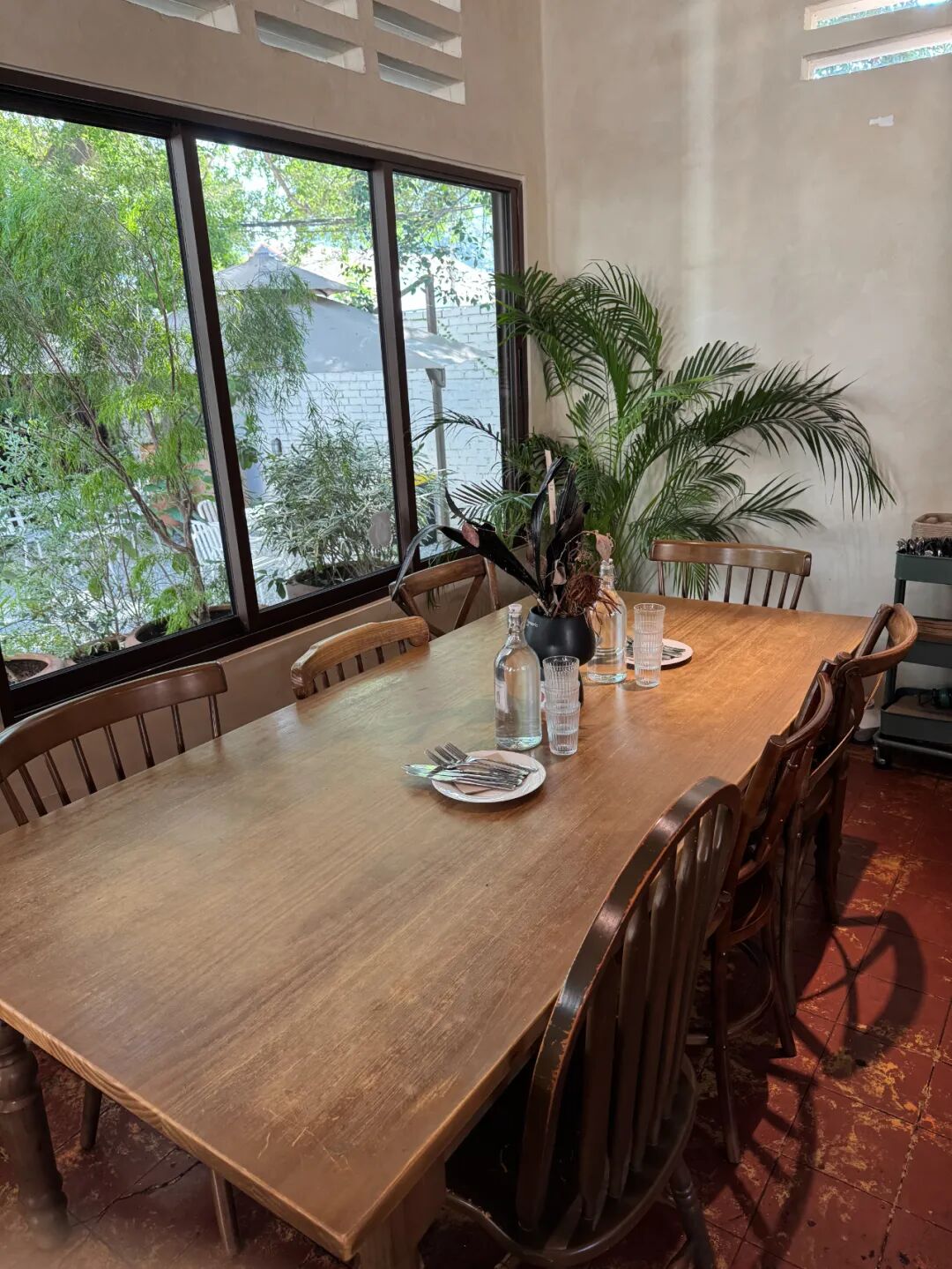
We arrived early in the morning, there were not many vacancies, and the parking space at the door was also tight.
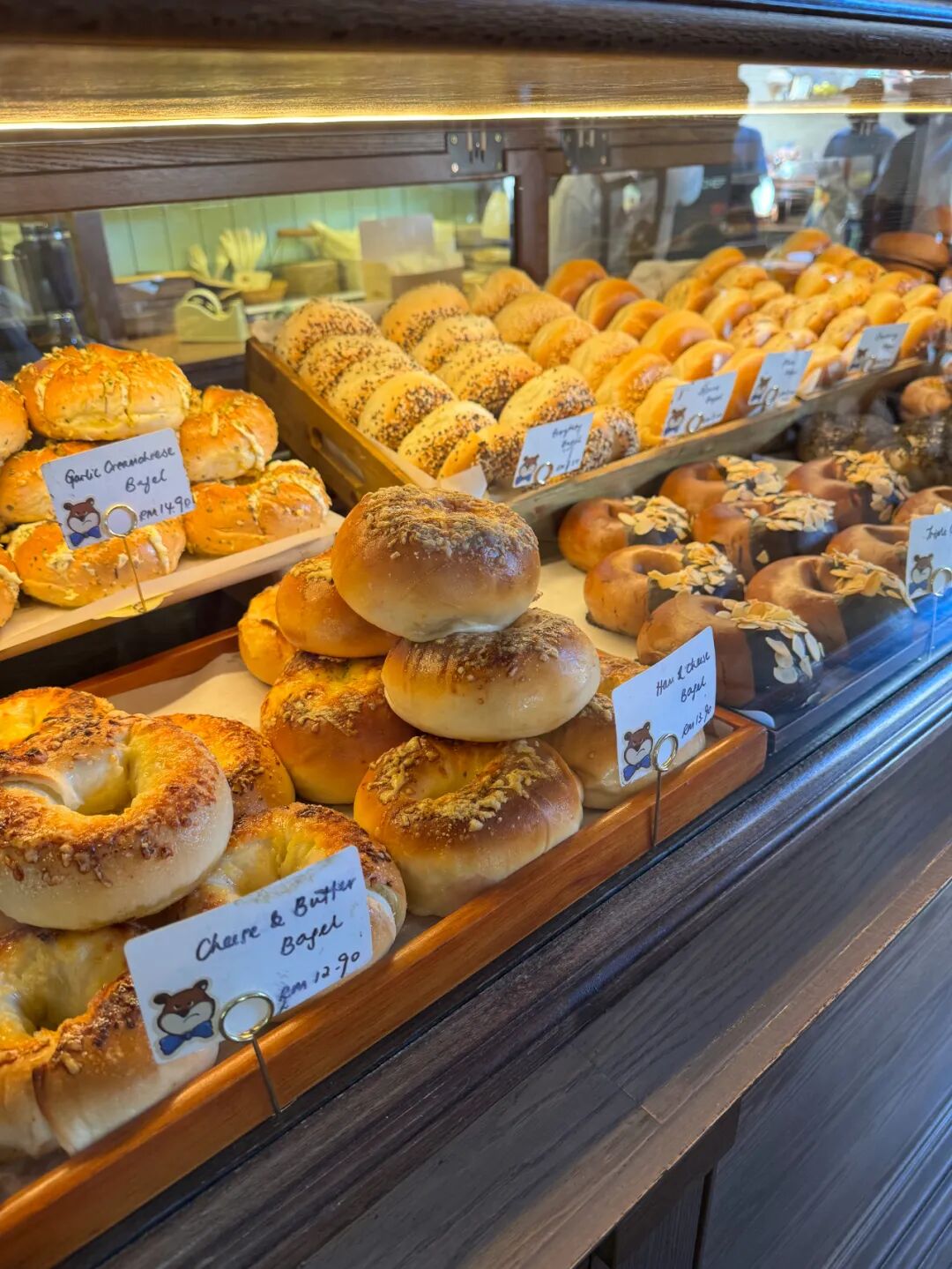
I didn’t see the proprietress that day. People say the proprietress likes to post videos of herself baking on Xiaohongshu, which has attracted many fans.
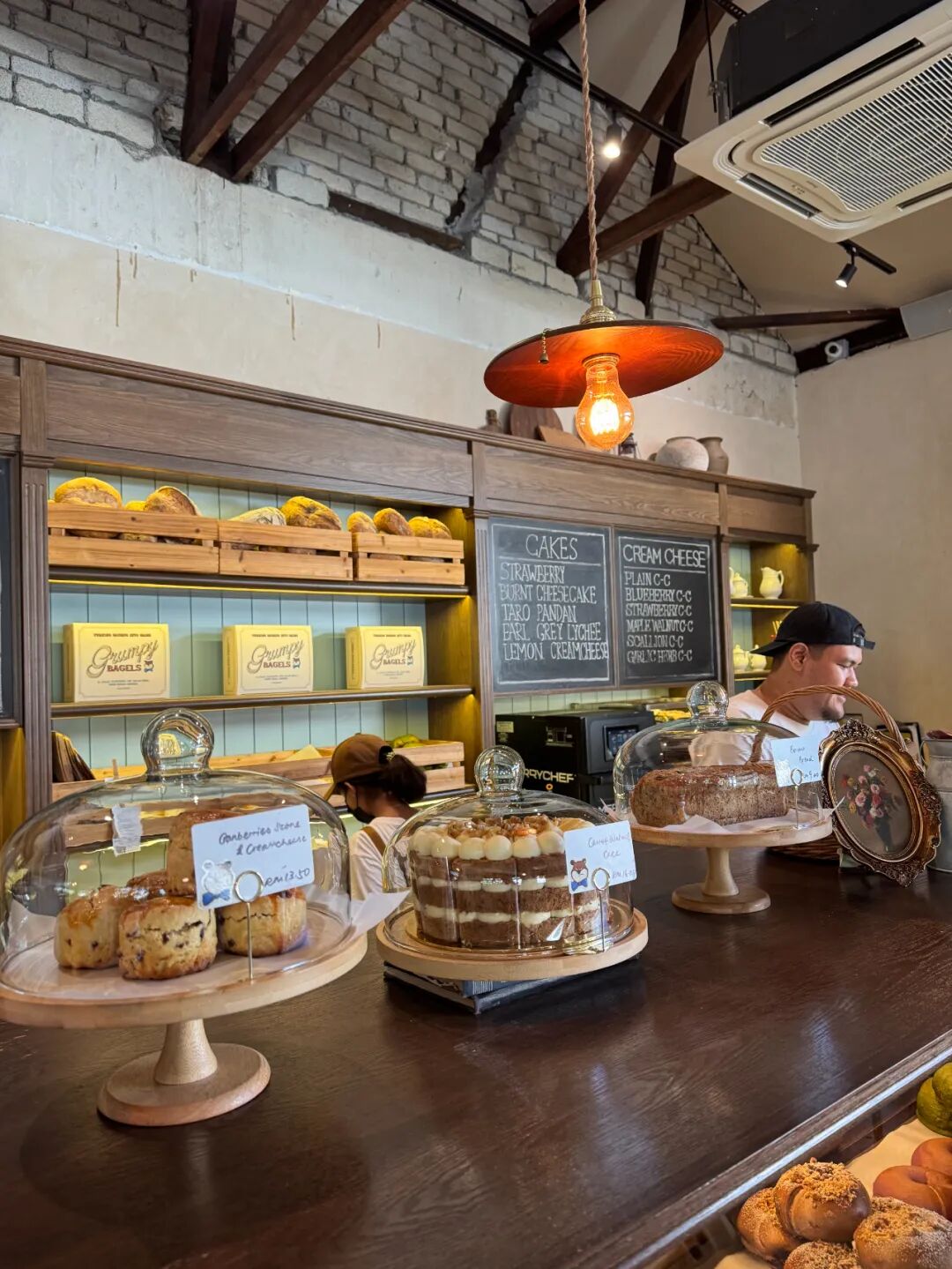
We packed several kinds of bagels. They tasted good to eat on the road, but their products were a little more expensive, with a bagel costing ten ringgits.
The decoration of the store is relatively simple and simple, and it looks very comfortable. However, compared to cafes in China, the environment is not as outstanding. It can only be said that competition among Chinese catering companies is fierce.
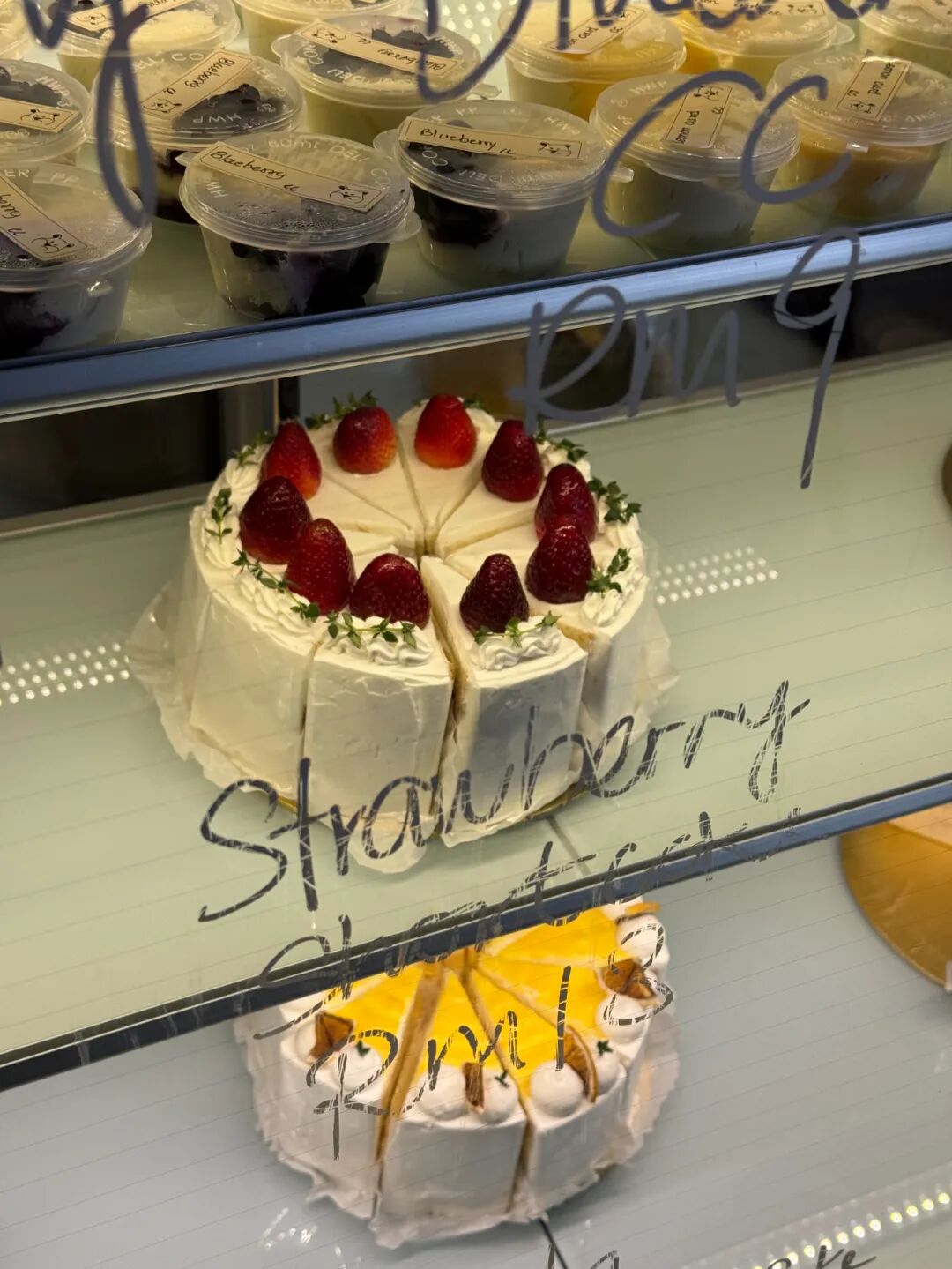
The styles of cakes look very ordinary, but the business of this shop is really good, and the proprietress is very attentive in running it.
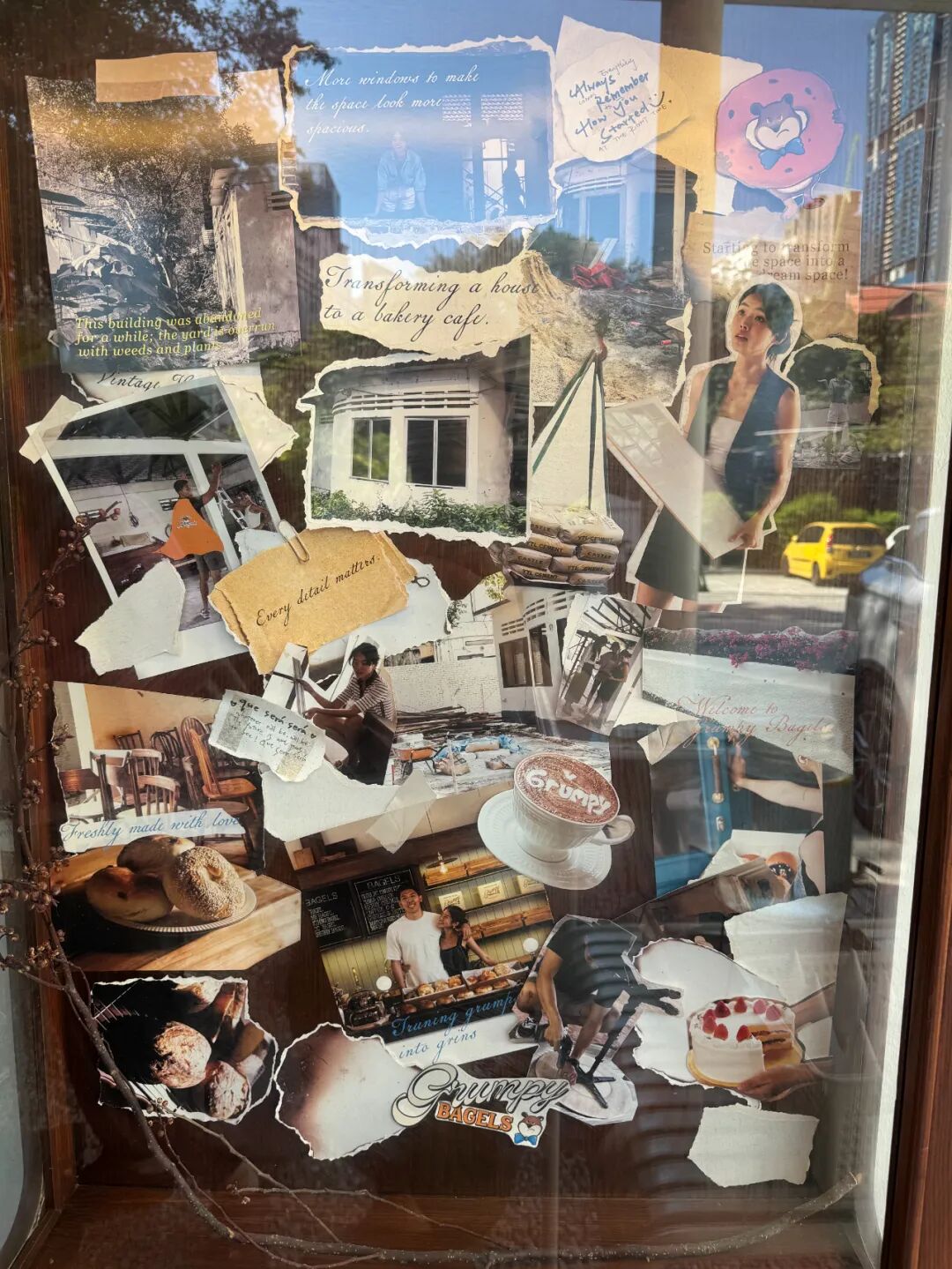
That's the boss lady in the photo. Their way of living and working is very enviable.
Address: Grumpy Bagels
10. Nando's (roast chicken)
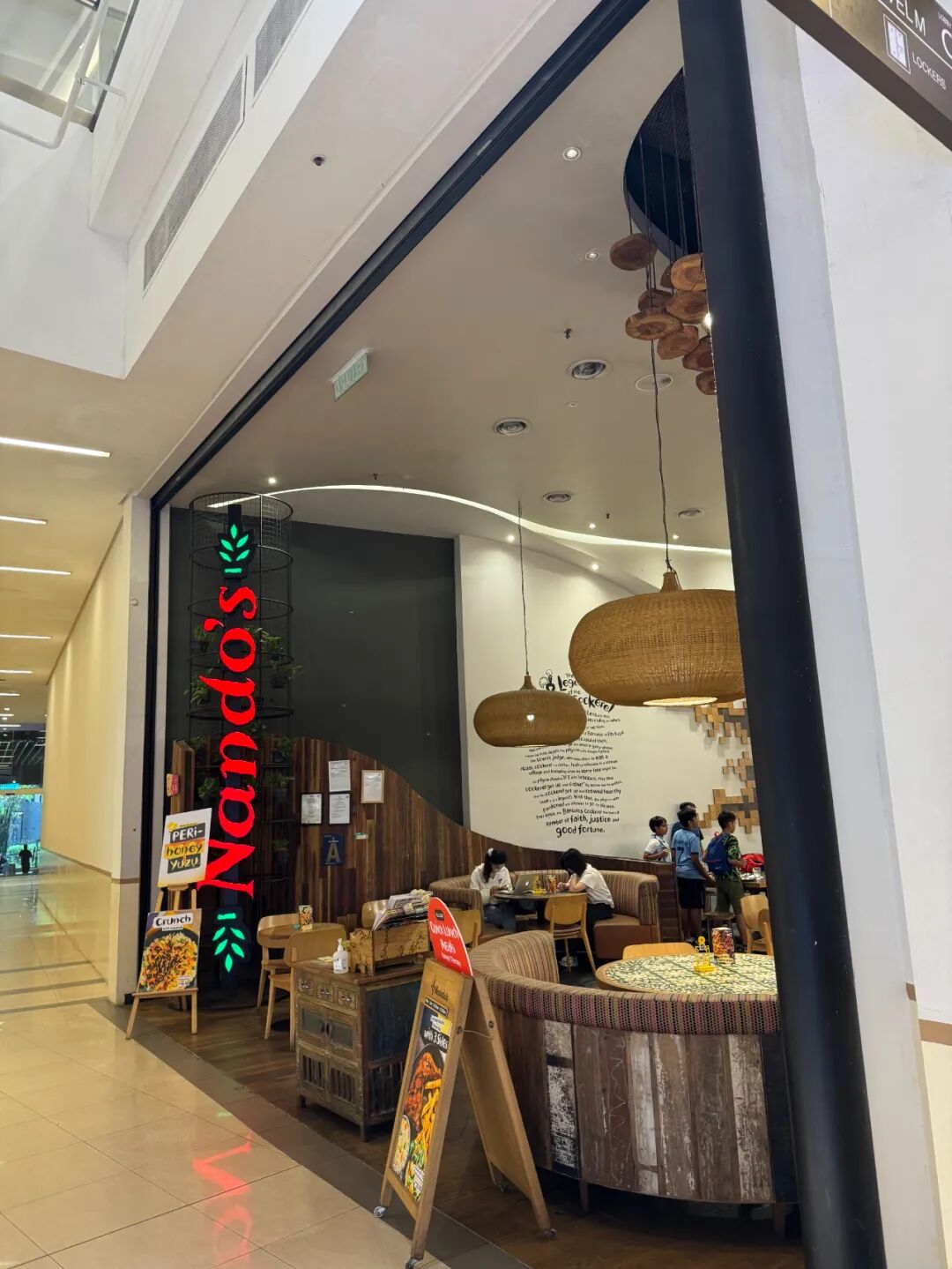
This grilled chicken restaurant was the restaurant where we ate on our first date in Malaysia. It was 10 years ago. At that time, we only focused on people-watching and had no impression of the taste of the food. Now that we live in Kuala Lumpur, we occasionally order takeaway from their restaurant because my son also likes the meat and vegetable combination of this chicken rice.
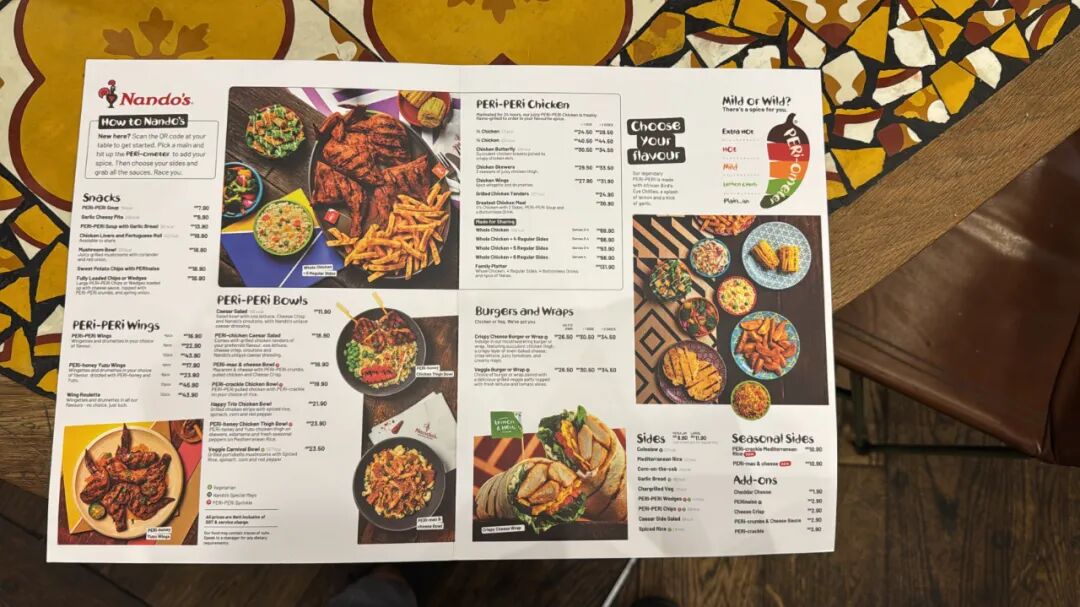
You can choose any flavor, make sure it is not spicy, and you can also match the side dishes inside. This store is a large chain and can be found in many shopping malls.
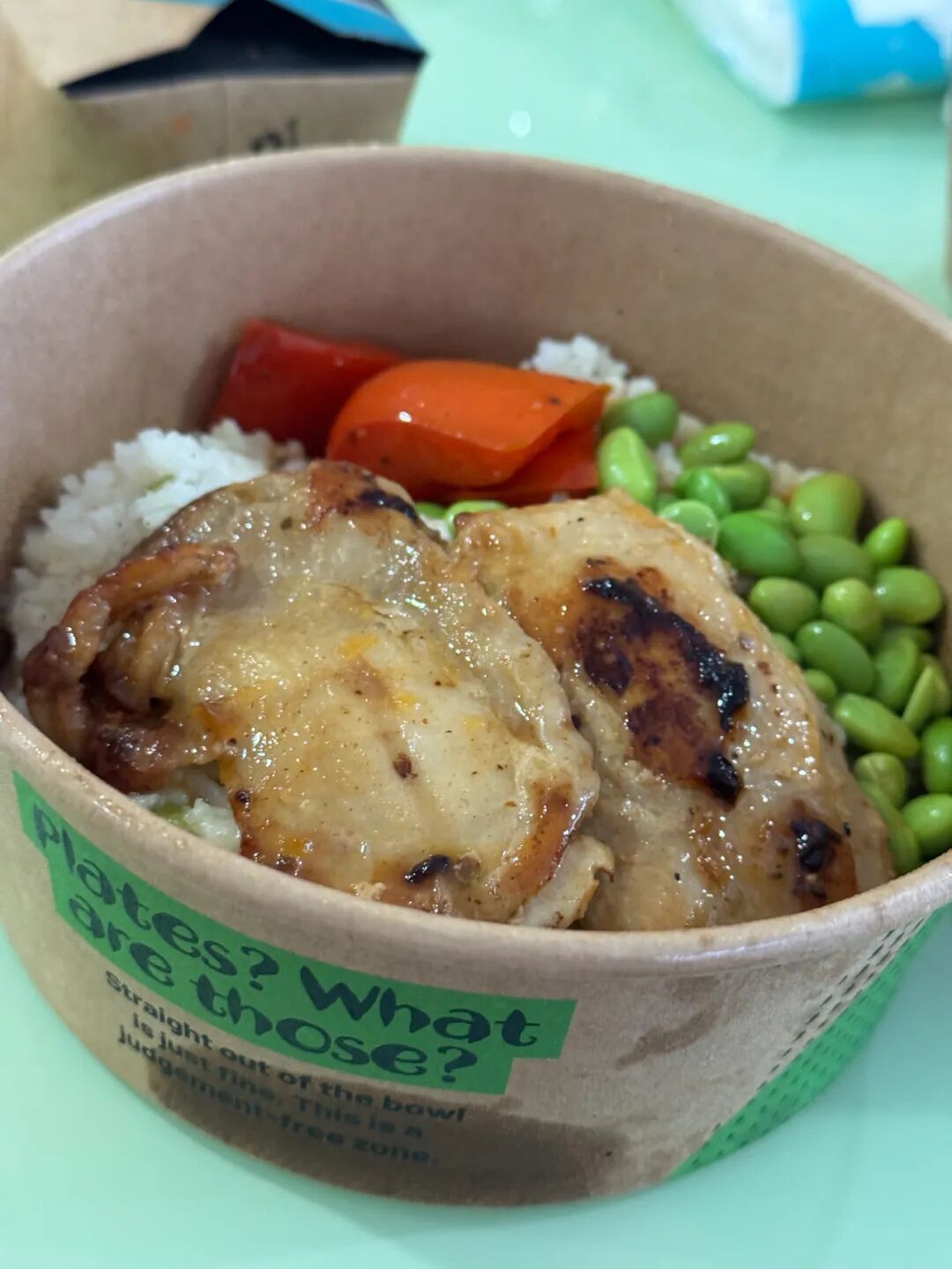
Fahim likes to eat green beans and chicken, but he doesn’t like to eat vegetables, so we can only try our best to provide him with nutritious meals. Fortunately, he lives near KLCC, so there are more restaurants to choose from.
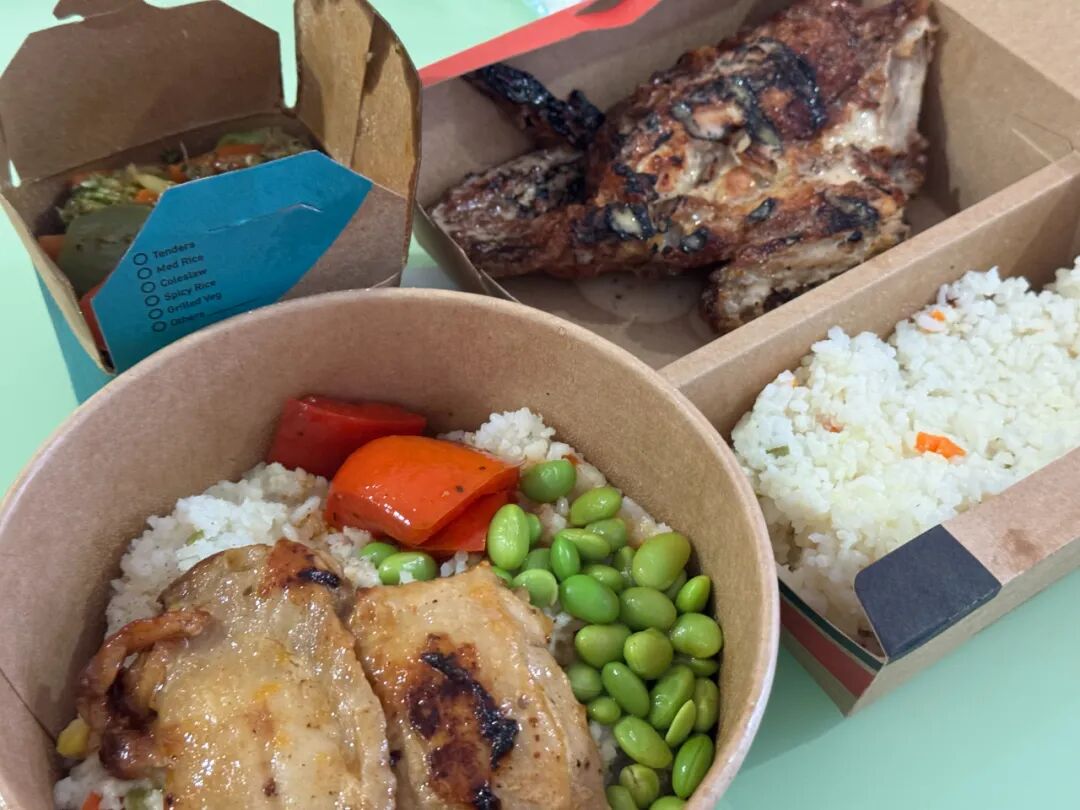
Address: Nando's
Best Halal Food Kuala Lumpur: KLCC Restaurants, Cafe Espresso, Little Penang Cafe and De Wan
Articles • yusuf908 posted the article • 0 comments • 320 views • 2026-05-23 07:26
Summary: This Kuala Lumpur halal food guide part 5 maps KLCC and airport-area halal restaurants, including Cafe Espresso, Taste of India, Chicken Chop Station, Little Penang Cafe, PADI HOUSE, BAPE CAFE, Burger & Lobster, YUZU, Kenny Hills, De Wan, and more places the author tried during a 20-day Malaysia trip.
I spent the 2025 New Year in Malaysia for 20 days. I mostly stayed around KLCC. After my previous posts on halal food in Kuala Lumpur, I finally feel like I understand the food scene around the Petronas Twin Towers. The restaurant scene in Malaysia is very competitive. I have only recommended five lists so far, and some restaurants from the earlier ones have already closed. Still, the turnover is slower than in Beijing. When it comes to how competitive the restaurant industry is, if China claims second place, no other country would dare claim first.
1. CAFE ESPRESSO
2. TASTE OF INDIA
3. CHICKEN CHOP STATION
4. Mengda Mini Bowl
5. Little Penang Cafe (Xiao Bingcheng Meishiguan)
6. PADI HOUSE
7. Dotty’s
8. BAPE CAFE
9. BURGER & LOBSTER
10. BUNGKUS KAWKAW
11. YUZU
12. Old Oil Ghost (Lao You Gui Gui)
13. Chateraise
14. XVI
15. KENNY HILLS
16. De Wan
1. CAFE ESPRESSO
This cafe is near the boarding gates after security for international departures at Kuala Lumpur Airport. The airport has two security checks. There is a simple check when you enter, and a stricter one near the boarding gates. You cannot bring drinks through the second check, even if you bought them at the airport. I once had to throw away a coffee I just bought because I was told I could not bring it through.
Luckily, the coffee at this cafe after the final security check tastes great and is cheap. If you want coffee at Kuala Lumpur Airport, it is best to buy it at the boarding gate. If you buy it before security, remember to leave at least half an hour to reach the gate because the security line can be long.
2. TASTE OF INDIA
This shop is in the dining area after the first security check for international departures at Kuala Lumpur Airport. It is an Indian-style fast food restaurant that is very popular with passengers. You often have to wait in line during meal times. A biryani rice set costs about 40 RMB. It tastes very good, though the portion is small.
3. CHICKEN CHOP STATION
On the G floor of Wisma Central—the G floor is what we call the first floor in China; if you press 1 in a Kuala Lumpur elevator, you actually go to the second floor—there is an Italian fast food restaurant. It is packed every noon because the food is delicious and cheap. A meal costs no more than 10 Malaysian Ringgit.
My son loves pasta and french fries, especially pasta in different shapes. This shop is very close to me, so I buy them for him. The shop has no menu. You just grab a plate, pick what you want to eat, and then walk to the cashier to pay. They also have free drinks.
This big combo plate only costs 10 yuan. If you just buy pasta for your child, it only costs 5 yuan.
4. Mengda Mini Bowl
Right next to the pasta shop, there is a newly opened Chinese halal small-bowl dish (xiaowancai) restaurant called Mengda. Mengda refers to Mengda Mountain in Xunhua Salar Autonomous County, Qinghai Province, which is a Salar community. This shop is run by Salar people from Qinghai and is owned by the same people as the Lanzhou hand-pulled noodle (lamian) shop next door.
Small-bowl dishes are various Chinese stir-fries served in small bowls for you to choose from. This lets you try several dishes in one meal without wasting food. Mengda small-bowl dishes are mostly salty, fresh, and spicy Sichuan-style, which is a flavor Southeast Asians enjoy.
In the small-bowl dish shop, you can also order from the noodle shop menu next door because the two shops are connected. Besides Lanzhou hand-pulled noodles, the noodle shop has various stir-fried noodles, mixed noodles, big plate chicken (dapanji), dumplings, and kebabs. The food is very good and the business is busy. Friends who are not used to Southeast Asian food can come here to eat.
The small-bowl dish shop also has a drink bar with various lemon teas, fruit teas, and other drinks. People in tropical regions love drinking beverages and pair them with every meal. The restaurant is easy to find. It is right next to the KLCC Twin Towers, in the street-level shops of the Central Building.
5. Little Penang Cafe (Xiao Bingcheng Meishiguan)
Since I spend all my time near the KLCC Twin Towers, my daily life revolves around this area. I have almost eaten at every restaurant inside the Twin Towers. The food inside the Twin Towers is generally fine. I have never seen any restaurant here sell pork. I only saw one area in the Isetan supermarket on the B1 floor marked for non-halal food, and the only non-halal meat there is pork.
This shop is on the 4th floor of the Twin Towers. You can guess from the name that it is a Nyonya restaurant. It is very busy at lunchtime and you have to wait in line.
Their food is really delicious. This combo meal only costs a little over 20 Malaysian ringgit, which is a better deal than what we ate in Penang. Nyonya food is mostly salty and spicy, which is very suitable for friends from the south to try.
6. PADI HOUSE
I posted on social media that I was visiting a lot of cafes for this food map. Because of my job, I can work from anywhere in the world as long as I have internet. These cafes have air conditioning, WiFi, and the drinks are very cheap—about half the price of those in Beijing. I love that I can eat and drink there.
This is my favorite shop. It is right at the entrance of the Isetan mall and connects to the Petronas Twin Towers. I really like their healthy breakfast. It starts at 7:30 a.m., which is very early for Kuala Lumpur, where most shops do not open until after 10:00 a.m.
Breakfast is served all day until 10:00 p.m. This soft-boiled hot spring egg (onsen tamago) is one of the things I eat for breakfast. The set costs 10 ringgit and includes a cup of coffee.
If it is not mealtime, I like to order two drinks: a coffee and a juice. The juice is 10 ringgit and the coffee is 5 to 7 ringgit, totaling about 20 yuan. In Beijing, this combination of fresh juice and coffee would cost at least 50 yuan.
I can stay here all afternoon. If I get hungry from drinking, I order a snack. My son loves these crispy shrimp crackers (xiapian).
7. Dotty’s
Dotty’s is right across from Padi. I don't think the drinks at Dotty’s are as good as Padi’s, and it is too noisy inside. Locals seem to prefer Dotty’s. Neither shop sells alcohol; they are Western-style cafes that also serve simple Malaysian-style meals.
The drink prices here are a little higher than at Padi. A small can of mixed fruit juice costs over 20 ringgit, and the coffee tastes very average. I only came here once and go to Padi every other time.
8. BAPE CAFE
Bape is a trendy Japanese clothing brand, which stands for a bathing ape. Bape is considered the high-end line of Aape. I was surprised to find they opened a cafe in Kuala Lumpur.
This cafe doesn't look fancy at all, the prices are very affordable, and I found the taste of the drinks quite ordinary.
They serve light meals, coffee, and desserts, so I ordered a piece of chocolate that features their brand logo.
To be honest, it wasn't very good, so I only ate half. This piece of chocolate cost about 40 RMB.
The coffee was also very average, and I don't like using these disposable cups. The shop is on the G floor of the Petronas Twin Towers, near the entrance to the KLCC Park fountain.
9. BURGER & LOBSTER
Next to Bape is this American burger and lobster restaurant, both located at the G floor entrance of the Twin Towers. I have only tried their burgers, which are truly delicious and high quality, but they are expensive. This burger costs about 100 RMB.
10. BUNGKUS KAWKAW
There is a very popular pulled tea (teh tarik) shop on the B1 floor of the Twin Towers. Pulled tea is Malaysian milk tea. I have had it a few times and it is really tasty and cheap, costing only 5 MYR per cup with many flavors to choose from.
The shop is always busy and full of customers, so I usually get it to go and grab one of their signature snacks to go with it.
11. YUZU
This is a Japanese restaurant on the 4th floor of the Twin Towers. There are at least four Japanese restaurants in the Twin Towers, and each one has a slightly different style.
I think this place offers good value for money with many set meal options. This combo set includes various classic Japanese dishes and even wagyu beef, where you can choose how you want it cooked. It costs about 130 RMB in total, but the portion is a bit small; someone with a big appetite could probably eat two sets.
12. Old Oil Ghost (Lao You Gui Gui)
Every morning after I drop my son off at kindergarten, I go to this nearby Old Oil Ghost (Lao You Gui Gui) for breakfast. This is a chain brand that sells Chinese-style soy milk, fried dough sticks (youtiao), tofu pudding (doufuhua), and porridge.
They make the dried scallop porridge in the Cantonese dim sum style. The tofu pudding is sweet, and with a fried dough stick, the whole breakfast costs about 10 Malaysian Ringgit.
Old Oil Ghost is a chain, so you can find many locations by searching on a map.
13. Chateraise
This is a cake shop that uses imported Japanese ingredients. I ordered my son's third birthday cake here. The school allows birthday celebrations and small gifts for the children, but they don't allow candy, chocolate, or nuts. Cake and fruit are fine.
Japanese dairy products are very high quality. I once ate local dairy in Hokkaido, and I still remember how good it tasted.
You can order a cake and pick it up the same day. A 21cm fruit cake costs only 170 RMB, which is much cheaper than in Beijing.
This was Fahim's first birthday in Malaysia and the most formal one he has ever had.
14. XVI
There is a cafe near Asy-Syakirin Mosque, and the back of the shop faces the mosque at KLCC.
Sometimes I sit here in the morning, order a coffee, and watch the people walking by on their way to work at the Petronas Twin Towers. Their coffee and bread taste good, and a breakfast set costs 10 yuan.
15. KENNY HILLS
This shop seems to be a famous local dessert chain in Kuala Lumpur. There are two near where I live, and this one is close to Ampang Kindergarten. It is where I go for breakfast after dropping off my child.
The shop is very busy during breakfast hours. The prices are not cheap, but the portions are large.
For two people to have two healthy breakfasts, each with a coffee, it costs about 150 yuan.
16. De Wan
There is a very famous Michelin-rated restaurant in Ampang Shopping Centre that specializes in Malaysian cuisine. Malaysian cuisine here refers to a fusion of Malay, Indian, and Chinese Nyonya dishes.
This restaurant is near my apartment complex. I used to pass by it often but never realized how big it was inside.
The founder, Chef Wan, seems to be quite famous in Malaysia.
The restaurant has a great atmosphere and excellent service. The prices are on the expensive side for the area, with an average cost of about 100 Malaysian ringgit per person.
I can tell their food is authentic, but I don't really like dishes with such heavy seasoning.
Fahim likes the complimentary crispy peanut crackers (huasheng cuibing) they serve.
The fish curry and beef rendang (rendang niurou) are both great with rice. They are fresh, fragrant, and spicy, but the heavy seasoning hides the natural taste of the ingredients. As a tourist, it is a fun experience to try once in a while. view all
Summary: This Kuala Lumpur halal food guide part 5 maps KLCC and airport-area halal restaurants, including Cafe Espresso, Taste of India, Chicken Chop Station, Little Penang Cafe, PADI HOUSE, BAPE CAFE, Burger & Lobster, YUZU, Kenny Hills, De Wan, and more places the author tried during a 20-day Malaysia trip.
I spent the 2025 New Year in Malaysia for 20 days. I mostly stayed around KLCC. After my previous posts on halal food in Kuala Lumpur, I finally feel like I understand the food scene around the Petronas Twin Towers. The restaurant scene in Malaysia is very competitive. I have only recommended five lists so far, and some restaurants from the earlier ones have already closed. Still, the turnover is slower than in Beijing. When it comes to how competitive the restaurant industry is, if China claims second place, no other country would dare claim first.
1. CAFE ESPRESSO
2. TASTE OF INDIA
3. CHICKEN CHOP STATION
4. Mengda Mini Bowl
5. Little Penang Cafe (Xiao Bingcheng Meishiguan)
6. PADI HOUSE
7. Dotty’s
8. BAPE CAFE
9. BURGER & LOBSTER
10. BUNGKUS KAWKAW
11. YUZU
12. Old Oil Ghost (Lao You Gui Gui)
13. Chateraise
14. XVI
15. KENNY HILLS
16. De Wan
1. CAFE ESPRESSO
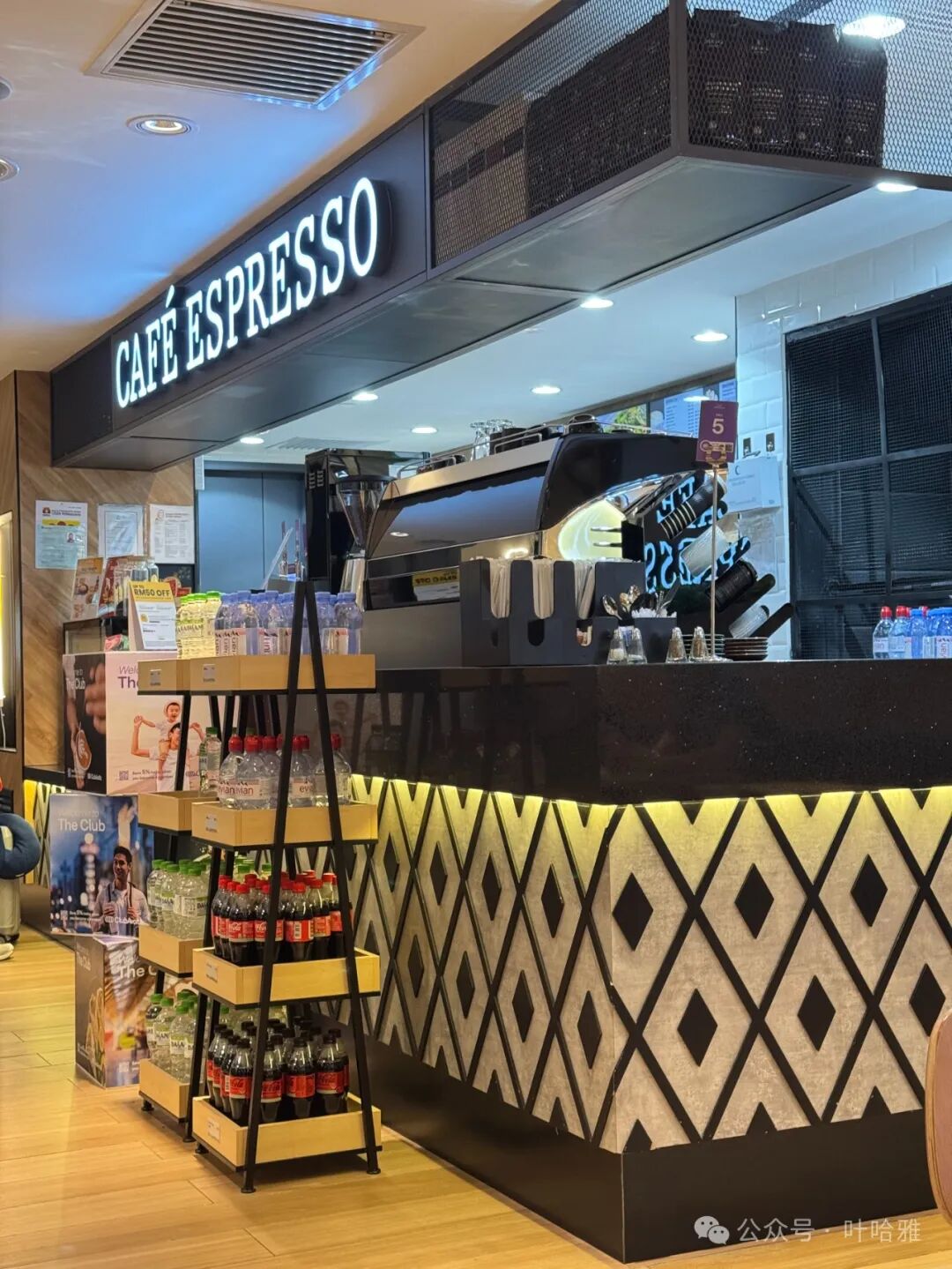
This cafe is near the boarding gates after security for international departures at Kuala Lumpur Airport. The airport has two security checks. There is a simple check when you enter, and a stricter one near the boarding gates. You cannot bring drinks through the second check, even if you bought them at the airport. I once had to throw away a coffee I just bought because I was told I could not bring it through.
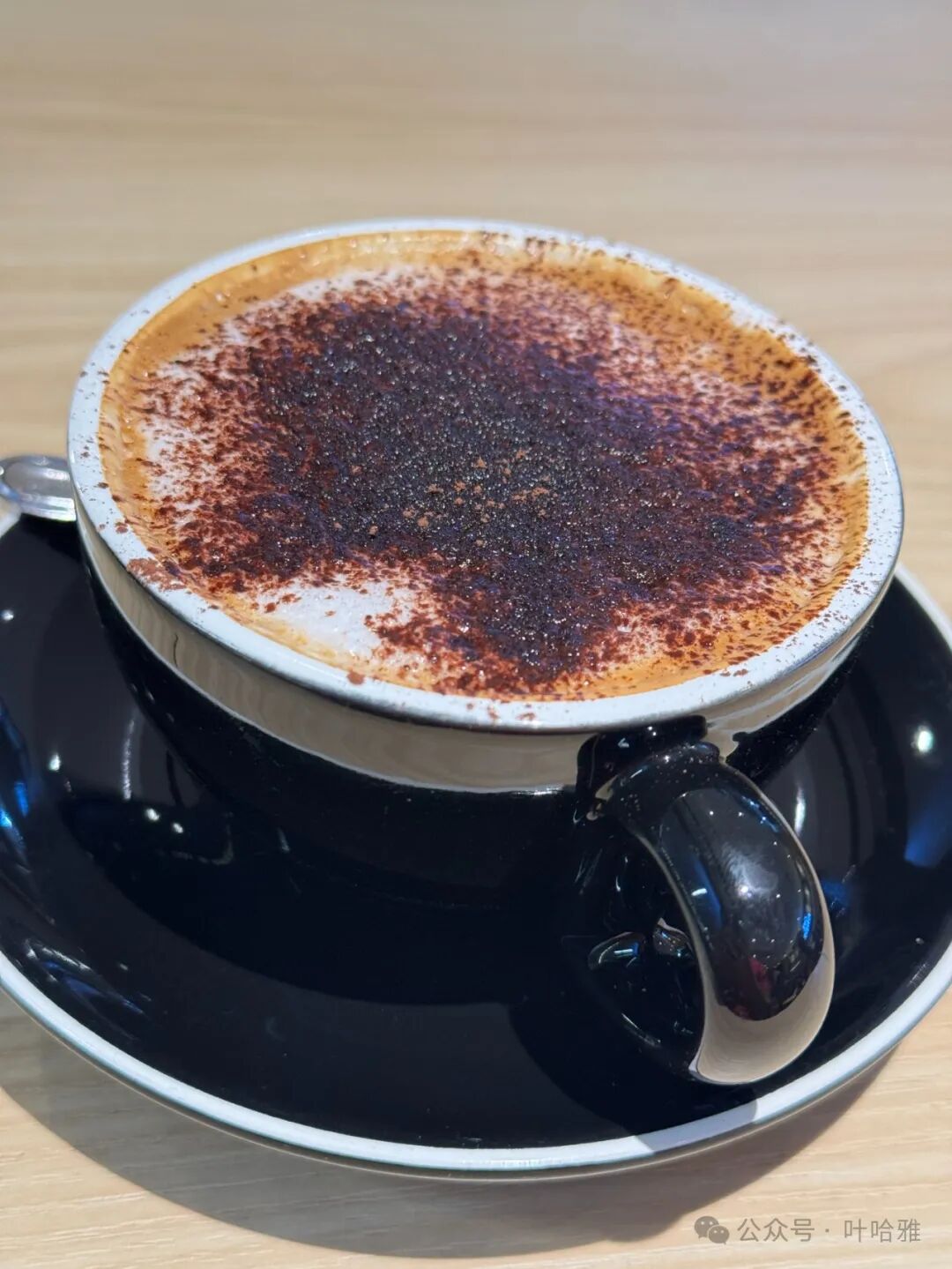
Luckily, the coffee at this cafe after the final security check tastes great and is cheap. If you want coffee at Kuala Lumpur Airport, it is best to buy it at the boarding gate. If you buy it before security, remember to leave at least half an hour to reach the gate because the security line can be long.
2. TASTE OF INDIA
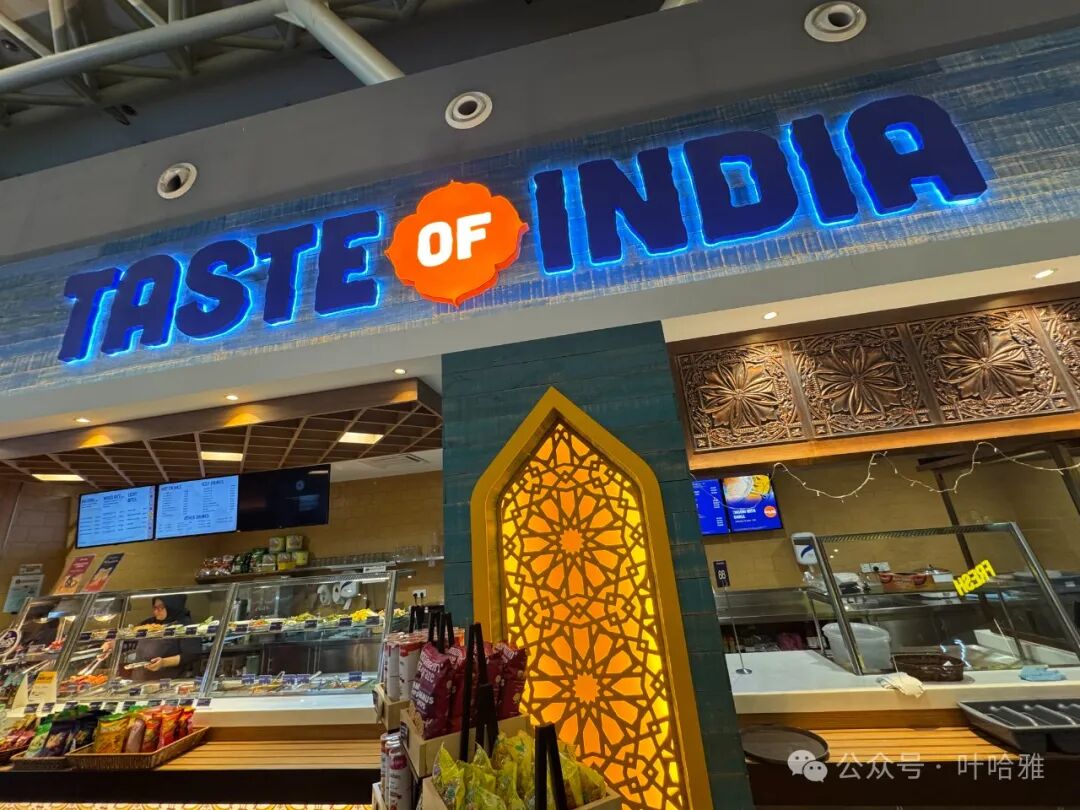
This shop is in the dining area after the first security check for international departures at Kuala Lumpur Airport. It is an Indian-style fast food restaurant that is very popular with passengers. You often have to wait in line during meal times. A biryani rice set costs about 40 RMB. It tastes very good, though the portion is small.
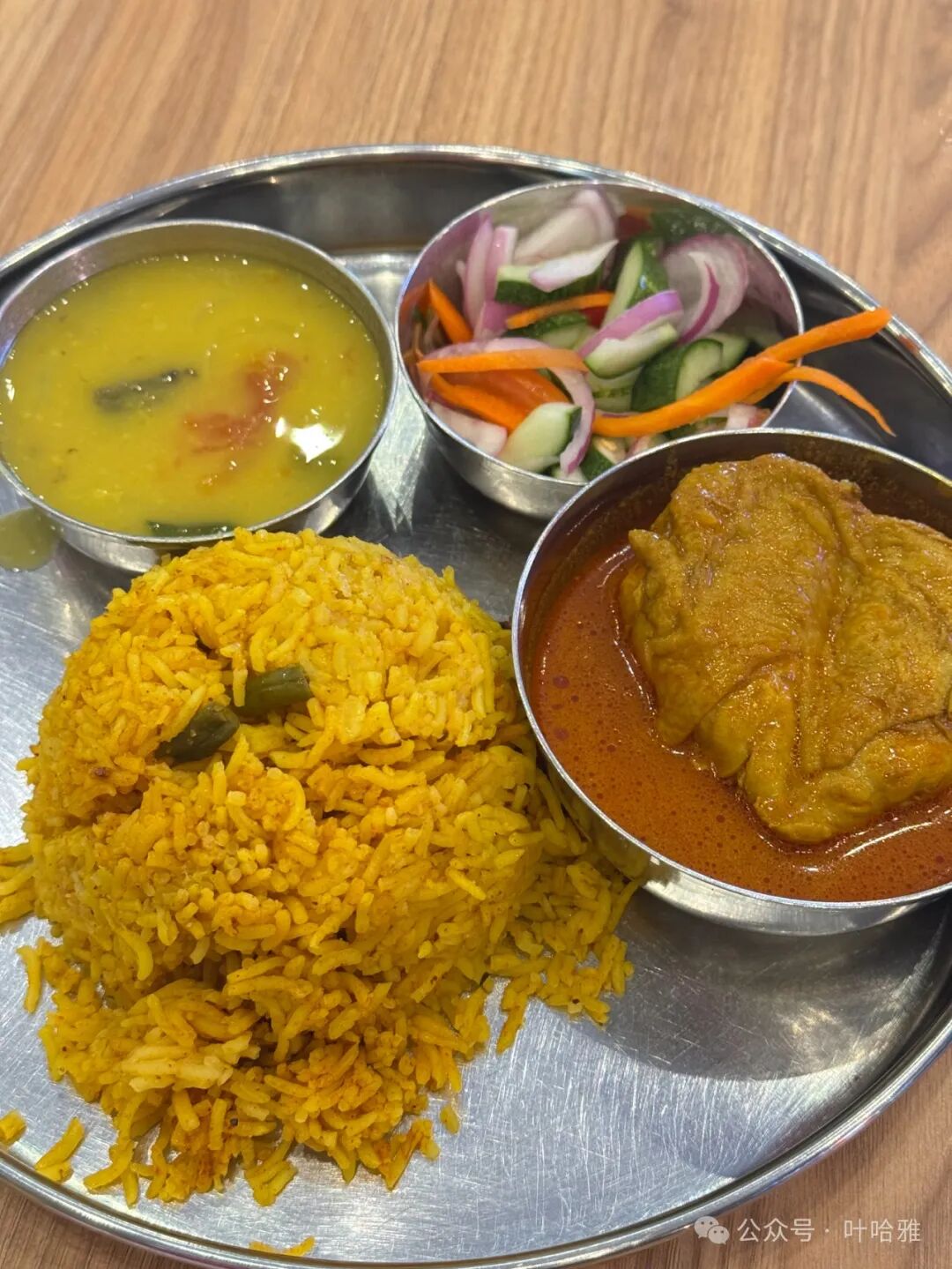
3. CHICKEN CHOP STATION
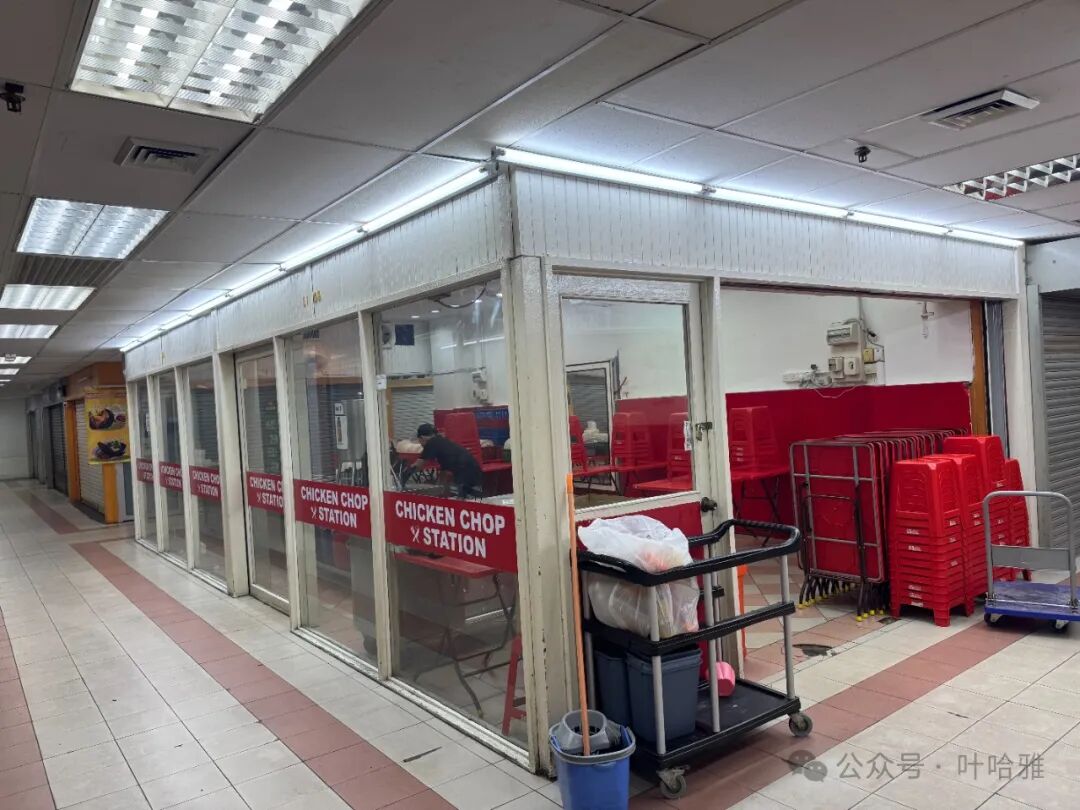
On the G floor of Wisma Central—the G floor is what we call the first floor in China; if you press 1 in a Kuala Lumpur elevator, you actually go to the second floor—there is an Italian fast food restaurant. It is packed every noon because the food is delicious and cheap. A meal costs no more than 10 Malaysian Ringgit.
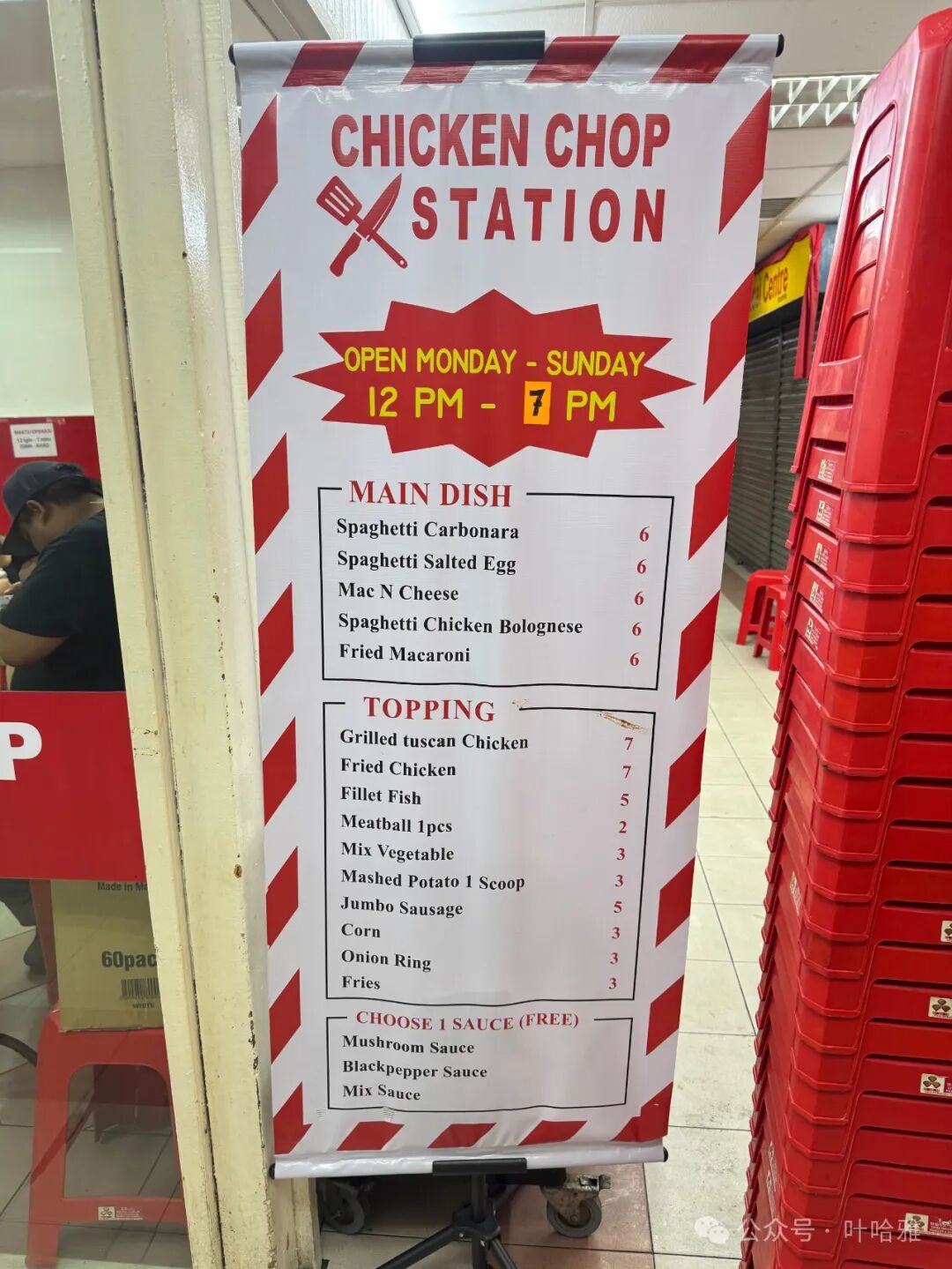
My son loves pasta and french fries, especially pasta in different shapes. This shop is very close to me, so I buy them for him. The shop has no menu. You just grab a plate, pick what you want to eat, and then walk to the cashier to pay. They also have free drinks.
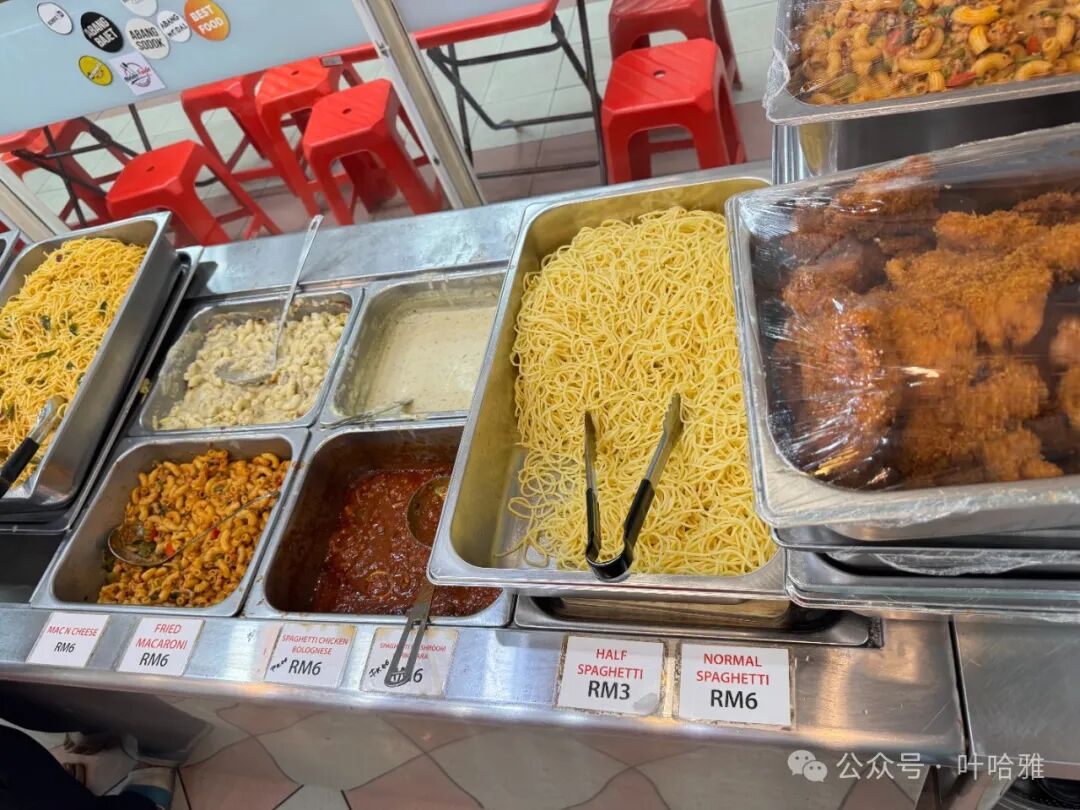
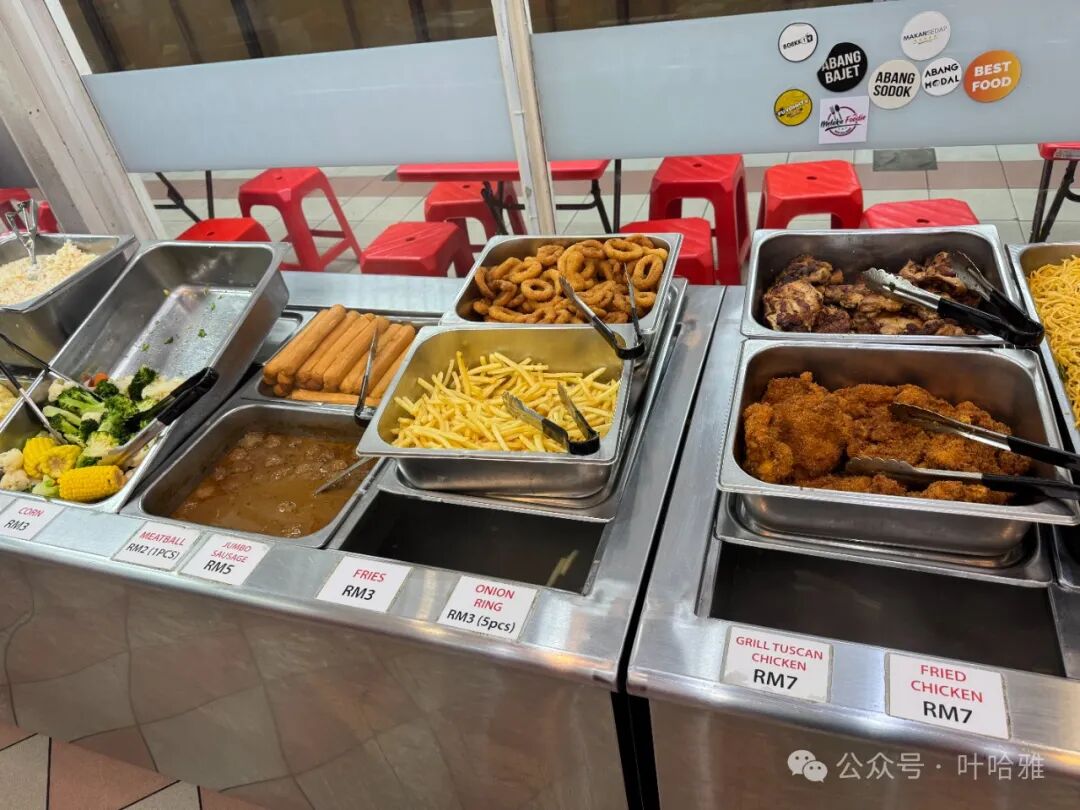
This big combo plate only costs 10 yuan. If you just buy pasta for your child, it only costs 5 yuan.
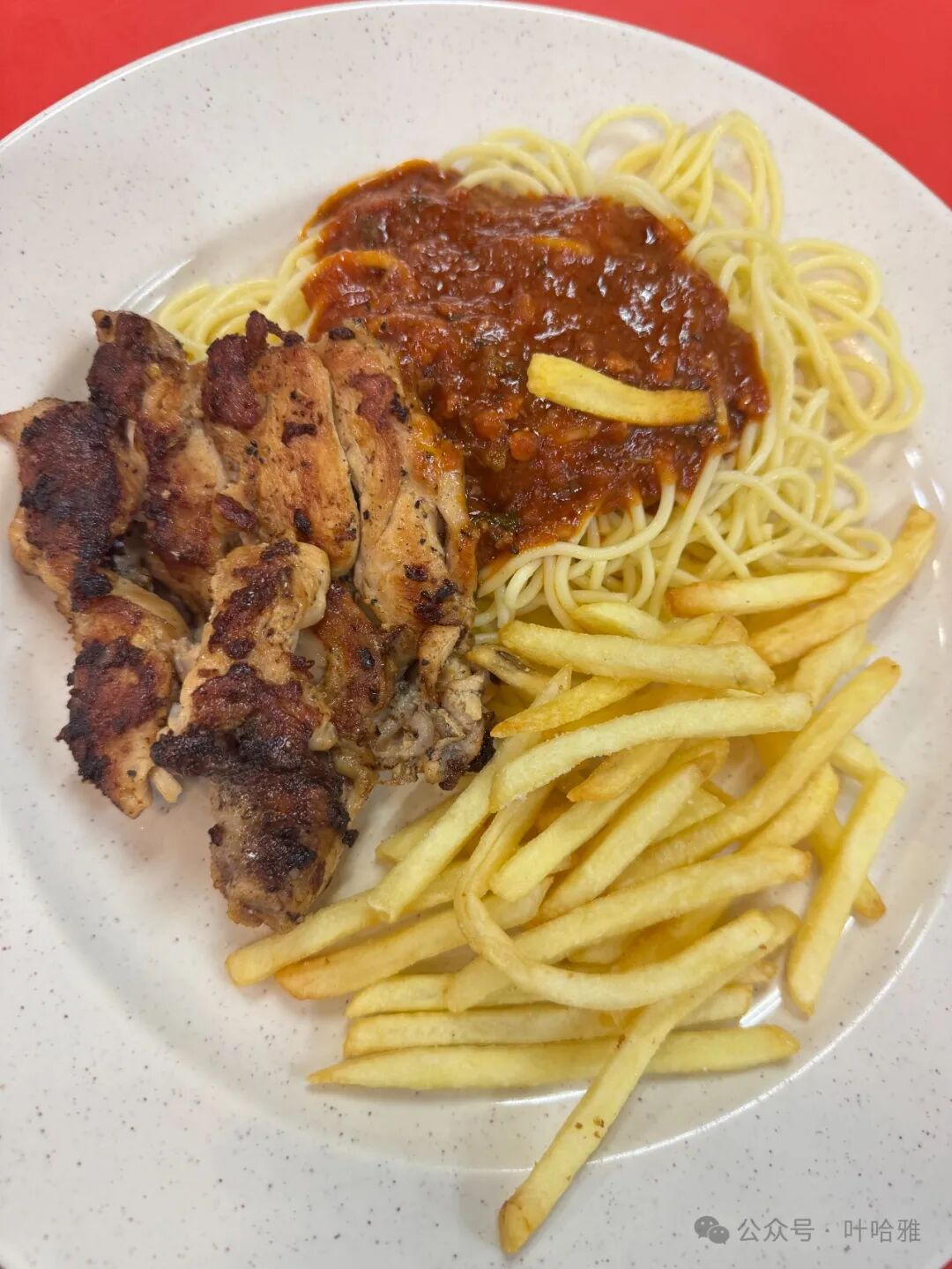
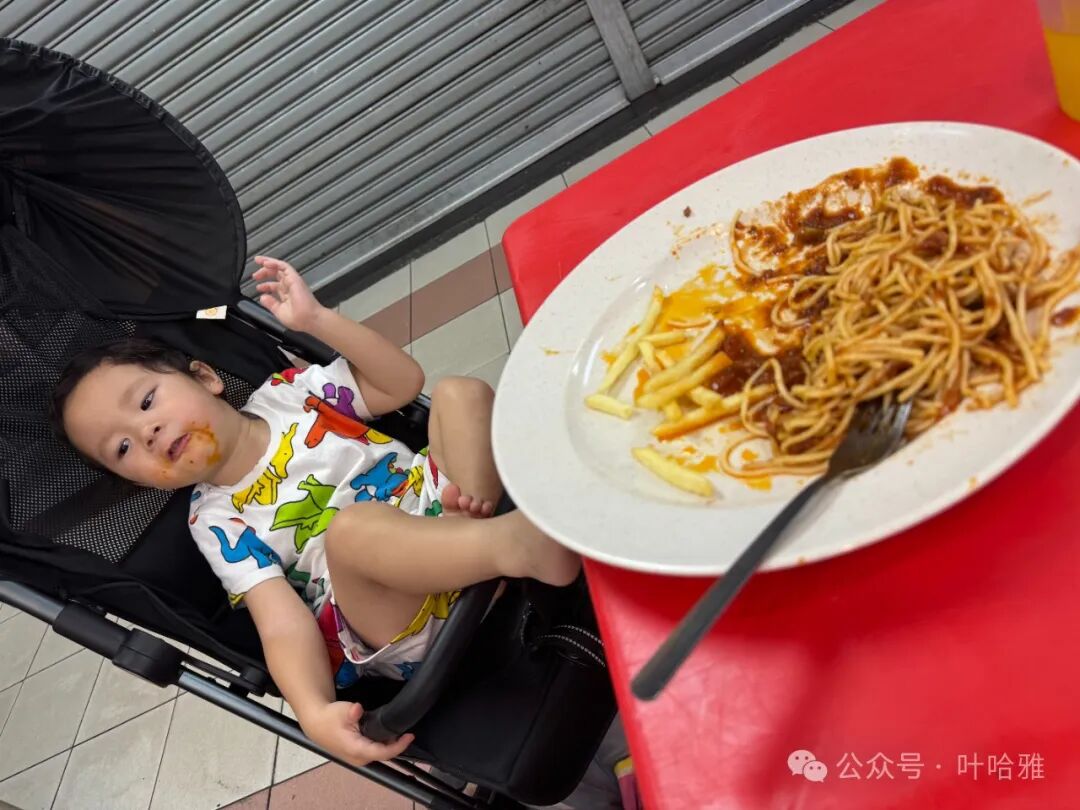
4. Mengda Mini Bowl
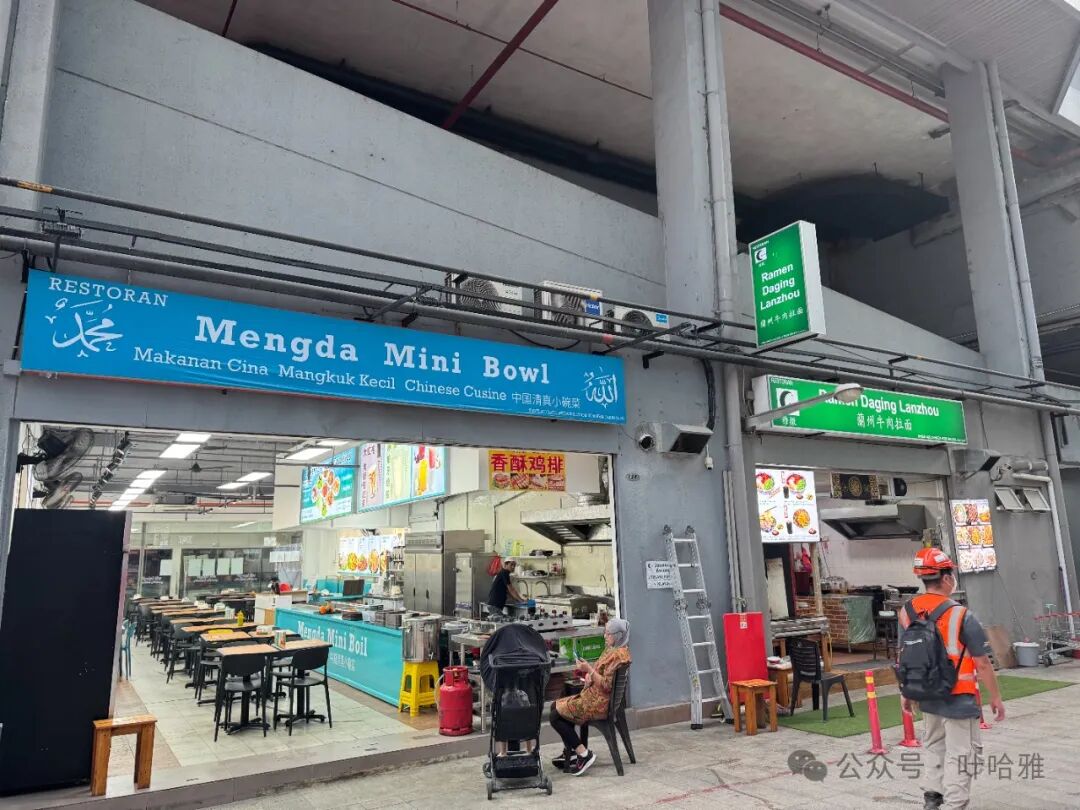
Right next to the pasta shop, there is a newly opened Chinese halal small-bowl dish (xiaowancai) restaurant called Mengda. Mengda refers to Mengda Mountain in Xunhua Salar Autonomous County, Qinghai Province, which is a Salar community. This shop is run by Salar people from Qinghai and is owned by the same people as the Lanzhou hand-pulled noodle (lamian) shop next door.
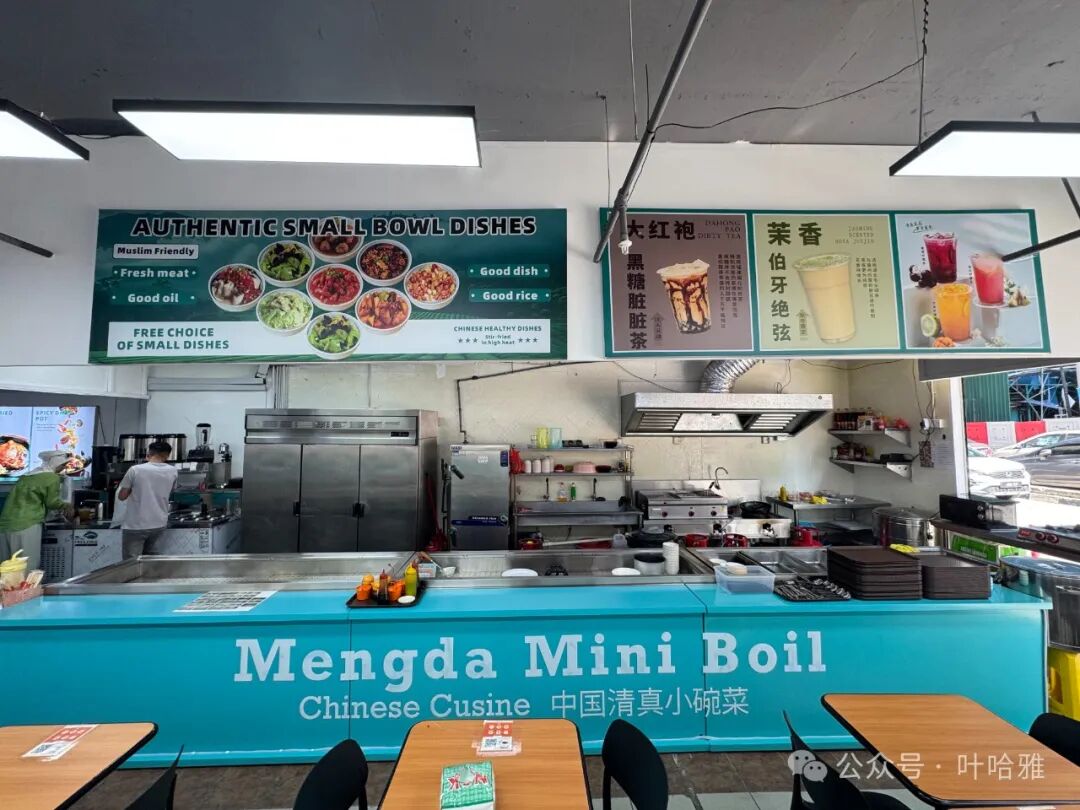
Small-bowl dishes are various Chinese stir-fries served in small bowls for you to choose from. This lets you try several dishes in one meal without wasting food. Mengda small-bowl dishes are mostly salty, fresh, and spicy Sichuan-style, which is a flavor Southeast Asians enjoy.
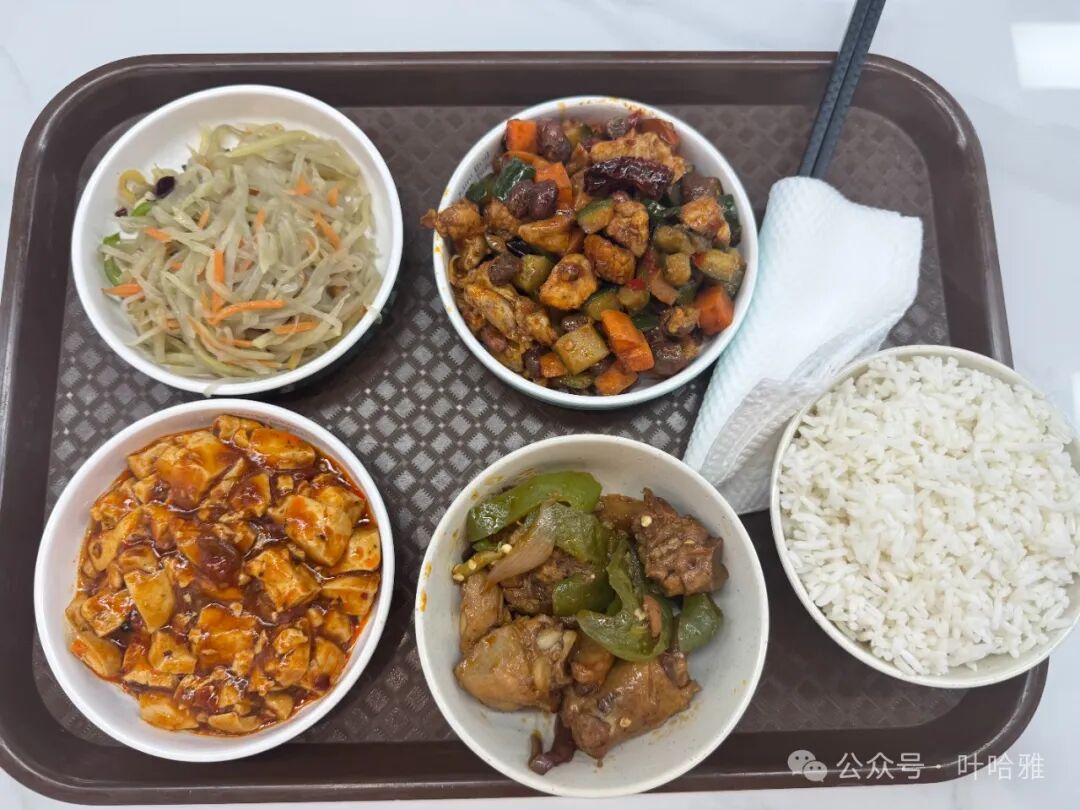
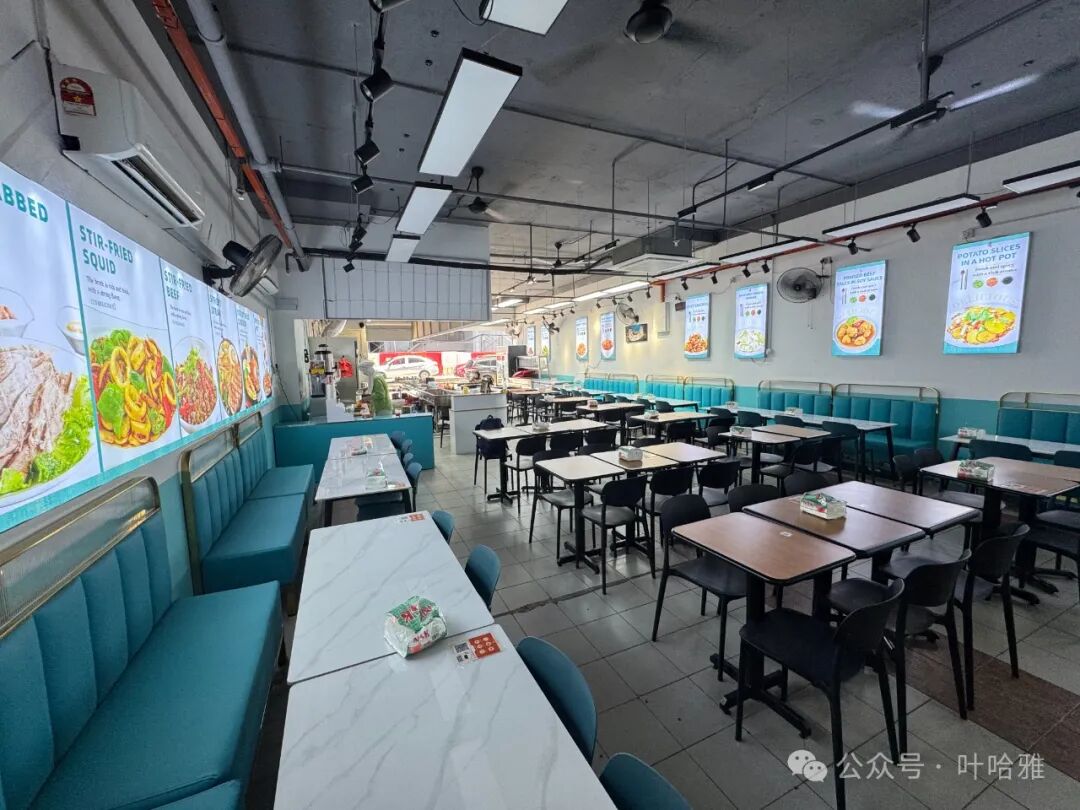
In the small-bowl dish shop, you can also order from the noodle shop menu next door because the two shops are connected. Besides Lanzhou hand-pulled noodles, the noodle shop has various stir-fried noodles, mixed noodles, big plate chicken (dapanji), dumplings, and kebabs. The food is very good and the business is busy. Friends who are not used to Southeast Asian food can come here to eat.
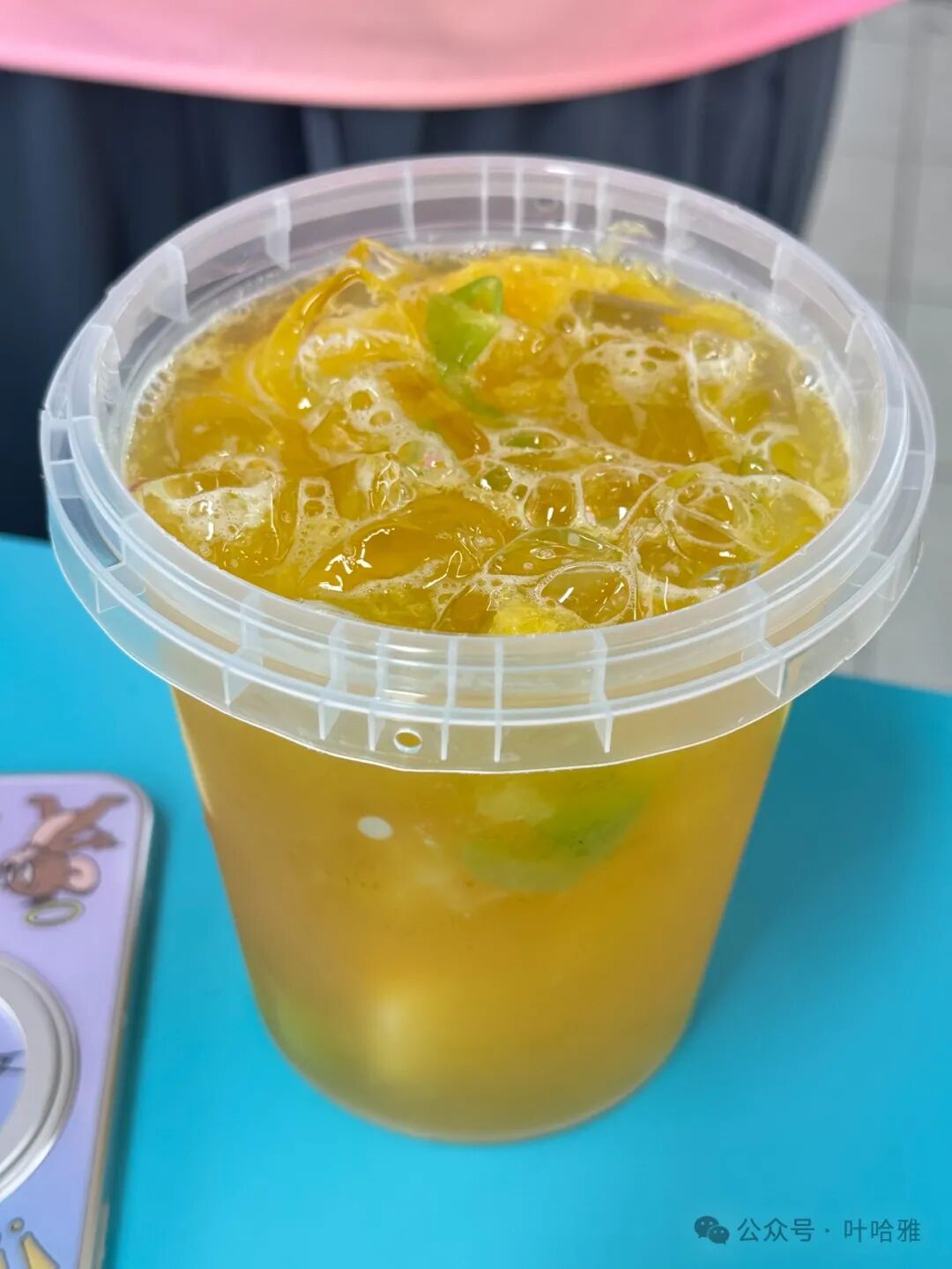
The small-bowl dish shop also has a drink bar with various lemon teas, fruit teas, and other drinks. People in tropical regions love drinking beverages and pair them with every meal. The restaurant is easy to find. It is right next to the KLCC Twin Towers, in the street-level shops of the Central Building.
5. Little Penang Cafe (Xiao Bingcheng Meishiguan)
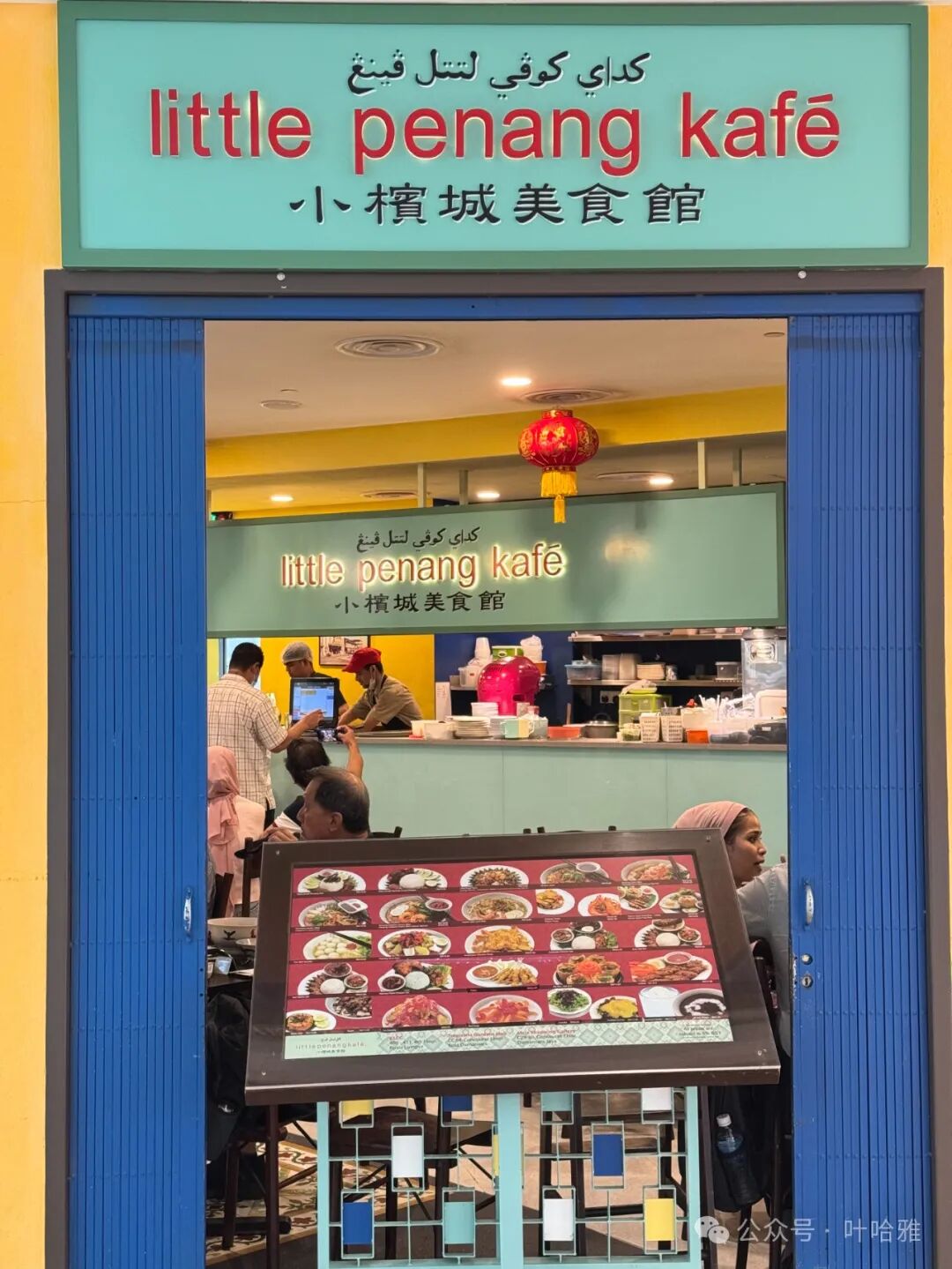
Since I spend all my time near the KLCC Twin Towers, my daily life revolves around this area. I have almost eaten at every restaurant inside the Twin Towers. The food inside the Twin Towers is generally fine. I have never seen any restaurant here sell pork. I only saw one area in the Isetan supermarket on the B1 floor marked for non-halal food, and the only non-halal meat there is pork.
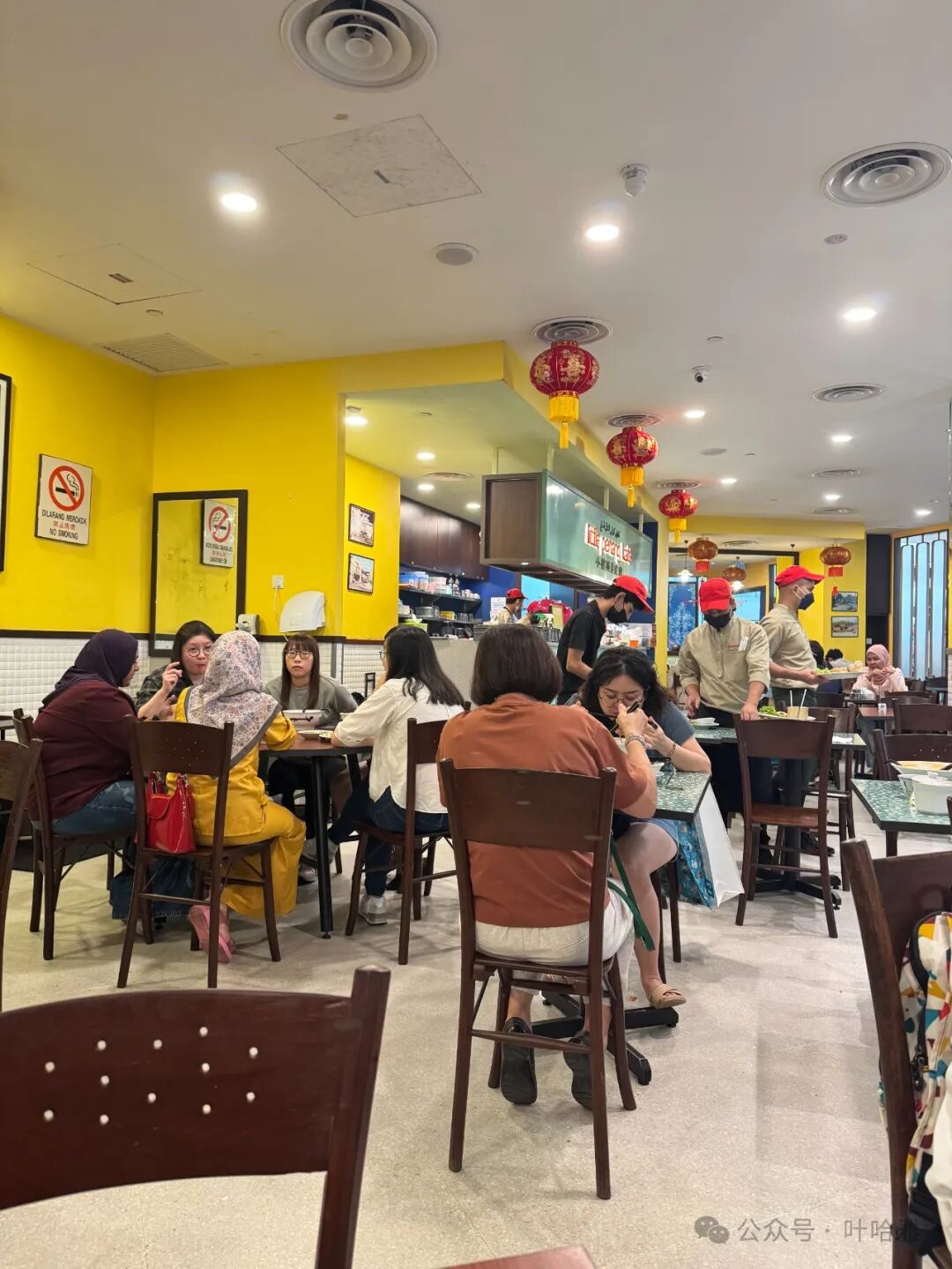
This shop is on the 4th floor of the Twin Towers. You can guess from the name that it is a Nyonya restaurant. It is very busy at lunchtime and you have to wait in line.
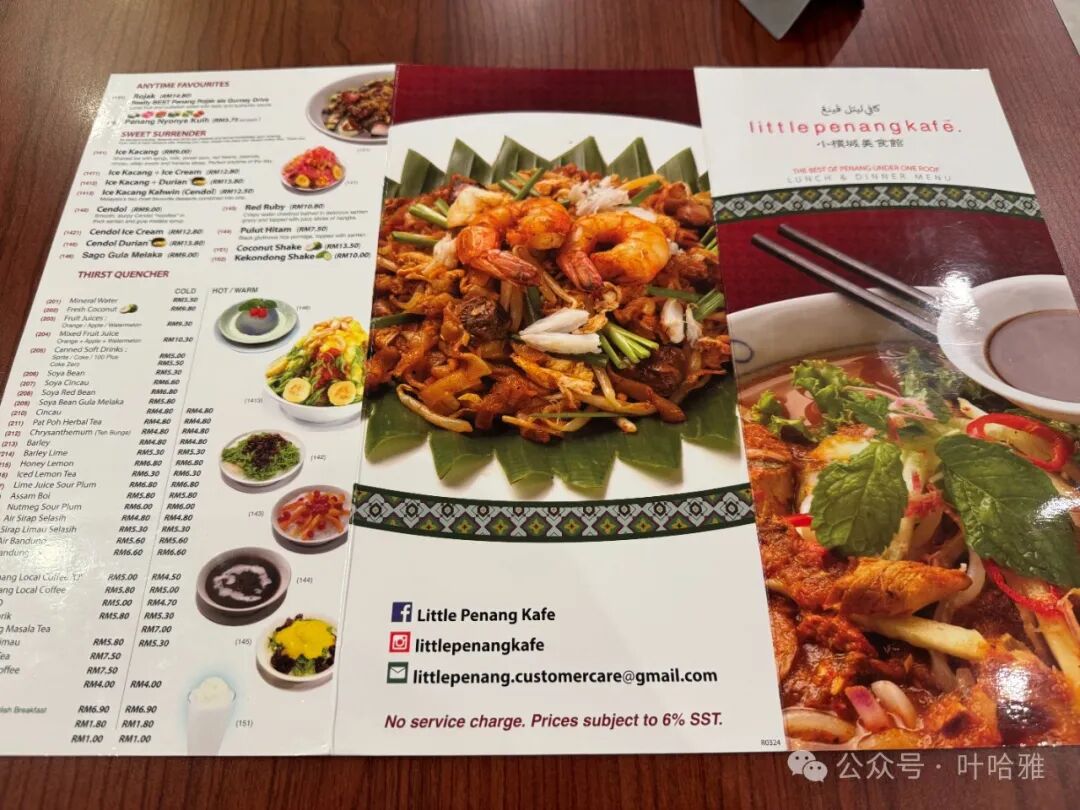
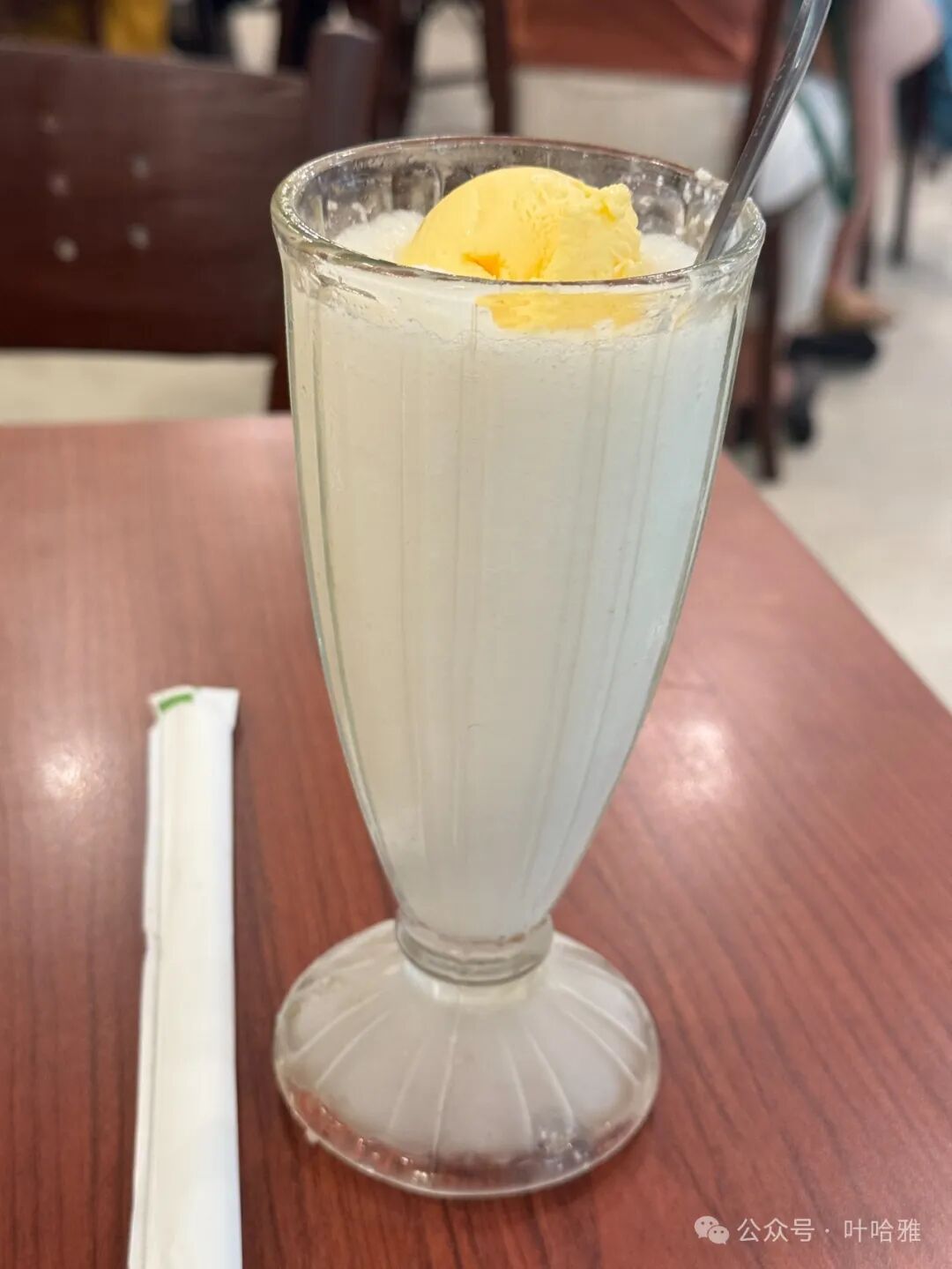
Their food is really delicious. This combo meal only costs a little over 20 Malaysian ringgit, which is a better deal than what we ate in Penang. Nyonya food is mostly salty and spicy, which is very suitable for friends from the south to try.
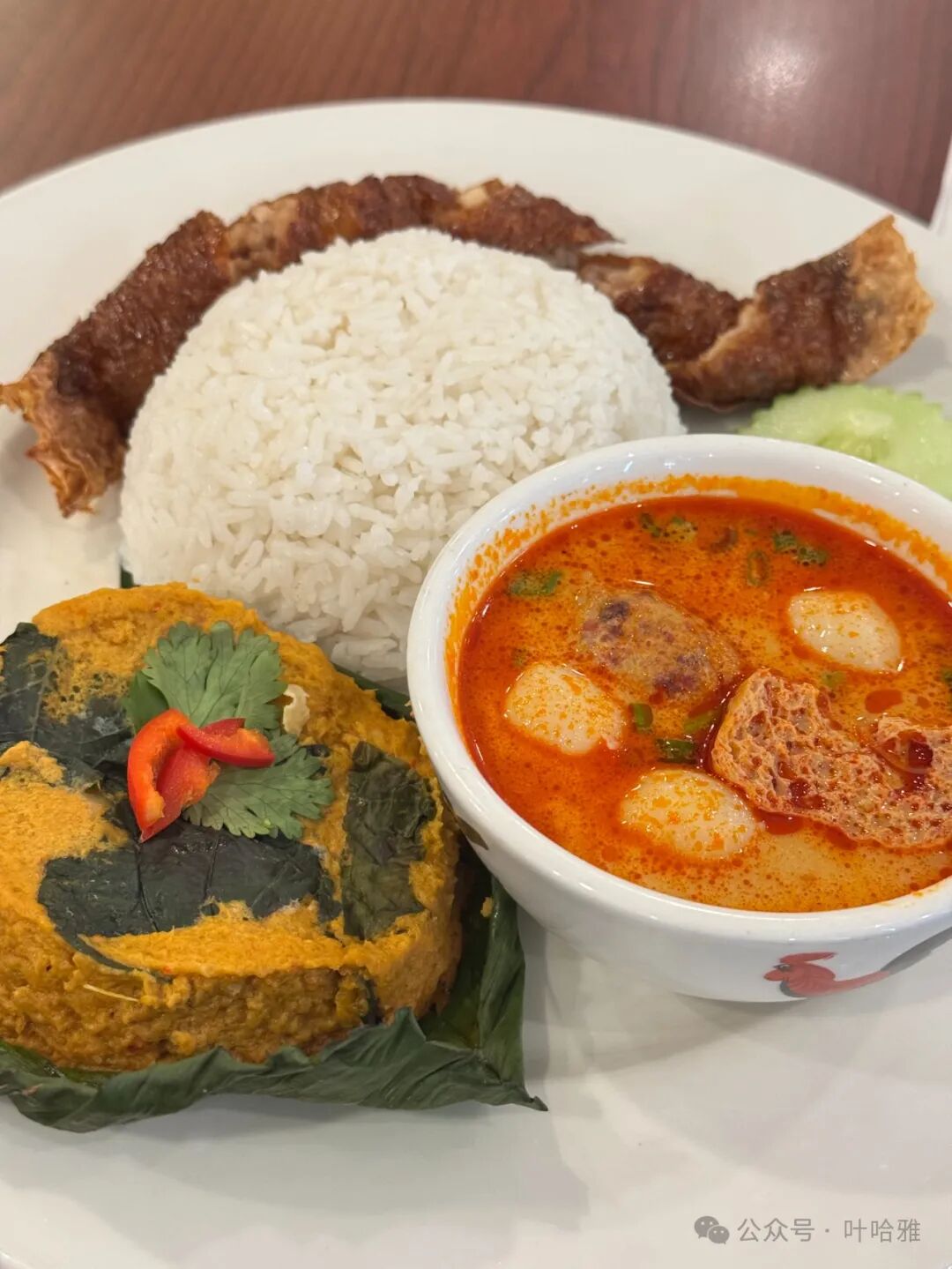
6. PADI HOUSE
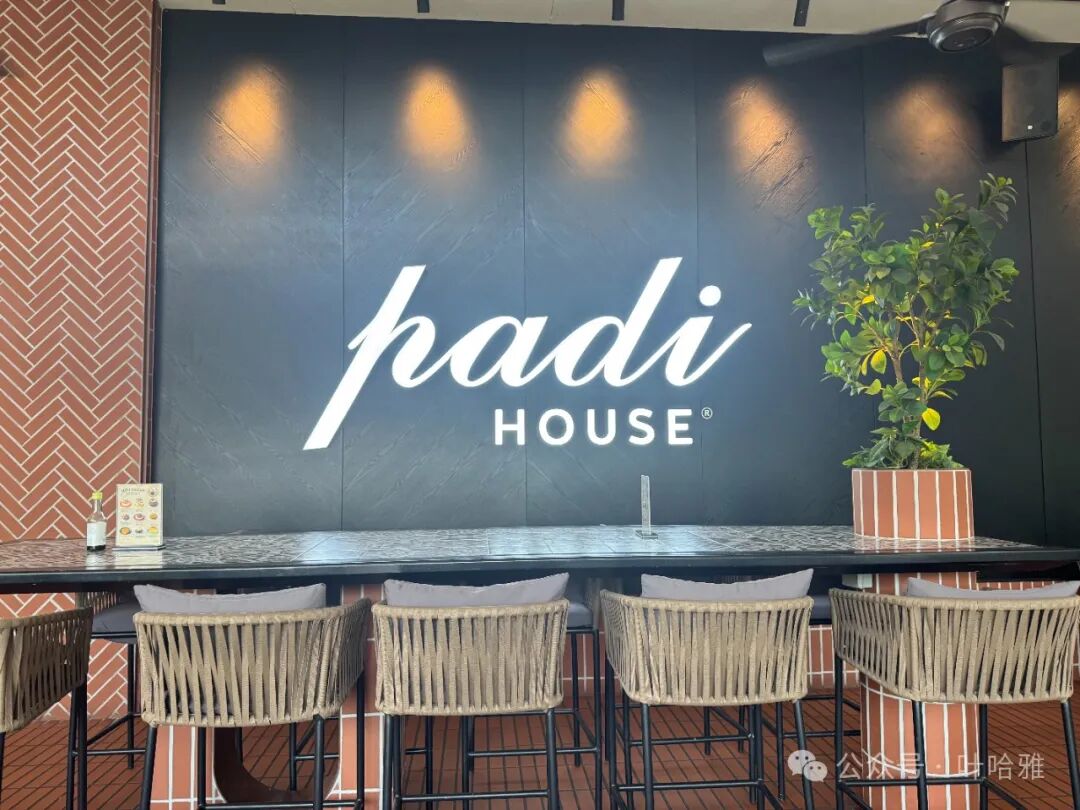
I posted on social media that I was visiting a lot of cafes for this food map. Because of my job, I can work from anywhere in the world as long as I have internet. These cafes have air conditioning, WiFi, and the drinks are very cheap—about half the price of those in Beijing. I love that I can eat and drink there.
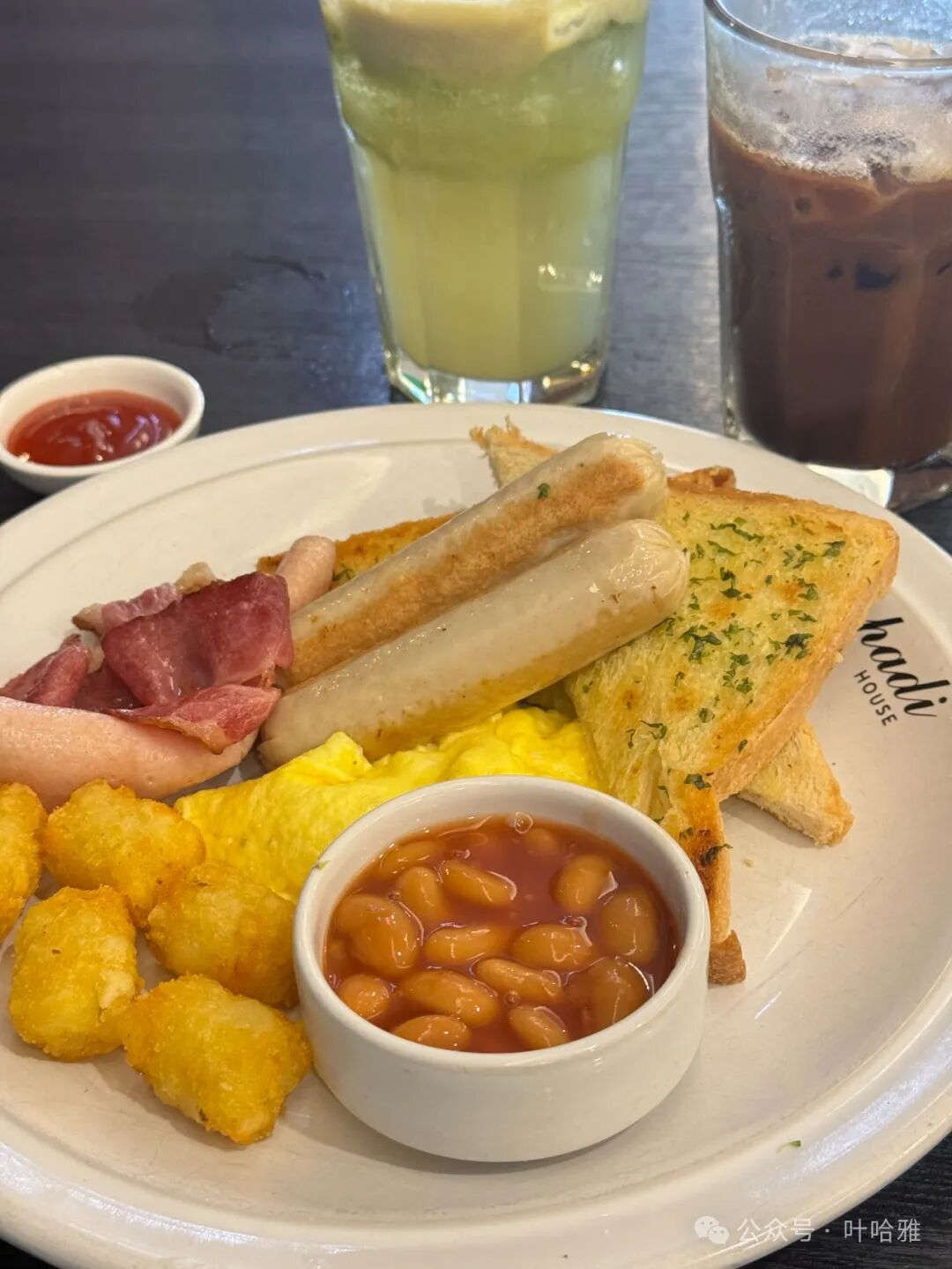
This is my favorite shop. It is right at the entrance of the Isetan mall and connects to the Petronas Twin Towers. I really like their healthy breakfast. It starts at 7:30 a.m., which is very early for Kuala Lumpur, where most shops do not open until after 10:00 a.m.
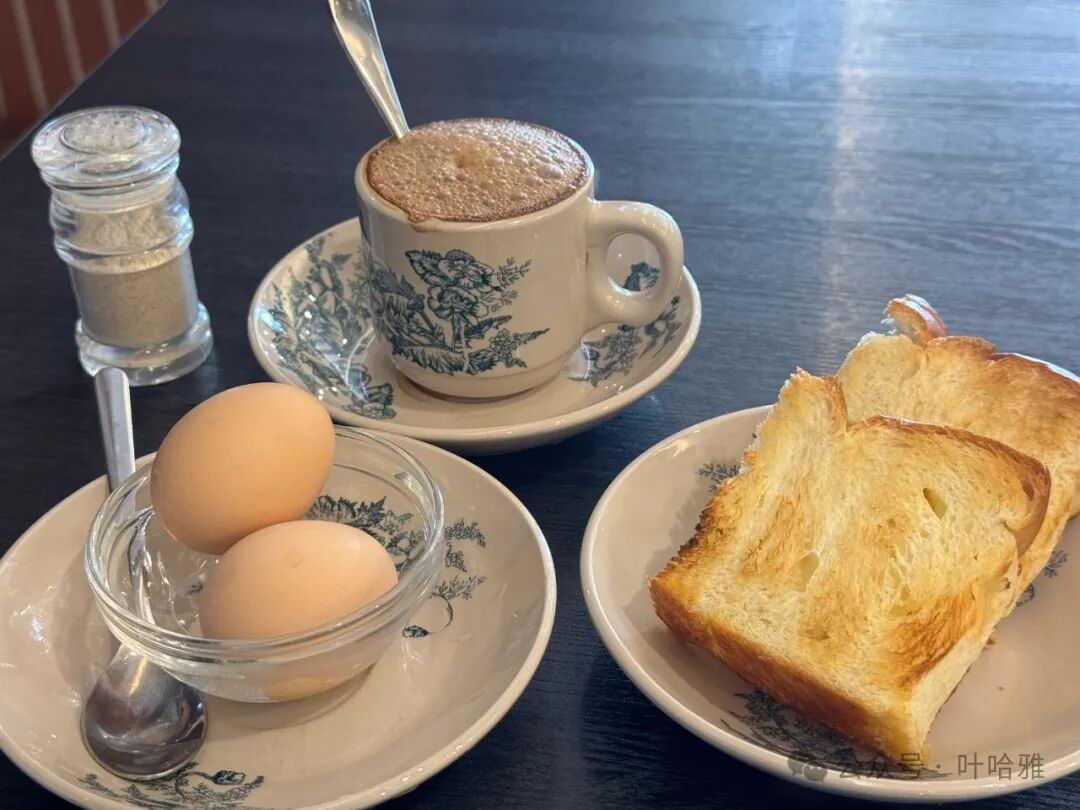
Breakfast is served all day until 10:00 p.m. This soft-boiled hot spring egg (onsen tamago) is one of the things I eat for breakfast. The set costs 10 ringgit and includes a cup of coffee.
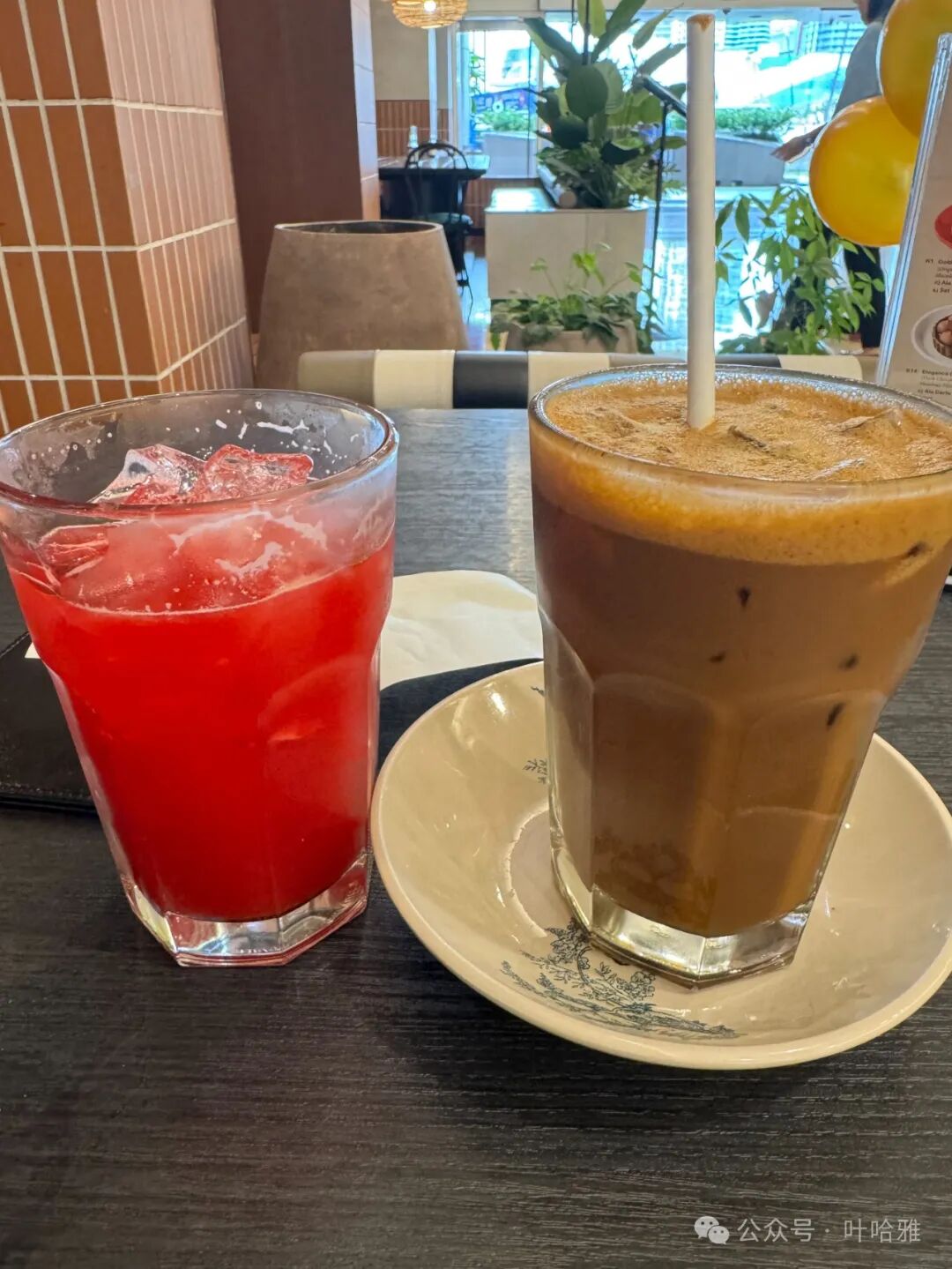
If it is not mealtime, I like to order two drinks: a coffee and a juice. The juice is 10 ringgit and the coffee is 5 to 7 ringgit, totaling about 20 yuan. In Beijing, this combination of fresh juice and coffee would cost at least 50 yuan.
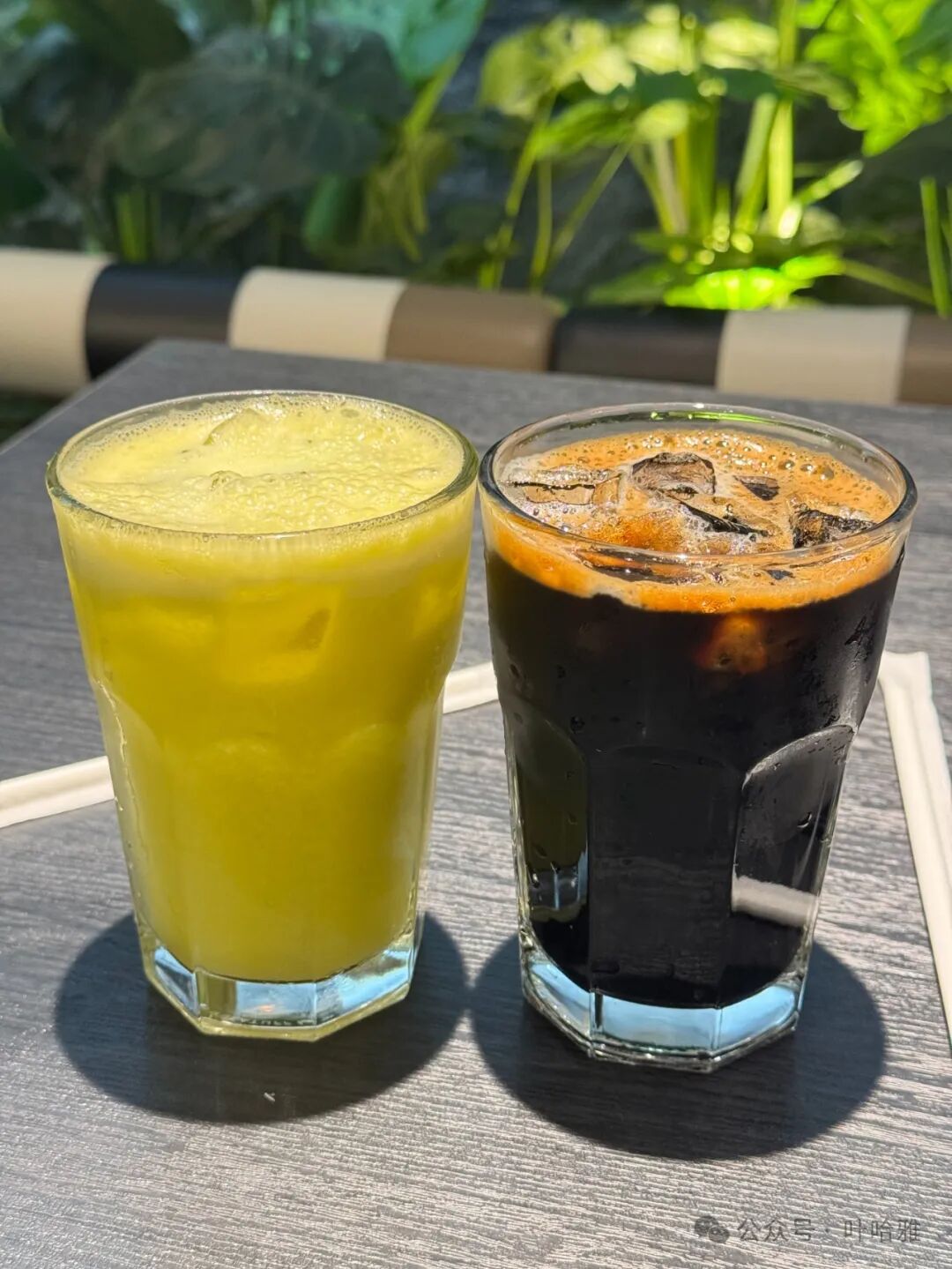
I can stay here all afternoon. If I get hungry from drinking, I order a snack. My son loves these crispy shrimp crackers (xiapian).
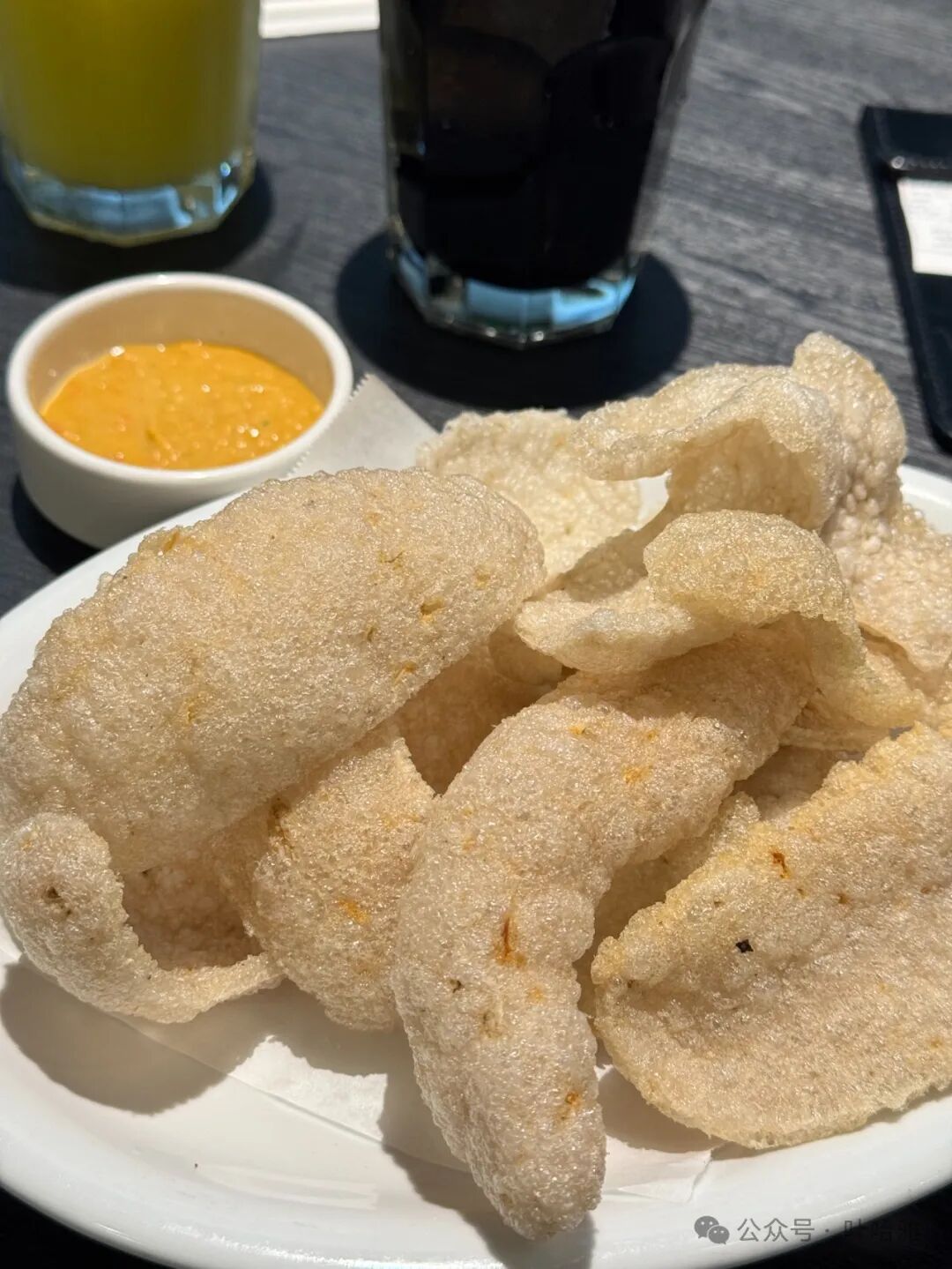
7. Dotty’s
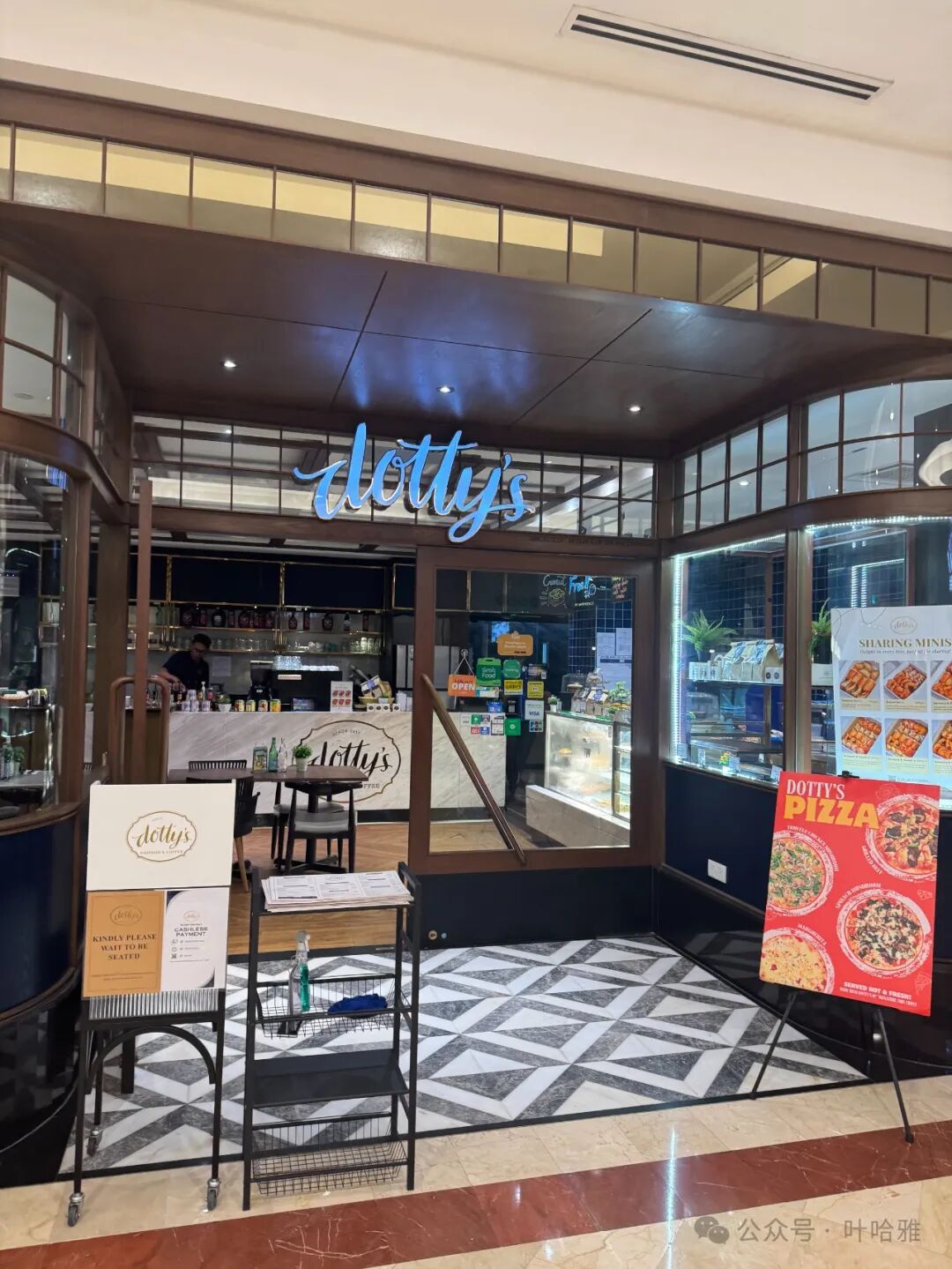
Dotty’s is right across from Padi. I don't think the drinks at Dotty’s are as good as Padi’s, and it is too noisy inside. Locals seem to prefer Dotty’s. Neither shop sells alcohol; they are Western-style cafes that also serve simple Malaysian-style meals.
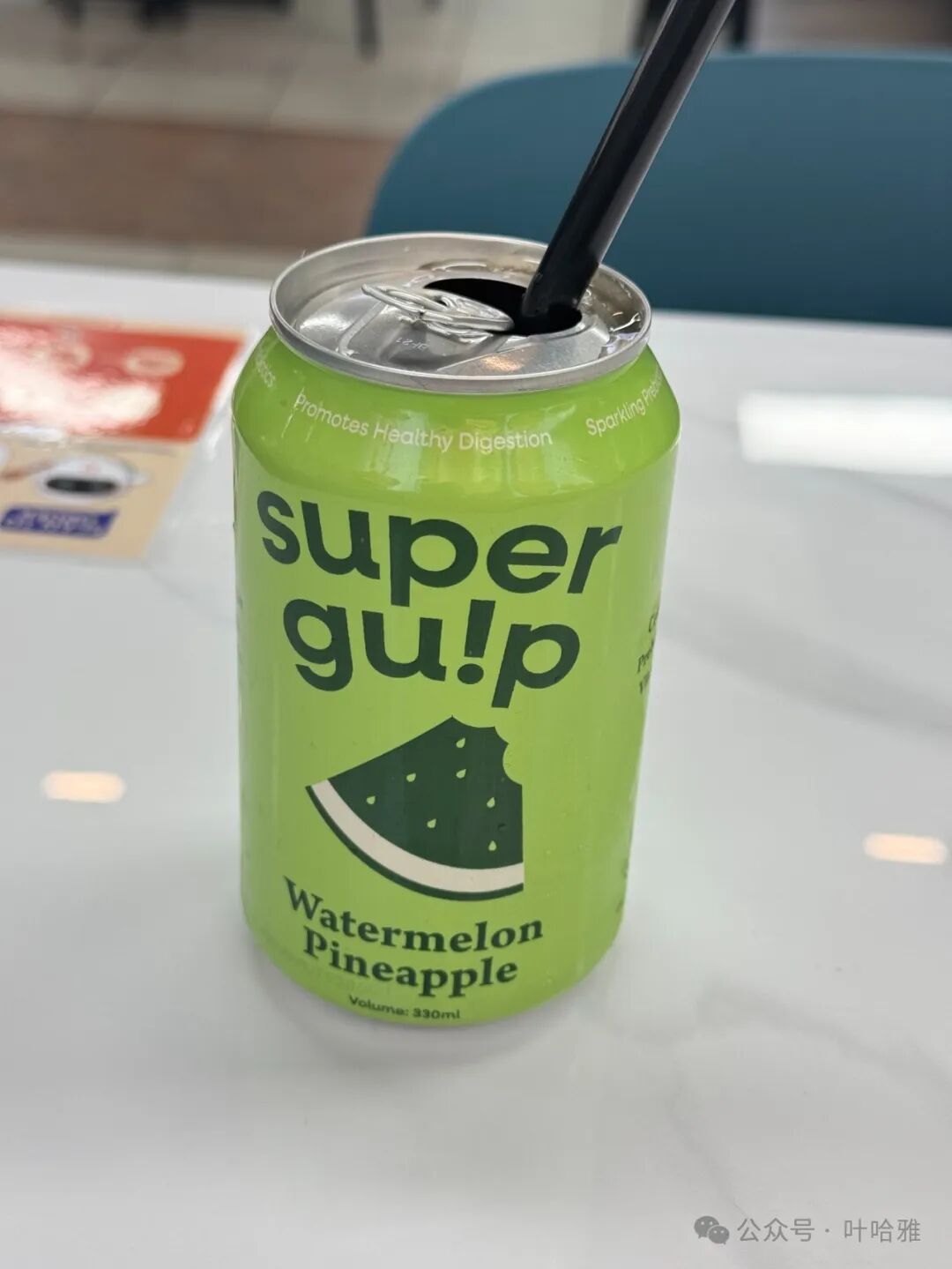
The drink prices here are a little higher than at Padi. A small can of mixed fruit juice costs over 20 ringgit, and the coffee tastes very average. I only came here once and go to Padi every other time.
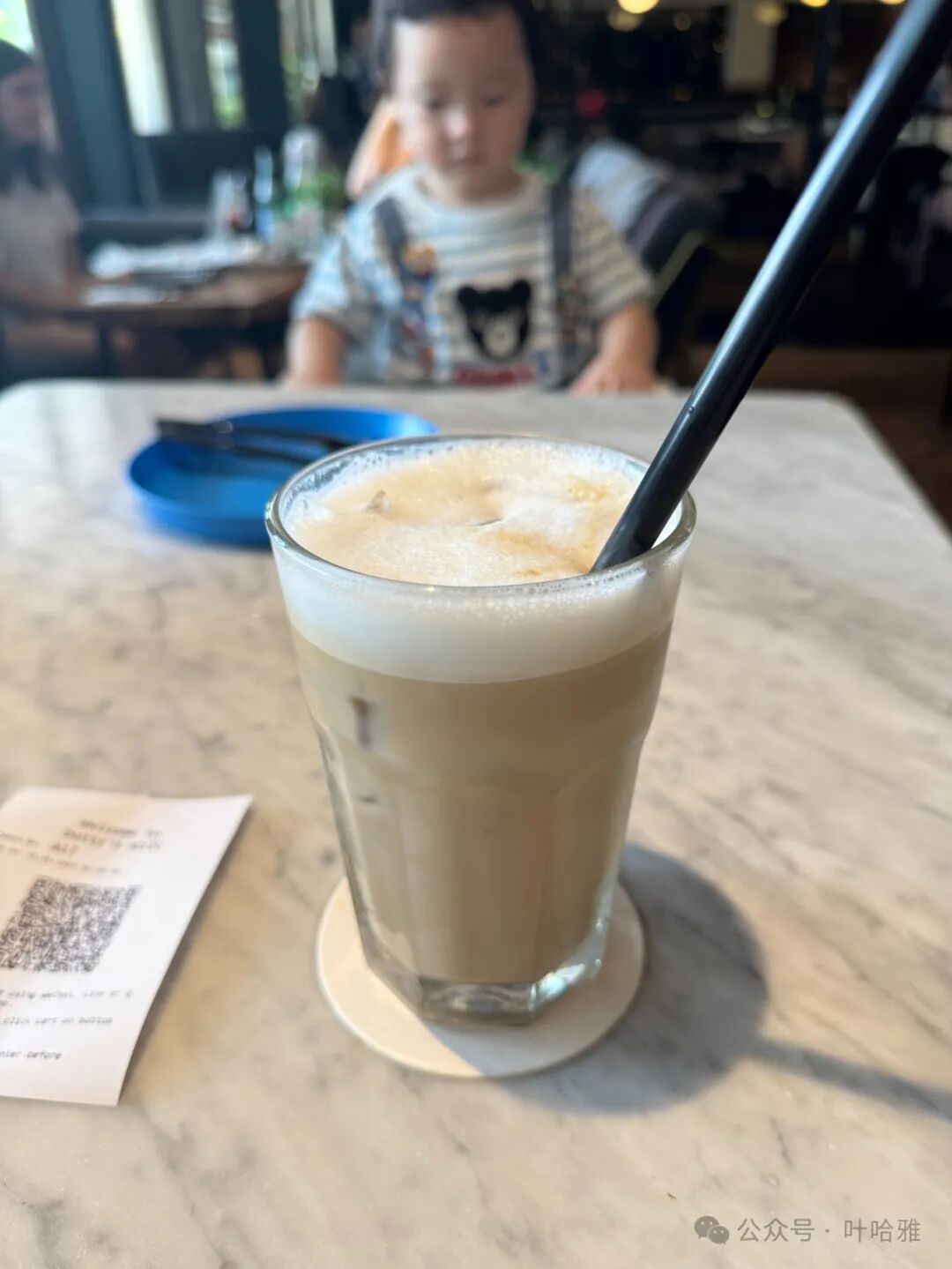
8. BAPE CAFE
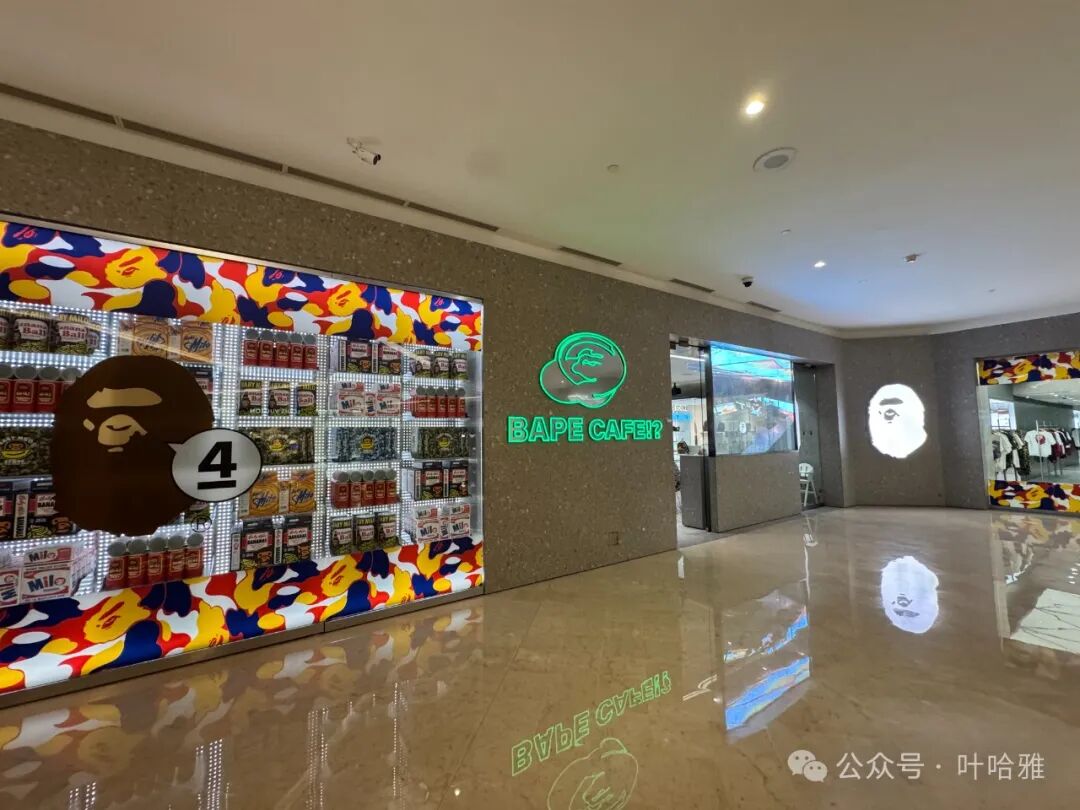
Bape is a trendy Japanese clothing brand, which stands for a bathing ape. Bape is considered the high-end line of Aape. I was surprised to find they opened a cafe in Kuala Lumpur.
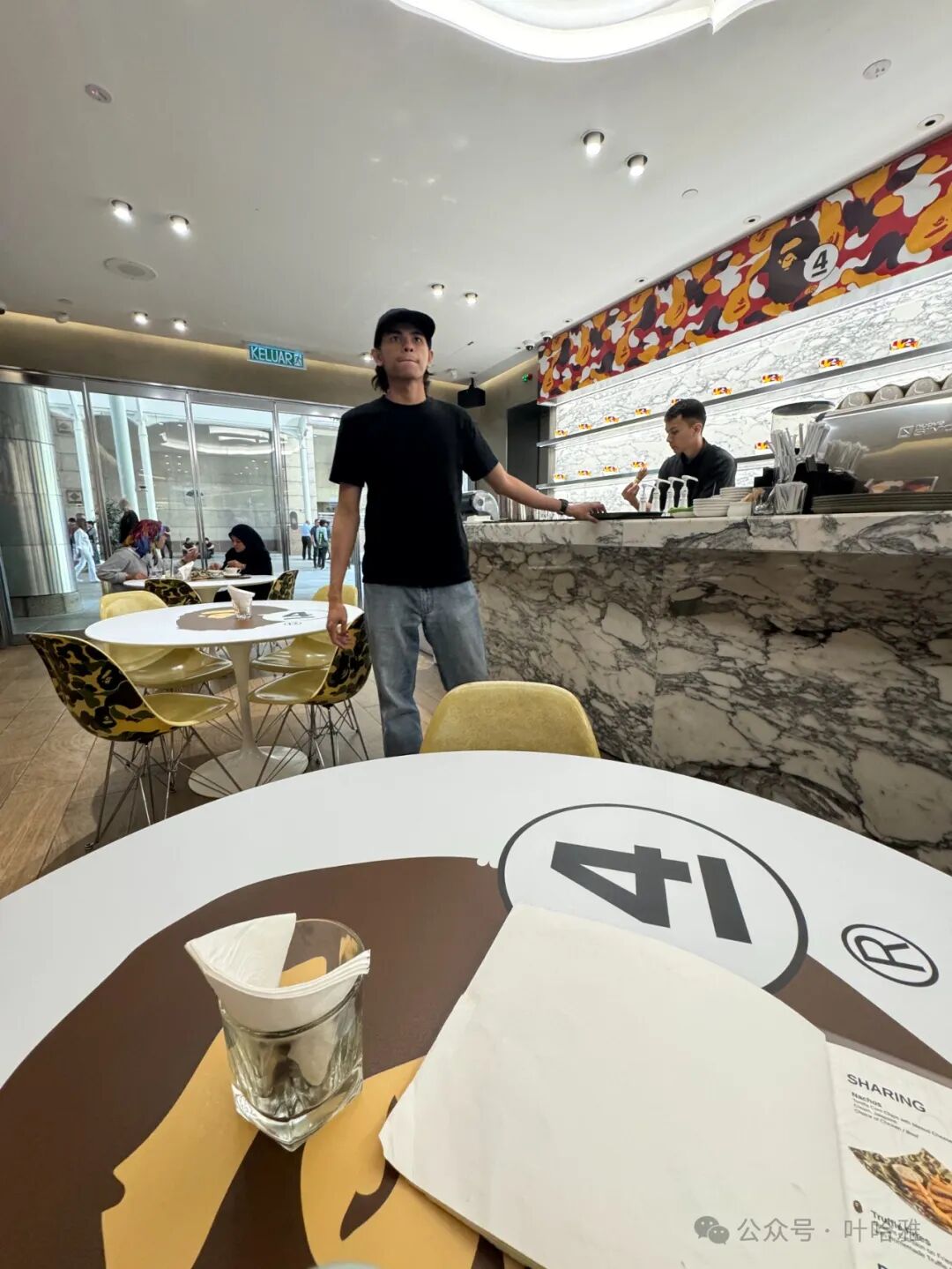
This cafe doesn't look fancy at all, the prices are very affordable, and I found the taste of the drinks quite ordinary.
They serve light meals, coffee, and desserts, so I ordered a piece of chocolate that features their brand logo.
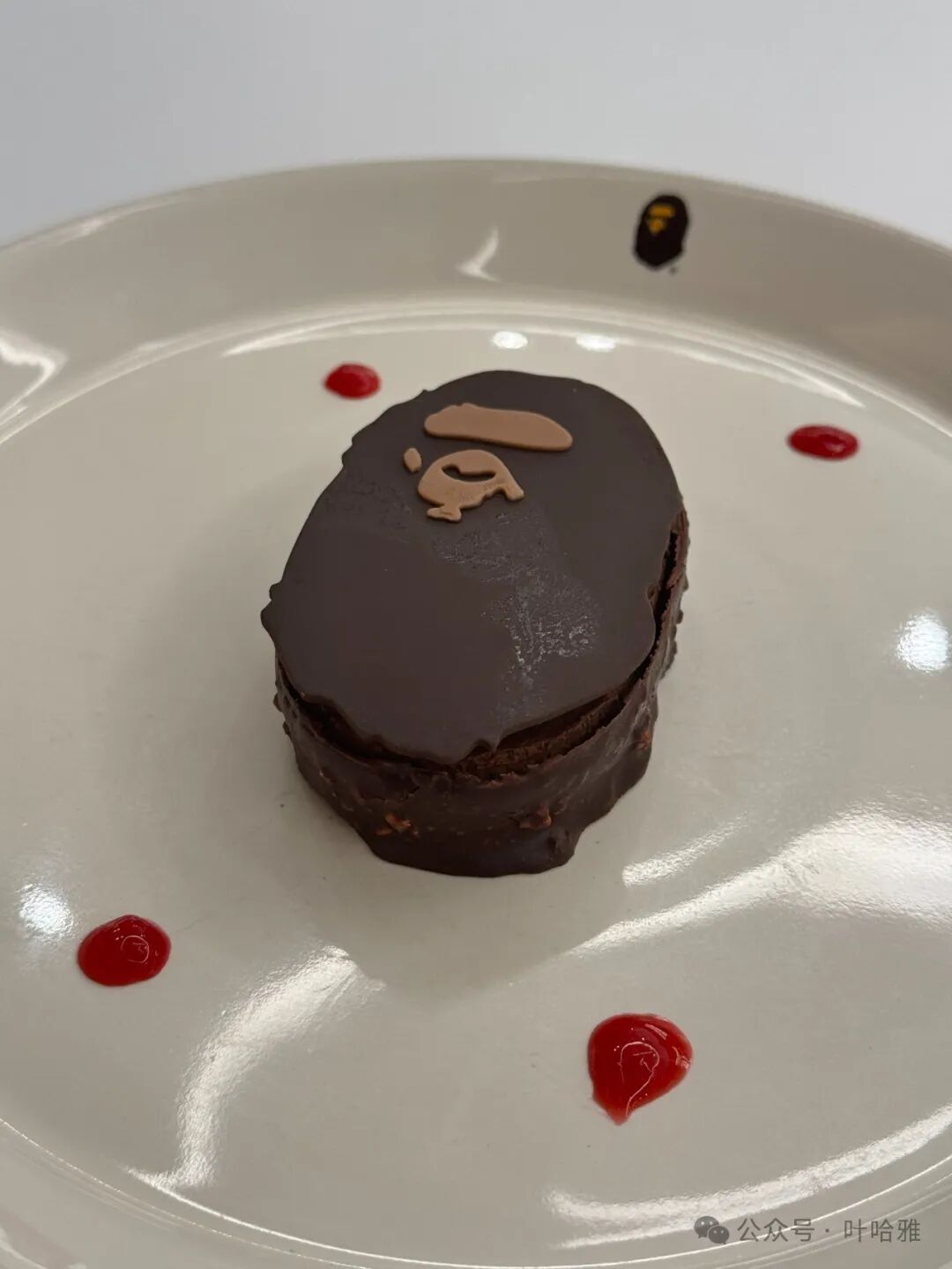
To be honest, it wasn't very good, so I only ate half. This piece of chocolate cost about 40 RMB.
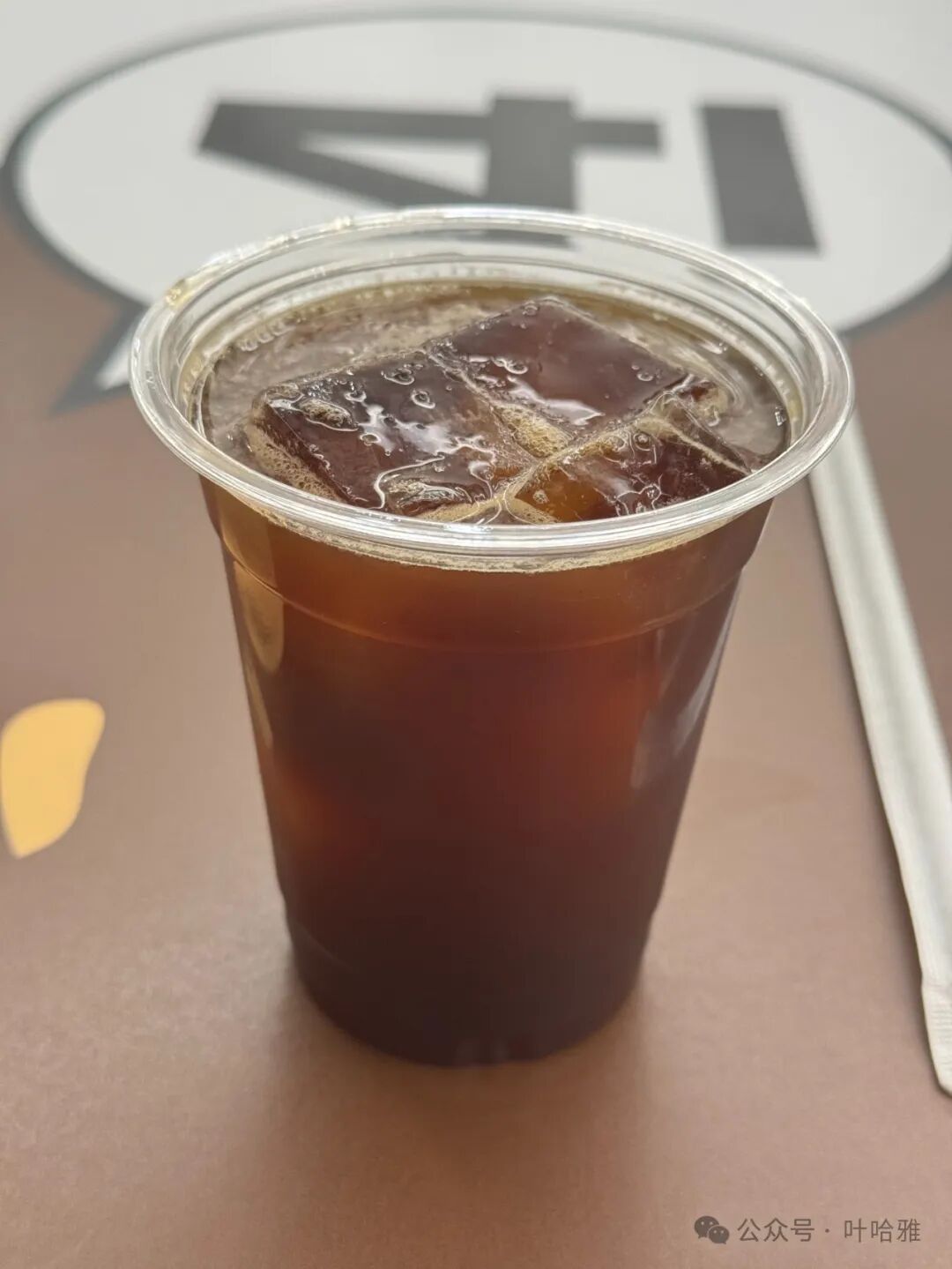
The coffee was also very average, and I don't like using these disposable cups. The shop is on the G floor of the Petronas Twin Towers, near the entrance to the KLCC Park fountain.
9. BURGER & LOBSTER
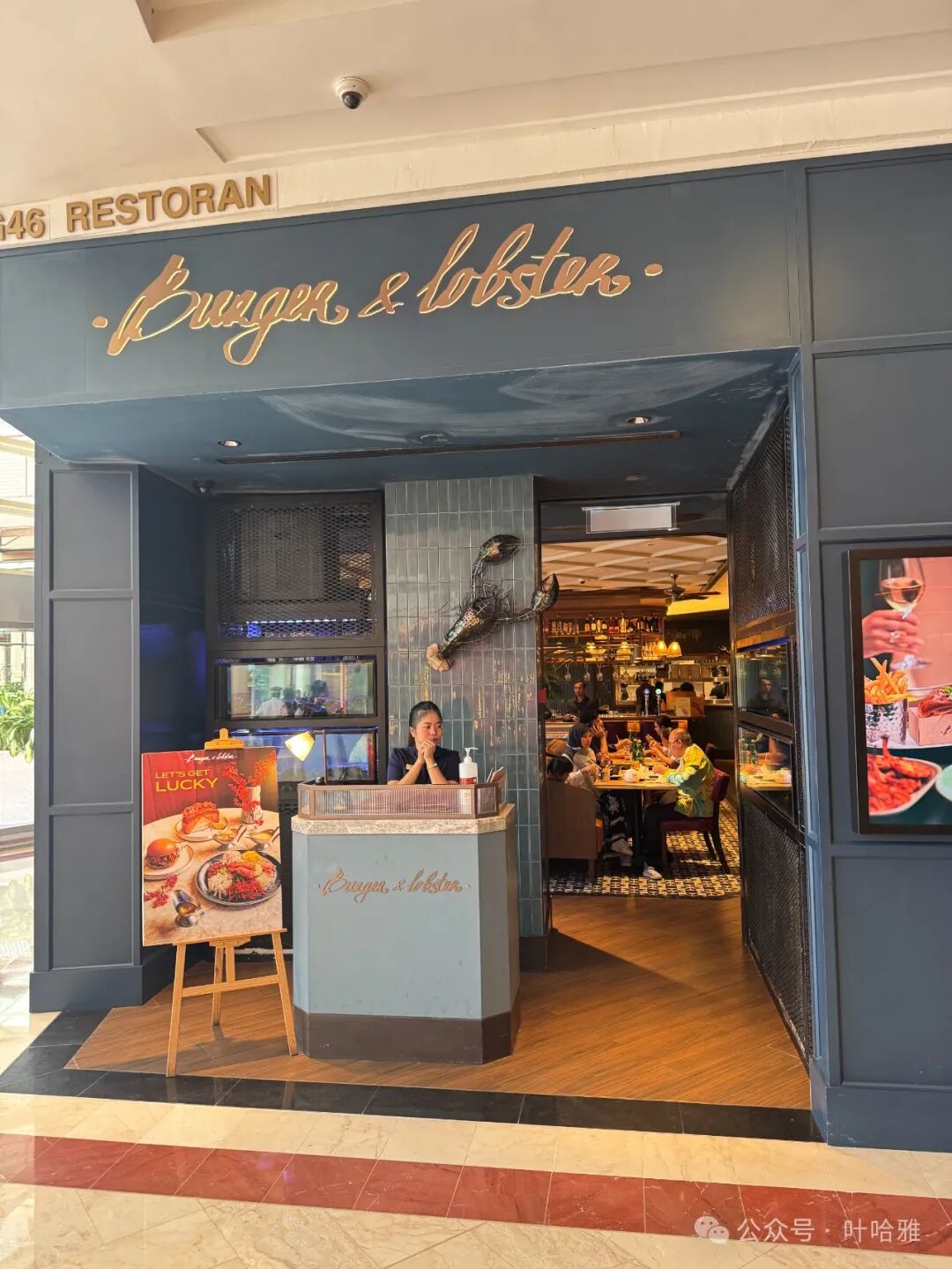
Next to Bape is this American burger and lobster restaurant, both located at the G floor entrance of the Twin Towers. I have only tried their burgers, which are truly delicious and high quality, but they are expensive. This burger costs about 100 RMB.
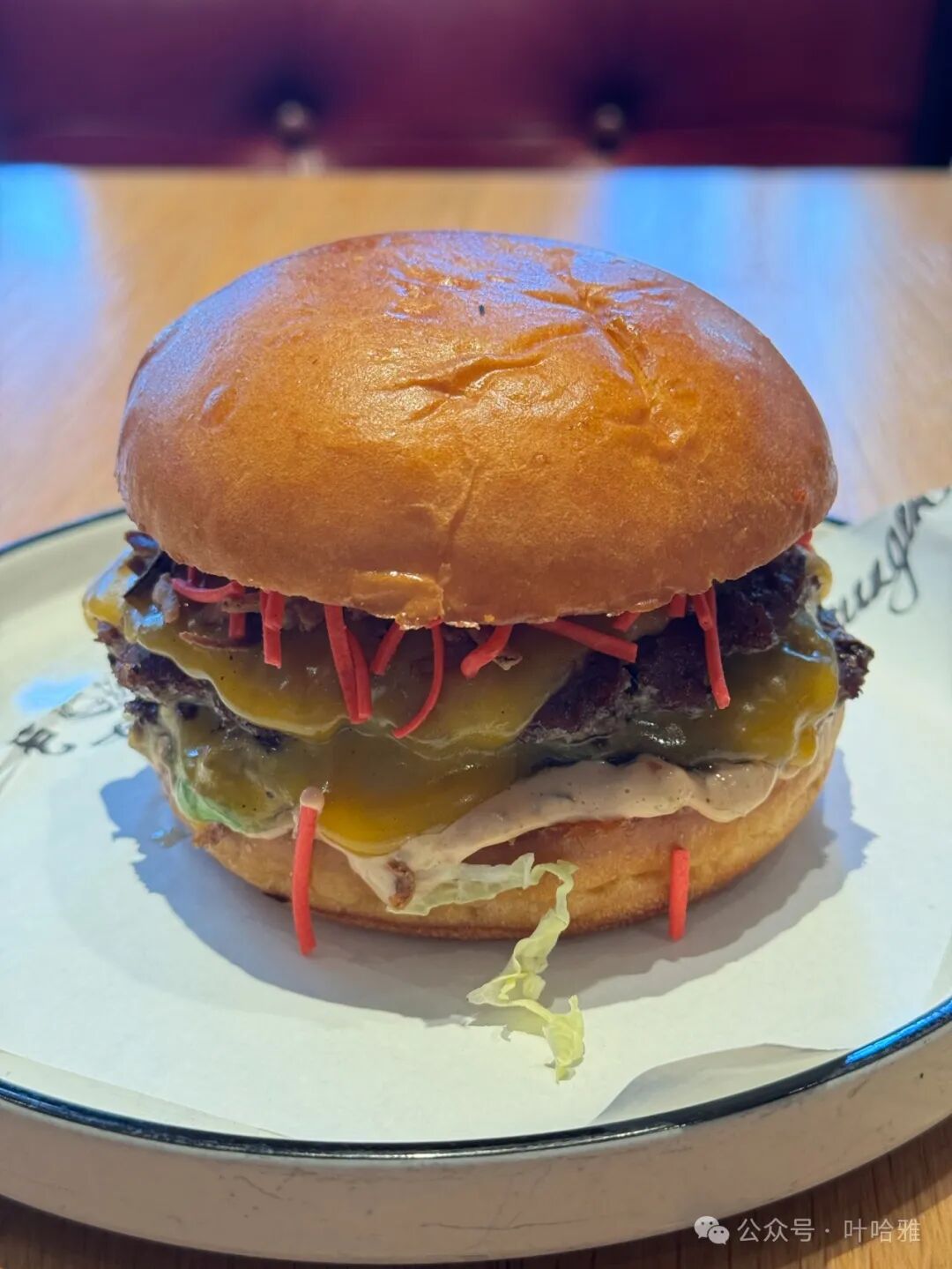
10. BUNGKUS KAWKAW
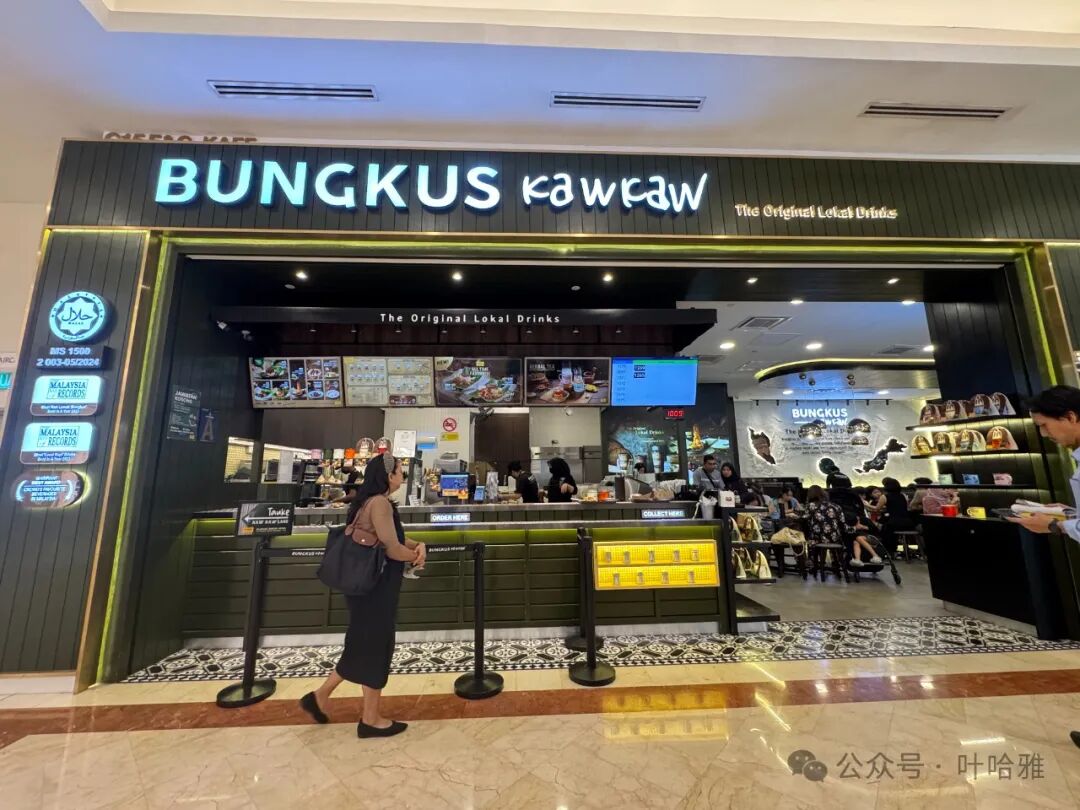
There is a very popular pulled tea (teh tarik) shop on the B1 floor of the Twin Towers. Pulled tea is Malaysian milk tea. I have had it a few times and it is really tasty and cheap, costing only 5 MYR per cup with many flavors to choose from.
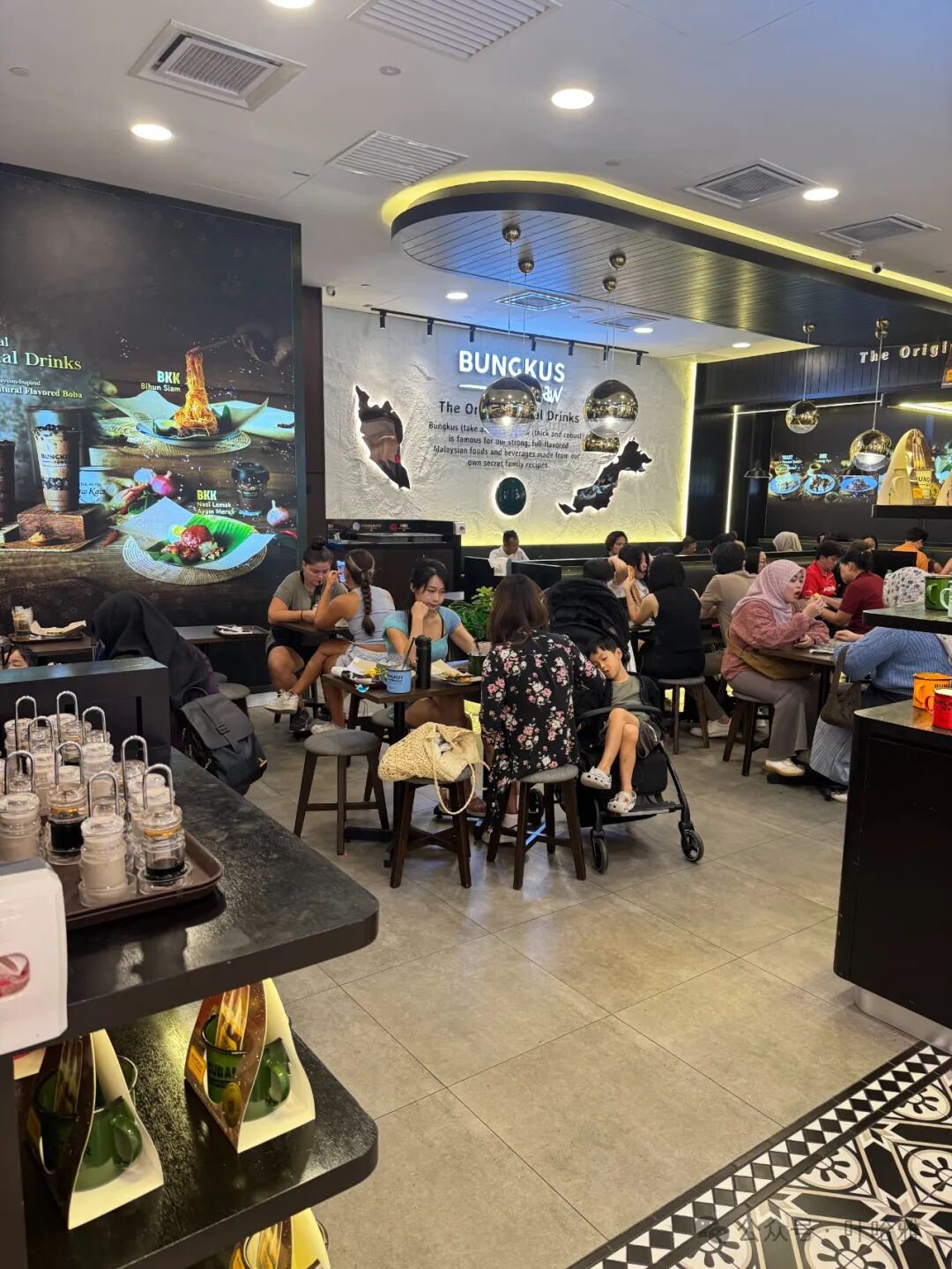
The shop is always busy and full of customers, so I usually get it to go and grab one of their signature snacks to go with it.
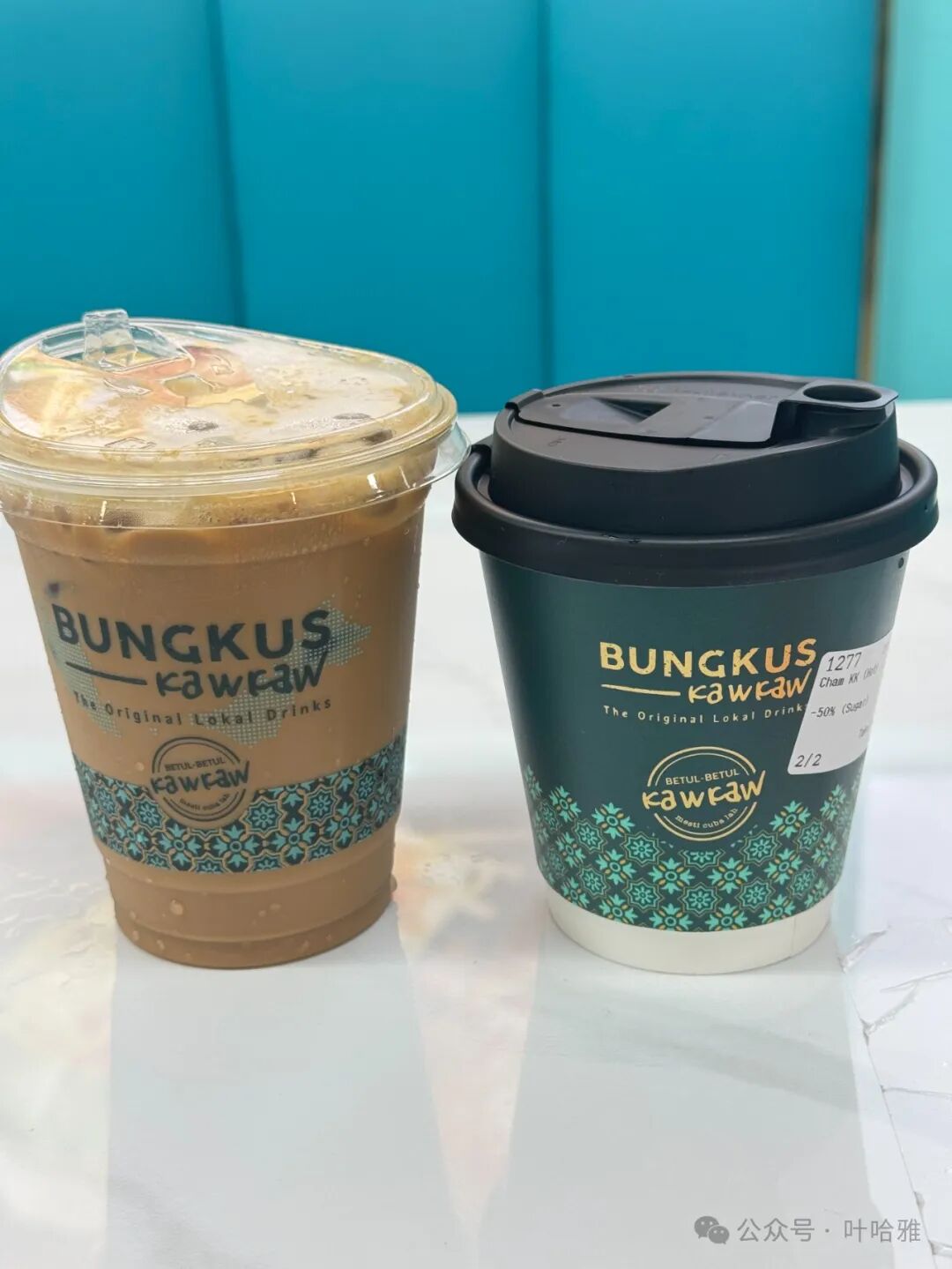
11. YUZU
This is a Japanese restaurant on the 4th floor of the Twin Towers. There are at least four Japanese restaurants in the Twin Towers, and each one has a slightly different style.
I think this place offers good value for money with many set meal options. This combo set includes various classic Japanese dishes and even wagyu beef, where you can choose how you want it cooked. It costs about 130 RMB in total, but the portion is a bit small; someone with a big appetite could probably eat two sets.
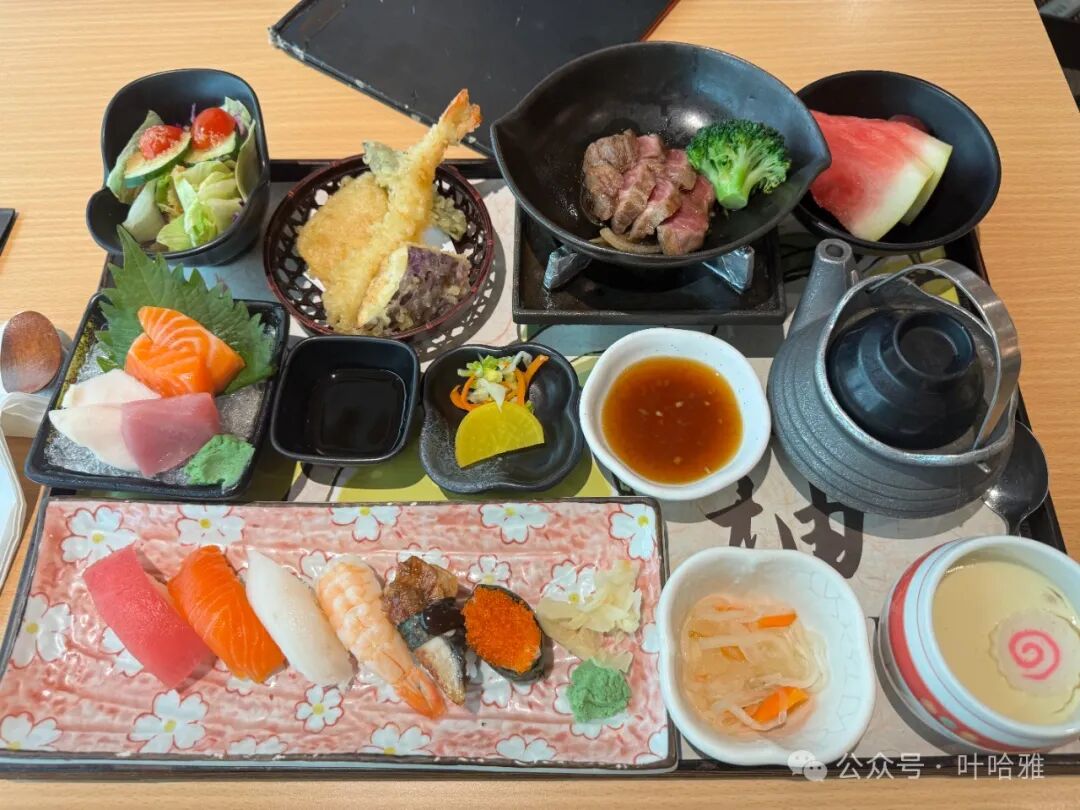
12. Old Oil Ghost (Lao You Gui Gui)
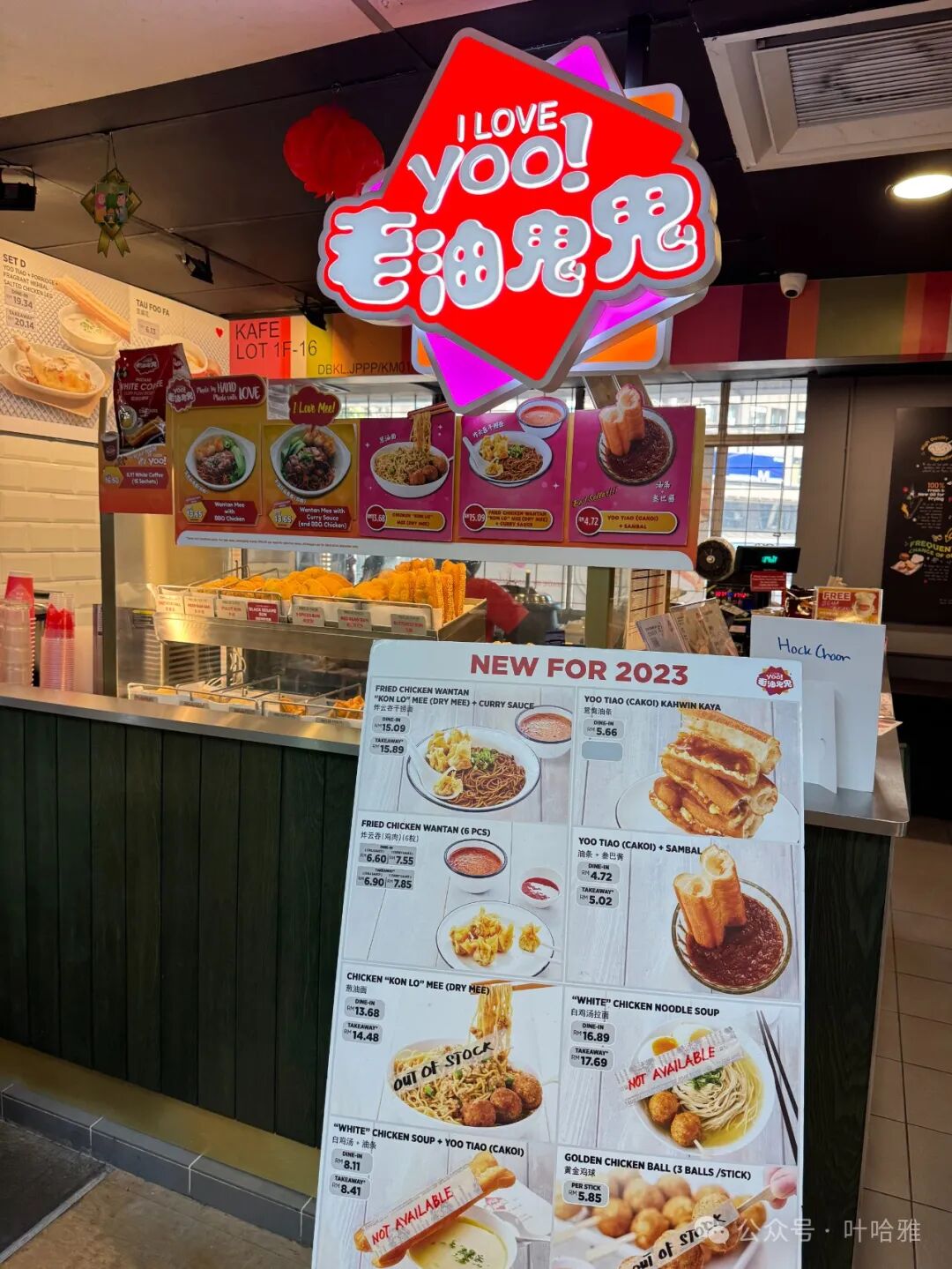
Every morning after I drop my son off at kindergarten, I go to this nearby Old Oil Ghost (Lao You Gui Gui) for breakfast. This is a chain brand that sells Chinese-style soy milk, fried dough sticks (youtiao), tofu pudding (doufuhua), and porridge.
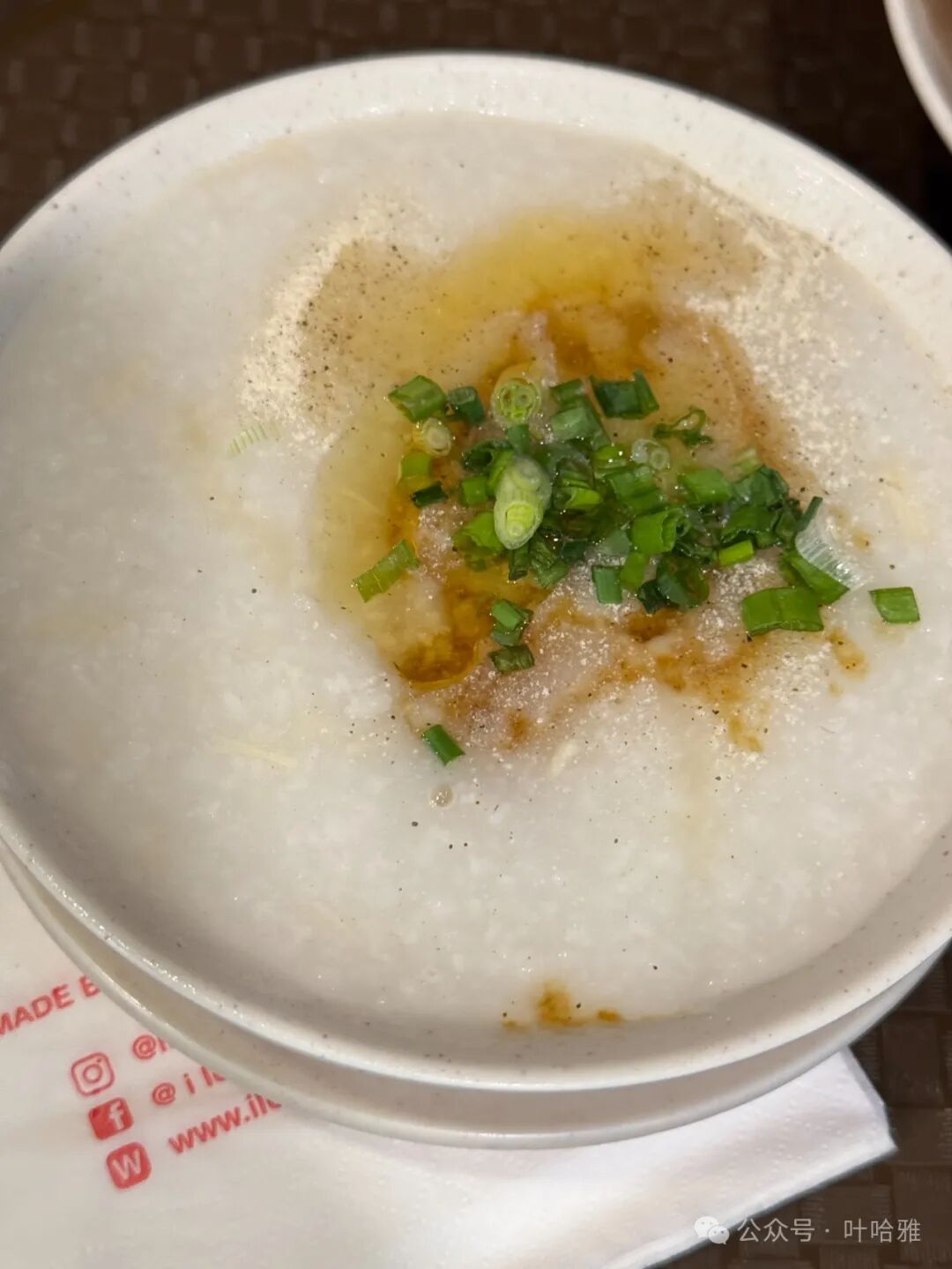
They make the dried scallop porridge in the Cantonese dim sum style. The tofu pudding is sweet, and with a fried dough stick, the whole breakfast costs about 10 Malaysian Ringgit.
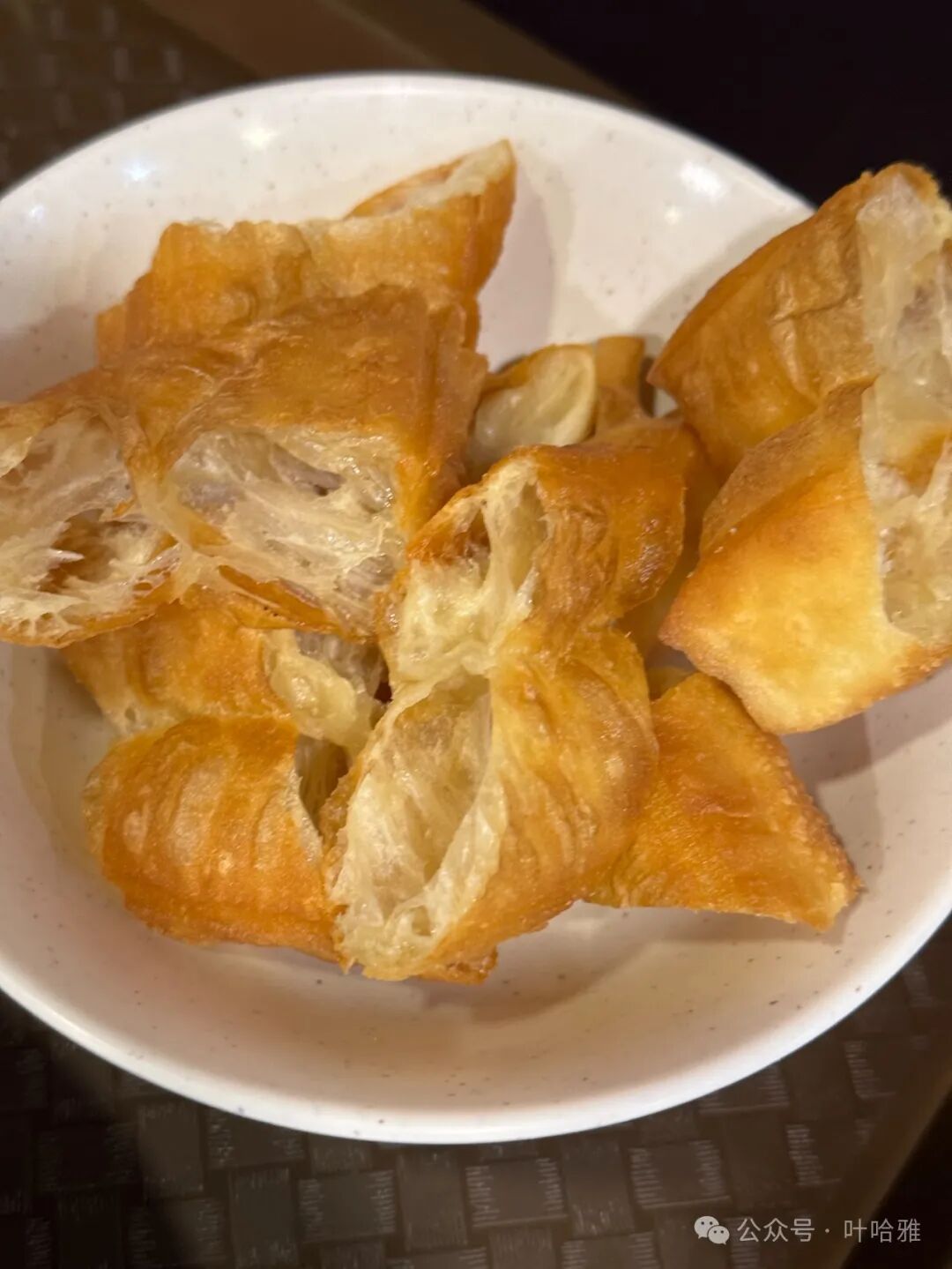
Old Oil Ghost is a chain, so you can find many locations by searching on a map.
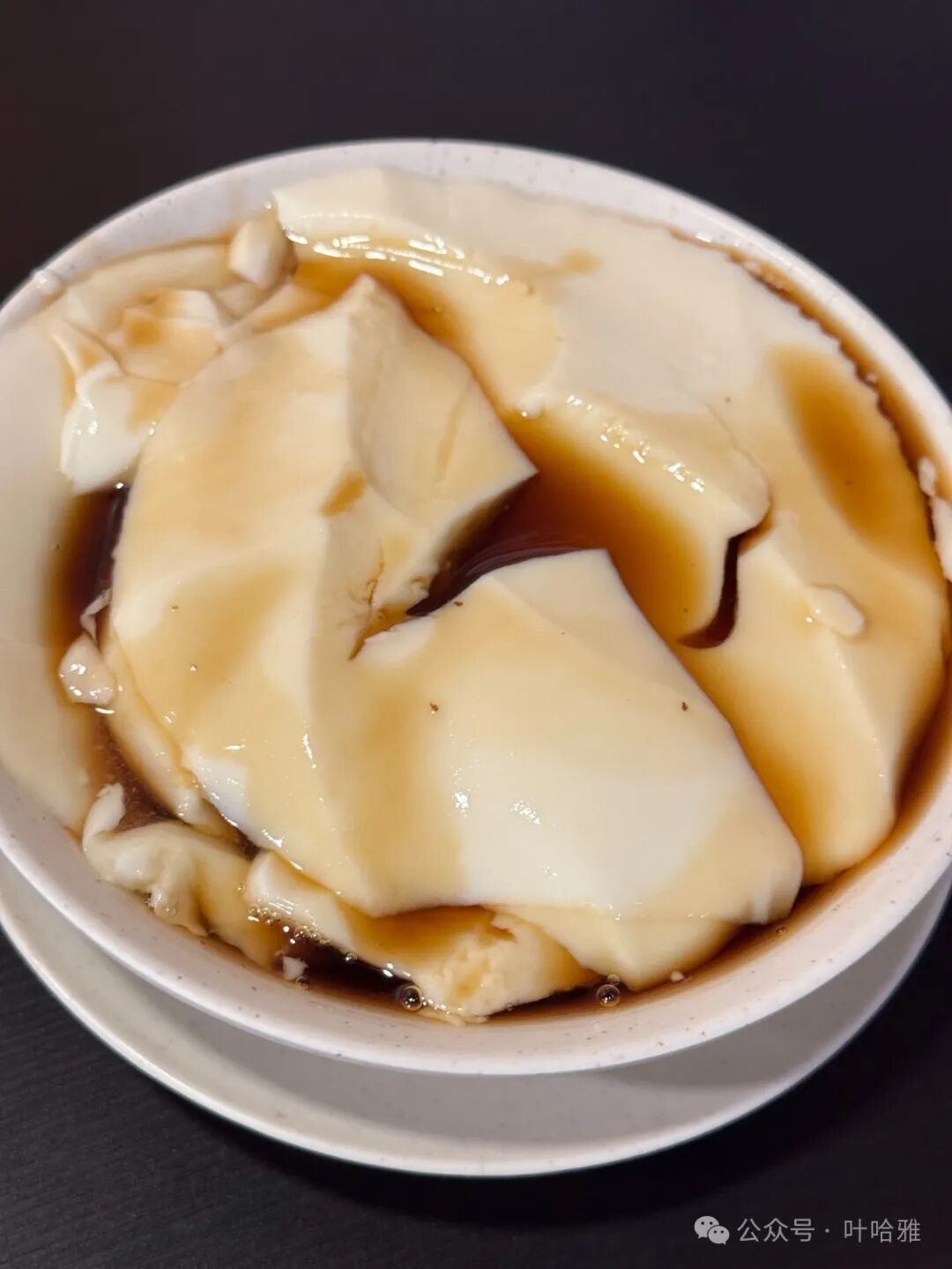
13. Chateraise
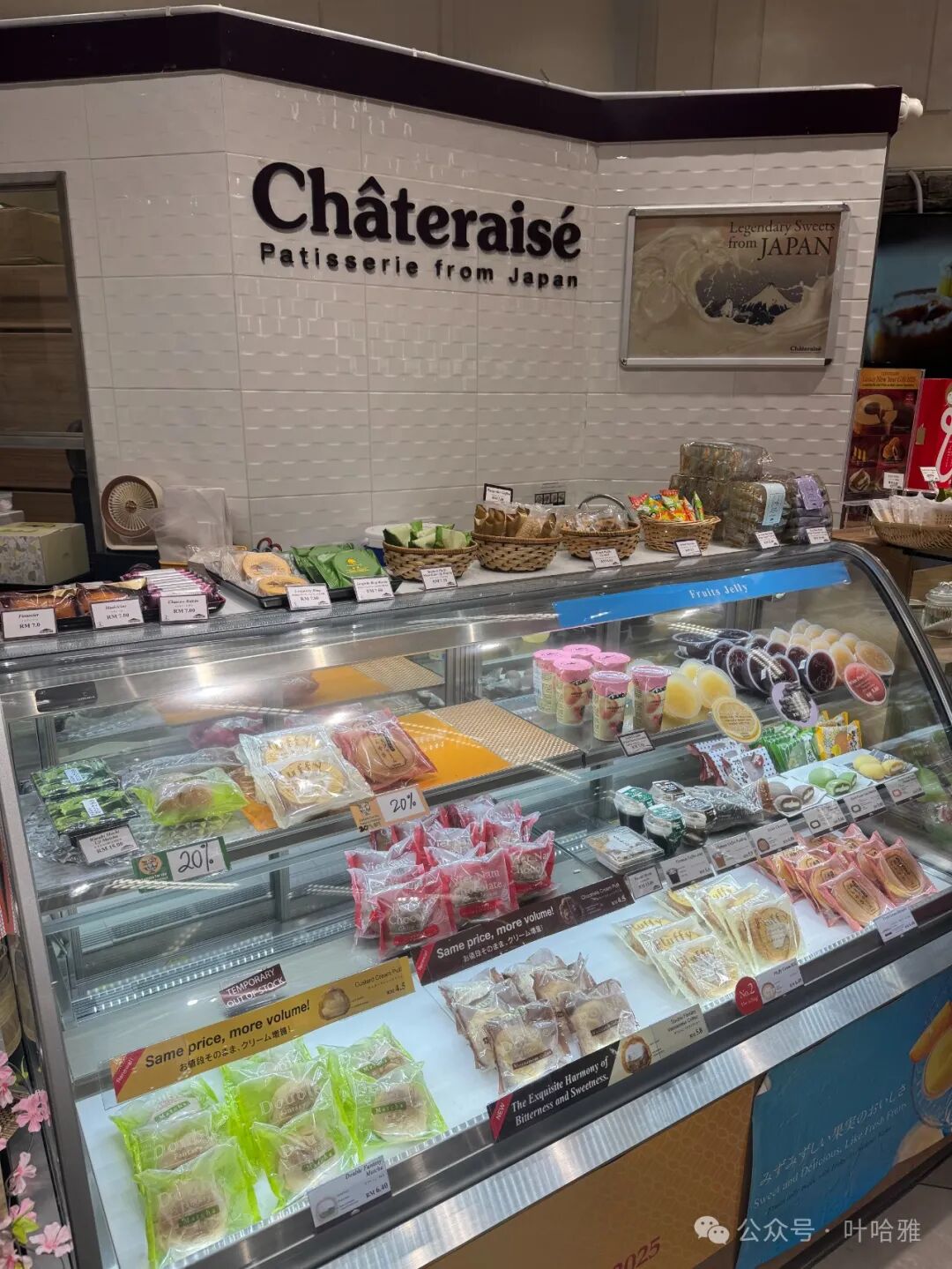
This is a cake shop that uses imported Japanese ingredients. I ordered my son's third birthday cake here. The school allows birthday celebrations and small gifts for the children, but they don't allow candy, chocolate, or nuts. Cake and fruit are fine.
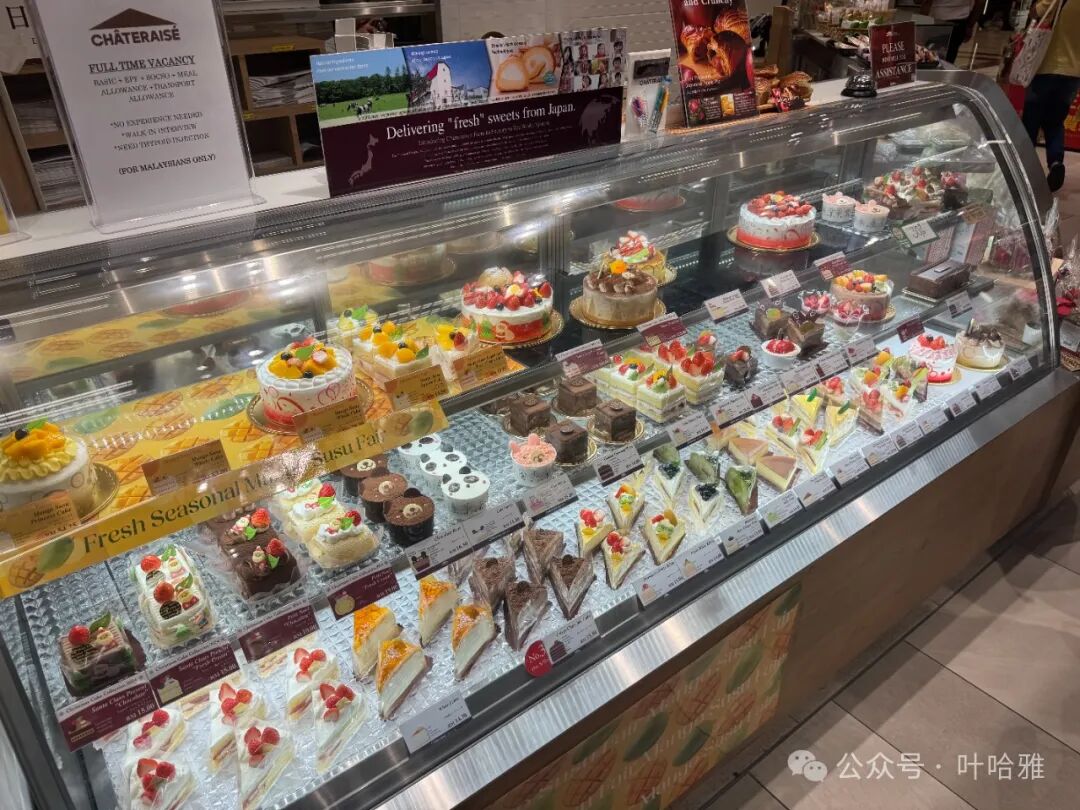
Japanese dairy products are very high quality. I once ate local dairy in Hokkaido, and I still remember how good it tasted.
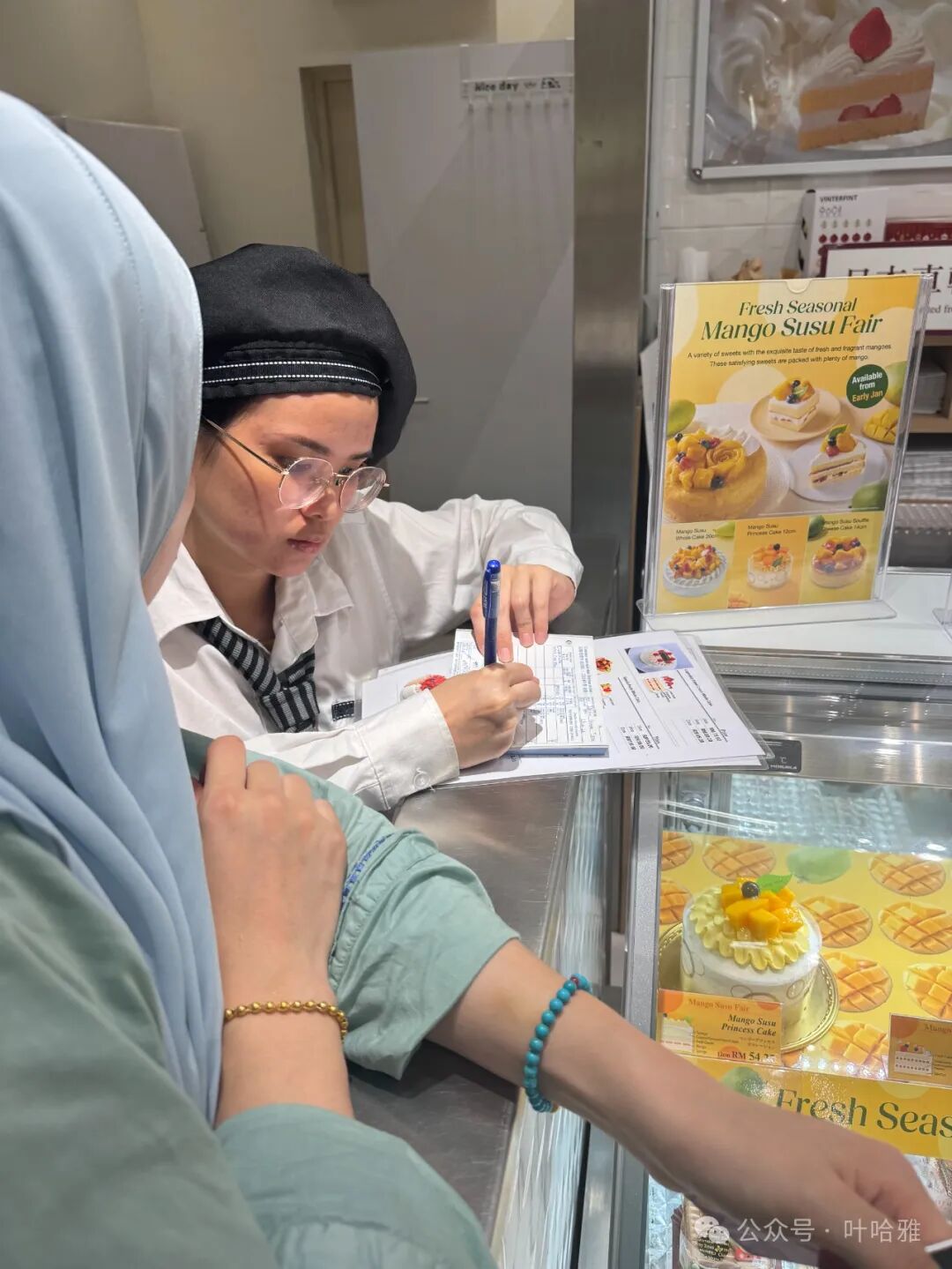
You can order a cake and pick it up the same day. A 21cm fruit cake costs only 170 RMB, which is much cheaper than in Beijing.
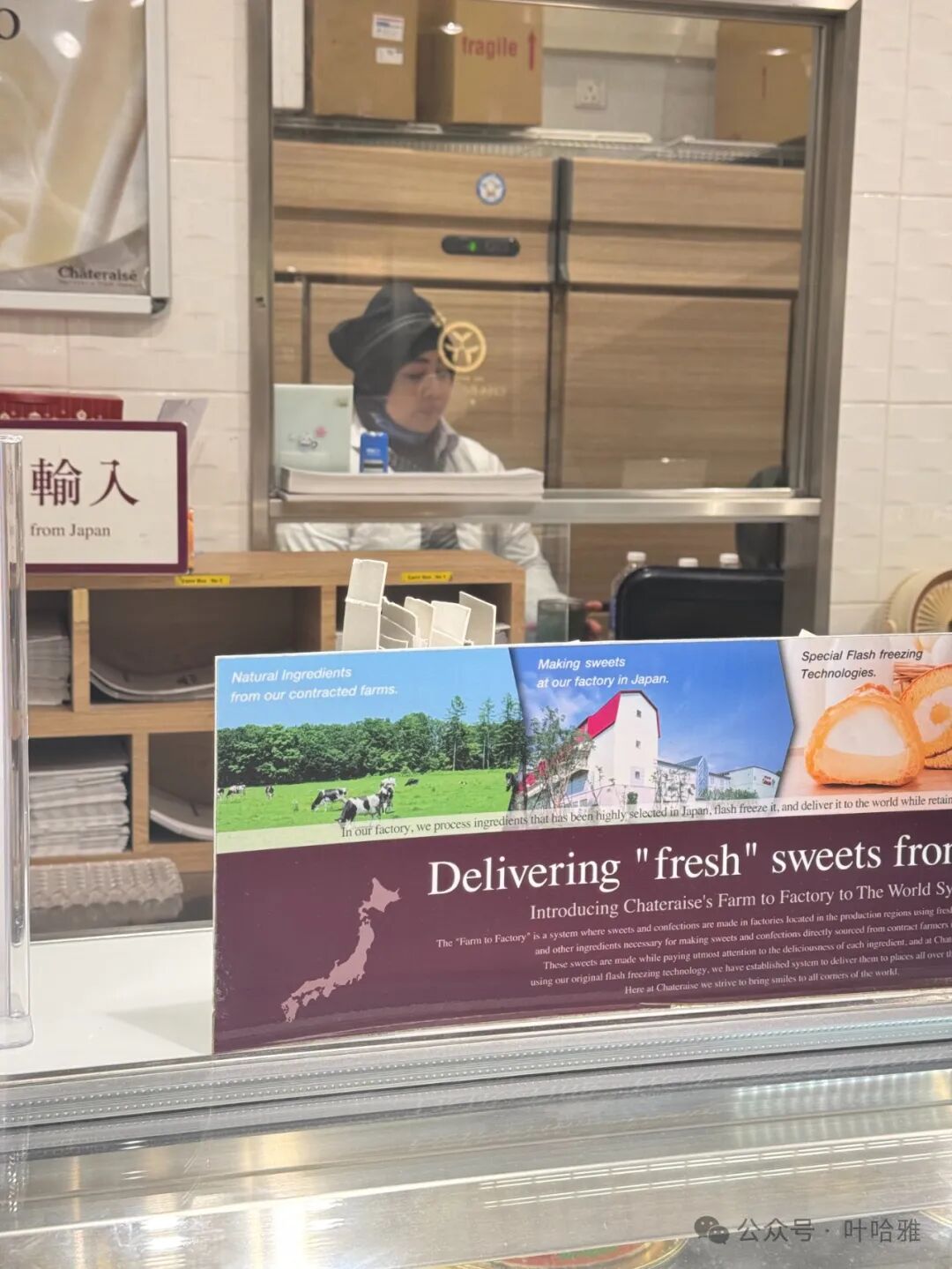
This was Fahim's first birthday in Malaysia and the most formal one he has ever had.
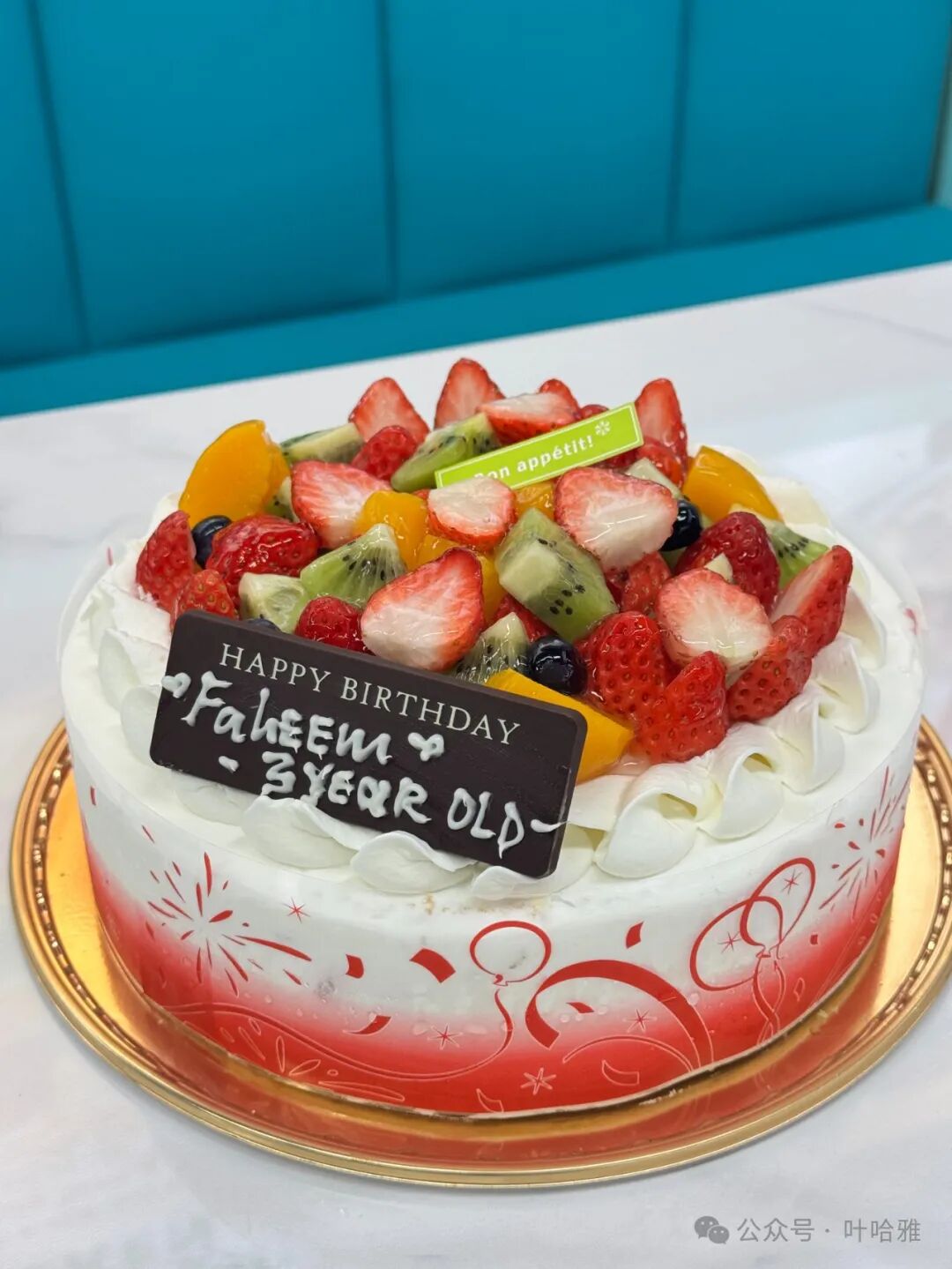
14. XVI
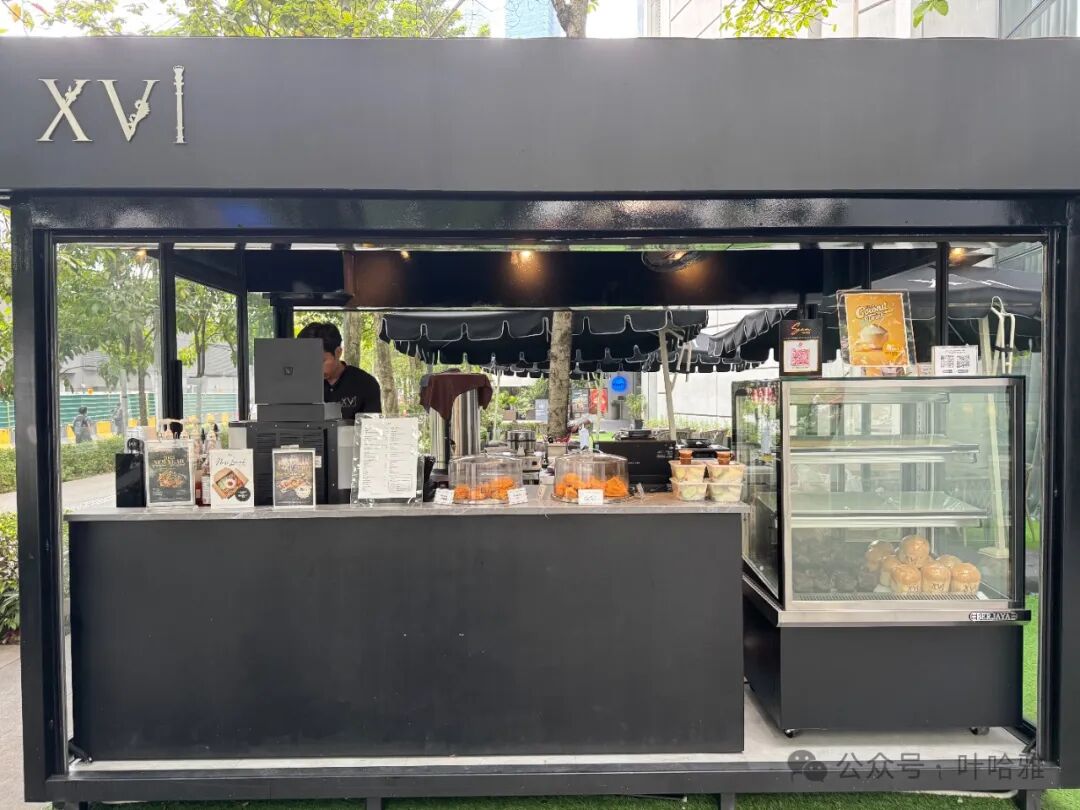
There is a cafe near Asy-Syakirin Mosque, and the back of the shop faces the mosque at KLCC.
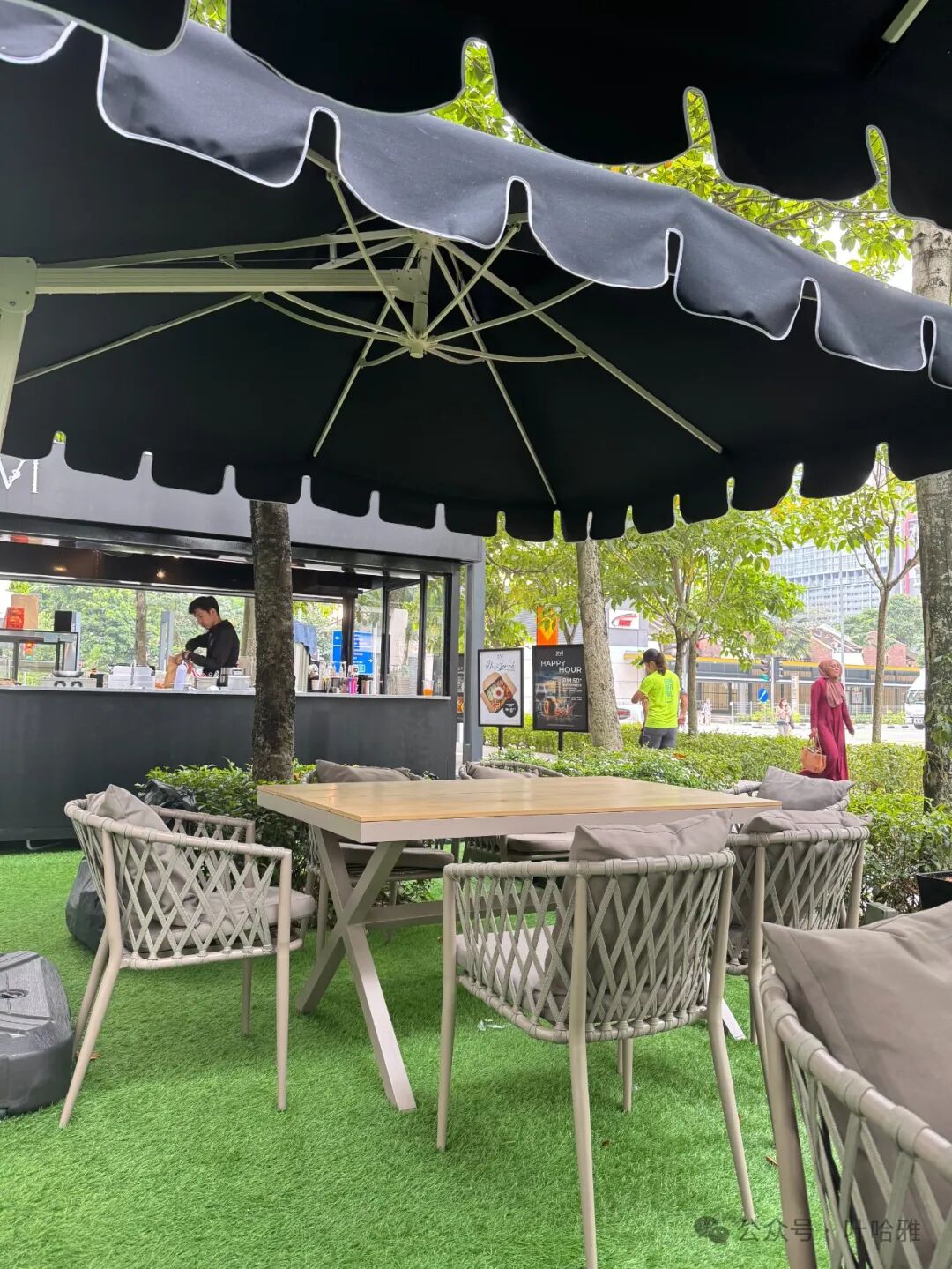
Sometimes I sit here in the morning, order a coffee, and watch the people walking by on their way to work at the Petronas Twin Towers. Their coffee and bread taste good, and a breakfast set costs 10 yuan.
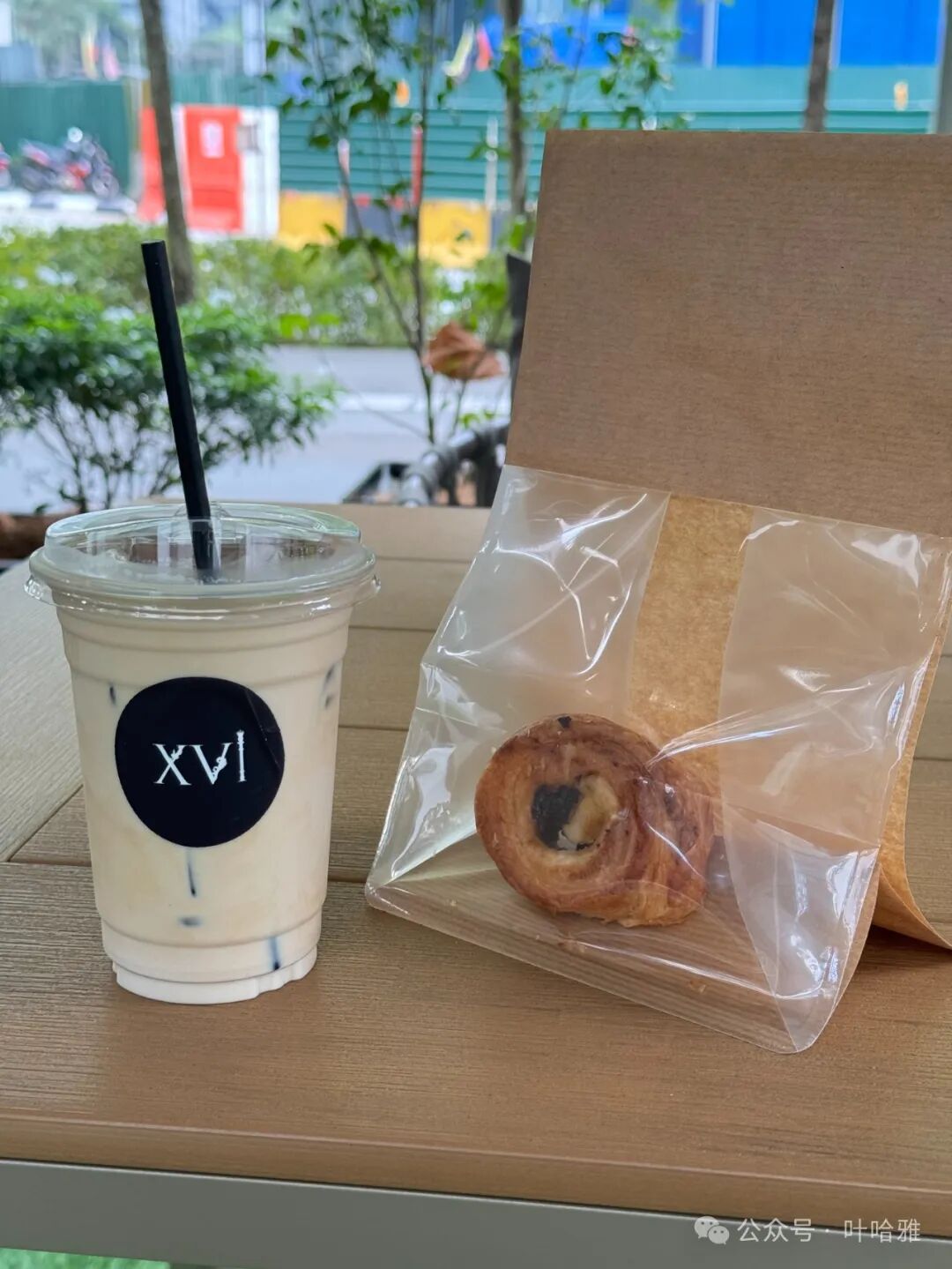
15. KENNY HILLS
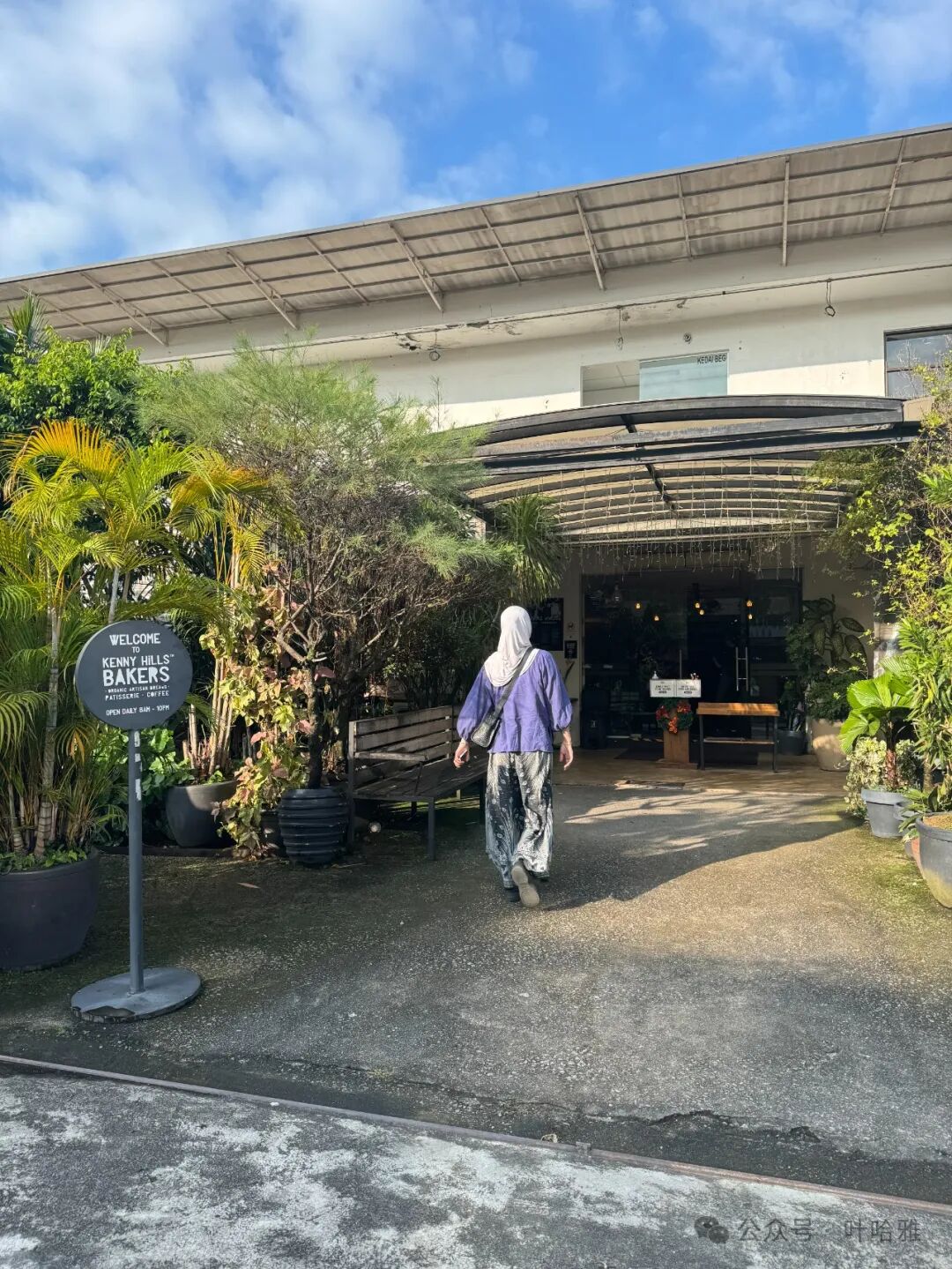
This shop seems to be a famous local dessert chain in Kuala Lumpur. There are two near where I live, and this one is close to Ampang Kindergarten. It is where I go for breakfast after dropping off my child.
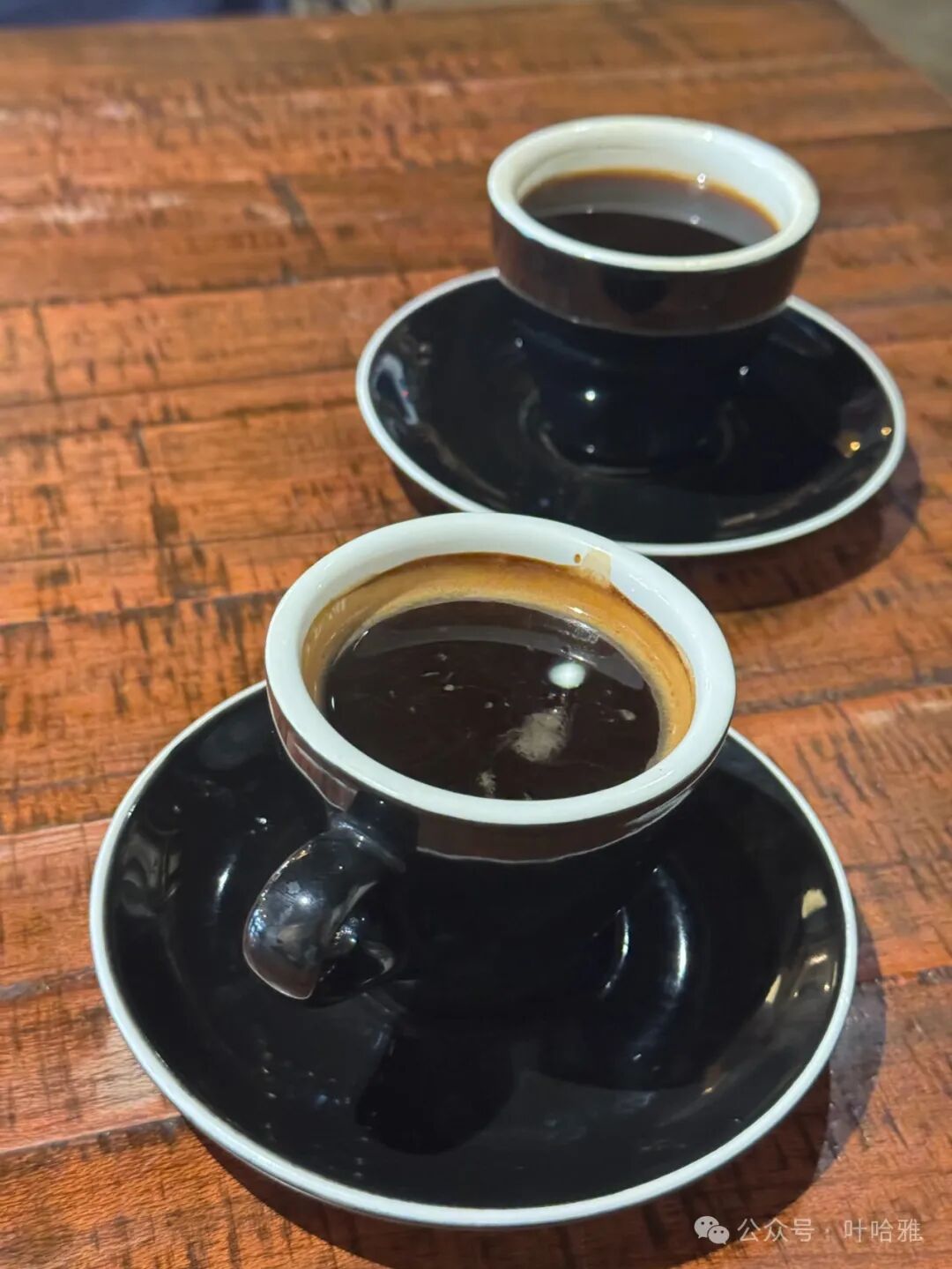
The shop is very busy during breakfast hours. The prices are not cheap, but the portions are large.
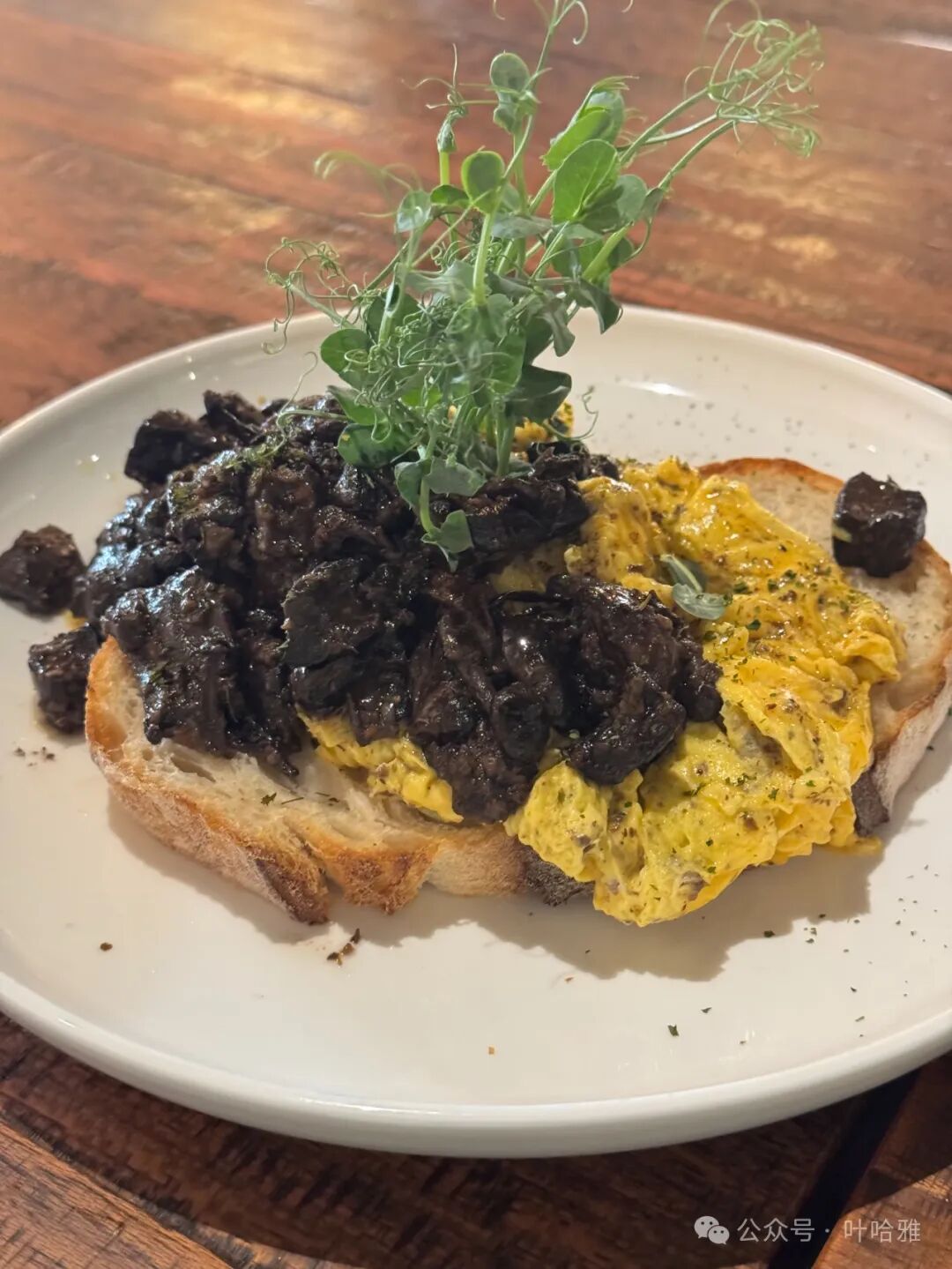
For two people to have two healthy breakfasts, each with a coffee, it costs about 150 yuan.
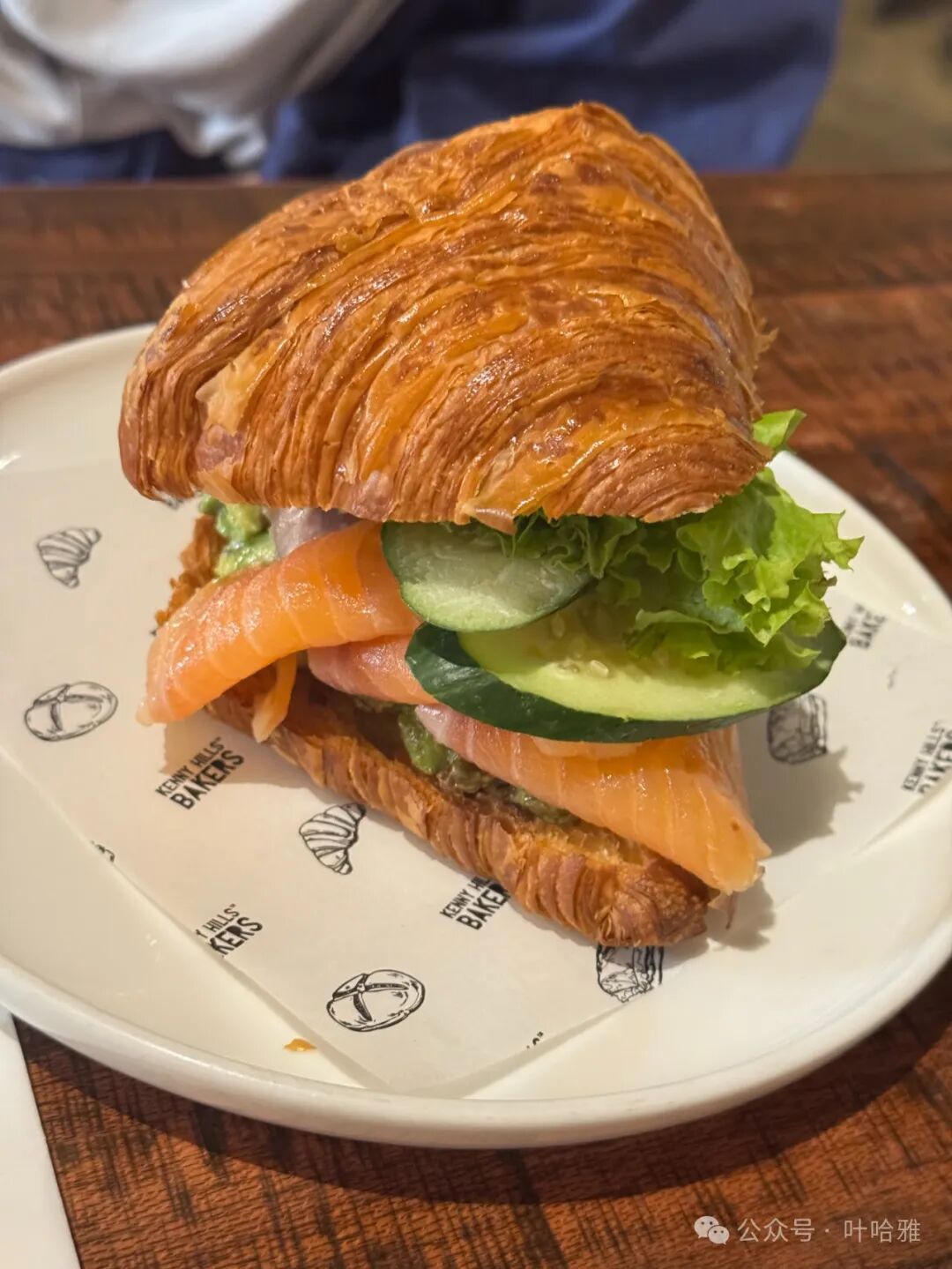
16. De Wan
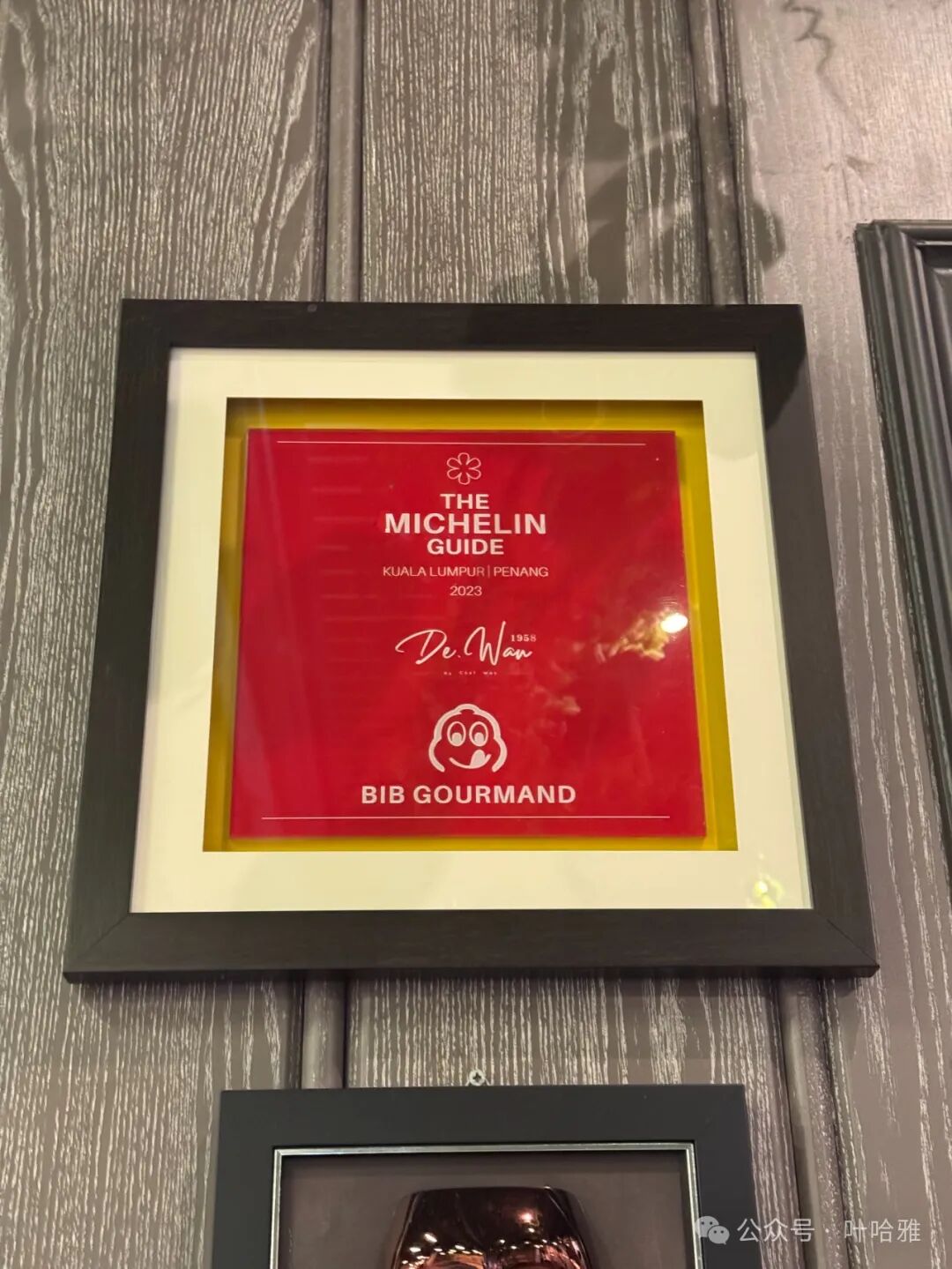
There is a very famous Michelin-rated restaurant in Ampang Shopping Centre that specializes in Malaysian cuisine. Malaysian cuisine here refers to a fusion of Malay, Indian, and Chinese Nyonya dishes.
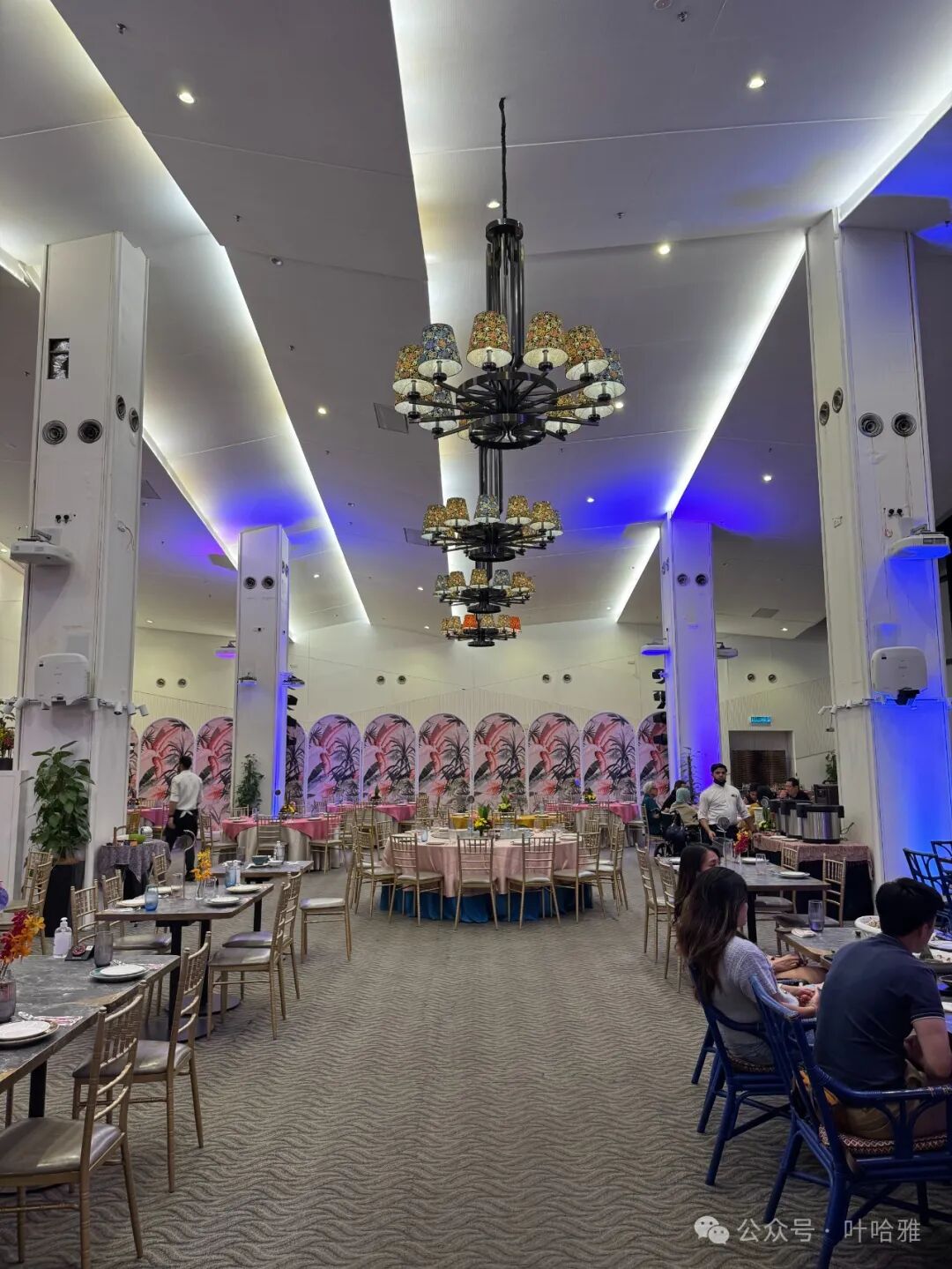
This restaurant is near my apartment complex. I used to pass by it often but never realized how big it was inside.
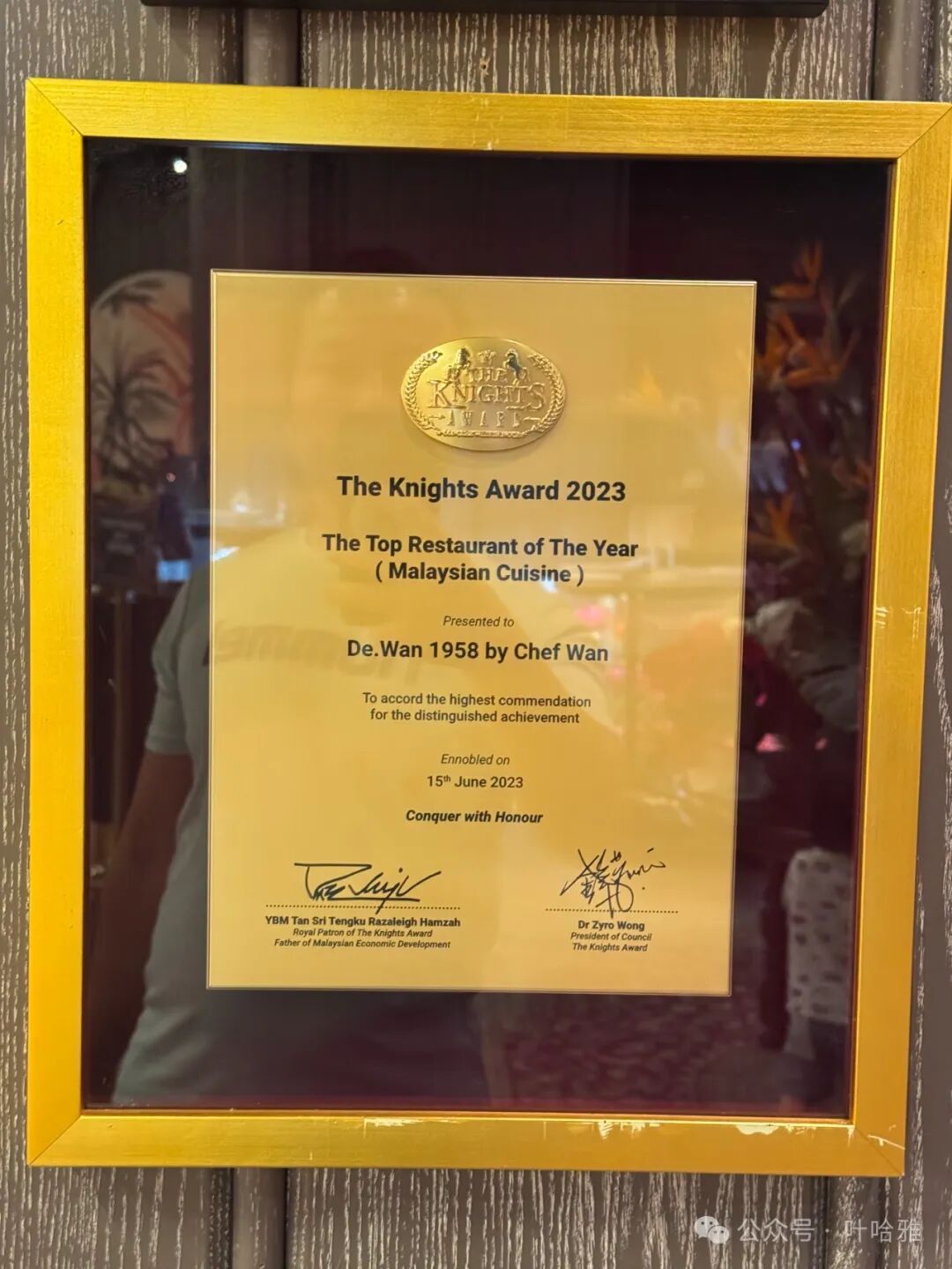
The founder, Chef Wan, seems to be quite famous in Malaysia.
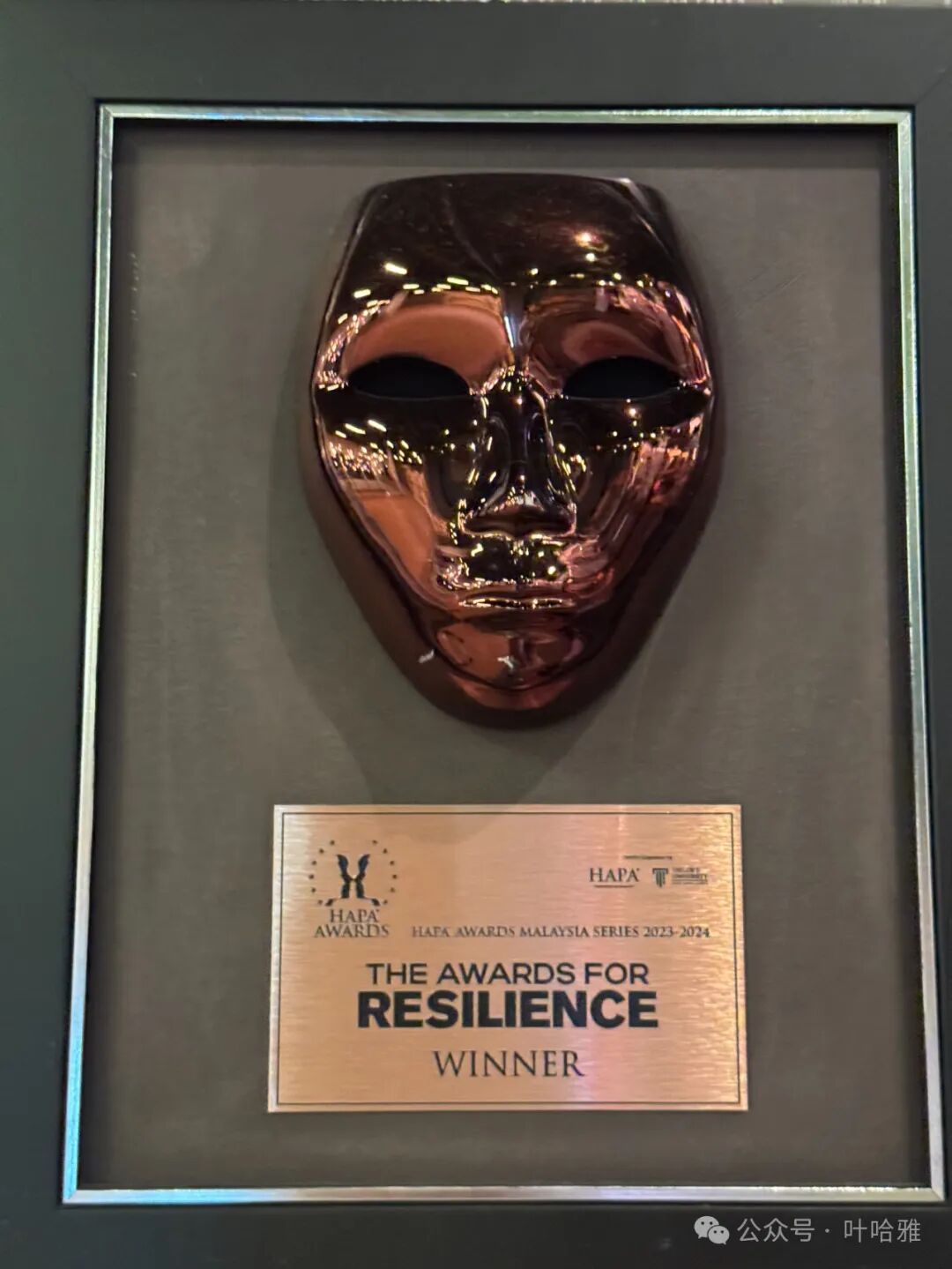
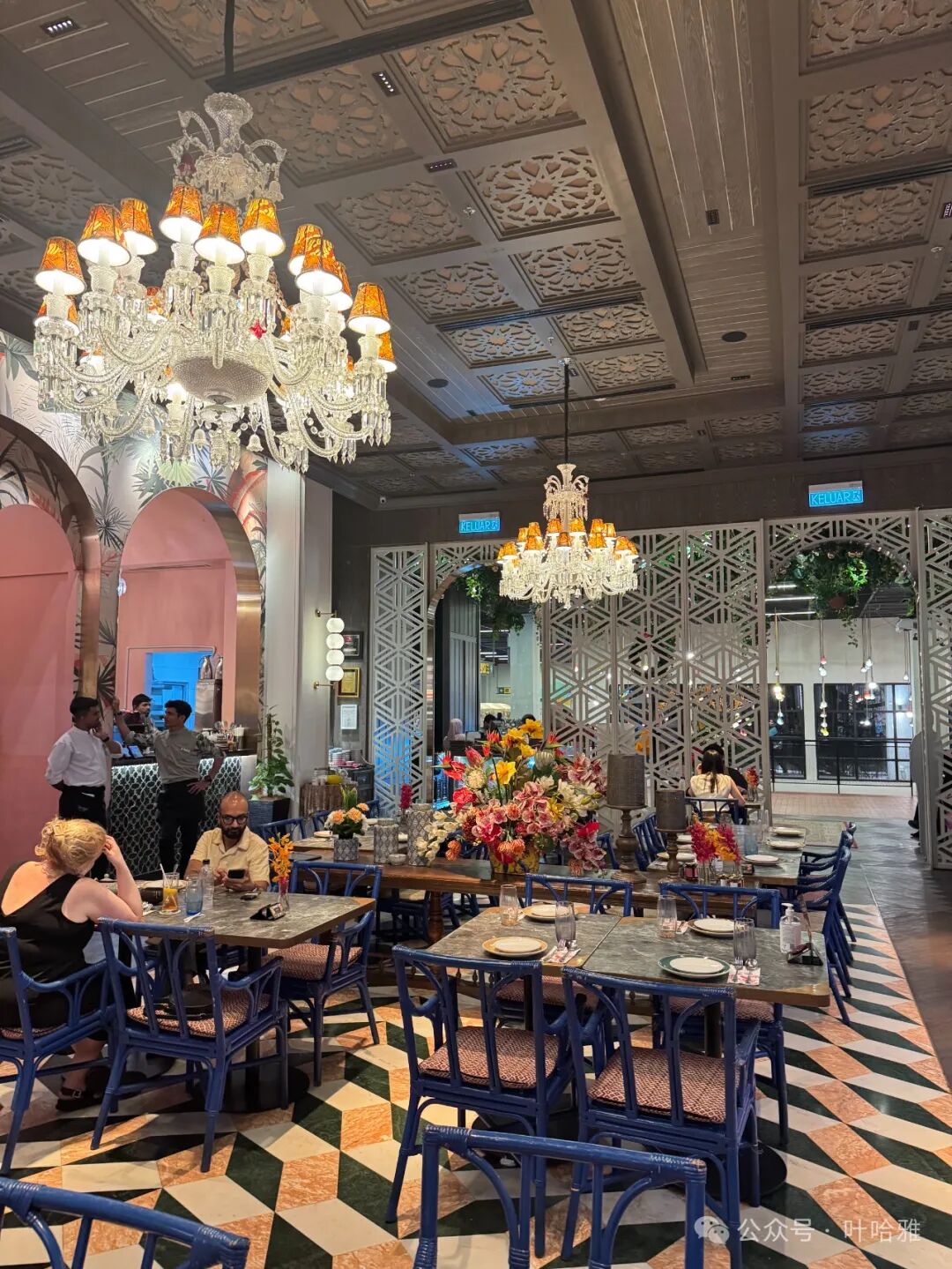
The restaurant has a great atmosphere and excellent service. The prices are on the expensive side for the area, with an average cost of about 100 Malaysian ringgit per person.
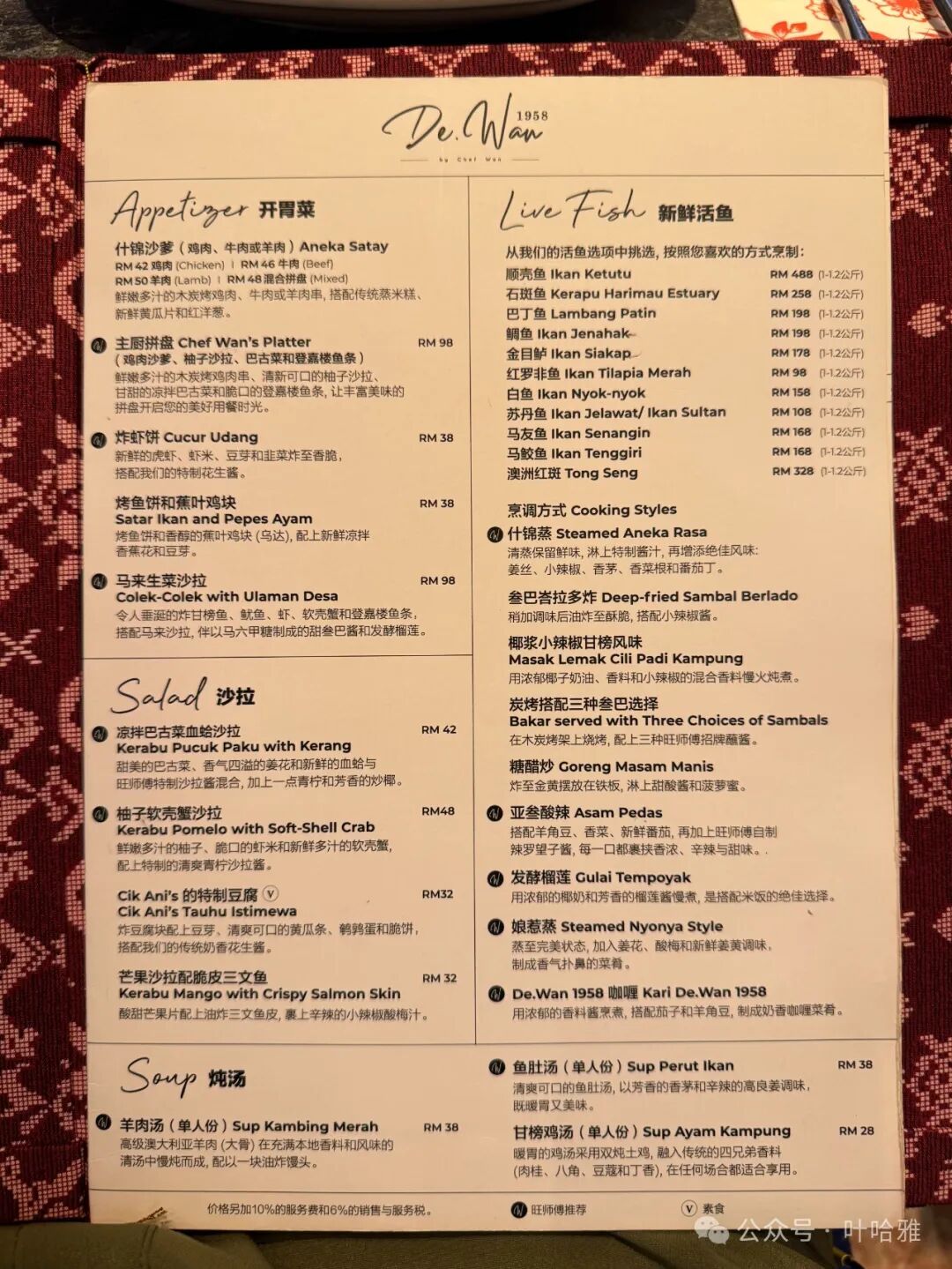
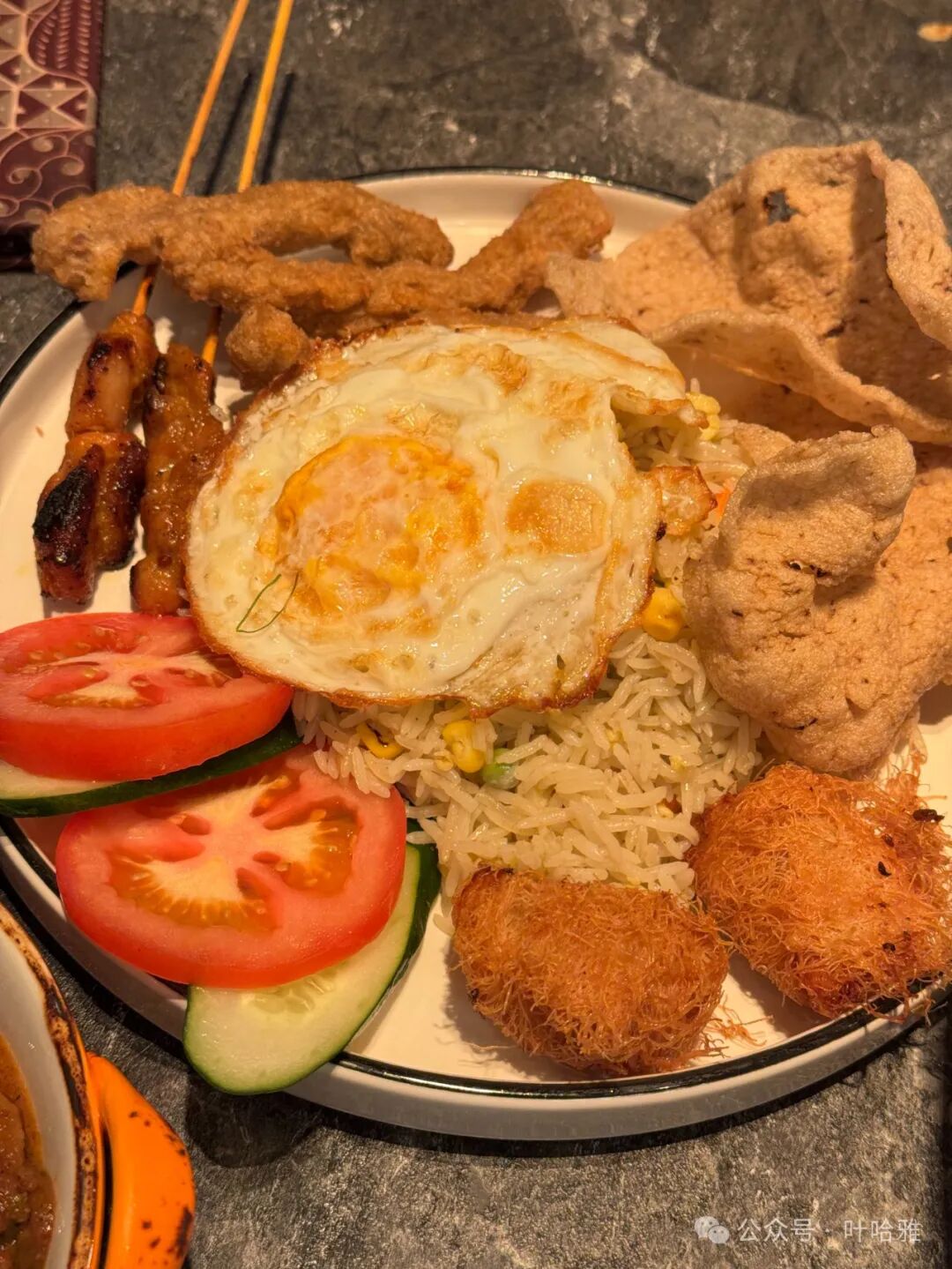
I can tell their food is authentic, but I don't really like dishes with such heavy seasoning.
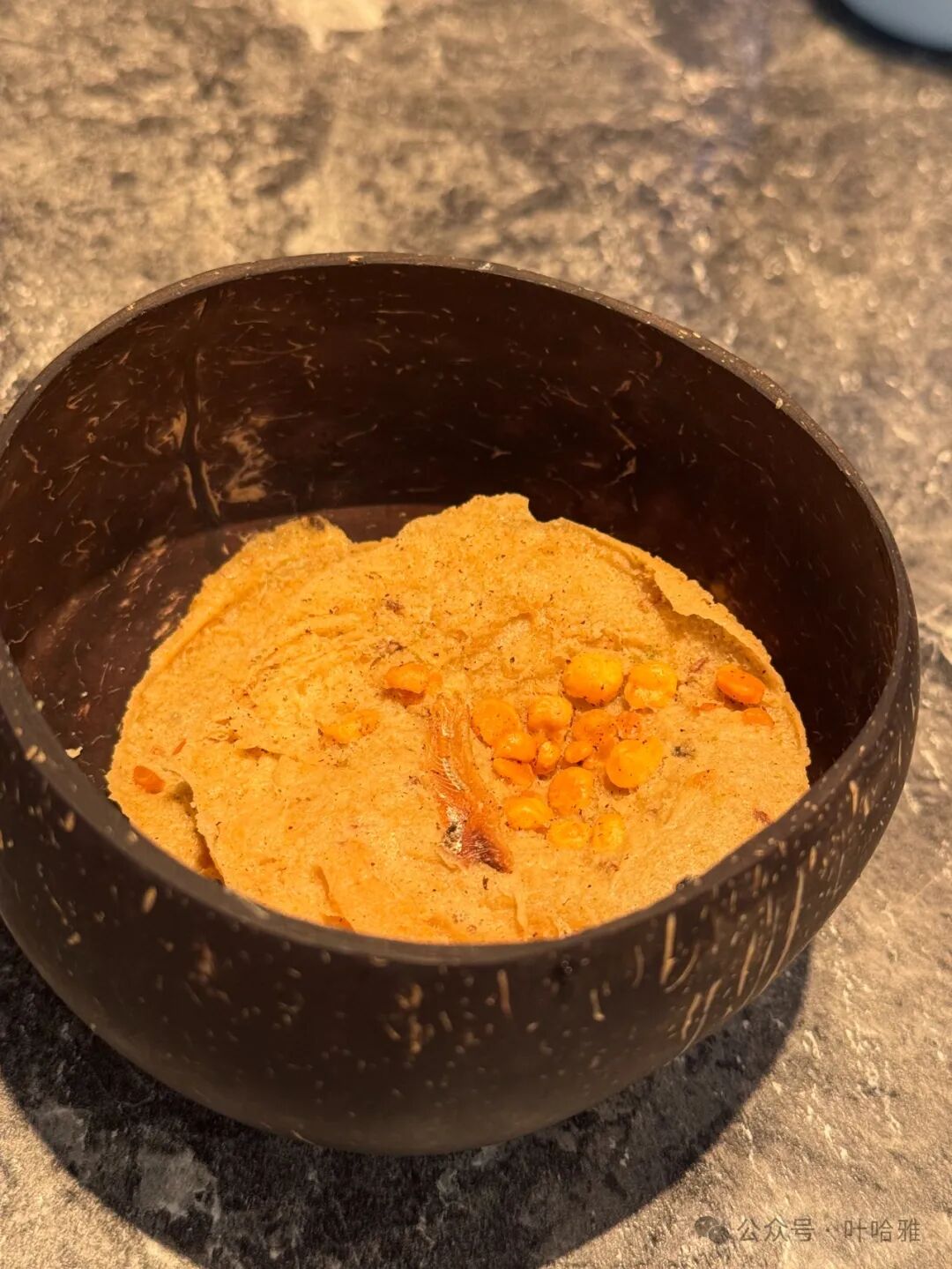
Fahim likes the complimentary crispy peanut crackers (huasheng cuibing) they serve.
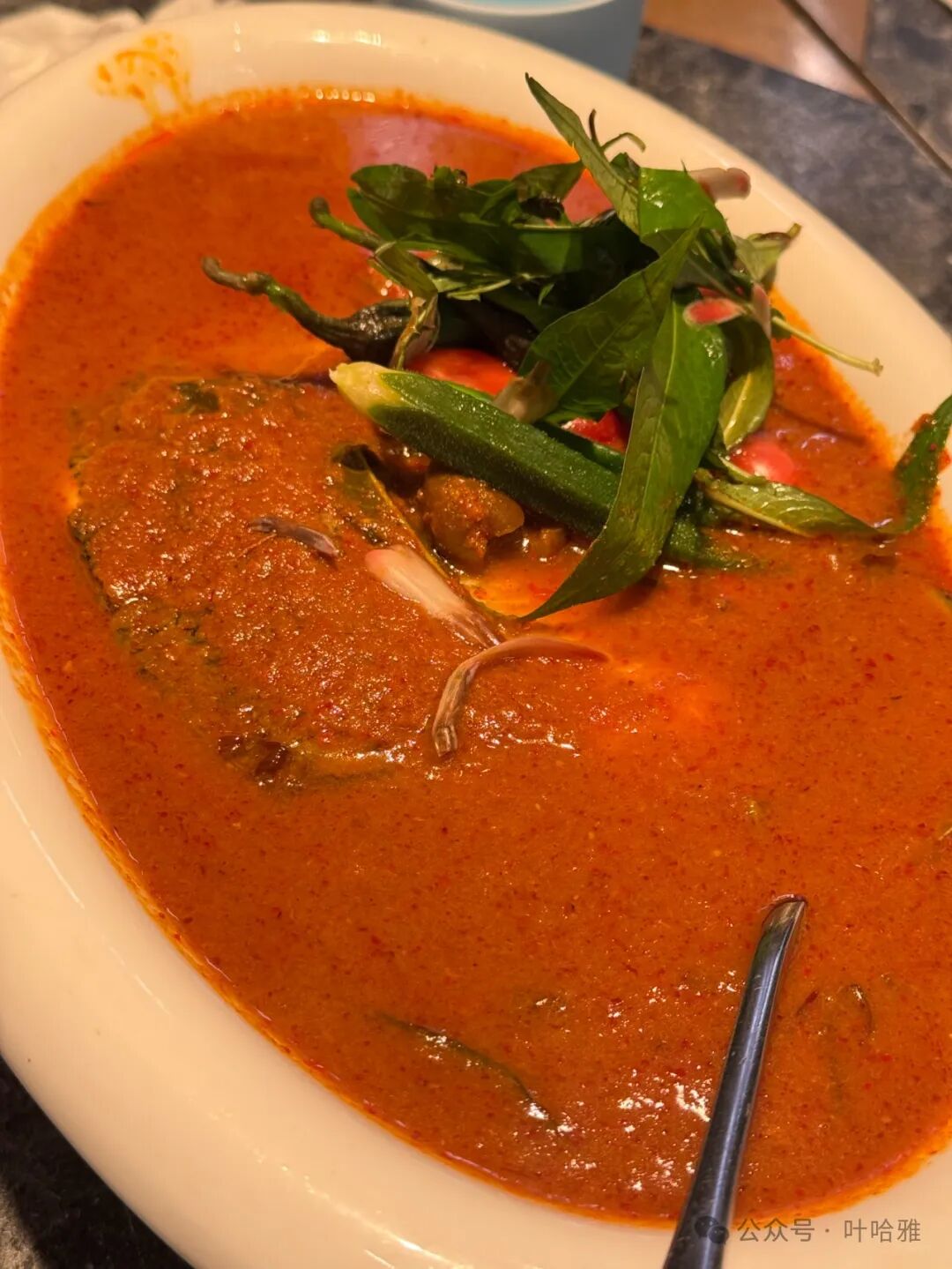
The fish curry and beef rendang (rendang niurou) are both great with rice. They are fresh, fragrant, and spicy, but the heavy seasoning hides the natural taste of the ingredients. As a tourist, it is a fun experience to try once in a while.
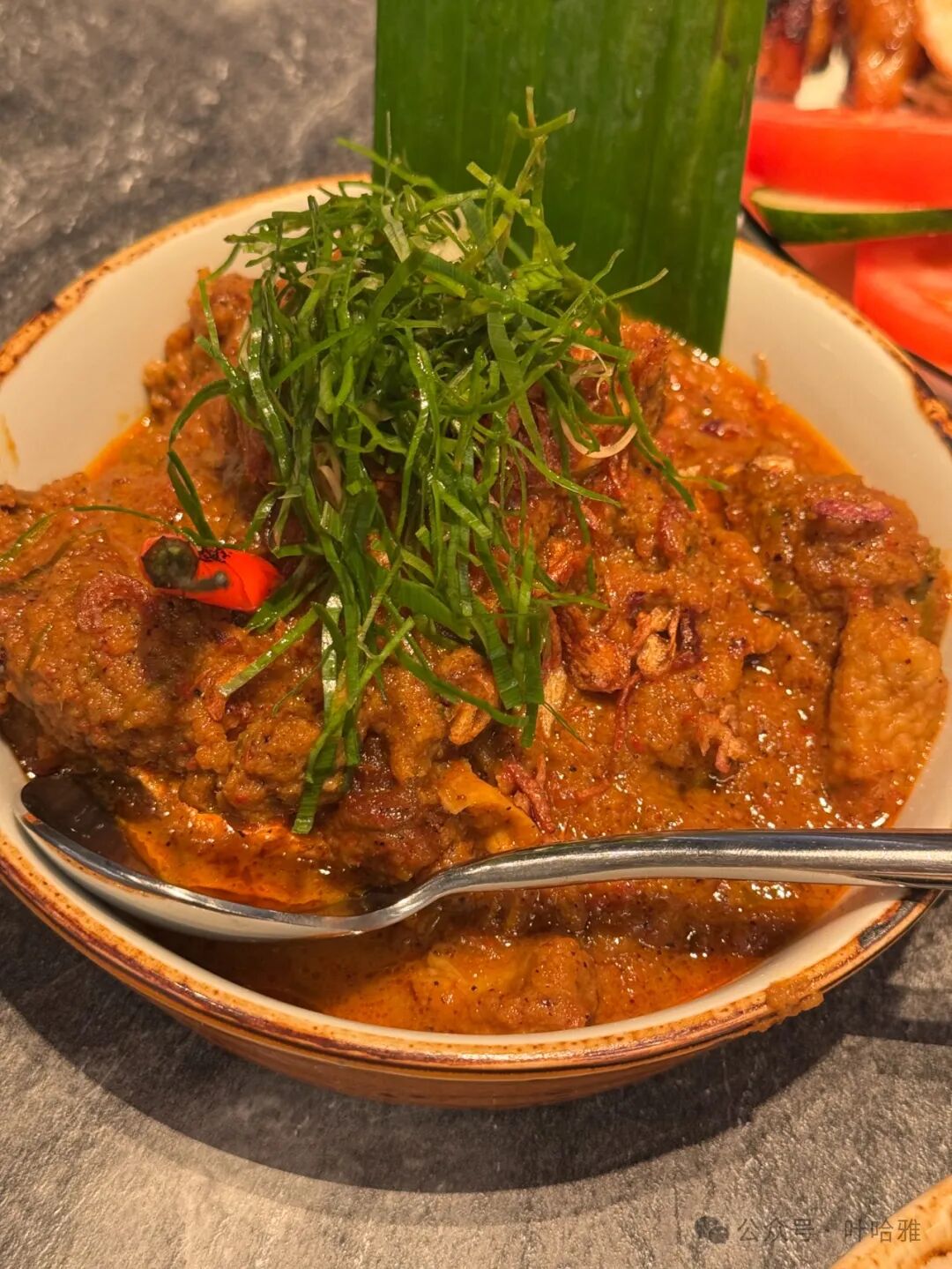
Muslim Travel Guide Penang: George Town, Halal Hotel Breakfast, Malay-Chinese Heritage and Beaches
Articles • yusuf908 posted the article • 0 comments • 217 views • 2026-05-23 02:38
Summary: This Penang Muslim travel guide covers train travel from Kuala Lumpur, George Town heritage hotels, Nyonya culture, halal breakfast, mosque and city walks, beaches, seafood, Malay-Chinese history, and why Penang can feel more fun, beautiful, and affordable than Singapore.
Penang is a popular tourist city in Malaysia, especially among Chinese travelers. The local Chinese speak with an accent very similar to Taiwan, with a soft and pleasant Mandarin. There are two ways to travel from Kuala Lumpur to Penang. I recommend taking the train. A ticket costs about 90 Malaysian Ringgit, and children under 4 travel for free. Prices vary by train, and the trip takes between three and a half to four and a half hours, depending on the specific schedule, just like high-speed rail in China.
Flying to Penang takes one hour. Although tickets cost only one or two hundred RMB, when you add the time and cost of getting to and from the airport, it is not faster than the train. Flights are also often delayed. I have tried taking the train there and flying back, but my flight was delayed by two hours. If train tickets were not so hard to get, I would never fly. You must book train tickets to and from Penang at least three days in advance on the KTMB app. The departure station is KL Sentral and the destination is Butterworth.
After getting off the train, you take a 10-minute ferry ride across the sea. The ferry runs every half hour, costs 2 RM, and you can use your Kuala Lumpur transit card.
George Town in Penang is a World Heritage site. There are many heritage hotels here, meaning the buildings themselves are historical artifacts with distinct local character. We chose the George Hotel because it is a five-star hotel that reopened in 2022, so the rooms are quite new.
The piano in the lobby is free for anyone to play. The staff invited Fahim to play, unlike the piano at the Radisson Hotel in Brunei, which is just for decoration.
The hotel lobby displays history about King George III and George Town, with notes provided in Chinese. King George III was the third monarch of the House of Hanover and King of Great Britain and Ireland. He was the first monarch born in England to speak English as his first language. He reigned from 1760 to 1820. Under his rule, Penang Island was claimed by Britain and used as a naval base, governed by naval officer Francis Light.
Two things about King George III are memorable: he lost the American colonies, and he had mental health issues. Rumors suggest he suffered from hereditary porphyria, which caused his mental instability.
The hallway introduces local Nyonya traditional cuisine. Nyonya food is a fusion of Chinese and Malay cooking.
The best part of the hotel is the restaurant. The breakfast is especially rich, and you can eat all kinds of local specialties.
Penang is affordable, and the hotels offer great value. In a cultural town like this, the most relaxing way to spend your time is to find a comfortable hotel, sit by the window with a coffee during the day, and wait until the sun goes down to go out for a stroll, otherwise it is really hot during the day.
PENANG ROAD FAMOUS LAKSA
Less than 1 kilometer from the George Hotel, you can find this locally famous laksa. It has both halal certification and a Michelin recommendation. Since Penang is a Chinese-majority city with simplified Chinese signs everywhere and many restaurants selling pork, local snacks with halal certification are rare.
However, there is a catch. This shop only sells laksa, but you will meet two other servers inside holding different menus for you to choose from. These two other businesses do not share the same owner as the laksa shop, so you have to scan codes to pay different servers. Only the laksa is the signature dish here, and the other snacks are just riding on its popularity.
Since we wanted to try different snacks anyway, we did not mind much. It turned out my attempt was a failure, as these snacks were not good.
This is Penang-style white coffee. It actually tastes like instant coffee and is not worth recommending.
The taste of this Michelin-rated laksa is the same as the one I had at the AK mall in Kuala Lumpur. It looks like hot and sour noodles, but it is mixed with the flavors of lemongrass and mint. I tried it a few times but could not really get into it, though my wife thought it was quite tasty.
Among the items here, only the Japanese pan-fried dumplings (jiaozi) tasted okay. The others were not good, and I do not think you would like the salty and sweet flavors.
Not far from the laksa shop, you can find the oldest Chinese mosque in Penang.
MASJID JAMEK TITI PAPAN
This mosque was first built in 1860. The surrounding area used to be a swamp, and people laid down wooden planks to walk to the mosque for namaz, which is how it got its Malay name, Titi Papan.
In 2014, the Penang state government and the Penang branch of the Malaysian Chinese Muslim Association held an inauguration ceremony for this mosque, marking the first mosque for Chinese people in Penang.
At first, it was a wooden structure with jewelry and diamond merchants Haji Mohamed Gumbong and Saiboo Merican as the main donors. The George Town World Heritage Incorporated set up an information plaque for it, and it was not rebuilt as a brick building until 1893.
The two main donors later disagreed over who should manage the mosque. After decades of ups and downs, the mosque closed from time to time. In 1986, Yusof Latiff was appointed as the mosque's chairman. To make the mosque more popular, he asked the Penang government to approve Friday Jumu'ah prayers there, but the request was rejected because Penang already had too many Jumu'ah mosques.
The mosque has copies of the Quran with Chinese translations.
The mosque was not approved as a Jumu'ah mosque until 1991. In 2001, the government expanded the mosque, and the regional office covered the costs.
On August 16, 2014, the state government officially designated this mosque as the first Chinese mosque in Penang, naming it MASJID CINA TITI PAPAN.
The halal bird's nest museum.
MASJID MELAYU LEBOH ACHEH
This mosque is called the Acheen Street Mosque (Masjid Melayu Leboh Acheh). It was built by the Acehnese in 1808. The graves of the donor and his family are right next to the mosque.
This mosque was once an Islamic academic center in Penang, bringing together merchants from the surrounding Malay Archipelago, Arabia, and India.
It was once a gathering place for pilgrims heading to Mecca, which is why it was called the Second Jeddah.
The area gradually became quiet after the Hajj Pilgrimage Fund Board was established in Kuala Lumpur in the 1970s.
This is a wudu pool, which is common in Southeast Asian mosques.
MASJID KAPITAN KELING
Kapitan Keling Mosque is a mosque built by Indians in Penang in 1801. It is located in the Tamil Muslim community of Penang and is part of the George Town World Heritage Site. George Leith, the then Lieutenant Governor of Penang, appointed an Indian man named Cauder Mohudeen as the captain of the South Indian Keling community. He received a piece of land and used it to build this mosque. People called this Indian captain 'Kapitan Kling,' so 'Kapitan' means captain, and 'Kling' is the Malay term for Indians, which now carries a derogatory meaning.
This mosque is also the largest mosque in Penang and a must-visit spot for tourists.
You can see various religions living in harmony in Penang. The picture below shows an Indian mosque not far from the mosque.
You can eat pork-free Nyonya cuisine at the Yeng Keng Hotel restaurant in George Town's old city. Yeng Keng Hotel is also a heritage hotel. Its price is similar to the George Hotel, around 1,000 yuan per night, but its facilities are clearly much older than those at the George Hotel.
The menu prices are quite reasonable, and the restaurant is very busy. When we arrived for dinner, there was only one empty table left, and guests who came after us had to wait in line.
We ordered signature Nyonya dishes. The taste was very authentic and similar to the Nyonya food I had in Malacca.
Beef rendang (rendang yangrou)
Nyonya sambal shrimp with stink beans (niangre sanba xia chao choudou)
Hainan fried rice (hainan chaofan)
Fish maw curry (yudu gali)
The waiter was an Indian man. I wanted to order a few more dishes, but he suggested that we had already ordered enough.
A must-visit place in George Town is Penang Hill to see the panoramic view of Penang. Take a taxi directly to the Penang Hill ticket office. Hiking up is free, but if you want to take the funicular train up the mountain, a round-trip ticket costs 30 RM, and a fast pass costs 80 RM. With a fast pass, you can skip the line for the train; otherwise, you have to wait for nearly an hour.
Try to sit in the front of the small train when going up the mountain, and in the back when coming down. This gives you the best views for photos.
If the weather is good, you can wait for the sunset. The sun sets on the other side of the mountain, so you will see the fiery clouds from the peak, and the night view is also beautiful.
The temperature at the peak is cool, even a bit cold. You can sit in the cafe at the top and enjoy the panoramic view of Penang. The cafe serves simple Western-style meals that taste pretty good, though they are slightly more expensive than down in the city.
There is a small mosque at the top of Penang Hill, and there is also a church on the mountain.
There is a hiking trail at the peak that goes through the tropical rainforest, where you can also see monkeys.
Penang Floating Mosque
It takes about 20 minutes by taxi from George Town to reach the Penang Floating Mosque. Built in 1967 on stilts, the mosque looks like it is floating on the water from a distance when the tide comes in.
The Shangri-La Golden Sands resort in Penang is about 3 kilometers away from the floating mosque.
There are two Shangri-La hotels by the beach in Penang: one is Golden Sands and the other is Rasa Sayang. Both hotels share the same beach and swimming pools, but they have different lobbies. Rasa Sayang is slightly more expensive than Golden Sands, but the public facilities are the same, so Golden Sands is a better value.
Shangri-La is the best hotel for families in Penang. The children's water park here is great for younger kids, and Fahim had a lot of fun playing there.
There are restaurants near the beach at the hotel where you can eat Western or Southeast Asian food at reasonable prices.
The sunset at Golden Sands beach is beautiful. It has the most stunning sunset views in all of Penang.
The server at the restaurant was a Chinese lady who kindly helped us look after our children.
The breakfast buffet had so many choices that it reminded me of our trip to Atlantis in Dubai last year. However, the Shangri-La in Penang costs only one-third of the price. Being able to eat every halal food at a five-star hotel breakfast buffet makes for a wonderful start to the day.
We ordered a seafood barbecue set for two at the seaside restaurant and waited quietly for the sunset. That made our trip to Penang complete.
Fahim is not even three years old yet, but he has already been to five countries. He does not know how to appreciate this beautiful sunset yet. To him, it does not matter where we go; any place with sand, stones, and puddles is a paradise. view all
Summary: This Penang Muslim travel guide covers train travel from Kuala Lumpur, George Town heritage hotels, Nyonya culture, halal breakfast, mosque and city walks, beaches, seafood, Malay-Chinese history, and why Penang can feel more fun, beautiful, and affordable than Singapore.
Penang is a popular tourist city in Malaysia, especially among Chinese travelers. The local Chinese speak with an accent very similar to Taiwan, with a soft and pleasant Mandarin. There are two ways to travel from Kuala Lumpur to Penang. I recommend taking the train. A ticket costs about 90 Malaysian Ringgit, and children under 4 travel for free. Prices vary by train, and the trip takes between three and a half to four and a half hours, depending on the specific schedule, just like high-speed rail in China.
Flying to Penang takes one hour. Although tickets cost only one or two hundred RMB, when you add the time and cost of getting to and from the airport, it is not faster than the train. Flights are also often delayed. I have tried taking the train there and flying back, but my flight was delayed by two hours. If train tickets were not so hard to get, I would never fly. You must book train tickets to and from Penang at least three days in advance on the KTMB app. The departure station is KL Sentral and the destination is Butterworth.
After getting off the train, you take a 10-minute ferry ride across the sea. The ferry runs every half hour, costs 2 RM, and you can use your Kuala Lumpur transit card.
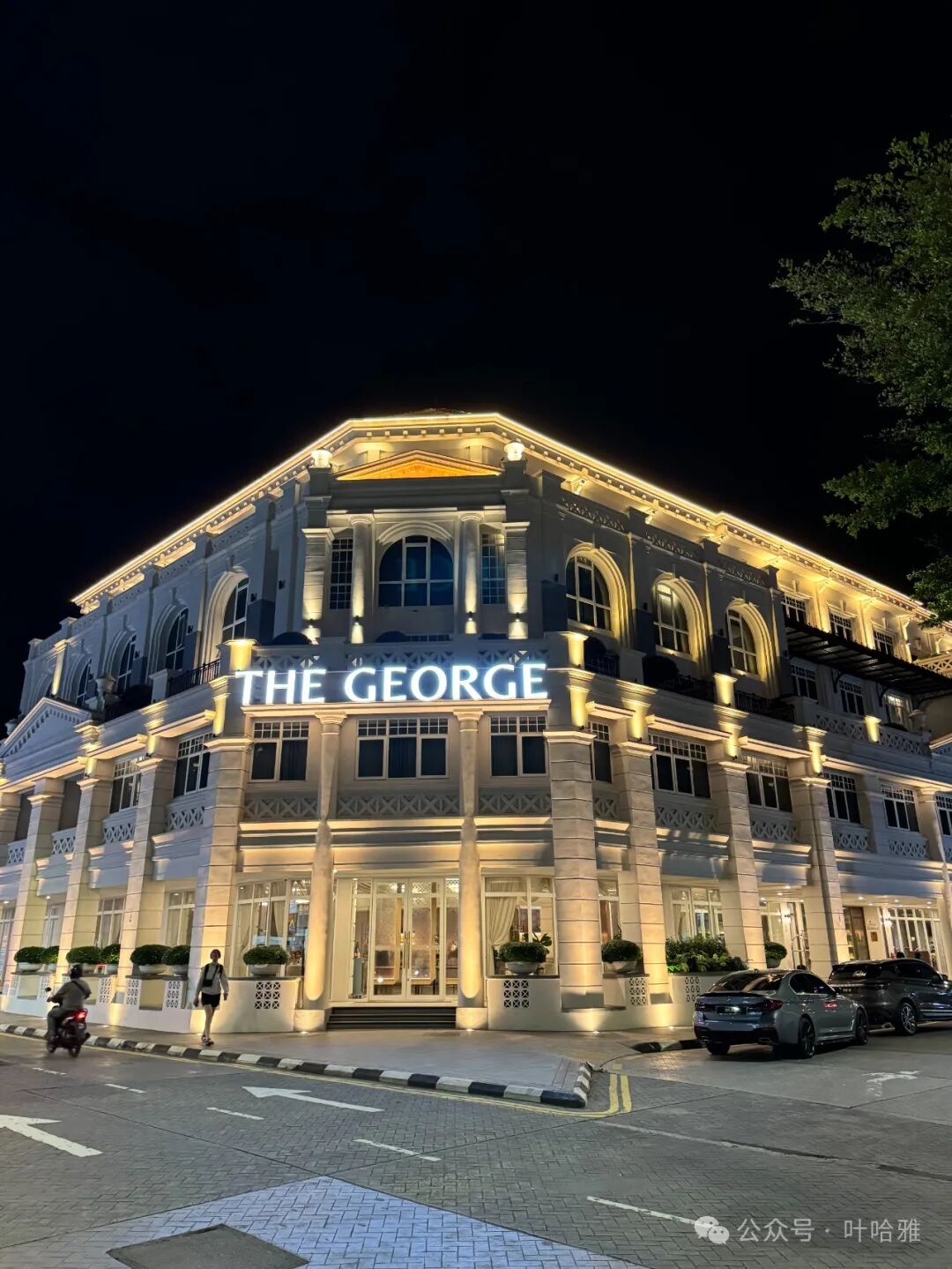
George Town in Penang is a World Heritage site. There are many heritage hotels here, meaning the buildings themselves are historical artifacts with distinct local character. We chose the George Hotel because it is a five-star hotel that reopened in 2022, so the rooms are quite new.
The piano in the lobby is free for anyone to play. The staff invited Fahim to play, unlike the piano at the Radisson Hotel in Brunei, which is just for decoration.
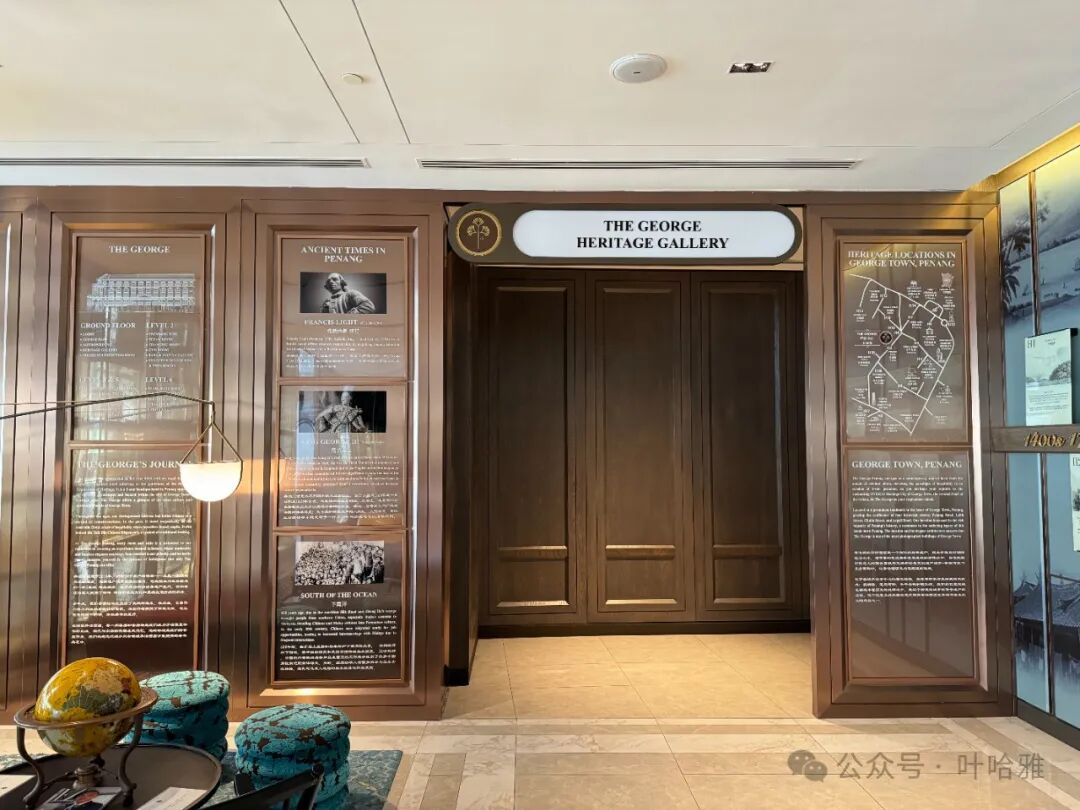
The hotel lobby displays history about King George III and George Town, with notes provided in Chinese. King George III was the third monarch of the House of Hanover and King of Great Britain and Ireland. He was the first monarch born in England to speak English as his first language. He reigned from 1760 to 1820. Under his rule, Penang Island was claimed by Britain and used as a naval base, governed by naval officer Francis Light.
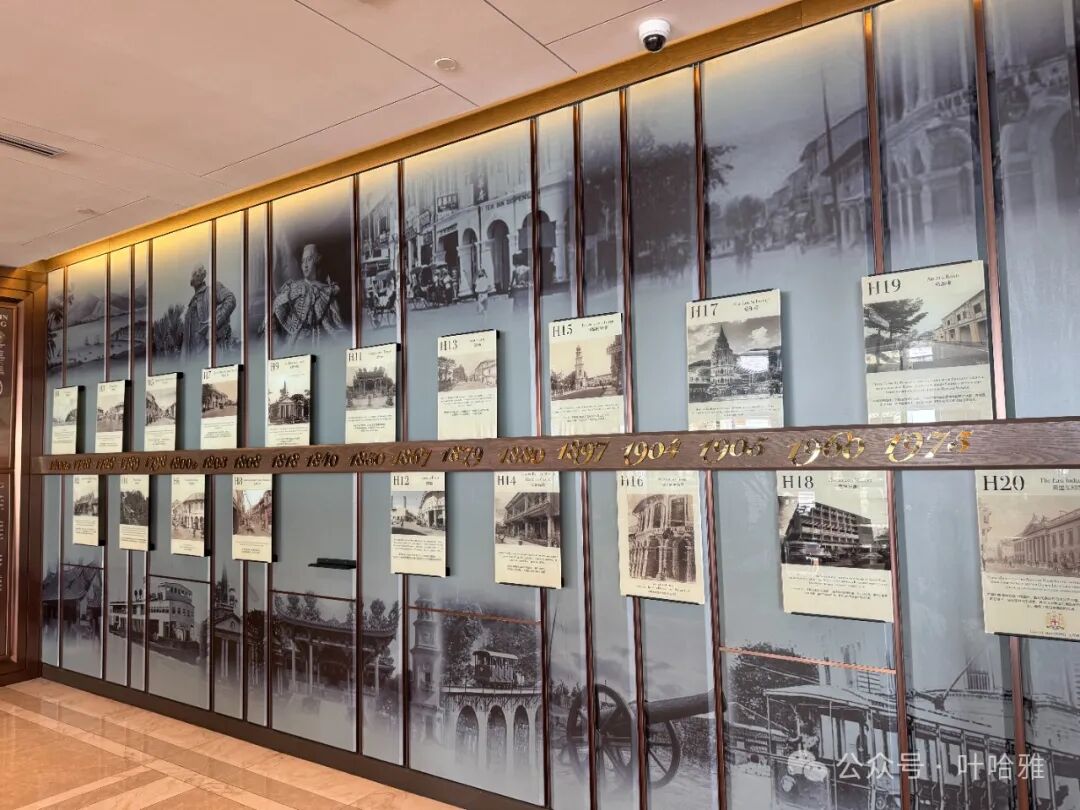
Two things about King George III are memorable: he lost the American colonies, and he had mental health issues. Rumors suggest he suffered from hereditary porphyria, which caused his mental instability.
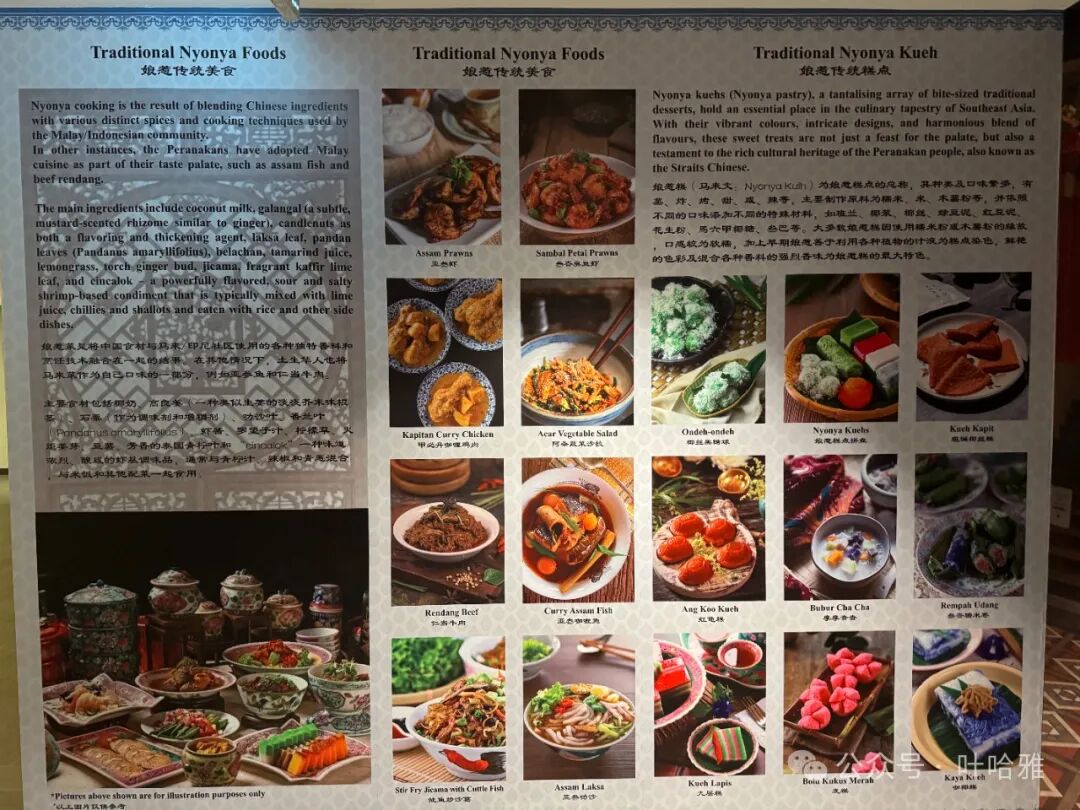
The hallway introduces local Nyonya traditional cuisine. Nyonya food is a fusion of Chinese and Malay cooking.
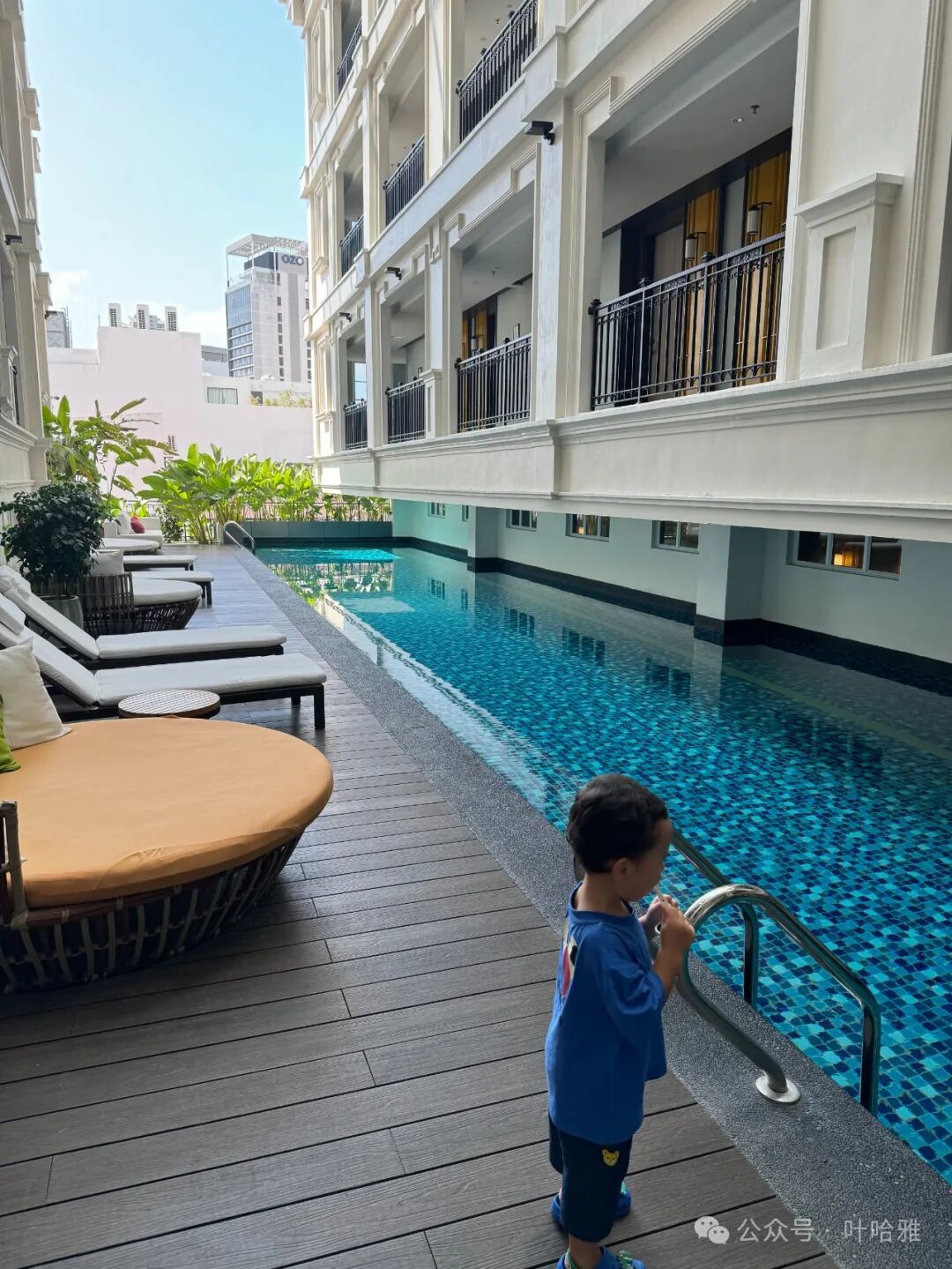
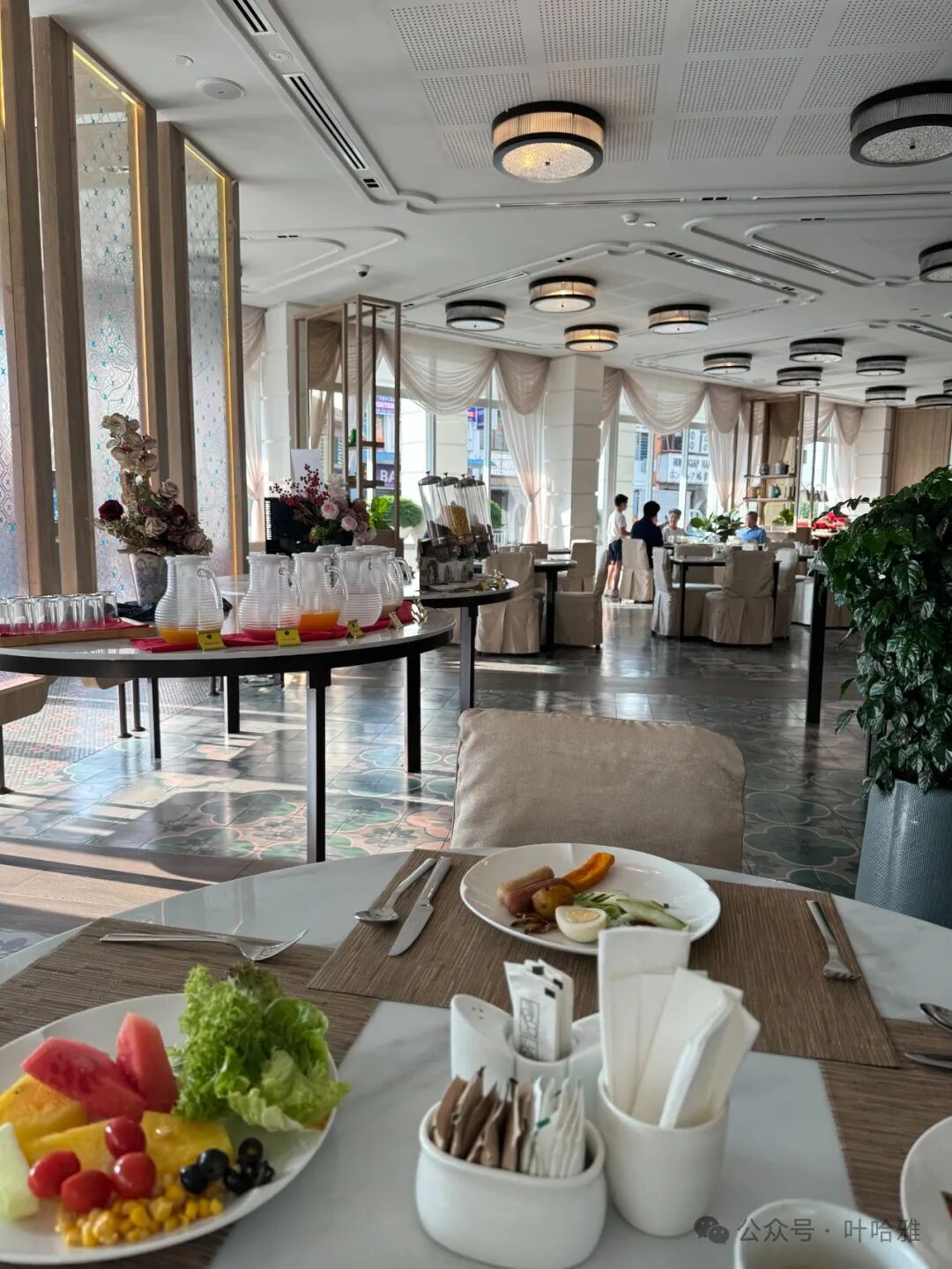
The best part of the hotel is the restaurant. The breakfast is especially rich, and you can eat all kinds of local specialties.
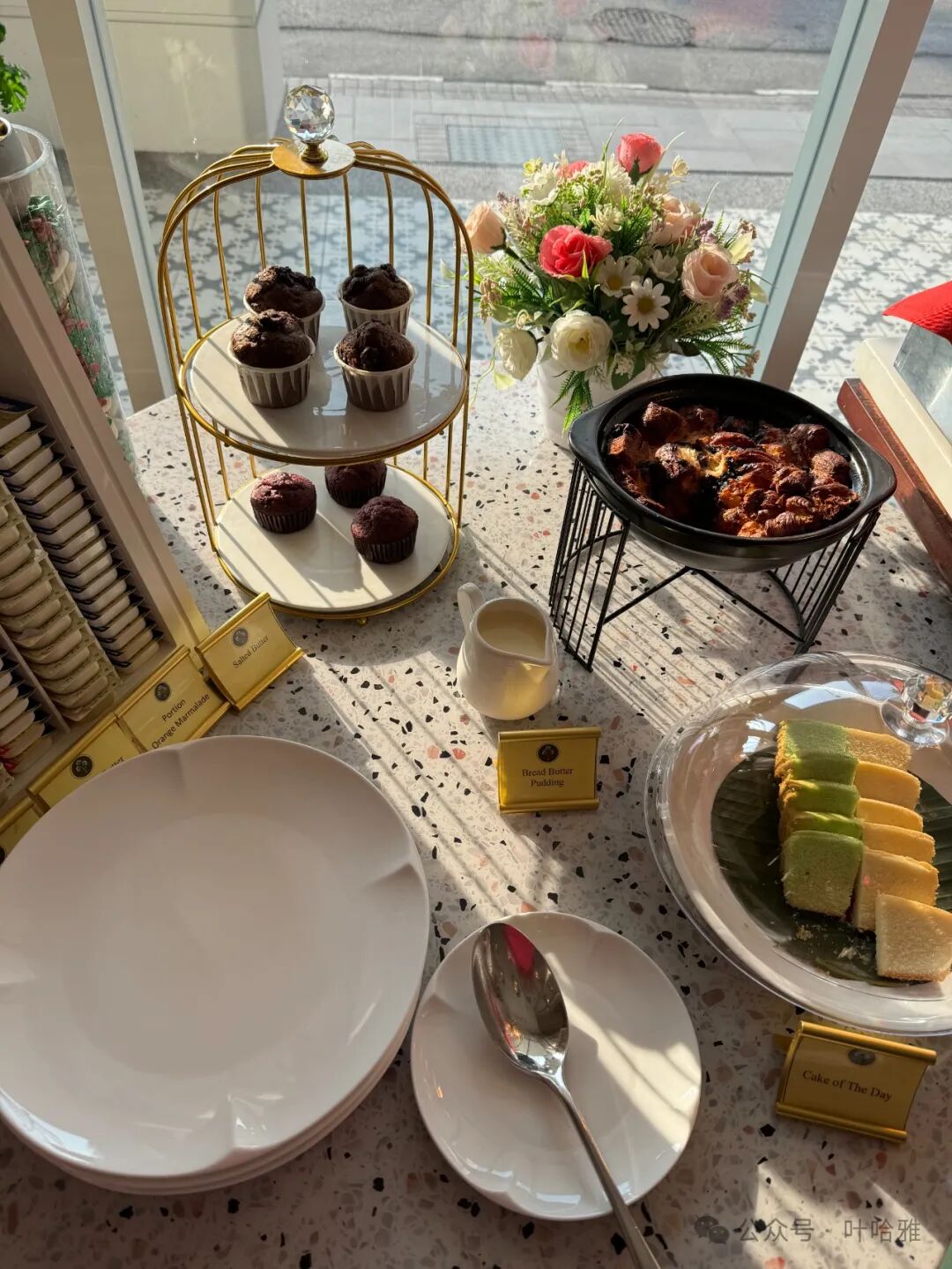
Penang is affordable, and the hotels offer great value. In a cultural town like this, the most relaxing way to spend your time is to find a comfortable hotel, sit by the window with a coffee during the day, and wait until the sun goes down to go out for a stroll, otherwise it is really hot during the day.
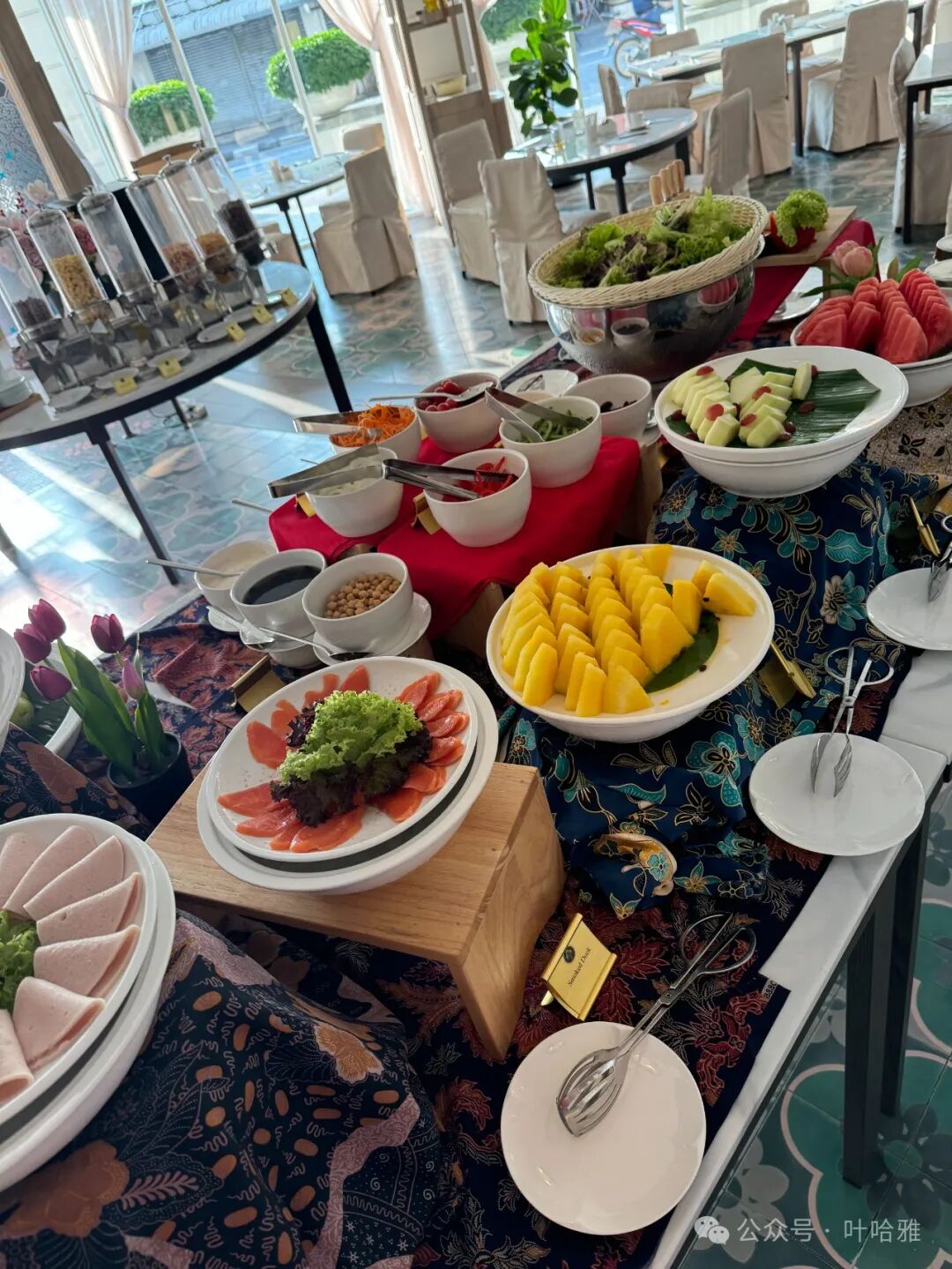
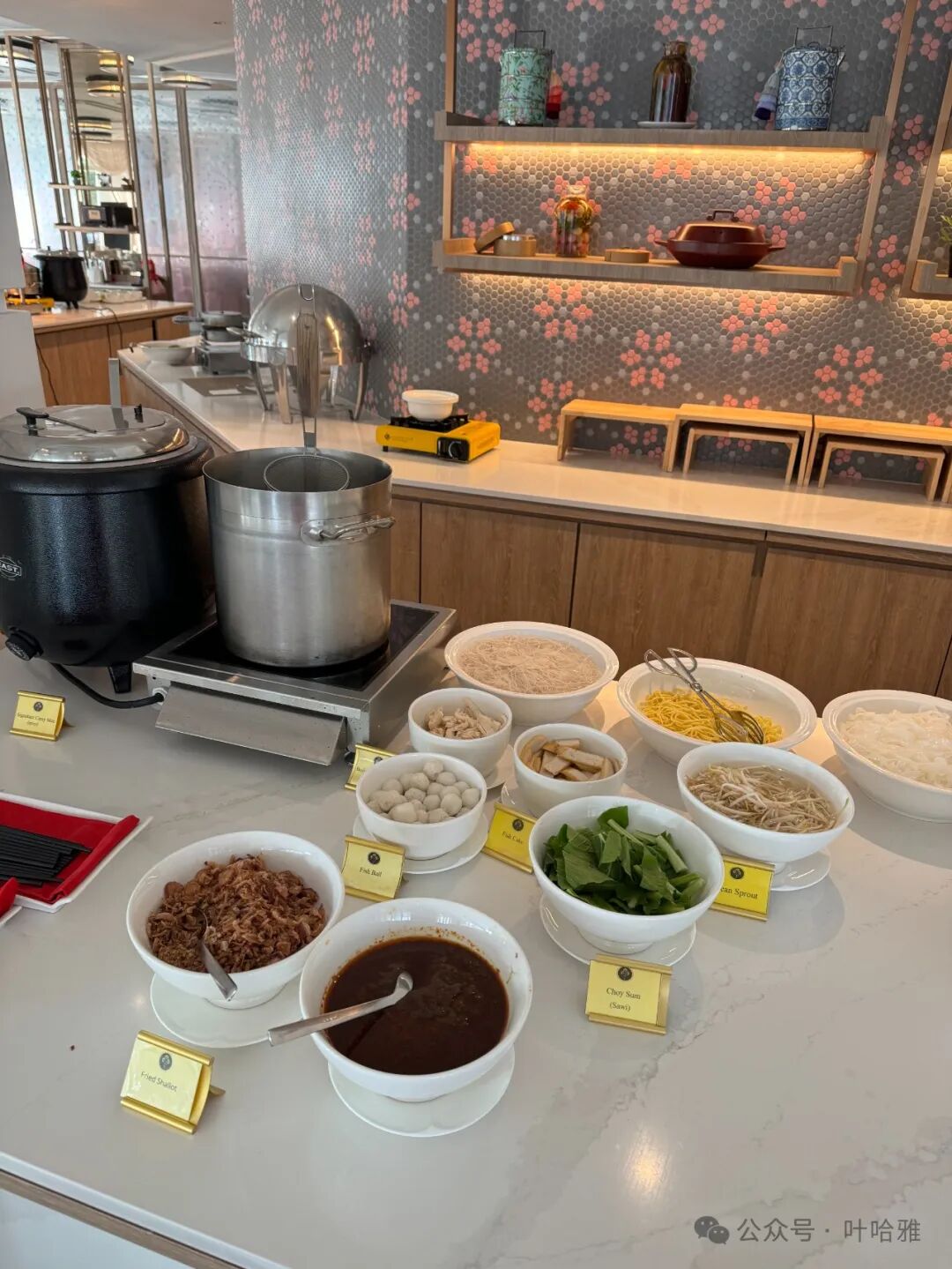
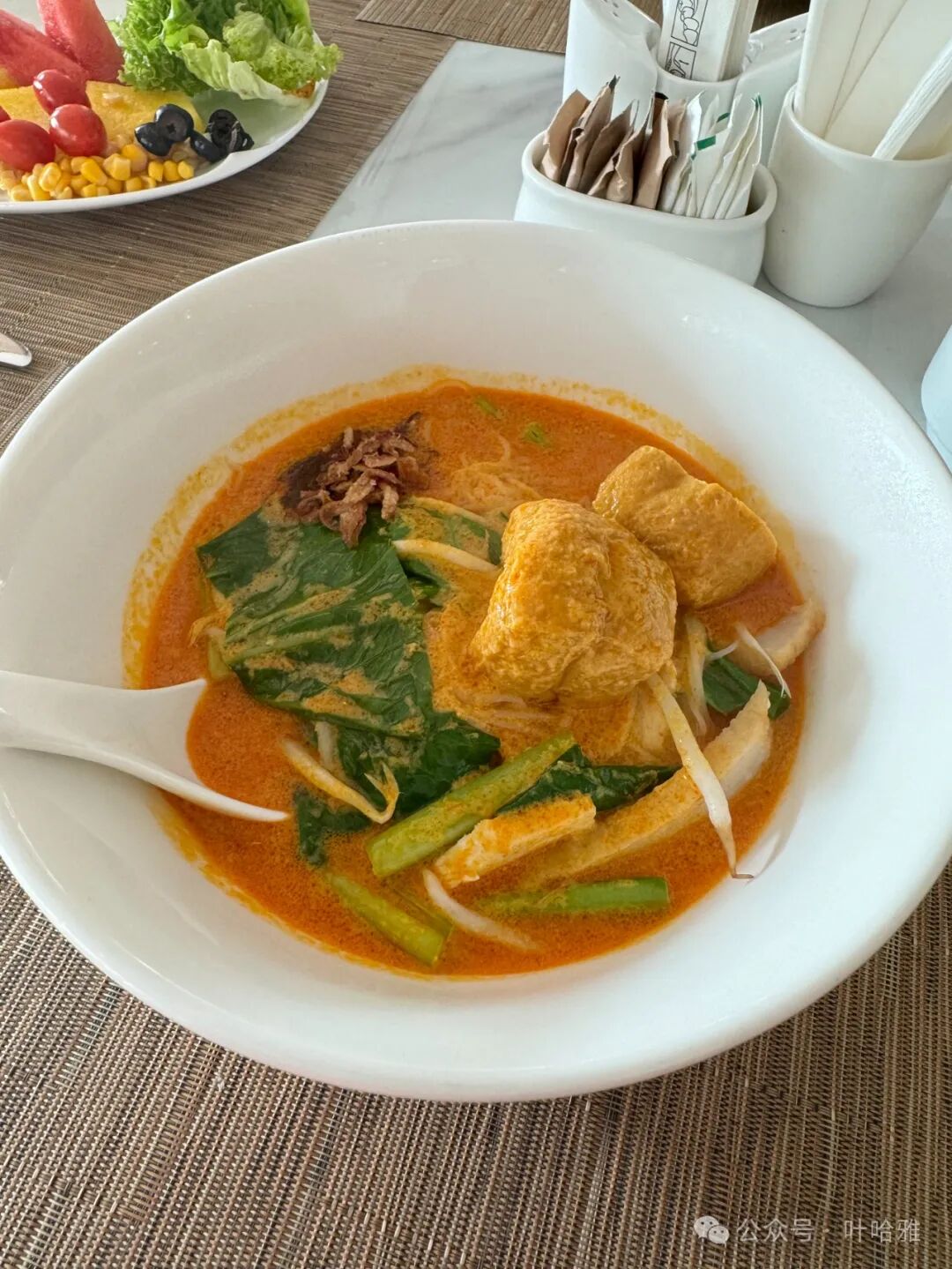
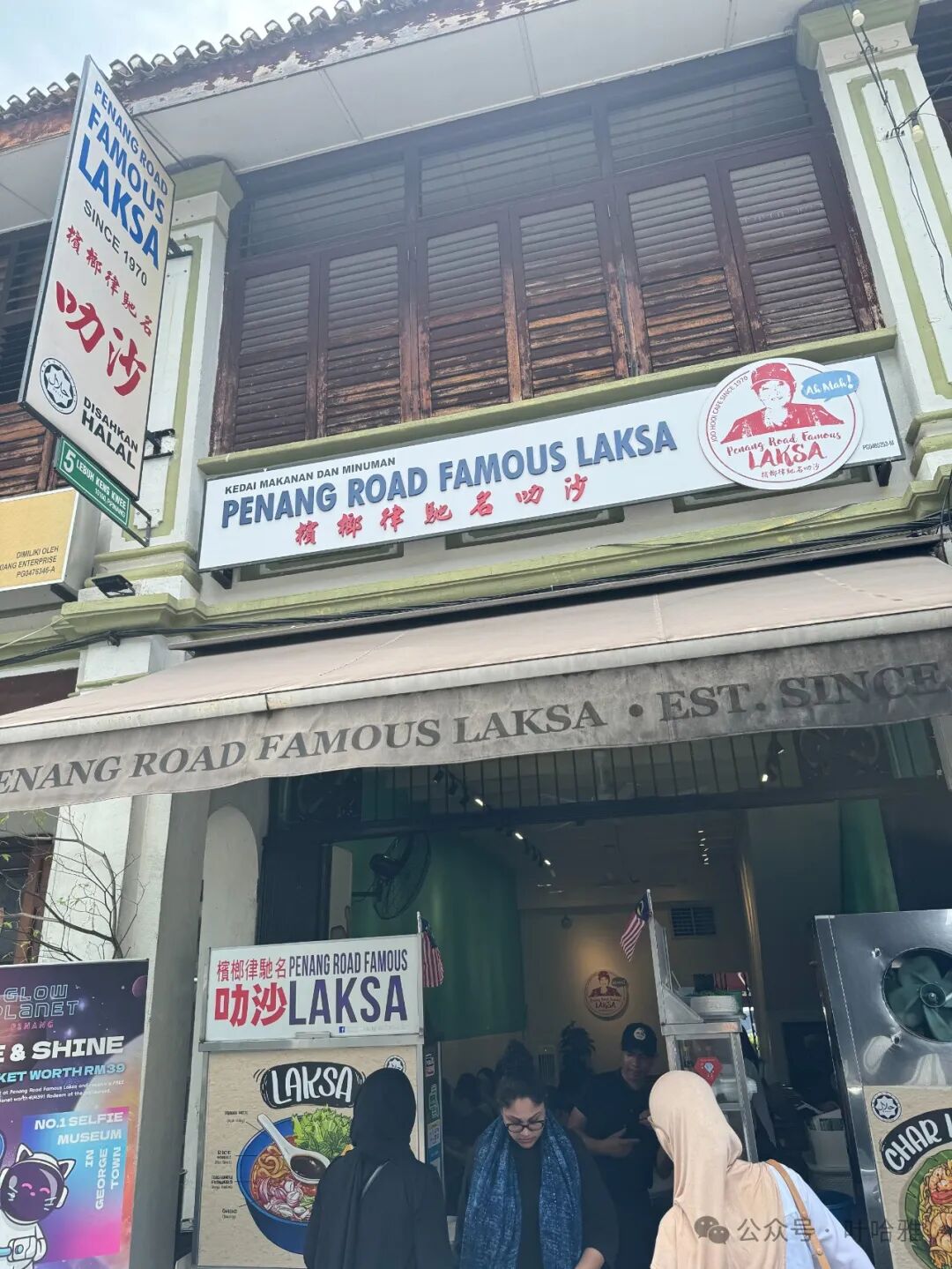
PENANG ROAD FAMOUS LAKSA
Less than 1 kilometer from the George Hotel, you can find this locally famous laksa. It has both halal certification and a Michelin recommendation. Since Penang is a Chinese-majority city with simplified Chinese signs everywhere and many restaurants selling pork, local snacks with halal certification are rare.
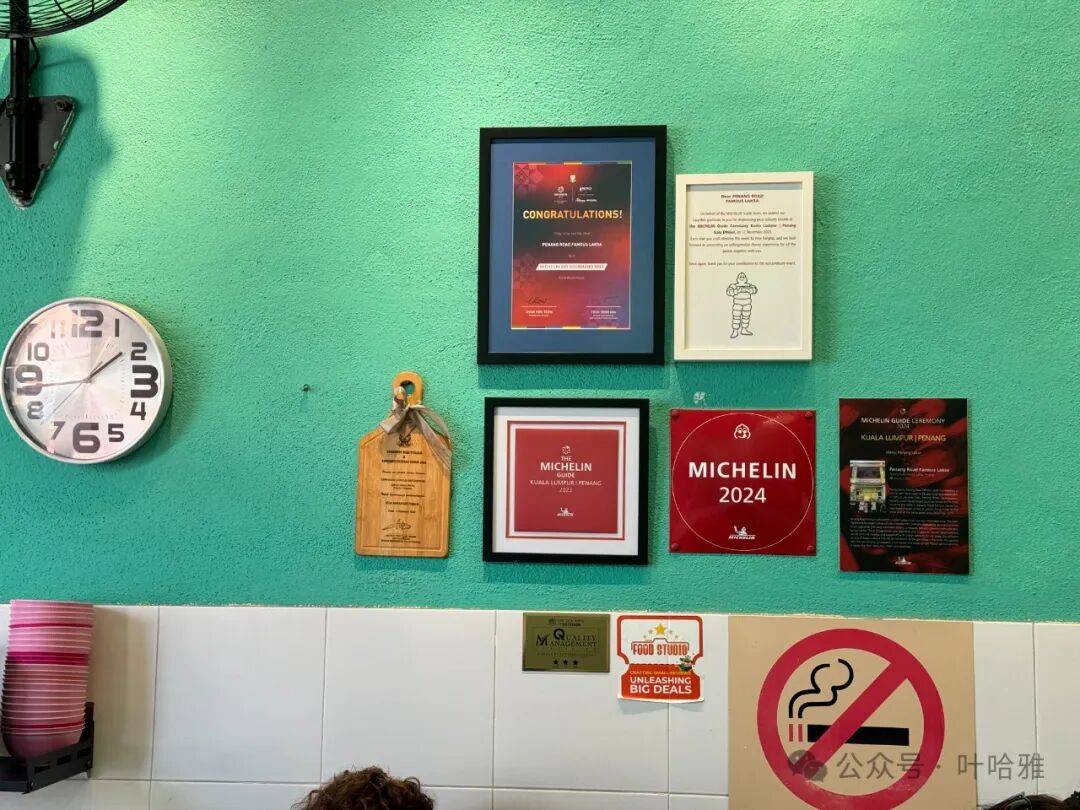
However, there is a catch. This shop only sells laksa, but you will meet two other servers inside holding different menus for you to choose from. These two other businesses do not share the same owner as the laksa shop, so you have to scan codes to pay different servers. Only the laksa is the signature dish here, and the other snacks are just riding on its popularity.
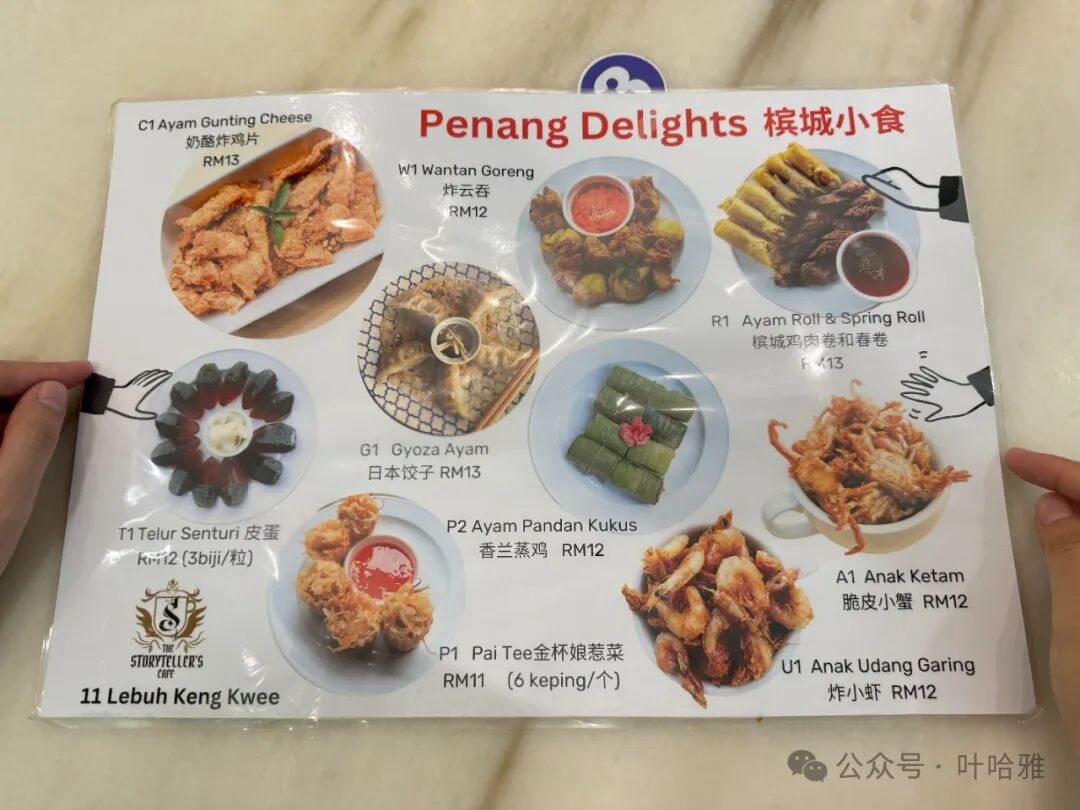
Since we wanted to try different snacks anyway, we did not mind much. It turned out my attempt was a failure, as these snacks were not good.
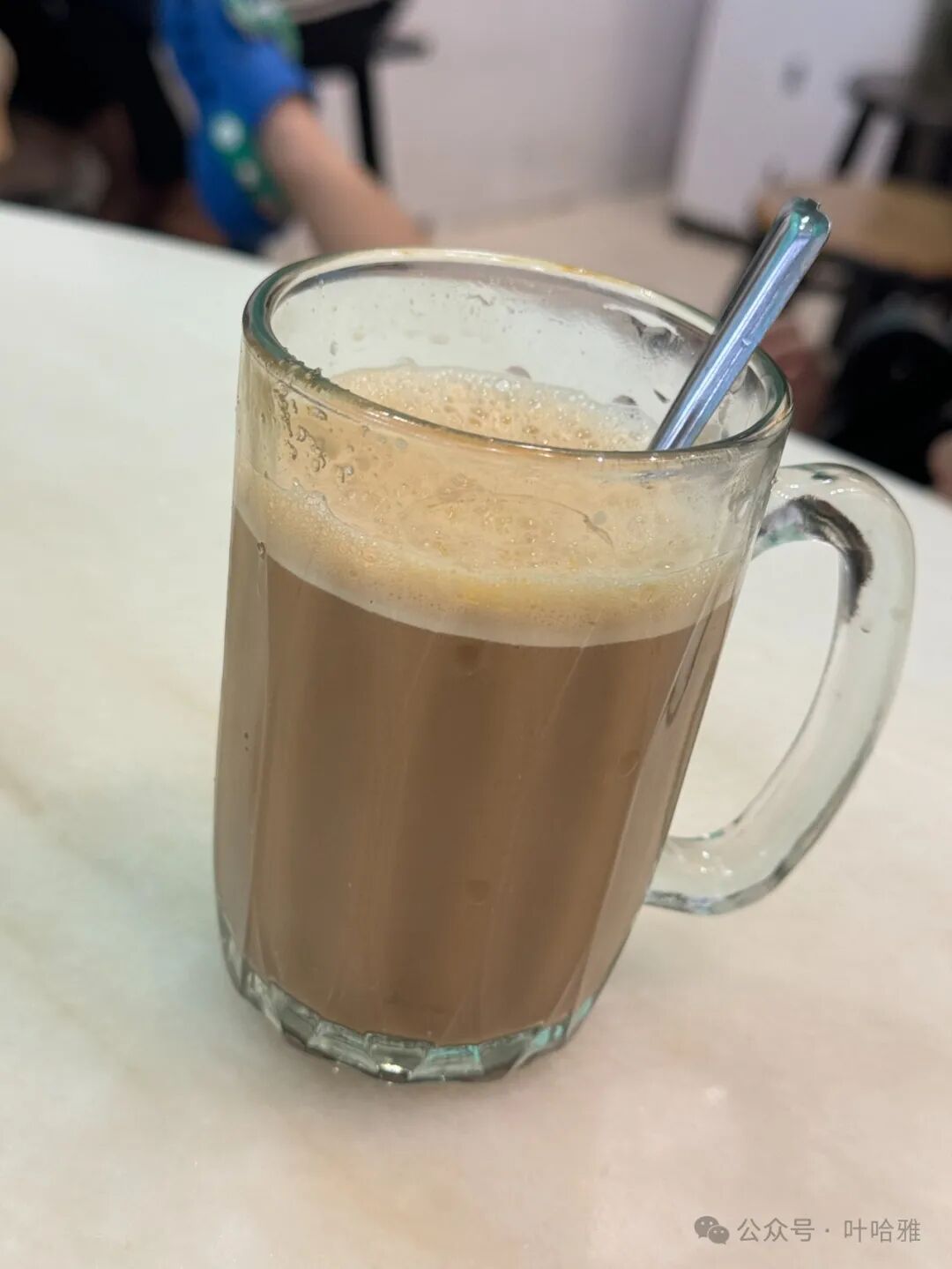
This is Penang-style white coffee. It actually tastes like instant coffee and is not worth recommending.
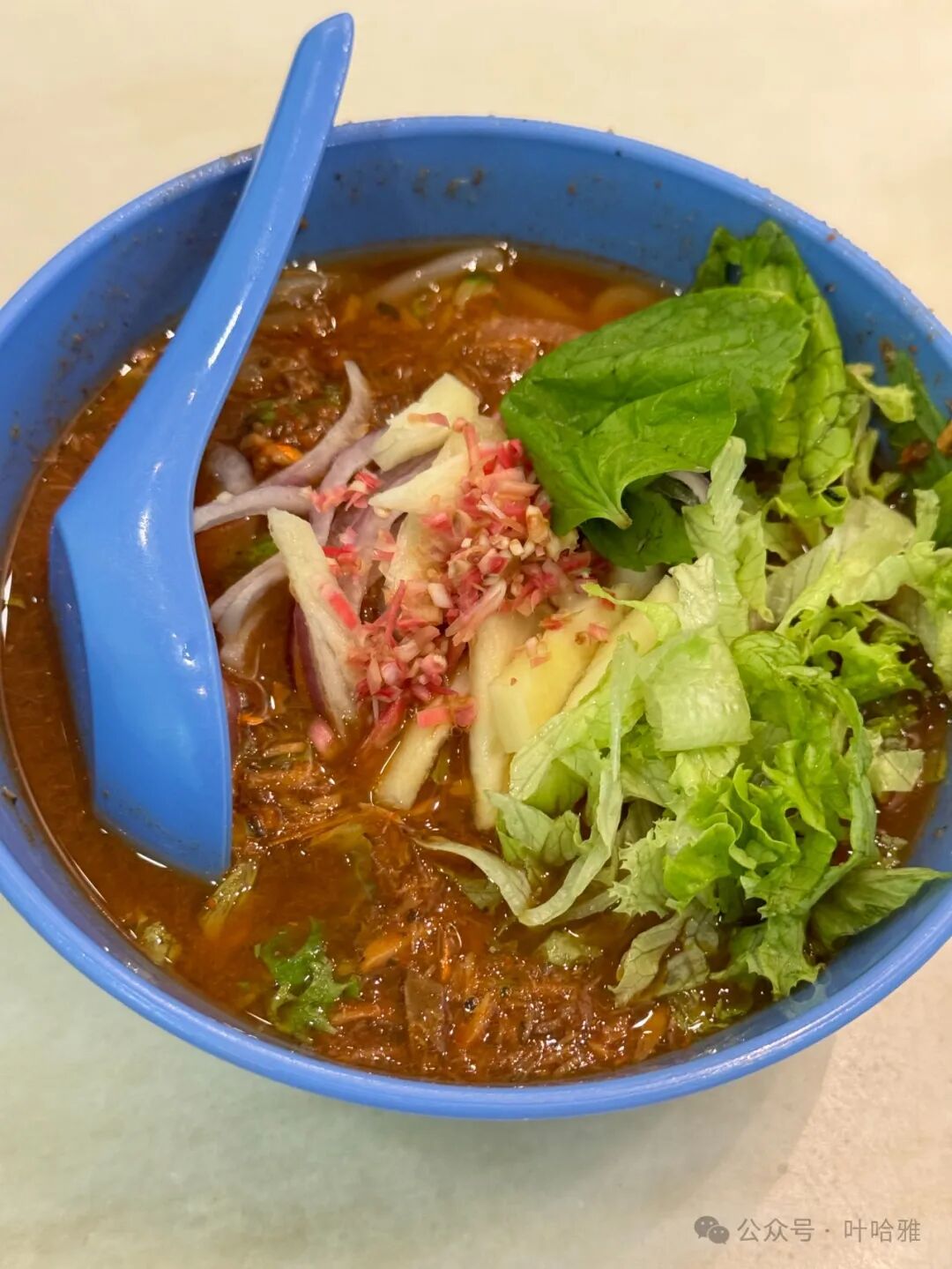
The taste of this Michelin-rated laksa is the same as the one I had at the AK mall in Kuala Lumpur. It looks like hot and sour noodles, but it is mixed with the flavors of lemongrass and mint. I tried it a few times but could not really get into it, though my wife thought it was quite tasty.
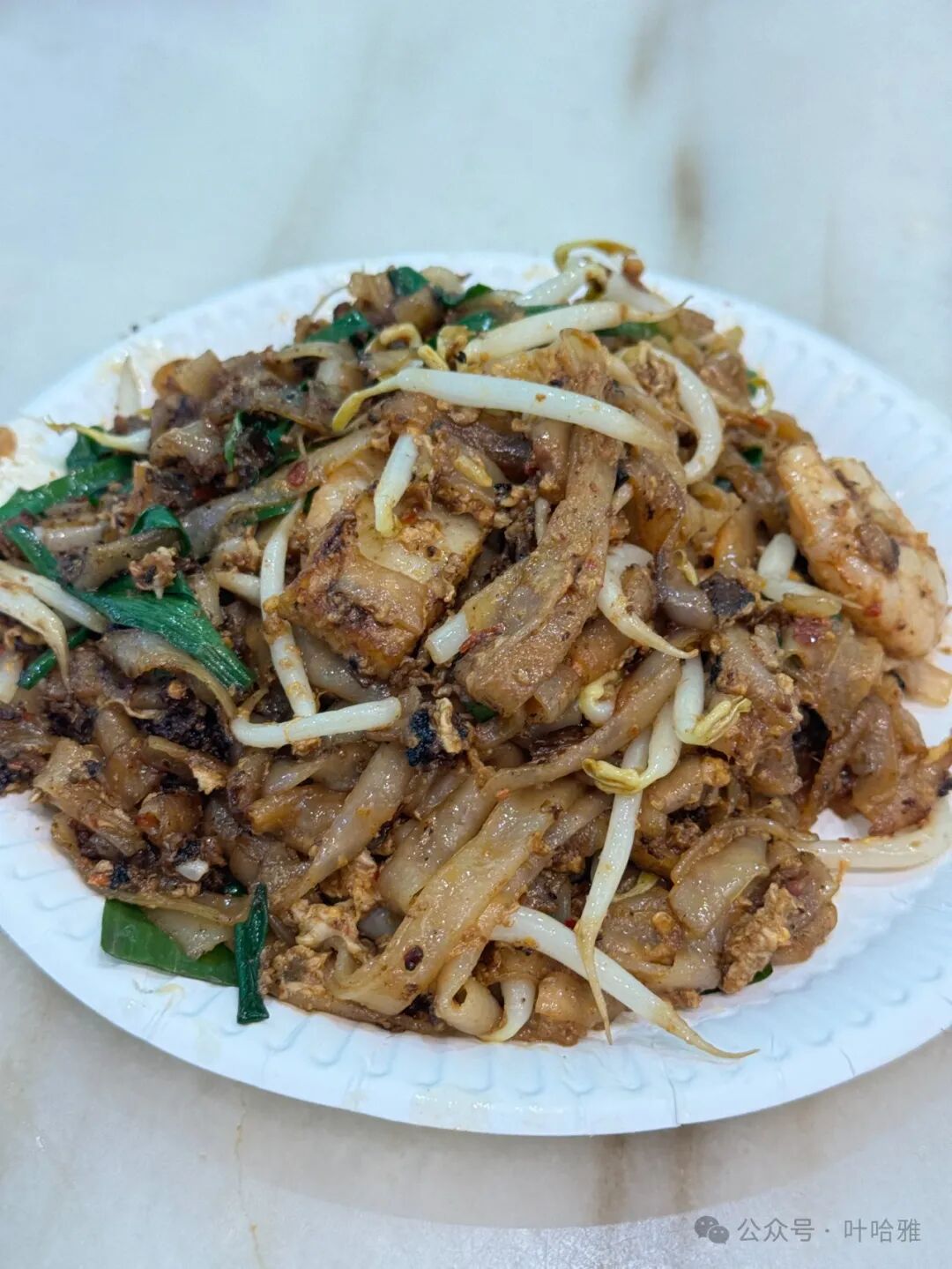
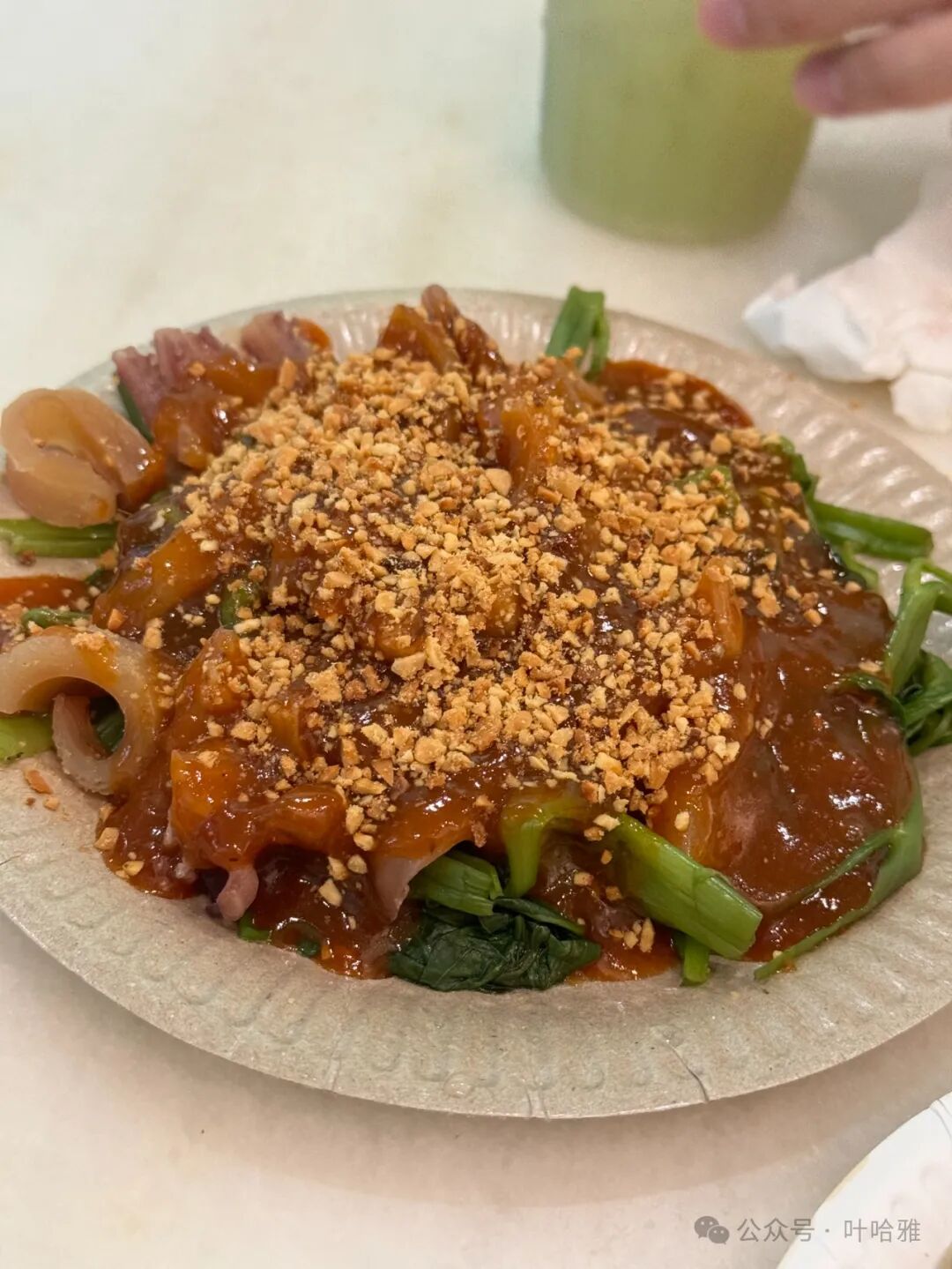
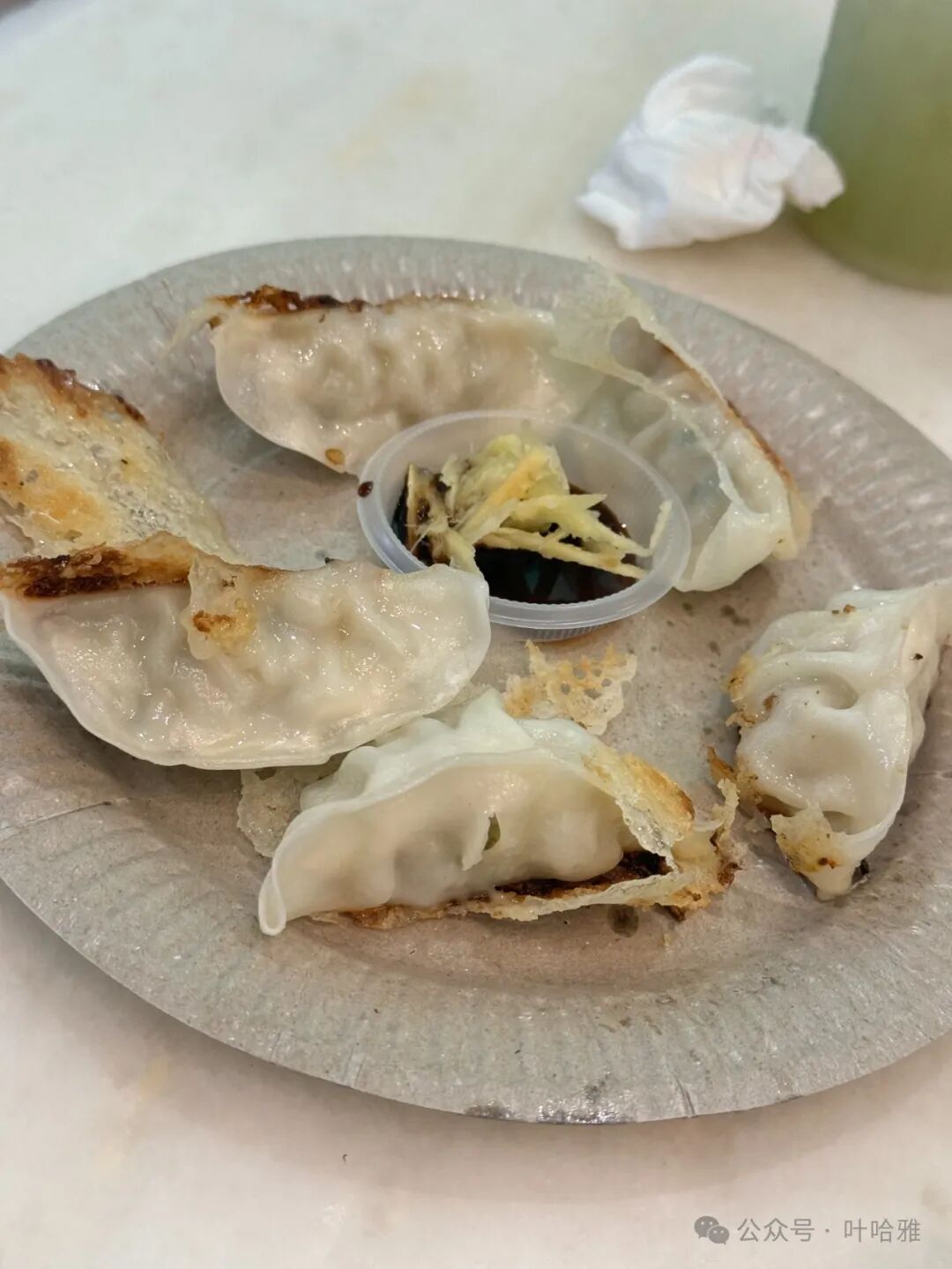
Among the items here, only the Japanese pan-fried dumplings (jiaozi) tasted okay. The others were not good, and I do not think you would like the salty and sweet flavors.
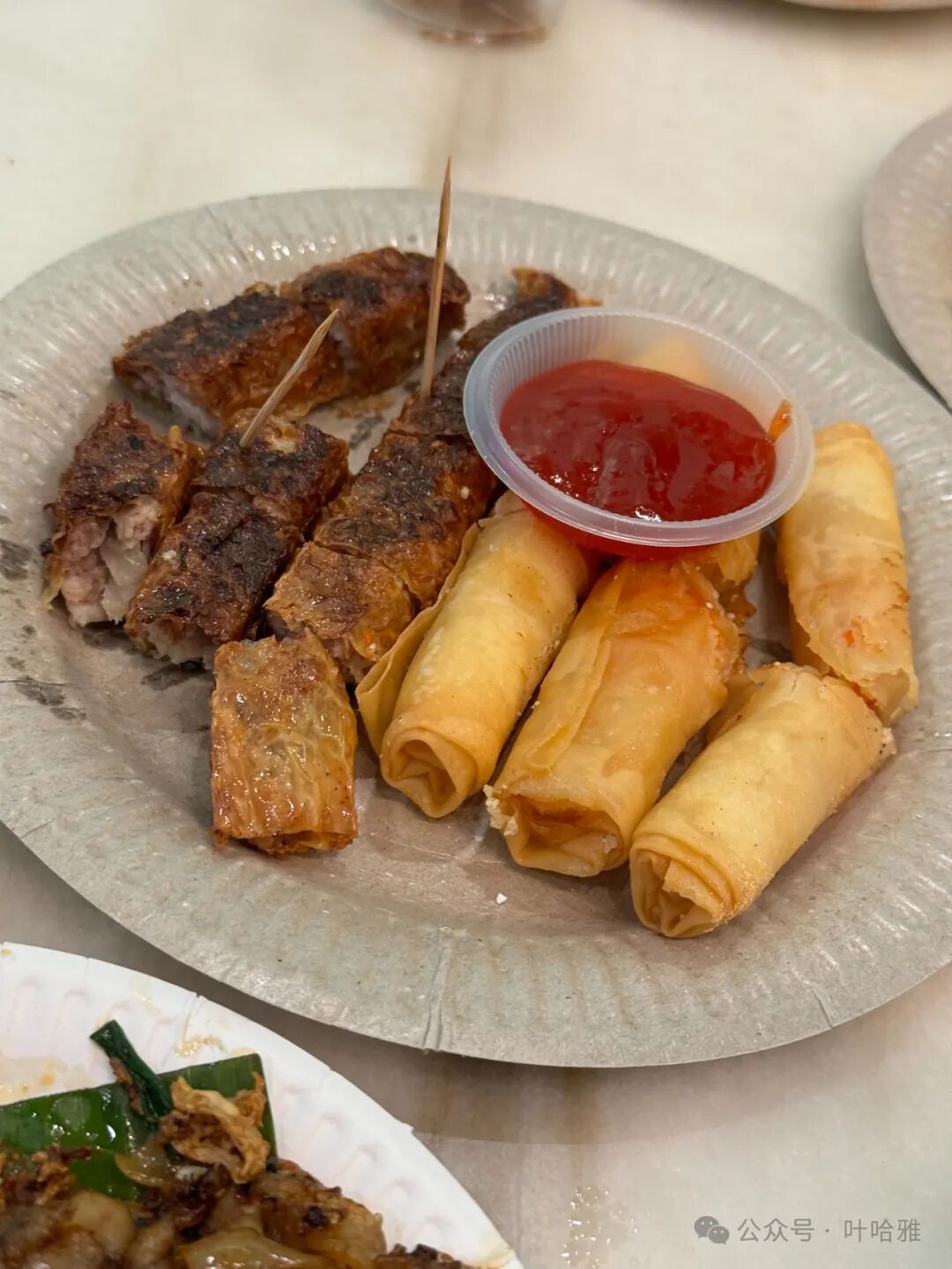
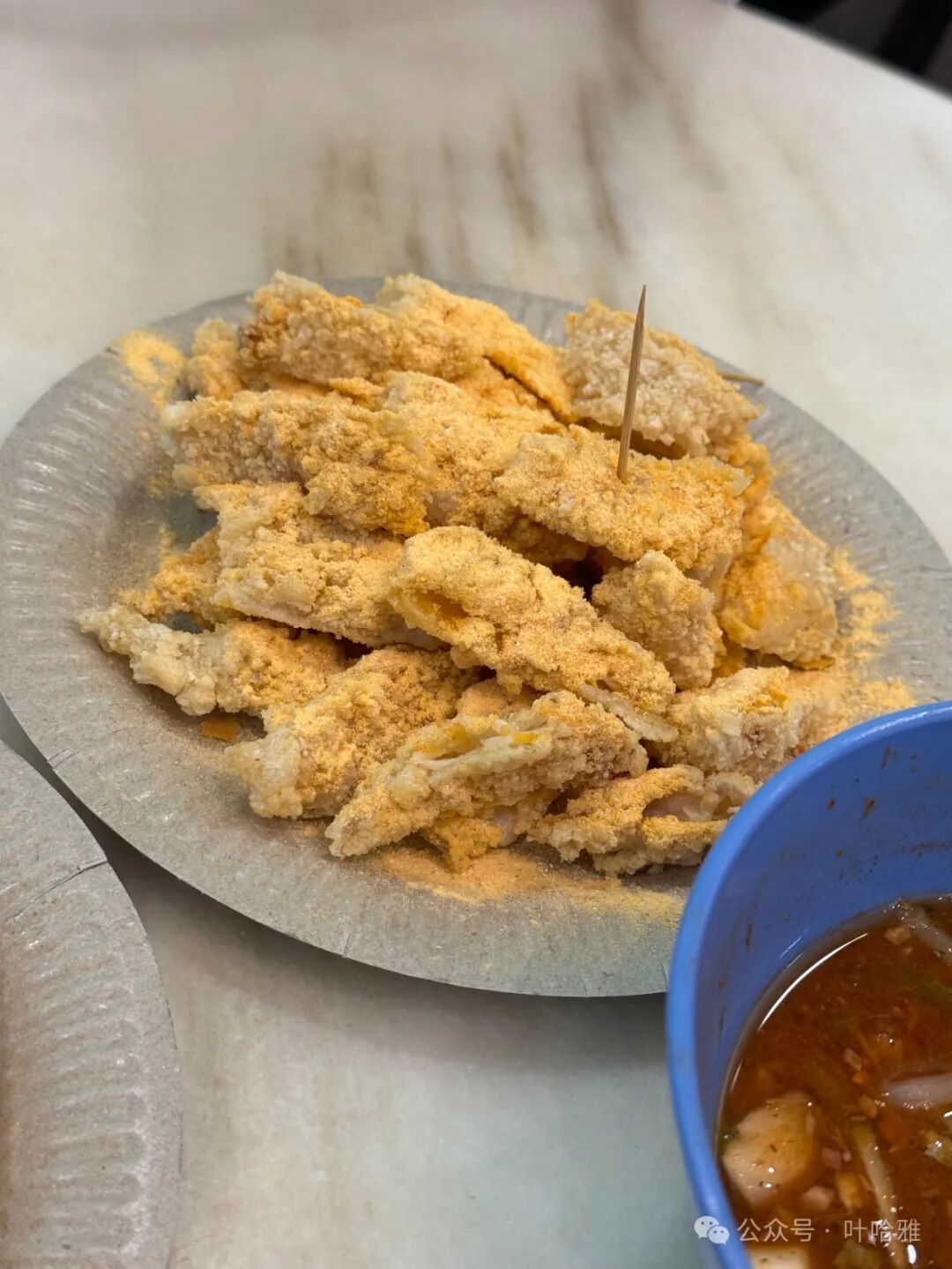
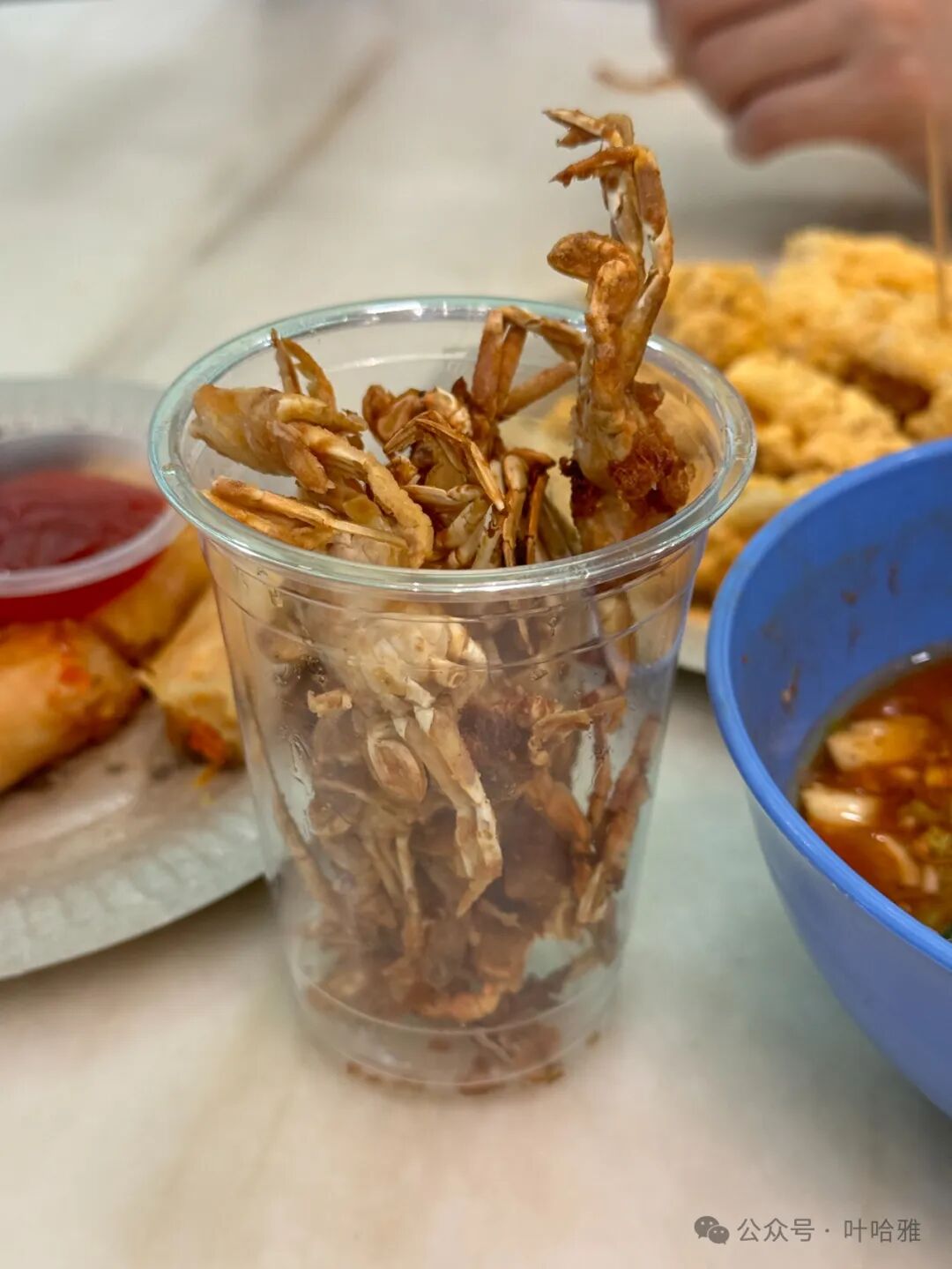
Not far from the laksa shop, you can find the oldest Chinese mosque in Penang.
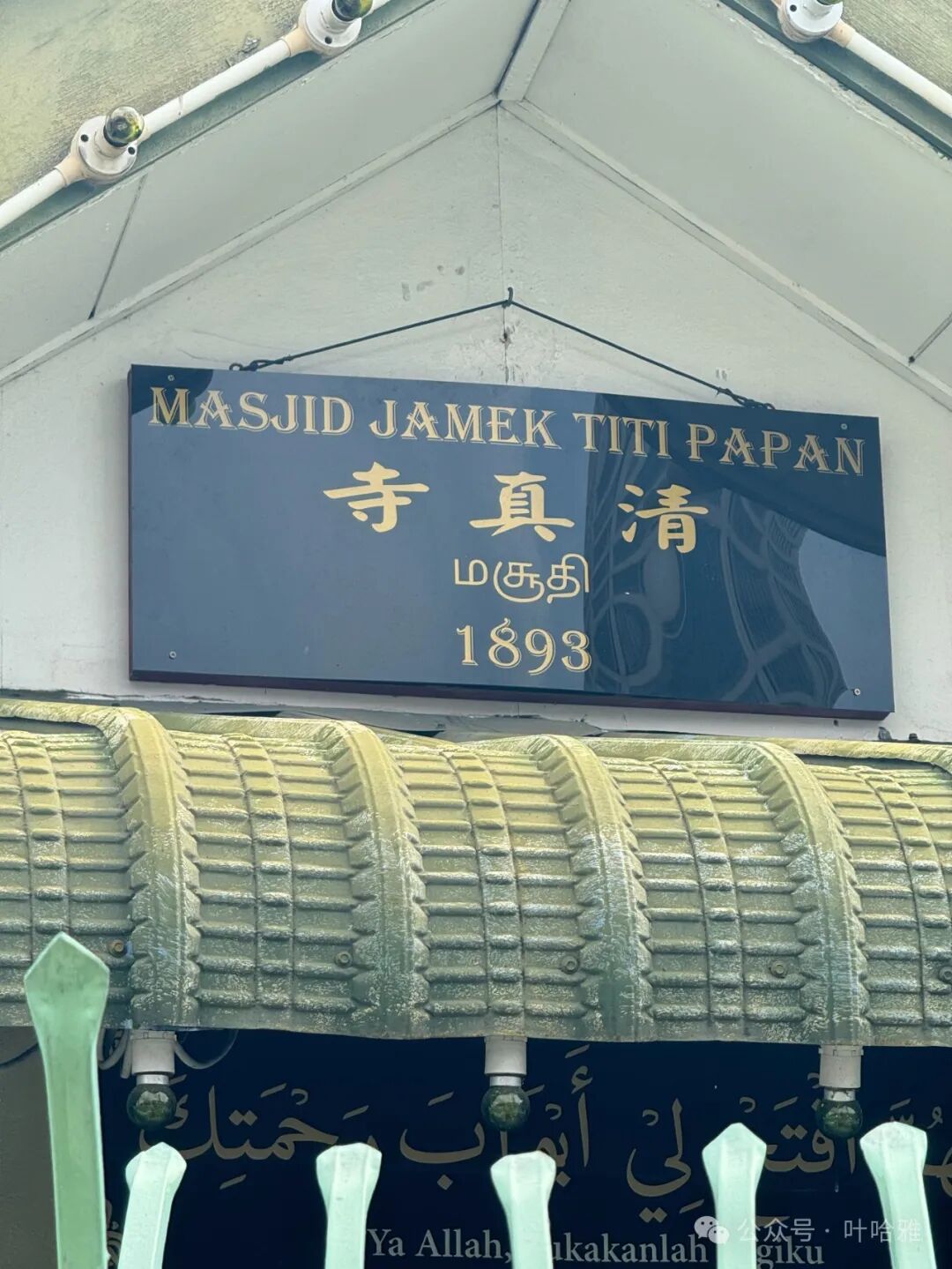
MASJID JAMEK TITI PAPAN
This mosque was first built in 1860. The surrounding area used to be a swamp, and people laid down wooden planks to walk to the mosque for namaz, which is how it got its Malay name, Titi Papan.
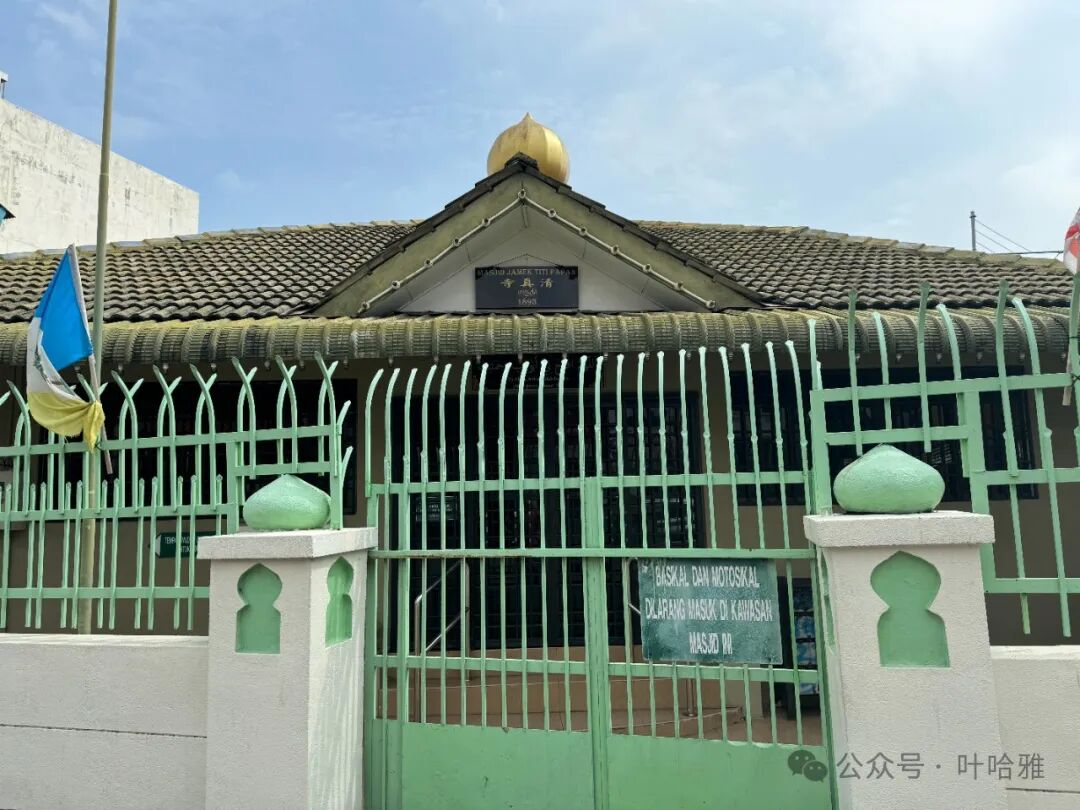
In 2014, the Penang state government and the Penang branch of the Malaysian Chinese Muslim Association held an inauguration ceremony for this mosque, marking the first mosque for Chinese people in Penang.
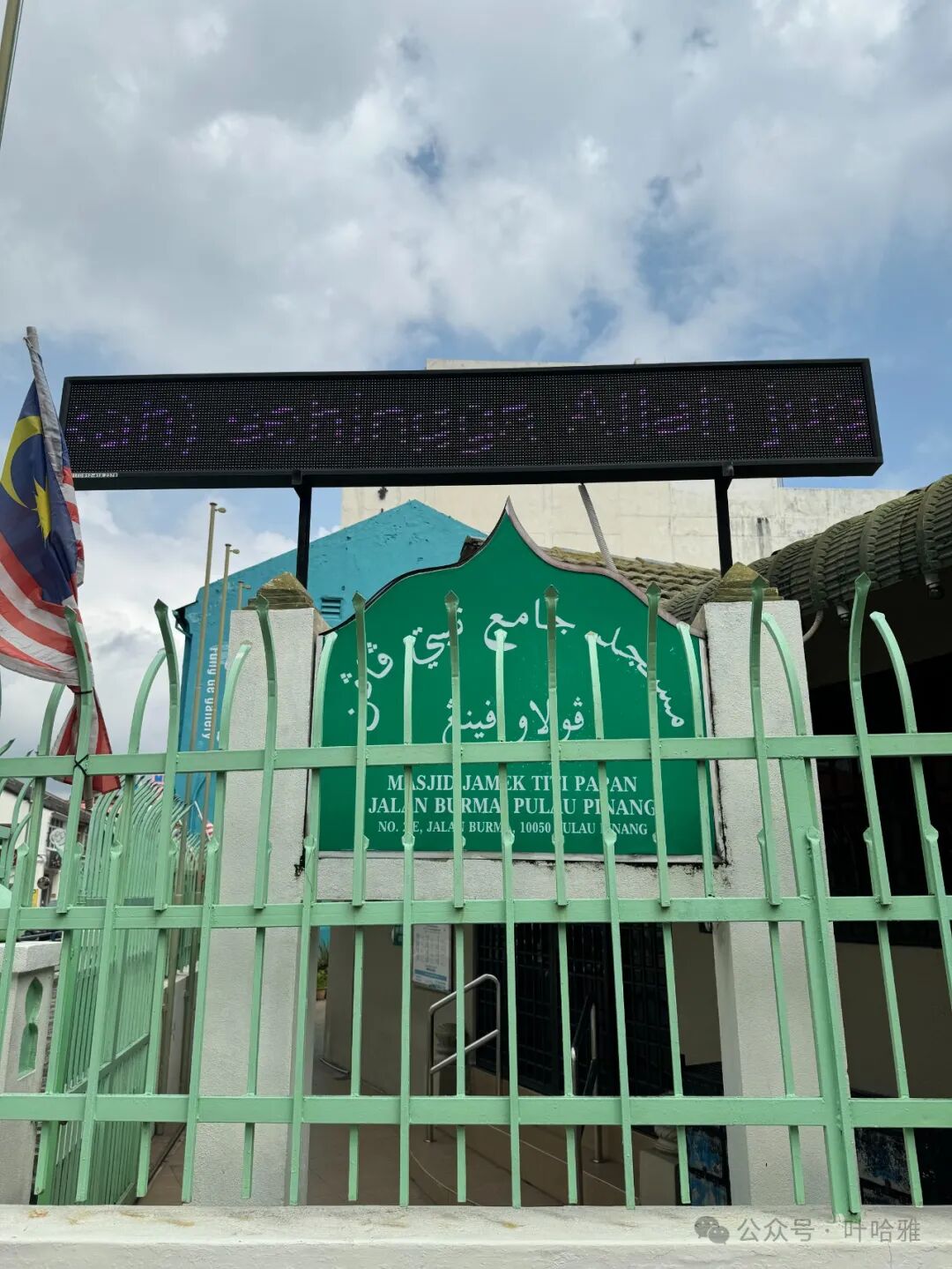
At first, it was a wooden structure with jewelry and diamond merchants Haji Mohamed Gumbong and Saiboo Merican as the main donors. The George Town World Heritage Incorporated set up an information plaque for it, and it was not rebuilt as a brick building until 1893.
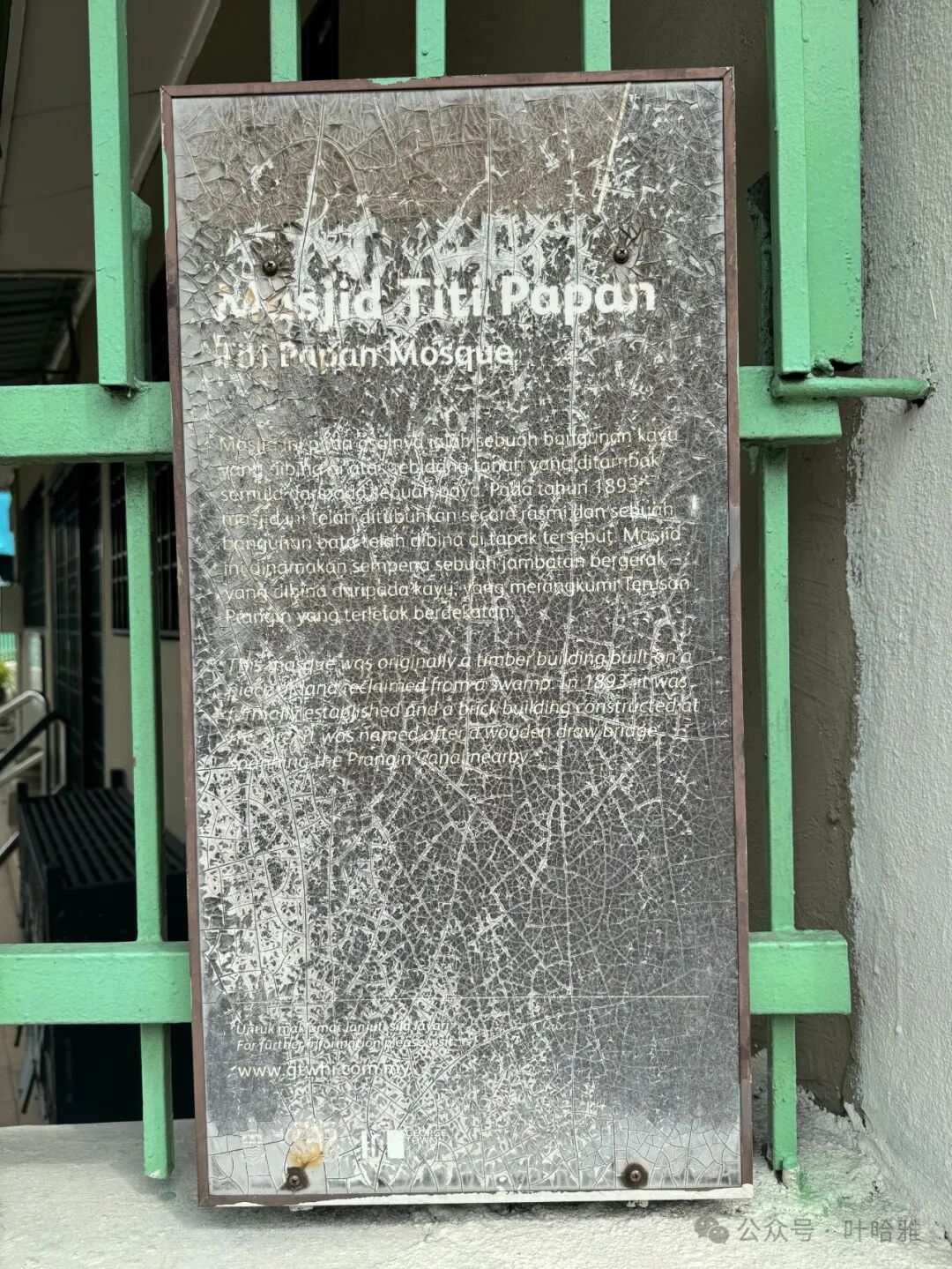
The two main donors later disagreed over who should manage the mosque. After decades of ups and downs, the mosque closed from time to time. In 1986, Yusof Latiff was appointed as the mosque's chairman. To make the mosque more popular, he asked the Penang government to approve Friday Jumu'ah prayers there, but the request was rejected because Penang already had too many Jumu'ah mosques.
The mosque has copies of the Quran with Chinese translations.
The mosque was not approved as a Jumu'ah mosque until 1991. In 2001, the government expanded the mosque, and the regional office covered the costs.
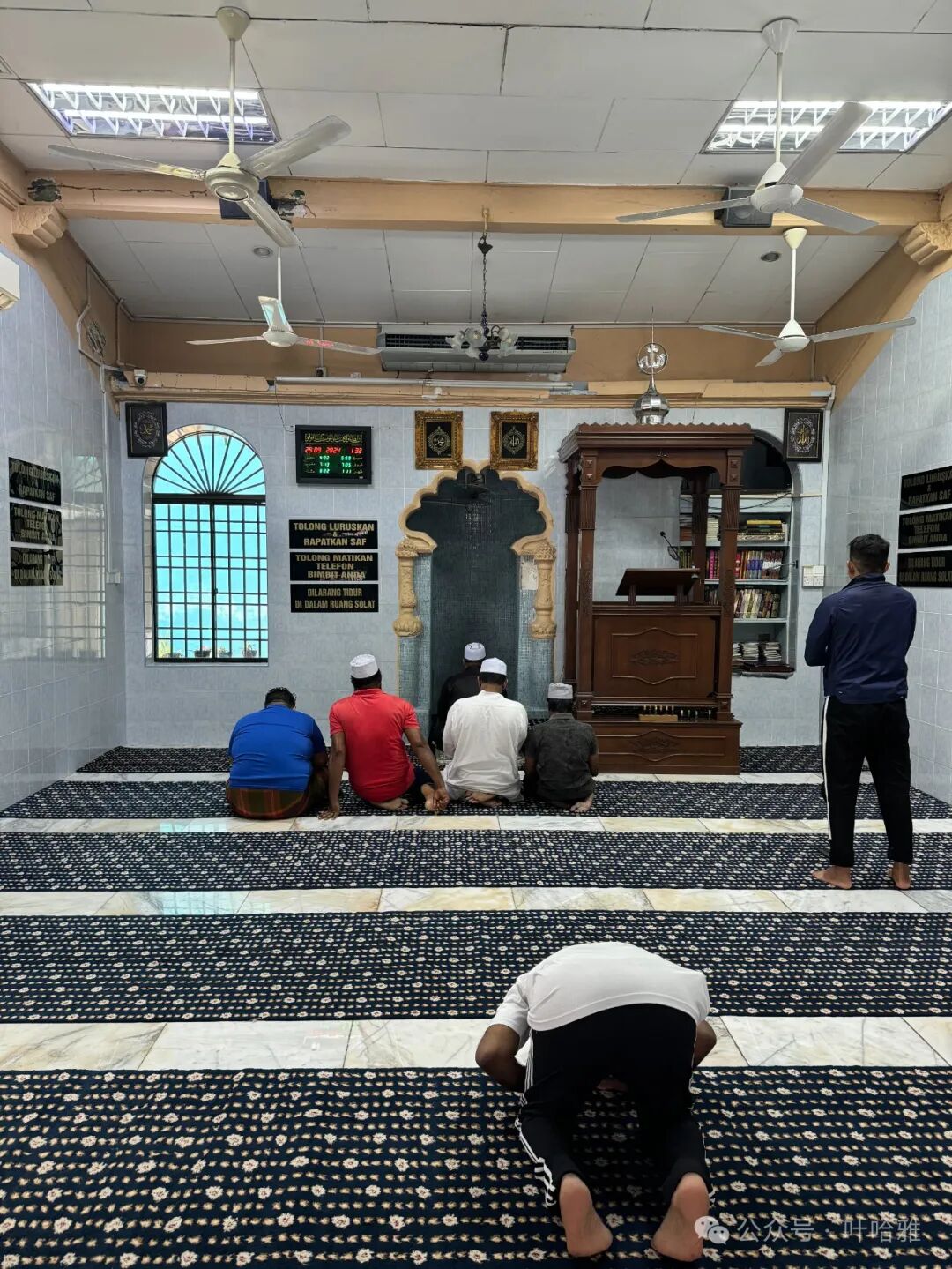
On August 16, 2014, the state government officially designated this mosque as the first Chinese mosque in Penang, naming it MASJID CINA TITI PAPAN.
The halal bird's nest museum.
MASJID MELAYU LEBOH ACHEH
This mosque is called the Acheen Street Mosque (Masjid Melayu Leboh Acheh). It was built by the Acehnese in 1808. The graves of the donor and his family are right next to the mosque.
This mosque was once an Islamic academic center in Penang, bringing together merchants from the surrounding Malay Archipelago, Arabia, and India.
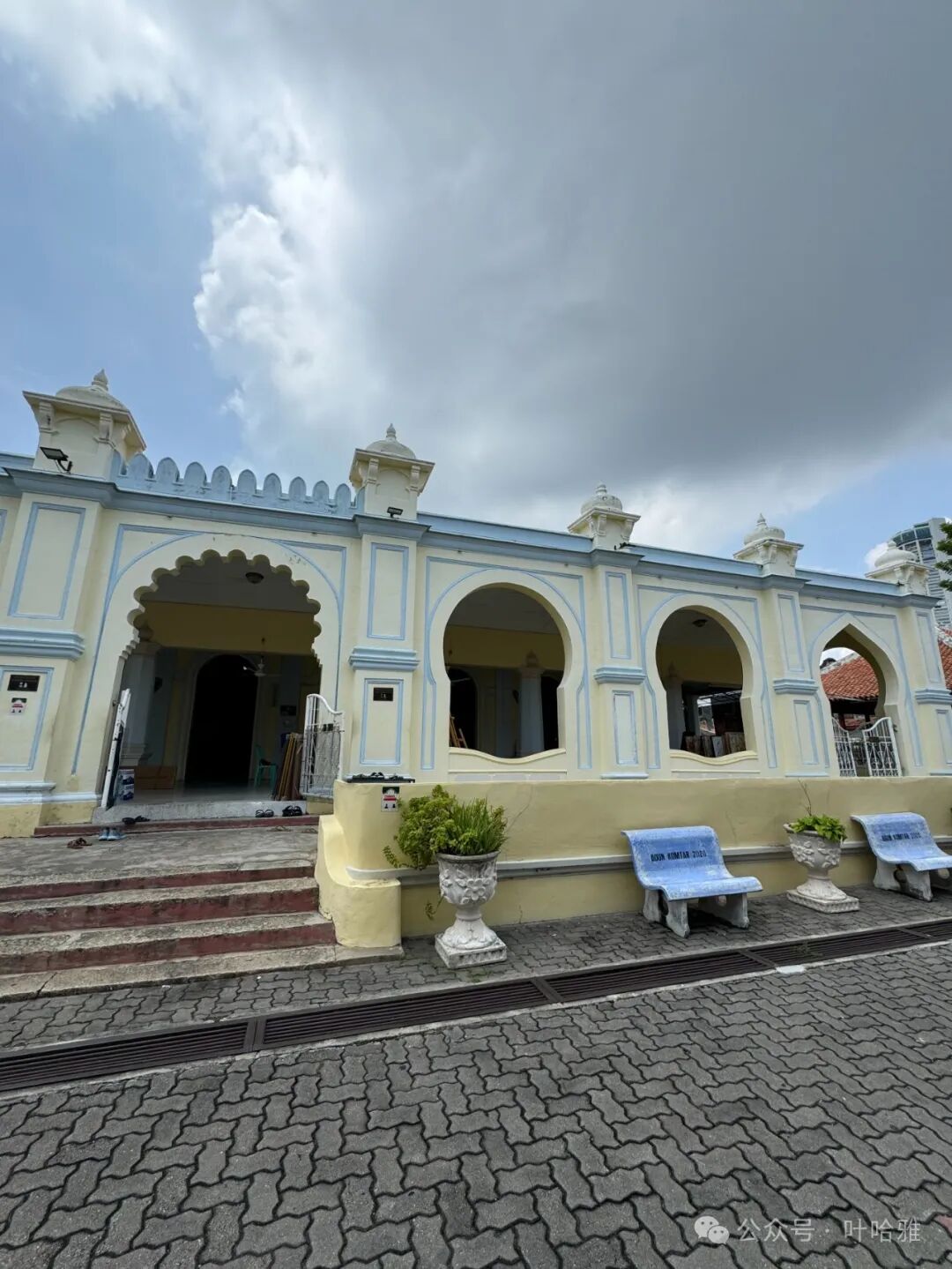
It was once a gathering place for pilgrims heading to Mecca, which is why it was called the Second Jeddah.
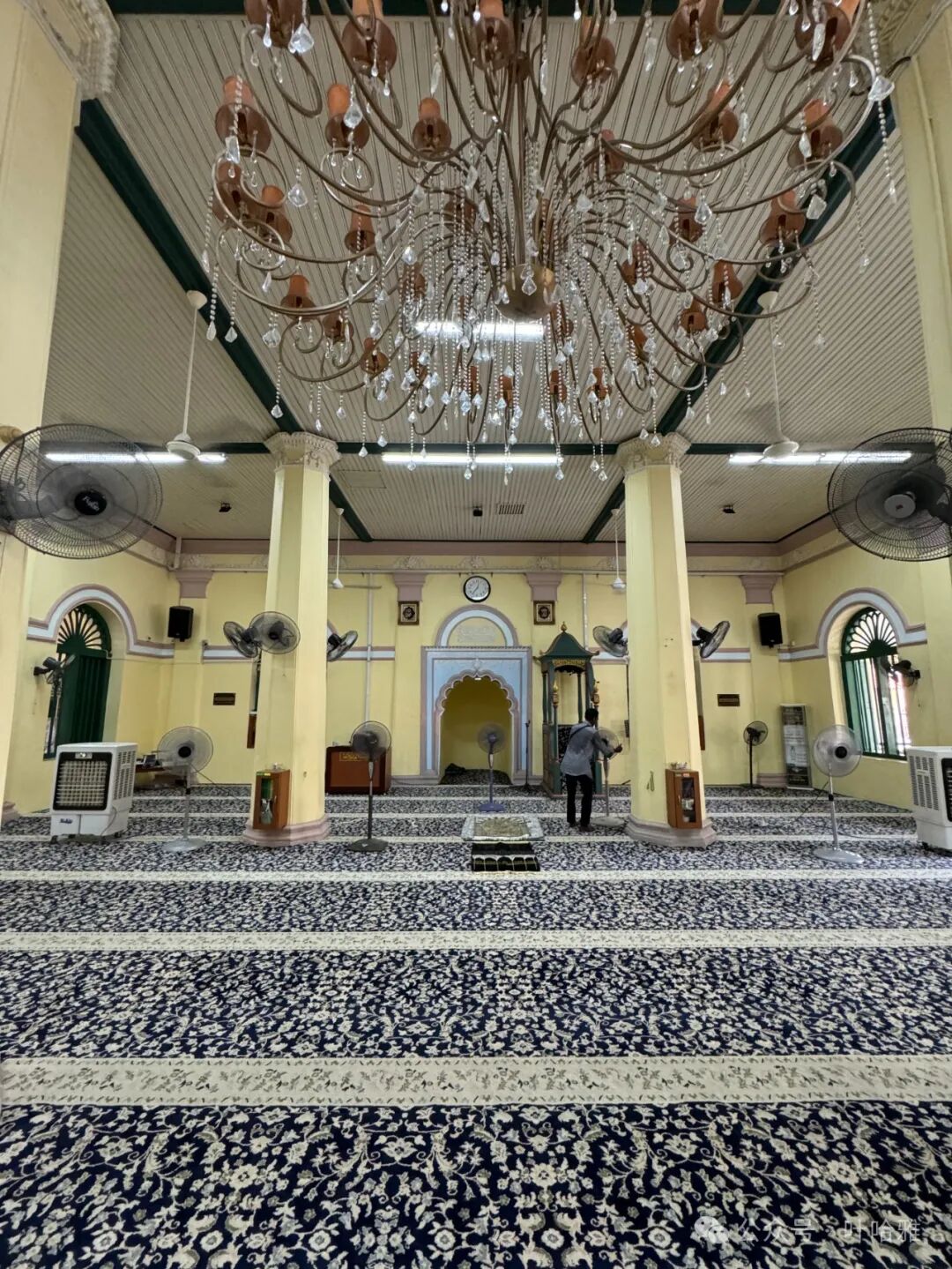
The area gradually became quiet after the Hajj Pilgrimage Fund Board was established in Kuala Lumpur in the 1970s.
This is a wudu pool, which is common in Southeast Asian mosques.
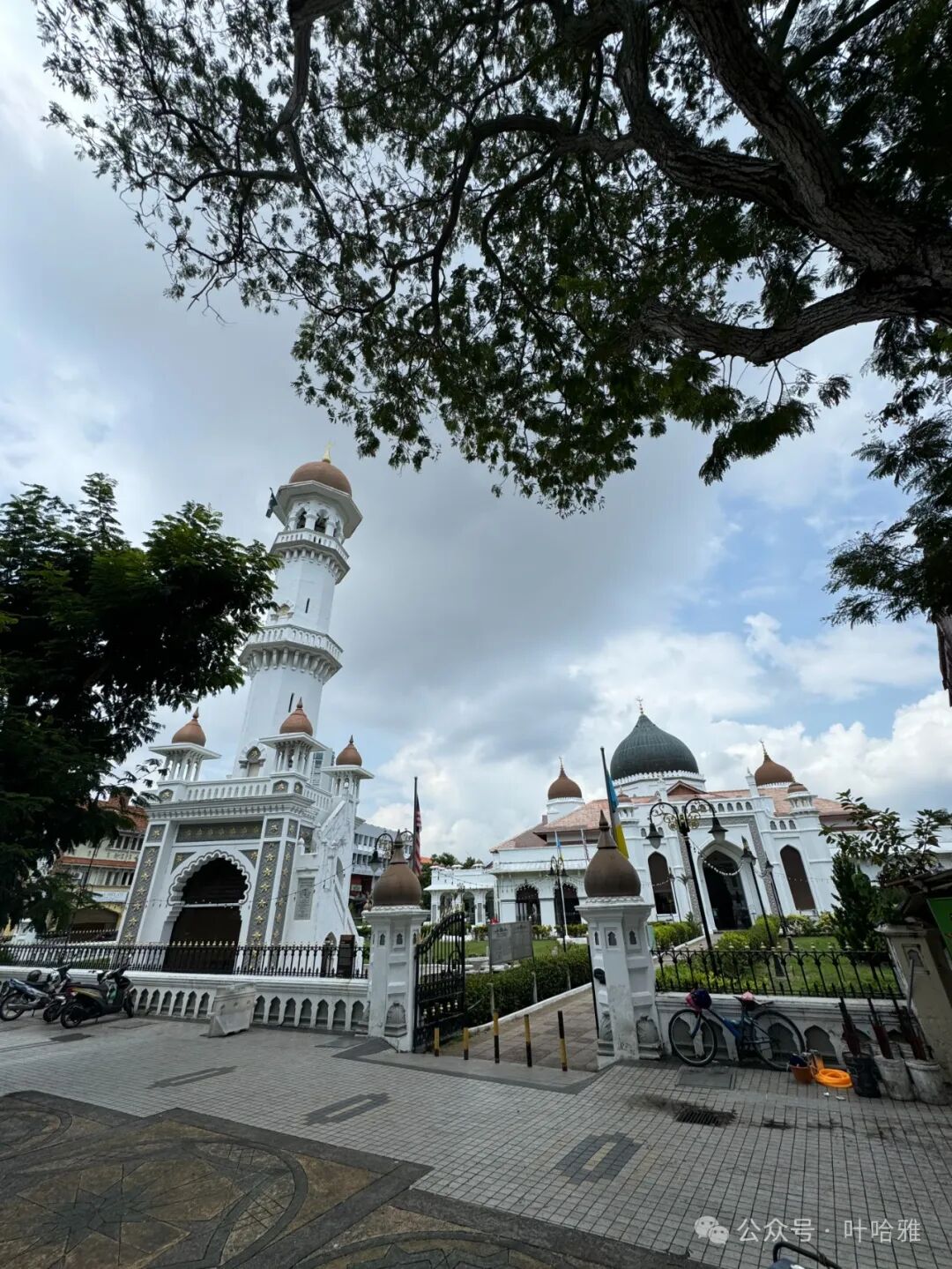
MASJID KAPITAN KELING
Kapitan Keling Mosque is a mosque built by Indians in Penang in 1801. It is located in the Tamil Muslim community of Penang and is part of the George Town World Heritage Site. George Leith, the then Lieutenant Governor of Penang, appointed an Indian man named Cauder Mohudeen as the captain of the South Indian Keling community. He received a piece of land and used it to build this mosque. People called this Indian captain 'Kapitan Kling,' so 'Kapitan' means captain, and 'Kling' is the Malay term for Indians, which now carries a derogatory meaning.
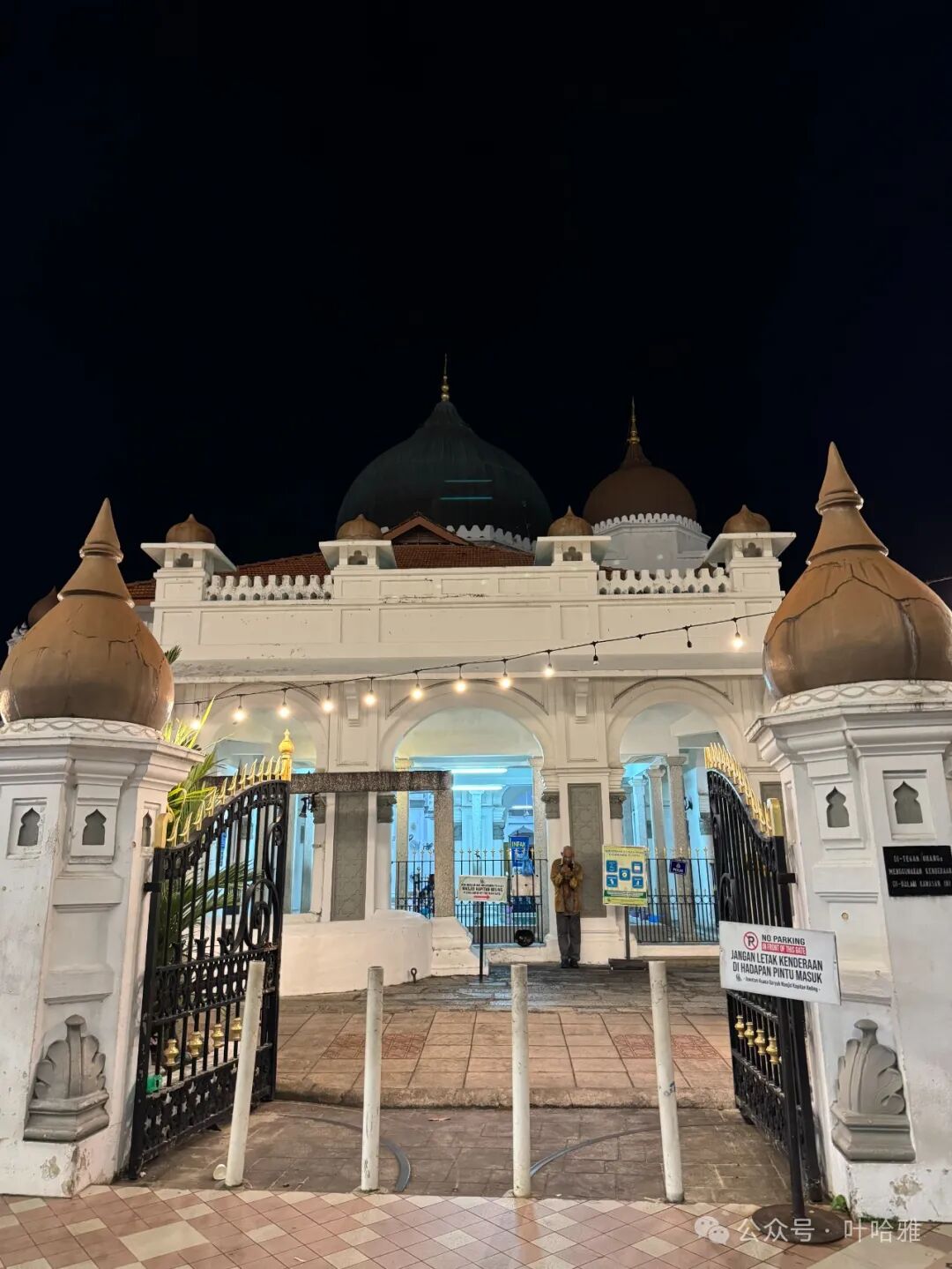
This mosque is also the largest mosque in Penang and a must-visit spot for tourists.
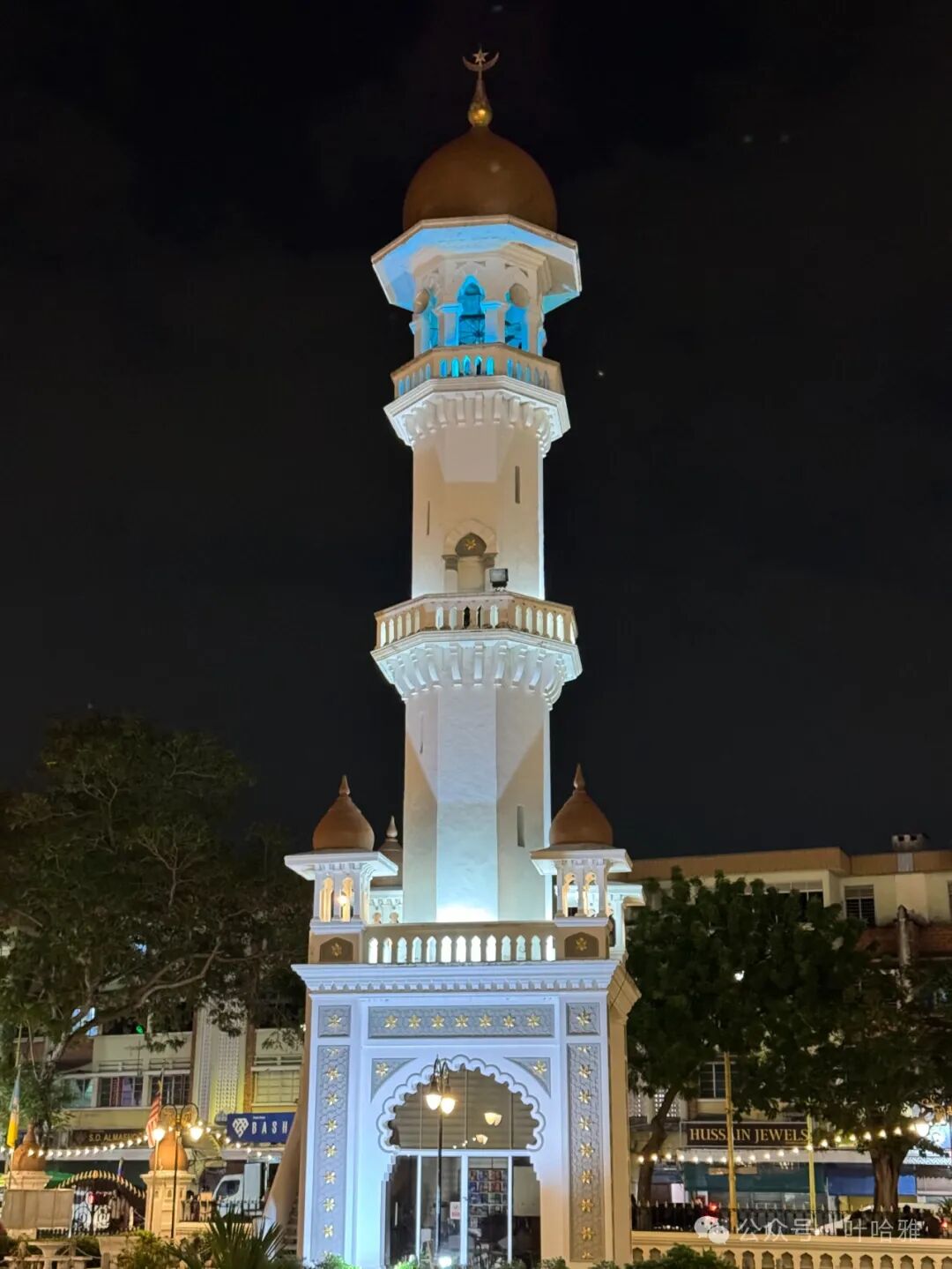
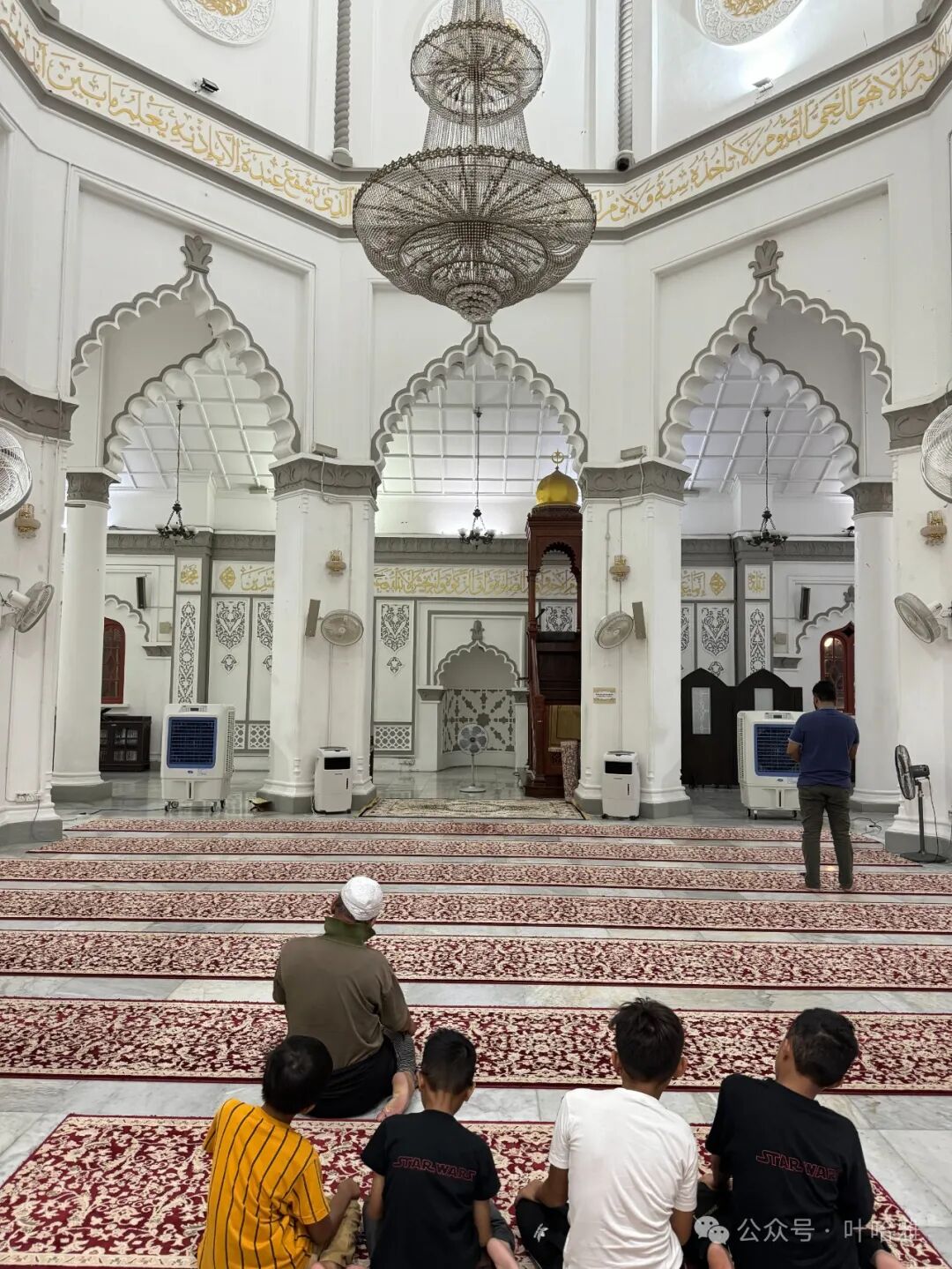
You can see various religions living in harmony in Penang. The picture below shows an Indian mosque not far from the mosque.
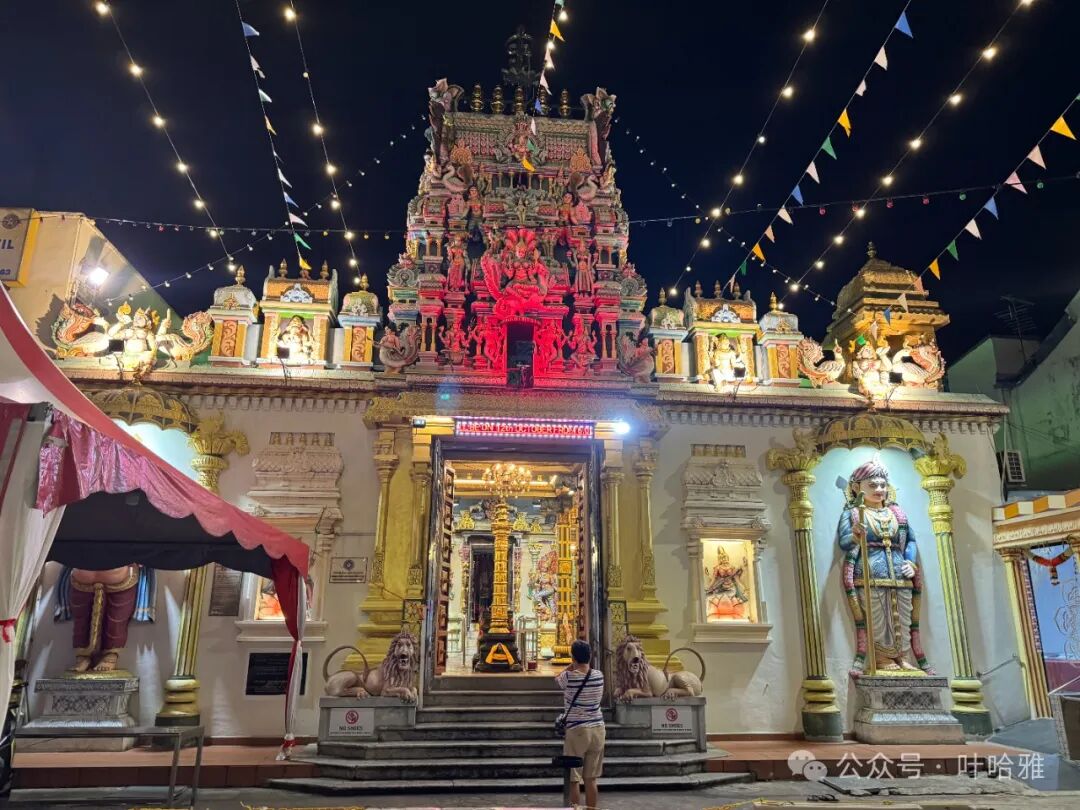
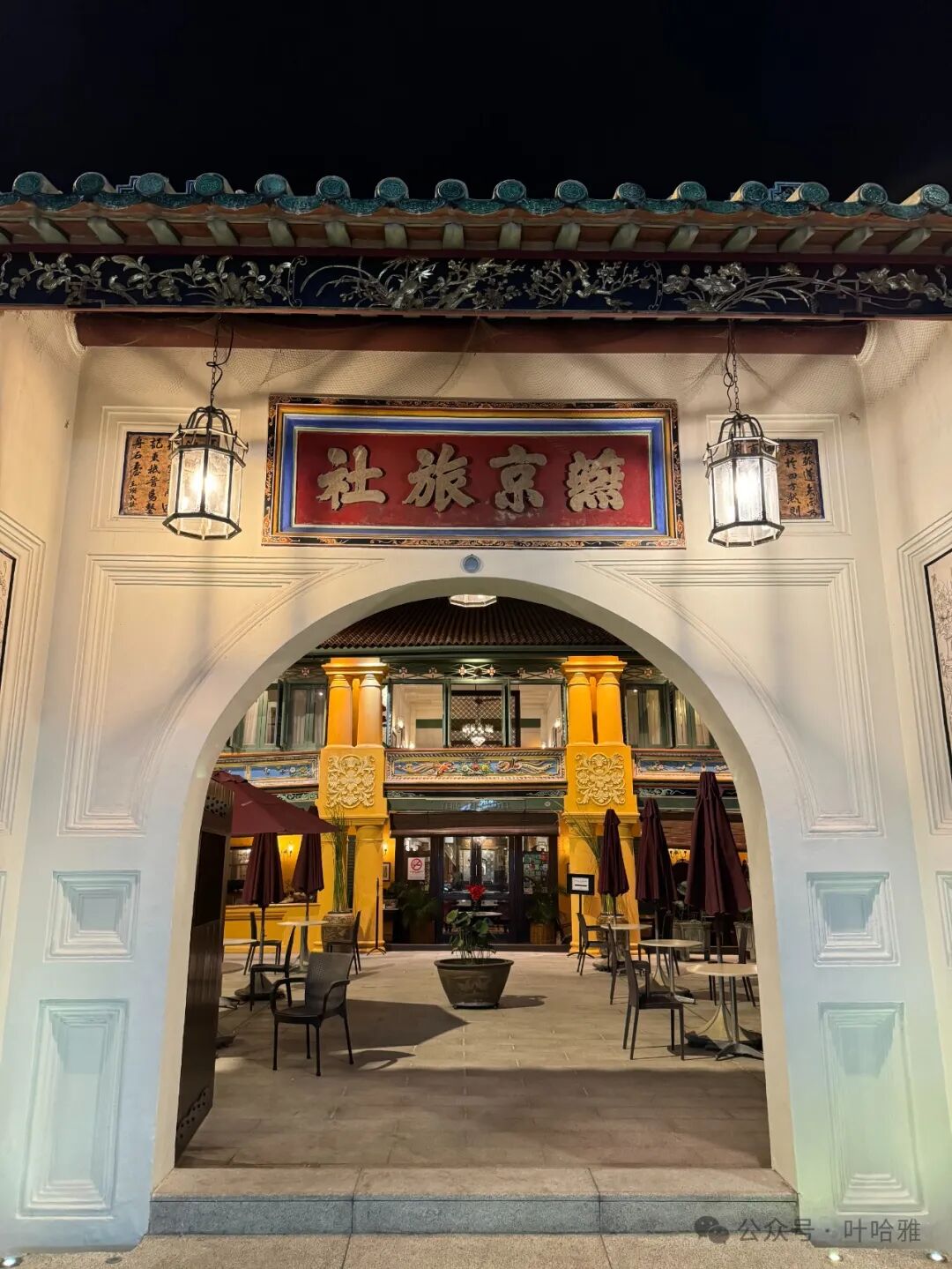
You can eat pork-free Nyonya cuisine at the Yeng Keng Hotel restaurant in George Town's old city. Yeng Keng Hotel is also a heritage hotel. Its price is similar to the George Hotel, around 1,000 yuan per night, but its facilities are clearly much older than those at the George Hotel.
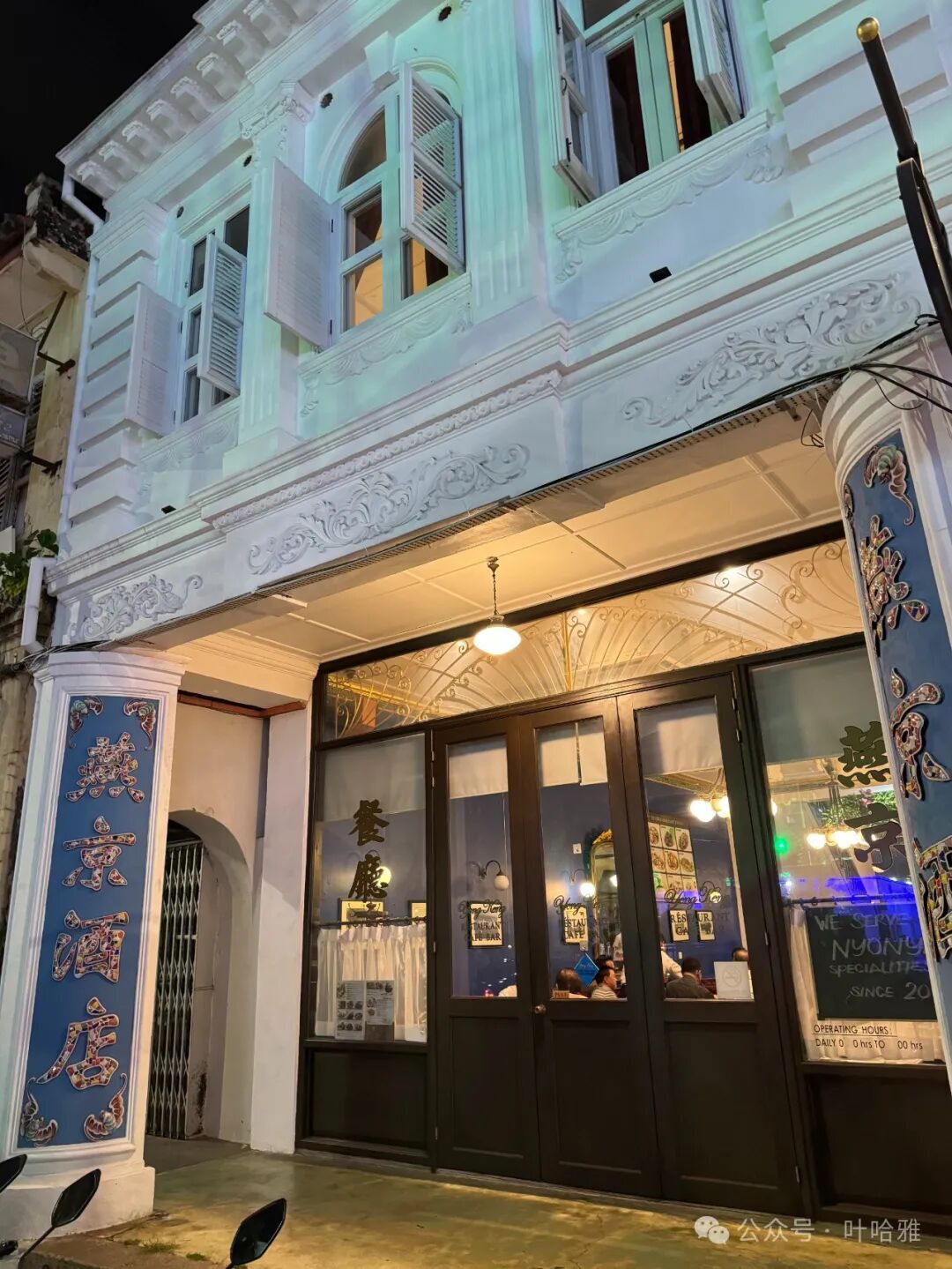
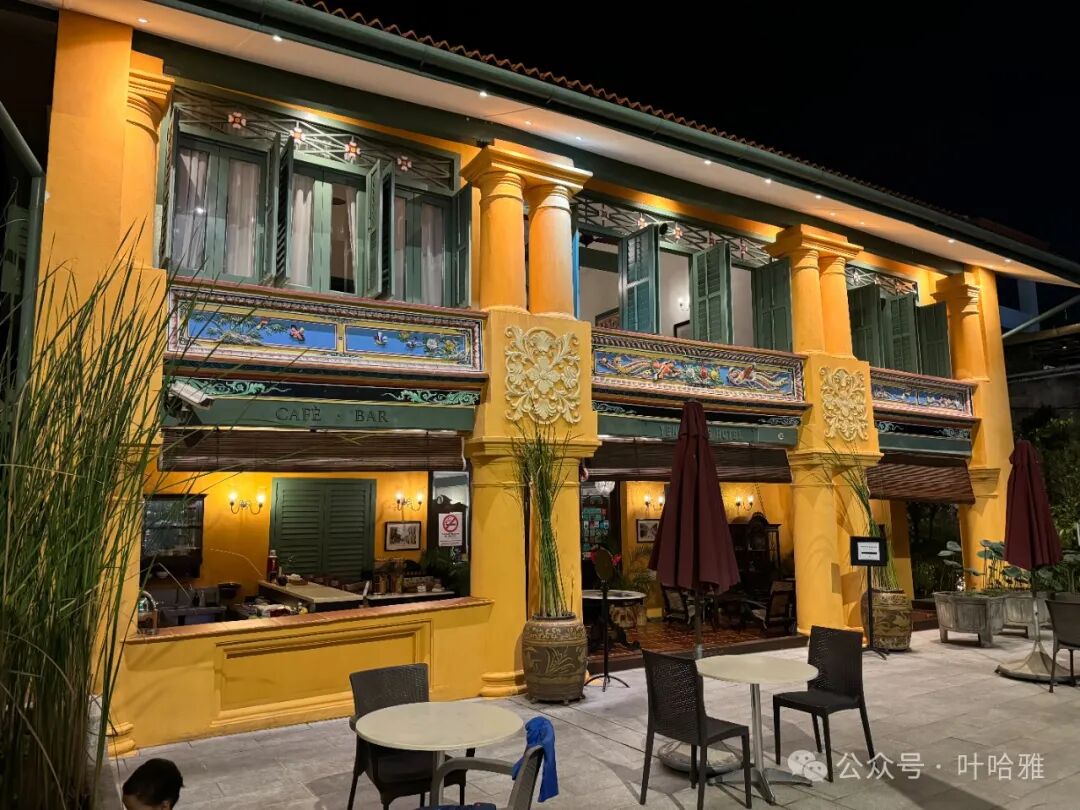
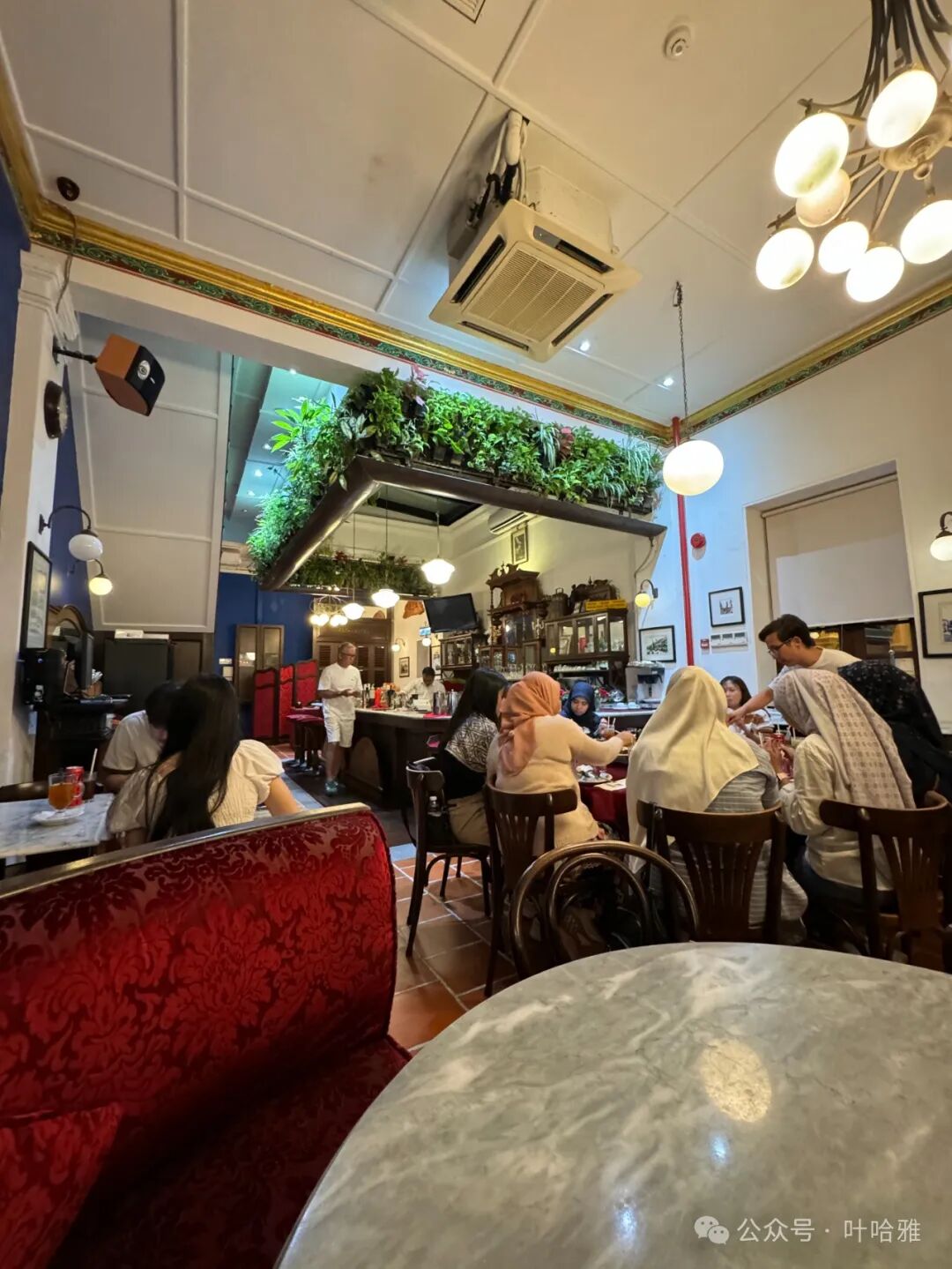
The menu prices are quite reasonable, and the restaurant is very busy. When we arrived for dinner, there was only one empty table left, and guests who came after us had to wait in line.
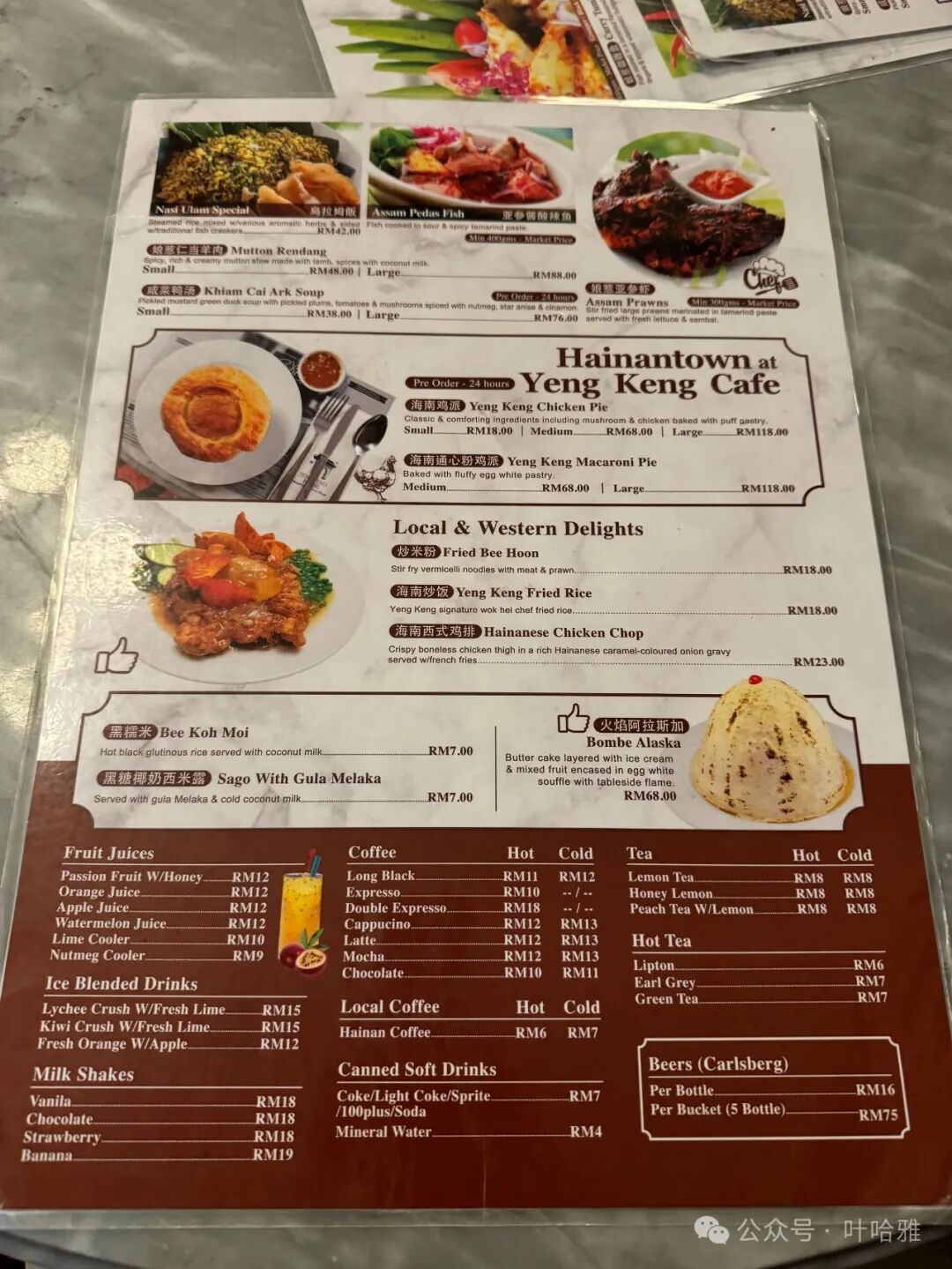
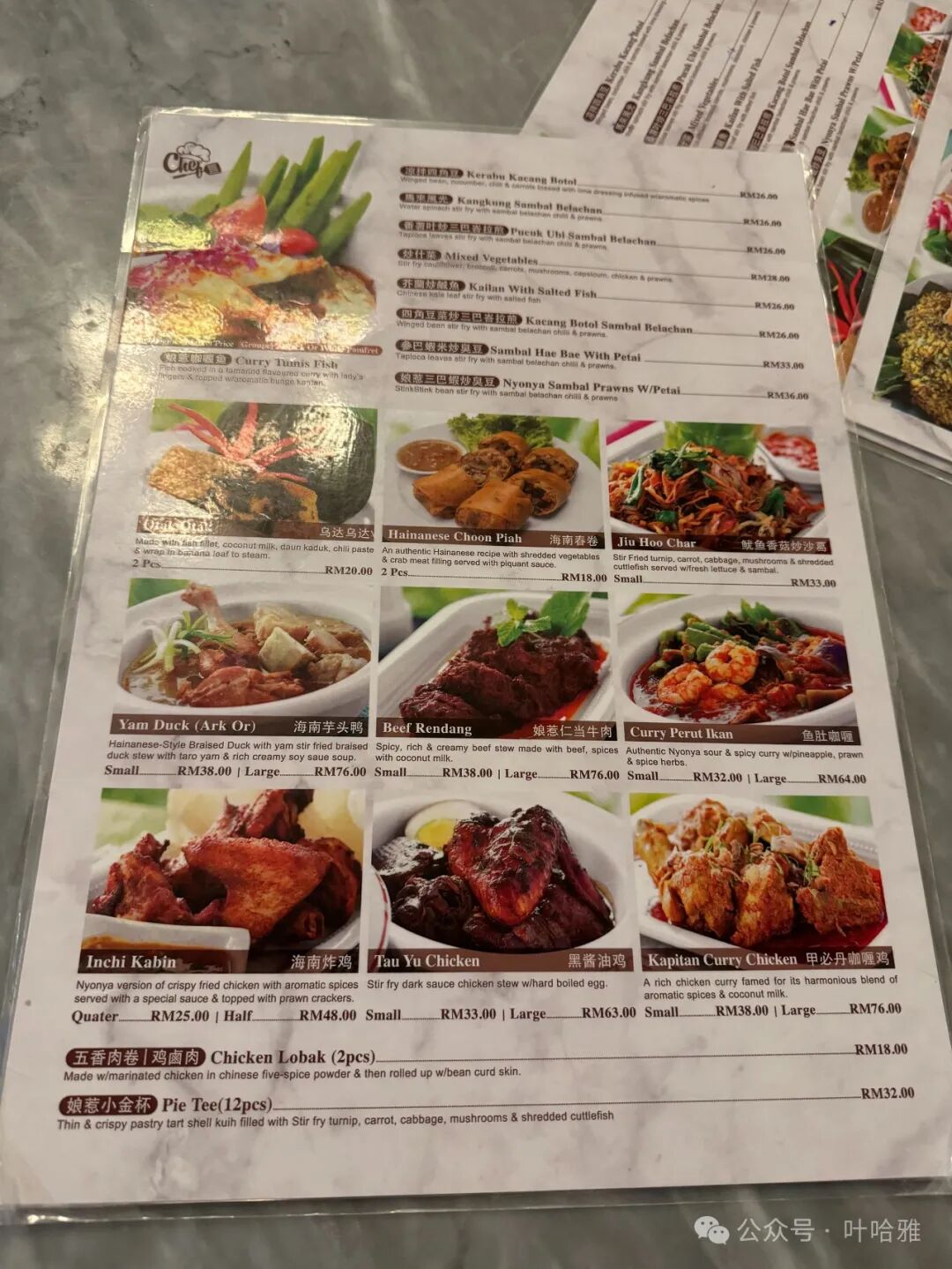
We ordered signature Nyonya dishes. The taste was very authentic and similar to the Nyonya food I had in Malacca.
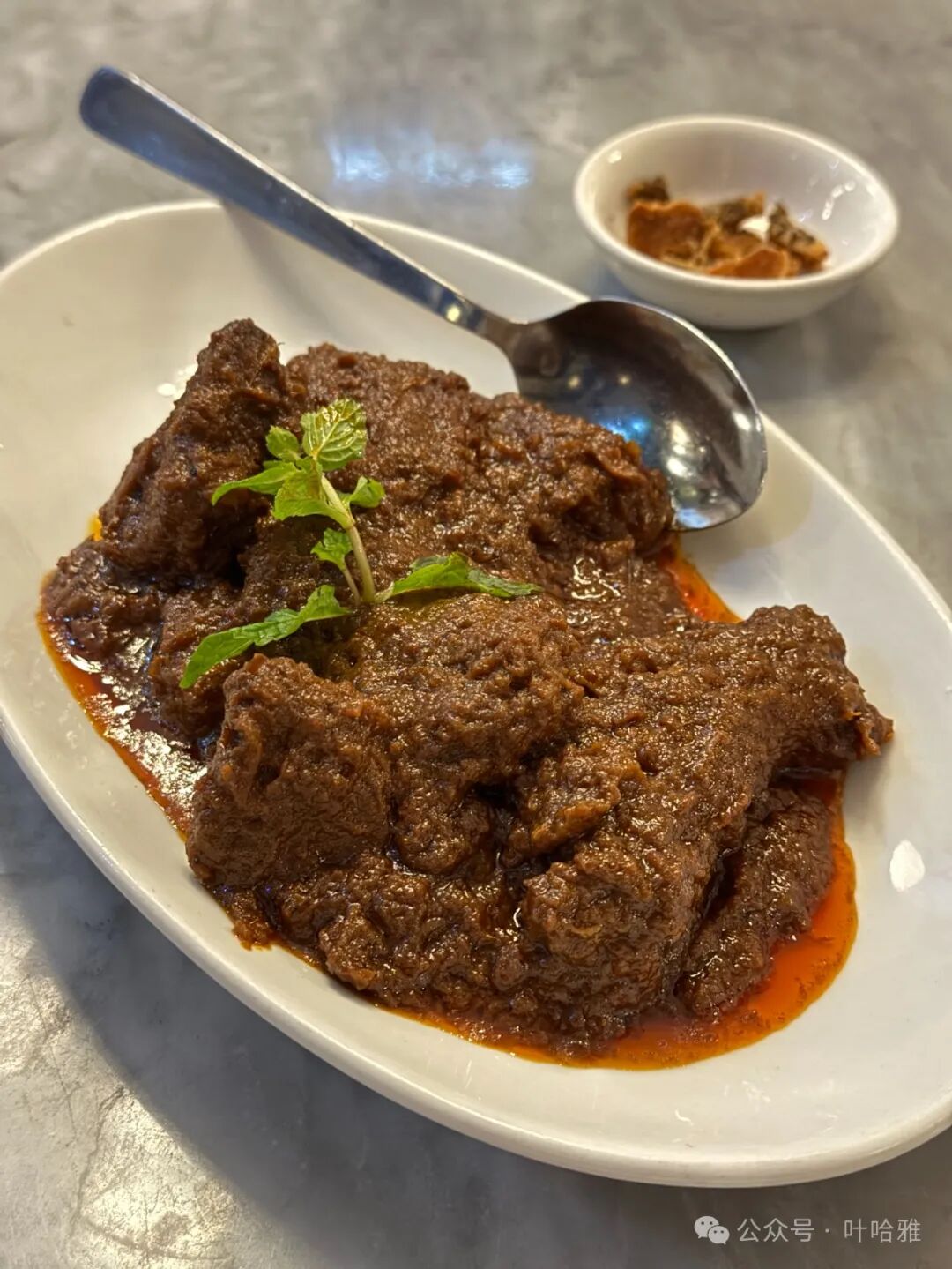
Beef rendang (rendang yangrou)
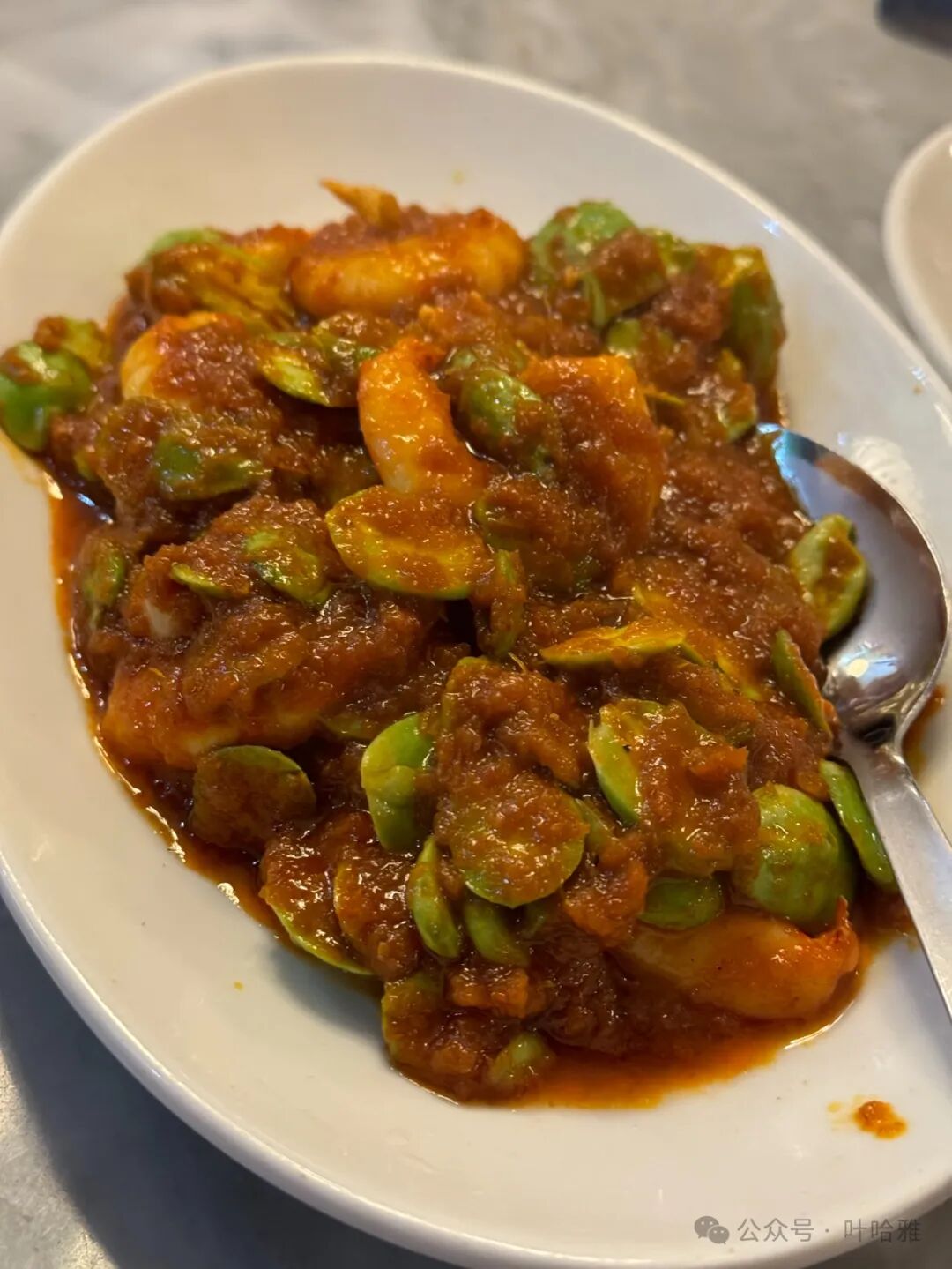
Nyonya sambal shrimp with stink beans (niangre sanba xia chao choudou)
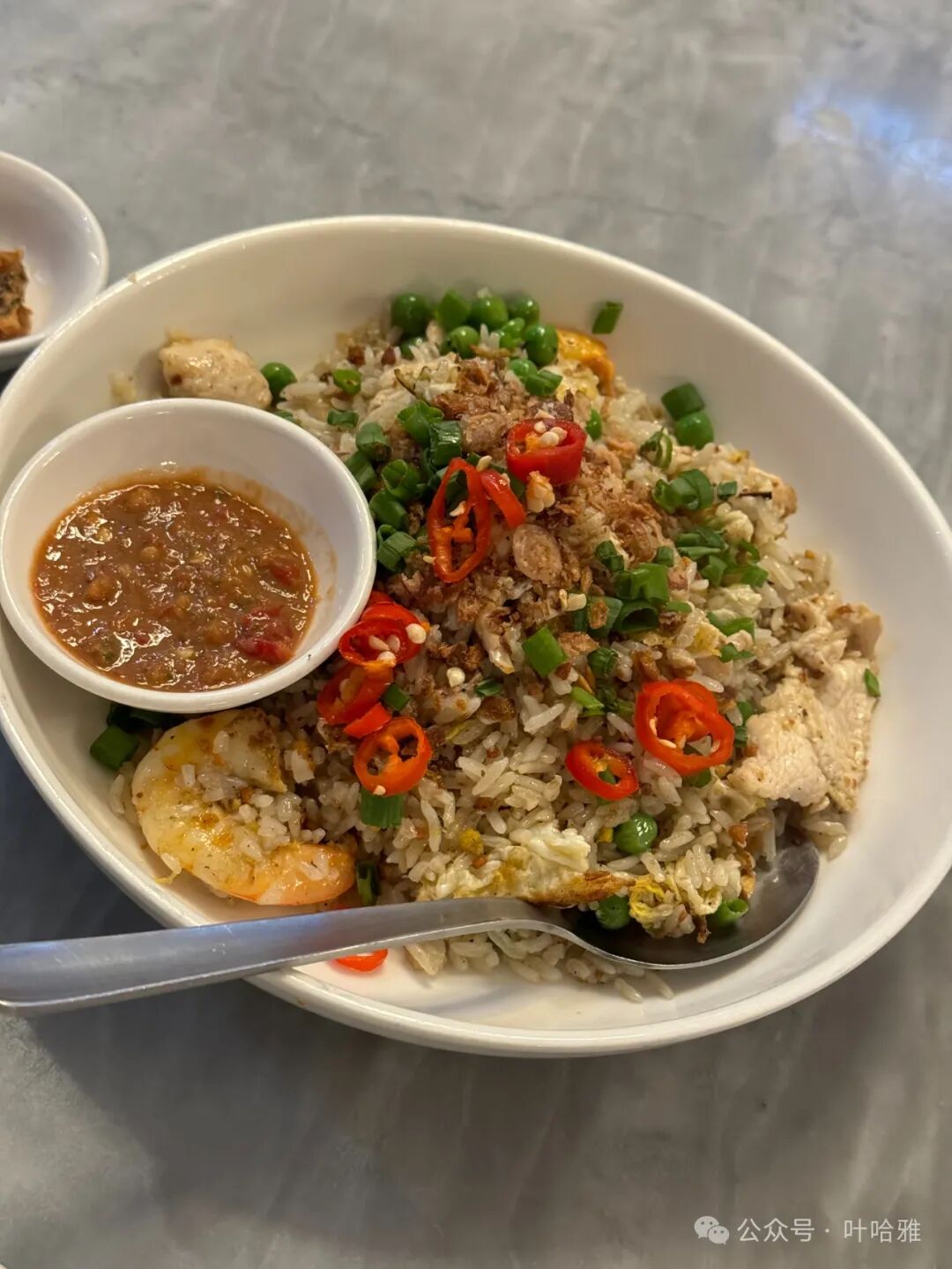
Hainan fried rice (hainan chaofan)
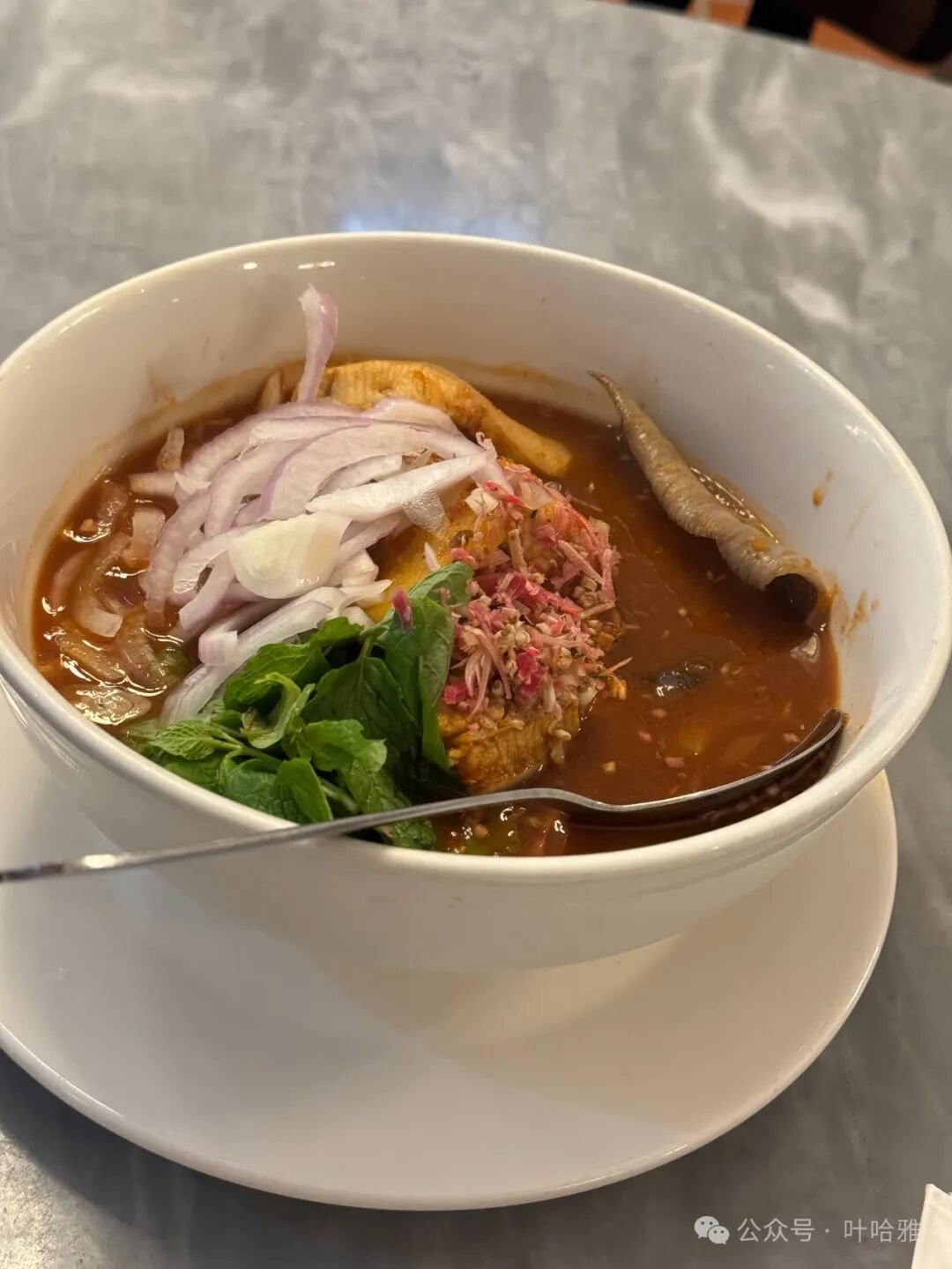
Fish maw curry (yudu gali)
The waiter was an Indian man. I wanted to order a few more dishes, but he suggested that we had already ordered enough.
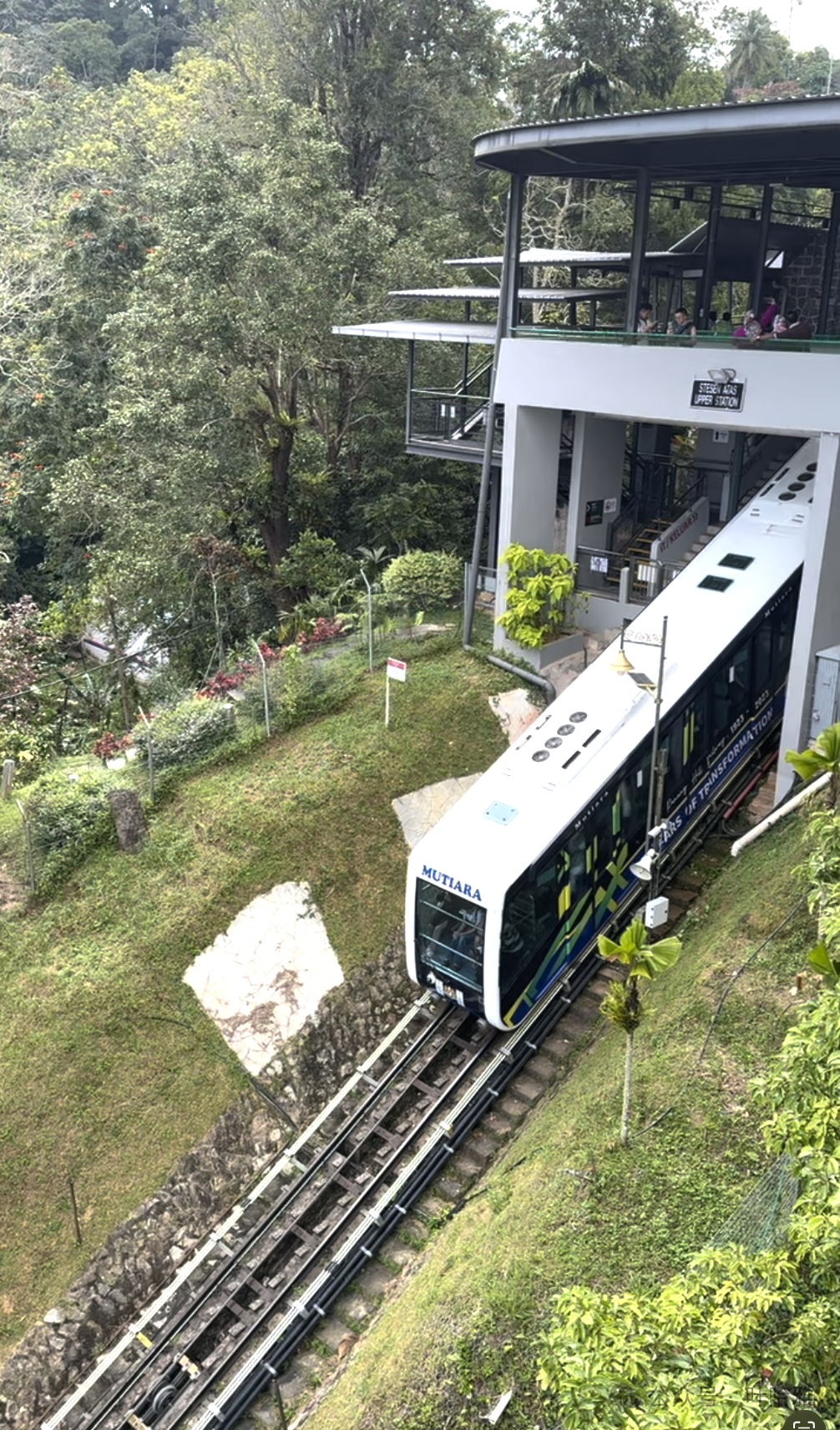
A must-visit place in George Town is Penang Hill to see the panoramic view of Penang. Take a taxi directly to the Penang Hill ticket office. Hiking up is free, but if you want to take the funicular train up the mountain, a round-trip ticket costs 30 RM, and a fast pass costs 80 RM. With a fast pass, you can skip the line for the train; otherwise, you have to wait for nearly an hour.
Try to sit in the front of the small train when going up the mountain, and in the back when coming down. This gives you the best views for photos.
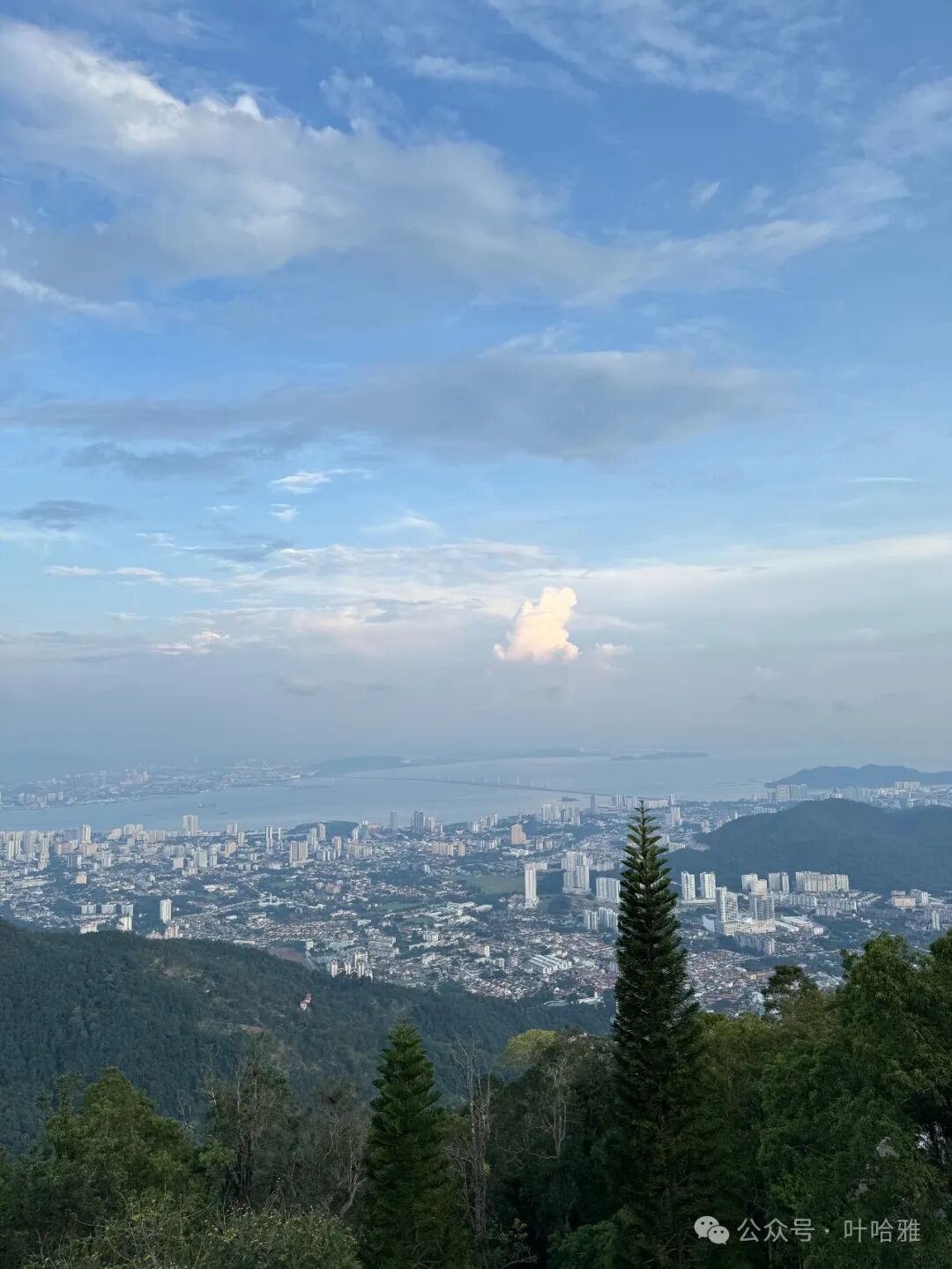
If the weather is good, you can wait for the sunset. The sun sets on the other side of the mountain, so you will see the fiery clouds from the peak, and the night view is also beautiful.

The temperature at the peak is cool, even a bit cold. You can sit in the cafe at the top and enjoy the panoramic view of Penang. The cafe serves simple Western-style meals that taste pretty good, though they are slightly more expensive than down in the city.
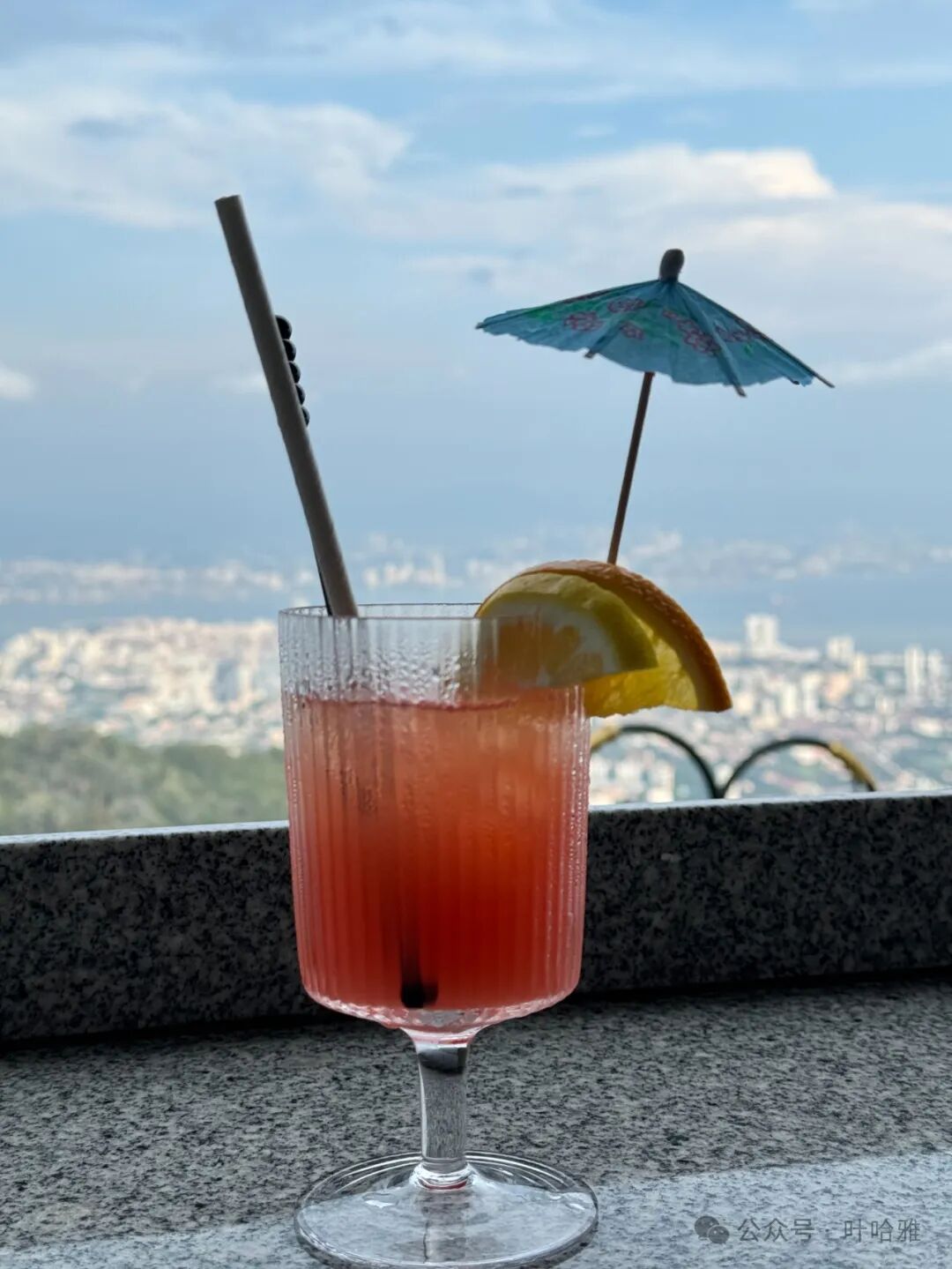
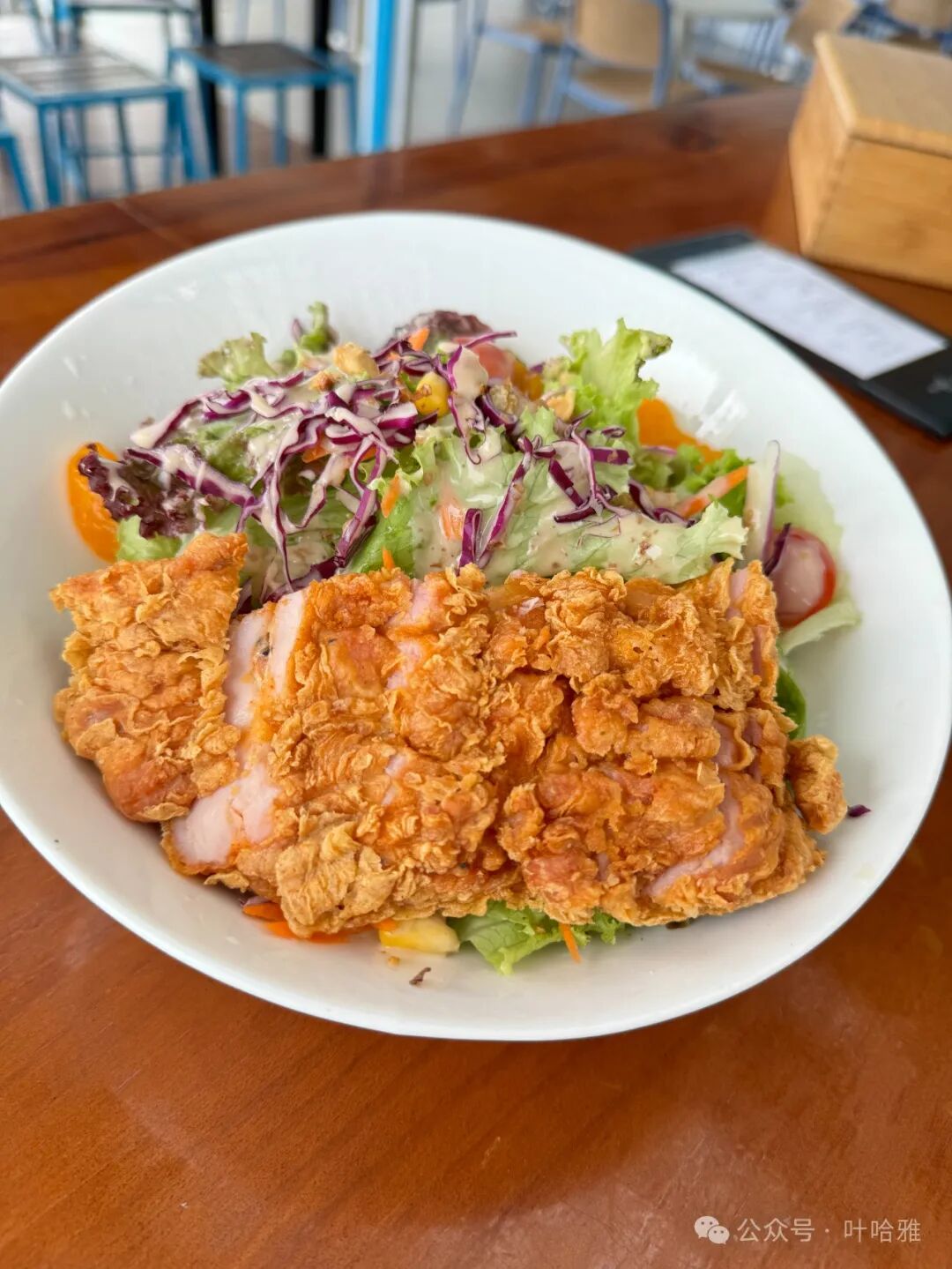
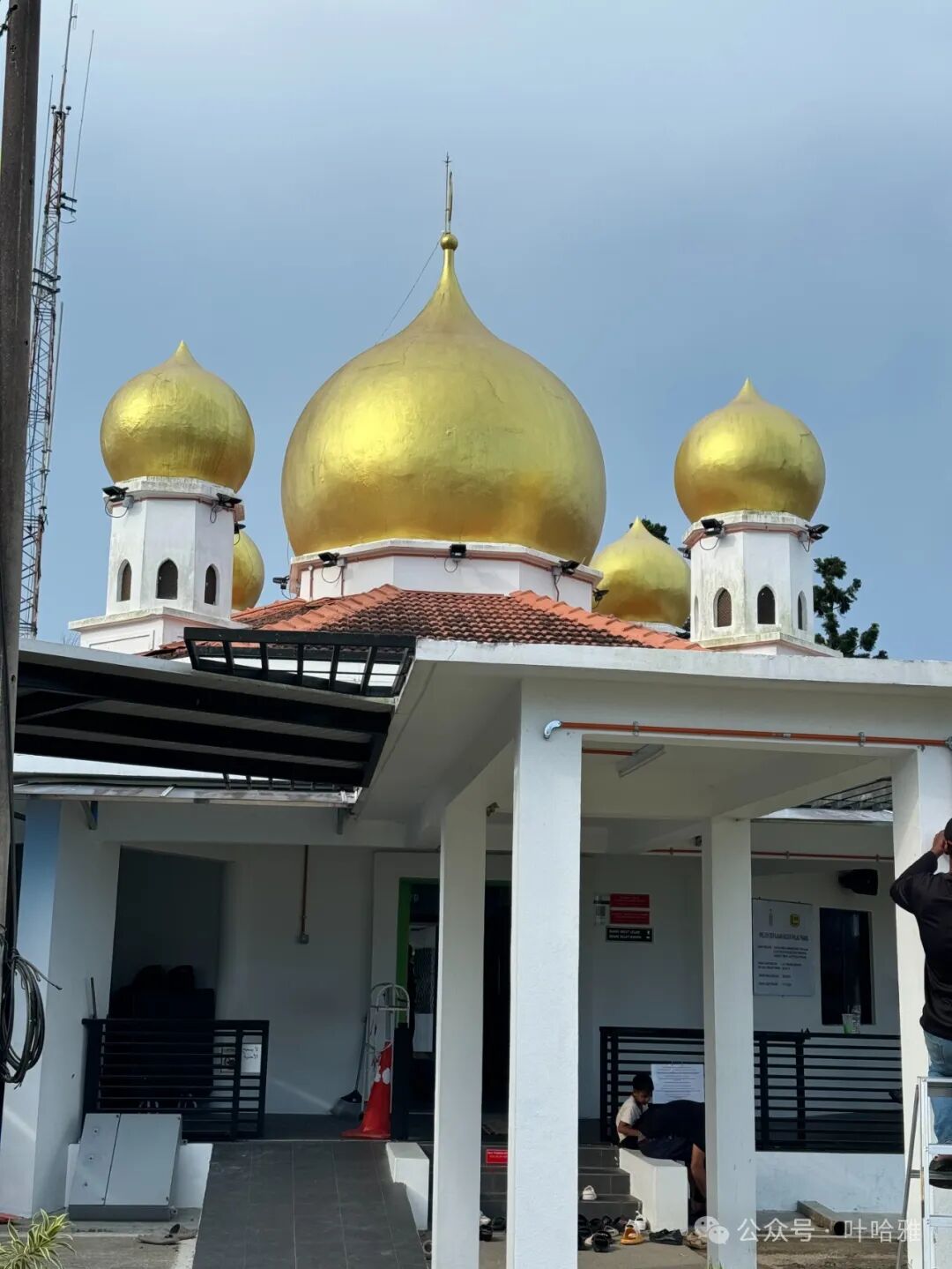
There is a small mosque at the top of Penang Hill, and there is also a church on the mountain.
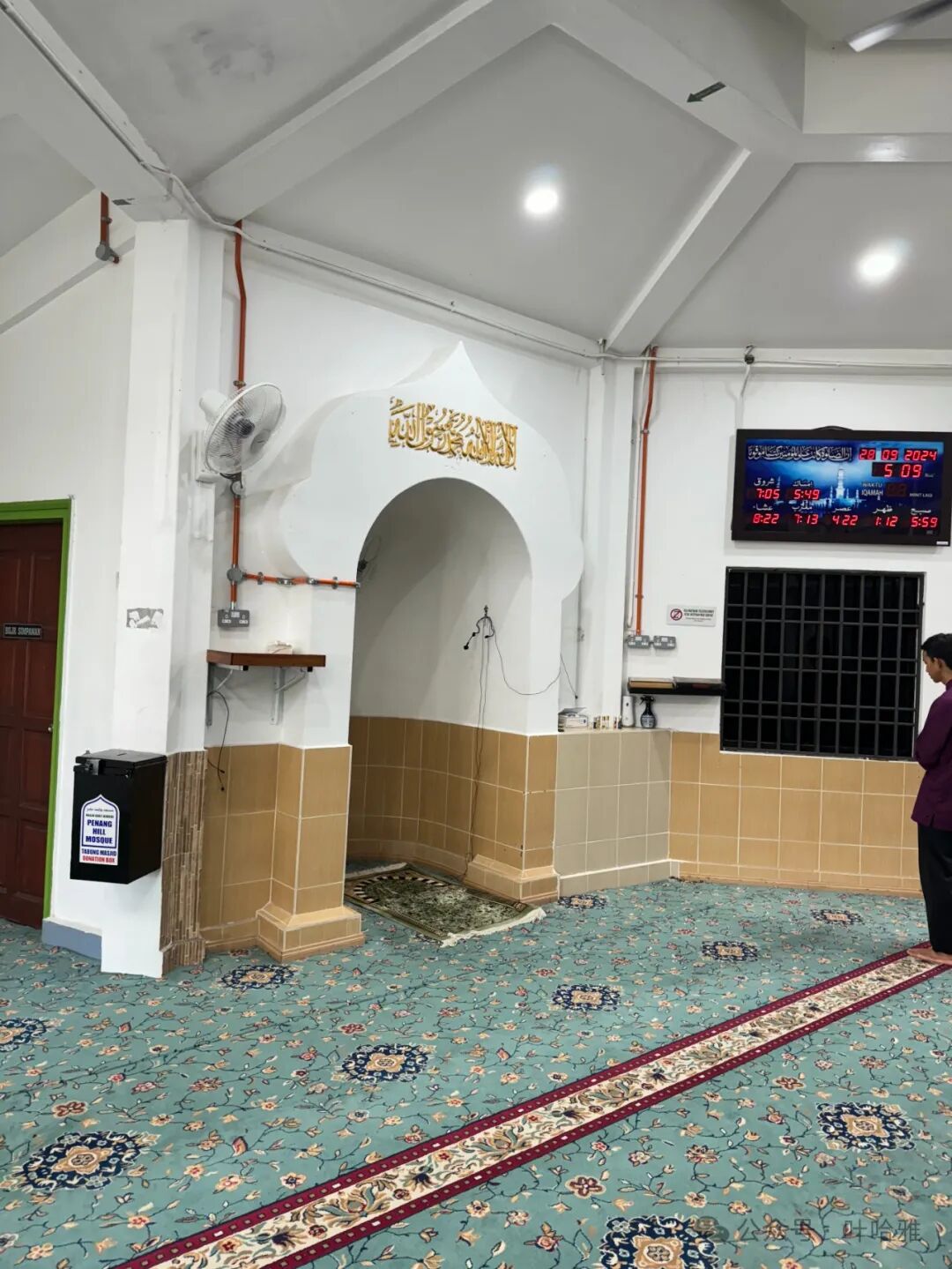
There is a hiking trail at the peak that goes through the tropical rainforest, where you can also see monkeys.
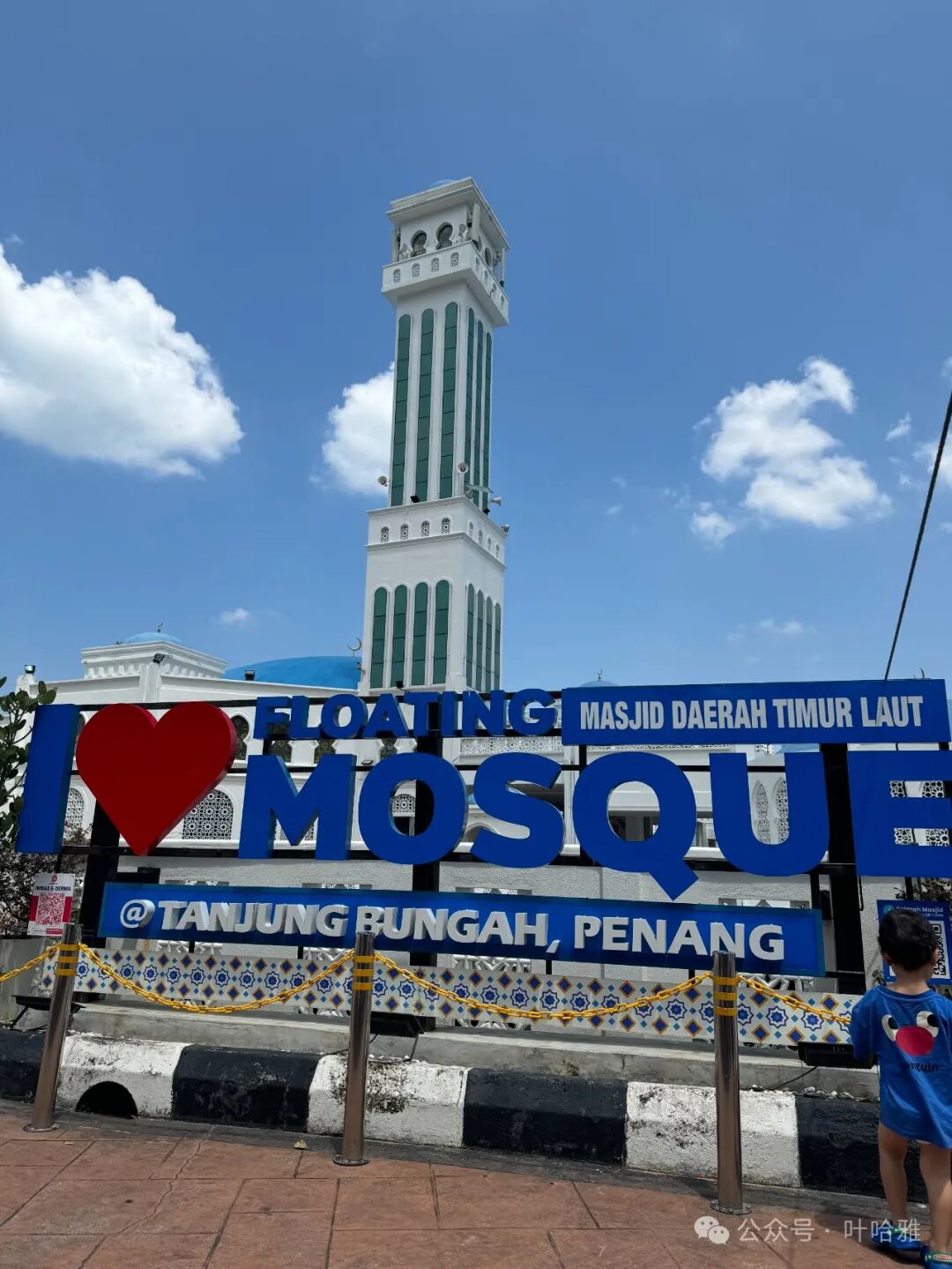
Penang Floating Mosque
It takes about 20 minutes by taxi from George Town to reach the Penang Floating Mosque. Built in 1967 on stilts, the mosque looks like it is floating on the water from a distance when the tide comes in.
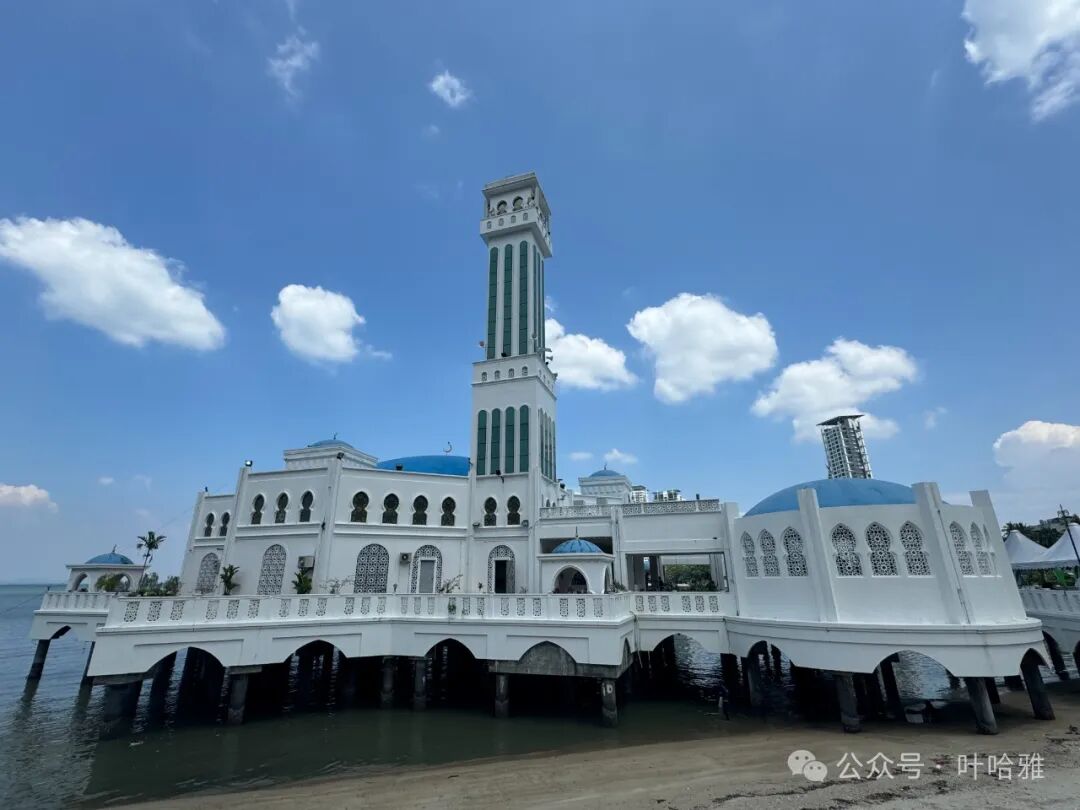
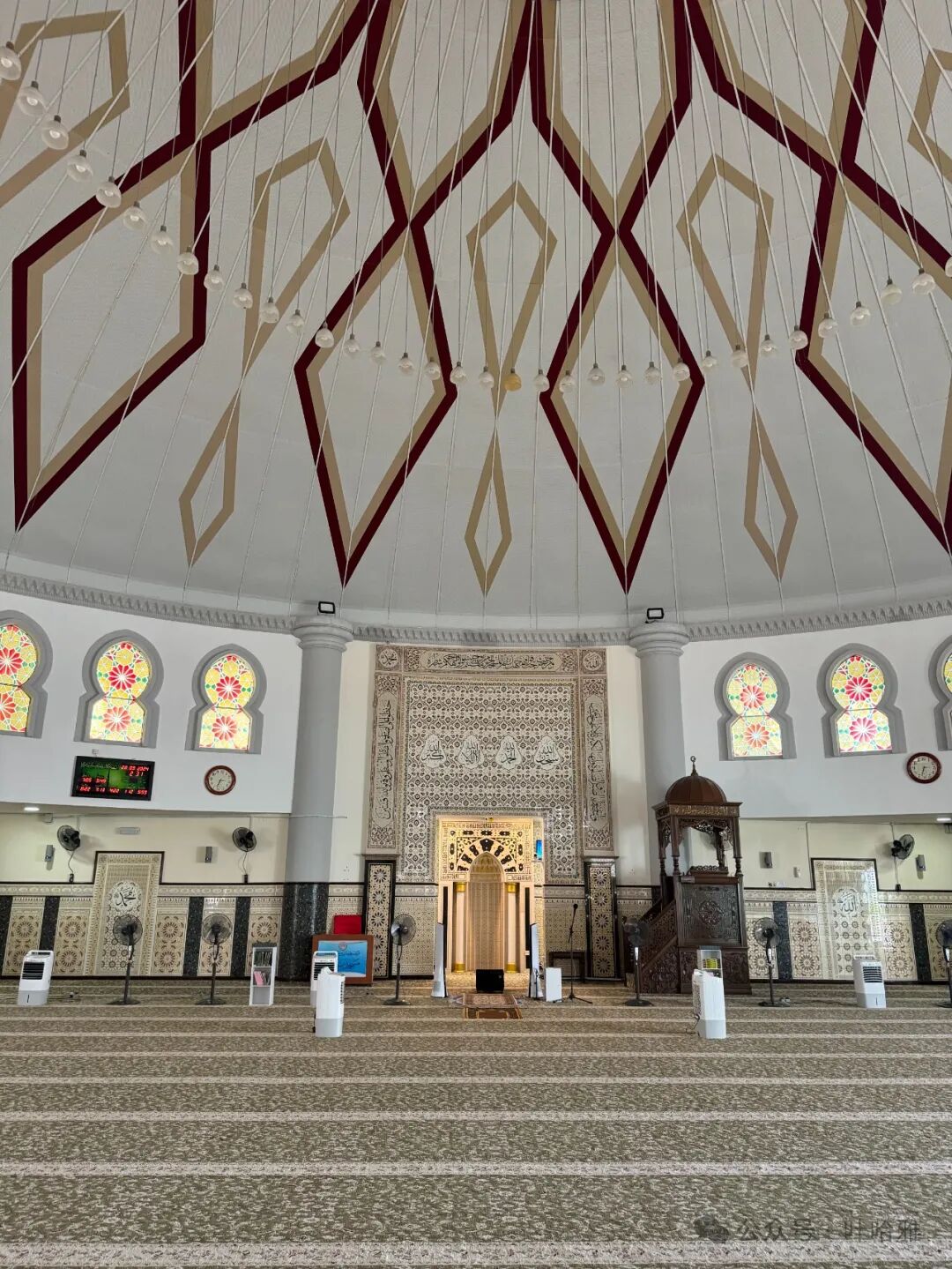
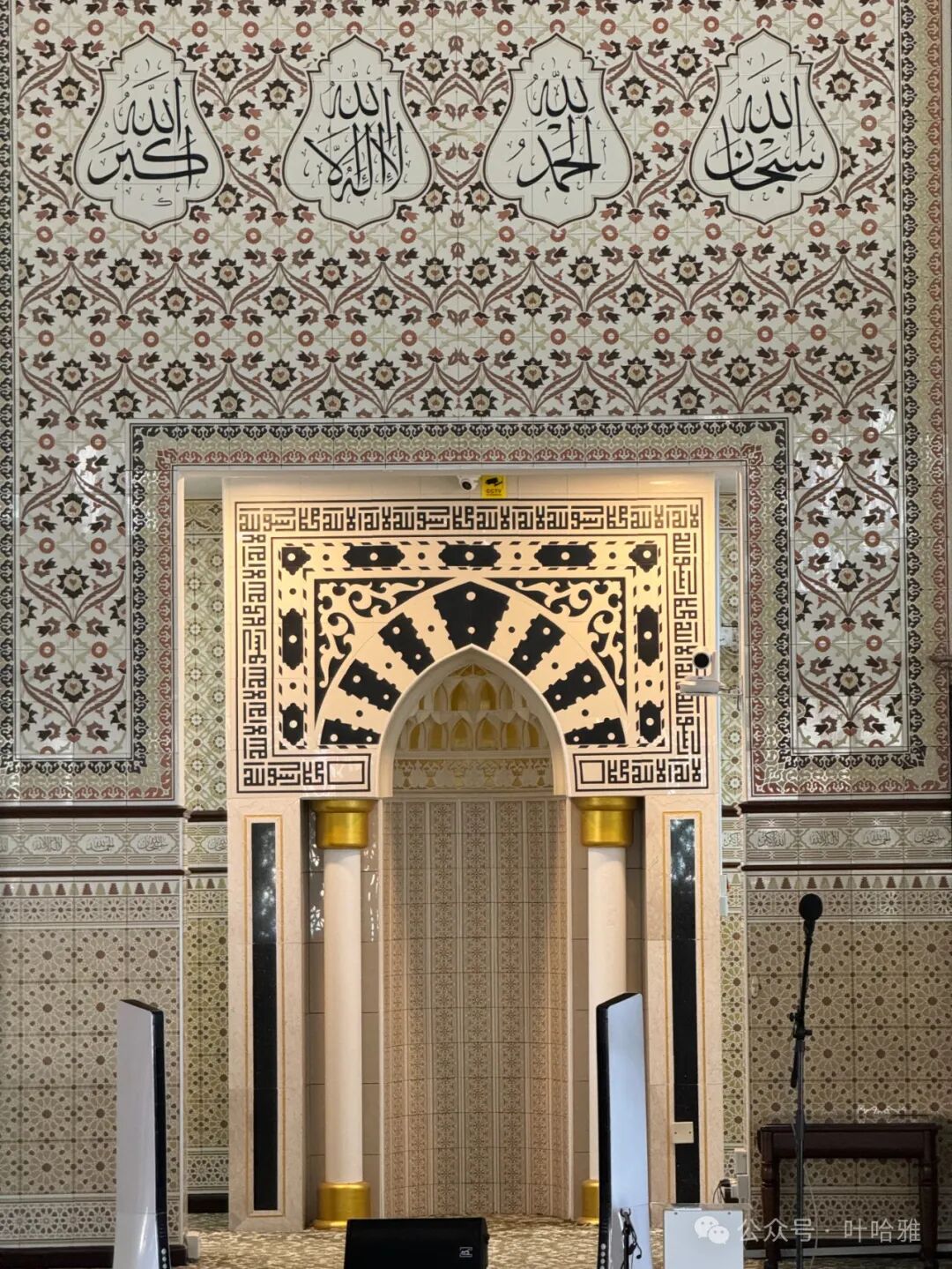
The Shangri-La Golden Sands resort in Penang is about 3 kilometers away from the floating mosque.
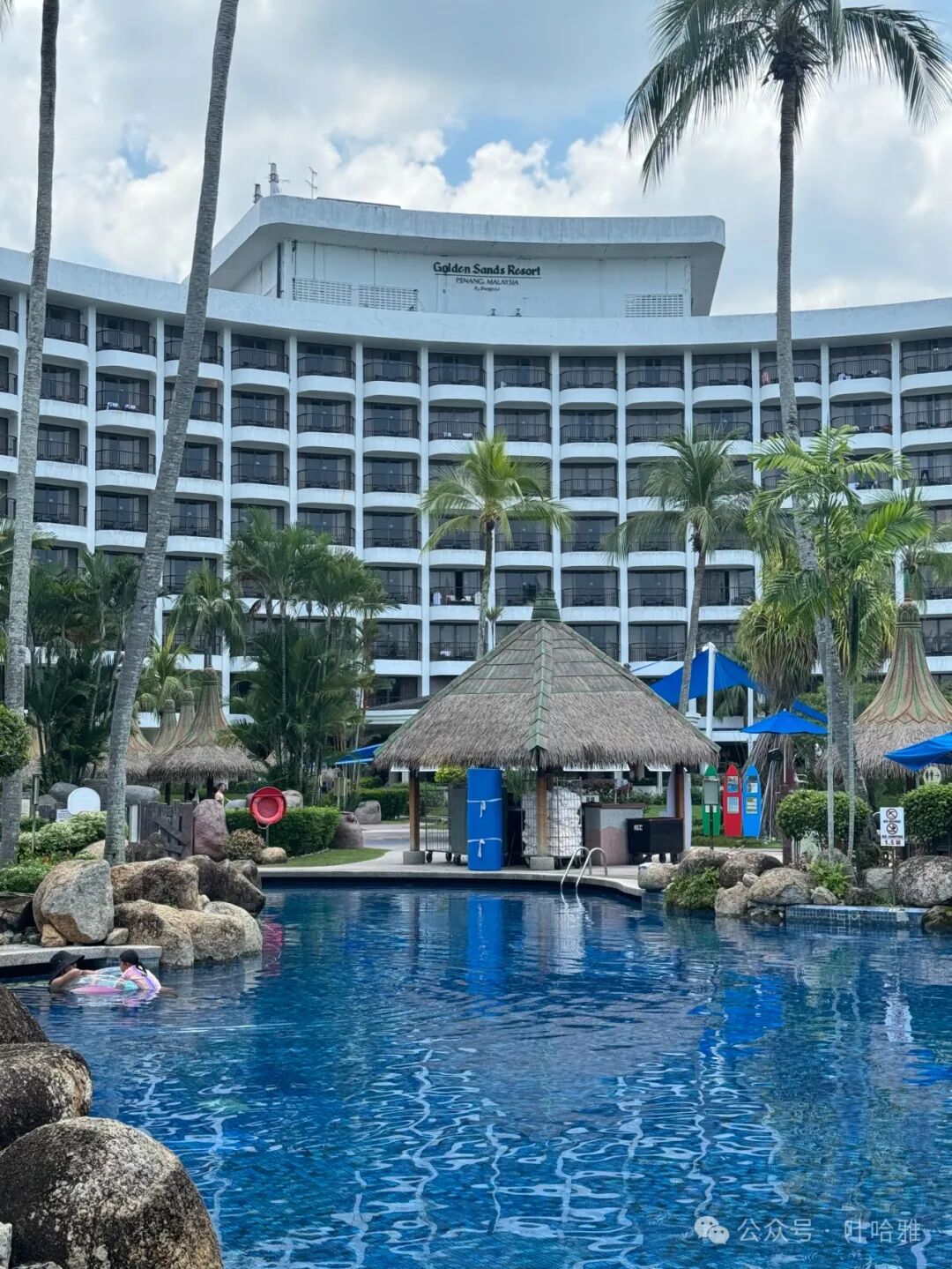
There are two Shangri-La hotels by the beach in Penang: one is Golden Sands and the other is Rasa Sayang. Both hotels share the same beach and swimming pools, but they have different lobbies. Rasa Sayang is slightly more expensive than Golden Sands, but the public facilities are the same, so Golden Sands is a better value.
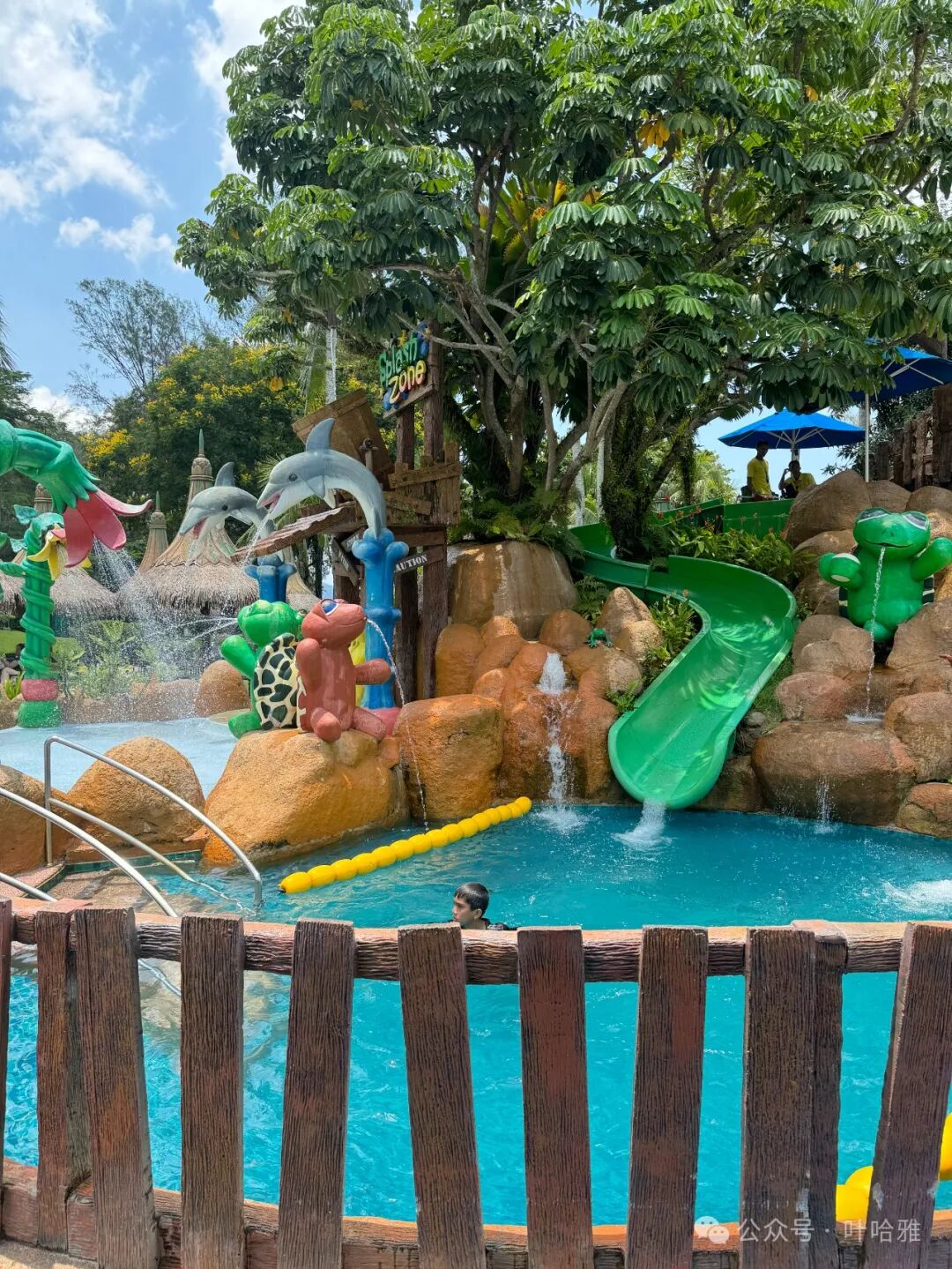
Shangri-La is the best hotel for families in Penang. The children's water park here is great for younger kids, and Fahim had a lot of fun playing there.
There are restaurants near the beach at the hotel where you can eat Western or Southeast Asian food at reasonable prices.
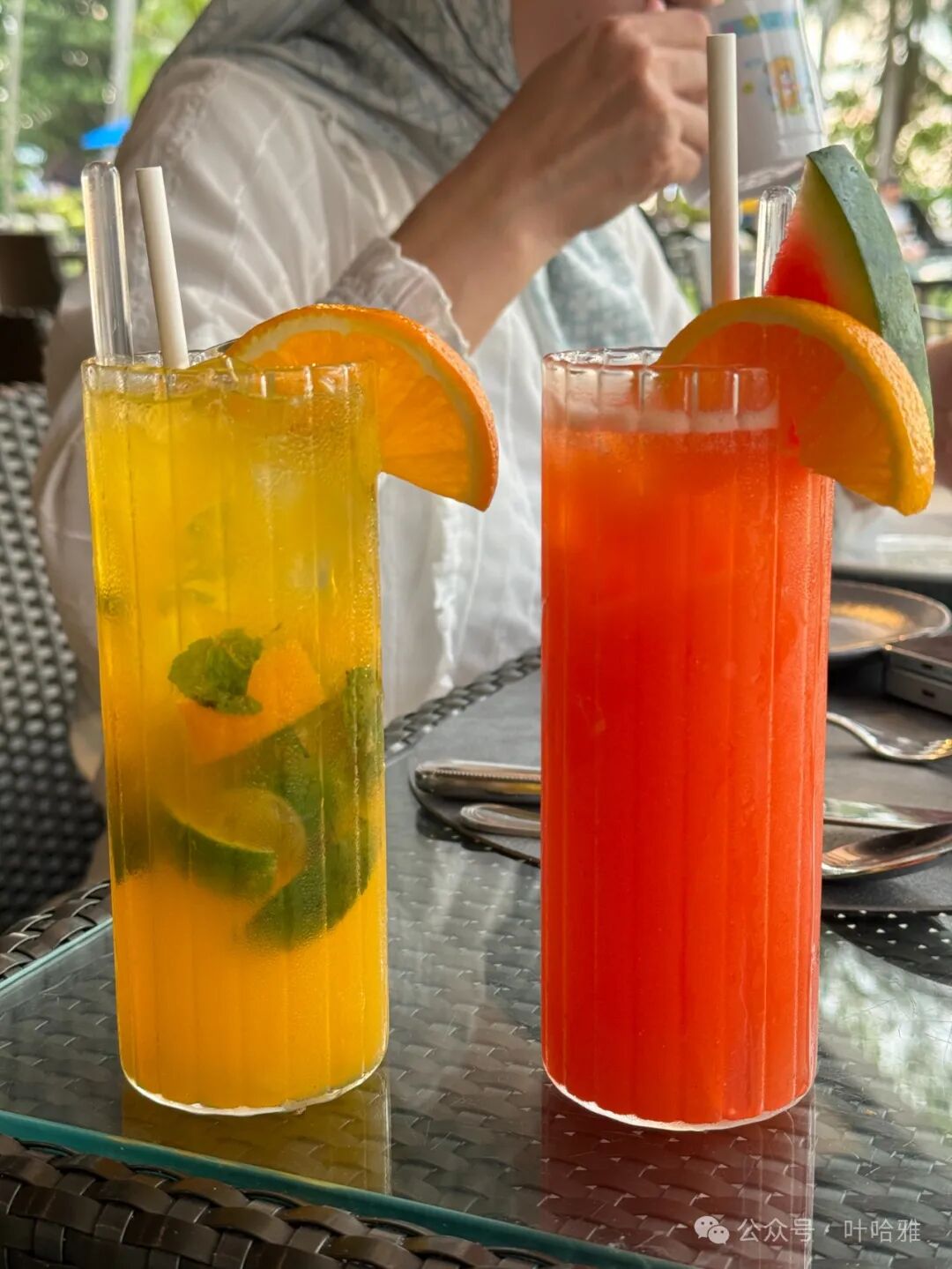
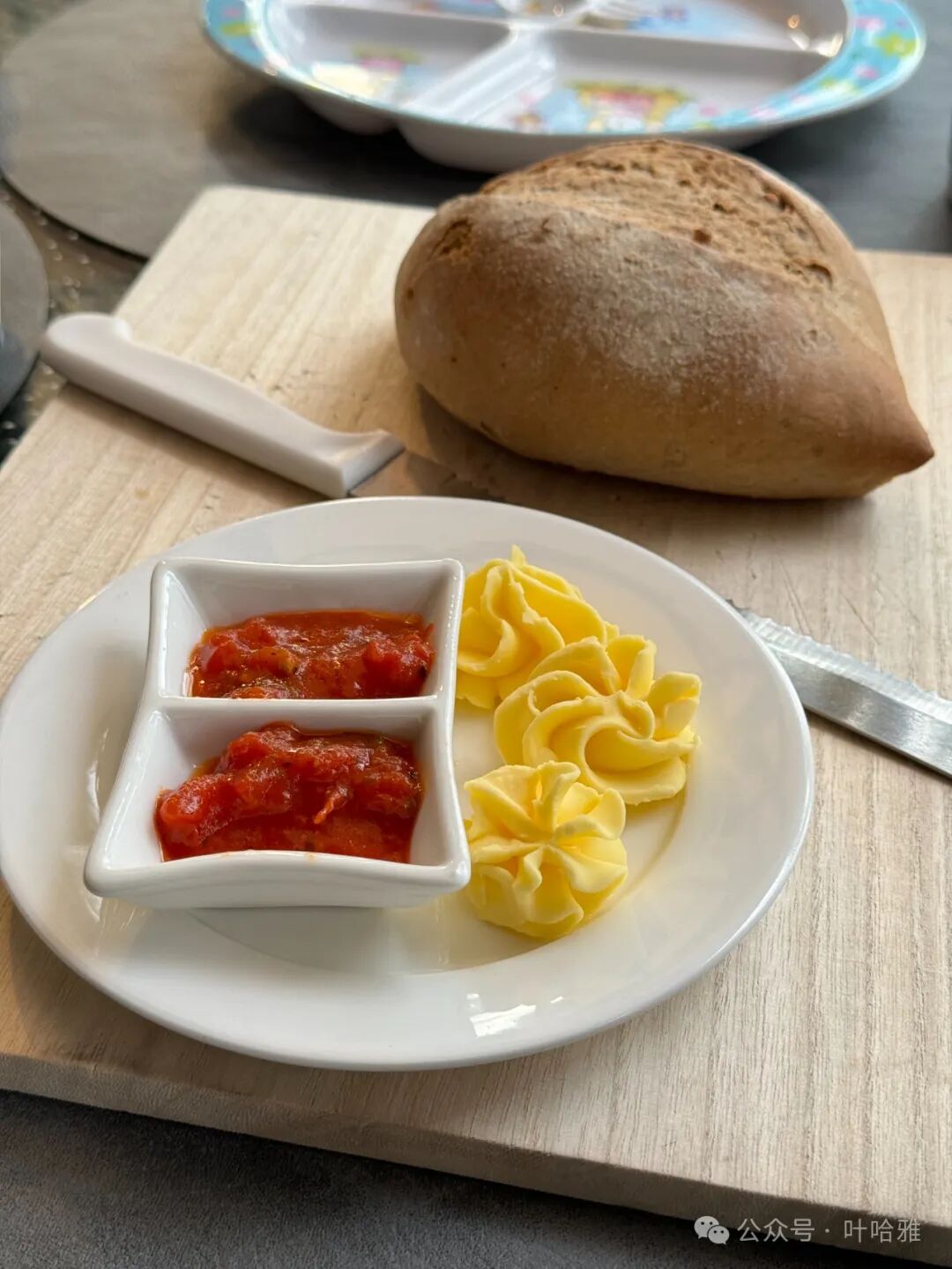
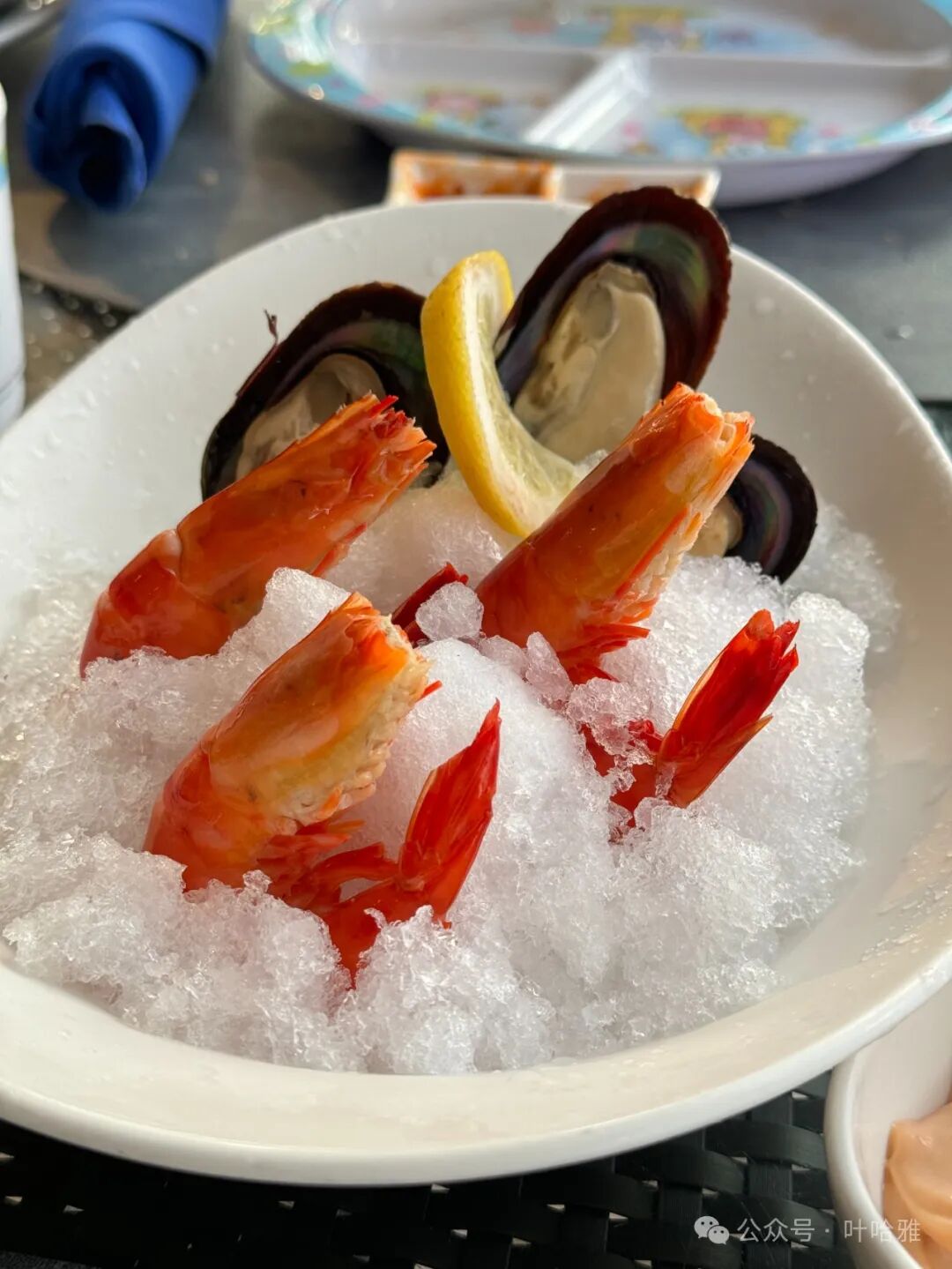
The sunset at Golden Sands beach is beautiful. It has the most stunning sunset views in all of Penang.
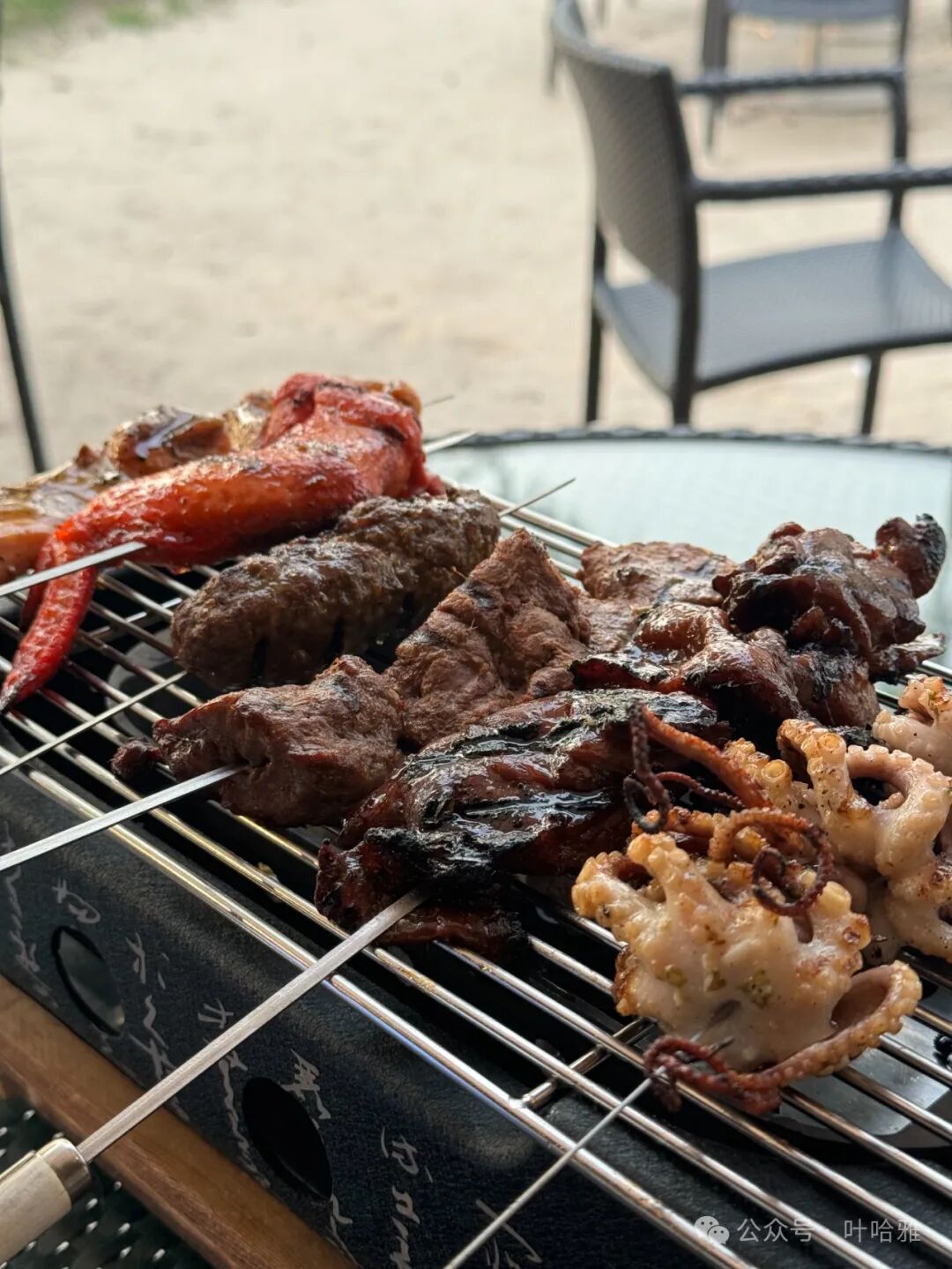
The server at the restaurant was a Chinese lady who kindly helped us look after our children.
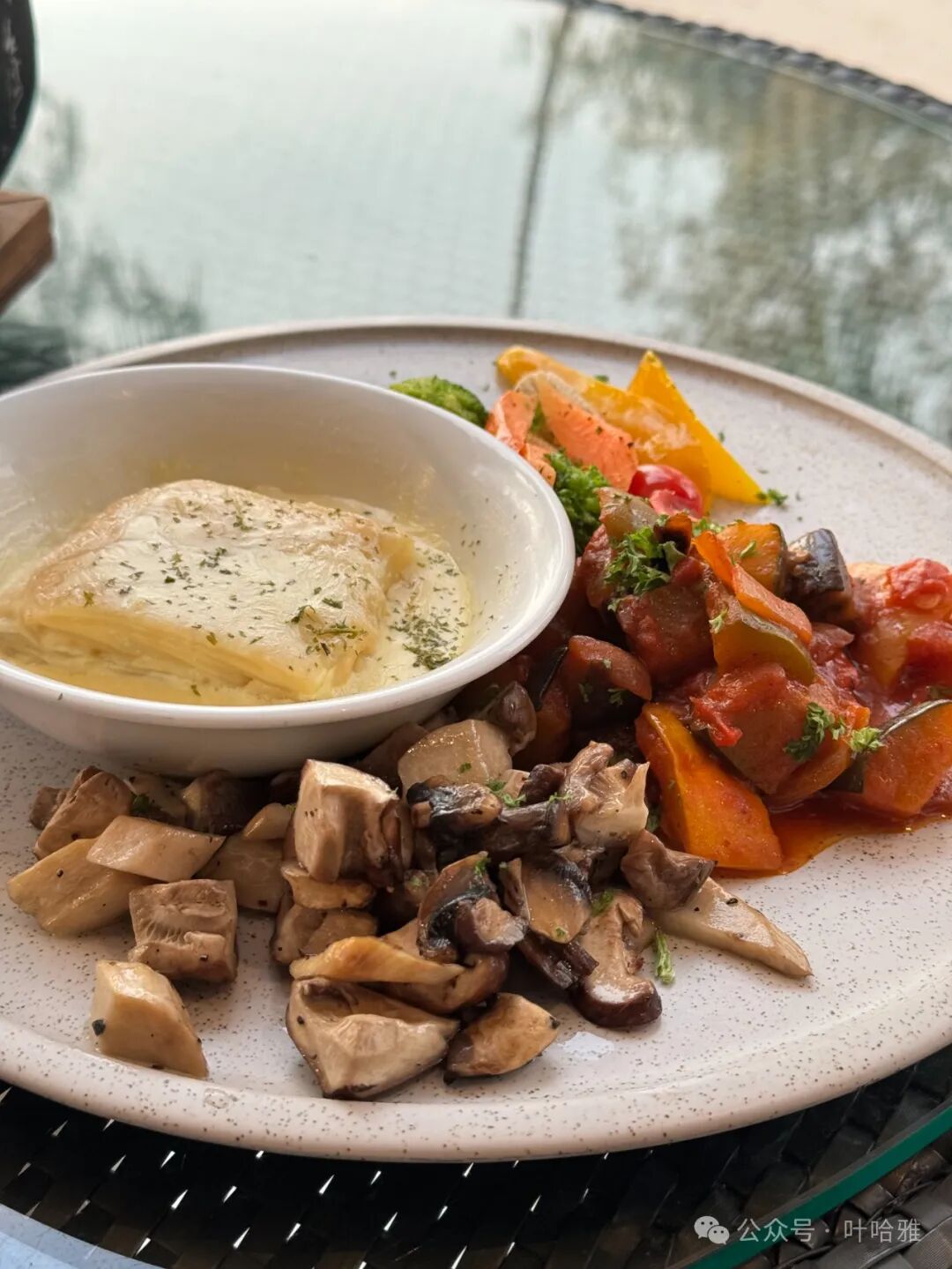
The breakfast buffet had so many choices that it reminded me of our trip to Atlantis in Dubai last year. However, the Shangri-La in Penang costs only one-third of the price. Being able to eat every halal food at a five-star hotel breakfast buffet makes for a wonderful start to the day.
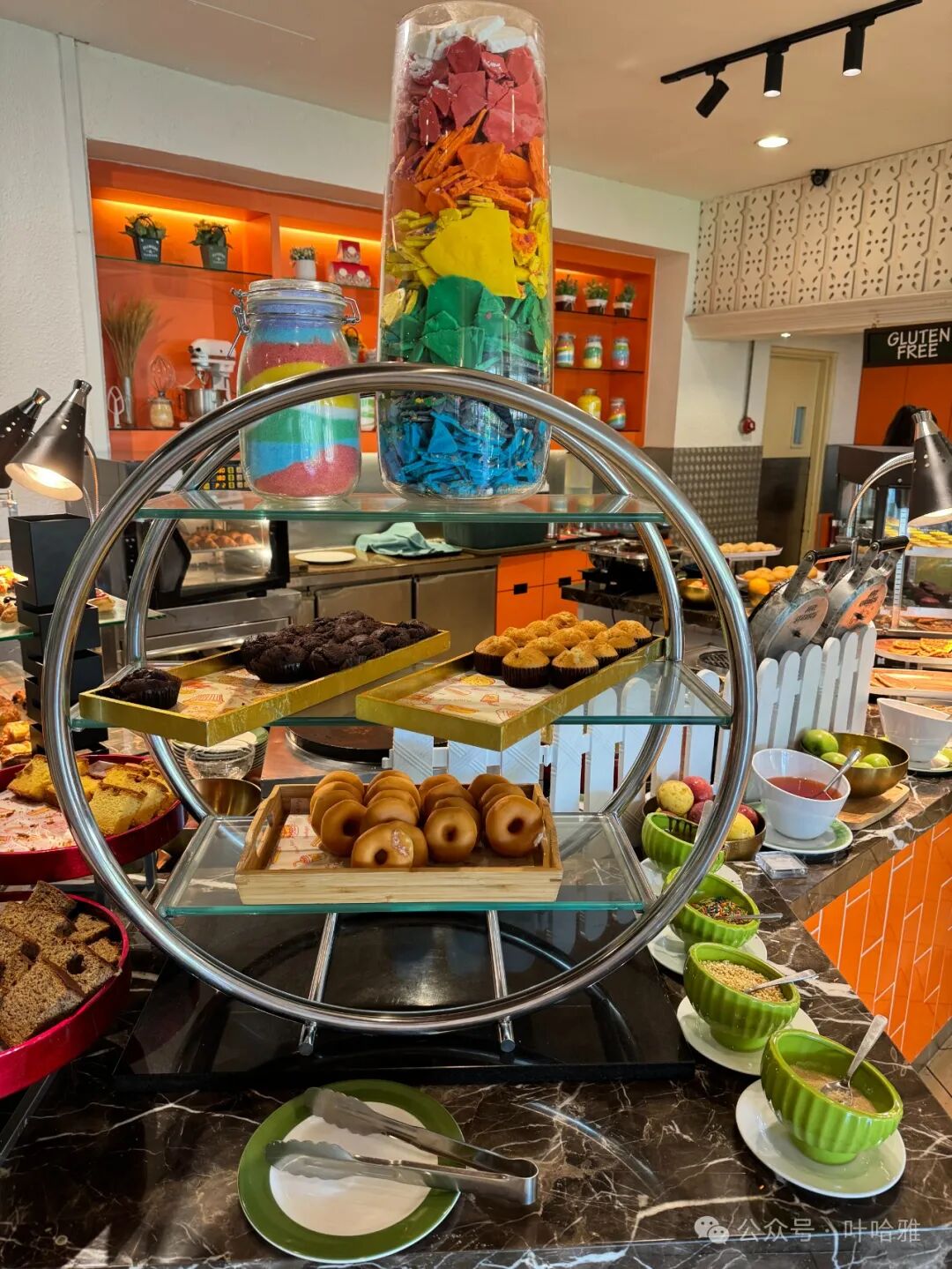
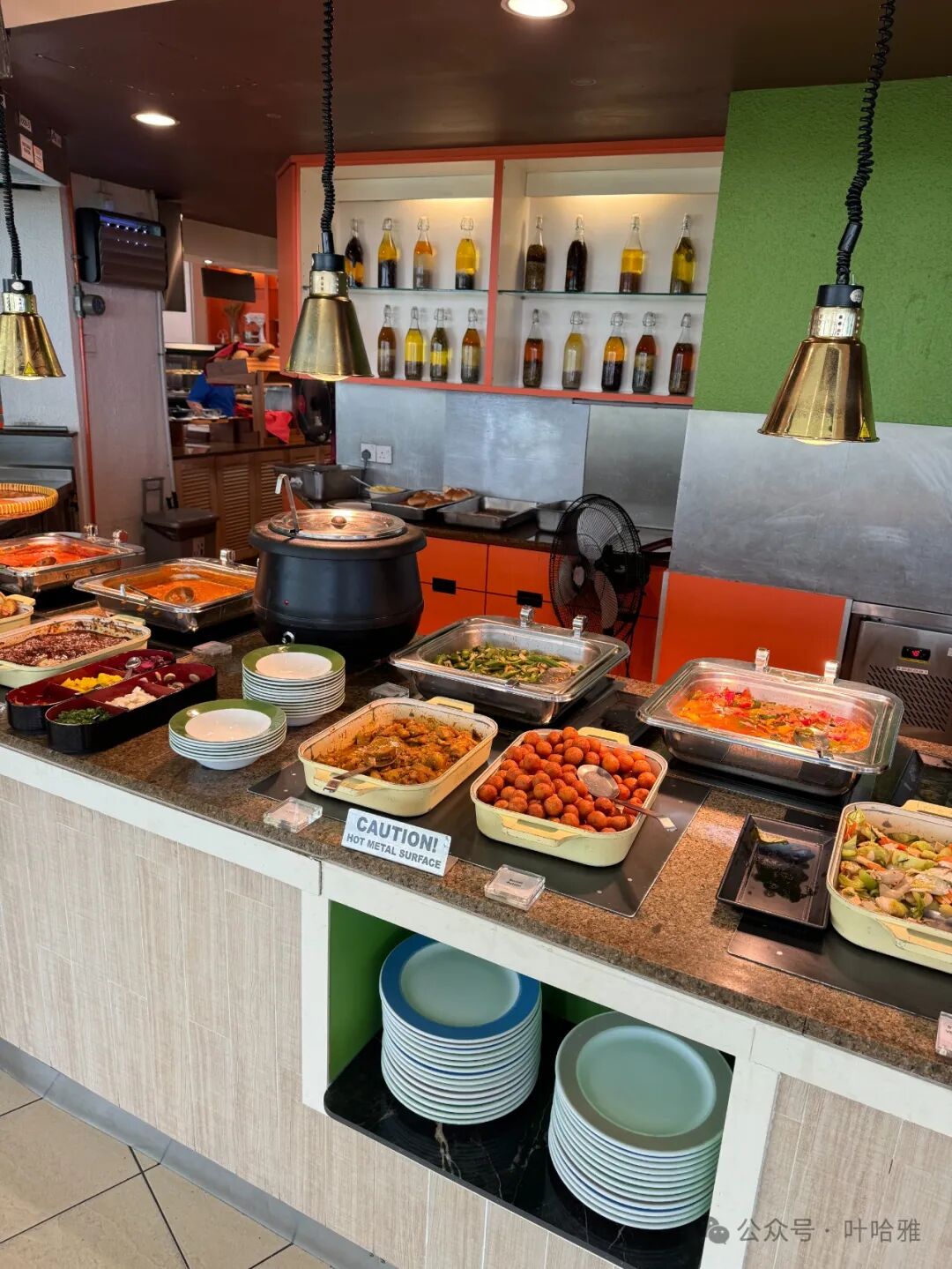
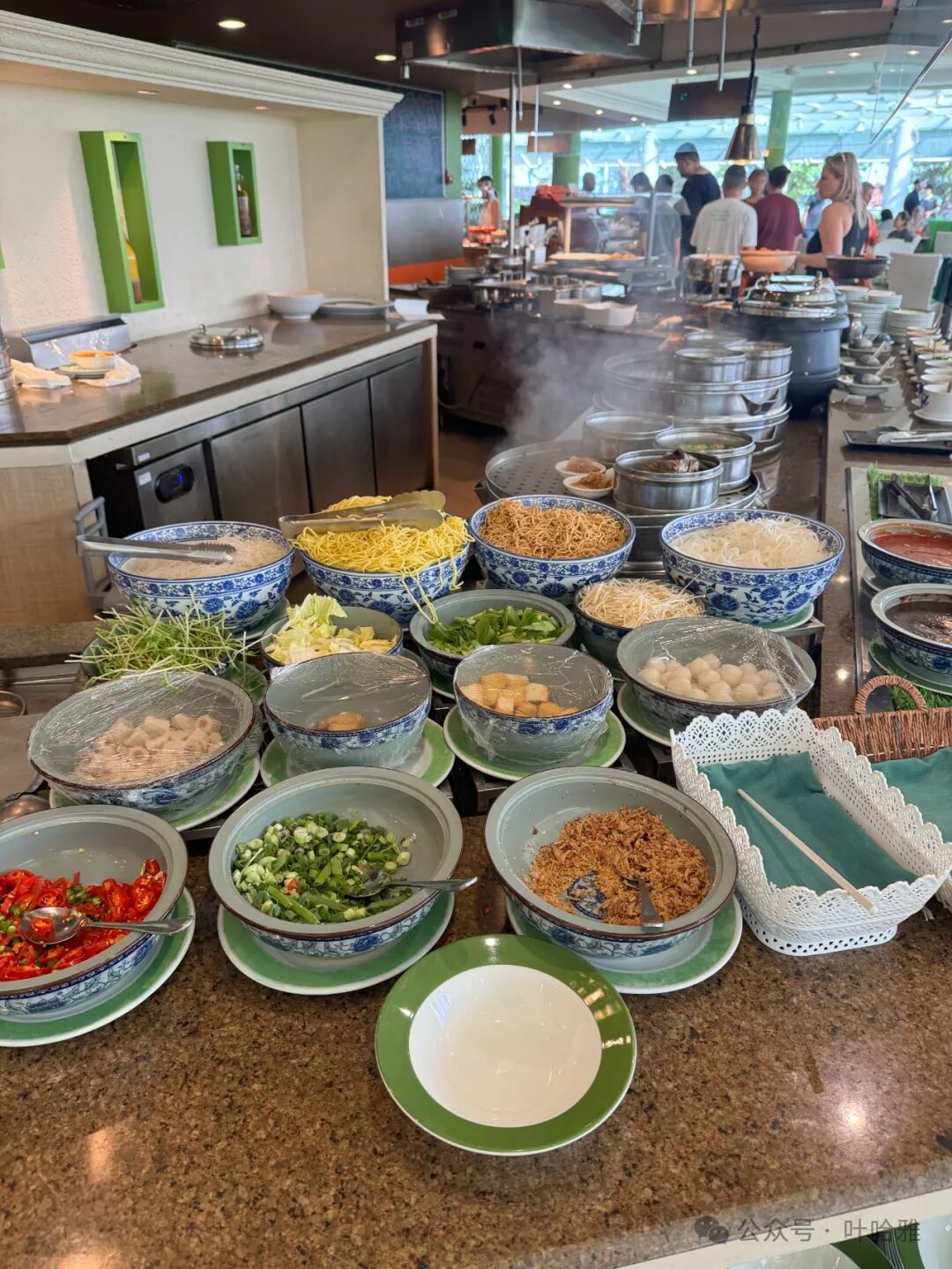
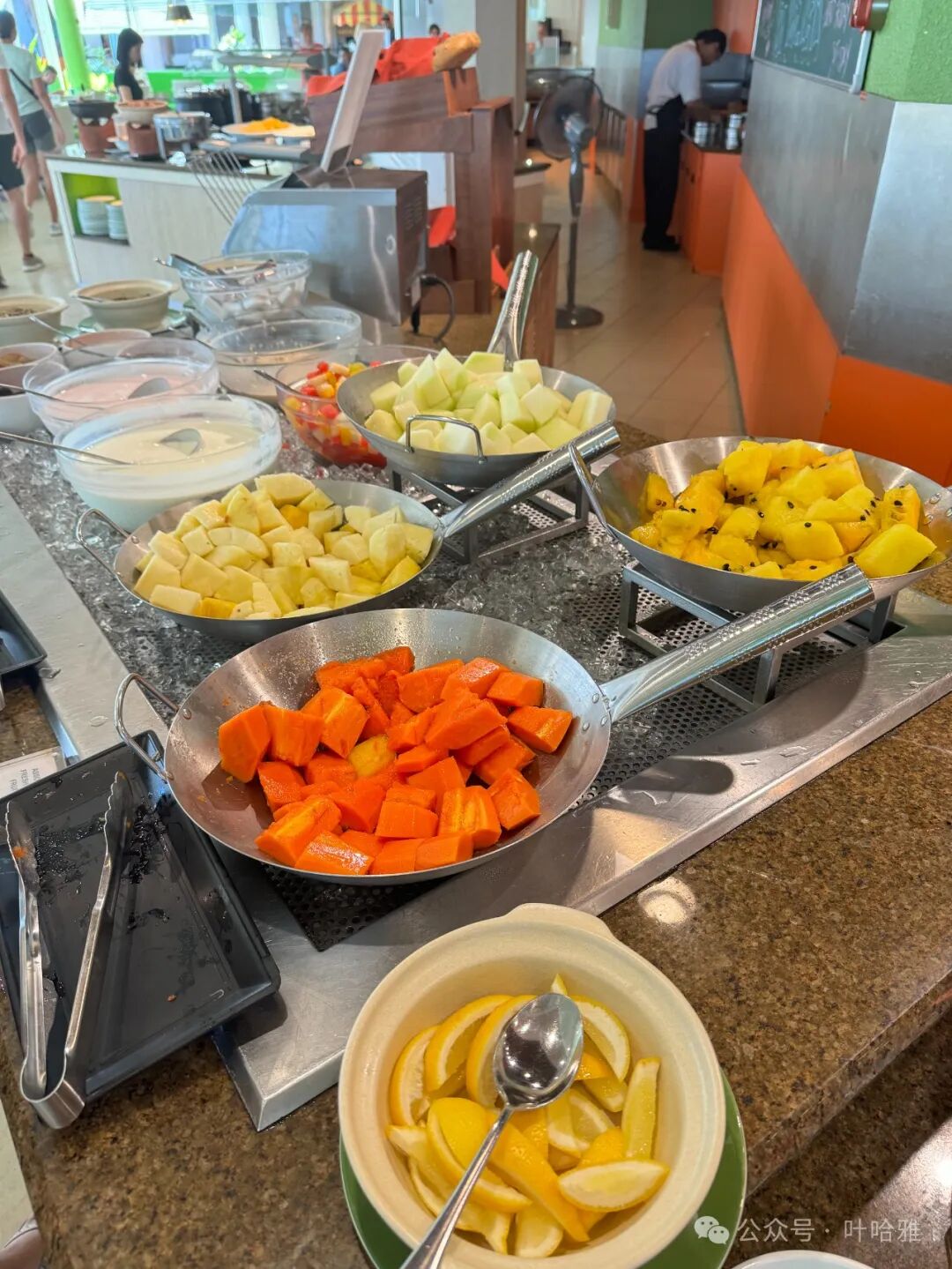
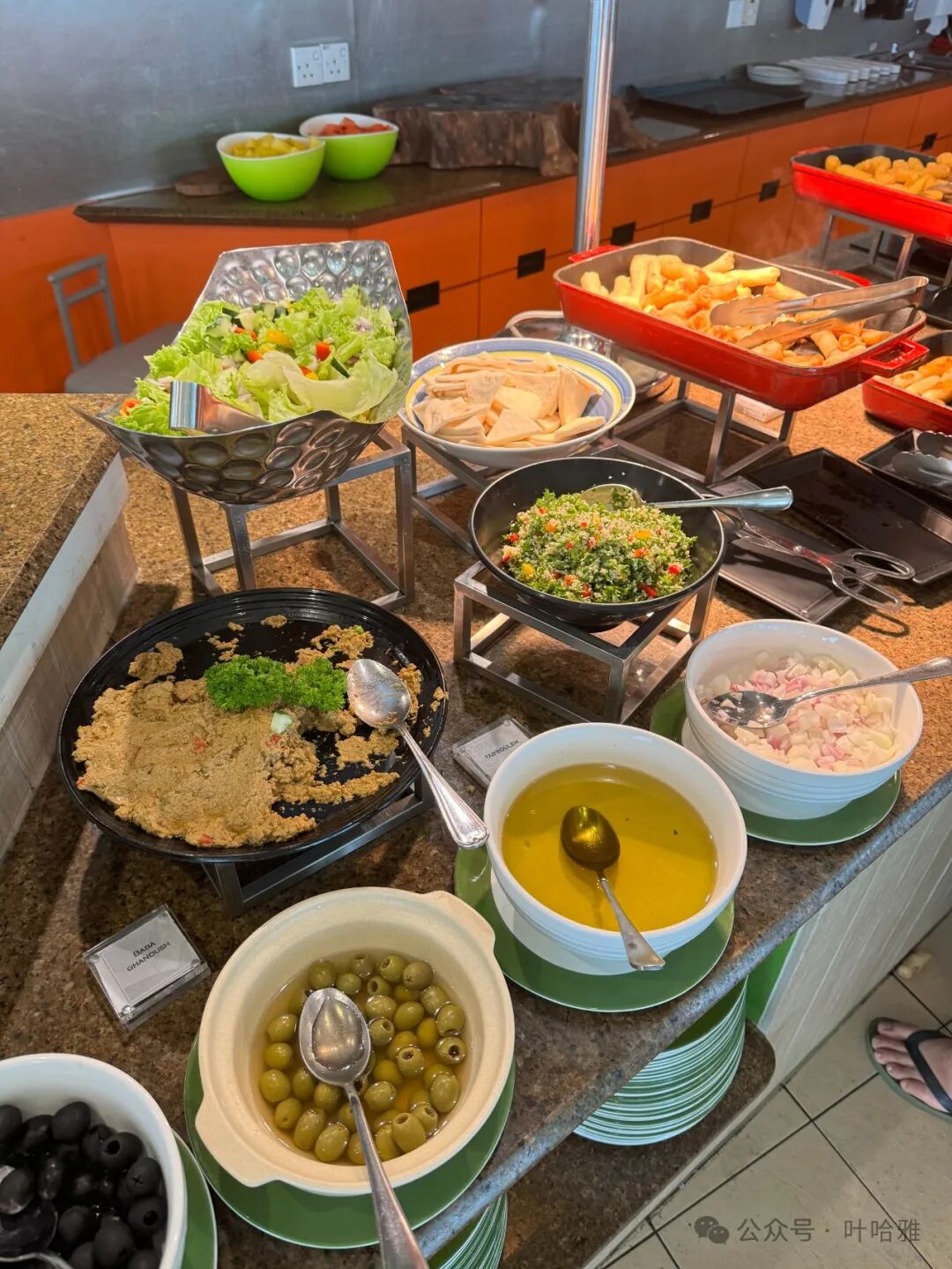
We ordered a seafood barbecue set for two at the seaside restaurant and waited quietly for the sunset. That made our trip to Penang complete.
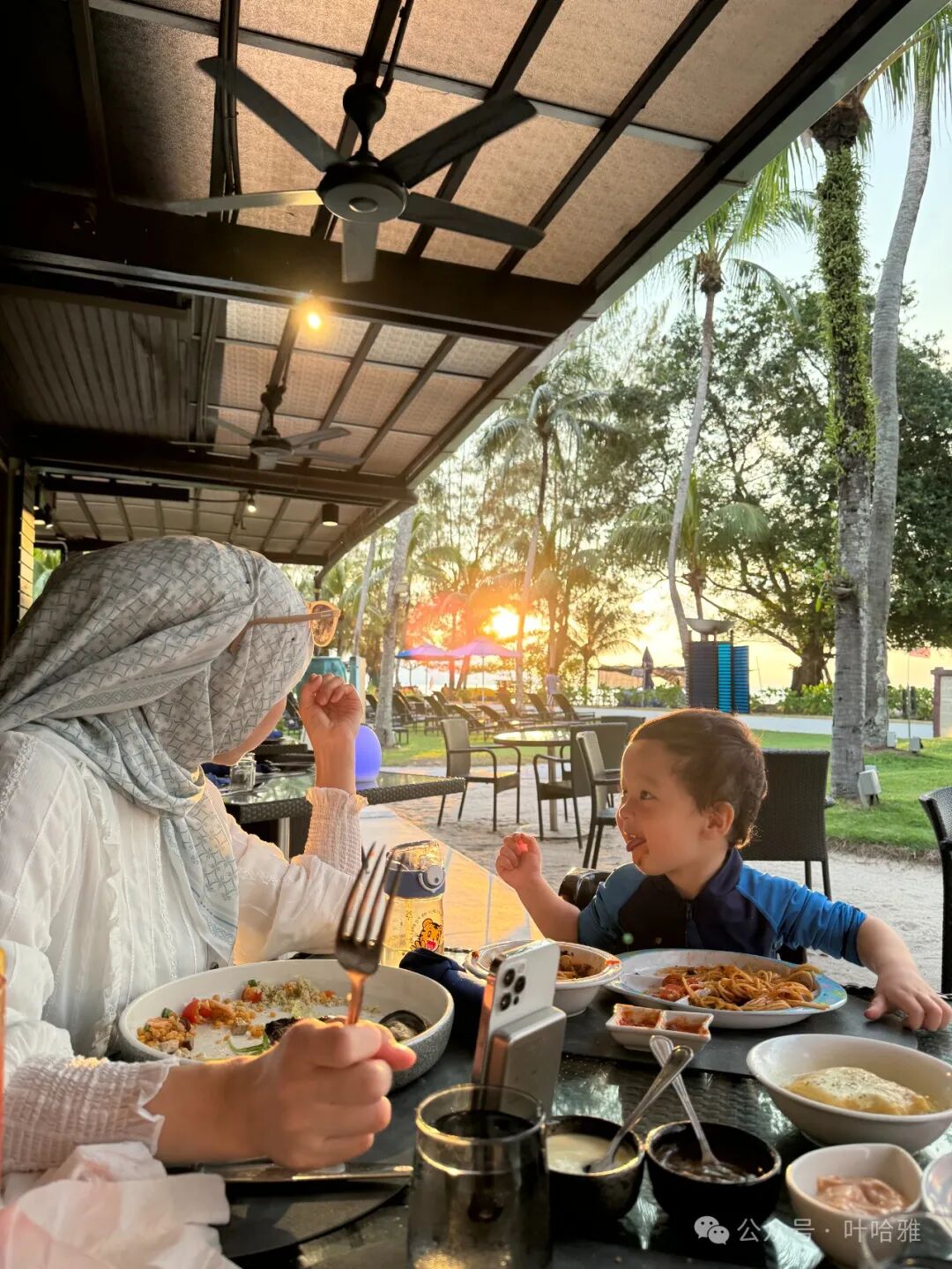
Fahim is not even three years old yet, but he has already been to five countries. He does not know how to appreciate this beautiful sunset yet. To him, it does not matter where we go; any place with sand, stones, and puddles is a paradise.

Best Halal Food in Malaysia: Muslim-Friendly Restaurants, Satay and Local Food Map
Articles • ali2007fr posted the article • 0 comments • 232 views • 2026-05-21 08:41
Summary: This Malaysia halal food map gathers Muslim-friendly restaurants, local dishes, satay, seafood, and practical dining notes while keeping the places, food names, and photos from the Chinese source.
Malaysia is an Islamic country filled with halal restaurants. In fact, Malaysia pioneered the international halal certification standards used today, so it is actually quite hard to find a non-halal restaurant there.
1. McDonald's
I have never eaten at a halal McDonald's back home, so I had to try it in Malaysia. Fast food chains like McDonald's in Malaysia are all halal. Even in neighboring Singapore, famous chains like McDonald's and KFC are 100% halal, so Muslims can eat there with peace of mind.
Even monks eat at McDonald's there.
Address: Kuala Lumpur Airport, Petronas Twin Towers
2. Sabah Night Market
No matter where I go, I love visiting local markets to experience daily life. The food at these markets is authentic and cheap. This market is in Sabah state. You do not need a map; just follow the crowds and you will find it.
This is a common Southeast Asian stir-fried noodle dish with chicken. It costs just a few dollars, and Malaysians eat it with their hands.
This pot is not for vinegar. Muslims will recognize it as a water pitcher (tangping). On Malaysian tables, it is used for washing hands because people eat with their fingers.
Seafood in this island nation is fresh and cheap. This pair of large prawns cost less than 30 yuan.
Lamb is rare in Malaysia, so enjoy the fish instead.
This is coconut pudding. I rarely see it elsewhere. It costs 4 Malaysian ringgit each.
If you want to learn to eat with your hands like a Malaysian, remember to use your right hand, as the left hand is used by Muslims for personal hygiene.
Address: Kota Kinabalu
2. Northwest Hand-Pulled Noodle Shop
When traveling, I avoid hand-pulled noodles (lamian) unless I have no other choice because I eat them too often at home. This shop is worth mentioning because it is the first time I have seen a lamian shop abroad.
The sign saying 'This shop is halal, please do not bring outside food' felt very familiar.
I did not go in to eat, but I wanted to record it. The owners of these shops have brought lamian all over the world. In some small cities in southern China, finding a halal lamian shop is something to be very grateful for.
Address: Jalan Tun Fuad Stephen
3. Indian Flatbread (roti canai)
These small street stalls are common in Southeast Asia, and the owners are mostly from India or Pakistan.
You can have this flatbread for breakfast. Tear it with your hands and dip it in the sauce.
Address: Jalan Ikan Juara 1
4. Japanese Dream Food
Because of Japan's history of colonizing Malaysia, some traces remain, and you can find many Japanese restaurants in Malaysia.
Mango pudding
This Japanese restaurant in Sabah is the first halal Japanese place I have ever eaten at.
A famous Japanese dish, thick wheat noodles (udon).
Sushi, which is halal so you can eat it with peace of mind.
Fresh salmon sashimi
Pacific saury (sanma), also a famous Japanese food.
You rarely see halal Japanese food in China. Before the first halal Japanese restaurant, Hefeng Zhi Yan, opened in Beijing, I had to go to Tianjin if I wanted to eat Japanese food.
Address: Lot No 36, Palm Square 4th Floor Center Point, 88000, Kota Kinabalu, Sabah, Kota Kinabalu, 88000 Kota Kinabalu, Sabah
5. NANDOS
This is a chain of roast chicken restaurants. The chicken in Malaysia tastes very different from the chicken in mainland China.
Address: There are many branches in Kuala Lumpur, found in large shopping malls like KLCC and Pavilion.
6. YUSOOF DAN
An Indian snack shop.
Seafood fried rice. I guess they gave us a spoon because they saw we were foreigners.
Seafood fried noodles
Beef and fried chicken. Actually, there are not many types of dishes in Southeast Asia, and the flavors are quite simple.
Address: Kuala Lumpur Central Market
7. SUSHI KING
Many restaurants in Malaysia are labeled "pork free," which means they don't serve pork. Even if the meat is halal, they might still sell alcohol. To get a halal certification in Malaysia, a restaurant must be alcohol-free. This Japanese restaurant has a halal certification.
Conveyor belt sushi, take what you want as you eat.
This is a dessert made from eggs.
Fish roe (caviar)
I can never get enough sushi.
Address: Sushi King @ Jaya One, Petaling Jaya, Jalan Universiti, Seksyen 13, Petaling Jaya, Selangor, Malaysia.
8. Arabic flatbread (khubz).
Many Arabs have moved to Malaysia for work. They share the same faith, which makes daily life easier. More importantly, the political situation is stable. Southeast Asia's economy has grown quickly in recent years, creating many jobs. Malaysia is also an international Islamic finance hub, which is attractive to Hui Muslims from China as well.
This Arabic flatbread (khubz) served with fries and beef is delicious when rolled up. The servers are all Arab. I even saw them get up to perform namaz during prayer time, which makes me feel more comfortable eating at this restaurant.
Address: The row of shops at the bottom of the UCSI University South Wing campus. view all
Summary: This Malaysia halal food map gathers Muslim-friendly restaurants, local dishes, satay, seafood, and practical dining notes while keeping the places, food names, and photos from the Chinese source.
Malaysia is an Islamic country filled with halal restaurants. In fact, Malaysia pioneered the international halal certification standards used today, so it is actually quite hard to find a non-halal restaurant there.
1. McDonald's
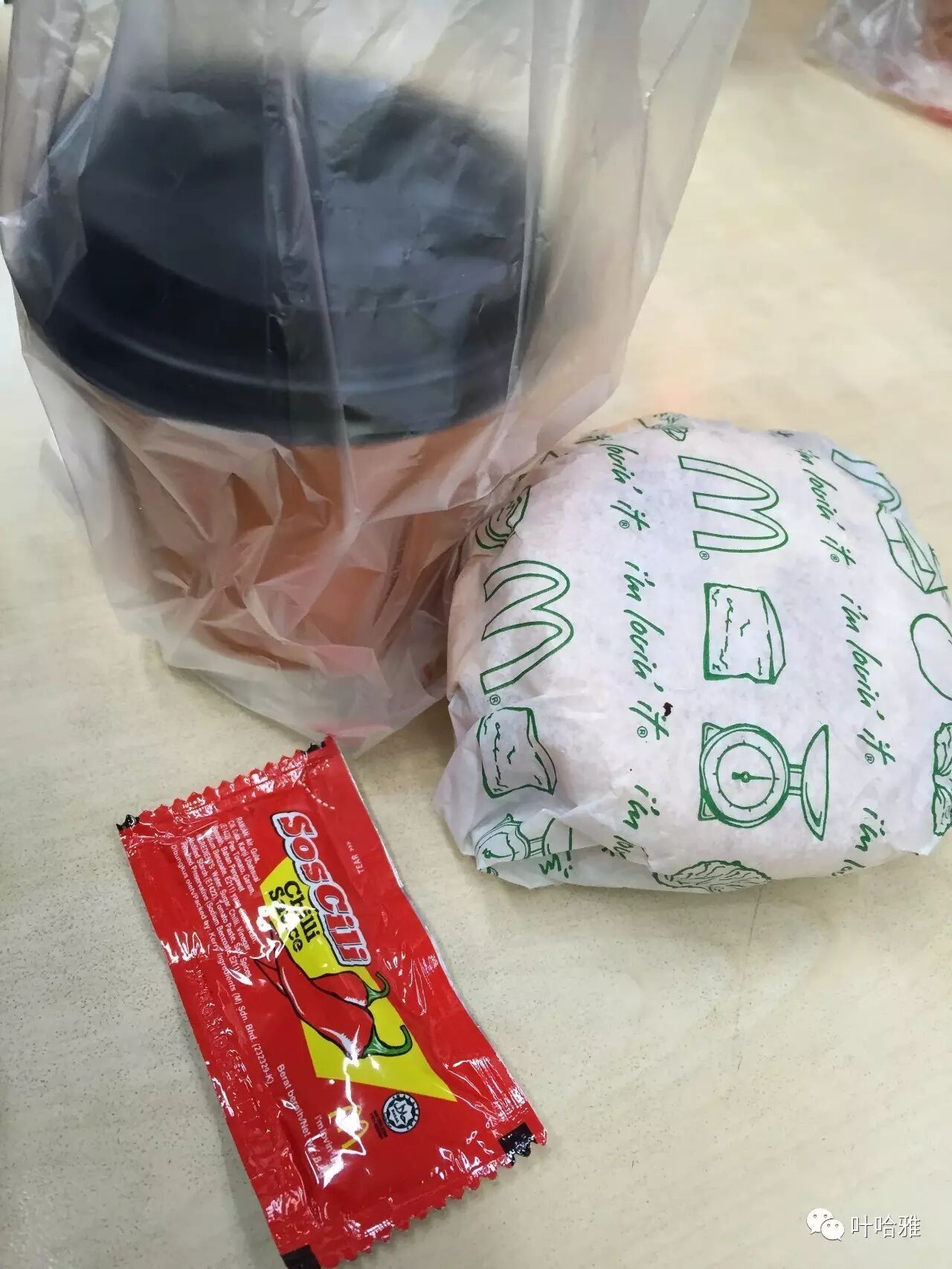
I have never eaten at a halal McDonald's back home, so I had to try it in Malaysia. Fast food chains like McDonald's in Malaysia are all halal. Even in neighboring Singapore, famous chains like McDonald's and KFC are 100% halal, so Muslims can eat there with peace of mind.
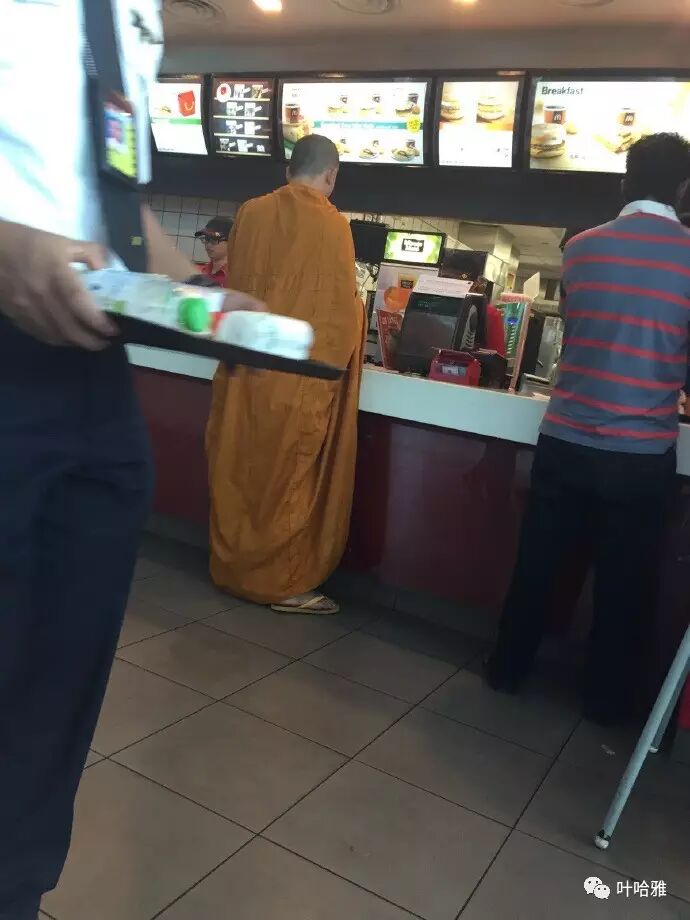
Even monks eat at McDonald's there.
Address: Kuala Lumpur Airport, Petronas Twin Towers
2. Sabah Night Market
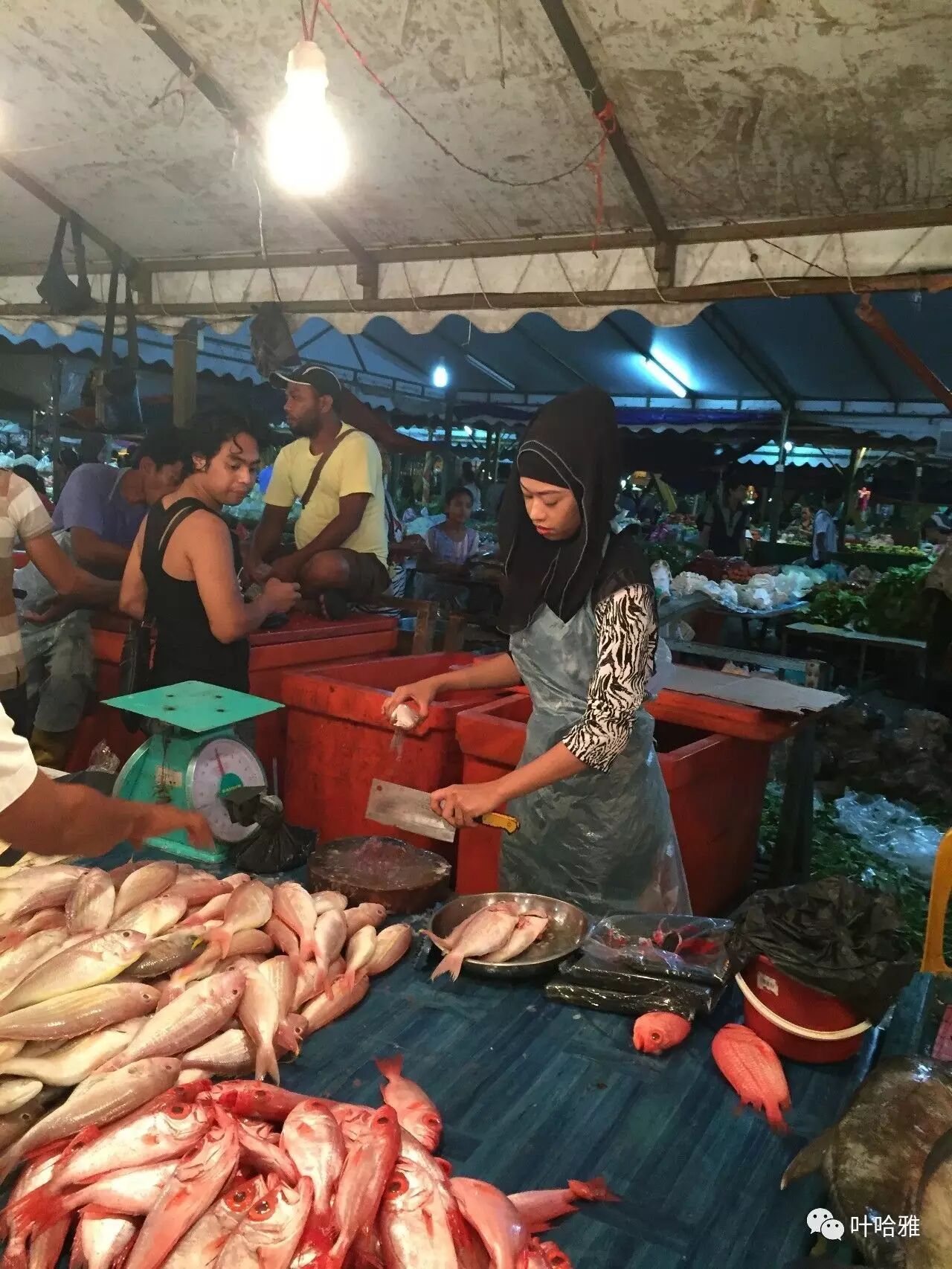
No matter where I go, I love visiting local markets to experience daily life. The food at these markets is authentic and cheap. This market is in Sabah state. You do not need a map; just follow the crowds and you will find it.
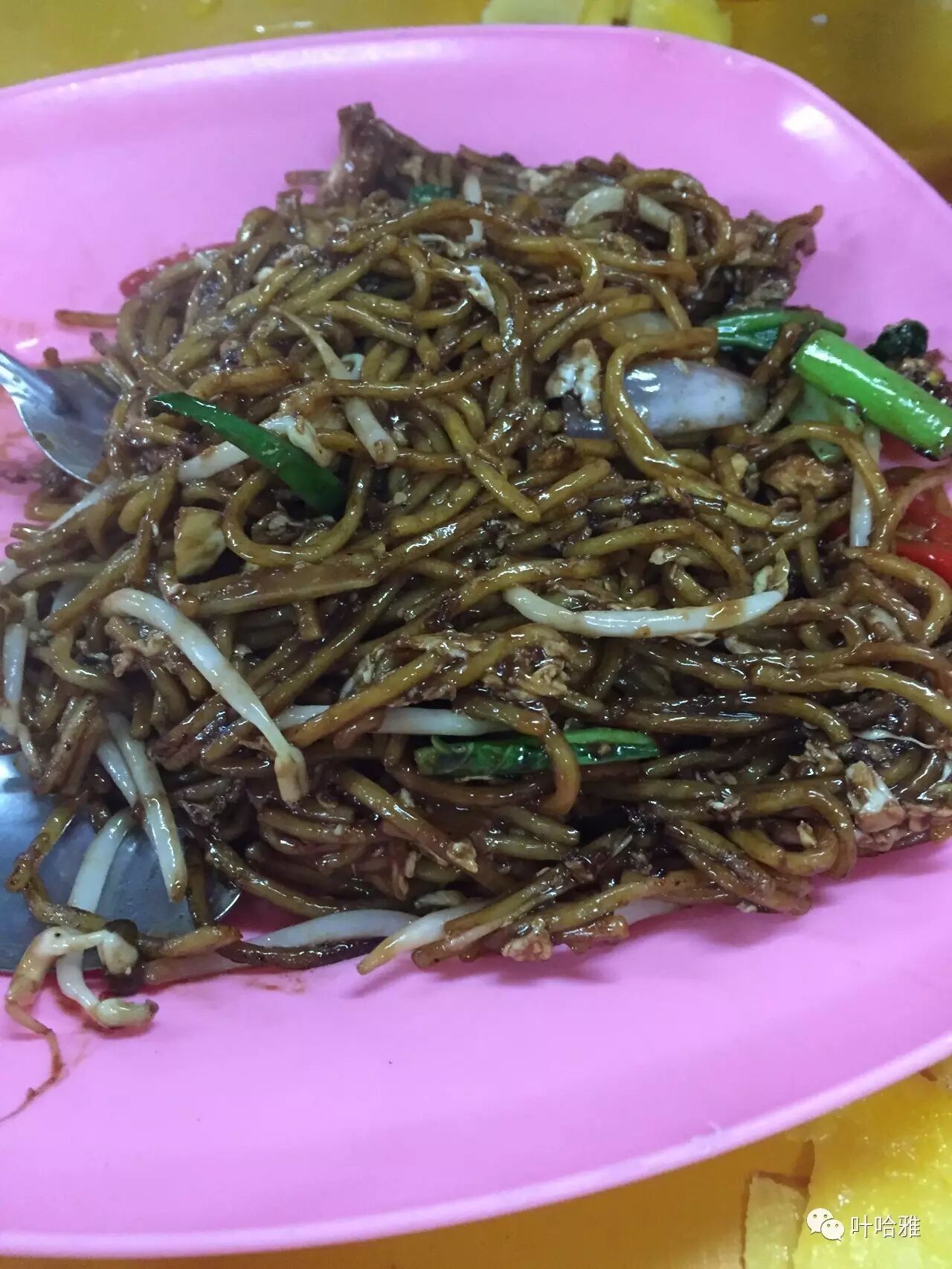
This is a common Southeast Asian stir-fried noodle dish with chicken. It costs just a few dollars, and Malaysians eat it with their hands.
This pot is not for vinegar. Muslims will recognize it as a water pitcher (tangping). On Malaysian tables, it is used for washing hands because people eat with their fingers.
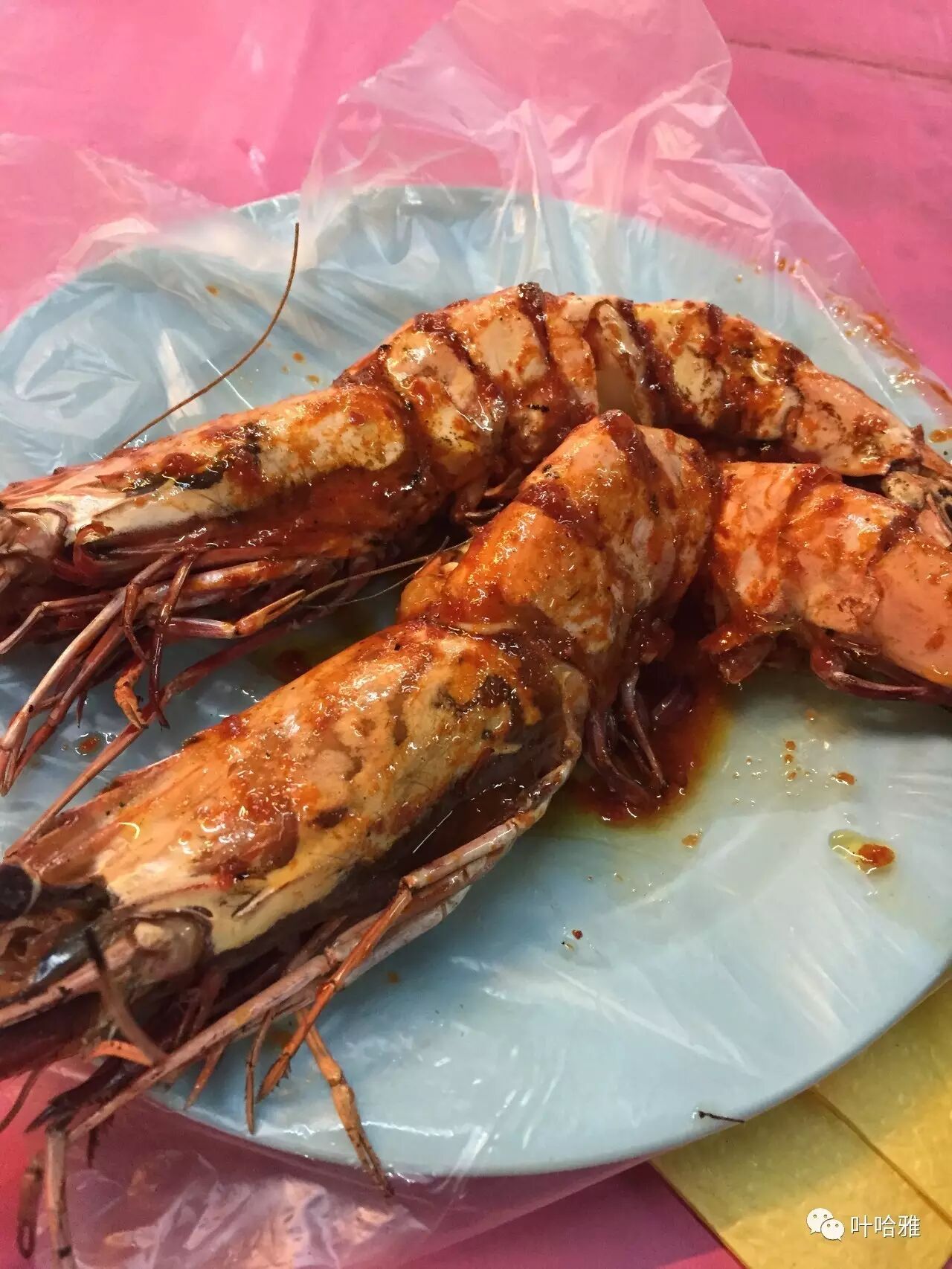
Seafood in this island nation is fresh and cheap. This pair of large prawns cost less than 30 yuan.
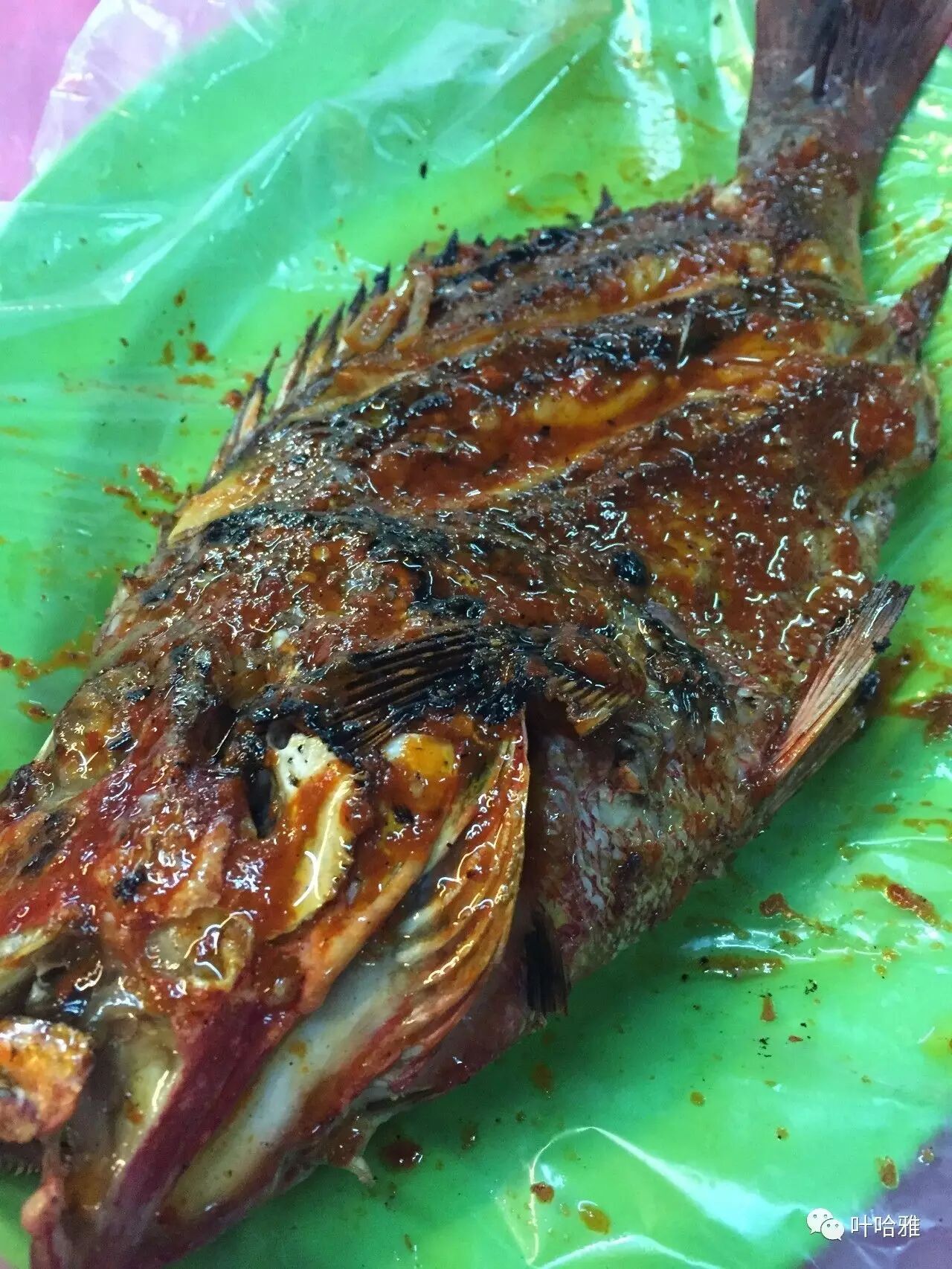
Lamb is rare in Malaysia, so enjoy the fish instead.
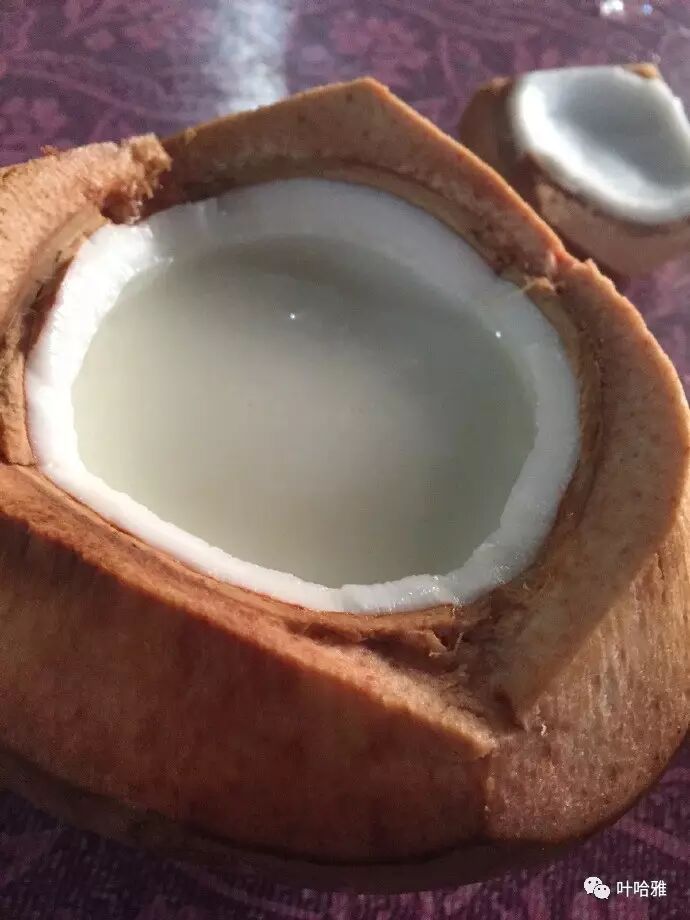
This is coconut pudding. I rarely see it elsewhere. It costs 4 Malaysian ringgit each.
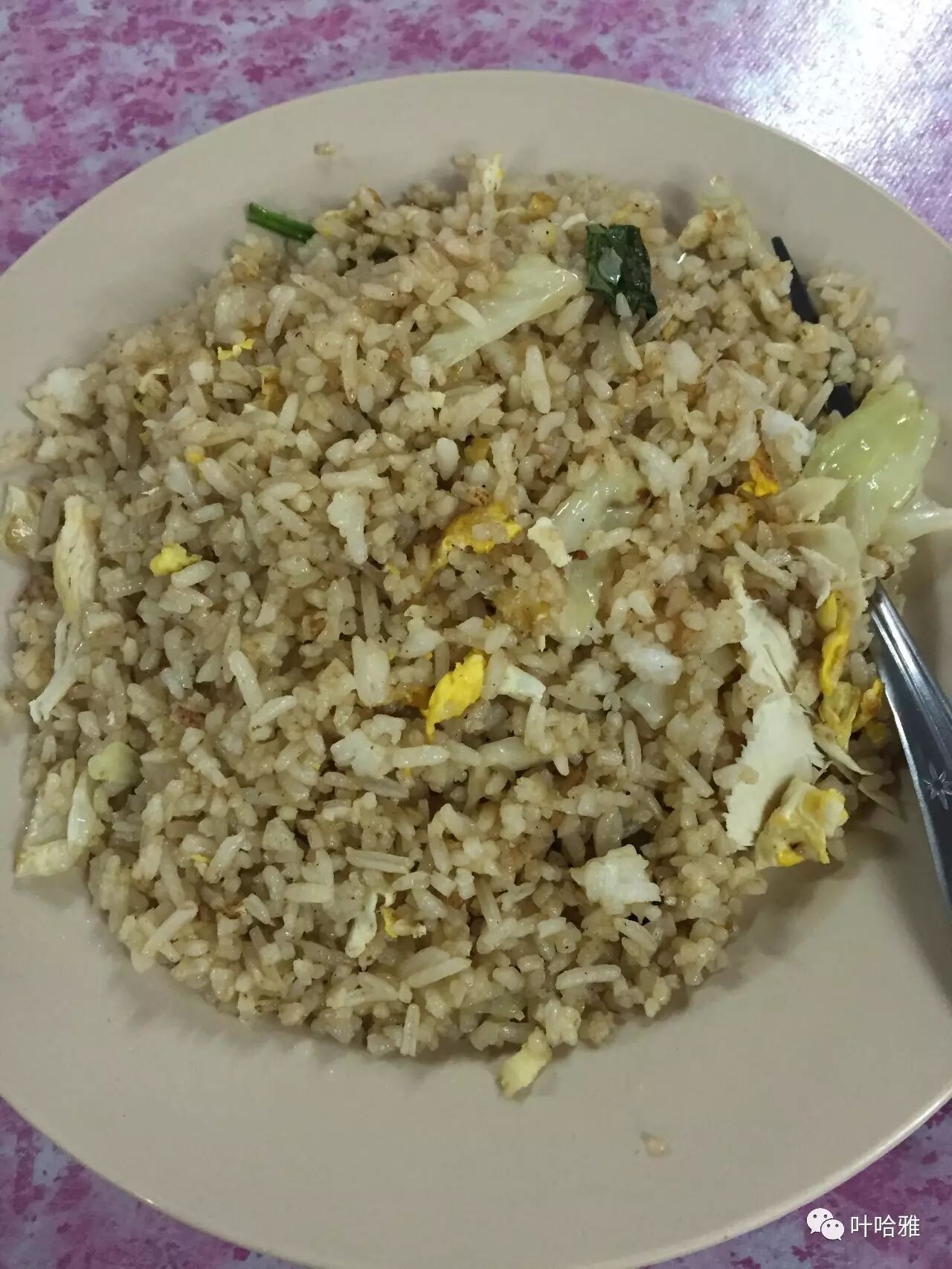
If you want to learn to eat with your hands like a Malaysian, remember to use your right hand, as the left hand is used by Muslims for personal hygiene.
Address: Kota Kinabalu
2. Northwest Hand-Pulled Noodle Shop
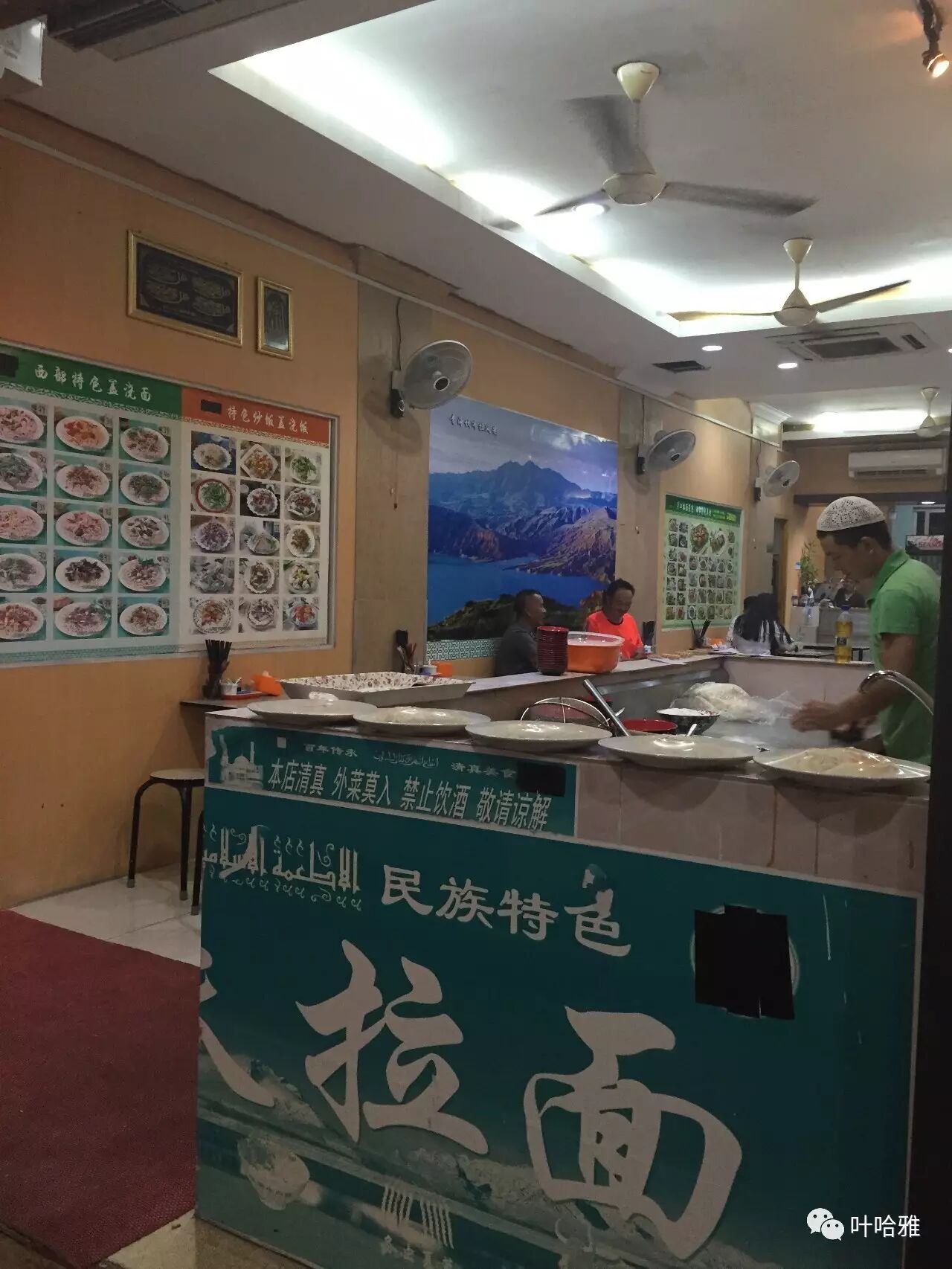
When traveling, I avoid hand-pulled noodles (lamian) unless I have no other choice because I eat them too often at home. This shop is worth mentioning because it is the first time I have seen a lamian shop abroad.
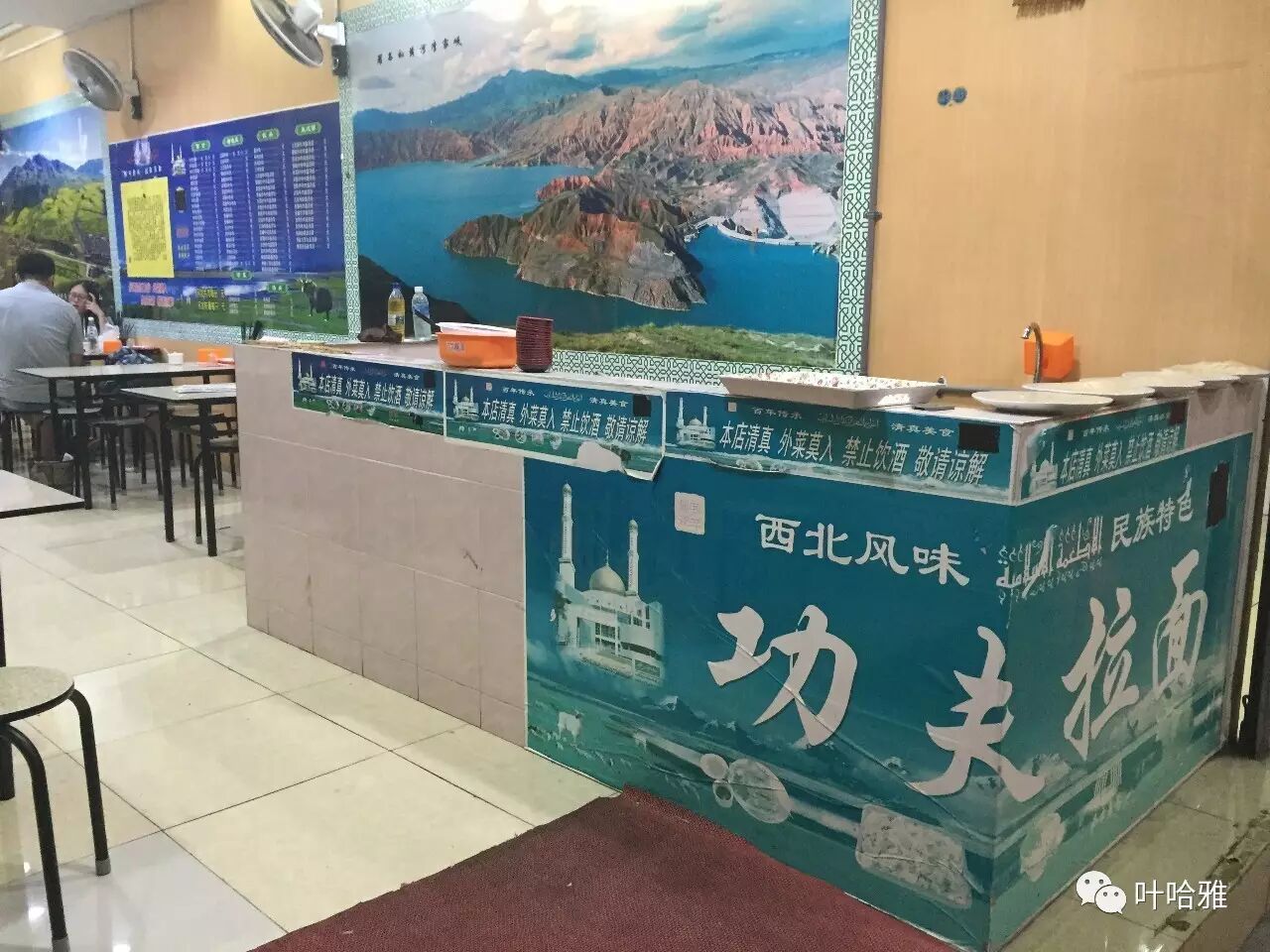
The sign saying 'This shop is halal, please do not bring outside food' felt very familiar.
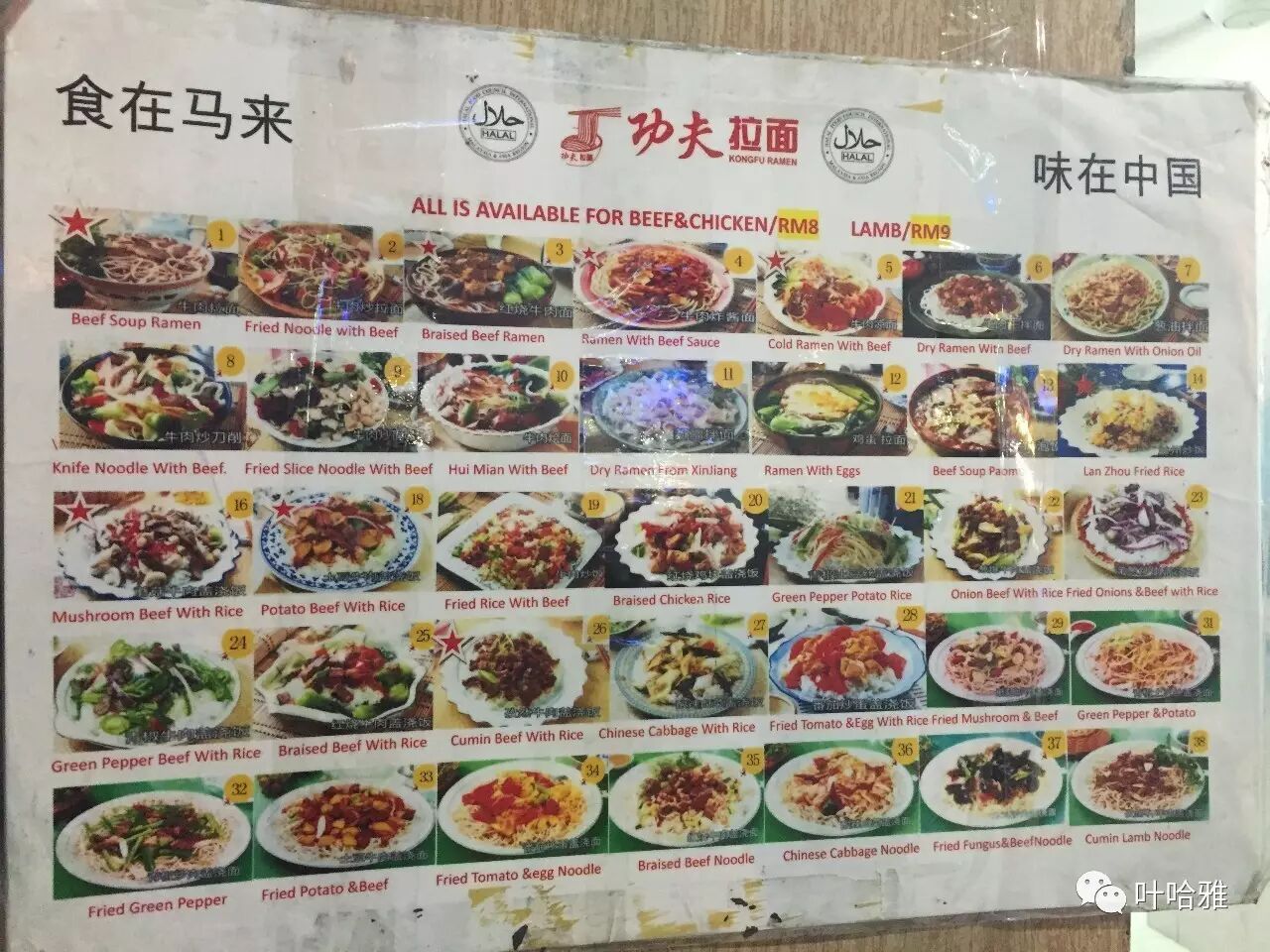
I did not go in to eat, but I wanted to record it. The owners of these shops have brought lamian all over the world. In some small cities in southern China, finding a halal lamian shop is something to be very grateful for.
Address: Jalan Tun Fuad Stephen
3. Indian Flatbread (roti canai)
These small street stalls are common in Southeast Asia, and the owners are mostly from India or Pakistan.
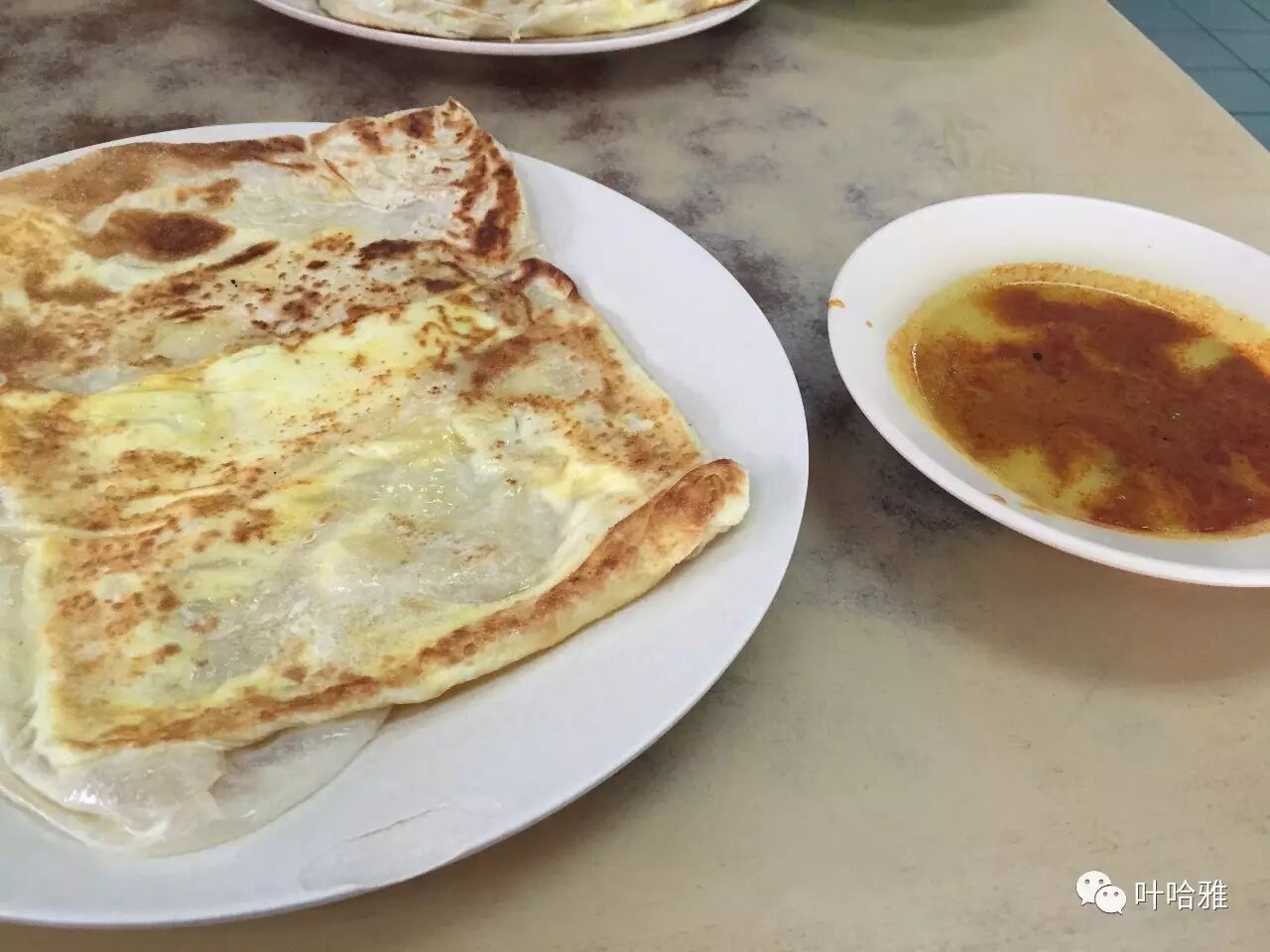
You can have this flatbread for breakfast. Tear it with your hands and dip it in the sauce.
Address: Jalan Ikan Juara 1
4. Japanese Dream Food
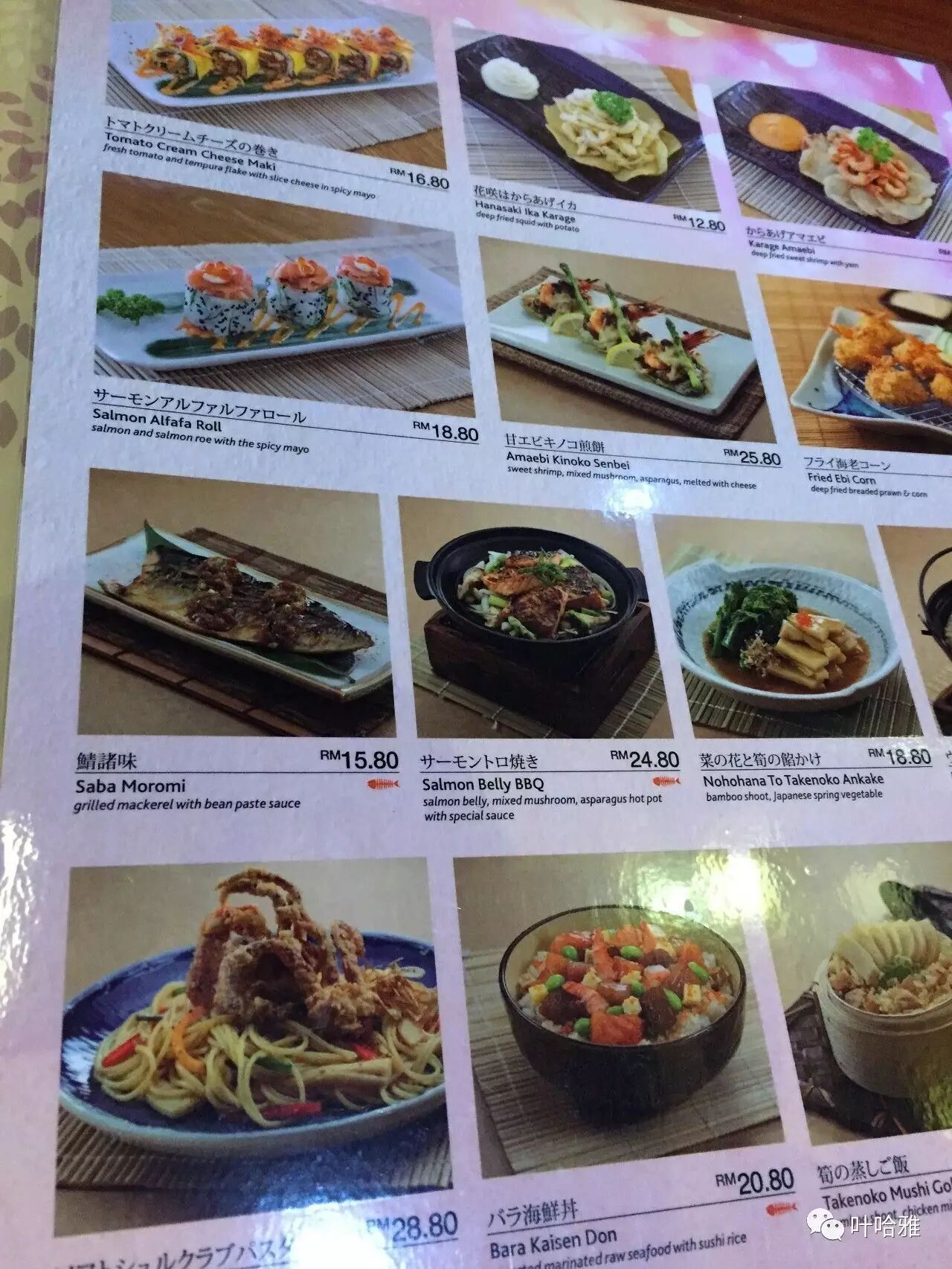
Because of Japan's history of colonizing Malaysia, some traces remain, and you can find many Japanese restaurants in Malaysia.
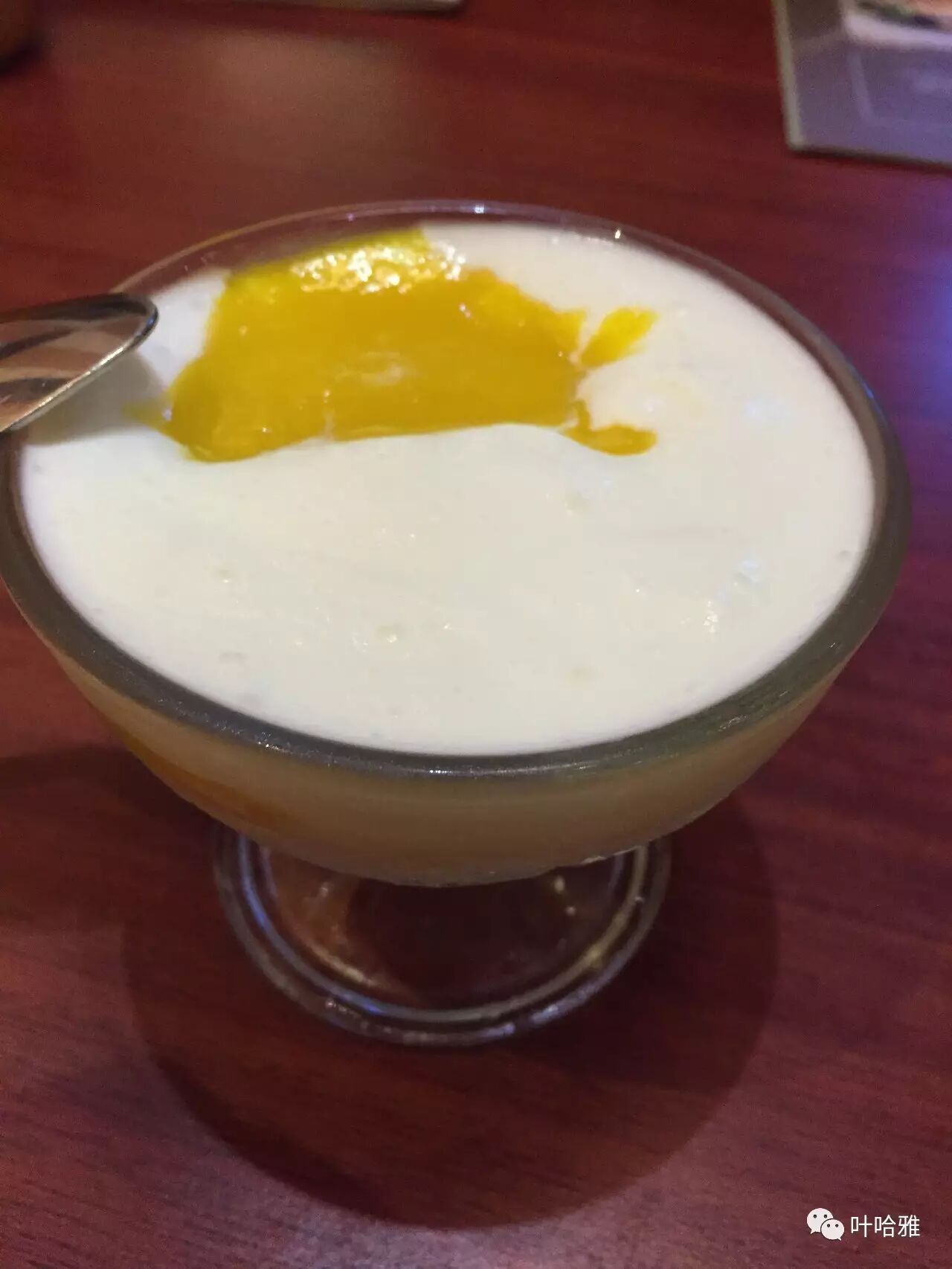
Mango pudding
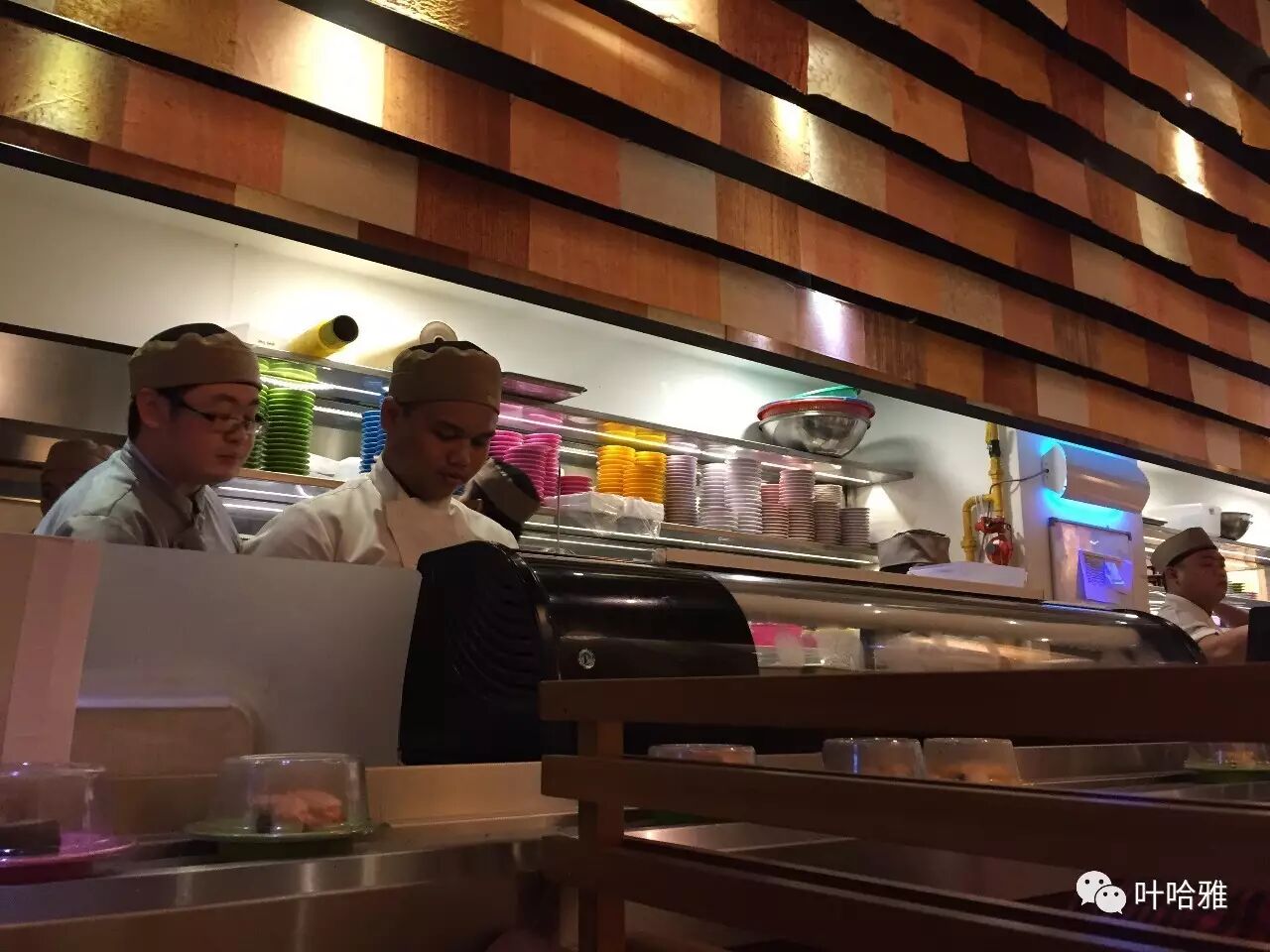
This Japanese restaurant in Sabah is the first halal Japanese place I have ever eaten at.
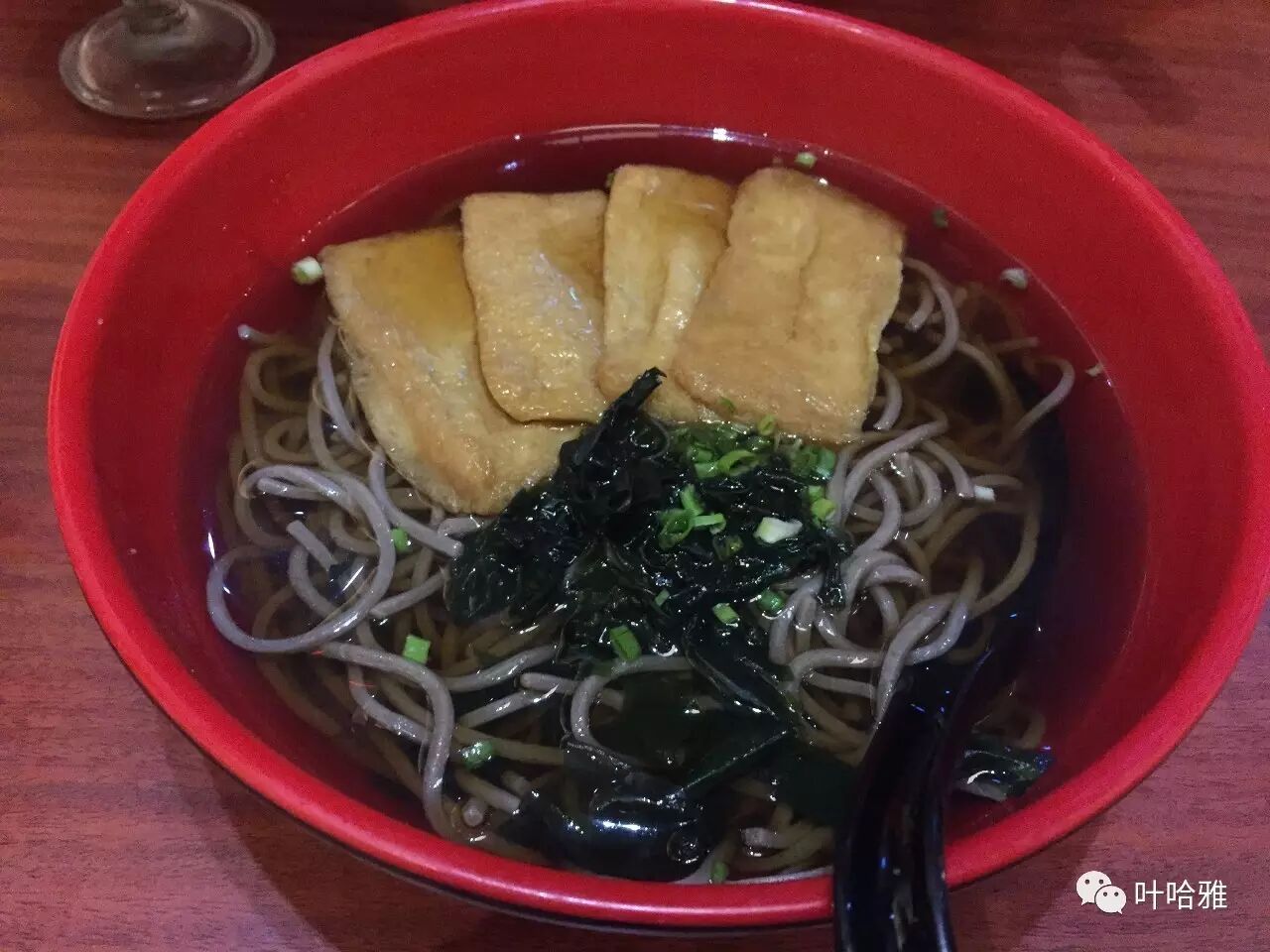
A famous Japanese dish, thick wheat noodles (udon).
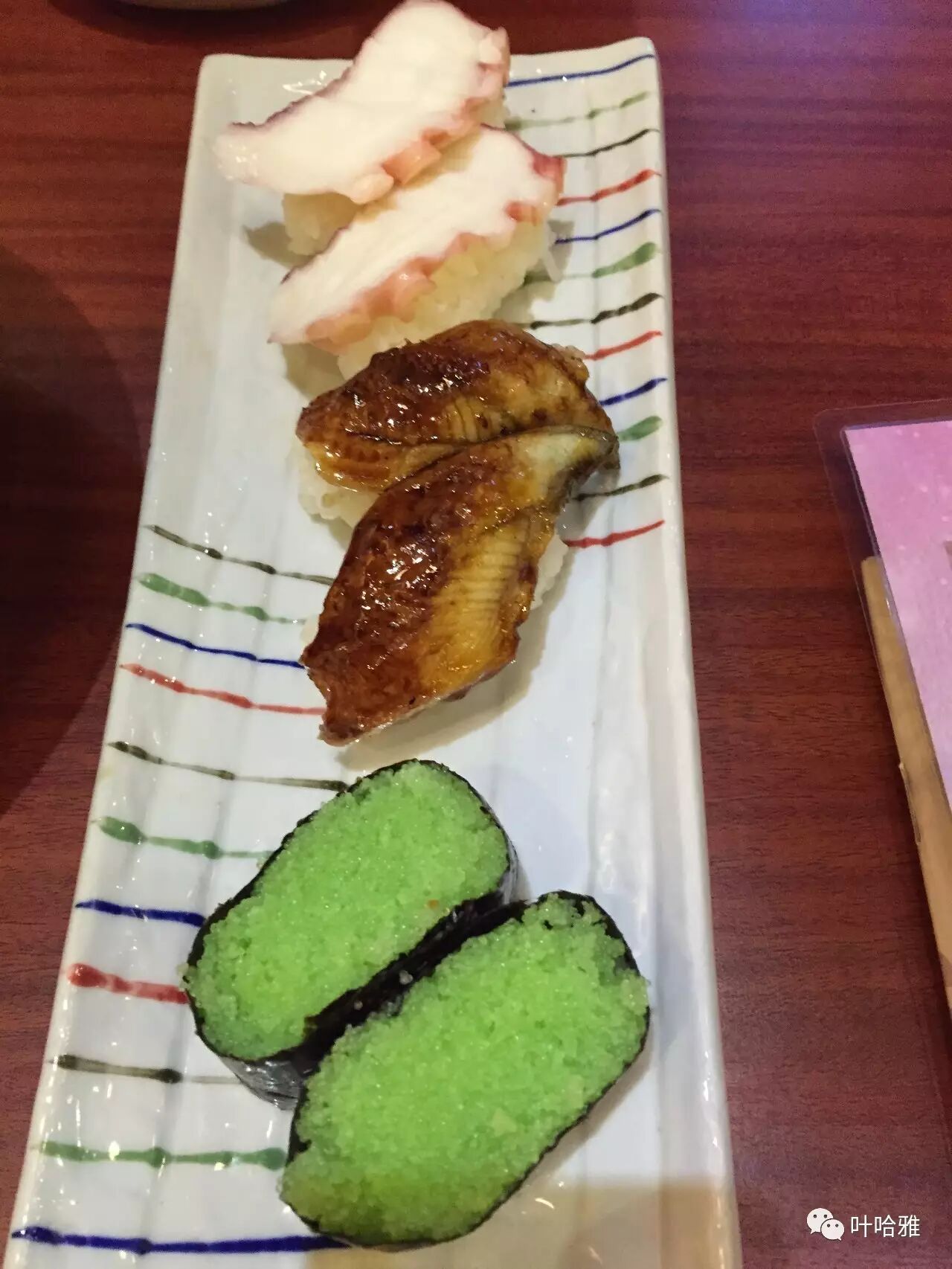
Sushi, which is halal so you can eat it with peace of mind.
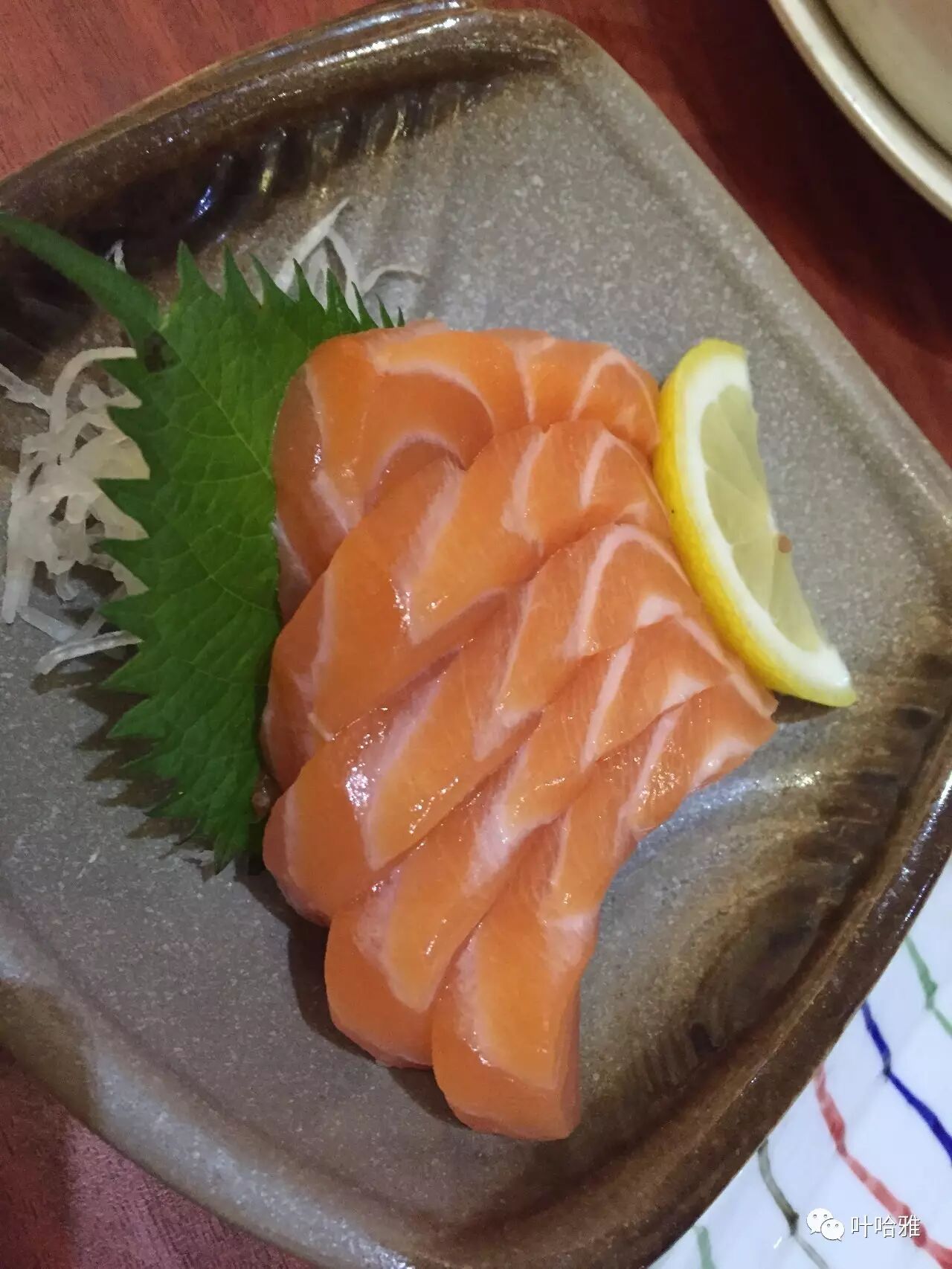
Fresh salmon sashimi
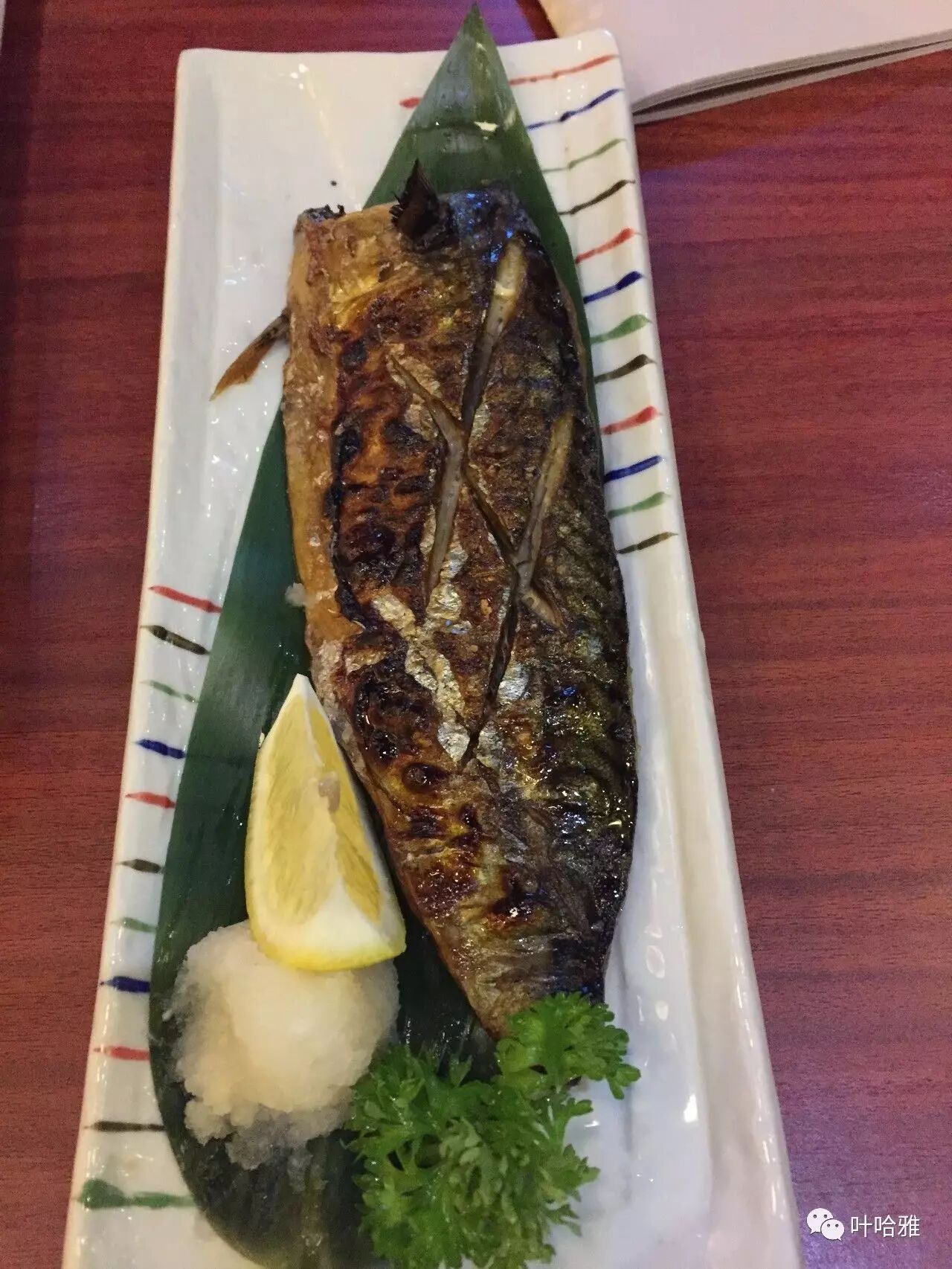
Pacific saury (sanma), also a famous Japanese food.
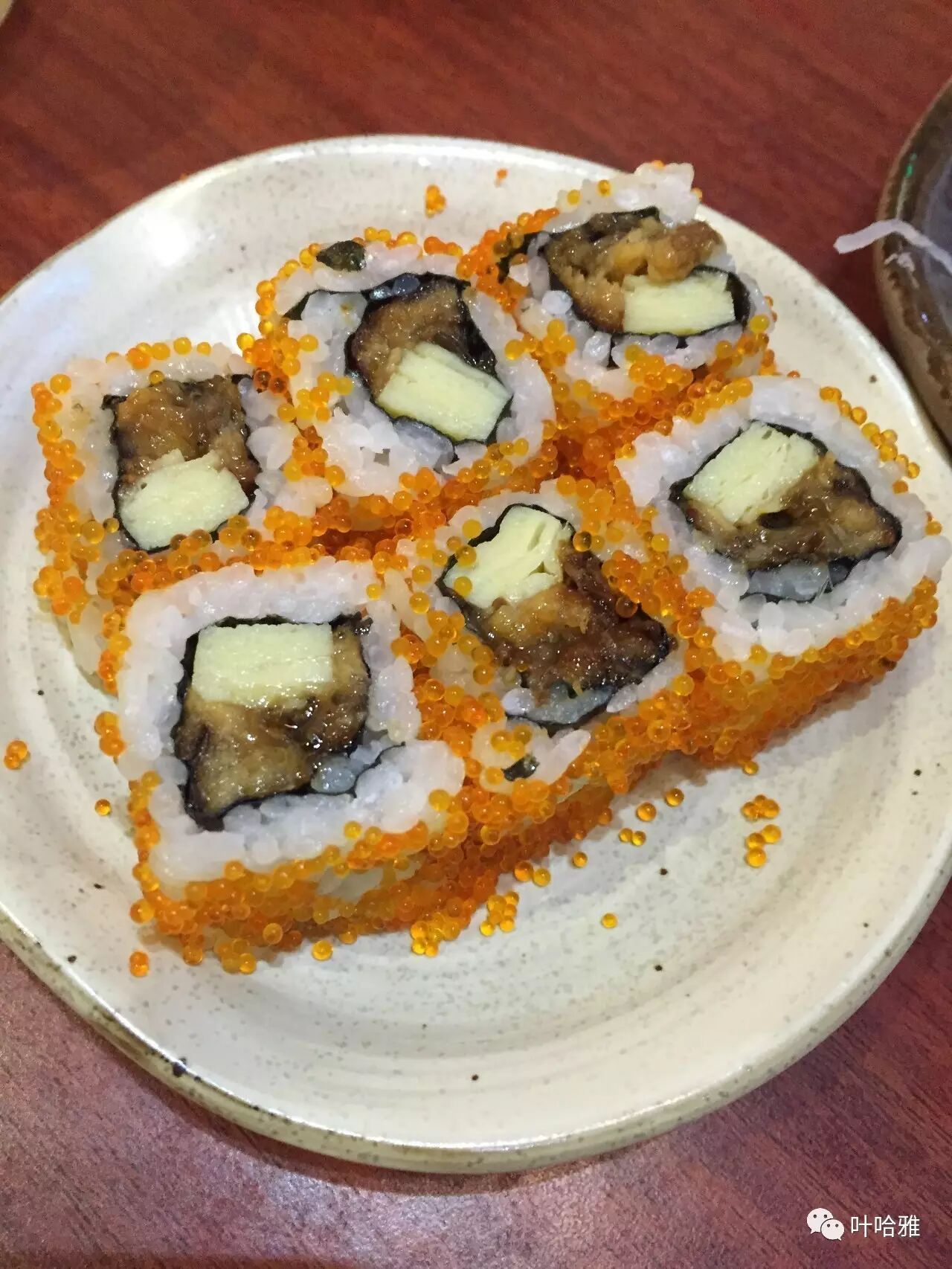
You rarely see halal Japanese food in China. Before the first halal Japanese restaurant, Hefeng Zhi Yan, opened in Beijing, I had to go to Tianjin if I wanted to eat Japanese food.
Address: Lot No 36, Palm Square 4th Floor Center Point, 88000, Kota Kinabalu, Sabah, Kota Kinabalu, 88000 Kota Kinabalu, Sabah
5. NANDOS
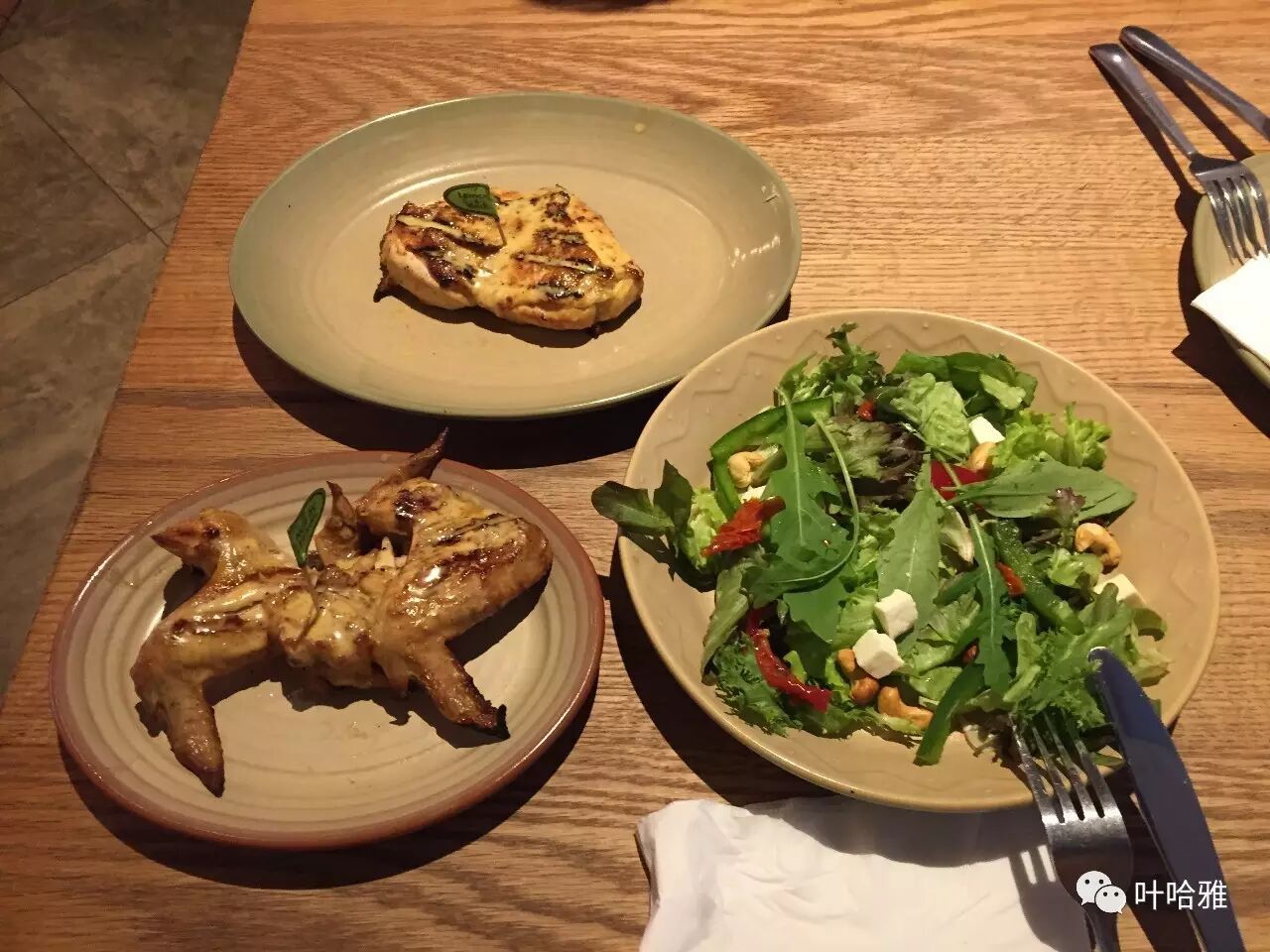
This is a chain of roast chicken restaurants. The chicken in Malaysia tastes very different from the chicken in mainland China.
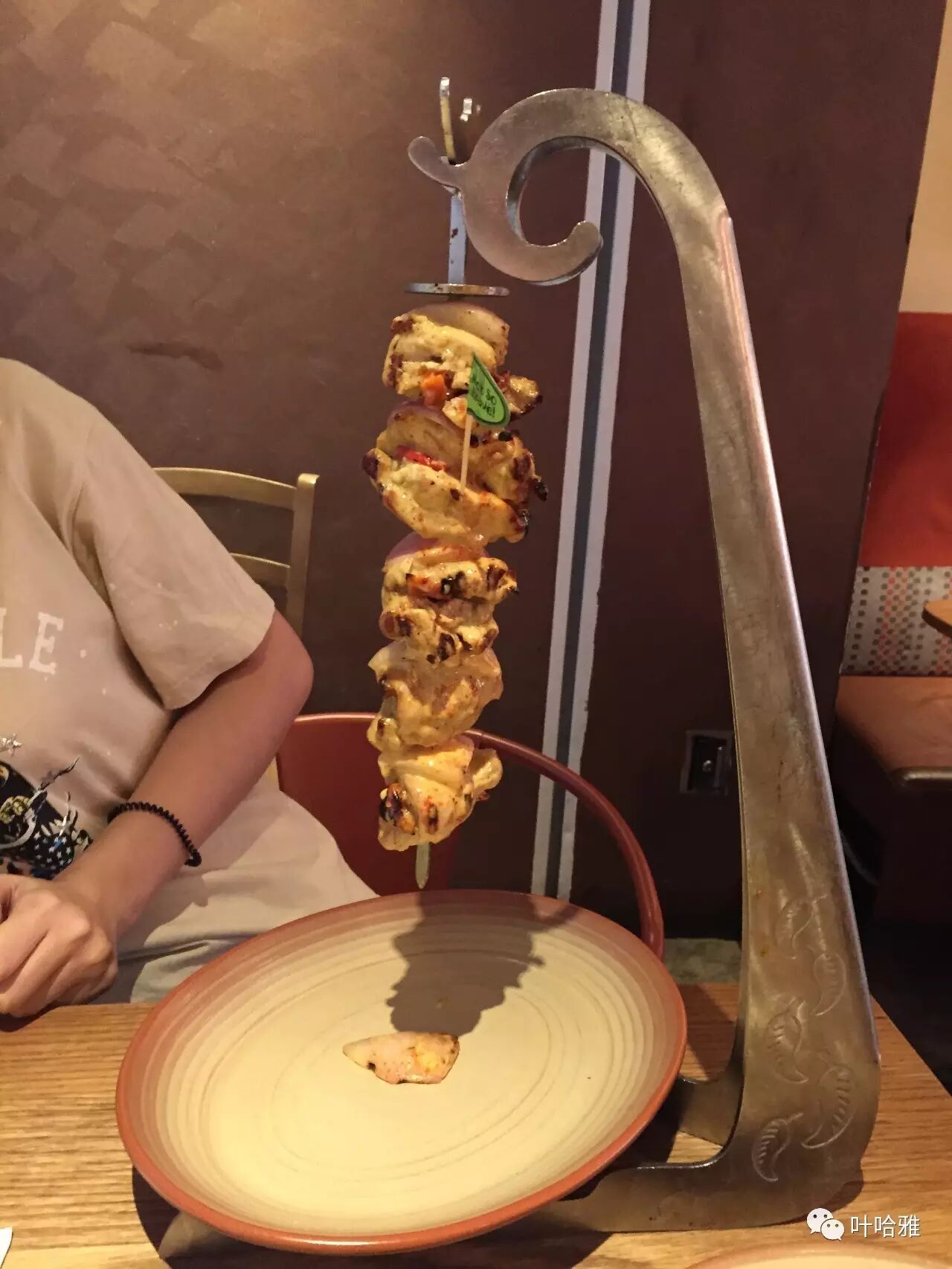
Address: There are many branches in Kuala Lumpur, found in large shopping malls like KLCC and Pavilion.
6. YUSOOF DAN
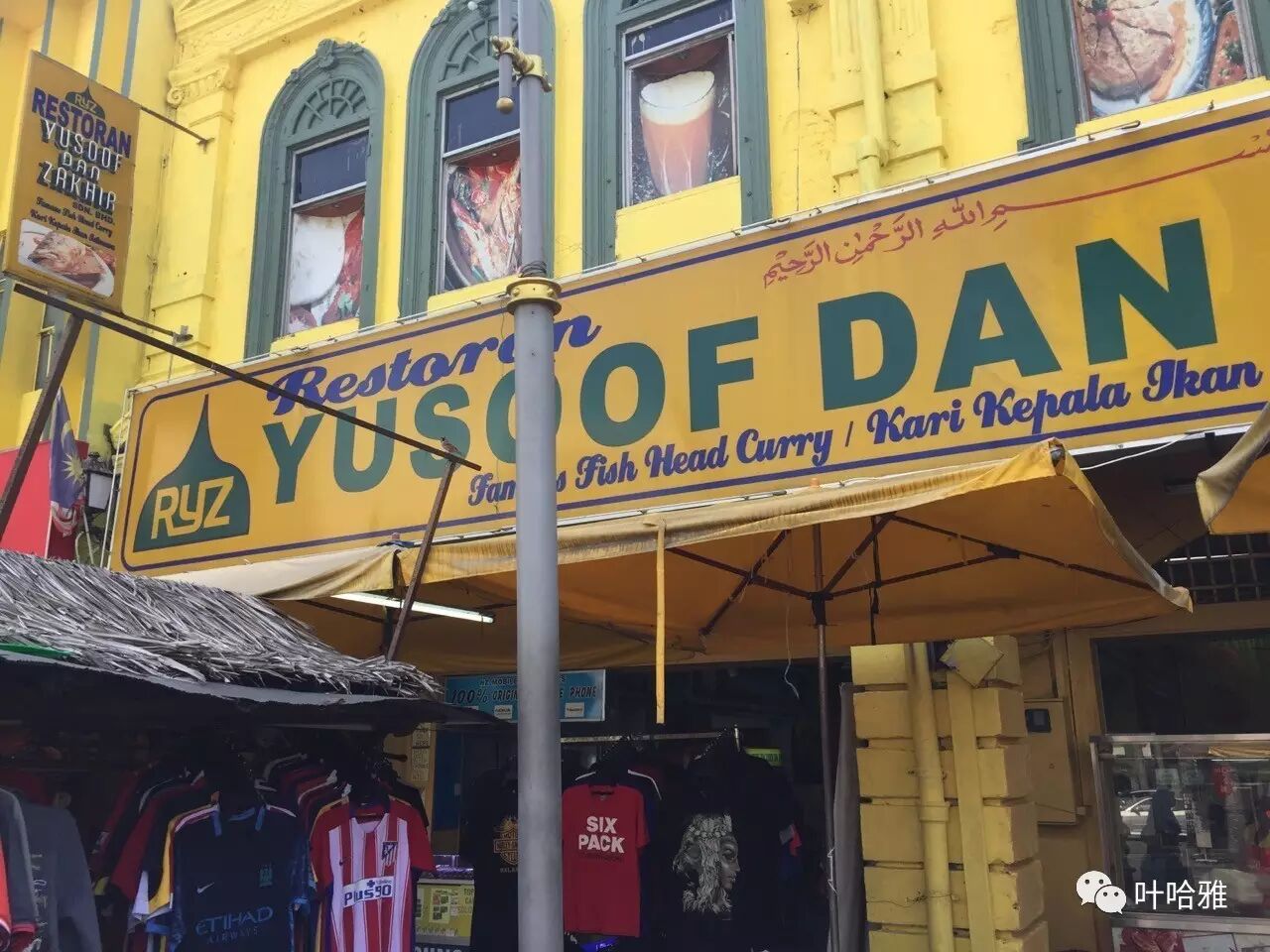
An Indian snack shop.
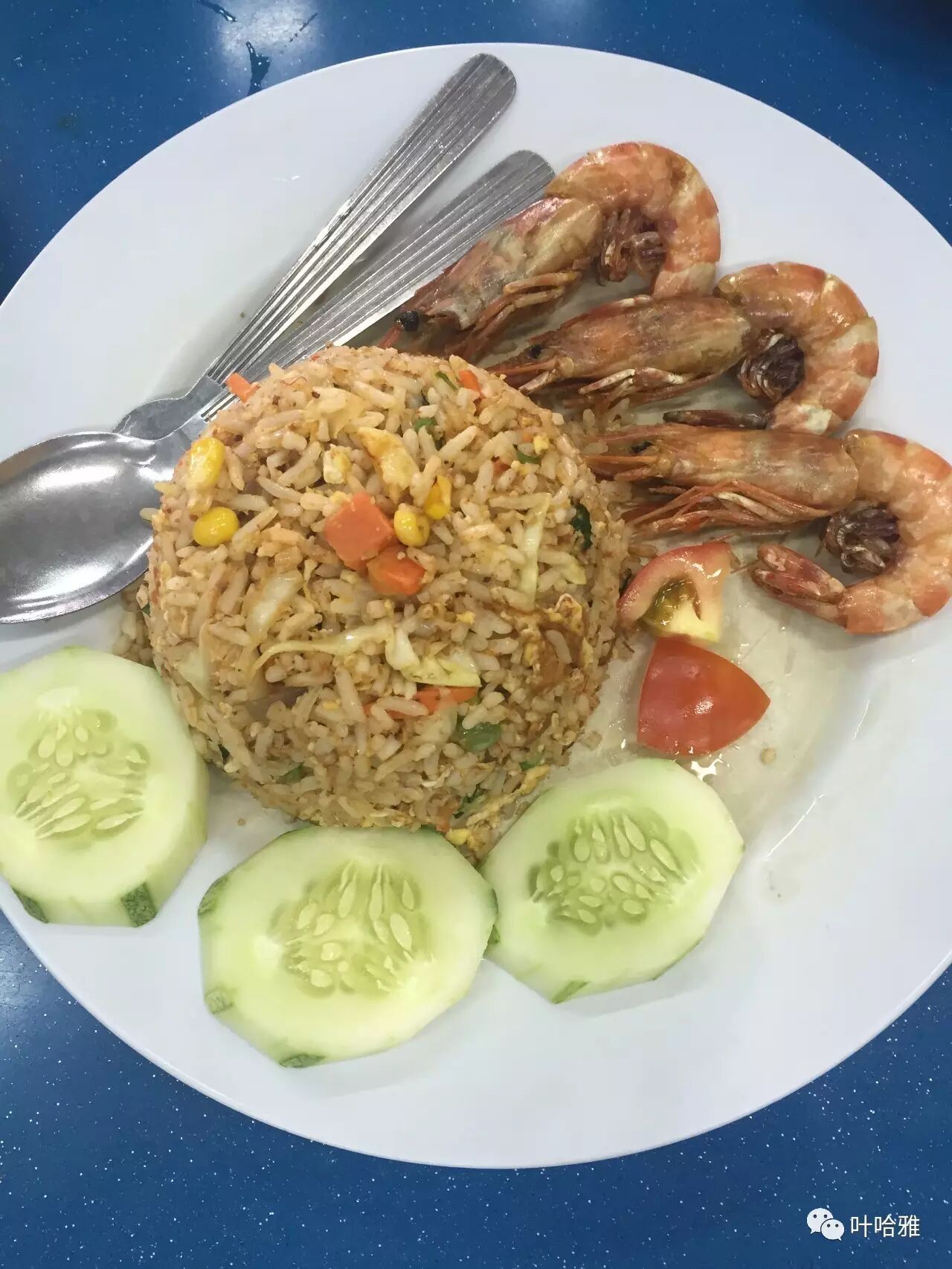
Seafood fried rice. I guess they gave us a spoon because they saw we were foreigners.
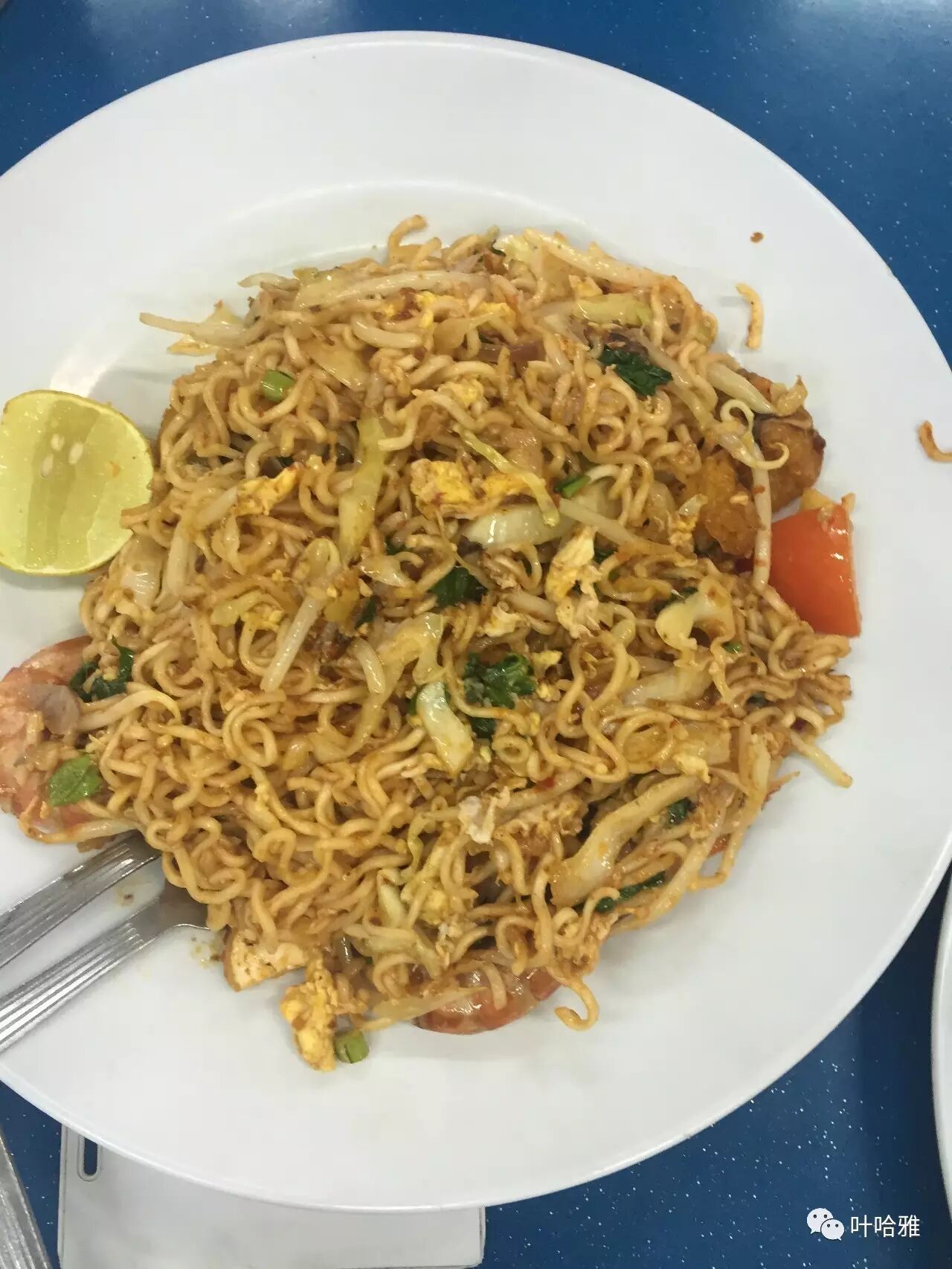
Seafood fried noodles
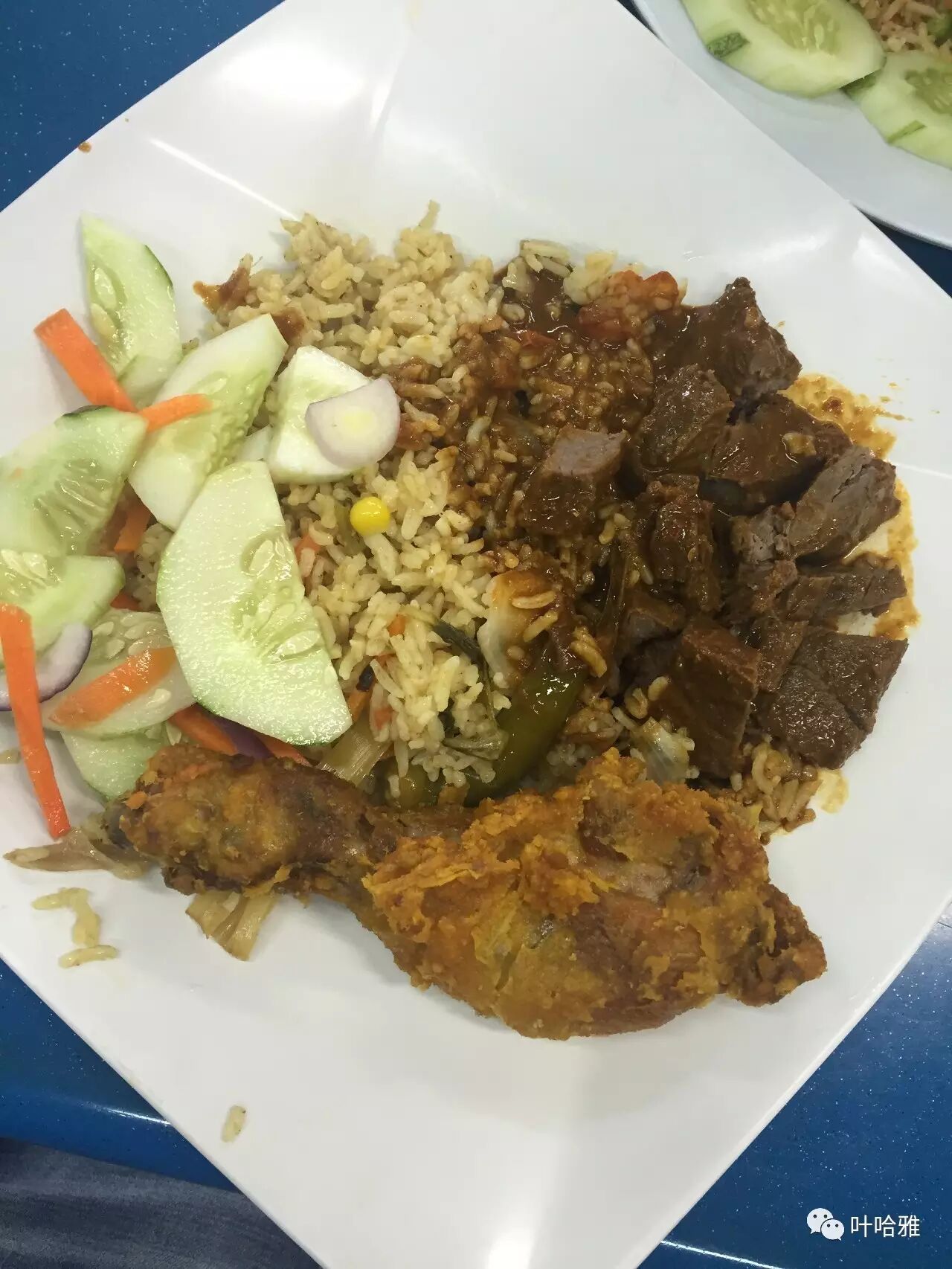
Beef and fried chicken. Actually, there are not many types of dishes in Southeast Asia, and the flavors are quite simple.
Address: Kuala Lumpur Central Market
7. SUSHI KING
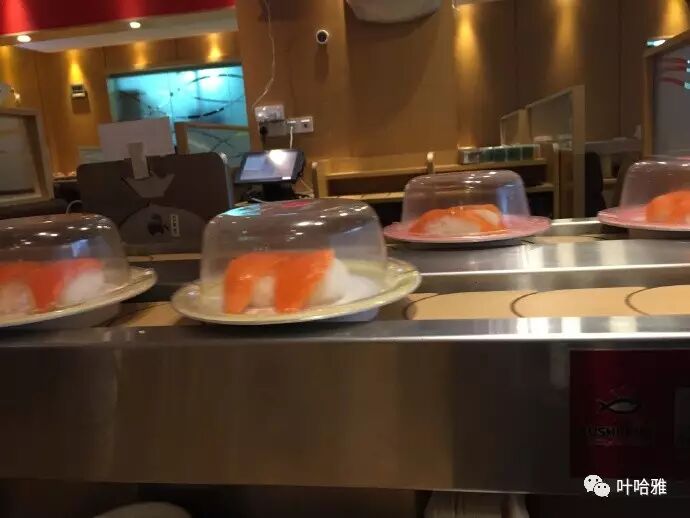
Many restaurants in Malaysia are labeled "pork free," which means they don't serve pork. Even if the meat is halal, they might still sell alcohol. To get a halal certification in Malaysia, a restaurant must be alcohol-free. This Japanese restaurant has a halal certification.
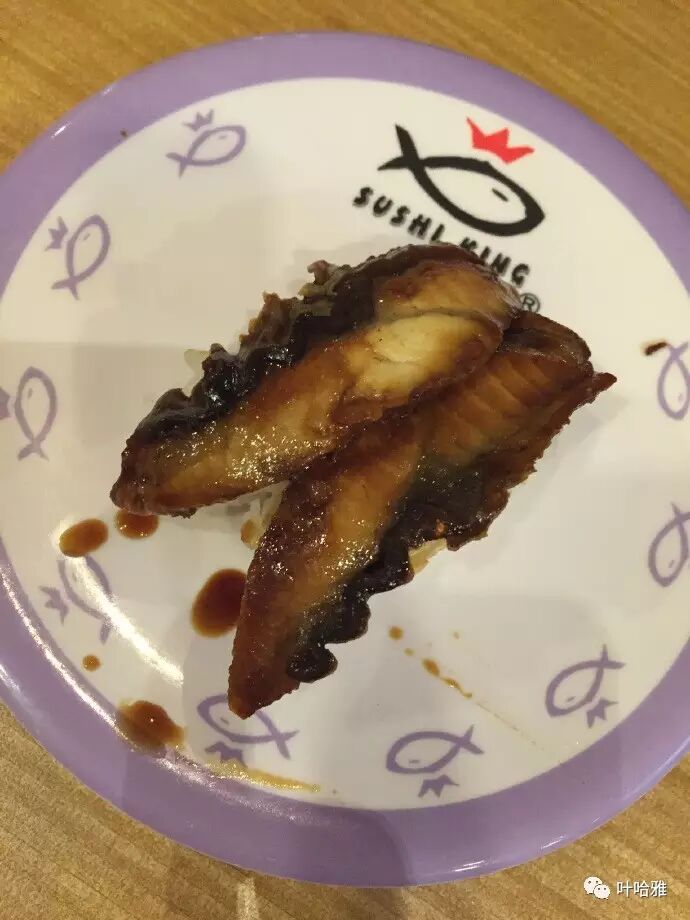
Conveyor belt sushi, take what you want as you eat.
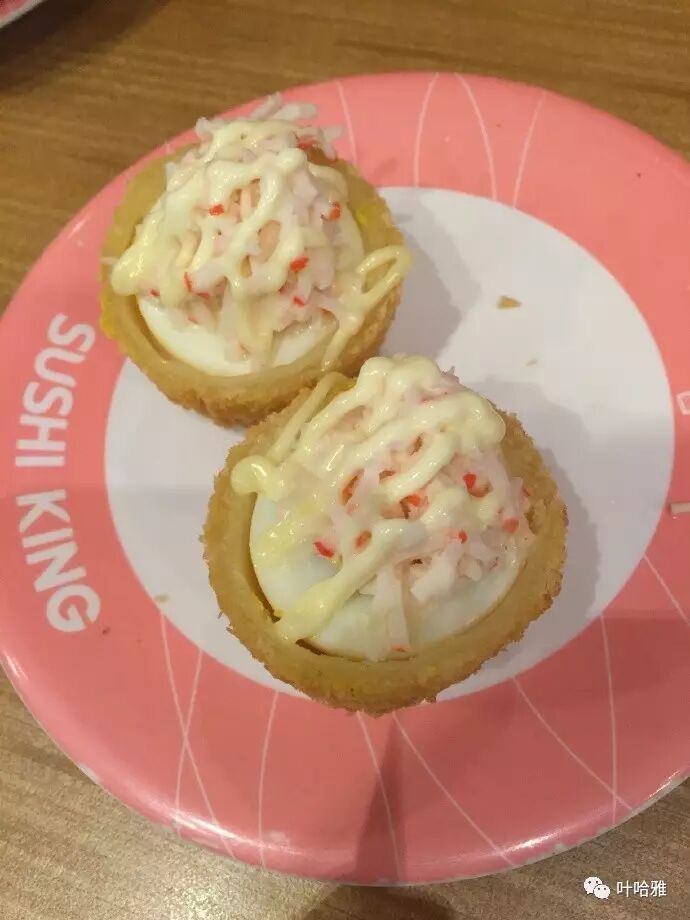
This is a dessert made from eggs.
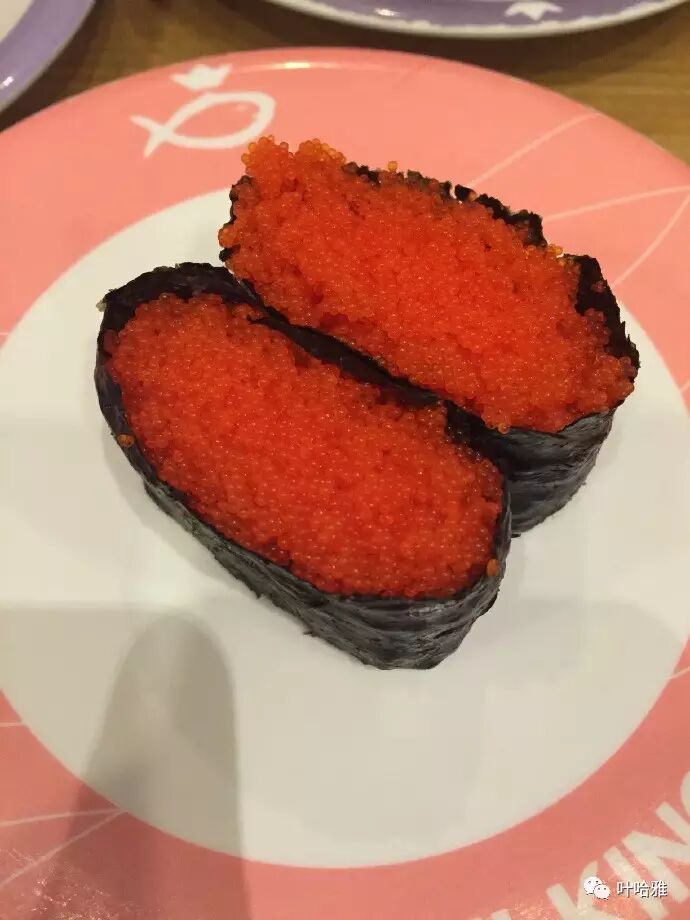
Fish roe (caviar)
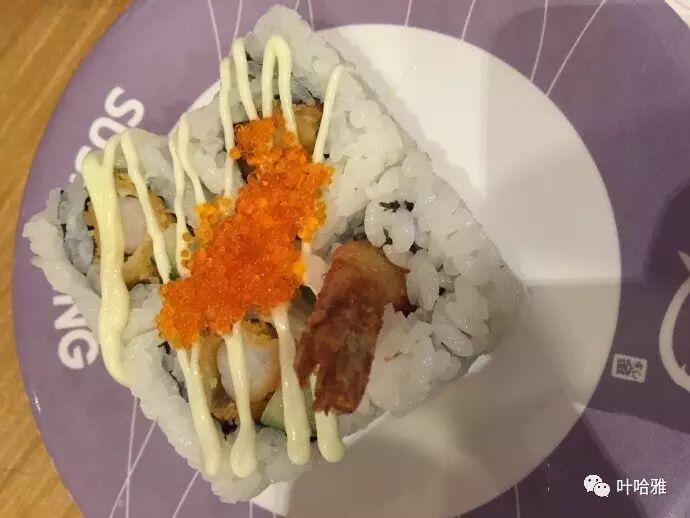
I can never get enough sushi.
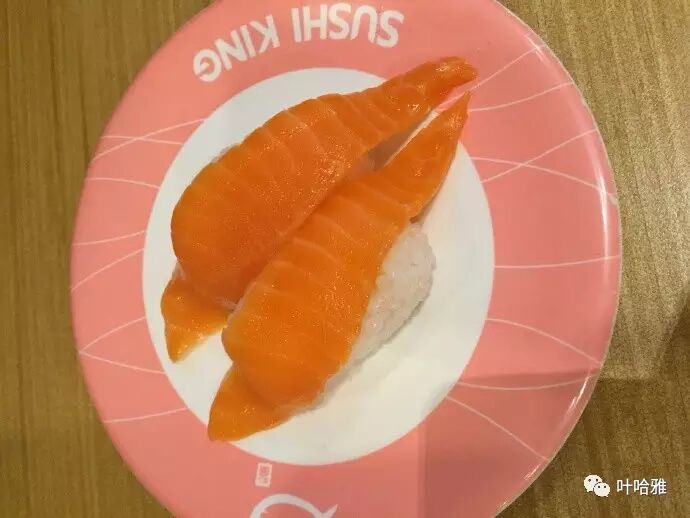
Address: Sushi King @ Jaya One, Petaling Jaya, Jalan Universiti, Seksyen 13, Petaling Jaya, Selangor, Malaysia.
8. Arabic flatbread (khubz).
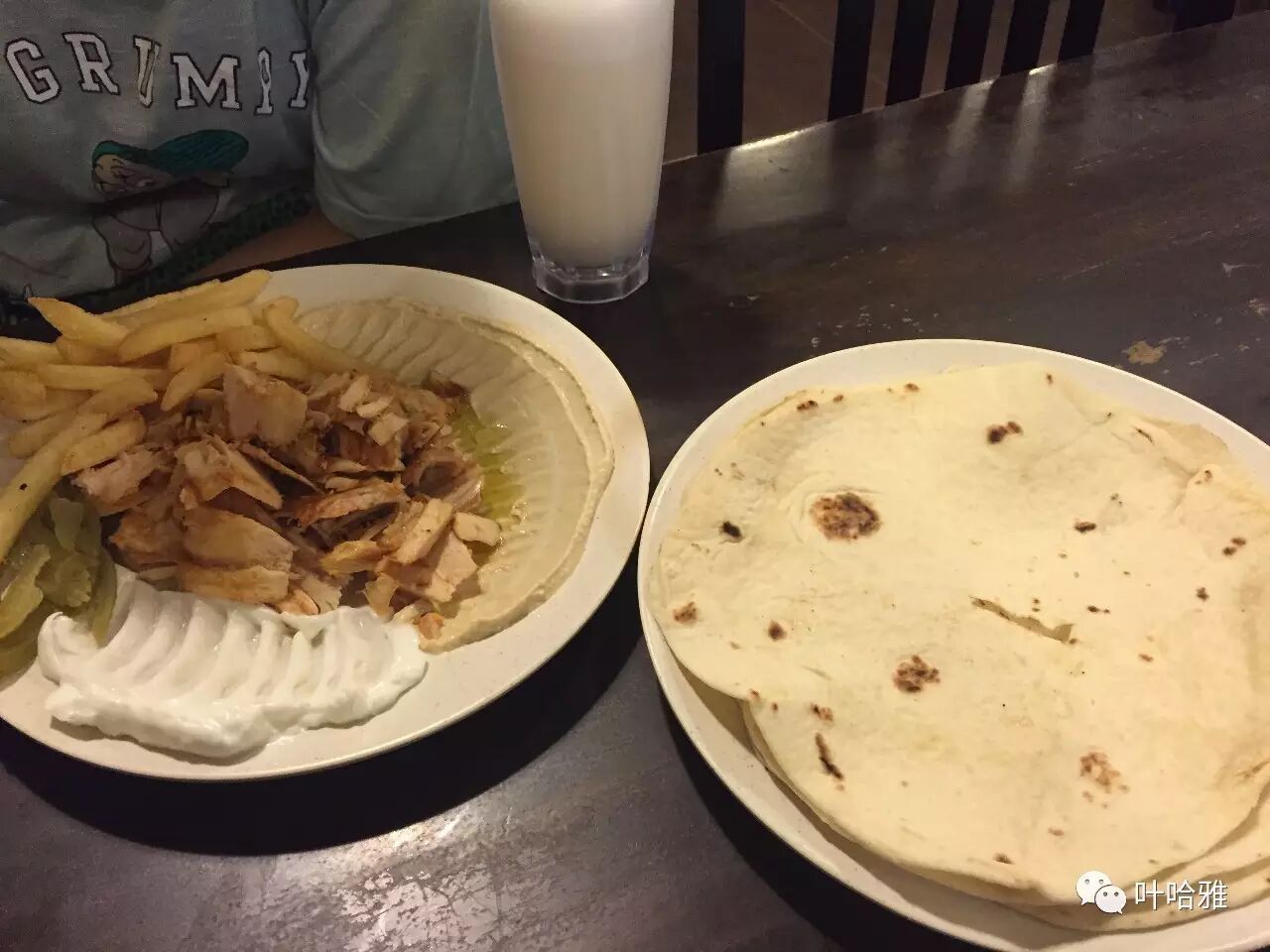
Many Arabs have moved to Malaysia for work. They share the same faith, which makes daily life easier. More importantly, the political situation is stable. Southeast Asia's economy has grown quickly in recent years, creating many jobs. Malaysia is also an international Islamic finance hub, which is attractive to Hui Muslims from China as well.
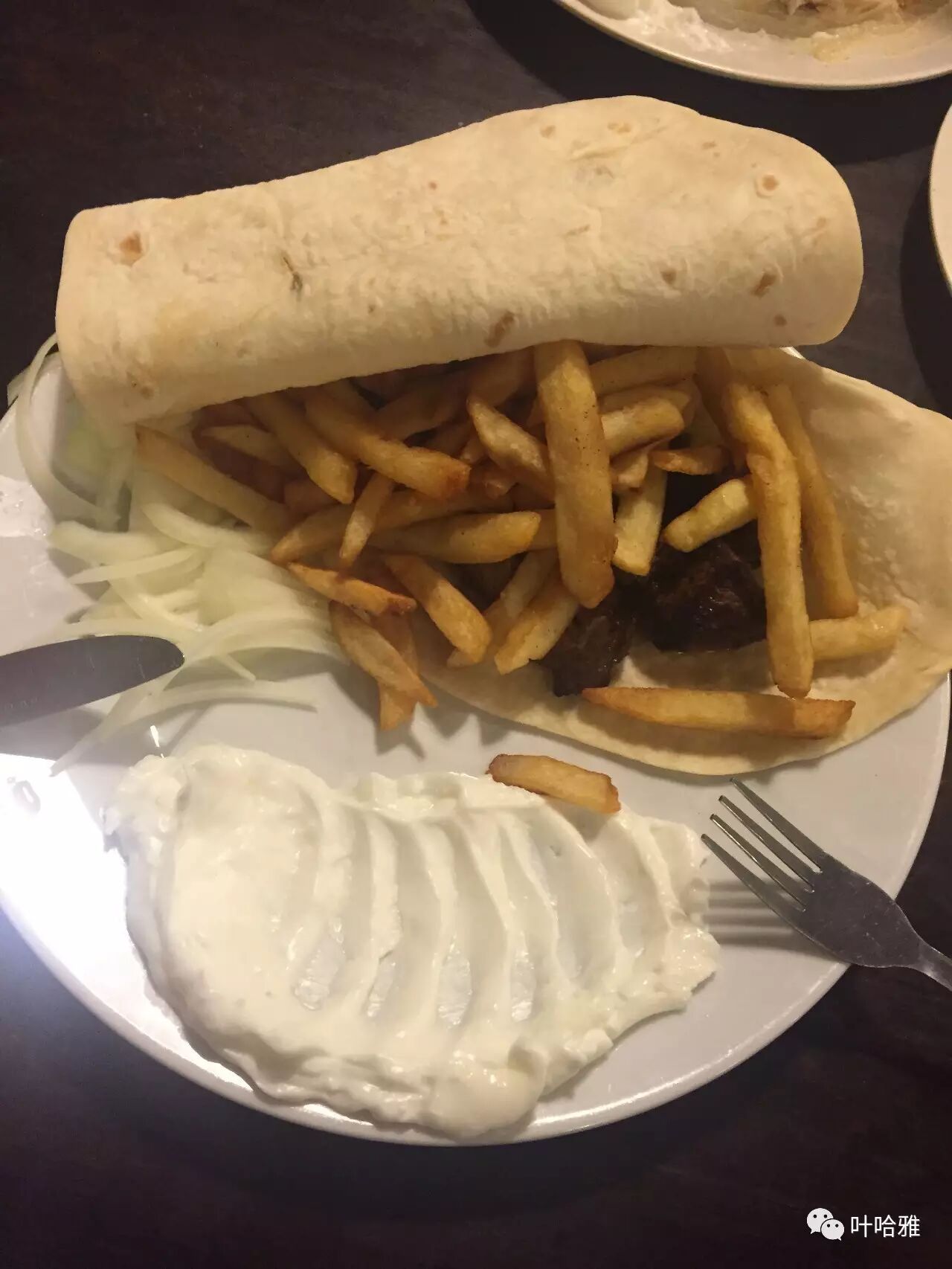
This Arabic flatbread (khubz) served with fries and beef is delicious when rolled up. The servers are all Arab. I even saw them get up to perform namaz during prayer time, which makes me feel more comfortable eating at this restaurant.
Address: The row of shops at the bottom of the UCSI University South Wing campus.
Best Halal Food Kuala Lumpur: Nyonya Cuisine, Muslim Hot Pot, Petaling Street Malatang and Fish Head Noodles
Articles • yusuf908 posted the article • 0 comments • 170 views • 2026-05-24 00:17
Summary: This Kuala Lumpur halal food map issue 7 covers Limapulo Baba Can Cook, Ali-Han Muslim buffet hot pot and barbecue, Petaling Street halal malatang, Bartolo Lisboa Bakehouse, Village Park nasi lemak, Yunnan rice noodles, An Bang chicken rice, Barraca, and Hai Kah Lang seafood fish head noodles.
The restaurants in this issue are as follows:
1. Limapulo: Baba Can Cook (Nyonya cuisine)
2. Ali·Han Muslim buffet hotpot barbecue
3. Petaling Street Halal Malatang
4. BARTOLO LISBOA BAKEHOUSE (Portuguese cuisine)
5. VILLAGE PARK RESTAURANT (Nasi Lemak)
6. Steaming Era (Chaoshan Cuisine)
7. Yunye·Yunnan Rice Noodles
8. Anbang Paradise Chicken Rice Restaurant (Fujian cuisine)
9. BARRACA (Spanish food)
10. Hai Jiao Ren (seafood stall)
1. Limapulo:Baba Can Cook
This is a Malay-Nyonya restaurant that has been on the Michelin list for four consecutive years. Among Malay cuisines, I like to eat Nyonya food the most, because Nyonya food combines the cooking skills and taste of Nanyang Chinese.
The photo should be the founders. You can see that they are wearing traditional clothes and have Nanyang characteristics.
This restaurant is very popular. In Malaysia, any restaurant that can get Michelin certification is very popular because the consumption here is not expensive, with an average of 20-40 ringgit per person.
There are many things on the menu. In order to avoid being confused, I chose the most popular dishes based on the recommendations of most netizens.
Most of the people who come to eat at noon are office workers nearby, so there is no need to queue.
A cup of Nanyang-style teh tarik. The teh tarik here tastes good and moderate in taste. I don’t like drinks that are too sweet.
Satay chicken skewers, satay means grilled skewers. The white one should be Nyonya cake. The chicken itself is marinated. To eat satay, it needs to be paired with sauce. This dipping sauce is slightly sweet and not spicy. I am not used to the spicy taste in Southeast Asia.
This is one of the store's signature dishes, called shrimp tart. It is made of shrimp and crispy shell into the shape of an egg tart, with vegetable salad inside. You can dip it in the sweet and salty sauce. It is very delicious.
The restaurant is located near the World Trade Center. Parking is not easy around. You need to park in a parking lot in a nearby building. The passage in that parking lot is very narrow and the parking fee is relatively expensive. It is best not to drive here.
Address: Limapulo (Limapulo Baba Can Cook)
2. Ali·Han Muslim Buffet Hot Pot
A newly opened Chinese northwest-style self-service hotpot on Petaling Street. The owner is from Qinghai. The northwest flavor is mainly reflected in his northwest noodles such as Youxiang and bitter bean rolls.
You can choose between hot pot and barbecue, or both, and the per capita consumption is around RM40.
There is a wide variety of ingredients, including everything you should have, including desserts and ice cream.
You can choose the mandarin duck pot as the bottom of the pot, barbecue and hot pot are both available together.
The location is opposite the famous Chinese Ramen on Petaling Street, but it can’t be found on the map.
Address: Baker Street (Petaling Street)
3. Halal Malatang
Petaling Street is a Chinese food street, and next to the Muslim hotpot there is a Malatang that does a good business.
This Malatang used to be a Ma Jinlong franchise store, but it is no longer there. There are two branches in the same street.
The style is the same as in China, you can choose your own ingredients, and the vegetarian and meat dishes are the same price.
In fact, the taste is not as good as the spicy hotpot in China, but the business is booming, and the diners are mainly Malays.
Address: Baker Street (Petaling Street)
4. BARTOLO LISBOA BAKEHOUSE
This was the first time I saw a Portuguese restaurant, so I came over to try it out of curiosity. This shop specializes in Portuguese bread and also has simple meals.
The owner looks like a serious Portuguese at first glance, and the menu is all in Portuguese. I asked the waiter to recommend a local specialty to me.
This egg-like pancake is called Bolo do caco. It is a round flatbread with a shape like a fire and a soft texture. It is a traditional Portuguese staple food.
Portuguese egg tarts are probably the most famous snacks in Portugal. This authentic Portuguese egg tarts are larger, thicker and sweeter than the egg tarts we eat in China.
I ordered a strawberry milkshake for my son. The freshly squeezed strawberries and milk tasted sour and sweet, and it was quite delicious.
The prices in this store are on the high side, with the three items costing a total of RM64.
Address: Bartolo (Bartolo Lisboa Bakehouse)
5. VILLAGE PARK RESTAURANT
This is a very famous nasi lemak restaurant in Kuala Lumpur. I have been here twice, both times at noon. It is very popular and you have to queue for more than ten minutes during peak hours.
Although there are many people, the service is still very good. The waiters are unhurried and arranged in an orderly manner.
Nasi lemak is the national dish of Southeast Asia. Singapore, Malaysia, and Indonesia all consider themselves to be the birthplace of nasi lemak.
My experience is that just choose their signature chicken drumstick nasi lemak, the others are not as delicious as the signature.
This meal only costs RM12, so the value for money is really hard to beat.
Their store opens at six in the morning, and you can have hot spring eggs dipped in bread for breakfast.
For drinks, we recommend a cup of white coffee, which is the most popular coffee category in Southeast Asia.
Address: 5, Jalan SS 21/37, Damansara Utama, 47400 Petaling Jaya, Selangor
6. Steaming Era
When eating seafood in Kuala Lumpur, the first choice is a restaurant opened by Chaoshan people. This steamed seafood restaurant is the most delicious seafood restaurant I have ever eaten in Kuala Lumpur.
Malay seafood restaurants often sell dead frozen products. Only Chaoshan people prefer fresh seafood, because the fresher the seafood, the less fishy it smells.
The method of steaming seafood is also simple. Put the raw porridge at the bottom of the pot, put the seafood on top, cover it, wait a few minutes, and you can eat the seafood on top. After eating the seafood, the porridge at the bottom is also ready, and the seafood soup will flow into the bottom of the pot, which is delicious.
There are many kinds of seafood in this store, and there are many ways to eat them. The seafood can be eaten raw or steamed.
More than a dozen kinds of dipping sauces, mix and match as you like.
Their signature milk tea is better than other milk tea shops outside. It tastes sweeter and sweeter. The waiter even asked me what I thought of the taste. I said it was very good.
This thing is very similar to northwest pasta. It is made by Chaoshan people with Hui oil flavor. It is a thin layer with a hollow inside, which can be eaten with vegetables.
The seafood casserole porridge, the seafood in it can be tasted and the ingredients are fresh, definitely not made from frozen products.
The prawns and scallops are both alive and will jump around when put in the steamer.
After steaming the seafood, I just had porridge. This steamed dish, paired with their dipping sauce, is more delicious than eating Malatang.
Seven-star spotted fish is a fish that we all like to eat. It has no small spines and the meat is tender and firm. It has no shortcomings except that it is expensive.
I have been to this steamed seafood restaurant twice, and each time I ate different dishes, they all tasted great. If you don’t eat expensive ingredients, the per capita consumption would be around RM70.
Address: Marina Seafood (Marina Seafood Restaurant Steam Times)
7. Yunye·Yunnan Rice Noodles·Sichuan Small Bowl Dishes
Friends who want to eat Yunnan rice noodles in Kuala Lumpur are in luck, a Yunnan rice noodle shop has opened at the back of the Bank of China Building.
They specialize in a variety of small bowl dishes, but the rice noodles are what attracts me the most.
The diners at noon are mainly office workers nearby. This kind of small bowl dish is convenient to choose and the price is cheap.
The rice noodles are made in the traditional Yunnan way, with mint added and the beef soup stewed very thick.
Address: 1, Megan Avenue, C-0-7, 189, Jln Tun Razak, 50400 Kuala Lumpur, Wilayah Persekutuan Kuala Lumpur
8. An Bang Paradise Chicken Rice Restaurant
This chicken rice restaurant is one that I often visit. It is a pork-free restaurant run by a local Chinese. The chicken rice is very delicious.
This is also a traditional Nanyang Chinese craft that has been practiced in Ampang for two generations.
For chicken rice, you can choose either plain-cut chicken or grilled chicken legs. I have tried both, and they are both delicious, and the accompanying dipping sauces are amazing.
The store's homemade herbal tea and Fuzhou fish balls show that their ancestors are from Fujian.
This is for dine-in dining, and you can also choose to take it out. They will pack it in a sealed box, and the taste will not be affected at all after it is opened.
The Ampang Paradise Chicken Restaurant street reminds me of Penang, because this area is also a gathering place for Chinese.
Address: 158, Jalan Besar Ampang, Pekan Ampang, 68000 Ampang, Selangor
9. BARRACA
This is a newly opened Spanish restaurant in Ampang, and its main specialty is of course paella.
I have eaten Spanish restaurants in Indonesia before. There are also some restaurants in China that make Spanish paella, but it is difficult to eat authentic ones.
Facts have proved that Spanish paella is just that, not that good, because the rice they use is a bit hard, and it mainly depends on the freshness of the ingredients.
This shop has just opened and is very popular. There are only a dozen staff working in the kitchen.
The bread that comes with the meal is a standard feature of Western food.
This thing that looks like sushi is topped with octopus. Spanish and Portuguese people like to eat octopus.
This goat cheese salad is very delicious, mainly because the cheese has a rich milky aroma. Spain has a well-developed animal husbandry and first-class dairy products.
Address: L1-08 The Campus Ampang Jalan Kolam Air Lama, Mukim, 68000 Kuala Lumpur, Selangor
10. Hai Kah Lang
Hai Jiao Ren is an Internet celebrity Michelin restaurant in Kuala Lumpur, specializing in a variety of seafood and Nanyang Chinese snacks.
The difference between this store and Steam Times is that this one is a food stall, while Steam Times is a more high-end business dinner. In the steaming era, seafood was steamed, but this restaurant mainly specializes in spicy stir-fried, fried and various curries.
When Chinese people eat seafood, of course they still have to eat it fresh.
Haijiaoren is quite large, but it is still full, and you have to queue for more than ten minutes for lunch.
We followed the recommendations on Dianping and chose the most popular signature dishes.
A cup of Hainan tea, Hainan tea is white coffee, and a cup of lemongrass lemonade.
This is called soft fried crab, and you can eat it with the shell because it is really soft.
I still chose my favorite seven-star grouper. This kind of fish is delicious no matter how you prepare it, as long as the ingredients are fresh.
This is mixed seafood, with kway teow at the bottom. The kway teow is like vermicelli or rice noodles. The soup base is Tom Yum Goong. This bowl is very generous, with shrimps, crabs, shells, and fish in it. The meal costs 60 ringgit per person.
Address: Hai Kah Lang (Taman Cheras) Hai Kah Lang Seafood & Fish Head Noodle view all
Summary: This Kuala Lumpur halal food map issue 7 covers Limapulo Baba Can Cook, Ali-Han Muslim buffet hot pot and barbecue, Petaling Street halal malatang, Bartolo Lisboa Bakehouse, Village Park nasi lemak, Yunnan rice noodles, An Bang chicken rice, Barraca, and Hai Kah Lang seafood fish head noodles.
The restaurants in this issue are as follows:
1. Limapulo: Baba Can Cook (Nyonya cuisine)
2. Ali·Han Muslim buffet hotpot barbecue
3. Petaling Street Halal Malatang
4. BARTOLO LISBOA BAKEHOUSE (Portuguese cuisine)
5. VILLAGE PARK RESTAURANT (Nasi Lemak)
6. Steaming Era (Chaoshan Cuisine)
7. Yunye·Yunnan Rice Noodles
8. Anbang Paradise Chicken Rice Restaurant (Fujian cuisine)
9. BARRACA (Spanish food)
10. Hai Jiao Ren (seafood stall)
1. Limapulo:Baba Can Cook
This is a Malay-Nyonya restaurant that has been on the Michelin list for four consecutive years. Among Malay cuisines, I like to eat Nyonya food the most, because Nyonya food combines the cooking skills and taste of Nanyang Chinese.
The photo should be the founders. You can see that they are wearing traditional clothes and have Nanyang characteristics.
This restaurant is very popular. In Malaysia, any restaurant that can get Michelin certification is very popular because the consumption here is not expensive, with an average of 20-40 ringgit per person.
There are many things on the menu. In order to avoid being confused, I chose the most popular dishes based on the recommendations of most netizens.
Most of the people who come to eat at noon are office workers nearby, so there is no need to queue.
A cup of Nanyang-style teh tarik. The teh tarik here tastes good and moderate in taste. I don’t like drinks that are too sweet.
Satay chicken skewers, satay means grilled skewers. The white one should be Nyonya cake. The chicken itself is marinated. To eat satay, it needs to be paired with sauce. This dipping sauce is slightly sweet and not spicy. I am not used to the spicy taste in Southeast Asia.
This is one of the store's signature dishes, called shrimp tart. It is made of shrimp and crispy shell into the shape of an egg tart, with vegetable salad inside. You can dip it in the sweet and salty sauce. It is very delicious.
The restaurant is located near the World Trade Center. Parking is not easy around. You need to park in a parking lot in a nearby building. The passage in that parking lot is very narrow and the parking fee is relatively expensive. It is best not to drive here.
Address: Limapulo (Limapulo Baba Can Cook)
2. Ali·Han Muslim Buffet Hot Pot
A newly opened Chinese northwest-style self-service hotpot on Petaling Street. The owner is from Qinghai. The northwest flavor is mainly reflected in his northwest noodles such as Youxiang and bitter bean rolls.
You can choose between hot pot and barbecue, or both, and the per capita consumption is around RM40.
There is a wide variety of ingredients, including everything you should have, including desserts and ice cream.
You can choose the mandarin duck pot as the bottom of the pot, barbecue and hot pot are both available together.
The location is opposite the famous Chinese Ramen on Petaling Street, but it can’t be found on the map.
Address: Baker Street (Petaling Street)
3. Halal Malatang
Petaling Street is a Chinese food street, and next to the Muslim hotpot there is a Malatang that does a good business.
This Malatang used to be a Ma Jinlong franchise store, but it is no longer there. There are two branches in the same street.
The style is the same as in China, you can choose your own ingredients, and the vegetarian and meat dishes are the same price.
In fact, the taste is not as good as the spicy hotpot in China, but the business is booming, and the diners are mainly Malays.
Address: Baker Street (Petaling Street)
4. BARTOLO LISBOA BAKEHOUSE
This was the first time I saw a Portuguese restaurant, so I came over to try it out of curiosity. This shop specializes in Portuguese bread and also has simple meals.
The owner looks like a serious Portuguese at first glance, and the menu is all in Portuguese. I asked the waiter to recommend a local specialty to me.
This egg-like pancake is called Bolo do caco. It is a round flatbread with a shape like a fire and a soft texture. It is a traditional Portuguese staple food.
Portuguese egg tarts are probably the most famous snacks in Portugal. This authentic Portuguese egg tarts are larger, thicker and sweeter than the egg tarts we eat in China.
I ordered a strawberry milkshake for my son. The freshly squeezed strawberries and milk tasted sour and sweet, and it was quite delicious.
The prices in this store are on the high side, with the three items costing a total of RM64.
Address: Bartolo (Bartolo Lisboa Bakehouse)
5. VILLAGE PARK RESTAURANT
This is a very famous nasi lemak restaurant in Kuala Lumpur. I have been here twice, both times at noon. It is very popular and you have to queue for more than ten minutes during peak hours.
Although there are many people, the service is still very good. The waiters are unhurried and arranged in an orderly manner.
Nasi lemak is the national dish of Southeast Asia. Singapore, Malaysia, and Indonesia all consider themselves to be the birthplace of nasi lemak.
My experience is that just choose their signature chicken drumstick nasi lemak, the others are not as delicious as the signature.
This meal only costs RM12, so the value for money is really hard to beat.
Their store opens at six in the morning, and you can have hot spring eggs dipped in bread for breakfast.
For drinks, we recommend a cup of white coffee, which is the most popular coffee category in Southeast Asia.
Address: 5, Jalan SS 21/37, Damansara Utama, 47400 Petaling Jaya, Selangor
6. Steaming Era
When eating seafood in Kuala Lumpur, the first choice is a restaurant opened by Chaoshan people. This steamed seafood restaurant is the most delicious seafood restaurant I have ever eaten in Kuala Lumpur.
Malay seafood restaurants often sell dead frozen products. Only Chaoshan people prefer fresh seafood, because the fresher the seafood, the less fishy it smells.
The method of steaming seafood is also simple. Put the raw porridge at the bottom of the pot, put the seafood on top, cover it, wait a few minutes, and you can eat the seafood on top. After eating the seafood, the porridge at the bottom is also ready, and the seafood soup will flow into the bottom of the pot, which is delicious.
There are many kinds of seafood in this store, and there are many ways to eat them. The seafood can be eaten raw or steamed.
More than a dozen kinds of dipping sauces, mix and match as you like.
Their signature milk tea is better than other milk tea shops outside. It tastes sweeter and sweeter. The waiter even asked me what I thought of the taste. I said it was very good.
This thing is very similar to northwest pasta. It is made by Chaoshan people with Hui oil flavor. It is a thin layer with a hollow inside, which can be eaten with vegetables.
The seafood casserole porridge, the seafood in it can be tasted and the ingredients are fresh, definitely not made from frozen products.
The prawns and scallops are both alive and will jump around when put in the steamer.
After steaming the seafood, I just had porridge. This steamed dish, paired with their dipping sauce, is more delicious than eating Malatang.
Seven-star spotted fish is a fish that we all like to eat. It has no small spines and the meat is tender and firm. It has no shortcomings except that it is expensive.
I have been to this steamed seafood restaurant twice, and each time I ate different dishes, they all tasted great. If you don’t eat expensive ingredients, the per capita consumption would be around RM70.
Address: Marina Seafood (Marina Seafood Restaurant Steam Times)
7. Yunye·Yunnan Rice Noodles·Sichuan Small Bowl Dishes
Friends who want to eat Yunnan rice noodles in Kuala Lumpur are in luck, a Yunnan rice noodle shop has opened at the back of the Bank of China Building.
They specialize in a variety of small bowl dishes, but the rice noodles are what attracts me the most.
The diners at noon are mainly office workers nearby. This kind of small bowl dish is convenient to choose and the price is cheap.
The rice noodles are made in the traditional Yunnan way, with mint added and the beef soup stewed very thick.
Address: 1, Megan Avenue, C-0-7, 189, Jln Tun Razak, 50400 Kuala Lumpur, Wilayah Persekutuan Kuala Lumpur
8. An Bang Paradise Chicken Rice Restaurant
This chicken rice restaurant is one that I often visit. It is a pork-free restaurant run by a local Chinese. The chicken rice is very delicious.
This is also a traditional Nanyang Chinese craft that has been practiced in Ampang for two generations.
For chicken rice, you can choose either plain-cut chicken or grilled chicken legs. I have tried both, and they are both delicious, and the accompanying dipping sauces are amazing.
The store's homemade herbal tea and Fuzhou fish balls show that their ancestors are from Fujian.
This is for dine-in dining, and you can also choose to take it out. They will pack it in a sealed box, and the taste will not be affected at all after it is opened.
The Ampang Paradise Chicken Restaurant street reminds me of Penang, because this area is also a gathering place for Chinese.
Address: 158, Jalan Besar Ampang, Pekan Ampang, 68000 Ampang, Selangor
9. BARRACA
This is a newly opened Spanish restaurant in Ampang, and its main specialty is of course paella.
I have eaten Spanish restaurants in Indonesia before. There are also some restaurants in China that make Spanish paella, but it is difficult to eat authentic ones.
Facts have proved that Spanish paella is just that, not that good, because the rice they use is a bit hard, and it mainly depends on the freshness of the ingredients.
This shop has just opened and is very popular. There are only a dozen staff working in the kitchen.
The bread that comes with the meal is a standard feature of Western food.
This thing that looks like sushi is topped with octopus. Spanish and Portuguese people like to eat octopus.
This goat cheese salad is very delicious, mainly because the cheese has a rich milky aroma. Spain has a well-developed animal husbandry and first-class dairy products.
Address: L1-08 The Campus Ampang Jalan Kolam Air Lama, Mukim, 68000 Kuala Lumpur, Selangor
10. Hai Kah Lang
Hai Jiao Ren is an Internet celebrity Michelin restaurant in Kuala Lumpur, specializing in a variety of seafood and Nanyang Chinese snacks.
The difference between this store and Steam Times is that this one is a food stall, while Steam Times is a more high-end business dinner. In the steaming era, seafood was steamed, but this restaurant mainly specializes in spicy stir-fried, fried and various curries.
When Chinese people eat seafood, of course they still have to eat it fresh.
Haijiaoren is quite large, but it is still full, and you have to queue for more than ten minutes for lunch.
We followed the recommendations on Dianping and chose the most popular signature dishes.
A cup of Hainan tea, Hainan tea is white coffee, and a cup of lemongrass lemonade.
This is called soft fried crab, and you can eat it with the shell because it is really soft.
I still chose my favorite seven-star grouper. This kind of fish is delicious no matter how you prepare it, as long as the ingredients are fresh.
This is mixed seafood, with kway teow at the bottom. The kway teow is like vermicelli or rice noodles. The soup base is Tom Yum Goong. This bowl is very generous, with shrimps, crabs, shells, and fish in it. The meal costs 60 ringgit per person.
Address: Hai Kah Lang (Taman Cheras) Hai Kah Lang Seafood & Fish Head Noodle
Best Halal Food Kuala Lumpur: Halal Certification Tips, Iranian Rice, Burgers and Ampang Coffee
Articles • yusuf908 posted the article • 0 comments • 180 views • 2026-05-24 00:17
Summary: This Kuala Lumpur halal food map issue 8 explains how halal certification works in Malaysia, then follows the author through desserts, Vietnamese food, Lebanese food, Iranian rice, burgers, pastries, coffee, and family-friendly Muslim dining around Ampang.
In previous issues of my Kuala Lumpur Halal Food Map, I've covered how to find halal restaurants in Malaysia. This time, I'll focus on explaining it further. Very few restaurants in Malaysia have official halal certification. Usually, only large chains or big establishments display the certification mark. Most small street-side eateries don't have it. This is because Malaysia doesn't allow private businesses to self-certify as halal. To get certified, you have to pay a fee. The official price is only a few hundred Malaysian ringgit. But if you go through an agent, it can cost tens of thousands. You can guess why there's such a big difference.
So, to save money, many restaurant owners hint that their place is halal in other ways. They might hire waitstaff who wear headscarves or write 'no pork' on the menu. Malaysians know this is common practice and don't only eat at places with official halal certification. Of course, some Malaysians do only eat at certified places. I don't get too hung up on this issue myself. I also don't think it's necessary to question the halal status of food too deeply. For more on this, see the article 'Egypt's Grand Mufti: Don't Be Overly Inquisitive About Whether Meat is Halal.' I've also discussed food issues in my video series.
Here's the list of restaurants featured in this issue:
1. Sugirl Desserts (Malaysian desserts)
2. RUYI ONE (Vietnamese)
3. AL-Amar (Lebanese)
4. MODU (Korean)
5. NASI KANDAR UMAR (Indian)
6. WALLANCE (Fast food)
7. Hai Ji Beef Pan-Fried Buns
8. piccoli lotti (Italian ice cream)
9. Jibby chow (Cantonese dim sum)
10. UNIVERSAL BAKEHOUSE (Bakery)
1. Sugirl Desserts
Mid Valley Megamall is the hardest mall to find parking at in Kuala Lumpur. I came here on a quiet Thursday afternoon and spent over an hour circling before finding a spot. I highly recommend taking public transport if you visit. This small Nanyang-style dessert shop is located at the top of the stairs on the third floor of the mall. It's not too crowded here, making it a nice spot to relax.
This dessert reminds me of the dessert chain Honeymoon Dessert back home. Its flavor is light and sweet, but this shop's desserts have more of a Southeast Asian flair.
Address: Lot T-045A, 3rd Floor, The Boulevard Office Mid Valley City, Mid Valley City, 59200 Kuala Lumpur, Wilayah Persekutuan Kuala Lumpur
2. RUYI ONE
A new shopping district has opened in Ampang’s education hub. We’ve been here many times; the Spanish restaurant we ate at last time is in this area. It’s not too crowded yet, and there are many boutique shops to explore. This place is one of them, serving Vietnamese food.
We came to this small shop because we wanted to drink Vietnamese coffee and have a casual meal.
This restaurant serves no pork and no alcohol. The coffee is delicious.
I visited Vietnam once and had a wonderful time. There are no halal Vietnamese restaurants in Beijing yet, so finding one in Kuala Lumpur is a must-try.
Vietnamese cuisine has a few signature dishes. The first is the Vietnamese sandwich, along with spring rolls and pho.
The spring rolls and pho here are quite authentic. After all, Malaysia and Vietnam are neighbors, so the flavors aren't too different.
Address: Unit G-15, Ground Floor, The Campus Ampang, Lot 7706, Jalan Kolam Air Lama, Mukim, Hulu Kelang, 68000 Ampang, Selangor
3. AL-Amar
This is a Lebanese restaurant on the sixth floor of Pavilion mall, decorated exquisitely. Pavilion is a popular shopping area swarming with tourists and is very lively.
When taking children out to eat in Kuala Lumpur, I prefer Arabic restaurants. The Mandi rice or grilled chicken here are suitable for kids because they aren't spicy.
Lebanese salads are also good for children. Fahim, for example, loves the cucumbers and tomatoes in the salad.
This is a small portion of Mandi chicken rice. The chicken is especially tender, and it comes with cashews and raisins. The children really like it.
Address: Lot 6.10, level 6, Pavilion Kuala Lumpur, 168, Jln Bukit Bintang, Bukit Bintang, 55100 Kuala Lumpur, Wilayah Persekutuan Kuala Lumpur, Malaysia
4. MODU
MODU is a new Korean restaurant in the TRX mall that's really popular right now. You'll probably wait about an hour for lunch, but you can grab a number at the counter and explore the mall. Your phone will get a notification when your table is ready, and the staff will also call you.
This halal sign means they're applying for certification, but it hasn't been approved yet.
Looking at the menu, it's hard to tell exactly what each dish is.
Most of the diners here are young Asian women. There are definitely a lot of Koreans here.
The restaurant has a lot of space, the decor is really nice, and the staff are very friendly.
We chose a clay pot chicken soup and a black chicken soup. They come with a bowl of sticky rice and side dishes. This chicken has sticky rice stuffed inside, and the soup is really fresh and very mild.
It has ginseng in it, which is great for women's health. A set meal costs about 70 Malaysian ringgit.
The chicken is small, perfect for one person. The meat just falls off the bone – it melts in your mouth.
Address: Lot L2T.04.0, Level 2, The Exchange TRX, Persiaran TRX, Imbi, 55188 Kuala Lumpur, Wilayah Persekutuan Kuala Lumpur, Malaysia
5. NASI KANDAR UMAR
Nasi Kandar, or 'pole rice,' is a common fast food in Malaysia. It's a specialty of Indian Muslims, about as popular as Lanzhou beef noodles are back home. Most of these stalls are halal.
You just tell the server what you want on your plate, then pay at the cashier. A plate of rice usually costs around ten ringgit, and with a milk tea, it's usually under twenty.
The only downside is that this rice is usually a bit spicy, so it's not great for kids. But I go for it when I can't decide what else to eat.
Address: 37 3G, Jln Sultan Ismail, Bukit Bintang, 50250 Kuala Lumpur, Wilayah Persekutuan Kuala Lumpur, Malaysia
6. WALLACE
Wallace is a fast-food joint selling burgers and fried chicken. This new spot is celebrating its opening with a deal: three burgers for just 9.9 ringgit.
These burger joints are a hit with everyone in Kuala Lumpur, young and old. Almost all of them are halal, including McDonald's and KFC.
Wallace's fried chicken burgers taste pretty good. The best part is the price – three for 9.9 ringgit. You can't ask for more than that.
My son hasn't quite fallen in love with burgers and fries yet. I wonder if he'll like them later on.
Address: M5A, 11, Jalan Pandan Indah 4/1, Pandan Indah, 55100 Kuala Lumpur, Federal Territory of Kuala Lumpur, Malaysia
7. Hai Ji Beef Pan-Fried Buns
Next to Lanzhou Hand-Pulled Noodles on Petaling Street, there's a shop called Hai Ji Beef Pan-Fried Buns. These buns are a bit bigger than the ones from Henan and Shandong. They taste great. Petaling Street is a hub for Chinese food, mainly serving Chinese cuisine.
Address: 38, Jalan Sultan, City Centre, 50000 Kuala Lumpur, Wilayah Persekutuan Kuala Lumpur, Malaysia
8. PICCOLI LOTTI
This Italian ice cream shop on the first floor of Ampang Point is run by Malays. Italian ice cream is famous, mainly because they use good quality milk and don't add extra water. This shop's ice cream is just like that, with over ten flavors to choose from.
On hot days, I love visiting dessert shops like this. They usually also have various coffee drinks and seating areas. Kids love them too.
Address: Ground Floor, Ampang Point
9. JIBBY CHOW
A new Cantonese-style tea restaurant has opened at Ampang Point. This place serves dim sum all day, so we could still enjoy it even though we arrived in the afternoon.
Everyone eating here is Malay. Malays really love Cantonese morning tea.
The shop's decor features traditional Chinese cultural elements, but the servers are all Malay.
You can sit here all afternoon with a pot of Pu'er tea and a few dim sum dishes.
The soup dumplings, char siu bao, and shaomai here are all delicious and steamed fresh.
The chicken char siu bao has a dim sum-like texture and a sweet flavor. It's not quite as good as the lamb char siu bao at Guangzhou Hui Muslim restaurants, which is truly exceptional.
Address: Level 2, Ampang Learning City.
10. UNIVERSAL BAKEHOUSE
This popular bakery in Ampang Learning City has many branches and is usually packed. However, the branch we visited in Ampang wasn't too crowded.
These kinds of fancy bakeries are very popular in Malaysia, especially with young women who love to take photos here.
I like to eat bread with coffee for breakfast, along with a light salad. It leaves me feeling refreshed.
Actually, this shop has very few types of bread. I don't understand why it's so popular.
When you dine in, they give you butter. I like to eat bread with butter, just like I do for breakfast at the hotel.
Their coffee is also quite good. There are several other specialty coffee shops in Ampang Learning City that I'll check out later.
Address: Level 1, Ampang Learning City. view all
Summary: This Kuala Lumpur halal food map issue 8 explains how halal certification works in Malaysia, then follows the author through desserts, Vietnamese food, Lebanese food, Iranian rice, burgers, pastries, coffee, and family-friendly Muslim dining around Ampang.
In previous issues of my Kuala Lumpur Halal Food Map, I've covered how to find halal restaurants in Malaysia. This time, I'll focus on explaining it further. Very few restaurants in Malaysia have official halal certification. Usually, only large chains or big establishments display the certification mark. Most small street-side eateries don't have it. This is because Malaysia doesn't allow private businesses to self-certify as halal. To get certified, you have to pay a fee. The official price is only a few hundred Malaysian ringgit. But if you go through an agent, it can cost tens of thousands. You can guess why there's such a big difference.
So, to save money, many restaurant owners hint that their place is halal in other ways. They might hire waitstaff who wear headscarves or write 'no pork' on the menu. Malaysians know this is common practice and don't only eat at places with official halal certification. Of course, some Malaysians do only eat at certified places. I don't get too hung up on this issue myself. I also don't think it's necessary to question the halal status of food too deeply. For more on this, see the article 'Egypt's Grand Mufti: Don't Be Overly Inquisitive About Whether Meat is Halal.' I've also discussed food issues in my video series.
Here's the list of restaurants featured in this issue:
1. Sugirl Desserts (Malaysian desserts)
2. RUYI ONE (Vietnamese)
3. AL-Amar (Lebanese)
4. MODU (Korean)
5. NASI KANDAR UMAR (Indian)
6. WALLANCE (Fast food)
7. Hai Ji Beef Pan-Fried Buns
8. piccoli lotti (Italian ice cream)
9. Jibby chow (Cantonese dim sum)
10. UNIVERSAL BAKEHOUSE (Bakery)
1. Sugirl Desserts
Mid Valley Megamall is the hardest mall to find parking at in Kuala Lumpur. I came here on a quiet Thursday afternoon and spent over an hour circling before finding a spot. I highly recommend taking public transport if you visit. This small Nanyang-style dessert shop is located at the top of the stairs on the third floor of the mall. It's not too crowded here, making it a nice spot to relax.
This dessert reminds me of the dessert chain Honeymoon Dessert back home. Its flavor is light and sweet, but this shop's desserts have more of a Southeast Asian flair.
Address: Lot T-045A, 3rd Floor, The Boulevard Office Mid Valley City, Mid Valley City, 59200 Kuala Lumpur, Wilayah Persekutuan Kuala Lumpur
2. RUYI ONE
A new shopping district has opened in Ampang’s education hub. We’ve been here many times; the Spanish restaurant we ate at last time is in this area. It’s not too crowded yet, and there are many boutique shops to explore. This place is one of them, serving Vietnamese food.
We came to this small shop because we wanted to drink Vietnamese coffee and have a casual meal.
This restaurant serves no pork and no alcohol. The coffee is delicious.
I visited Vietnam once and had a wonderful time. There are no halal Vietnamese restaurants in Beijing yet, so finding one in Kuala Lumpur is a must-try.
Vietnamese cuisine has a few signature dishes. The first is the Vietnamese sandwich, along with spring rolls and pho.
The spring rolls and pho here are quite authentic. After all, Malaysia and Vietnam are neighbors, so the flavors aren't too different.
Address: Unit G-15, Ground Floor, The Campus Ampang, Lot 7706, Jalan Kolam Air Lama, Mukim, Hulu Kelang, 68000 Ampang, Selangor
3. AL-Amar
This is a Lebanese restaurant on the sixth floor of Pavilion mall, decorated exquisitely. Pavilion is a popular shopping area swarming with tourists and is very lively.
When taking children out to eat in Kuala Lumpur, I prefer Arabic restaurants. The Mandi rice or grilled chicken here are suitable for kids because they aren't spicy.
Lebanese salads are also good for children. Fahim, for example, loves the cucumbers and tomatoes in the salad.
This is a small portion of Mandi chicken rice. The chicken is especially tender, and it comes with cashews and raisins. The children really like it.
Address: Lot 6.10, level 6, Pavilion Kuala Lumpur, 168, Jln Bukit Bintang, Bukit Bintang, 55100 Kuala Lumpur, Wilayah Persekutuan Kuala Lumpur, Malaysia
4. MODU
MODU is a new Korean restaurant in the TRX mall that's really popular right now. You'll probably wait about an hour for lunch, but you can grab a number at the counter and explore the mall. Your phone will get a notification when your table is ready, and the staff will also call you.
This halal sign means they're applying for certification, but it hasn't been approved yet.
Looking at the menu, it's hard to tell exactly what each dish is.
Most of the diners here are young Asian women. There are definitely a lot of Koreans here.
The restaurant has a lot of space, the decor is really nice, and the staff are very friendly.
We chose a clay pot chicken soup and a black chicken soup. They come with a bowl of sticky rice and side dishes. This chicken has sticky rice stuffed inside, and the soup is really fresh and very mild.
It has ginseng in it, which is great for women's health. A set meal costs about 70 Malaysian ringgit.
The chicken is small, perfect for one person. The meat just falls off the bone – it melts in your mouth.
Address: Lot L2T.04.0, Level 2, The Exchange TRX, Persiaran TRX, Imbi, 55188 Kuala Lumpur, Wilayah Persekutuan Kuala Lumpur, Malaysia
5. NASI KANDAR UMAR
Nasi Kandar, or 'pole rice,' is a common fast food in Malaysia. It's a specialty of Indian Muslims, about as popular as Lanzhou beef noodles are back home. Most of these stalls are halal.
You just tell the server what you want on your plate, then pay at the cashier. A plate of rice usually costs around ten ringgit, and with a milk tea, it's usually under twenty.
The only downside is that this rice is usually a bit spicy, so it's not great for kids. But I go for it when I can't decide what else to eat.
Address: 37 3G, Jln Sultan Ismail, Bukit Bintang, 50250 Kuala Lumpur, Wilayah Persekutuan Kuala Lumpur, Malaysia
6. WALLACE
Wallace is a fast-food joint selling burgers and fried chicken. This new spot is celebrating its opening with a deal: three burgers for just 9.9 ringgit.
These burger joints are a hit with everyone in Kuala Lumpur, young and old. Almost all of them are halal, including McDonald's and KFC.
Wallace's fried chicken burgers taste pretty good. The best part is the price – three for 9.9 ringgit. You can't ask for more than that.
My son hasn't quite fallen in love with burgers and fries yet. I wonder if he'll like them later on.
Address: M5A, 11, Jalan Pandan Indah 4/1, Pandan Indah, 55100 Kuala Lumpur, Federal Territory of Kuala Lumpur, Malaysia
7. Hai Ji Beef Pan-Fried Buns
Next to Lanzhou Hand-Pulled Noodles on Petaling Street, there's a shop called Hai Ji Beef Pan-Fried Buns. These buns are a bit bigger than the ones from Henan and Shandong. They taste great. Petaling Street is a hub for Chinese food, mainly serving Chinese cuisine.
Address: 38, Jalan Sultan, City Centre, 50000 Kuala Lumpur, Wilayah Persekutuan Kuala Lumpur, Malaysia
8. PICCOLI LOTTI
This Italian ice cream shop on the first floor of Ampang Point is run by Malays. Italian ice cream is famous, mainly because they use good quality milk and don't add extra water. This shop's ice cream is just like that, with over ten flavors to choose from.
On hot days, I love visiting dessert shops like this. They usually also have various coffee drinks and seating areas. Kids love them too.
Address: Ground Floor, Ampang Point
9. JIBBY CHOW
A new Cantonese-style tea restaurant has opened at Ampang Point. This place serves dim sum all day, so we could still enjoy it even though we arrived in the afternoon.
Everyone eating here is Malay. Malays really love Cantonese morning tea.
The shop's decor features traditional Chinese cultural elements, but the servers are all Malay.
You can sit here all afternoon with a pot of Pu'er tea and a few dim sum dishes.
The soup dumplings, char siu bao, and shaomai here are all delicious and steamed fresh.
The chicken char siu bao has a dim sum-like texture and a sweet flavor. It's not quite as good as the lamb char siu bao at Guangzhou Hui Muslim restaurants, which is truly exceptional.
Address: Level 2, Ampang Learning City.
10. UNIVERSAL BAKEHOUSE
This popular bakery in Ampang Learning City has many branches and is usually packed. However, the branch we visited in Ampang wasn't too crowded.
These kinds of fancy bakeries are very popular in Malaysia, especially with young women who love to take photos here.
I like to eat bread with coffee for breakfast, along with a light salad. It leaves me feeling refreshed.
Actually, this shop has very few types of bread. I don't understand why it's so popular.
When you dine in, they give you butter. I like to eat bread with butter, just like I do for breakfast at the hotel.
Their coffee is also quite good. There are several other specialty coffee shops in Ampang Learning City that I'll check out later.
Address: Level 1, Ampang Learning City.
Best Halal Food Kuala Lumpur: Halal Certification Tips, Iranian Rice, Burgers and Ampang Coffee
Articles • yusuf908 posted the article • 0 comments • 232 views • 2026-05-23 21:33
Summary: This Kuala Lumpur halal food map issue 8 explains how halal certification works in Malaysia, then follows the author through desserts, Vietnamese food, Lebanese food, Iranian rice, burgers, pastries, coffee, and family-friendly Muslim dining around Ampang.
In previous issues of my Kuala Lumpur Halal Food Map, I've covered how to find halal restaurants in Malaysia. This time, I'll focus on explaining it further. Very few restaurants in Malaysia have official halal certification. Usually, only large chains or big establishments display the certification mark. Most small street-side eateries don't have it. This is because Malaysia doesn't allow private businesses to self-certify as halal. To get certified, you have to pay a fee. The official price is only a few hundred Malaysian ringgit. But if you go through an agent, it can cost tens of thousands. You can guess why there's such a big difference.
So, to save money, many restaurant owners hint that their place is halal in other ways. They might hire waitstaff who wear headscarves or write 'no pork' on the menu. Malaysians know this is common practice and don't only eat at places with official halal certification. Of course, some Malaysians do only eat at certified places. I don't get too hung up on this issue myself. I also don't think it's necessary to question the halal status of food too deeply. For more on this, see the article 'Egypt's Grand Mufti: Don't Be Overly Inquisitive About Whether Meat is Halal.' I've also discussed food issues in my video series.
Here's the list of restaurants featured in this issue:
1. Sugirl Desserts (Malaysian desserts)
2. RUYI ONE (Vietnamese)
3. AL-Amar (Lebanese)
4. MODU (Korean)
5. NASI KANDAR UMAR (Indian)
6. WALLANCE (Fast food)
7. Hai Ji Beef Pan-Fried Buns
8. piccoli lotti (Italian ice cream)
9. Jibby chow (Cantonese dim sum)
10. UNIVERSAL BAKEHOUSE (Bakery)
1. Sugirl Desserts
Mid Valley Megamall is the hardest mall to find parking at in Kuala Lumpur. I came here on a quiet Thursday afternoon and spent over an hour circling before finding a spot. I highly recommend taking public transport if you visit. This small Nanyang-style dessert shop is located at the top of the stairs on the third floor of the mall. It's not too crowded here, making it a nice spot to relax.
This dessert reminds me of the dessert chain Honeymoon Dessert back home. Its flavor is light and sweet, but this shop's desserts have more of a Southeast Asian flair.
Address: Lot T-045A, 3rd Floor, The Boulevard Office Mid Valley City, Mid Valley City, 59200 Kuala Lumpur, Wilayah Persekutuan Kuala Lumpur
2. RUYI ONE
A new shopping district has opened in Ampang’s education hub. We’ve been here many times; the Spanish restaurant we ate at last time is in this area. It’s not too crowded yet, and there are many boutique shops to explore. This place is one of them, serving Vietnamese food.
We came to this small shop because we wanted to drink Vietnamese coffee and have a casual meal.
This restaurant serves no pork and no alcohol. The coffee is delicious.
I visited Vietnam once and had a wonderful time. There are no halal Vietnamese restaurants in Beijing yet, so finding one in Kuala Lumpur is a must-try.
Vietnamese cuisine has a few signature dishes. The first is the Vietnamese sandwich, along with spring rolls and pho.
The spring rolls and pho here are quite authentic. After all, Malaysia and Vietnam are neighbors, so the flavors aren't too different.
Address: Unit G-15, Ground Floor, The Campus Ampang, Lot 7706, Jalan Kolam Air Lama, Mukim, Hulu Kelang, 68000 Ampang, Selangor
3. AL-Amar
This is a Lebanese restaurant on the sixth floor of Pavilion mall, decorated exquisitely. Pavilion is a popular shopping area swarming with tourists and is very lively.
When taking children out to eat in Kuala Lumpur, I prefer Arabic restaurants. The Mandi rice or grilled chicken here are suitable for kids because they aren't spicy.
Lebanese salads are also good for children. Fahim, for example, loves the cucumbers and tomatoes in the salad.
This is a small portion of Mandi chicken rice. The chicken is especially tender, and it comes with cashews and raisins. The children really like it.
Address: Lot 6.10, level 6, Pavilion Kuala Lumpur, 168, Jln Bukit Bintang, Bukit Bintang, 55100 Kuala Lumpur, Wilayah Persekutuan Kuala Lumpur, Malaysia
4. MODU
MODU is a new Korean restaurant in the TRX mall that's really popular right now. You'll probably wait about an hour for lunch, but you can grab a number at the counter and explore the mall. Your phone will get a notification when your table is ready, and the staff will also call you.
This halal sign means they're applying for certification, but it hasn't been approved yet.
Looking at the menu, it's hard to tell exactly what each dish is.
Most of the diners here are young Asian women. There are definitely a lot of Koreans here.
The restaurant has a lot of space, the decor is really nice, and the staff are very friendly.
We chose a clay pot chicken soup and a black chicken soup. They come with a bowl of sticky rice and side dishes. This chicken has sticky rice stuffed inside, and the soup is really fresh and very mild.
It has ginseng in it, which is great for women's health. A set meal costs about 70 Malaysian ringgit.
The chicken is small, perfect for one person. The meat just falls off the bone – it melts in your mouth.
Address: Lot L2T.04.0, Level 2, The Exchange TRX, Persiaran TRX, Imbi, 55188 Kuala Lumpur, Wilayah Persekutuan Kuala Lumpur, Malaysia
5. NASI KANDAR UMAR
Nasi Kandar, or 'pole rice,' is a common fast food in Malaysia. It's a specialty of Indian Muslims, about as popular as Lanzhou beef noodles are back home. Most of these stalls are halal.
You just tell the server what you want on your plate, then pay at the cashier. A plate of rice usually costs around ten ringgit, and with a milk tea, it's usually under twenty.
The only downside is that this rice is usually a bit spicy, so it's not great for kids. But I go for it when I can't decide what else to eat.
Address: 37 3G, Jln Sultan Ismail, Bukit Bintang, 50250 Kuala Lumpur, Wilayah Persekutuan Kuala Lumpur, Malaysia
6. WALLACE
Wallace is a fast-food joint selling burgers and fried chicken. This new spot is celebrating its opening with a deal: three burgers for just 9.9 ringgit.
These burger joints are a hit with everyone in Kuala Lumpur, young and old. Almost all of them are halal, including McDonald's and KFC.
Wallace's fried chicken burgers taste pretty good. The best part is the price – three for 9.9 ringgit. You can't ask for more than that.
My son hasn't quite fallen in love with burgers and fries yet. I wonder if he'll like them later on.
Address: M5A, 11, Jalan Pandan Indah 4/1, Pandan Indah, 55100 Kuala Lumpur, Federal Territory of Kuala Lumpur, Malaysia
7. Hai Ji Beef Pan-Fried Buns
Next to Lanzhou Hand-Pulled Noodles on Petaling Street, there's a shop called Hai Ji Beef Pan-Fried Buns. These buns are a bit bigger than the ones from Henan and Shandong. They taste great. Petaling Street is a hub for Chinese food, mainly serving Chinese cuisine.
Address: 38, Jalan Sultan, City Centre, 50000 Kuala Lumpur, Wilayah Persekutuan Kuala Lumpur, Malaysia
8. PICCOLI LOTTI
This Italian ice cream shop on the first floor of Ampang Point is run by Malays. Italian ice cream is famous, mainly because they use good quality milk and don't add extra water. This shop's ice cream is just like that, with over ten flavors to choose from.
On hot days, I love visiting dessert shops like this. They usually also have various coffee drinks and seating areas. Kids love them too.
Address: Ground Floor, Ampang Point
9. JIBBY CHOW
A new Cantonese-style tea restaurant has opened at Ampang Point. This place serves dim sum all day, so we could still enjoy it even though we arrived in the afternoon.
Everyone eating here is Malay. Malays really love Cantonese morning tea.
The shop's decor features traditional Chinese cultural elements, but the servers are all Malay.
You can sit here all afternoon with a pot of Pu'er tea and a few dim sum dishes.
The soup dumplings, char siu bao, and shaomai here are all delicious and steamed fresh.
The chicken char siu bao has a dim sum-like texture and a sweet flavor. It's not quite as good as the lamb char siu bao at Guangzhou Hui Muslim restaurants, which is truly exceptional.
Address: Level 2, Ampang Learning City.
10. UNIVERSAL BAKEHOUSE
This popular bakery in Ampang Learning City has many branches and is usually packed. However, the branch we visited in Ampang wasn't too crowded.
These kinds of fancy bakeries are very popular in Malaysia, especially with young women who love to take photos here.
I like to eat bread with coffee for breakfast, along with a light salad. It leaves me feeling refreshed.
Actually, this shop has very few types of bread. I don't understand why it's so popular.
When you dine in, they give you butter. I like to eat bread with butter, just like I do for breakfast at the hotel.
Their coffee is also quite good. There are several other specialty coffee shops in Ampang Learning City that I'll check out later.
Address: Level 1, Ampang Learning City. view all
Summary: This Kuala Lumpur halal food map issue 8 explains how halal certification works in Malaysia, then follows the author through desserts, Vietnamese food, Lebanese food, Iranian rice, burgers, pastries, coffee, and family-friendly Muslim dining around Ampang.
In previous issues of my Kuala Lumpur Halal Food Map, I've covered how to find halal restaurants in Malaysia. This time, I'll focus on explaining it further. Very few restaurants in Malaysia have official halal certification. Usually, only large chains or big establishments display the certification mark. Most small street-side eateries don't have it. This is because Malaysia doesn't allow private businesses to self-certify as halal. To get certified, you have to pay a fee. The official price is only a few hundred Malaysian ringgit. But if you go through an agent, it can cost tens of thousands. You can guess why there's such a big difference.
So, to save money, many restaurant owners hint that their place is halal in other ways. They might hire waitstaff who wear headscarves or write 'no pork' on the menu. Malaysians know this is common practice and don't only eat at places with official halal certification. Of course, some Malaysians do only eat at certified places. I don't get too hung up on this issue myself. I also don't think it's necessary to question the halal status of food too deeply. For more on this, see the article 'Egypt's Grand Mufti: Don't Be Overly Inquisitive About Whether Meat is Halal.' I've also discussed food issues in my video series.
Here's the list of restaurants featured in this issue:
1. Sugirl Desserts (Malaysian desserts)
2. RUYI ONE (Vietnamese)
3. AL-Amar (Lebanese)
4. MODU (Korean)
5. NASI KANDAR UMAR (Indian)
6. WALLANCE (Fast food)
7. Hai Ji Beef Pan-Fried Buns
8. piccoli lotti (Italian ice cream)
9. Jibby chow (Cantonese dim sum)
10. UNIVERSAL BAKEHOUSE (Bakery)
1. Sugirl Desserts
Mid Valley Megamall is the hardest mall to find parking at in Kuala Lumpur. I came here on a quiet Thursday afternoon and spent over an hour circling before finding a spot. I highly recommend taking public transport if you visit. This small Nanyang-style dessert shop is located at the top of the stairs on the third floor of the mall. It's not too crowded here, making it a nice spot to relax.
This dessert reminds me of the dessert chain Honeymoon Dessert back home. Its flavor is light and sweet, but this shop's desserts have more of a Southeast Asian flair.
Address: Lot T-045A, 3rd Floor, The Boulevard Office Mid Valley City, Mid Valley City, 59200 Kuala Lumpur, Wilayah Persekutuan Kuala Lumpur
2. RUYI ONE
A new shopping district has opened in Ampang’s education hub. We’ve been here many times; the Spanish restaurant we ate at last time is in this area. It’s not too crowded yet, and there are many boutique shops to explore. This place is one of them, serving Vietnamese food.
We came to this small shop because we wanted to drink Vietnamese coffee and have a casual meal.
This restaurant serves no pork and no alcohol. The coffee is delicious.
I visited Vietnam once and had a wonderful time. There are no halal Vietnamese restaurants in Beijing yet, so finding one in Kuala Lumpur is a must-try.
Vietnamese cuisine has a few signature dishes. The first is the Vietnamese sandwich, along with spring rolls and pho.
The spring rolls and pho here are quite authentic. After all, Malaysia and Vietnam are neighbors, so the flavors aren't too different.
Address: Unit G-15, Ground Floor, The Campus Ampang, Lot 7706, Jalan Kolam Air Lama, Mukim, Hulu Kelang, 68000 Ampang, Selangor
3. AL-Amar
This is a Lebanese restaurant on the sixth floor of Pavilion mall, decorated exquisitely. Pavilion is a popular shopping area swarming with tourists and is very lively.
When taking children out to eat in Kuala Lumpur, I prefer Arabic restaurants. The Mandi rice or grilled chicken here are suitable for kids because they aren't spicy.
Lebanese salads are also good for children. Fahim, for example, loves the cucumbers and tomatoes in the salad.
This is a small portion of Mandi chicken rice. The chicken is especially tender, and it comes with cashews and raisins. The children really like it.
Address: Lot 6.10, level 6, Pavilion Kuala Lumpur, 168, Jln Bukit Bintang, Bukit Bintang, 55100 Kuala Lumpur, Wilayah Persekutuan Kuala Lumpur, Malaysia
4. MODU
MODU is a new Korean restaurant in the TRX mall that's really popular right now. You'll probably wait about an hour for lunch, but you can grab a number at the counter and explore the mall. Your phone will get a notification when your table is ready, and the staff will also call you.
This halal sign means they're applying for certification, but it hasn't been approved yet.
Looking at the menu, it's hard to tell exactly what each dish is.
Most of the diners here are young Asian women. There are definitely a lot of Koreans here.
The restaurant has a lot of space, the decor is really nice, and the staff are very friendly.
We chose a clay pot chicken soup and a black chicken soup. They come with a bowl of sticky rice and side dishes. This chicken has sticky rice stuffed inside, and the soup is really fresh and very mild.
It has ginseng in it, which is great for women's health. A set meal costs about 70 Malaysian ringgit.
The chicken is small, perfect for one person. The meat just falls off the bone – it melts in your mouth.
Address: Lot L2T.04.0, Level 2, The Exchange TRX, Persiaran TRX, Imbi, 55188 Kuala Lumpur, Wilayah Persekutuan Kuala Lumpur, Malaysia
5. NASI KANDAR UMAR
Nasi Kandar, or 'pole rice,' is a common fast food in Malaysia. It's a specialty of Indian Muslims, about as popular as Lanzhou beef noodles are back home. Most of these stalls are halal.
You just tell the server what you want on your plate, then pay at the cashier. A plate of rice usually costs around ten ringgit, and with a milk tea, it's usually under twenty.
The only downside is that this rice is usually a bit spicy, so it's not great for kids. But I go for it when I can't decide what else to eat.
Address: 37 3G, Jln Sultan Ismail, Bukit Bintang, 50250 Kuala Lumpur, Wilayah Persekutuan Kuala Lumpur, Malaysia
6. WALLACE
Wallace is a fast-food joint selling burgers and fried chicken. This new spot is celebrating its opening with a deal: three burgers for just 9.9 ringgit.
These burger joints are a hit with everyone in Kuala Lumpur, young and old. Almost all of them are halal, including McDonald's and KFC.
Wallace's fried chicken burgers taste pretty good. The best part is the price – three for 9.9 ringgit. You can't ask for more than that.
My son hasn't quite fallen in love with burgers and fries yet. I wonder if he'll like them later on.
Address: M5A, 11, Jalan Pandan Indah 4/1, Pandan Indah, 55100 Kuala Lumpur, Federal Territory of Kuala Lumpur, Malaysia
7. Hai Ji Beef Pan-Fried Buns
Next to Lanzhou Hand-Pulled Noodles on Petaling Street, there's a shop called Hai Ji Beef Pan-Fried Buns. These buns are a bit bigger than the ones from Henan and Shandong. They taste great. Petaling Street is a hub for Chinese food, mainly serving Chinese cuisine.
Address: 38, Jalan Sultan, City Centre, 50000 Kuala Lumpur, Wilayah Persekutuan Kuala Lumpur, Malaysia
8. PICCOLI LOTTI
This Italian ice cream shop on the first floor of Ampang Point is run by Malays. Italian ice cream is famous, mainly because they use good quality milk and don't add extra water. This shop's ice cream is just like that, with over ten flavors to choose from.
On hot days, I love visiting dessert shops like this. They usually also have various coffee drinks and seating areas. Kids love them too.
Address: Ground Floor, Ampang Point
9. JIBBY CHOW
A new Cantonese-style tea restaurant has opened at Ampang Point. This place serves dim sum all day, so we could still enjoy it even though we arrived in the afternoon.
Everyone eating here is Malay. Malays really love Cantonese morning tea.
The shop's decor features traditional Chinese cultural elements, but the servers are all Malay.
You can sit here all afternoon with a pot of Pu'er tea and a few dim sum dishes.
The soup dumplings, char siu bao, and shaomai here are all delicious and steamed fresh.
The chicken char siu bao has a dim sum-like texture and a sweet flavor. It's not quite as good as the lamb char siu bao at Guangzhou Hui Muslim restaurants, which is truly exceptional.
Address: Level 2, Ampang Learning City.
10. UNIVERSAL BAKEHOUSE
This popular bakery in Ampang Learning City has many branches and is usually packed. However, the branch we visited in Ampang wasn't too crowded.
These kinds of fancy bakeries are very popular in Malaysia, especially with young women who love to take photos here.
I like to eat bread with coffee for breakfast, along with a light salad. It leaves me feeling refreshed.
Actually, this shop has very few types of bread. I don't understand why it's so popular.
When you dine in, they give you butter. I like to eat bread with butter, just like I do for breakfast at the hotel.
Their coffee is also quite good. There are several other specialty coffee shops in Ampang Learning City that I'll check out later.
Address: Level 1, Ampang Learning City.
Best Halal Food Kuala Lumpur Ramadan: Iftar, Arab Rice, Middle Eastern Restaurants and Rehan
Articles • yusuf908 posted the article • 0 comments • 252 views • 2026-05-23 21:31
Summary: This Kuala Lumpur halal food map issue 9 looks at Ramadan in Malaysia and introduces coffee shops, Korean fried chicken, Lanzhou-style roast lamb, iftar meals, Arab rice, Yemeni flatbread, Middle Eastern restaurants, and Rehan Restaurant.
Ramadan has just passed, and I spent the entire Ramadan this year in Kuala Lumpur. In fact, in Malaysia, Ramadan is not much different from usual times, and pedestrians are not restricted from eating and drinking on the streets. Most restaurants are open normally, but the number of customers will be less, but some restaurants will open all night after evening. Larger mosques will provide free iftar meals, which are served by people from all walks of life. The meals are relatively simple and unpretentious. Some of them don't look as rich as the iftar refreshments prepared by mosques in Beijing, so there is nothing to show off.
However, when it comes to food, nowhere is as rich as Beijing. Every day I see Beijing folks posting Iftar refreshments in my circle of friends, and I am extremely envious. I am going back to Beijing next month, and someone urged me to update the Beijing halal food map and start a new food journey as soon as I return to Beijing.
The list of restaurants introduced in this issue is as follows:
1. MARU COFFEE (Japanese style coffee)
2. KyoChon Chicken (Korean fried chicken)
3. Lanzhou open fire roasted mutton
4. Sahara Tent (Morocco)
5. RGB COFFEE
6. RESTORAN YAHALA (Middle East)
7. Nasi & Mee by Bapak Sayang (Malaysia)
8. BUSHANZIP (Busan)
9. ORCHLD (Middle East)
10. The Castle (Arabia)
11. YAKINIKU KURO (Japanese barbecue)
12. DRAGON HOT POT, one spicy and one spicy
13. WADI HADRAMAWT (Yemen)
14. REHAN (Middle East)
1. MARU COFFEE
Maru means circle, period, and OK in Japanese. This is a Japanese-style coffee chain in Kuala Lumpur. The Japanese-style simple decoration style looks particularly refreshing. In Kuala Lumpur, there are not many shops open before 10 o'clock, and it is not easy to find such a simple cafe with breakfast.
The front desk clerks are two young ladies wearing headscarves who serve with a smile every time they meet.
I especially like to eat their breakfast burgers. I have tried chicken, beef, and egg burgers. They are more delicious and exquisite than McDonald's burgers. A set meal with a cup of coffee and a burger costs about 11 ringgit.
The tuna sandwich set meal is more expensive at RM19.8, and is actually not as delicious as the beef or chicken burgers.
AddressMaru Kafe by Mynews. Com
2. KyoChon Chicken
This is a popular Korean fried chicken restaurant that only takes away food. It is located next to our store. Over time, I learned that this store is quite famous and its business is very good. It does not have dine-in food and only accepts online take-out orders.
There is a kitchen inside, which looks quite clean, and the menu is very simple, which is fried chicken in various flavors.
My wife likes this fried chicken very much and orders it often. You can also pick it up at the store.
AddressKyochon 1991 Wisma Central
3. Lanzhou open fire roasted mutton
There is a newly opened Lanzhou barbecue restaurant in Petaling Street. When I passed by by chance, I discovered that most of the restaurants in Petaling Street are Chinese food, with various cuisines, of which Northwestern cuisine accounts for the majority.
It was indeed an open-fire barbecue, but Brother Bati’s technique was not good enough. We were anxious to break our fast, and later asked the boss to grill it himself.
Petaling Street is more lively at night. Many shops are open until early morning, and some are even open all night.
Address: Baker Street (Petaling Street)
4. Sahara Tent
On the way my son goes to and from school, there are two Sahara restaurants. They are chain stores and the decoration style is Southeast Asian style. Since my son has been to Arab countries, he has been talking about going to Dubai again. Sometimes I take him here to have a good meal.
The interior space of the restaurant is very large and the environment is very good. There are running water and waterwheels, just like being in a tropical rain forest.
His table is also quite unique, and I just noticed it was a sewing machine.
This restaurant belongs to the Moroccan style of Arabic cuisine, which can also be said to be North African style. The tagine is a specialty. However, the children only eat French fries and barbecue every time. The staple food is scones. I think it is also very good. These foods are also easy to eat.
Address: Sahara Tent Restaurant Jalan Ampang
5. RGB COFFEE
One day I was taking my children for a walk near my house. It was raining and I accidentally walked to this cafe to take shelter. There was a big yard in front of his house. Parking was convenient and the kids could play in the yard.
I like these Western-style simple meals and light meals, and they are also suitable for feeding children. After staying in Kuala Lumpur for a long time, the taste becomes lighter and lighter, which is also influenced by the children.
I now have a soft spot for this kind of café and bar with a refreshing environment. This store is a treasure. It is located in a residential area in the city center and is rarely visited by tourists.
To be precise, there are fewer people during the day. I once passed by in the evening and found that there were more people in the store. This is because people here prefer to go out to consume in the dark.
In the block where this store is located, there are several good-looking restaurants with relatively large areas. I will take my time to explore the restaurants when I have time in the future.
Address: RGB Coffee at the Bean Hive
6. RESTORAN YAHALA
Some time ago, my son was ill and hospitalized. He didn't like to eat the special children's meals provided by the hospital. The main reason was that the children's meals in the hospital were too healthy and light, with many vegetables and bland taste. He didn't like vegetables, but wanted to eat Arabic naan and mandi rice. There happened to be an Arabic restaurant next to the hospital, so I packed it up and brought it back to him to eat.
Middle Eastern restaurants are more common in Kuala Lumpur. After eating too much, I can taste different flavors. Now I don’t need to look at the menu when ordering because they are all the same, but the cooking methods are slightly different.
And what’s incredible to me is that Middle Eastern restaurants in Kuala Lumpur are generally doing very well, no matter how well they do.
My son likes to eat Arabic flatbreads, but there are many kinds of Arabic flatbreads, some are like naan, and some are like bread.
As a northerner, my son prefers pasta over rice. The chicken in Mandy Chicken Rice is suitable for children because it is neither spicy nor salty, and is soft and fall off the bone.
Address: Yahala Restaurant - Ampang
7. Nasi & Mee by Bapak Sayang
This is a traditional Malaysian flavor chain store in Aeon Supermarket. In fact, there are various Southeast Asian delicacies on the menu. What we ordered was Vietnamese special traditional snacks.
This kind of small shop is more suitable for young couples.
I like Southeast Asian curry rice very much. It’s a bit spicy, but it’s also very appetizing. There are usually several snacks included in a set meal.
Address: Nasi Mee by Bapak Sayang AEON
8. BUSHANZIP
BUSAN means Busan. This restaurant specializes in Busan, South Korea, and its signature dish is spicy fried octopus.
This store is the most Korean store I have ever eaten in. The owner is Korean and speaks fluent English.
The decoration of the restaurant is also exquisite and the service attitude is very good.
This spicy stir-fried live octopus is a must-order for every table. The waiters help fry it freshly. The picture above shows the correct way to eat it.
The octopus is guaranteed to be fresh and tender, but it is also very spicy.
The vegetables that accompany the meal are also very fresh, and the waiters will help add vegetables at any time, so you don’t have to worry about not having enough food, which is great for friends who like to eat vegetables.
The spicy octopus alone is definitely not enough, you also have to add a piece of Australian Wagyu beef barbecue.
The staple food is this Busan specialty cold noodles. The taste of this noodles is different from the cold noodles we have eaten in China. The boss said this is a Busan specialty, but I still think Qiqihar cold noodles are more delicious.
Address: Busanzip
9. ORCHID
This Middle Eastern restaurant is the closest to our home. It’s just downstairs and across the road. Although it looks classy, the food is actually very cheap, and the mandi rice in this restaurant is the best in Kuala Lumpur in my opinion.
Most Middle Eastern restaurants will install a large screen to watch football games. As long as there is a game, the restaurant will be open all night.
Even the toilets and wash basins in this store are made of gold. My son likes to eat their food. We come here almost every week and the store staff all know us.
For this portion of Mandy's Chicken Rice, if it's just my son and I, we'd order a quarter portion, and two adults can order a half portion. A quarter portion only costs RM22, which is cheaper than many restaurants I've been to, and it's also delicious.
Sometimes the flavors are changed, but basically they are not bad, suitable for children, nutritious, delicious and healthy.
But my son doesn’t really like salads or anything with soup or dip, he only likes mandi or grilled meats.
Address: Orchid Restaurant (Orchid)
10. The Castle
This store is also near where I live. I pass by it every day. One time, my son suddenly wanted to eat the castle-like meal, so I took him here to have a few meals. The taste was average, not as good as the Orchid I recommended earlier.
But the environment is also very good. The advantage of this store is that there is a yard at the door and easy parking.
The price is a few dollars more expensive than Orchid, but the prices of this type of Arabic restaurant are not much different, so don't be intimidated by the decoration, just go inside boldly.
The Mandy Chicken Rice in this store looks relatively simple, with no raisins in it and few side dishes.
Address: The Castle Restaurant
11. YAKINIKU KURO
There is a very popular Japanese barbecue restaurant in TRX, and you have to queue for half an hour to get a meal.
Beef imported from Australia and Japan is used, and the per capita consumption is about RM150.
A quick calculation shows that almost all the Japanese food shops I have seen in Kuala Lumpur are halal.
However, eating barbecue in Kuala Lumpur is not as cost-effective as in Beijing. The main reason is that the price is slightly higher than that in Beijing, but the meat quality is actually almost the same.
Address: Yakiniku Kuro the Exchange TRX
11. DRAGON HOT POT, one spicy and one spicy
A spicy hotpot restaurant very close to the pavilion, offering spicy hotpot, spicy hotpot, and dry mix. There is a sign at the door that says, "No pork, no lard." This is a cryptic statement for a halal shop, because it requires a lot of money to be certified to hang the halal label.
The variety of dishes is quite complete, and there are many ways to eat it. It is a newly opened store and there are not many people.
We chose two flavors: spicy hotpot and dry mix. The taste is very good and the price is cheap. The per capita consumption is about RM50.
Address: Xiao Long Xing Dou Lao Hotpot (A Dragon Hotpot)
12. Cafe in house
As I said before, in Kuala Lumpur, there are not many places where you can have a delicious and healthy breakfast in the morning. This cafe is one of them. It has a Western-style healthy breakfast that I like. I have eaten the halal version in Canada for a few days before. It is rare to find another one in Kuala Lumpur.
The electronic screen says no pork and no lard. A breakfast costs about 20 ringgit. Such breakfast also sells for 20 Canadian dollars in Canada.
The sign also specifically emphasizes that outside food and alcohol are prohibited, and this store strictly prohibits alcohol.
I chose mushroom omelette with waffles. There are many combinations to choose from. I also had a latte and I felt refreshed in the morning.
Address: Cafe-In House
13. WADI HADRAMAWT
There is a Yemeni Arabic restaurant near my son’s school. This restaurant is his favorite restaurant. My son likes to eat Yemeni baked flatbreads very much.
This kind of flatbread is called mulawah, which means flat bread in Arabic. I have a small size, and there is also a large size. It has a full wheat flavor. I also like to eat it, especially when dipped in the potato soup provided by the store.
This store has distinct Yemeni characteristics, and the waiters are also dark-skinned Arabs from Yemen.
Arabic restaurants in Kuala Lumpur usually do not emphasize that they are halal. They may feel that there is no need to mark it. After all, halal signs are rarely seen in the Middle East, and these Arab restaurants all do not serve alcohol.
There is a very large parking lot in front of this store. During Ramadan, the yard is full of cars coming to break fast at night, but usually there are not many people and the price is very cheap. The average consumption per person is 30 yuan. I only took my son to eat there more than ten times.
Address: Restoran Wadi Hadramawt
14. REHAN
This store is also near the apartment where I live, across the road from the white ORCHID. My son prefers to eat in this store because his family has Yemeni flatbreads, but the one opposite does not. So sometimes I go to the opposite store to pack a mandi, and then pack a Yemeni flatbread from this store.
The mandi in this shop is okay, but not as exquisite as the one opposite. My wife also prefers the mandi in the white Arabic restaurant across the street, so they are all Arabic rice, but the details are slightly different. The prices of the Arab restaurants near our home are slightly higher than the one at my son’s school. For example, the Yemeni flatbread in this shop is 10 ringgit a piece, while the school shop only sells it for 4 ringgit, and it is more delicious.
Address: Rehan Restaurant (Rehan) view all
Summary: This Kuala Lumpur halal food map issue 9 looks at Ramadan in Malaysia and introduces coffee shops, Korean fried chicken, Lanzhou-style roast lamb, iftar meals, Arab rice, Yemeni flatbread, Middle Eastern restaurants, and Rehan Restaurant.
Ramadan has just passed, and I spent the entire Ramadan this year in Kuala Lumpur. In fact, in Malaysia, Ramadan is not much different from usual times, and pedestrians are not restricted from eating and drinking on the streets. Most restaurants are open normally, but the number of customers will be less, but some restaurants will open all night after evening. Larger mosques will provide free iftar meals, which are served by people from all walks of life. The meals are relatively simple and unpretentious. Some of them don't look as rich as the iftar refreshments prepared by mosques in Beijing, so there is nothing to show off.
However, when it comes to food, nowhere is as rich as Beijing. Every day I see Beijing folks posting Iftar refreshments in my circle of friends, and I am extremely envious. I am going back to Beijing next month, and someone urged me to update the Beijing halal food map and start a new food journey as soon as I return to Beijing.
The list of restaurants introduced in this issue is as follows:
1. MARU COFFEE (Japanese style coffee)
2. KyoChon Chicken (Korean fried chicken)
3. Lanzhou open fire roasted mutton
4. Sahara Tent (Morocco)
5. RGB COFFEE
6. RESTORAN YAHALA (Middle East)
7. Nasi & Mee by Bapak Sayang (Malaysia)
8. BUSHANZIP (Busan)
9. ORCHLD (Middle East)
10. The Castle (Arabia)
11. YAKINIKU KURO (Japanese barbecue)
12. DRAGON HOT POT, one spicy and one spicy
13. WADI HADRAMAWT (Yemen)
14. REHAN (Middle East)
1. MARU COFFEE
Maru means circle, period, and OK in Japanese. This is a Japanese-style coffee chain in Kuala Lumpur. The Japanese-style simple decoration style looks particularly refreshing. In Kuala Lumpur, there are not many shops open before 10 o'clock, and it is not easy to find such a simple cafe with breakfast.
The front desk clerks are two young ladies wearing headscarves who serve with a smile every time they meet.
I especially like to eat their breakfast burgers. I have tried chicken, beef, and egg burgers. They are more delicious and exquisite than McDonald's burgers. A set meal with a cup of coffee and a burger costs about 11 ringgit.
The tuna sandwich set meal is more expensive at RM19.8, and is actually not as delicious as the beef or chicken burgers.
AddressMaru Kafe by Mynews. Com
2. KyoChon Chicken
This is a popular Korean fried chicken restaurant that only takes away food. It is located next to our store. Over time, I learned that this store is quite famous and its business is very good. It does not have dine-in food and only accepts online take-out orders.
There is a kitchen inside, which looks quite clean, and the menu is very simple, which is fried chicken in various flavors.
My wife likes this fried chicken very much and orders it often. You can also pick it up at the store.
AddressKyochon 1991 Wisma Central
3. Lanzhou open fire roasted mutton
There is a newly opened Lanzhou barbecue restaurant in Petaling Street. When I passed by by chance, I discovered that most of the restaurants in Petaling Street are Chinese food, with various cuisines, of which Northwestern cuisine accounts for the majority.
It was indeed an open-fire barbecue, but Brother Bati’s technique was not good enough. We were anxious to break our fast, and later asked the boss to grill it himself.
Petaling Street is more lively at night. Many shops are open until early morning, and some are even open all night.
Address: Baker Street (Petaling Street)
4. Sahara Tent
On the way my son goes to and from school, there are two Sahara restaurants. They are chain stores and the decoration style is Southeast Asian style. Since my son has been to Arab countries, he has been talking about going to Dubai again. Sometimes I take him here to have a good meal.
The interior space of the restaurant is very large and the environment is very good. There are running water and waterwheels, just like being in a tropical rain forest.
His table is also quite unique, and I just noticed it was a sewing machine.
This restaurant belongs to the Moroccan style of Arabic cuisine, which can also be said to be North African style. The tagine is a specialty. However, the children only eat French fries and barbecue every time. The staple food is scones. I think it is also very good. These foods are also easy to eat.
Address: Sahara Tent Restaurant Jalan Ampang
5. RGB COFFEE
One day I was taking my children for a walk near my house. It was raining and I accidentally walked to this cafe to take shelter. There was a big yard in front of his house. Parking was convenient and the kids could play in the yard.
I like these Western-style simple meals and light meals, and they are also suitable for feeding children. After staying in Kuala Lumpur for a long time, the taste becomes lighter and lighter, which is also influenced by the children.
I now have a soft spot for this kind of café and bar with a refreshing environment. This store is a treasure. It is located in a residential area in the city center and is rarely visited by tourists.
To be precise, there are fewer people during the day. I once passed by in the evening and found that there were more people in the store. This is because people here prefer to go out to consume in the dark.
In the block where this store is located, there are several good-looking restaurants with relatively large areas. I will take my time to explore the restaurants when I have time in the future.
Address: RGB Coffee at the Bean Hive
6. RESTORAN YAHALA
Some time ago, my son was ill and hospitalized. He didn't like to eat the special children's meals provided by the hospital. The main reason was that the children's meals in the hospital were too healthy and light, with many vegetables and bland taste. He didn't like vegetables, but wanted to eat Arabic naan and mandi rice. There happened to be an Arabic restaurant next to the hospital, so I packed it up and brought it back to him to eat.
Middle Eastern restaurants are more common in Kuala Lumpur. After eating too much, I can taste different flavors. Now I don’t need to look at the menu when ordering because they are all the same, but the cooking methods are slightly different.
And what’s incredible to me is that Middle Eastern restaurants in Kuala Lumpur are generally doing very well, no matter how well they do.
My son likes to eat Arabic flatbreads, but there are many kinds of Arabic flatbreads, some are like naan, and some are like bread.
As a northerner, my son prefers pasta over rice. The chicken in Mandy Chicken Rice is suitable for children because it is neither spicy nor salty, and is soft and fall off the bone.
Address: Yahala Restaurant - Ampang
7. Nasi & Mee by Bapak Sayang
This is a traditional Malaysian flavor chain store in Aeon Supermarket. In fact, there are various Southeast Asian delicacies on the menu. What we ordered was Vietnamese special traditional snacks.
This kind of small shop is more suitable for young couples.
I like Southeast Asian curry rice very much. It’s a bit spicy, but it’s also very appetizing. There are usually several snacks included in a set meal.
Address: Nasi Mee by Bapak Sayang AEON
8. BUSHANZIP
BUSAN means Busan. This restaurant specializes in Busan, South Korea, and its signature dish is spicy fried octopus.
This store is the most Korean store I have ever eaten in. The owner is Korean and speaks fluent English.
The decoration of the restaurant is also exquisite and the service attitude is very good.
This spicy stir-fried live octopus is a must-order for every table. The waiters help fry it freshly. The picture above shows the correct way to eat it.
The octopus is guaranteed to be fresh and tender, but it is also very spicy.
The vegetables that accompany the meal are also very fresh, and the waiters will help add vegetables at any time, so you don’t have to worry about not having enough food, which is great for friends who like to eat vegetables.
The spicy octopus alone is definitely not enough, you also have to add a piece of Australian Wagyu beef barbecue.
The staple food is this Busan specialty cold noodles. The taste of this noodles is different from the cold noodles we have eaten in China. The boss said this is a Busan specialty, but I still think Qiqihar cold noodles are more delicious.
Address: Busanzip
9. ORCHID
This Middle Eastern restaurant is the closest to our home. It’s just downstairs and across the road. Although it looks classy, the food is actually very cheap, and the mandi rice in this restaurant is the best in Kuala Lumpur in my opinion.
Most Middle Eastern restaurants will install a large screen to watch football games. As long as there is a game, the restaurant will be open all night.
Even the toilets and wash basins in this store are made of gold. My son likes to eat their food. We come here almost every week and the store staff all know us.
For this portion of Mandy's Chicken Rice, if it's just my son and I, we'd order a quarter portion, and two adults can order a half portion. A quarter portion only costs RM22, which is cheaper than many restaurants I've been to, and it's also delicious.
Sometimes the flavors are changed, but basically they are not bad, suitable for children, nutritious, delicious and healthy.
But my son doesn’t really like salads or anything with soup or dip, he only likes mandi or grilled meats.
Address: Orchid Restaurant (Orchid)
10. The Castle
This store is also near where I live. I pass by it every day. One time, my son suddenly wanted to eat the castle-like meal, so I took him here to have a few meals. The taste was average, not as good as the Orchid I recommended earlier.
But the environment is also very good. The advantage of this store is that there is a yard at the door and easy parking.
The price is a few dollars more expensive than Orchid, but the prices of this type of Arabic restaurant are not much different, so don't be intimidated by the decoration, just go inside boldly.
The Mandy Chicken Rice in this store looks relatively simple, with no raisins in it and few side dishes.
Address: The Castle Restaurant
11. YAKINIKU KURO
There is a very popular Japanese barbecue restaurant in TRX, and you have to queue for half an hour to get a meal.
Beef imported from Australia and Japan is used, and the per capita consumption is about RM150.
A quick calculation shows that almost all the Japanese food shops I have seen in Kuala Lumpur are halal.
However, eating barbecue in Kuala Lumpur is not as cost-effective as in Beijing. The main reason is that the price is slightly higher than that in Beijing, but the meat quality is actually almost the same.
Address: Yakiniku Kuro the Exchange TRX
11. DRAGON HOT POT, one spicy and one spicy
A spicy hotpot restaurant very close to the pavilion, offering spicy hotpot, spicy hotpot, and dry mix. There is a sign at the door that says, "No pork, no lard." This is a cryptic statement for a halal shop, because it requires a lot of money to be certified to hang the halal label.
The variety of dishes is quite complete, and there are many ways to eat it. It is a newly opened store and there are not many people.
We chose two flavors: spicy hotpot and dry mix. The taste is very good and the price is cheap. The per capita consumption is about RM50.
Address: Xiao Long Xing Dou Lao Hotpot (A Dragon Hotpot)
12. Cafe in house
As I said before, in Kuala Lumpur, there are not many places where you can have a delicious and healthy breakfast in the morning. This cafe is one of them. It has a Western-style healthy breakfast that I like. I have eaten the halal version in Canada for a few days before. It is rare to find another one in Kuala Lumpur.
The electronic screen says no pork and no lard. A breakfast costs about 20 ringgit. Such breakfast also sells for 20 Canadian dollars in Canada.
The sign also specifically emphasizes that outside food and alcohol are prohibited, and this store strictly prohibits alcohol.
I chose mushroom omelette with waffles. There are many combinations to choose from. I also had a latte and I felt refreshed in the morning.
Address: Cafe-In House
13. WADI HADRAMAWT
There is a Yemeni Arabic restaurant near my son’s school. This restaurant is his favorite restaurant. My son likes to eat Yemeni baked flatbreads very much.
This kind of flatbread is called mulawah, which means flat bread in Arabic. I have a small size, and there is also a large size. It has a full wheat flavor. I also like to eat it, especially when dipped in the potato soup provided by the store.
This store has distinct Yemeni characteristics, and the waiters are also dark-skinned Arabs from Yemen.
Arabic restaurants in Kuala Lumpur usually do not emphasize that they are halal. They may feel that there is no need to mark it. After all, halal signs are rarely seen in the Middle East, and these Arab restaurants all do not serve alcohol.
There is a very large parking lot in front of this store. During Ramadan, the yard is full of cars coming to break fast at night, but usually there are not many people and the price is very cheap. The average consumption per person is 30 yuan. I only took my son to eat there more than ten times.
Address: Restoran Wadi Hadramawt
14. REHAN
This store is also near the apartment where I live, across the road from the white ORCHID. My son prefers to eat in this store because his family has Yemeni flatbreads, but the one opposite does not. So sometimes I go to the opposite store to pack a mandi, and then pack a Yemeni flatbread from this store.
The mandi in this shop is okay, but not as exquisite as the one opposite. My wife also prefers the mandi in the white Arabic restaurant across the street, so they are all Arabic rice, but the details are slightly different. The prices of the Arab restaurants near our home are slightly higher than the one at my son’s school. For example, the Yemeni flatbread in this shop is 10 ringgit a piece, while the school shop only sells it for 4 ringgit, and it is more delicious.
Address: Rehan Restaurant (Rehan)
Best Halal Food Kuala Lumpur: Nyonya Cuisine, Muslim Hot Pot, Petaling Street Malatang and Fish Head Noodles
Articles • yusuf908 posted the article • 0 comments • 172 views • 2026-05-23 21:09
Summary: This Kuala Lumpur halal food map issue 7 covers Limapulo Baba Can Cook, Ali-Han Muslim buffet hot pot and barbecue, Petaling Street halal malatang, Bartolo Lisboa Bakehouse, Village Park nasi lemak, Yunnan rice noodles, An Bang chicken rice, Barraca, and Hai Kah Lang seafood fish head noodles.
The restaurants in this issue are as follows:
1. Limapulo: Baba Can Cook (Nyonya cuisine)
2. Ali·Han Muslim buffet hotpot barbecue
3. Petaling Street Halal Malatang
4. BARTOLO LISBOA BAKEHOUSE (Portuguese cuisine)
5. VILLAGE PARK RESTAURANT (Nasi Lemak)
6. Steaming Era (Chaoshan Cuisine)
7. Yunye·Yunnan Rice Noodles
8. Anbang Paradise Chicken Rice Restaurant (Fujian cuisine)
9. BARRACA (Spanish food)
10. Hai Jiao Ren (seafood stall)
1. Limapulo:Baba Can Cook
This is a Malay-Nyonya restaurant that has been on the Michelin list for four consecutive years. Among Malay cuisines, I like to eat Nyonya food the most, because Nyonya food combines the cooking skills and taste of Nanyang Chinese.
The photo should be the founders. You can see that they are wearing traditional clothes and have Nanyang characteristics.
This restaurant is very popular. In Malaysia, any restaurant that can get Michelin certification is very popular because the consumption here is not expensive, with an average of 20-40 ringgit per person.
There are many things on the menu. In order to avoid being confused, I chose the most popular dishes based on the recommendations of most netizens.
Most of the people who come to eat at noon are office workers nearby, so there is no need to queue.
A cup of Nanyang-style teh tarik. The teh tarik here tastes good and moderate in taste. I don’t like drinks that are too sweet.
Satay chicken skewers, satay means grilled skewers. The white one should be Nyonya cake. The chicken itself is marinated. To eat satay, it needs to be paired with sauce. This dipping sauce is slightly sweet and not spicy. I am not used to the spicy taste in Southeast Asia.
This is one of the store's signature dishes, called shrimp tart. It is made of shrimp and crispy shell into the shape of an egg tart, with vegetable salad inside. You can dip it in the sweet and salty sauce. It is very delicious.
The restaurant is located near the World Trade Center. Parking is not easy around. You need to park in a parking lot in a nearby building. The passage in that parking lot is very narrow and the parking fee is relatively expensive. It is best not to drive here.
Address: Limapulo (Limapulo Baba Can Cook)
2. Ali·Han Muslim Buffet Hot Pot
A newly opened Chinese northwest-style self-service hotpot on Petaling Street. The owner is from Qinghai. The northwest flavor is mainly reflected in his northwest noodles such as Youxiang and bitter bean rolls.
You can choose between hot pot and barbecue, or both, and the per capita consumption is around RM40.
There is a wide variety of ingredients, including everything you should have, including desserts and ice cream.
You can choose the mandarin duck pot as the bottom of the pot, barbecue and hot pot are both available together.
The location is opposite the famous Chinese Ramen on Petaling Street, but it can’t be found on the map.
Address: Baker Street (Petaling Street)
3. Halal Malatang
Petaling Street is a Chinese food street, and next to the Muslim hotpot there is a Malatang that does a good business.
This Malatang used to be a Ma Jinlong franchise store, but it is no longer there. There are two branches in the same street.
The style is the same as in China, you can choose your own ingredients, and the vegetarian and meat dishes are the same price.
In fact, the taste is not as good as the spicy hotpot in China, but the business is booming, and the diners are mainly Malays.
Address: Baker Street (Petaling Street)
4. BARTOLO LISBOA BAKEHOUSE
This was the first time I saw a Portuguese restaurant, so I came over to try it out of curiosity. This shop specializes in Portuguese bread and also has simple meals.
The owner looks like a serious Portuguese at first glance, and the menu is all in Portuguese. I asked the waiter to recommend a local specialty to me.
This egg-like pancake is called Bolo do caco. It is a round flatbread with a shape like a fire and a soft texture. It is a traditional Portuguese staple food.
Portuguese egg tarts are probably the most famous snacks in Portugal. This authentic Portuguese egg tarts are larger, thicker and sweeter than the egg tarts we eat in China.
I ordered a strawberry milkshake for my son. The freshly squeezed strawberries and milk tasted sour and sweet, and it was quite delicious.
The prices in this store are on the high side, with the three items costing a total of RM64.
Address: Bartolo (Bartolo Lisboa Bakehouse)
5. VILLAGE PARK RESTAURANT
This is a very famous nasi lemak restaurant in Kuala Lumpur. I have been here twice, both times at noon. It is very popular and you have to queue for more than ten minutes during peak hours.
Although there are many people, the service is still very good. The waiters are unhurried and arranged in an orderly manner.
Nasi lemak is the national dish of Southeast Asia. Singapore, Malaysia, and Indonesia all consider themselves to be the birthplace of nasi lemak.
My experience is that just choose their signature chicken drumstick nasi lemak, the others are not as delicious as the signature.
This meal only costs RM12, so the value for money is really hard to beat.
Their store opens at six in the morning, and you can have hot spring eggs dipped in bread for breakfast.
For drinks, we recommend a cup of white coffee, which is the most popular coffee category in Southeast Asia.
Address: 5, Jalan SS 21/37, Damansara Utama, 47400 Petaling Jaya, Selangor
6. Steaming Era
When eating seafood in Kuala Lumpur, the first choice is a restaurant opened by Chaoshan people. This steamed seafood restaurant is the most delicious seafood restaurant I have ever eaten in Kuala Lumpur.
Malay seafood restaurants often sell dead frozen products. Only Chaoshan people prefer fresh seafood, because the fresher the seafood, the less fishy it smells.
The method of steaming seafood is also simple. Put the raw porridge at the bottom of the pot, put the seafood on top, cover it, wait a few minutes, and you can eat the seafood on top. After eating the seafood, the porridge at the bottom is also ready, and the seafood soup will flow into the bottom of the pot, which is delicious.
There are many kinds of seafood in this store, and there are many ways to eat them. The seafood can be eaten raw or steamed.
More than a dozen kinds of dipping sauces, mix and match as you like.
Their signature milk tea is better than other milk tea shops outside. It tastes sweeter and sweeter. The waiter even asked me what I thought of the taste. I said it was very good.
This thing is very similar to northwest pasta. It is made by Chaoshan people with Hui oil flavor. It is a thin layer with a hollow inside, which can be eaten with vegetables.
The seafood casserole porridge, the seafood in it can be tasted and the ingredients are fresh, definitely not made from frozen products.
The prawns and scallops are both alive and will jump around when put in the steamer.
After steaming the seafood, I just had porridge. This steamed dish, paired with their dipping sauce, is more delicious than eating Malatang.
Seven-star spotted fish is a fish that we all like to eat. It has no small spines and the meat is tender and firm. It has no shortcomings except that it is expensive.
I have been to this steamed seafood restaurant twice, and each time I ate different dishes, they all tasted great. If you don’t eat expensive ingredients, the per capita consumption would be around RM70.
Address: Marina Seafood (Marina Seafood Restaurant Steam Times)
7. Yunye·Yunnan Rice Noodles·Sichuan Small Bowl Dishes
Friends who want to eat Yunnan rice noodles in Kuala Lumpur are in luck, a Yunnan rice noodle shop has opened at the back of the Bank of China Building.
They specialize in a variety of small bowl dishes, but the rice noodles are what attracts me the most.
The diners at noon are mainly office workers nearby. This kind of small bowl dish is convenient to choose and the price is cheap.
The rice noodles are made in the traditional Yunnan way, with mint added and the beef soup stewed very thick.
Address: 1, Megan Avenue, C-0-7, 189, Jln Tun Razak, 50400 Kuala Lumpur, Wilayah Persekutuan Kuala Lumpur
8. An Bang Paradise Chicken Rice Restaurant
This chicken rice restaurant is one that I often visit. It is a pork-free restaurant run by a local Chinese. The chicken rice is very delicious.
This is also a traditional Nanyang Chinese craft that has been practiced in Ampang for two generations.
For chicken rice, you can choose either plain-cut chicken or grilled chicken legs. I have tried both, and they are both delicious, and the accompanying dipping sauces are amazing.
The store's homemade herbal tea and Fuzhou fish balls show that their ancestors are from Fujian.
This is for dine-in dining, and you can also choose to take it out. They will pack it in a sealed box, and the taste will not be affected at all after it is opened.
The Ampang Paradise Chicken Restaurant street reminds me of Penang, because this area is also a gathering place for Chinese.
Address: 158, Jalan Besar Ampang, Pekan Ampang, 68000 Ampang, Selangor
9. BARRACA
This is a newly opened Spanish restaurant in Ampang, and its main specialty is of course paella.
I have eaten Spanish restaurants in Indonesia before. There are also some restaurants in China that make Spanish paella, but it is difficult to eat authentic ones.
Facts have proved that Spanish paella is just that, not that good, because the rice they use is a bit hard, and it mainly depends on the freshness of the ingredients.
This shop has just opened and is very popular. There are only a dozen staff working in the kitchen.
The bread that comes with the meal is a standard feature of Western food.
This thing that looks like sushi is topped with octopus. Spanish and Portuguese people like to eat octopus.
This goat cheese salad is very delicious, mainly because the cheese has a rich milky aroma. Spain has a well-developed animal husbandry and first-class dairy products.
Address: L1-08 The Campus Ampang Jalan Kolam Air Lama, Mukim, 68000 Kuala Lumpur, Selangor
10. Hai Kah Lang
Hai Jiao Ren is an Internet celebrity Michelin restaurant in Kuala Lumpur, specializing in a variety of seafood and Nanyang Chinese snacks.
The difference between this store and Steam Times is that this one is a food stall, while Steam Times is a more high-end business dinner. In the steaming era, seafood was steamed, but this restaurant mainly specializes in spicy stir-fried, fried and various curries.
When Chinese people eat seafood, of course they still have to eat it fresh.
Haijiaoren is quite large, but it is still full, and you have to queue for more than ten minutes for lunch.
We followed the recommendations on Dianping and chose the most popular signature dishes.
A cup of Hainan tea, Hainan tea is white coffee, and a cup of lemongrass lemonade.
This is called soft fried crab, and you can eat it with the shell because it is really soft.
I still chose my favorite seven-star grouper. This kind of fish is delicious no matter how you prepare it, as long as the ingredients are fresh.
This is mixed seafood, with kway teow at the bottom. The kway teow is like vermicelli or rice noodles. The soup base is Tom Yum Goong. This bowl is very generous, with shrimps, crabs, shells, and fish in it. The meal costs 60 ringgit per person.
Address: Hai Kah Lang (Taman Cheras) Hai Kah Lang Seafood & Fish Head Noodle view all
Summary: This Kuala Lumpur halal food map issue 7 covers Limapulo Baba Can Cook, Ali-Han Muslim buffet hot pot and barbecue, Petaling Street halal malatang, Bartolo Lisboa Bakehouse, Village Park nasi lemak, Yunnan rice noodles, An Bang chicken rice, Barraca, and Hai Kah Lang seafood fish head noodles.
The restaurants in this issue are as follows:
1. Limapulo: Baba Can Cook (Nyonya cuisine)
2. Ali·Han Muslim buffet hotpot barbecue
3. Petaling Street Halal Malatang
4. BARTOLO LISBOA BAKEHOUSE (Portuguese cuisine)
5. VILLAGE PARK RESTAURANT (Nasi Lemak)
6. Steaming Era (Chaoshan Cuisine)
7. Yunye·Yunnan Rice Noodles
8. Anbang Paradise Chicken Rice Restaurant (Fujian cuisine)
9. BARRACA (Spanish food)
10. Hai Jiao Ren (seafood stall)
1. Limapulo:Baba Can Cook
This is a Malay-Nyonya restaurant that has been on the Michelin list for four consecutive years. Among Malay cuisines, I like to eat Nyonya food the most, because Nyonya food combines the cooking skills and taste of Nanyang Chinese.
The photo should be the founders. You can see that they are wearing traditional clothes and have Nanyang characteristics.
This restaurant is very popular. In Malaysia, any restaurant that can get Michelin certification is very popular because the consumption here is not expensive, with an average of 20-40 ringgit per person.
There are many things on the menu. In order to avoid being confused, I chose the most popular dishes based on the recommendations of most netizens.
Most of the people who come to eat at noon are office workers nearby, so there is no need to queue.
A cup of Nanyang-style teh tarik. The teh tarik here tastes good and moderate in taste. I don’t like drinks that are too sweet.
Satay chicken skewers, satay means grilled skewers. The white one should be Nyonya cake. The chicken itself is marinated. To eat satay, it needs to be paired with sauce. This dipping sauce is slightly sweet and not spicy. I am not used to the spicy taste in Southeast Asia.
This is one of the store's signature dishes, called shrimp tart. It is made of shrimp and crispy shell into the shape of an egg tart, with vegetable salad inside. You can dip it in the sweet and salty sauce. It is very delicious.
The restaurant is located near the World Trade Center. Parking is not easy around. You need to park in a parking lot in a nearby building. The passage in that parking lot is very narrow and the parking fee is relatively expensive. It is best not to drive here.
Address: Limapulo (Limapulo Baba Can Cook)
2. Ali·Han Muslim Buffet Hot Pot
A newly opened Chinese northwest-style self-service hotpot on Petaling Street. The owner is from Qinghai. The northwest flavor is mainly reflected in his northwest noodles such as Youxiang and bitter bean rolls.
You can choose between hot pot and barbecue, or both, and the per capita consumption is around RM40.
There is a wide variety of ingredients, including everything you should have, including desserts and ice cream.
You can choose the mandarin duck pot as the bottom of the pot, barbecue and hot pot are both available together.
The location is opposite the famous Chinese Ramen on Petaling Street, but it can’t be found on the map.
Address: Baker Street (Petaling Street)
3. Halal Malatang
Petaling Street is a Chinese food street, and next to the Muslim hotpot there is a Malatang that does a good business.
This Malatang used to be a Ma Jinlong franchise store, but it is no longer there. There are two branches in the same street.
The style is the same as in China, you can choose your own ingredients, and the vegetarian and meat dishes are the same price.
In fact, the taste is not as good as the spicy hotpot in China, but the business is booming, and the diners are mainly Malays.
Address: Baker Street (Petaling Street)
4. BARTOLO LISBOA BAKEHOUSE
This was the first time I saw a Portuguese restaurant, so I came over to try it out of curiosity. This shop specializes in Portuguese bread and also has simple meals.
The owner looks like a serious Portuguese at first glance, and the menu is all in Portuguese. I asked the waiter to recommend a local specialty to me.
This egg-like pancake is called Bolo do caco. It is a round flatbread with a shape like a fire and a soft texture. It is a traditional Portuguese staple food.
Portuguese egg tarts are probably the most famous snacks in Portugal. This authentic Portuguese egg tarts are larger, thicker and sweeter than the egg tarts we eat in China.
I ordered a strawberry milkshake for my son. The freshly squeezed strawberries and milk tasted sour and sweet, and it was quite delicious.
The prices in this store are on the high side, with the three items costing a total of RM64.
Address: Bartolo (Bartolo Lisboa Bakehouse)
5. VILLAGE PARK RESTAURANT
This is a very famous nasi lemak restaurant in Kuala Lumpur. I have been here twice, both times at noon. It is very popular and you have to queue for more than ten minutes during peak hours.
Although there are many people, the service is still very good. The waiters are unhurried and arranged in an orderly manner.
Nasi lemak is the national dish of Southeast Asia. Singapore, Malaysia, and Indonesia all consider themselves to be the birthplace of nasi lemak.
My experience is that just choose their signature chicken drumstick nasi lemak, the others are not as delicious as the signature.
This meal only costs RM12, so the value for money is really hard to beat.
Their store opens at six in the morning, and you can have hot spring eggs dipped in bread for breakfast.
For drinks, we recommend a cup of white coffee, which is the most popular coffee category in Southeast Asia.
Address: 5, Jalan SS 21/37, Damansara Utama, 47400 Petaling Jaya, Selangor
6. Steaming Era
When eating seafood in Kuala Lumpur, the first choice is a restaurant opened by Chaoshan people. This steamed seafood restaurant is the most delicious seafood restaurant I have ever eaten in Kuala Lumpur.
Malay seafood restaurants often sell dead frozen products. Only Chaoshan people prefer fresh seafood, because the fresher the seafood, the less fishy it smells.
The method of steaming seafood is also simple. Put the raw porridge at the bottom of the pot, put the seafood on top, cover it, wait a few minutes, and you can eat the seafood on top. After eating the seafood, the porridge at the bottom is also ready, and the seafood soup will flow into the bottom of the pot, which is delicious.
There are many kinds of seafood in this store, and there are many ways to eat them. The seafood can be eaten raw or steamed.
More than a dozen kinds of dipping sauces, mix and match as you like.
Their signature milk tea is better than other milk tea shops outside. It tastes sweeter and sweeter. The waiter even asked me what I thought of the taste. I said it was very good.
This thing is very similar to northwest pasta. It is made by Chaoshan people with Hui oil flavor. It is a thin layer with a hollow inside, which can be eaten with vegetables.
The seafood casserole porridge, the seafood in it can be tasted and the ingredients are fresh, definitely not made from frozen products.
The prawns and scallops are both alive and will jump around when put in the steamer.
After steaming the seafood, I just had porridge. This steamed dish, paired with their dipping sauce, is more delicious than eating Malatang.
Seven-star spotted fish is a fish that we all like to eat. It has no small spines and the meat is tender and firm. It has no shortcomings except that it is expensive.
I have been to this steamed seafood restaurant twice, and each time I ate different dishes, they all tasted great. If you don’t eat expensive ingredients, the per capita consumption would be around RM70.
Address: Marina Seafood (Marina Seafood Restaurant Steam Times)
7. Yunye·Yunnan Rice Noodles·Sichuan Small Bowl Dishes
Friends who want to eat Yunnan rice noodles in Kuala Lumpur are in luck, a Yunnan rice noodle shop has opened at the back of the Bank of China Building.
They specialize in a variety of small bowl dishes, but the rice noodles are what attracts me the most.
The diners at noon are mainly office workers nearby. This kind of small bowl dish is convenient to choose and the price is cheap.
The rice noodles are made in the traditional Yunnan way, with mint added and the beef soup stewed very thick.
Address: 1, Megan Avenue, C-0-7, 189, Jln Tun Razak, 50400 Kuala Lumpur, Wilayah Persekutuan Kuala Lumpur
8. An Bang Paradise Chicken Rice Restaurant
This chicken rice restaurant is one that I often visit. It is a pork-free restaurant run by a local Chinese. The chicken rice is very delicious.
This is also a traditional Nanyang Chinese craft that has been practiced in Ampang for two generations.
For chicken rice, you can choose either plain-cut chicken or grilled chicken legs. I have tried both, and they are both delicious, and the accompanying dipping sauces are amazing.
The store's homemade herbal tea and Fuzhou fish balls show that their ancestors are from Fujian.
This is for dine-in dining, and you can also choose to take it out. They will pack it in a sealed box, and the taste will not be affected at all after it is opened.
The Ampang Paradise Chicken Restaurant street reminds me of Penang, because this area is also a gathering place for Chinese.
Address: 158, Jalan Besar Ampang, Pekan Ampang, 68000 Ampang, Selangor
9. BARRACA
This is a newly opened Spanish restaurant in Ampang, and its main specialty is of course paella.
I have eaten Spanish restaurants in Indonesia before. There are also some restaurants in China that make Spanish paella, but it is difficult to eat authentic ones.
Facts have proved that Spanish paella is just that, not that good, because the rice they use is a bit hard, and it mainly depends on the freshness of the ingredients.
This shop has just opened and is very popular. There are only a dozen staff working in the kitchen.
The bread that comes with the meal is a standard feature of Western food.
This thing that looks like sushi is topped with octopus. Spanish and Portuguese people like to eat octopus.
This goat cheese salad is very delicious, mainly because the cheese has a rich milky aroma. Spain has a well-developed animal husbandry and first-class dairy products.
Address: L1-08 The Campus Ampang Jalan Kolam Air Lama, Mukim, 68000 Kuala Lumpur, Selangor
10. Hai Kah Lang
Hai Jiao Ren is an Internet celebrity Michelin restaurant in Kuala Lumpur, specializing in a variety of seafood and Nanyang Chinese snacks.
The difference between this store and Steam Times is that this one is a food stall, while Steam Times is a more high-end business dinner. In the steaming era, seafood was steamed, but this restaurant mainly specializes in spicy stir-fried, fried and various curries.
When Chinese people eat seafood, of course they still have to eat it fresh.
Haijiaoren is quite large, but it is still full, and you have to queue for more than ten minutes for lunch.
We followed the recommendations on Dianping and chose the most popular signature dishes.
A cup of Hainan tea, Hainan tea is white coffee, and a cup of lemongrass lemonade.
This is called soft fried crab, and you can eat it with the shell because it is really soft.
I still chose my favorite seven-star grouper. This kind of fish is delicious no matter how you prepare it, as long as the ingredients are fresh.
This is mixed seafood, with kway teow at the bottom. The kway teow is like vermicelli or rice noodles. The soup base is Tom Yum Goong. This bowl is very generous, with shrimps, crabs, shells, and fish in it. The meal costs 60 ringgit per person.
Address: Hai Kah Lang (Taman Cheras) Hai Kah Lang Seafood & Fish Head Noodle
Best Halal Food Kuala Lumpur: Chef Eyad BBQ, Chicken Rice, Shawarma City, Supamala and Nando's
Articles • yusuf908 posted the article • 0 comments • 243 views • 2026-05-23 08:43
Summary: This Kuala Lumpur halal food map issue 6 follows the author's long stay near KLCC and covers Chef Eyad smoked barbecue, IKEA, The Chicken Rice Shop, Shawarma City, Sprezzatura Kafe, Supamala Sichuan hot pot, Bake With Yen, Monster Sushi, Grumpy Bagels, Nando's, and family-friendly Muslim travel meals.
Recently, I came to Kuala Lumpur while accompanying my child during their studies. I stayed for a long time and dug into the restaurants near my home. After this period of exploration, I found that my taste has completely failed in Malaysia. If I am in China, if I think a restaurant's food tastes good, then most people will find it delicious, and my taste is relatively close to the masses. However, in Kuala Lumpur, I don’t think the restaurants that locals like to eat are delicious, especially the Malay cuisine. I have tried several local popular online restaurants in succession, but they all turned out to be disappointing. Malay people have a strong taste, and most of their dishes are salty, spicy and fried. I still prefer lighter dishes, but the Middle Eastern cuisine I have eaten in Kuala Lumpur is very delicious and almost never lets me down.
Early review:
Kuala Lumpur Halal Food Map (Issue 5)
Kuala Lumpur Halal Food Map (Issue 4)
Kuala Lumpur Halal Food Map (Issue 3)
Kuala Lumpur Halal Food Map (Issue 2)
The restaurants in this issue are as follows:
1. Chef Eyad (smoked barbecue)
2. IKEA (Swedish restaurant)
3. THE CHICKEN RICE SHOP (Hainan Chicken Rice)
4. SHAWARMA CITY (Turkish & Syrian cuisine)
5. SPREZZATURA KAFE (light meal)
6. SUPAMALA (Sichuan hot pot)
7. Bake With Yen Chow Kit (baking supplies supermarket)
8. MONSTER SUSHI (conveyor belt sushi)
9. GRUMPY BAGELS (bakery shop)
10. Nando's (roast chicken)
1. Chef Eyad (smoked barbecue)
This is a Middle Eastern-style smoked barbecue restaurant, not far from the apartment where I live, with the Twin Towers in the background. I often pass by it, and then I thought of checking out the store. I was pleasantly surprised and have already visited it for the second time.
Most restaurants in Malaysia do not have halal certification, because the official unified halal certification is very expensive, tens of thousands of ringgit, so restaurants will use some obscure ways to express halal, because restaurants without certification are not allowed to label halal without authorization.
This kind of charcoal-smoked barbecue is also American-style barbecue, but it’s better to emphasize American-style here than just mention smoke.
This store is still an international chain store, but its branches are all open in Middle Eastern countries. We had a particularly delicious American barbecue restaurant in Dubai, and we couldn’t forget it after we returned home. We didn’t expect there to be one right outside our doorstep.
The first time I came alone, I saw an American-style burger on the menu and decided to order a beef one.
This smoked beef burger is very delicious. It has two layers of meat, one layer of patty and one layer of smoked beef. The quality of the beef is excellent, it is all lean meat, and it is grilled to a soft and chewy texture.
In a restaurant opened by Arabs, tabouli salad is an indispensable part of the salad.
Cherry tomato and mint salad, this is my second choice.
The second time our family of three came to eat, I chose a 250g smoked roast beef. The set meal came with a naan, a rice, a salad, and a plate of hummus sauce. The meat was so tender that Fahim also ate a lot. He especially liked to eat naan bread. I remembered that when we were in Egypt, he ate naan bread every day. The flat bread in Egypt only cost 20 cents a piece.
This shop is very particular, each cake comes with a bag.
This set is just enough for the three of us. If you have a big appetite, you can choose the 500g set, which will come with more side dishes.
His Kunafa dessert is actually the original flavor without added sugar. It tastes not sweet at all. If you want it sweet, just dip it in the syrup in the small dish.
Address: Chef Eyad Star Boulevard KLCC
2. IKEA (Swedish restaurant)
The IKEA restaurant in Kuala Lumpur has halal certification. It was also my first time to dine at IKEA. I used to visit Huiju IKEA in Beijing, but I would only eat ice cream and drinks there.
The IKEA restaurant in Kuala Lumpur is very popular. You have to queue up to get a meal tray during lunch time. It is popular because of its high cost performance. A lunch only costs RM20 and there are unlimited drinks.
I feel that there are many more people coming to eat than buying furniture, and it is difficult to find a seat during peak dining hours.
People say IKEA's restaurants are also outsourced, with no rent, but IKEA has a profit-sharing agreement with the restaurant.
The variety of dishes is particularly rich. to Swedish meatballs, there are also some localized Malay dishes and desserts.
The process is the same as eating in the school cafeteria. Take a plate and tell the waiter what you want to eat and how much you want. He will help you prepare your meal, then go to the cashier to pay. If you want to drink, you can get a drink cup, and if you want to drink coffee, you can get a coffee cup.
I definitely still prefer this healthy light meal. Salmon and pasta are also children’s favorites.
People say this meatball is the most popular. The waiter will ask you how many you want to eat, tell the number, and then he will serve you with broccoli and mashed potatoes.
Another popular item is the grilled chicken wings. The chicken wings are huge and taste good. They were very comfortable to eat at IKEA and the two of them spent only RM40.
Address: IKEA Cheras (IKEA)
3. THE CHICKEN RICE SHOP (Hainan Chicken Rice)
This store is located on the second floor of AK Shopping Mall. I have eaten from their takeout before. Because there are so many people there at noon, I have to queue up, so I can order takeout faster.
With halal certification, this is more common in chain fast food restaurants and requires the restaurant to have a certain level of strength.
The Hainanese Chicken Rice Set, which comes with a portion of sour chili, a portion of chicken soup, and a portion of fried bean sprouts, is also around RM20.
Their taste is more suitable for Chinese people, especially southerners.
Address: The Chicken Rice Shop Avenue K
4. SHAWARMA CITY
This is another grilled daddy shop with the Twin Towers on its back. You can see the Twin Towers in the background of the sign. Because there are so many shawarma shops like this in Malaysia, I didn’t pay attention. I passed by several times without going in. A few days ago, Fahim had been eating Pizza Hut pasta for a week. I was really tired of it, so I wanted to give him a change of taste. It happened that this shop was very close to my home, so I came here.
Because there are many non-spicy rice dishes for children in Middle Eastern restaurants, and I like them very much myself, so when I don’t know what to eat, this is a good choice.
You can choose from all the dishes on the menu of this store. I picked a chicken one. The most popular one in Malaysia is chicken, because Indians here or some Chinese who believe in local religions do not eat beef.
For their chicken rice, there was so much chicken that it covered the rice, and the grilled chicken was so delicious that Fahim finished the whole plate of chicken. And when asked the next day if he wanted to eat pasta or hand-picked rice, he switched to hand-picked rice.
Address: Shawarma City KLCC
5. SPREZZATURA KAFE
This kind of quiet cafe with few people is my favorite place to go in Kuala Lumpur. The simple sandwiches provided are also my favorite light meals. This shop is a simple coffee shop next to the clinic I discovered when I took Fahim to get a flu shot.
Because it was noon time, all the nearby Malay food stalls were crowded with people. Only this shop looked deserted, so I came in.
This kind of healthy light breakfast that I like is not very recognized by the locals, but in Canada and the United Kingdom, the most popular breakfast restaurants in the morning have this kind of light breakfast, and you have to queue up.
This store actually has a good reputation on Google, but the parking fee here is too expensive, charging RM4 for half an hour, and the parking fee in this place has to be paid at the self-service machine in the lobby with a card, which is very troublesome.
Fortunately, the coffee and sandwiches taste very good. This set meal costs only RM30, which is already very expensive for office workers.
Address: Sprezzatura Coffee Phileo Buna Market (Sprezzatura Cafe)
6. SUPAMALA (Sichuan hot pot)
I've been missing Beijing's shabu-shabu recently, and I haven't found any particularly delicious hot pot restaurants in Kuala Lumpur, so I did a search and found this restaurant, which should be classified as Sichuan-style hot pot.
The environment of the restaurant is quite exquisite. It opened not long ago and the service of the staff is also very attentive.
This dipping station has more Nanyang characteristics, with various seafood sauces and Southeast Asian specialties, but no sesame sauce.
When we first arrived, we were at the first table. It didn’t take long for the store to be filled with people, all of them office workers who came to eat at noon. This store has buffets at different prices, as well as a la carte, and we chose a la carte.
I remember the buffet starts at more than 50 ringgit per person, and there are several more expensive ones.
You can choose from four kinds of soup bases. The dipping sauces and soup bases in this store are very good, but the presentation of the ingredients is really not flattering, because the price of this store is mid-to-high-end in Kuala Lumpur, with per capita consumption of more than 150 ringgit, but this product is definitely not available in Beijing.
Moreover, the portion of the dish was really too small. The two of us added many more dishes, and we ate a total of more than 300 ringgit before we were barely full, with nothing left.
To be honest, the seafood and squid here are very fresh, and the meatballs taste better than those at home, but the beef and mutton are just not that good.
This brown sugar glutinous rice cake is not very authentic either. It is flat in appearance and tasteless.
So I say that domestic hot pot rolls are still very good. This kind of restaurant will definitely not survive for three months in Beijing, but the business is very good in Malaysia. Domestic hot pot restaurant owners may consider coming to Kuala Lumpur to make a roll.
Address: 50, Jalan Raja Abdullah, Chow Kit, 50300 Kuala Lumpur, Wilayah Persekutuan Kuala Lumpur
7. Bake With Yen Chow Kit
This is a halal supermarket that specializes in baking supplies and ingredients. Baking is very popular in Kuala Lumpur, and most of them are halal shops, so this kind of raw material supermarket exists.
Moreover, the raw materials in this store are sold very cheaply, including all kinds of seasonings and flour.
Baking molds, colorings, almond flour, etc. are all available. The entire site is halal, so you can buy with confidence.
There are also many Chinese clerks, which makes communication easy.
Address: Bake with Yen Chow Kit
8. MONSTER SUSHI
When I'm walking my baby shopping, and I don't know what to eat, I'll go to a Japanese restaurant.
This is a very cute conveyor belt sushi restaurant. Most Japanese food restaurants in Kuala Lumpur are relatively affordable. The per capita consumption of this small restaurant is only RM50.
Conveyor belt sushi is suitable for children. You can eat whichever one looks pretty. After you finish the meal, you will pay according to the color of the plate. You can also order a la carte.
This set meal is neither salty nor spicy and is suitable for all ages.
The fried rice is also very tasty.
I really can’t resist the temptation of freshly squeezed juice in Kuala Lumpur, a bottle of which costs less than ten ringgit.
Address: Sushi Monster Setapak Central
9. GRUMPY BAGELS
This is a new Internet celebrity roasting and coffee shop in Kuala Lumpur. The owner is a retired flight attendant and is quite popular on Xiaohongshu.
The location is relatively secluded. It is located in a bungalow in an alley. The surrounding area is not busy, but the store's business is very good.
We arrived early in the morning, there were not many vacancies, and the parking space at the door was also tight.
I didn’t see the proprietress that day. People say the proprietress likes to post videos of herself baking on Xiaohongshu, which has attracted many fans.
We packed several kinds of bagels. They tasted good to eat on the road, but their products were a little more expensive, with a bagel costing ten ringgits.
The decoration of the store is relatively simple and simple, and it looks very comfortable. However, compared to cafes in China, the environment is not as outstanding. It can only be said that competition among Chinese catering companies is fierce.
The styles of cakes look very ordinary, but the business of this shop is really good, and the proprietress is very attentive in running it.
That's the boss lady in the photo. Their way of living and working is very enviable.
Address: Grumpy Bagels
10. Nando's (roast chicken)
This grilled chicken restaurant was the restaurant where we ate on our first date in Malaysia. It was 10 years ago. At that time, we only focused on people-watching and had no impression of the taste of the food. Now that we live in Kuala Lumpur, we occasionally order takeaway from their restaurant because my son also likes the meat and vegetable combination of this chicken rice.
You can choose any flavor, make sure it is not spicy, and you can also match the side dishes inside. This store is a large chain and can be found in many shopping malls.
Fahim likes to eat green beans and chicken, but he doesn’t like to eat vegetables, so we can only try our best to provide him with nutritious meals. Fortunately, he lives near KLCC, so there are more restaurants to choose from.
Address: Nando's view all
Summary: This Kuala Lumpur halal food map issue 6 follows the author's long stay near KLCC and covers Chef Eyad smoked barbecue, IKEA, The Chicken Rice Shop, Shawarma City, Sprezzatura Kafe, Supamala Sichuan hot pot, Bake With Yen, Monster Sushi, Grumpy Bagels, Nando's, and family-friendly Muslim travel meals.
Recently, I came to Kuala Lumpur while accompanying my child during their studies. I stayed for a long time and dug into the restaurants near my home. After this period of exploration, I found that my taste has completely failed in Malaysia. If I am in China, if I think a restaurant's food tastes good, then most people will find it delicious, and my taste is relatively close to the masses. However, in Kuala Lumpur, I don’t think the restaurants that locals like to eat are delicious, especially the Malay cuisine. I have tried several local popular online restaurants in succession, but they all turned out to be disappointing. Malay people have a strong taste, and most of their dishes are salty, spicy and fried. I still prefer lighter dishes, but the Middle Eastern cuisine I have eaten in Kuala Lumpur is very delicious and almost never lets me down.
Early review:
Kuala Lumpur Halal Food Map (Issue 5)
Kuala Lumpur Halal Food Map (Issue 4)
Kuala Lumpur Halal Food Map (Issue 3)
Kuala Lumpur Halal Food Map (Issue 2)
The restaurants in this issue are as follows:
1. Chef Eyad (smoked barbecue)
2. IKEA (Swedish restaurant)
3. THE CHICKEN RICE SHOP (Hainan Chicken Rice)
4. SHAWARMA CITY (Turkish & Syrian cuisine)
5. SPREZZATURA KAFE (light meal)
6. SUPAMALA (Sichuan hot pot)
7. Bake With Yen Chow Kit (baking supplies supermarket)
8. MONSTER SUSHI (conveyor belt sushi)
9. GRUMPY BAGELS (bakery shop)
10. Nando's (roast chicken)
1. Chef Eyad (smoked barbecue)
This is a Middle Eastern-style smoked barbecue restaurant, not far from the apartment where I live, with the Twin Towers in the background. I often pass by it, and then I thought of checking out the store. I was pleasantly surprised and have already visited it for the second time.
Most restaurants in Malaysia do not have halal certification, because the official unified halal certification is very expensive, tens of thousands of ringgit, so restaurants will use some obscure ways to express halal, because restaurants without certification are not allowed to label halal without authorization.
This kind of charcoal-smoked barbecue is also American-style barbecue, but it’s better to emphasize American-style here than just mention smoke.
This store is still an international chain store, but its branches are all open in Middle Eastern countries. We had a particularly delicious American barbecue restaurant in Dubai, and we couldn’t forget it after we returned home. We didn’t expect there to be one right outside our doorstep.
The first time I came alone, I saw an American-style burger on the menu and decided to order a beef one.
This smoked beef burger is very delicious. It has two layers of meat, one layer of patty and one layer of smoked beef. The quality of the beef is excellent, it is all lean meat, and it is grilled to a soft and chewy texture.
In a restaurant opened by Arabs, tabouli salad is an indispensable part of the salad.
Cherry tomato and mint salad, this is my second choice.
The second time our family of three came to eat, I chose a 250g smoked roast beef. The set meal came with a naan, a rice, a salad, and a plate of hummus sauce. The meat was so tender that Fahim also ate a lot. He especially liked to eat naan bread. I remembered that when we were in Egypt, he ate naan bread every day. The flat bread in Egypt only cost 20 cents a piece.
This shop is very particular, each cake comes with a bag.
This set is just enough for the three of us. If you have a big appetite, you can choose the 500g set, which will come with more side dishes.
His Kunafa dessert is actually the original flavor without added sugar. It tastes not sweet at all. If you want it sweet, just dip it in the syrup in the small dish.
Address: Chef Eyad Star Boulevard KLCC
2. IKEA (Swedish restaurant)
The IKEA restaurant in Kuala Lumpur has halal certification. It was also my first time to dine at IKEA. I used to visit Huiju IKEA in Beijing, but I would only eat ice cream and drinks there.
The IKEA restaurant in Kuala Lumpur is very popular. You have to queue up to get a meal tray during lunch time. It is popular because of its high cost performance. A lunch only costs RM20 and there are unlimited drinks.
I feel that there are many more people coming to eat than buying furniture, and it is difficult to find a seat during peak dining hours.
People say IKEA's restaurants are also outsourced, with no rent, but IKEA has a profit-sharing agreement with the restaurant.
The variety of dishes is particularly rich. to Swedish meatballs, there are also some localized Malay dishes and desserts.
The process is the same as eating in the school cafeteria. Take a plate and tell the waiter what you want to eat and how much you want. He will help you prepare your meal, then go to the cashier to pay. If you want to drink, you can get a drink cup, and if you want to drink coffee, you can get a coffee cup.
I definitely still prefer this healthy light meal. Salmon and pasta are also children’s favorites.
People say this meatball is the most popular. The waiter will ask you how many you want to eat, tell the number, and then he will serve you with broccoli and mashed potatoes.
Another popular item is the grilled chicken wings. The chicken wings are huge and taste good. They were very comfortable to eat at IKEA and the two of them spent only RM40.
Address: IKEA Cheras (IKEA)
3. THE CHICKEN RICE SHOP (Hainan Chicken Rice)
This store is located on the second floor of AK Shopping Mall. I have eaten from their takeout before. Because there are so many people there at noon, I have to queue up, so I can order takeout faster.
With halal certification, this is more common in chain fast food restaurants and requires the restaurant to have a certain level of strength.
The Hainanese Chicken Rice Set, which comes with a portion of sour chili, a portion of chicken soup, and a portion of fried bean sprouts, is also around RM20.
Their taste is more suitable for Chinese people, especially southerners.
Address: The Chicken Rice Shop Avenue K
4. SHAWARMA CITY
This is another grilled daddy shop with the Twin Towers on its back. You can see the Twin Towers in the background of the sign. Because there are so many shawarma shops like this in Malaysia, I didn’t pay attention. I passed by several times without going in. A few days ago, Fahim had been eating Pizza Hut pasta for a week. I was really tired of it, so I wanted to give him a change of taste. It happened that this shop was very close to my home, so I came here.
Because there are many non-spicy rice dishes for children in Middle Eastern restaurants, and I like them very much myself, so when I don’t know what to eat, this is a good choice.
You can choose from all the dishes on the menu of this store. I picked a chicken one. The most popular one in Malaysia is chicken, because Indians here or some Chinese who believe in local religions do not eat beef.
For their chicken rice, there was so much chicken that it covered the rice, and the grilled chicken was so delicious that Fahim finished the whole plate of chicken. And when asked the next day if he wanted to eat pasta or hand-picked rice, he switched to hand-picked rice.
Address: Shawarma City KLCC
5. SPREZZATURA KAFE
This kind of quiet cafe with few people is my favorite place to go in Kuala Lumpur. The simple sandwiches provided are also my favorite light meals. This shop is a simple coffee shop next to the clinic I discovered when I took Fahim to get a flu shot.
Because it was noon time, all the nearby Malay food stalls were crowded with people. Only this shop looked deserted, so I came in.
This kind of healthy light breakfast that I like is not very recognized by the locals, but in Canada and the United Kingdom, the most popular breakfast restaurants in the morning have this kind of light breakfast, and you have to queue up.
This store actually has a good reputation on Google, but the parking fee here is too expensive, charging RM4 for half an hour, and the parking fee in this place has to be paid at the self-service machine in the lobby with a card, which is very troublesome.
Fortunately, the coffee and sandwiches taste very good. This set meal costs only RM30, which is already very expensive for office workers.
Address: Sprezzatura Coffee Phileo Buna Market (Sprezzatura Cafe)
6. SUPAMALA (Sichuan hot pot)
I've been missing Beijing's shabu-shabu recently, and I haven't found any particularly delicious hot pot restaurants in Kuala Lumpur, so I did a search and found this restaurant, which should be classified as Sichuan-style hot pot.
The environment of the restaurant is quite exquisite. It opened not long ago and the service of the staff is also very attentive.
This dipping station has more Nanyang characteristics, with various seafood sauces and Southeast Asian specialties, but no sesame sauce.
When we first arrived, we were at the first table. It didn’t take long for the store to be filled with people, all of them office workers who came to eat at noon. This store has buffets at different prices, as well as a la carte, and we chose a la carte.
I remember the buffet starts at more than 50 ringgit per person, and there are several more expensive ones.
You can choose from four kinds of soup bases. The dipping sauces and soup bases in this store are very good, but the presentation of the ingredients is really not flattering, because the price of this store is mid-to-high-end in Kuala Lumpur, with per capita consumption of more than 150 ringgit, but this product is definitely not available in Beijing.
Moreover, the portion of the dish was really too small. The two of us added many more dishes, and we ate a total of more than 300 ringgit before we were barely full, with nothing left.
To be honest, the seafood and squid here are very fresh, and the meatballs taste better than those at home, but the beef and mutton are just not that good.
This brown sugar glutinous rice cake is not very authentic either. It is flat in appearance and tasteless.
So I say that domestic hot pot rolls are still very good. This kind of restaurant will definitely not survive for three months in Beijing, but the business is very good in Malaysia. Domestic hot pot restaurant owners may consider coming to Kuala Lumpur to make a roll.
Address: 50, Jalan Raja Abdullah, Chow Kit, 50300 Kuala Lumpur, Wilayah Persekutuan Kuala Lumpur
7. Bake With Yen Chow Kit
This is a halal supermarket that specializes in baking supplies and ingredients. Baking is very popular in Kuala Lumpur, and most of them are halal shops, so this kind of raw material supermarket exists.
Moreover, the raw materials in this store are sold very cheaply, including all kinds of seasonings and flour.
Baking molds, colorings, almond flour, etc. are all available. The entire site is halal, so you can buy with confidence.
There are also many Chinese clerks, which makes communication easy.
Address: Bake with Yen Chow Kit
8. MONSTER SUSHI
When I'm walking my baby shopping, and I don't know what to eat, I'll go to a Japanese restaurant.
This is a very cute conveyor belt sushi restaurant. Most Japanese food restaurants in Kuala Lumpur are relatively affordable. The per capita consumption of this small restaurant is only RM50.
Conveyor belt sushi is suitable for children. You can eat whichever one looks pretty. After you finish the meal, you will pay according to the color of the plate. You can also order a la carte.
This set meal is neither salty nor spicy and is suitable for all ages.
The fried rice is also very tasty.
I really can’t resist the temptation of freshly squeezed juice in Kuala Lumpur, a bottle of which costs less than ten ringgit.
Address: Sushi Monster Setapak Central
9. GRUMPY BAGELS
This is a new Internet celebrity roasting and coffee shop in Kuala Lumpur. The owner is a retired flight attendant and is quite popular on Xiaohongshu.
The location is relatively secluded. It is located in a bungalow in an alley. The surrounding area is not busy, but the store's business is very good.
We arrived early in the morning, there were not many vacancies, and the parking space at the door was also tight.
I didn’t see the proprietress that day. People say the proprietress likes to post videos of herself baking on Xiaohongshu, which has attracted many fans.
We packed several kinds of bagels. They tasted good to eat on the road, but their products were a little more expensive, with a bagel costing ten ringgits.
The decoration of the store is relatively simple and simple, and it looks very comfortable. However, compared to cafes in China, the environment is not as outstanding. It can only be said that competition among Chinese catering companies is fierce.
The styles of cakes look very ordinary, but the business of this shop is really good, and the proprietress is very attentive in running it.
That's the boss lady in the photo. Their way of living and working is very enviable.
Address: Grumpy Bagels
10. Nando's (roast chicken)
This grilled chicken restaurant was the restaurant where we ate on our first date in Malaysia. It was 10 years ago. At that time, we only focused on people-watching and had no impression of the taste of the food. Now that we live in Kuala Lumpur, we occasionally order takeaway from their restaurant because my son also likes the meat and vegetable combination of this chicken rice.
You can choose any flavor, make sure it is not spicy, and you can also match the side dishes inside. This store is a large chain and can be found in many shopping malls.
Fahim likes to eat green beans and chicken, but he doesn’t like to eat vegetables, so we can only try our best to provide him with nutritious meals. Fortunately, he lives near KLCC, so there are more restaurants to choose from.
Address: Nando's
Best Halal Food Kuala Lumpur: KLCC Restaurants, Cafe Espresso, Little Penang Cafe and De Wan
Articles • yusuf908 posted the article • 0 comments • 320 views • 2026-05-23 07:26
Summary: This Kuala Lumpur halal food guide part 5 maps KLCC and airport-area halal restaurants, including Cafe Espresso, Taste of India, Chicken Chop Station, Little Penang Cafe, PADI HOUSE, BAPE CAFE, Burger & Lobster, YUZU, Kenny Hills, De Wan, and more places the author tried during a 20-day Malaysia trip.
I spent the 2025 New Year in Malaysia for 20 days. I mostly stayed around KLCC. After my previous posts on halal food in Kuala Lumpur, I finally feel like I understand the food scene around the Petronas Twin Towers. The restaurant scene in Malaysia is very competitive. I have only recommended five lists so far, and some restaurants from the earlier ones have already closed. Still, the turnover is slower than in Beijing. When it comes to how competitive the restaurant industry is, if China claims second place, no other country would dare claim first.
1. CAFE ESPRESSO
2. TASTE OF INDIA
3. CHICKEN CHOP STATION
4. Mengda Mini Bowl
5. Little Penang Cafe (Xiao Bingcheng Meishiguan)
6. PADI HOUSE
7. Dotty’s
8. BAPE CAFE
9. BURGER & LOBSTER
10. BUNGKUS KAWKAW
11. YUZU
12. Old Oil Ghost (Lao You Gui Gui)
13. Chateraise
14. XVI
15. KENNY HILLS
16. De Wan
1. CAFE ESPRESSO
This cafe is near the boarding gates after security for international departures at Kuala Lumpur Airport. The airport has two security checks. There is a simple check when you enter, and a stricter one near the boarding gates. You cannot bring drinks through the second check, even if you bought them at the airport. I once had to throw away a coffee I just bought because I was told I could not bring it through.
Luckily, the coffee at this cafe after the final security check tastes great and is cheap. If you want coffee at Kuala Lumpur Airport, it is best to buy it at the boarding gate. If you buy it before security, remember to leave at least half an hour to reach the gate because the security line can be long.
2. TASTE OF INDIA
This shop is in the dining area after the first security check for international departures at Kuala Lumpur Airport. It is an Indian-style fast food restaurant that is very popular with passengers. You often have to wait in line during meal times. A biryani rice set costs about 40 RMB. It tastes very good, though the portion is small.
3. CHICKEN CHOP STATION
On the G floor of Wisma Central—the G floor is what we call the first floor in China; if you press 1 in a Kuala Lumpur elevator, you actually go to the second floor—there is an Italian fast food restaurant. It is packed every noon because the food is delicious and cheap. A meal costs no more than 10 Malaysian Ringgit.
My son loves pasta and french fries, especially pasta in different shapes. This shop is very close to me, so I buy them for him. The shop has no menu. You just grab a plate, pick what you want to eat, and then walk to the cashier to pay. They also have free drinks.
This big combo plate only costs 10 yuan. If you just buy pasta for your child, it only costs 5 yuan.
4. Mengda Mini Bowl
Right next to the pasta shop, there is a newly opened Chinese halal small-bowl dish (xiaowancai) restaurant called Mengda. Mengda refers to Mengda Mountain in Xunhua Salar Autonomous County, Qinghai Province, which is a Salar community. This shop is run by Salar people from Qinghai and is owned by the same people as the Lanzhou hand-pulled noodle (lamian) shop next door.
Small-bowl dishes are various Chinese stir-fries served in small bowls for you to choose from. This lets you try several dishes in one meal without wasting food. Mengda small-bowl dishes are mostly salty, fresh, and spicy Sichuan-style, which is a flavor Southeast Asians enjoy.
In the small-bowl dish shop, you can also order from the noodle shop menu next door because the two shops are connected. Besides Lanzhou hand-pulled noodles, the noodle shop has various stir-fried noodles, mixed noodles, big plate chicken (dapanji), dumplings, and kebabs. The food is very good and the business is busy. Friends who are not used to Southeast Asian food can come here to eat.
The small-bowl dish shop also has a drink bar with various lemon teas, fruit teas, and other drinks. People in tropical regions love drinking beverages and pair them with every meal. The restaurant is easy to find. It is right next to the KLCC Twin Towers, in the street-level shops of the Central Building.
5. Little Penang Cafe (Xiao Bingcheng Meishiguan)
Since I spend all my time near the KLCC Twin Towers, my daily life revolves around this area. I have almost eaten at every restaurant inside the Twin Towers. The food inside the Twin Towers is generally fine. I have never seen any restaurant here sell pork. I only saw one area in the Isetan supermarket on the B1 floor marked for non-halal food, and the only non-halal meat there is pork.
This shop is on the 4th floor of the Twin Towers. You can guess from the name that it is a Nyonya restaurant. It is very busy at lunchtime and you have to wait in line.
Their food is really delicious. This combo meal only costs a little over 20 Malaysian ringgit, which is a better deal than what we ate in Penang. Nyonya food is mostly salty and spicy, which is very suitable for friends from the south to try.
6. PADI HOUSE
I posted on social media that I was visiting a lot of cafes for this food map. Because of my job, I can work from anywhere in the world as long as I have internet. These cafes have air conditioning, WiFi, and the drinks are very cheap—about half the price of those in Beijing. I love that I can eat and drink there.
This is my favorite shop. It is right at the entrance of the Isetan mall and connects to the Petronas Twin Towers. I really like their healthy breakfast. It starts at 7:30 a.m., which is very early for Kuala Lumpur, where most shops do not open until after 10:00 a.m.
Breakfast is served all day until 10:00 p.m. This soft-boiled hot spring egg (onsen tamago) is one of the things I eat for breakfast. The set costs 10 ringgit and includes a cup of coffee.
If it is not mealtime, I like to order two drinks: a coffee and a juice. The juice is 10 ringgit and the coffee is 5 to 7 ringgit, totaling about 20 yuan. In Beijing, this combination of fresh juice and coffee would cost at least 50 yuan.
I can stay here all afternoon. If I get hungry from drinking, I order a snack. My son loves these crispy shrimp crackers (xiapian).
7. Dotty’s
Dotty’s is right across from Padi. I don't think the drinks at Dotty’s are as good as Padi’s, and it is too noisy inside. Locals seem to prefer Dotty’s. Neither shop sells alcohol; they are Western-style cafes that also serve simple Malaysian-style meals.
The drink prices here are a little higher than at Padi. A small can of mixed fruit juice costs over 20 ringgit, and the coffee tastes very average. I only came here once and go to Padi every other time.
8. BAPE CAFE
Bape is a trendy Japanese clothing brand, which stands for a bathing ape. Bape is considered the high-end line of Aape. I was surprised to find they opened a cafe in Kuala Lumpur.
This cafe doesn't look fancy at all, the prices are very affordable, and I found the taste of the drinks quite ordinary.
They serve light meals, coffee, and desserts, so I ordered a piece of chocolate that features their brand logo.
To be honest, it wasn't very good, so I only ate half. This piece of chocolate cost about 40 RMB.
The coffee was also very average, and I don't like using these disposable cups. The shop is on the G floor of the Petronas Twin Towers, near the entrance to the KLCC Park fountain.
9. BURGER & LOBSTER
Next to Bape is this American burger and lobster restaurant, both located at the G floor entrance of the Twin Towers. I have only tried their burgers, which are truly delicious and high quality, but they are expensive. This burger costs about 100 RMB.
10. BUNGKUS KAWKAW
There is a very popular pulled tea (teh tarik) shop on the B1 floor of the Twin Towers. Pulled tea is Malaysian milk tea. I have had it a few times and it is really tasty and cheap, costing only 5 MYR per cup with many flavors to choose from.
The shop is always busy and full of customers, so I usually get it to go and grab one of their signature snacks to go with it.
11. YUZU
This is a Japanese restaurant on the 4th floor of the Twin Towers. There are at least four Japanese restaurants in the Twin Towers, and each one has a slightly different style.
I think this place offers good value for money with many set meal options. This combo set includes various classic Japanese dishes and even wagyu beef, where you can choose how you want it cooked. It costs about 130 RMB in total, but the portion is a bit small; someone with a big appetite could probably eat two sets.
12. Old Oil Ghost (Lao You Gui Gui)
Every morning after I drop my son off at kindergarten, I go to this nearby Old Oil Ghost (Lao You Gui Gui) for breakfast. This is a chain brand that sells Chinese-style soy milk, fried dough sticks (youtiao), tofu pudding (doufuhua), and porridge.
They make the dried scallop porridge in the Cantonese dim sum style. The tofu pudding is sweet, and with a fried dough stick, the whole breakfast costs about 10 Malaysian Ringgit.
Old Oil Ghost is a chain, so you can find many locations by searching on a map.
13. Chateraise
This is a cake shop that uses imported Japanese ingredients. I ordered my son's third birthday cake here. The school allows birthday celebrations and small gifts for the children, but they don't allow candy, chocolate, or nuts. Cake and fruit are fine.
Japanese dairy products are very high quality. I once ate local dairy in Hokkaido, and I still remember how good it tasted.
You can order a cake and pick it up the same day. A 21cm fruit cake costs only 170 RMB, which is much cheaper than in Beijing.
This was Fahim's first birthday in Malaysia and the most formal one he has ever had.
14. XVI
There is a cafe near Asy-Syakirin Mosque, and the back of the shop faces the mosque at KLCC.
Sometimes I sit here in the morning, order a coffee, and watch the people walking by on their way to work at the Petronas Twin Towers. Their coffee and bread taste good, and a breakfast set costs 10 yuan.
15. KENNY HILLS
This shop seems to be a famous local dessert chain in Kuala Lumpur. There are two near where I live, and this one is close to Ampang Kindergarten. It is where I go for breakfast after dropping off my child.
The shop is very busy during breakfast hours. The prices are not cheap, but the portions are large.
For two people to have two healthy breakfasts, each with a coffee, it costs about 150 yuan.
16. De Wan
There is a very famous Michelin-rated restaurant in Ampang Shopping Centre that specializes in Malaysian cuisine. Malaysian cuisine here refers to a fusion of Malay, Indian, and Chinese Nyonya dishes.
This restaurant is near my apartment complex. I used to pass by it often but never realized how big it was inside.
The founder, Chef Wan, seems to be quite famous in Malaysia.
The restaurant has a great atmosphere and excellent service. The prices are on the expensive side for the area, with an average cost of about 100 Malaysian ringgit per person.
I can tell their food is authentic, but I don't really like dishes with such heavy seasoning.
Fahim likes the complimentary crispy peanut crackers (huasheng cuibing) they serve.
The fish curry and beef rendang (rendang niurou) are both great with rice. They are fresh, fragrant, and spicy, but the heavy seasoning hides the natural taste of the ingredients. As a tourist, it is a fun experience to try once in a while. view all
Summary: This Kuala Lumpur halal food guide part 5 maps KLCC and airport-area halal restaurants, including Cafe Espresso, Taste of India, Chicken Chop Station, Little Penang Cafe, PADI HOUSE, BAPE CAFE, Burger & Lobster, YUZU, Kenny Hills, De Wan, and more places the author tried during a 20-day Malaysia trip.
I spent the 2025 New Year in Malaysia for 20 days. I mostly stayed around KLCC. After my previous posts on halal food in Kuala Lumpur, I finally feel like I understand the food scene around the Petronas Twin Towers. The restaurant scene in Malaysia is very competitive. I have only recommended five lists so far, and some restaurants from the earlier ones have already closed. Still, the turnover is slower than in Beijing. When it comes to how competitive the restaurant industry is, if China claims second place, no other country would dare claim first.
1. CAFE ESPRESSO
2. TASTE OF INDIA
3. CHICKEN CHOP STATION
4. Mengda Mini Bowl
5. Little Penang Cafe (Xiao Bingcheng Meishiguan)
6. PADI HOUSE
7. Dotty’s
8. BAPE CAFE
9. BURGER & LOBSTER
10. BUNGKUS KAWKAW
11. YUZU
12. Old Oil Ghost (Lao You Gui Gui)
13. Chateraise
14. XVI
15. KENNY HILLS
16. De Wan
1. CAFE ESPRESSO
This cafe is near the boarding gates after security for international departures at Kuala Lumpur Airport. The airport has two security checks. There is a simple check when you enter, and a stricter one near the boarding gates. You cannot bring drinks through the second check, even if you bought them at the airport. I once had to throw away a coffee I just bought because I was told I could not bring it through.
Luckily, the coffee at this cafe after the final security check tastes great and is cheap. If you want coffee at Kuala Lumpur Airport, it is best to buy it at the boarding gate. If you buy it before security, remember to leave at least half an hour to reach the gate because the security line can be long.
2. TASTE OF INDIA
This shop is in the dining area after the first security check for international departures at Kuala Lumpur Airport. It is an Indian-style fast food restaurant that is very popular with passengers. You often have to wait in line during meal times. A biryani rice set costs about 40 RMB. It tastes very good, though the portion is small.
3. CHICKEN CHOP STATION
On the G floor of Wisma Central—the G floor is what we call the first floor in China; if you press 1 in a Kuala Lumpur elevator, you actually go to the second floor—there is an Italian fast food restaurant. It is packed every noon because the food is delicious and cheap. A meal costs no more than 10 Malaysian Ringgit.
My son loves pasta and french fries, especially pasta in different shapes. This shop is very close to me, so I buy them for him. The shop has no menu. You just grab a plate, pick what you want to eat, and then walk to the cashier to pay. They also have free drinks.
This big combo plate only costs 10 yuan. If you just buy pasta for your child, it only costs 5 yuan.
4. Mengda Mini Bowl
Right next to the pasta shop, there is a newly opened Chinese halal small-bowl dish (xiaowancai) restaurant called Mengda. Mengda refers to Mengda Mountain in Xunhua Salar Autonomous County, Qinghai Province, which is a Salar community. This shop is run by Salar people from Qinghai and is owned by the same people as the Lanzhou hand-pulled noodle (lamian) shop next door.
Small-bowl dishes are various Chinese stir-fries served in small bowls for you to choose from. This lets you try several dishes in one meal without wasting food. Mengda small-bowl dishes are mostly salty, fresh, and spicy Sichuan-style, which is a flavor Southeast Asians enjoy.
In the small-bowl dish shop, you can also order from the noodle shop menu next door because the two shops are connected. Besides Lanzhou hand-pulled noodles, the noodle shop has various stir-fried noodles, mixed noodles, big plate chicken (dapanji), dumplings, and kebabs. The food is very good and the business is busy. Friends who are not used to Southeast Asian food can come here to eat.
The small-bowl dish shop also has a drink bar with various lemon teas, fruit teas, and other drinks. People in tropical regions love drinking beverages and pair them with every meal. The restaurant is easy to find. It is right next to the KLCC Twin Towers, in the street-level shops of the Central Building.
5. Little Penang Cafe (Xiao Bingcheng Meishiguan)
Since I spend all my time near the KLCC Twin Towers, my daily life revolves around this area. I have almost eaten at every restaurant inside the Twin Towers. The food inside the Twin Towers is generally fine. I have never seen any restaurant here sell pork. I only saw one area in the Isetan supermarket on the B1 floor marked for non-halal food, and the only non-halal meat there is pork.
This shop is on the 4th floor of the Twin Towers. You can guess from the name that it is a Nyonya restaurant. It is very busy at lunchtime and you have to wait in line.
Their food is really delicious. This combo meal only costs a little over 20 Malaysian ringgit, which is a better deal than what we ate in Penang. Nyonya food is mostly salty and spicy, which is very suitable for friends from the south to try.
6. PADI HOUSE
I posted on social media that I was visiting a lot of cafes for this food map. Because of my job, I can work from anywhere in the world as long as I have internet. These cafes have air conditioning, WiFi, and the drinks are very cheap—about half the price of those in Beijing. I love that I can eat and drink there.
This is my favorite shop. It is right at the entrance of the Isetan mall and connects to the Petronas Twin Towers. I really like their healthy breakfast. It starts at 7:30 a.m., which is very early for Kuala Lumpur, where most shops do not open until after 10:00 a.m.
Breakfast is served all day until 10:00 p.m. This soft-boiled hot spring egg (onsen tamago) is one of the things I eat for breakfast. The set costs 10 ringgit and includes a cup of coffee.
If it is not mealtime, I like to order two drinks: a coffee and a juice. The juice is 10 ringgit and the coffee is 5 to 7 ringgit, totaling about 20 yuan. In Beijing, this combination of fresh juice and coffee would cost at least 50 yuan.
I can stay here all afternoon. If I get hungry from drinking, I order a snack. My son loves these crispy shrimp crackers (xiapian).
7. Dotty’s
Dotty’s is right across from Padi. I don't think the drinks at Dotty’s are as good as Padi’s, and it is too noisy inside. Locals seem to prefer Dotty’s. Neither shop sells alcohol; they are Western-style cafes that also serve simple Malaysian-style meals.
The drink prices here are a little higher than at Padi. A small can of mixed fruit juice costs over 20 ringgit, and the coffee tastes very average. I only came here once and go to Padi every other time.
8. BAPE CAFE
Bape is a trendy Japanese clothing brand, which stands for a bathing ape. Bape is considered the high-end line of Aape. I was surprised to find they opened a cafe in Kuala Lumpur.
This cafe doesn't look fancy at all, the prices are very affordable, and I found the taste of the drinks quite ordinary.
They serve light meals, coffee, and desserts, so I ordered a piece of chocolate that features their brand logo.
To be honest, it wasn't very good, so I only ate half. This piece of chocolate cost about 40 RMB.
The coffee was also very average, and I don't like using these disposable cups. The shop is on the G floor of the Petronas Twin Towers, near the entrance to the KLCC Park fountain.
9. BURGER & LOBSTER
Next to Bape is this American burger and lobster restaurant, both located at the G floor entrance of the Twin Towers. I have only tried their burgers, which are truly delicious and high quality, but they are expensive. This burger costs about 100 RMB.
10. BUNGKUS KAWKAW
There is a very popular pulled tea (teh tarik) shop on the B1 floor of the Twin Towers. Pulled tea is Malaysian milk tea. I have had it a few times and it is really tasty and cheap, costing only 5 MYR per cup with many flavors to choose from.
The shop is always busy and full of customers, so I usually get it to go and grab one of their signature snacks to go with it.
11. YUZU
This is a Japanese restaurant on the 4th floor of the Twin Towers. There are at least four Japanese restaurants in the Twin Towers, and each one has a slightly different style.
I think this place offers good value for money with many set meal options. This combo set includes various classic Japanese dishes and even wagyu beef, where you can choose how you want it cooked. It costs about 130 RMB in total, but the portion is a bit small; someone with a big appetite could probably eat two sets.
12. Old Oil Ghost (Lao You Gui Gui)
Every morning after I drop my son off at kindergarten, I go to this nearby Old Oil Ghost (Lao You Gui Gui) for breakfast. This is a chain brand that sells Chinese-style soy milk, fried dough sticks (youtiao), tofu pudding (doufuhua), and porridge.
They make the dried scallop porridge in the Cantonese dim sum style. The tofu pudding is sweet, and with a fried dough stick, the whole breakfast costs about 10 Malaysian Ringgit.
Old Oil Ghost is a chain, so you can find many locations by searching on a map.
13. Chateraise
This is a cake shop that uses imported Japanese ingredients. I ordered my son's third birthday cake here. The school allows birthday celebrations and small gifts for the children, but they don't allow candy, chocolate, or nuts. Cake and fruit are fine.
Japanese dairy products are very high quality. I once ate local dairy in Hokkaido, and I still remember how good it tasted.
You can order a cake and pick it up the same day. A 21cm fruit cake costs only 170 RMB, which is much cheaper than in Beijing.
This was Fahim's first birthday in Malaysia and the most formal one he has ever had.
14. XVI
There is a cafe near Asy-Syakirin Mosque, and the back of the shop faces the mosque at KLCC.
Sometimes I sit here in the morning, order a coffee, and watch the people walking by on their way to work at the Petronas Twin Towers. Their coffee and bread taste good, and a breakfast set costs 10 yuan.
15. KENNY HILLS
This shop seems to be a famous local dessert chain in Kuala Lumpur. There are two near where I live, and this one is close to Ampang Kindergarten. It is where I go for breakfast after dropping off my child.
The shop is very busy during breakfast hours. The prices are not cheap, but the portions are large.
For two people to have two healthy breakfasts, each with a coffee, it costs about 150 yuan.
16. De Wan
There is a very famous Michelin-rated restaurant in Ampang Shopping Centre that specializes in Malaysian cuisine. Malaysian cuisine here refers to a fusion of Malay, Indian, and Chinese Nyonya dishes.
This restaurant is near my apartment complex. I used to pass by it often but never realized how big it was inside.
The founder, Chef Wan, seems to be quite famous in Malaysia.
The restaurant has a great atmosphere and excellent service. The prices are on the expensive side for the area, with an average cost of about 100 Malaysian ringgit per person.
I can tell their food is authentic, but I don't really like dishes with such heavy seasoning.
Fahim likes the complimentary crispy peanut crackers (huasheng cuibing) they serve.
The fish curry and beef rendang (rendang niurou) are both great with rice. They are fresh, fragrant, and spicy, but the heavy seasoning hides the natural taste of the ingredients. As a tourist, it is a fun experience to try once in a while.
Muslim Travel Guide Penang: George Town, Halal Hotel Breakfast, Malay-Chinese Heritage and Beaches
Articles • yusuf908 posted the article • 0 comments • 217 views • 2026-05-23 02:38
Summary: This Penang Muslim travel guide covers train travel from Kuala Lumpur, George Town heritage hotels, Nyonya culture, halal breakfast, mosque and city walks, beaches, seafood, Malay-Chinese history, and why Penang can feel more fun, beautiful, and affordable than Singapore.
Penang is a popular tourist city in Malaysia, especially among Chinese travelers. The local Chinese speak with an accent very similar to Taiwan, with a soft and pleasant Mandarin. There are two ways to travel from Kuala Lumpur to Penang. I recommend taking the train. A ticket costs about 90 Malaysian Ringgit, and children under 4 travel for free. Prices vary by train, and the trip takes between three and a half to four and a half hours, depending on the specific schedule, just like high-speed rail in China.
Flying to Penang takes one hour. Although tickets cost only one or two hundred RMB, when you add the time and cost of getting to and from the airport, it is not faster than the train. Flights are also often delayed. I have tried taking the train there and flying back, but my flight was delayed by two hours. If train tickets were not so hard to get, I would never fly. You must book train tickets to and from Penang at least three days in advance on the KTMB app. The departure station is KL Sentral and the destination is Butterworth.
After getting off the train, you take a 10-minute ferry ride across the sea. The ferry runs every half hour, costs 2 RM, and you can use your Kuala Lumpur transit card.
George Town in Penang is a World Heritage site. There are many heritage hotels here, meaning the buildings themselves are historical artifacts with distinct local character. We chose the George Hotel because it is a five-star hotel that reopened in 2022, so the rooms are quite new.
The piano in the lobby is free for anyone to play. The staff invited Fahim to play, unlike the piano at the Radisson Hotel in Brunei, which is just for decoration.
The hotel lobby displays history about King George III and George Town, with notes provided in Chinese. King George III was the third monarch of the House of Hanover and King of Great Britain and Ireland. He was the first monarch born in England to speak English as his first language. He reigned from 1760 to 1820. Under his rule, Penang Island was claimed by Britain and used as a naval base, governed by naval officer Francis Light.
Two things about King George III are memorable: he lost the American colonies, and he had mental health issues. Rumors suggest he suffered from hereditary porphyria, which caused his mental instability.
The hallway introduces local Nyonya traditional cuisine. Nyonya food is a fusion of Chinese and Malay cooking.
The best part of the hotel is the restaurant. The breakfast is especially rich, and you can eat all kinds of local specialties.
Penang is affordable, and the hotels offer great value. In a cultural town like this, the most relaxing way to spend your time is to find a comfortable hotel, sit by the window with a coffee during the day, and wait until the sun goes down to go out for a stroll, otherwise it is really hot during the day.
PENANG ROAD FAMOUS LAKSA
Less than 1 kilometer from the George Hotel, you can find this locally famous laksa. It has both halal certification and a Michelin recommendation. Since Penang is a Chinese-majority city with simplified Chinese signs everywhere and many restaurants selling pork, local snacks with halal certification are rare.
However, there is a catch. This shop only sells laksa, but you will meet two other servers inside holding different menus for you to choose from. These two other businesses do not share the same owner as the laksa shop, so you have to scan codes to pay different servers. Only the laksa is the signature dish here, and the other snacks are just riding on its popularity.
Since we wanted to try different snacks anyway, we did not mind much. It turned out my attempt was a failure, as these snacks were not good.
This is Penang-style white coffee. It actually tastes like instant coffee and is not worth recommending.
The taste of this Michelin-rated laksa is the same as the one I had at the AK mall in Kuala Lumpur. It looks like hot and sour noodles, but it is mixed with the flavors of lemongrass and mint. I tried it a few times but could not really get into it, though my wife thought it was quite tasty.
Among the items here, only the Japanese pan-fried dumplings (jiaozi) tasted okay. The others were not good, and I do not think you would like the salty and sweet flavors.
Not far from the laksa shop, you can find the oldest Chinese mosque in Penang.
MASJID JAMEK TITI PAPAN
This mosque was first built in 1860. The surrounding area used to be a swamp, and people laid down wooden planks to walk to the mosque for namaz, which is how it got its Malay name, Titi Papan.
In 2014, the Penang state government and the Penang branch of the Malaysian Chinese Muslim Association held an inauguration ceremony for this mosque, marking the first mosque for Chinese people in Penang.
At first, it was a wooden structure with jewelry and diamond merchants Haji Mohamed Gumbong and Saiboo Merican as the main donors. The George Town World Heritage Incorporated set up an information plaque for it, and it was not rebuilt as a brick building until 1893.
The two main donors later disagreed over who should manage the mosque. After decades of ups and downs, the mosque closed from time to time. In 1986, Yusof Latiff was appointed as the mosque's chairman. To make the mosque more popular, he asked the Penang government to approve Friday Jumu'ah prayers there, but the request was rejected because Penang already had too many Jumu'ah mosques.
The mosque has copies of the Quran with Chinese translations.
The mosque was not approved as a Jumu'ah mosque until 1991. In 2001, the government expanded the mosque, and the regional office covered the costs.
On August 16, 2014, the state government officially designated this mosque as the first Chinese mosque in Penang, naming it MASJID CINA TITI PAPAN.
The halal bird's nest museum.
MASJID MELAYU LEBOH ACHEH
This mosque is called the Acheen Street Mosque (Masjid Melayu Leboh Acheh). It was built by the Acehnese in 1808. The graves of the donor and his family are right next to the mosque.
This mosque was once an Islamic academic center in Penang, bringing together merchants from the surrounding Malay Archipelago, Arabia, and India.
It was once a gathering place for pilgrims heading to Mecca, which is why it was called the Second Jeddah.
The area gradually became quiet after the Hajj Pilgrimage Fund Board was established in Kuala Lumpur in the 1970s.
This is a wudu pool, which is common in Southeast Asian mosques.
MASJID KAPITAN KELING
Kapitan Keling Mosque is a mosque built by Indians in Penang in 1801. It is located in the Tamil Muslim community of Penang and is part of the George Town World Heritage Site. George Leith, the then Lieutenant Governor of Penang, appointed an Indian man named Cauder Mohudeen as the captain of the South Indian Keling community. He received a piece of land and used it to build this mosque. People called this Indian captain 'Kapitan Kling,' so 'Kapitan' means captain, and 'Kling' is the Malay term for Indians, which now carries a derogatory meaning.
This mosque is also the largest mosque in Penang and a must-visit spot for tourists.
You can see various religions living in harmony in Penang. The picture below shows an Indian mosque not far from the mosque.
You can eat pork-free Nyonya cuisine at the Yeng Keng Hotel restaurant in George Town's old city. Yeng Keng Hotel is also a heritage hotel. Its price is similar to the George Hotel, around 1,000 yuan per night, but its facilities are clearly much older than those at the George Hotel.
The menu prices are quite reasonable, and the restaurant is very busy. When we arrived for dinner, there was only one empty table left, and guests who came after us had to wait in line.
We ordered signature Nyonya dishes. The taste was very authentic and similar to the Nyonya food I had in Malacca.
Beef rendang (rendang yangrou)
Nyonya sambal shrimp with stink beans (niangre sanba xia chao choudou)
Hainan fried rice (hainan chaofan)
Fish maw curry (yudu gali)
The waiter was an Indian man. I wanted to order a few more dishes, but he suggested that we had already ordered enough.
A must-visit place in George Town is Penang Hill to see the panoramic view of Penang. Take a taxi directly to the Penang Hill ticket office. Hiking up is free, but if you want to take the funicular train up the mountain, a round-trip ticket costs 30 RM, and a fast pass costs 80 RM. With a fast pass, you can skip the line for the train; otherwise, you have to wait for nearly an hour.
Try to sit in the front of the small train when going up the mountain, and in the back when coming down. This gives you the best views for photos.
If the weather is good, you can wait for the sunset. The sun sets on the other side of the mountain, so you will see the fiery clouds from the peak, and the night view is also beautiful.
The temperature at the peak is cool, even a bit cold. You can sit in the cafe at the top and enjoy the panoramic view of Penang. The cafe serves simple Western-style meals that taste pretty good, though they are slightly more expensive than down in the city.
There is a small mosque at the top of Penang Hill, and there is also a church on the mountain.
There is a hiking trail at the peak that goes through the tropical rainforest, where you can also see monkeys.
Penang Floating Mosque
It takes about 20 minutes by taxi from George Town to reach the Penang Floating Mosque. Built in 1967 on stilts, the mosque looks like it is floating on the water from a distance when the tide comes in.
The Shangri-La Golden Sands resort in Penang is about 3 kilometers away from the floating mosque.
There are two Shangri-La hotels by the beach in Penang: one is Golden Sands and the other is Rasa Sayang. Both hotels share the same beach and swimming pools, but they have different lobbies. Rasa Sayang is slightly more expensive than Golden Sands, but the public facilities are the same, so Golden Sands is a better value.
Shangri-La is the best hotel for families in Penang. The children's water park here is great for younger kids, and Fahim had a lot of fun playing there.
There are restaurants near the beach at the hotel where you can eat Western or Southeast Asian food at reasonable prices.
The sunset at Golden Sands beach is beautiful. It has the most stunning sunset views in all of Penang.
The server at the restaurant was a Chinese lady who kindly helped us look after our children.
The breakfast buffet had so many choices that it reminded me of our trip to Atlantis in Dubai last year. However, the Shangri-La in Penang costs only one-third of the price. Being able to eat every halal food at a five-star hotel breakfast buffet makes for a wonderful start to the day.
We ordered a seafood barbecue set for two at the seaside restaurant and waited quietly for the sunset. That made our trip to Penang complete.
Fahim is not even three years old yet, but he has already been to five countries. He does not know how to appreciate this beautiful sunset yet. To him, it does not matter where we go; any place with sand, stones, and puddles is a paradise. view all
Summary: This Penang Muslim travel guide covers train travel from Kuala Lumpur, George Town heritage hotels, Nyonya culture, halal breakfast, mosque and city walks, beaches, seafood, Malay-Chinese history, and why Penang can feel more fun, beautiful, and affordable than Singapore.
Penang is a popular tourist city in Malaysia, especially among Chinese travelers. The local Chinese speak with an accent very similar to Taiwan, with a soft and pleasant Mandarin. There are two ways to travel from Kuala Lumpur to Penang. I recommend taking the train. A ticket costs about 90 Malaysian Ringgit, and children under 4 travel for free. Prices vary by train, and the trip takes between three and a half to four and a half hours, depending on the specific schedule, just like high-speed rail in China.
Flying to Penang takes one hour. Although tickets cost only one or two hundred RMB, when you add the time and cost of getting to and from the airport, it is not faster than the train. Flights are also often delayed. I have tried taking the train there and flying back, but my flight was delayed by two hours. If train tickets were not so hard to get, I would never fly. You must book train tickets to and from Penang at least three days in advance on the KTMB app. The departure station is KL Sentral and the destination is Butterworth.
After getting off the train, you take a 10-minute ferry ride across the sea. The ferry runs every half hour, costs 2 RM, and you can use your Kuala Lumpur transit card.
George Town in Penang is a World Heritage site. There are many heritage hotels here, meaning the buildings themselves are historical artifacts with distinct local character. We chose the George Hotel because it is a five-star hotel that reopened in 2022, so the rooms are quite new.
The piano in the lobby is free for anyone to play. The staff invited Fahim to play, unlike the piano at the Radisson Hotel in Brunei, which is just for decoration.
The hotel lobby displays history about King George III and George Town, with notes provided in Chinese. King George III was the third monarch of the House of Hanover and King of Great Britain and Ireland. He was the first monarch born in England to speak English as his first language. He reigned from 1760 to 1820. Under his rule, Penang Island was claimed by Britain and used as a naval base, governed by naval officer Francis Light.
Two things about King George III are memorable: he lost the American colonies, and he had mental health issues. Rumors suggest he suffered from hereditary porphyria, which caused his mental instability.
The hallway introduces local Nyonya traditional cuisine. Nyonya food is a fusion of Chinese and Malay cooking.
The best part of the hotel is the restaurant. The breakfast is especially rich, and you can eat all kinds of local specialties.
Penang is affordable, and the hotels offer great value. In a cultural town like this, the most relaxing way to spend your time is to find a comfortable hotel, sit by the window with a coffee during the day, and wait until the sun goes down to go out for a stroll, otherwise it is really hot during the day.
PENANG ROAD FAMOUS LAKSA
Less than 1 kilometer from the George Hotel, you can find this locally famous laksa. It has both halal certification and a Michelin recommendation. Since Penang is a Chinese-majority city with simplified Chinese signs everywhere and many restaurants selling pork, local snacks with halal certification are rare.
However, there is a catch. This shop only sells laksa, but you will meet two other servers inside holding different menus for you to choose from. These two other businesses do not share the same owner as the laksa shop, so you have to scan codes to pay different servers. Only the laksa is the signature dish here, and the other snacks are just riding on its popularity.
Since we wanted to try different snacks anyway, we did not mind much. It turned out my attempt was a failure, as these snacks were not good.
This is Penang-style white coffee. It actually tastes like instant coffee and is not worth recommending.
The taste of this Michelin-rated laksa is the same as the one I had at the AK mall in Kuala Lumpur. It looks like hot and sour noodles, but it is mixed with the flavors of lemongrass and mint. I tried it a few times but could not really get into it, though my wife thought it was quite tasty.
Among the items here, only the Japanese pan-fried dumplings (jiaozi) tasted okay. The others were not good, and I do not think you would like the salty and sweet flavors.
Not far from the laksa shop, you can find the oldest Chinese mosque in Penang.
MASJID JAMEK TITI PAPAN
This mosque was first built in 1860. The surrounding area used to be a swamp, and people laid down wooden planks to walk to the mosque for namaz, which is how it got its Malay name, Titi Papan.
In 2014, the Penang state government and the Penang branch of the Malaysian Chinese Muslim Association held an inauguration ceremony for this mosque, marking the first mosque for Chinese people in Penang.
At first, it was a wooden structure with jewelry and diamond merchants Haji Mohamed Gumbong and Saiboo Merican as the main donors. The George Town World Heritage Incorporated set up an information plaque for it, and it was not rebuilt as a brick building until 1893.
The two main donors later disagreed over who should manage the mosque. After decades of ups and downs, the mosque closed from time to time. In 1986, Yusof Latiff was appointed as the mosque's chairman. To make the mosque more popular, he asked the Penang government to approve Friday Jumu'ah prayers there, but the request was rejected because Penang already had too many Jumu'ah mosques.
The mosque has copies of the Quran with Chinese translations.
The mosque was not approved as a Jumu'ah mosque until 1991. In 2001, the government expanded the mosque, and the regional office covered the costs.
On August 16, 2014, the state government officially designated this mosque as the first Chinese mosque in Penang, naming it MASJID CINA TITI PAPAN.
The halal bird's nest museum.
MASJID MELAYU LEBOH ACHEH
This mosque is called the Acheen Street Mosque (Masjid Melayu Leboh Acheh). It was built by the Acehnese in 1808. The graves of the donor and his family are right next to the mosque.
This mosque was once an Islamic academic center in Penang, bringing together merchants from the surrounding Malay Archipelago, Arabia, and India.
It was once a gathering place for pilgrims heading to Mecca, which is why it was called the Second Jeddah.
The area gradually became quiet after the Hajj Pilgrimage Fund Board was established in Kuala Lumpur in the 1970s.
This is a wudu pool, which is common in Southeast Asian mosques.
MASJID KAPITAN KELING
Kapitan Keling Mosque is a mosque built by Indians in Penang in 1801. It is located in the Tamil Muslim community of Penang and is part of the George Town World Heritage Site. George Leith, the then Lieutenant Governor of Penang, appointed an Indian man named Cauder Mohudeen as the captain of the South Indian Keling community. He received a piece of land and used it to build this mosque. People called this Indian captain 'Kapitan Kling,' so 'Kapitan' means captain, and 'Kling' is the Malay term for Indians, which now carries a derogatory meaning.
This mosque is also the largest mosque in Penang and a must-visit spot for tourists.
You can see various religions living in harmony in Penang. The picture below shows an Indian mosque not far from the mosque.
You can eat pork-free Nyonya cuisine at the Yeng Keng Hotel restaurant in George Town's old city. Yeng Keng Hotel is also a heritage hotel. Its price is similar to the George Hotel, around 1,000 yuan per night, but its facilities are clearly much older than those at the George Hotel.
The menu prices are quite reasonable, and the restaurant is very busy. When we arrived for dinner, there was only one empty table left, and guests who came after us had to wait in line.
We ordered signature Nyonya dishes. The taste was very authentic and similar to the Nyonya food I had in Malacca.
Beef rendang (rendang yangrou)
Nyonya sambal shrimp with stink beans (niangre sanba xia chao choudou)
Hainan fried rice (hainan chaofan)
Fish maw curry (yudu gali)
The waiter was an Indian man. I wanted to order a few more dishes, but he suggested that we had already ordered enough.
A must-visit place in George Town is Penang Hill to see the panoramic view of Penang. Take a taxi directly to the Penang Hill ticket office. Hiking up is free, but if you want to take the funicular train up the mountain, a round-trip ticket costs 30 RM, and a fast pass costs 80 RM. With a fast pass, you can skip the line for the train; otherwise, you have to wait for nearly an hour.
Try to sit in the front of the small train when going up the mountain, and in the back when coming down. This gives you the best views for photos.
If the weather is good, you can wait for the sunset. The sun sets on the other side of the mountain, so you will see the fiery clouds from the peak, and the night view is also beautiful.
The temperature at the peak is cool, even a bit cold. You can sit in the cafe at the top and enjoy the panoramic view of Penang. The cafe serves simple Western-style meals that taste pretty good, though they are slightly more expensive than down in the city.
There is a small mosque at the top of Penang Hill, and there is also a church on the mountain.
There is a hiking trail at the peak that goes through the tropical rainforest, where you can also see monkeys.
Penang Floating Mosque
It takes about 20 minutes by taxi from George Town to reach the Penang Floating Mosque. Built in 1967 on stilts, the mosque looks like it is floating on the water from a distance when the tide comes in.
The Shangri-La Golden Sands resort in Penang is about 3 kilometers away from the floating mosque.
There are two Shangri-La hotels by the beach in Penang: one is Golden Sands and the other is Rasa Sayang. Both hotels share the same beach and swimming pools, but they have different lobbies. Rasa Sayang is slightly more expensive than Golden Sands, but the public facilities are the same, so Golden Sands is a better value.
Shangri-La is the best hotel for families in Penang. The children's water park here is great for younger kids, and Fahim had a lot of fun playing there.
There are restaurants near the beach at the hotel where you can eat Western or Southeast Asian food at reasonable prices.
The sunset at Golden Sands beach is beautiful. It has the most stunning sunset views in all of Penang.
The server at the restaurant was a Chinese lady who kindly helped us look after our children.
The breakfast buffet had so many choices that it reminded me of our trip to Atlantis in Dubai last year. However, the Shangri-La in Penang costs only one-third of the price. Being able to eat every halal food at a five-star hotel breakfast buffet makes for a wonderful start to the day.
We ordered a seafood barbecue set for two at the seaside restaurant and waited quietly for the sunset. That made our trip to Penang complete.
Fahim is not even three years old yet, but he has already been to five countries. He does not know how to appreciate this beautiful sunset yet. To him, it does not matter where we go; any place with sand, stones, and puddles is a paradise.
Best Halal Food in Malaysia: Muslim-Friendly Restaurants, Satay and Local Food Map
Articles • ali2007fr posted the article • 0 comments • 232 views • 2026-05-21 08:41
Summary: This Malaysia halal food map gathers Muslim-friendly restaurants, local dishes, satay, seafood, and practical dining notes while keeping the places, food names, and photos from the Chinese source.
Malaysia is an Islamic country filled with halal restaurants. In fact, Malaysia pioneered the international halal certification standards used today, so it is actually quite hard to find a non-halal restaurant there.
1. McDonald's
I have never eaten at a halal McDonald's back home, so I had to try it in Malaysia. Fast food chains like McDonald's in Malaysia are all halal. Even in neighboring Singapore, famous chains like McDonald's and KFC are 100% halal, so Muslims can eat there with peace of mind.
Even monks eat at McDonald's there.
Address: Kuala Lumpur Airport, Petronas Twin Towers
2. Sabah Night Market
No matter where I go, I love visiting local markets to experience daily life. The food at these markets is authentic and cheap. This market is in Sabah state. You do not need a map; just follow the crowds and you will find it.
This is a common Southeast Asian stir-fried noodle dish with chicken. It costs just a few dollars, and Malaysians eat it with their hands.
This pot is not for vinegar. Muslims will recognize it as a water pitcher (tangping). On Malaysian tables, it is used for washing hands because people eat with their fingers.
Seafood in this island nation is fresh and cheap. This pair of large prawns cost less than 30 yuan.
Lamb is rare in Malaysia, so enjoy the fish instead.
This is coconut pudding. I rarely see it elsewhere. It costs 4 Malaysian ringgit each.
If you want to learn to eat with your hands like a Malaysian, remember to use your right hand, as the left hand is used by Muslims for personal hygiene.
Address: Kota Kinabalu
2. Northwest Hand-Pulled Noodle Shop
When traveling, I avoid hand-pulled noodles (lamian) unless I have no other choice because I eat them too often at home. This shop is worth mentioning because it is the first time I have seen a lamian shop abroad.
The sign saying 'This shop is halal, please do not bring outside food' felt very familiar.
I did not go in to eat, but I wanted to record it. The owners of these shops have brought lamian all over the world. In some small cities in southern China, finding a halal lamian shop is something to be very grateful for.
Address: Jalan Tun Fuad Stephen
3. Indian Flatbread (roti canai)
These small street stalls are common in Southeast Asia, and the owners are mostly from India or Pakistan.
You can have this flatbread for breakfast. Tear it with your hands and dip it in the sauce.
Address: Jalan Ikan Juara 1
4. Japanese Dream Food
Because of Japan's history of colonizing Malaysia, some traces remain, and you can find many Japanese restaurants in Malaysia.
Mango pudding
This Japanese restaurant in Sabah is the first halal Japanese place I have ever eaten at.
A famous Japanese dish, thick wheat noodles (udon).
Sushi, which is halal so you can eat it with peace of mind.
Fresh salmon sashimi
Pacific saury (sanma), also a famous Japanese food.
You rarely see halal Japanese food in China. Before the first halal Japanese restaurant, Hefeng Zhi Yan, opened in Beijing, I had to go to Tianjin if I wanted to eat Japanese food.
Address: Lot No 36, Palm Square 4th Floor Center Point, 88000, Kota Kinabalu, Sabah, Kota Kinabalu, 88000 Kota Kinabalu, Sabah
5. NANDOS
This is a chain of roast chicken restaurants. The chicken in Malaysia tastes very different from the chicken in mainland China.
Address: There are many branches in Kuala Lumpur, found in large shopping malls like KLCC and Pavilion.
6. YUSOOF DAN
An Indian snack shop.
Seafood fried rice. I guess they gave us a spoon because they saw we were foreigners.
Seafood fried noodles
Beef and fried chicken. Actually, there are not many types of dishes in Southeast Asia, and the flavors are quite simple.
Address: Kuala Lumpur Central Market
7. SUSHI KING
Many restaurants in Malaysia are labeled "pork free," which means they don't serve pork. Even if the meat is halal, they might still sell alcohol. To get a halal certification in Malaysia, a restaurant must be alcohol-free. This Japanese restaurant has a halal certification.
Conveyor belt sushi, take what you want as you eat.
This is a dessert made from eggs.
Fish roe (caviar)
I can never get enough sushi.
Address: Sushi King @ Jaya One, Petaling Jaya, Jalan Universiti, Seksyen 13, Petaling Jaya, Selangor, Malaysia.
8. Arabic flatbread (khubz).
Many Arabs have moved to Malaysia for work. They share the same faith, which makes daily life easier. More importantly, the political situation is stable. Southeast Asia's economy has grown quickly in recent years, creating many jobs. Malaysia is also an international Islamic finance hub, which is attractive to Hui Muslims from China as well.
This Arabic flatbread (khubz) served with fries and beef is delicious when rolled up. The servers are all Arab. I even saw them get up to perform namaz during prayer time, which makes me feel more comfortable eating at this restaurant.
Address: The row of shops at the bottom of the UCSI University South Wing campus. view all
Summary: This Malaysia halal food map gathers Muslim-friendly restaurants, local dishes, satay, seafood, and practical dining notes while keeping the places, food names, and photos from the Chinese source.
Malaysia is an Islamic country filled with halal restaurants. In fact, Malaysia pioneered the international halal certification standards used today, so it is actually quite hard to find a non-halal restaurant there.
1. McDonald's
I have never eaten at a halal McDonald's back home, so I had to try it in Malaysia. Fast food chains like McDonald's in Malaysia are all halal. Even in neighboring Singapore, famous chains like McDonald's and KFC are 100% halal, so Muslims can eat there with peace of mind.
Even monks eat at McDonald's there.
Address: Kuala Lumpur Airport, Petronas Twin Towers
2. Sabah Night Market
No matter where I go, I love visiting local markets to experience daily life. The food at these markets is authentic and cheap. This market is in Sabah state. You do not need a map; just follow the crowds and you will find it.
This is a common Southeast Asian stir-fried noodle dish with chicken. It costs just a few dollars, and Malaysians eat it with their hands.
This pot is not for vinegar. Muslims will recognize it as a water pitcher (tangping). On Malaysian tables, it is used for washing hands because people eat with their fingers.
Seafood in this island nation is fresh and cheap. This pair of large prawns cost less than 30 yuan.
Lamb is rare in Malaysia, so enjoy the fish instead.
This is coconut pudding. I rarely see it elsewhere. It costs 4 Malaysian ringgit each.
If you want to learn to eat with your hands like a Malaysian, remember to use your right hand, as the left hand is used by Muslims for personal hygiene.
Address: Kota Kinabalu
2. Northwest Hand-Pulled Noodle Shop
When traveling, I avoid hand-pulled noodles (lamian) unless I have no other choice because I eat them too often at home. This shop is worth mentioning because it is the first time I have seen a lamian shop abroad.
The sign saying 'This shop is halal, please do not bring outside food' felt very familiar.
I did not go in to eat, but I wanted to record it. The owners of these shops have brought lamian all over the world. In some small cities in southern China, finding a halal lamian shop is something to be very grateful for.
Address: Jalan Tun Fuad Stephen
3. Indian Flatbread (roti canai)
These small street stalls are common in Southeast Asia, and the owners are mostly from India or Pakistan.
You can have this flatbread for breakfast. Tear it with your hands and dip it in the sauce.
Address: Jalan Ikan Juara 1
4. Japanese Dream Food
Because of Japan's history of colonizing Malaysia, some traces remain, and you can find many Japanese restaurants in Malaysia.
Mango pudding
This Japanese restaurant in Sabah is the first halal Japanese place I have ever eaten at.
A famous Japanese dish, thick wheat noodles (udon).
Sushi, which is halal so you can eat it with peace of mind.
Fresh salmon sashimi
Pacific saury (sanma), also a famous Japanese food.
You rarely see halal Japanese food in China. Before the first halal Japanese restaurant, Hefeng Zhi Yan, opened in Beijing, I had to go to Tianjin if I wanted to eat Japanese food.
Address: Lot No 36, Palm Square 4th Floor Center Point, 88000, Kota Kinabalu, Sabah, Kota Kinabalu, 88000 Kota Kinabalu, Sabah
5. NANDOS
This is a chain of roast chicken restaurants. The chicken in Malaysia tastes very different from the chicken in mainland China.
Address: There are many branches in Kuala Lumpur, found in large shopping malls like KLCC and Pavilion.
6. YUSOOF DAN
An Indian snack shop.
Seafood fried rice. I guess they gave us a spoon because they saw we were foreigners.
Seafood fried noodles
Beef and fried chicken. Actually, there are not many types of dishes in Southeast Asia, and the flavors are quite simple.
Address: Kuala Lumpur Central Market
7. SUSHI KING
Many restaurants in Malaysia are labeled "pork free," which means they don't serve pork. Even if the meat is halal, they might still sell alcohol. To get a halal certification in Malaysia, a restaurant must be alcohol-free. This Japanese restaurant has a halal certification.
Conveyor belt sushi, take what you want as you eat.
This is a dessert made from eggs.
Fish roe (caviar)
I can never get enough sushi.
Address: Sushi King @ Jaya One, Petaling Jaya, Jalan Universiti, Seksyen 13, Petaling Jaya, Selangor, Malaysia.
8. Arabic flatbread (khubz).
Many Arabs have moved to Malaysia for work. They share the same faith, which makes daily life easier. More importantly, the political situation is stable. Southeast Asia's economy has grown quickly in recent years, creating many jobs. Malaysia is also an international Islamic finance hub, which is attractive to Hui Muslims from China as well.
This Arabic flatbread (khubz) served with fries and beef is delicious when rolled up. The servers are all Arab. I even saw them get up to perform namaz during prayer time, which makes me feel more comfortable eating at this restaurant.
Address: The row of shops at the bottom of the UCSI University South Wing campus.