

Malaysia Travel
Muslim History Guide Malaysia Sabah: Islamic Civilization Museum and Heritage
Articles • yusuf908 posted the article • 0 comments • 243 views • 2026-05-23 23:23
Summary: This article visits the Sabah Islamic Civilization Museum in Malaysia, with a focus on regional Muslim history, exhibition displays, and local cultural context. It keeps the original museum details, photographs, artifact notes, and travel observations for readers interested in Islamic heritage in Sabah.
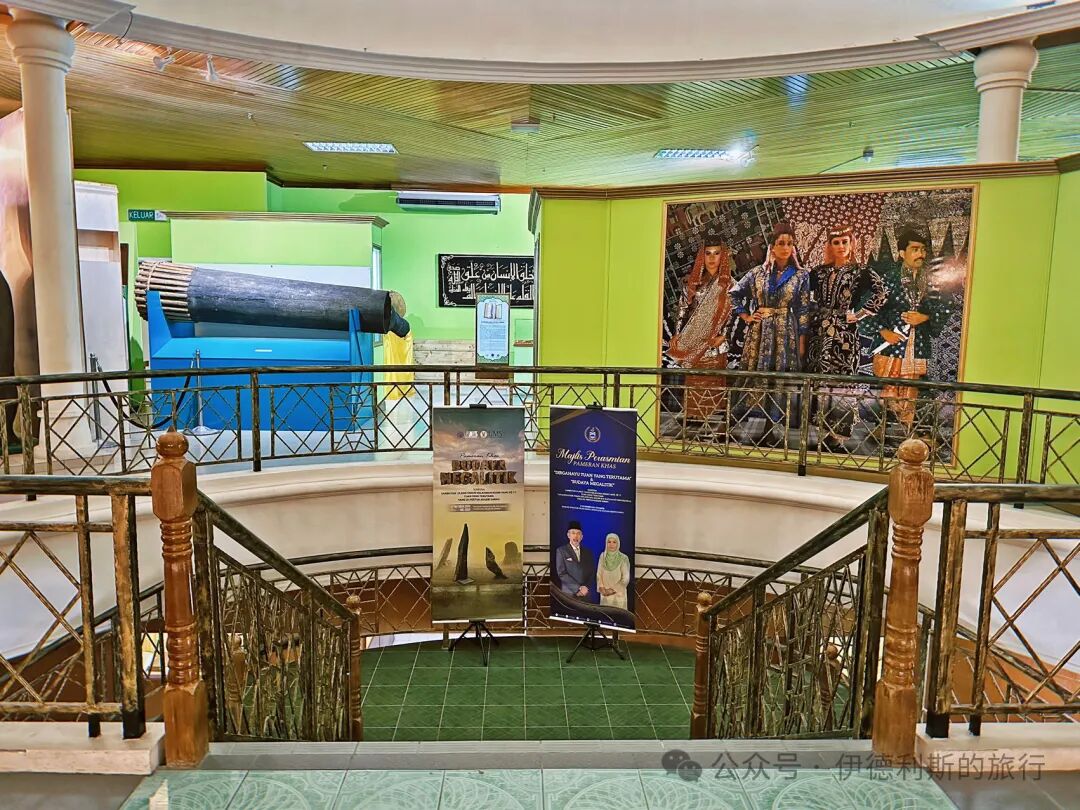
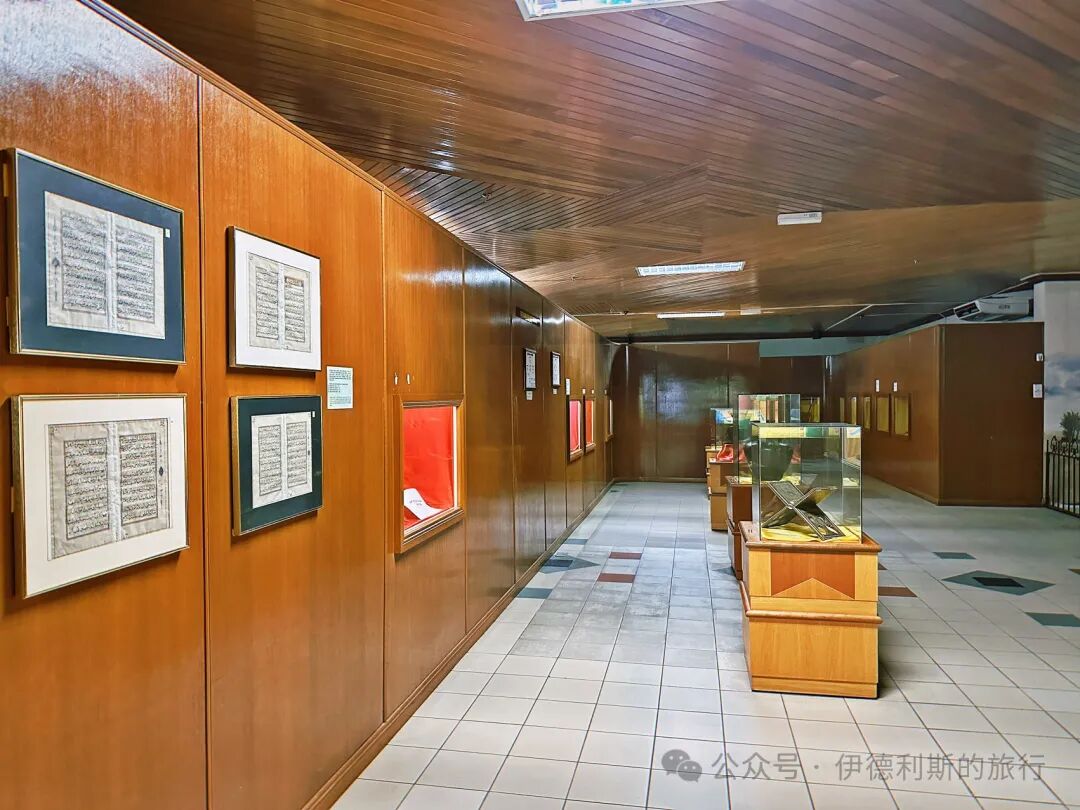
The Sabah Islamic Civilization Museum opened in 2002. It has a small collection and is not well-known, but it is special because it holds unique Islamic cultural artifacts from the Malay Archipelago that you cannot see in other museums.
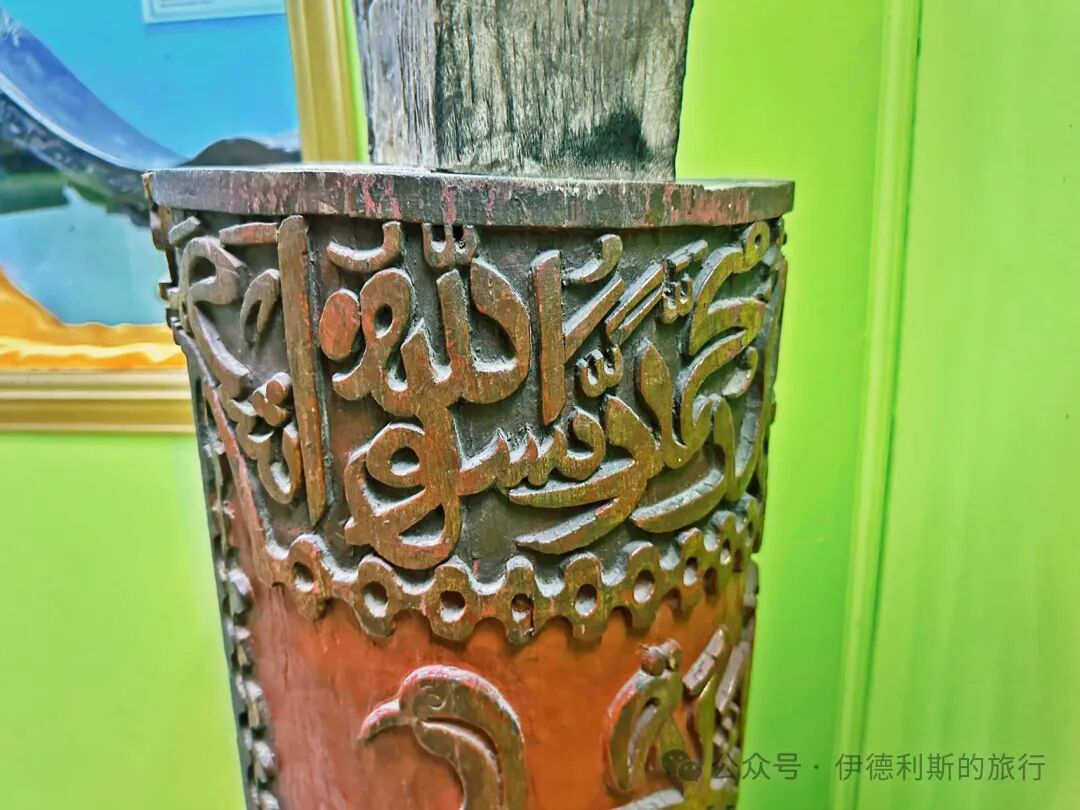
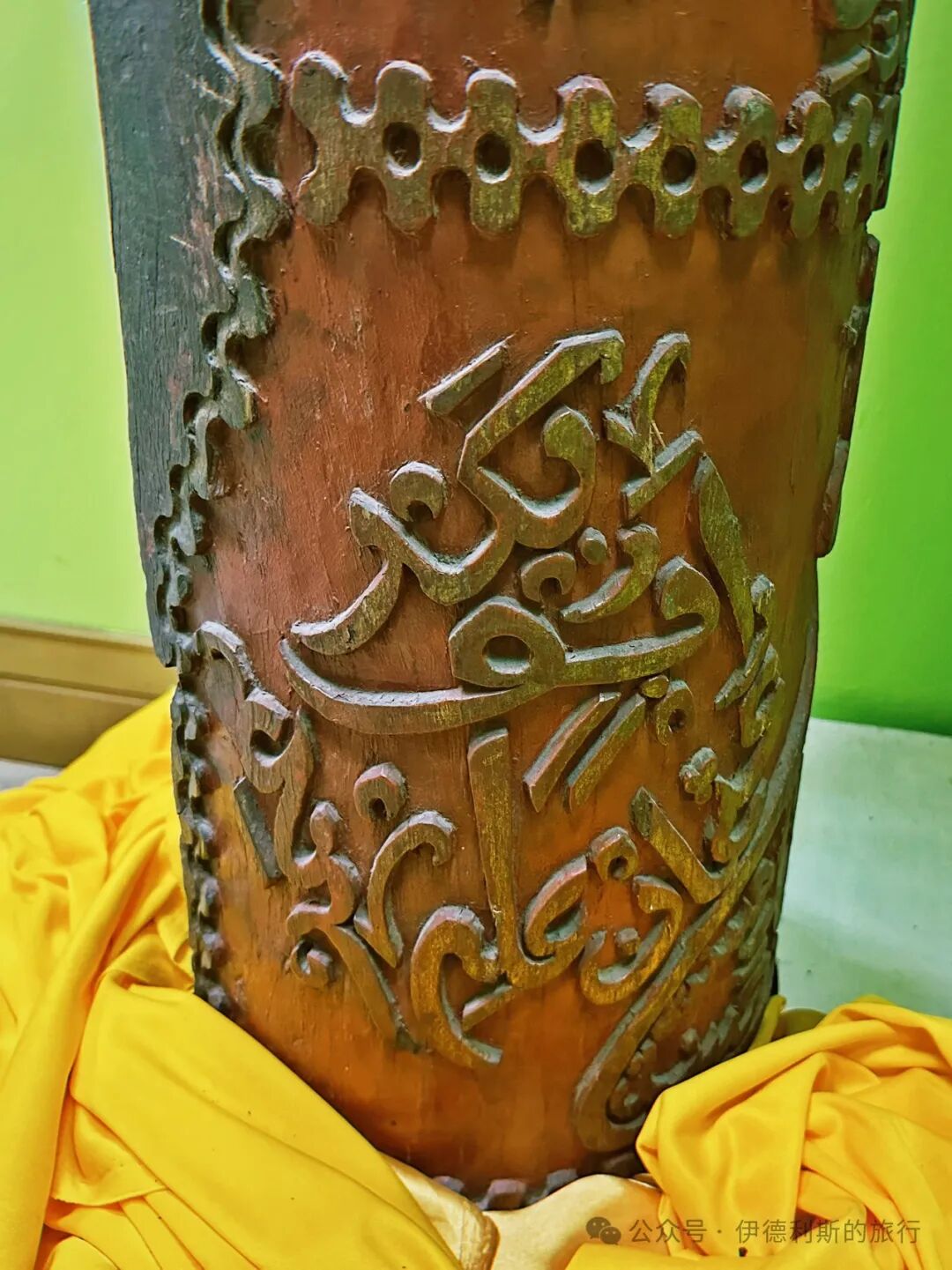
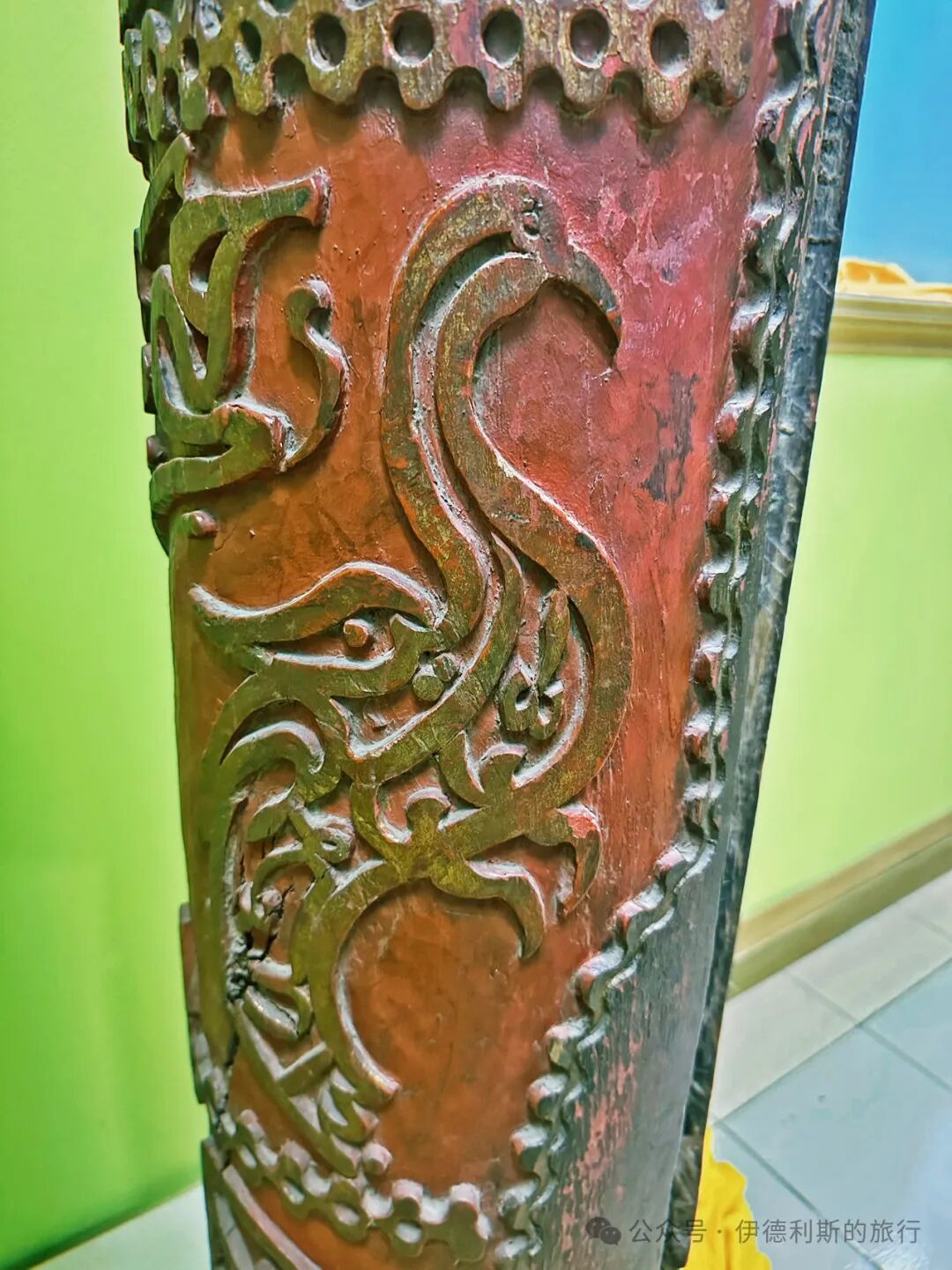
This is a wooden prayer gong (kentung) made in 1918 by the Sambas Sultanate in West Kalimantan, Indonesia. It is a traditional instrument used to signal the call to prayer.
The Sambas Malays live on the northwest coast of Borneo, right next to the Malaysian state of Sabah. The Sambas Malays founded the Sambas Sultanate in 1675. It became part of Indonesia in 1956, and the Sultan of Sambas still lives in the palace today. The Sambas Malays are mainly Sufi. Their rituals combine features of the Qadiriyya and Naqshbandiyya orders and are famous for their unique chanting style.
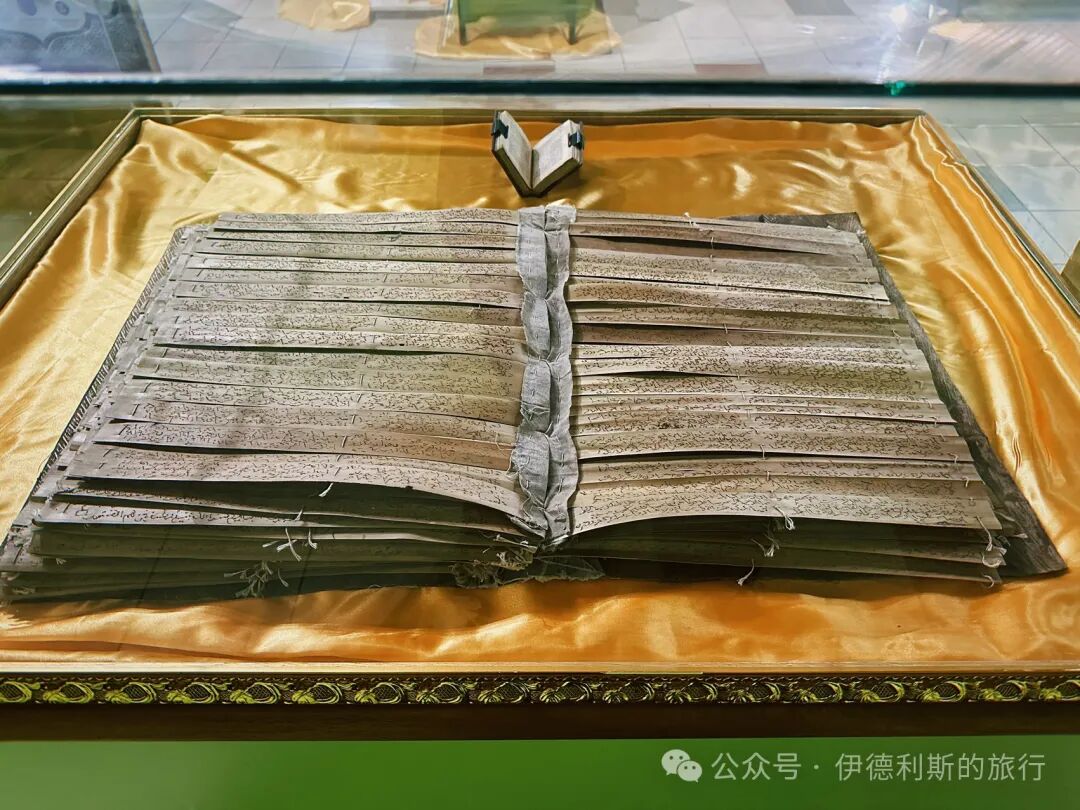
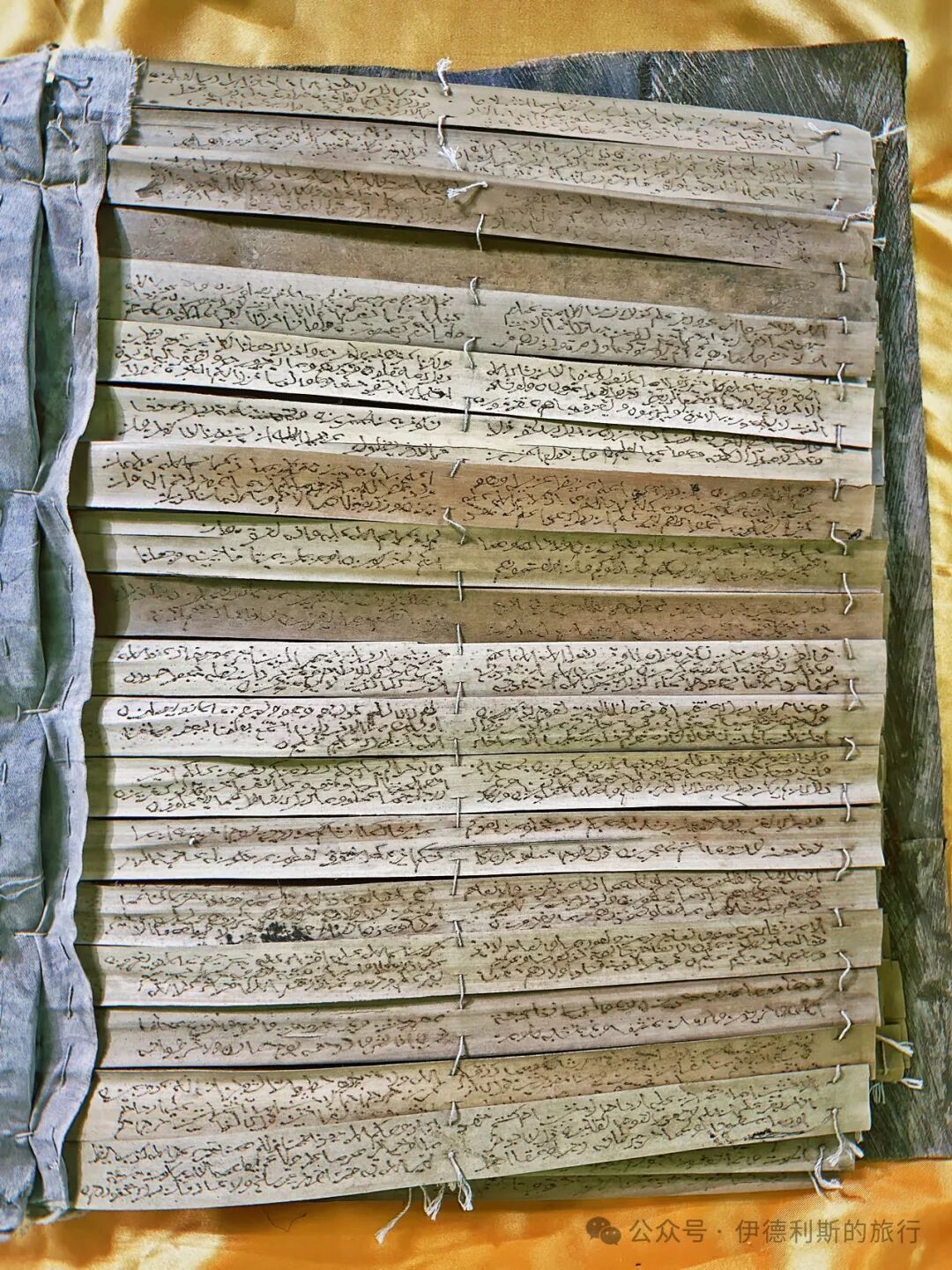
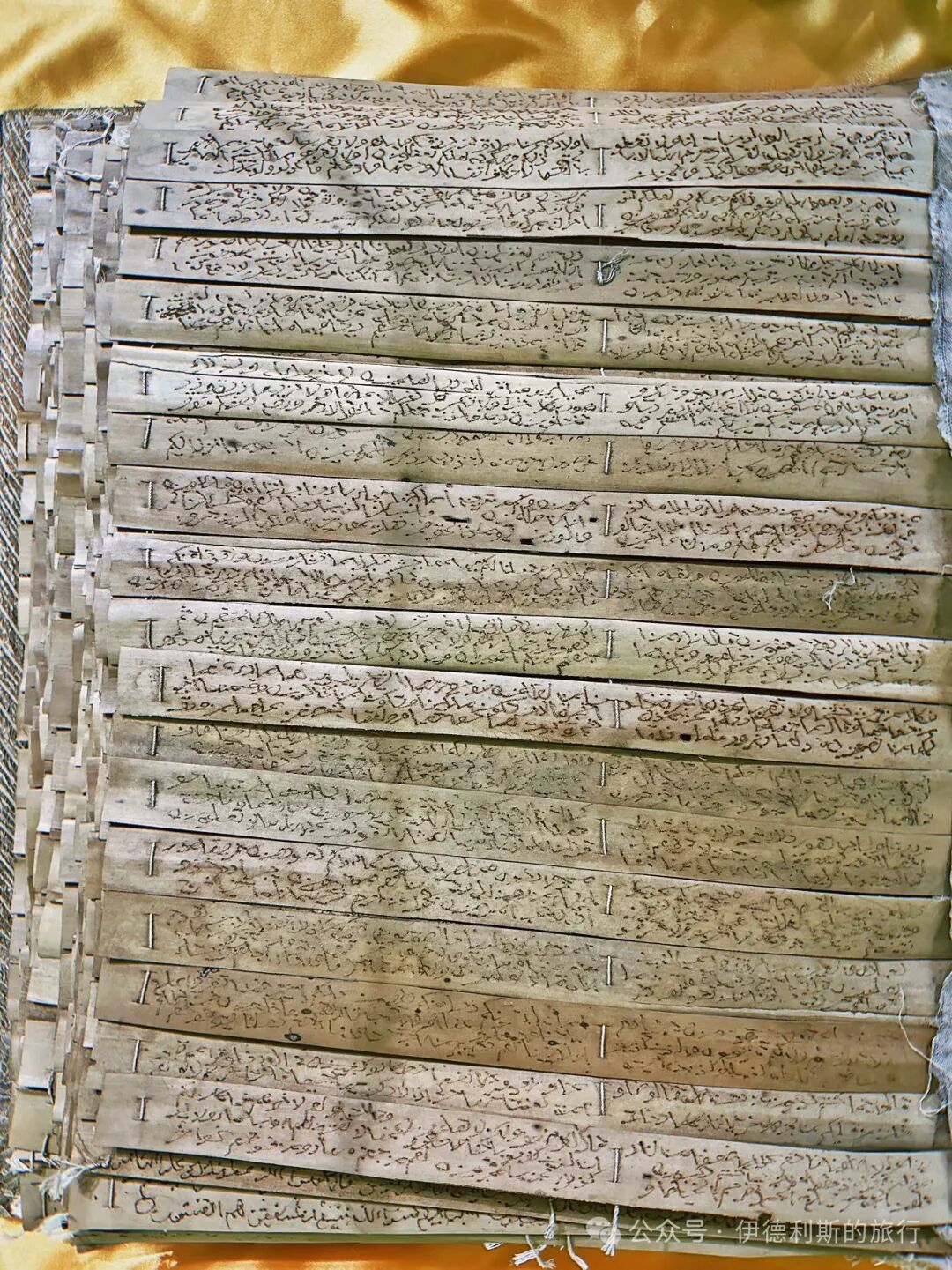
This is a manuscript of scripture from Sulawesi, Indonesia, written on date palm leaves and bound in goatskin. It is over a hundred years old. It was donated to the Sabah Islamic Civilization Museum in 2015 by Tuan Hj. Abdullah Abas, a religious teacher from Kinarut, Sabah, Malaysia.
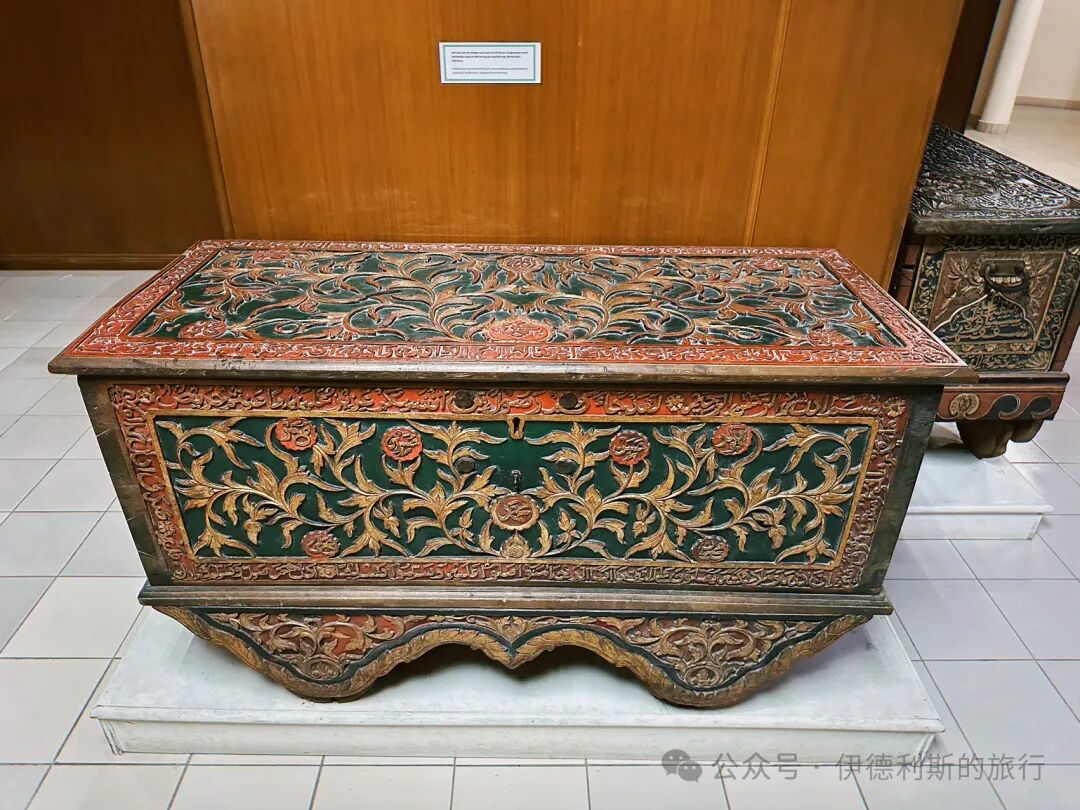
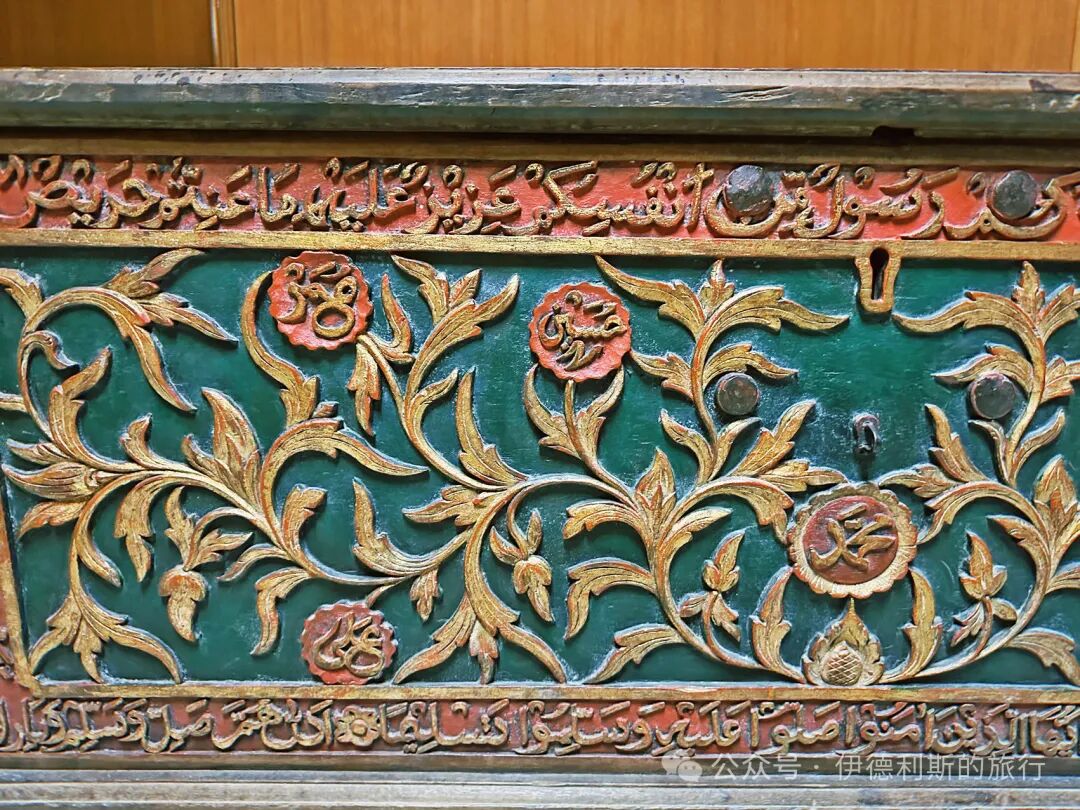
This is a traditional Indonesian wooden chest carved with scripture, used for storing clothes. This type of wood carving is found in several Islamic museums in Malaysia and is a very distinctive piece of Islamic craft.
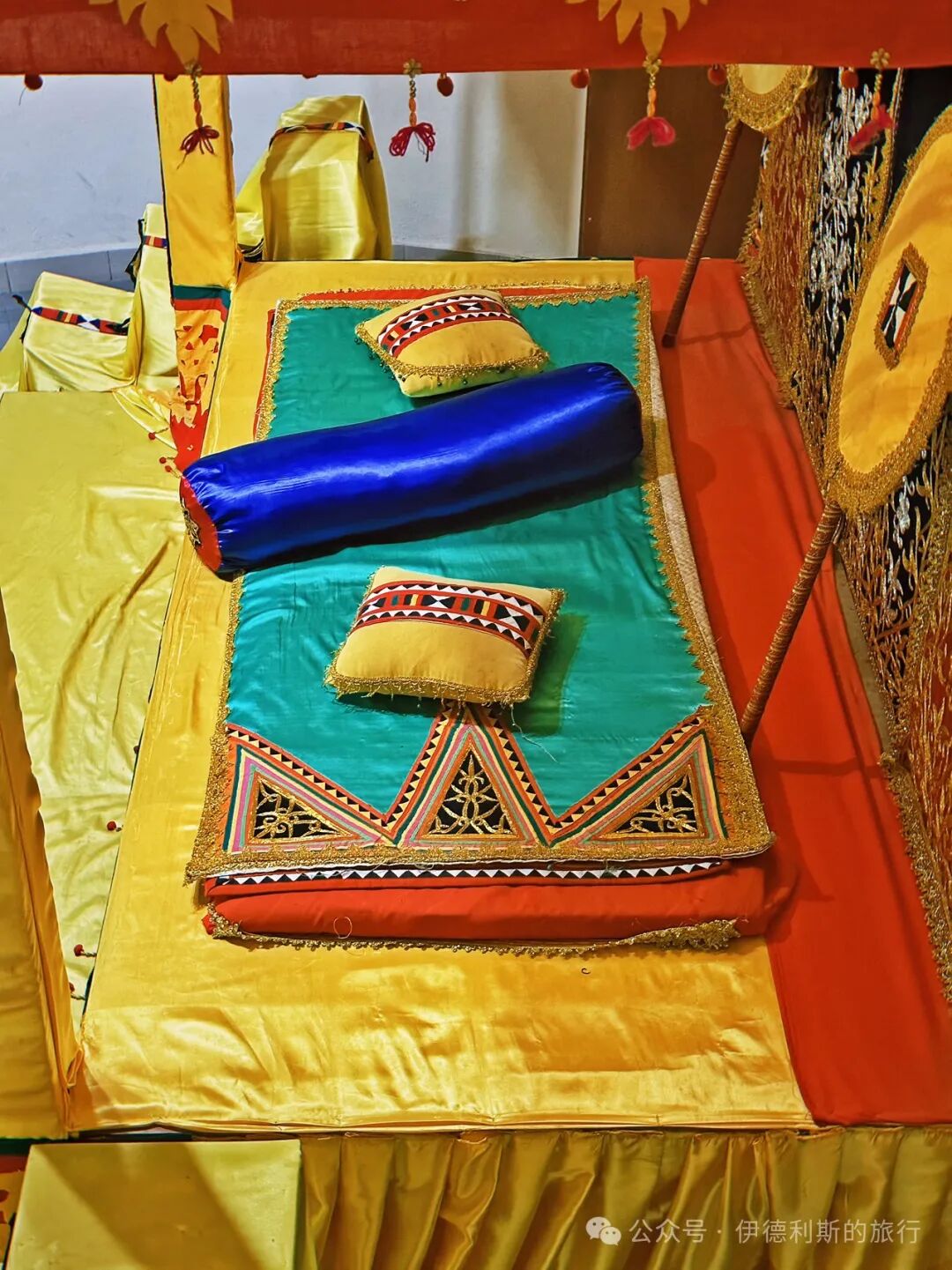
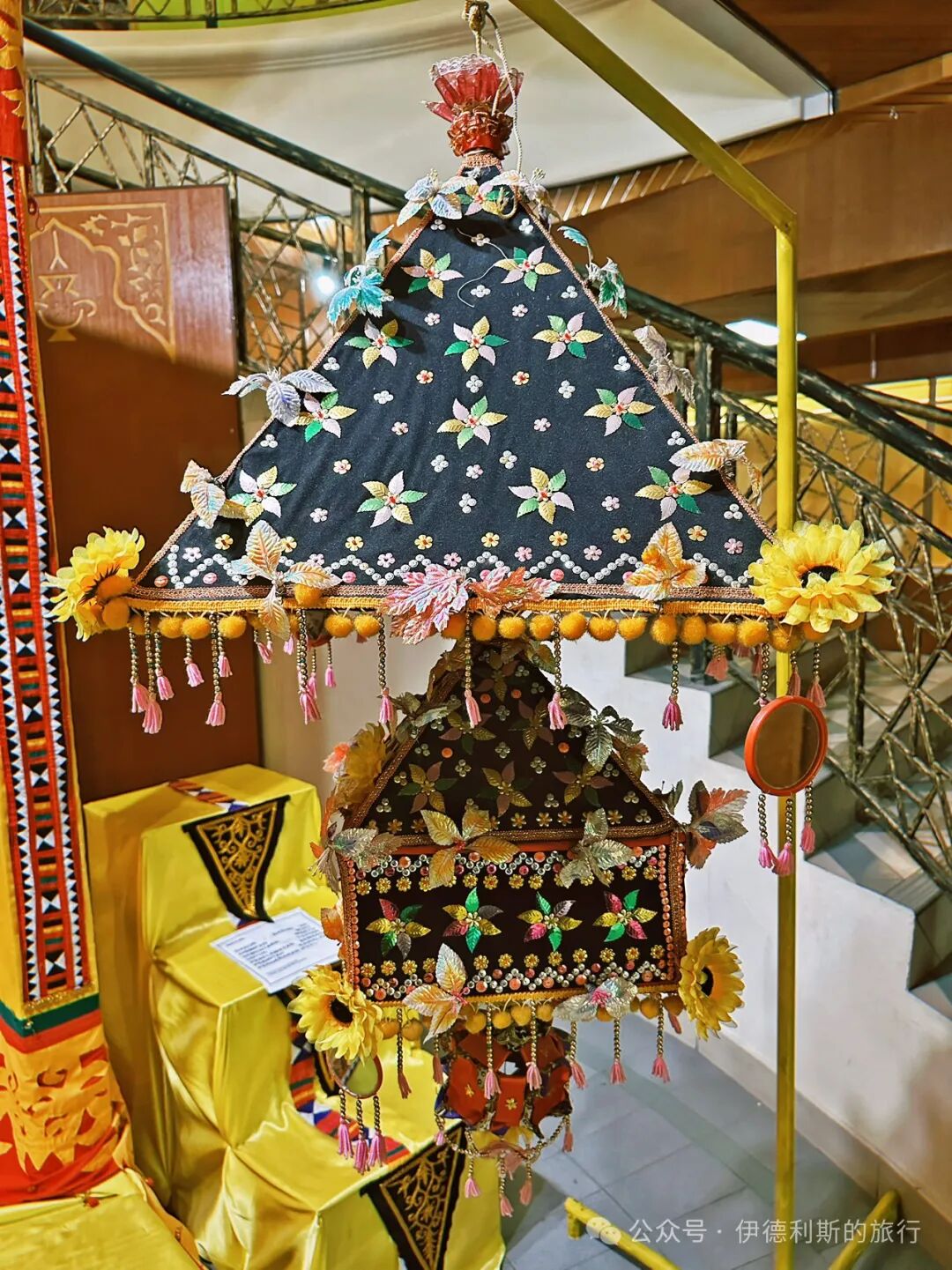
This is a bridal curtain used by the Bajau (Sama) people, a sea-faring group living on the west coast of Sabah, Malaysia, in Kota Belud.
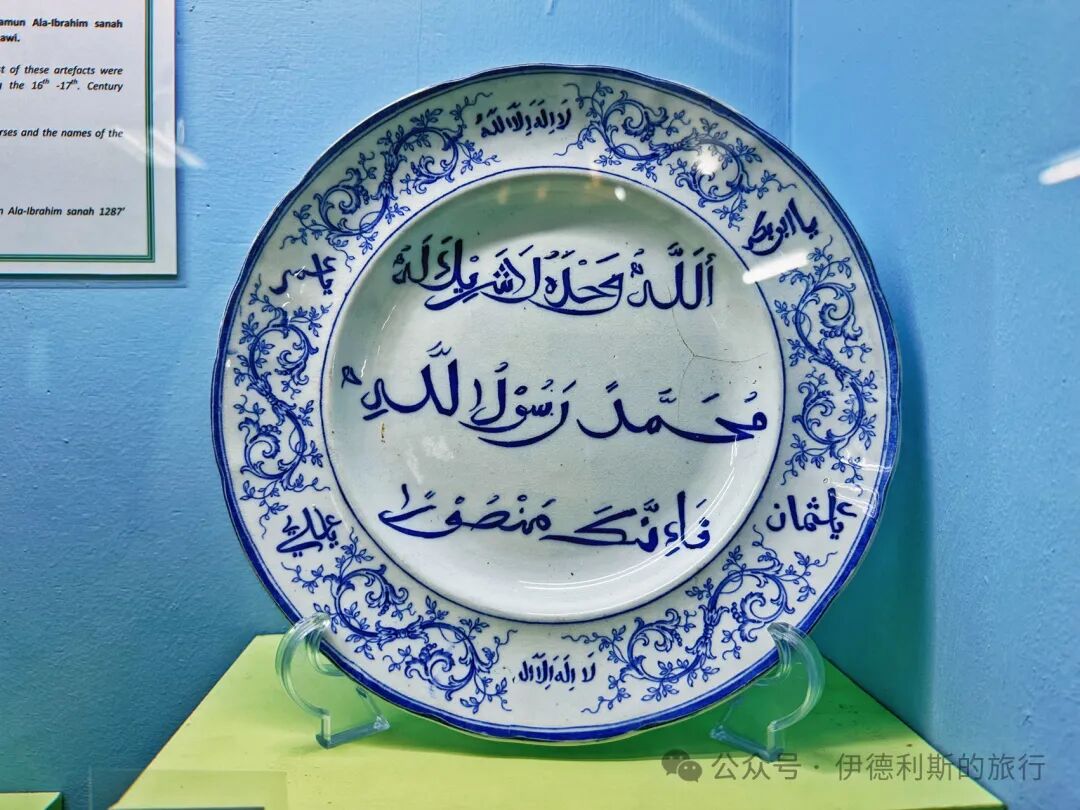
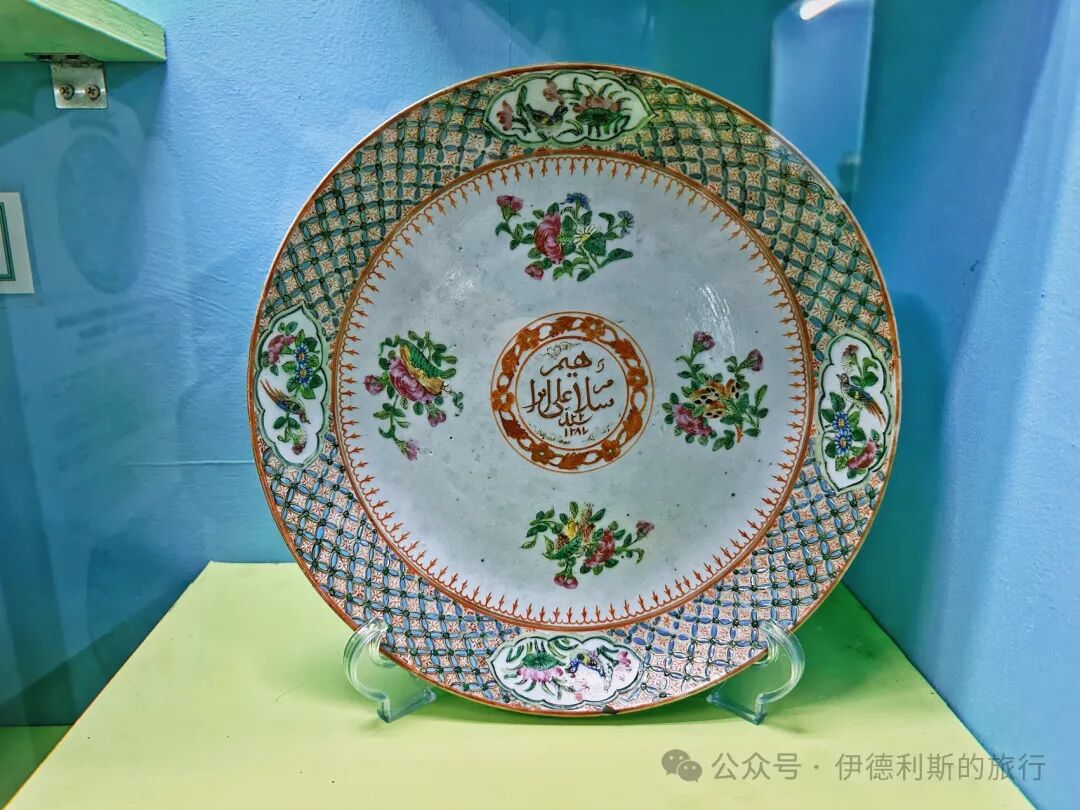
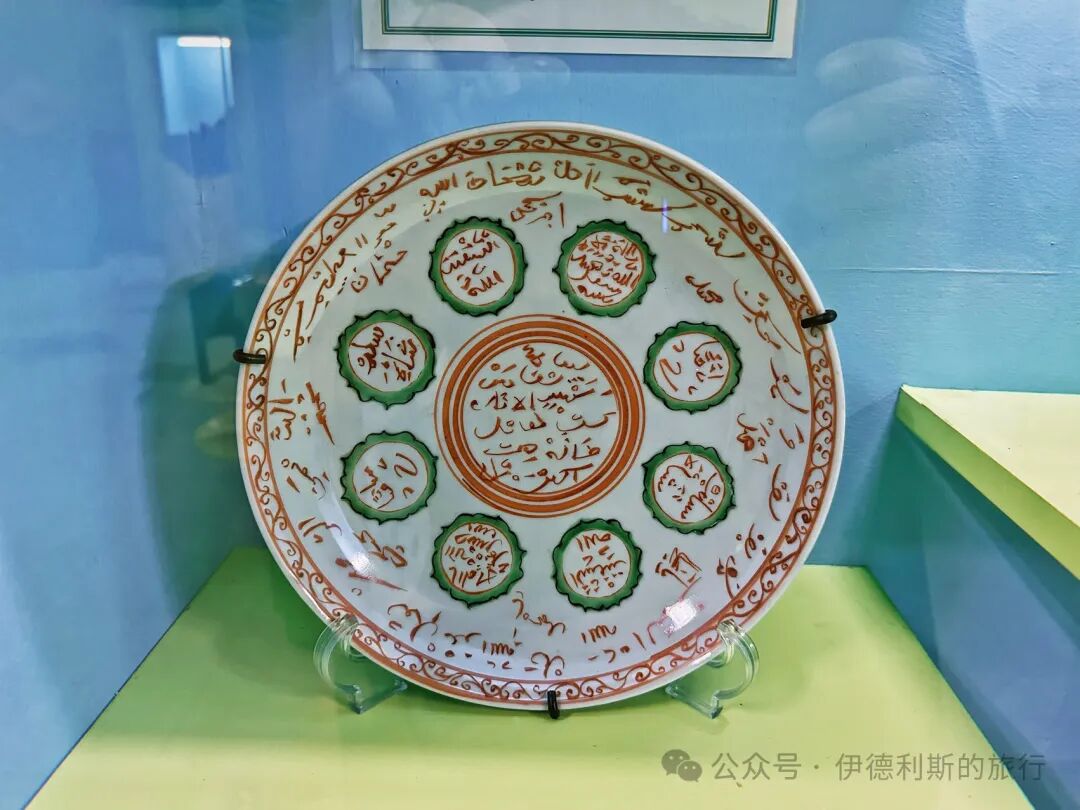
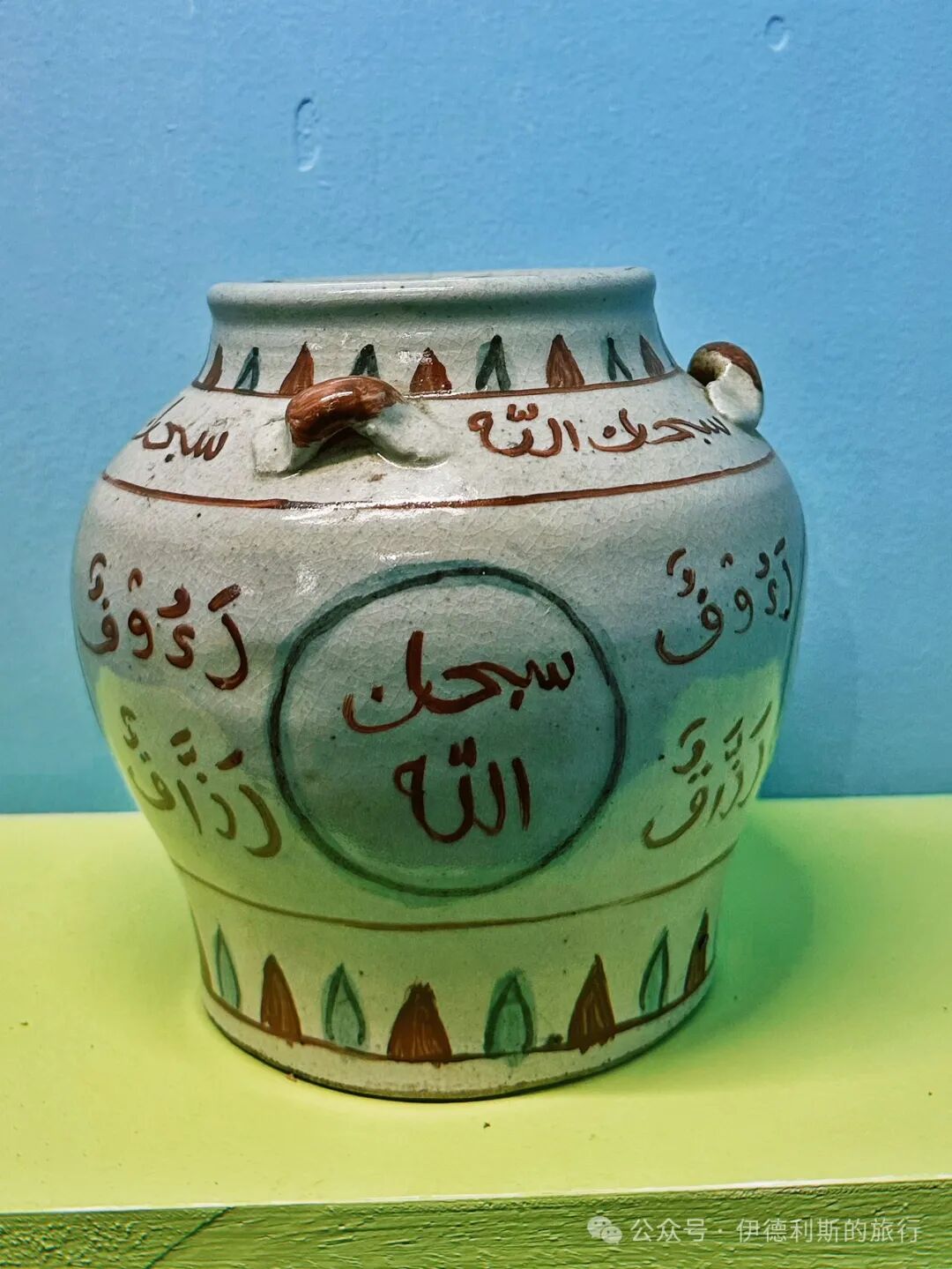
This is a porcelain plate with scripture from the 1930s, acquired by the museum in 2005. Malay people usually display this kind of porcelain plate in a cabinet as a decoration.
These scripture-inscribed ceramics were brought to Sabah through trade and include pieces from both China and Europe. Under the rule of the Sultanate of Brunei, Sabah had very close trade ties with the Qing Dynasty, Spain, the Netherlands, and other countries.
This is a protective vest (dua vest) worn by indigenous soldiers in Sabah during the anti-British resistance led by Mat Salleh between 1894 and 1905.
The resistance leader Mat Salleh, whose real name was Datuk Muhammad Salleh, was an indigenous leader in Sabah. In 1881, the British took control of Sabah by establishing the North Borneo Chartered Company. Mat Salleh felt this violated the rights of the indigenous people and refused to recognize the company. In 1895, after negotiations with the company failed, Mat Salleh was declared a wanted man. He immediately built a fortress to openly resist the British and successfully launched several attacks. He died in battle in 1900, and his followers continued to fight until they were finally defeated in 1905.
This is a decorative wooden frame made in 1918, featuring scripture carvings and traditional embroidery in the center.
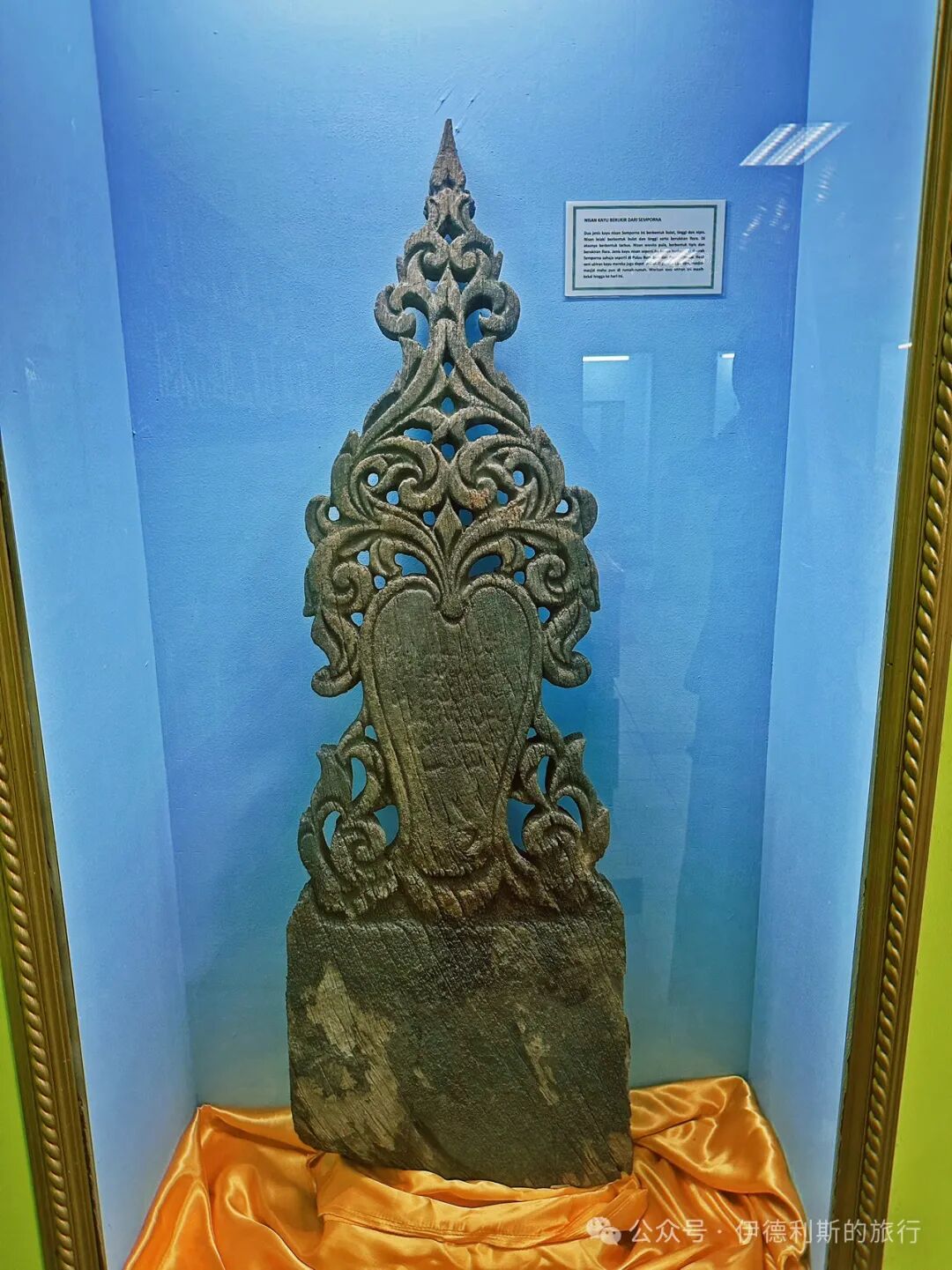
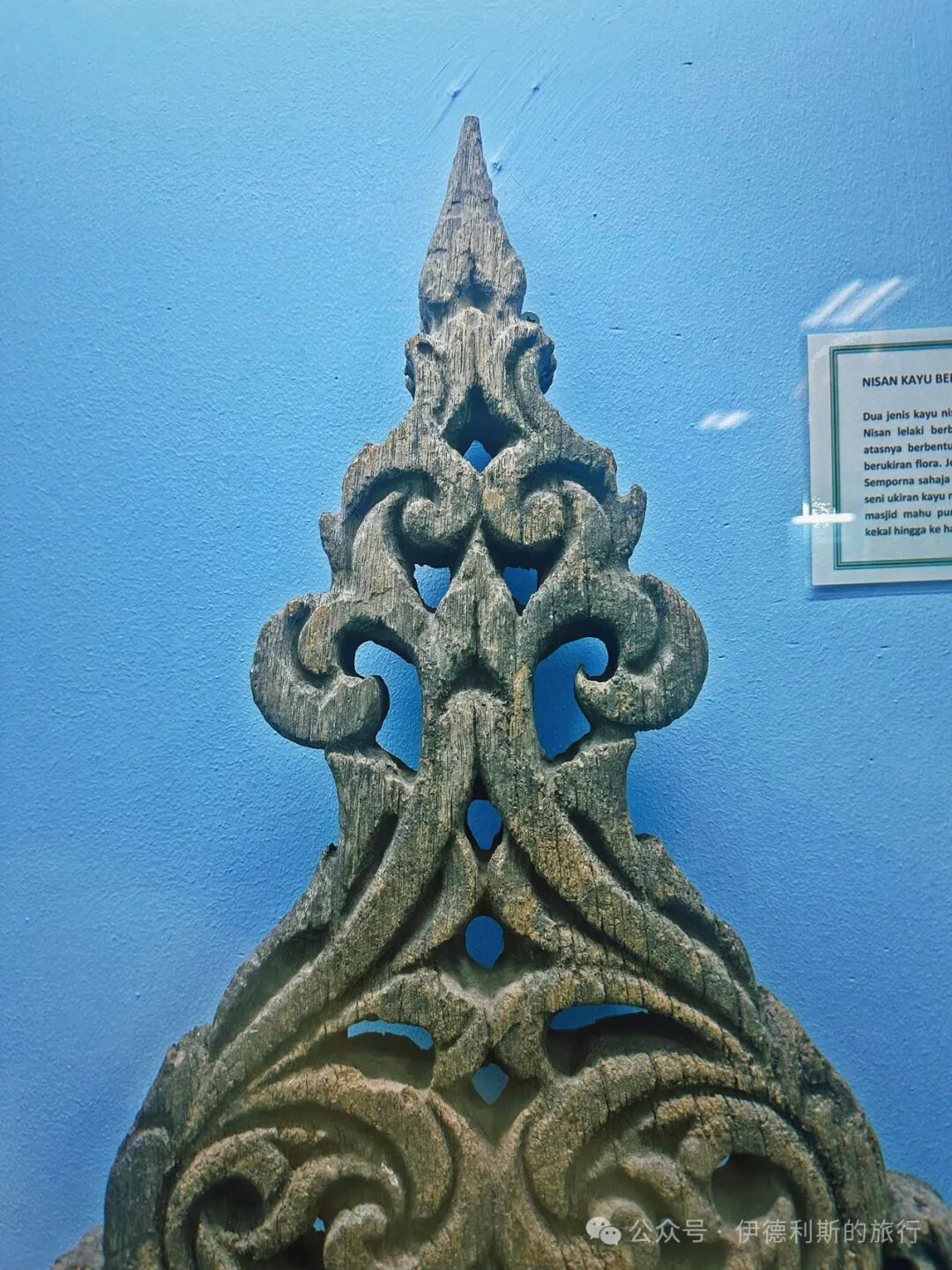
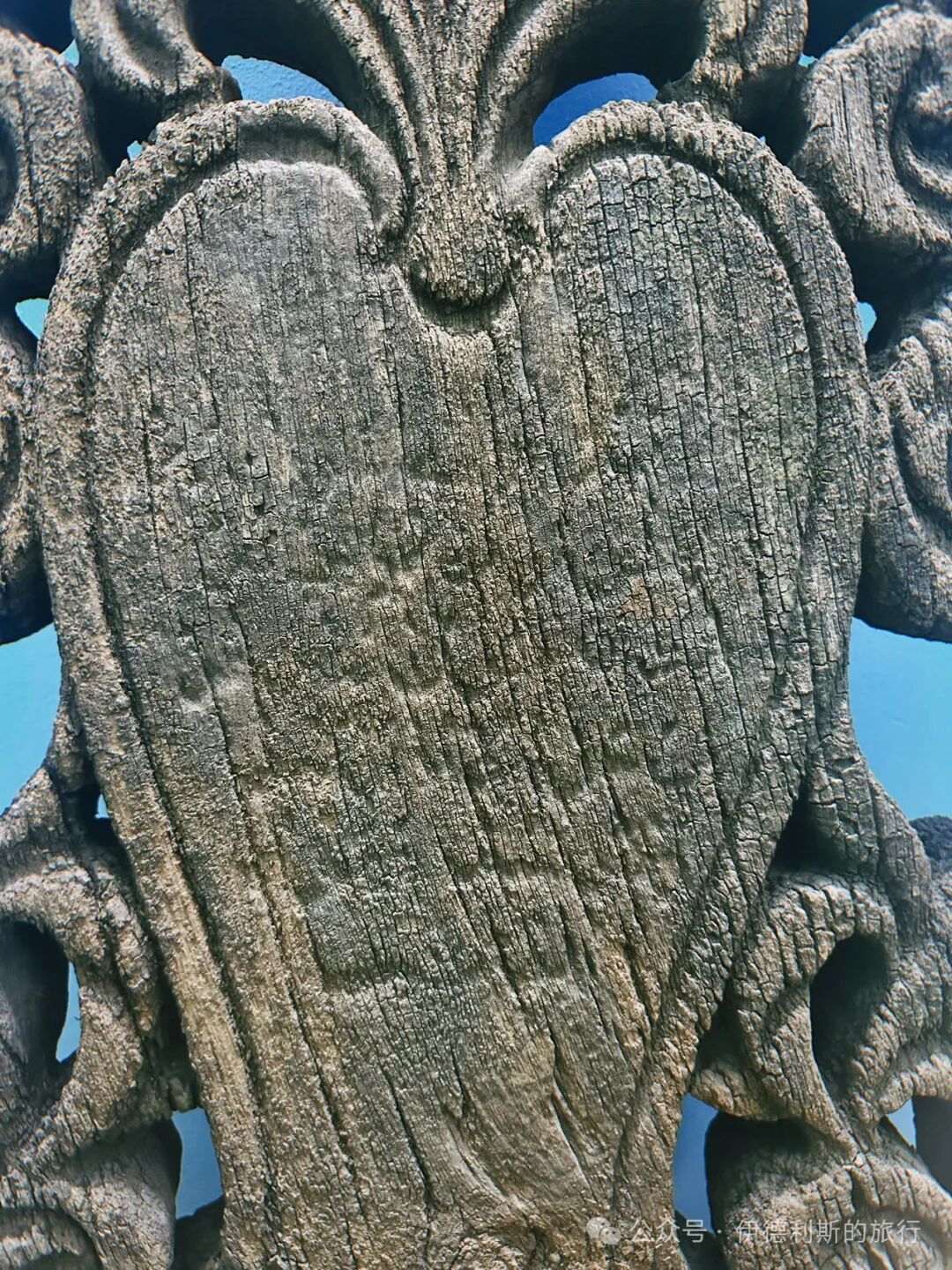
These are wooden grave markers from the Semporna region. This type of wooden grave marker is unique to the Semporna area and is carved with floral patterns around the edges.
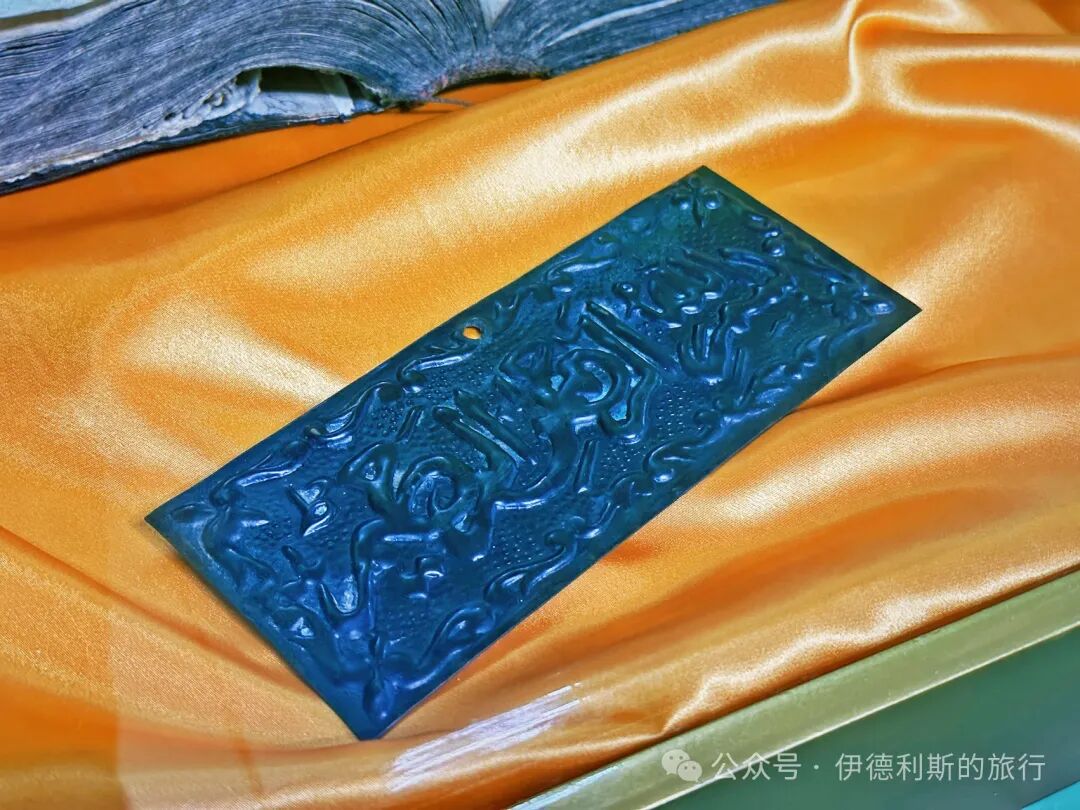
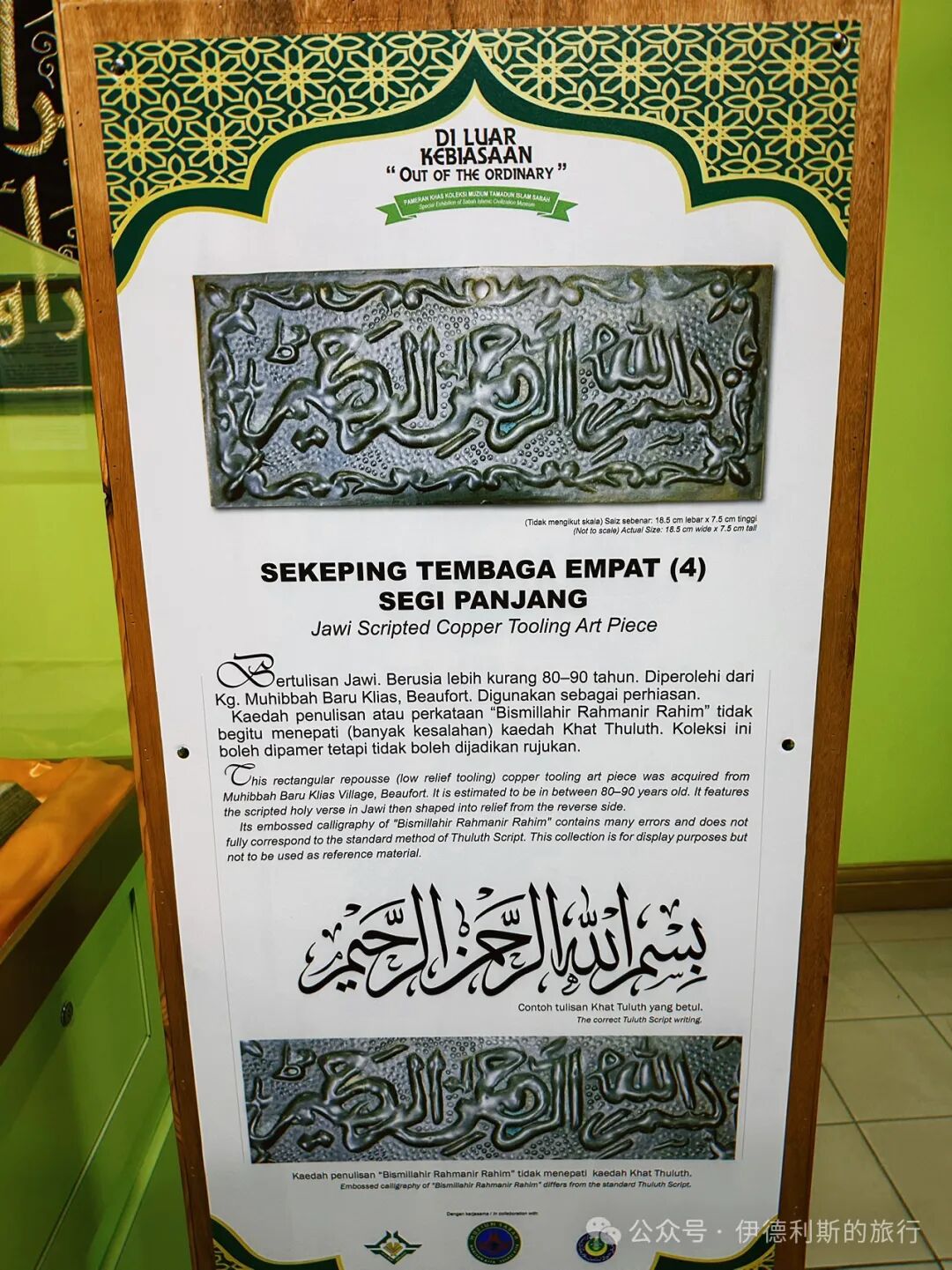
This is a century-old bas-relief bronze plaque featuring the Basmala.
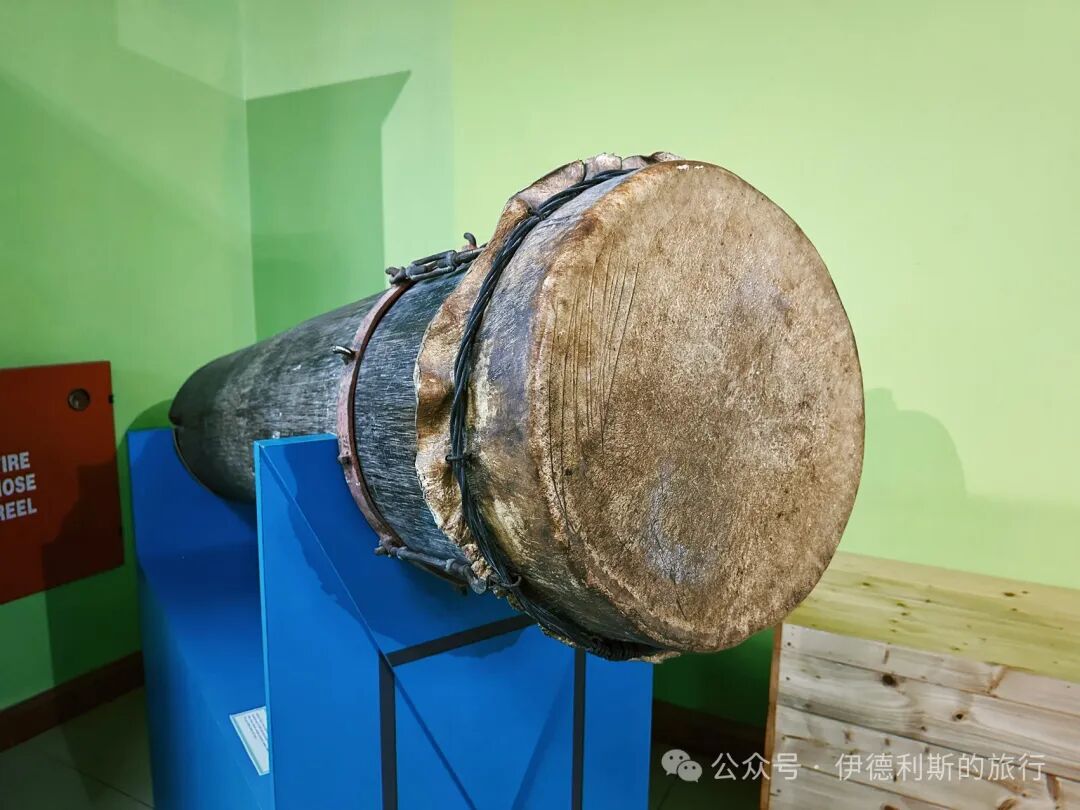
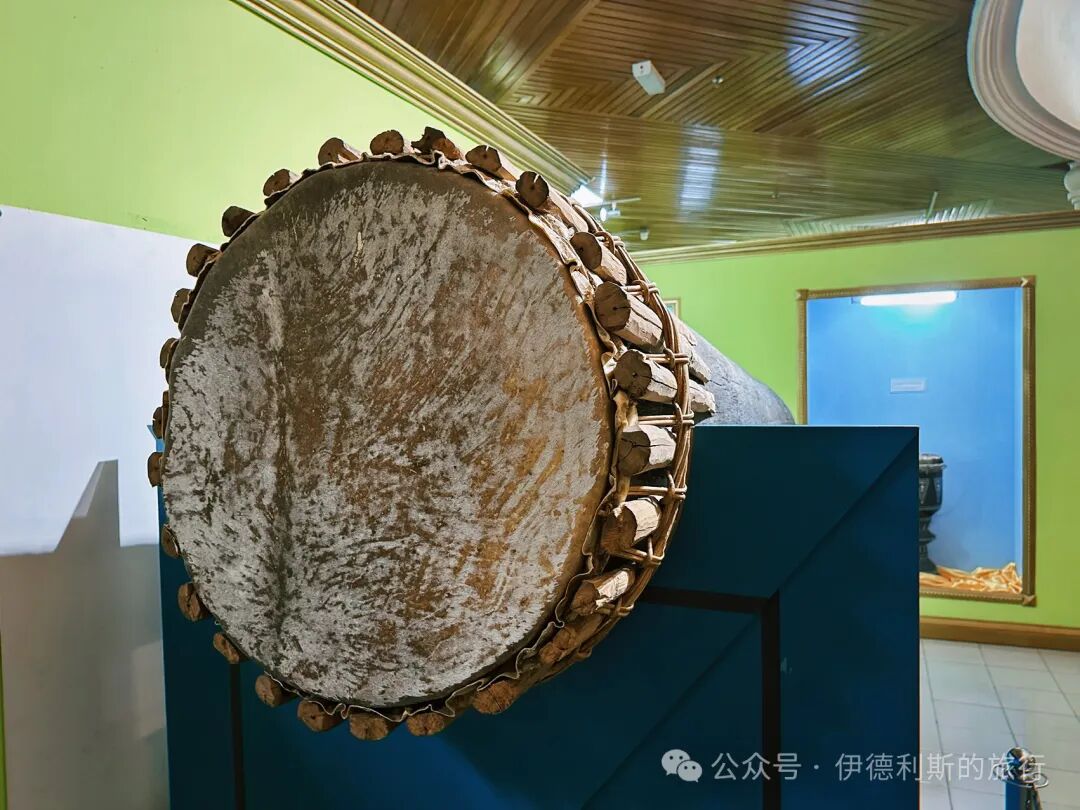
This is a prayer drum (beduk) made of palm wood and cowhide. It is usually placed in front of the main hall or at the entrance of a mosque, which is why many traditional mosques in Southeast Asia do not have minarets.
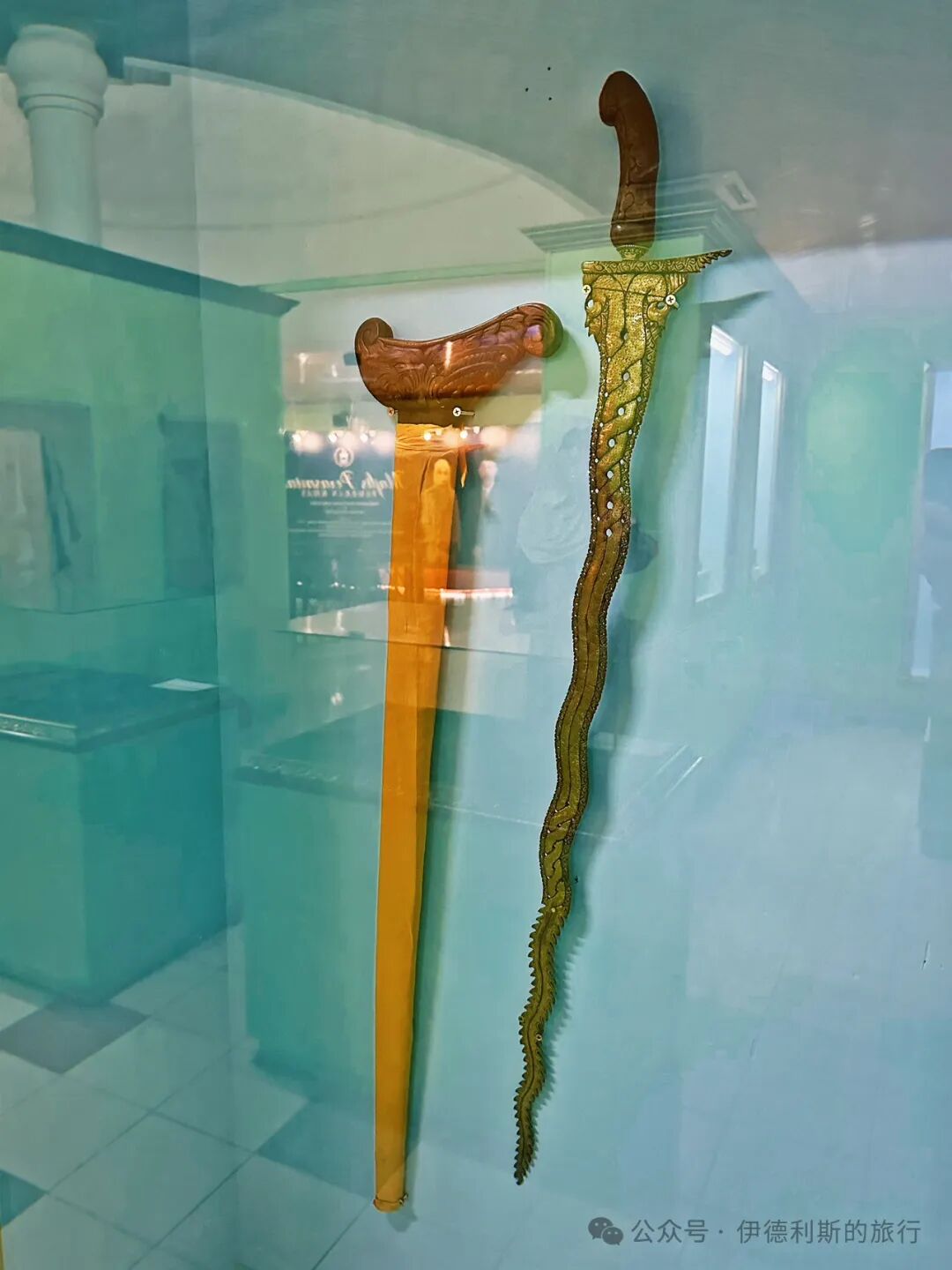
There are many wavy-bladed daggers (keris) in museums across Malaysia and Indonesia, but very few have a clear record of their origin. The Museum of Islamic Civilization in Sabah displays a sword called Pedang Khusus. Palace guards in the Tidung Kingdom on Tarakan Island off the east coast of Borneo wore this gold-made, highly detailed weapon.
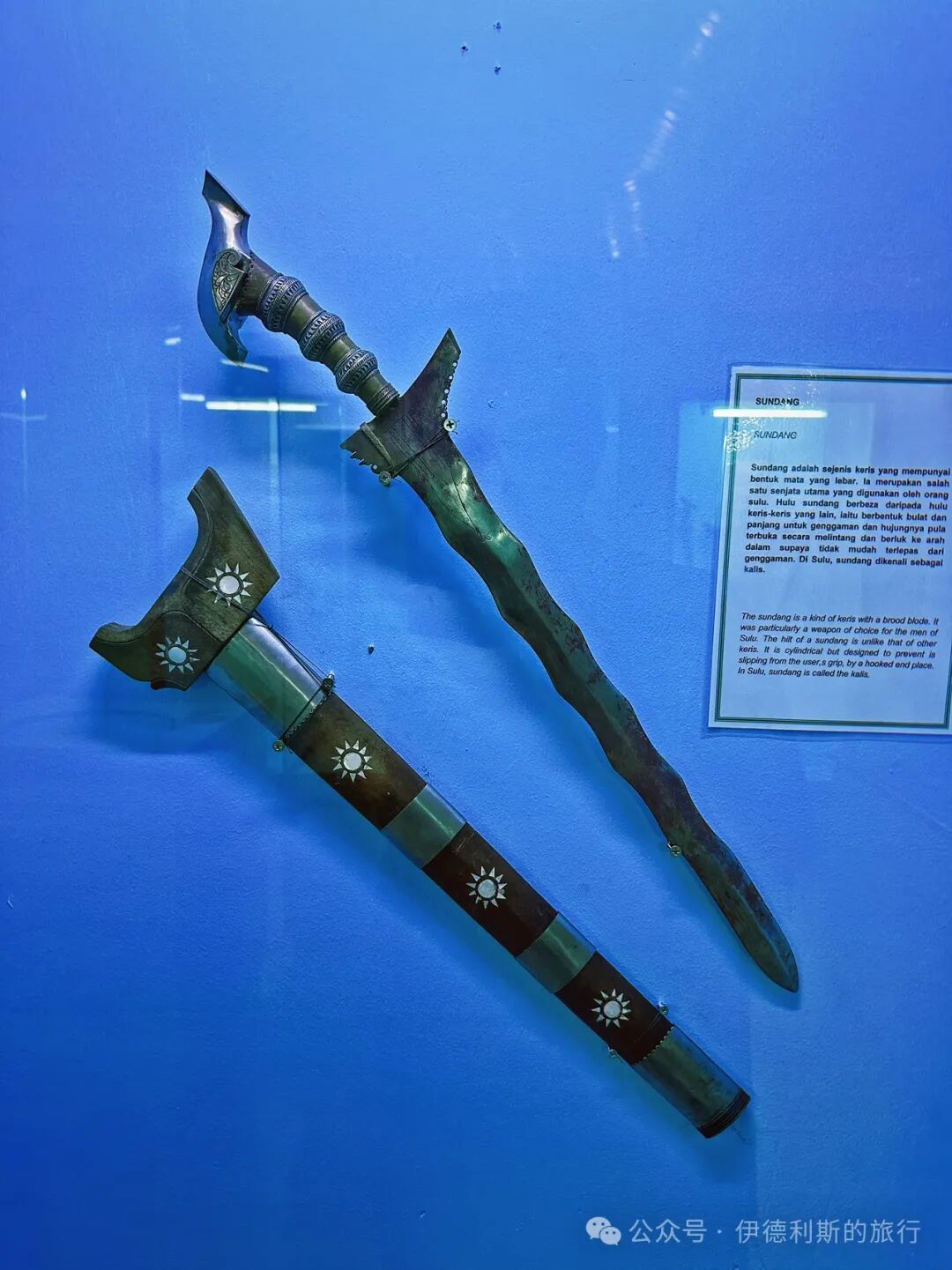
The second type is called Sundang, a wavy-bladed dagger (keris) with blood grooves used by the Sulu people. The handle of the Sundang is cylindrical, which keeps it from slipping out of your hand during use.
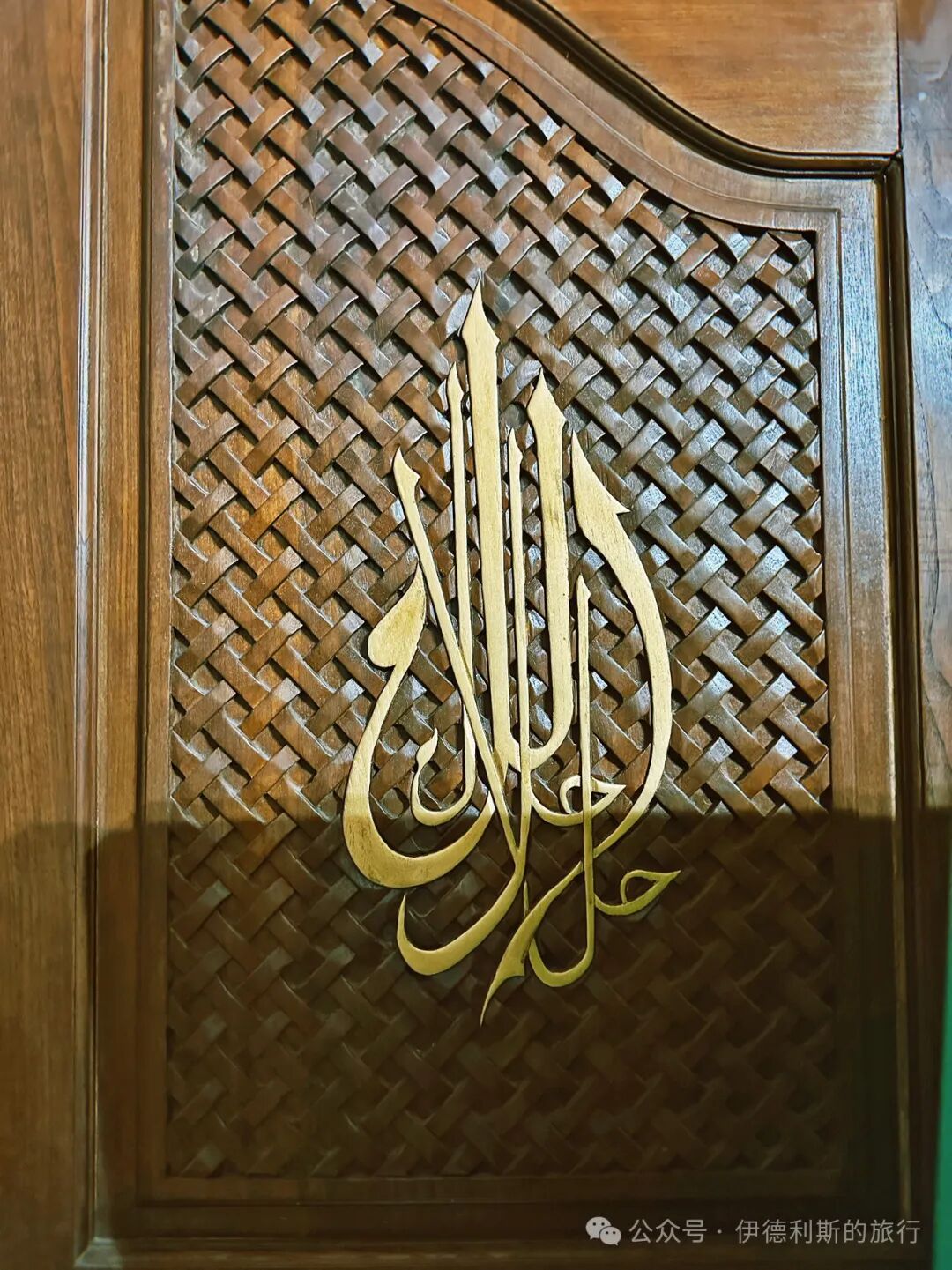
Woodcarver Mba Hj. Edie Ifa from Jepara, Java, Indonesia, worked with students from a nearby Islamic school (madrasa) to carve a pair of scripture-inscribed door panels from a century-old teak log.
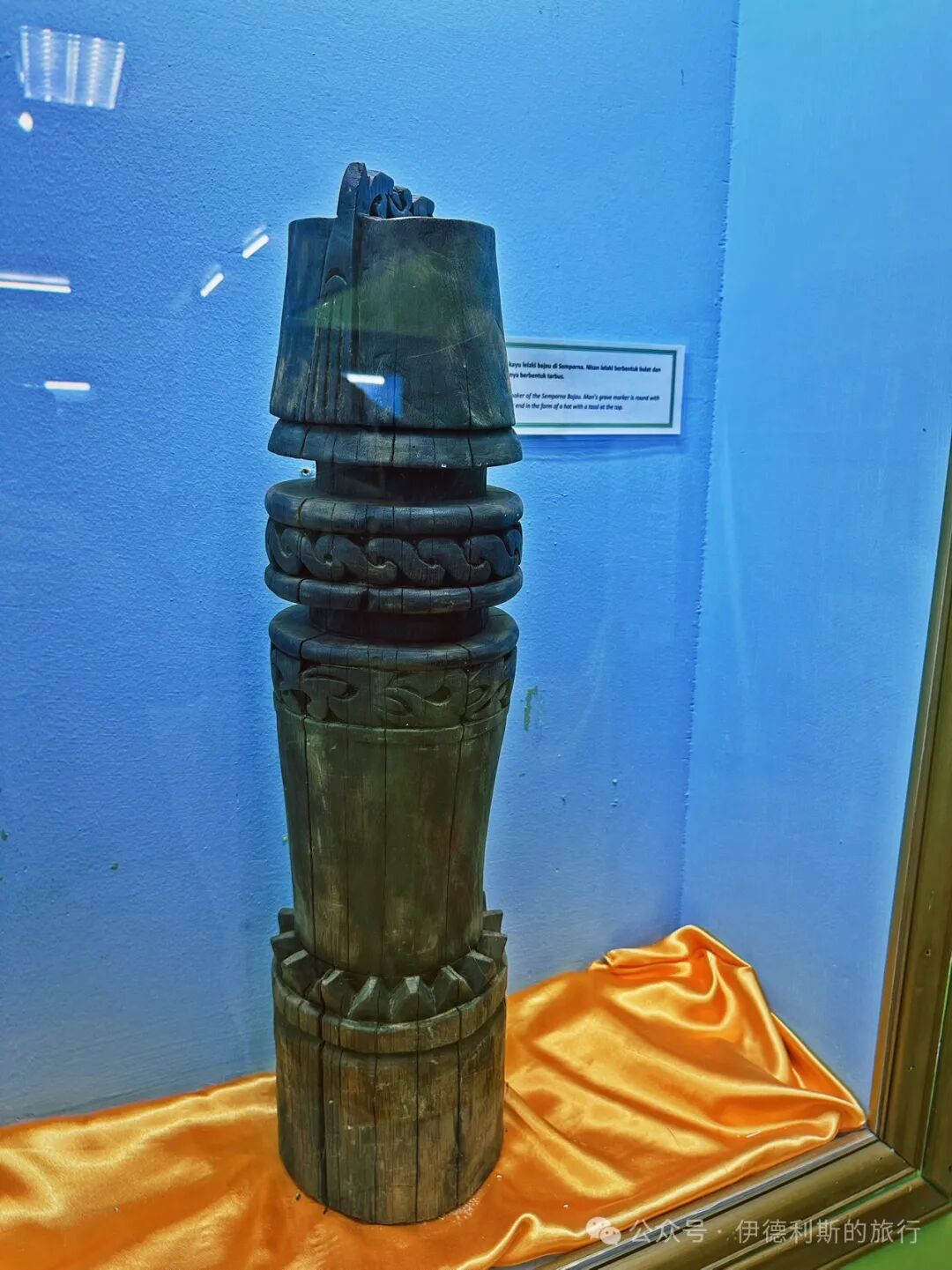
A wooden tombstone from the Bajau people of Semporna, with the top carved into the shape of a hat.
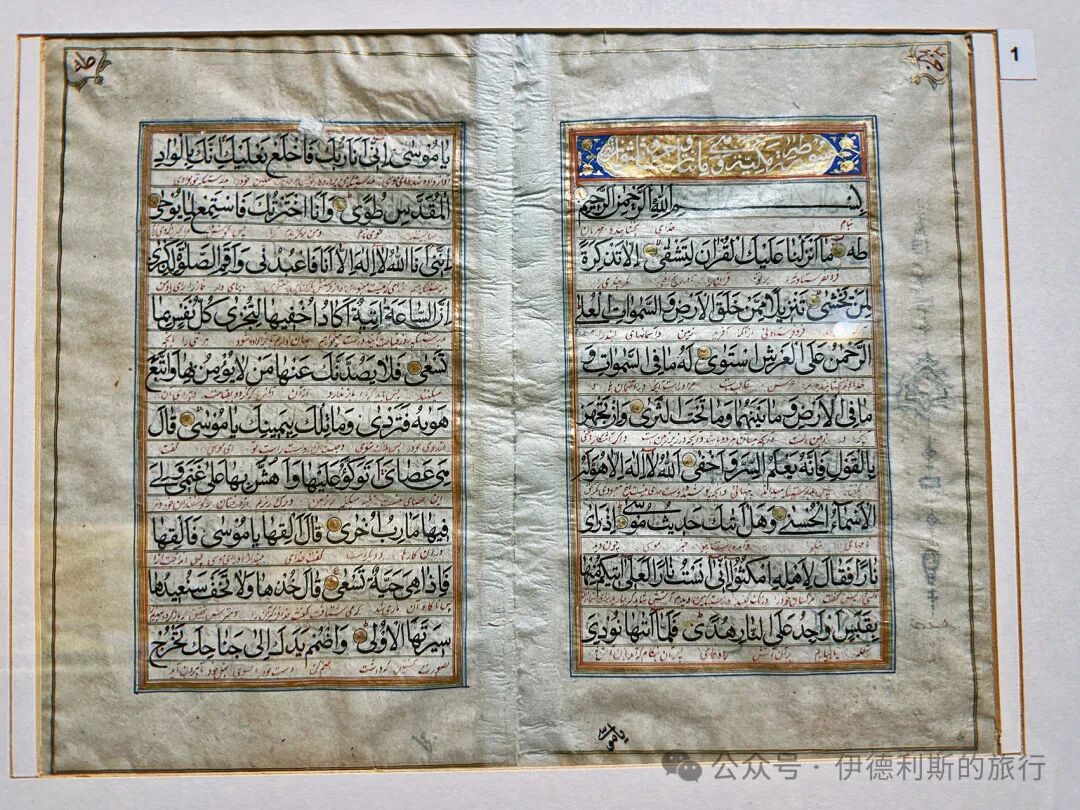
A hand-copied Persian scripture from 1796.
A scripture stand from Qom, Iran, dating back to the 18th century.
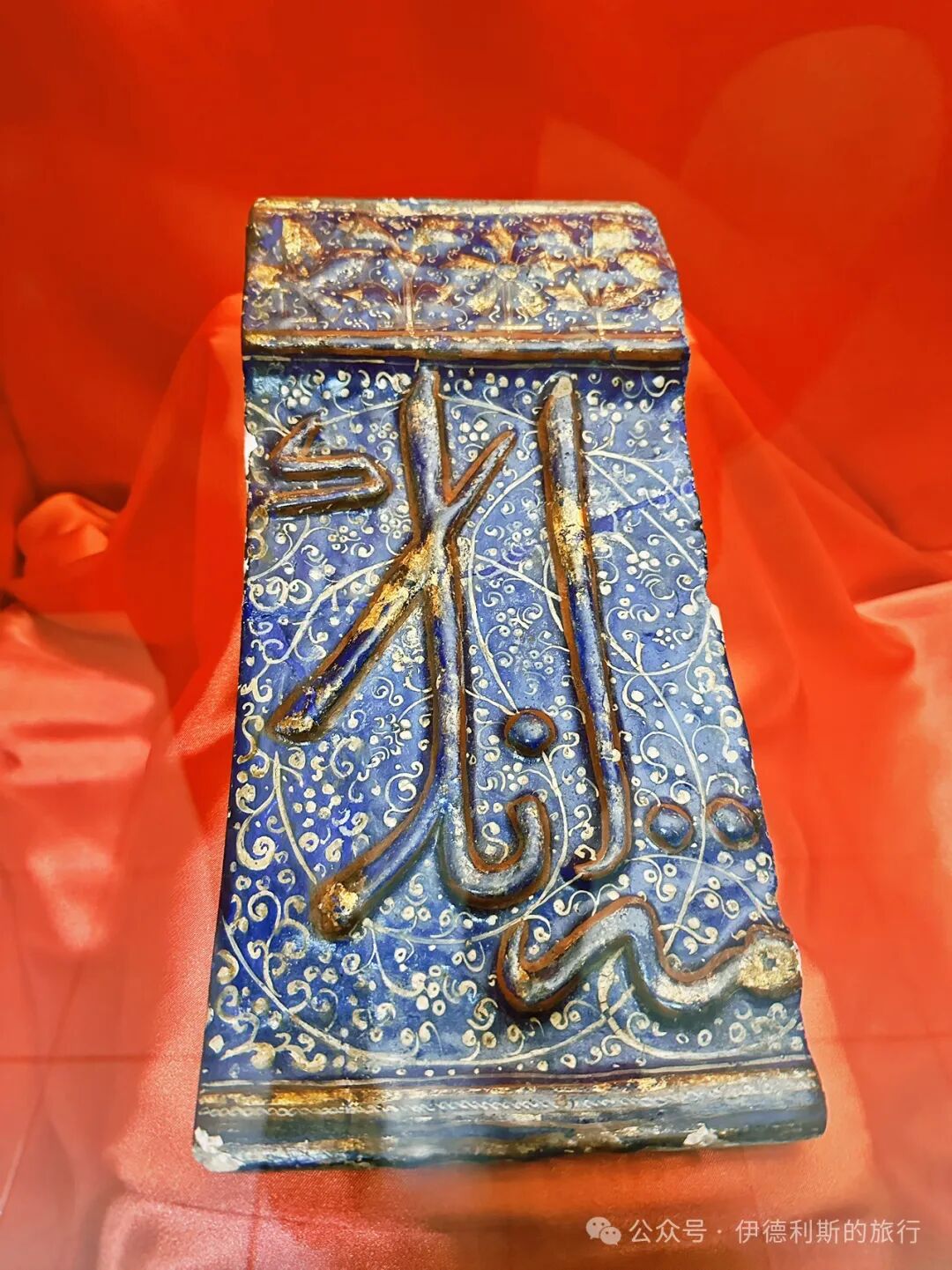
Tiles from the Ilkhanate period, dating to the 13th or 14th century.
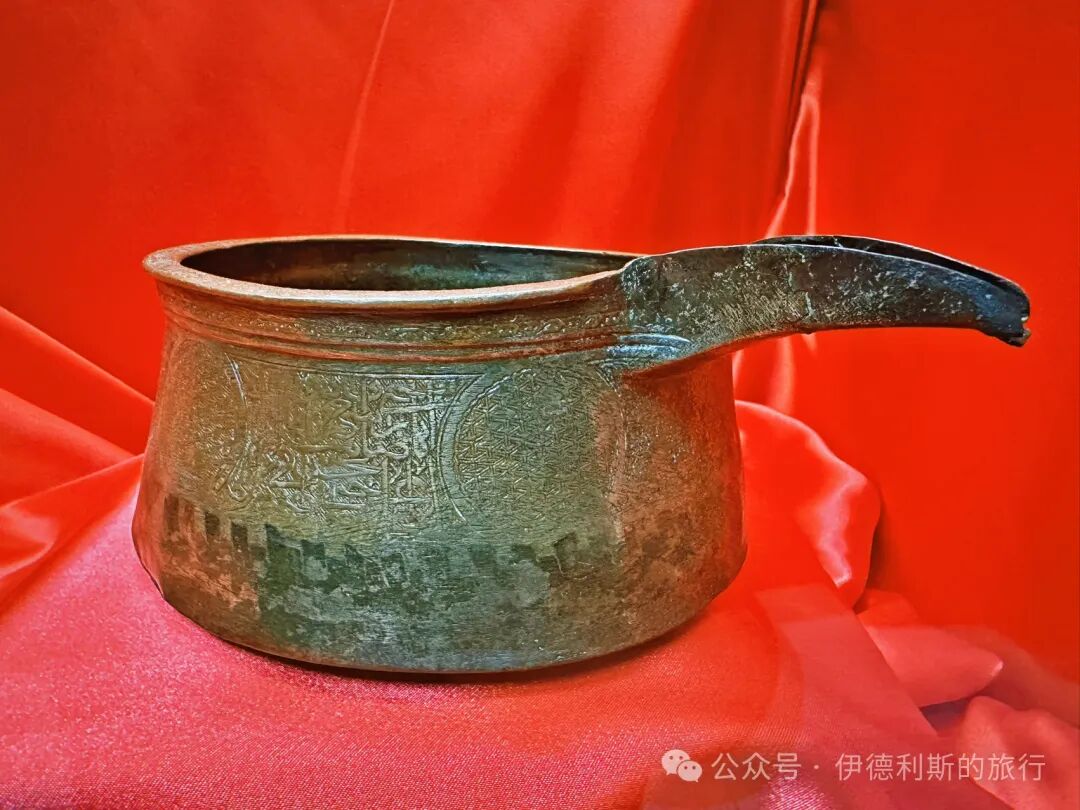
A copper bowl from the Mamluk period in Egypt.
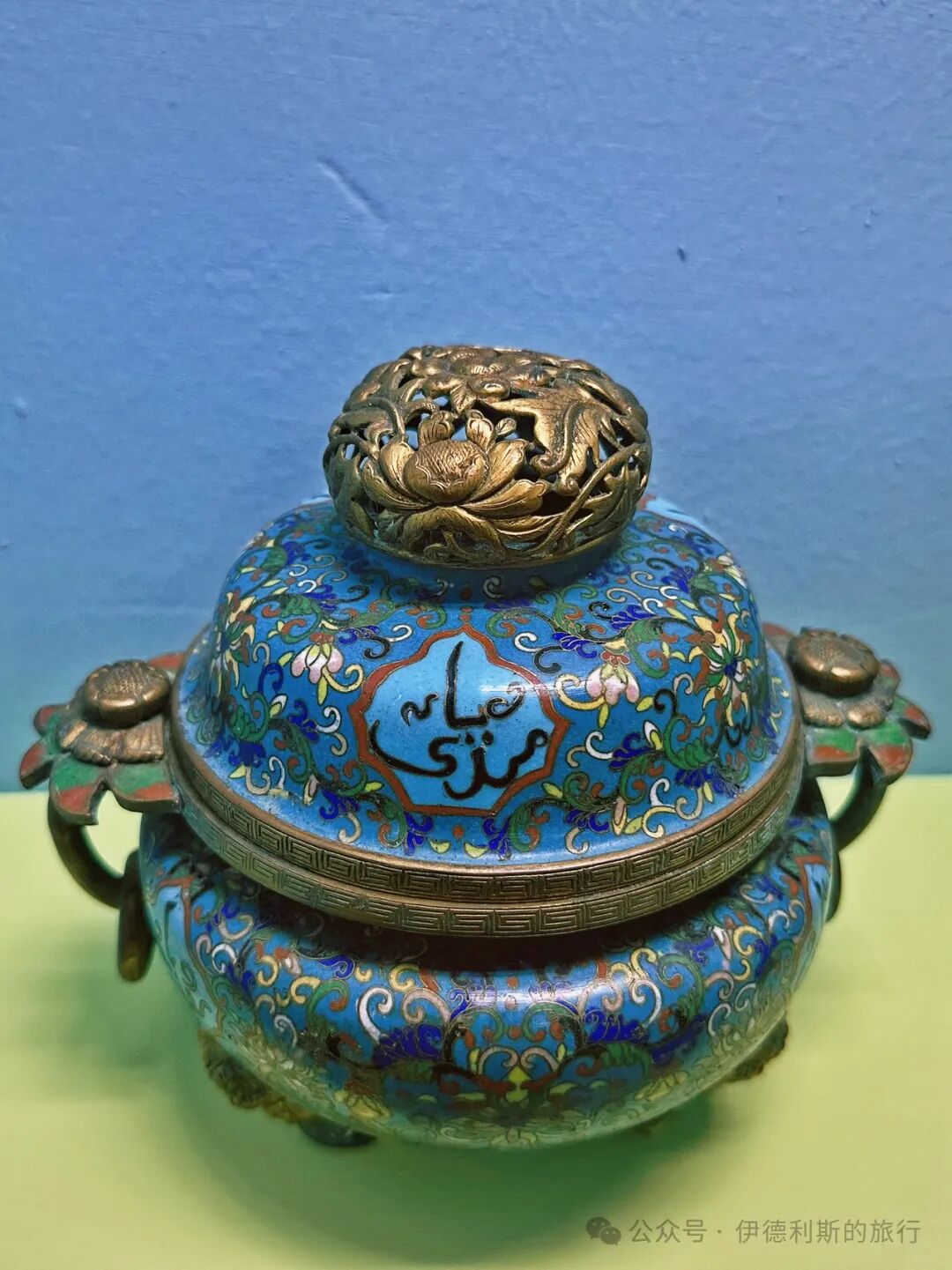
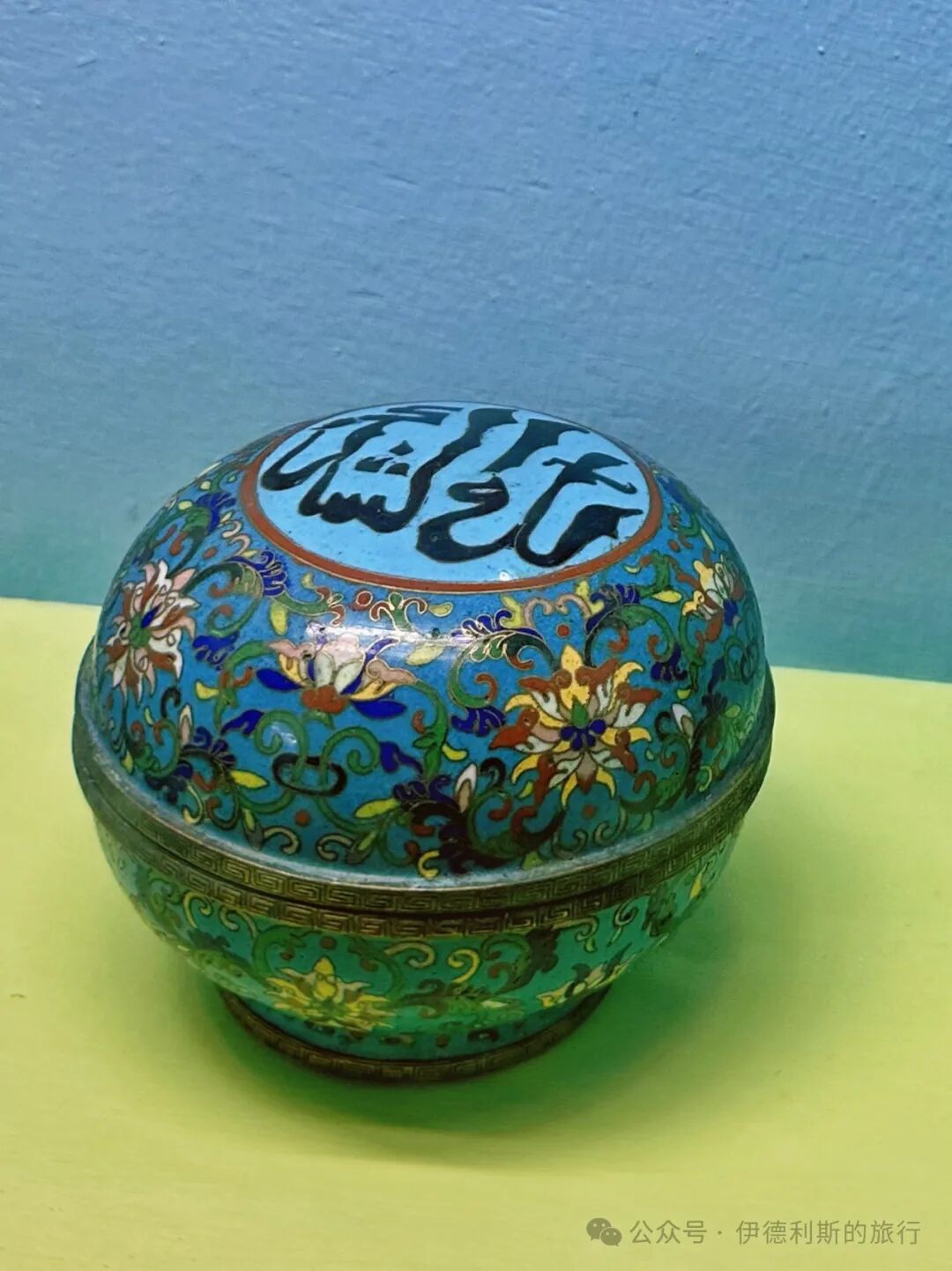
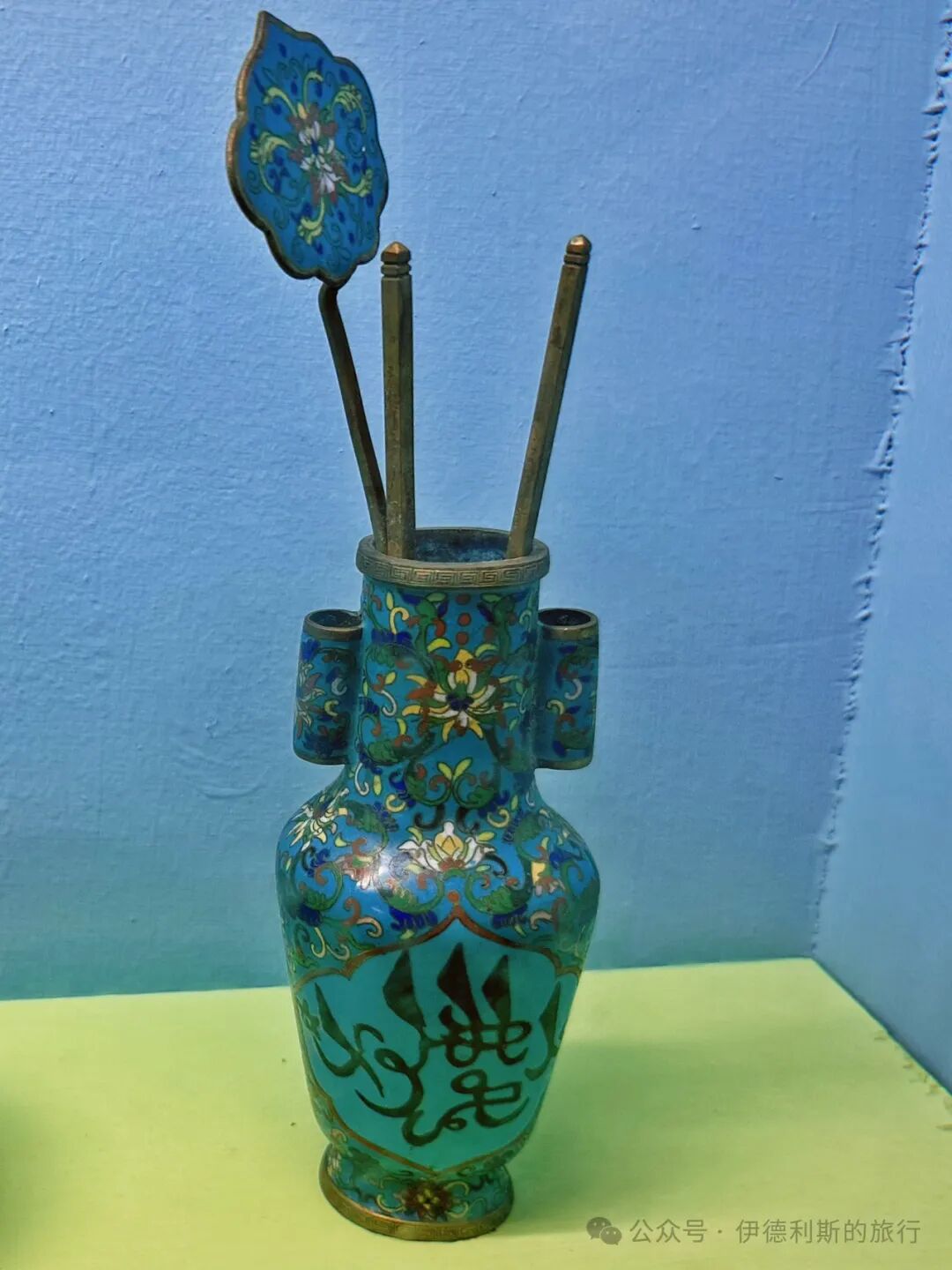
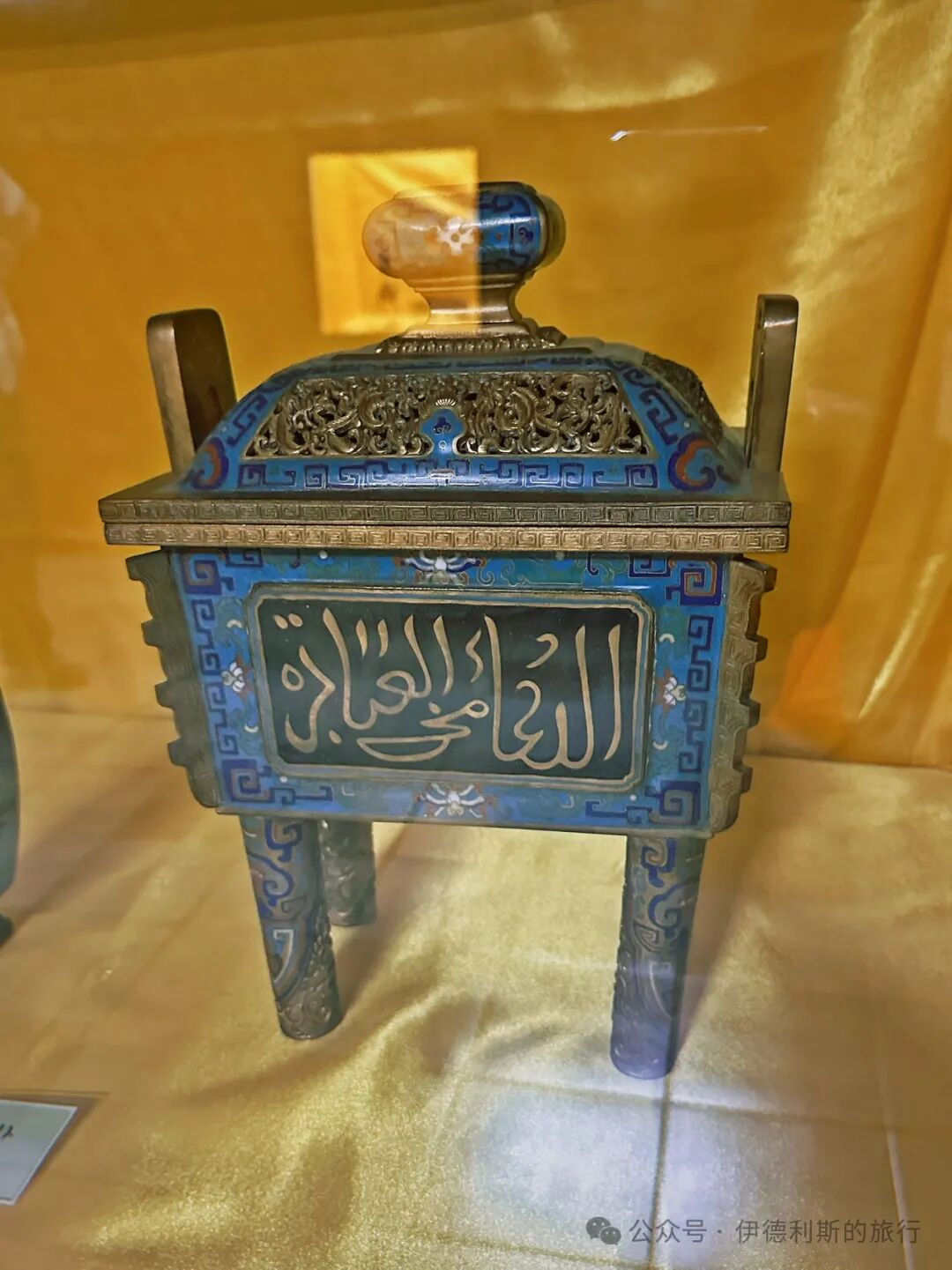
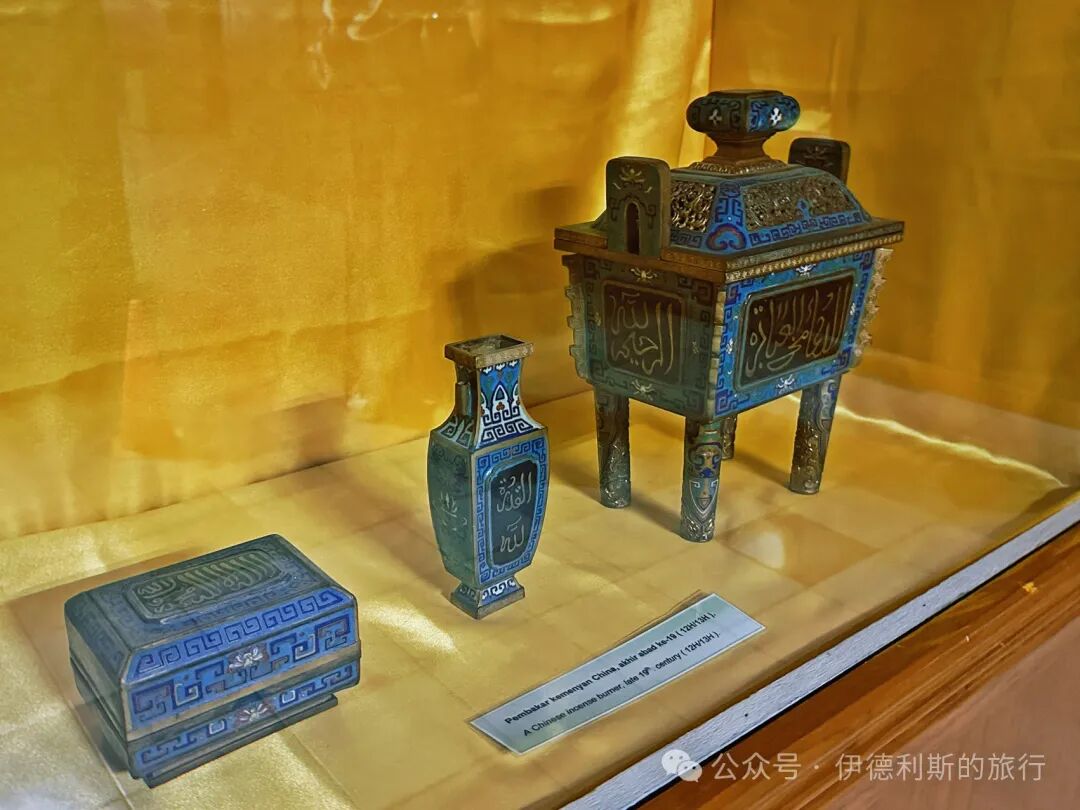
Two sets of cloisonné (jingtailan) altar vases and incense burners. One set likely traveled from Hong Kong to Malaysia during the era of export-oriented production. view all
Summary: This article visits the Sabah Islamic Civilization Museum in Malaysia, with a focus on regional Muslim history, exhibition displays, and local cultural context. It keeps the original museum details, photographs, artifact notes, and travel observations for readers interested in Islamic heritage in Sabah.
The Sabah Islamic Civilization Museum opened in 2002. It has a small collection and is not well-known, but it is special because it holds unique Islamic cultural artifacts from the Malay Archipelago that you cannot see in other museums.
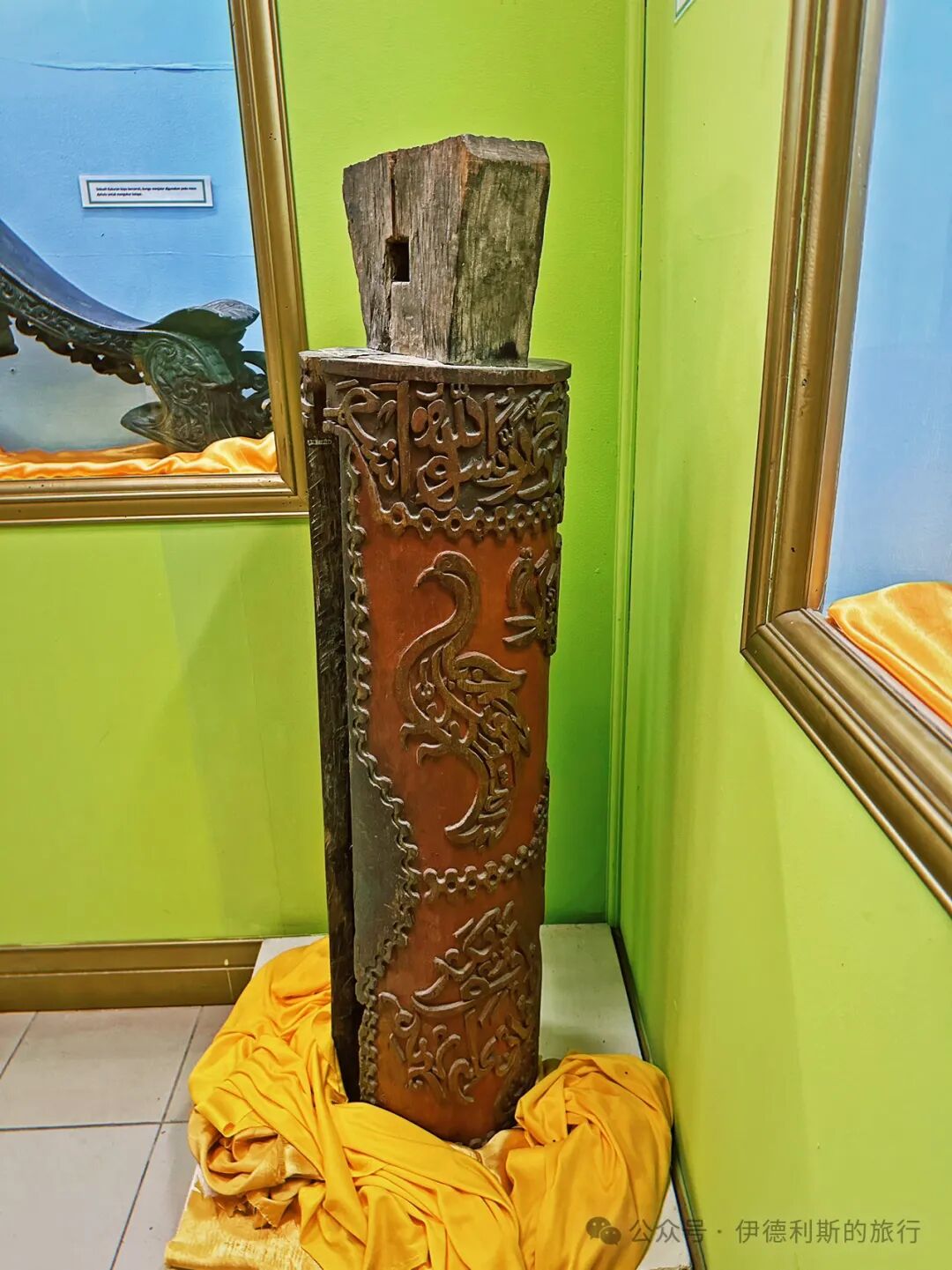
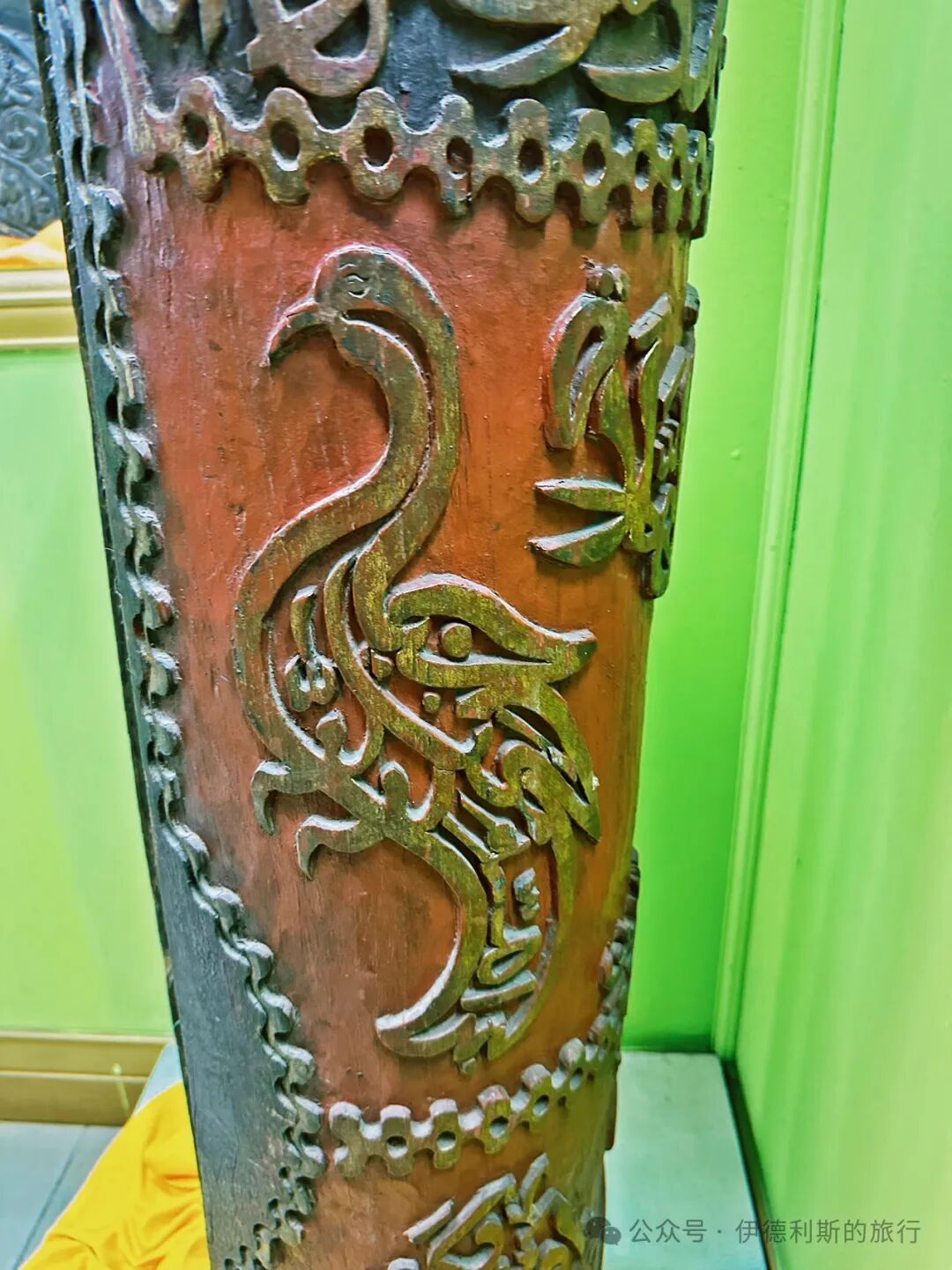
This is a wooden prayer gong (kentung) made in 1918 by the Sambas Sultanate in West Kalimantan, Indonesia. It is a traditional instrument used to signal the call to prayer.
The Sambas Malays live on the northwest coast of Borneo, right next to the Malaysian state of Sabah. The Sambas Malays founded the Sambas Sultanate in 1675. It became part of Indonesia in 1956, and the Sultan of Sambas still lives in the palace today. The Sambas Malays are mainly Sufi. Their rituals combine features of the Qadiriyya and Naqshbandiyya orders and are famous for their unique chanting style.
This is a manuscript of scripture from Sulawesi, Indonesia, written on date palm leaves and bound in goatskin. It is over a hundred years old. It was donated to the Sabah Islamic Civilization Museum in 2015 by Tuan Hj. Abdullah Abas, a religious teacher from Kinarut, Sabah, Malaysia.
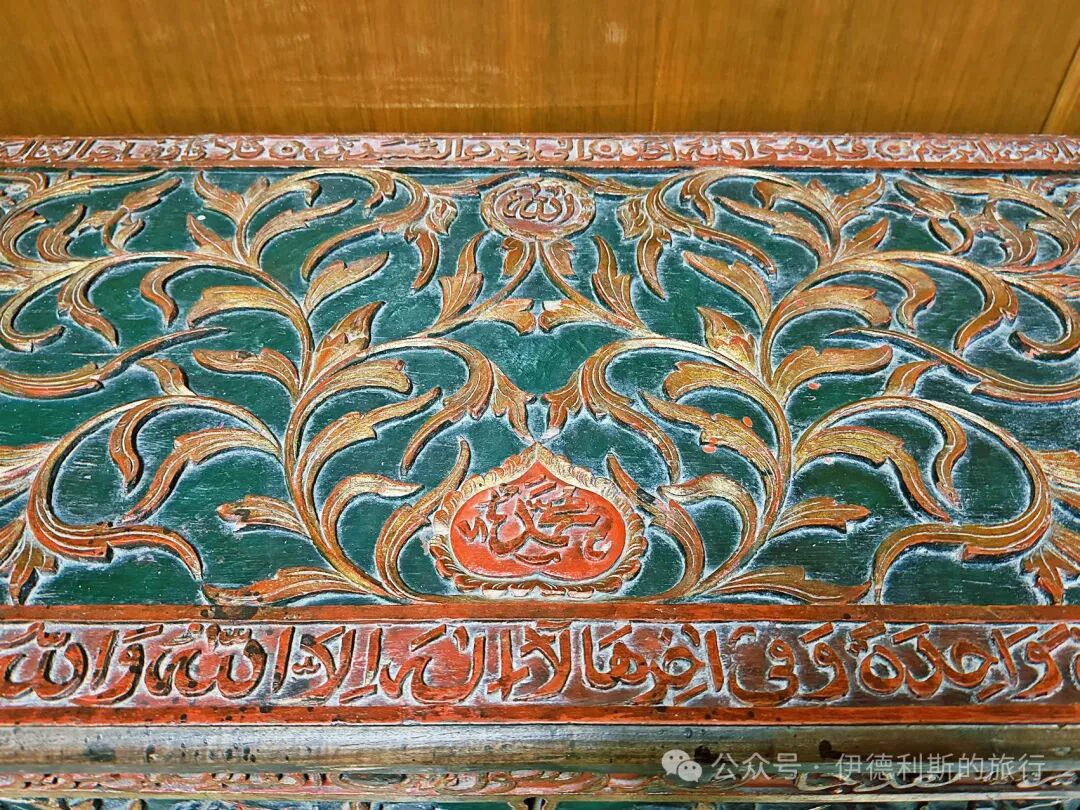
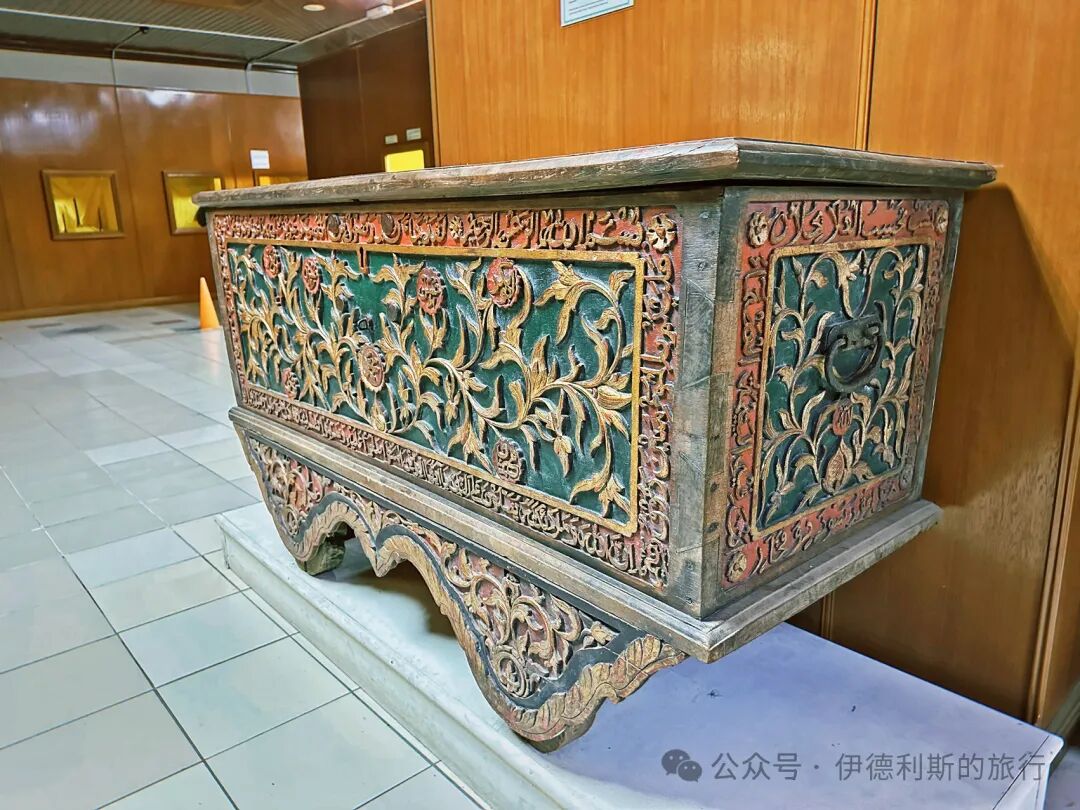
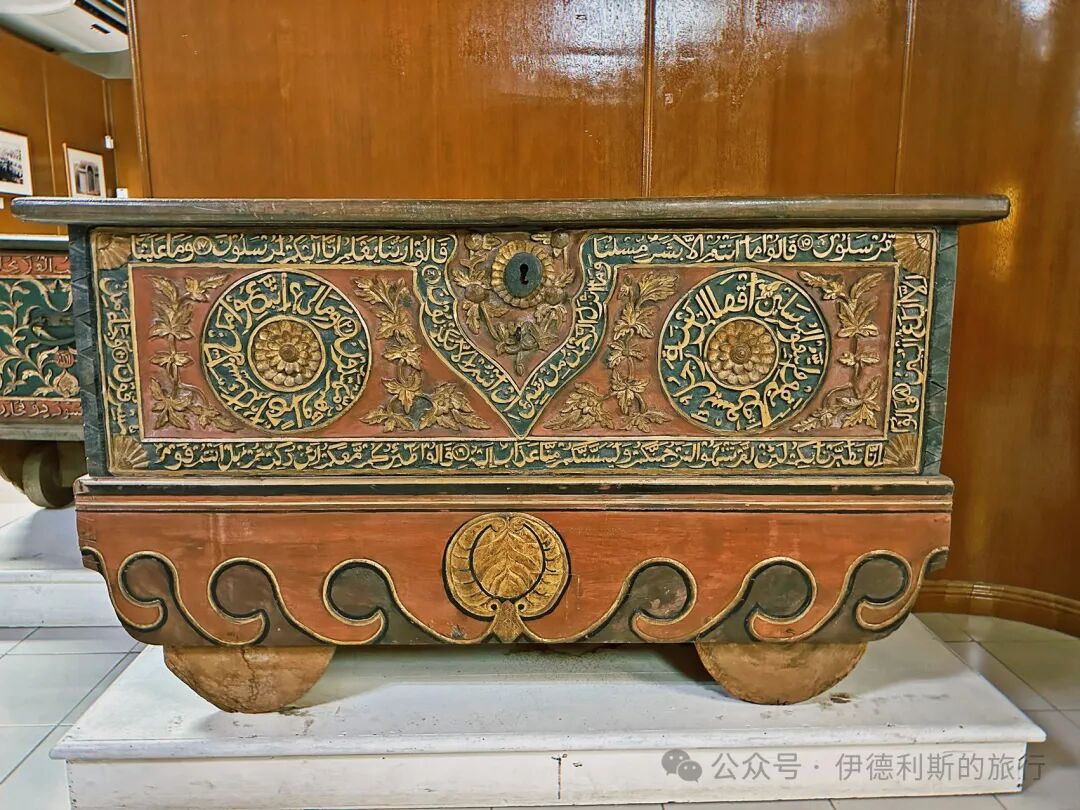
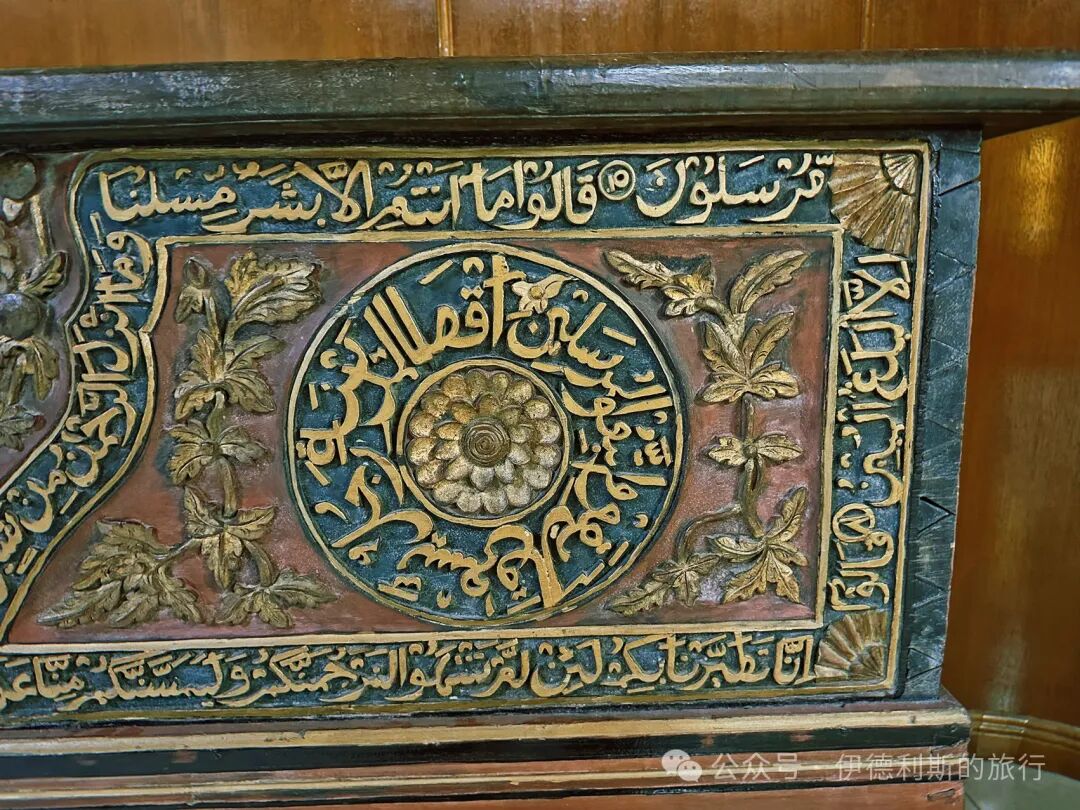
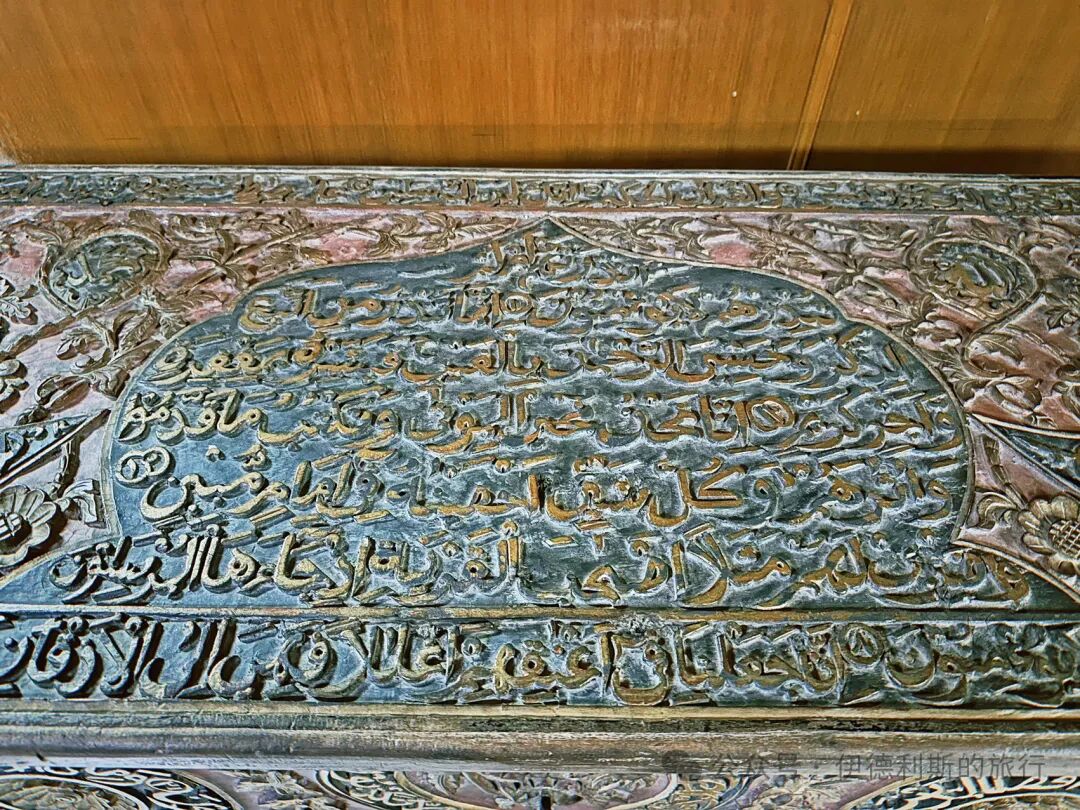
This is a traditional Indonesian wooden chest carved with scripture, used for storing clothes. This type of wood carving is found in several Islamic museums in Malaysia and is a very distinctive piece of Islamic craft.
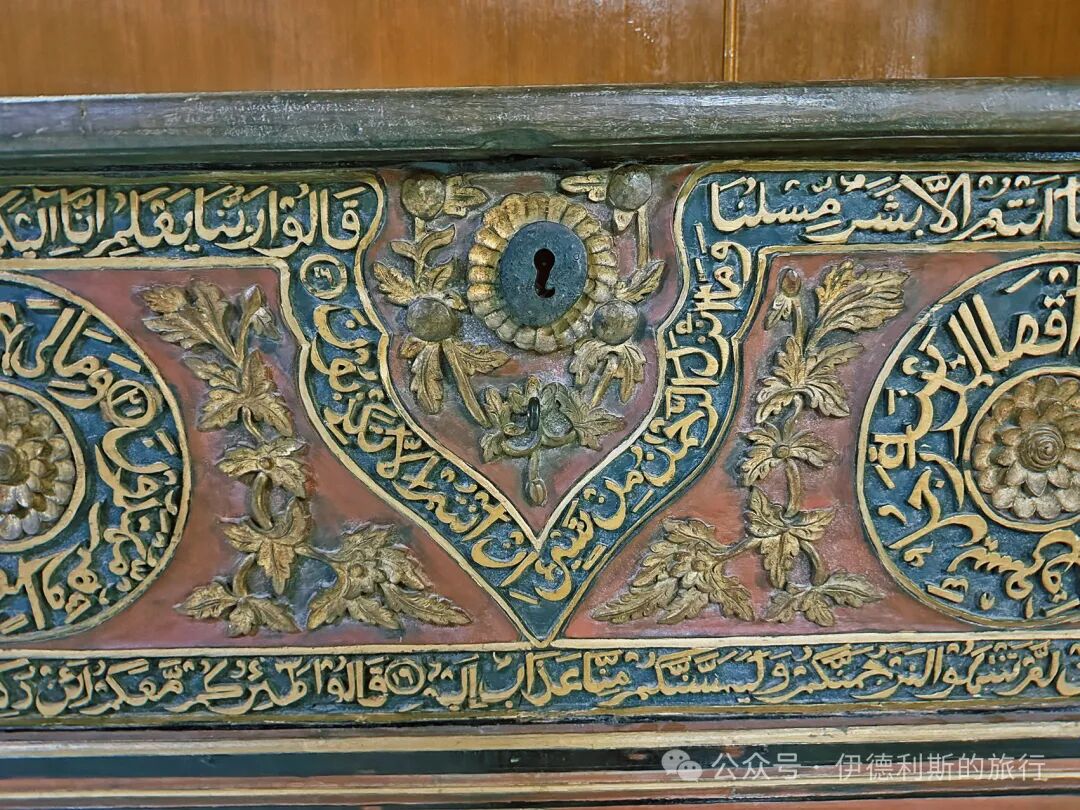
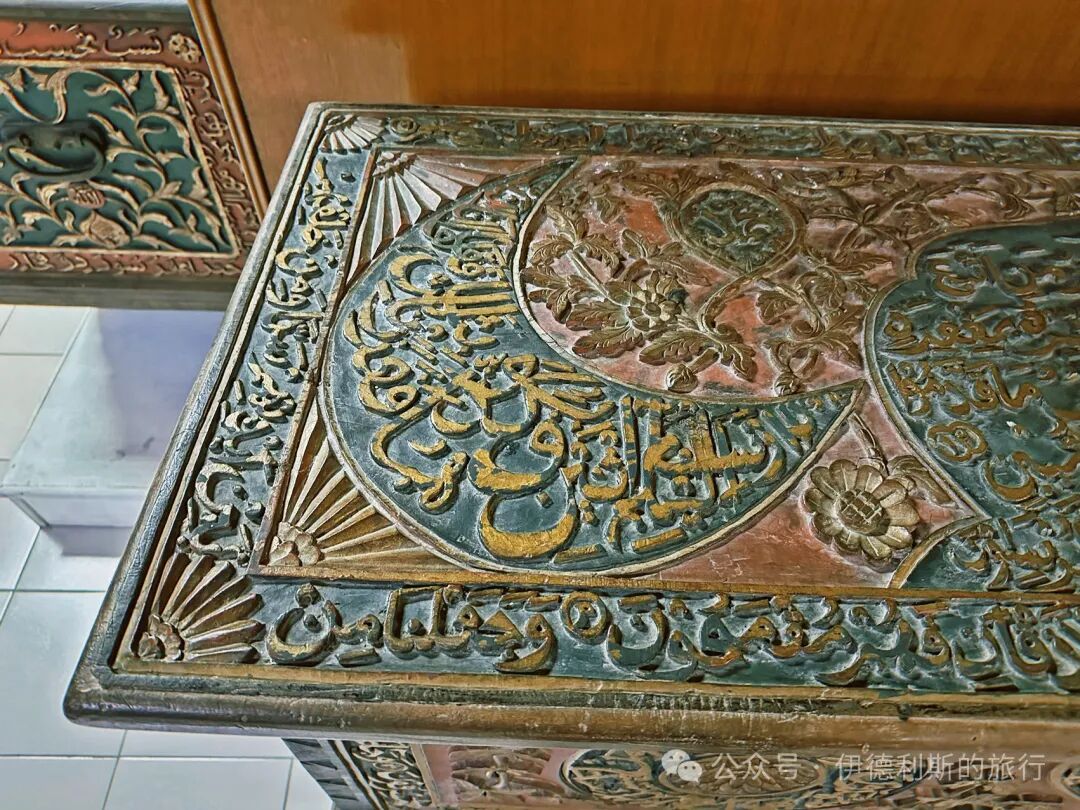
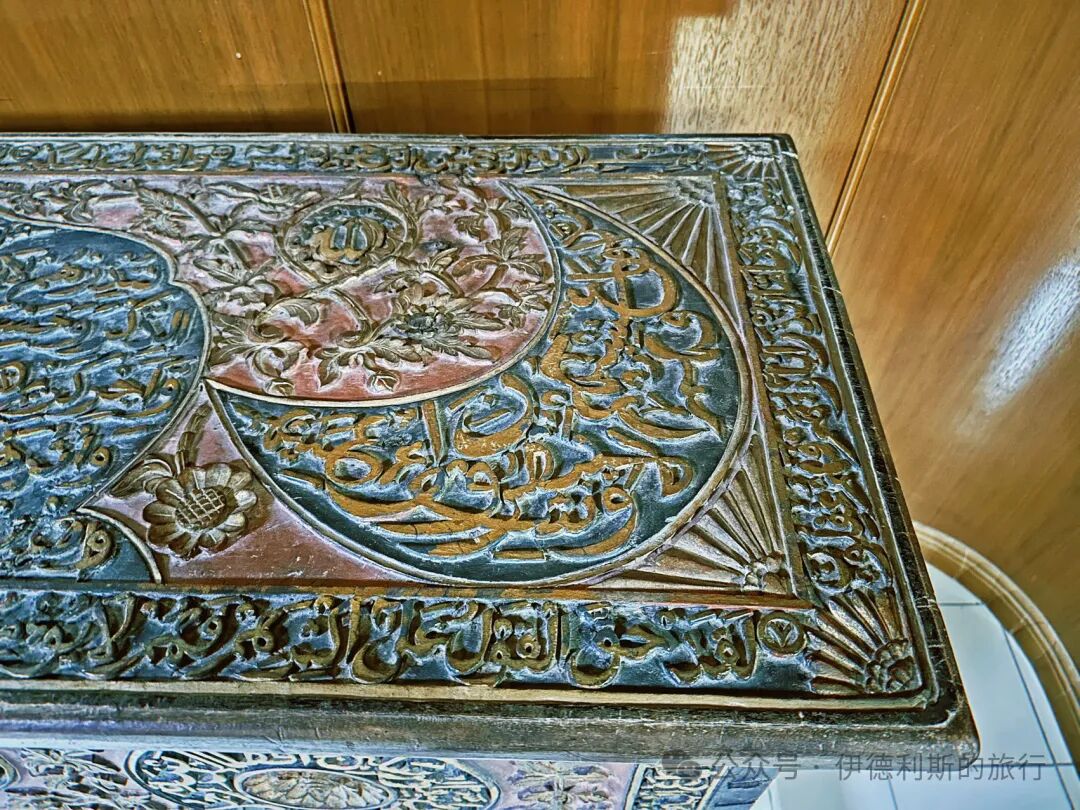
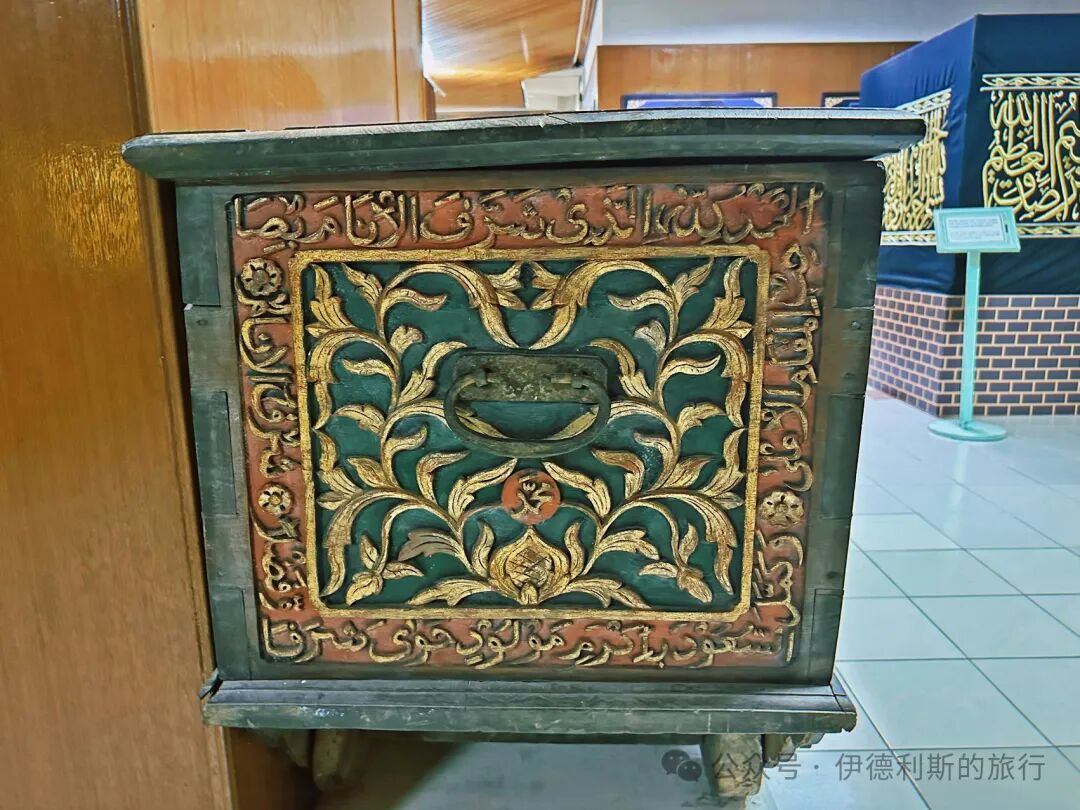
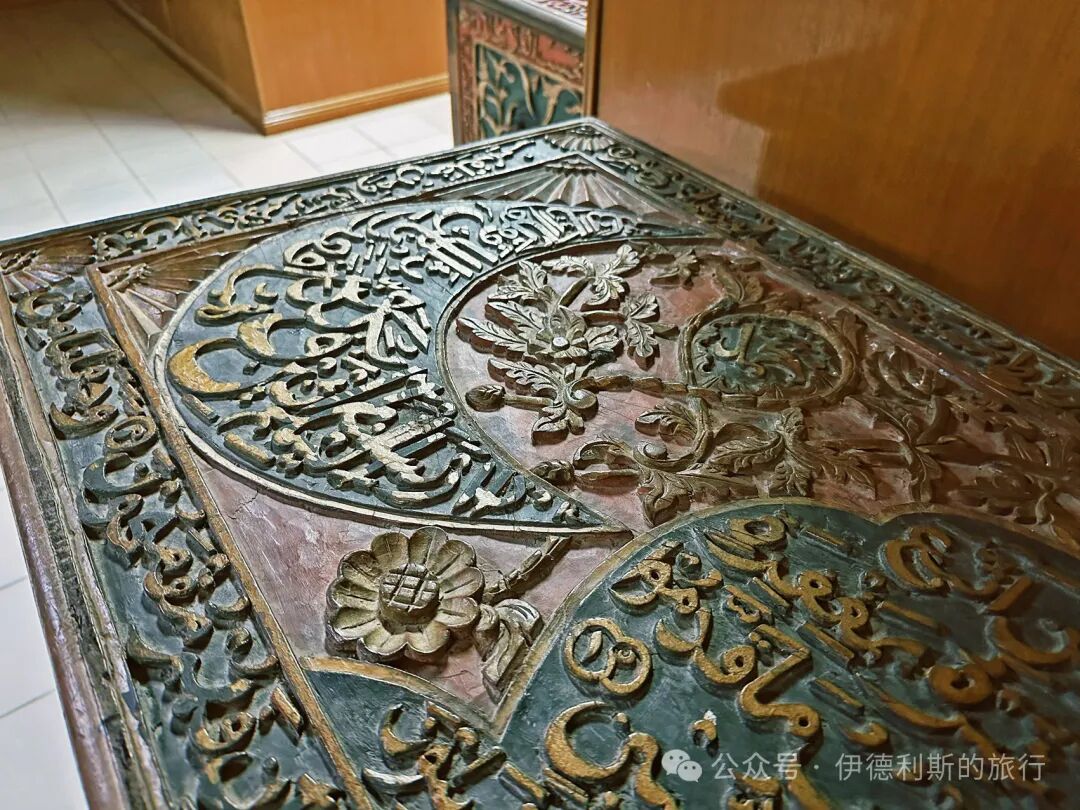
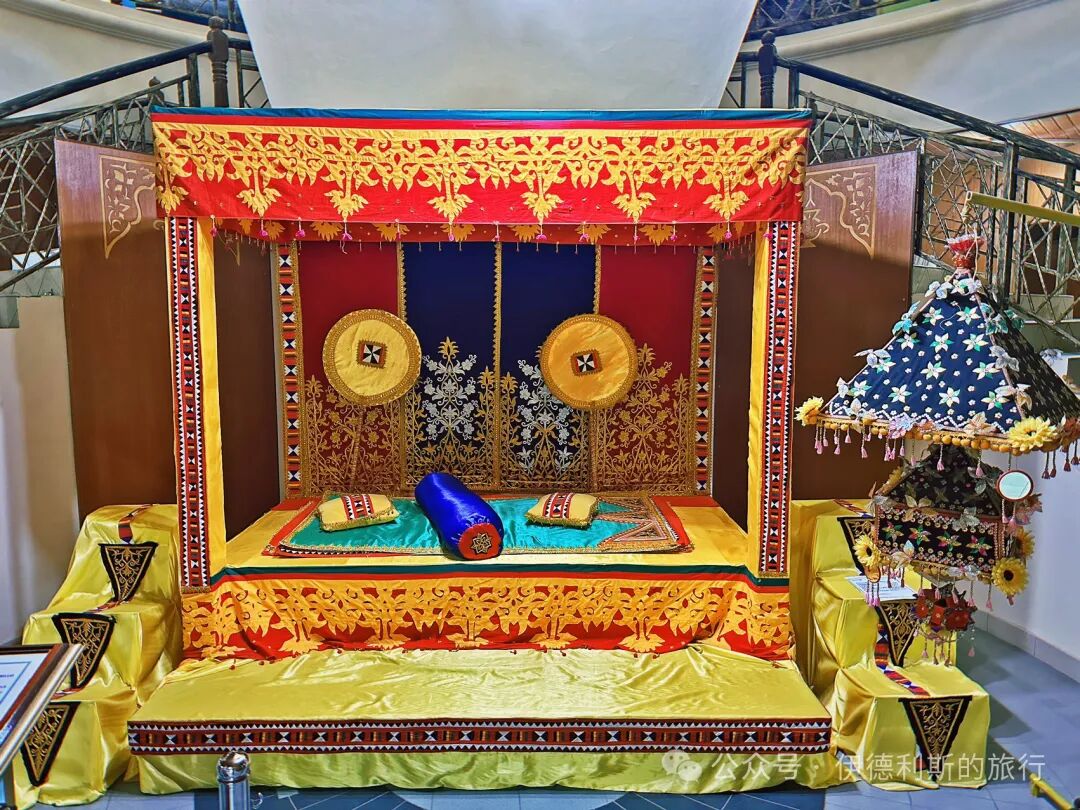
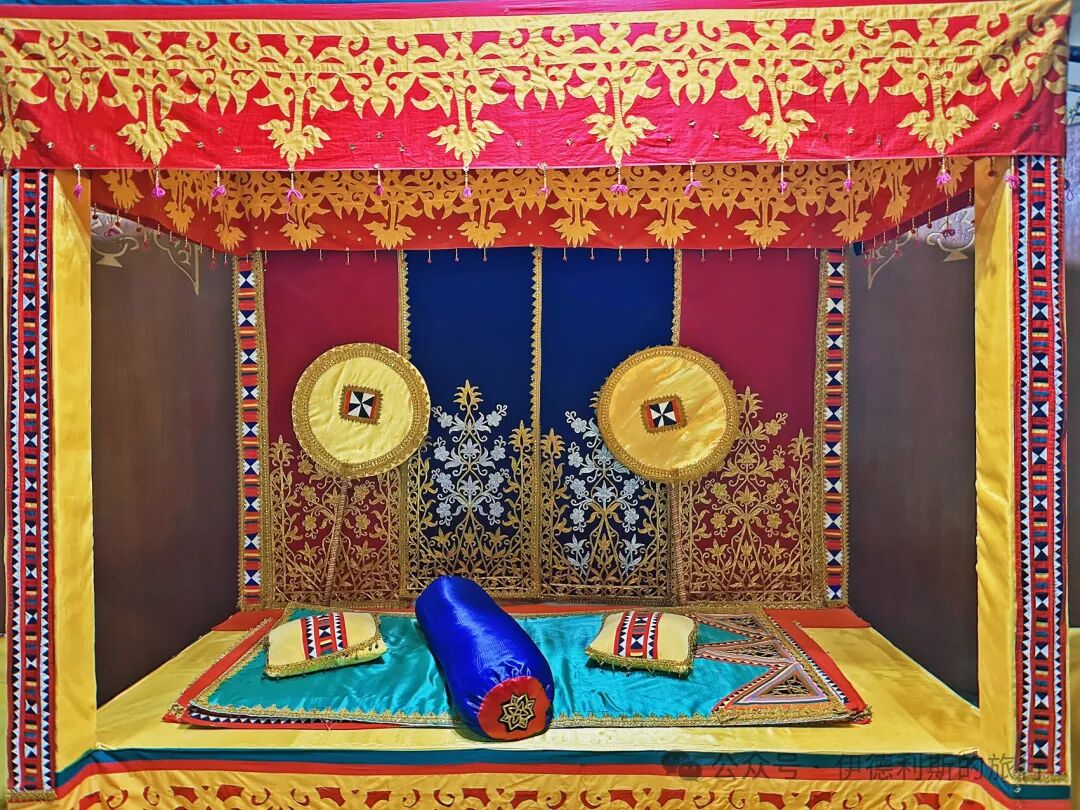
This is a bridal curtain used by the Bajau (Sama) people, a sea-faring group living on the west coast of Sabah, Malaysia, in Kota Belud.
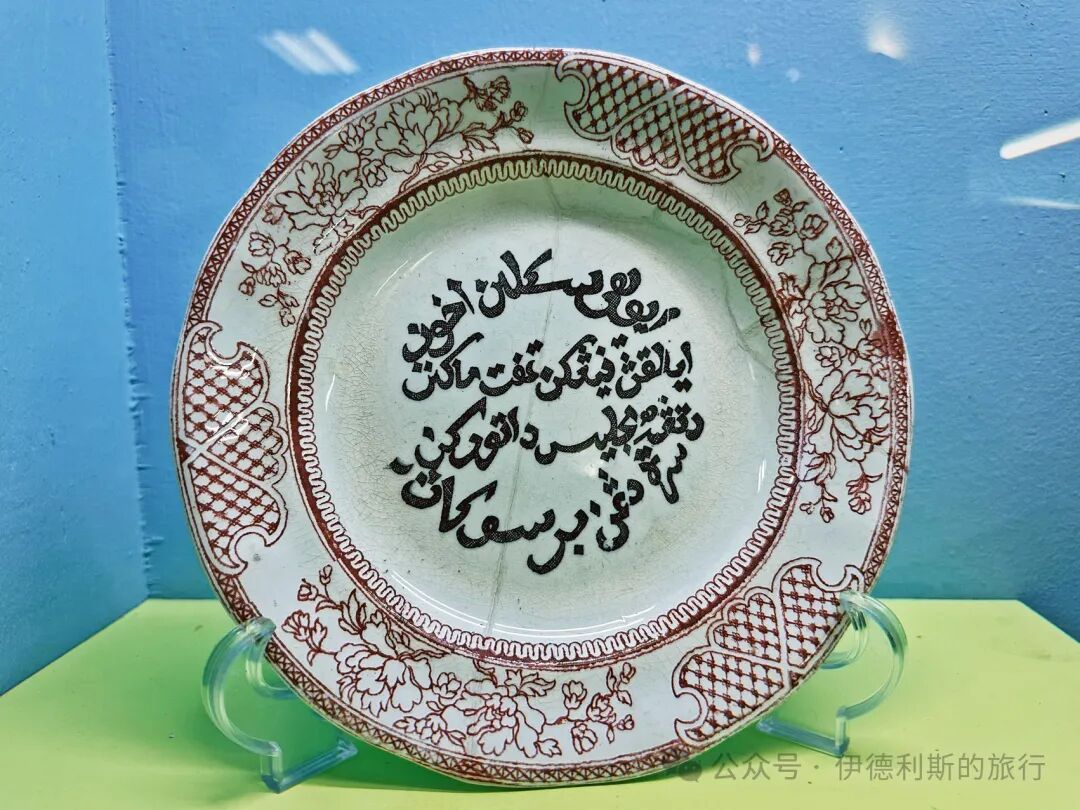
This is a porcelain plate with scripture from the 1930s, acquired by the museum in 2005. Malay people usually display this kind of porcelain plate in a cabinet as a decoration.
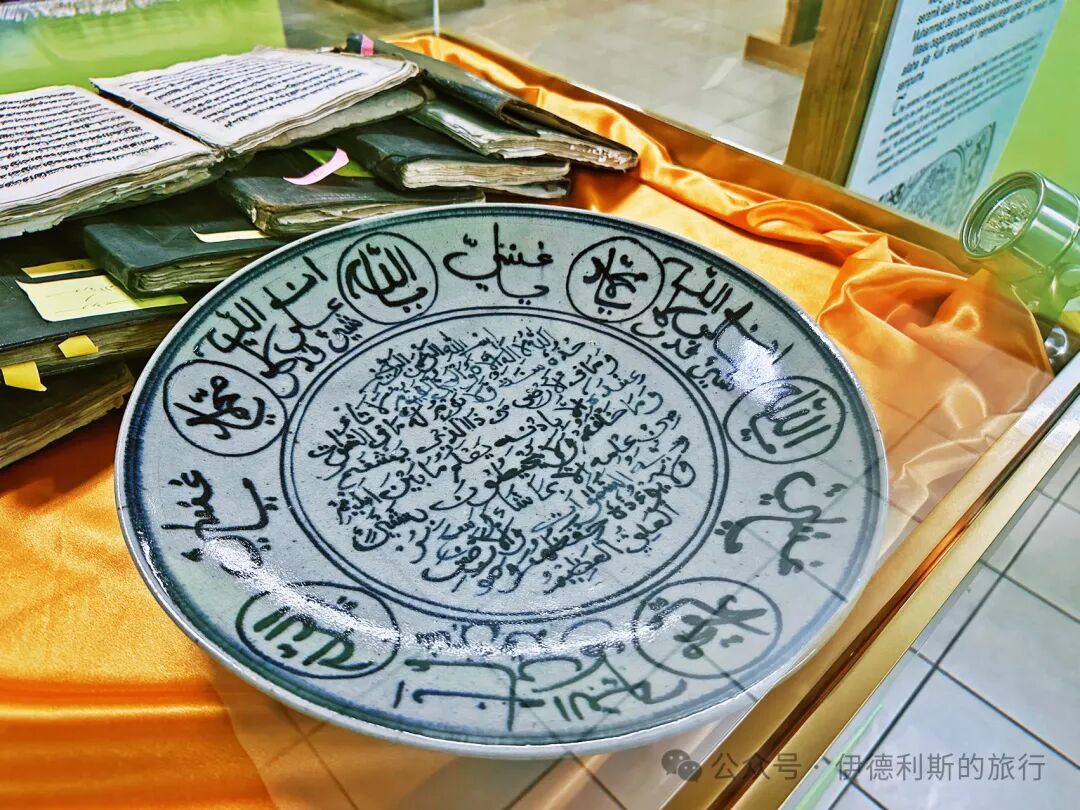
These scripture-inscribed ceramics were brought to Sabah through trade and include pieces from both China and Europe. Under the rule of the Sultanate of Brunei, Sabah had very close trade ties with the Qing Dynasty, Spain, the Netherlands, and other countries.
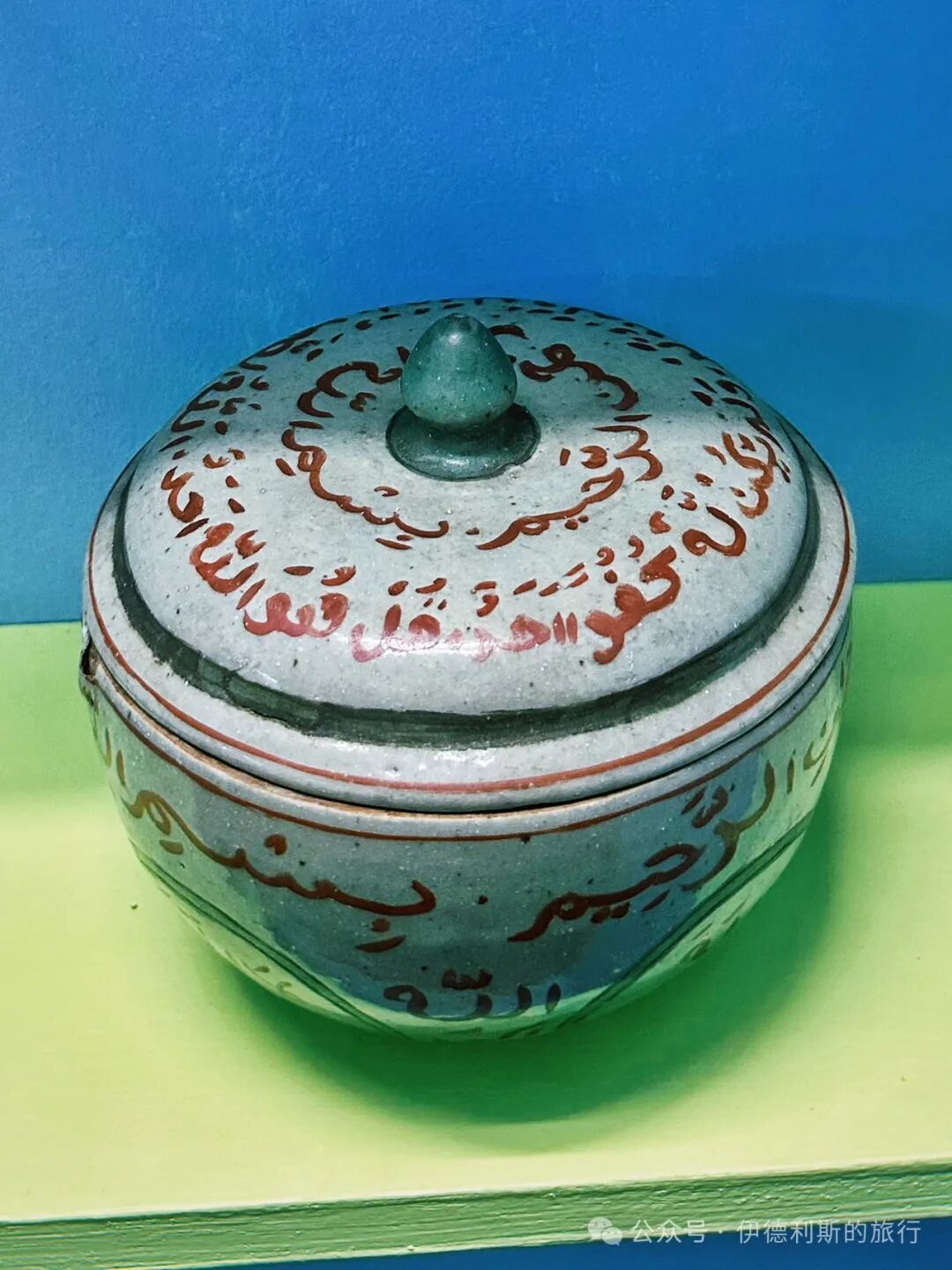
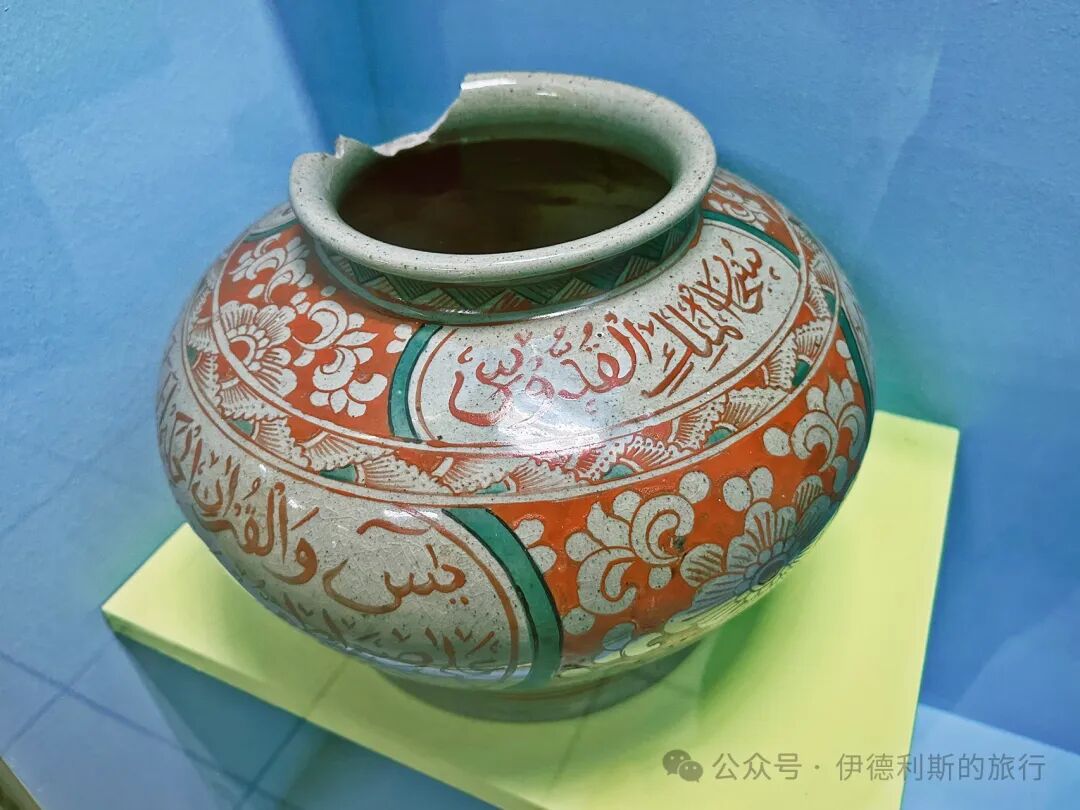
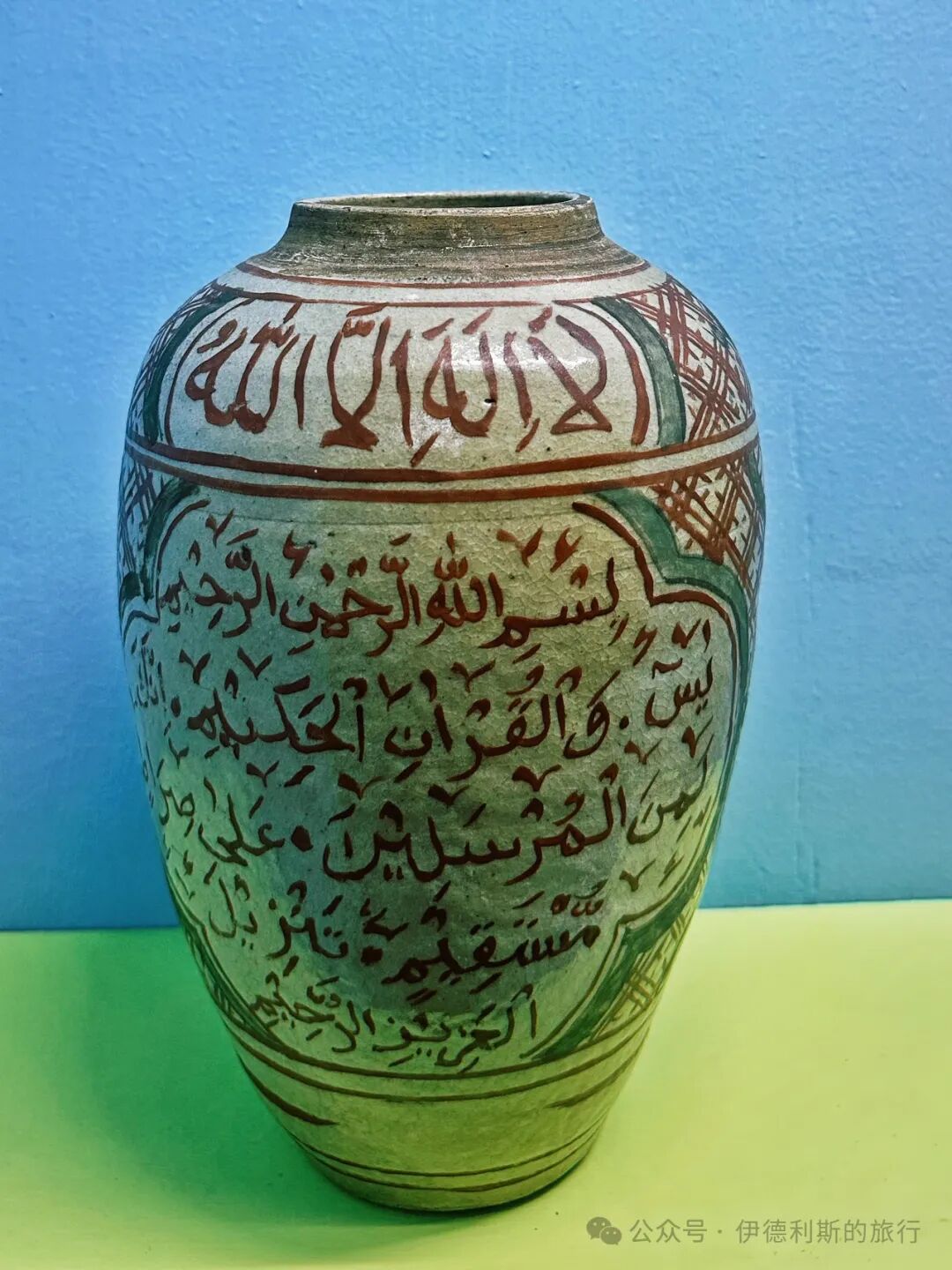
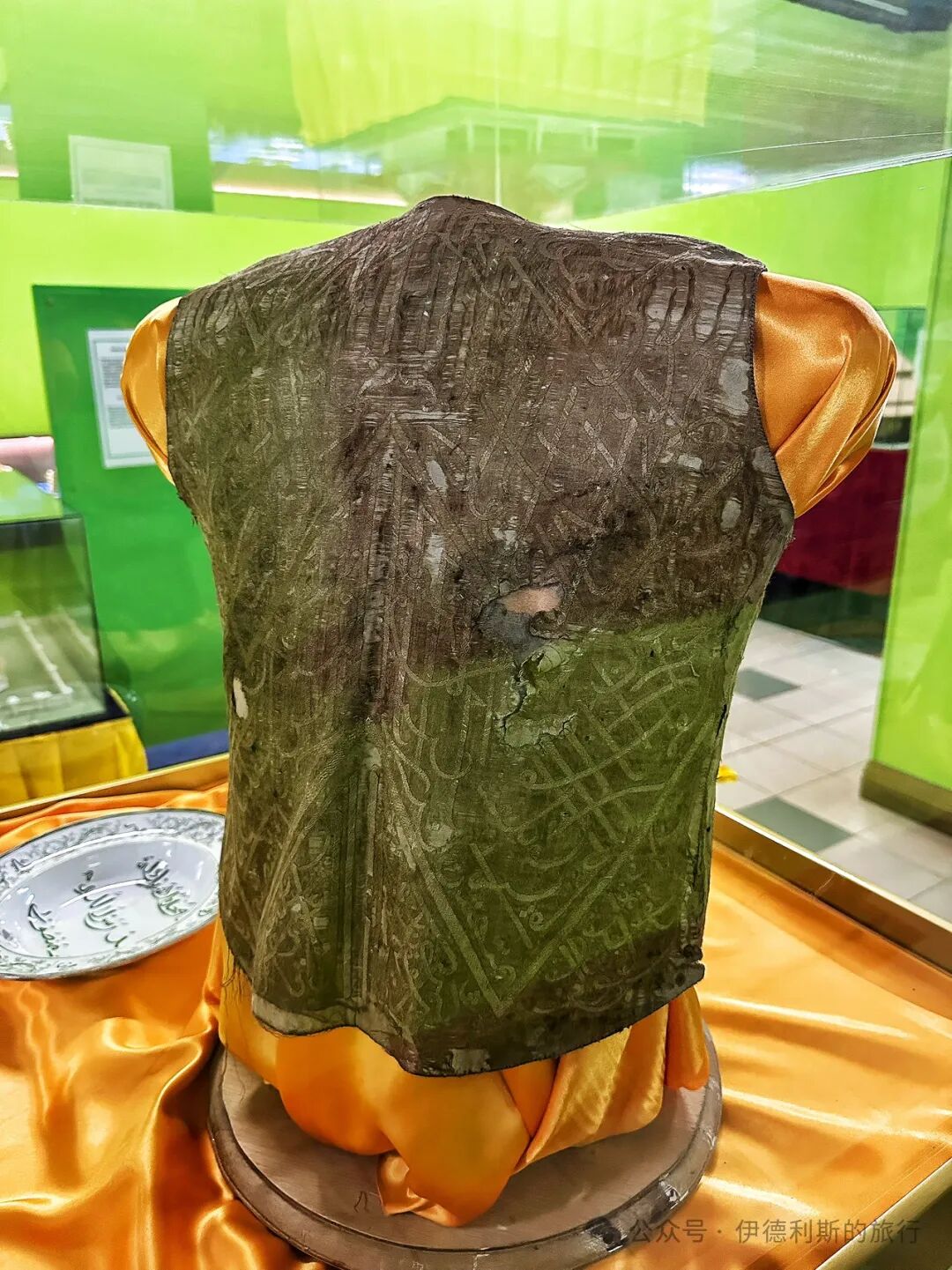
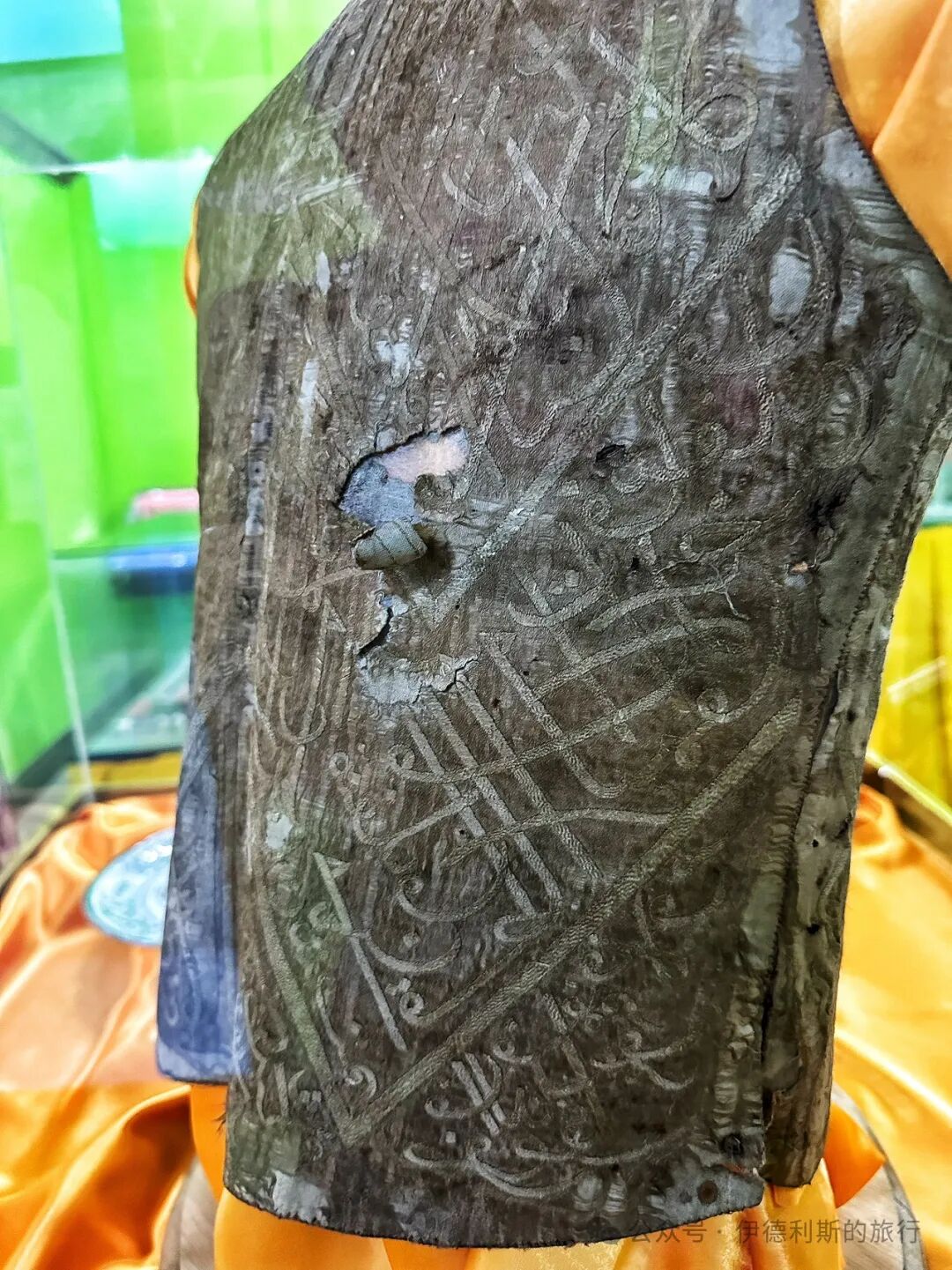
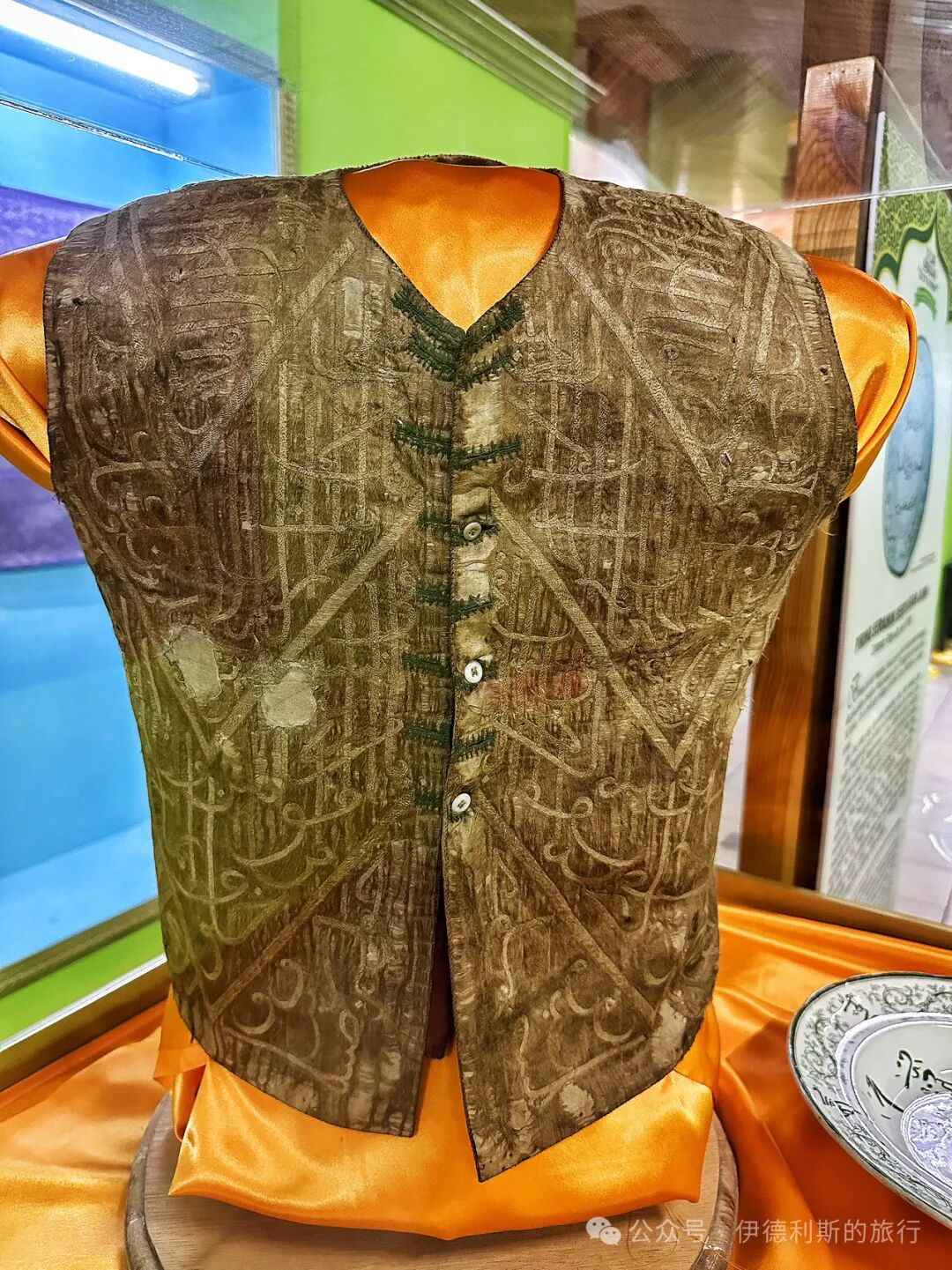
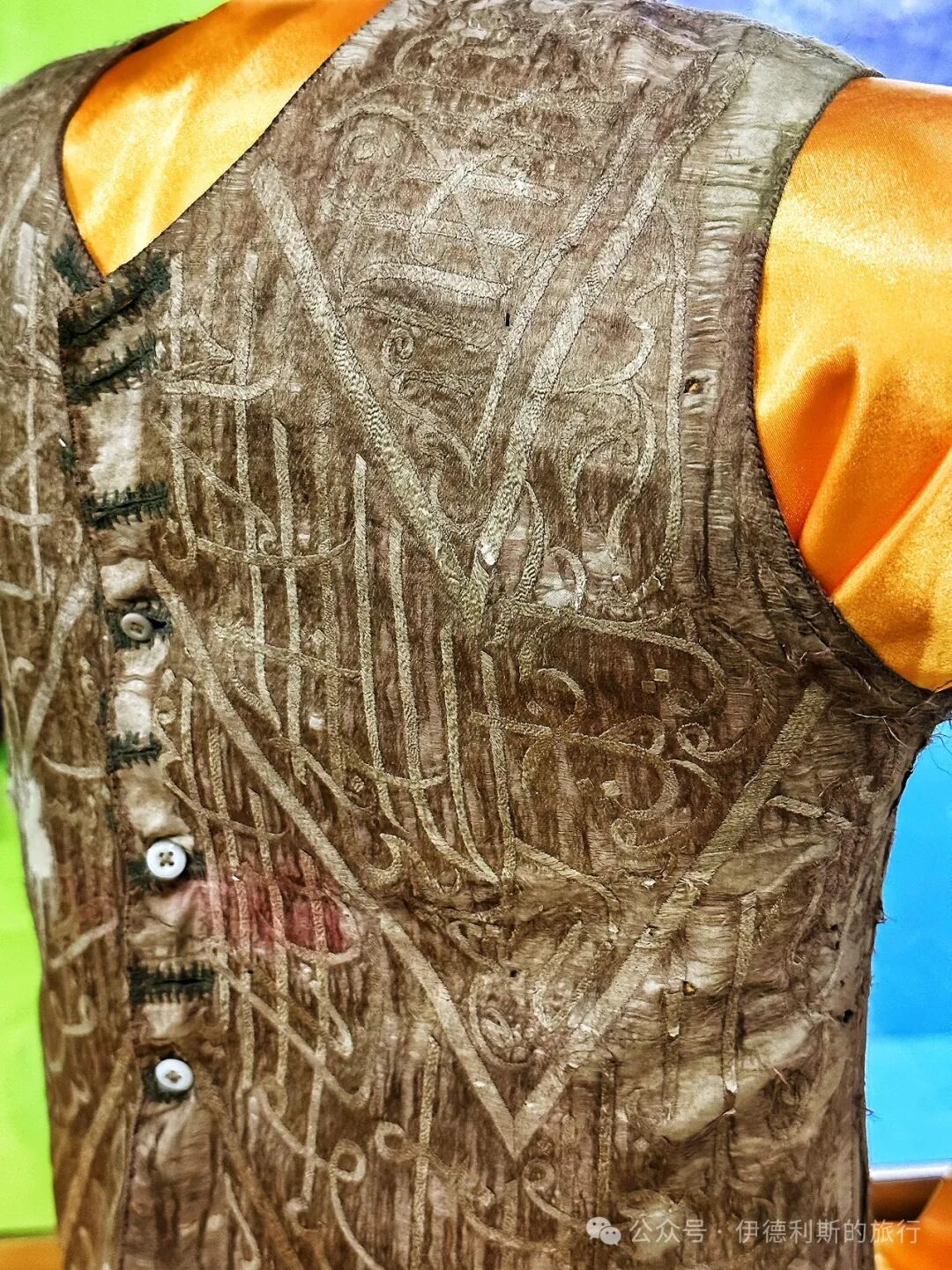
This is a protective vest (dua vest) worn by indigenous soldiers in Sabah during the anti-British resistance led by Mat Salleh between 1894 and 1905.
The resistance leader Mat Salleh, whose real name was Datuk Muhammad Salleh, was an indigenous leader in Sabah. In 1881, the British took control of Sabah by establishing the North Borneo Chartered Company. Mat Salleh felt this violated the rights of the indigenous people and refused to recognize the company. In 1895, after negotiations with the company failed, Mat Salleh was declared a wanted man. He immediately built a fortress to openly resist the British and successfully launched several attacks. He died in battle in 1900, and his followers continued to fight until they were finally defeated in 1905.
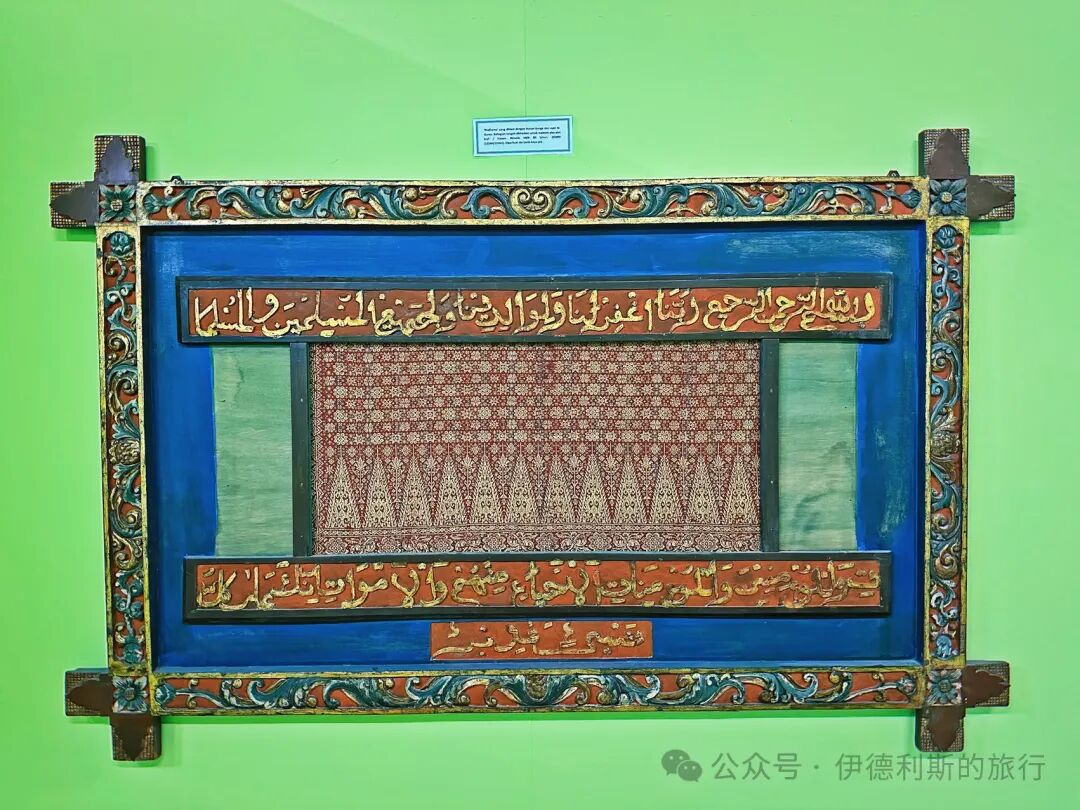
This is a decorative wooden frame made in 1918, featuring scripture carvings and traditional embroidery in the center.
These are wooden grave markers from the Semporna region. This type of wooden grave marker is unique to the Semporna area and is carved with floral patterns around the edges.
This is a century-old bas-relief bronze plaque featuring the Basmala.
This is a prayer drum (beduk) made of palm wood and cowhide. It is usually placed in front of the main hall or at the entrance of a mosque, which is why many traditional mosques in Southeast Asia do not have minarets.
There are many wavy-bladed daggers (keris) in museums across Malaysia and Indonesia, but very few have a clear record of their origin. The Museum of Islamic Civilization in Sabah displays a sword called Pedang Khusus. Palace guards in the Tidung Kingdom on Tarakan Island off the east coast of Borneo wore this gold-made, highly detailed weapon.
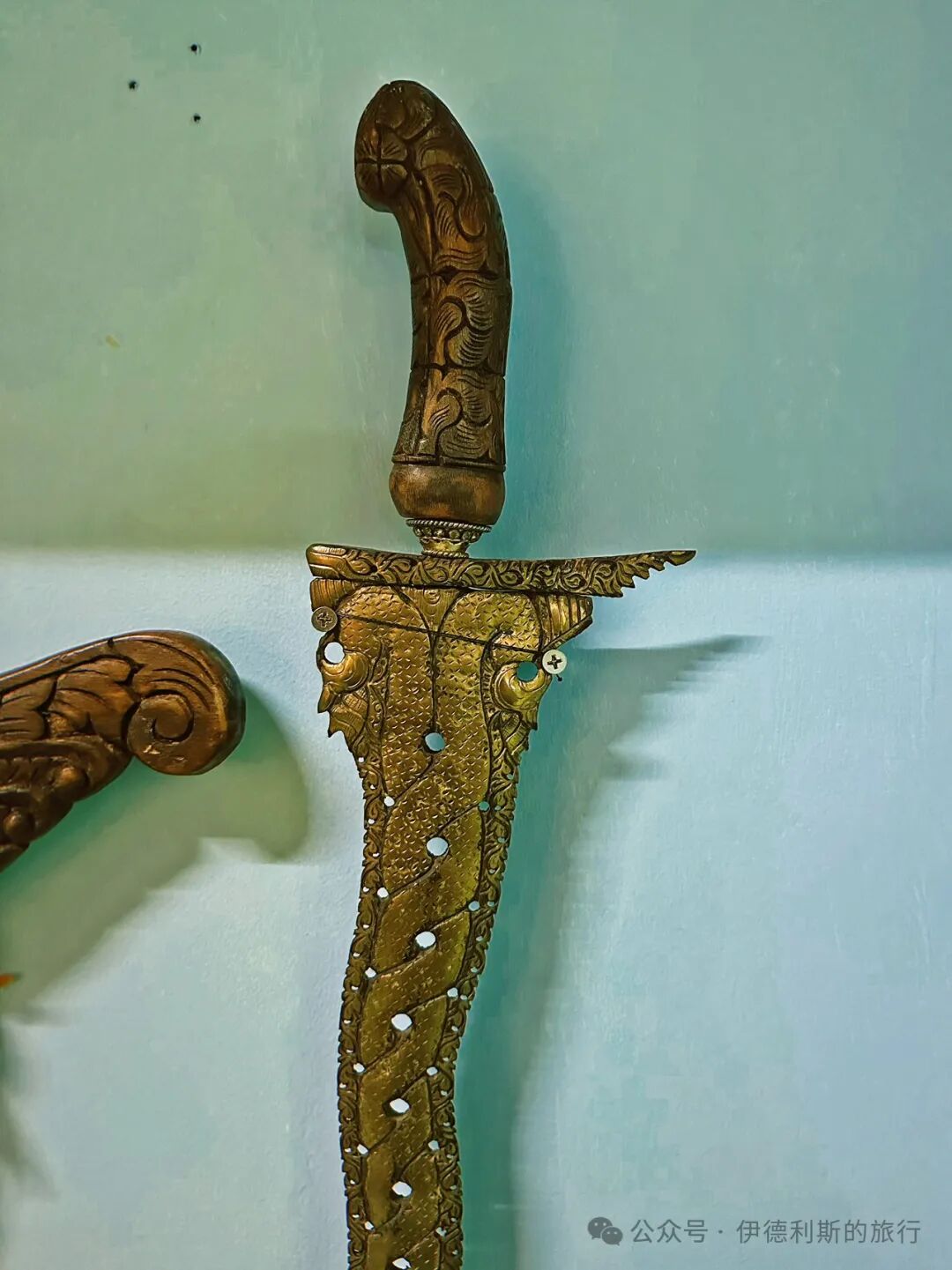
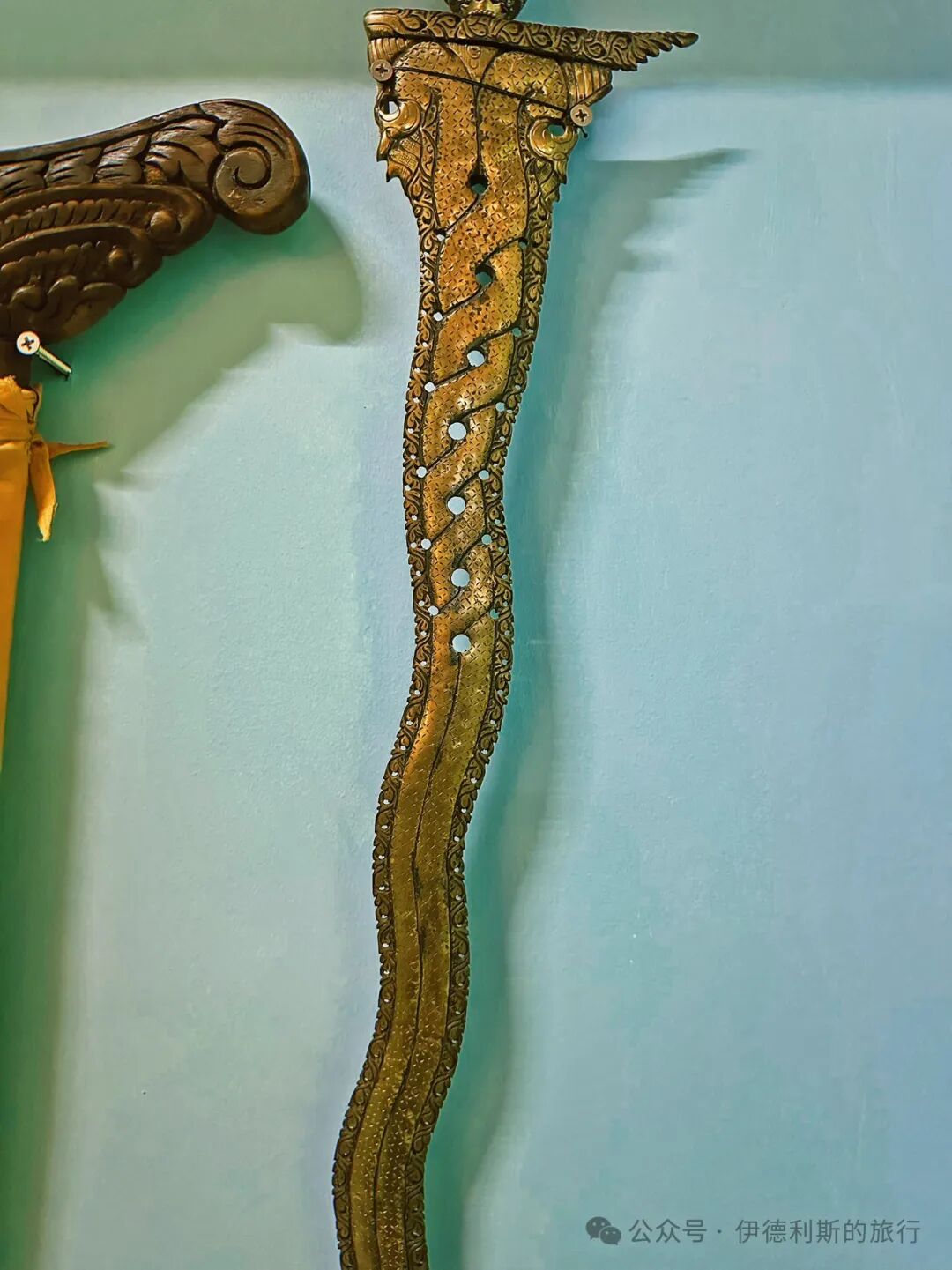
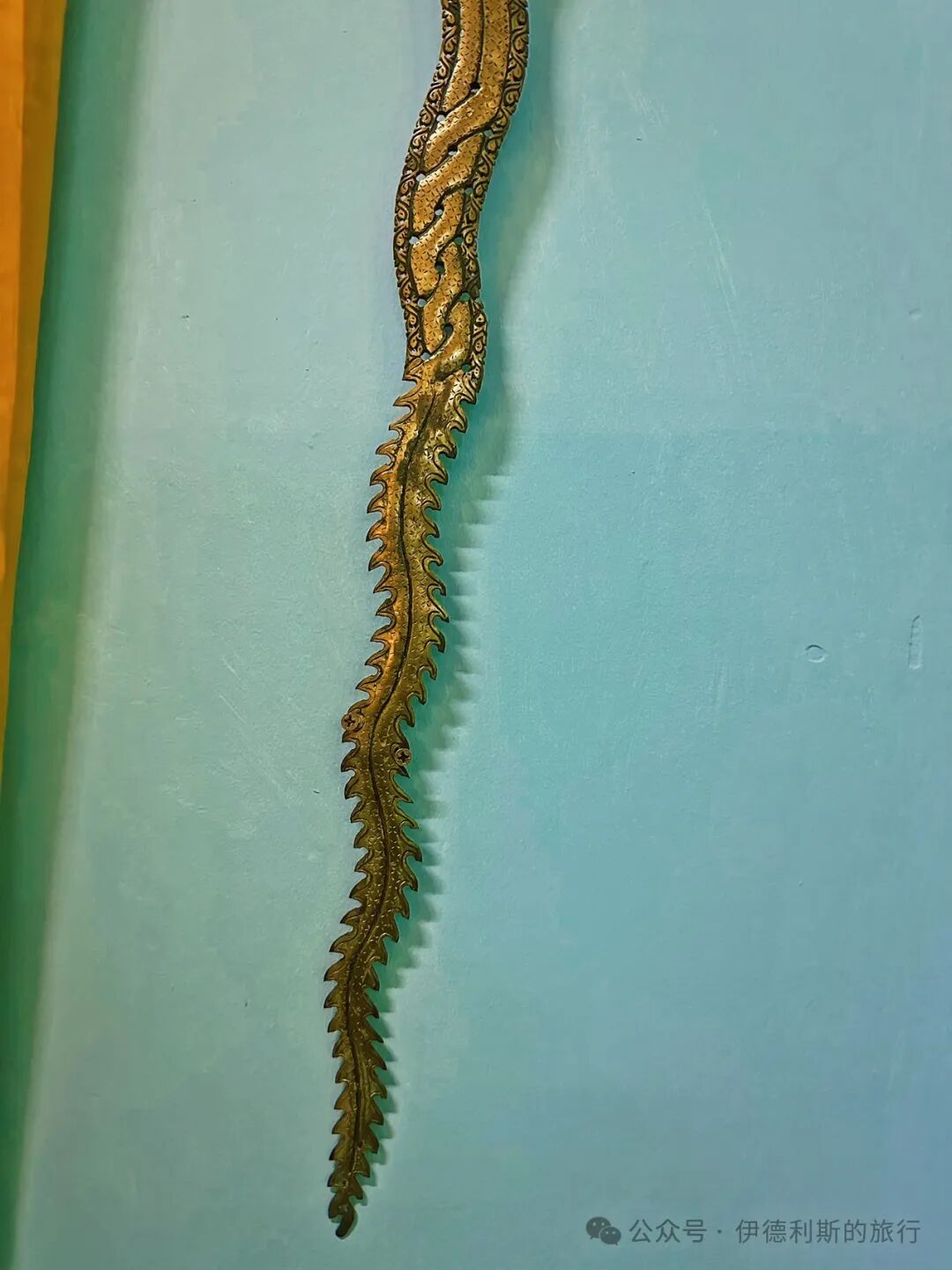
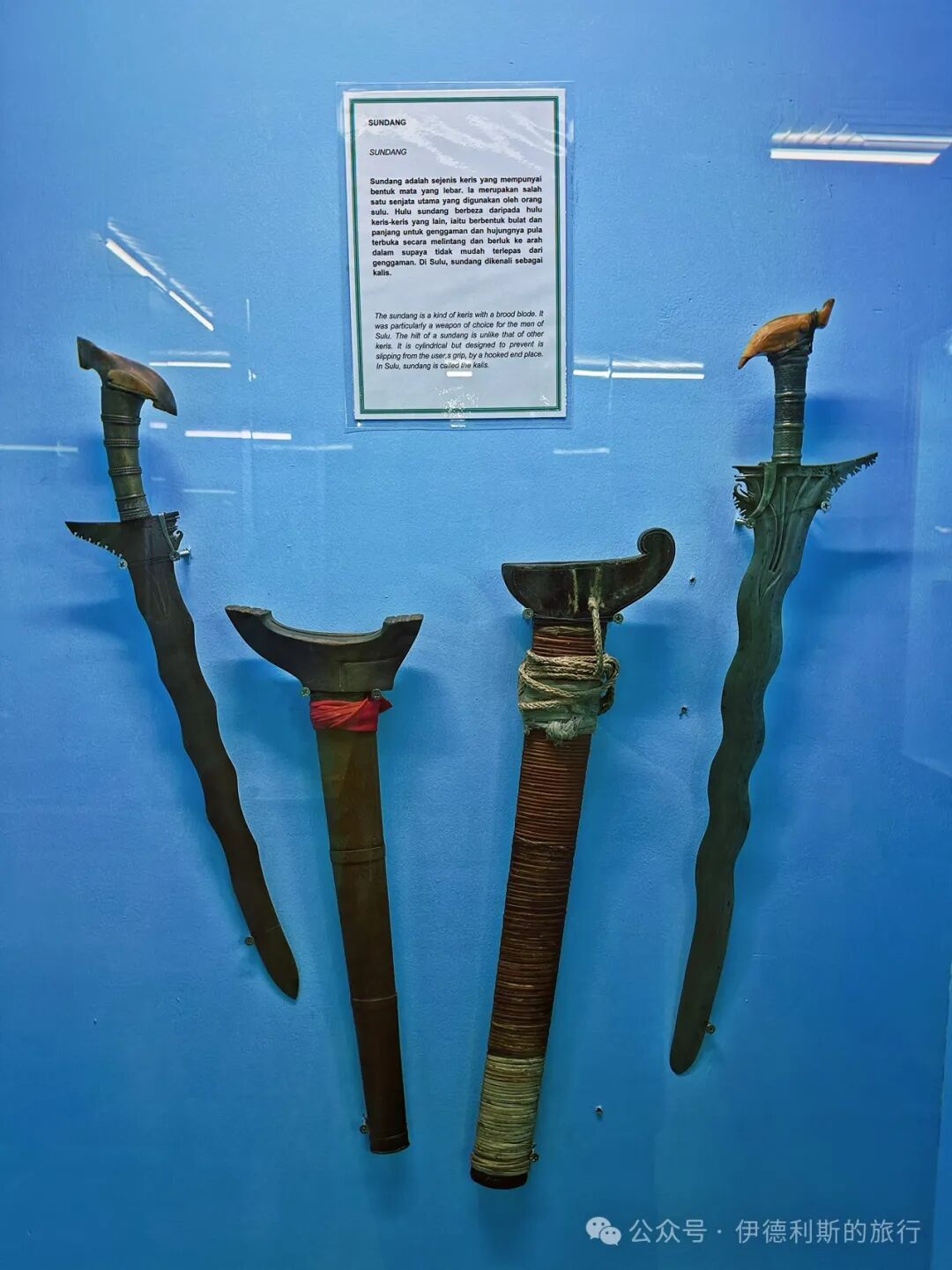
The second type is called Sundang, a wavy-bladed dagger (keris) with blood grooves used by the Sulu people. The handle of the Sundang is cylindrical, which keeps it from slipping out of your hand during use.
Woodcarver Mba Hj. Edie Ifa from Jepara, Java, Indonesia, worked with students from a nearby Islamic school (madrasa) to carve a pair of scripture-inscribed door panels from a century-old teak log.
A wooden tombstone from the Bajau people of Semporna, with the top carved into the shape of a hat.
A hand-copied Persian scripture from 1796.
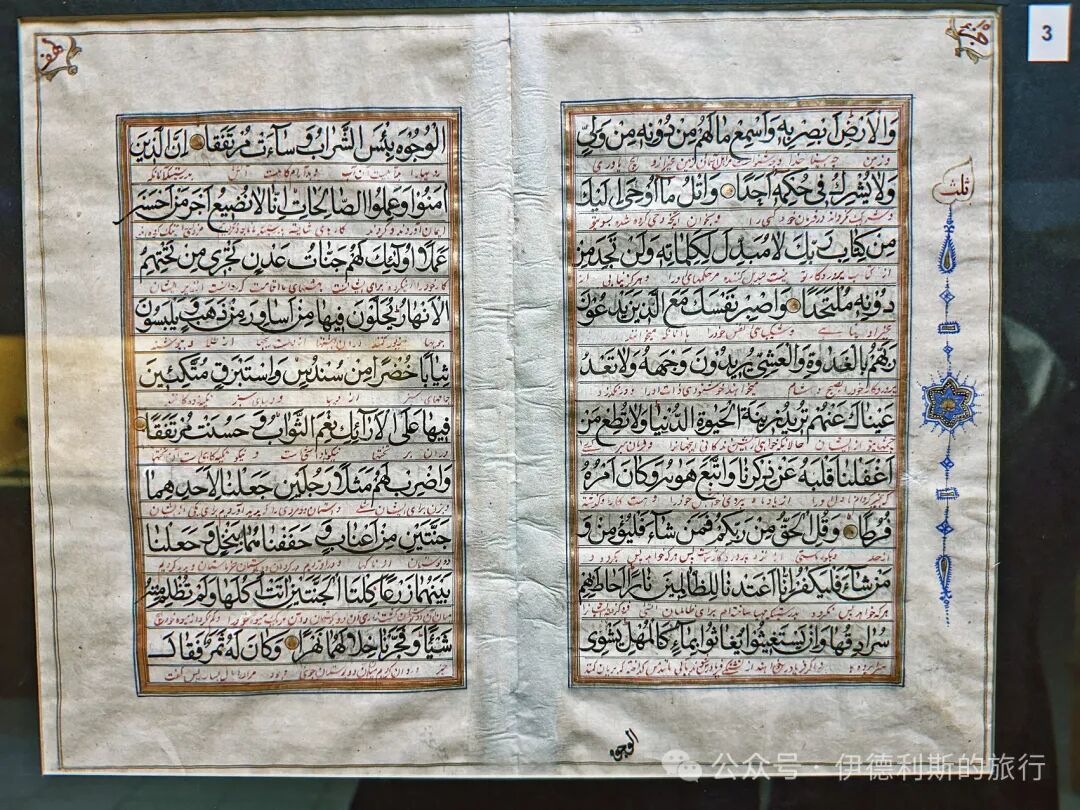
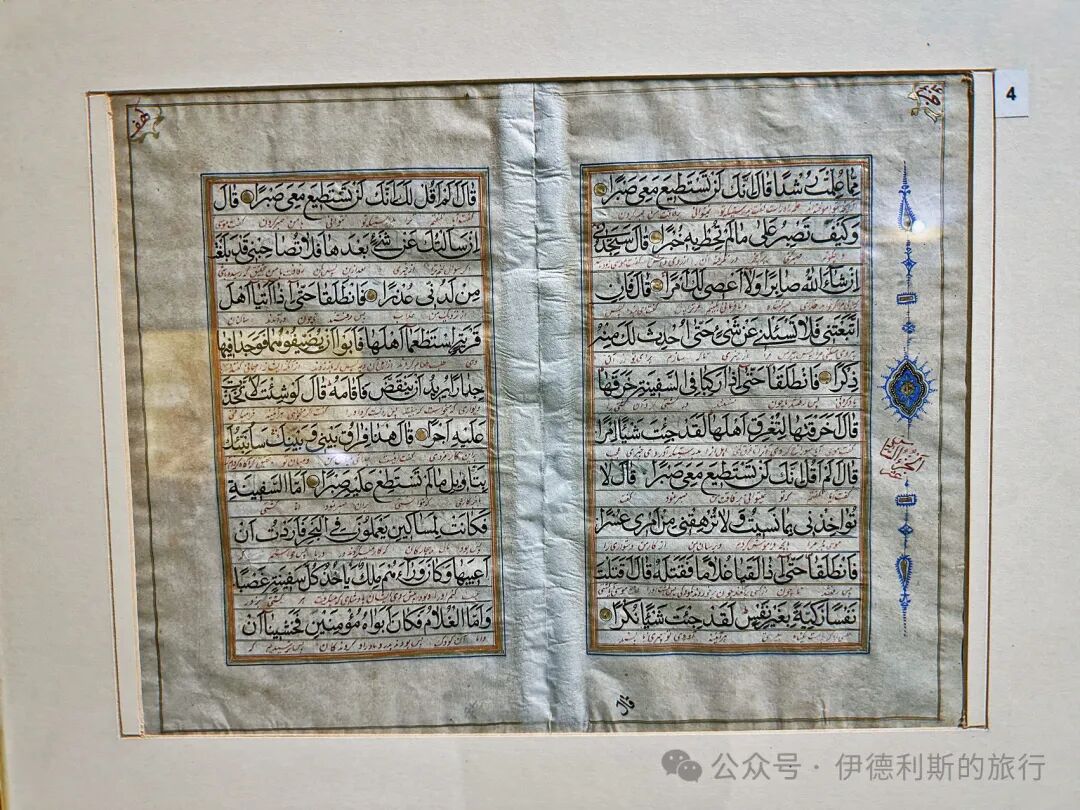
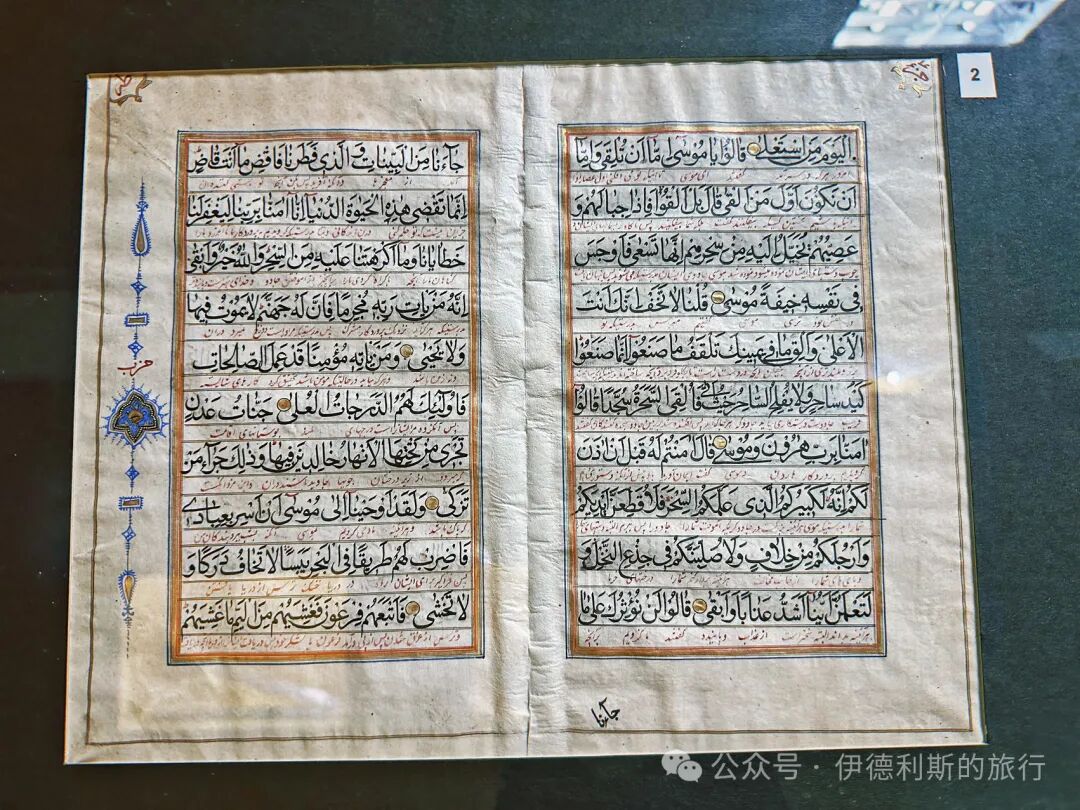
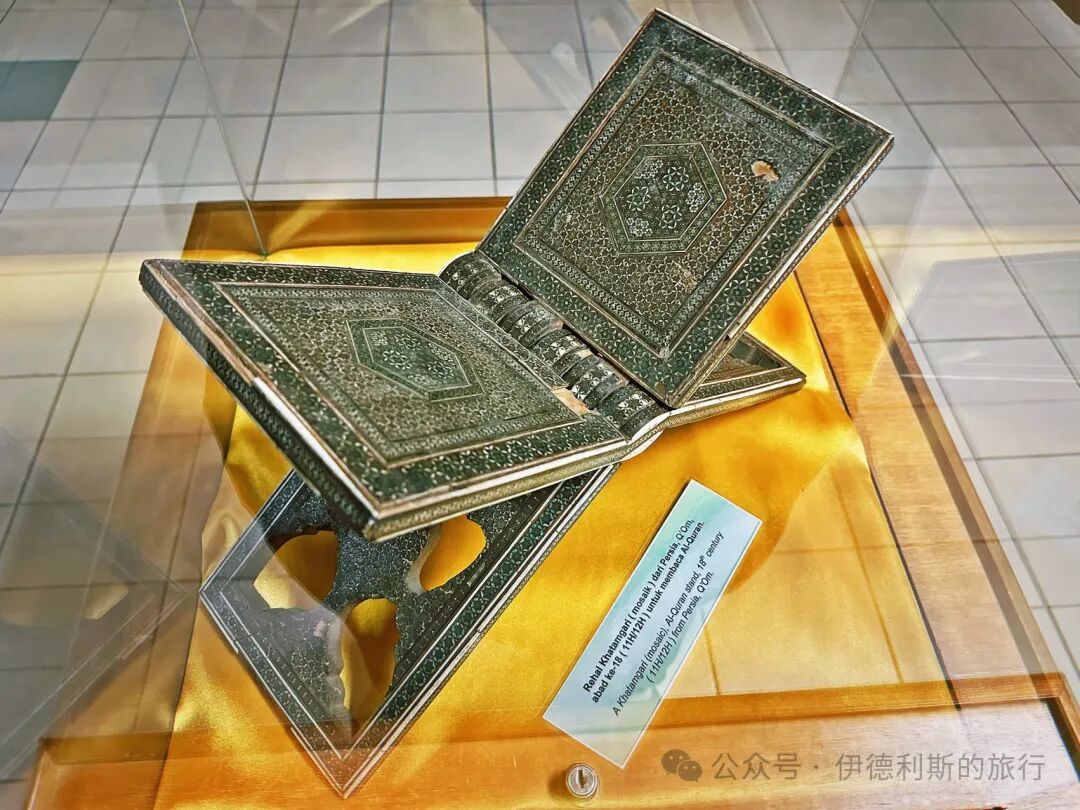
A scripture stand from Qom, Iran, dating back to the 18th century.
Tiles from the Ilkhanate period, dating to the 13th or 14th century.
A copper bowl from the Mamluk period in Egypt.
Two sets of cloisonné (jingtailan) altar vases and incense burners. One set likely traveled from Hong Kong to Malaysia during the era of export-oriented production.
Museum Guide: Sabah Islamic Civilization Museum in Malaysia
Articles • ali2007fr posted the article • 0 comments • 195 views • 2026-05-19 22:56
Summary: This article visits the Sabah Islamic Civilization Museum in Malaysia, with a focus on regional Muslim history, exhibition displays, and local cultural context. It keeps the original museum details, photographs, artifact notes, and travel observations for readers interested in Islamic heritage in Sabah.
The Sabah Islamic Civilization Museum opened in 2002. It has a small collection and is not well-known, but it is special because it holds unique Islamic cultural artifacts from the Malay Archipelago that you cannot see in other museums.
This is a wooden prayer gong (kentung) made in 1918 by the Sambas Sultanate in West Kalimantan, Indonesia. It is a traditional instrument used to signal the call to prayer.
The Sambas Malays live on the northwest coast of Borneo, right next to the Malaysian state of Sabah. The Sambas Malays founded the Sambas Sultanate in 1675. It became part of Indonesia in 1956, and the Sultan of Sambas still lives in the palace today. The Sambas Malays are mainly Sufi. Their rituals combine features of the Qadiriyya and Naqshbandiyya orders and are famous for their unique chanting style.
This is a manuscript of scripture from Sulawesi, Indonesia, written on date palm leaves and bound in goatskin. It is over a hundred years old. It was donated to the Sabah Islamic Civilization Museum in 2015 by Tuan Hj. Abdullah Abas, a religious teacher from Kinarut, Sabah, Malaysia.
This is a traditional Indonesian wooden chest carved with scripture, used for storing clothes. This type of wood carving is found in several Islamic museums in Malaysia and is a very distinctive piece of Islamic craft.
This is a bridal curtain used by the Bajau (Sama) people, a sea-faring group living on the west coast of Sabah, Malaysia, in Kota Belud.
This is a porcelain plate with scripture from the 1930s, acquired by the museum in 2005. Malay people usually display this kind of porcelain plate in a cabinet as a decoration.
These scripture-inscribed ceramics were brought to Sabah through trade and include pieces from both China and Europe. Under the rule of the Sultanate of Brunei, Sabah had very close trade ties with the Qing Dynasty, Spain, the Netherlands, and other countries.
This is a protective vest (dua vest) worn by indigenous soldiers in Sabah during the anti-British resistance led by Mat Salleh between 1894 and 1905.
The resistance leader Mat Salleh, whose real name was Datuk Muhammad Salleh, was an indigenous leader in Sabah. In 1881, the British took control of Sabah by establishing the North Borneo Chartered Company. Mat Salleh felt this violated the rights of the indigenous people and refused to recognize the company. In 1895, after negotiations with the company failed, Mat Salleh was declared a wanted man. He immediately built a fortress to openly resist the British and successfully launched several attacks. He died in battle in 1900, and his followers continued to fight until they were finally defeated in 1905.
This is a decorative wooden frame made in 1918, featuring scripture carvings and traditional embroidery in the center.
These are wooden grave markers from the Semporna region. This type of wooden grave marker is unique to the Semporna area and is carved with floral patterns around the edges.
This is a century-old bas-relief bronze plaque featuring the Basmala.
This is a prayer drum (beduk) made of palm wood and cowhide. It is usually placed in front of the main hall or at the entrance of a mosque, which is why many traditional mosques in Southeast Asia do not have minarets.
There are many wavy-bladed daggers (keris) in museums across Malaysia and Indonesia, but very few have a clear record of their origin. The Museum of Islamic Civilization in Sabah displays a sword called Pedang Khusus. Palace guards in the Tidung Kingdom on Tarakan Island off the east coast of Borneo wore this gold-made, highly detailed weapon.
The second type is called Sundang, a wavy-bladed dagger (keris) with blood grooves used by the Sulu people. The handle of the Sundang is cylindrical, which keeps it from slipping out of your hand during use.
Woodcarver Mba Hj. Edie Ifa from Jepara, Java, Indonesia, worked with students from a nearby Islamic school (madrasa) to carve a pair of scripture-inscribed door panels from a century-old teak log.
A wooden tombstone from the Bajau people of Semporna, with the top carved into the shape of a hat.
A hand-copied Persian scripture from 1796.
A scripture stand from Qom, Iran, dating back to the 18th century.
Tiles from the Ilkhanate period, dating to the 13th or 14th century.
A copper bowl from the Mamluk period in Egypt.
Two sets of cloisonné (jingtailan) altar vases and incense burners. One set likely traveled from Hong Kong to Malaysia during the era of export-oriented production. view all
Summary: This article visits the Sabah Islamic Civilization Museum in Malaysia, with a focus on regional Muslim history, exhibition displays, and local cultural context. It keeps the original museum details, photographs, artifact notes, and travel observations for readers interested in Islamic heritage in Sabah.
The Sabah Islamic Civilization Museum opened in 2002. It has a small collection and is not well-known, but it is special because it holds unique Islamic cultural artifacts from the Malay Archipelago that you cannot see in other museums.
This is a wooden prayer gong (kentung) made in 1918 by the Sambas Sultanate in West Kalimantan, Indonesia. It is a traditional instrument used to signal the call to prayer.
The Sambas Malays live on the northwest coast of Borneo, right next to the Malaysian state of Sabah. The Sambas Malays founded the Sambas Sultanate in 1675. It became part of Indonesia in 1956, and the Sultan of Sambas still lives in the palace today. The Sambas Malays are mainly Sufi. Their rituals combine features of the Qadiriyya and Naqshbandiyya orders and are famous for their unique chanting style.
This is a manuscript of scripture from Sulawesi, Indonesia, written on date palm leaves and bound in goatskin. It is over a hundred years old. It was donated to the Sabah Islamic Civilization Museum in 2015 by Tuan Hj. Abdullah Abas, a religious teacher from Kinarut, Sabah, Malaysia.
This is a traditional Indonesian wooden chest carved with scripture, used for storing clothes. This type of wood carving is found in several Islamic museums in Malaysia and is a very distinctive piece of Islamic craft.
This is a bridal curtain used by the Bajau (Sama) people, a sea-faring group living on the west coast of Sabah, Malaysia, in Kota Belud.
This is a porcelain plate with scripture from the 1930s, acquired by the museum in 2005. Malay people usually display this kind of porcelain plate in a cabinet as a decoration.
These scripture-inscribed ceramics were brought to Sabah through trade and include pieces from both China and Europe. Under the rule of the Sultanate of Brunei, Sabah had very close trade ties with the Qing Dynasty, Spain, the Netherlands, and other countries.
This is a protective vest (dua vest) worn by indigenous soldiers in Sabah during the anti-British resistance led by Mat Salleh between 1894 and 1905.
The resistance leader Mat Salleh, whose real name was Datuk Muhammad Salleh, was an indigenous leader in Sabah. In 1881, the British took control of Sabah by establishing the North Borneo Chartered Company. Mat Salleh felt this violated the rights of the indigenous people and refused to recognize the company. In 1895, after negotiations with the company failed, Mat Salleh was declared a wanted man. He immediately built a fortress to openly resist the British and successfully launched several attacks. He died in battle in 1900, and his followers continued to fight until they were finally defeated in 1905.
This is a decorative wooden frame made in 1918, featuring scripture carvings and traditional embroidery in the center.
These are wooden grave markers from the Semporna region. This type of wooden grave marker is unique to the Semporna area and is carved with floral patterns around the edges.
This is a century-old bas-relief bronze plaque featuring the Basmala.
This is a prayer drum (beduk) made of palm wood and cowhide. It is usually placed in front of the main hall or at the entrance of a mosque, which is why many traditional mosques in Southeast Asia do not have minarets.
There are many wavy-bladed daggers (keris) in museums across Malaysia and Indonesia, but very few have a clear record of their origin. The Museum of Islamic Civilization in Sabah displays a sword called Pedang Khusus. Palace guards in the Tidung Kingdom on Tarakan Island off the east coast of Borneo wore this gold-made, highly detailed weapon.
The second type is called Sundang, a wavy-bladed dagger (keris) with blood grooves used by the Sulu people. The handle of the Sundang is cylindrical, which keeps it from slipping out of your hand during use.
Woodcarver Mba Hj. Edie Ifa from Jepara, Java, Indonesia, worked with students from a nearby Islamic school (madrasa) to carve a pair of scripture-inscribed door panels from a century-old teak log.
A wooden tombstone from the Bajau people of Semporna, with the top carved into the shape of a hat.
A hand-copied Persian scripture from 1796.
A scripture stand from Qom, Iran, dating back to the 18th century.
Tiles from the Ilkhanate period, dating to the 13th or 14th century.
A copper bowl from the Mamluk period in Egypt.
Two sets of cloisonné (jingtailan) altar vases and incense burners. One set likely traveled from Hong Kong to Malaysia during the era of export-oriented production.
Mosque Travel Guide: Malacca - Eight Historic Mosques (Part 1)
Articles • ali2007fr posted the article • 0 comments • 275 views • 2026-05-19 22:20
Summary: This first part introduces eight historic mosques in Malacca, including their dates, layouts, and role in the city's Muslim community. It keeps the original mosque names, photographs, architectural details, and travel observations for readers interested in Malaysia's Islamic heritage.
Kampung Hulu Mosque: 1728.
Tengkera Small Mosque minaret (bangker): 1728.
Tengkera Mosque: 1782.
Kampung Kling Mosque: 1748.
Bukit Cina Mosque: 1865.
Pengkalan Rama Mosque: first built in the 1730s, rebuilt in 1917.
Duyong Mosque: 1859.
Serkam Pantai Mosque: 1853.
Peringgit Mosque: first built in 1726, rebuilt in 1868.
Kampung Hulu Mosque.
After the Portuguese occupied Malacca, they destroyed all the mosques of the Malacca Sultanate and promoted Catholicism in the city. However, the Portuguese were not successful, and Catholicism did not have much influence in Malacca until the Dutch took over.
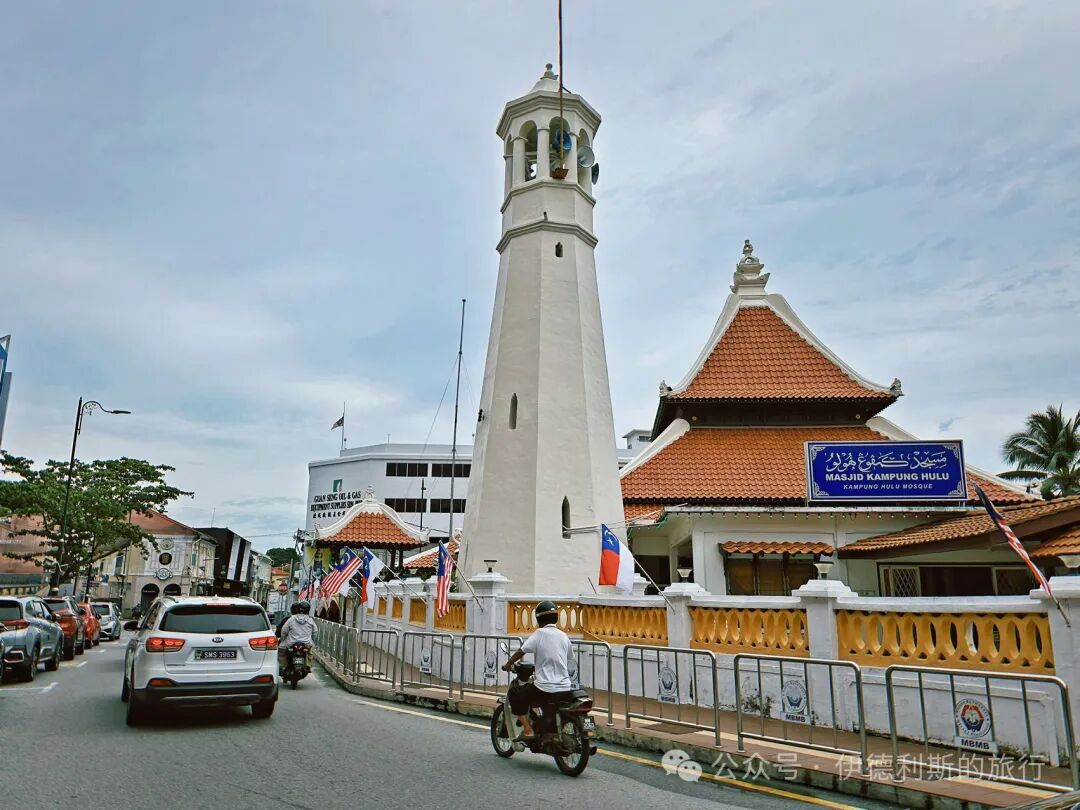
The Dutch took a more tolerant approach toward Malacca and allowed the faith to spread there. In 1728, the Dutch East India Company commissioned a Chinese Muslim, Dato' Samsuddin Bin Arom, to build a new mosque near the site of an old one destroyed by the Portuguese. This became the Kampung Hulu Mosque (Masjid Kampung Hulu), the oldest surviving mosque in Malacca.
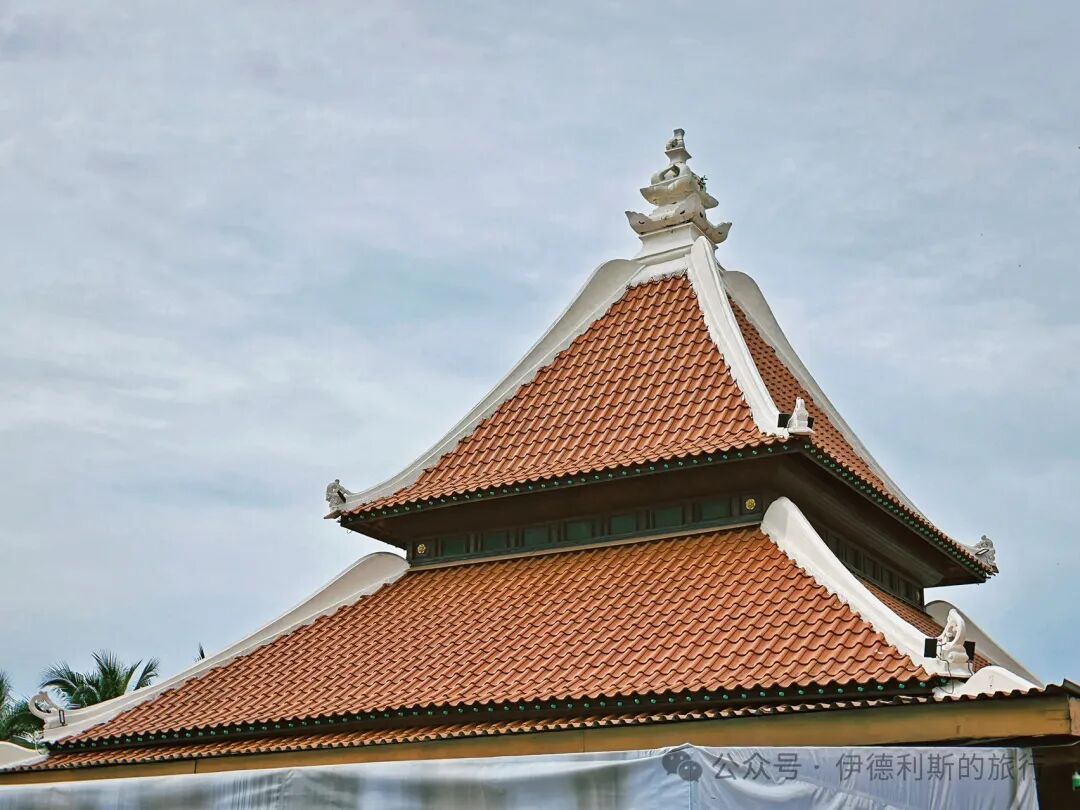
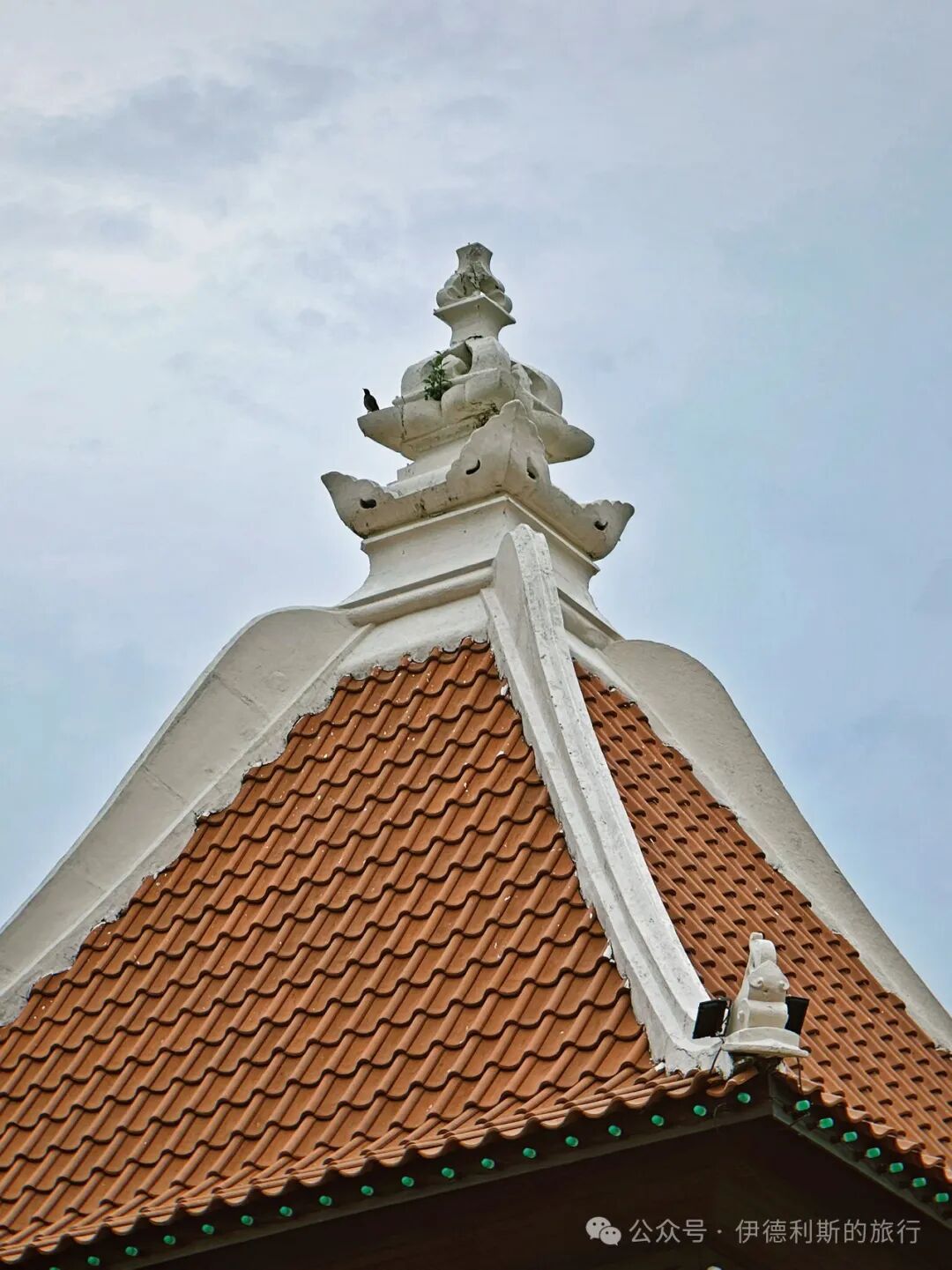
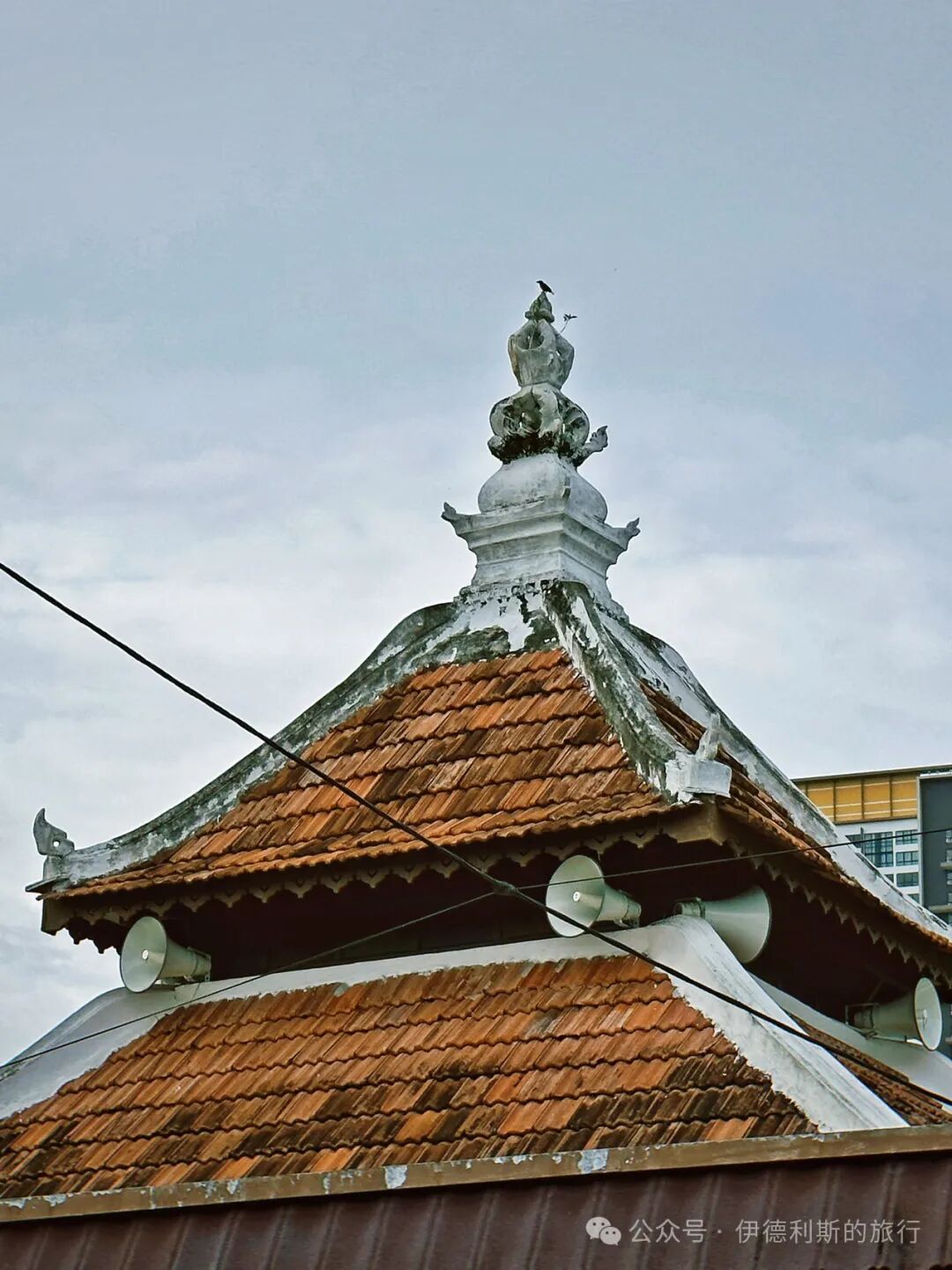
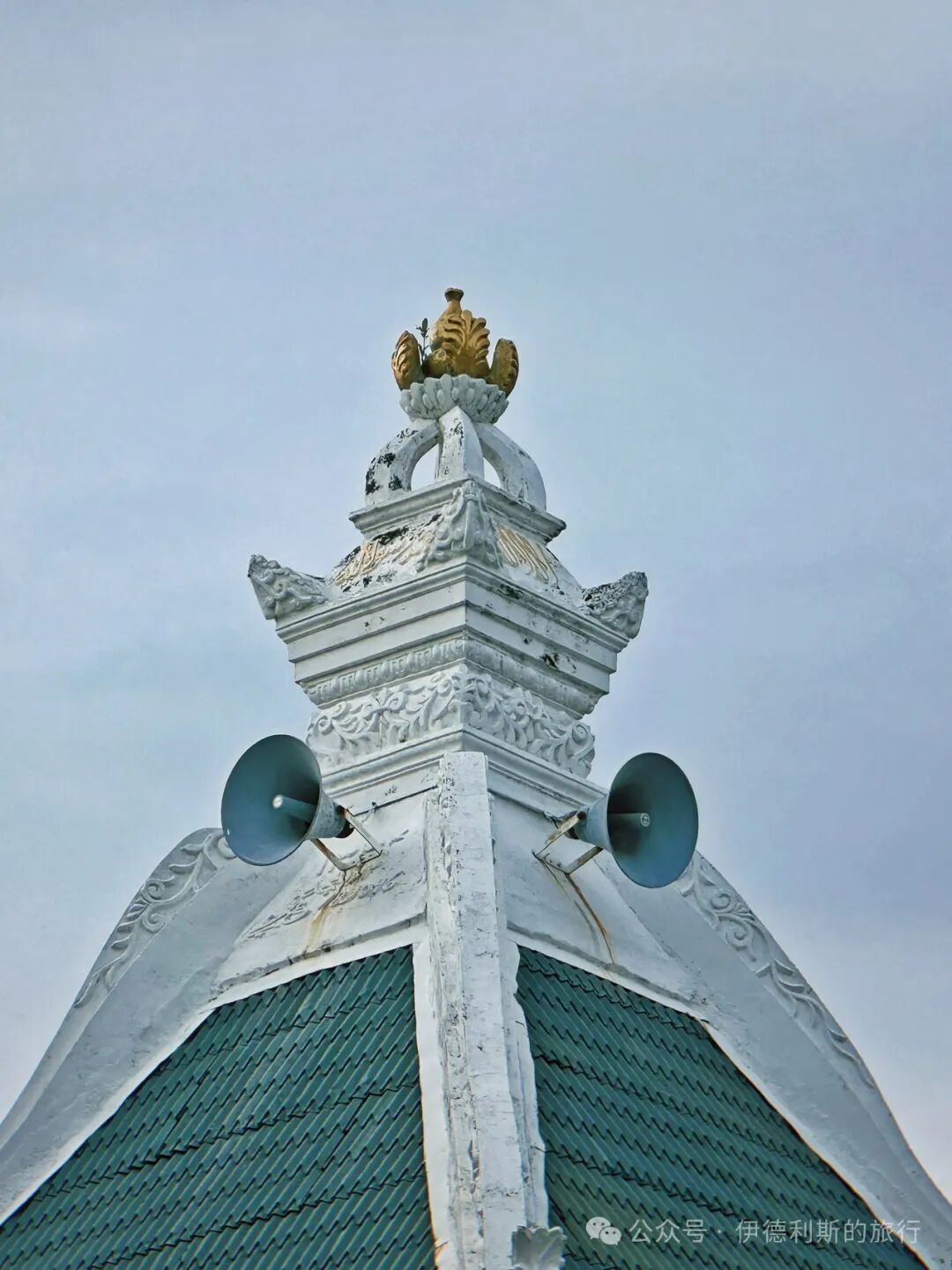
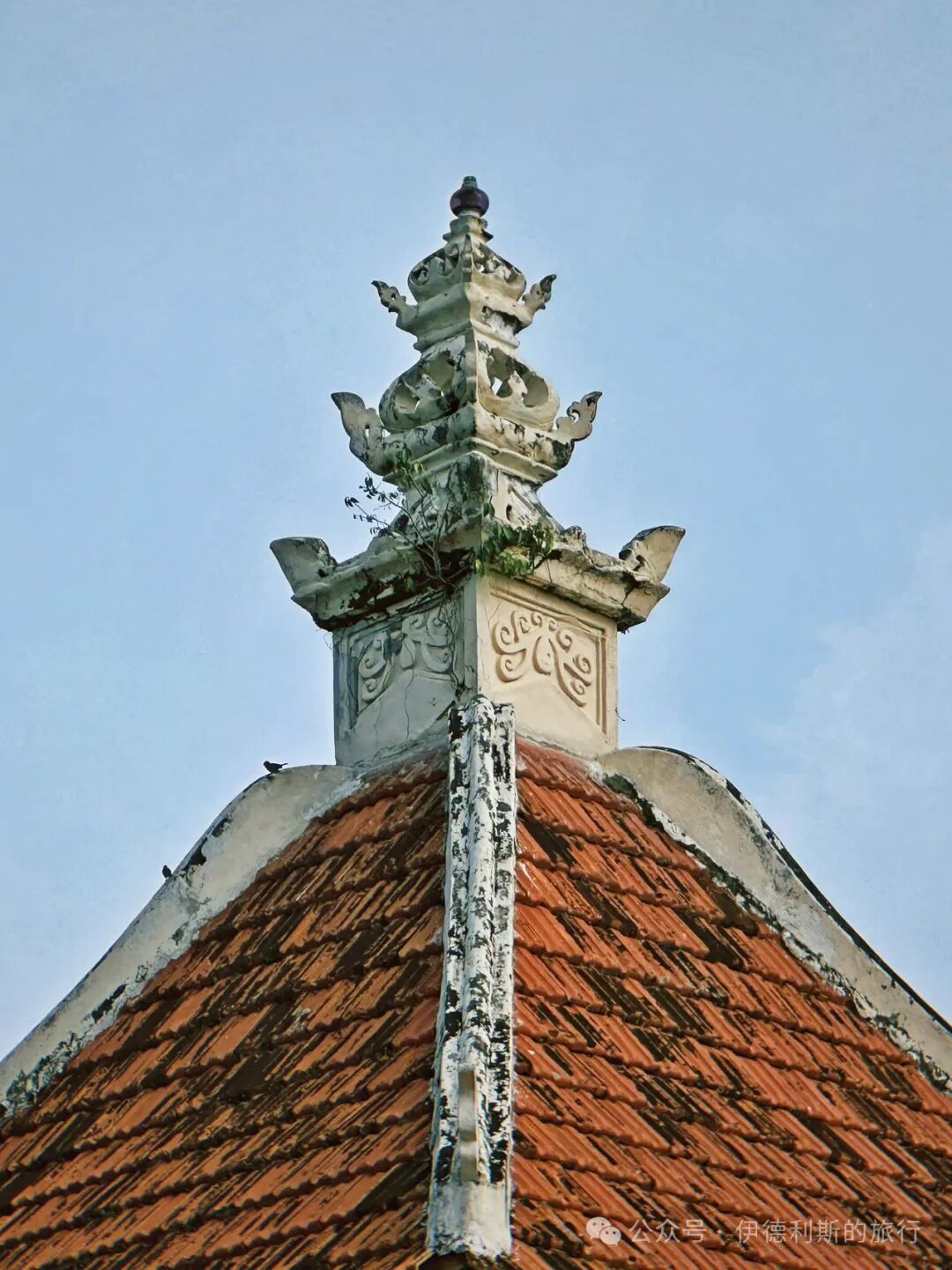
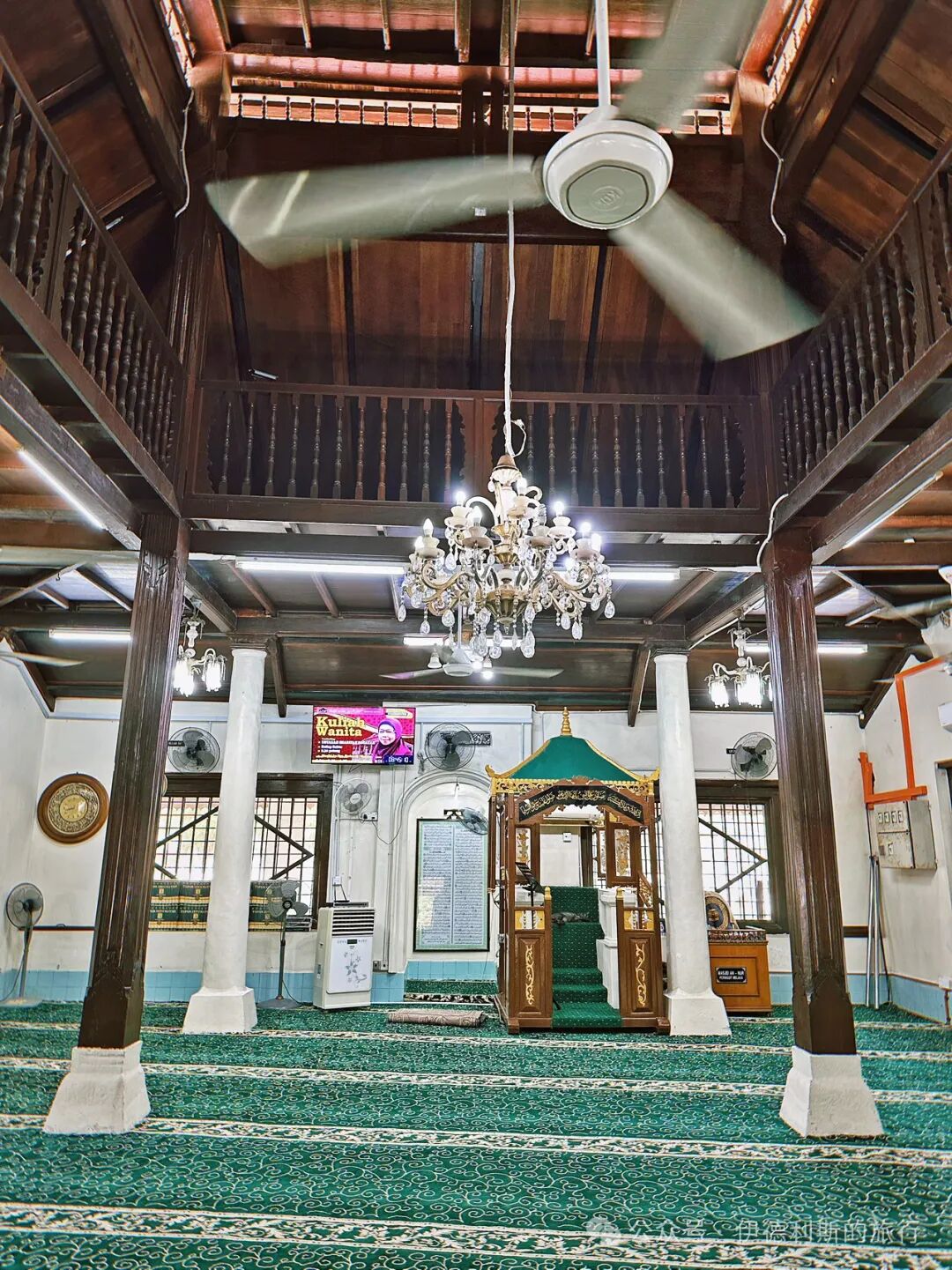
The main prayer hall of Kampung Hulu Mosque uses the traditional Javanese Tajug multi-layered pyramid roof. The decoration at the very top is called a Mustoko or Memolo in Javanese. This roof structure leaves space between the upper and middle layers for ventilation and light, which adapts well to the humid and rainy tropical climate.
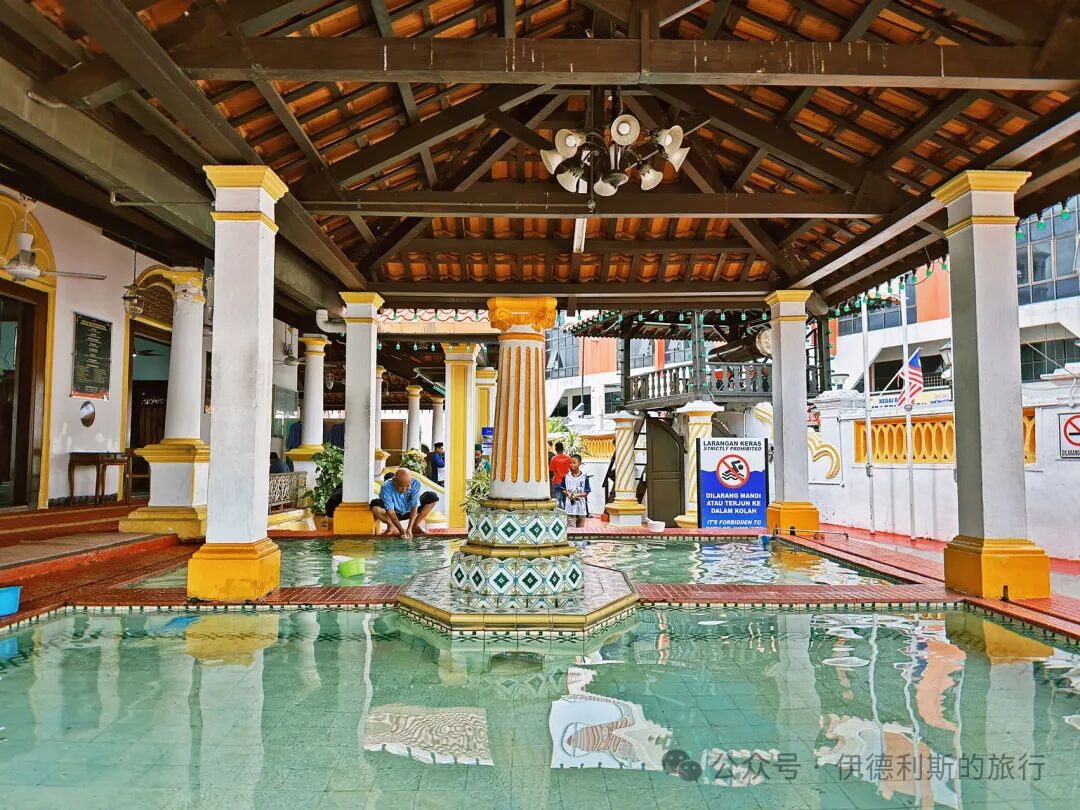
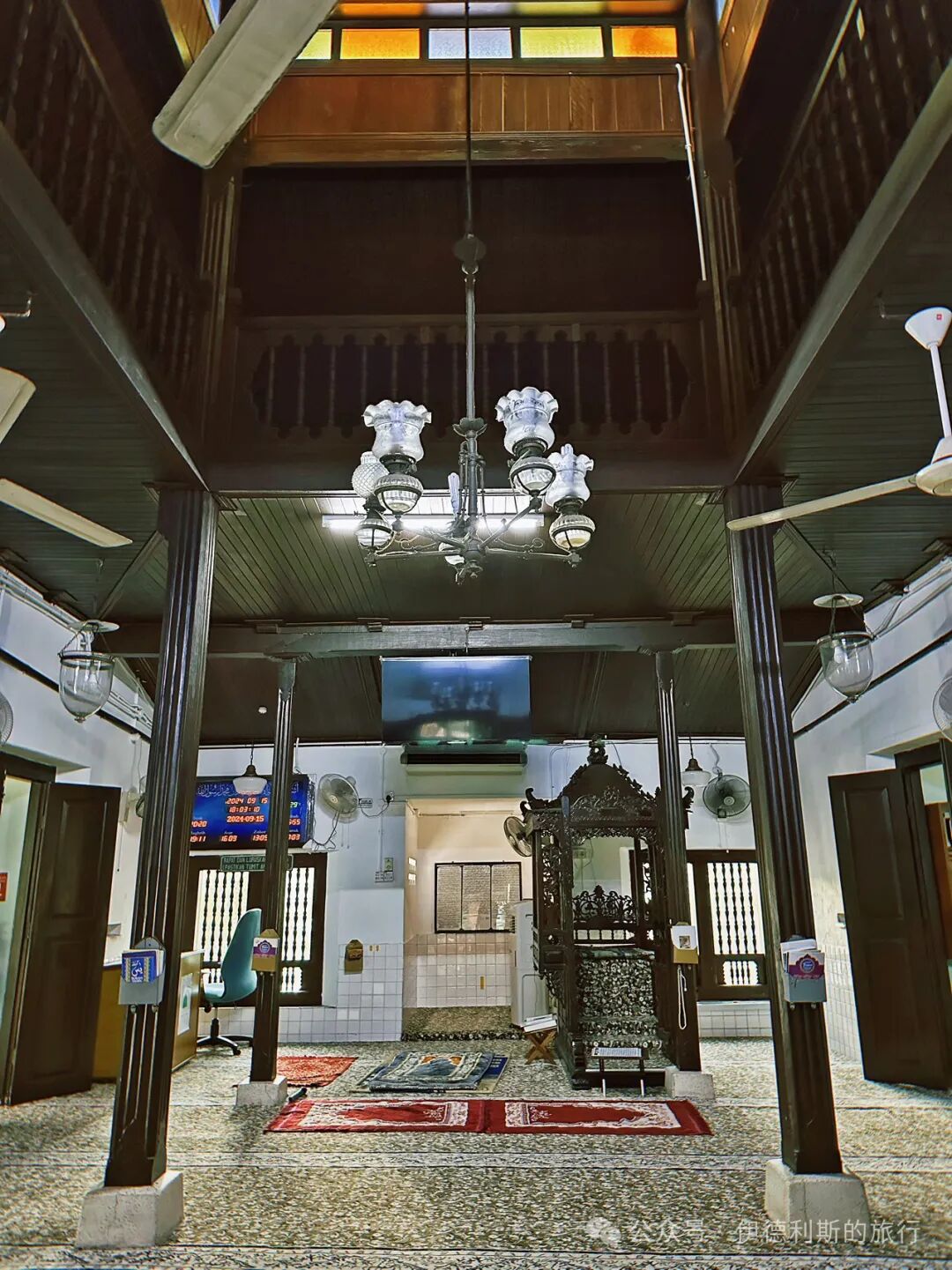
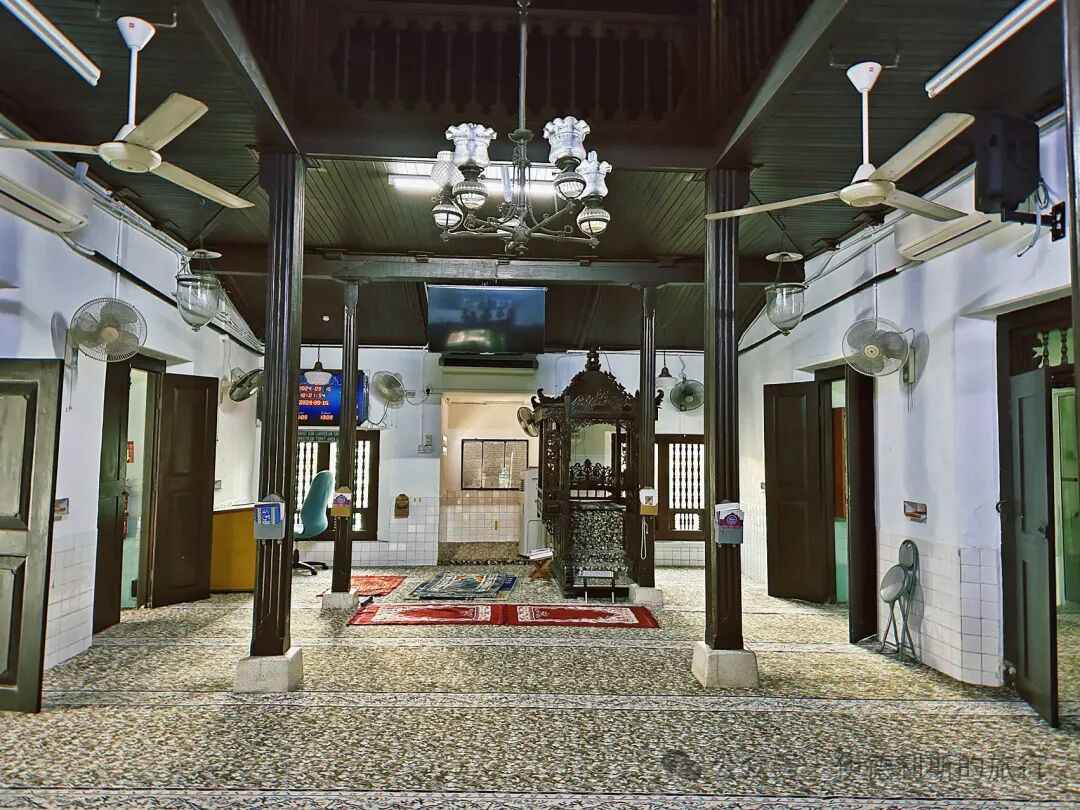
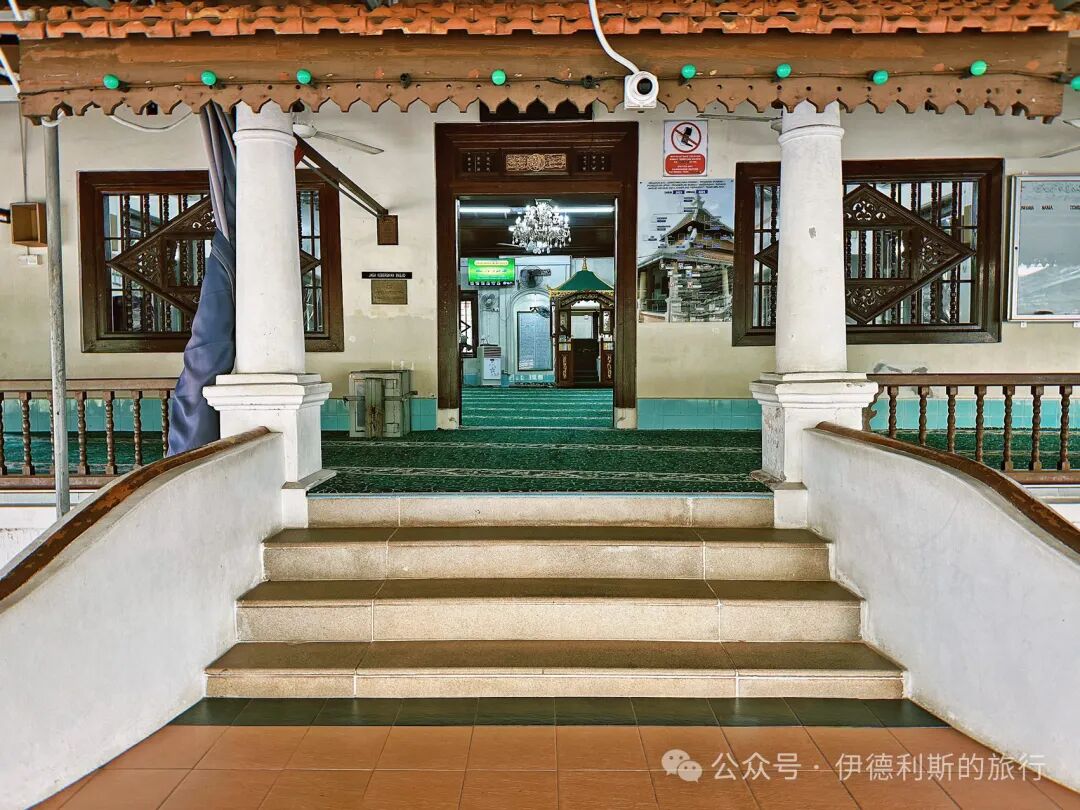
Unlike traditional all-wood Javanese mosques, Kampung Hulu Mosque is built of brick and stone with plaster-coated roofs, an influence from Dutch colonial architecture. the tiles and floor bricks inside the mosque were all imported from China, and the patterns on the windows also show Chinese influence.
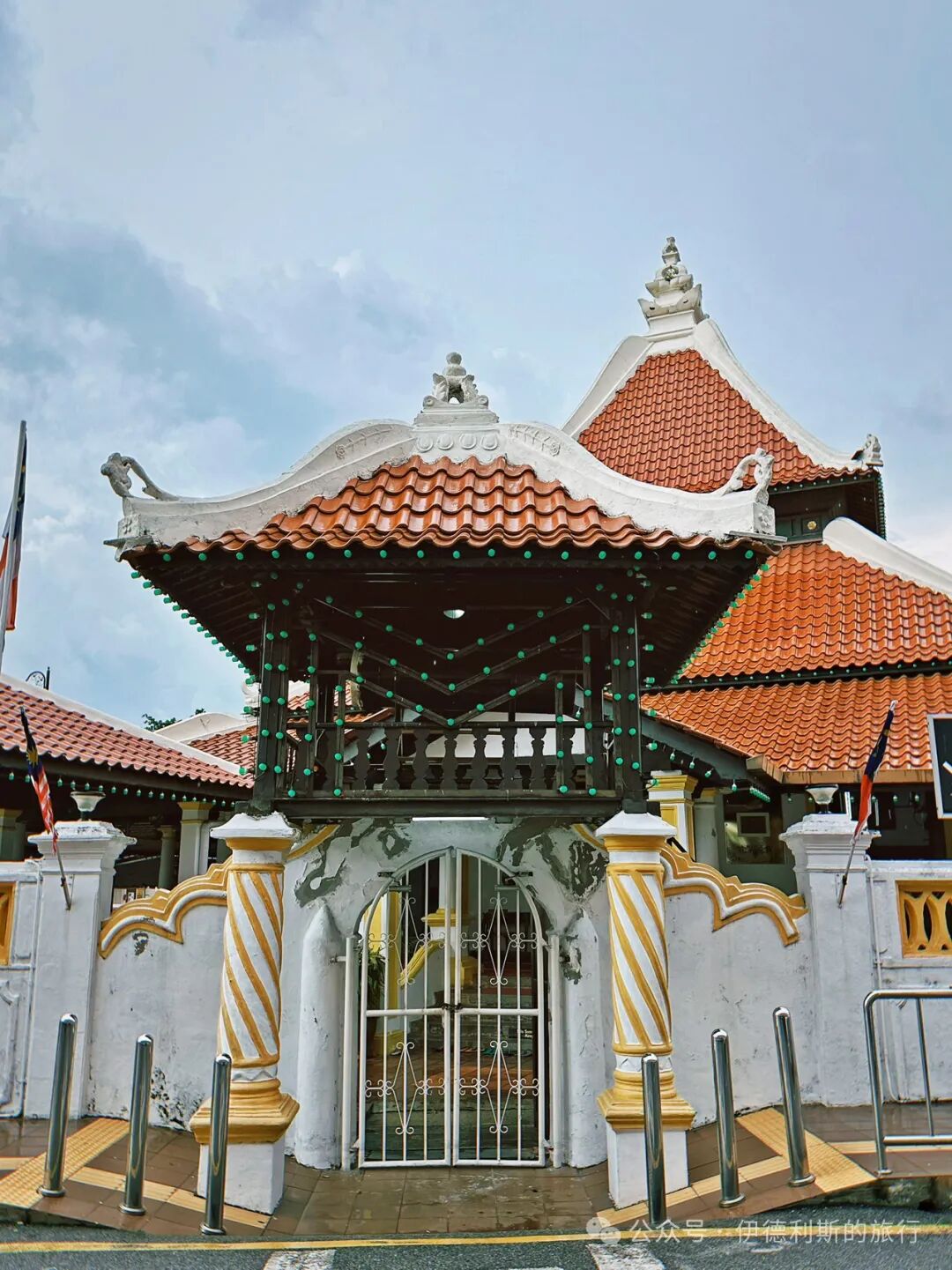
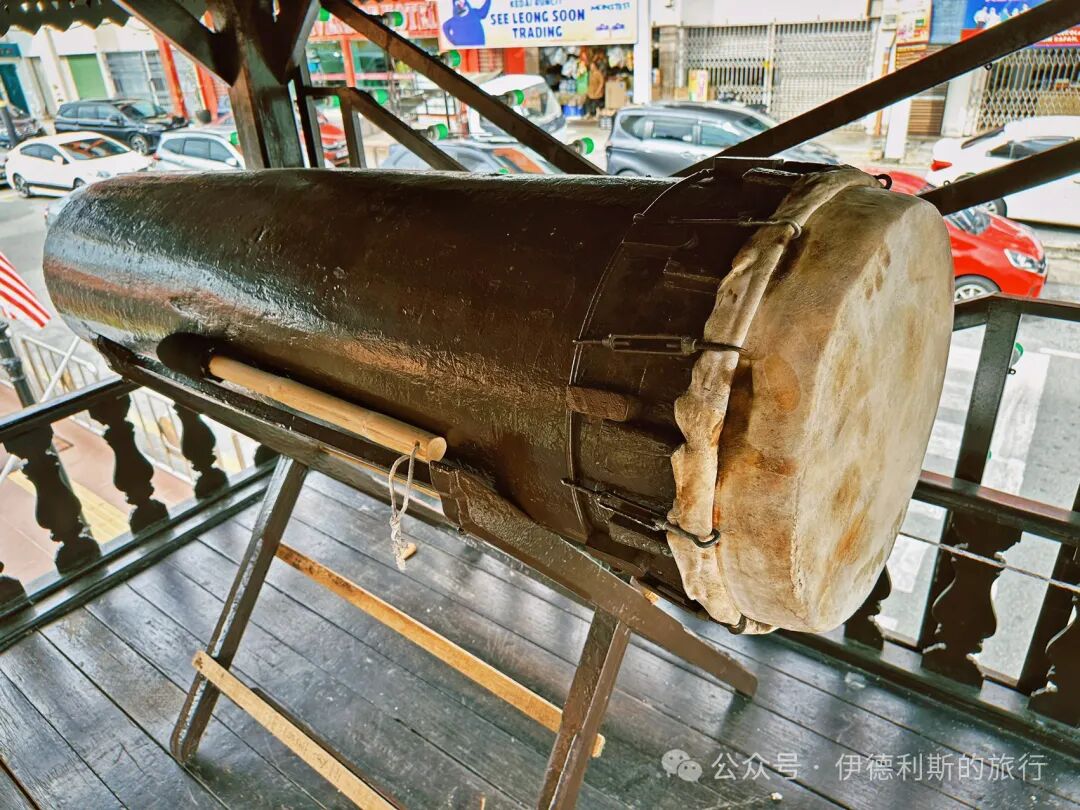
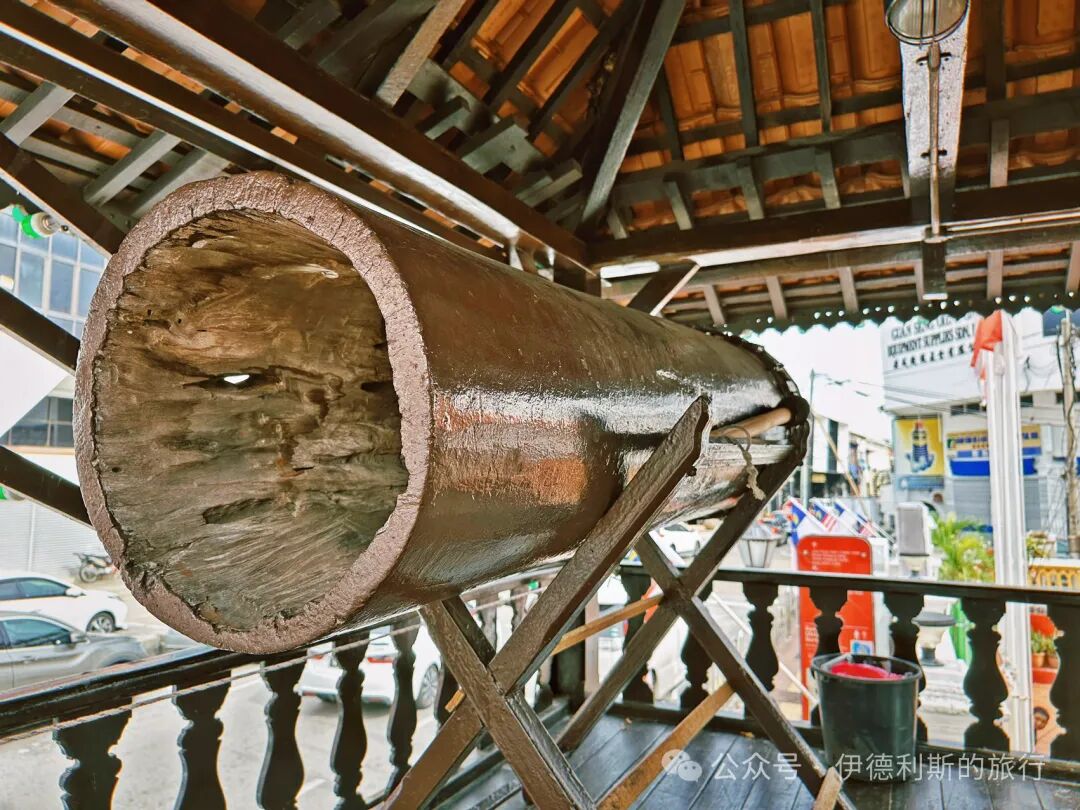
A traditional drum called a Beduk is placed above the main gate. Early mosques in Southeast Asia used drums to call people to prayer. Today, many mosques still use drums to call for prayer and to signal the breaking of the fast during Jumu'ah and Ramadan.
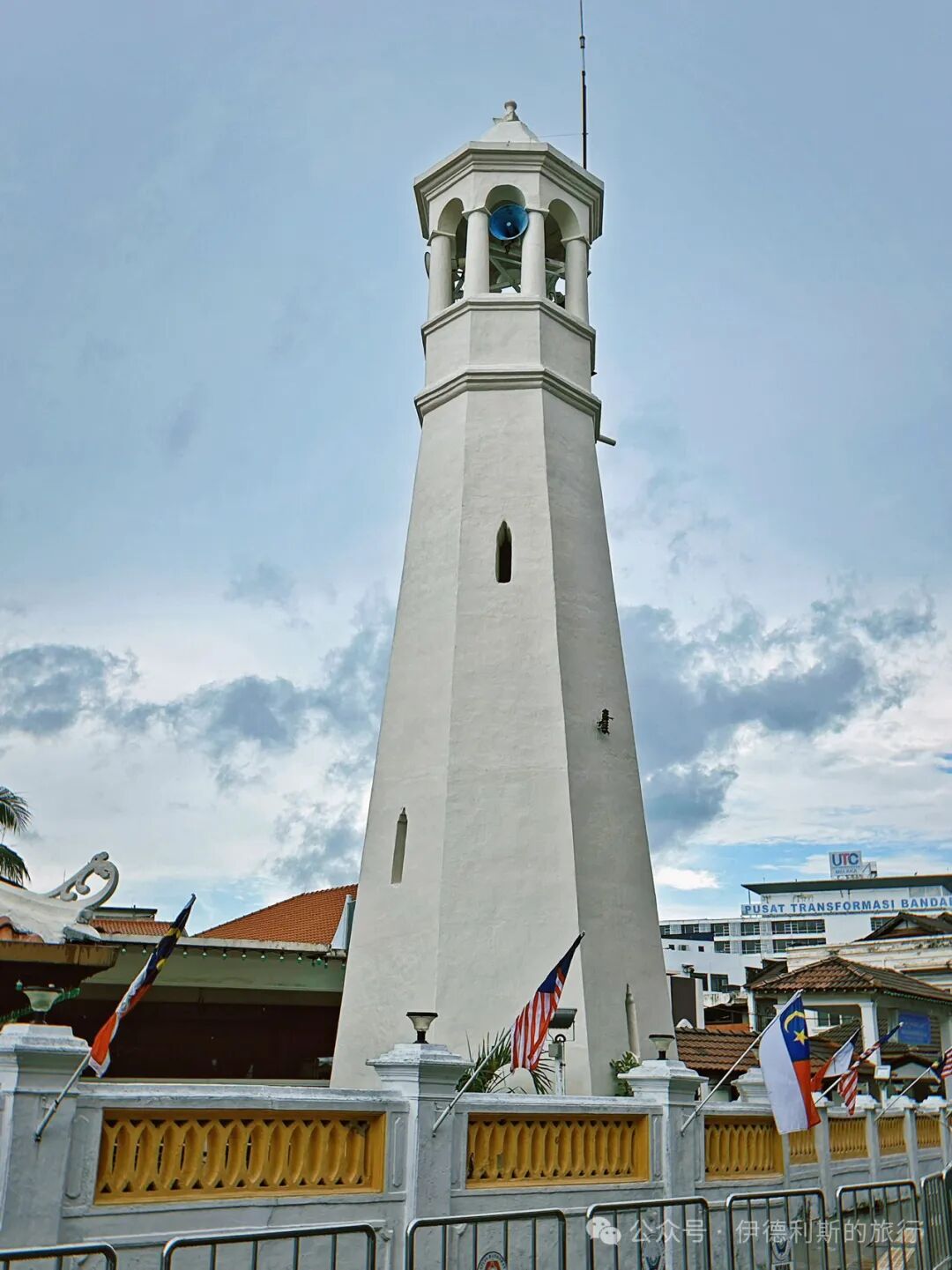
The minaret (bangker) looks like a lighthouse, which was a first for the Malay Peninsula, as there was no previous tradition of building minarets there. On the island of Java, the Great Mosque of Banten, built in 1632, was the first to feature a lighthouse-style minaret designed and built by a Chinese man named Cek-ban-cut.
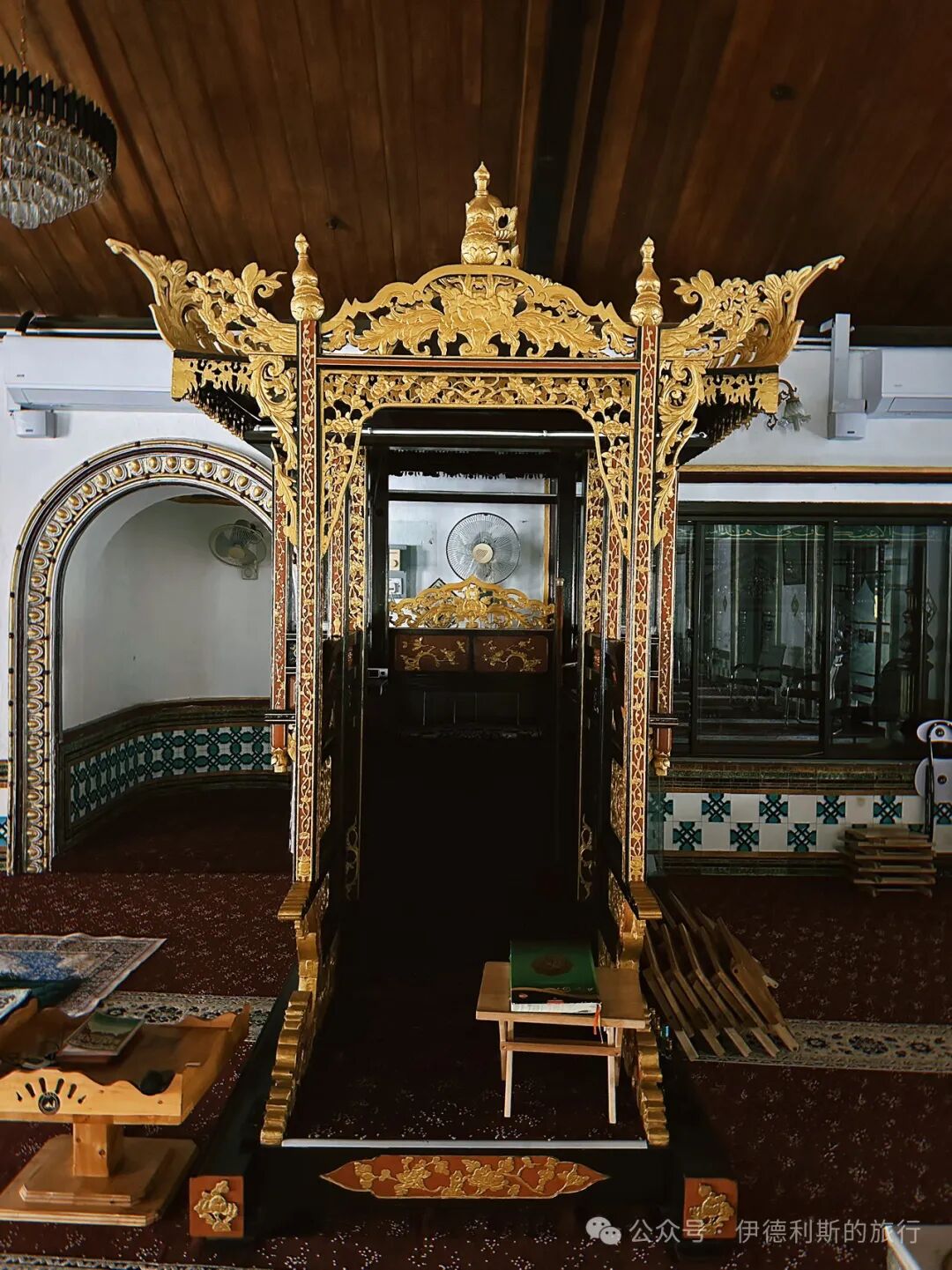
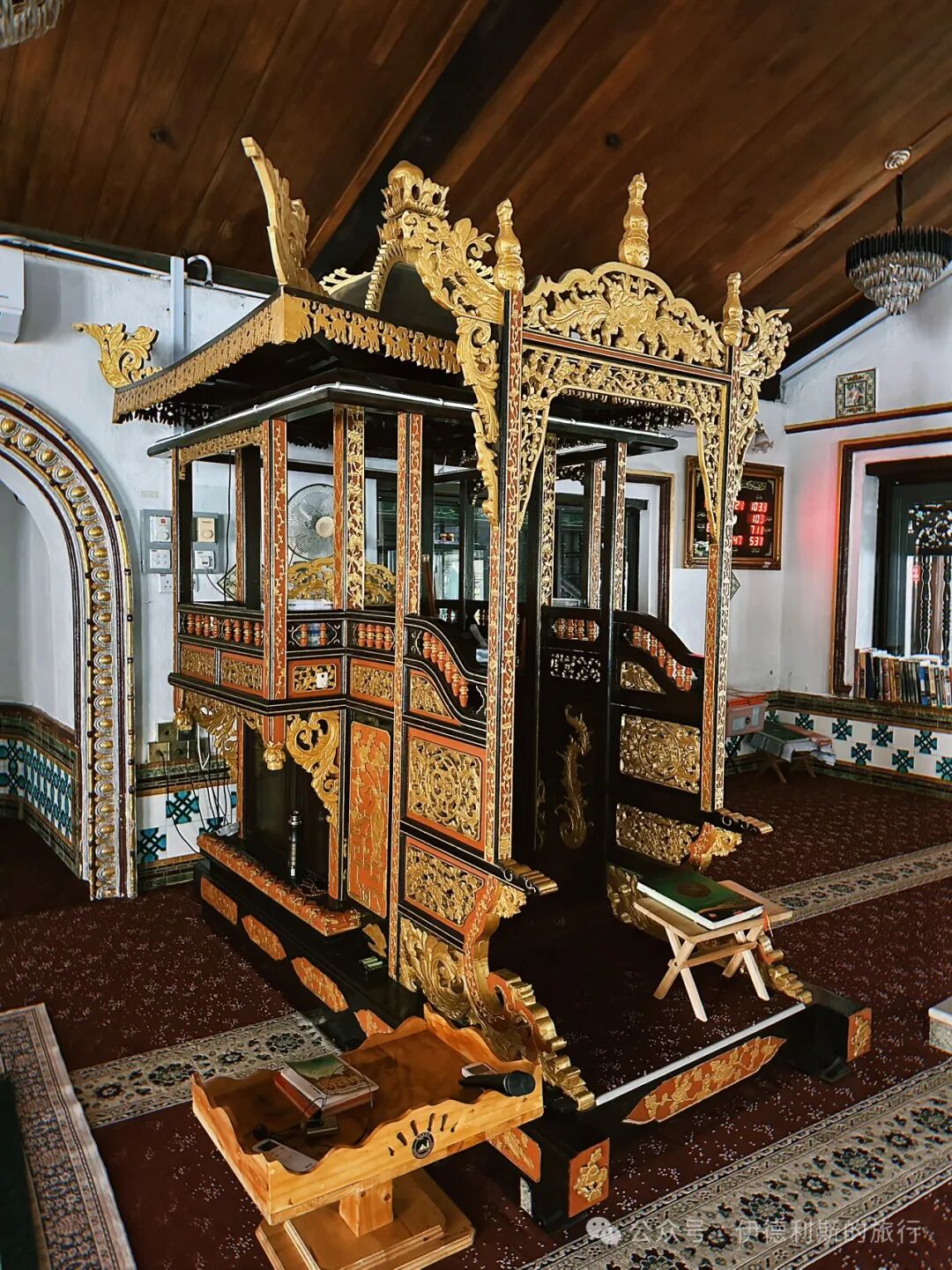
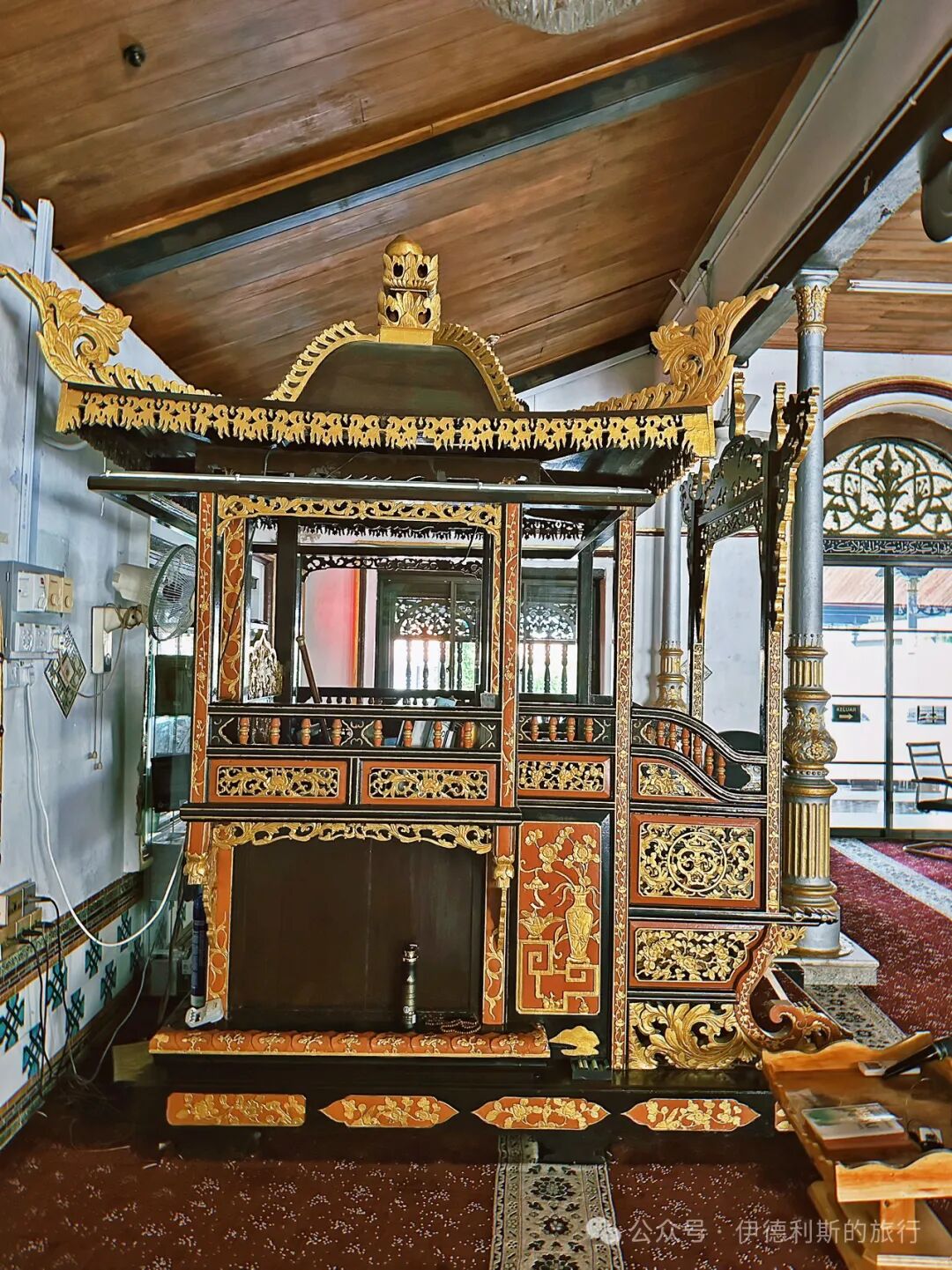
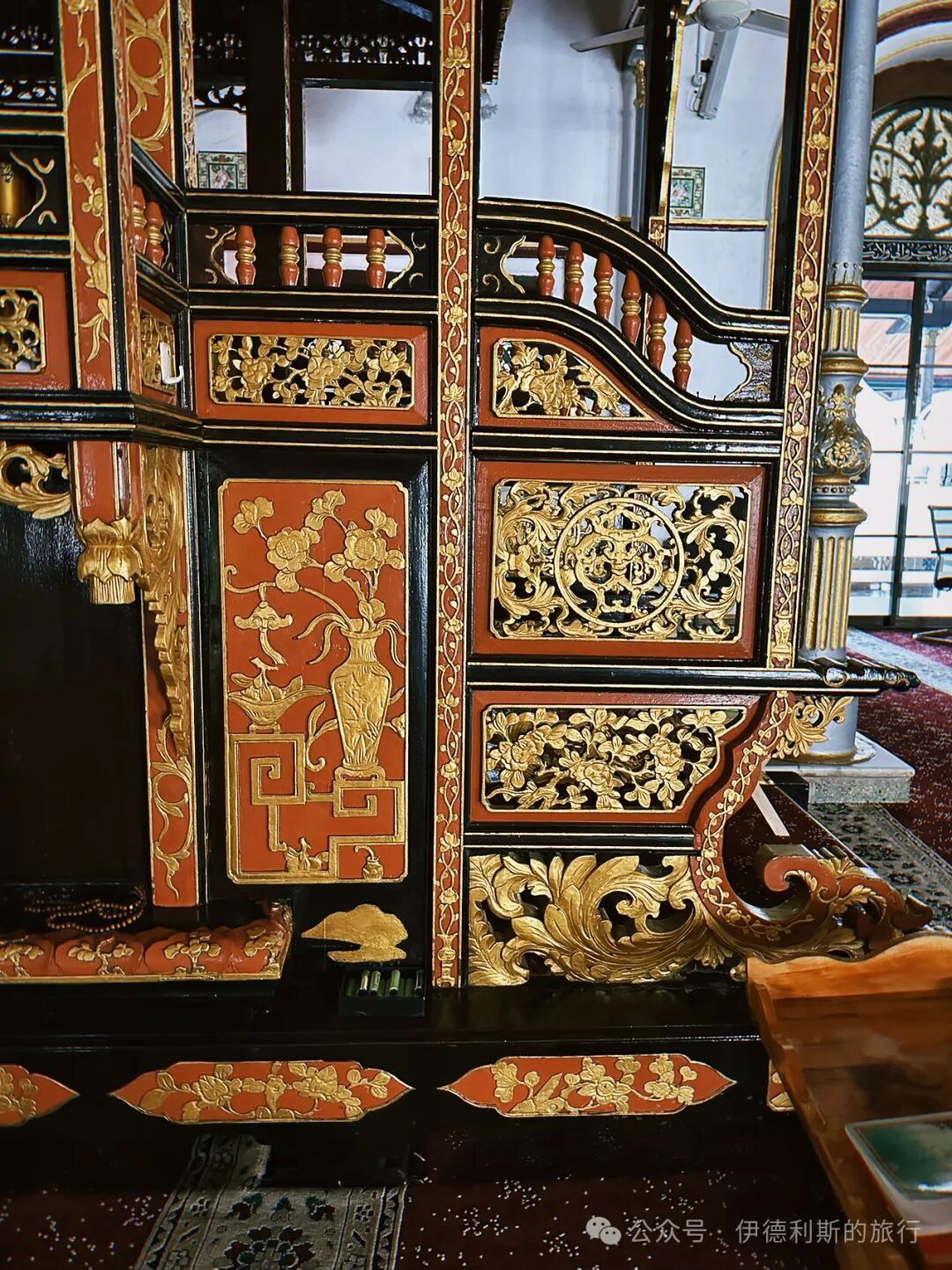
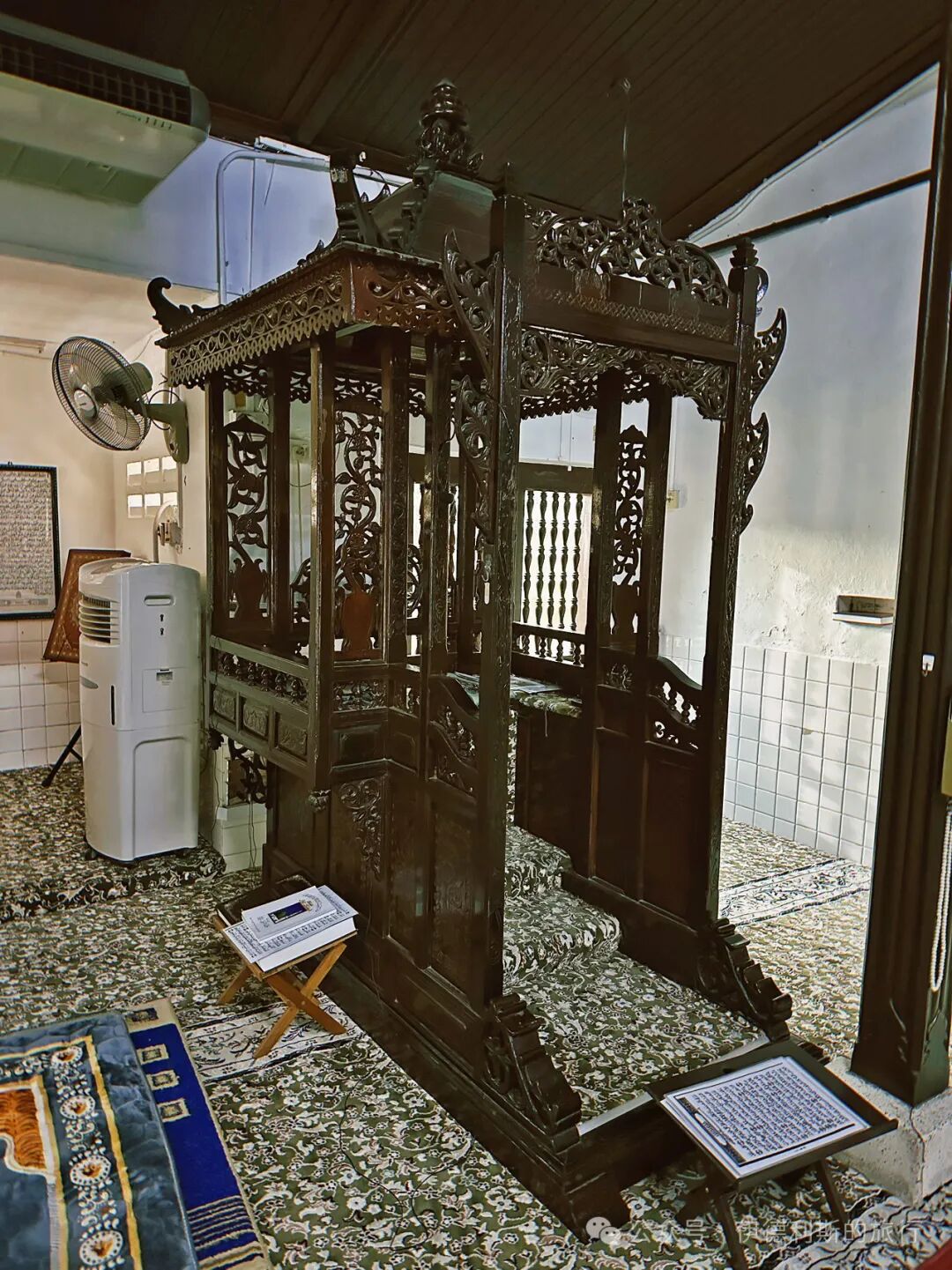
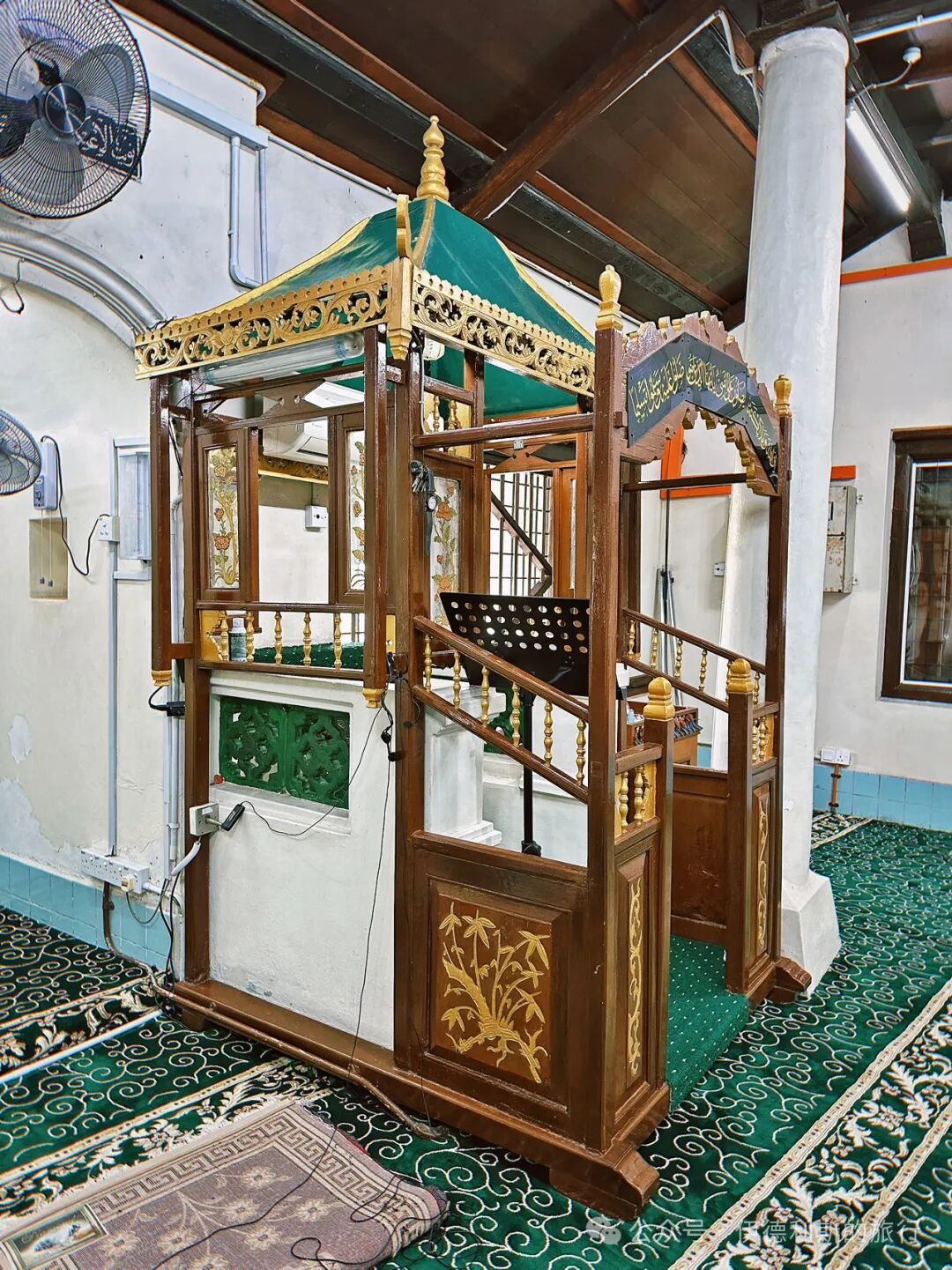
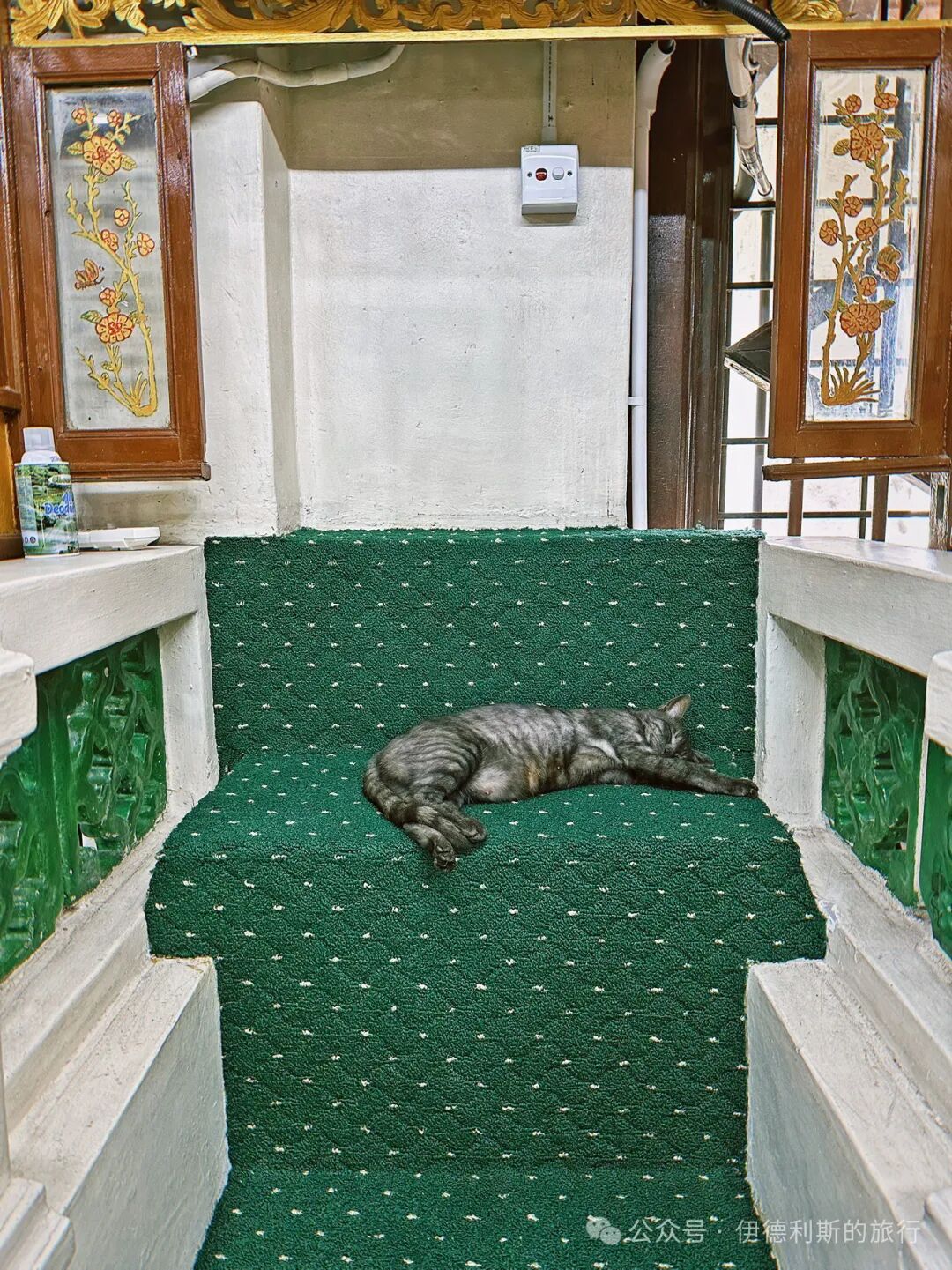
The minbar inside the main hall of Kampung Hulu Mosque has rich patterns and is in the typical Javanese throne style.
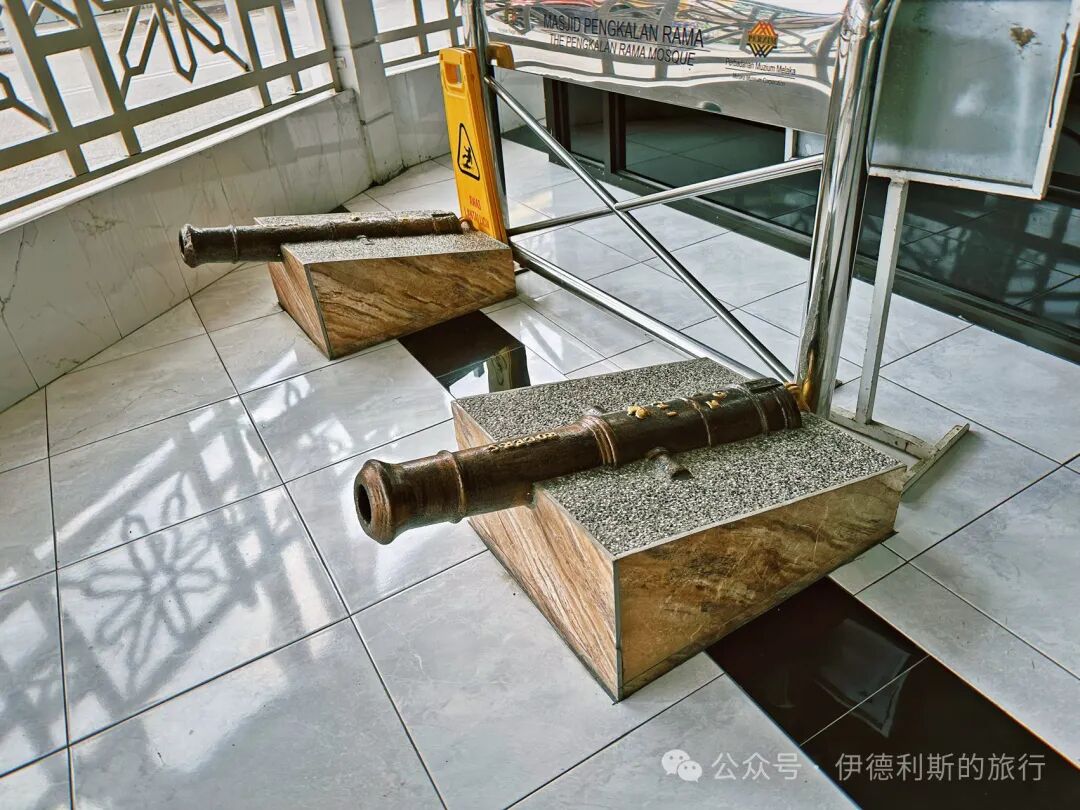
I performed the Dhuhr and Maghrib namaz at Kampung Hulu Mosque and also attended the night praise sessions during the Mawlid. There are two cannons at the entrance of the main hall, which are used during the Eid festival. The number '1211' is engraved on the cannon barrel, which corresponds to the year 1796 in the Gregorian calendar.
The minaret (bangke lou) of the Tengkera Small Mosque.
After the Kampung Hulu Mosque was built, an Indian merchant named Muhammad Salleh funded the construction of a small mosque (Surau Tengkera) on Tengkera Street. Tengkera comes from the Portuguese word 'tranquerah,' meaning 'fortress,' as there was once a defensive wall built by the Portuguese here. The Tengkera Small Mosque was also built in 1728. It was originally a wooden structure with pillars made of ironwood (belian) from Pontianak, Kalimantan, and a roof covered with nipa palm leaves.
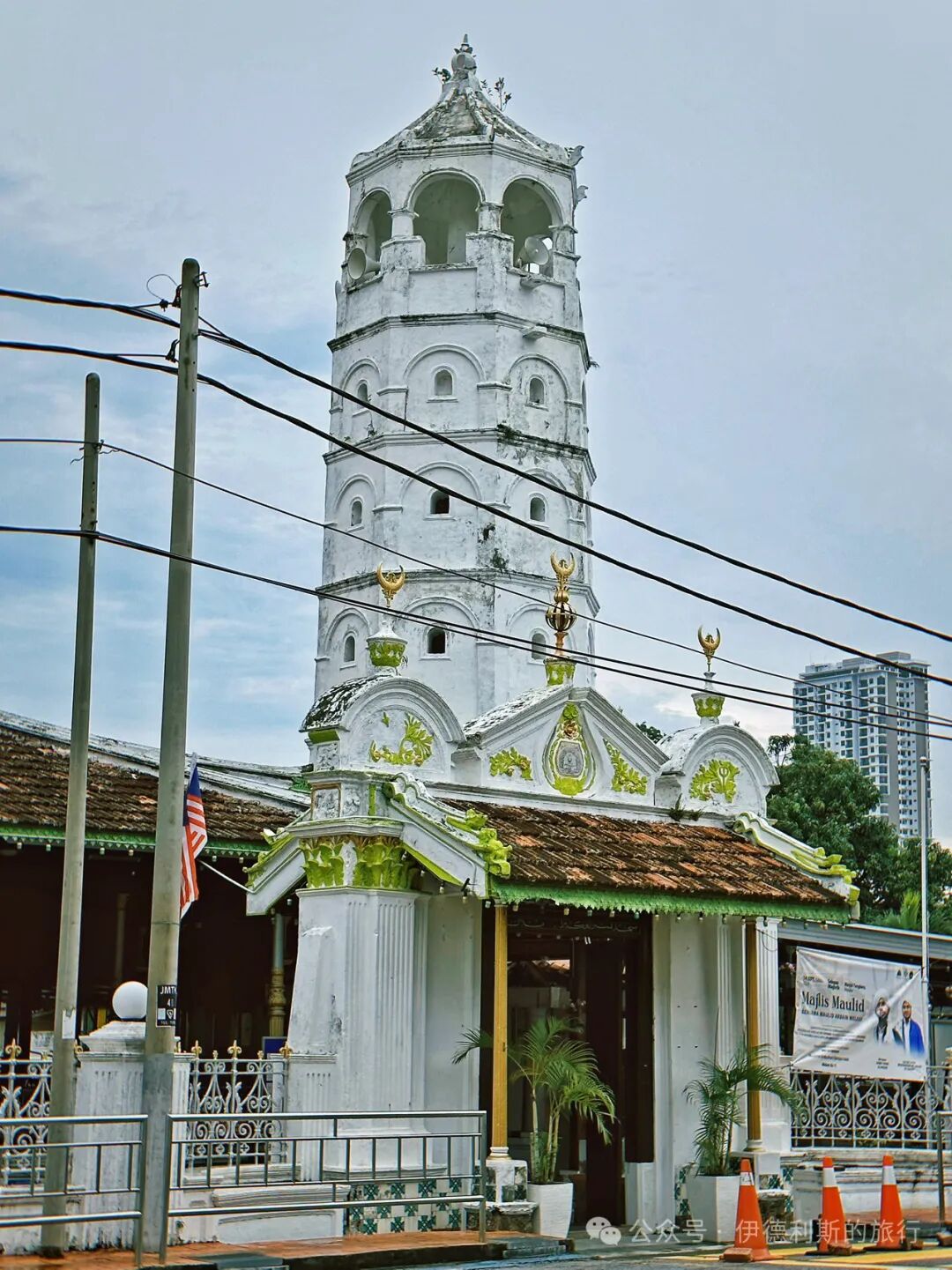
After the Tengkera Mosque (Masjid Tengkera) was completed in 1782, the Tengkera Small Mosque was abandoned, and today only the minaret remains. Unlike the Kampung Hulu Mosque, the minaret of the Tengkera Small Mosque is modeled after a Chinese pagoda. This was the first of its kind on the Malay Peninsula and has become a major feature of Malacca today.
Tengkera Mosque.
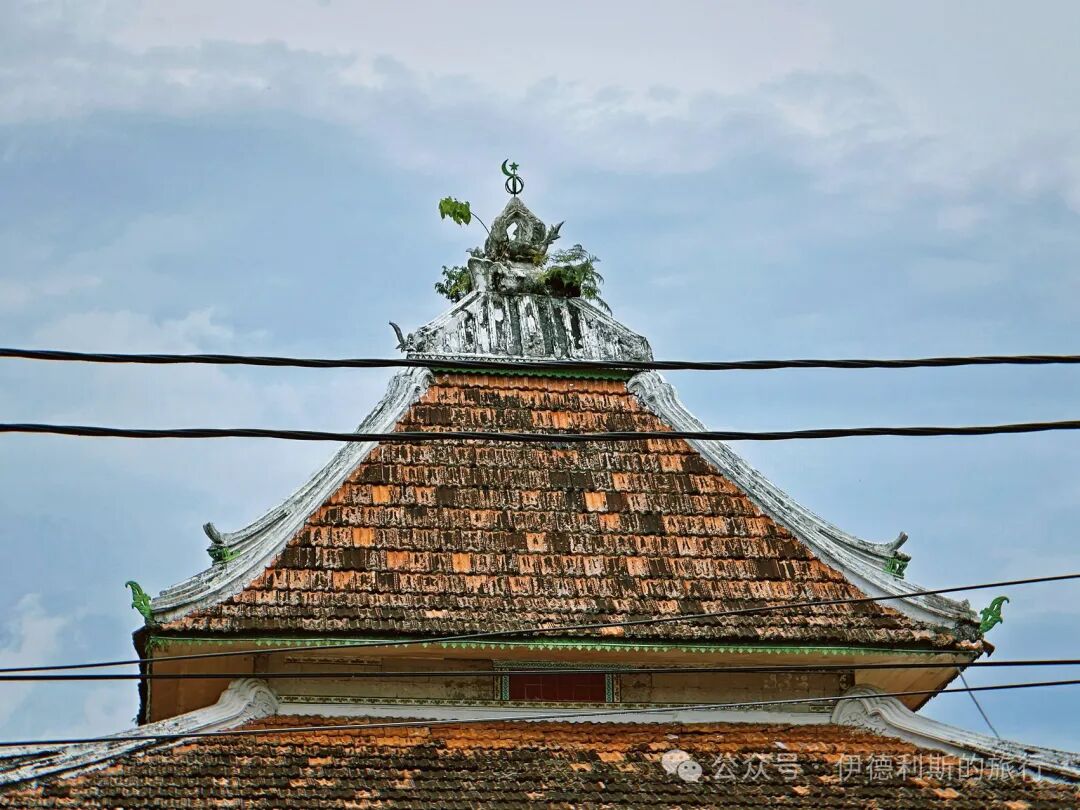
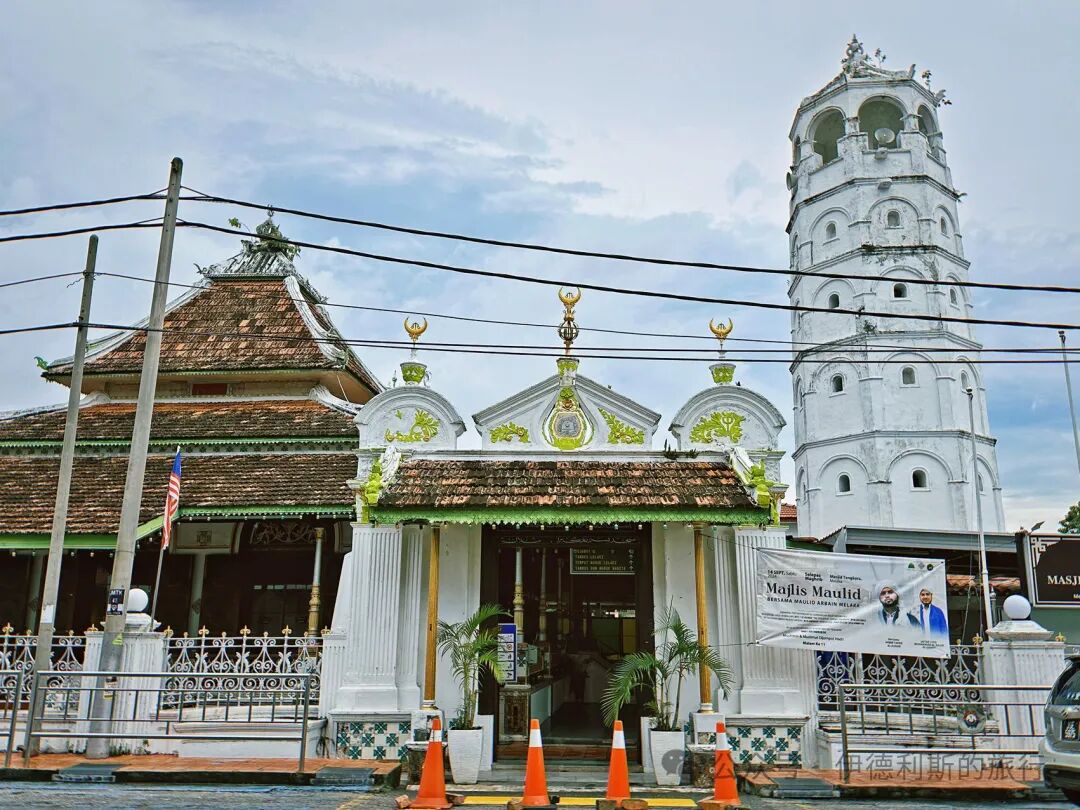
In 1782, the Tengkera Mosque (Masjid Tengkera) was completed to the west of the Tengkera Small Mosque. The Tengkera Mosque also features a traditional Javanese three-tiered pyramid roof (bumbung tiga lapis), and the main hall is supported by four ironwood pillars from Kalimantan. After two renovations in 1890 and 1910, the current Tengkera Mosque has brick walls and a tiled roof. The minaret of the Tengkera Mosque, like that of the Tengkera Small Mosque, is a Chinese-style pagoda structure and serves as a continuation of the earlier minaret.
The exquisite minbar (pulpit) of the Tengkera Mosque is also in the Javanese throne style.
Kampung Kling Mosque.
The Kampung Kling Mosque (Masjid Kampong Kling) is located in the center of Malacca city. It was first built by Indian merchants in 1748 and was converted from a wooden structure to the current brick structure in 1872. The mosque features a traditional Javanese three-tiered pyramid roof (bumbung tiga lapis). The classical Corinthian columns between the main hall and the prayer niche (mihrab), as well as the plaster walls, show the influence of Dutch colonists. The Chinese tiles on the roof, floor, and walls, along with the wood carvings on the doors and windows, reflect Chinese influence.
Legend has it that during the Malacca Sultanate, Kampung Kling was a settlement for Indian Muslim merchants. 'Kling' was the historical term used in the Malay Archipelago for Indians, especially Tamils. On a 1690 map of Malacca, this area is marked as 'Mosquée de Maures' (Moorish Mosque), but its relationship to the Kampung Kling Mosque is uncertain. In the 18th century, this was still a village for South Indian immigrants. After the rubber industry in Malacca boomed in the 19th and early 20th centuries, it became a residential area for Chinese people working in the rubber industry. Today, the mosque is surrounded by Chinese shophouses.
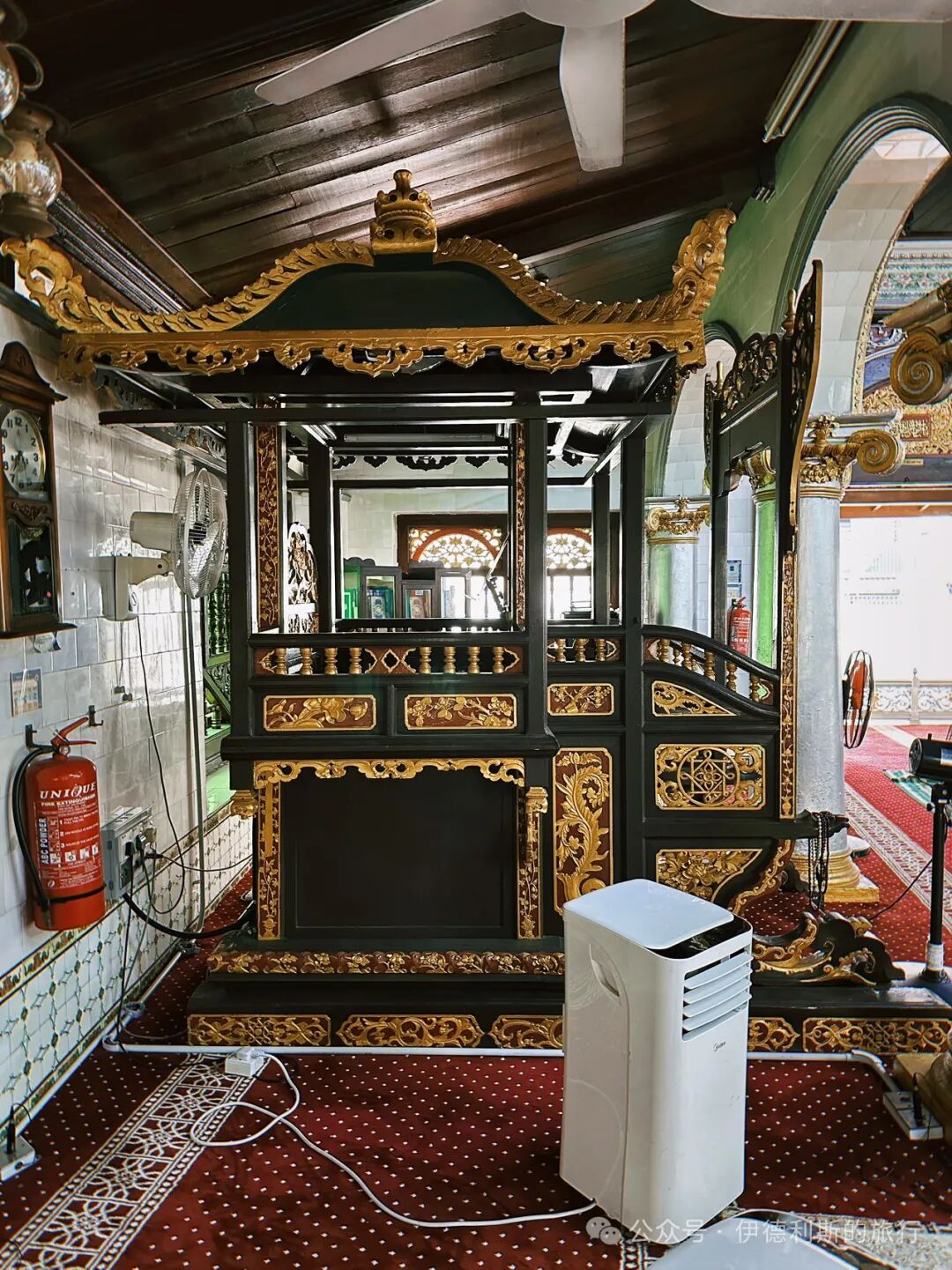
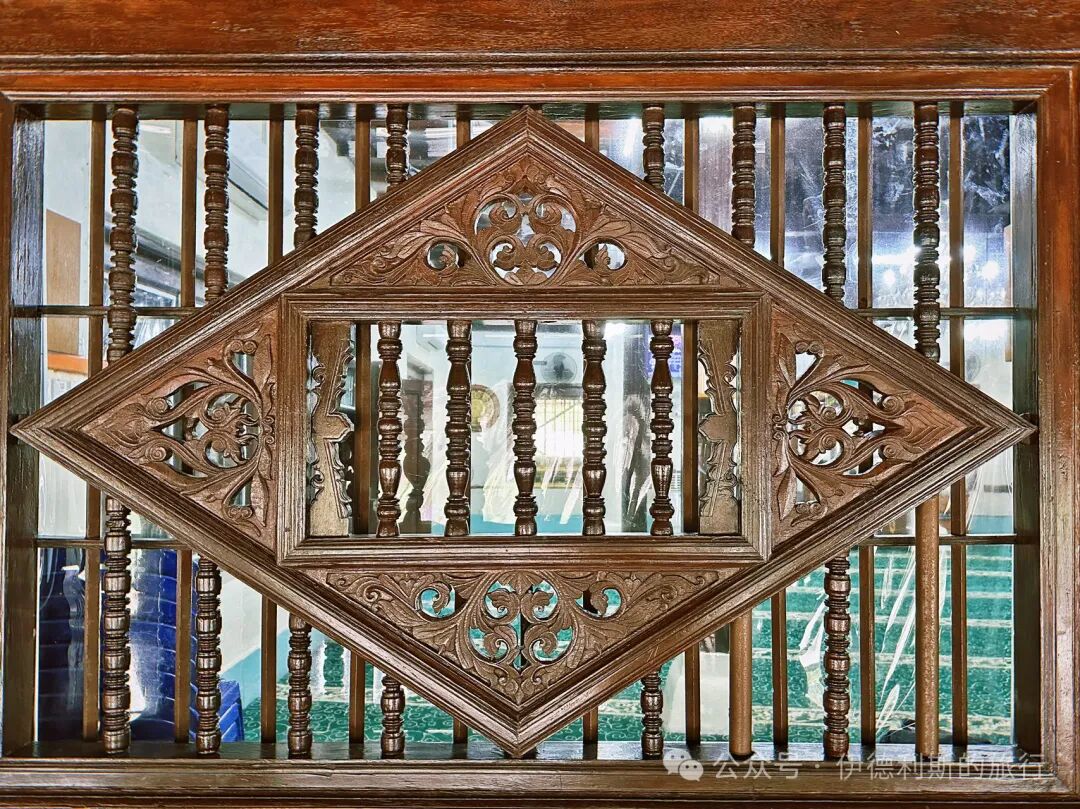
The Kampung Kling Mosque has a beautiful minbar and wood carvings on its doors and windows; the minbar is also in the Javanese throne style.
Sanbao Hill Mosque.
Bukit Cina Mosque (Masjid Bukit Cina), also called Al-Hamideen Mosque, was built in 1865. A new main hall was added in 1978, but the layout of the original old hall remains. The old hall features a traditional Javanese-style three-tiered pyramid roof (bumbung tiga lapis) and four wooden pillars (Soko Guru). Each pillar connects to the foundation with a stone base called Umpak. These bases keep the wood from soaking up groundwater and help absorb shock during earthquakes.
Pengkalan Rama Mosque
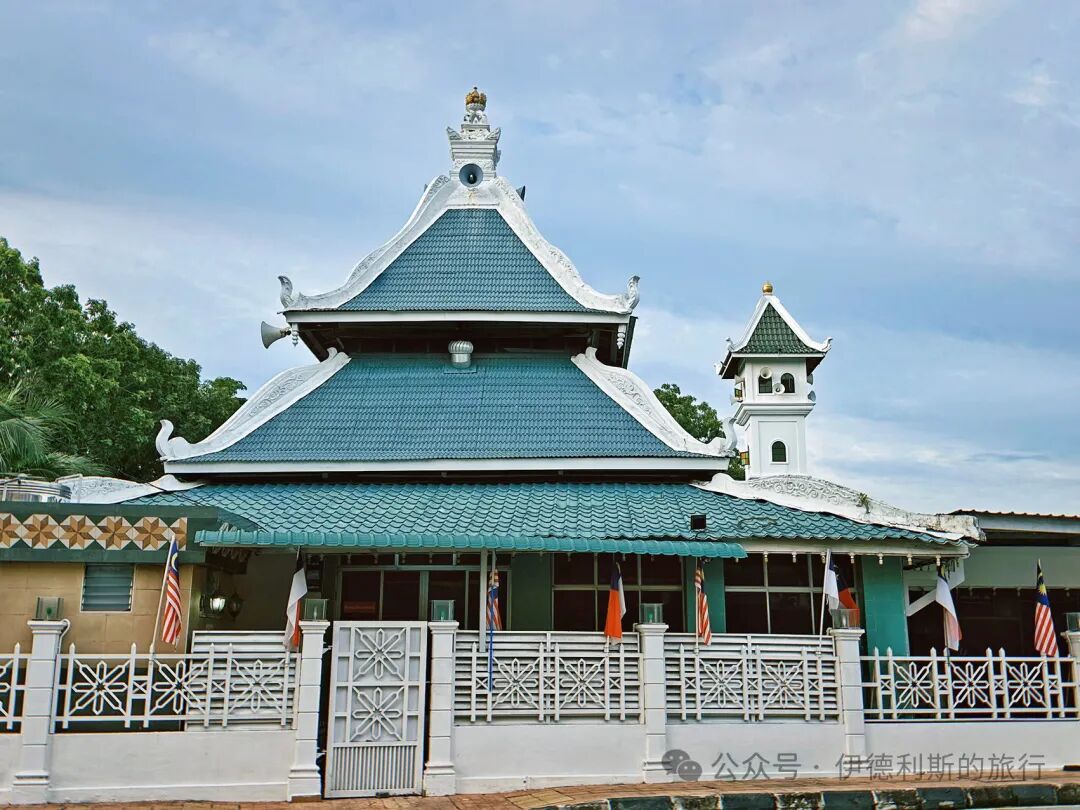
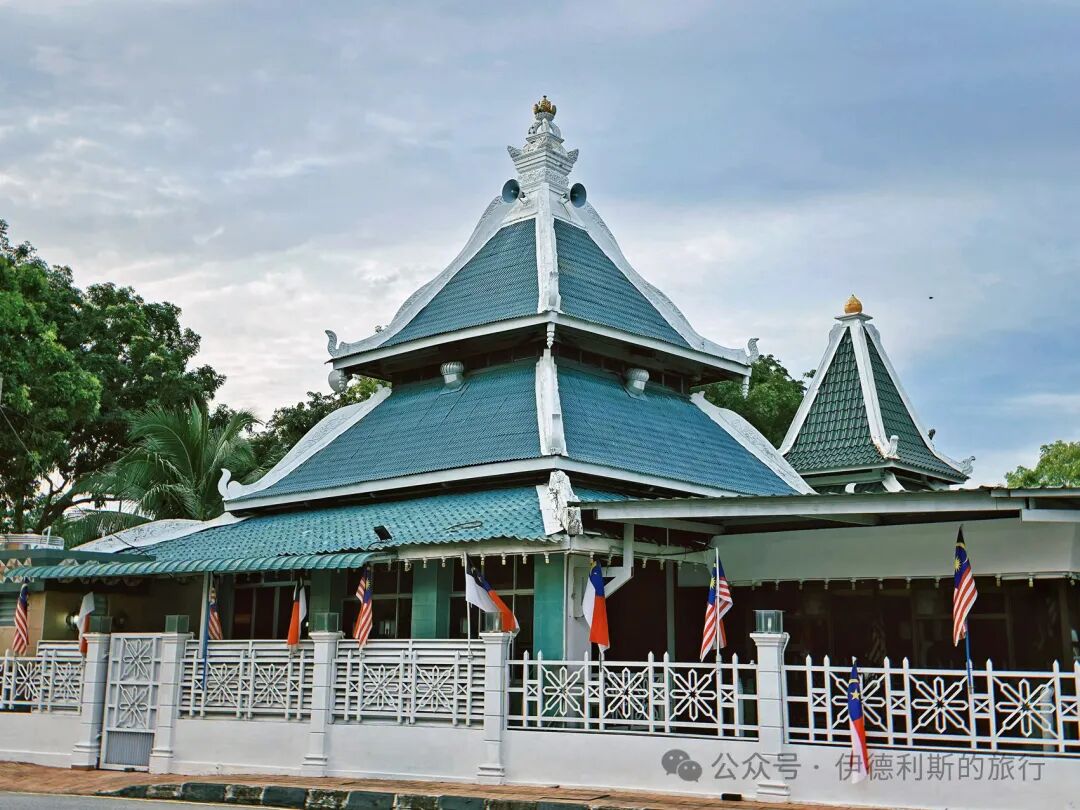
Pengkalan Rama Mosque was first built in the 1730s. Dato Penghulu Abdul Ghani funded its renovation in 1917. A new main hall was added in 2004, but it still keeps the traditional Javanese-style three-tiered pyramid roof (bumbung tiga lapis) and four wooden pillars (Soko Guru) of the old hall.
Duyong Mosque
Duyong Mosque (Masjid Duyong) was built in 1850 under the leadership of Wan Chilek. It was originally made of laterite and wood, with a roof made of Chinese and Dutch tiles. In 1908, a minaret (bangkar) was added, blending the styles of a Chinese pagoda and a Western lighthouse.
The mosque underwent several renovations and expansions in 1967, 1973, and 1976. It suffered a fire in 1982 and was later restored. In 2002, the Department of Museums and Antiquities of Malaysia carried out protective repairs on the site.
Telok Mas Mosque
At Telok Mas Mosque (Masjid Telok Mas Al-Khairiah) for namaz. Telok Mas Mosque was built in 1853. During construction, the beams and roof materials were cut from local forests and hauled by water buffalo. The wall stones were mined from reefs near Big Island (Pulau Besar) and transported by sampan boats. The main gate still bears an inscription from the year 1269 of the Hijri calendar, which is 1853 in the Gregorian calendar. A Chinese pagoda-style minaret (bangkar) was added in 1913. Its architectural style is basically the same as the mosques in Kampung Kling and Tengkera.
The minbar pulpit at Telok Mas Mosque is carved with the year 1286 of the Hijri calendar, or 1869 in the Gregorian calendar, and is a classic Javanese throne style.
Peringgit Mosque
Peringgit Mosque (Masjid Peringgit) was first built in 1726 but was later destroyed. It was rebuilt in 1868. Peringgi is the Malay name for the Portuguese, as a Portuguese fort once stood here. Peringgit Mosque was originally built with granite and Dutch bricks, with wooden doors and windows. The roof is a traditional Javanese three-tiered pyramid (bumbung tiga lapis). The bottom layer is covered with Chinese tiles, while the middle and top layers use Dutch tiles. The very top decoration is carved from reef stone.
Following later renovations, the Dutch bricks of Peringgit Mosque were covered with cement, and the Chinese and Dutch tiles were replaced with modern ones. In 2002, the Southern Region Department of Museums and Antiquities of Malaysia restored the site. view all
Summary: This first part introduces eight historic mosques in Malacca, including their dates, layouts, and role in the city's Muslim community. It keeps the original mosque names, photographs, architectural details, and travel observations for readers interested in Malaysia's Islamic heritage.
Kampung Hulu Mosque: 1728.
Tengkera Small Mosque minaret (bangker): 1728.
Tengkera Mosque: 1782.
Kampung Kling Mosque: 1748.
Bukit Cina Mosque: 1865.
Pengkalan Rama Mosque: first built in the 1730s, rebuilt in 1917.
Duyong Mosque: 1859.
Serkam Pantai Mosque: 1853.
Peringgit Mosque: first built in 1726, rebuilt in 1868.
Kampung Hulu Mosque.
After the Portuguese occupied Malacca, they destroyed all the mosques of the Malacca Sultanate and promoted Catholicism in the city. However, the Portuguese were not successful, and Catholicism did not have much influence in Malacca until the Dutch took over.
The Dutch took a more tolerant approach toward Malacca and allowed the faith to spread there. In 1728, the Dutch East India Company commissioned a Chinese Muslim, Dato' Samsuddin Bin Arom, to build a new mosque near the site of an old one destroyed by the Portuguese. This became the Kampung Hulu Mosque (Masjid Kampung Hulu), the oldest surviving mosque in Malacca.
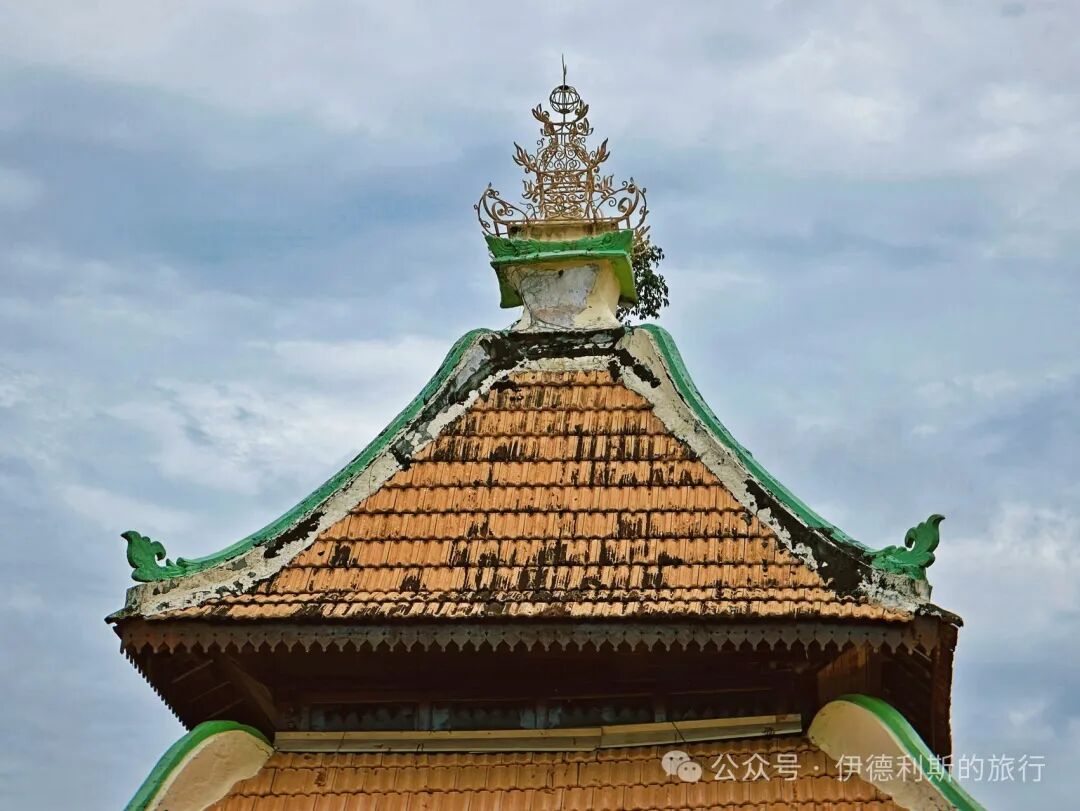
The main prayer hall of Kampung Hulu Mosque uses the traditional Javanese Tajug multi-layered pyramid roof. The decoration at the very top is called a Mustoko or Memolo in Javanese. This roof structure leaves space between the upper and middle layers for ventilation and light, which adapts well to the humid and rainy tropical climate.
Unlike traditional all-wood Javanese mosques, Kampung Hulu Mosque is built of brick and stone with plaster-coated roofs, an influence from Dutch colonial architecture. the tiles and floor bricks inside the mosque were all imported from China, and the patterns on the windows also show Chinese influence.
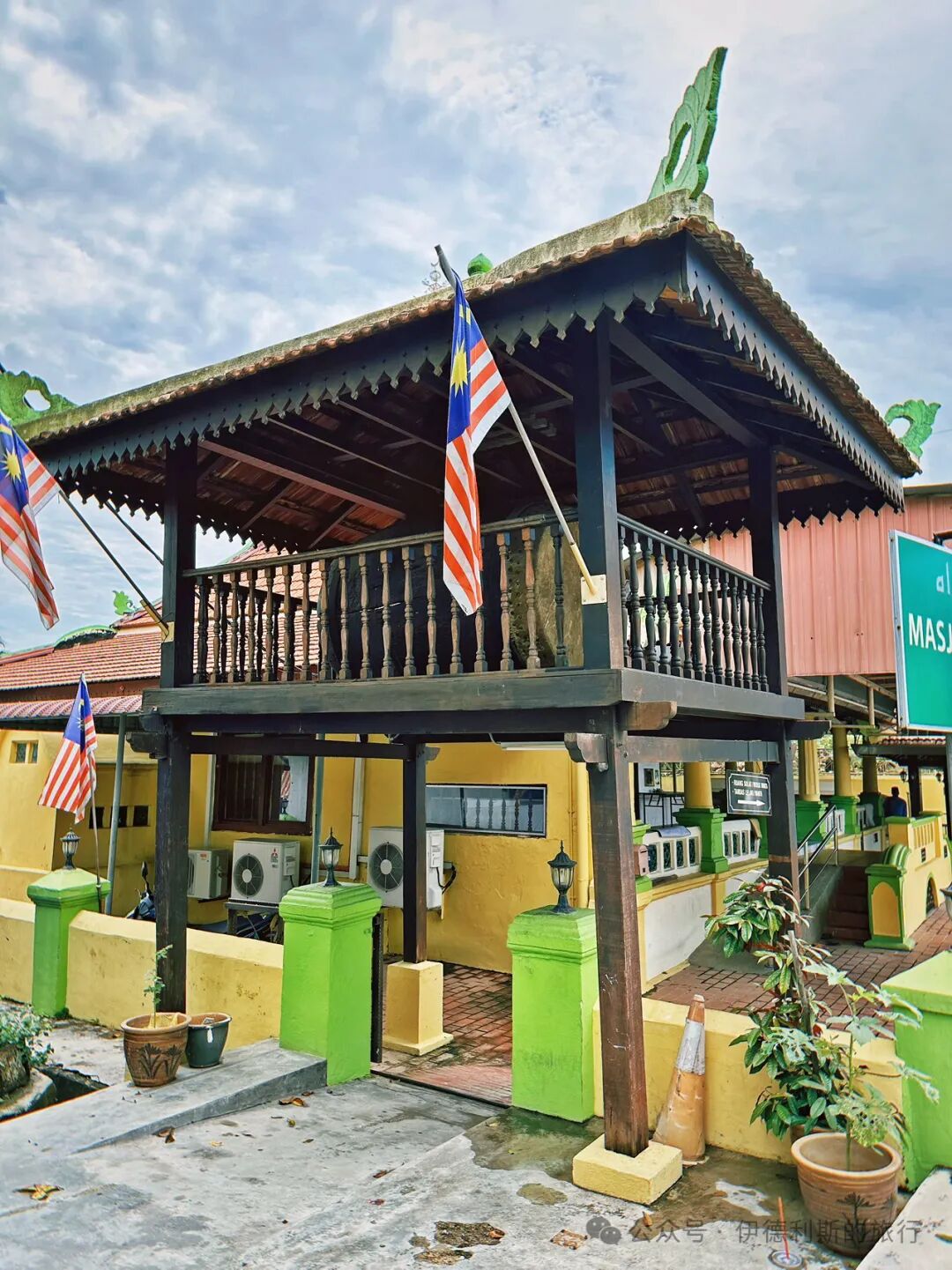
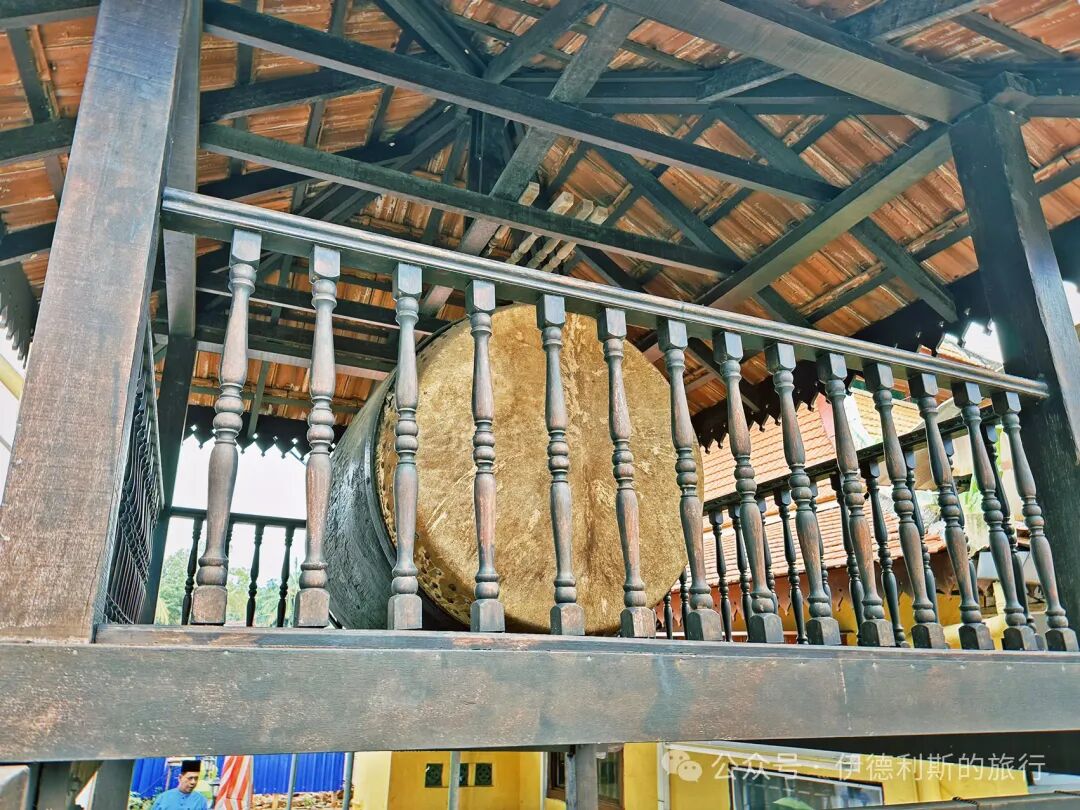
A traditional drum called a Beduk is placed above the main gate. Early mosques in Southeast Asia used drums to call people to prayer. Today, many mosques still use drums to call for prayer and to signal the breaking of the fast during Jumu'ah and Ramadan.
The minaret (bangker) looks like a lighthouse, which was a first for the Malay Peninsula, as there was no previous tradition of building minarets there. On the island of Java, the Great Mosque of Banten, built in 1632, was the first to feature a lighthouse-style minaret designed and built by a Chinese man named Cek-ban-cut.
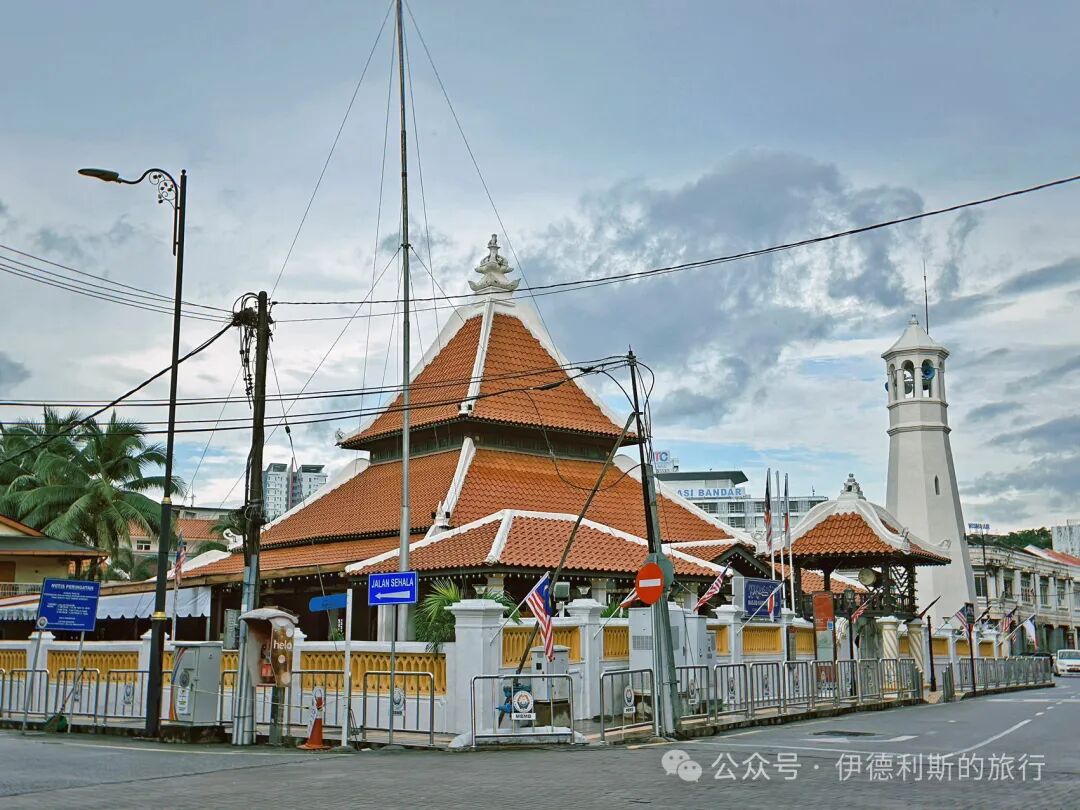
The minbar inside the main hall of Kampung Hulu Mosque has rich patterns and is in the typical Javanese throne style.
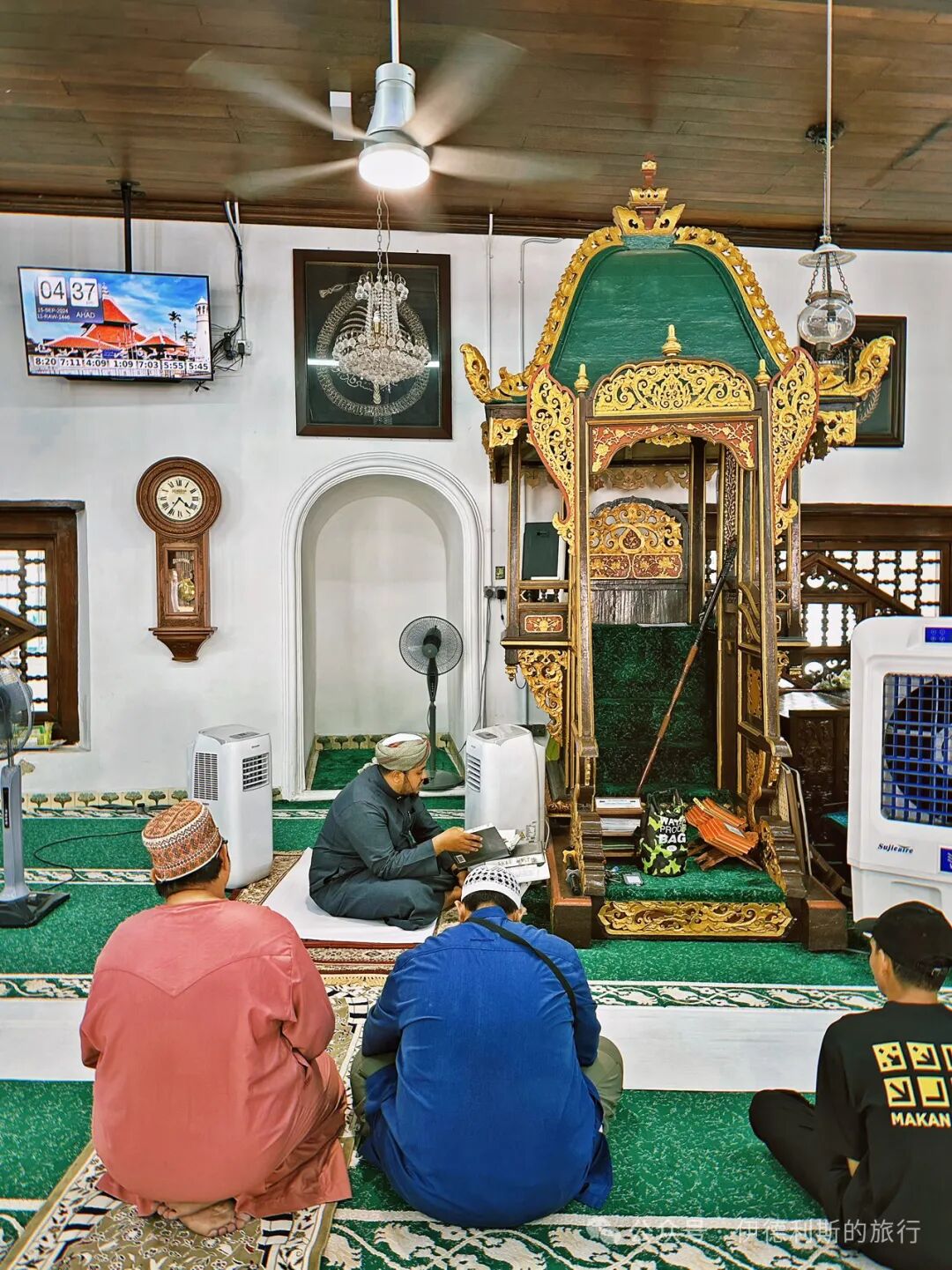
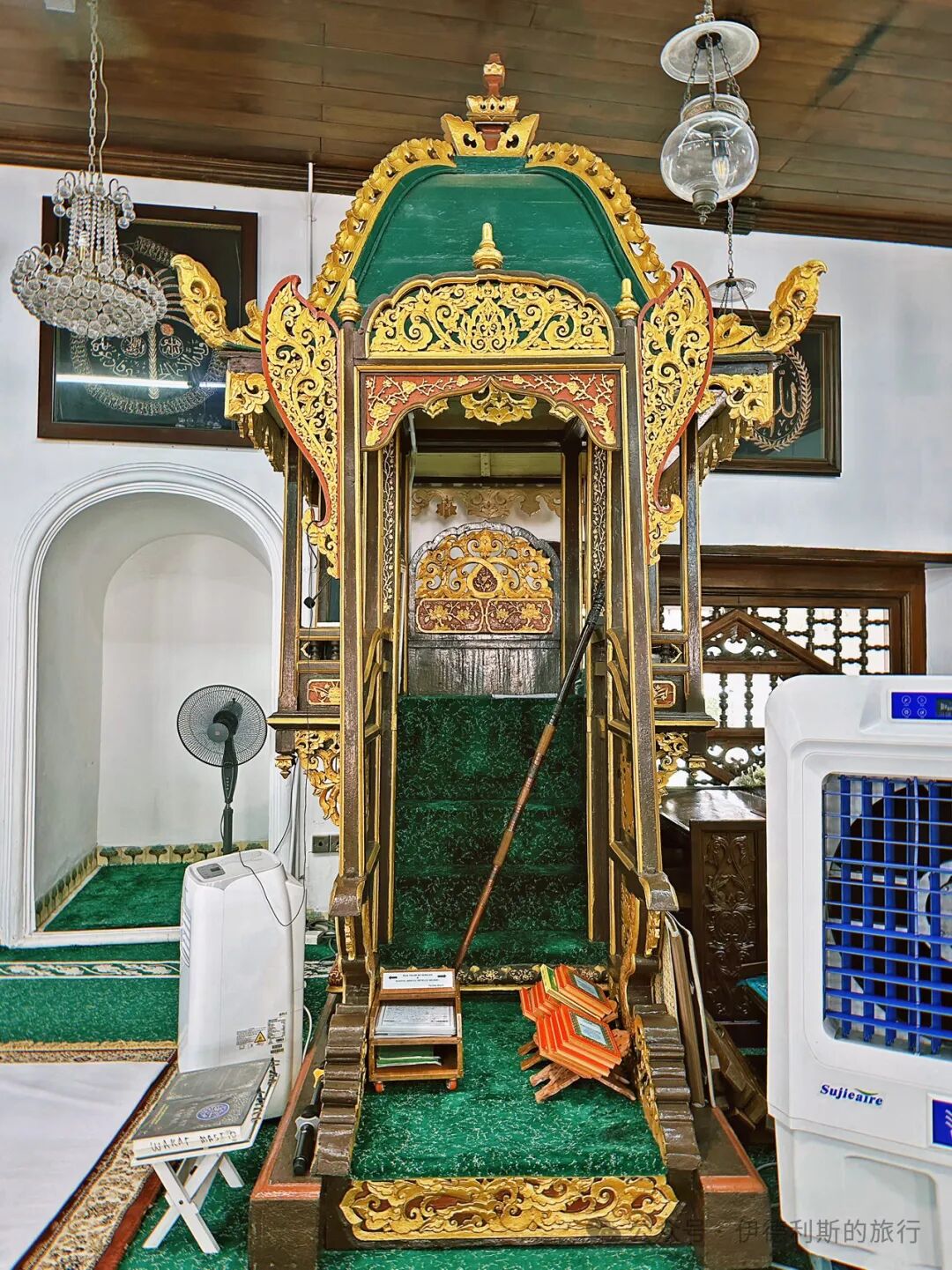
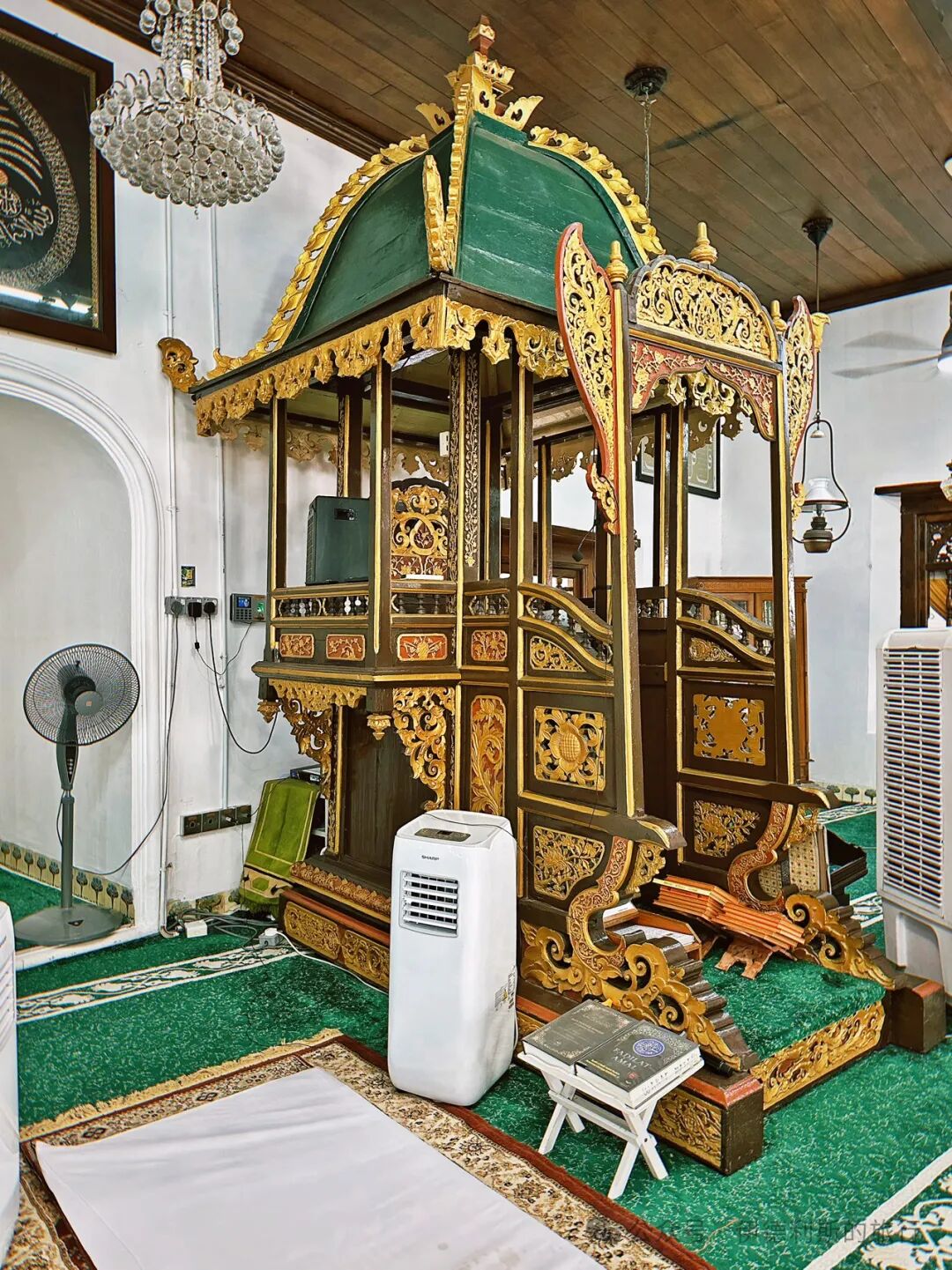
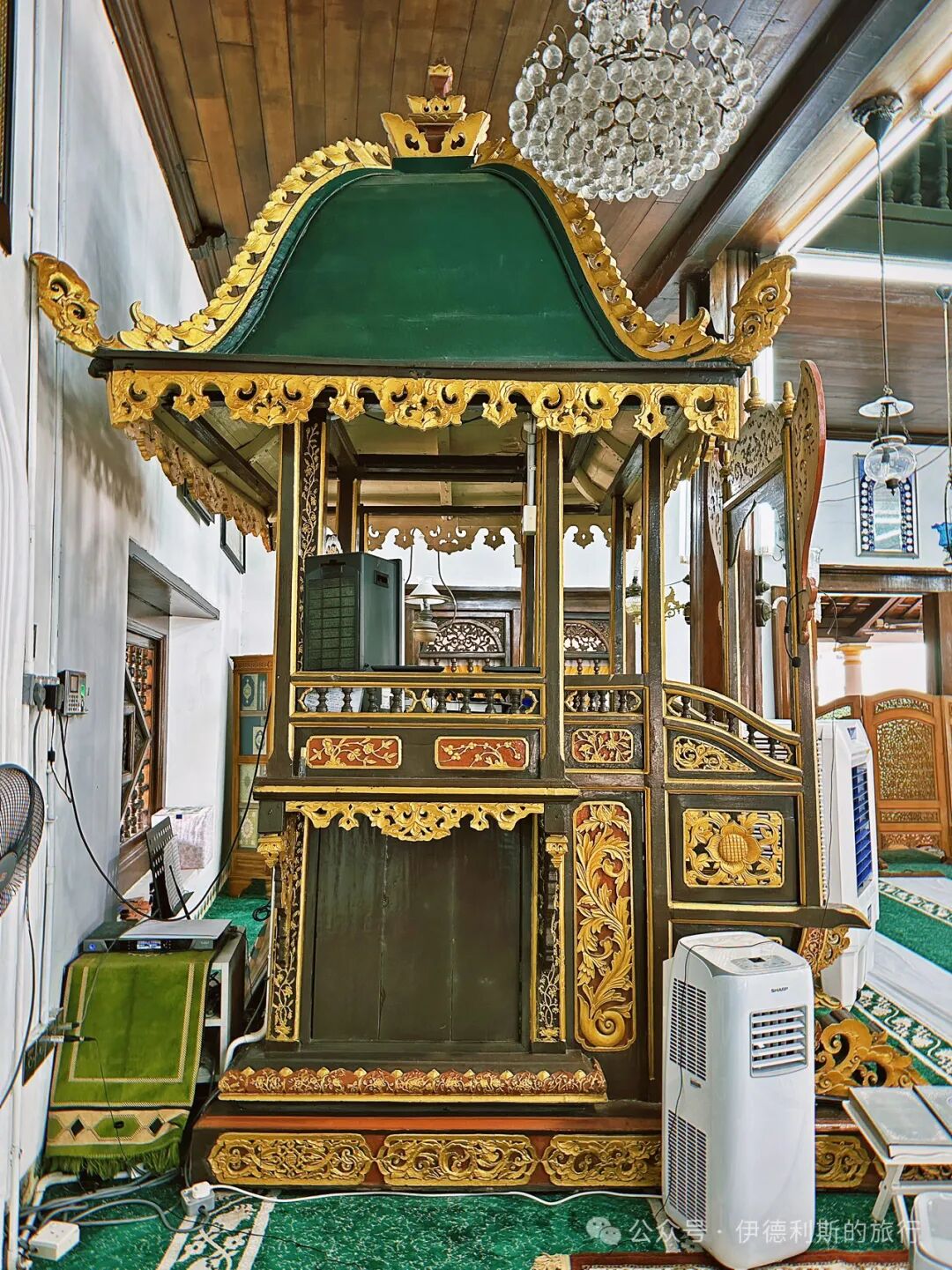
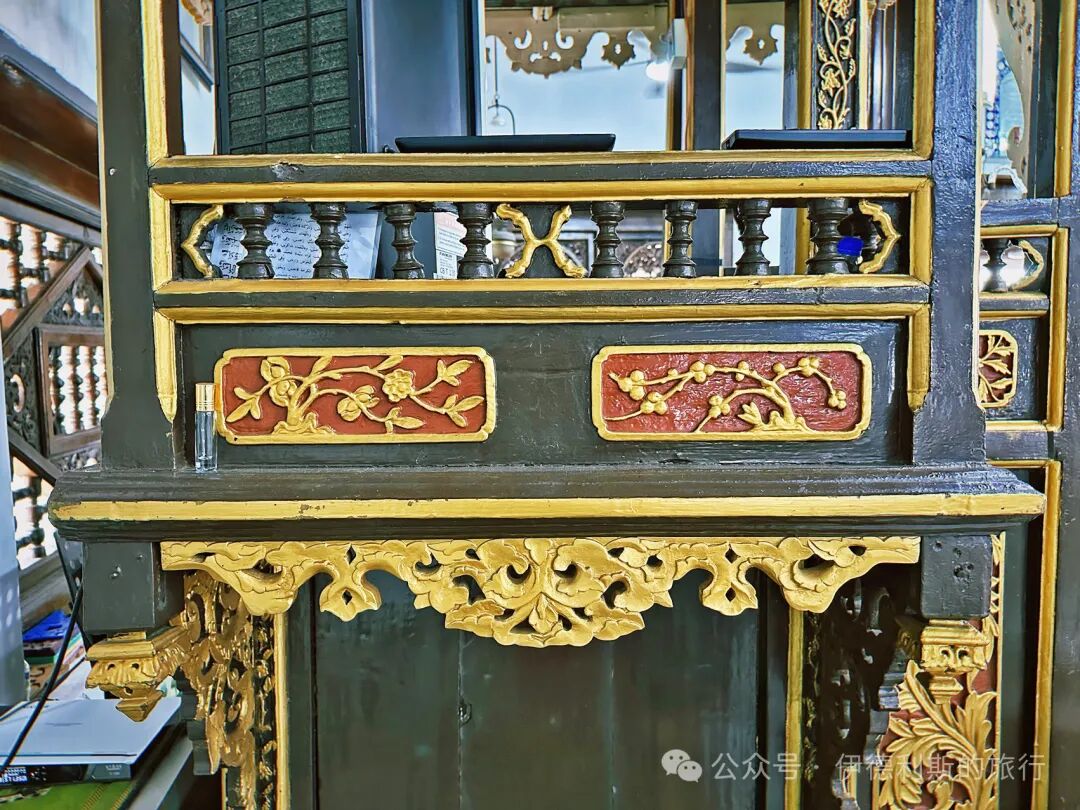
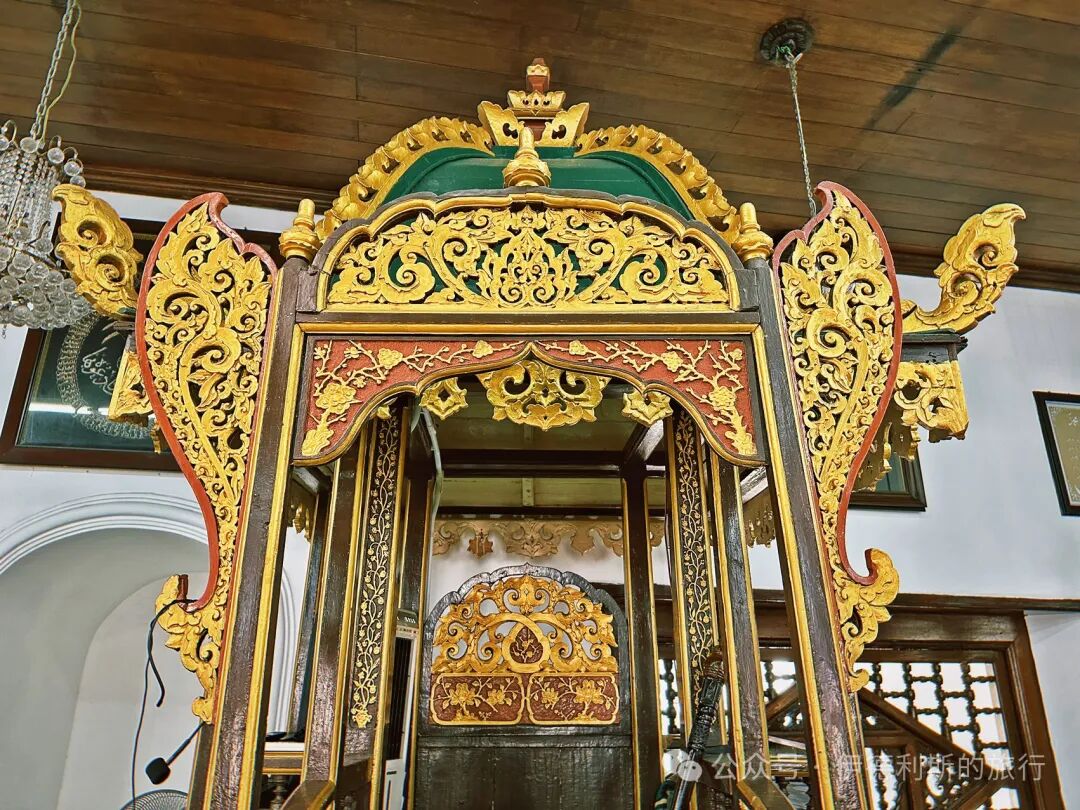
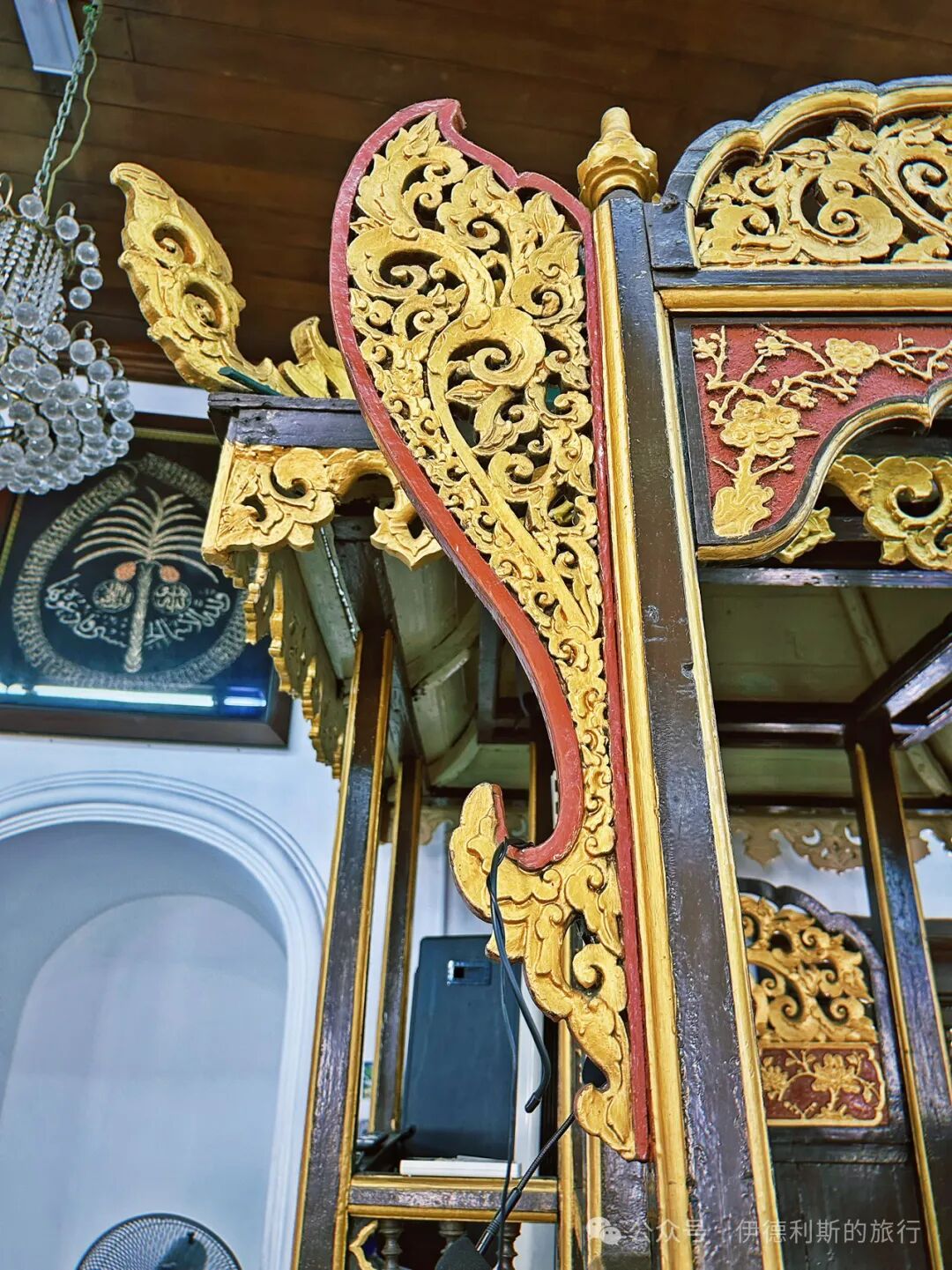
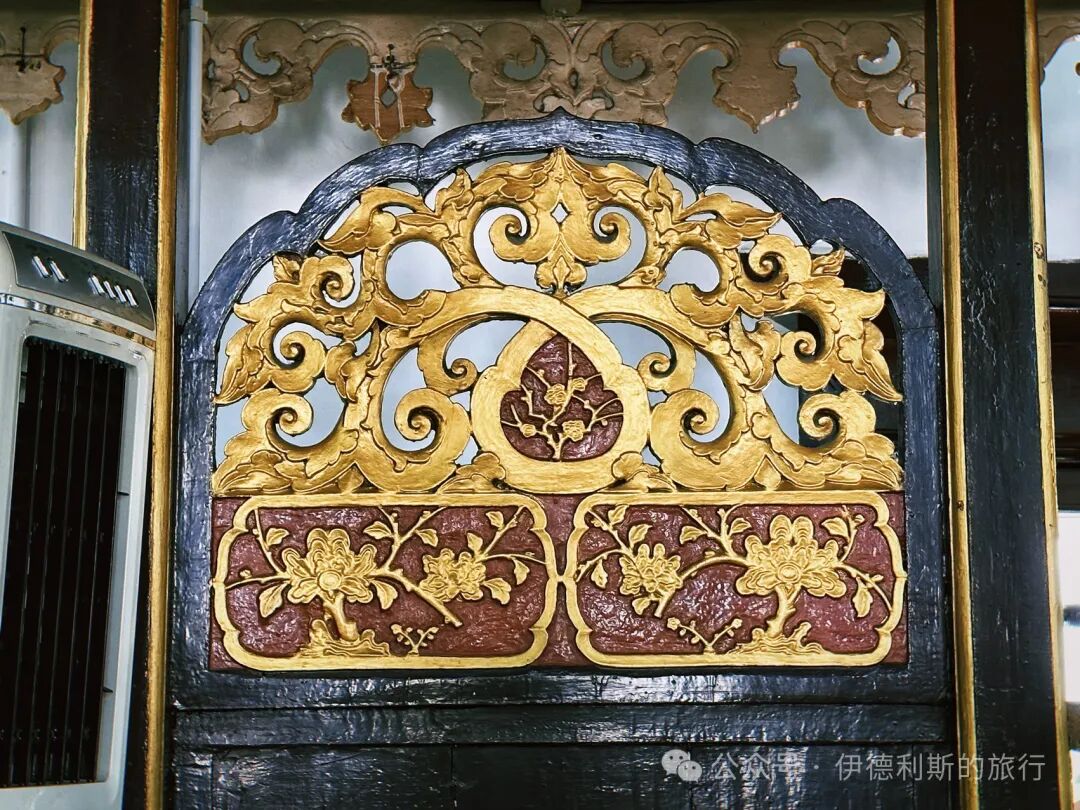
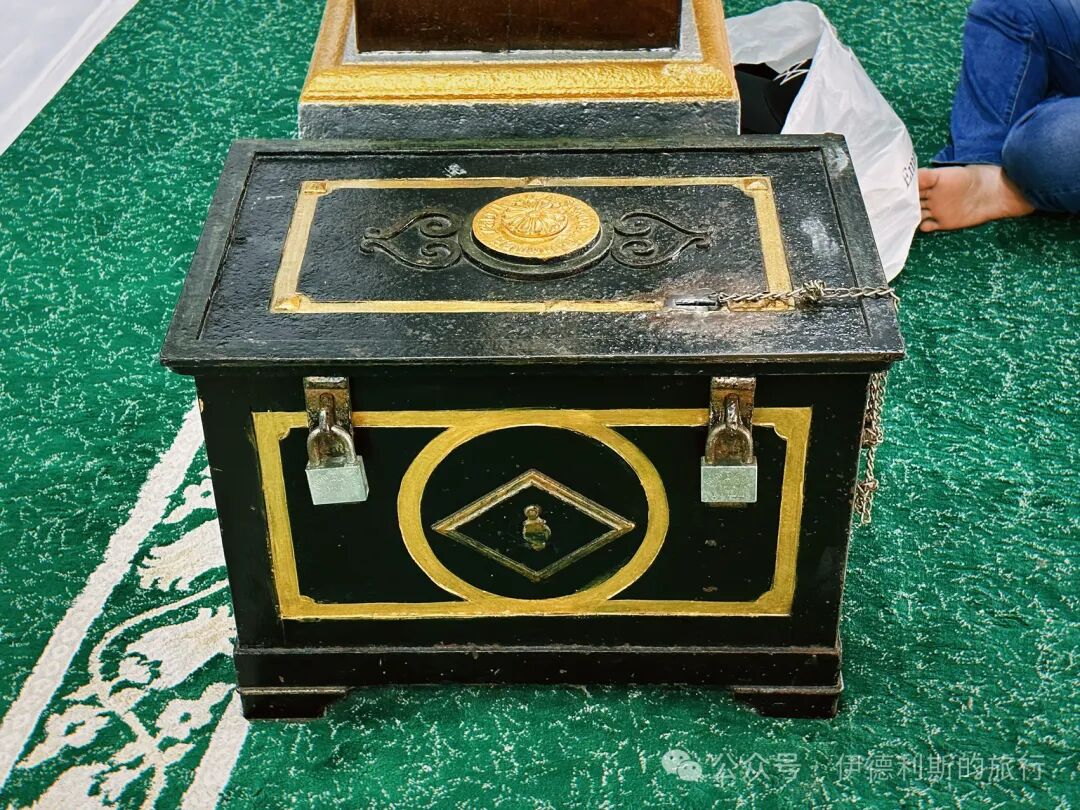
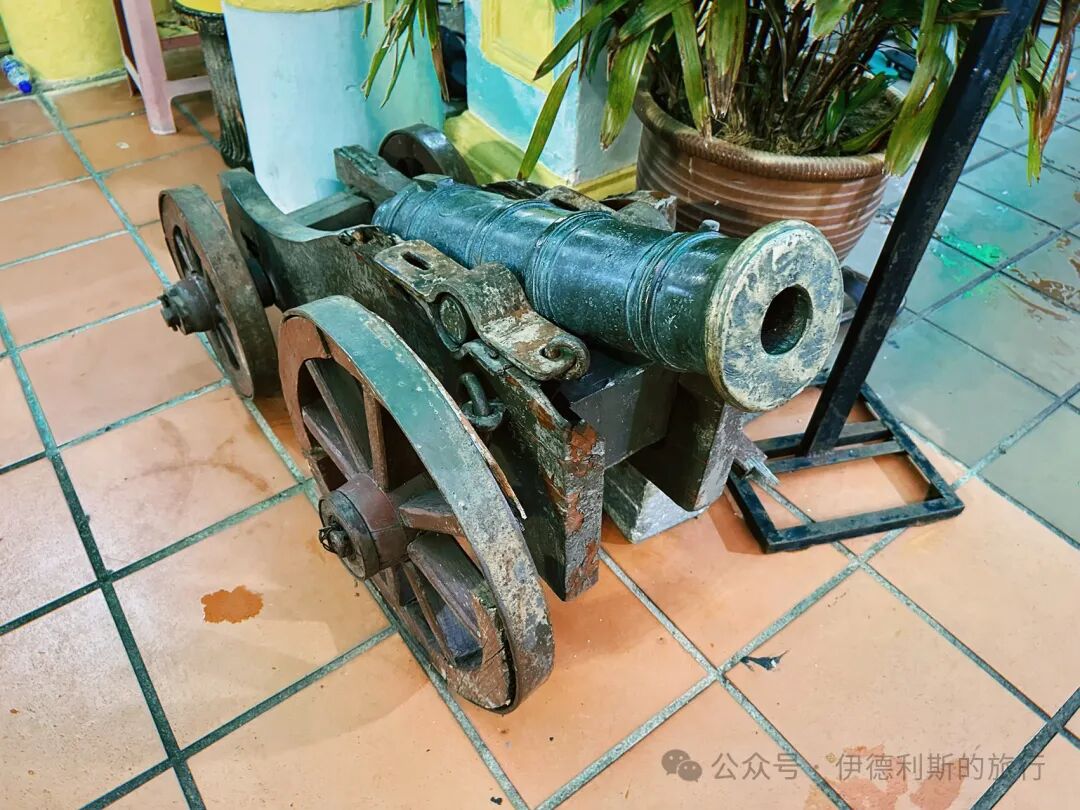
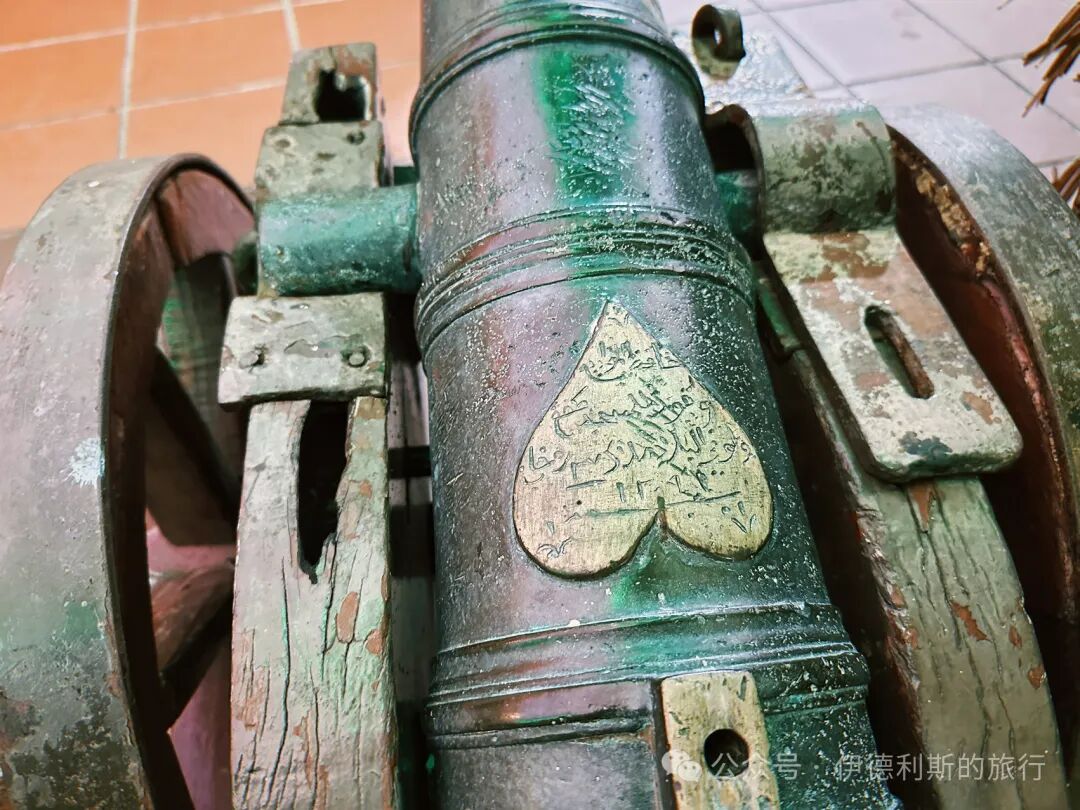
I performed the Dhuhr and Maghrib namaz at Kampung Hulu Mosque and also attended the night praise sessions during the Mawlid. There are two cannons at the entrance of the main hall, which are used during the Eid festival. The number '1211' is engraved on the cannon barrel, which corresponds to the year 1796 in the Gregorian calendar.
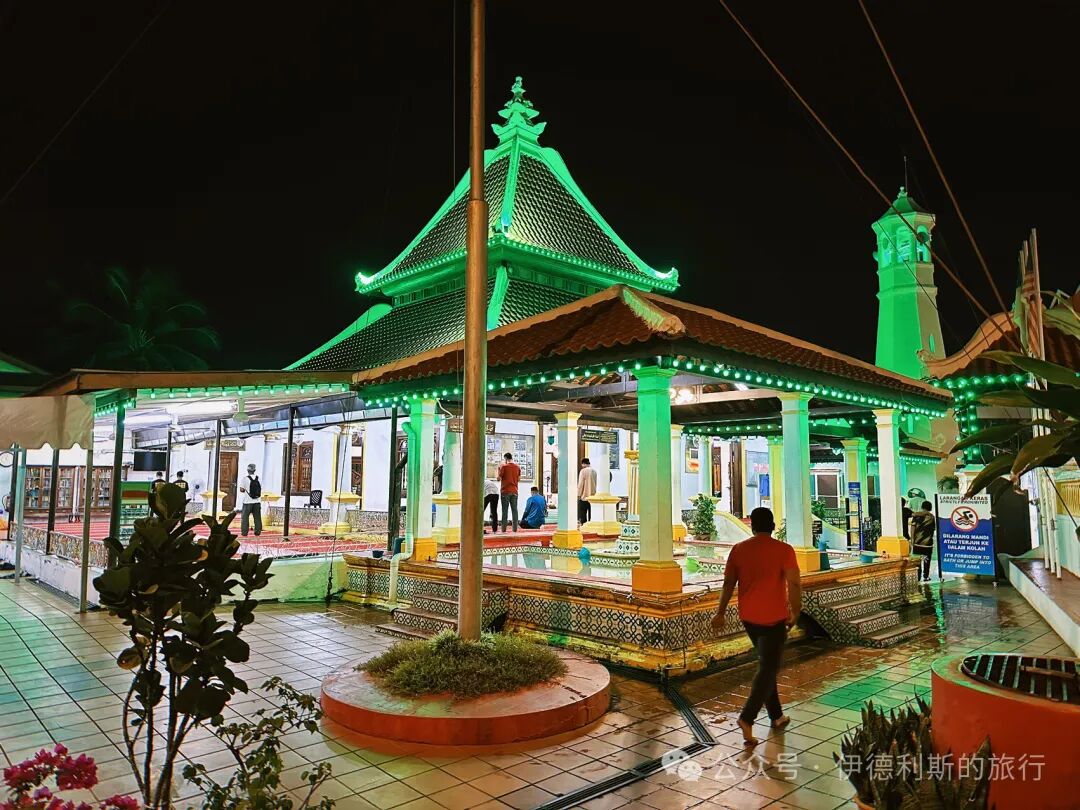
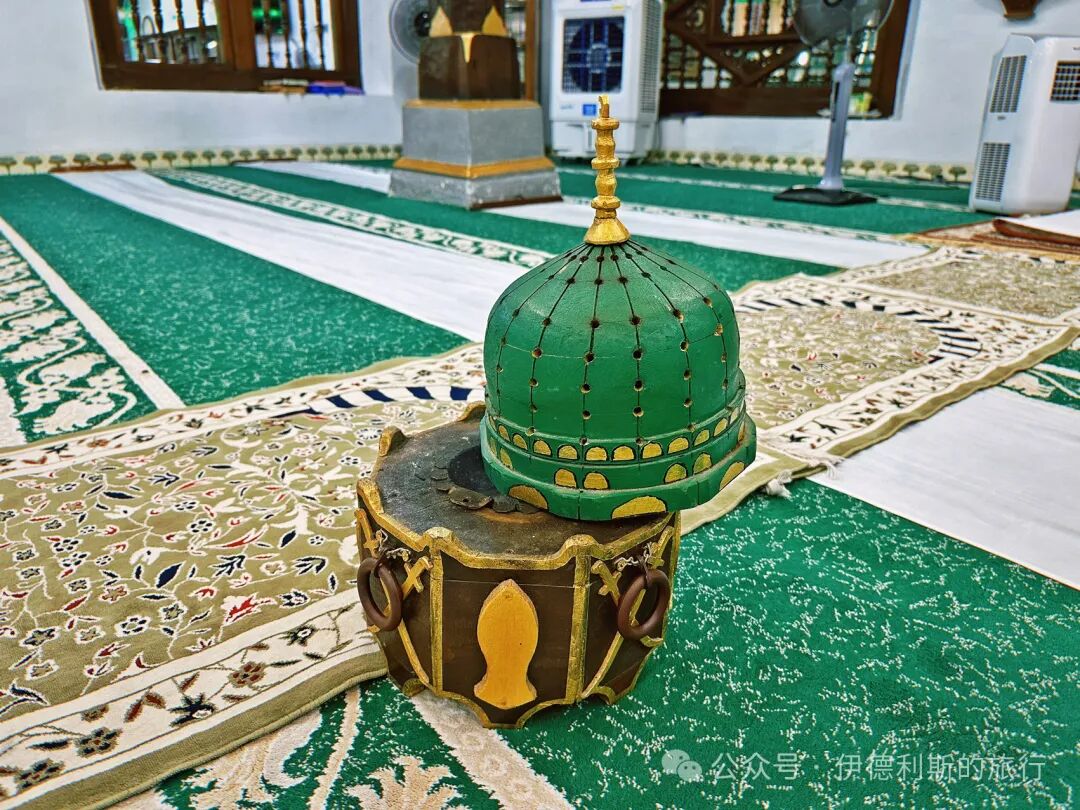
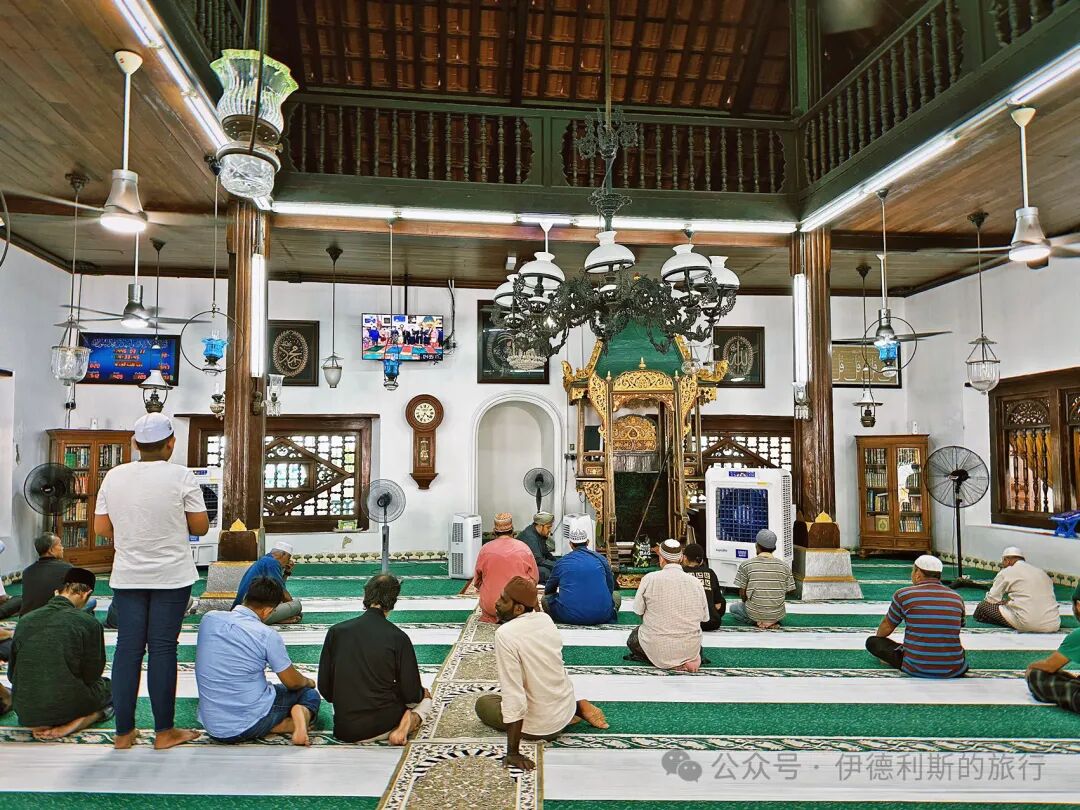
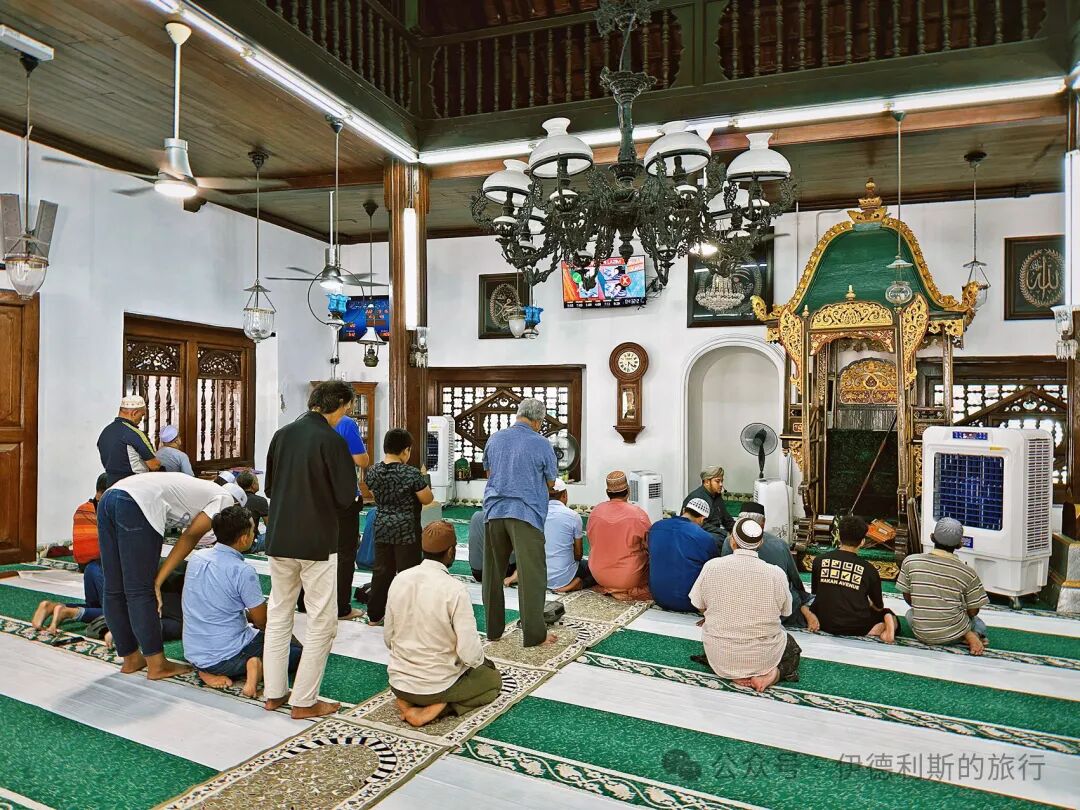
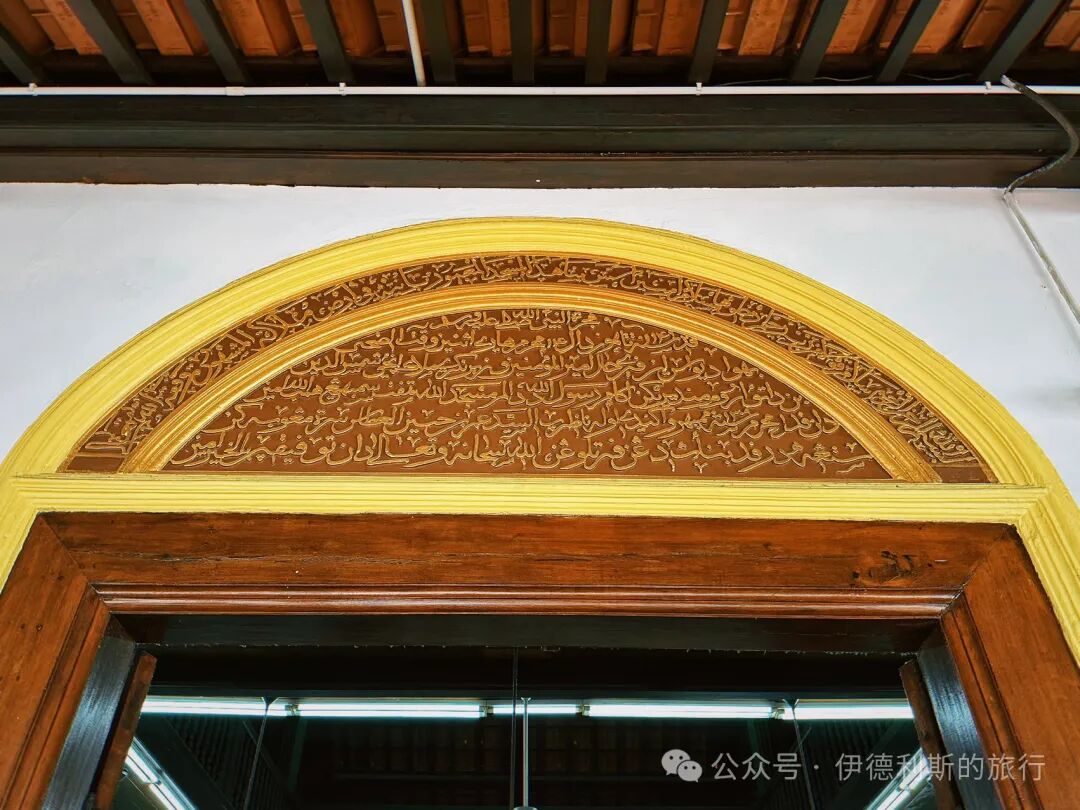
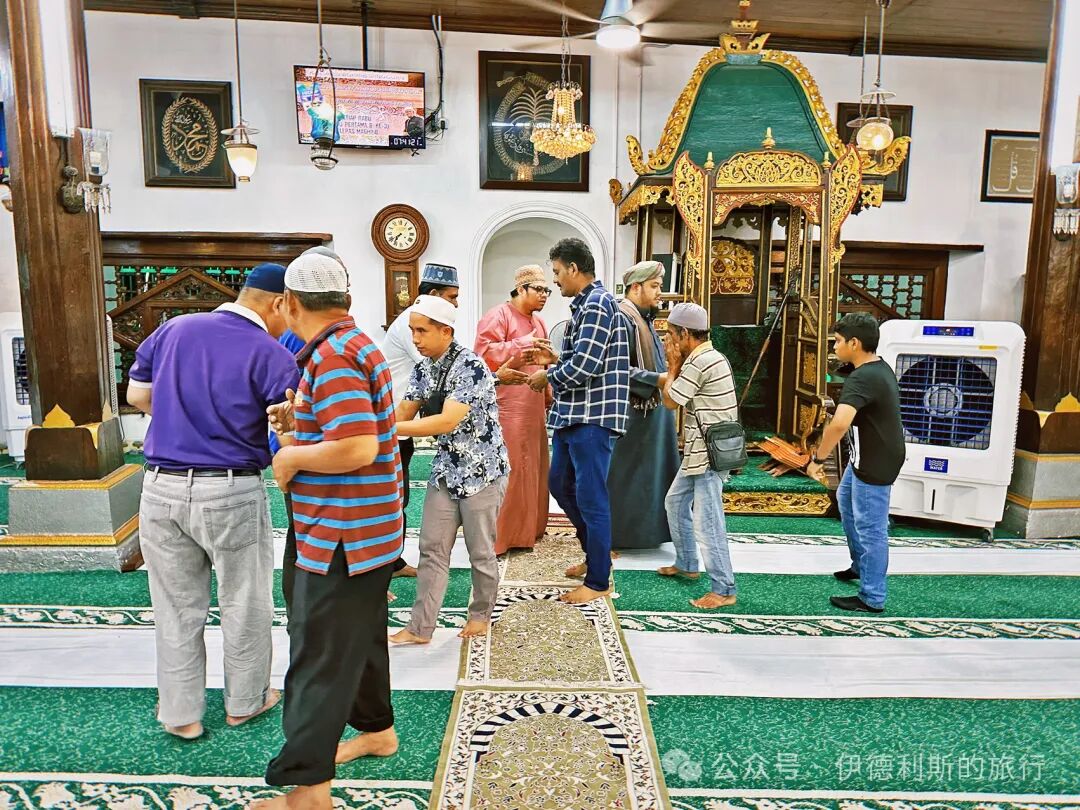
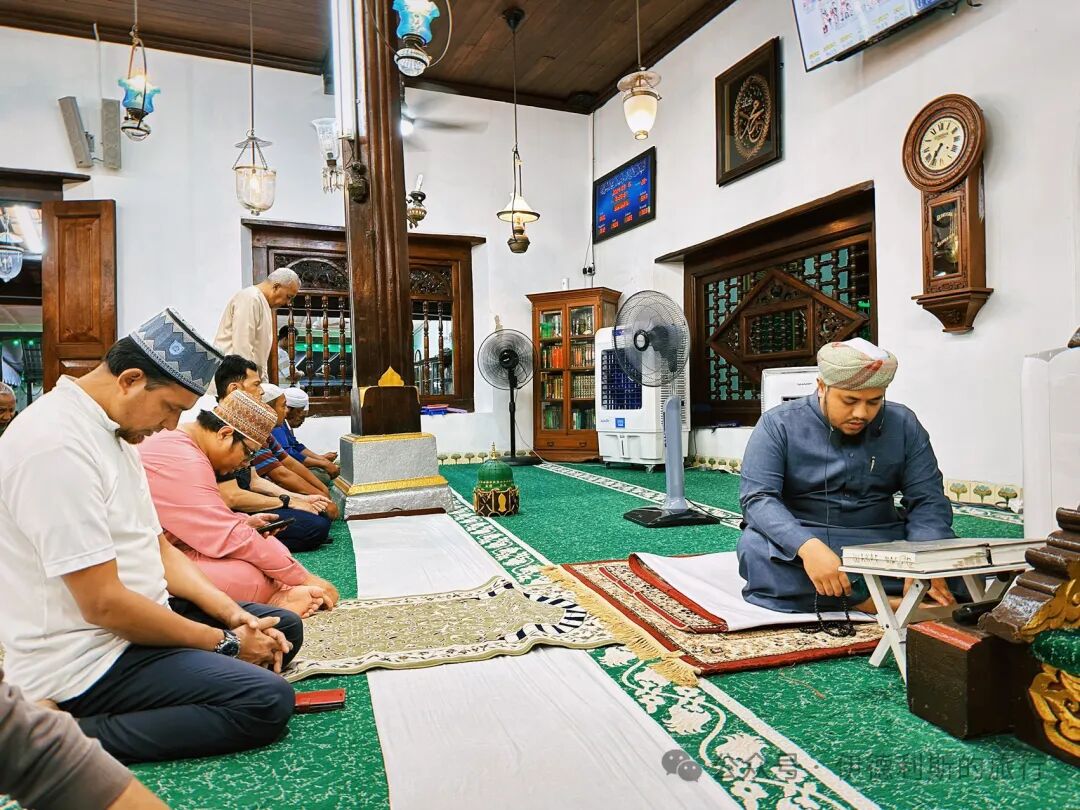
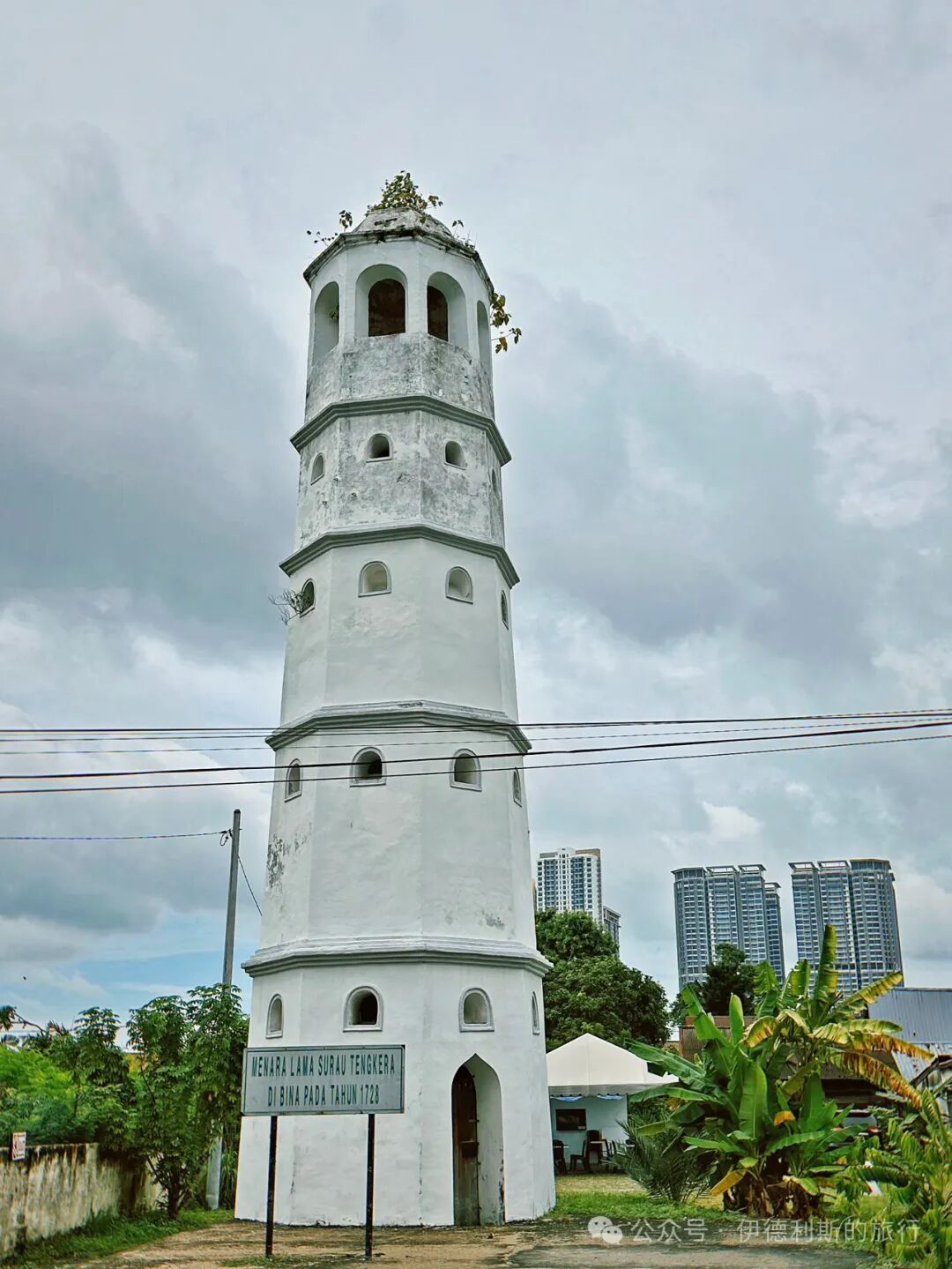
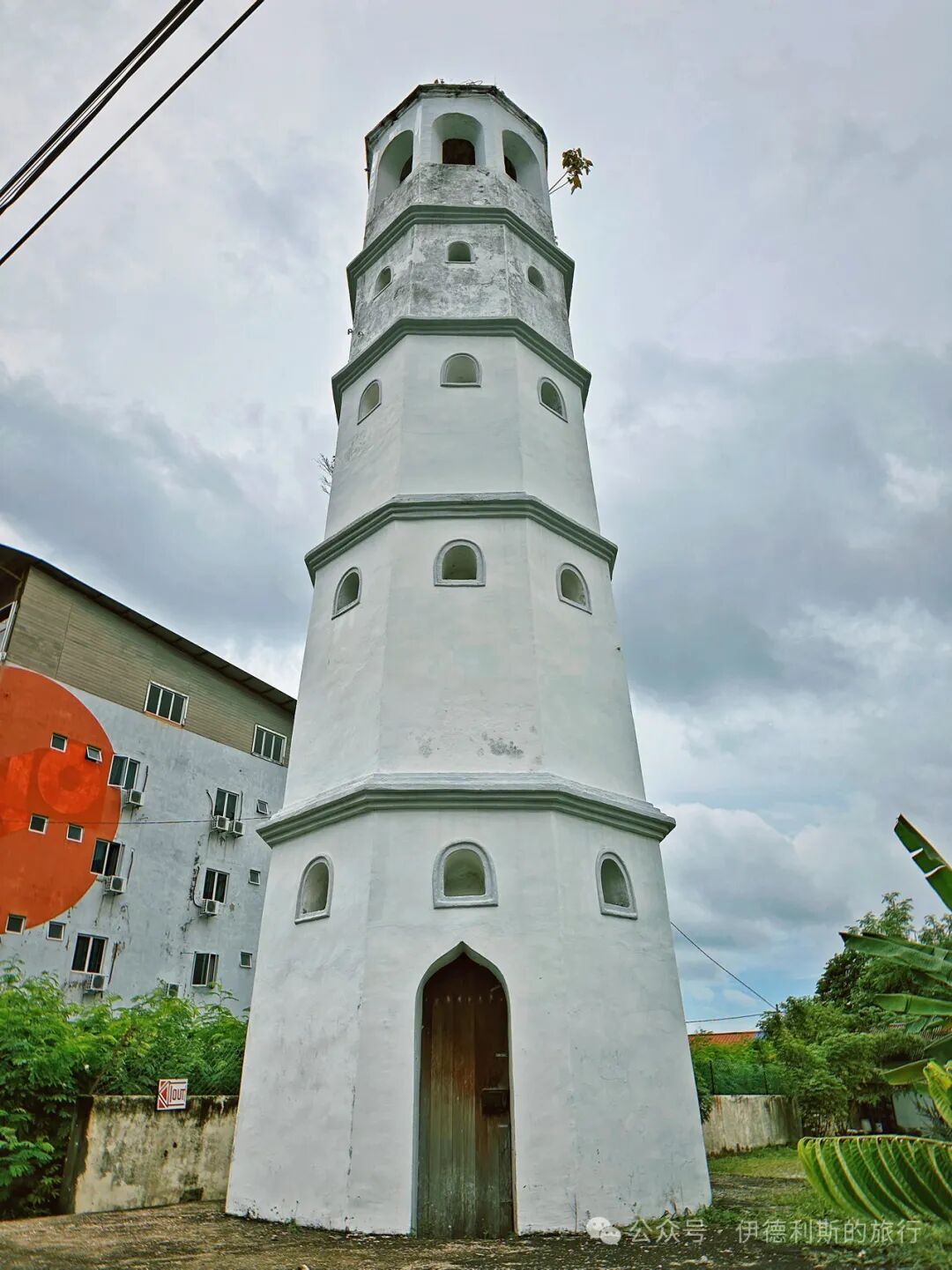
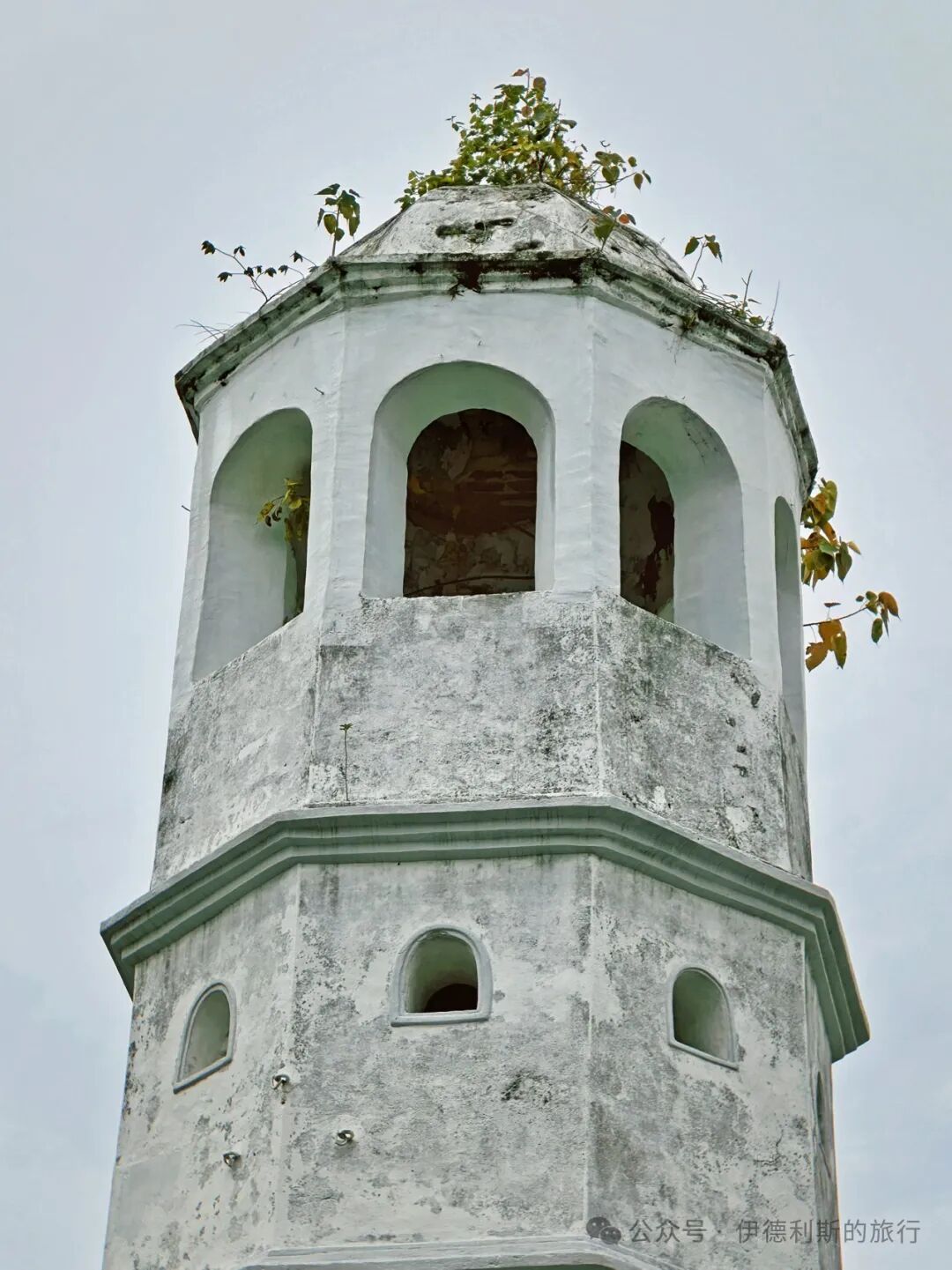
The minaret (bangke lou) of the Tengkera Small Mosque.
After the Kampung Hulu Mosque was built, an Indian merchant named Muhammad Salleh funded the construction of a small mosque (Surau Tengkera) on Tengkera Street. Tengkera comes from the Portuguese word 'tranquerah,' meaning 'fortress,' as there was once a defensive wall built by the Portuguese here. The Tengkera Small Mosque was also built in 1728. It was originally a wooden structure with pillars made of ironwood (belian) from Pontianak, Kalimantan, and a roof covered with nipa palm leaves.
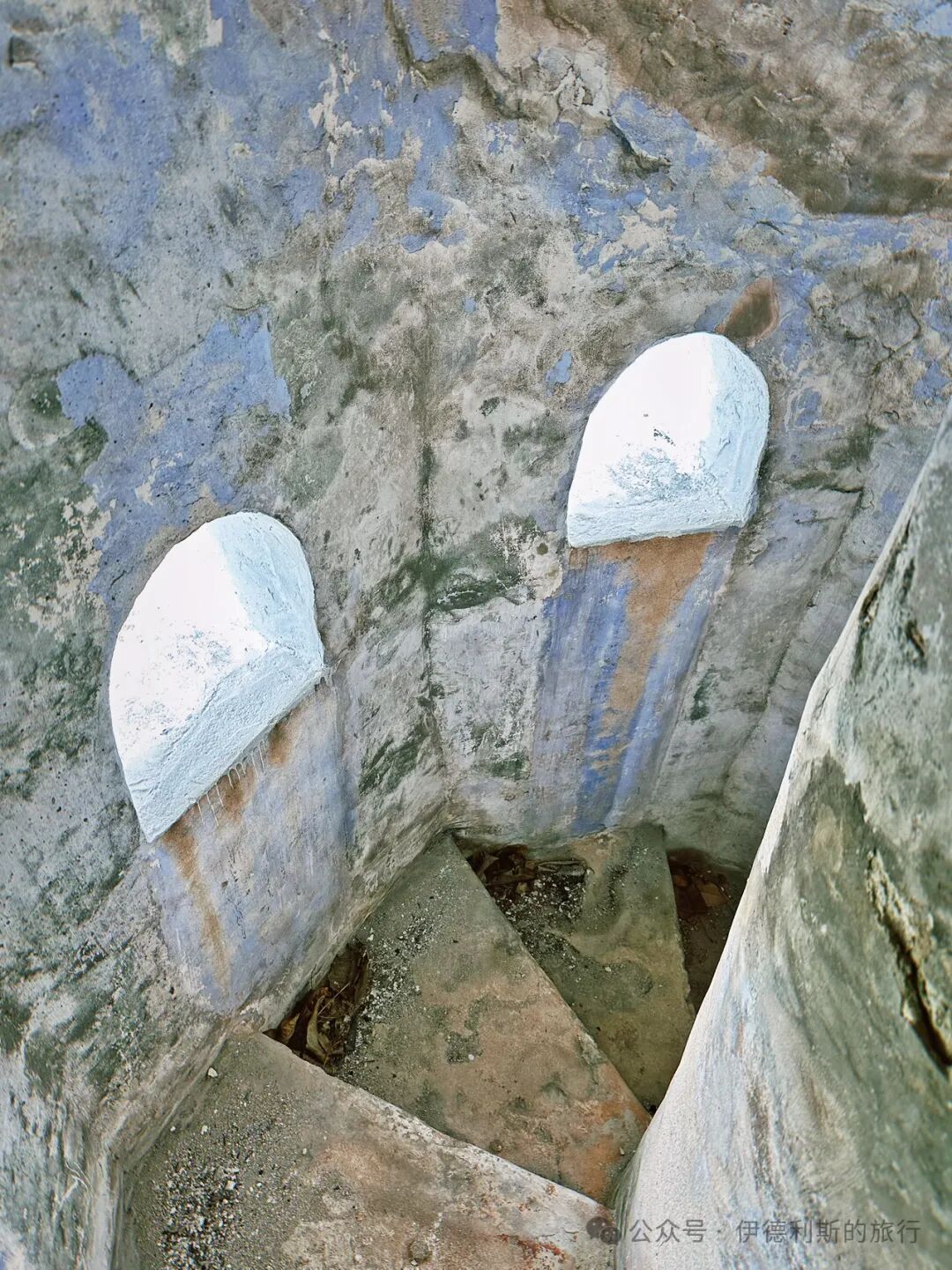
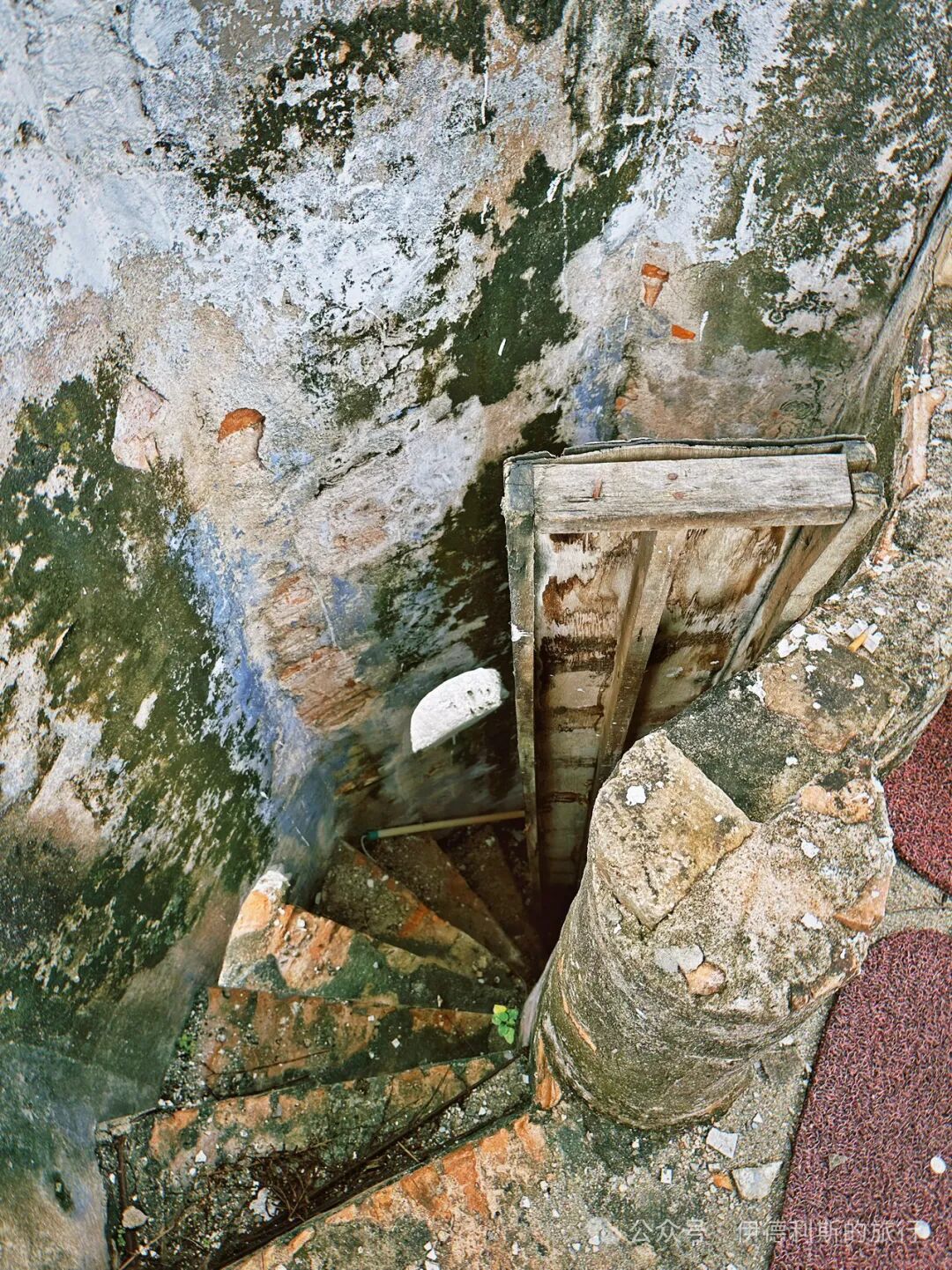
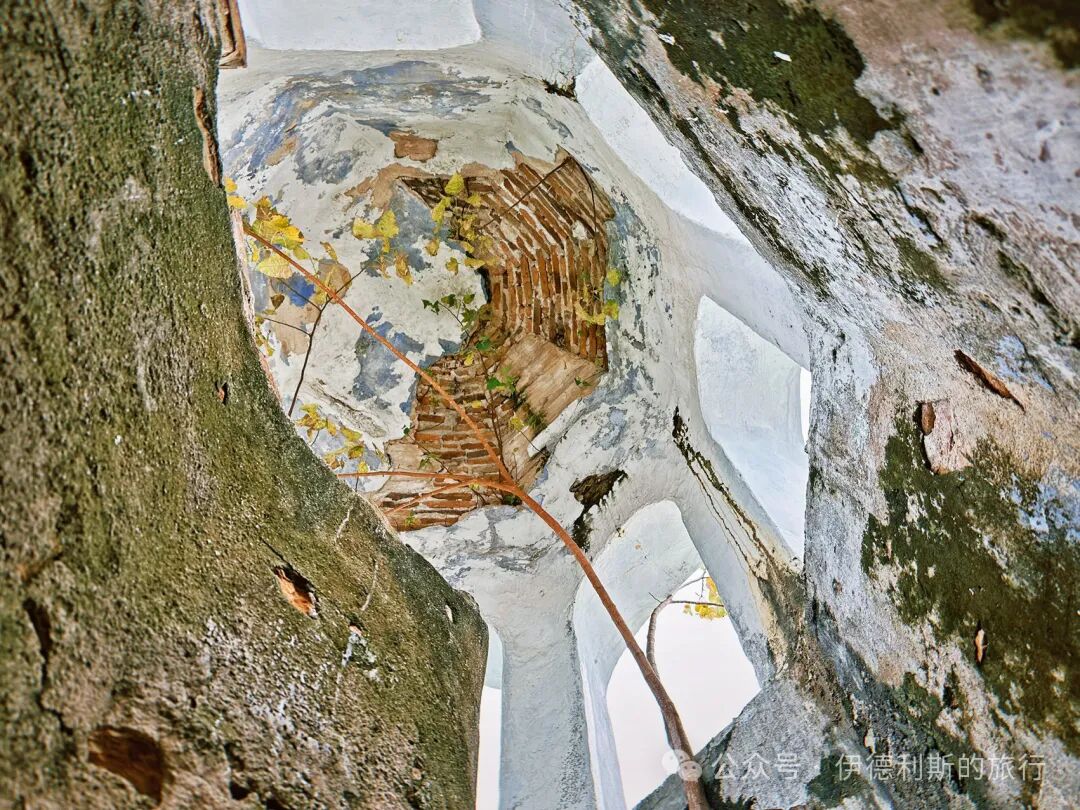
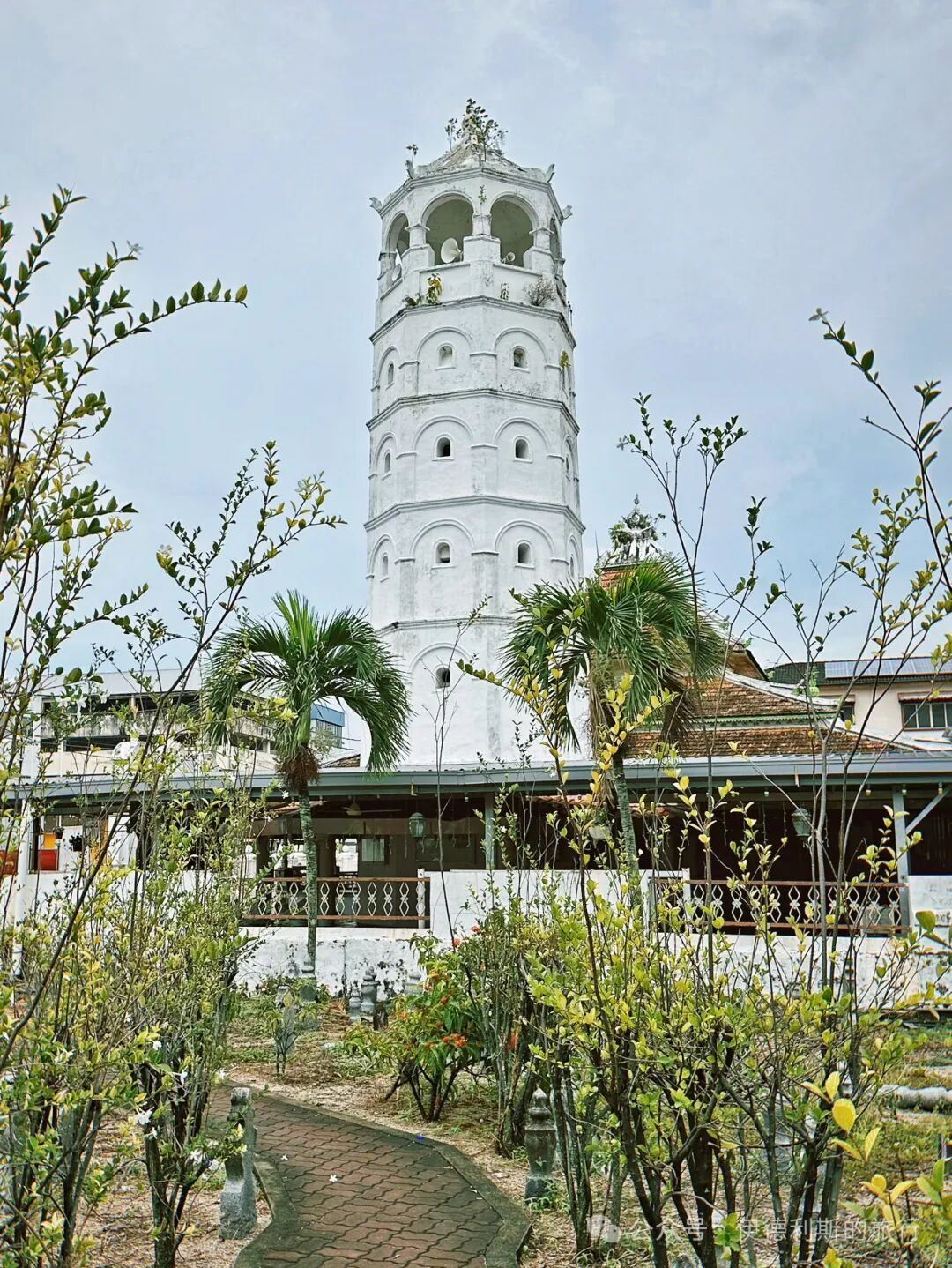
After the Tengkera Mosque (Masjid Tengkera) was completed in 1782, the Tengkera Small Mosque was abandoned, and today only the minaret remains. Unlike the Kampung Hulu Mosque, the minaret of the Tengkera Small Mosque is modeled after a Chinese pagoda. This was the first of its kind on the Malay Peninsula and has become a major feature of Malacca today.
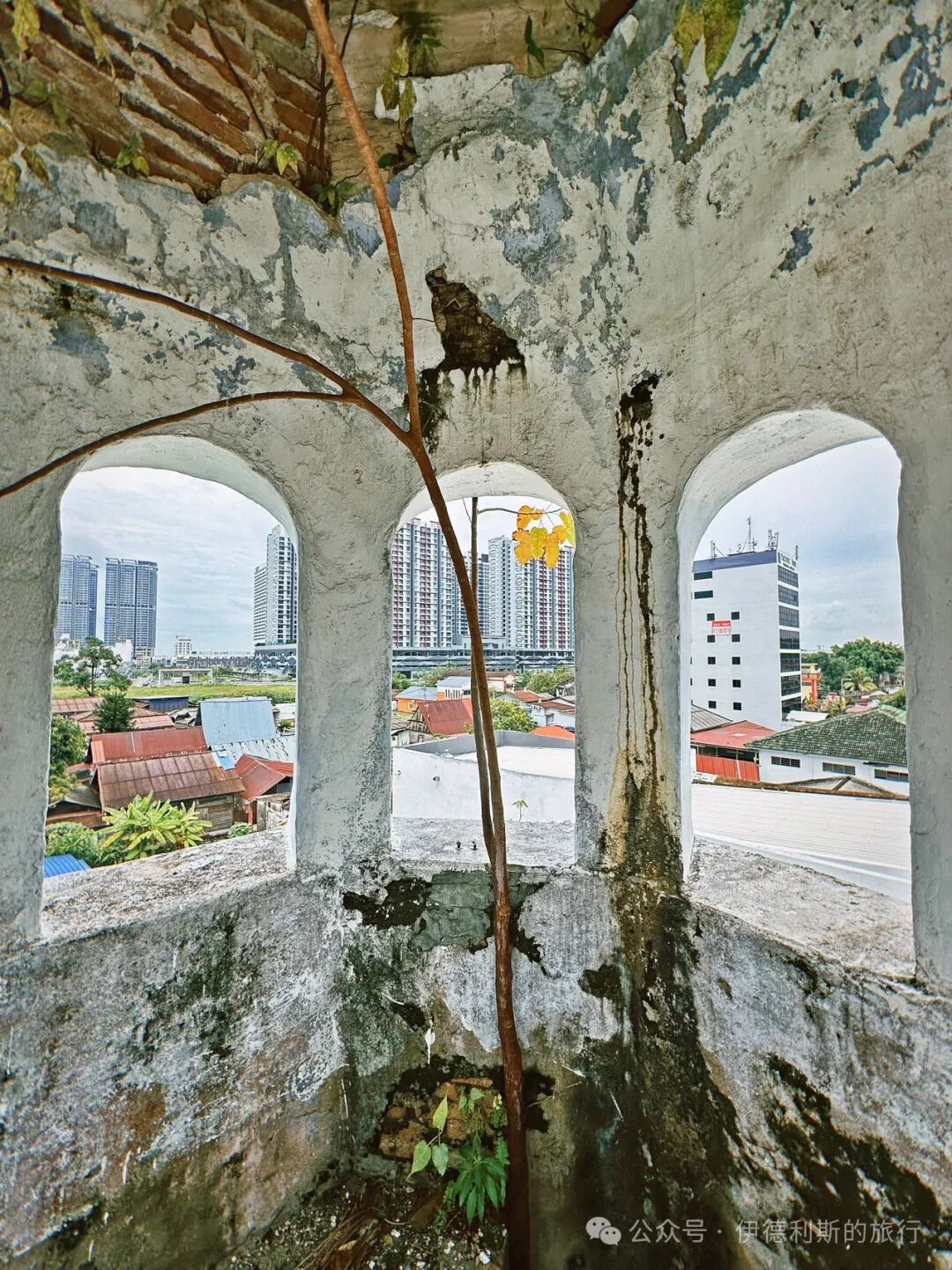
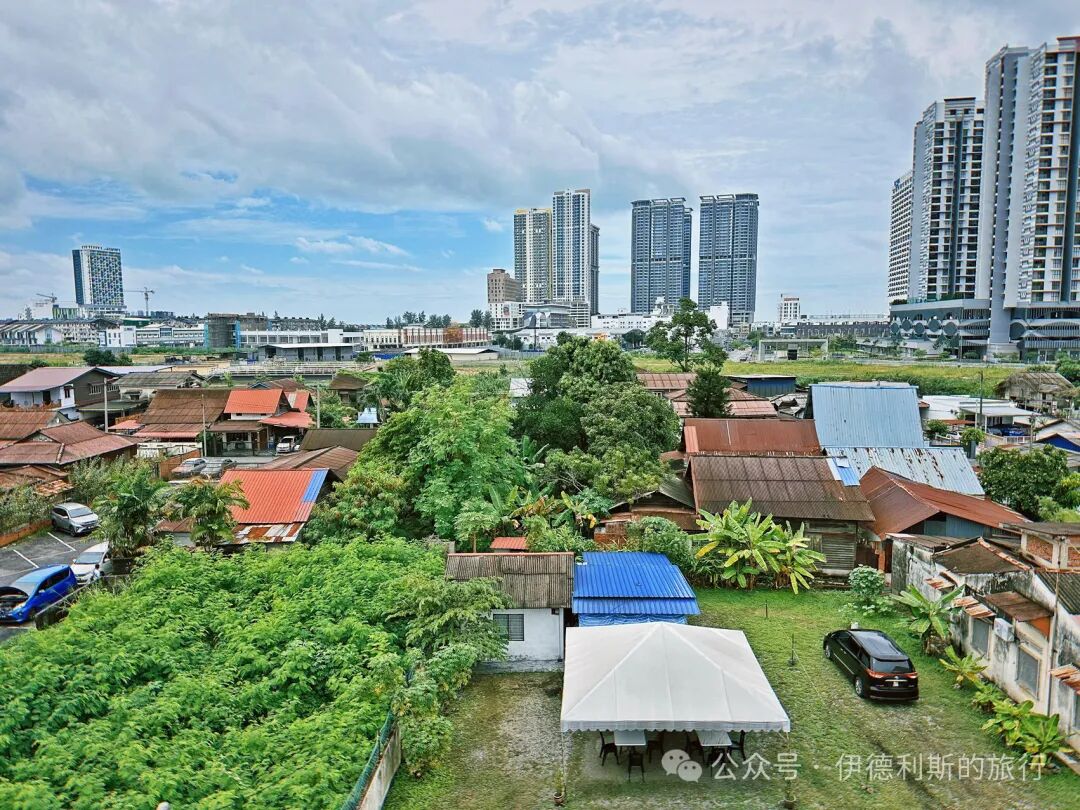
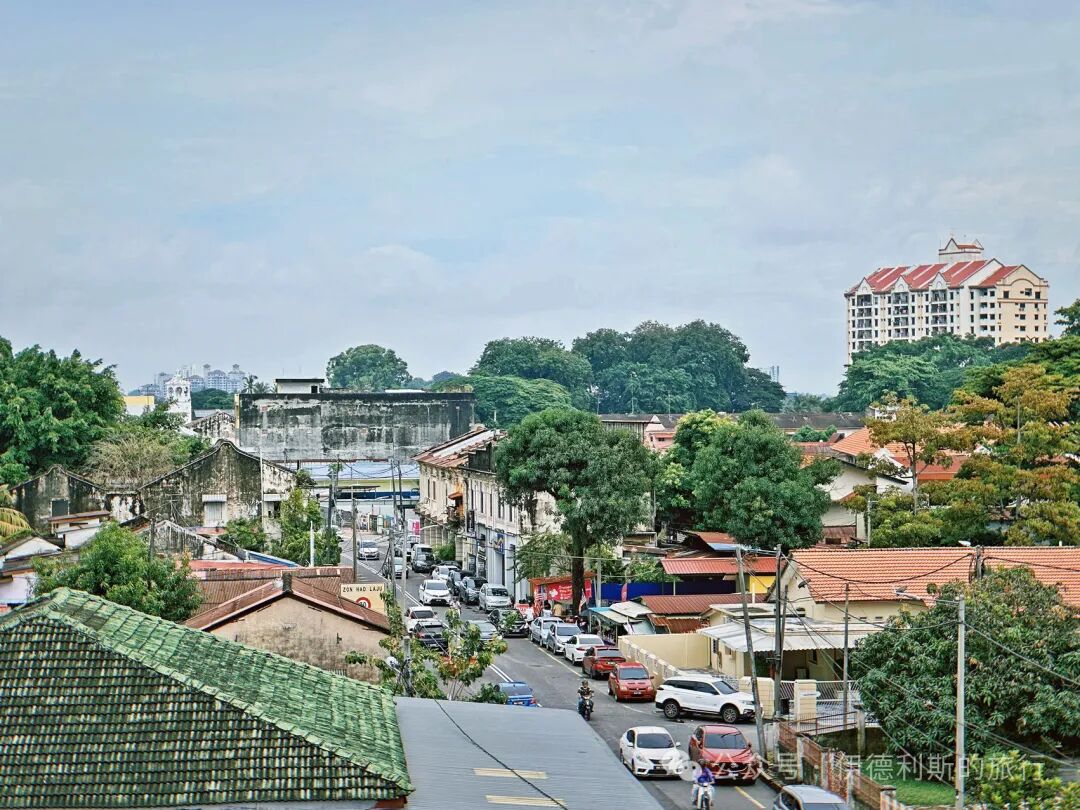
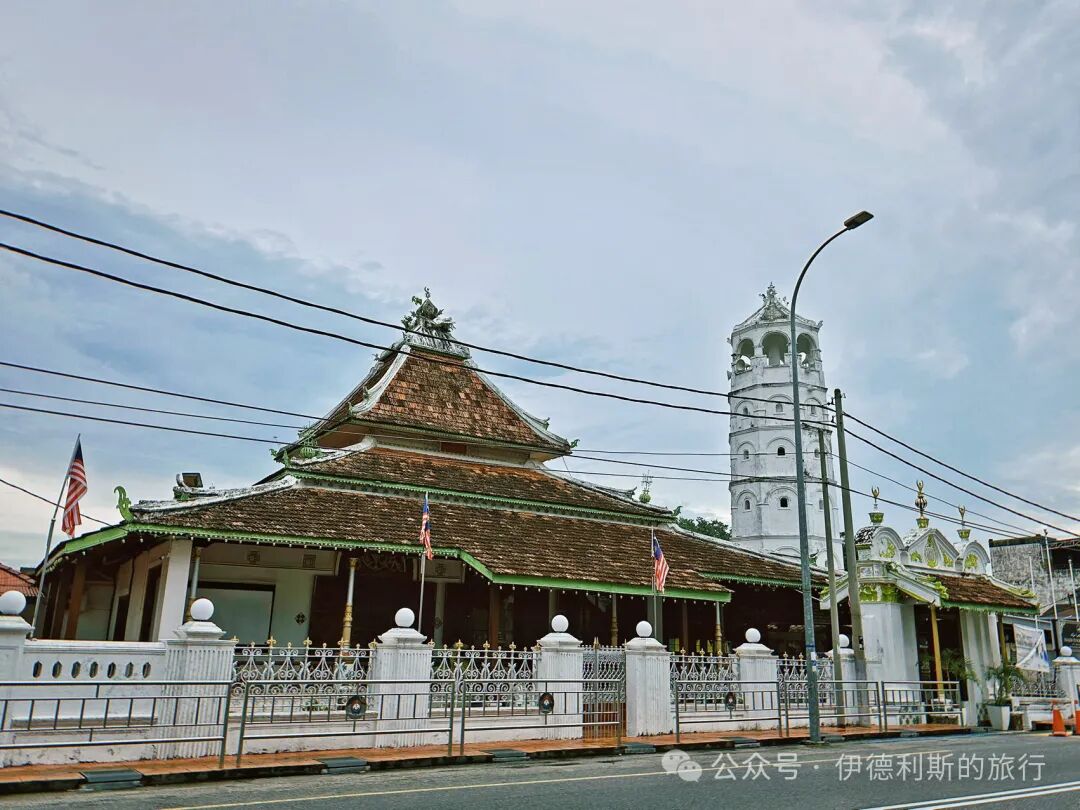
Tengkera Mosque.
In 1782, the Tengkera Mosque (Masjid Tengkera) was completed to the west of the Tengkera Small Mosque. The Tengkera Mosque also features a traditional Javanese three-tiered pyramid roof (bumbung tiga lapis), and the main hall is supported by four ironwood pillars from Kalimantan. After two renovations in 1890 and 1910, the current Tengkera Mosque has brick walls and a tiled roof. The minaret of the Tengkera Mosque, like that of the Tengkera Small Mosque, is a Chinese-style pagoda structure and serves as a continuation of the earlier minaret.
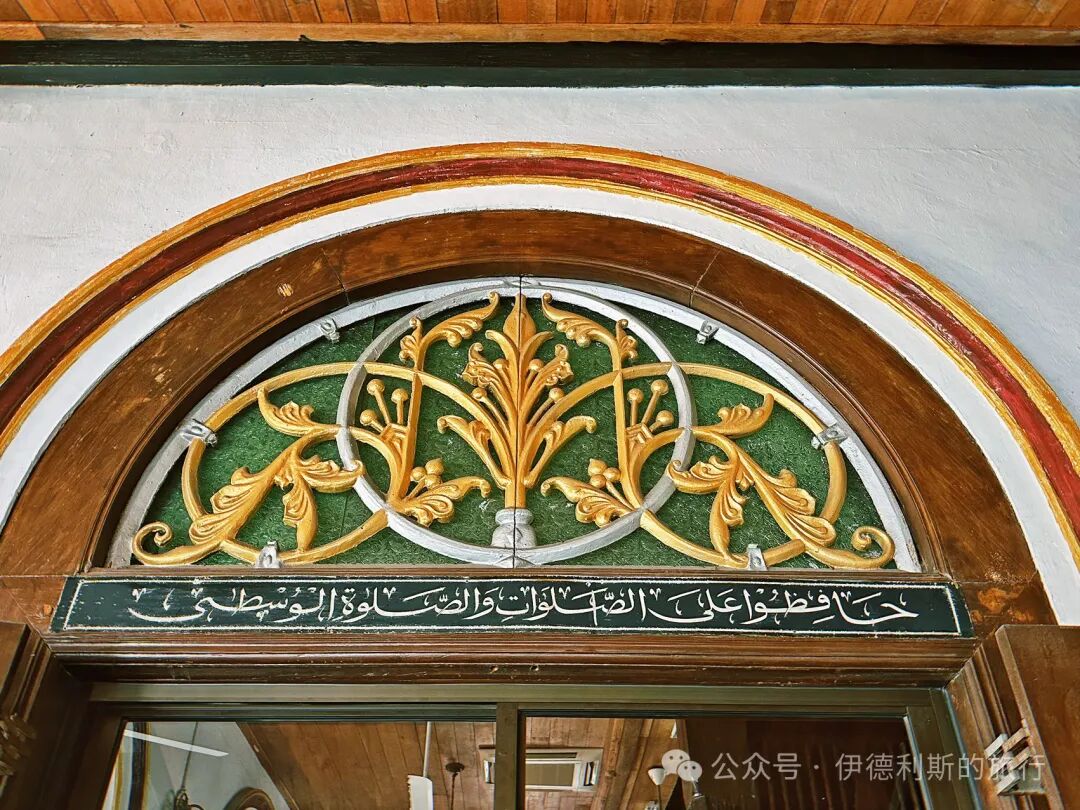
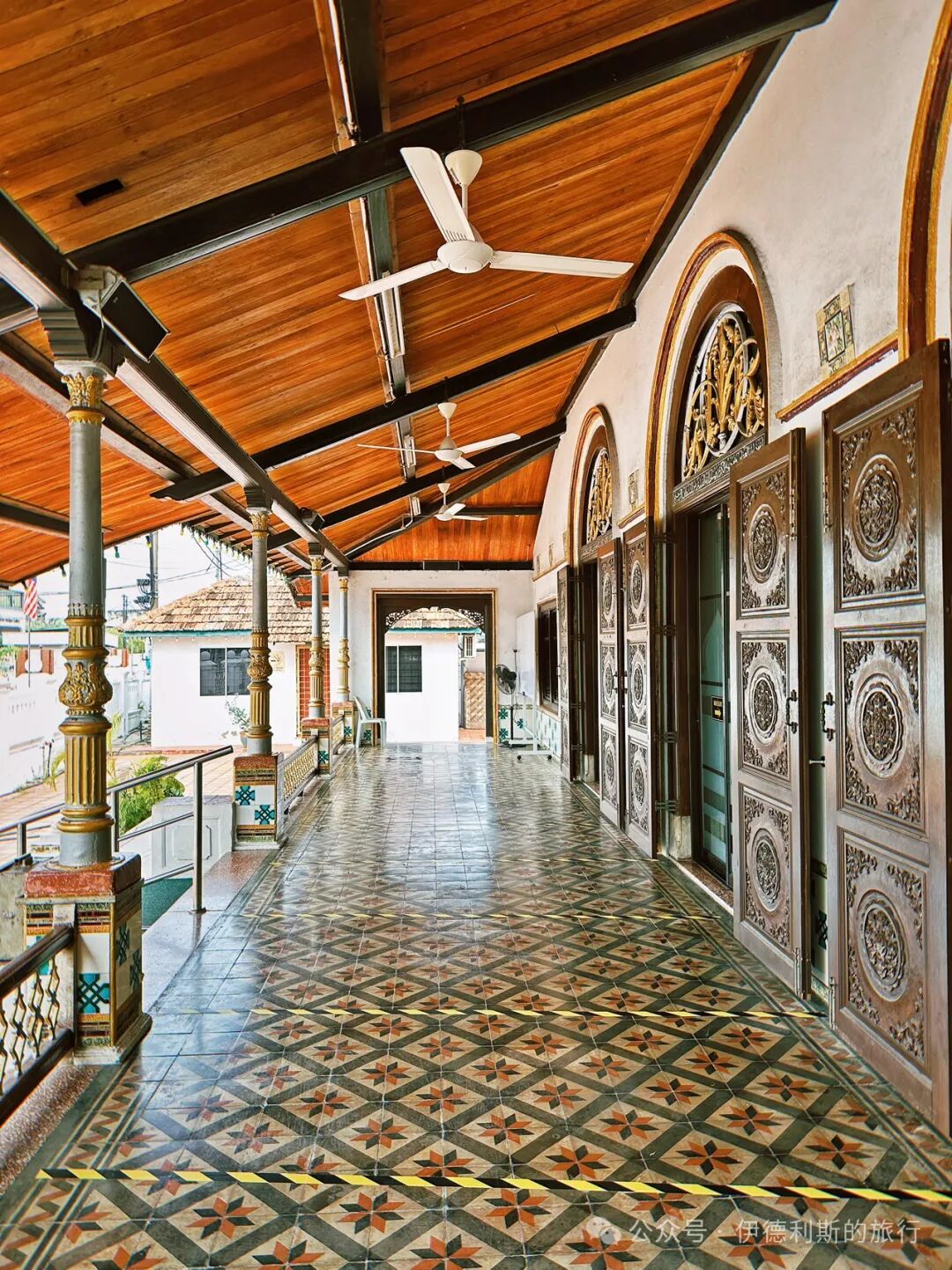
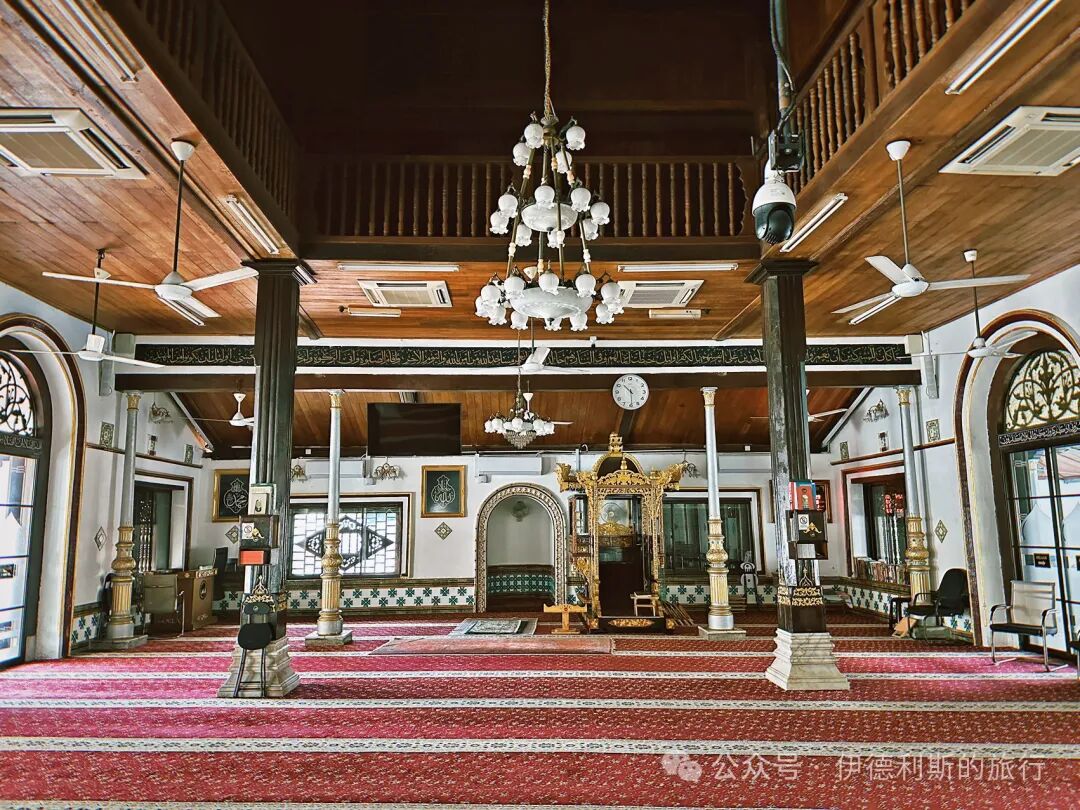
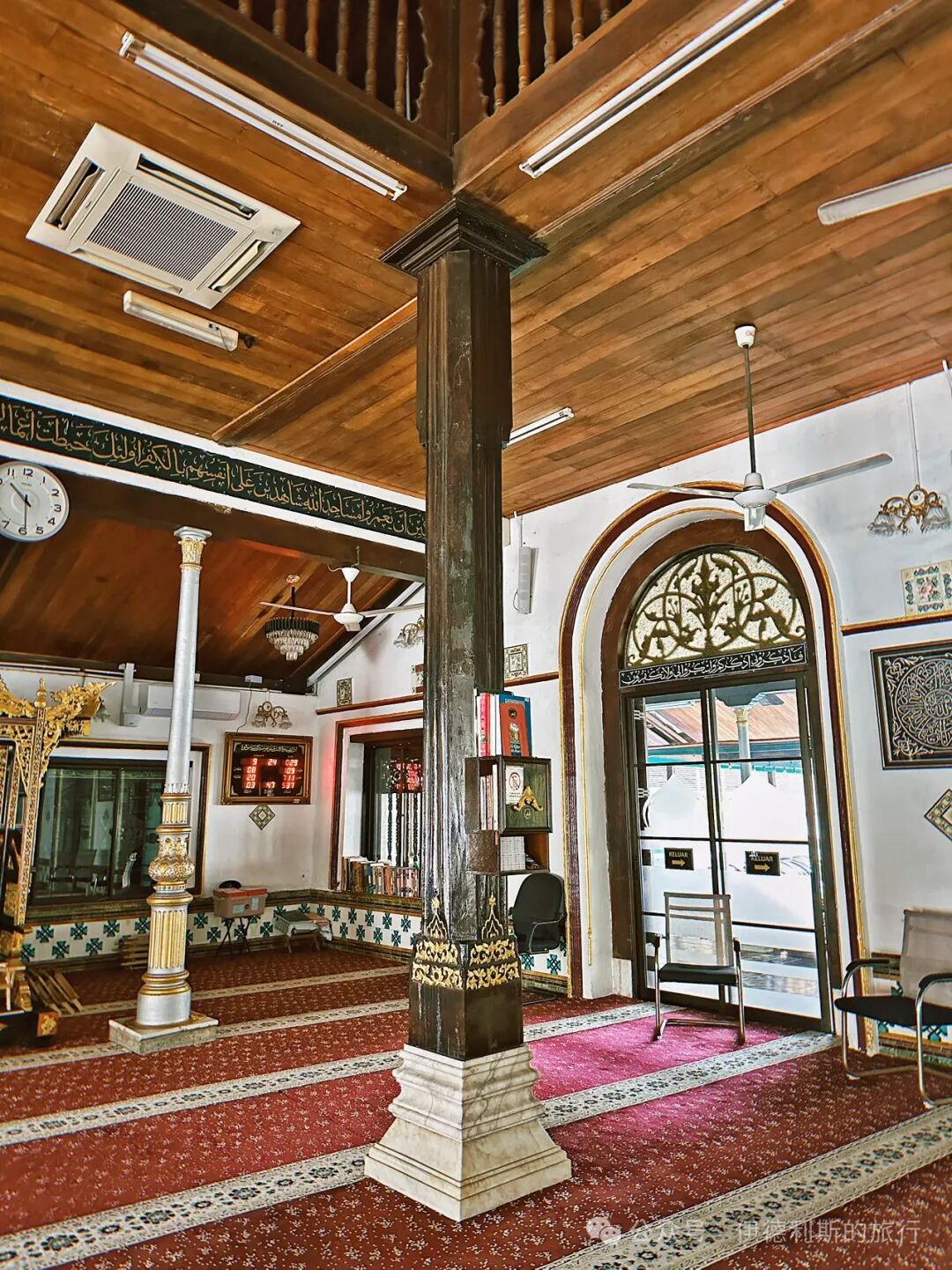
The exquisite minbar (pulpit) of the Tengkera Mosque is also in the Javanese throne style.
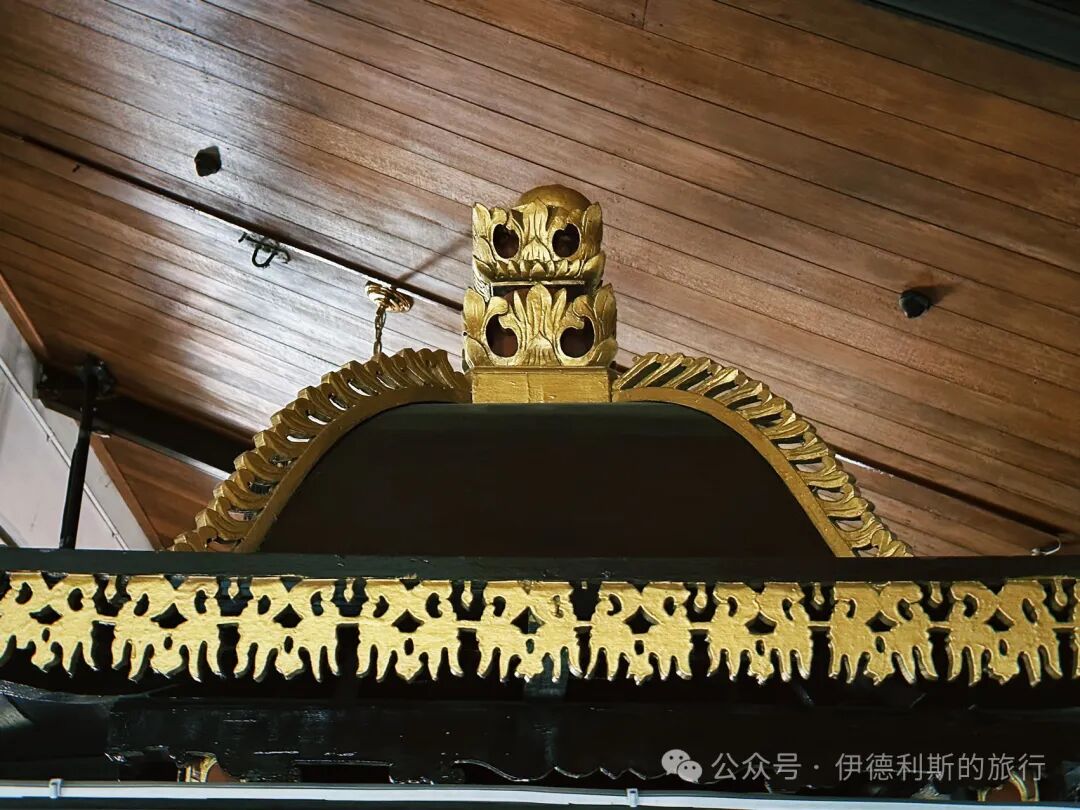
Kampung Kling Mosque.
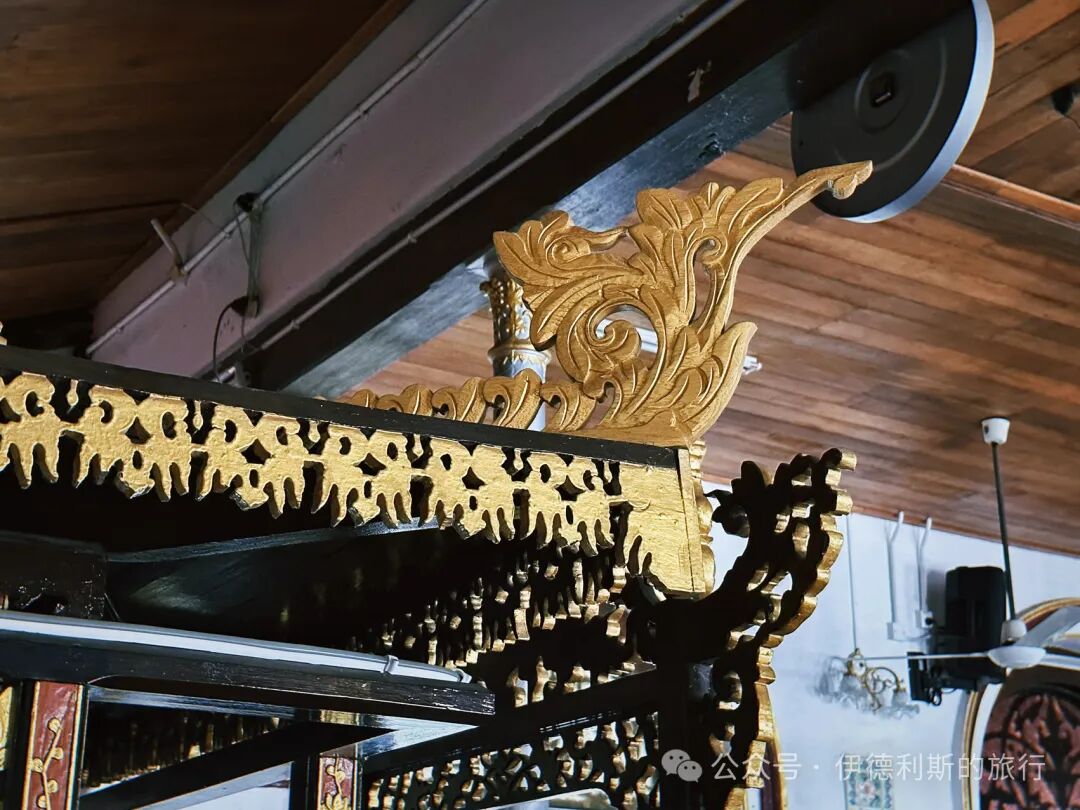
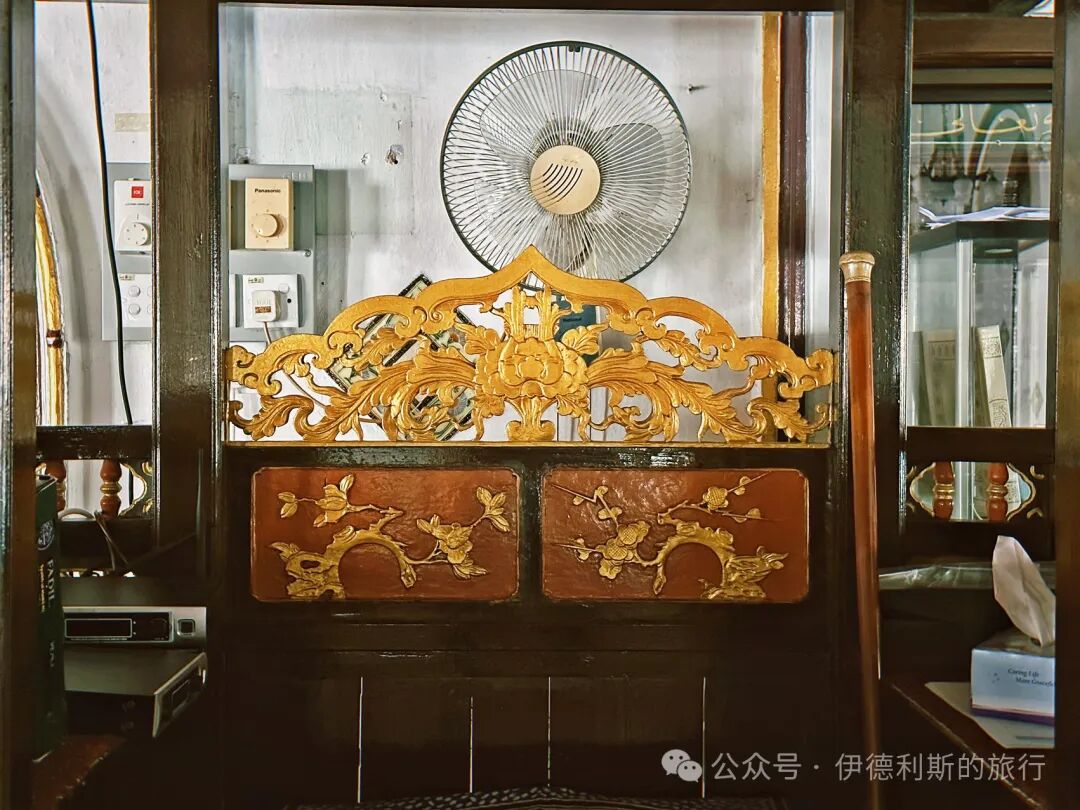
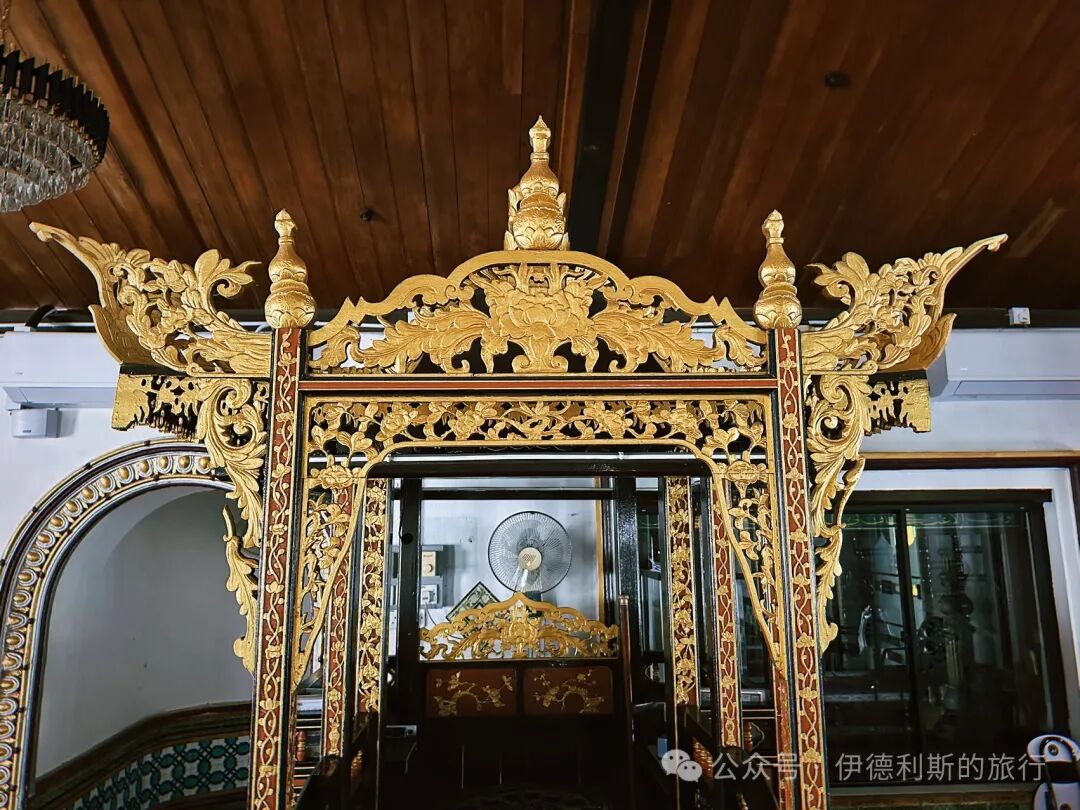
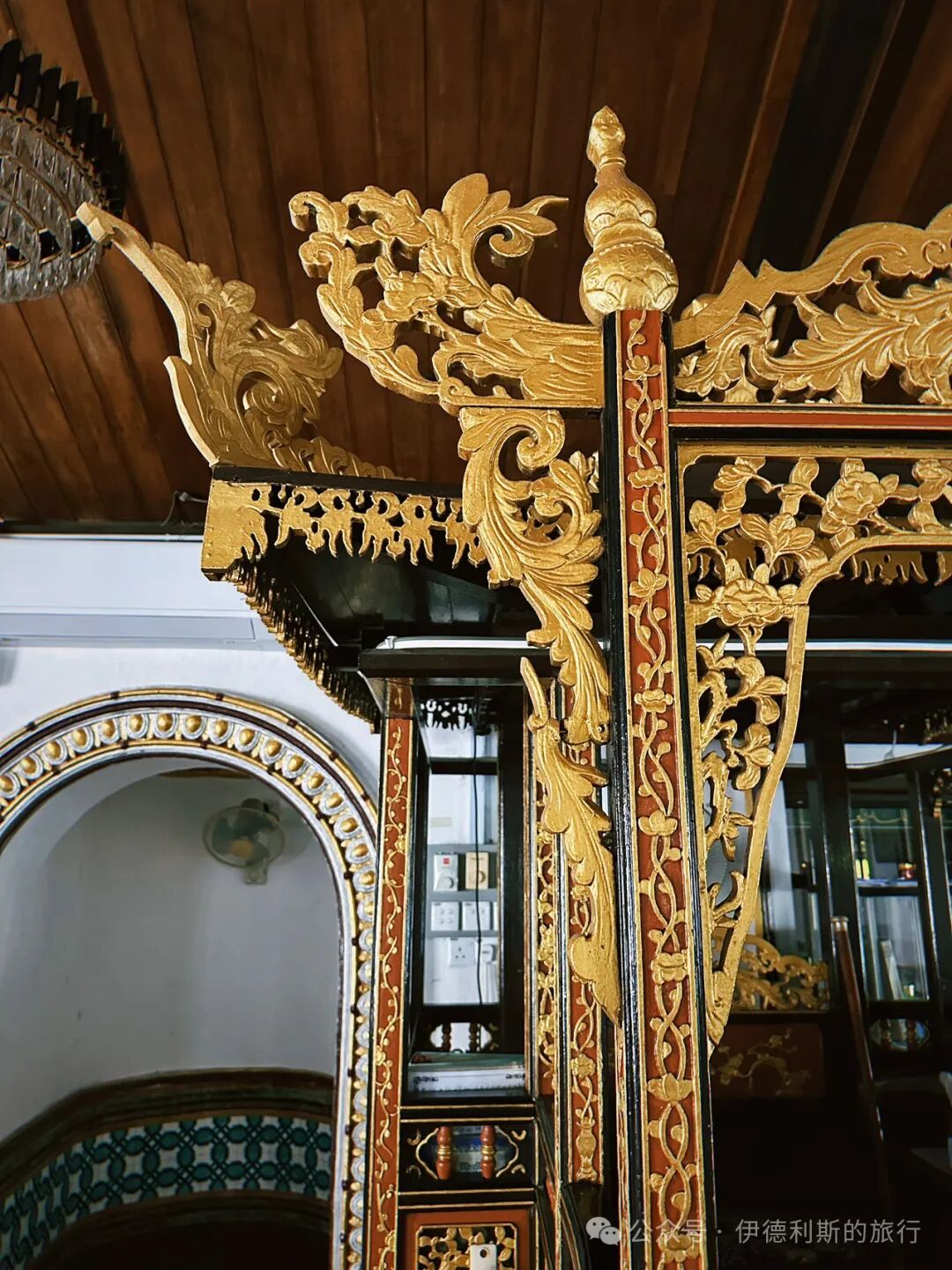
The Kampung Kling Mosque (Masjid Kampong Kling) is located in the center of Malacca city. It was first built by Indian merchants in 1748 and was converted from a wooden structure to the current brick structure in 1872. The mosque features a traditional Javanese three-tiered pyramid roof (bumbung tiga lapis). The classical Corinthian columns between the main hall and the prayer niche (mihrab), as well as the plaster walls, show the influence of Dutch colonists. The Chinese tiles on the roof, floor, and walls, along with the wood carvings on the doors and windows, reflect Chinese influence.
Legend has it that during the Malacca Sultanate, Kampung Kling was a settlement for Indian Muslim merchants. 'Kling' was the historical term used in the Malay Archipelago for Indians, especially Tamils. On a 1690 map of Malacca, this area is marked as 'Mosquée de Maures' (Moorish Mosque), but its relationship to the Kampung Kling Mosque is uncertain. In the 18th century, this was still a village for South Indian immigrants. After the rubber industry in Malacca boomed in the 19th and early 20th centuries, it became a residential area for Chinese people working in the rubber industry. Today, the mosque is surrounded by Chinese shophouses.
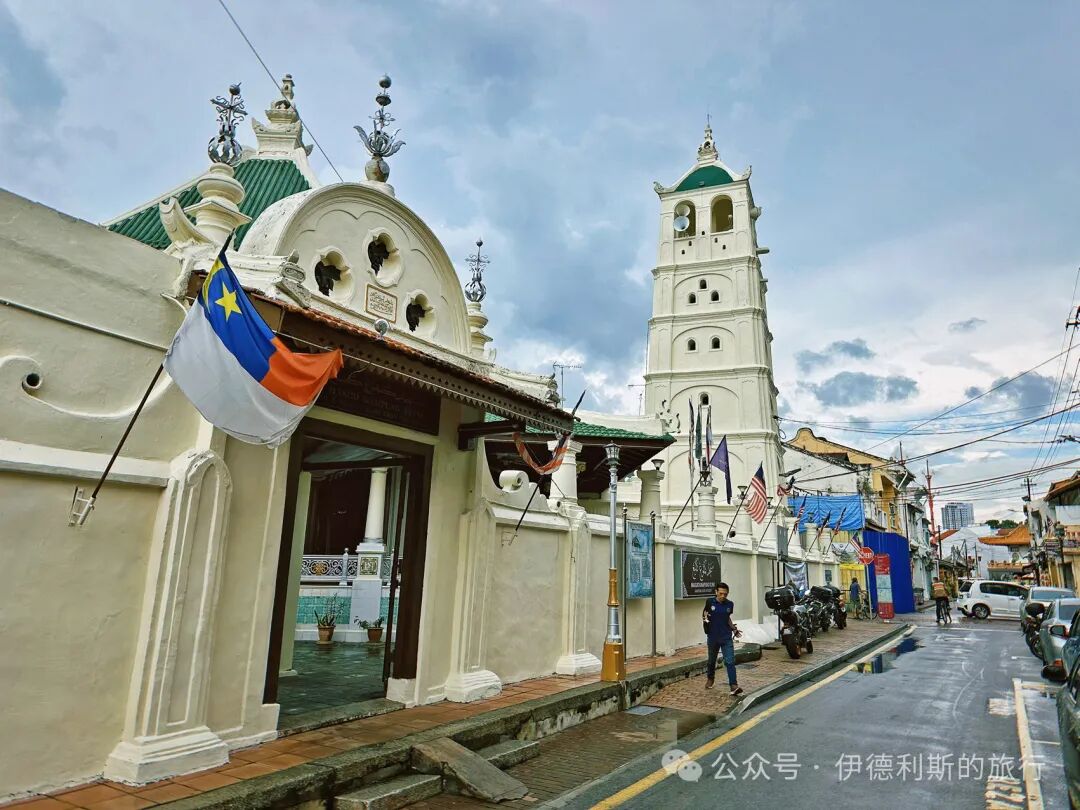
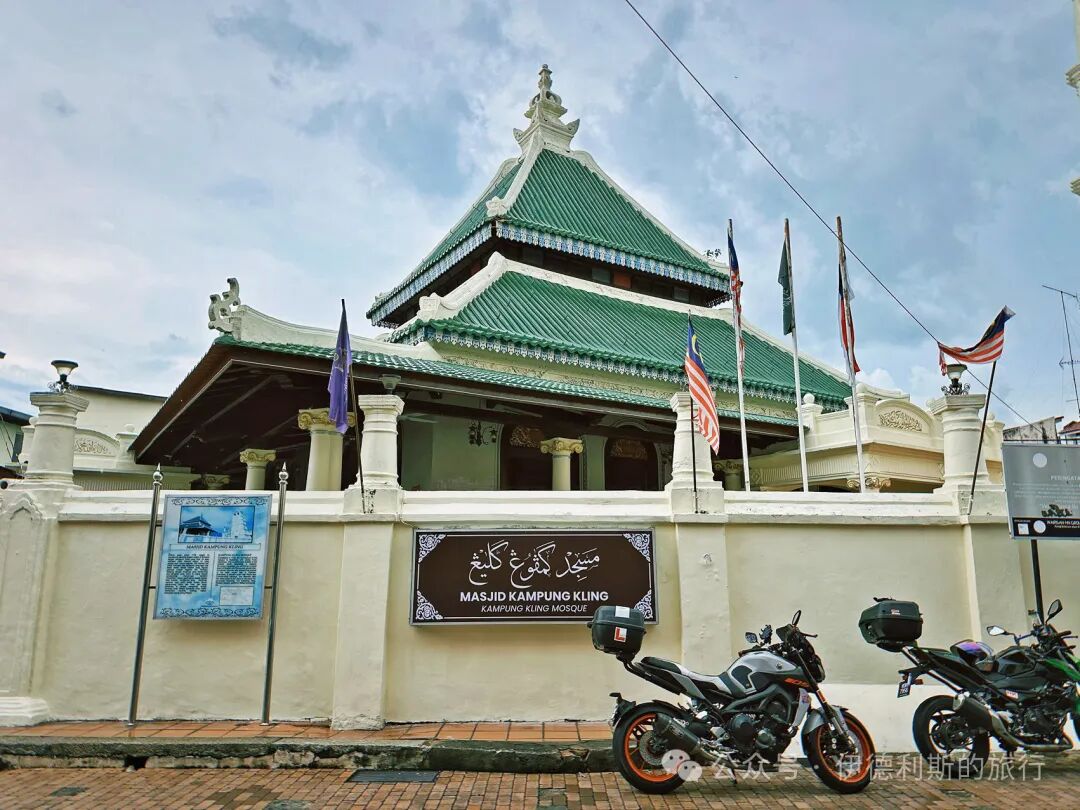
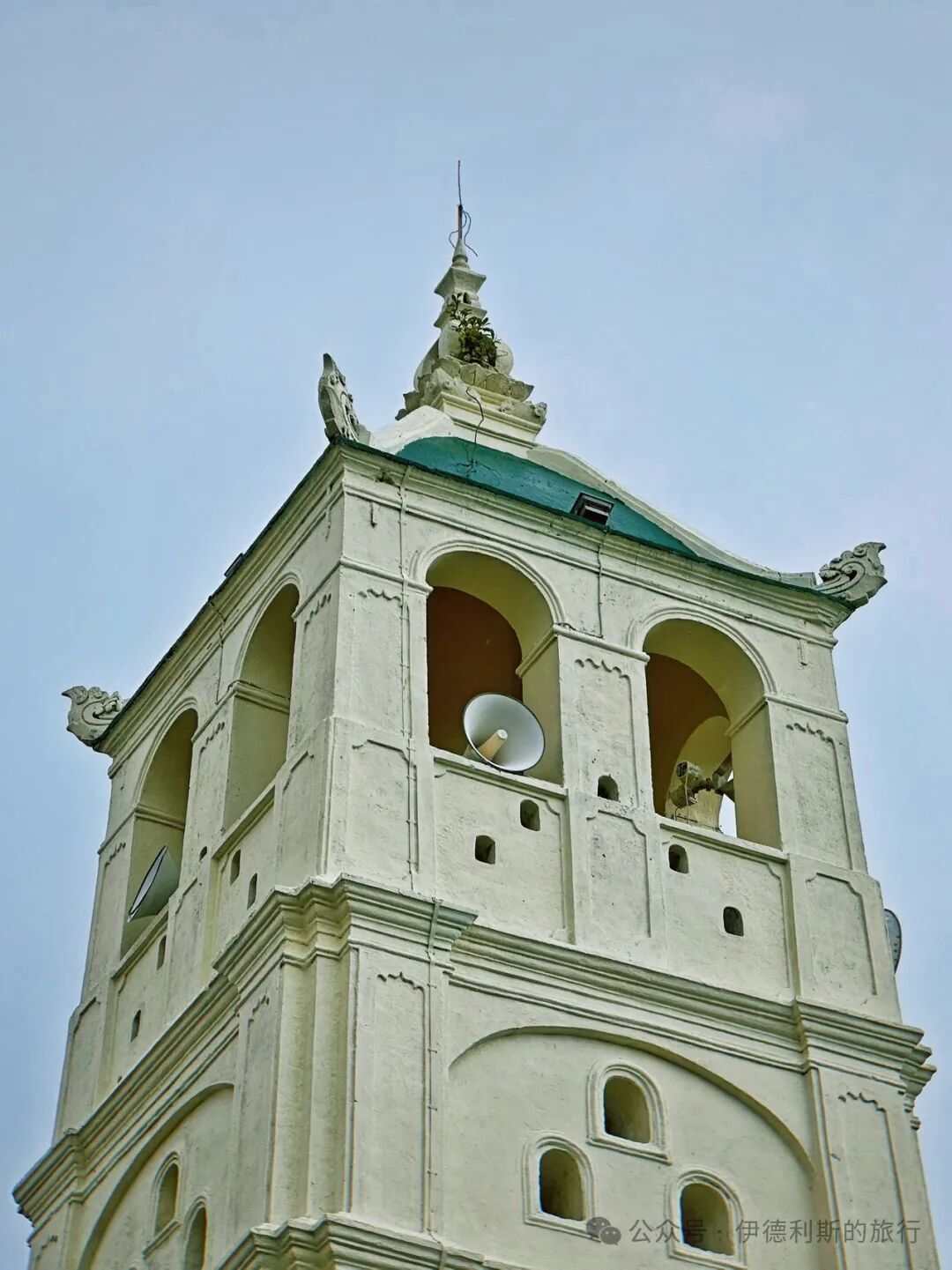
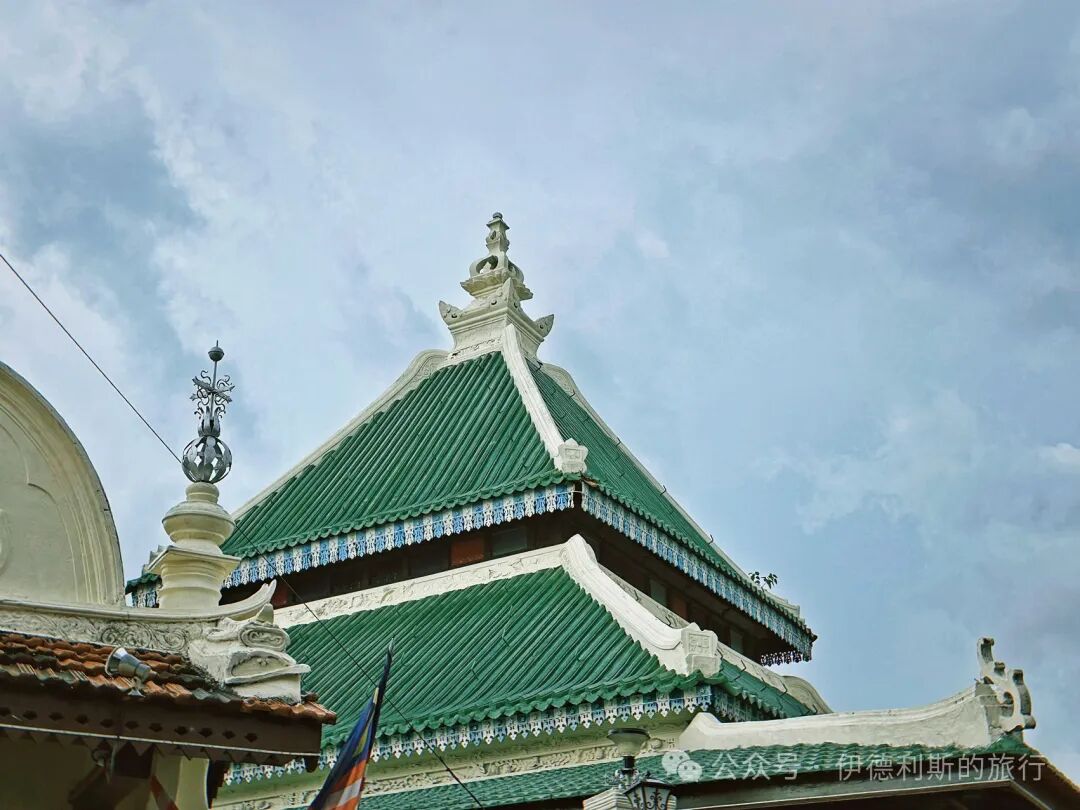
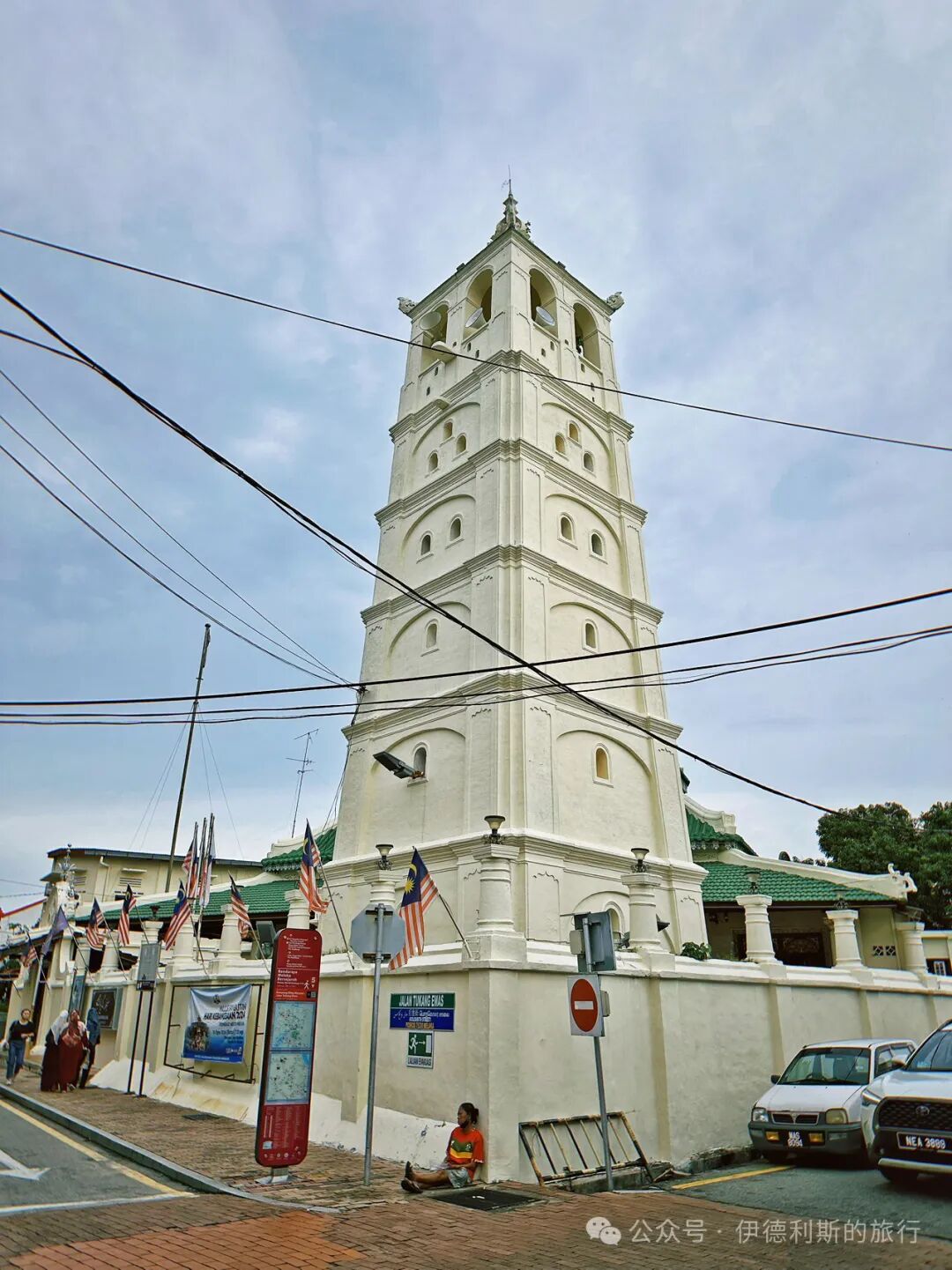
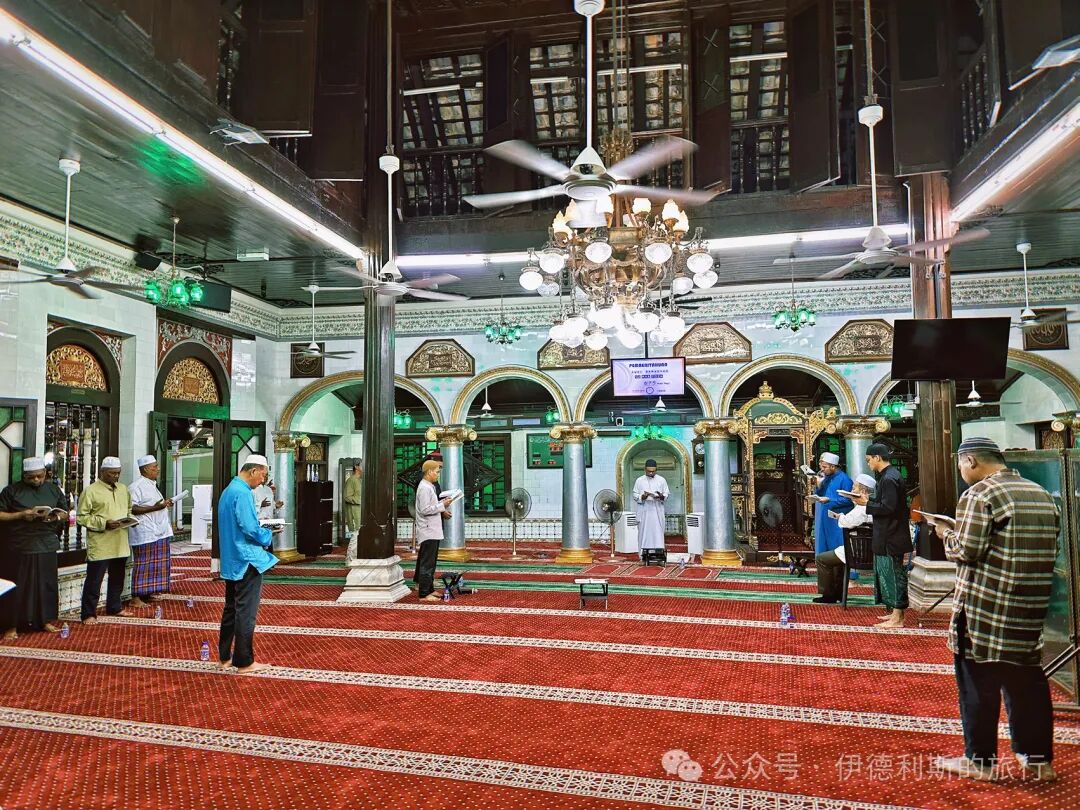
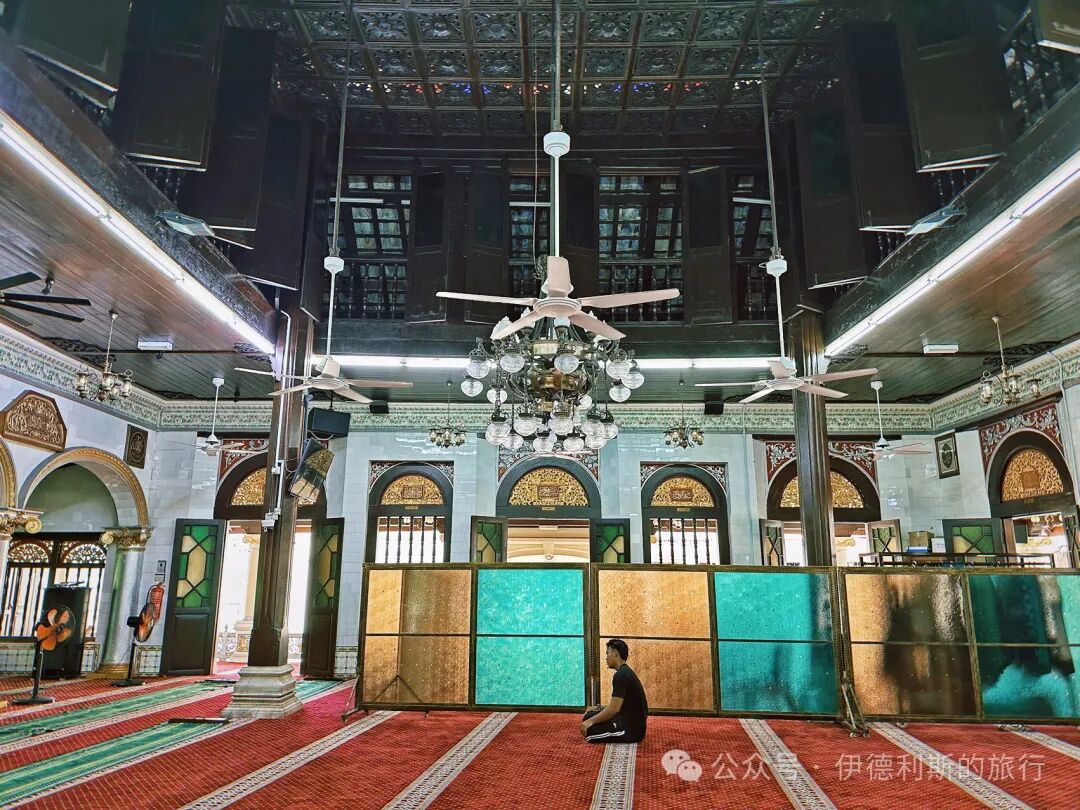
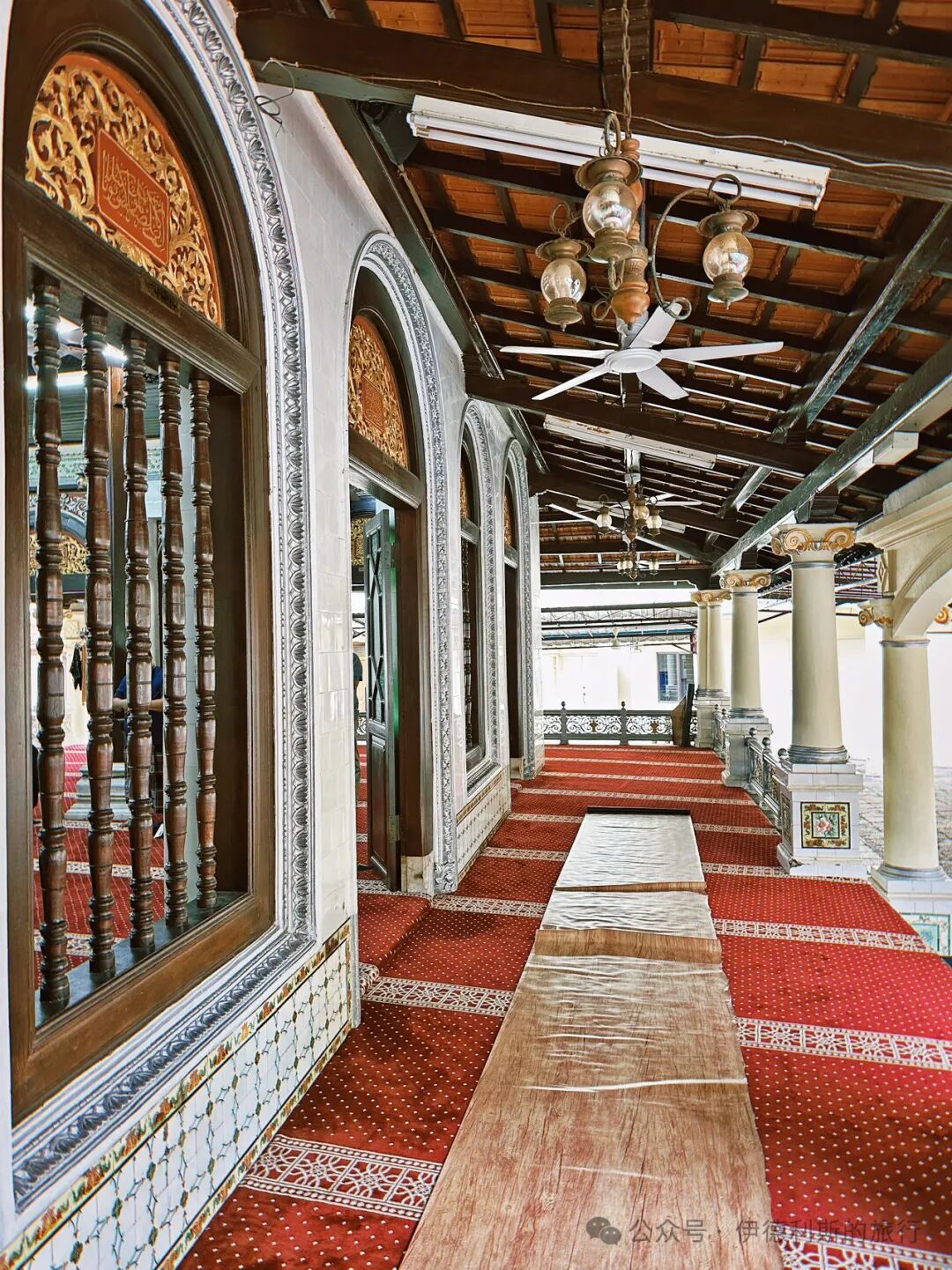
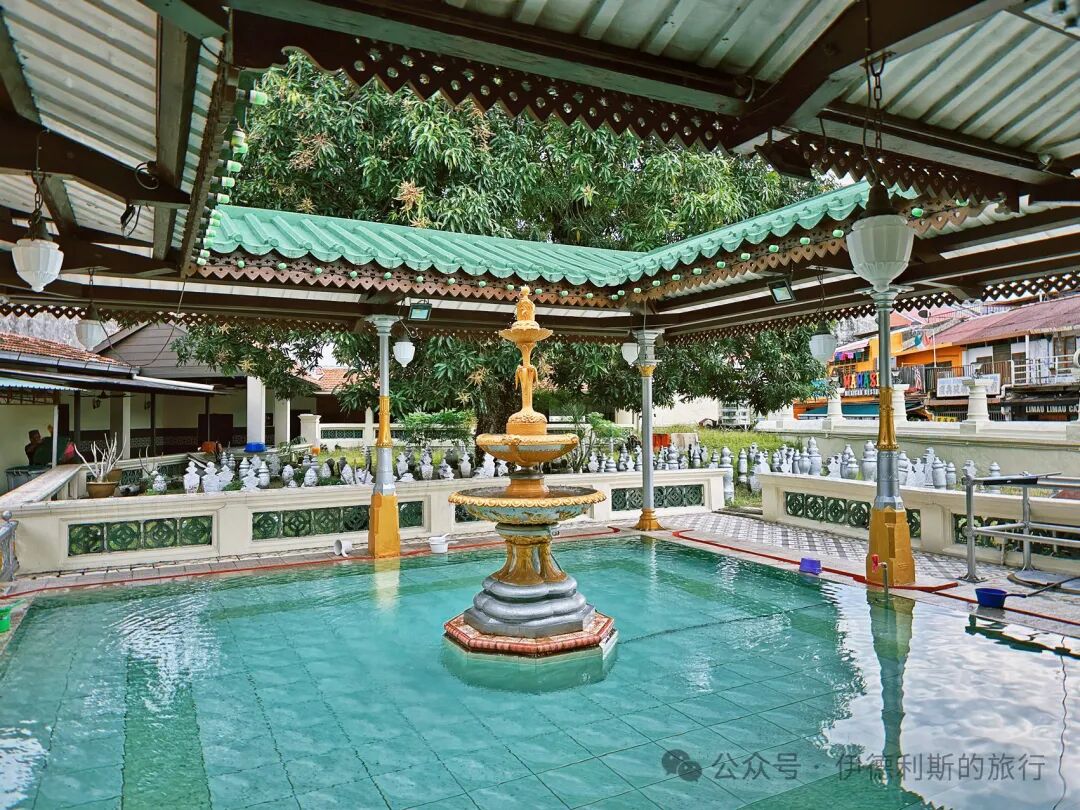
The Kampung Kling Mosque has a beautiful minbar and wood carvings on its doors and windows; the minbar is also in the Javanese throne style.
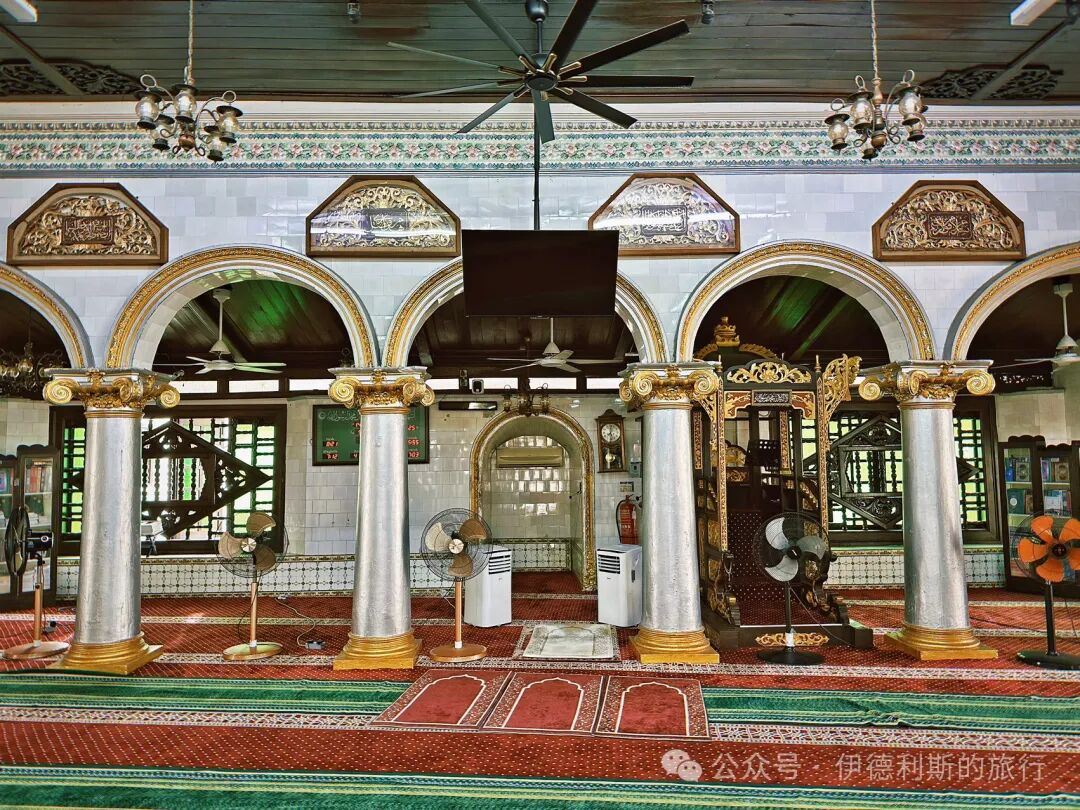
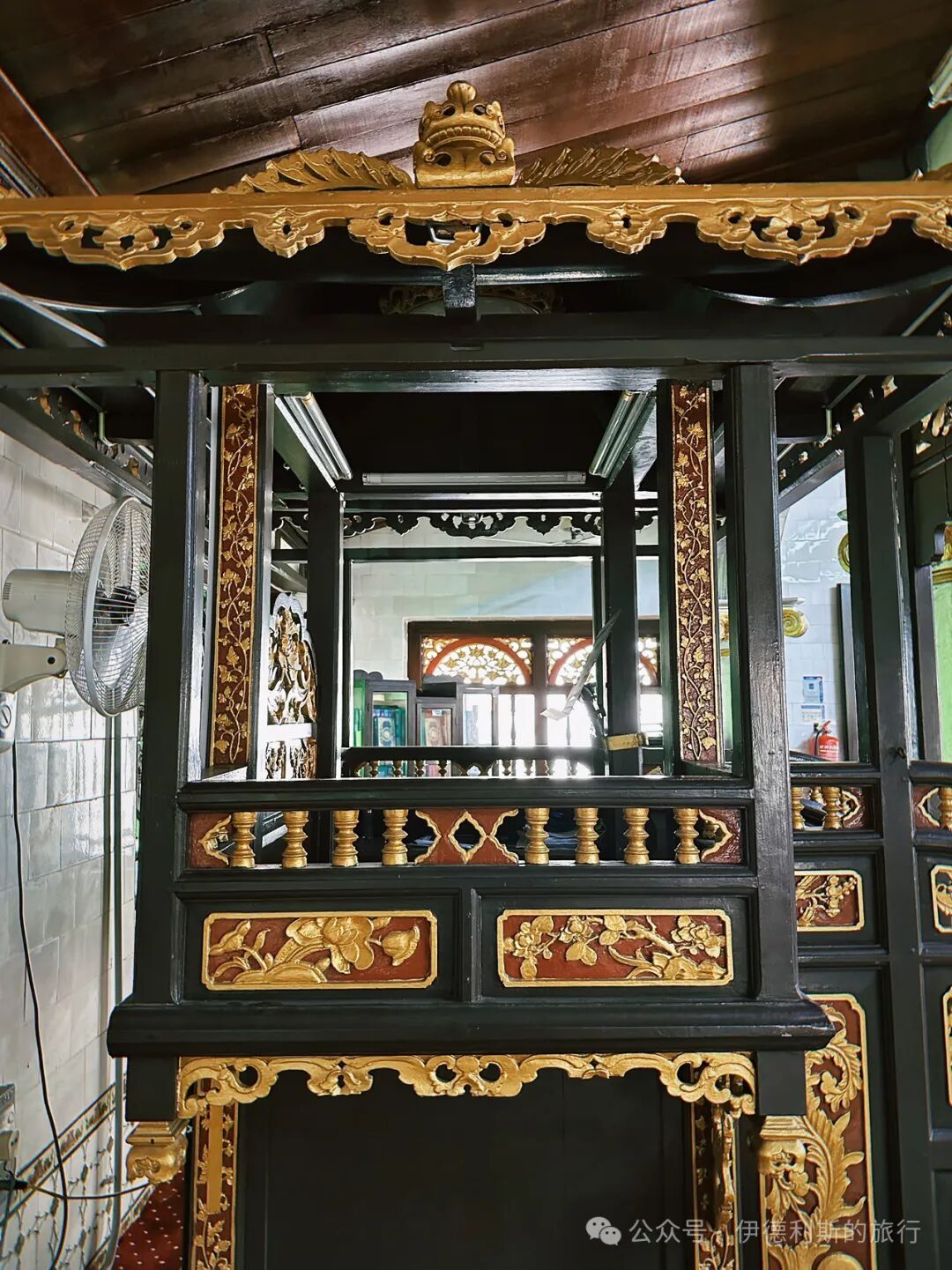
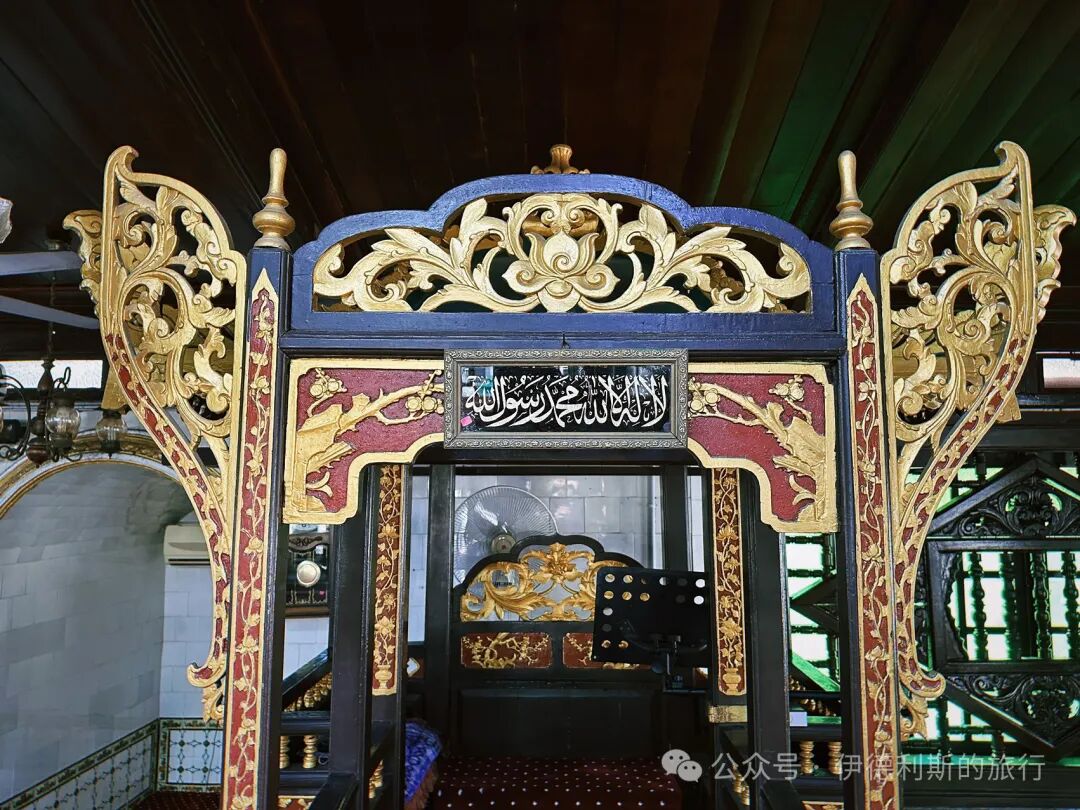
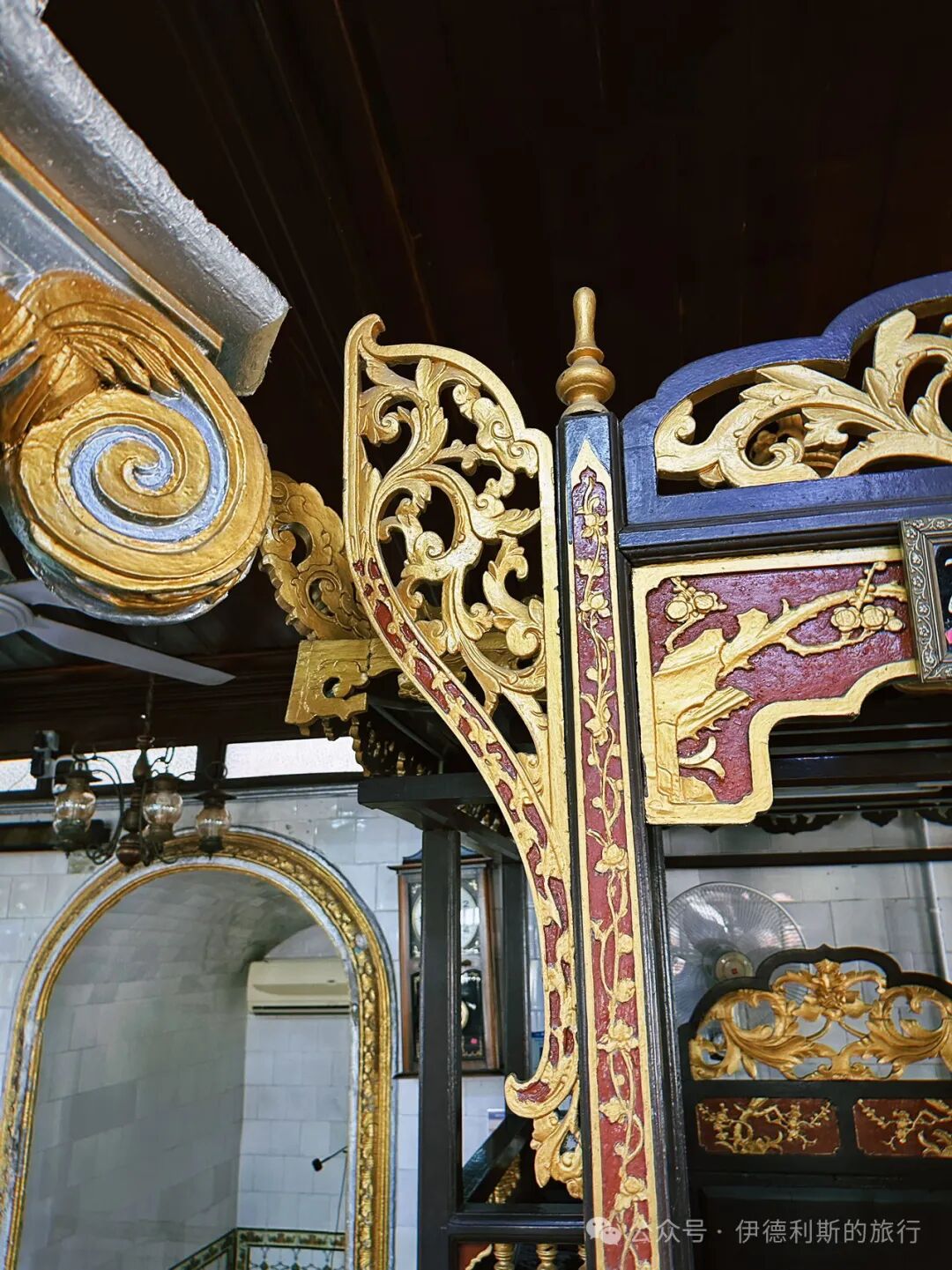
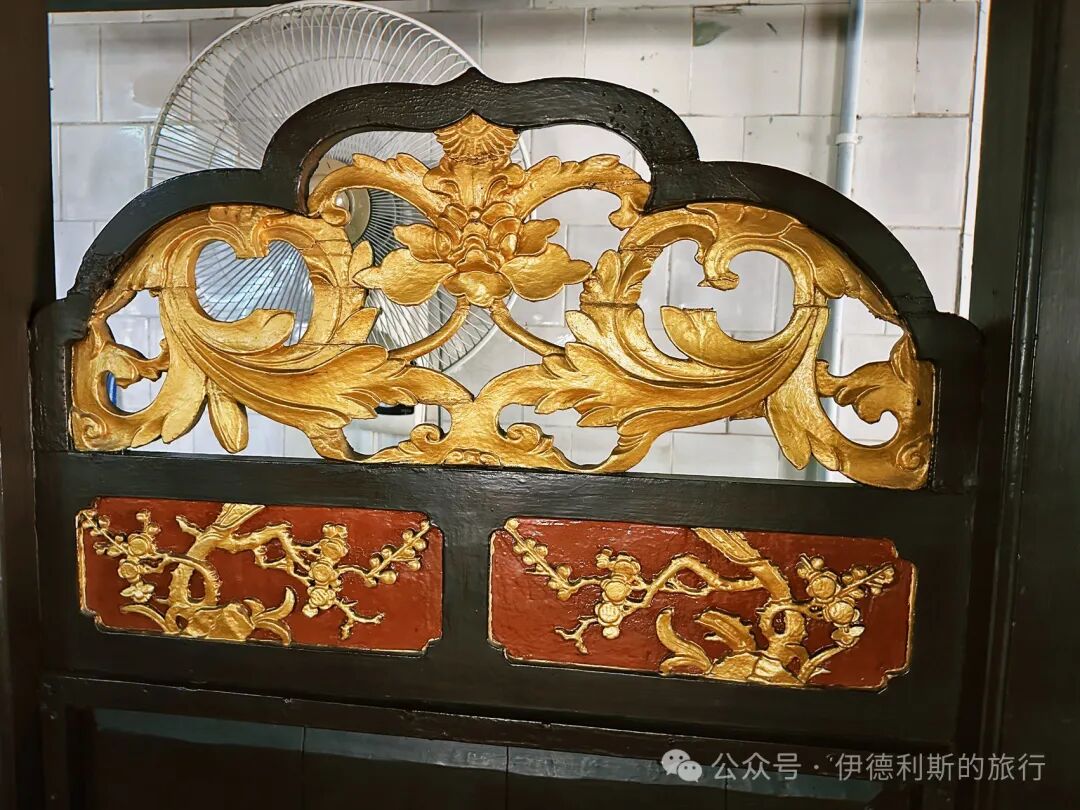
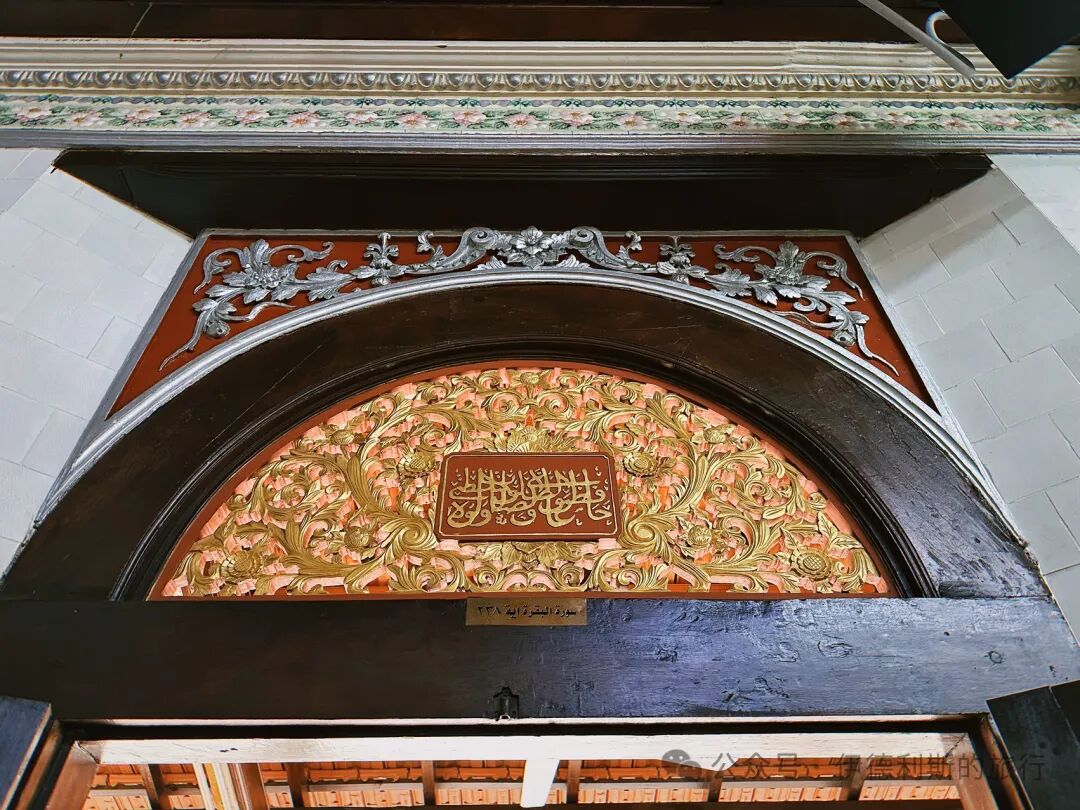
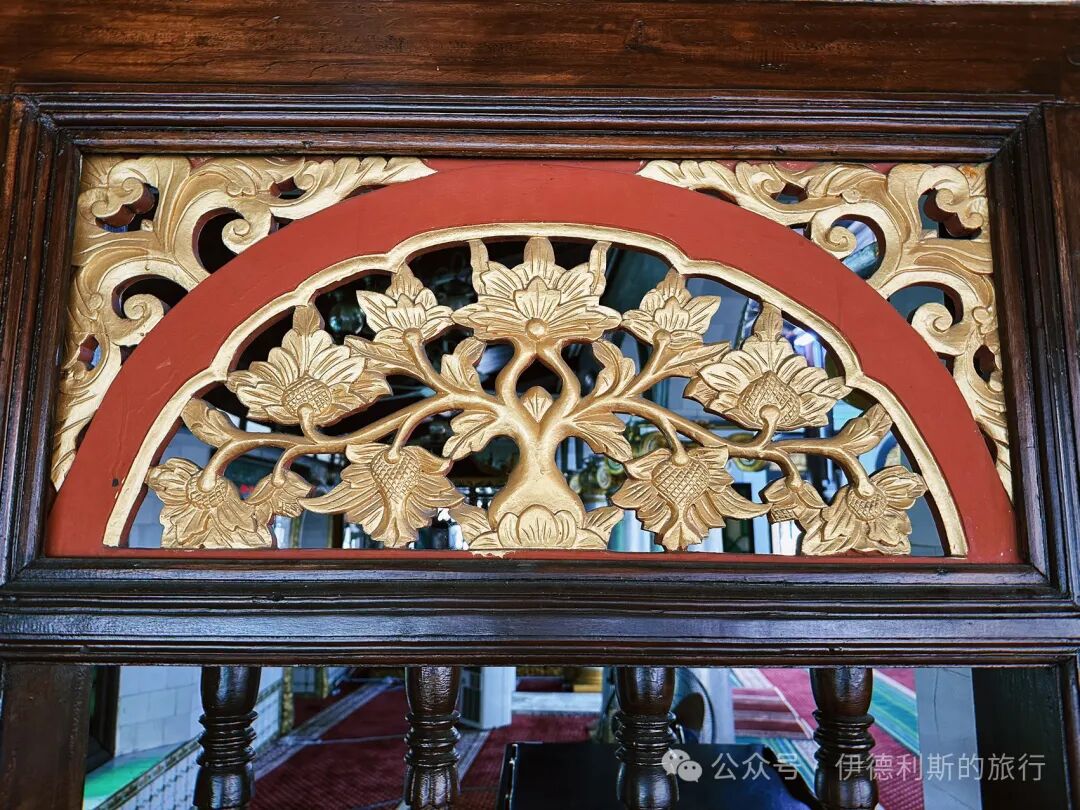
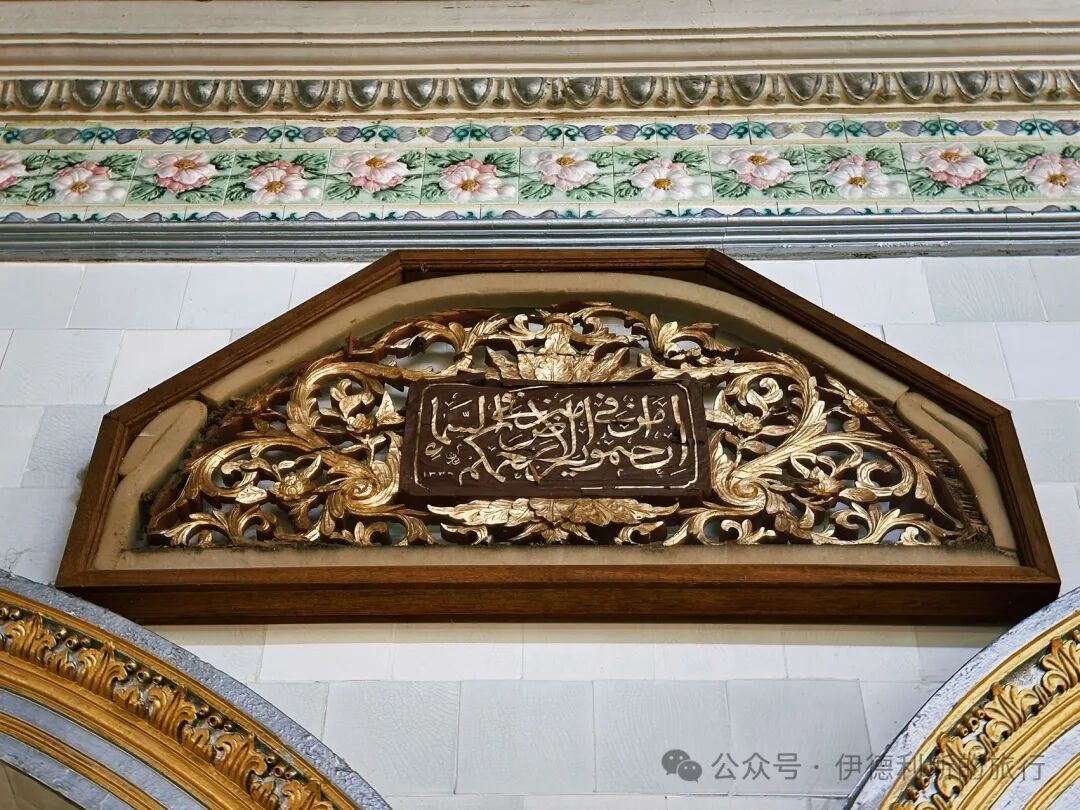
Sanbao Hill Mosque.
Bukit Cina Mosque (Masjid Bukit Cina), also called Al-Hamideen Mosque, was built in 1865. A new main hall was added in 1978, but the layout of the original old hall remains. The old hall features a traditional Javanese-style three-tiered pyramid roof (bumbung tiga lapis) and four wooden pillars (Soko Guru). Each pillar connects to the foundation with a stone base called Umpak. These bases keep the wood from soaking up groundwater and help absorb shock during earthquakes.
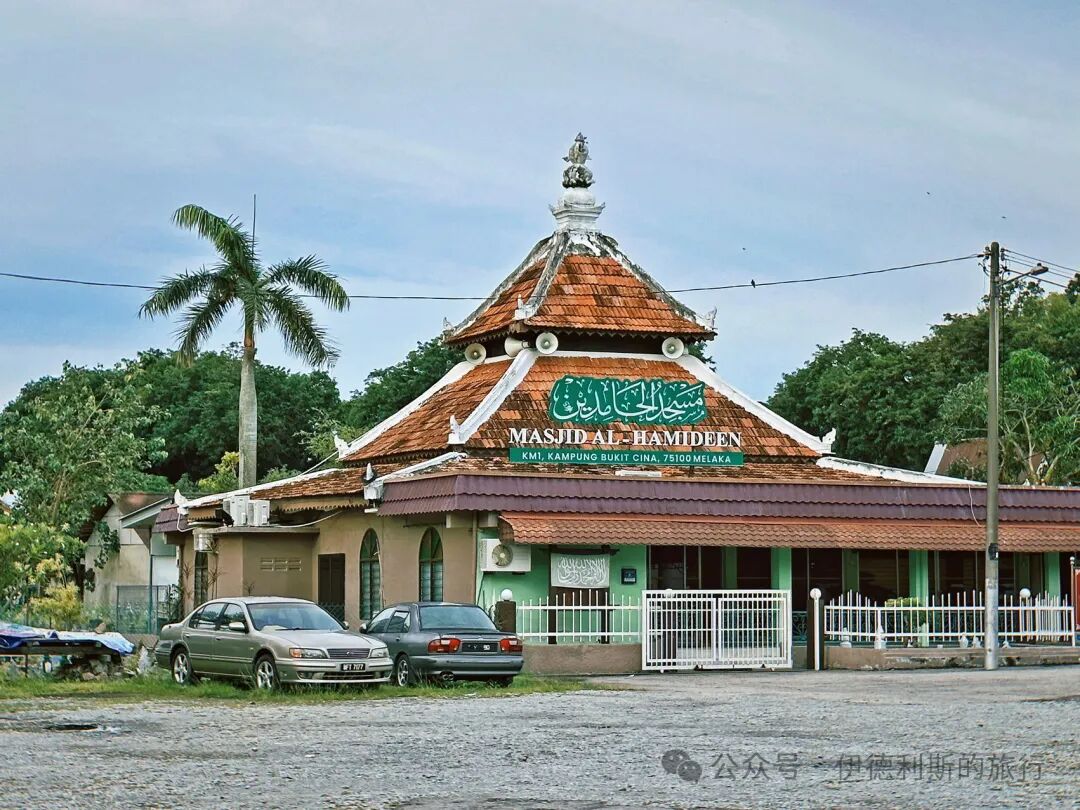
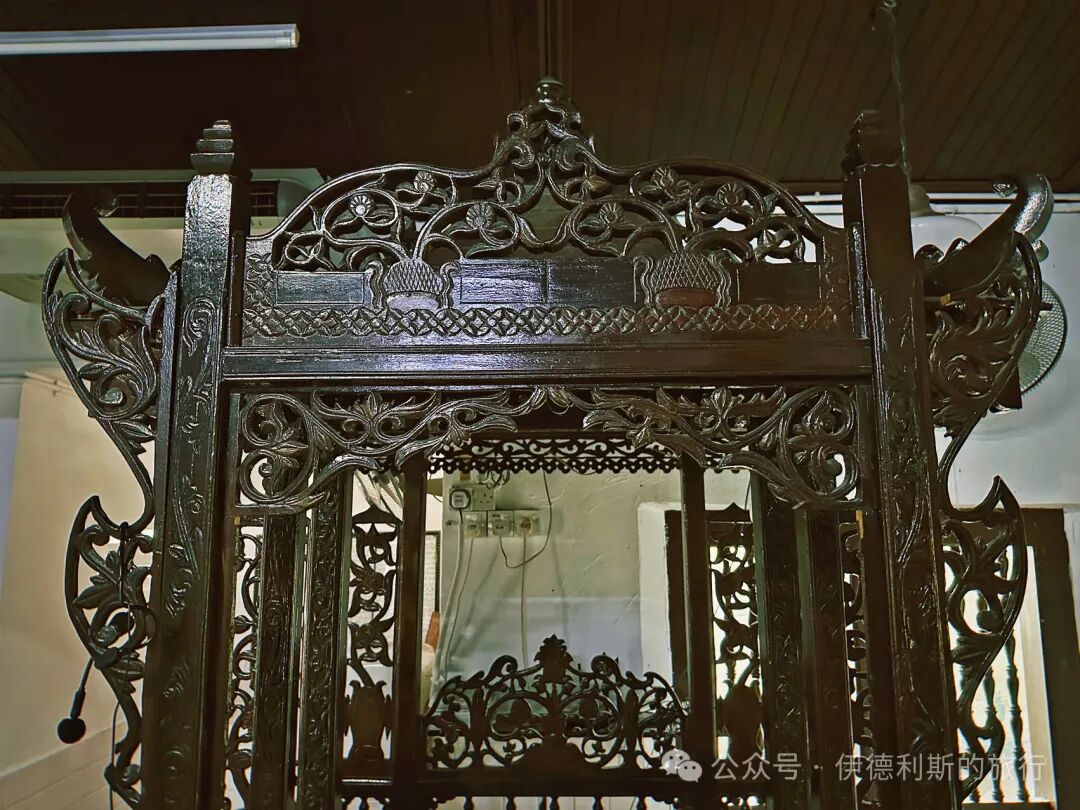
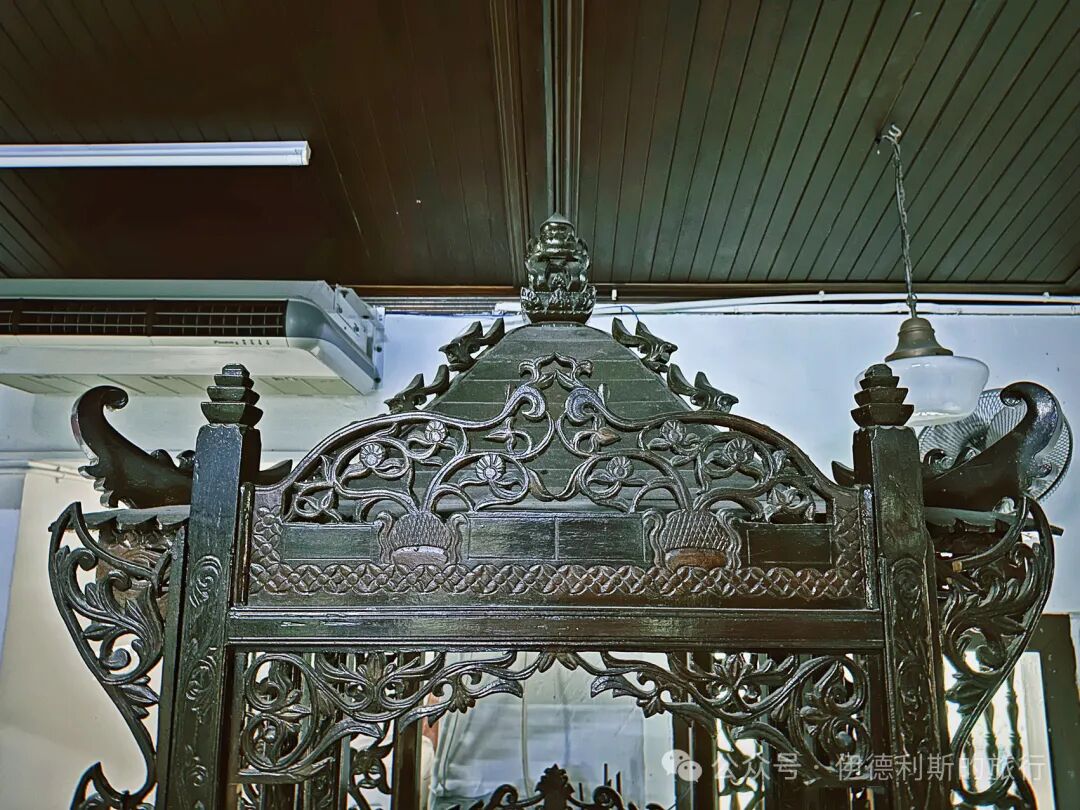
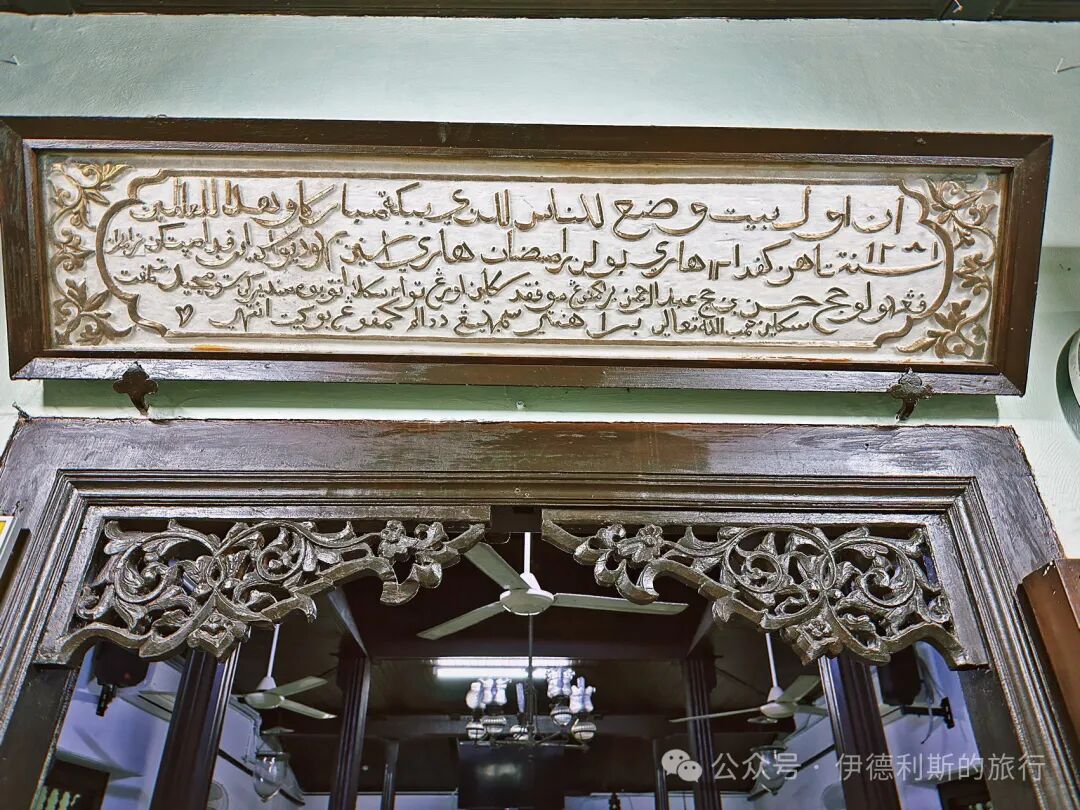
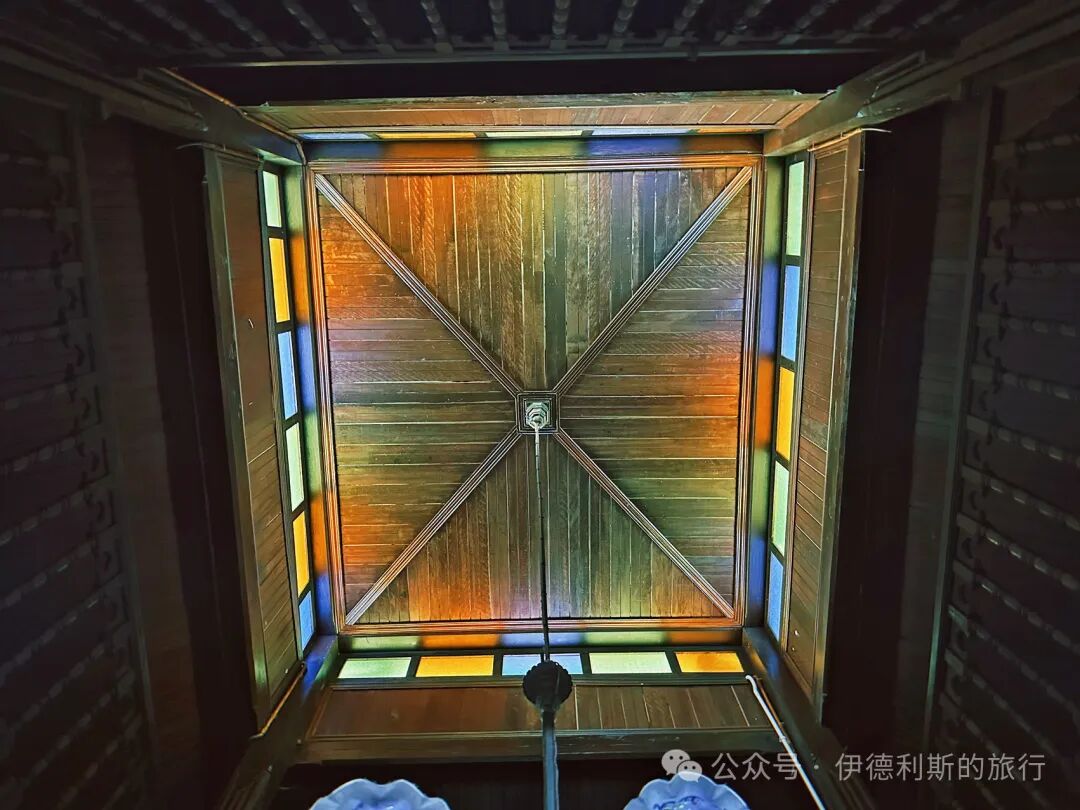
Pengkalan Rama Mosque
Pengkalan Rama Mosque was first built in the 1730s. Dato Penghulu Abdul Ghani funded its renovation in 1917. A new main hall was added in 2004, but it still keeps the traditional Javanese-style three-tiered pyramid roof (bumbung tiga lapis) and four wooden pillars (Soko Guru) of the old hall.
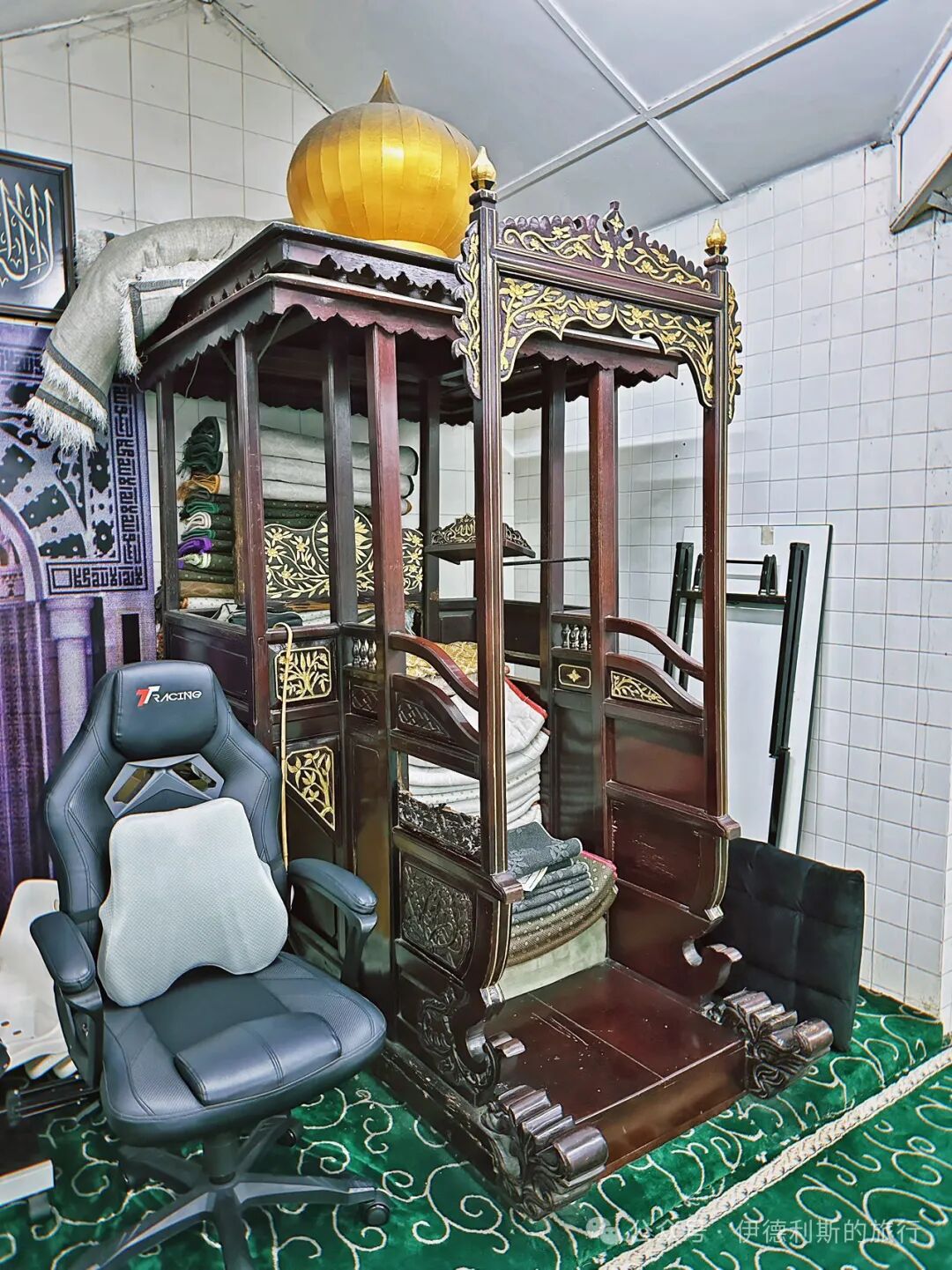
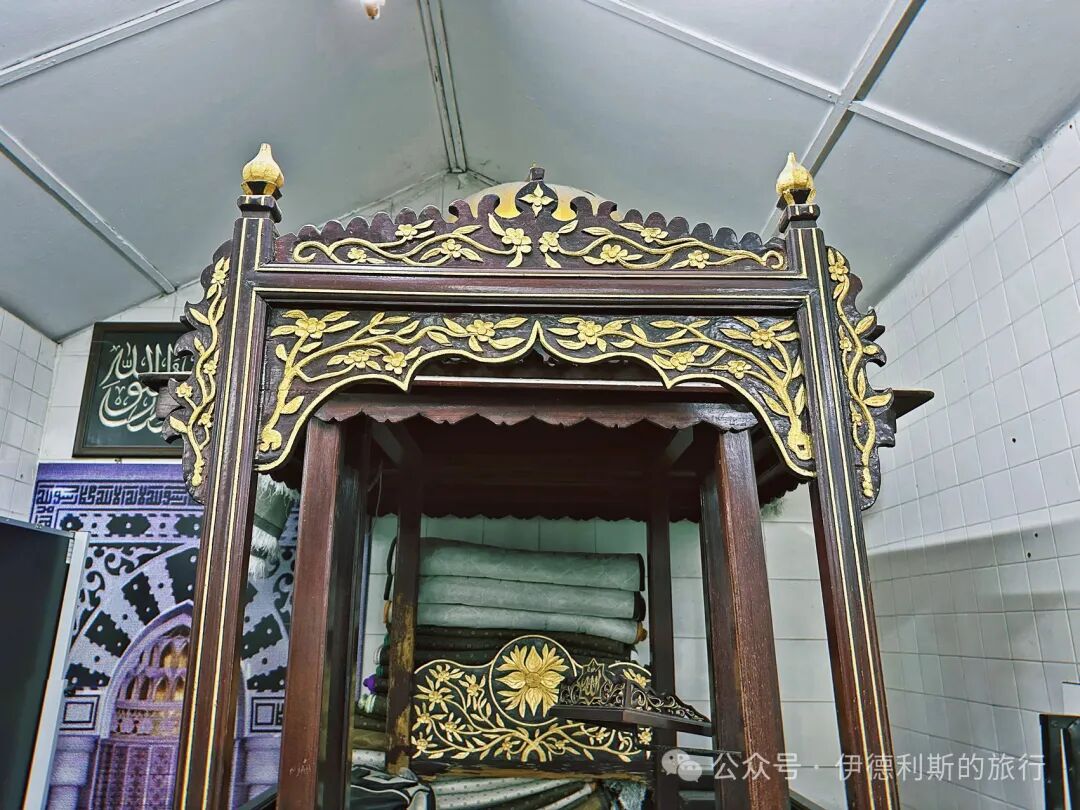
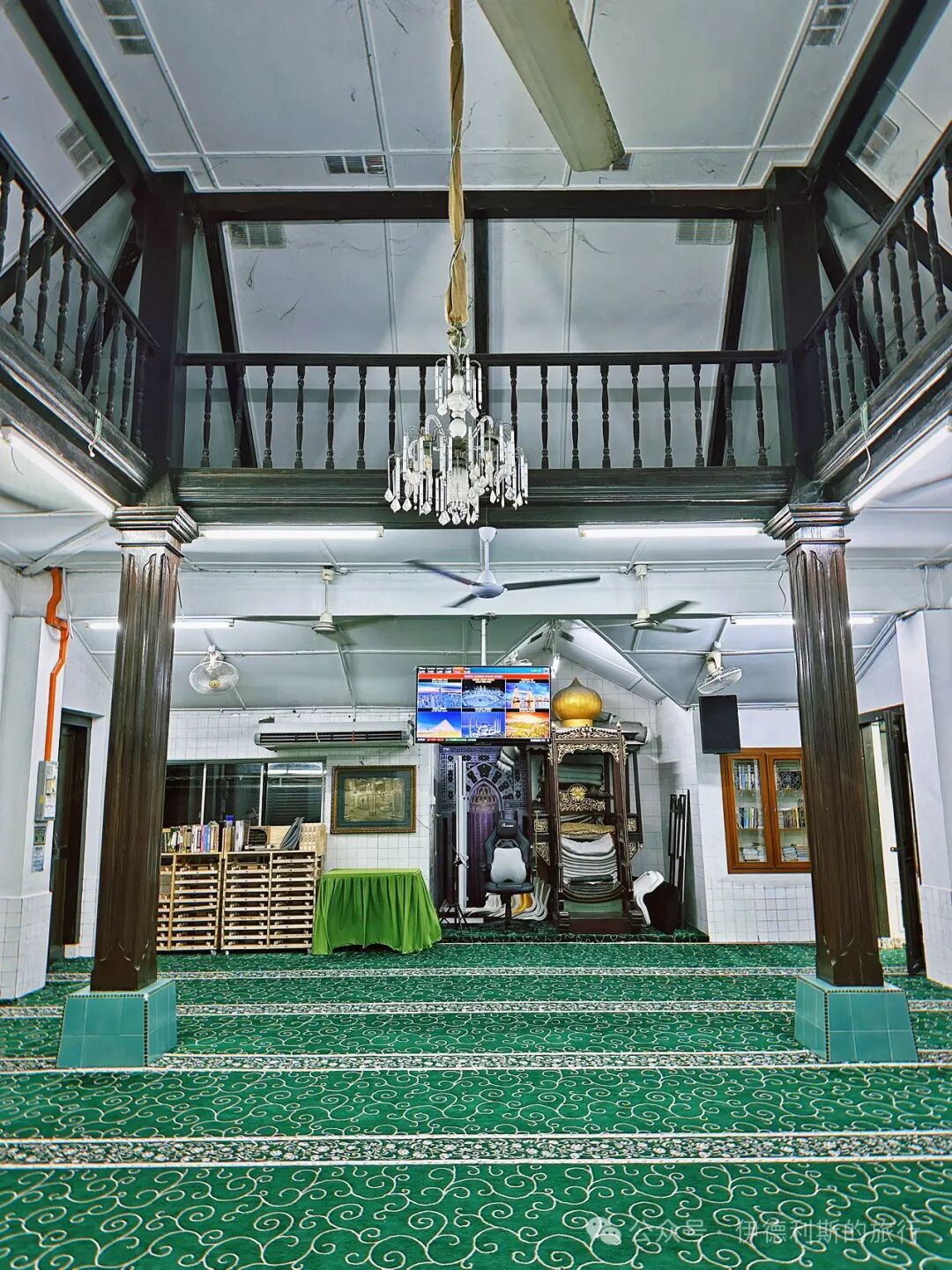
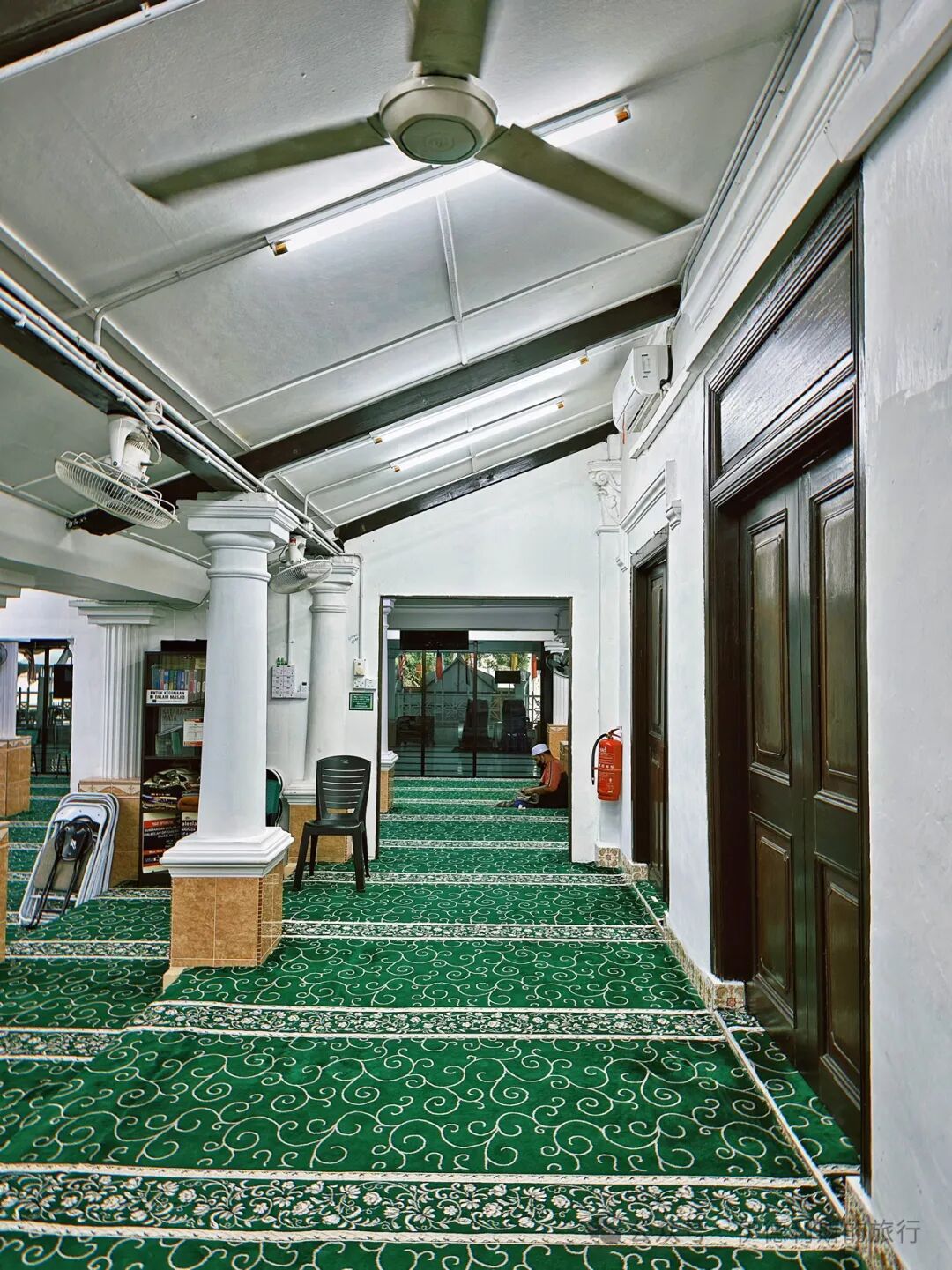
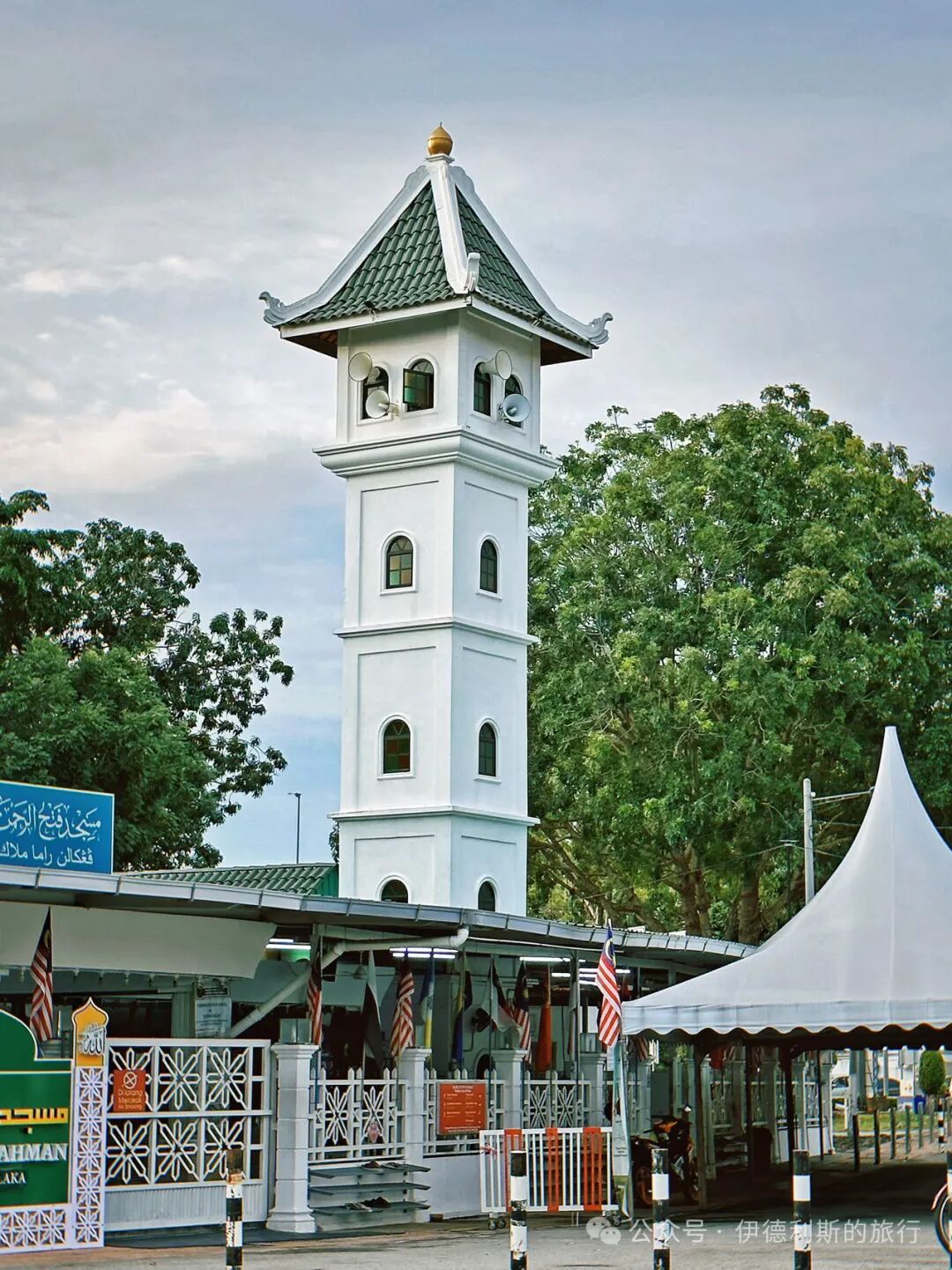
Duyong Mosque
Duyong Mosque (Masjid Duyong) was built in 1850 under the leadership of Wan Chilek. It was originally made of laterite and wood, with a roof made of Chinese and Dutch tiles. In 1908, a minaret (bangkar) was added, blending the styles of a Chinese pagoda and a Western lighthouse.
The mosque underwent several renovations and expansions in 1967, 1973, and 1976. It suffered a fire in 1982 and was later restored. In 2002, the Department of Museums and Antiquities of Malaysia carried out protective repairs on the site.
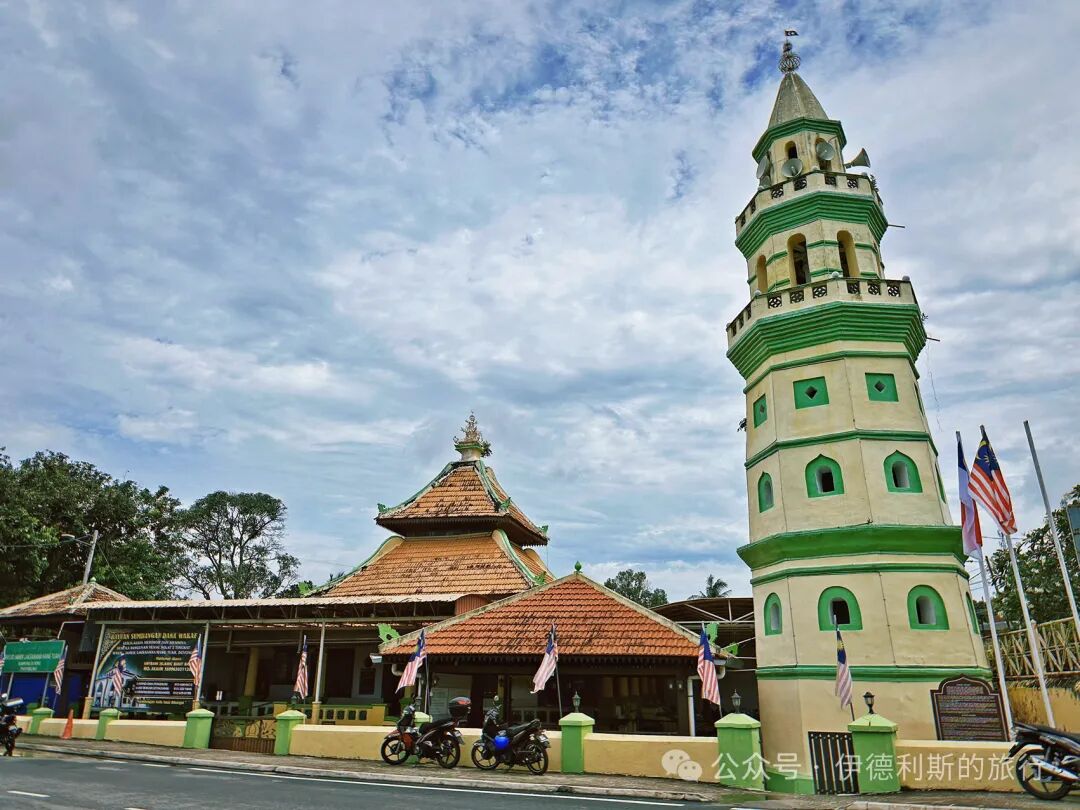
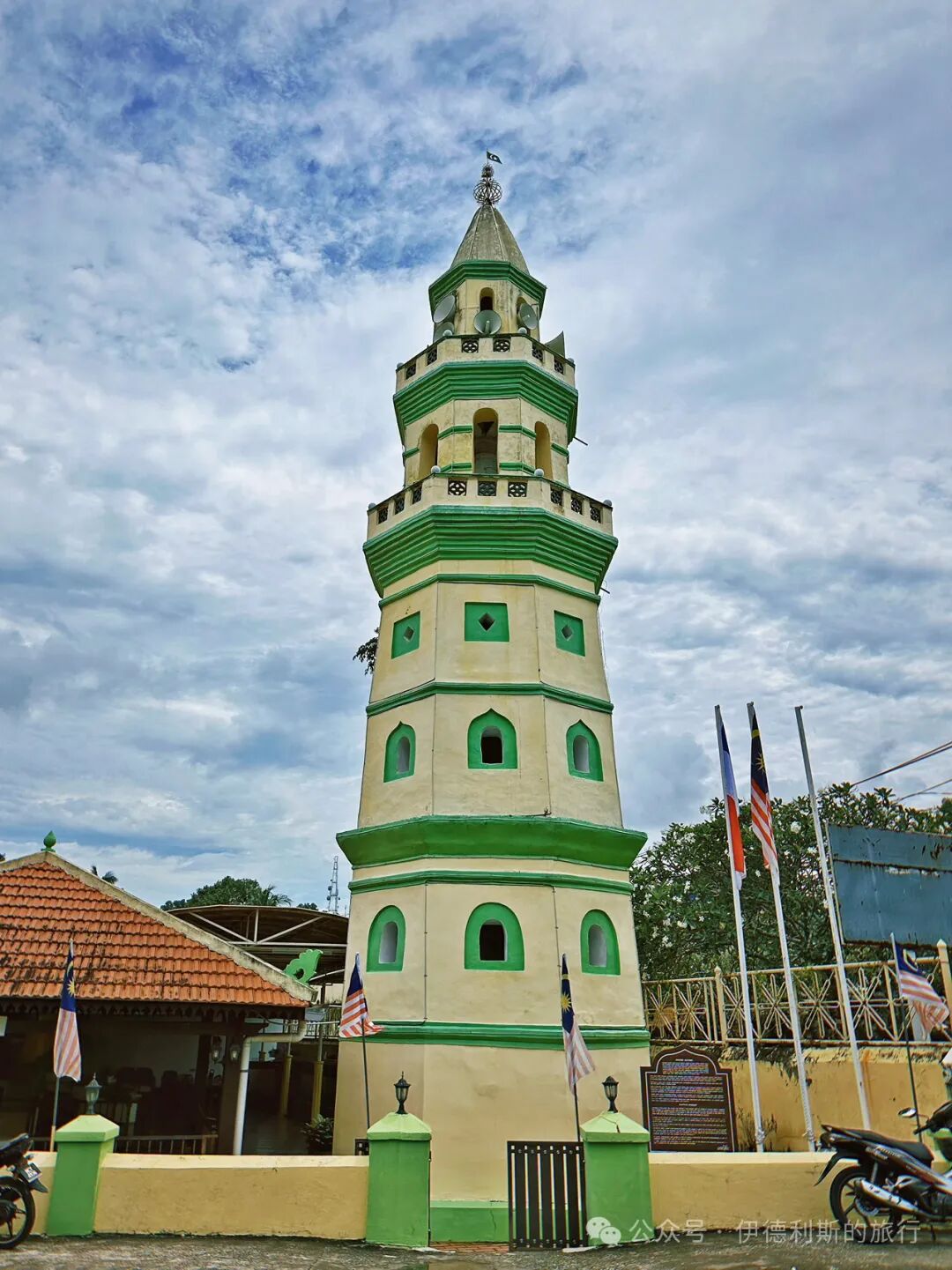
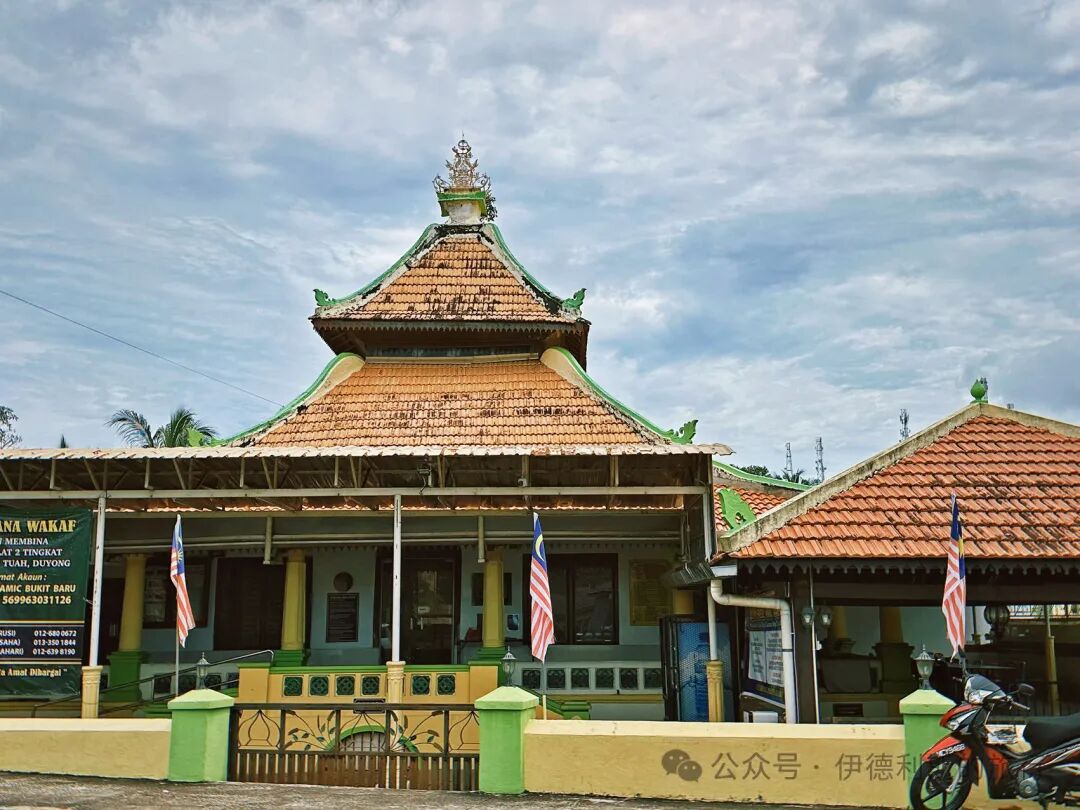
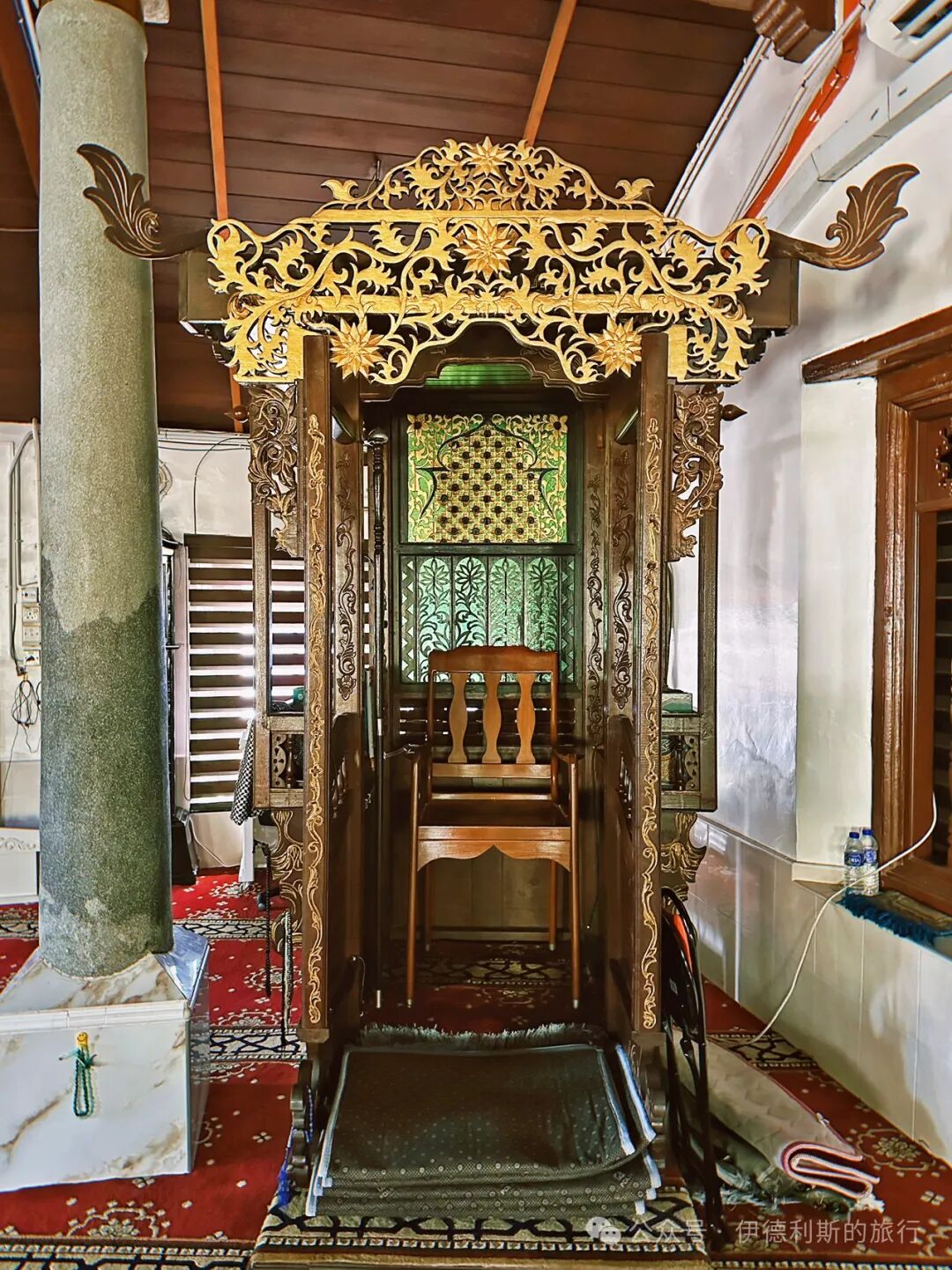
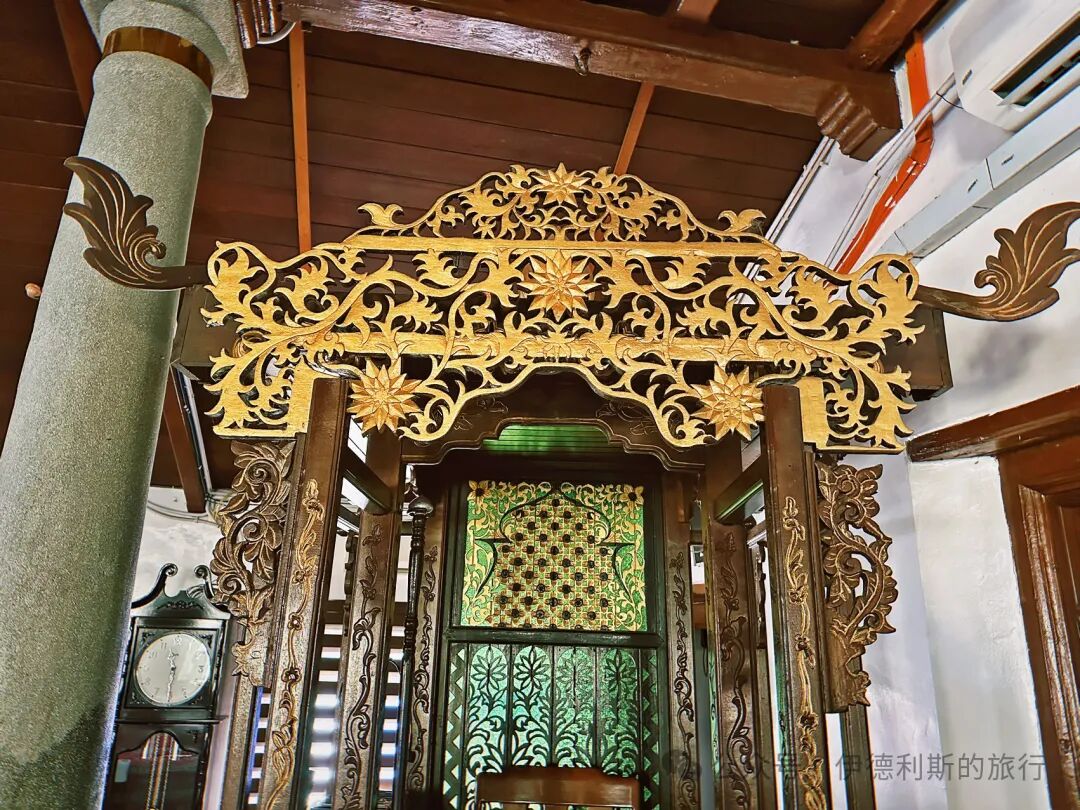
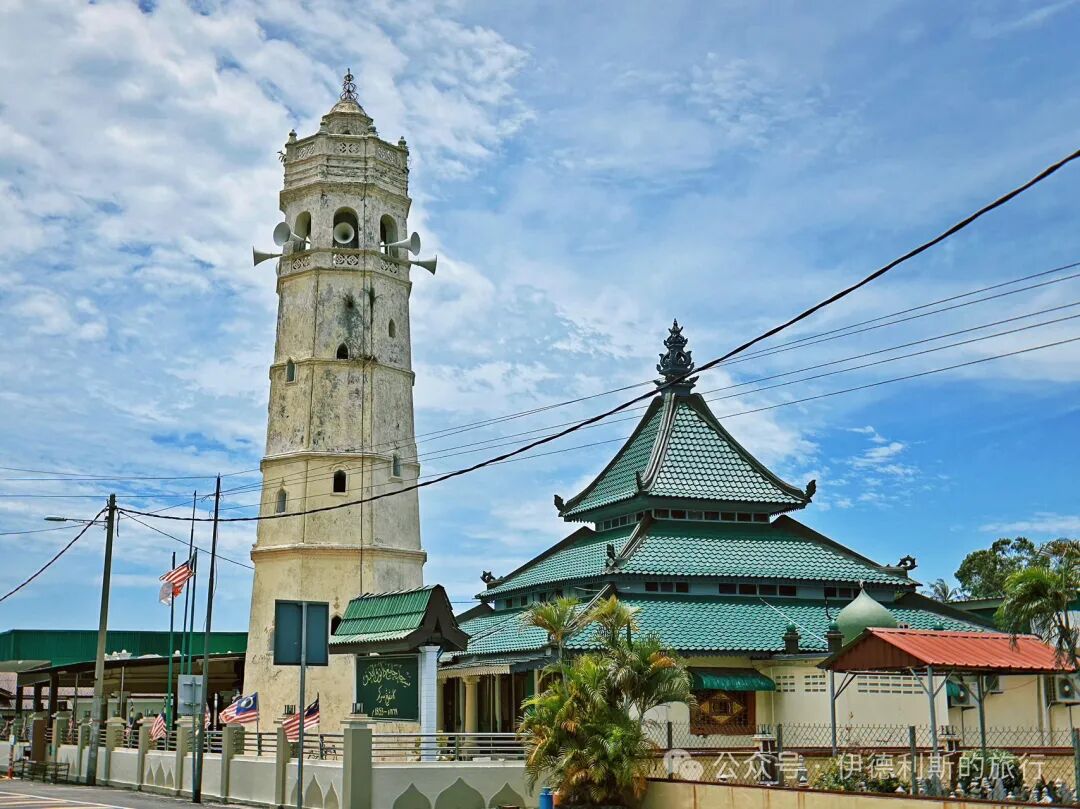
Telok Mas Mosque
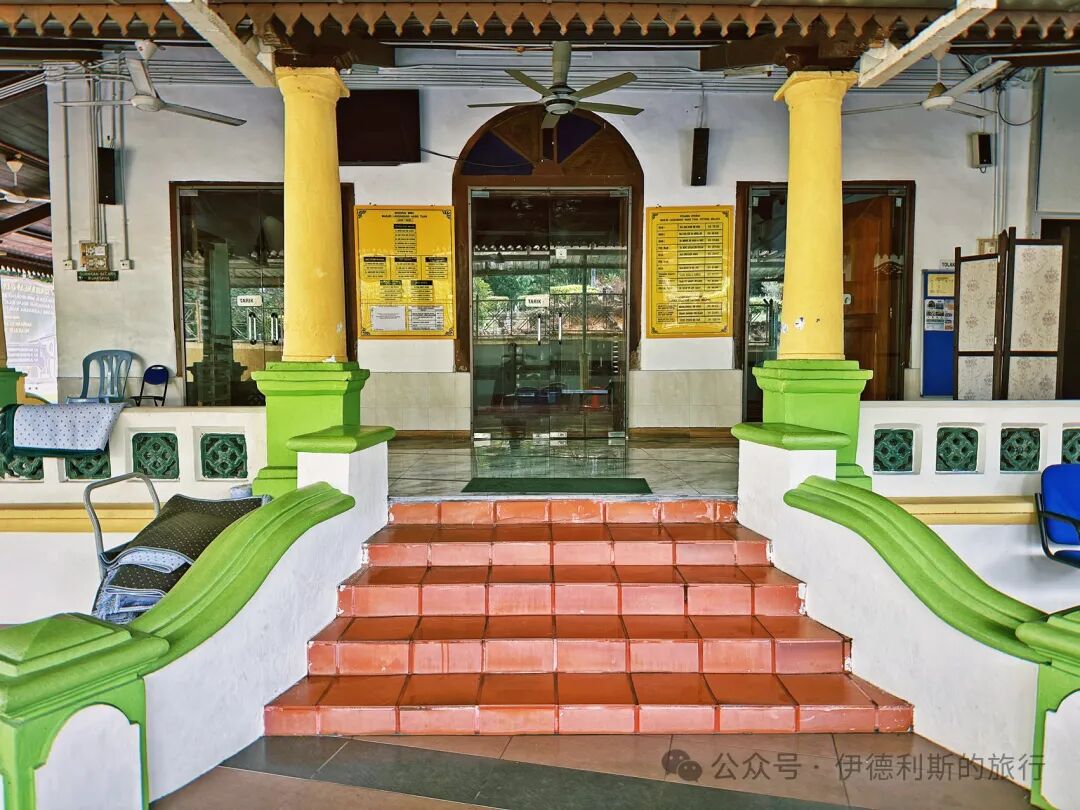
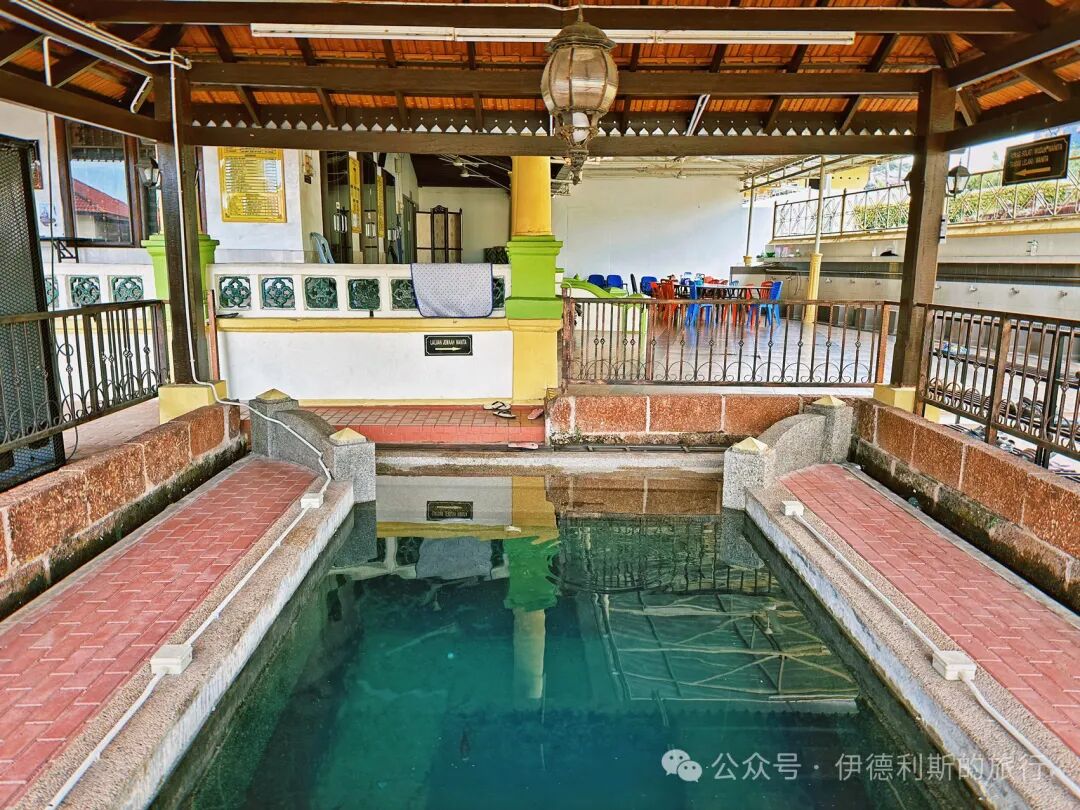
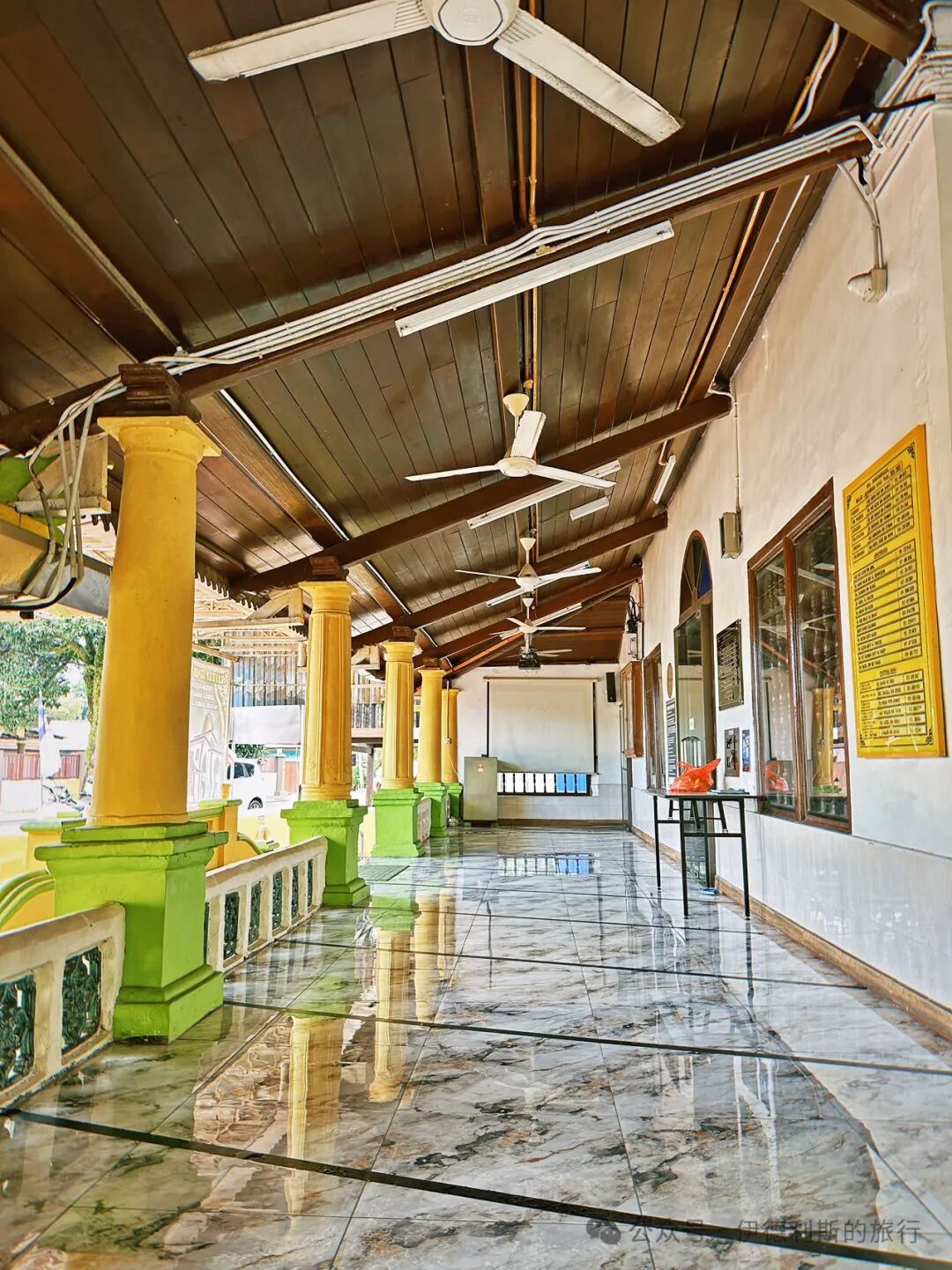
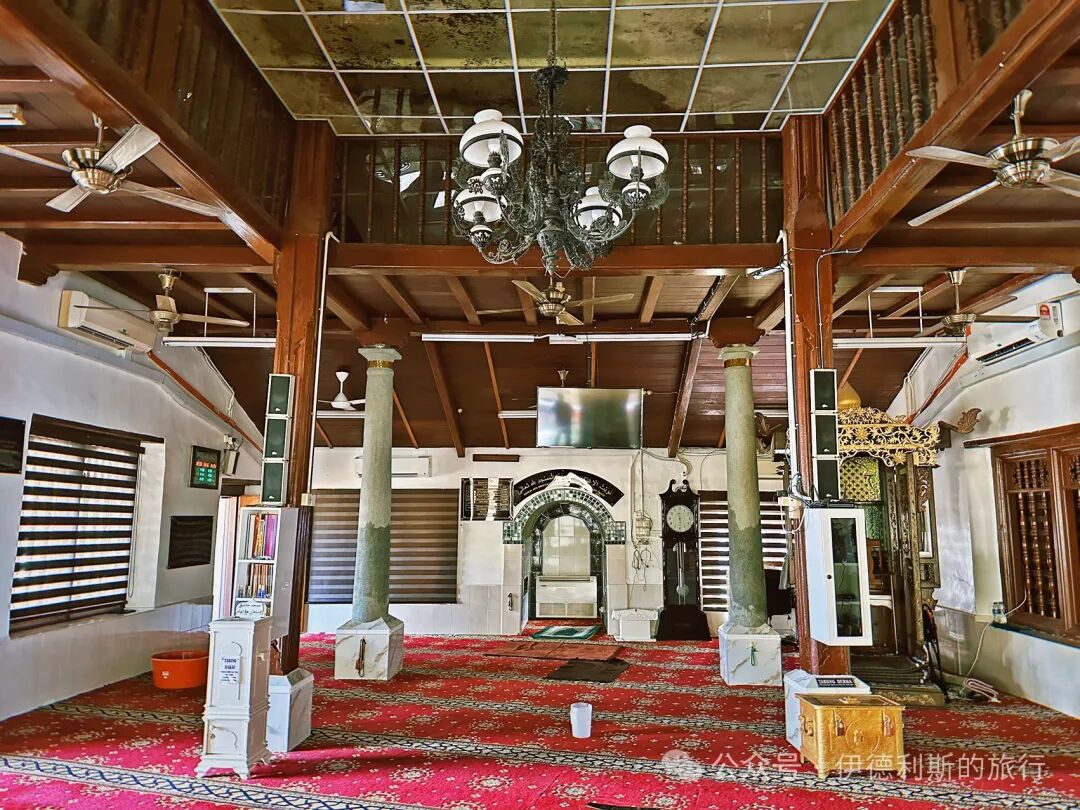
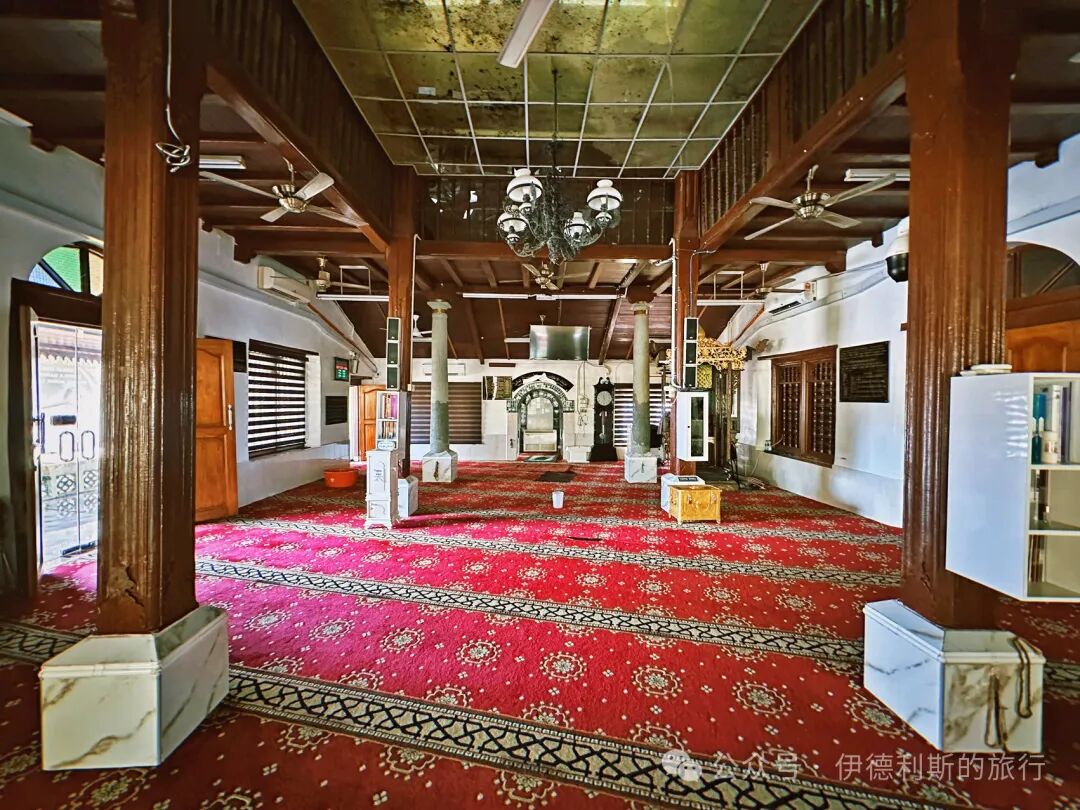
At Telok Mas Mosque (Masjid Telok Mas Al-Khairiah) for namaz. Telok Mas Mosque was built in 1853. During construction, the beams and roof materials were cut from local forests and hauled by water buffalo. The wall stones were mined from reefs near Big Island (Pulau Besar) and transported by sampan boats. The main gate still bears an inscription from the year 1269 of the Hijri calendar, which is 1853 in the Gregorian calendar. A Chinese pagoda-style minaret (bangkar) was added in 1913. Its architectural style is basically the same as the mosques in Kampung Kling and Tengkera.
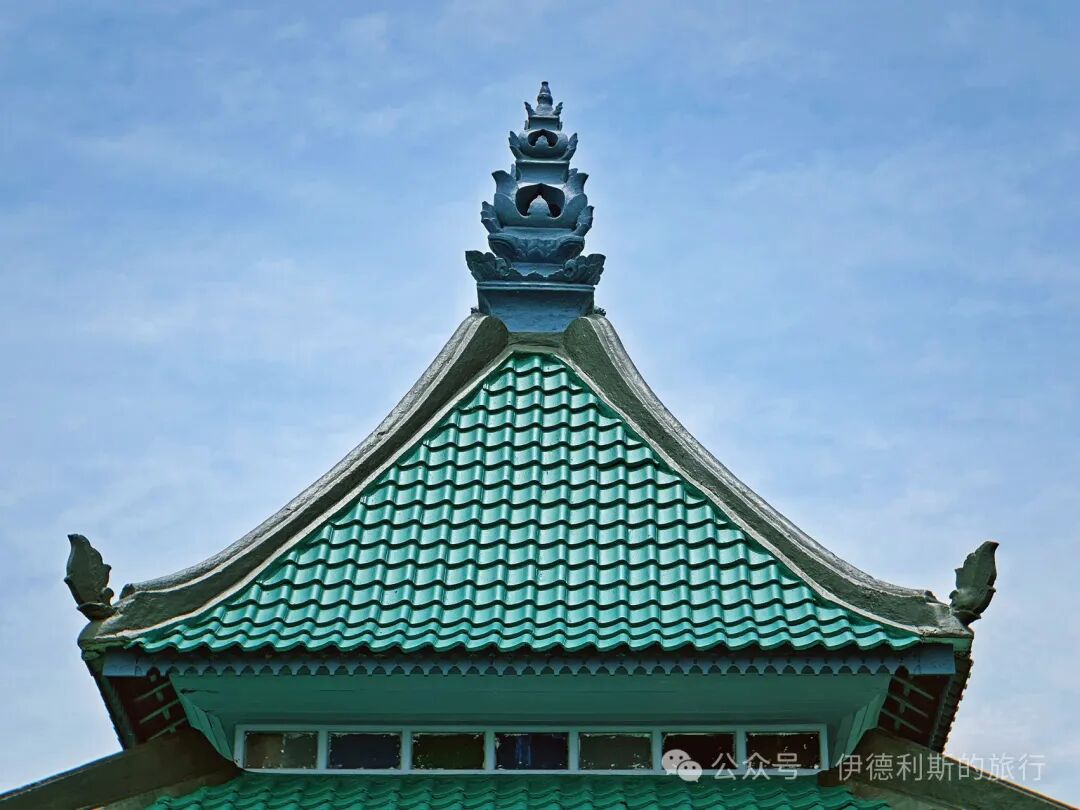
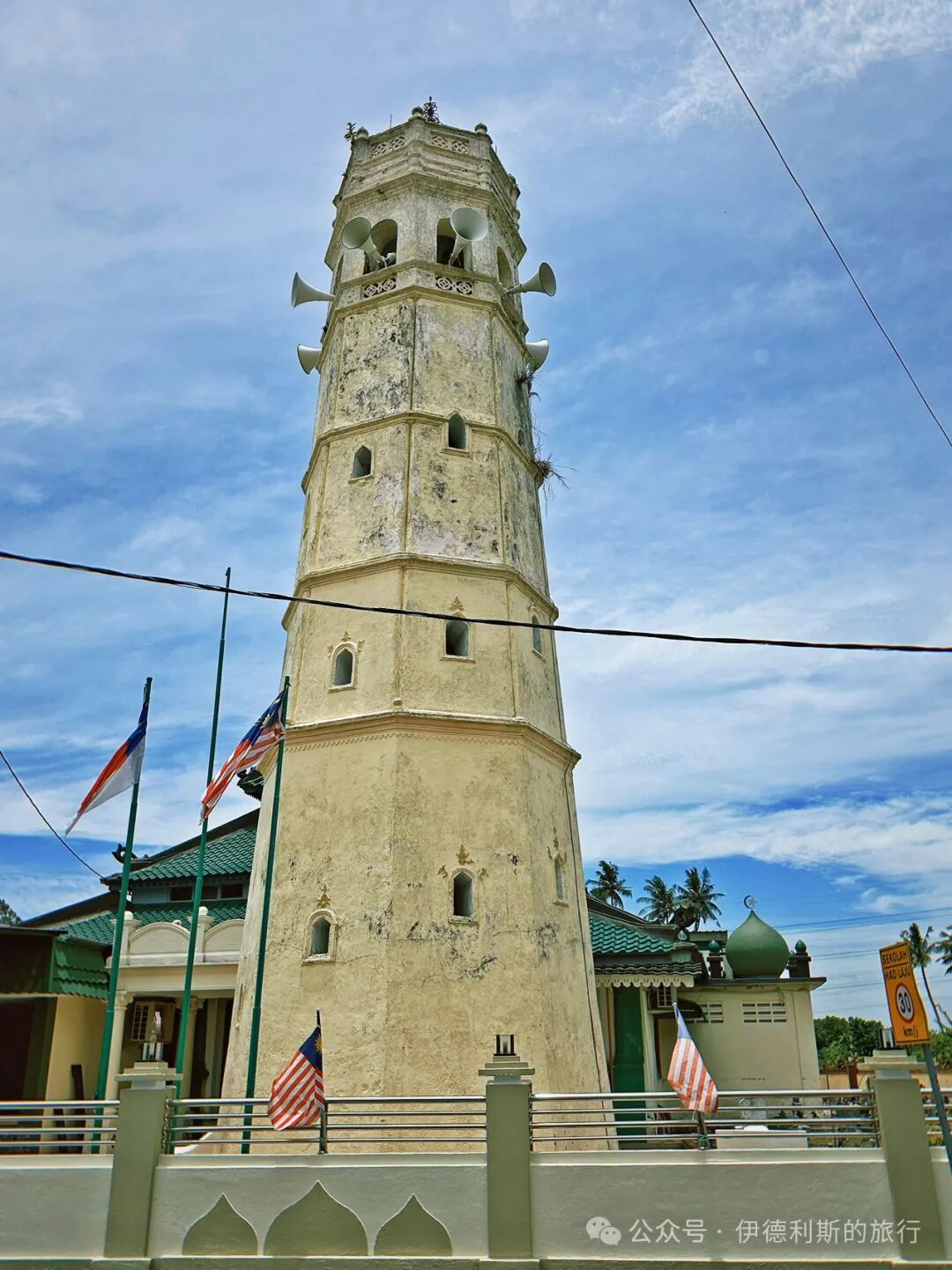
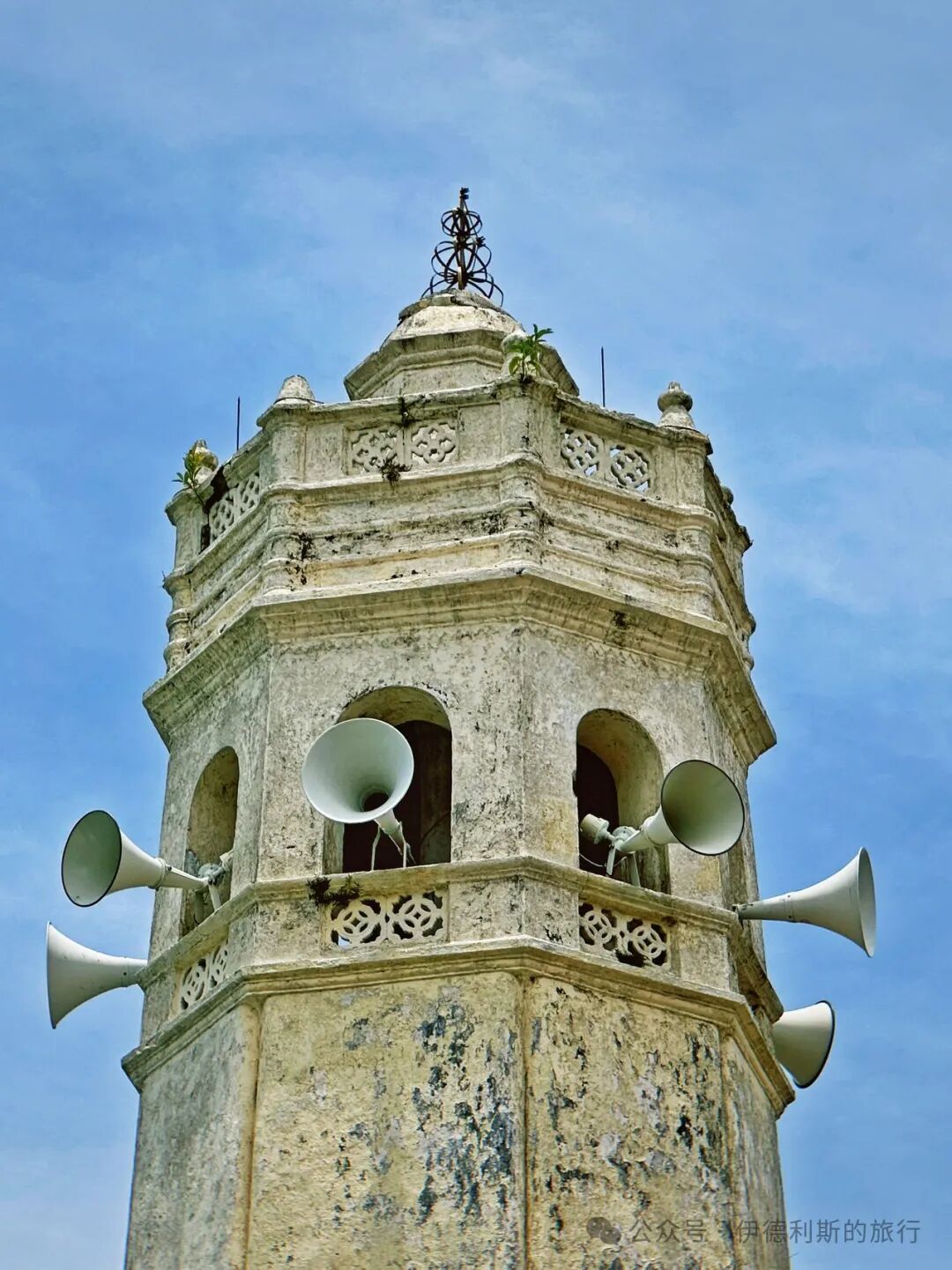
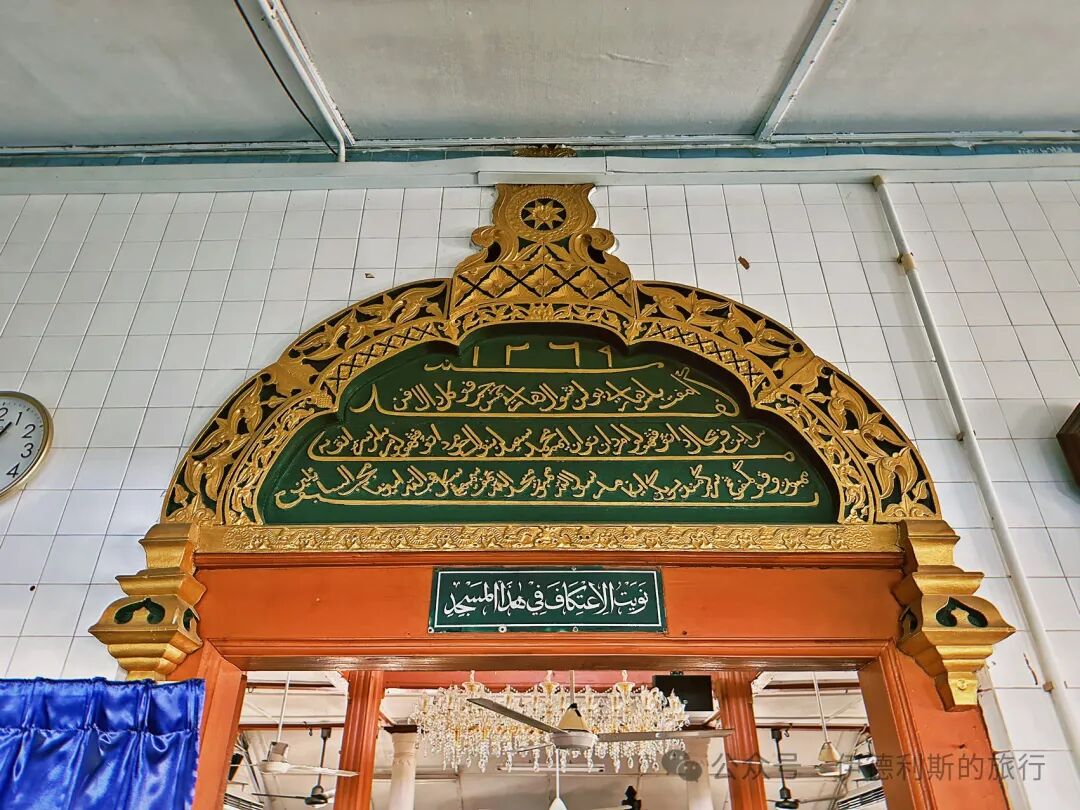
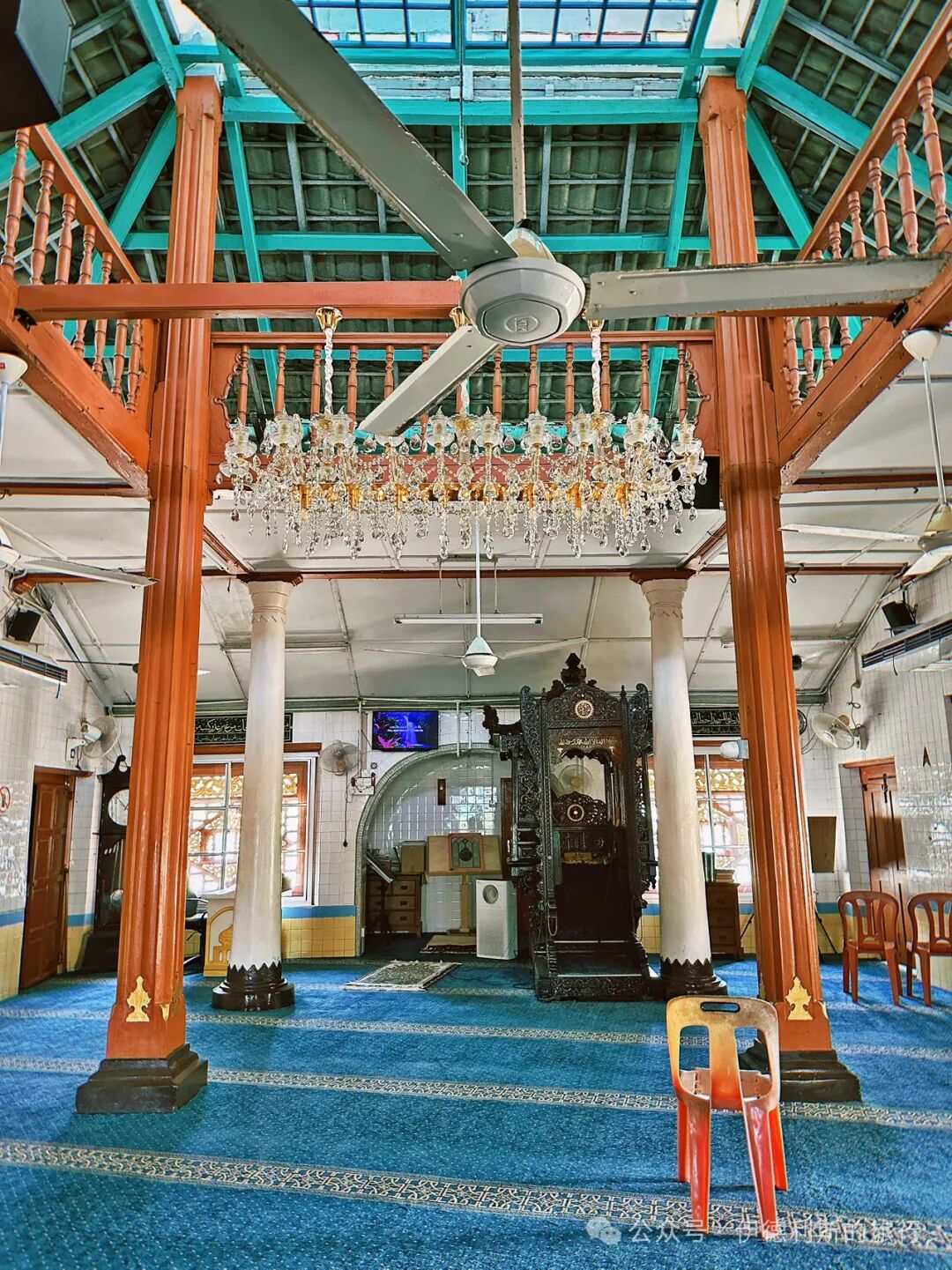
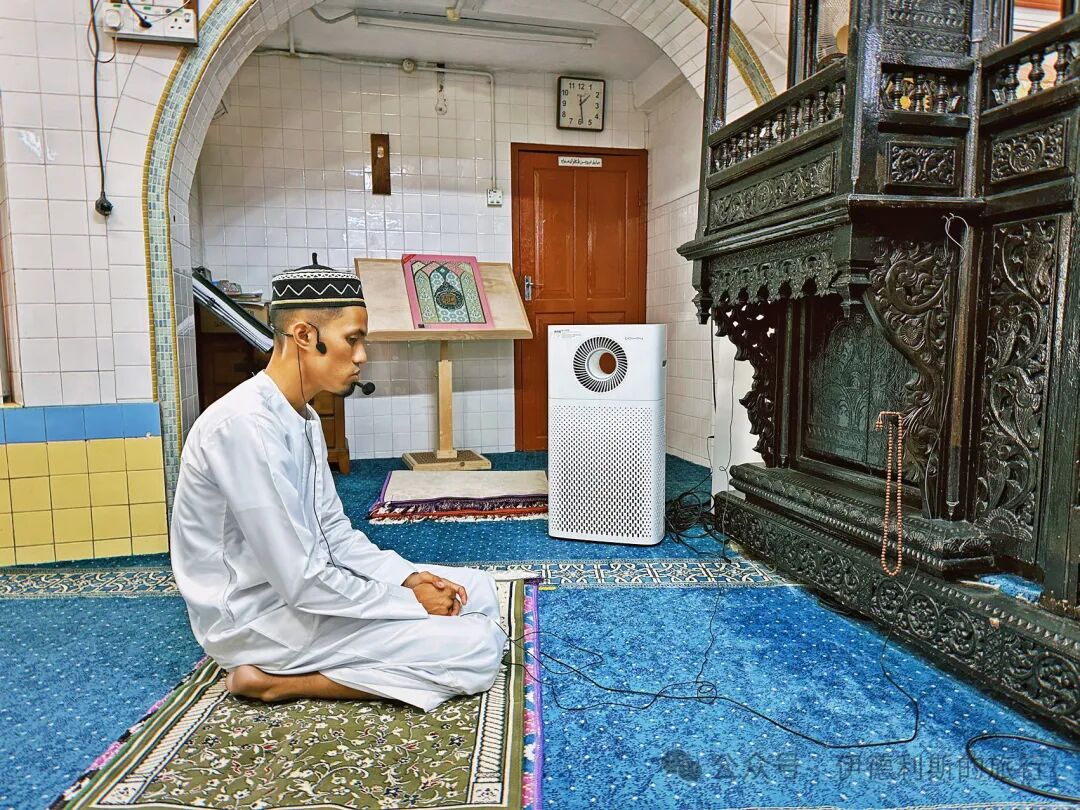
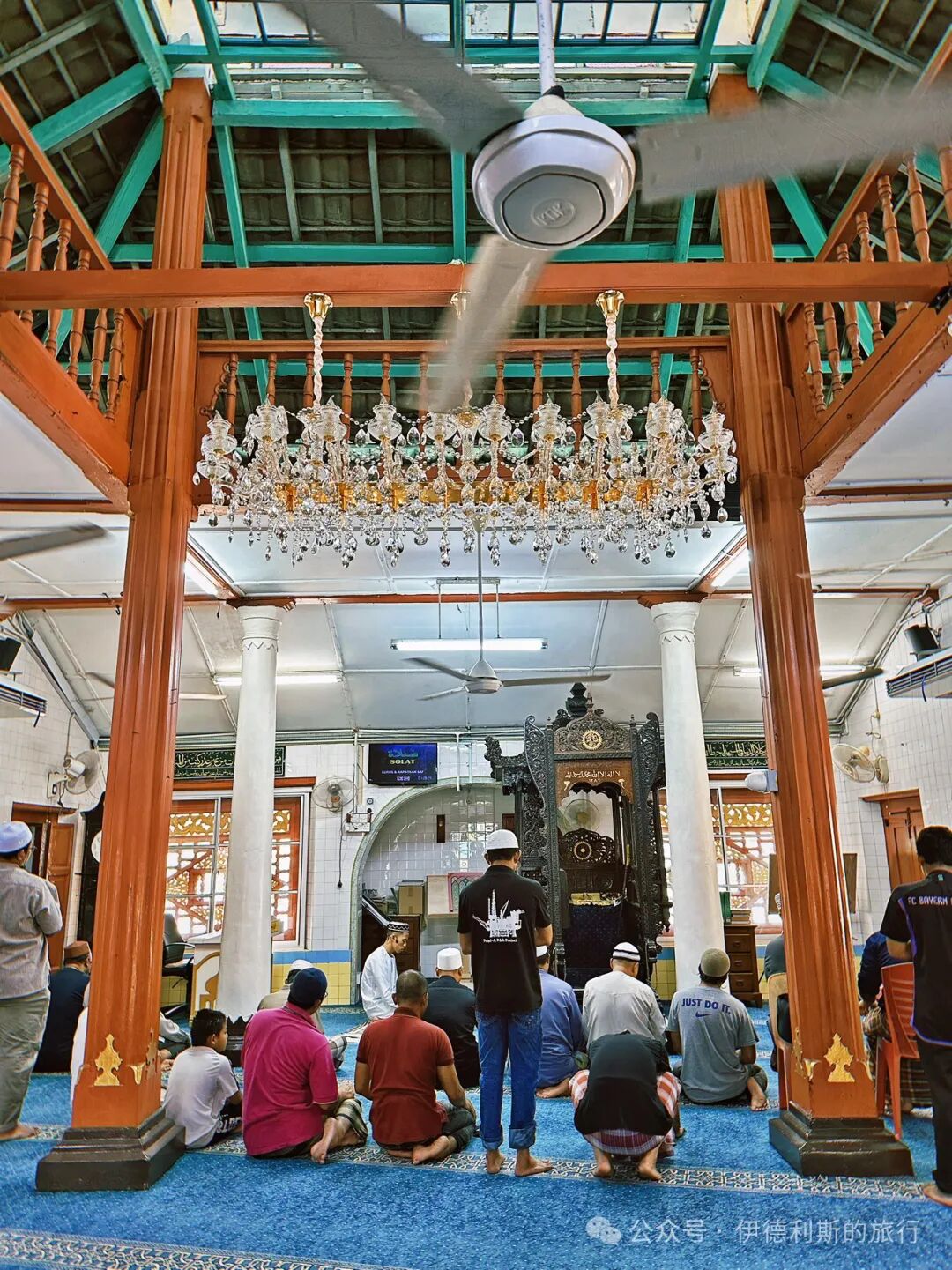
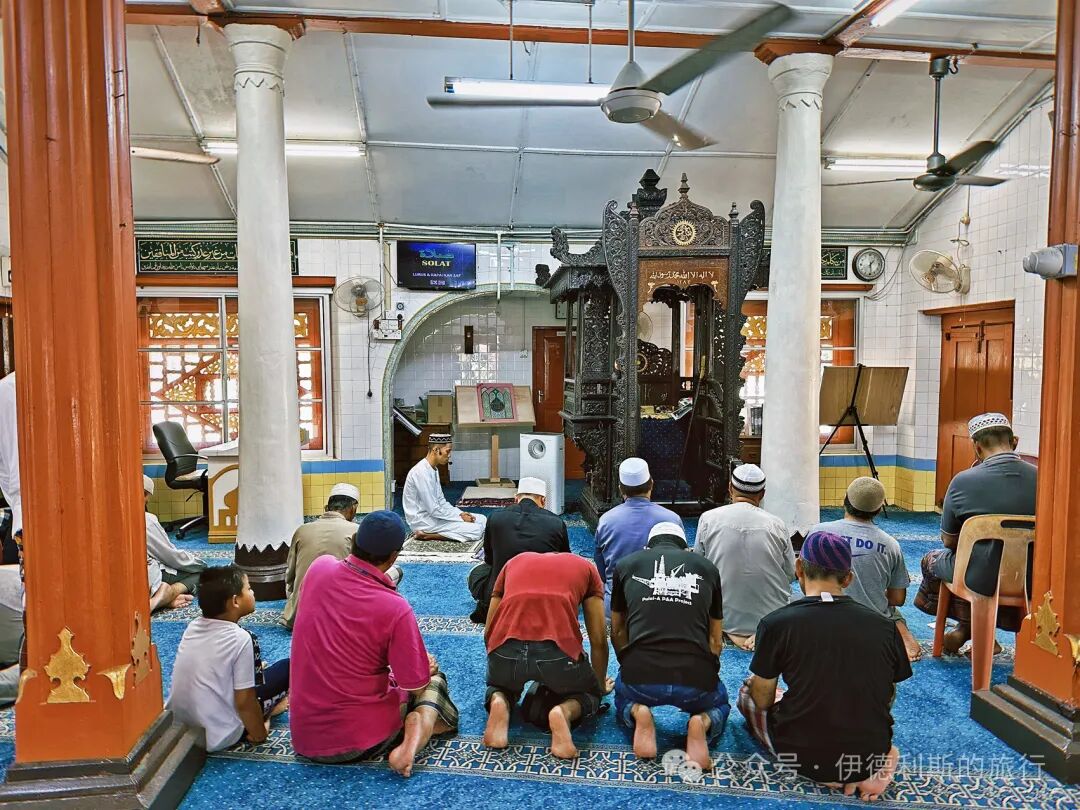
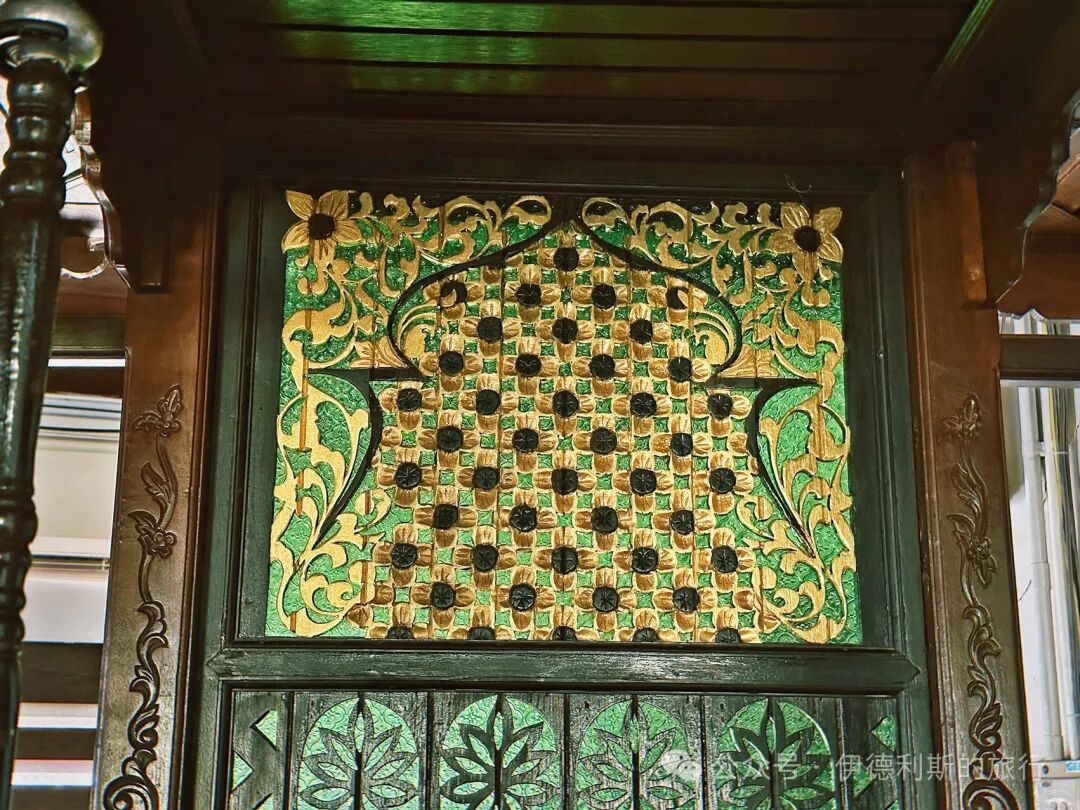
The minbar pulpit at Telok Mas Mosque is carved with the year 1286 of the Hijri calendar, or 1869 in the Gregorian calendar, and is a classic Javanese throne style.
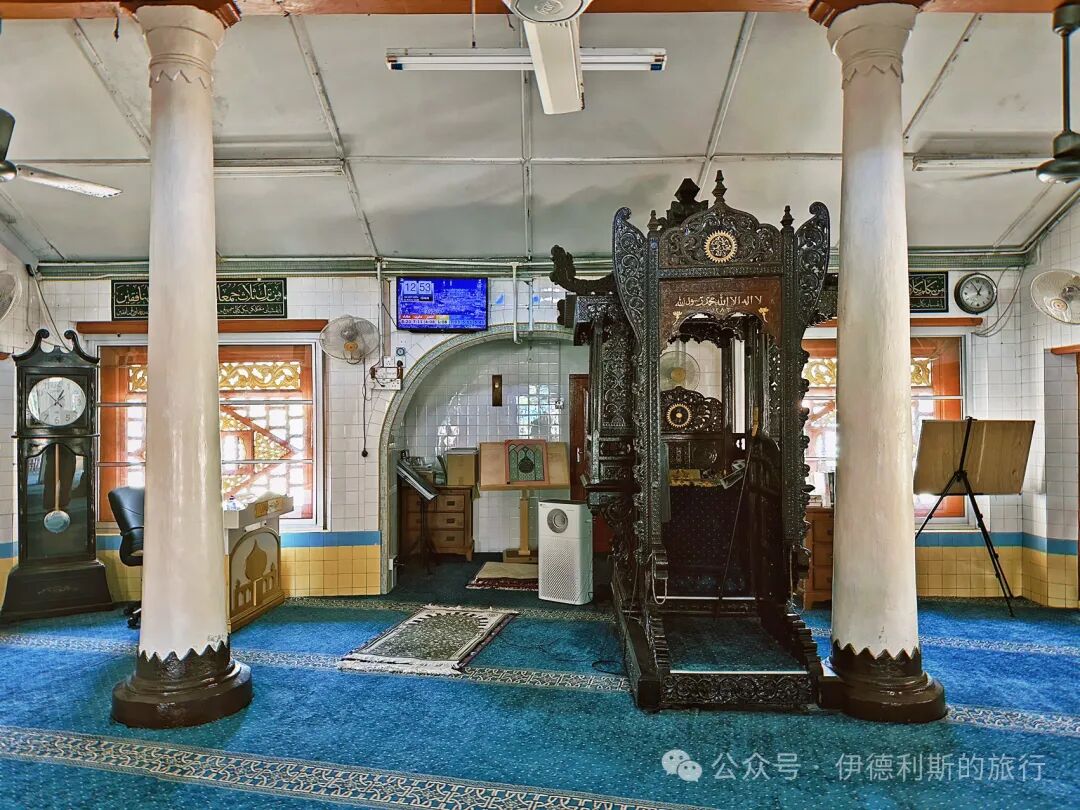
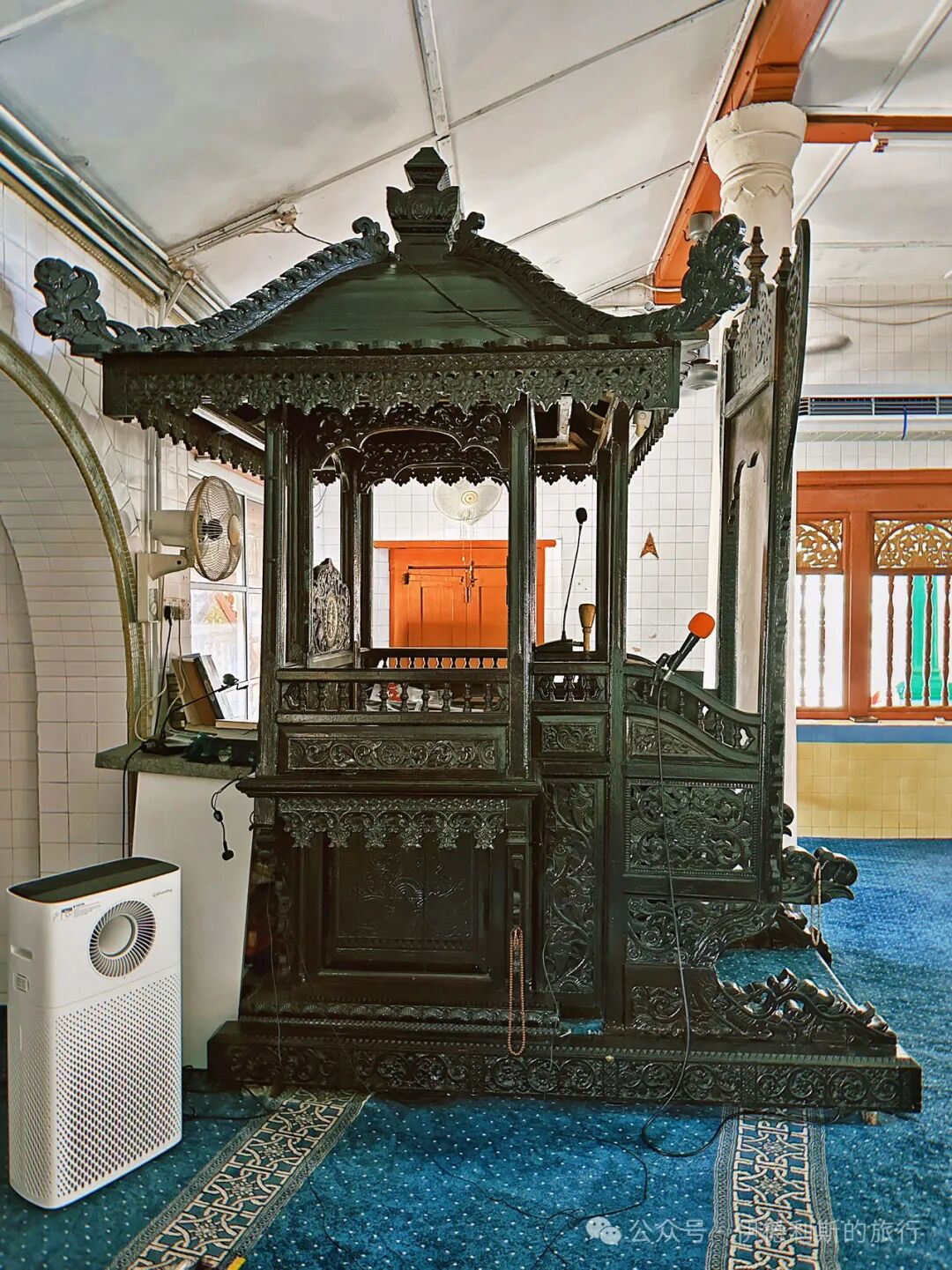
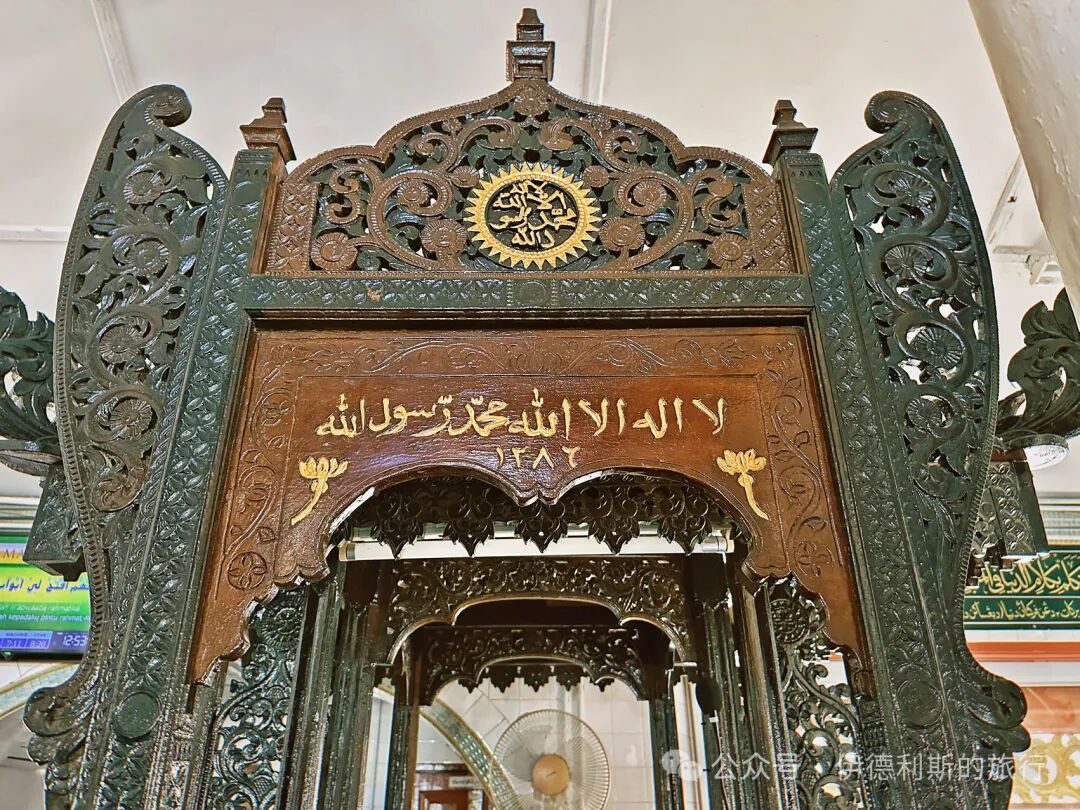
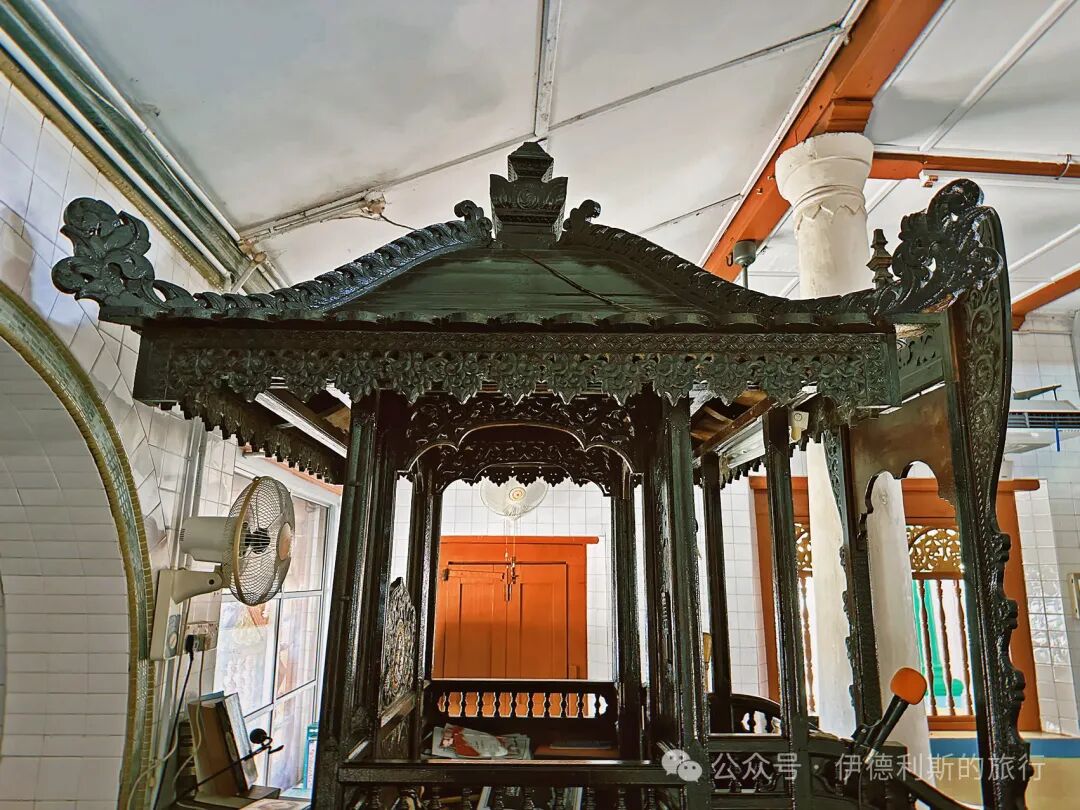
Peringgit Mosque
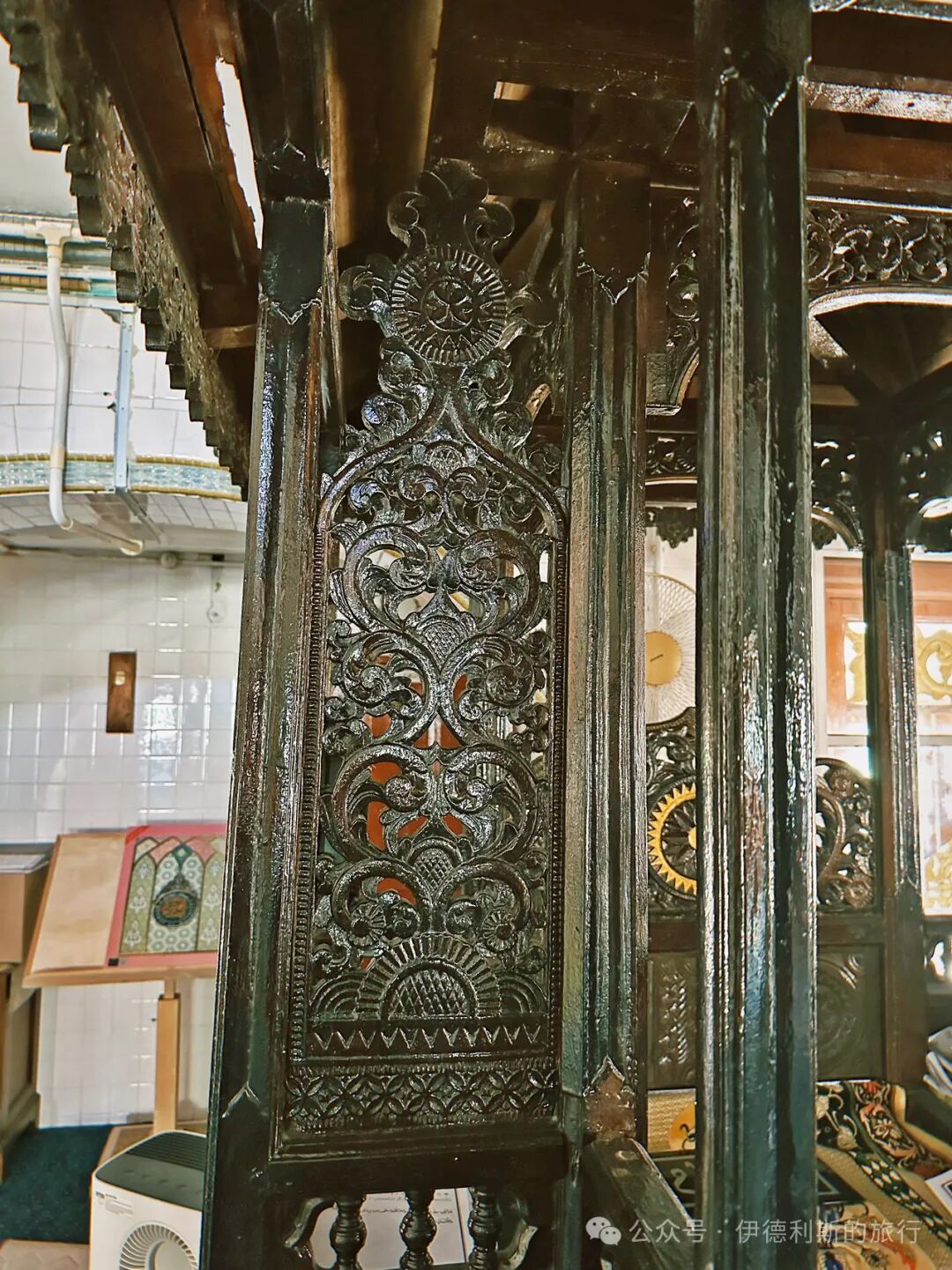
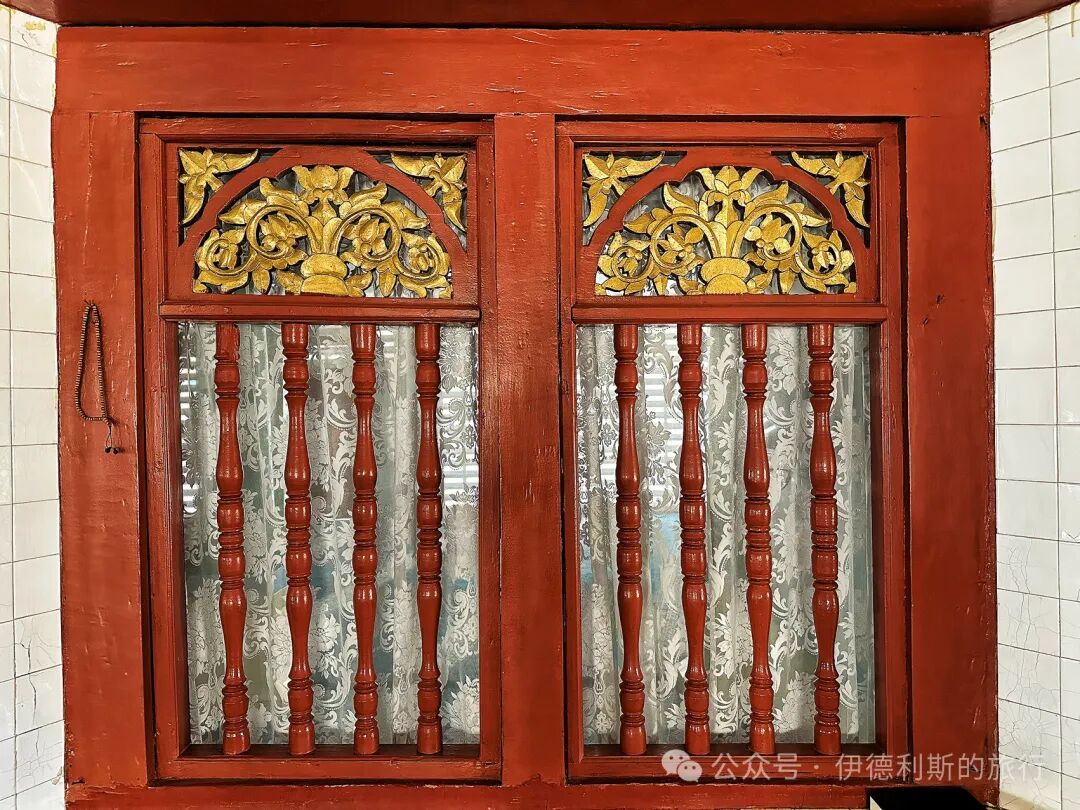
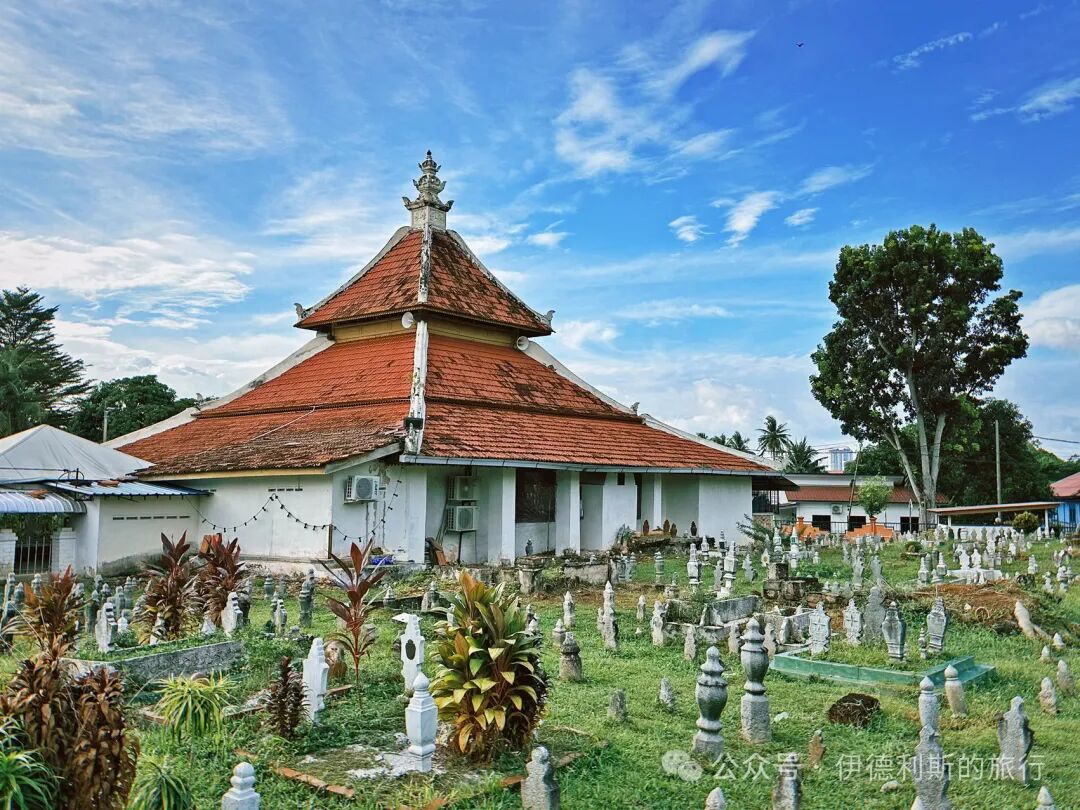
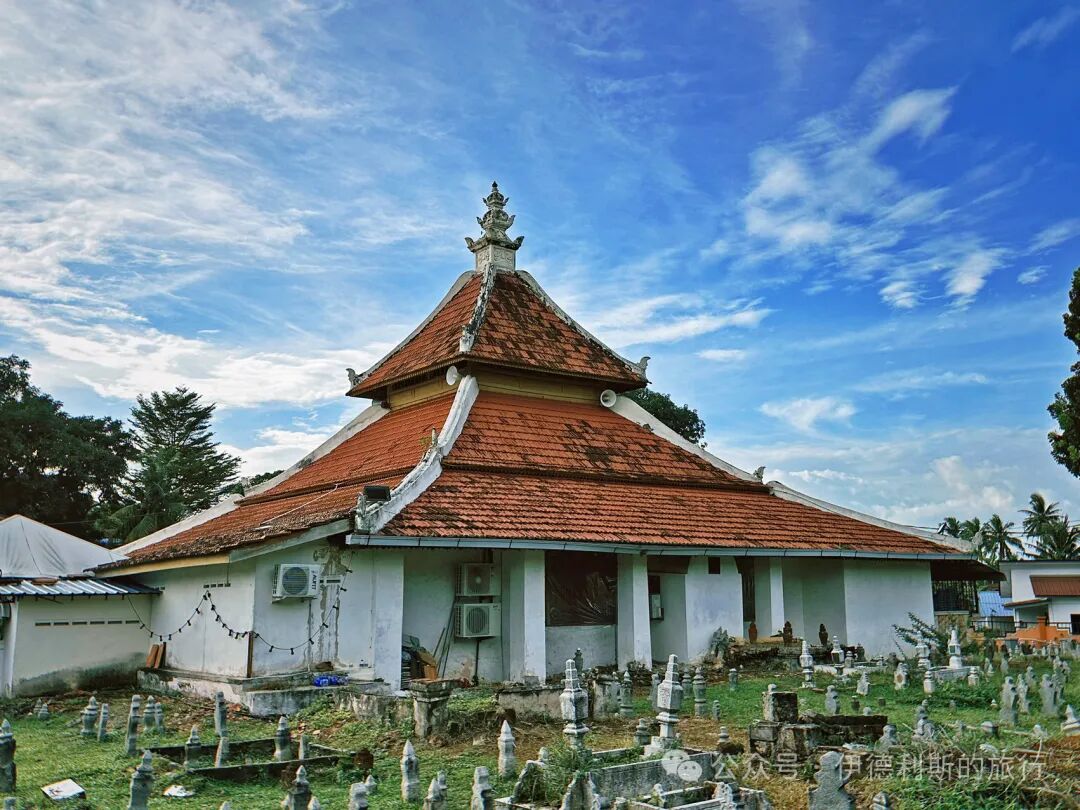
Peringgit Mosque (Masjid Peringgit) was first built in 1726 but was later destroyed. It was rebuilt in 1868. Peringgi is the Malay name for the Portuguese, as a Portuguese fort once stood here. Peringgit Mosque was originally built with granite and Dutch bricks, with wooden doors and windows. The roof is a traditional Javanese three-tiered pyramid (bumbung tiga lapis). The bottom layer is covered with Chinese tiles, while the middle and top layers use Dutch tiles. The very top decoration is carved from reef stone.
Following later renovations, the Dutch bricks of Peringgit Mosque were covered with cement, and the Chinese and Dutch tiles were replaced with modern ones. In 2002, the Southern Region Department of Museums and Antiquities of Malaysia restored the site.
Mosque Travel Guide: Malacca - Eight Historic Mosques (Part 2)
Articles • ali2007fr posted the article • 0 comments • 207 views • 2026-05-19 22:20
Summary: This second part continues a visit to eight historic mosques in Malacca, with attention to architecture, dates, and local Muslim heritage. It keeps the original mosque names, photographs, street details, and historical notes for readers interested in Islamic heritage in Malaysia. view all
Summary: This second part continues a visit to eight historic mosques in Malacca, with attention to architecture, dates, and local Muslim heritage. It keeps the original mosque names, photographs, street details, and historical notes for readers interested in Islamic heritage in Malaysia.
Halal Travel Guide: Malacca Old City - Food, Hotels and Muslim Heritage
Articles • ali2007fr posted the article • 0 comments • 130 views • 2026-05-19 21:35
Summary: Malacca Old City - Food, Hotels and Muslim Heritage is presented as a clear English travel account for readers interested in Muslim life, halal food, architecture, and local history. The article keeps the original names, food details, photographs, and cultural context while focusing on Malacca, Halal Food, Malaysia Travel.
I took a red-eye AirAsia flight to Kuala Lumpur in the early hours of September 15. The flight was delayed by an hour, so I arrived at Kuala Lumpur airport after 9 a.m. Even though I used the self-service immigration gate and jogged to the bus station, I still missed the 10 a.m. bus. I ended up taking the 10:45 a.m. bus and spent three hours in traffic before reaching Melaka Sentral station. Luckily, the bus seats reclined enough to lie back, so I just took a nap and arrived.
In Malaysia, you have to exchange online bus tickets for physical ones at the station, unlike train tickets where you can just scan a code. The ticket counters at the Kuala Lumpur airport bus station get very crowded on weekends and holidays, so make sure to go early to exchange your tickets. By comparison, I think traveling by train in Malaysia is much more convenient. You can scan a code to enter the station, and the schedules are reliable and stress-free.
Staying in a Nanyang-style arcade building
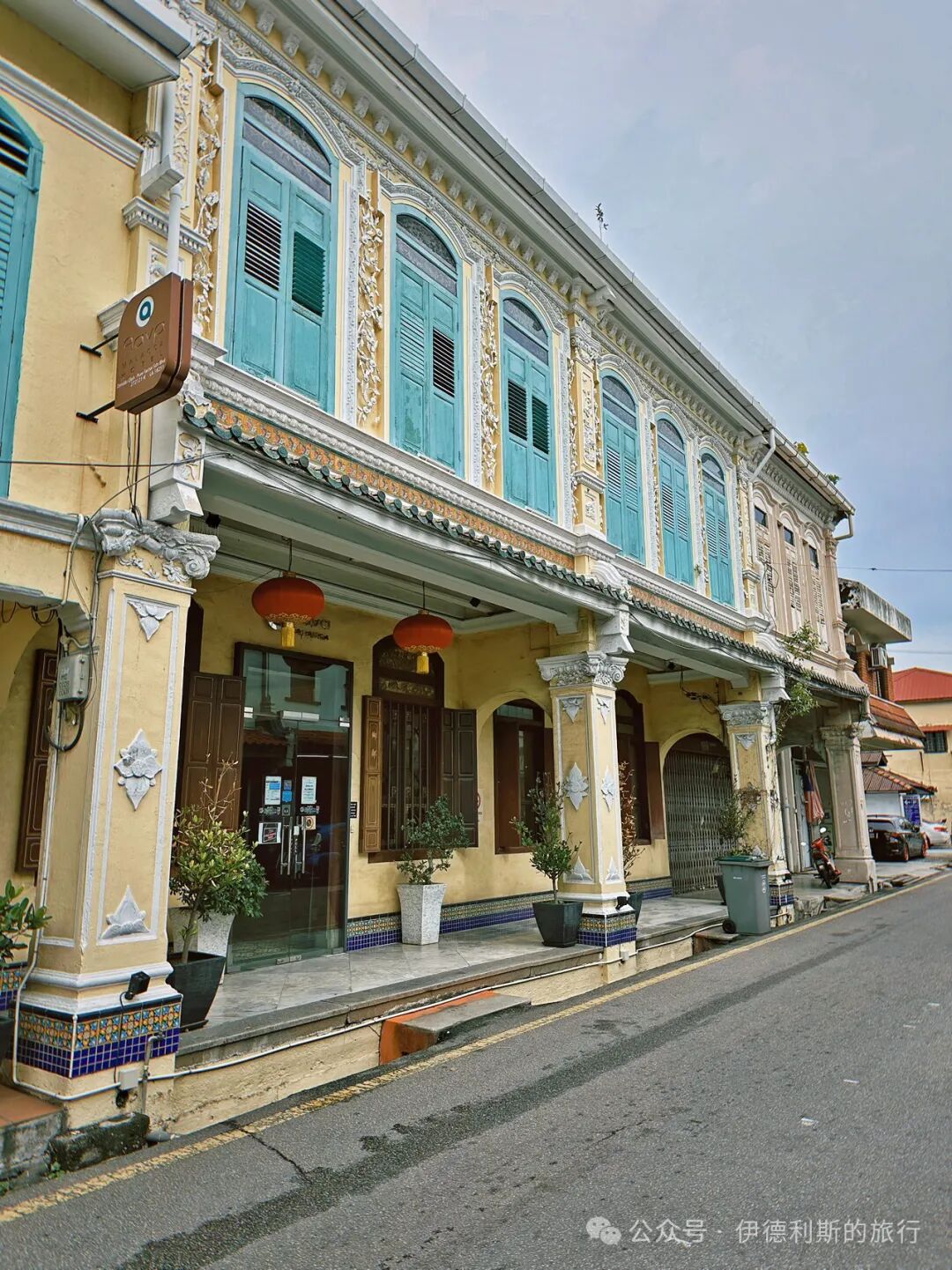
We spent our first night at the Aava Malacca Hotel on Kampung Hulu Road. This area is inside the buffer zone of the Melaka UNESCO World Heritage site. It is right next to two historic mosques, Kampung Hulu Mosque and Kampung Kling Mosque, so the location is excellent. Kampung Hulu Street often has traffic jams. If you want to take a taxi, walk 300 meters north to the main road outside the World Heritage buffer zone.
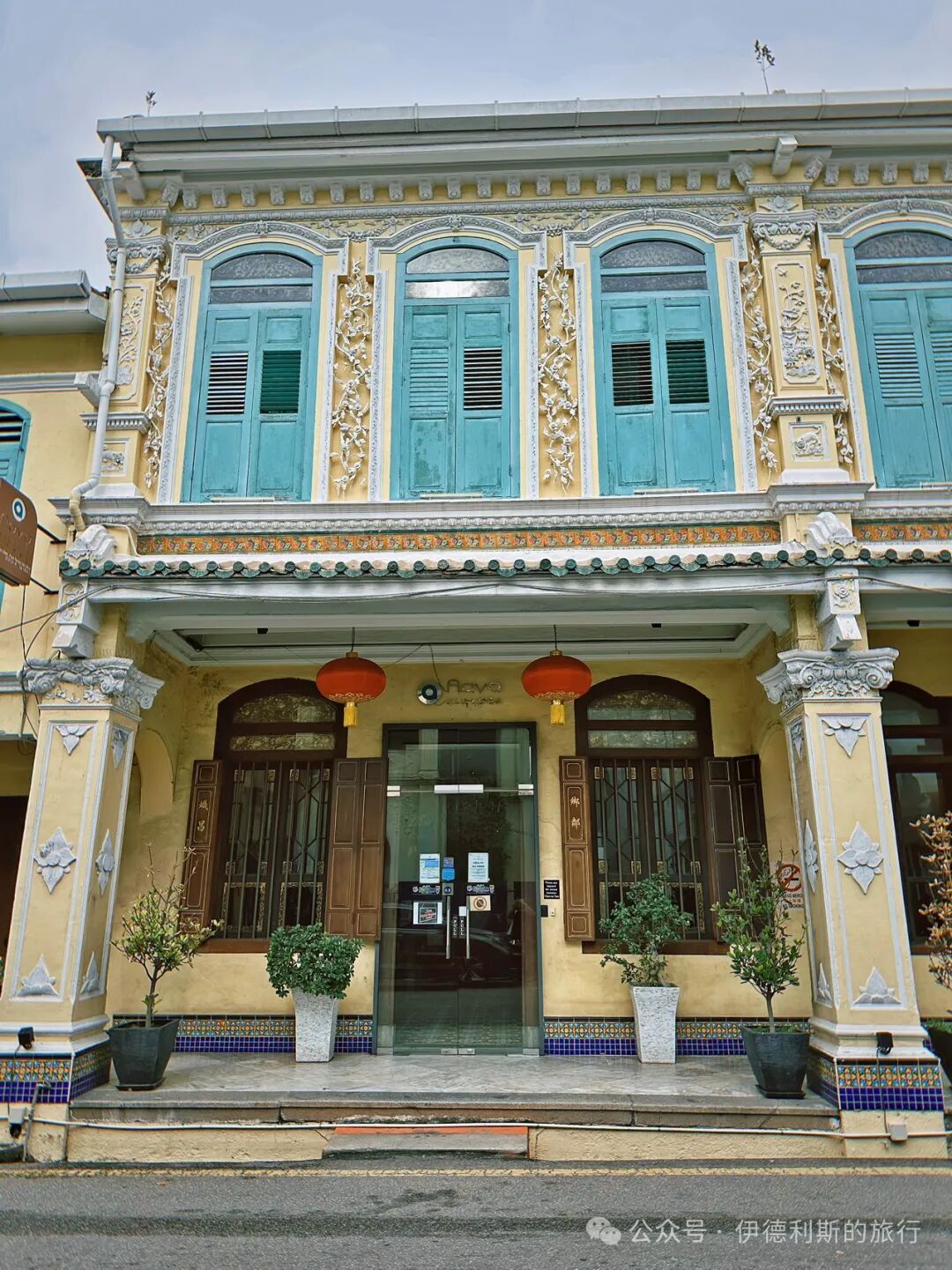
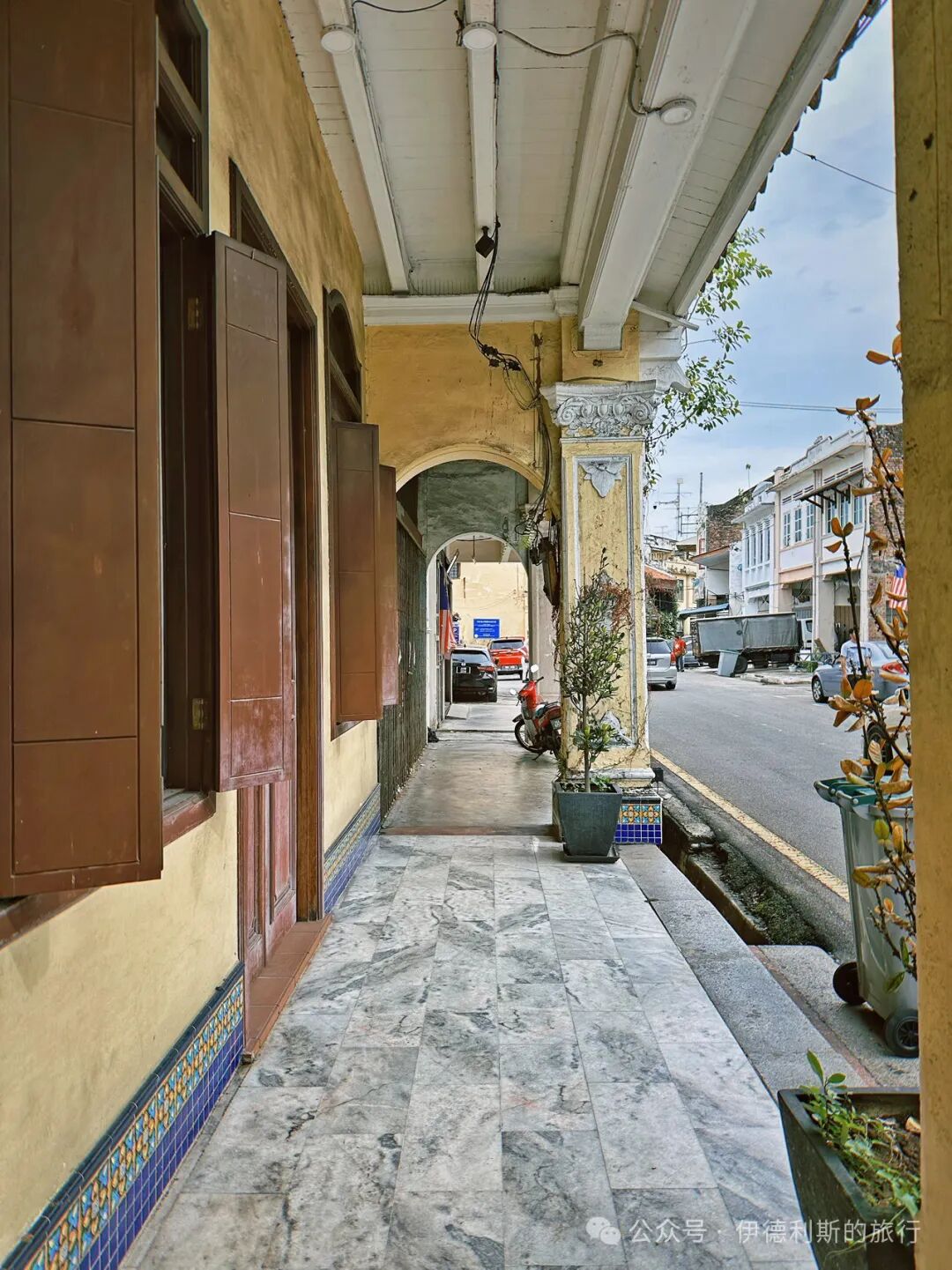
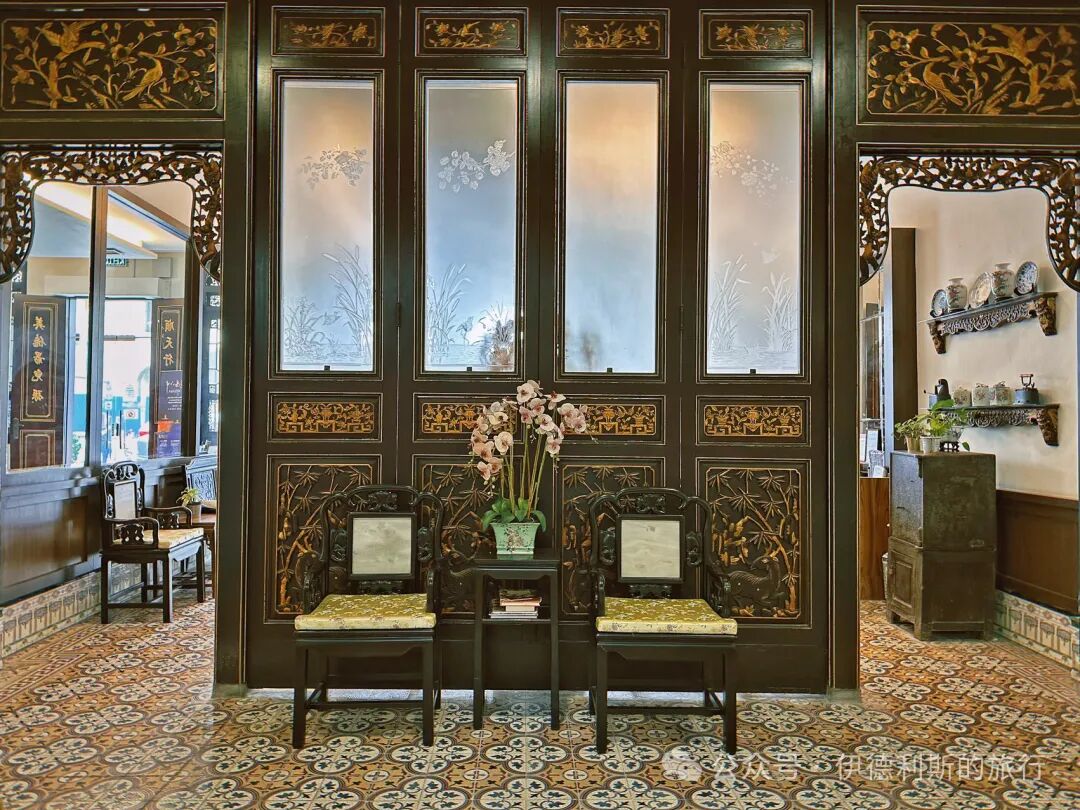
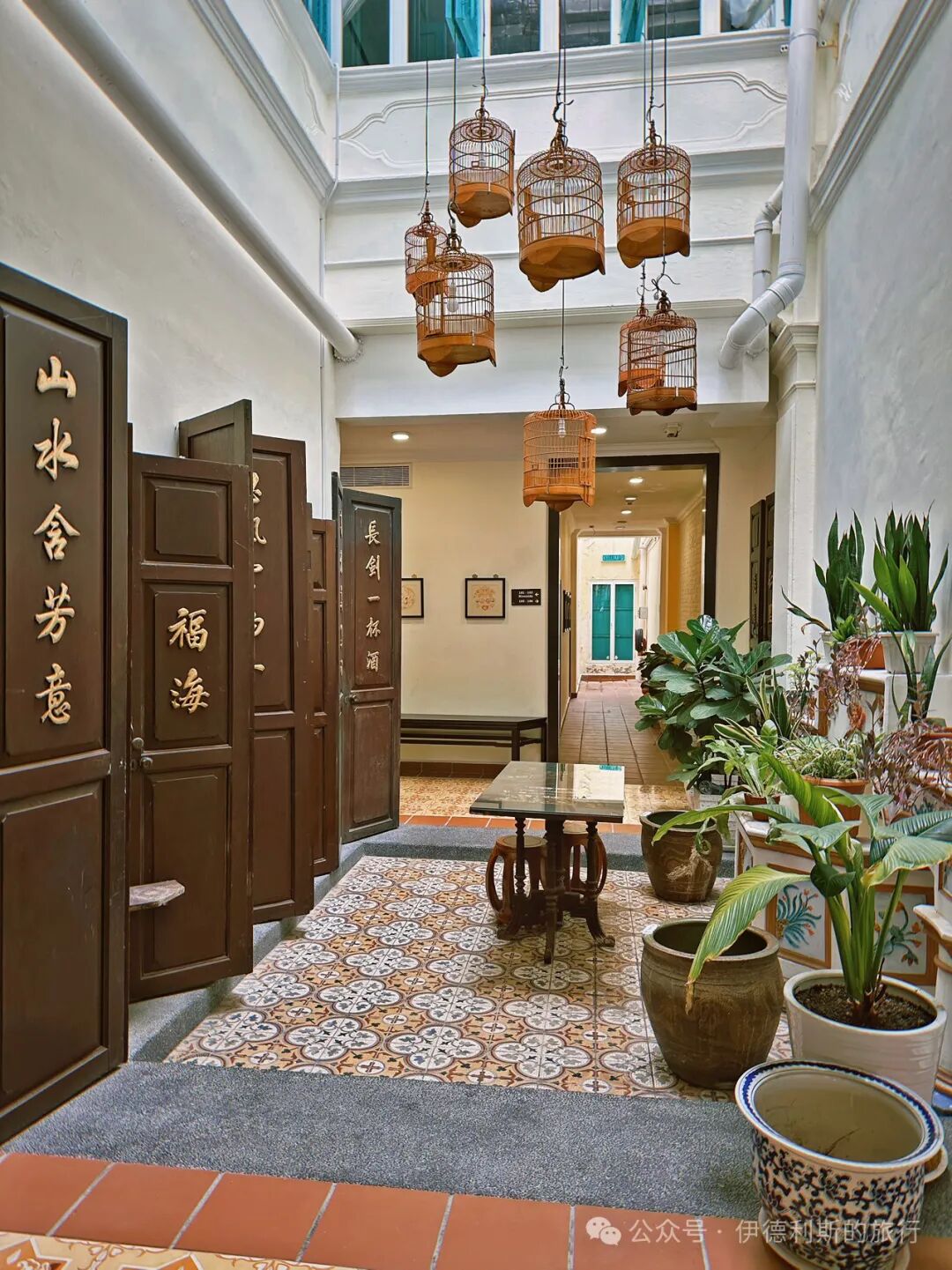
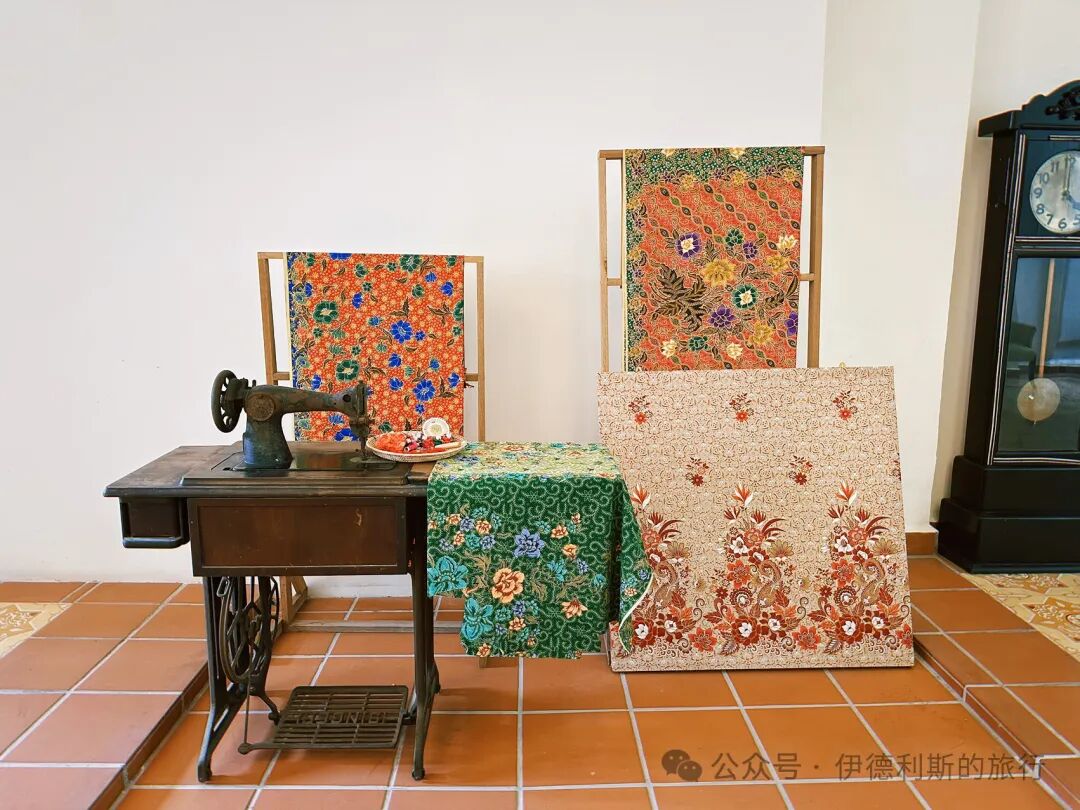
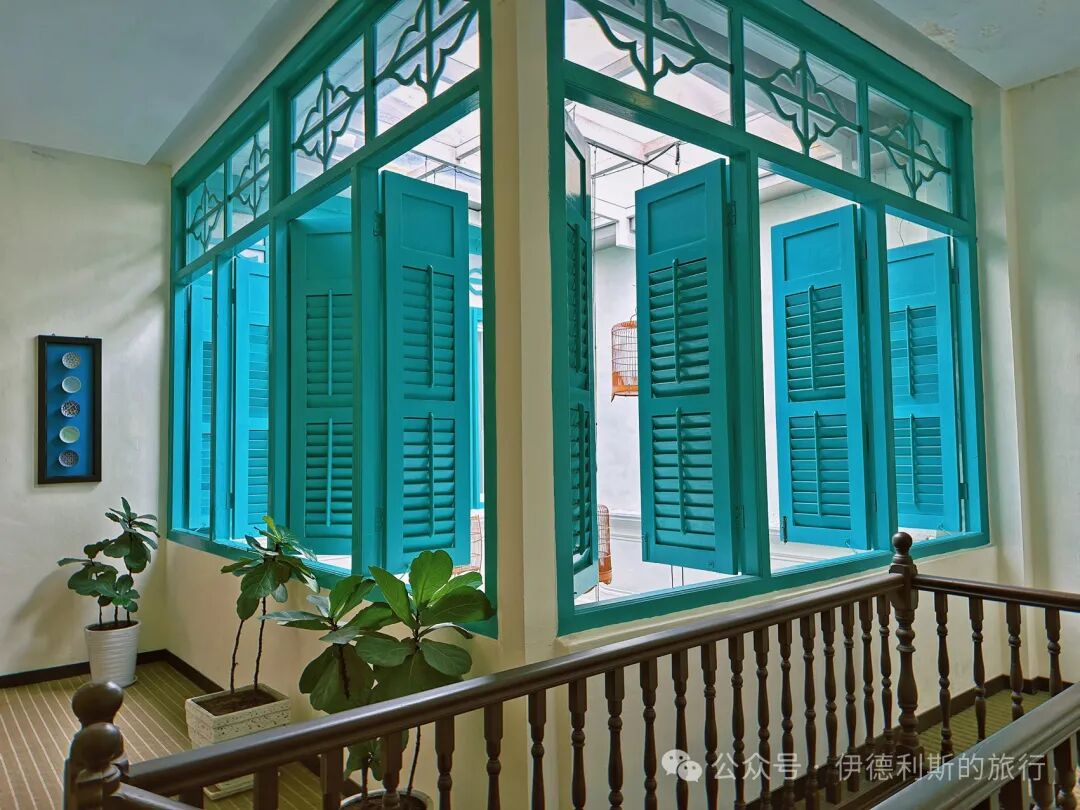
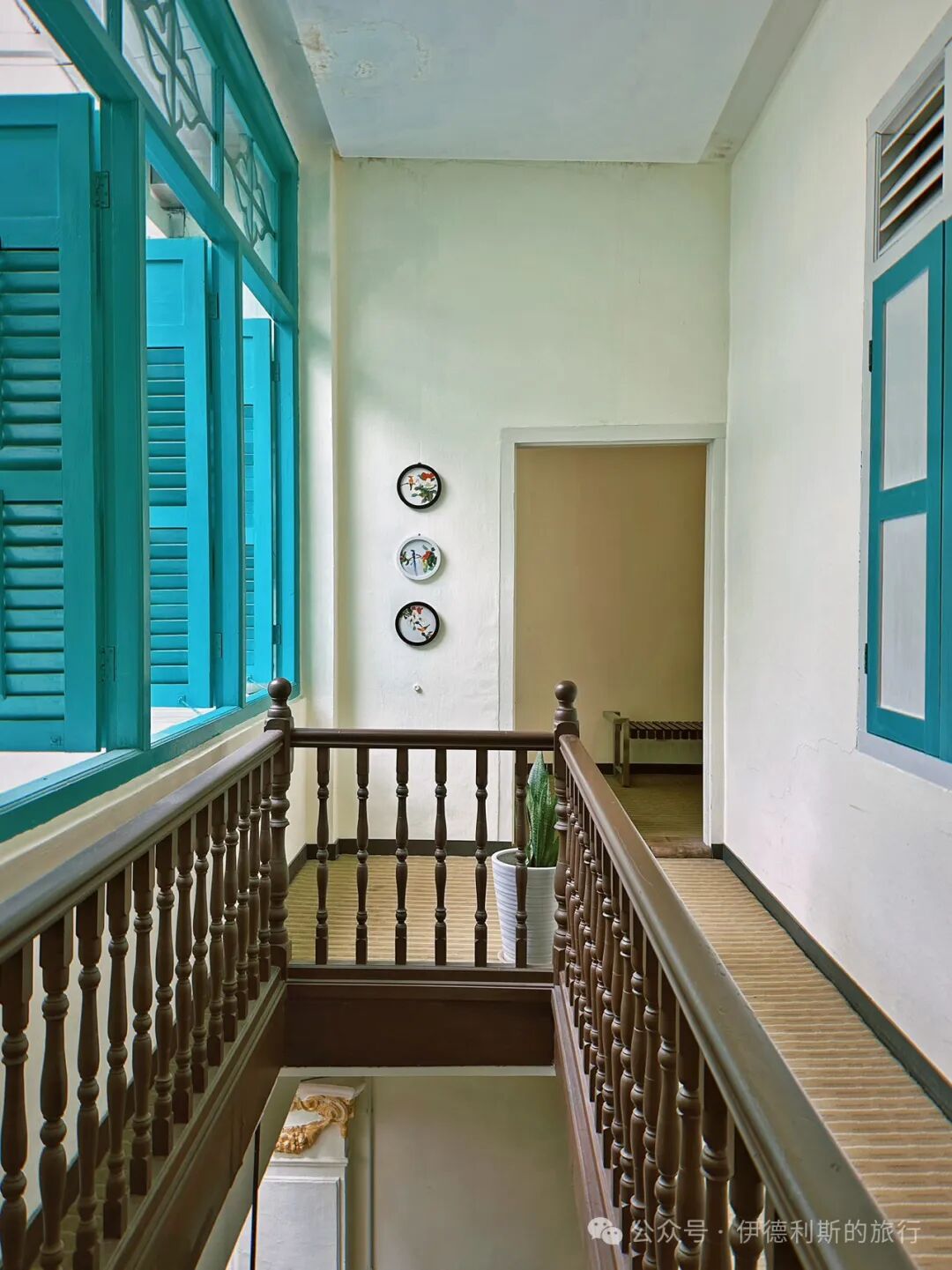
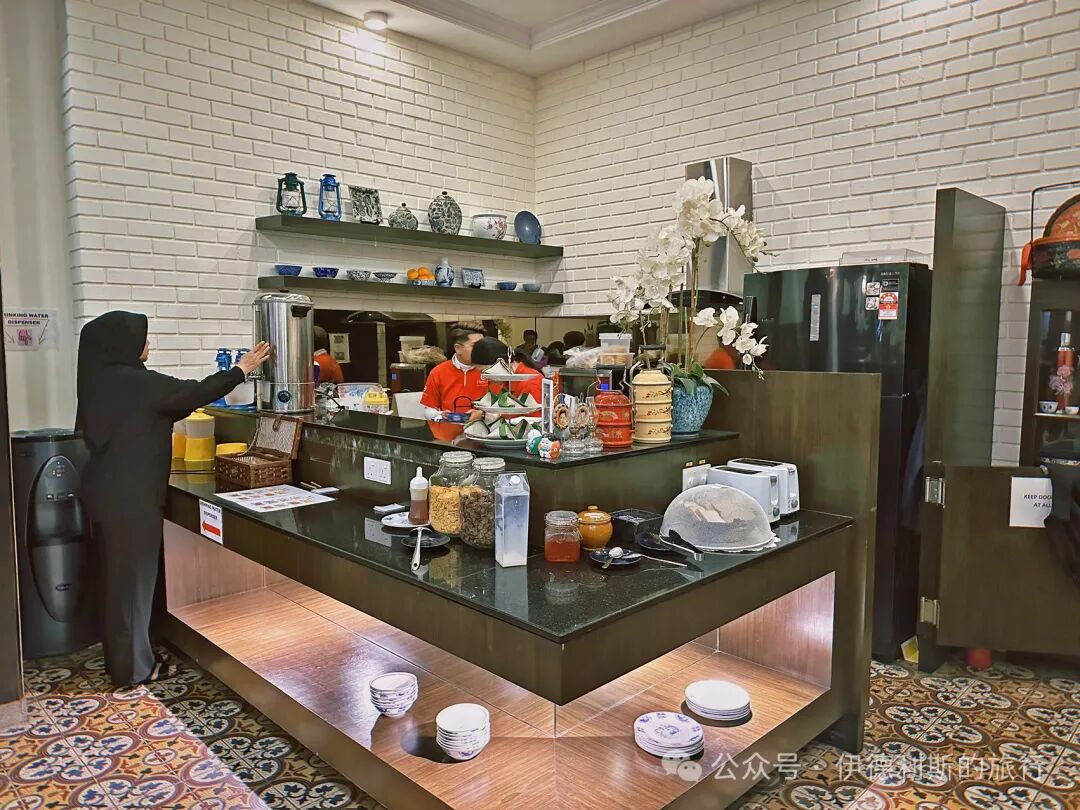
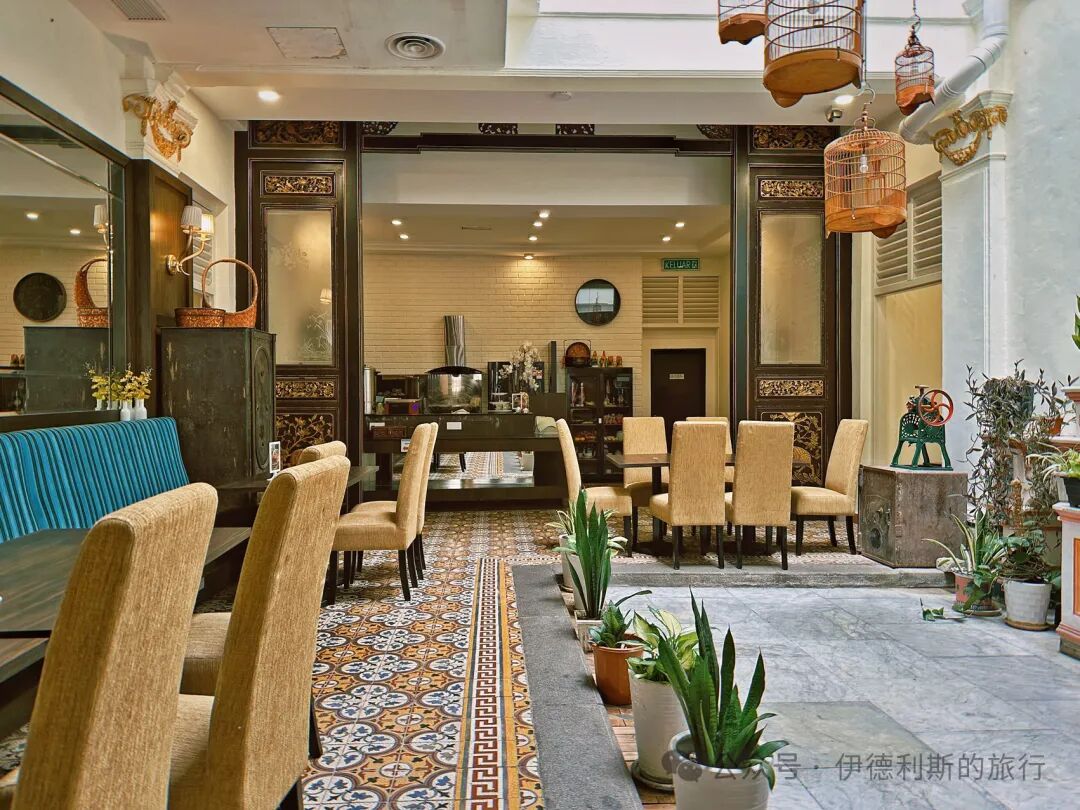
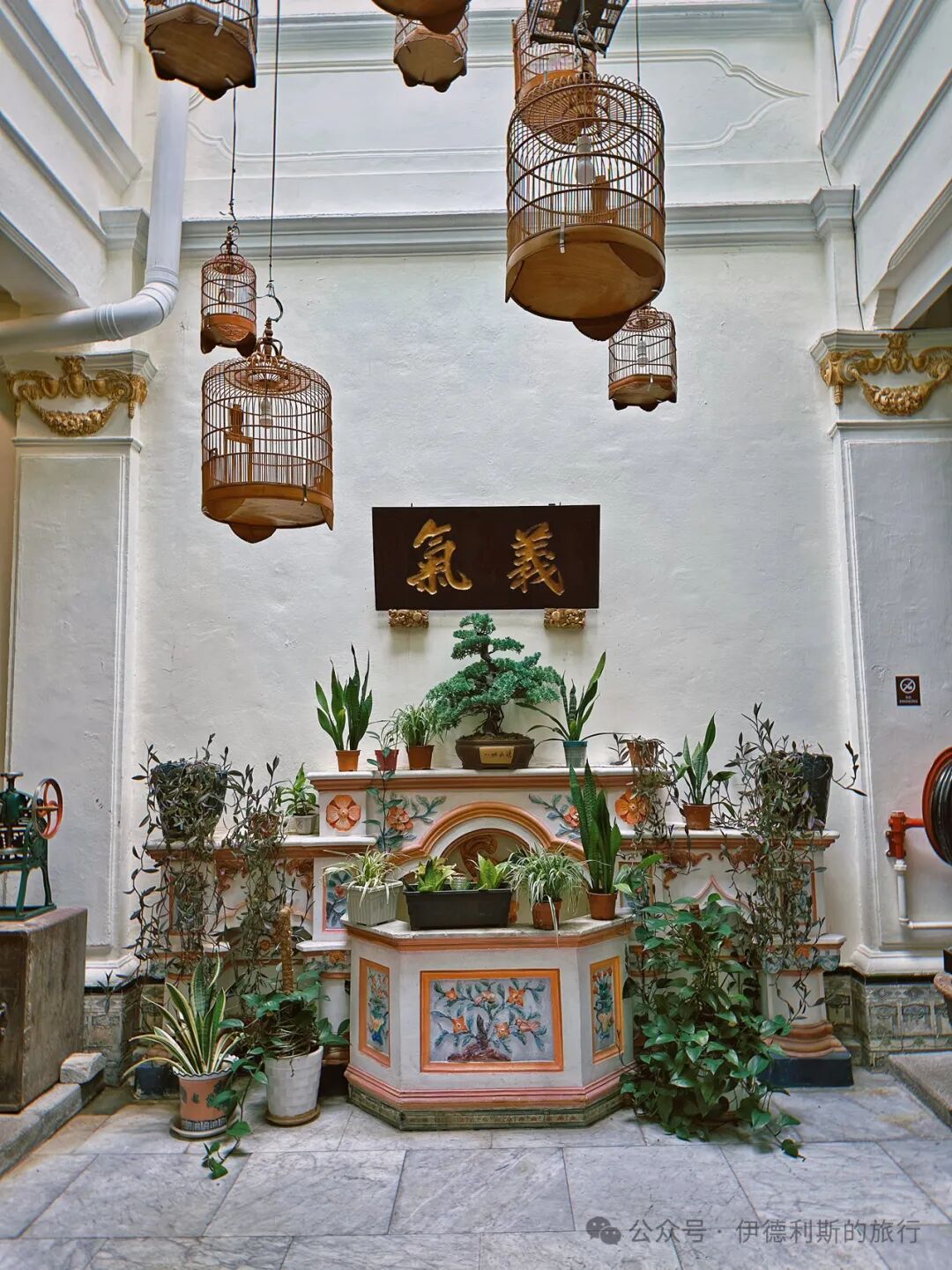
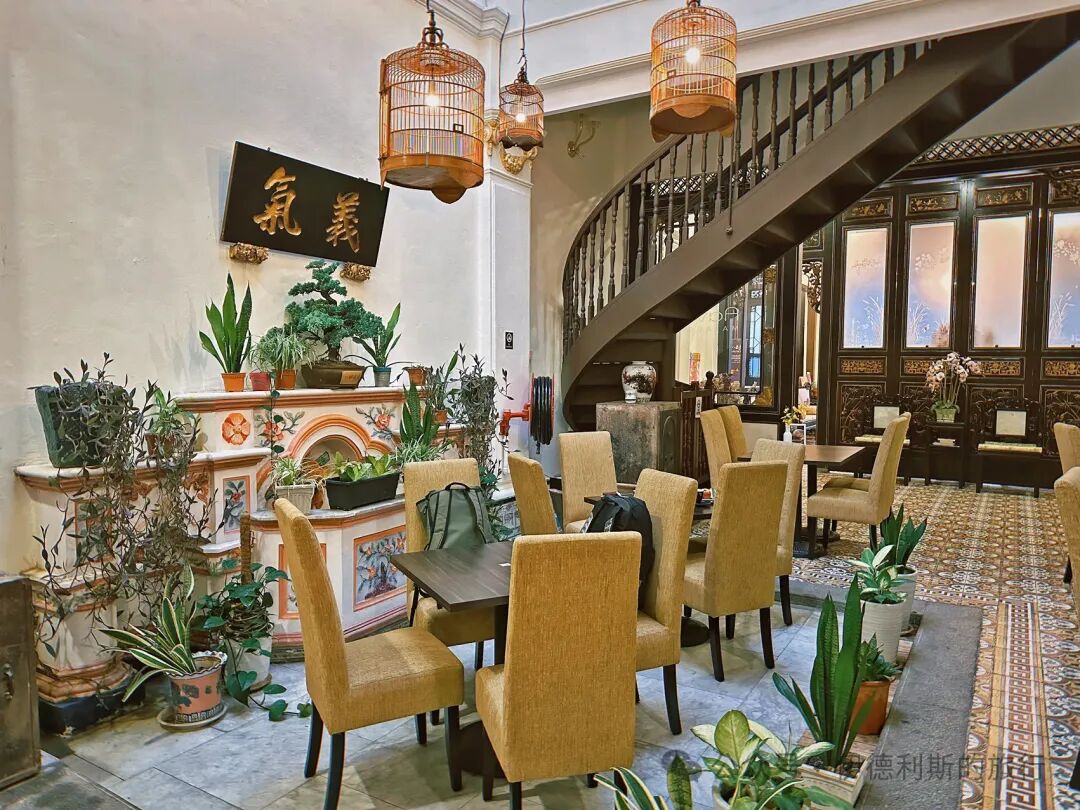
The Aava Hotel is made from three traditional shophouses (qilou) built before World War II. The exterior is very well preserved, and the interior is simple and elegant. The Nyonya elements are used sparingly but look great. I personally think it offers good value for money. The hotel offers free bicycle rentals for two hours, but one bike has stiff handlebars, so be careful when riding it.
The halal breakfast at Aava Hotel includes Western-style omelets, baked beans, and coconut milk rice (nasi lemak) wrapped in banana leaves. Both Malay and Chinese guests ate breakfast with us. It is very comfortable to drink coffee leisurely inside the shophouse.
Staying at a Straits mansion
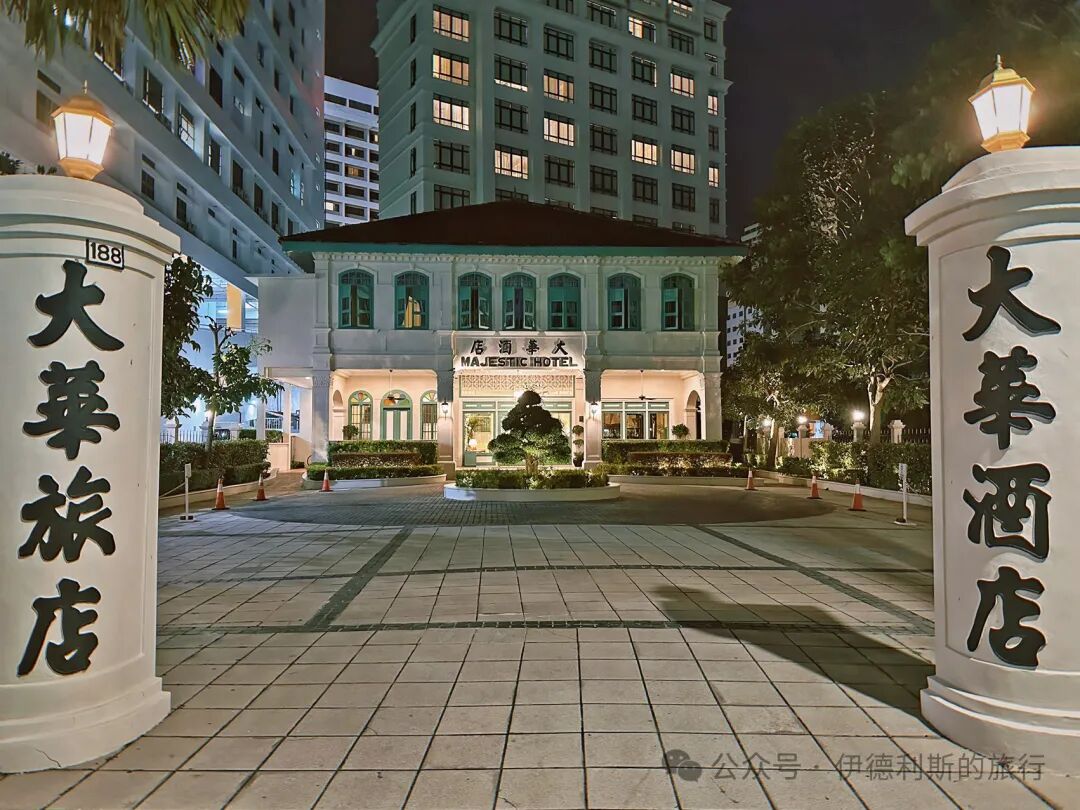
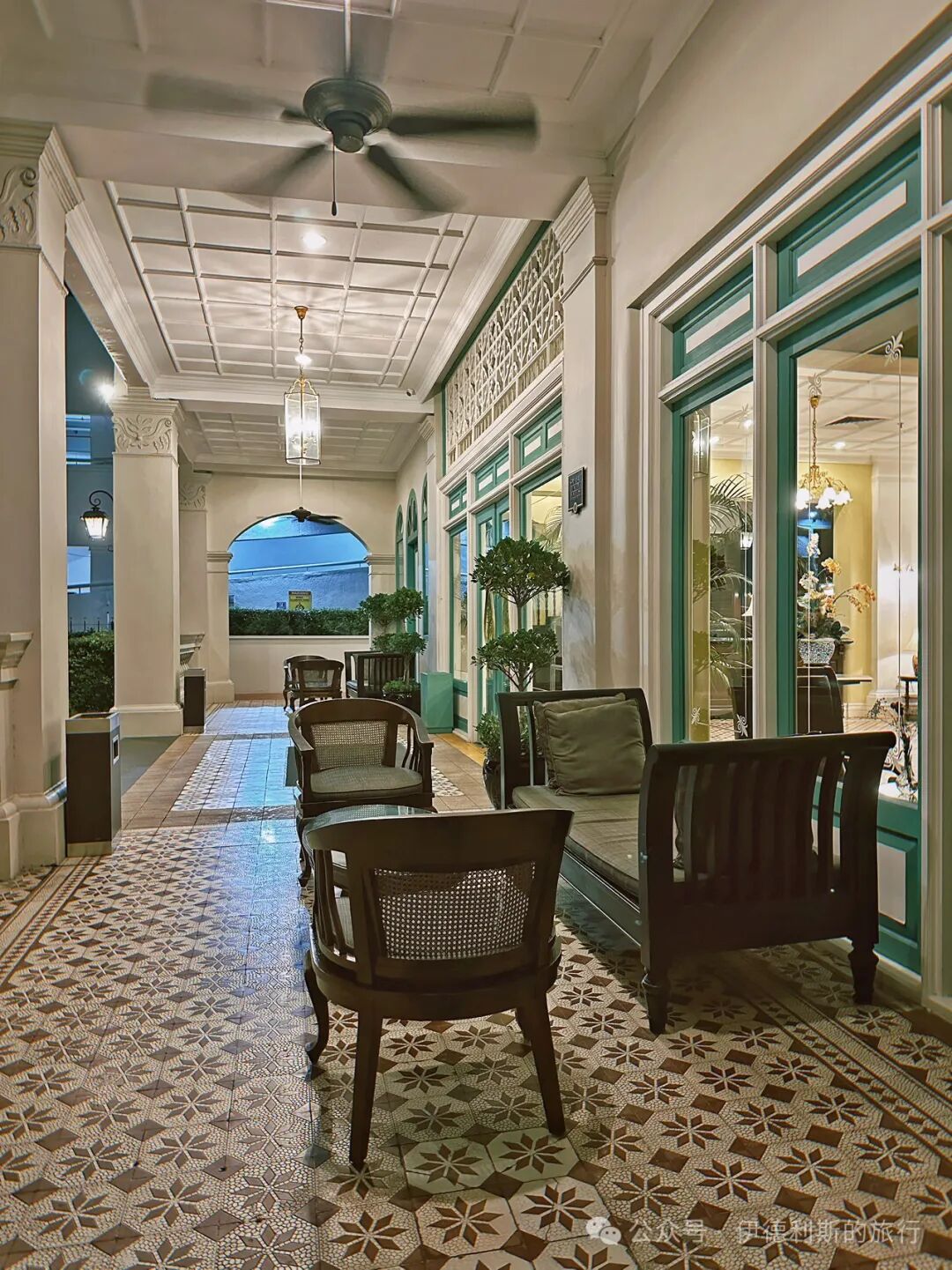
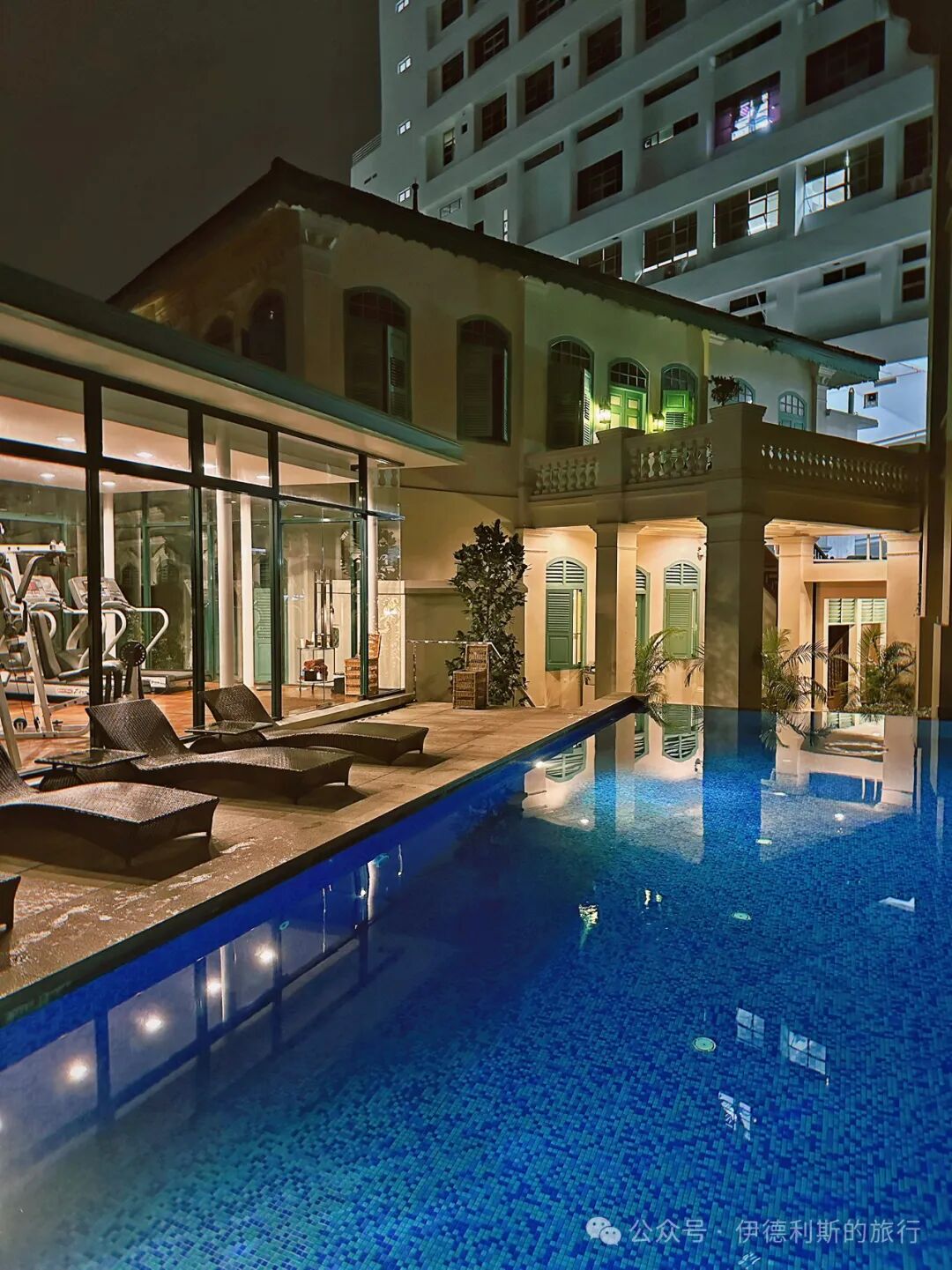
On the second day, we stayed at the famous The Majestic Malacca hotel. Staying here really showed me that you get what you pay for. The environment is amazing, the service is very thoughtful, and it feels just like home.
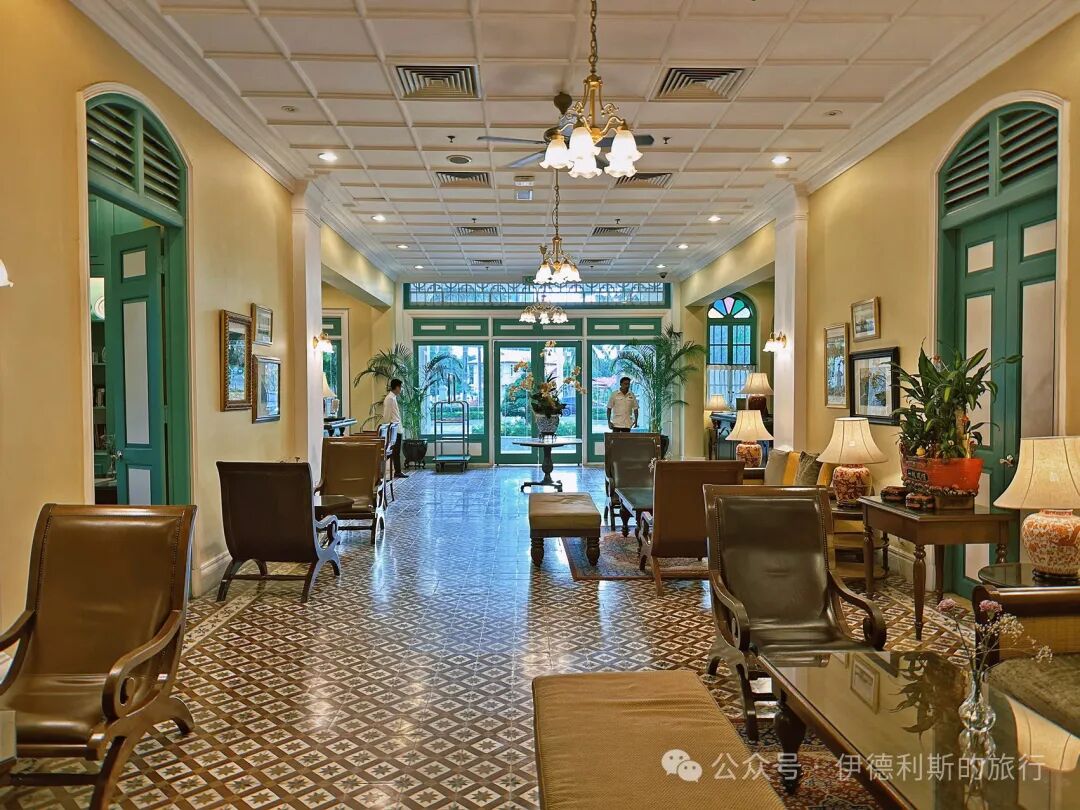
The lobby of the Majestic Hotel is inside a nearly 100-year-old mansion from the Straits Settlements era, with the original tile floors and teak wood features still preserved today. The Majestic Hotel was built in 1929 under the direction of wealthy Chinese businessman Leong Long Man, but he sadly passed away two years later, and his son inherited the mansion. His son kept spending the family fortune until he sold the property to another Chinese businessman, Lim Heng Fang, in 1955. Lim Heng Fang turned the mansion into a hotel. It hosted many British plantation owners in the 1950s and 1960s, and it even welcomed the first Prime Minister, Tunku Abdul Rahman, when Malaysia declared independence in 1957.
The Majestic Hotel closed in 2000 due to poor management. In 2006, the famous Malaysian YTL Hotels group bought and restored it, and it reopened for business in 2008.
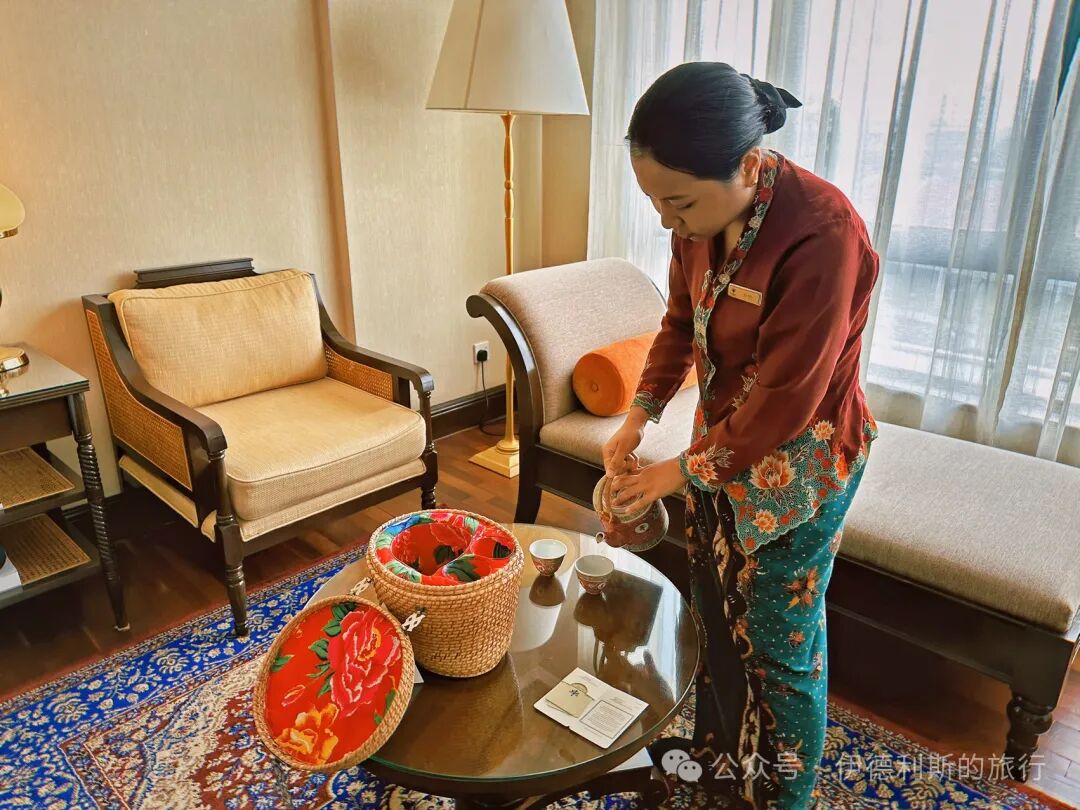
After we finished checking in, a Nyonya lady from the front desk guided us to our room and offered us some welcome tea.
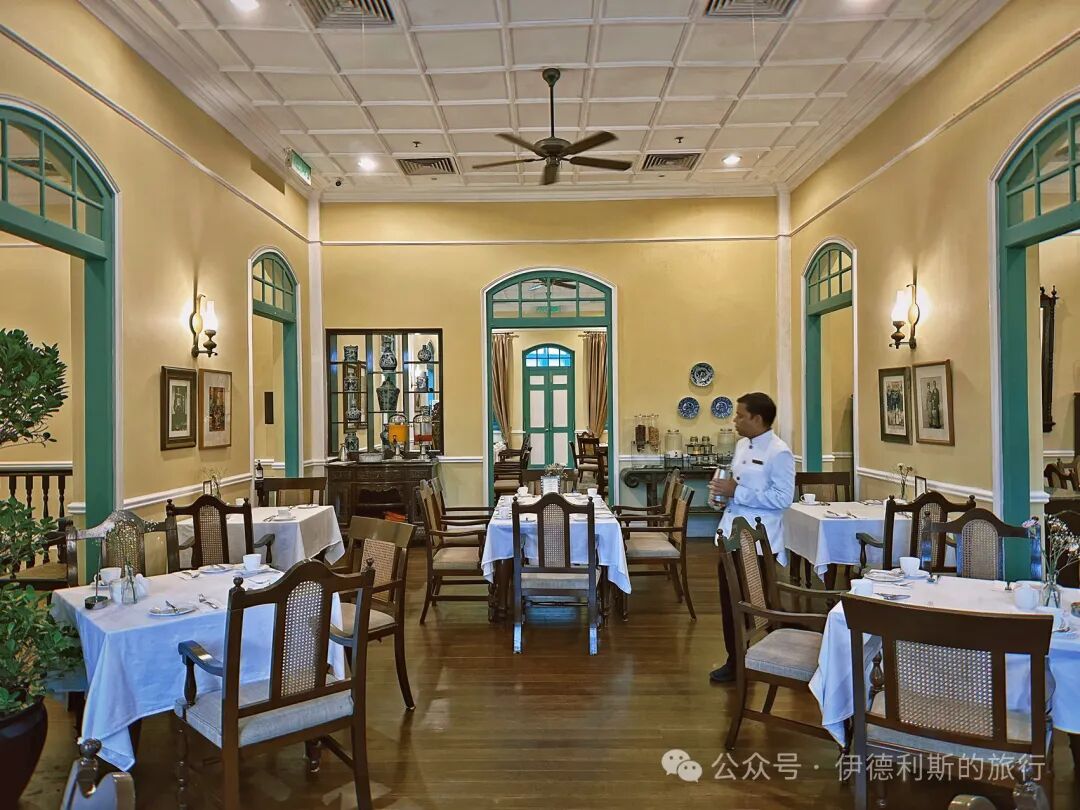
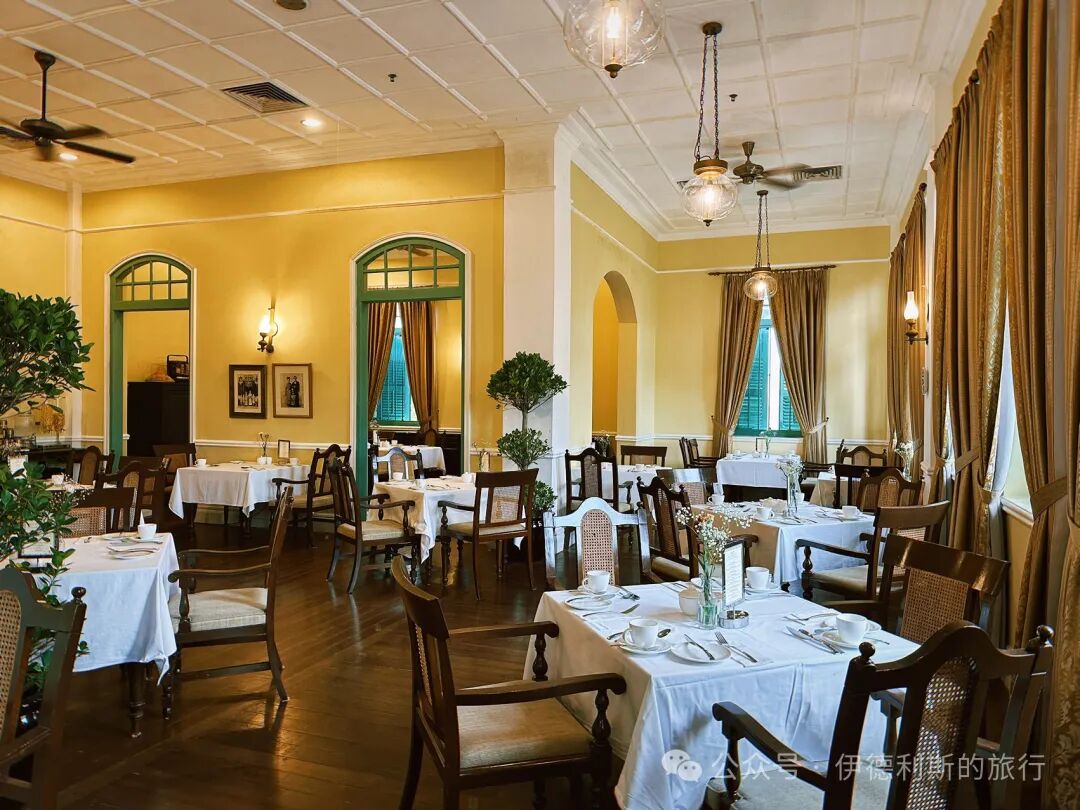
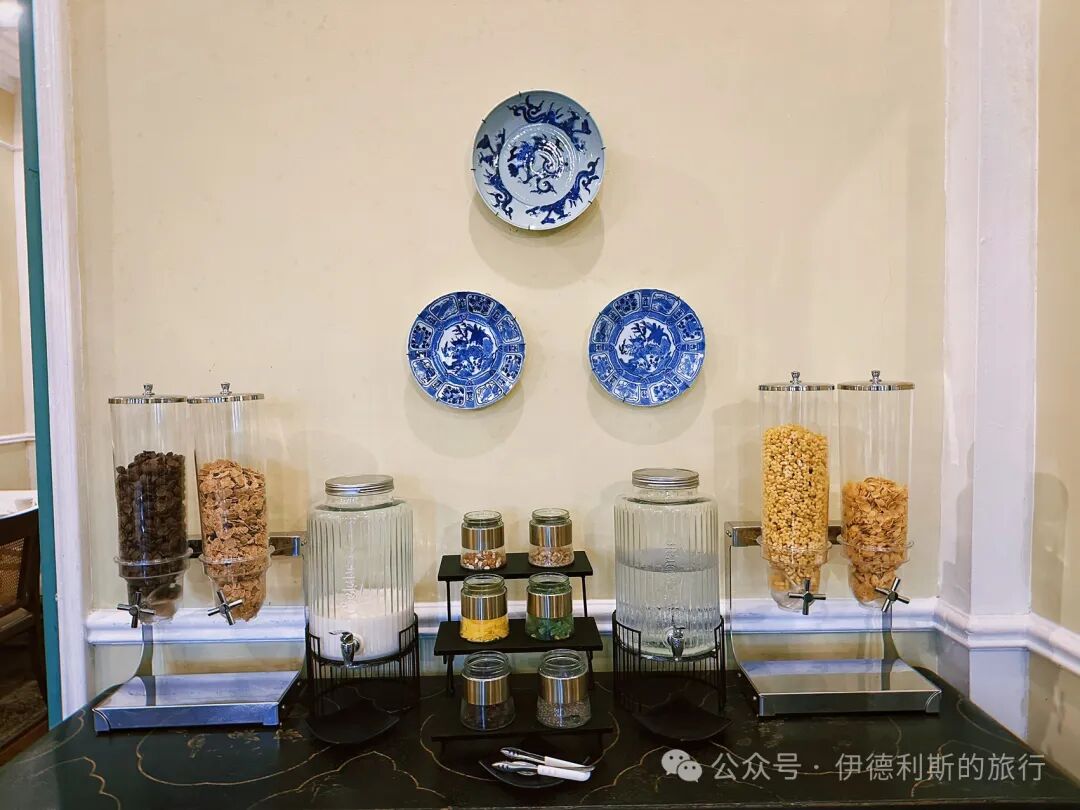
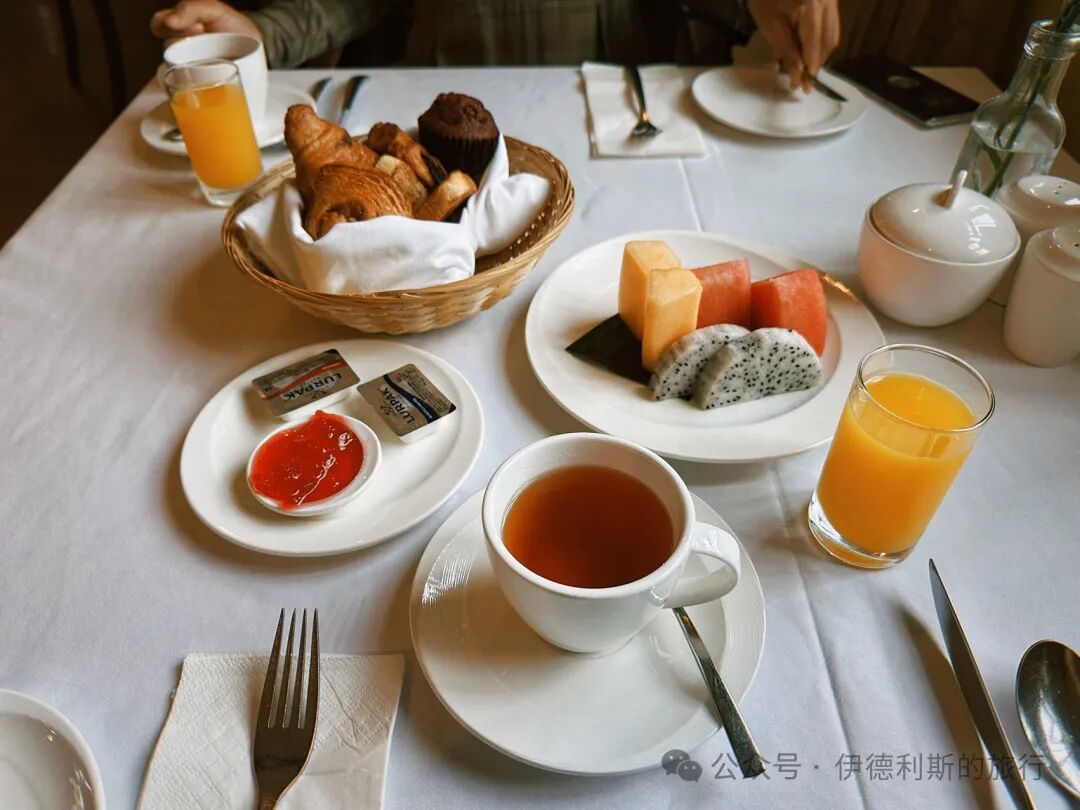
The second floor of the Straits Mansion at the Majestic Hotel serves a halal breakfast. You can choose from Western, Malay, or Indian styles. There is an unlimited supply of croissants, which are served to you by Indian staff so you do not have to get them yourself.
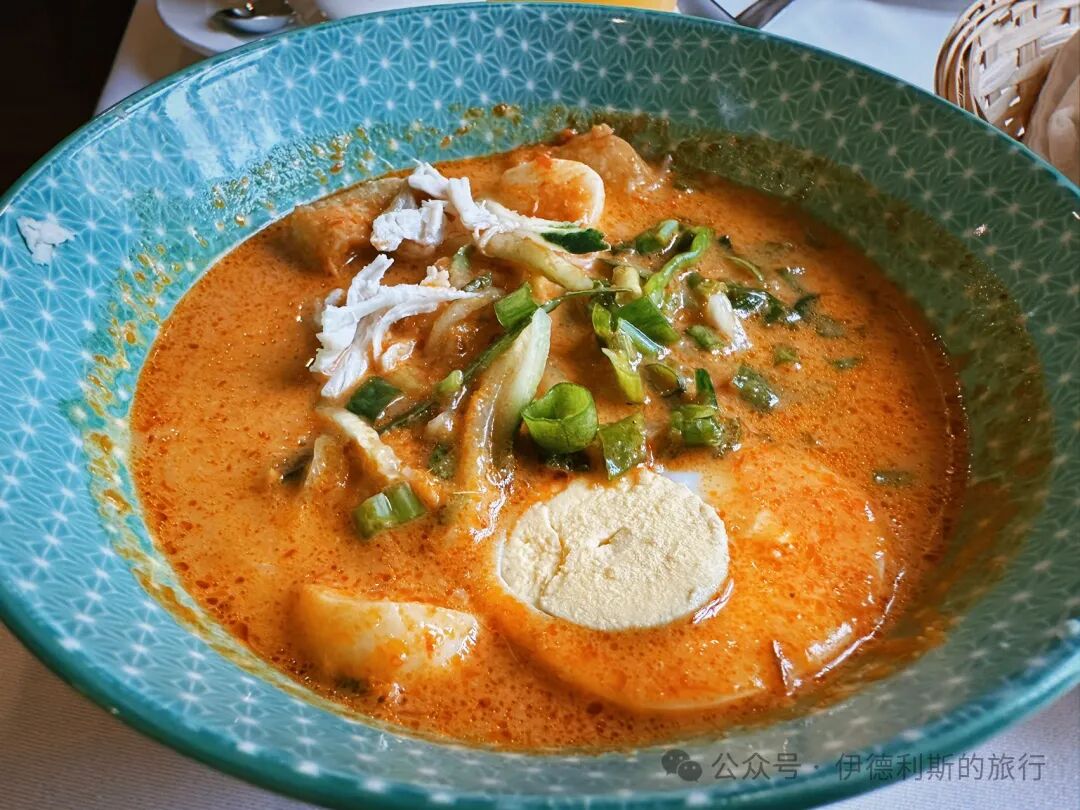
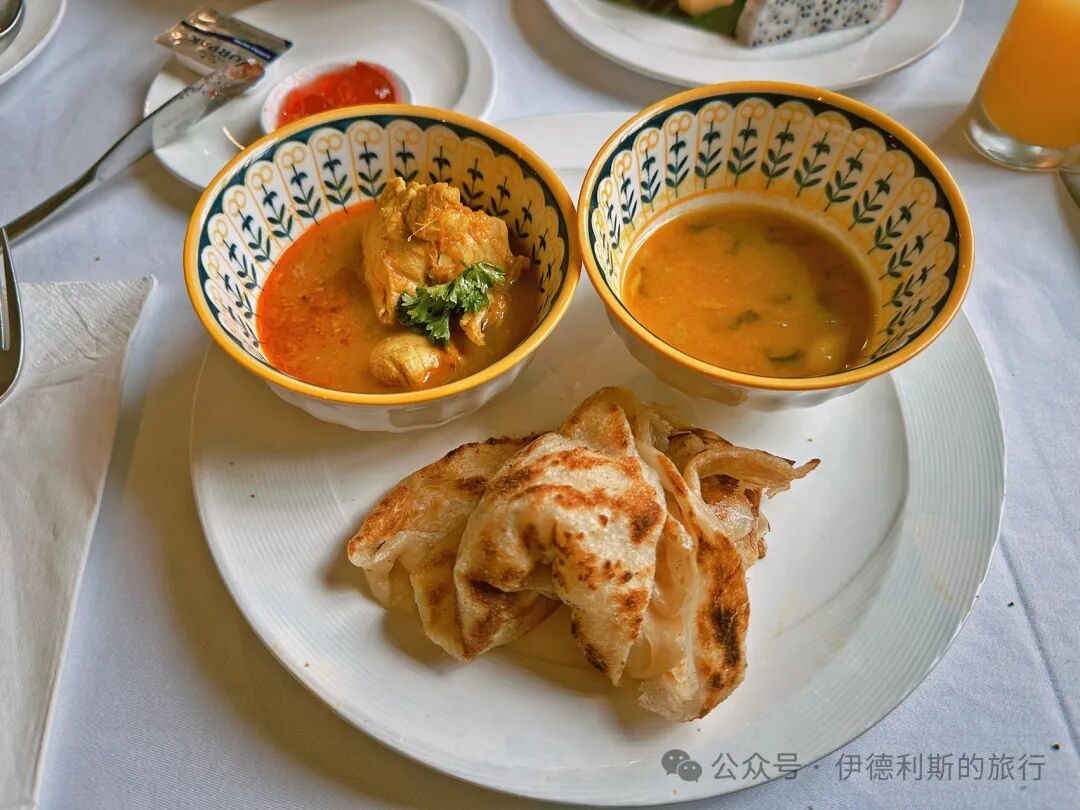
We ordered a serving of Indian flatbread (roti canai) with curry and a bowl of spicy noodle soup (laksa).
Roti canai is a classic Nanyang Indian Muslim breakfast. As early as the 17th century, Indian Muslims brought the practice of eating flatbread with curry to the Aceh Sultanate in northern Sumatra. After the 19th century, it spread to Nanyang countries like Indonesia, Malaysia, and Brunei. Various ethnic groups, including the Malays, Acehnese, and Minangkabau people, all love making this dish.
Curry laksa (laksa lemak) is a type of curry laksa that uses rice noodles in a thick coconut curry soup, topped with chicken and seafood. Curry laksa is best represented by Nyonya laksa, which has plenty of coconut milk and is less sour and spicy compared to the other type, Asam laksa.
Hui Muslim snacks
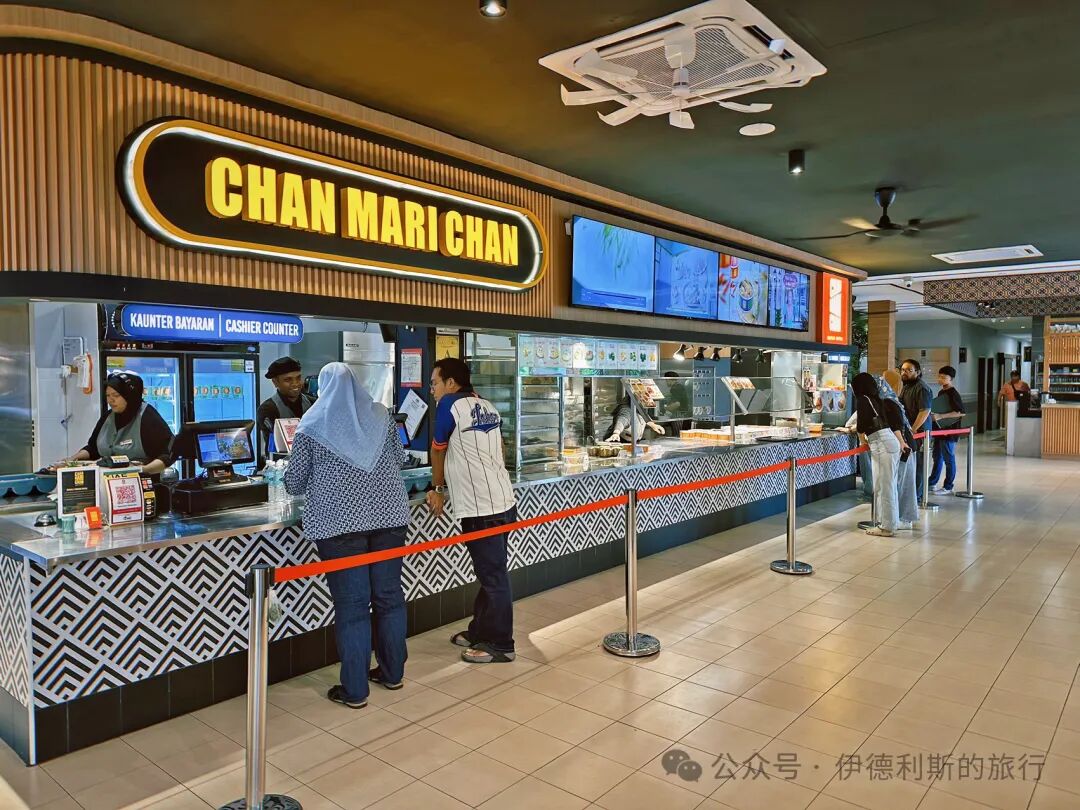
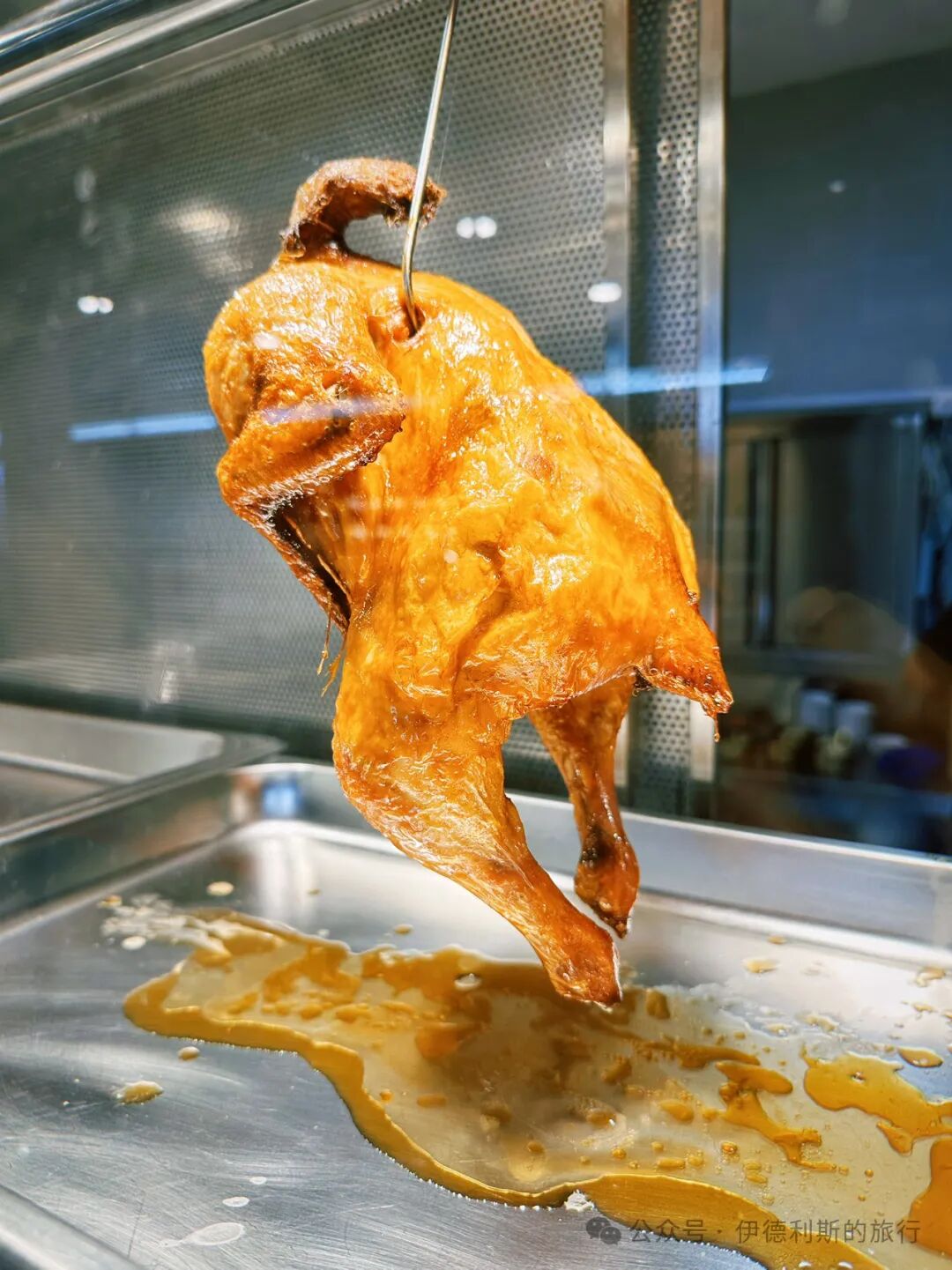
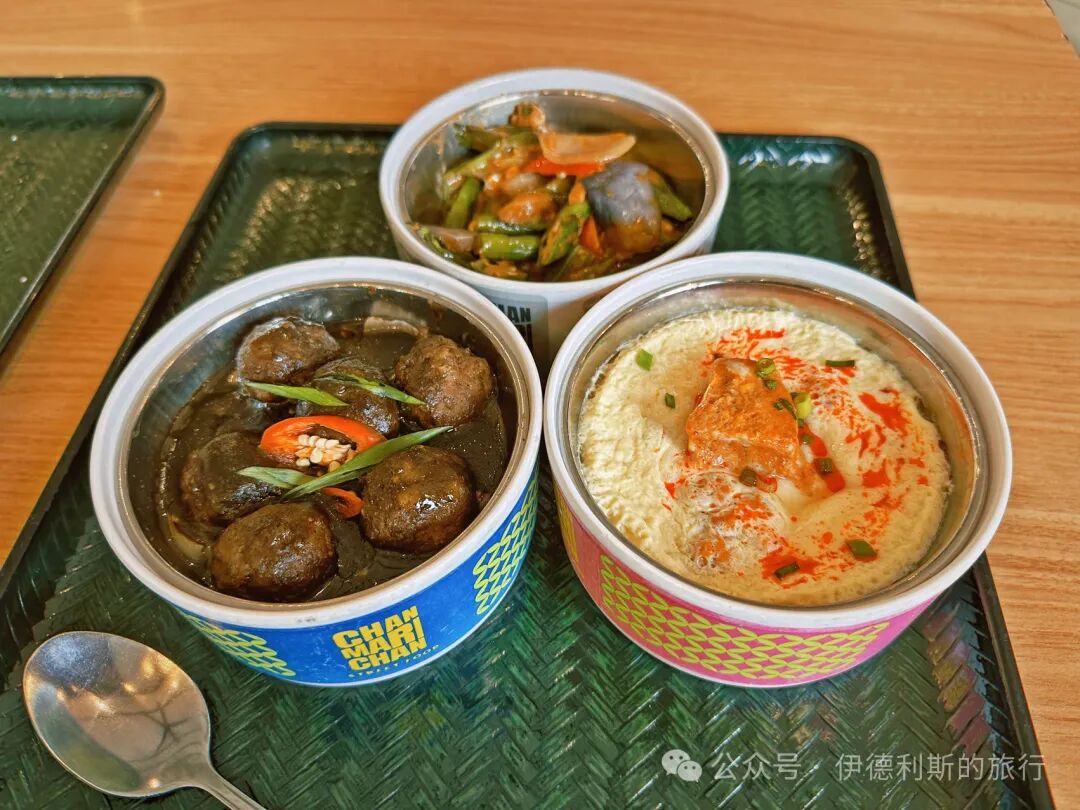
Chan Mari Chan is a sub-brand of the large Malaysian Hui Muslim Chinese restaurant chain Mohd Chan, focusing on affordable home-style snacks. The founder of Mohd Chan, Dato HJ Mohd Chan, was born in Gombak District, Selangor. In 2007, influenced by his Malay friends, he converted to Islam and started his restaurant that same year. Since then, he has been combining Nanyang Chinese cuisine with Malay flavors, and it has now become the most famous and largest Hui Muslim restaurant chain in Malaysia.
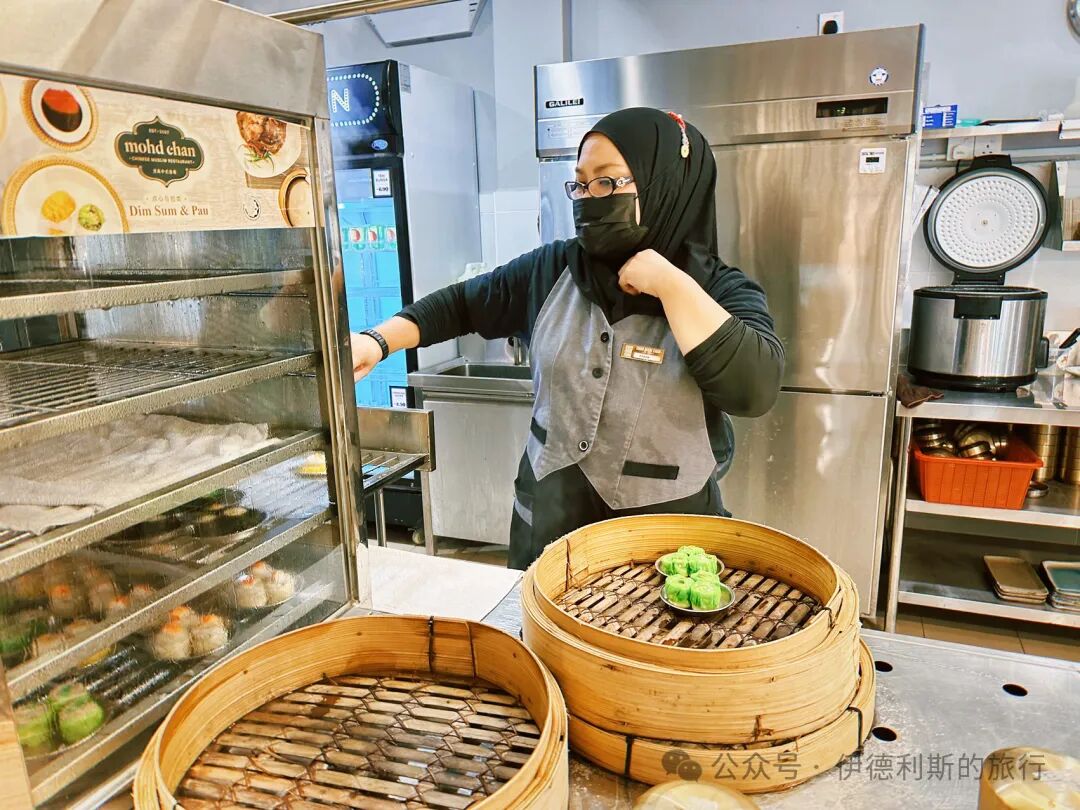
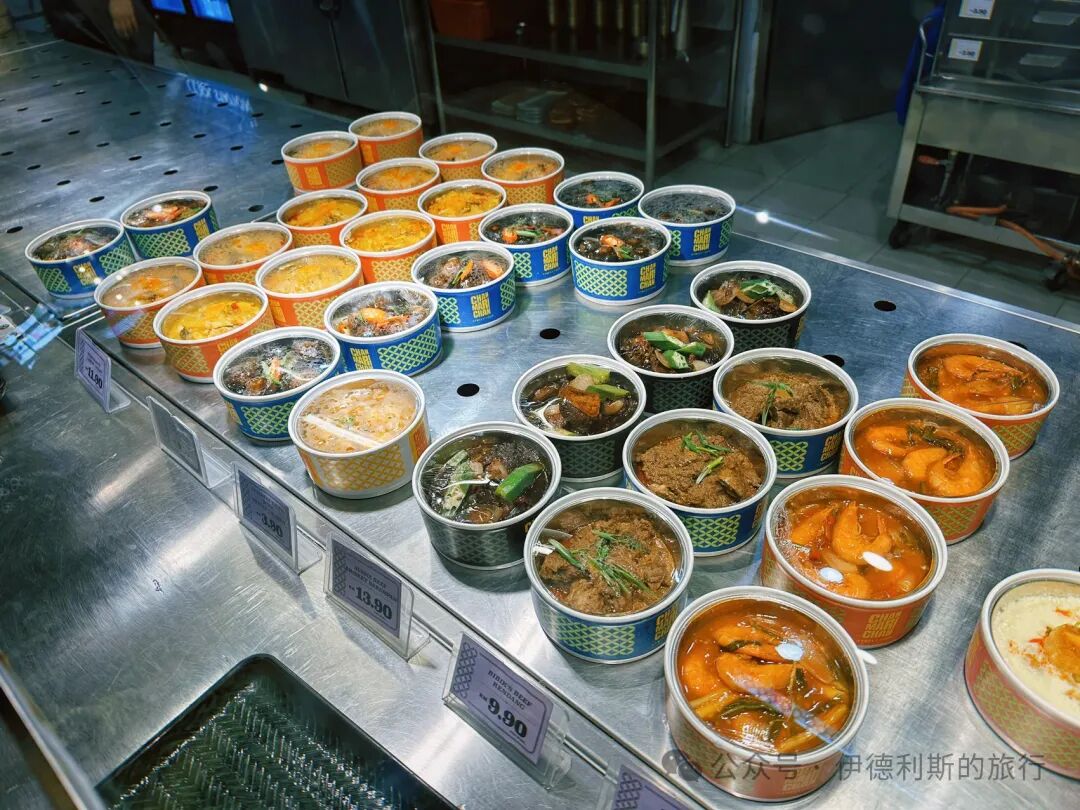
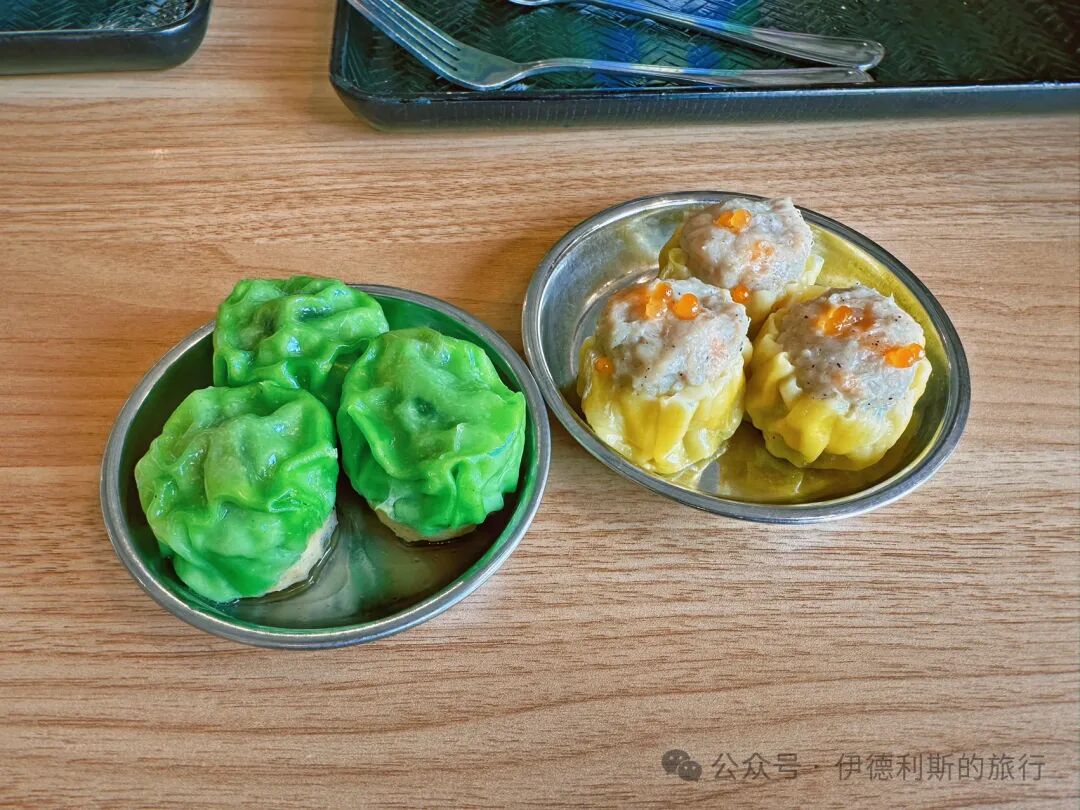
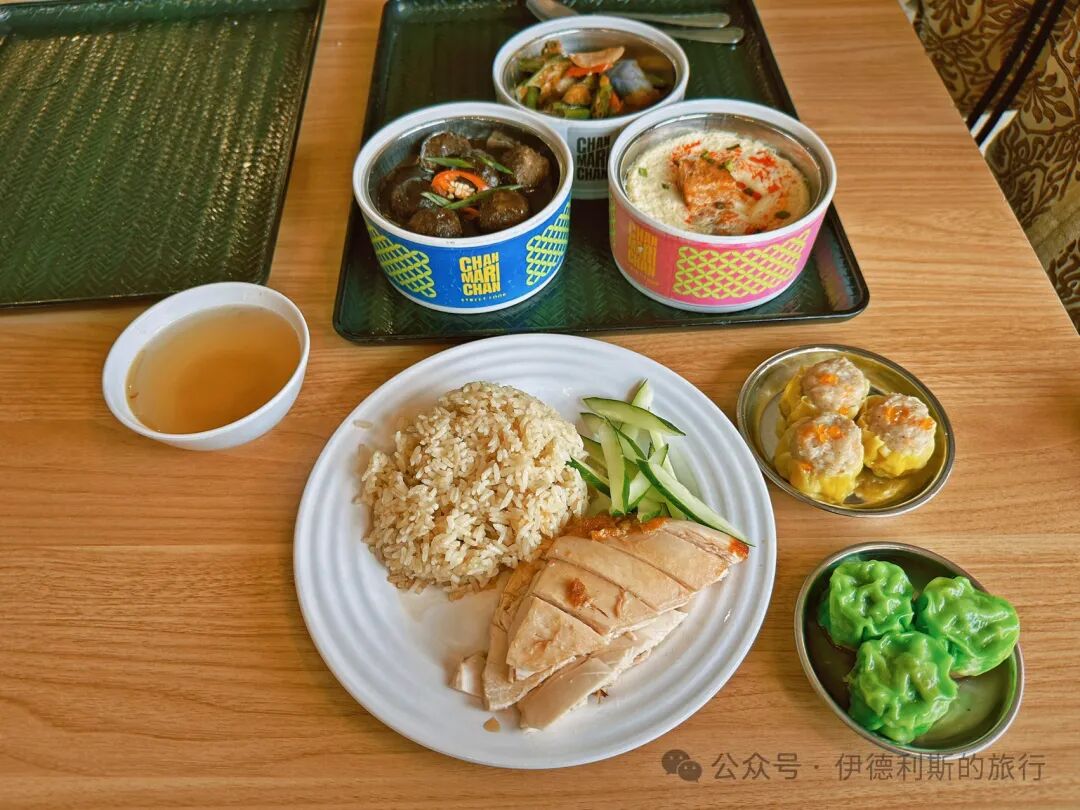
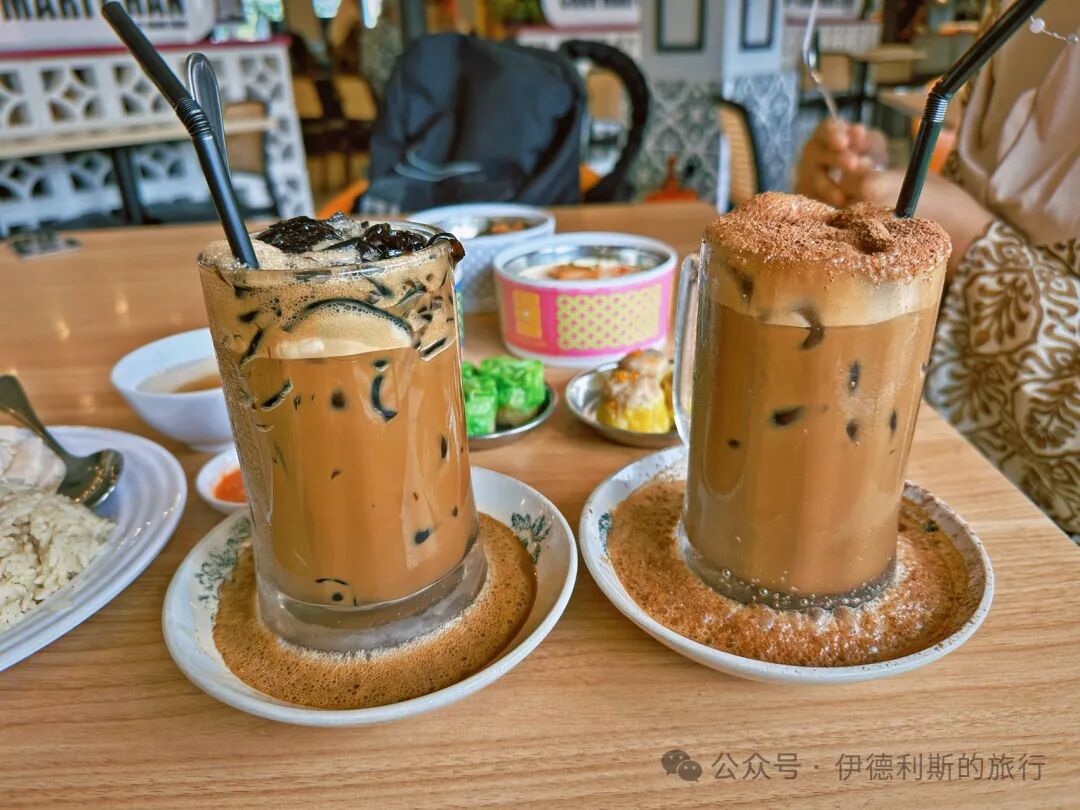
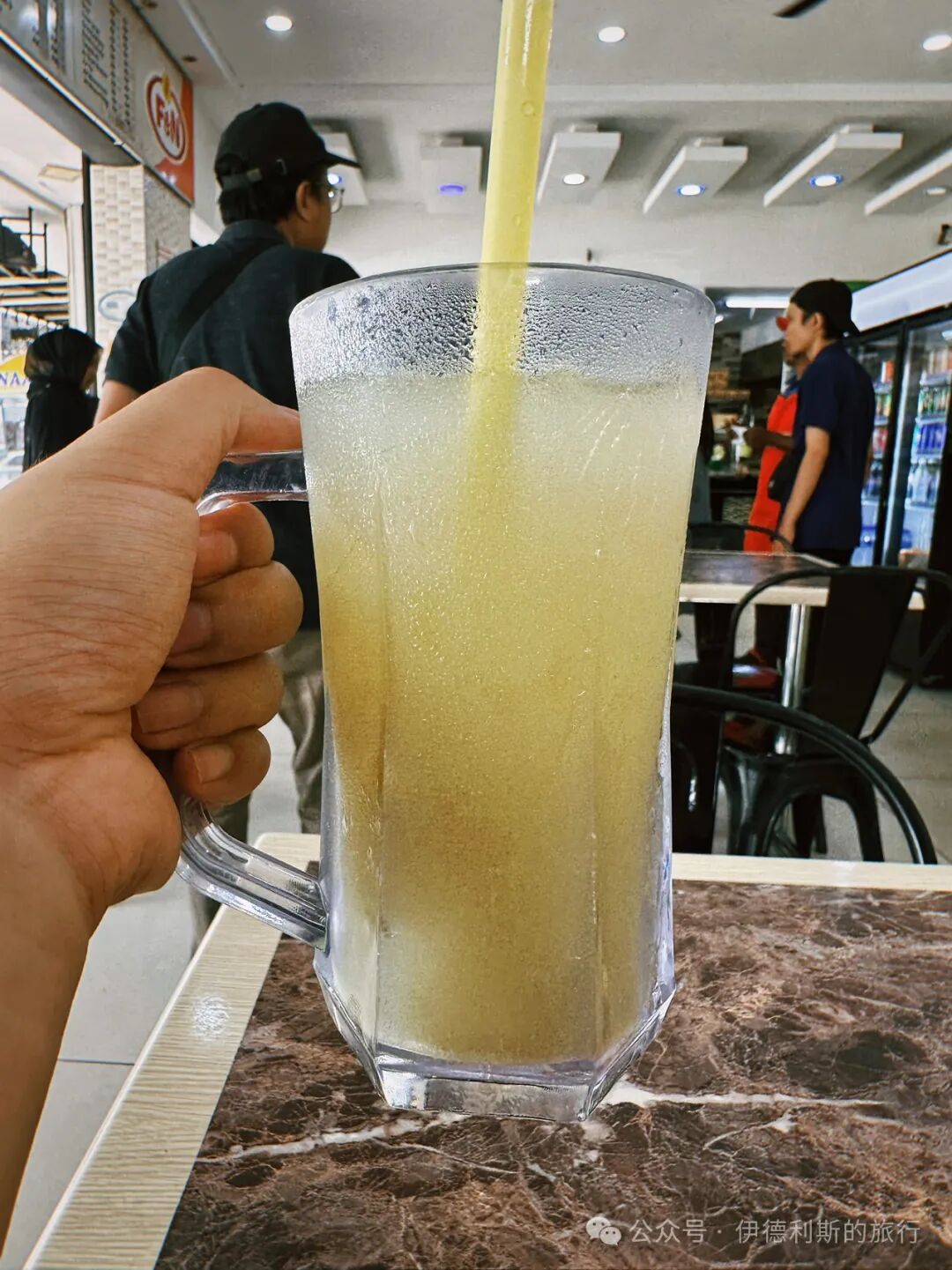
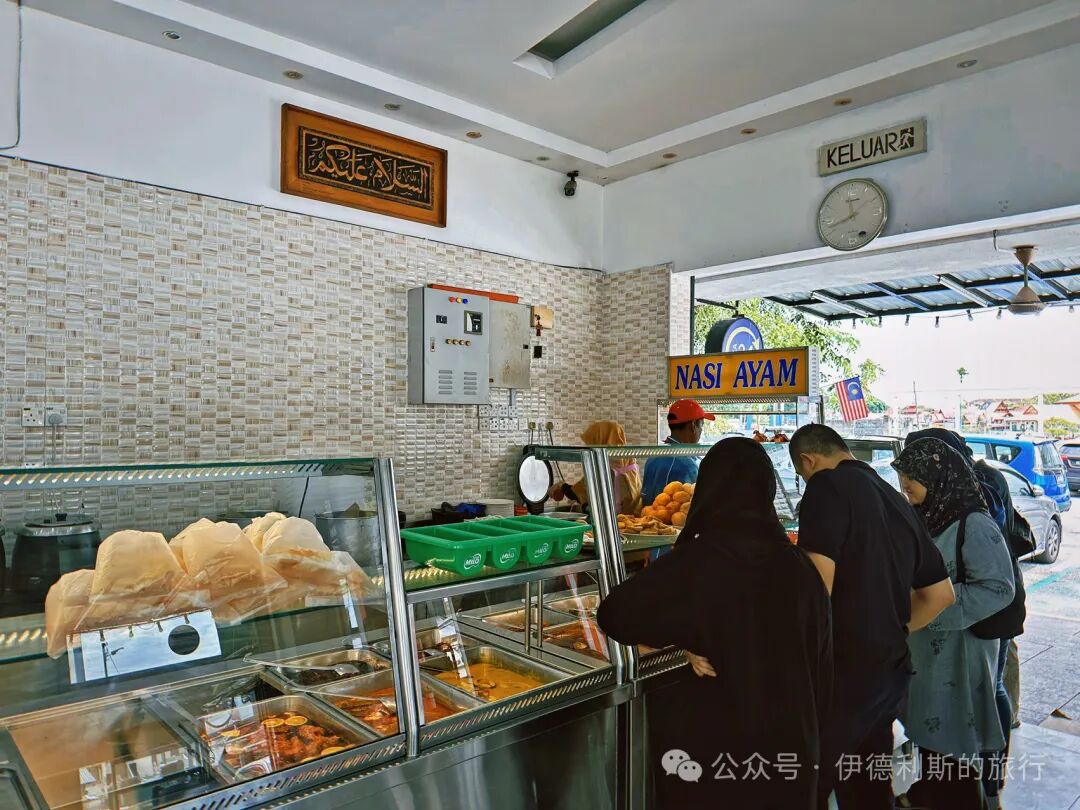
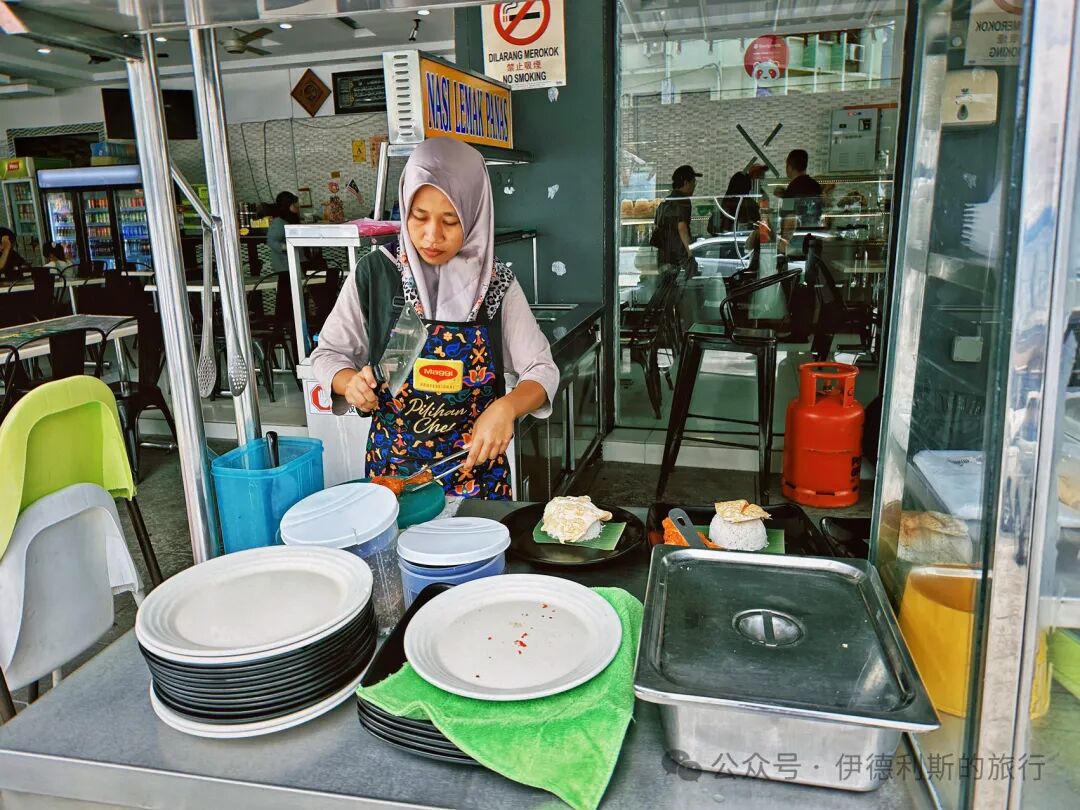
This January, we ate at Mohd Chan restaurant in Seremban, Malaysia. You order from a menu there, and they serve a variety of high-end Nanyang Chinese banquet dishes. Chan Mari Chan focuses on fast food and snacks. You go straight to the counter to pick up your food, and the chicken rice, small side dishes, and steamed dumplings (shaomai) are the most popular items. We grabbed roasted chicken rice, three small side dishes, two types of steamed dumplings (shaomai), and drank grass jelly coffee and cocoa coffee. Their food is quite delicious. I especially loved the fragrance and texture of the chicken rice. Eating there wiped away the fatigue of our journey. We instantly felt embraced by Nanyang culture and left feeling very satisfied.
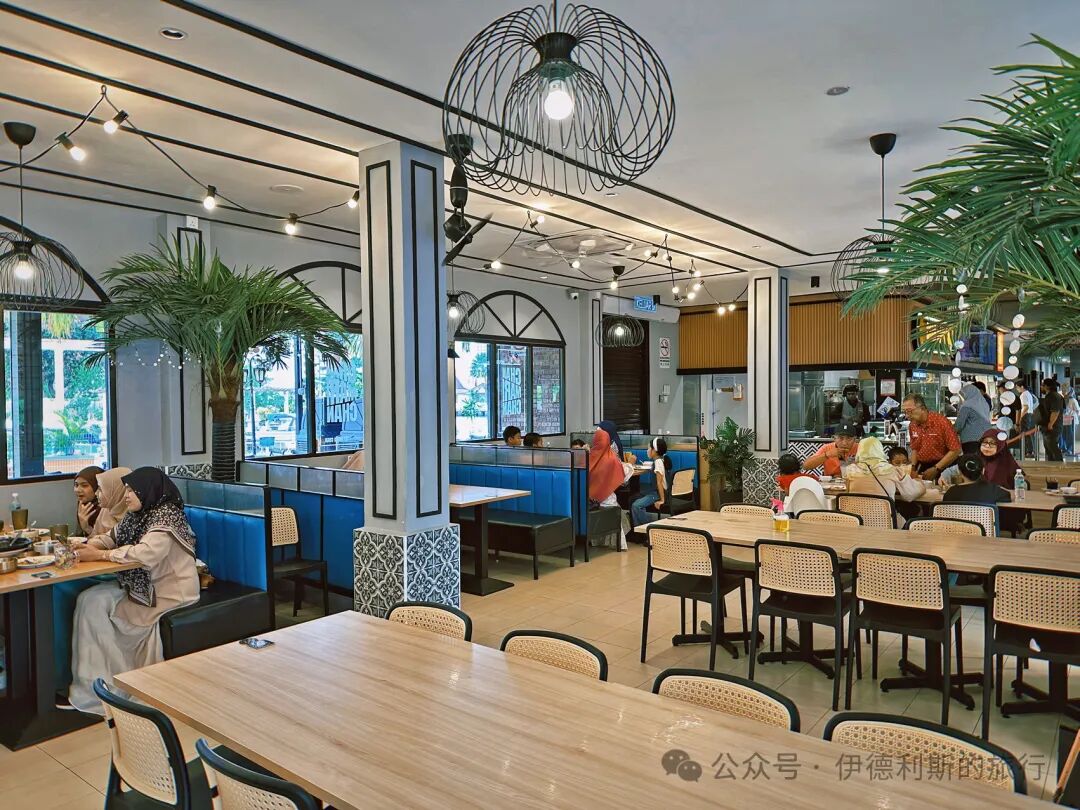
The restaurant environment is also very nice, and many Malaysian Muslim friends (dosti) come here to eat with their families. They have a prayer room in the shop, which sets a great example for us Hui Muslims.
Malaysian Food City
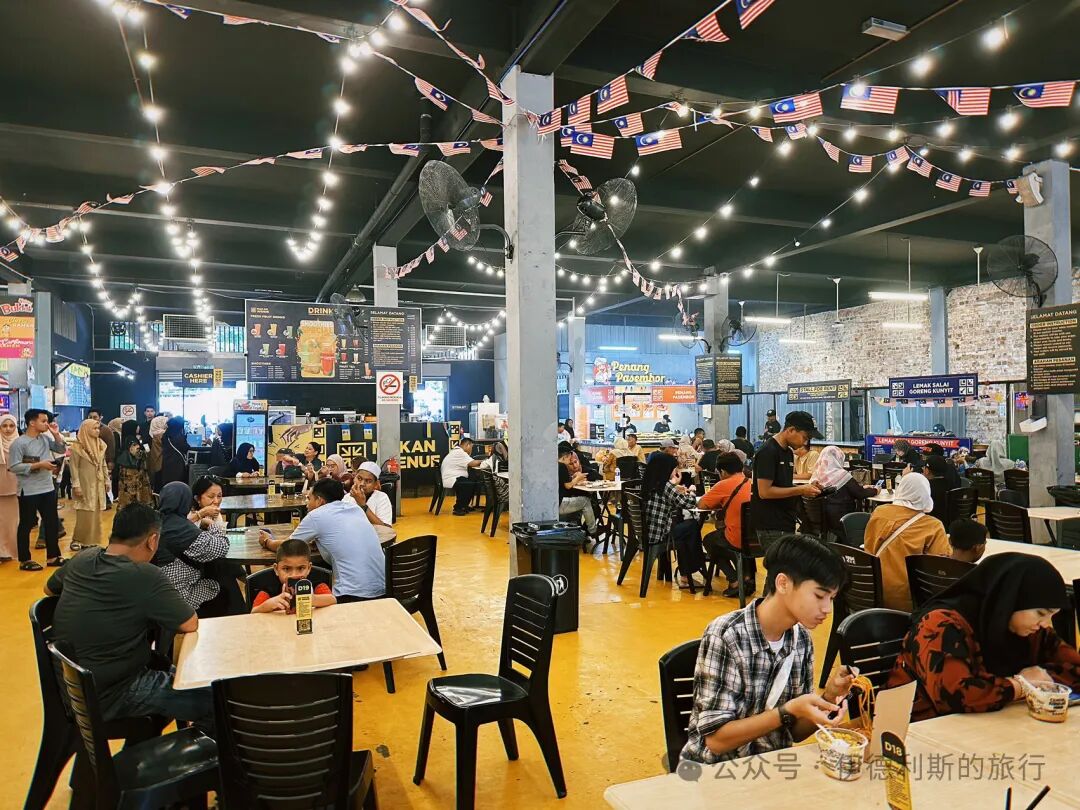
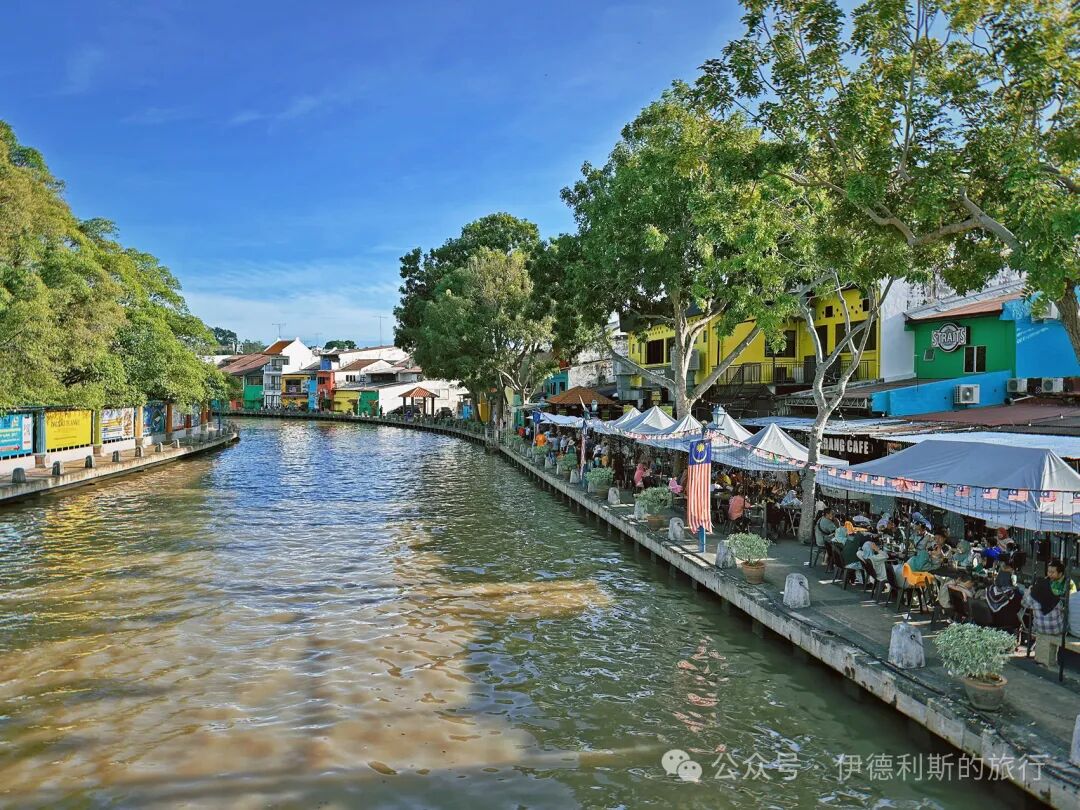
Right next to the E-Red Hotel on Kampung Hulu Street, there is a large Malay food court called Makan Avenue. It has a huge variety of Malay snacks. Many Malay people come here to eat at night, and the tables along the Malacca River are always full. Be careful about ordering drinks here on weekends or holidays. Because they have to serve hundreds of seats, I actually waited an hour just to get my drink. The other food stalls serve their dishes relatively quickly.
The most famous spot in the food court is Cendol Kampung Hulu. Cendol originated on the island of Java and was a classic drink at Javanese weddings before it spread across Southeast Asia. It is made with shaved ice, green rice flour jelly noodles, coconut milk, and palm sugar. You can also add things like red beans or grass jelly. We ordered the durian cendol, which is perfect for the hot and humid weather in Southeast Asia.
We also ordered beef meatball soup (bakso biasa). The name bakso comes from the Southern Min dialect for 'meat crisp.' It is a classic Malaysian street food made from beef, fish paste, and a little tapioca flour, giving it a very firm texture. The finished meatballs are usually served in beef broth with tofu, glass noodles, and various side dishes.
We also ordered fried tilapia (talapia) and catfish (keli). Although they looked charred on the outside, the meat inside was very tender, had no fishy smell, and tasted delicious.
Malaysian night market
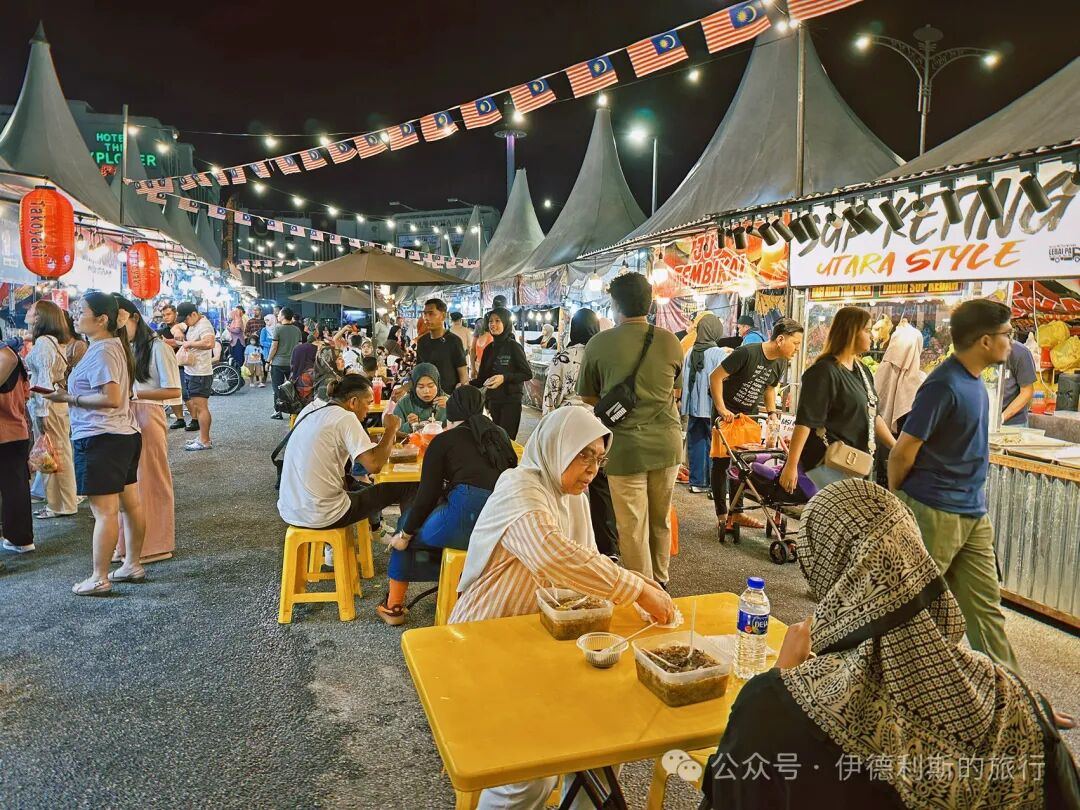
Across from Dataran Pahlawan, we found a huge Malaysian night market that seems to only open on weekends, with an endless variety of snacks. We were too full to eat a meal, so we just bought some guava dipped in sour plum powder and a giant avocado juice. Tropical fruits are cheap all over Malaysia. As long as you don't buy durian in tourist areas, you can basically eat as much fruit as you want.
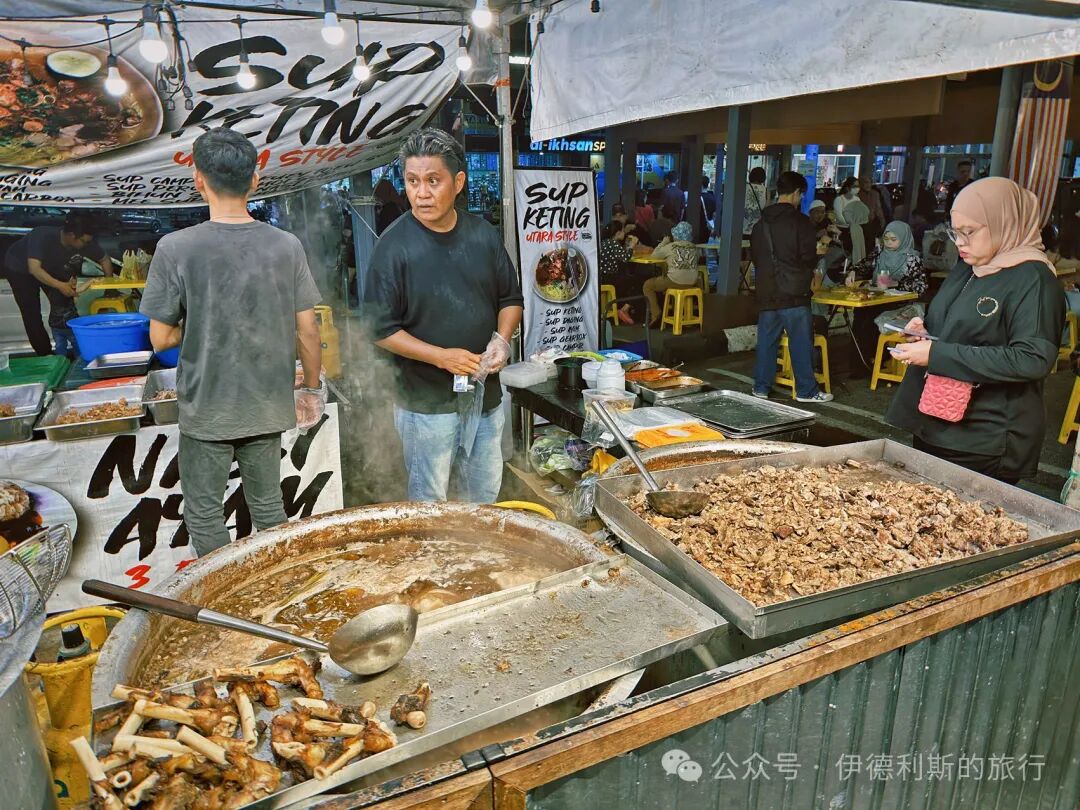
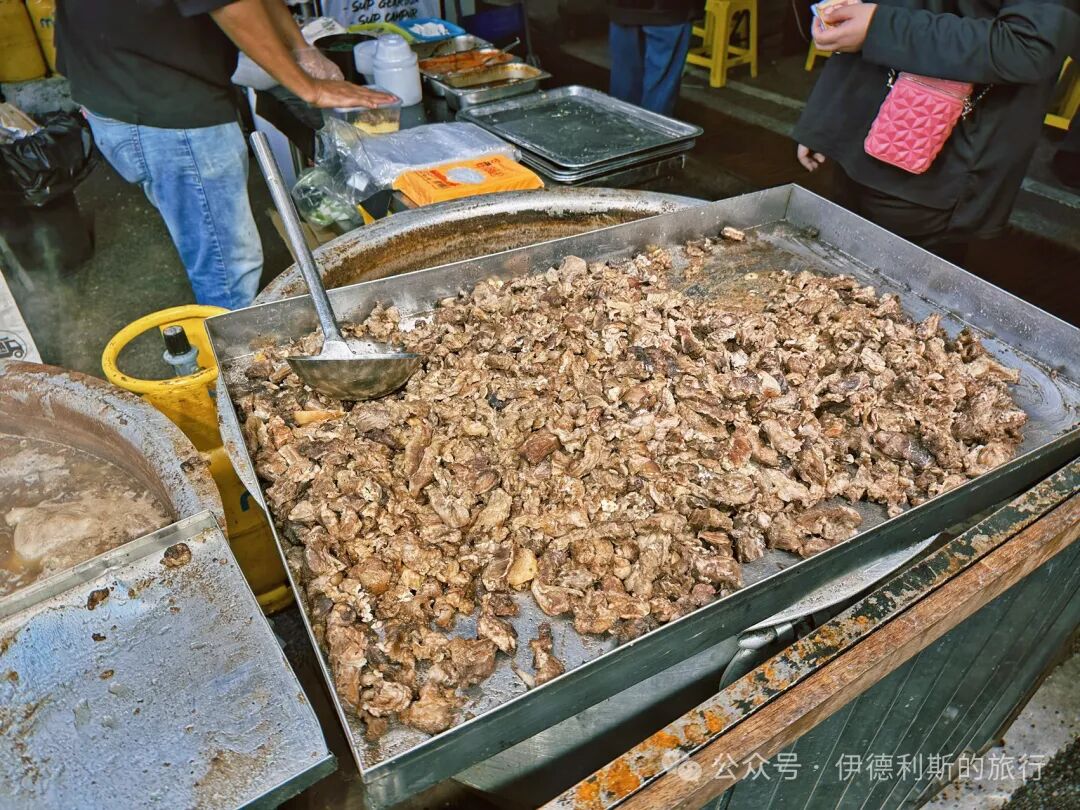
The vibe of the Malacca night market, featuring hand-pounded chili paste (sambal) and lamb soup (yangtang).
Malay cake shop
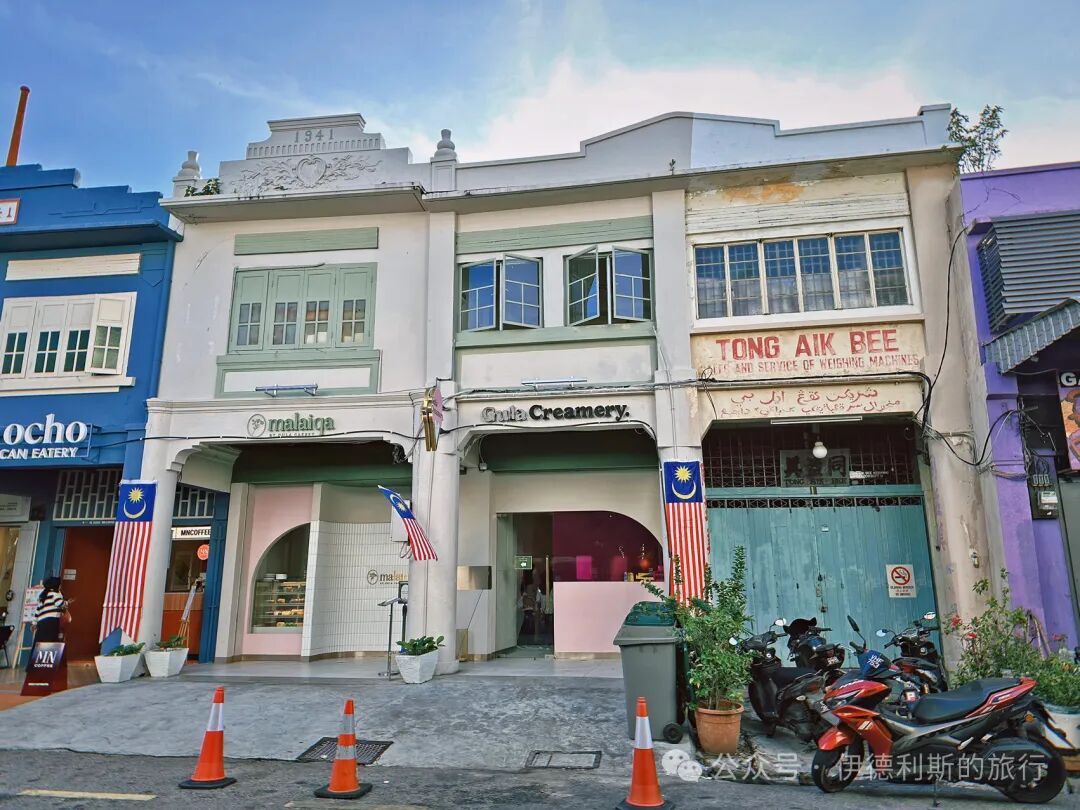
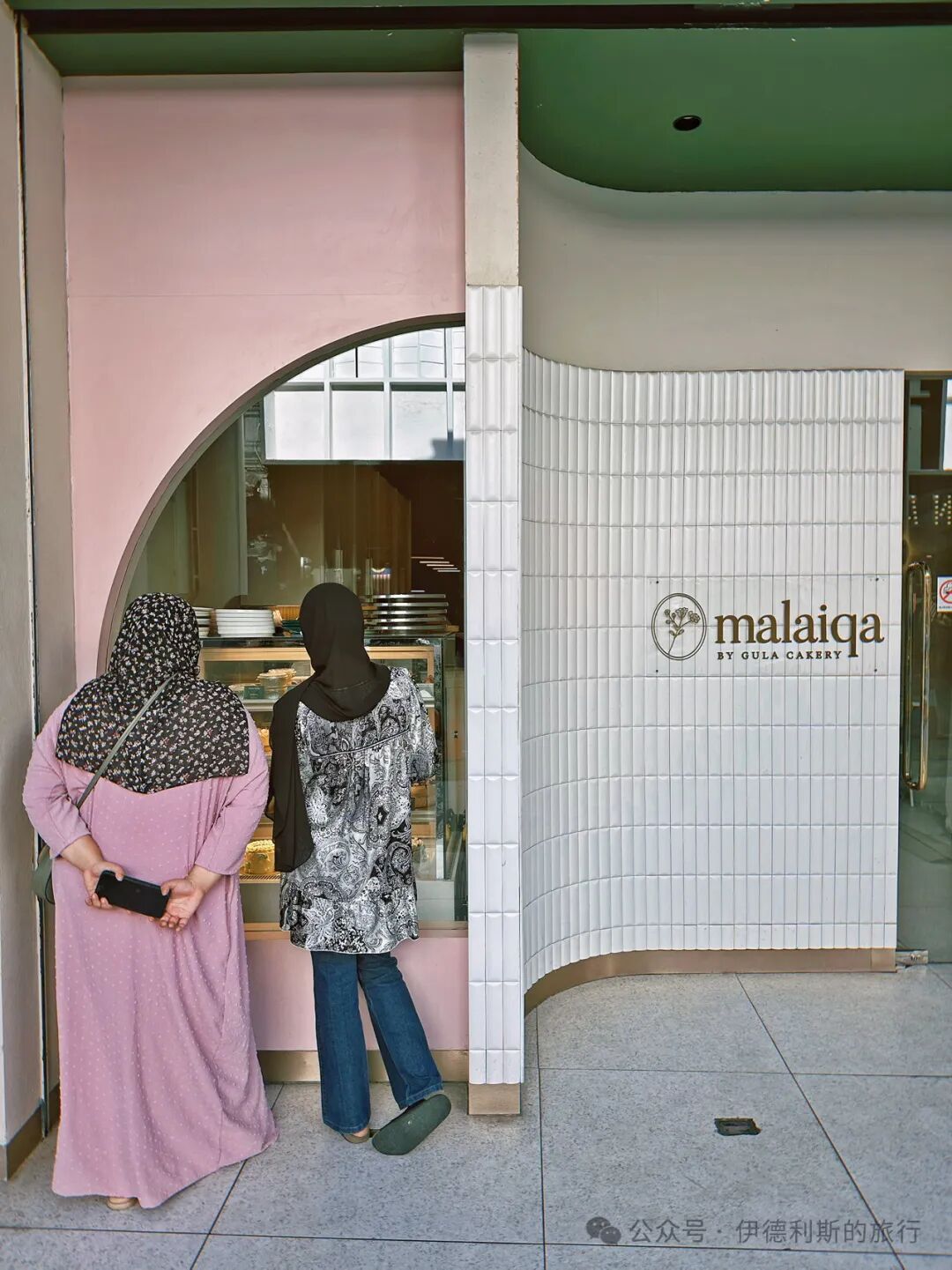
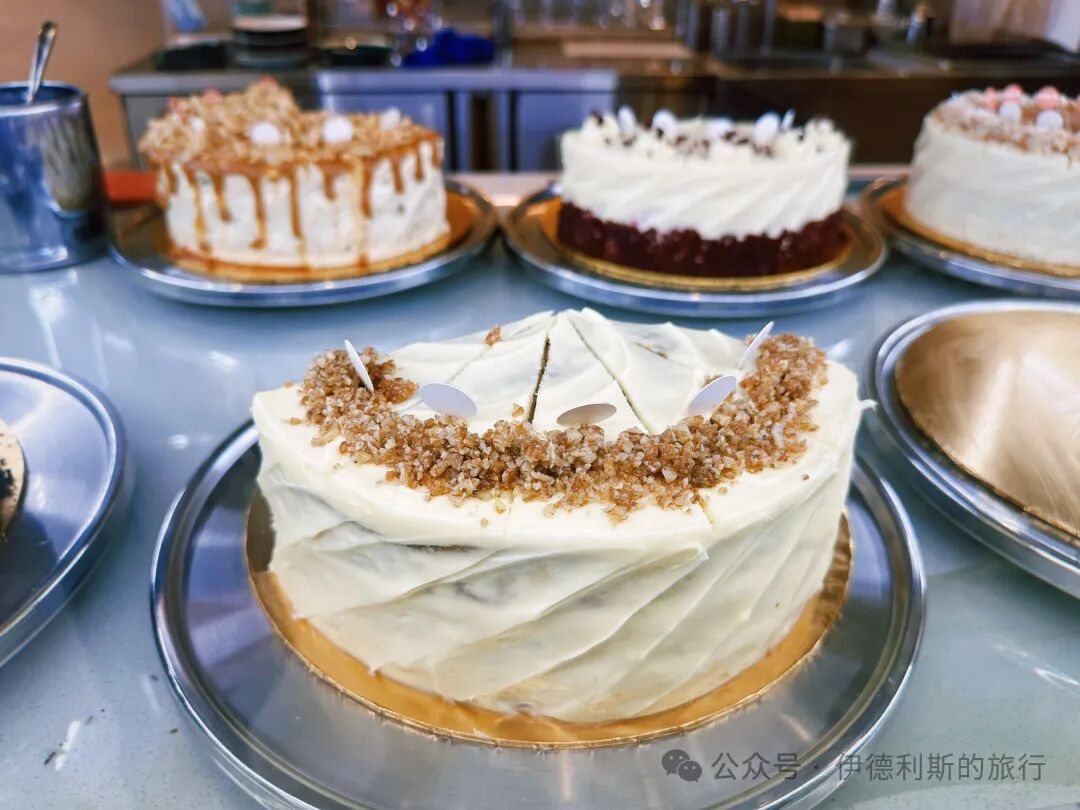
In Kampung Hulu, there is a lovely cake shop called Malaiqa By Gula Cakery that is especially popular with young people. The shop is inside a shophouse built in 1941. The decor is fresh and simple, a great example of revitalizing the old city.
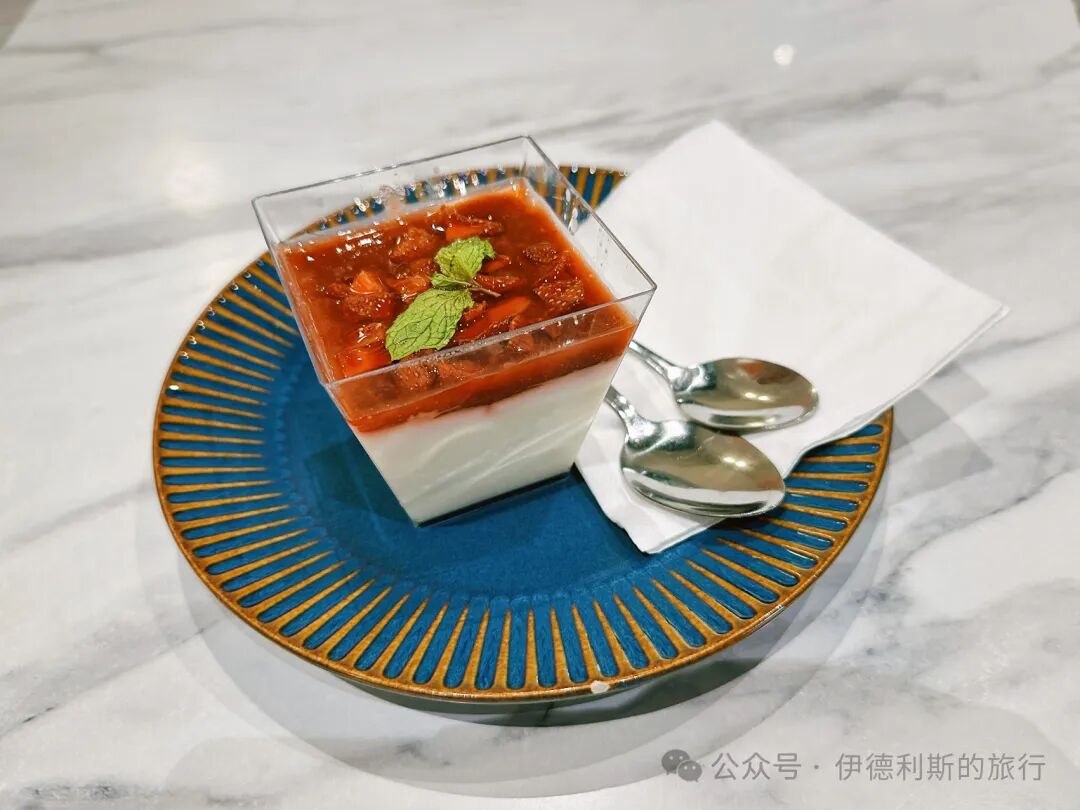
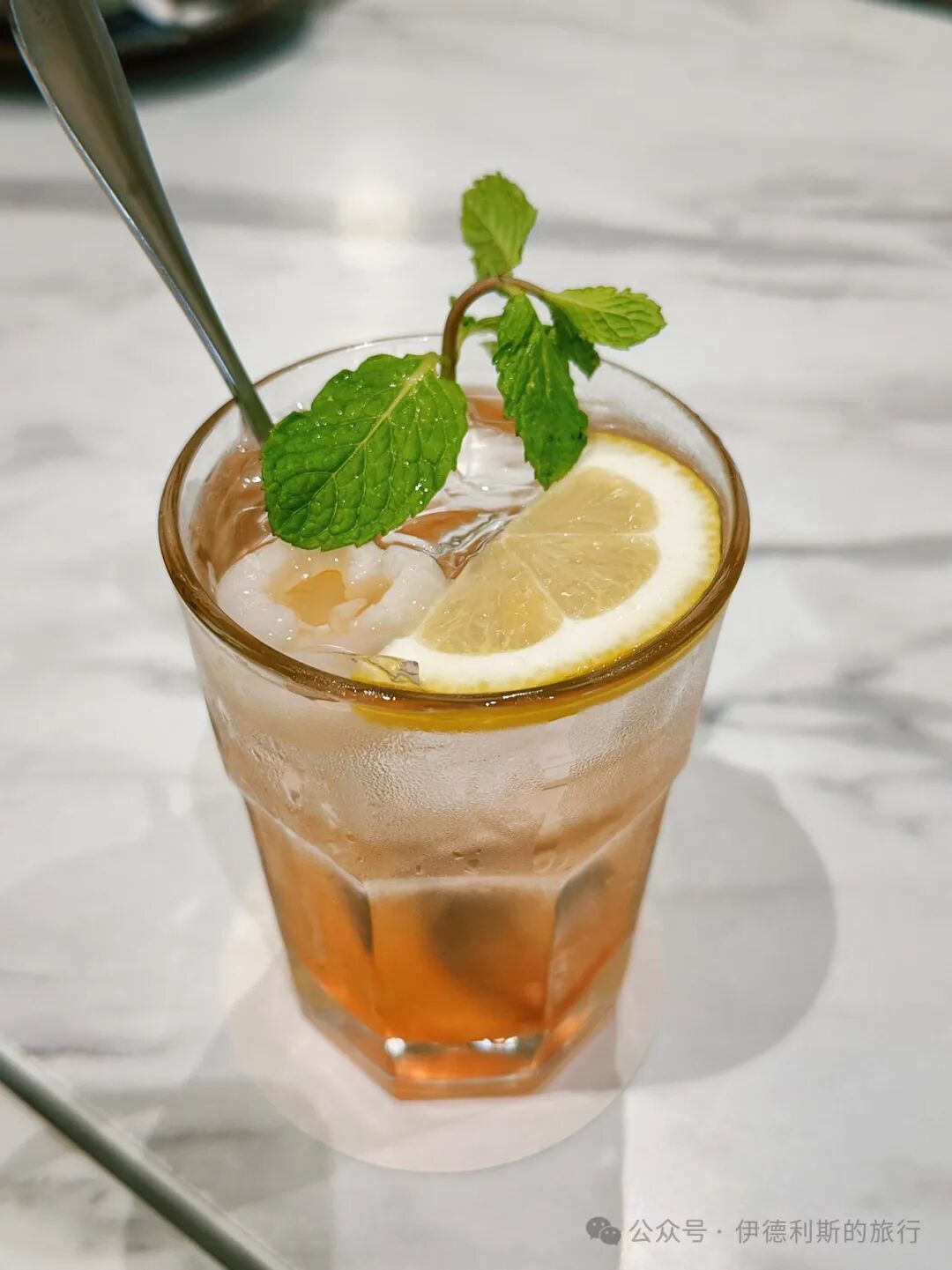
We ordered the strawberry milk pudding and longan lemon tea, and both tasted great. These fresh little shops in Malaysia are really wonderful, though we usually stick to traditional food and don't visit places like this very often.
Malay village farmhouse cooking
On the road heading east from Malacca to Muar, the whole way is filled with Malay village (kampung) countryside scenery. At noon, we passed through the seaside village of Serkam Pantai, prayed namaz at a 19th-century mosque, and then had an authentic Malay village-style meal in the village.
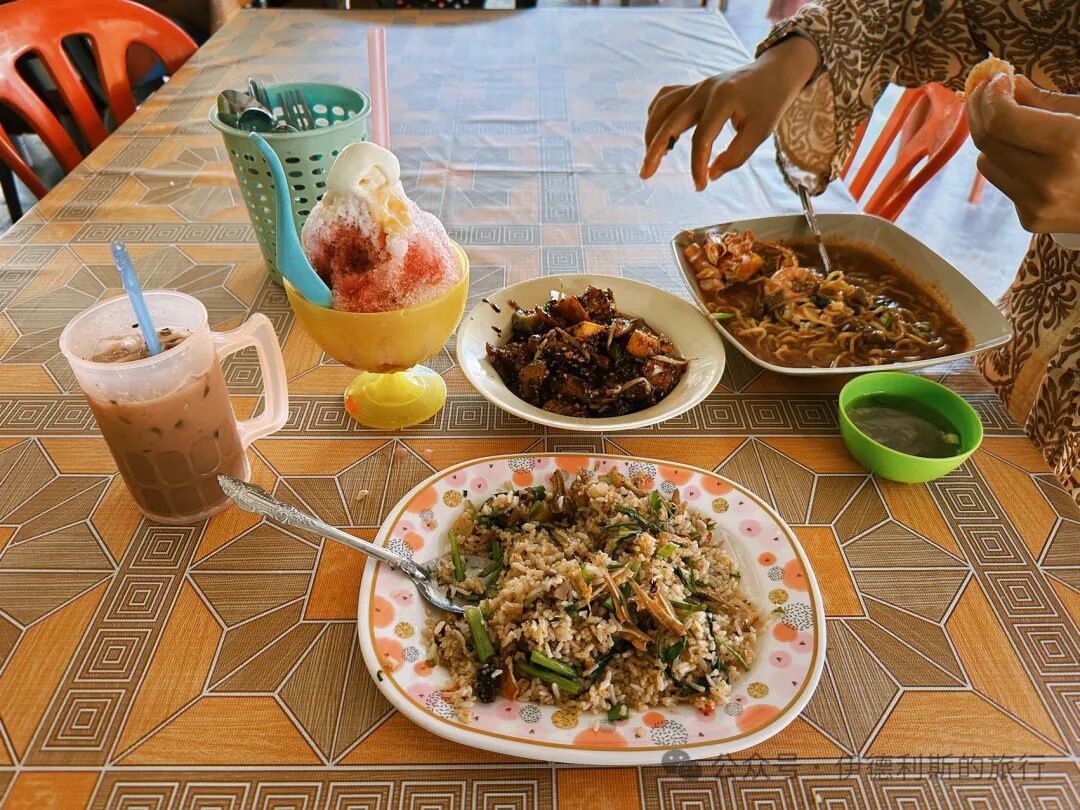
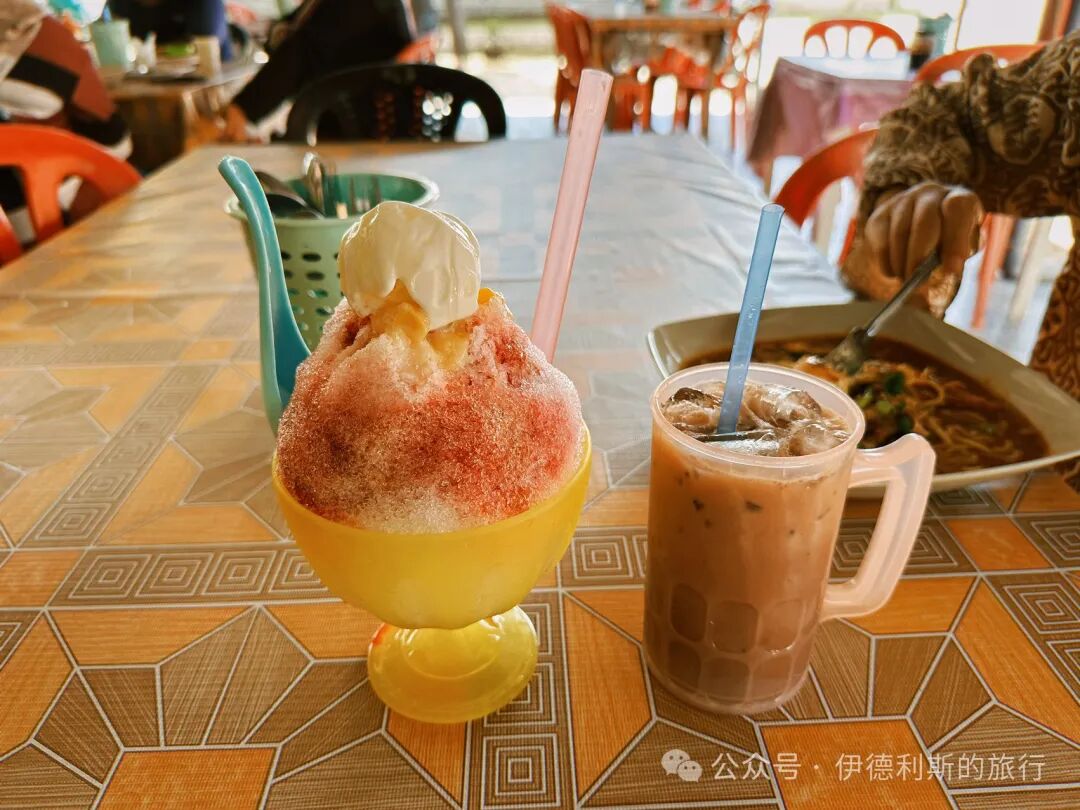
We ordered shrimp noodle soup (Mee Bandung Udang), black shrimp paste fruit salad (Rojak Petis), and Malay village-style fried rice (Nasi Goreng Kampung), drank iced Milo (Milo Ais Kepal), and had red bean shaved ice (Air Batu Campur).
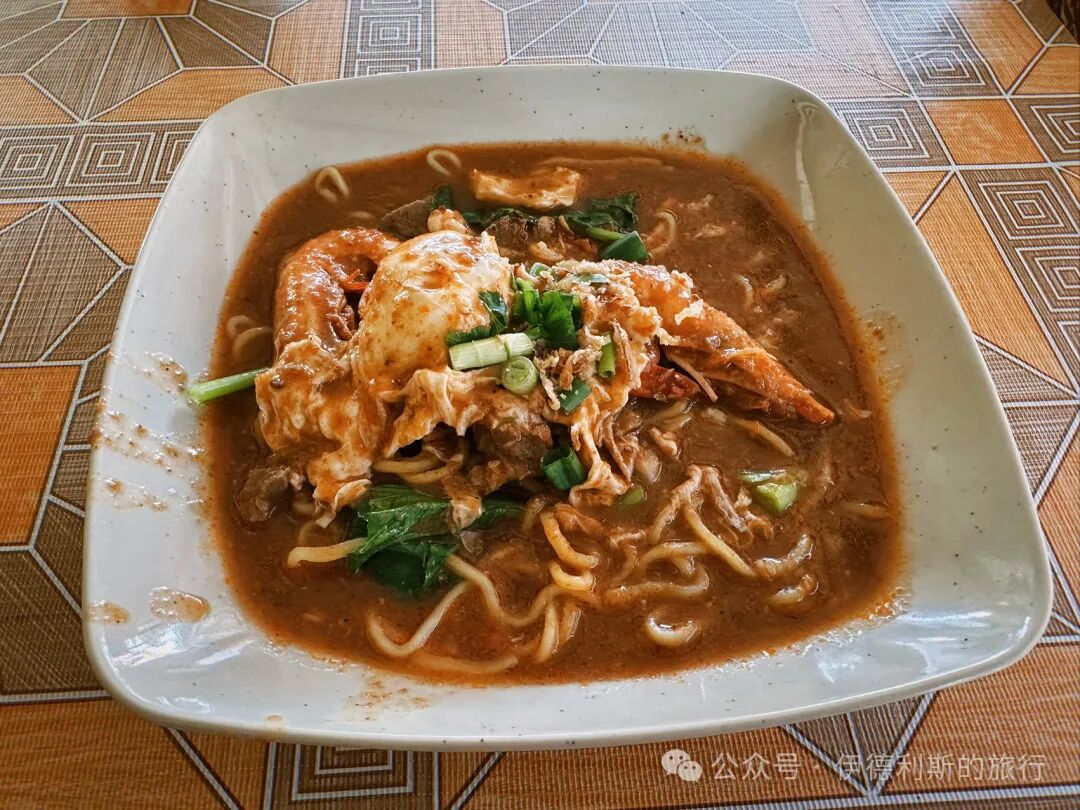
Shrimp noodle soup (Mee Bandung Udang) is a Malay dish that started in Muar, Malaysia. Bandung means mixed, and Udang means shrimp. It is made by boiling yellow noodles with eggs, shrimp, leafy greens, and beef bits. The thick soup is simmered with shrimp paste, onions, spices, and chili, giving it a very fresh taste.
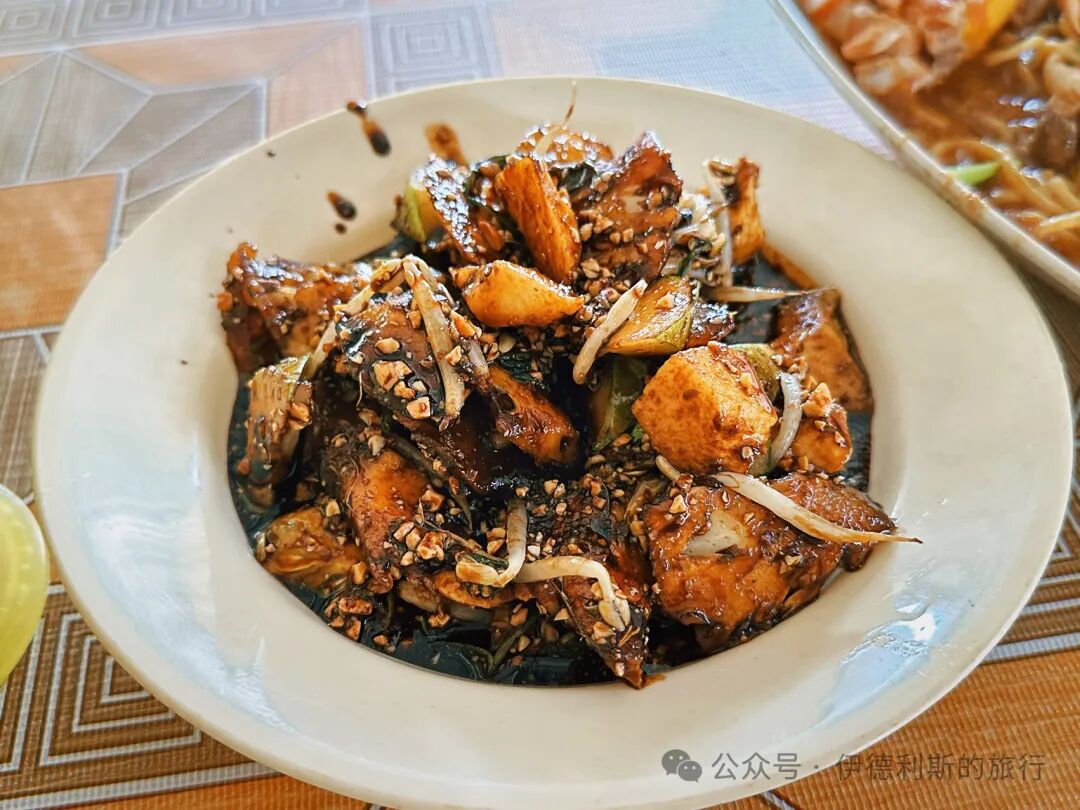
Fruit salad (Rojak) is said to have started on the island of Java. It was originally a mix of fruits and vegetables with spicy palm sugar syrup, but it later spread across Indonesia, Malaysia, and Singapore, developing many different styles. Black shrimp paste fruit salad (Rojak Petis) started in Surabaya, East Java. It contains raw mango, cucumber, water spinach, and bean sprouts. The sauce is made from black shrimp paste (Petis), fried shallots, palm sugar, and salt, and it is topped with crushed peanuts. The fruit salad tastes quite sweet, so people who prefer milder flavors might find it hard to get used to.
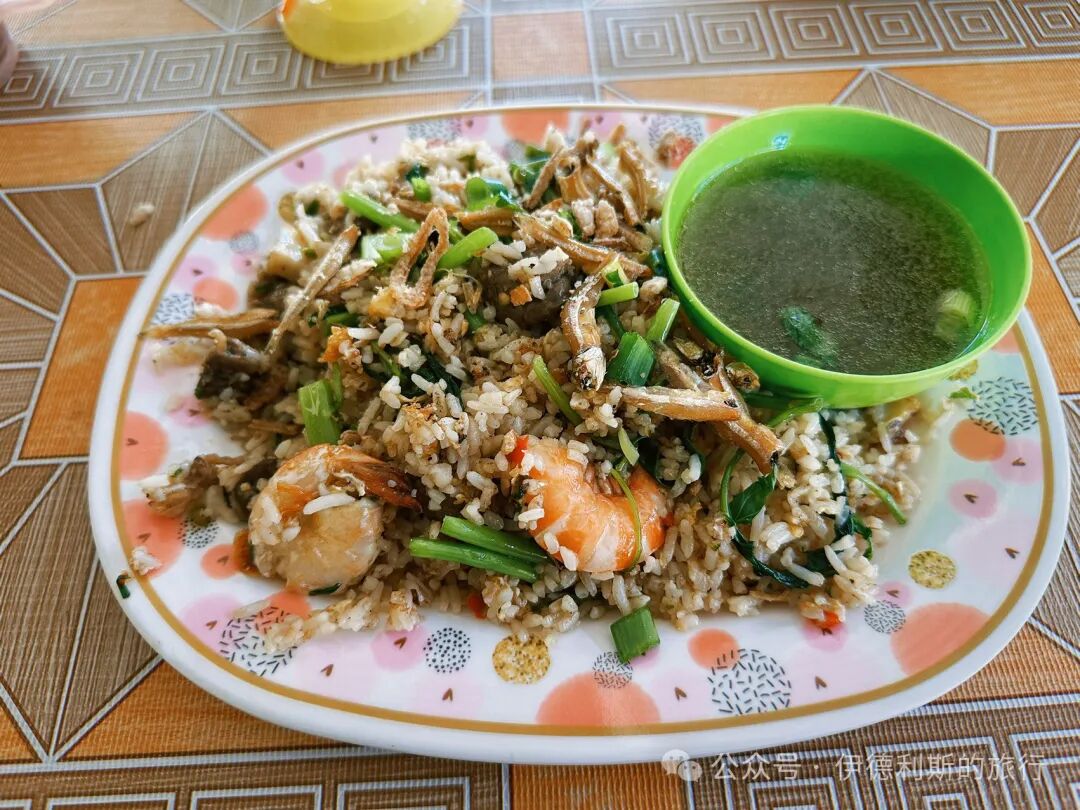
Malay village-style fried rice (Nasi Goreng Kampung) is a classic Malay village dish. It includes diced beef, water spinach, shrimp, dried anchovies, and scrambled eggs. It is stir-fried with sweet soy sauce and shrimp paste, making the flavor very rich. It is one of my favorite Malay dishes.
Air Batu Campur red bean ice, also called ABC ice, is a classic dessert in Southeast Asia after a meal. It is mostly shaved ice with red beans and condensed milk on top, and the one we bought had a scoop of ice cream on it.
Nyonya cuisine
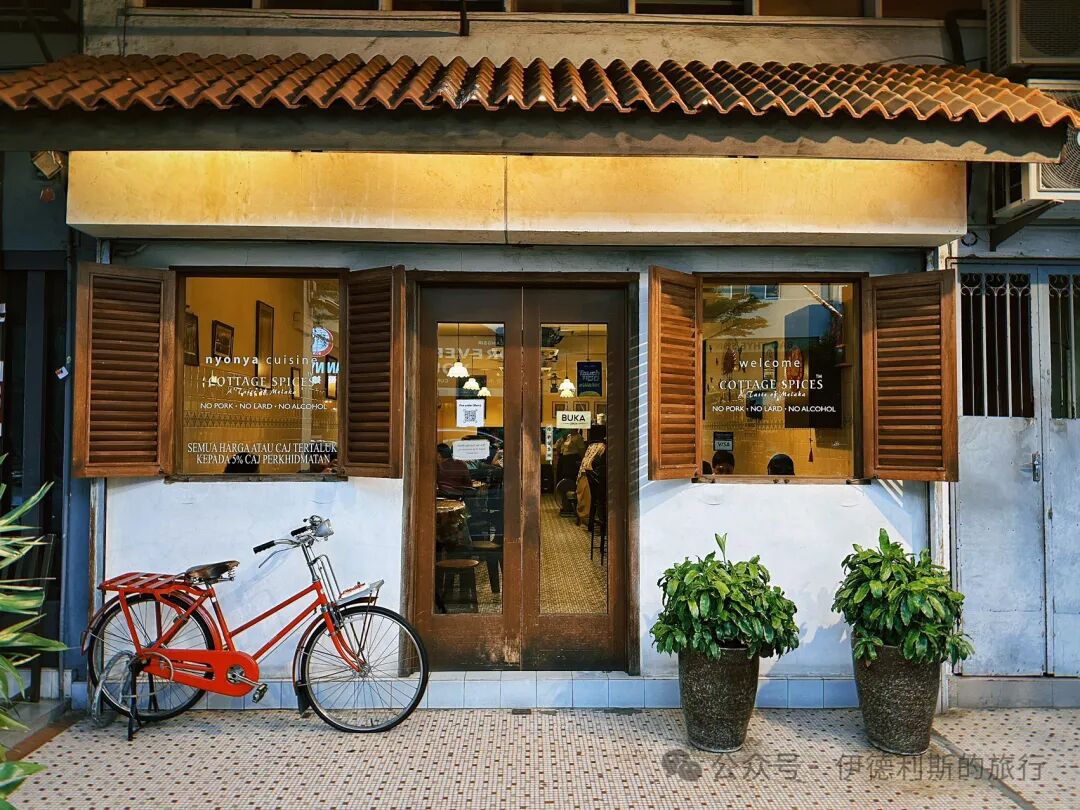
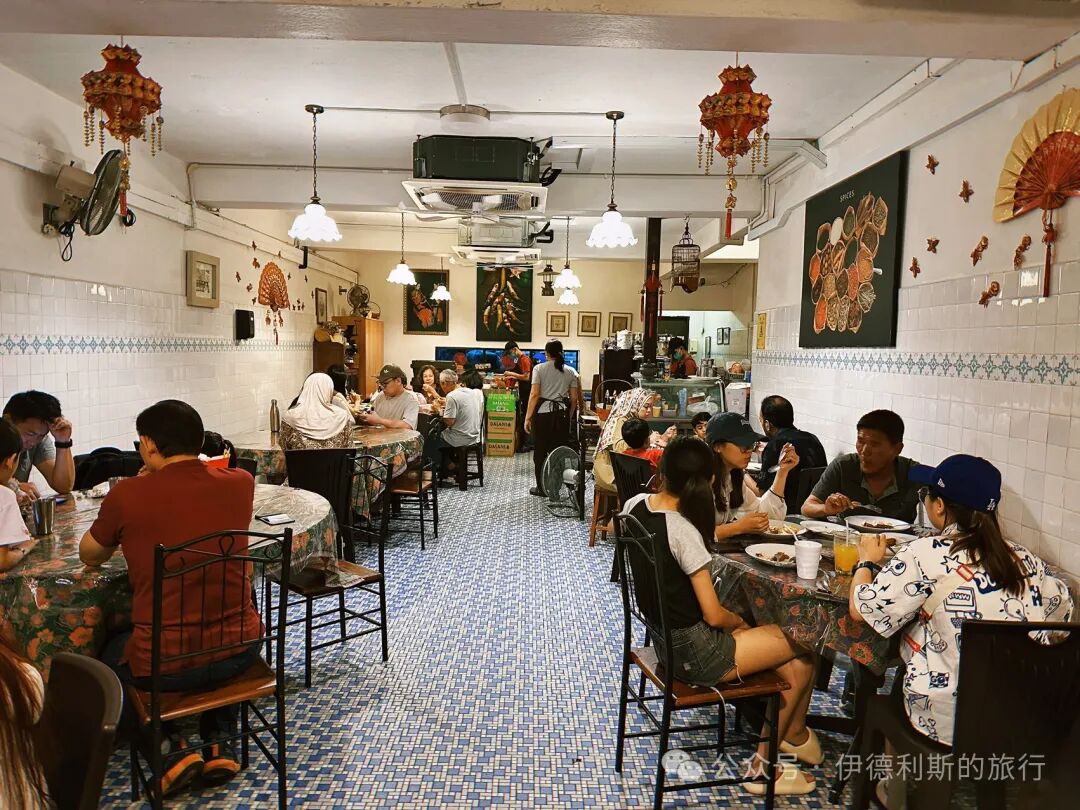
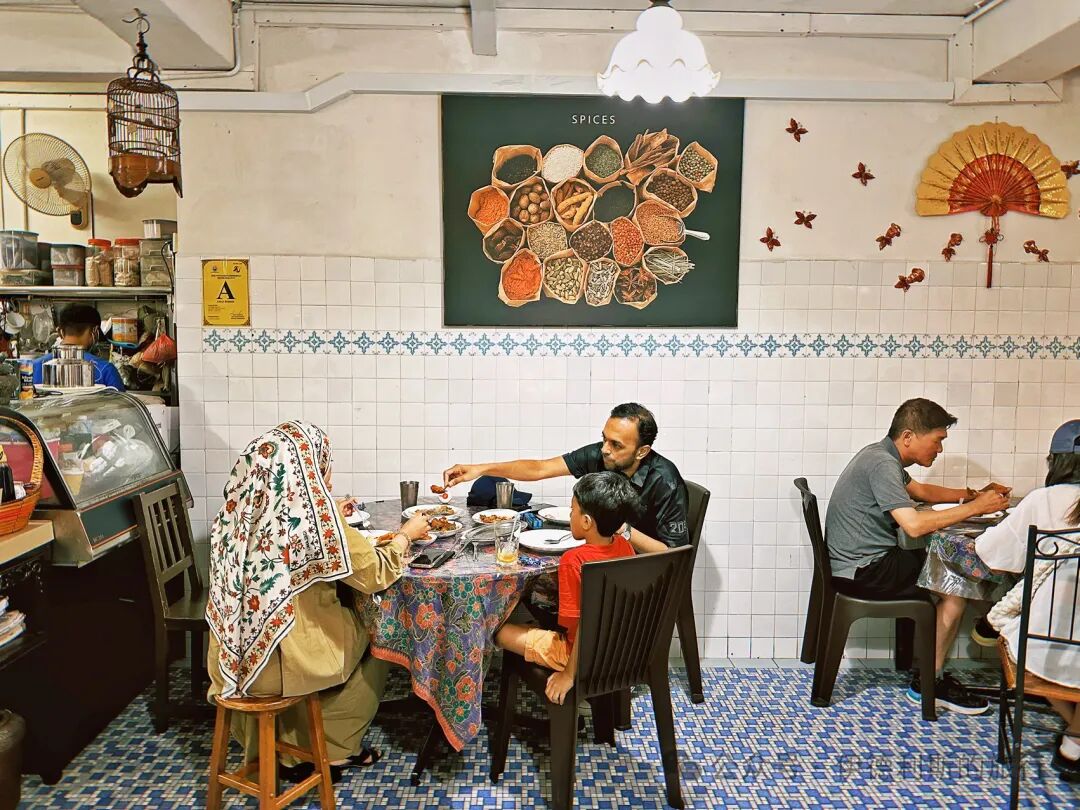
As the birthplace of Nyonya culture, you must eat Nyonya cuisine once when you come to Malacca. There are many halal Nyonya restaurants on the east side of the old town of Malacca on Independence Street (Jln Merdeka), with Atlantic and Cottage Spices being the most famous. Both places had lines when we went, so we both took numbers. Later, a table opened up at Cottage Spices first, so we ate there.
We ordered stir-fried water spinach with shrimp paste (Kangkung Belacan), Teochew steamed fish, steamed Nyonya fish cake (Otak-otak), and drank lime plum juice (Lime Plum), which was a perfect balance of meat and vegetables. Teochew steamed fish is red snapper served with pickled vegetables, pickled plums, and tomatoes. The sour taste is very appetizing. Otak-otak is a fish cake steamed with coconut milk, chili paste, lemongrass, and galangal. It smells and tastes delicious.
Indian Nasi Kandar
To truly experience the food of Malaysia's three main ethnic groups, you must try Indian Muslim Nasi Kandar after eating Nyonya, Chinese-Muslim, and Malay kampung dishes.
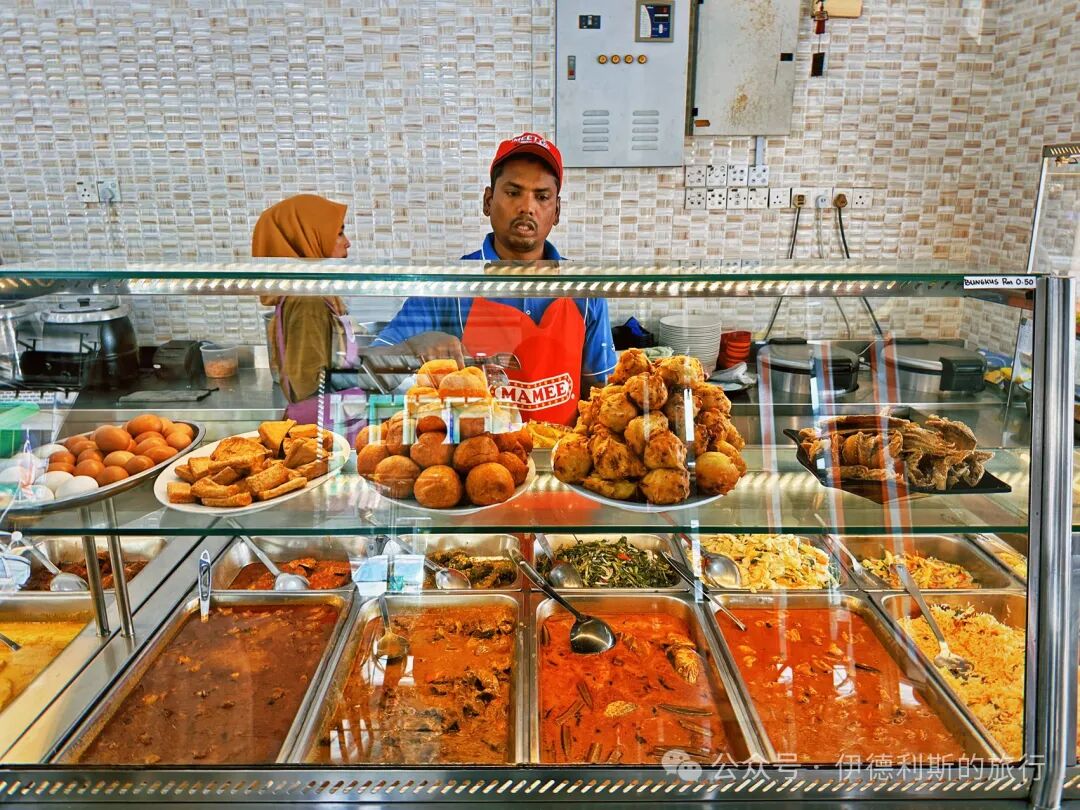
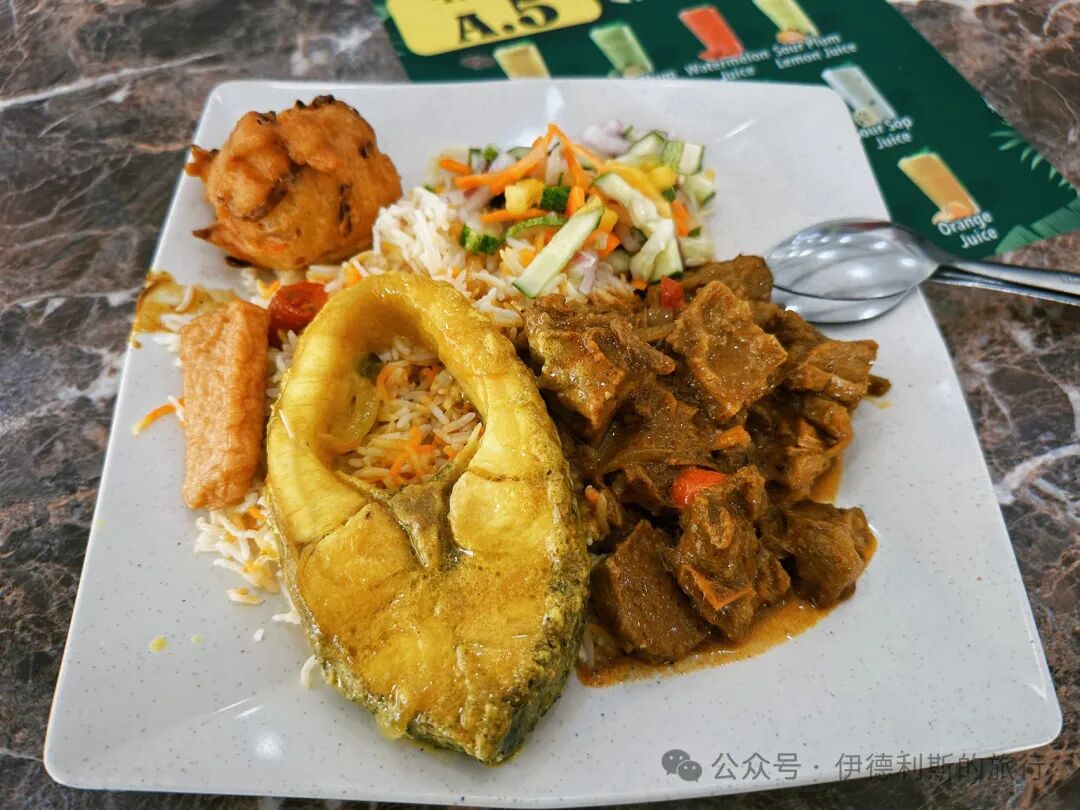
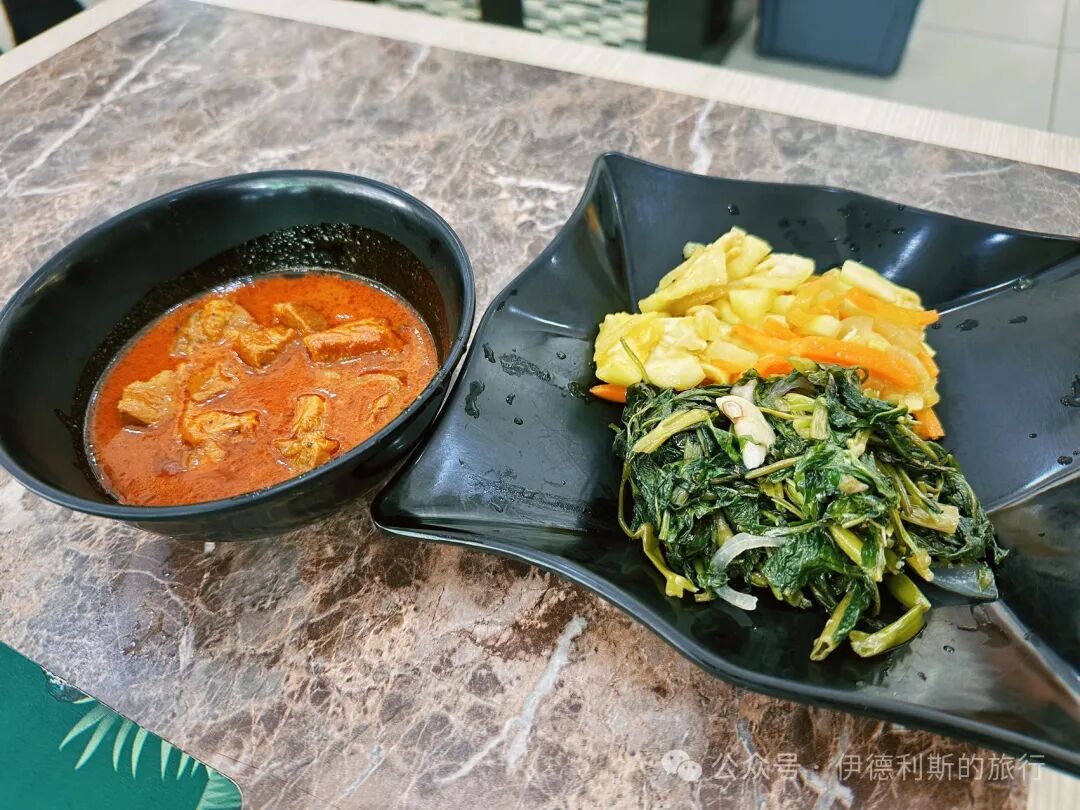
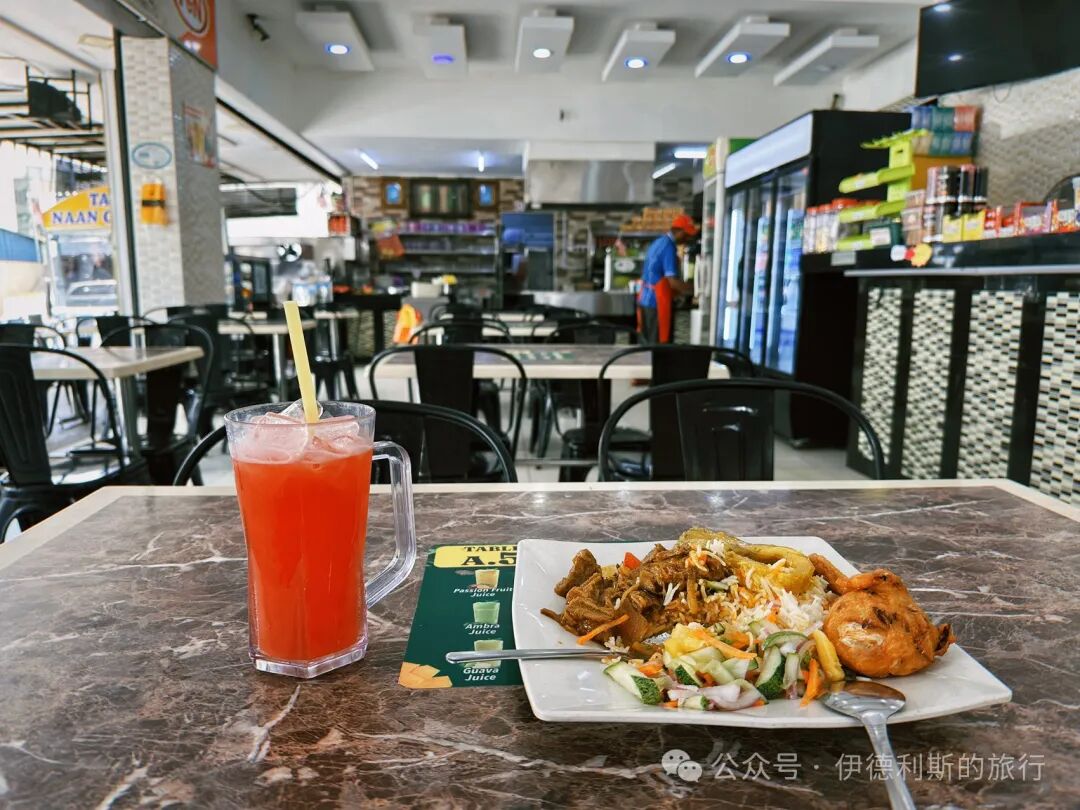
We went to Seri Sahabat next to the Majestic Hotel in Malacca. They are open 24 hours a day, and at night, it gets very crowded with all the food stalls open. It is quieter during the day, when they mainly sell Nasi Kandar. They have meat, fish, and vegetables, making for a very balanced meal.
South Indian Tamil Muslims are called Mamak in Malaysia. This name comes from the Tamil word for uncle (maa-ma), and they are famous for their Mamak stall (Gerai Mamak) and Mamak restaurant (Restoran Mamak) food culture.
Nasi Kandar is the signature dish at Tamil Mamak restaurants. It is rice served with various curries of beef, lamb, chicken, fish, and shrimp, along with side dishes. When Tamil Muslims first arrived in Malaysia in the 19th century, most carried food on shoulder poles to sell along the streets, which is why it became known as shoulder-pole rice (nasi kandar). By the 20th century, Tamil Muslims started opening restaurants and stalls, but the name shoulder-pole rice (nasi kandar) is still used today.
Hainan coffee
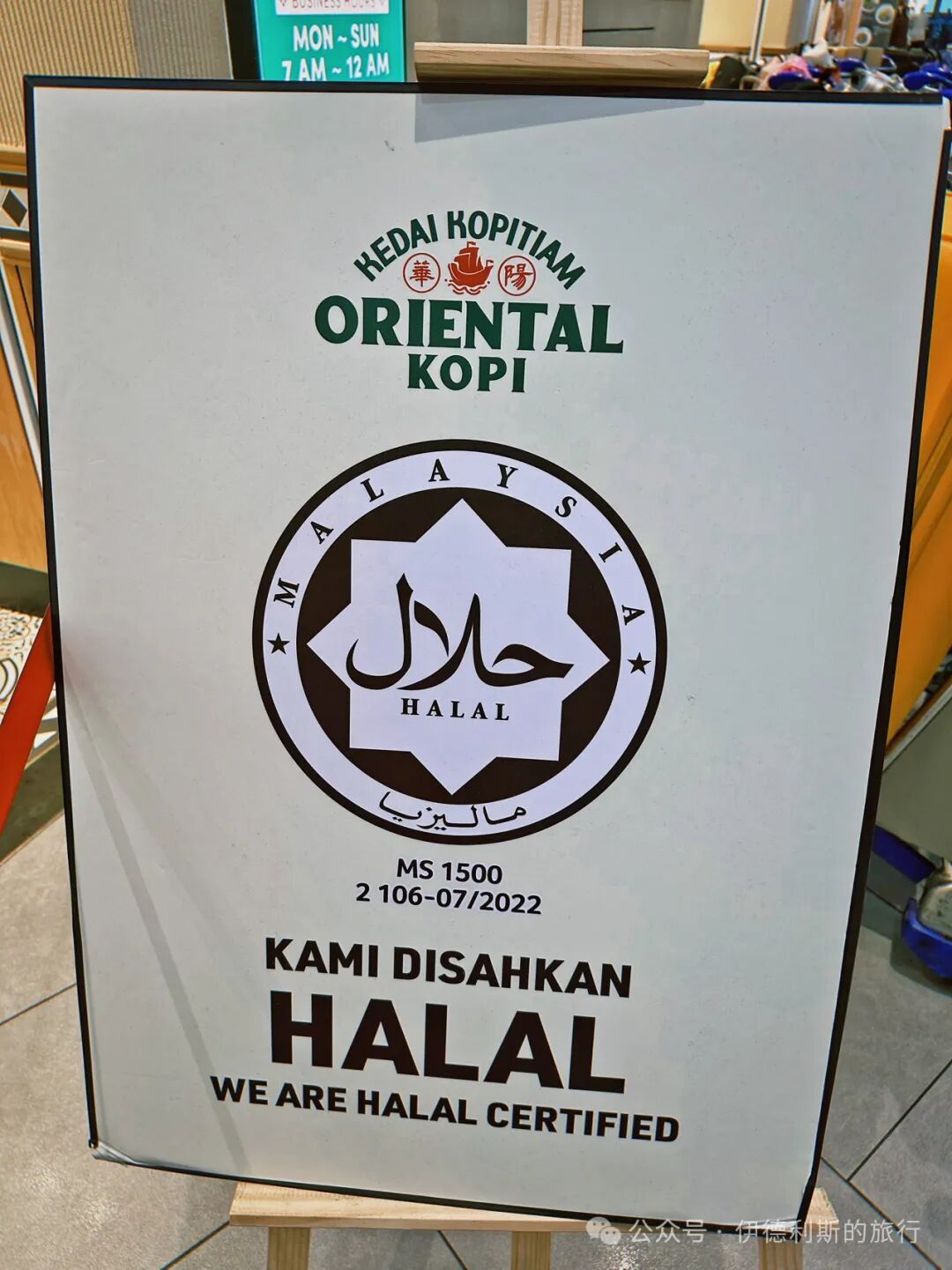
On the drive from Malacca back to Kuala Lumpur Airport, the most popular restaurant in Terminal 2 is the Hainan coffee chain Oriental Kopi, where people are almost always waiting in line.
They have a huge variety of dishes and are currently one of the most famous halal Hainan-style cafes. Hainanese people began immigrating to Malaysia in the 19th century. Many early immigrants worked as cooks and waiters in British hotels and restaurants, while some worked as servants for British officers. Influenced by their British employers, the Hainanese learned to cook Western food and blended it with Hainanese culinary elements to create the unique Hainanese coffee shop (Hailam Kopitiam) culture.
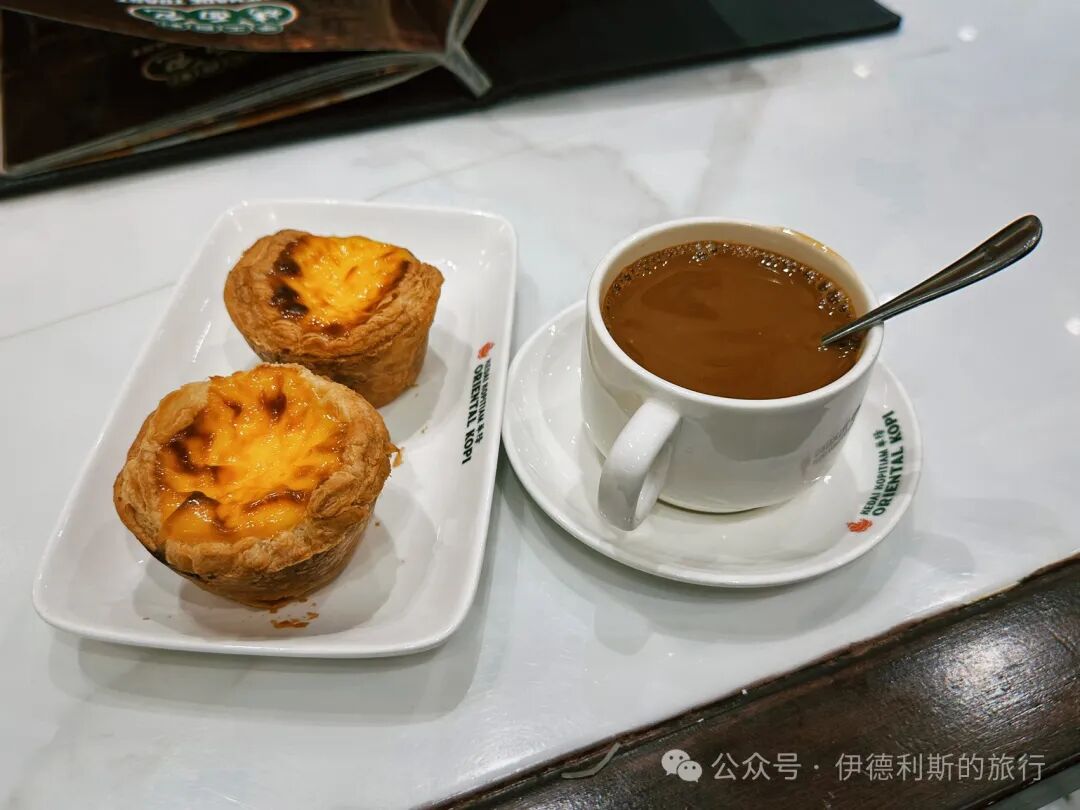
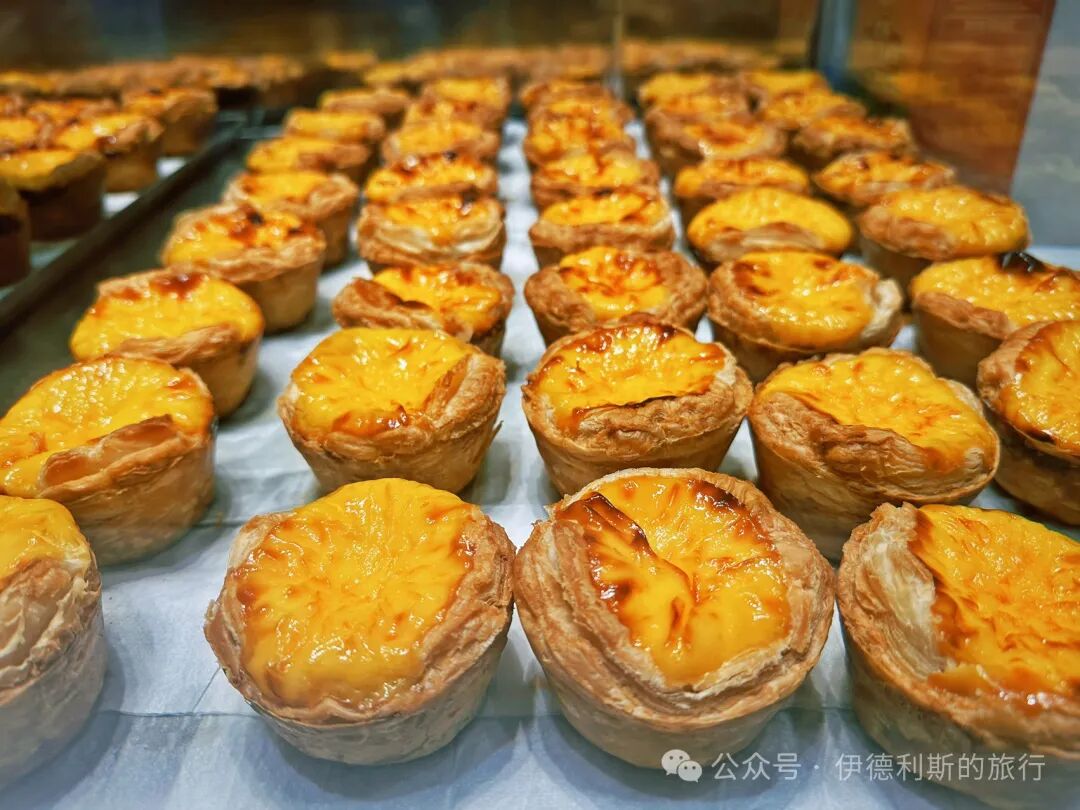
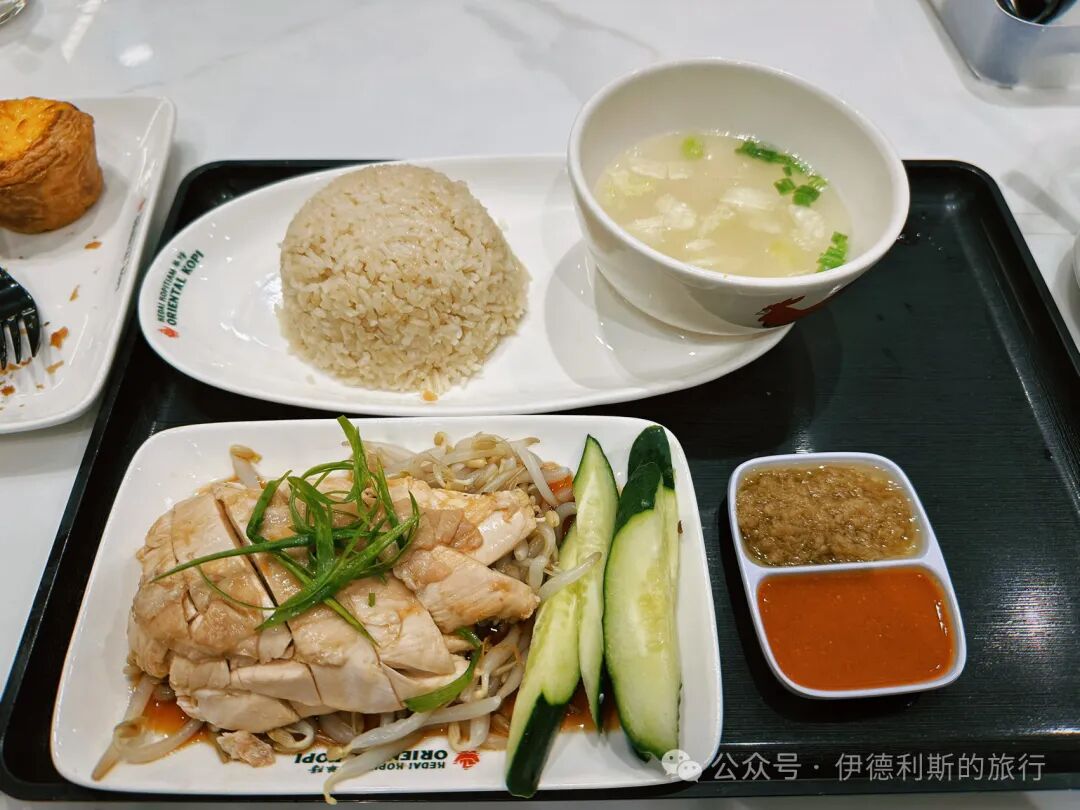
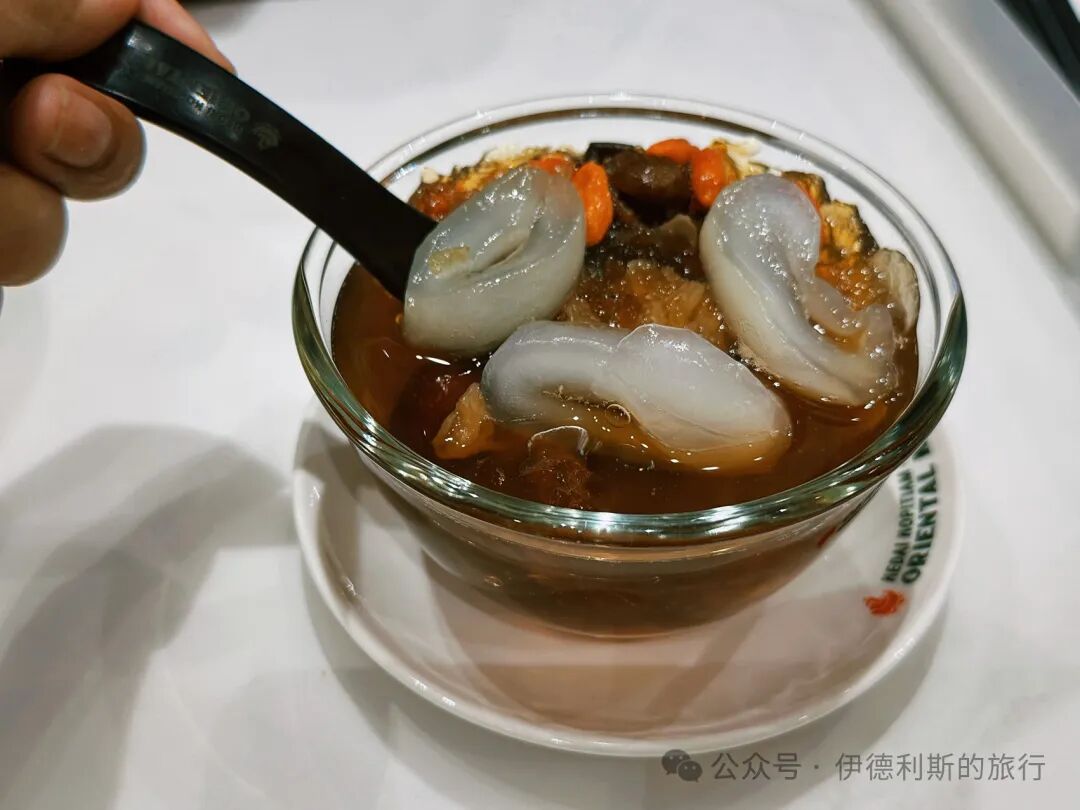
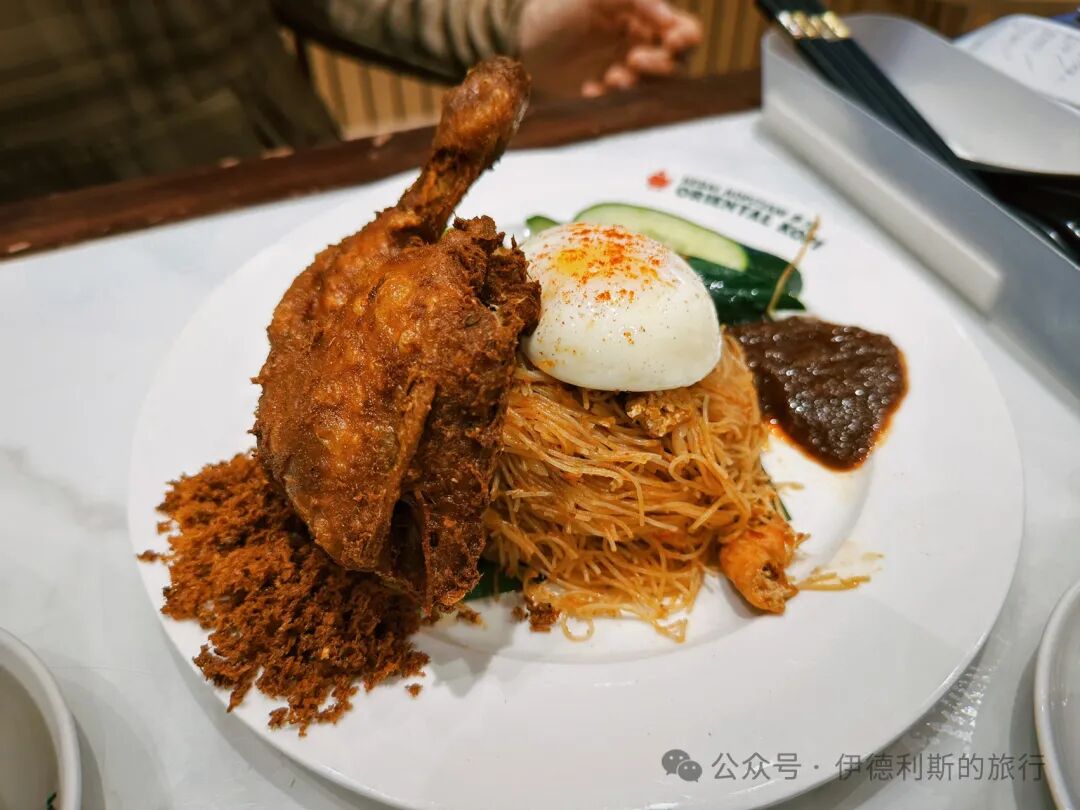
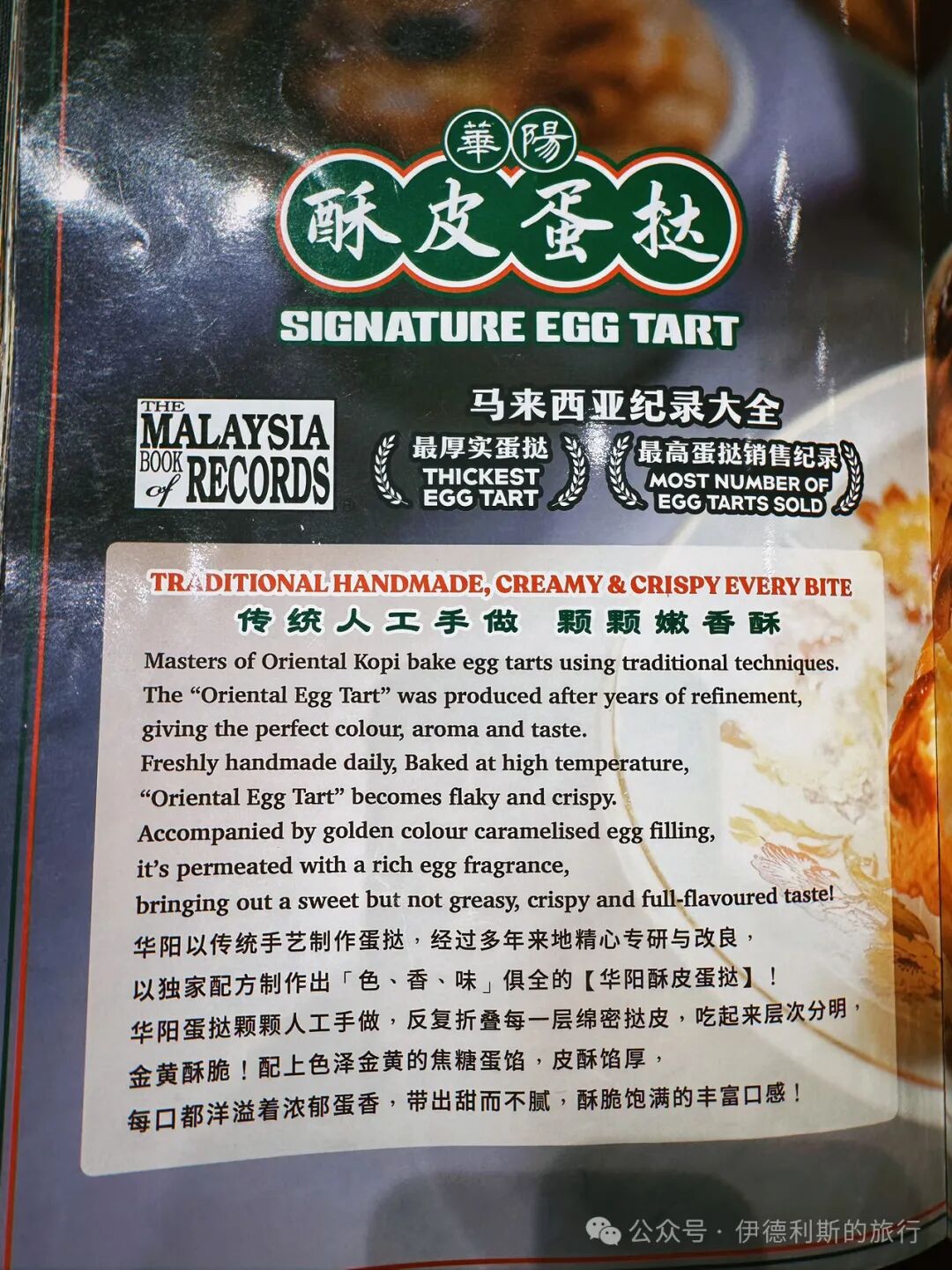
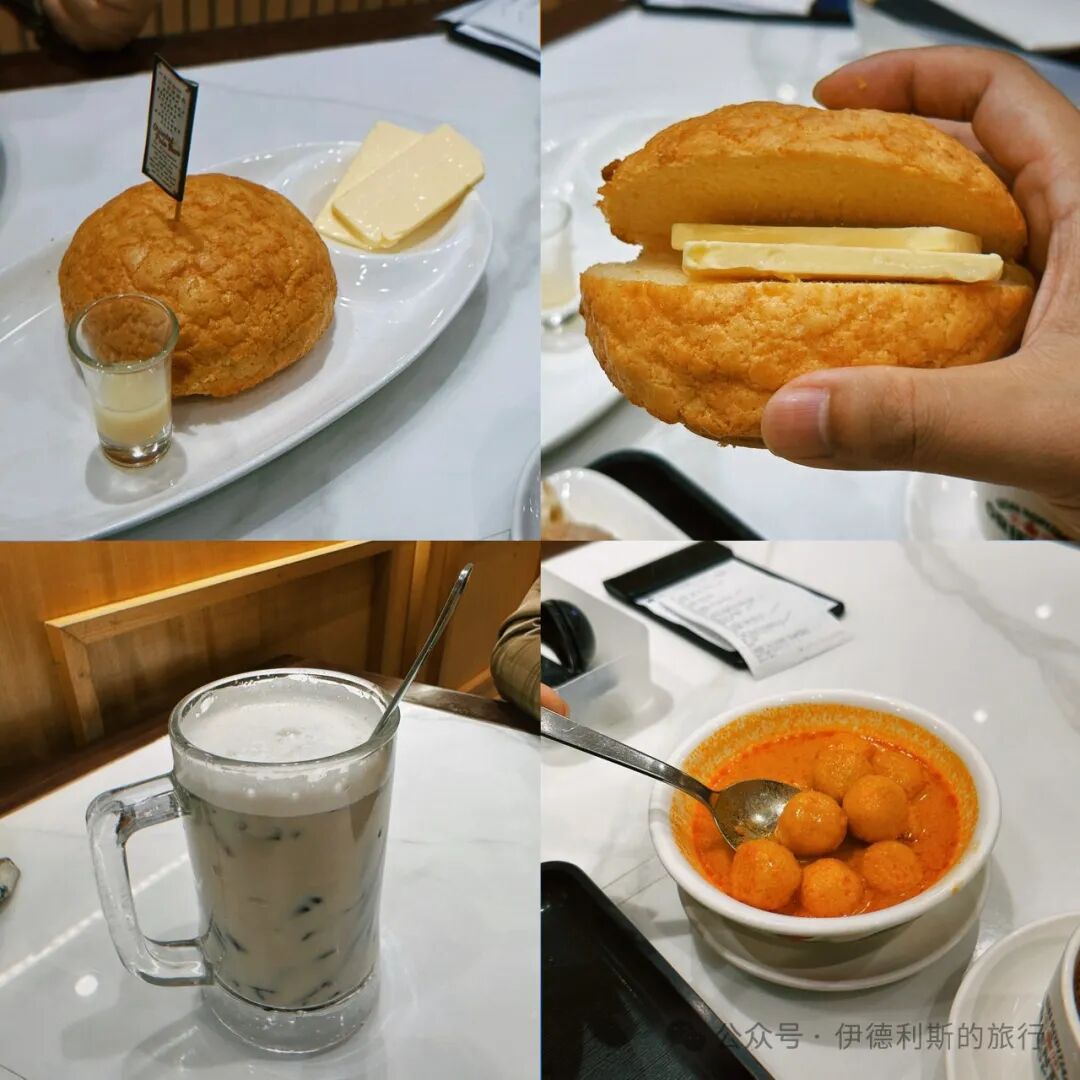
We ordered flaky egg tarts, pineapple buns with butter (bo luo bao), Hainanese chicken rice, classic rice vermicelli (mee siam), curry fish balls, coffee, soy milk with grass jelly, and longan sea coconut dessert. Coffee, flaky egg tarts (danta), and pineapple buns with cold butter (binghuo boluobao) are known as the "Huayang Three Treasures" and make a classic Nanyang-style breakfast. Their flaky egg tarts are truly well-made, with a very tender egg custard and a rich aroma. Their sweet dessert soups (tangshui) are also delicious. We rarely drink these in the north, so it felt like a special Nanyang experience.
However, their Hainanese chicken rice was not great. The rice quality seemed poor, with a gritty texture that did not taste as good as the rice at other places. view all
Summary: Malacca Old City - Food, Hotels and Muslim Heritage is presented as a clear English travel account for readers interested in Muslim life, halal food, architecture, and local history. The article keeps the original names, food details, photographs, and cultural context while focusing on Malacca, Halal Food, Malaysia Travel.
I took a red-eye AirAsia flight to Kuala Lumpur in the early hours of September 15. The flight was delayed by an hour, so I arrived at Kuala Lumpur airport after 9 a.m. Even though I used the self-service immigration gate and jogged to the bus station, I still missed the 10 a.m. bus. I ended up taking the 10:45 a.m. bus and spent three hours in traffic before reaching Melaka Sentral station. Luckily, the bus seats reclined enough to lie back, so I just took a nap and arrived.
In Malaysia, you have to exchange online bus tickets for physical ones at the station, unlike train tickets where you can just scan a code. The ticket counters at the Kuala Lumpur airport bus station get very crowded on weekends and holidays, so make sure to go early to exchange your tickets. By comparison, I think traveling by train in Malaysia is much more convenient. You can scan a code to enter the station, and the schedules are reliable and stress-free.
Staying in a Nanyang-style arcade building
We spent our first night at the Aava Malacca Hotel on Kampung Hulu Road. This area is inside the buffer zone of the Melaka UNESCO World Heritage site. It is right next to two historic mosques, Kampung Hulu Mosque and Kampung Kling Mosque, so the location is excellent. Kampung Hulu Street often has traffic jams. If you want to take a taxi, walk 300 meters north to the main road outside the World Heritage buffer zone.
The Aava Hotel is made from three traditional shophouses (qilou) built before World War II. The exterior is very well preserved, and the interior is simple and elegant. The Nyonya elements are used sparingly but look great. I personally think it offers good value for money. The hotel offers free bicycle rentals for two hours, but one bike has stiff handlebars, so be careful when riding it.
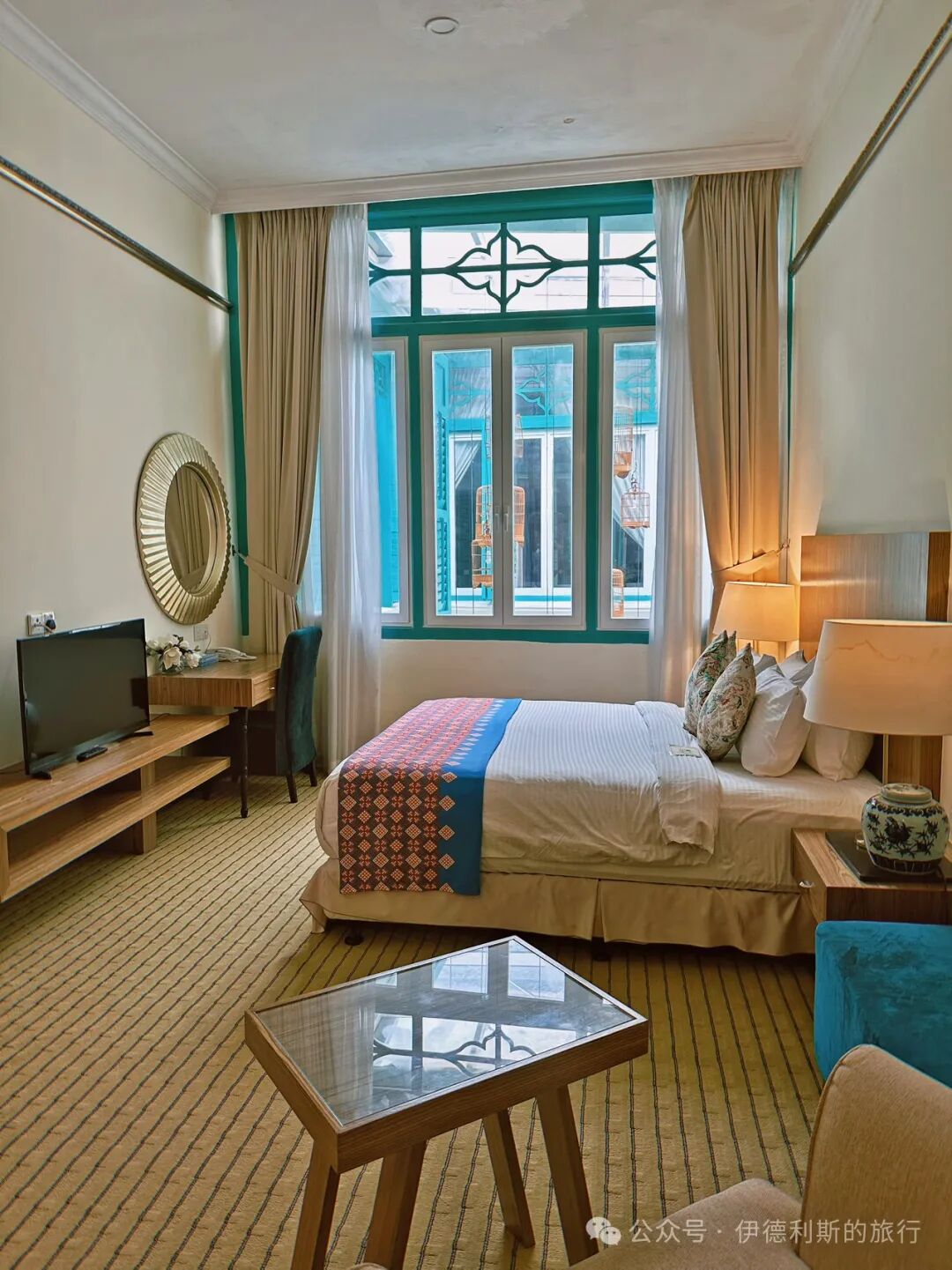
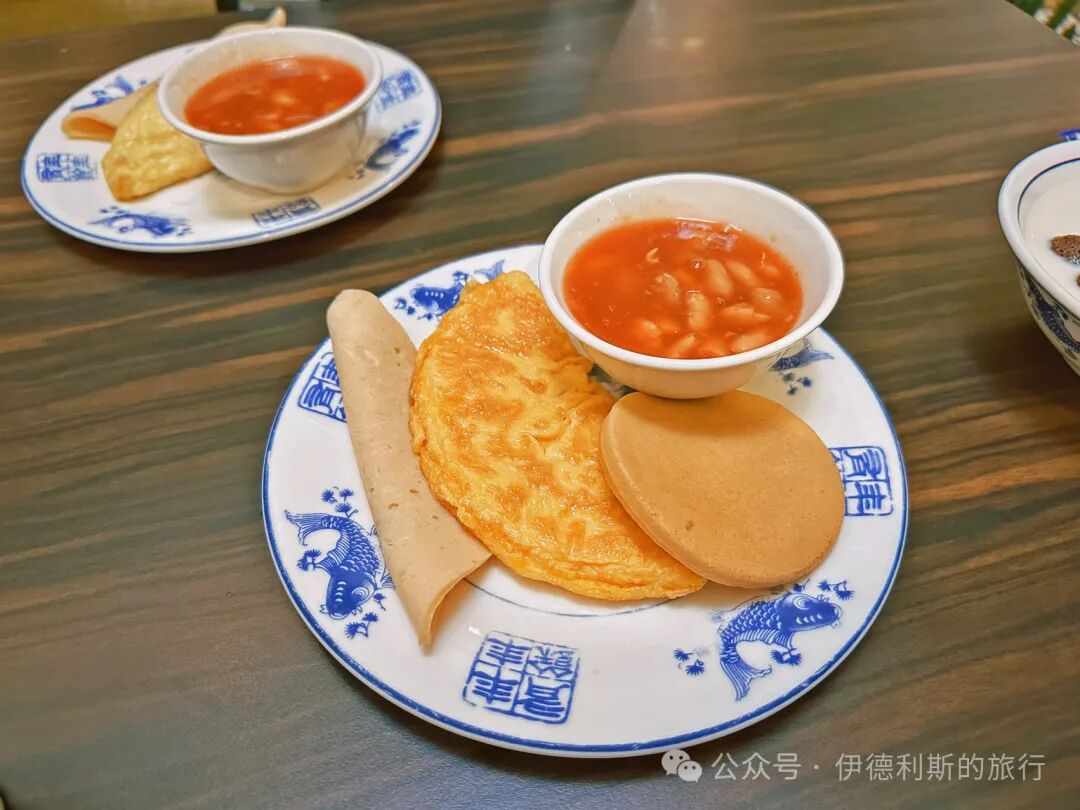
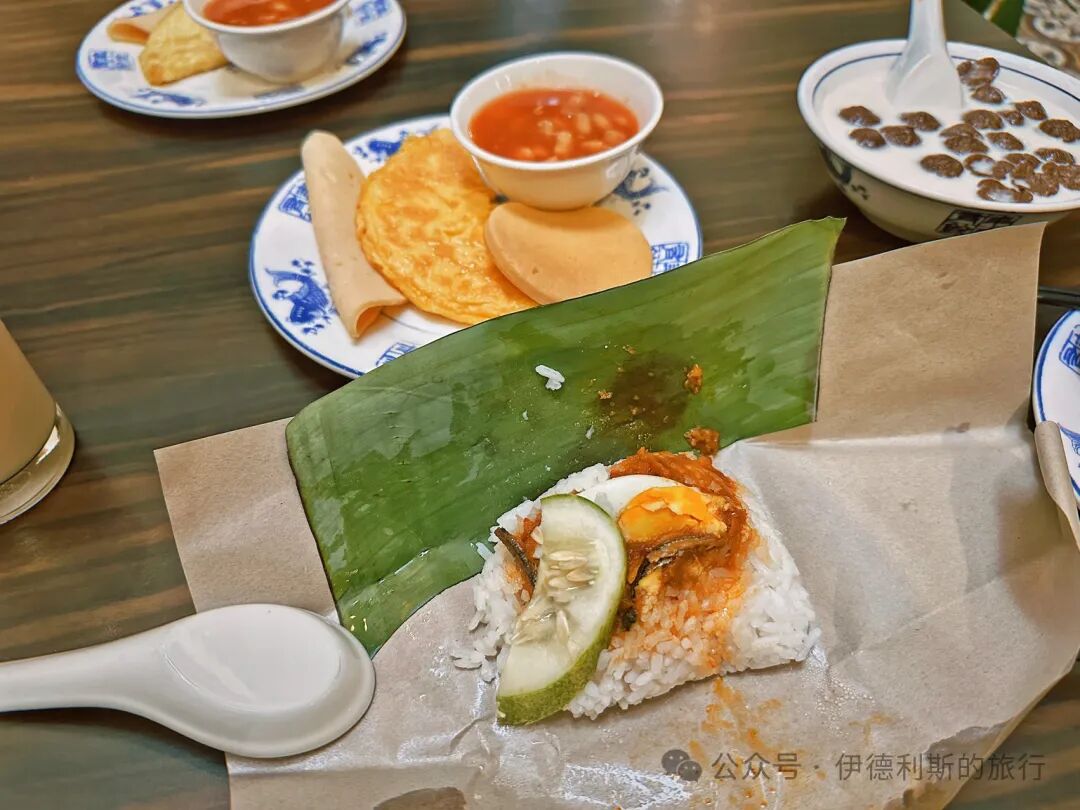
The halal breakfast at Aava Hotel includes Western-style omelets, baked beans, and coconut milk rice (nasi lemak) wrapped in banana leaves. Both Malay and Chinese guests ate breakfast with us. It is very comfortable to drink coffee leisurely inside the shophouse.
Staying at a Straits mansion
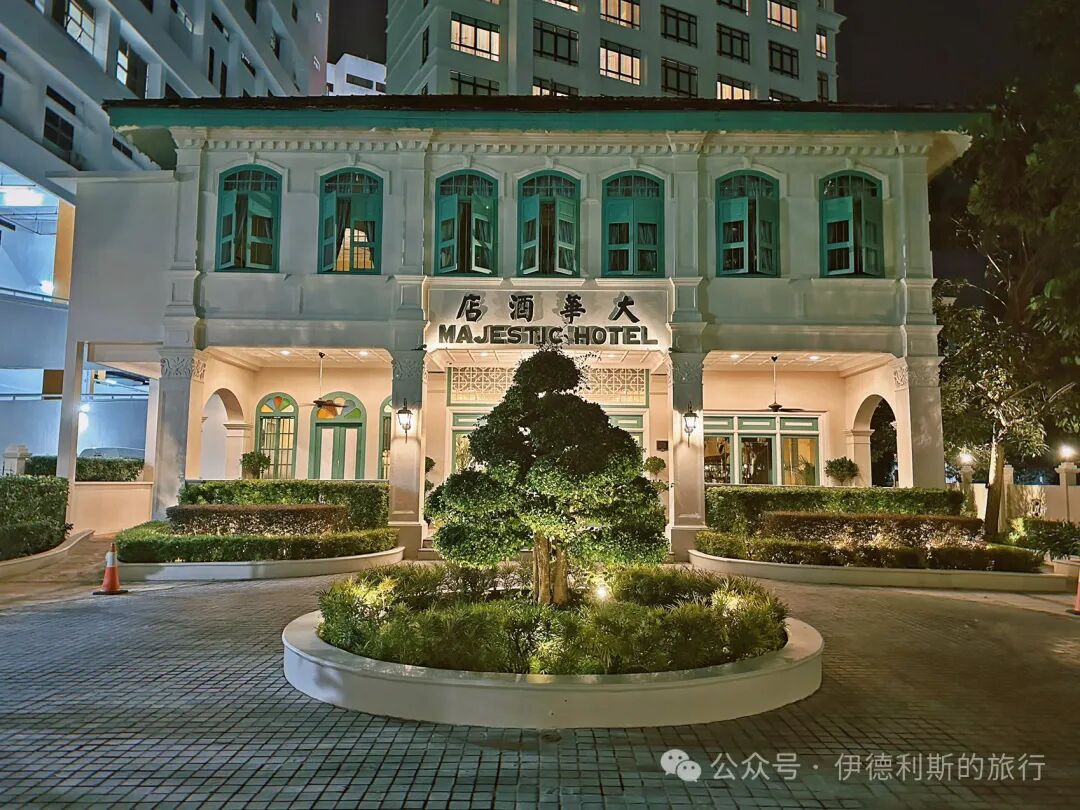
On the second day, we stayed at the famous The Majestic Malacca hotel. Staying here really showed me that you get what you pay for. The environment is amazing, the service is very thoughtful, and it feels just like home.
The lobby of the Majestic Hotel is inside a nearly 100-year-old mansion from the Straits Settlements era, with the original tile floors and teak wood features still preserved today. The Majestic Hotel was built in 1929 under the direction of wealthy Chinese businessman Leong Long Man, but he sadly passed away two years later, and his son inherited the mansion. His son kept spending the family fortune until he sold the property to another Chinese businessman, Lim Heng Fang, in 1955. Lim Heng Fang turned the mansion into a hotel. It hosted many British plantation owners in the 1950s and 1960s, and it even welcomed the first Prime Minister, Tunku Abdul Rahman, when Malaysia declared independence in 1957.
The Majestic Hotel closed in 2000 due to poor management. In 2006, the famous Malaysian YTL Hotels group bought and restored it, and it reopened for business in 2008.
After we finished checking in, a Nyonya lady from the front desk guided us to our room and offered us some welcome tea.
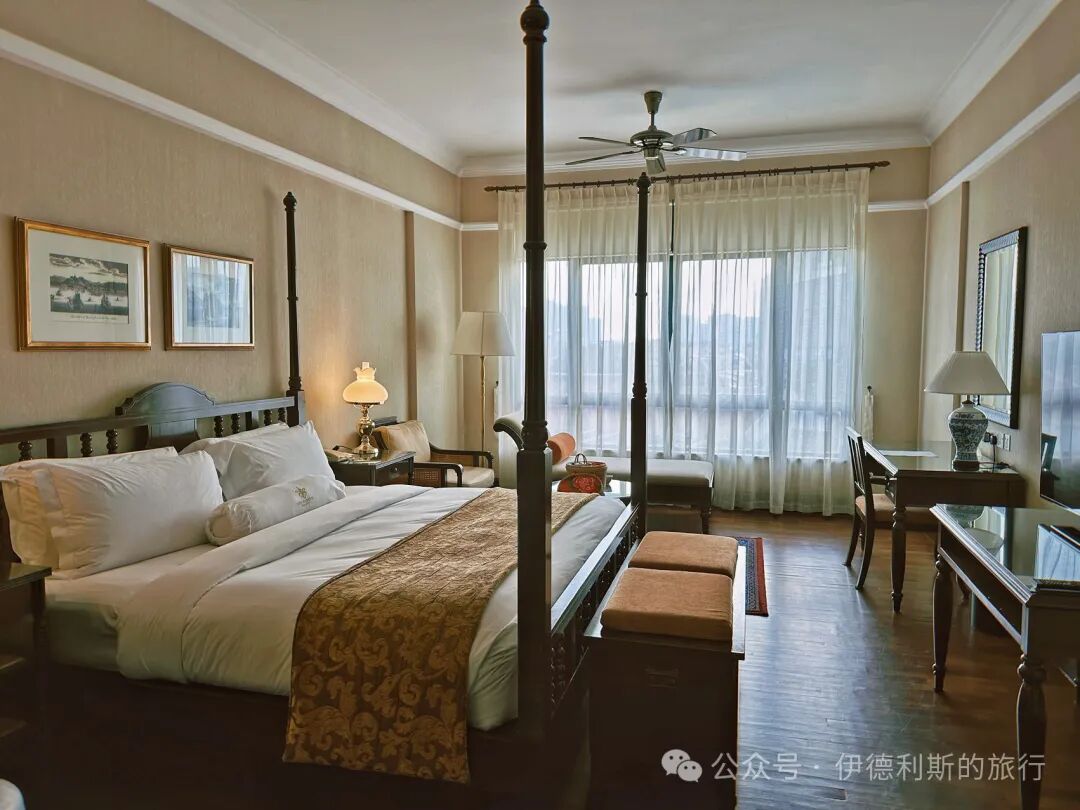
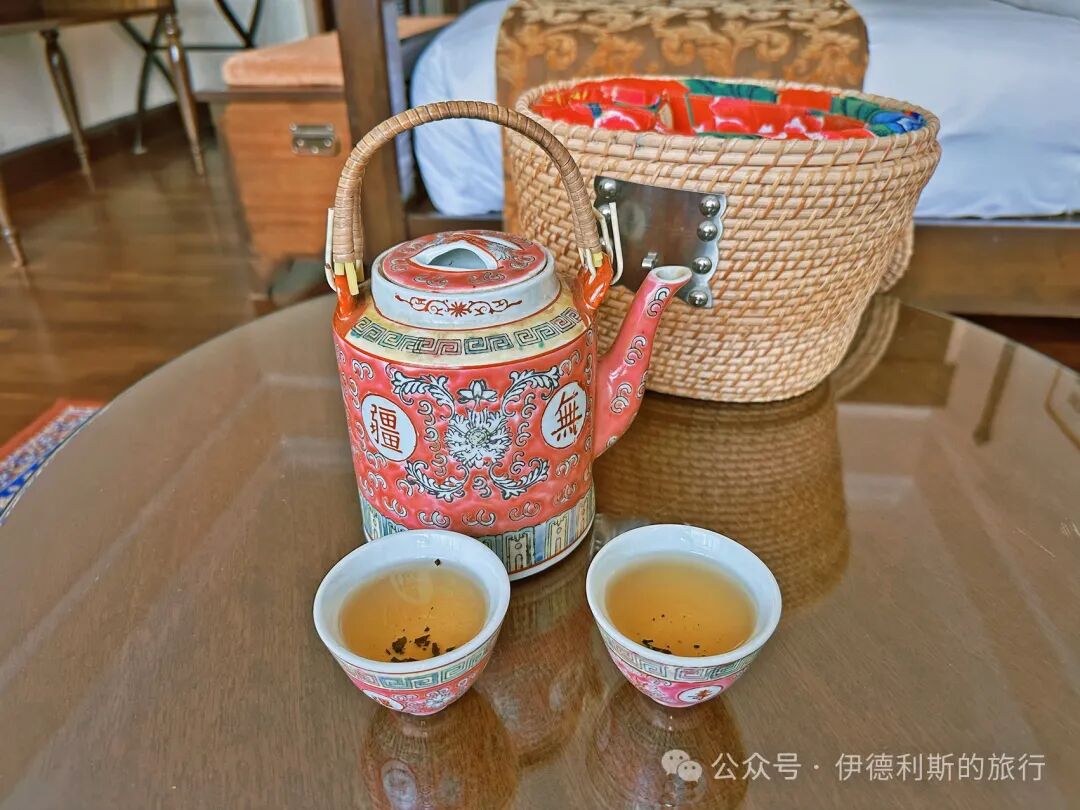
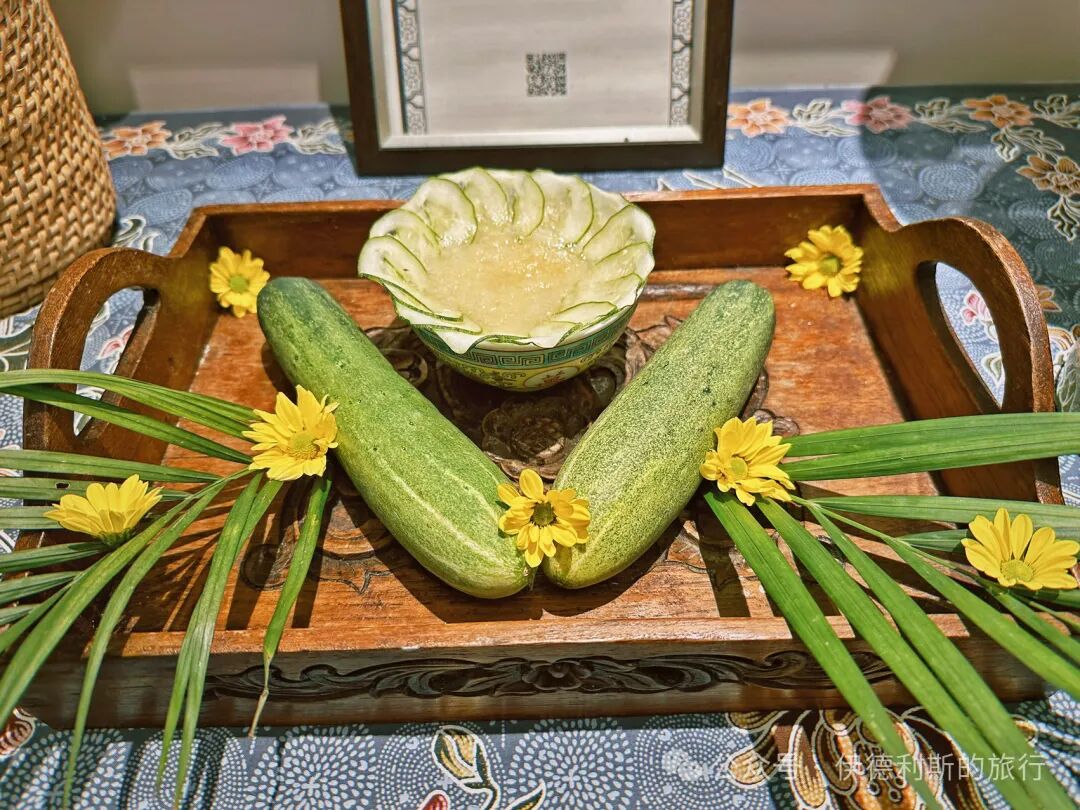
The second floor of the Straits Mansion at the Majestic Hotel serves a halal breakfast. You can choose from Western, Malay, or Indian styles. There is an unlimited supply of croissants, which are served to you by Indian staff so you do not have to get them yourself.
We ordered a serving of Indian flatbread (roti canai) with curry and a bowl of spicy noodle soup (laksa).
Roti canai is a classic Nanyang Indian Muslim breakfast. As early as the 17th century, Indian Muslims brought the practice of eating flatbread with curry to the Aceh Sultanate in northern Sumatra. After the 19th century, it spread to Nanyang countries like Indonesia, Malaysia, and Brunei. Various ethnic groups, including the Malays, Acehnese, and Minangkabau people, all love making this dish.
Curry laksa (laksa lemak) is a type of curry laksa that uses rice noodles in a thick coconut curry soup, topped with chicken and seafood. Curry laksa is best represented by Nyonya laksa, which has plenty of coconut milk and is less sour and spicy compared to the other type, Asam laksa.
Hui Muslim snacks
Chan Mari Chan is a sub-brand of the large Malaysian Hui Muslim Chinese restaurant chain Mohd Chan, focusing on affordable home-style snacks. The founder of Mohd Chan, Dato HJ Mohd Chan, was born in Gombak District, Selangor. In 2007, influenced by his Malay friends, he converted to Islam and started his restaurant that same year. Since then, he has been combining Nanyang Chinese cuisine with Malay flavors, and it has now become the most famous and largest Hui Muslim restaurant chain in Malaysia.
This January, we ate at Mohd Chan restaurant in Seremban, Malaysia. You order from a menu there, and they serve a variety of high-end Nanyang Chinese banquet dishes. Chan Mari Chan focuses on fast food and snacks. You go straight to the counter to pick up your food, and the chicken rice, small side dishes, and steamed dumplings (shaomai) are the most popular items. We grabbed roasted chicken rice, three small side dishes, two types of steamed dumplings (shaomai), and drank grass jelly coffee and cocoa coffee. Their food is quite delicious. I especially loved the fragrance and texture of the chicken rice. Eating there wiped away the fatigue of our journey. We instantly felt embraced by Nanyang culture and left feeling very satisfied.
The restaurant environment is also very nice, and many Malaysian Muslim friends (dosti) come here to eat with their families. They have a prayer room in the shop, which sets a great example for us Hui Muslims.
Malaysian Food City
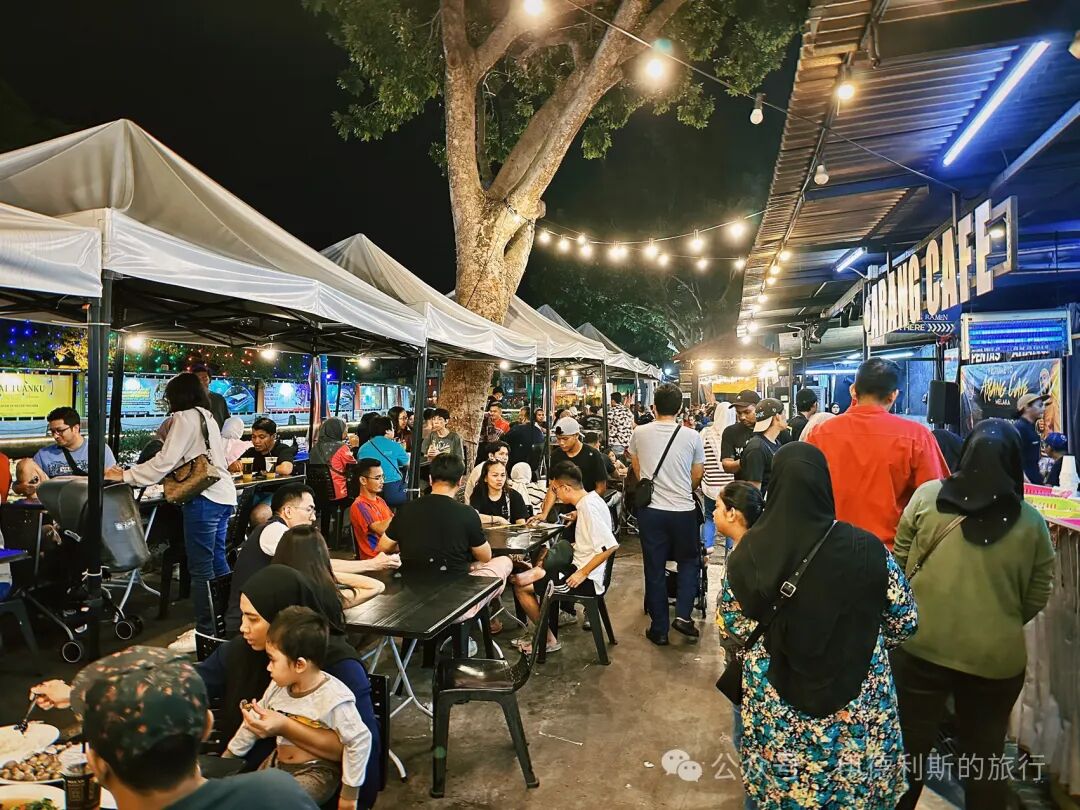
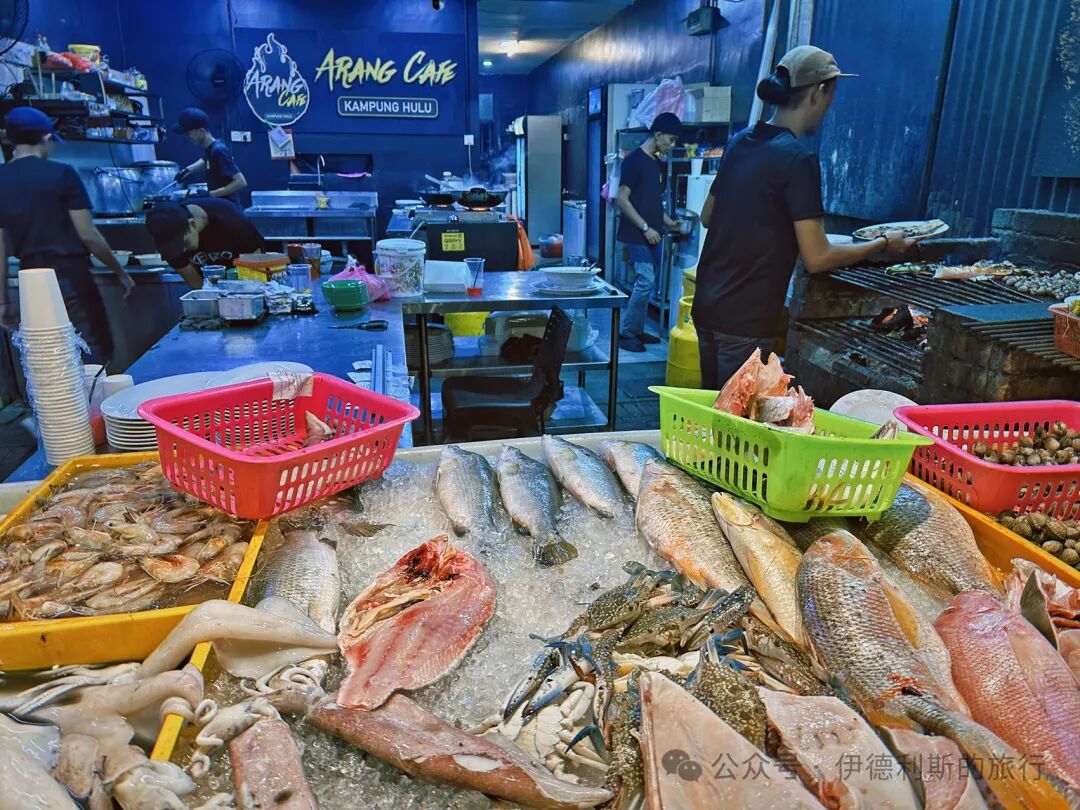
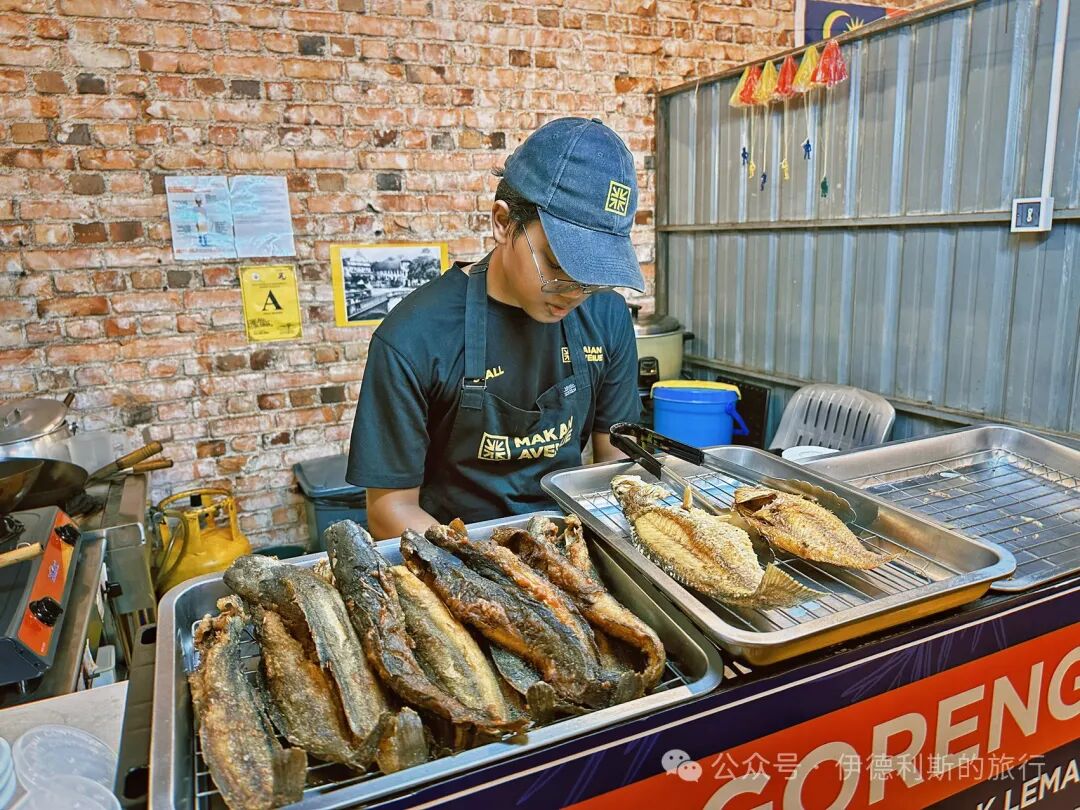
Right next to the E-Red Hotel on Kampung Hulu Street, there is a large Malay food court called Makan Avenue. It has a huge variety of Malay snacks. Many Malay people come here to eat at night, and the tables along the Malacca River are always full. Be careful about ordering drinks here on weekends or holidays. Because they have to serve hundreds of seats, I actually waited an hour just to get my drink. The other food stalls serve their dishes relatively quickly.
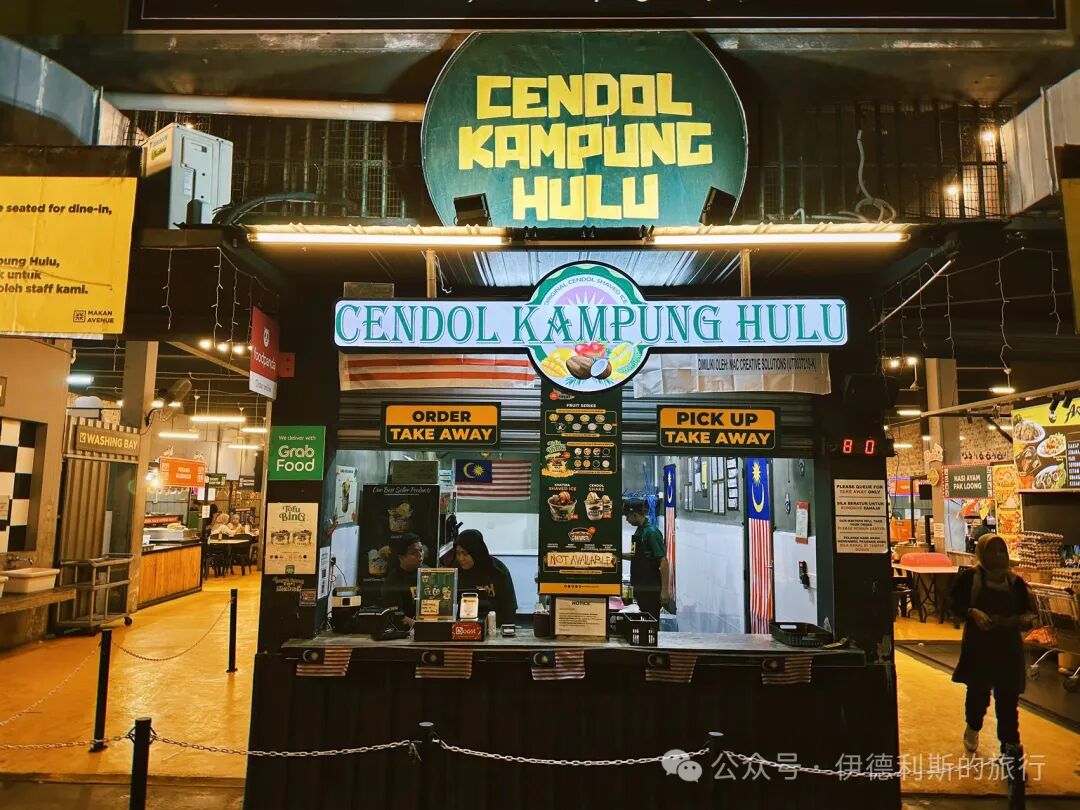
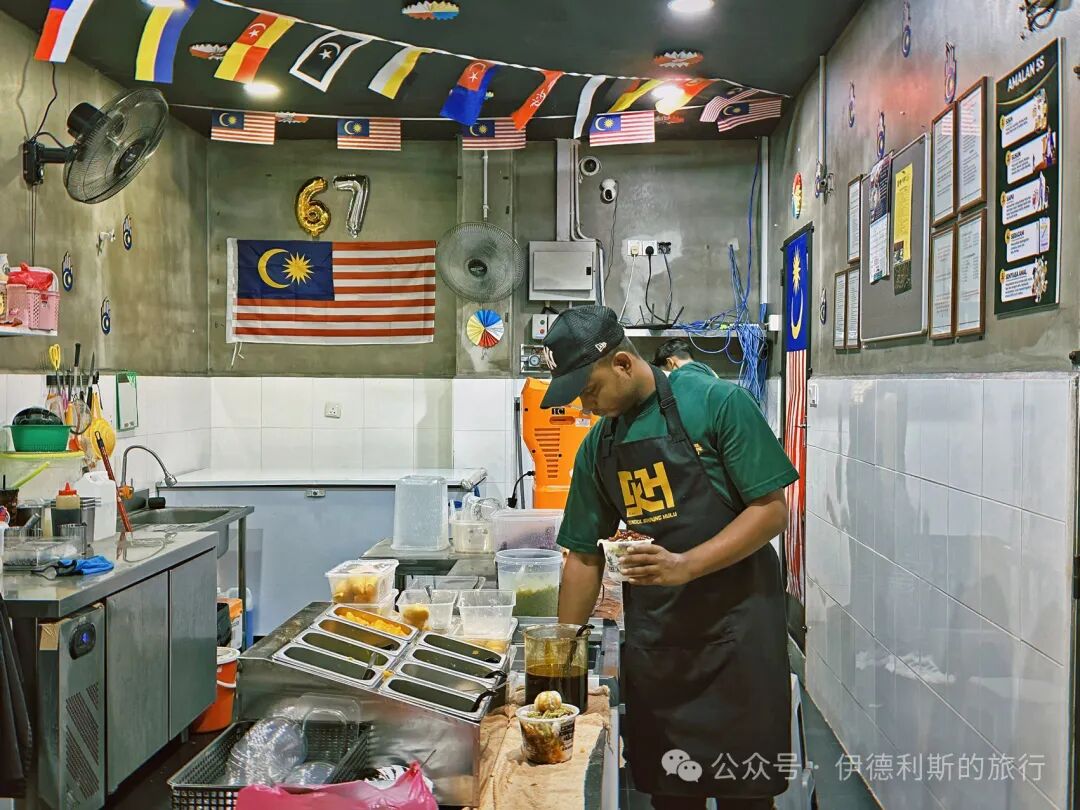
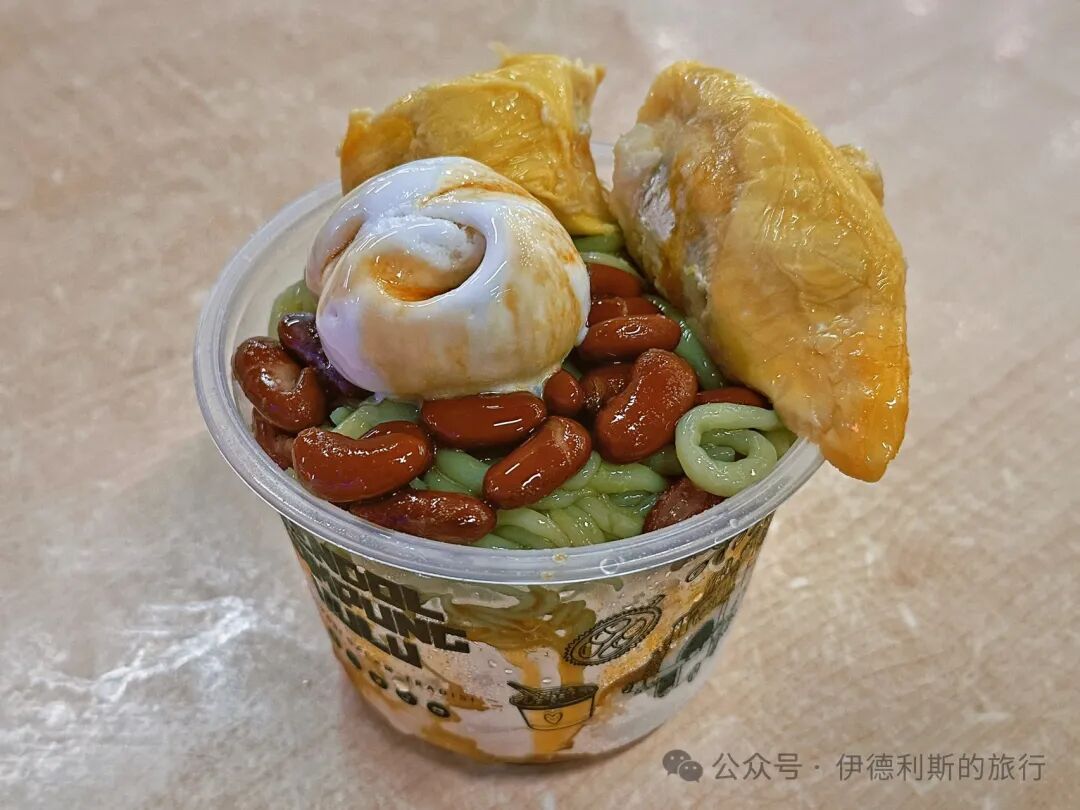
The most famous spot in the food court is Cendol Kampung Hulu. Cendol originated on the island of Java and was a classic drink at Javanese weddings before it spread across Southeast Asia. It is made with shaved ice, green rice flour jelly noodles, coconut milk, and palm sugar. You can also add things like red beans or grass jelly. We ordered the durian cendol, which is perfect for the hot and humid weather in Southeast Asia.
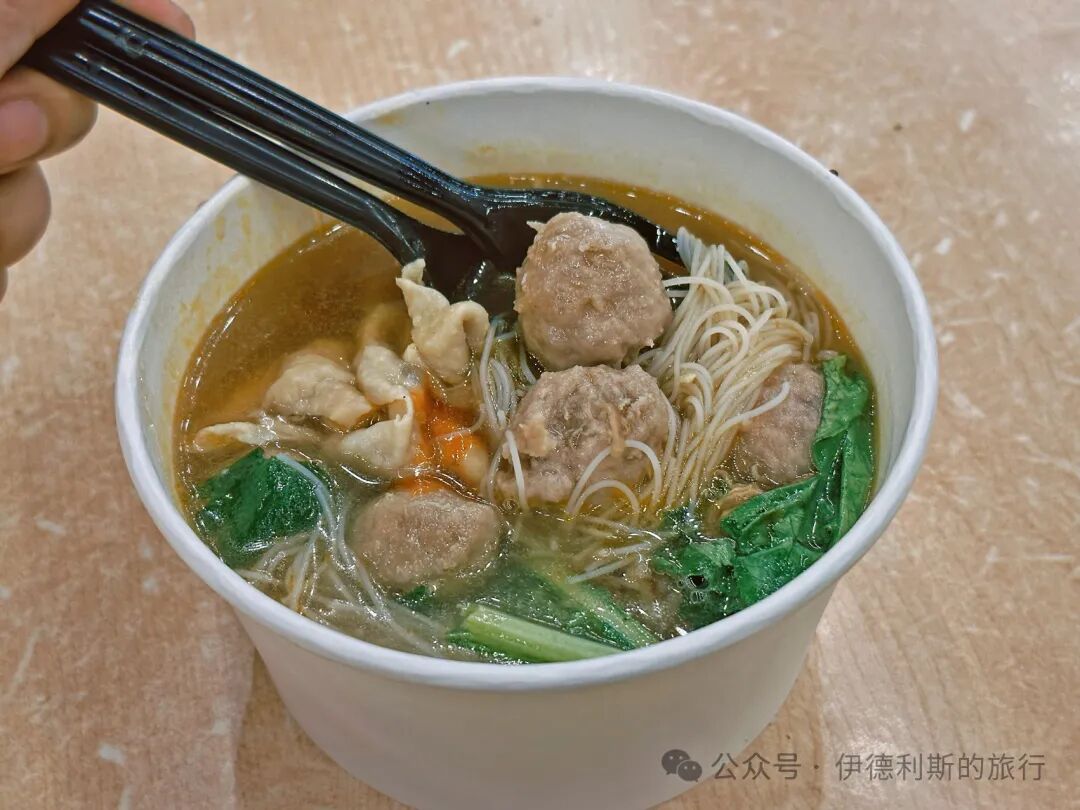
We also ordered beef meatball soup (bakso biasa). The name bakso comes from the Southern Min dialect for 'meat crisp.' It is a classic Malaysian street food made from beef, fish paste, and a little tapioca flour, giving it a very firm texture. The finished meatballs are usually served in beef broth with tofu, glass noodles, and various side dishes.
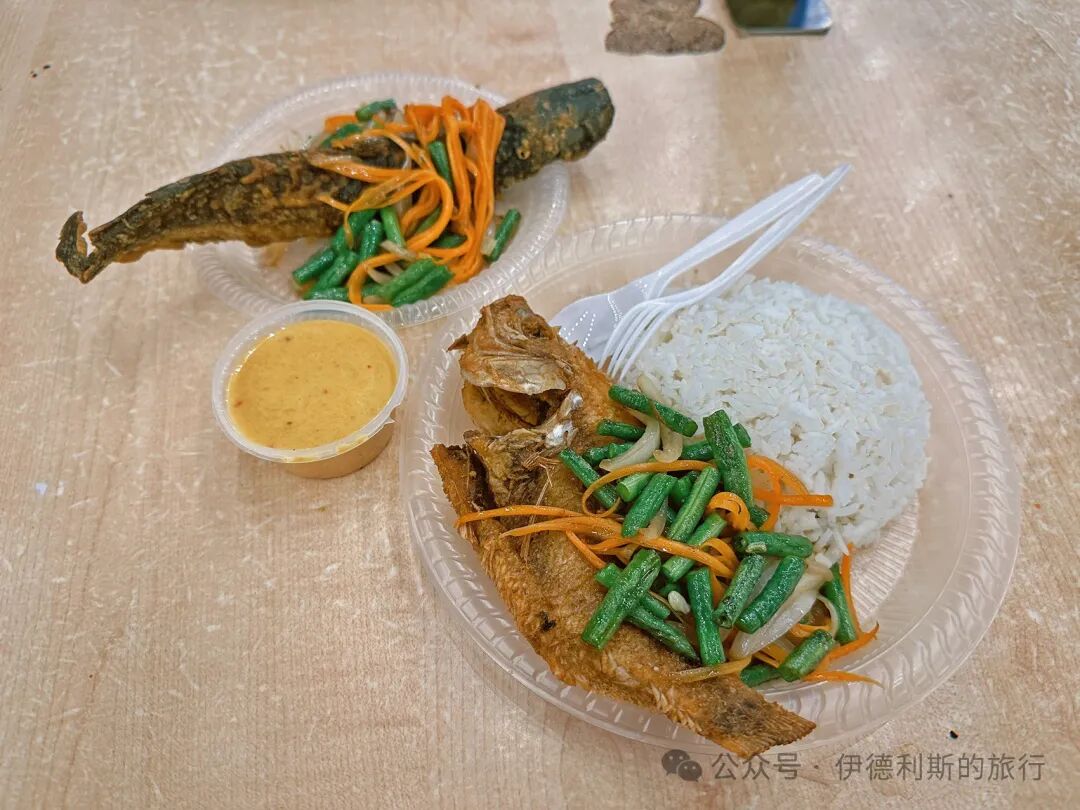
We also ordered fried tilapia (talapia) and catfish (keli). Although they looked charred on the outside, the meat inside was very tender, had no fishy smell, and tasted delicious.
Malaysian night market
Across from Dataran Pahlawan, we found a huge Malaysian night market that seems to only open on weekends, with an endless variety of snacks. We were too full to eat a meal, so we just bought some guava dipped in sour plum powder and a giant avocado juice. Tropical fruits are cheap all over Malaysia. As long as you don't buy durian in tourist areas, you can basically eat as much fruit as you want.
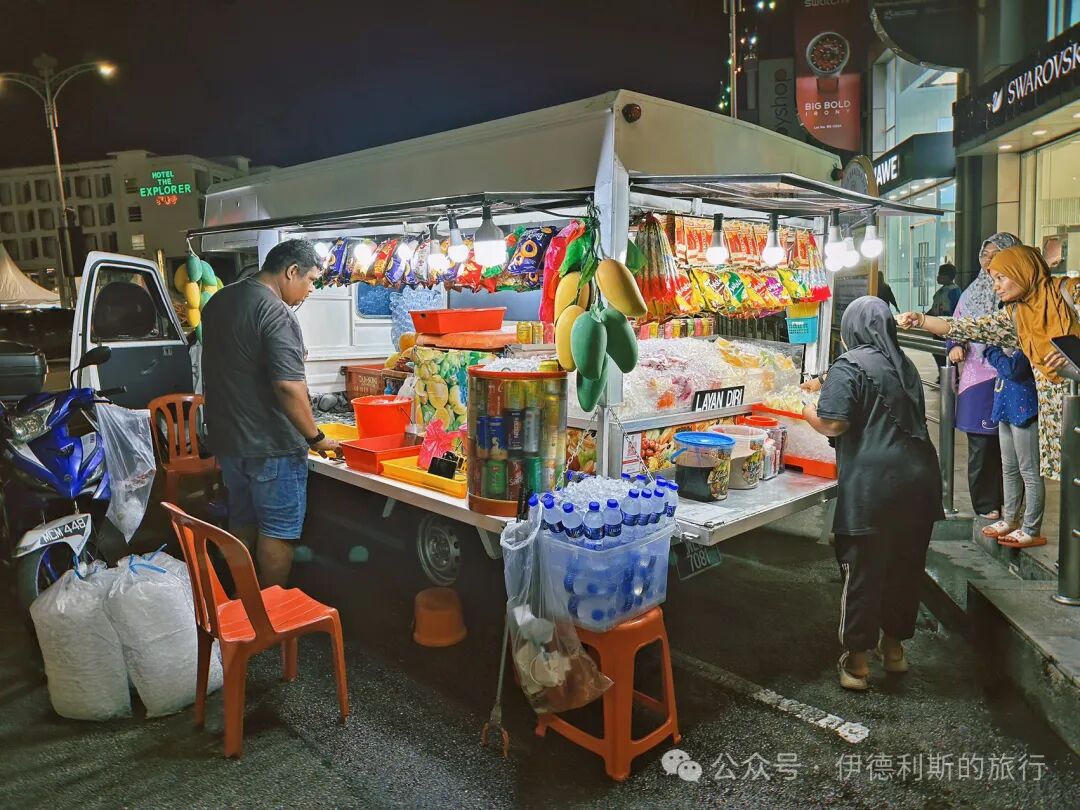
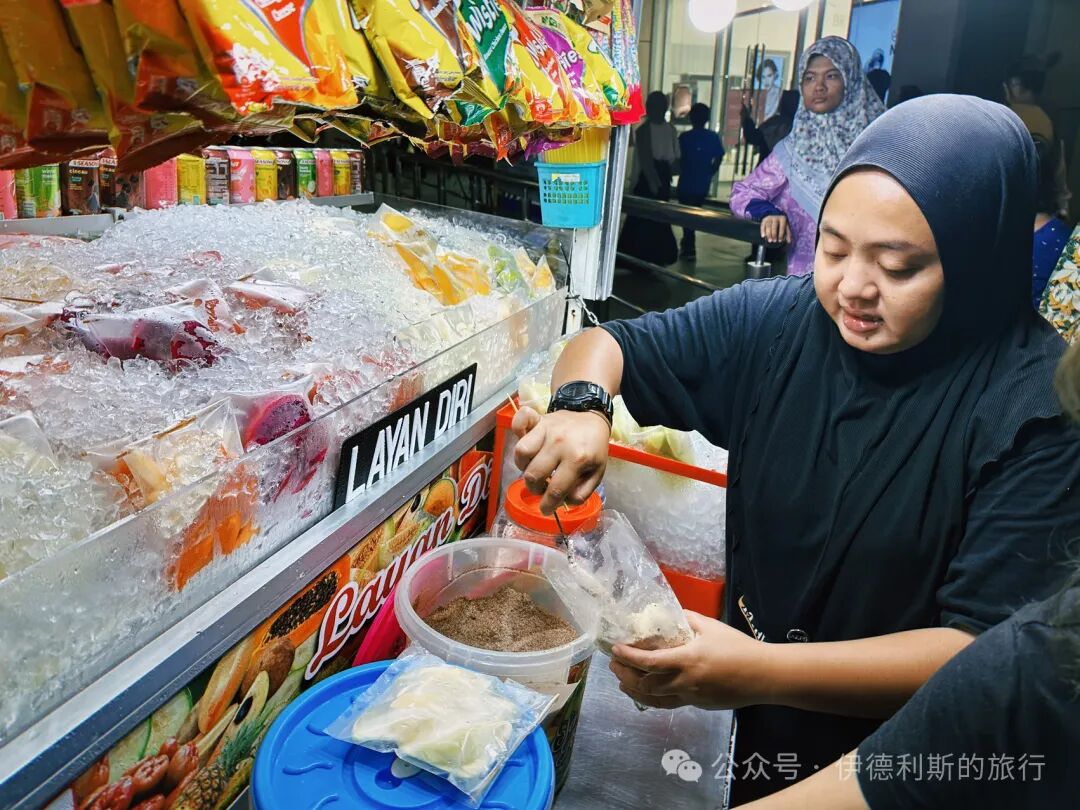
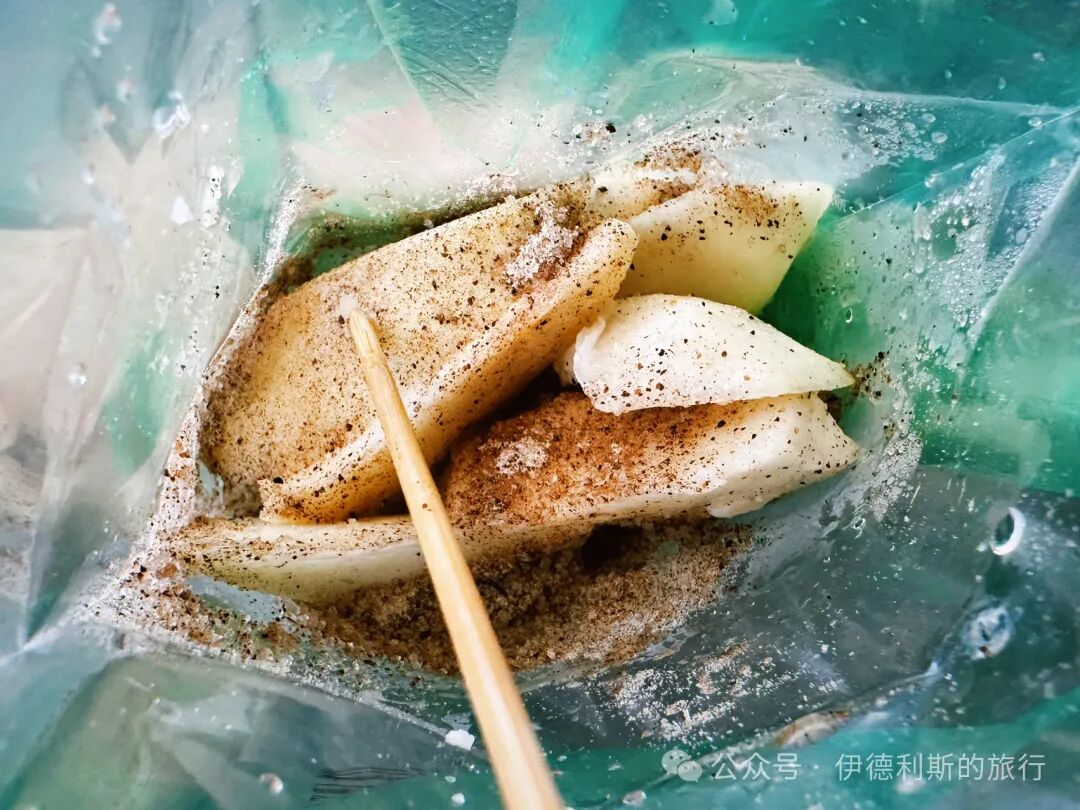
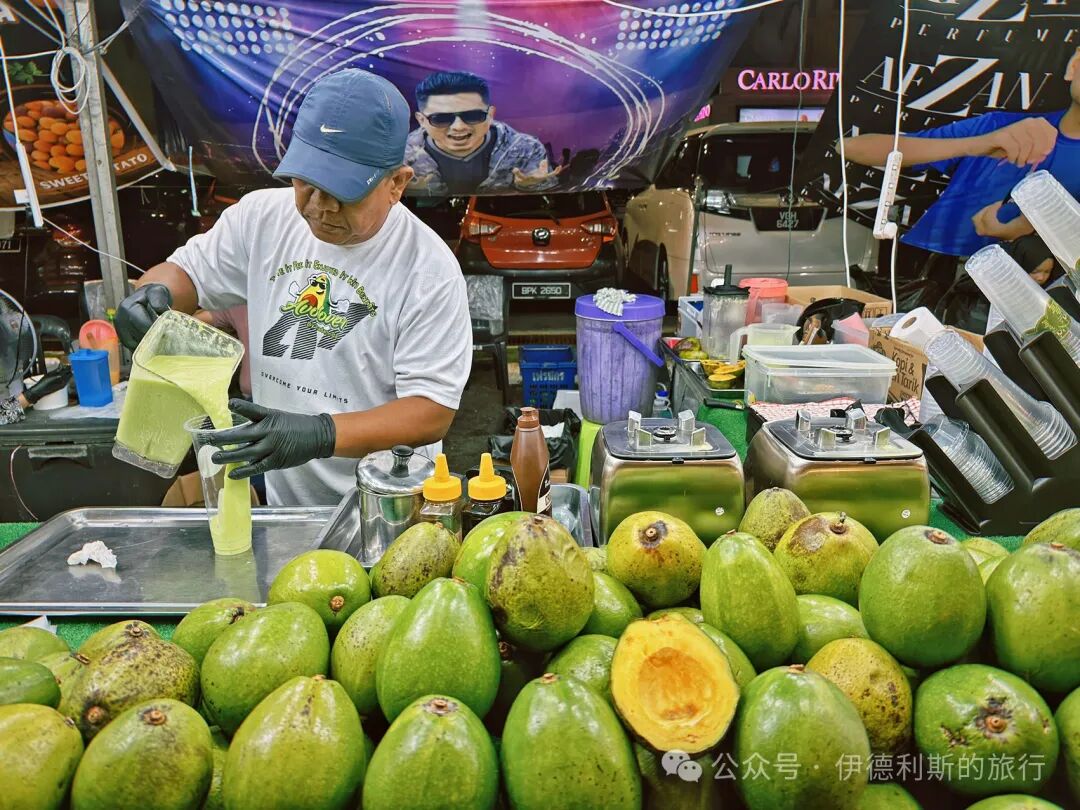
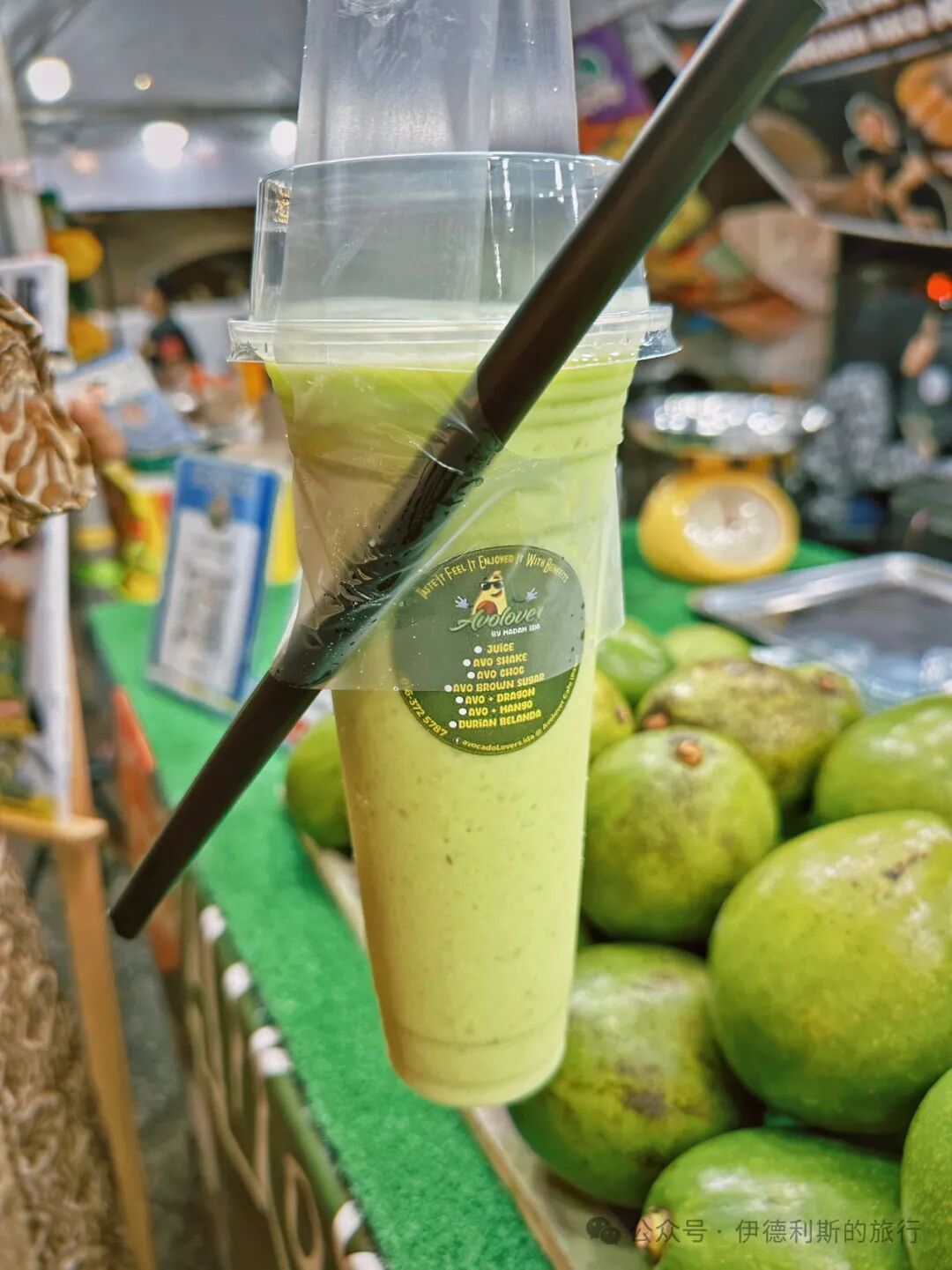
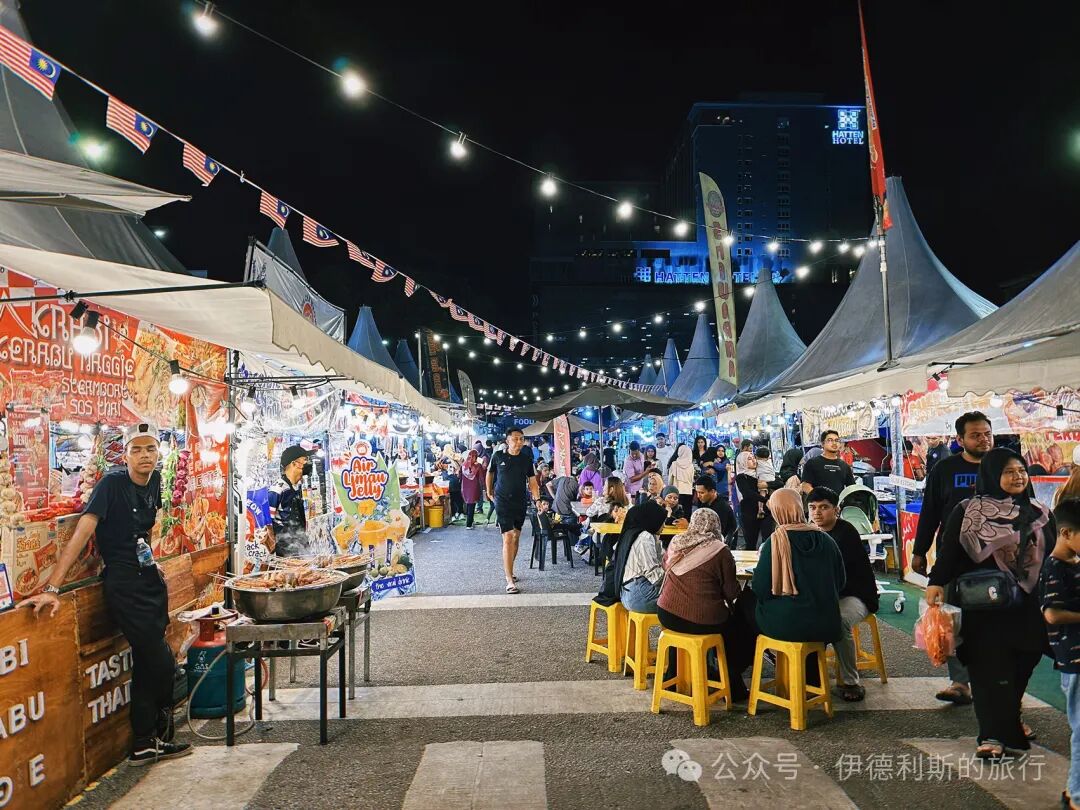
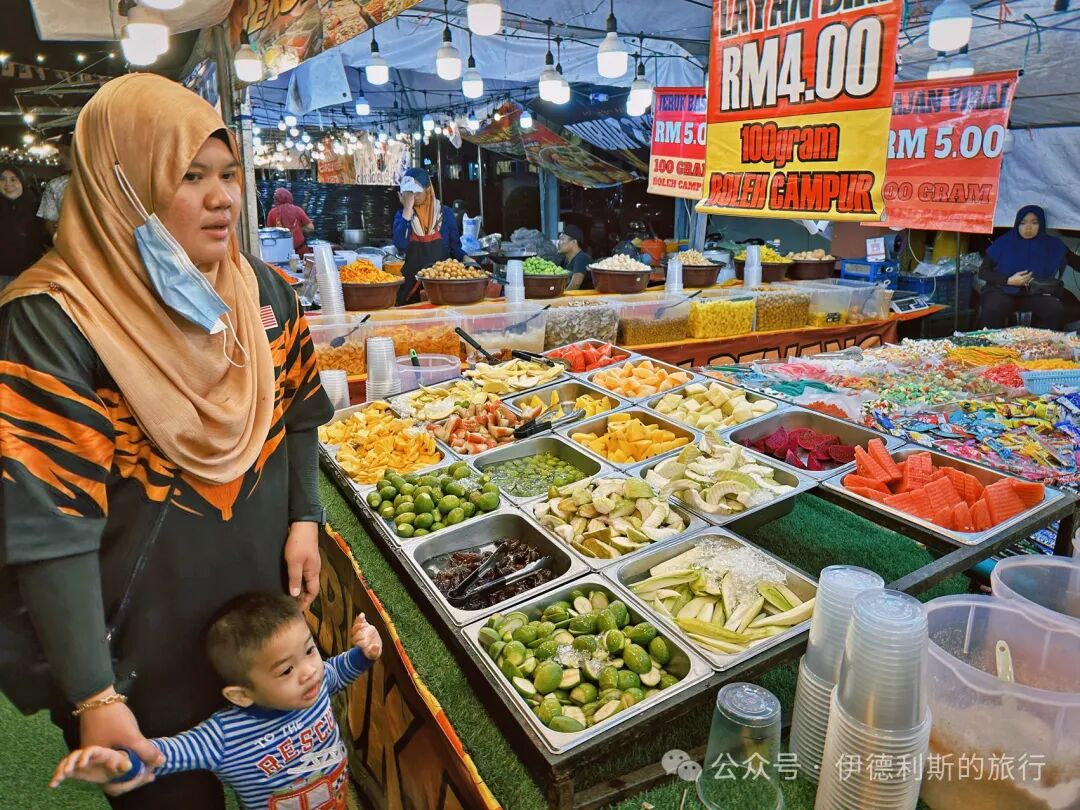
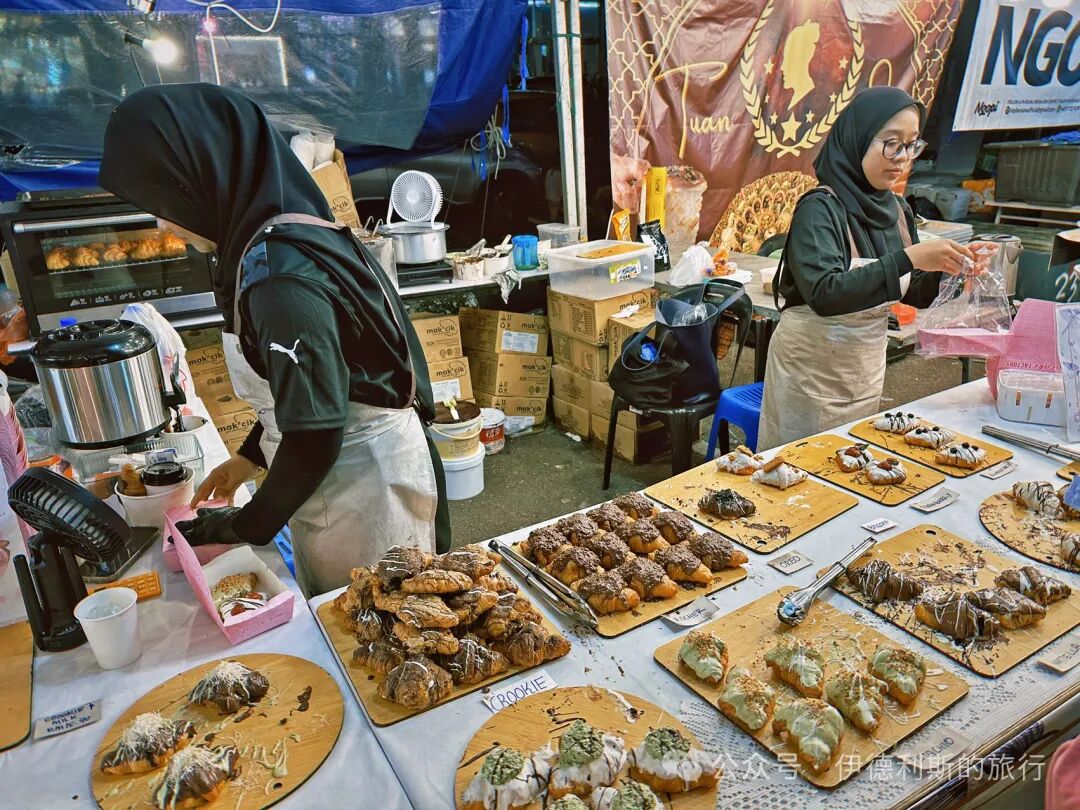
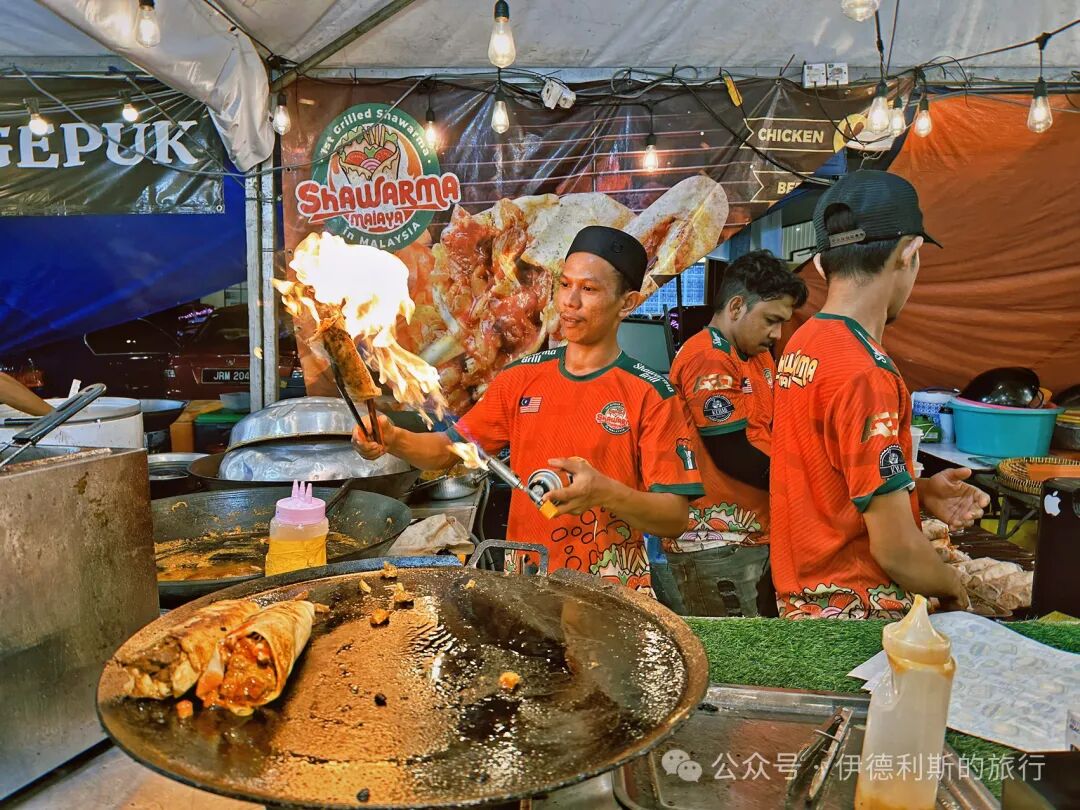
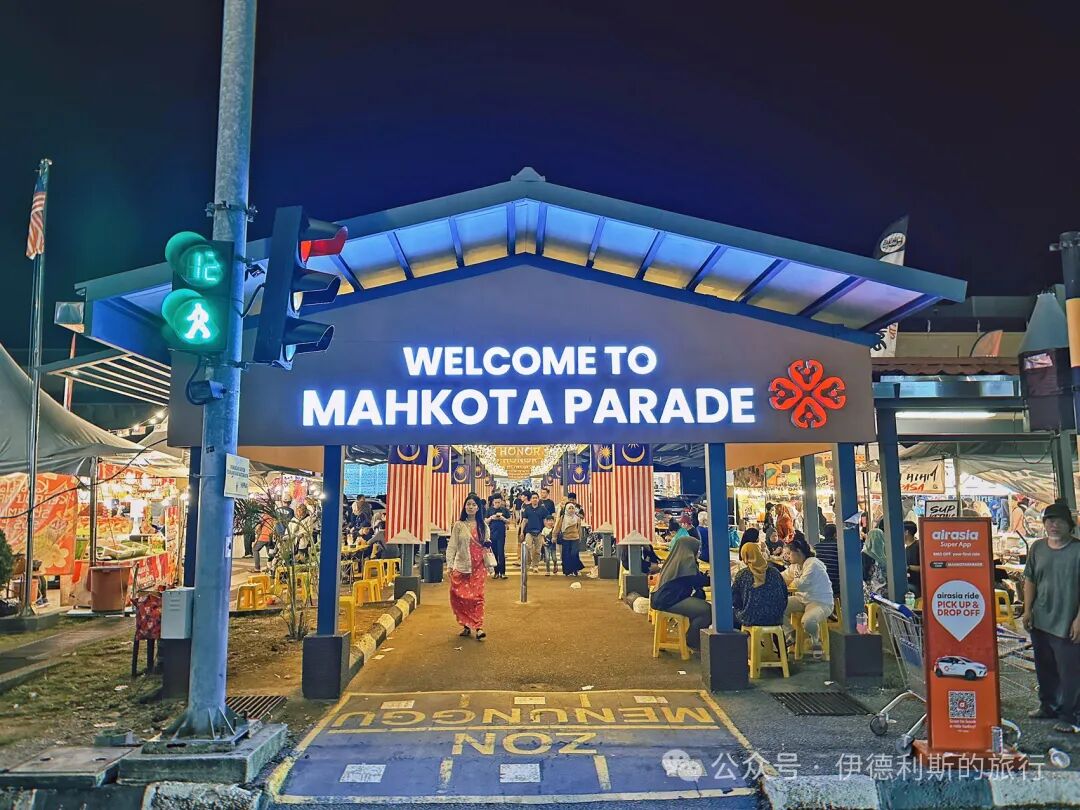
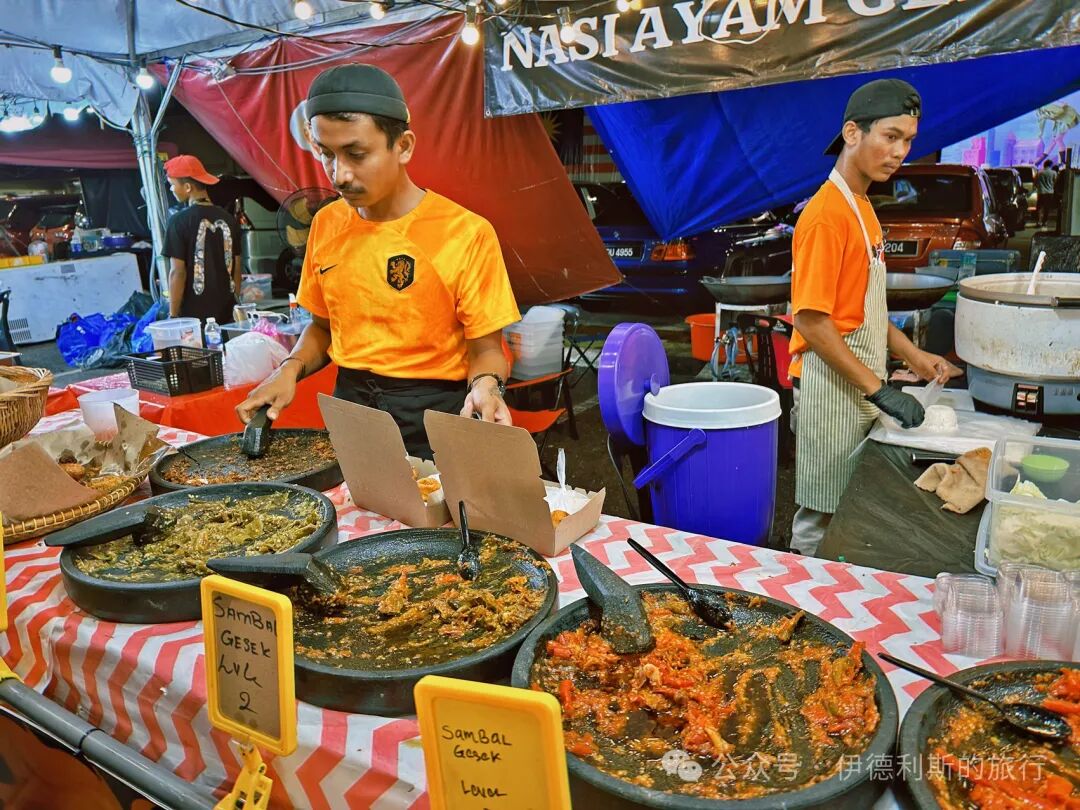
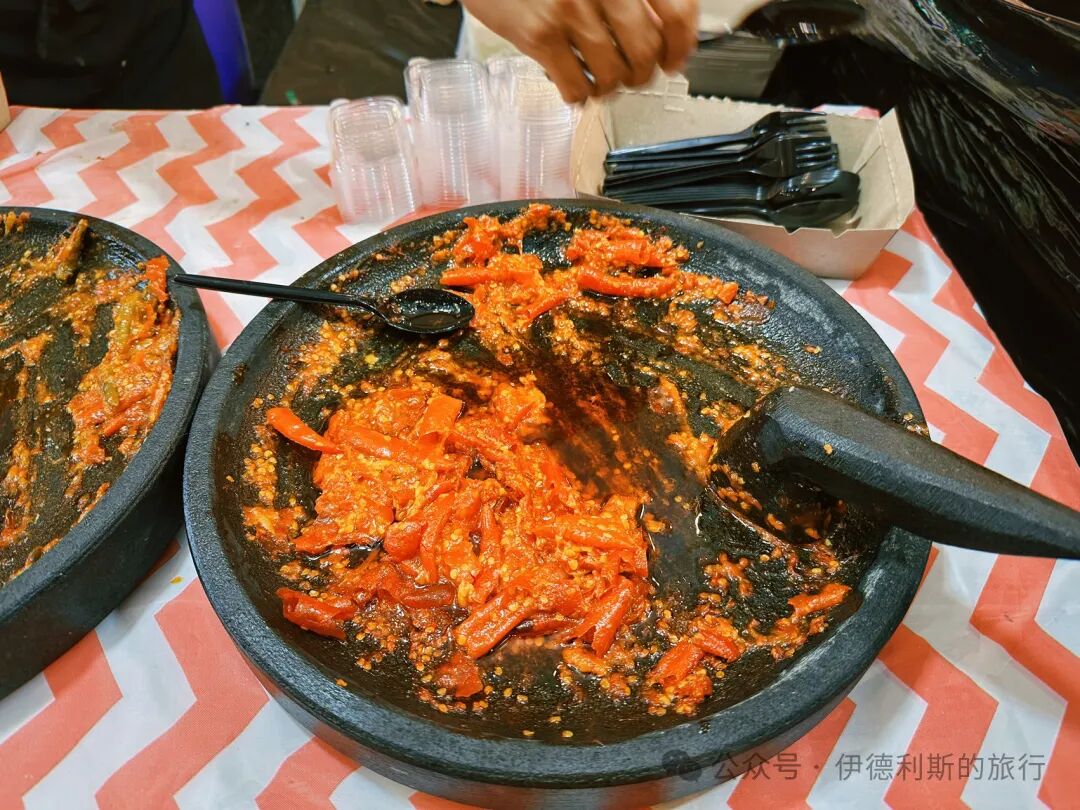
The vibe of the Malacca night market, featuring hand-pounded chili paste (sambal) and lamb soup (yangtang).
Malay cake shop
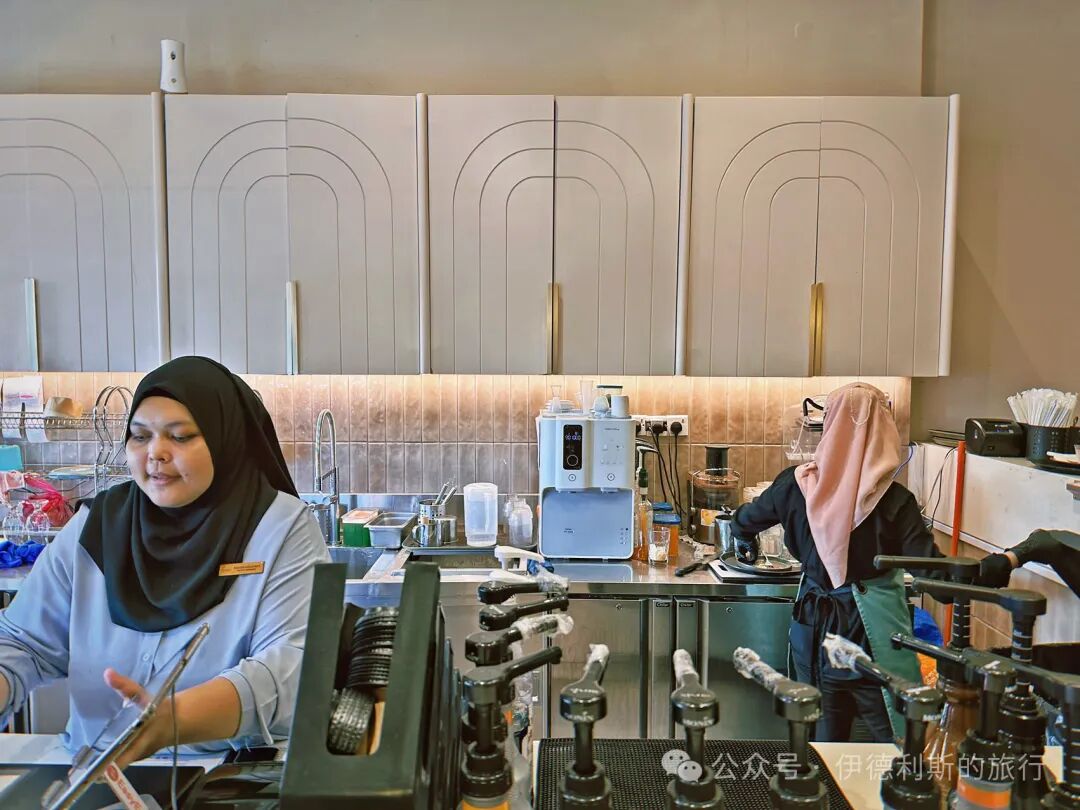
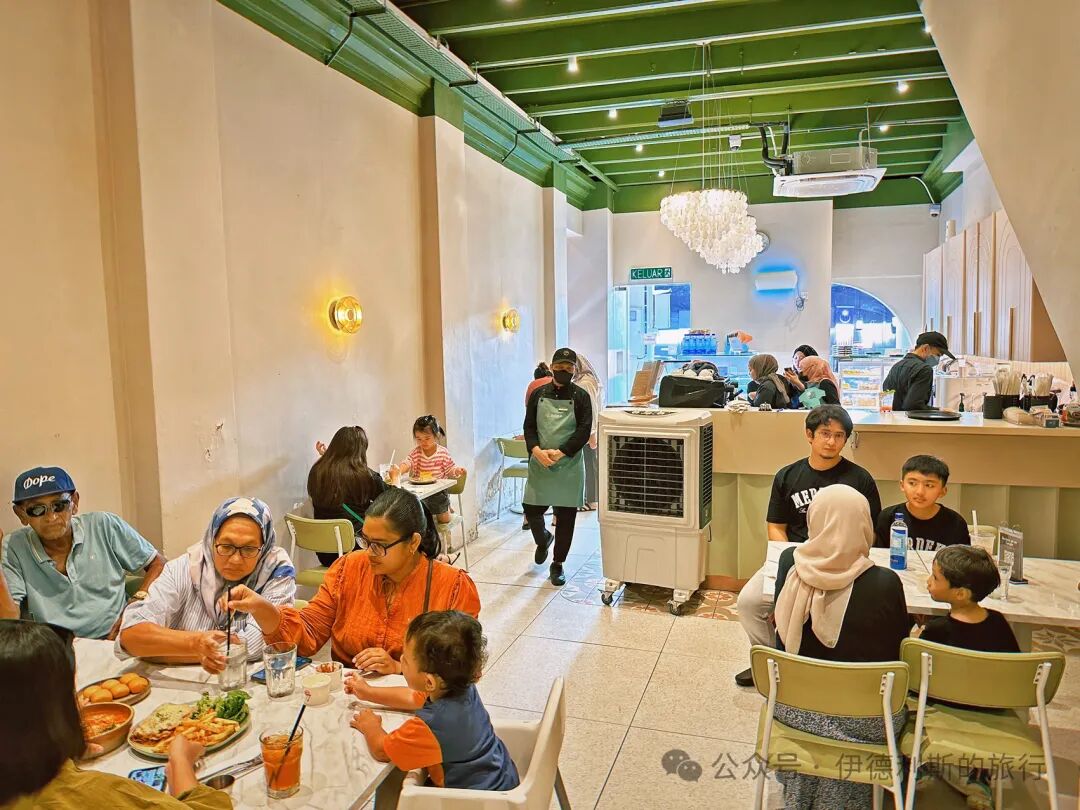
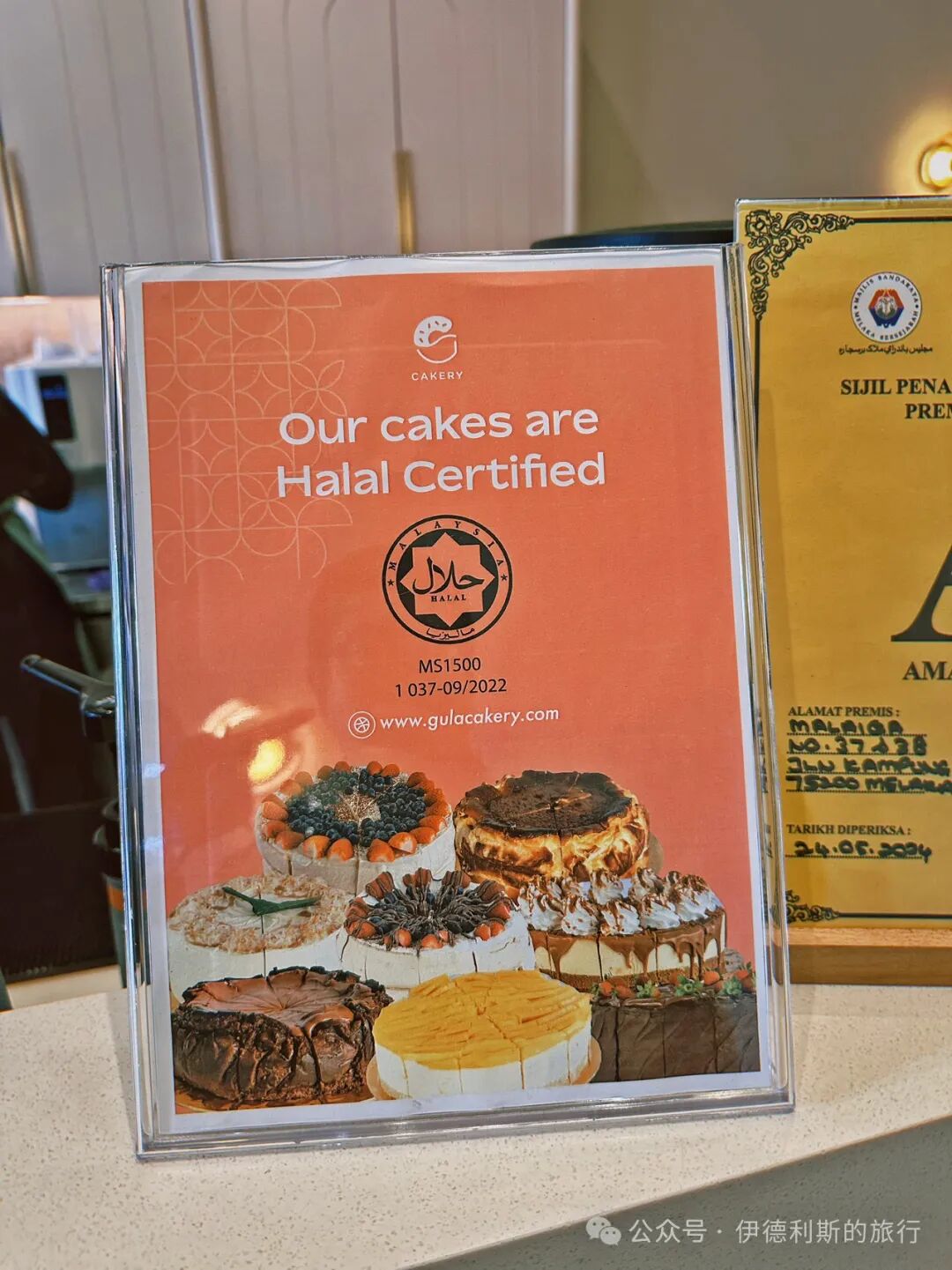
In Kampung Hulu, there is a lovely cake shop called Malaiqa By Gula Cakery that is especially popular with young people. The shop is inside a shophouse built in 1941. The decor is fresh and simple, a great example of revitalizing the old city.
We ordered the strawberry milk pudding and longan lemon tea, and both tasted great. These fresh little shops in Malaysia are really wonderful, though we usually stick to traditional food and don't visit places like this very often.
Malay village farmhouse cooking
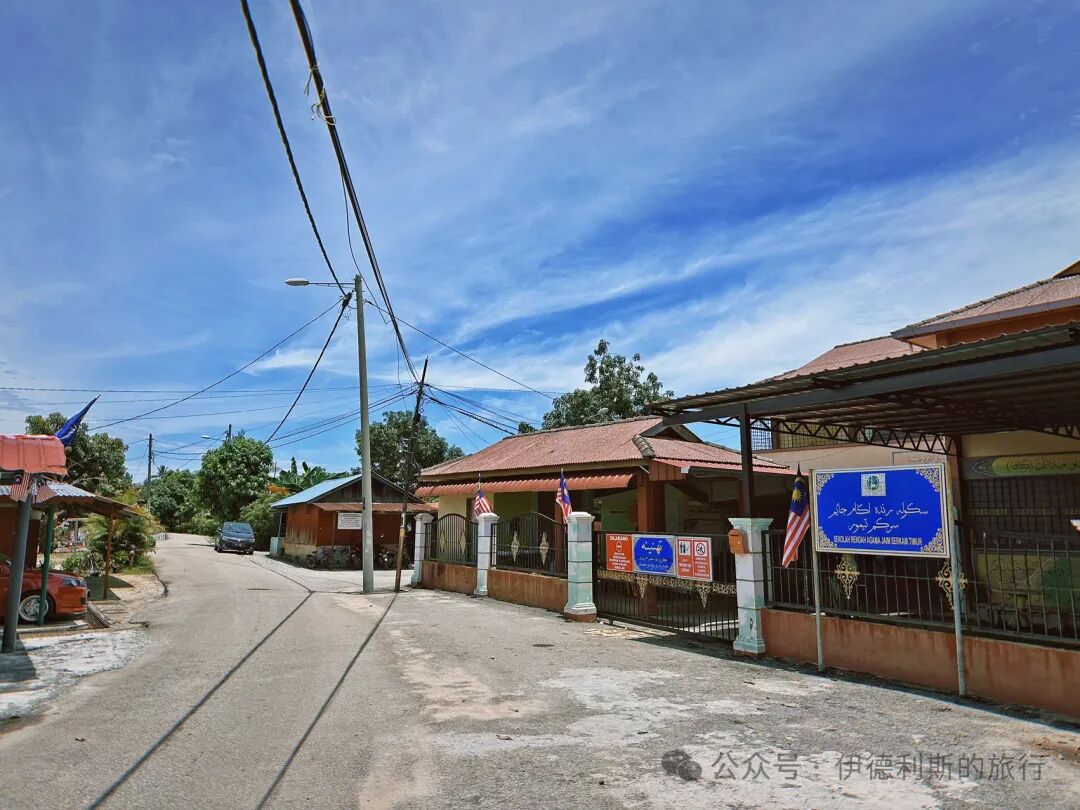
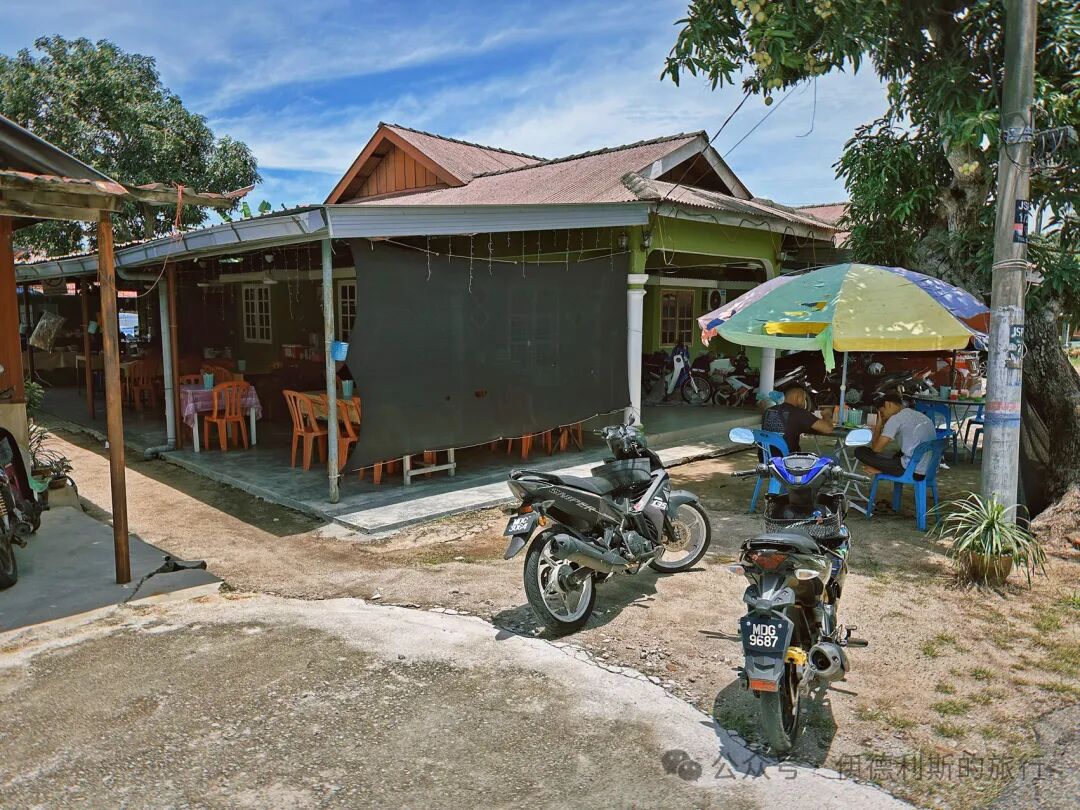
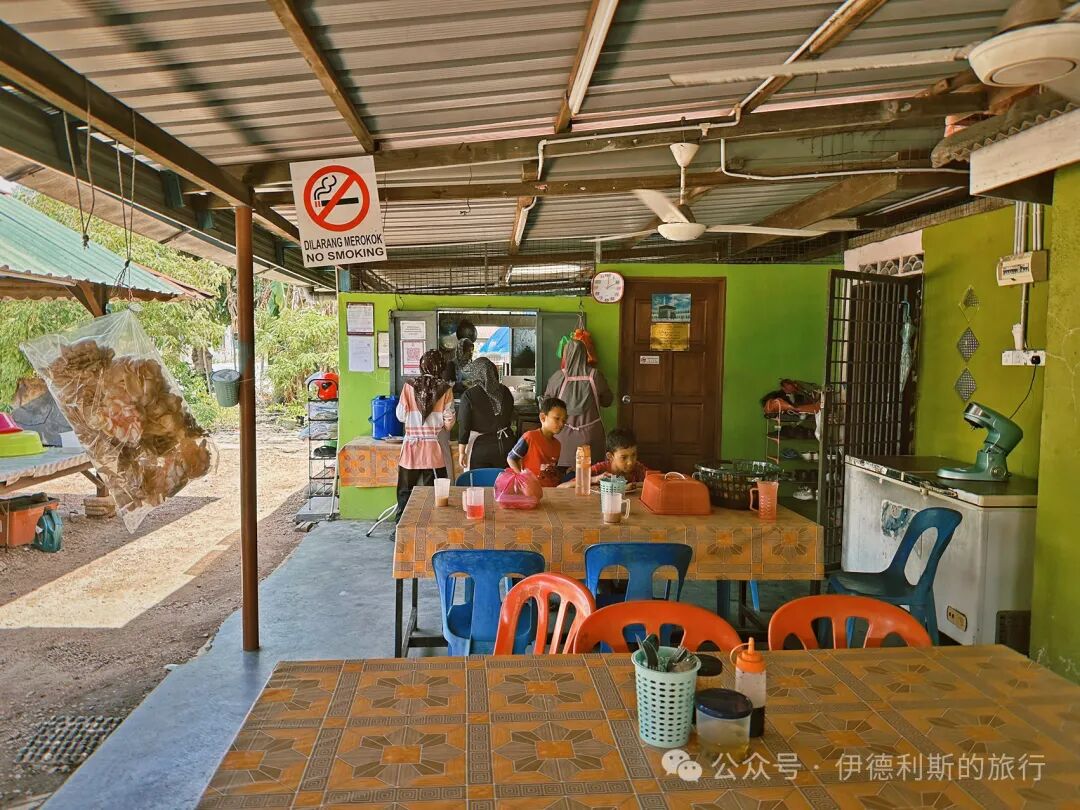
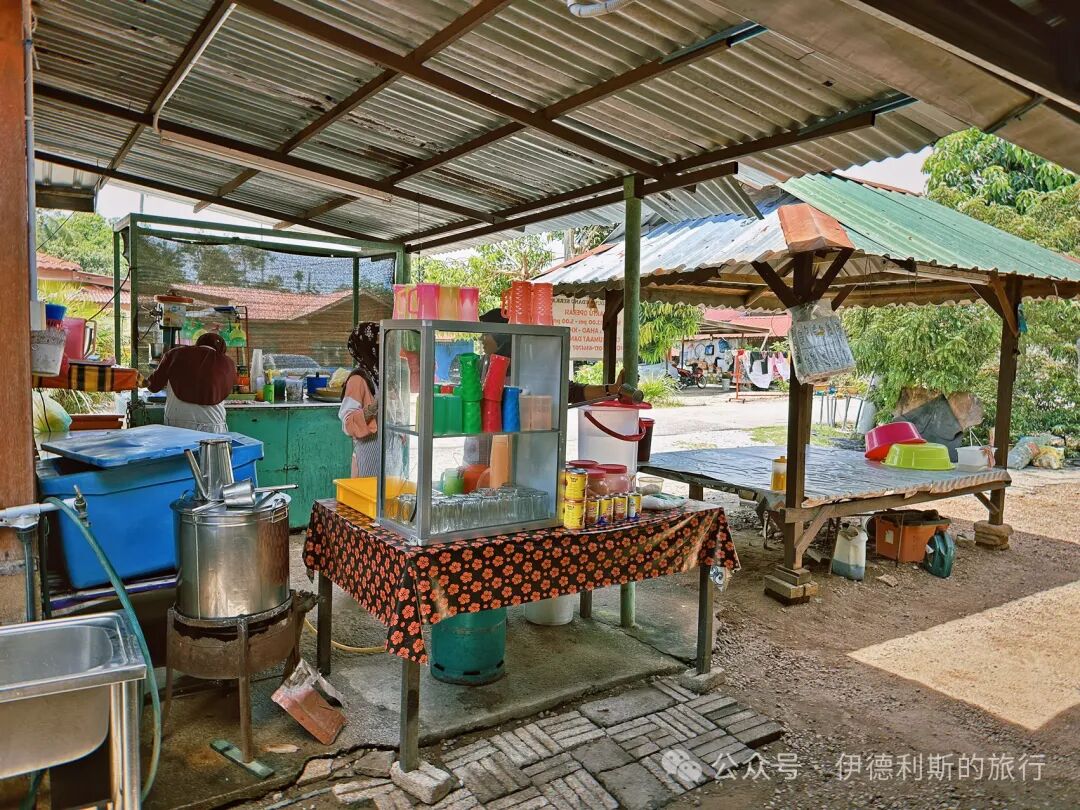
On the road heading east from Malacca to Muar, the whole way is filled with Malay village (kampung) countryside scenery. At noon, we passed through the seaside village of Serkam Pantai, prayed namaz at a 19th-century mosque, and then had an authentic Malay village-style meal in the village.
We ordered shrimp noodle soup (Mee Bandung Udang), black shrimp paste fruit salad (Rojak Petis), and Malay village-style fried rice (Nasi Goreng Kampung), drank iced Milo (Milo Ais Kepal), and had red bean shaved ice (Air Batu Campur).
Shrimp noodle soup (Mee Bandung Udang) is a Malay dish that started in Muar, Malaysia. Bandung means mixed, and Udang means shrimp. It is made by boiling yellow noodles with eggs, shrimp, leafy greens, and beef bits. The thick soup is simmered with shrimp paste, onions, spices, and chili, giving it a very fresh taste.
Fruit salad (Rojak) is said to have started on the island of Java. It was originally a mix of fruits and vegetables with spicy palm sugar syrup, but it later spread across Indonesia, Malaysia, and Singapore, developing many different styles. Black shrimp paste fruit salad (Rojak Petis) started in Surabaya, East Java. It contains raw mango, cucumber, water spinach, and bean sprouts. The sauce is made from black shrimp paste (Petis), fried shallots, palm sugar, and salt, and it is topped with crushed peanuts. The fruit salad tastes quite sweet, so people who prefer milder flavors might find it hard to get used to.
Malay village-style fried rice (Nasi Goreng Kampung) is a classic Malay village dish. It includes diced beef, water spinach, shrimp, dried anchovies, and scrambled eggs. It is stir-fried with sweet soy sauce and shrimp paste, making the flavor very rich. It is one of my favorite Malay dishes.
Air Batu Campur red bean ice, also called ABC ice, is a classic dessert in Southeast Asia after a meal. It is mostly shaved ice with red beans and condensed milk on top, and the one we bought had a scoop of ice cream on it.
Nyonya cuisine
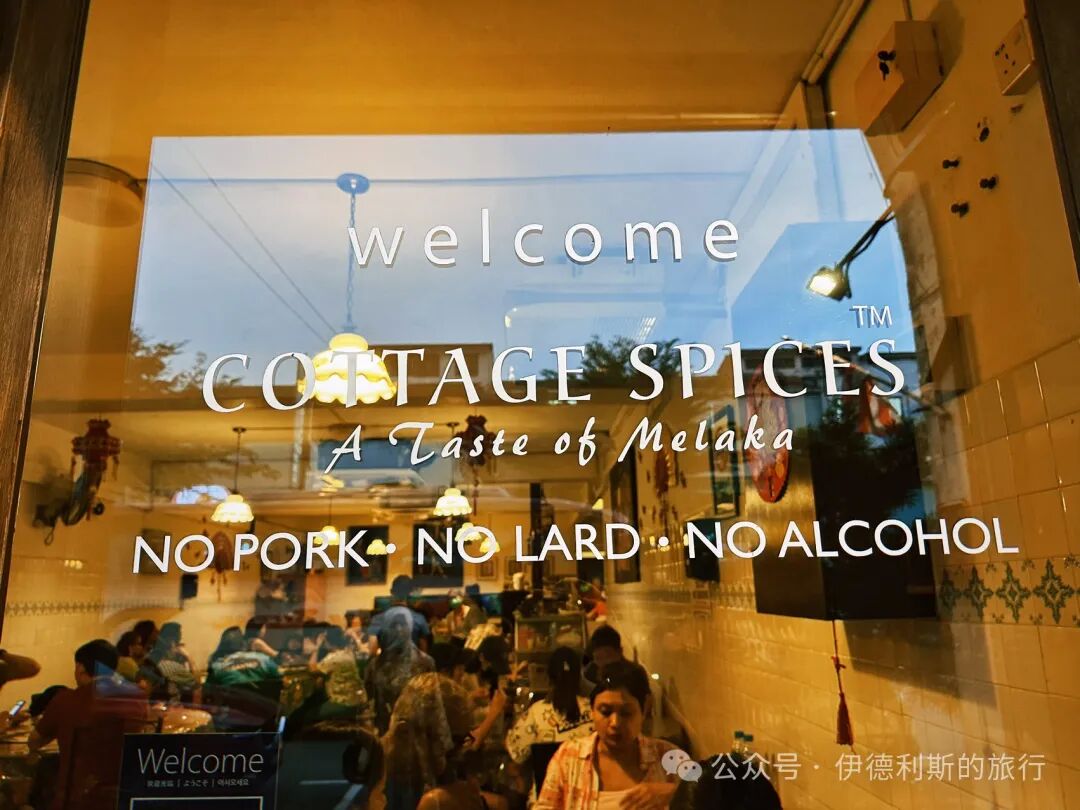
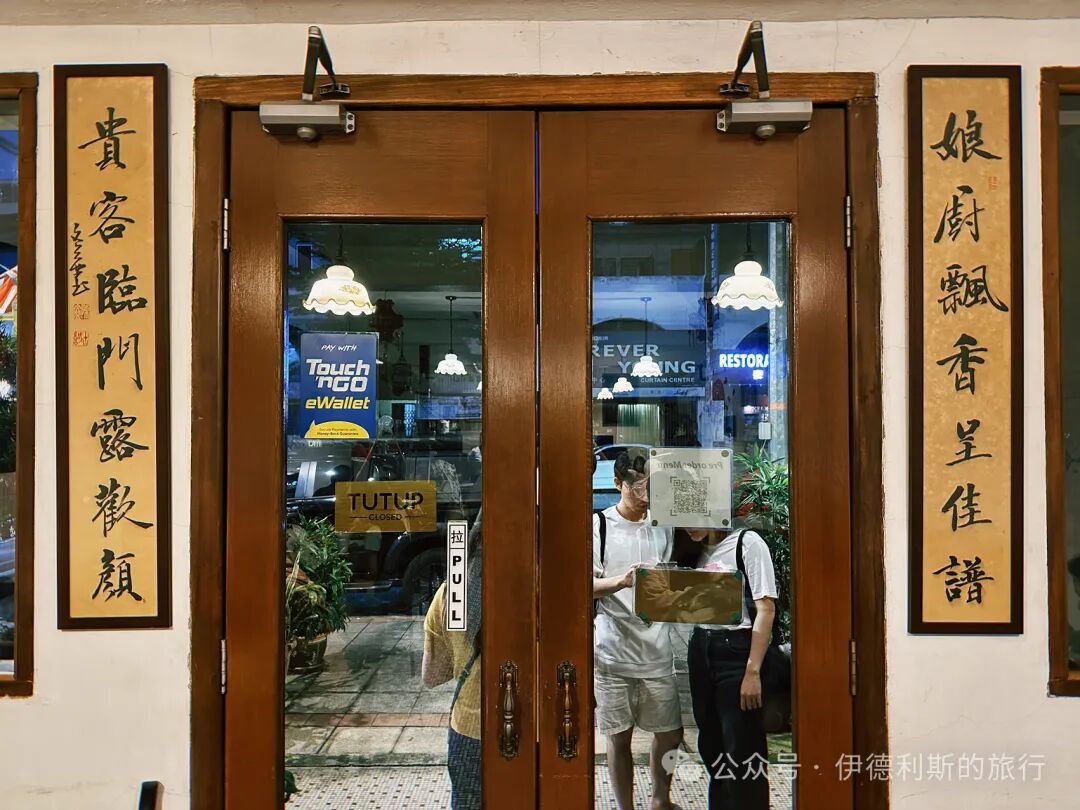
As the birthplace of Nyonya culture, you must eat Nyonya cuisine once when you come to Malacca. There are many halal Nyonya restaurants on the east side of the old town of Malacca on Independence Street (Jln Merdeka), with Atlantic and Cottage Spices being the most famous. Both places had lines when we went, so we both took numbers. Later, a table opened up at Cottage Spices first, so we ate there.
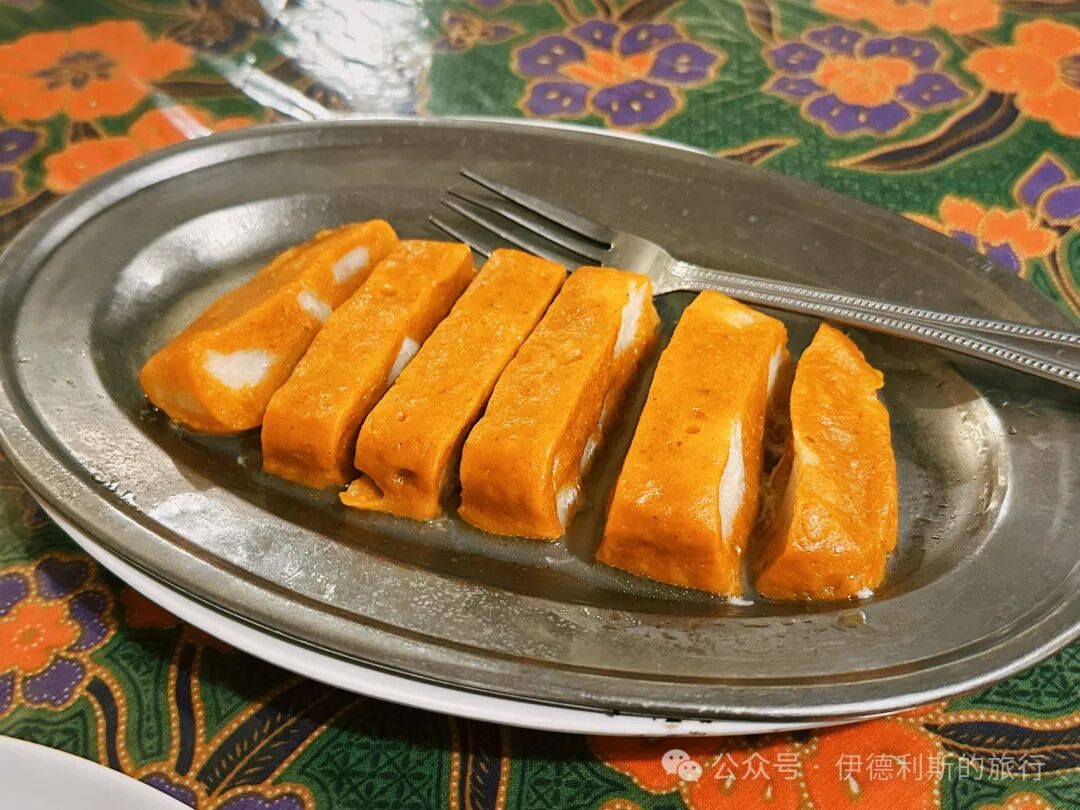
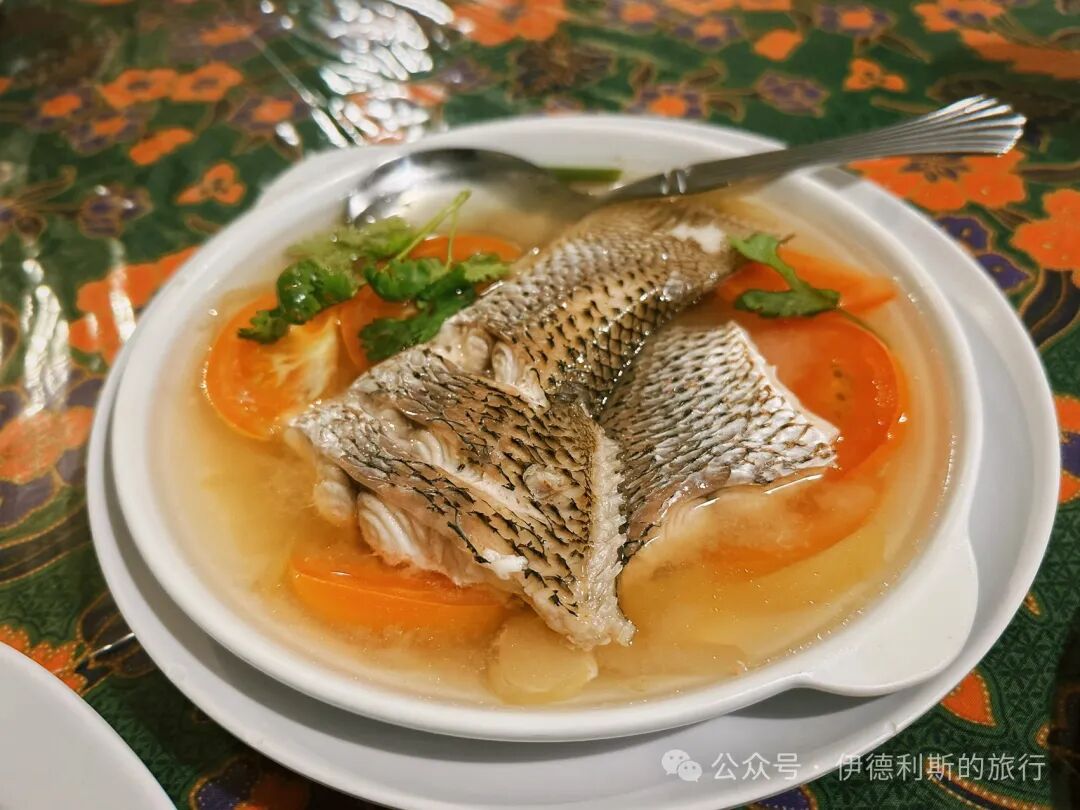
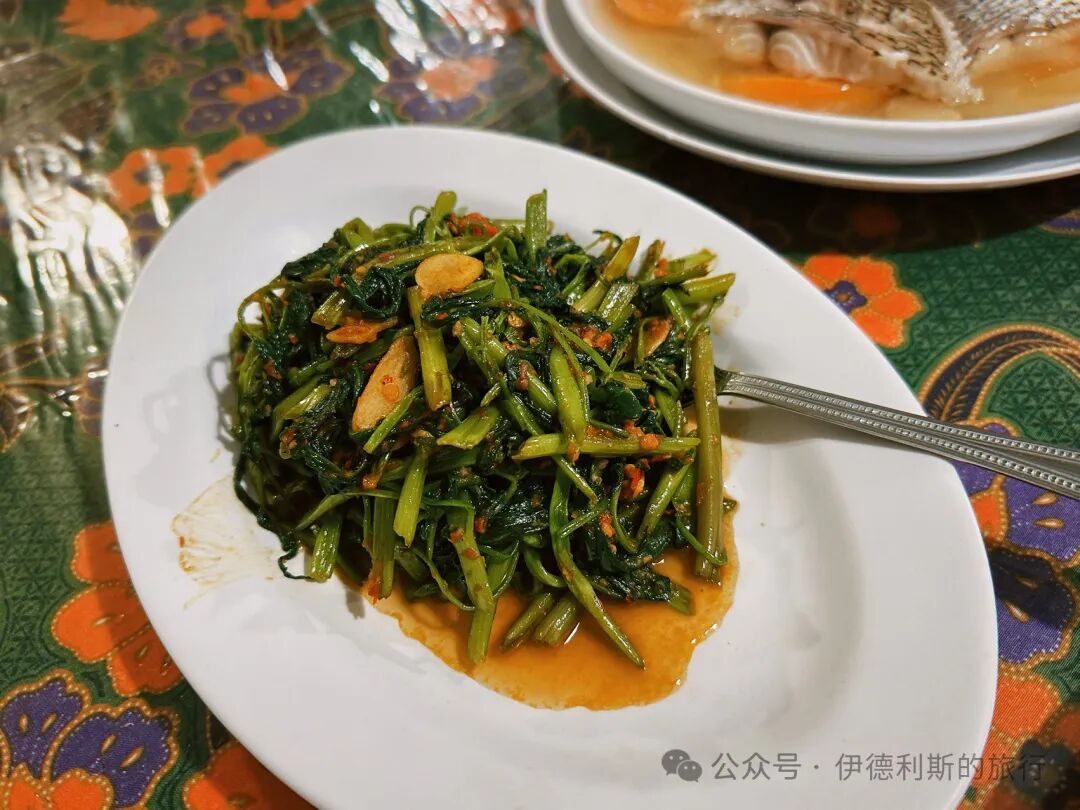
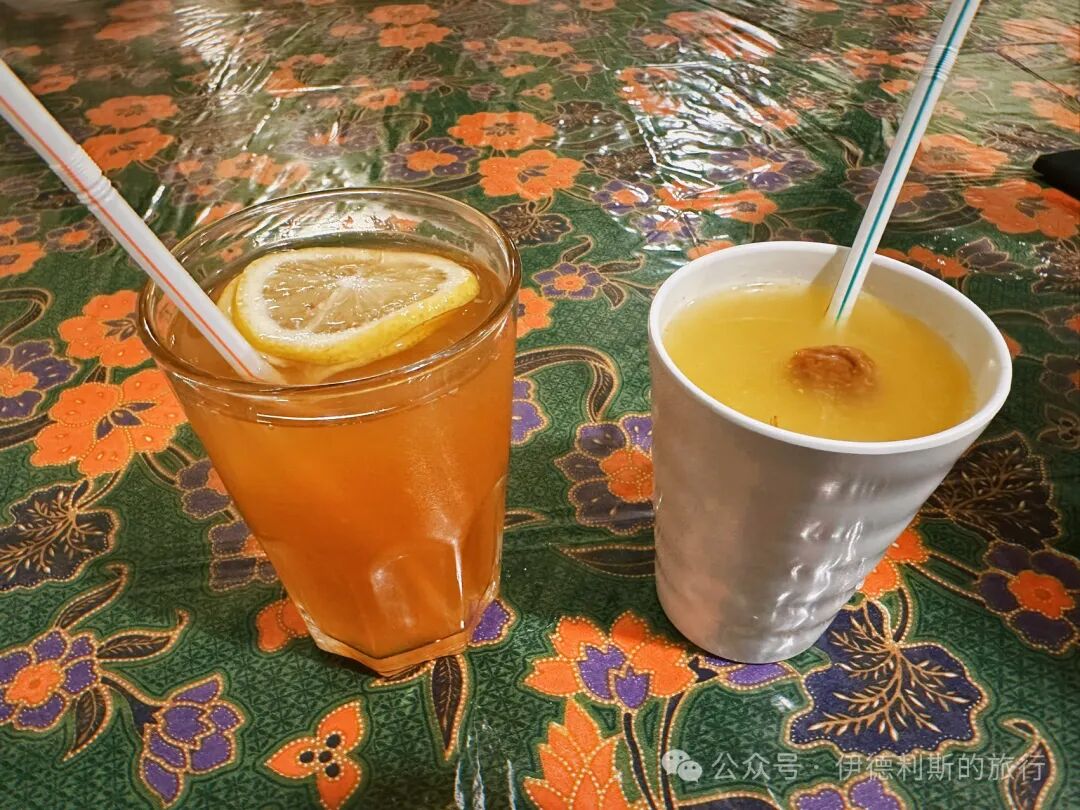
We ordered stir-fried water spinach with shrimp paste (Kangkung Belacan), Teochew steamed fish, steamed Nyonya fish cake (Otak-otak), and drank lime plum juice (Lime Plum), which was a perfect balance of meat and vegetables. Teochew steamed fish is red snapper served with pickled vegetables, pickled plums, and tomatoes. The sour taste is very appetizing. Otak-otak is a fish cake steamed with coconut milk, chili paste, lemongrass, and galangal. It smells and tastes delicious.
Indian Nasi Kandar
To truly experience the food of Malaysia's three main ethnic groups, you must try Indian Muslim Nasi Kandar after eating Nyonya, Chinese-Muslim, and Malay kampung dishes.
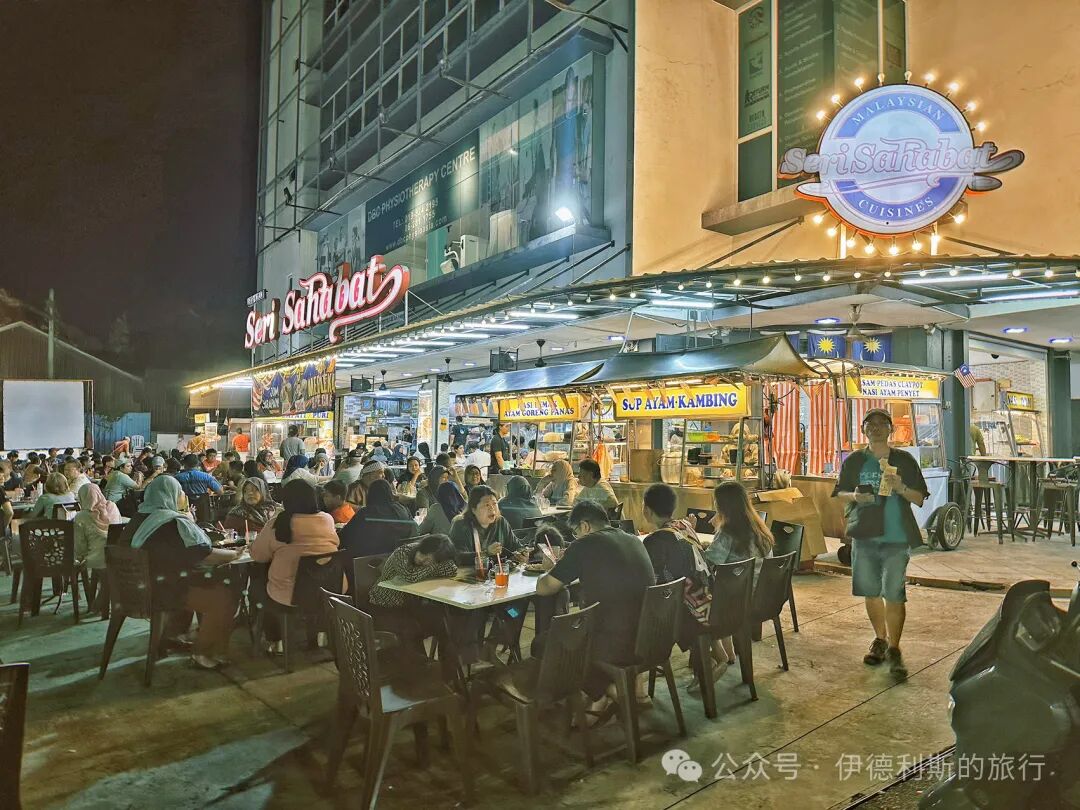
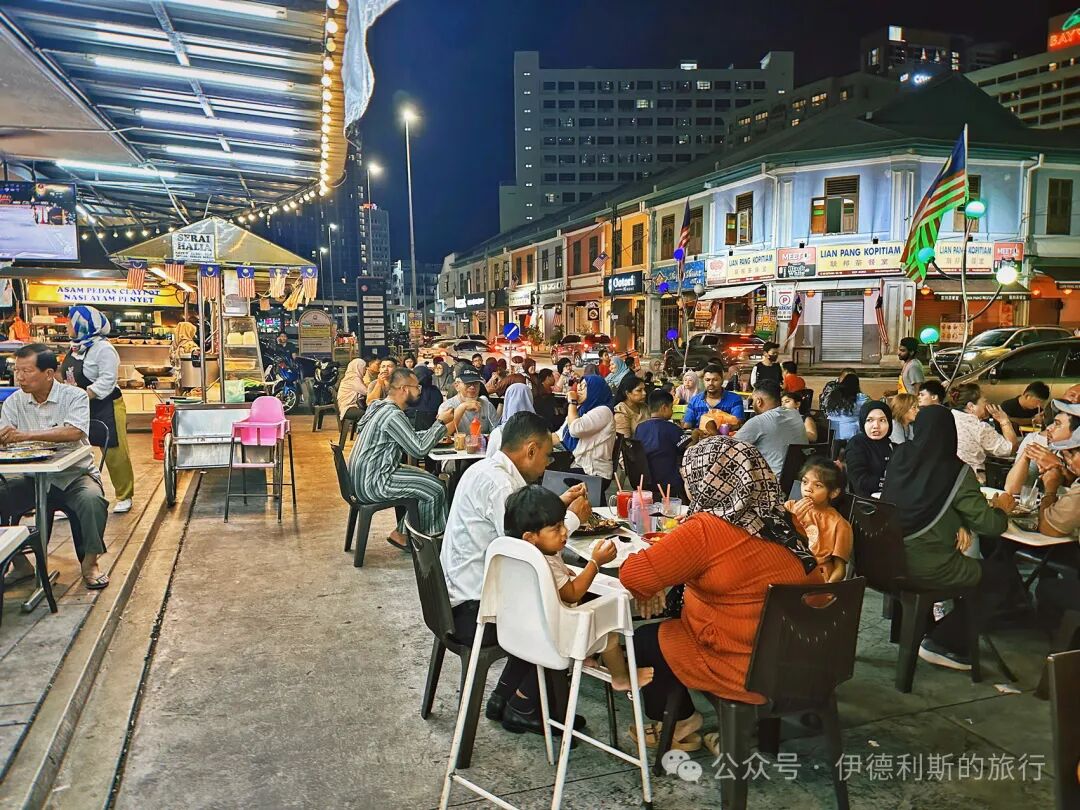
We went to Seri Sahabat next to the Majestic Hotel in Malacca. They are open 24 hours a day, and at night, it gets very crowded with all the food stalls open. It is quieter during the day, when they mainly sell Nasi Kandar. They have meat, fish, and vegetables, making for a very balanced meal.
South Indian Tamil Muslims are called Mamak in Malaysia. This name comes from the Tamil word for uncle (maa-ma), and they are famous for their Mamak stall (Gerai Mamak) and Mamak restaurant (Restoran Mamak) food culture.
Nasi Kandar is the signature dish at Tamil Mamak restaurants. It is rice served with various curries of beef, lamb, chicken, fish, and shrimp, along with side dishes. When Tamil Muslims first arrived in Malaysia in the 19th century, most carried food on shoulder poles to sell along the streets, which is why it became known as shoulder-pole rice (nasi kandar). By the 20th century, Tamil Muslims started opening restaurants and stalls, but the name shoulder-pole rice (nasi kandar) is still used today.
Hainan coffee
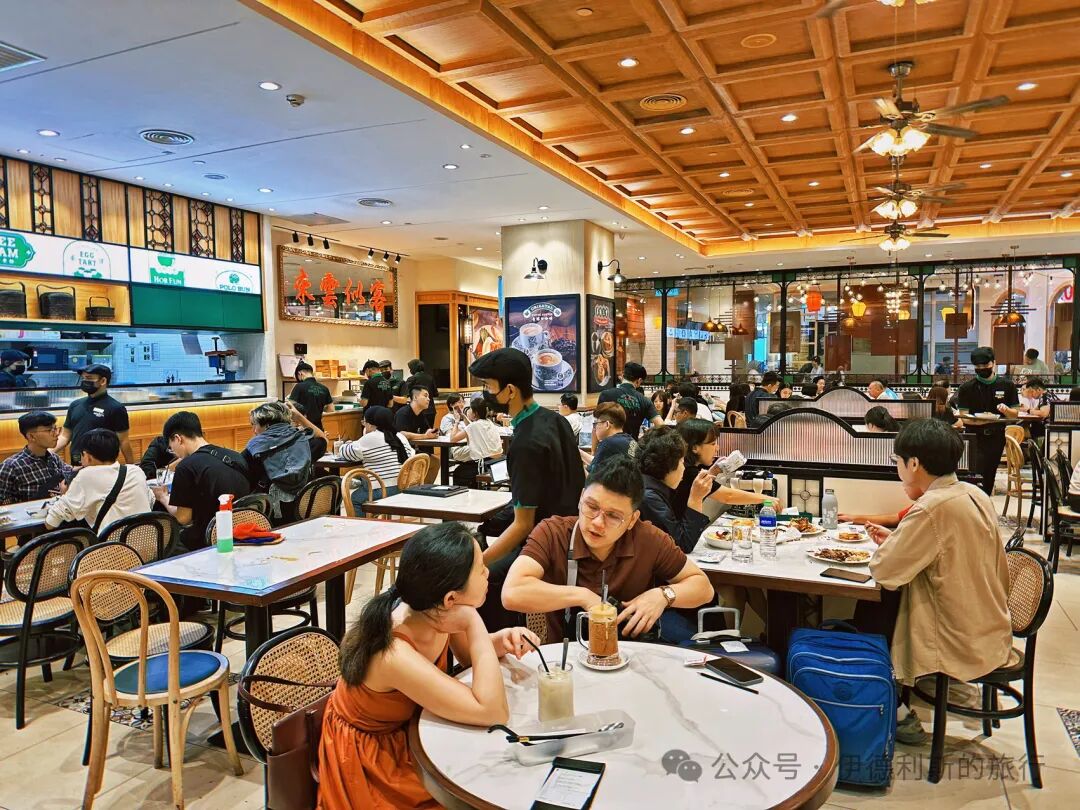
On the drive from Malacca back to Kuala Lumpur Airport, the most popular restaurant in Terminal 2 is the Hainan coffee chain Oriental Kopi, where people are almost always waiting in line.
They have a huge variety of dishes and are currently one of the most famous halal Hainan-style cafes. Hainanese people began immigrating to Malaysia in the 19th century. Many early immigrants worked as cooks and waiters in British hotels and restaurants, while some worked as servants for British officers. Influenced by their British employers, the Hainanese learned to cook Western food and blended it with Hainanese culinary elements to create the unique Hainanese coffee shop (Hailam Kopitiam) culture.
We ordered flaky egg tarts, pineapple buns with butter (bo luo bao), Hainanese chicken rice, classic rice vermicelli (mee siam), curry fish balls, coffee, soy milk with grass jelly, and longan sea coconut dessert. Coffee, flaky egg tarts (danta), and pineapple buns with cold butter (binghuo boluobao) are known as the "Huayang Three Treasures" and make a classic Nanyang-style breakfast. Their flaky egg tarts are truly well-made, with a very tender egg custard and a rich aroma. Their sweet dessert soups (tangshui) are also delicious. We rarely drink these in the north, so it felt like a special Nanyang experience.
However, their Hainanese chicken rice was not great. The rice quality seemed poor, with a gritty texture that did not taste as good as the rice at other places.
Halal Food Guide: Penang — Chinese Halal Food and Muslim Streets
Articles • ali2007fr posted the article • 0 comments • 159 views • 2026-05-17 21:54
Summary: Halal Food Guide: Penang — Chinese Halal Food and Muslim Streets is presented here as a firsthand travel account in clear English, beginning with this scene: Penang, Malaysia, is a city where Chinese, Malay, and Indian people live together. The account keeps its focus on Penang Halal Food, Chinese Muslim Food, Malaysia Travel while preserving the names, places, food, and historical details from the Chinese source.
Penang, Malaysia, is a city where Chinese, Malay, and Indian people live together. Here, you can find halal food made by many different groups, including Teochew people, Peranakan (Baba Nyonya) people, Hui Muslims, Jawi Peranakan people, and Tamil Muslim (Mamak) people. I will now introduce the halal Chinese food I ate in Penang.
1. Bee Hwa Cafe
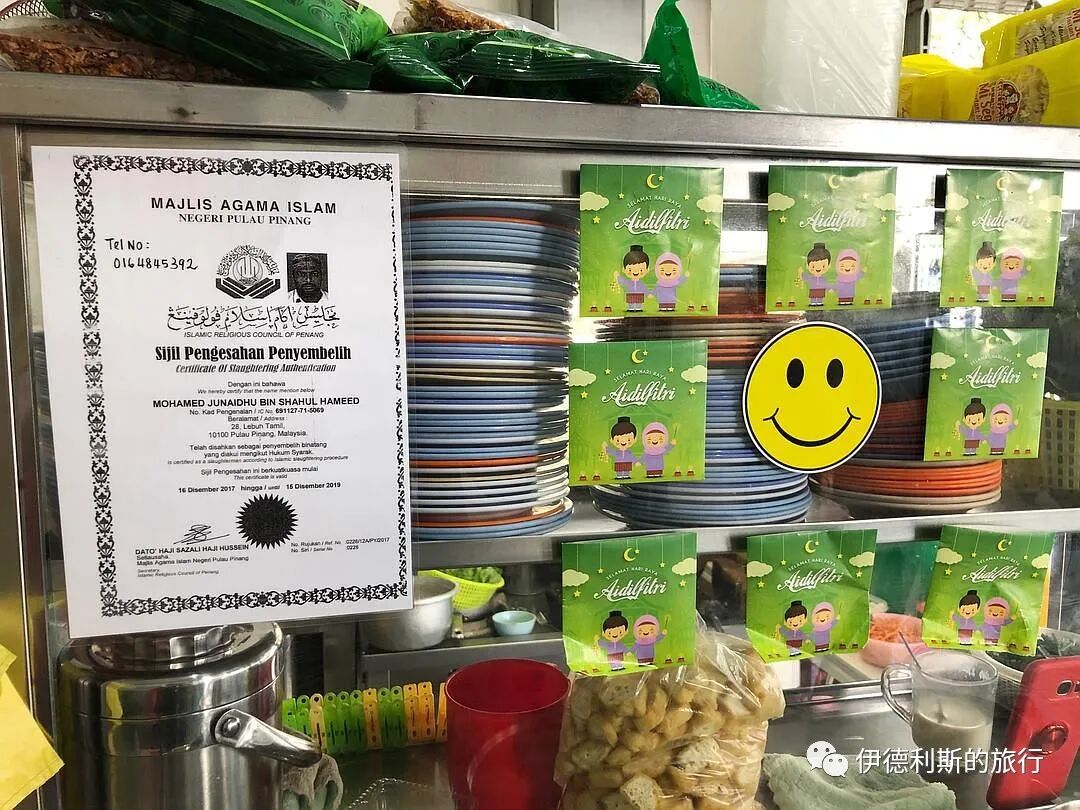
Bee Hwa Cafe is a Teochew-style Chinese halal restaurant that only uses halal ingredients. The staff includes both Teochew Chinese and Malay women wearing headscarves. Many local Malay people love coming here to try halal Chinese-style food.
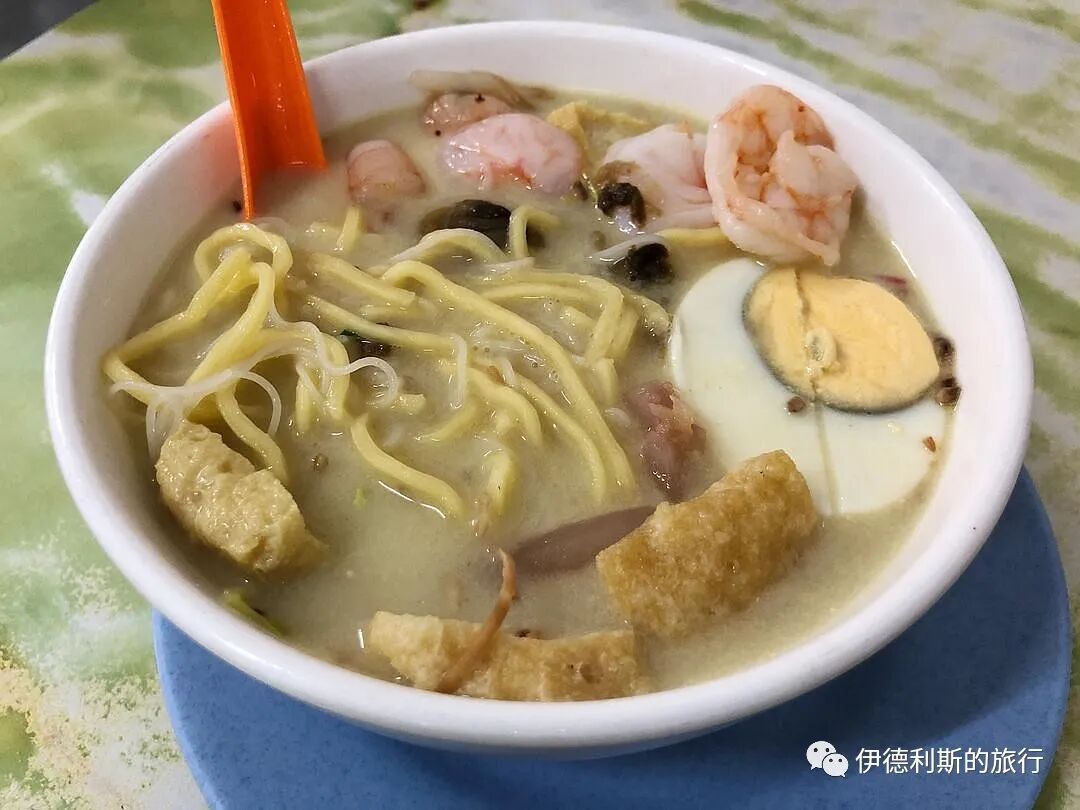
We ate the classic Malaysian Chinese stir-fried rice noodles (char kway teow) and white curry noodles (curry mee) at their place.
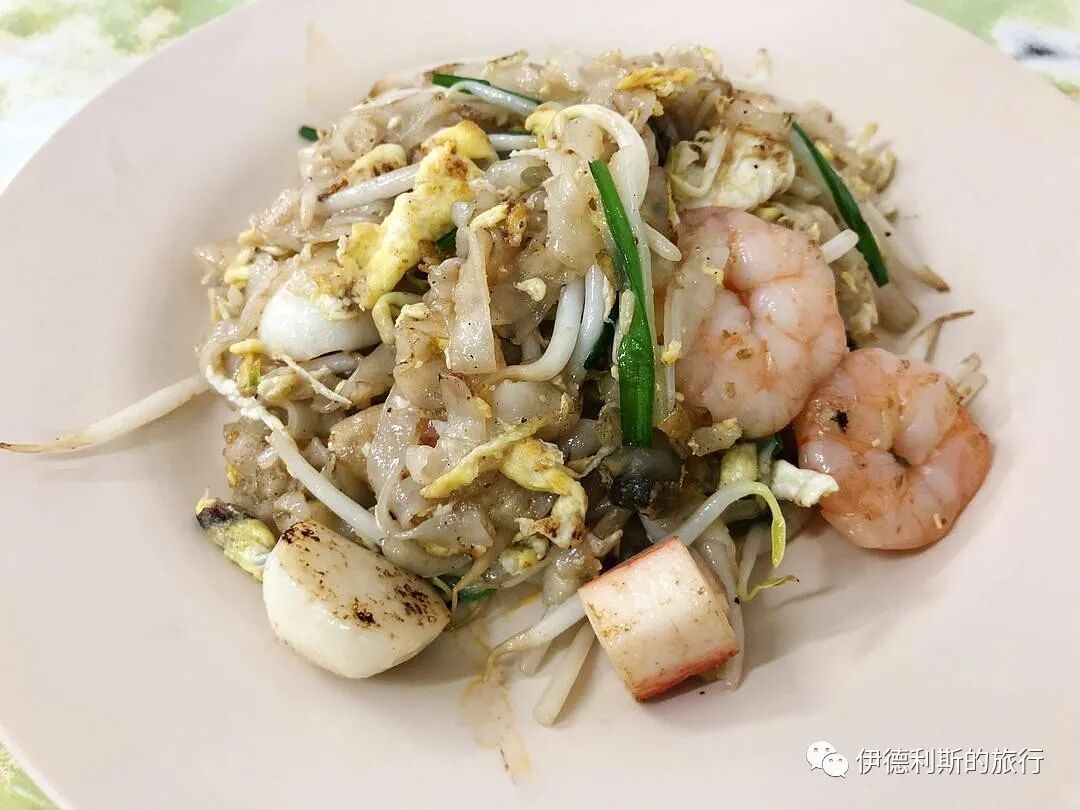
Stir-fried rice noodles (char kway teow) are a signature dish for the Chinese community in Penang, much like the beef chow fun found in Cantonese cooking. Although the dish comes from the old hometown of Teochew, it has developed its own local style after being passed down through generations. The stir-fried rice noodles in Penang are wider and thicker, and they are seasoned mainly with fish sauce and soy sauce, which gives them a lighter color. They also add shrimp, fish balls, crab sticks, bean sprouts, chives, and eggs, but since this shop is halal, they do not use lard or Chinese sausage.
White curry noodles are made with coconut milk and curry, making them slightly spicy. They include shrimp, fried tofu, eggs, wood ear mushrooms, and mint leaves. You can choose your own noodles, so we picked a mix of half yellow noodles and half rice vermicelli.
2. Pastry Culture Workshop
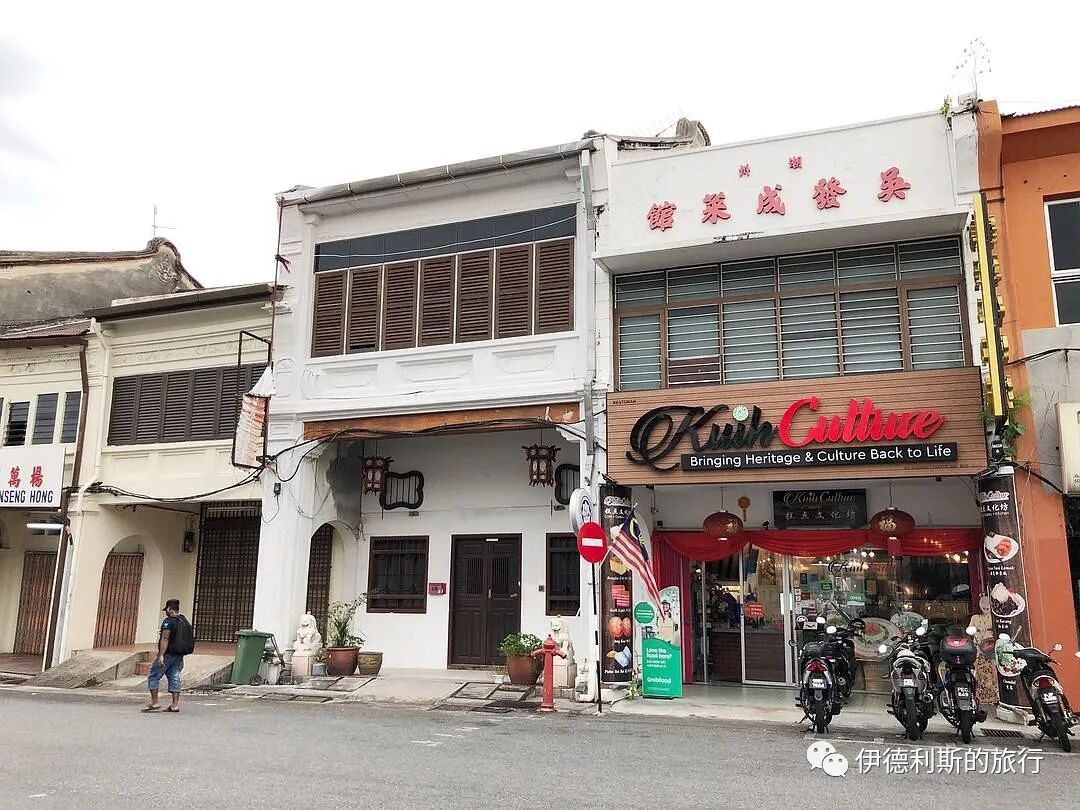
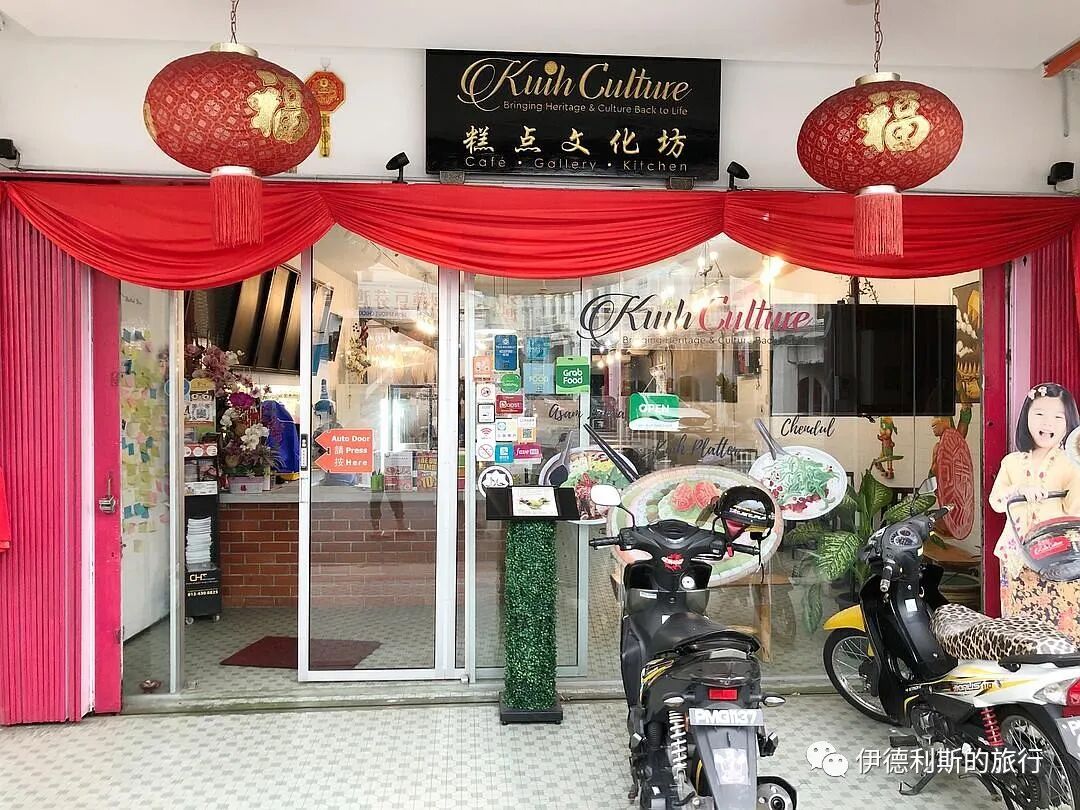
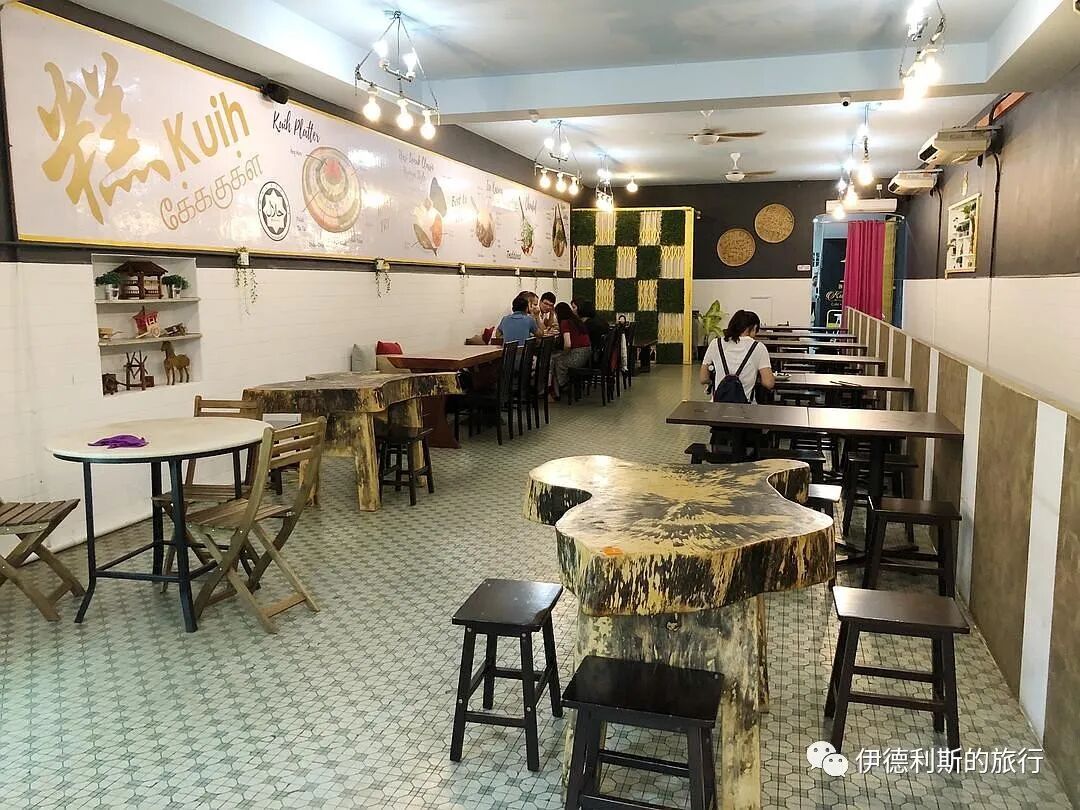
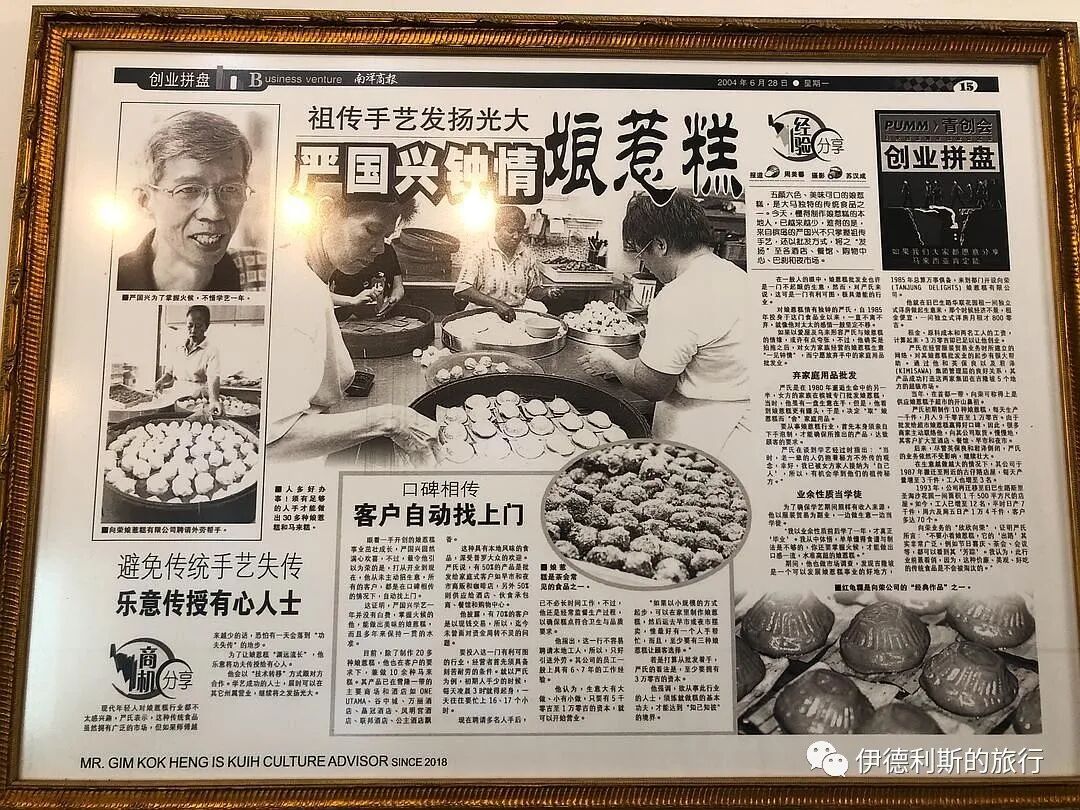
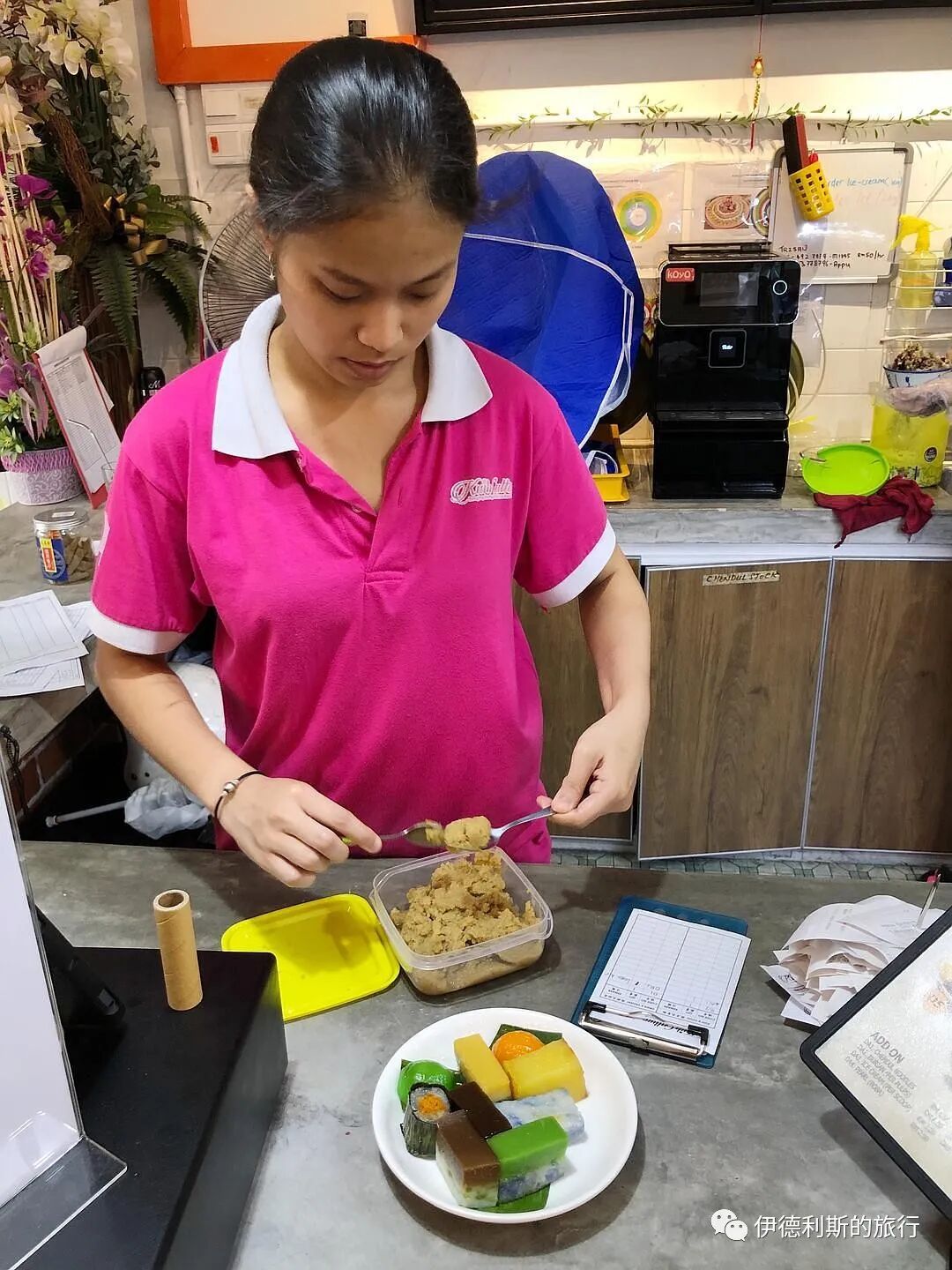
Pastry Culture Workshop (Kuih Culture) is a shop that sells halal Nyonya cakes (Nyonya Kuih). The owner is Yan Guoxing, a Chinese man from Penang. Yan Guoxing met his wife in 1980 and learned that her family specialized in making and wholesaling Nyonya cakes. Because he loved these cakes, he started learning how to make them in 1984. His wife's family originally kept their Nyonya cake recipes a secret. As a son-in-law, Yan Guoxing was accepted into the family and spent a year as an apprentice before he finally learned how to make the cakes.
Baba Nyonya, also called Straits-born Chinese (Peranakan), refers to the descendants of Chinese people who settled in places like Malacca, Penang, and Singapore starting in the 15th century and married local people. The men are called Baba and the women are called Nyonya. Although the Peranakan (Nyonya) people are a minority group, their Nyonya cakes (kuih) are loved by all the different communities on the Malay Peninsula. The best thing about Nyonya cakes is how they use plant juices like pandan leaf, butterfly pea flower, roselle, and ramie leaf (daun rami) to color them, giving the cakes a variety of bright colors and floral scents.
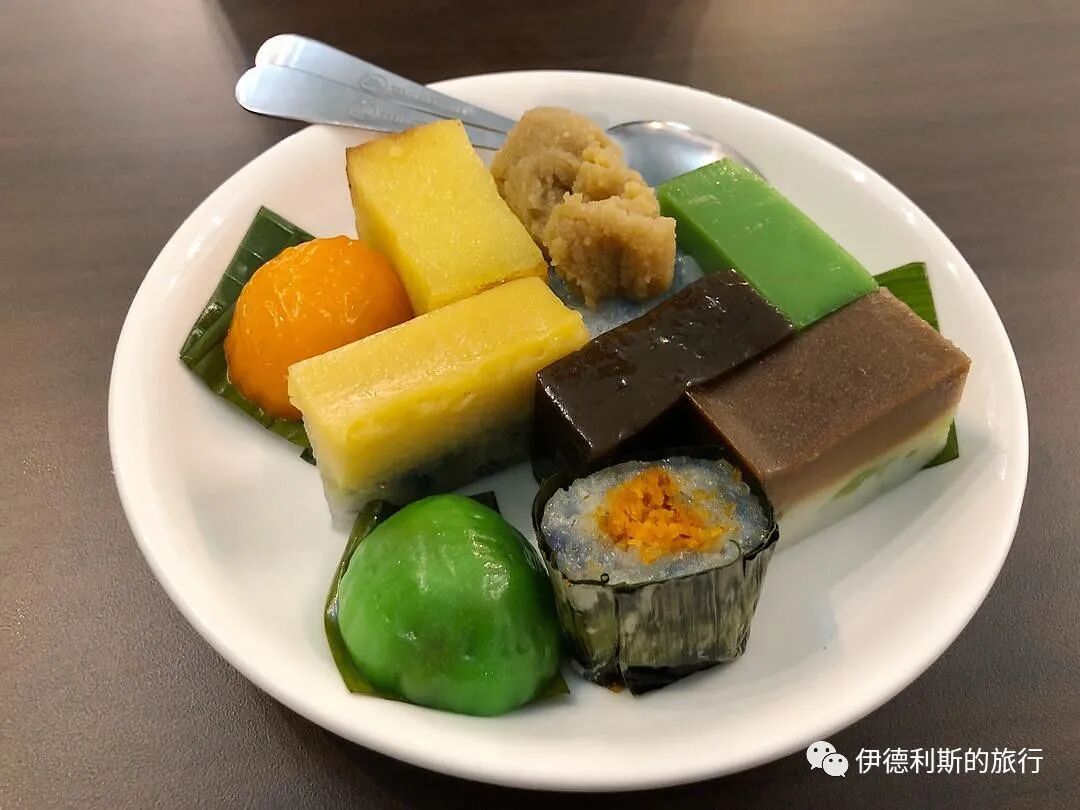
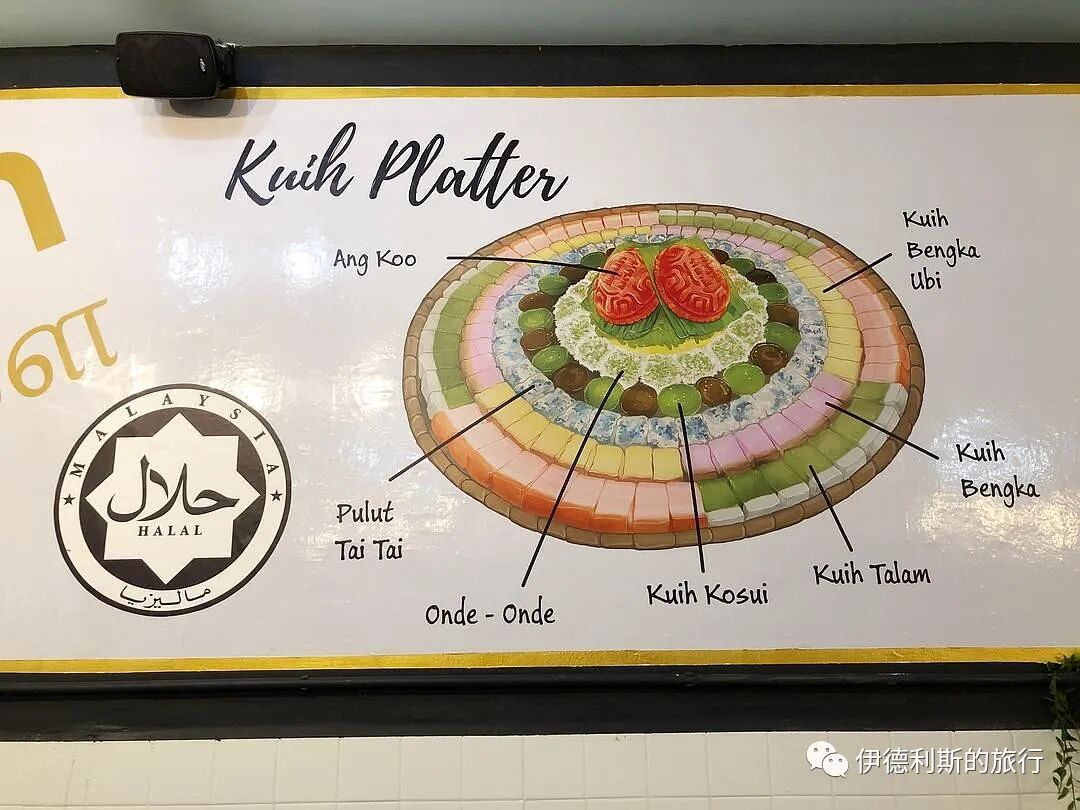
Among the Nyonya cakes we tasted, the red one on the far left is the famous red tortoise cake (ang koo), which is a must-have offering for Chinese people in Southeast Asia during religious ceremonies. In the past, the Peranakan people did not say a baby's gender directly, but used the shape of the red tortoise cake to show it; the tortoise shape meant a boy, and the peach shape meant a girl.
To the right of the red tortoise cake is the yellow baked cassava cake (kuih bingka ubi), the green one on the far right is the pandan coconut milk cake (kuih talam), and the green round one at the bottom is the palm sugar rice cake (kuih kosui).
The shop assistant spreads coconut jam (kaya) on top of blue flower sticky rice cake (pulut tai tai). Coconut jam (kaya) is made from coconut milk, pandan leaves, palm sugar, and eggs.
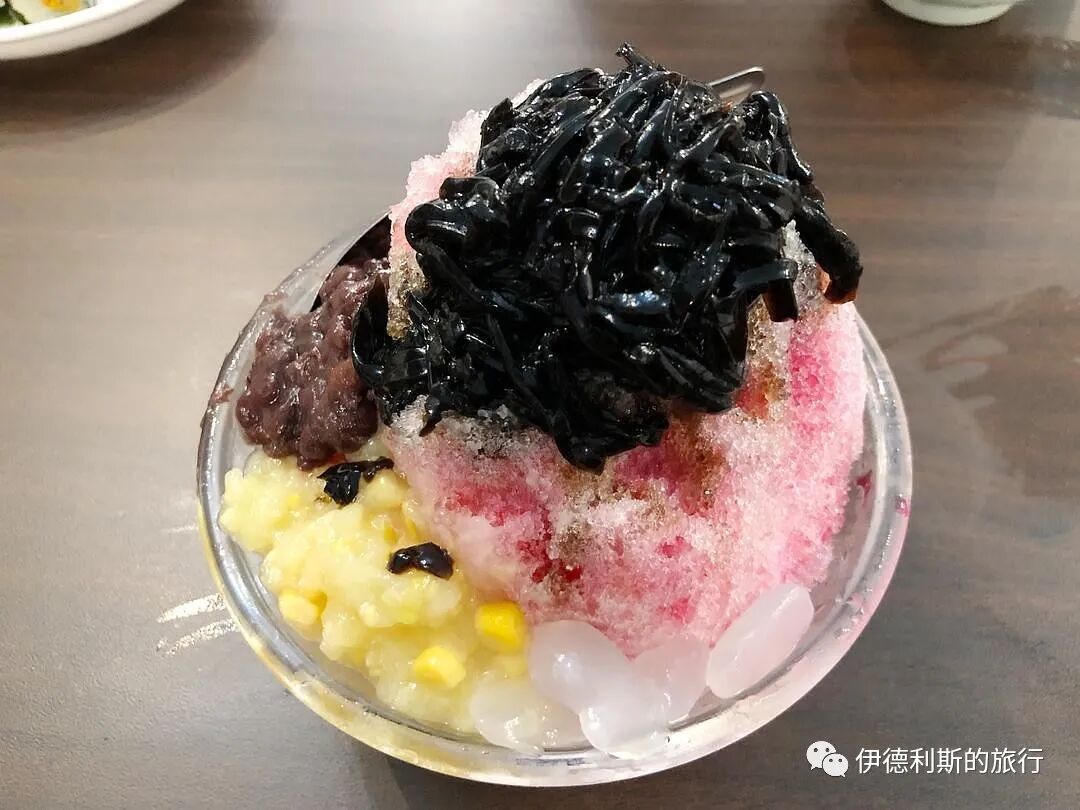
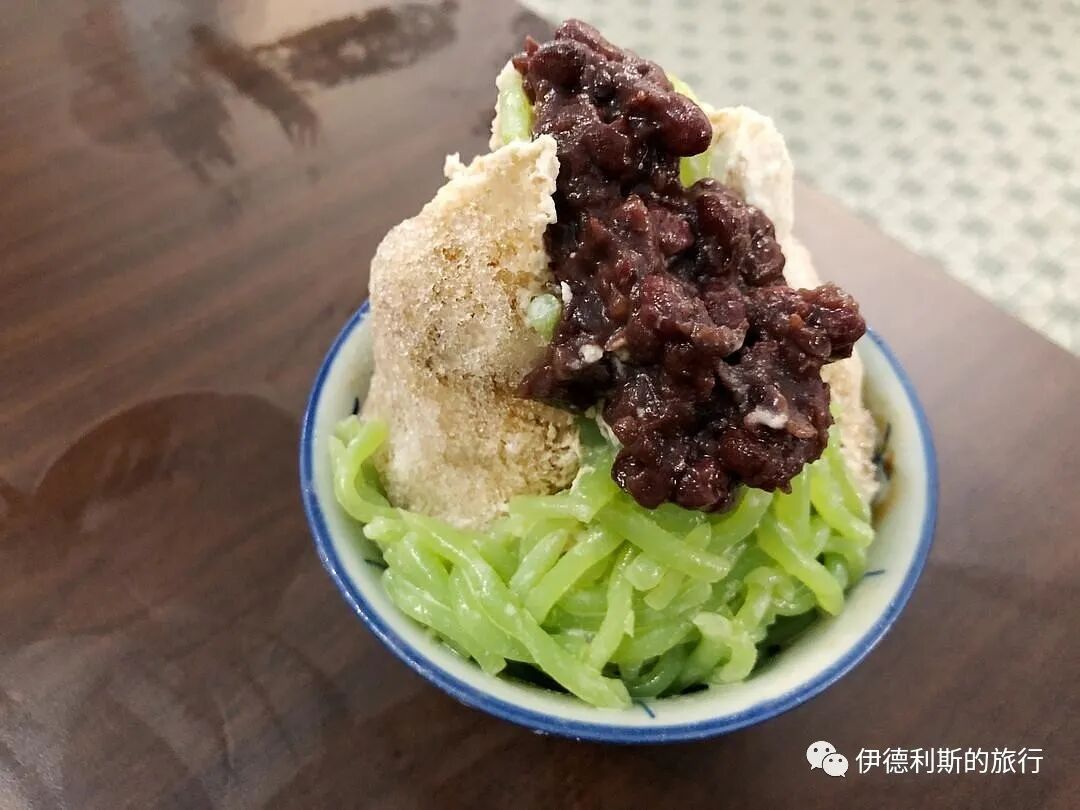
We also ate Nanyang-style shaved ice with green jelly noodles (cendol) and red bean ice. Shaved ice with green jelly noodles (cendol) comes from Chaozhou. It is made by adding green noodles made from pandan leaves and sticky rice to shaved ice, then pouring coconut milk, palm sugar, and red beans over it.
3. Liu's Restaurant
The biggest surprise of this trip to Penang was finding a restaurant run by Hui Muslims and enjoying a delicious Nanyang Hui Muslim feast.
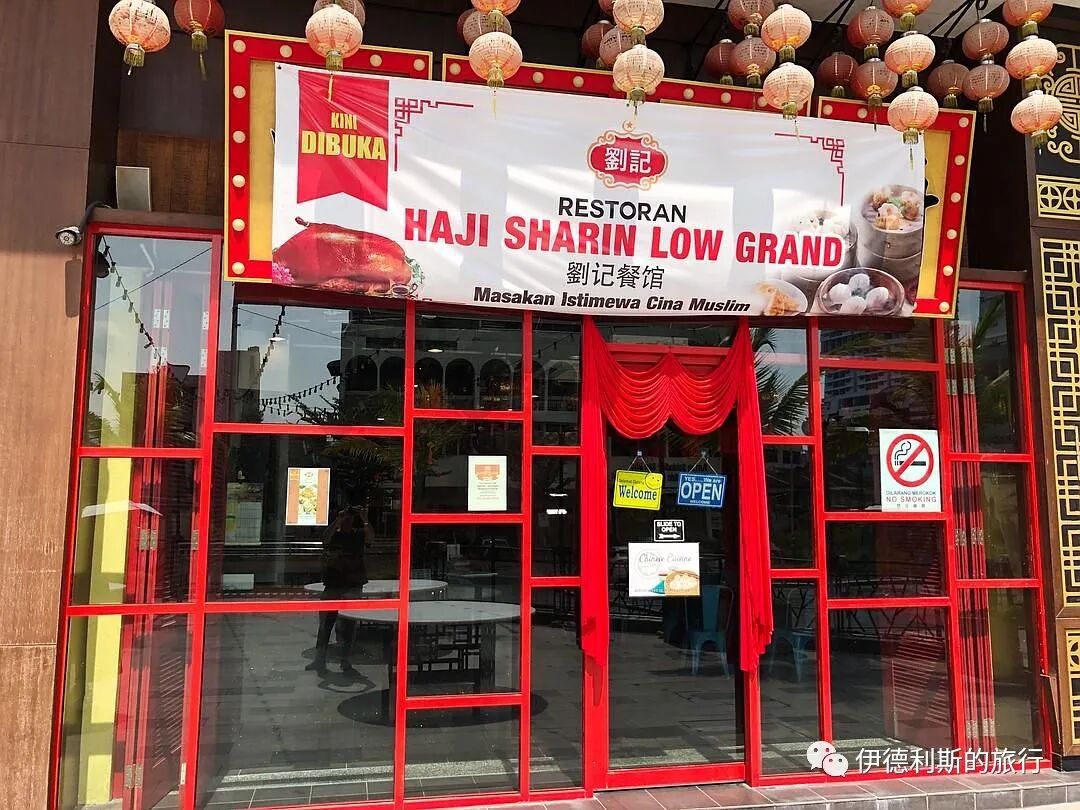
This restaurant, Restoran Haji Sharin Low Grand, is the largest Hui Muslim restaurant chain in Nanyang. It has over 17 branches across Malaysia and Indonesia, with the main branch in Kuala Lumpur. The founder is a Hui Muslim named Tuan Haji Sharin Low.
We ordered Nyonya flower crab, Teochew-style steamed grouper, Liu's claypot tofu, and vermicelli soup (mianxianhu). Everything was delicious. The meal featured a mix of local Nyonya, Teochew, and Minnan cooking styles, all using halal ingredients. It was a true cultural fusion.
After eating, we chatted with the owner. She is a local Hui Muslim. I was very excited to finally meet and talk with members of this group, whom I had previously only read about in news and academic papers. The owner was very welcoming and invited us to visit again. We also learned that a local mosque for Hui Muslims in Penang was about to start construction (we visited in 2019), which will give the local Hui Muslims a social center.
The restaurant has membership application forms for the Malaysian Chinese Muslim Association (MACMA). MACMA started in 1994 to clear up the misunderstanding among Malaysian Chinese that Islam is only for Malays and that Chinese people cannot be Muslim. It also helps Malay Muslims learn about Chinese culture. The association works to help Malaysian Chinese Muslims solve various problems and provides guidance for new converts. The association offers free "Understanding Islam" classes in the evening. They teach in both English and Chinese, and everyone is welcome to attend. view all
Summary: Halal Food Guide: Penang — Chinese Halal Food and Muslim Streets is presented here as a firsthand travel account in clear English, beginning with this scene: Penang, Malaysia, is a city where Chinese, Malay, and Indian people live together. The account keeps its focus on Penang Halal Food, Chinese Muslim Food, Malaysia Travel while preserving the names, places, food, and historical details from the Chinese source.
Penang, Malaysia, is a city where Chinese, Malay, and Indian people live together. Here, you can find halal food made by many different groups, including Teochew people, Peranakan (Baba Nyonya) people, Hui Muslims, Jawi Peranakan people, and Tamil Muslim (Mamak) people. I will now introduce the halal Chinese food I ate in Penang.
1. Bee Hwa Cafe
Bee Hwa Cafe is a Teochew-style Chinese halal restaurant that only uses halal ingredients. The staff includes both Teochew Chinese and Malay women wearing headscarves. Many local Malay people love coming here to try halal Chinese-style food.
We ate the classic Malaysian Chinese stir-fried rice noodles (char kway teow) and white curry noodles (curry mee) at their place.
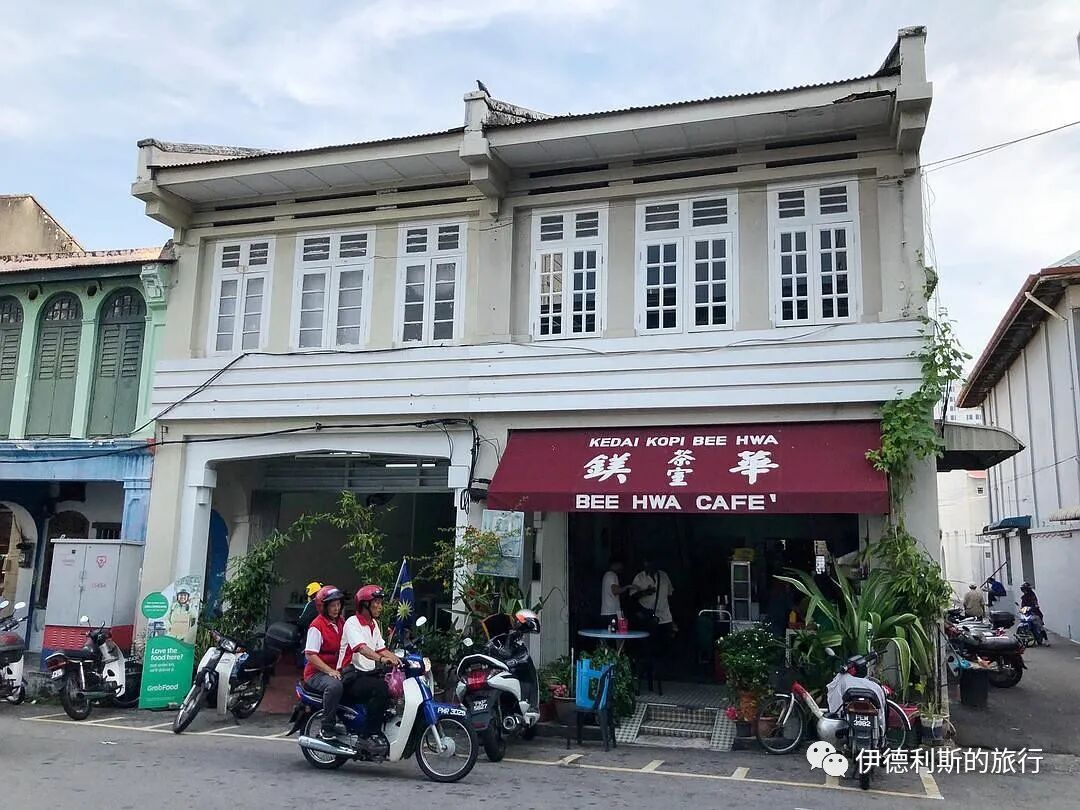
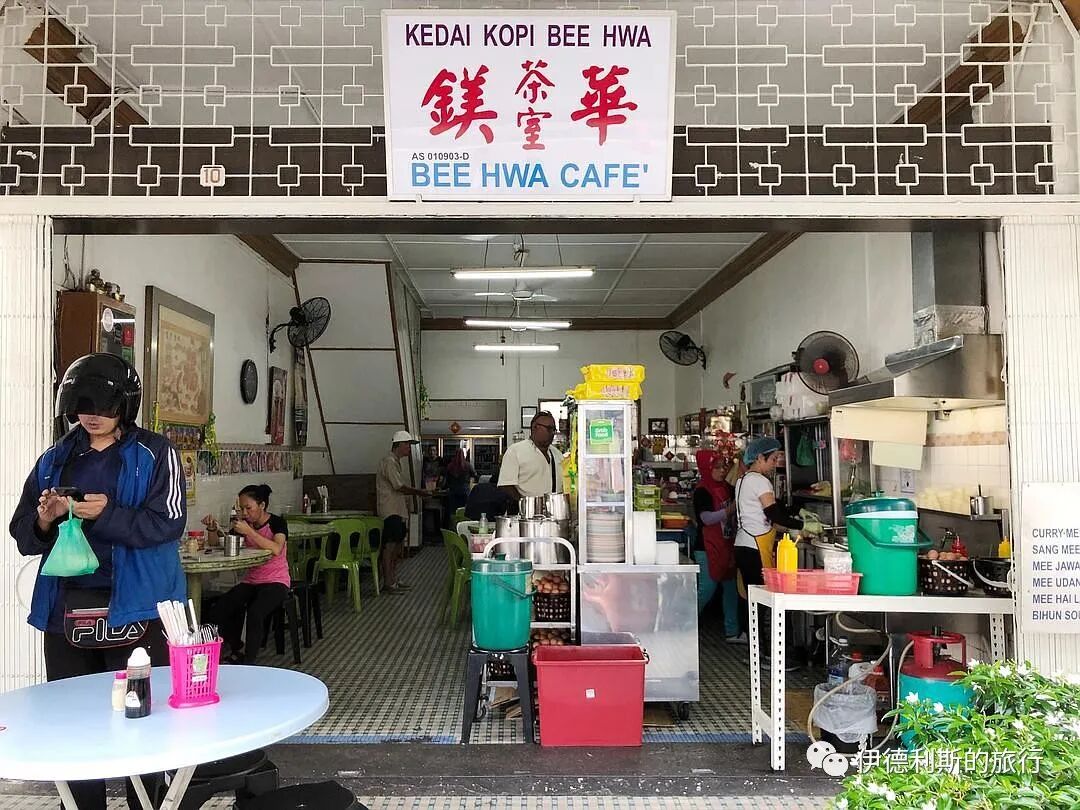
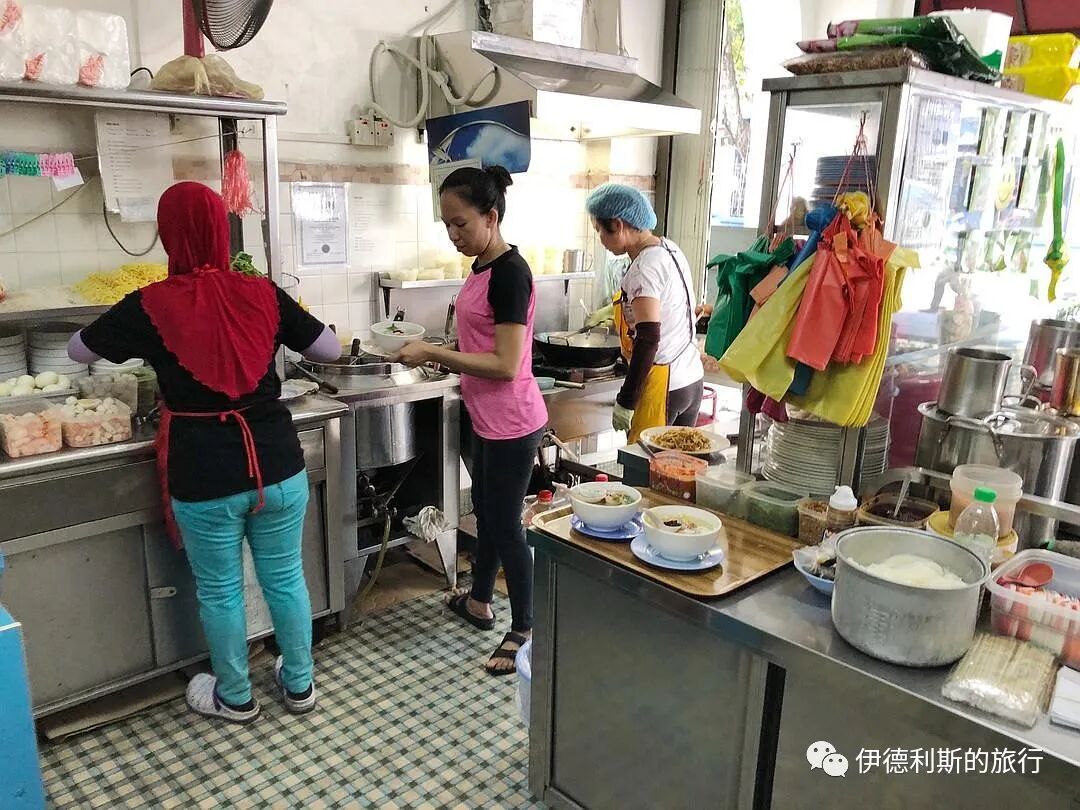
Stir-fried rice noodles (char kway teow) are a signature dish for the Chinese community in Penang, much like the beef chow fun found in Cantonese cooking. Although the dish comes from the old hometown of Teochew, it has developed its own local style after being passed down through generations. The stir-fried rice noodles in Penang are wider and thicker, and they are seasoned mainly with fish sauce and soy sauce, which gives them a lighter color. They also add shrimp, fish balls, crab sticks, bean sprouts, chives, and eggs, but since this shop is halal, they do not use lard or Chinese sausage.
White curry noodles are made with coconut milk and curry, making them slightly spicy. They include shrimp, fried tofu, eggs, wood ear mushrooms, and mint leaves. You can choose your own noodles, so we picked a mix of half yellow noodles and half rice vermicelli.
2. Pastry Culture Workshop
Pastry Culture Workshop (Kuih Culture) is a shop that sells halal Nyonya cakes (Nyonya Kuih). The owner is Yan Guoxing, a Chinese man from Penang. Yan Guoxing met his wife in 1980 and learned that her family specialized in making and wholesaling Nyonya cakes. Because he loved these cakes, he started learning how to make them in 1984. His wife's family originally kept their Nyonya cake recipes a secret. As a son-in-law, Yan Guoxing was accepted into the family and spent a year as an apprentice before he finally learned how to make the cakes.
Baba Nyonya, also called Straits-born Chinese (Peranakan), refers to the descendants of Chinese people who settled in places like Malacca, Penang, and Singapore starting in the 15th century and married local people. The men are called Baba and the women are called Nyonya. Although the Peranakan (Nyonya) people are a minority group, their Nyonya cakes (kuih) are loved by all the different communities on the Malay Peninsula. The best thing about Nyonya cakes is how they use plant juices like pandan leaf, butterfly pea flower, roselle, and ramie leaf (daun rami) to color them, giving the cakes a variety of bright colors and floral scents.
Among the Nyonya cakes we tasted, the red one on the far left is the famous red tortoise cake (ang koo), which is a must-have offering for Chinese people in Southeast Asia during religious ceremonies. In the past, the Peranakan people did not say a baby's gender directly, but used the shape of the red tortoise cake to show it; the tortoise shape meant a boy, and the peach shape meant a girl.
To the right of the red tortoise cake is the yellow baked cassava cake (kuih bingka ubi), the green one on the far right is the pandan coconut milk cake (kuih talam), and the green round one at the bottom is the palm sugar rice cake (kuih kosui).
The shop assistant spreads coconut jam (kaya) on top of blue flower sticky rice cake (pulut tai tai). Coconut jam (kaya) is made from coconut milk, pandan leaves, palm sugar, and eggs.
We also ate Nanyang-style shaved ice with green jelly noodles (cendol) and red bean ice. Shaved ice with green jelly noodles (cendol) comes from Chaozhou. It is made by adding green noodles made from pandan leaves and sticky rice to shaved ice, then pouring coconut milk, palm sugar, and red beans over it.
3. Liu's Restaurant
The biggest surprise of this trip to Penang was finding a restaurant run by Hui Muslims and enjoying a delicious Nanyang Hui Muslim feast.
This restaurant, Restoran Haji Sharin Low Grand, is the largest Hui Muslim restaurant chain in Nanyang. It has over 17 branches across Malaysia and Indonesia, with the main branch in Kuala Lumpur. The founder is a Hui Muslim named Tuan Haji Sharin Low.
We ordered Nyonya flower crab, Teochew-style steamed grouper, Liu's claypot tofu, and vermicelli soup (mianxianhu). Everything was delicious. The meal featured a mix of local Nyonya, Teochew, and Minnan cooking styles, all using halal ingredients. It was a true cultural fusion.
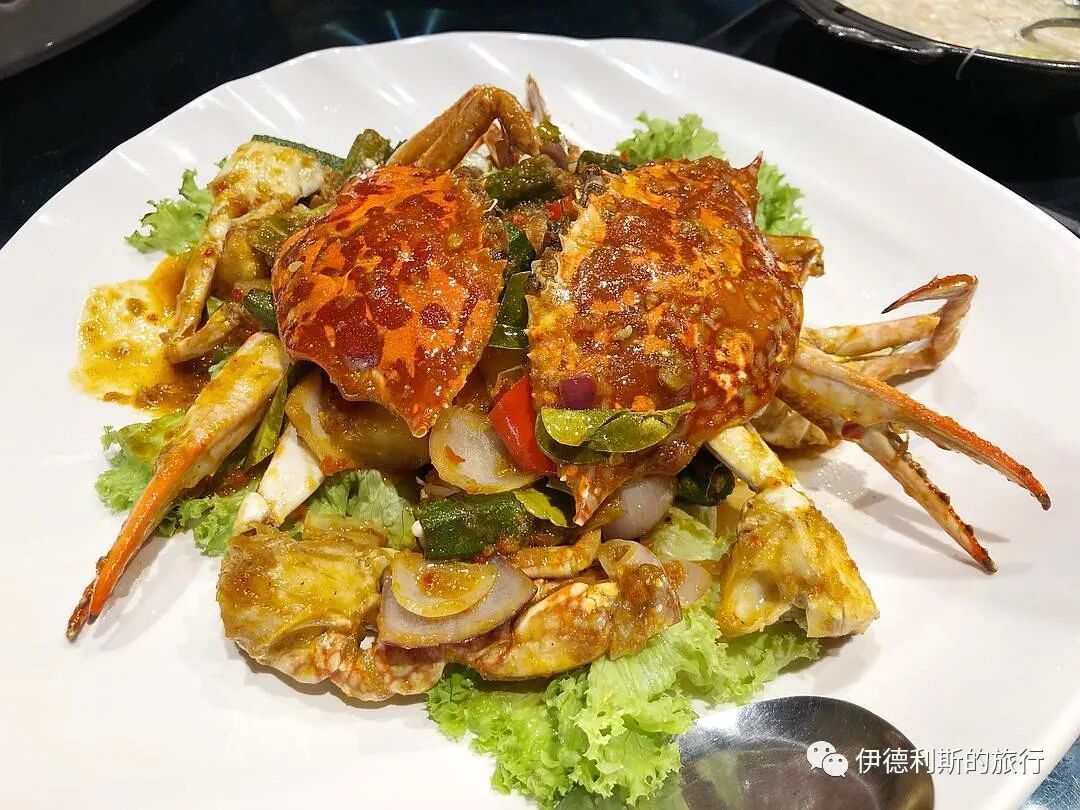
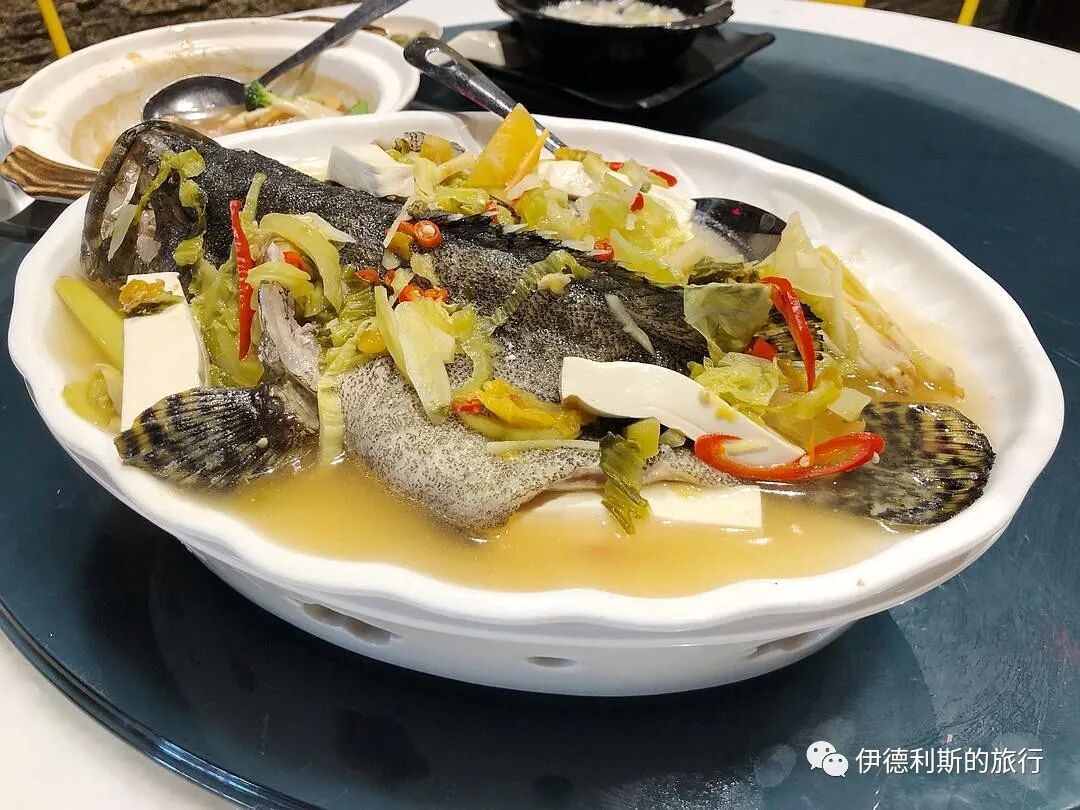
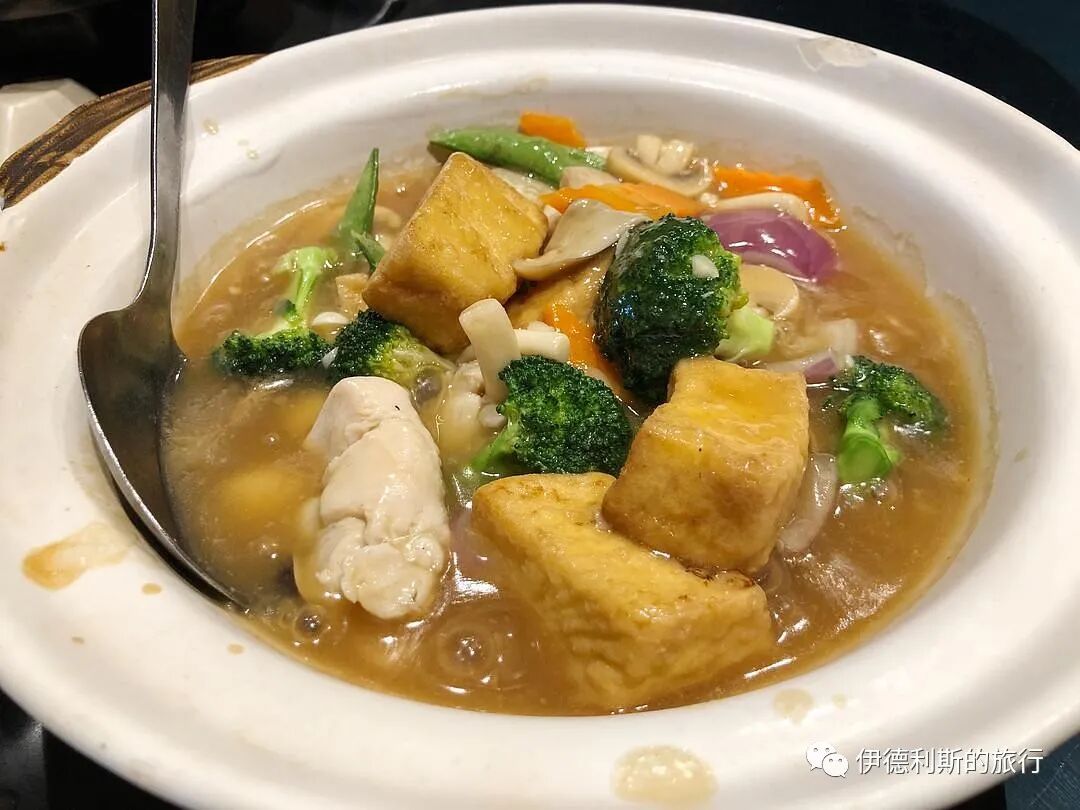
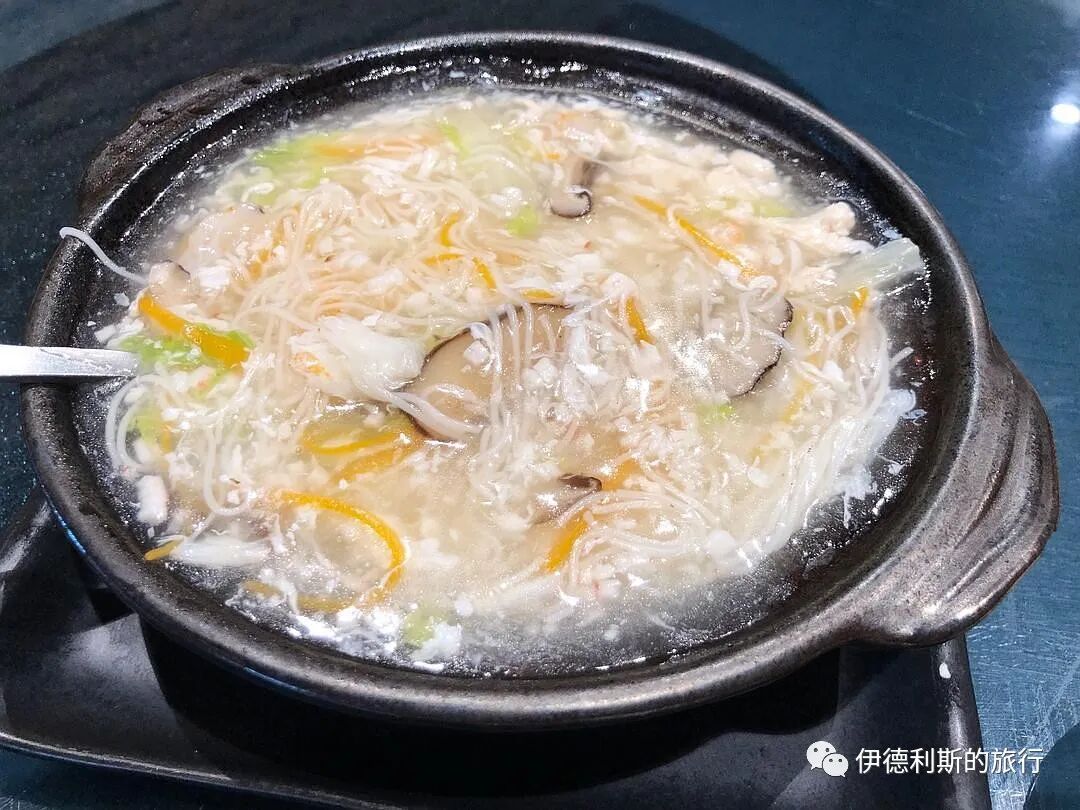
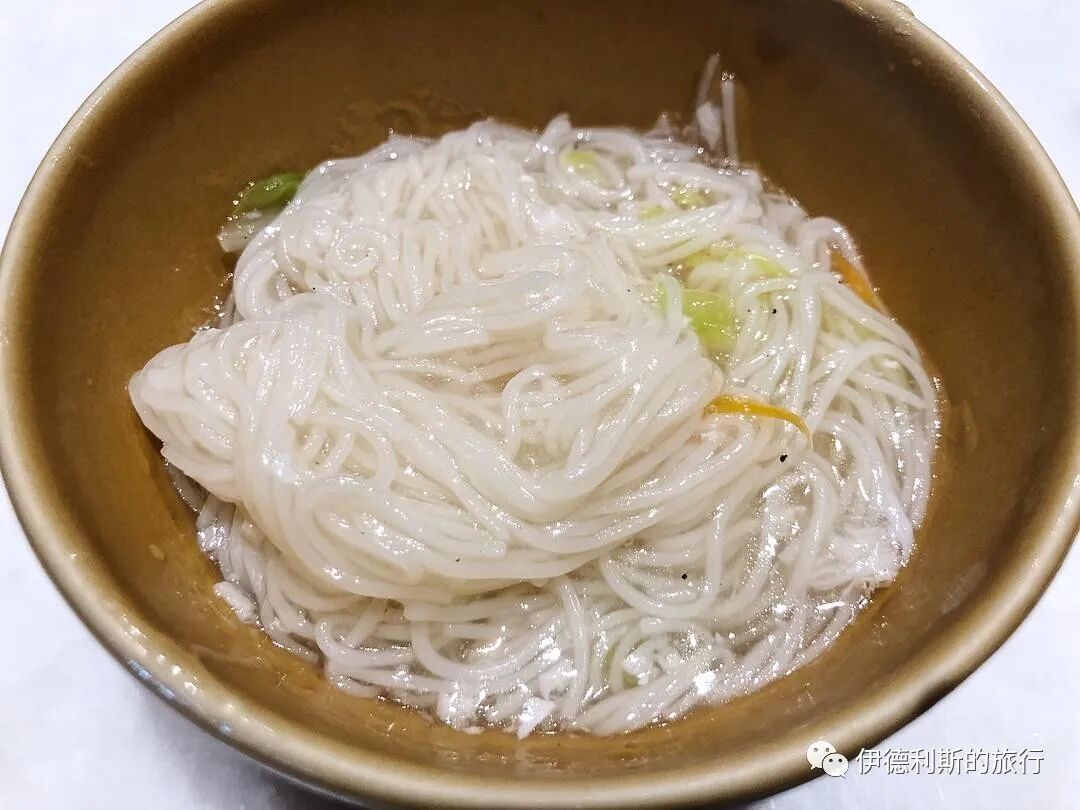
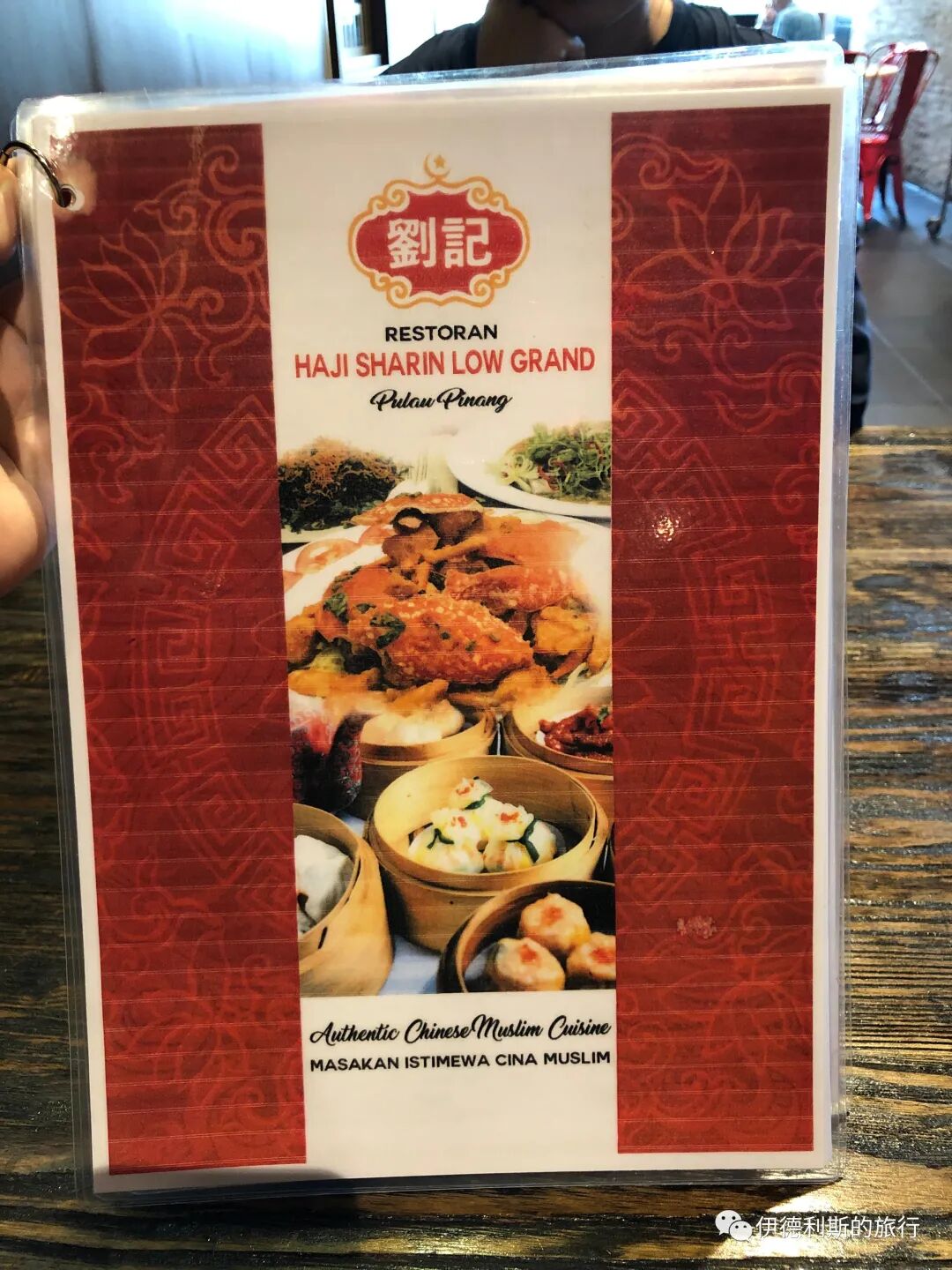
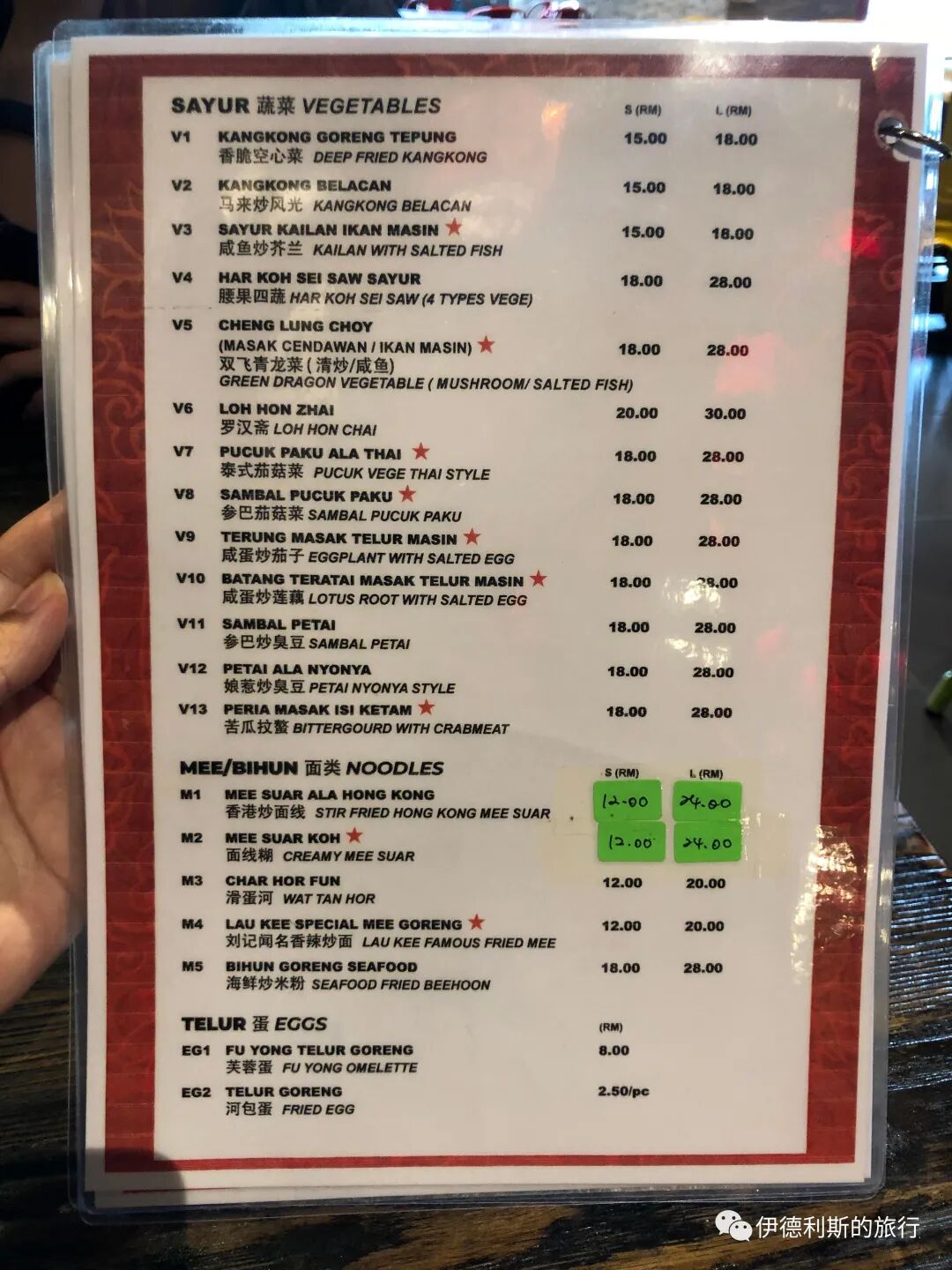
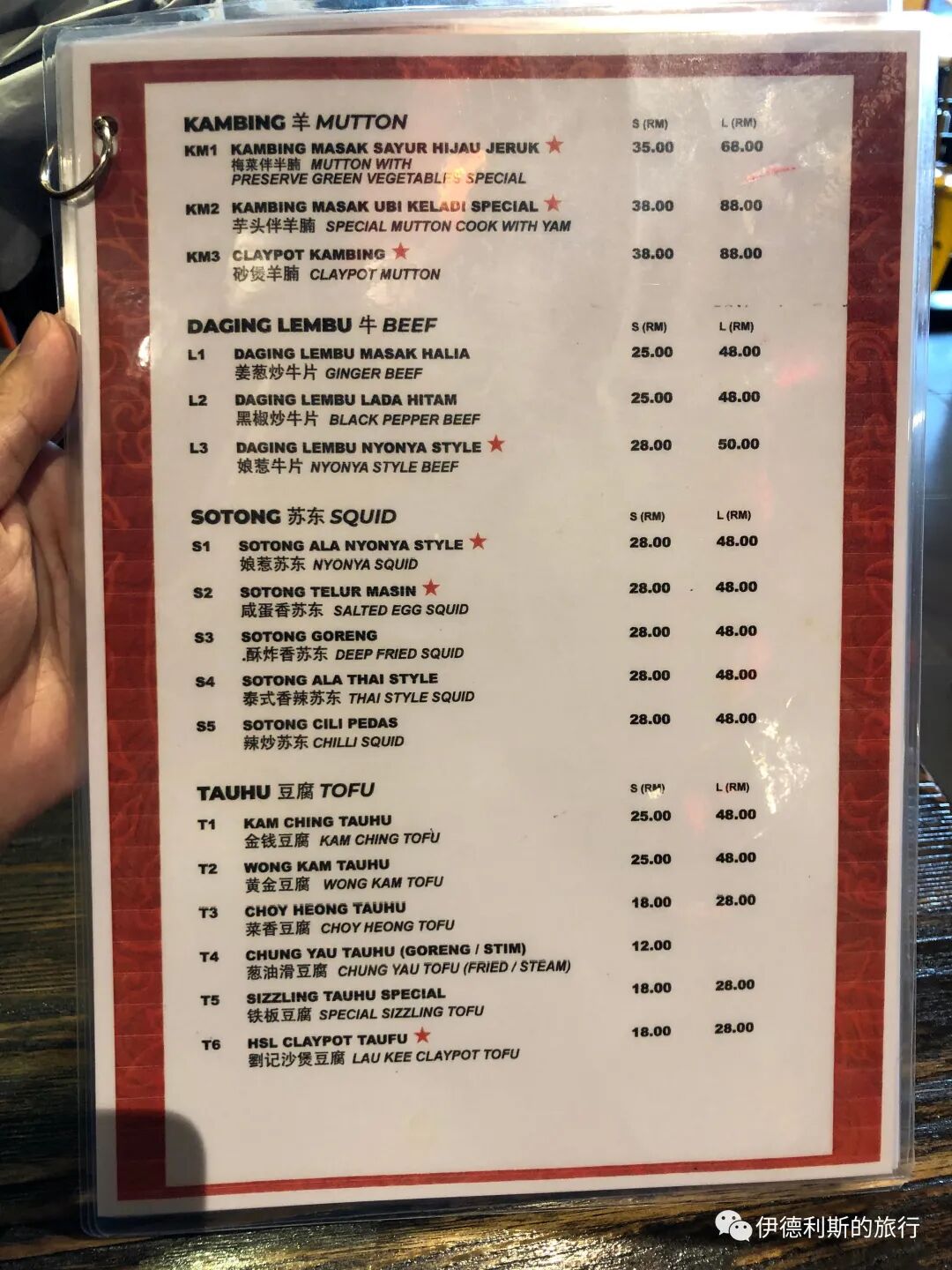
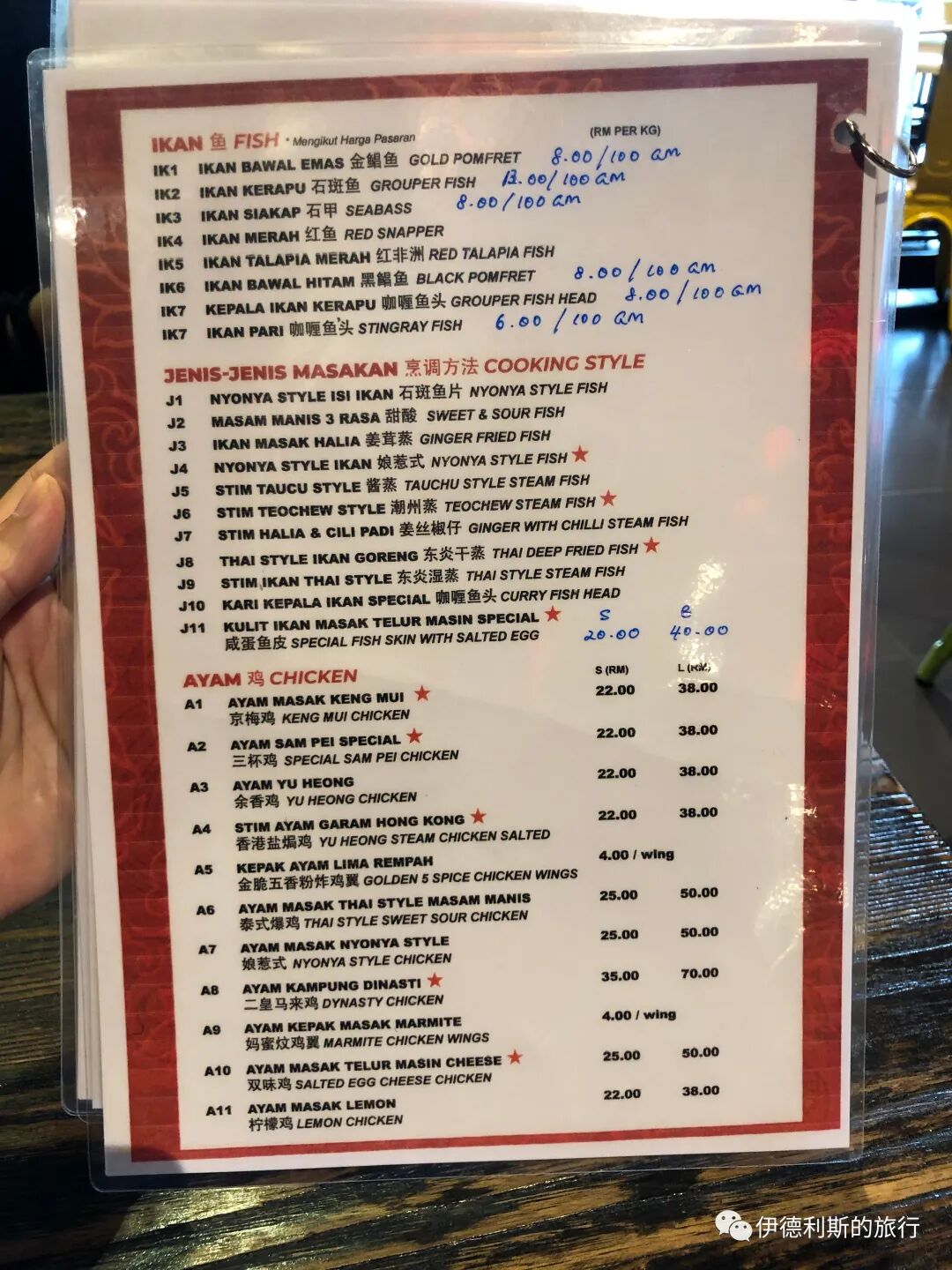
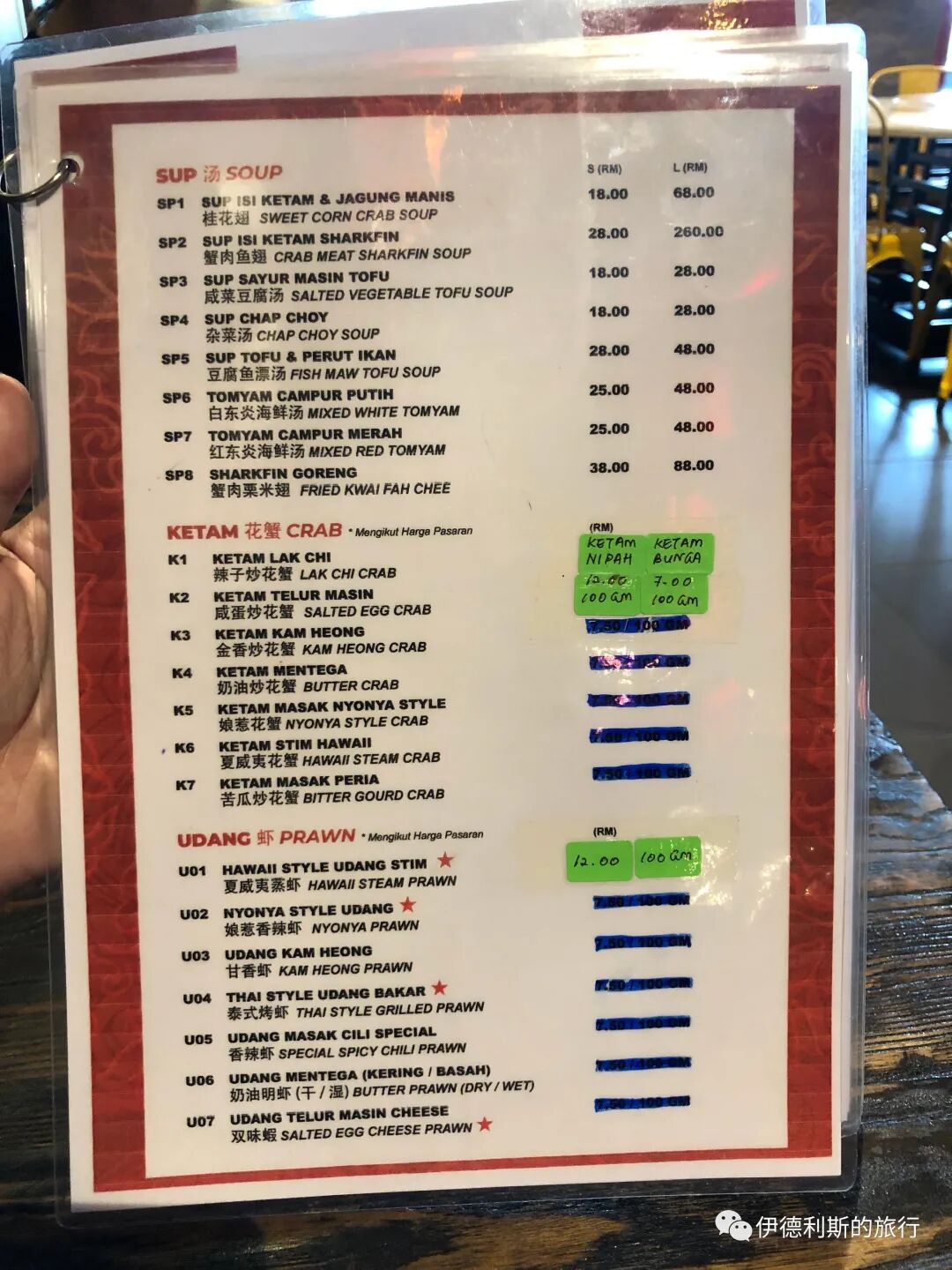
After eating, we chatted with the owner. She is a local Hui Muslim. I was very excited to finally meet and talk with members of this group, whom I had previously only read about in news and academic papers. The owner was very welcoming and invited us to visit again. We also learned that a local mosque for Hui Muslims in Penang was about to start construction (we visited in 2019), which will give the local Hui Muslims a social center.
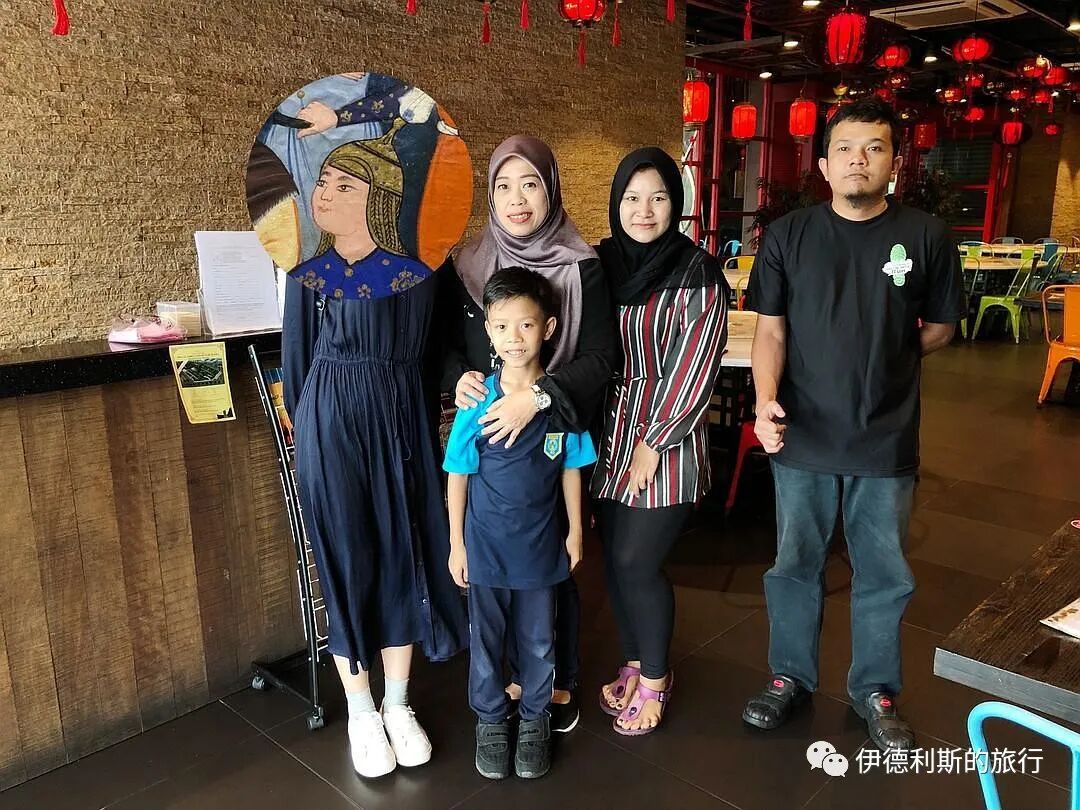
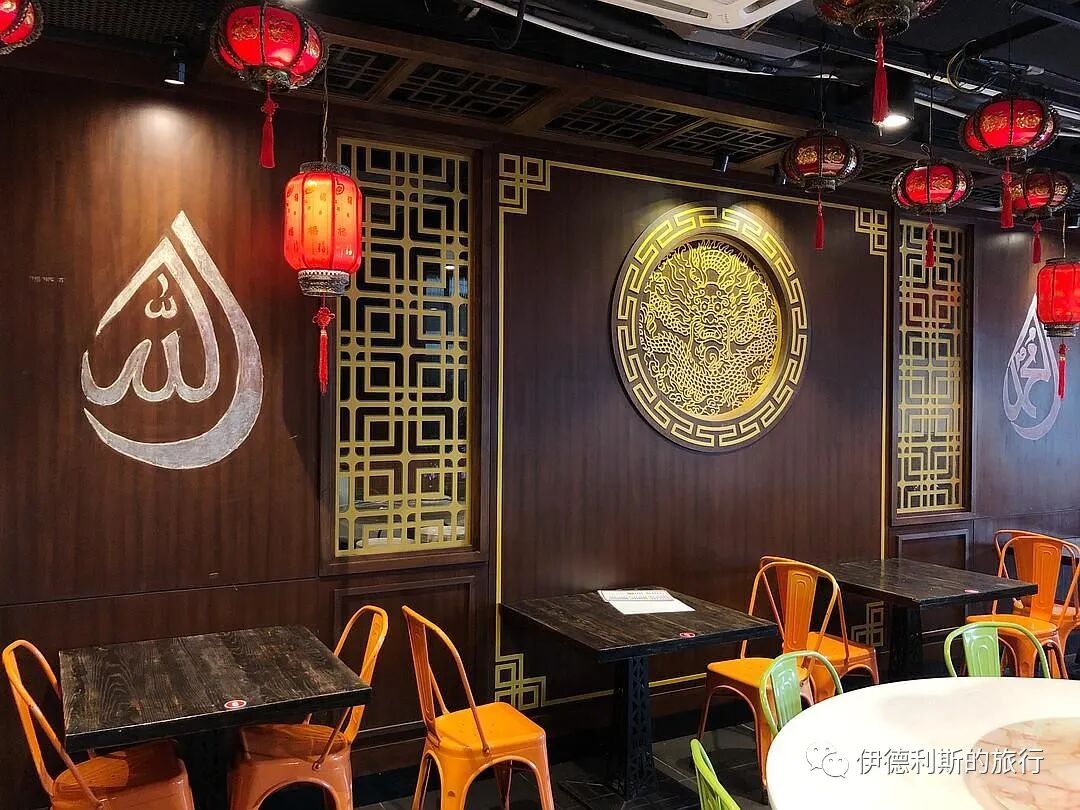
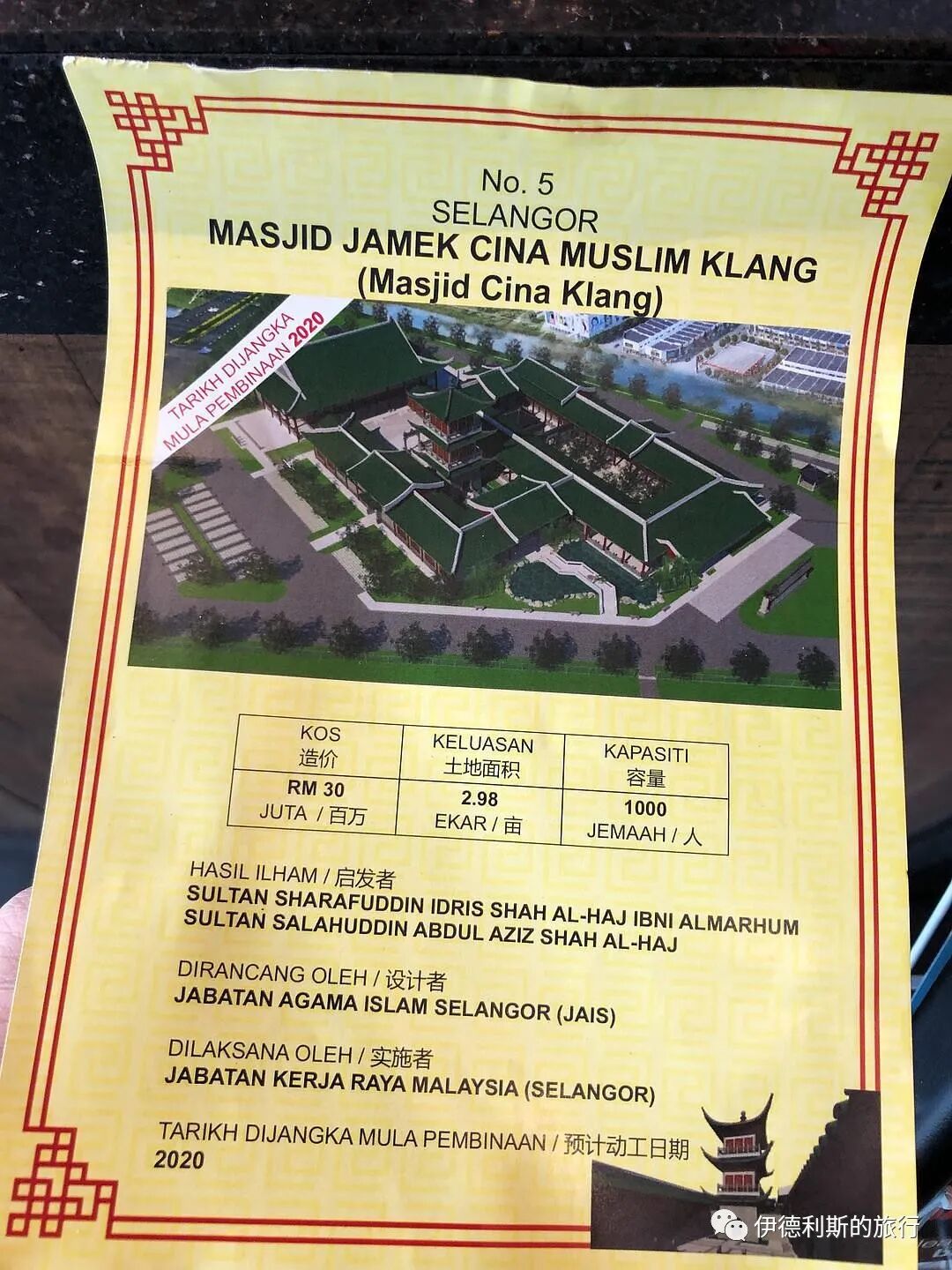
The restaurant has membership application forms for the Malaysian Chinese Muslim Association (MACMA). MACMA started in 1994 to clear up the misunderstanding among Malaysian Chinese that Islam is only for Malays and that Chinese people cannot be Muslim. It also helps Malay Muslims learn about Chinese culture. The association works to help Malaysian Chinese Muslims solve various problems and provides guidance for new converts. The association offers free "Understanding Islam" classes in the evening. They teach in both English and Chinese, and everyone is welcome to attend.
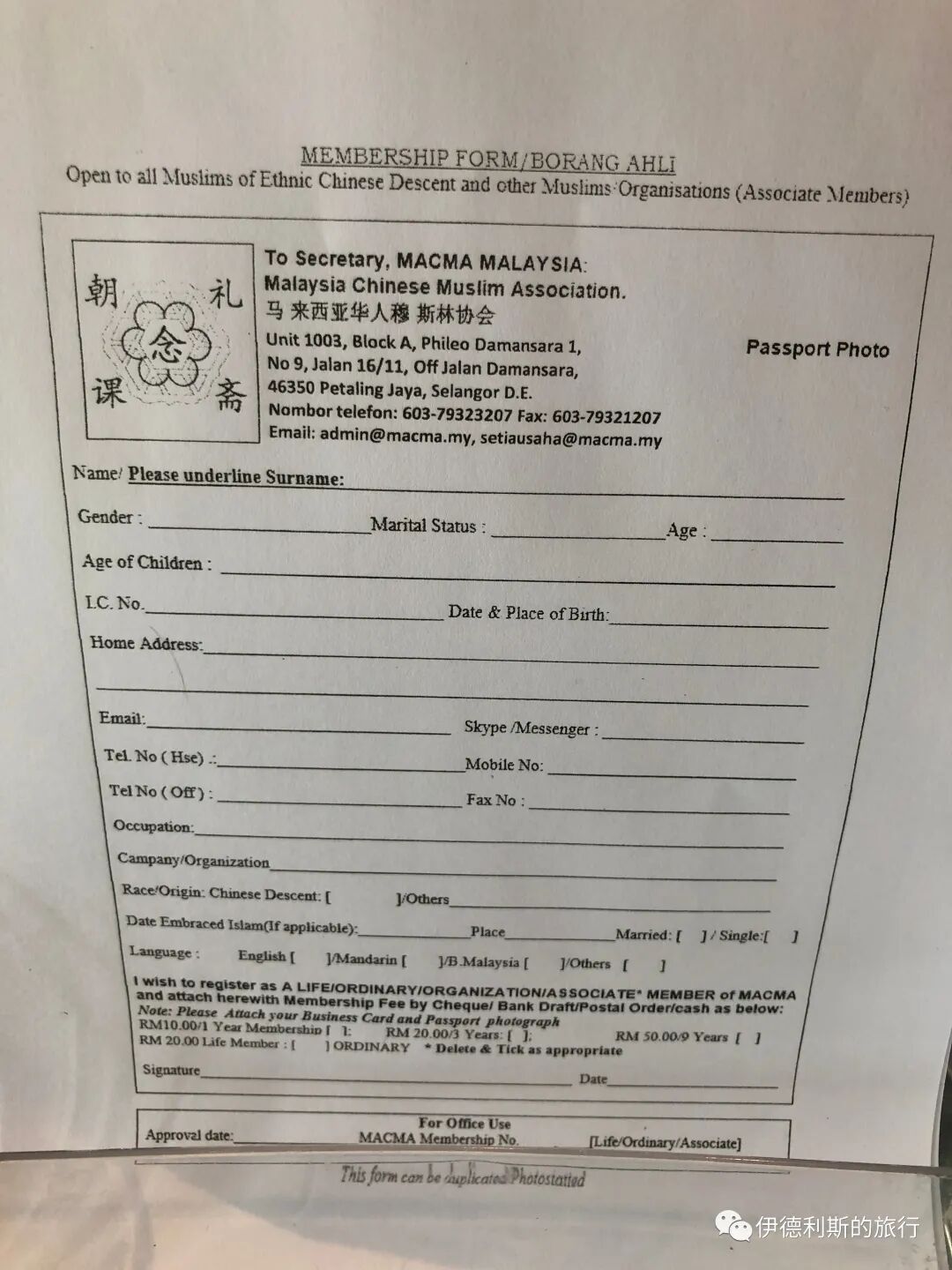
Muslim History Guide Malaysia Sabah: Islamic Civilization Museum and Heritage
Articles • yusuf908 posted the article • 0 comments • 243 views • 2026-05-23 23:23
Summary: This article visits the Sabah Islamic Civilization Museum in Malaysia, with a focus on regional Muslim history, exhibition displays, and local cultural context. It keeps the original museum details, photographs, artifact notes, and travel observations for readers interested in Islamic heritage in Sabah.
The Sabah Islamic Civilization Museum opened in 2002. It has a small collection and is not well-known, but it is special because it holds unique Islamic cultural artifacts from the Malay Archipelago that you cannot see in other museums.
This is a wooden prayer gong (kentung) made in 1918 by the Sambas Sultanate in West Kalimantan, Indonesia. It is a traditional instrument used to signal the call to prayer.
The Sambas Malays live on the northwest coast of Borneo, right next to the Malaysian state of Sabah. The Sambas Malays founded the Sambas Sultanate in 1675. It became part of Indonesia in 1956, and the Sultan of Sambas still lives in the palace today. The Sambas Malays are mainly Sufi. Their rituals combine features of the Qadiriyya and Naqshbandiyya orders and are famous for their unique chanting style.
This is a manuscript of scripture from Sulawesi, Indonesia, written on date palm leaves and bound in goatskin. It is over a hundred years old. It was donated to the Sabah Islamic Civilization Museum in 2015 by Tuan Hj. Abdullah Abas, a religious teacher from Kinarut, Sabah, Malaysia.
This is a traditional Indonesian wooden chest carved with scripture, used for storing clothes. This type of wood carving is found in several Islamic museums in Malaysia and is a very distinctive piece of Islamic craft.
This is a bridal curtain used by the Bajau (Sama) people, a sea-faring group living on the west coast of Sabah, Malaysia, in Kota Belud.
This is a porcelain plate with scripture from the 1930s, acquired by the museum in 2005. Malay people usually display this kind of porcelain plate in a cabinet as a decoration.
These scripture-inscribed ceramics were brought to Sabah through trade and include pieces from both China and Europe. Under the rule of the Sultanate of Brunei, Sabah had very close trade ties with the Qing Dynasty, Spain, the Netherlands, and other countries.
This is a protective vest (dua vest) worn by indigenous soldiers in Sabah during the anti-British resistance led by Mat Salleh between 1894 and 1905.
The resistance leader Mat Salleh, whose real name was Datuk Muhammad Salleh, was an indigenous leader in Sabah. In 1881, the British took control of Sabah by establishing the North Borneo Chartered Company. Mat Salleh felt this violated the rights of the indigenous people and refused to recognize the company. In 1895, after negotiations with the company failed, Mat Salleh was declared a wanted man. He immediately built a fortress to openly resist the British and successfully launched several attacks. He died in battle in 1900, and his followers continued to fight until they were finally defeated in 1905.
This is a decorative wooden frame made in 1918, featuring scripture carvings and traditional embroidery in the center.
These are wooden grave markers from the Semporna region. This type of wooden grave marker is unique to the Semporna area and is carved with floral patterns around the edges.
This is a century-old bas-relief bronze plaque featuring the Basmala.
This is a prayer drum (beduk) made of palm wood and cowhide. It is usually placed in front of the main hall or at the entrance of a mosque, which is why many traditional mosques in Southeast Asia do not have minarets.
There are many wavy-bladed daggers (keris) in museums across Malaysia and Indonesia, but very few have a clear record of their origin. The Museum of Islamic Civilization in Sabah displays a sword called Pedang Khusus. Palace guards in the Tidung Kingdom on Tarakan Island off the east coast of Borneo wore this gold-made, highly detailed weapon.
The second type is called Sundang, a wavy-bladed dagger (keris) with blood grooves used by the Sulu people. The handle of the Sundang is cylindrical, which keeps it from slipping out of your hand during use.
Woodcarver Mba Hj. Edie Ifa from Jepara, Java, Indonesia, worked with students from a nearby Islamic school (madrasa) to carve a pair of scripture-inscribed door panels from a century-old teak log.
A wooden tombstone from the Bajau people of Semporna, with the top carved into the shape of a hat.
A hand-copied Persian scripture from 1796.
A scripture stand from Qom, Iran, dating back to the 18th century.
Tiles from the Ilkhanate period, dating to the 13th or 14th century.
A copper bowl from the Mamluk period in Egypt.
Two sets of cloisonné (jingtailan) altar vases and incense burners. One set likely traveled from Hong Kong to Malaysia during the era of export-oriented production. view all
Summary: This article visits the Sabah Islamic Civilization Museum in Malaysia, with a focus on regional Muslim history, exhibition displays, and local cultural context. It keeps the original museum details, photographs, artifact notes, and travel observations for readers interested in Islamic heritage in Sabah.
The Sabah Islamic Civilization Museum opened in 2002. It has a small collection and is not well-known, but it is special because it holds unique Islamic cultural artifacts from the Malay Archipelago that you cannot see in other museums.
This is a wooden prayer gong (kentung) made in 1918 by the Sambas Sultanate in West Kalimantan, Indonesia. It is a traditional instrument used to signal the call to prayer.
The Sambas Malays live on the northwest coast of Borneo, right next to the Malaysian state of Sabah. The Sambas Malays founded the Sambas Sultanate in 1675. It became part of Indonesia in 1956, and the Sultan of Sambas still lives in the palace today. The Sambas Malays are mainly Sufi. Their rituals combine features of the Qadiriyya and Naqshbandiyya orders and are famous for their unique chanting style.
This is a manuscript of scripture from Sulawesi, Indonesia, written on date palm leaves and bound in goatskin. It is over a hundred years old. It was donated to the Sabah Islamic Civilization Museum in 2015 by Tuan Hj. Abdullah Abas, a religious teacher from Kinarut, Sabah, Malaysia.
This is a traditional Indonesian wooden chest carved with scripture, used for storing clothes. This type of wood carving is found in several Islamic museums in Malaysia and is a very distinctive piece of Islamic craft.
This is a bridal curtain used by the Bajau (Sama) people, a sea-faring group living on the west coast of Sabah, Malaysia, in Kota Belud.
This is a porcelain plate with scripture from the 1930s, acquired by the museum in 2005. Malay people usually display this kind of porcelain plate in a cabinet as a decoration.
These scripture-inscribed ceramics were brought to Sabah through trade and include pieces from both China and Europe. Under the rule of the Sultanate of Brunei, Sabah had very close trade ties with the Qing Dynasty, Spain, the Netherlands, and other countries.
This is a protective vest (dua vest) worn by indigenous soldiers in Sabah during the anti-British resistance led by Mat Salleh between 1894 and 1905.
The resistance leader Mat Salleh, whose real name was Datuk Muhammad Salleh, was an indigenous leader in Sabah. In 1881, the British took control of Sabah by establishing the North Borneo Chartered Company. Mat Salleh felt this violated the rights of the indigenous people and refused to recognize the company. In 1895, after negotiations with the company failed, Mat Salleh was declared a wanted man. He immediately built a fortress to openly resist the British and successfully launched several attacks. He died in battle in 1900, and his followers continued to fight until they were finally defeated in 1905.
This is a decorative wooden frame made in 1918, featuring scripture carvings and traditional embroidery in the center.
These are wooden grave markers from the Semporna region. This type of wooden grave marker is unique to the Semporna area and is carved with floral patterns around the edges.
This is a century-old bas-relief bronze plaque featuring the Basmala.
This is a prayer drum (beduk) made of palm wood and cowhide. It is usually placed in front of the main hall or at the entrance of a mosque, which is why many traditional mosques in Southeast Asia do not have minarets.
There are many wavy-bladed daggers (keris) in museums across Malaysia and Indonesia, but very few have a clear record of their origin. The Museum of Islamic Civilization in Sabah displays a sword called Pedang Khusus. Palace guards in the Tidung Kingdom on Tarakan Island off the east coast of Borneo wore this gold-made, highly detailed weapon.
The second type is called Sundang, a wavy-bladed dagger (keris) with blood grooves used by the Sulu people. The handle of the Sundang is cylindrical, which keeps it from slipping out of your hand during use.
Woodcarver Mba Hj. Edie Ifa from Jepara, Java, Indonesia, worked with students from a nearby Islamic school (madrasa) to carve a pair of scripture-inscribed door panels from a century-old teak log.
A wooden tombstone from the Bajau people of Semporna, with the top carved into the shape of a hat.
A hand-copied Persian scripture from 1796.
A scripture stand from Qom, Iran, dating back to the 18th century.
Tiles from the Ilkhanate period, dating to the 13th or 14th century.
A copper bowl from the Mamluk period in Egypt.
Two sets of cloisonné (jingtailan) altar vases and incense burners. One set likely traveled from Hong Kong to Malaysia during the era of export-oriented production.
Museum Guide: Sabah Islamic Civilization Museum in Malaysia
Articles • ali2007fr posted the article • 0 comments • 195 views • 2026-05-19 22:56
Summary: This article visits the Sabah Islamic Civilization Museum in Malaysia, with a focus on regional Muslim history, exhibition displays, and local cultural context. It keeps the original museum details, photographs, artifact notes, and travel observations for readers interested in Islamic heritage in Sabah.
The Sabah Islamic Civilization Museum opened in 2002. It has a small collection and is not well-known, but it is special because it holds unique Islamic cultural artifacts from the Malay Archipelago that you cannot see in other museums.
This is a wooden prayer gong (kentung) made in 1918 by the Sambas Sultanate in West Kalimantan, Indonesia. It is a traditional instrument used to signal the call to prayer.
The Sambas Malays live on the northwest coast of Borneo, right next to the Malaysian state of Sabah. The Sambas Malays founded the Sambas Sultanate in 1675. It became part of Indonesia in 1956, and the Sultan of Sambas still lives in the palace today. The Sambas Malays are mainly Sufi. Their rituals combine features of the Qadiriyya and Naqshbandiyya orders and are famous for their unique chanting style.
This is a manuscript of scripture from Sulawesi, Indonesia, written on date palm leaves and bound in goatskin. It is over a hundred years old. It was donated to the Sabah Islamic Civilization Museum in 2015 by Tuan Hj. Abdullah Abas, a religious teacher from Kinarut, Sabah, Malaysia.
This is a traditional Indonesian wooden chest carved with scripture, used for storing clothes. This type of wood carving is found in several Islamic museums in Malaysia and is a very distinctive piece of Islamic craft.
This is a bridal curtain used by the Bajau (Sama) people, a sea-faring group living on the west coast of Sabah, Malaysia, in Kota Belud.
This is a porcelain plate with scripture from the 1930s, acquired by the museum in 2005. Malay people usually display this kind of porcelain plate in a cabinet as a decoration.
These scripture-inscribed ceramics were brought to Sabah through trade and include pieces from both China and Europe. Under the rule of the Sultanate of Brunei, Sabah had very close trade ties with the Qing Dynasty, Spain, the Netherlands, and other countries.
This is a protective vest (dua vest) worn by indigenous soldiers in Sabah during the anti-British resistance led by Mat Salleh between 1894 and 1905.
The resistance leader Mat Salleh, whose real name was Datuk Muhammad Salleh, was an indigenous leader in Sabah. In 1881, the British took control of Sabah by establishing the North Borneo Chartered Company. Mat Salleh felt this violated the rights of the indigenous people and refused to recognize the company. In 1895, after negotiations with the company failed, Mat Salleh was declared a wanted man. He immediately built a fortress to openly resist the British and successfully launched several attacks. He died in battle in 1900, and his followers continued to fight until they were finally defeated in 1905.
This is a decorative wooden frame made in 1918, featuring scripture carvings and traditional embroidery in the center.
These are wooden grave markers from the Semporna region. This type of wooden grave marker is unique to the Semporna area and is carved with floral patterns around the edges.
This is a century-old bas-relief bronze plaque featuring the Basmala.
This is a prayer drum (beduk) made of palm wood and cowhide. It is usually placed in front of the main hall or at the entrance of a mosque, which is why many traditional mosques in Southeast Asia do not have minarets.
There are many wavy-bladed daggers (keris) in museums across Malaysia and Indonesia, but very few have a clear record of their origin. The Museum of Islamic Civilization in Sabah displays a sword called Pedang Khusus. Palace guards in the Tidung Kingdom on Tarakan Island off the east coast of Borneo wore this gold-made, highly detailed weapon.
The second type is called Sundang, a wavy-bladed dagger (keris) with blood grooves used by the Sulu people. The handle of the Sundang is cylindrical, which keeps it from slipping out of your hand during use.
Woodcarver Mba Hj. Edie Ifa from Jepara, Java, Indonesia, worked with students from a nearby Islamic school (madrasa) to carve a pair of scripture-inscribed door panels from a century-old teak log.
A wooden tombstone from the Bajau people of Semporna, with the top carved into the shape of a hat.
A hand-copied Persian scripture from 1796.
A scripture stand from Qom, Iran, dating back to the 18th century.
Tiles from the Ilkhanate period, dating to the 13th or 14th century.
A copper bowl from the Mamluk period in Egypt.
Two sets of cloisonné (jingtailan) altar vases and incense burners. One set likely traveled from Hong Kong to Malaysia during the era of export-oriented production. view all
Summary: This article visits the Sabah Islamic Civilization Museum in Malaysia, with a focus on regional Muslim history, exhibition displays, and local cultural context. It keeps the original museum details, photographs, artifact notes, and travel observations for readers interested in Islamic heritage in Sabah.
The Sabah Islamic Civilization Museum opened in 2002. It has a small collection and is not well-known, but it is special because it holds unique Islamic cultural artifacts from the Malay Archipelago that you cannot see in other museums.
This is a wooden prayer gong (kentung) made in 1918 by the Sambas Sultanate in West Kalimantan, Indonesia. It is a traditional instrument used to signal the call to prayer.
The Sambas Malays live on the northwest coast of Borneo, right next to the Malaysian state of Sabah. The Sambas Malays founded the Sambas Sultanate in 1675. It became part of Indonesia in 1956, and the Sultan of Sambas still lives in the palace today. The Sambas Malays are mainly Sufi. Their rituals combine features of the Qadiriyya and Naqshbandiyya orders and are famous for their unique chanting style.
This is a manuscript of scripture from Sulawesi, Indonesia, written on date palm leaves and bound in goatskin. It is over a hundred years old. It was donated to the Sabah Islamic Civilization Museum in 2015 by Tuan Hj. Abdullah Abas, a religious teacher from Kinarut, Sabah, Malaysia.
This is a traditional Indonesian wooden chest carved with scripture, used for storing clothes. This type of wood carving is found in several Islamic museums in Malaysia and is a very distinctive piece of Islamic craft.
This is a bridal curtain used by the Bajau (Sama) people, a sea-faring group living on the west coast of Sabah, Malaysia, in Kota Belud.
This is a porcelain plate with scripture from the 1930s, acquired by the museum in 2005. Malay people usually display this kind of porcelain plate in a cabinet as a decoration.
These scripture-inscribed ceramics were brought to Sabah through trade and include pieces from both China and Europe. Under the rule of the Sultanate of Brunei, Sabah had very close trade ties with the Qing Dynasty, Spain, the Netherlands, and other countries.
This is a protective vest (dua vest) worn by indigenous soldiers in Sabah during the anti-British resistance led by Mat Salleh between 1894 and 1905.
The resistance leader Mat Salleh, whose real name was Datuk Muhammad Salleh, was an indigenous leader in Sabah. In 1881, the British took control of Sabah by establishing the North Borneo Chartered Company. Mat Salleh felt this violated the rights of the indigenous people and refused to recognize the company. In 1895, after negotiations with the company failed, Mat Salleh was declared a wanted man. He immediately built a fortress to openly resist the British and successfully launched several attacks. He died in battle in 1900, and his followers continued to fight until they were finally defeated in 1905.
This is a decorative wooden frame made in 1918, featuring scripture carvings and traditional embroidery in the center.
These are wooden grave markers from the Semporna region. This type of wooden grave marker is unique to the Semporna area and is carved with floral patterns around the edges.
This is a century-old bas-relief bronze plaque featuring the Basmala.
This is a prayer drum (beduk) made of palm wood and cowhide. It is usually placed in front of the main hall or at the entrance of a mosque, which is why many traditional mosques in Southeast Asia do not have minarets.
There are many wavy-bladed daggers (keris) in museums across Malaysia and Indonesia, but very few have a clear record of their origin. The Museum of Islamic Civilization in Sabah displays a sword called Pedang Khusus. Palace guards in the Tidung Kingdom on Tarakan Island off the east coast of Borneo wore this gold-made, highly detailed weapon.
The second type is called Sundang, a wavy-bladed dagger (keris) with blood grooves used by the Sulu people. The handle of the Sundang is cylindrical, which keeps it from slipping out of your hand during use.
Woodcarver Mba Hj. Edie Ifa from Jepara, Java, Indonesia, worked with students from a nearby Islamic school (madrasa) to carve a pair of scripture-inscribed door panels from a century-old teak log.
A wooden tombstone from the Bajau people of Semporna, with the top carved into the shape of a hat.
A hand-copied Persian scripture from 1796.
A scripture stand from Qom, Iran, dating back to the 18th century.
Tiles from the Ilkhanate period, dating to the 13th or 14th century.
A copper bowl from the Mamluk period in Egypt.
Two sets of cloisonné (jingtailan) altar vases and incense burners. One set likely traveled from Hong Kong to Malaysia during the era of export-oriented production.
Mosque Travel Guide: Malacca - Eight Historic Mosques (Part 1)
Articles • ali2007fr posted the article • 0 comments • 275 views • 2026-05-19 22:20
Summary: This first part introduces eight historic mosques in Malacca, including their dates, layouts, and role in the city's Muslim community. It keeps the original mosque names, photographs, architectural details, and travel observations for readers interested in Malaysia's Islamic heritage.
Kampung Hulu Mosque: 1728.
Tengkera Small Mosque minaret (bangker): 1728.
Tengkera Mosque: 1782.
Kampung Kling Mosque: 1748.
Bukit Cina Mosque: 1865.
Pengkalan Rama Mosque: first built in the 1730s, rebuilt in 1917.
Duyong Mosque: 1859.
Serkam Pantai Mosque: 1853.
Peringgit Mosque: first built in 1726, rebuilt in 1868.
Kampung Hulu Mosque.
After the Portuguese occupied Malacca, they destroyed all the mosques of the Malacca Sultanate and promoted Catholicism in the city. However, the Portuguese were not successful, and Catholicism did not have much influence in Malacca until the Dutch took over.
The Dutch took a more tolerant approach toward Malacca and allowed the faith to spread there. In 1728, the Dutch East India Company commissioned a Chinese Muslim, Dato' Samsuddin Bin Arom, to build a new mosque near the site of an old one destroyed by the Portuguese. This became the Kampung Hulu Mosque (Masjid Kampung Hulu), the oldest surviving mosque in Malacca.
The main prayer hall of Kampung Hulu Mosque uses the traditional Javanese Tajug multi-layered pyramid roof. The decoration at the very top is called a Mustoko or Memolo in Javanese. This roof structure leaves space between the upper and middle layers for ventilation and light, which adapts well to the humid and rainy tropical climate.
Unlike traditional all-wood Javanese mosques, Kampung Hulu Mosque is built of brick and stone with plaster-coated roofs, an influence from Dutch colonial architecture. the tiles and floor bricks inside the mosque were all imported from China, and the patterns on the windows also show Chinese influence.
A traditional drum called a Beduk is placed above the main gate. Early mosques in Southeast Asia used drums to call people to prayer. Today, many mosques still use drums to call for prayer and to signal the breaking of the fast during Jumu'ah and Ramadan.
The minaret (bangker) looks like a lighthouse, which was a first for the Malay Peninsula, as there was no previous tradition of building minarets there. On the island of Java, the Great Mosque of Banten, built in 1632, was the first to feature a lighthouse-style minaret designed and built by a Chinese man named Cek-ban-cut.
The minbar inside the main hall of Kampung Hulu Mosque has rich patterns and is in the typical Javanese throne style.
I performed the Dhuhr and Maghrib namaz at Kampung Hulu Mosque and also attended the night praise sessions during the Mawlid. There are two cannons at the entrance of the main hall, which are used during the Eid festival. The number '1211' is engraved on the cannon barrel, which corresponds to the year 1796 in the Gregorian calendar.
The minaret (bangke lou) of the Tengkera Small Mosque.
After the Kampung Hulu Mosque was built, an Indian merchant named Muhammad Salleh funded the construction of a small mosque (Surau Tengkera) on Tengkera Street. Tengkera comes from the Portuguese word 'tranquerah,' meaning 'fortress,' as there was once a defensive wall built by the Portuguese here. The Tengkera Small Mosque was also built in 1728. It was originally a wooden structure with pillars made of ironwood (belian) from Pontianak, Kalimantan, and a roof covered with nipa palm leaves.
After the Tengkera Mosque (Masjid Tengkera) was completed in 1782, the Tengkera Small Mosque was abandoned, and today only the minaret remains. Unlike the Kampung Hulu Mosque, the minaret of the Tengkera Small Mosque is modeled after a Chinese pagoda. This was the first of its kind on the Malay Peninsula and has become a major feature of Malacca today.
Tengkera Mosque.
In 1782, the Tengkera Mosque (Masjid Tengkera) was completed to the west of the Tengkera Small Mosque. The Tengkera Mosque also features a traditional Javanese three-tiered pyramid roof (bumbung tiga lapis), and the main hall is supported by four ironwood pillars from Kalimantan. After two renovations in 1890 and 1910, the current Tengkera Mosque has brick walls and a tiled roof. The minaret of the Tengkera Mosque, like that of the Tengkera Small Mosque, is a Chinese-style pagoda structure and serves as a continuation of the earlier minaret.
The exquisite minbar (pulpit) of the Tengkera Mosque is also in the Javanese throne style.
Kampung Kling Mosque.
The Kampung Kling Mosque (Masjid Kampong Kling) is located in the center of Malacca city. It was first built by Indian merchants in 1748 and was converted from a wooden structure to the current brick structure in 1872. The mosque features a traditional Javanese three-tiered pyramid roof (bumbung tiga lapis). The classical Corinthian columns between the main hall and the prayer niche (mihrab), as well as the plaster walls, show the influence of Dutch colonists. The Chinese tiles on the roof, floor, and walls, along with the wood carvings on the doors and windows, reflect Chinese influence.
Legend has it that during the Malacca Sultanate, Kampung Kling was a settlement for Indian Muslim merchants. 'Kling' was the historical term used in the Malay Archipelago for Indians, especially Tamils. On a 1690 map of Malacca, this area is marked as 'Mosquée de Maures' (Moorish Mosque), but its relationship to the Kampung Kling Mosque is uncertain. In the 18th century, this was still a village for South Indian immigrants. After the rubber industry in Malacca boomed in the 19th and early 20th centuries, it became a residential area for Chinese people working in the rubber industry. Today, the mosque is surrounded by Chinese shophouses.
The Kampung Kling Mosque has a beautiful minbar and wood carvings on its doors and windows; the minbar is also in the Javanese throne style.
Sanbao Hill Mosque.
Bukit Cina Mosque (Masjid Bukit Cina), also called Al-Hamideen Mosque, was built in 1865. A new main hall was added in 1978, but the layout of the original old hall remains. The old hall features a traditional Javanese-style three-tiered pyramid roof (bumbung tiga lapis) and four wooden pillars (Soko Guru). Each pillar connects to the foundation with a stone base called Umpak. These bases keep the wood from soaking up groundwater and help absorb shock during earthquakes.
Pengkalan Rama Mosque
Pengkalan Rama Mosque was first built in the 1730s. Dato Penghulu Abdul Ghani funded its renovation in 1917. A new main hall was added in 2004, but it still keeps the traditional Javanese-style three-tiered pyramid roof (bumbung tiga lapis) and four wooden pillars (Soko Guru) of the old hall.
Duyong Mosque
Duyong Mosque (Masjid Duyong) was built in 1850 under the leadership of Wan Chilek. It was originally made of laterite and wood, with a roof made of Chinese and Dutch tiles. In 1908, a minaret (bangkar) was added, blending the styles of a Chinese pagoda and a Western lighthouse.
The mosque underwent several renovations and expansions in 1967, 1973, and 1976. It suffered a fire in 1982 and was later restored. In 2002, the Department of Museums and Antiquities of Malaysia carried out protective repairs on the site.
Telok Mas Mosque
At Telok Mas Mosque (Masjid Telok Mas Al-Khairiah) for namaz. Telok Mas Mosque was built in 1853. During construction, the beams and roof materials were cut from local forests and hauled by water buffalo. The wall stones were mined from reefs near Big Island (Pulau Besar) and transported by sampan boats. The main gate still bears an inscription from the year 1269 of the Hijri calendar, which is 1853 in the Gregorian calendar. A Chinese pagoda-style minaret (bangkar) was added in 1913. Its architectural style is basically the same as the mosques in Kampung Kling and Tengkera.
The minbar pulpit at Telok Mas Mosque is carved with the year 1286 of the Hijri calendar, or 1869 in the Gregorian calendar, and is a classic Javanese throne style.
Peringgit Mosque
Peringgit Mosque (Masjid Peringgit) was first built in 1726 but was later destroyed. It was rebuilt in 1868. Peringgi is the Malay name for the Portuguese, as a Portuguese fort once stood here. Peringgit Mosque was originally built with granite and Dutch bricks, with wooden doors and windows. The roof is a traditional Javanese three-tiered pyramid (bumbung tiga lapis). The bottom layer is covered with Chinese tiles, while the middle and top layers use Dutch tiles. The very top decoration is carved from reef stone.
Following later renovations, the Dutch bricks of Peringgit Mosque were covered with cement, and the Chinese and Dutch tiles were replaced with modern ones. In 2002, the Southern Region Department of Museums and Antiquities of Malaysia restored the site. view all
Summary: This first part introduces eight historic mosques in Malacca, including their dates, layouts, and role in the city's Muslim community. It keeps the original mosque names, photographs, architectural details, and travel observations for readers interested in Malaysia's Islamic heritage.
Kampung Hulu Mosque: 1728.
Tengkera Small Mosque minaret (bangker): 1728.
Tengkera Mosque: 1782.
Kampung Kling Mosque: 1748.
Bukit Cina Mosque: 1865.
Pengkalan Rama Mosque: first built in the 1730s, rebuilt in 1917.
Duyong Mosque: 1859.
Serkam Pantai Mosque: 1853.
Peringgit Mosque: first built in 1726, rebuilt in 1868.
Kampung Hulu Mosque.
After the Portuguese occupied Malacca, they destroyed all the mosques of the Malacca Sultanate and promoted Catholicism in the city. However, the Portuguese were not successful, and Catholicism did not have much influence in Malacca until the Dutch took over.
The Dutch took a more tolerant approach toward Malacca and allowed the faith to spread there. In 1728, the Dutch East India Company commissioned a Chinese Muslim, Dato' Samsuddin Bin Arom, to build a new mosque near the site of an old one destroyed by the Portuguese. This became the Kampung Hulu Mosque (Masjid Kampung Hulu), the oldest surviving mosque in Malacca.
The main prayer hall of Kampung Hulu Mosque uses the traditional Javanese Tajug multi-layered pyramid roof. The decoration at the very top is called a Mustoko or Memolo in Javanese. This roof structure leaves space between the upper and middle layers for ventilation and light, which adapts well to the humid and rainy tropical climate.
Unlike traditional all-wood Javanese mosques, Kampung Hulu Mosque is built of brick and stone with plaster-coated roofs, an influence from Dutch colonial architecture. the tiles and floor bricks inside the mosque were all imported from China, and the patterns on the windows also show Chinese influence.
A traditional drum called a Beduk is placed above the main gate. Early mosques in Southeast Asia used drums to call people to prayer. Today, many mosques still use drums to call for prayer and to signal the breaking of the fast during Jumu'ah and Ramadan.
The minaret (bangker) looks like a lighthouse, which was a first for the Malay Peninsula, as there was no previous tradition of building minarets there. On the island of Java, the Great Mosque of Banten, built in 1632, was the first to feature a lighthouse-style minaret designed and built by a Chinese man named Cek-ban-cut.
The minbar inside the main hall of Kampung Hulu Mosque has rich patterns and is in the typical Javanese throne style.
I performed the Dhuhr and Maghrib namaz at Kampung Hulu Mosque and also attended the night praise sessions during the Mawlid. There are two cannons at the entrance of the main hall, which are used during the Eid festival. The number '1211' is engraved on the cannon barrel, which corresponds to the year 1796 in the Gregorian calendar.
The minaret (bangke lou) of the Tengkera Small Mosque.
After the Kampung Hulu Mosque was built, an Indian merchant named Muhammad Salleh funded the construction of a small mosque (Surau Tengkera) on Tengkera Street. Tengkera comes from the Portuguese word 'tranquerah,' meaning 'fortress,' as there was once a defensive wall built by the Portuguese here. The Tengkera Small Mosque was also built in 1728. It was originally a wooden structure with pillars made of ironwood (belian) from Pontianak, Kalimantan, and a roof covered with nipa palm leaves.
After the Tengkera Mosque (Masjid Tengkera) was completed in 1782, the Tengkera Small Mosque was abandoned, and today only the minaret remains. Unlike the Kampung Hulu Mosque, the minaret of the Tengkera Small Mosque is modeled after a Chinese pagoda. This was the first of its kind on the Malay Peninsula and has become a major feature of Malacca today.
Tengkera Mosque.
In 1782, the Tengkera Mosque (Masjid Tengkera) was completed to the west of the Tengkera Small Mosque. The Tengkera Mosque also features a traditional Javanese three-tiered pyramid roof (bumbung tiga lapis), and the main hall is supported by four ironwood pillars from Kalimantan. After two renovations in 1890 and 1910, the current Tengkera Mosque has brick walls and a tiled roof. The minaret of the Tengkera Mosque, like that of the Tengkera Small Mosque, is a Chinese-style pagoda structure and serves as a continuation of the earlier minaret.
The exquisite minbar (pulpit) of the Tengkera Mosque is also in the Javanese throne style.
Kampung Kling Mosque.
The Kampung Kling Mosque (Masjid Kampong Kling) is located in the center of Malacca city. It was first built by Indian merchants in 1748 and was converted from a wooden structure to the current brick structure in 1872. The mosque features a traditional Javanese three-tiered pyramid roof (bumbung tiga lapis). The classical Corinthian columns between the main hall and the prayer niche (mihrab), as well as the plaster walls, show the influence of Dutch colonists. The Chinese tiles on the roof, floor, and walls, along with the wood carvings on the doors and windows, reflect Chinese influence.
Legend has it that during the Malacca Sultanate, Kampung Kling was a settlement for Indian Muslim merchants. 'Kling' was the historical term used in the Malay Archipelago for Indians, especially Tamils. On a 1690 map of Malacca, this area is marked as 'Mosquée de Maures' (Moorish Mosque), but its relationship to the Kampung Kling Mosque is uncertain. In the 18th century, this was still a village for South Indian immigrants. After the rubber industry in Malacca boomed in the 19th and early 20th centuries, it became a residential area for Chinese people working in the rubber industry. Today, the mosque is surrounded by Chinese shophouses.
The Kampung Kling Mosque has a beautiful minbar and wood carvings on its doors and windows; the minbar is also in the Javanese throne style.
Sanbao Hill Mosque.
Bukit Cina Mosque (Masjid Bukit Cina), also called Al-Hamideen Mosque, was built in 1865. A new main hall was added in 1978, but the layout of the original old hall remains. The old hall features a traditional Javanese-style three-tiered pyramid roof (bumbung tiga lapis) and four wooden pillars (Soko Guru). Each pillar connects to the foundation with a stone base called Umpak. These bases keep the wood from soaking up groundwater and help absorb shock during earthquakes.
Pengkalan Rama Mosque
Pengkalan Rama Mosque was first built in the 1730s. Dato Penghulu Abdul Ghani funded its renovation in 1917. A new main hall was added in 2004, but it still keeps the traditional Javanese-style three-tiered pyramid roof (bumbung tiga lapis) and four wooden pillars (Soko Guru) of the old hall.
Duyong Mosque
Duyong Mosque (Masjid Duyong) was built in 1850 under the leadership of Wan Chilek. It was originally made of laterite and wood, with a roof made of Chinese and Dutch tiles. In 1908, a minaret (bangkar) was added, blending the styles of a Chinese pagoda and a Western lighthouse.
The mosque underwent several renovations and expansions in 1967, 1973, and 1976. It suffered a fire in 1982 and was later restored. In 2002, the Department of Museums and Antiquities of Malaysia carried out protective repairs on the site.
Telok Mas Mosque
At Telok Mas Mosque (Masjid Telok Mas Al-Khairiah) for namaz. Telok Mas Mosque was built in 1853. During construction, the beams and roof materials were cut from local forests and hauled by water buffalo. The wall stones were mined from reefs near Big Island (Pulau Besar) and transported by sampan boats. The main gate still bears an inscription from the year 1269 of the Hijri calendar, which is 1853 in the Gregorian calendar. A Chinese pagoda-style minaret (bangkar) was added in 1913. Its architectural style is basically the same as the mosques in Kampung Kling and Tengkera.
The minbar pulpit at Telok Mas Mosque is carved with the year 1286 of the Hijri calendar, or 1869 in the Gregorian calendar, and is a classic Javanese throne style.
Peringgit Mosque
Peringgit Mosque (Masjid Peringgit) was first built in 1726 but was later destroyed. It was rebuilt in 1868. Peringgi is the Malay name for the Portuguese, as a Portuguese fort once stood here. Peringgit Mosque was originally built with granite and Dutch bricks, with wooden doors and windows. The roof is a traditional Javanese three-tiered pyramid (bumbung tiga lapis). The bottom layer is covered with Chinese tiles, while the middle and top layers use Dutch tiles. The very top decoration is carved from reef stone.
Following later renovations, the Dutch bricks of Peringgit Mosque were covered with cement, and the Chinese and Dutch tiles were replaced with modern ones. In 2002, the Southern Region Department of Museums and Antiquities of Malaysia restored the site.
Mosque Travel Guide: Malacca - Eight Historic Mosques (Part 2)
Articles • ali2007fr posted the article • 0 comments • 207 views • 2026-05-19 22:20
Summary: This second part continues a visit to eight historic mosques in Malacca, with attention to architecture, dates, and local Muslim heritage. It keeps the original mosque names, photographs, street details, and historical notes for readers interested in Islamic heritage in Malaysia. view all
Summary: This second part continues a visit to eight historic mosques in Malacca, with attention to architecture, dates, and local Muslim heritage. It keeps the original mosque names, photographs, street details, and historical notes for readers interested in Islamic heritage in Malaysia.
Halal Travel Guide: Malacca Old City - Food, Hotels and Muslim Heritage
Articles • ali2007fr posted the article • 0 comments • 130 views • 2026-05-19 21:35
Summary: Malacca Old City - Food, Hotels and Muslim Heritage is presented as a clear English travel account for readers interested in Muslim life, halal food, architecture, and local history. The article keeps the original names, food details, photographs, and cultural context while focusing on Malacca, Halal Food, Malaysia Travel.
I took a red-eye AirAsia flight to Kuala Lumpur in the early hours of September 15. The flight was delayed by an hour, so I arrived at Kuala Lumpur airport after 9 a.m. Even though I used the self-service immigration gate and jogged to the bus station, I still missed the 10 a.m. bus. I ended up taking the 10:45 a.m. bus and spent three hours in traffic before reaching Melaka Sentral station. Luckily, the bus seats reclined enough to lie back, so I just took a nap and arrived.
In Malaysia, you have to exchange online bus tickets for physical ones at the station, unlike train tickets where you can just scan a code. The ticket counters at the Kuala Lumpur airport bus station get very crowded on weekends and holidays, so make sure to go early to exchange your tickets. By comparison, I think traveling by train in Malaysia is much more convenient. You can scan a code to enter the station, and the schedules are reliable and stress-free.
Staying in a Nanyang-style arcade building
We spent our first night at the Aava Malacca Hotel on Kampung Hulu Road. This area is inside the buffer zone of the Melaka UNESCO World Heritage site. It is right next to two historic mosques, Kampung Hulu Mosque and Kampung Kling Mosque, so the location is excellent. Kampung Hulu Street often has traffic jams. If you want to take a taxi, walk 300 meters north to the main road outside the World Heritage buffer zone.
The Aava Hotel is made from three traditional shophouses (qilou) built before World War II. The exterior is very well preserved, and the interior is simple and elegant. The Nyonya elements are used sparingly but look great. I personally think it offers good value for money. The hotel offers free bicycle rentals for two hours, but one bike has stiff handlebars, so be careful when riding it.
The halal breakfast at Aava Hotel includes Western-style omelets, baked beans, and coconut milk rice (nasi lemak) wrapped in banana leaves. Both Malay and Chinese guests ate breakfast with us. It is very comfortable to drink coffee leisurely inside the shophouse.
Staying at a Straits mansion
On the second day, we stayed at the famous The Majestic Malacca hotel. Staying here really showed me that you get what you pay for. The environment is amazing, the service is very thoughtful, and it feels just like home.
The lobby of the Majestic Hotel is inside a nearly 100-year-old mansion from the Straits Settlements era, with the original tile floors and teak wood features still preserved today. The Majestic Hotel was built in 1929 under the direction of wealthy Chinese businessman Leong Long Man, but he sadly passed away two years later, and his son inherited the mansion. His son kept spending the family fortune until he sold the property to another Chinese businessman, Lim Heng Fang, in 1955. Lim Heng Fang turned the mansion into a hotel. It hosted many British plantation owners in the 1950s and 1960s, and it even welcomed the first Prime Minister, Tunku Abdul Rahman, when Malaysia declared independence in 1957.
The Majestic Hotel closed in 2000 due to poor management. In 2006, the famous Malaysian YTL Hotels group bought and restored it, and it reopened for business in 2008.
After we finished checking in, a Nyonya lady from the front desk guided us to our room and offered us some welcome tea.
The second floor of the Straits Mansion at the Majestic Hotel serves a halal breakfast. You can choose from Western, Malay, or Indian styles. There is an unlimited supply of croissants, which are served to you by Indian staff so you do not have to get them yourself.
We ordered a serving of Indian flatbread (roti canai) with curry and a bowl of spicy noodle soup (laksa).
Roti canai is a classic Nanyang Indian Muslim breakfast. As early as the 17th century, Indian Muslims brought the practice of eating flatbread with curry to the Aceh Sultanate in northern Sumatra. After the 19th century, it spread to Nanyang countries like Indonesia, Malaysia, and Brunei. Various ethnic groups, including the Malays, Acehnese, and Minangkabau people, all love making this dish.
Curry laksa (laksa lemak) is a type of curry laksa that uses rice noodles in a thick coconut curry soup, topped with chicken and seafood. Curry laksa is best represented by Nyonya laksa, which has plenty of coconut milk and is less sour and spicy compared to the other type, Asam laksa.
Hui Muslim snacks
Chan Mari Chan is a sub-brand of the large Malaysian Hui Muslim Chinese restaurant chain Mohd Chan, focusing on affordable home-style snacks. The founder of Mohd Chan, Dato HJ Mohd Chan, was born in Gombak District, Selangor. In 2007, influenced by his Malay friends, he converted to Islam and started his restaurant that same year. Since then, he has been combining Nanyang Chinese cuisine with Malay flavors, and it has now become the most famous and largest Hui Muslim restaurant chain in Malaysia.
This January, we ate at Mohd Chan restaurant in Seremban, Malaysia. You order from a menu there, and they serve a variety of high-end Nanyang Chinese banquet dishes. Chan Mari Chan focuses on fast food and snacks. You go straight to the counter to pick up your food, and the chicken rice, small side dishes, and steamed dumplings (shaomai) are the most popular items. We grabbed roasted chicken rice, three small side dishes, two types of steamed dumplings (shaomai), and drank grass jelly coffee and cocoa coffee. Their food is quite delicious. I especially loved the fragrance and texture of the chicken rice. Eating there wiped away the fatigue of our journey. We instantly felt embraced by Nanyang culture and left feeling very satisfied.
The restaurant environment is also very nice, and many Malaysian Muslim friends (dosti) come here to eat with their families. They have a prayer room in the shop, which sets a great example for us Hui Muslims.
Malaysian Food City
Right next to the E-Red Hotel on Kampung Hulu Street, there is a large Malay food court called Makan Avenue. It has a huge variety of Malay snacks. Many Malay people come here to eat at night, and the tables along the Malacca River are always full. Be careful about ordering drinks here on weekends or holidays. Because they have to serve hundreds of seats, I actually waited an hour just to get my drink. The other food stalls serve their dishes relatively quickly.
The most famous spot in the food court is Cendol Kampung Hulu. Cendol originated on the island of Java and was a classic drink at Javanese weddings before it spread across Southeast Asia. It is made with shaved ice, green rice flour jelly noodles, coconut milk, and palm sugar. You can also add things like red beans or grass jelly. We ordered the durian cendol, which is perfect for the hot and humid weather in Southeast Asia.
We also ordered beef meatball soup (bakso biasa). The name bakso comes from the Southern Min dialect for 'meat crisp.' It is a classic Malaysian street food made from beef, fish paste, and a little tapioca flour, giving it a very firm texture. The finished meatballs are usually served in beef broth with tofu, glass noodles, and various side dishes.
We also ordered fried tilapia (talapia) and catfish (keli). Although they looked charred on the outside, the meat inside was very tender, had no fishy smell, and tasted delicious.
Malaysian night market
Across from Dataran Pahlawan, we found a huge Malaysian night market that seems to only open on weekends, with an endless variety of snacks. We were too full to eat a meal, so we just bought some guava dipped in sour plum powder and a giant avocado juice. Tropical fruits are cheap all over Malaysia. As long as you don't buy durian in tourist areas, you can basically eat as much fruit as you want.
The vibe of the Malacca night market, featuring hand-pounded chili paste (sambal) and lamb soup (yangtang).
Malay cake shop
In Kampung Hulu, there is a lovely cake shop called Malaiqa By Gula Cakery that is especially popular with young people. The shop is inside a shophouse built in 1941. The decor is fresh and simple, a great example of revitalizing the old city.
We ordered the strawberry milk pudding and longan lemon tea, and both tasted great. These fresh little shops in Malaysia are really wonderful, though we usually stick to traditional food and don't visit places like this very often.
Malay village farmhouse cooking
On the road heading east from Malacca to Muar, the whole way is filled with Malay village (kampung) countryside scenery. At noon, we passed through the seaside village of Serkam Pantai, prayed namaz at a 19th-century mosque, and then had an authentic Malay village-style meal in the village.
We ordered shrimp noodle soup (Mee Bandung Udang), black shrimp paste fruit salad (Rojak Petis), and Malay village-style fried rice (Nasi Goreng Kampung), drank iced Milo (Milo Ais Kepal), and had red bean shaved ice (Air Batu Campur).
Shrimp noodle soup (Mee Bandung Udang) is a Malay dish that started in Muar, Malaysia. Bandung means mixed, and Udang means shrimp. It is made by boiling yellow noodles with eggs, shrimp, leafy greens, and beef bits. The thick soup is simmered with shrimp paste, onions, spices, and chili, giving it a very fresh taste.
Fruit salad (Rojak) is said to have started on the island of Java. It was originally a mix of fruits and vegetables with spicy palm sugar syrup, but it later spread across Indonesia, Malaysia, and Singapore, developing many different styles. Black shrimp paste fruit salad (Rojak Petis) started in Surabaya, East Java. It contains raw mango, cucumber, water spinach, and bean sprouts. The sauce is made from black shrimp paste (Petis), fried shallots, palm sugar, and salt, and it is topped with crushed peanuts. The fruit salad tastes quite sweet, so people who prefer milder flavors might find it hard to get used to.
Malay village-style fried rice (Nasi Goreng Kampung) is a classic Malay village dish. It includes diced beef, water spinach, shrimp, dried anchovies, and scrambled eggs. It is stir-fried with sweet soy sauce and shrimp paste, making the flavor very rich. It is one of my favorite Malay dishes.
Air Batu Campur red bean ice, also called ABC ice, is a classic dessert in Southeast Asia after a meal. It is mostly shaved ice with red beans and condensed milk on top, and the one we bought had a scoop of ice cream on it.
Nyonya cuisine
As the birthplace of Nyonya culture, you must eat Nyonya cuisine once when you come to Malacca. There are many halal Nyonya restaurants on the east side of the old town of Malacca on Independence Street (Jln Merdeka), with Atlantic and Cottage Spices being the most famous. Both places had lines when we went, so we both took numbers. Later, a table opened up at Cottage Spices first, so we ate there.
We ordered stir-fried water spinach with shrimp paste (Kangkung Belacan), Teochew steamed fish, steamed Nyonya fish cake (Otak-otak), and drank lime plum juice (Lime Plum), which was a perfect balance of meat and vegetables. Teochew steamed fish is red snapper served with pickled vegetables, pickled plums, and tomatoes. The sour taste is very appetizing. Otak-otak is a fish cake steamed with coconut milk, chili paste, lemongrass, and galangal. It smells and tastes delicious.
Indian Nasi Kandar
To truly experience the food of Malaysia's three main ethnic groups, you must try Indian Muslim Nasi Kandar after eating Nyonya, Chinese-Muslim, and Malay kampung dishes.
We went to Seri Sahabat next to the Majestic Hotel in Malacca. They are open 24 hours a day, and at night, it gets very crowded with all the food stalls open. It is quieter during the day, when they mainly sell Nasi Kandar. They have meat, fish, and vegetables, making for a very balanced meal.
South Indian Tamil Muslims are called Mamak in Malaysia. This name comes from the Tamil word for uncle (maa-ma), and they are famous for their Mamak stall (Gerai Mamak) and Mamak restaurant (Restoran Mamak) food culture.
Nasi Kandar is the signature dish at Tamil Mamak restaurants. It is rice served with various curries of beef, lamb, chicken, fish, and shrimp, along with side dishes. When Tamil Muslims first arrived in Malaysia in the 19th century, most carried food on shoulder poles to sell along the streets, which is why it became known as shoulder-pole rice (nasi kandar). By the 20th century, Tamil Muslims started opening restaurants and stalls, but the name shoulder-pole rice (nasi kandar) is still used today.
Hainan coffee
On the drive from Malacca back to Kuala Lumpur Airport, the most popular restaurant in Terminal 2 is the Hainan coffee chain Oriental Kopi, where people are almost always waiting in line.
They have a huge variety of dishes and are currently one of the most famous halal Hainan-style cafes. Hainanese people began immigrating to Malaysia in the 19th century. Many early immigrants worked as cooks and waiters in British hotels and restaurants, while some worked as servants for British officers. Influenced by their British employers, the Hainanese learned to cook Western food and blended it with Hainanese culinary elements to create the unique Hainanese coffee shop (Hailam Kopitiam) culture.
We ordered flaky egg tarts, pineapple buns with butter (bo luo bao), Hainanese chicken rice, classic rice vermicelli (mee siam), curry fish balls, coffee, soy milk with grass jelly, and longan sea coconut dessert. Coffee, flaky egg tarts (danta), and pineapple buns with cold butter (binghuo boluobao) are known as the "Huayang Three Treasures" and make a classic Nanyang-style breakfast. Their flaky egg tarts are truly well-made, with a very tender egg custard and a rich aroma. Their sweet dessert soups (tangshui) are also delicious. We rarely drink these in the north, so it felt like a special Nanyang experience.
However, their Hainanese chicken rice was not great. The rice quality seemed poor, with a gritty texture that did not taste as good as the rice at other places. view all
Summary: Malacca Old City - Food, Hotels and Muslim Heritage is presented as a clear English travel account for readers interested in Muslim life, halal food, architecture, and local history. The article keeps the original names, food details, photographs, and cultural context while focusing on Malacca, Halal Food, Malaysia Travel.
I took a red-eye AirAsia flight to Kuala Lumpur in the early hours of September 15. The flight was delayed by an hour, so I arrived at Kuala Lumpur airport after 9 a.m. Even though I used the self-service immigration gate and jogged to the bus station, I still missed the 10 a.m. bus. I ended up taking the 10:45 a.m. bus and spent three hours in traffic before reaching Melaka Sentral station. Luckily, the bus seats reclined enough to lie back, so I just took a nap and arrived.
In Malaysia, you have to exchange online bus tickets for physical ones at the station, unlike train tickets where you can just scan a code. The ticket counters at the Kuala Lumpur airport bus station get very crowded on weekends and holidays, so make sure to go early to exchange your tickets. By comparison, I think traveling by train in Malaysia is much more convenient. You can scan a code to enter the station, and the schedules are reliable and stress-free.
Staying in a Nanyang-style arcade building
We spent our first night at the Aava Malacca Hotel on Kampung Hulu Road. This area is inside the buffer zone of the Melaka UNESCO World Heritage site. It is right next to two historic mosques, Kampung Hulu Mosque and Kampung Kling Mosque, so the location is excellent. Kampung Hulu Street often has traffic jams. If you want to take a taxi, walk 300 meters north to the main road outside the World Heritage buffer zone.
The Aava Hotel is made from three traditional shophouses (qilou) built before World War II. The exterior is very well preserved, and the interior is simple and elegant. The Nyonya elements are used sparingly but look great. I personally think it offers good value for money. The hotel offers free bicycle rentals for two hours, but one bike has stiff handlebars, so be careful when riding it.
The halal breakfast at Aava Hotel includes Western-style omelets, baked beans, and coconut milk rice (nasi lemak) wrapped in banana leaves. Both Malay and Chinese guests ate breakfast with us. It is very comfortable to drink coffee leisurely inside the shophouse.
Staying at a Straits mansion
On the second day, we stayed at the famous The Majestic Malacca hotel. Staying here really showed me that you get what you pay for. The environment is amazing, the service is very thoughtful, and it feels just like home.
The lobby of the Majestic Hotel is inside a nearly 100-year-old mansion from the Straits Settlements era, with the original tile floors and teak wood features still preserved today. The Majestic Hotel was built in 1929 under the direction of wealthy Chinese businessman Leong Long Man, but he sadly passed away two years later, and his son inherited the mansion. His son kept spending the family fortune until he sold the property to another Chinese businessman, Lim Heng Fang, in 1955. Lim Heng Fang turned the mansion into a hotel. It hosted many British plantation owners in the 1950s and 1960s, and it even welcomed the first Prime Minister, Tunku Abdul Rahman, when Malaysia declared independence in 1957.
The Majestic Hotel closed in 2000 due to poor management. In 2006, the famous Malaysian YTL Hotels group bought and restored it, and it reopened for business in 2008.
After we finished checking in, a Nyonya lady from the front desk guided us to our room and offered us some welcome tea.
The second floor of the Straits Mansion at the Majestic Hotel serves a halal breakfast. You can choose from Western, Malay, or Indian styles. There is an unlimited supply of croissants, which are served to you by Indian staff so you do not have to get them yourself.
We ordered a serving of Indian flatbread (roti canai) with curry and a bowl of spicy noodle soup (laksa).
Roti canai is a classic Nanyang Indian Muslim breakfast. As early as the 17th century, Indian Muslims brought the practice of eating flatbread with curry to the Aceh Sultanate in northern Sumatra. After the 19th century, it spread to Nanyang countries like Indonesia, Malaysia, and Brunei. Various ethnic groups, including the Malays, Acehnese, and Minangkabau people, all love making this dish.
Curry laksa (laksa lemak) is a type of curry laksa that uses rice noodles in a thick coconut curry soup, topped with chicken and seafood. Curry laksa is best represented by Nyonya laksa, which has plenty of coconut milk and is less sour and spicy compared to the other type, Asam laksa.
Hui Muslim snacks
Chan Mari Chan is a sub-brand of the large Malaysian Hui Muslim Chinese restaurant chain Mohd Chan, focusing on affordable home-style snacks. The founder of Mohd Chan, Dato HJ Mohd Chan, was born in Gombak District, Selangor. In 2007, influenced by his Malay friends, he converted to Islam and started his restaurant that same year. Since then, he has been combining Nanyang Chinese cuisine with Malay flavors, and it has now become the most famous and largest Hui Muslim restaurant chain in Malaysia.
This January, we ate at Mohd Chan restaurant in Seremban, Malaysia. You order from a menu there, and they serve a variety of high-end Nanyang Chinese banquet dishes. Chan Mari Chan focuses on fast food and snacks. You go straight to the counter to pick up your food, and the chicken rice, small side dishes, and steamed dumplings (shaomai) are the most popular items. We grabbed roasted chicken rice, three small side dishes, two types of steamed dumplings (shaomai), and drank grass jelly coffee and cocoa coffee. Their food is quite delicious. I especially loved the fragrance and texture of the chicken rice. Eating there wiped away the fatigue of our journey. We instantly felt embraced by Nanyang culture and left feeling very satisfied.
The restaurant environment is also very nice, and many Malaysian Muslim friends (dosti) come here to eat with their families. They have a prayer room in the shop, which sets a great example for us Hui Muslims.
Malaysian Food City
Right next to the E-Red Hotel on Kampung Hulu Street, there is a large Malay food court called Makan Avenue. It has a huge variety of Malay snacks. Many Malay people come here to eat at night, and the tables along the Malacca River are always full. Be careful about ordering drinks here on weekends or holidays. Because they have to serve hundreds of seats, I actually waited an hour just to get my drink. The other food stalls serve their dishes relatively quickly.
The most famous spot in the food court is Cendol Kampung Hulu. Cendol originated on the island of Java and was a classic drink at Javanese weddings before it spread across Southeast Asia. It is made with shaved ice, green rice flour jelly noodles, coconut milk, and palm sugar. You can also add things like red beans or grass jelly. We ordered the durian cendol, which is perfect for the hot and humid weather in Southeast Asia.
We also ordered beef meatball soup (bakso biasa). The name bakso comes from the Southern Min dialect for 'meat crisp.' It is a classic Malaysian street food made from beef, fish paste, and a little tapioca flour, giving it a very firm texture. The finished meatballs are usually served in beef broth with tofu, glass noodles, and various side dishes.
We also ordered fried tilapia (talapia) and catfish (keli). Although they looked charred on the outside, the meat inside was very tender, had no fishy smell, and tasted delicious.
Malaysian night market
Across from Dataran Pahlawan, we found a huge Malaysian night market that seems to only open on weekends, with an endless variety of snacks. We were too full to eat a meal, so we just bought some guava dipped in sour plum powder and a giant avocado juice. Tropical fruits are cheap all over Malaysia. As long as you don't buy durian in tourist areas, you can basically eat as much fruit as you want.
The vibe of the Malacca night market, featuring hand-pounded chili paste (sambal) and lamb soup (yangtang).
Malay cake shop
In Kampung Hulu, there is a lovely cake shop called Malaiqa By Gula Cakery that is especially popular with young people. The shop is inside a shophouse built in 1941. The decor is fresh and simple, a great example of revitalizing the old city.
We ordered the strawberry milk pudding and longan lemon tea, and both tasted great. These fresh little shops in Malaysia are really wonderful, though we usually stick to traditional food and don't visit places like this very often.
Malay village farmhouse cooking
On the road heading east from Malacca to Muar, the whole way is filled with Malay village (kampung) countryside scenery. At noon, we passed through the seaside village of Serkam Pantai, prayed namaz at a 19th-century mosque, and then had an authentic Malay village-style meal in the village.
We ordered shrimp noodle soup (Mee Bandung Udang), black shrimp paste fruit salad (Rojak Petis), and Malay village-style fried rice (Nasi Goreng Kampung), drank iced Milo (Milo Ais Kepal), and had red bean shaved ice (Air Batu Campur).
Shrimp noodle soup (Mee Bandung Udang) is a Malay dish that started in Muar, Malaysia. Bandung means mixed, and Udang means shrimp. It is made by boiling yellow noodles with eggs, shrimp, leafy greens, and beef bits. The thick soup is simmered with shrimp paste, onions, spices, and chili, giving it a very fresh taste.
Fruit salad (Rojak) is said to have started on the island of Java. It was originally a mix of fruits and vegetables with spicy palm sugar syrup, but it later spread across Indonesia, Malaysia, and Singapore, developing many different styles. Black shrimp paste fruit salad (Rojak Petis) started in Surabaya, East Java. It contains raw mango, cucumber, water spinach, and bean sprouts. The sauce is made from black shrimp paste (Petis), fried shallots, palm sugar, and salt, and it is topped with crushed peanuts. The fruit salad tastes quite sweet, so people who prefer milder flavors might find it hard to get used to.
Malay village-style fried rice (Nasi Goreng Kampung) is a classic Malay village dish. It includes diced beef, water spinach, shrimp, dried anchovies, and scrambled eggs. It is stir-fried with sweet soy sauce and shrimp paste, making the flavor very rich. It is one of my favorite Malay dishes.
Air Batu Campur red bean ice, also called ABC ice, is a classic dessert in Southeast Asia after a meal. It is mostly shaved ice with red beans and condensed milk on top, and the one we bought had a scoop of ice cream on it.
Nyonya cuisine
As the birthplace of Nyonya culture, you must eat Nyonya cuisine once when you come to Malacca. There are many halal Nyonya restaurants on the east side of the old town of Malacca on Independence Street (Jln Merdeka), with Atlantic and Cottage Spices being the most famous. Both places had lines when we went, so we both took numbers. Later, a table opened up at Cottage Spices first, so we ate there.
We ordered stir-fried water spinach with shrimp paste (Kangkung Belacan), Teochew steamed fish, steamed Nyonya fish cake (Otak-otak), and drank lime plum juice (Lime Plum), which was a perfect balance of meat and vegetables. Teochew steamed fish is red snapper served with pickled vegetables, pickled plums, and tomatoes. The sour taste is very appetizing. Otak-otak is a fish cake steamed with coconut milk, chili paste, lemongrass, and galangal. It smells and tastes delicious.
Indian Nasi Kandar
To truly experience the food of Malaysia's three main ethnic groups, you must try Indian Muslim Nasi Kandar after eating Nyonya, Chinese-Muslim, and Malay kampung dishes.
We went to Seri Sahabat next to the Majestic Hotel in Malacca. They are open 24 hours a day, and at night, it gets very crowded with all the food stalls open. It is quieter during the day, when they mainly sell Nasi Kandar. They have meat, fish, and vegetables, making for a very balanced meal.
South Indian Tamil Muslims are called Mamak in Malaysia. This name comes from the Tamil word for uncle (maa-ma), and they are famous for their Mamak stall (Gerai Mamak) and Mamak restaurant (Restoran Mamak) food culture.
Nasi Kandar is the signature dish at Tamil Mamak restaurants. It is rice served with various curries of beef, lamb, chicken, fish, and shrimp, along with side dishes. When Tamil Muslims first arrived in Malaysia in the 19th century, most carried food on shoulder poles to sell along the streets, which is why it became known as shoulder-pole rice (nasi kandar). By the 20th century, Tamil Muslims started opening restaurants and stalls, but the name shoulder-pole rice (nasi kandar) is still used today.
Hainan coffee
On the drive from Malacca back to Kuala Lumpur Airport, the most popular restaurant in Terminal 2 is the Hainan coffee chain Oriental Kopi, where people are almost always waiting in line.
They have a huge variety of dishes and are currently one of the most famous halal Hainan-style cafes. Hainanese people began immigrating to Malaysia in the 19th century. Many early immigrants worked as cooks and waiters in British hotels and restaurants, while some worked as servants for British officers. Influenced by their British employers, the Hainanese learned to cook Western food and blended it with Hainanese culinary elements to create the unique Hainanese coffee shop (Hailam Kopitiam) culture.
We ordered flaky egg tarts, pineapple buns with butter (bo luo bao), Hainanese chicken rice, classic rice vermicelli (mee siam), curry fish balls, coffee, soy milk with grass jelly, and longan sea coconut dessert. Coffee, flaky egg tarts (danta), and pineapple buns with cold butter (binghuo boluobao) are known as the "Huayang Three Treasures" and make a classic Nanyang-style breakfast. Their flaky egg tarts are truly well-made, with a very tender egg custard and a rich aroma. Their sweet dessert soups (tangshui) are also delicious. We rarely drink these in the north, so it felt like a special Nanyang experience.
However, their Hainanese chicken rice was not great. The rice quality seemed poor, with a gritty texture that did not taste as good as the rice at other places.
Halal Food Guide: Penang — Chinese Halal Food and Muslim Streets
Articles • ali2007fr posted the article • 0 comments • 159 views • 2026-05-17 21:54
Summary: Halal Food Guide: Penang — Chinese Halal Food and Muslim Streets is presented here as a firsthand travel account in clear English, beginning with this scene: Penang, Malaysia, is a city where Chinese, Malay, and Indian people live together. The account keeps its focus on Penang Halal Food, Chinese Muslim Food, Malaysia Travel while preserving the names, places, food, and historical details from the Chinese source.
Penang, Malaysia, is a city where Chinese, Malay, and Indian people live together. Here, you can find halal food made by many different groups, including Teochew people, Peranakan (Baba Nyonya) people, Hui Muslims, Jawi Peranakan people, and Tamil Muslim (Mamak) people. I will now introduce the halal Chinese food I ate in Penang.
1. Bee Hwa Cafe
Bee Hwa Cafe is a Teochew-style Chinese halal restaurant that only uses halal ingredients. The staff includes both Teochew Chinese and Malay women wearing headscarves. Many local Malay people love coming here to try halal Chinese-style food.
We ate the classic Malaysian Chinese stir-fried rice noodles (char kway teow) and white curry noodles (curry mee) at their place.
Stir-fried rice noodles (char kway teow) are a signature dish for the Chinese community in Penang, much like the beef chow fun found in Cantonese cooking. Although the dish comes from the old hometown of Teochew, it has developed its own local style after being passed down through generations. The stir-fried rice noodles in Penang are wider and thicker, and they are seasoned mainly with fish sauce and soy sauce, which gives them a lighter color. They also add shrimp, fish balls, crab sticks, bean sprouts, chives, and eggs, but since this shop is halal, they do not use lard or Chinese sausage.
White curry noodles are made with coconut milk and curry, making them slightly spicy. They include shrimp, fried tofu, eggs, wood ear mushrooms, and mint leaves. You can choose your own noodles, so we picked a mix of half yellow noodles and half rice vermicelli.
2. Pastry Culture Workshop
Pastry Culture Workshop (Kuih Culture) is a shop that sells halal Nyonya cakes (Nyonya Kuih). The owner is Yan Guoxing, a Chinese man from Penang. Yan Guoxing met his wife in 1980 and learned that her family specialized in making and wholesaling Nyonya cakes. Because he loved these cakes, he started learning how to make them in 1984. His wife's family originally kept their Nyonya cake recipes a secret. As a son-in-law, Yan Guoxing was accepted into the family and spent a year as an apprentice before he finally learned how to make the cakes.
Baba Nyonya, also called Straits-born Chinese (Peranakan), refers to the descendants of Chinese people who settled in places like Malacca, Penang, and Singapore starting in the 15th century and married local people. The men are called Baba and the women are called Nyonya. Although the Peranakan (Nyonya) people are a minority group, their Nyonya cakes (kuih) are loved by all the different communities on the Malay Peninsula. The best thing about Nyonya cakes is how they use plant juices like pandan leaf, butterfly pea flower, roselle, and ramie leaf (daun rami) to color them, giving the cakes a variety of bright colors and floral scents.
Among the Nyonya cakes we tasted, the red one on the far left is the famous red tortoise cake (ang koo), which is a must-have offering for Chinese people in Southeast Asia during religious ceremonies. In the past, the Peranakan people did not say a baby's gender directly, but used the shape of the red tortoise cake to show it; the tortoise shape meant a boy, and the peach shape meant a girl.
To the right of the red tortoise cake is the yellow baked cassava cake (kuih bingka ubi), the green one on the far right is the pandan coconut milk cake (kuih talam), and the green round one at the bottom is the palm sugar rice cake (kuih kosui).
The shop assistant spreads coconut jam (kaya) on top of blue flower sticky rice cake (pulut tai tai). Coconut jam (kaya) is made from coconut milk, pandan leaves, palm sugar, and eggs.
We also ate Nanyang-style shaved ice with green jelly noodles (cendol) and red bean ice. Shaved ice with green jelly noodles (cendol) comes from Chaozhou. It is made by adding green noodles made from pandan leaves and sticky rice to shaved ice, then pouring coconut milk, palm sugar, and red beans over it.
3. Liu's Restaurant
The biggest surprise of this trip to Penang was finding a restaurant run by Hui Muslims and enjoying a delicious Nanyang Hui Muslim feast.
This restaurant, Restoran Haji Sharin Low Grand, is the largest Hui Muslim restaurant chain in Nanyang. It has over 17 branches across Malaysia and Indonesia, with the main branch in Kuala Lumpur. The founder is a Hui Muslim named Tuan Haji Sharin Low.
We ordered Nyonya flower crab, Teochew-style steamed grouper, Liu's claypot tofu, and vermicelli soup (mianxianhu). Everything was delicious. The meal featured a mix of local Nyonya, Teochew, and Minnan cooking styles, all using halal ingredients. It was a true cultural fusion.
After eating, we chatted with the owner. She is a local Hui Muslim. I was very excited to finally meet and talk with members of this group, whom I had previously only read about in news and academic papers. The owner was very welcoming and invited us to visit again. We also learned that a local mosque for Hui Muslims in Penang was about to start construction (we visited in 2019), which will give the local Hui Muslims a social center.
The restaurant has membership application forms for the Malaysian Chinese Muslim Association (MACMA). MACMA started in 1994 to clear up the misunderstanding among Malaysian Chinese that Islam is only for Malays and that Chinese people cannot be Muslim. It also helps Malay Muslims learn about Chinese culture. The association works to help Malaysian Chinese Muslims solve various problems and provides guidance for new converts. The association offers free "Understanding Islam" classes in the evening. They teach in both English and Chinese, and everyone is welcome to attend. view all
Summary: Halal Food Guide: Penang — Chinese Halal Food and Muslim Streets is presented here as a firsthand travel account in clear English, beginning with this scene: Penang, Malaysia, is a city where Chinese, Malay, and Indian people live together. The account keeps its focus on Penang Halal Food, Chinese Muslim Food, Malaysia Travel while preserving the names, places, food, and historical details from the Chinese source.
Penang, Malaysia, is a city where Chinese, Malay, and Indian people live together. Here, you can find halal food made by many different groups, including Teochew people, Peranakan (Baba Nyonya) people, Hui Muslims, Jawi Peranakan people, and Tamil Muslim (Mamak) people. I will now introduce the halal Chinese food I ate in Penang.
1. Bee Hwa Cafe
Bee Hwa Cafe is a Teochew-style Chinese halal restaurant that only uses halal ingredients. The staff includes both Teochew Chinese and Malay women wearing headscarves. Many local Malay people love coming here to try halal Chinese-style food.
We ate the classic Malaysian Chinese stir-fried rice noodles (char kway teow) and white curry noodles (curry mee) at their place.
Stir-fried rice noodles (char kway teow) are a signature dish for the Chinese community in Penang, much like the beef chow fun found in Cantonese cooking. Although the dish comes from the old hometown of Teochew, it has developed its own local style after being passed down through generations. The stir-fried rice noodles in Penang are wider and thicker, and they are seasoned mainly with fish sauce and soy sauce, which gives them a lighter color. They also add shrimp, fish balls, crab sticks, bean sprouts, chives, and eggs, but since this shop is halal, they do not use lard or Chinese sausage.
White curry noodles are made with coconut milk and curry, making them slightly spicy. They include shrimp, fried tofu, eggs, wood ear mushrooms, and mint leaves. You can choose your own noodles, so we picked a mix of half yellow noodles and half rice vermicelli.
2. Pastry Culture Workshop
Pastry Culture Workshop (Kuih Culture) is a shop that sells halal Nyonya cakes (Nyonya Kuih). The owner is Yan Guoxing, a Chinese man from Penang. Yan Guoxing met his wife in 1980 and learned that her family specialized in making and wholesaling Nyonya cakes. Because he loved these cakes, he started learning how to make them in 1984. His wife's family originally kept their Nyonya cake recipes a secret. As a son-in-law, Yan Guoxing was accepted into the family and spent a year as an apprentice before he finally learned how to make the cakes.
Baba Nyonya, also called Straits-born Chinese (Peranakan), refers to the descendants of Chinese people who settled in places like Malacca, Penang, and Singapore starting in the 15th century and married local people. The men are called Baba and the women are called Nyonya. Although the Peranakan (Nyonya) people are a minority group, their Nyonya cakes (kuih) are loved by all the different communities on the Malay Peninsula. The best thing about Nyonya cakes is how they use plant juices like pandan leaf, butterfly pea flower, roselle, and ramie leaf (daun rami) to color them, giving the cakes a variety of bright colors and floral scents.
Among the Nyonya cakes we tasted, the red one on the far left is the famous red tortoise cake (ang koo), which is a must-have offering for Chinese people in Southeast Asia during religious ceremonies. In the past, the Peranakan people did not say a baby's gender directly, but used the shape of the red tortoise cake to show it; the tortoise shape meant a boy, and the peach shape meant a girl.
To the right of the red tortoise cake is the yellow baked cassava cake (kuih bingka ubi), the green one on the far right is the pandan coconut milk cake (kuih talam), and the green round one at the bottom is the palm sugar rice cake (kuih kosui).
The shop assistant spreads coconut jam (kaya) on top of blue flower sticky rice cake (pulut tai tai). Coconut jam (kaya) is made from coconut milk, pandan leaves, palm sugar, and eggs.
We also ate Nanyang-style shaved ice with green jelly noodles (cendol) and red bean ice. Shaved ice with green jelly noodles (cendol) comes from Chaozhou. It is made by adding green noodles made from pandan leaves and sticky rice to shaved ice, then pouring coconut milk, palm sugar, and red beans over it.
3. Liu's Restaurant
The biggest surprise of this trip to Penang was finding a restaurant run by Hui Muslims and enjoying a delicious Nanyang Hui Muslim feast.
This restaurant, Restoran Haji Sharin Low Grand, is the largest Hui Muslim restaurant chain in Nanyang. It has over 17 branches across Malaysia and Indonesia, with the main branch in Kuala Lumpur. The founder is a Hui Muslim named Tuan Haji Sharin Low.
We ordered Nyonya flower crab, Teochew-style steamed grouper, Liu's claypot tofu, and vermicelli soup (mianxianhu). Everything was delicious. The meal featured a mix of local Nyonya, Teochew, and Minnan cooking styles, all using halal ingredients. It was a true cultural fusion.
After eating, we chatted with the owner. She is a local Hui Muslim. I was very excited to finally meet and talk with members of this group, whom I had previously only read about in news and academic papers. The owner was very welcoming and invited us to visit again. We also learned that a local mosque for Hui Muslims in Penang was about to start construction (we visited in 2019), which will give the local Hui Muslims a social center.
The restaurant has membership application forms for the Malaysian Chinese Muslim Association (MACMA). MACMA started in 1994 to clear up the misunderstanding among Malaysian Chinese that Islam is only for Malays and that Chinese people cannot be Muslim. It also helps Malay Muslims learn about Chinese culture. The association works to help Malaysian Chinese Muslims solve various problems and provides guidance for new converts. The association offers free "Understanding Islam" classes in the evening. They teach in both English and Chinese, and everyone is welcome to attend.