

Muslim Friendly
Best Halal Food in Japan: Muslim-Friendly Restaurants, Ramen and Travel Food Map
Articles • yusuf908 posted the article • 0 comments • 162 views • 2026-05-24 00:17
Summary: This Japan halal food map gathers Muslim-friendly restaurants, ramen, travel food stops, and practical halal dining notes for readers planning food-focused trips in Japan.
You can find halal restaurants in almost every Japanese city. Halal food in Japan is mostly Indian-Pakistani and Turkish cuisine. There are also Japanese restaurants run by local Muslims, noodle shops run by Hui Muslims from Northwest China, and of course, Xinjiang restaurants.
1. Mount Fuji Indian Cuisine
This is an Indian restaurant very close to Lake Kawaguchi. Note that Mount Fuji is a fair distance from Fuji City, so be careful not to get them mixed up when searching on a map.
Address: Google Maps does not work well in China. I suggest using Google Maps to search for "インドレストラン" once you arrive at the foot of Mount Fuji.
2. Niku no Hanamasa Tsukuba Branch
This store is in Tsukuba, a science city in Ibaraki Prefecture. There are many Muslims here, and you can buy halal meat at this supermarket. This is the halal chicken my Japanese friend bought. My friend specifically prepared a home-cooked Japanese meal for me using halal ingredients.
If you want to eat this, make a Japanese friend to cook it for you.
Address: 305-0834 309-7 Teshirogi, Tsukuba City, Ibaraki Prefecture
Website: http://www.hanamasa.co.jp/shop/index_en.html
2. Tokyo Indian-Pakistani Cuisine
Many Indian-Pakistani restaurants in Tokyo are halal. For Muslims abroad, Indian-Pakistani food is like ramen for Muslims in China. When you are in a strange country and cannot find a halal restaurant, try searching for an Indian-Pakistani or Turkish restaurant. These are very likely to be halal.
Address: 4-chome, Hongo, Bunkyo-ku, Tokyo
3. Sumiyakiya Nishi-Azabu Main Store
Grilled meat is also a popular way to eat in Japan.
The diners inside look like they are from the Middle East.
Complimentary kimchi.
The most reassuring thing about eating in Japan is that the ingredients are guaranteed to be fresh.
This is a bit like a combination of scallion pancake (cong huabing) and grilled cornmeal bun (wo tou).
The meat is marinated.
This is the grilled lamb, served directly. It is rare to find lamb in Japan.
Address: 3-20-16 Nishi-Azabu, Minato-ku, Tokyo
4. Kebab
Turkish kebab is a type of fast food that students studying abroad are familiar with; it is convenient and delicious. The server at this shop is Turkish, but he calls out in Japanese. It felt strange to hear a white face speaking Japanese for the first time.
Maybe I was just hungry, but I ate two in one go. Turkish kebab (doner kebab) has saved the stomachs of so many international students.
Address: Ueno Shopping Street, Taito Ward, Tokyo.
5. Yokohama: Kissho Wagyu Hot Pot.
I actually found halal Japanese Wagyu beef in Yokohama. I have to thank Sister Amina for the treat, or I would have missed out on such delicious food.
Kissho Wagyu beef with clear marbling.
Fresh vegetables. The types of vegetables here are the same as in China.
The Japanese people are experts at eating raw food, so sashimi is naturally a must.
Don't let the small portion size fool you; this dessert is made with great care. Japan has the most Michelin-starred restaurants in the world, which shows the deep culinary skill of the Japanese. To the average diner, dishes at Michelin restaurants might look plain, but the selection of ingredients and the processing methods reflect years of the chef's hard work.
This is a screenshot of the website. Remember to call and book in advance so the shop can prepare fresh halal Wagyu beef.
Address:
Landmark Plaza 5F, 2-2-1 Minatomirai, Nishi Ward, Yokohama City, Kanagawa Prefecture.
Website: www.kioicho-kissho.com/yokohama/menu/index.html
6. Kerimu Xinjiang Restaurant.
This is a Xinjiang restaurant that every Xinjiang person coming to Japan must visit. The owner is a Uyghur from Northern Xinjiang, and his whole family has immigrated to Japan.
The server is also a Uyghur girl.
The taste of the grilled meat is not much different from what you get in Xinjiang.
The mung bean jelly (liangfen) has been modified. Japanese people cannot eat food that is too spicy, while Xinjiang-style cold noodles (liangpi) are usually spicier.
I was surprised to find dumplings (jiaozi) at a Xinjiang restaurant in Tokyo.
The hand-pulled noodles (latiaozi) have been Japanized. The portion is half of what you get in Xinjiang, but the taste remains the same.
Address: 1F Nishi-Shinjuku Bar Building, 3-15-8-103 Nishi-Shinjuku, Shinjuku Ward, Tokyo.
There are many more halal restaurants in Tokyo, but I only chose to feature the ones I took photos of. Therefore, the following two restaurants do not have pictures, but here are some specialty restaurants that friends have visited:
7. Mongolian Meat Pie.
Address: 5F, Shinto Building, 2-14-7 Takadanobaba, Shinjuku-ku, Tokyo.
8. Japanese ramen
Address: 1-11-7 Shinjuku, Shinjuku-ku, Tokyo.
Website: http://www.m-ouka.jp/sp/access/index.html
9. Iftar meal
My time in Japan happened to coincide with the holy month of Ramadan, when mosques in Tokyo prepare iftar meals for fellow Muslims (dosti).
This is Indian-Pakistani style rice pilaf (biryani). Pakistanis eat it with their hands, but I prefer a spoon. When traveling, I first find the local mosque to get information about halal restaurants. You can find mosques easily on Google Maps.
Address: Tokyo Okachimachi Mosque, Tokyo Camii.
10. Nagoya: Asian cuisine
Asian means Asian, but this place actually serves South Asian flavors. The servers are from Nepal.
Influenced by Japanese habits, restaurants in Japan are kept very clean and tidy.
The Nepali brother spoke English with a heavy accent. I couldn't tell where he was from for a long time, until he said his country is between China and India, and then it clicked.
He knew I was from China and asked if I wanted to eat momo. I was confused, so he brought a picture from the back, and I realized they call dumplings momo.
Fresh vegetable salad. Foreigners like to eat raw vegetables. Right, I am a foreigner in Japan too...
This is a set meal. Ordering a set at a South Asian restaurant usually means getting these items: a soup, a beef or chicken dish, a flatbread (naan), and a bowl of rice.
11. Osaka Mosque
A Pakistani man I met at the mosque brought me to a halal restaurant across the street.
This is a mango milkshake (lassi) a fellow Muslim (dosti) gave me.
As usual, I had a set meal. The rice here is very fragrant; the quality of Japanese rice is excellent.
A very small vegetable salad. Portions in Japan are quite small, which is fine because it prevents waste.
Address: Opposite Osaka Mosque, right next door (Baidu Maps is not convenient, and Google is blocked, but you can use Google Maps once you are in Japan).
12. Kyoto: Turkish restaurant
I followed Google Maps to find this Turkish restaurant in downtown Kyoto.
The upstairs area is decorated in a Turkish style.
The shop is very clean and tidy.
The dishes are served in order, starting with cold appetizers.
Next comes the creamy soup.
I ordered a piece of baked flatbread (naan) as the main staple, as is customary.
Turkish and Middle Eastern grilled meats are served with roasted tomatoes and green peppers to cut through the richness.
Dessert is served after the meal.
Turkish coffee is very famous. European coffee culture originated in Africa and spread to the West through the Ottoman Empire.
Address: Once you arrive in Kyoto, search for "トルコ" on Google Maps.
13. Genghis Khan barbecue (jingjisihan kaorou)
A Japanese friend introduced me to this barbecue restaurant run by a Japanese Muslim. It is said they sell halal food, but I have not eaten there yet.
If you are interested in trying it, please remember to come back and share your thoughts with me.
Address: 3-19-6 Kandatsuchuo, Tsuchiura City, Ibaraki Prefecture 300-0011 (3 minutes by car from JR Joban Line Kandatsu Station).
Website: http://www.hitsujinokoya.jp/info/index.html view all
Summary: This Japan halal food map gathers Muslim-friendly restaurants, ramen, travel food stops, and practical halal dining notes for readers planning food-focused trips in Japan.
You can find halal restaurants in almost every Japanese city. Halal food in Japan is mostly Indian-Pakistani and Turkish cuisine. There are also Japanese restaurants run by local Muslims, noodle shops run by Hui Muslims from Northwest China, and of course, Xinjiang restaurants.
1. Mount Fuji Indian Cuisine
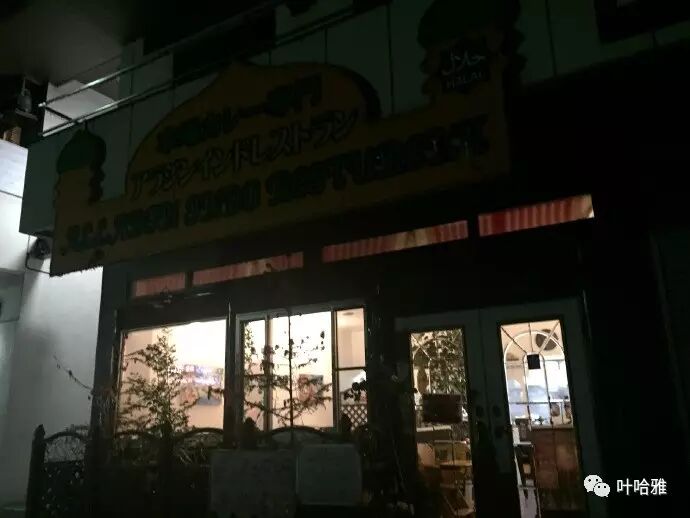
This is an Indian restaurant very close to Lake Kawaguchi. Note that Mount Fuji is a fair distance from Fuji City, so be careful not to get them mixed up when searching on a map.
Address: Google Maps does not work well in China. I suggest using Google Maps to search for "インドレストラン" once you arrive at the foot of Mount Fuji.
2. Niku no Hanamasa Tsukuba Branch
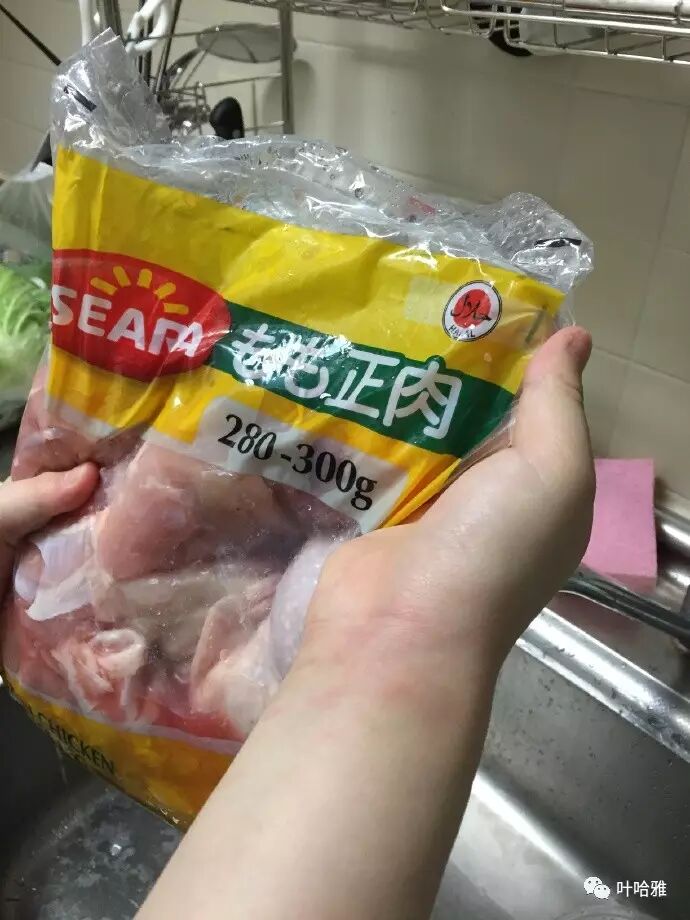
This store is in Tsukuba, a science city in Ibaraki Prefecture. There are many Muslims here, and you can buy halal meat at this supermarket. This is the halal chicken my Japanese friend bought. My friend specifically prepared a home-cooked Japanese meal for me using halal ingredients.
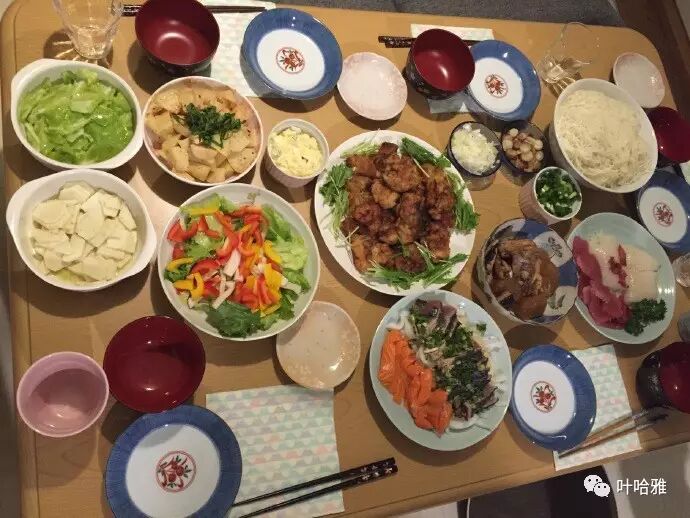
If you want to eat this, make a Japanese friend to cook it for you.
Address: 305-0834 309-7 Teshirogi, Tsukuba City, Ibaraki Prefecture
Website: http://www.hanamasa.co.jp/shop/index_en.html
2. Tokyo Indian-Pakistani Cuisine
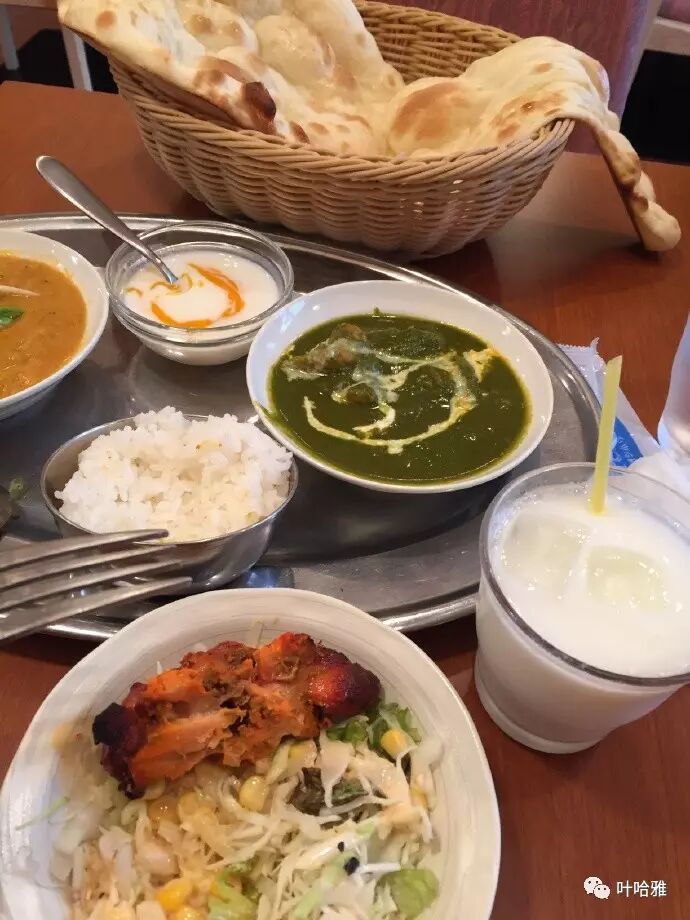
Many Indian-Pakistani restaurants in Tokyo are halal. For Muslims abroad, Indian-Pakistani food is like ramen for Muslims in China. When you are in a strange country and cannot find a halal restaurant, try searching for an Indian-Pakistani or Turkish restaurant. These are very likely to be halal.
Address: 4-chome, Hongo, Bunkyo-ku, Tokyo
3. Sumiyakiya Nishi-Azabu Main Store
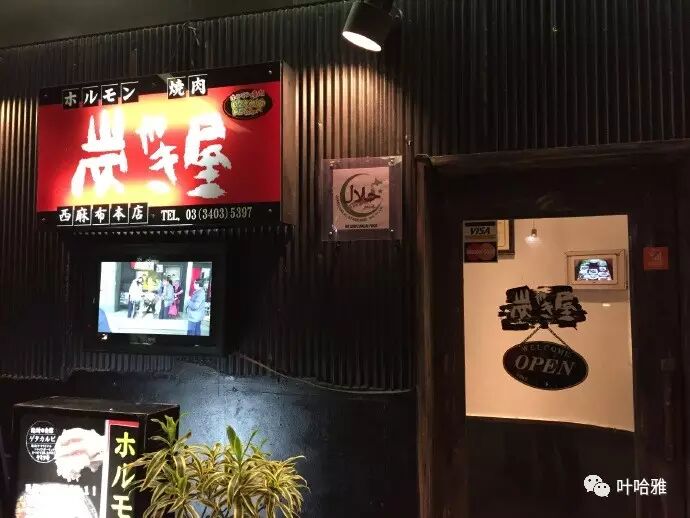
Grilled meat is also a popular way to eat in Japan.
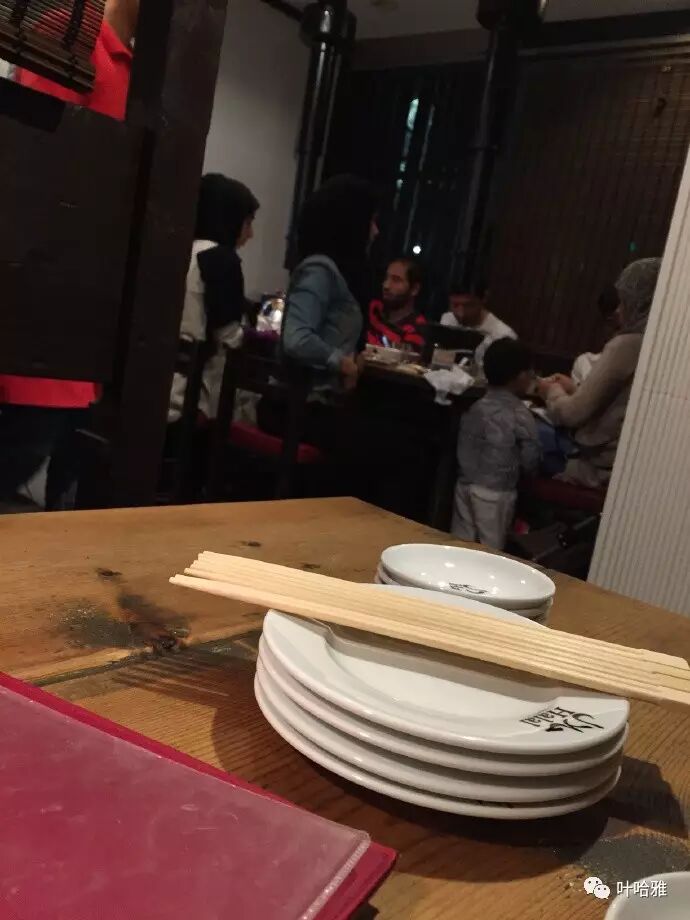
The diners inside look like they are from the Middle East.
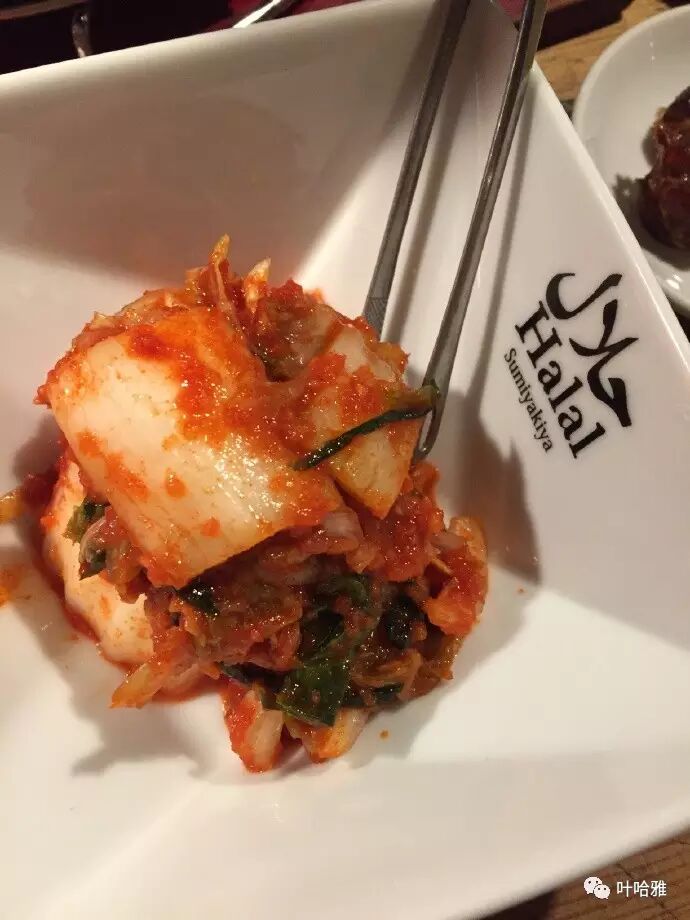
Complimentary kimchi.
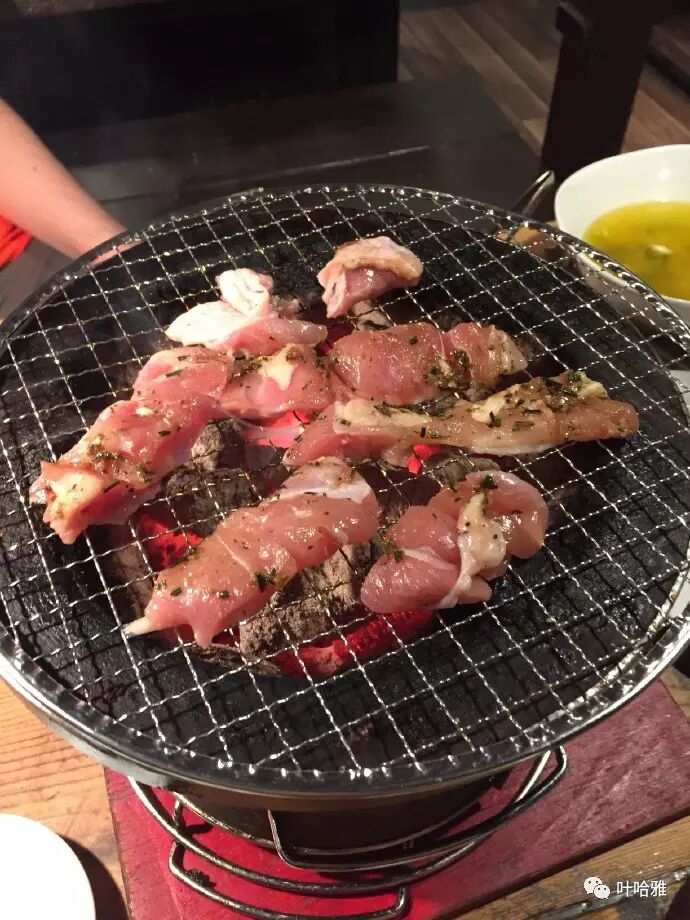
The most reassuring thing about eating in Japan is that the ingredients are guaranteed to be fresh.
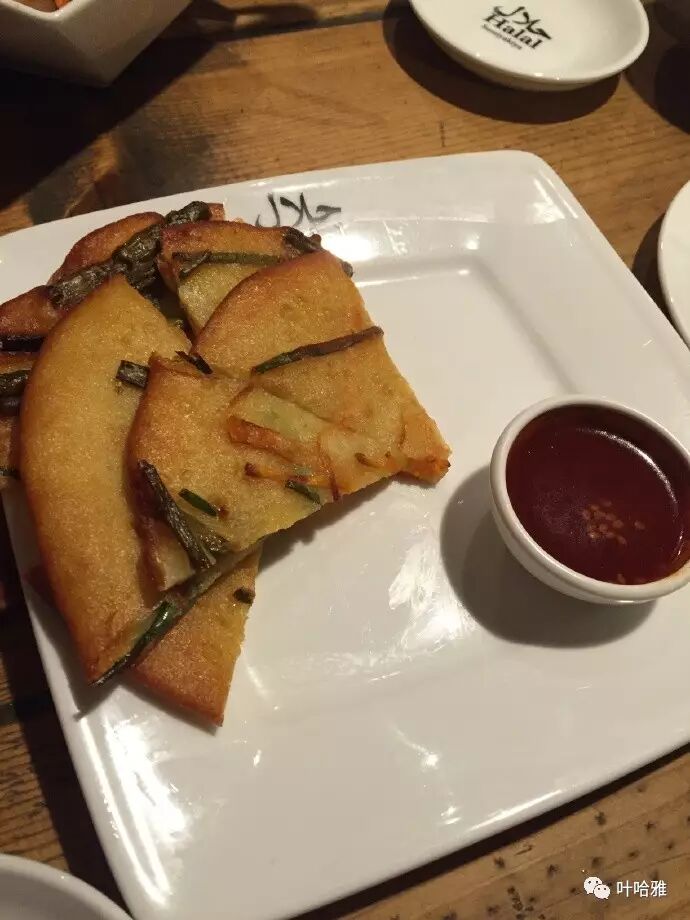
This is a bit like a combination of scallion pancake (cong huabing) and grilled cornmeal bun (wo tou).
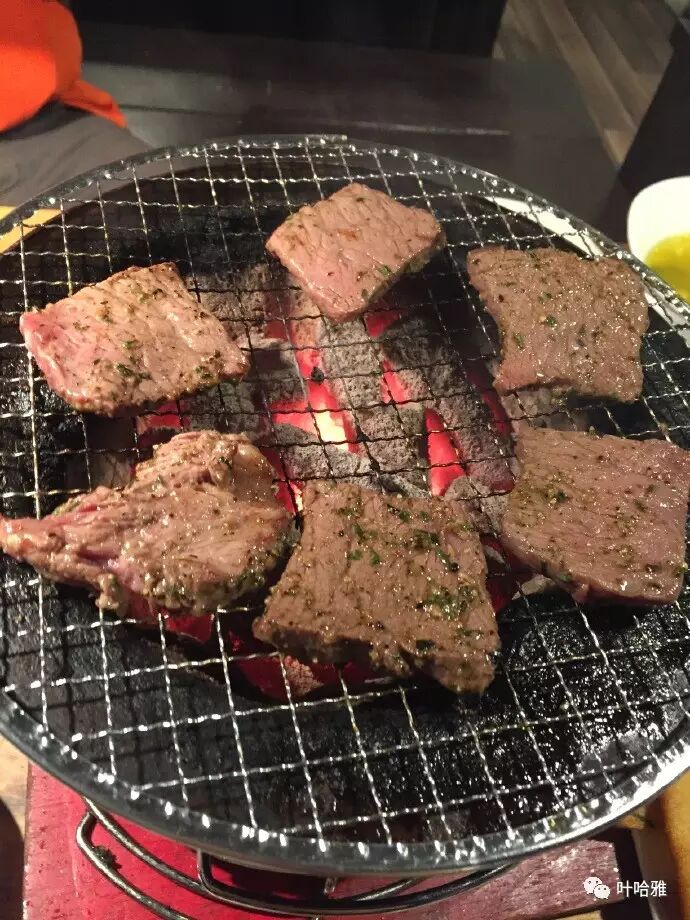
The meat is marinated.
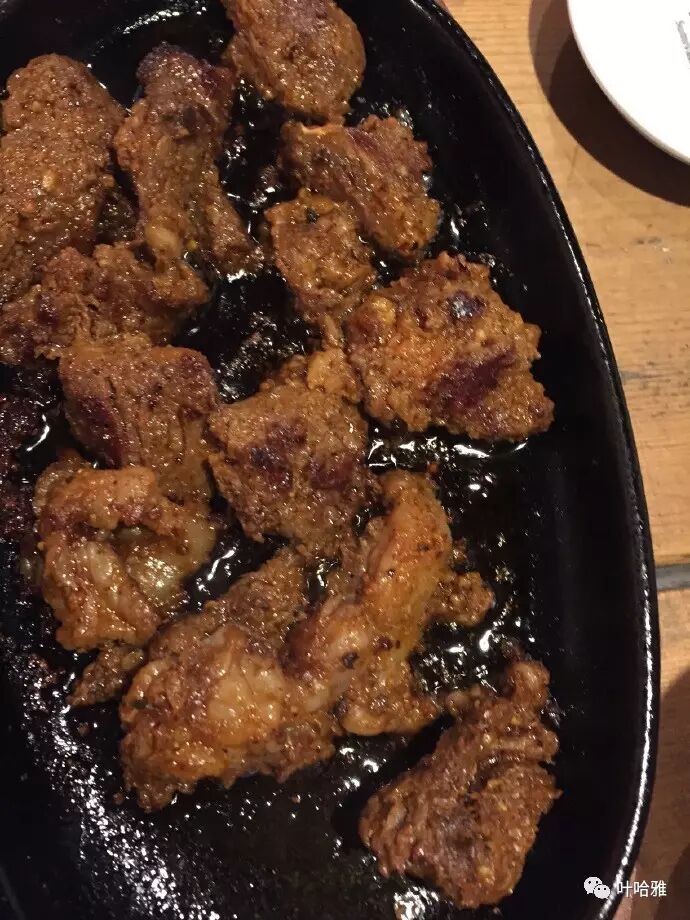
This is the grilled lamb, served directly. It is rare to find lamb in Japan.
Address: 3-20-16 Nishi-Azabu, Minato-ku, Tokyo
4. Kebab
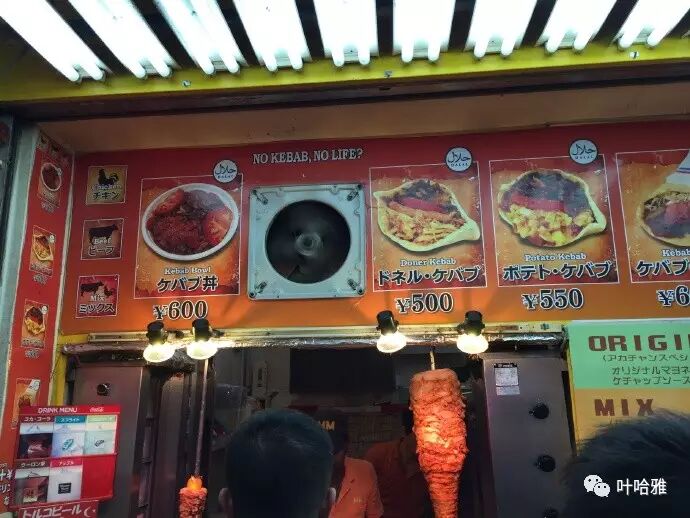
Turkish kebab is a type of fast food that students studying abroad are familiar with; it is convenient and delicious. The server at this shop is Turkish, but he calls out in Japanese. It felt strange to hear a white face speaking Japanese for the first time.
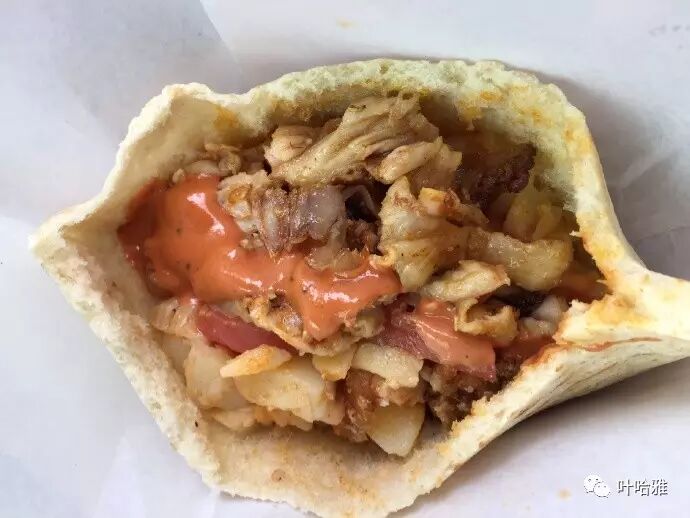
Maybe I was just hungry, but I ate two in one go. Turkish kebab (doner kebab) has saved the stomachs of so many international students.
Address: Ueno Shopping Street, Taito Ward, Tokyo.
5. Yokohama: Kissho Wagyu Hot Pot.
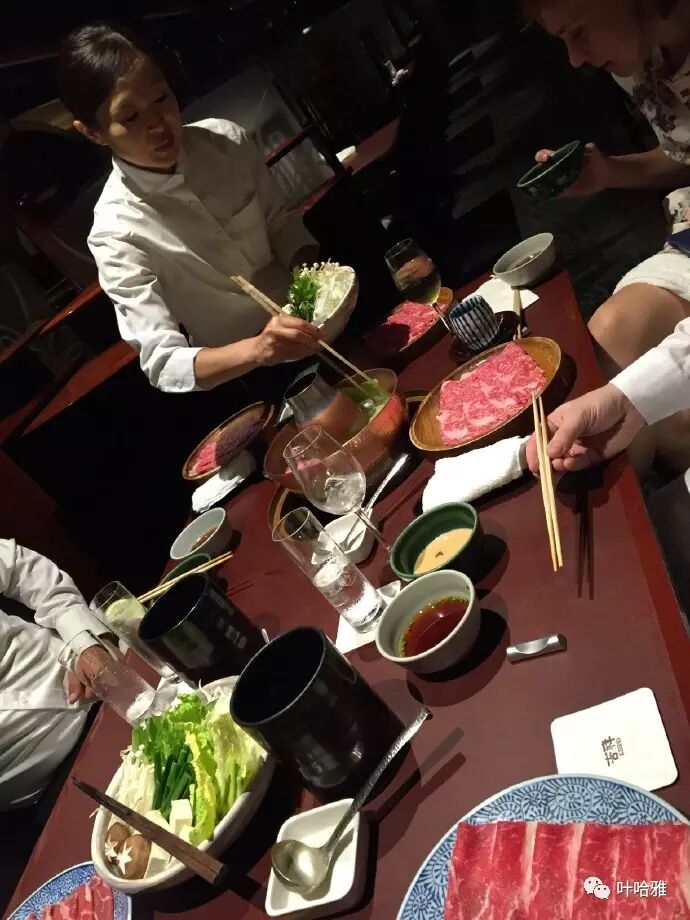
I actually found halal Japanese Wagyu beef in Yokohama. I have to thank Sister Amina for the treat, or I would have missed out on such delicious food.
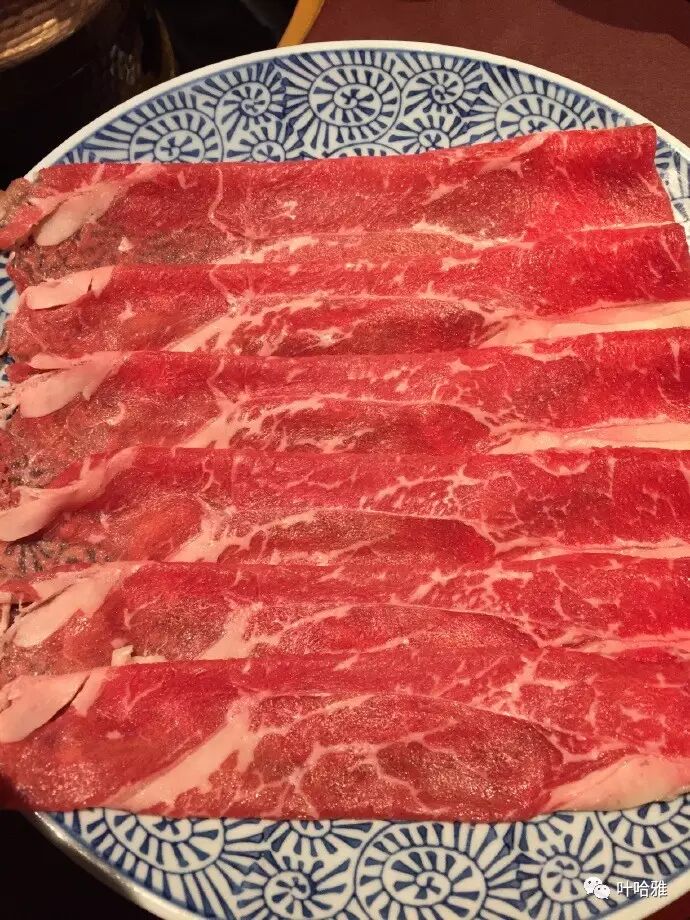
Kissho Wagyu beef with clear marbling.
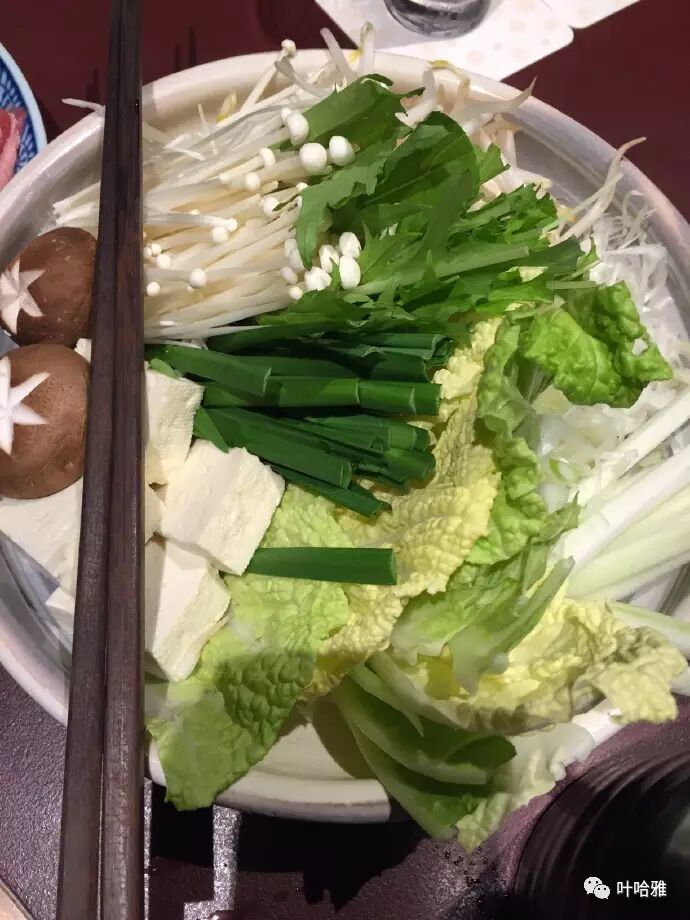
Fresh vegetables. The types of vegetables here are the same as in China.
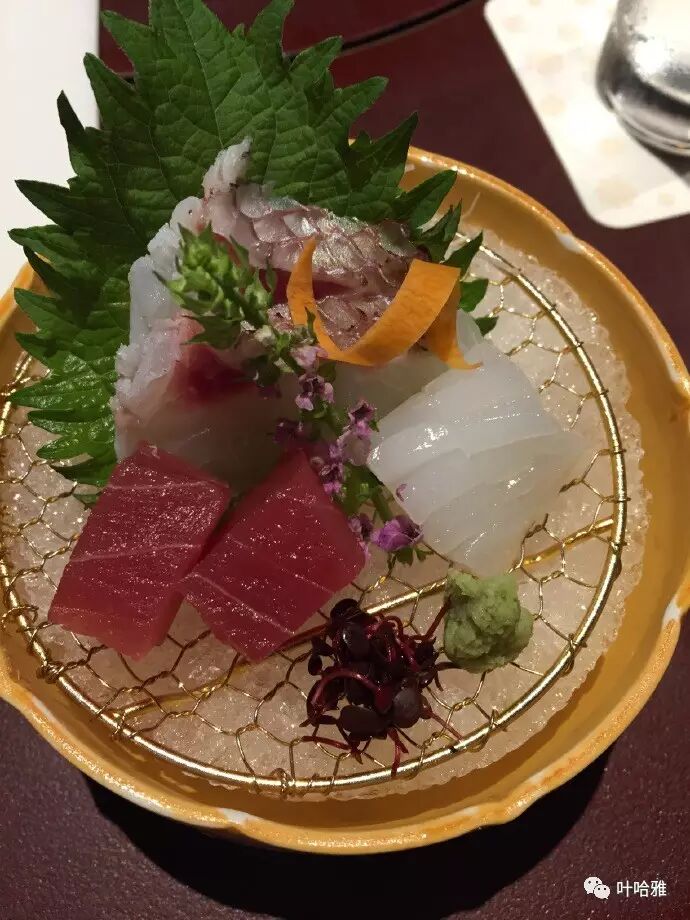
The Japanese people are experts at eating raw food, so sashimi is naturally a must.
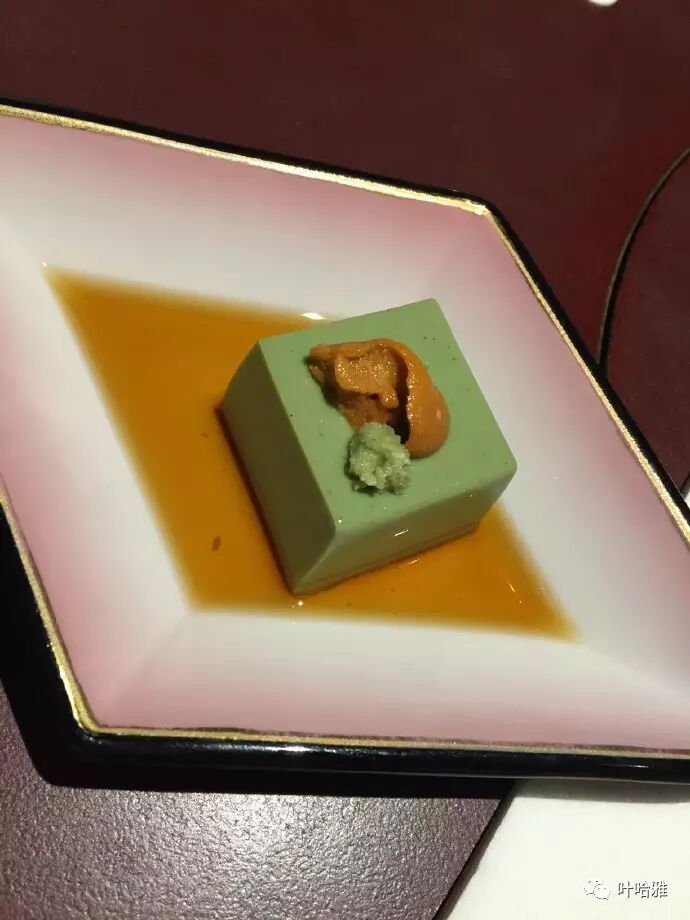
Don't let the small portion size fool you; this dessert is made with great care. Japan has the most Michelin-starred restaurants in the world, which shows the deep culinary skill of the Japanese. To the average diner, dishes at Michelin restaurants might look plain, but the selection of ingredients and the processing methods reflect years of the chef's hard work.
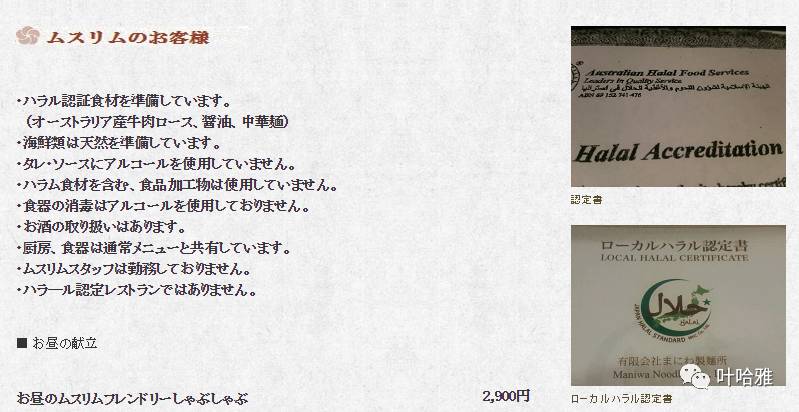
This is a screenshot of the website. Remember to call and book in advance so the shop can prepare fresh halal Wagyu beef.
Address:
Landmark Plaza 5F, 2-2-1 Minatomirai, Nishi Ward, Yokohama City, Kanagawa Prefecture.
Website: www.kioicho-kissho.com/yokohama/menu/index.html
6. Kerimu Xinjiang Restaurant.
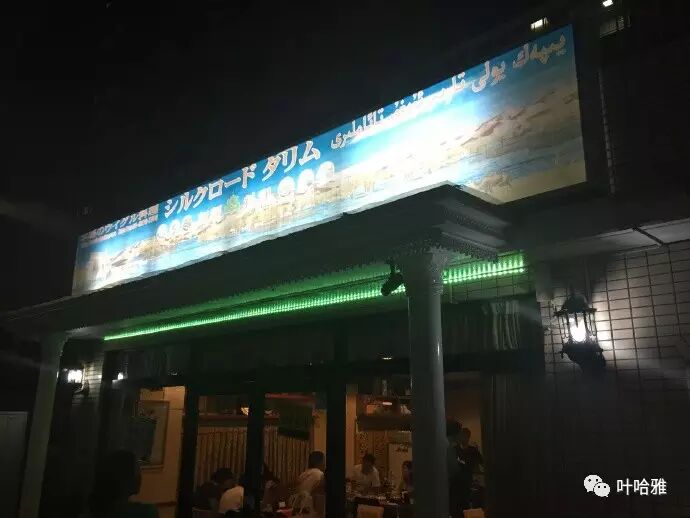
This is a Xinjiang restaurant that every Xinjiang person coming to Japan must visit. The owner is a Uyghur from Northern Xinjiang, and his whole family has immigrated to Japan.
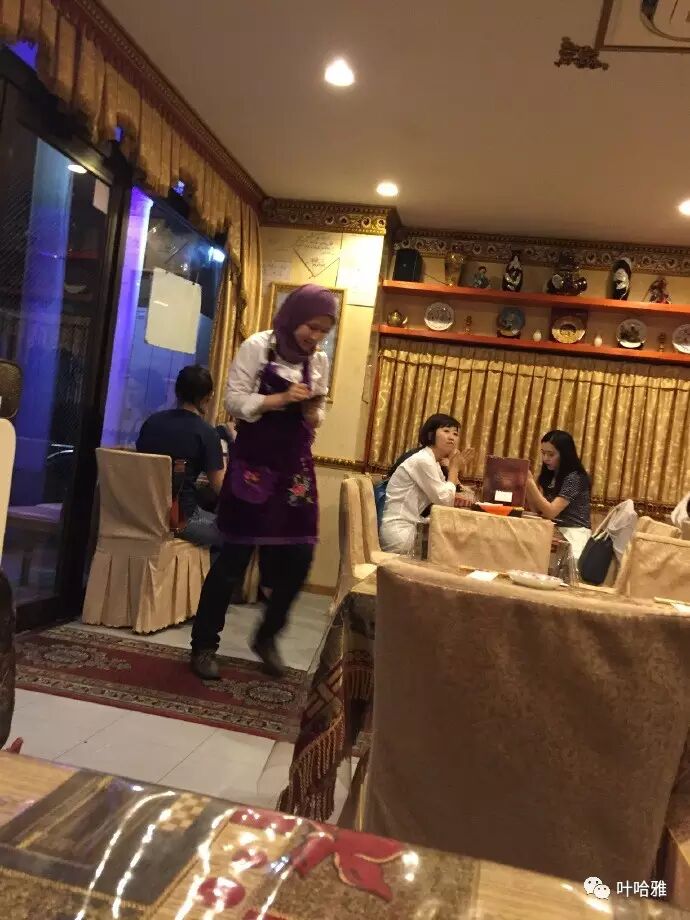
The server is also a Uyghur girl.
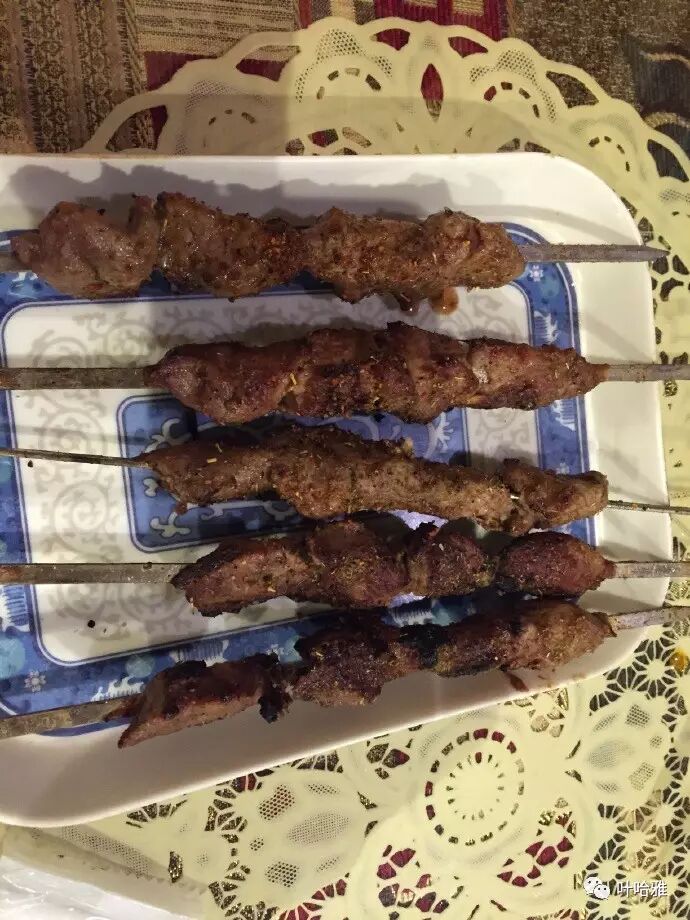
The taste of the grilled meat is not much different from what you get in Xinjiang.
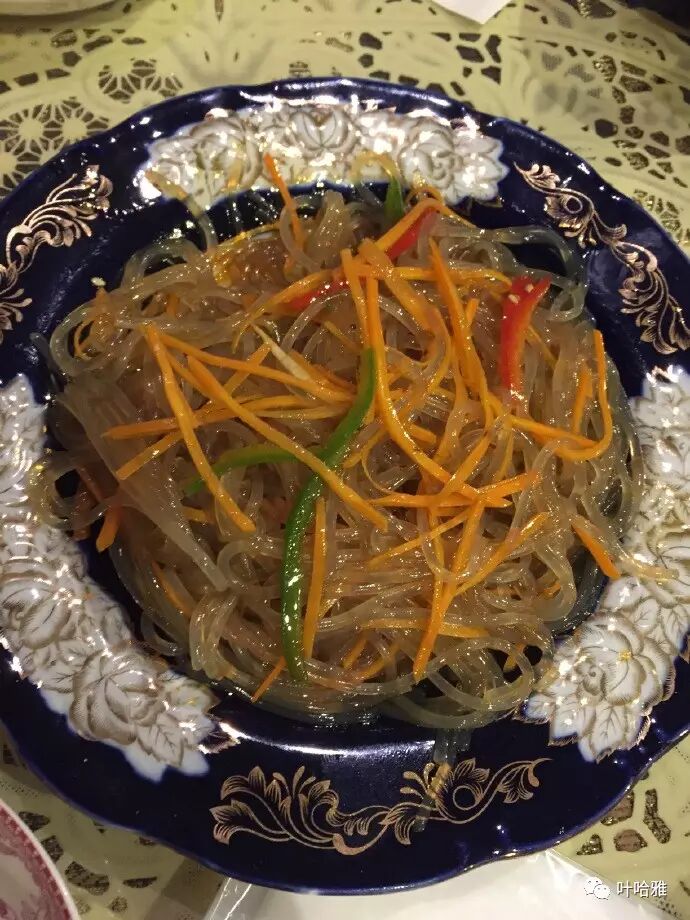
The mung bean jelly (liangfen) has been modified. Japanese people cannot eat food that is too spicy, while Xinjiang-style cold noodles (liangpi) are usually spicier.
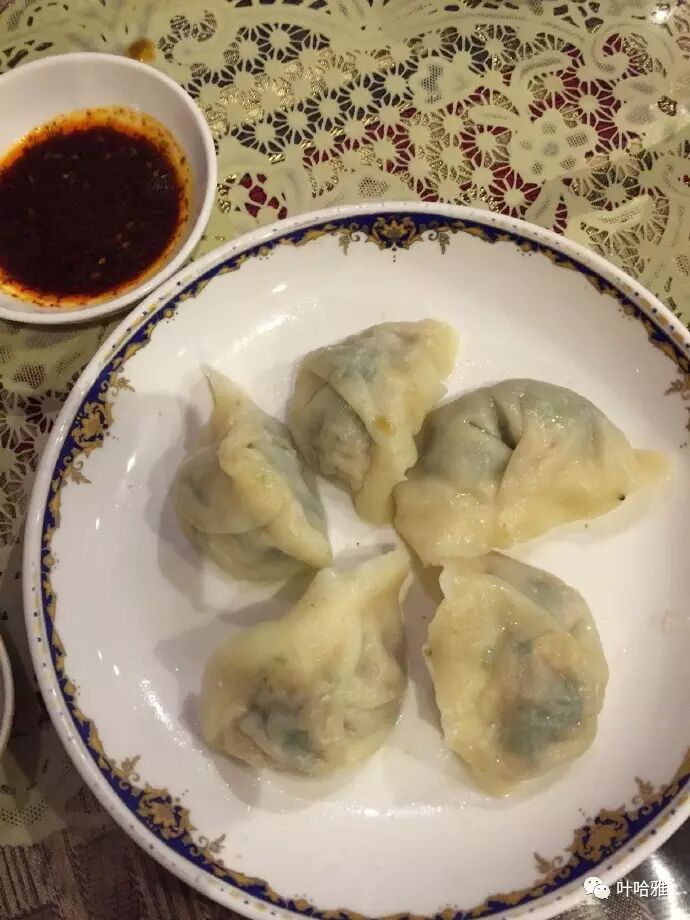
I was surprised to find dumplings (jiaozi) at a Xinjiang restaurant in Tokyo.
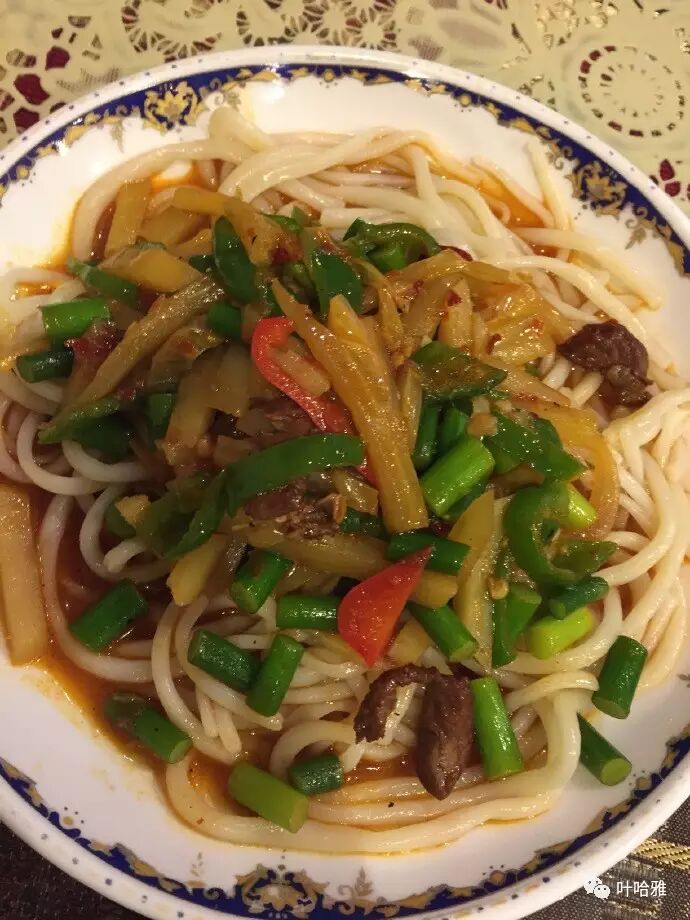
The hand-pulled noodles (latiaozi) have been Japanized. The portion is half of what you get in Xinjiang, but the taste remains the same.
Address: 1F Nishi-Shinjuku Bar Building, 3-15-8-103 Nishi-Shinjuku, Shinjuku Ward, Tokyo.
There are many more halal restaurants in Tokyo, but I only chose to feature the ones I took photos of. Therefore, the following two restaurants do not have pictures, but here are some specialty restaurants that friends have visited:
7. Mongolian Meat Pie.
Address: 5F, Shinto Building, 2-14-7 Takadanobaba, Shinjuku-ku, Tokyo.
8. Japanese ramen
Address: 1-11-7 Shinjuku, Shinjuku-ku, Tokyo.
Website: http://www.m-ouka.jp/sp/access/index.html
9. Iftar meal
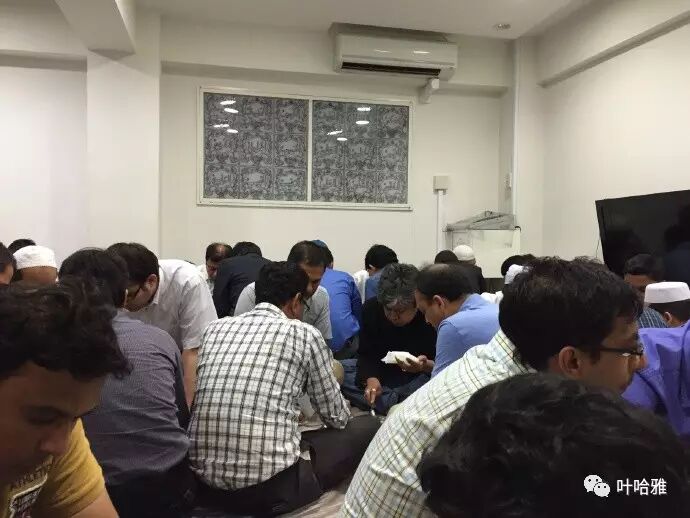
My time in Japan happened to coincide with the holy month of Ramadan, when mosques in Tokyo prepare iftar meals for fellow Muslims (dosti).
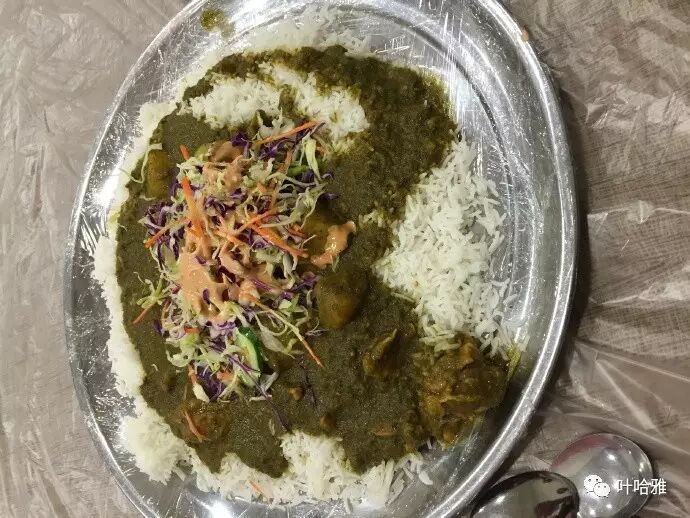
This is Indian-Pakistani style rice pilaf (biryani). Pakistanis eat it with their hands, but I prefer a spoon. When traveling, I first find the local mosque to get information about halal restaurants. You can find mosques easily on Google Maps.
Address: Tokyo Okachimachi Mosque, Tokyo Camii.
10. Nagoya: Asian cuisine
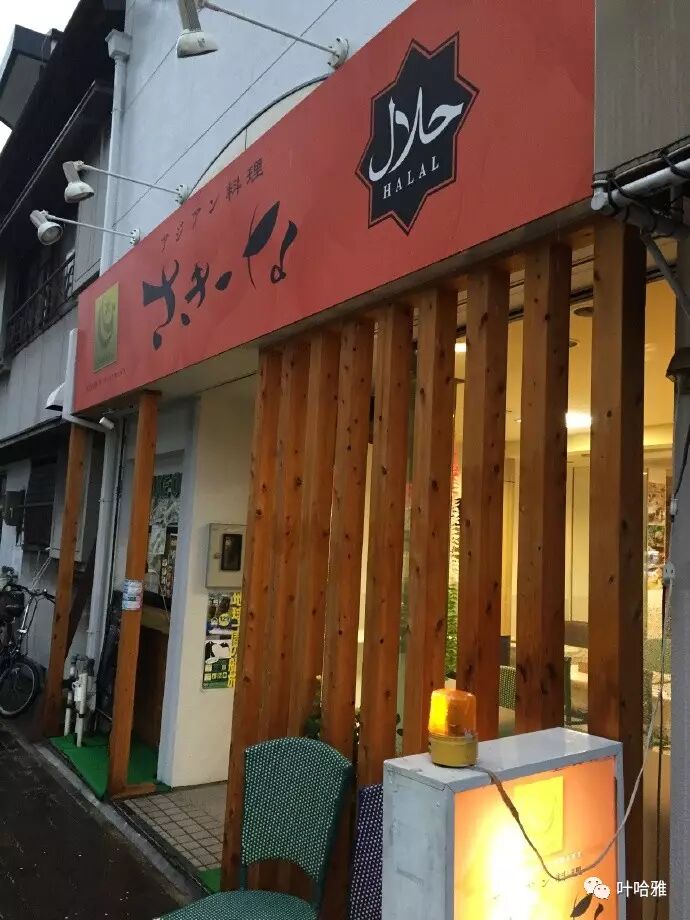
Asian means Asian, but this place actually serves South Asian flavors. The servers are from Nepal.
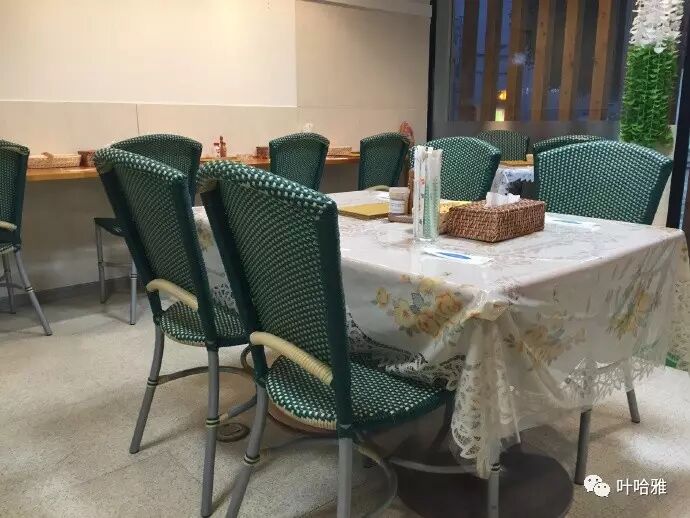
Influenced by Japanese habits, restaurants in Japan are kept very clean and tidy.
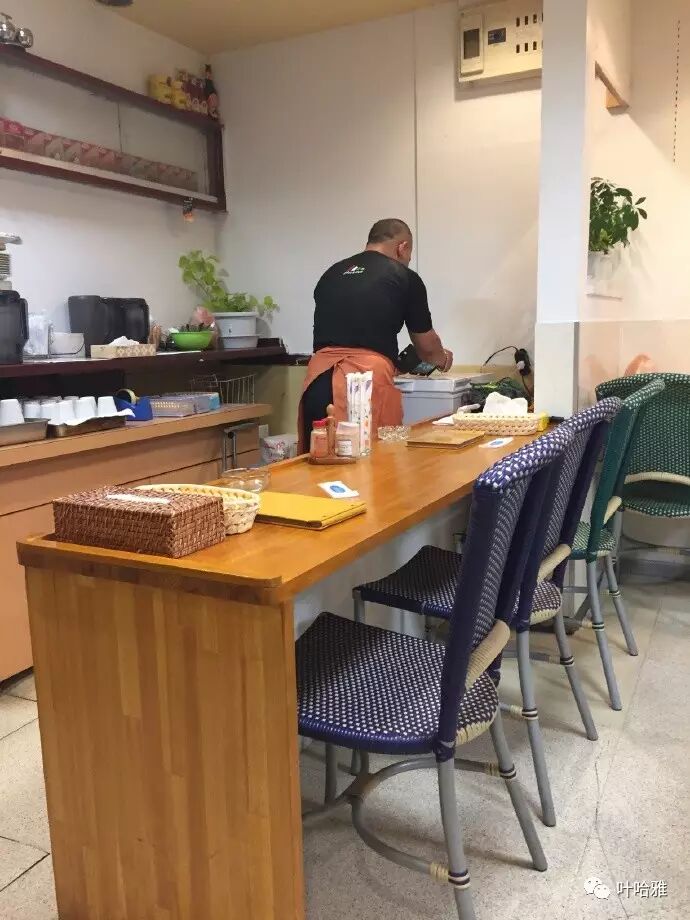
The Nepali brother spoke English with a heavy accent. I couldn't tell where he was from for a long time, until he said his country is between China and India, and then it clicked.
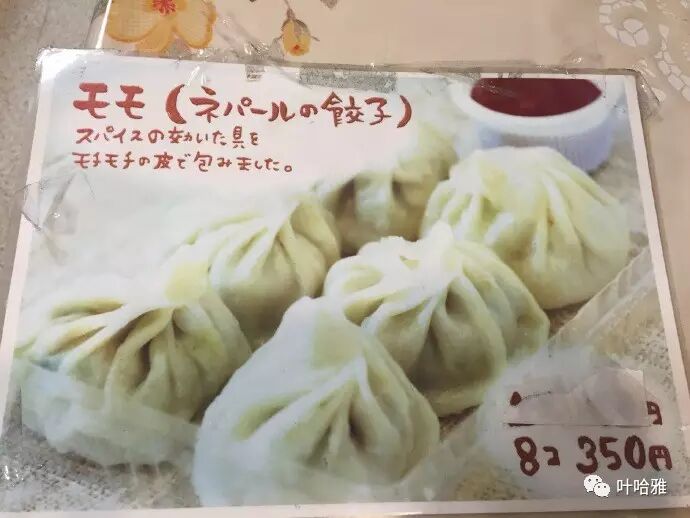
He knew I was from China and asked if I wanted to eat momo. I was confused, so he brought a picture from the back, and I realized they call dumplings momo.
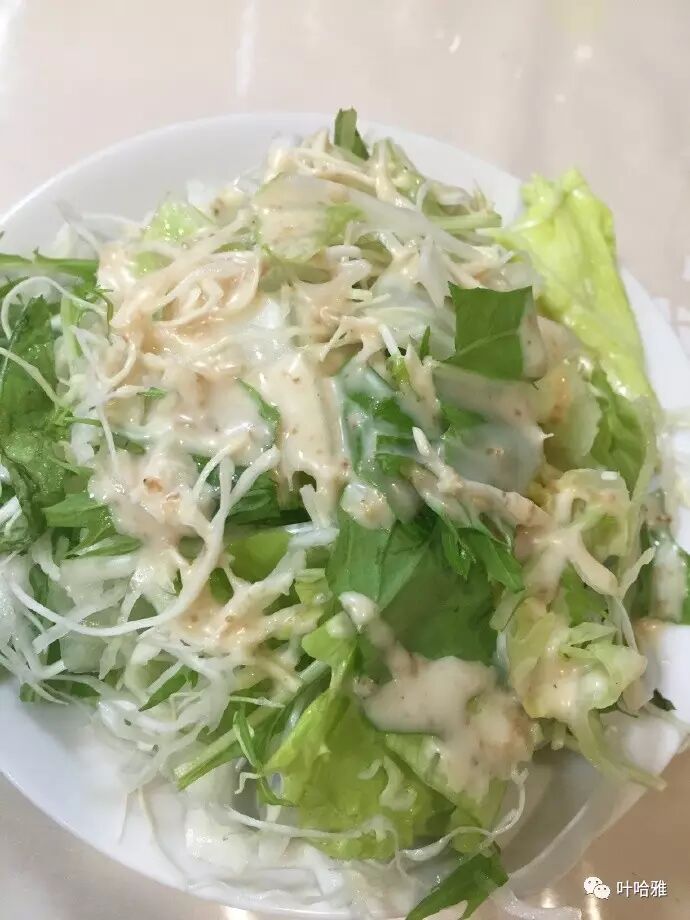
Fresh vegetable salad. Foreigners like to eat raw vegetables. Right, I am a foreigner in Japan too...
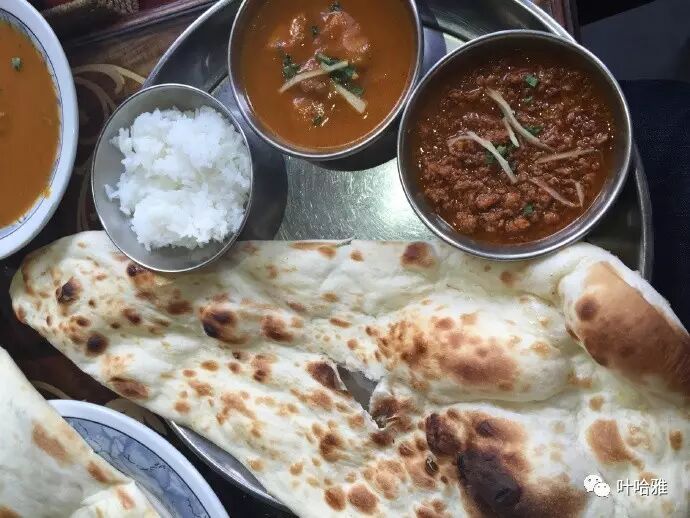
This is a set meal. Ordering a set at a South Asian restaurant usually means getting these items: a soup, a beef or chicken dish, a flatbread (naan), and a bowl of rice.
11. Osaka Mosque
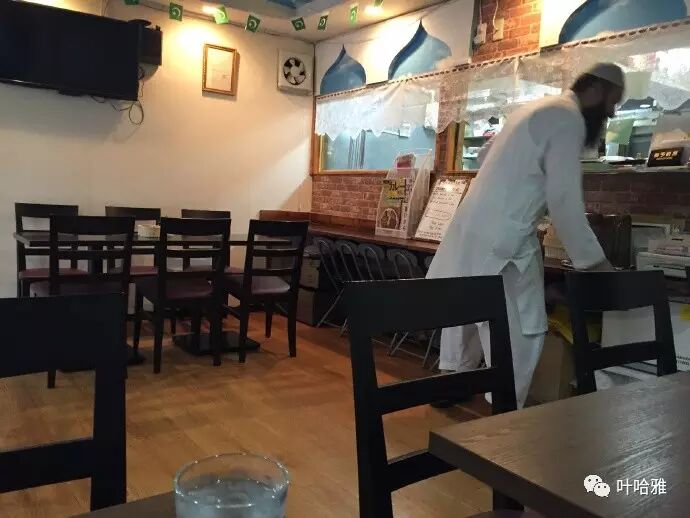
A Pakistani man I met at the mosque brought me to a halal restaurant across the street.
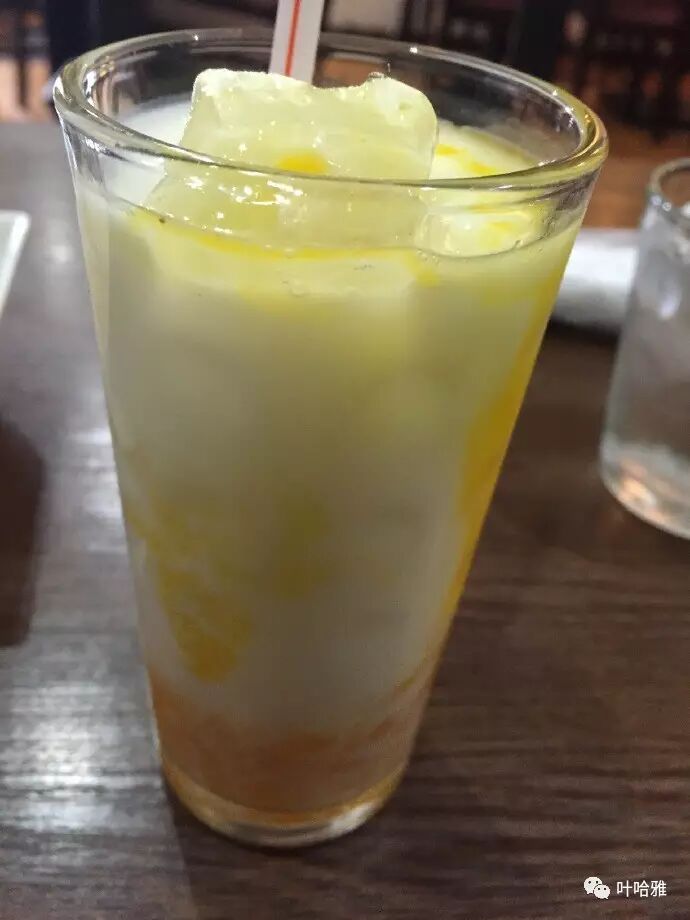
This is a mango milkshake (lassi) a fellow Muslim (dosti) gave me.
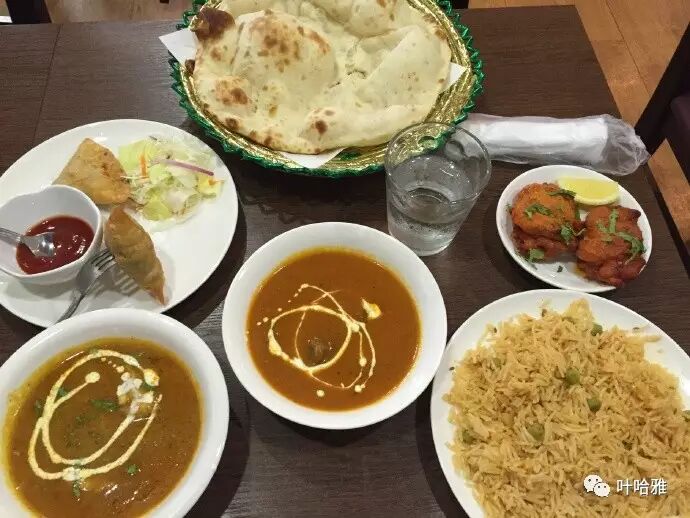
As usual, I had a set meal. The rice here is very fragrant; the quality of Japanese rice is excellent.
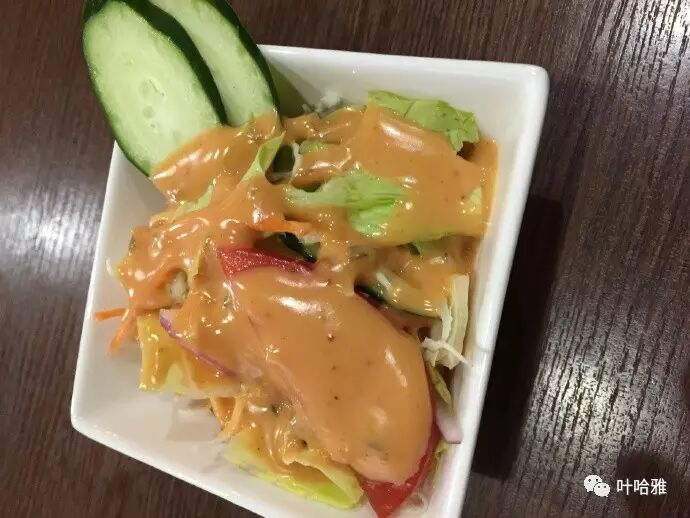
A very small vegetable salad. Portions in Japan are quite small, which is fine because it prevents waste.
Address: Opposite Osaka Mosque, right next door (Baidu Maps is not convenient, and Google is blocked, but you can use Google Maps once you are in Japan).
12. Kyoto: Turkish restaurant
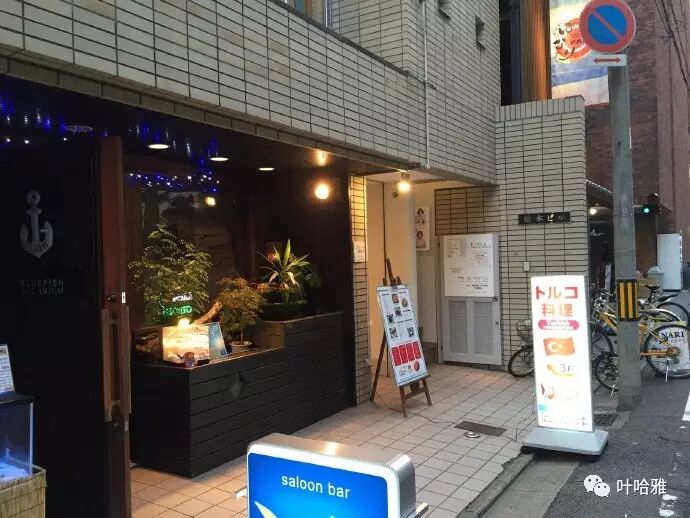
I followed Google Maps to find this Turkish restaurant in downtown Kyoto.
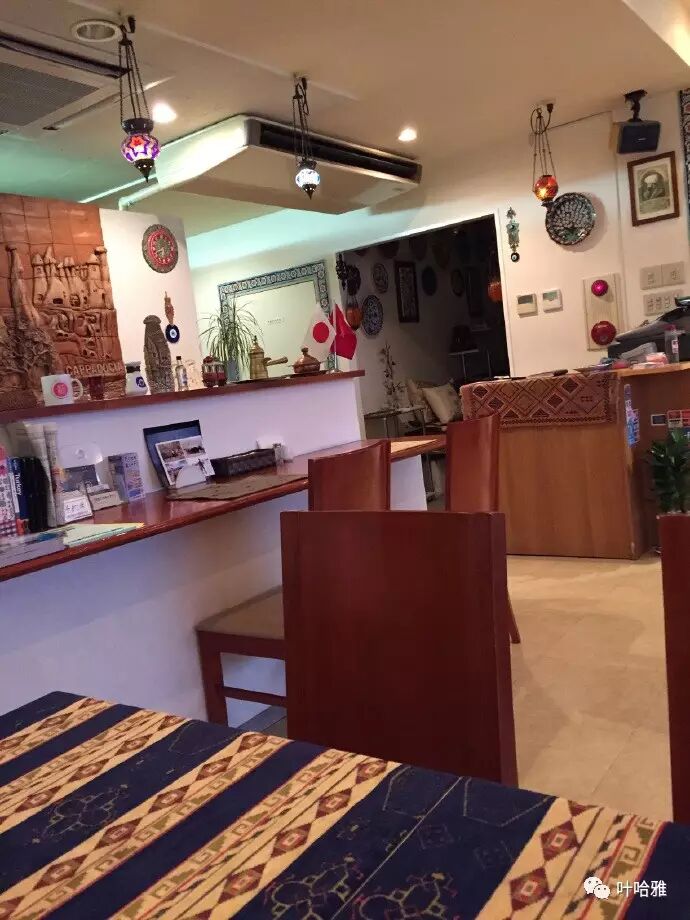
The upstairs area is decorated in a Turkish style.
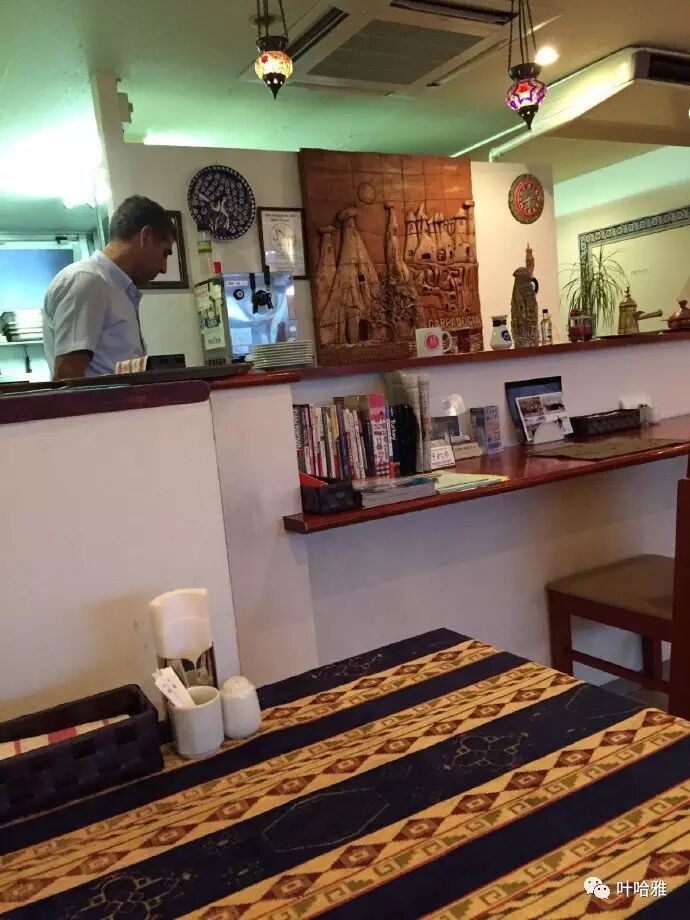
The shop is very clean and tidy.
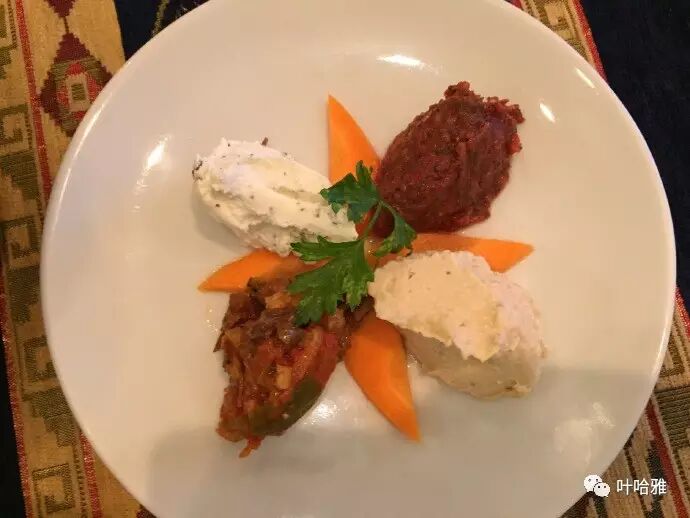
The dishes are served in order, starting with cold appetizers.
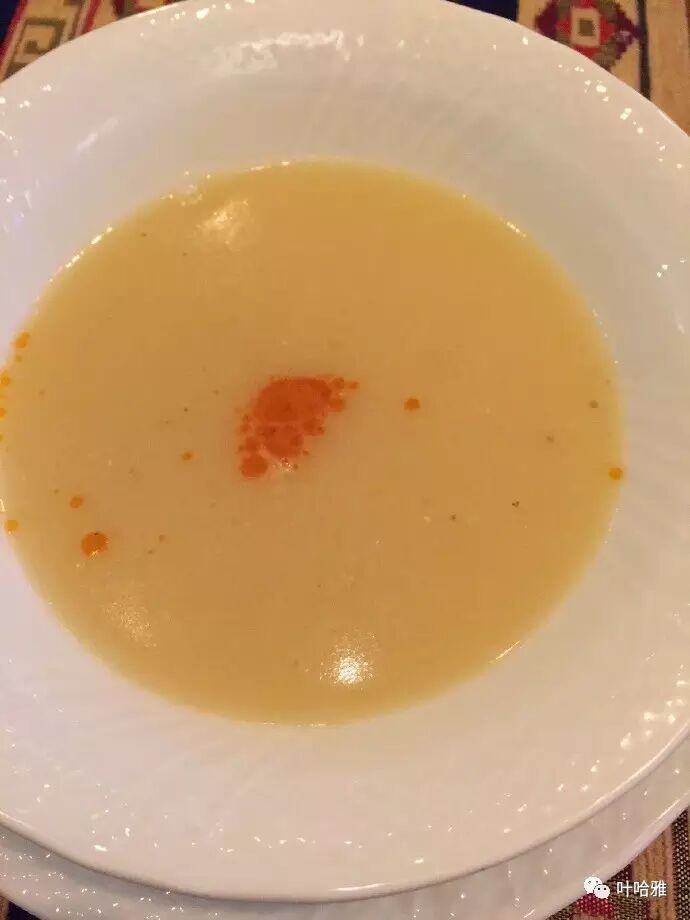
Next comes the creamy soup.
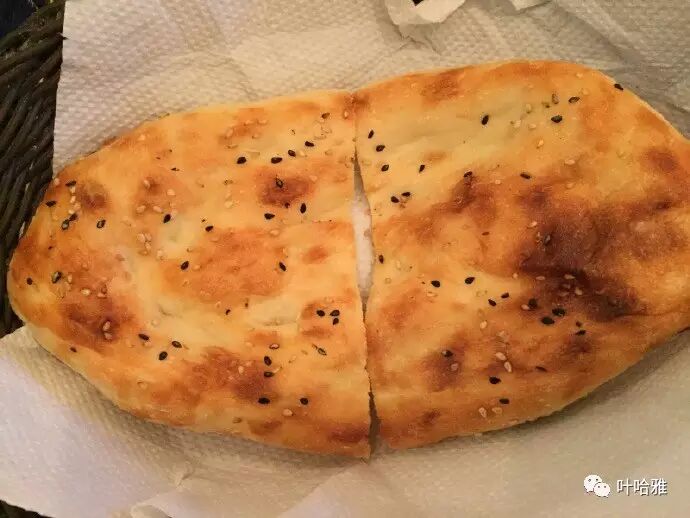
I ordered a piece of baked flatbread (naan) as the main staple, as is customary.
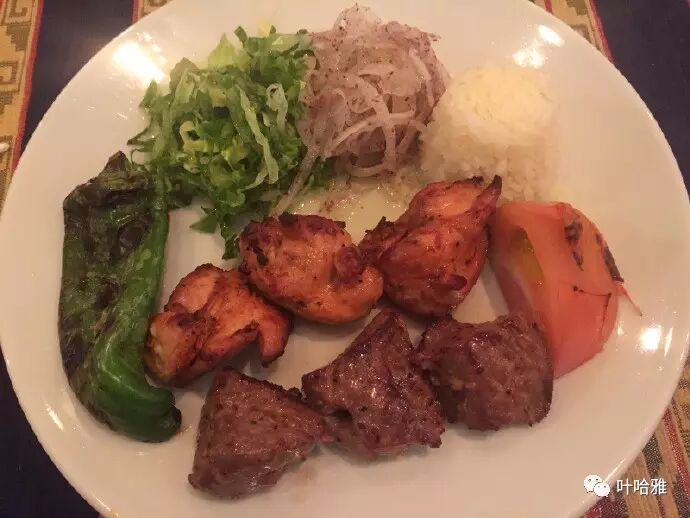
Turkish and Middle Eastern grilled meats are served with roasted tomatoes and green peppers to cut through the richness.
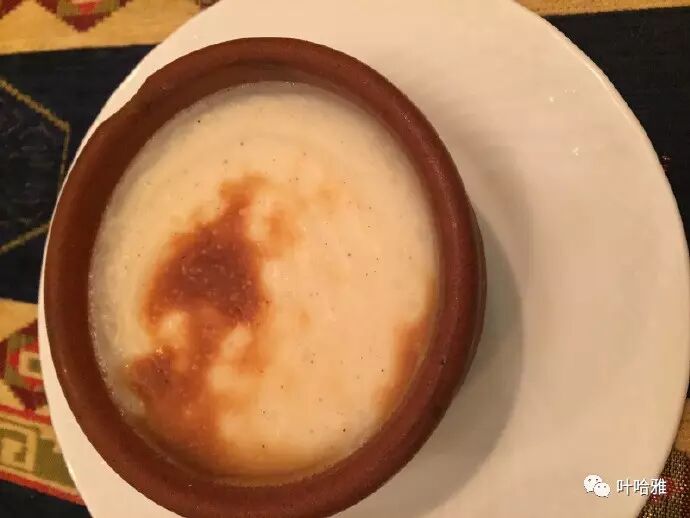
Dessert is served after the meal.
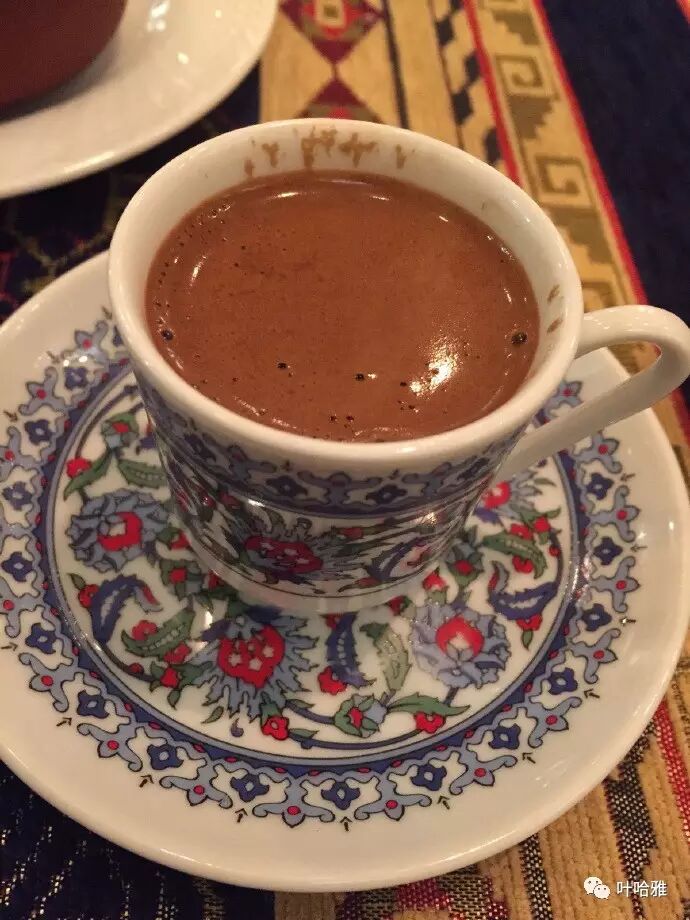
Turkish coffee is very famous. European coffee culture originated in Africa and spread to the West through the Ottoman Empire.
Address: Once you arrive in Kyoto, search for "トルコ" on Google Maps.
13. Genghis Khan barbecue (jingjisihan kaorou)
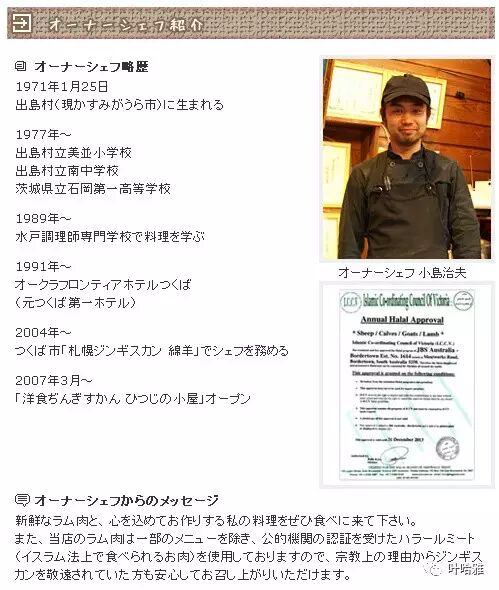
A Japanese friend introduced me to this barbecue restaurant run by a Japanese Muslim. It is said they sell halal food, but I have not eaten there yet.
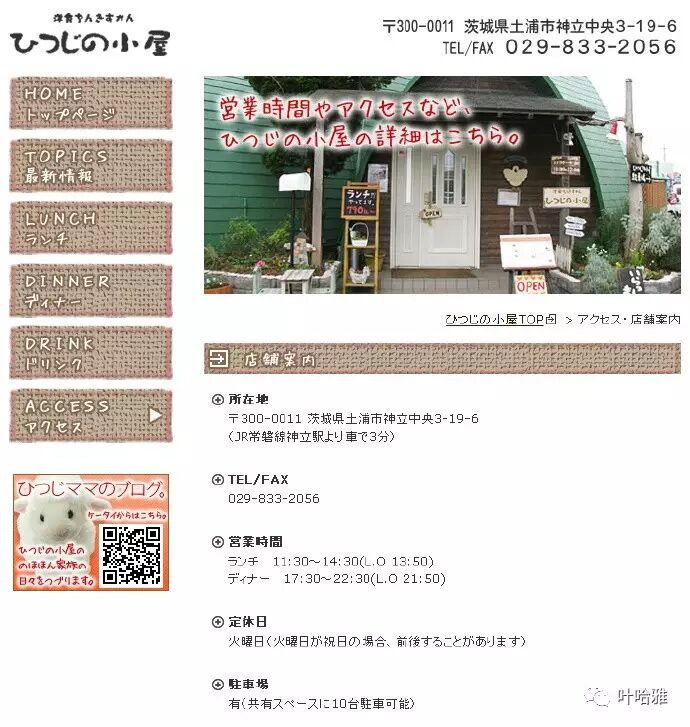
If you are interested in trying it, please remember to come back and share your thoughts with me.
Address: 3-19-6 Kandatsuchuo, Tsuchiura City, Ibaraki Prefecture 300-0011 (3 minutes by car from JR Joban Line Kandatsu Station).
Website: http://www.hitsujinokoya.jp/info/index.html
Best Halal Food in Malaysia: Muslim-Friendly Restaurants, Satay and Local Food Map
Articles • ali2007fr posted the article • 0 comments • 226 views • 2026-05-21 08:41
Summary: This Malaysia halal food map gathers Muslim-friendly restaurants, local dishes, satay, seafood, and practical dining notes while keeping the places, food names, and photos from the Chinese source.
Malaysia is an Islamic country filled with halal restaurants. In fact, Malaysia pioneered the international halal certification standards used today, so it is actually quite hard to find a non-halal restaurant there.
1. McDonald's
I have never eaten at a halal McDonald's back home, so I had to try it in Malaysia. Fast food chains like McDonald's in Malaysia are all halal. Even in neighboring Singapore, famous chains like McDonald's and KFC are 100% halal, so Muslims can eat there with peace of mind.
Even monks eat at McDonald's there.
Address: Kuala Lumpur Airport, Petronas Twin Towers
2. Sabah Night Market
No matter where I go, I love visiting local markets to experience daily life. The food at these markets is authentic and cheap. This market is in Sabah state. You do not need a map; just follow the crowds and you will find it.
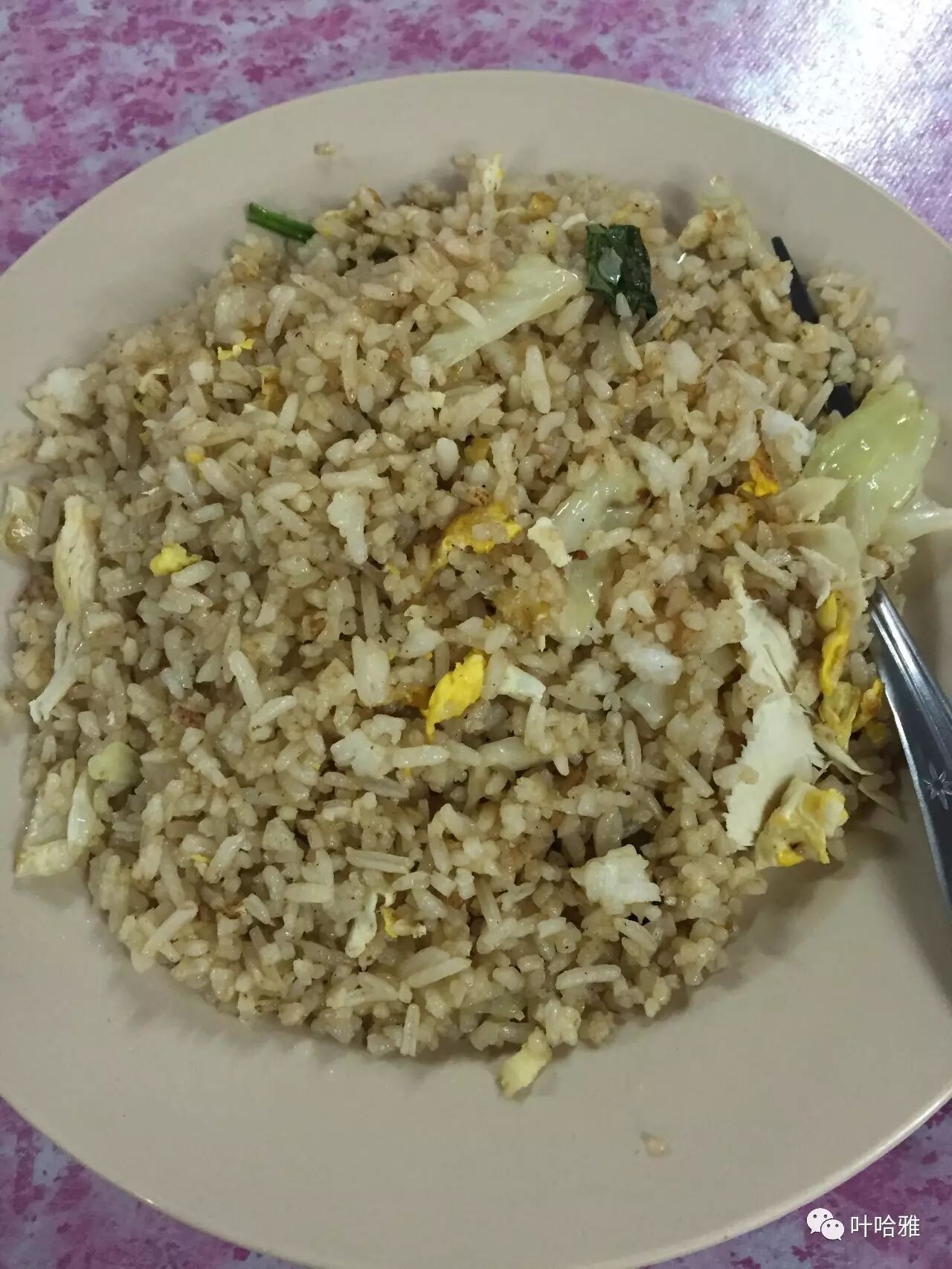
This is a common Southeast Asian stir-fried noodle dish with chicken. It costs just a few dollars, and Malaysians eat it with their hands.
This pot is not for vinegar. Muslims will recognize it as a water pitcher (tangping). On Malaysian tables, it is used for washing hands because people eat with their fingers.
Seafood in this island nation is fresh and cheap. This pair of large prawns cost less than 30 yuan.
Lamb is rare in Malaysia, so enjoy the fish instead.
This is coconut pudding. I rarely see it elsewhere. It costs 4 Malaysian ringgit each.
If you want to learn to eat with your hands like a Malaysian, remember to use your right hand, as the left hand is used by Muslims for personal hygiene.
Address: Kota Kinabalu
2. Northwest Hand-Pulled Noodle Shop
When traveling, I avoid hand-pulled noodles (lamian) unless I have no other choice because I eat them too often at home. This shop is worth mentioning because it is the first time I have seen a lamian shop abroad.
The sign saying 'This shop is halal, please do not bring outside food' felt very familiar.
I did not go in to eat, but I wanted to record it. The owners of these shops have brought lamian all over the world. In some small cities in southern China, finding a halal lamian shop is something to be very grateful for.
Address: Jalan Tun Fuad Stephen
3. Indian Flatbread (roti canai)
These small street stalls are common in Southeast Asia, and the owners are mostly from India or Pakistan.
You can have this flatbread for breakfast. Tear it with your hands and dip it in the sauce.
Address: Jalan Ikan Juara 1
4. Japanese Dream Food
Because of Japan's history of colonizing Malaysia, some traces remain, and you can find many Japanese restaurants in Malaysia.
Mango pudding
This Japanese restaurant in Sabah is the first halal Japanese place I have ever eaten at.
A famous Japanese dish, thick wheat noodles (udon).
Sushi, which is halal so you can eat it with peace of mind.
Fresh salmon sashimi
Pacific saury (sanma), also a famous Japanese food.
You rarely see halal Japanese food in China. Before the first halal Japanese restaurant, Hefeng Zhi Yan, opened in Beijing, I had to go to Tianjin if I wanted to eat Japanese food.
Address: Lot No 36, Palm Square 4th Floor Center Point, 88000, Kota Kinabalu, Sabah, Kota Kinabalu, 88000 Kota Kinabalu, Sabah
5. NANDOS
This is a chain of roast chicken restaurants. The chicken in Malaysia tastes very different from the chicken in mainland China.
Address: There are many branches in Kuala Lumpur, found in large shopping malls like KLCC and Pavilion.
6. YUSOOF DAN
An Indian snack shop.
Seafood fried rice. I guess they gave us a spoon because they saw we were foreigners.
Seafood fried noodles
Beef and fried chicken. Actually, there are not many types of dishes in Southeast Asia, and the flavors are quite simple.
Address: Kuala Lumpur Central Market
7. SUSHI KING
Many restaurants in Malaysia are labeled "pork free," which means they don't serve pork. Even if the meat is halal, they might still sell alcohol. To get a halal certification in Malaysia, a restaurant must be alcohol-free. This Japanese restaurant has a halal certification.
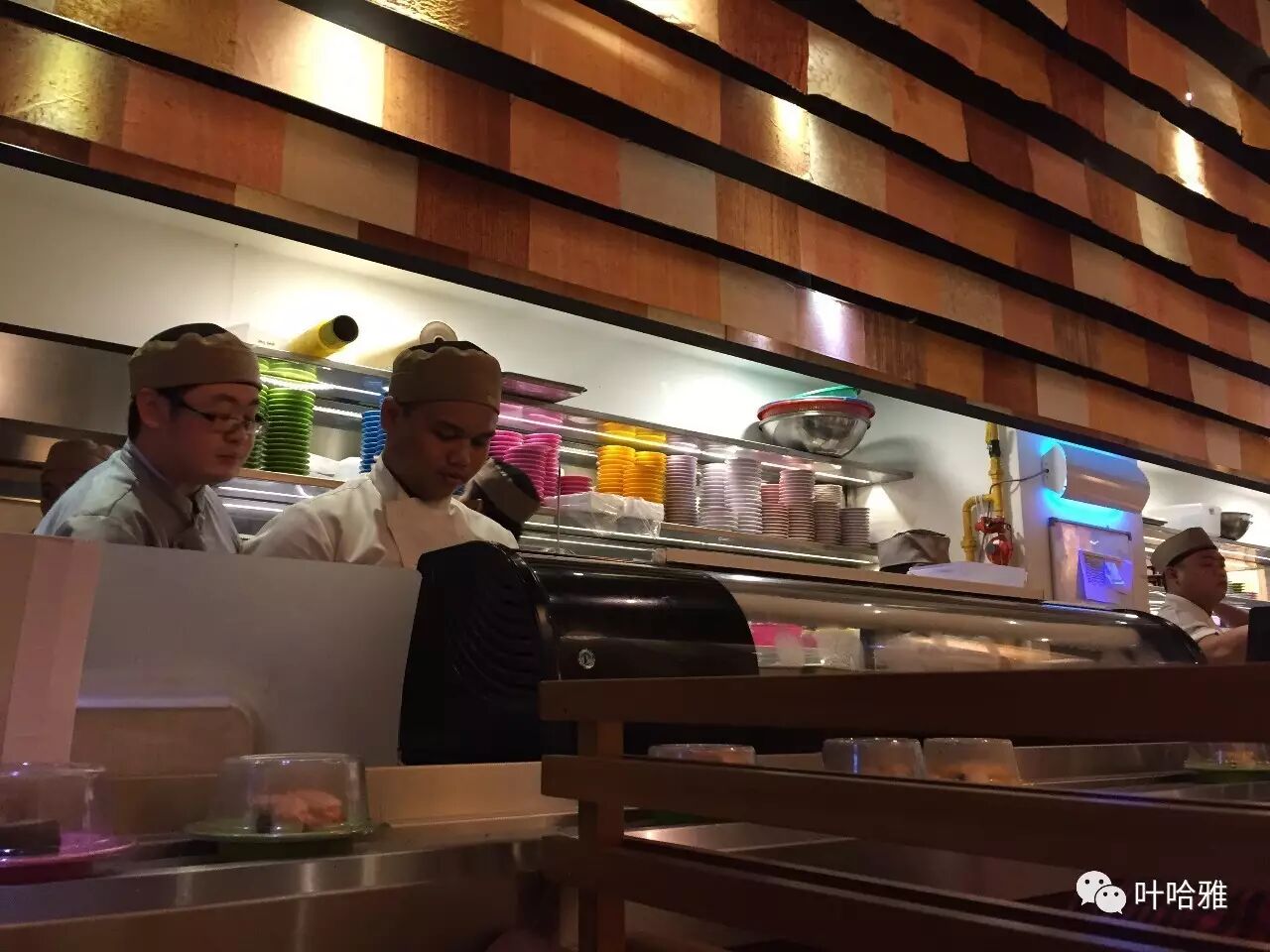
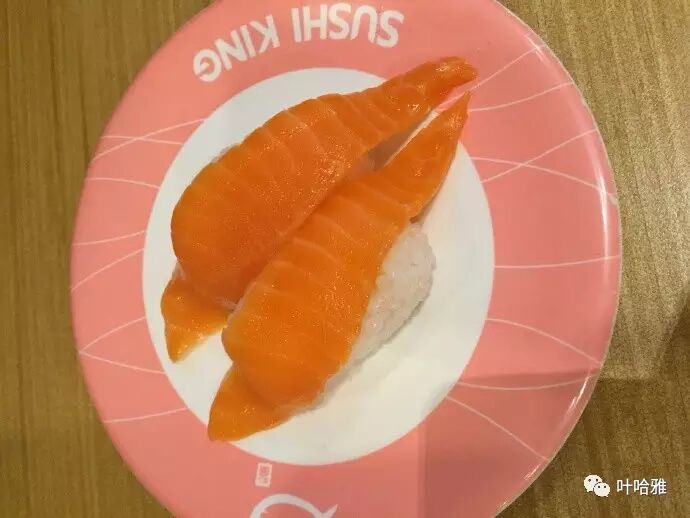
Conveyor belt sushi, take what you want as you eat.
This is a dessert made from eggs.
Fish roe (caviar)
I can never get enough sushi.
Address: Sushi King @ Jaya One, Petaling Jaya, Jalan Universiti, Seksyen 13, Petaling Jaya, Selangor, Malaysia.
8. Arabic flatbread (khubz).
Many Arabs have moved to Malaysia for work. They share the same faith, which makes daily life easier. More importantly, the political situation is stable. Southeast Asia's economy has grown quickly in recent years, creating many jobs. Malaysia is also an international Islamic finance hub, which is attractive to Hui Muslims from China as well.
This Arabic flatbread (khubz) served with fries and beef is delicious when rolled up. The servers are all Arab. I even saw them get up to perform namaz during prayer time, which makes me feel more comfortable eating at this restaurant.
Address: The row of shops at the bottom of the UCSI University South Wing campus. view all
Summary: This Malaysia halal food map gathers Muslim-friendly restaurants, local dishes, satay, seafood, and practical dining notes while keeping the places, food names, and photos from the Chinese source.
Malaysia is an Islamic country filled with halal restaurants. In fact, Malaysia pioneered the international halal certification standards used today, so it is actually quite hard to find a non-halal restaurant there.
1. McDonald's
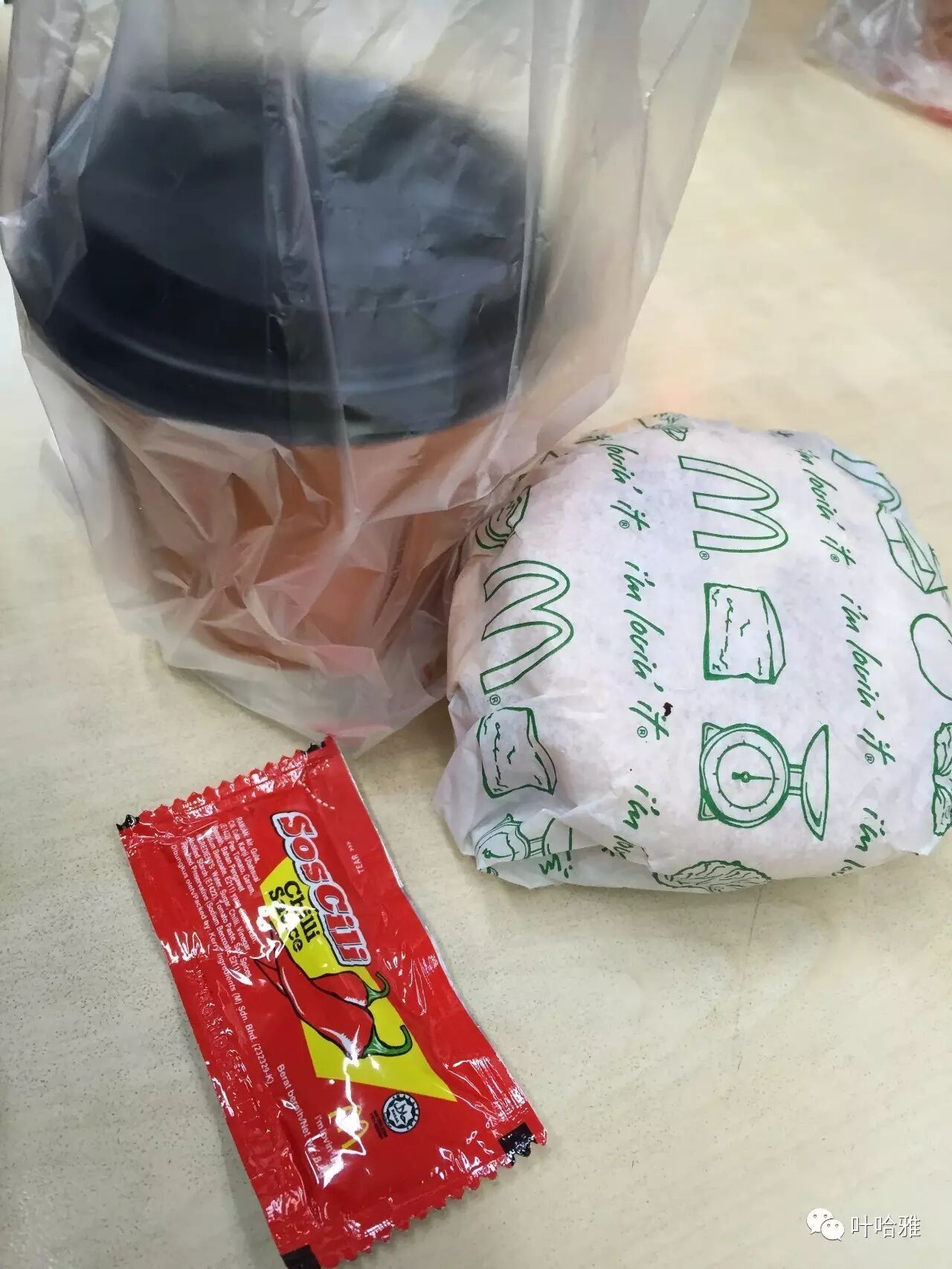
I have never eaten at a halal McDonald's back home, so I had to try it in Malaysia. Fast food chains like McDonald's in Malaysia are all halal. Even in neighboring Singapore, famous chains like McDonald's and KFC are 100% halal, so Muslims can eat there with peace of mind.
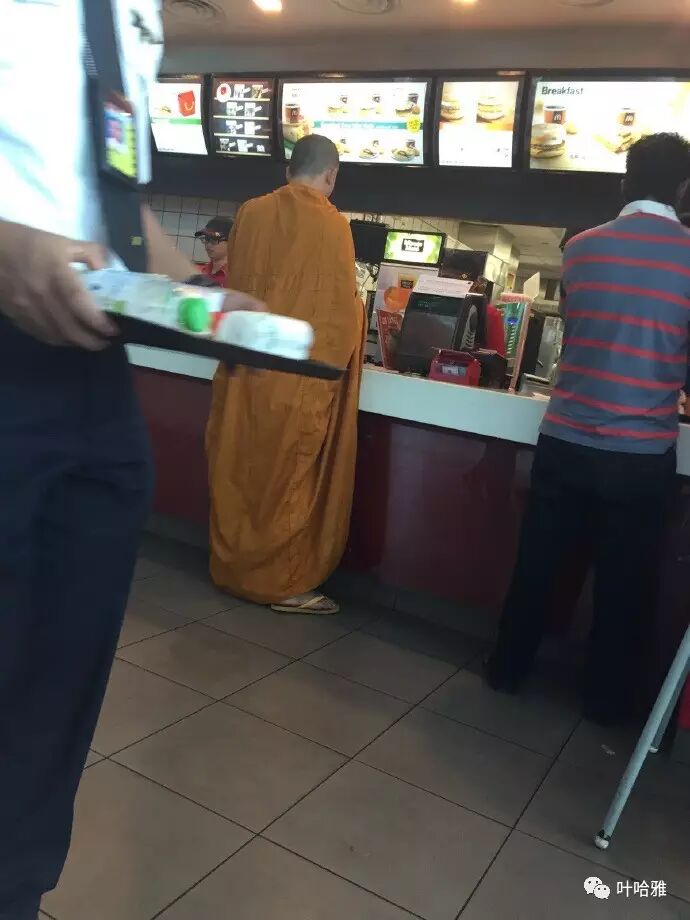
Even monks eat at McDonald's there.
Address: Kuala Lumpur Airport, Petronas Twin Towers
2. Sabah Night Market
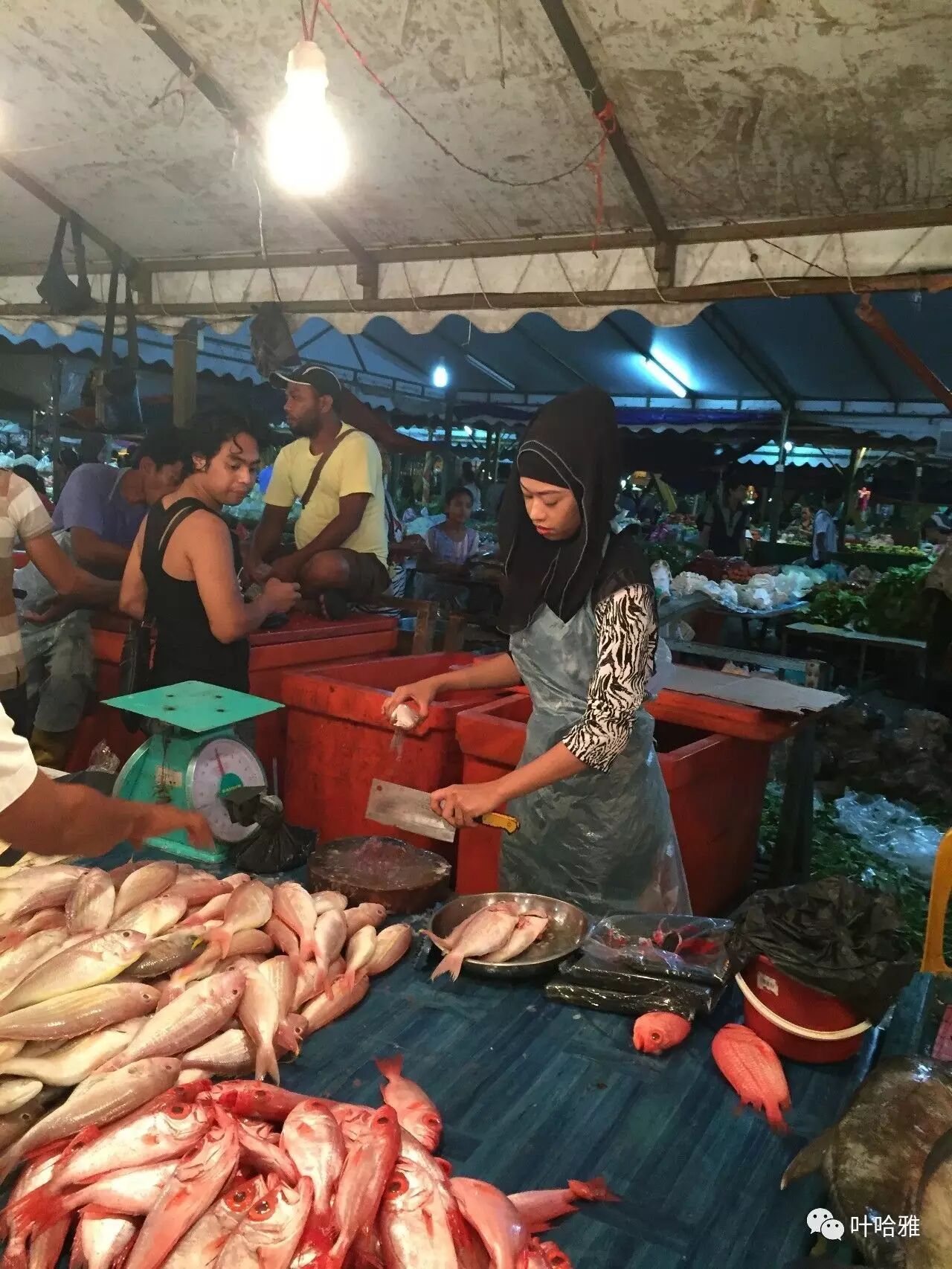
No matter where I go, I love visiting local markets to experience daily life. The food at these markets is authentic and cheap. This market is in Sabah state. You do not need a map; just follow the crowds and you will find it.
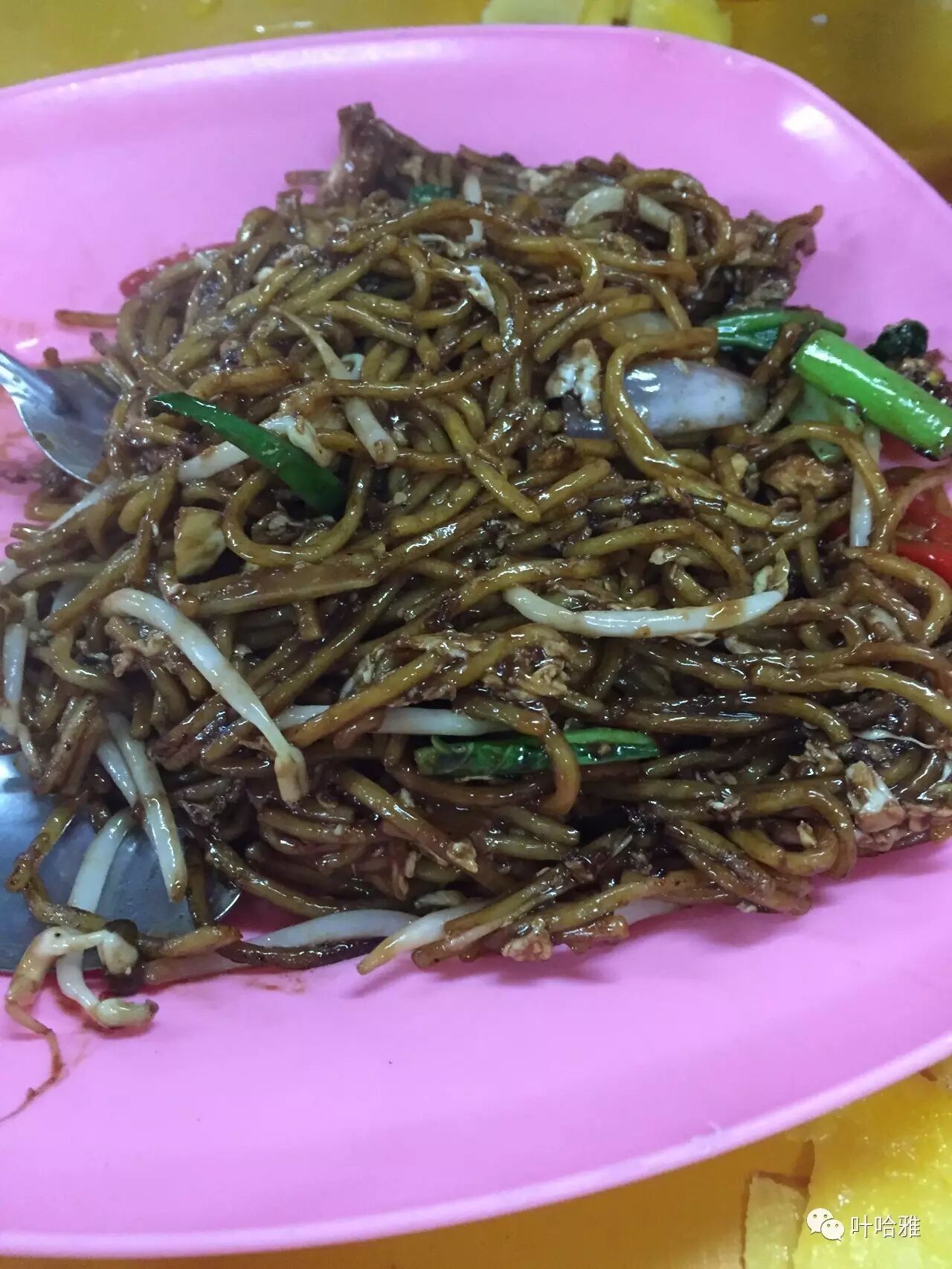
This is a common Southeast Asian stir-fried noodle dish with chicken. It costs just a few dollars, and Malaysians eat it with their hands.
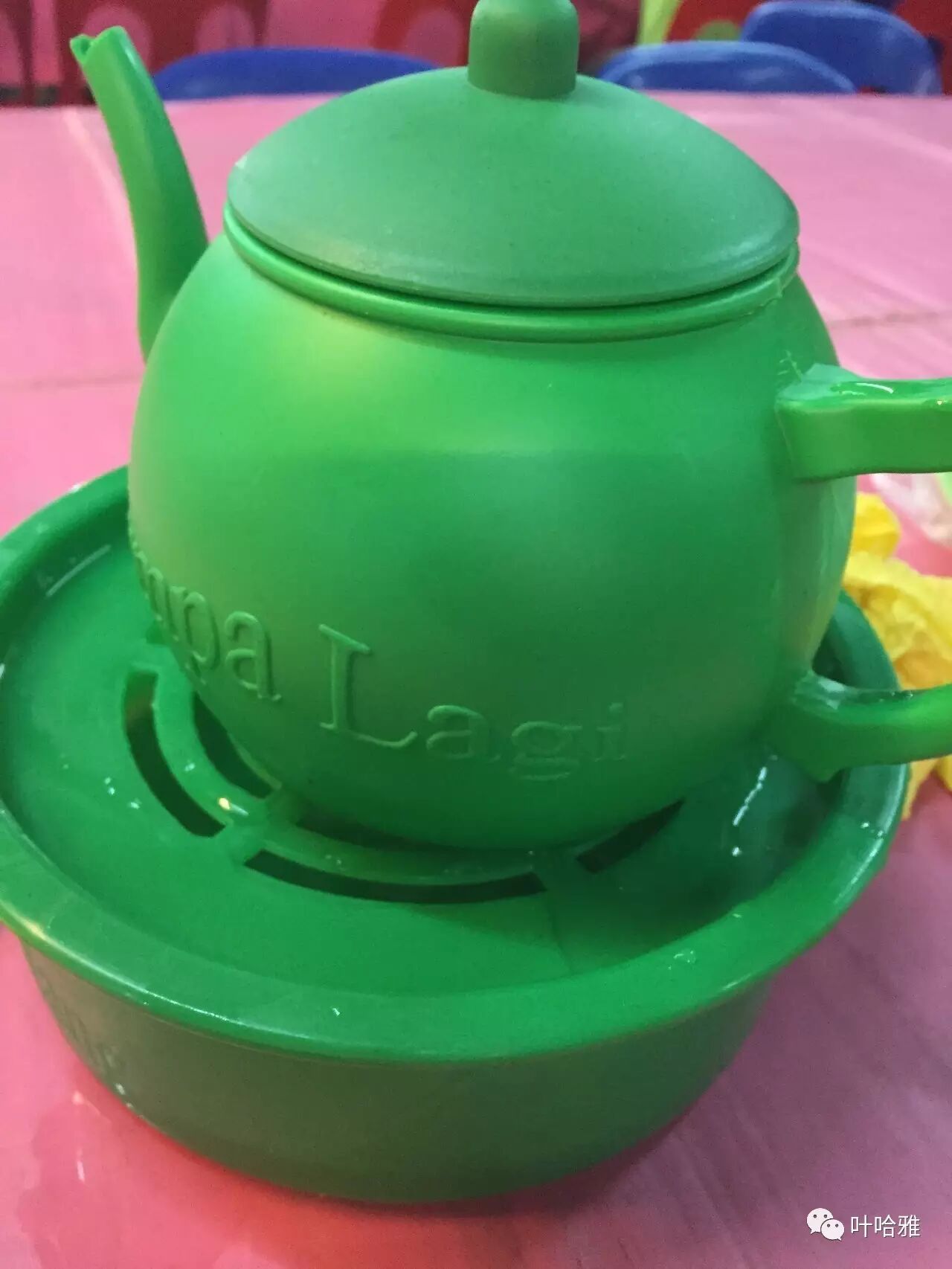
This pot is not for vinegar. Muslims will recognize it as a water pitcher (tangping). On Malaysian tables, it is used for washing hands because people eat with their fingers.
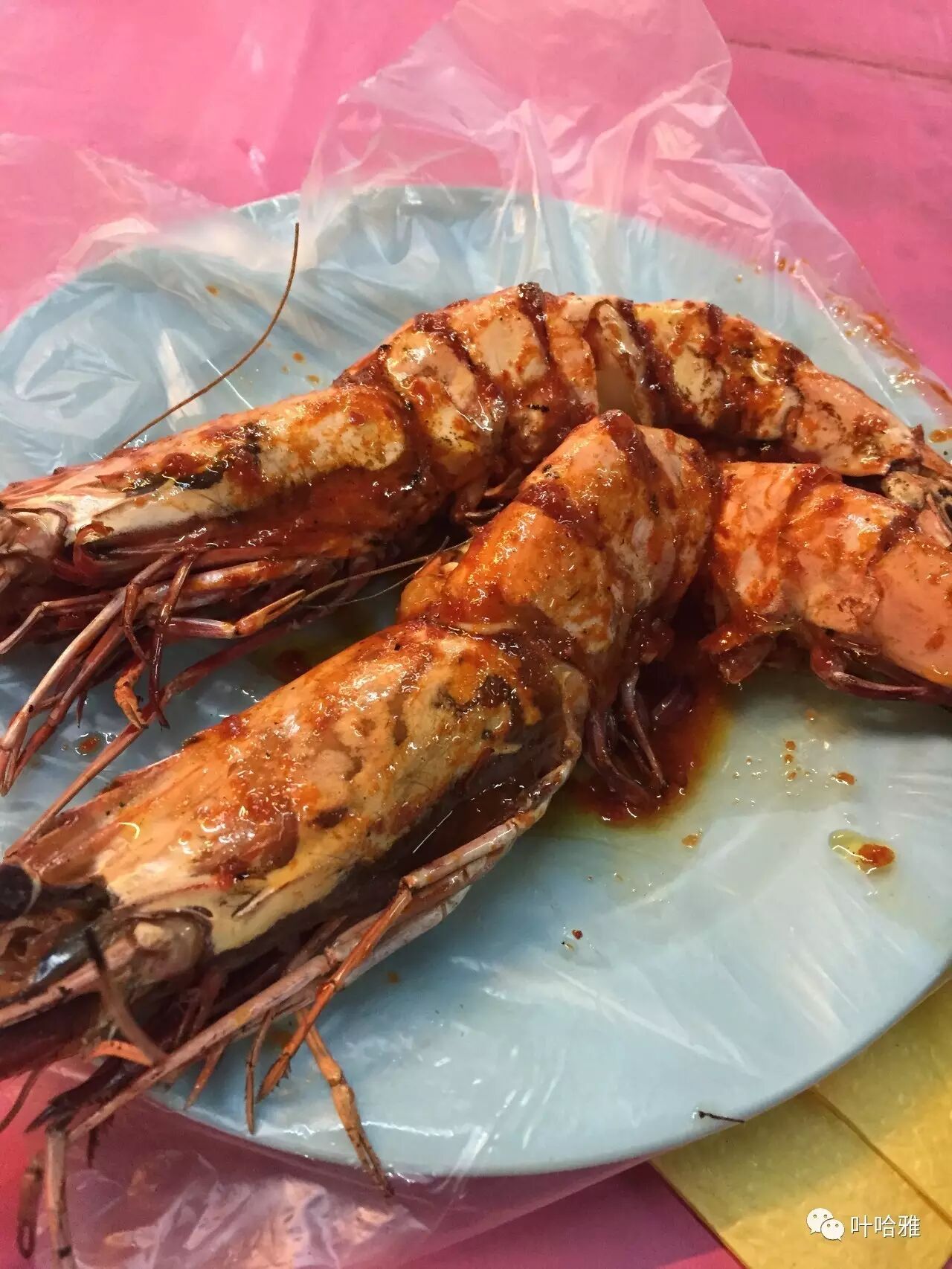
Seafood in this island nation is fresh and cheap. This pair of large prawns cost less than 30 yuan.
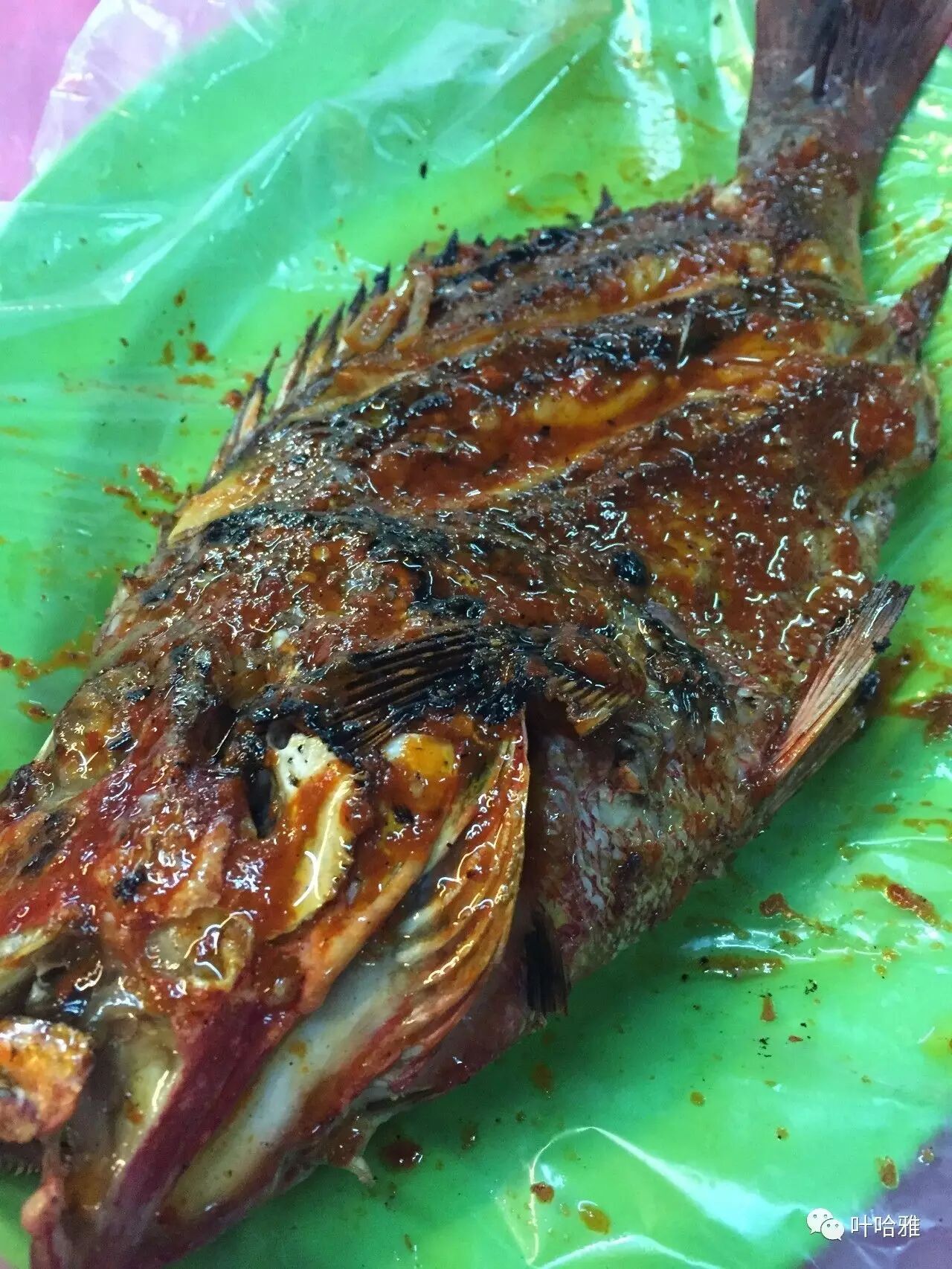
Lamb is rare in Malaysia, so enjoy the fish instead.
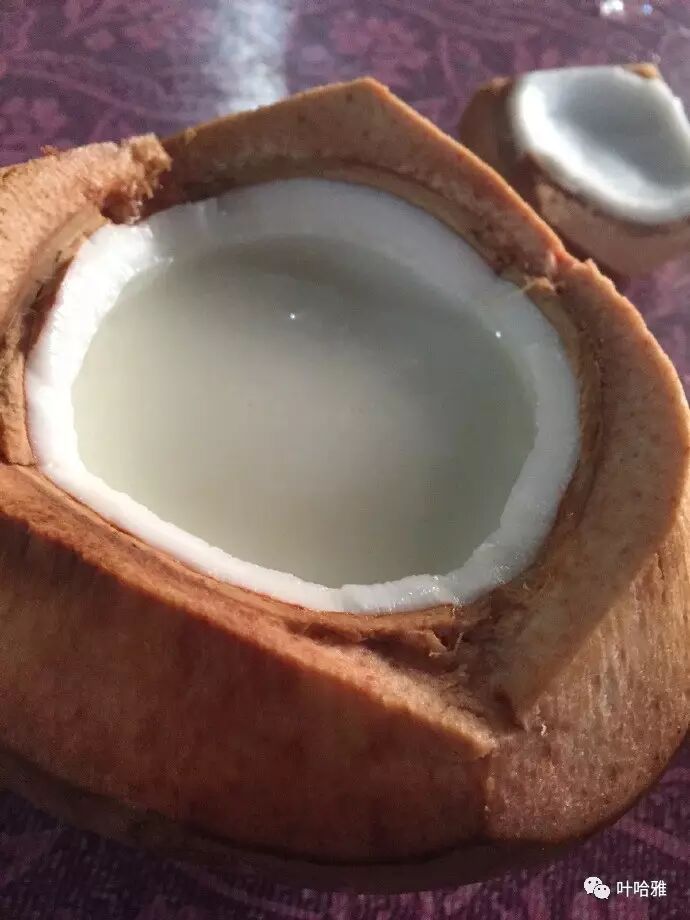
This is coconut pudding. I rarely see it elsewhere. It costs 4 Malaysian ringgit each.
If you want to learn to eat with your hands like a Malaysian, remember to use your right hand, as the left hand is used by Muslims for personal hygiene.
Address: Kota Kinabalu
2. Northwest Hand-Pulled Noodle Shop
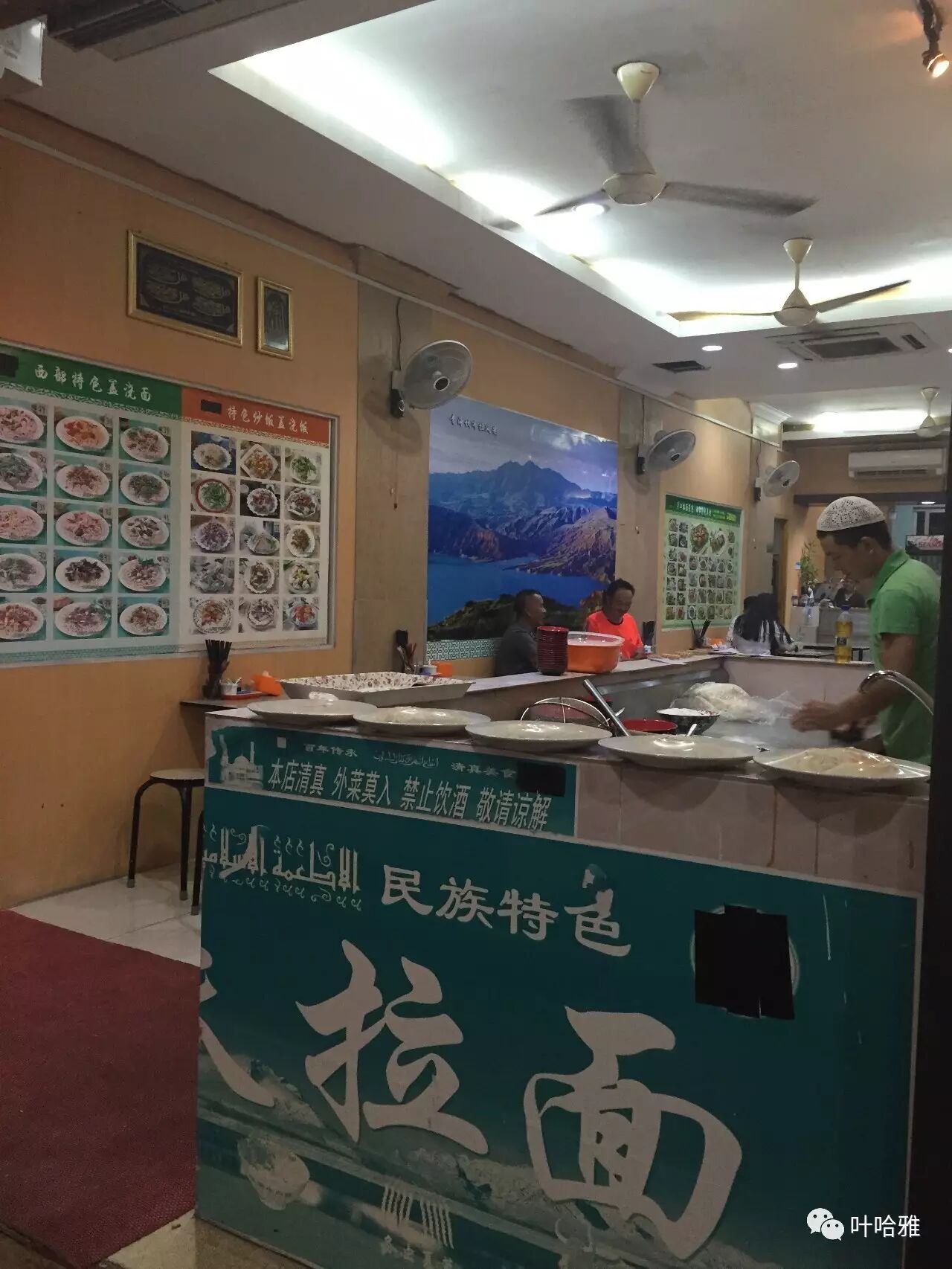
When traveling, I avoid hand-pulled noodles (lamian) unless I have no other choice because I eat them too often at home. This shop is worth mentioning because it is the first time I have seen a lamian shop abroad.
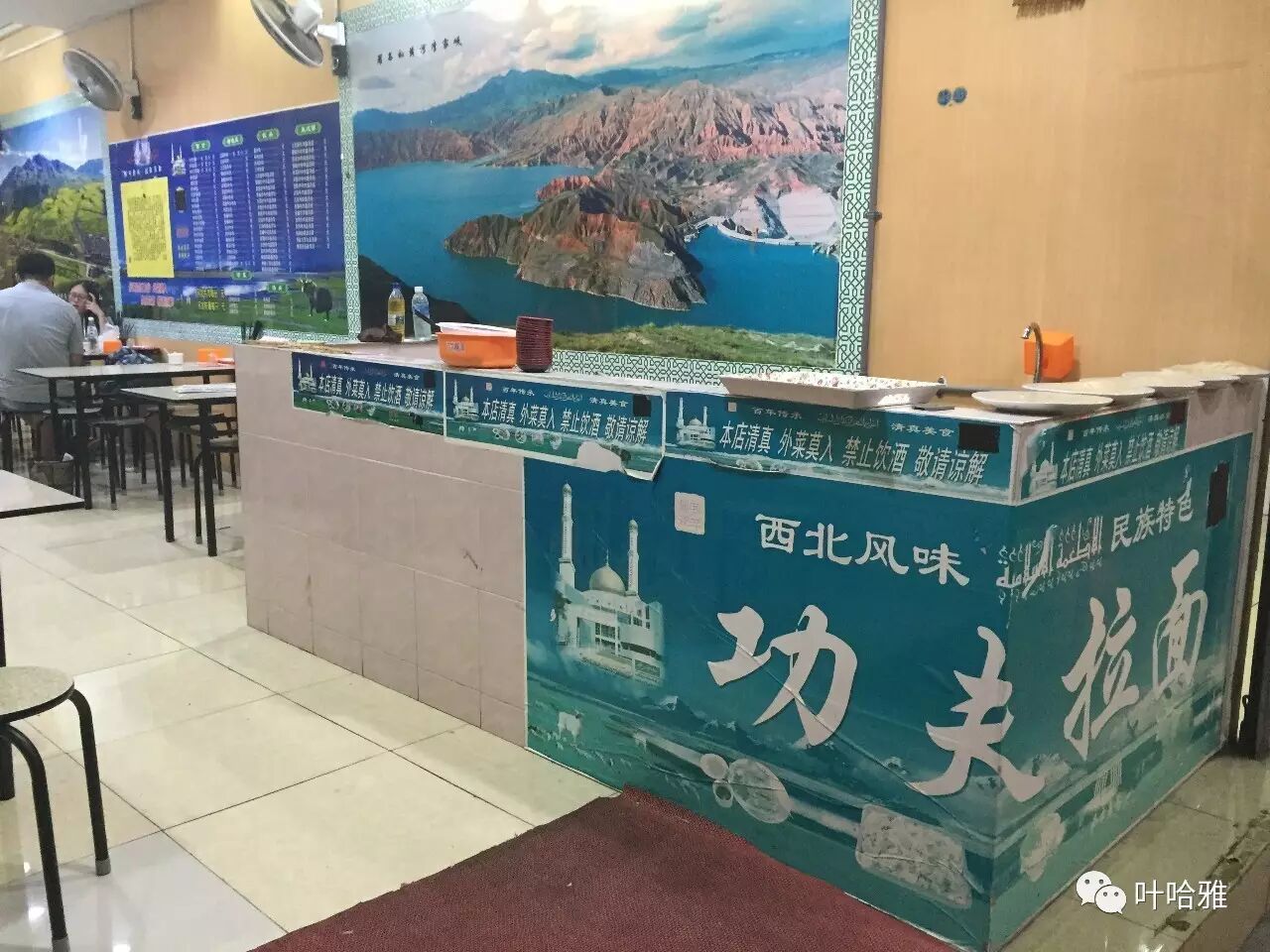
The sign saying 'This shop is halal, please do not bring outside food' felt very familiar.
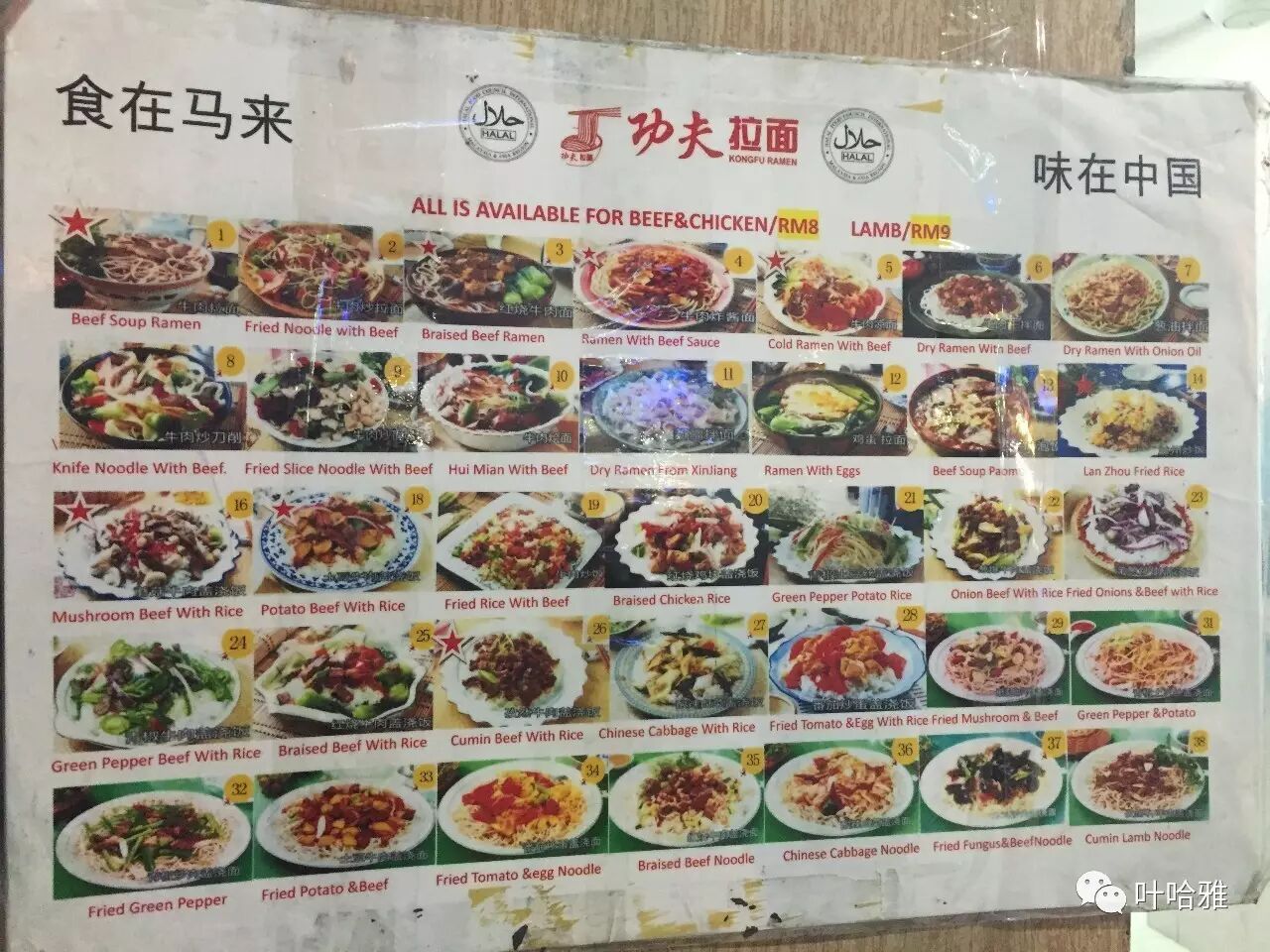
I did not go in to eat, but I wanted to record it. The owners of these shops have brought lamian all over the world. In some small cities in southern China, finding a halal lamian shop is something to be very grateful for.
Address: Jalan Tun Fuad Stephen
3. Indian Flatbread (roti canai)
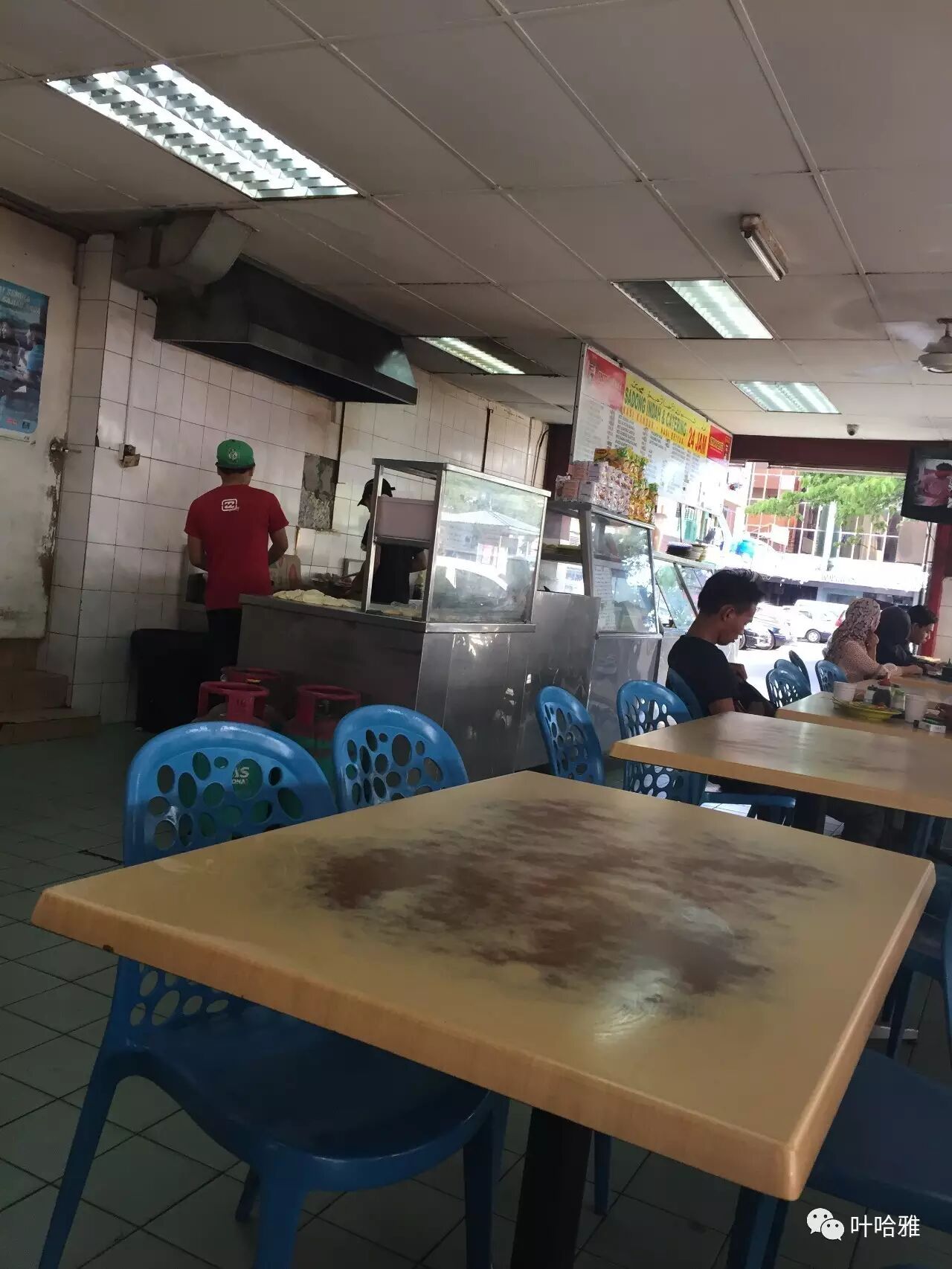
These small street stalls are common in Southeast Asia, and the owners are mostly from India or Pakistan.
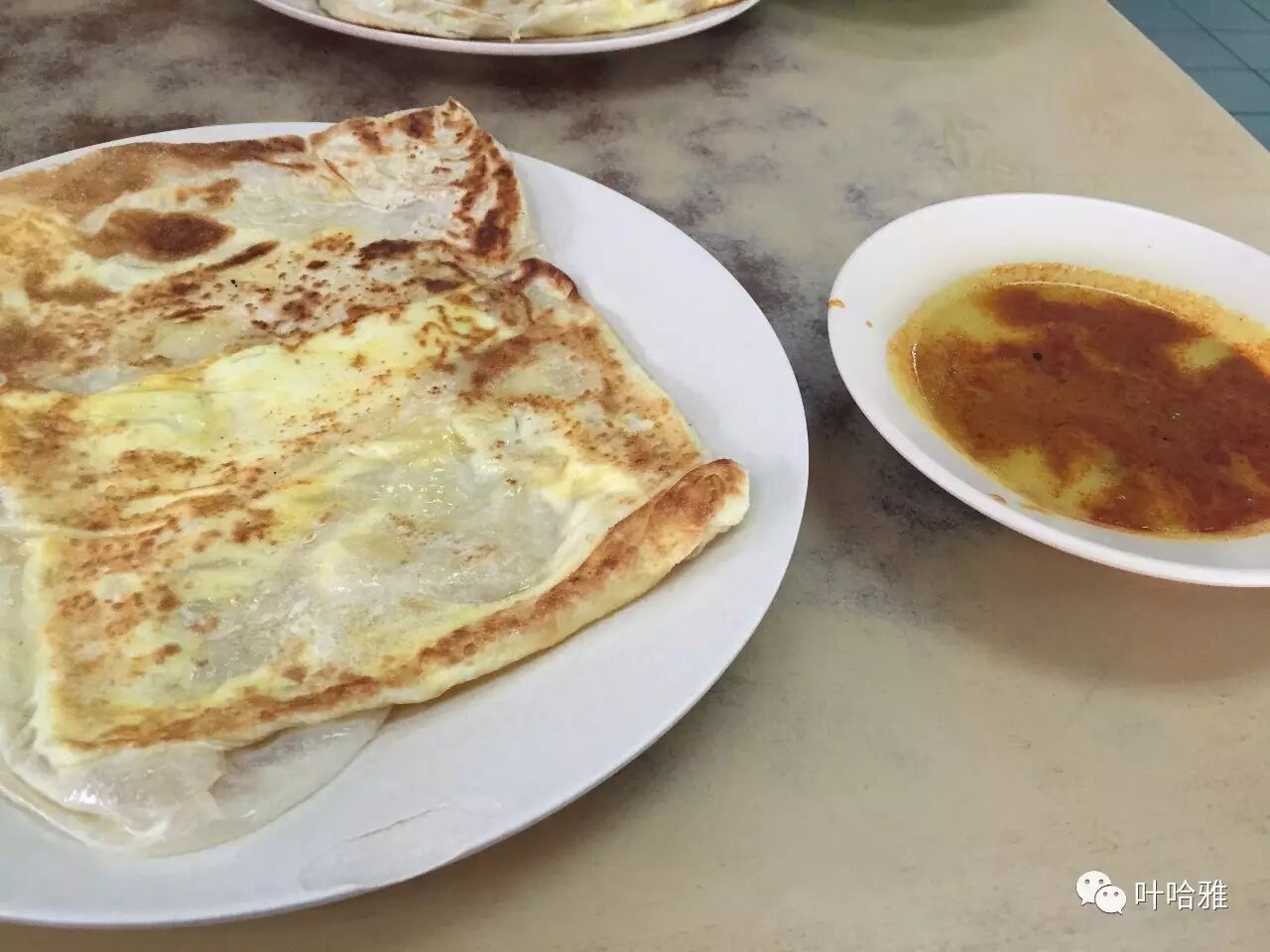
You can have this flatbread for breakfast. Tear it with your hands and dip it in the sauce.
Address: Jalan Ikan Juara 1
4. Japanese Dream Food
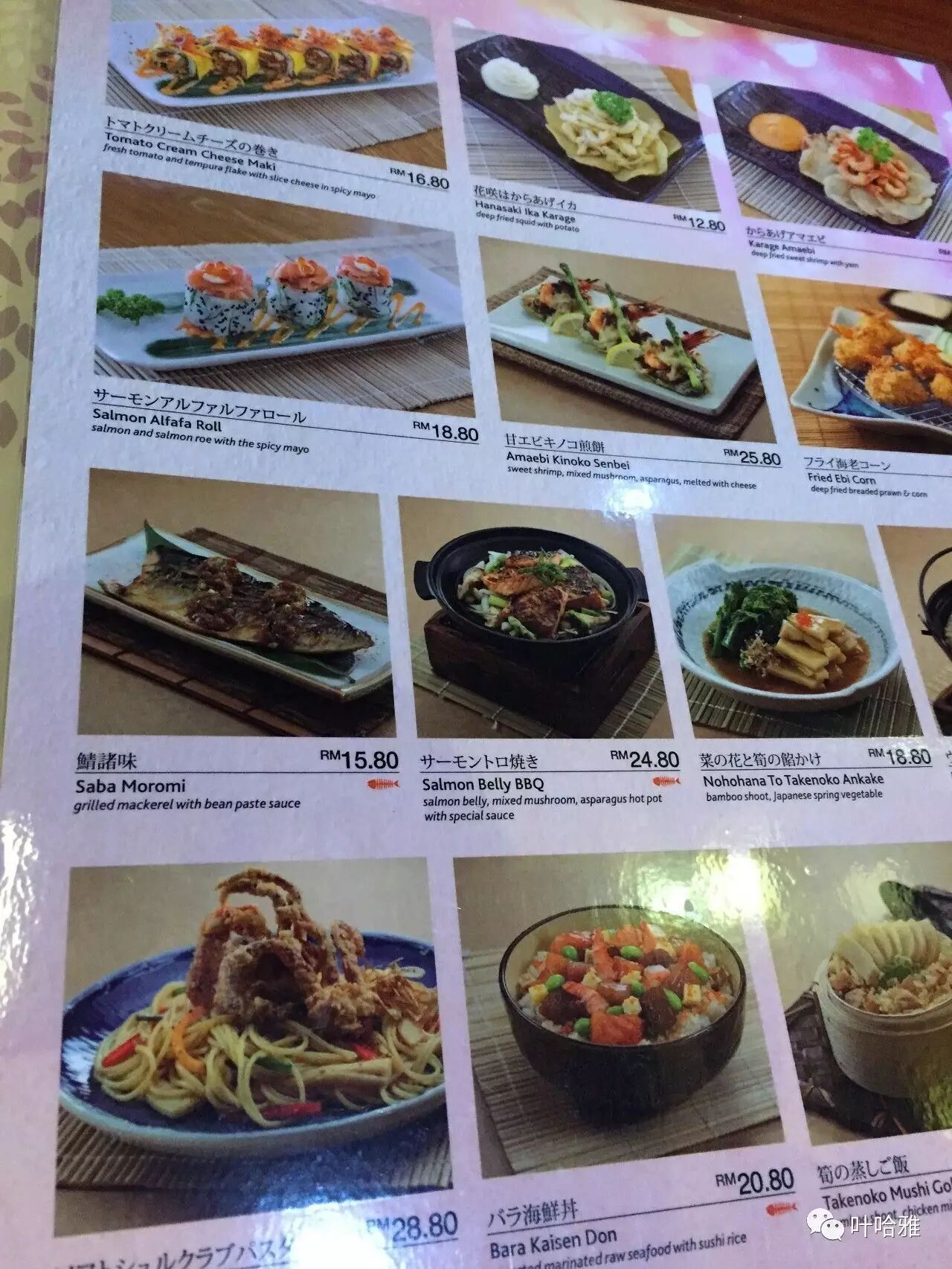
Because of Japan's history of colonizing Malaysia, some traces remain, and you can find many Japanese restaurants in Malaysia.
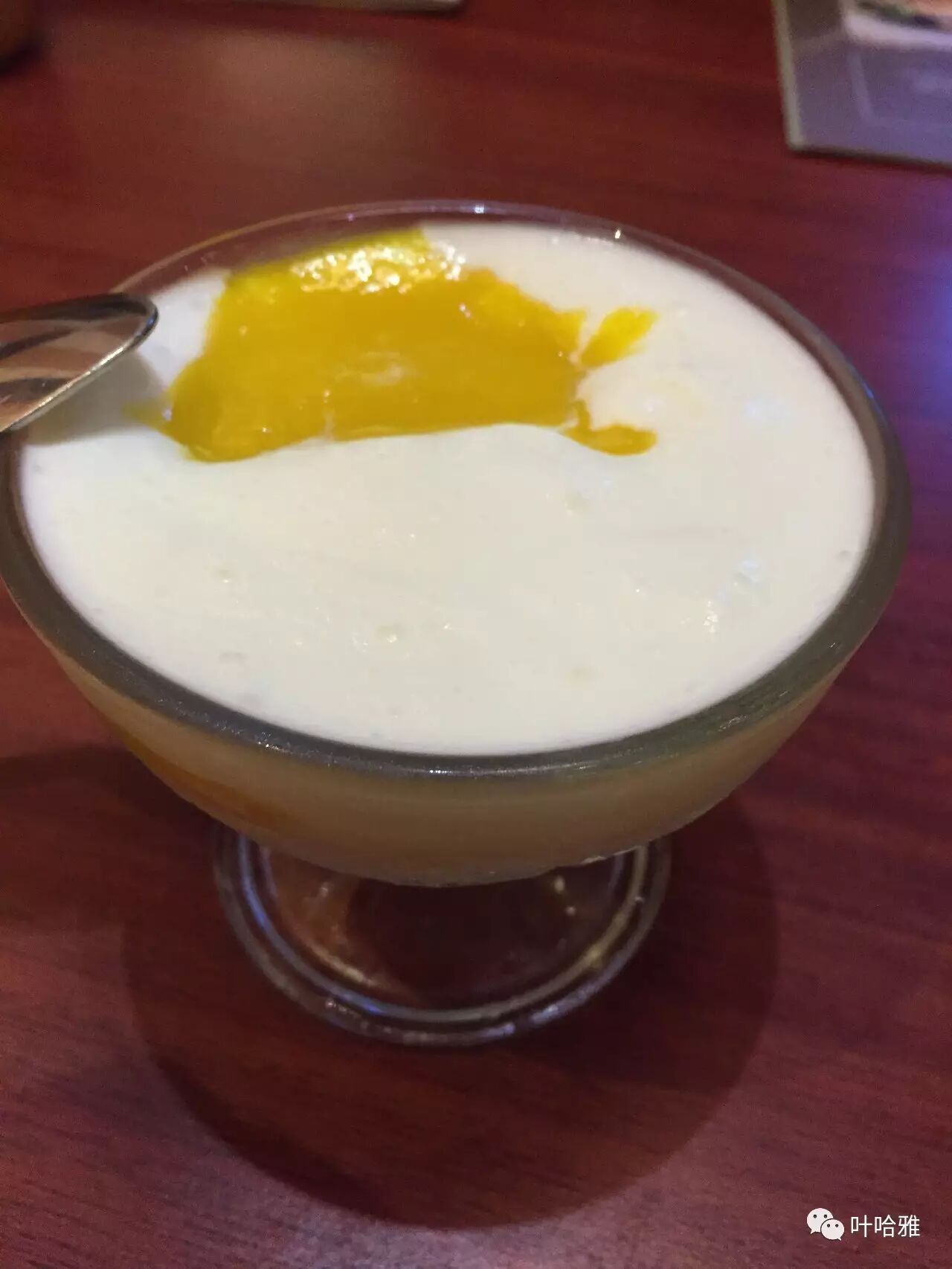
Mango pudding
This Japanese restaurant in Sabah is the first halal Japanese place I have ever eaten at.
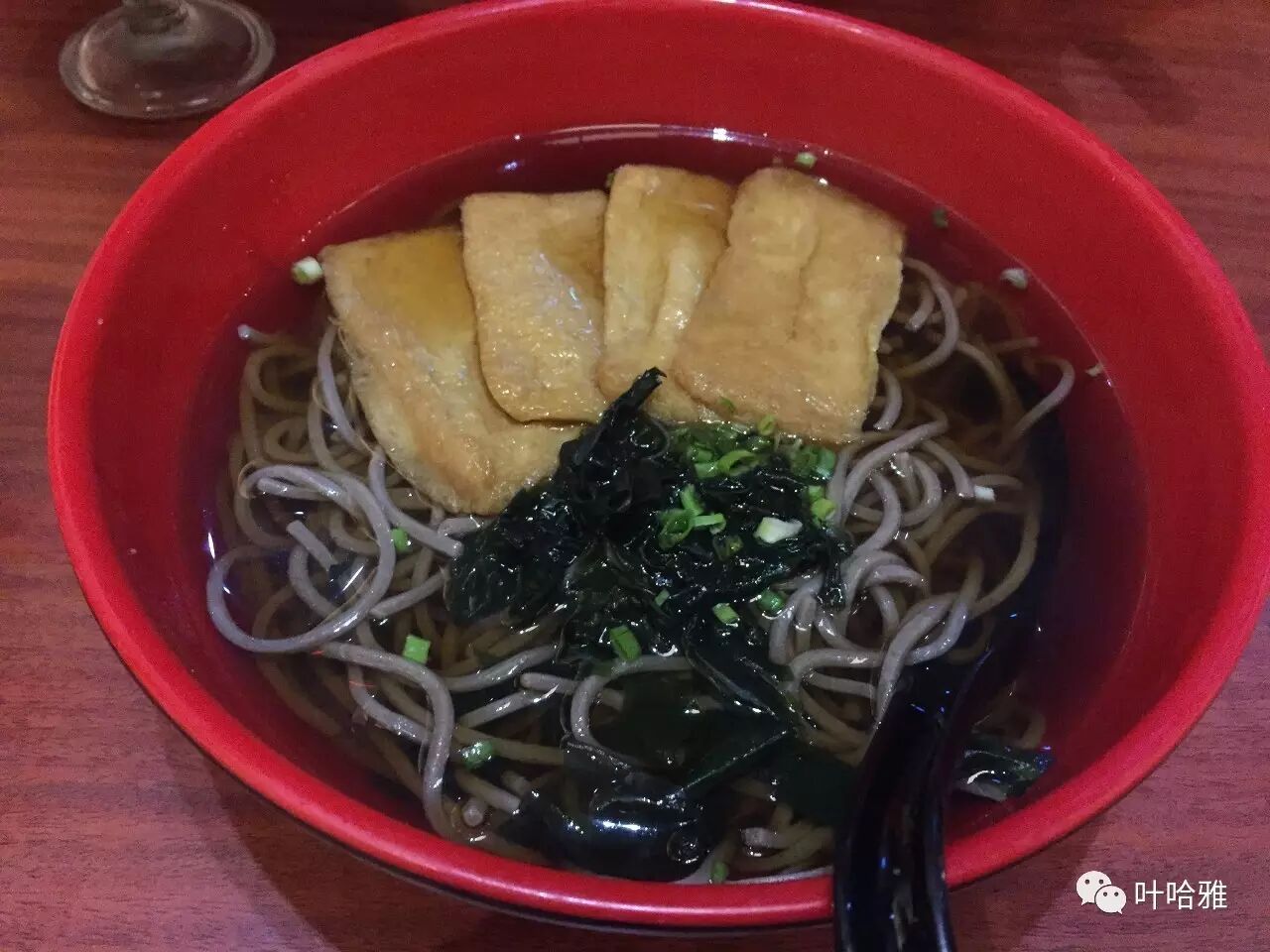
A famous Japanese dish, thick wheat noodles (udon).
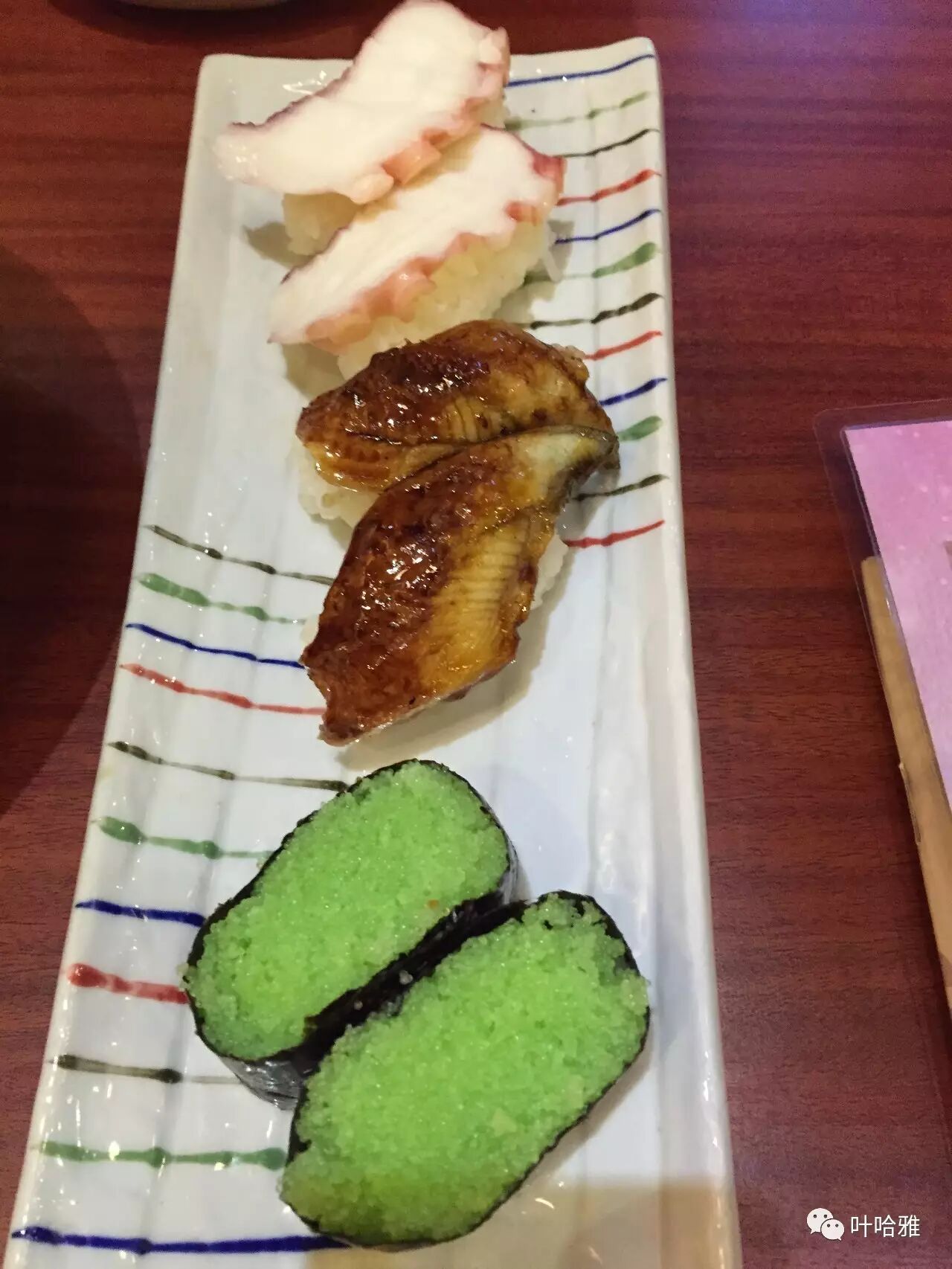
Sushi, which is halal so you can eat it with peace of mind.
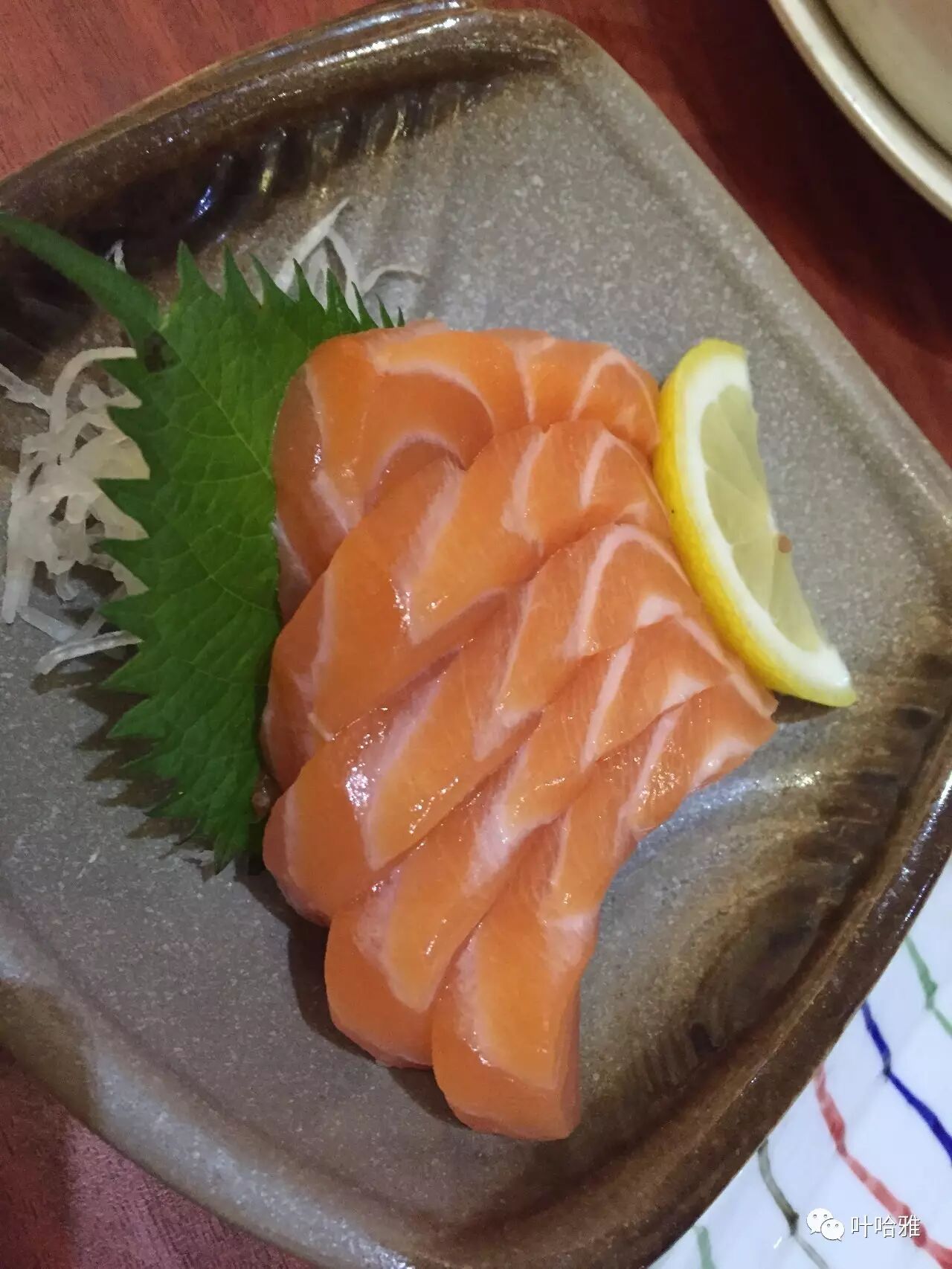
Fresh salmon sashimi
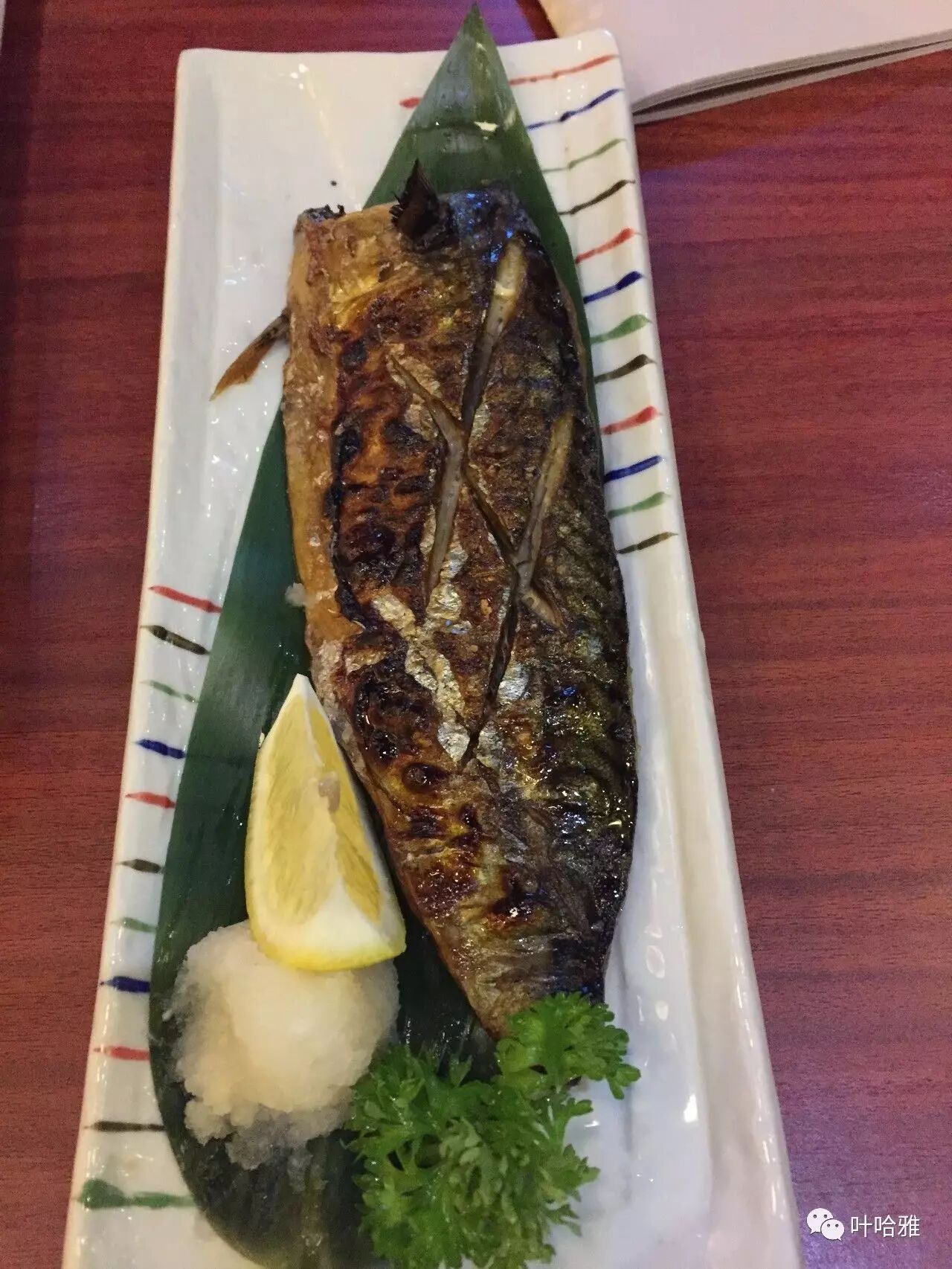
Pacific saury (sanma), also a famous Japanese food.
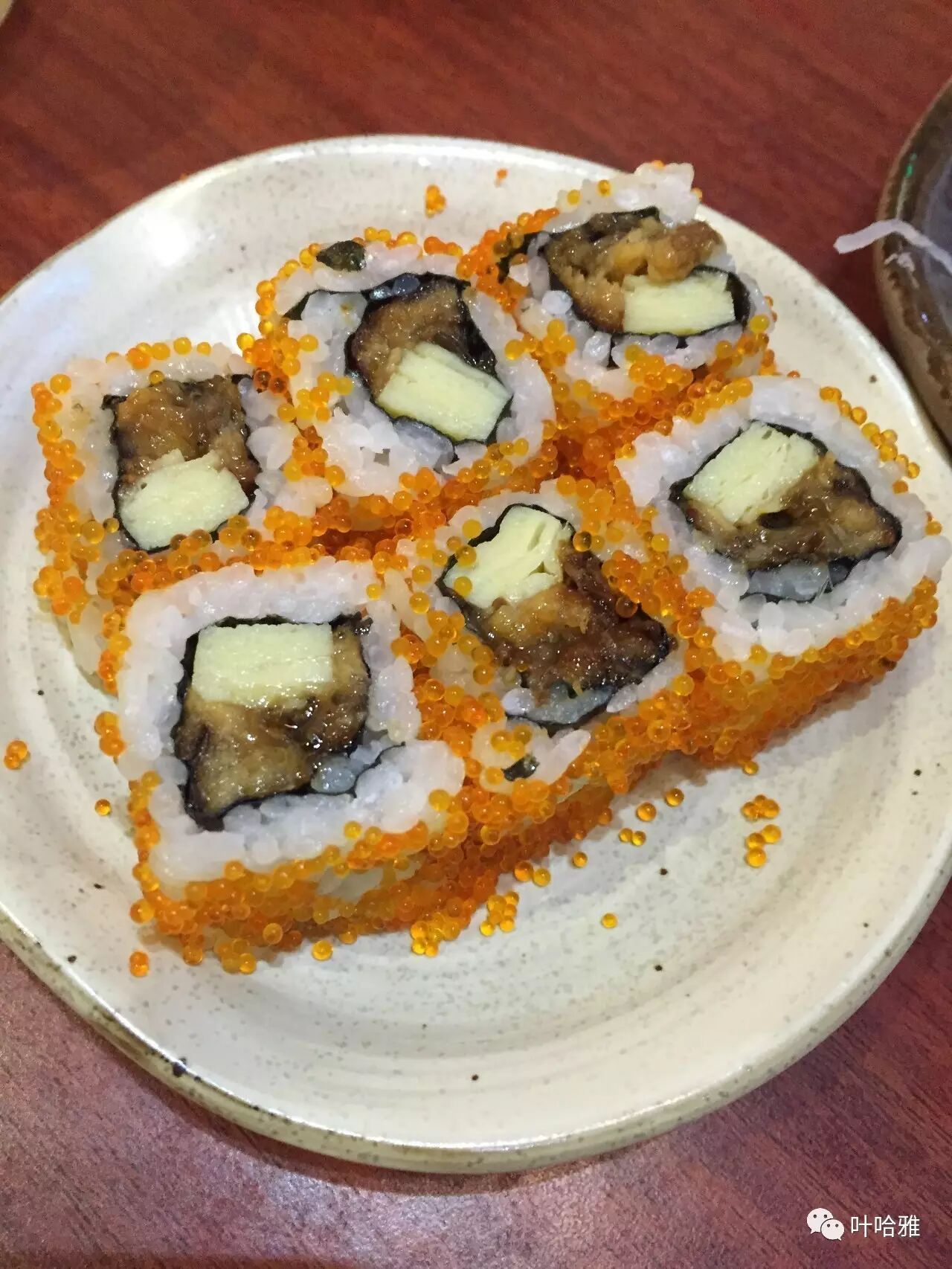
You rarely see halal Japanese food in China. Before the first halal Japanese restaurant, Hefeng Zhi Yan, opened in Beijing, I had to go to Tianjin if I wanted to eat Japanese food.
Address: Lot No 36, Palm Square 4th Floor Center Point, 88000, Kota Kinabalu, Sabah, Kota Kinabalu, 88000 Kota Kinabalu, Sabah
5. NANDOS
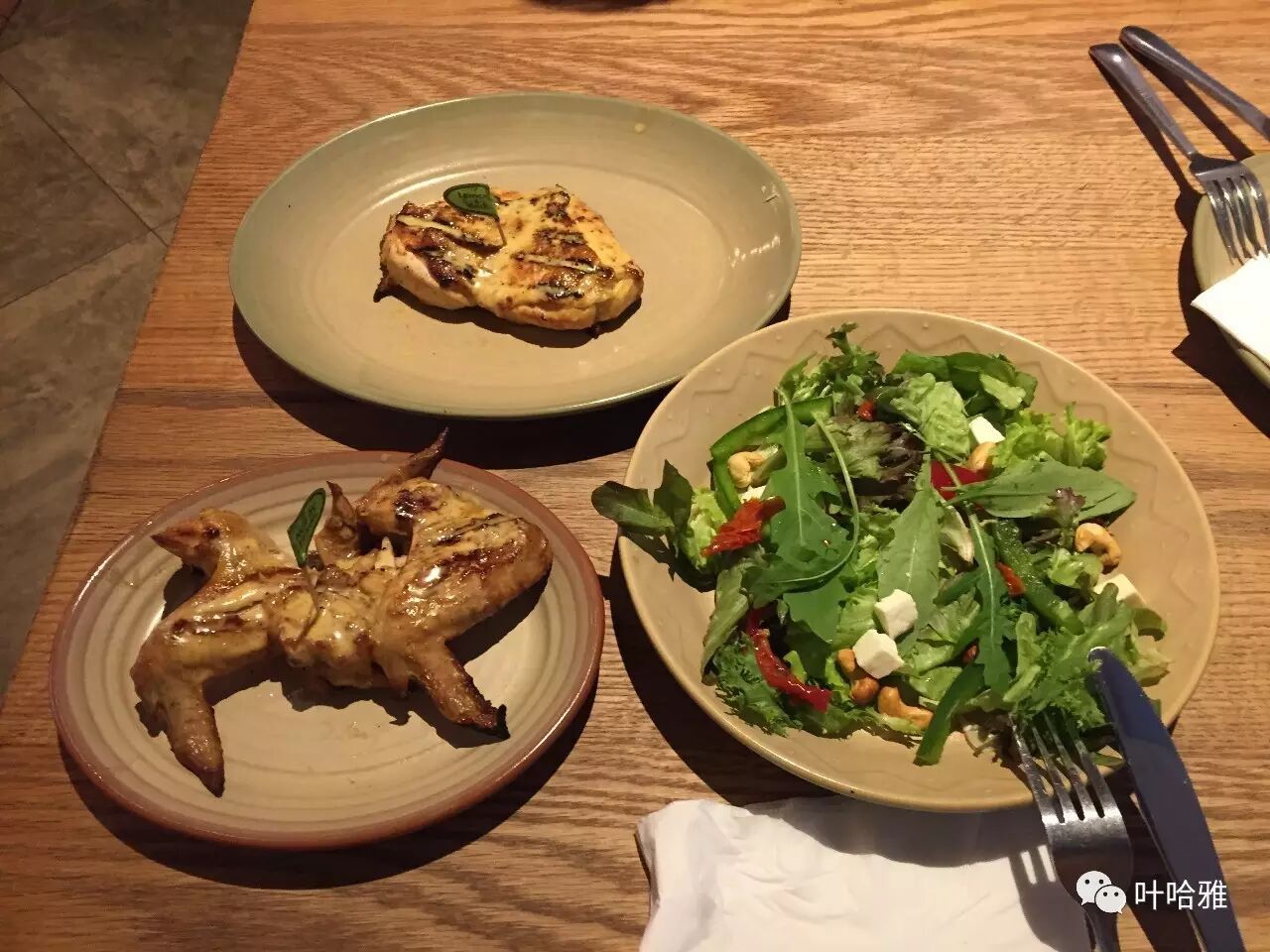
This is a chain of roast chicken restaurants. The chicken in Malaysia tastes very different from the chicken in mainland China.
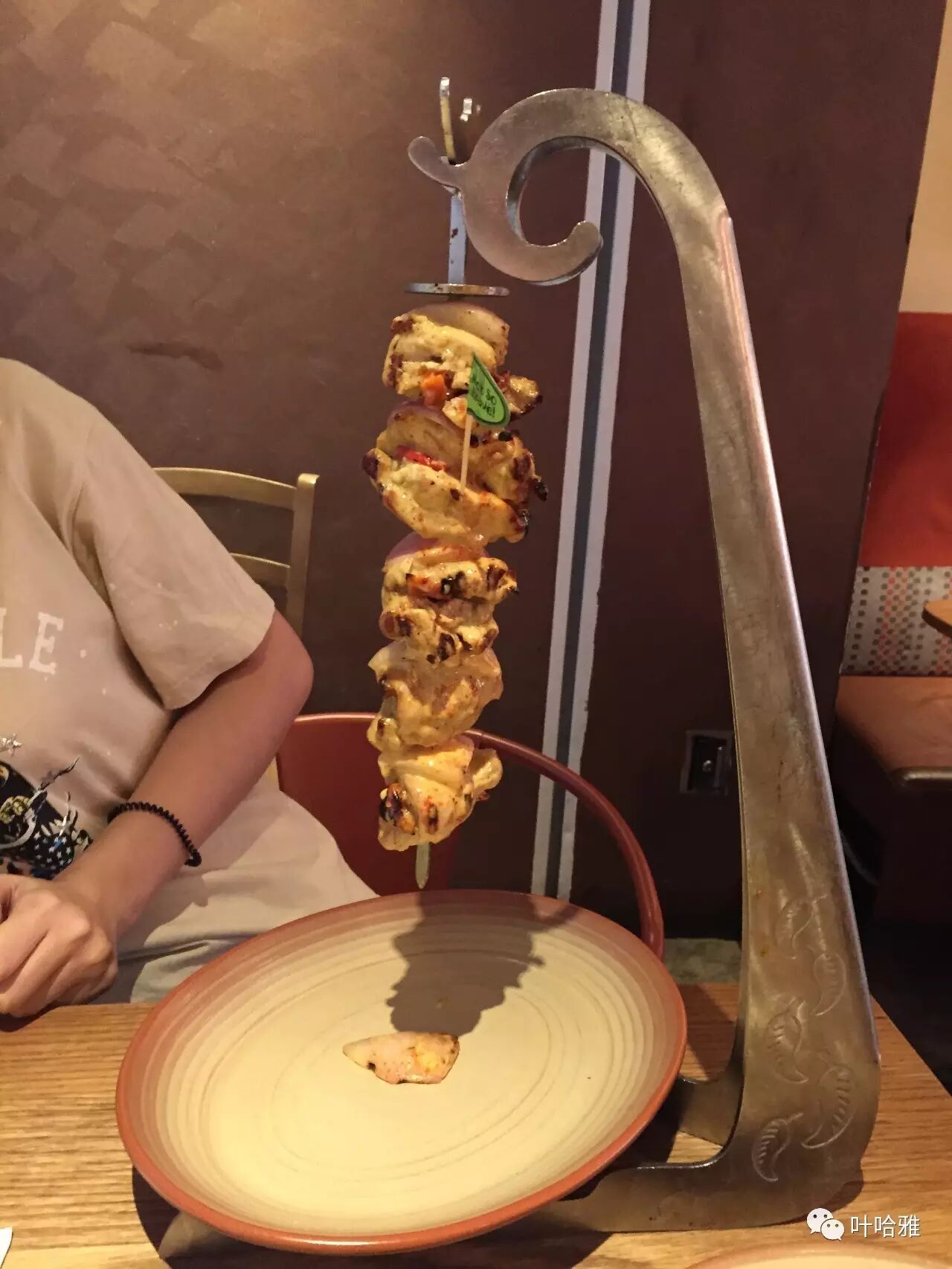
Address: There are many branches in Kuala Lumpur, found in large shopping malls like KLCC and Pavilion.
6. YUSOOF DAN
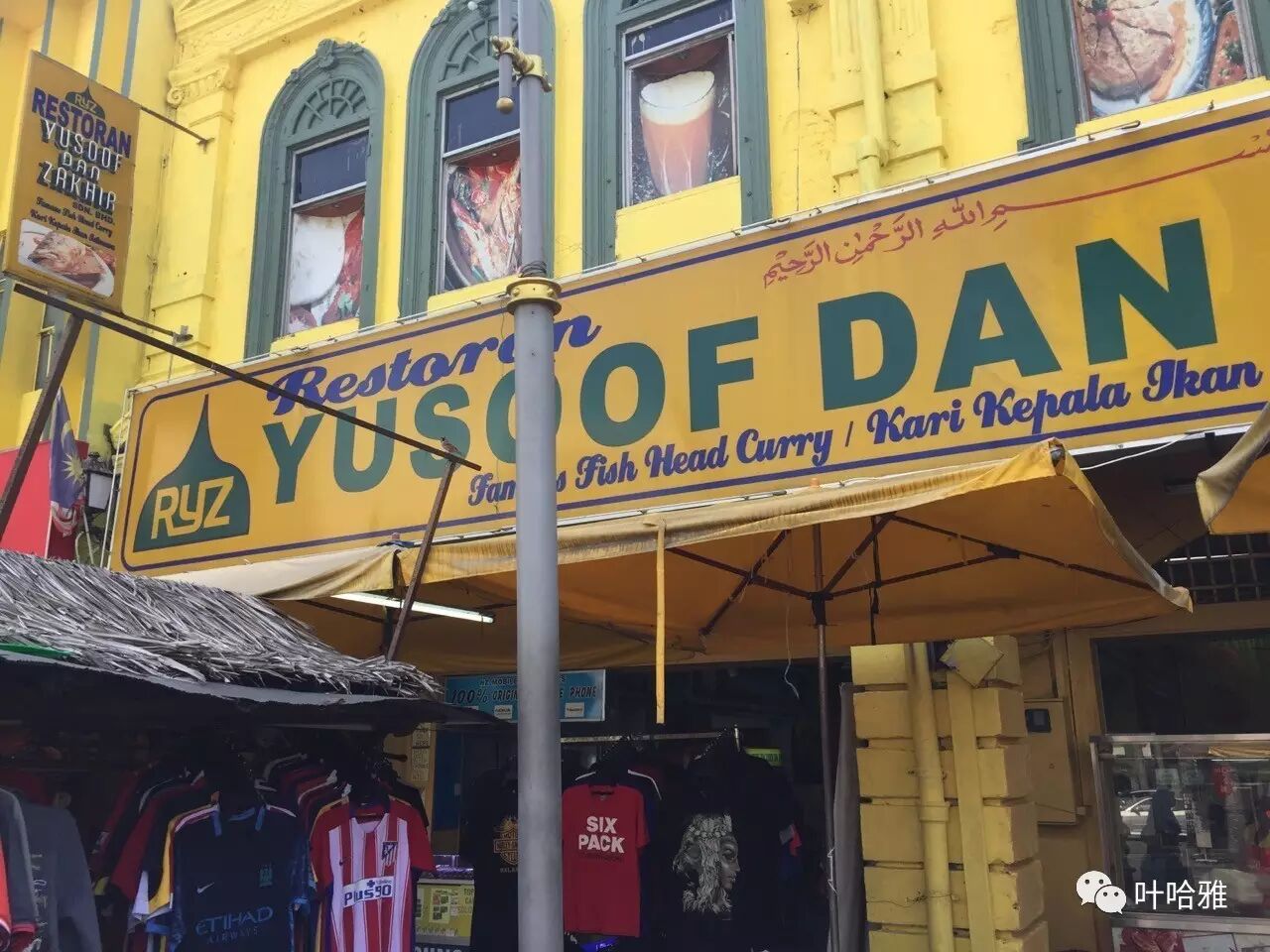
An Indian snack shop.
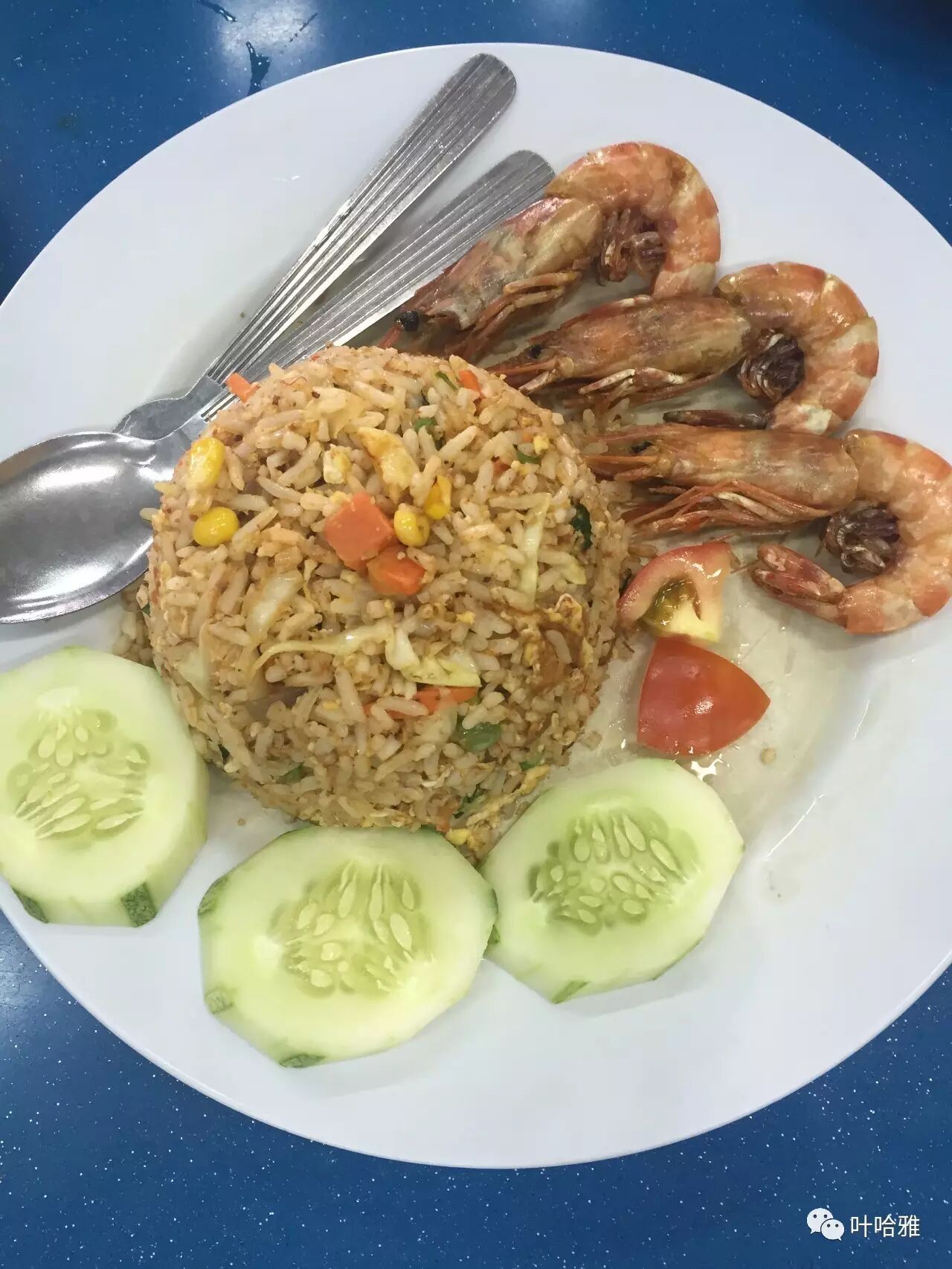
Seafood fried rice. I guess they gave us a spoon because they saw we were foreigners.
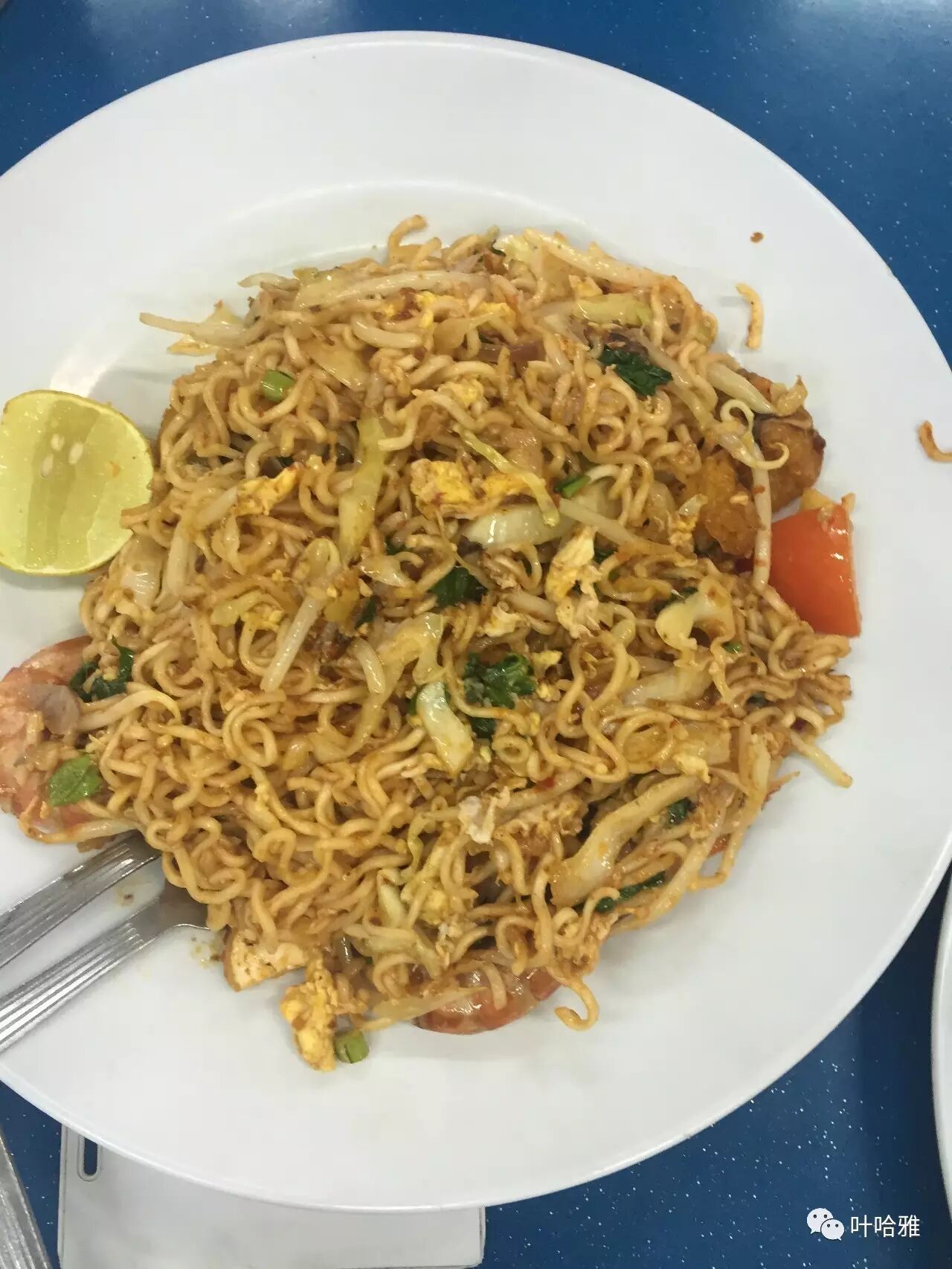
Seafood fried noodles
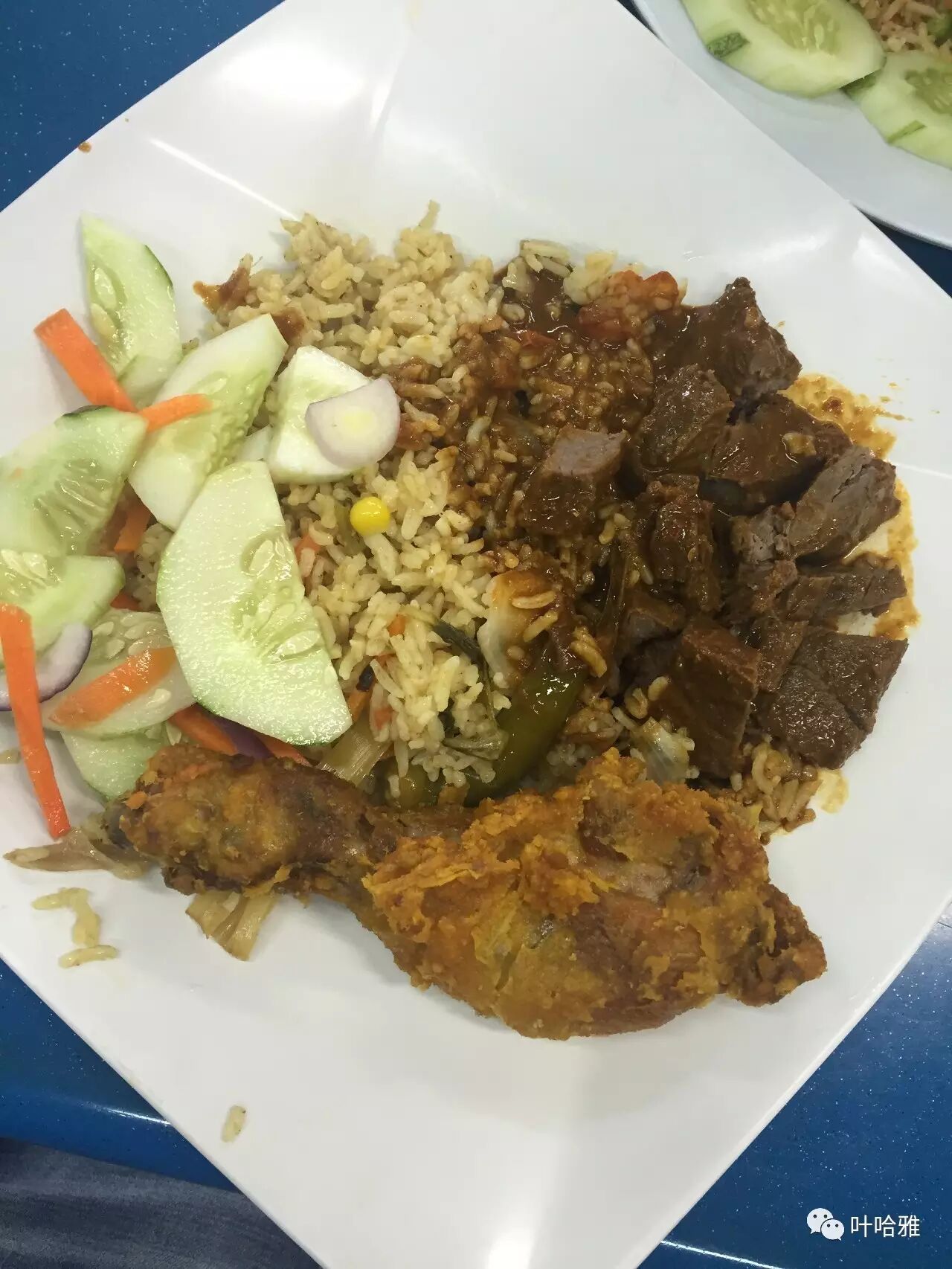
Beef and fried chicken. Actually, there are not many types of dishes in Southeast Asia, and the flavors are quite simple.
Address: Kuala Lumpur Central Market
7. SUSHI KING
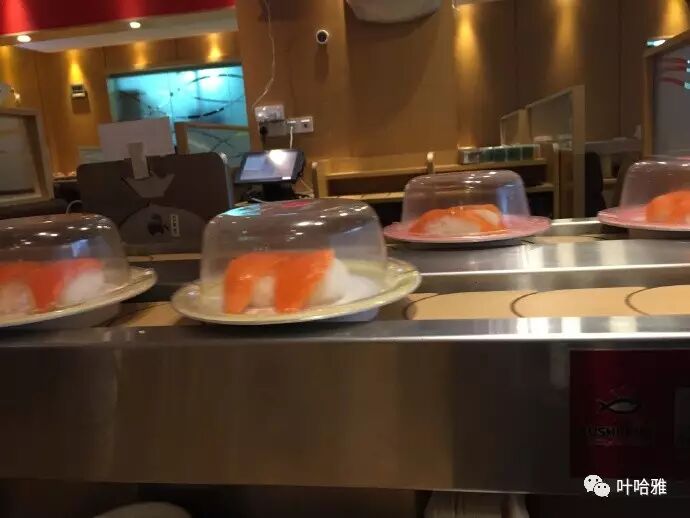
Many restaurants in Malaysia are labeled "pork free," which means they don't serve pork. Even if the meat is halal, they might still sell alcohol. To get a halal certification in Malaysia, a restaurant must be alcohol-free. This Japanese restaurant has a halal certification.
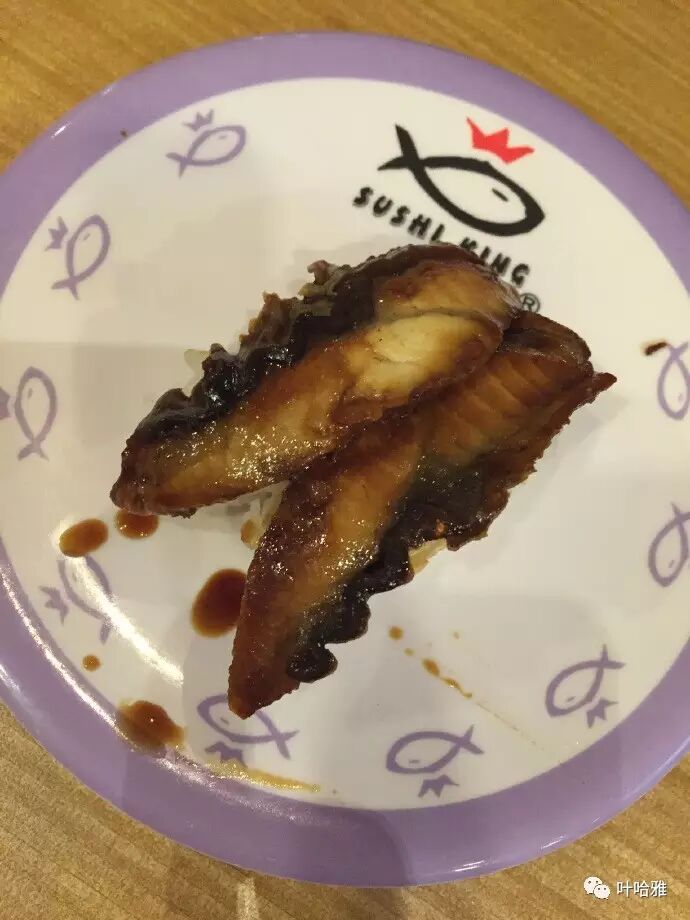
Conveyor belt sushi, take what you want as you eat.
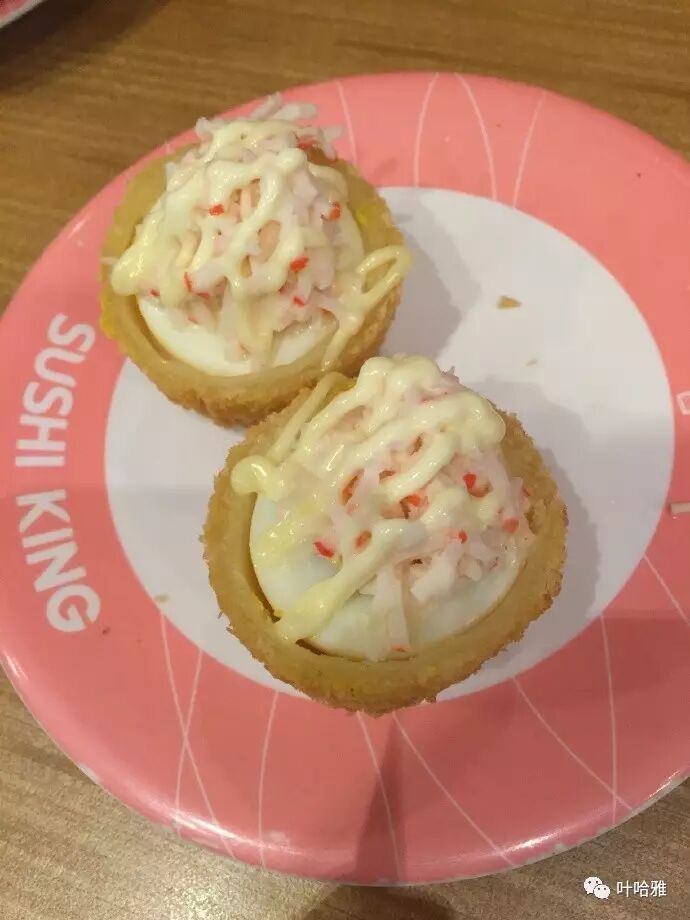
This is a dessert made from eggs.
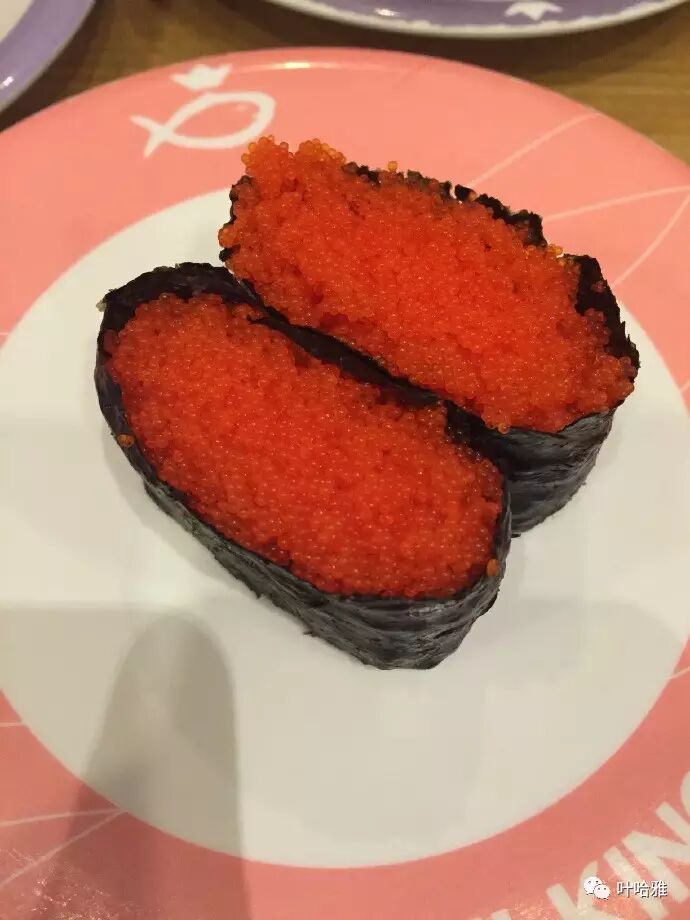
Fish roe (caviar)
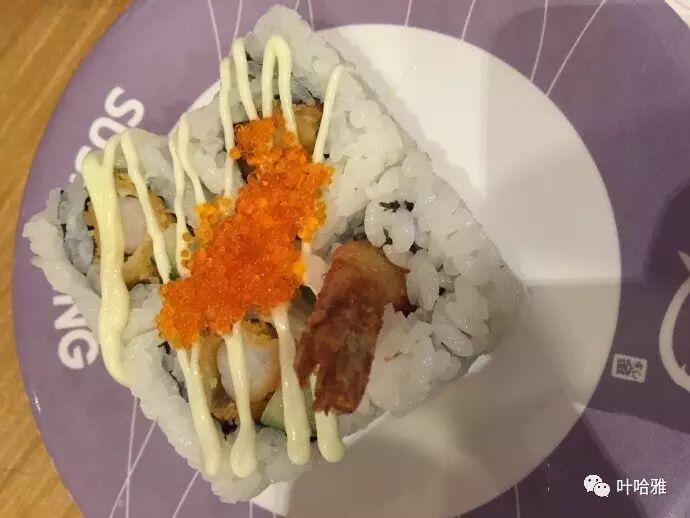
I can never get enough sushi.
Address: Sushi King @ Jaya One, Petaling Jaya, Jalan Universiti, Seksyen 13, Petaling Jaya, Selangor, Malaysia.
8. Arabic flatbread (khubz).
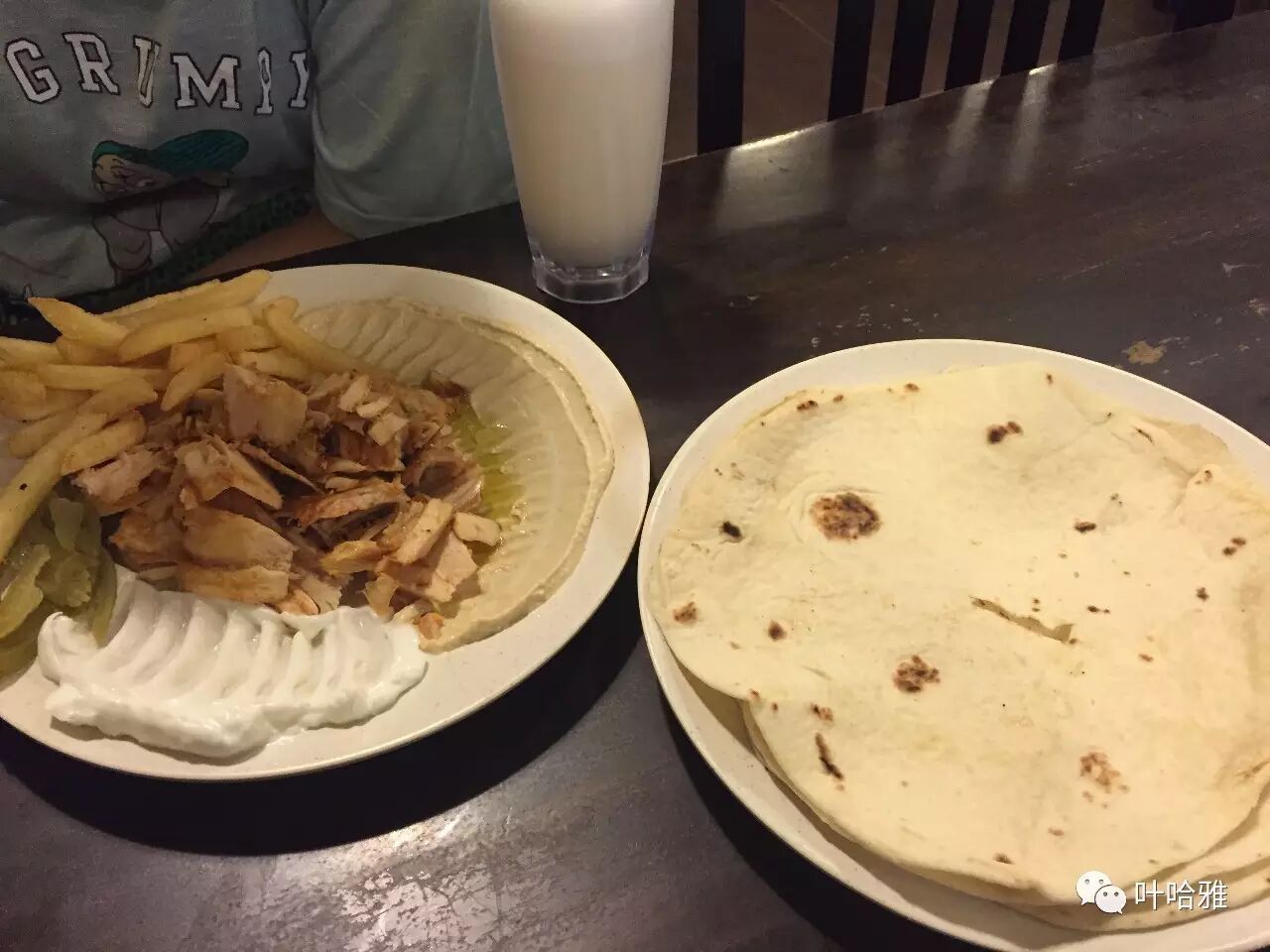
Many Arabs have moved to Malaysia for work. They share the same faith, which makes daily life easier. More importantly, the political situation is stable. Southeast Asia's economy has grown quickly in recent years, creating many jobs. Malaysia is also an international Islamic finance hub, which is attractive to Hui Muslims from China as well.
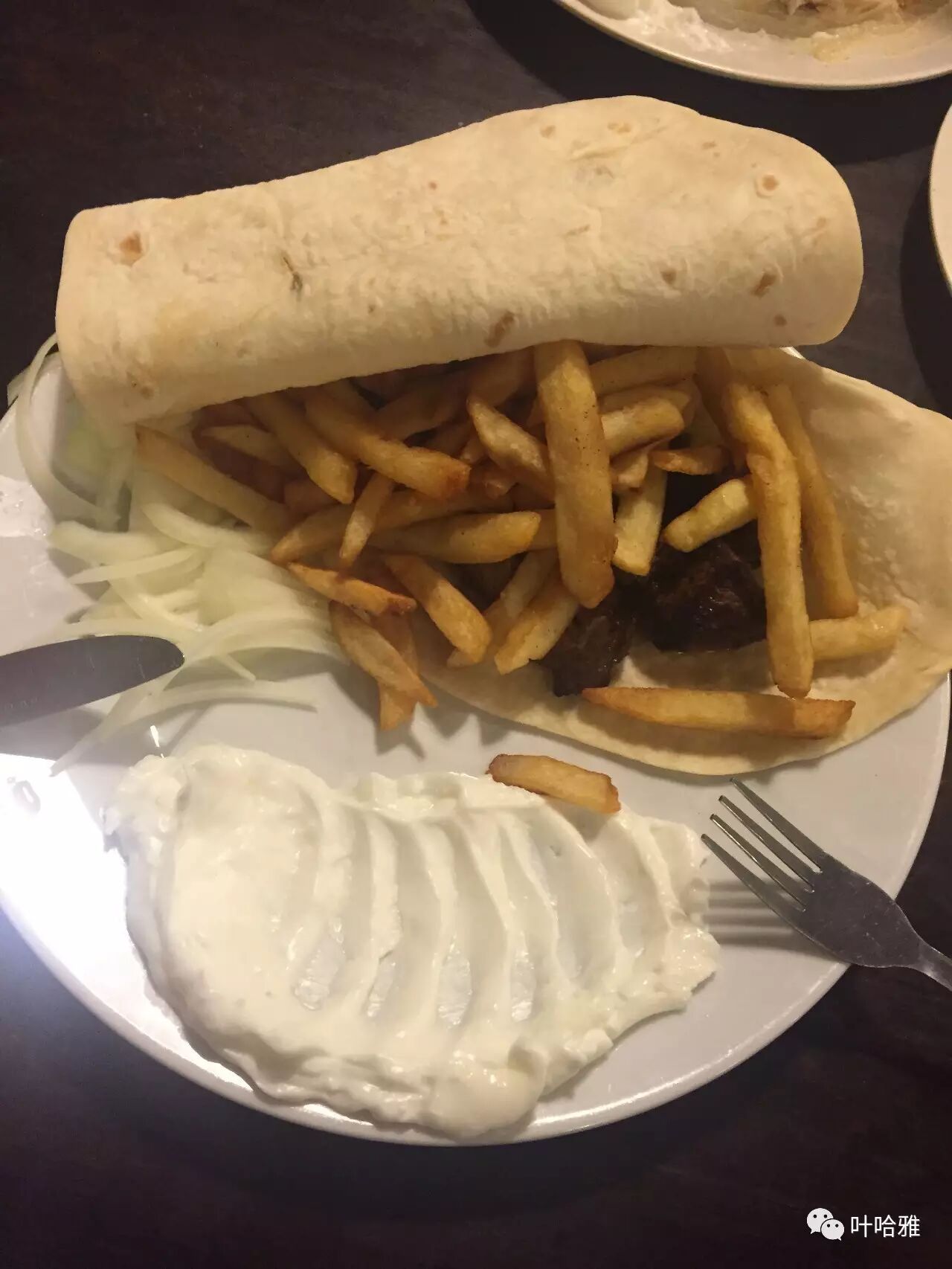
This Arabic flatbread (khubz) served with fries and beef is delicious when rolled up. The servers are all Arab. I even saw them get up to perform namaz during prayer time, which makes me feel more comfortable eating at this restaurant.
Address: The row of shops at the bottom of the UCSI University South Wing campus.
Best Halal Food in Japan: Muslim-Friendly Restaurants, Ramen and Travel Food Map
Articles • ali2007fr posted the article • 0 comments • 203 views • 2026-05-21 08:28
Summary: This Japan halal food map gathers Muslim-friendly restaurants, ramen, travel food stops, and practical halal dining notes for readers planning food-focused trips in Japan.
You can find halal restaurants in almost every Japanese city. Halal food in Japan is mostly Indian-Pakistani and Turkish cuisine. There are also Japanese restaurants run by local Muslims, noodle shops run by Hui Muslims from Northwest China, and of course, Xinjiang restaurants.
1. Mount Fuji Indian Cuisine
This is an Indian restaurant very close to Lake Kawaguchi. Note that Mount Fuji is a fair distance from Fuji City, so be careful not to get them mixed up when searching on a map.
Address: Google Maps does not work well in China. I suggest using Google Maps to search for "インドレストラン" once you arrive at the foot of Mount Fuji.
2. Niku no Hanamasa Tsukuba Branch
This store is in Tsukuba, a science city in Ibaraki Prefecture. There are many Muslims here, and you can buy halal meat at this supermarket. This is the halal chicken my Japanese friend bought. My friend specifically prepared a home-cooked Japanese meal for me using halal ingredients.
If you want to eat this, make a Japanese friend to cook it for you.
Address: 305-0834 309-7 Teshirogi, Tsukuba City, Ibaraki Prefecture
Website: http://www.hanamasa.co.jp/shop/index_en.html
2. Tokyo Indian-Pakistani Cuisine
Many Indian-Pakistani restaurants in Tokyo are halal. For Muslims abroad, Indian-Pakistani food is like ramen for Muslims in China. When you are in a strange country and cannot find a halal restaurant, try searching for an Indian-Pakistani or Turkish restaurant. These are very likely to be halal.
Address: 4-chome, Hongo, Bunkyo-ku, Tokyo
3. Sumiyakiya Nishi-Azabu Main Store
Grilled meat is also a popular way to eat in Japan.
The diners inside look like they are from the Middle East.
Complimentary kimchi.
The most reassuring thing about eating in Japan is that the ingredients are guaranteed to be fresh.
This is a bit like a combination of scallion pancake (cong huabing) and grilled cornmeal bun (wo tou).
The meat is marinated.
This is the grilled lamb, served directly. It is rare to find lamb in Japan.
Address: 3-20-16 Nishi-Azabu, Minato-ku, Tokyo
4. Kebab
Turkish kebab is a type of fast food that students studying abroad are familiar with; it is convenient and delicious. The server at this shop is Turkish, but he calls out in Japanese. It felt strange to hear a white face speaking Japanese for the first time.
Maybe I was just hungry, but I ate two in one go. Turkish kebab (doner kebab) has saved the stomachs of so many international students.
Address: Ueno Shopping Street, Taito Ward, Tokyo.
5. Yokohama: Kissho Wagyu Hot Pot.
I actually found halal Japanese Wagyu beef in Yokohama. I have to thank Sister Amina for the treat, or I would have missed out on such delicious food.
Kissho Wagyu beef with clear marbling.
Fresh vegetables. The types of vegetables here are the same as in China.
The Japanese people are experts at eating raw food, so sashimi is naturally a must.
Don't let the small portion size fool you; this dessert is made with great care. Japan has the most Michelin-starred restaurants in the world, which shows the deep culinary skill of the Japanese. To the average diner, dishes at Michelin restaurants might look plain, but the selection of ingredients and the processing methods reflect years of the chef's hard work.
This is a screenshot of the website. Remember to call and book in advance so the shop can prepare fresh halal Wagyu beef.
Address:
Landmark Plaza 5F, 2-2-1 Minatomirai, Nishi Ward, Yokohama City, Kanagawa Prefecture.
Website: www.kioicho-kissho.com/yokohama/menu/index.html
6. Kerimu Xinjiang Restaurant.
This is a Xinjiang restaurant that every Xinjiang person coming to Japan must visit. The owner is a Uyghur from Northern Xinjiang, and his whole family has immigrated to Japan.
The server is also a Uyghur girl.
The taste of the grilled meat is not much different from what you get in Xinjiang.
The mung bean jelly (liangfen) has been modified. Japanese people cannot eat food that is too spicy, while Xinjiang-style cold noodles (liangpi) are usually spicier.
I was surprised to find dumplings (jiaozi) at a Xinjiang restaurant in Tokyo.
The hand-pulled noodles (latiaozi) have been Japanized. The portion is half of what you get in Xinjiang, but the taste remains the same.
Address: 1F Nishi-Shinjuku Bar Building, 3-15-8-103 Nishi-Shinjuku, Shinjuku Ward, Tokyo.
There are many more halal restaurants in Tokyo, but I only chose to feature the ones I took photos of. Therefore, the following two restaurants do not have pictures, but here are some specialty restaurants that friends have visited:
7. Mongolian Meat Pie.
Address: 5F, Shinto Building, 2-14-7 Takadanobaba, Shinjuku-ku, Tokyo.
8. Japanese ramen
Address: 1-11-7 Shinjuku, Shinjuku-ku, Tokyo.
Website: http://www.m-ouka.jp/sp/access/index.html
9. Iftar meal
My time in Japan happened to coincide with the holy month of Ramadan, when mosques in Tokyo prepare iftar meals for fellow Muslims (dosti).
This is Indian-Pakistani style rice pilaf (biryani). Pakistanis eat it with their hands, but I prefer a spoon. When traveling, I first find the local mosque to get information about halal restaurants. You can find mosques easily on Google Maps.
Address: Tokyo Okachimachi Mosque, Tokyo Camii.
10. Nagoya: Asian cuisine
Asian means Asian, but this place actually serves South Asian flavors. The servers are from Nepal.
Influenced by Japanese habits, restaurants in Japan are kept very clean and tidy.
The Nepali brother spoke English with a heavy accent. I couldn't tell where he was from for a long time, until he said his country is between China and India, and then it clicked.
He knew I was from China and asked if I wanted to eat momo. I was confused, so he brought a picture from the back, and I realized they call dumplings momo.
Fresh vegetable salad. Foreigners like to eat raw vegetables. Right, I am a foreigner in Japan too...
This is a set meal. Ordering a set at a South Asian restaurant usually means getting these items: a soup, a beef or chicken dish, a flatbread (naan), and a bowl of rice.
11. Osaka Mosque
A Pakistani man I met at the mosque brought me to a halal restaurant across the street.
This is a mango milkshake (lassi) a fellow Muslim (dosti) gave me.
As usual, I had a set meal. The rice here is very fragrant; the quality of Japanese rice is excellent.
A very small vegetable salad. Portions in Japan are quite small, which is fine because it prevents waste.
Address: Opposite Osaka Mosque, right next door (Baidu Maps is not convenient, and Google is blocked, but you can use Google Maps once you are in Japan).
12. Kyoto: Turkish restaurant
I followed Google Maps to find this Turkish restaurant in downtown Kyoto.
The upstairs area is decorated in a Turkish style.
The shop is very clean and tidy.
The dishes are served in order, starting with cold appetizers.
Next comes the creamy soup.
I ordered a piece of baked flatbread (naan) as the main staple, as is customary.
Turkish and Middle Eastern grilled meats are served with roasted tomatoes and green peppers to cut through the richness.
Dessert is served after the meal.
Turkish coffee is very famous. European coffee culture originated in Africa and spread to the West through the Ottoman Empire.
Address: Once you arrive in Kyoto, search for "トルコ" on Google Maps.
13. Genghis Khan barbecue (jingjisihan kaorou)
A Japanese friend introduced me to this barbecue restaurant run by a Japanese Muslim. It is said they sell halal food, but I have not eaten there yet.
If you are interested in trying it, please remember to come back and share your thoughts with me.
Address: 3-19-6 Kandatsuchuo, Tsuchiura City, Ibaraki Prefecture 300-0011 (3 minutes by car from JR Joban Line Kandatsu Station).
Website: http://www.hitsujinokoya.jp/info/index.html view all
Summary: This Japan halal food map gathers Muslim-friendly restaurants, ramen, travel food stops, and practical halal dining notes for readers planning food-focused trips in Japan.
You can find halal restaurants in almost every Japanese city. Halal food in Japan is mostly Indian-Pakistani and Turkish cuisine. There are also Japanese restaurants run by local Muslims, noodle shops run by Hui Muslims from Northwest China, and of course, Xinjiang restaurants.
1. Mount Fuji Indian Cuisine
This is an Indian restaurant very close to Lake Kawaguchi. Note that Mount Fuji is a fair distance from Fuji City, so be careful not to get them mixed up when searching on a map.
Address: Google Maps does not work well in China. I suggest using Google Maps to search for "インドレストラン" once you arrive at the foot of Mount Fuji.
2. Niku no Hanamasa Tsukuba Branch
This store is in Tsukuba, a science city in Ibaraki Prefecture. There are many Muslims here, and you can buy halal meat at this supermarket. This is the halal chicken my Japanese friend bought. My friend specifically prepared a home-cooked Japanese meal for me using halal ingredients.
If you want to eat this, make a Japanese friend to cook it for you.
Address: 305-0834 309-7 Teshirogi, Tsukuba City, Ibaraki Prefecture
Website: http://www.hanamasa.co.jp/shop/index_en.html
2. Tokyo Indian-Pakistani Cuisine
Many Indian-Pakistani restaurants in Tokyo are halal. For Muslims abroad, Indian-Pakistani food is like ramen for Muslims in China. When you are in a strange country and cannot find a halal restaurant, try searching for an Indian-Pakistani or Turkish restaurant. These are very likely to be halal.
Address: 4-chome, Hongo, Bunkyo-ku, Tokyo
3. Sumiyakiya Nishi-Azabu Main Store
Grilled meat is also a popular way to eat in Japan.
The diners inside look like they are from the Middle East.
Complimentary kimchi.
The most reassuring thing about eating in Japan is that the ingredients are guaranteed to be fresh.
This is a bit like a combination of scallion pancake (cong huabing) and grilled cornmeal bun (wo tou).
The meat is marinated.
This is the grilled lamb, served directly. It is rare to find lamb in Japan.
Address: 3-20-16 Nishi-Azabu, Minato-ku, Tokyo
4. Kebab
Turkish kebab is a type of fast food that students studying abroad are familiar with; it is convenient and delicious. The server at this shop is Turkish, but he calls out in Japanese. It felt strange to hear a white face speaking Japanese for the first time.
Maybe I was just hungry, but I ate two in one go. Turkish kebab (doner kebab) has saved the stomachs of so many international students.
Address: Ueno Shopping Street, Taito Ward, Tokyo.
5. Yokohama: Kissho Wagyu Hot Pot.
I actually found halal Japanese Wagyu beef in Yokohama. I have to thank Sister Amina for the treat, or I would have missed out on such delicious food.
Kissho Wagyu beef with clear marbling.
Fresh vegetables. The types of vegetables here are the same as in China.
The Japanese people are experts at eating raw food, so sashimi is naturally a must.
Don't let the small portion size fool you; this dessert is made with great care. Japan has the most Michelin-starred restaurants in the world, which shows the deep culinary skill of the Japanese. To the average diner, dishes at Michelin restaurants might look plain, but the selection of ingredients and the processing methods reflect years of the chef's hard work.
This is a screenshot of the website. Remember to call and book in advance so the shop can prepare fresh halal Wagyu beef.
Address:
Landmark Plaza 5F, 2-2-1 Minatomirai, Nishi Ward, Yokohama City, Kanagawa Prefecture.
Website: www.kioicho-kissho.com/yokohama/menu/index.html
6. Kerimu Xinjiang Restaurant.
This is a Xinjiang restaurant that every Xinjiang person coming to Japan must visit. The owner is a Uyghur from Northern Xinjiang, and his whole family has immigrated to Japan.
The server is also a Uyghur girl.
The taste of the grilled meat is not much different from what you get in Xinjiang.
The mung bean jelly (liangfen) has been modified. Japanese people cannot eat food that is too spicy, while Xinjiang-style cold noodles (liangpi) are usually spicier.
I was surprised to find dumplings (jiaozi) at a Xinjiang restaurant in Tokyo.
The hand-pulled noodles (latiaozi) have been Japanized. The portion is half of what you get in Xinjiang, but the taste remains the same.
Address: 1F Nishi-Shinjuku Bar Building, 3-15-8-103 Nishi-Shinjuku, Shinjuku Ward, Tokyo.
There are many more halal restaurants in Tokyo, but I only chose to feature the ones I took photos of. Therefore, the following two restaurants do not have pictures, but here are some specialty restaurants that friends have visited:
7. Mongolian Meat Pie.
Address: 5F, Shinto Building, 2-14-7 Takadanobaba, Shinjuku-ku, Tokyo.
8. Japanese ramen
Address: 1-11-7 Shinjuku, Shinjuku-ku, Tokyo.
Website: http://www.m-ouka.jp/sp/access/index.html
9. Iftar meal
My time in Japan happened to coincide with the holy month of Ramadan, when mosques in Tokyo prepare iftar meals for fellow Muslims (dosti).
This is Indian-Pakistani style rice pilaf (biryani). Pakistanis eat it with their hands, but I prefer a spoon. When traveling, I first find the local mosque to get information about halal restaurants. You can find mosques easily on Google Maps.
Address: Tokyo Okachimachi Mosque, Tokyo Camii.
10. Nagoya: Asian cuisine
Asian means Asian, but this place actually serves South Asian flavors. The servers are from Nepal.
Influenced by Japanese habits, restaurants in Japan are kept very clean and tidy.
The Nepali brother spoke English with a heavy accent. I couldn't tell where he was from for a long time, until he said his country is between China and India, and then it clicked.
He knew I was from China and asked if I wanted to eat momo. I was confused, so he brought a picture from the back, and I realized they call dumplings momo.
Fresh vegetable salad. Foreigners like to eat raw vegetables. Right, I am a foreigner in Japan too...
This is a set meal. Ordering a set at a South Asian restaurant usually means getting these items: a soup, a beef or chicken dish, a flatbread (naan), and a bowl of rice.
11. Osaka Mosque
A Pakistani man I met at the mosque brought me to a halal restaurant across the street.
This is a mango milkshake (lassi) a fellow Muslim (dosti) gave me.
As usual, I had a set meal. The rice here is very fragrant; the quality of Japanese rice is excellent.
A very small vegetable salad. Portions in Japan are quite small, which is fine because it prevents waste.
Address: Opposite Osaka Mosque, right next door (Baidu Maps is not convenient, and Google is blocked, but you can use Google Maps once you are in Japan).
12. Kyoto: Turkish restaurant
I followed Google Maps to find this Turkish restaurant in downtown Kyoto.
The upstairs area is decorated in a Turkish style.
The shop is very clean and tidy.
The dishes are served in order, starting with cold appetizers.
Next comes the creamy soup.
I ordered a piece of baked flatbread (naan) as the main staple, as is customary.
Turkish and Middle Eastern grilled meats are served with roasted tomatoes and green peppers to cut through the richness.
Dessert is served after the meal.
Turkish coffee is very famous. European coffee culture originated in Africa and spread to the West through the Ottoman Empire.
Address: Once you arrive in Kyoto, search for "トルコ" on Google Maps.
13. Genghis Khan barbecue (jingjisihan kaorou)
A Japanese friend introduced me to this barbecue restaurant run by a Japanese Muslim. It is said they sell halal food, but I have not eaten there yet.
If you are interested in trying it, please remember to come back and share your thoughts with me.
Address: 3-19-6 Kandatsuchuo, Tsuchiura City, Ibaraki Prefecture 300-0011 (3 minutes by car from JR Joban Line Kandatsu Station).
Website: http://www.hitsujinokoya.jp/info/index.html
Muslim-Friendly Mountain Stays Near Beijing: Two Hui Guesthouses for Spring Trips
Articles • ali2007fr posted the article • 0 comments • 212 views • 2026-05-21 08:03
Summary: This spring travel account visits two Hui Muslim guesthouses in Beijing’s mountain areas, with notes on meals, family trips, local scenery, and Muslim-friendly countryside stays.
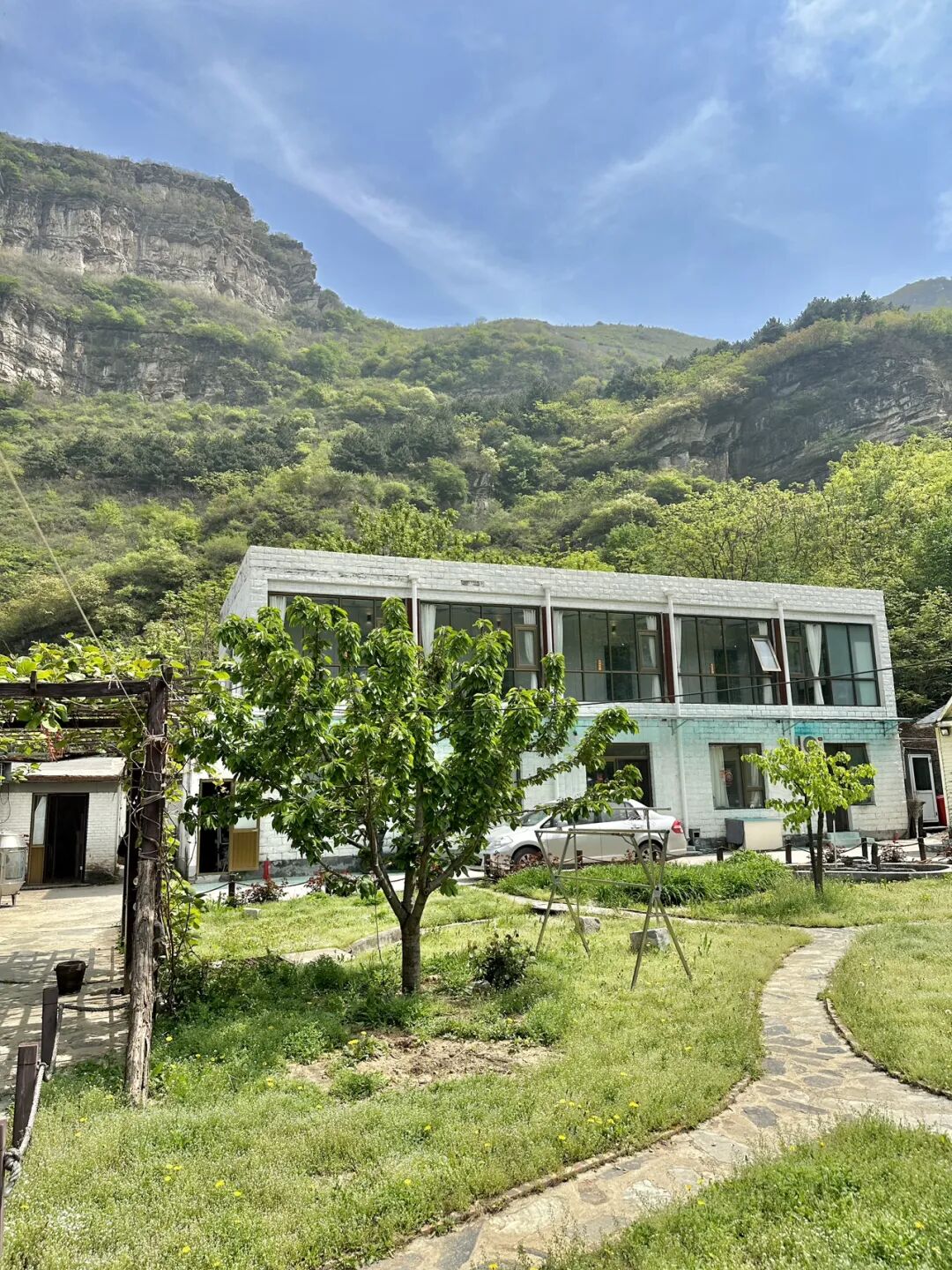
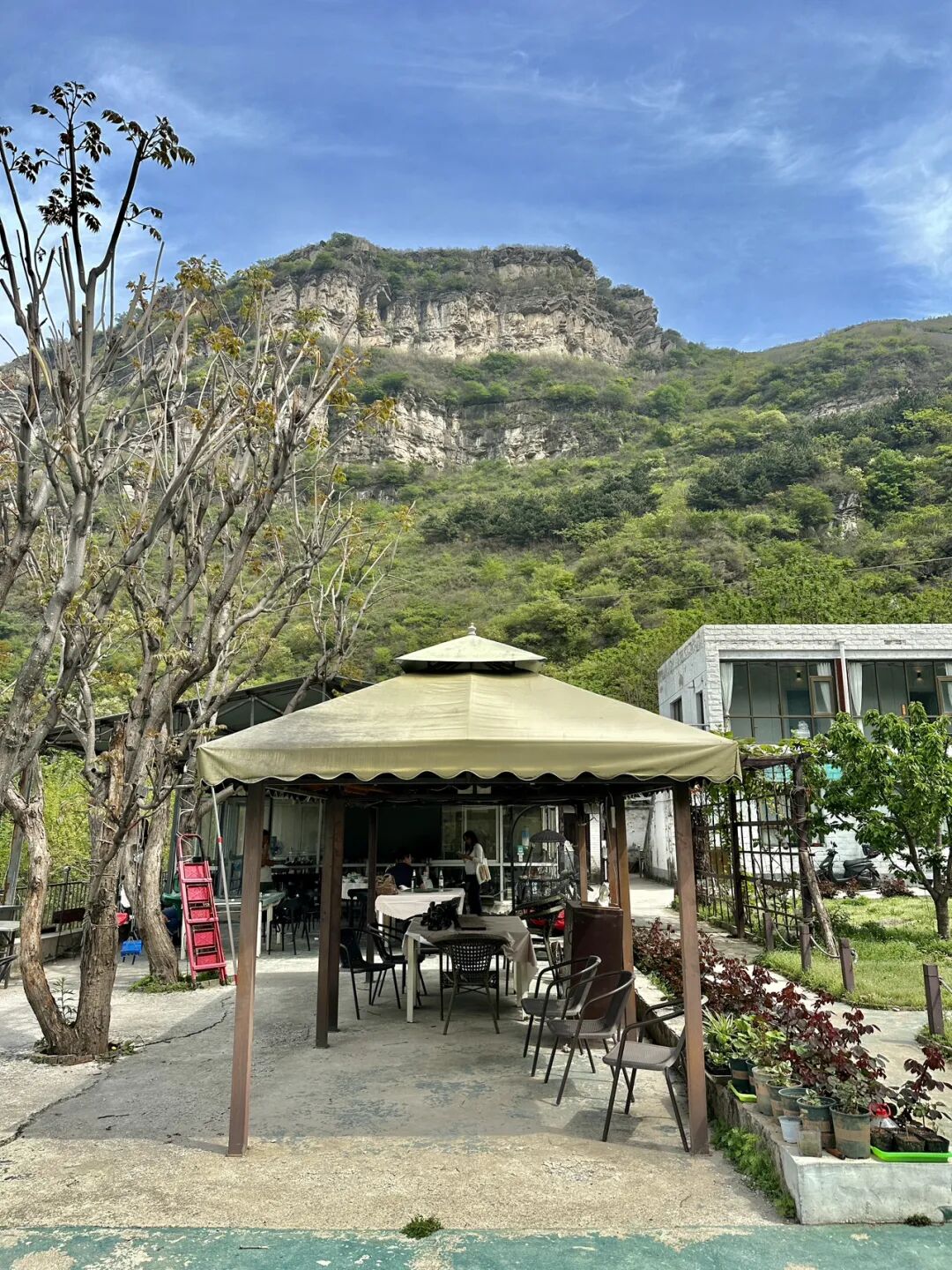
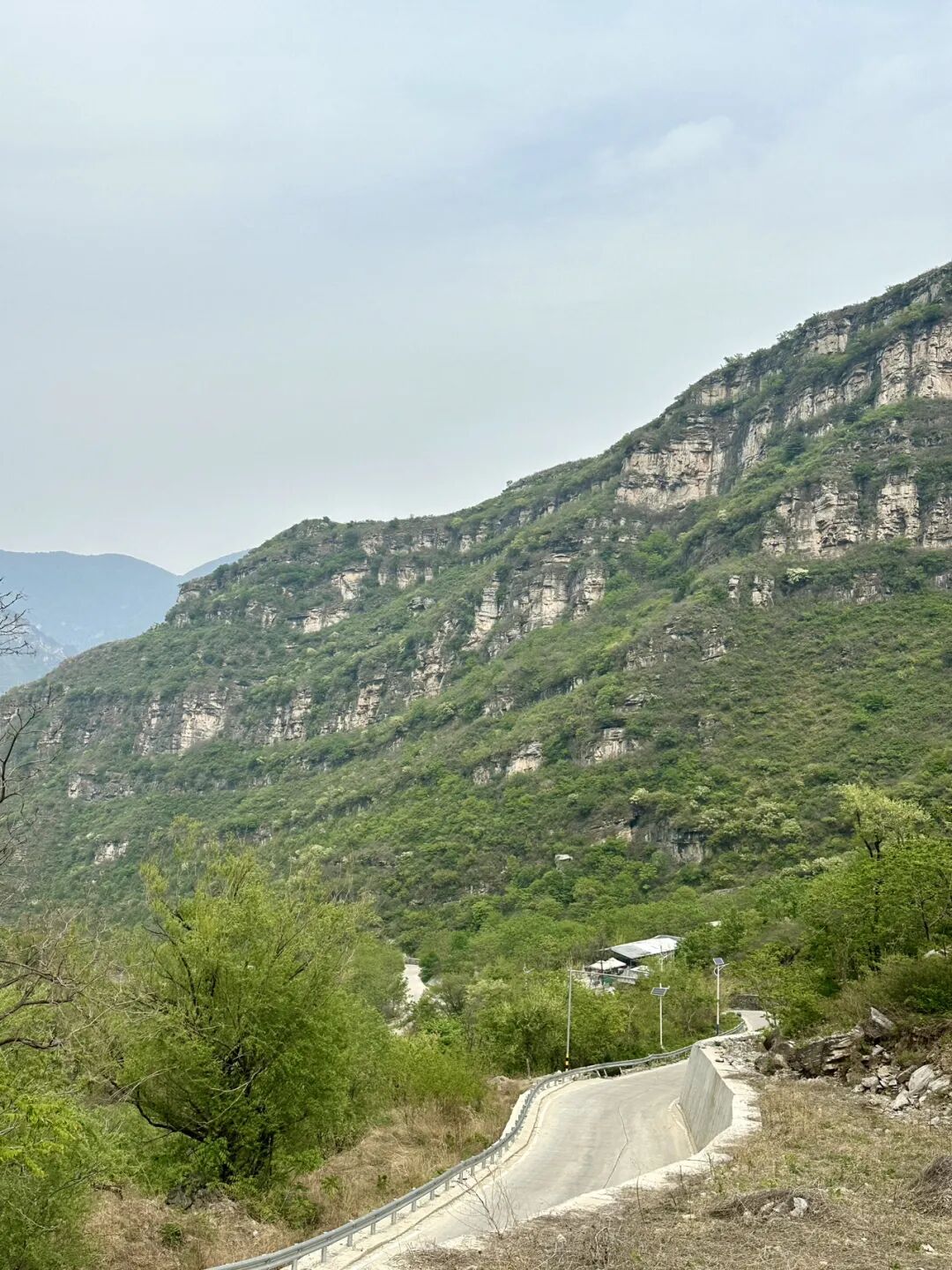
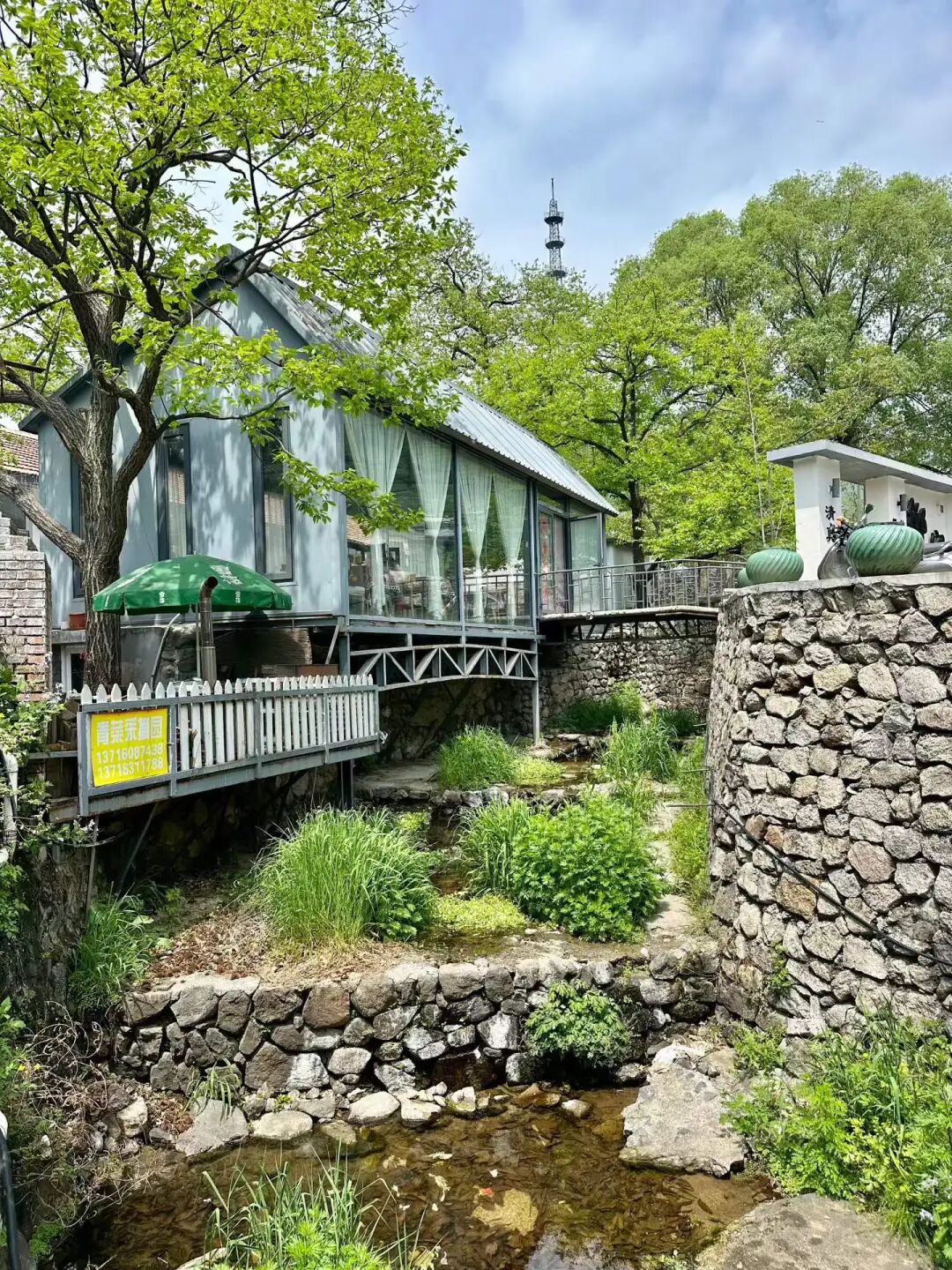
At the end of April, we had lunch at Dongge Shanyuan Farmhouse, located deep in the mountains of Shengshuiyu, Fangshan. The farmhouse is very close to Shangfangshan National Forest Park. The mountains here are rugged, making this the steepest Hui Muslim farmhouse I have visited in Beijing. Driving to the farmhouse is fine, but electric cars cannot make it further up the mountain, so please be aware of this.
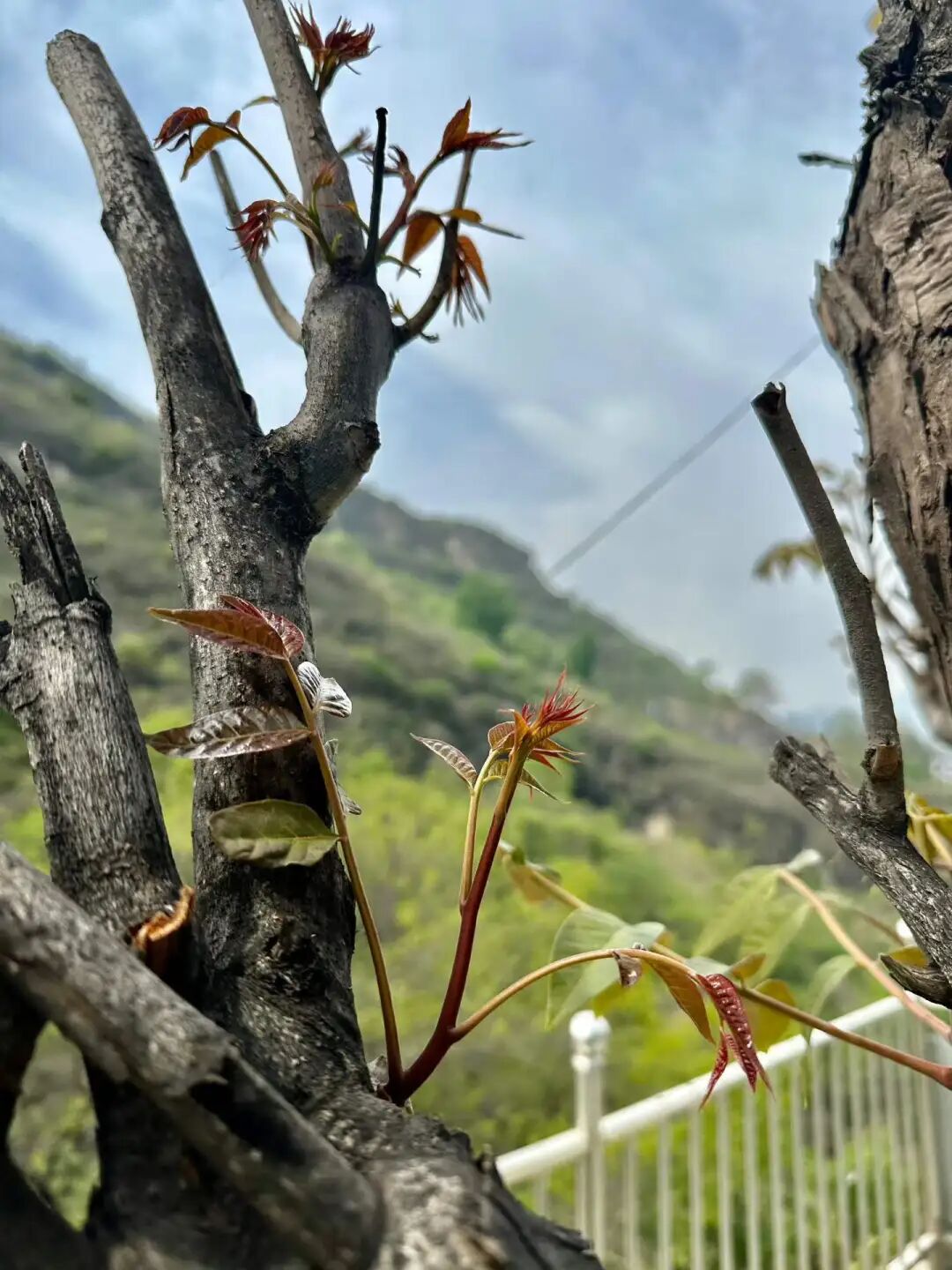
It is run by a Hui Muslim man from Haidian, and they specialize in Chinese toon (xiangchun) feasts and whole roasted lamb. The guest rooms are newly renovated and very clean, making it a great place to escape the summer heat. The courtyard sits on a platform atop a cliff. There are chickens and pigeons in the yard, along with many Chinese toon trees, which is why it is also called 'Chunxiang Valley'.
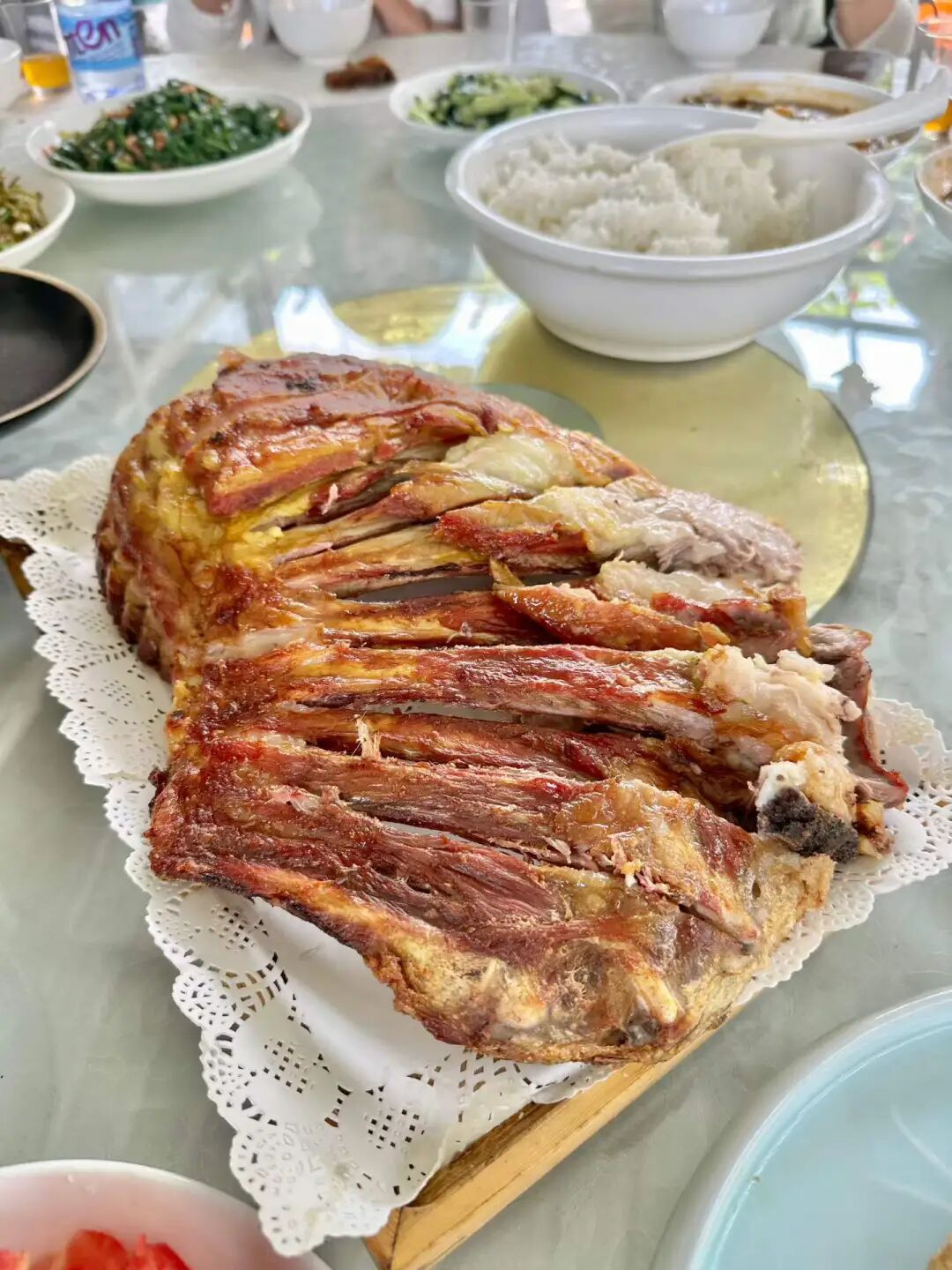
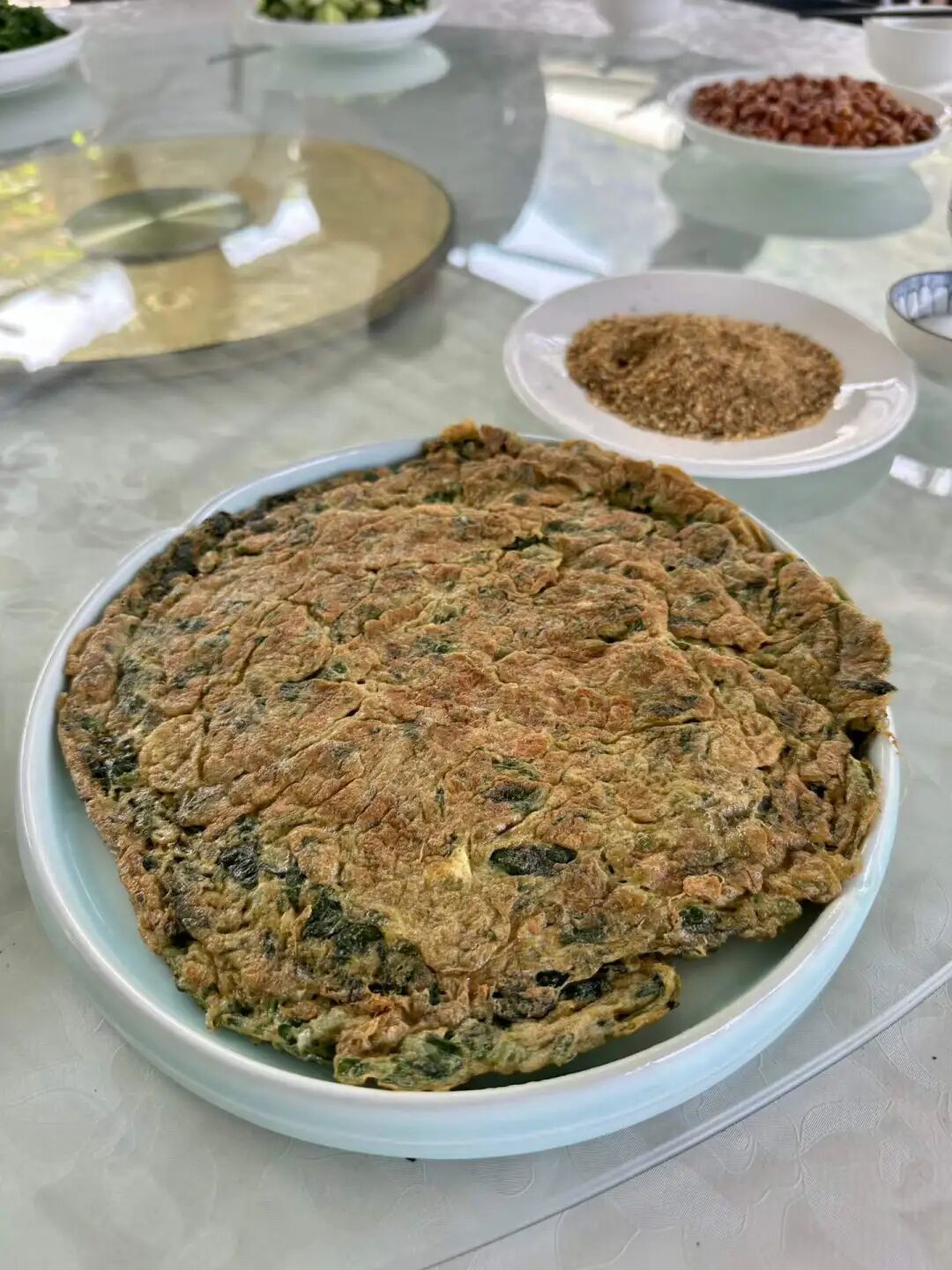
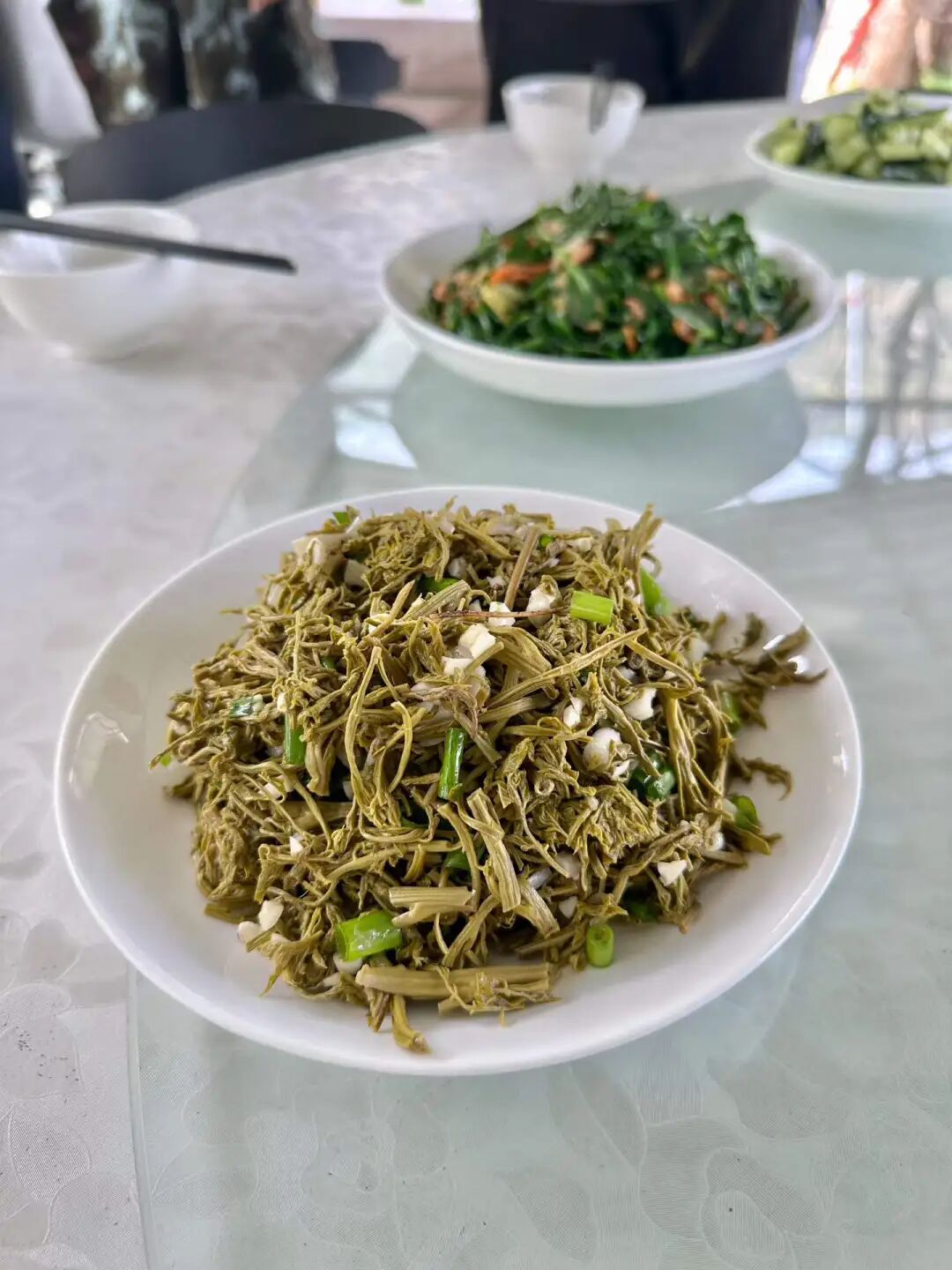
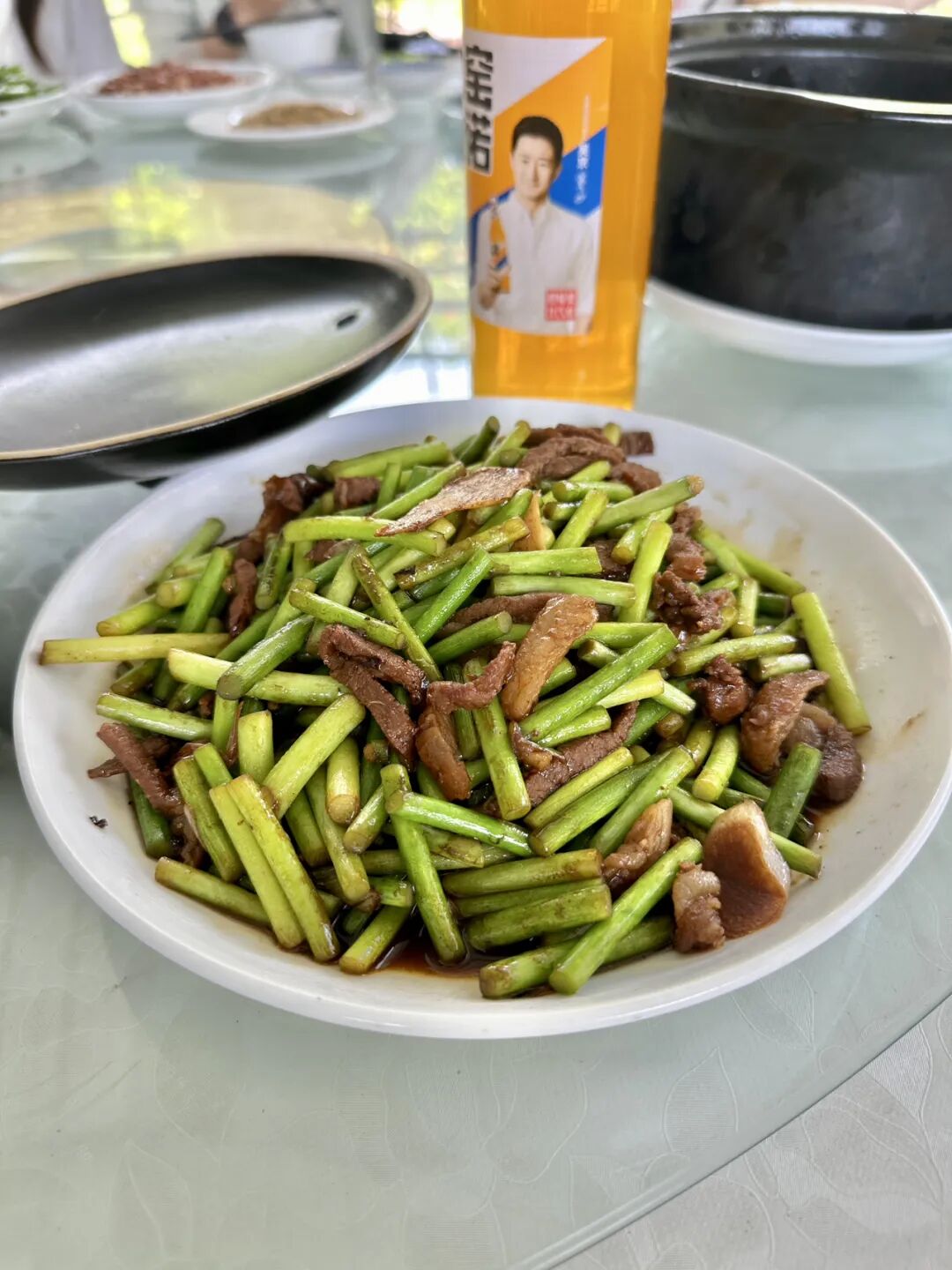
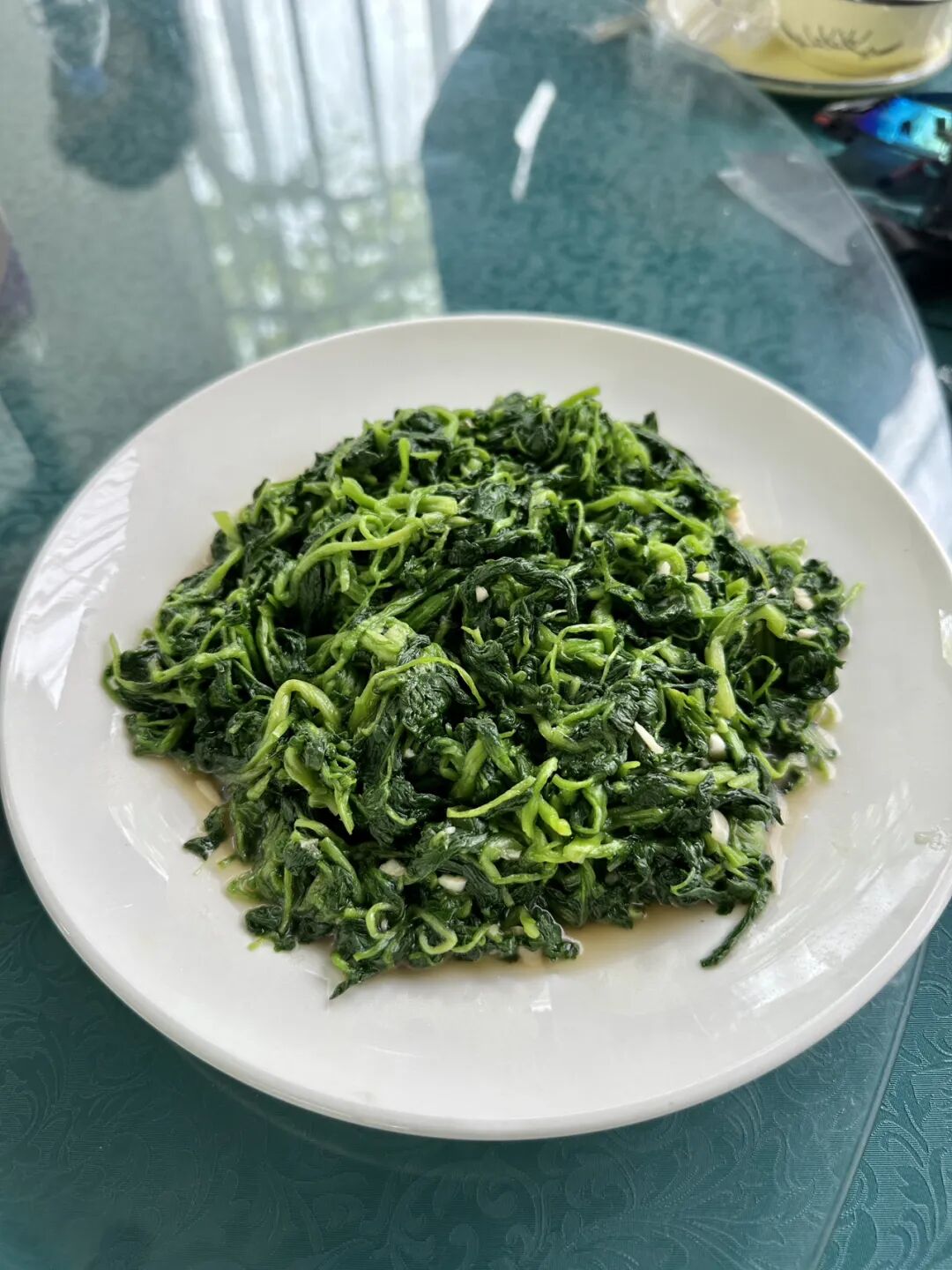
We ordered roasted lamb chops, scrambled eggs with Chinese toon, magnolia buds (mulanya), free-range chicken, stir-fried river shrimp with chives, shredded pork with garlic sprouts, and braised tofu with green onions. The Chinese toon was picked fresh from the trees, and the magnolia buds are the tender spring shoots of the goldenrain tree, a classic wild vegetable in the Beijing suburbs.
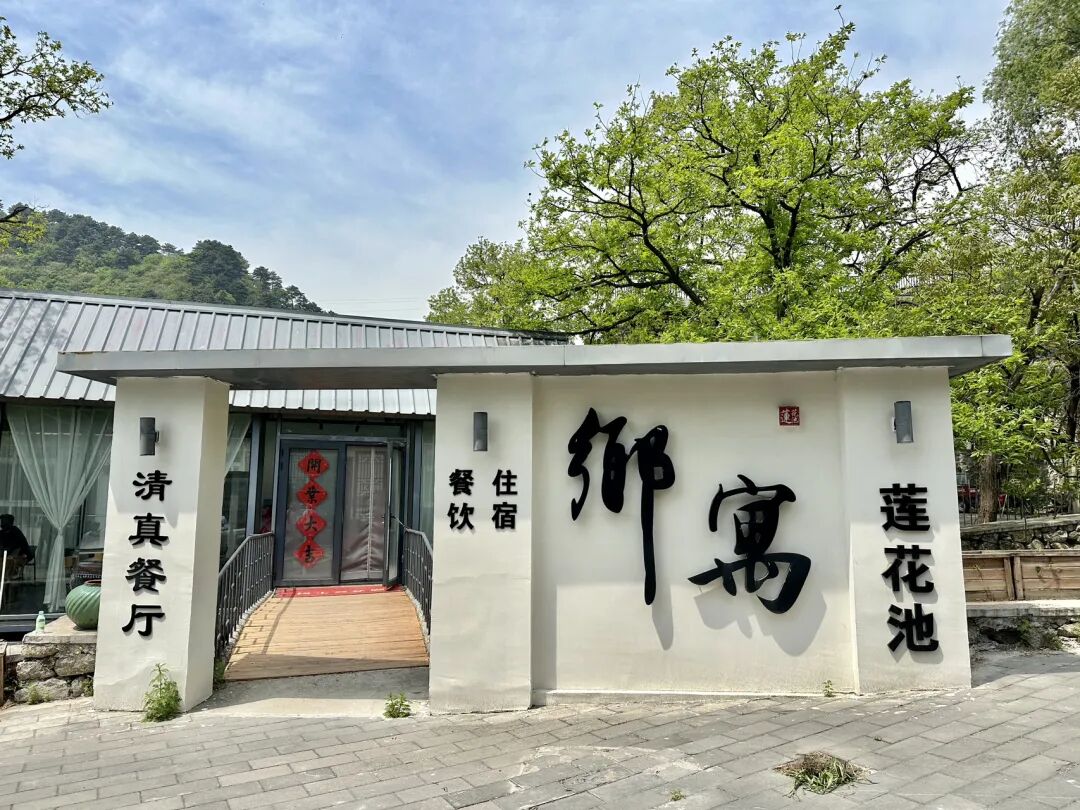
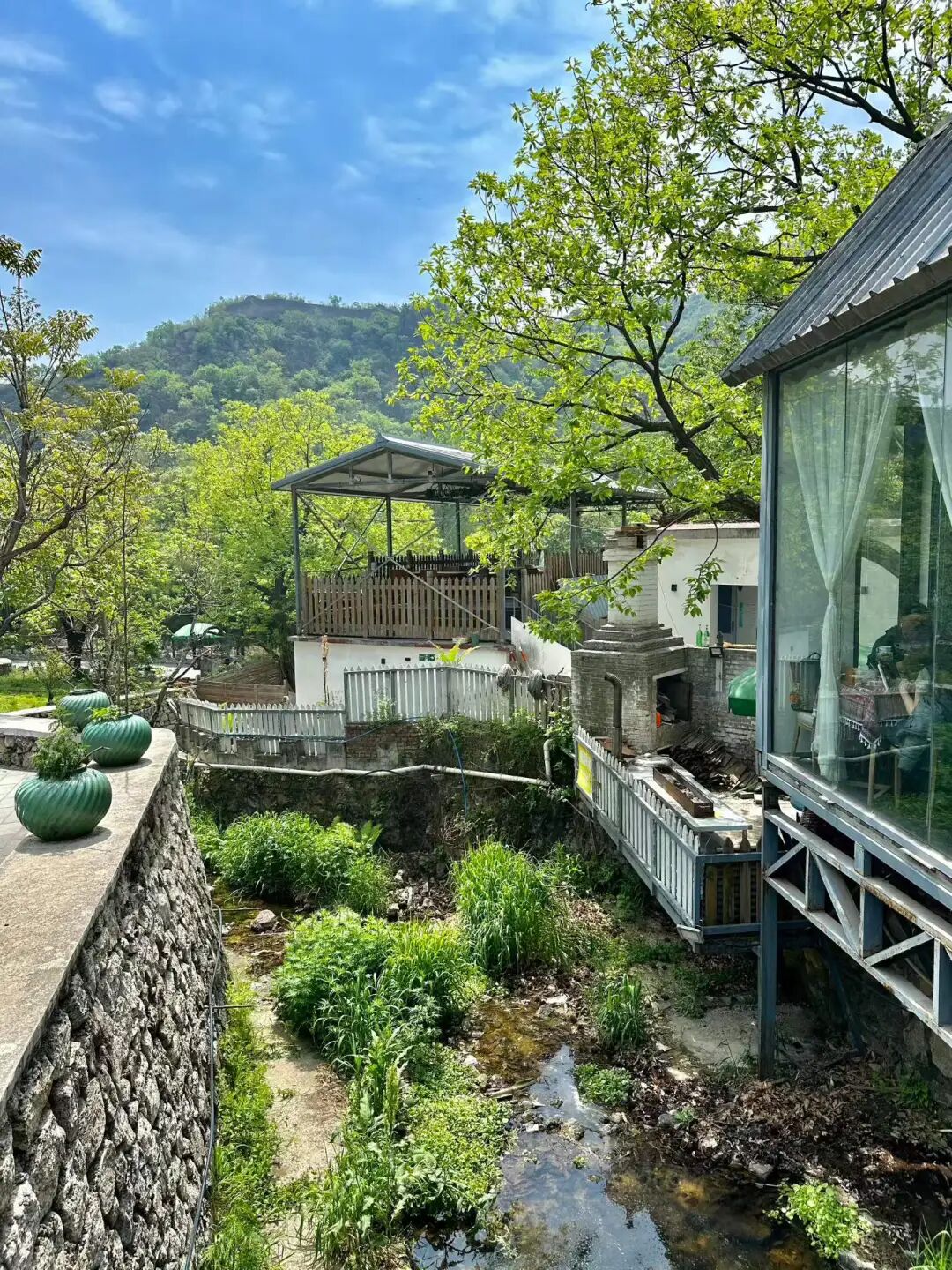
On May 5th, we went to Huairou for a post-holiday gathering at Xiangyu Homestay in Lianhuachi Village. It is run by Hui Muslims from the Tongzhou Great Mosque, and they specialize in rainbow trout and farmhouse dishes.
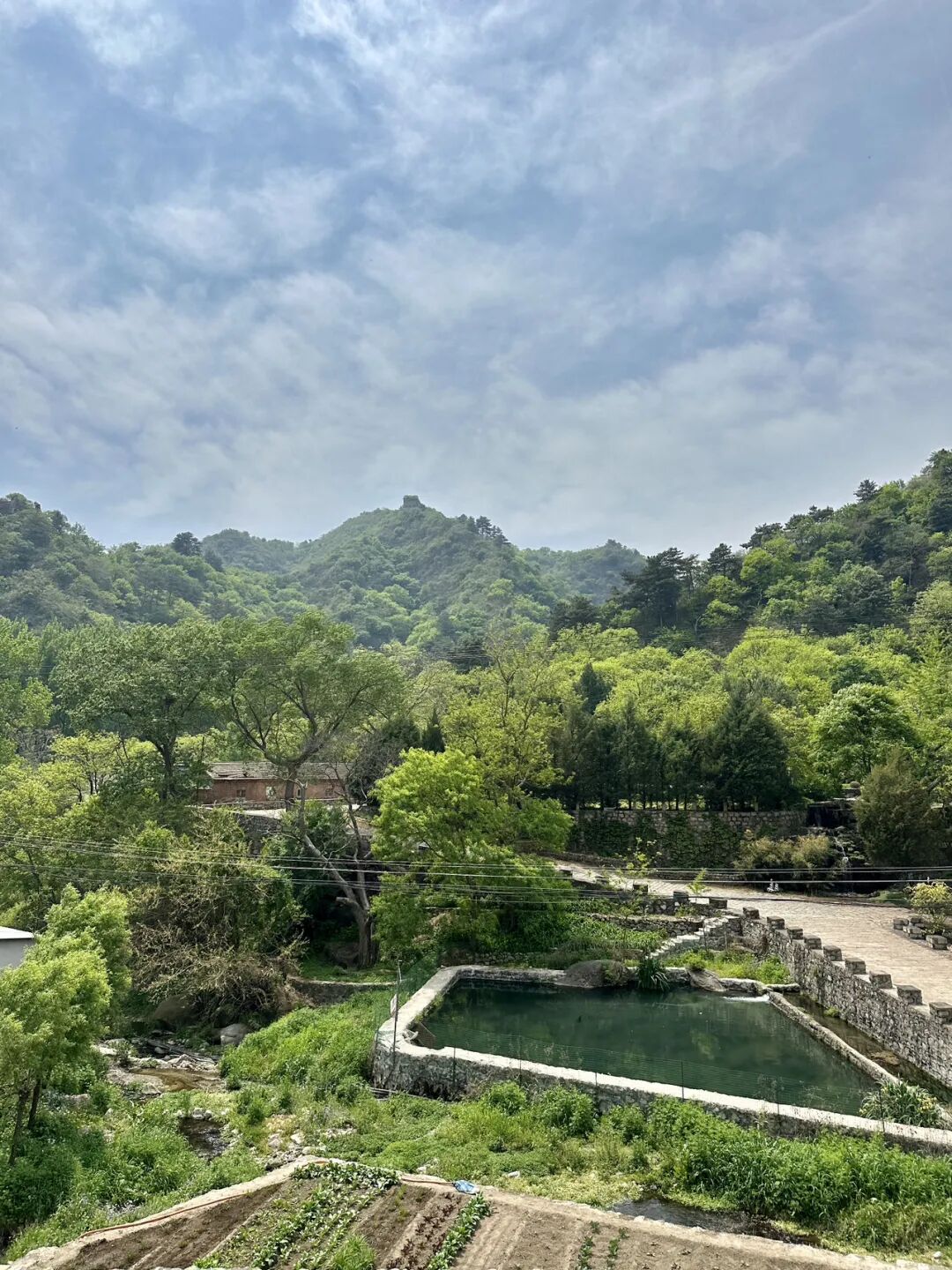
The homestay is in Lianhuachi Village, Huairou, right behind Mutianyu. You follow the valley from Yanqi Lake and pass Shentangyu to get there. I heard there was a huge traffic jam here on May 4th, but it was much less crowded when we went.
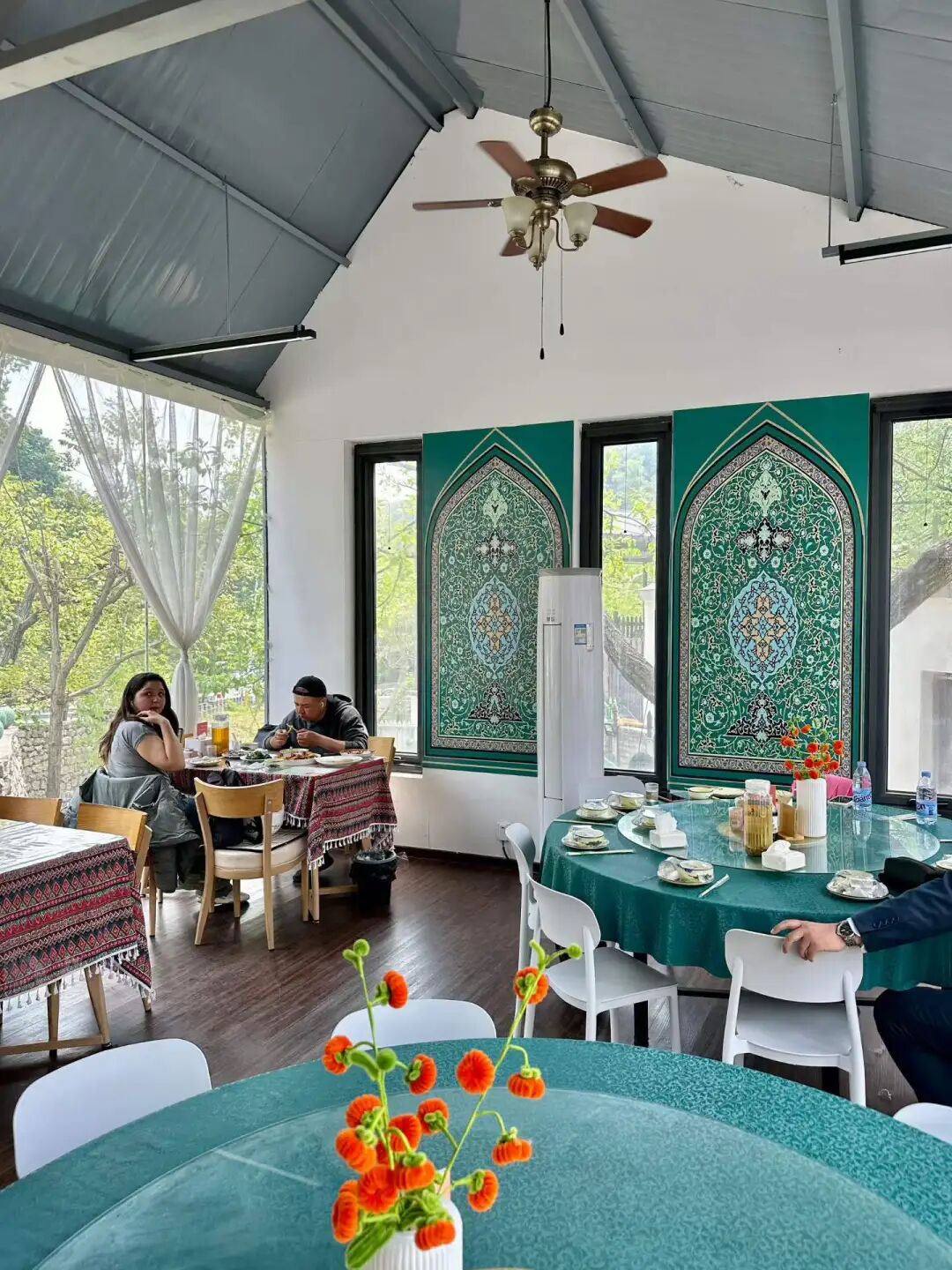
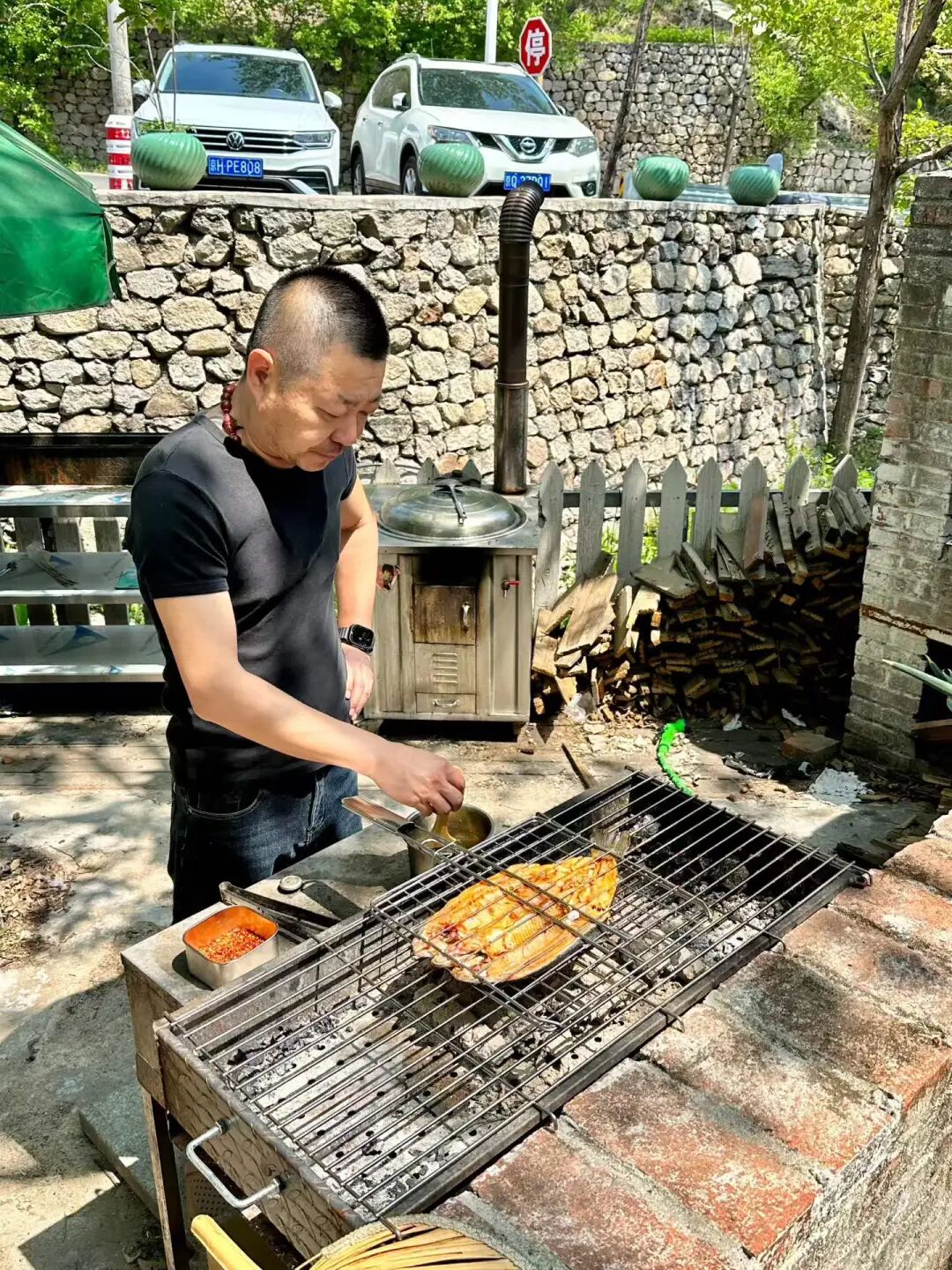
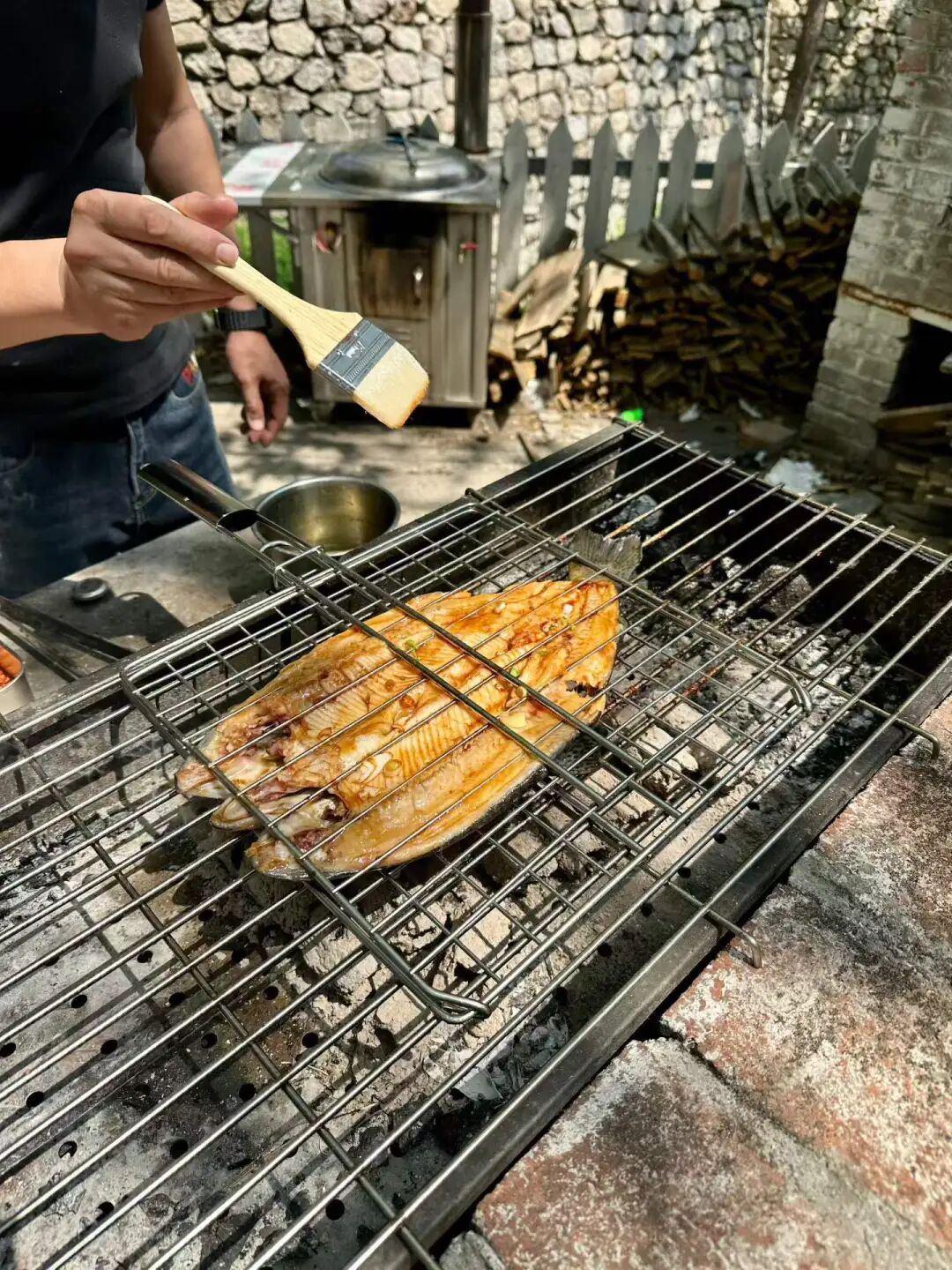
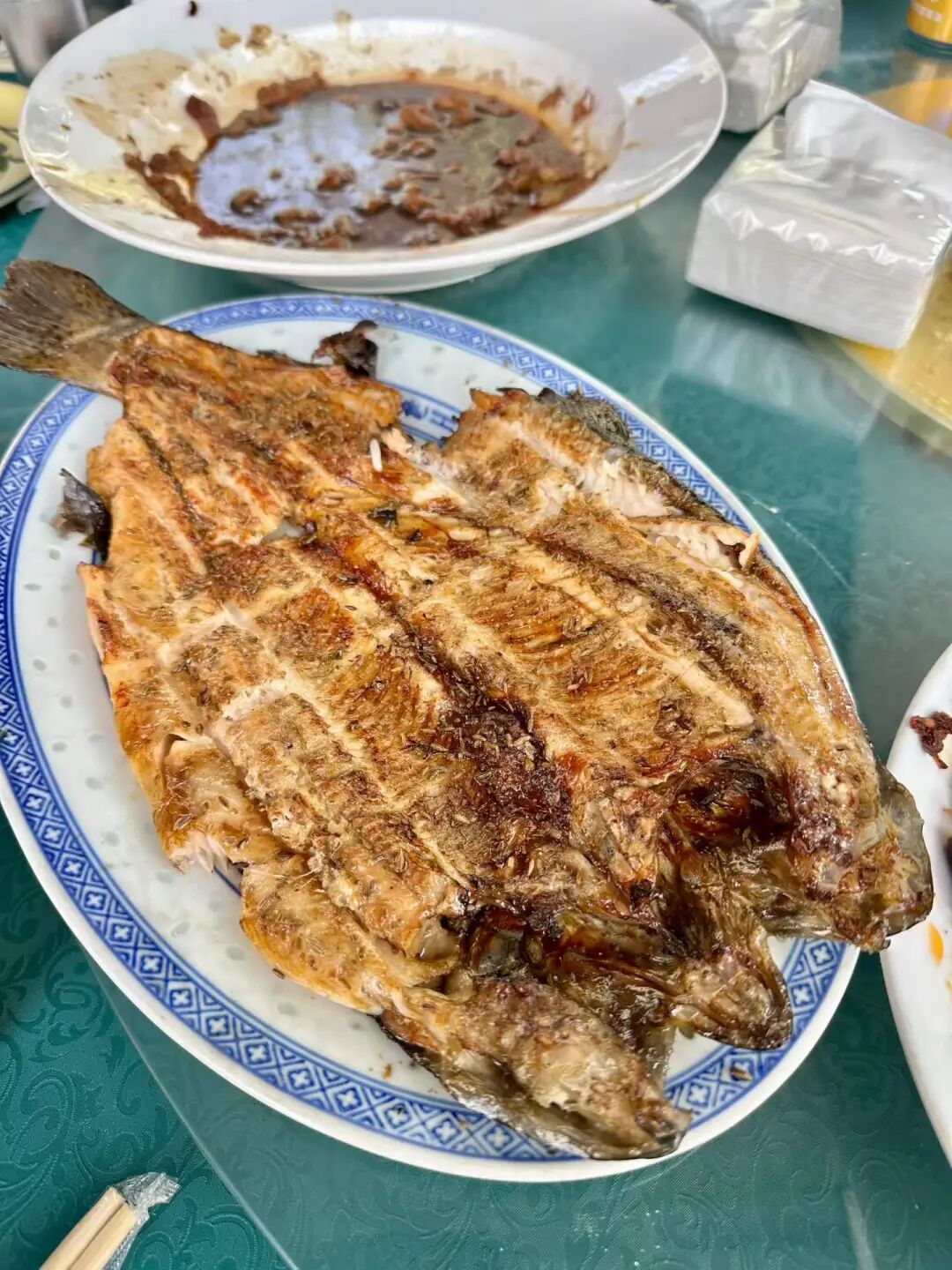
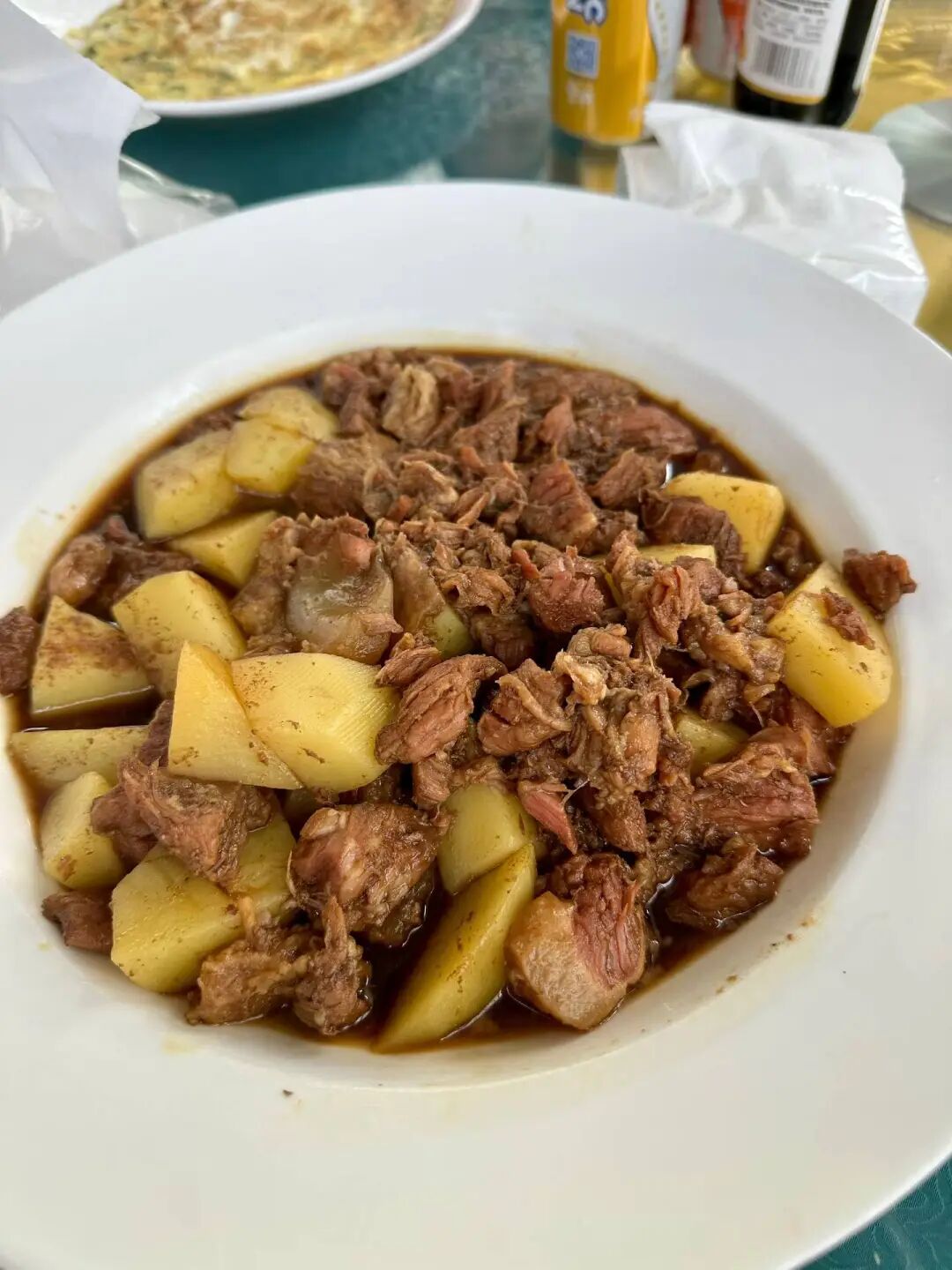
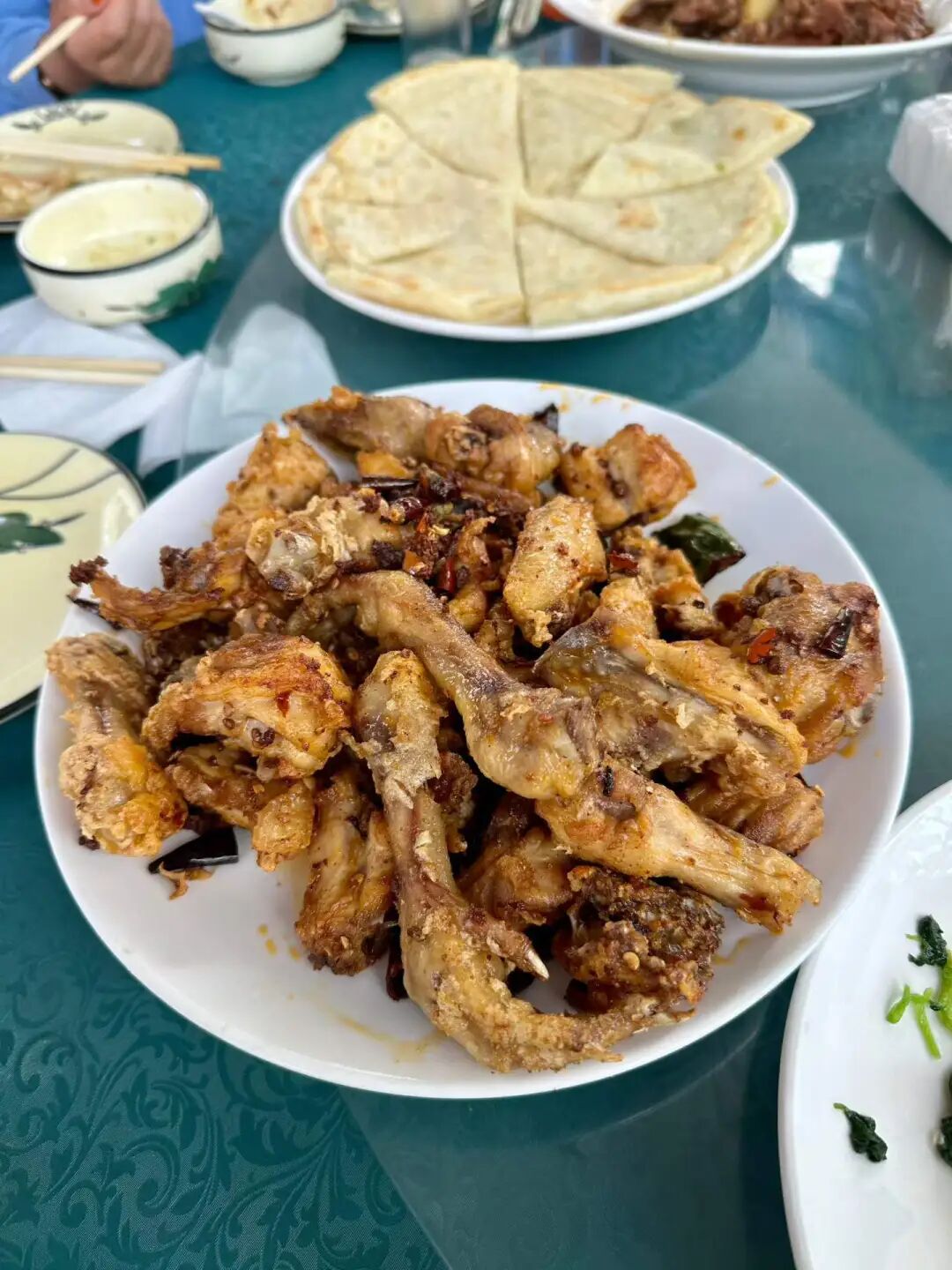
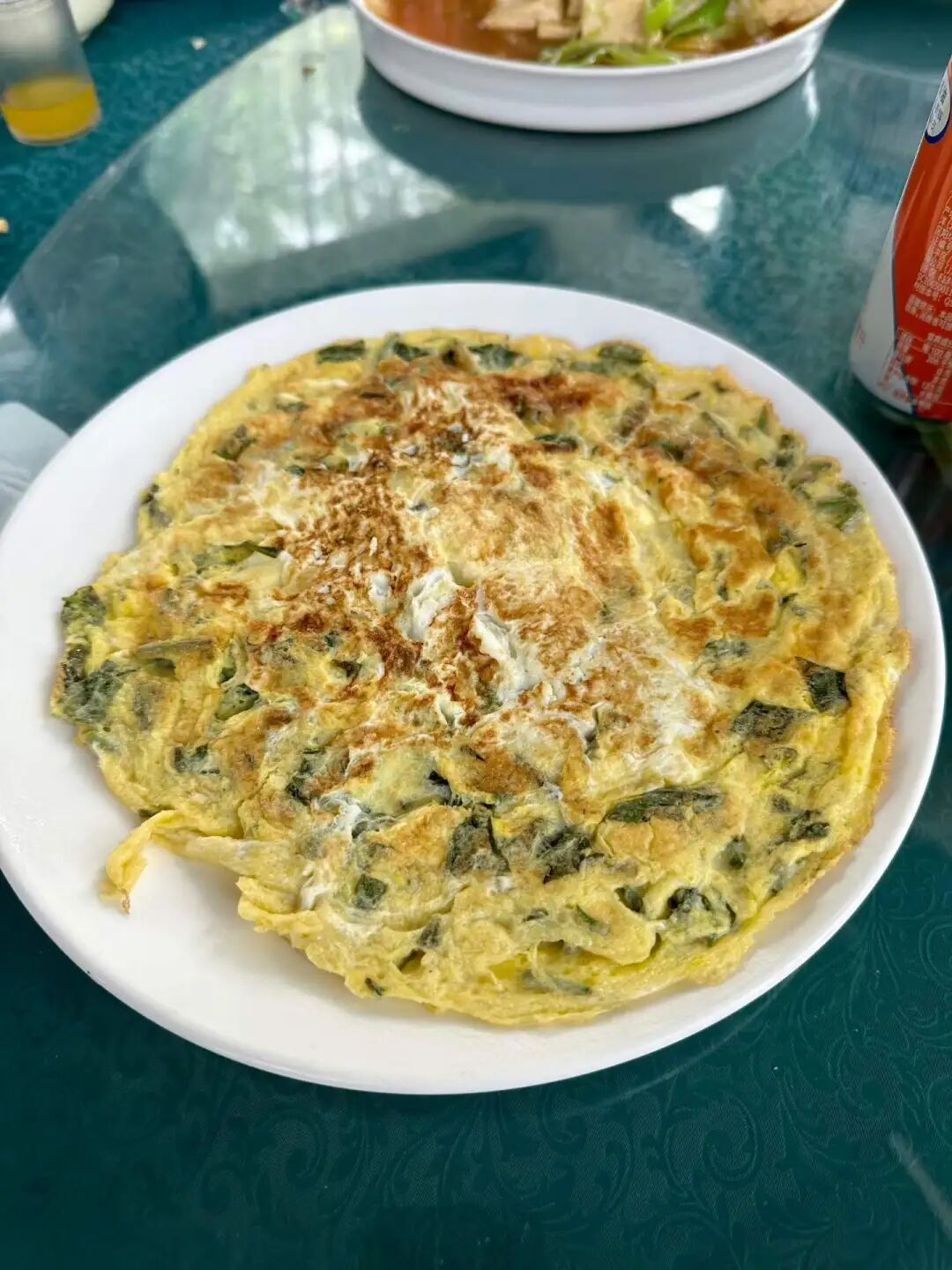
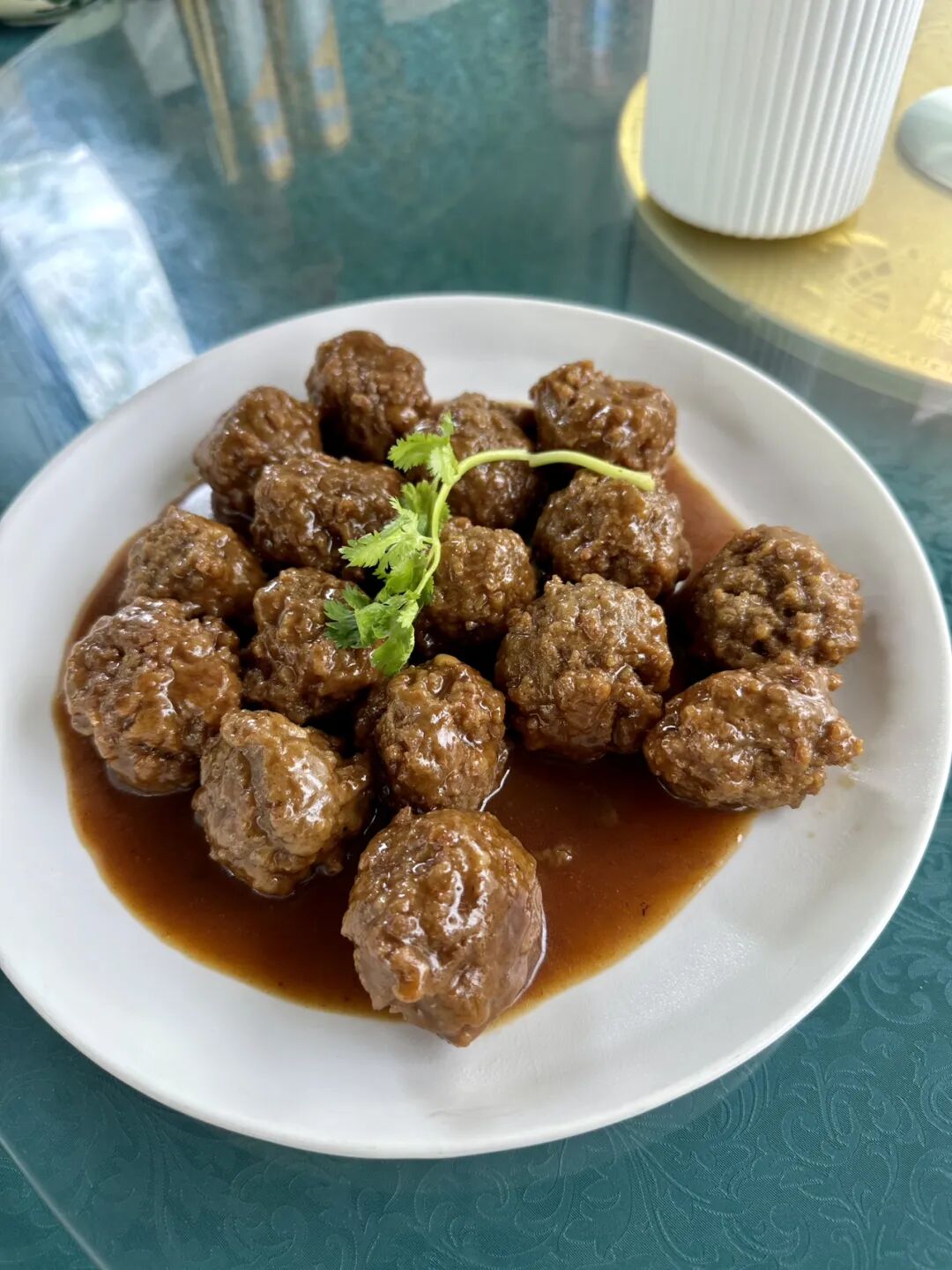
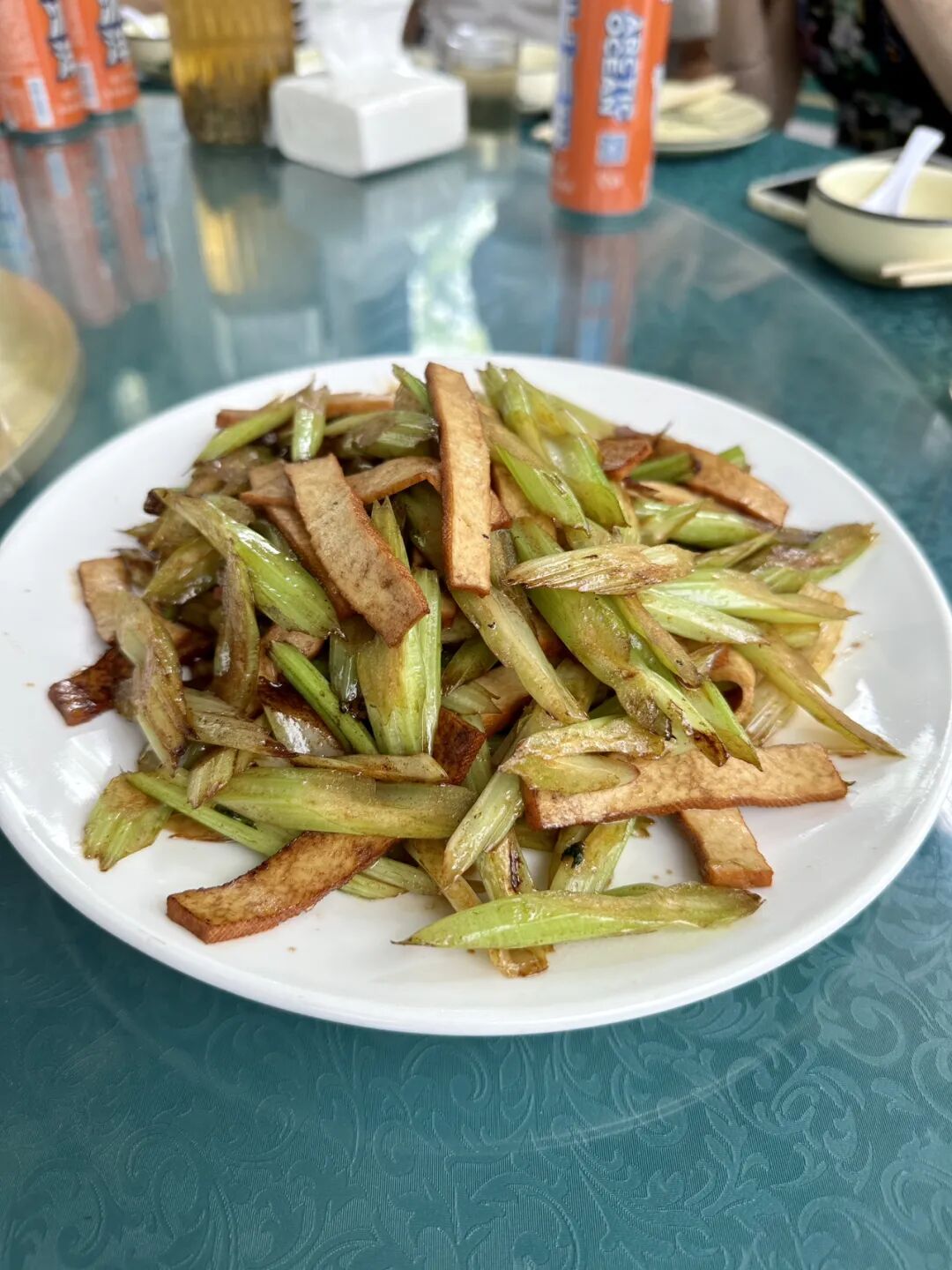
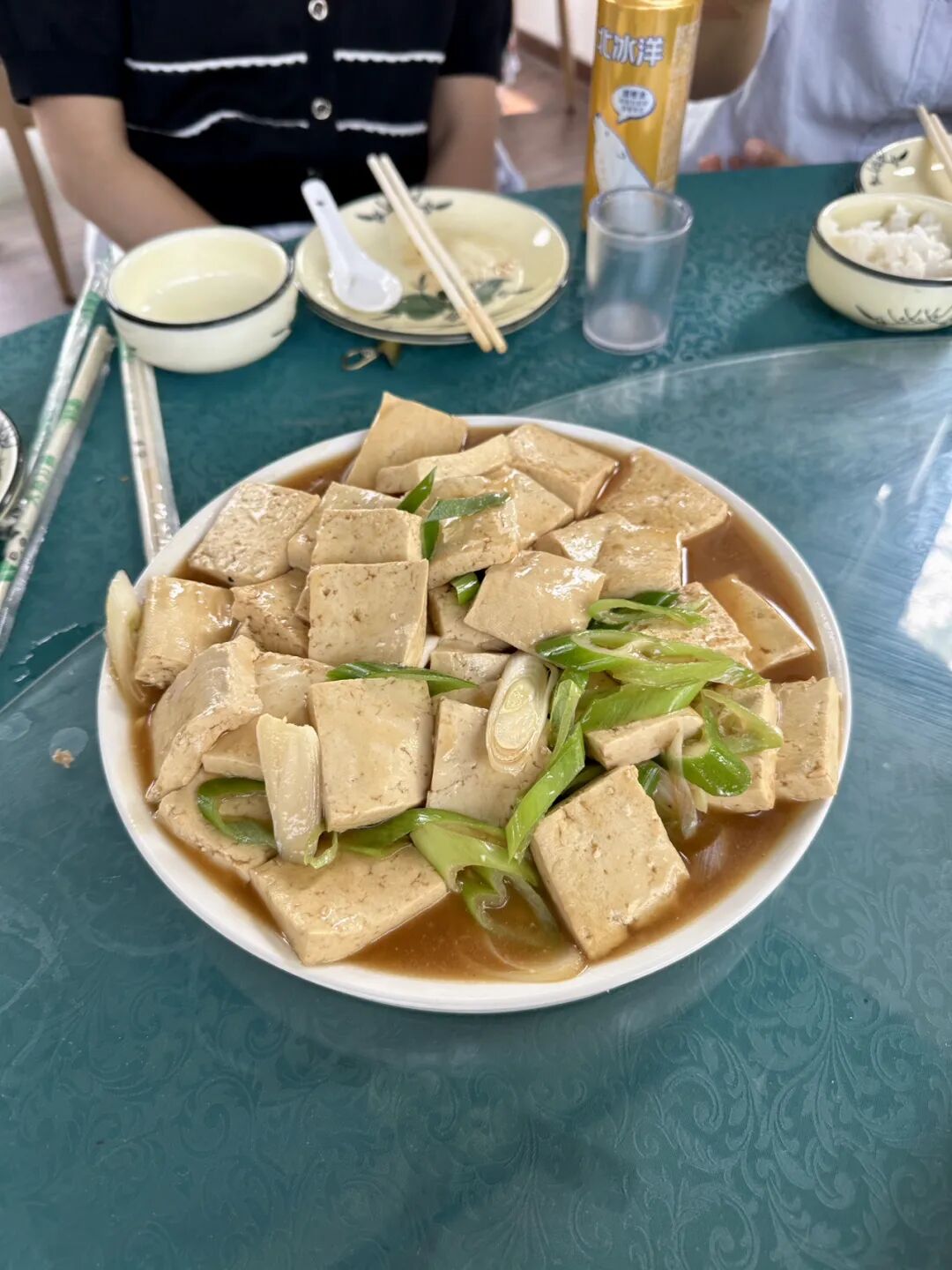
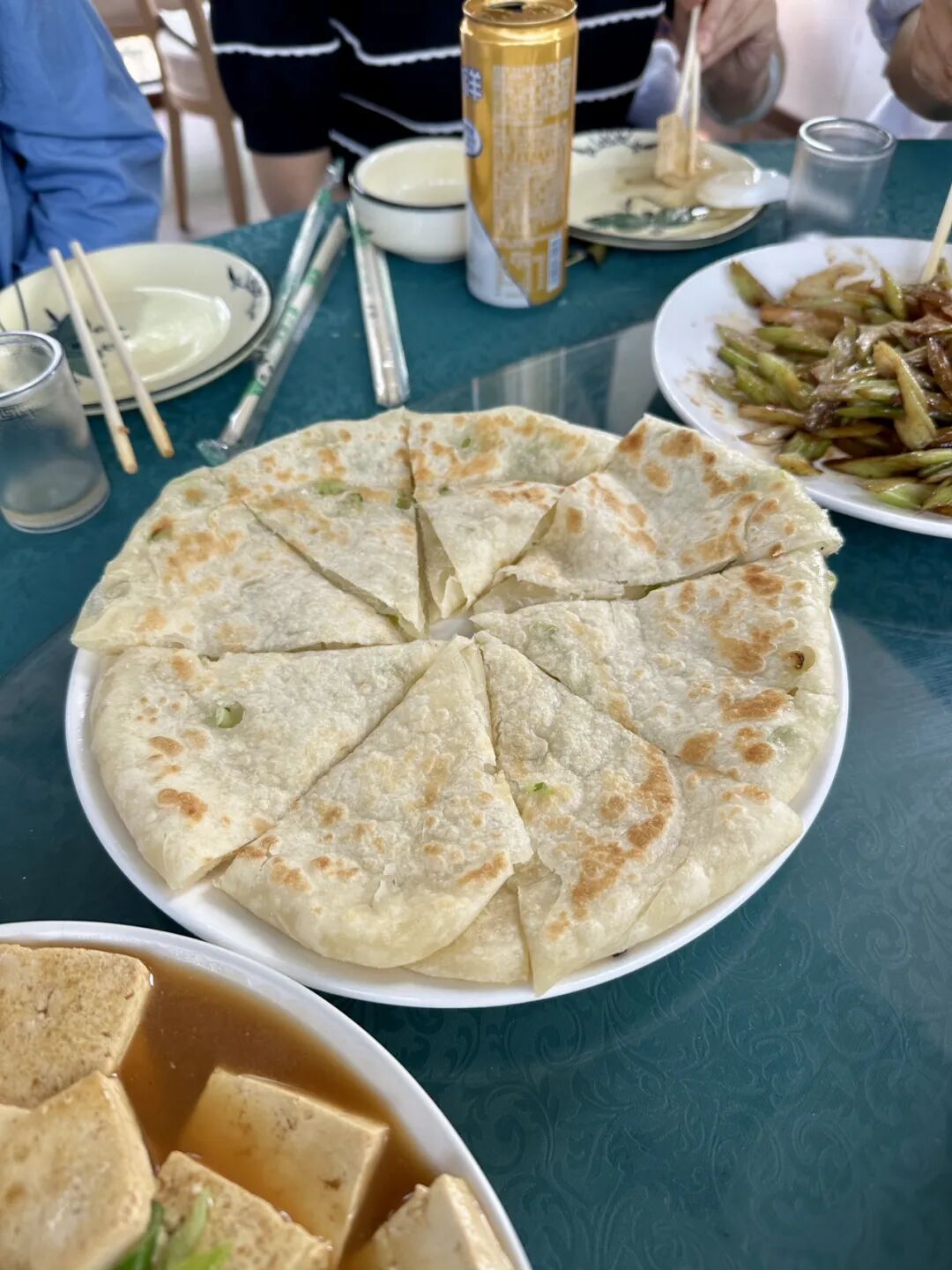
You must eat rainbow trout when you come to Huairou. Rainbow trout only survive in running water, so it is hard to find in the city. Their roasted fish is very well-made and has a great texture. For our meal, we had braised beef with potatoes, spicy stir-fried chicken, boiled beef, scrambled eggs with Chinese toon, celery with dried tofu, stewed tofu, stewed meatballs, mixed wild vegetables, and deep-fried prickly ash buds (huajiaoya), with green onion pancakes (conghuabing) as our staple food. The meatballs served at the start were a bit salty, but they adjusted immediately after we mentioned it, and the following dishes were all light. The Chinese toon and prickly ash buds were picked fresh from the trees; the main reason to eat in the mountains is for that fresh taste. The green onion pancakes were also pan-fried to order, which made them quite fragrant. The spicy chicken was a bit like fried chicken; it was tender inside but the flavor didn't soak in. The braised beef was cooked until very tender, and I thought it tasted good.
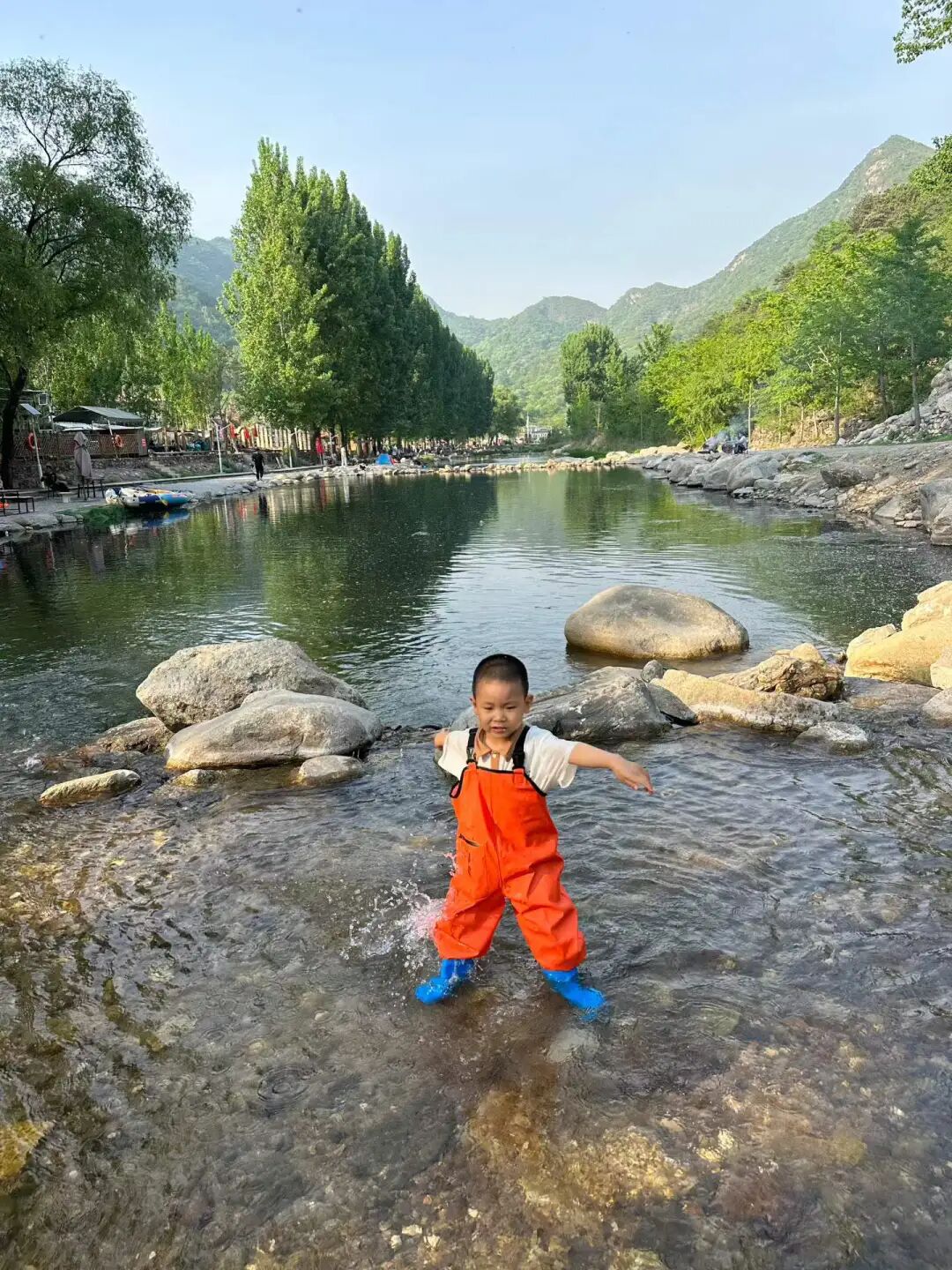
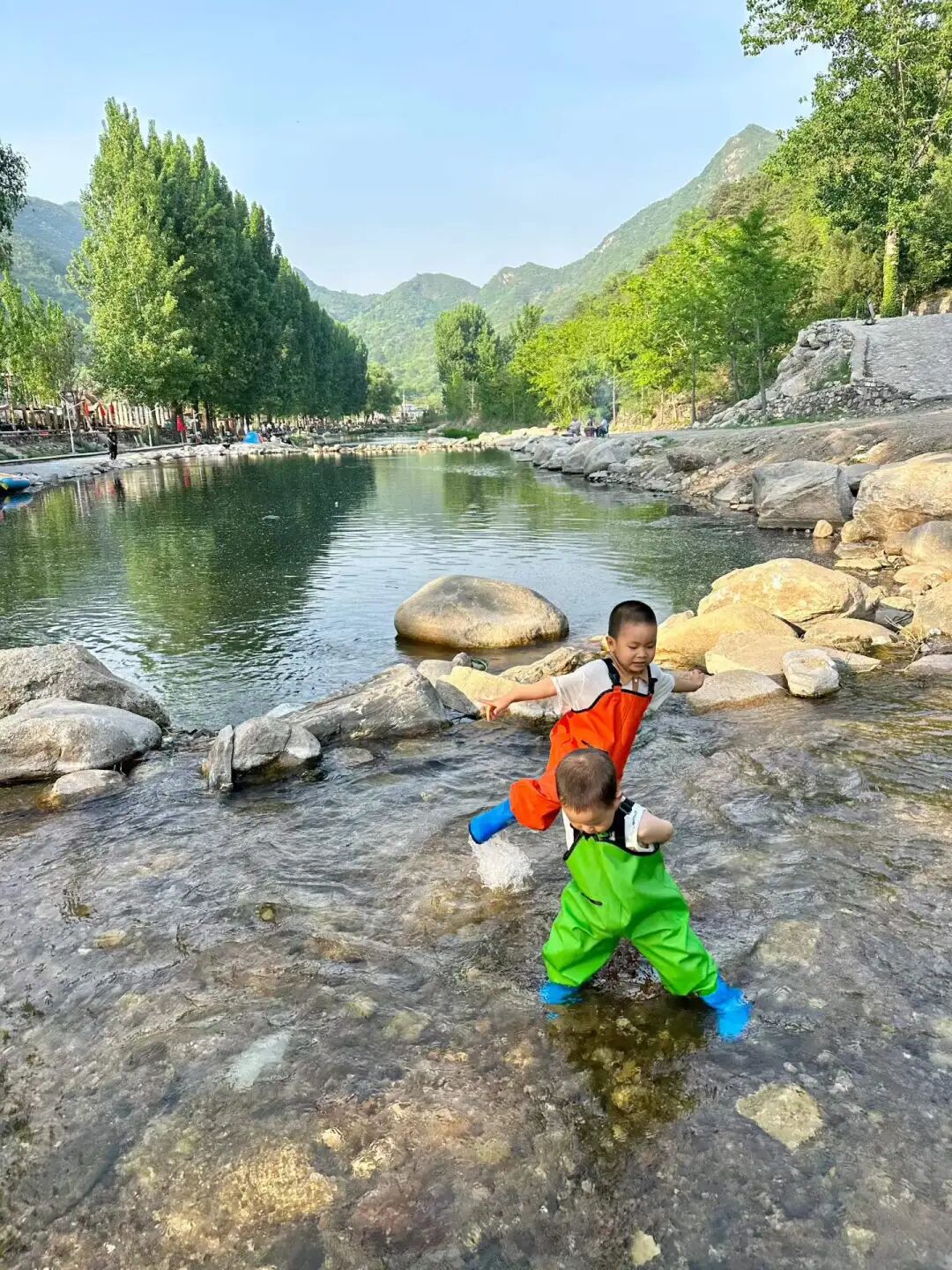
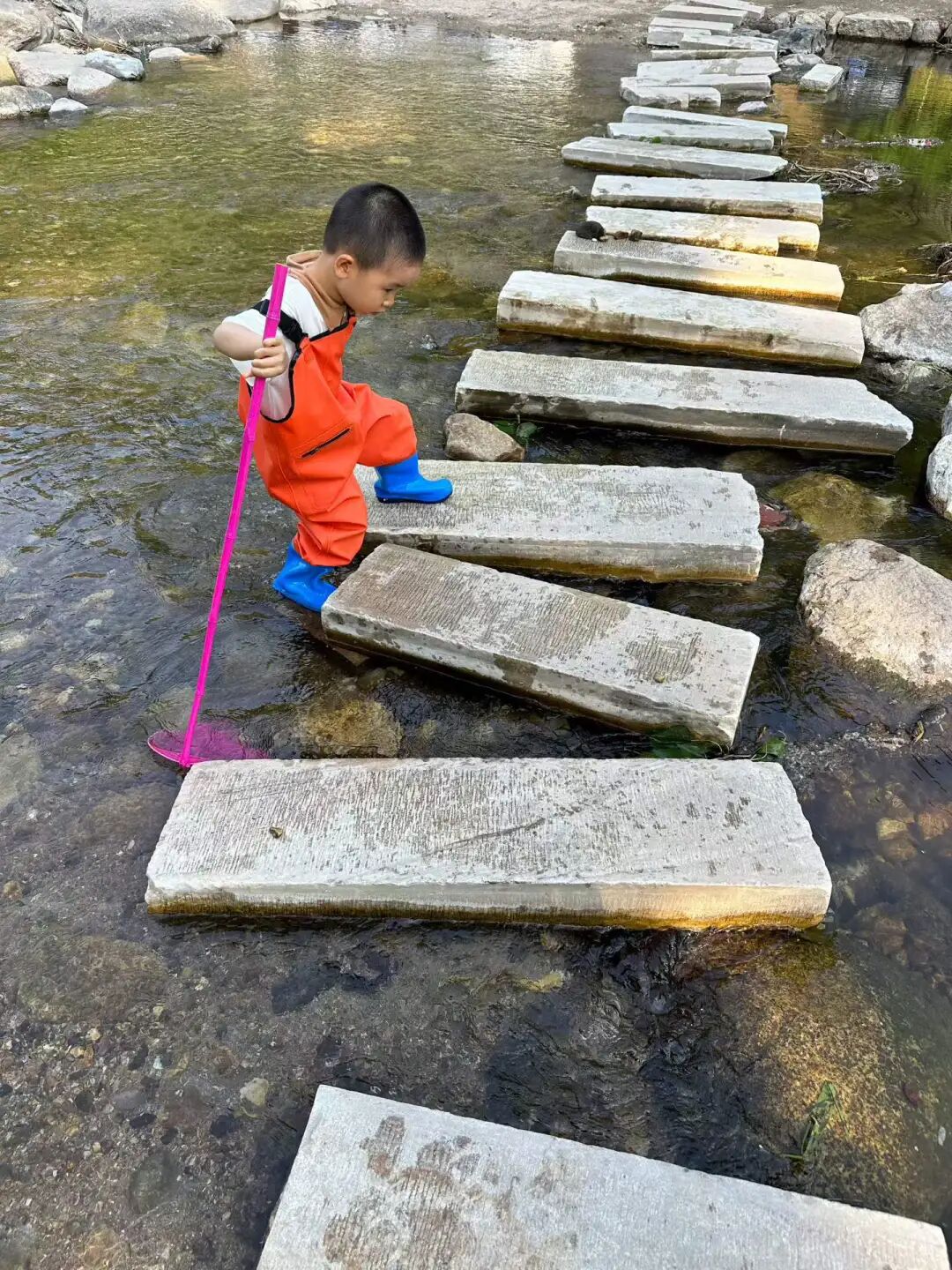
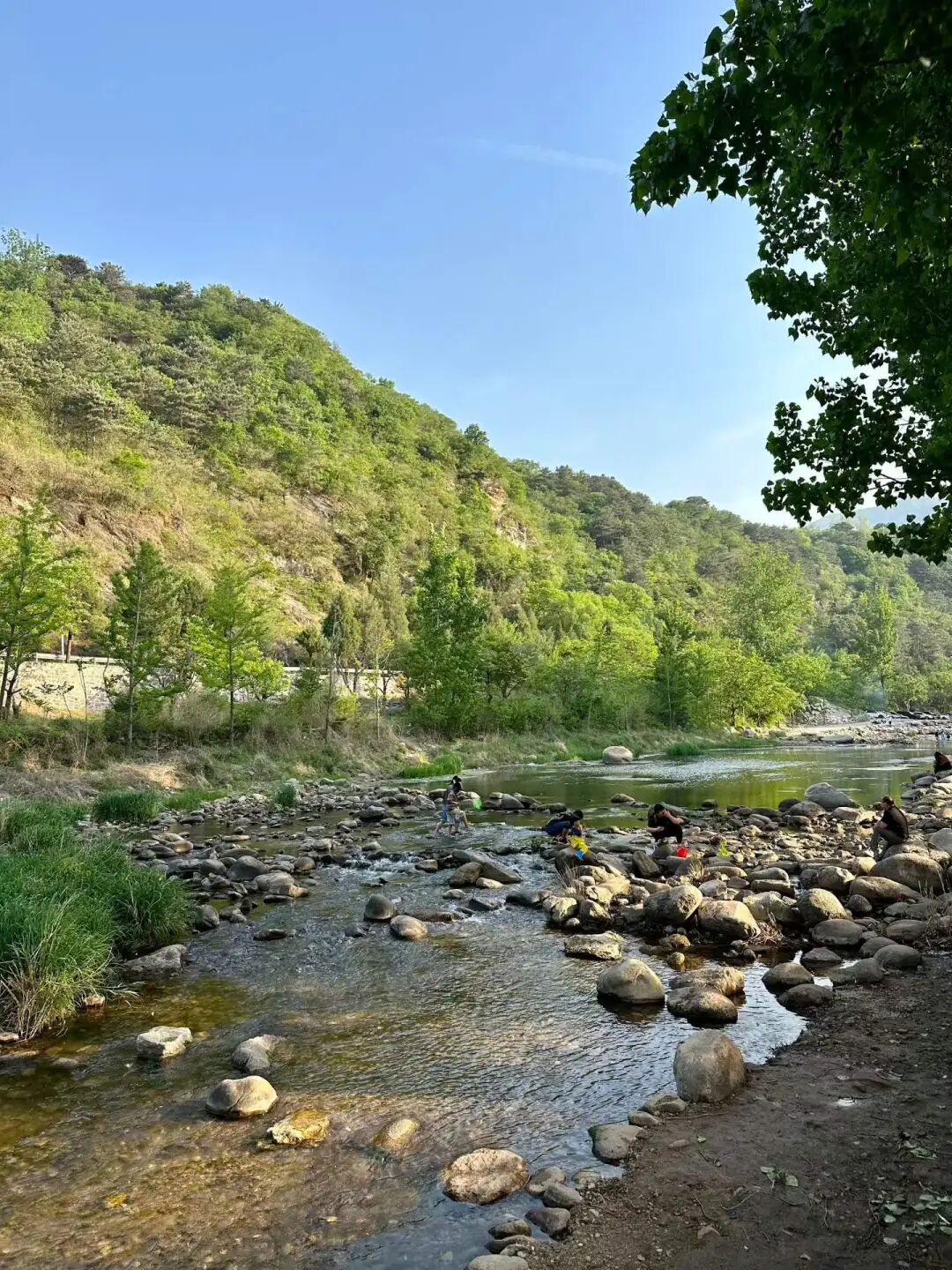
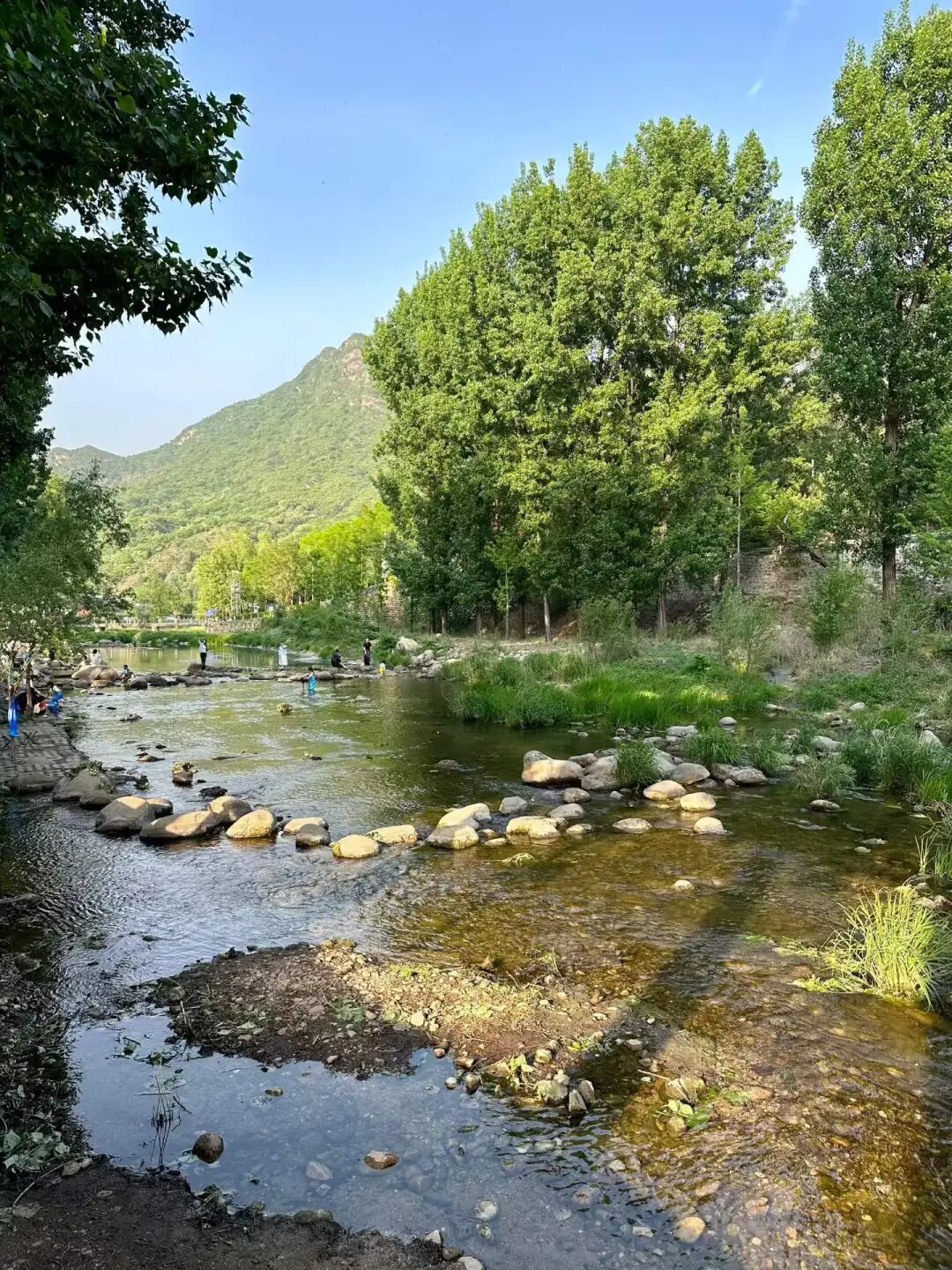
After eating, we went to play in the water at Shentangyu Village in Huairou. Parking in the village costs 20 yuan for anything over 30 minutes. There is a row of poplar trees by the water that provides shade, so it is not too sunny. We bought water clothes for the kids on the spot, but they still got quite wet sitting in the water, so I suggest bringing an extra set of clothes for the children. The water temperature in May is still a bit cool, but the sun is warm, making it perfect for outdoor activities. view all
Summary: This spring travel account visits two Hui Muslim guesthouses in Beijing’s mountain areas, with notes on meals, family trips, local scenery, and Muslim-friendly countryside stays.
At the end of April, we had lunch at Dongge Shanyuan Farmhouse, located deep in the mountains of Shengshuiyu, Fangshan. The farmhouse is very close to Shangfangshan National Forest Park. The mountains here are rugged, making this the steepest Hui Muslim farmhouse I have visited in Beijing. Driving to the farmhouse is fine, but electric cars cannot make it further up the mountain, so please be aware of this.
It is run by a Hui Muslim man from Haidian, and they specialize in Chinese toon (xiangchun) feasts and whole roasted lamb. The guest rooms are newly renovated and very clean, making it a great place to escape the summer heat. The courtyard sits on a platform atop a cliff. There are chickens and pigeons in the yard, along with many Chinese toon trees, which is why it is also called 'Chunxiang Valley'.
We ordered roasted lamb chops, scrambled eggs with Chinese toon, magnolia buds (mulanya), free-range chicken, stir-fried river shrimp with chives, shredded pork with garlic sprouts, and braised tofu with green onions. The Chinese toon was picked fresh from the trees, and the magnolia buds are the tender spring shoots of the goldenrain tree, a classic wild vegetable in the Beijing suburbs.
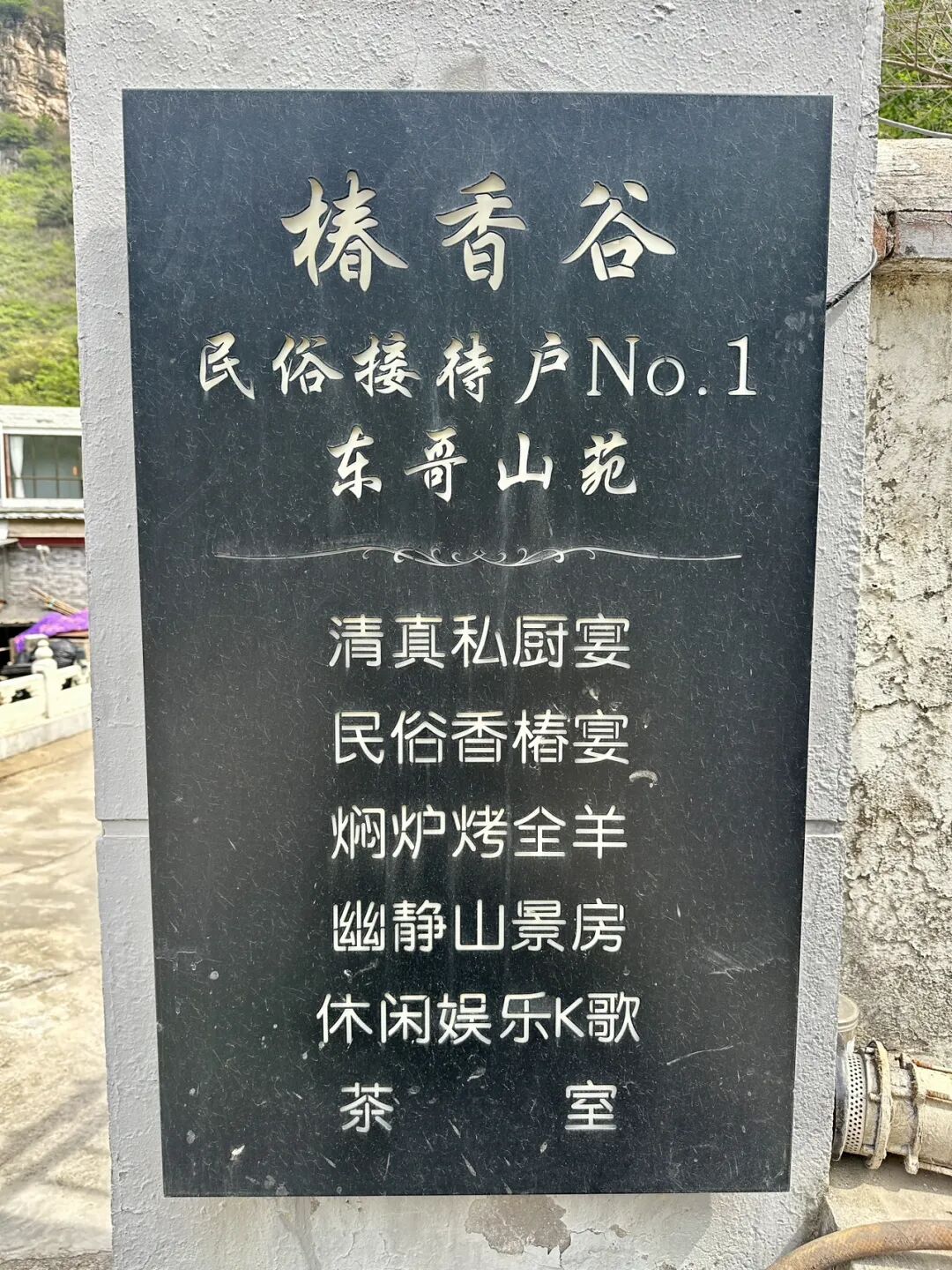
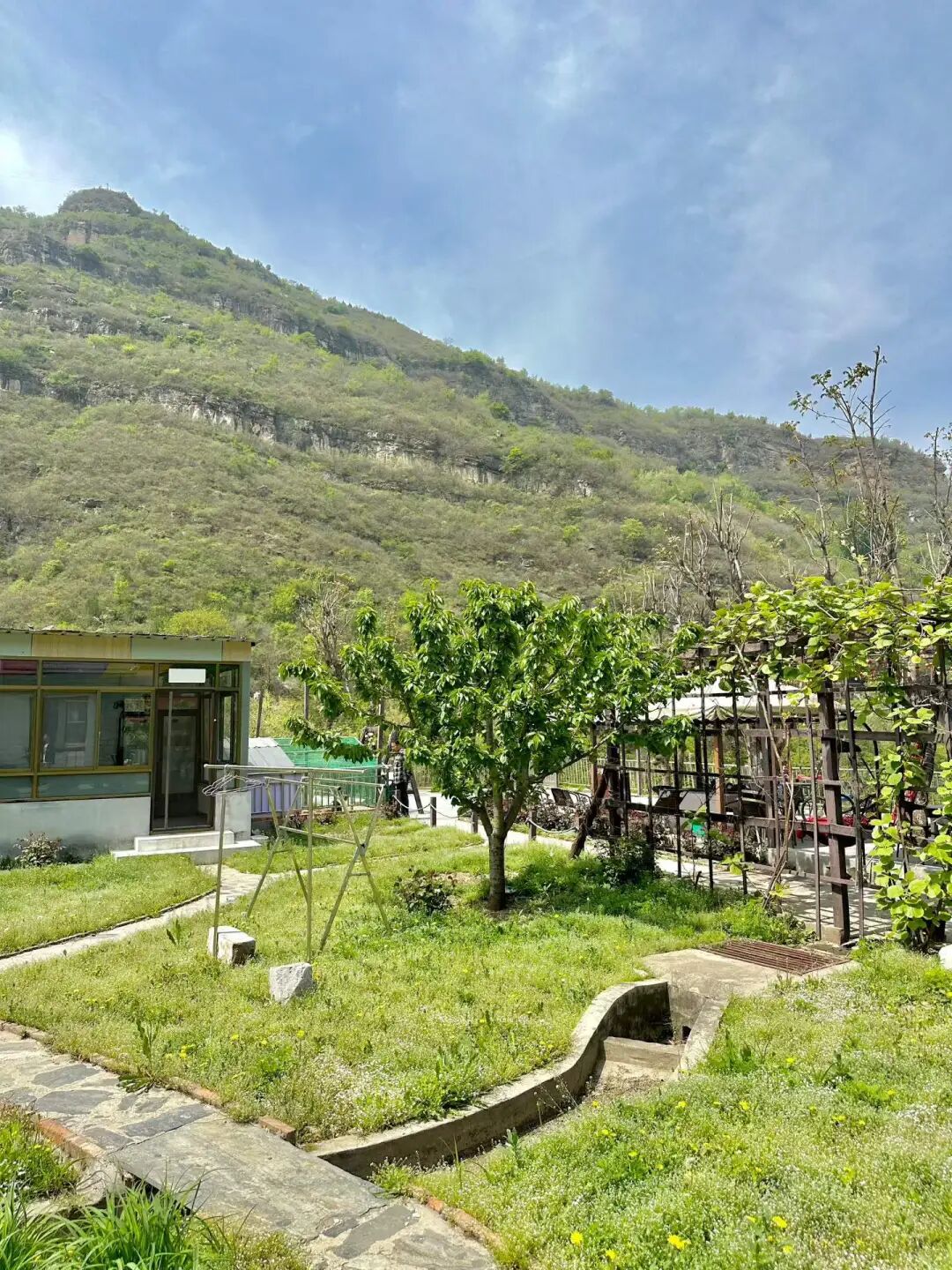
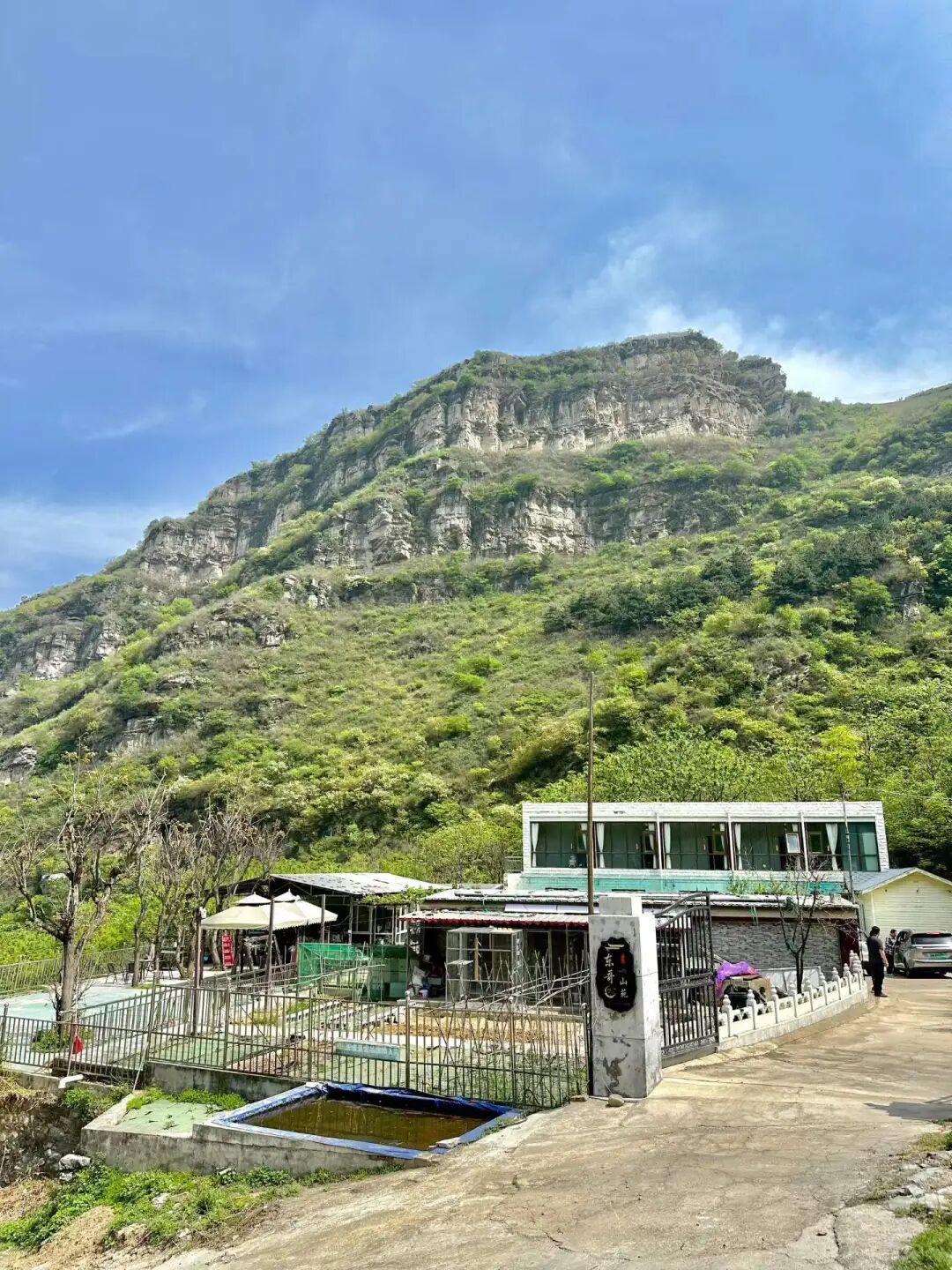
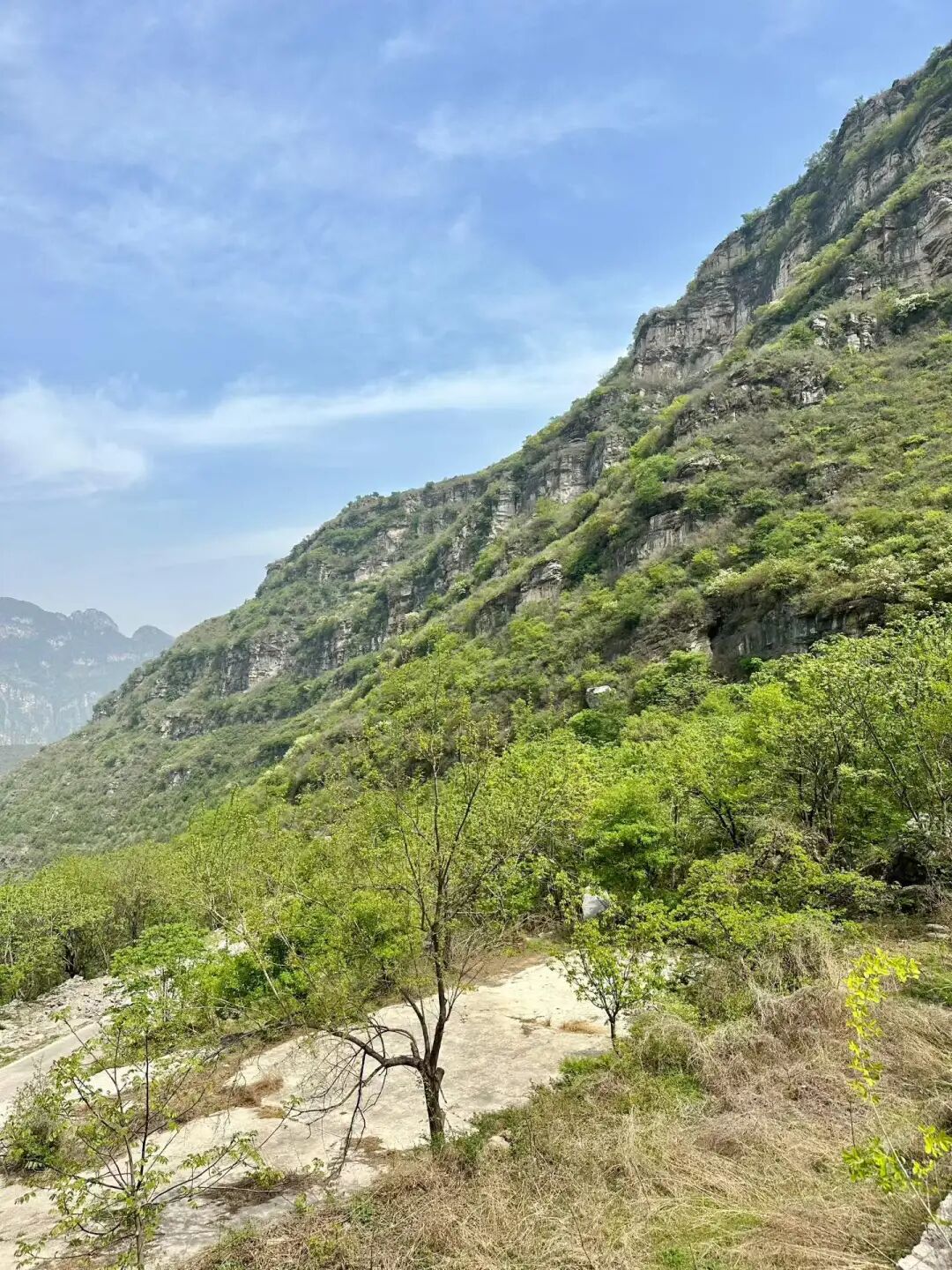
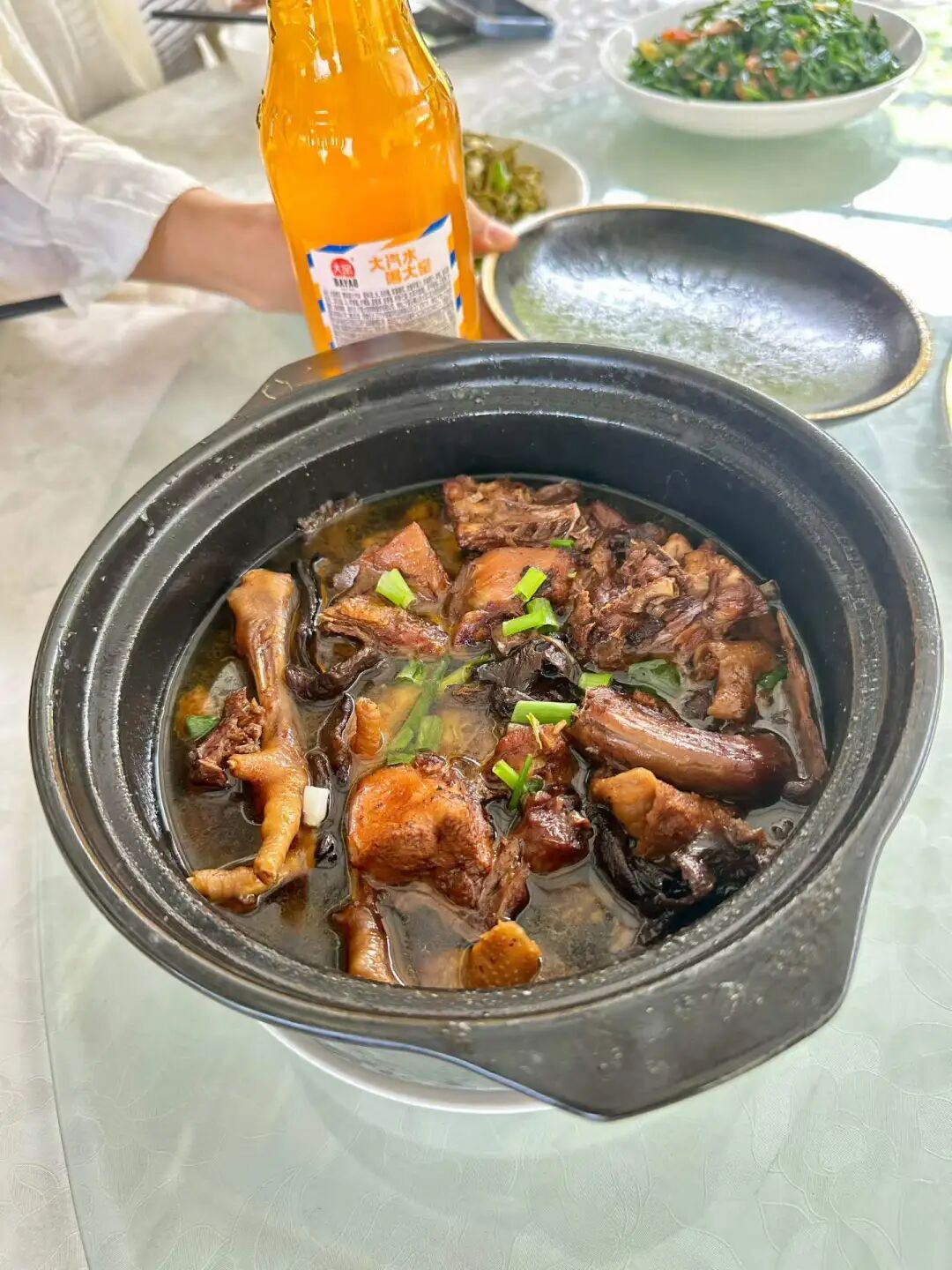
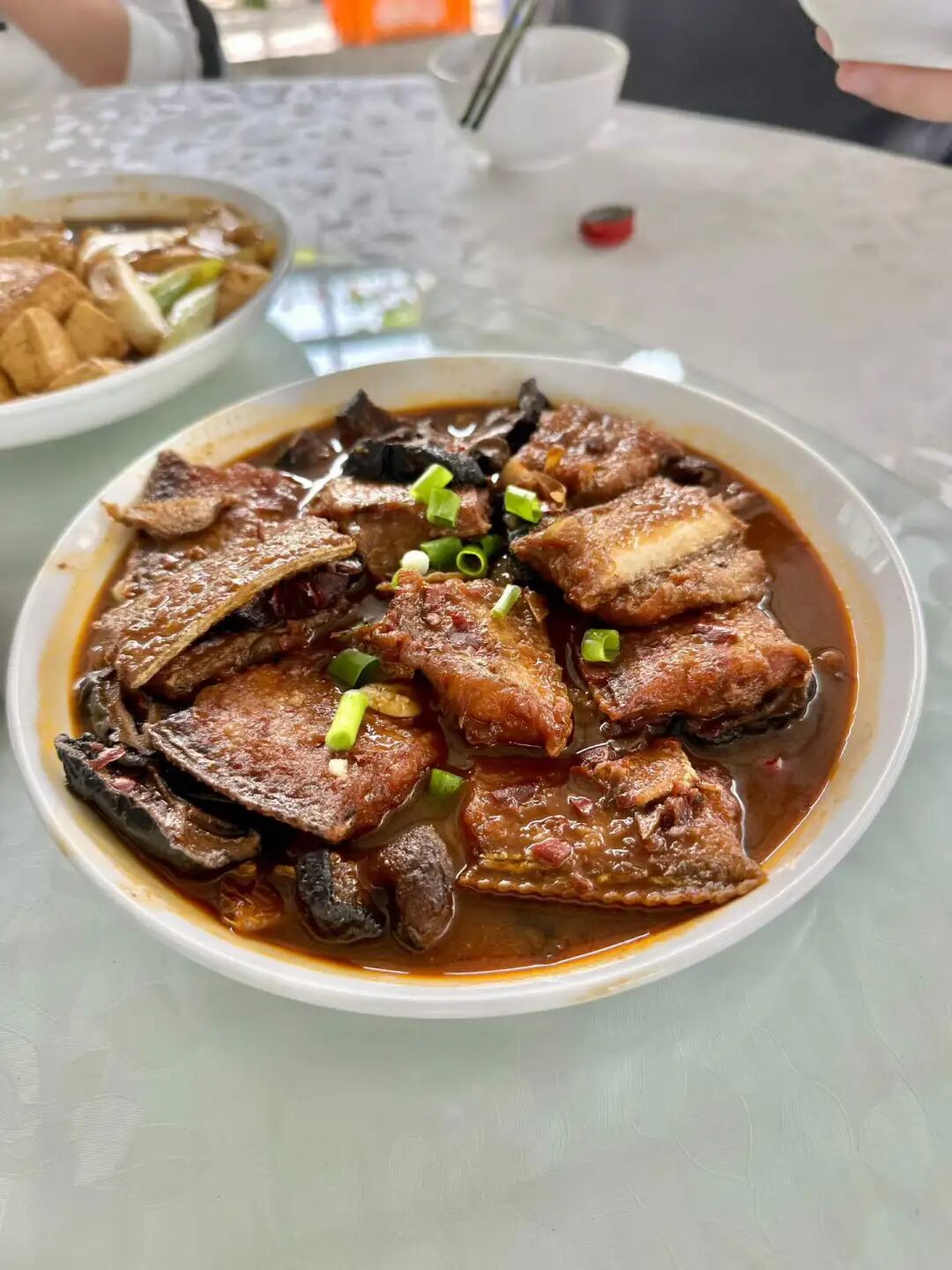
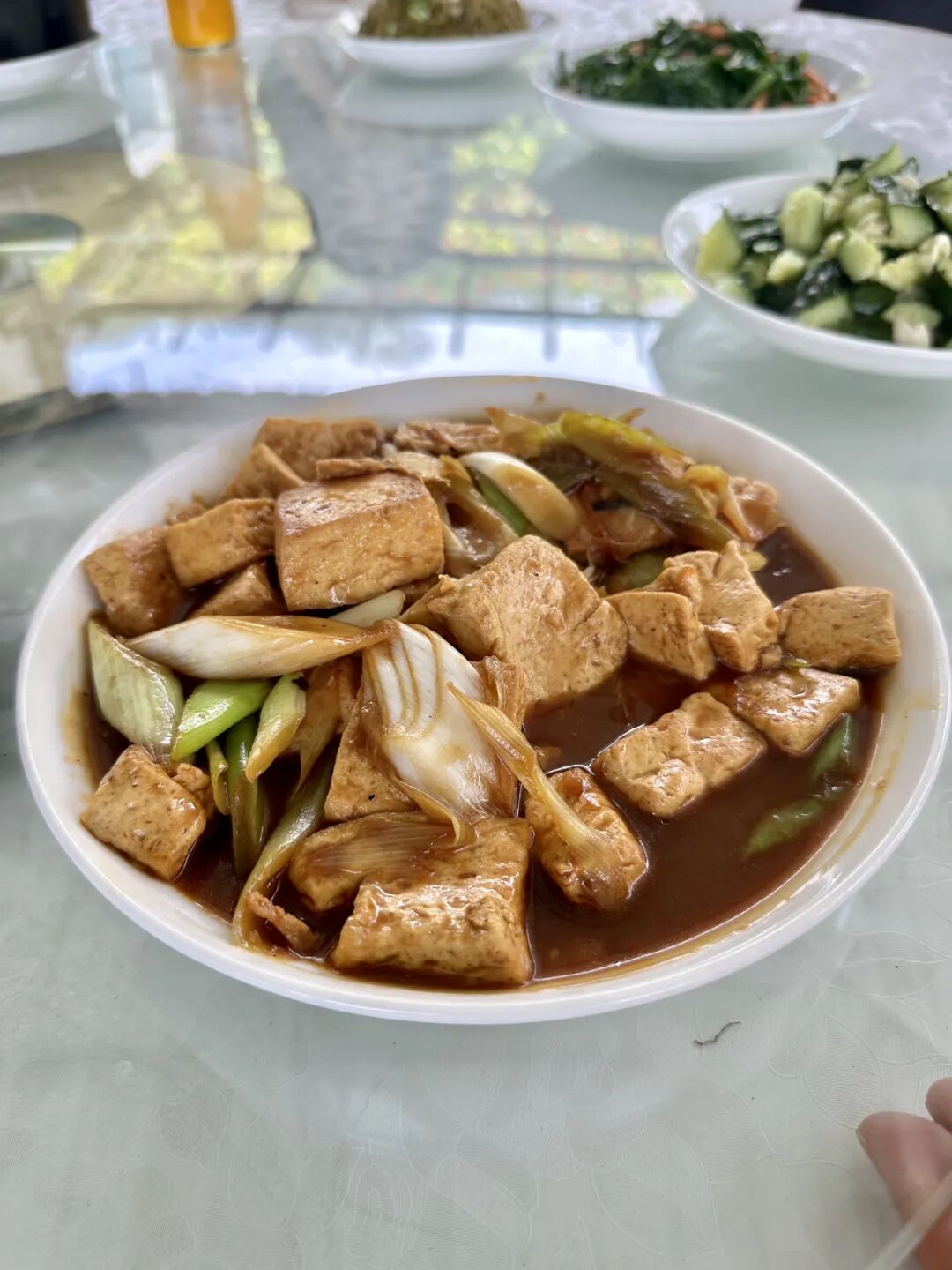
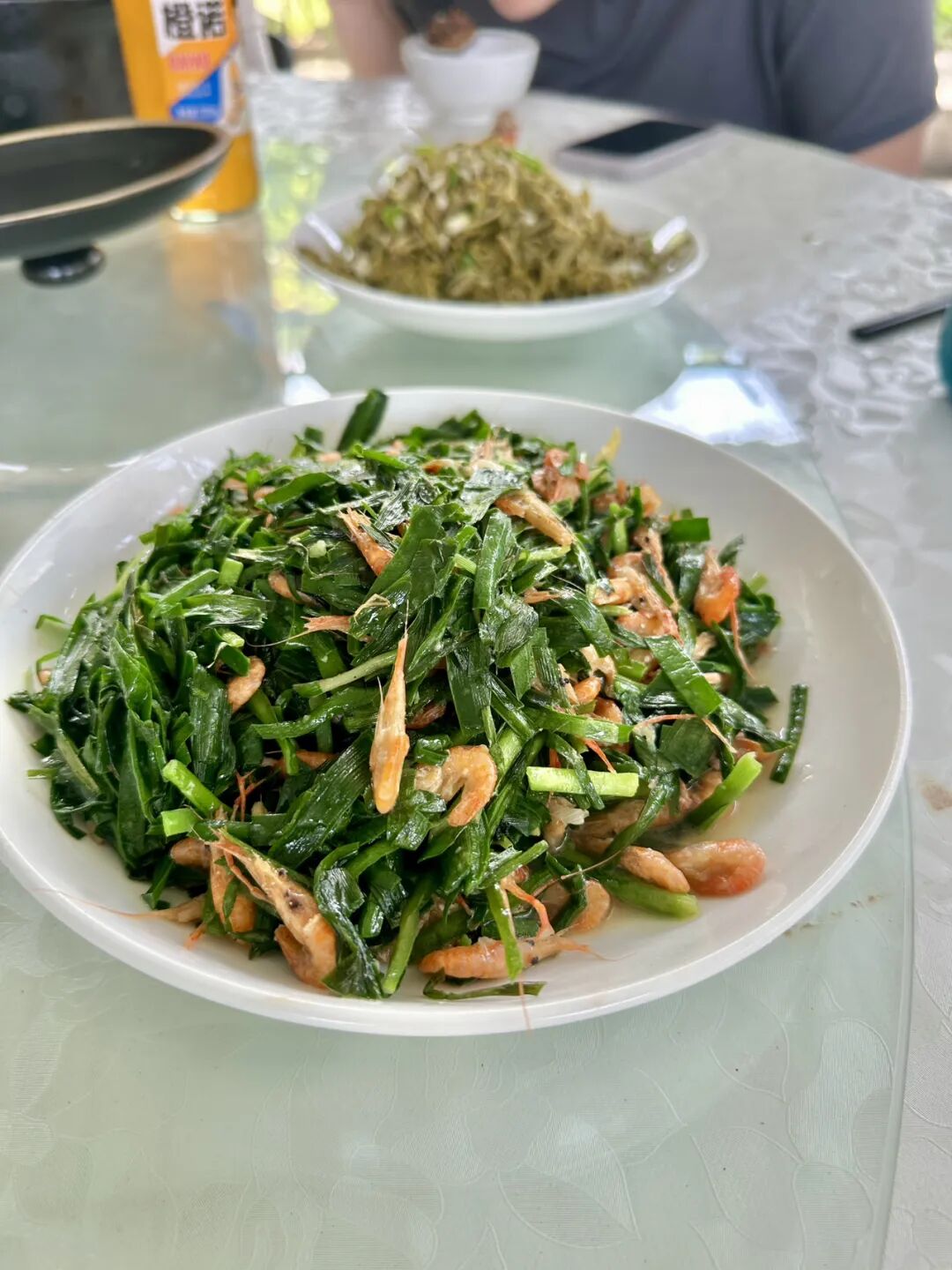
On May 5th, we went to Huairou for a post-holiday gathering at Xiangyu Homestay in Lianhuachi Village. It is run by Hui Muslims from the Tongzhou Great Mosque, and they specialize in rainbow trout and farmhouse dishes.
The homestay is in Lianhuachi Village, Huairou, right behind Mutianyu. You follow the valley from Yanqi Lake and pass Shentangyu to get there. I heard there was a huge traffic jam here on May 4th, but it was much less crowded when we went.
You must eat rainbow trout when you come to Huairou. Rainbow trout only survive in running water, so it is hard to find in the city. Their roasted fish is very well-made and has a great texture. For our meal, we had braised beef with potatoes, spicy stir-fried chicken, boiled beef, scrambled eggs with Chinese toon, celery with dried tofu, stewed tofu, stewed meatballs, mixed wild vegetables, and deep-fried prickly ash buds (huajiaoya), with green onion pancakes (conghuabing) as our staple food. The meatballs served at the start were a bit salty, but they adjusted immediately after we mentioned it, and the following dishes were all light. The Chinese toon and prickly ash buds were picked fresh from the trees; the main reason to eat in the mountains is for that fresh taste. The green onion pancakes were also pan-fried to order, which made them quite fragrant. The spicy chicken was a bit like fried chicken; it was tender inside but the flavor didn't soak in. The braised beef was cooked until very tender, and I thought it tasted good.
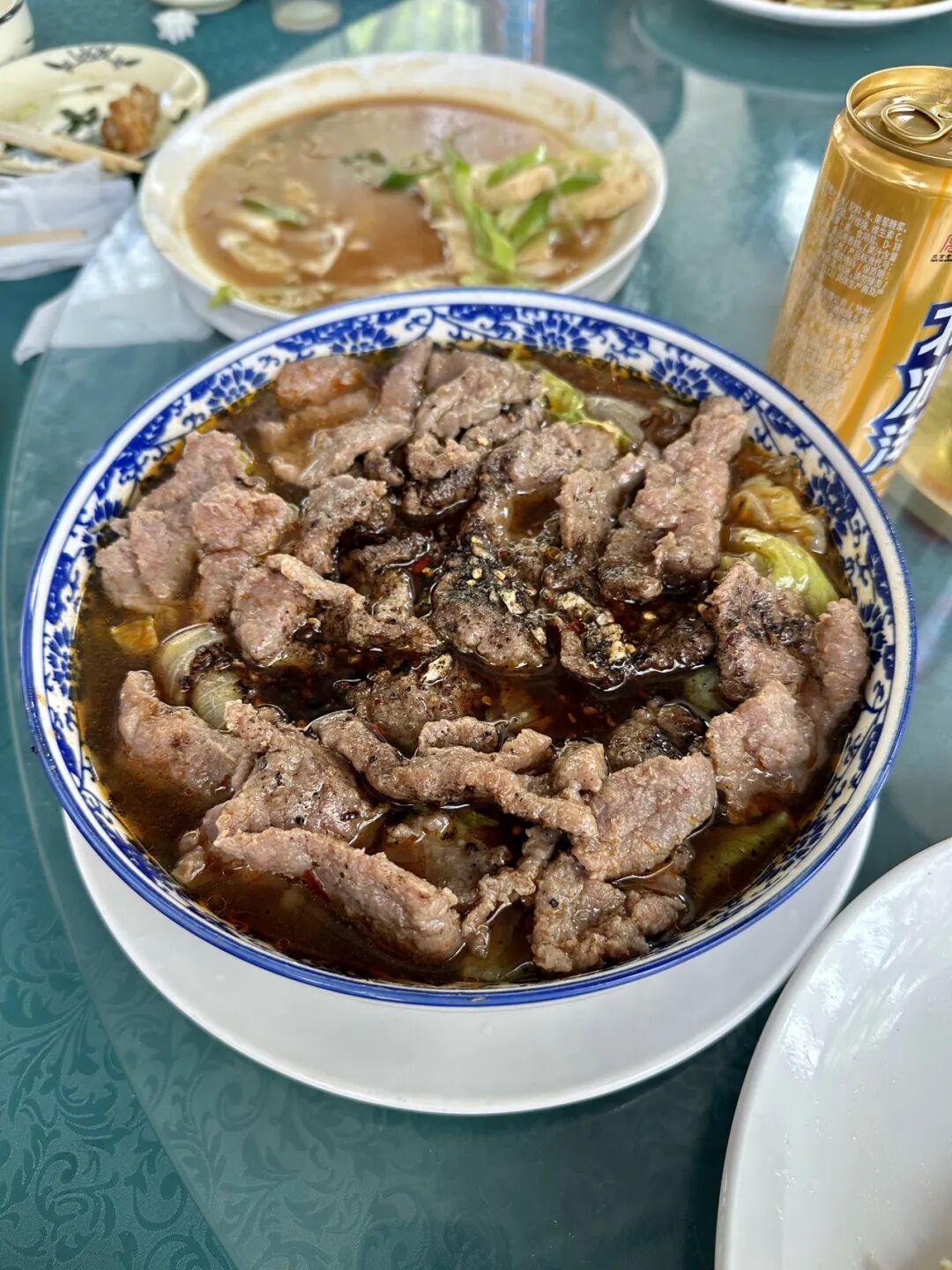
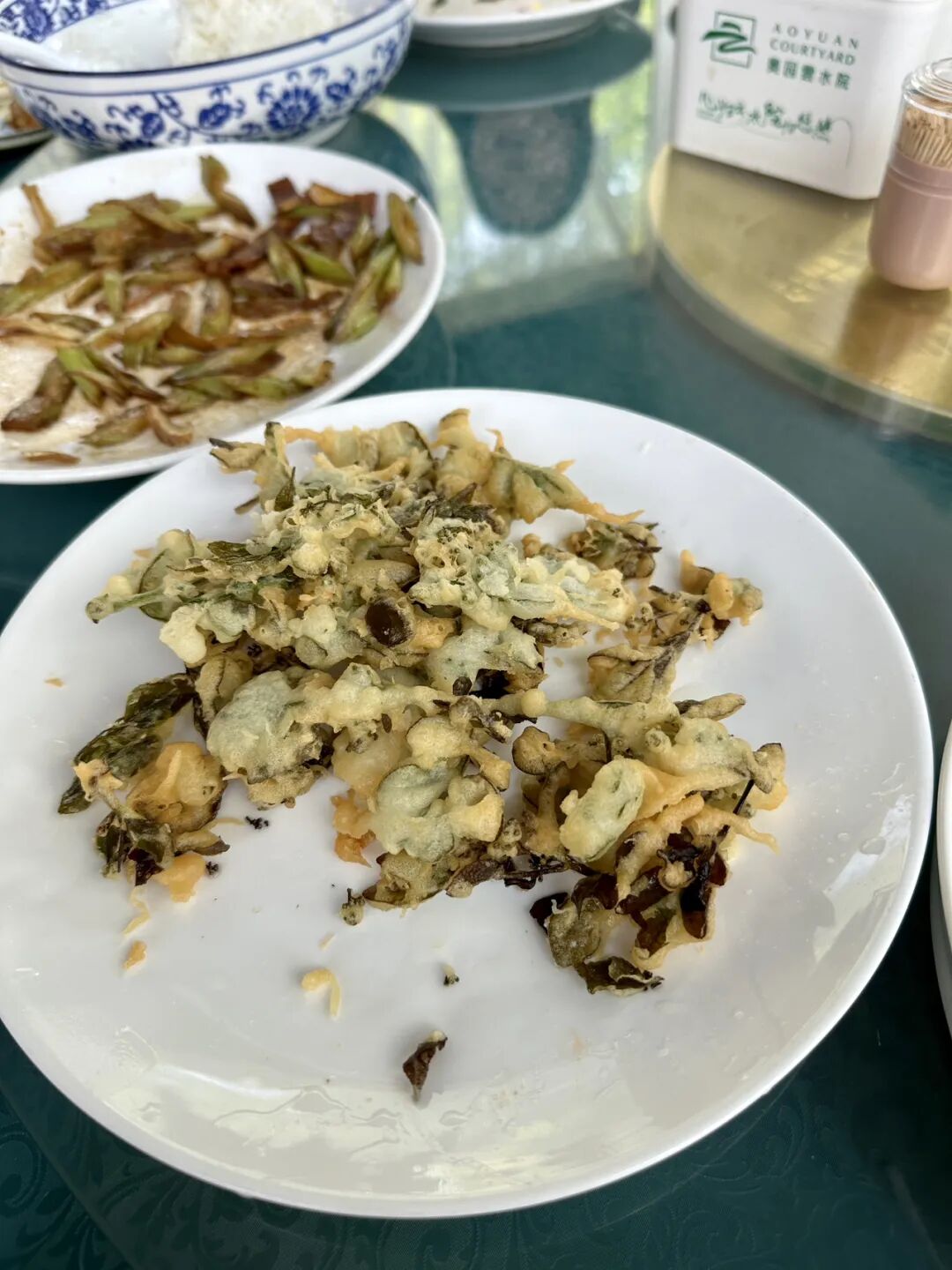
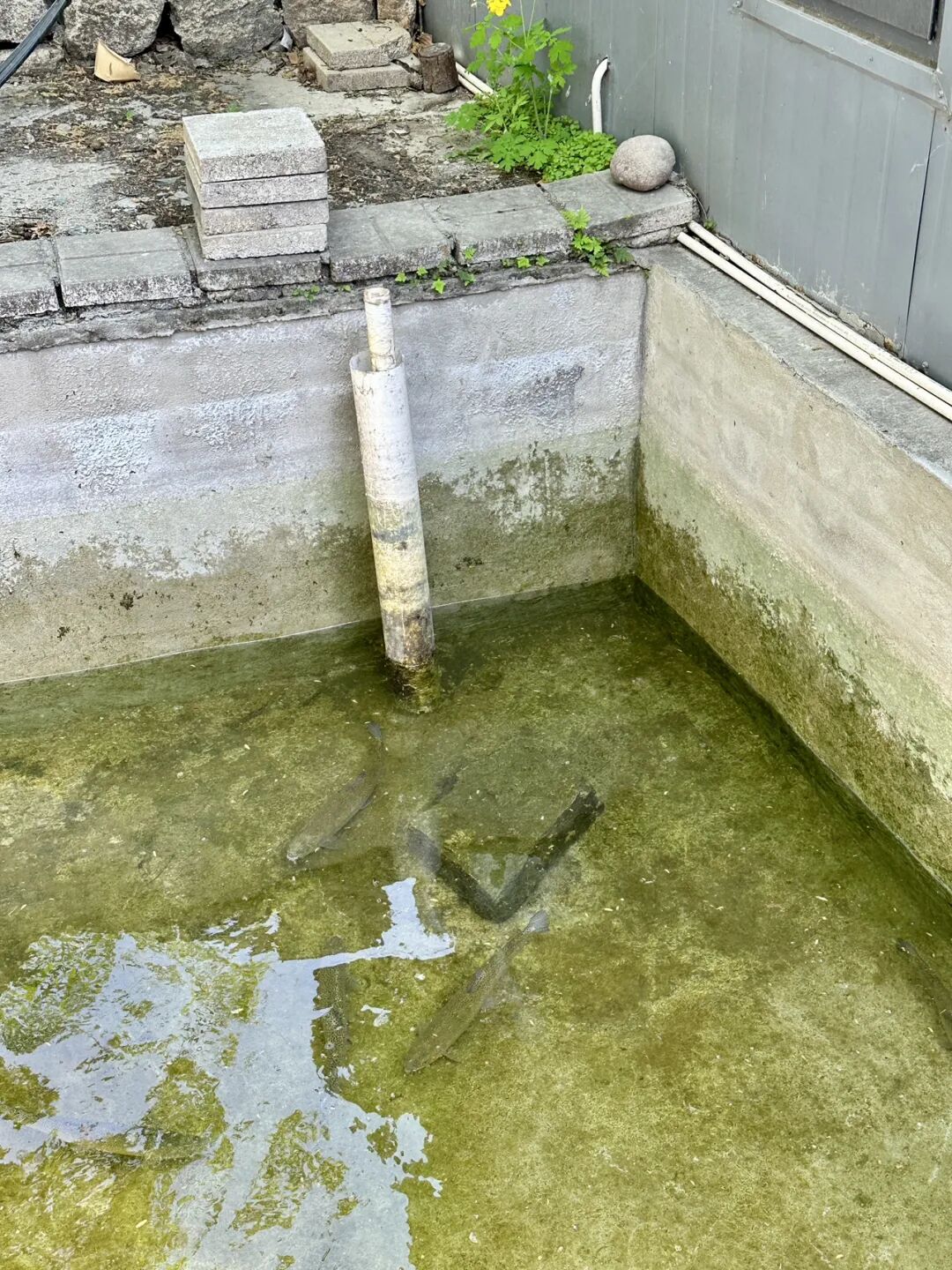
After eating, we went to play in the water at Shentangyu Village in Huairou. Parking in the village costs 20 yuan for anything over 30 minutes. There is a row of poplar trees by the water that provides shade, so it is not too sunny. We bought water clothes for the kids on the spot, but they still got quite wet sitting in the water, so I suggest bringing an extra set of clothes for the children. The water temperature in May is still a bit cool, but the sun is warm, making it perfect for outdoor activities.
Beijing Halal Food Map: 65 International Muslim-Friendly Restaurants by Cuisine
Articles • ali2007fr posted the article • 0 comments • 323 views • 2026-05-21 07:07
Summary: This Beijing halal food map lists 65 international Muslim-friendly restaurants by cuisine, from Arab and Turkish spots to Pakistani, Central Asian, African, and Southeast Asian restaurants.
In July 2025, I shared a list of 52 international halal restaurants in Beijing. I checked again today and found that in less than a year, the number has grown to 65, offering more variety than ever. Please leave a comment if you know of other restaurants.
17 Arab restaurants
Palestinian AL Safir Arab Restaurant (Xiaguangli branch). Location: No. 35 Xiaoyun Road, Chaoyang District.
Palestinian ROSE CITY (Middle Eastern Levantine cuisine). Location: 2nd Floor, Shop 6202, Building 6, Sanlitun SOHO, No. 8 Workers' Stadium North Road, Sanlitun Subdistrict, Chaoyang District, Beijing.
Lebanese ALAMEEN Arab Restaurant (Sanlitun branch). Location: No. 2 West 5th Street, Sanlitun, Chaoyang District.
Lebanese SUMAC Lebanese Restaurant. Location: Shop 8, 1st Floor, South Building, Liangma Harbor Building, Chaoyang District.
Lebanese ELI FALAFEL Lebanese & Mediterranean (Guan She branch). Location: F108A, 1st Floor, South Area, Guan She, Building 5, No. 19 Dongfang East Road, Maizidian Subdistrict, Chaoyang District, Beijing.
Lebanese Mac Mac Lebanese Restaurant (Zhengda Center branch). Location: 1st Floor, North Tower, Zhengda Center, Zhenzhi Road, Chaoyang District, Beijing.
Lebanese #024 SEA STRINGS immersive sound Western restaurant. Location: 2nd Floor, Building 24, North Sanlitun, Chaoyang District, Beijing.
Syrian BRBR Syrian Restaurant (SOLANA branch). Location: Shop SM2-22, 2nd Floor, SOLANA (Blue Harbor), Chaoyang District.
Syrian BRBR Syrian Restaurant (Main branch). Location: Ground floor commercial space, Building 12, Dongshengyuan, Dongsheng South Road, Zhongguancun Subdistrict, Haidian District, Beijing.
Syrian One Thousand and One Nights Arab Restaurant. Location: 4th Floor, T+MALL, No. 1 Sanlitun, Chaoyang District.
Syrian Habibi Shawarma Arab food. Location: About 101 meters southeast of the intersection of Jiugong East-West Street and Jiuzhong East Street, Daxing District.
Iraqi Taiba Shawarma Turkish BBQ (Sanlitun branch). Location: Ground floor, Block C, Sanlitun SOHO, Chaoyang District.
Iraqi Taiba Shawarma Burger shop. Location: About 89 meters due north of the intersection of South Sanlitun Middle Street and South Sanlitun Road, Chaoyang District, Beijing.
Iraqi Taiba Shawarma Middle Eastern restaurant (Wudaokou branch). Location: Ground floor, Building 1, Dongshengyuan Apartment, Wudaokou, Haidian District, Beijing.
Emirati Alkhaleej Mandi Restaurant. Location: Sanlitun SOHO 1121-1-2, Chaoyang District.
Egyptian Cleopatra lounge & restaurant (Sanlitun SOHO branch). Location: Shop 210, 2nd Floor, Mall 3, Sanlitun SOHO, Chaoyang District.
Tunisian Lamedina Mediterranean Restaurant. Location: RS-09 on 1st floor and RS-10 on 2nd floor, Building 8, No. 6 Chaoyang Park Road, Chaoyang District, Beijing.
9 Turkish restaurants
SULTAN Turkish BBQ. Location: Shop 109, 1st Floor, Jinshang, Building 20, Xinyuanli West, Xindong Road, Chaoyang District.
Turkish Feast (WF Central branch). Location: East Building, WF Central, Dongcheng District (owned by an Azerbaijani).
Turkish Feast (Xinyuanli branch). Location: Shop 115, 1st Floor, Jinshang SHANG Building, Xindong Road, Chaoyang District (owned by an Azerbaijani).
Xiting Xiuse Turkish Feast (China Central Place branch) is located at 101, 1st Floor, Building 15, 89 Jianguo Road, Chaoyang District. The owner is from Azerbaijan.
Dardanelles Turkish Restaurant (Shenlu Street branch) is located at 39 Shenlu Street, Chaoyang District. The owner is from Azerbaijan.
Dardanelles (Ritan International Trade Center branch) is located 136 meters northeast of the intersection of Chaowai Second Alley and Chaowai Market Street. The owner is from Azerbaijan.
CANAKKALE Express Dardanelles Turkish Restaurant (Guomao branch) is located at 8 Xiushui Street Building, Jianwai Subdistrict, Chaoyang District, Beijing. The owner is from Azerbaijan.
Desert Rose Turkish Restaurant (Shenlu Street branch) is located at Building 1, 39 Shenlu Street, Chaoyang District. The owner is from Azerbaijan.
LIQA is located on the 1st floor of the Rosewood Beijing Hotel, Jingguang Center, Hujialou, East Third Ring North Road, Chaoyang District.
Two Azerbaijani restaurants.
Ritan Ruilin Restaurant KAVKAZ (Ritan Shangjie branch) is located at 1-51-52 Ritan Shangjie, 39 Shenlu Street, Chaoyang District.
Azerbaijan National Brand Pavilion - Maiden Tower Restaurant (halal) is located on the 3rd basement level of Dongxin Commercial Plaza, 35 Xiaoyun Road, Chaoyang District.
Three Turkmenistan restaurants.
Merv (Ritan International Trade Center branch) is located at B023, Basement Level 1, Block B, Ritan International Apartment, 17 Ritan North Road, Chaoyang District.
Asian Food is located three meters next to the Hangzhou steamed dumplings (xiaolongbao) shop in the East District of Dongguan Second Alley residential area, Chengbei Subdistrict, Changping District, Beijing.
An-Nur is located at shop 3 on the right-hand side inside the north gate of Ningxinyuan residential area, Fuxue Road, Changping District.
One Kazakhstan restaurant.
SANDYQ Kazakh Ethnic Restaurant is located in the north section of the 1st floor, Building 1, 40 Liangmaqiao Road, Chaoyang District, Beijing.
Twenty Pakistani restaurants.
SAMOSA China-Pakistan Friendship Restaurant is located at shop 6, Building 6, Xibahe Zhongli community.
SAMOSA China-Pakistan Friendship Restaurant (Sanlitun branch) is located inside the Atour X Hotel, 12 Dongzhimen Outer Street, Dongcheng District.
MONAL Emerald China-Pakistan Friendship Restaurant is located on 798 Ceramics Second Street, Chaoyang District.
Little Lahore Restaurant (Niujie Lanman Hutong branch) is located at 64 Lanman Hutong, Xicheng District.
Little Lahore Restaurant (Qingnian Road branch) is located at commercial unit B202, 2nd floor, Building 6, 2 Qingnian Road West, Chaoyang District.
Little Lahore Courtyard Restaurant (Dongzhimen branch) is located at 47 Dongzhimen Outer Small Street, Dongcheng District.
KHANBABA Restaurant (Sanlitun branch) is located at room 2511, 5th floor, Building 2, Sanlitun SOHO, Chaoyang District.
Khan Baba Restaurant (Wudaokou branch) is located at A1-03, 1st floor, Area A, Jixin Building, Zhanchunyuan West Road, Haidian District.
Habibi Restaurant (Habibi Bajisitan Can) is located at Room 301, 3rd Floor, Building 1, Courtyard 8, Minzu University West Road, Haidian District.
Habibi Restaurant (Habibi Bajisitan Can) Liudaokou branch is located at 32 Qinghua East Road, Haidian District, Beijing, in the bungalow area.
Masala Pakistan restaurant (Yingbin Road branch) is located at Building 3, 27 Yingbin Middle Road, Longshan Subdistrict, Huairou District.
Huanxi Curry restaurant (Lin'ao branch) is located at Shop 023C, B1 Floor, Lin'ao CITYPARK Shopping Center, 4 Qinglin East Road, Chaoyang District.
Sultan Pakistan (Sudan Bajisitan) is located at 88 Huataizi, Sanduhe Village, Bohai Town, Huairou District.
ZAM ZAM Traditional Pakistani and Indian Cuisine is located at 41 Xueqing Road, Yujing Building 6, Haidian District.
AL RAYYAN Pakistani halal restaurant (Changyang branch) is located at Shop 108, Building 4, Courtyard 8, Fuze Road, Fangshan District.
AL RAYYAN Pakistani restaurant (Wangfujing branch) is located at Shop P004, 6th Floor, Joy City Shopping Center, Wangfujing, Dongcheng District, Beijing.
ROMA Restaurant is located about 70 meters due north of the intersection of Nanshuiguan Hutong and Nanzhuguan Hutong, Dongcheng District.
Italian Firenze restaurant (Feilengcui Tasikafei) is located at 1-1, Building 1, Courtyard 2, Guanyinan South Street, Xinhua Subdistrict, Tongzhou District. The kitchen staff are Pakistani, and they can prepare both Italian and Pakistani dishes.
Culture Pakistani and Indian restaurant is located at Shop 2219, 2nd Floor, Sanlitun SOHO Building 2, Chaoyang District, Beijing.
AHMED'S KITCHEN is located at Office Building E, Sanlitun SOHO, Sanlitun Subdistrict, Chaoyang District, Beijing.
4 Bangladeshi restaurants.
Santoor Indian restaurant (Beiluoguxiang branch) is located on the 2nd floor, 70 Beiluoguxiang, Dongcheng District.
Santoor Indian restaurant (Yizhuang branch) is located at Room 105, 1st Floor, Building 30, Courtyard 6, Wenhua Yuan West Road, Economic and Technological Development Zone, Daxing District, Beijing.
Punjabi Indian restaurant (Haoyunjie branch) is located on the 2nd floor, 3 Chaoyang Park Road, Chaoyang District.
Halal Shalimar Indian, Bangladeshi, and Brazilian restaurant (Yufeng Road branch) is located at Room 104, 1st Floor, Building 8, Courtyard 16, Yufeng Road, Shunyi District.
7 Indian restaurants.
Some Indian restaurants are owned by Hindus who use halal ingredients, so please use your own judgment.
Indian Kitchen (Yindu Xiaochu) is located at Building 10, 39 Shenlu Street, Chaoyang District.
DASTAAN Indian restaurant (Sanlitun SOHO branch) is located at F3-5-326, Sanlitun SOHO Mall, Chaoyang District.
YUMMY INDIAN RESTAURANT (Xingfu Shangsha branch) is located on the 2nd floor of Xingfu Commercial Building, 1 Dingfuzhuang West Street, Chaoyang District.
Mirch Masala Indian Restaurant is located at Shop 113, 1st Floor, Building 1, Zone A, Jinjie, West Gate of Wanda Plaza, Xinhua West Street, Tongzhou District.
Rabiul's Kitchen Indian restaurant (798 branch) is located at Building 31, Dashanzi Beili, Chaoyang District.
India Restaurant Love at Curry Indian Restaurant is located at B1, Hongqiao Market, Dongcheng District.
RAJ Indian Music Restaurant (Houhai Gulou Branch) is located at No. 31 Gulou West Street, Xicheng District, Beijing (a 440-meter walk from Exit A2, Northwest, of Shichahai Subway Station).
One Sri Lankan restaurant.
They use halal ingredients, but please use your own judgment.
Cinnara Sri Lankan Restaurant is located at Room 3015, 3rd Floor, Building A, Chaowai SOHO, Chaoyang District, Beijing.
One Ghanaian restaurant.
They use halal ingredients, but please use your own judgment.
TRIBE GARDEN African Restaurant and Bar is located at B1, Sanlitun SOHO Mall, Chaoyang District.
Everyone is welcome to try the foreign halal restaurants in Beijing. view all
Summary: This Beijing halal food map lists 65 international Muslim-friendly restaurants by cuisine, from Arab and Turkish spots to Pakistani, Central Asian, African, and Southeast Asian restaurants.
In July 2025, I shared a list of 52 international halal restaurants in Beijing. I checked again today and found that in less than a year, the number has grown to 65, offering more variety than ever. Please leave a comment if you know of other restaurants.
17 Arab restaurants
Palestinian AL Safir Arab Restaurant (Xiaguangli branch). Location: No. 35 Xiaoyun Road, Chaoyang District.
Palestinian ROSE CITY (Middle Eastern Levantine cuisine). Location: 2nd Floor, Shop 6202, Building 6, Sanlitun SOHO, No. 8 Workers' Stadium North Road, Sanlitun Subdistrict, Chaoyang District, Beijing.
Lebanese ALAMEEN Arab Restaurant (Sanlitun branch). Location: No. 2 West 5th Street, Sanlitun, Chaoyang District.
Lebanese SUMAC Lebanese Restaurant. Location: Shop 8, 1st Floor, South Building, Liangma Harbor Building, Chaoyang District.
Lebanese ELI FALAFEL Lebanese & Mediterranean (Guan She branch). Location: F108A, 1st Floor, South Area, Guan She, Building 5, No. 19 Dongfang East Road, Maizidian Subdistrict, Chaoyang District, Beijing.
Lebanese Mac Mac Lebanese Restaurant (Zhengda Center branch). Location: 1st Floor, North Tower, Zhengda Center, Zhenzhi Road, Chaoyang District, Beijing.
Lebanese #024 SEA STRINGS immersive sound Western restaurant. Location: 2nd Floor, Building 24, North Sanlitun, Chaoyang District, Beijing.
Syrian BRBR Syrian Restaurant (SOLANA branch). Location: Shop SM2-22, 2nd Floor, SOLANA (Blue Harbor), Chaoyang District.
Syrian BRBR Syrian Restaurant (Main branch). Location: Ground floor commercial space, Building 12, Dongshengyuan, Dongsheng South Road, Zhongguancun Subdistrict, Haidian District, Beijing.
Syrian One Thousand and One Nights Arab Restaurant. Location: 4th Floor, T+MALL, No. 1 Sanlitun, Chaoyang District.
Syrian Habibi Shawarma Arab food. Location: About 101 meters southeast of the intersection of Jiugong East-West Street and Jiuzhong East Street, Daxing District.
Iraqi Taiba Shawarma Turkish BBQ (Sanlitun branch). Location: Ground floor, Block C, Sanlitun SOHO, Chaoyang District.
Iraqi Taiba Shawarma Burger shop. Location: About 89 meters due north of the intersection of South Sanlitun Middle Street and South Sanlitun Road, Chaoyang District, Beijing.
Iraqi Taiba Shawarma Middle Eastern restaurant (Wudaokou branch). Location: Ground floor, Building 1, Dongshengyuan Apartment, Wudaokou, Haidian District, Beijing.
Emirati Alkhaleej Mandi Restaurant. Location: Sanlitun SOHO 1121-1-2, Chaoyang District.
Egyptian Cleopatra lounge & restaurant (Sanlitun SOHO branch). Location: Shop 210, 2nd Floor, Mall 3, Sanlitun SOHO, Chaoyang District.
Tunisian Lamedina Mediterranean Restaurant. Location: RS-09 on 1st floor and RS-10 on 2nd floor, Building 8, No. 6 Chaoyang Park Road, Chaoyang District, Beijing.
9 Turkish restaurants
SULTAN Turkish BBQ. Location: Shop 109, 1st Floor, Jinshang, Building 20, Xinyuanli West, Xindong Road, Chaoyang District.
Turkish Feast (WF Central branch). Location: East Building, WF Central, Dongcheng District (owned by an Azerbaijani).
Turkish Feast (Xinyuanli branch). Location: Shop 115, 1st Floor, Jinshang SHANG Building, Xindong Road, Chaoyang District (owned by an Azerbaijani).
Xiting Xiuse Turkish Feast (China Central Place branch) is located at 101, 1st Floor, Building 15, 89 Jianguo Road, Chaoyang District. The owner is from Azerbaijan.
Dardanelles Turkish Restaurant (Shenlu Street branch) is located at 39 Shenlu Street, Chaoyang District. The owner is from Azerbaijan.
Dardanelles (Ritan International Trade Center branch) is located 136 meters northeast of the intersection of Chaowai Second Alley and Chaowai Market Street. The owner is from Azerbaijan.
CANAKKALE Express Dardanelles Turkish Restaurant (Guomao branch) is located at 8 Xiushui Street Building, Jianwai Subdistrict, Chaoyang District, Beijing. The owner is from Azerbaijan.
Desert Rose Turkish Restaurant (Shenlu Street branch) is located at Building 1, 39 Shenlu Street, Chaoyang District. The owner is from Azerbaijan.
LIQA is located on the 1st floor of the Rosewood Beijing Hotel, Jingguang Center, Hujialou, East Third Ring North Road, Chaoyang District.
Two Azerbaijani restaurants.
Ritan Ruilin Restaurant KAVKAZ (Ritan Shangjie branch) is located at 1-51-52 Ritan Shangjie, 39 Shenlu Street, Chaoyang District.
Azerbaijan National Brand Pavilion - Maiden Tower Restaurant (halal) is located on the 3rd basement level of Dongxin Commercial Plaza, 35 Xiaoyun Road, Chaoyang District.
Three Turkmenistan restaurants.
Merv (Ritan International Trade Center branch) is located at B023, Basement Level 1, Block B, Ritan International Apartment, 17 Ritan North Road, Chaoyang District.
Asian Food is located three meters next to the Hangzhou steamed dumplings (xiaolongbao) shop in the East District of Dongguan Second Alley residential area, Chengbei Subdistrict, Changping District, Beijing.
An-Nur is located at shop 3 on the right-hand side inside the north gate of Ningxinyuan residential area, Fuxue Road, Changping District.
One Kazakhstan restaurant.
SANDYQ Kazakh Ethnic Restaurant is located in the north section of the 1st floor, Building 1, 40 Liangmaqiao Road, Chaoyang District, Beijing.
Twenty Pakistani restaurants.
SAMOSA China-Pakistan Friendship Restaurant is located at shop 6, Building 6, Xibahe Zhongli community.
SAMOSA China-Pakistan Friendship Restaurant (Sanlitun branch) is located inside the Atour X Hotel, 12 Dongzhimen Outer Street, Dongcheng District.
MONAL Emerald China-Pakistan Friendship Restaurant is located on 798 Ceramics Second Street, Chaoyang District.
Little Lahore Restaurant (Niujie Lanman Hutong branch) is located at 64 Lanman Hutong, Xicheng District.
Little Lahore Restaurant (Qingnian Road branch) is located at commercial unit B202, 2nd floor, Building 6, 2 Qingnian Road West, Chaoyang District.
Little Lahore Courtyard Restaurant (Dongzhimen branch) is located at 47 Dongzhimen Outer Small Street, Dongcheng District.
KHANBABA Restaurant (Sanlitun branch) is located at room 2511, 5th floor, Building 2, Sanlitun SOHO, Chaoyang District.
Khan Baba Restaurant (Wudaokou branch) is located at A1-03, 1st floor, Area A, Jixin Building, Zhanchunyuan West Road, Haidian District.
Habibi Restaurant (Habibi Bajisitan Can) is located at Room 301, 3rd Floor, Building 1, Courtyard 8, Minzu University West Road, Haidian District.
Habibi Restaurant (Habibi Bajisitan Can) Liudaokou branch is located at 32 Qinghua East Road, Haidian District, Beijing, in the bungalow area.
Masala Pakistan restaurant (Yingbin Road branch) is located at Building 3, 27 Yingbin Middle Road, Longshan Subdistrict, Huairou District.
Huanxi Curry restaurant (Lin'ao branch) is located at Shop 023C, B1 Floor, Lin'ao CITYPARK Shopping Center, 4 Qinglin East Road, Chaoyang District.
Sultan Pakistan (Sudan Bajisitan) is located at 88 Huataizi, Sanduhe Village, Bohai Town, Huairou District.
ZAM ZAM Traditional Pakistani and Indian Cuisine is located at 41 Xueqing Road, Yujing Building 6, Haidian District.
AL RAYYAN Pakistani halal restaurant (Changyang branch) is located at Shop 108, Building 4, Courtyard 8, Fuze Road, Fangshan District.
AL RAYYAN Pakistani restaurant (Wangfujing branch) is located at Shop P004, 6th Floor, Joy City Shopping Center, Wangfujing, Dongcheng District, Beijing.
ROMA Restaurant is located about 70 meters due north of the intersection of Nanshuiguan Hutong and Nanzhuguan Hutong, Dongcheng District.
Italian Firenze restaurant (Feilengcui Tasikafei) is located at 1-1, Building 1, Courtyard 2, Guanyinan South Street, Xinhua Subdistrict, Tongzhou District. The kitchen staff are Pakistani, and they can prepare both Italian and Pakistani dishes.
Culture Pakistani and Indian restaurant is located at Shop 2219, 2nd Floor, Sanlitun SOHO Building 2, Chaoyang District, Beijing.
AHMED'S KITCHEN is located at Office Building E, Sanlitun SOHO, Sanlitun Subdistrict, Chaoyang District, Beijing.
4 Bangladeshi restaurants.
Santoor Indian restaurant (Beiluoguxiang branch) is located on the 2nd floor, 70 Beiluoguxiang, Dongcheng District.
Santoor Indian restaurant (Yizhuang branch) is located at Room 105, 1st Floor, Building 30, Courtyard 6, Wenhua Yuan West Road, Economic and Technological Development Zone, Daxing District, Beijing.
Punjabi Indian restaurant (Haoyunjie branch) is located on the 2nd floor, 3 Chaoyang Park Road, Chaoyang District.
Halal Shalimar Indian, Bangladeshi, and Brazilian restaurant (Yufeng Road branch) is located at Room 104, 1st Floor, Building 8, Courtyard 16, Yufeng Road, Shunyi District.
7 Indian restaurants.
Some Indian restaurants are owned by Hindus who use halal ingredients, so please use your own judgment.
Indian Kitchen (Yindu Xiaochu) is located at Building 10, 39 Shenlu Street, Chaoyang District.
DASTAAN Indian restaurant (Sanlitun SOHO branch) is located at F3-5-326, Sanlitun SOHO Mall, Chaoyang District.
YUMMY INDIAN RESTAURANT (Xingfu Shangsha branch) is located on the 2nd floor of Xingfu Commercial Building, 1 Dingfuzhuang West Street, Chaoyang District.
Mirch Masala Indian Restaurant is located at Shop 113, 1st Floor, Building 1, Zone A, Jinjie, West Gate of Wanda Plaza, Xinhua West Street, Tongzhou District.
Rabiul's Kitchen Indian restaurant (798 branch) is located at Building 31, Dashanzi Beili, Chaoyang District.
India Restaurant Love at Curry Indian Restaurant is located at B1, Hongqiao Market, Dongcheng District.
RAJ Indian Music Restaurant (Houhai Gulou Branch) is located at No. 31 Gulou West Street, Xicheng District, Beijing (a 440-meter walk from Exit A2, Northwest, of Shichahai Subway Station).
One Sri Lankan restaurant.
They use halal ingredients, but please use your own judgment.
Cinnara Sri Lankan Restaurant is located at Room 3015, 3rd Floor, Building A, Chaowai SOHO, Chaoyang District, Beijing.
One Ghanaian restaurant.
They use halal ingredients, but please use your own judgment.
TRIBE GARDEN African Restaurant and Bar is located at B1, Sanlitun SOHO Mall, Chaoyang District.
Everyone is welcome to try the foreign halal restaurants in Beijing.
Best Turkmen Halal Food in Beijing: Merv, Asian Food and An-Nur Restaurants
Articles • ali2007fr posted the article • 0 comments • 149 views • 2026-05-21 07:07
Summary: This Beijing halal food guide visits three Turkmen restaurants: Merv, Asian Food, and An-Nur. It keeps the dishes, prices, locations, and Central Asian food details from the original travel notes.
Over the past two years, three Turkmenistan restaurants have opened in Beijing: Merv, Asian Food, and An-Nur. While they all focus on Turkmen cuisine with some Russian and Turkish dishes, each has a different target audience. Merv started in Sanlitun and later moved to the Ritan International Trade Center. It mainly serves merchants from the former Soviet Union who come to Ritan for wholesale goods, and its prices are similar to the nearby Azerbaijani restaurant. The other two are near the China University of Petroleum in Changping. They cater mostly to Central Asian students at the university, offering affordable fast food.
Merv
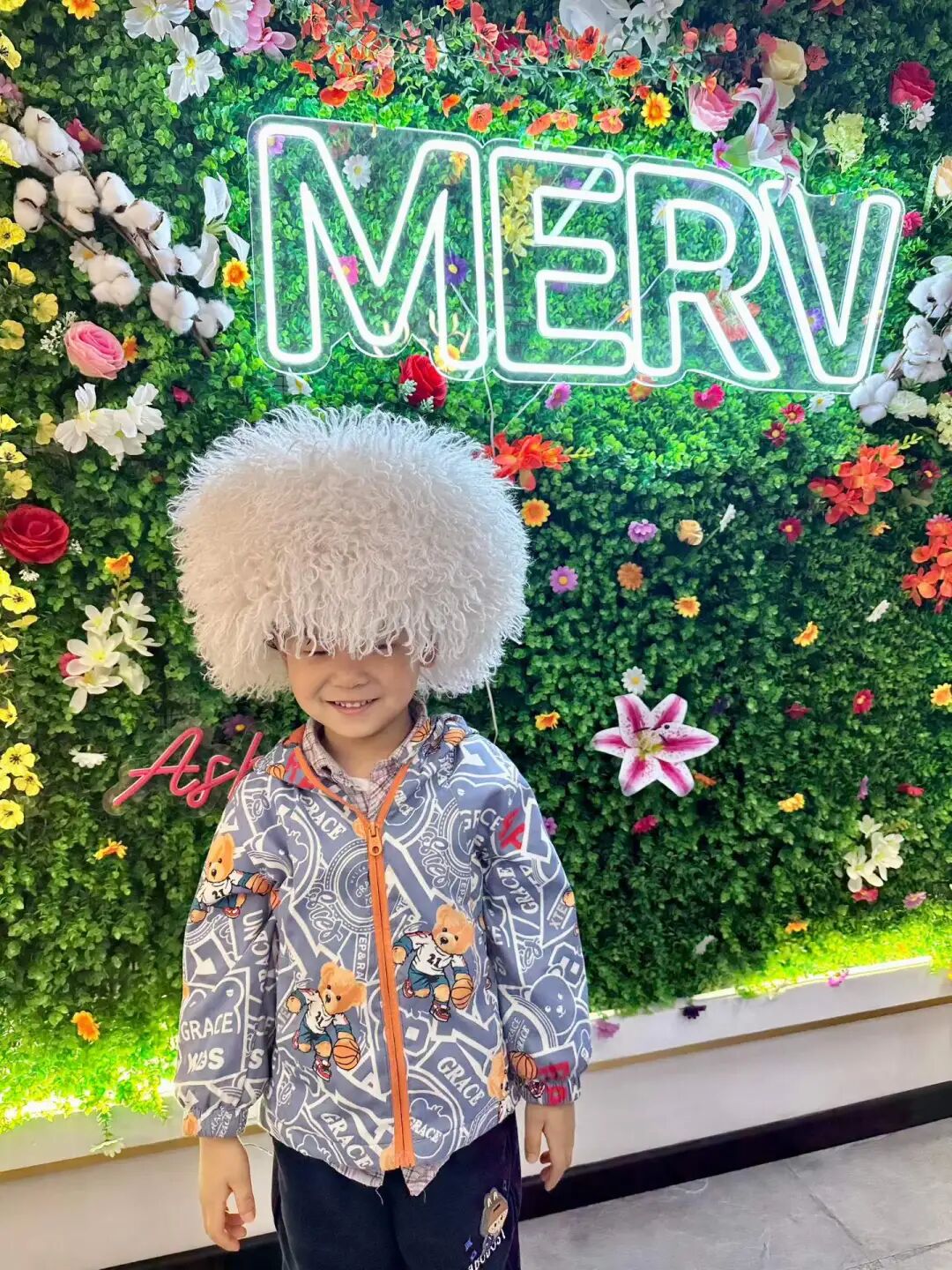
Let's start with Merv. We visited when they opened in Sanlitun SOHO last year. Back then, the place was quite small and the menu was simple. When we went back this year, they had moved to the basement of the Ritan International Trade Center. The shop is bigger, the environment is better, and you can even wear traditional Turkmen hats for photos. However, the new location is hidden and gets less foot traffic. It is mostly for merchants from former Soviet countries, so enjoy it while you can.
Merv is the most famous ancient oasis city in Turkmenistan. For thousands of years, it was a key transport hub connecting Baghdad and Samarkand, and it is a UNESCO World Heritage site. In 651, it became the capital of the Khorasan province of the Umayyad Caliphate. Later, it extended into the Abbasid Caliphate and was a famous center for Islamic scholarship in Central Asia. After 1037, Merv became a central city of the Seljuk Empire and served as its capital after the 12th century. By 1150, its population reached 2 million. Arab and Persian geographers called Merv the Mother of the World, the place where great and small meet, and the capital of the eastern Islamic world. It declined after the Mongol army sacked the city in 1221.
The restaurant focuses on local Turkmen food, but also serves Russian and Turkish dishes. We prioritize the Turkmen dishes. Russian food is hard to find outside of Ruilin near Ritan, so it is also worth a try. We ordered Turkmen soup, borscht (hongcaitang), capital salad (shoudu shala), buckwheat mash with gravy, Turkmen meat pie (fitchi), and Turkmen lamb soaked bread (dograma). Everything tasted great! Turkmen food is relatively light and focuses on natural flavors, making it suitable for both the elderly and children.
First, let's share the Turkmen dishes:
The Turkmen soup is actually a mung bean and meat porridge. It tastes excellent, made with beef broth, tomatoes, rice, and mung beans. It is very warming in winter.
The lamb soaked bread (dograma) is a classic feast dish for Eid al-Adha. It uses lamb broth with meat cooked until it falls off the bone, soaked with torn pieces of bread, and topped with onions and minced meat. It is very filling.
The meat pie (fitchi) is made with unleavened dough. The crust is thin, and it is filled with lamb and onions, seasoned with salt and black pepper. It is very similar to Xinjiang meat pies and tastes delicious.
For drinks, we ordered green tea and yogurt drink (ayran). Unlike Xinjiang restaurants, you have to pay for tea at this Turkmen restaurant.
Continuing with their Russian/Soviet dishes:
I really like their borscht (hongcaitang), which is a beef soup with beets and sour cream. The sweet, sour, and salty flavors are perfectly balanced, and it is not greasy.
The capital salad (shoudu shala) refers to Moscow. It is a standard Soviet salad made with diced boiled potatoes, carrots, cucumbers, peas, onions, eggs, and chicken, mixed with mayonnaise, salt, pepper, and yellow mustard. I think the capital salad (stolichny salat) at Merv is delicious and I highly recommend it. Early versions of Russian salad actually included seafood and caviar. During the Soviet era, due to food shortages, people started replacing crayfish with boiled eggs and carrots, sausage with chicken, and olives and capers with cucumbers and peas, which eventually created the capital salad we have today.
Buckwheat with minced meat is also a Soviet dish. Buckwheat porridge (kasha) has been a staple food in Russia for a thousand years and has been popular in East Slavic regions since the Middle Ages. Serving it with minced meat was a very classic home-cooked and cafeteria-style meal during the Soviet era. This was my first time eating buckwheat with minced meat, and it felt very healthy. The minced meat was salty and savory, perfect with rice, and the mashed potatoes served with it were very light. I originally thought the buckwheat would be quite dry, but they steamed it until it was very soft, with a texture like very chewy rice.
Later, I ordered the chicken buckwheat. The chicken was a pressed patty, not dry at all, very tender, and lighter than the minced meat version—a typical healthy meal by modern standards.
I have shared some special brunches in Beijing before, such as the Turkish breakfasts at Dardanelles and Sultan, or the pot tea and steamed dumplings (shaomai) at Lianying, and I recently discovered that Merv also has Turkmen breakfast! I made a special trip to eat it on a weekend morning.
Actually, this isn't strictly a breakfast menu because they are open 24 hours a day, so you can eat it anytime. I feel the main morning crowd consists of traders from the former Soviet Union who are adjusting to the time difference. However, sometimes if they sell well the night before, some dishes might be out of stock the next morning. Although you can choose heavy dishes in the morning, the first page of their menu has some items that are more suitable for breakfast. For example, cheese rolls, tomato and eggs, bread, and cheese. For soup, we had beef soup and ordered a pot of tea, though you can also drink coffee.
I recently discovered that my son really likes Merv; he eats the cheese rolls and tomato and eggs in big bites. Their tomato and eggs are very similar to the tomato omelet (omlet-e gojeh farangi) I ate in Iran before, where you stew the tomato sauce first, then beat the eggs into it, and finally dip bread into it. Their beef soup is stewed until very tender, but the soup is a little bit salty. Having borscht or lentil soup in the morning is also quite appropriate.
Asian Food
Besides Merv in Ritan, there are two other Turkmen restaurants in Changping, Beijing, called Asian Food and An-Noor, both near the China University of Political Science and Law and the China University of Petroleum. We went to Changping to hang out on Eid al-Fitr and happened to eat at Asian Food. Their shop is very small, and the people eating there are basically university students from the neighborhood. Both this place and An-Noor focus on being very affordable; they must be the cheapest Central Asian and Middle Eastern restaurants in Beijing!
They also serve Turkmen, Russian, and Turkish food, which I feel is a characteristic of Turkmen restaurants. We ordered mimosa salad, beef noodle soup, meat pie (ishlekli), rotisserie chicken (doner), and yogurt. Unfortunately, maybe because of the holiday, many Turkmen specialties were unavailable, so we couldn't order them.
Turkmen noodle soup is called unash. It uses alkaline noodles. Turkmen people choose a bowl of this soup first when they have a cold or feel chilly. You can add beans or yogurt to Turkmen noodle soup. We had the version with beef broth and tomatoes, which was very warming.
Mimosa salad is a classic Russian dish. It mainly contains cheese, eggs, canned fish, mashed potatoes, carrots, and mayonnaise. It is named for looking like mimosa flowers fallen on snow and became popular during the Soviet era.
Meat pie (ishlekli) is a typical Turkmen nomadic dish. Traditionally, Turkmen shepherds buried the pie in the hot sand of the Turkmen desert to bake it over charcoal. Now, Turkmen people in cities make it in ovens. The meat pie (ishlekli) has a lamb and potato filling. It is light, and the crust has a perfect texture. My child loved it.
They have two types of rotisserie chicken (doner). One uses thin flatbread like in Turkey, and the other uses a Central Asian style leavened bread. I recommend the latter. I ate this in Uzbekistan before. This leavened bread stuffed with rotisserie meat is very satisfying.
Finally, I highly recommend their yogurt. It was unexpectedly authentic, exactly like the homemade yogurt in Xinjiang! It might be one of the best yogurts in Beijing, and a big bottle only costs seven yuan! We finished it and bought another bottle to take home. I can't imagine how they make such pure yogurt using milk bought in Beijing. Only a few Uyghur restaurants in Beijing make yogurt that can compare to theirs.
An-Noor
I went to eat at another branch of An-Noor during the Qingming Festival. I specifically checked the China University of Petroleum website. In 2025, the university had 484 international students from the five Central Asian countries, many of whom are studying oil and gas engineering. Turkmenistan has very rich natural gas and oil reserves. It has the world's second-largest onshore gas field and is China's largest supplier of pipeline natural gas, so many students study at the China University of Petroleum.
The prices at An-Noor are still very affordable and suitable for students. It is much cheaper than the places near Ritan Upper Street. We ordered buckwheat with mashed potatoes and gravy, roasted chicken leg, pumpkin steamed dumplings (manti), beef turnover (chebureki), meatball noodles, Russian honey cake, Korean-style shredded carrots, and Turkish lentil soup. It only cost a little over one hundred yuan in total. They use QR code ordering, so you don't need to talk much. However, the Turkmen guy there speaks good Chinese and was very enthusiastic, even giving Suleiman some Turkmenistan chocolate.
Their buckwheat has a stronger flavor than the one at Merv. The sauce doesn't have meat, but it comes with two chicken patties. It only costs 24 yuan, which is a great deal. Suleiman really loves Russian-style buckwheat.
Their roasted chicken leg is also a great deal. A huge chicken leg is only 22 yuan. It is roasted until tender and fragrant, and it tastes great dipped in mayonnaise.
The Central Asian word manti comes from the Chinese word mantou. The earliest mantou actually had fillings, and the word still keeps this ancient meaning in the Wu dialect. Manti spread rapidly to Central Asia, West Asia, and as far as the Turkish Aegean coast during the Mongol Empire. It even reached the Balkans during the Ottoman period, but the preparation methods vary from place to place. Central Asian steamed dumplings (manti) are usually quite large, while the Turkish ones are smaller. Central Asian manti are basically the same as the thin-skinned steamed buns (baopi baozi) in Xinjiang. They also come with lamb or pumpkin fillings, and the pumpkin version is usually spicy. The difference is that Central Asian manti are dipped in yogurt, while the ones in Xinjiang are usually dipped in chili sauce. This place doesn't put much filling in their pumpkin manti, but getting 8 of them for 25 yuan is still a pretty good deal. Their yogurt is also very authentic and clearly homemade, but it seems they don't sell it separately, or we definitely would have bought some.
Fried meat pastry (cheburek) is a crispy meat-filled turnover. It was originally the national dish of the Crimean Tatars and later became very popular across the former Soviet Union and the former Ottoman regions. They sell 5 cheburek for 20 yuan, so at 4 yuan each, it is truly the cheapest I have ever eaten. The taste is great, too, and everyone really likes it. view all
Summary: This Beijing halal food guide visits three Turkmen restaurants: Merv, Asian Food, and An-Nur. It keeps the dishes, prices, locations, and Central Asian food details from the original travel notes.
Over the past two years, three Turkmenistan restaurants have opened in Beijing: Merv, Asian Food, and An-Nur. While they all focus on Turkmen cuisine with some Russian and Turkish dishes, each has a different target audience. Merv started in Sanlitun and later moved to the Ritan International Trade Center. It mainly serves merchants from the former Soviet Union who come to Ritan for wholesale goods, and its prices are similar to the nearby Azerbaijani restaurant. The other two are near the China University of Petroleum in Changping. They cater mostly to Central Asian students at the university, offering affordable fast food.
Merv
Let's start with Merv. We visited when they opened in Sanlitun SOHO last year. Back then, the place was quite small and the menu was simple. When we went back this year, they had moved to the basement of the Ritan International Trade Center. The shop is bigger, the environment is better, and you can even wear traditional Turkmen hats for photos. However, the new location is hidden and gets less foot traffic. It is mostly for merchants from former Soviet countries, so enjoy it while you can.
Merv is the most famous ancient oasis city in Turkmenistan. For thousands of years, it was a key transport hub connecting Baghdad and Samarkand, and it is a UNESCO World Heritage site. In 651, it became the capital of the Khorasan province of the Umayyad Caliphate. Later, it extended into the Abbasid Caliphate and was a famous center for Islamic scholarship in Central Asia. After 1037, Merv became a central city of the Seljuk Empire and served as its capital after the 12th century. By 1150, its population reached 2 million. Arab and Persian geographers called Merv the Mother of the World, the place where great and small meet, and the capital of the eastern Islamic world. It declined after the Mongol army sacked the city in 1221.
The restaurant focuses on local Turkmen food, but also serves Russian and Turkish dishes. We prioritize the Turkmen dishes. Russian food is hard to find outside of Ruilin near Ritan, so it is also worth a try. We ordered Turkmen soup, borscht (hongcaitang), capital salad (shoudu shala), buckwheat mash with gravy, Turkmen meat pie (fitchi), and Turkmen lamb soaked bread (dograma). Everything tasted great! Turkmen food is relatively light and focuses on natural flavors, making it suitable for both the elderly and children.
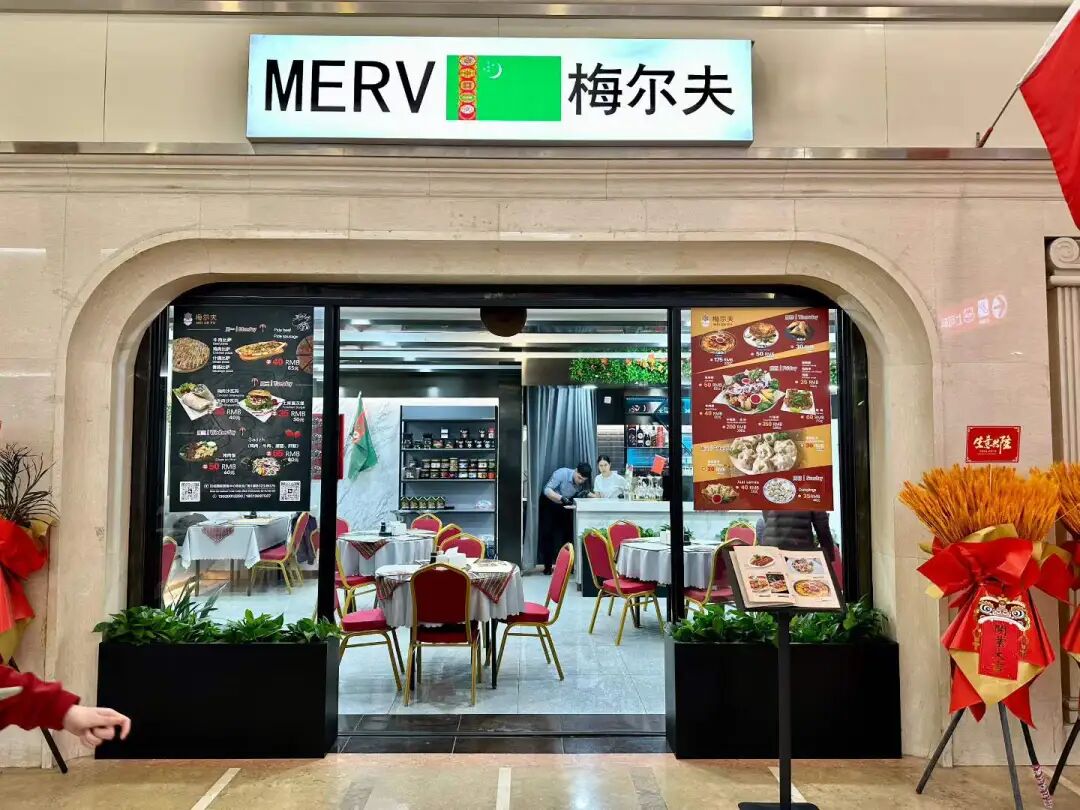
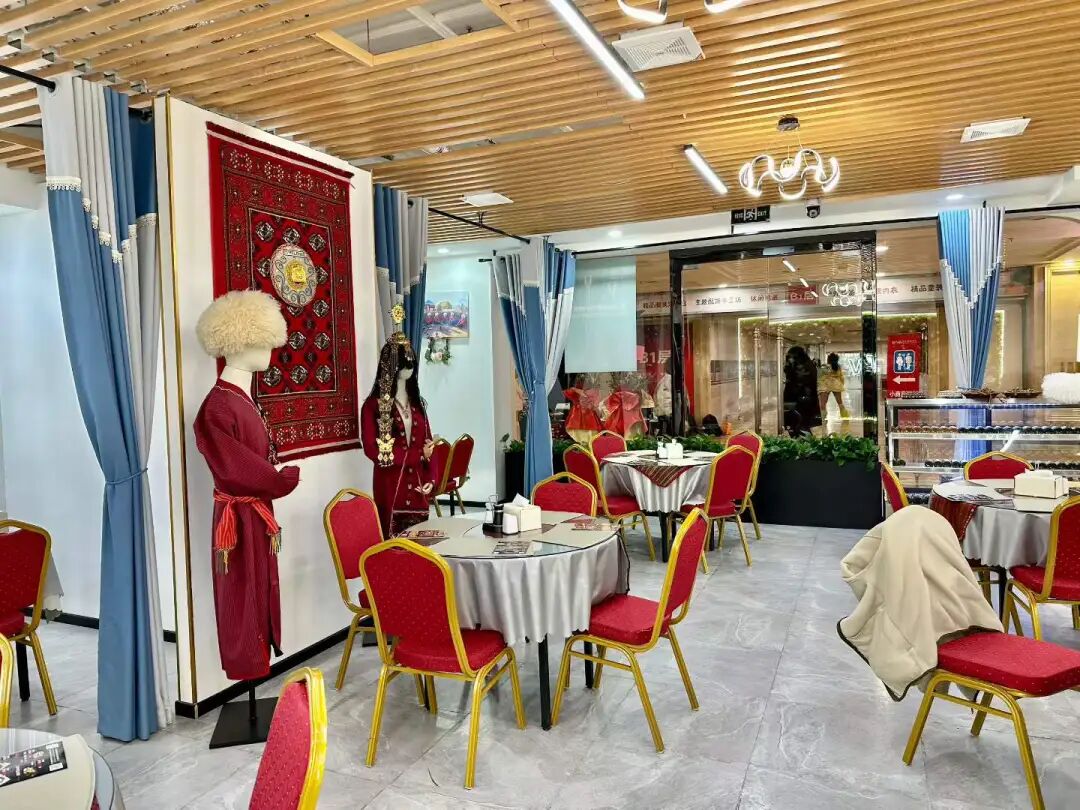
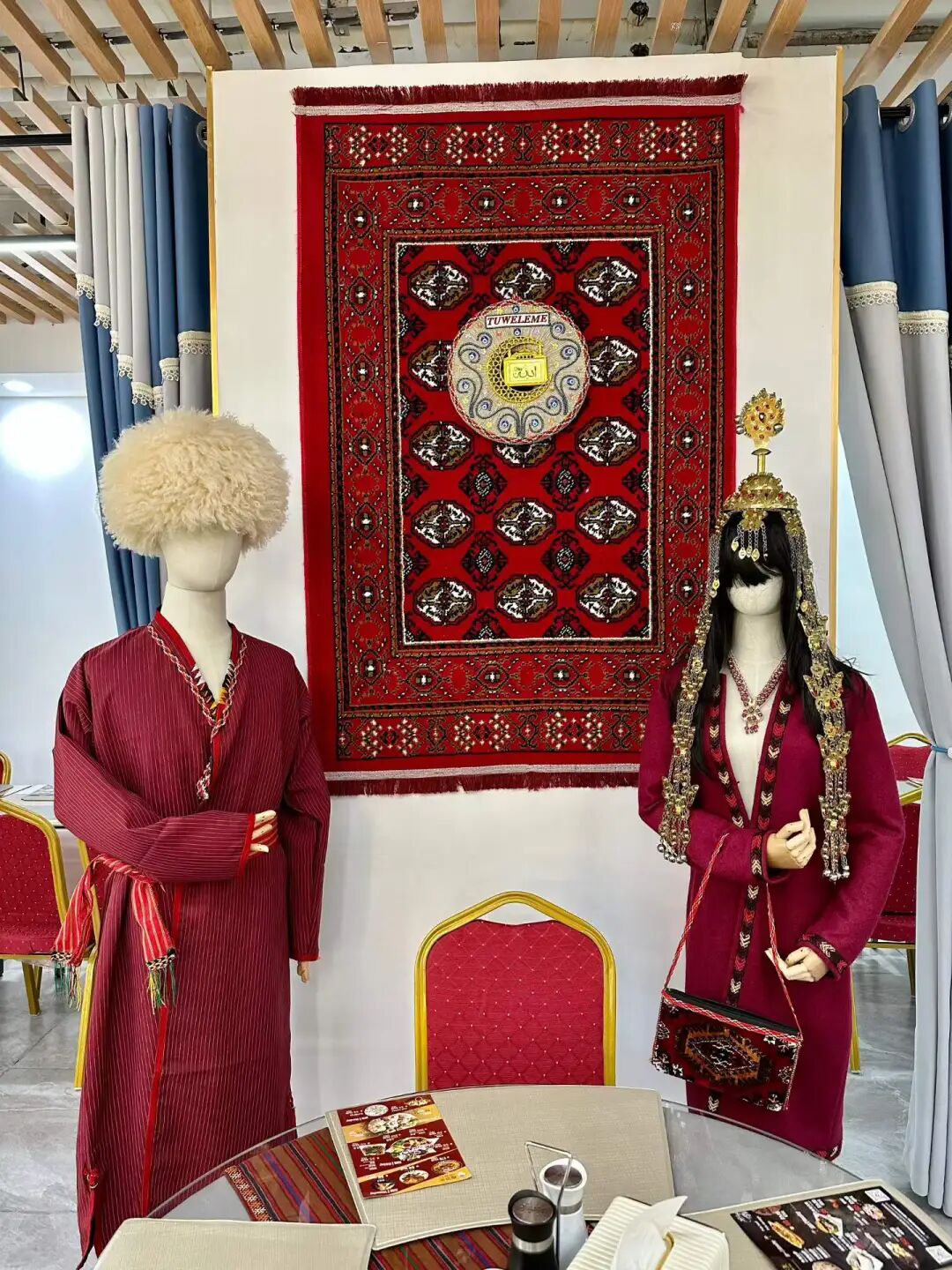
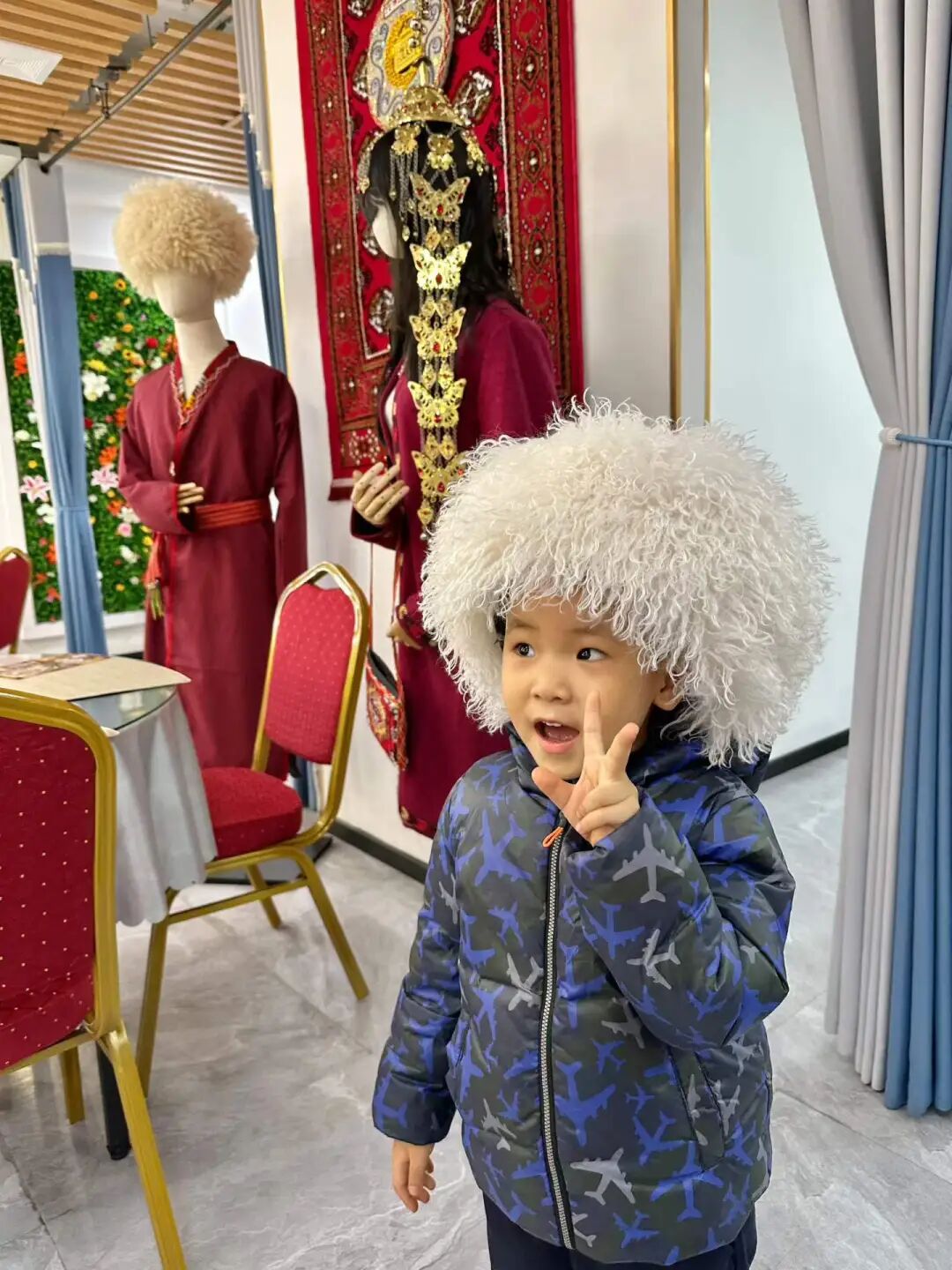
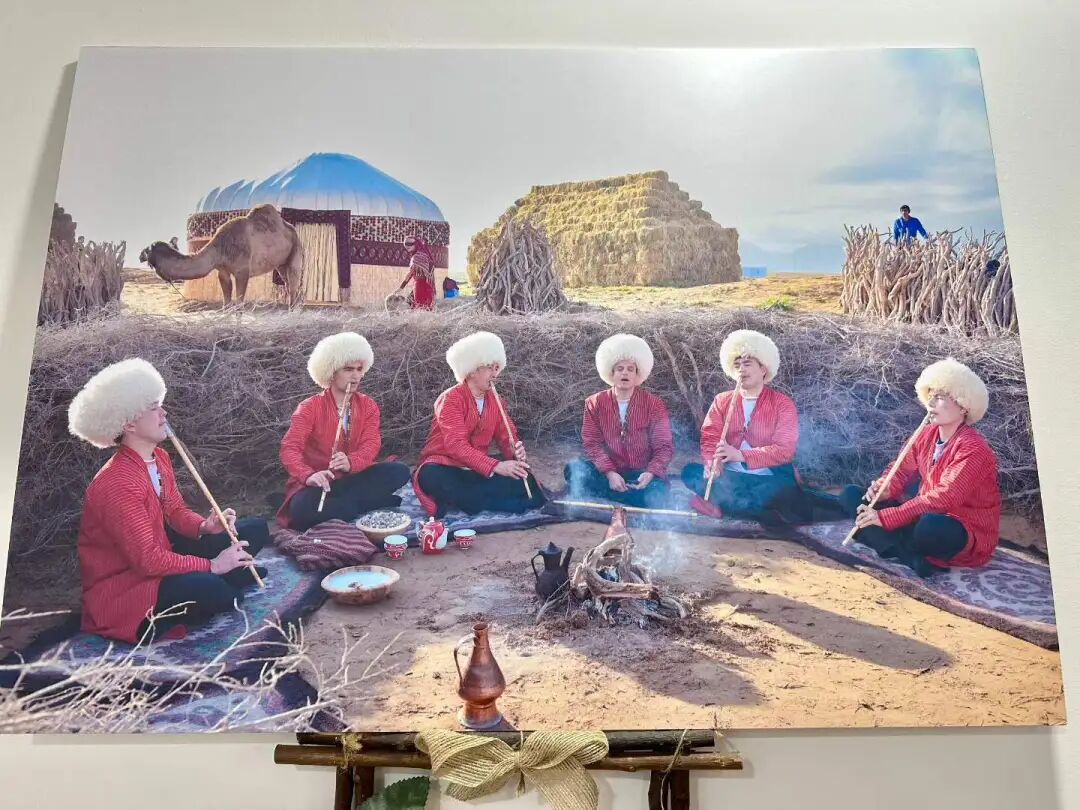
First, let's share the Turkmen dishes:
The Turkmen soup is actually a mung bean and meat porridge. It tastes excellent, made with beef broth, tomatoes, rice, and mung beans. It is very warming in winter.
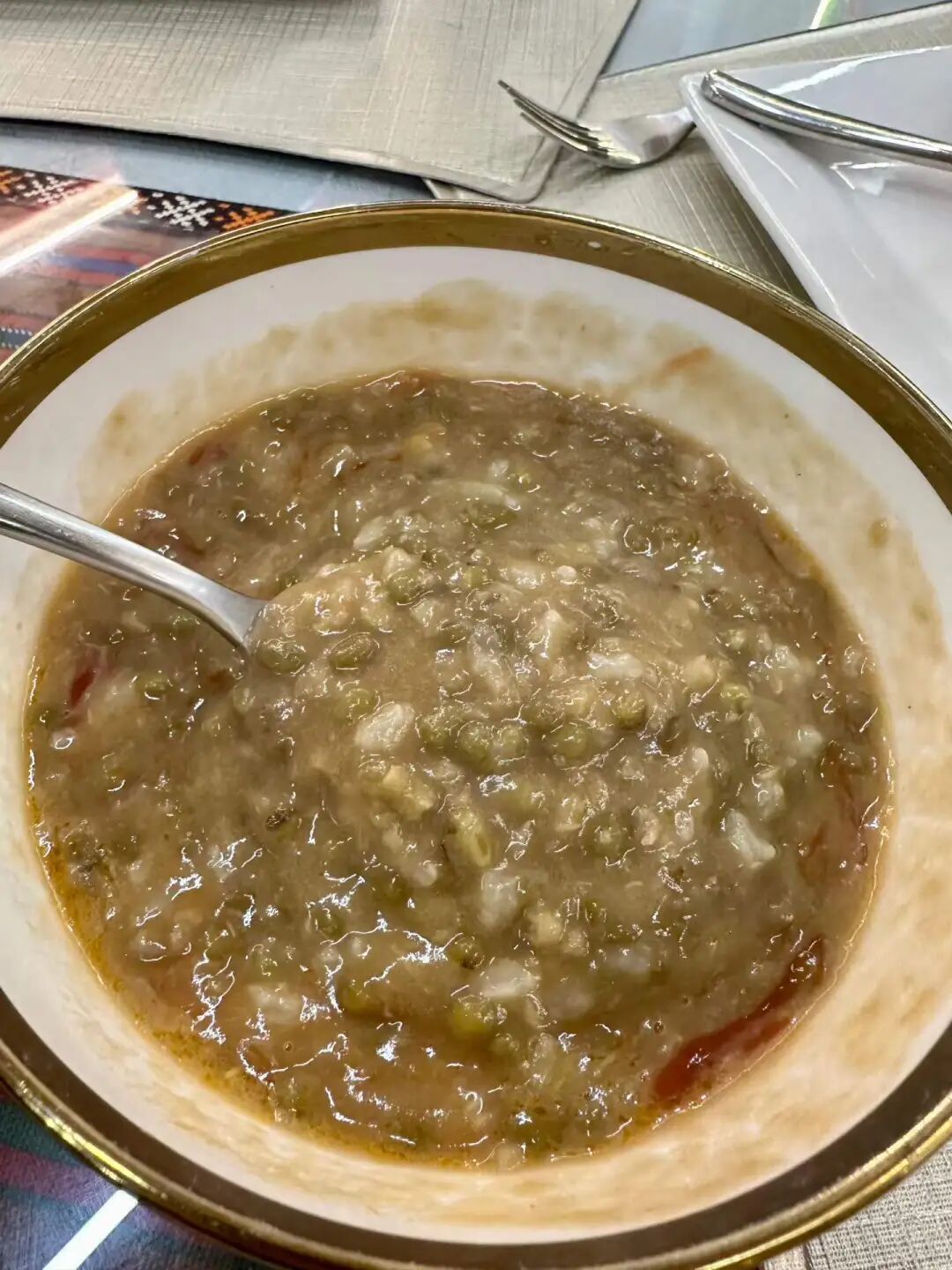
The lamb soaked bread (dograma) is a classic feast dish for Eid al-Adha. It uses lamb broth with meat cooked until it falls off the bone, soaked with torn pieces of bread, and topped with onions and minced meat. It is very filling.
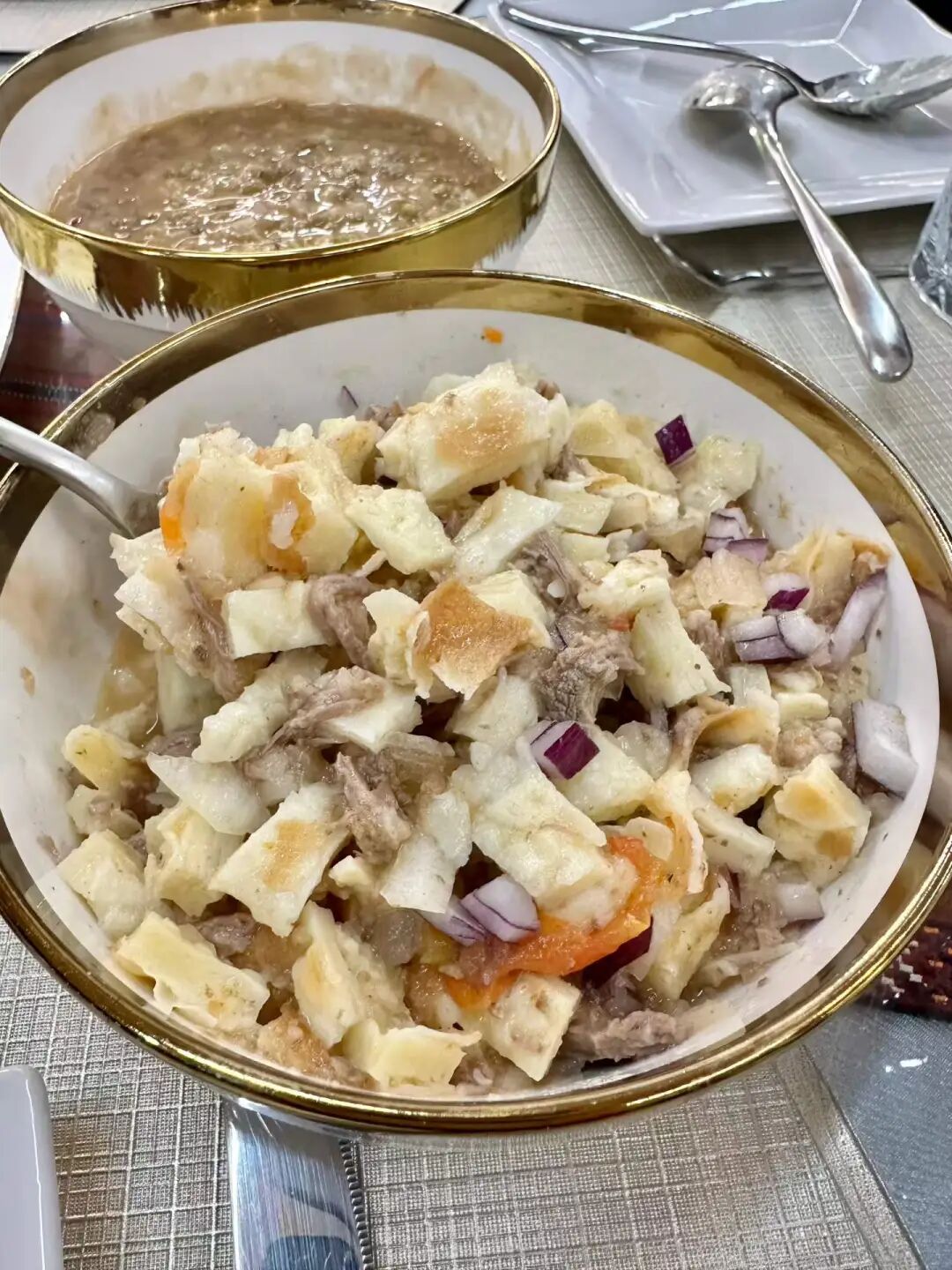
The meat pie (fitchi) is made with unleavened dough. The crust is thin, and it is filled with lamb and onions, seasoned with salt and black pepper. It is very similar to Xinjiang meat pies and tastes delicious.
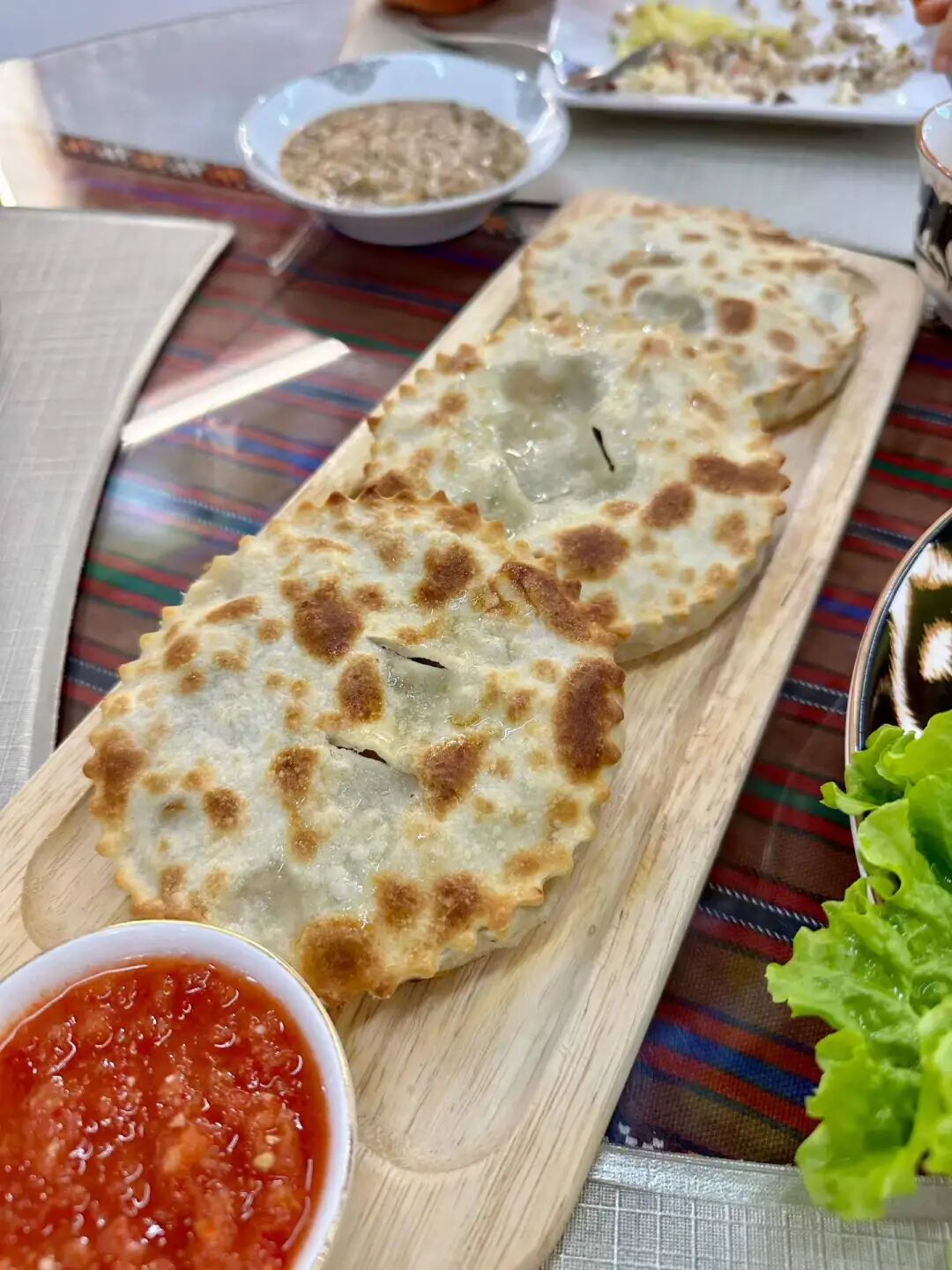
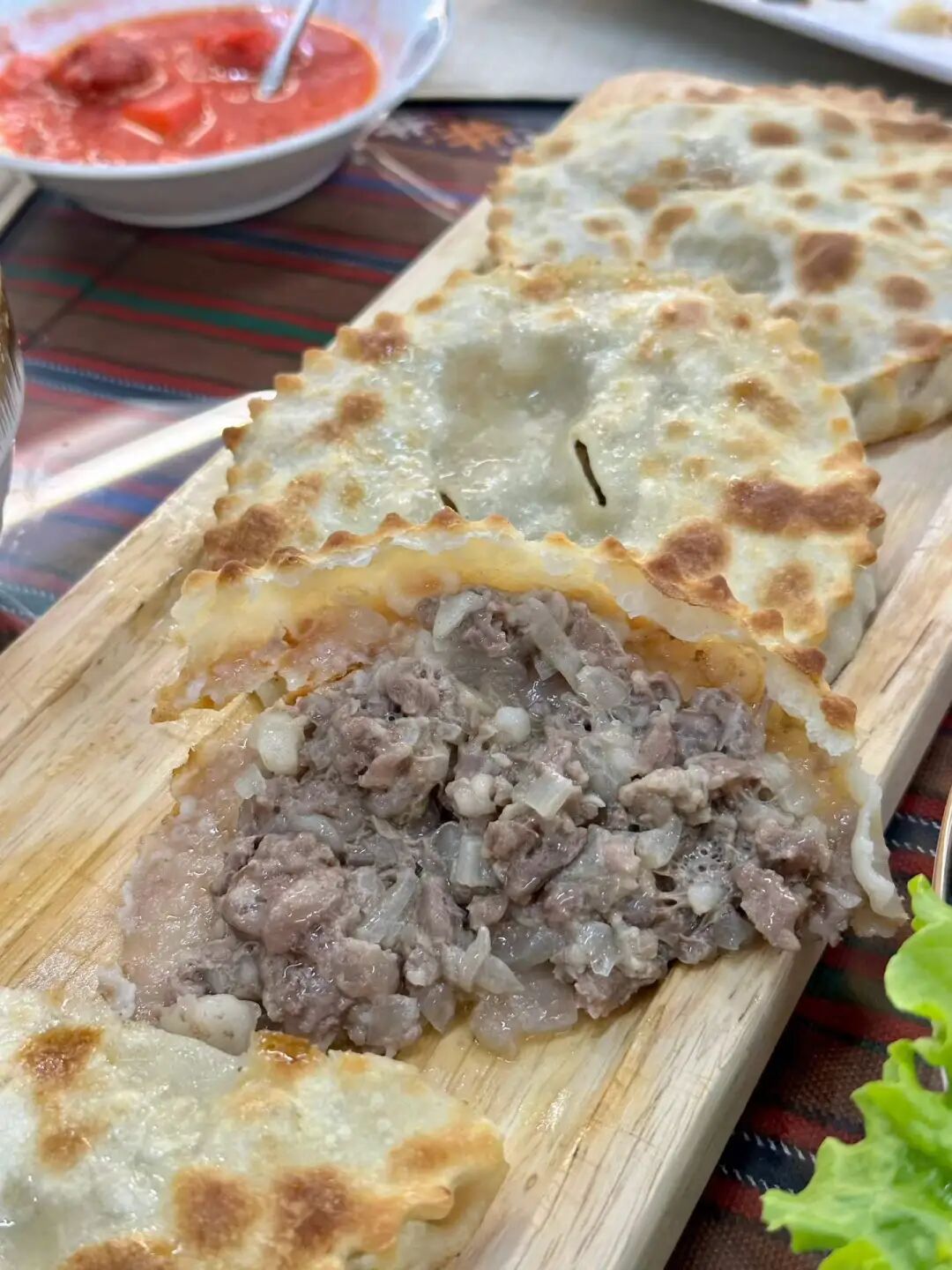
For drinks, we ordered green tea and yogurt drink (ayran). Unlike Xinjiang restaurants, you have to pay for tea at this Turkmen restaurant.
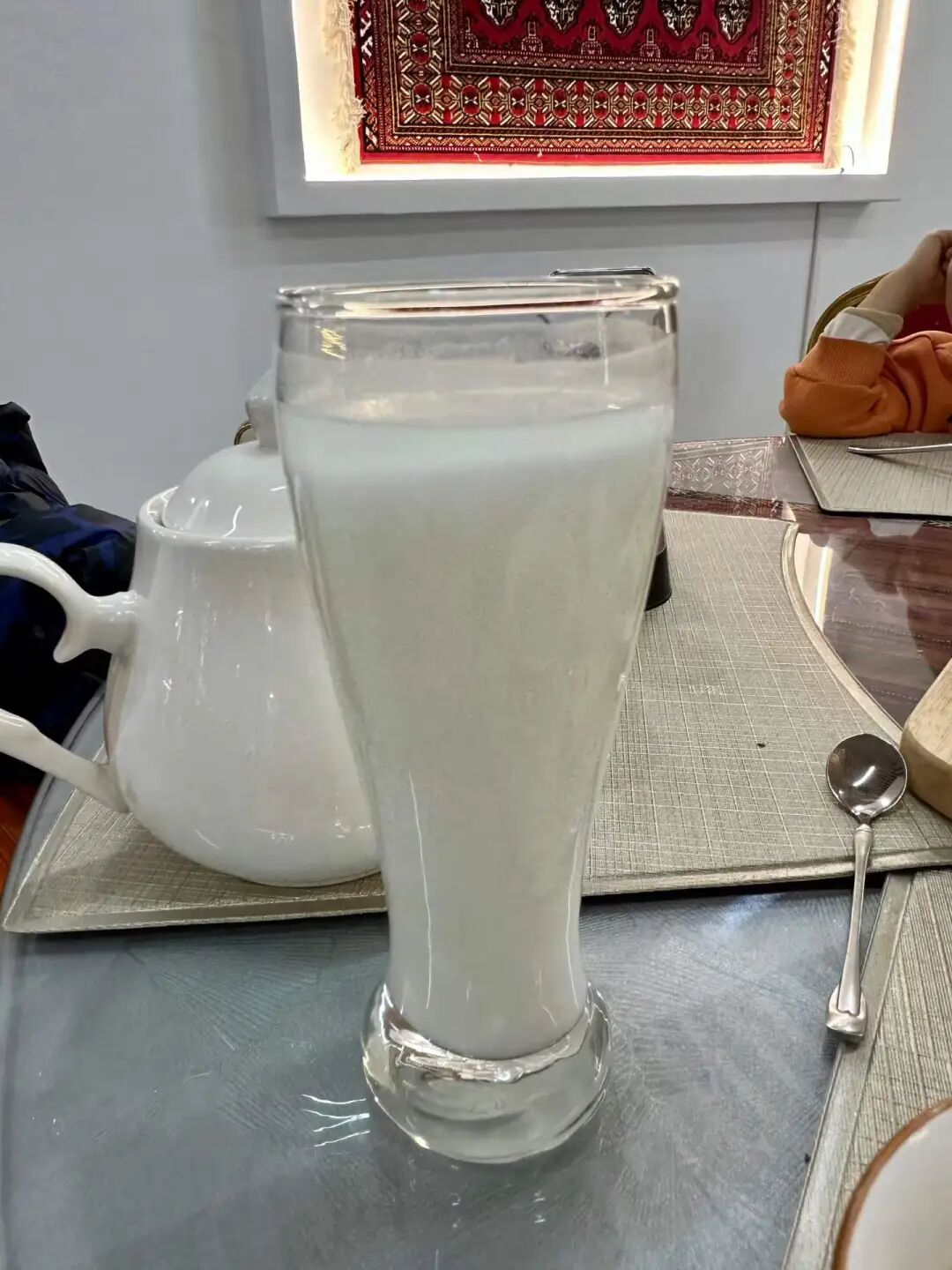
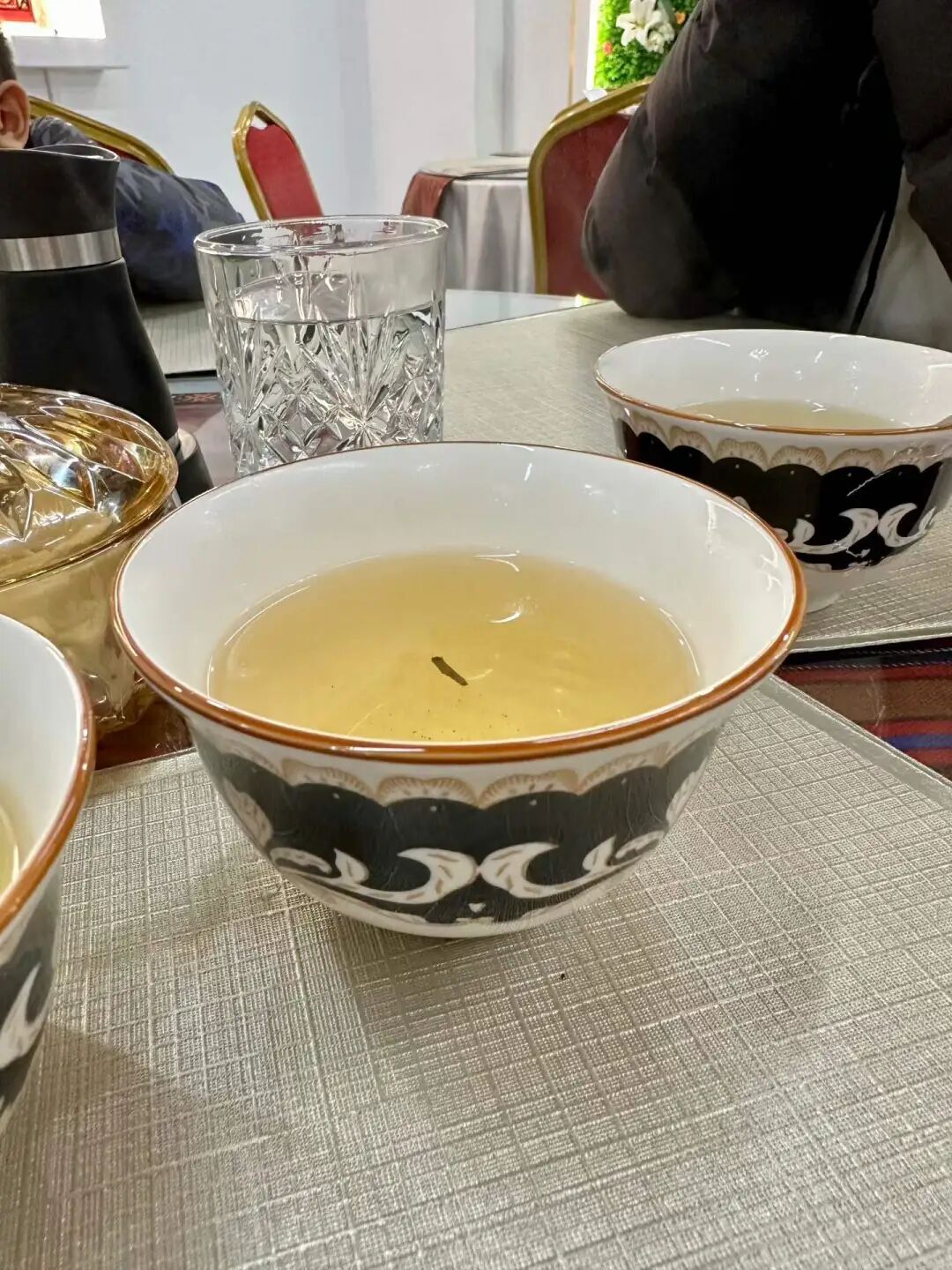
Continuing with their Russian/Soviet dishes:
I really like their borscht (hongcaitang), which is a beef soup with beets and sour cream. The sweet, sour, and salty flavors are perfectly balanced, and it is not greasy.
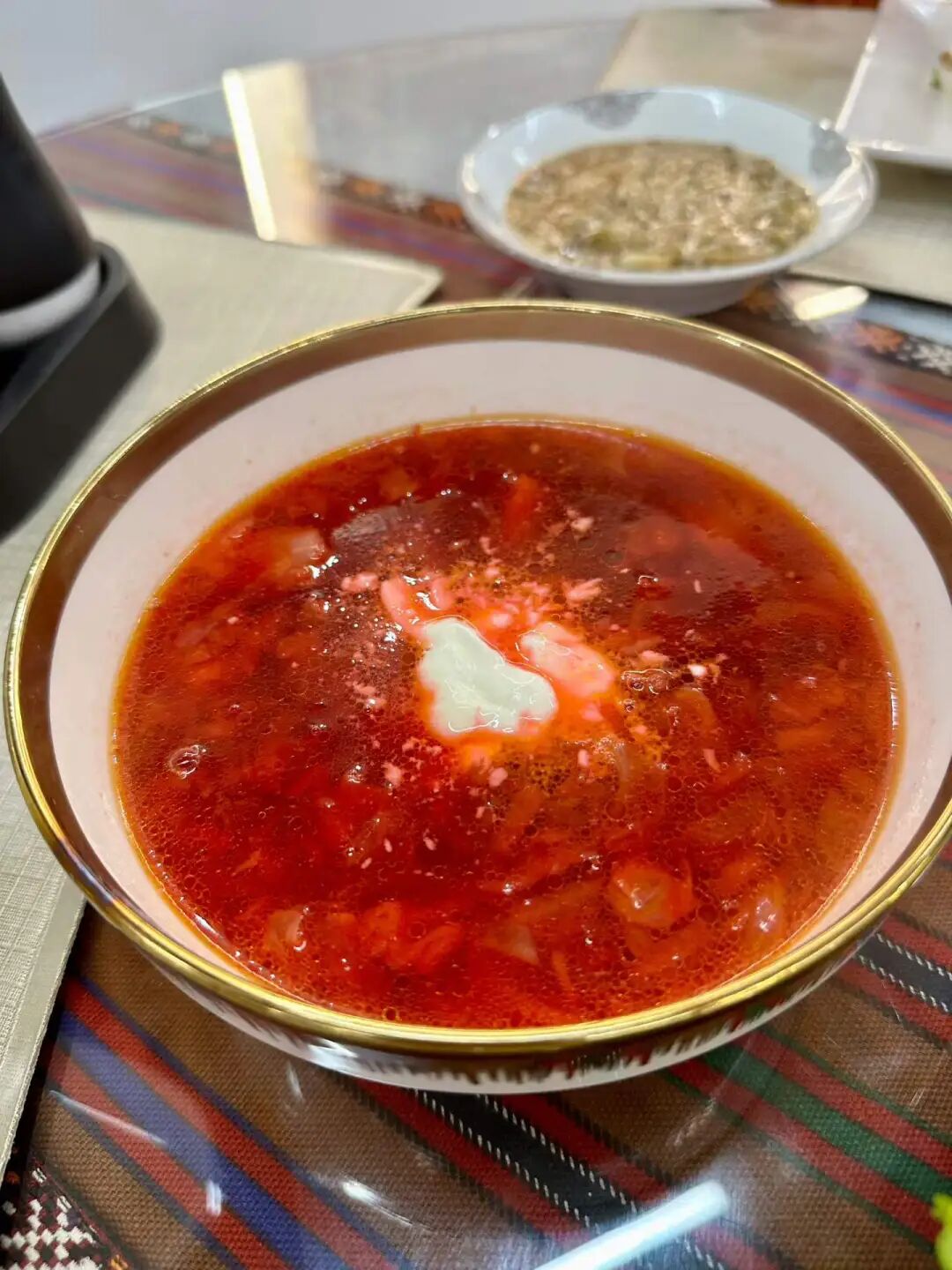
The capital salad (shoudu shala) refers to Moscow. It is a standard Soviet salad made with diced boiled potatoes, carrots, cucumbers, peas, onions, eggs, and chicken, mixed with mayonnaise, salt, pepper, and yellow mustard. I think the capital salad (stolichny salat) at Merv is delicious and I highly recommend it. Early versions of Russian salad actually included seafood and caviar. During the Soviet era, due to food shortages, people started replacing crayfish with boiled eggs and carrots, sausage with chicken, and olives and capers with cucumbers and peas, which eventually created the capital salad we have today.
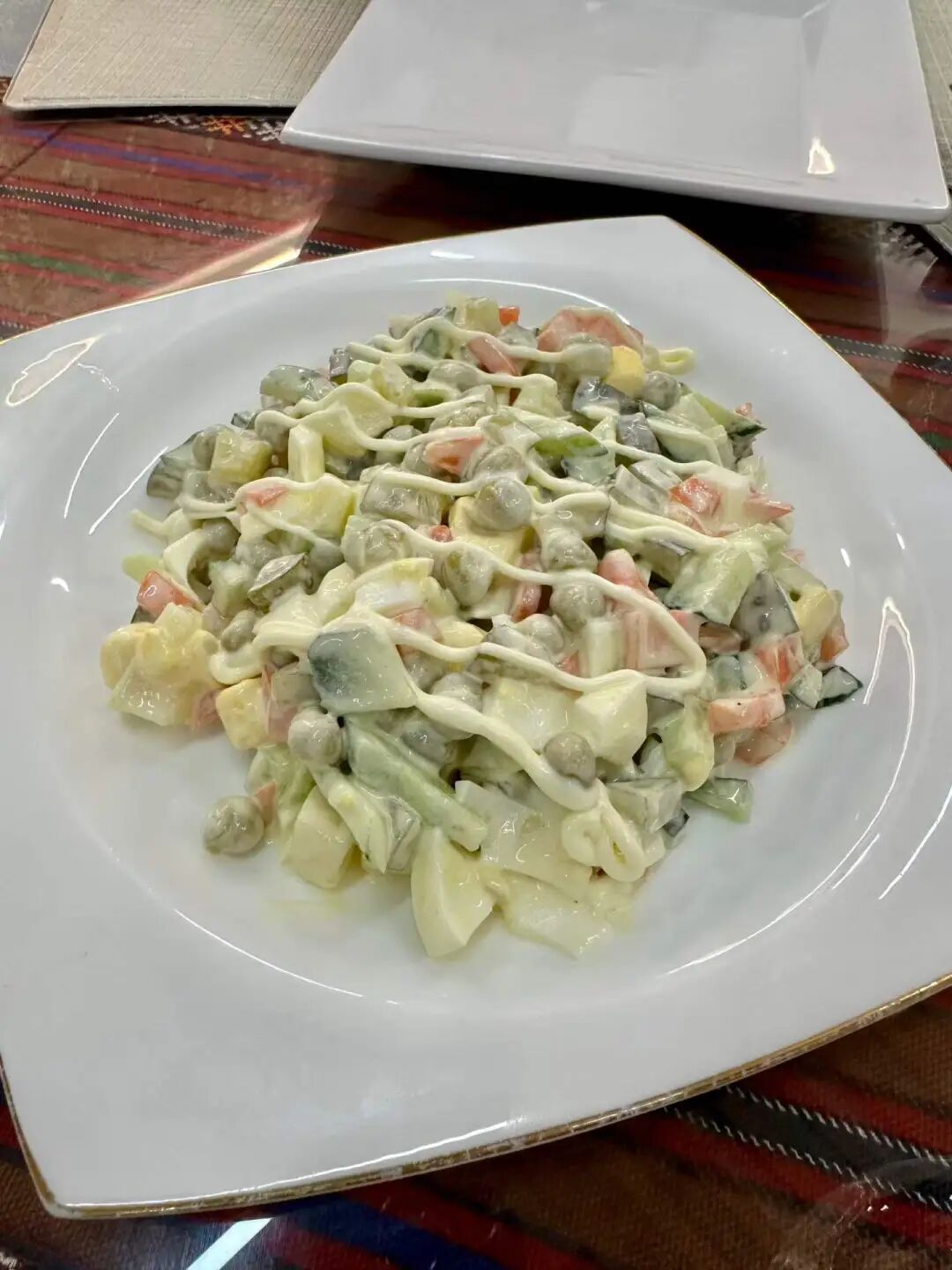
Buckwheat with minced meat is also a Soviet dish. Buckwheat porridge (kasha) has been a staple food in Russia for a thousand years and has been popular in East Slavic regions since the Middle Ages. Serving it with minced meat was a very classic home-cooked and cafeteria-style meal during the Soviet era. This was my first time eating buckwheat with minced meat, and it felt very healthy. The minced meat was salty and savory, perfect with rice, and the mashed potatoes served with it were very light. I originally thought the buckwheat would be quite dry, but they steamed it until it was very soft, with a texture like very chewy rice.
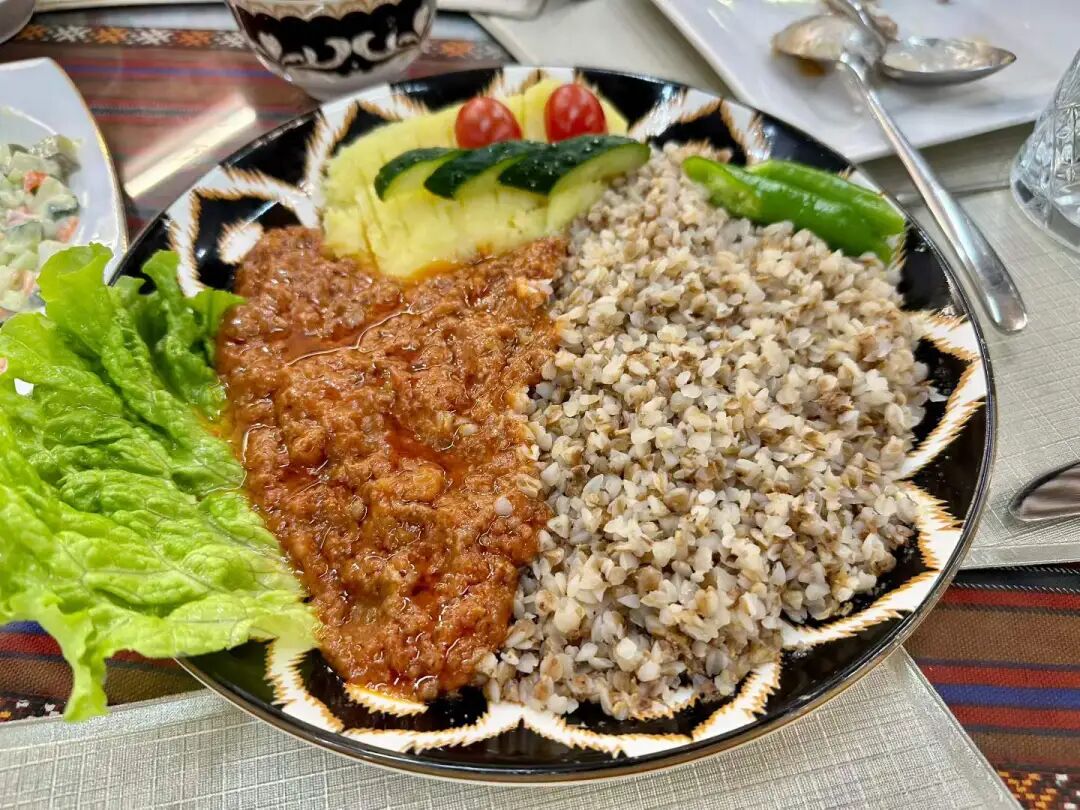
Later, I ordered the chicken buckwheat. The chicken was a pressed patty, not dry at all, very tender, and lighter than the minced meat version—a typical healthy meal by modern standards.
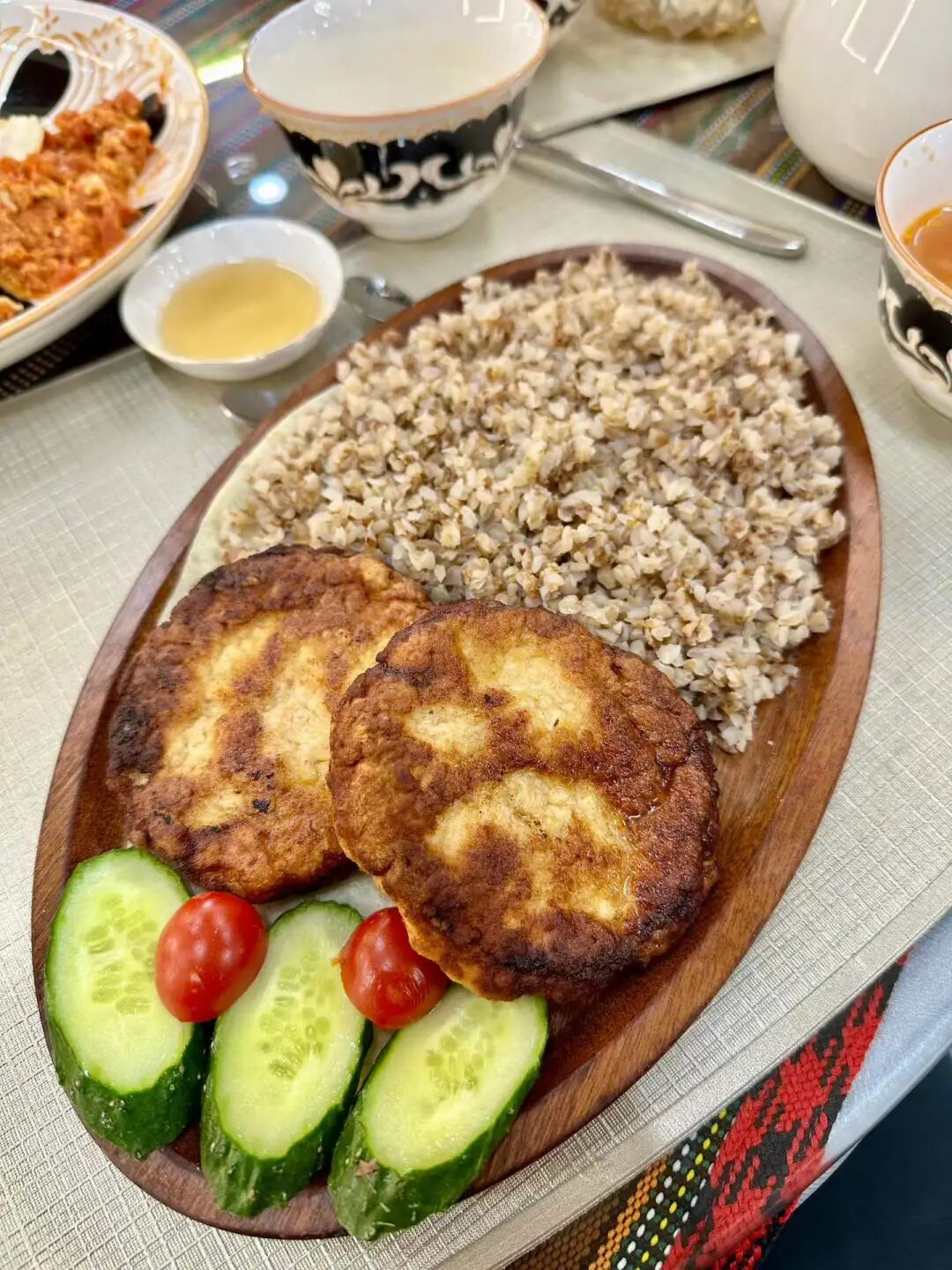
I have shared some special brunches in Beijing before, such as the Turkish breakfasts at Dardanelles and Sultan, or the pot tea and steamed dumplings (shaomai) at Lianying, and I recently discovered that Merv also has Turkmen breakfast! I made a special trip to eat it on a weekend morning.
Actually, this isn't strictly a breakfast menu because they are open 24 hours a day, so you can eat it anytime. I feel the main morning crowd consists of traders from the former Soviet Union who are adjusting to the time difference. However, sometimes if they sell well the night before, some dishes might be out of stock the next morning. Although you can choose heavy dishes in the morning, the first page of their menu has some items that are more suitable for breakfast. For example, cheese rolls, tomato and eggs, bread, and cheese. For soup, we had beef soup and ordered a pot of tea, though you can also drink coffee.
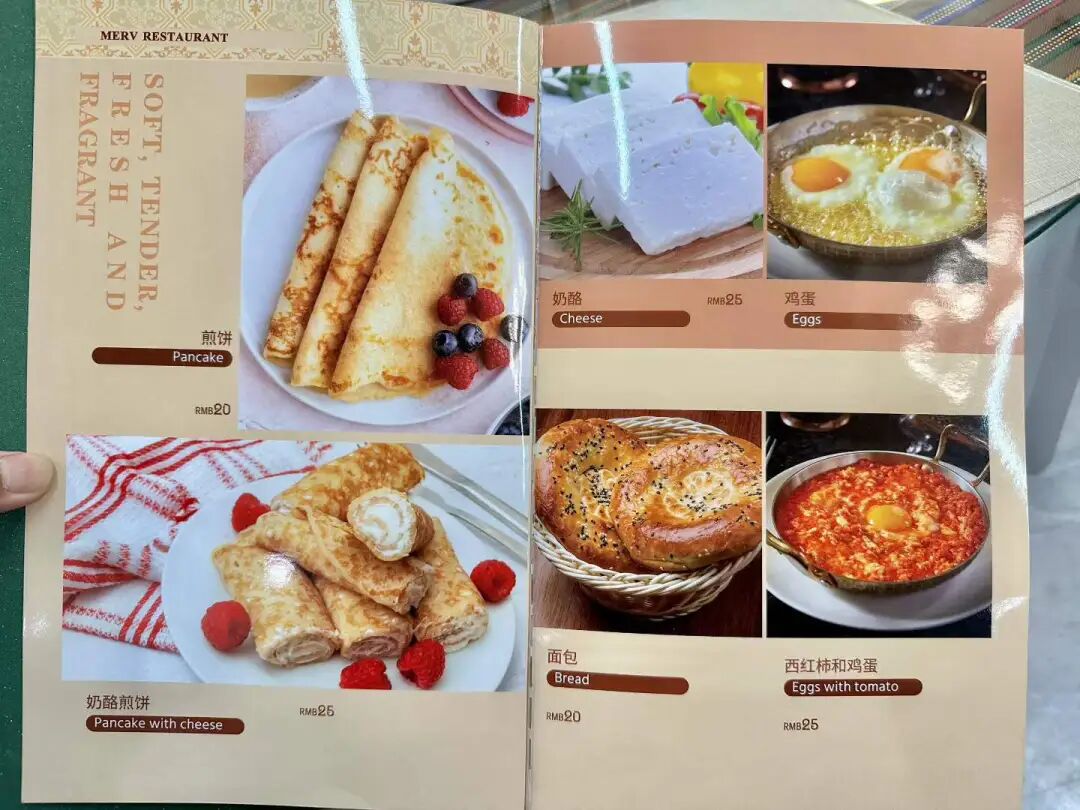
I recently discovered that my son really likes Merv; he eats the cheese rolls and tomato and eggs in big bites. Their tomato and eggs are very similar to the tomato omelet (omlet-e gojeh farangi) I ate in Iran before, where you stew the tomato sauce first, then beat the eggs into it, and finally dip bread into it. Their beef soup is stewed until very tender, but the soup is a little bit salty. Having borscht or lentil soup in the morning is also quite appropriate.
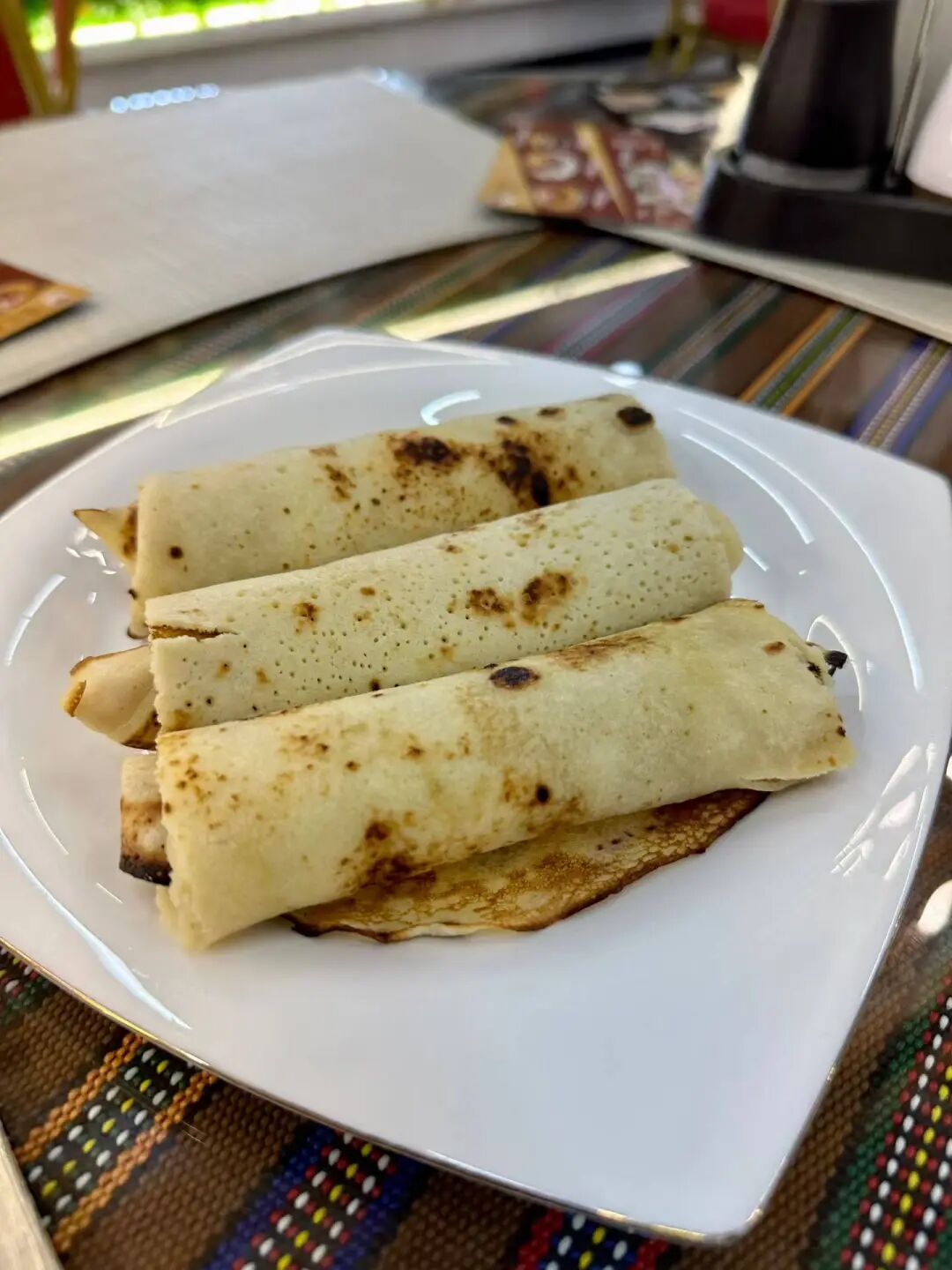
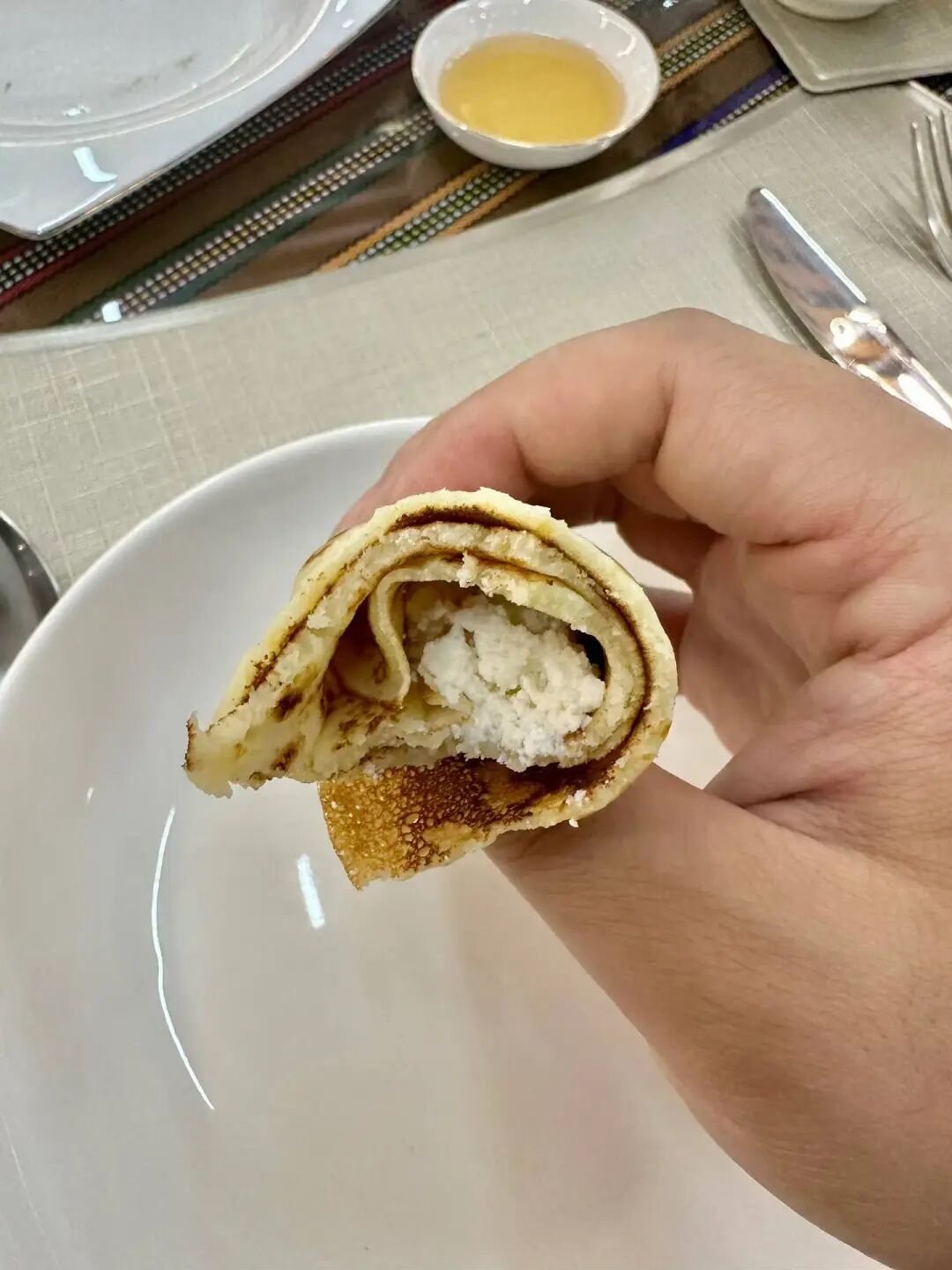
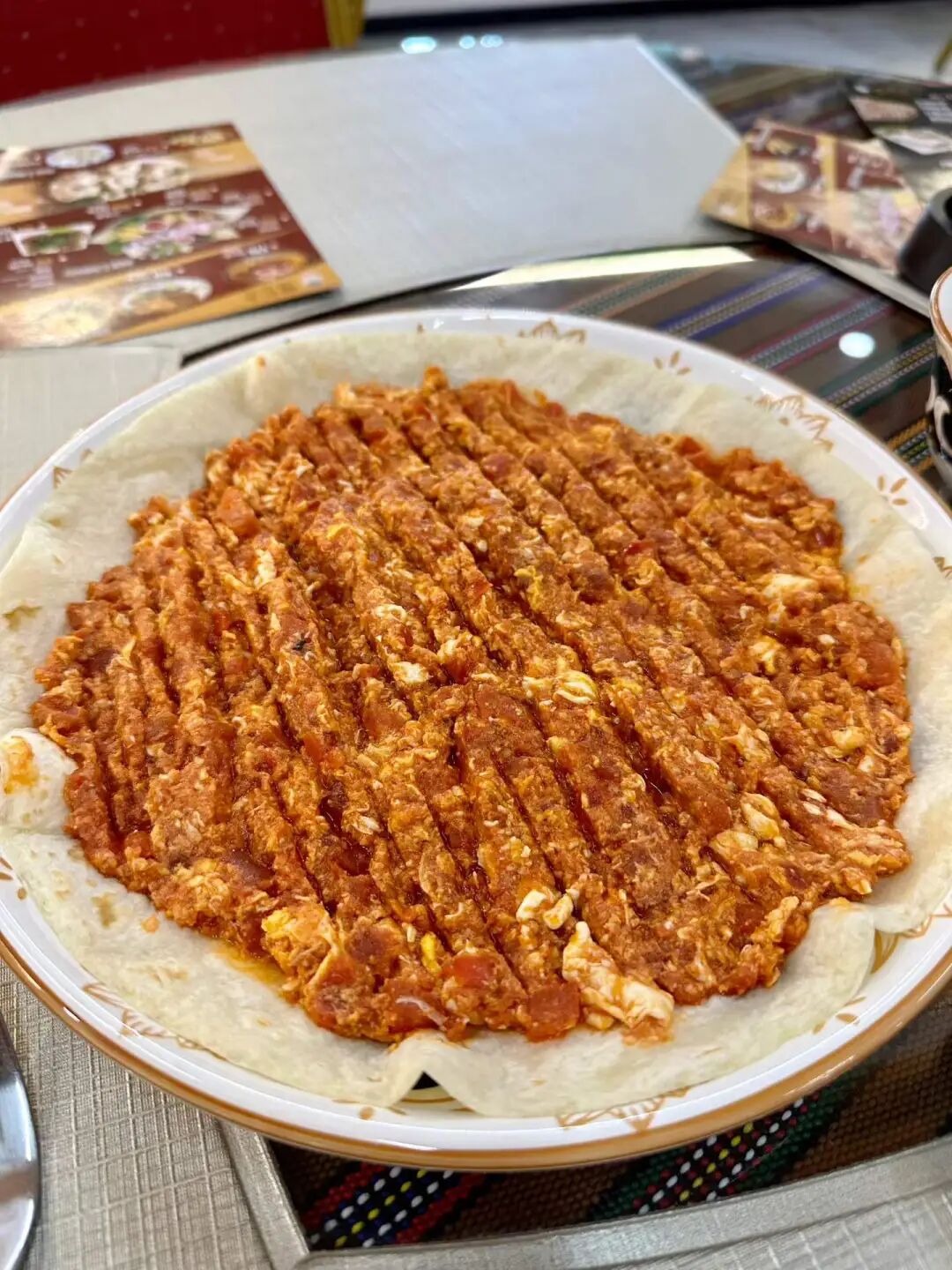
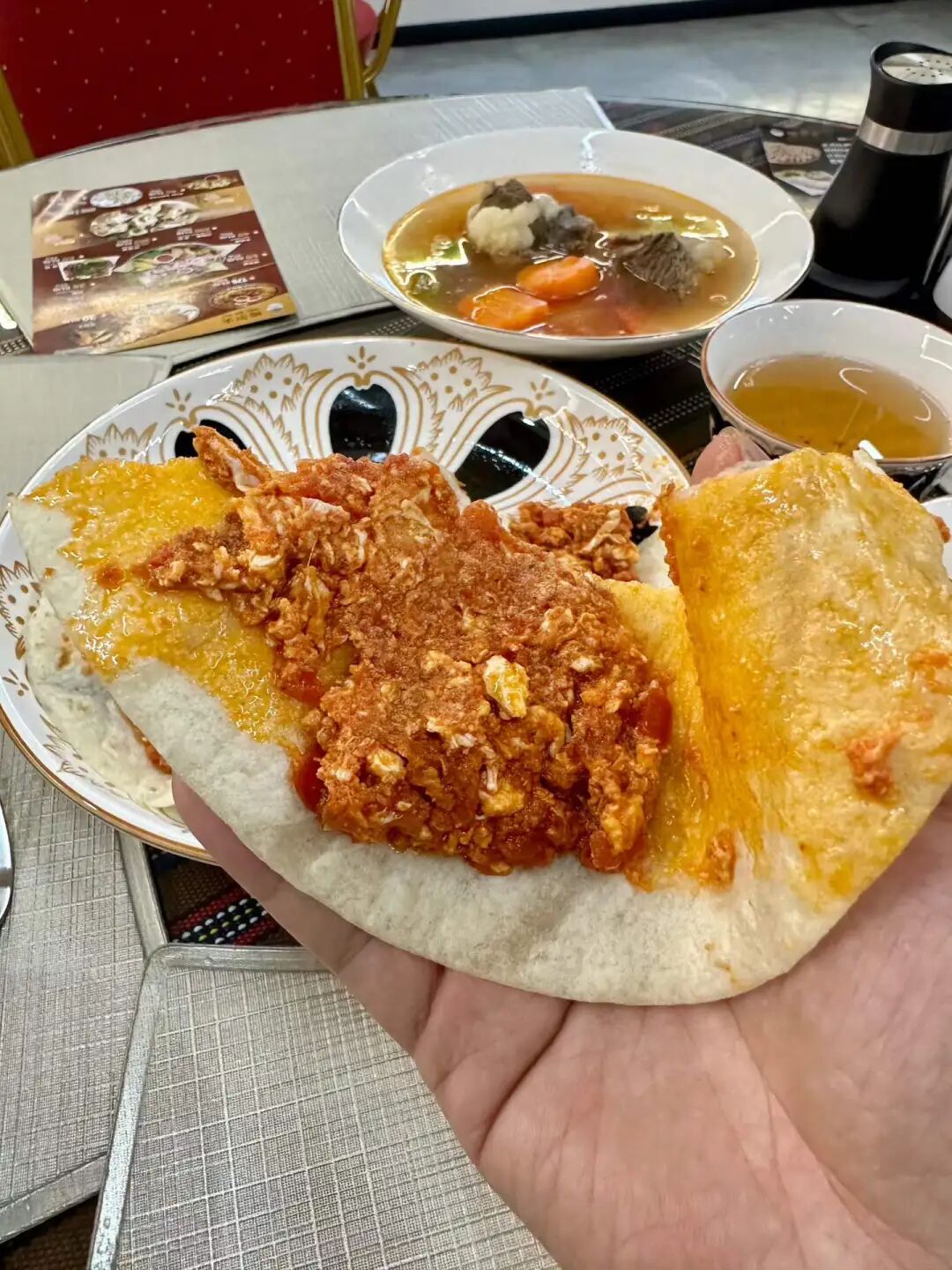
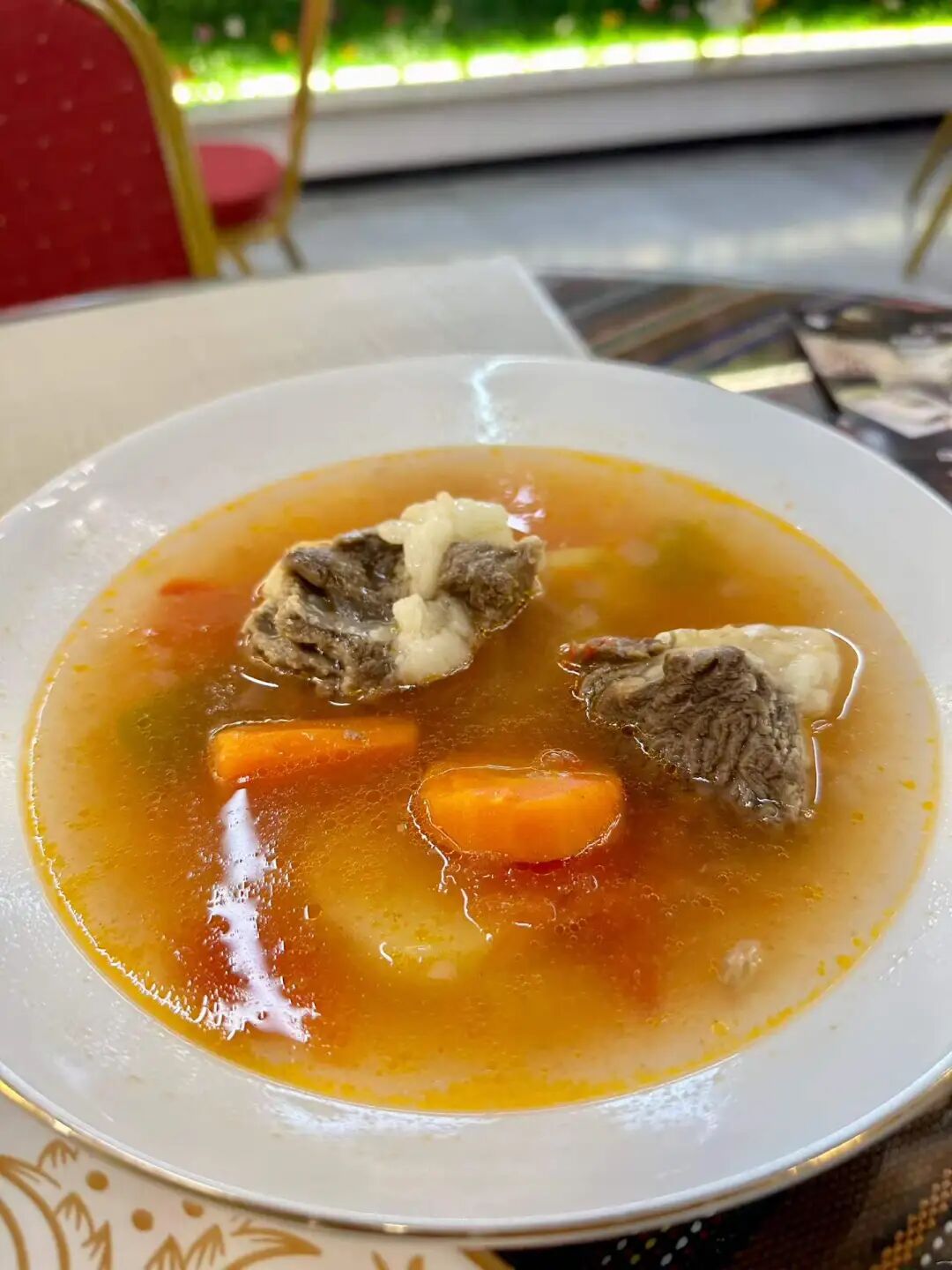
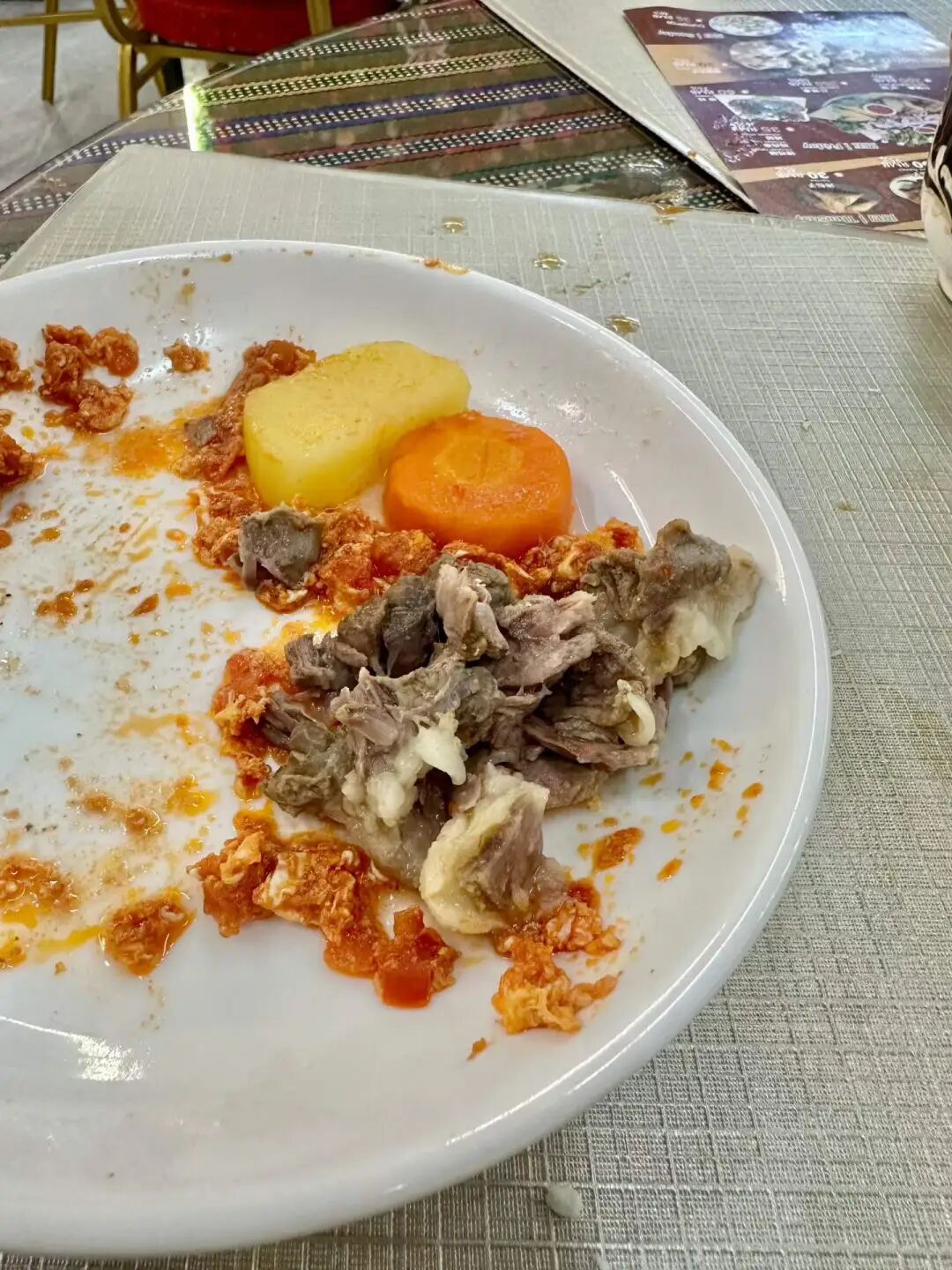
Asian Food
Besides Merv in Ritan, there are two other Turkmen restaurants in Changping, Beijing, called Asian Food and An-Noor, both near the China University of Political Science and Law and the China University of Petroleum. We went to Changping to hang out on Eid al-Fitr and happened to eat at Asian Food. Their shop is very small, and the people eating there are basically university students from the neighborhood. Both this place and An-Noor focus on being very affordable; they must be the cheapest Central Asian and Middle Eastern restaurants in Beijing!
They also serve Turkmen, Russian, and Turkish food, which I feel is a characteristic of Turkmen restaurants. We ordered mimosa salad, beef noodle soup, meat pie (ishlekli), rotisserie chicken (doner), and yogurt. Unfortunately, maybe because of the holiday, many Turkmen specialties were unavailable, so we couldn't order them.
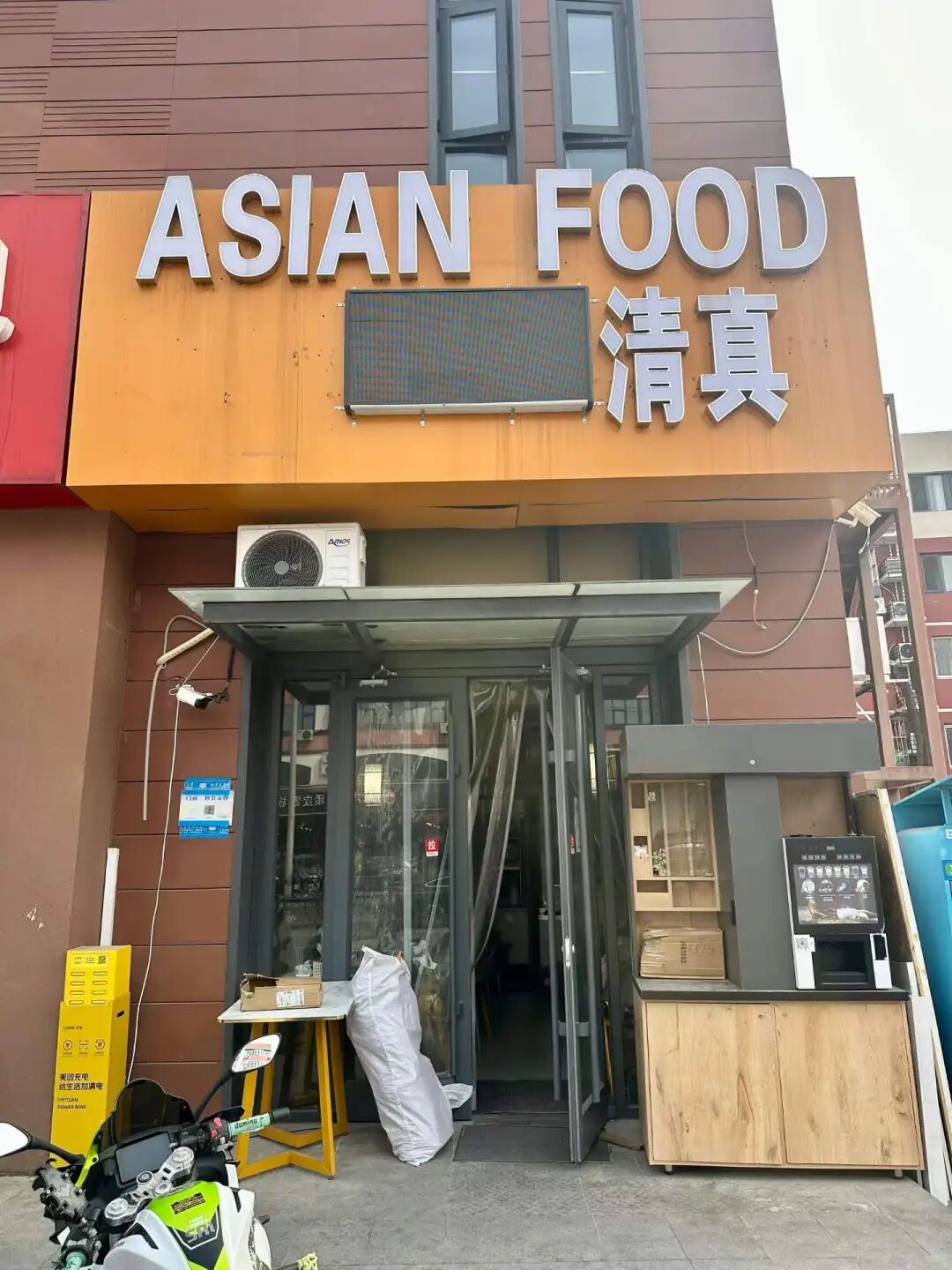
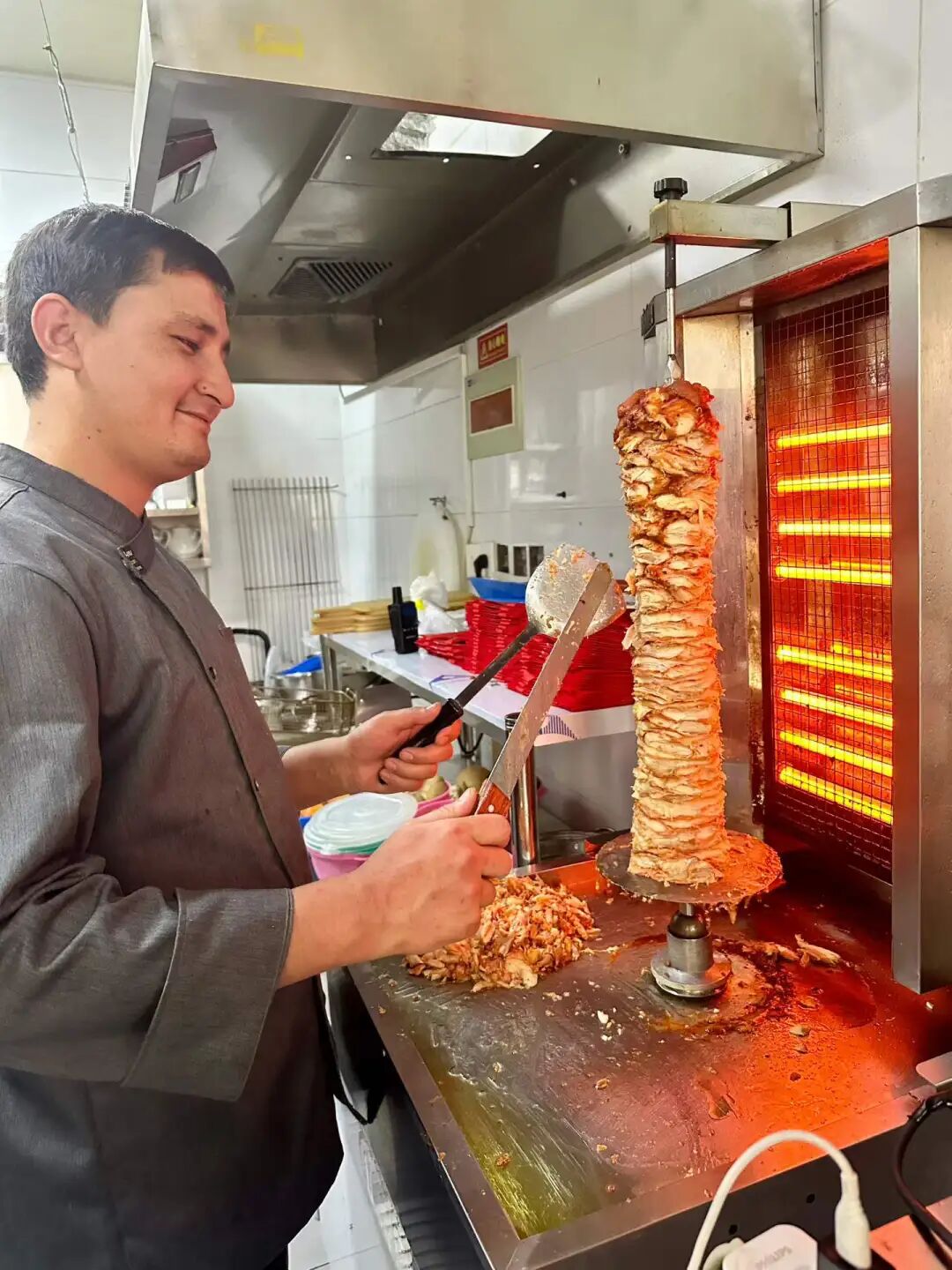
Turkmen noodle soup is called unash. It uses alkaline noodles. Turkmen people choose a bowl of this soup first when they have a cold or feel chilly. You can add beans or yogurt to Turkmen noodle soup. We had the version with beef broth and tomatoes, which was very warming.
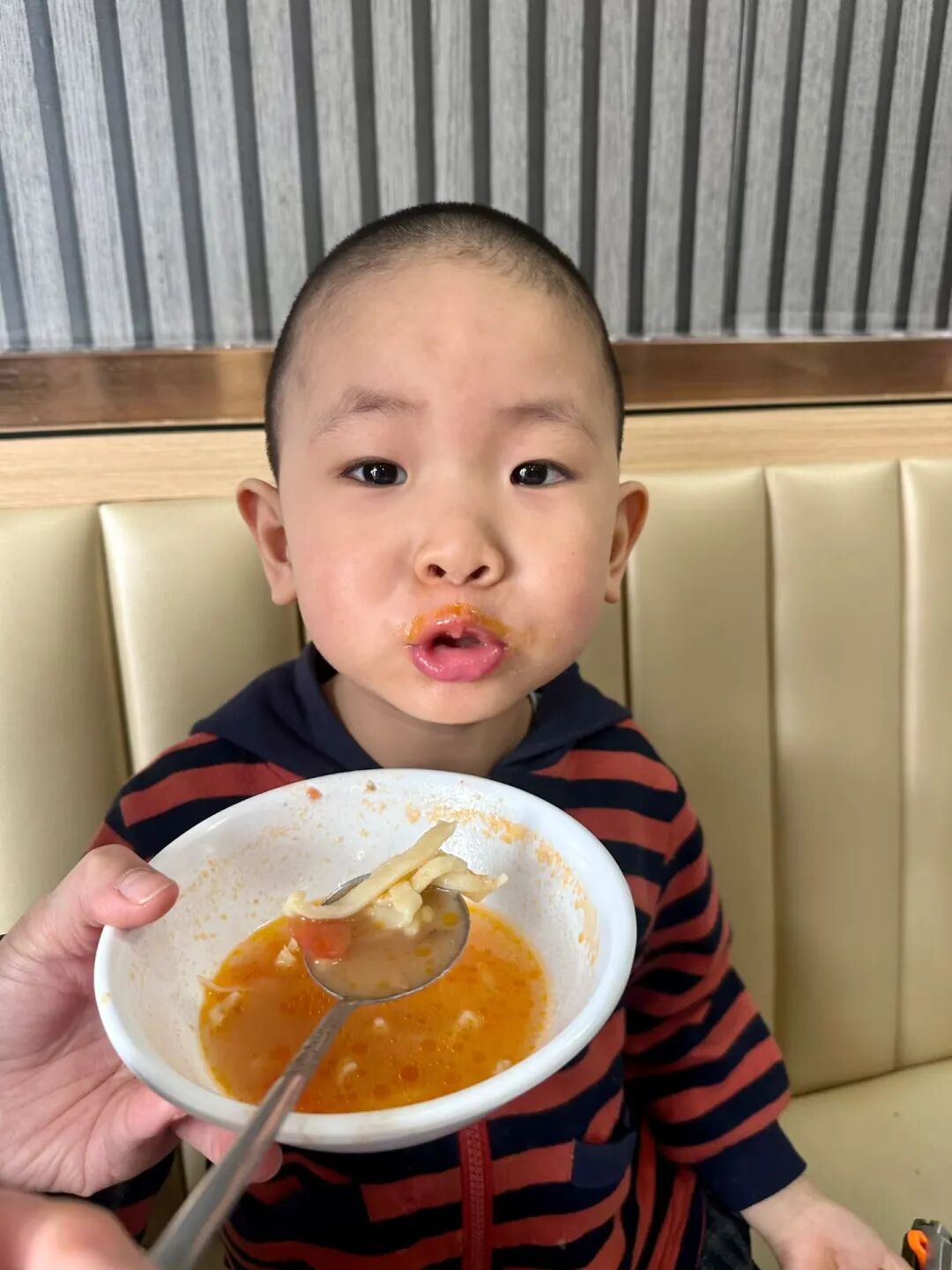
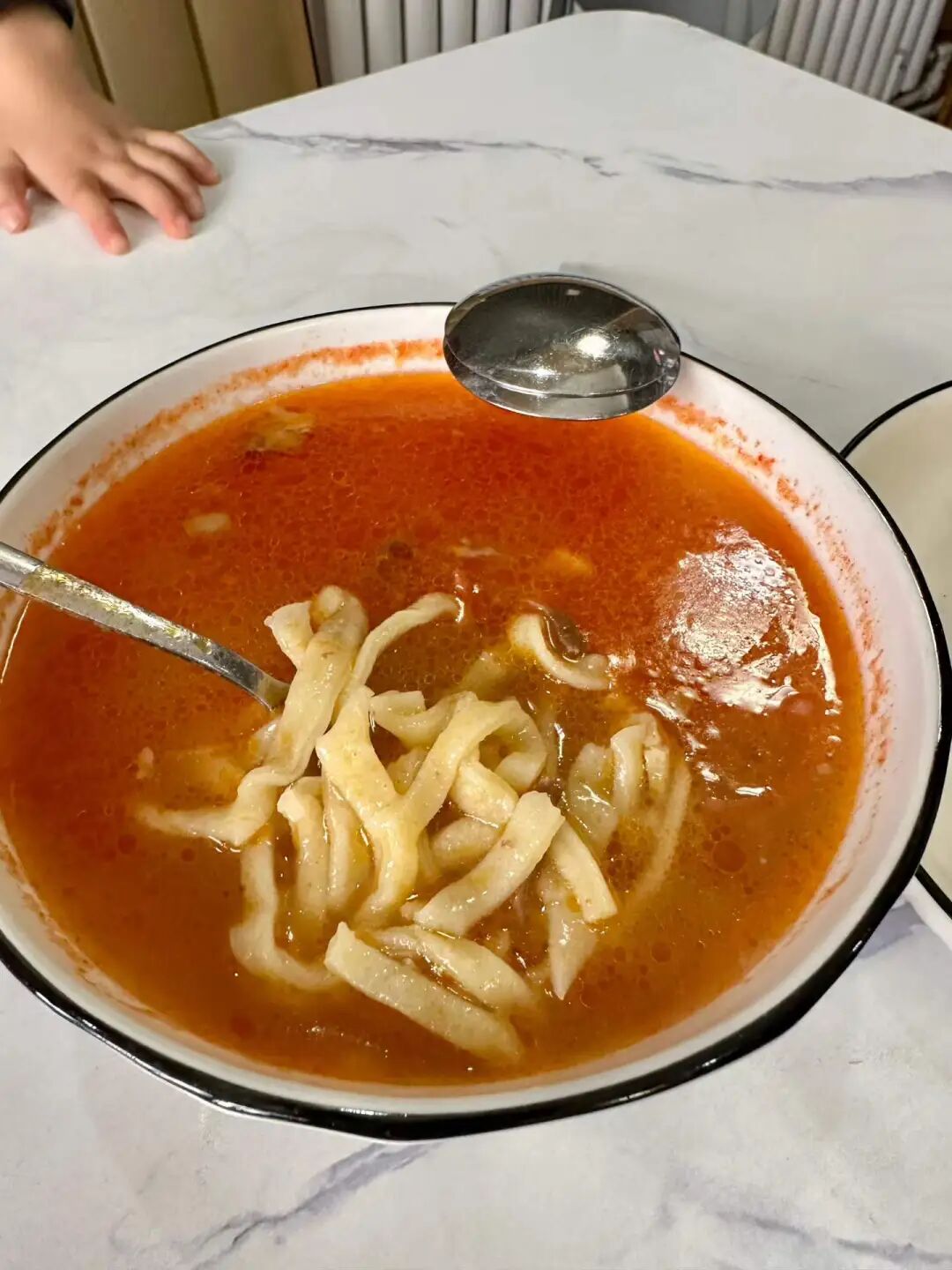
Mimosa salad is a classic Russian dish. It mainly contains cheese, eggs, canned fish, mashed potatoes, carrots, and mayonnaise. It is named for looking like mimosa flowers fallen on snow and became popular during the Soviet era.
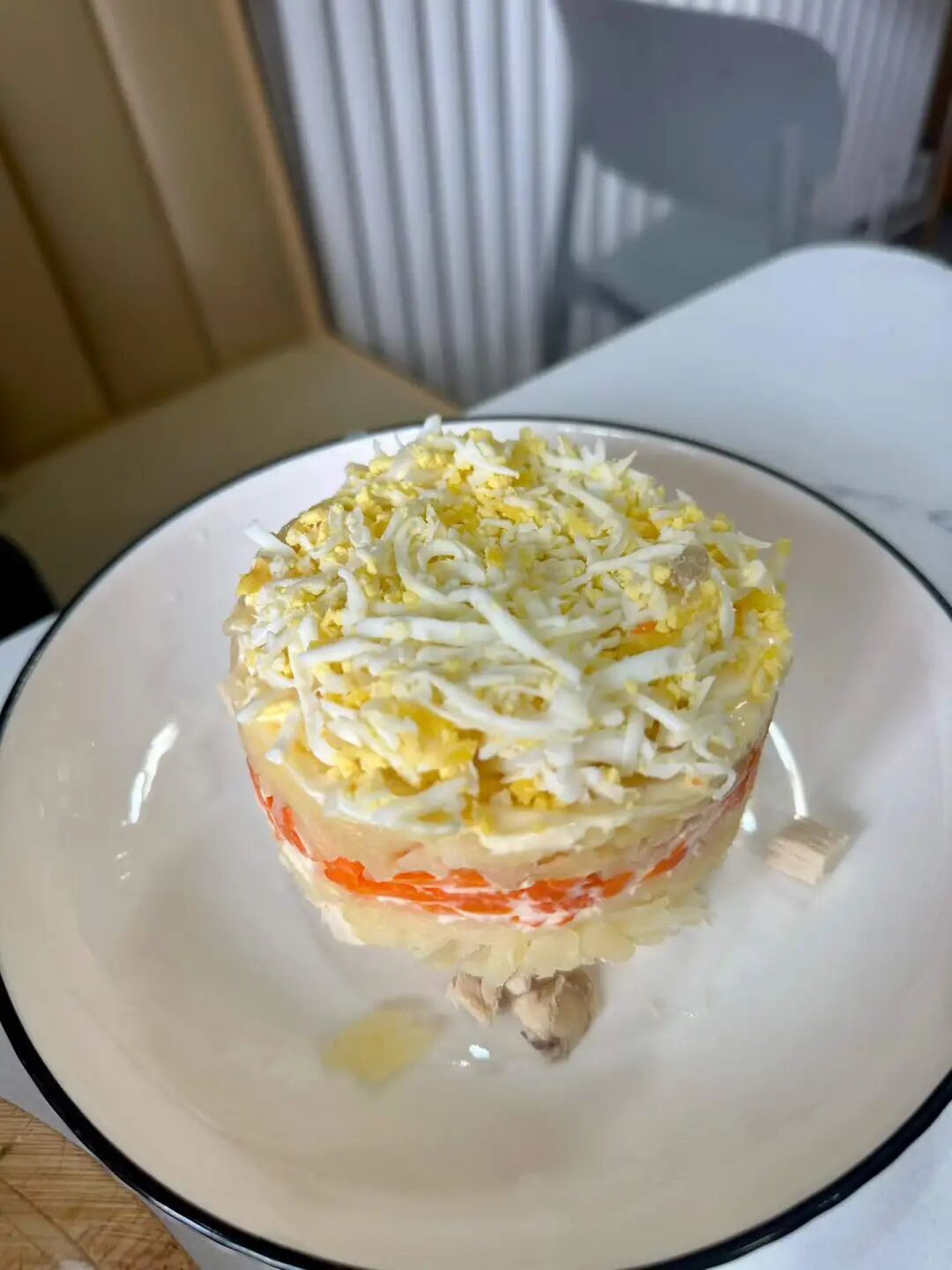
Meat pie (ishlekli) is a typical Turkmen nomadic dish. Traditionally, Turkmen shepherds buried the pie in the hot sand of the Turkmen desert to bake it over charcoal. Now, Turkmen people in cities make it in ovens. The meat pie (ishlekli) has a lamb and potato filling. It is light, and the crust has a perfect texture. My child loved it.
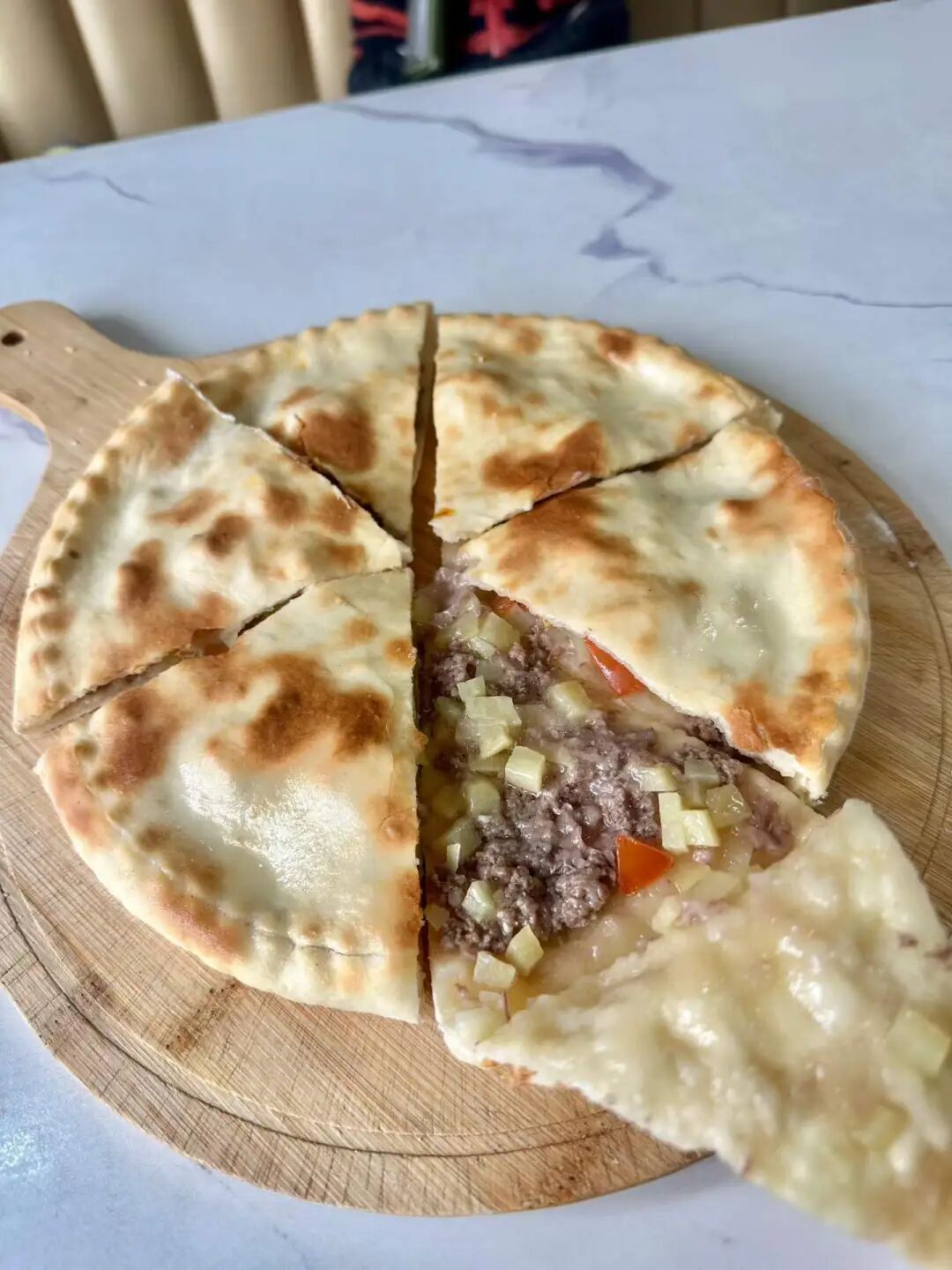
They have two types of rotisserie chicken (doner). One uses thin flatbread like in Turkey, and the other uses a Central Asian style leavened bread. I recommend the latter. I ate this in Uzbekistan before. This leavened bread stuffed with rotisserie meat is very satisfying.
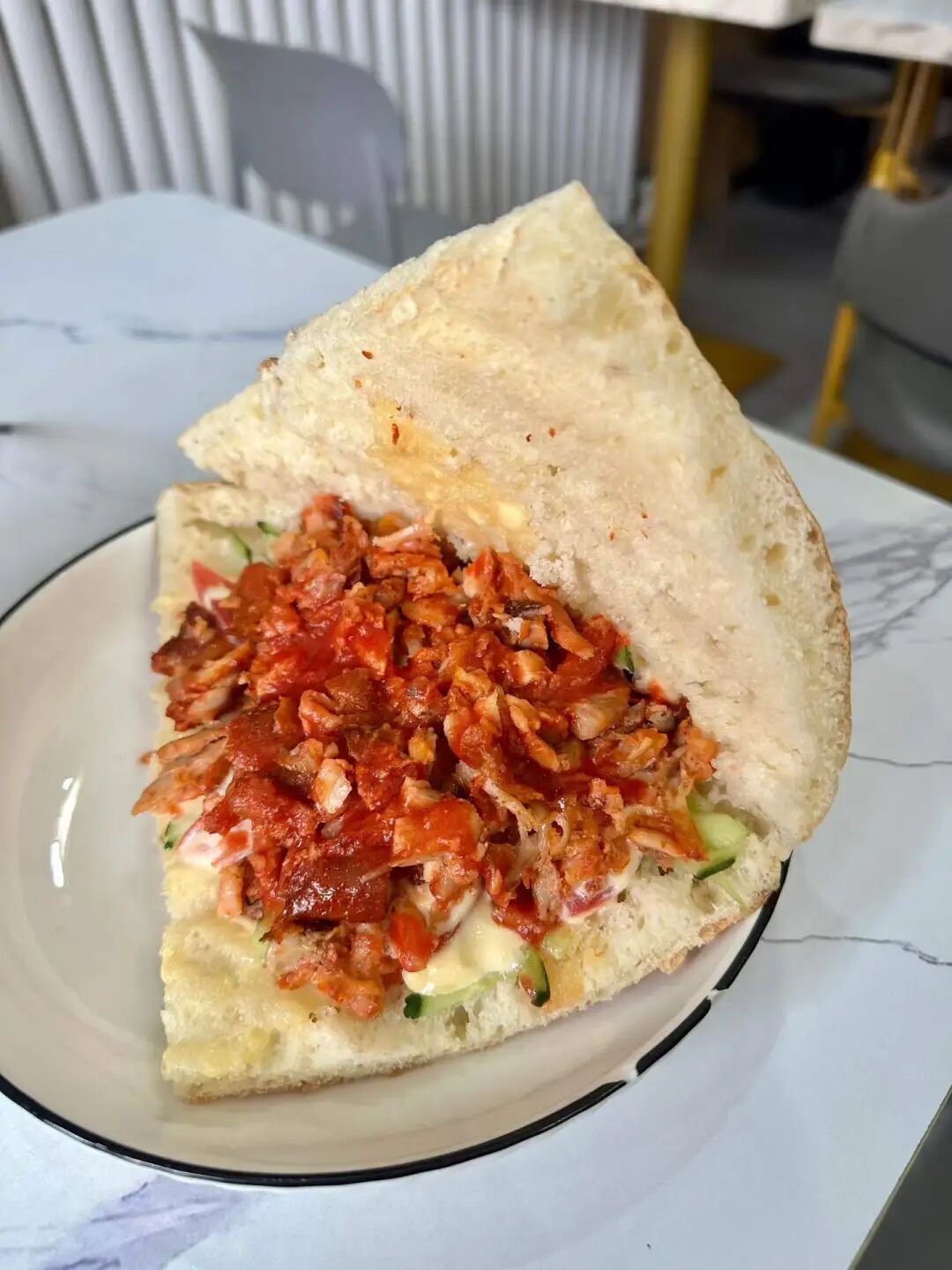
Finally, I highly recommend their yogurt. It was unexpectedly authentic, exactly like the homemade yogurt in Xinjiang! It might be one of the best yogurts in Beijing, and a big bottle only costs seven yuan! We finished it and bought another bottle to take home. I can't imagine how they make such pure yogurt using milk bought in Beijing. Only a few Uyghur restaurants in Beijing make yogurt that can compare to theirs.
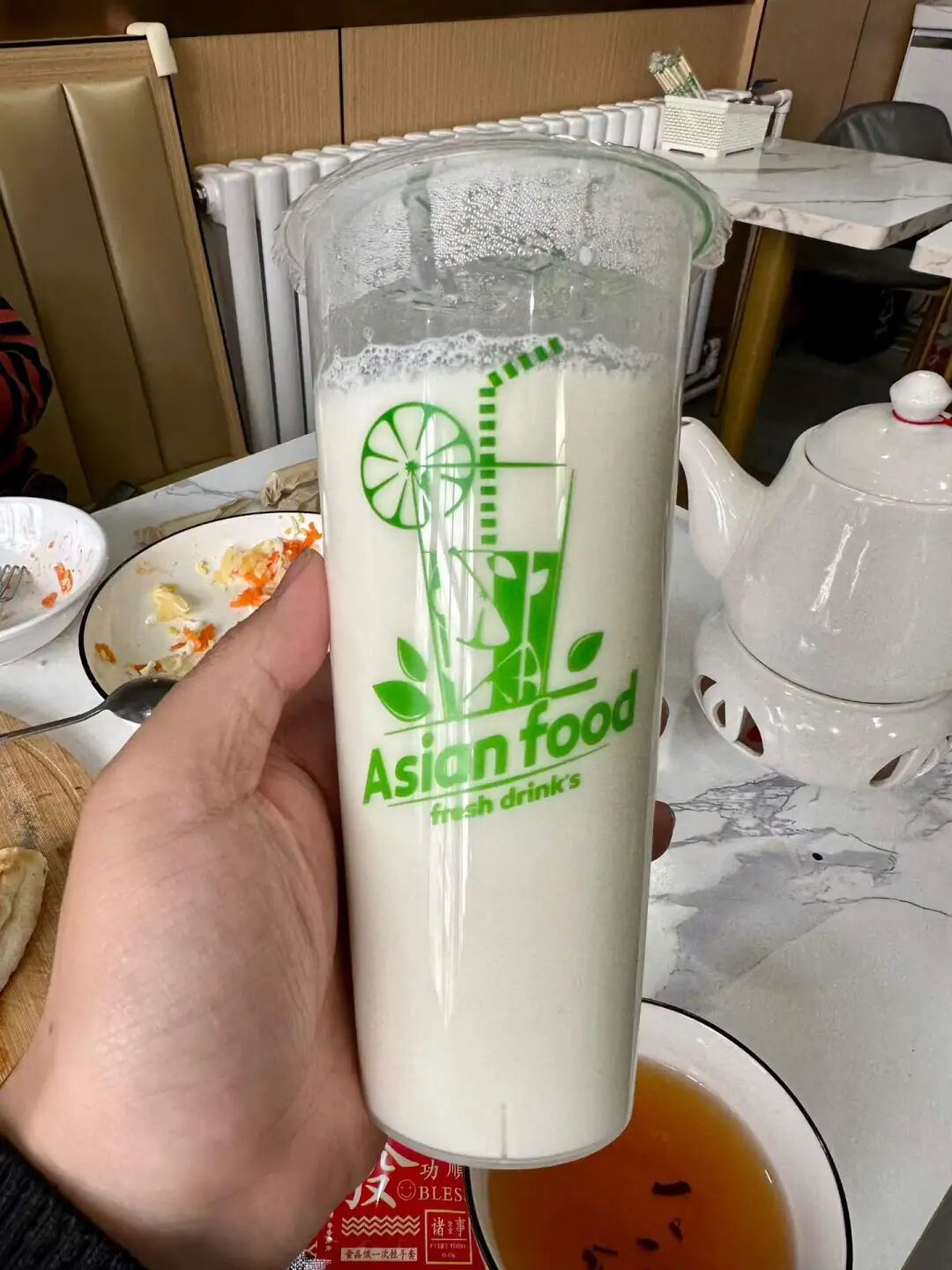
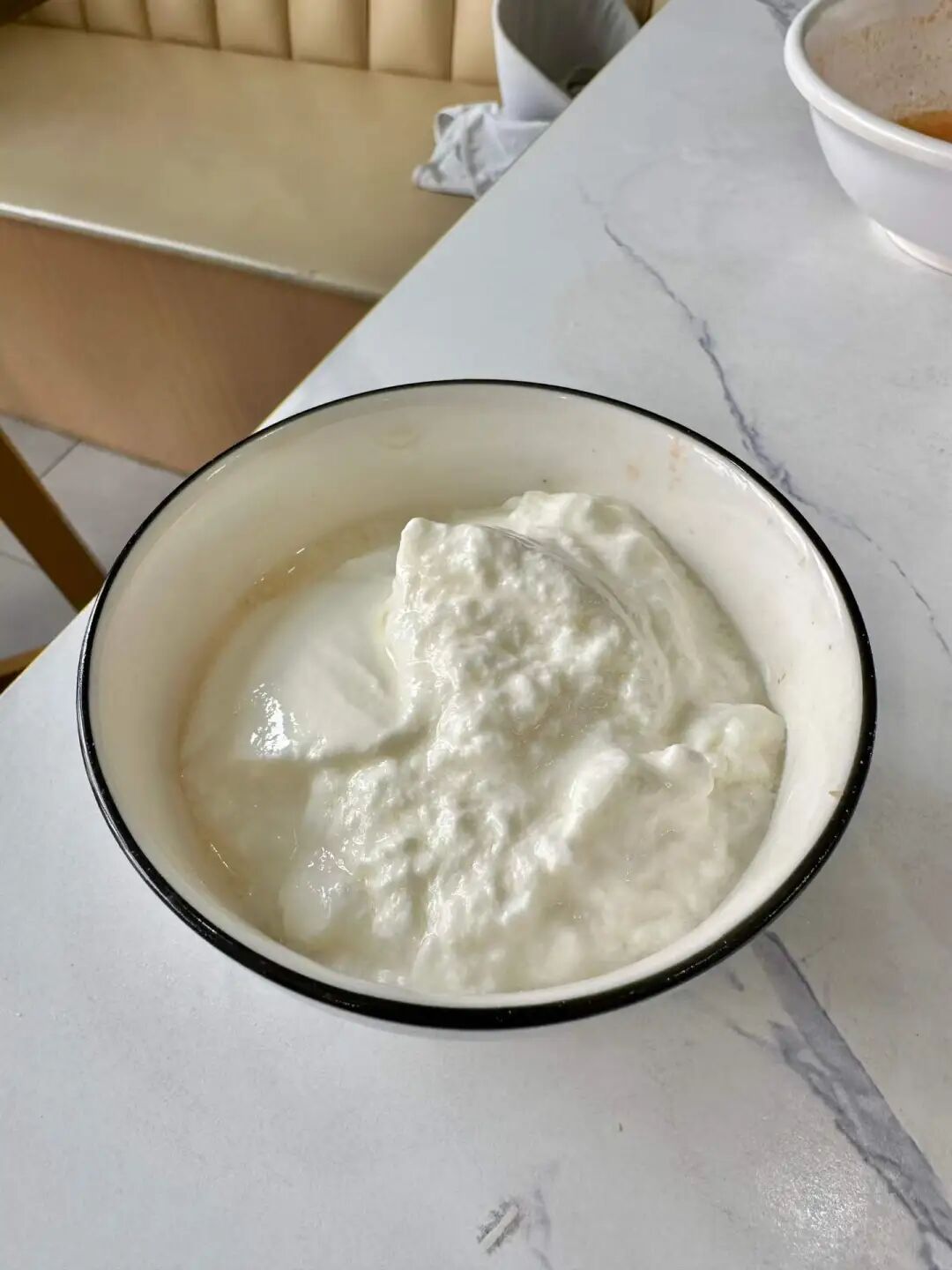
An-Noor
I went to eat at another branch of An-Noor during the Qingming Festival. I specifically checked the China University of Petroleum website. In 2025, the university had 484 international students from the five Central Asian countries, many of whom are studying oil and gas engineering. Turkmenistan has very rich natural gas and oil reserves. It has the world's second-largest onshore gas field and is China's largest supplier of pipeline natural gas, so many students study at the China University of Petroleum.
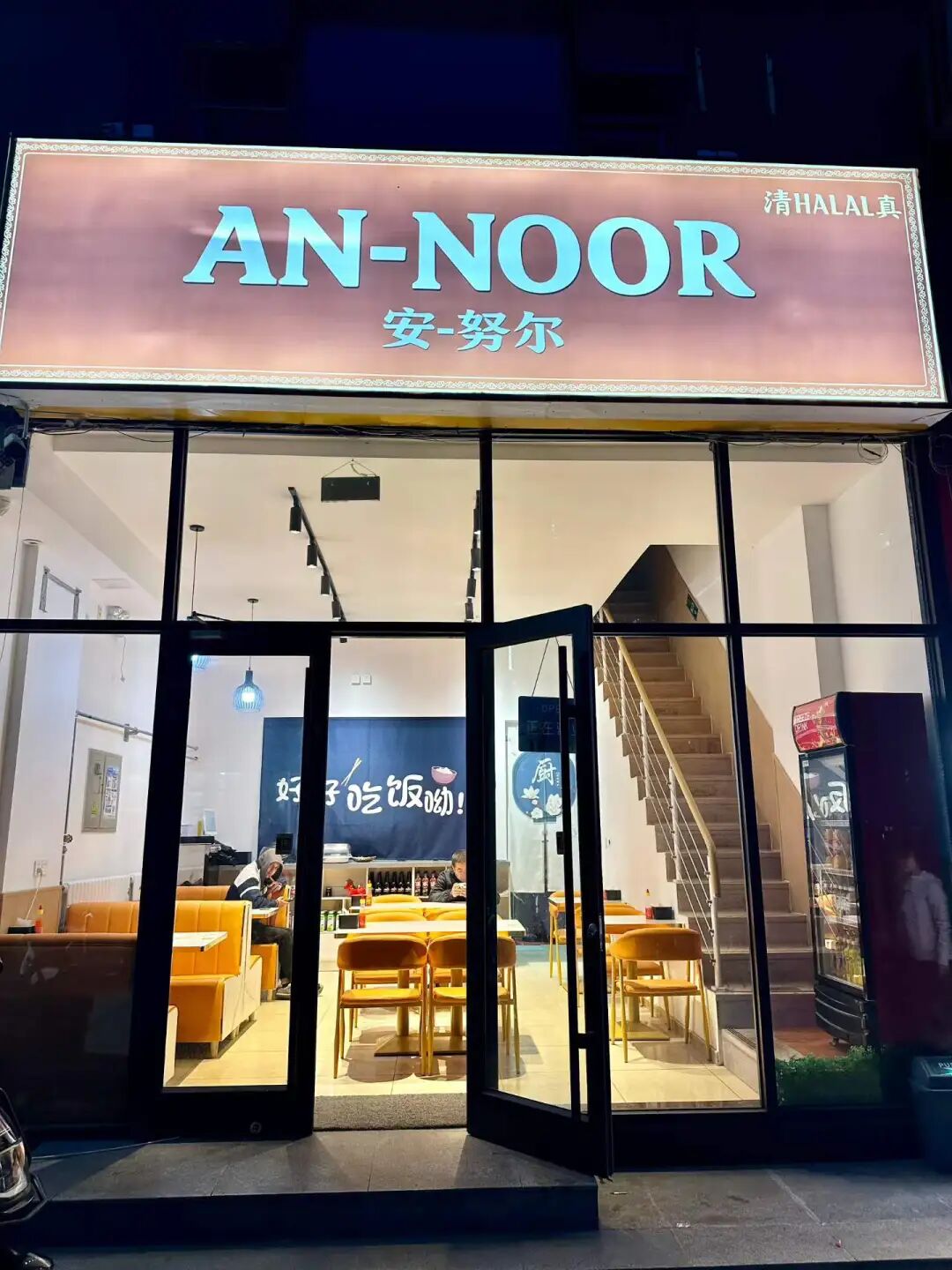
The prices at An-Noor are still very affordable and suitable for students. It is much cheaper than the places near Ritan Upper Street. We ordered buckwheat with mashed potatoes and gravy, roasted chicken leg, pumpkin steamed dumplings (manti), beef turnover (chebureki), meatball noodles, Russian honey cake, Korean-style shredded carrots, and Turkish lentil soup. It only cost a little over one hundred yuan in total. They use QR code ordering, so you don't need to talk much. However, the Turkmen guy there speaks good Chinese and was very enthusiastic, even giving Suleiman some Turkmenistan chocolate.
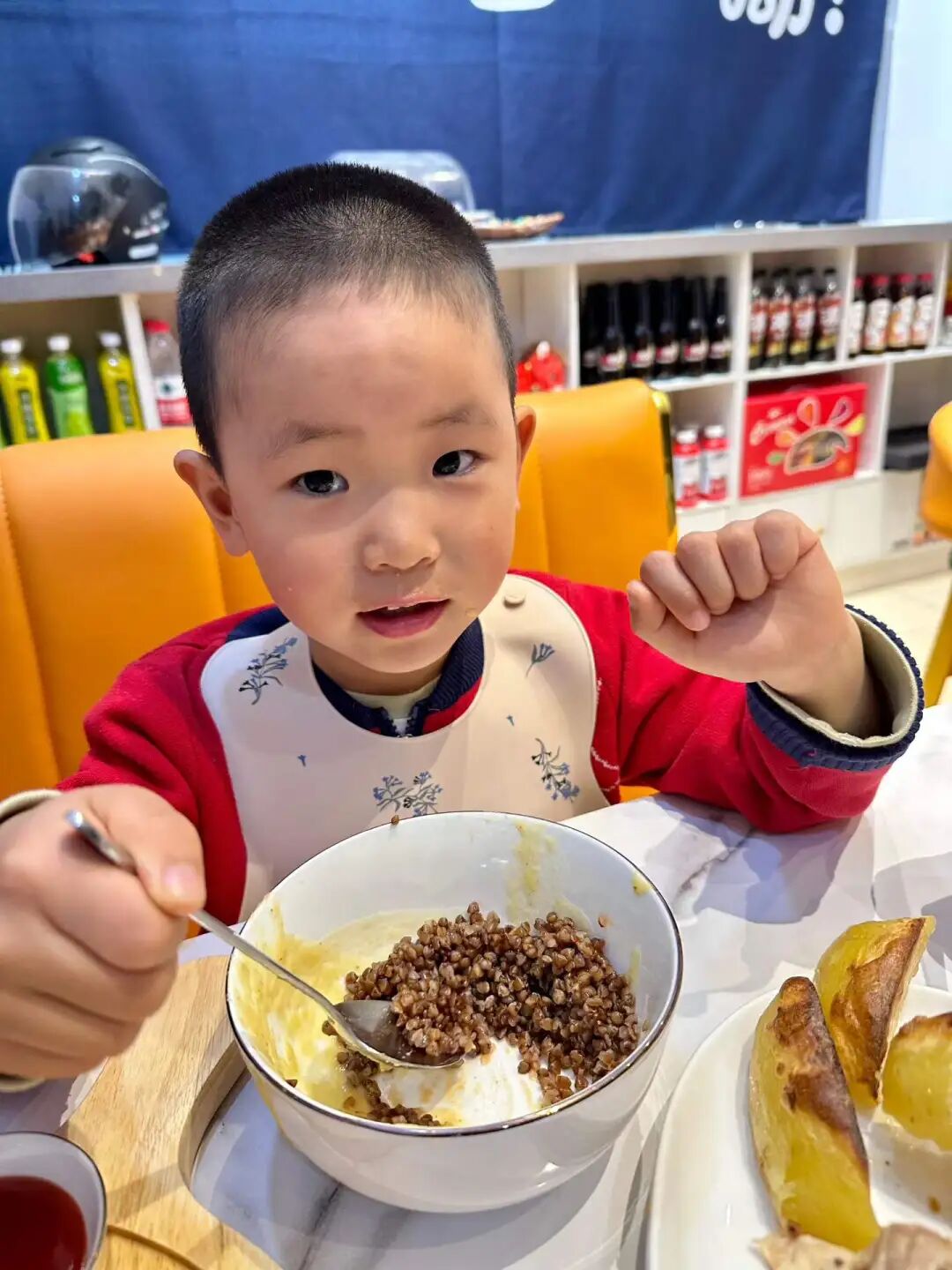
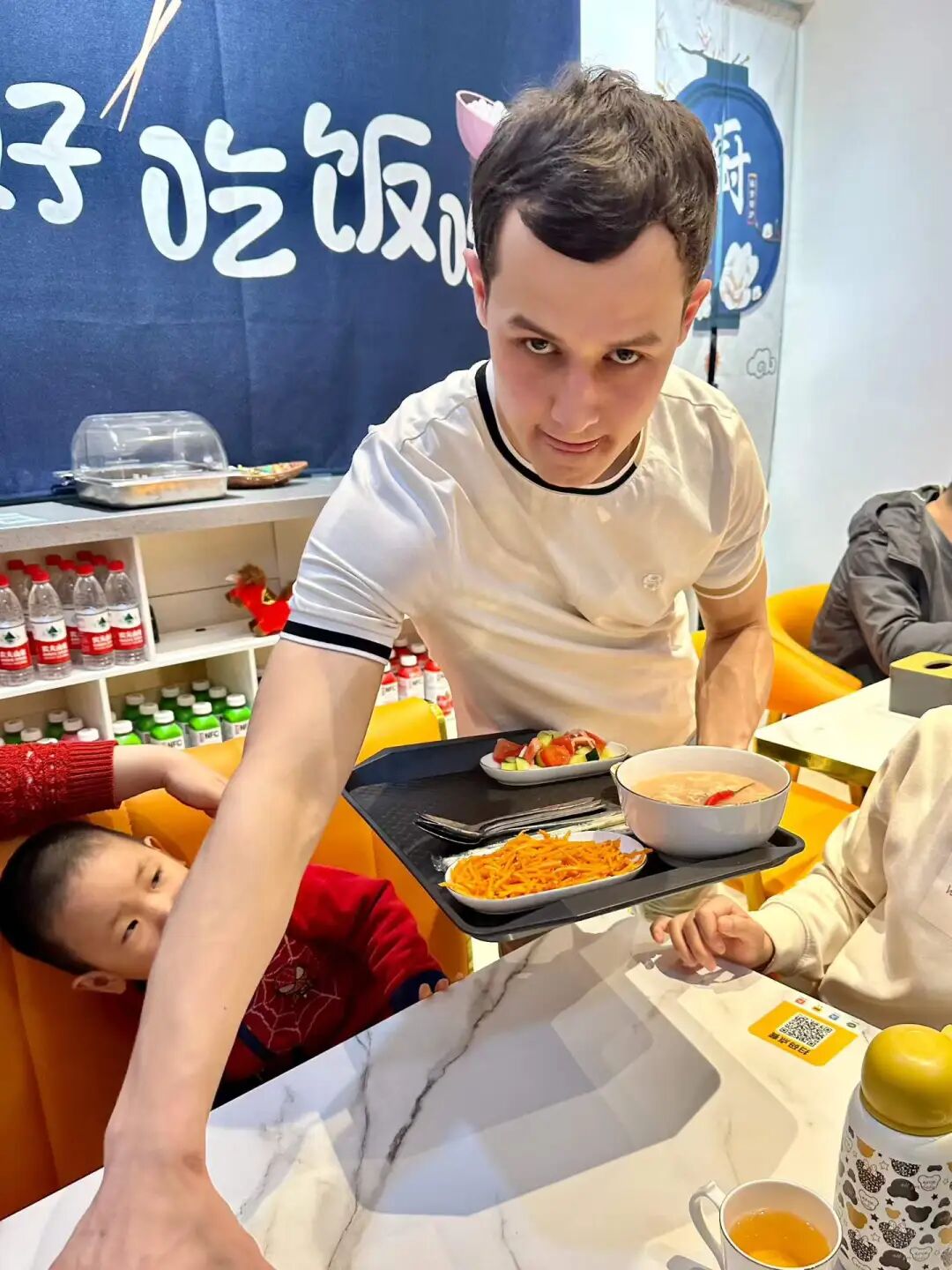
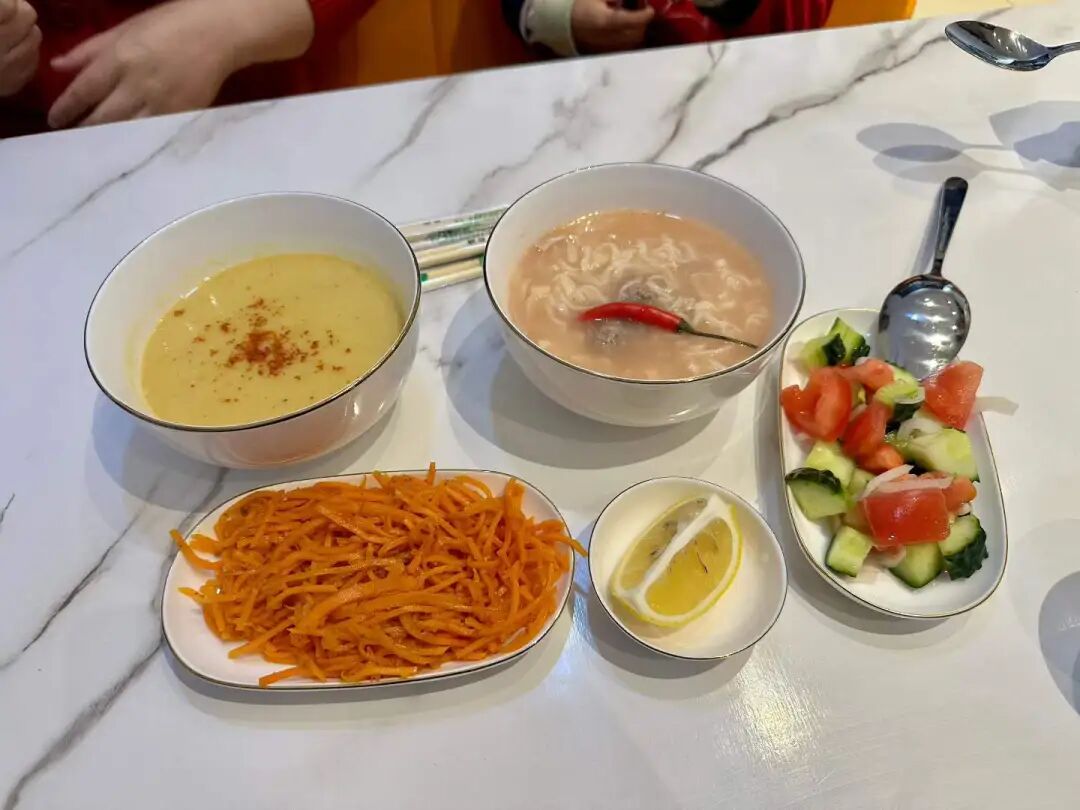
Their buckwheat has a stronger flavor than the one at Merv. The sauce doesn't have meat, but it comes with two chicken patties. It only costs 24 yuan, which is a great deal. Suleiman really loves Russian-style buckwheat.
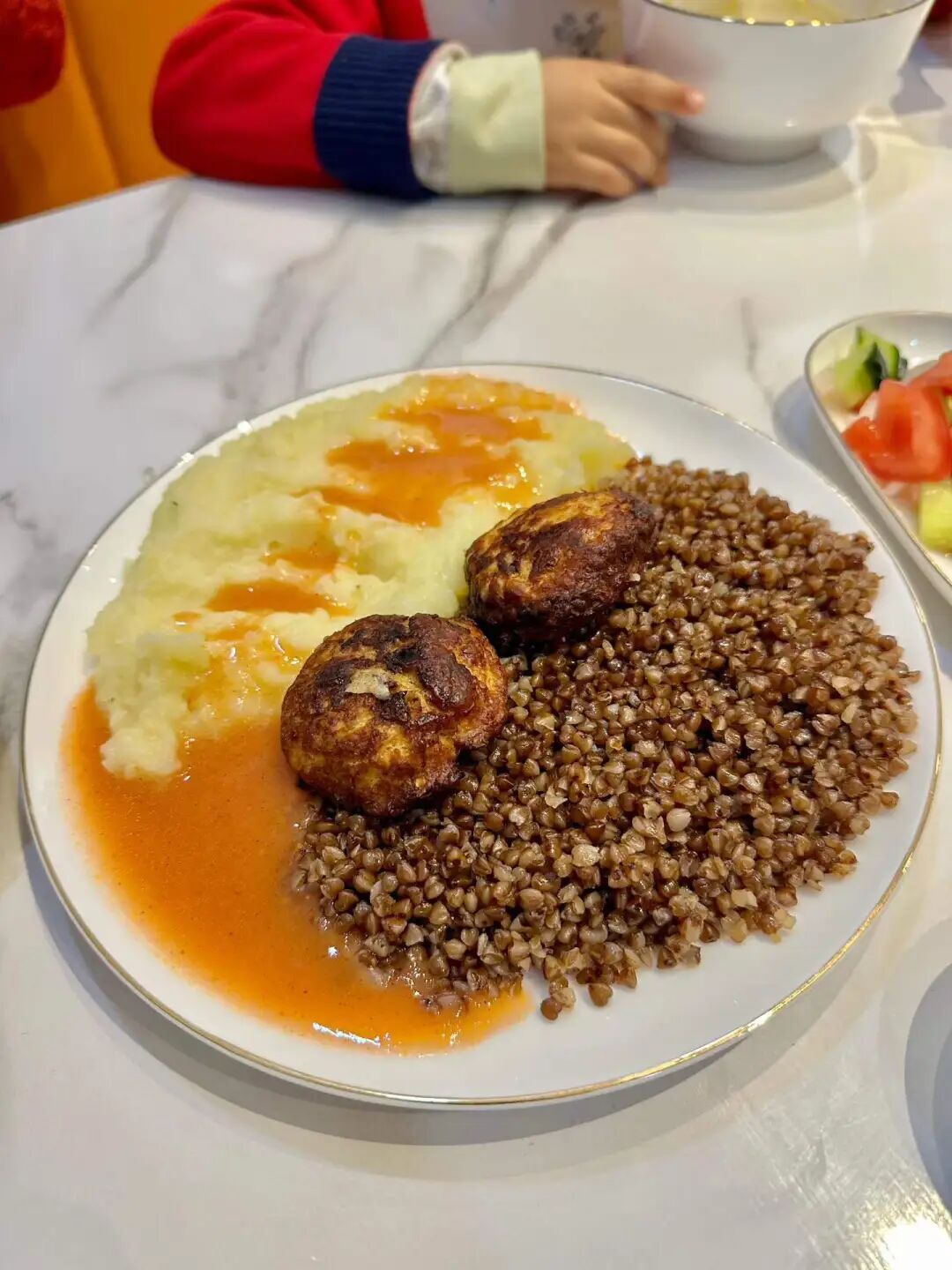
Their roasted chicken leg is also a great deal. A huge chicken leg is only 22 yuan. It is roasted until tender and fragrant, and it tastes great dipped in mayonnaise.
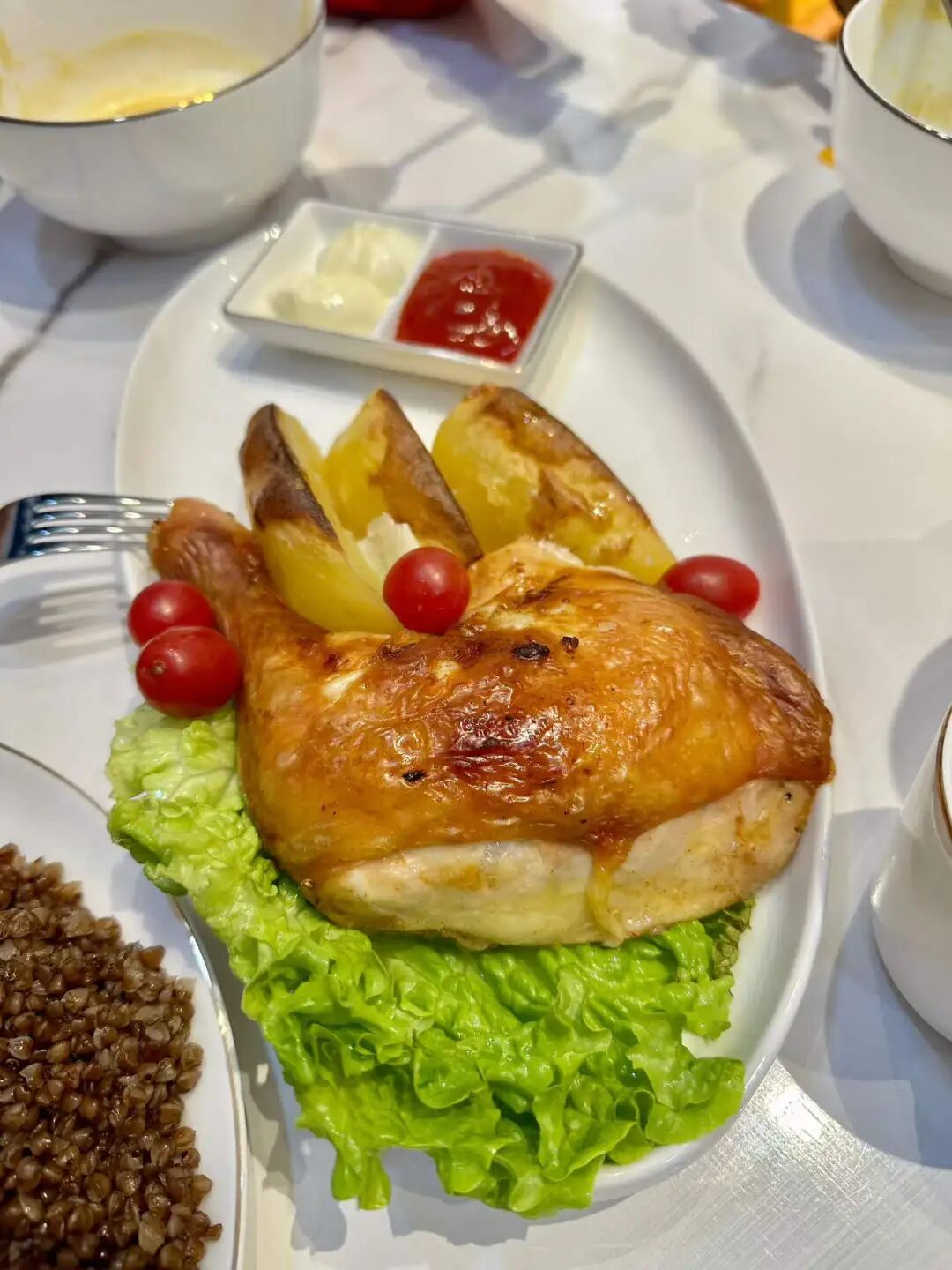
The Central Asian word manti comes from the Chinese word mantou. The earliest mantou actually had fillings, and the word still keeps this ancient meaning in the Wu dialect. Manti spread rapidly to Central Asia, West Asia, and as far as the Turkish Aegean coast during the Mongol Empire. It even reached the Balkans during the Ottoman period, but the preparation methods vary from place to place. Central Asian steamed dumplings (manti) are usually quite large, while the Turkish ones are smaller. Central Asian manti are basically the same as the thin-skinned steamed buns (baopi baozi) in Xinjiang. They also come with lamb or pumpkin fillings, and the pumpkin version is usually spicy. The difference is that Central Asian manti are dipped in yogurt, while the ones in Xinjiang are usually dipped in chili sauce. This place doesn't put much filling in their pumpkin manti, but getting 8 of them for 25 yuan is still a pretty good deal. Their yogurt is also very authentic and clearly homemade, but it seems they don't sell it separately, or we definitely would have bought some.
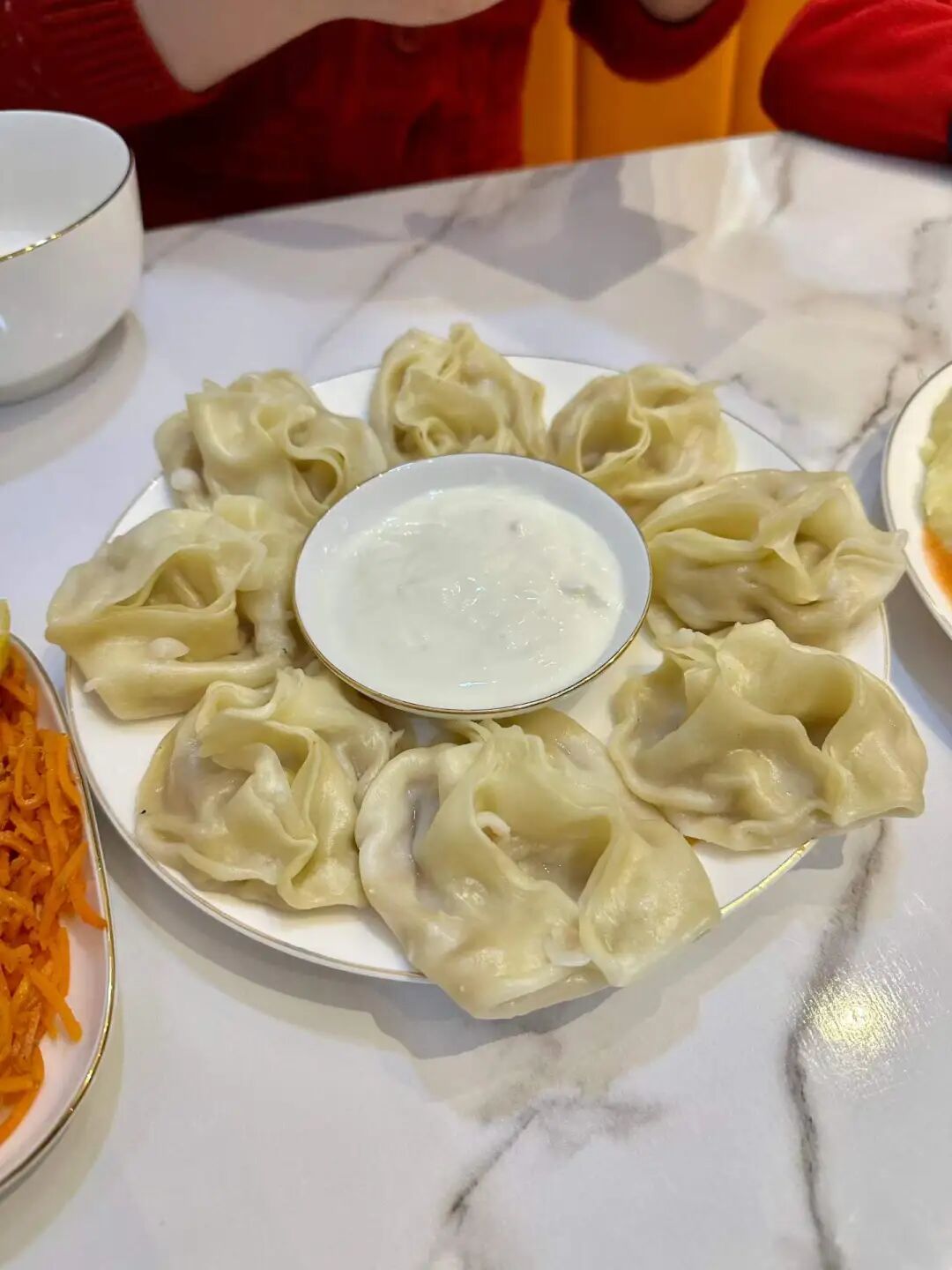
Fried meat pastry (cheburek) is a crispy meat-filled turnover. It was originally the national dish of the Crimean Tatars and later became very popular across the former Soviet Union and the former Ottoman regions. They sell 5 cheburek for 20 yuan, so at 4 yuan each, it is truly the cheapest I have ever eaten. The taste is great, too, and everyone really likes it.
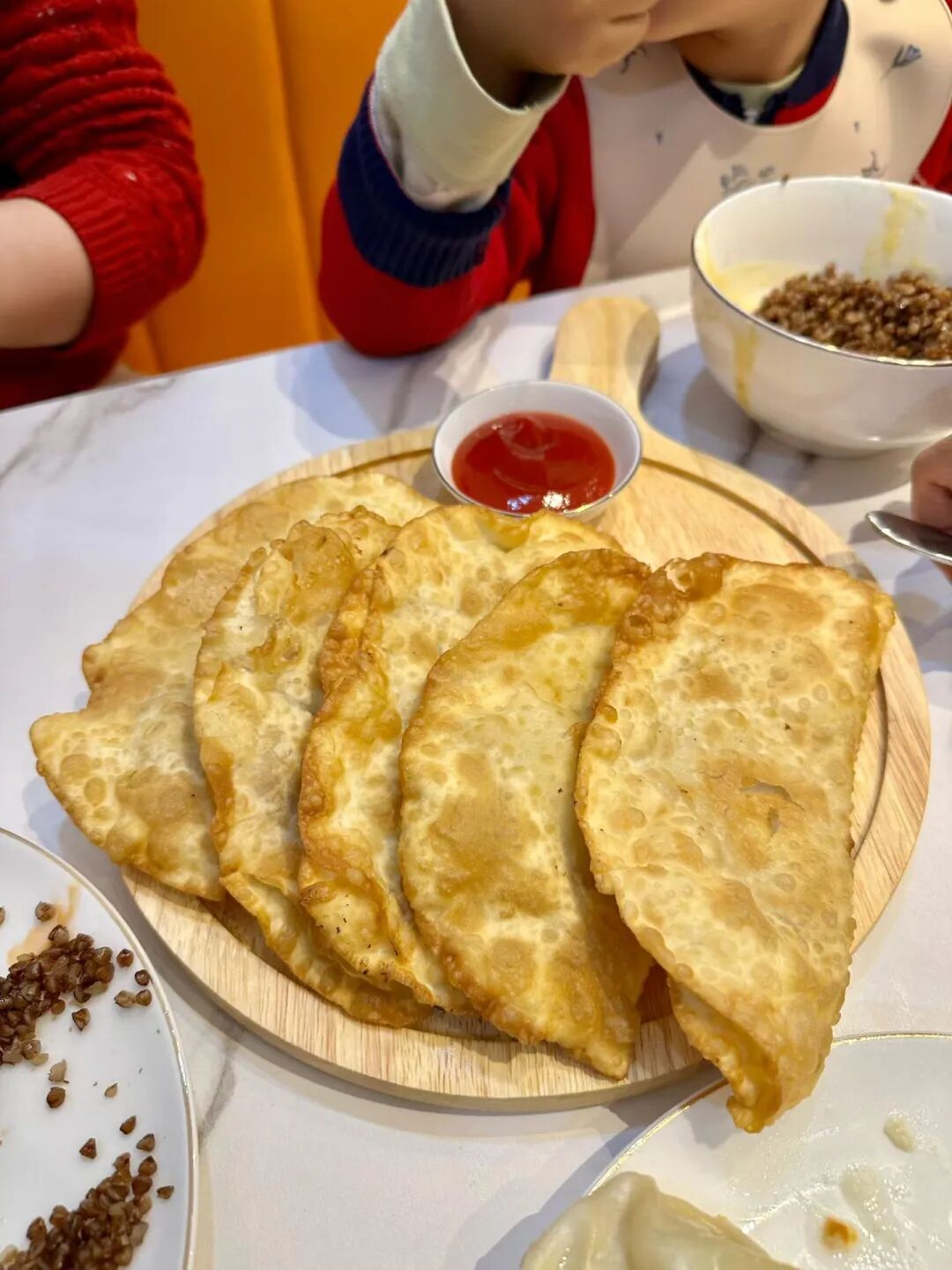
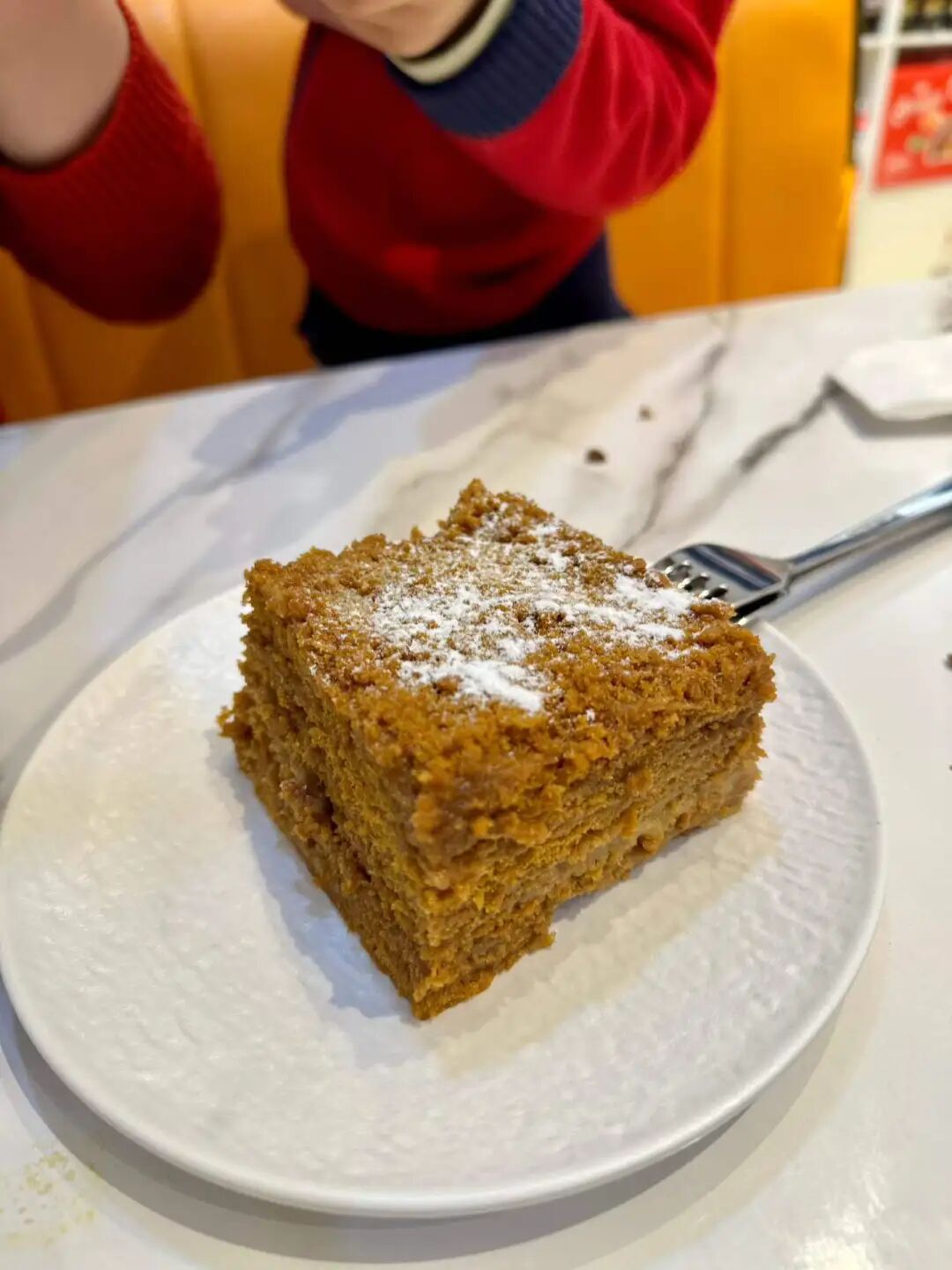
Best Halal Food in Japan: Muslim-Friendly Restaurants, Ramen and Travel Food Map
Articles • yusuf908 posted the article • 0 comments • 162 views • 2026-05-24 00:17
Summary: This Japan halal food map gathers Muslim-friendly restaurants, ramen, travel food stops, and practical halal dining notes for readers planning food-focused trips in Japan.
You can find halal restaurants in almost every Japanese city. Halal food in Japan is mostly Indian-Pakistani and Turkish cuisine. There are also Japanese restaurants run by local Muslims, noodle shops run by Hui Muslims from Northwest China, and of course, Xinjiang restaurants.
1. Mount Fuji Indian Cuisine
This is an Indian restaurant very close to Lake Kawaguchi. Note that Mount Fuji is a fair distance from Fuji City, so be careful not to get them mixed up when searching on a map.
Address: Google Maps does not work well in China. I suggest using Google Maps to search for "インドレストラン" once you arrive at the foot of Mount Fuji.
2. Niku no Hanamasa Tsukuba Branch
This store is in Tsukuba, a science city in Ibaraki Prefecture. There are many Muslims here, and you can buy halal meat at this supermarket. This is the halal chicken my Japanese friend bought. My friend specifically prepared a home-cooked Japanese meal for me using halal ingredients.
If you want to eat this, make a Japanese friend to cook it for you.
Address: 305-0834 309-7 Teshirogi, Tsukuba City, Ibaraki Prefecture
Website: http://www.hanamasa.co.jp/shop/index_en.html
2. Tokyo Indian-Pakistani Cuisine
Many Indian-Pakistani restaurants in Tokyo are halal. For Muslims abroad, Indian-Pakistani food is like ramen for Muslims in China. When you are in a strange country and cannot find a halal restaurant, try searching for an Indian-Pakistani or Turkish restaurant. These are very likely to be halal.
Address: 4-chome, Hongo, Bunkyo-ku, Tokyo
3. Sumiyakiya Nishi-Azabu Main Store
Grilled meat is also a popular way to eat in Japan.
The diners inside look like they are from the Middle East.
Complimentary kimchi.
The most reassuring thing about eating in Japan is that the ingredients are guaranteed to be fresh.
This is a bit like a combination of scallion pancake (cong huabing) and grilled cornmeal bun (wo tou).
The meat is marinated.
This is the grilled lamb, served directly. It is rare to find lamb in Japan.
Address: 3-20-16 Nishi-Azabu, Minato-ku, Tokyo
4. Kebab
Turkish kebab is a type of fast food that students studying abroad are familiar with; it is convenient and delicious. The server at this shop is Turkish, but he calls out in Japanese. It felt strange to hear a white face speaking Japanese for the first time.
Maybe I was just hungry, but I ate two in one go. Turkish kebab (doner kebab) has saved the stomachs of so many international students.
Address: Ueno Shopping Street, Taito Ward, Tokyo.
5. Yokohama: Kissho Wagyu Hot Pot.
I actually found halal Japanese Wagyu beef in Yokohama. I have to thank Sister Amina for the treat, or I would have missed out on such delicious food.
Kissho Wagyu beef with clear marbling.
Fresh vegetables. The types of vegetables here are the same as in China.
The Japanese people are experts at eating raw food, so sashimi is naturally a must.
Don't let the small portion size fool you; this dessert is made with great care. Japan has the most Michelin-starred restaurants in the world, which shows the deep culinary skill of the Japanese. To the average diner, dishes at Michelin restaurants might look plain, but the selection of ingredients and the processing methods reflect years of the chef's hard work.
This is a screenshot of the website. Remember to call and book in advance so the shop can prepare fresh halal Wagyu beef.
Address:
Landmark Plaza 5F, 2-2-1 Minatomirai, Nishi Ward, Yokohama City, Kanagawa Prefecture.
Website: www.kioicho-kissho.com/yokohama/menu/index.html
6. Kerimu Xinjiang Restaurant.
This is a Xinjiang restaurant that every Xinjiang person coming to Japan must visit. The owner is a Uyghur from Northern Xinjiang, and his whole family has immigrated to Japan.
The server is also a Uyghur girl.
The taste of the grilled meat is not much different from what you get in Xinjiang.
The mung bean jelly (liangfen) has been modified. Japanese people cannot eat food that is too spicy, while Xinjiang-style cold noodles (liangpi) are usually spicier.
I was surprised to find dumplings (jiaozi) at a Xinjiang restaurant in Tokyo.
The hand-pulled noodles (latiaozi) have been Japanized. The portion is half of what you get in Xinjiang, but the taste remains the same.
Address: 1F Nishi-Shinjuku Bar Building, 3-15-8-103 Nishi-Shinjuku, Shinjuku Ward, Tokyo.
There are many more halal restaurants in Tokyo, but I only chose to feature the ones I took photos of. Therefore, the following two restaurants do not have pictures, but here are some specialty restaurants that friends have visited:
7. Mongolian Meat Pie.
Address: 5F, Shinto Building, 2-14-7 Takadanobaba, Shinjuku-ku, Tokyo.
8. Japanese ramen
Address: 1-11-7 Shinjuku, Shinjuku-ku, Tokyo.
Website: http://www.m-ouka.jp/sp/access/index.html
9. Iftar meal
My time in Japan happened to coincide with the holy month of Ramadan, when mosques in Tokyo prepare iftar meals for fellow Muslims (dosti).
This is Indian-Pakistani style rice pilaf (biryani). Pakistanis eat it with their hands, but I prefer a spoon. When traveling, I first find the local mosque to get information about halal restaurants. You can find mosques easily on Google Maps.
Address: Tokyo Okachimachi Mosque, Tokyo Camii.
10. Nagoya: Asian cuisine
Asian means Asian, but this place actually serves South Asian flavors. The servers are from Nepal.
Influenced by Japanese habits, restaurants in Japan are kept very clean and tidy.
The Nepali brother spoke English with a heavy accent. I couldn't tell where he was from for a long time, until he said his country is between China and India, and then it clicked.
He knew I was from China and asked if I wanted to eat momo. I was confused, so he brought a picture from the back, and I realized they call dumplings momo.
Fresh vegetable salad. Foreigners like to eat raw vegetables. Right, I am a foreigner in Japan too...
This is a set meal. Ordering a set at a South Asian restaurant usually means getting these items: a soup, a beef or chicken dish, a flatbread (naan), and a bowl of rice.
11. Osaka Mosque
A Pakistani man I met at the mosque brought me to a halal restaurant across the street.
This is a mango milkshake (lassi) a fellow Muslim (dosti) gave me.
As usual, I had a set meal. The rice here is very fragrant; the quality of Japanese rice is excellent.
A very small vegetable salad. Portions in Japan are quite small, which is fine because it prevents waste.
Address: Opposite Osaka Mosque, right next door (Baidu Maps is not convenient, and Google is blocked, but you can use Google Maps once you are in Japan).
12. Kyoto: Turkish restaurant
I followed Google Maps to find this Turkish restaurant in downtown Kyoto.
The upstairs area is decorated in a Turkish style.
The shop is very clean and tidy.
The dishes are served in order, starting with cold appetizers.
Next comes the creamy soup.
I ordered a piece of baked flatbread (naan) as the main staple, as is customary.
Turkish and Middle Eastern grilled meats are served with roasted tomatoes and green peppers to cut through the richness.
Dessert is served after the meal.
Turkish coffee is very famous. European coffee culture originated in Africa and spread to the West through the Ottoman Empire.
Address: Once you arrive in Kyoto, search for "トルコ" on Google Maps.
13. Genghis Khan barbecue (jingjisihan kaorou)
A Japanese friend introduced me to this barbecue restaurant run by a Japanese Muslim. It is said they sell halal food, but I have not eaten there yet.
If you are interested in trying it, please remember to come back and share your thoughts with me.
Address: 3-19-6 Kandatsuchuo, Tsuchiura City, Ibaraki Prefecture 300-0011 (3 minutes by car from JR Joban Line Kandatsu Station).
Website: http://www.hitsujinokoya.jp/info/index.html view all
Summary: This Japan halal food map gathers Muslim-friendly restaurants, ramen, travel food stops, and practical halal dining notes for readers planning food-focused trips in Japan.
You can find halal restaurants in almost every Japanese city. Halal food in Japan is mostly Indian-Pakistani and Turkish cuisine. There are also Japanese restaurants run by local Muslims, noodle shops run by Hui Muslims from Northwest China, and of course, Xinjiang restaurants.
1. Mount Fuji Indian Cuisine
This is an Indian restaurant very close to Lake Kawaguchi. Note that Mount Fuji is a fair distance from Fuji City, so be careful not to get them mixed up when searching on a map.
Address: Google Maps does not work well in China. I suggest using Google Maps to search for "インドレストラン" once you arrive at the foot of Mount Fuji.
2. Niku no Hanamasa Tsukuba Branch
This store is in Tsukuba, a science city in Ibaraki Prefecture. There are many Muslims here, and you can buy halal meat at this supermarket. This is the halal chicken my Japanese friend bought. My friend specifically prepared a home-cooked Japanese meal for me using halal ingredients.
If you want to eat this, make a Japanese friend to cook it for you.
Address: 305-0834 309-7 Teshirogi, Tsukuba City, Ibaraki Prefecture
Website: http://www.hanamasa.co.jp/shop/index_en.html
2. Tokyo Indian-Pakistani Cuisine
Many Indian-Pakistani restaurants in Tokyo are halal. For Muslims abroad, Indian-Pakistani food is like ramen for Muslims in China. When you are in a strange country and cannot find a halal restaurant, try searching for an Indian-Pakistani or Turkish restaurant. These are very likely to be halal.
Address: 4-chome, Hongo, Bunkyo-ku, Tokyo
3. Sumiyakiya Nishi-Azabu Main Store
Grilled meat is also a popular way to eat in Japan.
The diners inside look like they are from the Middle East.
Complimentary kimchi.
The most reassuring thing about eating in Japan is that the ingredients are guaranteed to be fresh.
This is a bit like a combination of scallion pancake (cong huabing) and grilled cornmeal bun (wo tou).
The meat is marinated.
This is the grilled lamb, served directly. It is rare to find lamb in Japan.
Address: 3-20-16 Nishi-Azabu, Minato-ku, Tokyo
4. Kebab
Turkish kebab is a type of fast food that students studying abroad are familiar with; it is convenient and delicious. The server at this shop is Turkish, but he calls out in Japanese. It felt strange to hear a white face speaking Japanese for the first time.
Maybe I was just hungry, but I ate two in one go. Turkish kebab (doner kebab) has saved the stomachs of so many international students.
Address: Ueno Shopping Street, Taito Ward, Tokyo.
5. Yokohama: Kissho Wagyu Hot Pot.
I actually found halal Japanese Wagyu beef in Yokohama. I have to thank Sister Amina for the treat, or I would have missed out on such delicious food.
Kissho Wagyu beef with clear marbling.
Fresh vegetables. The types of vegetables here are the same as in China.
The Japanese people are experts at eating raw food, so sashimi is naturally a must.
Don't let the small portion size fool you; this dessert is made with great care. Japan has the most Michelin-starred restaurants in the world, which shows the deep culinary skill of the Japanese. To the average diner, dishes at Michelin restaurants might look plain, but the selection of ingredients and the processing methods reflect years of the chef's hard work.
This is a screenshot of the website. Remember to call and book in advance so the shop can prepare fresh halal Wagyu beef.
Address:
Landmark Plaza 5F, 2-2-1 Minatomirai, Nishi Ward, Yokohama City, Kanagawa Prefecture.
Website: www.kioicho-kissho.com/yokohama/menu/index.html
6. Kerimu Xinjiang Restaurant.
This is a Xinjiang restaurant that every Xinjiang person coming to Japan must visit. The owner is a Uyghur from Northern Xinjiang, and his whole family has immigrated to Japan.
The server is also a Uyghur girl.
The taste of the grilled meat is not much different from what you get in Xinjiang.
The mung bean jelly (liangfen) has been modified. Japanese people cannot eat food that is too spicy, while Xinjiang-style cold noodles (liangpi) are usually spicier.
I was surprised to find dumplings (jiaozi) at a Xinjiang restaurant in Tokyo.
The hand-pulled noodles (latiaozi) have been Japanized. The portion is half of what you get in Xinjiang, but the taste remains the same.
Address: 1F Nishi-Shinjuku Bar Building, 3-15-8-103 Nishi-Shinjuku, Shinjuku Ward, Tokyo.
There are many more halal restaurants in Tokyo, but I only chose to feature the ones I took photos of. Therefore, the following two restaurants do not have pictures, but here are some specialty restaurants that friends have visited:
7. Mongolian Meat Pie.
Address: 5F, Shinto Building, 2-14-7 Takadanobaba, Shinjuku-ku, Tokyo.
8. Japanese ramen
Address: 1-11-7 Shinjuku, Shinjuku-ku, Tokyo.
Website: http://www.m-ouka.jp/sp/access/index.html
9. Iftar meal
My time in Japan happened to coincide with the holy month of Ramadan, when mosques in Tokyo prepare iftar meals for fellow Muslims (dosti).
This is Indian-Pakistani style rice pilaf (biryani). Pakistanis eat it with their hands, but I prefer a spoon. When traveling, I first find the local mosque to get information about halal restaurants. You can find mosques easily on Google Maps.
Address: Tokyo Okachimachi Mosque, Tokyo Camii.
10. Nagoya: Asian cuisine
Asian means Asian, but this place actually serves South Asian flavors. The servers are from Nepal.
Influenced by Japanese habits, restaurants in Japan are kept very clean and tidy.
The Nepali brother spoke English with a heavy accent. I couldn't tell where he was from for a long time, until he said his country is between China and India, and then it clicked.
He knew I was from China and asked if I wanted to eat momo. I was confused, so he brought a picture from the back, and I realized they call dumplings momo.
Fresh vegetable salad. Foreigners like to eat raw vegetables. Right, I am a foreigner in Japan too...
This is a set meal. Ordering a set at a South Asian restaurant usually means getting these items: a soup, a beef or chicken dish, a flatbread (naan), and a bowl of rice.
11. Osaka Mosque
A Pakistani man I met at the mosque brought me to a halal restaurant across the street.
This is a mango milkshake (lassi) a fellow Muslim (dosti) gave me.
As usual, I had a set meal. The rice here is very fragrant; the quality of Japanese rice is excellent.
A very small vegetable salad. Portions in Japan are quite small, which is fine because it prevents waste.
Address: Opposite Osaka Mosque, right next door (Baidu Maps is not convenient, and Google is blocked, but you can use Google Maps once you are in Japan).
12. Kyoto: Turkish restaurant
I followed Google Maps to find this Turkish restaurant in downtown Kyoto.
The upstairs area is decorated in a Turkish style.
The shop is very clean and tidy.
The dishes are served in order, starting with cold appetizers.
Next comes the creamy soup.
I ordered a piece of baked flatbread (naan) as the main staple, as is customary.
Turkish and Middle Eastern grilled meats are served with roasted tomatoes and green peppers to cut through the richness.
Dessert is served after the meal.
Turkish coffee is very famous. European coffee culture originated in Africa and spread to the West through the Ottoman Empire.
Address: Once you arrive in Kyoto, search for "トルコ" on Google Maps.
13. Genghis Khan barbecue (jingjisihan kaorou)
A Japanese friend introduced me to this barbecue restaurant run by a Japanese Muslim. It is said they sell halal food, but I have not eaten there yet.
If you are interested in trying it, please remember to come back and share your thoughts with me.
Address: 3-19-6 Kandatsuchuo, Tsuchiura City, Ibaraki Prefecture 300-0011 (3 minutes by car from JR Joban Line Kandatsu Station).
Website: http://www.hitsujinokoya.jp/info/index.html
Best Halal Food in Malaysia: Muslim-Friendly Restaurants, Satay and Local Food Map
Articles • ali2007fr posted the article • 0 comments • 226 views • 2026-05-21 08:41
Summary: This Malaysia halal food map gathers Muslim-friendly restaurants, local dishes, satay, seafood, and practical dining notes while keeping the places, food names, and photos from the Chinese source.
Malaysia is an Islamic country filled with halal restaurants. In fact, Malaysia pioneered the international halal certification standards used today, so it is actually quite hard to find a non-halal restaurant there.
1. McDonald's
I have never eaten at a halal McDonald's back home, so I had to try it in Malaysia. Fast food chains like McDonald's in Malaysia are all halal. Even in neighboring Singapore, famous chains like McDonald's and KFC are 100% halal, so Muslims can eat there with peace of mind.
Even monks eat at McDonald's there.
Address: Kuala Lumpur Airport, Petronas Twin Towers
2. Sabah Night Market
No matter where I go, I love visiting local markets to experience daily life. The food at these markets is authentic and cheap. This market is in Sabah state. You do not need a map; just follow the crowds and you will find it.
This is a common Southeast Asian stir-fried noodle dish with chicken. It costs just a few dollars, and Malaysians eat it with their hands.
This pot is not for vinegar. Muslims will recognize it as a water pitcher (tangping). On Malaysian tables, it is used for washing hands because people eat with their fingers.
Seafood in this island nation is fresh and cheap. This pair of large prawns cost less than 30 yuan.
Lamb is rare in Malaysia, so enjoy the fish instead.
This is coconut pudding. I rarely see it elsewhere. It costs 4 Malaysian ringgit each.
If you want to learn to eat with your hands like a Malaysian, remember to use your right hand, as the left hand is used by Muslims for personal hygiene.
Address: Kota Kinabalu
2. Northwest Hand-Pulled Noodle Shop
When traveling, I avoid hand-pulled noodles (lamian) unless I have no other choice because I eat them too often at home. This shop is worth mentioning because it is the first time I have seen a lamian shop abroad.
The sign saying 'This shop is halal, please do not bring outside food' felt very familiar.
I did not go in to eat, but I wanted to record it. The owners of these shops have brought lamian all over the world. In some small cities in southern China, finding a halal lamian shop is something to be very grateful for.
Address: Jalan Tun Fuad Stephen
3. Indian Flatbread (roti canai)
These small street stalls are common in Southeast Asia, and the owners are mostly from India or Pakistan.
You can have this flatbread for breakfast. Tear it with your hands and dip it in the sauce.
Address: Jalan Ikan Juara 1
4. Japanese Dream Food
Because of Japan's history of colonizing Malaysia, some traces remain, and you can find many Japanese restaurants in Malaysia.
Mango pudding
This Japanese restaurant in Sabah is the first halal Japanese place I have ever eaten at.
A famous Japanese dish, thick wheat noodles (udon).
Sushi, which is halal so you can eat it with peace of mind.
Fresh salmon sashimi
Pacific saury (sanma), also a famous Japanese food.
You rarely see halal Japanese food in China. Before the first halal Japanese restaurant, Hefeng Zhi Yan, opened in Beijing, I had to go to Tianjin if I wanted to eat Japanese food.
Address: Lot No 36, Palm Square 4th Floor Center Point, 88000, Kota Kinabalu, Sabah, Kota Kinabalu, 88000 Kota Kinabalu, Sabah
5. NANDOS
This is a chain of roast chicken restaurants. The chicken in Malaysia tastes very different from the chicken in mainland China.
Address: There are many branches in Kuala Lumpur, found in large shopping malls like KLCC and Pavilion.
6. YUSOOF DAN
An Indian snack shop.
Seafood fried rice. I guess they gave us a spoon because they saw we were foreigners.
Seafood fried noodles
Beef and fried chicken. Actually, there are not many types of dishes in Southeast Asia, and the flavors are quite simple.
Address: Kuala Lumpur Central Market
7. SUSHI KING
Many restaurants in Malaysia are labeled "pork free," which means they don't serve pork. Even if the meat is halal, they might still sell alcohol. To get a halal certification in Malaysia, a restaurant must be alcohol-free. This Japanese restaurant has a halal certification.
Conveyor belt sushi, take what you want as you eat.
This is a dessert made from eggs.
Fish roe (caviar)
I can never get enough sushi.
Address: Sushi King @ Jaya One, Petaling Jaya, Jalan Universiti, Seksyen 13, Petaling Jaya, Selangor, Malaysia.
8. Arabic flatbread (khubz).
Many Arabs have moved to Malaysia for work. They share the same faith, which makes daily life easier. More importantly, the political situation is stable. Southeast Asia's economy has grown quickly in recent years, creating many jobs. Malaysia is also an international Islamic finance hub, which is attractive to Hui Muslims from China as well.
This Arabic flatbread (khubz) served with fries and beef is delicious when rolled up. The servers are all Arab. I even saw them get up to perform namaz during prayer time, which makes me feel more comfortable eating at this restaurant.
Address: The row of shops at the bottom of the UCSI University South Wing campus. view all
Summary: This Malaysia halal food map gathers Muslim-friendly restaurants, local dishes, satay, seafood, and practical dining notes while keeping the places, food names, and photos from the Chinese source.
Malaysia is an Islamic country filled with halal restaurants. In fact, Malaysia pioneered the international halal certification standards used today, so it is actually quite hard to find a non-halal restaurant there.
1. McDonald's
I have never eaten at a halal McDonald's back home, so I had to try it in Malaysia. Fast food chains like McDonald's in Malaysia are all halal. Even in neighboring Singapore, famous chains like McDonald's and KFC are 100% halal, so Muslims can eat there with peace of mind.
Even monks eat at McDonald's there.
Address: Kuala Lumpur Airport, Petronas Twin Towers
2. Sabah Night Market
No matter where I go, I love visiting local markets to experience daily life. The food at these markets is authentic and cheap. This market is in Sabah state. You do not need a map; just follow the crowds and you will find it.
This is a common Southeast Asian stir-fried noodle dish with chicken. It costs just a few dollars, and Malaysians eat it with their hands.
This pot is not for vinegar. Muslims will recognize it as a water pitcher (tangping). On Malaysian tables, it is used for washing hands because people eat with their fingers.
Seafood in this island nation is fresh and cheap. This pair of large prawns cost less than 30 yuan.
Lamb is rare in Malaysia, so enjoy the fish instead.
This is coconut pudding. I rarely see it elsewhere. It costs 4 Malaysian ringgit each.
If you want to learn to eat with your hands like a Malaysian, remember to use your right hand, as the left hand is used by Muslims for personal hygiene.
Address: Kota Kinabalu
2. Northwest Hand-Pulled Noodle Shop
When traveling, I avoid hand-pulled noodles (lamian) unless I have no other choice because I eat them too often at home. This shop is worth mentioning because it is the first time I have seen a lamian shop abroad.
The sign saying 'This shop is halal, please do not bring outside food' felt very familiar.
I did not go in to eat, but I wanted to record it. The owners of these shops have brought lamian all over the world. In some small cities in southern China, finding a halal lamian shop is something to be very grateful for.
Address: Jalan Tun Fuad Stephen
3. Indian Flatbread (roti canai)
These small street stalls are common in Southeast Asia, and the owners are mostly from India or Pakistan.
You can have this flatbread for breakfast. Tear it with your hands and dip it in the sauce.
Address: Jalan Ikan Juara 1
4. Japanese Dream Food
Because of Japan's history of colonizing Malaysia, some traces remain, and you can find many Japanese restaurants in Malaysia.
Mango pudding
This Japanese restaurant in Sabah is the first halal Japanese place I have ever eaten at.
A famous Japanese dish, thick wheat noodles (udon).
Sushi, which is halal so you can eat it with peace of mind.
Fresh salmon sashimi
Pacific saury (sanma), also a famous Japanese food.
You rarely see halal Japanese food in China. Before the first halal Japanese restaurant, Hefeng Zhi Yan, opened in Beijing, I had to go to Tianjin if I wanted to eat Japanese food.
Address: Lot No 36, Palm Square 4th Floor Center Point, 88000, Kota Kinabalu, Sabah, Kota Kinabalu, 88000 Kota Kinabalu, Sabah
5. NANDOS
This is a chain of roast chicken restaurants. The chicken in Malaysia tastes very different from the chicken in mainland China.
Address: There are many branches in Kuala Lumpur, found in large shopping malls like KLCC and Pavilion.
6. YUSOOF DAN
An Indian snack shop.
Seafood fried rice. I guess they gave us a spoon because they saw we were foreigners.
Seafood fried noodles
Beef and fried chicken. Actually, there are not many types of dishes in Southeast Asia, and the flavors are quite simple.
Address: Kuala Lumpur Central Market
7. SUSHI KING
Many restaurants in Malaysia are labeled "pork free," which means they don't serve pork. Even if the meat is halal, they might still sell alcohol. To get a halal certification in Malaysia, a restaurant must be alcohol-free. This Japanese restaurant has a halal certification.
Conveyor belt sushi, take what you want as you eat.
This is a dessert made from eggs.
Fish roe (caviar)
I can never get enough sushi.
Address: Sushi King @ Jaya One, Petaling Jaya, Jalan Universiti, Seksyen 13, Petaling Jaya, Selangor, Malaysia.
8. Arabic flatbread (khubz).
Many Arabs have moved to Malaysia for work. They share the same faith, which makes daily life easier. More importantly, the political situation is stable. Southeast Asia's economy has grown quickly in recent years, creating many jobs. Malaysia is also an international Islamic finance hub, which is attractive to Hui Muslims from China as well.
This Arabic flatbread (khubz) served with fries and beef is delicious when rolled up. The servers are all Arab. I even saw them get up to perform namaz during prayer time, which makes me feel more comfortable eating at this restaurant.
Address: The row of shops at the bottom of the UCSI University South Wing campus.
Best Halal Food in Japan: Muslim-Friendly Restaurants, Ramen and Travel Food Map
Articles • ali2007fr posted the article • 0 comments • 203 views • 2026-05-21 08:28
Summary: This Japan halal food map gathers Muslim-friendly restaurants, ramen, travel food stops, and practical halal dining notes for readers planning food-focused trips in Japan.
You can find halal restaurants in almost every Japanese city. Halal food in Japan is mostly Indian-Pakistani and Turkish cuisine. There are also Japanese restaurants run by local Muslims, noodle shops run by Hui Muslims from Northwest China, and of course, Xinjiang restaurants.
1. Mount Fuji Indian Cuisine
This is an Indian restaurant very close to Lake Kawaguchi. Note that Mount Fuji is a fair distance from Fuji City, so be careful not to get them mixed up when searching on a map.
Address: Google Maps does not work well in China. I suggest using Google Maps to search for "インドレストラン" once you arrive at the foot of Mount Fuji.
2. Niku no Hanamasa Tsukuba Branch
This store is in Tsukuba, a science city in Ibaraki Prefecture. There are many Muslims here, and you can buy halal meat at this supermarket. This is the halal chicken my Japanese friend bought. My friend specifically prepared a home-cooked Japanese meal for me using halal ingredients.
If you want to eat this, make a Japanese friend to cook it for you.
Address: 305-0834 309-7 Teshirogi, Tsukuba City, Ibaraki Prefecture
Website: http://www.hanamasa.co.jp/shop/index_en.html
2. Tokyo Indian-Pakistani Cuisine
Many Indian-Pakistani restaurants in Tokyo are halal. For Muslims abroad, Indian-Pakistani food is like ramen for Muslims in China. When you are in a strange country and cannot find a halal restaurant, try searching for an Indian-Pakistani or Turkish restaurant. These are very likely to be halal.
Address: 4-chome, Hongo, Bunkyo-ku, Tokyo
3. Sumiyakiya Nishi-Azabu Main Store
Grilled meat is also a popular way to eat in Japan.
The diners inside look like they are from the Middle East.
Complimentary kimchi.
The most reassuring thing about eating in Japan is that the ingredients are guaranteed to be fresh.
This is a bit like a combination of scallion pancake (cong huabing) and grilled cornmeal bun (wo tou).
The meat is marinated.
This is the grilled lamb, served directly. It is rare to find lamb in Japan.
Address: 3-20-16 Nishi-Azabu, Minato-ku, Tokyo
4. Kebab
Turkish kebab is a type of fast food that students studying abroad are familiar with; it is convenient and delicious. The server at this shop is Turkish, but he calls out in Japanese. It felt strange to hear a white face speaking Japanese for the first time.
Maybe I was just hungry, but I ate two in one go. Turkish kebab (doner kebab) has saved the stomachs of so many international students.
Address: Ueno Shopping Street, Taito Ward, Tokyo.
5. Yokohama: Kissho Wagyu Hot Pot.
I actually found halal Japanese Wagyu beef in Yokohama. I have to thank Sister Amina for the treat, or I would have missed out on such delicious food.
Kissho Wagyu beef with clear marbling.
Fresh vegetables. The types of vegetables here are the same as in China.
The Japanese people are experts at eating raw food, so sashimi is naturally a must.
Don't let the small portion size fool you; this dessert is made with great care. Japan has the most Michelin-starred restaurants in the world, which shows the deep culinary skill of the Japanese. To the average diner, dishes at Michelin restaurants might look plain, but the selection of ingredients and the processing methods reflect years of the chef's hard work.
This is a screenshot of the website. Remember to call and book in advance so the shop can prepare fresh halal Wagyu beef.
Address:
Landmark Plaza 5F, 2-2-1 Minatomirai, Nishi Ward, Yokohama City, Kanagawa Prefecture.
Website: www.kioicho-kissho.com/yokohama/menu/index.html
6. Kerimu Xinjiang Restaurant.
This is a Xinjiang restaurant that every Xinjiang person coming to Japan must visit. The owner is a Uyghur from Northern Xinjiang, and his whole family has immigrated to Japan.
The server is also a Uyghur girl.
The taste of the grilled meat is not much different from what you get in Xinjiang.
The mung bean jelly (liangfen) has been modified. Japanese people cannot eat food that is too spicy, while Xinjiang-style cold noodles (liangpi) are usually spicier.
I was surprised to find dumplings (jiaozi) at a Xinjiang restaurant in Tokyo.
The hand-pulled noodles (latiaozi) have been Japanized. The portion is half of what you get in Xinjiang, but the taste remains the same.
Address: 1F Nishi-Shinjuku Bar Building, 3-15-8-103 Nishi-Shinjuku, Shinjuku Ward, Tokyo.
There are many more halal restaurants in Tokyo, but I only chose to feature the ones I took photos of. Therefore, the following two restaurants do not have pictures, but here are some specialty restaurants that friends have visited:
7. Mongolian Meat Pie.
Address: 5F, Shinto Building, 2-14-7 Takadanobaba, Shinjuku-ku, Tokyo.
8. Japanese ramen
Address: 1-11-7 Shinjuku, Shinjuku-ku, Tokyo.
Website: http://www.m-ouka.jp/sp/access/index.html
9. Iftar meal
My time in Japan happened to coincide with the holy month of Ramadan, when mosques in Tokyo prepare iftar meals for fellow Muslims (dosti).
This is Indian-Pakistani style rice pilaf (biryani). Pakistanis eat it with their hands, but I prefer a spoon. When traveling, I first find the local mosque to get information about halal restaurants. You can find mosques easily on Google Maps.
Address: Tokyo Okachimachi Mosque, Tokyo Camii.
10. Nagoya: Asian cuisine
Asian means Asian, but this place actually serves South Asian flavors. The servers are from Nepal.
Influenced by Japanese habits, restaurants in Japan are kept very clean and tidy.
The Nepali brother spoke English with a heavy accent. I couldn't tell where he was from for a long time, until he said his country is between China and India, and then it clicked.
He knew I was from China and asked if I wanted to eat momo. I was confused, so he brought a picture from the back, and I realized they call dumplings momo.
Fresh vegetable salad. Foreigners like to eat raw vegetables. Right, I am a foreigner in Japan too...
This is a set meal. Ordering a set at a South Asian restaurant usually means getting these items: a soup, a beef or chicken dish, a flatbread (naan), and a bowl of rice.
11. Osaka Mosque
A Pakistani man I met at the mosque brought me to a halal restaurant across the street.
This is a mango milkshake (lassi) a fellow Muslim (dosti) gave me.
As usual, I had a set meal. The rice here is very fragrant; the quality of Japanese rice is excellent.
A very small vegetable salad. Portions in Japan are quite small, which is fine because it prevents waste.
Address: Opposite Osaka Mosque, right next door (Baidu Maps is not convenient, and Google is blocked, but you can use Google Maps once you are in Japan).
12. Kyoto: Turkish restaurant
I followed Google Maps to find this Turkish restaurant in downtown Kyoto.
The upstairs area is decorated in a Turkish style.
The shop is very clean and tidy.
The dishes are served in order, starting with cold appetizers.
Next comes the creamy soup.
I ordered a piece of baked flatbread (naan) as the main staple, as is customary.
Turkish and Middle Eastern grilled meats are served with roasted tomatoes and green peppers to cut through the richness.
Dessert is served after the meal.
Turkish coffee is very famous. European coffee culture originated in Africa and spread to the West through the Ottoman Empire.
Address: Once you arrive in Kyoto, search for "トルコ" on Google Maps.
13. Genghis Khan barbecue (jingjisihan kaorou)
A Japanese friend introduced me to this barbecue restaurant run by a Japanese Muslim. It is said they sell halal food, but I have not eaten there yet.
If you are interested in trying it, please remember to come back and share your thoughts with me.
Address: 3-19-6 Kandatsuchuo, Tsuchiura City, Ibaraki Prefecture 300-0011 (3 minutes by car from JR Joban Line Kandatsu Station).
Website: http://www.hitsujinokoya.jp/info/index.html view all
Summary: This Japan halal food map gathers Muslim-friendly restaurants, ramen, travel food stops, and practical halal dining notes for readers planning food-focused trips in Japan.
You can find halal restaurants in almost every Japanese city. Halal food in Japan is mostly Indian-Pakistani and Turkish cuisine. There are also Japanese restaurants run by local Muslims, noodle shops run by Hui Muslims from Northwest China, and of course, Xinjiang restaurants.
1. Mount Fuji Indian Cuisine
This is an Indian restaurant very close to Lake Kawaguchi. Note that Mount Fuji is a fair distance from Fuji City, so be careful not to get them mixed up when searching on a map.
Address: Google Maps does not work well in China. I suggest using Google Maps to search for "インドレストラン" once you arrive at the foot of Mount Fuji.
2. Niku no Hanamasa Tsukuba Branch
This store is in Tsukuba, a science city in Ibaraki Prefecture. There are many Muslims here, and you can buy halal meat at this supermarket. This is the halal chicken my Japanese friend bought. My friend specifically prepared a home-cooked Japanese meal for me using halal ingredients.
If you want to eat this, make a Japanese friend to cook it for you.
Address: 305-0834 309-7 Teshirogi, Tsukuba City, Ibaraki Prefecture
Website: http://www.hanamasa.co.jp/shop/index_en.html
2. Tokyo Indian-Pakistani Cuisine
Many Indian-Pakistani restaurants in Tokyo are halal. For Muslims abroad, Indian-Pakistani food is like ramen for Muslims in China. When you are in a strange country and cannot find a halal restaurant, try searching for an Indian-Pakistani or Turkish restaurant. These are very likely to be halal.
Address: 4-chome, Hongo, Bunkyo-ku, Tokyo
3. Sumiyakiya Nishi-Azabu Main Store
Grilled meat is also a popular way to eat in Japan.
The diners inside look like they are from the Middle East.
Complimentary kimchi.
The most reassuring thing about eating in Japan is that the ingredients are guaranteed to be fresh.
This is a bit like a combination of scallion pancake (cong huabing) and grilled cornmeal bun (wo tou).
The meat is marinated.
This is the grilled lamb, served directly. It is rare to find lamb in Japan.
Address: 3-20-16 Nishi-Azabu, Minato-ku, Tokyo
4. Kebab
Turkish kebab is a type of fast food that students studying abroad are familiar with; it is convenient and delicious. The server at this shop is Turkish, but he calls out in Japanese. It felt strange to hear a white face speaking Japanese for the first time.
Maybe I was just hungry, but I ate two in one go. Turkish kebab (doner kebab) has saved the stomachs of so many international students.
Address: Ueno Shopping Street, Taito Ward, Tokyo.
5. Yokohama: Kissho Wagyu Hot Pot.
I actually found halal Japanese Wagyu beef in Yokohama. I have to thank Sister Amina for the treat, or I would have missed out on such delicious food.
Kissho Wagyu beef with clear marbling.
Fresh vegetables. The types of vegetables here are the same as in China.
The Japanese people are experts at eating raw food, so sashimi is naturally a must.
Don't let the small portion size fool you; this dessert is made with great care. Japan has the most Michelin-starred restaurants in the world, which shows the deep culinary skill of the Japanese. To the average diner, dishes at Michelin restaurants might look plain, but the selection of ingredients and the processing methods reflect years of the chef's hard work.
This is a screenshot of the website. Remember to call and book in advance so the shop can prepare fresh halal Wagyu beef.
Address:
Landmark Plaza 5F, 2-2-1 Minatomirai, Nishi Ward, Yokohama City, Kanagawa Prefecture.
Website: www.kioicho-kissho.com/yokohama/menu/index.html
6. Kerimu Xinjiang Restaurant.
This is a Xinjiang restaurant that every Xinjiang person coming to Japan must visit. The owner is a Uyghur from Northern Xinjiang, and his whole family has immigrated to Japan.
The server is also a Uyghur girl.
The taste of the grilled meat is not much different from what you get in Xinjiang.
The mung bean jelly (liangfen) has been modified. Japanese people cannot eat food that is too spicy, while Xinjiang-style cold noodles (liangpi) are usually spicier.
I was surprised to find dumplings (jiaozi) at a Xinjiang restaurant in Tokyo.
The hand-pulled noodles (latiaozi) have been Japanized. The portion is half of what you get in Xinjiang, but the taste remains the same.
Address: 1F Nishi-Shinjuku Bar Building, 3-15-8-103 Nishi-Shinjuku, Shinjuku Ward, Tokyo.
There are many more halal restaurants in Tokyo, but I only chose to feature the ones I took photos of. Therefore, the following two restaurants do not have pictures, but here are some specialty restaurants that friends have visited:
7. Mongolian Meat Pie.
Address: 5F, Shinto Building, 2-14-7 Takadanobaba, Shinjuku-ku, Tokyo.
8. Japanese ramen
Address: 1-11-7 Shinjuku, Shinjuku-ku, Tokyo.
Website: http://www.m-ouka.jp/sp/access/index.html
9. Iftar meal
My time in Japan happened to coincide with the holy month of Ramadan, when mosques in Tokyo prepare iftar meals for fellow Muslims (dosti).
This is Indian-Pakistani style rice pilaf (biryani). Pakistanis eat it with their hands, but I prefer a spoon. When traveling, I first find the local mosque to get information about halal restaurants. You can find mosques easily on Google Maps.
Address: Tokyo Okachimachi Mosque, Tokyo Camii.
10. Nagoya: Asian cuisine
Asian means Asian, but this place actually serves South Asian flavors. The servers are from Nepal.
Influenced by Japanese habits, restaurants in Japan are kept very clean and tidy.
The Nepali brother spoke English with a heavy accent. I couldn't tell where he was from for a long time, until he said his country is between China and India, and then it clicked.
He knew I was from China and asked if I wanted to eat momo. I was confused, so he brought a picture from the back, and I realized they call dumplings momo.
Fresh vegetable salad. Foreigners like to eat raw vegetables. Right, I am a foreigner in Japan too...
This is a set meal. Ordering a set at a South Asian restaurant usually means getting these items: a soup, a beef or chicken dish, a flatbread (naan), and a bowl of rice.
11. Osaka Mosque
A Pakistani man I met at the mosque brought me to a halal restaurant across the street.
This is a mango milkshake (lassi) a fellow Muslim (dosti) gave me.
As usual, I had a set meal. The rice here is very fragrant; the quality of Japanese rice is excellent.
A very small vegetable salad. Portions in Japan are quite small, which is fine because it prevents waste.
Address: Opposite Osaka Mosque, right next door (Baidu Maps is not convenient, and Google is blocked, but you can use Google Maps once you are in Japan).
12. Kyoto: Turkish restaurant
I followed Google Maps to find this Turkish restaurant in downtown Kyoto.
The upstairs area is decorated in a Turkish style.
The shop is very clean and tidy.
The dishes are served in order, starting with cold appetizers.
Next comes the creamy soup.
I ordered a piece of baked flatbread (naan) as the main staple, as is customary.
Turkish and Middle Eastern grilled meats are served with roasted tomatoes and green peppers to cut through the richness.
Dessert is served after the meal.
Turkish coffee is very famous. European coffee culture originated in Africa and spread to the West through the Ottoman Empire.
Address: Once you arrive in Kyoto, search for "トルコ" on Google Maps.
13. Genghis Khan barbecue (jingjisihan kaorou)
A Japanese friend introduced me to this barbecue restaurant run by a Japanese Muslim. It is said they sell halal food, but I have not eaten there yet.
If you are interested in trying it, please remember to come back and share your thoughts with me.
Address: 3-19-6 Kandatsuchuo, Tsuchiura City, Ibaraki Prefecture 300-0011 (3 minutes by car from JR Joban Line Kandatsu Station).
Website: http://www.hitsujinokoya.jp/info/index.html
Muslim-Friendly Mountain Stays Near Beijing: Two Hui Guesthouses for Spring Trips
Articles • ali2007fr posted the article • 0 comments • 212 views • 2026-05-21 08:03
Summary: This spring travel account visits two Hui Muslim guesthouses in Beijing’s mountain areas, with notes on meals, family trips, local scenery, and Muslim-friendly countryside stays.
At the end of April, we had lunch at Dongge Shanyuan Farmhouse, located deep in the mountains of Shengshuiyu, Fangshan. The farmhouse is very close to Shangfangshan National Forest Park. The mountains here are rugged, making this the steepest Hui Muslim farmhouse I have visited in Beijing. Driving to the farmhouse is fine, but electric cars cannot make it further up the mountain, so please be aware of this.
It is run by a Hui Muslim man from Haidian, and they specialize in Chinese toon (xiangchun) feasts and whole roasted lamb. The guest rooms are newly renovated and very clean, making it a great place to escape the summer heat. The courtyard sits on a platform atop a cliff. There are chickens and pigeons in the yard, along with many Chinese toon trees, which is why it is also called 'Chunxiang Valley'.
We ordered roasted lamb chops, scrambled eggs with Chinese toon, magnolia buds (mulanya), free-range chicken, stir-fried river shrimp with chives, shredded pork with garlic sprouts, and braised tofu with green onions. The Chinese toon was picked fresh from the trees, and the magnolia buds are the tender spring shoots of the goldenrain tree, a classic wild vegetable in the Beijing suburbs.
On May 5th, we went to Huairou for a post-holiday gathering at Xiangyu Homestay in Lianhuachi Village. It is run by Hui Muslims from the Tongzhou Great Mosque, and they specialize in rainbow trout and farmhouse dishes.
The homestay is in Lianhuachi Village, Huairou, right behind Mutianyu. You follow the valley from Yanqi Lake and pass Shentangyu to get there. I heard there was a huge traffic jam here on May 4th, but it was much less crowded when we went.
You must eat rainbow trout when you come to Huairou. Rainbow trout only survive in running water, so it is hard to find in the city. Their roasted fish is very well-made and has a great texture. For our meal, we had braised beef with potatoes, spicy stir-fried chicken, boiled beef, scrambled eggs with Chinese toon, celery with dried tofu, stewed tofu, stewed meatballs, mixed wild vegetables, and deep-fried prickly ash buds (huajiaoya), with green onion pancakes (conghuabing) as our staple food. The meatballs served at the start were a bit salty, but they adjusted immediately after we mentioned it, and the following dishes were all light. The Chinese toon and prickly ash buds were picked fresh from the trees; the main reason to eat in the mountains is for that fresh taste. The green onion pancakes were also pan-fried to order, which made them quite fragrant. The spicy chicken was a bit like fried chicken; it was tender inside but the flavor didn't soak in. The braised beef was cooked until very tender, and I thought it tasted good.
After eating, we went to play in the water at Shentangyu Village in Huairou. Parking in the village costs 20 yuan for anything over 30 minutes. There is a row of poplar trees by the water that provides shade, so it is not too sunny. We bought water clothes for the kids on the spot, but they still got quite wet sitting in the water, so I suggest bringing an extra set of clothes for the children. The water temperature in May is still a bit cool, but the sun is warm, making it perfect for outdoor activities. view all
Summary: This spring travel account visits two Hui Muslim guesthouses in Beijing’s mountain areas, with notes on meals, family trips, local scenery, and Muslim-friendly countryside stays.
At the end of April, we had lunch at Dongge Shanyuan Farmhouse, located deep in the mountains of Shengshuiyu, Fangshan. The farmhouse is very close to Shangfangshan National Forest Park. The mountains here are rugged, making this the steepest Hui Muslim farmhouse I have visited in Beijing. Driving to the farmhouse is fine, but electric cars cannot make it further up the mountain, so please be aware of this.
It is run by a Hui Muslim man from Haidian, and they specialize in Chinese toon (xiangchun) feasts and whole roasted lamb. The guest rooms are newly renovated and very clean, making it a great place to escape the summer heat. The courtyard sits on a platform atop a cliff. There are chickens and pigeons in the yard, along with many Chinese toon trees, which is why it is also called 'Chunxiang Valley'.
We ordered roasted lamb chops, scrambled eggs with Chinese toon, magnolia buds (mulanya), free-range chicken, stir-fried river shrimp with chives, shredded pork with garlic sprouts, and braised tofu with green onions. The Chinese toon was picked fresh from the trees, and the magnolia buds are the tender spring shoots of the goldenrain tree, a classic wild vegetable in the Beijing suburbs.
On May 5th, we went to Huairou for a post-holiday gathering at Xiangyu Homestay in Lianhuachi Village. It is run by Hui Muslims from the Tongzhou Great Mosque, and they specialize in rainbow trout and farmhouse dishes.
The homestay is in Lianhuachi Village, Huairou, right behind Mutianyu. You follow the valley from Yanqi Lake and pass Shentangyu to get there. I heard there was a huge traffic jam here on May 4th, but it was much less crowded when we went.
You must eat rainbow trout when you come to Huairou. Rainbow trout only survive in running water, so it is hard to find in the city. Their roasted fish is very well-made and has a great texture. For our meal, we had braised beef with potatoes, spicy stir-fried chicken, boiled beef, scrambled eggs with Chinese toon, celery with dried tofu, stewed tofu, stewed meatballs, mixed wild vegetables, and deep-fried prickly ash buds (huajiaoya), with green onion pancakes (conghuabing) as our staple food. The meatballs served at the start were a bit salty, but they adjusted immediately after we mentioned it, and the following dishes were all light. The Chinese toon and prickly ash buds were picked fresh from the trees; the main reason to eat in the mountains is for that fresh taste. The green onion pancakes were also pan-fried to order, which made them quite fragrant. The spicy chicken was a bit like fried chicken; it was tender inside but the flavor didn't soak in. The braised beef was cooked until very tender, and I thought it tasted good.
After eating, we went to play in the water at Shentangyu Village in Huairou. Parking in the village costs 20 yuan for anything over 30 minutes. There is a row of poplar trees by the water that provides shade, so it is not too sunny. We bought water clothes for the kids on the spot, but they still got quite wet sitting in the water, so I suggest bringing an extra set of clothes for the children. The water temperature in May is still a bit cool, but the sun is warm, making it perfect for outdoor activities.
Beijing Halal Food Map: 65 International Muslim-Friendly Restaurants by Cuisine
Articles • ali2007fr posted the article • 0 comments • 323 views • 2026-05-21 07:07
Summary: This Beijing halal food map lists 65 international Muslim-friendly restaurants by cuisine, from Arab and Turkish spots to Pakistani, Central Asian, African, and Southeast Asian restaurants.
In July 2025, I shared a list of 52 international halal restaurants in Beijing. I checked again today and found that in less than a year, the number has grown to 65, offering more variety than ever. Please leave a comment if you know of other restaurants.
17 Arab restaurants
Palestinian AL Safir Arab Restaurant (Xiaguangli branch). Location: No. 35 Xiaoyun Road, Chaoyang District.
Palestinian ROSE CITY (Middle Eastern Levantine cuisine). Location: 2nd Floor, Shop 6202, Building 6, Sanlitun SOHO, No. 8 Workers' Stadium North Road, Sanlitun Subdistrict, Chaoyang District, Beijing.
Lebanese ALAMEEN Arab Restaurant (Sanlitun branch). Location: No. 2 West 5th Street, Sanlitun, Chaoyang District.
Lebanese SUMAC Lebanese Restaurant. Location: Shop 8, 1st Floor, South Building, Liangma Harbor Building, Chaoyang District.
Lebanese ELI FALAFEL Lebanese & Mediterranean (Guan She branch). Location: F108A, 1st Floor, South Area, Guan She, Building 5, No. 19 Dongfang East Road, Maizidian Subdistrict, Chaoyang District, Beijing.
Lebanese Mac Mac Lebanese Restaurant (Zhengda Center branch). Location: 1st Floor, North Tower, Zhengda Center, Zhenzhi Road, Chaoyang District, Beijing.
Lebanese #024 SEA STRINGS immersive sound Western restaurant. Location: 2nd Floor, Building 24, North Sanlitun, Chaoyang District, Beijing.
Syrian BRBR Syrian Restaurant (SOLANA branch). Location: Shop SM2-22, 2nd Floor, SOLANA (Blue Harbor), Chaoyang District.
Syrian BRBR Syrian Restaurant (Main branch). Location: Ground floor commercial space, Building 12, Dongshengyuan, Dongsheng South Road, Zhongguancun Subdistrict, Haidian District, Beijing.
Syrian One Thousand and One Nights Arab Restaurant. Location: 4th Floor, T+MALL, No. 1 Sanlitun, Chaoyang District.
Syrian Habibi Shawarma Arab food. Location: About 101 meters southeast of the intersection of Jiugong East-West Street and Jiuzhong East Street, Daxing District.
Iraqi Taiba Shawarma Turkish BBQ (Sanlitun branch). Location: Ground floor, Block C, Sanlitun SOHO, Chaoyang District.
Iraqi Taiba Shawarma Burger shop. Location: About 89 meters due north of the intersection of South Sanlitun Middle Street and South Sanlitun Road, Chaoyang District, Beijing.
Iraqi Taiba Shawarma Middle Eastern restaurant (Wudaokou branch). Location: Ground floor, Building 1, Dongshengyuan Apartment, Wudaokou, Haidian District, Beijing.
Emirati Alkhaleej Mandi Restaurant. Location: Sanlitun SOHO 1121-1-2, Chaoyang District.
Egyptian Cleopatra lounge & restaurant (Sanlitun SOHO branch). Location: Shop 210, 2nd Floor, Mall 3, Sanlitun SOHO, Chaoyang District.
Tunisian Lamedina Mediterranean Restaurant. Location: RS-09 on 1st floor and RS-10 on 2nd floor, Building 8, No. 6 Chaoyang Park Road, Chaoyang District, Beijing.
9 Turkish restaurants
SULTAN Turkish BBQ. Location: Shop 109, 1st Floor, Jinshang, Building 20, Xinyuanli West, Xindong Road, Chaoyang District.
Turkish Feast (WF Central branch). Location: East Building, WF Central, Dongcheng District (owned by an Azerbaijani).
Turkish Feast (Xinyuanli branch). Location: Shop 115, 1st Floor, Jinshang SHANG Building, Xindong Road, Chaoyang District (owned by an Azerbaijani).
Xiting Xiuse Turkish Feast (China Central Place branch) is located at 101, 1st Floor, Building 15, 89 Jianguo Road, Chaoyang District. The owner is from Azerbaijan.
Dardanelles Turkish Restaurant (Shenlu Street branch) is located at 39 Shenlu Street, Chaoyang District. The owner is from Azerbaijan.
Dardanelles (Ritan International Trade Center branch) is located 136 meters northeast of the intersection of Chaowai Second Alley and Chaowai Market Street. The owner is from Azerbaijan.
CANAKKALE Express Dardanelles Turkish Restaurant (Guomao branch) is located at 8 Xiushui Street Building, Jianwai Subdistrict, Chaoyang District, Beijing. The owner is from Azerbaijan.
Desert Rose Turkish Restaurant (Shenlu Street branch) is located at Building 1, 39 Shenlu Street, Chaoyang District. The owner is from Azerbaijan.
LIQA is located on the 1st floor of the Rosewood Beijing Hotel, Jingguang Center, Hujialou, East Third Ring North Road, Chaoyang District.
Two Azerbaijani restaurants.
Ritan Ruilin Restaurant KAVKAZ (Ritan Shangjie branch) is located at 1-51-52 Ritan Shangjie, 39 Shenlu Street, Chaoyang District.
Azerbaijan National Brand Pavilion - Maiden Tower Restaurant (halal) is located on the 3rd basement level of Dongxin Commercial Plaza, 35 Xiaoyun Road, Chaoyang District.
Three Turkmenistan restaurants.
Merv (Ritan International Trade Center branch) is located at B023, Basement Level 1, Block B, Ritan International Apartment, 17 Ritan North Road, Chaoyang District.
Asian Food is located three meters next to the Hangzhou steamed dumplings (xiaolongbao) shop in the East District of Dongguan Second Alley residential area, Chengbei Subdistrict, Changping District, Beijing.
An-Nur is located at shop 3 on the right-hand side inside the north gate of Ningxinyuan residential area, Fuxue Road, Changping District.
One Kazakhstan restaurant.
SANDYQ Kazakh Ethnic Restaurant is located in the north section of the 1st floor, Building 1, 40 Liangmaqiao Road, Chaoyang District, Beijing.
Twenty Pakistani restaurants.
SAMOSA China-Pakistan Friendship Restaurant is located at shop 6, Building 6, Xibahe Zhongli community.
SAMOSA China-Pakistan Friendship Restaurant (Sanlitun branch) is located inside the Atour X Hotel, 12 Dongzhimen Outer Street, Dongcheng District.
MONAL Emerald China-Pakistan Friendship Restaurant is located on 798 Ceramics Second Street, Chaoyang District.
Little Lahore Restaurant (Niujie Lanman Hutong branch) is located at 64 Lanman Hutong, Xicheng District.
Little Lahore Restaurant (Qingnian Road branch) is located at commercial unit B202, 2nd floor, Building 6, 2 Qingnian Road West, Chaoyang District.
Little Lahore Courtyard Restaurant (Dongzhimen branch) is located at 47 Dongzhimen Outer Small Street, Dongcheng District.
KHANBABA Restaurant (Sanlitun branch) is located at room 2511, 5th floor, Building 2, Sanlitun SOHO, Chaoyang District.
Khan Baba Restaurant (Wudaokou branch) is located at A1-03, 1st floor, Area A, Jixin Building, Zhanchunyuan West Road, Haidian District.
Habibi Restaurant (Habibi Bajisitan Can) is located at Room 301, 3rd Floor, Building 1, Courtyard 8, Minzu University West Road, Haidian District.
Habibi Restaurant (Habibi Bajisitan Can) Liudaokou branch is located at 32 Qinghua East Road, Haidian District, Beijing, in the bungalow area.
Masala Pakistan restaurant (Yingbin Road branch) is located at Building 3, 27 Yingbin Middle Road, Longshan Subdistrict, Huairou District.
Huanxi Curry restaurant (Lin'ao branch) is located at Shop 023C, B1 Floor, Lin'ao CITYPARK Shopping Center, 4 Qinglin East Road, Chaoyang District.
Sultan Pakistan (Sudan Bajisitan) is located at 88 Huataizi, Sanduhe Village, Bohai Town, Huairou District.
ZAM ZAM Traditional Pakistani and Indian Cuisine is located at 41 Xueqing Road, Yujing Building 6, Haidian District.
AL RAYYAN Pakistani halal restaurant (Changyang branch) is located at Shop 108, Building 4, Courtyard 8, Fuze Road, Fangshan District.
AL RAYYAN Pakistani restaurant (Wangfujing branch) is located at Shop P004, 6th Floor, Joy City Shopping Center, Wangfujing, Dongcheng District, Beijing.
ROMA Restaurant is located about 70 meters due north of the intersection of Nanshuiguan Hutong and Nanzhuguan Hutong, Dongcheng District.
Italian Firenze restaurant (Feilengcui Tasikafei) is located at 1-1, Building 1, Courtyard 2, Guanyinan South Street, Xinhua Subdistrict, Tongzhou District. The kitchen staff are Pakistani, and they can prepare both Italian and Pakistani dishes.
Culture Pakistani and Indian restaurant is located at Shop 2219, 2nd Floor, Sanlitun SOHO Building 2, Chaoyang District, Beijing.
AHMED'S KITCHEN is located at Office Building E, Sanlitun SOHO, Sanlitun Subdistrict, Chaoyang District, Beijing.
4 Bangladeshi restaurants.
Santoor Indian restaurant (Beiluoguxiang branch) is located on the 2nd floor, 70 Beiluoguxiang, Dongcheng District.
Santoor Indian restaurant (Yizhuang branch) is located at Room 105, 1st Floor, Building 30, Courtyard 6, Wenhua Yuan West Road, Economic and Technological Development Zone, Daxing District, Beijing.
Punjabi Indian restaurant (Haoyunjie branch) is located on the 2nd floor, 3 Chaoyang Park Road, Chaoyang District.
Halal Shalimar Indian, Bangladeshi, and Brazilian restaurant (Yufeng Road branch) is located at Room 104, 1st Floor, Building 8, Courtyard 16, Yufeng Road, Shunyi District.
7 Indian restaurants.
Some Indian restaurants are owned by Hindus who use halal ingredients, so please use your own judgment.
Indian Kitchen (Yindu Xiaochu) is located at Building 10, 39 Shenlu Street, Chaoyang District.
DASTAAN Indian restaurant (Sanlitun SOHO branch) is located at F3-5-326, Sanlitun SOHO Mall, Chaoyang District.
YUMMY INDIAN RESTAURANT (Xingfu Shangsha branch) is located on the 2nd floor of Xingfu Commercial Building, 1 Dingfuzhuang West Street, Chaoyang District.
Mirch Masala Indian Restaurant is located at Shop 113, 1st Floor, Building 1, Zone A, Jinjie, West Gate of Wanda Plaza, Xinhua West Street, Tongzhou District.
Rabiul's Kitchen Indian restaurant (798 branch) is located at Building 31, Dashanzi Beili, Chaoyang District.
India Restaurant Love at Curry Indian Restaurant is located at B1, Hongqiao Market, Dongcheng District.
RAJ Indian Music Restaurant (Houhai Gulou Branch) is located at No. 31 Gulou West Street, Xicheng District, Beijing (a 440-meter walk from Exit A2, Northwest, of Shichahai Subway Station).
One Sri Lankan restaurant.
They use halal ingredients, but please use your own judgment.
Cinnara Sri Lankan Restaurant is located at Room 3015, 3rd Floor, Building A, Chaowai SOHO, Chaoyang District, Beijing.
One Ghanaian restaurant.
They use halal ingredients, but please use your own judgment.
TRIBE GARDEN African Restaurant and Bar is located at B1, Sanlitun SOHO Mall, Chaoyang District.
Everyone is welcome to try the foreign halal restaurants in Beijing. view all
Summary: This Beijing halal food map lists 65 international Muslim-friendly restaurants by cuisine, from Arab and Turkish spots to Pakistani, Central Asian, African, and Southeast Asian restaurants.
In July 2025, I shared a list of 52 international halal restaurants in Beijing. I checked again today and found that in less than a year, the number has grown to 65, offering more variety than ever. Please leave a comment if you know of other restaurants.
17 Arab restaurants
Palestinian AL Safir Arab Restaurant (Xiaguangli branch). Location: No. 35 Xiaoyun Road, Chaoyang District.
Palestinian ROSE CITY (Middle Eastern Levantine cuisine). Location: 2nd Floor, Shop 6202, Building 6, Sanlitun SOHO, No. 8 Workers' Stadium North Road, Sanlitun Subdistrict, Chaoyang District, Beijing.
Lebanese ALAMEEN Arab Restaurant (Sanlitun branch). Location: No. 2 West 5th Street, Sanlitun, Chaoyang District.
Lebanese SUMAC Lebanese Restaurant. Location: Shop 8, 1st Floor, South Building, Liangma Harbor Building, Chaoyang District.
Lebanese ELI FALAFEL Lebanese & Mediterranean (Guan She branch). Location: F108A, 1st Floor, South Area, Guan She, Building 5, No. 19 Dongfang East Road, Maizidian Subdistrict, Chaoyang District, Beijing.
Lebanese Mac Mac Lebanese Restaurant (Zhengda Center branch). Location: 1st Floor, North Tower, Zhengda Center, Zhenzhi Road, Chaoyang District, Beijing.
Lebanese #024 SEA STRINGS immersive sound Western restaurant. Location: 2nd Floor, Building 24, North Sanlitun, Chaoyang District, Beijing.
Syrian BRBR Syrian Restaurant (SOLANA branch). Location: Shop SM2-22, 2nd Floor, SOLANA (Blue Harbor), Chaoyang District.
Syrian BRBR Syrian Restaurant (Main branch). Location: Ground floor commercial space, Building 12, Dongshengyuan, Dongsheng South Road, Zhongguancun Subdistrict, Haidian District, Beijing.
Syrian One Thousand and One Nights Arab Restaurant. Location: 4th Floor, T+MALL, No. 1 Sanlitun, Chaoyang District.
Syrian Habibi Shawarma Arab food. Location: About 101 meters southeast of the intersection of Jiugong East-West Street and Jiuzhong East Street, Daxing District.
Iraqi Taiba Shawarma Turkish BBQ (Sanlitun branch). Location: Ground floor, Block C, Sanlitun SOHO, Chaoyang District.
Iraqi Taiba Shawarma Burger shop. Location: About 89 meters due north of the intersection of South Sanlitun Middle Street and South Sanlitun Road, Chaoyang District, Beijing.
Iraqi Taiba Shawarma Middle Eastern restaurant (Wudaokou branch). Location: Ground floor, Building 1, Dongshengyuan Apartment, Wudaokou, Haidian District, Beijing.
Emirati Alkhaleej Mandi Restaurant. Location: Sanlitun SOHO 1121-1-2, Chaoyang District.
Egyptian Cleopatra lounge & restaurant (Sanlitun SOHO branch). Location: Shop 210, 2nd Floor, Mall 3, Sanlitun SOHO, Chaoyang District.
Tunisian Lamedina Mediterranean Restaurant. Location: RS-09 on 1st floor and RS-10 on 2nd floor, Building 8, No. 6 Chaoyang Park Road, Chaoyang District, Beijing.
9 Turkish restaurants
SULTAN Turkish BBQ. Location: Shop 109, 1st Floor, Jinshang, Building 20, Xinyuanli West, Xindong Road, Chaoyang District.
Turkish Feast (WF Central branch). Location: East Building, WF Central, Dongcheng District (owned by an Azerbaijani).
Turkish Feast (Xinyuanli branch). Location: Shop 115, 1st Floor, Jinshang SHANG Building, Xindong Road, Chaoyang District (owned by an Azerbaijani).
Xiting Xiuse Turkish Feast (China Central Place branch) is located at 101, 1st Floor, Building 15, 89 Jianguo Road, Chaoyang District. The owner is from Azerbaijan.
Dardanelles Turkish Restaurant (Shenlu Street branch) is located at 39 Shenlu Street, Chaoyang District. The owner is from Azerbaijan.
Dardanelles (Ritan International Trade Center branch) is located 136 meters northeast of the intersection of Chaowai Second Alley and Chaowai Market Street. The owner is from Azerbaijan.
CANAKKALE Express Dardanelles Turkish Restaurant (Guomao branch) is located at 8 Xiushui Street Building, Jianwai Subdistrict, Chaoyang District, Beijing. The owner is from Azerbaijan.
Desert Rose Turkish Restaurant (Shenlu Street branch) is located at Building 1, 39 Shenlu Street, Chaoyang District. The owner is from Azerbaijan.
LIQA is located on the 1st floor of the Rosewood Beijing Hotel, Jingguang Center, Hujialou, East Third Ring North Road, Chaoyang District.
Two Azerbaijani restaurants.
Ritan Ruilin Restaurant KAVKAZ (Ritan Shangjie branch) is located at 1-51-52 Ritan Shangjie, 39 Shenlu Street, Chaoyang District.
Azerbaijan National Brand Pavilion - Maiden Tower Restaurant (halal) is located on the 3rd basement level of Dongxin Commercial Plaza, 35 Xiaoyun Road, Chaoyang District.
Three Turkmenistan restaurants.
Merv (Ritan International Trade Center branch) is located at B023, Basement Level 1, Block B, Ritan International Apartment, 17 Ritan North Road, Chaoyang District.
Asian Food is located three meters next to the Hangzhou steamed dumplings (xiaolongbao) shop in the East District of Dongguan Second Alley residential area, Chengbei Subdistrict, Changping District, Beijing.
An-Nur is located at shop 3 on the right-hand side inside the north gate of Ningxinyuan residential area, Fuxue Road, Changping District.
One Kazakhstan restaurant.
SANDYQ Kazakh Ethnic Restaurant is located in the north section of the 1st floor, Building 1, 40 Liangmaqiao Road, Chaoyang District, Beijing.
Twenty Pakistani restaurants.
SAMOSA China-Pakistan Friendship Restaurant is located at shop 6, Building 6, Xibahe Zhongli community.
SAMOSA China-Pakistan Friendship Restaurant (Sanlitun branch) is located inside the Atour X Hotel, 12 Dongzhimen Outer Street, Dongcheng District.
MONAL Emerald China-Pakistan Friendship Restaurant is located on 798 Ceramics Second Street, Chaoyang District.
Little Lahore Restaurant (Niujie Lanman Hutong branch) is located at 64 Lanman Hutong, Xicheng District.
Little Lahore Restaurant (Qingnian Road branch) is located at commercial unit B202, 2nd floor, Building 6, 2 Qingnian Road West, Chaoyang District.
Little Lahore Courtyard Restaurant (Dongzhimen branch) is located at 47 Dongzhimen Outer Small Street, Dongcheng District.
KHANBABA Restaurant (Sanlitun branch) is located at room 2511, 5th floor, Building 2, Sanlitun SOHO, Chaoyang District.
Khan Baba Restaurant (Wudaokou branch) is located at A1-03, 1st floor, Area A, Jixin Building, Zhanchunyuan West Road, Haidian District.
Habibi Restaurant (Habibi Bajisitan Can) is located at Room 301, 3rd Floor, Building 1, Courtyard 8, Minzu University West Road, Haidian District.
Habibi Restaurant (Habibi Bajisitan Can) Liudaokou branch is located at 32 Qinghua East Road, Haidian District, Beijing, in the bungalow area.
Masala Pakistan restaurant (Yingbin Road branch) is located at Building 3, 27 Yingbin Middle Road, Longshan Subdistrict, Huairou District.
Huanxi Curry restaurant (Lin'ao branch) is located at Shop 023C, B1 Floor, Lin'ao CITYPARK Shopping Center, 4 Qinglin East Road, Chaoyang District.
Sultan Pakistan (Sudan Bajisitan) is located at 88 Huataizi, Sanduhe Village, Bohai Town, Huairou District.
ZAM ZAM Traditional Pakistani and Indian Cuisine is located at 41 Xueqing Road, Yujing Building 6, Haidian District.
AL RAYYAN Pakistani halal restaurant (Changyang branch) is located at Shop 108, Building 4, Courtyard 8, Fuze Road, Fangshan District.
AL RAYYAN Pakistani restaurant (Wangfujing branch) is located at Shop P004, 6th Floor, Joy City Shopping Center, Wangfujing, Dongcheng District, Beijing.
ROMA Restaurant is located about 70 meters due north of the intersection of Nanshuiguan Hutong and Nanzhuguan Hutong, Dongcheng District.
Italian Firenze restaurant (Feilengcui Tasikafei) is located at 1-1, Building 1, Courtyard 2, Guanyinan South Street, Xinhua Subdistrict, Tongzhou District. The kitchen staff are Pakistani, and they can prepare both Italian and Pakistani dishes.
Culture Pakistani and Indian restaurant is located at Shop 2219, 2nd Floor, Sanlitun SOHO Building 2, Chaoyang District, Beijing.
AHMED'S KITCHEN is located at Office Building E, Sanlitun SOHO, Sanlitun Subdistrict, Chaoyang District, Beijing.
4 Bangladeshi restaurants.
Santoor Indian restaurant (Beiluoguxiang branch) is located on the 2nd floor, 70 Beiluoguxiang, Dongcheng District.
Santoor Indian restaurant (Yizhuang branch) is located at Room 105, 1st Floor, Building 30, Courtyard 6, Wenhua Yuan West Road, Economic and Technological Development Zone, Daxing District, Beijing.
Punjabi Indian restaurant (Haoyunjie branch) is located on the 2nd floor, 3 Chaoyang Park Road, Chaoyang District.
Halal Shalimar Indian, Bangladeshi, and Brazilian restaurant (Yufeng Road branch) is located at Room 104, 1st Floor, Building 8, Courtyard 16, Yufeng Road, Shunyi District.
7 Indian restaurants.
Some Indian restaurants are owned by Hindus who use halal ingredients, so please use your own judgment.
Indian Kitchen (Yindu Xiaochu) is located at Building 10, 39 Shenlu Street, Chaoyang District.
DASTAAN Indian restaurant (Sanlitun SOHO branch) is located at F3-5-326, Sanlitun SOHO Mall, Chaoyang District.
YUMMY INDIAN RESTAURANT (Xingfu Shangsha branch) is located on the 2nd floor of Xingfu Commercial Building, 1 Dingfuzhuang West Street, Chaoyang District.
Mirch Masala Indian Restaurant is located at Shop 113, 1st Floor, Building 1, Zone A, Jinjie, West Gate of Wanda Plaza, Xinhua West Street, Tongzhou District.
Rabiul's Kitchen Indian restaurant (798 branch) is located at Building 31, Dashanzi Beili, Chaoyang District.
India Restaurant Love at Curry Indian Restaurant is located at B1, Hongqiao Market, Dongcheng District.
RAJ Indian Music Restaurant (Houhai Gulou Branch) is located at No. 31 Gulou West Street, Xicheng District, Beijing (a 440-meter walk from Exit A2, Northwest, of Shichahai Subway Station).
One Sri Lankan restaurant.
They use halal ingredients, but please use your own judgment.
Cinnara Sri Lankan Restaurant is located at Room 3015, 3rd Floor, Building A, Chaowai SOHO, Chaoyang District, Beijing.
One Ghanaian restaurant.
They use halal ingredients, but please use your own judgment.
TRIBE GARDEN African Restaurant and Bar is located at B1, Sanlitun SOHO Mall, Chaoyang District.
Everyone is welcome to try the foreign halal restaurants in Beijing.
Best Turkmen Halal Food in Beijing: Merv, Asian Food and An-Nur Restaurants
Articles • ali2007fr posted the article • 0 comments • 149 views • 2026-05-21 07:07
Summary: This Beijing halal food guide visits three Turkmen restaurants: Merv, Asian Food, and An-Nur. It keeps the dishes, prices, locations, and Central Asian food details from the original travel notes.
Over the past two years, three Turkmenistan restaurants have opened in Beijing: Merv, Asian Food, and An-Nur. While they all focus on Turkmen cuisine with some Russian and Turkish dishes, each has a different target audience. Merv started in Sanlitun and later moved to the Ritan International Trade Center. It mainly serves merchants from the former Soviet Union who come to Ritan for wholesale goods, and its prices are similar to the nearby Azerbaijani restaurant. The other two are near the China University of Petroleum in Changping. They cater mostly to Central Asian students at the university, offering affordable fast food.
Merv
Let's start with Merv. We visited when they opened in Sanlitun SOHO last year. Back then, the place was quite small and the menu was simple. When we went back this year, they had moved to the basement of the Ritan International Trade Center. The shop is bigger, the environment is better, and you can even wear traditional Turkmen hats for photos. However, the new location is hidden and gets less foot traffic. It is mostly for merchants from former Soviet countries, so enjoy it while you can.
Merv is the most famous ancient oasis city in Turkmenistan. For thousands of years, it was a key transport hub connecting Baghdad and Samarkand, and it is a UNESCO World Heritage site. In 651, it became the capital of the Khorasan province of the Umayyad Caliphate. Later, it extended into the Abbasid Caliphate and was a famous center for Islamic scholarship in Central Asia. After 1037, Merv became a central city of the Seljuk Empire and served as its capital after the 12th century. By 1150, its population reached 2 million. Arab and Persian geographers called Merv the Mother of the World, the place where great and small meet, and the capital of the eastern Islamic world. It declined after the Mongol army sacked the city in 1221.
The restaurant focuses on local Turkmen food, but also serves Russian and Turkish dishes. We prioritize the Turkmen dishes. Russian food is hard to find outside of Ruilin near Ritan, so it is also worth a try. We ordered Turkmen soup, borscht (hongcaitang), capital salad (shoudu shala), buckwheat mash with gravy, Turkmen meat pie (fitchi), and Turkmen lamb soaked bread (dograma). Everything tasted great! Turkmen food is relatively light and focuses on natural flavors, making it suitable for both the elderly and children.
First, let's share the Turkmen dishes:
The Turkmen soup is actually a mung bean and meat porridge. It tastes excellent, made with beef broth, tomatoes, rice, and mung beans. It is very warming in winter.
The lamb soaked bread (dograma) is a classic feast dish for Eid al-Adha. It uses lamb broth with meat cooked until it falls off the bone, soaked with torn pieces of bread, and topped with onions and minced meat. It is very filling.
The meat pie (fitchi) is made with unleavened dough. The crust is thin, and it is filled with lamb and onions, seasoned with salt and black pepper. It is very similar to Xinjiang meat pies and tastes delicious.
For drinks, we ordered green tea and yogurt drink (ayran). Unlike Xinjiang restaurants, you have to pay for tea at this Turkmen restaurant.
Continuing with their Russian/Soviet dishes:
I really like their borscht (hongcaitang), which is a beef soup with beets and sour cream. The sweet, sour, and salty flavors are perfectly balanced, and it is not greasy.
The capital salad (shoudu shala) refers to Moscow. It is a standard Soviet salad made with diced boiled potatoes, carrots, cucumbers, peas, onions, eggs, and chicken, mixed with mayonnaise, salt, pepper, and yellow mustard. I think the capital salad (stolichny salat) at Merv is delicious and I highly recommend it. Early versions of Russian salad actually included seafood and caviar. During the Soviet era, due to food shortages, people started replacing crayfish with boiled eggs and carrots, sausage with chicken, and olives and capers with cucumbers and peas, which eventually created the capital salad we have today.
Buckwheat with minced meat is also a Soviet dish. Buckwheat porridge (kasha) has been a staple food in Russia for a thousand years and has been popular in East Slavic regions since the Middle Ages. Serving it with minced meat was a very classic home-cooked and cafeteria-style meal during the Soviet era. This was my first time eating buckwheat with minced meat, and it felt very healthy. The minced meat was salty and savory, perfect with rice, and the mashed potatoes served with it were very light. I originally thought the buckwheat would be quite dry, but they steamed it until it was very soft, with a texture like very chewy rice.
Later, I ordered the chicken buckwheat. The chicken was a pressed patty, not dry at all, very tender, and lighter than the minced meat version—a typical healthy meal by modern standards.
I have shared some special brunches in Beijing before, such as the Turkish breakfasts at Dardanelles and Sultan, or the pot tea and steamed dumplings (shaomai) at Lianying, and I recently discovered that Merv also has Turkmen breakfast! I made a special trip to eat it on a weekend morning.
Actually, this isn't strictly a breakfast menu because they are open 24 hours a day, so you can eat it anytime. I feel the main morning crowd consists of traders from the former Soviet Union who are adjusting to the time difference. However, sometimes if they sell well the night before, some dishes might be out of stock the next morning. Although you can choose heavy dishes in the morning, the first page of their menu has some items that are more suitable for breakfast. For example, cheese rolls, tomato and eggs, bread, and cheese. For soup, we had beef soup and ordered a pot of tea, though you can also drink coffee.
I recently discovered that my son really likes Merv; he eats the cheese rolls and tomato and eggs in big bites. Their tomato and eggs are very similar to the tomato omelet (omlet-e gojeh farangi) I ate in Iran before, where you stew the tomato sauce first, then beat the eggs into it, and finally dip bread into it. Their beef soup is stewed until very tender, but the soup is a little bit salty. Having borscht or lentil soup in the morning is also quite appropriate.
Asian Food
Besides Merv in Ritan, there are two other Turkmen restaurants in Changping, Beijing, called Asian Food and An-Noor, both near the China University of Political Science and Law and the China University of Petroleum. We went to Changping to hang out on Eid al-Fitr and happened to eat at Asian Food. Their shop is very small, and the people eating there are basically university students from the neighborhood. Both this place and An-Noor focus on being very affordable; they must be the cheapest Central Asian and Middle Eastern restaurants in Beijing!
They also serve Turkmen, Russian, and Turkish food, which I feel is a characteristic of Turkmen restaurants. We ordered mimosa salad, beef noodle soup, meat pie (ishlekli), rotisserie chicken (doner), and yogurt. Unfortunately, maybe because of the holiday, many Turkmen specialties were unavailable, so we couldn't order them.
Turkmen noodle soup is called unash. It uses alkaline noodles. Turkmen people choose a bowl of this soup first when they have a cold or feel chilly. You can add beans or yogurt to Turkmen noodle soup. We had the version with beef broth and tomatoes, which was very warming.
Mimosa salad is a classic Russian dish. It mainly contains cheese, eggs, canned fish, mashed potatoes, carrots, and mayonnaise. It is named for looking like mimosa flowers fallen on snow and became popular during the Soviet era.
Meat pie (ishlekli) is a typical Turkmen nomadic dish. Traditionally, Turkmen shepherds buried the pie in the hot sand of the Turkmen desert to bake it over charcoal. Now, Turkmen people in cities make it in ovens. The meat pie (ishlekli) has a lamb and potato filling. It is light, and the crust has a perfect texture. My child loved it.
They have two types of rotisserie chicken (doner). One uses thin flatbread like in Turkey, and the other uses a Central Asian style leavened bread. I recommend the latter. I ate this in Uzbekistan before. This leavened bread stuffed with rotisserie meat is very satisfying.
Finally, I highly recommend their yogurt. It was unexpectedly authentic, exactly like the homemade yogurt in Xinjiang! It might be one of the best yogurts in Beijing, and a big bottle only costs seven yuan! We finished it and bought another bottle to take home. I can't imagine how they make such pure yogurt using milk bought in Beijing. Only a few Uyghur restaurants in Beijing make yogurt that can compare to theirs.
An-Noor
I went to eat at another branch of An-Noor during the Qingming Festival. I specifically checked the China University of Petroleum website. In 2025, the university had 484 international students from the five Central Asian countries, many of whom are studying oil and gas engineering. Turkmenistan has very rich natural gas and oil reserves. It has the world's second-largest onshore gas field and is China's largest supplier of pipeline natural gas, so many students study at the China University of Petroleum.
The prices at An-Noor are still very affordable and suitable for students. It is much cheaper than the places near Ritan Upper Street. We ordered buckwheat with mashed potatoes and gravy, roasted chicken leg, pumpkin steamed dumplings (manti), beef turnover (chebureki), meatball noodles, Russian honey cake, Korean-style shredded carrots, and Turkish lentil soup. It only cost a little over one hundred yuan in total. They use QR code ordering, so you don't need to talk much. However, the Turkmen guy there speaks good Chinese and was very enthusiastic, even giving Suleiman some Turkmenistan chocolate.
Their buckwheat has a stronger flavor than the one at Merv. The sauce doesn't have meat, but it comes with two chicken patties. It only costs 24 yuan, which is a great deal. Suleiman really loves Russian-style buckwheat.
Their roasted chicken leg is also a great deal. A huge chicken leg is only 22 yuan. It is roasted until tender and fragrant, and it tastes great dipped in mayonnaise.
The Central Asian word manti comes from the Chinese word mantou. The earliest mantou actually had fillings, and the word still keeps this ancient meaning in the Wu dialect. Manti spread rapidly to Central Asia, West Asia, and as far as the Turkish Aegean coast during the Mongol Empire. It even reached the Balkans during the Ottoman period, but the preparation methods vary from place to place. Central Asian steamed dumplings (manti) are usually quite large, while the Turkish ones are smaller. Central Asian manti are basically the same as the thin-skinned steamed buns (baopi baozi) in Xinjiang. They also come with lamb or pumpkin fillings, and the pumpkin version is usually spicy. The difference is that Central Asian manti are dipped in yogurt, while the ones in Xinjiang are usually dipped in chili sauce. This place doesn't put much filling in their pumpkin manti, but getting 8 of them for 25 yuan is still a pretty good deal. Their yogurt is also very authentic and clearly homemade, but it seems they don't sell it separately, or we definitely would have bought some.
Fried meat pastry (cheburek) is a crispy meat-filled turnover. It was originally the national dish of the Crimean Tatars and later became very popular across the former Soviet Union and the former Ottoman regions. They sell 5 cheburek for 20 yuan, so at 4 yuan each, it is truly the cheapest I have ever eaten. The taste is great, too, and everyone really likes it. view all
Summary: This Beijing halal food guide visits three Turkmen restaurants: Merv, Asian Food, and An-Nur. It keeps the dishes, prices, locations, and Central Asian food details from the original travel notes.
Over the past two years, three Turkmenistan restaurants have opened in Beijing: Merv, Asian Food, and An-Nur. While they all focus on Turkmen cuisine with some Russian and Turkish dishes, each has a different target audience. Merv started in Sanlitun and later moved to the Ritan International Trade Center. It mainly serves merchants from the former Soviet Union who come to Ritan for wholesale goods, and its prices are similar to the nearby Azerbaijani restaurant. The other two are near the China University of Petroleum in Changping. They cater mostly to Central Asian students at the university, offering affordable fast food.
Merv
Let's start with Merv. We visited when they opened in Sanlitun SOHO last year. Back then, the place was quite small and the menu was simple. When we went back this year, they had moved to the basement of the Ritan International Trade Center. The shop is bigger, the environment is better, and you can even wear traditional Turkmen hats for photos. However, the new location is hidden and gets less foot traffic. It is mostly for merchants from former Soviet countries, so enjoy it while you can.
Merv is the most famous ancient oasis city in Turkmenistan. For thousands of years, it was a key transport hub connecting Baghdad and Samarkand, and it is a UNESCO World Heritage site. In 651, it became the capital of the Khorasan province of the Umayyad Caliphate. Later, it extended into the Abbasid Caliphate and was a famous center for Islamic scholarship in Central Asia. After 1037, Merv became a central city of the Seljuk Empire and served as its capital after the 12th century. By 1150, its population reached 2 million. Arab and Persian geographers called Merv the Mother of the World, the place where great and small meet, and the capital of the eastern Islamic world. It declined after the Mongol army sacked the city in 1221.
The restaurant focuses on local Turkmen food, but also serves Russian and Turkish dishes. We prioritize the Turkmen dishes. Russian food is hard to find outside of Ruilin near Ritan, so it is also worth a try. We ordered Turkmen soup, borscht (hongcaitang), capital salad (shoudu shala), buckwheat mash with gravy, Turkmen meat pie (fitchi), and Turkmen lamb soaked bread (dograma). Everything tasted great! Turkmen food is relatively light and focuses on natural flavors, making it suitable for both the elderly and children.
First, let's share the Turkmen dishes:
The Turkmen soup is actually a mung bean and meat porridge. It tastes excellent, made with beef broth, tomatoes, rice, and mung beans. It is very warming in winter.
The lamb soaked bread (dograma) is a classic feast dish for Eid al-Adha. It uses lamb broth with meat cooked until it falls off the bone, soaked with torn pieces of bread, and topped with onions and minced meat. It is very filling.
The meat pie (fitchi) is made with unleavened dough. The crust is thin, and it is filled with lamb and onions, seasoned with salt and black pepper. It is very similar to Xinjiang meat pies and tastes delicious.
For drinks, we ordered green tea and yogurt drink (ayran). Unlike Xinjiang restaurants, you have to pay for tea at this Turkmen restaurant.
Continuing with their Russian/Soviet dishes:
I really like their borscht (hongcaitang), which is a beef soup with beets and sour cream. The sweet, sour, and salty flavors are perfectly balanced, and it is not greasy.
The capital salad (shoudu shala) refers to Moscow. It is a standard Soviet salad made with diced boiled potatoes, carrots, cucumbers, peas, onions, eggs, and chicken, mixed with mayonnaise, salt, pepper, and yellow mustard. I think the capital salad (stolichny salat) at Merv is delicious and I highly recommend it. Early versions of Russian salad actually included seafood and caviar. During the Soviet era, due to food shortages, people started replacing crayfish with boiled eggs and carrots, sausage with chicken, and olives and capers with cucumbers and peas, which eventually created the capital salad we have today.
Buckwheat with minced meat is also a Soviet dish. Buckwheat porridge (kasha) has been a staple food in Russia for a thousand years and has been popular in East Slavic regions since the Middle Ages. Serving it with minced meat was a very classic home-cooked and cafeteria-style meal during the Soviet era. This was my first time eating buckwheat with minced meat, and it felt very healthy. The minced meat was salty and savory, perfect with rice, and the mashed potatoes served with it were very light. I originally thought the buckwheat would be quite dry, but they steamed it until it was very soft, with a texture like very chewy rice.
Later, I ordered the chicken buckwheat. The chicken was a pressed patty, not dry at all, very tender, and lighter than the minced meat version—a typical healthy meal by modern standards.
I have shared some special brunches in Beijing before, such as the Turkish breakfasts at Dardanelles and Sultan, or the pot tea and steamed dumplings (shaomai) at Lianying, and I recently discovered that Merv also has Turkmen breakfast! I made a special trip to eat it on a weekend morning.
Actually, this isn't strictly a breakfast menu because they are open 24 hours a day, so you can eat it anytime. I feel the main morning crowd consists of traders from the former Soviet Union who are adjusting to the time difference. However, sometimes if they sell well the night before, some dishes might be out of stock the next morning. Although you can choose heavy dishes in the morning, the first page of their menu has some items that are more suitable for breakfast. For example, cheese rolls, tomato and eggs, bread, and cheese. For soup, we had beef soup and ordered a pot of tea, though you can also drink coffee.
I recently discovered that my son really likes Merv; he eats the cheese rolls and tomato and eggs in big bites. Their tomato and eggs are very similar to the tomato omelet (omlet-e gojeh farangi) I ate in Iran before, where you stew the tomato sauce first, then beat the eggs into it, and finally dip bread into it. Their beef soup is stewed until very tender, but the soup is a little bit salty. Having borscht or lentil soup in the morning is also quite appropriate.
Asian Food
Besides Merv in Ritan, there are two other Turkmen restaurants in Changping, Beijing, called Asian Food and An-Noor, both near the China University of Political Science and Law and the China University of Petroleum. We went to Changping to hang out on Eid al-Fitr and happened to eat at Asian Food. Their shop is very small, and the people eating there are basically university students from the neighborhood. Both this place and An-Noor focus on being very affordable; they must be the cheapest Central Asian and Middle Eastern restaurants in Beijing!
They also serve Turkmen, Russian, and Turkish food, which I feel is a characteristic of Turkmen restaurants. We ordered mimosa salad, beef noodle soup, meat pie (ishlekli), rotisserie chicken (doner), and yogurt. Unfortunately, maybe because of the holiday, many Turkmen specialties were unavailable, so we couldn't order them.
Turkmen noodle soup is called unash. It uses alkaline noodles. Turkmen people choose a bowl of this soup first when they have a cold or feel chilly. You can add beans or yogurt to Turkmen noodle soup. We had the version with beef broth and tomatoes, which was very warming.
Mimosa salad is a classic Russian dish. It mainly contains cheese, eggs, canned fish, mashed potatoes, carrots, and mayonnaise. It is named for looking like mimosa flowers fallen on snow and became popular during the Soviet era.
Meat pie (ishlekli) is a typical Turkmen nomadic dish. Traditionally, Turkmen shepherds buried the pie in the hot sand of the Turkmen desert to bake it over charcoal. Now, Turkmen people in cities make it in ovens. The meat pie (ishlekli) has a lamb and potato filling. It is light, and the crust has a perfect texture. My child loved it.
They have two types of rotisserie chicken (doner). One uses thin flatbread like in Turkey, and the other uses a Central Asian style leavened bread. I recommend the latter. I ate this in Uzbekistan before. This leavened bread stuffed with rotisserie meat is very satisfying.
Finally, I highly recommend their yogurt. It was unexpectedly authentic, exactly like the homemade yogurt in Xinjiang! It might be one of the best yogurts in Beijing, and a big bottle only costs seven yuan! We finished it and bought another bottle to take home. I can't imagine how they make such pure yogurt using milk bought in Beijing. Only a few Uyghur restaurants in Beijing make yogurt that can compare to theirs.
An-Noor
I went to eat at another branch of An-Noor during the Qingming Festival. I specifically checked the China University of Petroleum website. In 2025, the university had 484 international students from the five Central Asian countries, many of whom are studying oil and gas engineering. Turkmenistan has very rich natural gas and oil reserves. It has the world's second-largest onshore gas field and is China's largest supplier of pipeline natural gas, so many students study at the China University of Petroleum.
The prices at An-Noor are still very affordable and suitable for students. It is much cheaper than the places near Ritan Upper Street. We ordered buckwheat with mashed potatoes and gravy, roasted chicken leg, pumpkin steamed dumplings (manti), beef turnover (chebureki), meatball noodles, Russian honey cake, Korean-style shredded carrots, and Turkish lentil soup. It only cost a little over one hundred yuan in total. They use QR code ordering, so you don't need to talk much. However, the Turkmen guy there speaks good Chinese and was very enthusiastic, even giving Suleiman some Turkmenistan chocolate.
Their buckwheat has a stronger flavor than the one at Merv. The sauce doesn't have meat, but it comes with two chicken patties. It only costs 24 yuan, which is a great deal. Suleiman really loves Russian-style buckwheat.
Their roasted chicken leg is also a great deal. A huge chicken leg is only 22 yuan. It is roasted until tender and fragrant, and it tastes great dipped in mayonnaise.
The Central Asian word manti comes from the Chinese word mantou. The earliest mantou actually had fillings, and the word still keeps this ancient meaning in the Wu dialect. Manti spread rapidly to Central Asia, West Asia, and as far as the Turkish Aegean coast during the Mongol Empire. It even reached the Balkans during the Ottoman period, but the preparation methods vary from place to place. Central Asian steamed dumplings (manti) are usually quite large, while the Turkish ones are smaller. Central Asian manti are basically the same as the thin-skinned steamed buns (baopi baozi) in Xinjiang. They also come with lamb or pumpkin fillings, and the pumpkin version is usually spicy. The difference is that Central Asian manti are dipped in yogurt, while the ones in Xinjiang are usually dipped in chili sauce. This place doesn't put much filling in their pumpkin manti, but getting 8 of them for 25 yuan is still a pretty good deal. Their yogurt is also very authentic and clearly homemade, but it seems they don't sell it separately, or we definitely would have bought some.
Fried meat pastry (cheburek) is a crispy meat-filled turnover. It was originally the national dish of the Crimean Tatars and later became very popular across the former Soviet Union and the former Ottoman regions. They sell 5 cheburek for 20 yuan, so at 4 yuan each, it is truly the cheapest I have ever eaten. The taste is great, too, and everyone really likes it.