

Qadiriyya
Halal Travel Guide: Yangon - Last Mughal Emperor Tomb and Qadiriyya Gongbei
Articles • ali2007fr posted the article • 0 comments • 240 views • 2026-05-21 02:08
Reposted from the web
Summary: Yangon holds the tomb of Bahadur Shah II, the last Mughal emperor, near Shwedagon Pagoda, along with a Qadiriyya gongbei connected to Muslim memory in Myanmar. This account keeps the source's shrine details, historical names, religious terms, and site observations.
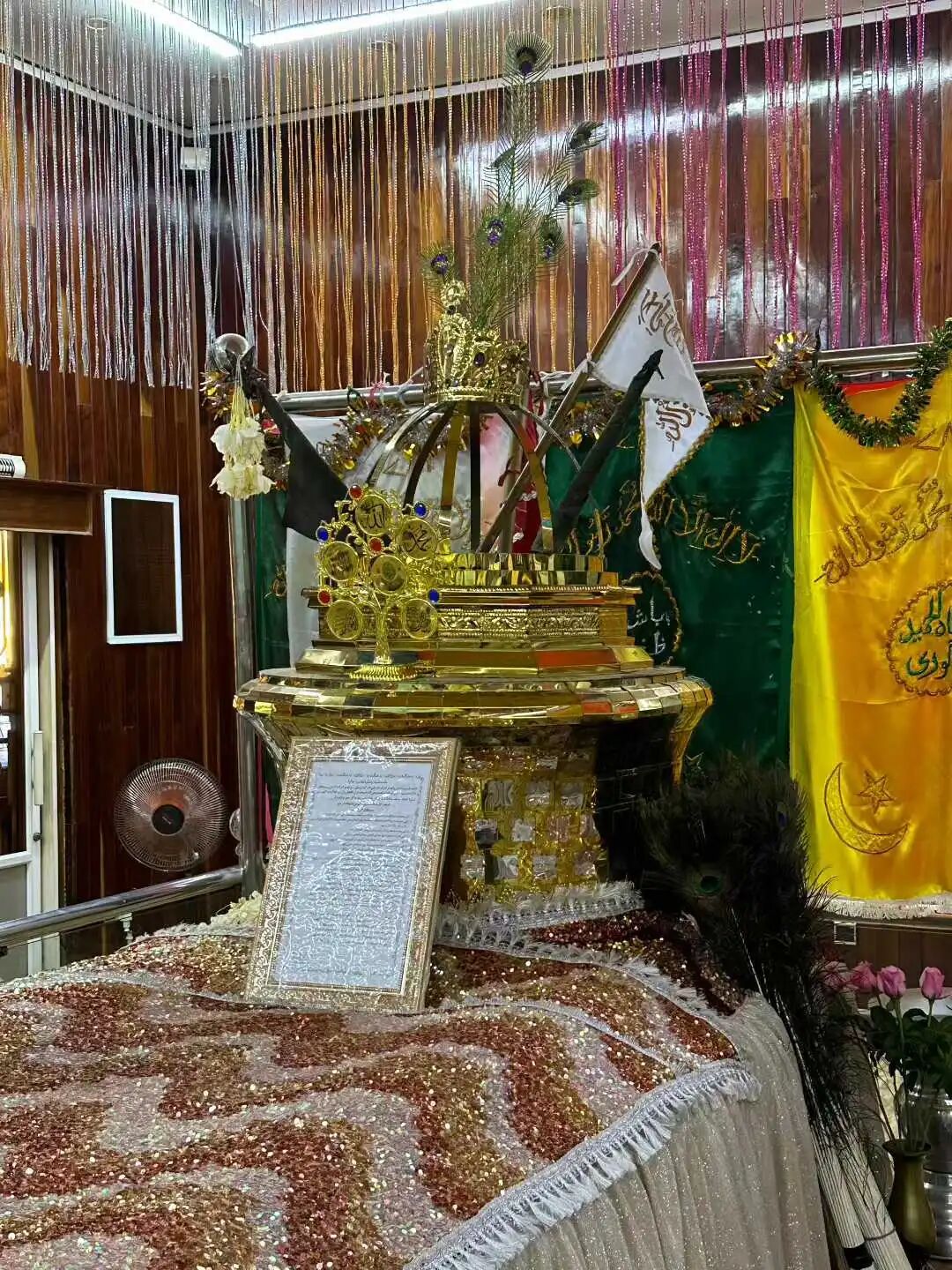
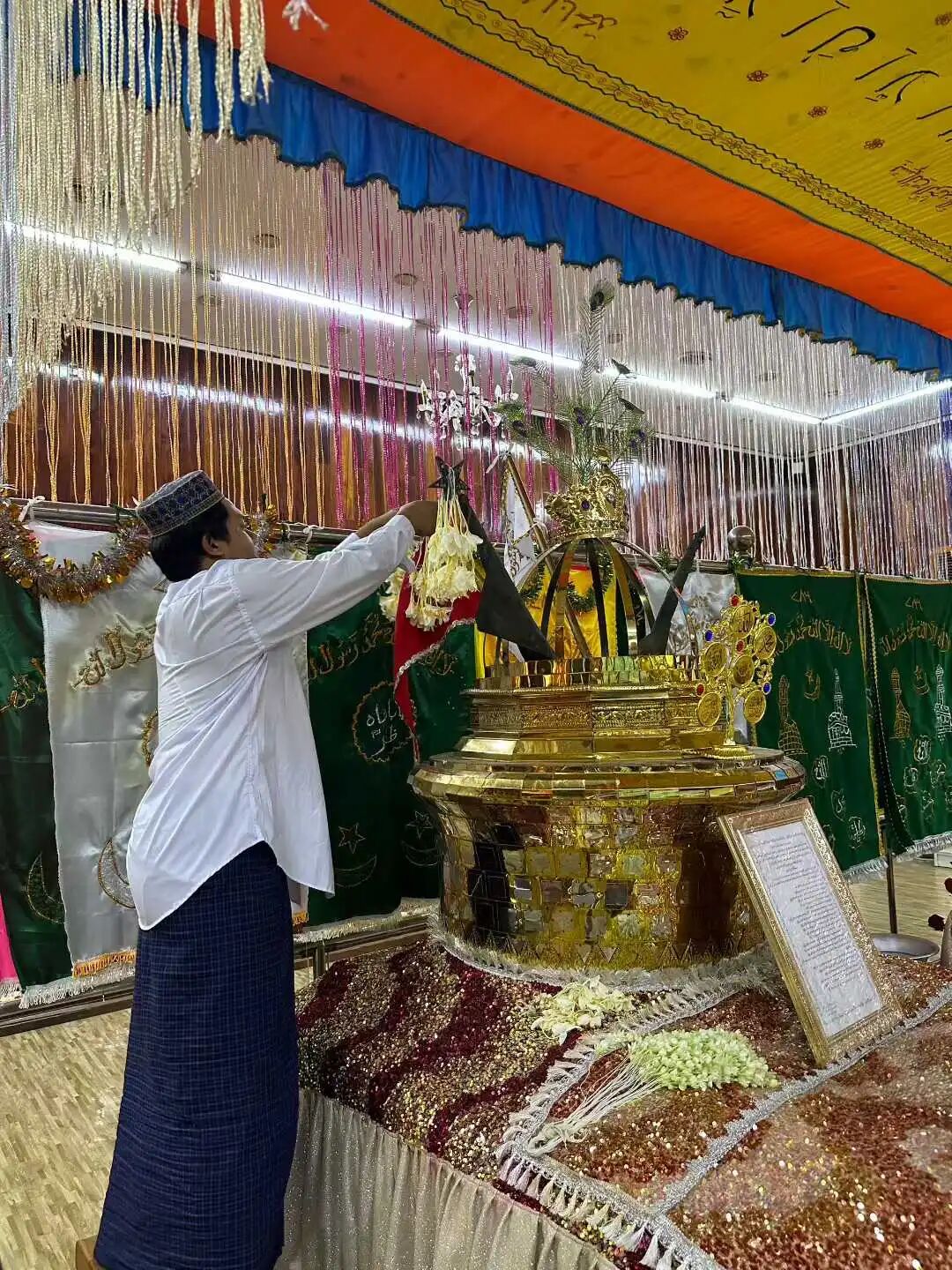
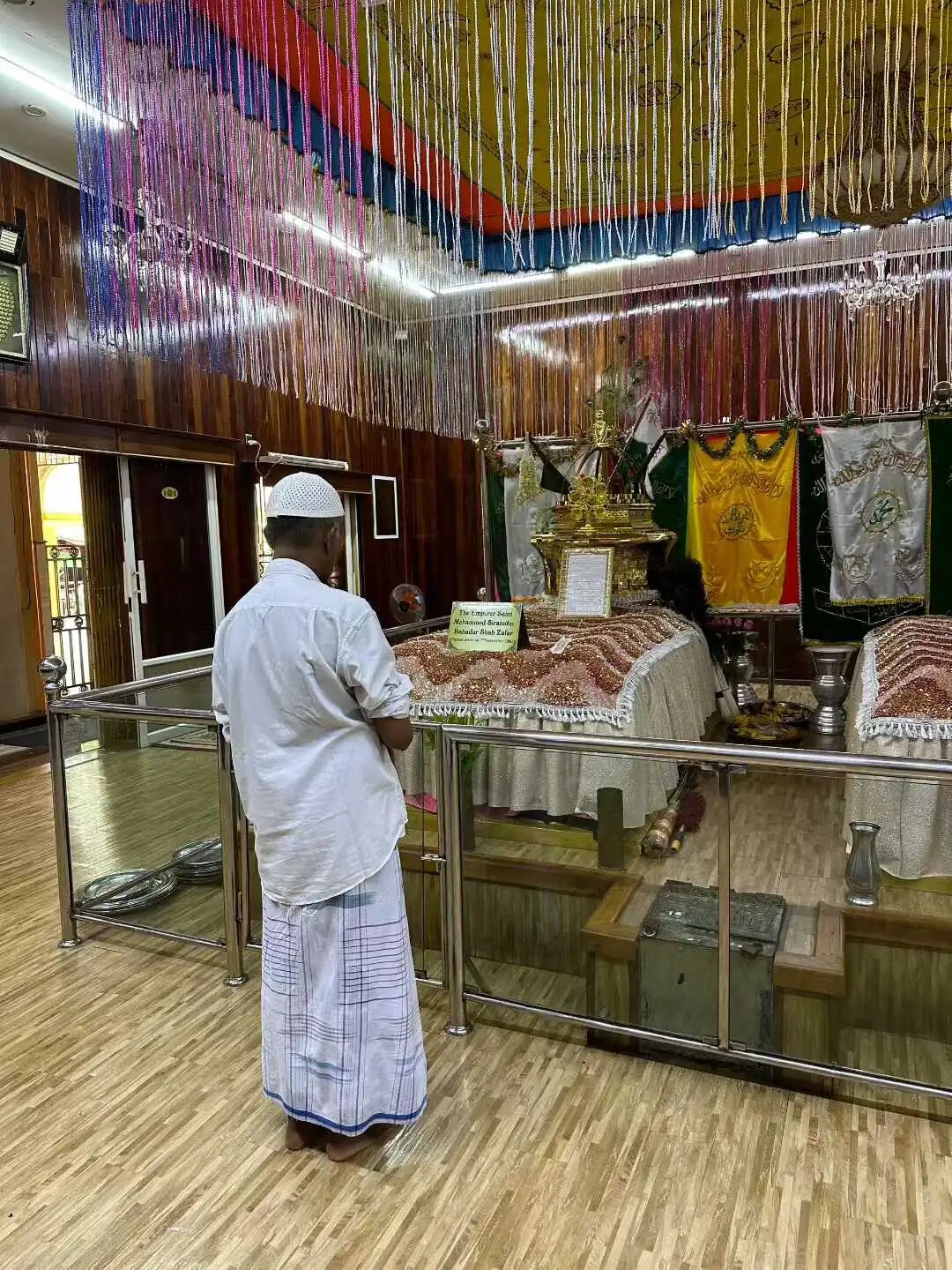
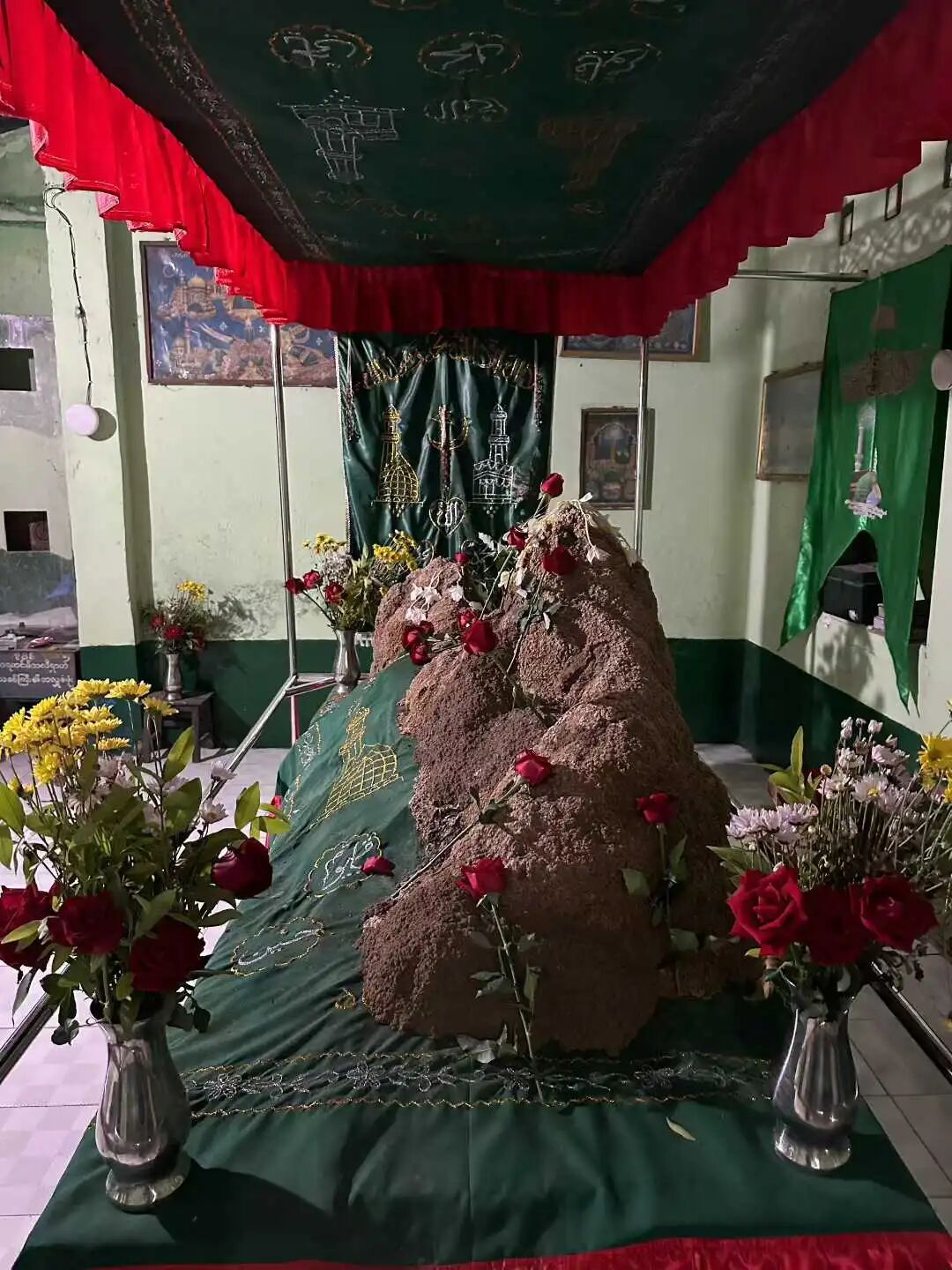
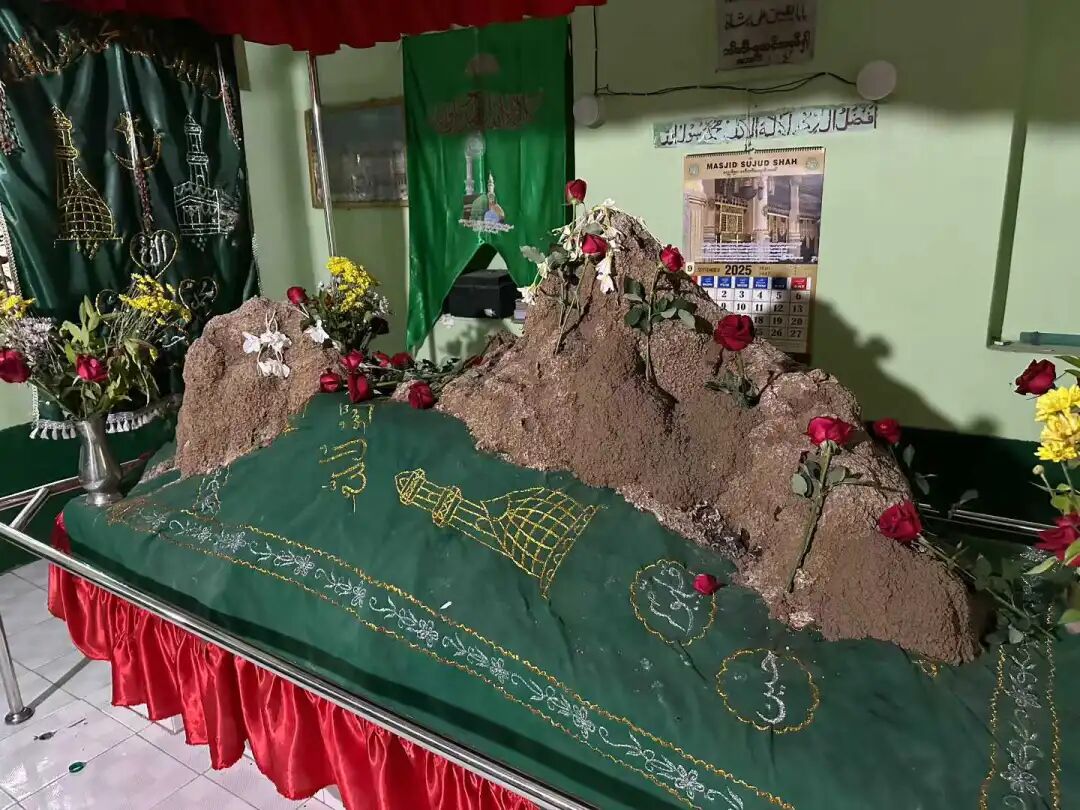
The tomb of Bahadur Shah II, the last emperor of the Mughal Empire, is near the famous Shwedagon Pagoda in Yangon, Myanmar. This site was his home after he was exiled to Yangon in 1858. Because Bahadur Shah II was a devout Sufi sheikh during his life, his tomb has become a famous Sufi shrine (gongbei) in Myanmar.
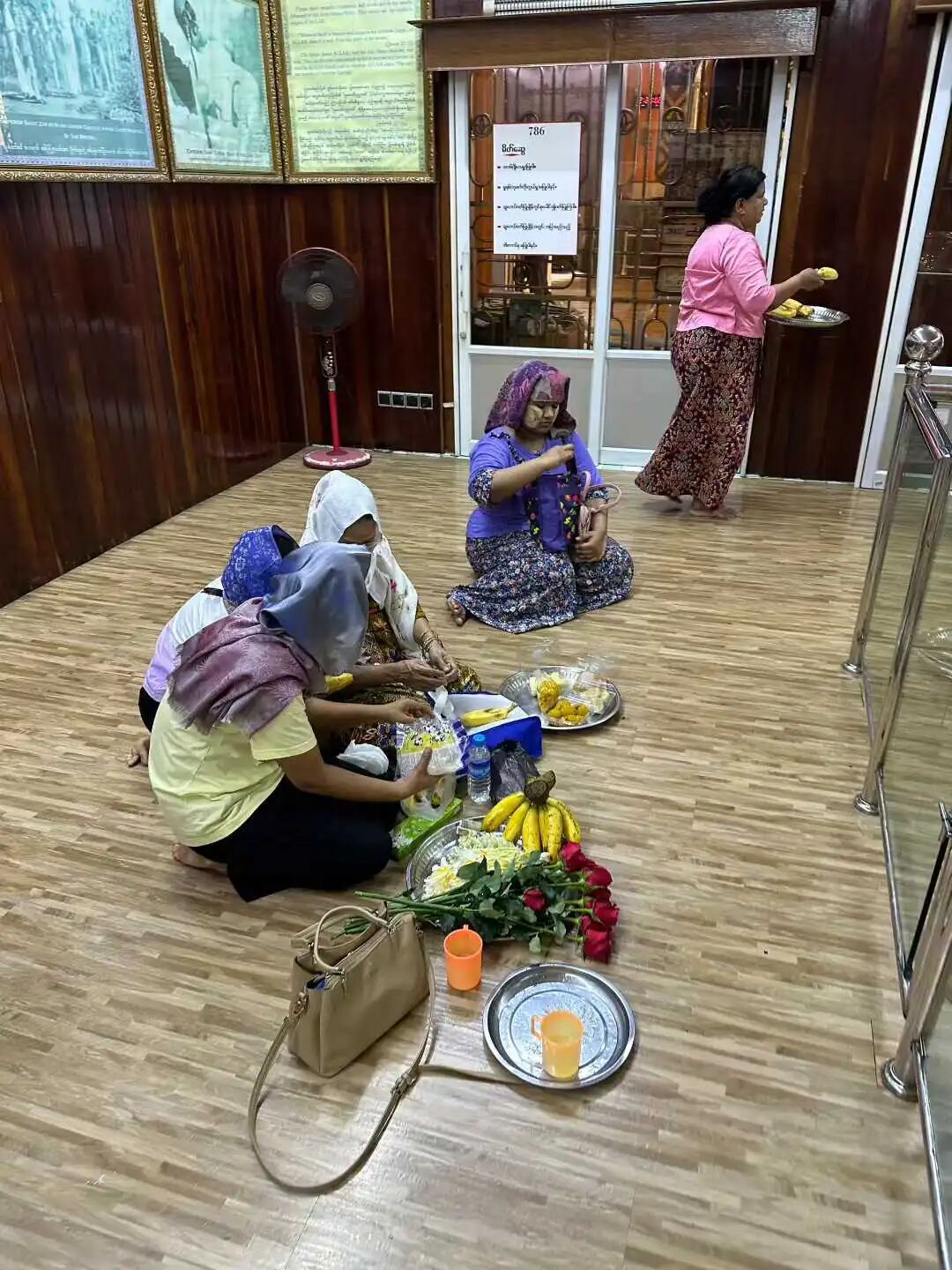
Although Bahadur Shah II belonged to the Chishti order during his life, the shrine (gongbei) is now managed by the Qadiriyya order. I met a man here who was hanging fresh flowers on the shrine (gongbei), and after some local friends (dosti) finished their gathering (amali), they shared candy and bananas with us.
In 1803, the British East India Company used force to become the protector of the Mughal Empire, and the Mughal emperors lost their real power from then on. After Bahadur Shah II took the throne in 1837, his power was limited to the area around Delhi. He never had any ambition for the empire, but instead focused on Sufi practice and writing poetry. Legend says he started his Sufi practice at age 20 and became a murshid (guide) of the Chishti order by age 40. In 1843, he wrote a letter to Queen Victoria of Britain saying: "I am now old and have no ambitions left." I intend to devote myself entirely to religious work to comfort my remaining years.
The Sufi philosophy followed by Bahadur Shah II believed in embracing different cultures. Men, women, young, and old should all be able to express their love for Allah, and this love should transcend religion, gender, and social class. According to a report by Major Archer in 1828: "He is thin and small, and his clothes are simple, almost crude." He looks like a poor scholar or a language teacher. This is the typical appearance of a Sufi ascetic.
Like the Mughal rulers before him, Bahadur Shah II saw himself as the protector of his Hindu subjects. Under his rule, Hindu elites in Delhi would visit the Nizamuddin Sufi shrine (gongbei) to recite Persian poetry. Many people studied under great imams and attended religious schools (madrasas). The Mughal court would attend various Hindu events, and during the Shia month of Muharram, they would listen to elegies mourning Imam Hussein.
People say the Sufi poetry of Bahadur Shah II reached a level of perfection. His court had many famous Sufi scholars, writers, and poets, and a large number of poems were published during his reign. This style of lyric poetry became the main literary form of the late Mughal period.
In 1850, the knowledge and vitality of Delhi reached its final peak. At that time, the city had six famous religious schools (madrasas), nine Urdu and Persian newspapers, five academic journals, countless printers, and at least 130 doctors who mastered traditional Persian-Arabic medicine. Many new discoveries in Western science were translated into Persian and Arabic in Delhi. As the young poet Altaf Hussain Hali wrote at the time, "The capital, Delhi, was gathered with such a group of talented sages that it reminded people of the eras of Akbar and Shah Jahan."
In 1857, an uprising against the British East India Company broke out in India. It started because the British army made their Indian soldiers bite open greased rifle cartridges, and rumors immediately spread that the lubricant came from cow and pig fat. The insulted soldiers flooded into Delhi on May 11 and turned to Bahadur Shah II for help at the Red Fort. Bahadur Shah II initially refused them, but faced with the passionate soldiers surrounding him, he eventually had no choice but to accept them as they bowed before him one by one, changing the fate of the Mughal Empire.
As the Siege of Delhi dragged on and the outlook grew dim, Bahadur Shah II chose to escape reality through poetry. According to British spies, he recited the following lines one night:
The sky collapses on everyone
I can no longer rest or sleep
Only my final departure will come
Whether at dawn or in the dark of night
On September 14, the British army officially attacked the walls of Delhi, and on September 17, Bahadur Shah II fled the Red Fort through the Water Gate. He went to the most important Sufi shrine (gongbei) of Nizamuddin in Delhi and handed over his ancestors' relics to the Nizam family, the keepers of the shrine. It is said these included three hairs of the noble Prophet passed down by the Timurid family. Then he went to the tomb of his ancestor, the second Mughal emperor, Humayun. On September 20, Bahadur Shah II was finally captured by the British army.
By January 27, 1858, after all the dignitaries of the Mughal court had been tried, Bahadur Shah II faced his own trial. William Howard Russell, a foreign correspondent for The Times and the father of war journalism, saw Bahadur Shah II in captivity. He described him as silent, sitting motionless day and night, with his eyes cast down to the ground. People heard him reciting poems from his own works and writing poetry on the walls with a charred stick.
During the trial, Bahadur Shah II provided a written defense in Urdu. He denied any involvement in the uprising and insisted that he had been a helpless prisoner held by the Indian soldiers from start to finish. The trial dragged on for more than a month and was often adjourned because of Bahadur Shah II's poor health. On March 9, the British finally decided to exile Bahadur Shah II.
On October 7, 1858, after the Mughal Empire had ruled Delhi for 332 years, the last emperor, Bahadur Shah II, left Delhi in an ox cart. The group traveled slowly down the Ganges River by steamship and arrived at Diamond Harbour, south of Calcutta, on December 4. They boarded the British naval ship HMS Magpie there and finally reached Rangoon, Burma, where they lived in two small rooms in the British barracks area directly below the Shwedagon Pagoda.
In April 1859, Bahadur Shah II moved to a new wooden house near the fort guard camp. According to the report by his jailer, Captain Nelson Davies:
The residence consisted of four rooms, each 16 feet square. One room was assigned to the former king, another to Jawan Bakht and the young crown princess, and a third was occupied by Queen Zinat Mahal. Each of these rooms had an attached washing area. Shah Abbas and his mother lived in the remaining room.
The servants either lounged around the veranda or slept under the house, where the ground was covered in crushed brick to keep it dry. A drainage ditch ran around the house for the same reason. There were two washrooms, a double bathroom for the servants, and a place for cooking.
The veranda on the upper floors was full of chicks, which were kept inside by nailed-down slats. The frail former king and his sons usually sat there, where the floor was raised almost to the height of the railing, allowing them to enjoy the pleasant sea breeze and the wide, beautiful view. They watched people pass by and stared at the ships being loaded, which helped break up the monotony of their life behind bars and made them more willing to accept their current living situation.
Regarding the health of Bahadur Shah II, the report by Davis noted:
If given time to make up his mind, his memory was still good, but he spoke unclearly because he had lost his teeth. He was unable to handle anything requiring mental effort, and while that was the impression he gave, he seemed to be bearing the weight of his years remarkably well. He lived a dull, listless life, showing little interest in anything except eternal matters. This had been his normal state for a long time, and it would likely continue until his life ended, which would not surprise anyone.
Because the British did not allow him to use paper or pens, the world could only guess how he felt about his life in exile. By October 1862, his health took a sharp turn for the worse, and he could no longer swallow or eat food. On November 5, Davis ordered bricks and lime to be collected to prepare a quiet spot behind the house enclosure for his burial.
At 5:00 a.m. on November 7, 1862, Bahadur Shah II finally returned to Allah. Davis wrote: Everything was ready, and at 4:00 p.m. that day, he was buried in a brick grave behind the guard camp, with turf laid level with the ground... A bamboo fence surrounded the grave for a long time, and once the fence rotted, the area would be covered in thick grass, leaving no trace and making it impossible to identify the final resting place of the last Great Mughal. Davis specifically mentioned that only two of Bahadur Shah II's sons and a manservant attended the funeral, as women were not allowed to attend according to tradition.
The grave of Bahadur Shah II soon became impossible to identify. When a delegation from India came to visit in 1903, a local guide pointed out a jujube tree near the grave. In 1905, the Dosti group in Yangon protested and demanded that the grave site be marked. The British initially disagreed, but after a demonstration and a series of published reports, they finally agreed in 1907 to erect an inscribed stone slab and put a railing around it. In 1925, the railing was rebuilt into a temporary shrine (gongbei) covered with a corrugated iron roof.
It was not until February 16, 1991, when workers were digging a drainage ditch behind the shrine, that they discovered a brick-lined grave, finally confirming the remains of Bahadur Shah II. Later, this place was rebuilt into a mosque with a prayer hall (gongbei). Dignitaries from India, Pakistan, and Bangladesh have all visited, and Rajiv Gandhi even gifted a carpet here.
As a fallen monarch, Bahadur Shah II was a failure. He did not give the army the support it needed during the 1857 Indian Rebellion, which ultimately ended the Mughal civilization. Under the British policy of divide and rule, the various ethnic groups in India began to drift apart. But under his rule, Delhi was home to the most talented poets and writers in modern South Asian history, and literature and art reached their peak.
As a Sufi ruler, he never forgot how important it was for the different groups under his rule to depend on each other. During the Siege of Delhi, he refused the demands for a holy war (jihad) from the Wahhabis and tried his best to maintain relationships between all groups. When a large number of Muslim (dosti) elites moved from India to Pakistan in 1947, people could no longer imagine that just 90 years earlier, many Indian soldiers had rushed to the Red Fort in Delhi, gathered under the banner of a Sufi emperor, and faced national disaster with their Muslim brothers to fight against foreign invaders.
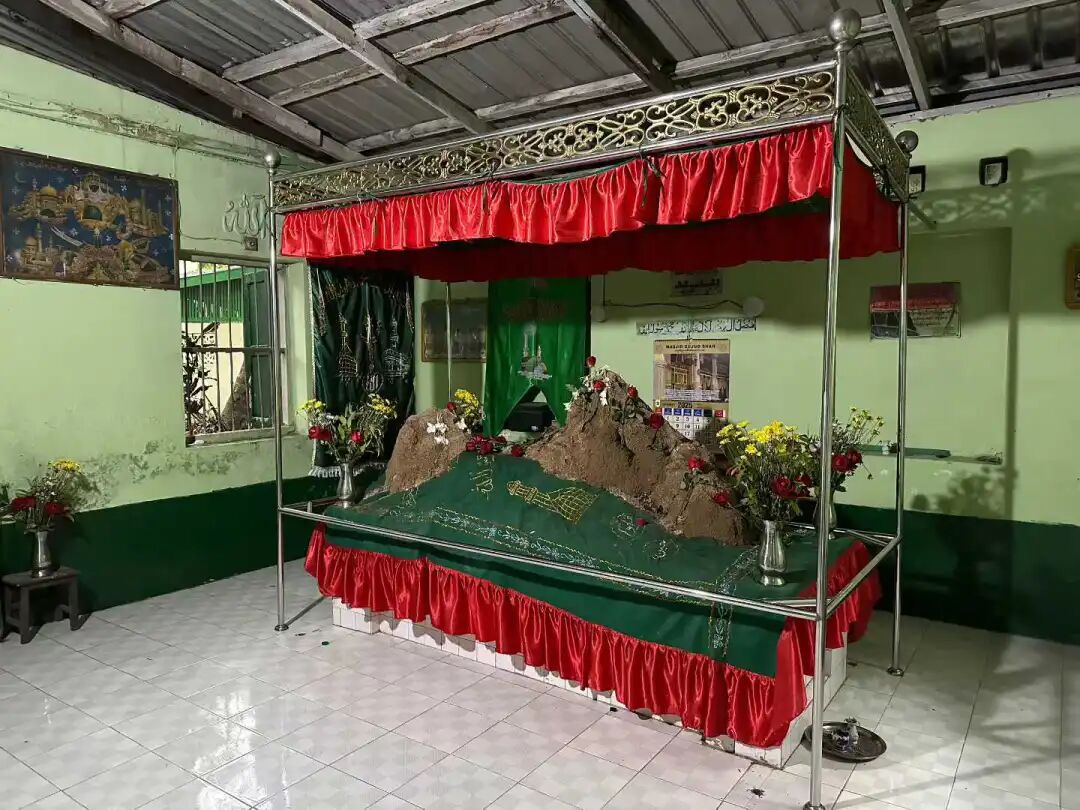
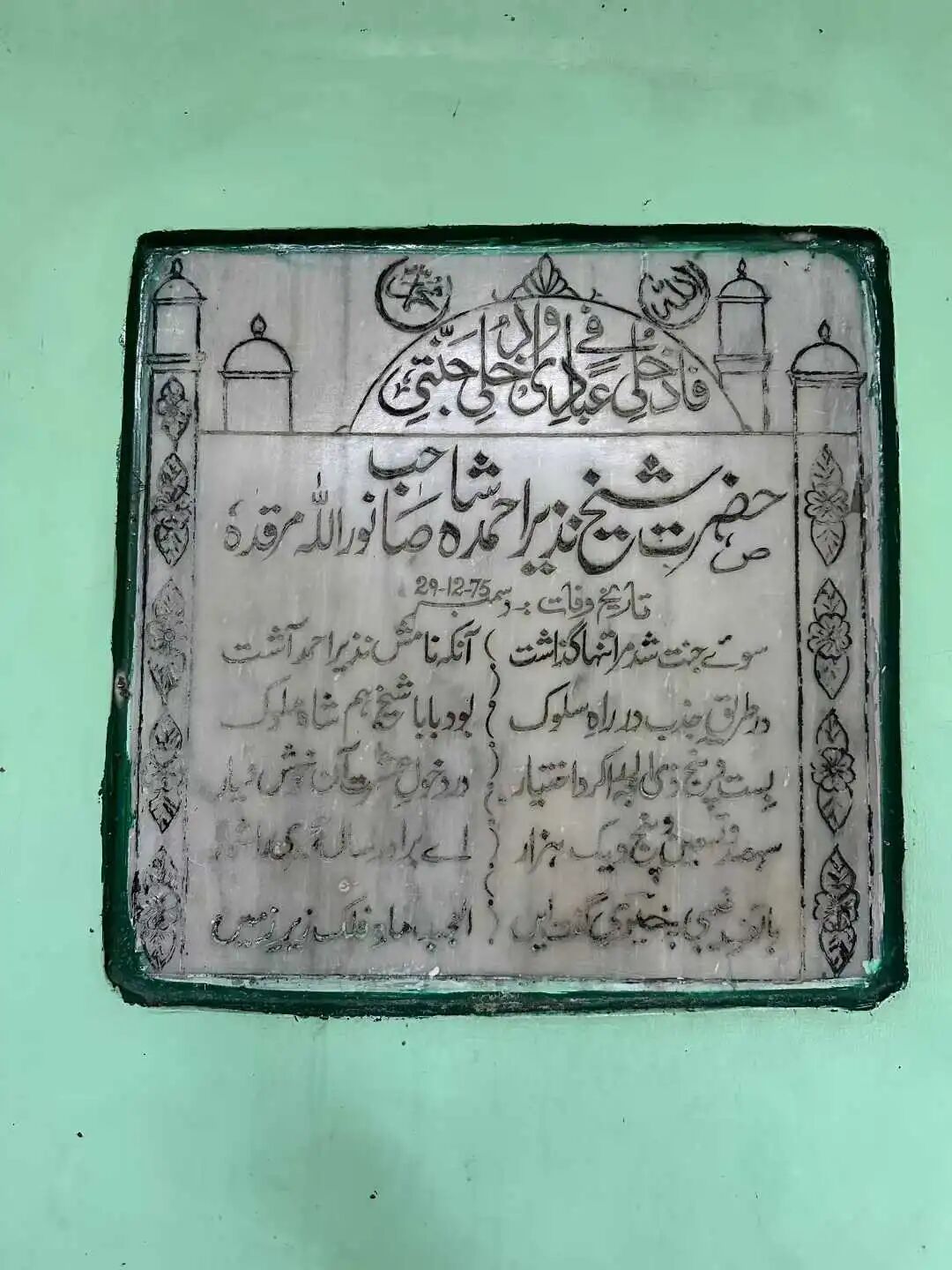
I found stone tablets standing around the front of the tomb.
Underground is the original location of the tomb.
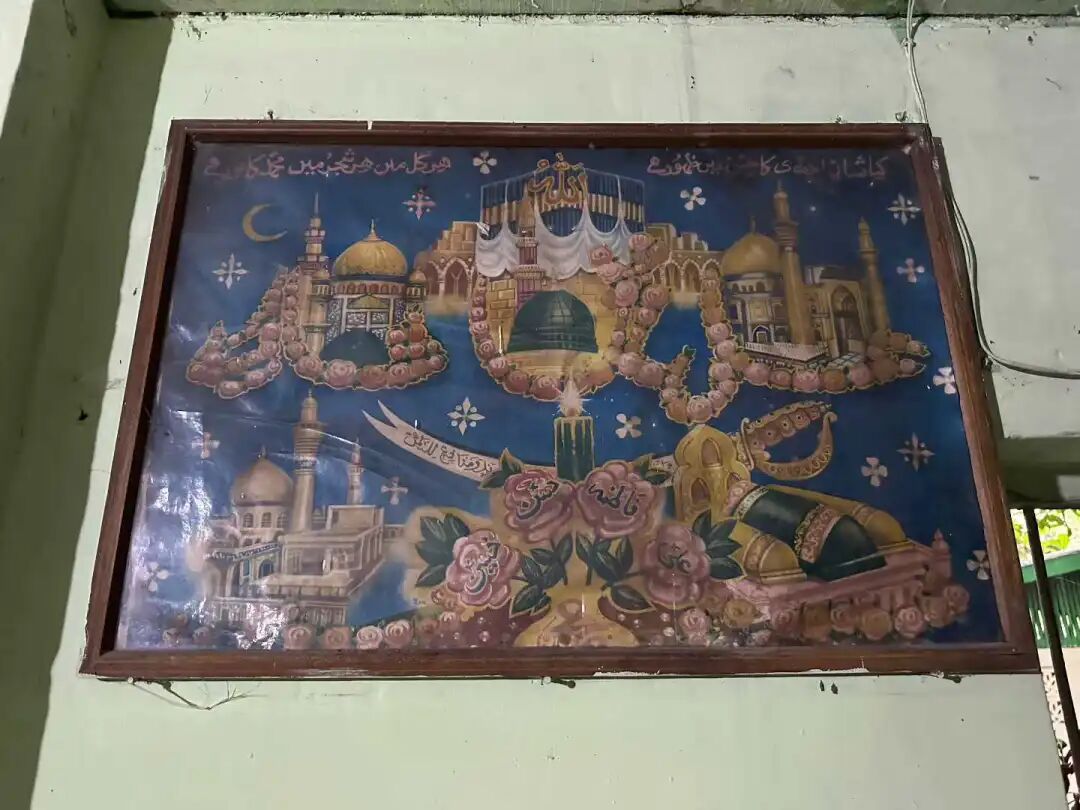
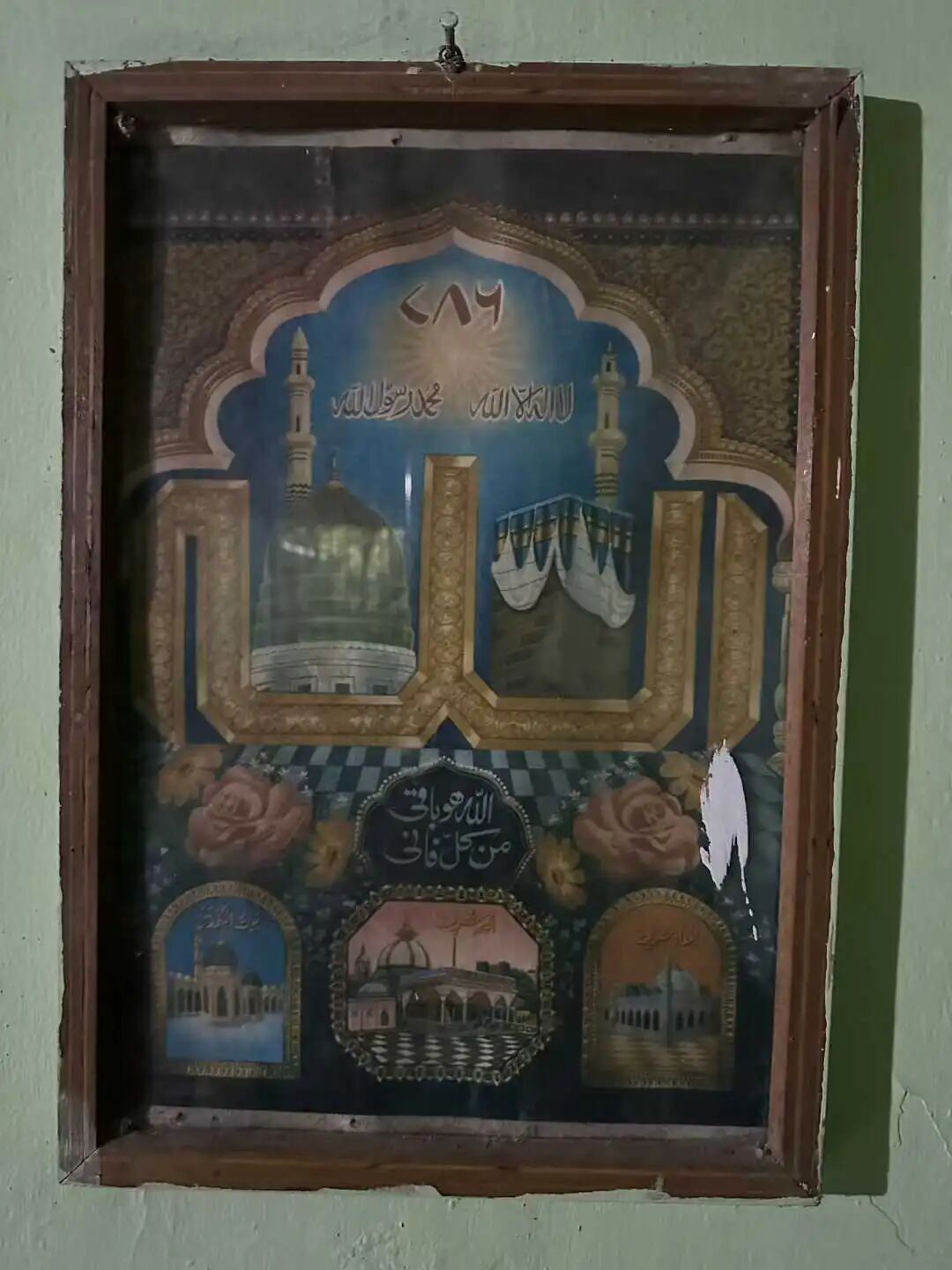
Inside the tomb complex (gongbei), there is a portrait of Abdul Qadir Gilani, the founder of the Qadiriyya order.
Next to the tomb is a prayer hall. This is the same as the Qadiriyya order in China, where the tomb and prayer hall are adjacent, and there is an imam in the mosque.
In a forest near the Yangon Central Railway Station in Myanmar, the largest Sufi tomb complex in Yangon is hidden. Since most of the text inside the tomb is written in Burmese, I searched for information for a long time after I returned but could not find any leads. Recently, based on the few English words inside the tomb, I learned that this place belongs to the Maizbhandari order, which was established in the late 19th century by Bengali Muslims based on the Qadiriyya Sufi tradition.
The Maizbhandari order is the only indigenous Bengali Sufi order, and its founder was born in Chittagong in 1826. People say his ancestors were descendants of the Prophet, who moved through Medina, Baghdad, and Delhi before finally settling in Bengal, serving as imams for generations. Maizbhandari studied the scriptures from a young age. After graduating in 1853, he first served as a judge (qadi), but soon resigned to work as a teacher in Kolkata. In Kolkata, he met two sheikhs from the Qadiriyya Sufi order and joined them to practice Sufism. In the late 19th century, he established his own lodge and founded the Maizbhandari order.
From the 19th century to the present, the Maizbhandari order has grown into a modern organization with millions of followers and is the most important Sufi order in Bangladesh. The Maizbhandari order is known for its melodic and rhythmic way of chanting (dhikr). They have recorded tens of thousands of songs, which have had a great influence on the faith in Bengal. As Yangon, Myanmar, has a large population of Bengali Muslims, it is also an important area for the Maizbhandari order.
A live scene of the dhikr ceremony.
At the Sufi tomb in Yangon, not only Muslims but also Burmese Buddhists come to offer dua. This is the unique charm of Sufism in South and Southeast Asia. At many important shrines (gongbei) in India, you can see Hindus going inside to offer dua. In Malaysia and Singapore, many Chinese people also come to pay their respects at the shrines (keramat) of local saints.
I also saw white sugar placed in front of a shrine (gongbei).
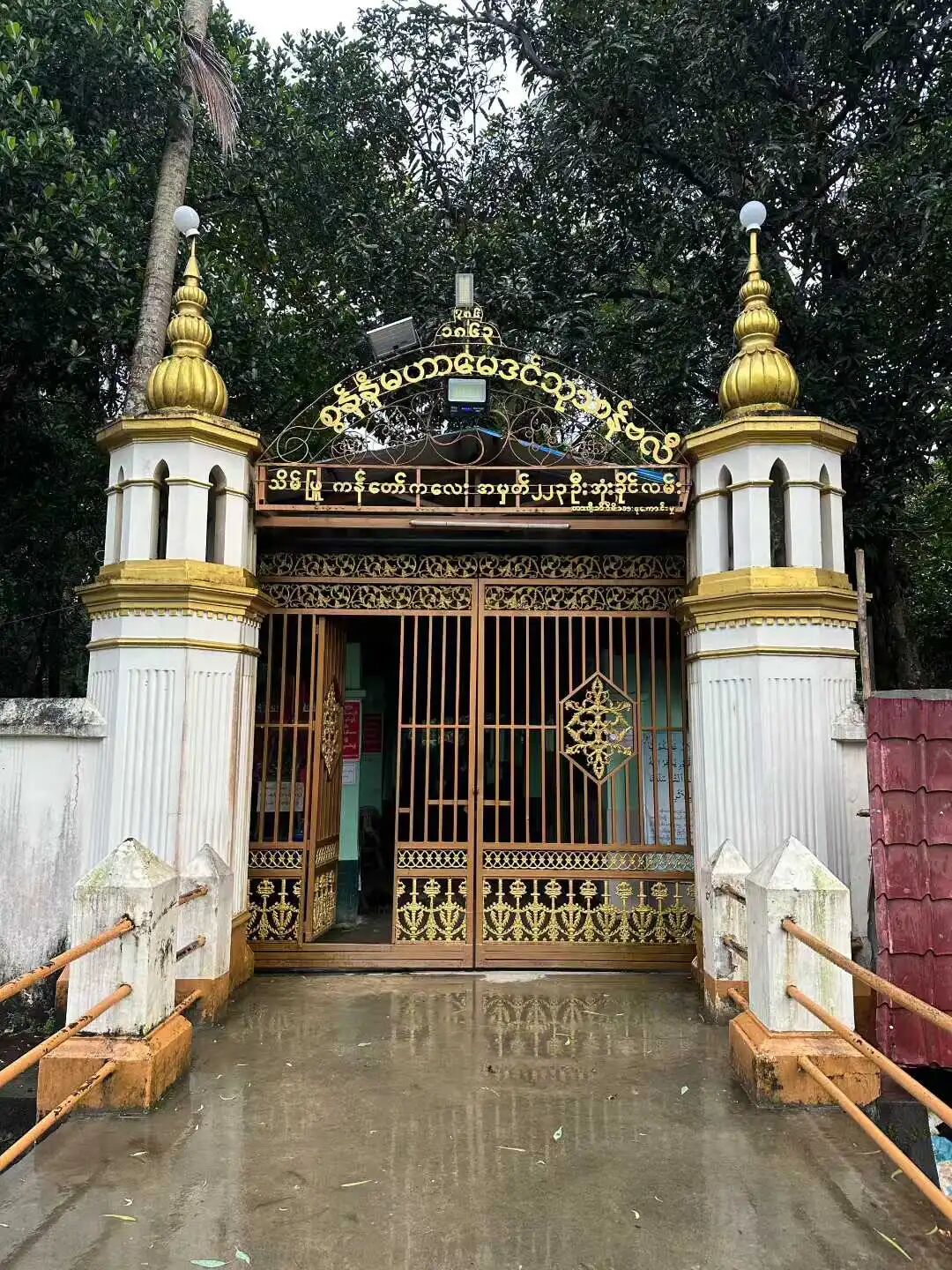
A Sufi shrine (gongbei) inside the Thinchai Sunni Maha Maiden cemetery in Yangon, Myanmar. view all
Summary: Yangon holds the tomb of Bahadur Shah II, the last Mughal emperor, near Shwedagon Pagoda, along with a Qadiriyya gongbei connected to Muslim memory in Myanmar. This account keeps the source's shrine details, historical names, religious terms, and site observations.
The tomb of Bahadur Shah II, the last emperor of the Mughal Empire, is near the famous Shwedagon Pagoda in Yangon, Myanmar. This site was his home after he was exiled to Yangon in 1858. Because Bahadur Shah II was a devout Sufi sheikh during his life, his tomb has become a famous Sufi shrine (gongbei) in Myanmar.
Although Bahadur Shah II belonged to the Chishti order during his life, the shrine (gongbei) is now managed by the Qadiriyya order. I met a man here who was hanging fresh flowers on the shrine (gongbei), and after some local friends (dosti) finished their gathering (amali), they shared candy and bananas with us.
In 1803, the British East India Company used force to become the protector of the Mughal Empire, and the Mughal emperors lost their real power from then on. After Bahadur Shah II took the throne in 1837, his power was limited to the area around Delhi. He never had any ambition for the empire, but instead focused on Sufi practice and writing poetry. Legend says he started his Sufi practice at age 20 and became a murshid (guide) of the Chishti order by age 40. In 1843, he wrote a letter to Queen Victoria of Britain saying: "I am now old and have no ambitions left." I intend to devote myself entirely to religious work to comfort my remaining years.
The Sufi philosophy followed by Bahadur Shah II believed in embracing different cultures. Men, women, young, and old should all be able to express their love for Allah, and this love should transcend religion, gender, and social class. According to a report by Major Archer in 1828: "He is thin and small, and his clothes are simple, almost crude." He looks like a poor scholar or a language teacher. This is the typical appearance of a Sufi ascetic.
Like the Mughal rulers before him, Bahadur Shah II saw himself as the protector of his Hindu subjects. Under his rule, Hindu elites in Delhi would visit the Nizamuddin Sufi shrine (gongbei) to recite Persian poetry. Many people studied under great imams and attended religious schools (madrasas). The Mughal court would attend various Hindu events, and during the Shia month of Muharram, they would listen to elegies mourning Imam Hussein.
People say the Sufi poetry of Bahadur Shah II reached a level of perfection. His court had many famous Sufi scholars, writers, and poets, and a large number of poems were published during his reign. This style of lyric poetry became the main literary form of the late Mughal period.
In 1850, the knowledge and vitality of Delhi reached its final peak. At that time, the city had six famous religious schools (madrasas), nine Urdu and Persian newspapers, five academic journals, countless printers, and at least 130 doctors who mastered traditional Persian-Arabic medicine. Many new discoveries in Western science were translated into Persian and Arabic in Delhi. As the young poet Altaf Hussain Hali wrote at the time, "The capital, Delhi, was gathered with such a group of talented sages that it reminded people of the eras of Akbar and Shah Jahan."
In 1857, an uprising against the British East India Company broke out in India. It started because the British army made their Indian soldiers bite open greased rifle cartridges, and rumors immediately spread that the lubricant came from cow and pig fat. The insulted soldiers flooded into Delhi on May 11 and turned to Bahadur Shah II for help at the Red Fort. Bahadur Shah II initially refused them, but faced with the passionate soldiers surrounding him, he eventually had no choice but to accept them as they bowed before him one by one, changing the fate of the Mughal Empire.
As the Siege of Delhi dragged on and the outlook grew dim, Bahadur Shah II chose to escape reality through poetry. According to British spies, he recited the following lines one night:
The sky collapses on everyone
I can no longer rest or sleep
Only my final departure will come
Whether at dawn or in the dark of night
On September 14, the British army officially attacked the walls of Delhi, and on September 17, Bahadur Shah II fled the Red Fort through the Water Gate. He went to the most important Sufi shrine (gongbei) of Nizamuddin in Delhi and handed over his ancestors' relics to the Nizam family, the keepers of the shrine. It is said these included three hairs of the noble Prophet passed down by the Timurid family. Then he went to the tomb of his ancestor, the second Mughal emperor, Humayun. On September 20, Bahadur Shah II was finally captured by the British army.
By January 27, 1858, after all the dignitaries of the Mughal court had been tried, Bahadur Shah II faced his own trial. William Howard Russell, a foreign correspondent for The Times and the father of war journalism, saw Bahadur Shah II in captivity. He described him as silent, sitting motionless day and night, with his eyes cast down to the ground. People heard him reciting poems from his own works and writing poetry on the walls with a charred stick.
During the trial, Bahadur Shah II provided a written defense in Urdu. He denied any involvement in the uprising and insisted that he had been a helpless prisoner held by the Indian soldiers from start to finish. The trial dragged on for more than a month and was often adjourned because of Bahadur Shah II's poor health. On March 9, the British finally decided to exile Bahadur Shah II.
On October 7, 1858, after the Mughal Empire had ruled Delhi for 332 years, the last emperor, Bahadur Shah II, left Delhi in an ox cart. The group traveled slowly down the Ganges River by steamship and arrived at Diamond Harbour, south of Calcutta, on December 4. They boarded the British naval ship HMS Magpie there and finally reached Rangoon, Burma, where they lived in two small rooms in the British barracks area directly below the Shwedagon Pagoda.
In April 1859, Bahadur Shah II moved to a new wooden house near the fort guard camp. According to the report by his jailer, Captain Nelson Davies:
The residence consisted of four rooms, each 16 feet square. One room was assigned to the former king, another to Jawan Bakht and the young crown princess, and a third was occupied by Queen Zinat Mahal. Each of these rooms had an attached washing area. Shah Abbas and his mother lived in the remaining room.
The servants either lounged around the veranda or slept under the house, where the ground was covered in crushed brick to keep it dry. A drainage ditch ran around the house for the same reason. There were two washrooms, a double bathroom for the servants, and a place for cooking.
The veranda on the upper floors was full of chicks, which were kept inside by nailed-down slats. The frail former king and his sons usually sat there, where the floor was raised almost to the height of the railing, allowing them to enjoy the pleasant sea breeze and the wide, beautiful view. They watched people pass by and stared at the ships being loaded, which helped break up the monotony of their life behind bars and made them more willing to accept their current living situation.
Regarding the health of Bahadur Shah II, the report by Davis noted:
If given time to make up his mind, his memory was still good, but he spoke unclearly because he had lost his teeth. He was unable to handle anything requiring mental effort, and while that was the impression he gave, he seemed to be bearing the weight of his years remarkably well. He lived a dull, listless life, showing little interest in anything except eternal matters. This had been his normal state for a long time, and it would likely continue until his life ended, which would not surprise anyone.
Because the British did not allow him to use paper or pens, the world could only guess how he felt about his life in exile. By October 1862, his health took a sharp turn for the worse, and he could no longer swallow or eat food. On November 5, Davis ordered bricks and lime to be collected to prepare a quiet spot behind the house enclosure for his burial.
At 5:00 a.m. on November 7, 1862, Bahadur Shah II finally returned to Allah. Davis wrote: Everything was ready, and at 4:00 p.m. that day, he was buried in a brick grave behind the guard camp, with turf laid level with the ground... A bamboo fence surrounded the grave for a long time, and once the fence rotted, the area would be covered in thick grass, leaving no trace and making it impossible to identify the final resting place of the last Great Mughal. Davis specifically mentioned that only two of Bahadur Shah II's sons and a manservant attended the funeral, as women were not allowed to attend according to tradition.
The grave of Bahadur Shah II soon became impossible to identify. When a delegation from India came to visit in 1903, a local guide pointed out a jujube tree near the grave. In 1905, the Dosti group in Yangon protested and demanded that the grave site be marked. The British initially disagreed, but after a demonstration and a series of published reports, they finally agreed in 1907 to erect an inscribed stone slab and put a railing around it. In 1925, the railing was rebuilt into a temporary shrine (gongbei) covered with a corrugated iron roof.
It was not until February 16, 1991, when workers were digging a drainage ditch behind the shrine, that they discovered a brick-lined grave, finally confirming the remains of Bahadur Shah II. Later, this place was rebuilt into a mosque with a prayer hall (gongbei). Dignitaries from India, Pakistan, and Bangladesh have all visited, and Rajiv Gandhi even gifted a carpet here.
As a fallen monarch, Bahadur Shah II was a failure. He did not give the army the support it needed during the 1857 Indian Rebellion, which ultimately ended the Mughal civilization. Under the British policy of divide and rule, the various ethnic groups in India began to drift apart. But under his rule, Delhi was home to the most talented poets and writers in modern South Asian history, and literature and art reached their peak.
As a Sufi ruler, he never forgot how important it was for the different groups under his rule to depend on each other. During the Siege of Delhi, he refused the demands for a holy war (jihad) from the Wahhabis and tried his best to maintain relationships between all groups. When a large number of Muslim (dosti) elites moved from India to Pakistan in 1947, people could no longer imagine that just 90 years earlier, many Indian soldiers had rushed to the Red Fort in Delhi, gathered under the banner of a Sufi emperor, and faced national disaster with their Muslim brothers to fight against foreign invaders.
I found stone tablets standing around the front of the tomb.
Underground is the original location of the tomb.
Inside the tomb complex (gongbei), there is a portrait of Abdul Qadir Gilani, the founder of the Qadiriyya order.
Next to the tomb is a prayer hall. This is the same as the Qadiriyya order in China, where the tomb and prayer hall are adjacent, and there is an imam in the mosque.
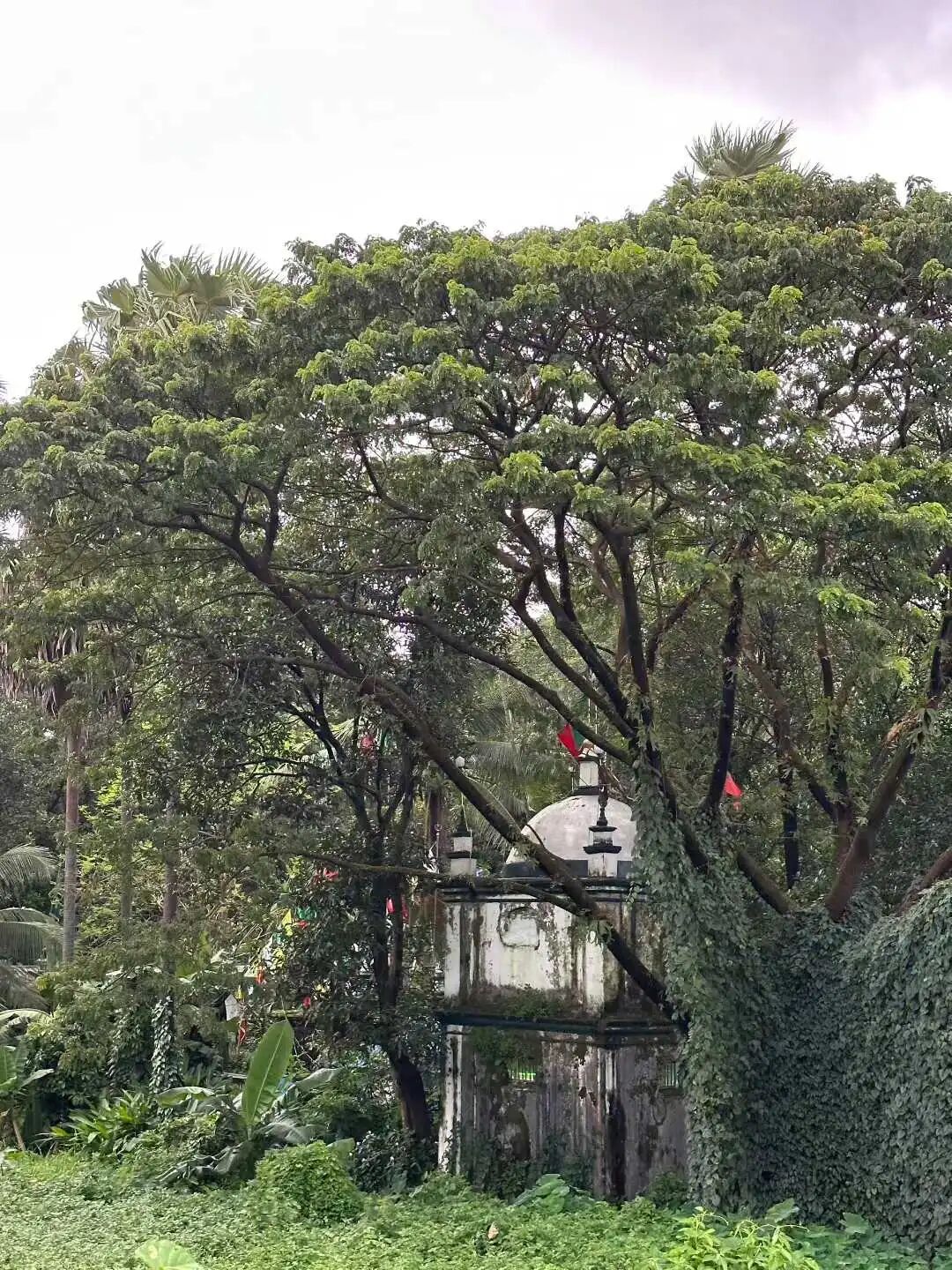
In a forest near the Yangon Central Railway Station in Myanmar, the largest Sufi tomb complex in Yangon is hidden. Since most of the text inside the tomb is written in Burmese, I searched for information for a long time after I returned but could not find any leads. Recently, based on the few English words inside the tomb, I learned that this place belongs to the Maizbhandari order, which was established in the late 19th century by Bengali Muslims based on the Qadiriyya Sufi tradition.
The Maizbhandari order is the only indigenous Bengali Sufi order, and its founder was born in Chittagong in 1826. People say his ancestors were descendants of the Prophet, who moved through Medina, Baghdad, and Delhi before finally settling in Bengal, serving as imams for generations. Maizbhandari studied the scriptures from a young age. After graduating in 1853, he first served as a judge (qadi), but soon resigned to work as a teacher in Kolkata. In Kolkata, he met two sheikhs from the Qadiriyya Sufi order and joined them to practice Sufism. In the late 19th century, he established his own lodge and founded the Maizbhandari order.
From the 19th century to the present, the Maizbhandari order has grown into a modern organization with millions of followers and is the most important Sufi order in Bangladesh. The Maizbhandari order is known for its melodic and rhythmic way of chanting (dhikr). They have recorded tens of thousands of songs, which have had a great influence on the faith in Bengal. As Yangon, Myanmar, has a large population of Bengali Muslims, it is also an important area for the Maizbhandari order.
A live scene of the dhikr ceremony.
At the Sufi tomb in Yangon, not only Muslims but also Burmese Buddhists come to offer dua. This is the unique charm of Sufism in South and Southeast Asia. At many important shrines (gongbei) in India, you can see Hindus going inside to offer dua. In Malaysia and Singapore, many Chinese people also come to pay their respects at the shrines (keramat) of local saints.
I also saw white sugar placed in front of a shrine (gongbei).
A Sufi shrine (gongbei) inside the Thinchai Sunni Maha Maiden cemetery in Yangon, Myanmar. view all
Reposted from the web
Summary: Yangon holds the tomb of Bahadur Shah II, the last Mughal emperor, near Shwedagon Pagoda, along with a Qadiriyya gongbei connected to Muslim memory in Myanmar. This account keeps the source's shrine details, historical names, religious terms, and site observations.
The tomb of Bahadur Shah II, the last emperor of the Mughal Empire, is near the famous Shwedagon Pagoda in Yangon, Myanmar. This site was his home after he was exiled to Yangon in 1858. Because Bahadur Shah II was a devout Sufi sheikh during his life, his tomb has become a famous Sufi shrine (gongbei) in Myanmar.
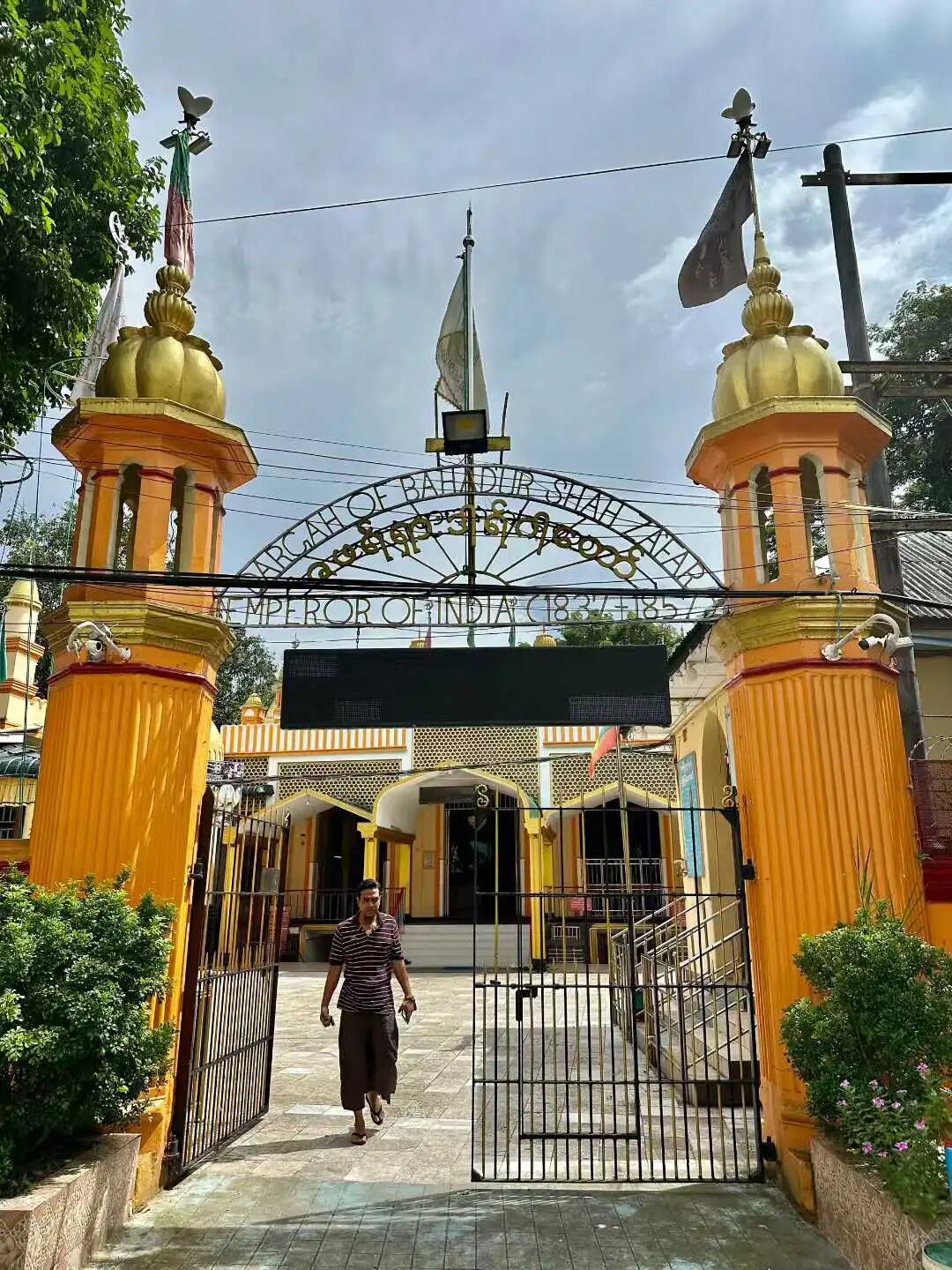
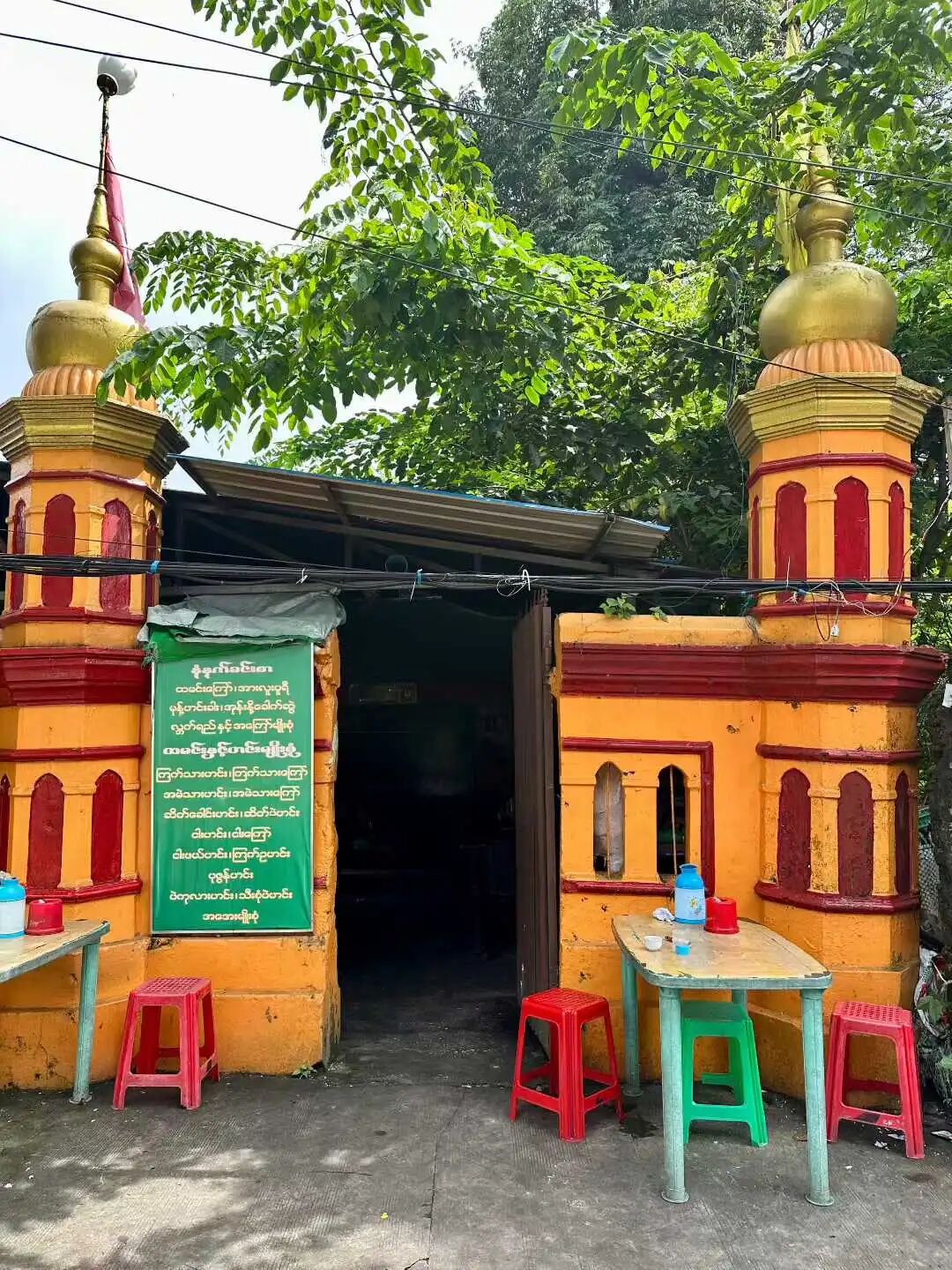
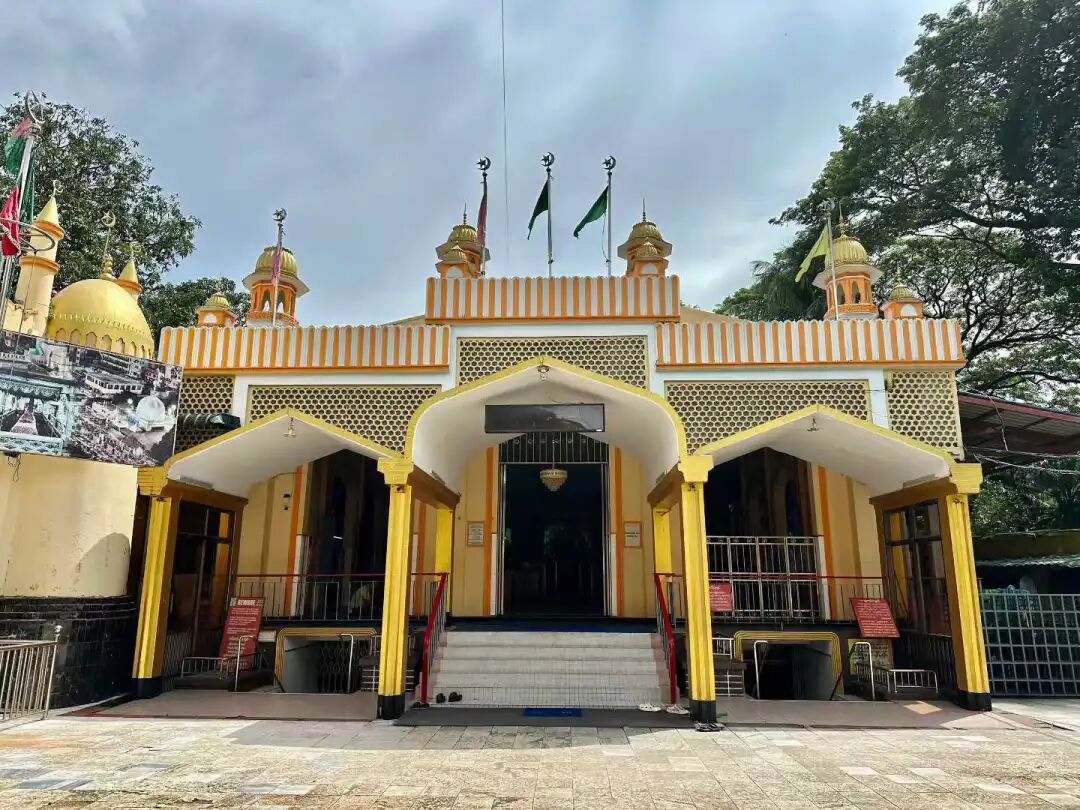
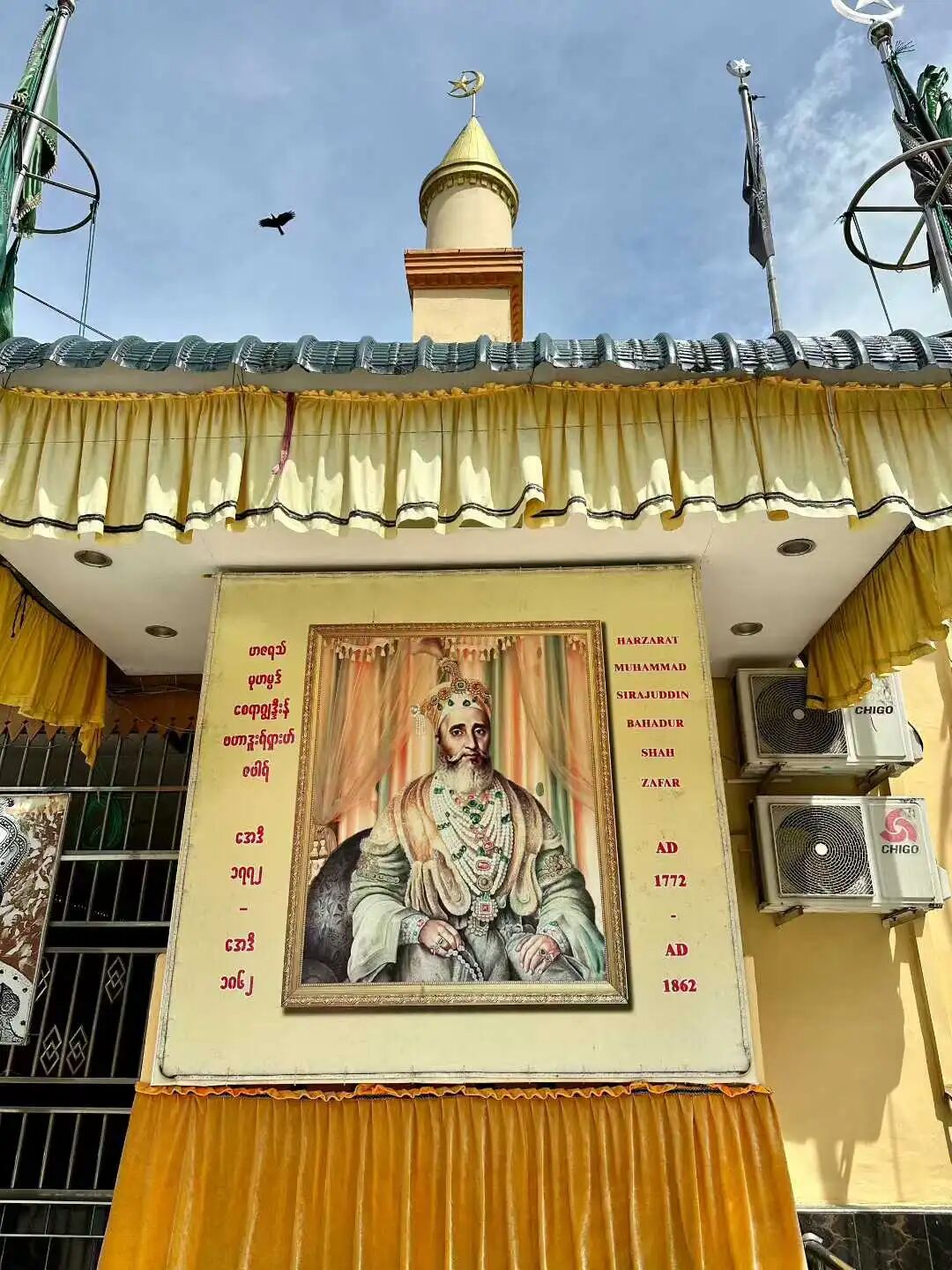
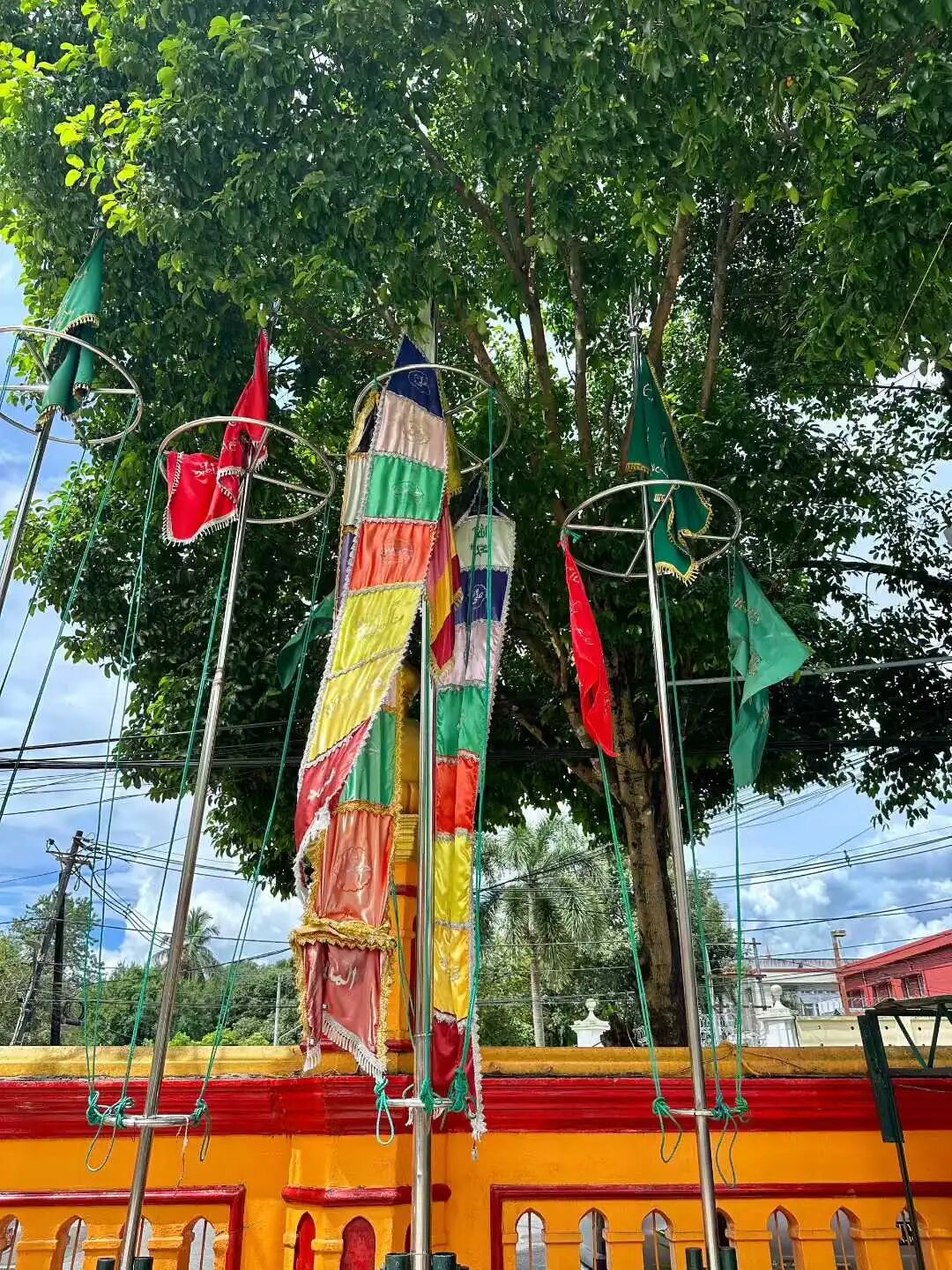
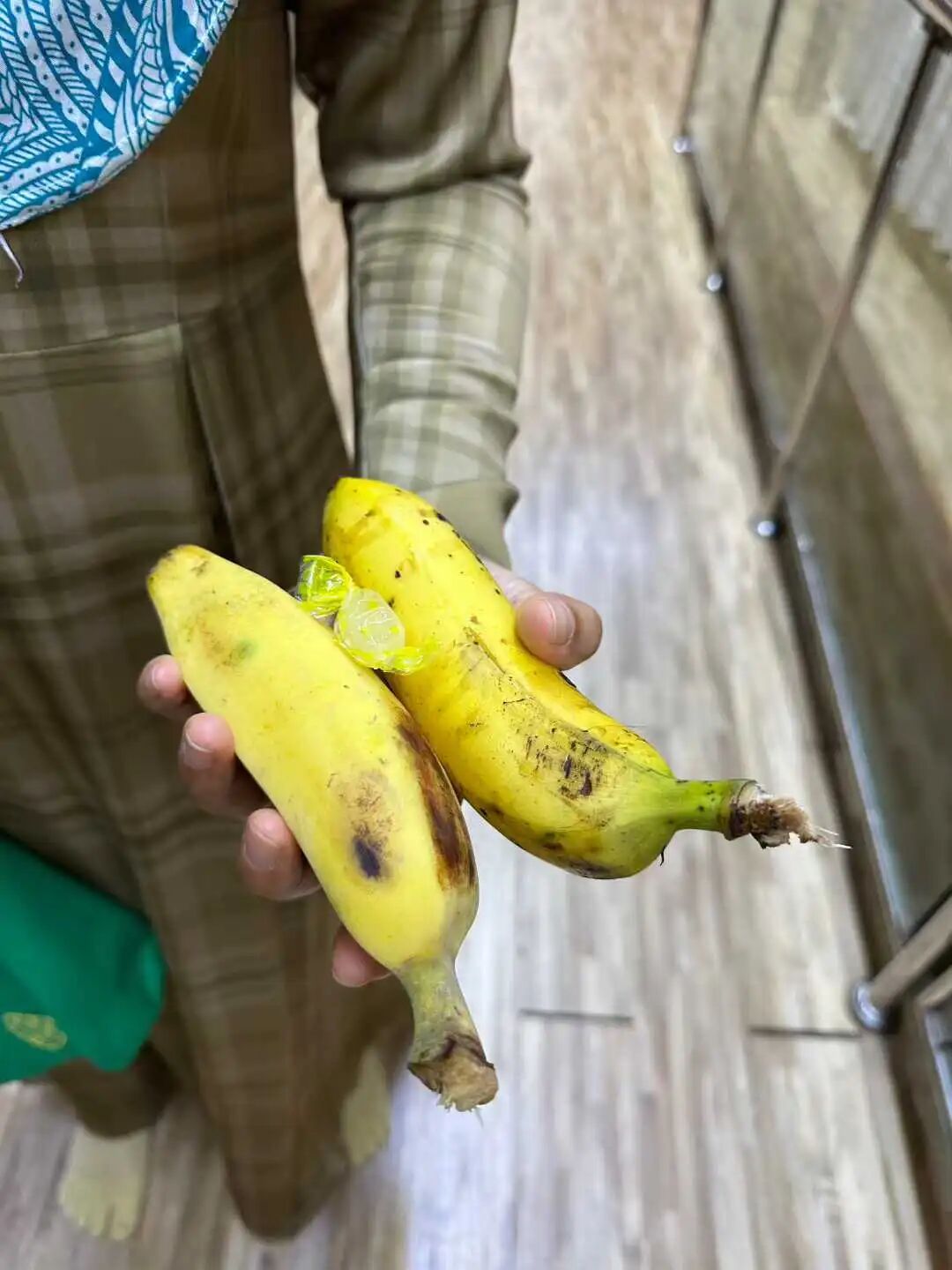
Although Bahadur Shah II belonged to the Chishti order during his life, the shrine (gongbei) is now managed by the Qadiriyya order. I met a man here who was hanging fresh flowers on the shrine (gongbei), and after some local friends (dosti) finished their gathering (amali), they shared candy and bananas with us.
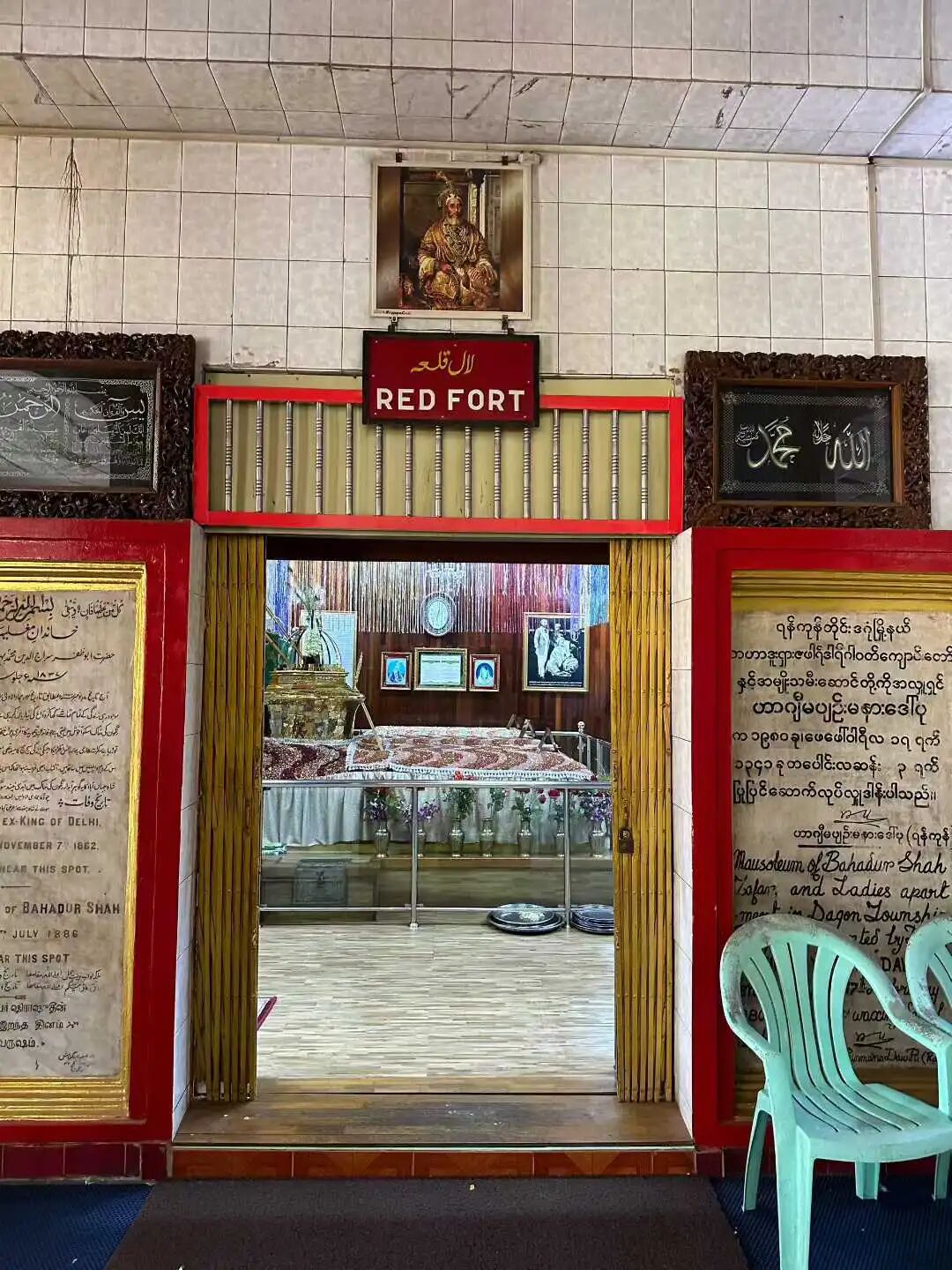
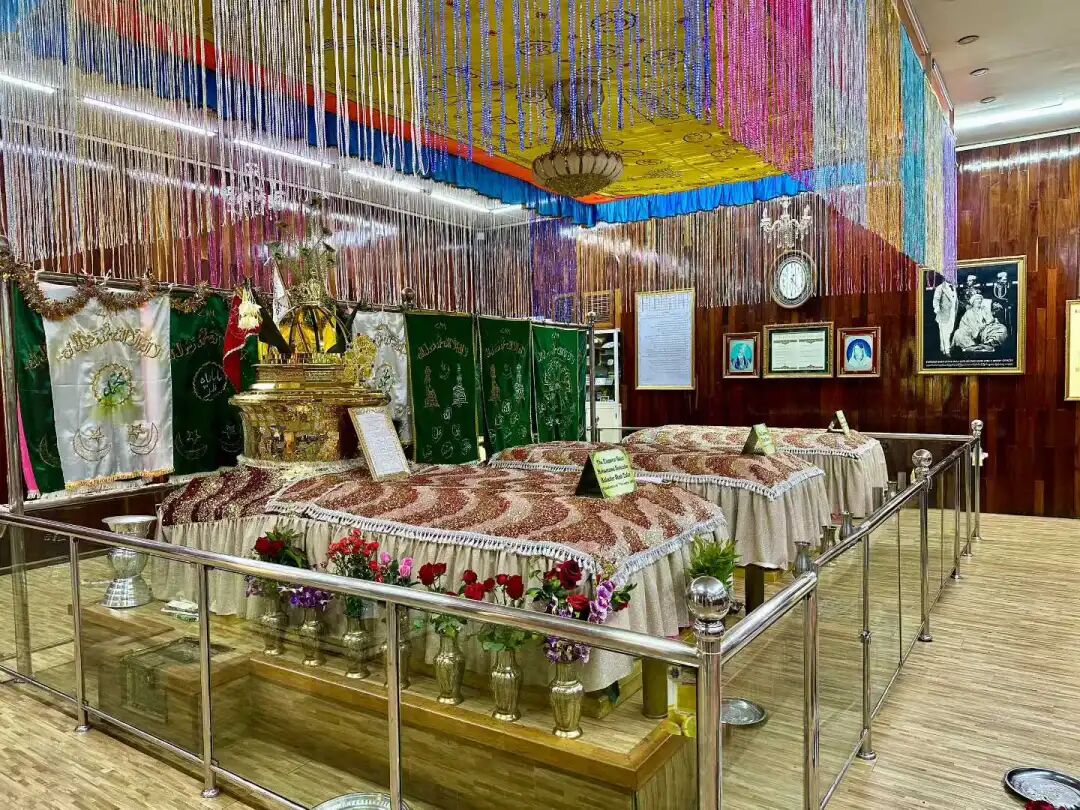
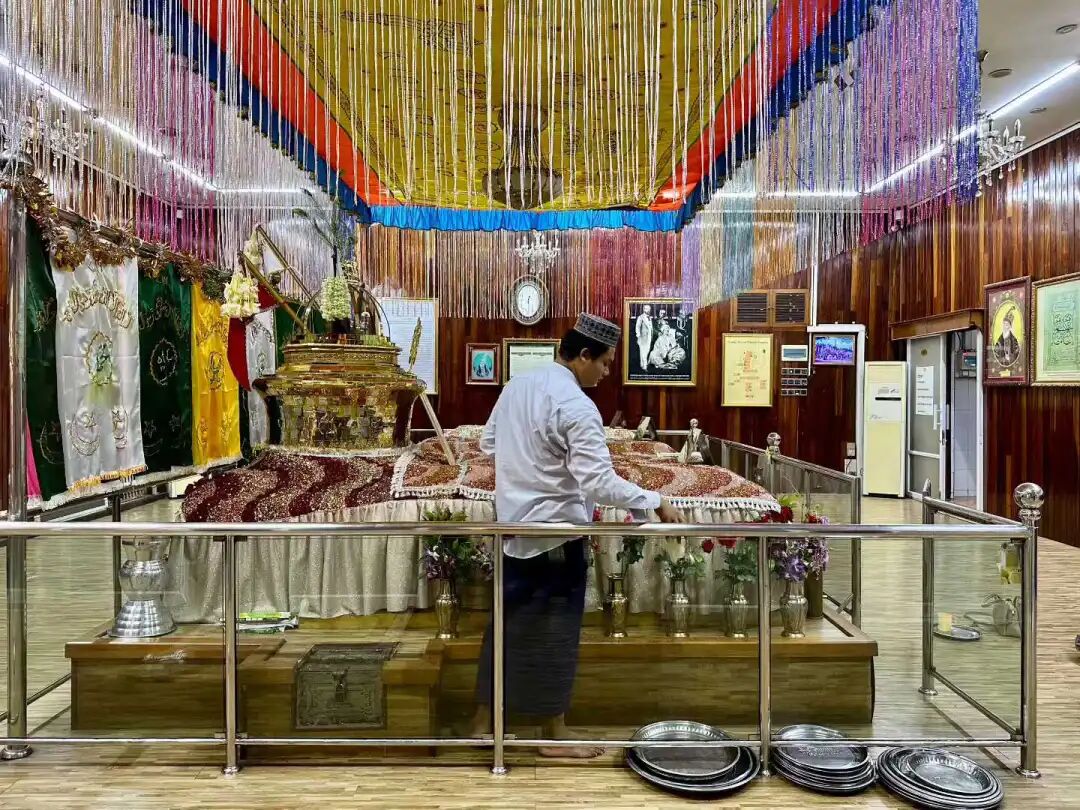

In 1803, the British East India Company used force to become the protector of the Mughal Empire, and the Mughal emperors lost their real power from then on. After Bahadur Shah II took the throne in 1837, his power was limited to the area around Delhi. He never had any ambition for the empire, but instead focused on Sufi practice and writing poetry. Legend says he started his Sufi practice at age 20 and became a murshid (guide) of the Chishti order by age 40. In 1843, he wrote a letter to Queen Victoria of Britain saying: "I am now old and have no ambitions left." I intend to devote myself entirely to religious work to comfort my remaining years.
The Sufi philosophy followed by Bahadur Shah II believed in embracing different cultures. Men, women, young, and old should all be able to express their love for Allah, and this love should transcend religion, gender, and social class. According to a report by Major Archer in 1828: "He is thin and small, and his clothes are simple, almost crude." He looks like a poor scholar or a language teacher. This is the typical appearance of a Sufi ascetic.
Like the Mughal rulers before him, Bahadur Shah II saw himself as the protector of his Hindu subjects. Under his rule, Hindu elites in Delhi would visit the Nizamuddin Sufi shrine (gongbei) to recite Persian poetry. Many people studied under great imams and attended religious schools (madrasas). The Mughal court would attend various Hindu events, and during the Shia month of Muharram, they would listen to elegies mourning Imam Hussein.
People say the Sufi poetry of Bahadur Shah II reached a level of perfection. His court had many famous Sufi scholars, writers, and poets, and a large number of poems were published during his reign. This style of lyric poetry became the main literary form of the late Mughal period.
In 1850, the knowledge and vitality of Delhi reached its final peak. At that time, the city had six famous religious schools (madrasas), nine Urdu and Persian newspapers, five academic journals, countless printers, and at least 130 doctors who mastered traditional Persian-Arabic medicine. Many new discoveries in Western science were translated into Persian and Arabic in Delhi. As the young poet Altaf Hussain Hali wrote at the time, "The capital, Delhi, was gathered with such a group of talented sages that it reminded people of the eras of Akbar and Shah Jahan."
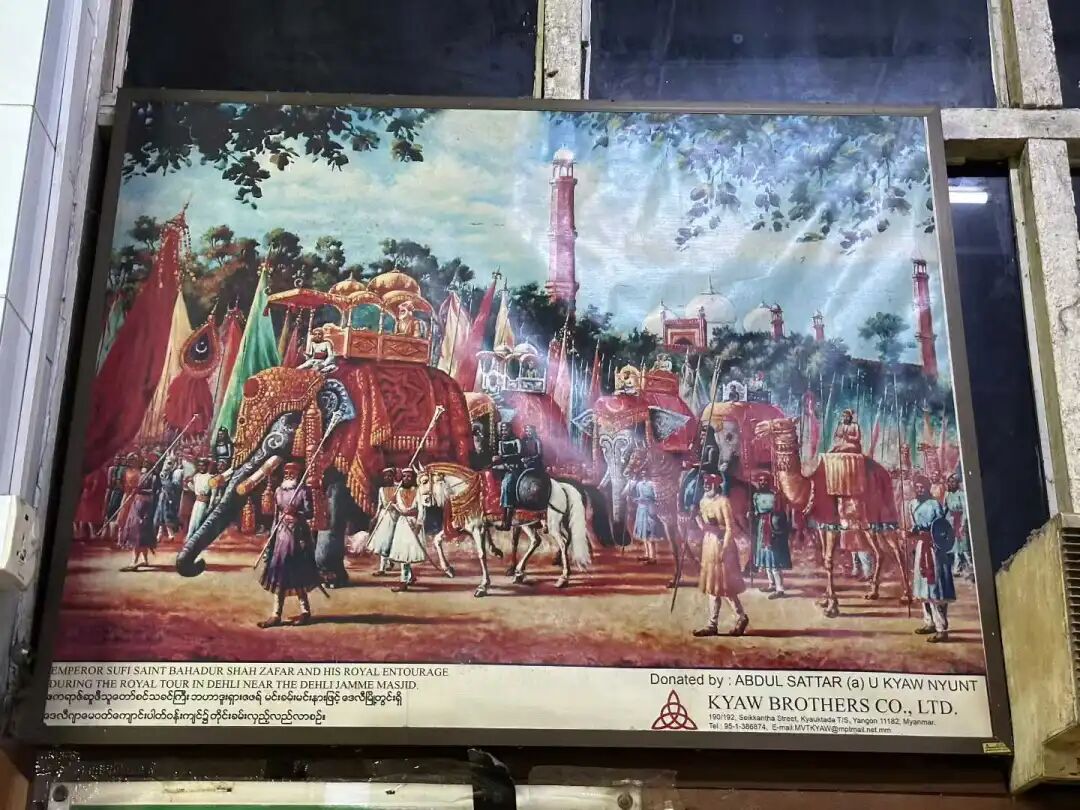
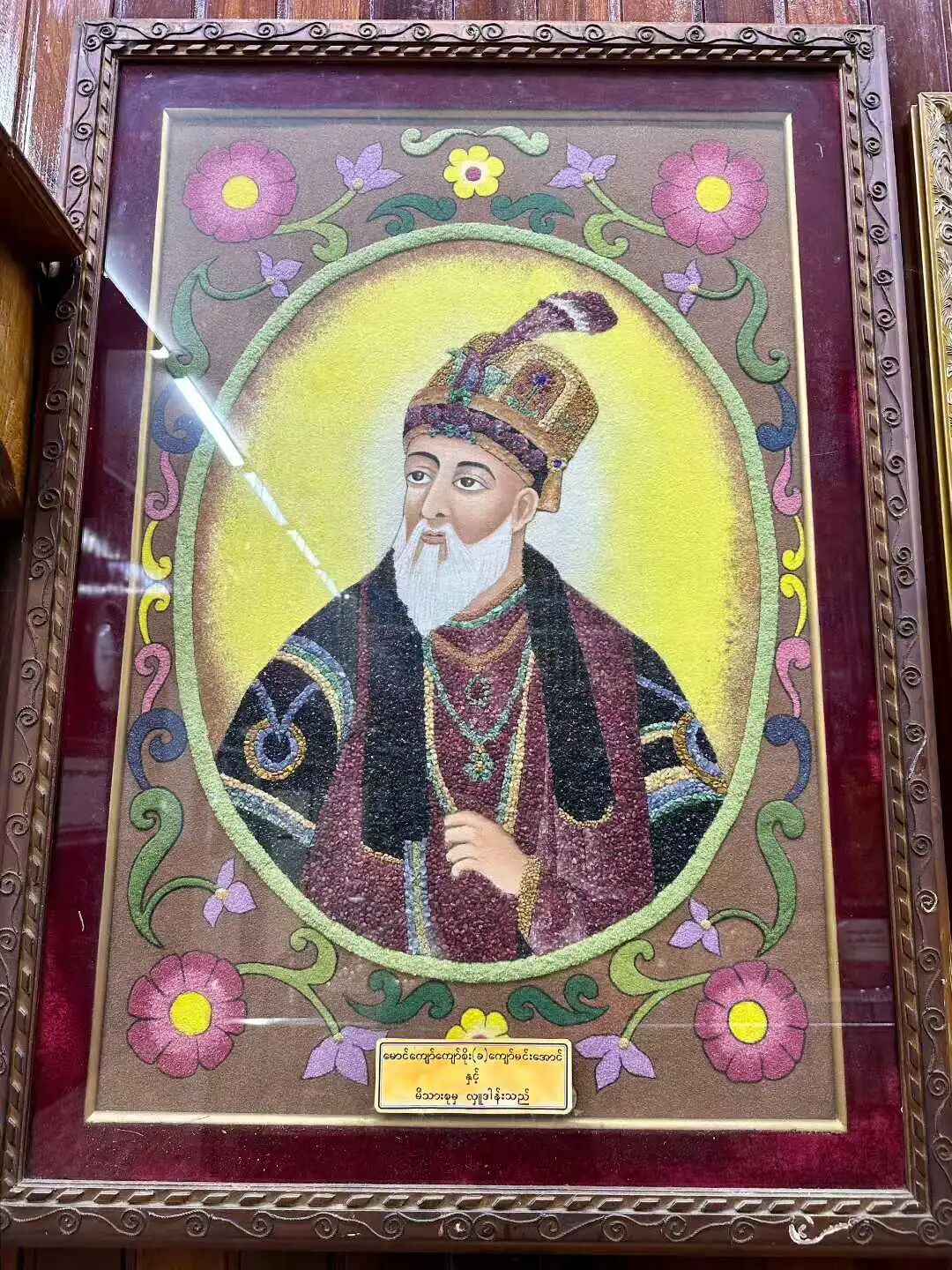
In 1857, an uprising against the British East India Company broke out in India. It started because the British army made their Indian soldiers bite open greased rifle cartridges, and rumors immediately spread that the lubricant came from cow and pig fat. The insulted soldiers flooded into Delhi on May 11 and turned to Bahadur Shah II for help at the Red Fort. Bahadur Shah II initially refused them, but faced with the passionate soldiers surrounding him, he eventually had no choice but to accept them as they bowed before him one by one, changing the fate of the Mughal Empire.
As the Siege of Delhi dragged on and the outlook grew dim, Bahadur Shah II chose to escape reality through poetry. According to British spies, he recited the following lines one night:
The sky collapses on everyone
I can no longer rest or sleep
Only my final departure will come
Whether at dawn or in the dark of night
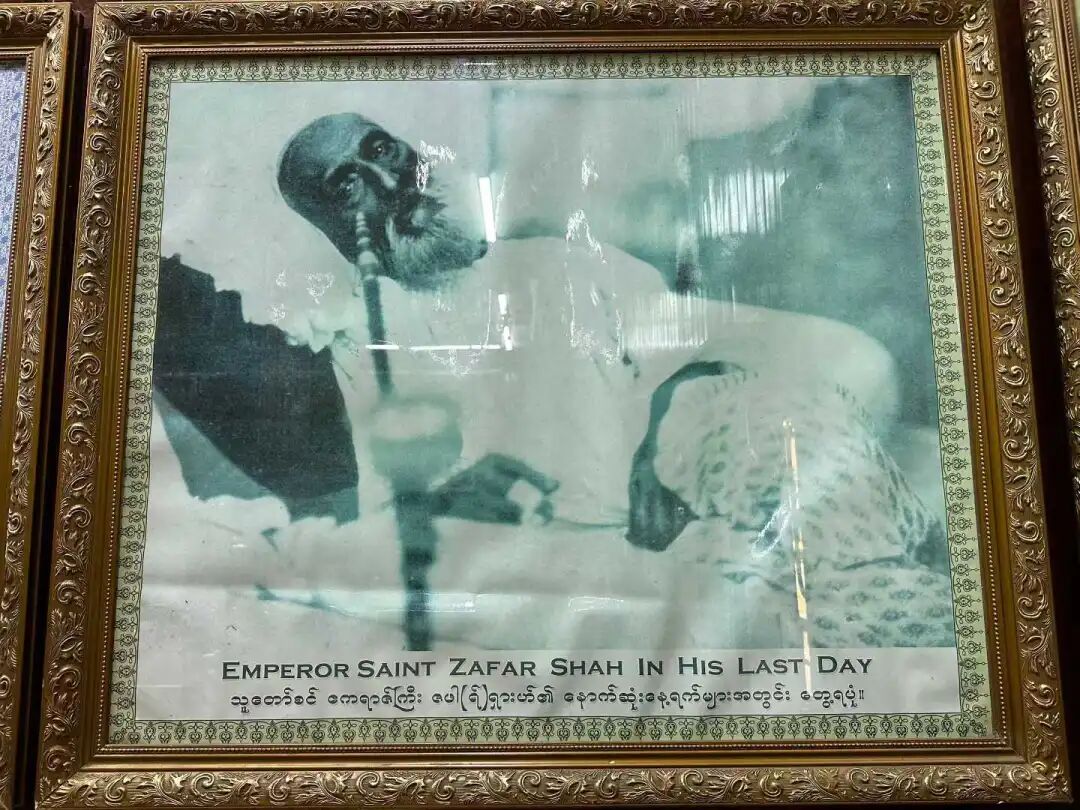
On September 14, the British army officially attacked the walls of Delhi, and on September 17, Bahadur Shah II fled the Red Fort through the Water Gate. He went to the most important Sufi shrine (gongbei) of Nizamuddin in Delhi and handed over his ancestors' relics to the Nizam family, the keepers of the shrine. It is said these included three hairs of the noble Prophet passed down by the Timurid family. Then he went to the tomb of his ancestor, the second Mughal emperor, Humayun. On September 20, Bahadur Shah II was finally captured by the British army.
By January 27, 1858, after all the dignitaries of the Mughal court had been tried, Bahadur Shah II faced his own trial. William Howard Russell, a foreign correspondent for The Times and the father of war journalism, saw Bahadur Shah II in captivity. He described him as silent, sitting motionless day and night, with his eyes cast down to the ground. People heard him reciting poems from his own works and writing poetry on the walls with a charred stick.
During the trial, Bahadur Shah II provided a written defense in Urdu. He denied any involvement in the uprising and insisted that he had been a helpless prisoner held by the Indian soldiers from start to finish. The trial dragged on for more than a month and was often adjourned because of Bahadur Shah II's poor health. On March 9, the British finally decided to exile Bahadur Shah II.
On October 7, 1858, after the Mughal Empire had ruled Delhi for 332 years, the last emperor, Bahadur Shah II, left Delhi in an ox cart. The group traveled slowly down the Ganges River by steamship and arrived at Diamond Harbour, south of Calcutta, on December 4. They boarded the British naval ship HMS Magpie there and finally reached Rangoon, Burma, where they lived in two small rooms in the British barracks area directly below the Shwedagon Pagoda.
In April 1859, Bahadur Shah II moved to a new wooden house near the fort guard camp. According to the report by his jailer, Captain Nelson Davies:
The residence consisted of four rooms, each 16 feet square. One room was assigned to the former king, another to Jawan Bakht and the young crown princess, and a third was occupied by Queen Zinat Mahal. Each of these rooms had an attached washing area. Shah Abbas and his mother lived in the remaining room.
The servants either lounged around the veranda or slept under the house, where the ground was covered in crushed brick to keep it dry. A drainage ditch ran around the house for the same reason. There were two washrooms, a double bathroom for the servants, and a place for cooking.
The veranda on the upper floors was full of chicks, which were kept inside by nailed-down slats. The frail former king and his sons usually sat there, where the floor was raised almost to the height of the railing, allowing them to enjoy the pleasant sea breeze and the wide, beautiful view. They watched people pass by and stared at the ships being loaded, which helped break up the monotony of their life behind bars and made them more willing to accept their current living situation.
Regarding the health of Bahadur Shah II, the report by Davis noted:
If given time to make up his mind, his memory was still good, but he spoke unclearly because he had lost his teeth. He was unable to handle anything requiring mental effort, and while that was the impression he gave, he seemed to be bearing the weight of his years remarkably well. He lived a dull, listless life, showing little interest in anything except eternal matters. This had been his normal state for a long time, and it would likely continue until his life ended, which would not surprise anyone.
Because the British did not allow him to use paper or pens, the world could only guess how he felt about his life in exile. By October 1862, his health took a sharp turn for the worse, and he could no longer swallow or eat food. On November 5, Davis ordered bricks and lime to be collected to prepare a quiet spot behind the house enclosure for his burial.
At 5:00 a.m. on November 7, 1862, Bahadur Shah II finally returned to Allah. Davis wrote: Everything was ready, and at 4:00 p.m. that day, he was buried in a brick grave behind the guard camp, with turf laid level with the ground... A bamboo fence surrounded the grave for a long time, and once the fence rotted, the area would be covered in thick grass, leaving no trace and making it impossible to identify the final resting place of the last Great Mughal. Davis specifically mentioned that only two of Bahadur Shah II's sons and a manservant attended the funeral, as women were not allowed to attend according to tradition.
The grave of Bahadur Shah II soon became impossible to identify. When a delegation from India came to visit in 1903, a local guide pointed out a jujube tree near the grave. In 1905, the Dosti group in Yangon protested and demanded that the grave site be marked. The British initially disagreed, but after a demonstration and a series of published reports, they finally agreed in 1907 to erect an inscribed stone slab and put a railing around it. In 1925, the railing was rebuilt into a temporary shrine (gongbei) covered with a corrugated iron roof.
It was not until February 16, 1991, when workers were digging a drainage ditch behind the shrine, that they discovered a brick-lined grave, finally confirming the remains of Bahadur Shah II. Later, this place was rebuilt into a mosque with a prayer hall (gongbei). Dignitaries from India, Pakistan, and Bangladesh have all visited, and Rajiv Gandhi even gifted a carpet here.
As a fallen monarch, Bahadur Shah II was a failure. He did not give the army the support it needed during the 1857 Indian Rebellion, which ultimately ended the Mughal civilization. Under the British policy of divide and rule, the various ethnic groups in India began to drift apart. But under his rule, Delhi was home to the most talented poets and writers in modern South Asian history, and literature and art reached their peak.
As a Sufi ruler, he never forgot how important it was for the different groups under his rule to depend on each other. During the Siege of Delhi, he refused the demands for a holy war (jihad) from the Wahhabis and tried his best to maintain relationships between all groups. When a large number of Muslim (dosti) elites moved from India to Pakistan in 1947, people could no longer imagine that just 90 years earlier, many Indian soldiers had rushed to the Red Fort in Delhi, gathered under the banner of a Sufi emperor, and faced national disaster with their Muslim brothers to fight against foreign invaders.
I found stone tablets standing around the front of the tomb.
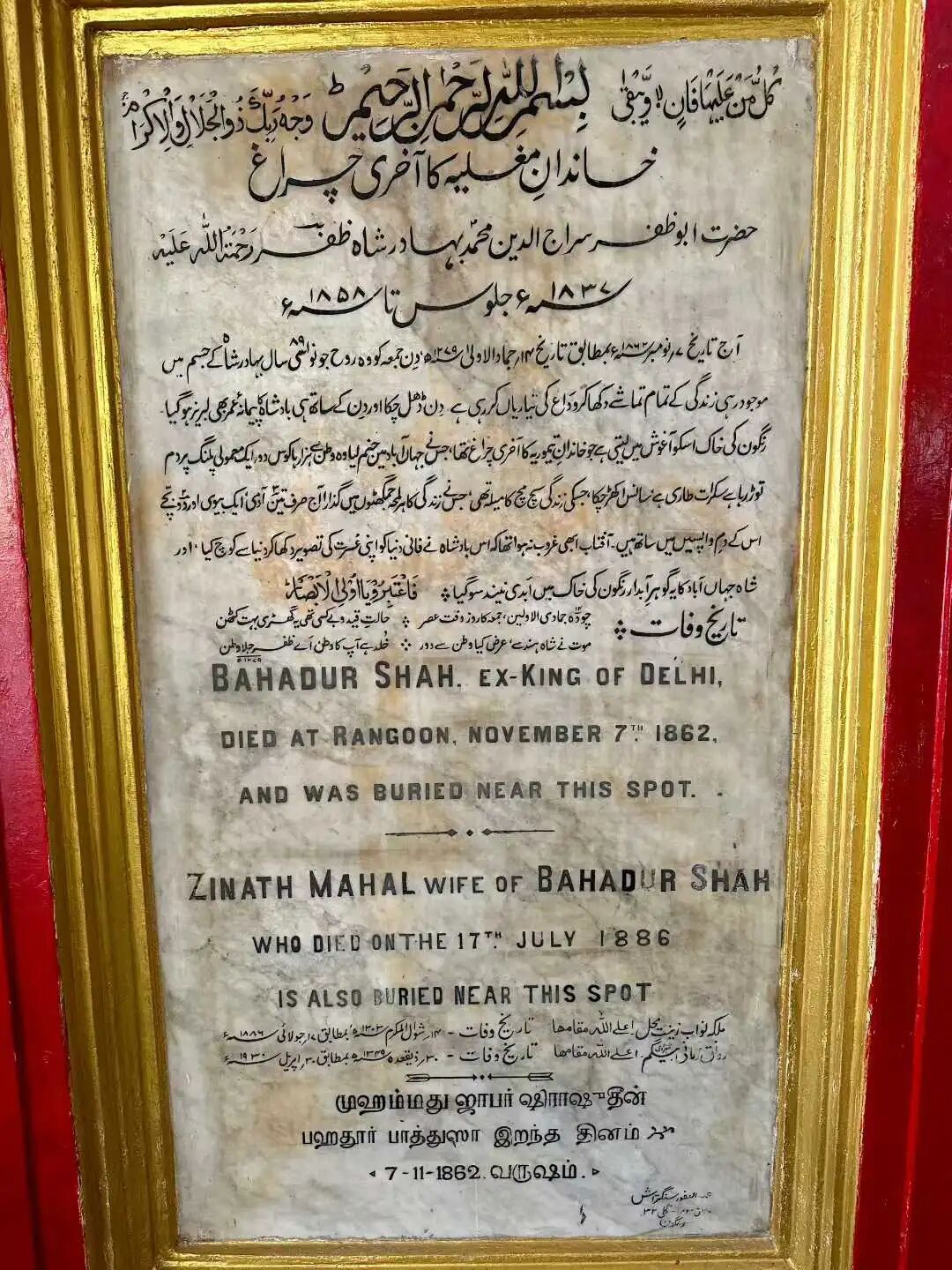
Underground is the original location of the tomb.
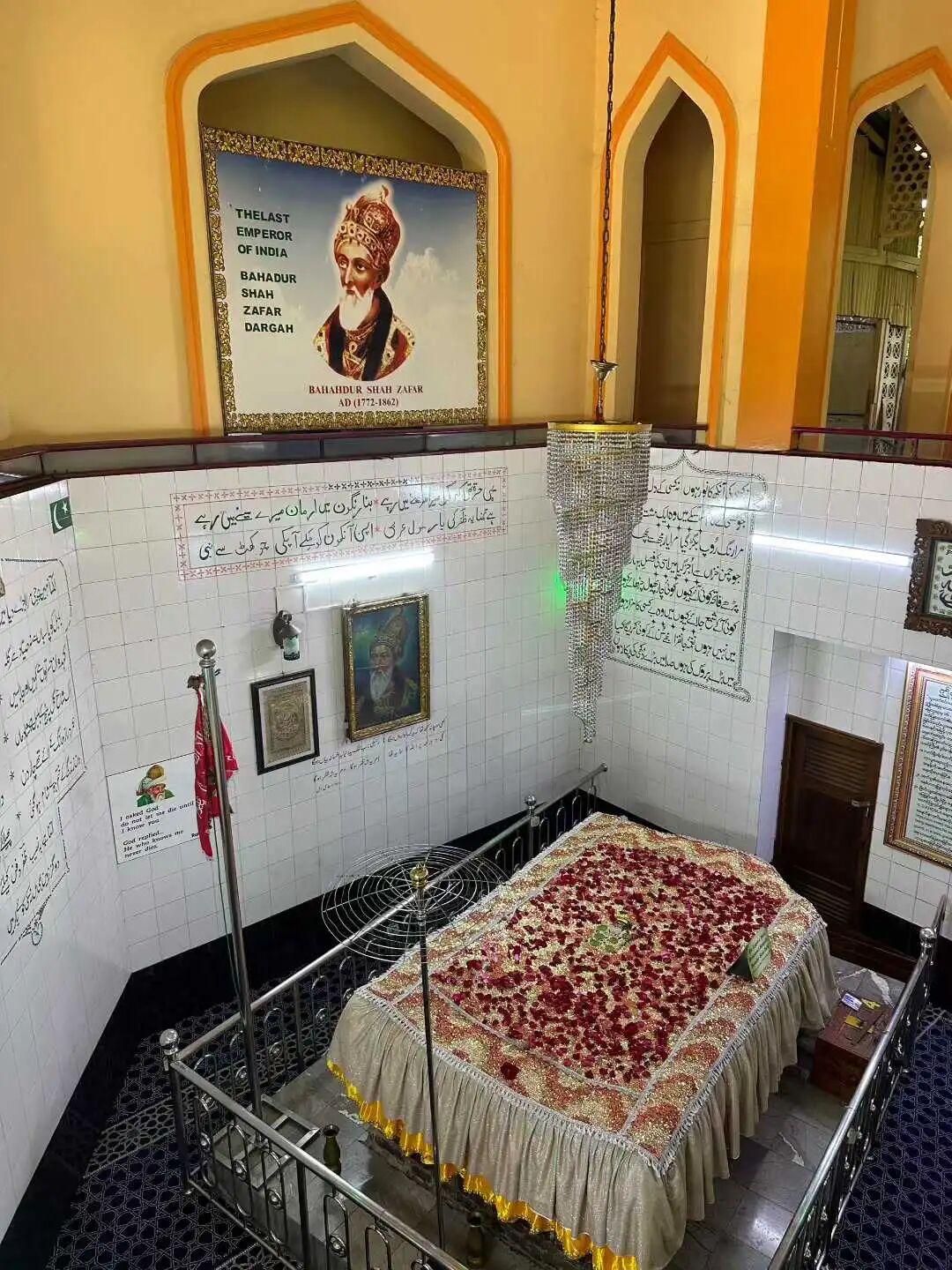
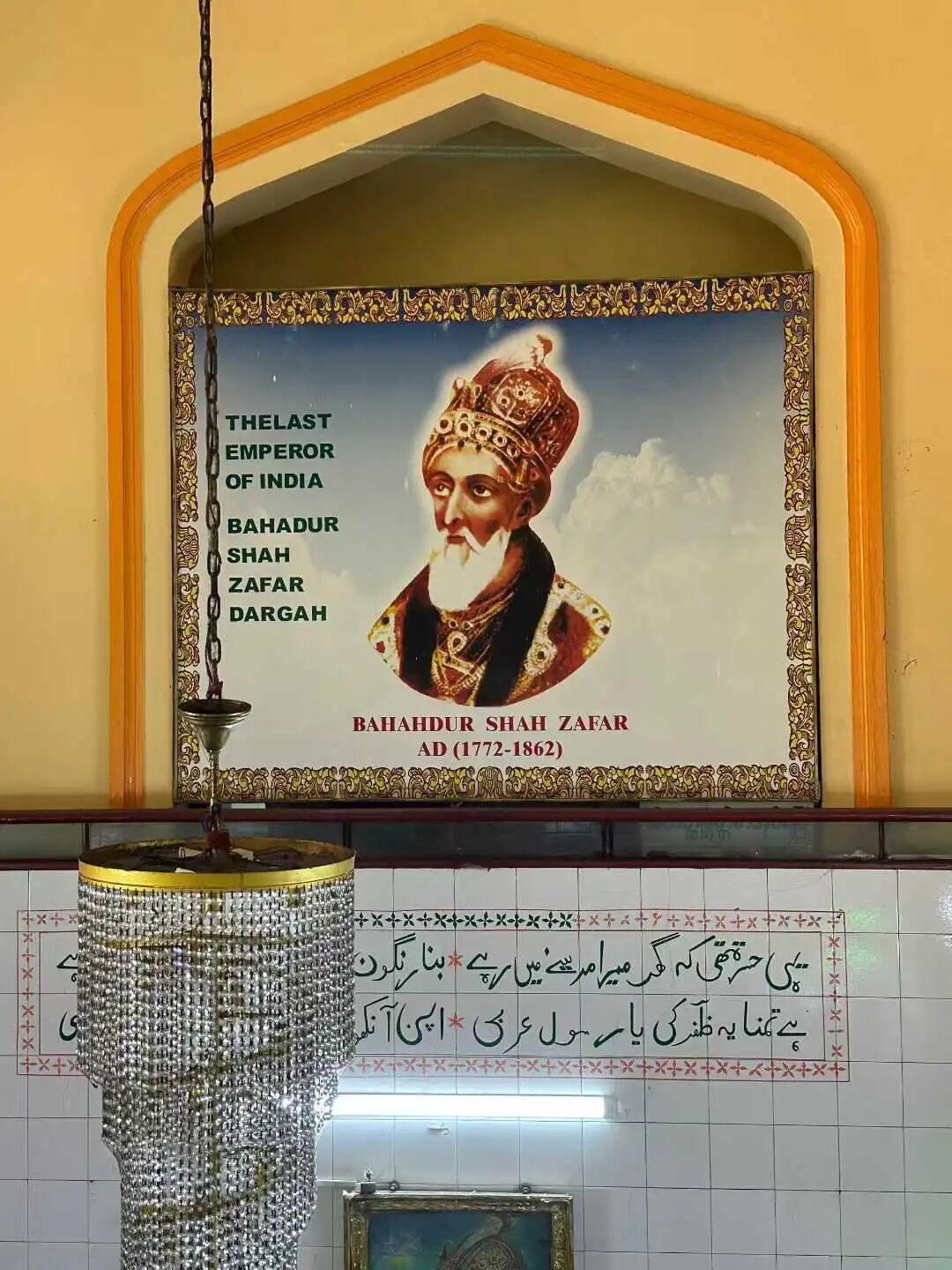
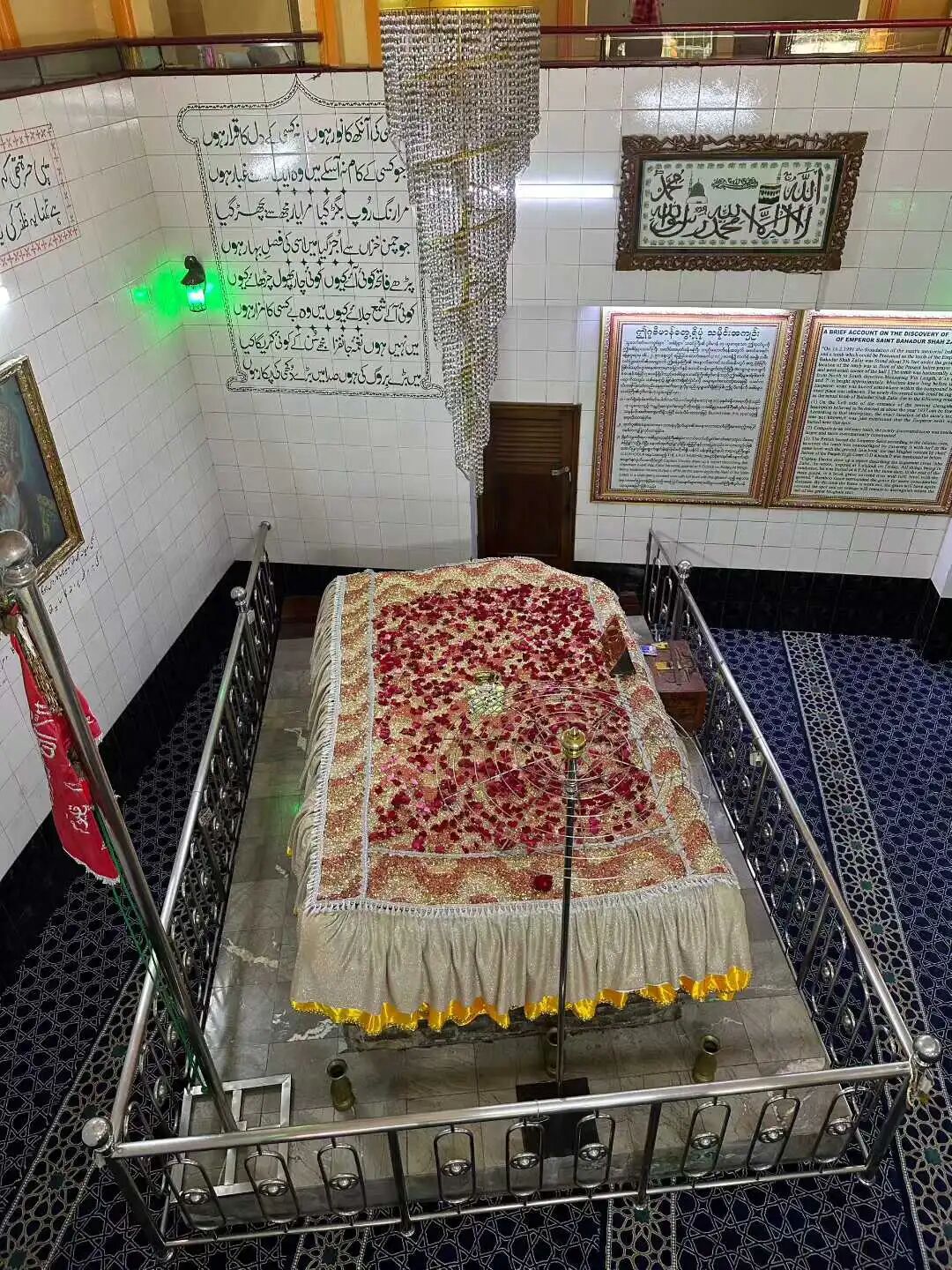
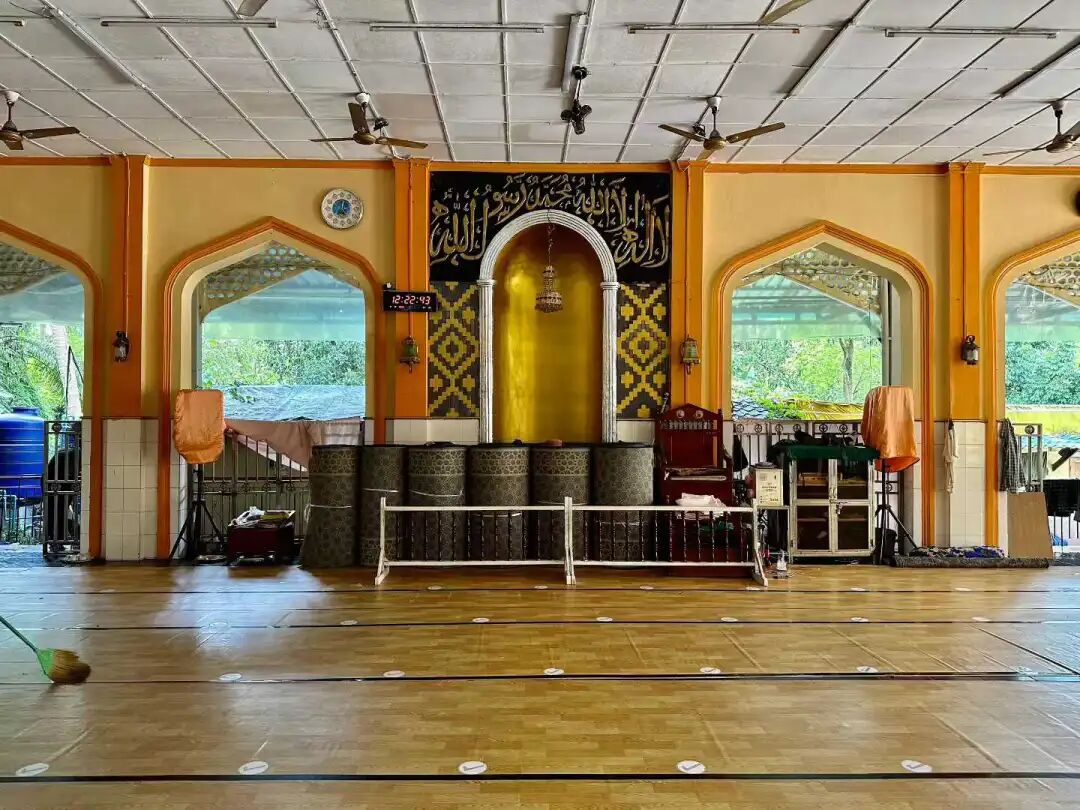
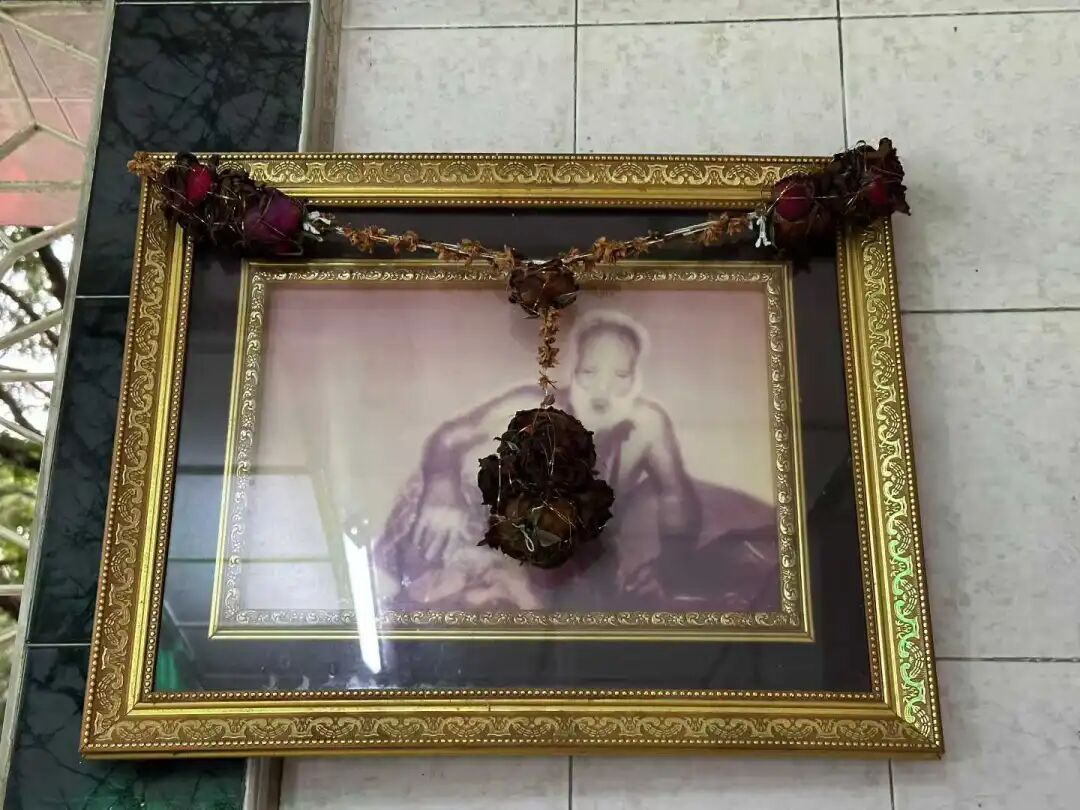
Inside the tomb complex (gongbei), there is a portrait of Abdul Qadir Gilani, the founder of the Qadiriyya order.
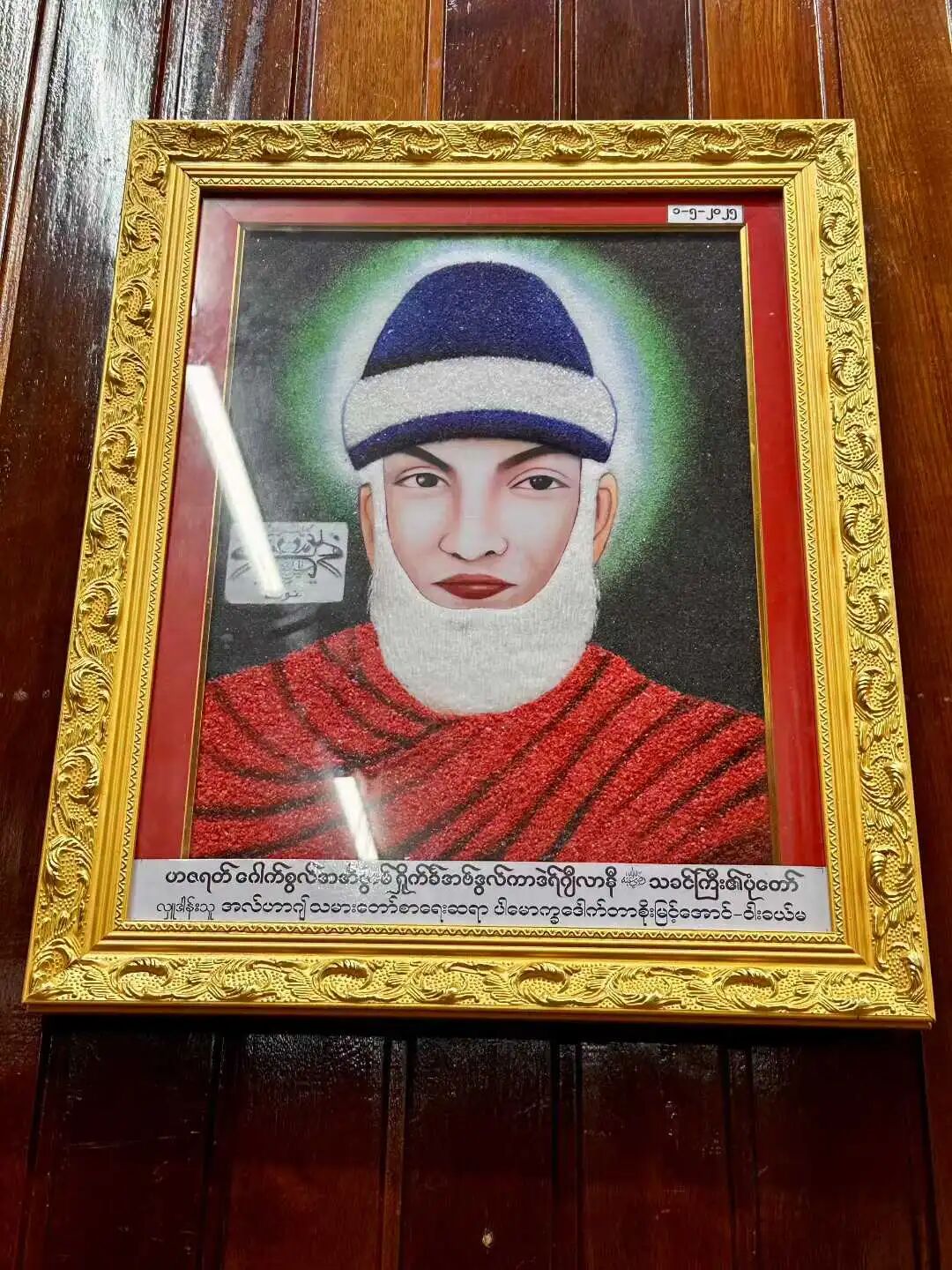
Next to the tomb is a prayer hall. This is the same as the Qadiriyya order in China, where the tomb and prayer hall are adjacent, and there is an imam in the mosque.
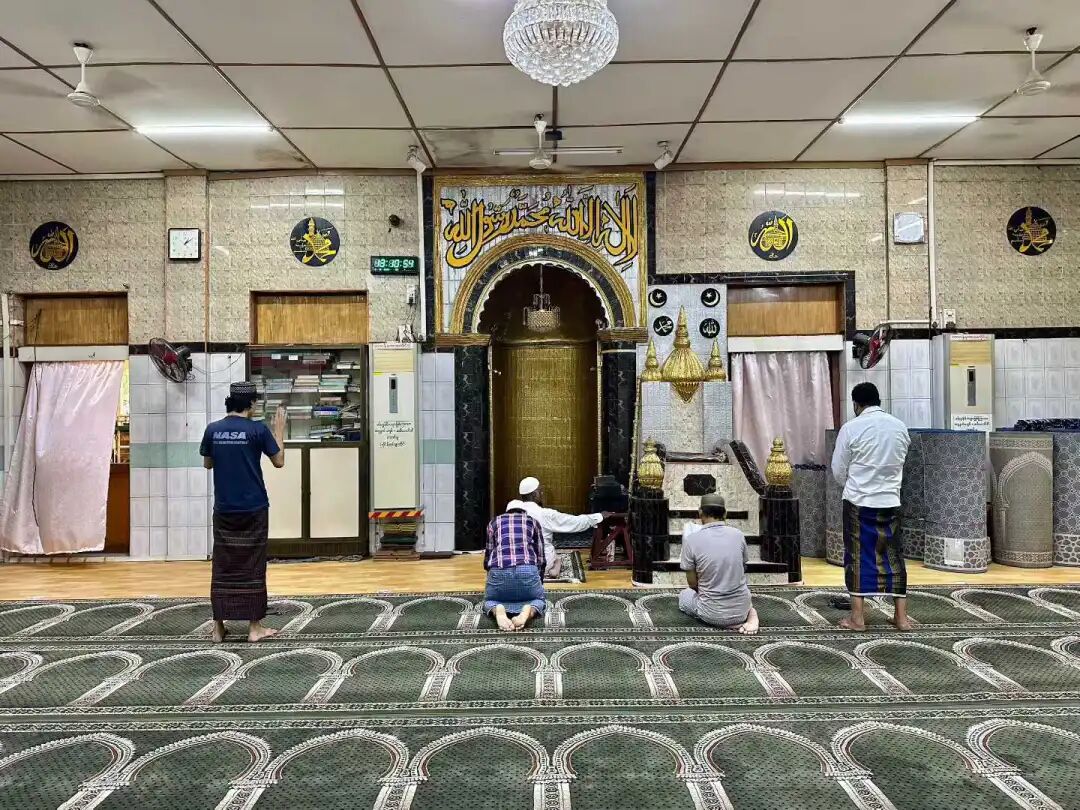
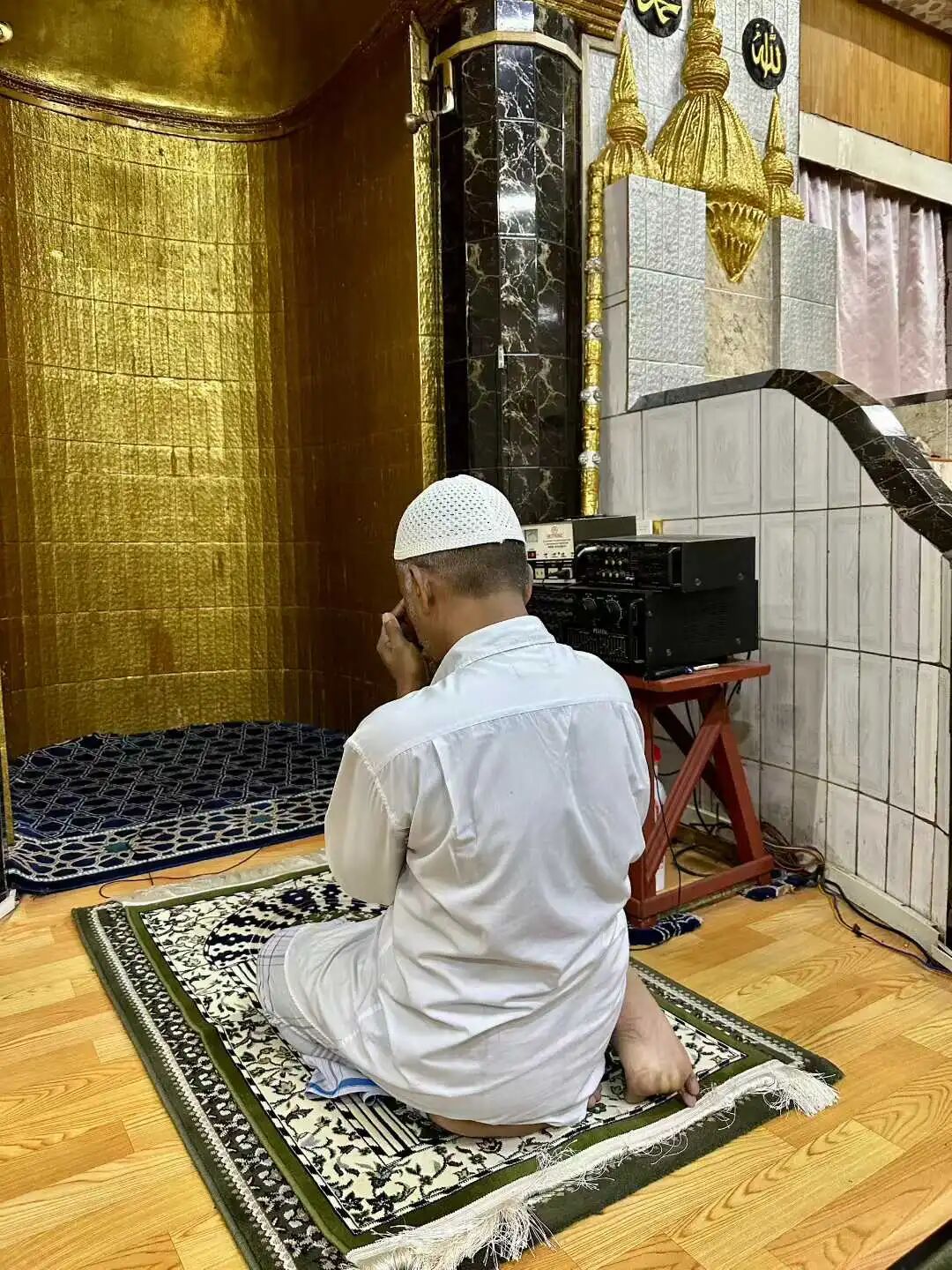
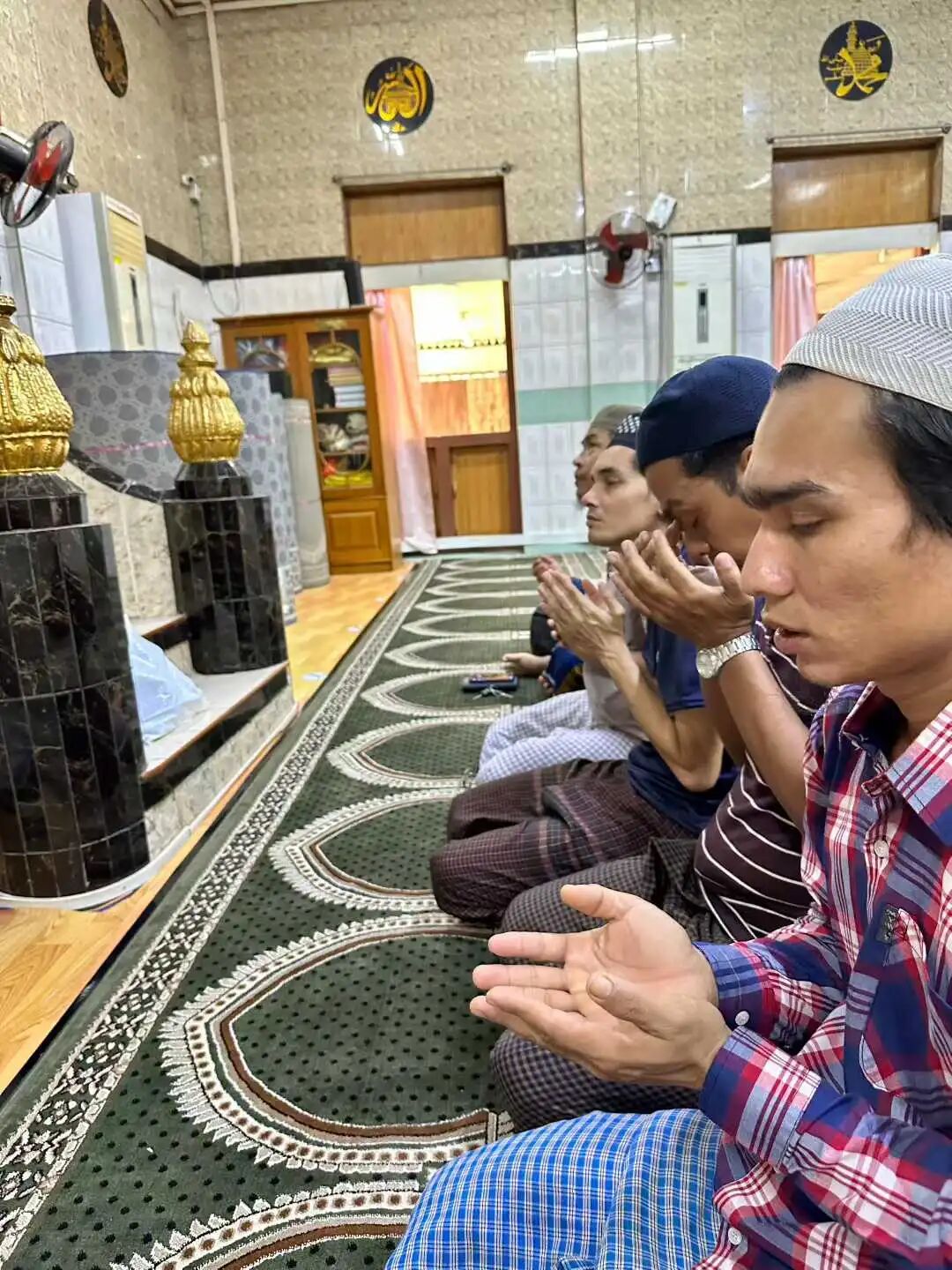
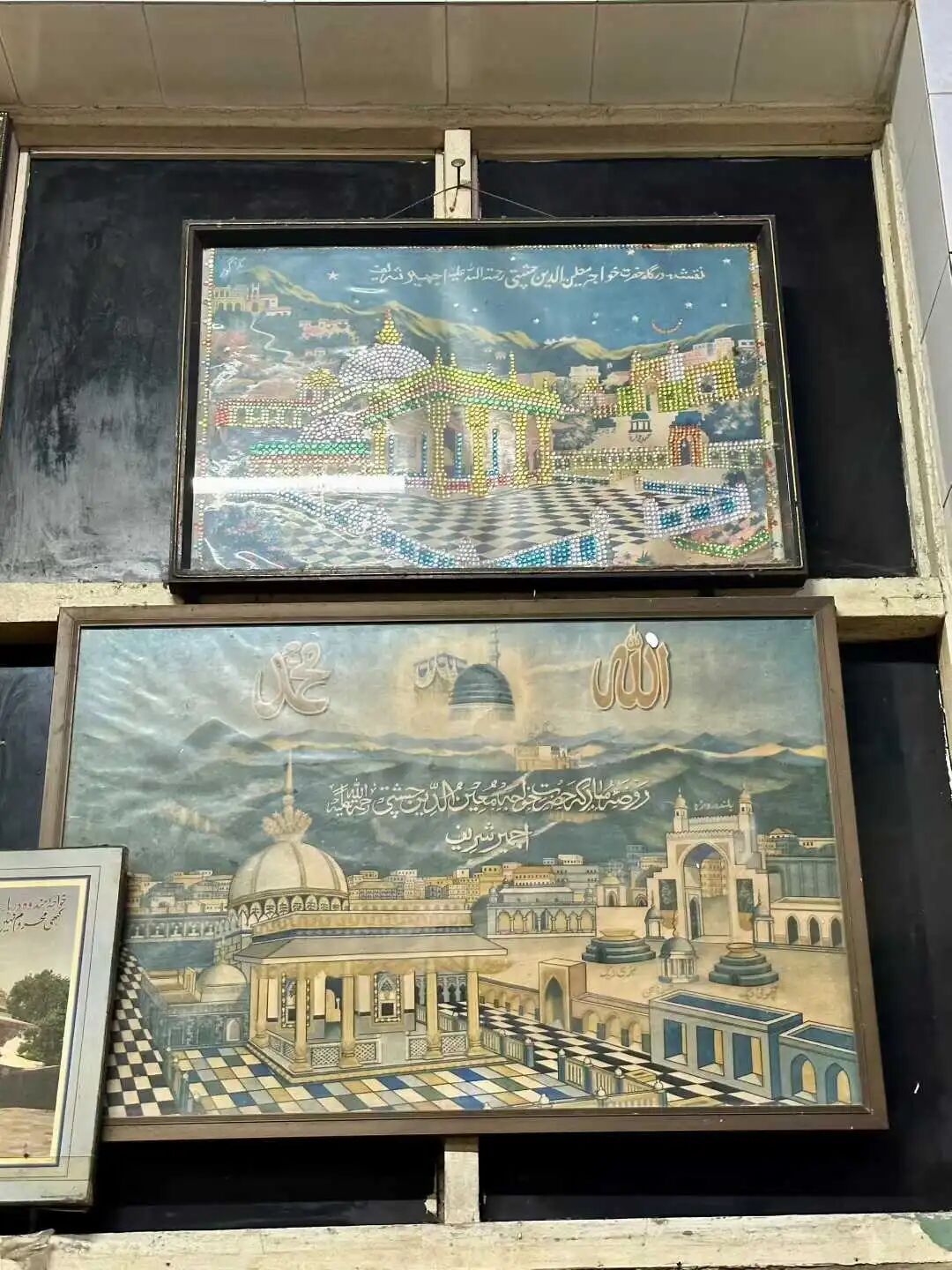
In a forest near the Yangon Central Railway Station in Myanmar, the largest Sufi tomb complex in Yangon is hidden. Since most of the text inside the tomb is written in Burmese, I searched for information for a long time after I returned but could not find any leads. Recently, based on the few English words inside the tomb, I learned that this place belongs to the Maizbhandari order, which was established in the late 19th century by Bengali Muslims based on the Qadiriyya Sufi tradition.
The Maizbhandari order is the only indigenous Bengali Sufi order, and its founder was born in Chittagong in 1826. People say his ancestors were descendants of the Prophet, who moved through Medina, Baghdad, and Delhi before finally settling in Bengal, serving as imams for generations. Maizbhandari studied the scriptures from a young age. After graduating in 1853, he first served as a judge (qadi), but soon resigned to work as a teacher in Kolkata. In Kolkata, he met two sheikhs from the Qadiriyya Sufi order and joined them to practice Sufism. In the late 19th century, he established his own lodge and founded the Maizbhandari order.
From the 19th century to the present, the Maizbhandari order has grown into a modern organization with millions of followers and is the most important Sufi order in Bangladesh. The Maizbhandari order is known for its melodic and rhythmic way of chanting (dhikr). They have recorded tens of thousands of songs, which have had a great influence on the faith in Bengal. As Yangon, Myanmar, has a large population of Bengali Muslims, it is also an important area for the Maizbhandari order.
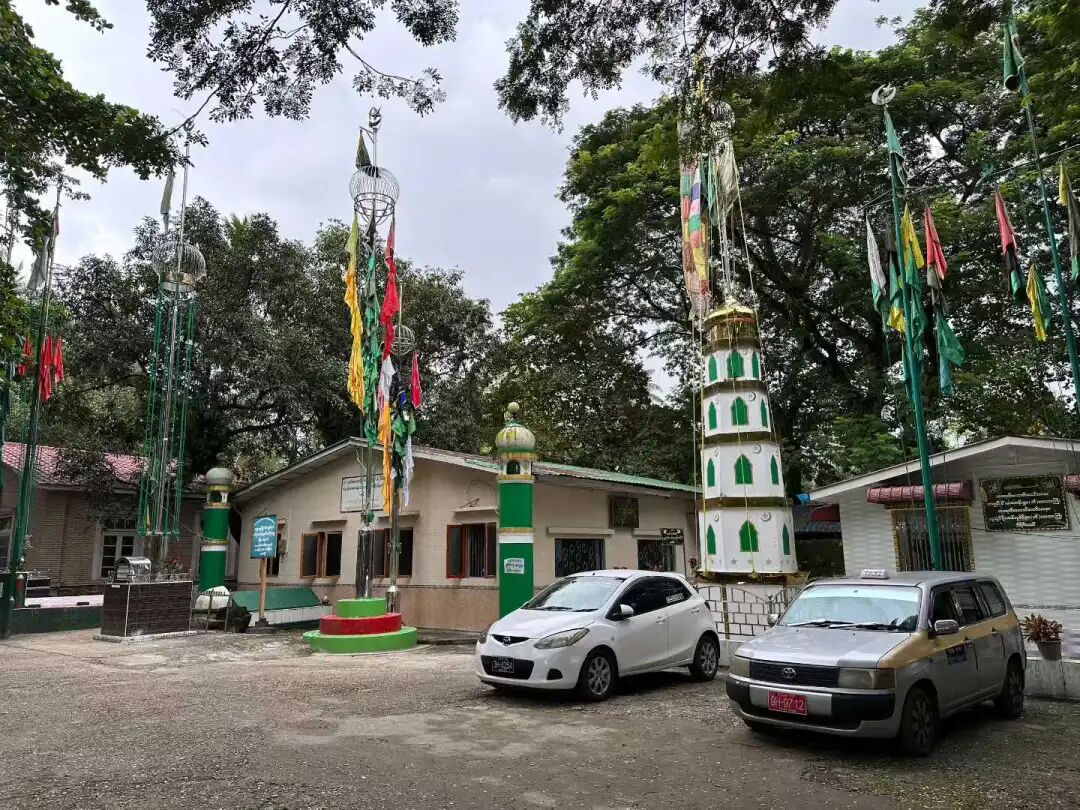
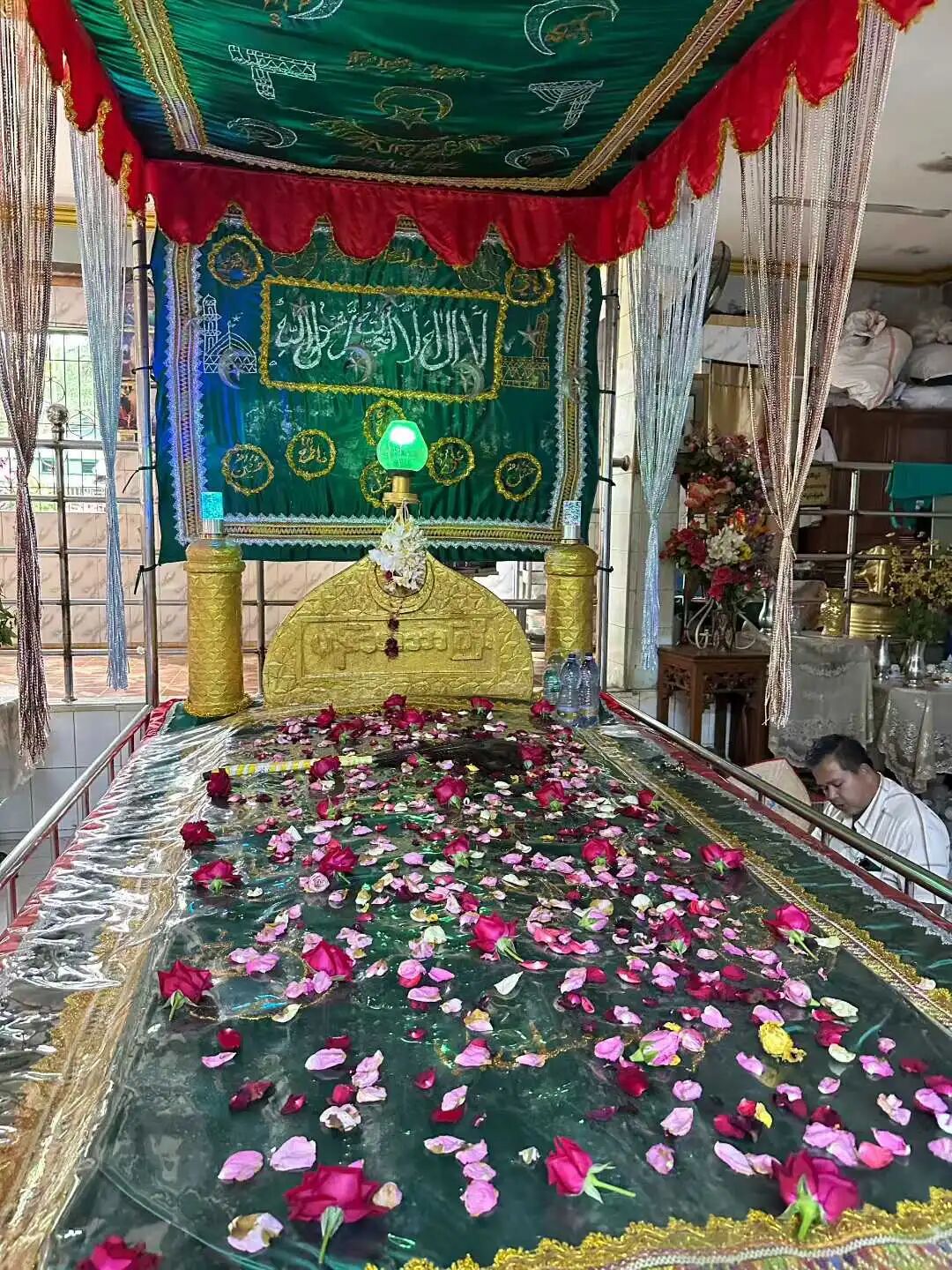
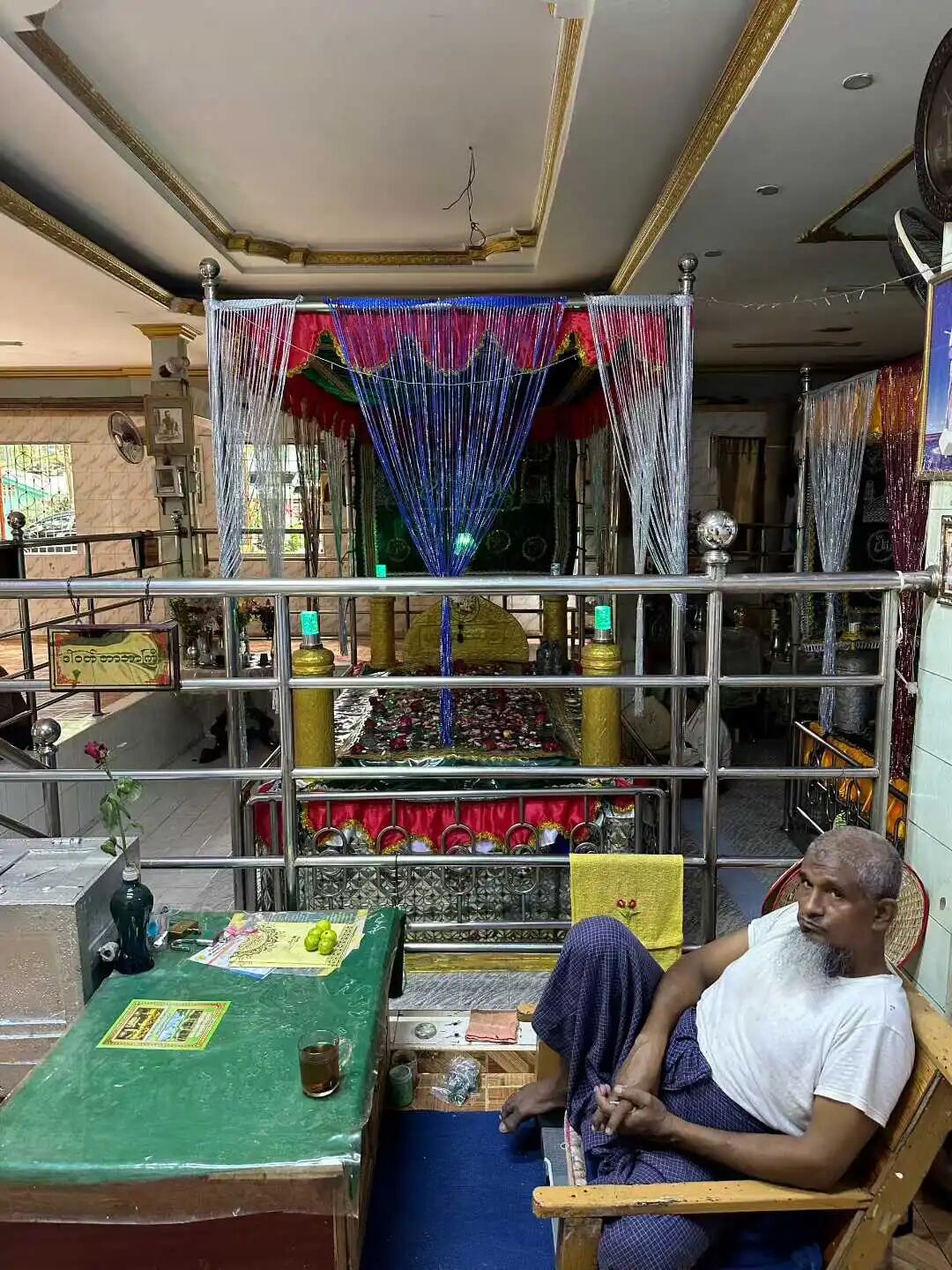
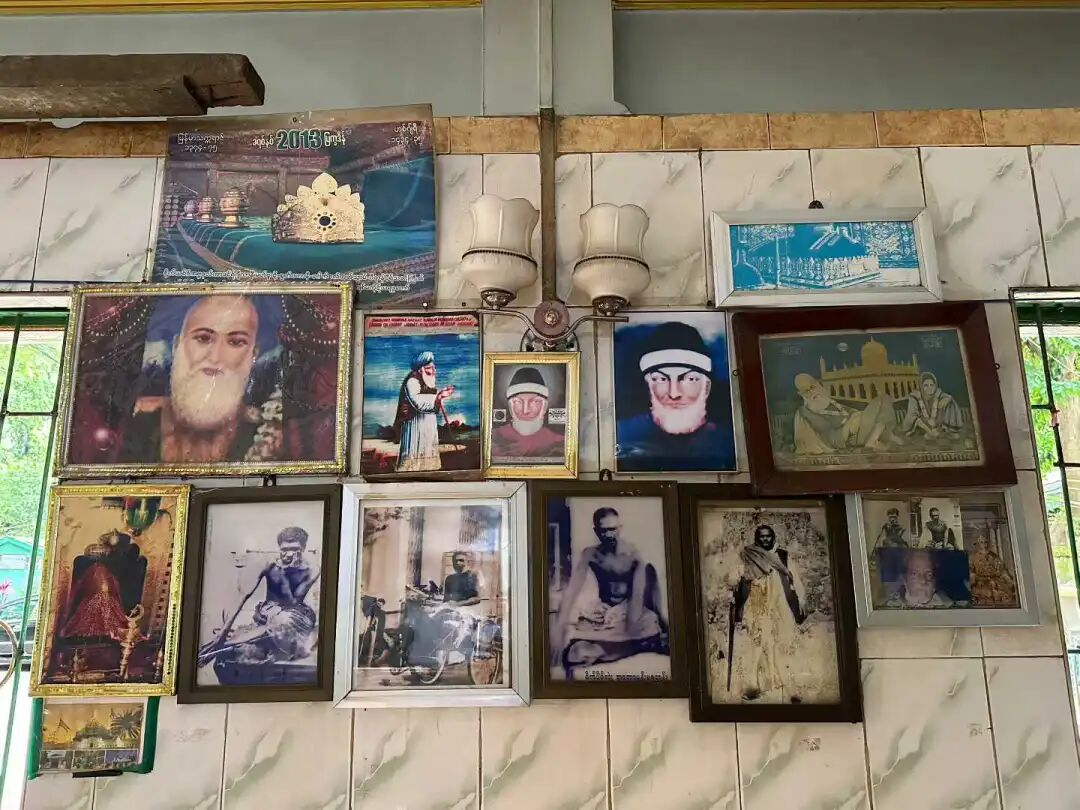
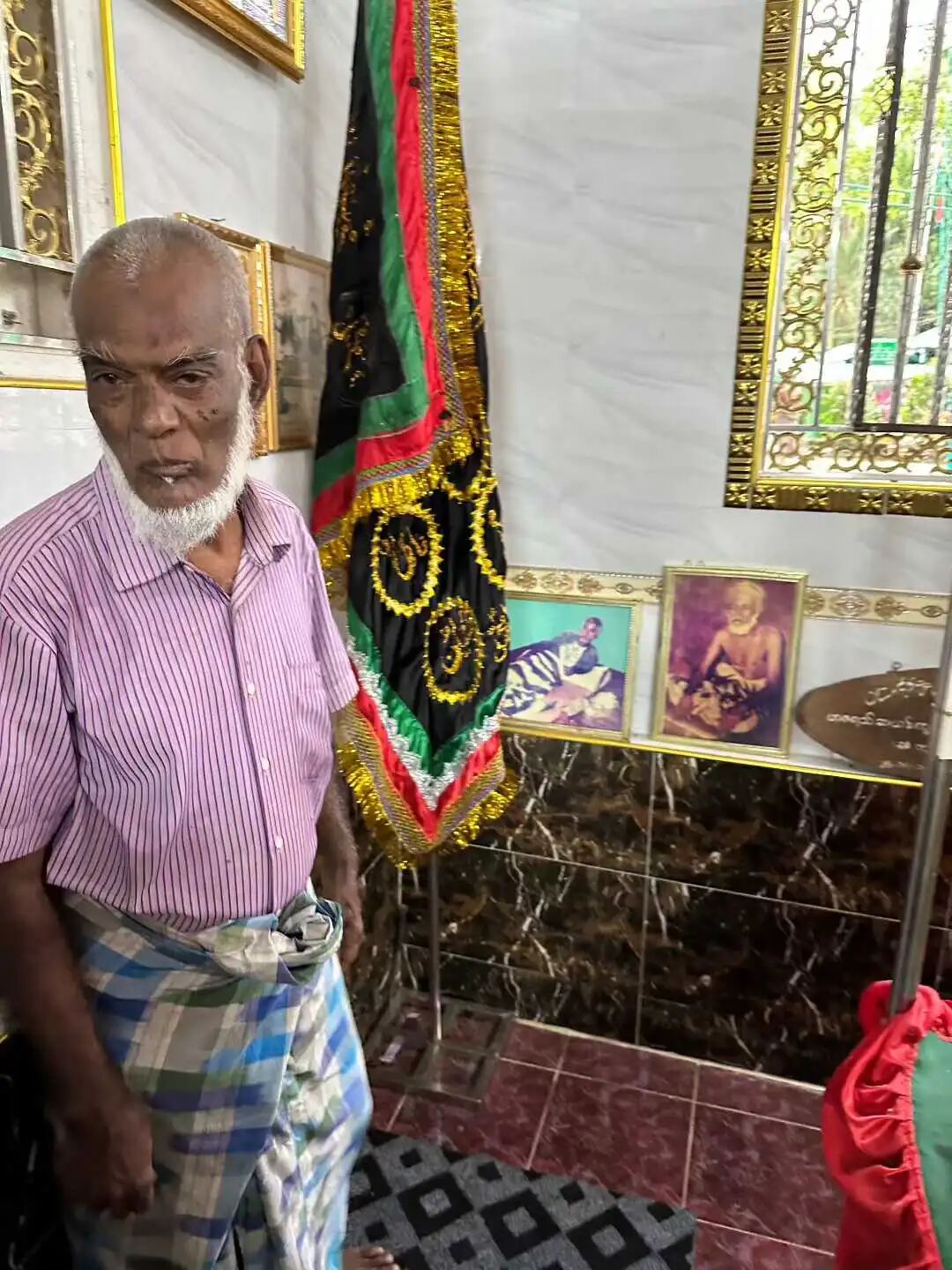
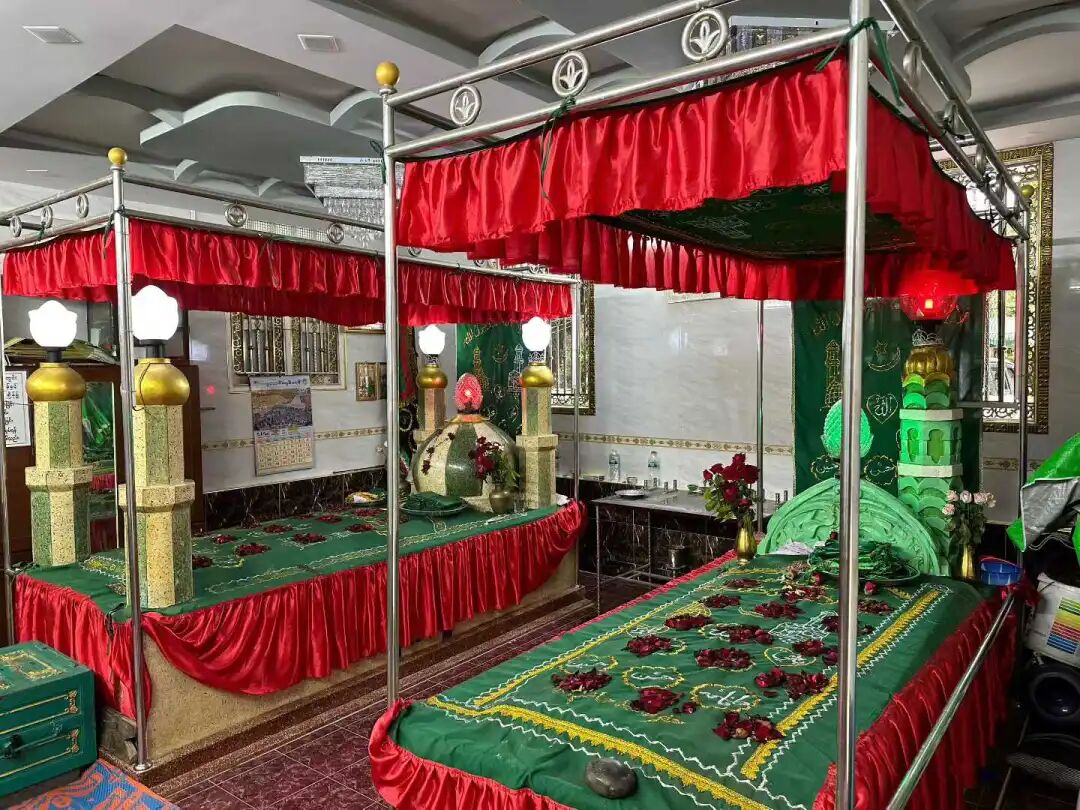
A live scene of the dhikr ceremony.
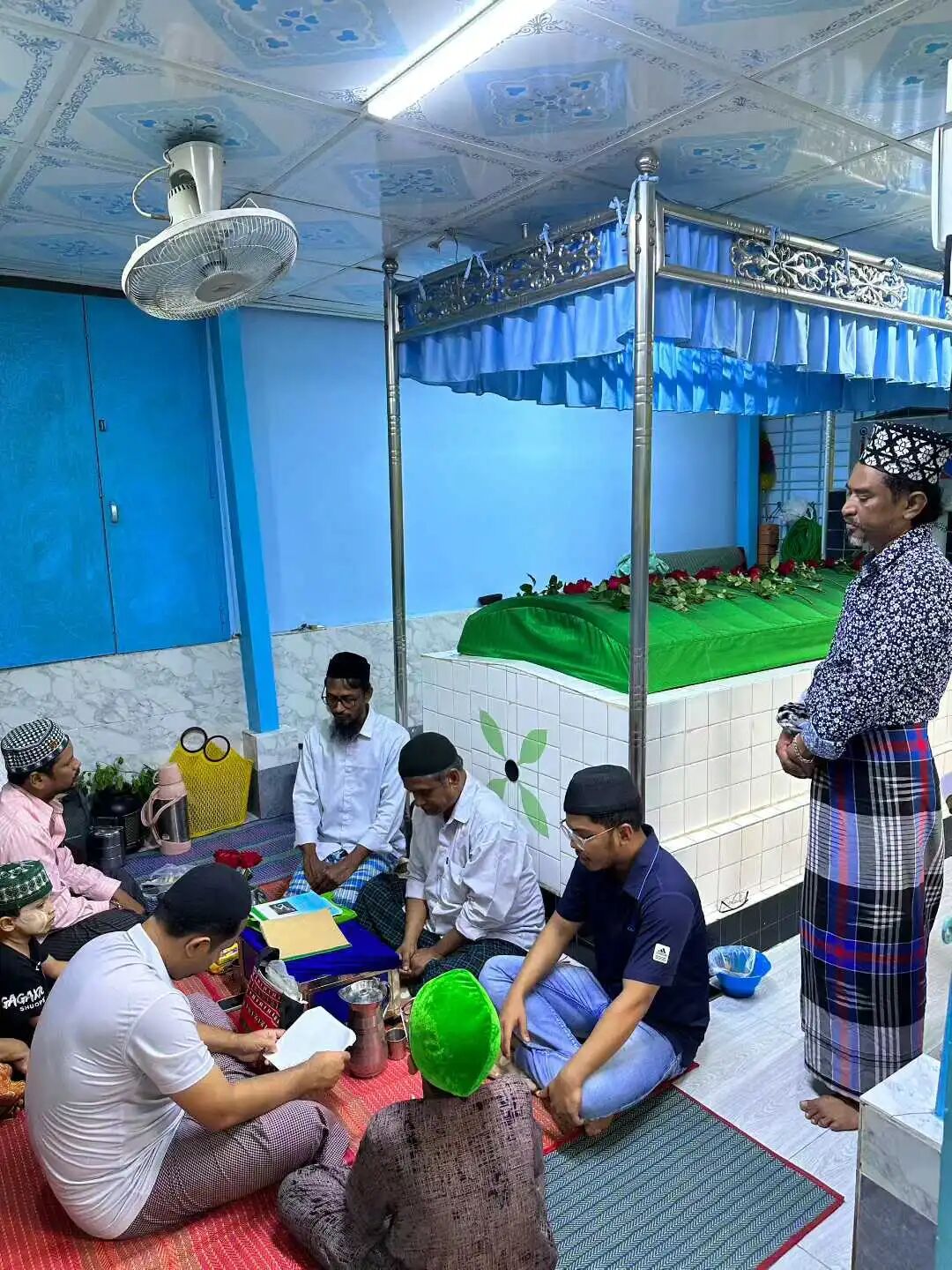
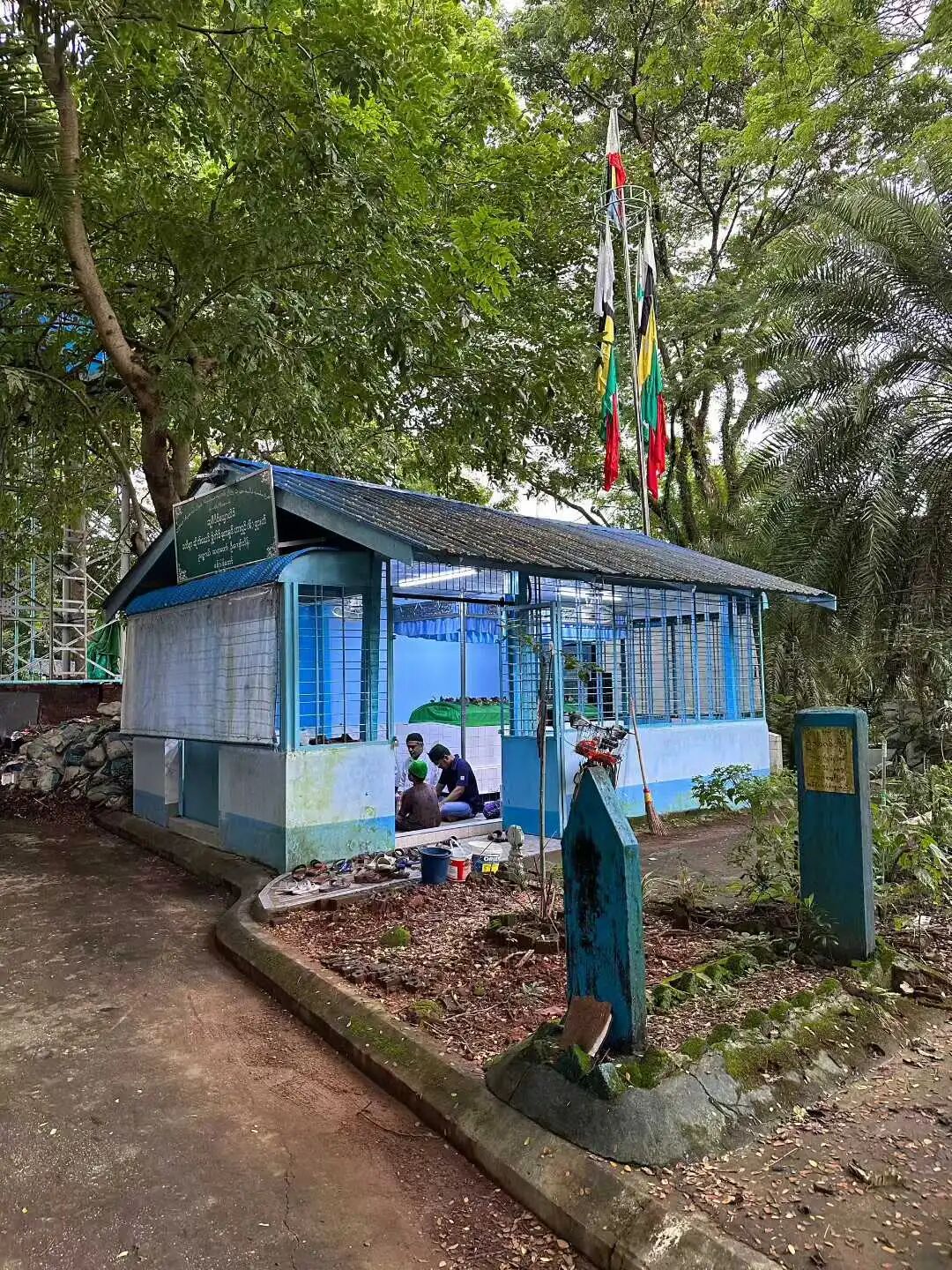
At the Sufi tomb in Yangon, not only Muslims but also Burmese Buddhists come to offer dua. This is the unique charm of Sufism in South and Southeast Asia. At many important shrines (gongbei) in India, you can see Hindus going inside to offer dua. In Malaysia and Singapore, many Chinese people also come to pay their respects at the shrines (keramat) of local saints.
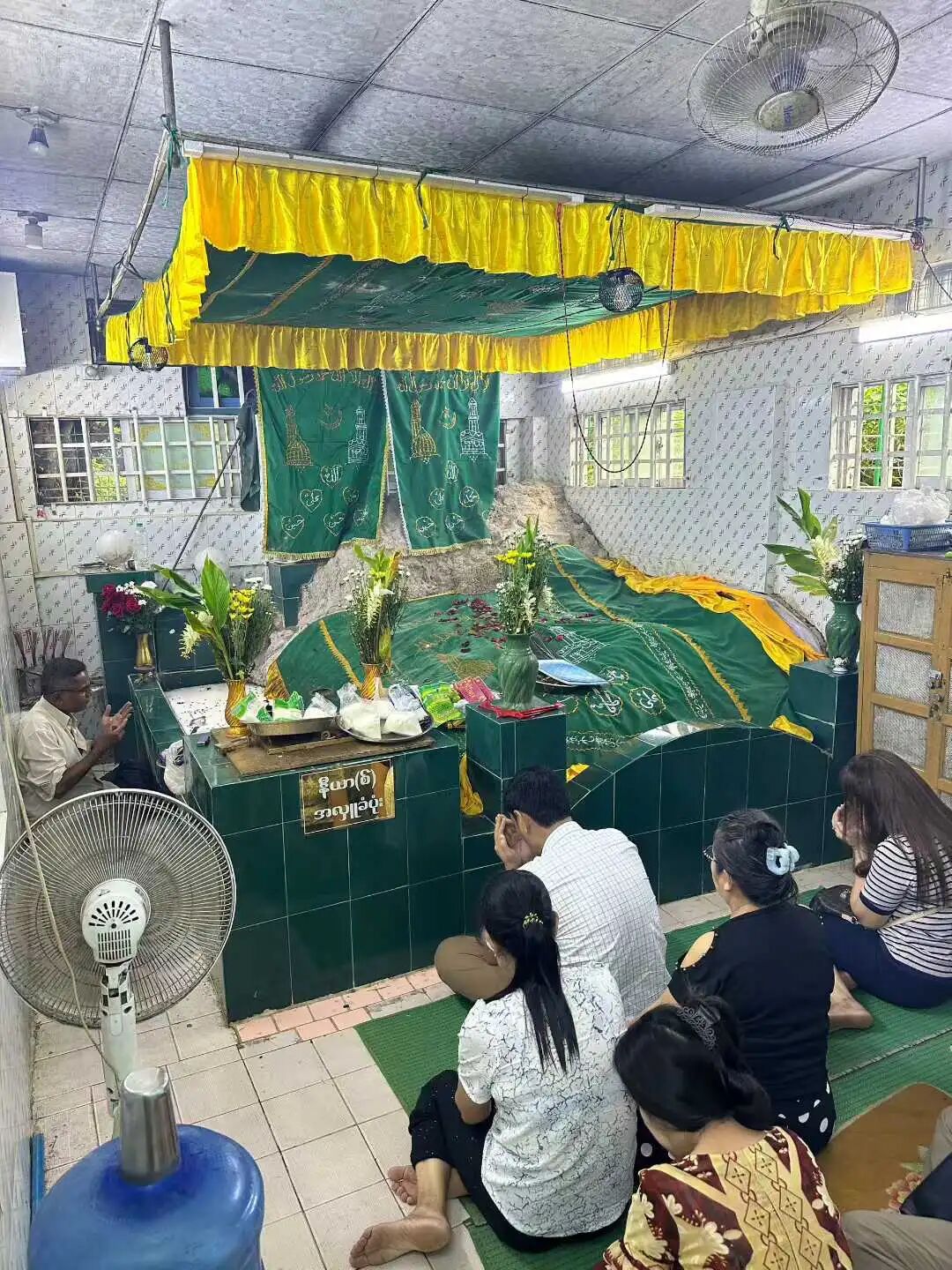
I also saw white sugar placed in front of a shrine (gongbei).
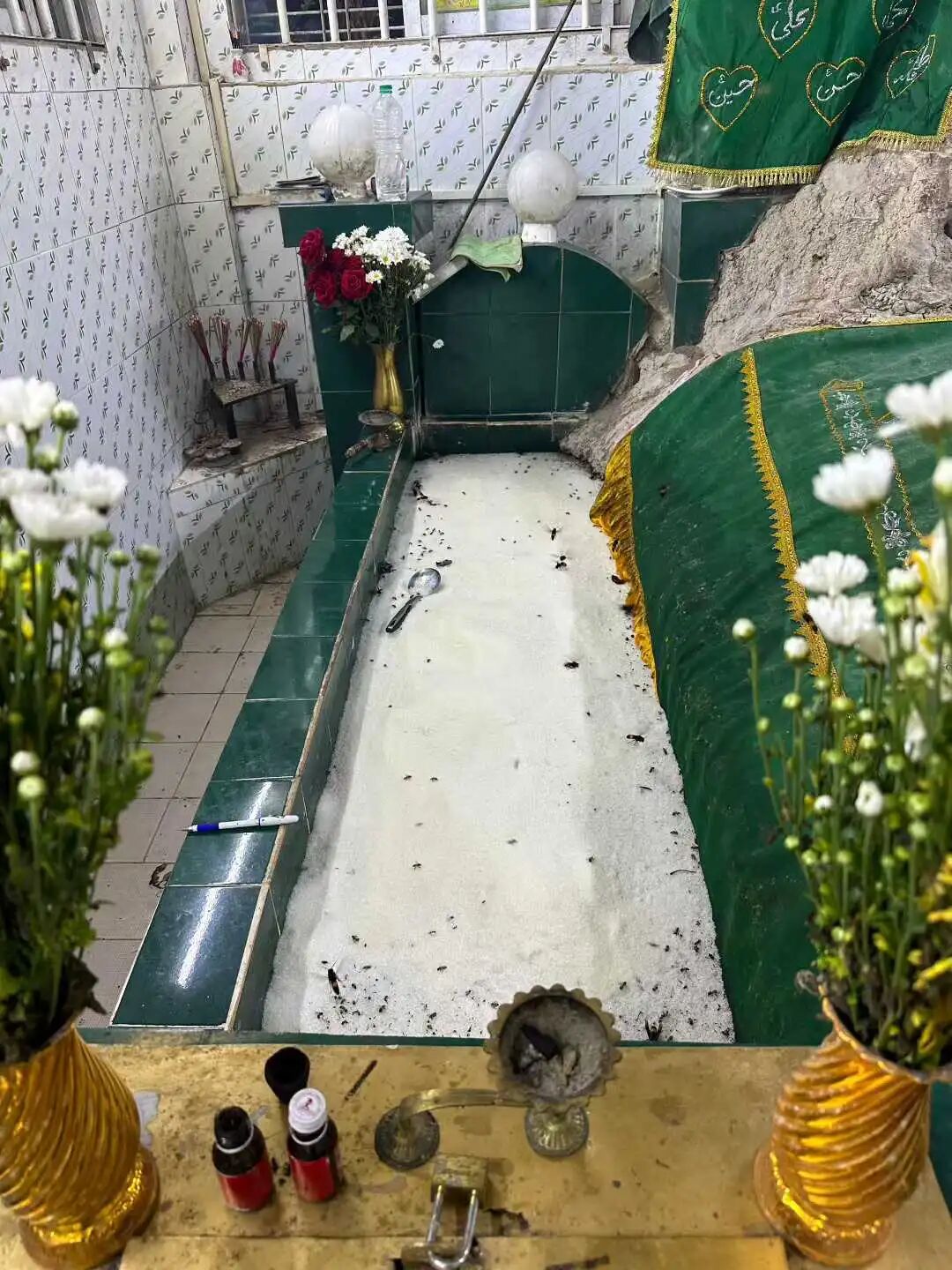
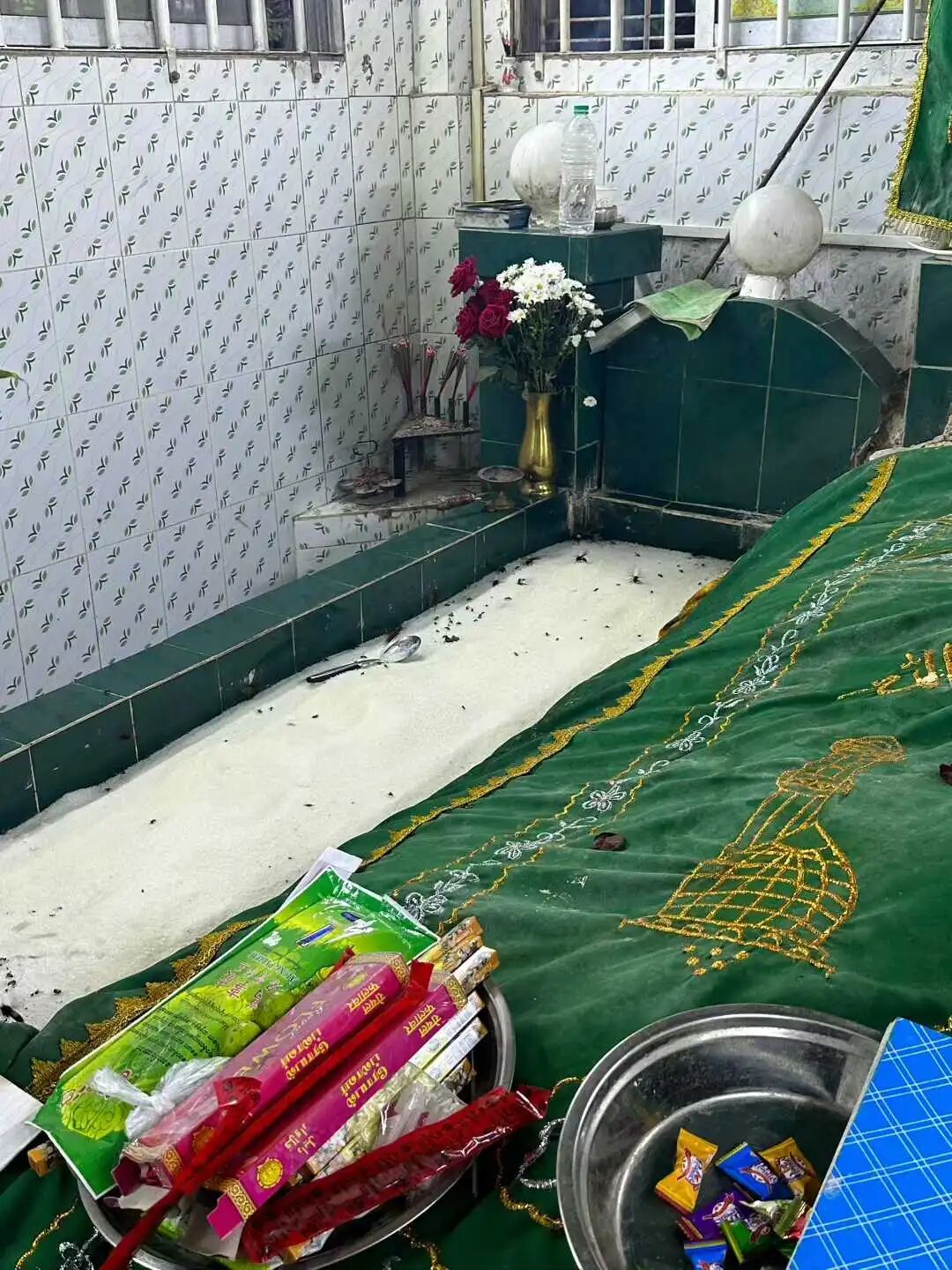
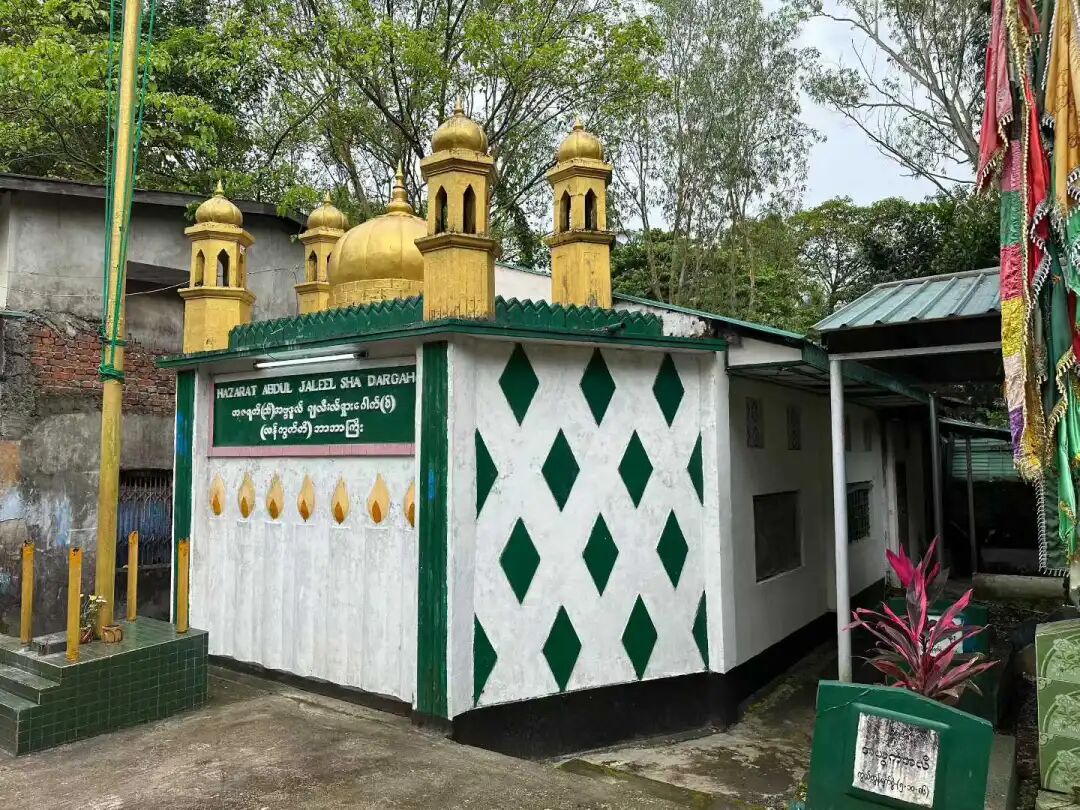
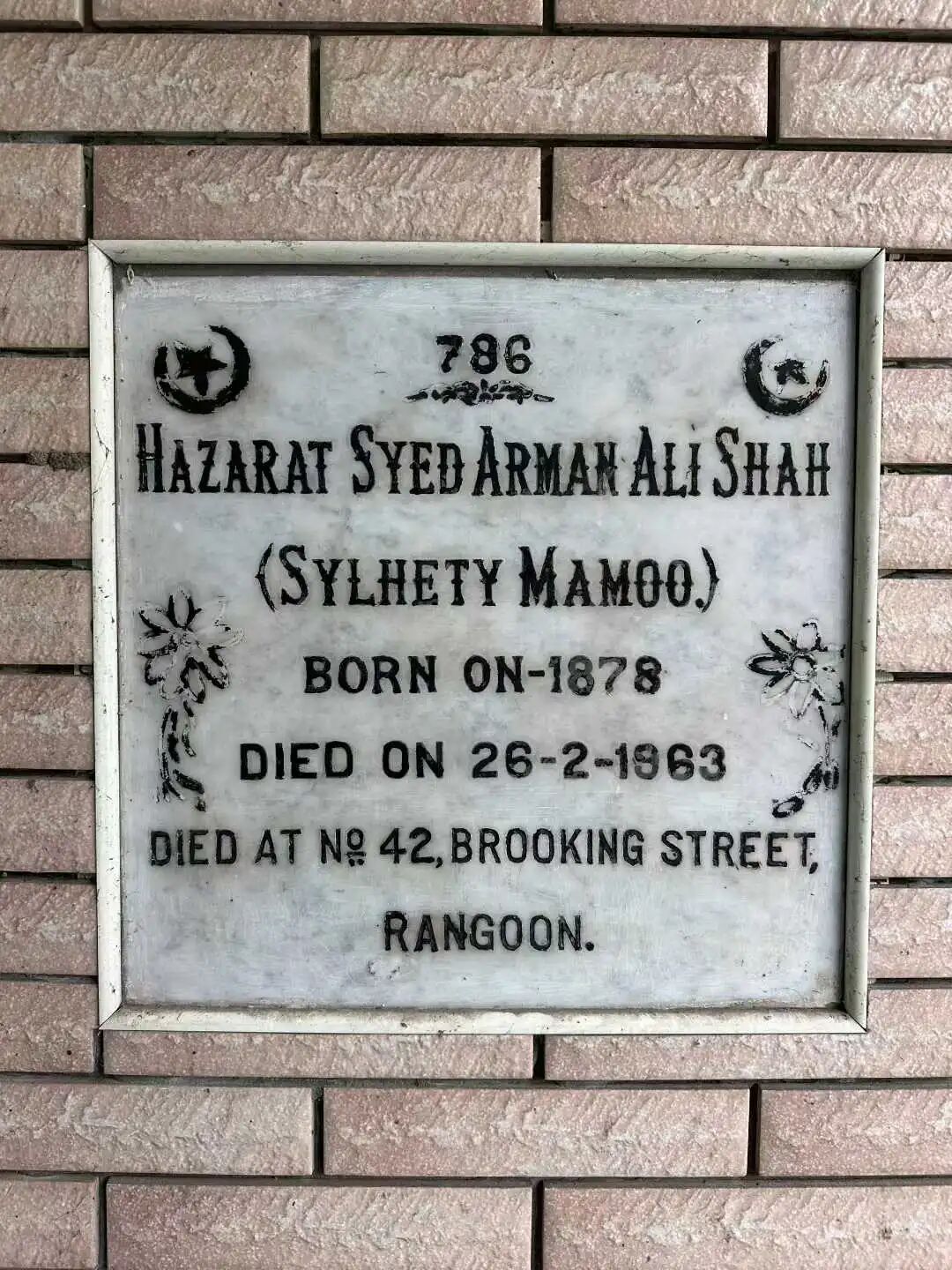
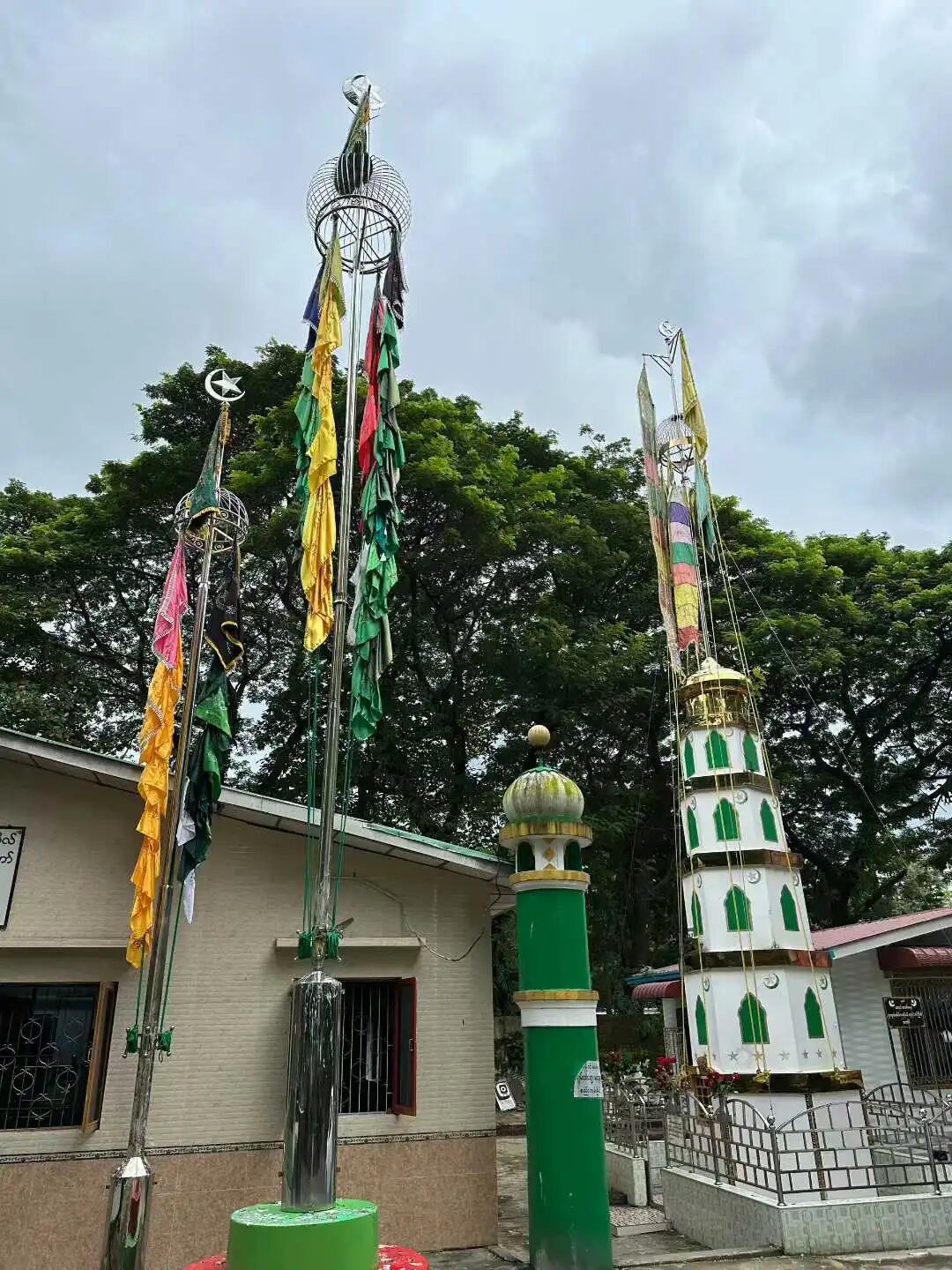
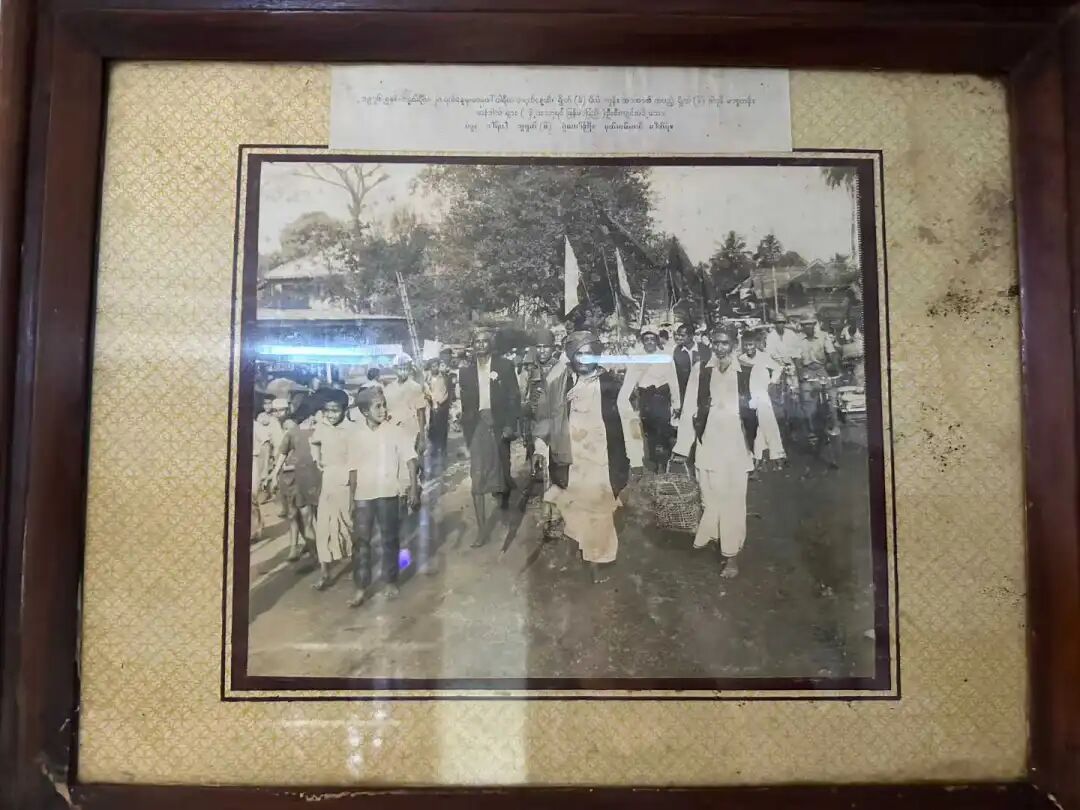
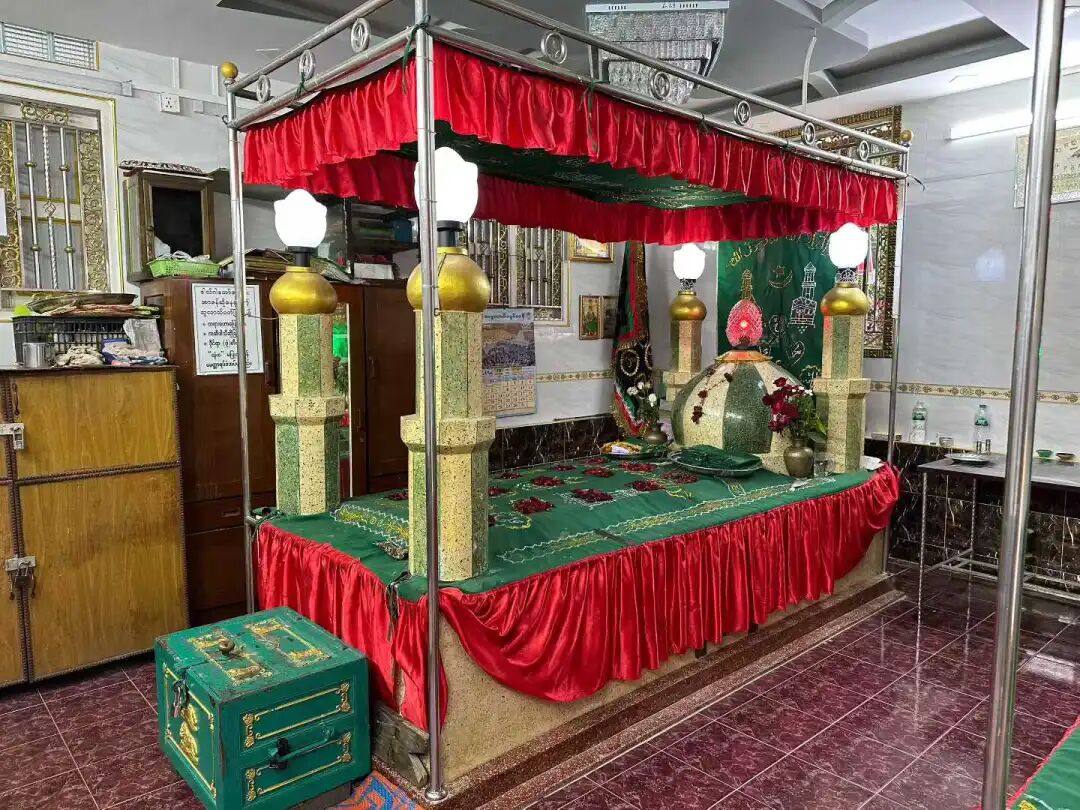
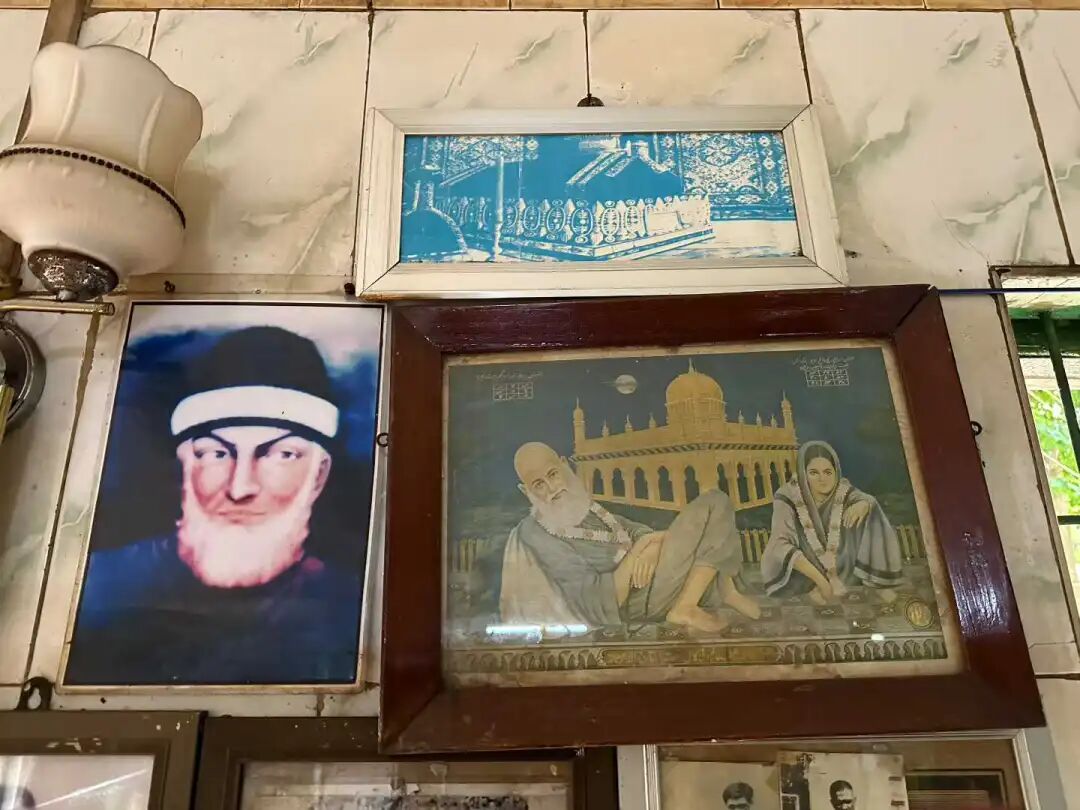
A Sufi shrine (gongbei) inside the Thinchai Sunni Maha Maiden cemetery in Yangon, Myanmar.

Summary: Yangon holds the tomb of Bahadur Shah II, the last Mughal emperor, near Shwedagon Pagoda, along with a Qadiriyya gongbei connected to Muslim memory in Myanmar. This account keeps the source's shrine details, historical names, religious terms, and site observations.
The tomb of Bahadur Shah II, the last emperor of the Mughal Empire, is near the famous Shwedagon Pagoda in Yangon, Myanmar. This site was his home after he was exiled to Yangon in 1858. Because Bahadur Shah II was a devout Sufi sheikh during his life, his tomb has become a famous Sufi shrine (gongbei) in Myanmar.
Although Bahadur Shah II belonged to the Chishti order during his life, the shrine (gongbei) is now managed by the Qadiriyya order. I met a man here who was hanging fresh flowers on the shrine (gongbei), and after some local friends (dosti) finished their gathering (amali), they shared candy and bananas with us.
In 1803, the British East India Company used force to become the protector of the Mughal Empire, and the Mughal emperors lost their real power from then on. After Bahadur Shah II took the throne in 1837, his power was limited to the area around Delhi. He never had any ambition for the empire, but instead focused on Sufi practice and writing poetry. Legend says he started his Sufi practice at age 20 and became a murshid (guide) of the Chishti order by age 40. In 1843, he wrote a letter to Queen Victoria of Britain saying: "I am now old and have no ambitions left." I intend to devote myself entirely to religious work to comfort my remaining years.
The Sufi philosophy followed by Bahadur Shah II believed in embracing different cultures. Men, women, young, and old should all be able to express their love for Allah, and this love should transcend religion, gender, and social class. According to a report by Major Archer in 1828: "He is thin and small, and his clothes are simple, almost crude." He looks like a poor scholar or a language teacher. This is the typical appearance of a Sufi ascetic.
Like the Mughal rulers before him, Bahadur Shah II saw himself as the protector of his Hindu subjects. Under his rule, Hindu elites in Delhi would visit the Nizamuddin Sufi shrine (gongbei) to recite Persian poetry. Many people studied under great imams and attended religious schools (madrasas). The Mughal court would attend various Hindu events, and during the Shia month of Muharram, they would listen to elegies mourning Imam Hussein.
People say the Sufi poetry of Bahadur Shah II reached a level of perfection. His court had many famous Sufi scholars, writers, and poets, and a large number of poems were published during his reign. This style of lyric poetry became the main literary form of the late Mughal period.
In 1850, the knowledge and vitality of Delhi reached its final peak. At that time, the city had six famous religious schools (madrasas), nine Urdu and Persian newspapers, five academic journals, countless printers, and at least 130 doctors who mastered traditional Persian-Arabic medicine. Many new discoveries in Western science were translated into Persian and Arabic in Delhi. As the young poet Altaf Hussain Hali wrote at the time, "The capital, Delhi, was gathered with such a group of talented sages that it reminded people of the eras of Akbar and Shah Jahan."
In 1857, an uprising against the British East India Company broke out in India. It started because the British army made their Indian soldiers bite open greased rifle cartridges, and rumors immediately spread that the lubricant came from cow and pig fat. The insulted soldiers flooded into Delhi on May 11 and turned to Bahadur Shah II for help at the Red Fort. Bahadur Shah II initially refused them, but faced with the passionate soldiers surrounding him, he eventually had no choice but to accept them as they bowed before him one by one, changing the fate of the Mughal Empire.
As the Siege of Delhi dragged on and the outlook grew dim, Bahadur Shah II chose to escape reality through poetry. According to British spies, he recited the following lines one night:
The sky collapses on everyone
I can no longer rest or sleep
Only my final departure will come
Whether at dawn or in the dark of night
On September 14, the British army officially attacked the walls of Delhi, and on September 17, Bahadur Shah II fled the Red Fort through the Water Gate. He went to the most important Sufi shrine (gongbei) of Nizamuddin in Delhi and handed over his ancestors' relics to the Nizam family, the keepers of the shrine. It is said these included three hairs of the noble Prophet passed down by the Timurid family. Then he went to the tomb of his ancestor, the second Mughal emperor, Humayun. On September 20, Bahadur Shah II was finally captured by the British army.
By January 27, 1858, after all the dignitaries of the Mughal court had been tried, Bahadur Shah II faced his own trial. William Howard Russell, a foreign correspondent for The Times and the father of war journalism, saw Bahadur Shah II in captivity. He described him as silent, sitting motionless day and night, with his eyes cast down to the ground. People heard him reciting poems from his own works and writing poetry on the walls with a charred stick.
During the trial, Bahadur Shah II provided a written defense in Urdu. He denied any involvement in the uprising and insisted that he had been a helpless prisoner held by the Indian soldiers from start to finish. The trial dragged on for more than a month and was often adjourned because of Bahadur Shah II's poor health. On March 9, the British finally decided to exile Bahadur Shah II.
On October 7, 1858, after the Mughal Empire had ruled Delhi for 332 years, the last emperor, Bahadur Shah II, left Delhi in an ox cart. The group traveled slowly down the Ganges River by steamship and arrived at Diamond Harbour, south of Calcutta, on December 4. They boarded the British naval ship HMS Magpie there and finally reached Rangoon, Burma, where they lived in two small rooms in the British barracks area directly below the Shwedagon Pagoda.
In April 1859, Bahadur Shah II moved to a new wooden house near the fort guard camp. According to the report by his jailer, Captain Nelson Davies:
The residence consisted of four rooms, each 16 feet square. One room was assigned to the former king, another to Jawan Bakht and the young crown princess, and a third was occupied by Queen Zinat Mahal. Each of these rooms had an attached washing area. Shah Abbas and his mother lived in the remaining room.
The servants either lounged around the veranda or slept under the house, where the ground was covered in crushed brick to keep it dry. A drainage ditch ran around the house for the same reason. There were two washrooms, a double bathroom for the servants, and a place for cooking.
The veranda on the upper floors was full of chicks, which were kept inside by nailed-down slats. The frail former king and his sons usually sat there, where the floor was raised almost to the height of the railing, allowing them to enjoy the pleasant sea breeze and the wide, beautiful view. They watched people pass by and stared at the ships being loaded, which helped break up the monotony of their life behind bars and made them more willing to accept their current living situation.
Regarding the health of Bahadur Shah II, the report by Davis noted:
If given time to make up his mind, his memory was still good, but he spoke unclearly because he had lost his teeth. He was unable to handle anything requiring mental effort, and while that was the impression he gave, he seemed to be bearing the weight of his years remarkably well. He lived a dull, listless life, showing little interest in anything except eternal matters. This had been his normal state for a long time, and it would likely continue until his life ended, which would not surprise anyone.
Because the British did not allow him to use paper or pens, the world could only guess how he felt about his life in exile. By October 1862, his health took a sharp turn for the worse, and he could no longer swallow or eat food. On November 5, Davis ordered bricks and lime to be collected to prepare a quiet spot behind the house enclosure for his burial.
At 5:00 a.m. on November 7, 1862, Bahadur Shah II finally returned to Allah. Davis wrote: Everything was ready, and at 4:00 p.m. that day, he was buried in a brick grave behind the guard camp, with turf laid level with the ground... A bamboo fence surrounded the grave for a long time, and once the fence rotted, the area would be covered in thick grass, leaving no trace and making it impossible to identify the final resting place of the last Great Mughal. Davis specifically mentioned that only two of Bahadur Shah II's sons and a manservant attended the funeral, as women were not allowed to attend according to tradition.
The grave of Bahadur Shah II soon became impossible to identify. When a delegation from India came to visit in 1903, a local guide pointed out a jujube tree near the grave. In 1905, the Dosti group in Yangon protested and demanded that the grave site be marked. The British initially disagreed, but after a demonstration and a series of published reports, they finally agreed in 1907 to erect an inscribed stone slab and put a railing around it. In 1925, the railing was rebuilt into a temporary shrine (gongbei) covered with a corrugated iron roof.
It was not until February 16, 1991, when workers were digging a drainage ditch behind the shrine, that they discovered a brick-lined grave, finally confirming the remains of Bahadur Shah II. Later, this place was rebuilt into a mosque with a prayer hall (gongbei). Dignitaries from India, Pakistan, and Bangladesh have all visited, and Rajiv Gandhi even gifted a carpet here.
As a fallen monarch, Bahadur Shah II was a failure. He did not give the army the support it needed during the 1857 Indian Rebellion, which ultimately ended the Mughal civilization. Under the British policy of divide and rule, the various ethnic groups in India began to drift apart. But under his rule, Delhi was home to the most talented poets and writers in modern South Asian history, and literature and art reached their peak.
As a Sufi ruler, he never forgot how important it was for the different groups under his rule to depend on each other. During the Siege of Delhi, he refused the demands for a holy war (jihad) from the Wahhabis and tried his best to maintain relationships between all groups. When a large number of Muslim (dosti) elites moved from India to Pakistan in 1947, people could no longer imagine that just 90 years earlier, many Indian soldiers had rushed to the Red Fort in Delhi, gathered under the banner of a Sufi emperor, and faced national disaster with their Muslim brothers to fight against foreign invaders.
I found stone tablets standing around the front of the tomb.
Underground is the original location of the tomb.
Inside the tomb complex (gongbei), there is a portrait of Abdul Qadir Gilani, the founder of the Qadiriyya order.
Next to the tomb is a prayer hall. This is the same as the Qadiriyya order in China, where the tomb and prayer hall are adjacent, and there is an imam in the mosque.
In a forest near the Yangon Central Railway Station in Myanmar, the largest Sufi tomb complex in Yangon is hidden. Since most of the text inside the tomb is written in Burmese, I searched for information for a long time after I returned but could not find any leads. Recently, based on the few English words inside the tomb, I learned that this place belongs to the Maizbhandari order, which was established in the late 19th century by Bengali Muslims based on the Qadiriyya Sufi tradition.
The Maizbhandari order is the only indigenous Bengali Sufi order, and its founder was born in Chittagong in 1826. People say his ancestors were descendants of the Prophet, who moved through Medina, Baghdad, and Delhi before finally settling in Bengal, serving as imams for generations. Maizbhandari studied the scriptures from a young age. After graduating in 1853, he first served as a judge (qadi), but soon resigned to work as a teacher in Kolkata. In Kolkata, he met two sheikhs from the Qadiriyya Sufi order and joined them to practice Sufism. In the late 19th century, he established his own lodge and founded the Maizbhandari order.
From the 19th century to the present, the Maizbhandari order has grown into a modern organization with millions of followers and is the most important Sufi order in Bangladesh. The Maizbhandari order is known for its melodic and rhythmic way of chanting (dhikr). They have recorded tens of thousands of songs, which have had a great influence on the faith in Bengal. As Yangon, Myanmar, has a large population of Bengali Muslims, it is also an important area for the Maizbhandari order.
A live scene of the dhikr ceremony.
At the Sufi tomb in Yangon, not only Muslims but also Burmese Buddhists come to offer dua. This is the unique charm of Sufism in South and Southeast Asia. At many important shrines (gongbei) in India, you can see Hindus going inside to offer dua. In Malaysia and Singapore, many Chinese people also come to pay their respects at the shrines (keramat) of local saints.
I also saw white sugar placed in front of a shrine (gongbei).
A Sufi shrine (gongbei) inside the Thinchai Sunni Maha Maiden cemetery in Yangon, Myanmar.
Halal Travel Guide: Thailand - Two Qadiriyya Gongbei Shrines
Articles • ali2007fr posted the article • 0 comments • 244 views • 2026-05-20 23:51
Reposted from the web
Summary: This travel account visits two major Qadiriyya gongbei shrines in Thailand and explains their place within Thai Sufi Muslim life. It keeps the source's names, religious terms, shrine details, and route notes while using clear English for Muslim and general readers.
Sufism in Thailand follows three main traditions: Ahmadiyya-Shadhiliyya, Ahmadiyya-Badawiyya, and Qadiriyya. Two major Qadiriyya shrines (gongbei) in Ayutthaya have long histories and great influence, making them the true center of Thai Sufism.
I first visited the Tok Takia shrine (gongbei) on the banks of the Chao Phraya River, south of Ayutthaya city. Friends (dosti) in central Thailand all agree that Tok Takia has karamat (miraculous signs), and its influence has led many local Thai people to convert to Islam.
People call Tok Takia Sheikh Samat Maimun. The King of Siam also gave him the title Chao Phrakhun Takia Yokin. He came to Thailand to teach Islam in the mid-16th century. He settled in Ayutthaya in 1554 and passed away there in 1579. His shrine is the oldest existing tomb of an Islamic saint in Thailand.
The most popular legend about the old Sheikh is the story of his spiritual contest with a local Buddhist abbot named Diwan Chao. After the abbot went out to collect alms, he rowed his boat back to the mosque along the Chao Phraya River. When he reached the opposite bank of the mosque, he met a foreigner in white clothes and a white turban who waved to ask for a ride across the river. The abbot's boat was too small, so he asked the foreigner to wait while he went back to call his disciples to bring a larger boat. When the abbot rowed to the other side, he found that the foreigner had miraculously crossed the wide Chao Phraya River and was standing right in front of him. The abbot decided the man was a pious and learned person, so he invited him into the mosque to talk. At the end of their conversation, they agreed to a spiritual contest, and the loser would become the winner's disciple. The abbot lost the contest and kept his word by converting to Islam. He turned the mosque into a mosque, which is the Masjid Takia Yokin next to the shrine today.
Today, there are two main graves inside the shrine. The larger one belongs to Sheikh Tok Takia, and the smaller one belongs to the abbot Diwan Chao, who passed away the year after the Sheikh.
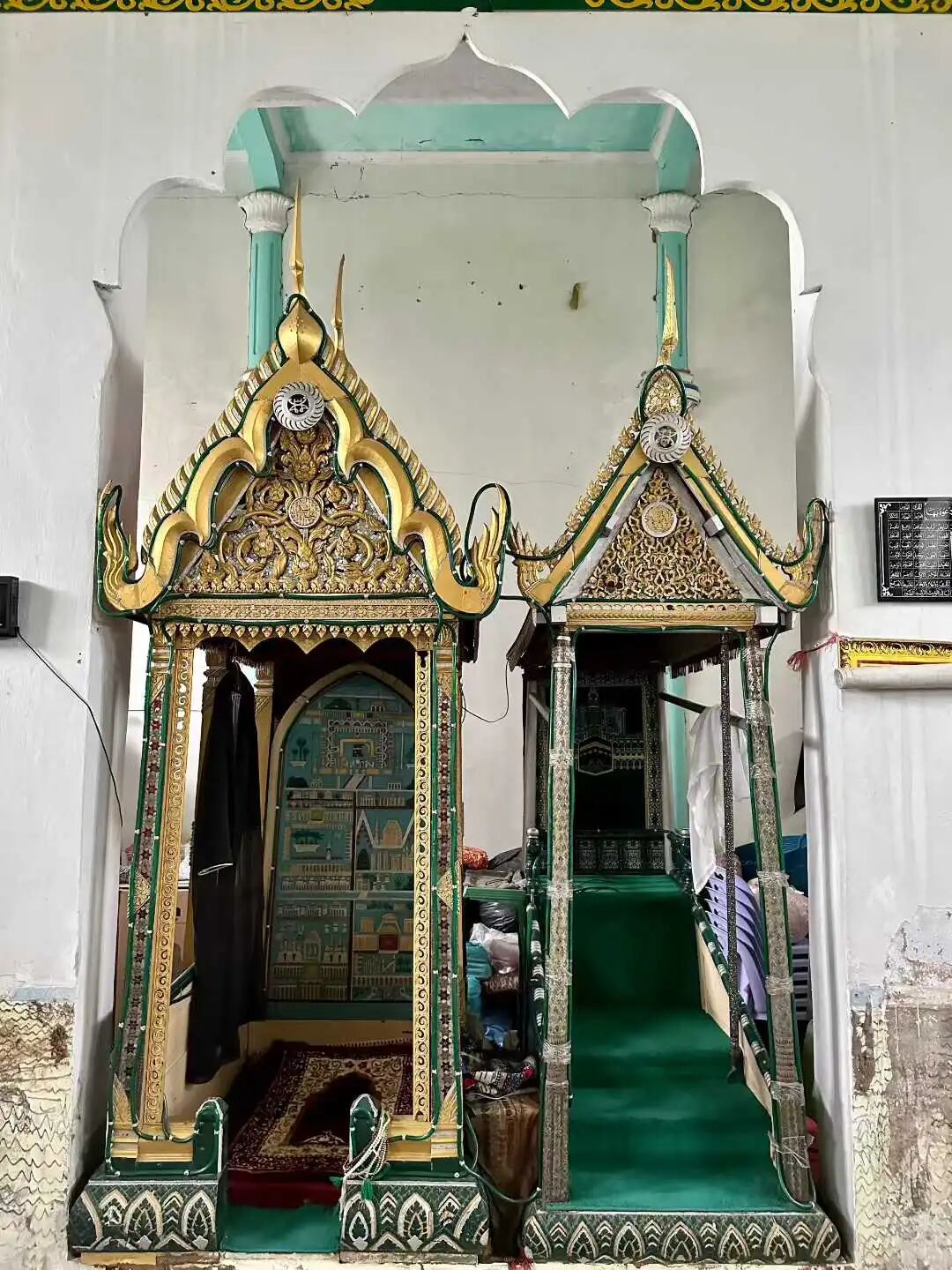
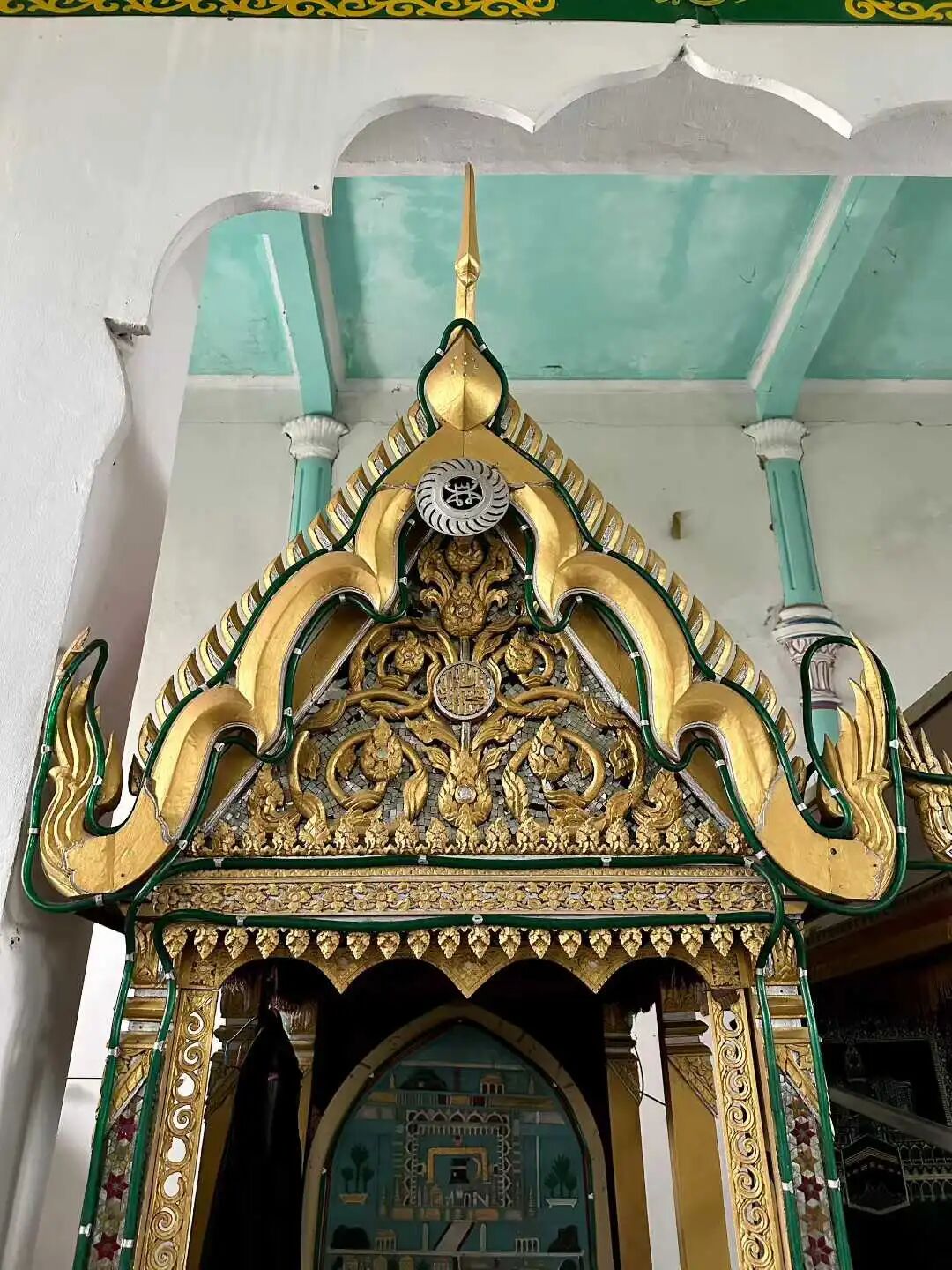
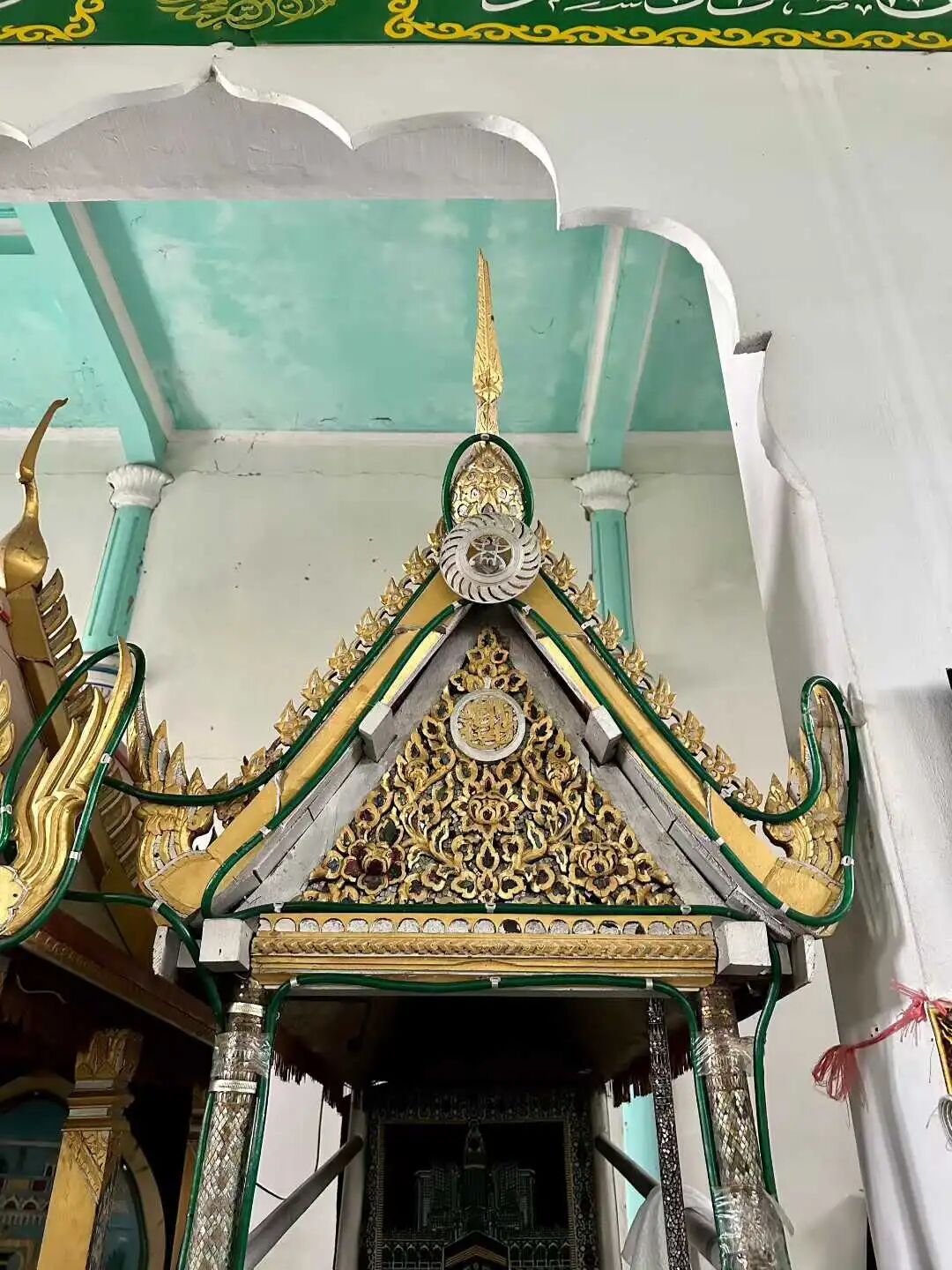
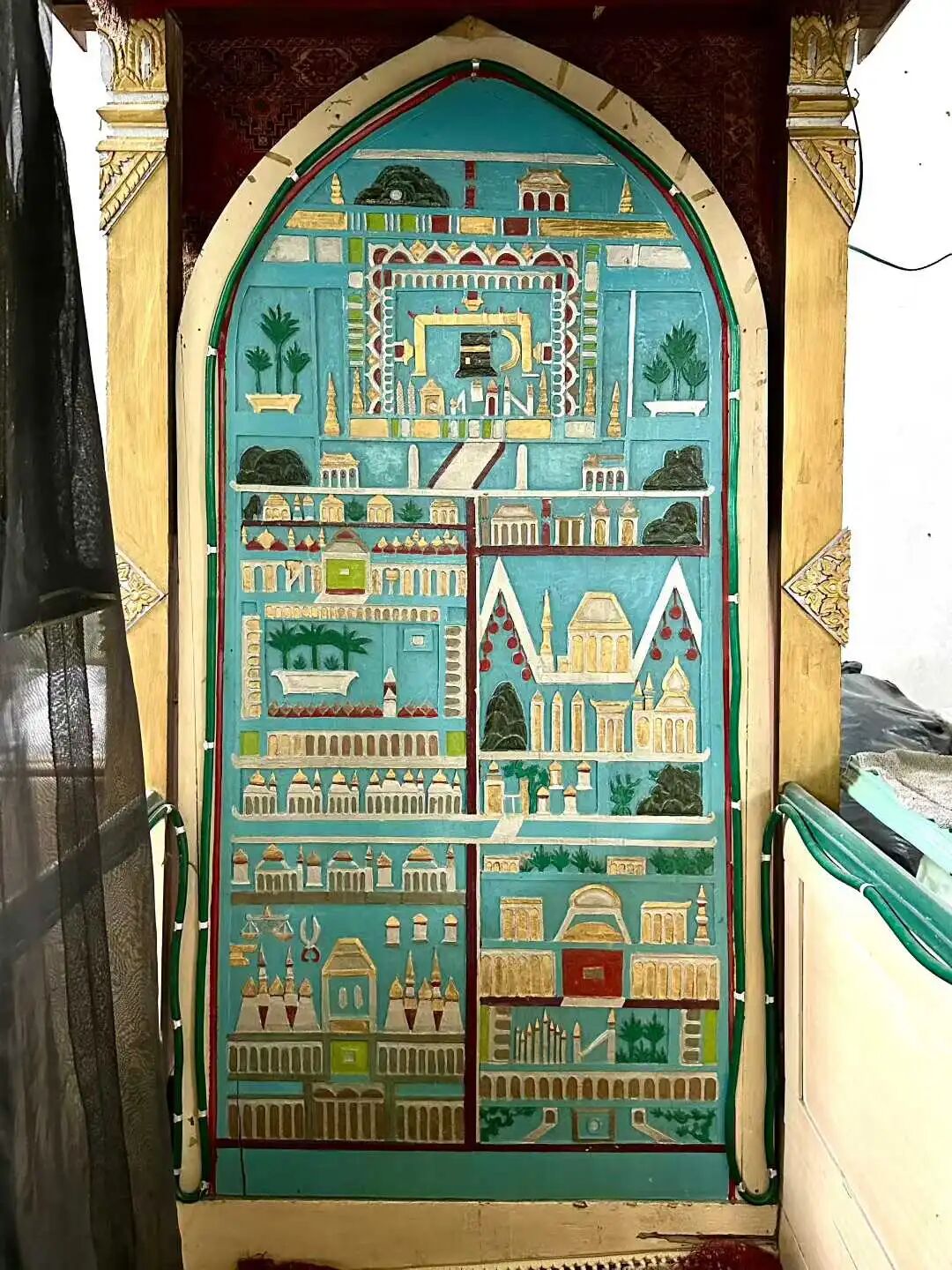
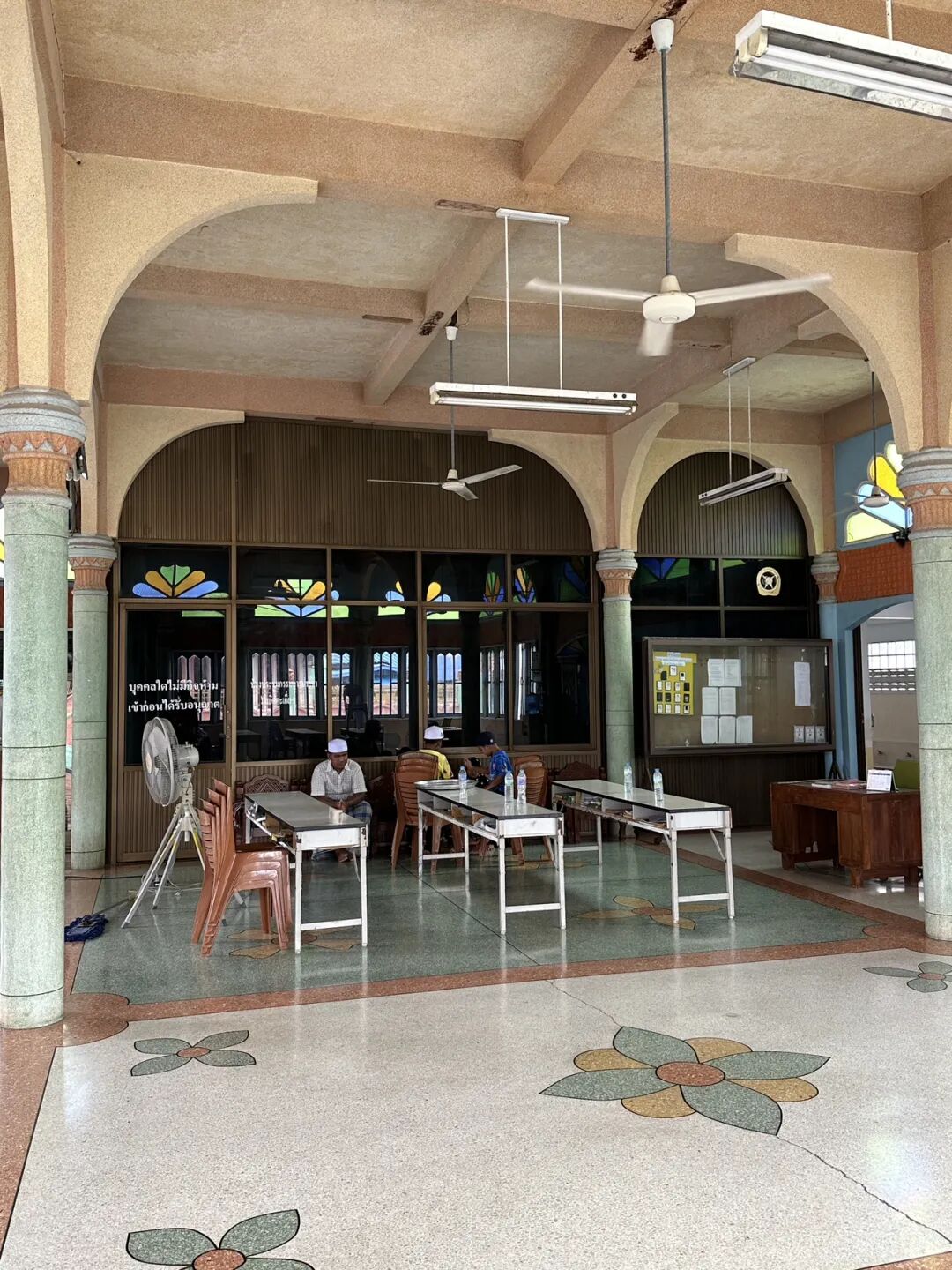
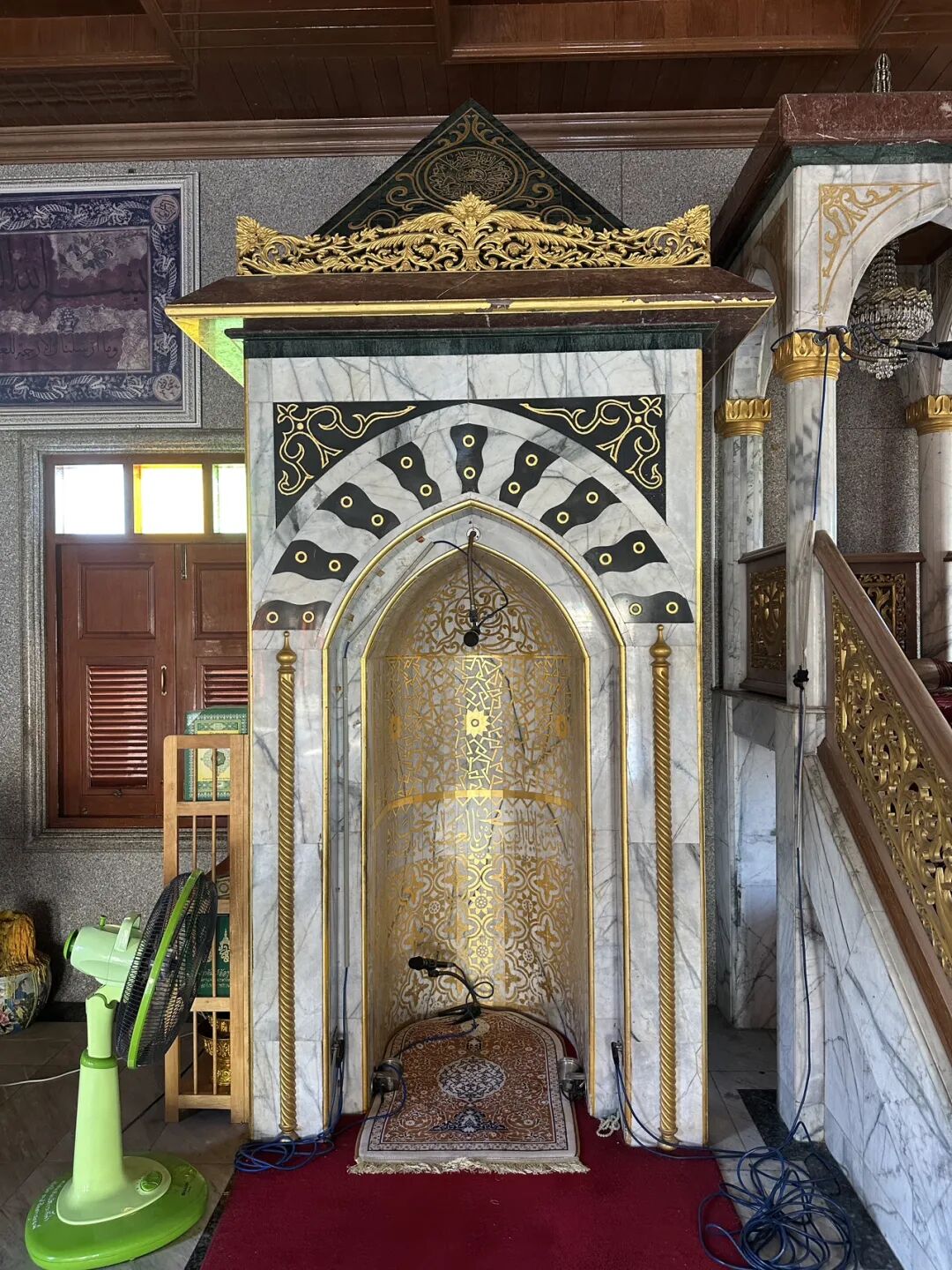
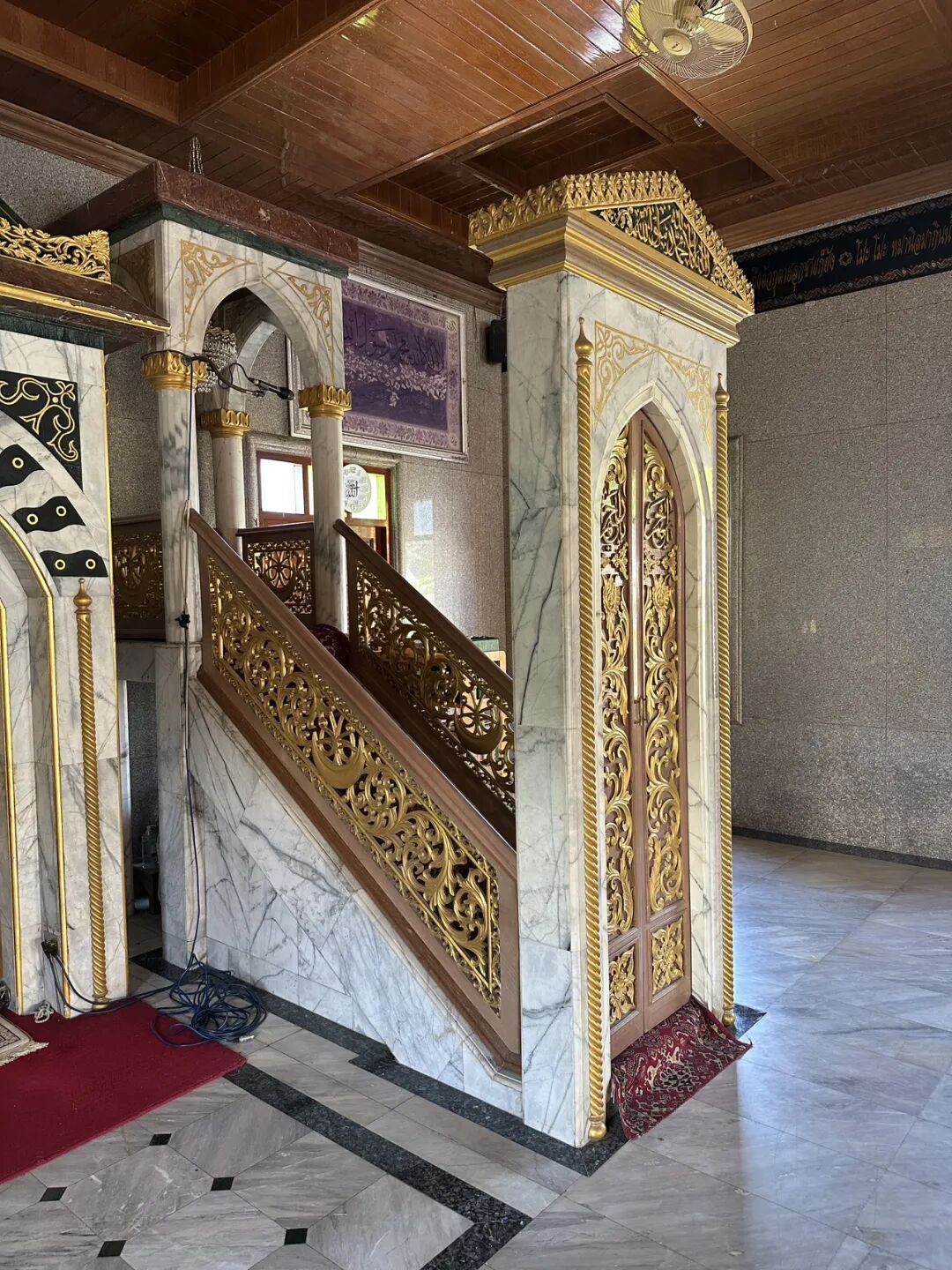
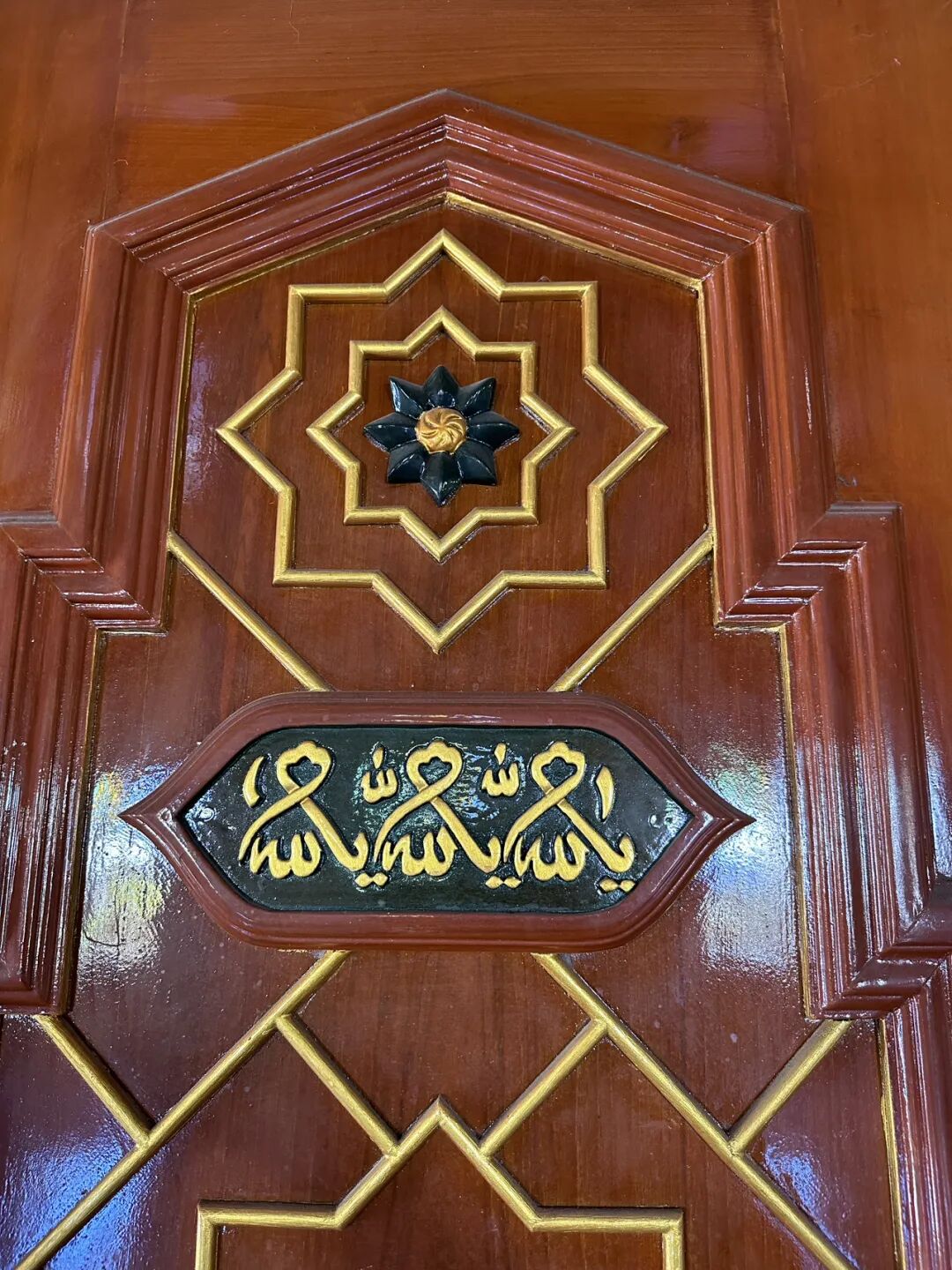
Masjid Takia Yokin is right next to the Tok Takia shrine. It was rebuilt from the original mosque in the mid-16th century after the Buddhist abbot Diwan Chao was guided by the Sufi Sheikh. The mosque still has a traditional Thai-style imam's prayer pavilion and a pulpit (minbar) that are beautifully crafted.
The rise of Islam in Ayutthaya during the 16th century had a lot to do with the trade environment at the time.
In the 15th century, Arab, Persian, and Indian merchants sailing east with the Indian Ocean monsoon winds preferred the powerful Malacca Sultanate as a trade hub. However, after the Portuguese conquered Malacca in 1511, trade was heavily restricted. Many Arab, Persian, and Indian merchants began to move to the Siamese capital of Ayutthaya to do business, and Siam welcomed them. At that time, a large number of merchant ships gathered on the banks of the Chao Phraya River south of Ayutthaya. These merchants anchored their ships outside the city and then transported goods into the city to sell. The riverbank where the Tok Takia shrine is located was an important anchorage at the time, and it later developed into an important Muslim community.
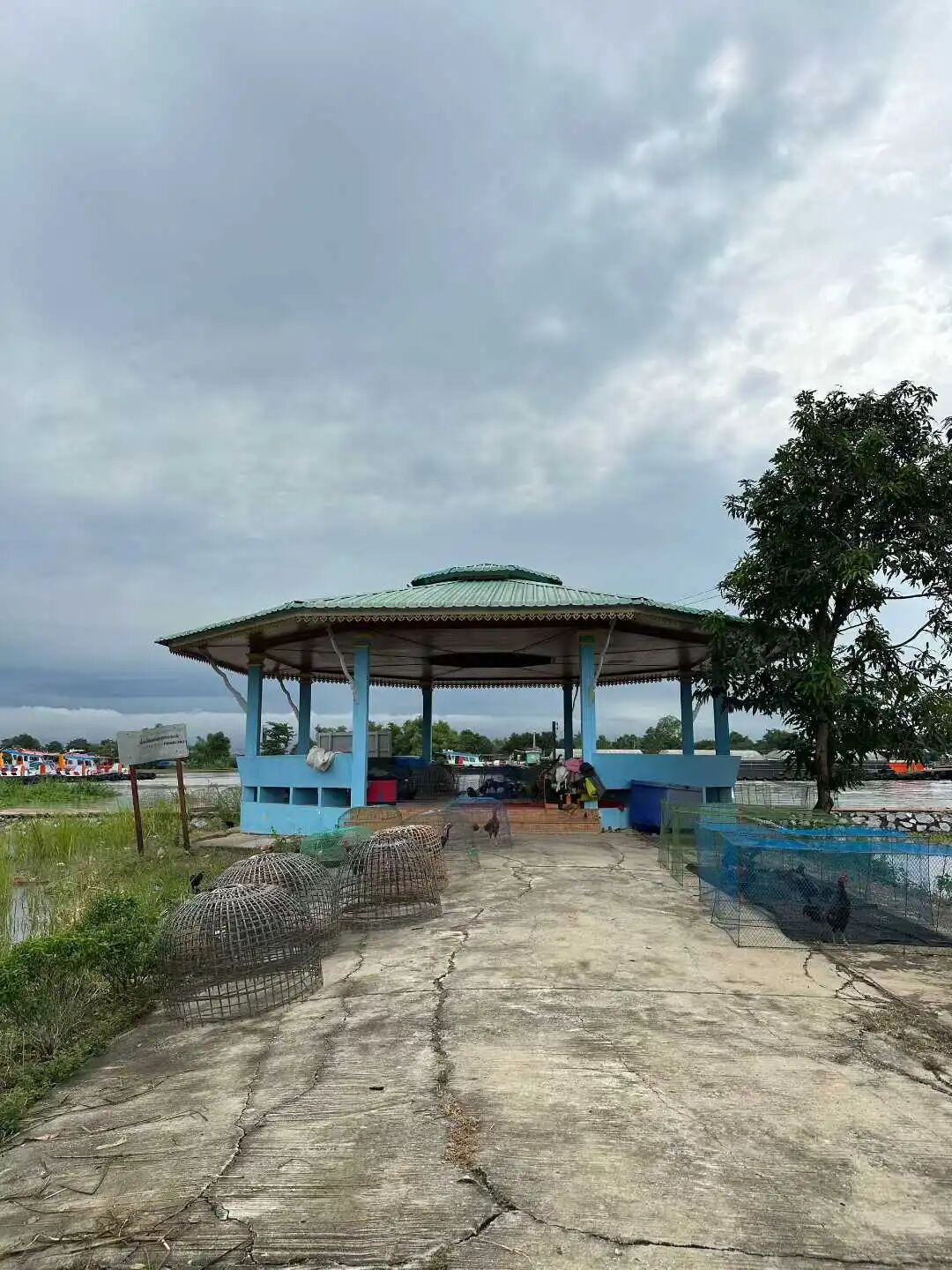
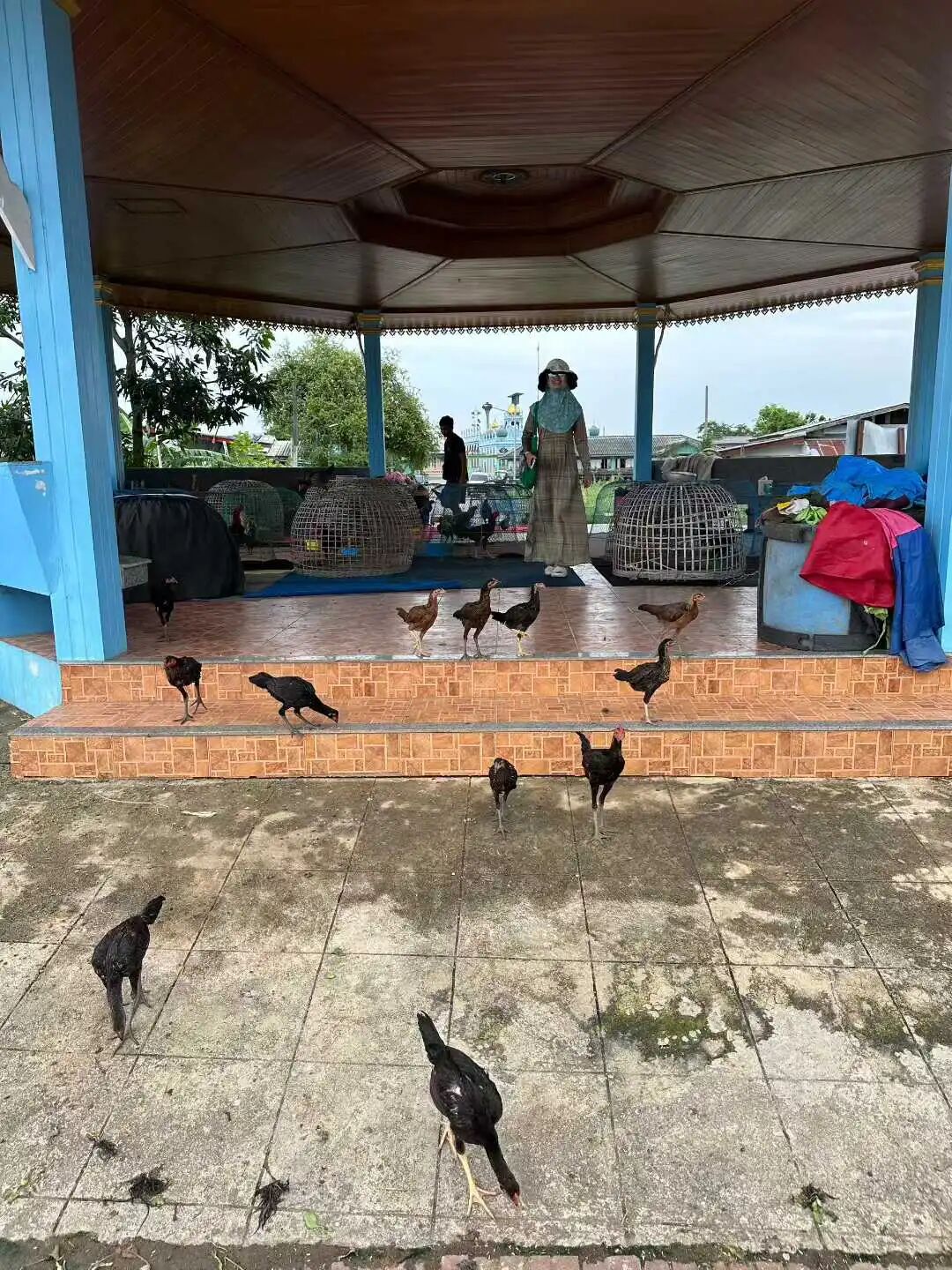
However, after the Burmese army burned Ayutthaya in 1767, it was no longer the capital, and the Tok Takia shrine pier was no longer busy. When we visited, it had become a chicken farm. The free-range local chickens must taste very good.
Three hundred years after Sheikh Tok Takia came to Thailand in the mid-16th century to spread the Qadiriyya Sufi order, the Sufi Sheikh Muhammad Ali Shukri, who is honored as a Wali, revived the Qadiriyya order in Thailand in the 19th century. He helped the order spread from Ayutthaya to Bangkok and Pattaya.
Sheikh Shukri was born in Ayutthaya in 1848 and was of Malay descent. He came from a farming family and spent his childhood herding sheep. At age 7, he was able to travel to Mecca, where he studied for 40 years. He reportedly studied in Mecca under Sheikh Abd al-Karim, who was a successor to the famous Indonesian Sheikh Ahmad Khatib as-Sambasi. Sheikh Ahmad combined the Qadiriyya and Naqshbandiyya orders, which played a major role in the development of the faith in Indonesia.
After finishing his studies and returning to Thailand, Sheikh Shukri began to promote the revival of the Thai Qadiriyya order. He preached in Ayutthaya and eastern Bangkok. Many people began to follow the Sheikh, and some stories about his preaching are still told today. People say many young people were addicted to opium at the time, including some of the Sheikh's own students. The Sheikh took his students on a boat past an opium den and asked a student how many pipes he smoked a day. The student said, "About three." The Sheikh then said, "Then only smoke one today." After that, the Sheikh gradually reduced the frequency of his students' smoking, from once a day to once a week, then once every two weeks, eventually helping them break their opium addiction.
In 1931, Sheikh Shukri passed away in Ayutthaya and was buried next to the Aliyid Daroun Mosque (Masjid Aliyid Daroun) on the banks of the Chao Phraya River, west of Ayutthaya city. This site also became the second largest Qadiriyya gongbei in Thailand, following the Tok Takia gongbei.
Although we missed the religious gathering (a'mali), we unexpectedly caught a charity event (shesan) for flood victims. We were able to see how the Thai Sufi order performs their religious feast (nieti xi) and tasted the beef rice noodles served at the mosque.
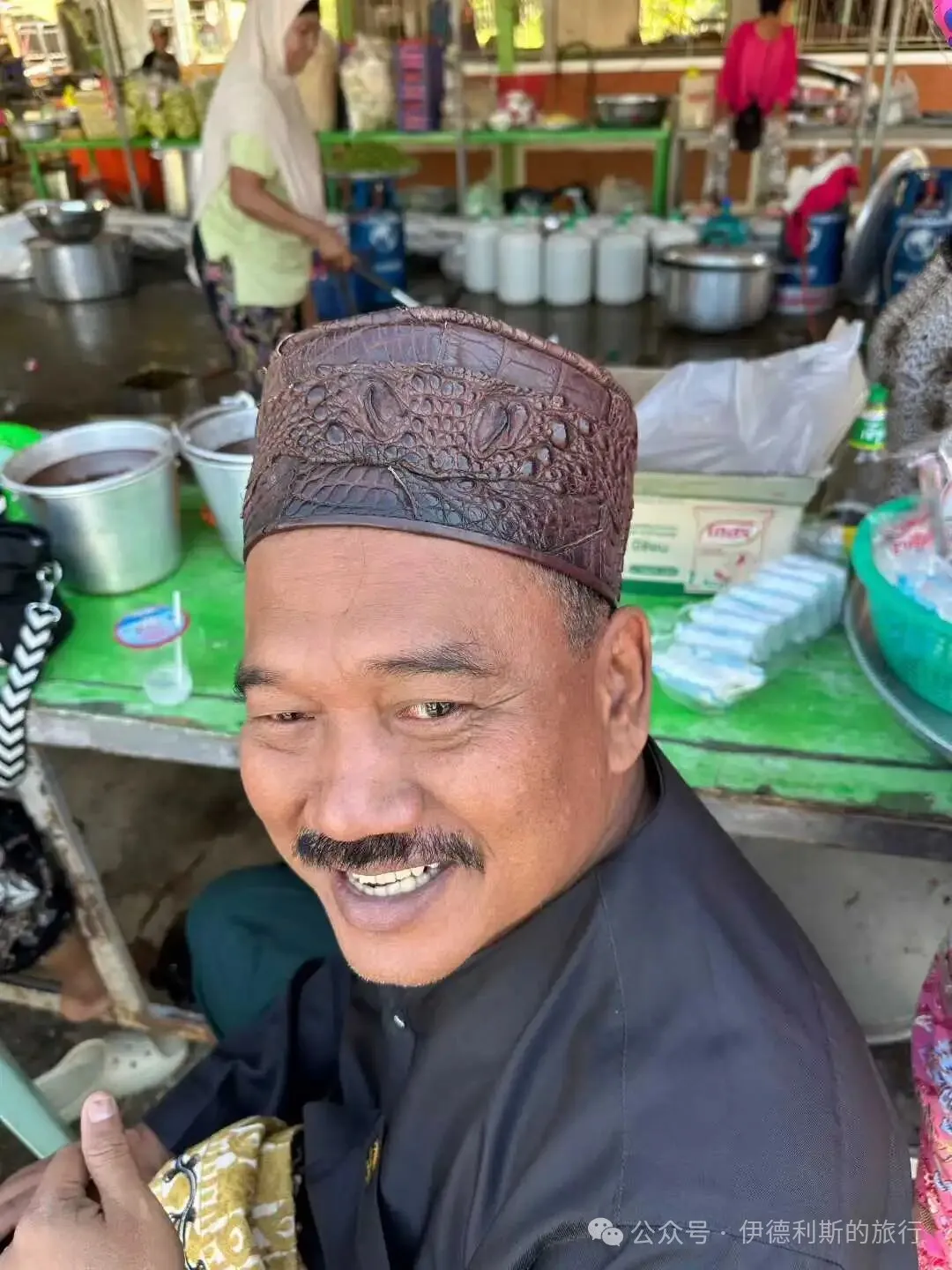
Central and Southern Thailand are influenced by the Malay people, so most religious practices follow the Shafi'i school, and there are relatively few Sufi activities. This was my first time experiencing the warmth of Thai Sufi elders in Ayutthaya. I saw them using boat oars to stir a giant pot of rice for the first time, and I also saw the process of making coconut rice, which is very similar to how the Hui Muslims in Huihui Village, Sanya, set their tables. Because we arrived early and the meal hadn't started yet, the elders here very warmly arranged for us to eat rice noodles first. The beef rice noodles with soup poured over them were delicious. I was also surprised to meet several elders who could speak English and Chinese.
Since we had to rush to Bangkok that evening, we didn't stay at the shrine (gongbei) for long. If any friends (dost) are traveling to Ayutthaya, Thailand, I highly recommend visiting this shrine (gongbei). It is a rare opportunity to see this side of Thai Sufism. view all
Summary: This travel account visits two major Qadiriyya gongbei shrines in Thailand and explains their place within Thai Sufi Muslim life. It keeps the source's names, religious terms, shrine details, and route notes while using clear English for Muslim and general readers.
Sufism in Thailand follows three main traditions: Ahmadiyya-Shadhiliyya, Ahmadiyya-Badawiyya, and Qadiriyya. Two major Qadiriyya shrines (gongbei) in Ayutthaya have long histories and great influence, making them the true center of Thai Sufism.
I first visited the Tok Takia shrine (gongbei) on the banks of the Chao Phraya River, south of Ayutthaya city. Friends (dosti) in central Thailand all agree that Tok Takia has karamat (miraculous signs), and its influence has led many local Thai people to convert to Islam.
People call Tok Takia Sheikh Samat Maimun. The King of Siam also gave him the title Chao Phrakhun Takia Yokin. He came to Thailand to teach Islam in the mid-16th century. He settled in Ayutthaya in 1554 and passed away there in 1579. His shrine is the oldest existing tomb of an Islamic saint in Thailand.
The most popular legend about the old Sheikh is the story of his spiritual contest with a local Buddhist abbot named Diwan Chao. After the abbot went out to collect alms, he rowed his boat back to the mosque along the Chao Phraya River. When he reached the opposite bank of the mosque, he met a foreigner in white clothes and a white turban who waved to ask for a ride across the river. The abbot's boat was too small, so he asked the foreigner to wait while he went back to call his disciples to bring a larger boat. When the abbot rowed to the other side, he found that the foreigner had miraculously crossed the wide Chao Phraya River and was standing right in front of him. The abbot decided the man was a pious and learned person, so he invited him into the mosque to talk. At the end of their conversation, they agreed to a spiritual contest, and the loser would become the winner's disciple. The abbot lost the contest and kept his word by converting to Islam. He turned the mosque into a mosque, which is the Masjid Takia Yokin next to the shrine today.
Today, there are two main graves inside the shrine. The larger one belongs to Sheikh Tok Takia, and the smaller one belongs to the abbot Diwan Chao, who passed away the year after the Sheikh.
Masjid Takia Yokin is right next to the Tok Takia shrine. It was rebuilt from the original mosque in the mid-16th century after the Buddhist abbot Diwan Chao was guided by the Sufi Sheikh. The mosque still has a traditional Thai-style imam's prayer pavilion and a pulpit (minbar) that are beautifully crafted.
The rise of Islam in Ayutthaya during the 16th century had a lot to do with the trade environment at the time.
In the 15th century, Arab, Persian, and Indian merchants sailing east with the Indian Ocean monsoon winds preferred the powerful Malacca Sultanate as a trade hub. However, after the Portuguese conquered Malacca in 1511, trade was heavily restricted. Many Arab, Persian, and Indian merchants began to move to the Siamese capital of Ayutthaya to do business, and Siam welcomed them. At that time, a large number of merchant ships gathered on the banks of the Chao Phraya River south of Ayutthaya. These merchants anchored their ships outside the city and then transported goods into the city to sell. The riverbank where the Tok Takia shrine is located was an important anchorage at the time, and it later developed into an important Muslim community.
However, after the Burmese army burned Ayutthaya in 1767, it was no longer the capital, and the Tok Takia shrine pier was no longer busy. When we visited, it had become a chicken farm. The free-range local chickens must taste very good.
Three hundred years after Sheikh Tok Takia came to Thailand in the mid-16th century to spread the Qadiriyya Sufi order, the Sufi Sheikh Muhammad Ali Shukri, who is honored as a Wali, revived the Qadiriyya order in Thailand in the 19th century. He helped the order spread from Ayutthaya to Bangkok and Pattaya.
Sheikh Shukri was born in Ayutthaya in 1848 and was of Malay descent. He came from a farming family and spent his childhood herding sheep. At age 7, he was able to travel to Mecca, where he studied for 40 years. He reportedly studied in Mecca under Sheikh Abd al-Karim, who was a successor to the famous Indonesian Sheikh Ahmad Khatib as-Sambasi. Sheikh Ahmad combined the Qadiriyya and Naqshbandiyya orders, which played a major role in the development of the faith in Indonesia.
After finishing his studies and returning to Thailand, Sheikh Shukri began to promote the revival of the Thai Qadiriyya order. He preached in Ayutthaya and eastern Bangkok. Many people began to follow the Sheikh, and some stories about his preaching are still told today. People say many young people were addicted to opium at the time, including some of the Sheikh's own students. The Sheikh took his students on a boat past an opium den and asked a student how many pipes he smoked a day. The student said, "About three." The Sheikh then said, "Then only smoke one today." After that, the Sheikh gradually reduced the frequency of his students' smoking, from once a day to once a week, then once every two weeks, eventually helping them break their opium addiction.
In 1931, Sheikh Shukri passed away in Ayutthaya and was buried next to the Aliyid Daroun Mosque (Masjid Aliyid Daroun) on the banks of the Chao Phraya River, west of Ayutthaya city. This site also became the second largest Qadiriyya gongbei in Thailand, following the Tok Takia gongbei.
Although we missed the religious gathering (a'mali), we unexpectedly caught a charity event (shesan) for flood victims. We were able to see how the Thai Sufi order performs their religious feast (nieti xi) and tasted the beef rice noodles served at the mosque.
Central and Southern Thailand are influenced by the Malay people, so most religious practices follow the Shafi'i school, and there are relatively few Sufi activities. This was my first time experiencing the warmth of Thai Sufi elders in Ayutthaya. I saw them using boat oars to stir a giant pot of rice for the first time, and I also saw the process of making coconut rice, which is very similar to how the Hui Muslims in Huihui Village, Sanya, set their tables. Because we arrived early and the meal hadn't started yet, the elders here very warmly arranged for us to eat rice noodles first. The beef rice noodles with soup poured over them were delicious. I was also surprised to meet several elders who could speak English and Chinese.
Since we had to rush to Bangkok that evening, we didn't stay at the shrine (gongbei) for long. If any friends (dost) are traveling to Ayutthaya, Thailand, I highly recommend visiting this shrine (gongbei). It is a rare opportunity to see this side of Thai Sufism. view all
Reposted from the web
Summary: This travel account visits two major Qadiriyya gongbei shrines in Thailand and explains their place within Thai Sufi Muslim life. It keeps the source's names, religious terms, shrine details, and route notes while using clear English for Muslim and general readers.
Sufism in Thailand follows three main traditions: Ahmadiyya-Shadhiliyya, Ahmadiyya-Badawiyya, and Qadiriyya. Two major Qadiriyya shrines (gongbei) in Ayutthaya have long histories and great influence, making them the true center of Thai Sufism.
I first visited the Tok Takia shrine (gongbei) on the banks of the Chao Phraya River, south of Ayutthaya city. Friends (dosti) in central Thailand all agree that Tok Takia has karamat (miraculous signs), and its influence has led many local Thai people to convert to Islam.
People call Tok Takia Sheikh Samat Maimun. The King of Siam also gave him the title Chao Phrakhun Takia Yokin. He came to Thailand to teach Islam in the mid-16th century. He settled in Ayutthaya in 1554 and passed away there in 1579. His shrine is the oldest existing tomb of an Islamic saint in Thailand.
The most popular legend about the old Sheikh is the story of his spiritual contest with a local Buddhist abbot named Diwan Chao. After the abbot went out to collect alms, he rowed his boat back to the mosque along the Chao Phraya River. When he reached the opposite bank of the mosque, he met a foreigner in white clothes and a white turban who waved to ask for a ride across the river. The abbot's boat was too small, so he asked the foreigner to wait while he went back to call his disciples to bring a larger boat. When the abbot rowed to the other side, he found that the foreigner had miraculously crossed the wide Chao Phraya River and was standing right in front of him. The abbot decided the man was a pious and learned person, so he invited him into the mosque to talk. At the end of their conversation, they agreed to a spiritual contest, and the loser would become the winner's disciple. The abbot lost the contest and kept his word by converting to Islam. He turned the mosque into a mosque, which is the Masjid Takia Yokin next to the shrine today.
Today, there are two main graves inside the shrine. The larger one belongs to Sheikh Tok Takia, and the smaller one belongs to the abbot Diwan Chao, who passed away the year after the Sheikh.
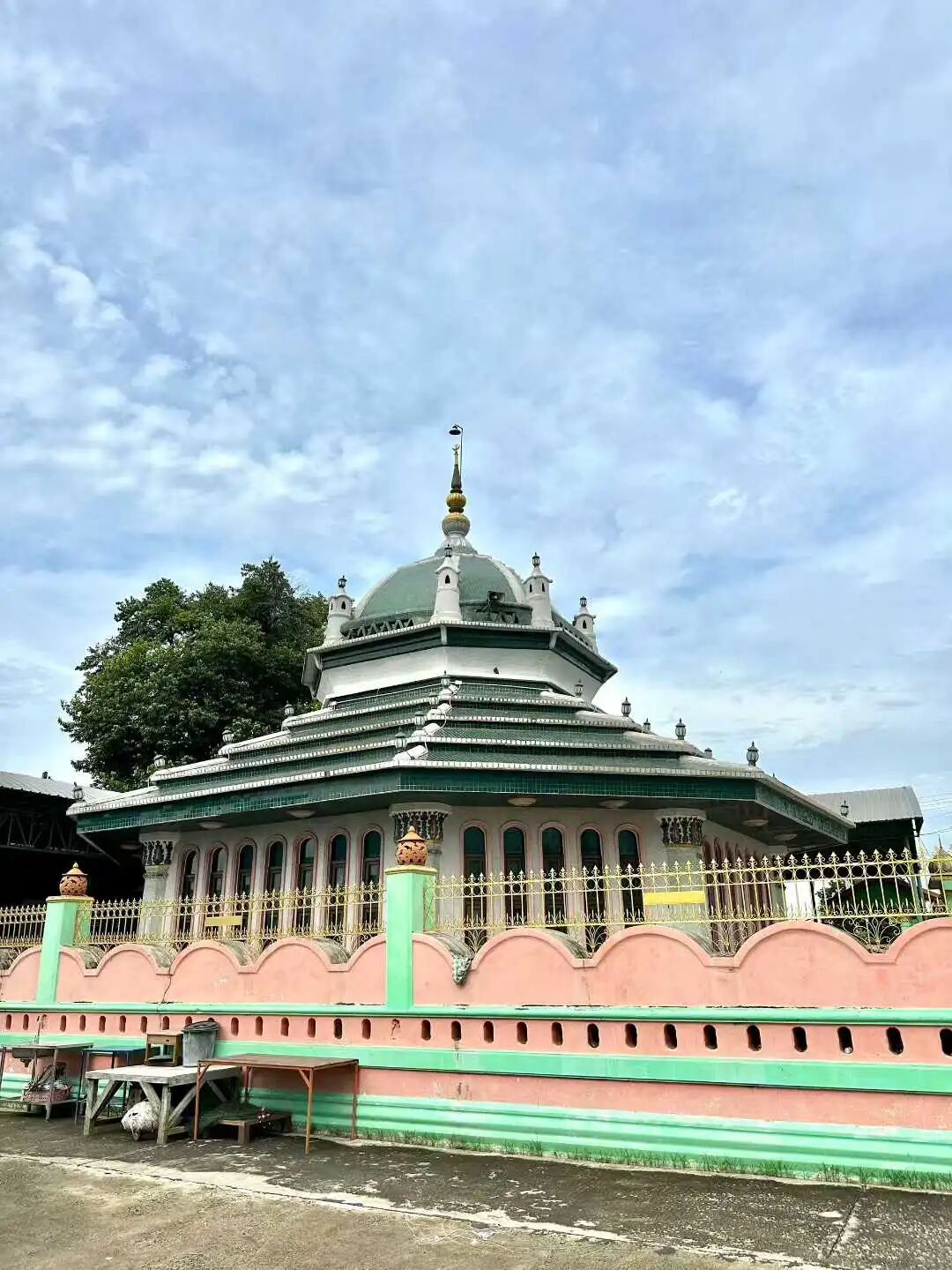
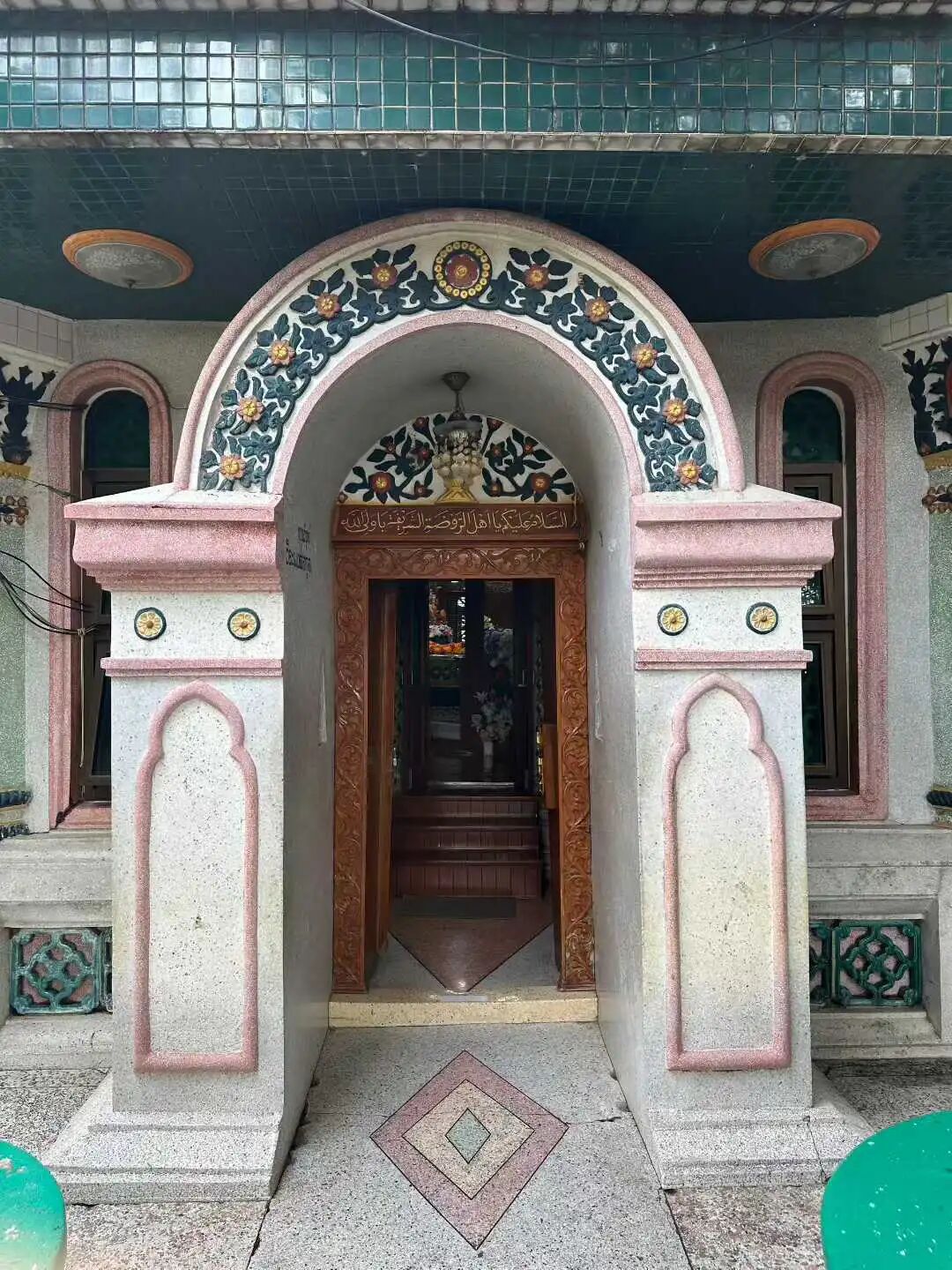
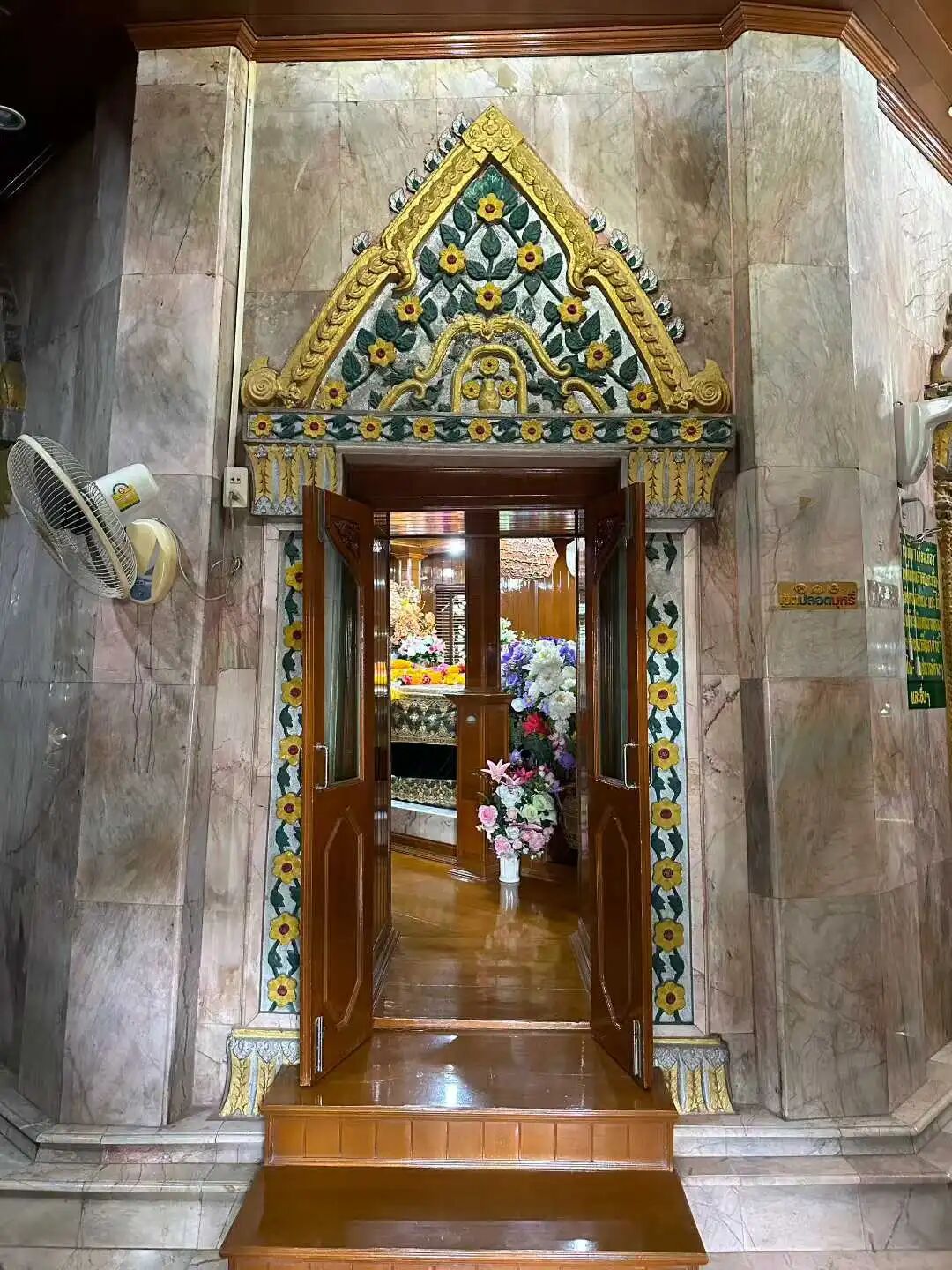
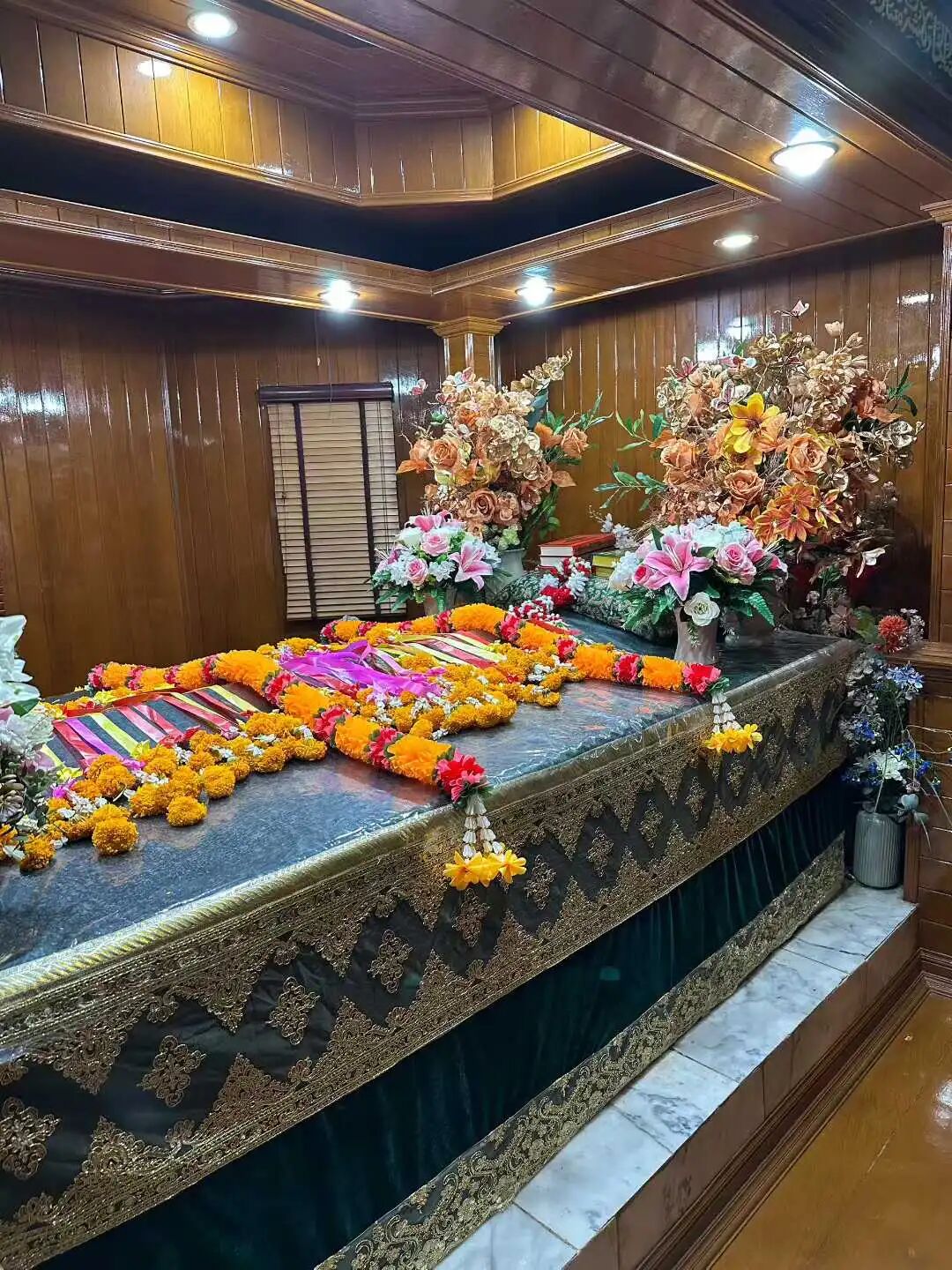
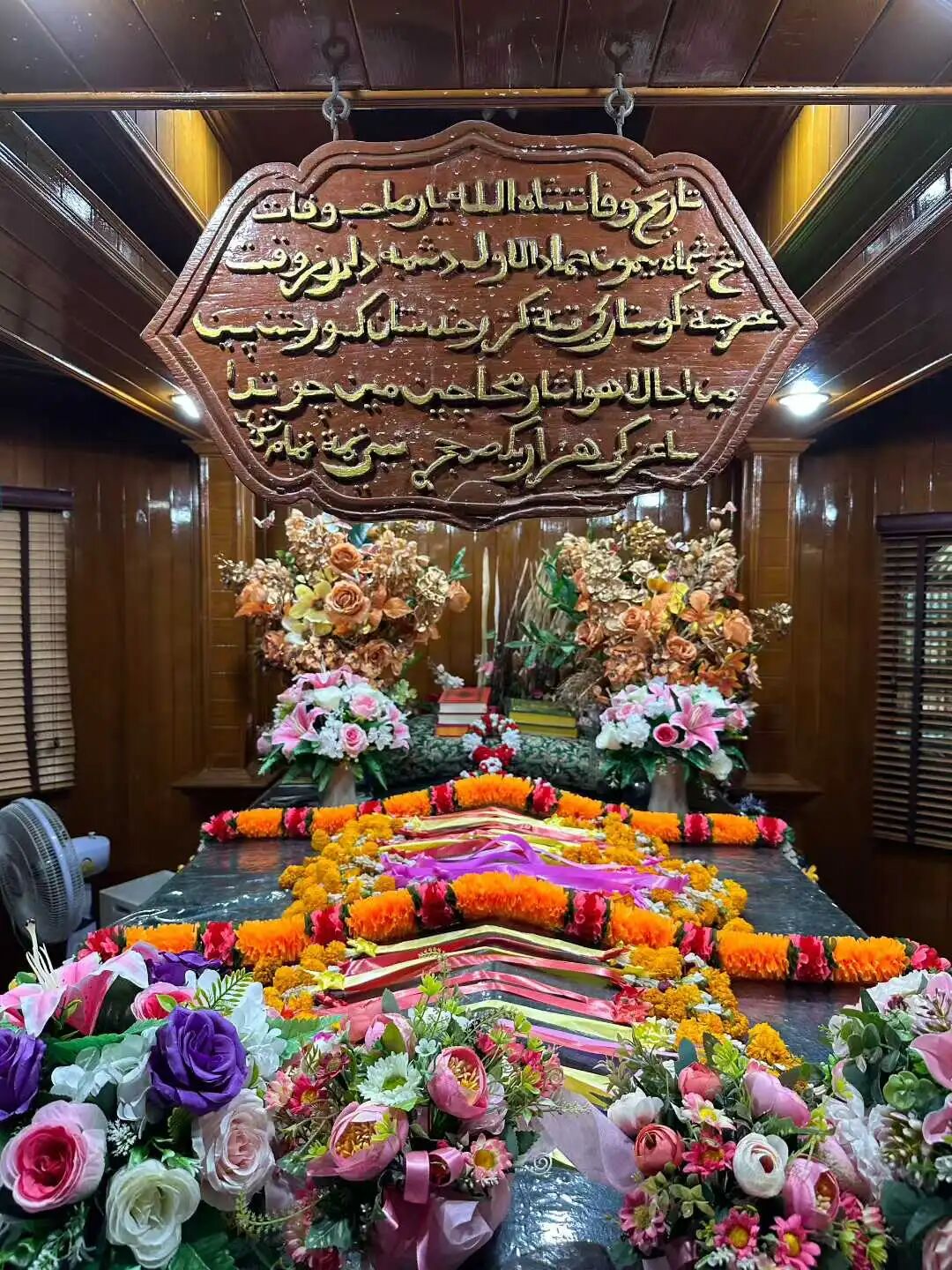
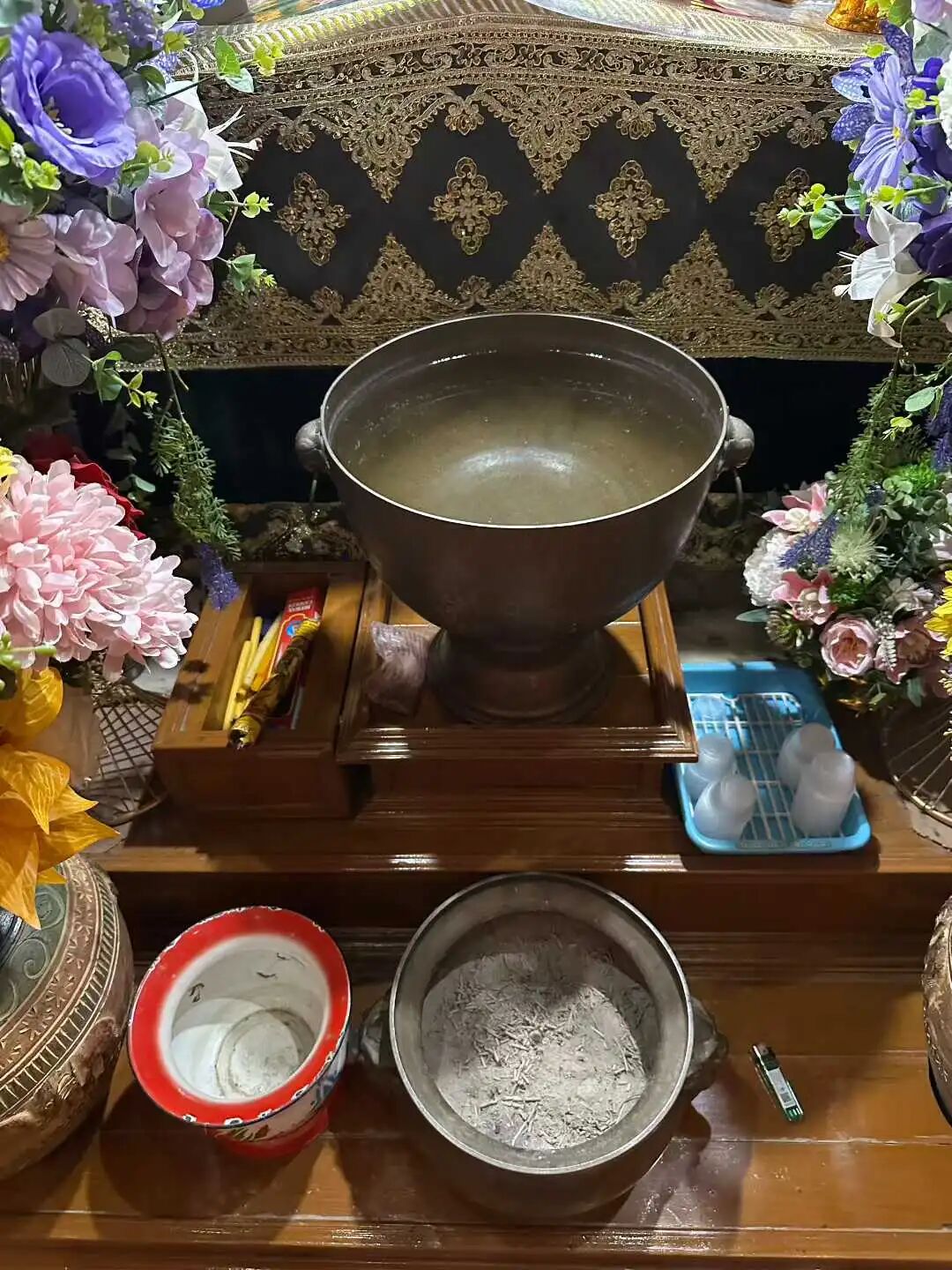
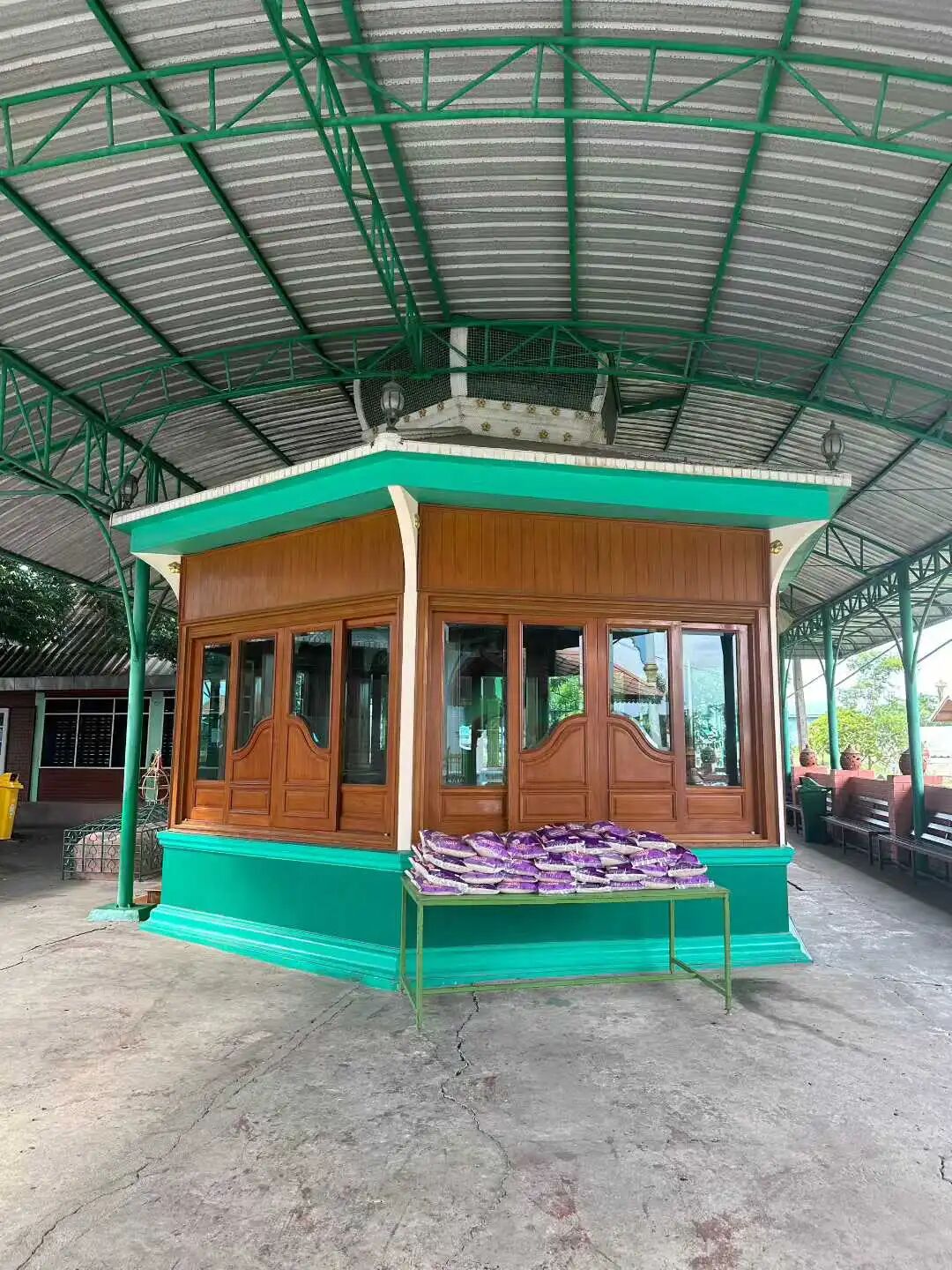
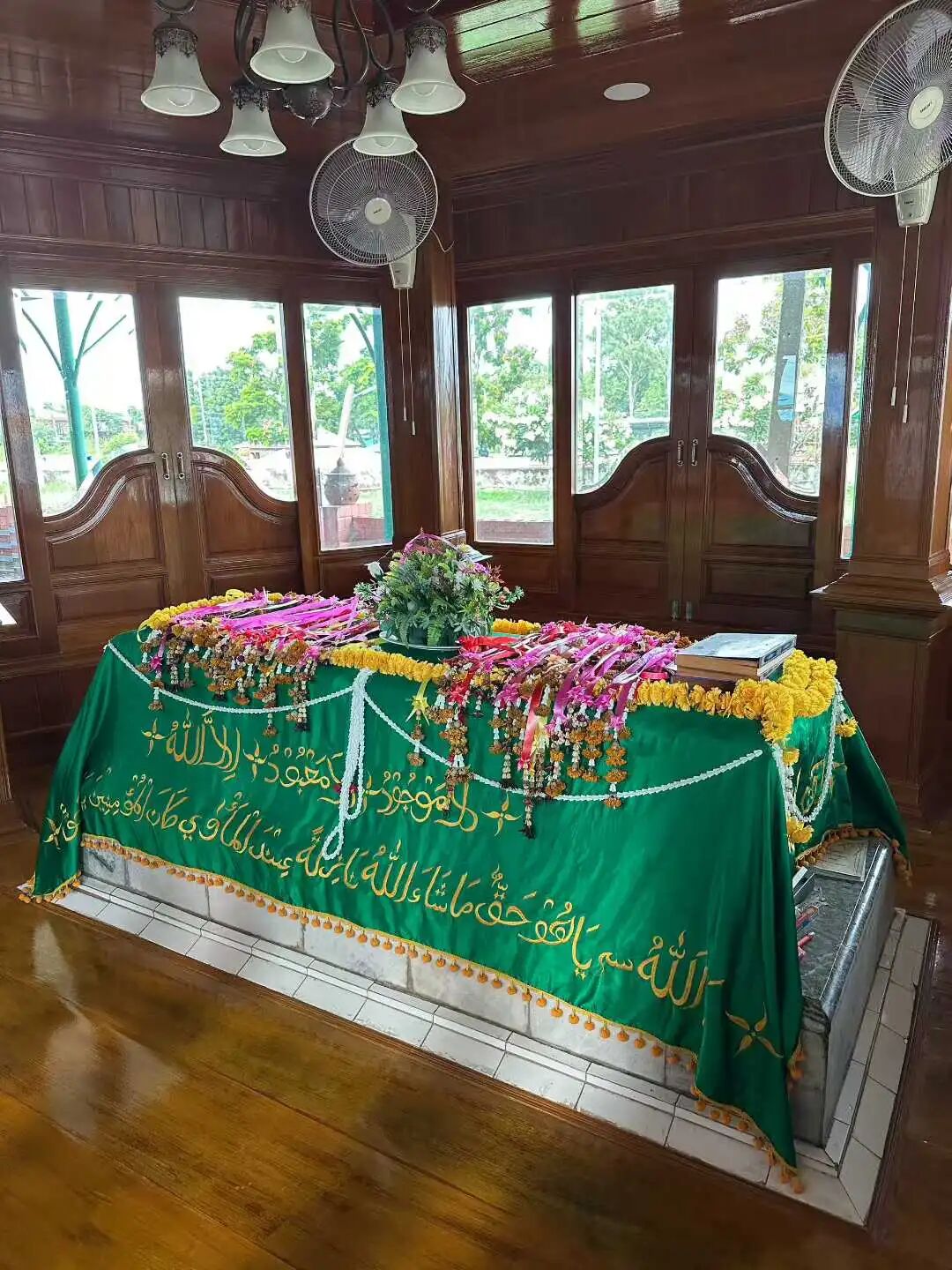
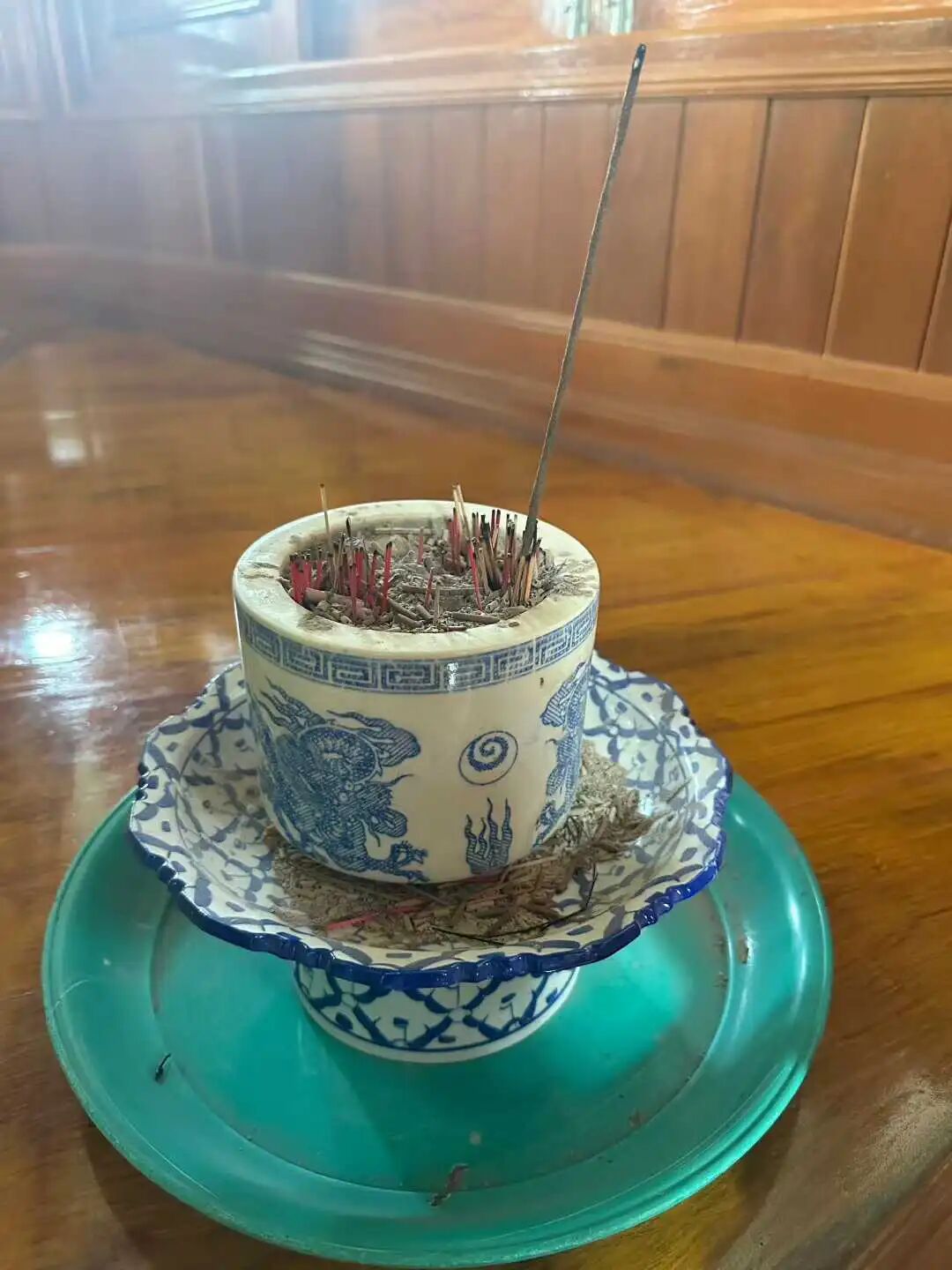
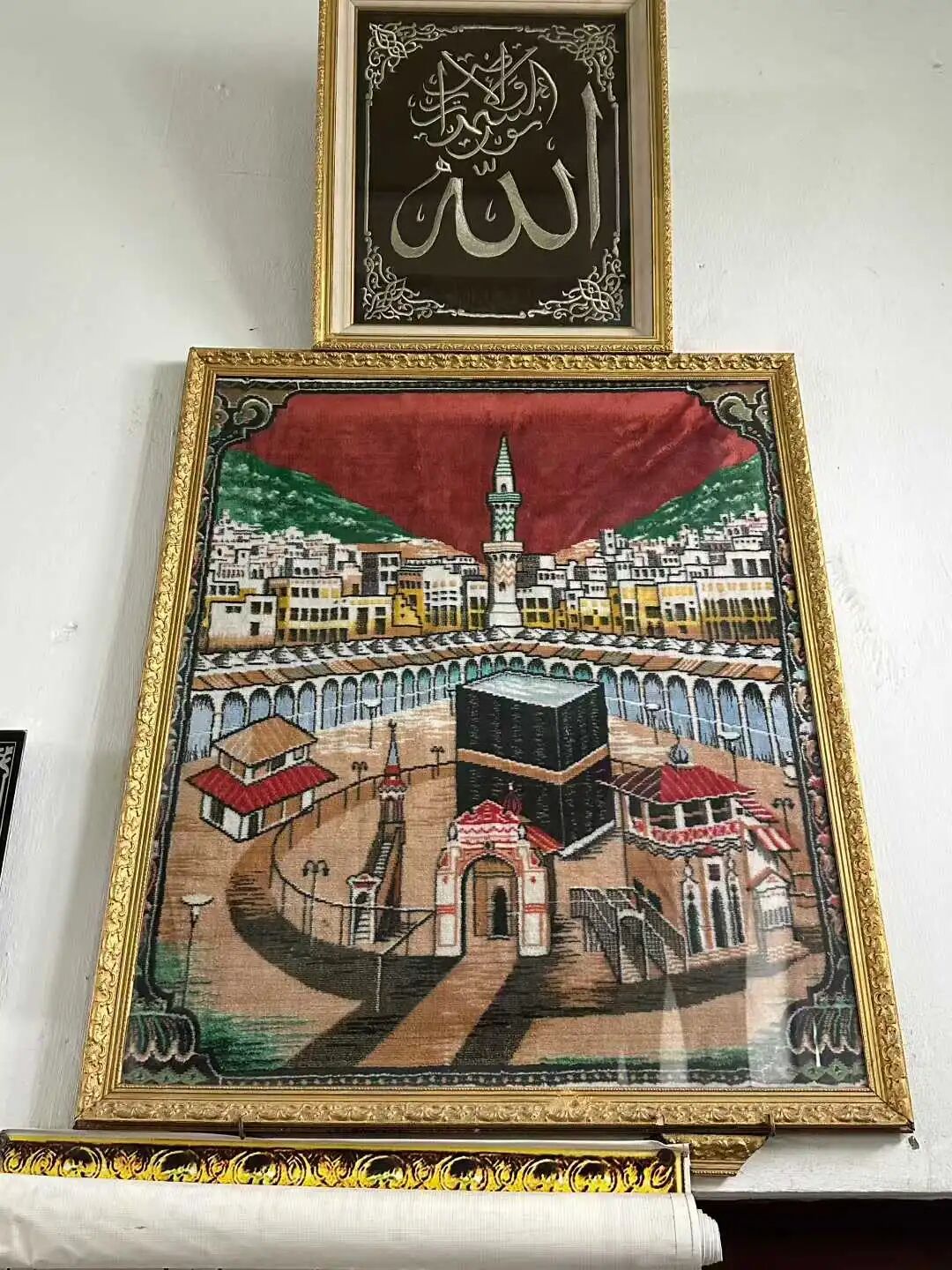
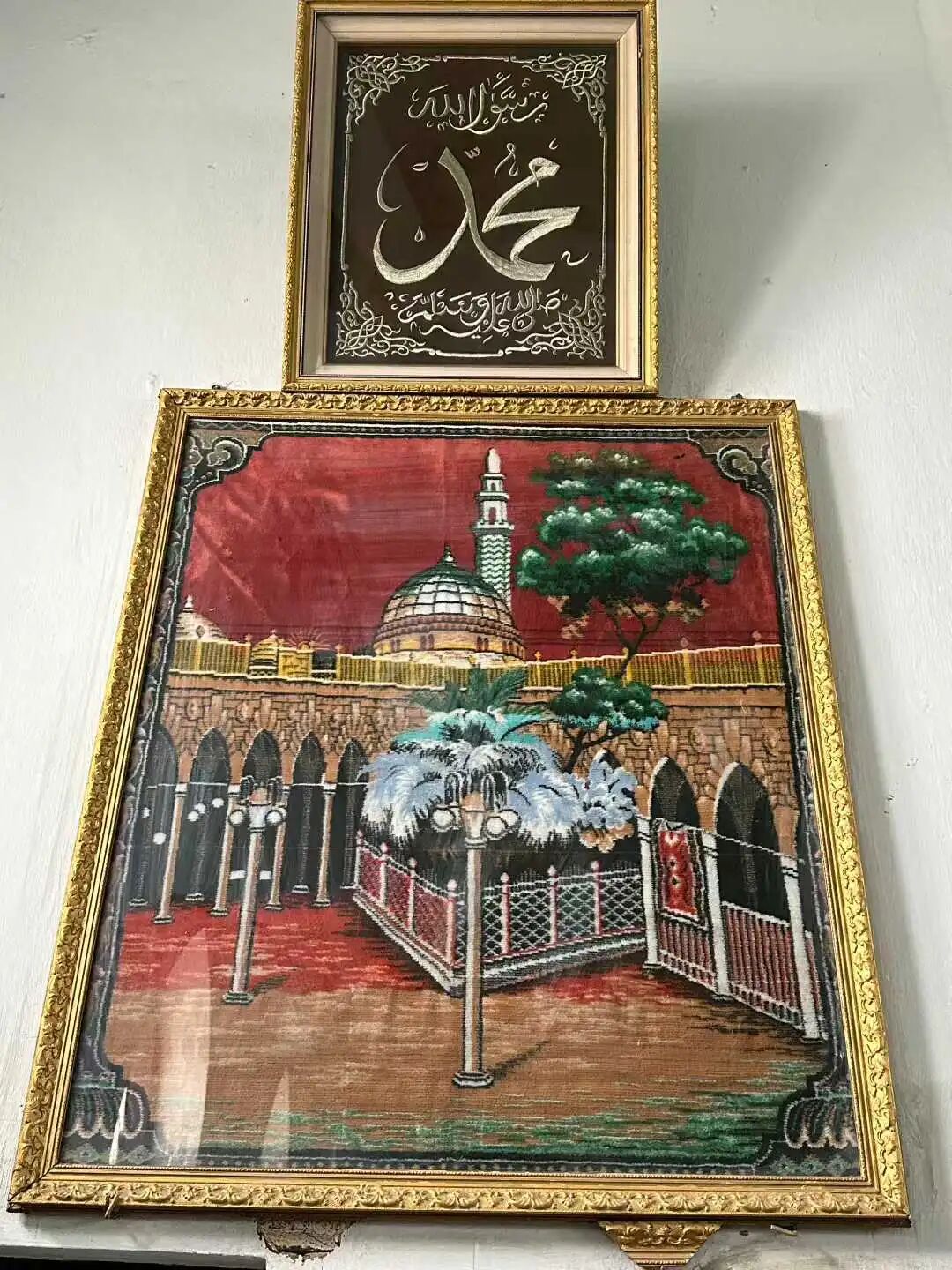
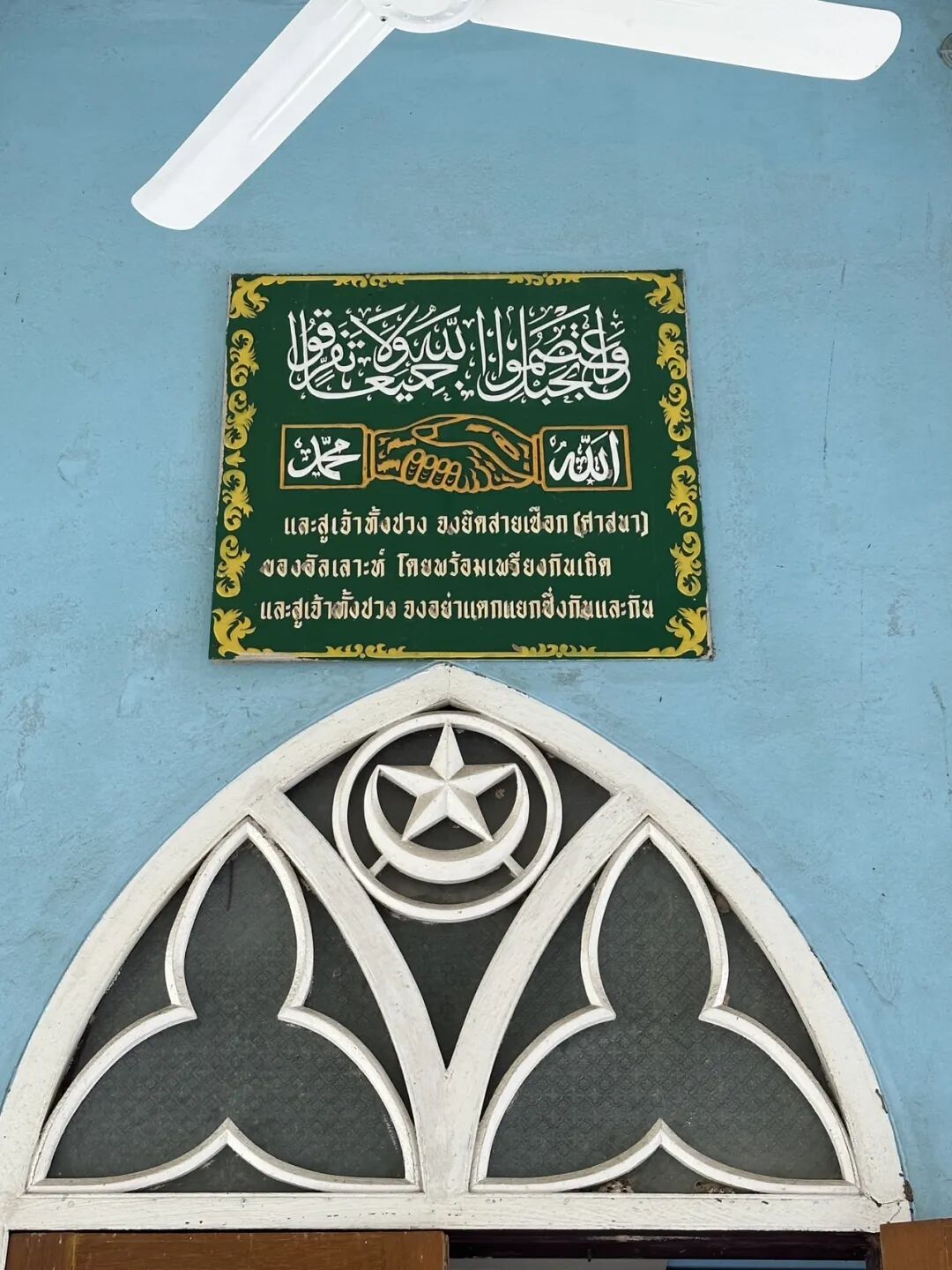
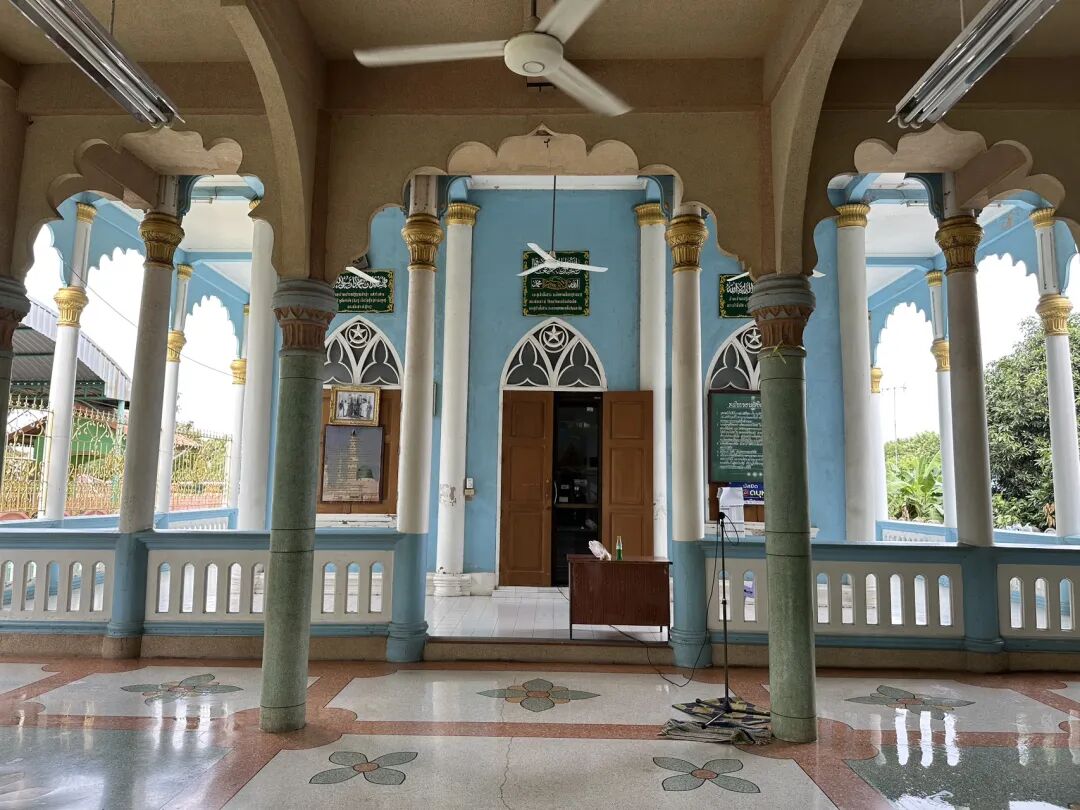
Masjid Takia Yokin is right next to the Tok Takia shrine. It was rebuilt from the original mosque in the mid-16th century after the Buddhist abbot Diwan Chao was guided by the Sufi Sheikh. The mosque still has a traditional Thai-style imam's prayer pavilion and a pulpit (minbar) that are beautifully crafted.
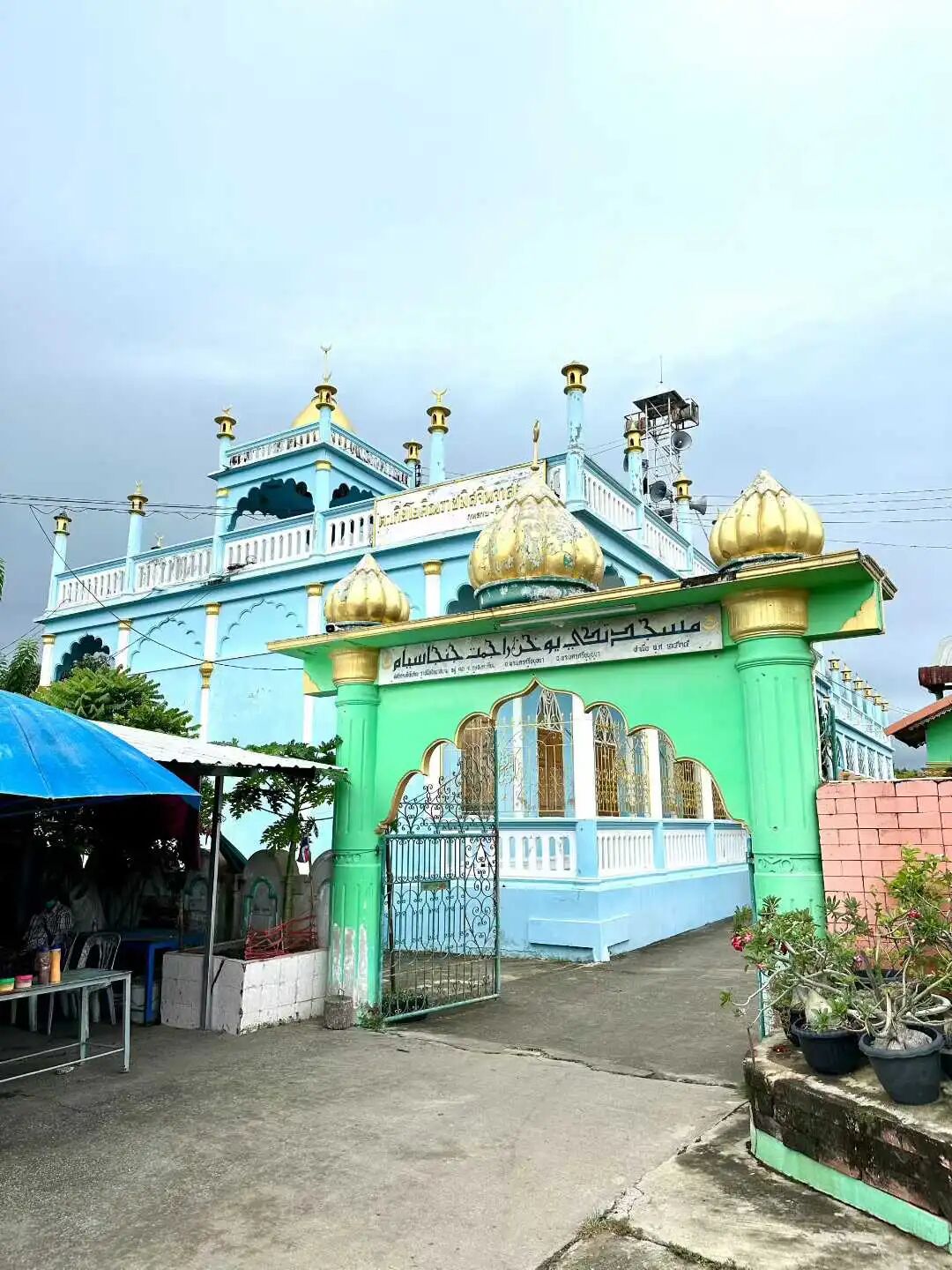
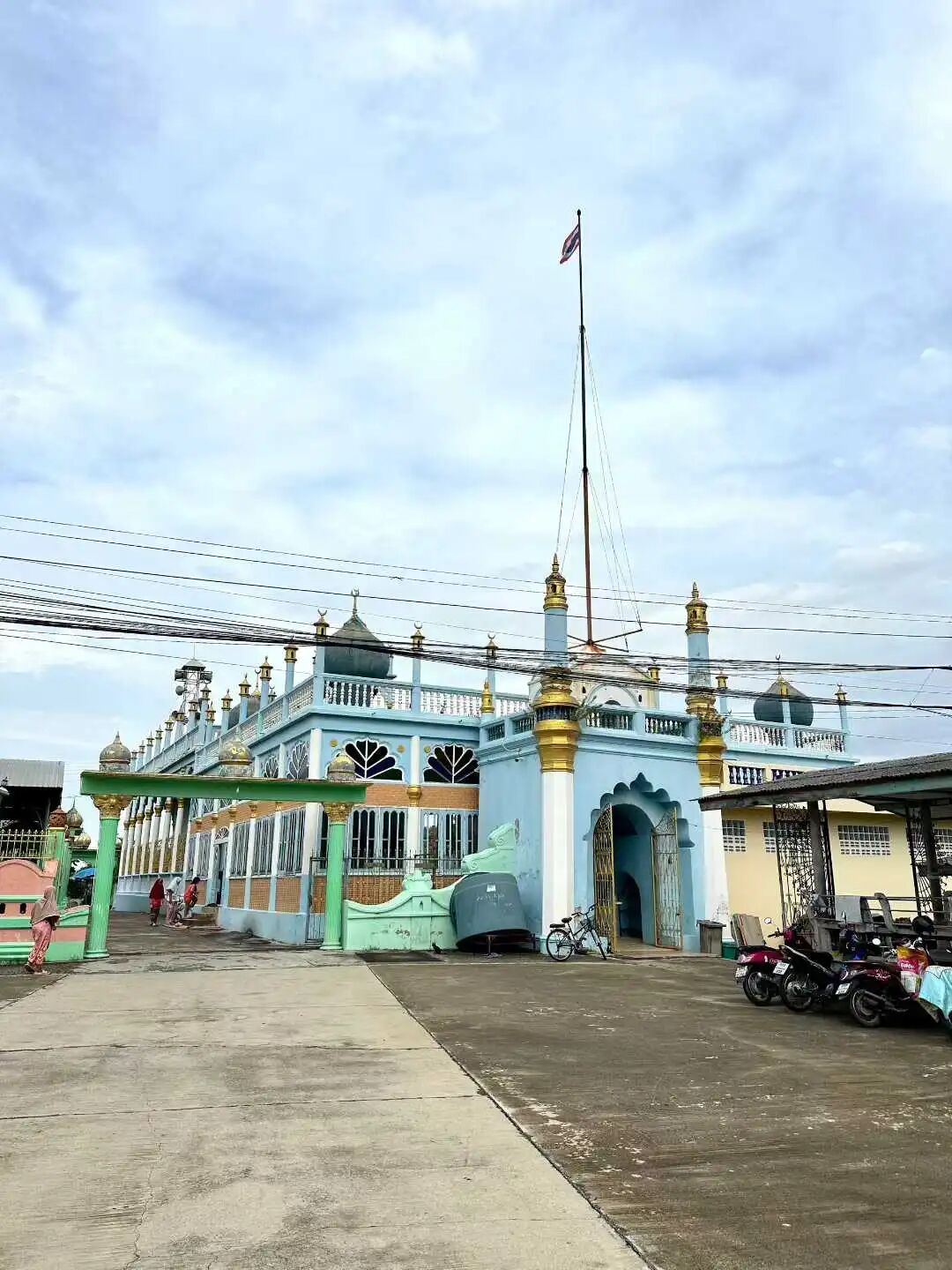
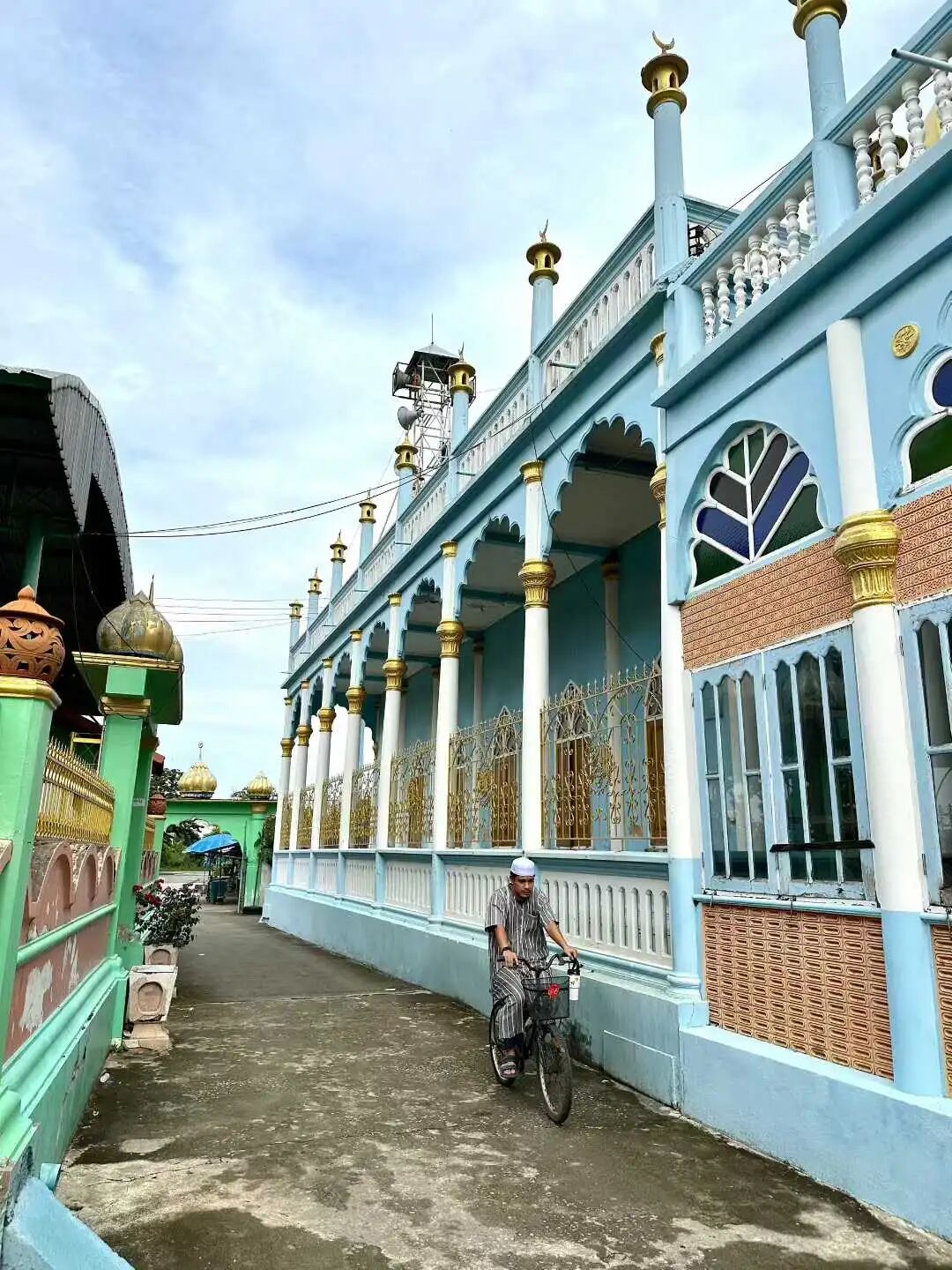
The rise of Islam in Ayutthaya during the 16th century had a lot to do with the trade environment at the time.
In the 15th century, Arab, Persian, and Indian merchants sailing east with the Indian Ocean monsoon winds preferred the powerful Malacca Sultanate as a trade hub. However, after the Portuguese conquered Malacca in 1511, trade was heavily restricted. Many Arab, Persian, and Indian merchants began to move to the Siamese capital of Ayutthaya to do business, and Siam welcomed them. At that time, a large number of merchant ships gathered on the banks of the Chao Phraya River south of Ayutthaya. These merchants anchored their ships outside the city and then transported goods into the city to sell. The riverbank where the Tok Takia shrine is located was an important anchorage at the time, and it later developed into an important Muslim community.
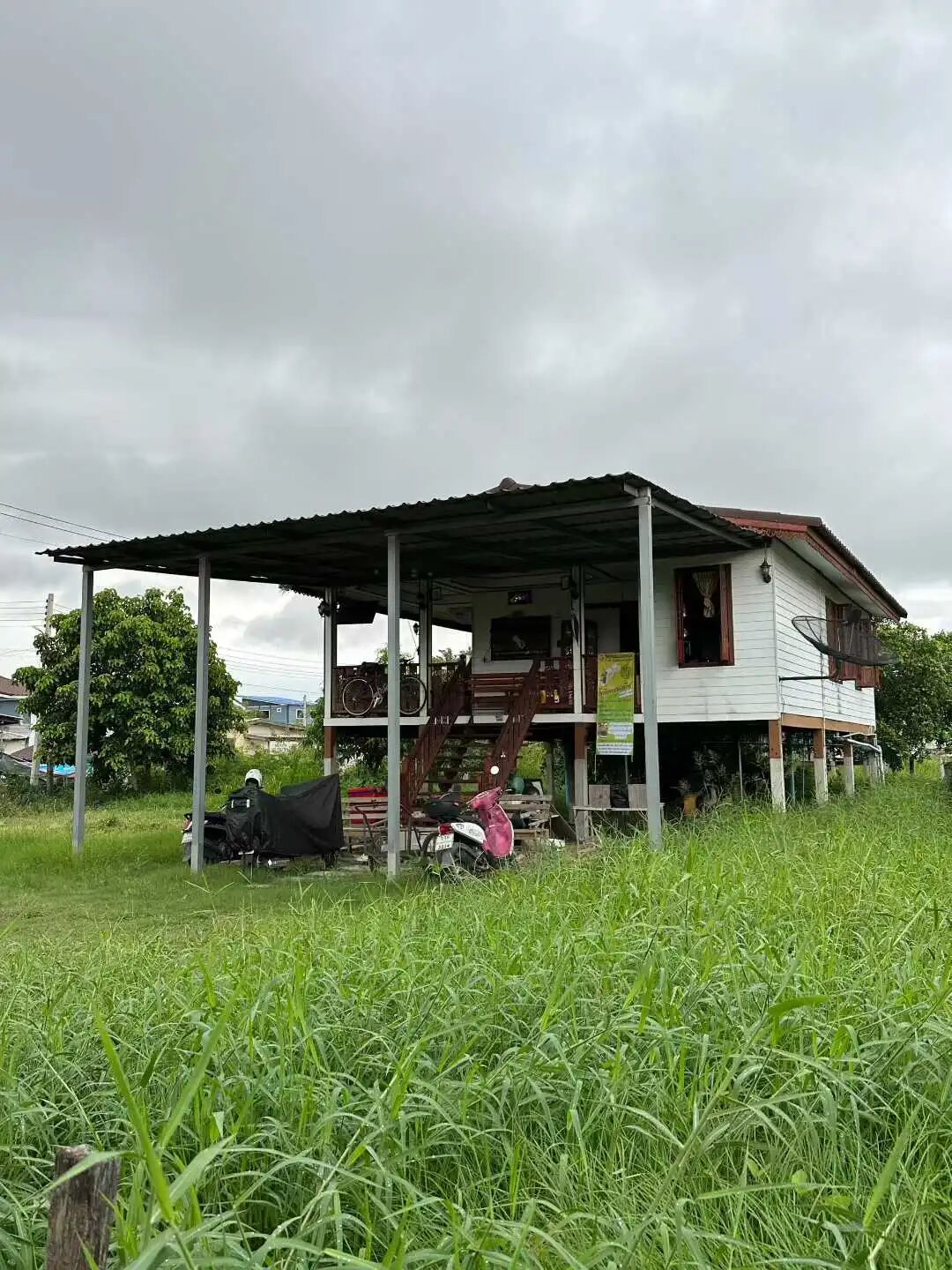
However, after the Burmese army burned Ayutthaya in 1767, it was no longer the capital, and the Tok Takia shrine pier was no longer busy. When we visited, it had become a chicken farm. The free-range local chickens must taste very good.






Three hundred years after Sheikh Tok Takia came to Thailand in the mid-16th century to spread the Qadiriyya Sufi order, the Sufi Sheikh Muhammad Ali Shukri, who is honored as a Wali, revived the Qadiriyya order in Thailand in the 19th century. He helped the order spread from Ayutthaya to Bangkok and Pattaya.
Sheikh Shukri was born in Ayutthaya in 1848 and was of Malay descent. He came from a farming family and spent his childhood herding sheep. At age 7, he was able to travel to Mecca, where he studied for 40 years. He reportedly studied in Mecca under Sheikh Abd al-Karim, who was a successor to the famous Indonesian Sheikh Ahmad Khatib as-Sambasi. Sheikh Ahmad combined the Qadiriyya and Naqshbandiyya orders, which played a major role in the development of the faith in Indonesia.
After finishing his studies and returning to Thailand, Sheikh Shukri began to promote the revival of the Thai Qadiriyya order. He preached in Ayutthaya and eastern Bangkok. Many people began to follow the Sheikh, and some stories about his preaching are still told today. People say many young people were addicted to opium at the time, including some of the Sheikh's own students. The Sheikh took his students on a boat past an opium den and asked a student how many pipes he smoked a day. The student said, "About three." The Sheikh then said, "Then only smoke one today." After that, the Sheikh gradually reduced the frequency of his students' smoking, from once a day to once a week, then once every two weeks, eventually helping them break their opium addiction.
In 1931, Sheikh Shukri passed away in Ayutthaya and was buried next to the Aliyid Daroun Mosque (Masjid Aliyid Daroun) on the banks of the Chao Phraya River, west of Ayutthaya city. This site also became the second largest Qadiriyya gongbei in Thailand, following the Tok Takia gongbei.
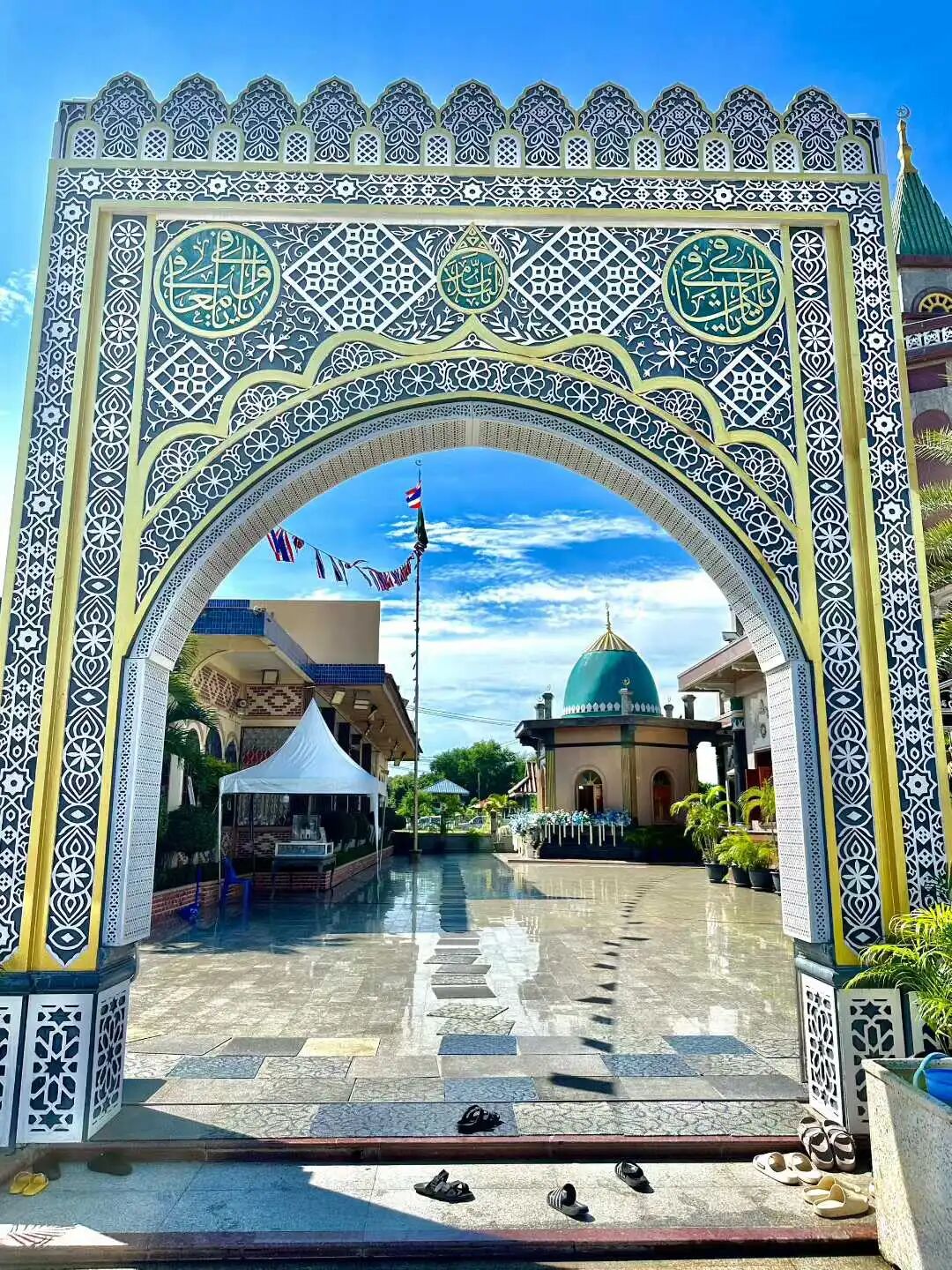
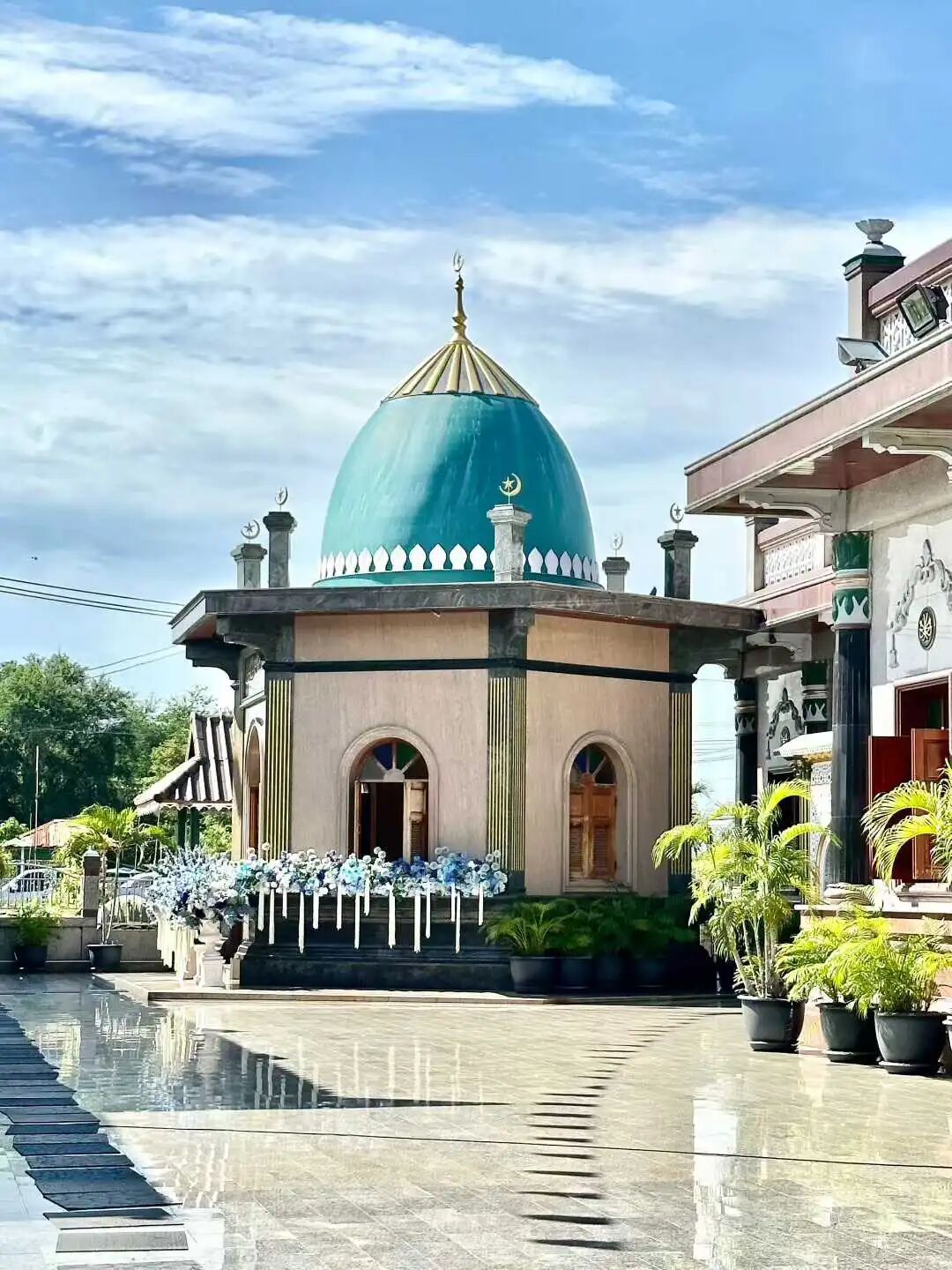
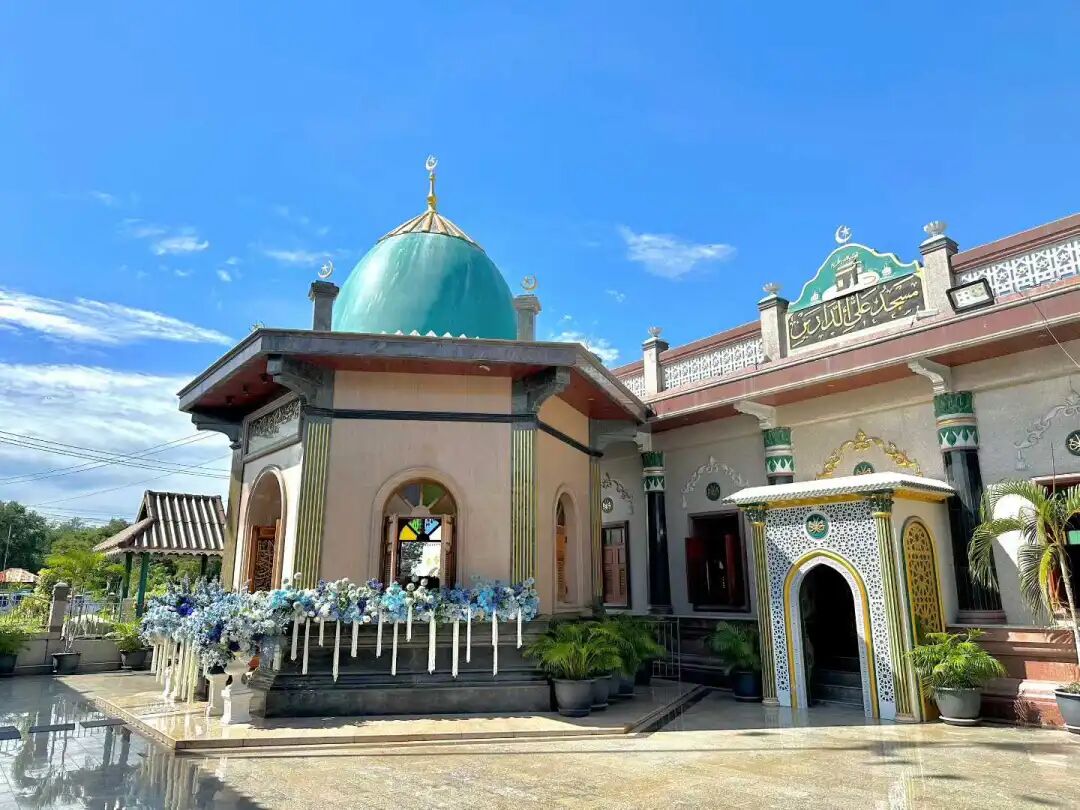
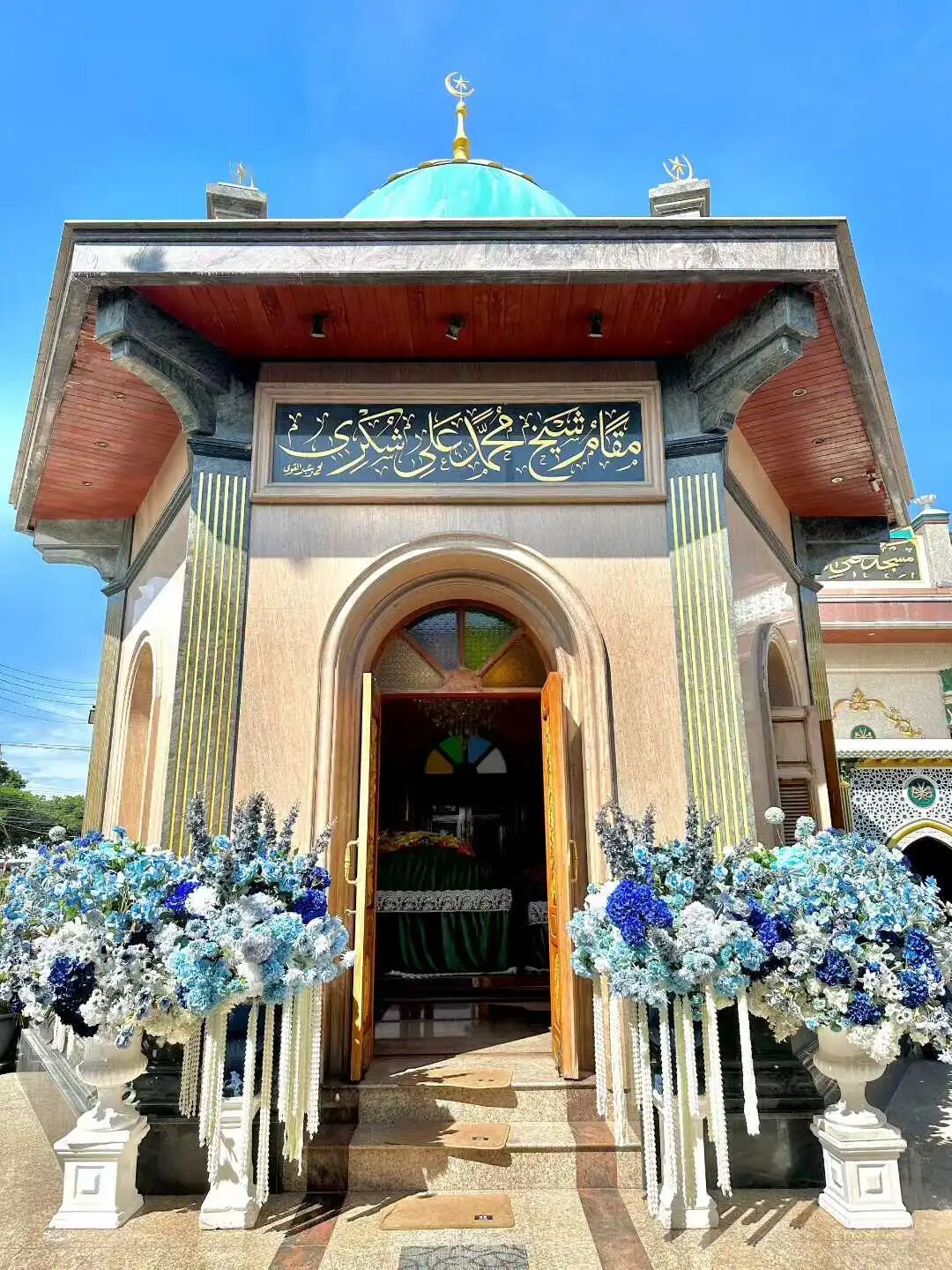
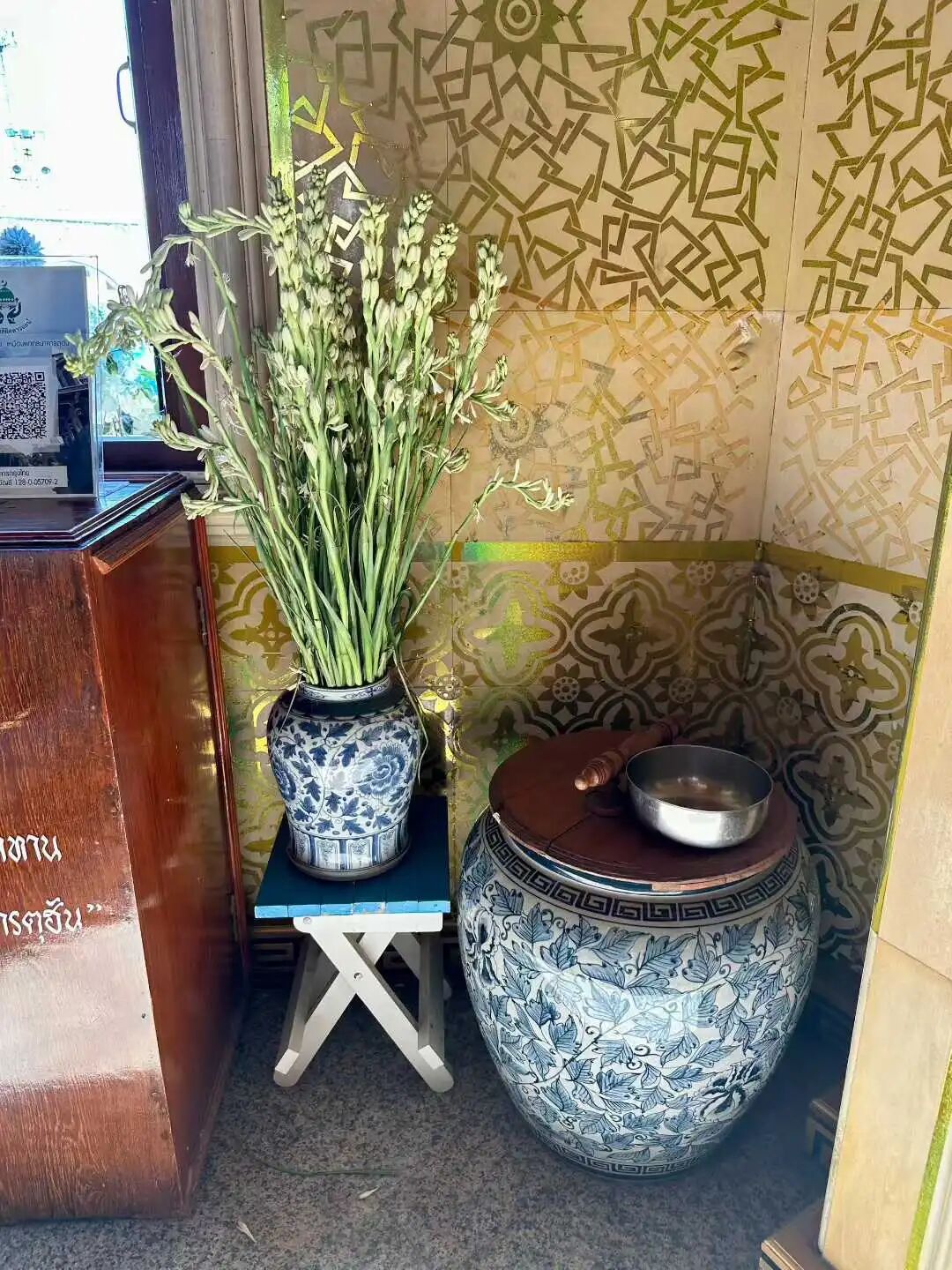
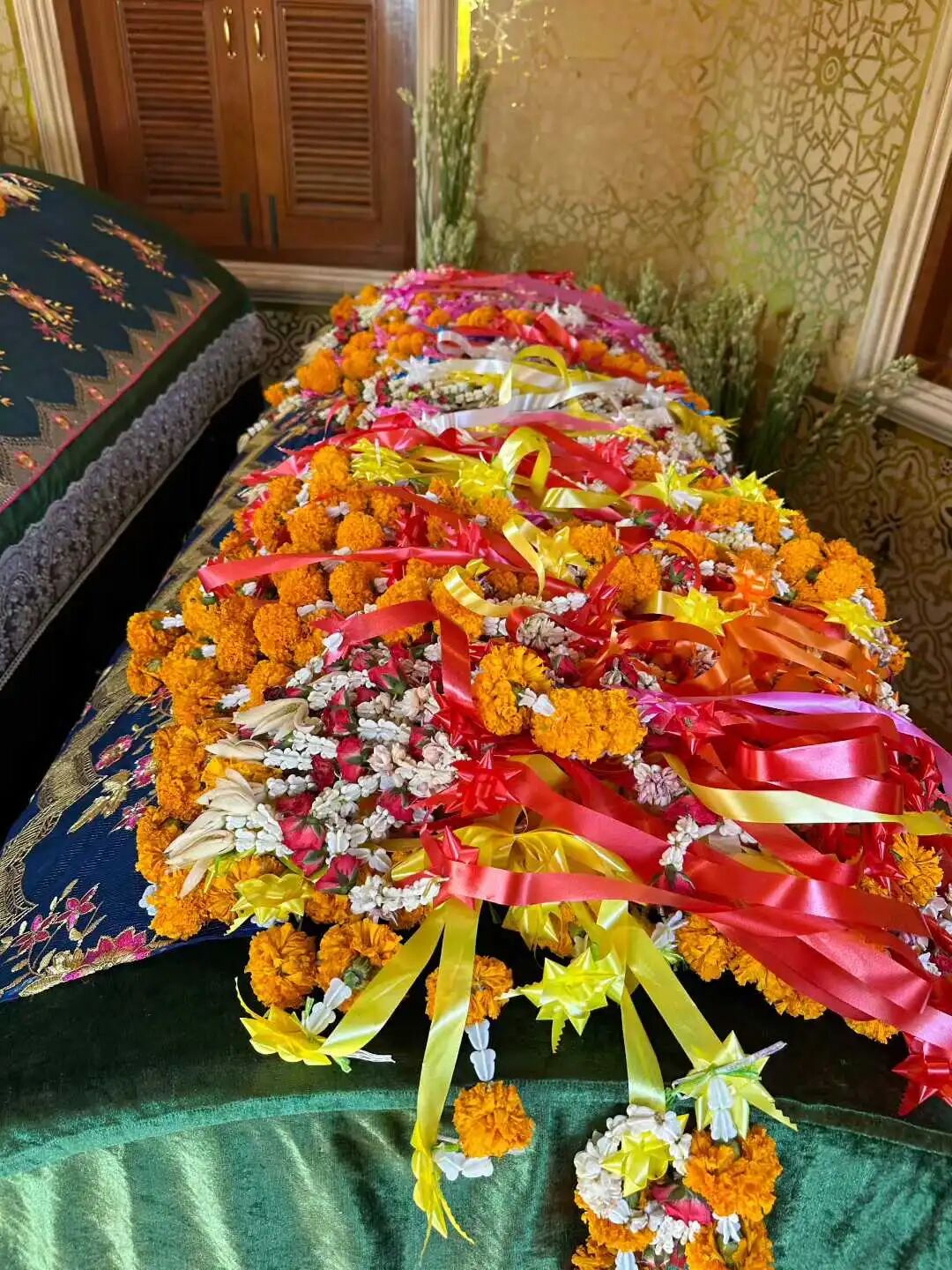
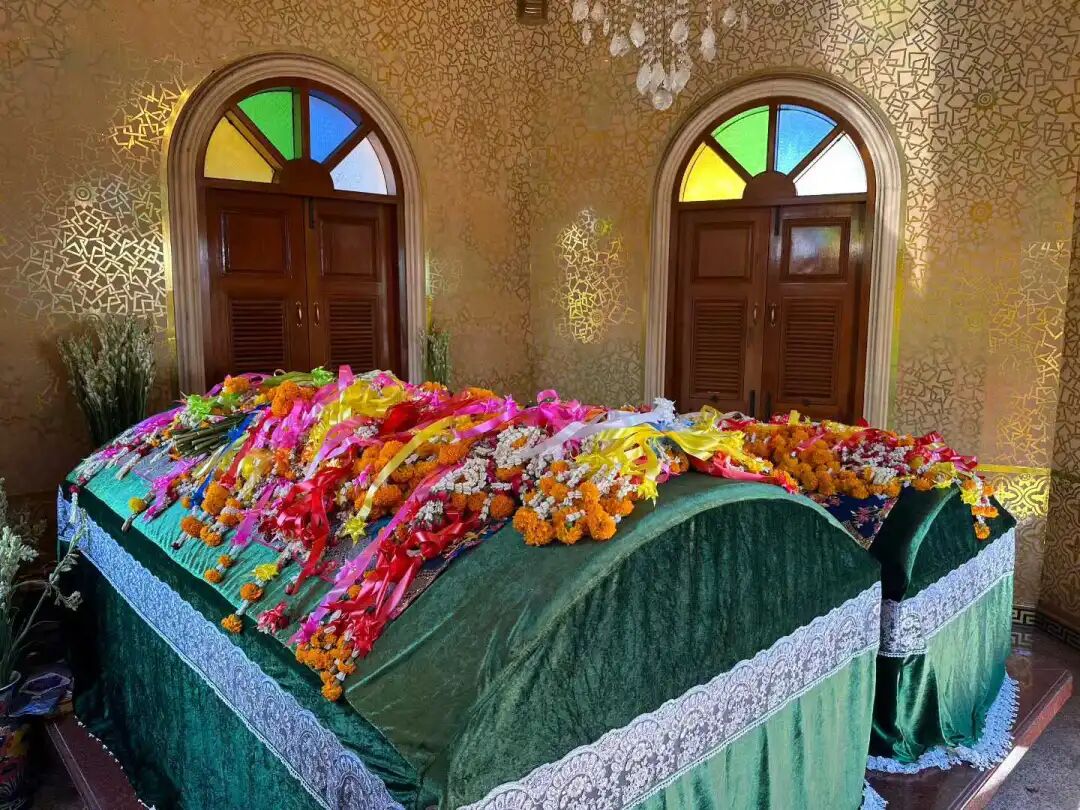
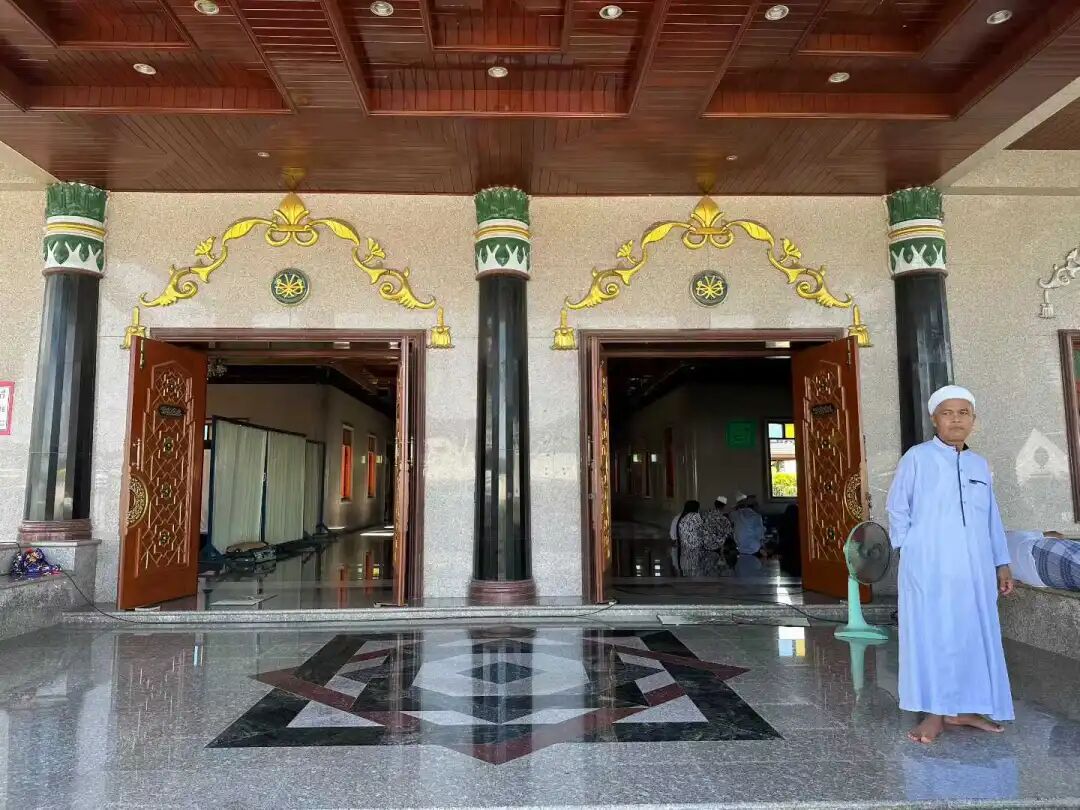
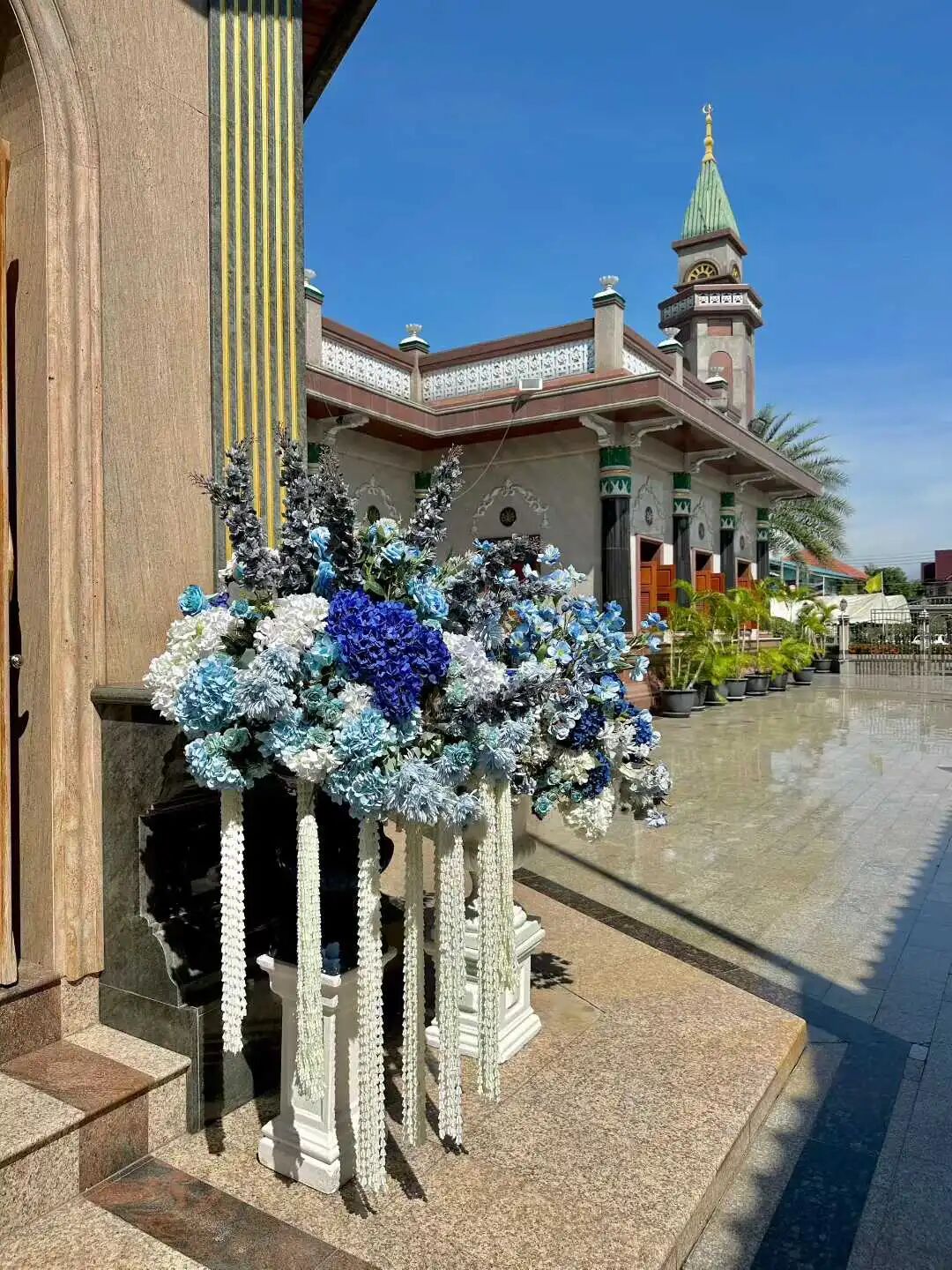
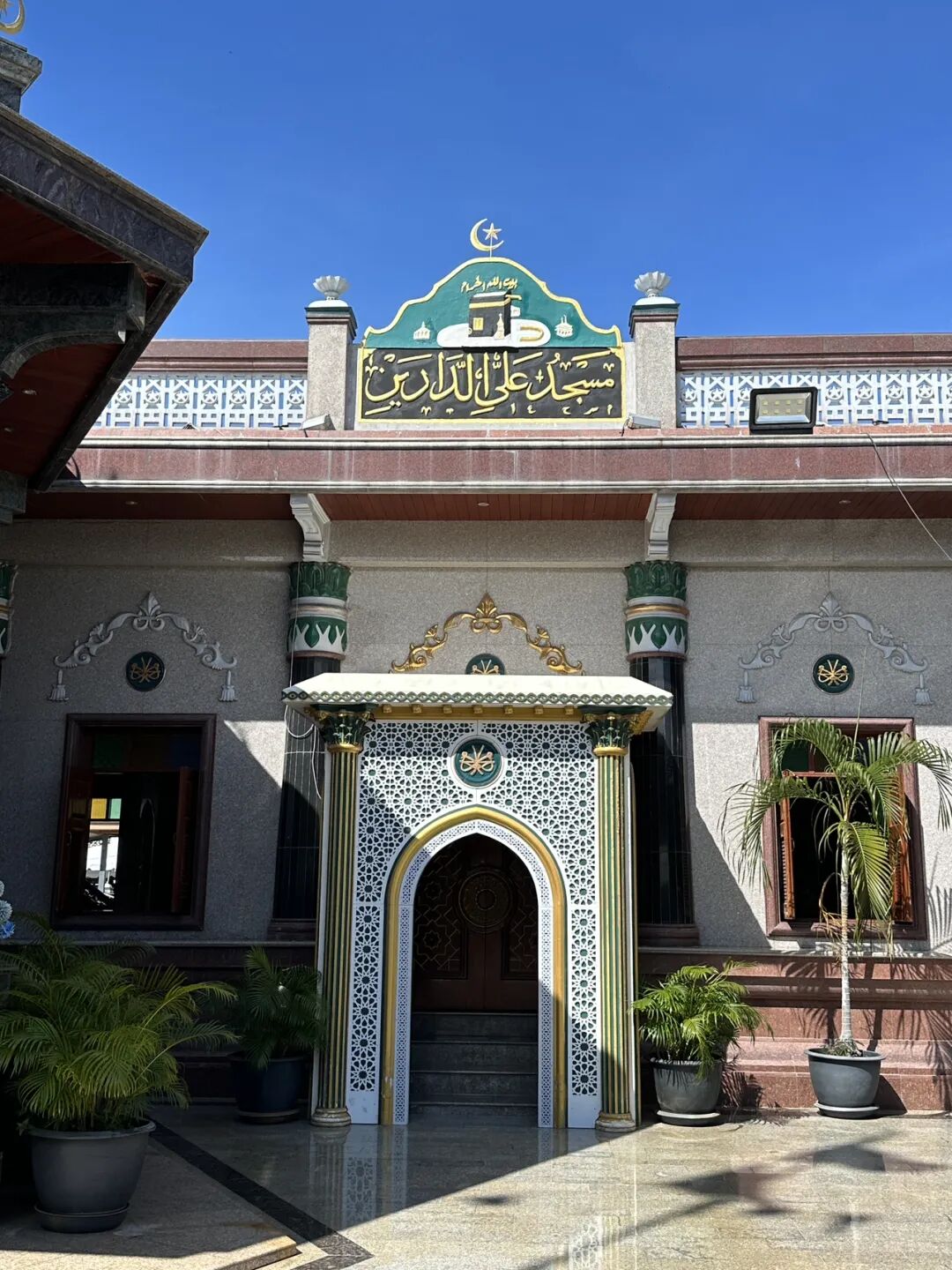
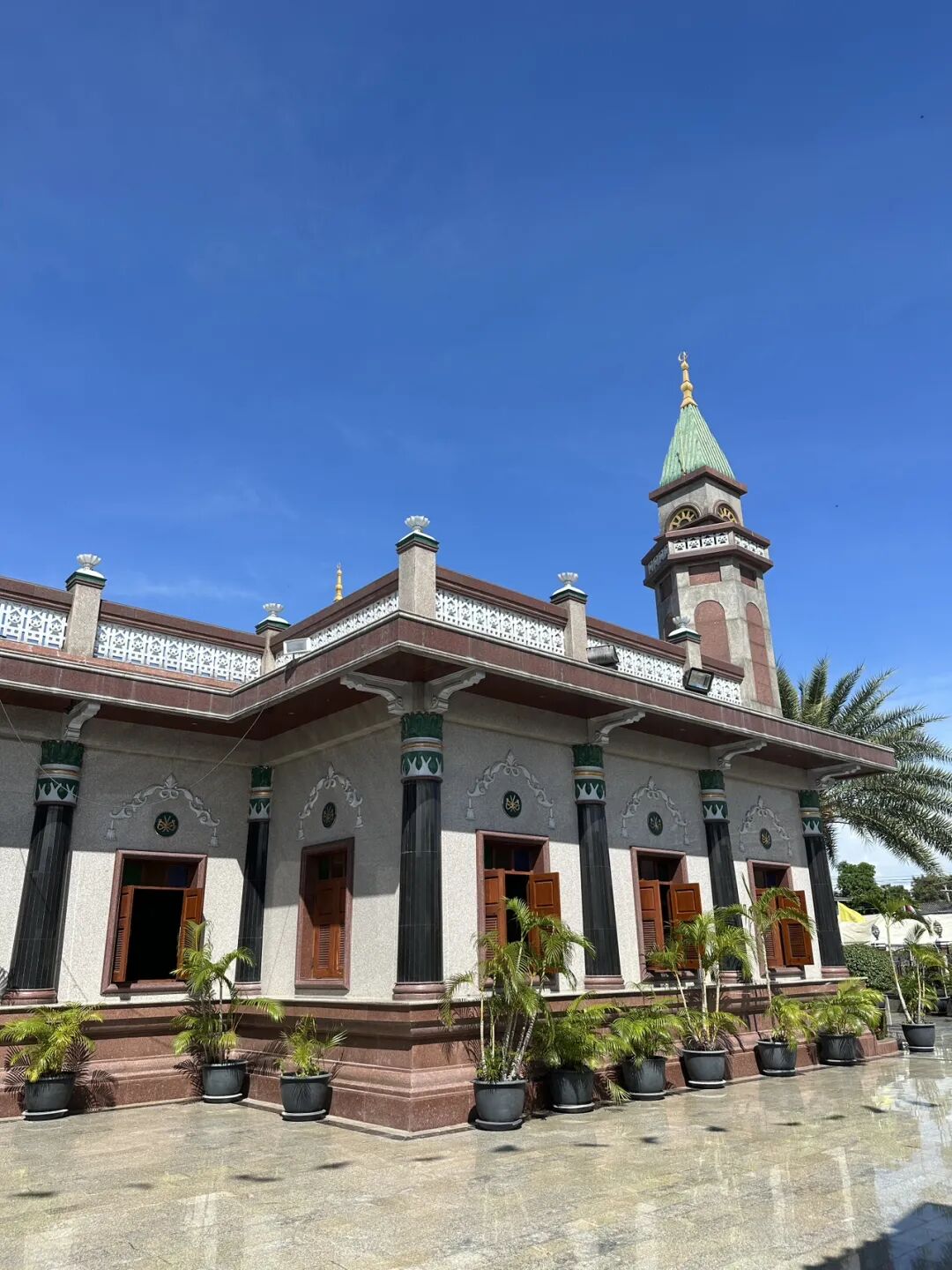
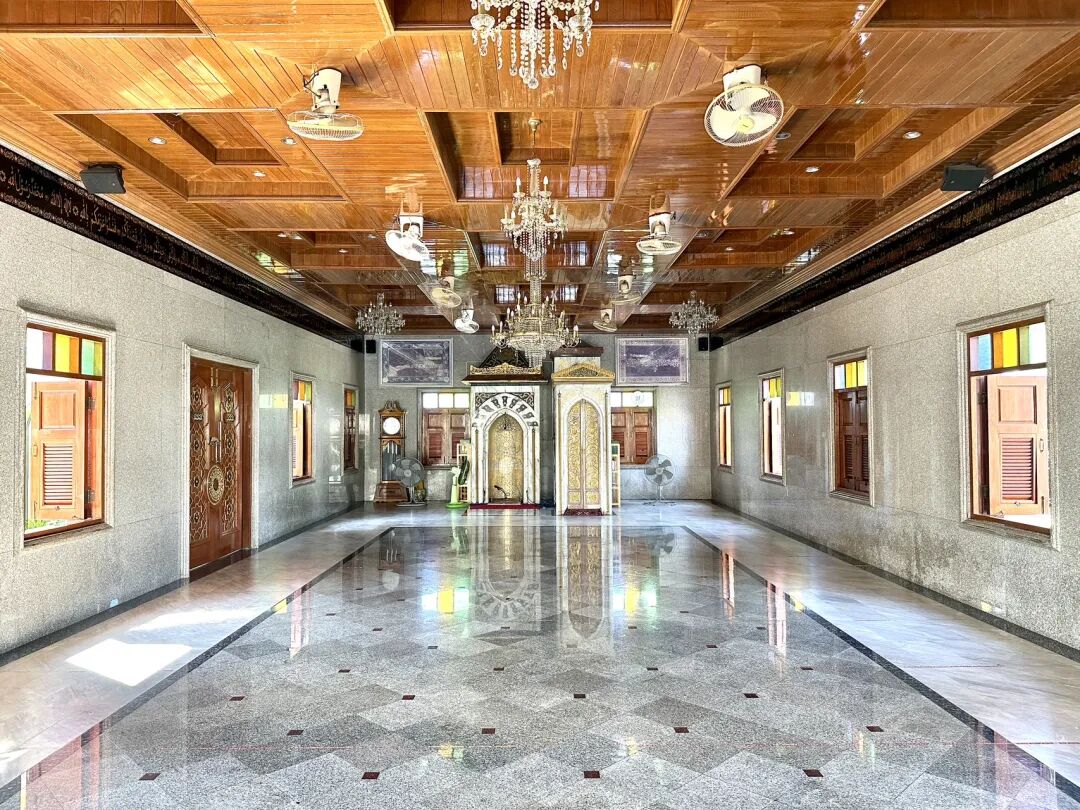
Although we missed the religious gathering (a'mali), we unexpectedly caught a charity event (shesan) for flood victims. We were able to see how the Thai Sufi order performs their religious feast (nieti xi) and tasted the beef rice noodles served at the mosque.
Central and Southern Thailand are influenced by the Malay people, so most religious practices follow the Shafi'i school, and there are relatively few Sufi activities. This was my first time experiencing the warmth of Thai Sufi elders in Ayutthaya. I saw them using boat oars to stir a giant pot of rice for the first time, and I also saw the process of making coconut rice, which is very similar to how the Hui Muslims in Huihui Village, Sanya, set their tables. Because we arrived early and the meal hadn't started yet, the elders here very warmly arranged for us to eat rice noodles first. The beef rice noodles with soup poured over them were delicious. I was also surprised to meet several elders who could speak English and Chinese.
Since we had to rush to Bangkok that evening, we didn't stay at the shrine (gongbei) for long. If any friends (dost) are traveling to Ayutthaya, Thailand, I highly recommend visiting this shrine (gongbei). It is a rare opportunity to see this side of Thai Sufism.










Summary: This travel account visits two major Qadiriyya gongbei shrines in Thailand and explains their place within Thai Sufi Muslim life. It keeps the source's names, religious terms, shrine details, and route notes while using clear English for Muslim and general readers.
Sufism in Thailand follows three main traditions: Ahmadiyya-Shadhiliyya, Ahmadiyya-Badawiyya, and Qadiriyya. Two major Qadiriyya shrines (gongbei) in Ayutthaya have long histories and great influence, making them the true center of Thai Sufism.
I first visited the Tok Takia shrine (gongbei) on the banks of the Chao Phraya River, south of Ayutthaya city. Friends (dosti) in central Thailand all agree that Tok Takia has karamat (miraculous signs), and its influence has led many local Thai people to convert to Islam.
People call Tok Takia Sheikh Samat Maimun. The King of Siam also gave him the title Chao Phrakhun Takia Yokin. He came to Thailand to teach Islam in the mid-16th century. He settled in Ayutthaya in 1554 and passed away there in 1579. His shrine is the oldest existing tomb of an Islamic saint in Thailand.
The most popular legend about the old Sheikh is the story of his spiritual contest with a local Buddhist abbot named Diwan Chao. After the abbot went out to collect alms, he rowed his boat back to the mosque along the Chao Phraya River. When he reached the opposite bank of the mosque, he met a foreigner in white clothes and a white turban who waved to ask for a ride across the river. The abbot's boat was too small, so he asked the foreigner to wait while he went back to call his disciples to bring a larger boat. When the abbot rowed to the other side, he found that the foreigner had miraculously crossed the wide Chao Phraya River and was standing right in front of him. The abbot decided the man was a pious and learned person, so he invited him into the mosque to talk. At the end of their conversation, they agreed to a spiritual contest, and the loser would become the winner's disciple. The abbot lost the contest and kept his word by converting to Islam. He turned the mosque into a mosque, which is the Masjid Takia Yokin next to the shrine today.
Today, there are two main graves inside the shrine. The larger one belongs to Sheikh Tok Takia, and the smaller one belongs to the abbot Diwan Chao, who passed away the year after the Sheikh.
Masjid Takia Yokin is right next to the Tok Takia shrine. It was rebuilt from the original mosque in the mid-16th century after the Buddhist abbot Diwan Chao was guided by the Sufi Sheikh. The mosque still has a traditional Thai-style imam's prayer pavilion and a pulpit (minbar) that are beautifully crafted.
The rise of Islam in Ayutthaya during the 16th century had a lot to do with the trade environment at the time.
In the 15th century, Arab, Persian, and Indian merchants sailing east with the Indian Ocean monsoon winds preferred the powerful Malacca Sultanate as a trade hub. However, after the Portuguese conquered Malacca in 1511, trade was heavily restricted. Many Arab, Persian, and Indian merchants began to move to the Siamese capital of Ayutthaya to do business, and Siam welcomed them. At that time, a large number of merchant ships gathered on the banks of the Chao Phraya River south of Ayutthaya. These merchants anchored their ships outside the city and then transported goods into the city to sell. The riverbank where the Tok Takia shrine is located was an important anchorage at the time, and it later developed into an important Muslim community.
However, after the Burmese army burned Ayutthaya in 1767, it was no longer the capital, and the Tok Takia shrine pier was no longer busy. When we visited, it had become a chicken farm. The free-range local chickens must taste very good.
Three hundred years after Sheikh Tok Takia came to Thailand in the mid-16th century to spread the Qadiriyya Sufi order, the Sufi Sheikh Muhammad Ali Shukri, who is honored as a Wali, revived the Qadiriyya order in Thailand in the 19th century. He helped the order spread from Ayutthaya to Bangkok and Pattaya.
Sheikh Shukri was born in Ayutthaya in 1848 and was of Malay descent. He came from a farming family and spent his childhood herding sheep. At age 7, he was able to travel to Mecca, where he studied for 40 years. He reportedly studied in Mecca under Sheikh Abd al-Karim, who was a successor to the famous Indonesian Sheikh Ahmad Khatib as-Sambasi. Sheikh Ahmad combined the Qadiriyya and Naqshbandiyya orders, which played a major role in the development of the faith in Indonesia.
After finishing his studies and returning to Thailand, Sheikh Shukri began to promote the revival of the Thai Qadiriyya order. He preached in Ayutthaya and eastern Bangkok. Many people began to follow the Sheikh, and some stories about his preaching are still told today. People say many young people were addicted to opium at the time, including some of the Sheikh's own students. The Sheikh took his students on a boat past an opium den and asked a student how many pipes he smoked a day. The student said, "About three." The Sheikh then said, "Then only smoke one today." After that, the Sheikh gradually reduced the frequency of his students' smoking, from once a day to once a week, then once every two weeks, eventually helping them break their opium addiction.
In 1931, Sheikh Shukri passed away in Ayutthaya and was buried next to the Aliyid Daroun Mosque (Masjid Aliyid Daroun) on the banks of the Chao Phraya River, west of Ayutthaya city. This site also became the second largest Qadiriyya gongbei in Thailand, following the Tok Takia gongbei.
Although we missed the religious gathering (a'mali), we unexpectedly caught a charity event (shesan) for flood victims. We were able to see how the Thai Sufi order performs their religious feast (nieti xi) and tasted the beef rice noodles served at the mosque.
Central and Southern Thailand are influenced by the Malay people, so most religious practices follow the Shafi'i school, and there are relatively few Sufi activities. This was my first time experiencing the warmth of Thai Sufi elders in Ayutthaya. I saw them using boat oars to stir a giant pot of rice for the first time, and I also saw the process of making coconut rice, which is very similar to how the Hui Muslims in Huihui Village, Sanya, set their tables. Because we arrived early and the meal hadn't started yet, the elders here very warmly arranged for us to eat rice noodles first. The beef rice noodles with soup poured over them were delicious. I was also surprised to meet several elders who could speak English and Chinese.
Since we had to rush to Bangkok that evening, we didn't stay at the shrine (gongbei) for long. If any friends (dost) are traveling to Ayutthaya, Thailand, I highly recommend visiting this shrine (gongbei). It is a rare opportunity to see this side of Thai Sufism.
Halal Travel Guide: Yangon - Last Mughal Emperor Tomb and Qadiriyya Gongbei
Articles • ali2007fr posted the article • 0 comments • 240 views • 2026-05-21 02:08
Reposted from the web
Summary: Yangon holds the tomb of Bahadur Shah II, the last Mughal emperor, near Shwedagon Pagoda, along with a Qadiriyya gongbei connected to Muslim memory in Myanmar. This account keeps the source's shrine details, historical names, religious terms, and site observations.
The tomb of Bahadur Shah II, the last emperor of the Mughal Empire, is near the famous Shwedagon Pagoda in Yangon, Myanmar. This site was his home after he was exiled to Yangon in 1858. Because Bahadur Shah II was a devout Sufi sheikh during his life, his tomb has become a famous Sufi shrine (gongbei) in Myanmar.
Although Bahadur Shah II belonged to the Chishti order during his life, the shrine (gongbei) is now managed by the Qadiriyya order. I met a man here who was hanging fresh flowers on the shrine (gongbei), and after some local friends (dosti) finished their gathering (amali), they shared candy and bananas with us.
In 1803, the British East India Company used force to become the protector of the Mughal Empire, and the Mughal emperors lost their real power from then on. After Bahadur Shah II took the throne in 1837, his power was limited to the area around Delhi. He never had any ambition for the empire, but instead focused on Sufi practice and writing poetry. Legend says he started his Sufi practice at age 20 and became a murshid (guide) of the Chishti order by age 40. In 1843, he wrote a letter to Queen Victoria of Britain saying: "I am now old and have no ambitions left." I intend to devote myself entirely to religious work to comfort my remaining years.
The Sufi philosophy followed by Bahadur Shah II believed in embracing different cultures. Men, women, young, and old should all be able to express their love for Allah, and this love should transcend religion, gender, and social class. According to a report by Major Archer in 1828: "He is thin and small, and his clothes are simple, almost crude." He looks like a poor scholar or a language teacher. This is the typical appearance of a Sufi ascetic.
Like the Mughal rulers before him, Bahadur Shah II saw himself as the protector of his Hindu subjects. Under his rule, Hindu elites in Delhi would visit the Nizamuddin Sufi shrine (gongbei) to recite Persian poetry. Many people studied under great imams and attended religious schools (madrasas). The Mughal court would attend various Hindu events, and during the Shia month of Muharram, they would listen to elegies mourning Imam Hussein.
People say the Sufi poetry of Bahadur Shah II reached a level of perfection. His court had many famous Sufi scholars, writers, and poets, and a large number of poems were published during his reign. This style of lyric poetry became the main literary form of the late Mughal period.
In 1850, the knowledge and vitality of Delhi reached its final peak. At that time, the city had six famous religious schools (madrasas), nine Urdu and Persian newspapers, five academic journals, countless printers, and at least 130 doctors who mastered traditional Persian-Arabic medicine. Many new discoveries in Western science were translated into Persian and Arabic in Delhi. As the young poet Altaf Hussain Hali wrote at the time, "The capital, Delhi, was gathered with such a group of talented sages that it reminded people of the eras of Akbar and Shah Jahan."
In 1857, an uprising against the British East India Company broke out in India. It started because the British army made their Indian soldiers bite open greased rifle cartridges, and rumors immediately spread that the lubricant came from cow and pig fat. The insulted soldiers flooded into Delhi on May 11 and turned to Bahadur Shah II for help at the Red Fort. Bahadur Shah II initially refused them, but faced with the passionate soldiers surrounding him, he eventually had no choice but to accept them as they bowed before him one by one, changing the fate of the Mughal Empire.
As the Siege of Delhi dragged on and the outlook grew dim, Bahadur Shah II chose to escape reality through poetry. According to British spies, he recited the following lines one night:
The sky collapses on everyone
I can no longer rest or sleep
Only my final departure will come
Whether at dawn or in the dark of night
On September 14, the British army officially attacked the walls of Delhi, and on September 17, Bahadur Shah II fled the Red Fort through the Water Gate. He went to the most important Sufi shrine (gongbei) of Nizamuddin in Delhi and handed over his ancestors' relics to the Nizam family, the keepers of the shrine. It is said these included three hairs of the noble Prophet passed down by the Timurid family. Then he went to the tomb of his ancestor, the second Mughal emperor, Humayun. On September 20, Bahadur Shah II was finally captured by the British army.
By January 27, 1858, after all the dignitaries of the Mughal court had been tried, Bahadur Shah II faced his own trial. William Howard Russell, a foreign correspondent for The Times and the father of war journalism, saw Bahadur Shah II in captivity. He described him as silent, sitting motionless day and night, with his eyes cast down to the ground. People heard him reciting poems from his own works and writing poetry on the walls with a charred stick.
During the trial, Bahadur Shah II provided a written defense in Urdu. He denied any involvement in the uprising and insisted that he had been a helpless prisoner held by the Indian soldiers from start to finish. The trial dragged on for more than a month and was often adjourned because of Bahadur Shah II's poor health. On March 9, the British finally decided to exile Bahadur Shah II.
On October 7, 1858, after the Mughal Empire had ruled Delhi for 332 years, the last emperor, Bahadur Shah II, left Delhi in an ox cart. The group traveled slowly down the Ganges River by steamship and arrived at Diamond Harbour, south of Calcutta, on December 4. They boarded the British naval ship HMS Magpie there and finally reached Rangoon, Burma, where they lived in two small rooms in the British barracks area directly below the Shwedagon Pagoda.
In April 1859, Bahadur Shah II moved to a new wooden house near the fort guard camp. According to the report by his jailer, Captain Nelson Davies:
The residence consisted of four rooms, each 16 feet square. One room was assigned to the former king, another to Jawan Bakht and the young crown princess, and a third was occupied by Queen Zinat Mahal. Each of these rooms had an attached washing area. Shah Abbas and his mother lived in the remaining room.
The servants either lounged around the veranda or slept under the house, where the ground was covered in crushed brick to keep it dry. A drainage ditch ran around the house for the same reason. There were two washrooms, a double bathroom for the servants, and a place for cooking.
The veranda on the upper floors was full of chicks, which were kept inside by nailed-down slats. The frail former king and his sons usually sat there, where the floor was raised almost to the height of the railing, allowing them to enjoy the pleasant sea breeze and the wide, beautiful view. They watched people pass by and stared at the ships being loaded, which helped break up the monotony of their life behind bars and made them more willing to accept their current living situation.
Regarding the health of Bahadur Shah II, the report by Davis noted:
If given time to make up his mind, his memory was still good, but he spoke unclearly because he had lost his teeth. He was unable to handle anything requiring mental effort, and while that was the impression he gave, he seemed to be bearing the weight of his years remarkably well. He lived a dull, listless life, showing little interest in anything except eternal matters. This had been his normal state for a long time, and it would likely continue until his life ended, which would not surprise anyone.
Because the British did not allow him to use paper or pens, the world could only guess how he felt about his life in exile. By October 1862, his health took a sharp turn for the worse, and he could no longer swallow or eat food. On November 5, Davis ordered bricks and lime to be collected to prepare a quiet spot behind the house enclosure for his burial.
At 5:00 a.m. on November 7, 1862, Bahadur Shah II finally returned to Allah. Davis wrote: Everything was ready, and at 4:00 p.m. that day, he was buried in a brick grave behind the guard camp, with turf laid level with the ground... A bamboo fence surrounded the grave for a long time, and once the fence rotted, the area would be covered in thick grass, leaving no trace and making it impossible to identify the final resting place of the last Great Mughal. Davis specifically mentioned that only two of Bahadur Shah II's sons and a manservant attended the funeral, as women were not allowed to attend according to tradition.
The grave of Bahadur Shah II soon became impossible to identify. When a delegation from India came to visit in 1903, a local guide pointed out a jujube tree near the grave. In 1905, the Dosti group in Yangon protested and demanded that the grave site be marked. The British initially disagreed, but after a demonstration and a series of published reports, they finally agreed in 1907 to erect an inscribed stone slab and put a railing around it. In 1925, the railing was rebuilt into a temporary shrine (gongbei) covered with a corrugated iron roof.
It was not until February 16, 1991, when workers were digging a drainage ditch behind the shrine, that they discovered a brick-lined grave, finally confirming the remains of Bahadur Shah II. Later, this place was rebuilt into a mosque with a prayer hall (gongbei). Dignitaries from India, Pakistan, and Bangladesh have all visited, and Rajiv Gandhi even gifted a carpet here.
As a fallen monarch, Bahadur Shah II was a failure. He did not give the army the support it needed during the 1857 Indian Rebellion, which ultimately ended the Mughal civilization. Under the British policy of divide and rule, the various ethnic groups in India began to drift apart. But under his rule, Delhi was home to the most talented poets and writers in modern South Asian history, and literature and art reached their peak.
As a Sufi ruler, he never forgot how important it was for the different groups under his rule to depend on each other. During the Siege of Delhi, he refused the demands for a holy war (jihad) from the Wahhabis and tried his best to maintain relationships between all groups. When a large number of Muslim (dosti) elites moved from India to Pakistan in 1947, people could no longer imagine that just 90 years earlier, many Indian soldiers had rushed to the Red Fort in Delhi, gathered under the banner of a Sufi emperor, and faced national disaster with their Muslim brothers to fight against foreign invaders.
I found stone tablets standing around the front of the tomb.
Underground is the original location of the tomb.
Inside the tomb complex (gongbei), there is a portrait of Abdul Qadir Gilani, the founder of the Qadiriyya order.
Next to the tomb is a prayer hall. This is the same as the Qadiriyya order in China, where the tomb and prayer hall are adjacent, and there is an imam in the mosque.
In a forest near the Yangon Central Railway Station in Myanmar, the largest Sufi tomb complex in Yangon is hidden. Since most of the text inside the tomb is written in Burmese, I searched for information for a long time after I returned but could not find any leads. Recently, based on the few English words inside the tomb, I learned that this place belongs to the Maizbhandari order, which was established in the late 19th century by Bengali Muslims based on the Qadiriyya Sufi tradition.
The Maizbhandari order is the only indigenous Bengali Sufi order, and its founder was born in Chittagong in 1826. People say his ancestors were descendants of the Prophet, who moved through Medina, Baghdad, and Delhi before finally settling in Bengal, serving as imams for generations. Maizbhandari studied the scriptures from a young age. After graduating in 1853, he first served as a judge (qadi), but soon resigned to work as a teacher in Kolkata. In Kolkata, he met two sheikhs from the Qadiriyya Sufi order and joined them to practice Sufism. In the late 19th century, he established his own lodge and founded the Maizbhandari order.
From the 19th century to the present, the Maizbhandari order has grown into a modern organization with millions of followers and is the most important Sufi order in Bangladesh. The Maizbhandari order is known for its melodic and rhythmic way of chanting (dhikr). They have recorded tens of thousands of songs, which have had a great influence on the faith in Bengal. As Yangon, Myanmar, has a large population of Bengali Muslims, it is also an important area for the Maizbhandari order.
A live scene of the dhikr ceremony.
At the Sufi tomb in Yangon, not only Muslims but also Burmese Buddhists come to offer dua. This is the unique charm of Sufism in South and Southeast Asia. At many important shrines (gongbei) in India, you can see Hindus going inside to offer dua. In Malaysia and Singapore, many Chinese people also come to pay their respects at the shrines (keramat) of local saints.
I also saw white sugar placed in front of a shrine (gongbei).
A Sufi shrine (gongbei) inside the Thinchai Sunni Maha Maiden cemetery in Yangon, Myanmar. view all
Summary: Yangon holds the tomb of Bahadur Shah II, the last Mughal emperor, near Shwedagon Pagoda, along with a Qadiriyya gongbei connected to Muslim memory in Myanmar. This account keeps the source's shrine details, historical names, religious terms, and site observations.
The tomb of Bahadur Shah II, the last emperor of the Mughal Empire, is near the famous Shwedagon Pagoda in Yangon, Myanmar. This site was his home after he was exiled to Yangon in 1858. Because Bahadur Shah II was a devout Sufi sheikh during his life, his tomb has become a famous Sufi shrine (gongbei) in Myanmar.
Although Bahadur Shah II belonged to the Chishti order during his life, the shrine (gongbei) is now managed by the Qadiriyya order. I met a man here who was hanging fresh flowers on the shrine (gongbei), and after some local friends (dosti) finished their gathering (amali), they shared candy and bananas with us.
In 1803, the British East India Company used force to become the protector of the Mughal Empire, and the Mughal emperors lost their real power from then on. After Bahadur Shah II took the throne in 1837, his power was limited to the area around Delhi. He never had any ambition for the empire, but instead focused on Sufi practice and writing poetry. Legend says he started his Sufi practice at age 20 and became a murshid (guide) of the Chishti order by age 40. In 1843, he wrote a letter to Queen Victoria of Britain saying: "I am now old and have no ambitions left." I intend to devote myself entirely to religious work to comfort my remaining years.
The Sufi philosophy followed by Bahadur Shah II believed in embracing different cultures. Men, women, young, and old should all be able to express their love for Allah, and this love should transcend religion, gender, and social class. According to a report by Major Archer in 1828: "He is thin and small, and his clothes are simple, almost crude." He looks like a poor scholar or a language teacher. This is the typical appearance of a Sufi ascetic.
Like the Mughal rulers before him, Bahadur Shah II saw himself as the protector of his Hindu subjects. Under his rule, Hindu elites in Delhi would visit the Nizamuddin Sufi shrine (gongbei) to recite Persian poetry. Many people studied under great imams and attended religious schools (madrasas). The Mughal court would attend various Hindu events, and during the Shia month of Muharram, they would listen to elegies mourning Imam Hussein.
People say the Sufi poetry of Bahadur Shah II reached a level of perfection. His court had many famous Sufi scholars, writers, and poets, and a large number of poems were published during his reign. This style of lyric poetry became the main literary form of the late Mughal period.
In 1850, the knowledge and vitality of Delhi reached its final peak. At that time, the city had six famous religious schools (madrasas), nine Urdu and Persian newspapers, five academic journals, countless printers, and at least 130 doctors who mastered traditional Persian-Arabic medicine. Many new discoveries in Western science were translated into Persian and Arabic in Delhi. As the young poet Altaf Hussain Hali wrote at the time, "The capital, Delhi, was gathered with such a group of talented sages that it reminded people of the eras of Akbar and Shah Jahan."
In 1857, an uprising against the British East India Company broke out in India. It started because the British army made their Indian soldiers bite open greased rifle cartridges, and rumors immediately spread that the lubricant came from cow and pig fat. The insulted soldiers flooded into Delhi on May 11 and turned to Bahadur Shah II for help at the Red Fort. Bahadur Shah II initially refused them, but faced with the passionate soldiers surrounding him, he eventually had no choice but to accept them as they bowed before him one by one, changing the fate of the Mughal Empire.
As the Siege of Delhi dragged on and the outlook grew dim, Bahadur Shah II chose to escape reality through poetry. According to British spies, he recited the following lines one night:
The sky collapses on everyone
I can no longer rest or sleep
Only my final departure will come
Whether at dawn or in the dark of night
On September 14, the British army officially attacked the walls of Delhi, and on September 17, Bahadur Shah II fled the Red Fort through the Water Gate. He went to the most important Sufi shrine (gongbei) of Nizamuddin in Delhi and handed over his ancestors' relics to the Nizam family, the keepers of the shrine. It is said these included three hairs of the noble Prophet passed down by the Timurid family. Then he went to the tomb of his ancestor, the second Mughal emperor, Humayun. On September 20, Bahadur Shah II was finally captured by the British army.
By January 27, 1858, after all the dignitaries of the Mughal court had been tried, Bahadur Shah II faced his own trial. William Howard Russell, a foreign correspondent for The Times and the father of war journalism, saw Bahadur Shah II in captivity. He described him as silent, sitting motionless day and night, with his eyes cast down to the ground. People heard him reciting poems from his own works and writing poetry on the walls with a charred stick.
During the trial, Bahadur Shah II provided a written defense in Urdu. He denied any involvement in the uprising and insisted that he had been a helpless prisoner held by the Indian soldiers from start to finish. The trial dragged on for more than a month and was often adjourned because of Bahadur Shah II's poor health. On March 9, the British finally decided to exile Bahadur Shah II.
On October 7, 1858, after the Mughal Empire had ruled Delhi for 332 years, the last emperor, Bahadur Shah II, left Delhi in an ox cart. The group traveled slowly down the Ganges River by steamship and arrived at Diamond Harbour, south of Calcutta, on December 4. They boarded the British naval ship HMS Magpie there and finally reached Rangoon, Burma, where they lived in two small rooms in the British barracks area directly below the Shwedagon Pagoda.
In April 1859, Bahadur Shah II moved to a new wooden house near the fort guard camp. According to the report by his jailer, Captain Nelson Davies:
The residence consisted of four rooms, each 16 feet square. One room was assigned to the former king, another to Jawan Bakht and the young crown princess, and a third was occupied by Queen Zinat Mahal. Each of these rooms had an attached washing area. Shah Abbas and his mother lived in the remaining room.
The servants either lounged around the veranda or slept under the house, where the ground was covered in crushed brick to keep it dry. A drainage ditch ran around the house for the same reason. There were two washrooms, a double bathroom for the servants, and a place for cooking.
The veranda on the upper floors was full of chicks, which were kept inside by nailed-down slats. The frail former king and his sons usually sat there, where the floor was raised almost to the height of the railing, allowing them to enjoy the pleasant sea breeze and the wide, beautiful view. They watched people pass by and stared at the ships being loaded, which helped break up the monotony of their life behind bars and made them more willing to accept their current living situation.
Regarding the health of Bahadur Shah II, the report by Davis noted:
If given time to make up his mind, his memory was still good, but he spoke unclearly because he had lost his teeth. He was unable to handle anything requiring mental effort, and while that was the impression he gave, he seemed to be bearing the weight of his years remarkably well. He lived a dull, listless life, showing little interest in anything except eternal matters. This had been his normal state for a long time, and it would likely continue until his life ended, which would not surprise anyone.
Because the British did not allow him to use paper or pens, the world could only guess how he felt about his life in exile. By October 1862, his health took a sharp turn for the worse, and he could no longer swallow or eat food. On November 5, Davis ordered bricks and lime to be collected to prepare a quiet spot behind the house enclosure for his burial.
At 5:00 a.m. on November 7, 1862, Bahadur Shah II finally returned to Allah. Davis wrote: Everything was ready, and at 4:00 p.m. that day, he was buried in a brick grave behind the guard camp, with turf laid level with the ground... A bamboo fence surrounded the grave for a long time, and once the fence rotted, the area would be covered in thick grass, leaving no trace and making it impossible to identify the final resting place of the last Great Mughal. Davis specifically mentioned that only two of Bahadur Shah II's sons and a manservant attended the funeral, as women were not allowed to attend according to tradition.
The grave of Bahadur Shah II soon became impossible to identify. When a delegation from India came to visit in 1903, a local guide pointed out a jujube tree near the grave. In 1905, the Dosti group in Yangon protested and demanded that the grave site be marked. The British initially disagreed, but after a demonstration and a series of published reports, they finally agreed in 1907 to erect an inscribed stone slab and put a railing around it. In 1925, the railing was rebuilt into a temporary shrine (gongbei) covered with a corrugated iron roof.
It was not until February 16, 1991, when workers were digging a drainage ditch behind the shrine, that they discovered a brick-lined grave, finally confirming the remains of Bahadur Shah II. Later, this place was rebuilt into a mosque with a prayer hall (gongbei). Dignitaries from India, Pakistan, and Bangladesh have all visited, and Rajiv Gandhi even gifted a carpet here.
As a fallen monarch, Bahadur Shah II was a failure. He did not give the army the support it needed during the 1857 Indian Rebellion, which ultimately ended the Mughal civilization. Under the British policy of divide and rule, the various ethnic groups in India began to drift apart. But under his rule, Delhi was home to the most talented poets and writers in modern South Asian history, and literature and art reached their peak.
As a Sufi ruler, he never forgot how important it was for the different groups under his rule to depend on each other. During the Siege of Delhi, he refused the demands for a holy war (jihad) from the Wahhabis and tried his best to maintain relationships between all groups. When a large number of Muslim (dosti) elites moved from India to Pakistan in 1947, people could no longer imagine that just 90 years earlier, many Indian soldiers had rushed to the Red Fort in Delhi, gathered under the banner of a Sufi emperor, and faced national disaster with their Muslim brothers to fight against foreign invaders.
I found stone tablets standing around the front of the tomb.
Underground is the original location of the tomb.
Inside the tomb complex (gongbei), there is a portrait of Abdul Qadir Gilani, the founder of the Qadiriyya order.
Next to the tomb is a prayer hall. This is the same as the Qadiriyya order in China, where the tomb and prayer hall are adjacent, and there is an imam in the mosque.
In a forest near the Yangon Central Railway Station in Myanmar, the largest Sufi tomb complex in Yangon is hidden. Since most of the text inside the tomb is written in Burmese, I searched for information for a long time after I returned but could not find any leads. Recently, based on the few English words inside the tomb, I learned that this place belongs to the Maizbhandari order, which was established in the late 19th century by Bengali Muslims based on the Qadiriyya Sufi tradition.
The Maizbhandari order is the only indigenous Bengali Sufi order, and its founder was born in Chittagong in 1826. People say his ancestors were descendants of the Prophet, who moved through Medina, Baghdad, and Delhi before finally settling in Bengal, serving as imams for generations. Maizbhandari studied the scriptures from a young age. After graduating in 1853, he first served as a judge (qadi), but soon resigned to work as a teacher in Kolkata. In Kolkata, he met two sheikhs from the Qadiriyya Sufi order and joined them to practice Sufism. In the late 19th century, he established his own lodge and founded the Maizbhandari order.
From the 19th century to the present, the Maizbhandari order has grown into a modern organization with millions of followers and is the most important Sufi order in Bangladesh. The Maizbhandari order is known for its melodic and rhythmic way of chanting (dhikr). They have recorded tens of thousands of songs, which have had a great influence on the faith in Bengal. As Yangon, Myanmar, has a large population of Bengali Muslims, it is also an important area for the Maizbhandari order.
A live scene of the dhikr ceremony.
At the Sufi tomb in Yangon, not only Muslims but also Burmese Buddhists come to offer dua. This is the unique charm of Sufism in South and Southeast Asia. At many important shrines (gongbei) in India, you can see Hindus going inside to offer dua. In Malaysia and Singapore, many Chinese people also come to pay their respects at the shrines (keramat) of local saints.
I also saw white sugar placed in front of a shrine (gongbei).
A Sufi shrine (gongbei) inside the Thinchai Sunni Maha Maiden cemetery in Yangon, Myanmar. view all
Reposted from the web
Summary: Yangon holds the tomb of Bahadur Shah II, the last Mughal emperor, near Shwedagon Pagoda, along with a Qadiriyya gongbei connected to Muslim memory in Myanmar. This account keeps the source's shrine details, historical names, religious terms, and site observations.
The tomb of Bahadur Shah II, the last emperor of the Mughal Empire, is near the famous Shwedagon Pagoda in Yangon, Myanmar. This site was his home after he was exiled to Yangon in 1858. Because Bahadur Shah II was a devout Sufi sheikh during his life, his tomb has become a famous Sufi shrine (gongbei) in Myanmar.
Although Bahadur Shah II belonged to the Chishti order during his life, the shrine (gongbei) is now managed by the Qadiriyya order. I met a man here who was hanging fresh flowers on the shrine (gongbei), and after some local friends (dosti) finished their gathering (amali), they shared candy and bananas with us.
In 1803, the British East India Company used force to become the protector of the Mughal Empire, and the Mughal emperors lost their real power from then on. After Bahadur Shah II took the throne in 1837, his power was limited to the area around Delhi. He never had any ambition for the empire, but instead focused on Sufi practice and writing poetry. Legend says he started his Sufi practice at age 20 and became a murshid (guide) of the Chishti order by age 40. In 1843, he wrote a letter to Queen Victoria of Britain saying: "I am now old and have no ambitions left." I intend to devote myself entirely to religious work to comfort my remaining years.
The Sufi philosophy followed by Bahadur Shah II believed in embracing different cultures. Men, women, young, and old should all be able to express their love for Allah, and this love should transcend religion, gender, and social class. According to a report by Major Archer in 1828: "He is thin and small, and his clothes are simple, almost crude." He looks like a poor scholar or a language teacher. This is the typical appearance of a Sufi ascetic.
Like the Mughal rulers before him, Bahadur Shah II saw himself as the protector of his Hindu subjects. Under his rule, Hindu elites in Delhi would visit the Nizamuddin Sufi shrine (gongbei) to recite Persian poetry. Many people studied under great imams and attended religious schools (madrasas). The Mughal court would attend various Hindu events, and during the Shia month of Muharram, they would listen to elegies mourning Imam Hussein.
People say the Sufi poetry of Bahadur Shah II reached a level of perfection. His court had many famous Sufi scholars, writers, and poets, and a large number of poems were published during his reign. This style of lyric poetry became the main literary form of the late Mughal period.
In 1850, the knowledge and vitality of Delhi reached its final peak. At that time, the city had six famous religious schools (madrasas), nine Urdu and Persian newspapers, five academic journals, countless printers, and at least 130 doctors who mastered traditional Persian-Arabic medicine. Many new discoveries in Western science were translated into Persian and Arabic in Delhi. As the young poet Altaf Hussain Hali wrote at the time, "The capital, Delhi, was gathered with such a group of talented sages that it reminded people of the eras of Akbar and Shah Jahan."
In 1857, an uprising against the British East India Company broke out in India. It started because the British army made their Indian soldiers bite open greased rifle cartridges, and rumors immediately spread that the lubricant came from cow and pig fat. The insulted soldiers flooded into Delhi on May 11 and turned to Bahadur Shah II for help at the Red Fort. Bahadur Shah II initially refused them, but faced with the passionate soldiers surrounding him, he eventually had no choice but to accept them as they bowed before him one by one, changing the fate of the Mughal Empire.
As the Siege of Delhi dragged on and the outlook grew dim, Bahadur Shah II chose to escape reality through poetry. According to British spies, he recited the following lines one night:
The sky collapses on everyone
I can no longer rest or sleep
Only my final departure will come
Whether at dawn or in the dark of night
On September 14, the British army officially attacked the walls of Delhi, and on September 17, Bahadur Shah II fled the Red Fort through the Water Gate. He went to the most important Sufi shrine (gongbei) of Nizamuddin in Delhi and handed over his ancestors' relics to the Nizam family, the keepers of the shrine. It is said these included three hairs of the noble Prophet passed down by the Timurid family. Then he went to the tomb of his ancestor, the second Mughal emperor, Humayun. On September 20, Bahadur Shah II was finally captured by the British army.
By January 27, 1858, after all the dignitaries of the Mughal court had been tried, Bahadur Shah II faced his own trial. William Howard Russell, a foreign correspondent for The Times and the father of war journalism, saw Bahadur Shah II in captivity. He described him as silent, sitting motionless day and night, with his eyes cast down to the ground. People heard him reciting poems from his own works and writing poetry on the walls with a charred stick.
During the trial, Bahadur Shah II provided a written defense in Urdu. He denied any involvement in the uprising and insisted that he had been a helpless prisoner held by the Indian soldiers from start to finish. The trial dragged on for more than a month and was often adjourned because of Bahadur Shah II's poor health. On March 9, the British finally decided to exile Bahadur Shah II.
On October 7, 1858, after the Mughal Empire had ruled Delhi for 332 years, the last emperor, Bahadur Shah II, left Delhi in an ox cart. The group traveled slowly down the Ganges River by steamship and arrived at Diamond Harbour, south of Calcutta, on December 4. They boarded the British naval ship HMS Magpie there and finally reached Rangoon, Burma, where they lived in two small rooms in the British barracks area directly below the Shwedagon Pagoda.
In April 1859, Bahadur Shah II moved to a new wooden house near the fort guard camp. According to the report by his jailer, Captain Nelson Davies:
The residence consisted of four rooms, each 16 feet square. One room was assigned to the former king, another to Jawan Bakht and the young crown princess, and a third was occupied by Queen Zinat Mahal. Each of these rooms had an attached washing area. Shah Abbas and his mother lived in the remaining room.
The servants either lounged around the veranda or slept under the house, where the ground was covered in crushed brick to keep it dry. A drainage ditch ran around the house for the same reason. There were two washrooms, a double bathroom for the servants, and a place for cooking.
The veranda on the upper floors was full of chicks, which were kept inside by nailed-down slats. The frail former king and his sons usually sat there, where the floor was raised almost to the height of the railing, allowing them to enjoy the pleasant sea breeze and the wide, beautiful view. They watched people pass by and stared at the ships being loaded, which helped break up the monotony of their life behind bars and made them more willing to accept their current living situation.
Regarding the health of Bahadur Shah II, the report by Davis noted:
If given time to make up his mind, his memory was still good, but he spoke unclearly because he had lost his teeth. He was unable to handle anything requiring mental effort, and while that was the impression he gave, he seemed to be bearing the weight of his years remarkably well. He lived a dull, listless life, showing little interest in anything except eternal matters. This had been his normal state for a long time, and it would likely continue until his life ended, which would not surprise anyone.
Because the British did not allow him to use paper or pens, the world could only guess how he felt about his life in exile. By October 1862, his health took a sharp turn for the worse, and he could no longer swallow or eat food. On November 5, Davis ordered bricks and lime to be collected to prepare a quiet spot behind the house enclosure for his burial.
At 5:00 a.m. on November 7, 1862, Bahadur Shah II finally returned to Allah. Davis wrote: Everything was ready, and at 4:00 p.m. that day, he was buried in a brick grave behind the guard camp, with turf laid level with the ground... A bamboo fence surrounded the grave for a long time, and once the fence rotted, the area would be covered in thick grass, leaving no trace and making it impossible to identify the final resting place of the last Great Mughal. Davis specifically mentioned that only two of Bahadur Shah II's sons and a manservant attended the funeral, as women were not allowed to attend according to tradition.
The grave of Bahadur Shah II soon became impossible to identify. When a delegation from India came to visit in 1903, a local guide pointed out a jujube tree near the grave. In 1905, the Dosti group in Yangon protested and demanded that the grave site be marked. The British initially disagreed, but after a demonstration and a series of published reports, they finally agreed in 1907 to erect an inscribed stone slab and put a railing around it. In 1925, the railing was rebuilt into a temporary shrine (gongbei) covered with a corrugated iron roof.
It was not until February 16, 1991, when workers were digging a drainage ditch behind the shrine, that they discovered a brick-lined grave, finally confirming the remains of Bahadur Shah II. Later, this place was rebuilt into a mosque with a prayer hall (gongbei). Dignitaries from India, Pakistan, and Bangladesh have all visited, and Rajiv Gandhi even gifted a carpet here.
As a fallen monarch, Bahadur Shah II was a failure. He did not give the army the support it needed during the 1857 Indian Rebellion, which ultimately ended the Mughal civilization. Under the British policy of divide and rule, the various ethnic groups in India began to drift apart. But under his rule, Delhi was home to the most talented poets and writers in modern South Asian history, and literature and art reached their peak.
As a Sufi ruler, he never forgot how important it was for the different groups under his rule to depend on each other. During the Siege of Delhi, he refused the demands for a holy war (jihad) from the Wahhabis and tried his best to maintain relationships between all groups. When a large number of Muslim (dosti) elites moved from India to Pakistan in 1947, people could no longer imagine that just 90 years earlier, many Indian soldiers had rushed to the Red Fort in Delhi, gathered under the banner of a Sufi emperor, and faced national disaster with their Muslim brothers to fight against foreign invaders.
I found stone tablets standing around the front of the tomb.
Underground is the original location of the tomb.
Inside the tomb complex (gongbei), there is a portrait of Abdul Qadir Gilani, the founder of the Qadiriyya order.
Next to the tomb is a prayer hall. This is the same as the Qadiriyya order in China, where the tomb and prayer hall are adjacent, and there is an imam in the mosque.
In a forest near the Yangon Central Railway Station in Myanmar, the largest Sufi tomb complex in Yangon is hidden. Since most of the text inside the tomb is written in Burmese, I searched for information for a long time after I returned but could not find any leads. Recently, based on the few English words inside the tomb, I learned that this place belongs to the Maizbhandari order, which was established in the late 19th century by Bengali Muslims based on the Qadiriyya Sufi tradition.
The Maizbhandari order is the only indigenous Bengali Sufi order, and its founder was born in Chittagong in 1826. People say his ancestors were descendants of the Prophet, who moved through Medina, Baghdad, and Delhi before finally settling in Bengal, serving as imams for generations. Maizbhandari studied the scriptures from a young age. After graduating in 1853, he first served as a judge (qadi), but soon resigned to work as a teacher in Kolkata. In Kolkata, he met two sheikhs from the Qadiriyya Sufi order and joined them to practice Sufism. In the late 19th century, he established his own lodge and founded the Maizbhandari order.
From the 19th century to the present, the Maizbhandari order has grown into a modern organization with millions of followers and is the most important Sufi order in Bangladesh. The Maizbhandari order is known for its melodic and rhythmic way of chanting (dhikr). They have recorded tens of thousands of songs, which have had a great influence on the faith in Bengal. As Yangon, Myanmar, has a large population of Bengali Muslims, it is also an important area for the Maizbhandari order.
A live scene of the dhikr ceremony.
At the Sufi tomb in Yangon, not only Muslims but also Burmese Buddhists come to offer dua. This is the unique charm of Sufism in South and Southeast Asia. At many important shrines (gongbei) in India, you can see Hindus going inside to offer dua. In Malaysia and Singapore, many Chinese people also come to pay their respects at the shrines (keramat) of local saints.
I also saw white sugar placed in front of a shrine (gongbei).
A Sufi shrine (gongbei) inside the Thinchai Sunni Maha Maiden cemetery in Yangon, Myanmar.
Summary: Yangon holds the tomb of Bahadur Shah II, the last Mughal emperor, near Shwedagon Pagoda, along with a Qadiriyya gongbei connected to Muslim memory in Myanmar. This account keeps the source's shrine details, historical names, religious terms, and site observations.
The tomb of Bahadur Shah II, the last emperor of the Mughal Empire, is near the famous Shwedagon Pagoda in Yangon, Myanmar. This site was his home after he was exiled to Yangon in 1858. Because Bahadur Shah II was a devout Sufi sheikh during his life, his tomb has become a famous Sufi shrine (gongbei) in Myanmar.
Although Bahadur Shah II belonged to the Chishti order during his life, the shrine (gongbei) is now managed by the Qadiriyya order. I met a man here who was hanging fresh flowers on the shrine (gongbei), and after some local friends (dosti) finished their gathering (amali), they shared candy and bananas with us.
In 1803, the British East India Company used force to become the protector of the Mughal Empire, and the Mughal emperors lost their real power from then on. After Bahadur Shah II took the throne in 1837, his power was limited to the area around Delhi. He never had any ambition for the empire, but instead focused on Sufi practice and writing poetry. Legend says he started his Sufi practice at age 20 and became a murshid (guide) of the Chishti order by age 40. In 1843, he wrote a letter to Queen Victoria of Britain saying: "I am now old and have no ambitions left." I intend to devote myself entirely to religious work to comfort my remaining years.
The Sufi philosophy followed by Bahadur Shah II believed in embracing different cultures. Men, women, young, and old should all be able to express their love for Allah, and this love should transcend religion, gender, and social class. According to a report by Major Archer in 1828: "He is thin and small, and his clothes are simple, almost crude." He looks like a poor scholar or a language teacher. This is the typical appearance of a Sufi ascetic.
Like the Mughal rulers before him, Bahadur Shah II saw himself as the protector of his Hindu subjects. Under his rule, Hindu elites in Delhi would visit the Nizamuddin Sufi shrine (gongbei) to recite Persian poetry. Many people studied under great imams and attended religious schools (madrasas). The Mughal court would attend various Hindu events, and during the Shia month of Muharram, they would listen to elegies mourning Imam Hussein.
People say the Sufi poetry of Bahadur Shah II reached a level of perfection. His court had many famous Sufi scholars, writers, and poets, and a large number of poems were published during his reign. This style of lyric poetry became the main literary form of the late Mughal period.
In 1850, the knowledge and vitality of Delhi reached its final peak. At that time, the city had six famous religious schools (madrasas), nine Urdu and Persian newspapers, five academic journals, countless printers, and at least 130 doctors who mastered traditional Persian-Arabic medicine. Many new discoveries in Western science were translated into Persian and Arabic in Delhi. As the young poet Altaf Hussain Hali wrote at the time, "The capital, Delhi, was gathered with such a group of talented sages that it reminded people of the eras of Akbar and Shah Jahan."
In 1857, an uprising against the British East India Company broke out in India. It started because the British army made their Indian soldiers bite open greased rifle cartridges, and rumors immediately spread that the lubricant came from cow and pig fat. The insulted soldiers flooded into Delhi on May 11 and turned to Bahadur Shah II for help at the Red Fort. Bahadur Shah II initially refused them, but faced with the passionate soldiers surrounding him, he eventually had no choice but to accept them as they bowed before him one by one, changing the fate of the Mughal Empire.
As the Siege of Delhi dragged on and the outlook grew dim, Bahadur Shah II chose to escape reality through poetry. According to British spies, he recited the following lines one night:
The sky collapses on everyone
I can no longer rest or sleep
Only my final departure will come
Whether at dawn or in the dark of night
On September 14, the British army officially attacked the walls of Delhi, and on September 17, Bahadur Shah II fled the Red Fort through the Water Gate. He went to the most important Sufi shrine (gongbei) of Nizamuddin in Delhi and handed over his ancestors' relics to the Nizam family, the keepers of the shrine. It is said these included three hairs of the noble Prophet passed down by the Timurid family. Then he went to the tomb of his ancestor, the second Mughal emperor, Humayun. On September 20, Bahadur Shah II was finally captured by the British army.
By January 27, 1858, after all the dignitaries of the Mughal court had been tried, Bahadur Shah II faced his own trial. William Howard Russell, a foreign correspondent for The Times and the father of war journalism, saw Bahadur Shah II in captivity. He described him as silent, sitting motionless day and night, with his eyes cast down to the ground. People heard him reciting poems from his own works and writing poetry on the walls with a charred stick.
During the trial, Bahadur Shah II provided a written defense in Urdu. He denied any involvement in the uprising and insisted that he had been a helpless prisoner held by the Indian soldiers from start to finish. The trial dragged on for more than a month and was often adjourned because of Bahadur Shah II's poor health. On March 9, the British finally decided to exile Bahadur Shah II.
On October 7, 1858, after the Mughal Empire had ruled Delhi for 332 years, the last emperor, Bahadur Shah II, left Delhi in an ox cart. The group traveled slowly down the Ganges River by steamship and arrived at Diamond Harbour, south of Calcutta, on December 4. They boarded the British naval ship HMS Magpie there and finally reached Rangoon, Burma, where they lived in two small rooms in the British barracks area directly below the Shwedagon Pagoda.
In April 1859, Bahadur Shah II moved to a new wooden house near the fort guard camp. According to the report by his jailer, Captain Nelson Davies:
The residence consisted of four rooms, each 16 feet square. One room was assigned to the former king, another to Jawan Bakht and the young crown princess, and a third was occupied by Queen Zinat Mahal. Each of these rooms had an attached washing area. Shah Abbas and his mother lived in the remaining room.
The servants either lounged around the veranda or slept under the house, where the ground was covered in crushed brick to keep it dry. A drainage ditch ran around the house for the same reason. There were two washrooms, a double bathroom for the servants, and a place for cooking.
The veranda on the upper floors was full of chicks, which were kept inside by nailed-down slats. The frail former king and his sons usually sat there, where the floor was raised almost to the height of the railing, allowing them to enjoy the pleasant sea breeze and the wide, beautiful view. They watched people pass by and stared at the ships being loaded, which helped break up the monotony of their life behind bars and made them more willing to accept their current living situation.
Regarding the health of Bahadur Shah II, the report by Davis noted:
If given time to make up his mind, his memory was still good, but he spoke unclearly because he had lost his teeth. He was unable to handle anything requiring mental effort, and while that was the impression he gave, he seemed to be bearing the weight of his years remarkably well. He lived a dull, listless life, showing little interest in anything except eternal matters. This had been his normal state for a long time, and it would likely continue until his life ended, which would not surprise anyone.
Because the British did not allow him to use paper or pens, the world could only guess how he felt about his life in exile. By October 1862, his health took a sharp turn for the worse, and he could no longer swallow or eat food. On November 5, Davis ordered bricks and lime to be collected to prepare a quiet spot behind the house enclosure for his burial.
At 5:00 a.m. on November 7, 1862, Bahadur Shah II finally returned to Allah. Davis wrote: Everything was ready, and at 4:00 p.m. that day, he was buried in a brick grave behind the guard camp, with turf laid level with the ground... A bamboo fence surrounded the grave for a long time, and once the fence rotted, the area would be covered in thick grass, leaving no trace and making it impossible to identify the final resting place of the last Great Mughal. Davis specifically mentioned that only two of Bahadur Shah II's sons and a manservant attended the funeral, as women were not allowed to attend according to tradition.
The grave of Bahadur Shah II soon became impossible to identify. When a delegation from India came to visit in 1903, a local guide pointed out a jujube tree near the grave. In 1905, the Dosti group in Yangon protested and demanded that the grave site be marked. The British initially disagreed, but after a demonstration and a series of published reports, they finally agreed in 1907 to erect an inscribed stone slab and put a railing around it. In 1925, the railing was rebuilt into a temporary shrine (gongbei) covered with a corrugated iron roof.
It was not until February 16, 1991, when workers were digging a drainage ditch behind the shrine, that they discovered a brick-lined grave, finally confirming the remains of Bahadur Shah II. Later, this place was rebuilt into a mosque with a prayer hall (gongbei). Dignitaries from India, Pakistan, and Bangladesh have all visited, and Rajiv Gandhi even gifted a carpet here.
As a fallen monarch, Bahadur Shah II was a failure. He did not give the army the support it needed during the 1857 Indian Rebellion, which ultimately ended the Mughal civilization. Under the British policy of divide and rule, the various ethnic groups in India began to drift apart. But under his rule, Delhi was home to the most talented poets and writers in modern South Asian history, and literature and art reached their peak.
As a Sufi ruler, he never forgot how important it was for the different groups under his rule to depend on each other. During the Siege of Delhi, he refused the demands for a holy war (jihad) from the Wahhabis and tried his best to maintain relationships between all groups. When a large number of Muslim (dosti) elites moved from India to Pakistan in 1947, people could no longer imagine that just 90 years earlier, many Indian soldiers had rushed to the Red Fort in Delhi, gathered under the banner of a Sufi emperor, and faced national disaster with their Muslim brothers to fight against foreign invaders.
I found stone tablets standing around the front of the tomb.
Underground is the original location of the tomb.
Inside the tomb complex (gongbei), there is a portrait of Abdul Qadir Gilani, the founder of the Qadiriyya order.
Next to the tomb is a prayer hall. This is the same as the Qadiriyya order in China, where the tomb and prayer hall are adjacent, and there is an imam in the mosque.
In a forest near the Yangon Central Railway Station in Myanmar, the largest Sufi tomb complex in Yangon is hidden. Since most of the text inside the tomb is written in Burmese, I searched for information for a long time after I returned but could not find any leads. Recently, based on the few English words inside the tomb, I learned that this place belongs to the Maizbhandari order, which was established in the late 19th century by Bengali Muslims based on the Qadiriyya Sufi tradition.
The Maizbhandari order is the only indigenous Bengali Sufi order, and its founder was born in Chittagong in 1826. People say his ancestors were descendants of the Prophet, who moved through Medina, Baghdad, and Delhi before finally settling in Bengal, serving as imams for generations. Maizbhandari studied the scriptures from a young age. After graduating in 1853, he first served as a judge (qadi), but soon resigned to work as a teacher in Kolkata. In Kolkata, he met two sheikhs from the Qadiriyya Sufi order and joined them to practice Sufism. In the late 19th century, he established his own lodge and founded the Maizbhandari order.
From the 19th century to the present, the Maizbhandari order has grown into a modern organization with millions of followers and is the most important Sufi order in Bangladesh. The Maizbhandari order is known for its melodic and rhythmic way of chanting (dhikr). They have recorded tens of thousands of songs, which have had a great influence on the faith in Bengal. As Yangon, Myanmar, has a large population of Bengali Muslims, it is also an important area for the Maizbhandari order.
A live scene of the dhikr ceremony.
At the Sufi tomb in Yangon, not only Muslims but also Burmese Buddhists come to offer dua. This is the unique charm of Sufism in South and Southeast Asia. At many important shrines (gongbei) in India, you can see Hindus going inside to offer dua. In Malaysia and Singapore, many Chinese people also come to pay their respects at the shrines (keramat) of local saints.
I also saw white sugar placed in front of a shrine (gongbei).
A Sufi shrine (gongbei) inside the Thinchai Sunni Maha Maiden cemetery in Yangon, Myanmar.
Halal Travel Guide: Thailand - Two Qadiriyya Gongbei Shrines
Articles • ali2007fr posted the article • 0 comments • 244 views • 2026-05-20 23:51
Reposted from the web
Summary: This travel account visits two major Qadiriyya gongbei shrines in Thailand and explains their place within Thai Sufi Muslim life. It keeps the source's names, religious terms, shrine details, and route notes while using clear English for Muslim and general readers.
Sufism in Thailand follows three main traditions: Ahmadiyya-Shadhiliyya, Ahmadiyya-Badawiyya, and Qadiriyya. Two major Qadiriyya shrines (gongbei) in Ayutthaya have long histories and great influence, making them the true center of Thai Sufism.
I first visited the Tok Takia shrine (gongbei) on the banks of the Chao Phraya River, south of Ayutthaya city. Friends (dosti) in central Thailand all agree that Tok Takia has karamat (miraculous signs), and its influence has led many local Thai people to convert to Islam.
People call Tok Takia Sheikh Samat Maimun. The King of Siam also gave him the title Chao Phrakhun Takia Yokin. He came to Thailand to teach Islam in the mid-16th century. He settled in Ayutthaya in 1554 and passed away there in 1579. His shrine is the oldest existing tomb of an Islamic saint in Thailand.
The most popular legend about the old Sheikh is the story of his spiritual contest with a local Buddhist abbot named Diwan Chao. After the abbot went out to collect alms, he rowed his boat back to the mosque along the Chao Phraya River. When he reached the opposite bank of the mosque, he met a foreigner in white clothes and a white turban who waved to ask for a ride across the river. The abbot's boat was too small, so he asked the foreigner to wait while he went back to call his disciples to bring a larger boat. When the abbot rowed to the other side, he found that the foreigner had miraculously crossed the wide Chao Phraya River and was standing right in front of him. The abbot decided the man was a pious and learned person, so he invited him into the mosque to talk. At the end of their conversation, they agreed to a spiritual contest, and the loser would become the winner's disciple. The abbot lost the contest and kept his word by converting to Islam. He turned the mosque into a mosque, which is the Masjid Takia Yokin next to the shrine today.
Today, there are two main graves inside the shrine. The larger one belongs to Sheikh Tok Takia, and the smaller one belongs to the abbot Diwan Chao, who passed away the year after the Sheikh.
Masjid Takia Yokin is right next to the Tok Takia shrine. It was rebuilt from the original mosque in the mid-16th century after the Buddhist abbot Diwan Chao was guided by the Sufi Sheikh. The mosque still has a traditional Thai-style imam's prayer pavilion and a pulpit (minbar) that are beautifully crafted.
The rise of Islam in Ayutthaya during the 16th century had a lot to do with the trade environment at the time.
In the 15th century, Arab, Persian, and Indian merchants sailing east with the Indian Ocean monsoon winds preferred the powerful Malacca Sultanate as a trade hub. However, after the Portuguese conquered Malacca in 1511, trade was heavily restricted. Many Arab, Persian, and Indian merchants began to move to the Siamese capital of Ayutthaya to do business, and Siam welcomed them. At that time, a large number of merchant ships gathered on the banks of the Chao Phraya River south of Ayutthaya. These merchants anchored their ships outside the city and then transported goods into the city to sell. The riverbank where the Tok Takia shrine is located was an important anchorage at the time, and it later developed into an important Muslim community.
However, after the Burmese army burned Ayutthaya in 1767, it was no longer the capital, and the Tok Takia shrine pier was no longer busy. When we visited, it had become a chicken farm. The free-range local chickens must taste very good.
Three hundred years after Sheikh Tok Takia came to Thailand in the mid-16th century to spread the Qadiriyya Sufi order, the Sufi Sheikh Muhammad Ali Shukri, who is honored as a Wali, revived the Qadiriyya order in Thailand in the 19th century. He helped the order spread from Ayutthaya to Bangkok and Pattaya.
Sheikh Shukri was born in Ayutthaya in 1848 and was of Malay descent. He came from a farming family and spent his childhood herding sheep. At age 7, he was able to travel to Mecca, where he studied for 40 years. He reportedly studied in Mecca under Sheikh Abd al-Karim, who was a successor to the famous Indonesian Sheikh Ahmad Khatib as-Sambasi. Sheikh Ahmad combined the Qadiriyya and Naqshbandiyya orders, which played a major role in the development of the faith in Indonesia.
After finishing his studies and returning to Thailand, Sheikh Shukri began to promote the revival of the Thai Qadiriyya order. He preached in Ayutthaya and eastern Bangkok. Many people began to follow the Sheikh, and some stories about his preaching are still told today. People say many young people were addicted to opium at the time, including some of the Sheikh's own students. The Sheikh took his students on a boat past an opium den and asked a student how many pipes he smoked a day. The student said, "About three." The Sheikh then said, "Then only smoke one today." After that, the Sheikh gradually reduced the frequency of his students' smoking, from once a day to once a week, then once every two weeks, eventually helping them break their opium addiction.
In 1931, Sheikh Shukri passed away in Ayutthaya and was buried next to the Aliyid Daroun Mosque (Masjid Aliyid Daroun) on the banks of the Chao Phraya River, west of Ayutthaya city. This site also became the second largest Qadiriyya gongbei in Thailand, following the Tok Takia gongbei.
Although we missed the religious gathering (a'mali), we unexpectedly caught a charity event (shesan) for flood victims. We were able to see how the Thai Sufi order performs their religious feast (nieti xi) and tasted the beef rice noodles served at the mosque.
Central and Southern Thailand are influenced by the Malay people, so most religious practices follow the Shafi'i school, and there are relatively few Sufi activities. This was my first time experiencing the warmth of Thai Sufi elders in Ayutthaya. I saw them using boat oars to stir a giant pot of rice for the first time, and I also saw the process of making coconut rice, which is very similar to how the Hui Muslims in Huihui Village, Sanya, set their tables. Because we arrived early and the meal hadn't started yet, the elders here very warmly arranged for us to eat rice noodles first. The beef rice noodles with soup poured over them were delicious. I was also surprised to meet several elders who could speak English and Chinese.
Since we had to rush to Bangkok that evening, we didn't stay at the shrine (gongbei) for long. If any friends (dost) are traveling to Ayutthaya, Thailand, I highly recommend visiting this shrine (gongbei). It is a rare opportunity to see this side of Thai Sufism. view all
Summary: This travel account visits two major Qadiriyya gongbei shrines in Thailand and explains their place within Thai Sufi Muslim life. It keeps the source's names, religious terms, shrine details, and route notes while using clear English for Muslim and general readers.
Sufism in Thailand follows three main traditions: Ahmadiyya-Shadhiliyya, Ahmadiyya-Badawiyya, and Qadiriyya. Two major Qadiriyya shrines (gongbei) in Ayutthaya have long histories and great influence, making them the true center of Thai Sufism.
I first visited the Tok Takia shrine (gongbei) on the banks of the Chao Phraya River, south of Ayutthaya city. Friends (dosti) in central Thailand all agree that Tok Takia has karamat (miraculous signs), and its influence has led many local Thai people to convert to Islam.
People call Tok Takia Sheikh Samat Maimun. The King of Siam also gave him the title Chao Phrakhun Takia Yokin. He came to Thailand to teach Islam in the mid-16th century. He settled in Ayutthaya in 1554 and passed away there in 1579. His shrine is the oldest existing tomb of an Islamic saint in Thailand.
The most popular legend about the old Sheikh is the story of his spiritual contest with a local Buddhist abbot named Diwan Chao. After the abbot went out to collect alms, he rowed his boat back to the mosque along the Chao Phraya River. When he reached the opposite bank of the mosque, he met a foreigner in white clothes and a white turban who waved to ask for a ride across the river. The abbot's boat was too small, so he asked the foreigner to wait while he went back to call his disciples to bring a larger boat. When the abbot rowed to the other side, he found that the foreigner had miraculously crossed the wide Chao Phraya River and was standing right in front of him. The abbot decided the man was a pious and learned person, so he invited him into the mosque to talk. At the end of their conversation, they agreed to a spiritual contest, and the loser would become the winner's disciple. The abbot lost the contest and kept his word by converting to Islam. He turned the mosque into a mosque, which is the Masjid Takia Yokin next to the shrine today.
Today, there are two main graves inside the shrine. The larger one belongs to Sheikh Tok Takia, and the smaller one belongs to the abbot Diwan Chao, who passed away the year after the Sheikh.
Masjid Takia Yokin is right next to the Tok Takia shrine. It was rebuilt from the original mosque in the mid-16th century after the Buddhist abbot Diwan Chao was guided by the Sufi Sheikh. The mosque still has a traditional Thai-style imam's prayer pavilion and a pulpit (minbar) that are beautifully crafted.
The rise of Islam in Ayutthaya during the 16th century had a lot to do with the trade environment at the time.
In the 15th century, Arab, Persian, and Indian merchants sailing east with the Indian Ocean monsoon winds preferred the powerful Malacca Sultanate as a trade hub. However, after the Portuguese conquered Malacca in 1511, trade was heavily restricted. Many Arab, Persian, and Indian merchants began to move to the Siamese capital of Ayutthaya to do business, and Siam welcomed them. At that time, a large number of merchant ships gathered on the banks of the Chao Phraya River south of Ayutthaya. These merchants anchored their ships outside the city and then transported goods into the city to sell. The riverbank where the Tok Takia shrine is located was an important anchorage at the time, and it later developed into an important Muslim community.
However, after the Burmese army burned Ayutthaya in 1767, it was no longer the capital, and the Tok Takia shrine pier was no longer busy. When we visited, it had become a chicken farm. The free-range local chickens must taste very good.
Three hundred years after Sheikh Tok Takia came to Thailand in the mid-16th century to spread the Qadiriyya Sufi order, the Sufi Sheikh Muhammad Ali Shukri, who is honored as a Wali, revived the Qadiriyya order in Thailand in the 19th century. He helped the order spread from Ayutthaya to Bangkok and Pattaya.
Sheikh Shukri was born in Ayutthaya in 1848 and was of Malay descent. He came from a farming family and spent his childhood herding sheep. At age 7, he was able to travel to Mecca, where he studied for 40 years. He reportedly studied in Mecca under Sheikh Abd al-Karim, who was a successor to the famous Indonesian Sheikh Ahmad Khatib as-Sambasi. Sheikh Ahmad combined the Qadiriyya and Naqshbandiyya orders, which played a major role in the development of the faith in Indonesia.
After finishing his studies and returning to Thailand, Sheikh Shukri began to promote the revival of the Thai Qadiriyya order. He preached in Ayutthaya and eastern Bangkok. Many people began to follow the Sheikh, and some stories about his preaching are still told today. People say many young people were addicted to opium at the time, including some of the Sheikh's own students. The Sheikh took his students on a boat past an opium den and asked a student how many pipes he smoked a day. The student said, "About three." The Sheikh then said, "Then only smoke one today." After that, the Sheikh gradually reduced the frequency of his students' smoking, from once a day to once a week, then once every two weeks, eventually helping them break their opium addiction.
In 1931, Sheikh Shukri passed away in Ayutthaya and was buried next to the Aliyid Daroun Mosque (Masjid Aliyid Daroun) on the banks of the Chao Phraya River, west of Ayutthaya city. This site also became the second largest Qadiriyya gongbei in Thailand, following the Tok Takia gongbei.
Although we missed the religious gathering (a'mali), we unexpectedly caught a charity event (shesan) for flood victims. We were able to see how the Thai Sufi order performs their religious feast (nieti xi) and tasted the beef rice noodles served at the mosque.
Central and Southern Thailand are influenced by the Malay people, so most religious practices follow the Shafi'i school, and there are relatively few Sufi activities. This was my first time experiencing the warmth of Thai Sufi elders in Ayutthaya. I saw them using boat oars to stir a giant pot of rice for the first time, and I also saw the process of making coconut rice, which is very similar to how the Hui Muslims in Huihui Village, Sanya, set their tables. Because we arrived early and the meal hadn't started yet, the elders here very warmly arranged for us to eat rice noodles first. The beef rice noodles with soup poured over them were delicious. I was also surprised to meet several elders who could speak English and Chinese.
Since we had to rush to Bangkok that evening, we didn't stay at the shrine (gongbei) for long. If any friends (dost) are traveling to Ayutthaya, Thailand, I highly recommend visiting this shrine (gongbei). It is a rare opportunity to see this side of Thai Sufism. view all
Reposted from the web
Summary: This travel account visits two major Qadiriyya gongbei shrines in Thailand and explains their place within Thai Sufi Muslim life. It keeps the source's names, religious terms, shrine details, and route notes while using clear English for Muslim and general readers.
Sufism in Thailand follows three main traditions: Ahmadiyya-Shadhiliyya, Ahmadiyya-Badawiyya, and Qadiriyya. Two major Qadiriyya shrines (gongbei) in Ayutthaya have long histories and great influence, making them the true center of Thai Sufism.
I first visited the Tok Takia shrine (gongbei) on the banks of the Chao Phraya River, south of Ayutthaya city. Friends (dosti) in central Thailand all agree that Tok Takia has karamat (miraculous signs), and its influence has led many local Thai people to convert to Islam.
People call Tok Takia Sheikh Samat Maimun. The King of Siam also gave him the title Chao Phrakhun Takia Yokin. He came to Thailand to teach Islam in the mid-16th century. He settled in Ayutthaya in 1554 and passed away there in 1579. His shrine is the oldest existing tomb of an Islamic saint in Thailand.
The most popular legend about the old Sheikh is the story of his spiritual contest with a local Buddhist abbot named Diwan Chao. After the abbot went out to collect alms, he rowed his boat back to the mosque along the Chao Phraya River. When he reached the opposite bank of the mosque, he met a foreigner in white clothes and a white turban who waved to ask for a ride across the river. The abbot's boat was too small, so he asked the foreigner to wait while he went back to call his disciples to bring a larger boat. When the abbot rowed to the other side, he found that the foreigner had miraculously crossed the wide Chao Phraya River and was standing right in front of him. The abbot decided the man was a pious and learned person, so he invited him into the mosque to talk. At the end of their conversation, they agreed to a spiritual contest, and the loser would become the winner's disciple. The abbot lost the contest and kept his word by converting to Islam. He turned the mosque into a mosque, which is the Masjid Takia Yokin next to the shrine today.
Today, there are two main graves inside the shrine. The larger one belongs to Sheikh Tok Takia, and the smaller one belongs to the abbot Diwan Chao, who passed away the year after the Sheikh.
Masjid Takia Yokin is right next to the Tok Takia shrine. It was rebuilt from the original mosque in the mid-16th century after the Buddhist abbot Diwan Chao was guided by the Sufi Sheikh. The mosque still has a traditional Thai-style imam's prayer pavilion and a pulpit (minbar) that are beautifully crafted.
The rise of Islam in Ayutthaya during the 16th century had a lot to do with the trade environment at the time.
In the 15th century, Arab, Persian, and Indian merchants sailing east with the Indian Ocean monsoon winds preferred the powerful Malacca Sultanate as a trade hub. However, after the Portuguese conquered Malacca in 1511, trade was heavily restricted. Many Arab, Persian, and Indian merchants began to move to the Siamese capital of Ayutthaya to do business, and Siam welcomed them. At that time, a large number of merchant ships gathered on the banks of the Chao Phraya River south of Ayutthaya. These merchants anchored their ships outside the city and then transported goods into the city to sell. The riverbank where the Tok Takia shrine is located was an important anchorage at the time, and it later developed into an important Muslim community.
However, after the Burmese army burned Ayutthaya in 1767, it was no longer the capital, and the Tok Takia shrine pier was no longer busy. When we visited, it had become a chicken farm. The free-range local chickens must taste very good.
Three hundred years after Sheikh Tok Takia came to Thailand in the mid-16th century to spread the Qadiriyya Sufi order, the Sufi Sheikh Muhammad Ali Shukri, who is honored as a Wali, revived the Qadiriyya order in Thailand in the 19th century. He helped the order spread from Ayutthaya to Bangkok and Pattaya.
Sheikh Shukri was born in Ayutthaya in 1848 and was of Malay descent. He came from a farming family and spent his childhood herding sheep. At age 7, he was able to travel to Mecca, where he studied for 40 years. He reportedly studied in Mecca under Sheikh Abd al-Karim, who was a successor to the famous Indonesian Sheikh Ahmad Khatib as-Sambasi. Sheikh Ahmad combined the Qadiriyya and Naqshbandiyya orders, which played a major role in the development of the faith in Indonesia.
After finishing his studies and returning to Thailand, Sheikh Shukri began to promote the revival of the Thai Qadiriyya order. He preached in Ayutthaya and eastern Bangkok. Many people began to follow the Sheikh, and some stories about his preaching are still told today. People say many young people were addicted to opium at the time, including some of the Sheikh's own students. The Sheikh took his students on a boat past an opium den and asked a student how many pipes he smoked a day. The student said, "About three." The Sheikh then said, "Then only smoke one today." After that, the Sheikh gradually reduced the frequency of his students' smoking, from once a day to once a week, then once every two weeks, eventually helping them break their opium addiction.
In 1931, Sheikh Shukri passed away in Ayutthaya and was buried next to the Aliyid Daroun Mosque (Masjid Aliyid Daroun) on the banks of the Chao Phraya River, west of Ayutthaya city. This site also became the second largest Qadiriyya gongbei in Thailand, following the Tok Takia gongbei.
Although we missed the religious gathering (a'mali), we unexpectedly caught a charity event (shesan) for flood victims. We were able to see how the Thai Sufi order performs their religious feast (nieti xi) and tasted the beef rice noodles served at the mosque.
Central and Southern Thailand are influenced by the Malay people, so most religious practices follow the Shafi'i school, and there are relatively few Sufi activities. This was my first time experiencing the warmth of Thai Sufi elders in Ayutthaya. I saw them using boat oars to stir a giant pot of rice for the first time, and I also saw the process of making coconut rice, which is very similar to how the Hui Muslims in Huihui Village, Sanya, set their tables. Because we arrived early and the meal hadn't started yet, the elders here very warmly arranged for us to eat rice noodles first. The beef rice noodles with soup poured over them were delicious. I was also surprised to meet several elders who could speak English and Chinese.
Since we had to rush to Bangkok that evening, we didn't stay at the shrine (gongbei) for long. If any friends (dost) are traveling to Ayutthaya, Thailand, I highly recommend visiting this shrine (gongbei). It is a rare opportunity to see this side of Thai Sufism.
Summary: This travel account visits two major Qadiriyya gongbei shrines in Thailand and explains their place within Thai Sufi Muslim life. It keeps the source's names, religious terms, shrine details, and route notes while using clear English for Muslim and general readers.
Sufism in Thailand follows three main traditions: Ahmadiyya-Shadhiliyya, Ahmadiyya-Badawiyya, and Qadiriyya. Two major Qadiriyya shrines (gongbei) in Ayutthaya have long histories and great influence, making them the true center of Thai Sufism.
I first visited the Tok Takia shrine (gongbei) on the banks of the Chao Phraya River, south of Ayutthaya city. Friends (dosti) in central Thailand all agree that Tok Takia has karamat (miraculous signs), and its influence has led many local Thai people to convert to Islam.
People call Tok Takia Sheikh Samat Maimun. The King of Siam also gave him the title Chao Phrakhun Takia Yokin. He came to Thailand to teach Islam in the mid-16th century. He settled in Ayutthaya in 1554 and passed away there in 1579. His shrine is the oldest existing tomb of an Islamic saint in Thailand.
The most popular legend about the old Sheikh is the story of his spiritual contest with a local Buddhist abbot named Diwan Chao. After the abbot went out to collect alms, he rowed his boat back to the mosque along the Chao Phraya River. When he reached the opposite bank of the mosque, he met a foreigner in white clothes and a white turban who waved to ask for a ride across the river. The abbot's boat was too small, so he asked the foreigner to wait while he went back to call his disciples to bring a larger boat. When the abbot rowed to the other side, he found that the foreigner had miraculously crossed the wide Chao Phraya River and was standing right in front of him. The abbot decided the man was a pious and learned person, so he invited him into the mosque to talk. At the end of their conversation, they agreed to a spiritual contest, and the loser would become the winner's disciple. The abbot lost the contest and kept his word by converting to Islam. He turned the mosque into a mosque, which is the Masjid Takia Yokin next to the shrine today.
Today, there are two main graves inside the shrine. The larger one belongs to Sheikh Tok Takia, and the smaller one belongs to the abbot Diwan Chao, who passed away the year after the Sheikh.
Masjid Takia Yokin is right next to the Tok Takia shrine. It was rebuilt from the original mosque in the mid-16th century after the Buddhist abbot Diwan Chao was guided by the Sufi Sheikh. The mosque still has a traditional Thai-style imam's prayer pavilion and a pulpit (minbar) that are beautifully crafted.
The rise of Islam in Ayutthaya during the 16th century had a lot to do with the trade environment at the time.
In the 15th century, Arab, Persian, and Indian merchants sailing east with the Indian Ocean monsoon winds preferred the powerful Malacca Sultanate as a trade hub. However, after the Portuguese conquered Malacca in 1511, trade was heavily restricted. Many Arab, Persian, and Indian merchants began to move to the Siamese capital of Ayutthaya to do business, and Siam welcomed them. At that time, a large number of merchant ships gathered on the banks of the Chao Phraya River south of Ayutthaya. These merchants anchored their ships outside the city and then transported goods into the city to sell. The riverbank where the Tok Takia shrine is located was an important anchorage at the time, and it later developed into an important Muslim community.
However, after the Burmese army burned Ayutthaya in 1767, it was no longer the capital, and the Tok Takia shrine pier was no longer busy. When we visited, it had become a chicken farm. The free-range local chickens must taste very good.
Three hundred years after Sheikh Tok Takia came to Thailand in the mid-16th century to spread the Qadiriyya Sufi order, the Sufi Sheikh Muhammad Ali Shukri, who is honored as a Wali, revived the Qadiriyya order in Thailand in the 19th century. He helped the order spread from Ayutthaya to Bangkok and Pattaya.
Sheikh Shukri was born in Ayutthaya in 1848 and was of Malay descent. He came from a farming family and spent his childhood herding sheep. At age 7, he was able to travel to Mecca, where he studied for 40 years. He reportedly studied in Mecca under Sheikh Abd al-Karim, who was a successor to the famous Indonesian Sheikh Ahmad Khatib as-Sambasi. Sheikh Ahmad combined the Qadiriyya and Naqshbandiyya orders, which played a major role in the development of the faith in Indonesia.
After finishing his studies and returning to Thailand, Sheikh Shukri began to promote the revival of the Thai Qadiriyya order. He preached in Ayutthaya and eastern Bangkok. Many people began to follow the Sheikh, and some stories about his preaching are still told today. People say many young people were addicted to opium at the time, including some of the Sheikh's own students. The Sheikh took his students on a boat past an opium den and asked a student how many pipes he smoked a day. The student said, "About three." The Sheikh then said, "Then only smoke one today." After that, the Sheikh gradually reduced the frequency of his students' smoking, from once a day to once a week, then once every two weeks, eventually helping them break their opium addiction.
In 1931, Sheikh Shukri passed away in Ayutthaya and was buried next to the Aliyid Daroun Mosque (Masjid Aliyid Daroun) on the banks of the Chao Phraya River, west of Ayutthaya city. This site also became the second largest Qadiriyya gongbei in Thailand, following the Tok Takia gongbei.
Although we missed the religious gathering (a'mali), we unexpectedly caught a charity event (shesan) for flood victims. We were able to see how the Thai Sufi order performs their religious feast (nieti xi) and tasted the beef rice noodles served at the mosque.
Central and Southern Thailand are influenced by the Malay people, so most religious practices follow the Shafi'i school, and there are relatively few Sufi activities. This was my first time experiencing the warmth of Thai Sufi elders in Ayutthaya. I saw them using boat oars to stir a giant pot of rice for the first time, and I also saw the process of making coconut rice, which is very similar to how the Hui Muslims in Huihui Village, Sanya, set their tables. Because we arrived early and the meal hadn't started yet, the elders here very warmly arranged for us to eat rice noodles first. The beef rice noodles with soup poured over them were delicious. I was also surprised to meet several elders who could speak English and Chinese.
Since we had to rush to Bangkok that evening, we didn't stay at the shrine (gongbei) for long. If any friends (dost) are traveling to Ayutthaya, Thailand, I highly recommend visiting this shrine (gongbei). It is a rare opportunity to see this side of Thai Sufism.