

Takaful
Muslim Knowledge Guide China: Is Insurance Halal or Haram? Takaful, Riba and Gharar Explained
Articles • yusuf908 posted the article • 0 comments • 147 views • 2026-05-24 00:17
Summary: Muslim Knowledge Guide China: Is Insurance Halal or Haram? Takaful, Riba and Gharar Explained is presented here as a clear English Islamic finance essay for Muslim readers, starting with this scene: I translated this article today from the Islamic Finance Guru website . The original is in English. Interestingly, many of the points in the article match what I have written before, and I swear I had never read this piece until now. It keeps the original names, numbers, mosque details, food notes, photographs, and cultural context while focusing on Islamic Finance, Takaful, Halal Insurance.
I translated this article today from the Islamic Finance Guru website . The original is in English. Interestingly, many of the points in the article match what I have written before, and I swear I had never read this piece until now.
In today's world, there are countless sheikhs who are experts in scripture, and many elites who are good at finance. However, it is rare to find a scholar who understands both. This makes it hard for many jurists to make accurate judgments on new, cutting-edge issues. The author of this article, Ibrahim Khan, has both a background in financial theory and practical experience. He holds a bachelor's degree in philosophy, politics, and economics from Oxford University and worked as a private equity and venture capital lawyer in New York City. He also has a solid education in scripture, holding a degree in Islamic studies from the Al Salam Institute and a master's degree in Islamic finance. He is a rare talent in the field of contemporary Islamic finance.
Insurance: Is it Haram or Halal?
(Insurance: Is it halal?)
Author: Ibrahim Khan
Translator: Yehya
Main text:
I suspect this is the most controversial article to appear on IFG. Why do I say that? Most of my views on Islamic finance align with the mainstream, but as I have researched the insurance industry more deeply, I have found myself changing some of my ideas. Here are my preliminary views. I believe most types of insurance should be considered permissible (compliant with Sharia).
I would also add, perhaps you do not realize, that a minority of scholars, both living and deceased, believe insurance is compliant with Sharia. Although the view that insurance is forbidden is common, the view that it is permissible is not new. These scholars who believe insurance is permissible include Sheikh Mustafa Zarqa, Sheikh Ali Al-Khafeef, and Nejatullah Siddiqi. There are also some quite prominent modern scholars, but I have not held academic discussions with them. If they feel it is necessary, they can state their own views.
Basic premise
The basic premise I want everyone to remember is that Islamic Sharia does allow us to use forms of financing to help those who suffer losses due to unknown risks. Traditionally, in the Arab region, if someone in a tribe needed to pay blood money (a large sum of money), everyone in the tribe would contribute a small amount to make up that large sum. They did this as an act of charity, so that none of their members would be crushed by a huge compensation payment. Related to this is halal insurance, a form of mutual aid that I will explain in detail later. For now, remember that pooling wealth to reduce loss is a completely legitimate act. The debate focuses on how it operates and the conditions and framework under which it is conducted.
Uncertainty (gharar)
Arguments against traditional insurance claim it involves interest (riba), uncertainty (gharar), and gambling (maisir). In this article, I will focus on the strongest and most central of these objections: uncertainty.
For this article, let us define insurance as common types like car, home, pet, medical, and business insurance, rather than more complex products like life insurance or reinsurance.
The traditional view holds that Islam forbids uncertain transactions. In insurance, you do not know when a risk will occur after buying a policy. Most people pay premiums without getting a return, so it is considered impermissible because you are unsure if you will ever have an accident.
On the other hand, halal insurance or mutual insurance is allowed because it is fundamentally compensation for loss. Although it looks like traditional insurance, it is actually a good deed. The compensation received might be more or less than the actual loss, similar to how tribal members pool money to pay blood money (diya) for someone, which is considered a virtuous act.
After studying the argument that traditional insurance is illegal due to uncertainty, I concluded that it is not the type of uncertain transaction the Hadith intended to forbid. Let me tell you why.
Hadith involving uncertain transactions:
Sahih Muslim records: Abu Hurairah reported that the Messenger of Allah (peace and blessings of Allah be upon him) forbade speculative sales (bai al-gharar).
Jami` at-Tirmidhi records that the Prophet said: Do not sell what you do not have.
Sahih al-Bukhari and Sahih Muslim record: Ibn Umar reported that the Messenger of Allah (peace and blessings of Allah be upon him) forbade the sale of fruit until it is ripe and free from disease.
Musnad Ahmad and Sunan Ibn Majah record: The Prophet forbade buying an unborn animal in its mother's womb, selling milk in the udder without weighing it in a container, buying war booty before it is distributed, giving charity before receiving the booty, and buying the catch of a diver.
Musnad Ahmad records: The Prophet forbade buying a runaway slave.
Ibn al-Athir al-Ansari records: The Prophet forbade selling fruit before it is ripe.
Sahih al-Bukhari and Sahih Muslim record: The Messenger of Allah allowed the transaction of 'Araya (gifting a date palm to someone, who can then trade the fresh dates on the tree for dried dates by estimation) for amounts less than 5 awsaq (about 653 kilograms), meaning it is allowed to sell fresh dates on the tree in exchange for old dried dates.
Aisha reported: I said, O Messenger of Allah, people borrow bread and yeast from their neighbors and return more or less than what they borrowed. Is this allowed? He said: This does no harm. This is the normal state for people, and they do not want increases or decreases. (Mentioned in Financial Transactions in Islamic Jurisprudence by Zuhayli, page 254). Another narration from Muadh ibn Jabal says: Take the larger and give the smaller, or take the smaller and give the larger; the best among you is the one who is best at repaying debts.
Sahih Muslim records that Ibn Abbas (may Allah be pleased with them) reported that when the Prophet of Allah (peace and blessings of Allah be upon him) came to Medina, they were paying in advance for fruit for one or two years, so he said: Whoever pays in advance must do so for a specified weight and a determined time.
From (1) we can see, as we have already discussed, that transactions with uncertainty are forbidden. But from hadiths (2)-(6) we can analyze why this is done: in each of these cases, the goal is to have a clear, definite contract that leaves no room for dispute, and secondly, the reason for the prohibition is that the harm of the transaction is greater than its benefit.
My view is that traditional insurance is not such a contract because it is clear enough.
Let us look at hadiths (7)-(9): these are just some hadiths where the Prophet allowed some uncertainty in contracts to make things easier for people and merchants, or because it is a custom of the people, and the benefits of the transaction outweigh the harms.
Therefore, we can clearly see that Islam does support some uncertainty in money matters. Thus, the benefits and trading customs of traditional insurance are enough to make it analogous, rather than a forbidden form of uncertainty.
Finally, I find that when people examine the rulings on modern transactions, these are seen as involving a degree of uncertainty, and it is hard for people to define exactly how these rulings, which are seen as legal like Islamic insurance, differ from traditional insurance which is seen as illegal.
Arguments for the negative
The fundamental issue is whether what is bought in an insurance contract is tangible and certain enough to make the contract valid. The Prophet forbade a person from buying a diver's catch until he actually received the catch, returned, and began selling the tangible fish, because it was not clear what was being bought or sold. The subject of the contract must be certain.
But let us imagine the modern era, where big data and historical statistics allow us to model average catches very accurately. In this case, I think there is no problem for Tesco, for example, to sign a one-year contract with a fishing company to provide whatever it catches, as the quantity of the catch is predictable based on known historical averages.
In the insurance industry, insurance companies use big data to gain certainty about their revenue. The question is, do consumers get that same level of certainty? In a competitive market, this helps companies price the product they sell to customers: safety or peace of mind.
Safety or peace of mind might sound like intangible goals. Think of a security guard who gets paid to provide safety. What does that look like? He stands there waiting for the one day a year he is needed, and he stays on call the rest of the time. His job is not just waiting, but also handling any other requests the client might have. Similarly, insurance companies sign contracts, have agents talk to you, provide documents when you need them, and investigate when you file a claim. They are not asked to pay claims every day, but they provide clear and practical services.
A property manager who arranges services for a landlord is another example. If a property needs repairs, the manager handles them. A law firm hired to handle legal requirements is another. Both the property manager and the law firm want to profit from the deal. This is similar to a car or home insurance contract, where the insurance company covers the cost of any damage or theft that might happen.
In short, insurance is a clear contract in our time.
A positive view
Insurance provides certainty, which is important for the business world and for people's daily lives. The Prophet specifically allowed bai salam (letting farmers sell their crops in advance so they can raise money now) because it truly helps people live more easily. As seen in Hadith 9, he weighed the uncertainty of the trade against the benefits and decided the benefits were greater.
I also find the charm in Hadith 7 and 8. They do not apply perfectly here, but they show that unequal exchanges in business deals are sometimes acceptable. In the case of 7, it helps ease business in an area where date palms are the main crop. In the case of 8, it allows for the repayment of debt in a flexible way. Usually, a person must repay a debt exactly, without even adding a gift, to avoid it being seen as interest. However, in this case, maintaining community unity is more important than anything else.
Notice how the Prophet set a simple standard for what is allowed in 7. 650 kilograms is a large measurement, and the Prophet allowed araya trades for amounts less than that. For example, he could have set the weight at 10 kilograms, but his intention was to make business and life easier, not to create difficulties.
Insurance is vital for businesses to maintain steady shipping every month and prevent crises. It also helps help large deals because insurance companies often participate by underwriting the risk of failed transactions or acting as guarantors for all parties. These are all important lubricants for our economy. insurance creates a large amount of wealth, which is then invested throughout society—this is also an important part of a healthy economy.
Insurance has many other benefits, and this article outlines some of them well. In short, the focus is on insurance. While it may have a degree of uncertainty, it is still reasonable because it has great benefits, and our Sharia historically does allow for some beneficial uncertain transactions if the pros outweigh the cons.
Arguments for Muslim insurance.
The concept of blood money mutual aid (diya) is the inspiration for the Muslim insurance models proposed in our time. The basic concept is that a group of people pools their money together, not for profit, but to support each other. I like the cooperative model, and if such a model exists nearby, I would be happy to encourage people to use it—essentially, it is more like a charitable public welfare cause.
But fundamentally, the Muslim insurance model is the same as the traditional model in its important structural elements. The goal of both organizations is to create a surplus, pay the salaries of employees and managers, pool the participants' cash, and then pay claims with that cash. In the Muslim insurance model, there is also a mutual benefit element similar to an exchange contract. It is not just about donating money and ending it there; rather, there is an expectation when donating that the Muslim insurance pool will provide dividends if the donor is in need.
Secondly, if we go back to the blood money situation that Muslim insurance is often compared to, the money was not actually pooled and then invested by the tribe. When disaster struck, the individual tribe would still pay the price, so in a way, this is a purer form of gift (hiba) because there was no contract between the tribes. However, in today's non-tribal and atomized society, this is impractical, so the Muslim insurance model allows people to receive payments in advance. This certainly creates an expectation—and that expectation is profit. So my point is that the Muslim insurance industry has already compromised on the pure blood money setup for practical purposes. Doing so makes it almost identical to traditional insurance companies. If this is acknowledged, then there is actually almost no other substantive difference between the two models.
Yes, the traditional model can be said to be more profit-driven, does not pay any dividends to participants, and charges higher fees. But in reality, from the perspective of the 21st century, we live in a world of free capital flow. International finance and financial institutions span multiple continents, and the population size is incomparable to that of a thousand years ago. We need large-scale Muslim insurance companies to function, and that requires incredible effort. It is unrealistic to expect anyone to handle all this without a profit motive, and existing Muslim insurance companies are also for-profit. The main insurance providers are those who set them up and fund them through Islamic windows—essentially the only entities that can help start a Muslim insurance company—and they will make money from it just like traditional insurance businesses. The only difference is the structure, but the profit motive is exactly the same. They price risks and solve funding shortages just like traditional insurance companies, although in a pure Muslim insurance model, dividends might be distributed based on how much a person contributes because it is a charity, and if there is a loss, other members share it.
Finally, the Cooperative company in the UK is a great model; I learned more about them and actually participated in projects during my research, and they return profits to members and offer discounts in their stores. Interestingly, they performed very poorly before they became commercialized, but after commercialization, they now run very efficiently.
Concluding remarks
This is the longest article I have published on IFG because I need to elaborate more on the arguments presented, as this is a minority position. Please note that this article is just a summary of my views. A more comprehensive analysis would extend to tens of thousands of words. For example, every hadith mentioned has had countless pages written about it over the centuries, and fully analyzing them would require a small book, not to mention all the other relevant hadith that were not mentioned.
A few final points need to be briefly emphasized.
In my view, the legitimacy of Muslim insurance and traditional insurance is almost identical, except for the following points.
Insurance companies invest in haram areas, and if you get a certain return at the end, such as with life insurance, I need to think about this further, but at first glance, the same ruling applies to any fund stock you invest in that has haram components.
In cases where you buy insurance related to property loss, such as car insurance, rather than for any investment motive, I initially think there is no problem because you are signing a contract with the insurance company, and you do not need to worry about what they do with the money.
Life insurance may have special problems compared to other types of insurance, and I cannot comment on this until further research.
Regarding mandatory insurance like car insurance or employer liability insurance, this is certainly fine from the perspective of Sharia, even if all my arguments above are wrong.
Also, as I said at the beginning, my thinking on this topic is still maturing as I research it more deeply. I really want to hear what others think about what is written here, including your ideas and criticisms, so we can learn more from each other.
More resources:
Uncertainty in contracts and its impact on modern applications – Dr. Muhammad Al-Ameen Ad-Dareer [Arabic]
The insurance system – its reality and legal implications – SH. Mustafa Zarqa [Arabic]
Radd al-Muhtaar ala al-Durr al-Mukhtaar Sharh Tanweer al-Absaar – Muhammad Ameen ibn Abideen [Arabic] view all
Summary: Muslim Knowledge Guide China: Is Insurance Halal or Haram? Takaful, Riba and Gharar Explained is presented here as a clear English Islamic finance essay for Muslim readers, starting with this scene: I translated this article today from the Islamic Finance Guru website . The original is in English. Interestingly, many of the points in the article match what I have written before, and I swear I had never read this piece until now. It keeps the original names, numbers, mosque details, food notes, photographs, and cultural context while focusing on Islamic Finance, Takaful, Halal Insurance.
I translated this article today from the Islamic Finance Guru website . The original is in English. Interestingly, many of the points in the article match what I have written before, and I swear I had never read this piece until now.
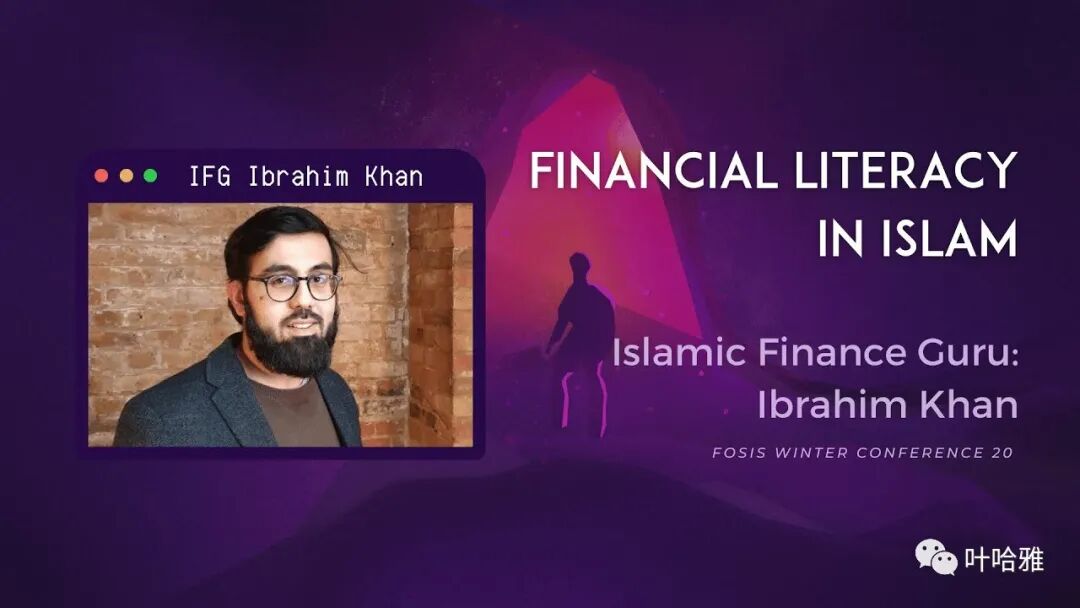
In today's world, there are countless sheikhs who are experts in scripture, and many elites who are good at finance. However, it is rare to find a scholar who understands both. This makes it hard for many jurists to make accurate judgments on new, cutting-edge issues. The author of this article, Ibrahim Khan, has both a background in financial theory and practical experience. He holds a bachelor's degree in philosophy, politics, and economics from Oxford University and worked as a private equity and venture capital lawyer in New York City. He also has a solid education in scripture, holding a degree in Islamic studies from the Al Salam Institute and a master's degree in Islamic finance. He is a rare talent in the field of contemporary Islamic finance.
Insurance: Is it Haram or Halal?
(Insurance: Is it halal?)
Author: Ibrahim Khan
Translator: Yehya
Main text:
I suspect this is the most controversial article to appear on IFG. Why do I say that? Most of my views on Islamic finance align with the mainstream, but as I have researched the insurance industry more deeply, I have found myself changing some of my ideas. Here are my preliminary views. I believe most types of insurance should be considered permissible (compliant with Sharia).
I would also add, perhaps you do not realize, that a minority of scholars, both living and deceased, believe insurance is compliant with Sharia. Although the view that insurance is forbidden is common, the view that it is permissible is not new. These scholars who believe insurance is permissible include Sheikh Mustafa Zarqa, Sheikh Ali Al-Khafeef, and Nejatullah Siddiqi. There are also some quite prominent modern scholars, but I have not held academic discussions with them. If they feel it is necessary, they can state their own views.
Basic premise
The basic premise I want everyone to remember is that Islamic Sharia does allow us to use forms of financing to help those who suffer losses due to unknown risks. Traditionally, in the Arab region, if someone in a tribe needed to pay blood money (a large sum of money), everyone in the tribe would contribute a small amount to make up that large sum. They did this as an act of charity, so that none of their members would be crushed by a huge compensation payment. Related to this is halal insurance, a form of mutual aid that I will explain in detail later. For now, remember that pooling wealth to reduce loss is a completely legitimate act. The debate focuses on how it operates and the conditions and framework under which it is conducted.
Uncertainty (gharar)
Arguments against traditional insurance claim it involves interest (riba), uncertainty (gharar), and gambling (maisir). In this article, I will focus on the strongest and most central of these objections: uncertainty.
For this article, let us define insurance as common types like car, home, pet, medical, and business insurance, rather than more complex products like life insurance or reinsurance.
The traditional view holds that Islam forbids uncertain transactions. In insurance, you do not know when a risk will occur after buying a policy. Most people pay premiums without getting a return, so it is considered impermissible because you are unsure if you will ever have an accident.
On the other hand, halal insurance or mutual insurance is allowed because it is fundamentally compensation for loss. Although it looks like traditional insurance, it is actually a good deed. The compensation received might be more or less than the actual loss, similar to how tribal members pool money to pay blood money (diya) for someone, which is considered a virtuous act.
After studying the argument that traditional insurance is illegal due to uncertainty, I concluded that it is not the type of uncertain transaction the Hadith intended to forbid. Let me tell you why.
Hadith involving uncertain transactions:
Sahih Muslim records: Abu Hurairah reported that the Messenger of Allah (peace and blessings of Allah be upon him) forbade speculative sales (bai al-gharar).
Jami` at-Tirmidhi records that the Prophet said: Do not sell what you do not have.
Sahih al-Bukhari and Sahih Muslim record: Ibn Umar reported that the Messenger of Allah (peace and blessings of Allah be upon him) forbade the sale of fruit until it is ripe and free from disease.
Musnad Ahmad and Sunan Ibn Majah record: The Prophet forbade buying an unborn animal in its mother's womb, selling milk in the udder without weighing it in a container, buying war booty before it is distributed, giving charity before receiving the booty, and buying the catch of a diver.
Musnad Ahmad records: The Prophet forbade buying a runaway slave.
Ibn al-Athir al-Ansari records: The Prophet forbade selling fruit before it is ripe.
Sahih al-Bukhari and Sahih Muslim record: The Messenger of Allah allowed the transaction of 'Araya (gifting a date palm to someone, who can then trade the fresh dates on the tree for dried dates by estimation) for amounts less than 5 awsaq (about 653 kilograms), meaning it is allowed to sell fresh dates on the tree in exchange for old dried dates.
Aisha reported: I said, O Messenger of Allah, people borrow bread and yeast from their neighbors and return more or less than what they borrowed. Is this allowed? He said: This does no harm. This is the normal state for people, and they do not want increases or decreases. (Mentioned in Financial Transactions in Islamic Jurisprudence by Zuhayli, page 254). Another narration from Muadh ibn Jabal says: Take the larger and give the smaller, or take the smaller and give the larger; the best among you is the one who is best at repaying debts.
Sahih Muslim records that Ibn Abbas (may Allah be pleased with them) reported that when the Prophet of Allah (peace and blessings of Allah be upon him) came to Medina, they were paying in advance for fruit for one or two years, so he said: Whoever pays in advance must do so for a specified weight and a determined time.
From (1) we can see, as we have already discussed, that transactions with uncertainty are forbidden. But from hadiths (2)-(6) we can analyze why this is done: in each of these cases, the goal is to have a clear, definite contract that leaves no room for dispute, and secondly, the reason for the prohibition is that the harm of the transaction is greater than its benefit.
My view is that traditional insurance is not such a contract because it is clear enough.
Let us look at hadiths (7)-(9): these are just some hadiths where the Prophet allowed some uncertainty in contracts to make things easier for people and merchants, or because it is a custom of the people, and the benefits of the transaction outweigh the harms.
Therefore, we can clearly see that Islam does support some uncertainty in money matters. Thus, the benefits and trading customs of traditional insurance are enough to make it analogous, rather than a forbidden form of uncertainty.
Finally, I find that when people examine the rulings on modern transactions, these are seen as involving a degree of uncertainty, and it is hard for people to define exactly how these rulings, which are seen as legal like Islamic insurance, differ from traditional insurance which is seen as illegal.
Arguments for the negative
The fundamental issue is whether what is bought in an insurance contract is tangible and certain enough to make the contract valid. The Prophet forbade a person from buying a diver's catch until he actually received the catch, returned, and began selling the tangible fish, because it was not clear what was being bought or sold. The subject of the contract must be certain.
But let us imagine the modern era, where big data and historical statistics allow us to model average catches very accurately. In this case, I think there is no problem for Tesco, for example, to sign a one-year contract with a fishing company to provide whatever it catches, as the quantity of the catch is predictable based on known historical averages.
In the insurance industry, insurance companies use big data to gain certainty about their revenue. The question is, do consumers get that same level of certainty? In a competitive market, this helps companies price the product they sell to customers: safety or peace of mind.
Safety or peace of mind might sound like intangible goals. Think of a security guard who gets paid to provide safety. What does that look like? He stands there waiting for the one day a year he is needed, and he stays on call the rest of the time. His job is not just waiting, but also handling any other requests the client might have. Similarly, insurance companies sign contracts, have agents talk to you, provide documents when you need them, and investigate when you file a claim. They are not asked to pay claims every day, but they provide clear and practical services.
A property manager who arranges services for a landlord is another example. If a property needs repairs, the manager handles them. A law firm hired to handle legal requirements is another. Both the property manager and the law firm want to profit from the deal. This is similar to a car or home insurance contract, where the insurance company covers the cost of any damage or theft that might happen.
In short, insurance is a clear contract in our time.
A positive view
Insurance provides certainty, which is important for the business world and for people's daily lives. The Prophet specifically allowed bai salam (letting farmers sell their crops in advance so they can raise money now) because it truly helps people live more easily. As seen in Hadith 9, he weighed the uncertainty of the trade against the benefits and decided the benefits were greater.
I also find the charm in Hadith 7 and 8. They do not apply perfectly here, but they show that unequal exchanges in business deals are sometimes acceptable. In the case of 7, it helps ease business in an area where date palms are the main crop. In the case of 8, it allows for the repayment of debt in a flexible way. Usually, a person must repay a debt exactly, without even adding a gift, to avoid it being seen as interest. However, in this case, maintaining community unity is more important than anything else.
Notice how the Prophet set a simple standard for what is allowed in 7. 650 kilograms is a large measurement, and the Prophet allowed araya trades for amounts less than that. For example, he could have set the weight at 10 kilograms, but his intention was to make business and life easier, not to create difficulties.
Insurance is vital for businesses to maintain steady shipping every month and prevent crises. It also helps help large deals because insurance companies often participate by underwriting the risk of failed transactions or acting as guarantors for all parties. These are all important lubricants for our economy. insurance creates a large amount of wealth, which is then invested throughout society—this is also an important part of a healthy economy.
Insurance has many other benefits, and this article outlines some of them well. In short, the focus is on insurance. While it may have a degree of uncertainty, it is still reasonable because it has great benefits, and our Sharia historically does allow for some beneficial uncertain transactions if the pros outweigh the cons.
Arguments for Muslim insurance.
The concept of blood money mutual aid (diya) is the inspiration for the Muslim insurance models proposed in our time. The basic concept is that a group of people pools their money together, not for profit, but to support each other. I like the cooperative model, and if such a model exists nearby, I would be happy to encourage people to use it—essentially, it is more like a charitable public welfare cause.
But fundamentally, the Muslim insurance model is the same as the traditional model in its important structural elements. The goal of both organizations is to create a surplus, pay the salaries of employees and managers, pool the participants' cash, and then pay claims with that cash. In the Muslim insurance model, there is also a mutual benefit element similar to an exchange contract. It is not just about donating money and ending it there; rather, there is an expectation when donating that the Muslim insurance pool will provide dividends if the donor is in need.
Secondly, if we go back to the blood money situation that Muslim insurance is often compared to, the money was not actually pooled and then invested by the tribe. When disaster struck, the individual tribe would still pay the price, so in a way, this is a purer form of gift (hiba) because there was no contract between the tribes. However, in today's non-tribal and atomized society, this is impractical, so the Muslim insurance model allows people to receive payments in advance. This certainly creates an expectation—and that expectation is profit. So my point is that the Muslim insurance industry has already compromised on the pure blood money setup for practical purposes. Doing so makes it almost identical to traditional insurance companies. If this is acknowledged, then there is actually almost no other substantive difference between the two models.
Yes, the traditional model can be said to be more profit-driven, does not pay any dividends to participants, and charges higher fees. But in reality, from the perspective of the 21st century, we live in a world of free capital flow. International finance and financial institutions span multiple continents, and the population size is incomparable to that of a thousand years ago. We need large-scale Muslim insurance companies to function, and that requires incredible effort. It is unrealistic to expect anyone to handle all this without a profit motive, and existing Muslim insurance companies are also for-profit. The main insurance providers are those who set them up and fund them through Islamic windows—essentially the only entities that can help start a Muslim insurance company—and they will make money from it just like traditional insurance businesses. The only difference is the structure, but the profit motive is exactly the same. They price risks and solve funding shortages just like traditional insurance companies, although in a pure Muslim insurance model, dividends might be distributed based on how much a person contributes because it is a charity, and if there is a loss, other members share it.
Finally, the Cooperative company in the UK is a great model; I learned more about them and actually participated in projects during my research, and they return profits to members and offer discounts in their stores. Interestingly, they performed very poorly before they became commercialized, but after commercialization, they now run very efficiently.
Concluding remarks
This is the longest article I have published on IFG because I need to elaborate more on the arguments presented, as this is a minority position. Please note that this article is just a summary of my views. A more comprehensive analysis would extend to tens of thousands of words. For example, every hadith mentioned has had countless pages written about it over the centuries, and fully analyzing them would require a small book, not to mention all the other relevant hadith that were not mentioned.
A few final points need to be briefly emphasized.
In my view, the legitimacy of Muslim insurance and traditional insurance is almost identical, except for the following points.
Insurance companies invest in haram areas, and if you get a certain return at the end, such as with life insurance, I need to think about this further, but at first glance, the same ruling applies to any fund stock you invest in that has haram components.
In cases where you buy insurance related to property loss, such as car insurance, rather than for any investment motive, I initially think there is no problem because you are signing a contract with the insurance company, and you do not need to worry about what they do with the money.
Life insurance may have special problems compared to other types of insurance, and I cannot comment on this until further research.
Regarding mandatory insurance like car insurance or employer liability insurance, this is certainly fine from the perspective of Sharia, even if all my arguments above are wrong.
Also, as I said at the beginning, my thinking on this topic is still maturing as I research it more deeply. I really want to hear what others think about what is written here, including your ideas and criticisms, so we can learn more from each other.
More resources:
Uncertainty in contracts and its impact on modern applications – Dr. Muhammad Al-Ameen Ad-Dareer [Arabic]
The insurance system – its reality and legal implications – SH. Mustafa Zarqa [Arabic]
Radd al-Muhtaar ala al-Durr al-Mukhtaar Sharh Tanweer al-Absaar – Muhammad Ameen ibn Abideen [Arabic]
Muslim Knowledge Guide China: Is Insurance Halal or Haram? Takaful, Riba and Gharar Explained
Articles • yusuf908 posted the article • 0 comments • 198 views • 2026-05-22 10:45
Summary: Muslim Knowledge Guide China: Is Insurance Halal or Haram? Takaful, Riba and Gharar Explained is presented here as a clear English Islamic finance essay for Muslim readers, starting with this scene: I translated this article today from the Islamic Finance Guru website . The original is in English. Interestingly, many of the points in the article match what I have written before, and I swear I had never read this piece until now. It keeps the original names, numbers, mosque details, food notes, photographs, and cultural context while focusing on Islamic Finance, Takaful, Halal Insurance.
I translated this article today from the Islamic Finance Guru website . The original is in English. Interestingly, many of the points in the article match what I have written before, and I swear I had never read this piece until now.
In today's world, there are countless sheikhs who are experts in scripture, and many elites who are good at finance. However, it is rare to find a scholar who understands both. This makes it hard for many jurists to make accurate judgments on new, cutting-edge issues. The author of this article, Ibrahim Khan, has both a background in financial theory and practical experience. He holds a bachelor's degree in philosophy, politics, and economics from Oxford University and worked as a private equity and venture capital lawyer in New York City. He also has a solid education in scripture, holding a degree in Islamic studies from the Al Salam Institute and a master's degree in Islamic finance. He is a rare talent in the field of contemporary Islamic finance.
Insurance: Is it Haram or Halal?
(Insurance: Is it halal?)
Author: Ibrahim Khan
Translator: Yehya
Main text:
I suspect this is the most controversial article to appear on IFG. Why do I say that? Most of my views on Islamic finance align with the mainstream, but as I have researched the insurance industry more deeply, I have found myself changing some of my ideas. Here are my preliminary views. I believe most types of insurance should be considered permissible (compliant with Sharia).
I would also add, perhaps you do not realize, that a minority of scholars, both living and deceased, believe insurance is compliant with Sharia. Although the view that insurance is forbidden is common, the view that it is permissible is not new. These scholars who believe insurance is permissible include Sheikh Mustafa Zarqa, Sheikh Ali Al-Khafeef, and Nejatullah Siddiqi. There are also some quite prominent modern scholars, but I have not held academic discussions with them. If they feel it is necessary, they can state their own views.
Basic premise
The basic premise I want everyone to remember is that Islamic Sharia does allow us to use forms of financing to help those who suffer losses due to unknown risks. Traditionally, in the Arab region, if someone in a tribe needed to pay blood money (a large sum of money), everyone in the tribe would contribute a small amount to make up that large sum. They did this as an act of charity, so that none of their members would be crushed by a huge compensation payment. Related to this is halal insurance, a form of mutual aid that I will explain in detail later. For now, remember that pooling wealth to reduce loss is a completely legitimate act. The debate focuses on how it operates and the conditions and framework under which it is conducted.
Uncertainty (gharar)
Arguments against traditional insurance claim it involves interest (riba), uncertainty (gharar), and gambling (maisir). In this article, I will focus on the strongest and most central of these objections: uncertainty.
For this article, let us define insurance as common types like car, home, pet, medical, and business insurance, rather than more complex products like life insurance or reinsurance.
The traditional view holds that Islam forbids uncertain transactions. In insurance, you do not know when a risk will occur after buying a policy. Most people pay premiums without getting a return, so it is considered impermissible because you are unsure if you will ever have an accident.
On the other hand, halal insurance or mutual insurance is allowed because it is fundamentally compensation for loss. Although it looks like traditional insurance, it is actually a good deed. The compensation received might be more or less than the actual loss, similar to how tribal members pool money to pay blood money (diya) for someone, which is considered a virtuous act.
After studying the argument that traditional insurance is illegal due to uncertainty, I concluded that it is not the type of uncertain transaction the Hadith intended to forbid. Let me tell you why.
Hadith involving uncertain transactions:
Sahih Muslim records: Abu Hurairah reported that the Messenger of Allah (peace and blessings of Allah be upon him) forbade speculative sales (bai al-gharar).
Jami` at-Tirmidhi records that the Prophet said: Do not sell what you do not have.
Sahih al-Bukhari and Sahih Muslim record: Ibn Umar reported that the Messenger of Allah (peace and blessings of Allah be upon him) forbade the sale of fruit until it is ripe and free from disease.
Musnad Ahmad and Sunan Ibn Majah record: The Prophet forbade buying an unborn animal in its mother's womb, selling milk in the udder without weighing it in a container, buying war booty before it is distributed, giving charity before receiving the booty, and buying the catch of a diver.
Musnad Ahmad records: The Prophet forbade buying a runaway slave.
Ibn al-Athir al-Ansari records: The Prophet forbade selling fruit before it is ripe.
Sahih al-Bukhari and Sahih Muslim record: The Messenger of Allah allowed the transaction of 'Araya (gifting a date palm to someone, who can then trade the fresh dates on the tree for dried dates by estimation) for amounts less than 5 awsaq (about 653 kilograms), meaning it is allowed to sell fresh dates on the tree in exchange for old dried dates.
Aisha reported: I said, O Messenger of Allah, people borrow bread and yeast from their neighbors and return more or less than what they borrowed. Is this allowed? He said: This does no harm. This is the normal state for people, and they do not want increases or decreases. (Mentioned in Financial Transactions in Islamic Jurisprudence by Zuhayli, page 254). Another narration from Muadh ibn Jabal says: Take the larger and give the smaller, or take the smaller and give the larger; the best among you is the one who is best at repaying debts.
Sahih Muslim records that Ibn Abbas (may Allah be pleased with them) reported that when the Prophet of Allah (peace and blessings of Allah be upon him) came to Medina, they were paying in advance for fruit for one or two years, so he said: Whoever pays in advance must do so for a specified weight and a determined time.
From (1) we can see, as we have already discussed, that transactions with uncertainty are forbidden. But from hadiths (2)-(6) we can analyze why this is done: in each of these cases, the goal is to have a clear, definite contract that leaves no room for dispute, and secondly, the reason for the prohibition is that the harm of the transaction is greater than its benefit.
My view is that traditional insurance is not such a contract because it is clear enough.
Let us look at hadiths (7)-(9): these are just some hadiths where the Prophet allowed some uncertainty in contracts to make things easier for people and merchants, or because it is a custom of the people, and the benefits of the transaction outweigh the harms.
Therefore, we can clearly see that Islam does support some uncertainty in money matters. Thus, the benefits and trading customs of traditional insurance are enough to make it analogous, rather than a forbidden form of uncertainty.
Finally, I find that when people examine the rulings on modern transactions, these are seen as involving a degree of uncertainty, and it is hard for people to define exactly how these rulings, which are seen as legal like Islamic insurance, differ from traditional insurance which is seen as illegal.
Arguments for the negative
The fundamental issue is whether what is bought in an insurance contract is tangible and certain enough to make the contract valid. The Prophet forbade a person from buying a diver's catch until he actually received the catch, returned, and began selling the tangible fish, because it was not clear what was being bought or sold. The subject of the contract must be certain.
But let us imagine the modern era, where big data and historical statistics allow us to model average catches very accurately. In this case, I think there is no problem for Tesco, for example, to sign a one-year contract with a fishing company to provide whatever it catches, as the quantity of the catch is predictable based on known historical averages.
In the insurance industry, insurance companies use big data to gain certainty about their revenue. The question is, do consumers get that same level of certainty? In a competitive market, this helps companies price the product they sell to customers: safety or peace of mind.
Safety or peace of mind might sound like intangible goals. Think of a security guard who gets paid to provide safety. What does that look like? He stands there waiting for the one day a year he is needed, and he stays on call the rest of the time. His job is not just waiting, but also handling any other requests the client might have. Similarly, insurance companies sign contracts, have agents talk to you, provide documents when you need them, and investigate when you file a claim. They are not asked to pay claims every day, but they provide clear and practical services.
A property manager who arranges services for a landlord is another example. If a property needs repairs, the manager handles them. A law firm hired to handle legal requirements is another. Both the property manager and the law firm want to profit from the deal. This is similar to a car or home insurance contract, where the insurance company covers the cost of any damage or theft that might happen.
In short, insurance is a clear contract in our time.
A positive view
Insurance provides certainty, which is important for the business world and for people's daily lives. The Prophet specifically allowed bai salam (letting farmers sell their crops in advance so they can raise money now) because it truly helps people live more easily. As seen in Hadith 9, he weighed the uncertainty of the trade against the benefits and decided the benefits were greater.
I also find the charm in Hadith 7 and 8. They do not apply perfectly here, but they show that unequal exchanges in business deals are sometimes acceptable. In the case of 7, it helps ease business in an area where date palms are the main crop. In the case of 8, it allows for the repayment of debt in a flexible way. Usually, a person must repay a debt exactly, without even adding a gift, to avoid it being seen as interest. However, in this case, maintaining community unity is more important than anything else.
Notice how the Prophet set a simple standard for what is allowed in 7. 650 kilograms is a large measurement, and the Prophet allowed araya trades for amounts less than that. For example, he could have set the weight at 10 kilograms, but his intention was to make business and life easier, not to create difficulties.
Insurance is vital for businesses to maintain steady shipping every month and prevent crises. It also helps help large deals because insurance companies often participate by underwriting the risk of failed transactions or acting as guarantors for all parties. These are all important lubricants for our economy. insurance creates a large amount of wealth, which is then invested throughout society—this is also an important part of a healthy economy.
Insurance has many other benefits, and this article outlines some of them well. In short, the focus is on insurance. While it may have a degree of uncertainty, it is still reasonable because it has great benefits, and our Sharia historically does allow for some beneficial uncertain transactions if the pros outweigh the cons.
Arguments for Muslim insurance.
The concept of blood money mutual aid (diya) is the inspiration for the Muslim insurance models proposed in our time. The basic concept is that a group of people pools their money together, not for profit, but to support each other. I like the cooperative model, and if such a model exists nearby, I would be happy to encourage people to use it—essentially, it is more like a charitable public welfare cause.
But fundamentally, the Muslim insurance model is the same as the traditional model in its important structural elements. The goal of both organizations is to create a surplus, pay the salaries of employees and managers, pool the participants' cash, and then pay claims with that cash. In the Muslim insurance model, there is also a mutual benefit element similar to an exchange contract. It is not just about donating money and ending it there; rather, there is an expectation when donating that the Muslim insurance pool will provide dividends if the donor is in need.
Secondly, if we go back to the blood money situation that Muslim insurance is often compared to, the money was not actually pooled and then invested by the tribe. When disaster struck, the individual tribe would still pay the price, so in a way, this is a purer form of gift (hiba) because there was no contract between the tribes. However, in today's non-tribal and atomized society, this is impractical, so the Muslim insurance model allows people to receive payments in advance. This certainly creates an expectation—and that expectation is profit. So my point is that the Muslim insurance industry has already compromised on the pure blood money setup for practical purposes. Doing so makes it almost identical to traditional insurance companies. If this is acknowledged, then there is actually almost no other substantive difference between the two models.
Yes, the traditional model can be said to be more profit-driven, does not pay any dividends to participants, and charges higher fees. But in reality, from the perspective of the 21st century, we live in a world of free capital flow. International finance and financial institutions span multiple continents, and the population size is incomparable to that of a thousand years ago. We need large-scale Muslim insurance companies to function, and that requires incredible effort. It is unrealistic to expect anyone to handle all this without a profit motive, and existing Muslim insurance companies are also for-profit. The main insurance providers are those who set them up and fund them through Islamic windows—essentially the only entities that can help start a Muslim insurance company—and they will make money from it just like traditional insurance businesses. The only difference is the structure, but the profit motive is exactly the same. They price risks and solve funding shortages just like traditional insurance companies, although in a pure Muslim insurance model, dividends might be distributed based on how much a person contributes because it is a charity, and if there is a loss, other members share it.
Finally, the Cooperative company in the UK is a great model; I learned more about them and actually participated in projects during my research, and they return profits to members and offer discounts in their stores. Interestingly, they performed very poorly before they became commercialized, but after commercialization, they now run very efficiently.
Concluding remarks
This is the longest article I have published on IFG because I need to elaborate more on the arguments presented, as this is a minority position. Please note that this article is just a summary of my views. A more comprehensive analysis would extend to tens of thousands of words. For example, every hadith mentioned has had countless pages written about it over the centuries, and fully analyzing them would require a small book, not to mention all the other relevant hadith that were not mentioned.
A few final points need to be briefly emphasized.
In my view, the legitimacy of Muslim insurance and traditional insurance is almost identical, except for the following points.
Insurance companies invest in haram areas, and if you get a certain return at the end, such as with life insurance, I need to think about this further, but at first glance, the same ruling applies to any fund stock you invest in that has haram components.
In cases where you buy insurance related to property loss, such as car insurance, rather than for any investment motive, I initially think there is no problem because you are signing a contract with the insurance company, and you do not need to worry about what they do with the money.
Life insurance may have special problems compared to other types of insurance, and I cannot comment on this until further research.
Regarding mandatory insurance like car insurance or employer liability insurance, this is certainly fine from the perspective of Sharia, even if all my arguments above are wrong.
Also, as I said at the beginning, my thinking on this topic is still maturing as I research it more deeply. I really want to hear what others think about what is written here, including your ideas and criticisms, so we can learn more from each other.
More resources:
Uncertainty in contracts and its impact on modern applications – Dr. Muhammad Al-Ameen Ad-Dareer [Arabic]
The insurance system – its reality and legal implications – SH. Mustafa Zarqa [Arabic]
Radd al-Muhtaar ala al-Durr al-Mukhtaar Sharh Tanweer al-Absaar – Muhammad Ameen ibn Abideen [Arabic] view all
Summary: Muslim Knowledge Guide China: Is Insurance Halal or Haram? Takaful, Riba and Gharar Explained is presented here as a clear English Islamic finance essay for Muslim readers, starting with this scene: I translated this article today from the Islamic Finance Guru website . The original is in English. Interestingly, many of the points in the article match what I have written before, and I swear I had never read this piece until now. It keeps the original names, numbers, mosque details, food notes, photographs, and cultural context while focusing on Islamic Finance, Takaful, Halal Insurance.
I translated this article today from the Islamic Finance Guru website . The original is in English. Interestingly, many of the points in the article match what I have written before, and I swear I had never read this piece until now.

In today's world, there are countless sheikhs who are experts in scripture, and many elites who are good at finance. However, it is rare to find a scholar who understands both. This makes it hard for many jurists to make accurate judgments on new, cutting-edge issues. The author of this article, Ibrahim Khan, has both a background in financial theory and practical experience. He holds a bachelor's degree in philosophy, politics, and economics from Oxford University and worked as a private equity and venture capital lawyer in New York City. He also has a solid education in scripture, holding a degree in Islamic studies from the Al Salam Institute and a master's degree in Islamic finance. He is a rare talent in the field of contemporary Islamic finance.
Insurance: Is it Haram or Halal?
(Insurance: Is it halal?)
Author: Ibrahim Khan
Translator: Yehya
Main text:
I suspect this is the most controversial article to appear on IFG. Why do I say that? Most of my views on Islamic finance align with the mainstream, but as I have researched the insurance industry more deeply, I have found myself changing some of my ideas. Here are my preliminary views. I believe most types of insurance should be considered permissible (compliant with Sharia).
I would also add, perhaps you do not realize, that a minority of scholars, both living and deceased, believe insurance is compliant with Sharia. Although the view that insurance is forbidden is common, the view that it is permissible is not new. These scholars who believe insurance is permissible include Sheikh Mustafa Zarqa, Sheikh Ali Al-Khafeef, and Nejatullah Siddiqi. There are also some quite prominent modern scholars, but I have not held academic discussions with them. If they feel it is necessary, they can state their own views.
Basic premise
The basic premise I want everyone to remember is that Islamic Sharia does allow us to use forms of financing to help those who suffer losses due to unknown risks. Traditionally, in the Arab region, if someone in a tribe needed to pay blood money (a large sum of money), everyone in the tribe would contribute a small amount to make up that large sum. They did this as an act of charity, so that none of their members would be crushed by a huge compensation payment. Related to this is halal insurance, a form of mutual aid that I will explain in detail later. For now, remember that pooling wealth to reduce loss is a completely legitimate act. The debate focuses on how it operates and the conditions and framework under which it is conducted.
Uncertainty (gharar)
Arguments against traditional insurance claim it involves interest (riba), uncertainty (gharar), and gambling (maisir). In this article, I will focus on the strongest and most central of these objections: uncertainty.
For this article, let us define insurance as common types like car, home, pet, medical, and business insurance, rather than more complex products like life insurance or reinsurance.
The traditional view holds that Islam forbids uncertain transactions. In insurance, you do not know when a risk will occur after buying a policy. Most people pay premiums without getting a return, so it is considered impermissible because you are unsure if you will ever have an accident.
On the other hand, halal insurance or mutual insurance is allowed because it is fundamentally compensation for loss. Although it looks like traditional insurance, it is actually a good deed. The compensation received might be more or less than the actual loss, similar to how tribal members pool money to pay blood money (diya) for someone, which is considered a virtuous act.
After studying the argument that traditional insurance is illegal due to uncertainty, I concluded that it is not the type of uncertain transaction the Hadith intended to forbid. Let me tell you why.
Hadith involving uncertain transactions:
Sahih Muslim records: Abu Hurairah reported that the Messenger of Allah (peace and blessings of Allah be upon him) forbade speculative sales (bai al-gharar).
Jami` at-Tirmidhi records that the Prophet said: Do not sell what you do not have.
Sahih al-Bukhari and Sahih Muslim record: Ibn Umar reported that the Messenger of Allah (peace and blessings of Allah be upon him) forbade the sale of fruit until it is ripe and free from disease.
Musnad Ahmad and Sunan Ibn Majah record: The Prophet forbade buying an unborn animal in its mother's womb, selling milk in the udder without weighing it in a container, buying war booty before it is distributed, giving charity before receiving the booty, and buying the catch of a diver.
Musnad Ahmad records: The Prophet forbade buying a runaway slave.
Ibn al-Athir al-Ansari records: The Prophet forbade selling fruit before it is ripe.
Sahih al-Bukhari and Sahih Muslim record: The Messenger of Allah allowed the transaction of 'Araya (gifting a date palm to someone, who can then trade the fresh dates on the tree for dried dates by estimation) for amounts less than 5 awsaq (about 653 kilograms), meaning it is allowed to sell fresh dates on the tree in exchange for old dried dates.
Aisha reported: I said, O Messenger of Allah, people borrow bread and yeast from their neighbors and return more or less than what they borrowed. Is this allowed? He said: This does no harm. This is the normal state for people, and they do not want increases or decreases. (Mentioned in Financial Transactions in Islamic Jurisprudence by Zuhayli, page 254). Another narration from Muadh ibn Jabal says: Take the larger and give the smaller, or take the smaller and give the larger; the best among you is the one who is best at repaying debts.
Sahih Muslim records that Ibn Abbas (may Allah be pleased with them) reported that when the Prophet of Allah (peace and blessings of Allah be upon him) came to Medina, they were paying in advance for fruit for one or two years, so he said: Whoever pays in advance must do so for a specified weight and a determined time.
From (1) we can see, as we have already discussed, that transactions with uncertainty are forbidden. But from hadiths (2)-(6) we can analyze why this is done: in each of these cases, the goal is to have a clear, definite contract that leaves no room for dispute, and secondly, the reason for the prohibition is that the harm of the transaction is greater than its benefit.
My view is that traditional insurance is not such a contract because it is clear enough.
Let us look at hadiths (7)-(9): these are just some hadiths where the Prophet allowed some uncertainty in contracts to make things easier for people and merchants, or because it is a custom of the people, and the benefits of the transaction outweigh the harms.
Therefore, we can clearly see that Islam does support some uncertainty in money matters. Thus, the benefits and trading customs of traditional insurance are enough to make it analogous, rather than a forbidden form of uncertainty.
Finally, I find that when people examine the rulings on modern transactions, these are seen as involving a degree of uncertainty, and it is hard for people to define exactly how these rulings, which are seen as legal like Islamic insurance, differ from traditional insurance which is seen as illegal.
Arguments for the negative
The fundamental issue is whether what is bought in an insurance contract is tangible and certain enough to make the contract valid. The Prophet forbade a person from buying a diver's catch until he actually received the catch, returned, and began selling the tangible fish, because it was not clear what was being bought or sold. The subject of the contract must be certain.
But let us imagine the modern era, where big data and historical statistics allow us to model average catches very accurately. In this case, I think there is no problem for Tesco, for example, to sign a one-year contract with a fishing company to provide whatever it catches, as the quantity of the catch is predictable based on known historical averages.
In the insurance industry, insurance companies use big data to gain certainty about their revenue. The question is, do consumers get that same level of certainty? In a competitive market, this helps companies price the product they sell to customers: safety or peace of mind.
Safety or peace of mind might sound like intangible goals. Think of a security guard who gets paid to provide safety. What does that look like? He stands there waiting for the one day a year he is needed, and he stays on call the rest of the time. His job is not just waiting, but also handling any other requests the client might have. Similarly, insurance companies sign contracts, have agents talk to you, provide documents when you need them, and investigate when you file a claim. They are not asked to pay claims every day, but they provide clear and practical services.
A property manager who arranges services for a landlord is another example. If a property needs repairs, the manager handles them. A law firm hired to handle legal requirements is another. Both the property manager and the law firm want to profit from the deal. This is similar to a car or home insurance contract, where the insurance company covers the cost of any damage or theft that might happen.
In short, insurance is a clear contract in our time.
A positive view
Insurance provides certainty, which is important for the business world and for people's daily lives. The Prophet specifically allowed bai salam (letting farmers sell their crops in advance so they can raise money now) because it truly helps people live more easily. As seen in Hadith 9, he weighed the uncertainty of the trade against the benefits and decided the benefits were greater.
I also find the charm in Hadith 7 and 8. They do not apply perfectly here, but they show that unequal exchanges in business deals are sometimes acceptable. In the case of 7, it helps ease business in an area where date palms are the main crop. In the case of 8, it allows for the repayment of debt in a flexible way. Usually, a person must repay a debt exactly, without even adding a gift, to avoid it being seen as interest. However, in this case, maintaining community unity is more important than anything else.
Notice how the Prophet set a simple standard for what is allowed in 7. 650 kilograms is a large measurement, and the Prophet allowed araya trades for amounts less than that. For example, he could have set the weight at 10 kilograms, but his intention was to make business and life easier, not to create difficulties.
Insurance is vital for businesses to maintain steady shipping every month and prevent crises. It also helps help large deals because insurance companies often participate by underwriting the risk of failed transactions or acting as guarantors for all parties. These are all important lubricants for our economy. insurance creates a large amount of wealth, which is then invested throughout society—this is also an important part of a healthy economy.
Insurance has many other benefits, and this article outlines some of them well. In short, the focus is on insurance. While it may have a degree of uncertainty, it is still reasonable because it has great benefits, and our Sharia historically does allow for some beneficial uncertain transactions if the pros outweigh the cons.
Arguments for Muslim insurance.
The concept of blood money mutual aid (diya) is the inspiration for the Muslim insurance models proposed in our time. The basic concept is that a group of people pools their money together, not for profit, but to support each other. I like the cooperative model, and if such a model exists nearby, I would be happy to encourage people to use it—essentially, it is more like a charitable public welfare cause.
But fundamentally, the Muslim insurance model is the same as the traditional model in its important structural elements. The goal of both organizations is to create a surplus, pay the salaries of employees and managers, pool the participants' cash, and then pay claims with that cash. In the Muslim insurance model, there is also a mutual benefit element similar to an exchange contract. It is not just about donating money and ending it there; rather, there is an expectation when donating that the Muslim insurance pool will provide dividends if the donor is in need.
Secondly, if we go back to the blood money situation that Muslim insurance is often compared to, the money was not actually pooled and then invested by the tribe. When disaster struck, the individual tribe would still pay the price, so in a way, this is a purer form of gift (hiba) because there was no contract between the tribes. However, in today's non-tribal and atomized society, this is impractical, so the Muslim insurance model allows people to receive payments in advance. This certainly creates an expectation—and that expectation is profit. So my point is that the Muslim insurance industry has already compromised on the pure blood money setup for practical purposes. Doing so makes it almost identical to traditional insurance companies. If this is acknowledged, then there is actually almost no other substantive difference between the two models.
Yes, the traditional model can be said to be more profit-driven, does not pay any dividends to participants, and charges higher fees. But in reality, from the perspective of the 21st century, we live in a world of free capital flow. International finance and financial institutions span multiple continents, and the population size is incomparable to that of a thousand years ago. We need large-scale Muslim insurance companies to function, and that requires incredible effort. It is unrealistic to expect anyone to handle all this without a profit motive, and existing Muslim insurance companies are also for-profit. The main insurance providers are those who set them up and fund them through Islamic windows—essentially the only entities that can help start a Muslim insurance company—and they will make money from it just like traditional insurance businesses. The only difference is the structure, but the profit motive is exactly the same. They price risks and solve funding shortages just like traditional insurance companies, although in a pure Muslim insurance model, dividends might be distributed based on how much a person contributes because it is a charity, and if there is a loss, other members share it.
Finally, the Cooperative company in the UK is a great model; I learned more about them and actually participated in projects during my research, and they return profits to members and offer discounts in their stores. Interestingly, they performed very poorly before they became commercialized, but after commercialization, they now run very efficiently.
Concluding remarks
This is the longest article I have published on IFG because I need to elaborate more on the arguments presented, as this is a minority position. Please note that this article is just a summary of my views. A more comprehensive analysis would extend to tens of thousands of words. For example, every hadith mentioned has had countless pages written about it over the centuries, and fully analyzing them would require a small book, not to mention all the other relevant hadith that were not mentioned.
A few final points need to be briefly emphasized.
In my view, the legitimacy of Muslim insurance and traditional insurance is almost identical, except for the following points.
Insurance companies invest in haram areas, and if you get a certain return at the end, such as with life insurance, I need to think about this further, but at first glance, the same ruling applies to any fund stock you invest in that has haram components.
In cases where you buy insurance related to property loss, such as car insurance, rather than for any investment motive, I initially think there is no problem because you are signing a contract with the insurance company, and you do not need to worry about what they do with the money.
Life insurance may have special problems compared to other types of insurance, and I cannot comment on this until further research.
Regarding mandatory insurance like car insurance or employer liability insurance, this is certainly fine from the perspective of Sharia, even if all my arguments above are wrong.
Also, as I said at the beginning, my thinking on this topic is still maturing as I research it more deeply. I really want to hear what others think about what is written here, including your ideas and criticisms, so we can learn more from each other.
More resources:
Uncertainty in contracts and its impact on modern applications – Dr. Muhammad Al-Ameen Ad-Dareer [Arabic]
The insurance system – its reality and legal implications – SH. Mustafa Zarqa [Arabic]
Radd al-Muhtaar ala al-Durr al-Mukhtaar Sharh Tanweer al-Absaar – Muhammad Ameen ibn Abideen [Arabic]
Muslim Knowledge Guide China: Is Insurance Halal or Haram? Takaful, Riba and Gharar Explained
Articles • yusuf908 posted the article • 0 comments • 209 views • 2026-05-22 10:45
Summary: Muslim Knowledge Guide China: Is Insurance Halal or Haram? Takaful, Riba and Gharar Explained is presented here as a clear English Islamic finance essay for Muslim readers, starting with this scene: I translated this article today from the Islamic Finance Guru website . The original is in English. Interestingly, many of the points in the article match what I have written before, and I swear I had never read this piece until now. It keeps the original names, numbers, mosque details, food notes, photographs, and cultural context while focusing on Islamic Finance, Takaful, Halal Insurance.
I translated this article today from the Islamic Finance Guru website . The original is in English. Interestingly, many of the points in the article match what I have written before, and I swear I had never read this piece until now.
In today's world, there are countless sheikhs who are experts in scripture, and many elites who are good at finance. However, it is rare to find a scholar who understands both. This makes it hard for many jurists to make accurate judgments on new, cutting-edge issues. The author of this article, Ibrahim Khan, has both a background in financial theory and practical experience. He holds a bachelor's degree in philosophy, politics, and economics from Oxford University and worked as a private equity and venture capital lawyer in New York City. He also has a solid education in scripture, holding a degree in Islamic studies from the Al Salam Institute and a master's degree in Islamic finance. He is a rare talent in the field of contemporary Islamic finance.
Insurance: Is it Haram or Halal?
(Insurance: Is it halal?)
Author: Ibrahim Khan
Translator: Yehya
Main text:
I suspect this is the most controversial article to appear on IFG. Why do I say that? Most of my views on Islamic finance align with the mainstream, but as I have researched the insurance industry more deeply, I have found myself changing some of my ideas. Here are my preliminary views. I believe most types of insurance should be considered permissible (compliant with Sharia).
I would also add, perhaps you do not realize, that a minority of scholars, both living and deceased, believe insurance is compliant with Sharia. Although the view that insurance is forbidden is common, the view that it is permissible is not new. These scholars who believe insurance is permissible include Sheikh Mustafa Zarqa, Sheikh Ali Al-Khafeef, and Nejatullah Siddiqi. There are also some quite prominent modern scholars, but I have not held academic discussions with them. If they feel it is necessary, they can state their own views.
Basic premise
The basic premise I want everyone to remember is that Islamic Sharia does allow us to use forms of financing to help those who suffer losses due to unknown risks. Traditionally, in the Arab region, if someone in a tribe needed to pay blood money (a large sum of money), everyone in the tribe would contribute a small amount to make up that large sum. They did this as an act of charity, so that none of their members would be crushed by a huge compensation payment. Related to this is halal insurance, a form of mutual aid that I will explain in detail later. For now, remember that pooling wealth to reduce loss is a completely legitimate act. The debate focuses on how it operates and the conditions and framework under which it is conducted.
Uncertainty (gharar)
Arguments against traditional insurance claim it involves interest (riba), uncertainty (gharar), and gambling (maisir). In this article, I will focus on the strongest and most central of these objections: uncertainty.
For this article, let us define insurance as common types like car, home, pet, medical, and business insurance, rather than more complex products like life insurance or reinsurance.
The traditional view holds that Islam forbids uncertain transactions. In insurance, you do not know when a risk will occur after buying a policy. Most people pay premiums without getting a return, so it is considered impermissible because you are unsure if you will ever have an accident.
On the other hand, halal insurance or mutual insurance is allowed because it is fundamentally compensation for loss. Although it looks like traditional insurance, it is actually a good deed. The compensation received might be more or less than the actual loss, similar to how tribal members pool money to pay blood money (diya) for someone, which is considered a virtuous act.
After studying the argument that traditional insurance is illegal due to uncertainty, I concluded that it is not the type of uncertain transaction the Hadith intended to forbid. Let me tell you why.
Hadith involving uncertain transactions:
Sahih Muslim records: Abu Hurairah reported that the Messenger of Allah (peace and blessings of Allah be upon him) forbade speculative sales (bai al-gharar).
Jami` at-Tirmidhi records that the Prophet said: Do not sell what you do not have.
Sahih al-Bukhari and Sahih Muslim record: Ibn Umar reported that the Messenger of Allah (peace and blessings of Allah be upon him) forbade the sale of fruit until it is ripe and free from disease.
Musnad Ahmad and Sunan Ibn Majah record: The Prophet forbade buying an unborn animal in its mother's womb, selling milk in the udder without weighing it in a container, buying war booty before it is distributed, giving charity before receiving the booty, and buying the catch of a diver.
Musnad Ahmad records: The Prophet forbade buying a runaway slave.
Ibn al-Athir al-Ansari records: The Prophet forbade selling fruit before it is ripe.
Sahih al-Bukhari and Sahih Muslim record: The Messenger of Allah allowed the transaction of 'Araya (gifting a date palm to someone, who can then trade the fresh dates on the tree for dried dates by estimation) for amounts less than 5 awsaq (about 653 kilograms), meaning it is allowed to sell fresh dates on the tree in exchange for old dried dates.
Aisha reported: I said, O Messenger of Allah, people borrow bread and yeast from their neighbors and return more or less than what they borrowed. Is this allowed? He said: This does no harm. This is the normal state for people, and they do not want increases or decreases. (Mentioned in Financial Transactions in Islamic Jurisprudence by Zuhayli, page 254). Another narration from Muadh ibn Jabal says: Take the larger and give the smaller, or take the smaller and give the larger; the best among you is the one who is best at repaying debts.
Sahih Muslim records that Ibn Abbas (may Allah be pleased with them) reported that when the Prophet of Allah (peace and blessings of Allah be upon him) came to Medina, they were paying in advance for fruit for one or two years, so he said: Whoever pays in advance must do so for a specified weight and a determined time.
From (1) we can see, as we have already discussed, that transactions with uncertainty are forbidden. But from hadiths (2)-(6) we can analyze why this is done: in each of these cases, the goal is to have a clear, definite contract that leaves no room for dispute, and secondly, the reason for the prohibition is that the harm of the transaction is greater than its benefit.
My view is that traditional insurance is not such a contract because it is clear enough.
Let us look at hadiths (7)-(9): these are just some hadiths where the Prophet allowed some uncertainty in contracts to make things easier for people and merchants, or because it is a custom of the people, and the benefits of the transaction outweigh the harms.
Therefore, we can clearly see that Islam does support some uncertainty in money matters. Thus, the benefits and trading customs of traditional insurance are enough to make it analogous, rather than a forbidden form of uncertainty.
Finally, I find that when people examine the rulings on modern transactions, these are seen as involving a degree of uncertainty, and it is hard for people to define exactly how these rulings, which are seen as legal like Islamic insurance, differ from traditional insurance which is seen as illegal.
Arguments for the negative
The fundamental issue is whether what is bought in an insurance contract is tangible and certain enough to make the contract valid. The Prophet forbade a person from buying a diver's catch until he actually received the catch, returned, and began selling the tangible fish, because it was not clear what was being bought or sold. The subject of the contract must be certain.
But let us imagine the modern era, where big data and historical statistics allow us to model average catches very accurately. In this case, I think there is no problem for Tesco, for example, to sign a one-year contract with a fishing company to provide whatever it catches, as the quantity of the catch is predictable based on known historical averages.
In the insurance industry, insurance companies use big data to gain certainty about their revenue. The question is, do consumers get that same level of certainty? In a competitive market, this helps companies price the product they sell to customers: safety or peace of mind.
Safety or peace of mind might sound like intangible goals. Think of a security guard who gets paid to provide safety. What does that look like? He stands there waiting for the one day a year he is needed, and he stays on call the rest of the time. His job is not just waiting, but also handling any other requests the client might have. Similarly, insurance companies sign contracts, have agents talk to you, provide documents when you need them, and investigate when you file a claim. They are not asked to pay claims every day, but they provide clear and practical services.
A property manager who arranges services for a landlord is another example. If a property needs repairs, the manager handles them. A law firm hired to handle legal requirements is another. Both the property manager and the law firm want to profit from the deal. This is similar to a car or home insurance contract, where the insurance company covers the cost of any damage or theft that might happen.
In short, insurance is a clear contract in our time.
A positive view
Insurance provides certainty, which is important for the business world and for people's daily lives. The Prophet specifically allowed bai salam (letting farmers sell their crops in advance so they can raise money now) because it truly helps people live more easily. As seen in Hadith 9, he weighed the uncertainty of the trade against the benefits and decided the benefits were greater.
I also find the charm in Hadith 7 and 8. They do not apply perfectly here, but they show that unequal exchanges in business deals are sometimes acceptable. In the case of 7, it helps ease business in an area where date palms are the main crop. In the case of 8, it allows for the repayment of debt in a flexible way. Usually, a person must repay a debt exactly, without even adding a gift, to avoid it being seen as interest. However, in this case, maintaining community unity is more important than anything else.
Notice how the Prophet set a simple standard for what is allowed in 7. 650 kilograms is a large measurement, and the Prophet allowed araya trades for amounts less than that. For example, he could have set the weight at 10 kilograms, but his intention was to make business and life easier, not to create difficulties.
Insurance is vital for businesses to maintain steady shipping every month and prevent crises. It also helps help large deals because insurance companies often participate by underwriting the risk of failed transactions or acting as guarantors for all parties. These are all important lubricants for our economy. insurance creates a large amount of wealth, which is then invested throughout society—this is also an important part of a healthy economy.
Insurance has many other benefits, and this article outlines some of them well. In short, the focus is on insurance. While it may have a degree of uncertainty, it is still reasonable because it has great benefits, and our Sharia historically does allow for some beneficial uncertain transactions if the pros outweigh the cons.
Arguments for Muslim insurance.
The concept of blood money mutual aid (diya) is the inspiration for the Muslim insurance models proposed in our time. The basic concept is that a group of people pools their money together, not for profit, but to support each other. I like the cooperative model, and if such a model exists nearby, I would be happy to encourage people to use it—essentially, it is more like a charitable public welfare cause.
But fundamentally, the Muslim insurance model is the same as the traditional model in its important structural elements. The goal of both organizations is to create a surplus, pay the salaries of employees and managers, pool the participants' cash, and then pay claims with that cash. In the Muslim insurance model, there is also a mutual benefit element similar to an exchange contract. It is not just about donating money and ending it there; rather, there is an expectation when donating that the Muslim insurance pool will provide dividends if the donor is in need.
Secondly, if we go back to the blood money situation that Muslim insurance is often compared to, the money was not actually pooled and then invested by the tribe. When disaster struck, the individual tribe would still pay the price, so in a way, this is a purer form of gift (hiba) because there was no contract between the tribes. However, in today's non-tribal and atomized society, this is impractical, so the Muslim insurance model allows people to receive payments in advance. This certainly creates an expectation—and that expectation is profit. So my point is that the Muslim insurance industry has already compromised on the pure blood money setup for practical purposes. Doing so makes it almost identical to traditional insurance companies. If this is acknowledged, then there is actually almost no other substantive difference between the two models.
Yes, the traditional model can be said to be more profit-driven, does not pay any dividends to participants, and charges higher fees. But in reality, from the perspective of the 21st century, we live in a world of free capital flow. International finance and financial institutions span multiple continents, and the population size is incomparable to that of a thousand years ago. We need large-scale Muslim insurance companies to function, and that requires incredible effort. It is unrealistic to expect anyone to handle all this without a profit motive, and existing Muslim insurance companies are also for-profit. The main insurance providers are those who set them up and fund them through Islamic windows—essentially the only entities that can help start a Muslim insurance company—and they will make money from it just like traditional insurance businesses. The only difference is the structure, but the profit motive is exactly the same. They price risks and solve funding shortages just like traditional insurance companies, although in a pure Muslim insurance model, dividends might be distributed based on how much a person contributes because it is a charity, and if there is a loss, other members share it.
Finally, the Cooperative company in the UK is a great model; I learned more about them and actually participated in projects during my research, and they return profits to members and offer discounts in their stores. Interestingly, they performed very poorly before they became commercialized, but after commercialization, they now run very efficiently.
Concluding remarks
This is the longest article I have published on IFG because I need to elaborate more on the arguments presented, as this is a minority position. Please note that this article is just a summary of my views. A more comprehensive analysis would extend to tens of thousands of words. For example, every hadith mentioned has had countless pages written about it over the centuries, and fully analyzing them would require a small book, not to mention all the other relevant hadith that were not mentioned.
A few final points need to be briefly emphasized.
In my view, the legitimacy of Muslim insurance and traditional insurance is almost identical, except for the following points.
Insurance companies invest in haram areas, and if you get a certain return at the end, such as with life insurance, I need to think about this further, but at first glance, the same ruling applies to any fund stock you invest in that has haram components.
In cases where you buy insurance related to property loss, such as car insurance, rather than for any investment motive, I initially think there is no problem because you are signing a contract with the insurance company, and you do not need to worry about what they do with the money.
Life insurance may have special problems compared to other types of insurance, and I cannot comment on this until further research.
Regarding mandatory insurance like car insurance or employer liability insurance, this is certainly fine from the perspective of Sharia, even if all my arguments above are wrong.
Also, as I said at the beginning, my thinking on this topic is still maturing as I research it more deeply. I really want to hear what others think about what is written here, including your ideas and criticisms, so we can learn more from each other.
More resources:
Uncertainty in contracts and its impact on modern applications – Dr. Muhammad Al-Ameen Ad-Dareer [Arabic]
The insurance system – its reality and legal implications – SH. Mustafa Zarqa [Arabic]
Radd al-Muhtaar ala al-Durr al-Mukhtaar Sharh Tanweer al-Absaar – Muhammad Ameen ibn Abideen [Arabic] view all
Summary: Muslim Knowledge Guide China: Is Insurance Halal or Haram? Takaful, Riba and Gharar Explained is presented here as a clear English Islamic finance essay for Muslim readers, starting with this scene: I translated this article today from the Islamic Finance Guru website . The original is in English. Interestingly, many of the points in the article match what I have written before, and I swear I had never read this piece until now. It keeps the original names, numbers, mosque details, food notes, photographs, and cultural context while focusing on Islamic Finance, Takaful, Halal Insurance.
I translated this article today from the Islamic Finance Guru website . The original is in English. Interestingly, many of the points in the article match what I have written before, and I swear I had never read this piece until now.
In today's world, there are countless sheikhs who are experts in scripture, and many elites who are good at finance. However, it is rare to find a scholar who understands both. This makes it hard for many jurists to make accurate judgments on new, cutting-edge issues. The author of this article, Ibrahim Khan, has both a background in financial theory and practical experience. He holds a bachelor's degree in philosophy, politics, and economics from Oxford University and worked as a private equity and venture capital lawyer in New York City. He also has a solid education in scripture, holding a degree in Islamic studies from the Al Salam Institute and a master's degree in Islamic finance. He is a rare talent in the field of contemporary Islamic finance.
Insurance: Is it Haram or Halal?
(Insurance: Is it halal?)
Author: Ibrahim Khan
Translator: Yehya
Main text:
I suspect this is the most controversial article to appear on IFG. Why do I say that? Most of my views on Islamic finance align with the mainstream, but as I have researched the insurance industry more deeply, I have found myself changing some of my ideas. Here are my preliminary views. I believe most types of insurance should be considered permissible (compliant with Sharia).
I would also add, perhaps you do not realize, that a minority of scholars, both living and deceased, believe insurance is compliant with Sharia. Although the view that insurance is forbidden is common, the view that it is permissible is not new. These scholars who believe insurance is permissible include Sheikh Mustafa Zarqa, Sheikh Ali Al-Khafeef, and Nejatullah Siddiqi. There are also some quite prominent modern scholars, but I have not held academic discussions with them. If they feel it is necessary, they can state their own views.
Basic premise
The basic premise I want everyone to remember is that Islamic Sharia does allow us to use forms of financing to help those who suffer losses due to unknown risks. Traditionally, in the Arab region, if someone in a tribe needed to pay blood money (a large sum of money), everyone in the tribe would contribute a small amount to make up that large sum. They did this as an act of charity, so that none of their members would be crushed by a huge compensation payment. Related to this is halal insurance, a form of mutual aid that I will explain in detail later. For now, remember that pooling wealth to reduce loss is a completely legitimate act. The debate focuses on how it operates and the conditions and framework under which it is conducted.
Uncertainty (gharar)
Arguments against traditional insurance claim it involves interest (riba), uncertainty (gharar), and gambling (maisir). In this article, I will focus on the strongest and most central of these objections: uncertainty.
For this article, let us define insurance as common types like car, home, pet, medical, and business insurance, rather than more complex products like life insurance or reinsurance.
The traditional view holds that Islam forbids uncertain transactions. In insurance, you do not know when a risk will occur after buying a policy. Most people pay premiums without getting a return, so it is considered impermissible because you are unsure if you will ever have an accident.
On the other hand, halal insurance or mutual insurance is allowed because it is fundamentally compensation for loss. Although it looks like traditional insurance, it is actually a good deed. The compensation received might be more or less than the actual loss, similar to how tribal members pool money to pay blood money (diya) for someone, which is considered a virtuous act.
After studying the argument that traditional insurance is illegal due to uncertainty, I concluded that it is not the type of uncertain transaction the Hadith intended to forbid. Let me tell you why.
Hadith involving uncertain transactions:
Sahih Muslim records: Abu Hurairah reported that the Messenger of Allah (peace and blessings of Allah be upon him) forbade speculative sales (bai al-gharar).
Jami` at-Tirmidhi records that the Prophet said: Do not sell what you do not have.
Sahih al-Bukhari and Sahih Muslim record: Ibn Umar reported that the Messenger of Allah (peace and blessings of Allah be upon him) forbade the sale of fruit until it is ripe and free from disease.
Musnad Ahmad and Sunan Ibn Majah record: The Prophet forbade buying an unborn animal in its mother's womb, selling milk in the udder without weighing it in a container, buying war booty before it is distributed, giving charity before receiving the booty, and buying the catch of a diver.
Musnad Ahmad records: The Prophet forbade buying a runaway slave.
Ibn al-Athir al-Ansari records: The Prophet forbade selling fruit before it is ripe.
Sahih al-Bukhari and Sahih Muslim record: The Messenger of Allah allowed the transaction of 'Araya (gifting a date palm to someone, who can then trade the fresh dates on the tree for dried dates by estimation) for amounts less than 5 awsaq (about 653 kilograms), meaning it is allowed to sell fresh dates on the tree in exchange for old dried dates.
Aisha reported: I said, O Messenger of Allah, people borrow bread and yeast from their neighbors and return more or less than what they borrowed. Is this allowed? He said: This does no harm. This is the normal state for people, and they do not want increases or decreases. (Mentioned in Financial Transactions in Islamic Jurisprudence by Zuhayli, page 254). Another narration from Muadh ibn Jabal says: Take the larger and give the smaller, or take the smaller and give the larger; the best among you is the one who is best at repaying debts.
Sahih Muslim records that Ibn Abbas (may Allah be pleased with them) reported that when the Prophet of Allah (peace and blessings of Allah be upon him) came to Medina, they were paying in advance for fruit for one or two years, so he said: Whoever pays in advance must do so for a specified weight and a determined time.
From (1) we can see, as we have already discussed, that transactions with uncertainty are forbidden. But from hadiths (2)-(6) we can analyze why this is done: in each of these cases, the goal is to have a clear, definite contract that leaves no room for dispute, and secondly, the reason for the prohibition is that the harm of the transaction is greater than its benefit.
My view is that traditional insurance is not such a contract because it is clear enough.
Let us look at hadiths (7)-(9): these are just some hadiths where the Prophet allowed some uncertainty in contracts to make things easier for people and merchants, or because it is a custom of the people, and the benefits of the transaction outweigh the harms.
Therefore, we can clearly see that Islam does support some uncertainty in money matters. Thus, the benefits and trading customs of traditional insurance are enough to make it analogous, rather than a forbidden form of uncertainty.
Finally, I find that when people examine the rulings on modern transactions, these are seen as involving a degree of uncertainty, and it is hard for people to define exactly how these rulings, which are seen as legal like Islamic insurance, differ from traditional insurance which is seen as illegal.
Arguments for the negative
The fundamental issue is whether what is bought in an insurance contract is tangible and certain enough to make the contract valid. The Prophet forbade a person from buying a diver's catch until he actually received the catch, returned, and began selling the tangible fish, because it was not clear what was being bought or sold. The subject of the contract must be certain.
But let us imagine the modern era, where big data and historical statistics allow us to model average catches very accurately. In this case, I think there is no problem for Tesco, for example, to sign a one-year contract with a fishing company to provide whatever it catches, as the quantity of the catch is predictable based on known historical averages.
In the insurance industry, insurance companies use big data to gain certainty about their revenue. The question is, do consumers get that same level of certainty? In a competitive market, this helps companies price the product they sell to customers: safety or peace of mind.
Safety or peace of mind might sound like intangible goals. Think of a security guard who gets paid to provide safety. What does that look like? He stands there waiting for the one day a year he is needed, and he stays on call the rest of the time. His job is not just waiting, but also handling any other requests the client might have. Similarly, insurance companies sign contracts, have agents talk to you, provide documents when you need them, and investigate when you file a claim. They are not asked to pay claims every day, but they provide clear and practical services.
A property manager who arranges services for a landlord is another example. If a property needs repairs, the manager handles them. A law firm hired to handle legal requirements is another. Both the property manager and the law firm want to profit from the deal. This is similar to a car or home insurance contract, where the insurance company covers the cost of any damage or theft that might happen.
In short, insurance is a clear contract in our time.
A positive view
Insurance provides certainty, which is important for the business world and for people's daily lives. The Prophet specifically allowed bai salam (letting farmers sell their crops in advance so they can raise money now) because it truly helps people live more easily. As seen in Hadith 9, he weighed the uncertainty of the trade against the benefits and decided the benefits were greater.
I also find the charm in Hadith 7 and 8. They do not apply perfectly here, but they show that unequal exchanges in business deals are sometimes acceptable. In the case of 7, it helps ease business in an area where date palms are the main crop. In the case of 8, it allows for the repayment of debt in a flexible way. Usually, a person must repay a debt exactly, without even adding a gift, to avoid it being seen as interest. However, in this case, maintaining community unity is more important than anything else.
Notice how the Prophet set a simple standard for what is allowed in 7. 650 kilograms is a large measurement, and the Prophet allowed araya trades for amounts less than that. For example, he could have set the weight at 10 kilograms, but his intention was to make business and life easier, not to create difficulties.
Insurance is vital for businesses to maintain steady shipping every month and prevent crises. It also helps help large deals because insurance companies often participate by underwriting the risk of failed transactions or acting as guarantors for all parties. These are all important lubricants for our economy. insurance creates a large amount of wealth, which is then invested throughout society—this is also an important part of a healthy economy.
Insurance has many other benefits, and this article outlines some of them well. In short, the focus is on insurance. While it may have a degree of uncertainty, it is still reasonable because it has great benefits, and our Sharia historically does allow for some beneficial uncertain transactions if the pros outweigh the cons.
Arguments for Muslim insurance.
The concept of blood money mutual aid (diya) is the inspiration for the Muslim insurance models proposed in our time. The basic concept is that a group of people pools their money together, not for profit, but to support each other. I like the cooperative model, and if such a model exists nearby, I would be happy to encourage people to use it—essentially, it is more like a charitable public welfare cause.
But fundamentally, the Muslim insurance model is the same as the traditional model in its important structural elements. The goal of both organizations is to create a surplus, pay the salaries of employees and managers, pool the participants' cash, and then pay claims with that cash. In the Muslim insurance model, there is also a mutual benefit element similar to an exchange contract. It is not just about donating money and ending it there; rather, there is an expectation when donating that the Muslim insurance pool will provide dividends if the donor is in need.
Secondly, if we go back to the blood money situation that Muslim insurance is often compared to, the money was not actually pooled and then invested by the tribe. When disaster struck, the individual tribe would still pay the price, so in a way, this is a purer form of gift (hiba) because there was no contract between the tribes. However, in today's non-tribal and atomized society, this is impractical, so the Muslim insurance model allows people to receive payments in advance. This certainly creates an expectation—and that expectation is profit. So my point is that the Muslim insurance industry has already compromised on the pure blood money setup for practical purposes. Doing so makes it almost identical to traditional insurance companies. If this is acknowledged, then there is actually almost no other substantive difference between the two models.
Yes, the traditional model can be said to be more profit-driven, does not pay any dividends to participants, and charges higher fees. But in reality, from the perspective of the 21st century, we live in a world of free capital flow. International finance and financial institutions span multiple continents, and the population size is incomparable to that of a thousand years ago. We need large-scale Muslim insurance companies to function, and that requires incredible effort. It is unrealistic to expect anyone to handle all this without a profit motive, and existing Muslim insurance companies are also for-profit. The main insurance providers are those who set them up and fund them through Islamic windows—essentially the only entities that can help start a Muslim insurance company—and they will make money from it just like traditional insurance businesses. The only difference is the structure, but the profit motive is exactly the same. They price risks and solve funding shortages just like traditional insurance companies, although in a pure Muslim insurance model, dividends might be distributed based on how much a person contributes because it is a charity, and if there is a loss, other members share it.
Finally, the Cooperative company in the UK is a great model; I learned more about them and actually participated in projects during my research, and they return profits to members and offer discounts in their stores. Interestingly, they performed very poorly before they became commercialized, but after commercialization, they now run very efficiently.
Concluding remarks
This is the longest article I have published on IFG because I need to elaborate more on the arguments presented, as this is a minority position. Please note that this article is just a summary of my views. A more comprehensive analysis would extend to tens of thousands of words. For example, every hadith mentioned has had countless pages written about it over the centuries, and fully analyzing them would require a small book, not to mention all the other relevant hadith that were not mentioned.
A few final points need to be briefly emphasized.
In my view, the legitimacy of Muslim insurance and traditional insurance is almost identical, except for the following points.
Insurance companies invest in haram areas, and if you get a certain return at the end, such as with life insurance, I need to think about this further, but at first glance, the same ruling applies to any fund stock you invest in that has haram components.
In cases where you buy insurance related to property loss, such as car insurance, rather than for any investment motive, I initially think there is no problem because you are signing a contract with the insurance company, and you do not need to worry about what they do with the money.
Life insurance may have special problems compared to other types of insurance, and I cannot comment on this until further research.
Regarding mandatory insurance like car insurance or employer liability insurance, this is certainly fine from the perspective of Sharia, even if all my arguments above are wrong.
Also, as I said at the beginning, my thinking on this topic is still maturing as I research it more deeply. I really want to hear what others think about what is written here, including your ideas and criticisms, so we can learn more from each other.
More resources:
Uncertainty in contracts and its impact on modern applications – Dr. Muhammad Al-Ameen Ad-Dareer [Arabic]
The insurance system – its reality and legal implications – SH. Mustafa Zarqa [Arabic]
Radd al-Muhtaar ala al-Durr al-Mukhtaar Sharh Tanweer al-Absaar – Muhammad Ameen ibn Abideen [Arabic]
Muslim Friendly China: Islamic Insurance, Takaful, Faith and Everyday Financial Choices
Articles • yusuf908 posted the article • 0 comments • 240 views • 2026-05-21 20:43
Summary: Muslim Friendly China: Islamic Insurance, Takaful, Faith and Everyday Financial Choices is presented here as a clear English account for Muslim readers, beginning with this scene: There is a recognized principle in Islamic jurisprudence: to declare something forbidden, one must provide evidence from the Quran or Hadith. Otherwise, one cannot easily label a lawful thing as forbidden, and whoever. The article keeps the original names, food details, mosque details, photographs, and cultural context while focusing on Islamic Insurance, Takaful, Muslim Finance.
Islamic finance books that can be sold publicly in mainland China.
There is a recognized principle in Islamic jurisprudence: to declare something forbidden, one must provide evidence from the Quran or Hadith. Otherwise, one cannot easily label a lawful thing as forbidden, and whoever judges incorrectly must bear the consequences.
Currently, scholars have three views on insurance. The first considers insurance haram (forbidden), the second considers it lawful, and the third is a middle ground, suggesting the insurance system needs reform to remove its unlawful parts.
Scholars who view insurance as unlawful argue that it contains elements of interest and gambling. They believe insurance involves interest because life insurance contracts promise a fixed payout at a set time, which carries the suspicion of interest. Health insurance contracts are uncertain about when a payout will occur, as it only happens if the client faces a loss, and this uncertainty carries the suspicion of gambling.
It is undeniable that interest and gambling are explicitly forbidden in the Quran. The Quran mentions the prohibition of interest four times: Surah Ar-Rum verse 39, Surah An-Nisa verse 161, Surah Al-Imran verses 130-132, and Surah Al-Baqarah verses 275-281.
Whatever you give for interest to increase within the wealth of people will not increase with Allah. But what you give in charity, desiring the countenance of Allah—those are the multipliers. (Surah Ar-Rum, verse 39)
The schools of jurisprudence have slight differences regarding interest. For example, regarding interest on debt, all four major schools agree that any loan that brings a benefit involves interest. However, Ibn Hazm mentions in his book Al-Muhalla that interest is not allowed in sales or deferred payments, except for six items: gold, silver, wheat, barley, dates, and salt. But for loans, interest is allowed for any commodity. The basis for this is a Hadith narrated by Abu Hurairah: The best among you is the one who is best in repayment. However, there are different opinions regarding this Hadith, as other Hadiths mention: Gold for gold, silver for silver.
Regarding the views of the four major schools of jurisprudence on interest, I will only cite their views on the exchange of goods that cannot be calculated, measured, or weighed:
1. Hanafi school: Profit is allowed in both spot transactions and deferred transactions.
2. Shafi'i school: Profit is allowed in both spot transactions and deferred transactions.
3. Maliki school: Deferred transactions are not allowed even without profit, but profit is allowed in spot transactions.
4. Hanbali school: Profit is allowed in both spot transactions and deferred transactions.
Imam Abu Hanifa, the founder of the Hanafi school, allowed Muslims to enter non-Muslim territories and trade based on interest. He also allowed Muslims to trade on a similar interest-based model with people who converted to Islam from non-Islamic countries. This means that for Muslims, receiving interest is illegal, but paying interest is not. However, the Shafi'i, Maliki, and Hanbali schools all disagree with the Hanafi view.
I am quoting the views of scholars not to prove that interest is legal. On the contrary, I firmly believe that interest is
illegal, no matter what form it takes. I just find that in modern society, it is impossible for us to avoid getting the dust of interest on us. As long as we use banks in our daily lives, we will inevitably have a relationship with interest. Even the companies we work for pay our salaries through banks, and the company's operating income deposited in banks will inevitably generate interest. If we want to completely cut off interest, we can only isolate ourselves from the world.
Ibn Mas'ud narrated that the Prophet said: 'Before the Day of Judgment, interest will be widespread.' 'Signs of the End Times' by Yusuf al-Wabil. Al-Mundhiri considered the narrators of this hadith to be reliable.
Abu Hurairah narrated that the Messenger of Allah said: 'A time will come when everyone will consume interest. Even if someone does not consume it, they will still be touched by the dust of interest.' 'Sunan Abu Dawood', Hadith 3331.
Such days have already arrived. The social pension insurance that the state mandates can be seen as an extension of interest, as we receive monthly payments after retirement. Who living in a city can avoid this? If we do not rely on pension insurance, how will we live when we get old? We can only rely on our children for support, but how can we guarantee our children's future lives? Besides, there are also elderly people who have no children.
Let's discuss another controversy in insurance: is buying insurance equivalent to gambling?
They ask you about the ruling on wine and gambling. Say: 'In both there is great sin, and some benefit for people, but the sin of them is greater than their benefit.' (Surah Al-Baqarah, verse 219)
Gambling is illegal in most countries, and Islam is no exception. Some scholars argue that gambling is forbidden because of uncertainty, but everyone knows gambling ruins families and encourages people to get something for nothing. People gamble to make a profit without putting in real work, which feeds human greed. This is the real reason Islam forbids it, not just because of uncertainty. Strictly speaking, gambling results are not truly uncertain; they are just too complex for the average person to predict, though they can be calculated with advanced technology.
Insurance contracts clearly state when a claim can be made and for how long the policy lasts. This provides a service of protection. Even if we do not know when a risk will happen, the protection is always there. It is like paying for a bodyguard who only steps in when you are in danger. Does the fact that we do not know when danger will strike mean hiring a bodyguard is the same as gambling?
Buying insurance does not make a person go bankrupt. Insurance companies usually do not accept applications for coverage that exceeds a person's assets. They check the applicant's qualifications first. This is fundamentally different from gambling, which allows anyone to participate without restrictions. It is very hard to make a profit from insurance. When a risk event happens, it usually comes with the cost of a person's health or life. Intentionally committing insurance fraud is illegal, which is another fundamental difference between insurance and gambling.
Think about the rules against alcohol. Islam forbids alcohol because getting drunk makes people lose their reason and affects things like namaz. This leads to the ruling that anything that intoxicates is forbidden. Things that cause intoxication include alcohol in food and other narcotics. Ancient people did not know about chemical alcohol. When the alcohol content in a drink reaches a certain level, it makes you drunk. But chemistry students know that almost all fruit contains alcohol, and the riper the fruit, the higher the content. It is almost impossible to strictly forbid any trace of alcohol in food. That is why international halal food standards allow for tiny amounts of alcohol. I have discussed this in my article about non-halal foods mentioned in the scriptures. Already written.
So, the uncertainty in insurance is like the tiny amount of alcohol in food. It is hard to avoid and does not need to be avoided. We face many uncertain things in life. Uncertainty is not wrong as long as it does not harm anyone.
I also want to live in a place that is entirely lawful and away from controversial things. But think about it: for an average family, if they do not buy insurance, what better way is there to help them get through a crisis when a risk occurs? Should they ask for charity (niyat) in person or use online crowdfunding? Both are forms of begging, which the Hadith repeatedly discourages. I have written an article about the scriptures regarding begging, which you can read in my piece about being a Muslim who never begs, just like the Kazakh people.
Finally, let us look at how Muslim insurance companies work. All Muslim insurance operators in Malaysia provide Muslim insurance services. If you buy a policy there, the contract requires you to pay a premium and also contribute a portion of money as a donation to help others hit by disaster. All premiums are put into a Muslim insurance fund. The company invests this money, and the profits go back into the fund. When the policy matures, the profits are distributed to the policyholders, and the insurance company deducts its fees to make a profit.
Screenshot from Islamic Banking and Financial Systems.
The way these Muslim insurance companies work is basically the same as the insurance companies in our country. The only difference is that Muslim insurance companies divide the premiums into different categories, and they do not invest in non-halal projects like alcohol. But from the customer's experience, both involve paying a premium to get protection. In this sense, the principle is the same for both types of insurance.
Capital flow of traditional insurance companies.
We can see that traditional insurance companies also split premiums into two parts after collecting them. One part is used as a reserve for emergencies, and the other is invested. The difference is that they are not Muslim insurance companies, so they are not restricted in where they can invest.
That is all I can think of for now regarding Islamic insurance. I hope my article helps clear up your questions. I am not trying to convince everyone. If you do not agree with insurance, you can just take responsibility for your own risks. Everyone should be responsible for their own actions. If you are interested in this, you can look at my previous posts about Islamic insurance and my career. view all
Summary: Muslim Friendly China: Islamic Insurance, Takaful, Faith and Everyday Financial Choices is presented here as a clear English account for Muslim readers, beginning with this scene: There is a recognized principle in Islamic jurisprudence: to declare something forbidden, one must provide evidence from the Quran or Hadith. Otherwise, one cannot easily label a lawful thing as forbidden, and whoever. The article keeps the original names, food details, mosque details, photographs, and cultural context while focusing on Islamic Insurance, Takaful, Muslim Finance.
Islamic finance books that can be sold publicly in mainland China.
There is a recognized principle in Islamic jurisprudence: to declare something forbidden, one must provide evidence from the Quran or Hadith. Otherwise, one cannot easily label a lawful thing as forbidden, and whoever judges incorrectly must bear the consequences.
Currently, scholars have three views on insurance. The first considers insurance haram (forbidden), the second considers it lawful, and the third is a middle ground, suggesting the insurance system needs reform to remove its unlawful parts.
Scholars who view insurance as unlawful argue that it contains elements of interest and gambling. They believe insurance involves interest because life insurance contracts promise a fixed payout at a set time, which carries the suspicion of interest. Health insurance contracts are uncertain about when a payout will occur, as it only happens if the client faces a loss, and this uncertainty carries the suspicion of gambling.
It is undeniable that interest and gambling are explicitly forbidden in the Quran. The Quran mentions the prohibition of interest four times: Surah Ar-Rum verse 39, Surah An-Nisa verse 161, Surah Al-Imran verses 130-132, and Surah Al-Baqarah verses 275-281.
Whatever you give for interest to increase within the wealth of people will not increase with Allah. But what you give in charity, desiring the countenance of Allah—those are the multipliers. (Surah Ar-Rum, verse 39)
The schools of jurisprudence have slight differences regarding interest. For example, regarding interest on debt, all four major schools agree that any loan that brings a benefit involves interest. However, Ibn Hazm mentions in his book Al-Muhalla that interest is not allowed in sales or deferred payments, except for six items: gold, silver, wheat, barley, dates, and salt. But for loans, interest is allowed for any commodity. The basis for this is a Hadith narrated by Abu Hurairah: The best among you is the one who is best in repayment. However, there are different opinions regarding this Hadith, as other Hadiths mention: Gold for gold, silver for silver.
Regarding the views of the four major schools of jurisprudence on interest, I will only cite their views on the exchange of goods that cannot be calculated, measured, or weighed:
1. Hanafi school: Profit is allowed in both spot transactions and deferred transactions.
2. Shafi'i school: Profit is allowed in both spot transactions and deferred transactions.
3. Maliki school: Deferred transactions are not allowed even without profit, but profit is allowed in spot transactions.
4. Hanbali school: Profit is allowed in both spot transactions and deferred transactions.
Imam Abu Hanifa, the founder of the Hanafi school, allowed Muslims to enter non-Muslim territories and trade based on interest. He also allowed Muslims to trade on a similar interest-based model with people who converted to Islam from non-Islamic countries. This means that for Muslims, receiving interest is illegal, but paying interest is not. However, the Shafi'i, Maliki, and Hanbali schools all disagree with the Hanafi view.
I am quoting the views of scholars not to prove that interest is legal. On the contrary, I firmly believe that interest is
illegal, no matter what form it takes. I just find that in modern society, it is impossible for us to avoid getting the dust of interest on us. As long as we use banks in our daily lives, we will inevitably have a relationship with interest. Even the companies we work for pay our salaries through banks, and the company's operating income deposited in banks will inevitably generate interest. If we want to completely cut off interest, we can only isolate ourselves from the world.
Ibn Mas'ud narrated that the Prophet said: 'Before the Day of Judgment, interest will be widespread.' 'Signs of the End Times' by Yusuf al-Wabil. Al-Mundhiri considered the narrators of this hadith to be reliable.
Abu Hurairah narrated that the Messenger of Allah said: 'A time will come when everyone will consume interest. Even if someone does not consume it, they will still be touched by the dust of interest.' 'Sunan Abu Dawood', Hadith 3331.
Such days have already arrived. The social pension insurance that the state mandates can be seen as an extension of interest, as we receive monthly payments after retirement. Who living in a city can avoid this? If we do not rely on pension insurance, how will we live when we get old? We can only rely on our children for support, but how can we guarantee our children's future lives? Besides, there are also elderly people who have no children.
Let's discuss another controversy in insurance: is buying insurance equivalent to gambling?
They ask you about the ruling on wine and gambling. Say: 'In both there is great sin, and some benefit for people, but the sin of them is greater than their benefit.' (Surah Al-Baqarah, verse 219)
Gambling is illegal in most countries, and Islam is no exception. Some scholars argue that gambling is forbidden because of uncertainty, but everyone knows gambling ruins families and encourages people to get something for nothing. People gamble to make a profit without putting in real work, which feeds human greed. This is the real reason Islam forbids it, not just because of uncertainty. Strictly speaking, gambling results are not truly uncertain; they are just too complex for the average person to predict, though they can be calculated with advanced technology.
Insurance contracts clearly state when a claim can be made and for how long the policy lasts. This provides a service of protection. Even if we do not know when a risk will happen, the protection is always there. It is like paying for a bodyguard who only steps in when you are in danger. Does the fact that we do not know when danger will strike mean hiring a bodyguard is the same as gambling?
Buying insurance does not make a person go bankrupt. Insurance companies usually do not accept applications for coverage that exceeds a person's assets. They check the applicant's qualifications first. This is fundamentally different from gambling, which allows anyone to participate without restrictions. It is very hard to make a profit from insurance. When a risk event happens, it usually comes with the cost of a person's health or life. Intentionally committing insurance fraud is illegal, which is another fundamental difference between insurance and gambling.
Think about the rules against alcohol. Islam forbids alcohol because getting drunk makes people lose their reason and affects things like namaz. This leads to the ruling that anything that intoxicates is forbidden. Things that cause intoxication include alcohol in food and other narcotics. Ancient people did not know about chemical alcohol. When the alcohol content in a drink reaches a certain level, it makes you drunk. But chemistry students know that almost all fruit contains alcohol, and the riper the fruit, the higher the content. It is almost impossible to strictly forbid any trace of alcohol in food. That is why international halal food standards allow for tiny amounts of alcohol. I have discussed this in my article about non-halal foods mentioned in the scriptures. Already written.
So, the uncertainty in insurance is like the tiny amount of alcohol in food. It is hard to avoid and does not need to be avoided. We face many uncertain things in life. Uncertainty is not wrong as long as it does not harm anyone.
I also want to live in a place that is entirely lawful and away from controversial things. But think about it: for an average family, if they do not buy insurance, what better way is there to help them get through a crisis when a risk occurs? Should they ask for charity (niyat) in person or use online crowdfunding? Both are forms of begging, which the Hadith repeatedly discourages. I have written an article about the scriptures regarding begging, which you can read in my piece about being a Muslim who never begs, just like the Kazakh people.
Finally, let us look at how Muslim insurance companies work. All Muslim insurance operators in Malaysia provide Muslim insurance services. If you buy a policy there, the contract requires you to pay a premium and also contribute a portion of money as a donation to help others hit by disaster. All premiums are put into a Muslim insurance fund. The company invests this money, and the profits go back into the fund. When the policy matures, the profits are distributed to the policyholders, and the insurance company deducts its fees to make a profit.
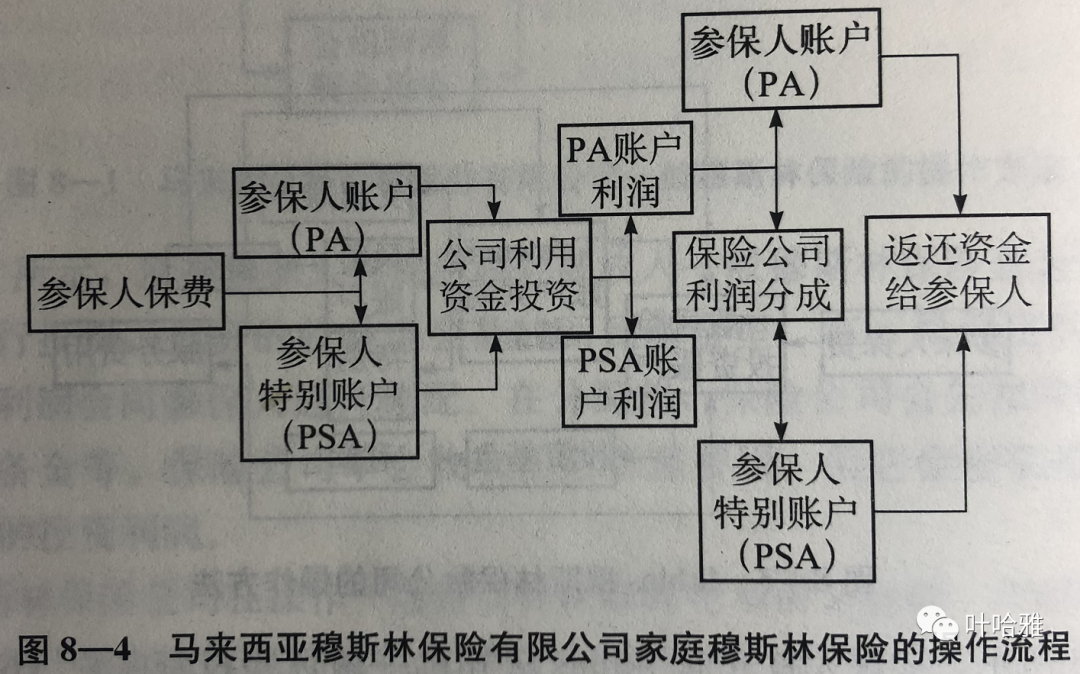
Screenshot from Islamic Banking and Financial Systems.
The way these Muslim insurance companies work is basically the same as the insurance companies in our country. The only difference is that Muslim insurance companies divide the premiums into different categories, and they do not invest in non-halal projects like alcohol. But from the customer's experience, both involve paying a premium to get protection. In this sense, the principle is the same for both types of insurance.
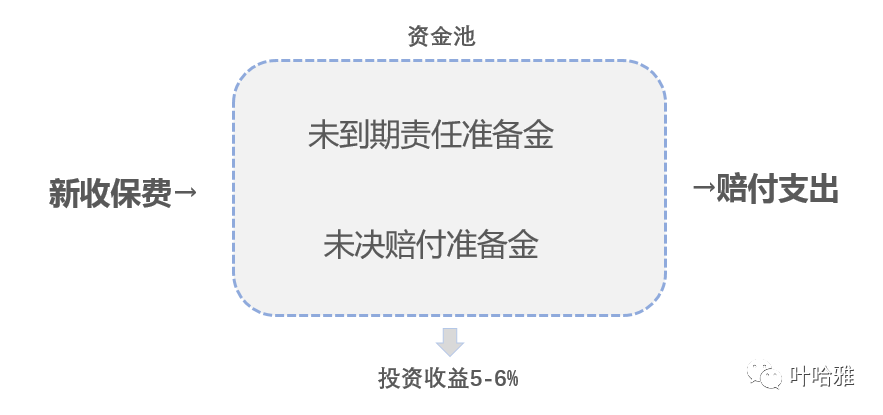
Capital flow of traditional insurance companies.
We can see that traditional insurance companies also split premiums into two parts after collecting them. One part is used as a reserve for emergencies, and the other is invested. The difference is that they are not Muslim insurance companies, so they are not restricted in where they can invest.
That is all I can think of for now regarding Islamic insurance. I hope my article helps clear up your questions. I am not trying to convince everyone. If you do not agree with insurance, you can just take responsibility for your own risks. Everyone should be responsible for their own actions. If you are interested in this, you can look at my previous posts about Islamic insurance and my career.
Muslim Knowledge Guide China: Is Insurance Halal or Haram? Takaful, Riba and Gharar Explained
Articles • yusuf908 posted the article • 0 comments • 147 views • 2026-05-24 00:17
Summary: Muslim Knowledge Guide China: Is Insurance Halal or Haram? Takaful, Riba and Gharar Explained is presented here as a clear English Islamic finance essay for Muslim readers, starting with this scene: I translated this article today from the Islamic Finance Guru website . The original is in English. Interestingly, many of the points in the article match what I have written before, and I swear I had never read this piece until now. It keeps the original names, numbers, mosque details, food notes, photographs, and cultural context while focusing on Islamic Finance, Takaful, Halal Insurance.
I translated this article today from the Islamic Finance Guru website . The original is in English. Interestingly, many of the points in the article match what I have written before, and I swear I had never read this piece until now.
In today's world, there are countless sheikhs who are experts in scripture, and many elites who are good at finance. However, it is rare to find a scholar who understands both. This makes it hard for many jurists to make accurate judgments on new, cutting-edge issues. The author of this article, Ibrahim Khan, has both a background in financial theory and practical experience. He holds a bachelor's degree in philosophy, politics, and economics from Oxford University and worked as a private equity and venture capital lawyer in New York City. He also has a solid education in scripture, holding a degree in Islamic studies from the Al Salam Institute and a master's degree in Islamic finance. He is a rare talent in the field of contemporary Islamic finance.
Insurance: Is it Haram or Halal?
(Insurance: Is it halal?)
Author: Ibrahim Khan
Translator: Yehya
Main text:
I suspect this is the most controversial article to appear on IFG. Why do I say that? Most of my views on Islamic finance align with the mainstream, but as I have researched the insurance industry more deeply, I have found myself changing some of my ideas. Here are my preliminary views. I believe most types of insurance should be considered permissible (compliant with Sharia).
I would also add, perhaps you do not realize, that a minority of scholars, both living and deceased, believe insurance is compliant with Sharia. Although the view that insurance is forbidden is common, the view that it is permissible is not new. These scholars who believe insurance is permissible include Sheikh Mustafa Zarqa, Sheikh Ali Al-Khafeef, and Nejatullah Siddiqi. There are also some quite prominent modern scholars, but I have not held academic discussions with them. If they feel it is necessary, they can state their own views.
Basic premise
The basic premise I want everyone to remember is that Islamic Sharia does allow us to use forms of financing to help those who suffer losses due to unknown risks. Traditionally, in the Arab region, if someone in a tribe needed to pay blood money (a large sum of money), everyone in the tribe would contribute a small amount to make up that large sum. They did this as an act of charity, so that none of their members would be crushed by a huge compensation payment. Related to this is halal insurance, a form of mutual aid that I will explain in detail later. For now, remember that pooling wealth to reduce loss is a completely legitimate act. The debate focuses on how it operates and the conditions and framework under which it is conducted.
Uncertainty (gharar)
Arguments against traditional insurance claim it involves interest (riba), uncertainty (gharar), and gambling (maisir). In this article, I will focus on the strongest and most central of these objections: uncertainty.
For this article, let us define insurance as common types like car, home, pet, medical, and business insurance, rather than more complex products like life insurance or reinsurance.
The traditional view holds that Islam forbids uncertain transactions. In insurance, you do not know when a risk will occur after buying a policy. Most people pay premiums without getting a return, so it is considered impermissible because you are unsure if you will ever have an accident.
On the other hand, halal insurance or mutual insurance is allowed because it is fundamentally compensation for loss. Although it looks like traditional insurance, it is actually a good deed. The compensation received might be more or less than the actual loss, similar to how tribal members pool money to pay blood money (diya) for someone, which is considered a virtuous act.
After studying the argument that traditional insurance is illegal due to uncertainty, I concluded that it is not the type of uncertain transaction the Hadith intended to forbid. Let me tell you why.
Hadith involving uncertain transactions:
Sahih Muslim records: Abu Hurairah reported that the Messenger of Allah (peace and blessings of Allah be upon him) forbade speculative sales (bai al-gharar).
Jami` at-Tirmidhi records that the Prophet said: Do not sell what you do not have.
Sahih al-Bukhari and Sahih Muslim record: Ibn Umar reported that the Messenger of Allah (peace and blessings of Allah be upon him) forbade the sale of fruit until it is ripe and free from disease.
Musnad Ahmad and Sunan Ibn Majah record: The Prophet forbade buying an unborn animal in its mother's womb, selling milk in the udder without weighing it in a container, buying war booty before it is distributed, giving charity before receiving the booty, and buying the catch of a diver.
Musnad Ahmad records: The Prophet forbade buying a runaway slave.
Ibn al-Athir al-Ansari records: The Prophet forbade selling fruit before it is ripe.
Sahih al-Bukhari and Sahih Muslim record: The Messenger of Allah allowed the transaction of 'Araya (gifting a date palm to someone, who can then trade the fresh dates on the tree for dried dates by estimation) for amounts less than 5 awsaq (about 653 kilograms), meaning it is allowed to sell fresh dates on the tree in exchange for old dried dates.
Aisha reported: I said, O Messenger of Allah, people borrow bread and yeast from their neighbors and return more or less than what they borrowed. Is this allowed? He said: This does no harm. This is the normal state for people, and they do not want increases or decreases. (Mentioned in Financial Transactions in Islamic Jurisprudence by Zuhayli, page 254). Another narration from Muadh ibn Jabal says: Take the larger and give the smaller, or take the smaller and give the larger; the best among you is the one who is best at repaying debts.
Sahih Muslim records that Ibn Abbas (may Allah be pleased with them) reported that when the Prophet of Allah (peace and blessings of Allah be upon him) came to Medina, they were paying in advance for fruit for one or two years, so he said: Whoever pays in advance must do so for a specified weight and a determined time.
From (1) we can see, as we have already discussed, that transactions with uncertainty are forbidden. But from hadiths (2)-(6) we can analyze why this is done: in each of these cases, the goal is to have a clear, definite contract that leaves no room for dispute, and secondly, the reason for the prohibition is that the harm of the transaction is greater than its benefit.
My view is that traditional insurance is not such a contract because it is clear enough.
Let us look at hadiths (7)-(9): these are just some hadiths where the Prophet allowed some uncertainty in contracts to make things easier for people and merchants, or because it is a custom of the people, and the benefits of the transaction outweigh the harms.
Therefore, we can clearly see that Islam does support some uncertainty in money matters. Thus, the benefits and trading customs of traditional insurance are enough to make it analogous, rather than a forbidden form of uncertainty.
Finally, I find that when people examine the rulings on modern transactions, these are seen as involving a degree of uncertainty, and it is hard for people to define exactly how these rulings, which are seen as legal like Islamic insurance, differ from traditional insurance which is seen as illegal.
Arguments for the negative
The fundamental issue is whether what is bought in an insurance contract is tangible and certain enough to make the contract valid. The Prophet forbade a person from buying a diver's catch until he actually received the catch, returned, and began selling the tangible fish, because it was not clear what was being bought or sold. The subject of the contract must be certain.
But let us imagine the modern era, where big data and historical statistics allow us to model average catches very accurately. In this case, I think there is no problem for Tesco, for example, to sign a one-year contract with a fishing company to provide whatever it catches, as the quantity of the catch is predictable based on known historical averages.
In the insurance industry, insurance companies use big data to gain certainty about their revenue. The question is, do consumers get that same level of certainty? In a competitive market, this helps companies price the product they sell to customers: safety or peace of mind.
Safety or peace of mind might sound like intangible goals. Think of a security guard who gets paid to provide safety. What does that look like? He stands there waiting for the one day a year he is needed, and he stays on call the rest of the time. His job is not just waiting, but also handling any other requests the client might have. Similarly, insurance companies sign contracts, have agents talk to you, provide documents when you need them, and investigate when you file a claim. They are not asked to pay claims every day, but they provide clear and practical services.
A property manager who arranges services for a landlord is another example. If a property needs repairs, the manager handles them. A law firm hired to handle legal requirements is another. Both the property manager and the law firm want to profit from the deal. This is similar to a car or home insurance contract, where the insurance company covers the cost of any damage or theft that might happen.
In short, insurance is a clear contract in our time.
A positive view
Insurance provides certainty, which is important for the business world and for people's daily lives. The Prophet specifically allowed bai salam (letting farmers sell their crops in advance so they can raise money now) because it truly helps people live more easily. As seen in Hadith 9, he weighed the uncertainty of the trade against the benefits and decided the benefits were greater.
I also find the charm in Hadith 7 and 8. They do not apply perfectly here, but they show that unequal exchanges in business deals are sometimes acceptable. In the case of 7, it helps ease business in an area where date palms are the main crop. In the case of 8, it allows for the repayment of debt in a flexible way. Usually, a person must repay a debt exactly, without even adding a gift, to avoid it being seen as interest. However, in this case, maintaining community unity is more important than anything else.
Notice how the Prophet set a simple standard for what is allowed in 7. 650 kilograms is a large measurement, and the Prophet allowed araya trades for amounts less than that. For example, he could have set the weight at 10 kilograms, but his intention was to make business and life easier, not to create difficulties.
Insurance is vital for businesses to maintain steady shipping every month and prevent crises. It also helps help large deals because insurance companies often participate by underwriting the risk of failed transactions or acting as guarantors for all parties. These are all important lubricants for our economy. insurance creates a large amount of wealth, which is then invested throughout society—this is also an important part of a healthy economy.
Insurance has many other benefits, and this article outlines some of them well. In short, the focus is on insurance. While it may have a degree of uncertainty, it is still reasonable because it has great benefits, and our Sharia historically does allow for some beneficial uncertain transactions if the pros outweigh the cons.
Arguments for Muslim insurance.
The concept of blood money mutual aid (diya) is the inspiration for the Muslim insurance models proposed in our time. The basic concept is that a group of people pools their money together, not for profit, but to support each other. I like the cooperative model, and if such a model exists nearby, I would be happy to encourage people to use it—essentially, it is more like a charitable public welfare cause.
But fundamentally, the Muslim insurance model is the same as the traditional model in its important structural elements. The goal of both organizations is to create a surplus, pay the salaries of employees and managers, pool the participants' cash, and then pay claims with that cash. In the Muslim insurance model, there is also a mutual benefit element similar to an exchange contract. It is not just about donating money and ending it there; rather, there is an expectation when donating that the Muslim insurance pool will provide dividends if the donor is in need.
Secondly, if we go back to the blood money situation that Muslim insurance is often compared to, the money was not actually pooled and then invested by the tribe. When disaster struck, the individual tribe would still pay the price, so in a way, this is a purer form of gift (hiba) because there was no contract between the tribes. However, in today's non-tribal and atomized society, this is impractical, so the Muslim insurance model allows people to receive payments in advance. This certainly creates an expectation—and that expectation is profit. So my point is that the Muslim insurance industry has already compromised on the pure blood money setup for practical purposes. Doing so makes it almost identical to traditional insurance companies. If this is acknowledged, then there is actually almost no other substantive difference between the two models.
Yes, the traditional model can be said to be more profit-driven, does not pay any dividends to participants, and charges higher fees. But in reality, from the perspective of the 21st century, we live in a world of free capital flow. International finance and financial institutions span multiple continents, and the population size is incomparable to that of a thousand years ago. We need large-scale Muslim insurance companies to function, and that requires incredible effort. It is unrealistic to expect anyone to handle all this without a profit motive, and existing Muslim insurance companies are also for-profit. The main insurance providers are those who set them up and fund them through Islamic windows—essentially the only entities that can help start a Muslim insurance company—and they will make money from it just like traditional insurance businesses. The only difference is the structure, but the profit motive is exactly the same. They price risks and solve funding shortages just like traditional insurance companies, although in a pure Muslim insurance model, dividends might be distributed based on how much a person contributes because it is a charity, and if there is a loss, other members share it.
Finally, the Cooperative company in the UK is a great model; I learned more about them and actually participated in projects during my research, and they return profits to members and offer discounts in their stores. Interestingly, they performed very poorly before they became commercialized, but after commercialization, they now run very efficiently.
Concluding remarks
This is the longest article I have published on IFG because I need to elaborate more on the arguments presented, as this is a minority position. Please note that this article is just a summary of my views. A more comprehensive analysis would extend to tens of thousands of words. For example, every hadith mentioned has had countless pages written about it over the centuries, and fully analyzing them would require a small book, not to mention all the other relevant hadith that were not mentioned.
A few final points need to be briefly emphasized.
In my view, the legitimacy of Muslim insurance and traditional insurance is almost identical, except for the following points.
Insurance companies invest in haram areas, and if you get a certain return at the end, such as with life insurance, I need to think about this further, but at first glance, the same ruling applies to any fund stock you invest in that has haram components.
In cases where you buy insurance related to property loss, such as car insurance, rather than for any investment motive, I initially think there is no problem because you are signing a contract with the insurance company, and you do not need to worry about what they do with the money.
Life insurance may have special problems compared to other types of insurance, and I cannot comment on this until further research.
Regarding mandatory insurance like car insurance or employer liability insurance, this is certainly fine from the perspective of Sharia, even if all my arguments above are wrong.
Also, as I said at the beginning, my thinking on this topic is still maturing as I research it more deeply. I really want to hear what others think about what is written here, including your ideas and criticisms, so we can learn more from each other.
More resources:
Uncertainty in contracts and its impact on modern applications – Dr. Muhammad Al-Ameen Ad-Dareer [Arabic]
The insurance system – its reality and legal implications – SH. Mustafa Zarqa [Arabic]
Radd al-Muhtaar ala al-Durr al-Mukhtaar Sharh Tanweer al-Absaar – Muhammad Ameen ibn Abideen [Arabic] view all
Summary: Muslim Knowledge Guide China: Is Insurance Halal or Haram? Takaful, Riba and Gharar Explained is presented here as a clear English Islamic finance essay for Muslim readers, starting with this scene: I translated this article today from the Islamic Finance Guru website . The original is in English. Interestingly, many of the points in the article match what I have written before, and I swear I had never read this piece until now. It keeps the original names, numbers, mosque details, food notes, photographs, and cultural context while focusing on Islamic Finance, Takaful, Halal Insurance.
I translated this article today from the Islamic Finance Guru website . The original is in English. Interestingly, many of the points in the article match what I have written before, and I swear I had never read this piece until now.
In today's world, there are countless sheikhs who are experts in scripture, and many elites who are good at finance. However, it is rare to find a scholar who understands both. This makes it hard for many jurists to make accurate judgments on new, cutting-edge issues. The author of this article, Ibrahim Khan, has both a background in financial theory and practical experience. He holds a bachelor's degree in philosophy, politics, and economics from Oxford University and worked as a private equity and venture capital lawyer in New York City. He also has a solid education in scripture, holding a degree in Islamic studies from the Al Salam Institute and a master's degree in Islamic finance. He is a rare talent in the field of contemporary Islamic finance.
Insurance: Is it Haram or Halal?
(Insurance: Is it halal?)
Author: Ibrahim Khan
Translator: Yehya
Main text:
I suspect this is the most controversial article to appear on IFG. Why do I say that? Most of my views on Islamic finance align with the mainstream, but as I have researched the insurance industry more deeply, I have found myself changing some of my ideas. Here are my preliminary views. I believe most types of insurance should be considered permissible (compliant with Sharia).
I would also add, perhaps you do not realize, that a minority of scholars, both living and deceased, believe insurance is compliant with Sharia. Although the view that insurance is forbidden is common, the view that it is permissible is not new. These scholars who believe insurance is permissible include Sheikh Mustafa Zarqa, Sheikh Ali Al-Khafeef, and Nejatullah Siddiqi. There are also some quite prominent modern scholars, but I have not held academic discussions with them. If they feel it is necessary, they can state their own views.
Basic premise
The basic premise I want everyone to remember is that Islamic Sharia does allow us to use forms of financing to help those who suffer losses due to unknown risks. Traditionally, in the Arab region, if someone in a tribe needed to pay blood money (a large sum of money), everyone in the tribe would contribute a small amount to make up that large sum. They did this as an act of charity, so that none of their members would be crushed by a huge compensation payment. Related to this is halal insurance, a form of mutual aid that I will explain in detail later. For now, remember that pooling wealth to reduce loss is a completely legitimate act. The debate focuses on how it operates and the conditions and framework under which it is conducted.
Uncertainty (gharar)
Arguments against traditional insurance claim it involves interest (riba), uncertainty (gharar), and gambling (maisir). In this article, I will focus on the strongest and most central of these objections: uncertainty.
For this article, let us define insurance as common types like car, home, pet, medical, and business insurance, rather than more complex products like life insurance or reinsurance.
The traditional view holds that Islam forbids uncertain transactions. In insurance, you do not know when a risk will occur after buying a policy. Most people pay premiums without getting a return, so it is considered impermissible because you are unsure if you will ever have an accident.
On the other hand, halal insurance or mutual insurance is allowed because it is fundamentally compensation for loss. Although it looks like traditional insurance, it is actually a good deed. The compensation received might be more or less than the actual loss, similar to how tribal members pool money to pay blood money (diya) for someone, which is considered a virtuous act.
After studying the argument that traditional insurance is illegal due to uncertainty, I concluded that it is not the type of uncertain transaction the Hadith intended to forbid. Let me tell you why.
Hadith involving uncertain transactions:
Sahih Muslim records: Abu Hurairah reported that the Messenger of Allah (peace and blessings of Allah be upon him) forbade speculative sales (bai al-gharar).
Jami` at-Tirmidhi records that the Prophet said: Do not sell what you do not have.
Sahih al-Bukhari and Sahih Muslim record: Ibn Umar reported that the Messenger of Allah (peace and blessings of Allah be upon him) forbade the sale of fruit until it is ripe and free from disease.
Musnad Ahmad and Sunan Ibn Majah record: The Prophet forbade buying an unborn animal in its mother's womb, selling milk in the udder without weighing it in a container, buying war booty before it is distributed, giving charity before receiving the booty, and buying the catch of a diver.
Musnad Ahmad records: The Prophet forbade buying a runaway slave.
Ibn al-Athir al-Ansari records: The Prophet forbade selling fruit before it is ripe.
Sahih al-Bukhari and Sahih Muslim record: The Messenger of Allah allowed the transaction of 'Araya (gifting a date palm to someone, who can then trade the fresh dates on the tree for dried dates by estimation) for amounts less than 5 awsaq (about 653 kilograms), meaning it is allowed to sell fresh dates on the tree in exchange for old dried dates.
Aisha reported: I said, O Messenger of Allah, people borrow bread and yeast from their neighbors and return more or less than what they borrowed. Is this allowed? He said: This does no harm. This is the normal state for people, and they do not want increases or decreases. (Mentioned in Financial Transactions in Islamic Jurisprudence by Zuhayli, page 254). Another narration from Muadh ibn Jabal says: Take the larger and give the smaller, or take the smaller and give the larger; the best among you is the one who is best at repaying debts.
Sahih Muslim records that Ibn Abbas (may Allah be pleased with them) reported that when the Prophet of Allah (peace and blessings of Allah be upon him) came to Medina, they were paying in advance for fruit for one or two years, so he said: Whoever pays in advance must do so for a specified weight and a determined time.
From (1) we can see, as we have already discussed, that transactions with uncertainty are forbidden. But from hadiths (2)-(6) we can analyze why this is done: in each of these cases, the goal is to have a clear, definite contract that leaves no room for dispute, and secondly, the reason for the prohibition is that the harm of the transaction is greater than its benefit.
My view is that traditional insurance is not such a contract because it is clear enough.
Let us look at hadiths (7)-(9): these are just some hadiths where the Prophet allowed some uncertainty in contracts to make things easier for people and merchants, or because it is a custom of the people, and the benefits of the transaction outweigh the harms.
Therefore, we can clearly see that Islam does support some uncertainty in money matters. Thus, the benefits and trading customs of traditional insurance are enough to make it analogous, rather than a forbidden form of uncertainty.
Finally, I find that when people examine the rulings on modern transactions, these are seen as involving a degree of uncertainty, and it is hard for people to define exactly how these rulings, which are seen as legal like Islamic insurance, differ from traditional insurance which is seen as illegal.
Arguments for the negative
The fundamental issue is whether what is bought in an insurance contract is tangible and certain enough to make the contract valid. The Prophet forbade a person from buying a diver's catch until he actually received the catch, returned, and began selling the tangible fish, because it was not clear what was being bought or sold. The subject of the contract must be certain.
But let us imagine the modern era, where big data and historical statistics allow us to model average catches very accurately. In this case, I think there is no problem for Tesco, for example, to sign a one-year contract with a fishing company to provide whatever it catches, as the quantity of the catch is predictable based on known historical averages.
In the insurance industry, insurance companies use big data to gain certainty about their revenue. The question is, do consumers get that same level of certainty? In a competitive market, this helps companies price the product they sell to customers: safety or peace of mind.
Safety or peace of mind might sound like intangible goals. Think of a security guard who gets paid to provide safety. What does that look like? He stands there waiting for the one day a year he is needed, and he stays on call the rest of the time. His job is not just waiting, but also handling any other requests the client might have. Similarly, insurance companies sign contracts, have agents talk to you, provide documents when you need them, and investigate when you file a claim. They are not asked to pay claims every day, but they provide clear and practical services.
A property manager who arranges services for a landlord is another example. If a property needs repairs, the manager handles them. A law firm hired to handle legal requirements is another. Both the property manager and the law firm want to profit from the deal. This is similar to a car or home insurance contract, where the insurance company covers the cost of any damage or theft that might happen.
In short, insurance is a clear contract in our time.
A positive view
Insurance provides certainty, which is important for the business world and for people's daily lives. The Prophet specifically allowed bai salam (letting farmers sell their crops in advance so they can raise money now) because it truly helps people live more easily. As seen in Hadith 9, he weighed the uncertainty of the trade against the benefits and decided the benefits were greater.
I also find the charm in Hadith 7 and 8. They do not apply perfectly here, but they show that unequal exchanges in business deals are sometimes acceptable. In the case of 7, it helps ease business in an area where date palms are the main crop. In the case of 8, it allows for the repayment of debt in a flexible way. Usually, a person must repay a debt exactly, without even adding a gift, to avoid it being seen as interest. However, in this case, maintaining community unity is more important than anything else.
Notice how the Prophet set a simple standard for what is allowed in 7. 650 kilograms is a large measurement, and the Prophet allowed araya trades for amounts less than that. For example, he could have set the weight at 10 kilograms, but his intention was to make business and life easier, not to create difficulties.
Insurance is vital for businesses to maintain steady shipping every month and prevent crises. It also helps help large deals because insurance companies often participate by underwriting the risk of failed transactions or acting as guarantors for all parties. These are all important lubricants for our economy. insurance creates a large amount of wealth, which is then invested throughout society—this is also an important part of a healthy economy.
Insurance has many other benefits, and this article outlines some of them well. In short, the focus is on insurance. While it may have a degree of uncertainty, it is still reasonable because it has great benefits, and our Sharia historically does allow for some beneficial uncertain transactions if the pros outweigh the cons.
Arguments for Muslim insurance.
The concept of blood money mutual aid (diya) is the inspiration for the Muslim insurance models proposed in our time. The basic concept is that a group of people pools their money together, not for profit, but to support each other. I like the cooperative model, and if such a model exists nearby, I would be happy to encourage people to use it—essentially, it is more like a charitable public welfare cause.
But fundamentally, the Muslim insurance model is the same as the traditional model in its important structural elements. The goal of both organizations is to create a surplus, pay the salaries of employees and managers, pool the participants' cash, and then pay claims with that cash. In the Muslim insurance model, there is also a mutual benefit element similar to an exchange contract. It is not just about donating money and ending it there; rather, there is an expectation when donating that the Muslim insurance pool will provide dividends if the donor is in need.
Secondly, if we go back to the blood money situation that Muslim insurance is often compared to, the money was not actually pooled and then invested by the tribe. When disaster struck, the individual tribe would still pay the price, so in a way, this is a purer form of gift (hiba) because there was no contract between the tribes. However, in today's non-tribal and atomized society, this is impractical, so the Muslim insurance model allows people to receive payments in advance. This certainly creates an expectation—and that expectation is profit. So my point is that the Muslim insurance industry has already compromised on the pure blood money setup for practical purposes. Doing so makes it almost identical to traditional insurance companies. If this is acknowledged, then there is actually almost no other substantive difference between the two models.
Yes, the traditional model can be said to be more profit-driven, does not pay any dividends to participants, and charges higher fees. But in reality, from the perspective of the 21st century, we live in a world of free capital flow. International finance and financial institutions span multiple continents, and the population size is incomparable to that of a thousand years ago. We need large-scale Muslim insurance companies to function, and that requires incredible effort. It is unrealistic to expect anyone to handle all this without a profit motive, and existing Muslim insurance companies are also for-profit. The main insurance providers are those who set them up and fund them through Islamic windows—essentially the only entities that can help start a Muslim insurance company—and they will make money from it just like traditional insurance businesses. The only difference is the structure, but the profit motive is exactly the same. They price risks and solve funding shortages just like traditional insurance companies, although in a pure Muslim insurance model, dividends might be distributed based on how much a person contributes because it is a charity, and if there is a loss, other members share it.
Finally, the Cooperative company in the UK is a great model; I learned more about them and actually participated in projects during my research, and they return profits to members and offer discounts in their stores. Interestingly, they performed very poorly before they became commercialized, but after commercialization, they now run very efficiently.
Concluding remarks
This is the longest article I have published on IFG because I need to elaborate more on the arguments presented, as this is a minority position. Please note that this article is just a summary of my views. A more comprehensive analysis would extend to tens of thousands of words. For example, every hadith mentioned has had countless pages written about it over the centuries, and fully analyzing them would require a small book, not to mention all the other relevant hadith that were not mentioned.
A few final points need to be briefly emphasized.
In my view, the legitimacy of Muslim insurance and traditional insurance is almost identical, except for the following points.
Insurance companies invest in haram areas, and if you get a certain return at the end, such as with life insurance, I need to think about this further, but at first glance, the same ruling applies to any fund stock you invest in that has haram components.
In cases where you buy insurance related to property loss, such as car insurance, rather than for any investment motive, I initially think there is no problem because you are signing a contract with the insurance company, and you do not need to worry about what they do with the money.
Life insurance may have special problems compared to other types of insurance, and I cannot comment on this until further research.
Regarding mandatory insurance like car insurance or employer liability insurance, this is certainly fine from the perspective of Sharia, even if all my arguments above are wrong.
Also, as I said at the beginning, my thinking on this topic is still maturing as I research it more deeply. I really want to hear what others think about what is written here, including your ideas and criticisms, so we can learn more from each other.
More resources:
Uncertainty in contracts and its impact on modern applications – Dr. Muhammad Al-Ameen Ad-Dareer [Arabic]
The insurance system – its reality and legal implications – SH. Mustafa Zarqa [Arabic]
Radd al-Muhtaar ala al-Durr al-Mukhtaar Sharh Tanweer al-Absaar – Muhammad Ameen ibn Abideen [Arabic]
Muslim Knowledge Guide China: Is Insurance Halal or Haram? Takaful, Riba and Gharar Explained
Articles • yusuf908 posted the article • 0 comments • 198 views • 2026-05-22 10:45
Summary: Muslim Knowledge Guide China: Is Insurance Halal or Haram? Takaful, Riba and Gharar Explained is presented here as a clear English Islamic finance essay for Muslim readers, starting with this scene: I translated this article today from the Islamic Finance Guru website . The original is in English. Interestingly, many of the points in the article match what I have written before, and I swear I had never read this piece until now. It keeps the original names, numbers, mosque details, food notes, photographs, and cultural context while focusing on Islamic Finance, Takaful, Halal Insurance.
I translated this article today from the Islamic Finance Guru website . The original is in English. Interestingly, many of the points in the article match what I have written before, and I swear I had never read this piece until now.
In today's world, there are countless sheikhs who are experts in scripture, and many elites who are good at finance. However, it is rare to find a scholar who understands both. This makes it hard for many jurists to make accurate judgments on new, cutting-edge issues. The author of this article, Ibrahim Khan, has both a background in financial theory and practical experience. He holds a bachelor's degree in philosophy, politics, and economics from Oxford University and worked as a private equity and venture capital lawyer in New York City. He also has a solid education in scripture, holding a degree in Islamic studies from the Al Salam Institute and a master's degree in Islamic finance. He is a rare talent in the field of contemporary Islamic finance.
Insurance: Is it Haram or Halal?
(Insurance: Is it halal?)
Author: Ibrahim Khan
Translator: Yehya
Main text:
I suspect this is the most controversial article to appear on IFG. Why do I say that? Most of my views on Islamic finance align with the mainstream, but as I have researched the insurance industry more deeply, I have found myself changing some of my ideas. Here are my preliminary views. I believe most types of insurance should be considered permissible (compliant with Sharia).
I would also add, perhaps you do not realize, that a minority of scholars, both living and deceased, believe insurance is compliant with Sharia. Although the view that insurance is forbidden is common, the view that it is permissible is not new. These scholars who believe insurance is permissible include Sheikh Mustafa Zarqa, Sheikh Ali Al-Khafeef, and Nejatullah Siddiqi. There are also some quite prominent modern scholars, but I have not held academic discussions with them. If they feel it is necessary, they can state their own views.
Basic premise
The basic premise I want everyone to remember is that Islamic Sharia does allow us to use forms of financing to help those who suffer losses due to unknown risks. Traditionally, in the Arab region, if someone in a tribe needed to pay blood money (a large sum of money), everyone in the tribe would contribute a small amount to make up that large sum. They did this as an act of charity, so that none of their members would be crushed by a huge compensation payment. Related to this is halal insurance, a form of mutual aid that I will explain in detail later. For now, remember that pooling wealth to reduce loss is a completely legitimate act. The debate focuses on how it operates and the conditions and framework under which it is conducted.
Uncertainty (gharar)
Arguments against traditional insurance claim it involves interest (riba), uncertainty (gharar), and gambling (maisir). In this article, I will focus on the strongest and most central of these objections: uncertainty.
For this article, let us define insurance as common types like car, home, pet, medical, and business insurance, rather than more complex products like life insurance or reinsurance.
The traditional view holds that Islam forbids uncertain transactions. In insurance, you do not know when a risk will occur after buying a policy. Most people pay premiums without getting a return, so it is considered impermissible because you are unsure if you will ever have an accident.
On the other hand, halal insurance or mutual insurance is allowed because it is fundamentally compensation for loss. Although it looks like traditional insurance, it is actually a good deed. The compensation received might be more or less than the actual loss, similar to how tribal members pool money to pay blood money (diya) for someone, which is considered a virtuous act.
After studying the argument that traditional insurance is illegal due to uncertainty, I concluded that it is not the type of uncertain transaction the Hadith intended to forbid. Let me tell you why.
Hadith involving uncertain transactions:
Sahih Muslim records: Abu Hurairah reported that the Messenger of Allah (peace and blessings of Allah be upon him) forbade speculative sales (bai al-gharar).
Jami` at-Tirmidhi records that the Prophet said: Do not sell what you do not have.
Sahih al-Bukhari and Sahih Muslim record: Ibn Umar reported that the Messenger of Allah (peace and blessings of Allah be upon him) forbade the sale of fruit until it is ripe and free from disease.
Musnad Ahmad and Sunan Ibn Majah record: The Prophet forbade buying an unborn animal in its mother's womb, selling milk in the udder without weighing it in a container, buying war booty before it is distributed, giving charity before receiving the booty, and buying the catch of a diver.
Musnad Ahmad records: The Prophet forbade buying a runaway slave.
Ibn al-Athir al-Ansari records: The Prophet forbade selling fruit before it is ripe.
Sahih al-Bukhari and Sahih Muslim record: The Messenger of Allah allowed the transaction of 'Araya (gifting a date palm to someone, who can then trade the fresh dates on the tree for dried dates by estimation) for amounts less than 5 awsaq (about 653 kilograms), meaning it is allowed to sell fresh dates on the tree in exchange for old dried dates.
Aisha reported: I said, O Messenger of Allah, people borrow bread and yeast from their neighbors and return more or less than what they borrowed. Is this allowed? He said: This does no harm. This is the normal state for people, and they do not want increases or decreases. (Mentioned in Financial Transactions in Islamic Jurisprudence by Zuhayli, page 254). Another narration from Muadh ibn Jabal says: Take the larger and give the smaller, or take the smaller and give the larger; the best among you is the one who is best at repaying debts.
Sahih Muslim records that Ibn Abbas (may Allah be pleased with them) reported that when the Prophet of Allah (peace and blessings of Allah be upon him) came to Medina, they were paying in advance for fruit for one or two years, so he said: Whoever pays in advance must do so for a specified weight and a determined time.
From (1) we can see, as we have already discussed, that transactions with uncertainty are forbidden. But from hadiths (2)-(6) we can analyze why this is done: in each of these cases, the goal is to have a clear, definite contract that leaves no room for dispute, and secondly, the reason for the prohibition is that the harm of the transaction is greater than its benefit.
My view is that traditional insurance is not such a contract because it is clear enough.
Let us look at hadiths (7)-(9): these are just some hadiths where the Prophet allowed some uncertainty in contracts to make things easier for people and merchants, or because it is a custom of the people, and the benefits of the transaction outweigh the harms.
Therefore, we can clearly see that Islam does support some uncertainty in money matters. Thus, the benefits and trading customs of traditional insurance are enough to make it analogous, rather than a forbidden form of uncertainty.
Finally, I find that when people examine the rulings on modern transactions, these are seen as involving a degree of uncertainty, and it is hard for people to define exactly how these rulings, which are seen as legal like Islamic insurance, differ from traditional insurance which is seen as illegal.
Arguments for the negative
The fundamental issue is whether what is bought in an insurance contract is tangible and certain enough to make the contract valid. The Prophet forbade a person from buying a diver's catch until he actually received the catch, returned, and began selling the tangible fish, because it was not clear what was being bought or sold. The subject of the contract must be certain.
But let us imagine the modern era, where big data and historical statistics allow us to model average catches very accurately. In this case, I think there is no problem for Tesco, for example, to sign a one-year contract with a fishing company to provide whatever it catches, as the quantity of the catch is predictable based on known historical averages.
In the insurance industry, insurance companies use big data to gain certainty about their revenue. The question is, do consumers get that same level of certainty? In a competitive market, this helps companies price the product they sell to customers: safety or peace of mind.
Safety or peace of mind might sound like intangible goals. Think of a security guard who gets paid to provide safety. What does that look like? He stands there waiting for the one day a year he is needed, and he stays on call the rest of the time. His job is not just waiting, but also handling any other requests the client might have. Similarly, insurance companies sign contracts, have agents talk to you, provide documents when you need them, and investigate when you file a claim. They are not asked to pay claims every day, but they provide clear and practical services.
A property manager who arranges services for a landlord is another example. If a property needs repairs, the manager handles them. A law firm hired to handle legal requirements is another. Both the property manager and the law firm want to profit from the deal. This is similar to a car or home insurance contract, where the insurance company covers the cost of any damage or theft that might happen.
In short, insurance is a clear contract in our time.
A positive view
Insurance provides certainty, which is important for the business world and for people's daily lives. The Prophet specifically allowed bai salam (letting farmers sell their crops in advance so they can raise money now) because it truly helps people live more easily. As seen in Hadith 9, he weighed the uncertainty of the trade against the benefits and decided the benefits were greater.
I also find the charm in Hadith 7 and 8. They do not apply perfectly here, but they show that unequal exchanges in business deals are sometimes acceptable. In the case of 7, it helps ease business in an area where date palms are the main crop. In the case of 8, it allows for the repayment of debt in a flexible way. Usually, a person must repay a debt exactly, without even adding a gift, to avoid it being seen as interest. However, in this case, maintaining community unity is more important than anything else.
Notice how the Prophet set a simple standard for what is allowed in 7. 650 kilograms is a large measurement, and the Prophet allowed araya trades for amounts less than that. For example, he could have set the weight at 10 kilograms, but his intention was to make business and life easier, not to create difficulties.
Insurance is vital for businesses to maintain steady shipping every month and prevent crises. It also helps help large deals because insurance companies often participate by underwriting the risk of failed transactions or acting as guarantors for all parties. These are all important lubricants for our economy. insurance creates a large amount of wealth, which is then invested throughout society—this is also an important part of a healthy economy.
Insurance has many other benefits, and this article outlines some of them well. In short, the focus is on insurance. While it may have a degree of uncertainty, it is still reasonable because it has great benefits, and our Sharia historically does allow for some beneficial uncertain transactions if the pros outweigh the cons.
Arguments for Muslim insurance.
The concept of blood money mutual aid (diya) is the inspiration for the Muslim insurance models proposed in our time. The basic concept is that a group of people pools their money together, not for profit, but to support each other. I like the cooperative model, and if such a model exists nearby, I would be happy to encourage people to use it—essentially, it is more like a charitable public welfare cause.
But fundamentally, the Muslim insurance model is the same as the traditional model in its important structural elements. The goal of both organizations is to create a surplus, pay the salaries of employees and managers, pool the participants' cash, and then pay claims with that cash. In the Muslim insurance model, there is also a mutual benefit element similar to an exchange contract. It is not just about donating money and ending it there; rather, there is an expectation when donating that the Muslim insurance pool will provide dividends if the donor is in need.
Secondly, if we go back to the blood money situation that Muslim insurance is often compared to, the money was not actually pooled and then invested by the tribe. When disaster struck, the individual tribe would still pay the price, so in a way, this is a purer form of gift (hiba) because there was no contract between the tribes. However, in today's non-tribal and atomized society, this is impractical, so the Muslim insurance model allows people to receive payments in advance. This certainly creates an expectation—and that expectation is profit. So my point is that the Muslim insurance industry has already compromised on the pure blood money setup for practical purposes. Doing so makes it almost identical to traditional insurance companies. If this is acknowledged, then there is actually almost no other substantive difference between the two models.
Yes, the traditional model can be said to be more profit-driven, does not pay any dividends to participants, and charges higher fees. But in reality, from the perspective of the 21st century, we live in a world of free capital flow. International finance and financial institutions span multiple continents, and the population size is incomparable to that of a thousand years ago. We need large-scale Muslim insurance companies to function, and that requires incredible effort. It is unrealistic to expect anyone to handle all this without a profit motive, and existing Muslim insurance companies are also for-profit. The main insurance providers are those who set them up and fund them through Islamic windows—essentially the only entities that can help start a Muslim insurance company—and they will make money from it just like traditional insurance businesses. The only difference is the structure, but the profit motive is exactly the same. They price risks and solve funding shortages just like traditional insurance companies, although in a pure Muslim insurance model, dividends might be distributed based on how much a person contributes because it is a charity, and if there is a loss, other members share it.
Finally, the Cooperative company in the UK is a great model; I learned more about them and actually participated in projects during my research, and they return profits to members and offer discounts in their stores. Interestingly, they performed very poorly before they became commercialized, but after commercialization, they now run very efficiently.
Concluding remarks
This is the longest article I have published on IFG because I need to elaborate more on the arguments presented, as this is a minority position. Please note that this article is just a summary of my views. A more comprehensive analysis would extend to tens of thousands of words. For example, every hadith mentioned has had countless pages written about it over the centuries, and fully analyzing them would require a small book, not to mention all the other relevant hadith that were not mentioned.
A few final points need to be briefly emphasized.
In my view, the legitimacy of Muslim insurance and traditional insurance is almost identical, except for the following points.
Insurance companies invest in haram areas, and if you get a certain return at the end, such as with life insurance, I need to think about this further, but at first glance, the same ruling applies to any fund stock you invest in that has haram components.
In cases where you buy insurance related to property loss, such as car insurance, rather than for any investment motive, I initially think there is no problem because you are signing a contract with the insurance company, and you do not need to worry about what they do with the money.
Life insurance may have special problems compared to other types of insurance, and I cannot comment on this until further research.
Regarding mandatory insurance like car insurance or employer liability insurance, this is certainly fine from the perspective of Sharia, even if all my arguments above are wrong.
Also, as I said at the beginning, my thinking on this topic is still maturing as I research it more deeply. I really want to hear what others think about what is written here, including your ideas and criticisms, so we can learn more from each other.
More resources:
Uncertainty in contracts and its impact on modern applications – Dr. Muhammad Al-Ameen Ad-Dareer [Arabic]
The insurance system – its reality and legal implications – SH. Mustafa Zarqa [Arabic]
Radd al-Muhtaar ala al-Durr al-Mukhtaar Sharh Tanweer al-Absaar – Muhammad Ameen ibn Abideen [Arabic] view all
Summary: Muslim Knowledge Guide China: Is Insurance Halal or Haram? Takaful, Riba and Gharar Explained is presented here as a clear English Islamic finance essay for Muslim readers, starting with this scene: I translated this article today from the Islamic Finance Guru website . The original is in English. Interestingly, many of the points in the article match what I have written before, and I swear I had never read this piece until now. It keeps the original names, numbers, mosque details, food notes, photographs, and cultural context while focusing on Islamic Finance, Takaful, Halal Insurance.
I translated this article today from the Islamic Finance Guru website . The original is in English. Interestingly, many of the points in the article match what I have written before, and I swear I had never read this piece until now.
In today's world, there are countless sheikhs who are experts in scripture, and many elites who are good at finance. However, it is rare to find a scholar who understands both. This makes it hard for many jurists to make accurate judgments on new, cutting-edge issues. The author of this article, Ibrahim Khan, has both a background in financial theory and practical experience. He holds a bachelor's degree in philosophy, politics, and economics from Oxford University and worked as a private equity and venture capital lawyer in New York City. He also has a solid education in scripture, holding a degree in Islamic studies from the Al Salam Institute and a master's degree in Islamic finance. He is a rare talent in the field of contemporary Islamic finance.
Insurance: Is it Haram or Halal?
(Insurance: Is it halal?)
Author: Ibrahim Khan
Translator: Yehya
Main text:
I suspect this is the most controversial article to appear on IFG. Why do I say that? Most of my views on Islamic finance align with the mainstream, but as I have researched the insurance industry more deeply, I have found myself changing some of my ideas. Here are my preliminary views. I believe most types of insurance should be considered permissible (compliant with Sharia).
I would also add, perhaps you do not realize, that a minority of scholars, both living and deceased, believe insurance is compliant with Sharia. Although the view that insurance is forbidden is common, the view that it is permissible is not new. These scholars who believe insurance is permissible include Sheikh Mustafa Zarqa, Sheikh Ali Al-Khafeef, and Nejatullah Siddiqi. There are also some quite prominent modern scholars, but I have not held academic discussions with them. If they feel it is necessary, they can state their own views.
Basic premise
The basic premise I want everyone to remember is that Islamic Sharia does allow us to use forms of financing to help those who suffer losses due to unknown risks. Traditionally, in the Arab region, if someone in a tribe needed to pay blood money (a large sum of money), everyone in the tribe would contribute a small amount to make up that large sum. They did this as an act of charity, so that none of their members would be crushed by a huge compensation payment. Related to this is halal insurance, a form of mutual aid that I will explain in detail later. For now, remember that pooling wealth to reduce loss is a completely legitimate act. The debate focuses on how it operates and the conditions and framework under which it is conducted.
Uncertainty (gharar)
Arguments against traditional insurance claim it involves interest (riba), uncertainty (gharar), and gambling (maisir). In this article, I will focus on the strongest and most central of these objections: uncertainty.
For this article, let us define insurance as common types like car, home, pet, medical, and business insurance, rather than more complex products like life insurance or reinsurance.
The traditional view holds that Islam forbids uncertain transactions. In insurance, you do not know when a risk will occur after buying a policy. Most people pay premiums without getting a return, so it is considered impermissible because you are unsure if you will ever have an accident.
On the other hand, halal insurance or mutual insurance is allowed because it is fundamentally compensation for loss. Although it looks like traditional insurance, it is actually a good deed. The compensation received might be more or less than the actual loss, similar to how tribal members pool money to pay blood money (diya) for someone, which is considered a virtuous act.
After studying the argument that traditional insurance is illegal due to uncertainty, I concluded that it is not the type of uncertain transaction the Hadith intended to forbid. Let me tell you why.
Hadith involving uncertain transactions:
Sahih Muslim records: Abu Hurairah reported that the Messenger of Allah (peace and blessings of Allah be upon him) forbade speculative sales (bai al-gharar).
Jami` at-Tirmidhi records that the Prophet said: Do not sell what you do not have.
Sahih al-Bukhari and Sahih Muslim record: Ibn Umar reported that the Messenger of Allah (peace and blessings of Allah be upon him) forbade the sale of fruit until it is ripe and free from disease.
Musnad Ahmad and Sunan Ibn Majah record: The Prophet forbade buying an unborn animal in its mother's womb, selling milk in the udder without weighing it in a container, buying war booty before it is distributed, giving charity before receiving the booty, and buying the catch of a diver.
Musnad Ahmad records: The Prophet forbade buying a runaway slave.
Ibn al-Athir al-Ansari records: The Prophet forbade selling fruit before it is ripe.
Sahih al-Bukhari and Sahih Muslim record: The Messenger of Allah allowed the transaction of 'Araya (gifting a date palm to someone, who can then trade the fresh dates on the tree for dried dates by estimation) for amounts less than 5 awsaq (about 653 kilograms), meaning it is allowed to sell fresh dates on the tree in exchange for old dried dates.
Aisha reported: I said, O Messenger of Allah, people borrow bread and yeast from their neighbors and return more or less than what they borrowed. Is this allowed? He said: This does no harm. This is the normal state for people, and they do not want increases or decreases. (Mentioned in Financial Transactions in Islamic Jurisprudence by Zuhayli, page 254). Another narration from Muadh ibn Jabal says: Take the larger and give the smaller, or take the smaller and give the larger; the best among you is the one who is best at repaying debts.
Sahih Muslim records that Ibn Abbas (may Allah be pleased with them) reported that when the Prophet of Allah (peace and blessings of Allah be upon him) came to Medina, they were paying in advance for fruit for one or two years, so he said: Whoever pays in advance must do so for a specified weight and a determined time.
From (1) we can see, as we have already discussed, that transactions with uncertainty are forbidden. But from hadiths (2)-(6) we can analyze why this is done: in each of these cases, the goal is to have a clear, definite contract that leaves no room for dispute, and secondly, the reason for the prohibition is that the harm of the transaction is greater than its benefit.
My view is that traditional insurance is not such a contract because it is clear enough.
Let us look at hadiths (7)-(9): these are just some hadiths where the Prophet allowed some uncertainty in contracts to make things easier for people and merchants, or because it is a custom of the people, and the benefits of the transaction outweigh the harms.
Therefore, we can clearly see that Islam does support some uncertainty in money matters. Thus, the benefits and trading customs of traditional insurance are enough to make it analogous, rather than a forbidden form of uncertainty.
Finally, I find that when people examine the rulings on modern transactions, these are seen as involving a degree of uncertainty, and it is hard for people to define exactly how these rulings, which are seen as legal like Islamic insurance, differ from traditional insurance which is seen as illegal.
Arguments for the negative
The fundamental issue is whether what is bought in an insurance contract is tangible and certain enough to make the contract valid. The Prophet forbade a person from buying a diver's catch until he actually received the catch, returned, and began selling the tangible fish, because it was not clear what was being bought or sold. The subject of the contract must be certain.
But let us imagine the modern era, where big data and historical statistics allow us to model average catches very accurately. In this case, I think there is no problem for Tesco, for example, to sign a one-year contract with a fishing company to provide whatever it catches, as the quantity of the catch is predictable based on known historical averages.
In the insurance industry, insurance companies use big data to gain certainty about their revenue. The question is, do consumers get that same level of certainty? In a competitive market, this helps companies price the product they sell to customers: safety or peace of mind.
Safety or peace of mind might sound like intangible goals. Think of a security guard who gets paid to provide safety. What does that look like? He stands there waiting for the one day a year he is needed, and he stays on call the rest of the time. His job is not just waiting, but also handling any other requests the client might have. Similarly, insurance companies sign contracts, have agents talk to you, provide documents when you need them, and investigate when you file a claim. They are not asked to pay claims every day, but they provide clear and practical services.
A property manager who arranges services for a landlord is another example. If a property needs repairs, the manager handles them. A law firm hired to handle legal requirements is another. Both the property manager and the law firm want to profit from the deal. This is similar to a car or home insurance contract, where the insurance company covers the cost of any damage or theft that might happen.
In short, insurance is a clear contract in our time.
A positive view
Insurance provides certainty, which is important for the business world and for people's daily lives. The Prophet specifically allowed bai salam (letting farmers sell their crops in advance so they can raise money now) because it truly helps people live more easily. As seen in Hadith 9, he weighed the uncertainty of the trade against the benefits and decided the benefits were greater.
I also find the charm in Hadith 7 and 8. They do not apply perfectly here, but they show that unequal exchanges in business deals are sometimes acceptable. In the case of 7, it helps ease business in an area where date palms are the main crop. In the case of 8, it allows for the repayment of debt in a flexible way. Usually, a person must repay a debt exactly, without even adding a gift, to avoid it being seen as interest. However, in this case, maintaining community unity is more important than anything else.
Notice how the Prophet set a simple standard for what is allowed in 7. 650 kilograms is a large measurement, and the Prophet allowed araya trades for amounts less than that. For example, he could have set the weight at 10 kilograms, but his intention was to make business and life easier, not to create difficulties.
Insurance is vital for businesses to maintain steady shipping every month and prevent crises. It also helps help large deals because insurance companies often participate by underwriting the risk of failed transactions or acting as guarantors for all parties. These are all important lubricants for our economy. insurance creates a large amount of wealth, which is then invested throughout society—this is also an important part of a healthy economy.
Insurance has many other benefits, and this article outlines some of them well. In short, the focus is on insurance. While it may have a degree of uncertainty, it is still reasonable because it has great benefits, and our Sharia historically does allow for some beneficial uncertain transactions if the pros outweigh the cons.
Arguments for Muslim insurance.
The concept of blood money mutual aid (diya) is the inspiration for the Muslim insurance models proposed in our time. The basic concept is that a group of people pools their money together, not for profit, but to support each other. I like the cooperative model, and if such a model exists nearby, I would be happy to encourage people to use it—essentially, it is more like a charitable public welfare cause.
But fundamentally, the Muslim insurance model is the same as the traditional model in its important structural elements. The goal of both organizations is to create a surplus, pay the salaries of employees and managers, pool the participants' cash, and then pay claims with that cash. In the Muslim insurance model, there is also a mutual benefit element similar to an exchange contract. It is not just about donating money and ending it there; rather, there is an expectation when donating that the Muslim insurance pool will provide dividends if the donor is in need.
Secondly, if we go back to the blood money situation that Muslim insurance is often compared to, the money was not actually pooled and then invested by the tribe. When disaster struck, the individual tribe would still pay the price, so in a way, this is a purer form of gift (hiba) because there was no contract between the tribes. However, in today's non-tribal and atomized society, this is impractical, so the Muslim insurance model allows people to receive payments in advance. This certainly creates an expectation—and that expectation is profit. So my point is that the Muslim insurance industry has already compromised on the pure blood money setup for practical purposes. Doing so makes it almost identical to traditional insurance companies. If this is acknowledged, then there is actually almost no other substantive difference between the two models.
Yes, the traditional model can be said to be more profit-driven, does not pay any dividends to participants, and charges higher fees. But in reality, from the perspective of the 21st century, we live in a world of free capital flow. International finance and financial institutions span multiple continents, and the population size is incomparable to that of a thousand years ago. We need large-scale Muslim insurance companies to function, and that requires incredible effort. It is unrealistic to expect anyone to handle all this without a profit motive, and existing Muslim insurance companies are also for-profit. The main insurance providers are those who set them up and fund them through Islamic windows—essentially the only entities that can help start a Muslim insurance company—and they will make money from it just like traditional insurance businesses. The only difference is the structure, but the profit motive is exactly the same. They price risks and solve funding shortages just like traditional insurance companies, although in a pure Muslim insurance model, dividends might be distributed based on how much a person contributes because it is a charity, and if there is a loss, other members share it.
Finally, the Cooperative company in the UK is a great model; I learned more about them and actually participated in projects during my research, and they return profits to members and offer discounts in their stores. Interestingly, they performed very poorly before they became commercialized, but after commercialization, they now run very efficiently.
Concluding remarks
This is the longest article I have published on IFG because I need to elaborate more on the arguments presented, as this is a minority position. Please note that this article is just a summary of my views. A more comprehensive analysis would extend to tens of thousands of words. For example, every hadith mentioned has had countless pages written about it over the centuries, and fully analyzing them would require a small book, not to mention all the other relevant hadith that were not mentioned.
A few final points need to be briefly emphasized.
In my view, the legitimacy of Muslim insurance and traditional insurance is almost identical, except for the following points.
Insurance companies invest in haram areas, and if you get a certain return at the end, such as with life insurance, I need to think about this further, but at first glance, the same ruling applies to any fund stock you invest in that has haram components.
In cases where you buy insurance related to property loss, such as car insurance, rather than for any investment motive, I initially think there is no problem because you are signing a contract with the insurance company, and you do not need to worry about what they do with the money.
Life insurance may have special problems compared to other types of insurance, and I cannot comment on this until further research.
Regarding mandatory insurance like car insurance or employer liability insurance, this is certainly fine from the perspective of Sharia, even if all my arguments above are wrong.
Also, as I said at the beginning, my thinking on this topic is still maturing as I research it more deeply. I really want to hear what others think about what is written here, including your ideas and criticisms, so we can learn more from each other.
More resources:
Uncertainty in contracts and its impact on modern applications – Dr. Muhammad Al-Ameen Ad-Dareer [Arabic]
The insurance system – its reality and legal implications – SH. Mustafa Zarqa [Arabic]
Radd al-Muhtaar ala al-Durr al-Mukhtaar Sharh Tanweer al-Absaar – Muhammad Ameen ibn Abideen [Arabic]
Muslim Knowledge Guide China: Is Insurance Halal or Haram? Takaful, Riba and Gharar Explained
Articles • yusuf908 posted the article • 0 comments • 209 views • 2026-05-22 10:45
Summary: Muslim Knowledge Guide China: Is Insurance Halal or Haram? Takaful, Riba and Gharar Explained is presented here as a clear English Islamic finance essay for Muslim readers, starting with this scene: I translated this article today from the Islamic Finance Guru website . The original is in English. Interestingly, many of the points in the article match what I have written before, and I swear I had never read this piece until now. It keeps the original names, numbers, mosque details, food notes, photographs, and cultural context while focusing on Islamic Finance, Takaful, Halal Insurance.
I translated this article today from the Islamic Finance Guru website . The original is in English. Interestingly, many of the points in the article match what I have written before, and I swear I had never read this piece until now.
In today's world, there are countless sheikhs who are experts in scripture, and many elites who are good at finance. However, it is rare to find a scholar who understands both. This makes it hard for many jurists to make accurate judgments on new, cutting-edge issues. The author of this article, Ibrahim Khan, has both a background in financial theory and practical experience. He holds a bachelor's degree in philosophy, politics, and economics from Oxford University and worked as a private equity and venture capital lawyer in New York City. He also has a solid education in scripture, holding a degree in Islamic studies from the Al Salam Institute and a master's degree in Islamic finance. He is a rare talent in the field of contemporary Islamic finance.
Insurance: Is it Haram or Halal?
(Insurance: Is it halal?)
Author: Ibrahim Khan
Translator: Yehya
Main text:
I suspect this is the most controversial article to appear on IFG. Why do I say that? Most of my views on Islamic finance align with the mainstream, but as I have researched the insurance industry more deeply, I have found myself changing some of my ideas. Here are my preliminary views. I believe most types of insurance should be considered permissible (compliant with Sharia).
I would also add, perhaps you do not realize, that a minority of scholars, both living and deceased, believe insurance is compliant with Sharia. Although the view that insurance is forbidden is common, the view that it is permissible is not new. These scholars who believe insurance is permissible include Sheikh Mustafa Zarqa, Sheikh Ali Al-Khafeef, and Nejatullah Siddiqi. There are also some quite prominent modern scholars, but I have not held academic discussions with them. If they feel it is necessary, they can state their own views.
Basic premise
The basic premise I want everyone to remember is that Islamic Sharia does allow us to use forms of financing to help those who suffer losses due to unknown risks. Traditionally, in the Arab region, if someone in a tribe needed to pay blood money (a large sum of money), everyone in the tribe would contribute a small amount to make up that large sum. They did this as an act of charity, so that none of their members would be crushed by a huge compensation payment. Related to this is halal insurance, a form of mutual aid that I will explain in detail later. For now, remember that pooling wealth to reduce loss is a completely legitimate act. The debate focuses on how it operates and the conditions and framework under which it is conducted.
Uncertainty (gharar)
Arguments against traditional insurance claim it involves interest (riba), uncertainty (gharar), and gambling (maisir). In this article, I will focus on the strongest and most central of these objections: uncertainty.
For this article, let us define insurance as common types like car, home, pet, medical, and business insurance, rather than more complex products like life insurance or reinsurance.
The traditional view holds that Islam forbids uncertain transactions. In insurance, you do not know when a risk will occur after buying a policy. Most people pay premiums without getting a return, so it is considered impermissible because you are unsure if you will ever have an accident.
On the other hand, halal insurance or mutual insurance is allowed because it is fundamentally compensation for loss. Although it looks like traditional insurance, it is actually a good deed. The compensation received might be more or less than the actual loss, similar to how tribal members pool money to pay blood money (diya) for someone, which is considered a virtuous act.
After studying the argument that traditional insurance is illegal due to uncertainty, I concluded that it is not the type of uncertain transaction the Hadith intended to forbid. Let me tell you why.
Hadith involving uncertain transactions:
Sahih Muslim records: Abu Hurairah reported that the Messenger of Allah (peace and blessings of Allah be upon him) forbade speculative sales (bai al-gharar).
Jami` at-Tirmidhi records that the Prophet said: Do not sell what you do not have.
Sahih al-Bukhari and Sahih Muslim record: Ibn Umar reported that the Messenger of Allah (peace and blessings of Allah be upon him) forbade the sale of fruit until it is ripe and free from disease.
Musnad Ahmad and Sunan Ibn Majah record: The Prophet forbade buying an unborn animal in its mother's womb, selling milk in the udder without weighing it in a container, buying war booty before it is distributed, giving charity before receiving the booty, and buying the catch of a diver.
Musnad Ahmad records: The Prophet forbade buying a runaway slave.
Ibn al-Athir al-Ansari records: The Prophet forbade selling fruit before it is ripe.
Sahih al-Bukhari and Sahih Muslim record: The Messenger of Allah allowed the transaction of 'Araya (gifting a date palm to someone, who can then trade the fresh dates on the tree for dried dates by estimation) for amounts less than 5 awsaq (about 653 kilograms), meaning it is allowed to sell fresh dates on the tree in exchange for old dried dates.
Aisha reported: I said, O Messenger of Allah, people borrow bread and yeast from their neighbors and return more or less than what they borrowed. Is this allowed? He said: This does no harm. This is the normal state for people, and they do not want increases or decreases. (Mentioned in Financial Transactions in Islamic Jurisprudence by Zuhayli, page 254). Another narration from Muadh ibn Jabal says: Take the larger and give the smaller, or take the smaller and give the larger; the best among you is the one who is best at repaying debts.
Sahih Muslim records that Ibn Abbas (may Allah be pleased with them) reported that when the Prophet of Allah (peace and blessings of Allah be upon him) came to Medina, they were paying in advance for fruit for one or two years, so he said: Whoever pays in advance must do so for a specified weight and a determined time.
From (1) we can see, as we have already discussed, that transactions with uncertainty are forbidden. But from hadiths (2)-(6) we can analyze why this is done: in each of these cases, the goal is to have a clear, definite contract that leaves no room for dispute, and secondly, the reason for the prohibition is that the harm of the transaction is greater than its benefit.
My view is that traditional insurance is not such a contract because it is clear enough.
Let us look at hadiths (7)-(9): these are just some hadiths where the Prophet allowed some uncertainty in contracts to make things easier for people and merchants, or because it is a custom of the people, and the benefits of the transaction outweigh the harms.
Therefore, we can clearly see that Islam does support some uncertainty in money matters. Thus, the benefits and trading customs of traditional insurance are enough to make it analogous, rather than a forbidden form of uncertainty.
Finally, I find that when people examine the rulings on modern transactions, these are seen as involving a degree of uncertainty, and it is hard for people to define exactly how these rulings, which are seen as legal like Islamic insurance, differ from traditional insurance which is seen as illegal.
Arguments for the negative
The fundamental issue is whether what is bought in an insurance contract is tangible and certain enough to make the contract valid. The Prophet forbade a person from buying a diver's catch until he actually received the catch, returned, and began selling the tangible fish, because it was not clear what was being bought or sold. The subject of the contract must be certain.
But let us imagine the modern era, where big data and historical statistics allow us to model average catches very accurately. In this case, I think there is no problem for Tesco, for example, to sign a one-year contract with a fishing company to provide whatever it catches, as the quantity of the catch is predictable based on known historical averages.
In the insurance industry, insurance companies use big data to gain certainty about their revenue. The question is, do consumers get that same level of certainty? In a competitive market, this helps companies price the product they sell to customers: safety or peace of mind.
Safety or peace of mind might sound like intangible goals. Think of a security guard who gets paid to provide safety. What does that look like? He stands there waiting for the one day a year he is needed, and he stays on call the rest of the time. His job is not just waiting, but also handling any other requests the client might have. Similarly, insurance companies sign contracts, have agents talk to you, provide documents when you need them, and investigate when you file a claim. They are not asked to pay claims every day, but they provide clear and practical services.
A property manager who arranges services for a landlord is another example. If a property needs repairs, the manager handles them. A law firm hired to handle legal requirements is another. Both the property manager and the law firm want to profit from the deal. This is similar to a car or home insurance contract, where the insurance company covers the cost of any damage or theft that might happen.
In short, insurance is a clear contract in our time.
A positive view
Insurance provides certainty, which is important for the business world and for people's daily lives. The Prophet specifically allowed bai salam (letting farmers sell their crops in advance so they can raise money now) because it truly helps people live more easily. As seen in Hadith 9, he weighed the uncertainty of the trade against the benefits and decided the benefits were greater.
I also find the charm in Hadith 7 and 8. They do not apply perfectly here, but they show that unequal exchanges in business deals are sometimes acceptable. In the case of 7, it helps ease business in an area where date palms are the main crop. In the case of 8, it allows for the repayment of debt in a flexible way. Usually, a person must repay a debt exactly, without even adding a gift, to avoid it being seen as interest. However, in this case, maintaining community unity is more important than anything else.
Notice how the Prophet set a simple standard for what is allowed in 7. 650 kilograms is a large measurement, and the Prophet allowed araya trades for amounts less than that. For example, he could have set the weight at 10 kilograms, but his intention was to make business and life easier, not to create difficulties.
Insurance is vital for businesses to maintain steady shipping every month and prevent crises. It also helps help large deals because insurance companies often participate by underwriting the risk of failed transactions or acting as guarantors for all parties. These are all important lubricants for our economy. insurance creates a large amount of wealth, which is then invested throughout society—this is also an important part of a healthy economy.
Insurance has many other benefits, and this article outlines some of them well. In short, the focus is on insurance. While it may have a degree of uncertainty, it is still reasonable because it has great benefits, and our Sharia historically does allow for some beneficial uncertain transactions if the pros outweigh the cons.
Arguments for Muslim insurance.
The concept of blood money mutual aid (diya) is the inspiration for the Muslim insurance models proposed in our time. The basic concept is that a group of people pools their money together, not for profit, but to support each other. I like the cooperative model, and if such a model exists nearby, I would be happy to encourage people to use it—essentially, it is more like a charitable public welfare cause.
But fundamentally, the Muslim insurance model is the same as the traditional model in its important structural elements. The goal of both organizations is to create a surplus, pay the salaries of employees and managers, pool the participants' cash, and then pay claims with that cash. In the Muslim insurance model, there is also a mutual benefit element similar to an exchange contract. It is not just about donating money and ending it there; rather, there is an expectation when donating that the Muslim insurance pool will provide dividends if the donor is in need.
Secondly, if we go back to the blood money situation that Muslim insurance is often compared to, the money was not actually pooled and then invested by the tribe. When disaster struck, the individual tribe would still pay the price, so in a way, this is a purer form of gift (hiba) because there was no contract between the tribes. However, in today's non-tribal and atomized society, this is impractical, so the Muslim insurance model allows people to receive payments in advance. This certainly creates an expectation—and that expectation is profit. So my point is that the Muslim insurance industry has already compromised on the pure blood money setup for practical purposes. Doing so makes it almost identical to traditional insurance companies. If this is acknowledged, then there is actually almost no other substantive difference between the two models.
Yes, the traditional model can be said to be more profit-driven, does not pay any dividends to participants, and charges higher fees. But in reality, from the perspective of the 21st century, we live in a world of free capital flow. International finance and financial institutions span multiple continents, and the population size is incomparable to that of a thousand years ago. We need large-scale Muslim insurance companies to function, and that requires incredible effort. It is unrealistic to expect anyone to handle all this without a profit motive, and existing Muslim insurance companies are also for-profit. The main insurance providers are those who set them up and fund them through Islamic windows—essentially the only entities that can help start a Muslim insurance company—and they will make money from it just like traditional insurance businesses. The only difference is the structure, but the profit motive is exactly the same. They price risks and solve funding shortages just like traditional insurance companies, although in a pure Muslim insurance model, dividends might be distributed based on how much a person contributes because it is a charity, and if there is a loss, other members share it.
Finally, the Cooperative company in the UK is a great model; I learned more about them and actually participated in projects during my research, and they return profits to members and offer discounts in their stores. Interestingly, they performed very poorly before they became commercialized, but after commercialization, they now run very efficiently.
Concluding remarks
This is the longest article I have published on IFG because I need to elaborate more on the arguments presented, as this is a minority position. Please note that this article is just a summary of my views. A more comprehensive analysis would extend to tens of thousands of words. For example, every hadith mentioned has had countless pages written about it over the centuries, and fully analyzing them would require a small book, not to mention all the other relevant hadith that were not mentioned.
A few final points need to be briefly emphasized.
In my view, the legitimacy of Muslim insurance and traditional insurance is almost identical, except for the following points.
Insurance companies invest in haram areas, and if you get a certain return at the end, such as with life insurance, I need to think about this further, but at first glance, the same ruling applies to any fund stock you invest in that has haram components.
In cases where you buy insurance related to property loss, such as car insurance, rather than for any investment motive, I initially think there is no problem because you are signing a contract with the insurance company, and you do not need to worry about what they do with the money.
Life insurance may have special problems compared to other types of insurance, and I cannot comment on this until further research.
Regarding mandatory insurance like car insurance or employer liability insurance, this is certainly fine from the perspective of Sharia, even if all my arguments above are wrong.
Also, as I said at the beginning, my thinking on this topic is still maturing as I research it more deeply. I really want to hear what others think about what is written here, including your ideas and criticisms, so we can learn more from each other.
More resources:
Uncertainty in contracts and its impact on modern applications – Dr. Muhammad Al-Ameen Ad-Dareer [Arabic]
The insurance system – its reality and legal implications – SH. Mustafa Zarqa [Arabic]
Radd al-Muhtaar ala al-Durr al-Mukhtaar Sharh Tanweer al-Absaar – Muhammad Ameen ibn Abideen [Arabic] view all
Summary: Muslim Knowledge Guide China: Is Insurance Halal or Haram? Takaful, Riba and Gharar Explained is presented here as a clear English Islamic finance essay for Muslim readers, starting with this scene: I translated this article today from the Islamic Finance Guru website . The original is in English. Interestingly, many of the points in the article match what I have written before, and I swear I had never read this piece until now. It keeps the original names, numbers, mosque details, food notes, photographs, and cultural context while focusing on Islamic Finance, Takaful, Halal Insurance.
I translated this article today from the Islamic Finance Guru website . The original is in English. Interestingly, many of the points in the article match what I have written before, and I swear I had never read this piece until now.
In today's world, there are countless sheikhs who are experts in scripture, and many elites who are good at finance. However, it is rare to find a scholar who understands both. This makes it hard for many jurists to make accurate judgments on new, cutting-edge issues. The author of this article, Ibrahim Khan, has both a background in financial theory and practical experience. He holds a bachelor's degree in philosophy, politics, and economics from Oxford University and worked as a private equity and venture capital lawyer in New York City. He also has a solid education in scripture, holding a degree in Islamic studies from the Al Salam Institute and a master's degree in Islamic finance. He is a rare talent in the field of contemporary Islamic finance.
Insurance: Is it Haram or Halal?
(Insurance: Is it halal?)
Author: Ibrahim Khan
Translator: Yehya
Main text:
I suspect this is the most controversial article to appear on IFG. Why do I say that? Most of my views on Islamic finance align with the mainstream, but as I have researched the insurance industry more deeply, I have found myself changing some of my ideas. Here are my preliminary views. I believe most types of insurance should be considered permissible (compliant with Sharia).
I would also add, perhaps you do not realize, that a minority of scholars, both living and deceased, believe insurance is compliant with Sharia. Although the view that insurance is forbidden is common, the view that it is permissible is not new. These scholars who believe insurance is permissible include Sheikh Mustafa Zarqa, Sheikh Ali Al-Khafeef, and Nejatullah Siddiqi. There are also some quite prominent modern scholars, but I have not held academic discussions with them. If they feel it is necessary, they can state their own views.
Basic premise
The basic premise I want everyone to remember is that Islamic Sharia does allow us to use forms of financing to help those who suffer losses due to unknown risks. Traditionally, in the Arab region, if someone in a tribe needed to pay blood money (a large sum of money), everyone in the tribe would contribute a small amount to make up that large sum. They did this as an act of charity, so that none of their members would be crushed by a huge compensation payment. Related to this is halal insurance, a form of mutual aid that I will explain in detail later. For now, remember that pooling wealth to reduce loss is a completely legitimate act. The debate focuses on how it operates and the conditions and framework under which it is conducted.
Uncertainty (gharar)
Arguments against traditional insurance claim it involves interest (riba), uncertainty (gharar), and gambling (maisir). In this article, I will focus on the strongest and most central of these objections: uncertainty.
For this article, let us define insurance as common types like car, home, pet, medical, and business insurance, rather than more complex products like life insurance or reinsurance.
The traditional view holds that Islam forbids uncertain transactions. In insurance, you do not know when a risk will occur after buying a policy. Most people pay premiums without getting a return, so it is considered impermissible because you are unsure if you will ever have an accident.
On the other hand, halal insurance or mutual insurance is allowed because it is fundamentally compensation for loss. Although it looks like traditional insurance, it is actually a good deed. The compensation received might be more or less than the actual loss, similar to how tribal members pool money to pay blood money (diya) for someone, which is considered a virtuous act.
After studying the argument that traditional insurance is illegal due to uncertainty, I concluded that it is not the type of uncertain transaction the Hadith intended to forbid. Let me tell you why.
Hadith involving uncertain transactions:
Sahih Muslim records: Abu Hurairah reported that the Messenger of Allah (peace and blessings of Allah be upon him) forbade speculative sales (bai al-gharar).
Jami` at-Tirmidhi records that the Prophet said: Do not sell what you do not have.
Sahih al-Bukhari and Sahih Muslim record: Ibn Umar reported that the Messenger of Allah (peace and blessings of Allah be upon him) forbade the sale of fruit until it is ripe and free from disease.
Musnad Ahmad and Sunan Ibn Majah record: The Prophet forbade buying an unborn animal in its mother's womb, selling milk in the udder without weighing it in a container, buying war booty before it is distributed, giving charity before receiving the booty, and buying the catch of a diver.
Musnad Ahmad records: The Prophet forbade buying a runaway slave.
Ibn al-Athir al-Ansari records: The Prophet forbade selling fruit before it is ripe.
Sahih al-Bukhari and Sahih Muslim record: The Messenger of Allah allowed the transaction of 'Araya (gifting a date palm to someone, who can then trade the fresh dates on the tree for dried dates by estimation) for amounts less than 5 awsaq (about 653 kilograms), meaning it is allowed to sell fresh dates on the tree in exchange for old dried dates.
Aisha reported: I said, O Messenger of Allah, people borrow bread and yeast from their neighbors and return more or less than what they borrowed. Is this allowed? He said: This does no harm. This is the normal state for people, and they do not want increases or decreases. (Mentioned in Financial Transactions in Islamic Jurisprudence by Zuhayli, page 254). Another narration from Muadh ibn Jabal says: Take the larger and give the smaller, or take the smaller and give the larger; the best among you is the one who is best at repaying debts.
Sahih Muslim records that Ibn Abbas (may Allah be pleased with them) reported that when the Prophet of Allah (peace and blessings of Allah be upon him) came to Medina, they were paying in advance for fruit for one or two years, so he said: Whoever pays in advance must do so for a specified weight and a determined time.
From (1) we can see, as we have already discussed, that transactions with uncertainty are forbidden. But from hadiths (2)-(6) we can analyze why this is done: in each of these cases, the goal is to have a clear, definite contract that leaves no room for dispute, and secondly, the reason for the prohibition is that the harm of the transaction is greater than its benefit.
My view is that traditional insurance is not such a contract because it is clear enough.
Let us look at hadiths (7)-(9): these are just some hadiths where the Prophet allowed some uncertainty in contracts to make things easier for people and merchants, or because it is a custom of the people, and the benefits of the transaction outweigh the harms.
Therefore, we can clearly see that Islam does support some uncertainty in money matters. Thus, the benefits and trading customs of traditional insurance are enough to make it analogous, rather than a forbidden form of uncertainty.
Finally, I find that when people examine the rulings on modern transactions, these are seen as involving a degree of uncertainty, and it is hard for people to define exactly how these rulings, which are seen as legal like Islamic insurance, differ from traditional insurance which is seen as illegal.
Arguments for the negative
The fundamental issue is whether what is bought in an insurance contract is tangible and certain enough to make the contract valid. The Prophet forbade a person from buying a diver's catch until he actually received the catch, returned, and began selling the tangible fish, because it was not clear what was being bought or sold. The subject of the contract must be certain.
But let us imagine the modern era, where big data and historical statistics allow us to model average catches very accurately. In this case, I think there is no problem for Tesco, for example, to sign a one-year contract with a fishing company to provide whatever it catches, as the quantity of the catch is predictable based on known historical averages.
In the insurance industry, insurance companies use big data to gain certainty about their revenue. The question is, do consumers get that same level of certainty? In a competitive market, this helps companies price the product they sell to customers: safety or peace of mind.
Safety or peace of mind might sound like intangible goals. Think of a security guard who gets paid to provide safety. What does that look like? He stands there waiting for the one day a year he is needed, and he stays on call the rest of the time. His job is not just waiting, but also handling any other requests the client might have. Similarly, insurance companies sign contracts, have agents talk to you, provide documents when you need them, and investigate when you file a claim. They are not asked to pay claims every day, but they provide clear and practical services.
A property manager who arranges services for a landlord is another example. If a property needs repairs, the manager handles them. A law firm hired to handle legal requirements is another. Both the property manager and the law firm want to profit from the deal. This is similar to a car or home insurance contract, where the insurance company covers the cost of any damage or theft that might happen.
In short, insurance is a clear contract in our time.
A positive view
Insurance provides certainty, which is important for the business world and for people's daily lives. The Prophet specifically allowed bai salam (letting farmers sell their crops in advance so they can raise money now) because it truly helps people live more easily. As seen in Hadith 9, he weighed the uncertainty of the trade against the benefits and decided the benefits were greater.
I also find the charm in Hadith 7 and 8. They do not apply perfectly here, but they show that unequal exchanges in business deals are sometimes acceptable. In the case of 7, it helps ease business in an area where date palms are the main crop. In the case of 8, it allows for the repayment of debt in a flexible way. Usually, a person must repay a debt exactly, without even adding a gift, to avoid it being seen as interest. However, in this case, maintaining community unity is more important than anything else.
Notice how the Prophet set a simple standard for what is allowed in 7. 650 kilograms is a large measurement, and the Prophet allowed araya trades for amounts less than that. For example, he could have set the weight at 10 kilograms, but his intention was to make business and life easier, not to create difficulties.
Insurance is vital for businesses to maintain steady shipping every month and prevent crises. It also helps help large deals because insurance companies often participate by underwriting the risk of failed transactions or acting as guarantors for all parties. These are all important lubricants for our economy. insurance creates a large amount of wealth, which is then invested throughout society—this is also an important part of a healthy economy.
Insurance has many other benefits, and this article outlines some of them well. In short, the focus is on insurance. While it may have a degree of uncertainty, it is still reasonable because it has great benefits, and our Sharia historically does allow for some beneficial uncertain transactions if the pros outweigh the cons.
Arguments for Muslim insurance.
The concept of blood money mutual aid (diya) is the inspiration for the Muslim insurance models proposed in our time. The basic concept is that a group of people pools their money together, not for profit, but to support each other. I like the cooperative model, and if such a model exists nearby, I would be happy to encourage people to use it—essentially, it is more like a charitable public welfare cause.
But fundamentally, the Muslim insurance model is the same as the traditional model in its important structural elements. The goal of both organizations is to create a surplus, pay the salaries of employees and managers, pool the participants' cash, and then pay claims with that cash. In the Muslim insurance model, there is also a mutual benefit element similar to an exchange contract. It is not just about donating money and ending it there; rather, there is an expectation when donating that the Muslim insurance pool will provide dividends if the donor is in need.
Secondly, if we go back to the blood money situation that Muslim insurance is often compared to, the money was not actually pooled and then invested by the tribe. When disaster struck, the individual tribe would still pay the price, so in a way, this is a purer form of gift (hiba) because there was no contract between the tribes. However, in today's non-tribal and atomized society, this is impractical, so the Muslim insurance model allows people to receive payments in advance. This certainly creates an expectation—and that expectation is profit. So my point is that the Muslim insurance industry has already compromised on the pure blood money setup for practical purposes. Doing so makes it almost identical to traditional insurance companies. If this is acknowledged, then there is actually almost no other substantive difference between the two models.
Yes, the traditional model can be said to be more profit-driven, does not pay any dividends to participants, and charges higher fees. But in reality, from the perspective of the 21st century, we live in a world of free capital flow. International finance and financial institutions span multiple continents, and the population size is incomparable to that of a thousand years ago. We need large-scale Muslim insurance companies to function, and that requires incredible effort. It is unrealistic to expect anyone to handle all this without a profit motive, and existing Muslim insurance companies are also for-profit. The main insurance providers are those who set them up and fund them through Islamic windows—essentially the only entities that can help start a Muslim insurance company—and they will make money from it just like traditional insurance businesses. The only difference is the structure, but the profit motive is exactly the same. They price risks and solve funding shortages just like traditional insurance companies, although in a pure Muslim insurance model, dividends might be distributed based on how much a person contributes because it is a charity, and if there is a loss, other members share it.
Finally, the Cooperative company in the UK is a great model; I learned more about them and actually participated in projects during my research, and they return profits to members and offer discounts in their stores. Interestingly, they performed very poorly before they became commercialized, but after commercialization, they now run very efficiently.
Concluding remarks
This is the longest article I have published on IFG because I need to elaborate more on the arguments presented, as this is a minority position. Please note that this article is just a summary of my views. A more comprehensive analysis would extend to tens of thousands of words. For example, every hadith mentioned has had countless pages written about it over the centuries, and fully analyzing them would require a small book, not to mention all the other relevant hadith that were not mentioned.
A few final points need to be briefly emphasized.
In my view, the legitimacy of Muslim insurance and traditional insurance is almost identical, except for the following points.
Insurance companies invest in haram areas, and if you get a certain return at the end, such as with life insurance, I need to think about this further, but at first glance, the same ruling applies to any fund stock you invest in that has haram components.
In cases where you buy insurance related to property loss, such as car insurance, rather than for any investment motive, I initially think there is no problem because you are signing a contract with the insurance company, and you do not need to worry about what they do with the money.
Life insurance may have special problems compared to other types of insurance, and I cannot comment on this until further research.
Regarding mandatory insurance like car insurance or employer liability insurance, this is certainly fine from the perspective of Sharia, even if all my arguments above are wrong.
Also, as I said at the beginning, my thinking on this topic is still maturing as I research it more deeply. I really want to hear what others think about what is written here, including your ideas and criticisms, so we can learn more from each other.
More resources:
Uncertainty in contracts and its impact on modern applications – Dr. Muhammad Al-Ameen Ad-Dareer [Arabic]
The insurance system – its reality and legal implications – SH. Mustafa Zarqa [Arabic]
Radd al-Muhtaar ala al-Durr al-Mukhtaar Sharh Tanweer al-Absaar – Muhammad Ameen ibn Abideen [Arabic]
Muslim Friendly China: Islamic Insurance, Takaful, Faith and Everyday Financial Choices
Articles • yusuf908 posted the article • 0 comments • 240 views • 2026-05-21 20:43
Summary: Muslim Friendly China: Islamic Insurance, Takaful, Faith and Everyday Financial Choices is presented here as a clear English account for Muslim readers, beginning with this scene: There is a recognized principle in Islamic jurisprudence: to declare something forbidden, one must provide evidence from the Quran or Hadith. Otherwise, one cannot easily label a lawful thing as forbidden, and whoever. The article keeps the original names, food details, mosque details, photographs, and cultural context while focusing on Islamic Insurance, Takaful, Muslim Finance.
Islamic finance books that can be sold publicly in mainland China.
There is a recognized principle in Islamic jurisprudence: to declare something forbidden, one must provide evidence from the Quran or Hadith. Otherwise, one cannot easily label a lawful thing as forbidden, and whoever judges incorrectly must bear the consequences.
Currently, scholars have three views on insurance. The first considers insurance haram (forbidden), the second considers it lawful, and the third is a middle ground, suggesting the insurance system needs reform to remove its unlawful parts.
Scholars who view insurance as unlawful argue that it contains elements of interest and gambling. They believe insurance involves interest because life insurance contracts promise a fixed payout at a set time, which carries the suspicion of interest. Health insurance contracts are uncertain about when a payout will occur, as it only happens if the client faces a loss, and this uncertainty carries the suspicion of gambling.
It is undeniable that interest and gambling are explicitly forbidden in the Quran. The Quran mentions the prohibition of interest four times: Surah Ar-Rum verse 39, Surah An-Nisa verse 161, Surah Al-Imran verses 130-132, and Surah Al-Baqarah verses 275-281.
Whatever you give for interest to increase within the wealth of people will not increase with Allah. But what you give in charity, desiring the countenance of Allah—those are the multipliers. (Surah Ar-Rum, verse 39)
The schools of jurisprudence have slight differences regarding interest. For example, regarding interest on debt, all four major schools agree that any loan that brings a benefit involves interest. However, Ibn Hazm mentions in his book Al-Muhalla that interest is not allowed in sales or deferred payments, except for six items: gold, silver, wheat, barley, dates, and salt. But for loans, interest is allowed for any commodity. The basis for this is a Hadith narrated by Abu Hurairah: The best among you is the one who is best in repayment. However, there are different opinions regarding this Hadith, as other Hadiths mention: Gold for gold, silver for silver.
Regarding the views of the four major schools of jurisprudence on interest, I will only cite their views on the exchange of goods that cannot be calculated, measured, or weighed:
1. Hanafi school: Profit is allowed in both spot transactions and deferred transactions.
2. Shafi'i school: Profit is allowed in both spot transactions and deferred transactions.
3. Maliki school: Deferred transactions are not allowed even without profit, but profit is allowed in spot transactions.
4. Hanbali school: Profit is allowed in both spot transactions and deferred transactions.
Imam Abu Hanifa, the founder of the Hanafi school, allowed Muslims to enter non-Muslim territories and trade based on interest. He also allowed Muslims to trade on a similar interest-based model with people who converted to Islam from non-Islamic countries. This means that for Muslims, receiving interest is illegal, but paying interest is not. However, the Shafi'i, Maliki, and Hanbali schools all disagree with the Hanafi view.
I am quoting the views of scholars not to prove that interest is legal. On the contrary, I firmly believe that interest is
illegal, no matter what form it takes. I just find that in modern society, it is impossible for us to avoid getting the dust of interest on us. As long as we use banks in our daily lives, we will inevitably have a relationship with interest. Even the companies we work for pay our salaries through banks, and the company's operating income deposited in banks will inevitably generate interest. If we want to completely cut off interest, we can only isolate ourselves from the world.
Ibn Mas'ud narrated that the Prophet said: 'Before the Day of Judgment, interest will be widespread.' 'Signs of the End Times' by Yusuf al-Wabil. Al-Mundhiri considered the narrators of this hadith to be reliable.
Abu Hurairah narrated that the Messenger of Allah said: 'A time will come when everyone will consume interest. Even if someone does not consume it, they will still be touched by the dust of interest.' 'Sunan Abu Dawood', Hadith 3331.
Such days have already arrived. The social pension insurance that the state mandates can be seen as an extension of interest, as we receive monthly payments after retirement. Who living in a city can avoid this? If we do not rely on pension insurance, how will we live when we get old? We can only rely on our children for support, but how can we guarantee our children's future lives? Besides, there are also elderly people who have no children.
Let's discuss another controversy in insurance: is buying insurance equivalent to gambling?
They ask you about the ruling on wine and gambling. Say: 'In both there is great sin, and some benefit for people, but the sin of them is greater than their benefit.' (Surah Al-Baqarah, verse 219)
Gambling is illegal in most countries, and Islam is no exception. Some scholars argue that gambling is forbidden because of uncertainty, but everyone knows gambling ruins families and encourages people to get something for nothing. People gamble to make a profit without putting in real work, which feeds human greed. This is the real reason Islam forbids it, not just because of uncertainty. Strictly speaking, gambling results are not truly uncertain; they are just too complex for the average person to predict, though they can be calculated with advanced technology.
Insurance contracts clearly state when a claim can be made and for how long the policy lasts. This provides a service of protection. Even if we do not know when a risk will happen, the protection is always there. It is like paying for a bodyguard who only steps in when you are in danger. Does the fact that we do not know when danger will strike mean hiring a bodyguard is the same as gambling?
Buying insurance does not make a person go bankrupt. Insurance companies usually do not accept applications for coverage that exceeds a person's assets. They check the applicant's qualifications first. This is fundamentally different from gambling, which allows anyone to participate without restrictions. It is very hard to make a profit from insurance. When a risk event happens, it usually comes with the cost of a person's health or life. Intentionally committing insurance fraud is illegal, which is another fundamental difference between insurance and gambling.
Think about the rules against alcohol. Islam forbids alcohol because getting drunk makes people lose their reason and affects things like namaz. This leads to the ruling that anything that intoxicates is forbidden. Things that cause intoxication include alcohol in food and other narcotics. Ancient people did not know about chemical alcohol. When the alcohol content in a drink reaches a certain level, it makes you drunk. But chemistry students know that almost all fruit contains alcohol, and the riper the fruit, the higher the content. It is almost impossible to strictly forbid any trace of alcohol in food. That is why international halal food standards allow for tiny amounts of alcohol. I have discussed this in my article about non-halal foods mentioned in the scriptures. Already written.
So, the uncertainty in insurance is like the tiny amount of alcohol in food. It is hard to avoid and does not need to be avoided. We face many uncertain things in life. Uncertainty is not wrong as long as it does not harm anyone.
I also want to live in a place that is entirely lawful and away from controversial things. But think about it: for an average family, if they do not buy insurance, what better way is there to help them get through a crisis when a risk occurs? Should they ask for charity (niyat) in person or use online crowdfunding? Both are forms of begging, which the Hadith repeatedly discourages. I have written an article about the scriptures regarding begging, which you can read in my piece about being a Muslim who never begs, just like the Kazakh people.
Finally, let us look at how Muslim insurance companies work. All Muslim insurance operators in Malaysia provide Muslim insurance services. If you buy a policy there, the contract requires you to pay a premium and also contribute a portion of money as a donation to help others hit by disaster. All premiums are put into a Muslim insurance fund. The company invests this money, and the profits go back into the fund. When the policy matures, the profits are distributed to the policyholders, and the insurance company deducts its fees to make a profit.
Screenshot from Islamic Banking and Financial Systems.
The way these Muslim insurance companies work is basically the same as the insurance companies in our country. The only difference is that Muslim insurance companies divide the premiums into different categories, and they do not invest in non-halal projects like alcohol. But from the customer's experience, both involve paying a premium to get protection. In this sense, the principle is the same for both types of insurance.
Capital flow of traditional insurance companies.
We can see that traditional insurance companies also split premiums into two parts after collecting them. One part is used as a reserve for emergencies, and the other is invested. The difference is that they are not Muslim insurance companies, so they are not restricted in where they can invest.
That is all I can think of for now regarding Islamic insurance. I hope my article helps clear up your questions. I am not trying to convince everyone. If you do not agree with insurance, you can just take responsibility for your own risks. Everyone should be responsible for their own actions. If you are interested in this, you can look at my previous posts about Islamic insurance and my career. view all
Summary: Muslim Friendly China: Islamic Insurance, Takaful, Faith and Everyday Financial Choices is presented here as a clear English account for Muslim readers, beginning with this scene: There is a recognized principle in Islamic jurisprudence: to declare something forbidden, one must provide evidence from the Quran or Hadith. Otherwise, one cannot easily label a lawful thing as forbidden, and whoever. The article keeps the original names, food details, mosque details, photographs, and cultural context while focusing on Islamic Insurance, Takaful, Muslim Finance.
Islamic finance books that can be sold publicly in mainland China.
There is a recognized principle in Islamic jurisprudence: to declare something forbidden, one must provide evidence from the Quran or Hadith. Otherwise, one cannot easily label a lawful thing as forbidden, and whoever judges incorrectly must bear the consequences.
Currently, scholars have three views on insurance. The first considers insurance haram (forbidden), the second considers it lawful, and the third is a middle ground, suggesting the insurance system needs reform to remove its unlawful parts.
Scholars who view insurance as unlawful argue that it contains elements of interest and gambling. They believe insurance involves interest because life insurance contracts promise a fixed payout at a set time, which carries the suspicion of interest. Health insurance contracts are uncertain about when a payout will occur, as it only happens if the client faces a loss, and this uncertainty carries the suspicion of gambling.
It is undeniable that interest and gambling are explicitly forbidden in the Quran. The Quran mentions the prohibition of interest four times: Surah Ar-Rum verse 39, Surah An-Nisa verse 161, Surah Al-Imran verses 130-132, and Surah Al-Baqarah verses 275-281.
Whatever you give for interest to increase within the wealth of people will not increase with Allah. But what you give in charity, desiring the countenance of Allah—those are the multipliers. (Surah Ar-Rum, verse 39)
The schools of jurisprudence have slight differences regarding interest. For example, regarding interest on debt, all four major schools agree that any loan that brings a benefit involves interest. However, Ibn Hazm mentions in his book Al-Muhalla that interest is not allowed in sales or deferred payments, except for six items: gold, silver, wheat, barley, dates, and salt. But for loans, interest is allowed for any commodity. The basis for this is a Hadith narrated by Abu Hurairah: The best among you is the one who is best in repayment. However, there are different opinions regarding this Hadith, as other Hadiths mention: Gold for gold, silver for silver.
Regarding the views of the four major schools of jurisprudence on interest, I will only cite their views on the exchange of goods that cannot be calculated, measured, or weighed:
1. Hanafi school: Profit is allowed in both spot transactions and deferred transactions.
2. Shafi'i school: Profit is allowed in both spot transactions and deferred transactions.
3. Maliki school: Deferred transactions are not allowed even without profit, but profit is allowed in spot transactions.
4. Hanbali school: Profit is allowed in both spot transactions and deferred transactions.
Imam Abu Hanifa, the founder of the Hanafi school, allowed Muslims to enter non-Muslim territories and trade based on interest. He also allowed Muslims to trade on a similar interest-based model with people who converted to Islam from non-Islamic countries. This means that for Muslims, receiving interest is illegal, but paying interest is not. However, the Shafi'i, Maliki, and Hanbali schools all disagree with the Hanafi view.
I am quoting the views of scholars not to prove that interest is legal. On the contrary, I firmly believe that interest is
illegal, no matter what form it takes. I just find that in modern society, it is impossible for us to avoid getting the dust of interest on us. As long as we use banks in our daily lives, we will inevitably have a relationship with interest. Even the companies we work for pay our salaries through banks, and the company's operating income deposited in banks will inevitably generate interest. If we want to completely cut off interest, we can only isolate ourselves from the world.
Ibn Mas'ud narrated that the Prophet said: 'Before the Day of Judgment, interest will be widespread.' 'Signs of the End Times' by Yusuf al-Wabil. Al-Mundhiri considered the narrators of this hadith to be reliable.
Abu Hurairah narrated that the Messenger of Allah said: 'A time will come when everyone will consume interest. Even if someone does not consume it, they will still be touched by the dust of interest.' 'Sunan Abu Dawood', Hadith 3331.
Such days have already arrived. The social pension insurance that the state mandates can be seen as an extension of interest, as we receive monthly payments after retirement. Who living in a city can avoid this? If we do not rely on pension insurance, how will we live when we get old? We can only rely on our children for support, but how can we guarantee our children's future lives? Besides, there are also elderly people who have no children.
Let's discuss another controversy in insurance: is buying insurance equivalent to gambling?
They ask you about the ruling on wine and gambling. Say: 'In both there is great sin, and some benefit for people, but the sin of them is greater than their benefit.' (Surah Al-Baqarah, verse 219)
Gambling is illegal in most countries, and Islam is no exception. Some scholars argue that gambling is forbidden because of uncertainty, but everyone knows gambling ruins families and encourages people to get something for nothing. People gamble to make a profit without putting in real work, which feeds human greed. This is the real reason Islam forbids it, not just because of uncertainty. Strictly speaking, gambling results are not truly uncertain; they are just too complex for the average person to predict, though they can be calculated with advanced technology.
Insurance contracts clearly state when a claim can be made and for how long the policy lasts. This provides a service of protection. Even if we do not know when a risk will happen, the protection is always there. It is like paying for a bodyguard who only steps in when you are in danger. Does the fact that we do not know when danger will strike mean hiring a bodyguard is the same as gambling?
Buying insurance does not make a person go bankrupt. Insurance companies usually do not accept applications for coverage that exceeds a person's assets. They check the applicant's qualifications first. This is fundamentally different from gambling, which allows anyone to participate without restrictions. It is very hard to make a profit from insurance. When a risk event happens, it usually comes with the cost of a person's health or life. Intentionally committing insurance fraud is illegal, which is another fundamental difference between insurance and gambling.
Think about the rules against alcohol. Islam forbids alcohol because getting drunk makes people lose their reason and affects things like namaz. This leads to the ruling that anything that intoxicates is forbidden. Things that cause intoxication include alcohol in food and other narcotics. Ancient people did not know about chemical alcohol. When the alcohol content in a drink reaches a certain level, it makes you drunk. But chemistry students know that almost all fruit contains alcohol, and the riper the fruit, the higher the content. It is almost impossible to strictly forbid any trace of alcohol in food. That is why international halal food standards allow for tiny amounts of alcohol. I have discussed this in my article about non-halal foods mentioned in the scriptures. Already written.
So, the uncertainty in insurance is like the tiny amount of alcohol in food. It is hard to avoid and does not need to be avoided. We face many uncertain things in life. Uncertainty is not wrong as long as it does not harm anyone.
I also want to live in a place that is entirely lawful and away from controversial things. But think about it: for an average family, if they do not buy insurance, what better way is there to help them get through a crisis when a risk occurs? Should they ask for charity (niyat) in person or use online crowdfunding? Both are forms of begging, which the Hadith repeatedly discourages. I have written an article about the scriptures regarding begging, which you can read in my piece about being a Muslim who never begs, just like the Kazakh people.
Finally, let us look at how Muslim insurance companies work. All Muslim insurance operators in Malaysia provide Muslim insurance services. If you buy a policy there, the contract requires you to pay a premium and also contribute a portion of money as a donation to help others hit by disaster. All premiums are put into a Muslim insurance fund. The company invests this money, and the profits go back into the fund. When the policy matures, the profits are distributed to the policyholders, and the insurance company deducts its fees to make a profit.
Screenshot from Islamic Banking and Financial Systems.
The way these Muslim insurance companies work is basically the same as the insurance companies in our country. The only difference is that Muslim insurance companies divide the premiums into different categories, and they do not invest in non-halal projects like alcohol. But from the customer's experience, both involve paying a premium to get protection. In this sense, the principle is the same for both types of insurance.
Capital flow of traditional insurance companies.
We can see that traditional insurance companies also split premiums into two parts after collecting them. One part is used as a reserve for emergencies, and the other is invested. The difference is that they are not Muslim insurance companies, so they are not restricted in where they can invest.
That is all I can think of for now regarding Islamic insurance. I hope my article helps clear up your questions. I am not trying to convince everyone. If you do not agree with insurance, you can just take responsibility for your own risks. Everyone should be responsible for their own actions. If you are interested in this, you can look at my previous posts about Islamic insurance and my career.